Tag Archives: weeknight

I Betcha You’ll Enjoy Thecha

“Spicy, garlicky thecha is a green-(or red)-chile-based condiment that hails from Maharashtra in western India. You can use it to complement seared skirt steak, as well as chicken, eggplant, cauliflower, or any other ingredient that longs for massive flavor.” — Bon Appétit

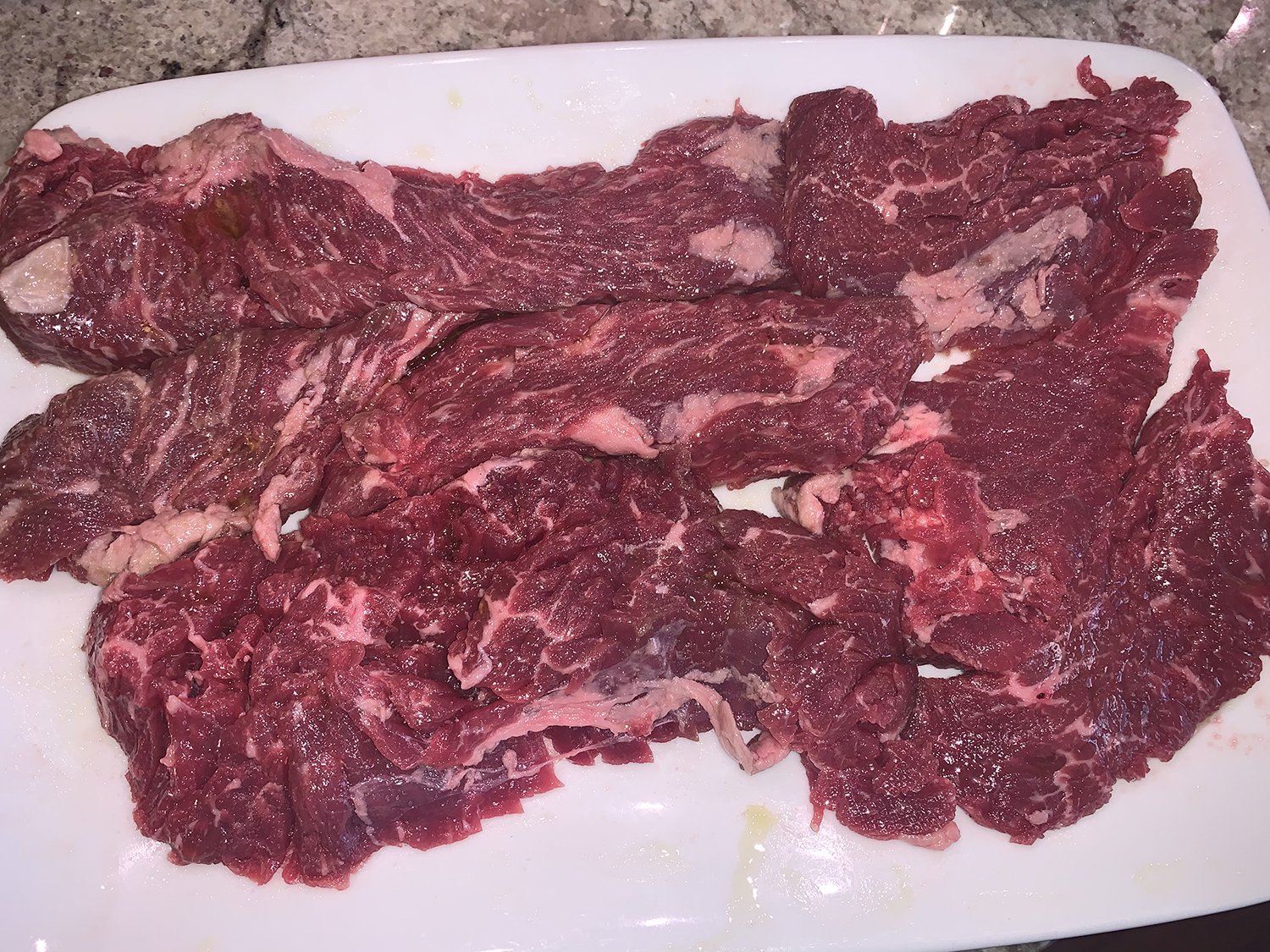
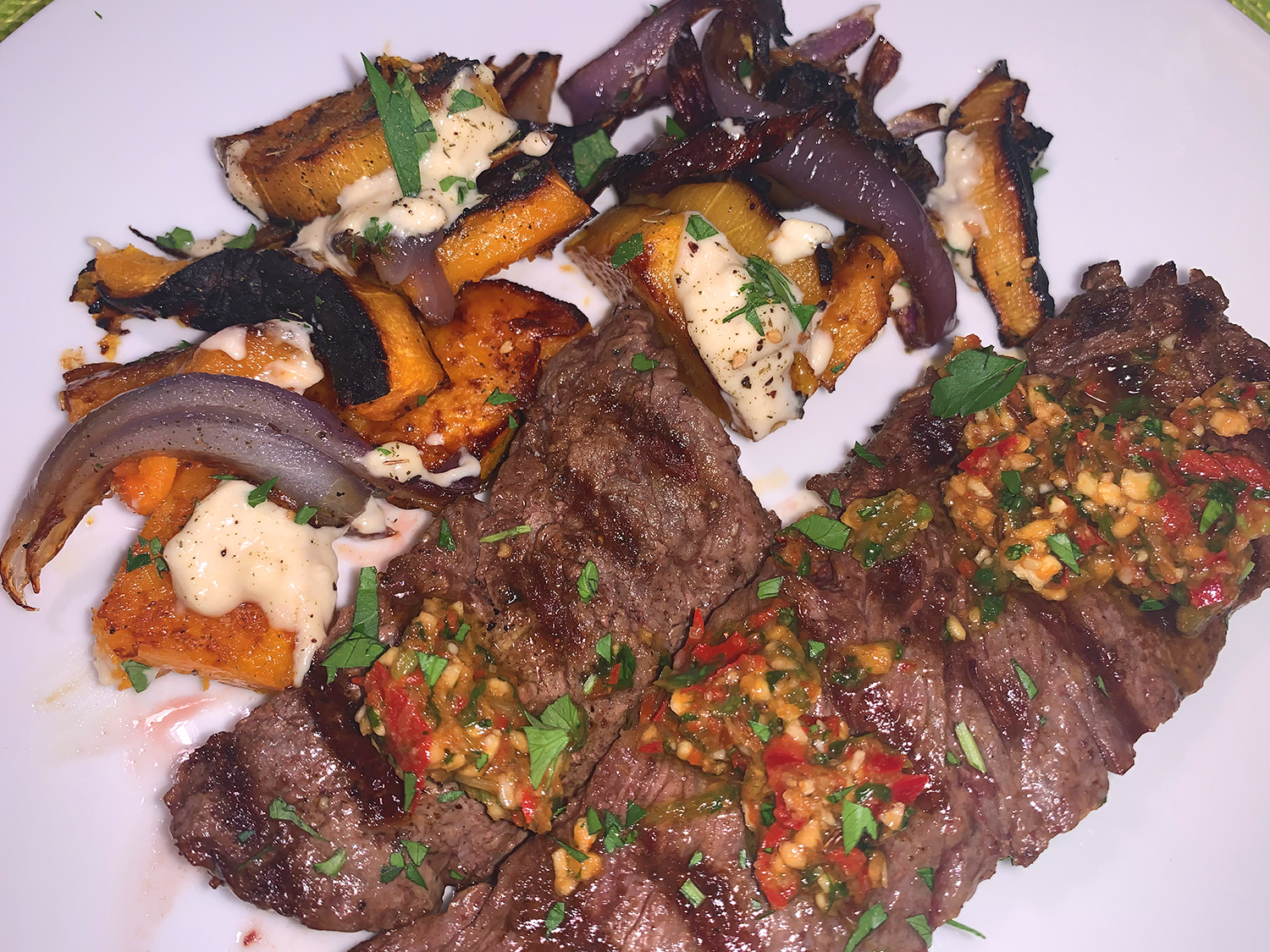
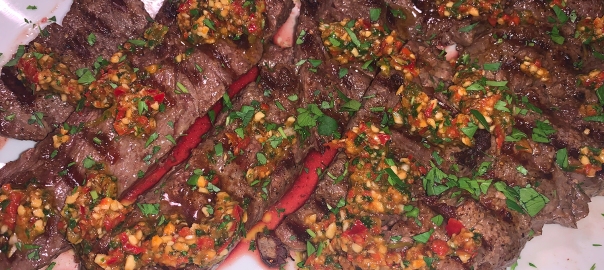
Since we had some flap meat in the freezer, and actually prefer it over skirt steak, it became the foundation for our meal. Because flap steak is thicker than skirt, we sliced the thicker portions and adjusted the times slightly. However, the Skirt Steak with Scallion Thecha recipe below mimics the original from Bon Appétit.

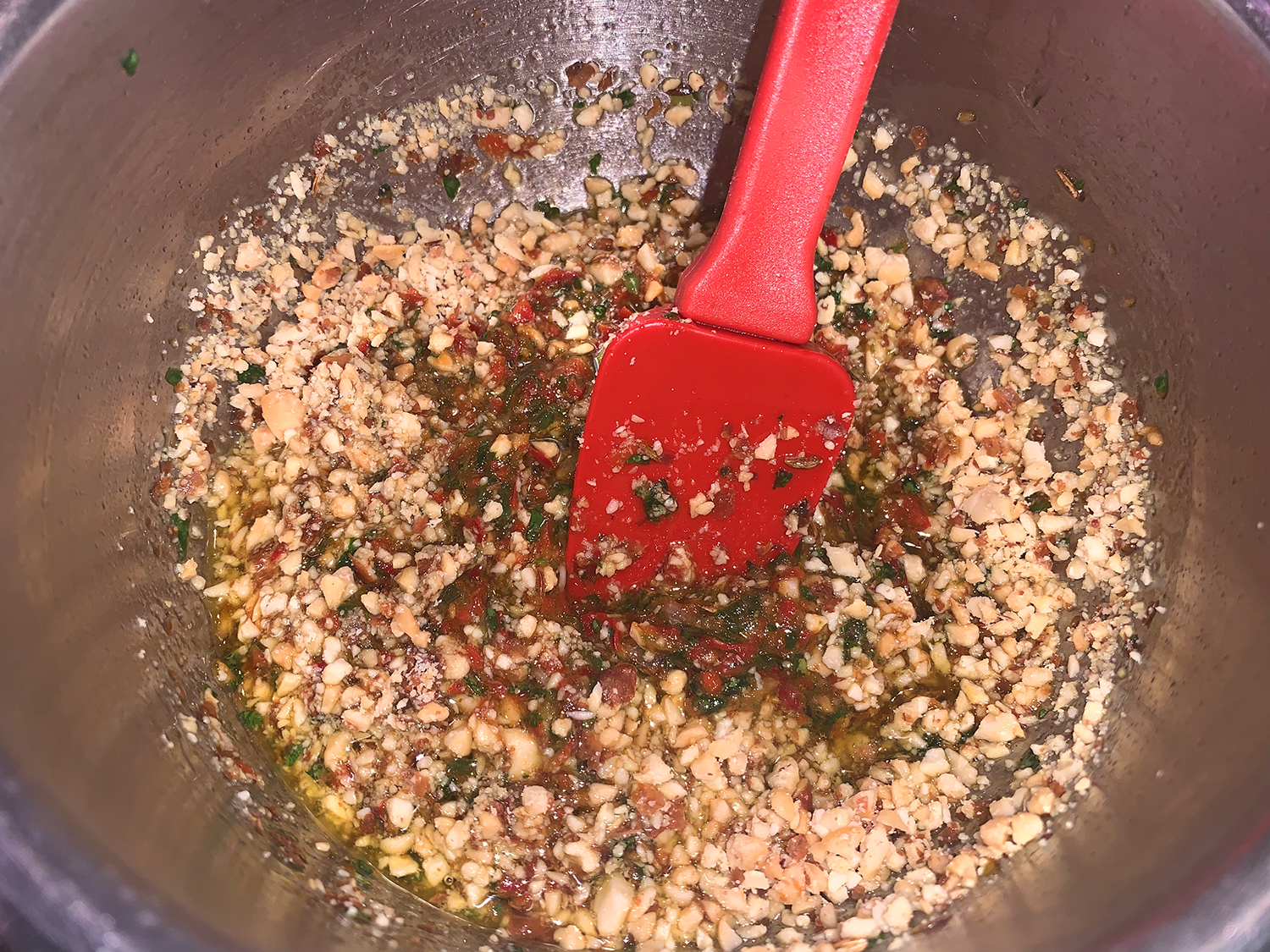
NOTE: To save a step, grind the peanuts in the mini-food processor before using it to make the thecha.
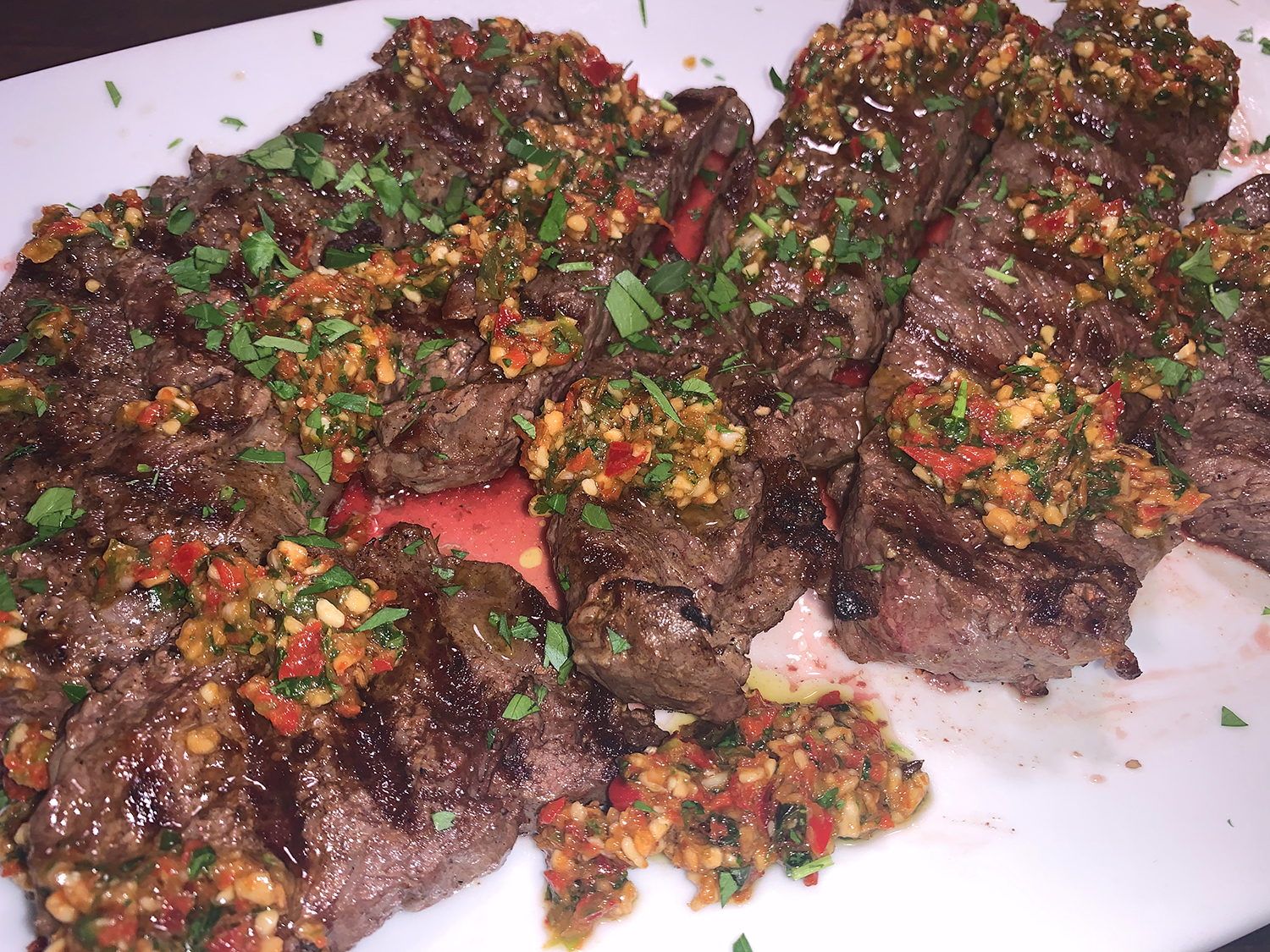
Our choice of sides was roasted butternut squash and red onions, plus a side salad; but you could also serve the steak with rice, roasted potatoes, and/or a salad for a full meal. Our Thai chiles were red, so the thecha is more red than one made with green serrano chiles, as is typical.
Skirt Steak with Scallion Thecha

  • Servings: 4
  • Difficulty: easy
  • Print

Ingredients

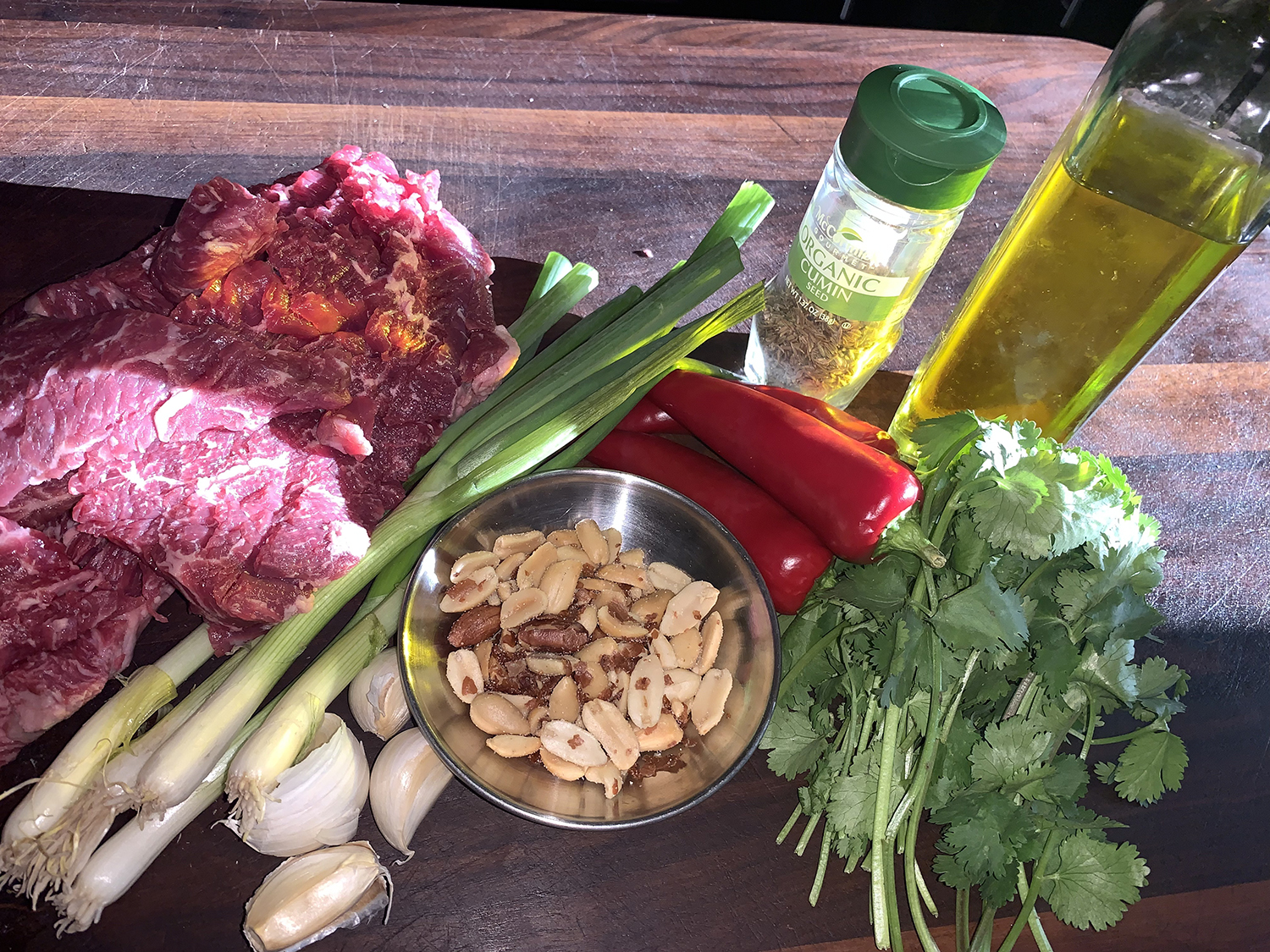
  • 1 small bunch cilantro, tough stems removed, leaves and tender stems coarsely chopped
  • 4 scallions, coarsely chopped
  • 3 green Thai or serrano chiles, stemmed and seeded
  • 4 garlic cloves, coarsest chopped
  • 1 tsp. Diamond Crystal or ½ tsp. Morton kosher salt, plus more
  • ⅓ cup vegetable oil, plus more for steak
  • 1 tsp. cumin seeds
  • ¼ cup salted or unsalted roasted peanuts, crushed
  • 1½ lb. ½”-thick skirt steak, cut into 5”-long pieces
  • Flaky sea salt

Directions

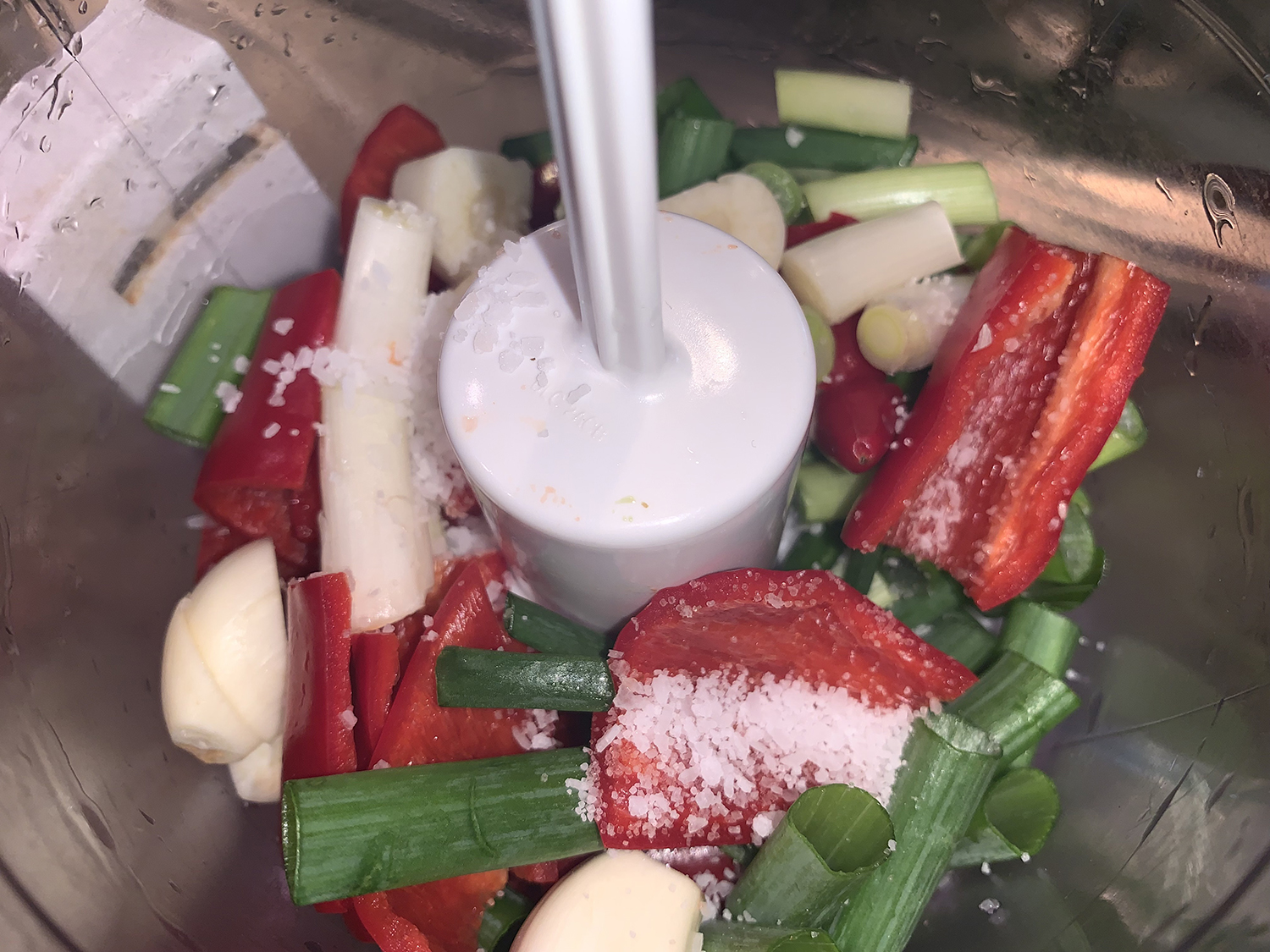
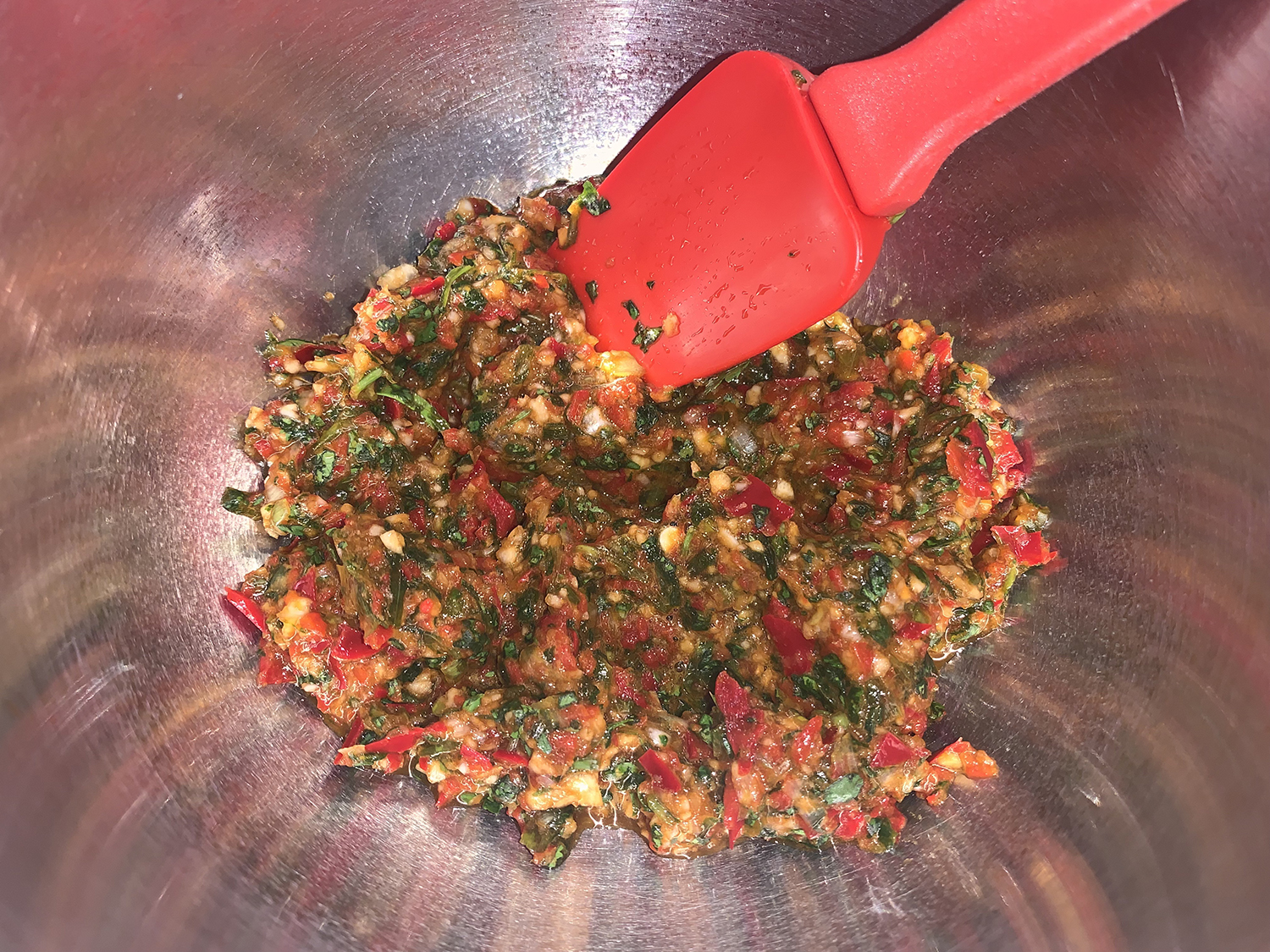
  1. Pulse cilantro, scallions, chiles, garlic, and 1 tsp. Diamond Crystal or ½ tsp. Morton kosher salt in a food processor (a mini processor works well here) until a coarse paste forms. Transfer to a small heatproof bowl.
  2. Heat ⅓ cup oil in a small skillet over medium-high. Cook cumin until fragrant, about 10 seconds. Transfer to bowl with paste; add peanuts and mix well. Set scallion thecha aside for serving.
  3. Pat steaks dry with paper towels and season on both sides with kosher salt. Rub a little oil over steaks to coat lightly.
  4. Heat a large cast-iron skillet over medium-high. Add half of the steak, arranging in a single layer, and cook, undisturbed, until a golden brown crust forms, 2–3 minutes. Turn steak over and cook until second side forms a golden brown crust, 2–3 minutes. (We had a large enough grill pan to cook all of the steak at once.)
  5. Transfer steak to a cutting board and repeat process with remaining steak, if necessary. Let rest 10 minutes.
  6. Slice steak against the grain and arrange on a platter. Top with reserved scallion thecha and sprinkle with sea salt.

http://www.lynnandruss.com

Recipe by Rachel Gurjar for Bon Appétit

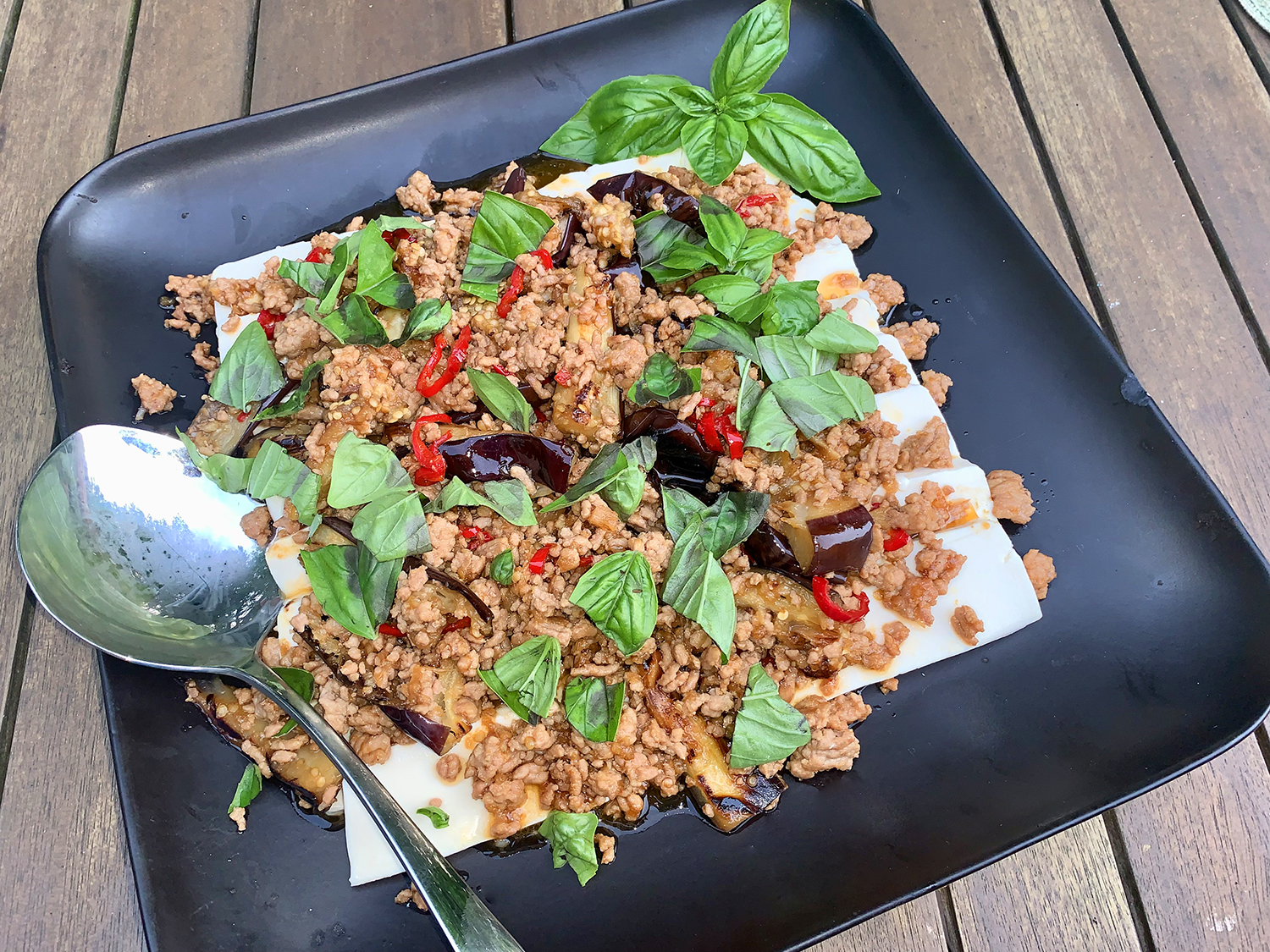
Sizzling Pork and Eggplant Hiyayakko

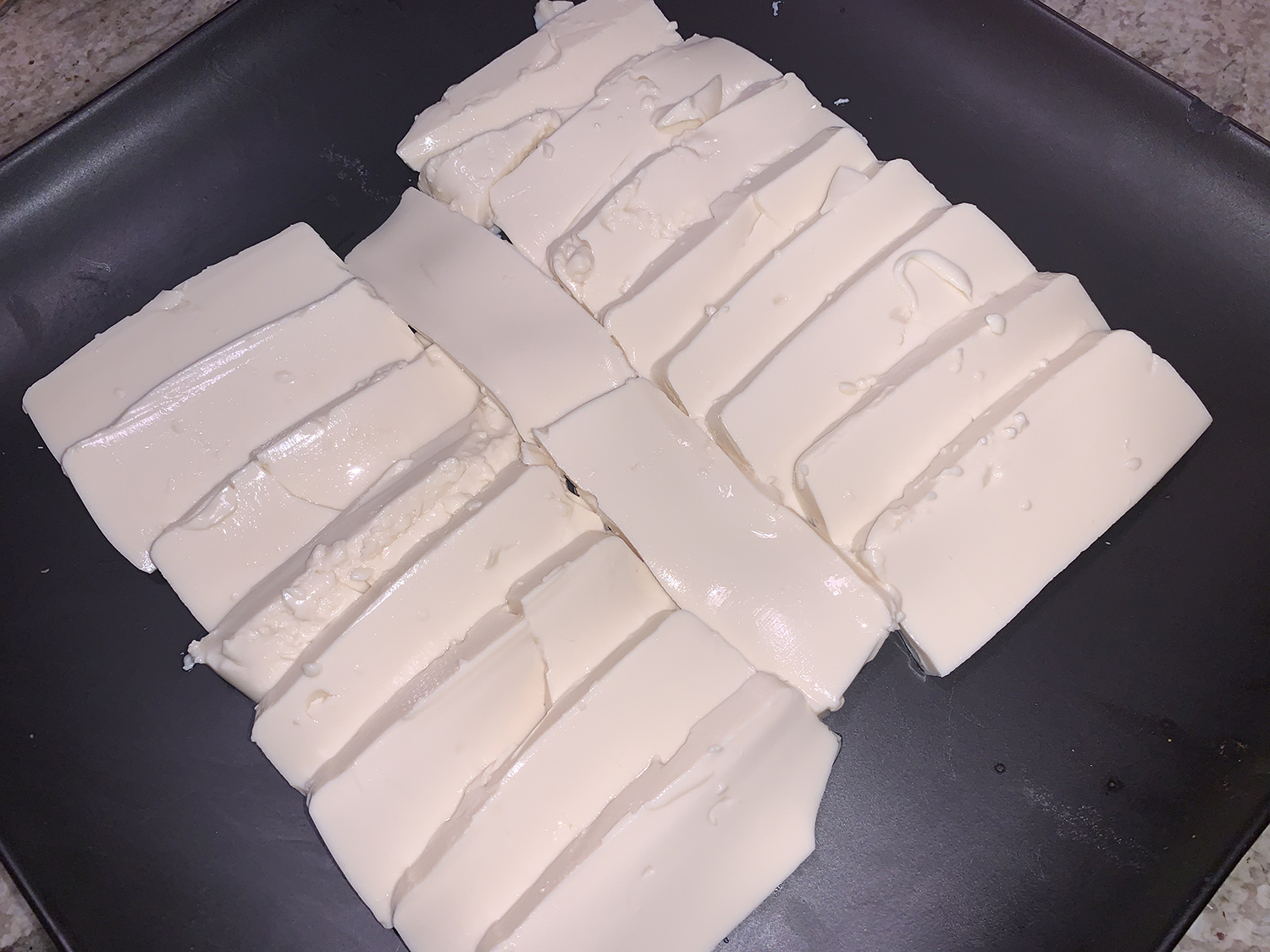
According to Bon Appétit where we sourced this recipe, Hiyayakko is a Japanese warm-weather starter or side dish made of a small square of chilled silken tofu, a sprinkling of toppings, and saucy drizzles (think a heap of bonito flakes and puddle of soy sauce, or fresh tomatoes with ponzu).

In this version, the simple template goes family-style, with sliced silken tofu carefully shingled on a platter, topped with a savory ground pork and eggplant stir-fry. The combination of cold, custardy tofu and hot, saucy pork was a bit odd in our opinion. We think next time we’d use firm tofu and flash-fry slabs of it in a hot skillet, then shingle it on a platter.

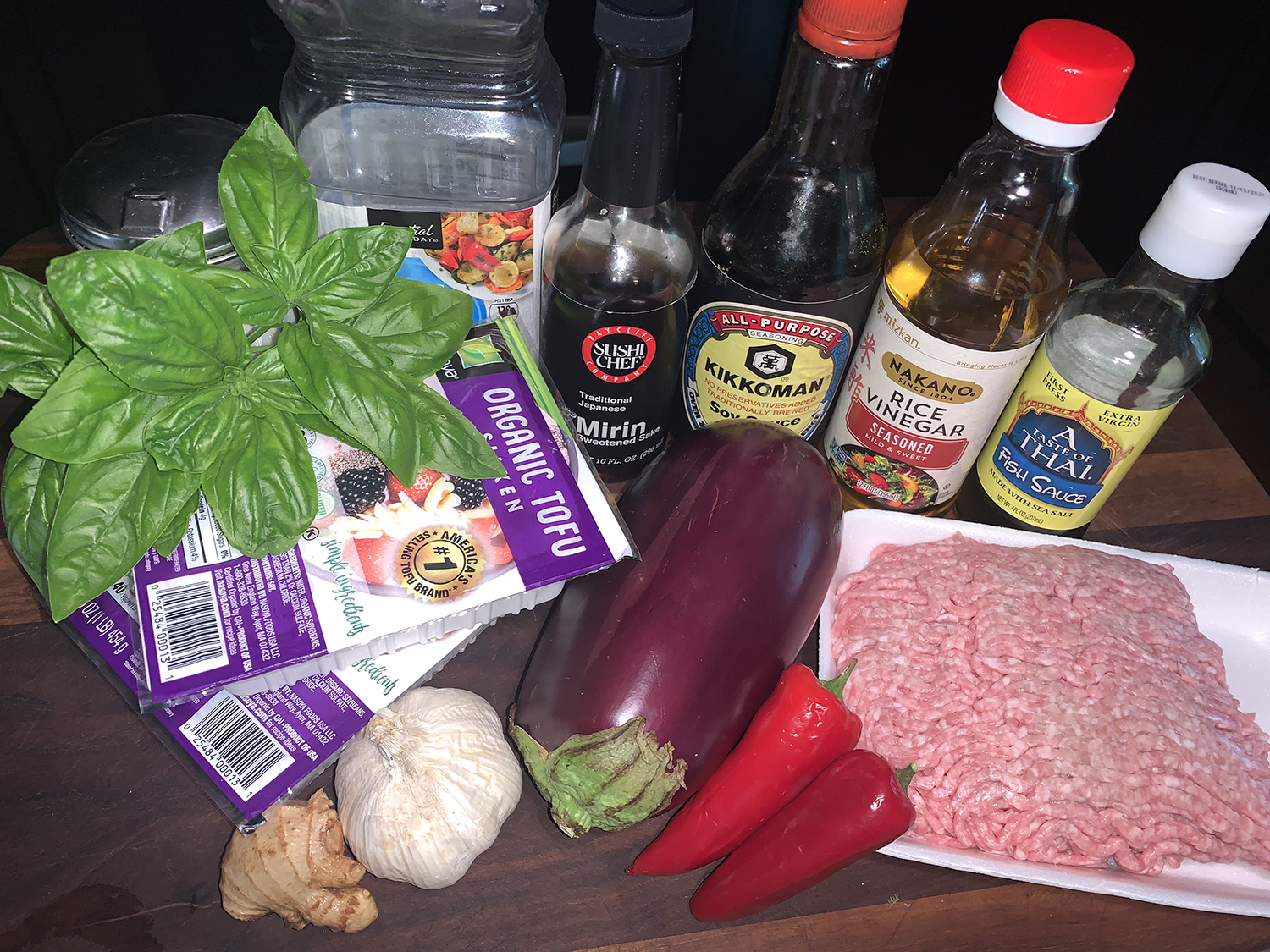
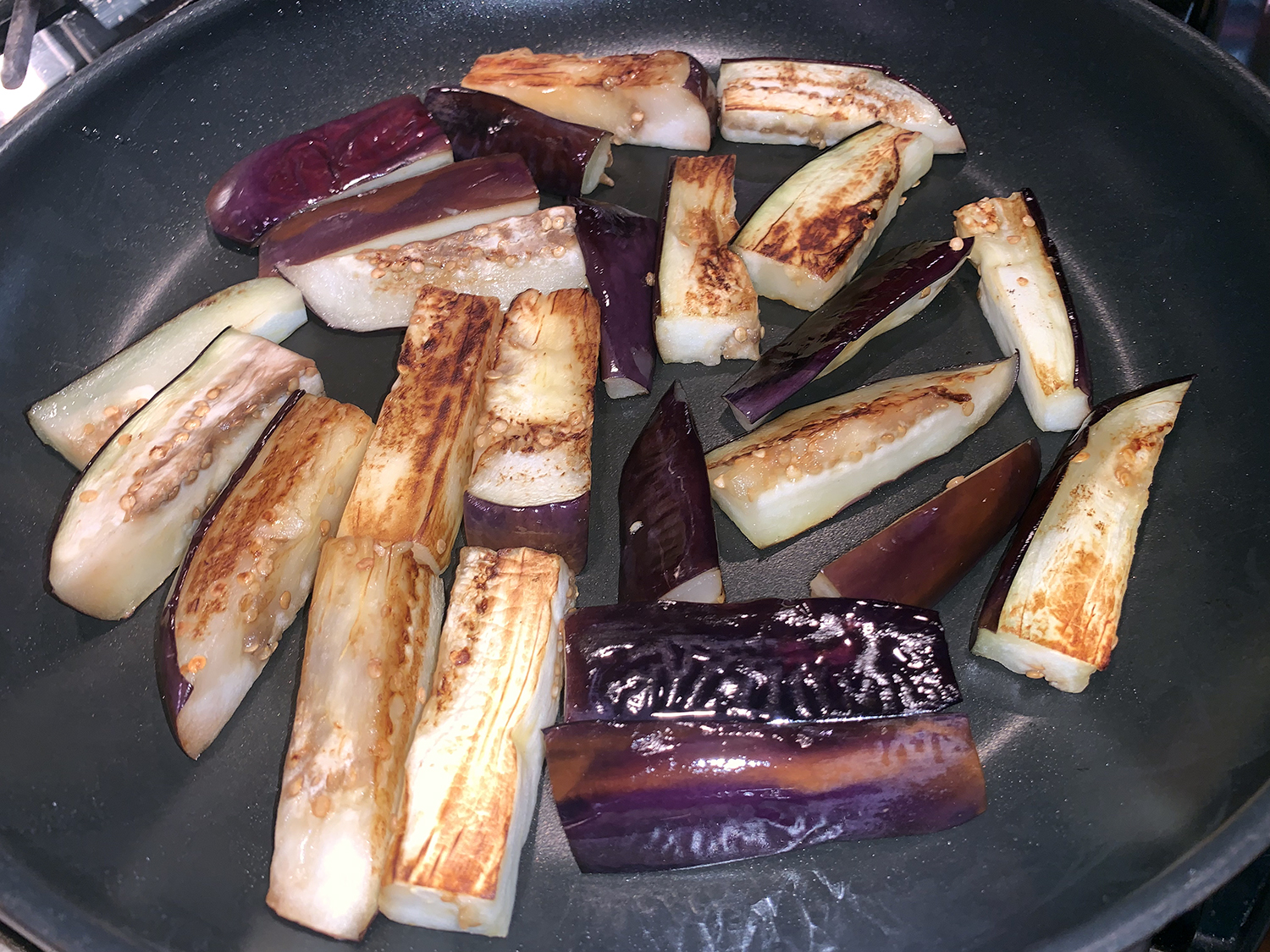
Fresh basil from the garden showered on top was the perfect garnish. If Thai basil is accessible, use that. Unable to source Chinese or Japanese eggplant, we substituted an Italian variety which is typically larger, and therefore had to slice it down differently.

The hubs thought it would be good over steamed rice. While I agree, it is no longer a low-carb or as high a protein meal. Your call…

Sizzling Pork and Eggplant Hiyayakko

  • Servings: 3-4
  • Difficulty: easy
  • Print

Ingredients

  • 2 16-oz. packages silken tofu
  • 3 Tbsp. vegetable oil, divided
  • 2 medium Chinese or Japanese eggplant (about 8 oz. total), cut into 3″-long pieces, quartered lengthwise
  • 1 lb. ground pork
  • 2 red Thai chiles, thinly sliced
  • 4 garlic cloves, finely grated
  • 1 2″ piece ginger, scrubbed, finely grated
  • 1 Tbsp. sugar
  • 1 Tbsp. fish sauce
  • 4 Tbsp. soy sauce, divided
  • 3 Tbsp. unseasoned rice vinegar, divided
  • Basil leaves (for serving)

Directions

  1. Wrap tofu in a few layers of paper towels to absorb moisture; place on a plate. Chill until ready to use.
  2. Heat 2 Tbsp. oil in a large skillet over medium-high. Cook eggplant, stirring occasionally, until slightly tender, 6–8 minutes. Transfer to a plate.
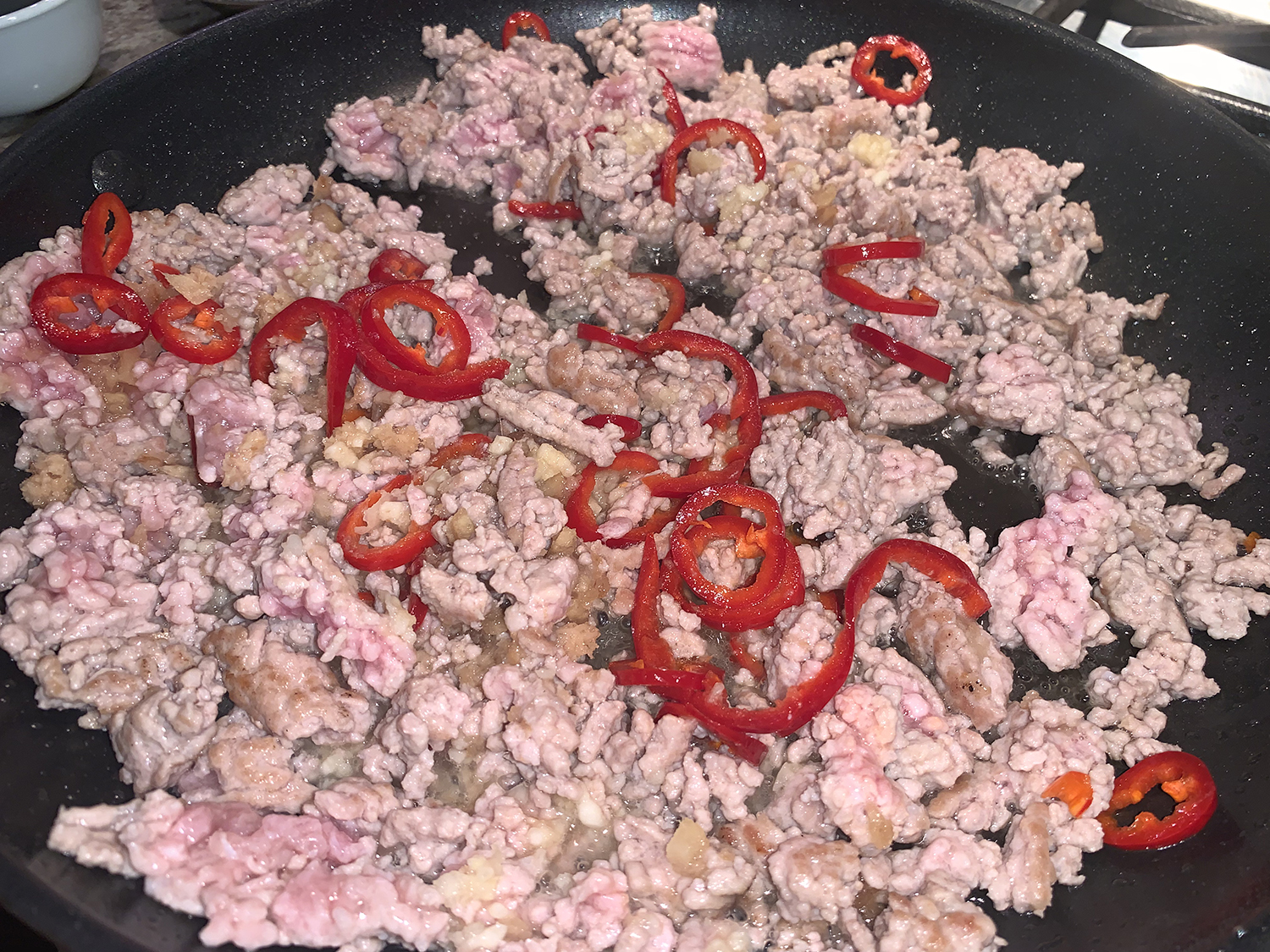
  3. Heat remaining 1 Tbsp. oil in same skillet. Cook pork, breaking up meat, 1 minute. Add chiles, garlic, ginger, and sugar and cook, stirring and continuing to break up meat into small pieces, until pork is no longer pink and mixture is fragrant, about 4 minutes.
  4. Return eggplant to skillet; add fish sauce, 2 Tbsp. soy sauce, and 2 Tbsp. vinegar. Cook, stirring often, until liquid is mostly absorbed and eggplant is browned and tender, about 3 minutes. Add remaining 2 Tbsp. soy sauce and remaining 1 Tbsp. vinegar and cook, stirring, until mixture is slightly saucy, about 1 minute. Remove from heat.
  5. Carefully unwrap tofu; slice crosswise ½”-thick. Shingle tofu on a platter. Spoon eggplant mixture over; top with basil.

http://www.lynnandruss.com

Adapted from a recipe by Kendra Vaculin for Bon Appétit

Stir-Fried Beef and Gai Lan

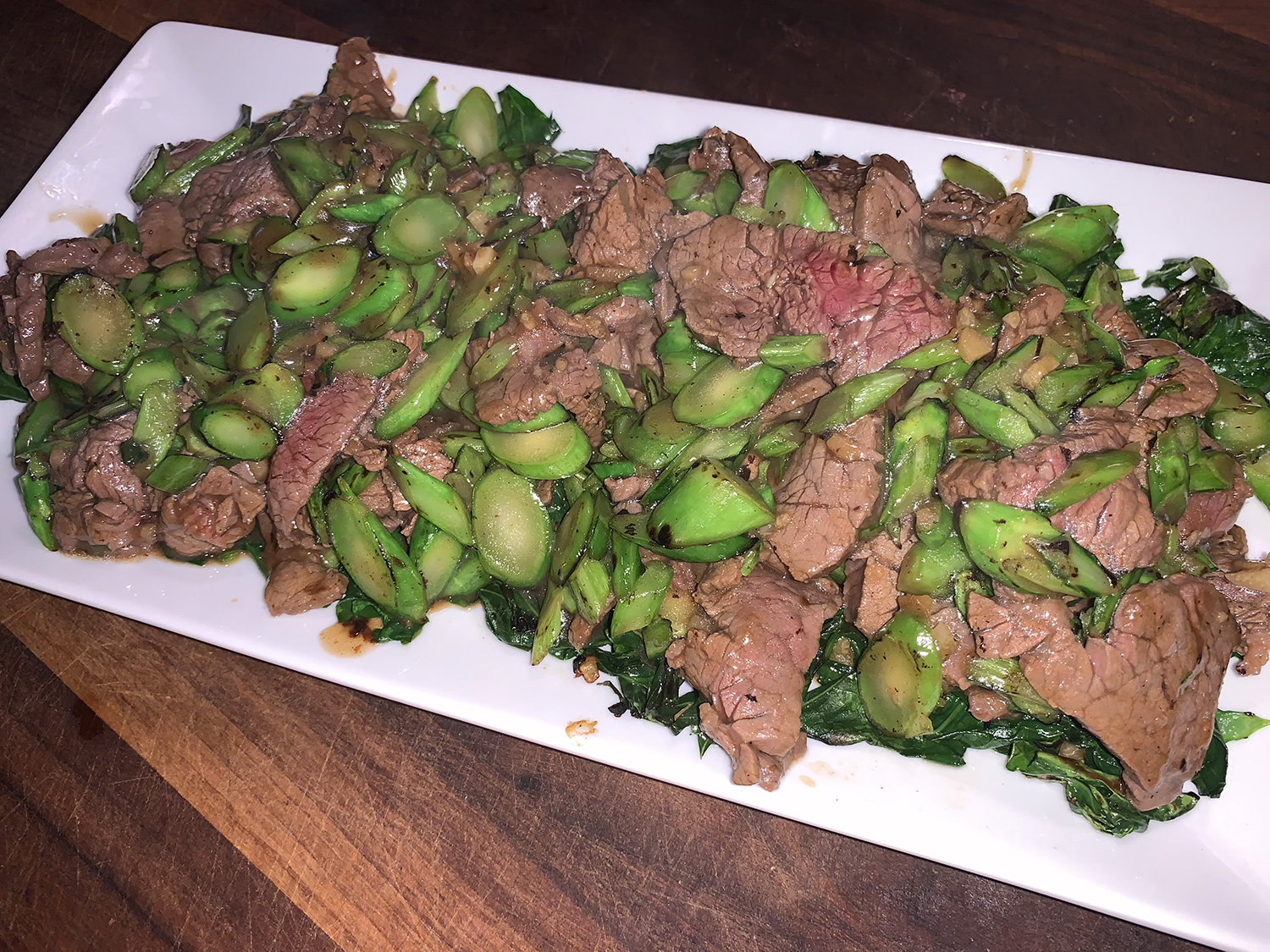
This riff on the ever-evolving Chinese American standard features gai lan (Chinese broccoli) and filet mignon: The luxurious cut is ideal for quick, high-heat cooking; is readily available in small portions; and just needed a brief chill in the freezer to firm up for easy slicing before being coated in a simple mixture of soy sauce, Shaoxing wine, and cornstarch.

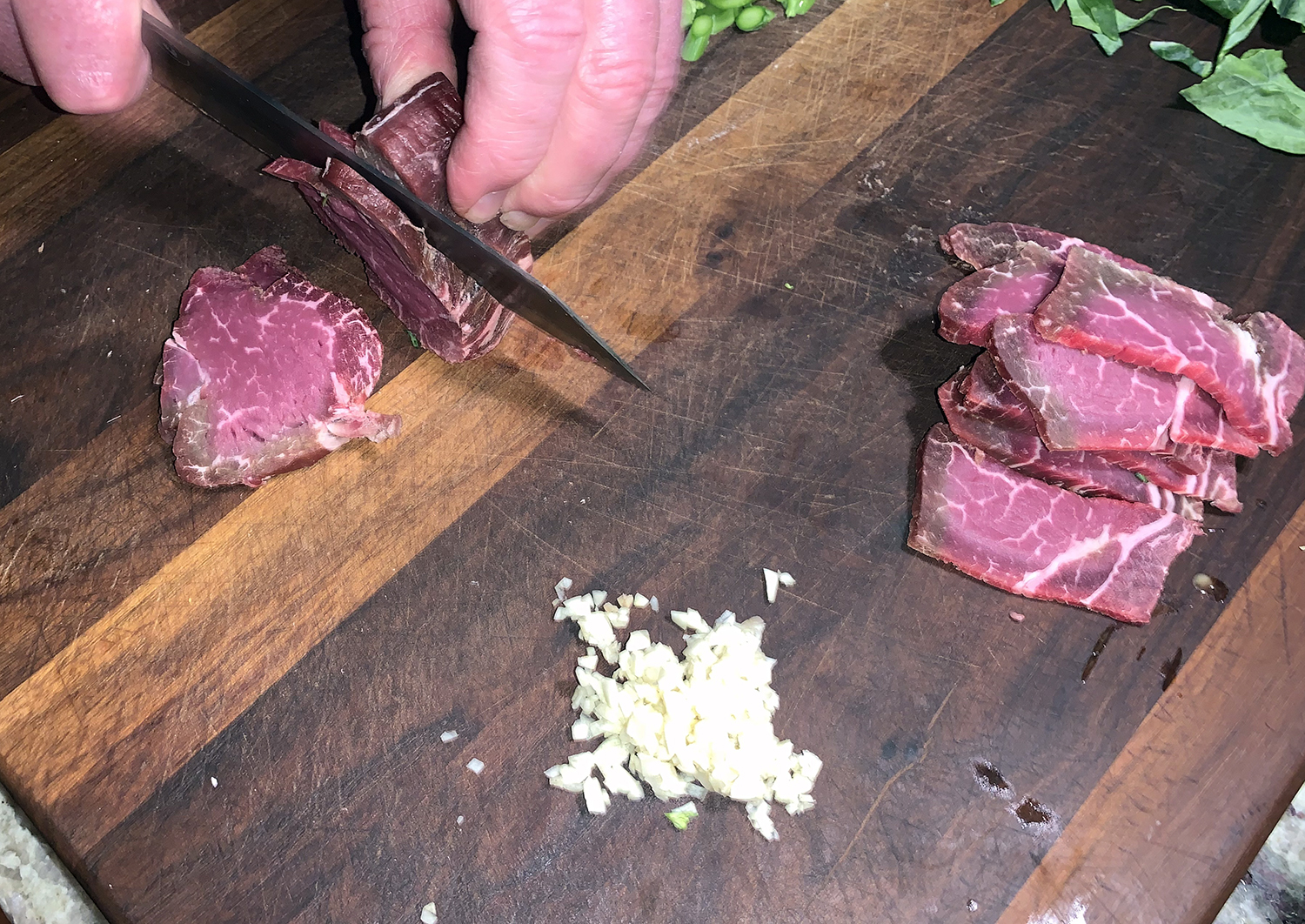
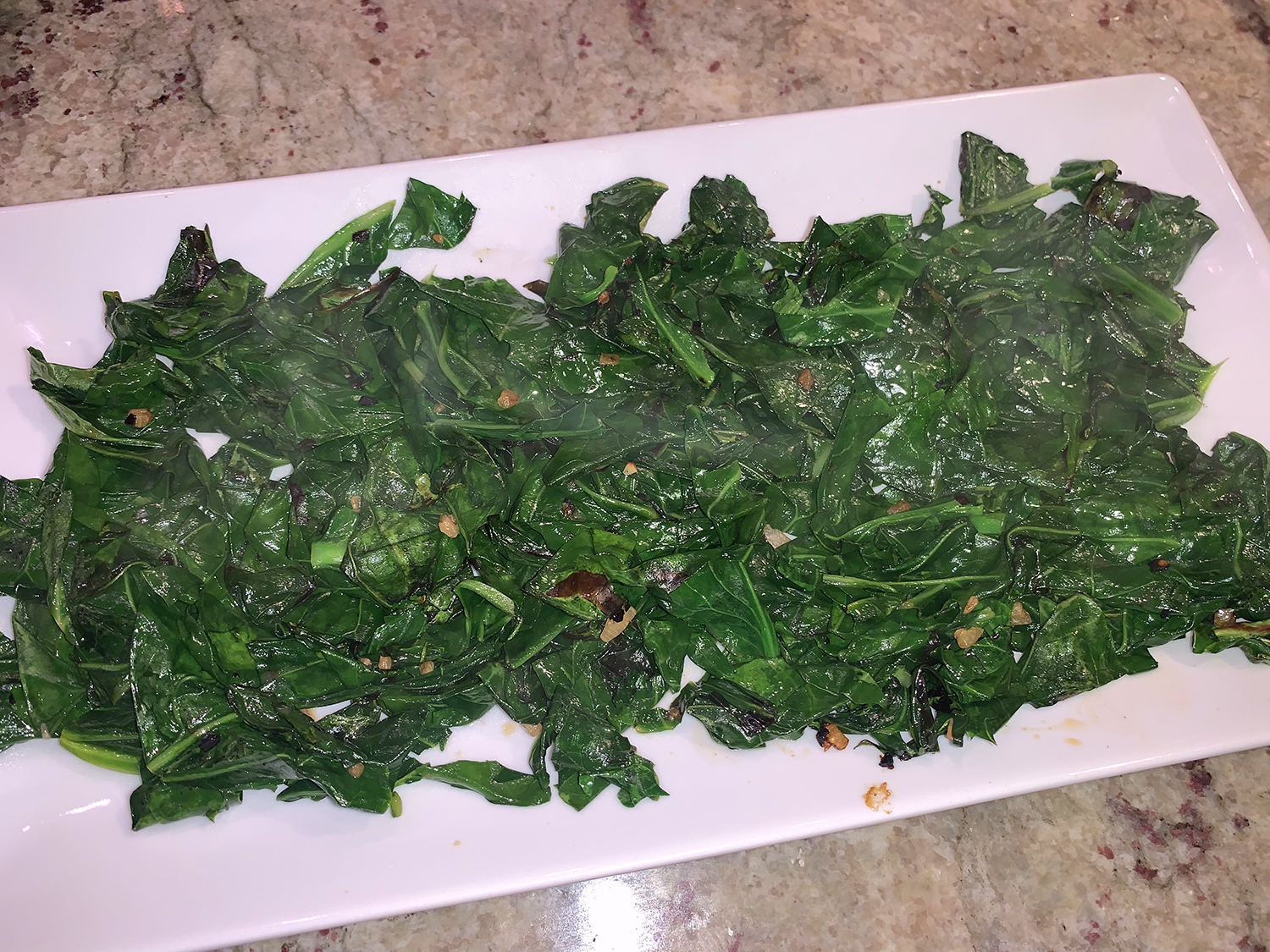
While the meat chills, slice the gai lan stalks thin on the bias and cut the tender leaves into wide ribbons. Start the stir-fry by cooking the stalks in oil in a hot wok. As they sizzle, the oil smolders, infusing the dish with a smoky aroma. Then set the stalks aside and stir-fry the leaves with garlic and toasted sesame oil, speeding their cooking with a small but flavorful addition of chicken broth before arranging them on a serving platter.

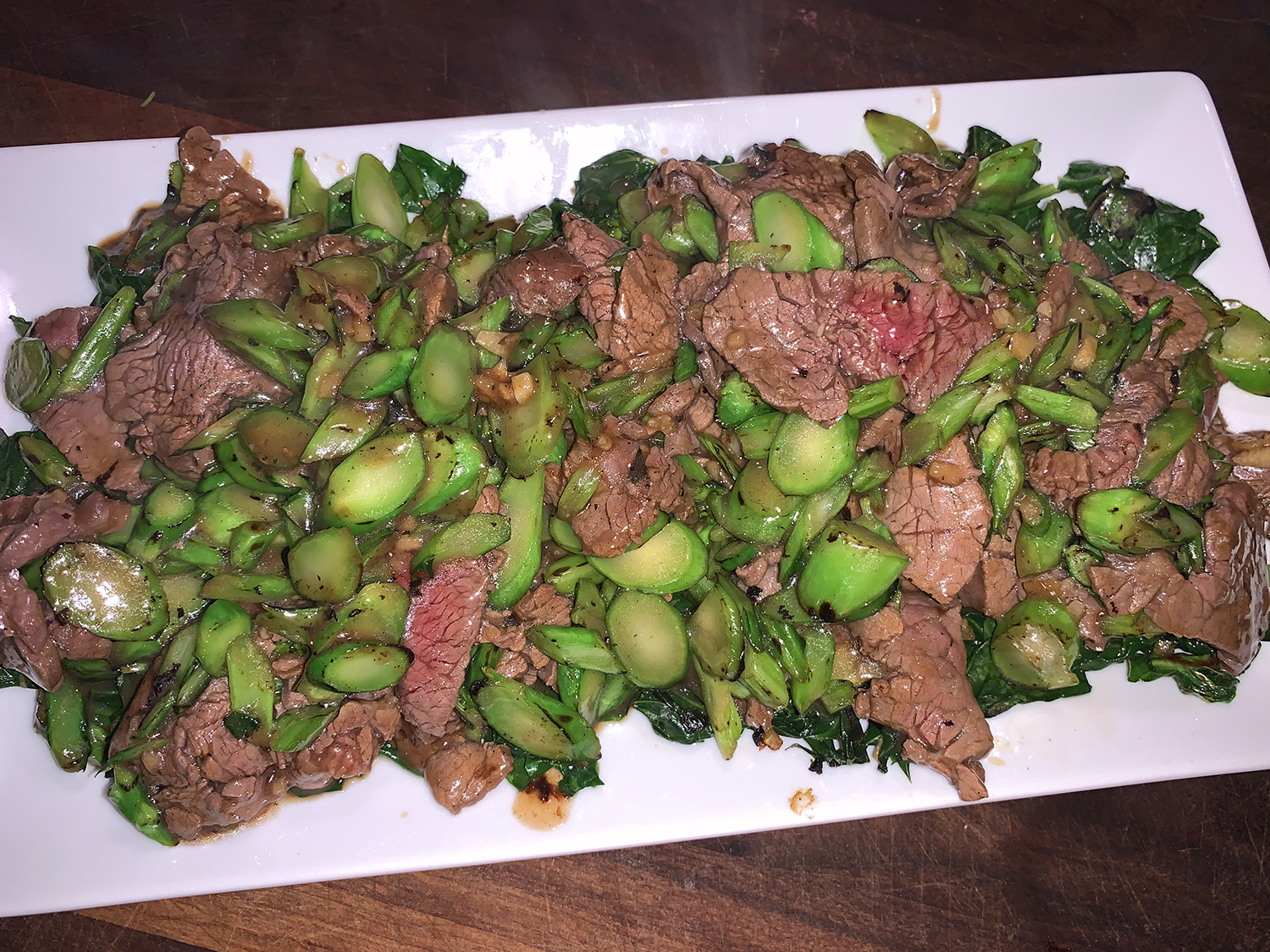
Finally, stir-fry the marinated beef; returned the stalks to the wok; and stir in a blend of chicken broth, oyster sauce, soy sauce, Shaoxing wine, toasted sesame oil, and cornstarch. The sauce thickens in less than a minute. Arrange the beef mixture over the leaves, ensuring that each bite is perfectly sauced. If desired, serve with steamed rice.

If gai lan is unavailable, you can use broccolini, substituting the florets for the gai lan leaves. Do not use standard broccoli. In the end, we found it served 3 sufficiently, or 4 “small plates”.
Stir-Fried Beef and Gai Lan

  • Servings: 3-4
  • Difficulty: easy
  • Print

Ingredients

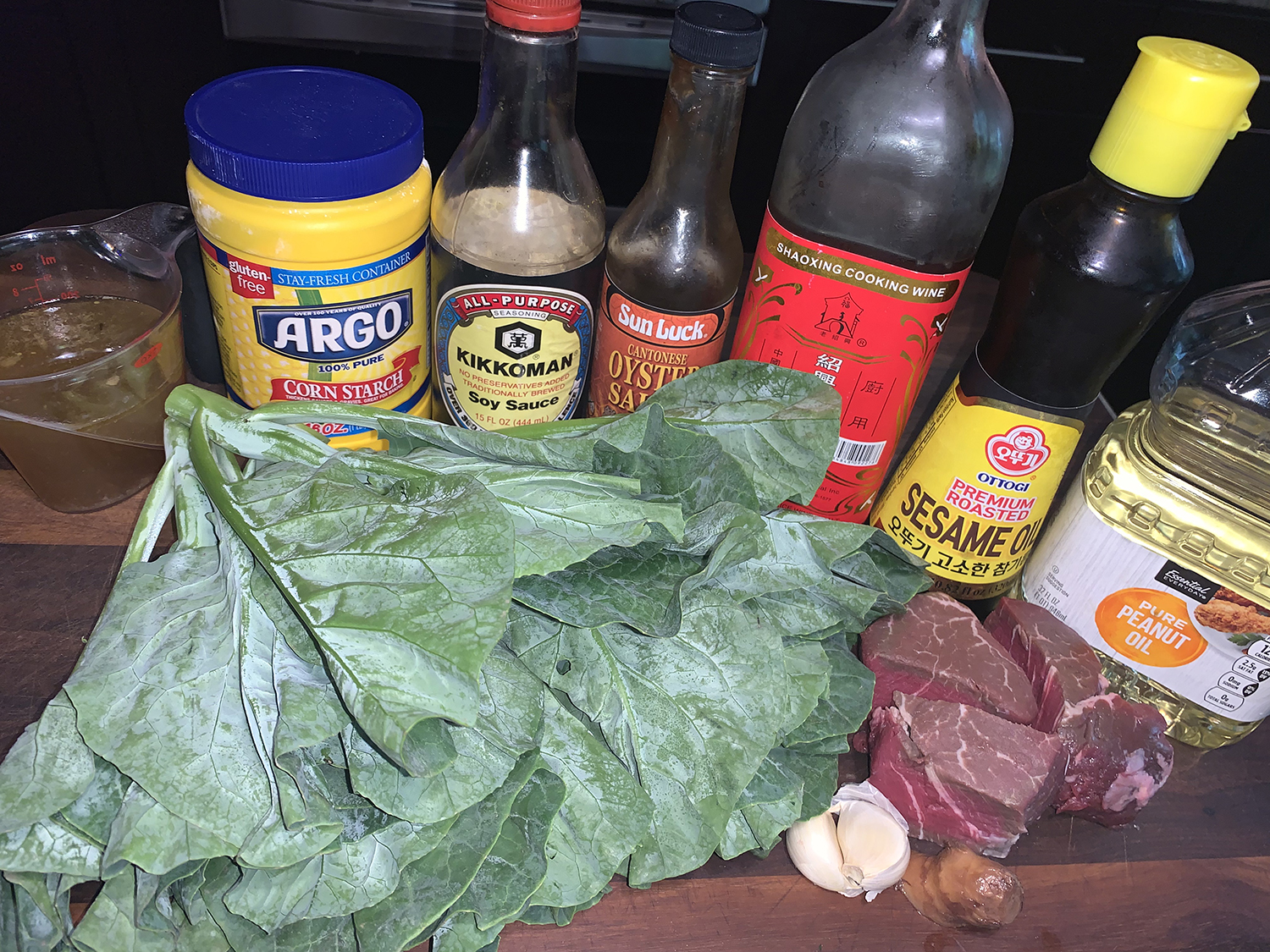
  • 1 (8-oz.) center-cut filet mignon, trimmed
  • 1 lb. gai lan, stalks trimmed
  • 5 tsp. Shaoxing wine or dry sherry, divided
  • 1 Tbsp. soy sauce, divided
  • 2 tsp. cornstarch, divided
  • ¾ cup chicken broth, divided
  • 2 Tbsp. oyster sauce
  • 1½ tsp. toasted sesame oil, divided
  • 2 Tbsp. vegetable oil, divided
  • 1½ tsp. grated fresh ginger
  • 2 cloves garlic, divided

Directions

  1. Prepare white rice as per package directions.
  2. Cut beef into 4 equal wedges. Transfer to plate and freeze until very firm, 20 to 25 minutes. While beef freezes, prepare gai lan. Remove leaves, small stems, and florets from stalks; slice leaves crosswise into 1½-inch strips (any florets and stems can go into pile with leaves); and cut stalks on bias into ¼-inch-thick pieces. Set aside.
  3. When beef is firm, stand 1 piece on its side and slice against grain ¼ inch thick. Repeat with remaining pieces. Transfer to bowl. Add 1 teaspoon Shaoxing wine, 1 teaspoon soy sauce, and 1 teaspoon cornstarch and toss until beef is evenly coated. Set aside.
  4. In second bowl, whisk together ½ cup broth, oyster sauce, ½ teaspoon sesame oil, remaining 4 teaspoons Shaoxing wine, remaining 2 teaspoons soy sauce, and remaining 1 teaspoon cornstarch; set aside.
  5. In third bowl, combine 4 teaspoons vegetable oil, ginger, and ¼ teaspoon garlic.
  6. Heat 1 teaspoon vegetable oil in wok over high heat until just smoking. Add stalks and cook, stirring slowly but constantly, until spotty brown and crisp-tender, 3 to 4 minutes. Transfer to bowl.
  7. Add remaining 1 teaspoon sesame oil, remaining 1 teaspoon vegetable oil, and remaining ½ teaspoon garlic to wok and cook, stirring constantly, until garlic is fragrant, about 15 seconds. Add leaves and cook, stirring frequently, until vibrant green, about 1 minute. Add remaining ¼ cup broth and cook, stirring constantly, until broth evaporates, 2 to 3 minutes. Spread evenly on serving dish.
  8. Add ginger-garlic mixture to wok and cook, stirring constantly, until fragrant, about 30 seconds. Add beef and cook, stirring slowly but constantly, until no longer pink, about 2 minutes. Return stalks to wok and add oyster sauce mixture. Cook, stirring constantly, until sauce thickens, 30 to 60 seconds. Place mixture on top of leaves. Serve.

http://www.lynnandruss.com

Recipe by Lan Lam for Cook’s Illustrated

Portuguese Salad

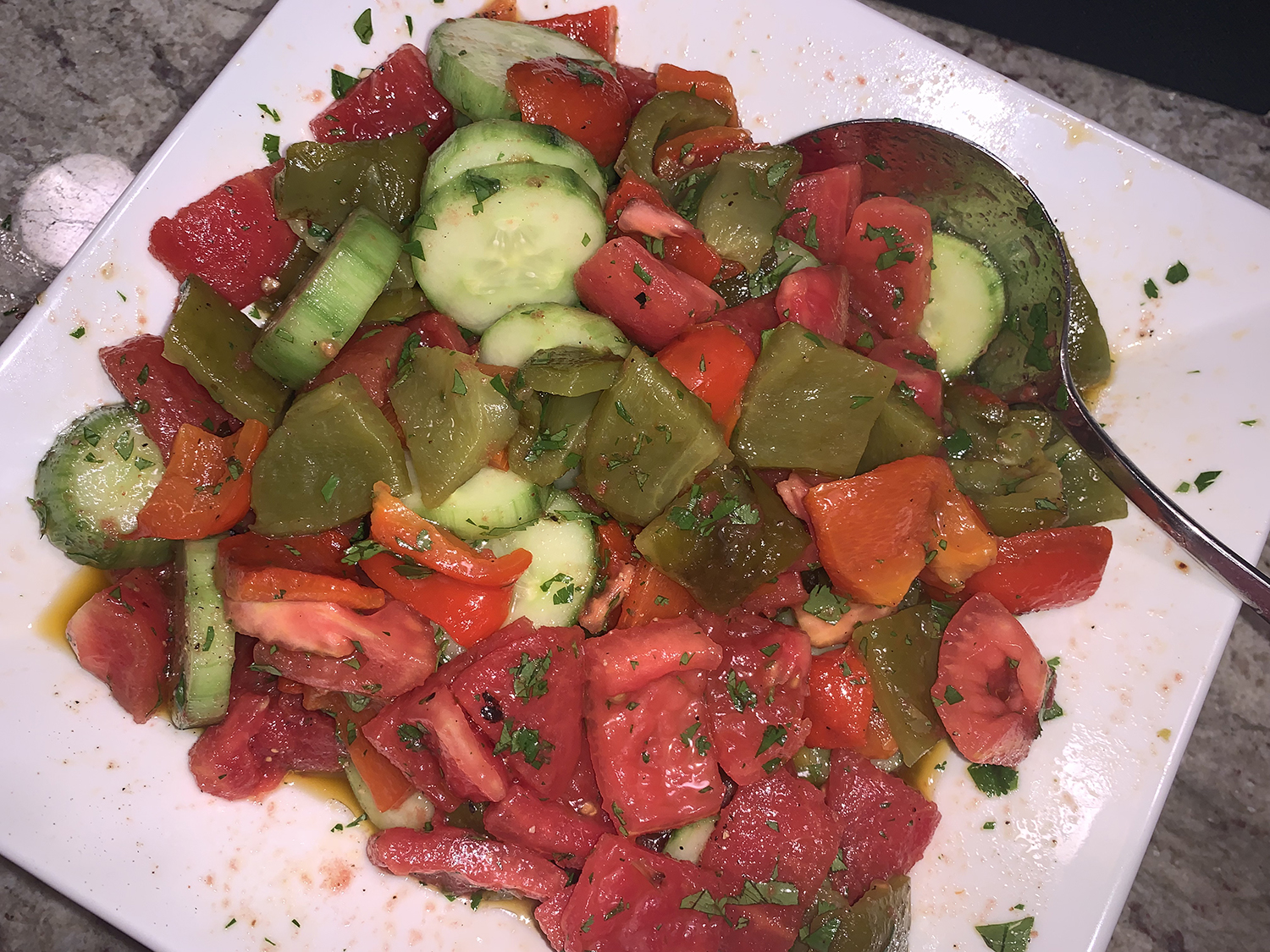
In a sense, this salad is glorified gazpacho, but chunkier—and it paired wonderfully with our Cataplana (Portugal’s Simple Seafood Stew) entrée. As it only feeds 3 to 4, we doubled the amounts to feed the party of 6.
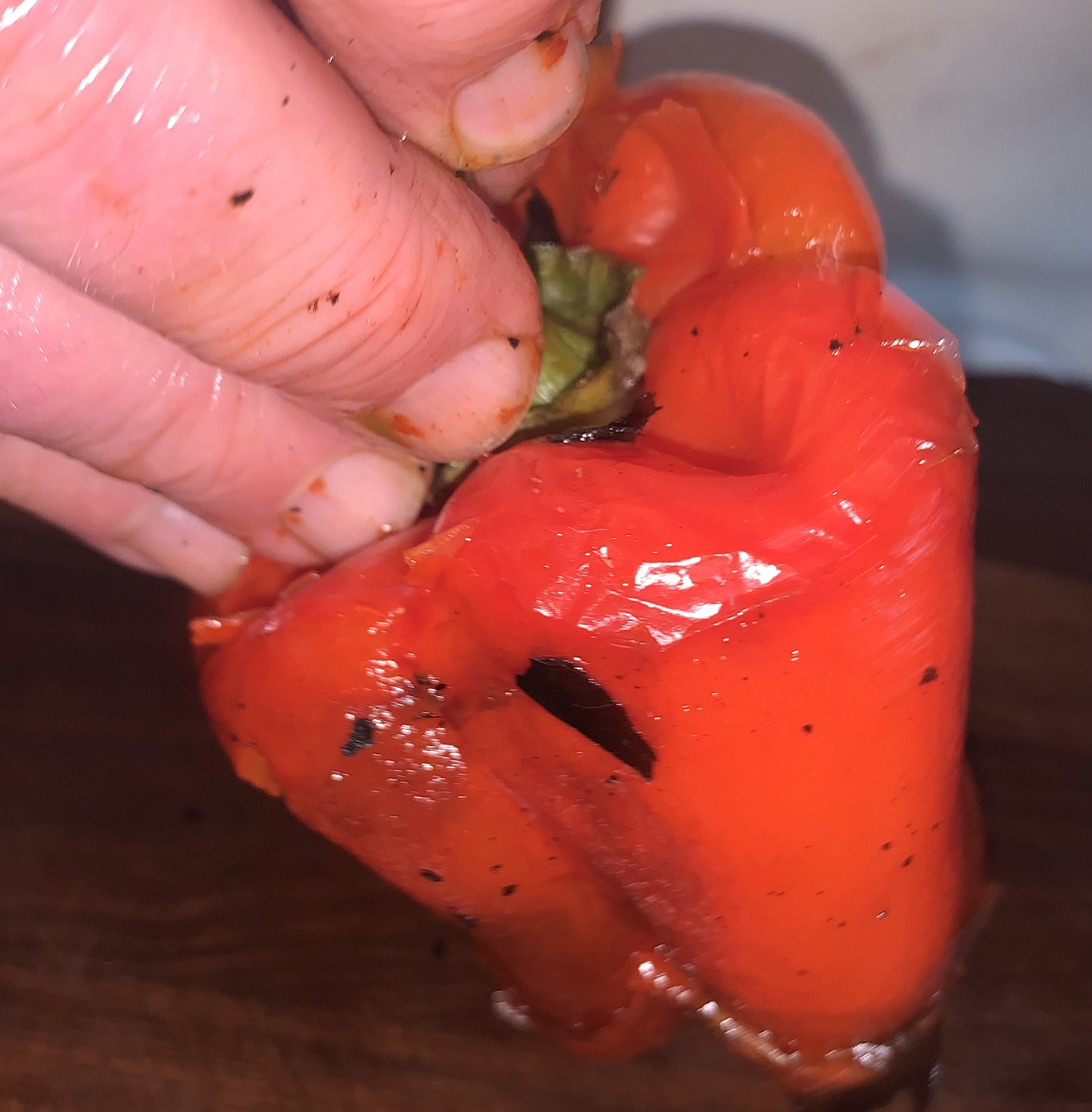
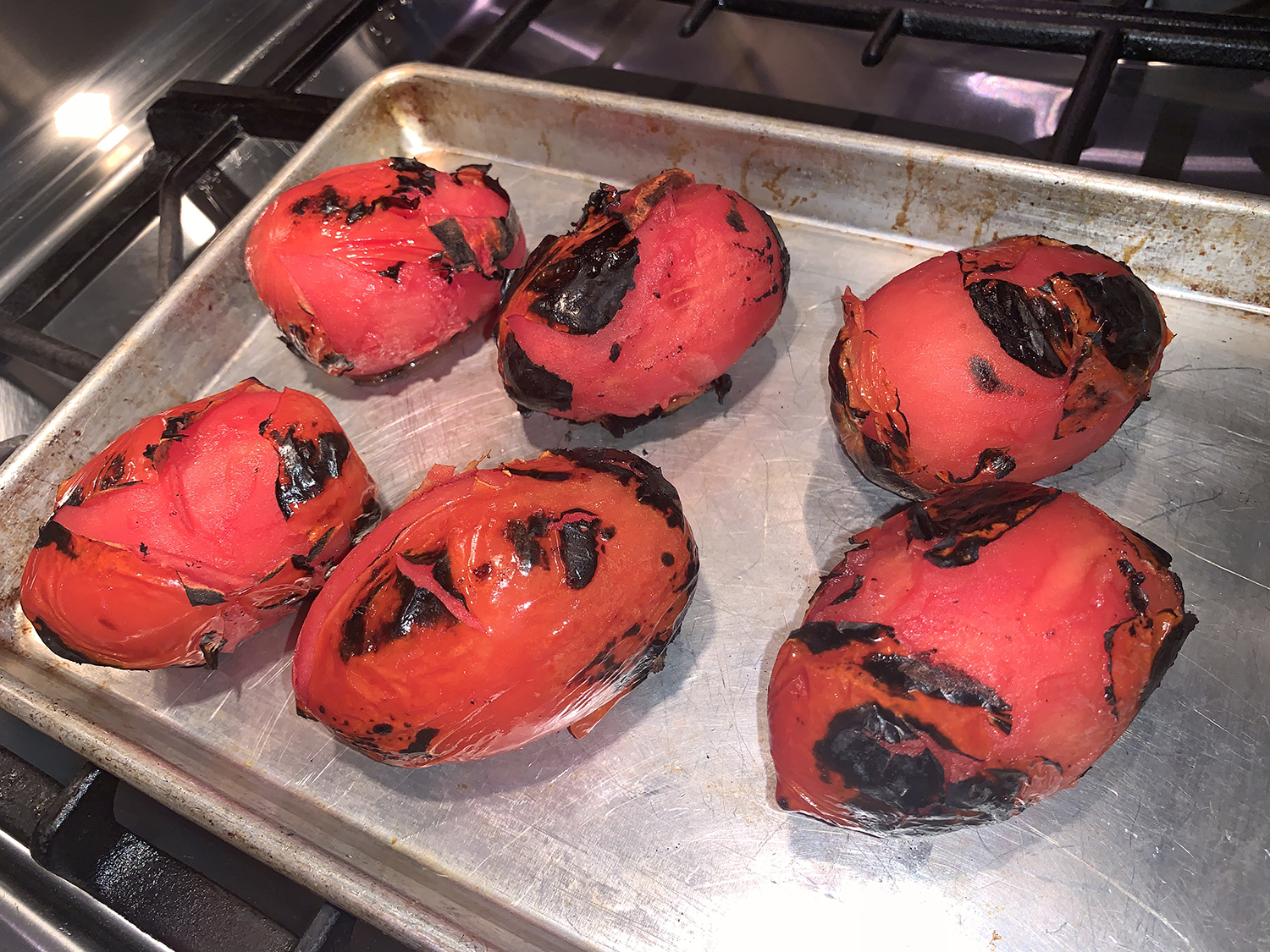
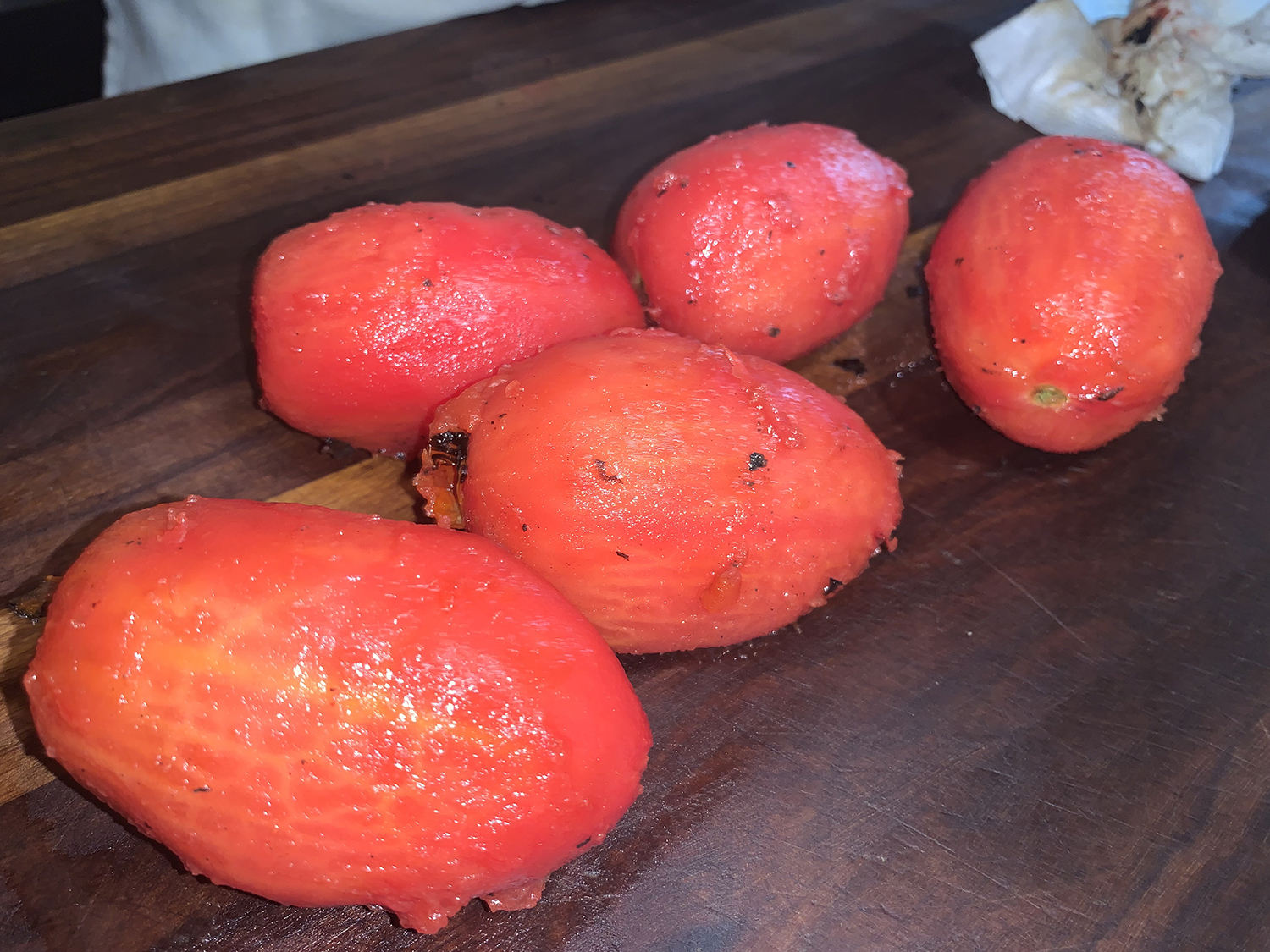
As I’ve mentioned in the past, our gas oven broiler doesn’t do the best job. When I walked into the kitchen and saw The Hubs down on his knees with his arm stuck into the oven rotating the peppers with tongs, I gently told him that it might be much easier to char them directly over a gas burner. Smart man that he is, he took the hint, because when I walked back in, he was searing the plum tomatoes, two at a time, directly on the grates.

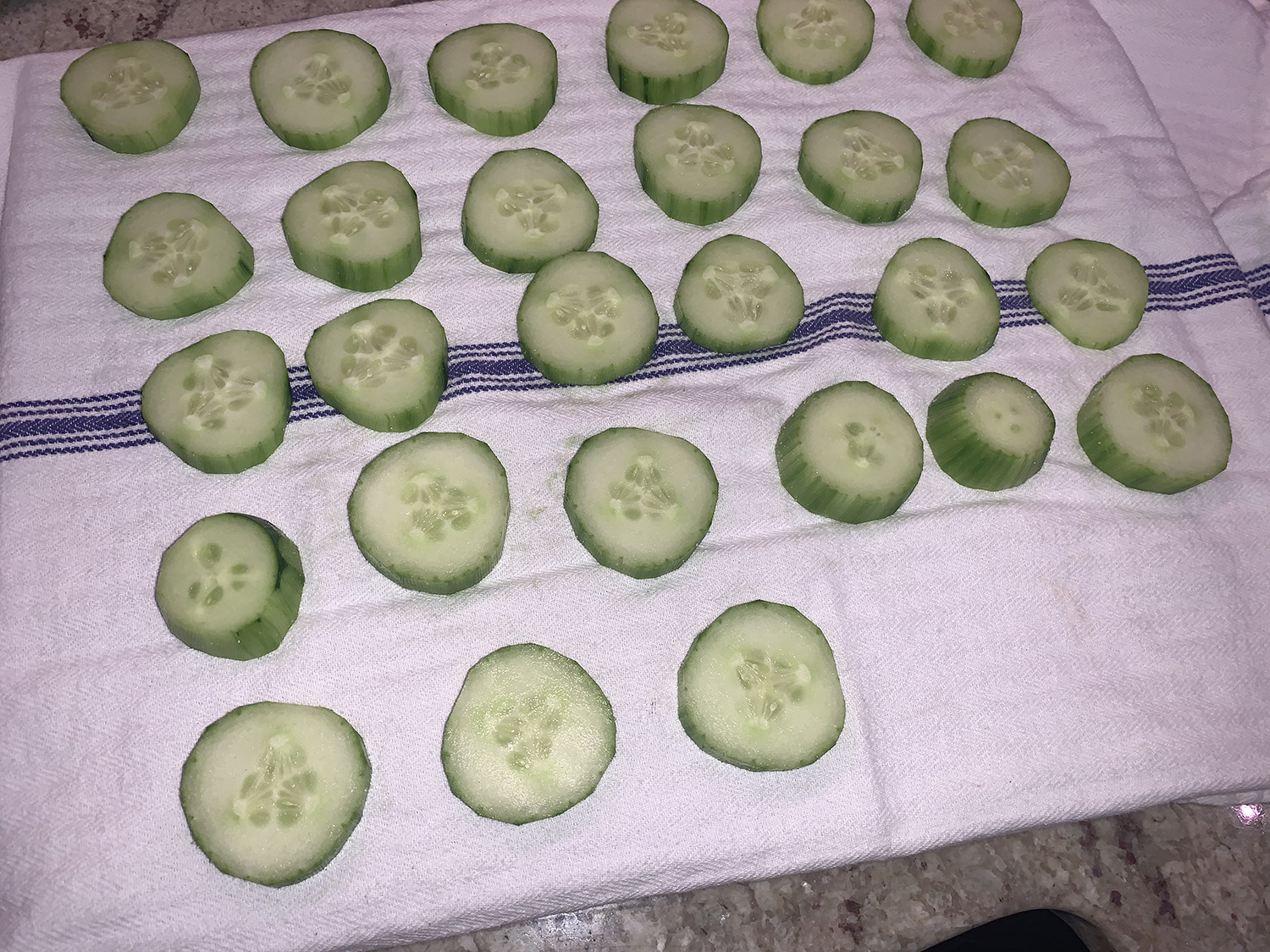
When it comes to hosting, we like to do as much as possible the day prior to the event. For this side dish, he blackened and peeled the tomatoes and bell peppers, then salted the peeled cucumber slices. About half an hour before the feast was served, the salad was finished with the dressing.

Portuguese Salad

  • Servings: 3-4
  • Difficulty: easy
  • Print

Ingredients

  • 1 red bell pepper
  • 1 green bell pepper
  • 3 plum tomatoes
  • 1/4 cup olive oil
  • 1 cucumber, peeled
  • 1/4 cup cilantro, chopped
  • 2 Tbsp. red wine vinegar
  • 1 tsp. chili paste
  • Salt and pepper

Directions

  1. Turn the broiler on, and set the red and green bell peppers underneath. Cook, turning occasionally, until lightly blackened on all sides. When done, place in a small plastic bag and let steam for a few minutes. Repeat with the tomatoes, but first lightly coat in olive oil. They will cook much quicker. Remove when lightly blackened all over and let cool on a tray.
  2. While the bell peppers and tomatoes cool, slice the cucumber into 1/2 inch inch thick slices. Set on a rack or on a paper towel, and sprinkle lightly with salt. Let those hang out for 20 minutes or so until they release some water. Dry with paper towels.
  3. Remove the bell peppers from the plastic bags when cooled. Peel off the skin, remove the stems, and chop into 1-inch squares. Repeat this process with the tomatoes, discarding most of the pulp.
  4. Toss the chopped bell peppers, tomato, and cucumbers in a large bowl. Add the chopped cilantro, olive oil, red wine vinegar, and chili paste. Season to taste with salt and pepper. Eat right away, or let sit in the fridge for 30 minutes for the flavors to really marry.

http://www.lynnandruss.com

Adapted from a recipe on Serious Eats by Nick Kindelsperger

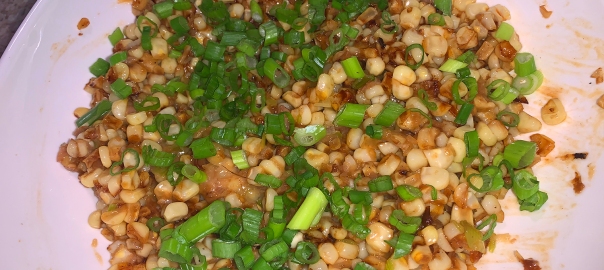
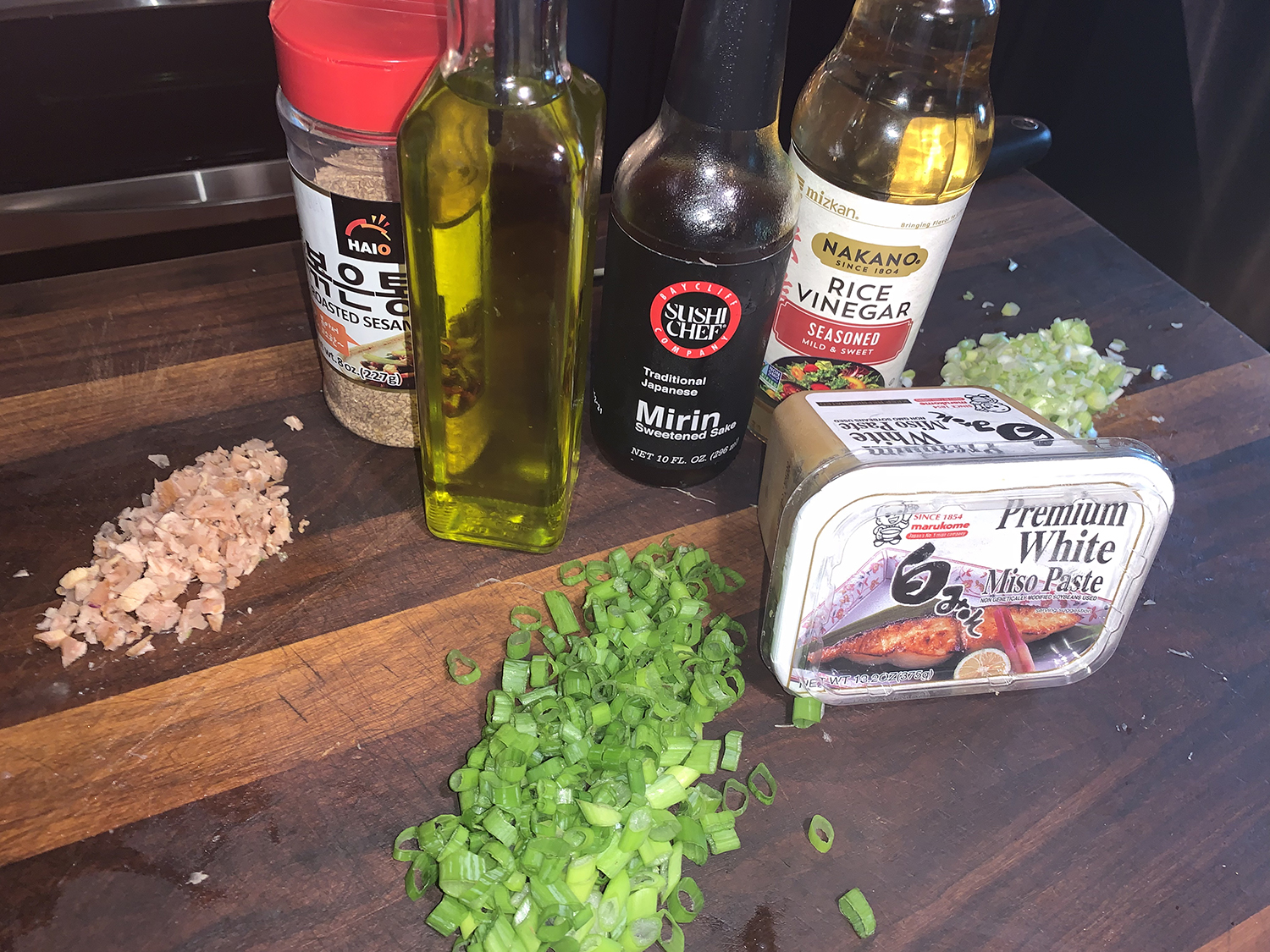
Corn Sauté with Miso and Scallions

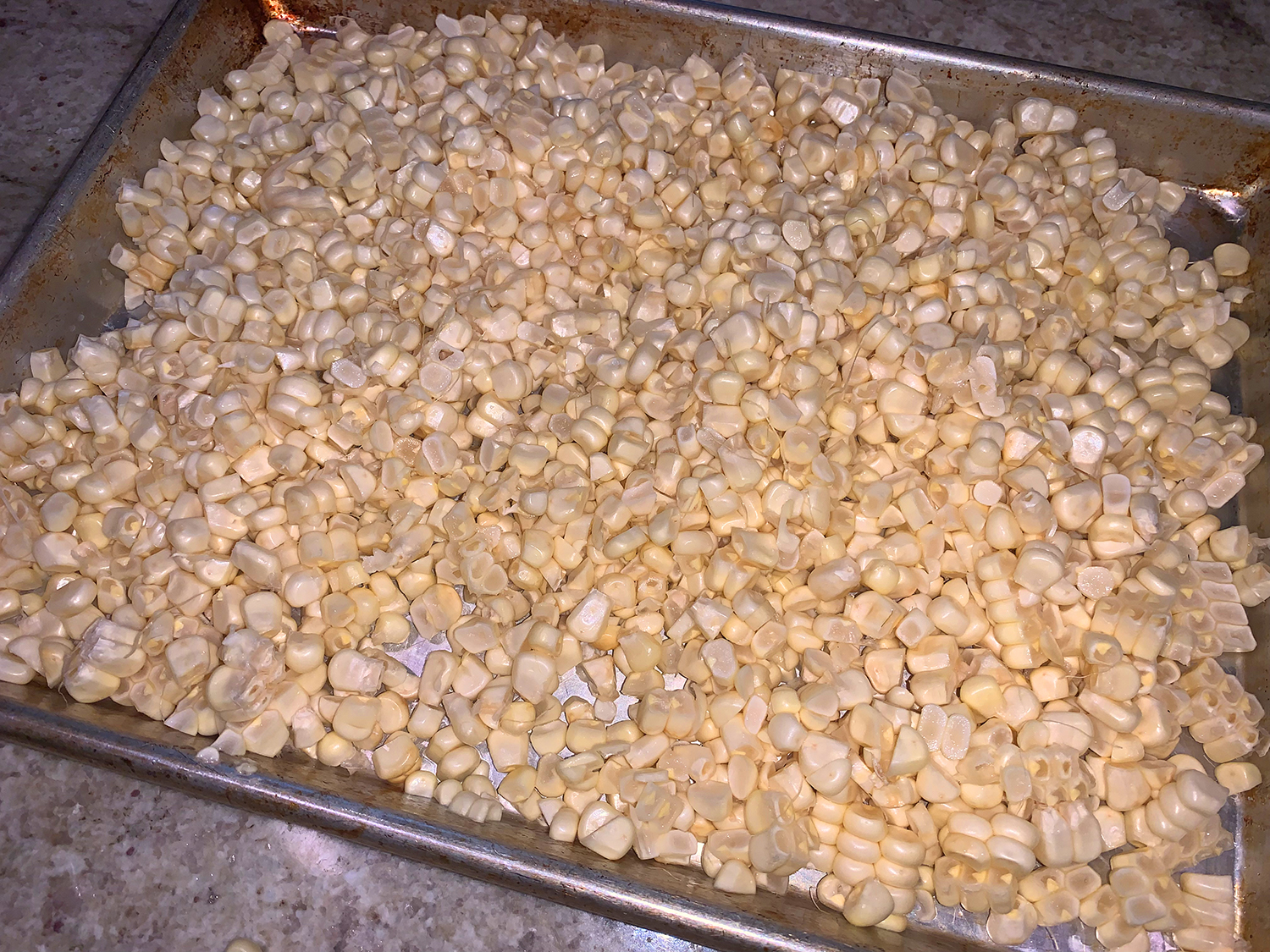
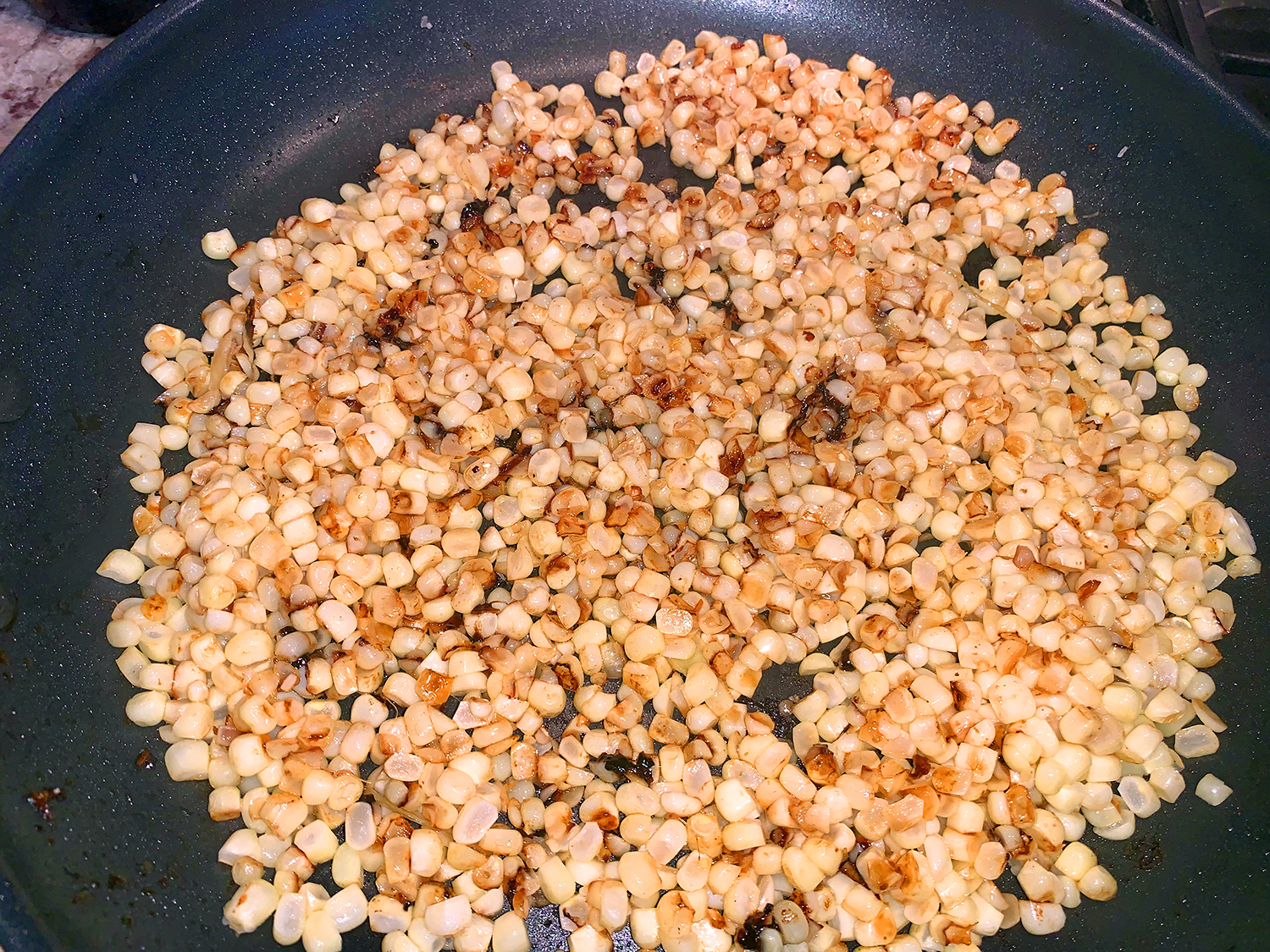
To create this corn side dish with rich, toasted flavor, strip the corn from the cobs when they are raw and then cook the kernels in a nearly smoking skillet. It is important not to stir the corn for a few minutes to give it a chance to brown. Once the corn is cooked, mix in plenty of salty, savory ingredients to balance the sweetness. Finally, an acidic component rounds out the dish.

Because fresh corn can vary in sweetness, the recipe calls for seasoning with a range of rice vinegar. We made it twice so far, and prefer the version with just 1 tablespoon of rice vinegar. When browning the corn kernels in a nonstick skillet, we found it took longer to get that caramelization, nearly three times longer! But so worth it because it was delicious and paired well with our grilled baby back ribs.

Corn Sauté with Miso and Scallions

  • Servings: 4-6
  • Difficulty: easy
  • Print

Ingredients

  • 2 Tbsp. unsalted butter
  • 6 scallions, white parts minced, green parts sliced thin on bias
  • 1 tsp. grated fresh ginger
  • 2 Tbsp. white miso
  • 1 – 2 Tbsp. rice vinegar
  • 1 Tbsp. vegetable oil
  • 4 ears corn, kernels cut from cobs (4 cups)
  • Salt
  • 1 Tbsp. mirin
  • 1 Tbsp. toasted sesame seeds

Directions

  1. Melt butter in 12-inch nonstick skillet over medium heat. Add scallion whites and ginger and cook, stirring frequently, until scallions are softened, 1 to 2 minutes. Transfer scallion mixture to large bowl and whisk in miso and 1 tablespoon vinegar. Wipe out skillet.
  2. Heat oil in now-empty skillet over medium-high heat until shimmering. Add corn and sprinkle with 1/4 teaspoon salt. Cook, without stirring, until corn is browned on bottom and beginning to pop, about 3-5 minutes. Stir and continue to cook, stirring once or twice, until corn is spotty brown all over, 2 to 3 minutes longer.
  3. Add mirin and cook until evaporated, about 1 minute. Transfer corn to bowl with scallion mixture.
  4. Stir in scallion greens. Season with salt and remaining vinegar to taste. Sprinkle with sesame seeds and serve.

http://www.lynnandruss.com

Recipe from Cook’s Illustrated

Greek Chicken and Potato Traybake

The Greek dish known as kotopoulo skorthato is typically called “Greek garlic-lemon chicken” in English, but the ensemble also includes potatoes, making it a delicious complete meal. OK, so we added a side of roasted broccolini to make it a more veggie-forward dinner.

For this riff, Milk Street used their trusty traybake technique—roasting the ingredients on a rimmed baking sheet in a hot oven to ensure the quickest cooking possible and to develop nice caramelization.

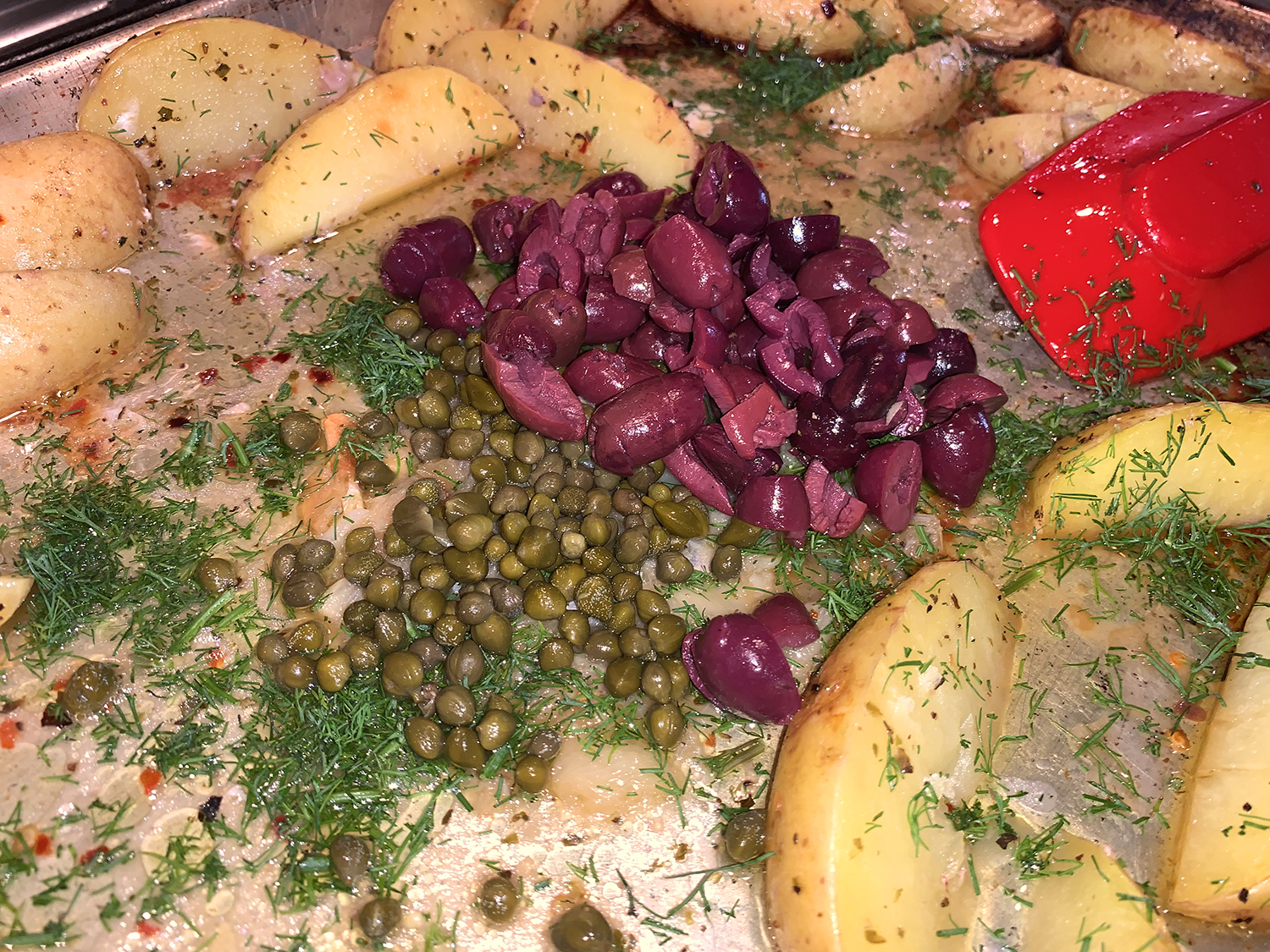
As a finale, toss in black olives, dill and capers to ratchet up the flavors. If using chicken breasts, try to purchase pieces that are close in size so they cook at the same rate. Since we used both thighs (for The Hubs) and breasts (for Yours Truly), we cut the breasts halves in half again, making them more uniform in size to the thighs.

Because we cooked 4 pounds of chicken pieces (25% more), we doubled the spice mixture so that we had enough to sprinkle on all sides of each piece. This meal was sooo flavorful, and not difficult at all!

Don’t use extra-large bone-in chicken breasts if you can help it; 12-ounce pieces work best. If unavoidable, keep in mind that bone-in breasts weighing about 1 pound each require 40 to 50 minutes of roasting.

Greek Chicken and Potato Traybake

  • Servings: 4
  • Difficulty: easy
  • Print

Ingredients

  • 1 tsp. dried oregano
  • ¼-½ tsp. red pepper flakes
  • Kosher salt and ground black pepper
  • 4 12-oz. bone-in, skin-on chicken breasts or 3 lbs. bone-in, skin-on chicken thighs, trimmed and patted dry
  • 2 Tbsp. extra-virgin olive oil
  • 1½ lbs. medium Yukon Gold potatoes, not peeled, cut into 1-inch-thick wedges
  • 2 lemons, halved crosswise
  • 8 medium garlic cloves, peeled
  • ½ cup pitted Kalamata olives, roughly chopped
  • 2 Tbsp. drained capers
  • 3 Tbsp. roughly chopped fresh dill, divided

Directions

  • Heat the oven to 475°F with a rack in the middle position. In a large bowl, stir together the oregano, pepper flakes, 1½ teaspoons salt and ½ teaspoon black pepper. Sprinkle 2 teaspoons of the mix onto all sides of the chicken. To the remaining seasoning mix in the bowl, add the oil, potatoes, lemon halves and garlic, then toss to coat.
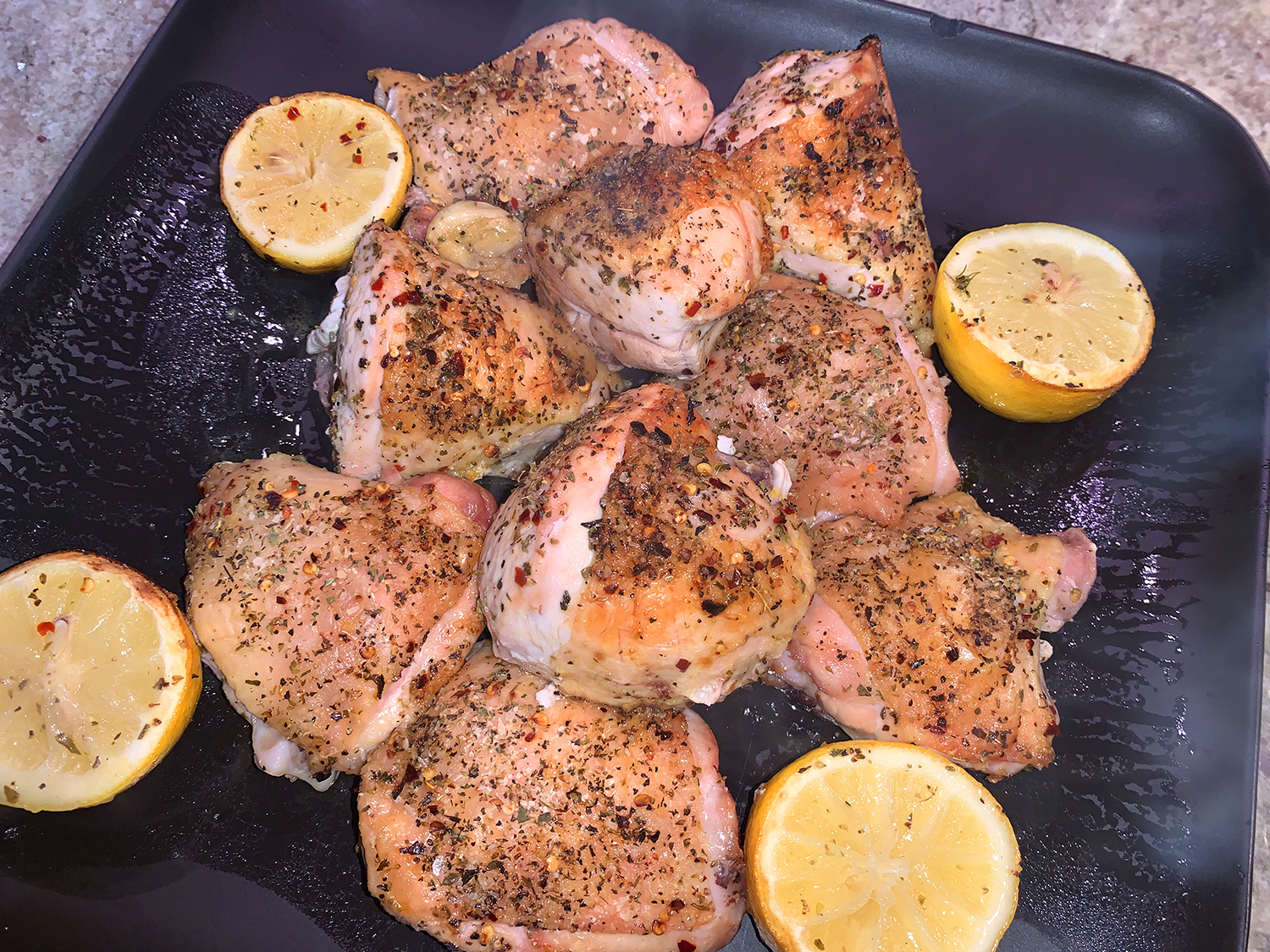
  • Place the garlic in the center of a rimmed baking sheet, then arrange the chicken, skin up, around the garlic; this placement helps prevent the garlic from scorching during roasting. Arrange the lemons, cut sides up, and the potatoes in an even layer around the chicken. Roast until the thickest part of the breasts (if using) reaches 160°F and the thickest part of the largest thigh (if using) reaches 175°F, about 30 minutes.
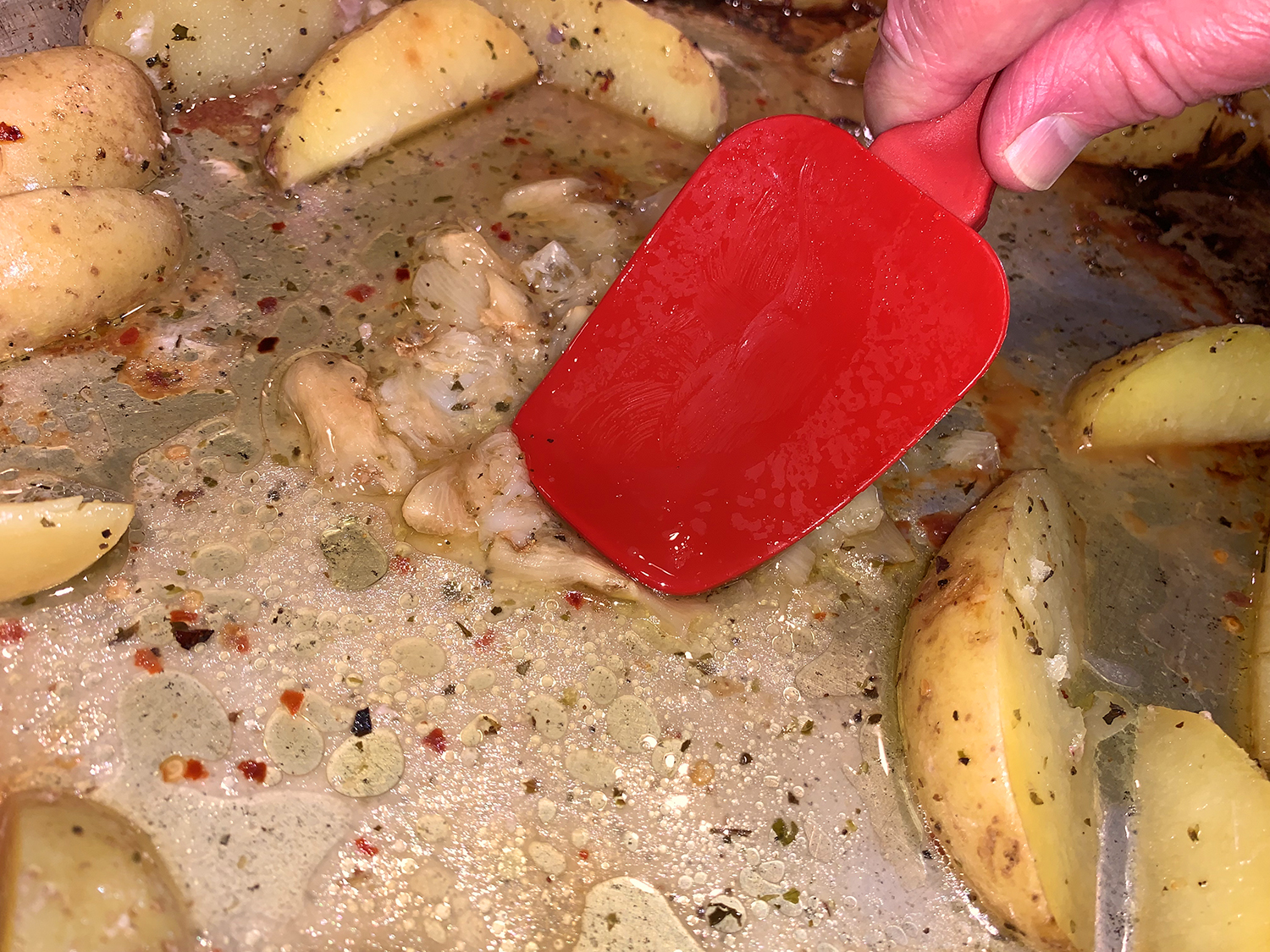
  • Using tongs, transfer the chicken and lemon halves to a serving platter. Push the potatoes to the edge of the baking sheet, leaving the garlic in the center. Using a fork, mash the garlic to a rough paste. Add the olives, capers and 2 tablespoons of the dill to the baking sheet, then, using a wide metal spatula, stir and toss the ingredients, scraping up any browned bits.
  • Transfer the potato mixture to the platter, placing it around the chicken. Sprinkle with the remaining 1 tablespoon dill.

http://www.lynnandruss.com

Adapted from a recipe by Rebecca Richmond for Milk Street

Tuscan Spring Soup

In Tuscany, the advent of spring doesn’t signal the end of soup season, like it might here in the Northeast. But it does mean the soups that are served take on a different tone. Tender vegetables meet a rich, meaty broth in this light Tuscan-inspired soup—just perfect for a not-too-hot Spring evening.

And while a hallmark of Tuscan cuisine is its rusticity, this soup is all about luxury. In stark contrast to the typical hearty Tuscan soups, which often cleverly repurpose scraps, only the finest ingredients go into a typical “garmugia”—a pairing of pricey meats and the season’s freshest vegetables.

In garmugia, meat is a seasoning, not the main event. To that end, Milk Street omits the veal, as the combination of beef broth and pancetta (plus a simmered rind of Parmesan) gives the soup a wonderfully savory depth that enhances the vegetables without competing with them.

For their clean vegetal flavors and year-round availability, this soup opts for scallions, asparagus, artichoke hearts and frozen peas. By cooking the vegetables in sequence—starting with the sturdiest, ending with the most delicate—each ingredient retains its character, ensuring that they’re not overcooked. The artichoke hearts are simmered first, then the asparagus, followed by the peas, all topped with a finishing sprinkle of scallion greens for a burst of zingy freshness.

“Each bite of the finished soup is a spoonful of spring in a bowl, no matter the season.”

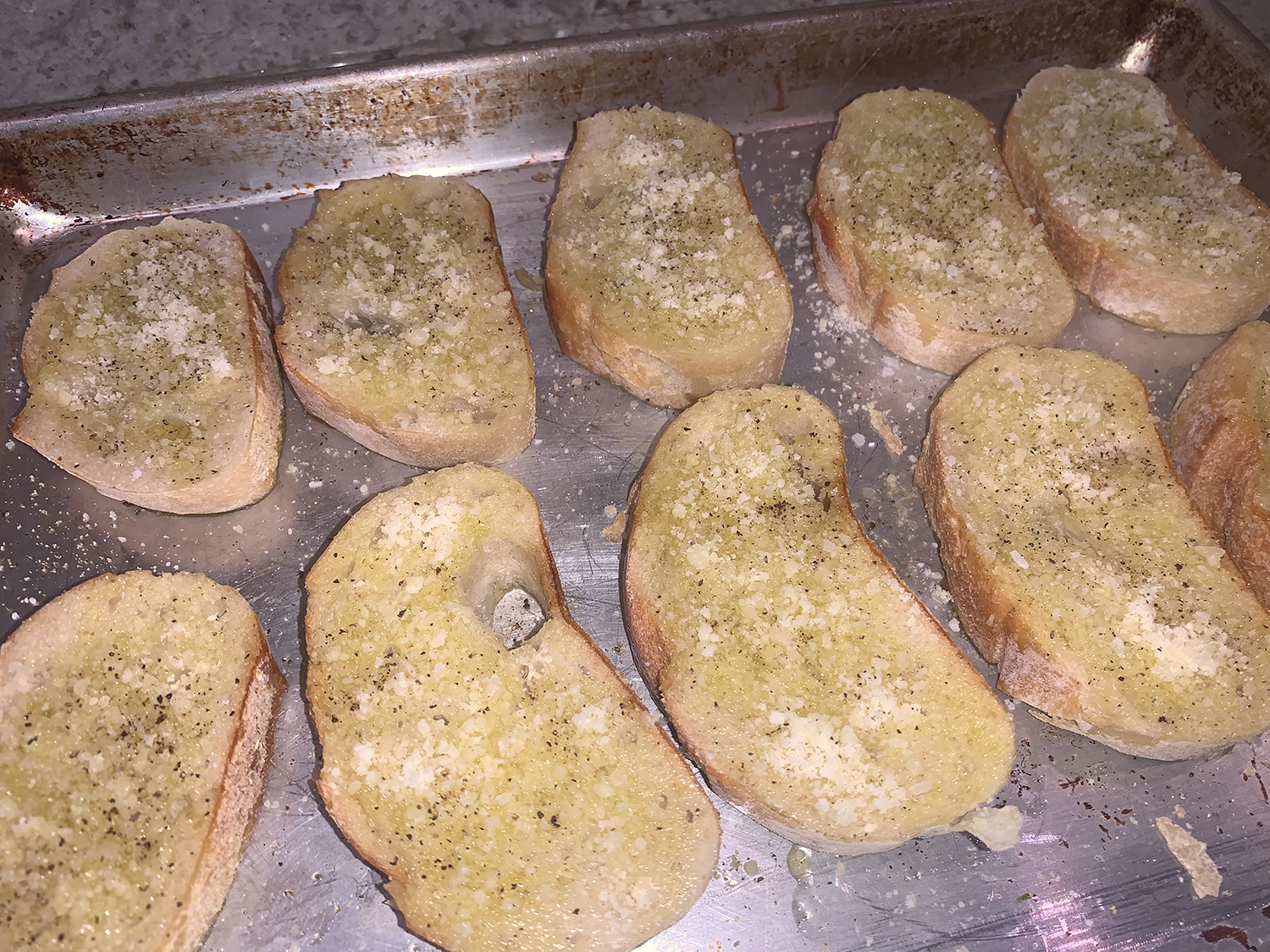
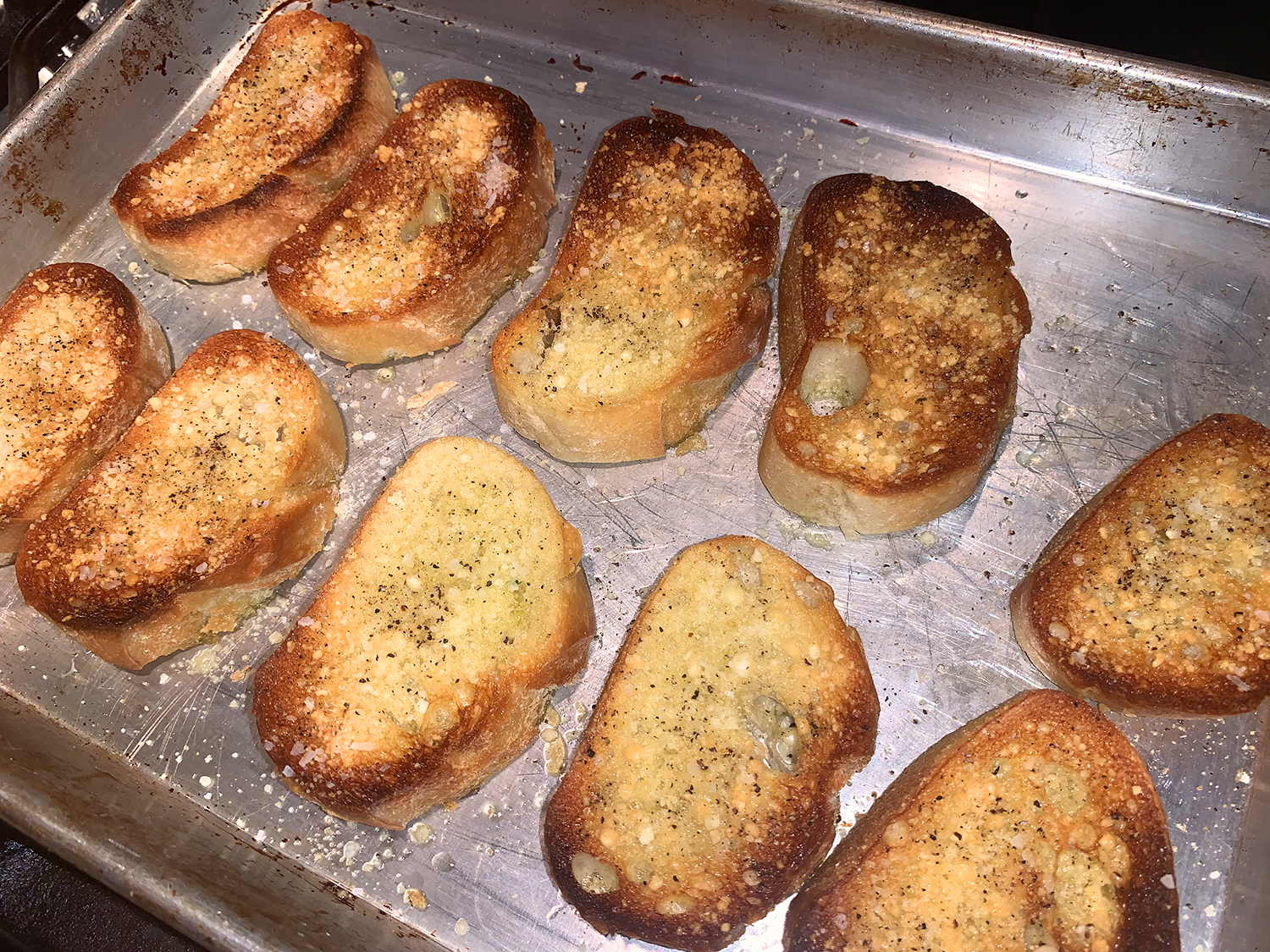
Milk Street instructs you to simmer the optional Parmesan rind into the mix to boost the umami notes. Canned artichoke hearts do well here, but frozen artichokes also work—just defrost and pat dry before use (you’ll need about 2 cups). To serve on the side, make savory Parmesan toasts that are perfect for dipping into the broth.

Don’t use ultra-slender asparagus, which will end up overcooked. Look for spears about the size of a pencil. To retain the bright-green color of the peas, don’t allow the soup to boil after the peas are stirred in.

Tuscan Spring Soup

  • Servings: 4
  • Difficulty: easy
  • Print

Ingredients

  • 4 Tbsp. extra-virgin olive oil, divided, plus more to serve
  • 3-4 oz. pancetta, chopped
  • 4 scallions, thinly sliced, whites and greens reserved separately
  • 4 thyme sprigs
  • 1½ qts. low-sodium beef broth
  • 1 chunk Parmesan rind (optional), plus ½ oz. Parmesan cheese, finely grated (¼ cup)
  • Kosher salt and ground black pepper
  • 8 oz. crusty white bread, sliced ½ inch thick
  • 14 oz. can artichoke hearts, rinsed, drained and quartered
  • 1 lb. asparagus, trimmed and cut into 1-inch lengths on the diagonal
  • ½ cup frozen peas, thawed

Directions

  • Heat the broiler with a rack about 6 inches from the element. In a large saucepan over medium, combine 1 tablespoon of oil and the pancetta. Cook, stirring occasionally, until the pancetta has rendered its fat and begins to brown, 3 to 5 minutes.
  • Add the scallion whites and thyme. Cook until the scallions are lightly browned, 1 to 2 minutes.
  • Add the broth, the Parmesan rind (if using) and ½ teaspoon pepper, then bring to a boil over medium-high.
  • Meanwhile, brush both sides of the bread slices with the remaining 3 tablespoons oil, then place in a single layer on a rimmed baking sheet. Sprinkle with the grated Parmesan, then broil until lightly browned, 1 to 2 minutes. Set aside.
  • When the soup reaches a boil, add the artichokes, reduce to medium and cook, stirring occasionally, for 5 minutes.
  • Add the asparagus and cook, stirring occasionally, until the asparagus is just tender, 2 to 4 minutes.
  • Stir in the peas, reduce to medium-low and cook, stirring, until the peas are heated through, about 3 minutes; do not allow the soup to boil.
  • Off heat, remove and discard the thyme and Parmesan rind (if used). Stir in the scallion greens, then taste and season with salt and pepper. Ladle into bowls, drizzle with additional oil and serve with the Parmesan toasts.

http://www.lynnandruss.com

Recipe by Shaula Clark for Milk Street

Strip Steaks with Spicy Tomato-Basil Sauce

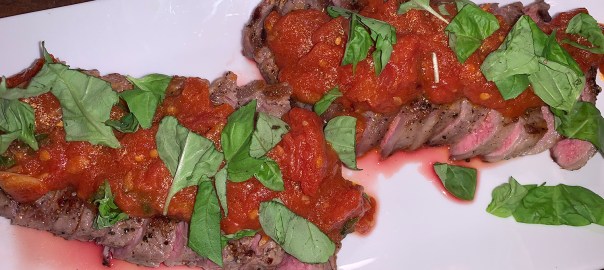
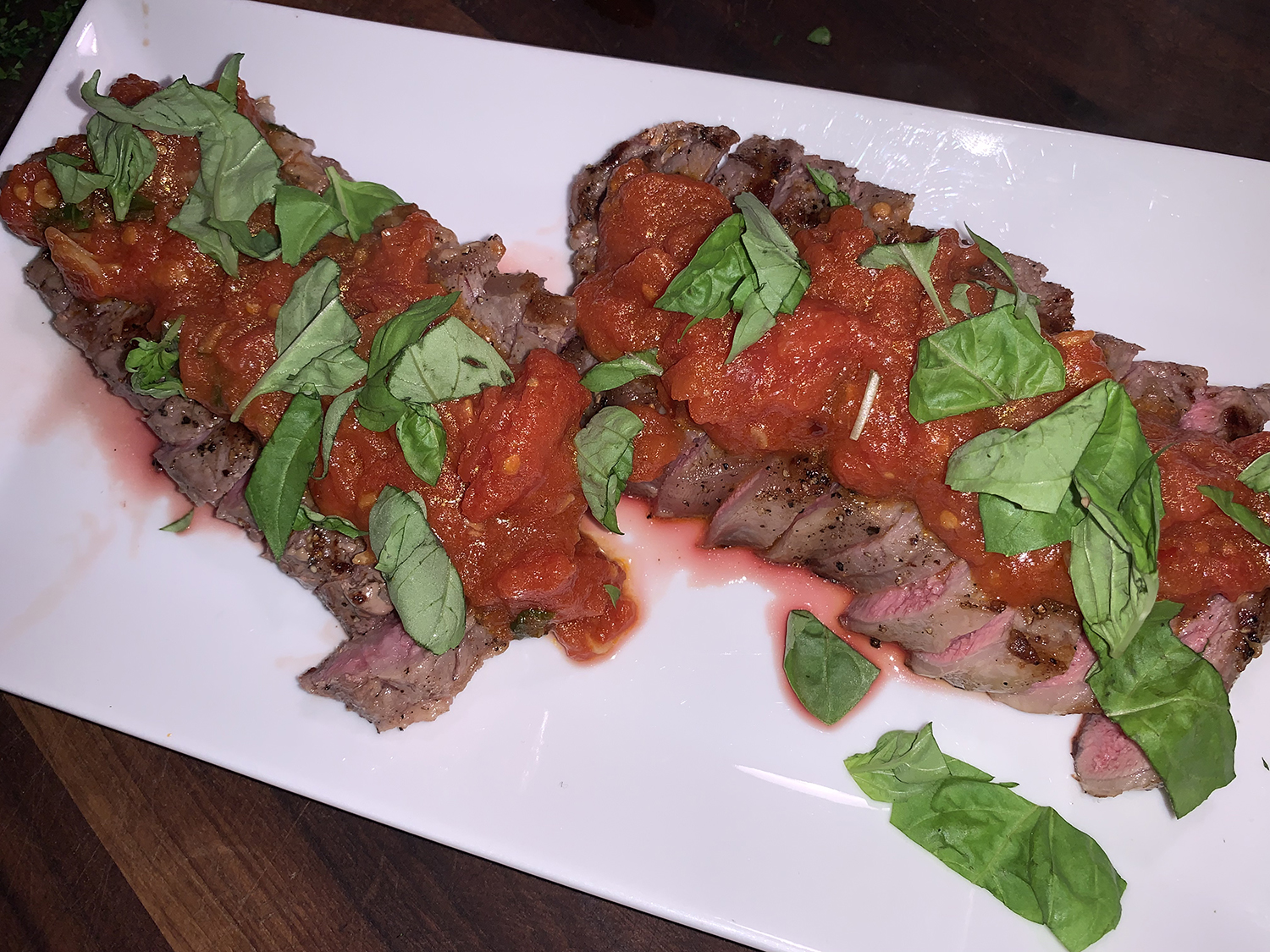
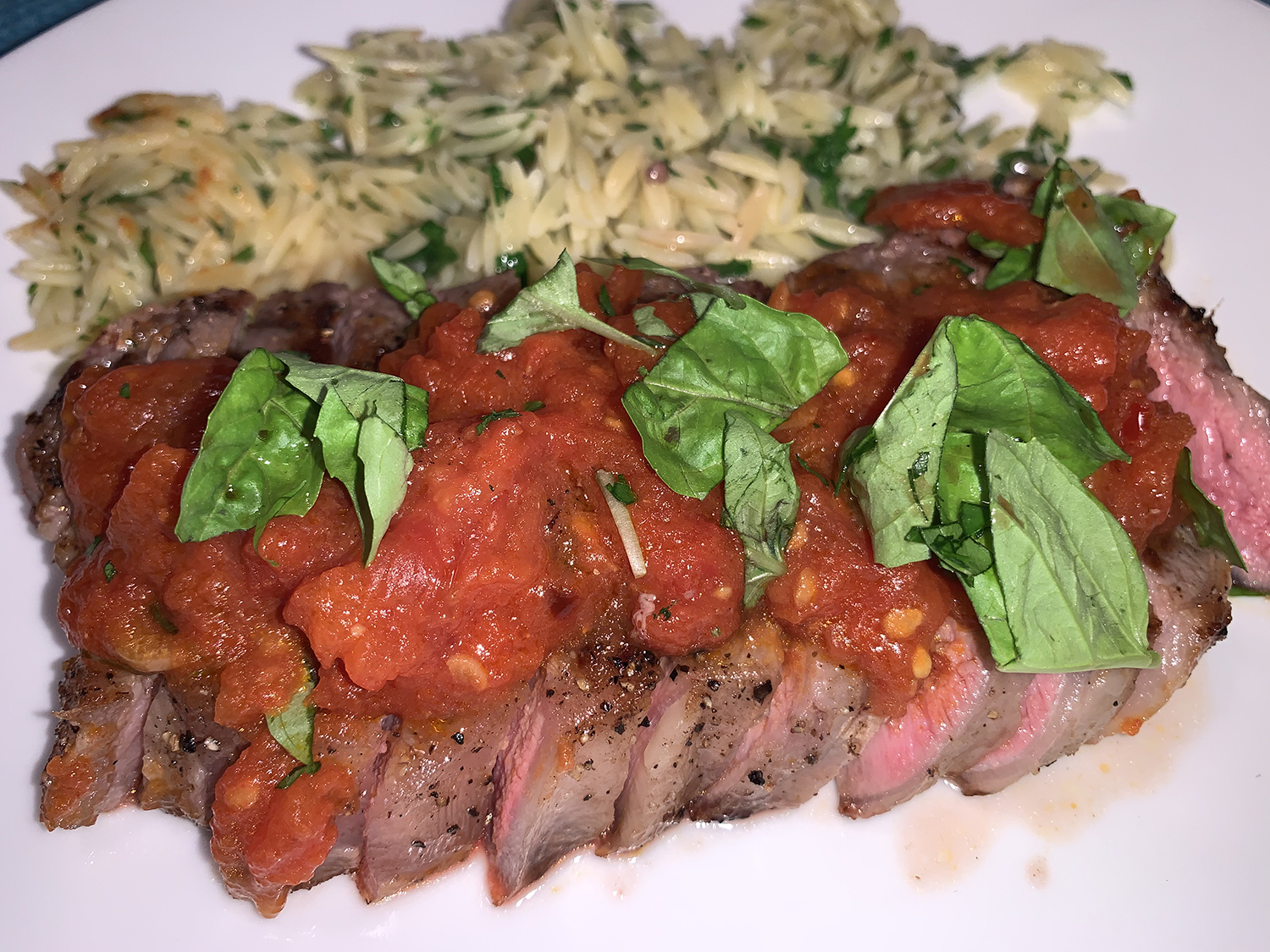
In a recent Milk Street article we found this Strip Steaks with Spicy Tomato-Basil Sauce recipe which pairs a meaty steak with the sort of tomato sauce that might typically be used on pizza. There are many ways to prepare the dish, but this simple version is perfect for a weeknight meal.

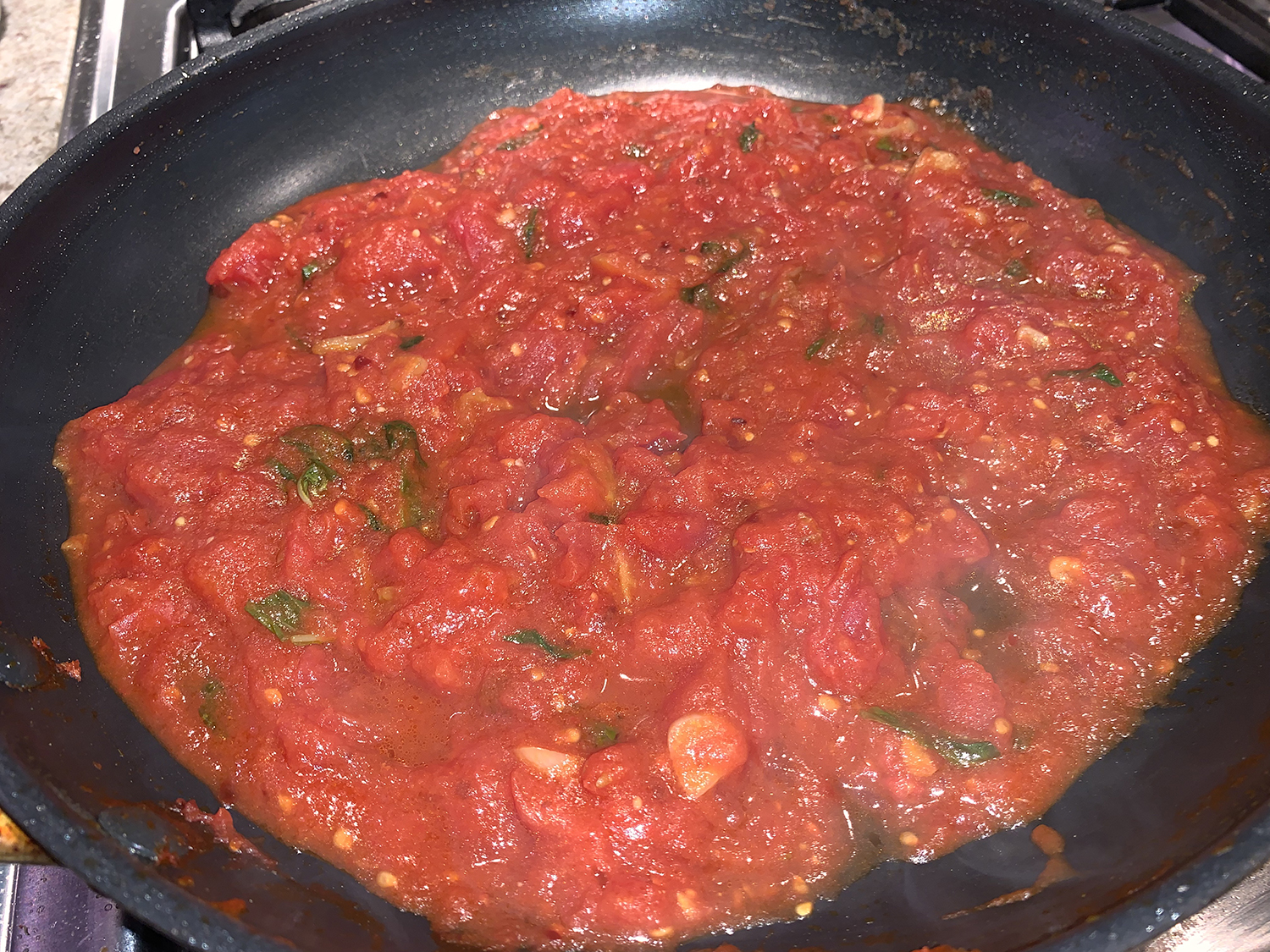
The sauce is made with canned tomatoes, a punchiness from garlic and pepper flakes, and the umami quotient gets a kick up with a few anchovy fillets (in case you’re worried, the sauce won’t taste fishy at all). Slice and sauce the seared strip steaks, then finish the dish with torn fresh basil and fruity olive oil.

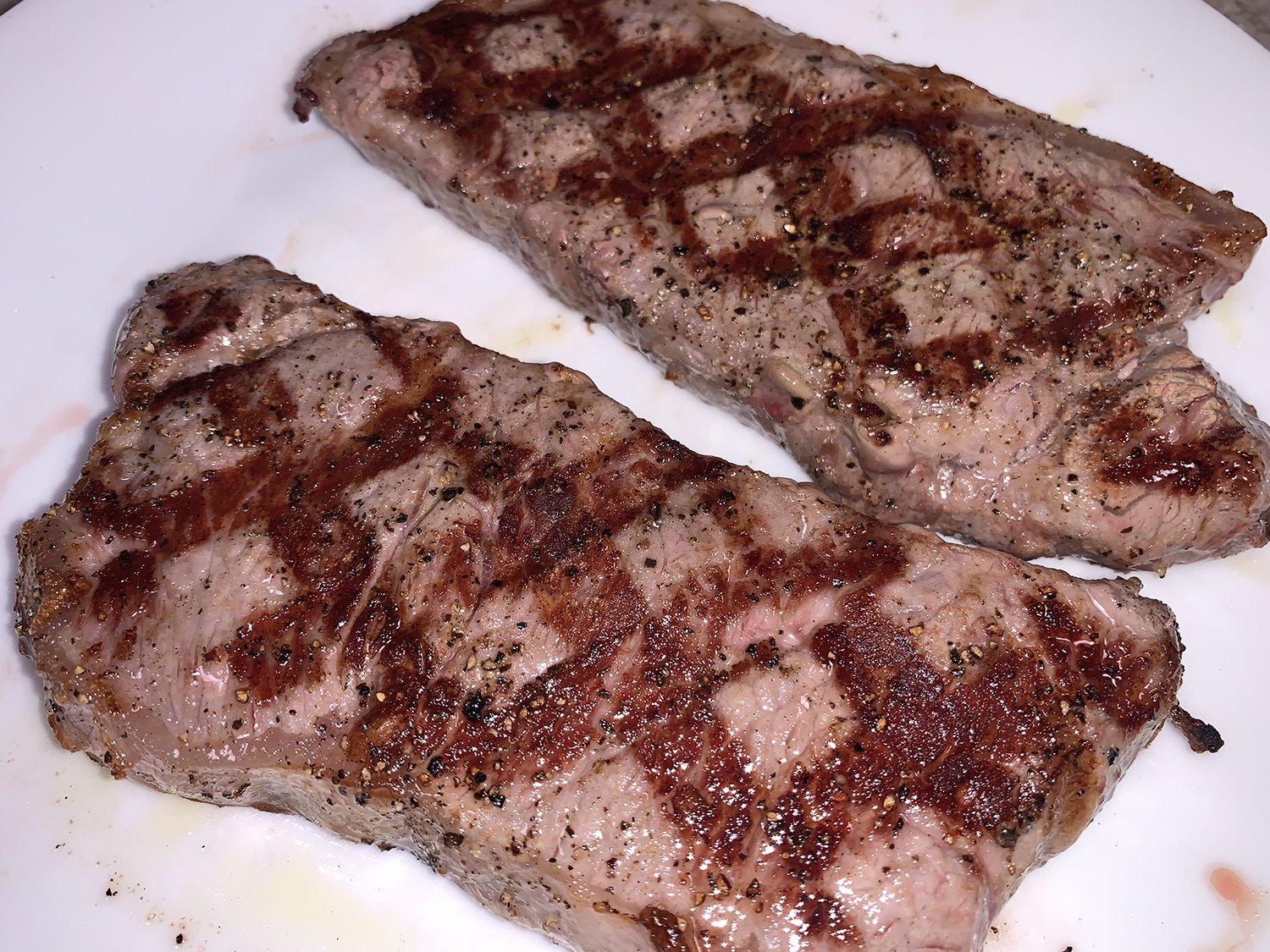
Our steaks were actually grilled because we wanted to take advantage of the nice weather, but either stovetop or hot grill sears the meat nicely. We served ours with orzo treated with olive oil and parsley; another option is thick slices of warm, crusty bread to dip in the sauce. And if you are lucky enough to have any of that fabulous sauce leftover, use it on pasta.

NOTE: Don’t use extra-virgin olive oil to sear the steaks; its smoke point is too low. Use grapeseed or another neutral oil to achieve a deep sear and to avoid the off flavor of overheated olive oil.

Keep in mind, the original recipe from Milk Street indicated this recipe would serve 4 to 6. The portions would be rather paltry if trying to feed six people. Our two strip steaks were smaller and a bit thinner, weighing in at just over a pound for two of them which rendered three servings.

Strip Steaks with Spicy Tomato-Basil Sauce

  • Servings: 2-4
  • Difficulty: easy
  • Print

Ingredients

  • 1 Tbsp. extra-virgin olive oil, plus more to serve
  • 2 medium garlic cloves, thinly sliced
  • 2-3 oil-packed anchovy fillets, chopped
  • 1/2-3/4 tsp. red pepper flakes
  • 28 oz. can whole peeled tomatoes, crushed by hand
  • 1/3 cup lightly packed fresh basil
  • Kosher salt and ground black pepper
  • 2 1-lb. beef strip steaks, each about 1 inch thick, trimmed and patted dry
  • 1 Tbsp. grapeseed or other neutral oil

Directions

  1. In a 12-inch skillet over medium-high, heat the olive oil until shimmering. Add the garlic and cook, stirring, until beginning to turn golden, 30 to 60 seconds.
  2. Add the anchovies and pepper flakes; cook, stirring, until fragrant, 30 to 60 seconds.
  3. Stir in the tomatoes with juices, a few basil leaves and ¼ teaspoon salt. Bring to a simmer, then simmer, stirring occasionally, until a spatula drawn through the sauce leaves a trail, 12 to 14 minutes. Transfer to a small bowl, cover and set aside; wipe out the skillet.
  4. Season the steaks on both sides with salt and black pepper. In the same skillet over medium-high, heat the neutral oil until barely smoking. Add the steaks, reduce to medium and cook until well browned on the bottoms, 5 to 7 minutes.
  5. Using tongs, flip the steaks and cook until the second sides are well browned and the centers register 120°F for medium-rare, another 5 to 7 minutes.
  6. Transfer to a platter, tent with foil and let rest for about 10 minutes.
  7. Transfer the steaks to a cutting board and slice them on the diagonal ¼ to ½ inch thick. Return to the platter and spoon on some of the sauce.
  8. Tear the remaining basil and sprinkle it over the top, then drizzle with additional olive oil. Serve the remaining sauce on the side.

http://www.lynnandruss.com

Recipe by Calvin Cox for Milk Street

Chili-Soy Noodles with Bok Choy and Peanuts

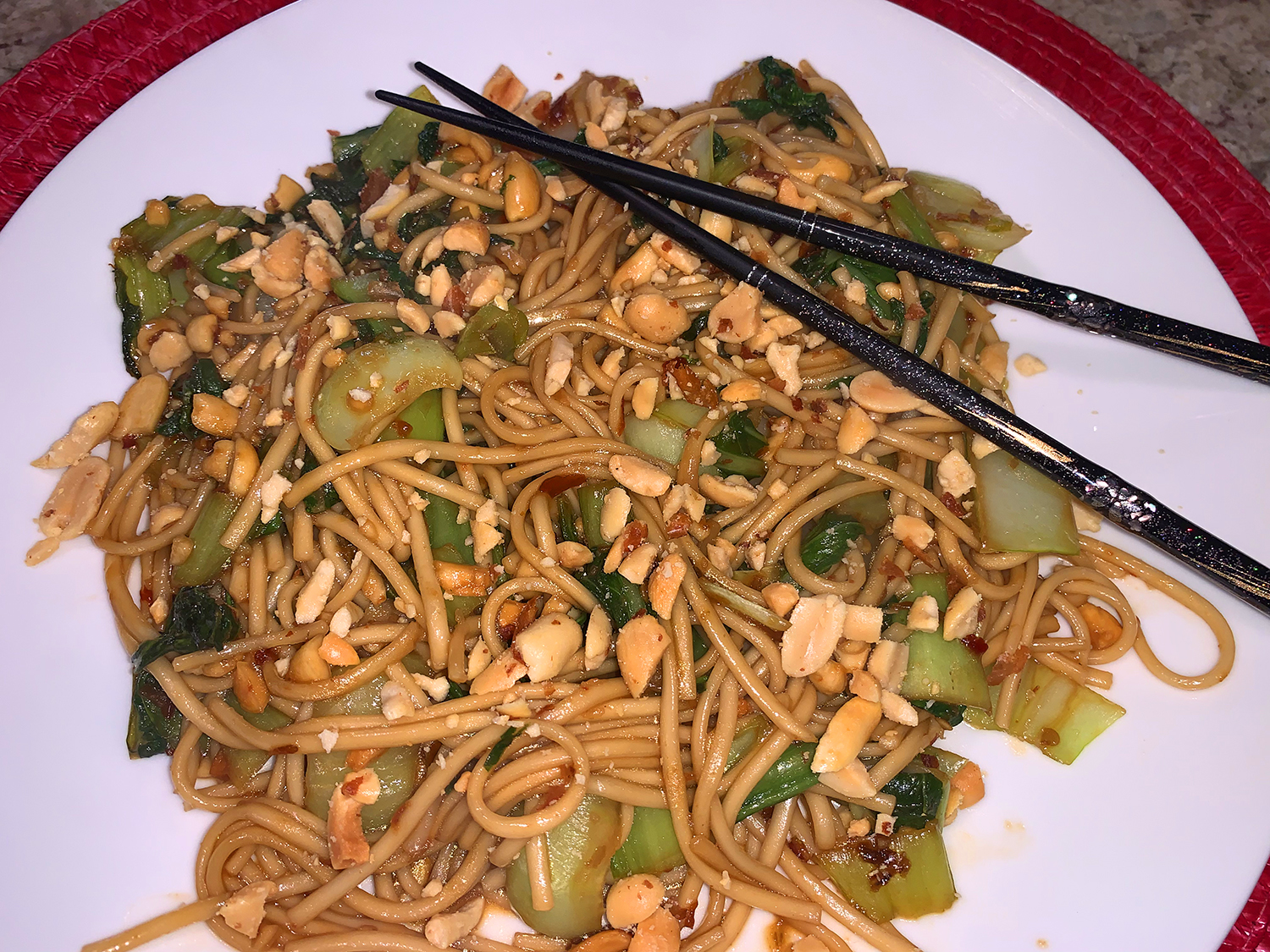
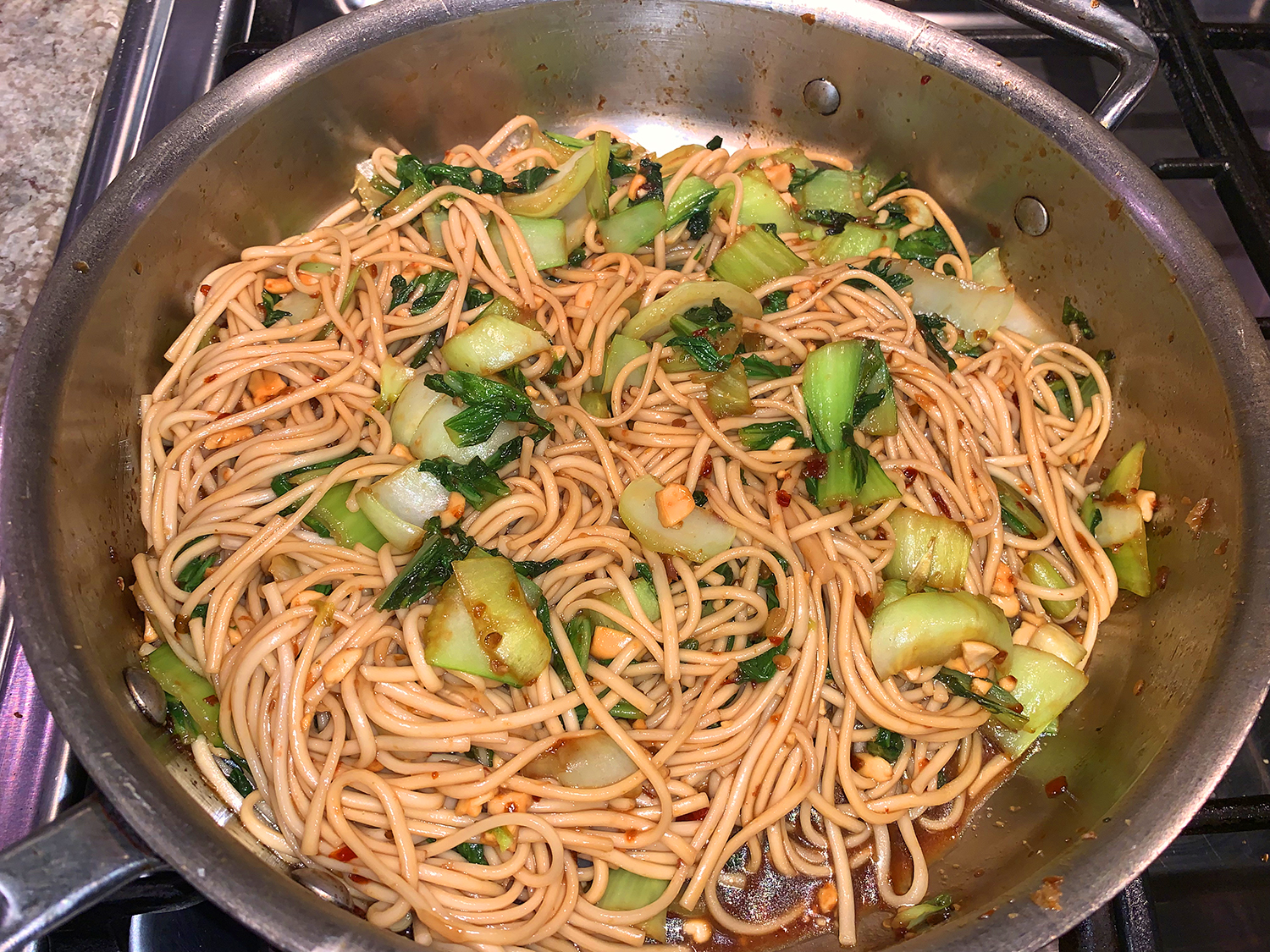
These noodles are an addictive combination of salty, spicy and sweet. For best results, use thick Asian wheat noodles, such as udon or lo mein, that cook up with chewy resilience. We try to include vegetarian dishes into our repertoire of meals, and this recipe is anything but ho-hum. Plus the ease of prep and limited ingredients let you serve dinner in under a half hour.

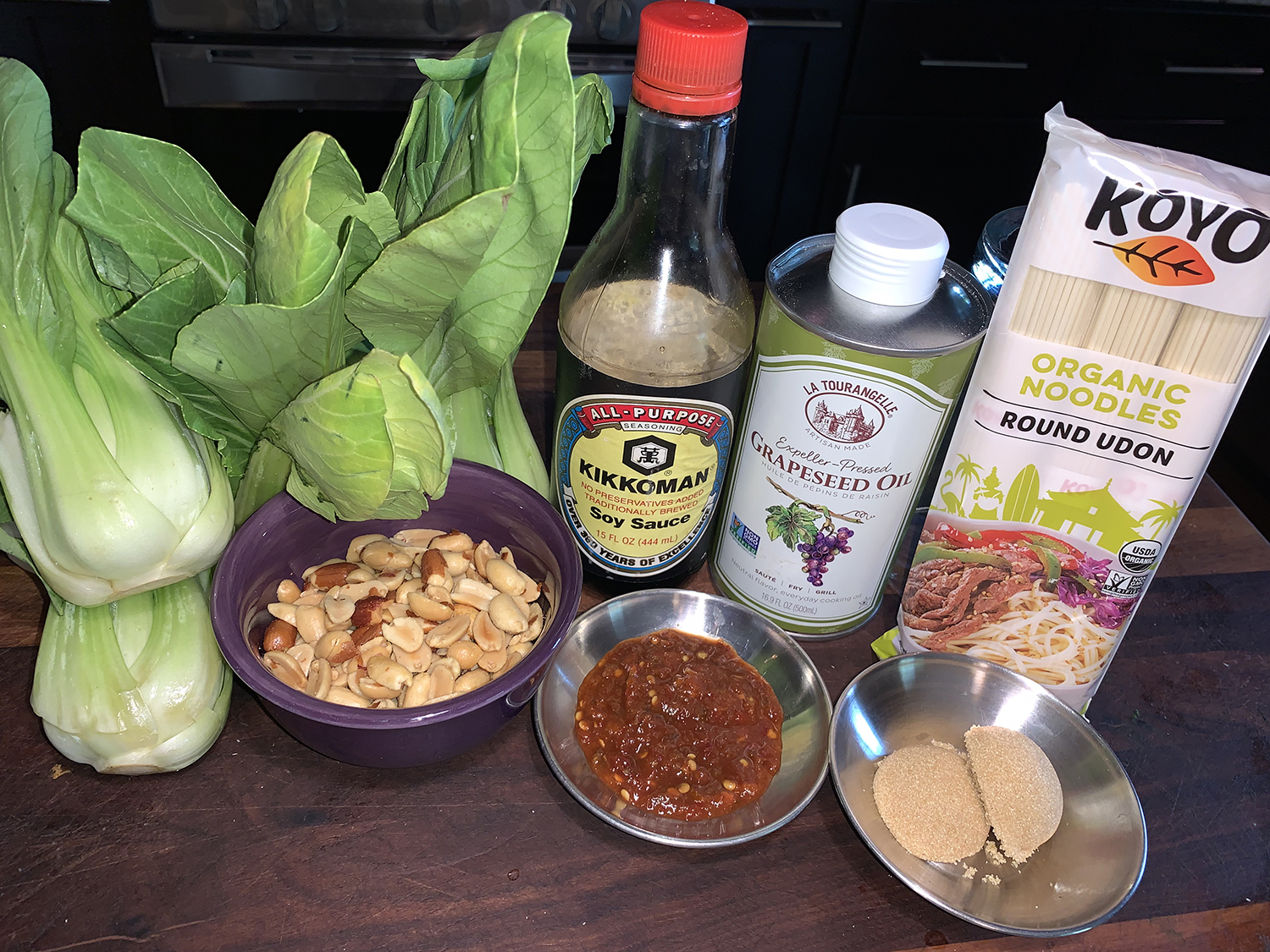
Chili crisp, a Chinese condiment sold in jars, is chili oil amped up with with red pepper flakes and additional spices. If you can find it, it’s a more flavorful alternative to standard chili oil. We used a chili-garlic paste, including the full two tablespoons. In fact, The Hubs added even more to his portion before tasting it–which probably wasn’t that wise 😉

If you want to amp up the veggies, one reviewer suggested including mushrooms, which we both agreed would be a good addition. Our Udon noodles weighed in at only eight ounces as opposed to the ten ounces the recipe called for. Luckily we didn’t have another mouth to feed because we polished off the entire skillet’s worth!

Chili-Soy Noodles with Bok Choy and Peanuts

  • Servings: 3-4
  • Difficulty: easy
  • Print

Ingredients

  • 10 oz. dried Asian wheat noodles
  • 1 Tbsp. neutral oil
  • 1 lb. baby bok choy, trimmed and sliced crosswise into ½-inch pieces
  • ⅓ cup low-sodium soy sauce
  • 2 Tbsp. packed brown sugar
  • 1-2 Tbsp. chili oil OR chili crisp, plus more to serve
  • ¾ cup unsalted roasted peanuts, finely chopped

Directions

  1. Cook the noodles in a large pot of salted boiling water until tender. Drain, rinse and drain again.
  2. In a 12-inch skillet, heat the neutral oil until shimmering. Add the bok choy and cook, stirring, until the stems are tender; transfer to a plate.
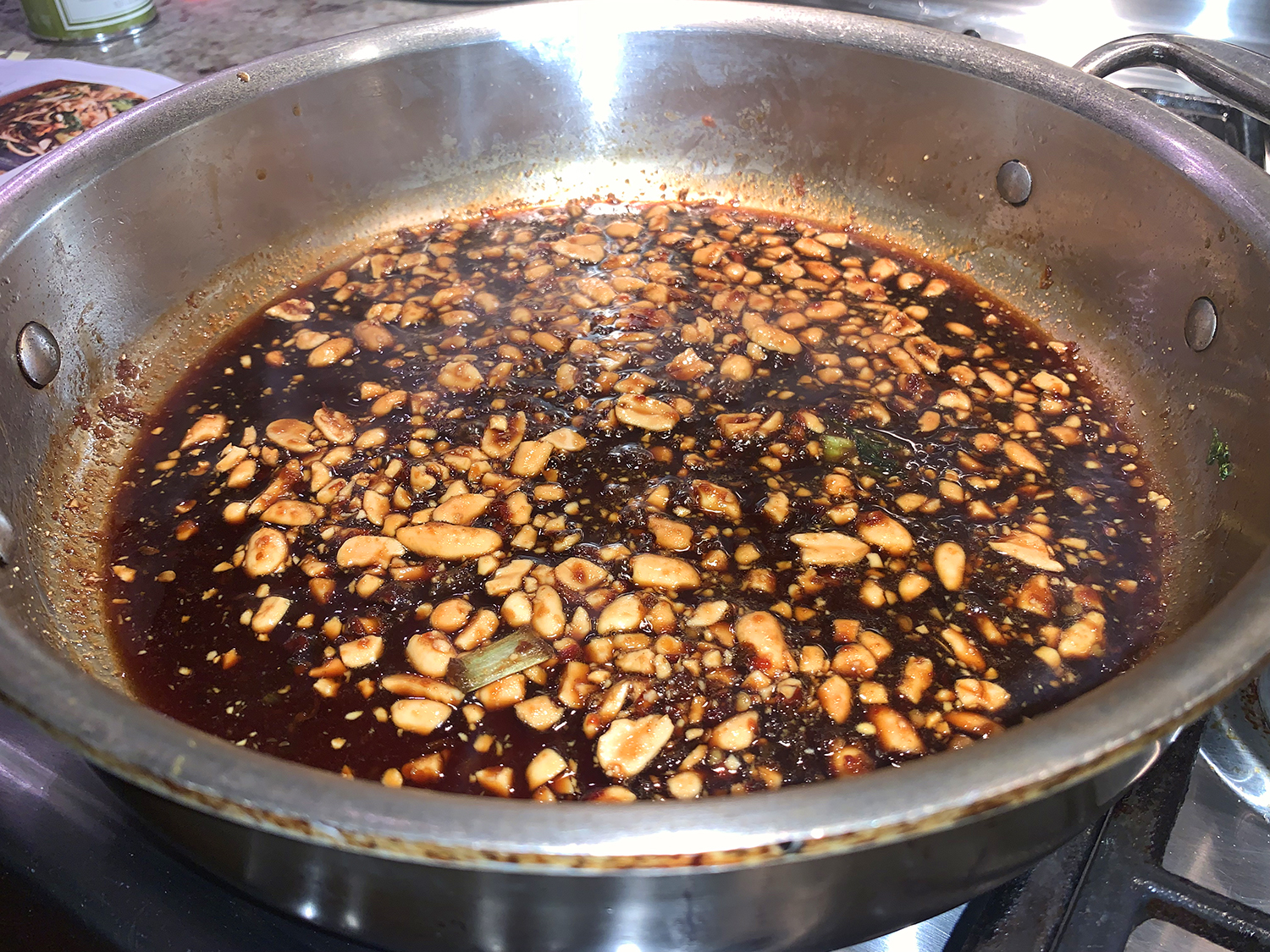
  3. In the same skillet, mix the soy, sugar, chili oil and half the peanuts. Simmer, stirring occasionally, until slightly thickened.
  4. Add the bok choy and noodles, then toss until warmed. Serve sprinkled with the remaining peanuts and drizzled with additional chili oil.

http://www.lynnandruss.com

Adapted from a recipe by Milk Street

Braised Asparagus with Lemon and Chives

Here, braising coaxes asparagus’s gentler side into the spotlight. It’s not the typical crisp-tender, not browned, nor vibrant green—but it may end up being one of your favorite ways to cook the spears. The vegetable is vigorously simmered in a copious amount of liquid, allowing the braising liquid to evaporate, leaving behind a light glaze that coats the asparagus.

As Cook’s Illustrated mentions, the crisp bite gives way to silkiness; the fresh vegetal flavor evolves into more-complex sweet nuttiness, and the braising liquid can travel into the spears, seasoning them inside and out.

The dish is finished with a less-is-more approach adding just a splash of acidity and a handsome sprinkle of fresh herbs to accentuate the vegetable’s sweet flavor.

FYI, this recipe is best with asparagus spears that are at least ¾ inch thick. We bought ours picked fresh at a local farm market. The benefit of thicker spears is you can peel off their firm, waxy skin without whittling them down to toothpicks.

Braised Asparagus with Lemon and Chives

  • Servings: 4
  • Difficulty: easy
  • Print

Ingredients

  • 1 lb. thick asparagus
  • 1 cup water
  • ¼ cup chicken broth
  • 2 Tbsp. extra-virgin olive oil
  • ¼ tsp. table salt
  • ¼ tsp. grated lemon zest plus 1 tsp. juice
  • 2 tsp. minced fresh chives, divided

Directions

  1.  Trim bottom inch of asparagus spears; discard trimmings. Peel bottom two-thirds of spears until white flesh is exposed.
  2. Bring water, broth, oil, and salt to simmer in 12-inch skillet over high heat. Add asparagus in even layer. Reduce heat to maintain vigorous simmer and cover. Cook, gently shaking skillet occasionally, until asparagus is tender and can be easily pierced with tip of paring knife, 8 to 10 minutes.
  3. Remove lid and continue to cook, shaking and swirling skillet, until skillet is almost dry and asparagus is glazed, 1 to 3 minutes longer.
  4. Off heat, add lemon zest and juice and half of chives and toss to coat.
  5. Transfer asparagus to platter, sprinkle with remaining chives, season with salt to taste, and serve.

http://www.lynnandruss.com

Adaptable Taco Salad Bowl

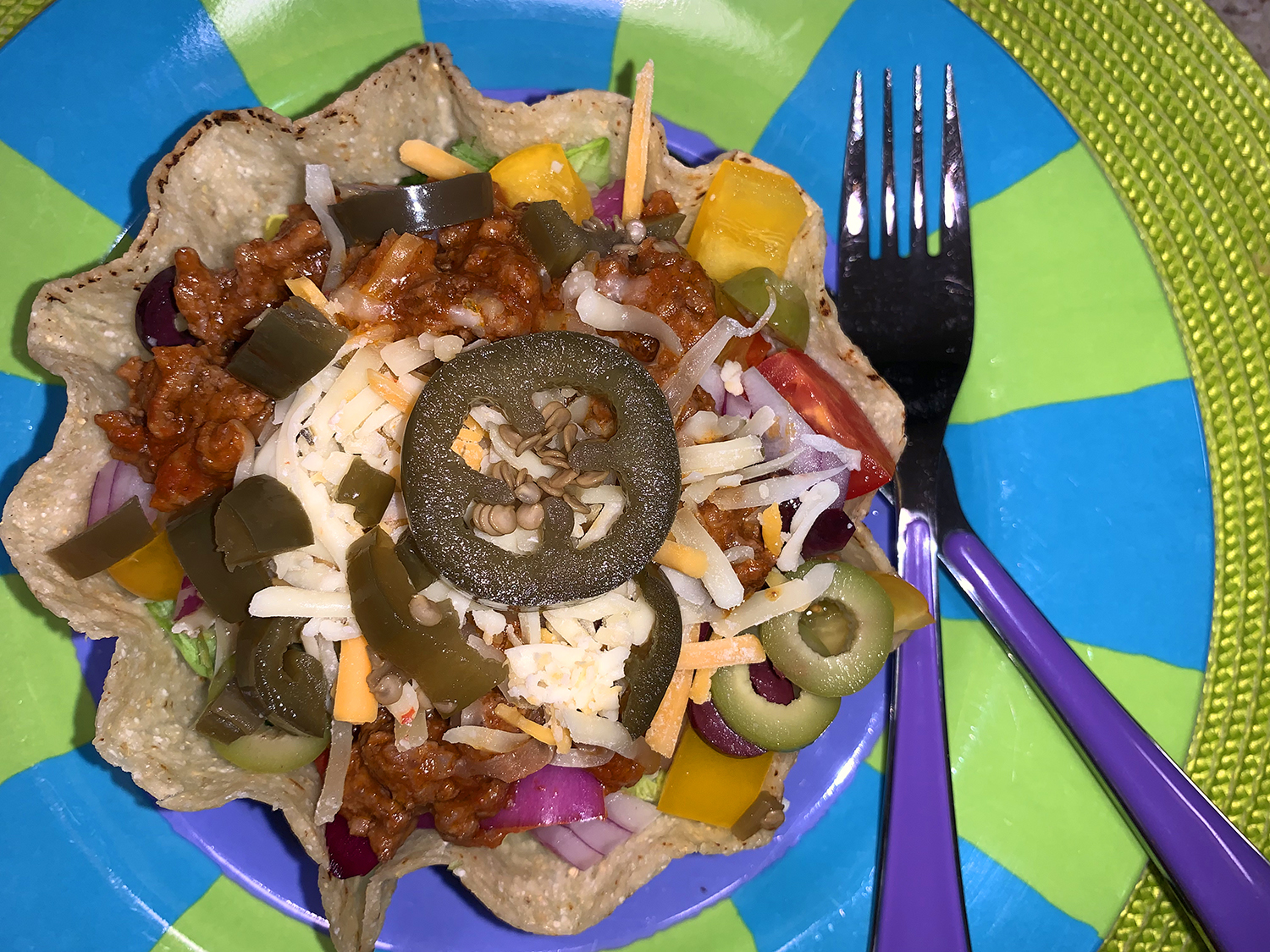
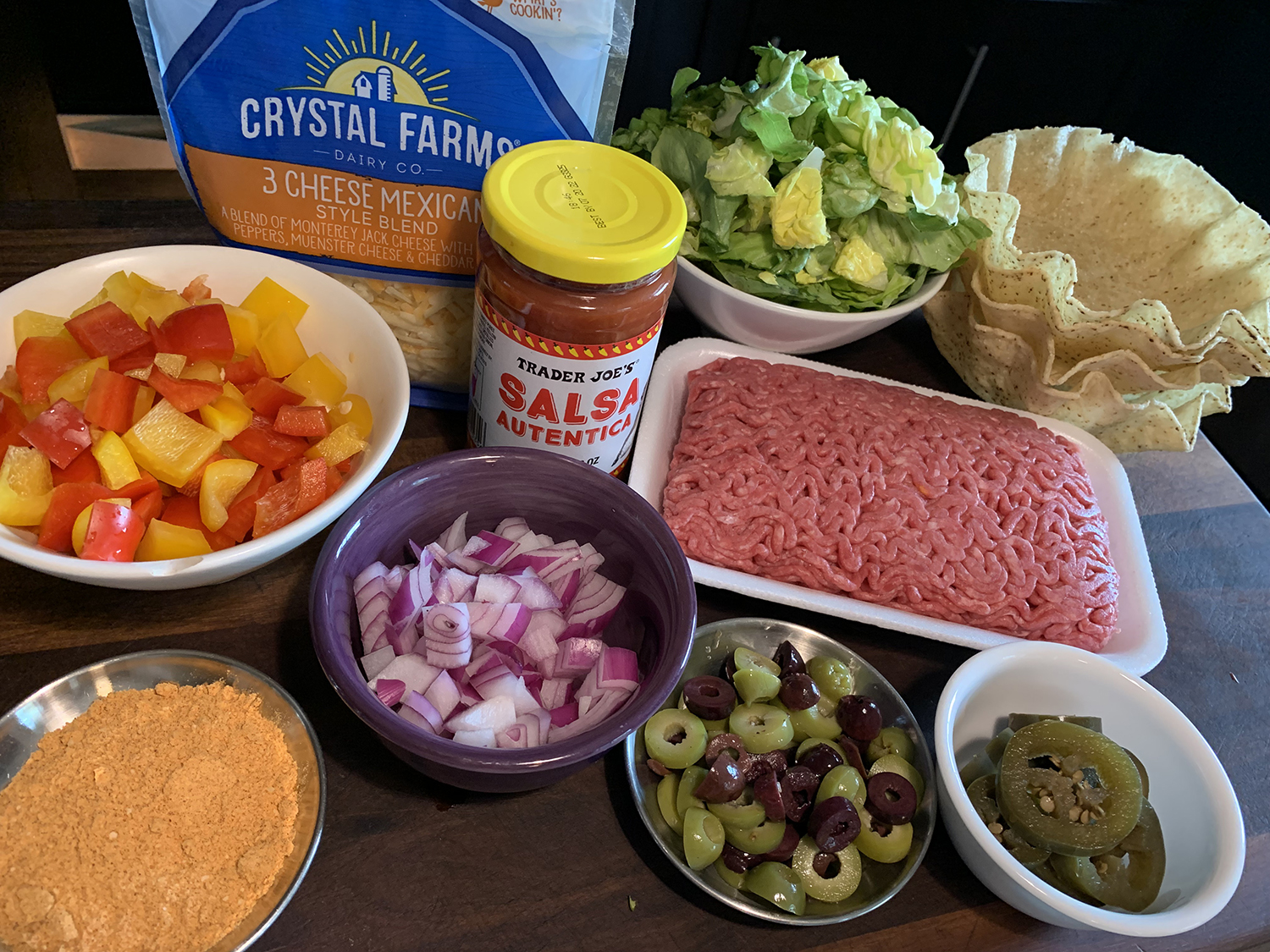
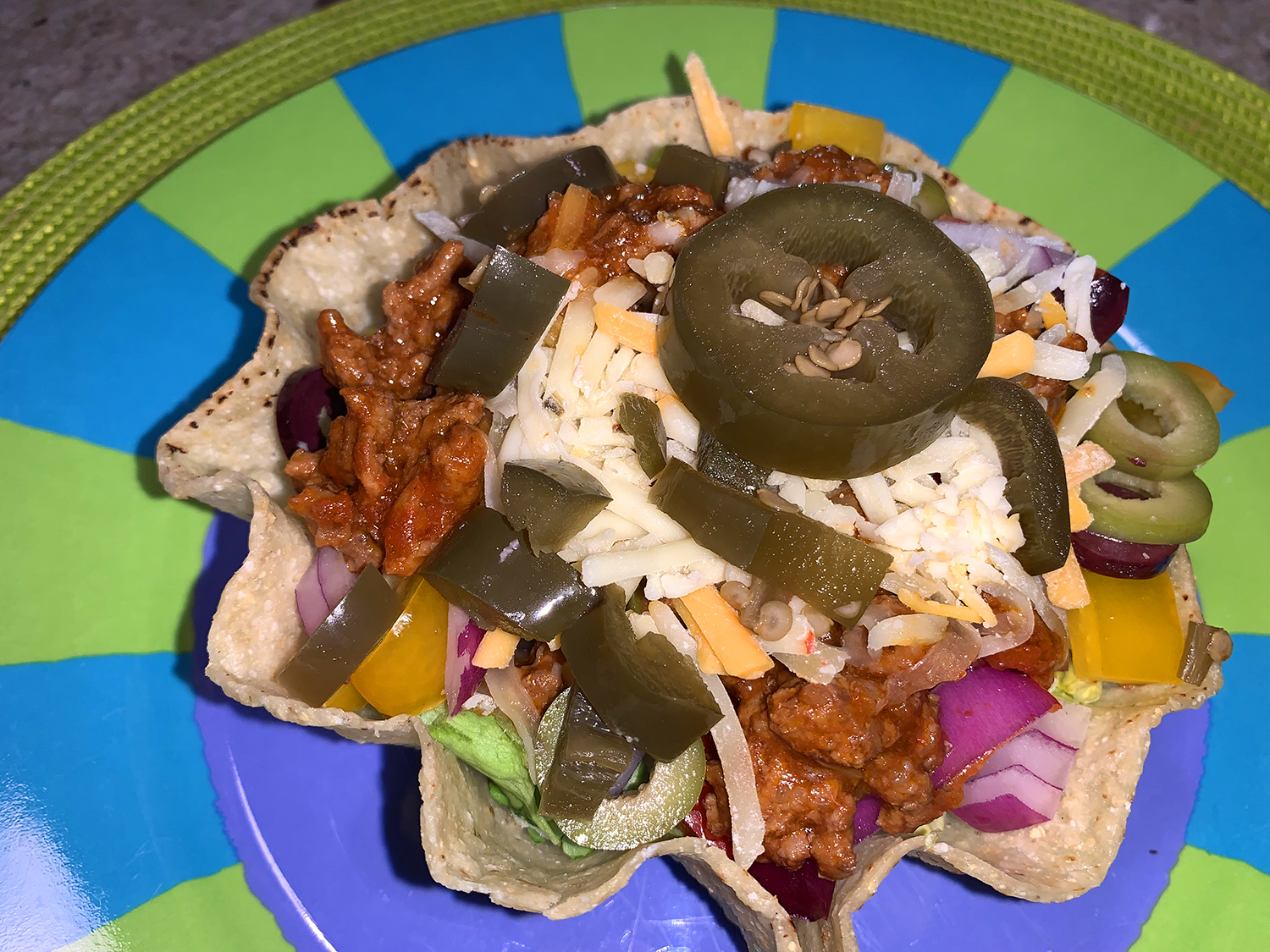
With Cinco De Mayo right around the corner, this quick riff on taco salad might just be the ticket for dinner. Having a small party? Then just double the recipe and you can feed up to eight. Let guests prepare their own, layering on just the right ingredients to suit their own preferences. This way it appeals to vegetarians and meat eaters alike.

Don’t eat red meat? Substitute ground turkey. Follow a vegetarian lifestyle? Swap out the meat for refried beans. Not into hot and spicy? Omit the jalapeños, and use a mild taco seasoning and salsa. Can’t tolerate raw onion? Cook it with the ground meat to eliminate some of the pungency.

Another fun twist is using beer instead of water when you add the seasoning to the ground meat. As you can see, this salad is very adaptable. I like to start with a layer of lettuce, followed by the meat mixture and cheese, then the peppers, tomatoes, onion, and olives. To finish, add a bit more meat and cheese, and a final topping of jalapeños and sour cream, if using,

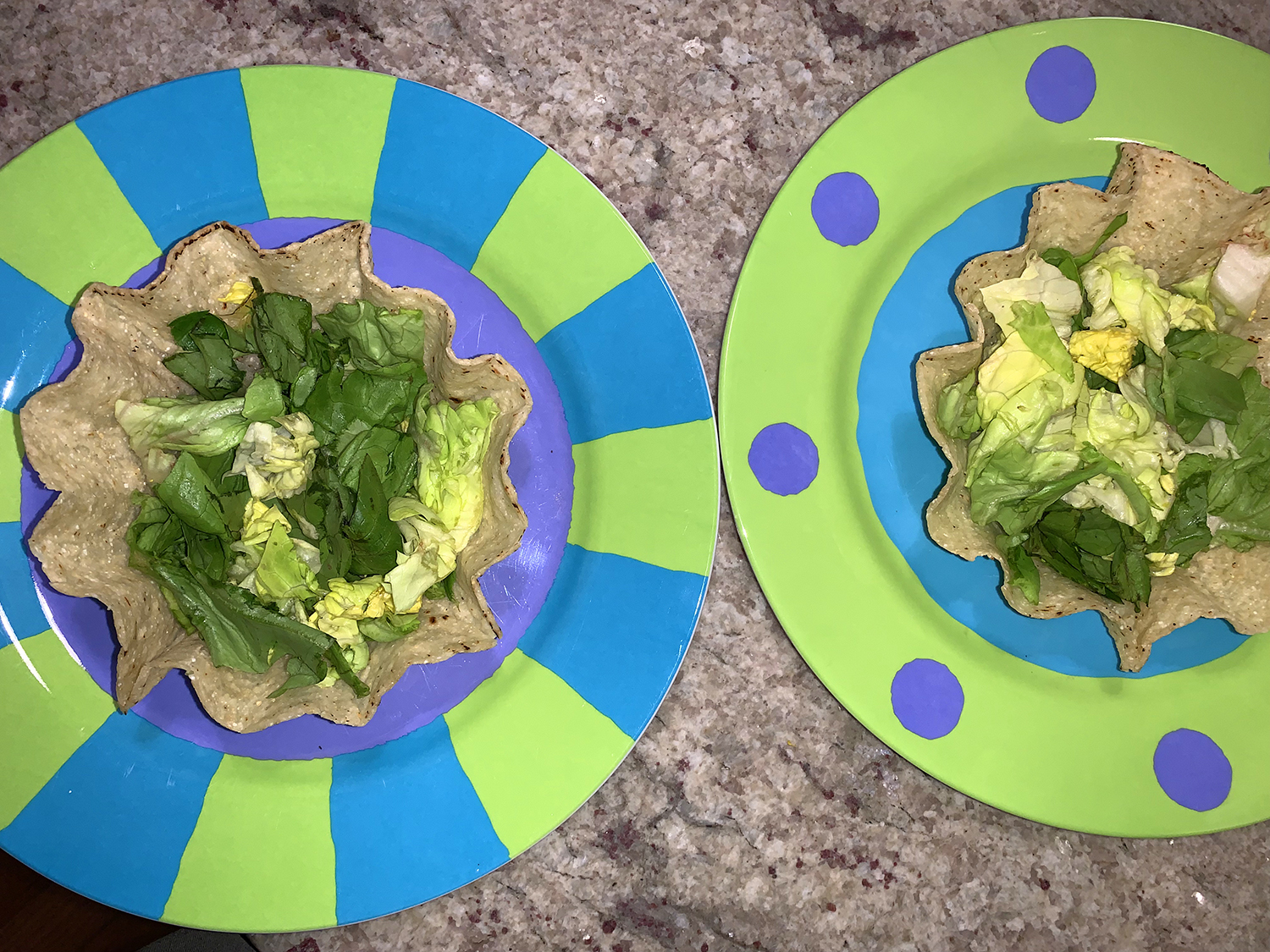
To up the party ambiance, plate it all on some fun and festive picnic ware!

Adaptable Taco Salad Bowl

  • Servings: 4
  • Difficulty: easy
  • Print

Ingredients

  • 4 tostada bowls
  • 1 1⁄4 lbs. ground beef or turkey (or refried beans if going vegetarian)
  • 3 Tbsp. homemade or packaged taco seasoning
  • 3⁄4 cup water, or beer
  • 1⁄2 cup salsa (your favorite brand)
  • 1 head iceberg or Bibb lettuce, torn into 2-3″ pieces
  • 8 oz. (2 cups) shredded Mexican cheese blend
  • 1⁄2 each large red and yellow bell pepper, cut into 1⁄4 dice
  • 1 cup grape tomatoes, quartered
  • 1⁄2 red onion, cut into 1⁄4 dice
  • 1⁄2 cup black and/or green pitted olives, sliced thin
  • 1⁄2 cup pickled jalapeños, 1⁄4 slices, then chopped
  • Sour cream for garnish, optional

Directions

  • Prep all ingredients.
  • In a large nonstick skillet, brown the ground meat until there is no more pink, making sure to break up any large chunks.
  • Add the taco seasoning and the water (or beer), and cook over medium heat for about 5 minutes until it thickens. Add the salsa to the meat mixture and heta through.
  • While the meat is thickening, prepare the tostada bowls starting with a layer of torn lettuce.
  • Next, top with some meat and cheese, then add any of the other ingredients you prefer. Finish with another layer of ground meat and cheese, and top with sour cream and jalapeños, if desired.

http://www.lynnandruss.com

Salmon with Lemon Caper Sauce

This pescatarian-friendly twist on chicken piccata is an easy, go-to meal for anyone looking to save on time without sacrificing flavor. It’s such a quick and easy dinner to throw together, but the ingredients bring on BIG flavor.

Serve this with some simple pasta, risotto, polenta, or even just roasted vegetables. It goes with virtually anything and you can whip it up in under 30 minutes. We enjoyed it with steamed broccolini (which also benefited from the caper-lemon sauce), and a side salad.

With only two of us for dinner, we halved a one-pound piece of salmon providing each of us an eight ounce serving. It was sooo good, we cleaned our plates in no time!

Salmon with Lemon Caper Sauce

  • Servings: 4
  • Difficulty: easy
  • Print

Ingredients

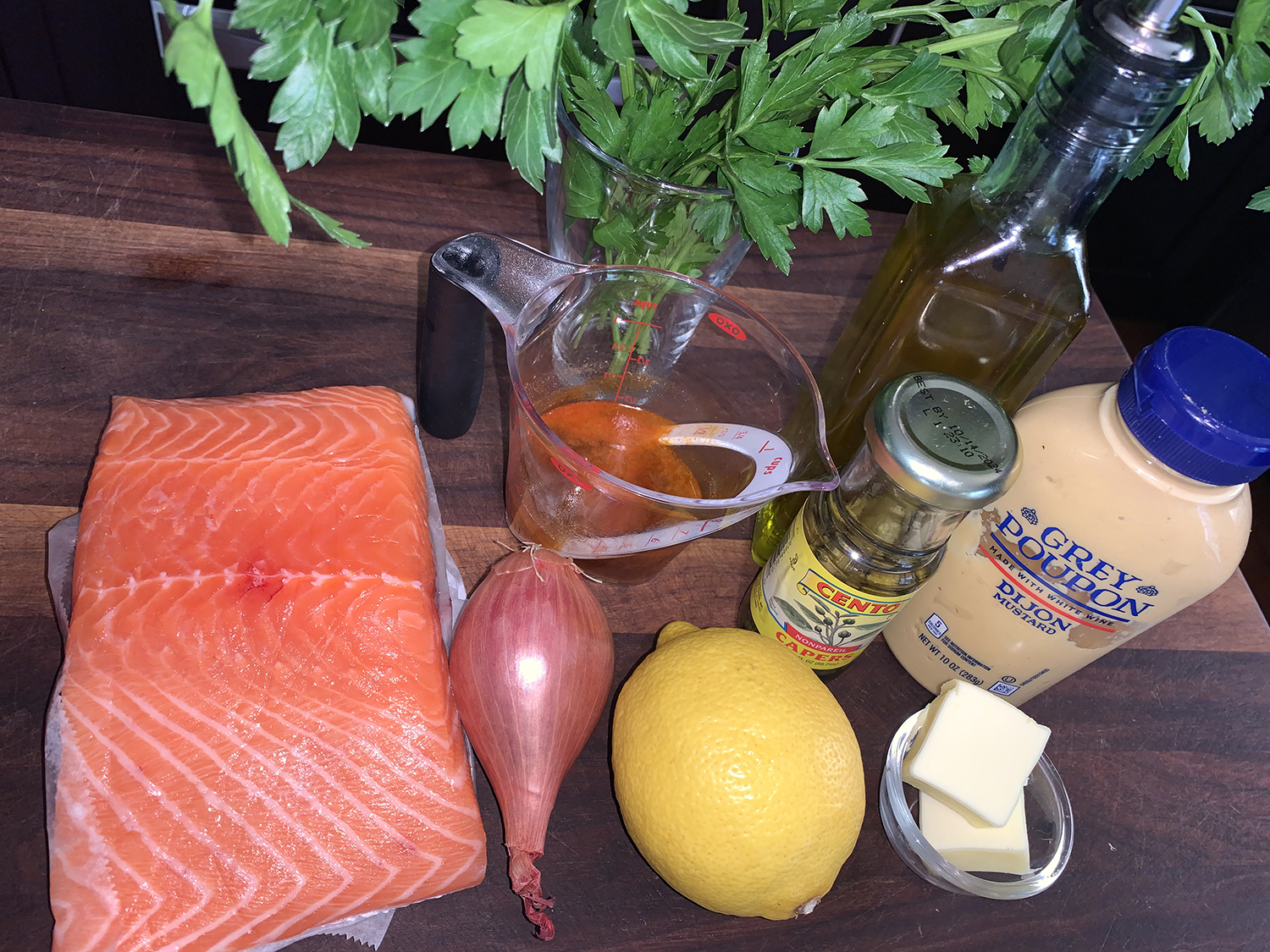
  • Four 5- to 6-oz. skinless wild salmon fillets
  • 1 1/2 tsp. kosher salt
  • 2 Tbsp. olive oil, plus more if needed
  • 1 shallot, chopped
  • 1/3 cup chicken broth or clam juice
  • 3 Tbsp. freshly squeezed lemon juice, about 1 large lemon
  • 2 Tbsp. capers, drained
  • 1 tsp. lemon zest, about 1 large lemon
  • 2 Tbsp. unsalted butter
  • 1 Tbsp. Dijon mustard
  • 2 Tbsp. chopped Italian parsley

Directions

  1. Heat a large nonstick skillet over medium-high heat. Dry the salmon fillets well with paper towel and season evenly with 1 teaspoon salt.
  2. Add the oil to the pan and heat an additional 30 seconds. Add the fillets to the pan, flesh-side down, and cook undisturbed until deep golden brown, about 4 minutes. The fish should look cooked up the sides of the fillets.
  3. Carefully flip the fish and cook an additional minute or until a thin metal skewer inserted in the thickest part comes out warm when touched to your bottom lip. Using a slotted spatula, remove the fish to a plate to rest.
  4. Return the pan to medium heat and add the shallot and remaining 1/2 teaspoon salt, adding more oil if needed. Cook, stirring often, until fragrant and soft, about 1 minute.
  5. Add the vegetable/chicken broth, lemon juice, capers and lemon zest. Simmer for 2 minutes to reduce slightly. Whisk in the butter and mustard until smooth and combined.
  6. Stir in the parsley and spoon the sauce over the salmon.

http://www.lynnandruss.com

Adapted from a recipe by Giada DeLaurentiis

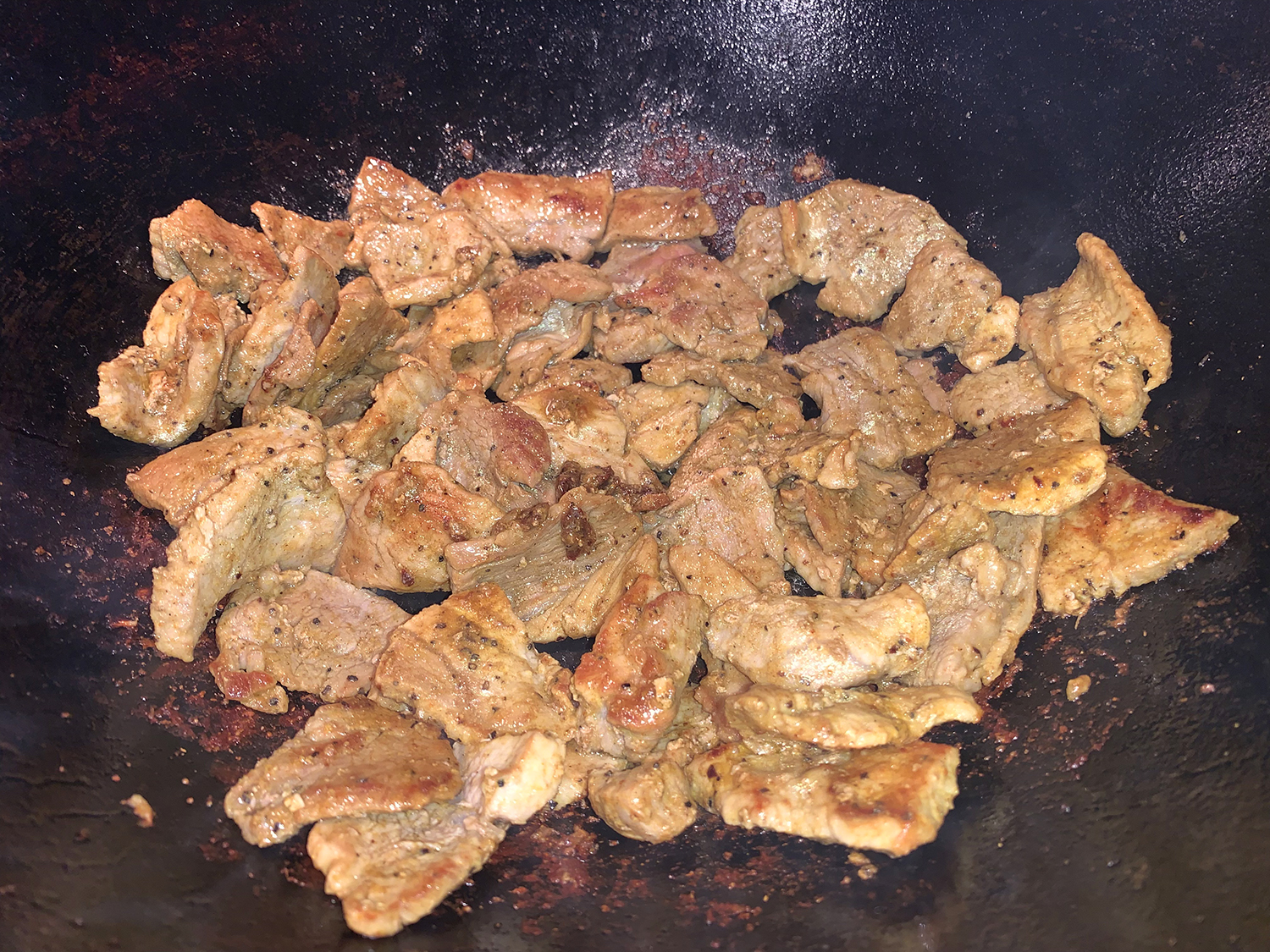
Ginger-Curry Pork and Green Beans

Identity crisis? This quick meat and vegetable curry starts as a stir-fry then finishes as a braise—but a quick braise. Usually pork shoulder takes hours to braise in the oven, but since the meat is cut into thin strips, the time dwindles considerably. Boneless pork shoulder has a rich, full flavor; plus slicing it thin before cooking counters its chewiness.

Green beans cook alongside, absorbing the spiced broth and providing a fresh, vegetal contrast. Curry powder is used as a flavor base, and whole spices amp up the intensity. Just remember to remove the cardamom pods before serving (if you can see them). The Hubs got quite a jolt when he accidentally bit into one!

In some cases you have choices on which spice to use. We incorporated as much of them as possible, i.e. both onion and garlic. And in the case of the noodles, you can always substitute steamed rice instead.

Ginger-Curry Pork and Green Beans

  • Servings: 3-4
  • Difficulty: easy
  • Print

Ingredients

  • 2 Tbsp. neutral oil
  • 1 lb. boneless pork shoulder, trimmed, cut into 2-inch strips and sliced ¼ to ⅛ inch thick
  • 2 tsp. curry powder
  • Kosher salt and ground black pepper
  • 1 medium yellow onion, finely chopped OR 8 medium garlic cloves, chopped OR both
  • 1 Tbsp. minced fresh ginger
  • 3 cardamom pods, crushed OR 1 cinnamon stick OR 8 curry leaves OR a combination
  • 8 oz. green beans, trimmed and halved on the diagonal
  • 1 1⁄2 cups water
  • Rice OR cellophane noodles, cooked according to package directions

Directions

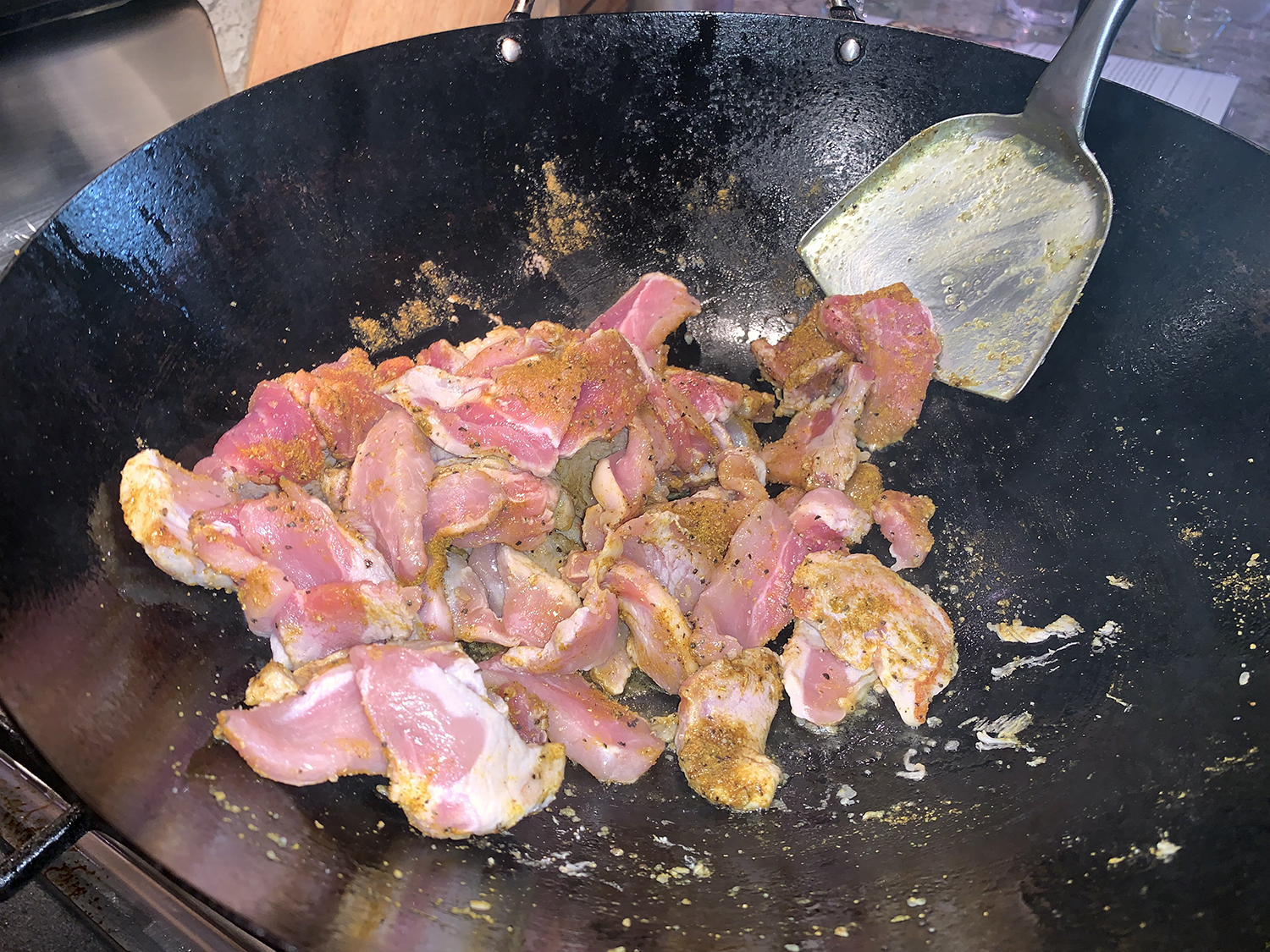
  1. In a 12-inch skillet over medium-high, heat the oil until barely smoking. Add the pork, curry powder, 1½ teaspoons salt and ½ teaspoon pepper. Cook, stirring once or twice, until the pork is well browned, about 4 minutes.
  2. Add the onion, ginger and cardamom; cook, stirring, until the onion is browned, about 2 minutes.
  3. Add the beans and 1½ cups water; bring to a simmer, scraping up any browned bits. Cover partially and cook, stirring occasionally, until the beans are tender and the sauce clings to the meat, about 15 minutes.
  4. Meanwhile, prepare your rice or cellophane noodles according to package directions.
  5. Remove and discard the cardamom from the sir-fry, then taste and season with salt and pepper.
  6. Optional garnish: Chopped fresh cilantro OR toasted sesame seeds OR chopped chilies OR a combination

http://www.lynnandruss.com

Adapted from a recipe by Courtney Hill for Milk Street

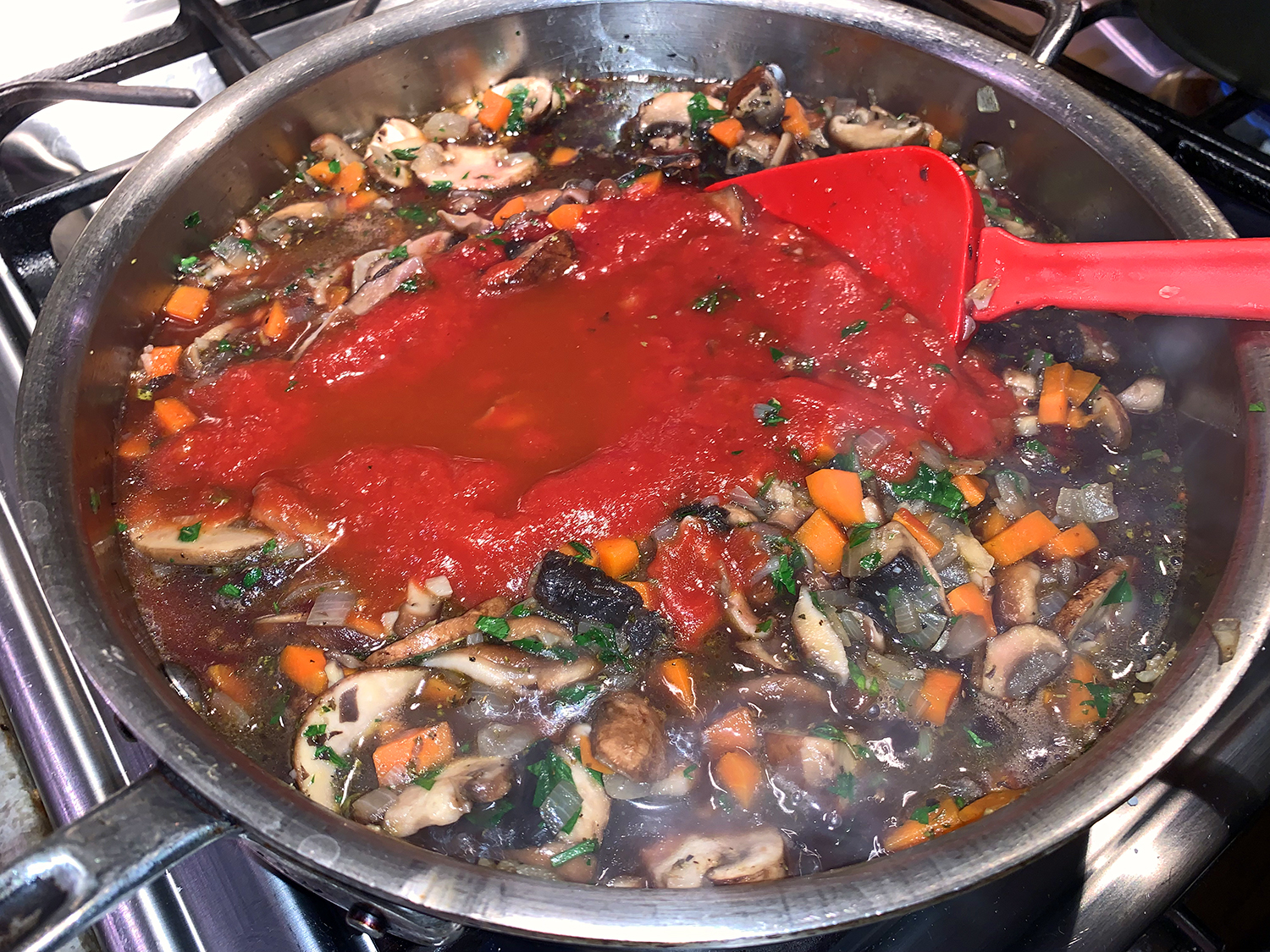
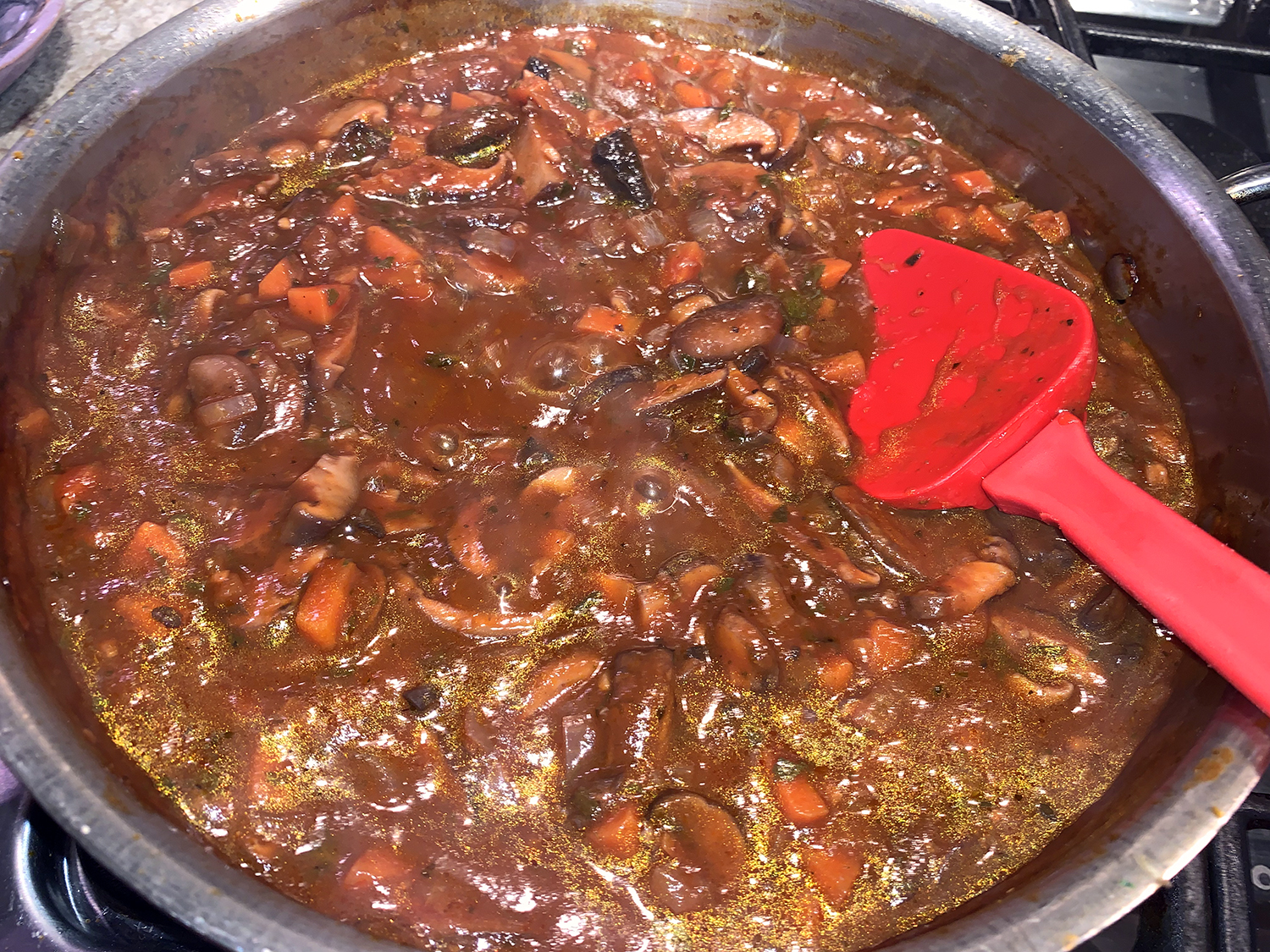
Easy Mushroom Ragù

Mushrooms are widely known for their great taste and amazing health benefits. Packed with a ton of essential vitamins and minerals, they make for an excellent addition to your diet, adding flavor to many different recipes. Thank goodness we love them!

This hearty plant-based mushroom ragù consists of readily available fresh mushrooms and is ready in about an hour. Three types of the funghi are incorporated in this recipe, but feel free to use just one or two types to make the sauce even easier. Serve vegan ragù over polenta, pasta, couscous, or even as a topping for steak or chicken.

Classic or vegan mushroom ragù will keep in the refrigerator for up to 5 days in an airtight container; in the freezer for up to 6 months. To reheat, spoon the ragù sauce into a pot over medium heat until warmed through. If it has become too thick, add a little more liquid (water or vegetable broth) to loosen it a little.

Make it even a bit healthier by using a whole wheat pasta. Of course if you add grated cheese like we did, it is no longer vegan, but we were OK with that.

Easy Mushroom Ragù

  • Servings: 4-6
  • Difficulty: easy
  • Print

Ingredients

  • Extra virgin olive oil
  • 1 large yellow onion, chopped
  • 2 to 3 carrots, peeled and chopped
  • 4 to 5 garlic cloves, minced
  • Kosher salt
  • 6 oz. portobello mushrooms, chopped
  • 6 oz. shiitake mushrooms, sliced
  • 8 oz. cremini mushrooms, sliced
  • 1 cup vegetable broth
  • ½ Tbsp. fresh thyme leaves
  • 1 tsp. dried oregano
  • ½ cup chopped fresh parsley, more for later
  • Black pepper
  • 1 cup dry red wine
  • 1 15- oz. can tomato sauce
  • 2 to 3 Tbsp. chopped hazelnuts (optional)

Directions

  1. In a large pot, heat 3 tablespoons extra virgin olive oil over medium-high heat until shimmering but not smoking. Add the onions, carrots, and garlic. Season with a big pinch of kosher salt. Cook, stirring occasionally, until the vegetables have softened, about 5 minutes.
  2. Add the mushrooms and season with another dash of salt. Add a drizzle more of olive oil and a little bit of the broth. Cook the mushrooms for about 5 minutes until they begin to soften and cook down a little bit.
  3. Add the thyme, oregano, parsley, and a good dash of black pepper. Stir.
  4. Finally, add the red wine, tomato sauce, and the remainder of the broth. Bring to a boil for 5 minutes, then reduce the heat to low and cover. Cook for 20 minutes or so covered, then uncover and allow the mushrooms to cook some more (about 15 to 20 minutes) until the mixture thickens to a ragù.
  5. To finish, taste and adjust salt to your liking. Stir in a bit more fresh parsley. If you like, add in the chopped hazelnuts (optional).
  6. Serve with your favorite pasta, polenta, or even pearl couscous

http://www.lynnandruss.com

Adapted from a recipe by Suzy Karadesh

Thai Cashew Chicken Stir-Fry with Coconut Rice

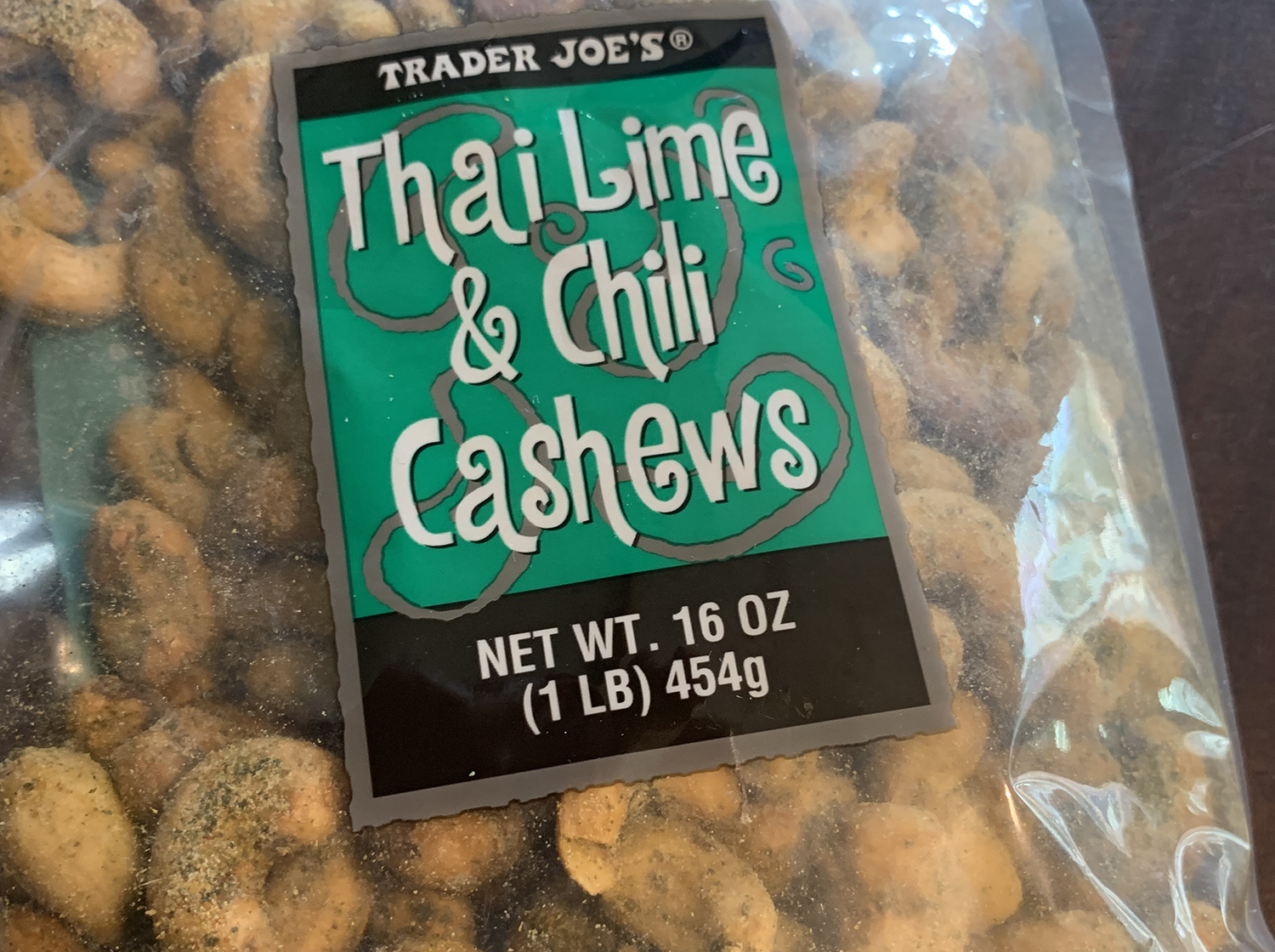
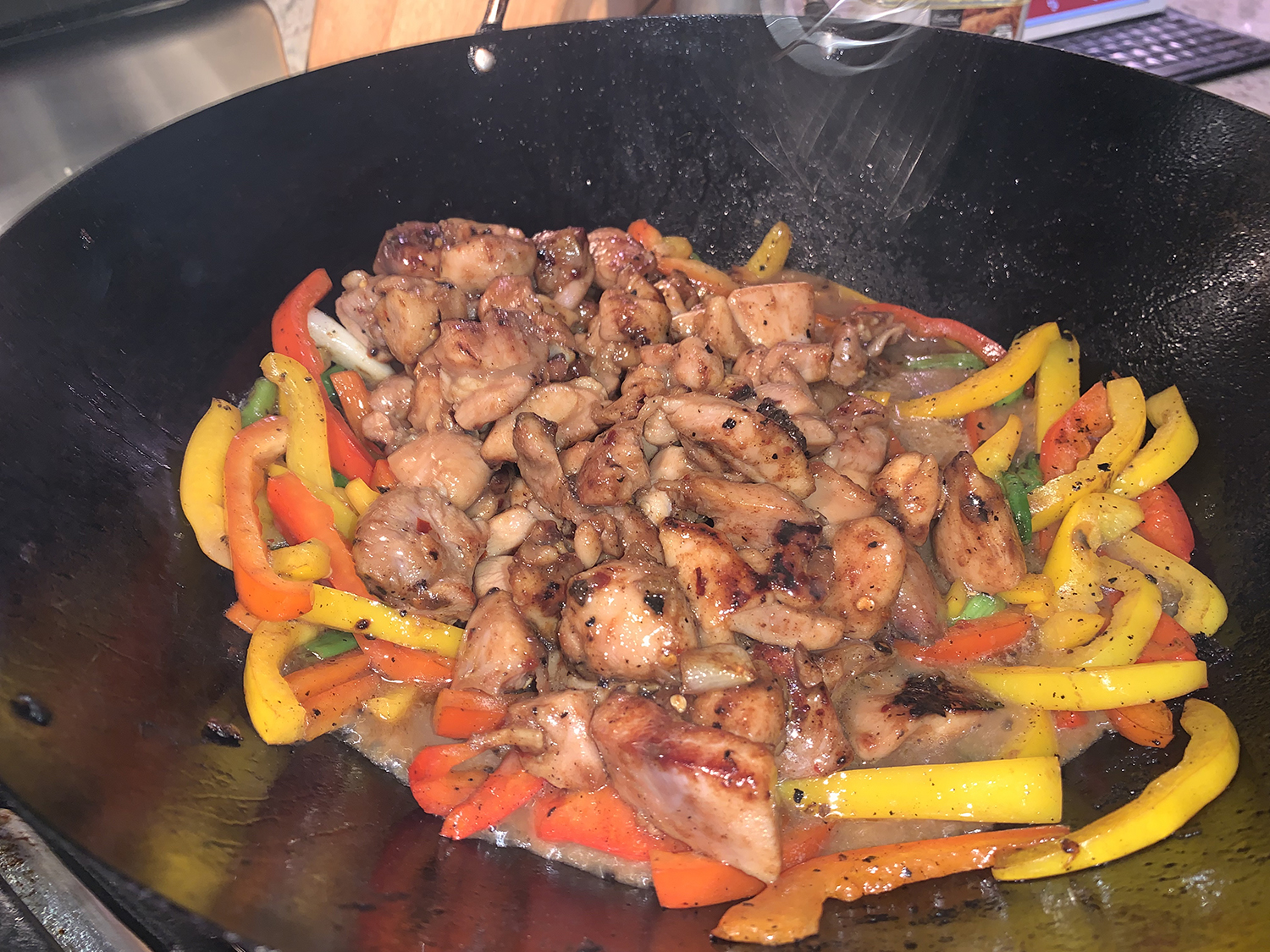
Thai stir-fries are one of our favorite go-to’s; and this recipe rachetes it up a notch with the addition of Thai cashews (find them at Trader Joe’s). And if you like bold flavors, then this will end up on your short list.

Originally from Milk Street, we scaled back on the chicken by 25%, but increased the bell pepper quotient by 100%, adding a yellow one along with the red pepper, making it more veggie-forward. Another change was doubling the sauce (except for the garlic). These alterations are noted in the recipe below.

And while you could pair it simply with steamed jasmine rice, you might want to try the Coconut Rice recipe below for even more depth of flavor.

I have to give a shout-out to these fabulous Trader Joe’s Thai cashews. Not only are they a fabulous snack right out of the bag, but they’re perfect for this dish. If you can get your hands on them, by all means do so.

NOTE: Don’t discard the marinade after draining the chicken. It’s mixed with ¼ cup water and becomes a sauce that lightly coats the chicken and vegetables.

Thai Cashew Chicken Stir-Fry with Coconut Rice

  • Servings: 4
  • Difficulty: easy
  • Print

Ingredients

  • 5 medium garlic cloves, finely grated
  • 3 Tbsp. fish sauce
  • 6 Tbsp. soy sauce
  • 4 tsp. white sugar
  • 4 tsp. cornstarch
  • 1 teaspoon red pepper flakes
  • Ground white pepper
  • 1 1⁄2 lbs. boneless, skinless chicken thighs, trimmed and cut into 1-inch pieces
  • 2 Tbsp. peanut oil
  • 1 red bell pepper, stemmed, seeded and sliced into thin strips
  • 1 yellow bell pepper, stemmed, seeded and sliced into thin strips
  • 1 bunch scallions, cut into 1-inch lengths; save some of the dark green cut into smaller pieces for garnish
  • 1/2 cup roasted Thai cashews, roughly chopped

Directions

  1. Start coconut rice, directions below.
  2. For the Stir-fry: In a medium bowl, whisk together the garlic, fish sauce, soy sauce, sugar, cornstarch, pepper flakes and 3/4 teaspoon white pepper. Stir in the chicken, then marinate at room temperature for 15 minutes.
  3. Drain the chicken in a fine mesh strainer set over a medium bowl, pressing the chicken to remove excess marinade. Stir 1/2 cup water into the marinade and set aside.
  4. In a 12-inch skillet or wok over medium-high, heat the oil until barely smoking. Add the chicken in an even layer, then cook, stirring occasionally, until golden brown, 8 to 10 minutes. Remove chicken to a plate.
  5. Heat a bit more oil in the wok, stir in the bell peppers and scallions. Stir-fry for several minutes until just starting to brown. Add chicken back to the veggies.
  6. Stir the marinade mixture to recombine, add to the pan and bring to a simmer, scraping up any browned bits. Toss in the cashew pieces, cook, stirring often, until the liquid thickens and clings to the chicken, about 2 minutes.
  7. Taste and season with white pepper. Spoon over cooked coconut rice and garnish with scallion greens.

http://www.lynnandruss.com

Loosely adapted from a recipe by Courtney Hill for Milk Street

Coconut Rice

Coconut Rice

  • Servings: 8-10
  • Difficulty: easy
  • Print

Ingredients

  • 2 cups jasmine rice
  • 1 13.5 oz. can coconut milk
  • 1 1/2 cups coconut water or water
  • 1 tsp. salt
  • 1 tsp. sugar
  • 2 2-inch strips of lime zest

Directions

  1. Place jasmine rice in a fine mesh sieve and rinse under cold water until water runs clean. Drain well, it works best to tap base of sieve with your hand or against the sink.
  2. Heat coconut milk and coconut water in a medium non-stick saucepan set over medium-high heat. Bring to a boil, season with salt, sugar, lime zest strips add rice and bring to a simmer.
  3. Reduce heat to low, cover and simmer until liquid has been absorbed (you may find there’s a few small pools of liquid at the top and that’s fine), about 20 minutes.
  4. Uncover over low heat for 5 minutes. Fluff with a fork and serve warm.

http://www.lynnandruss.com

Adapted from a recipe by CookingClassy.com