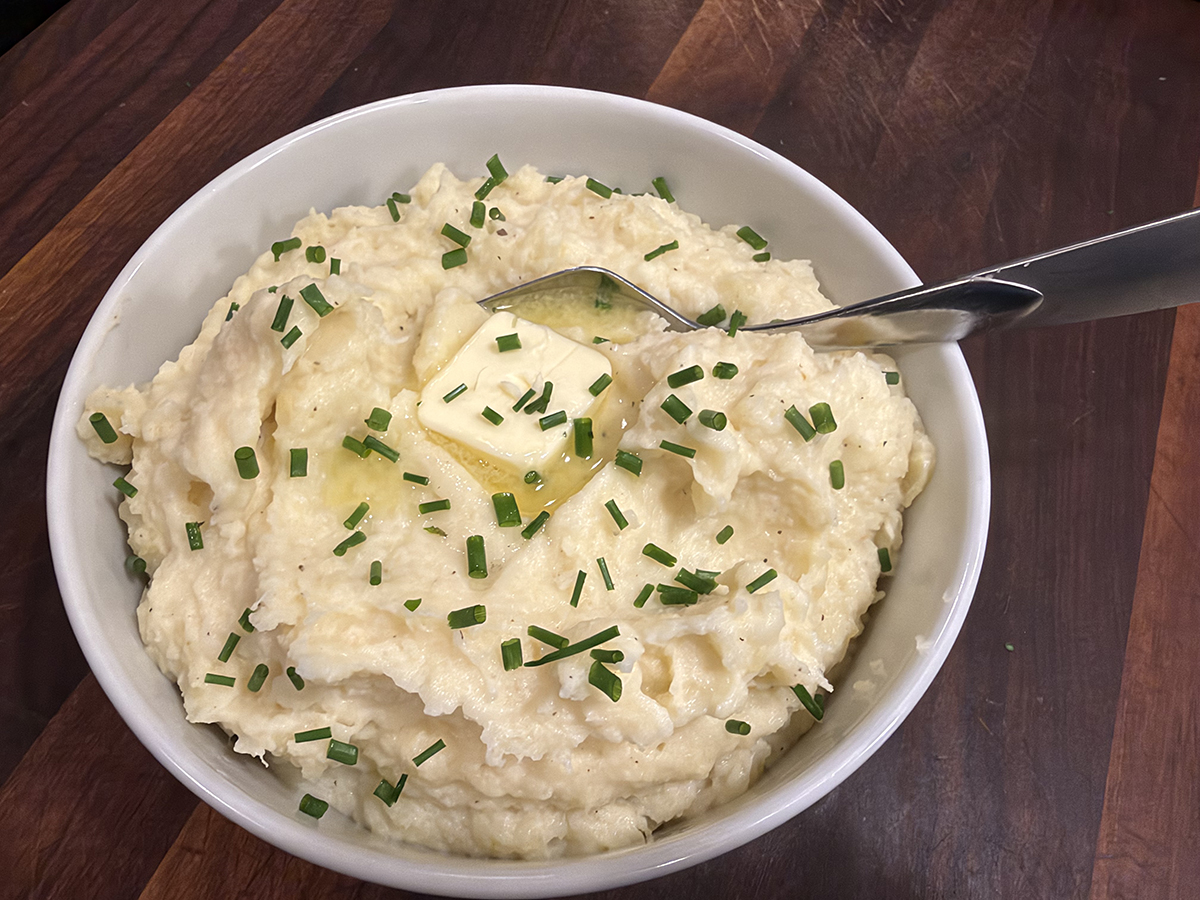
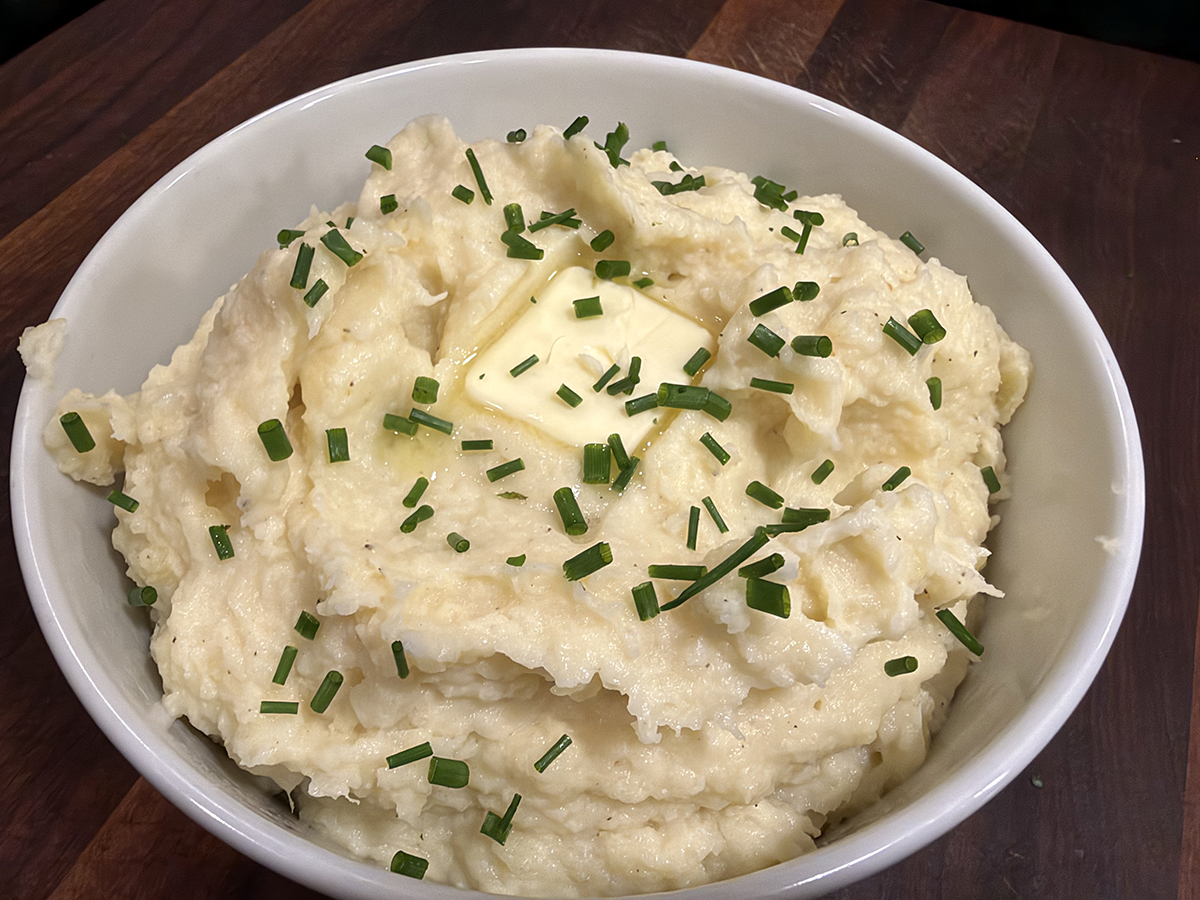
This silky mash pairs the comforting starchiness of Long Island potatoes with the subtle, earthy sweetness of parsnips. The potatoes give it body and a familiar, fluffy texture, while the parsnips bring a gentle sweetness with a hint of spice that makes the dish feel a little more special than a standard mash.
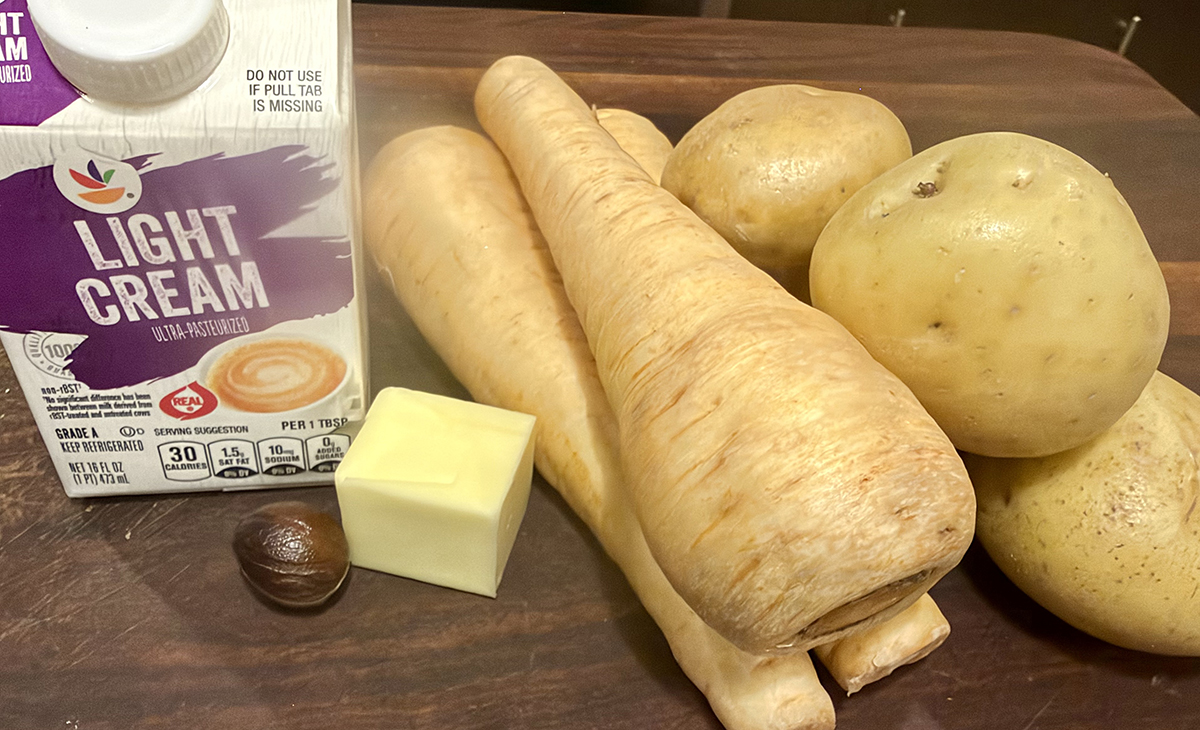
A modest amount of butter and a splash of milk keep it rich and smooth without weighing it down. A pinch of freshly grated nutmeg adds a warm, aromatic finish that plays beautifully against the parsnips’ natural sweetness, and freshly ground pepper adds a light bite. Salt is left to your taste, so you can season it as you like.
It’s a simple, wholesome side that works well alongside roast chicken, pork, or a holiday spread, and it’s an easy way to give a classic comfort dish a little more depth. Garnish with some chopped fresh chives for a pop of color.
Peel potatoes and parsnips. Trim off parsnip ends.
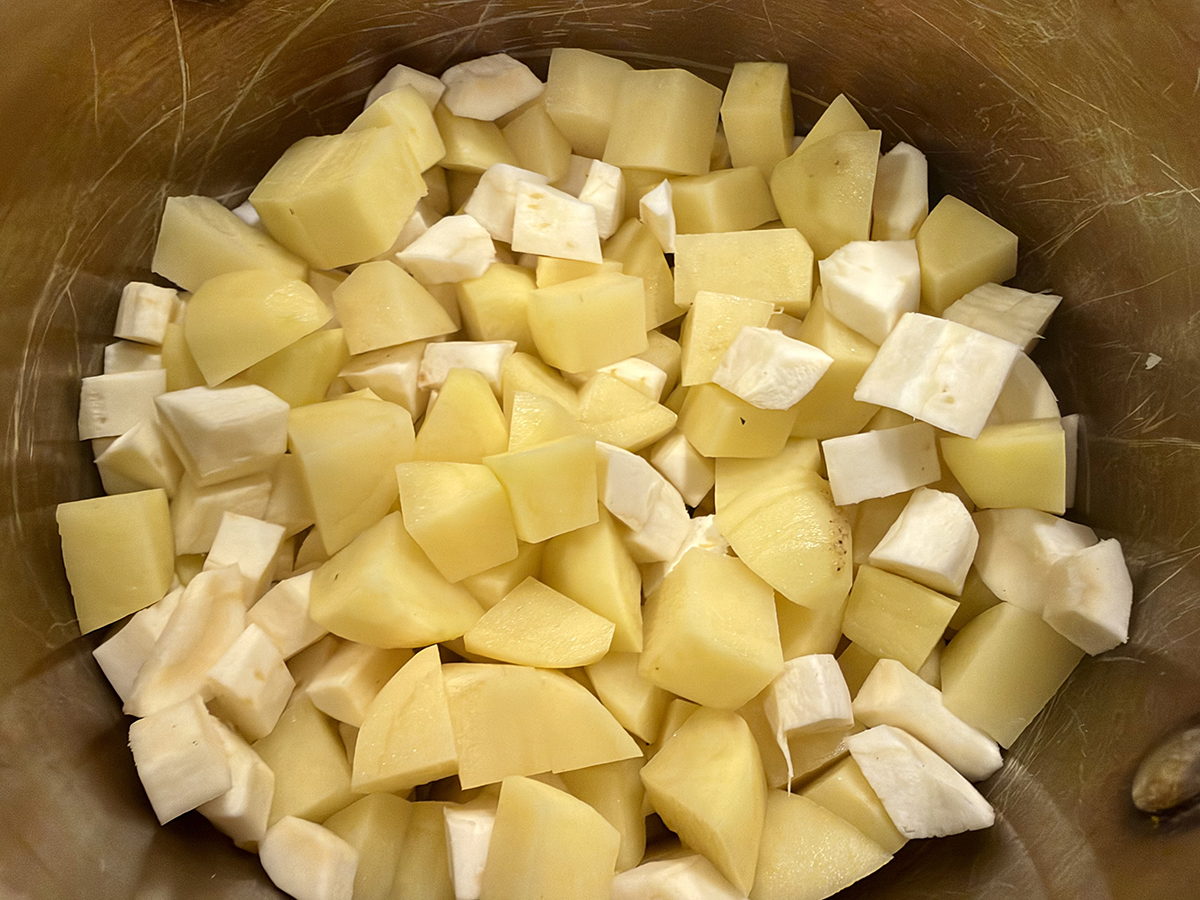
Cut parsnips lengthwise in half. Remove any woody cores. Cut each half crosswise into 1-inch lengths. There should be about 3 cups.
Cut potatoes into pieces approximately the same size. There should be about 4 cups.
Combine potatoes and parsnips in a casserole or kettle and add cold water to about 1 inch above the level of the vegetables. Bring to a boil, and once boiling, let cook about 15 minutes or until the pieces are tender. Drain well.
Add butter, milk/cream, salt, pepper and nutmeg to pot of drained potatoes and parsnips. Beat well to blend. Garnish with a pat of butter and chopped chives, serve hot.
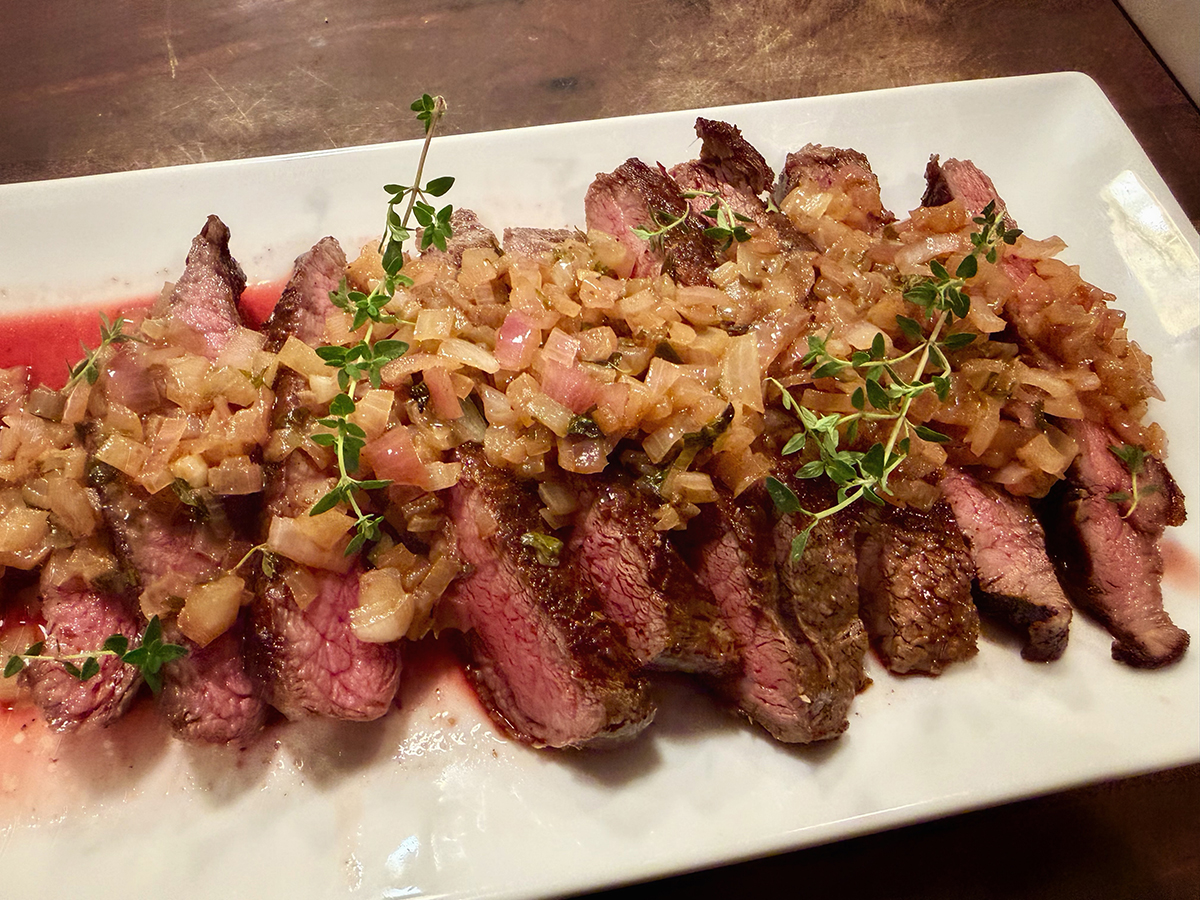
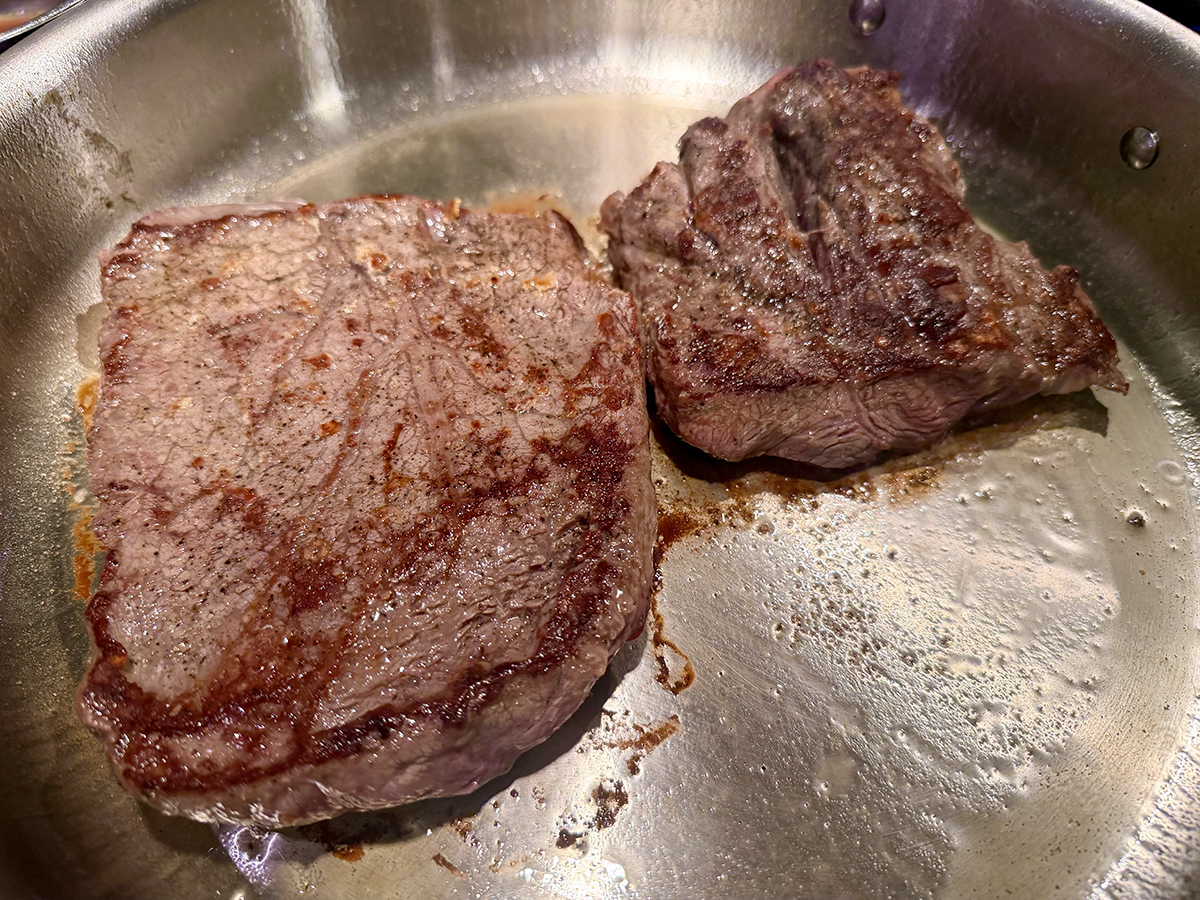
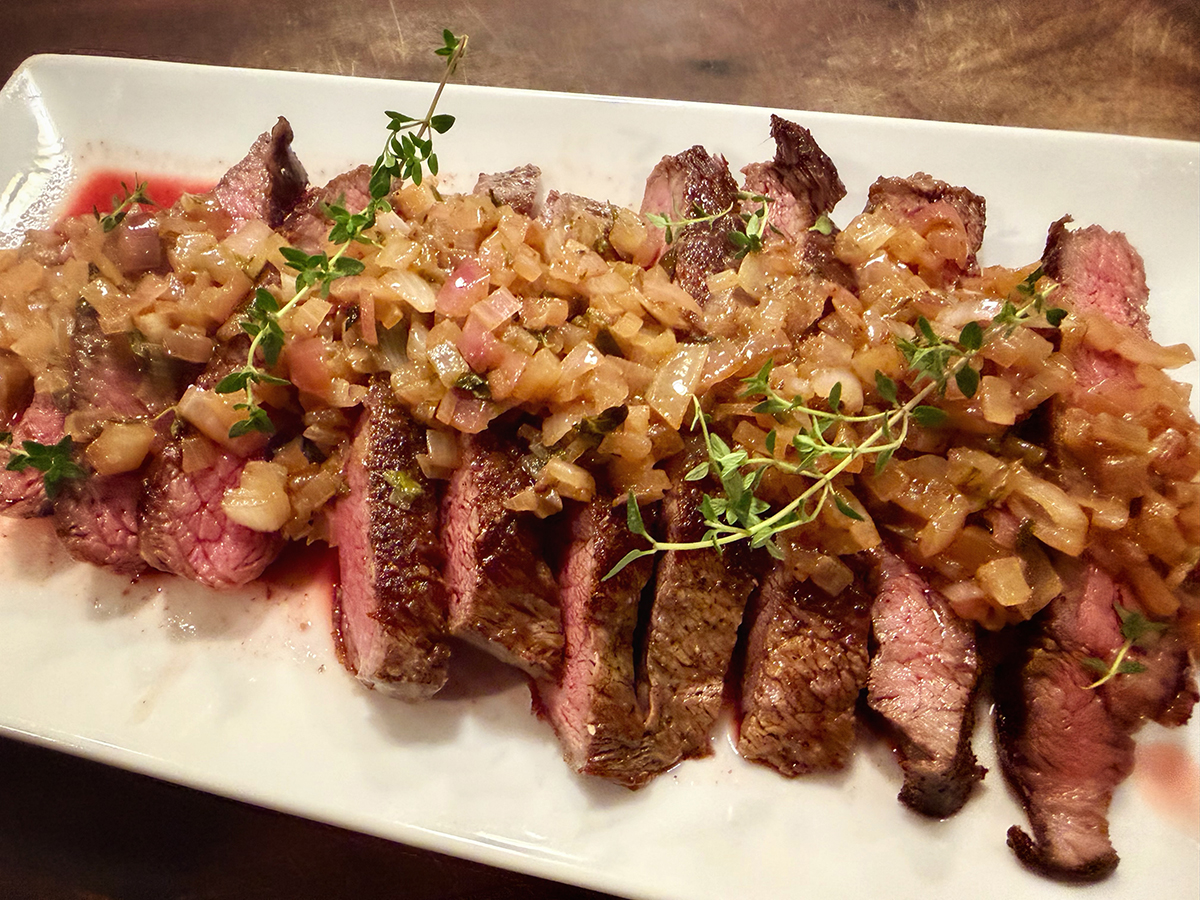
A French bistro classic that turns a humble but flavorful cut into a restaurant-worthy dinner. Flatiron steak is seared hard and fast in a screaming-hot skillet to build a deep, caramelized crust, then rested while the same pan becomes the base for an irresistible shallot sauce.
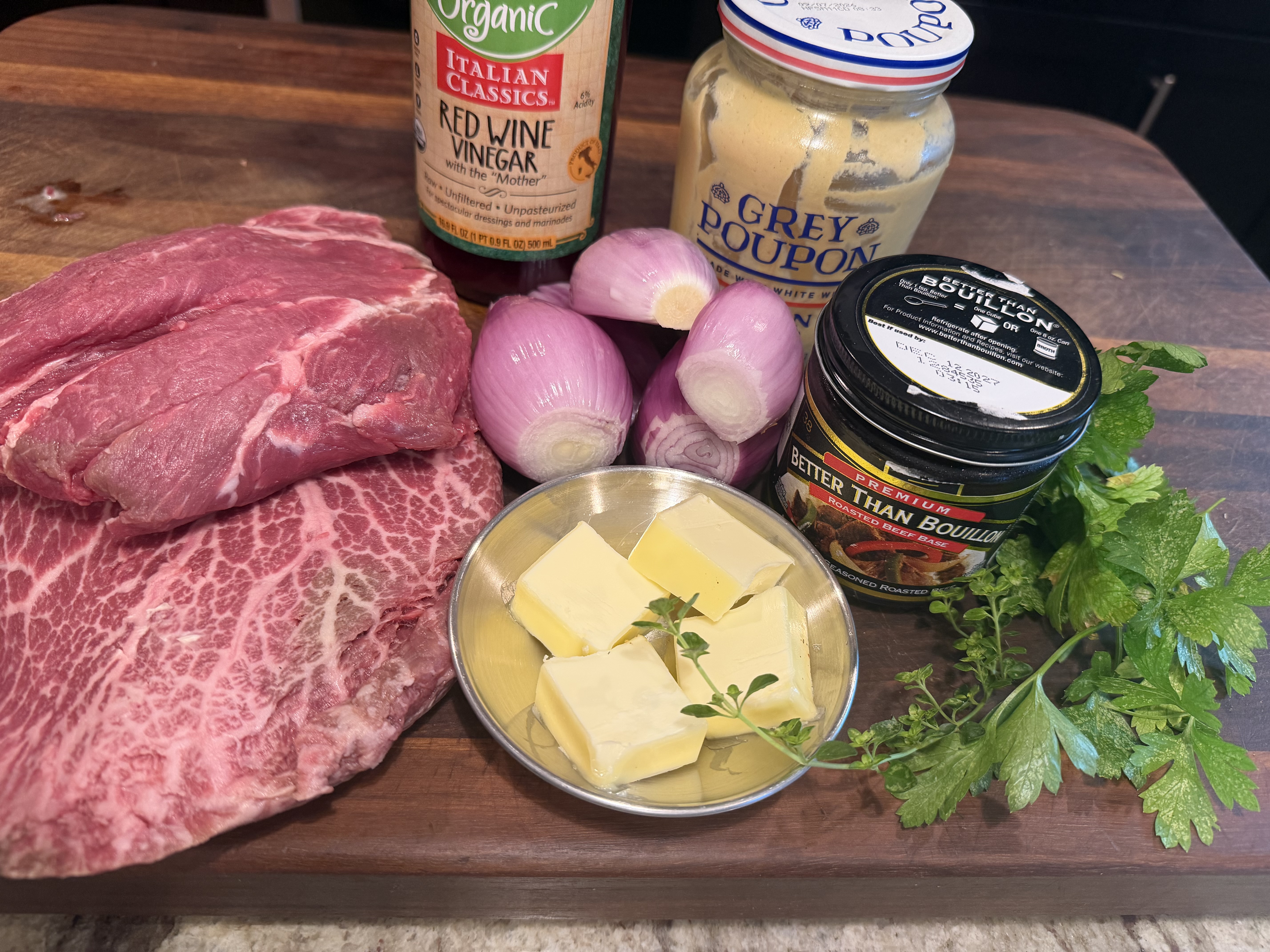
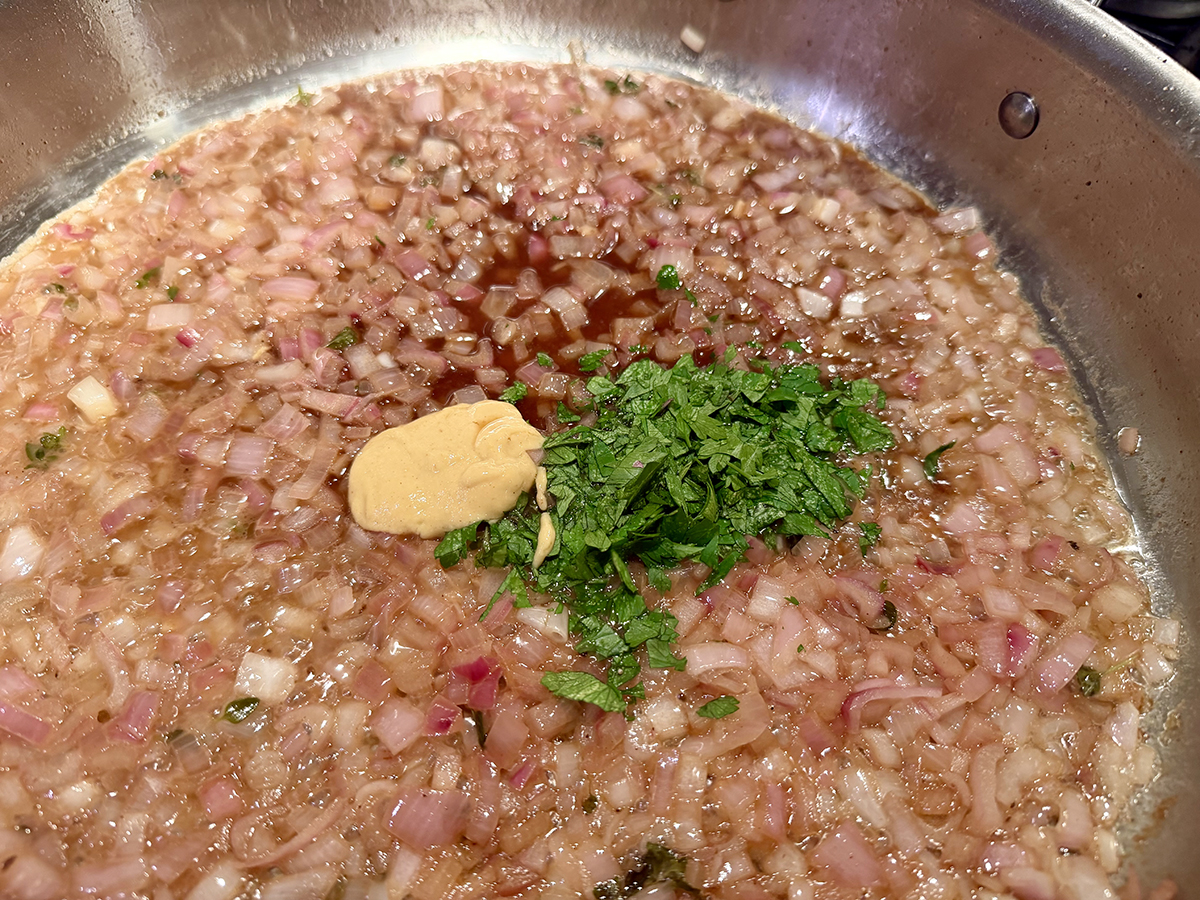
Sweet, softened shallots and fresh thyme are deglazed with sharp red wine vinegar, mellowed with a beef broth reduction, and finished off the heat with butter, Dijon mustard, and fresh parsley for a sauce that’s silky, tangy, and richly savory all at once.
Sliced thin against the grain and draped in that glossy sauce, this is steakhouse-quality comfort food that comes together in well under an hour — perfect for a special weeknight dinner or an easy way to impress guests without much fuss.
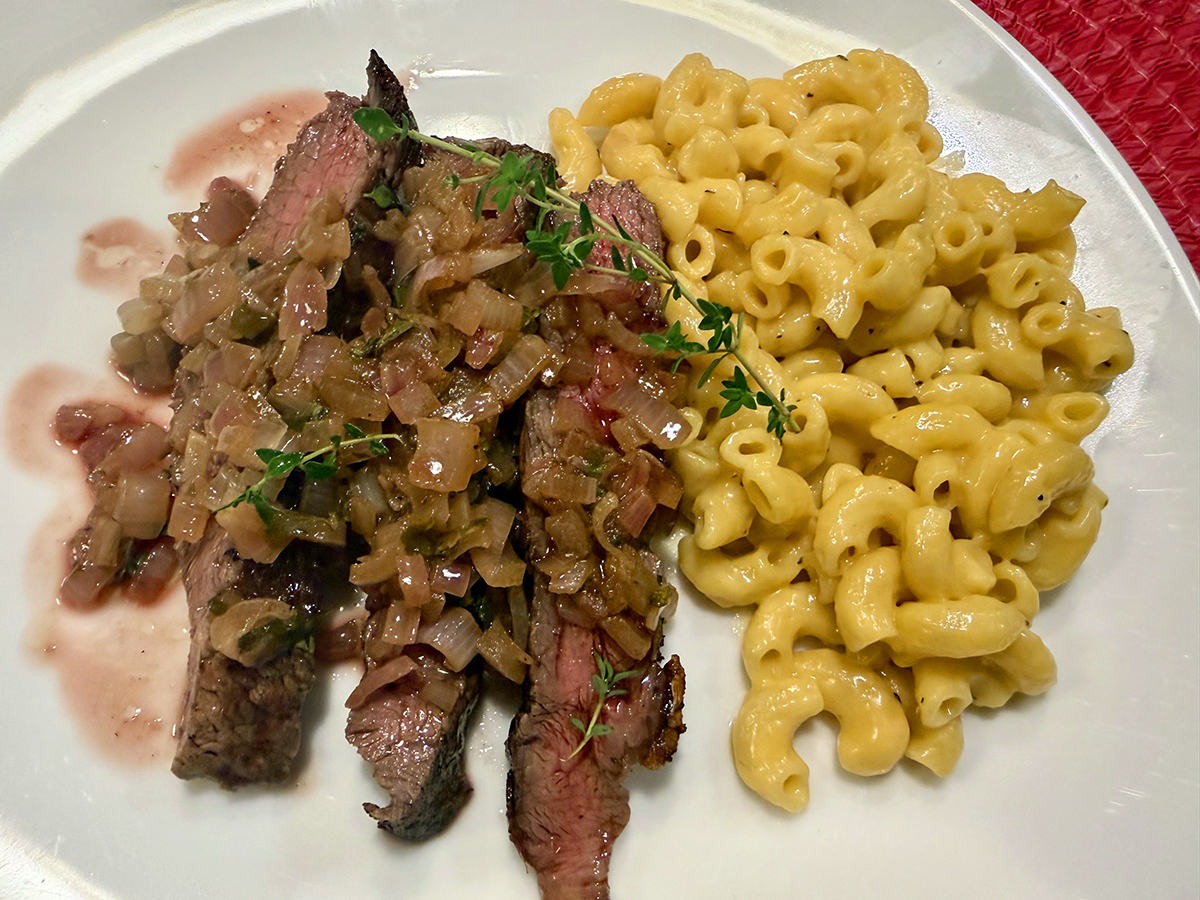
We decided to go heavy on the shallots and used 3 large. For sides, we paired ours with some homemade mac ‘n cheese and a side salad.
Seared Flatiron With Shallot Sauce (Steak à l’Échalote)
Watercress or baby arugula microgreens, for garnish (optional)
Directions
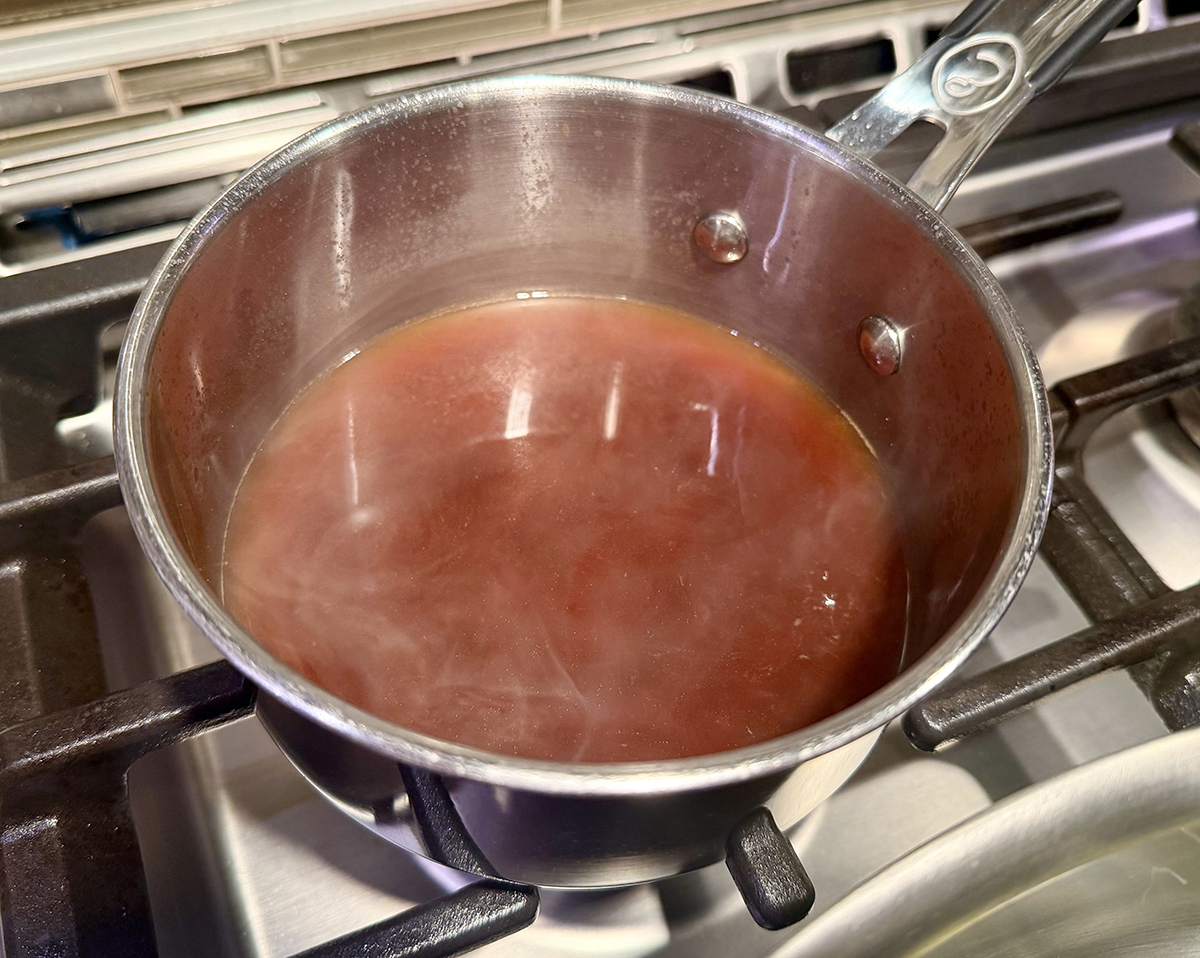
Add broth to a small saucepan. Simmer over medium-high until reduced by half, 4 to 5 minutes. Set aside.
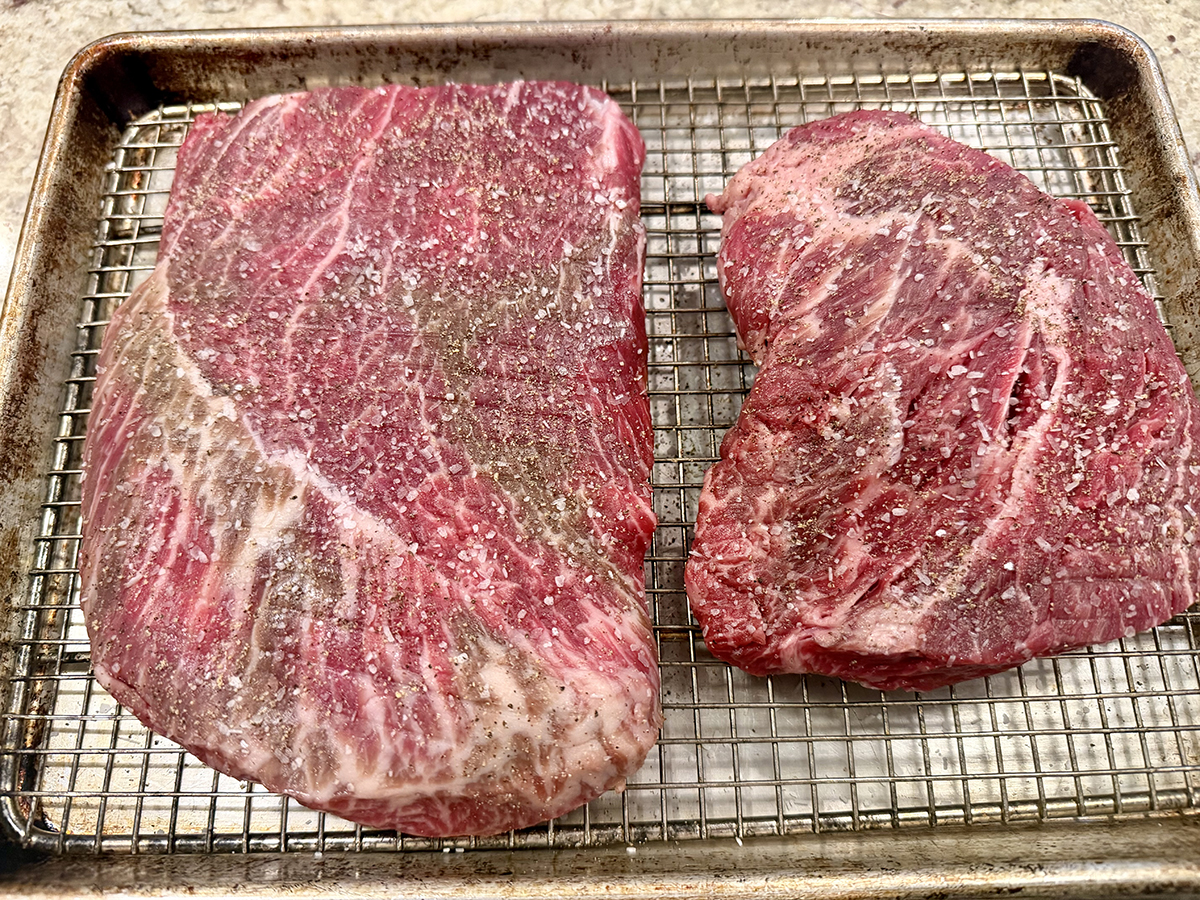
Pat steaks dry with a paper towel and season with salt and pepper. Place a wire rack inside a baking sheet and set aside.
Heat a large skillet (preferably cast iron or carbon steel and big enough to fit both pieces of steak) over medium-high. Add olive oil and heat until oil is shimmering, about 1½ minutes. (Note: If you do not have a skillet large enough to accommodate both steaks, use two skillets, adding 1 teaspoon of oil to each. Then use one of the skillets to prepare the sauce in Step 5.)
Sear steaks on both sides until browned and cooked to desired doneness (2½ to 3 minutes per side for medium-rare. Ours took longer due to its thickness). Transfer steaks to the prepared rack to rest and tent loosely with foil to keep warm.
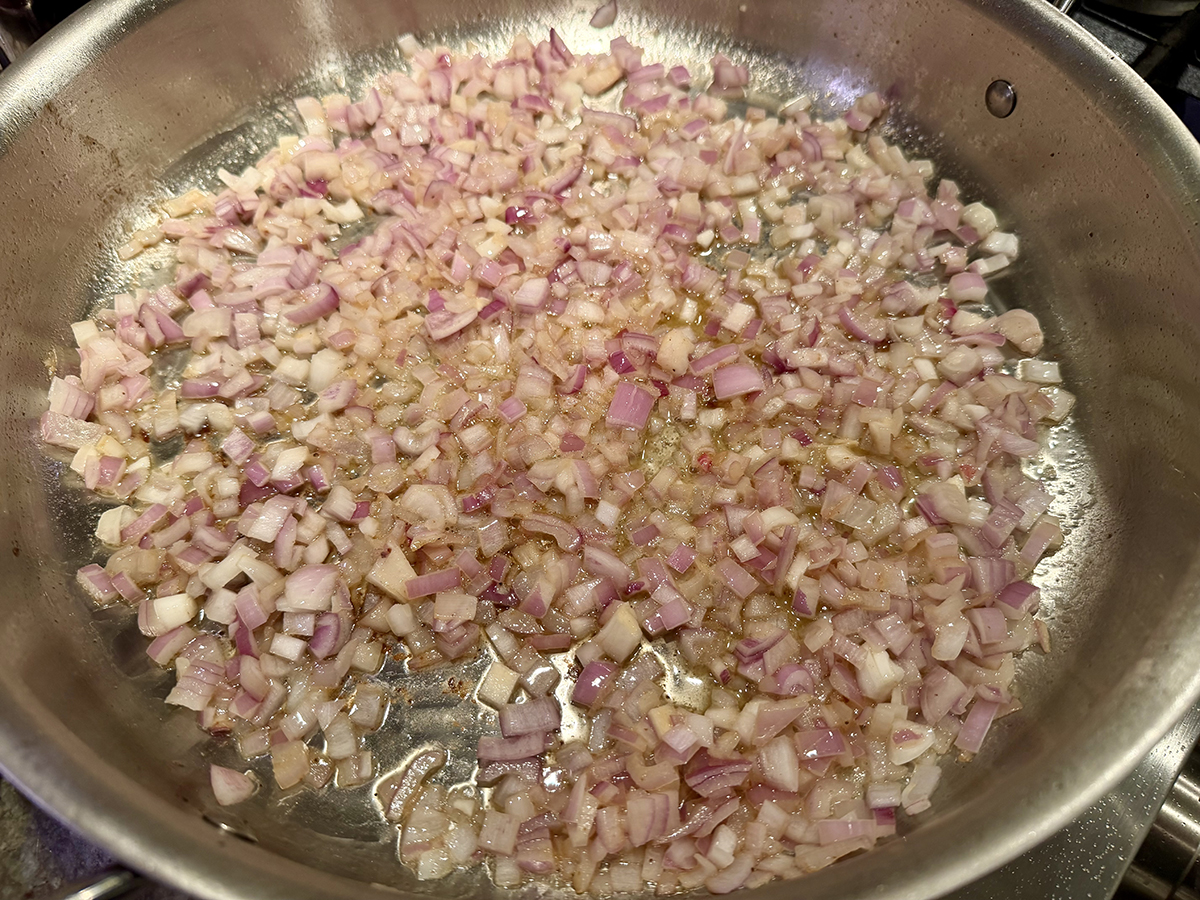
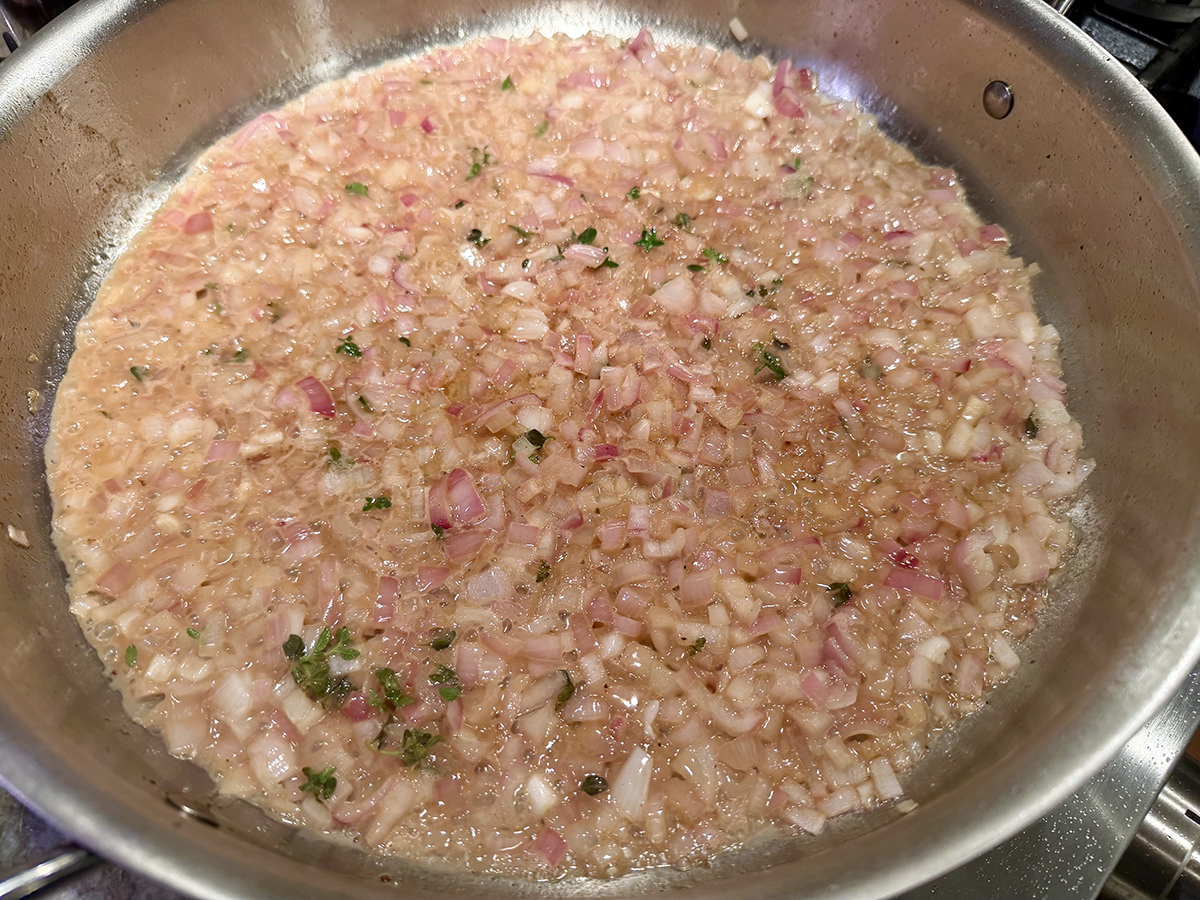
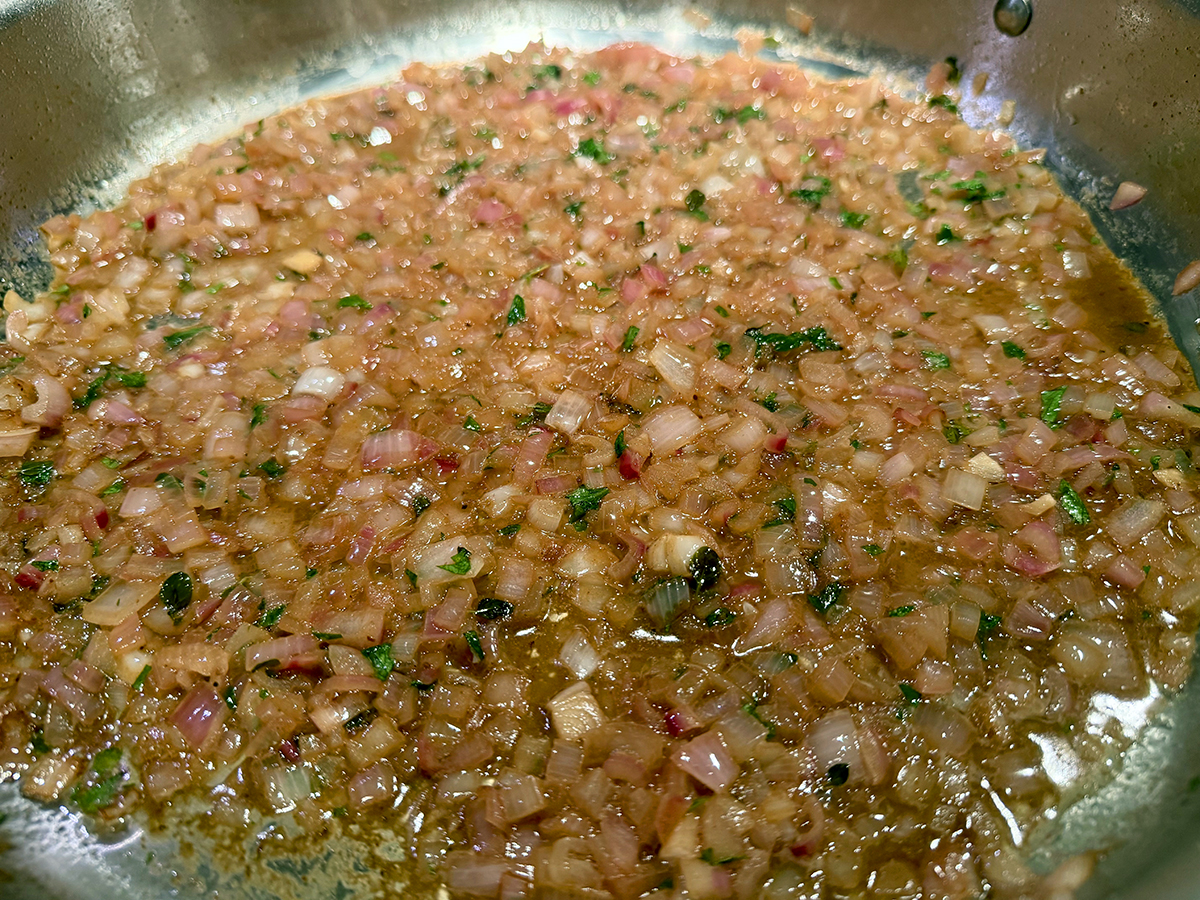
Reduce heat to low and add the butter and shallots to the same skillet. Cook gently, stirring occasionally, until shallots have begun to soften but are barely colored, about 2 minutes. Stir in thyme leaves. Add the vinegar, increase the heat to medium-high and cook until the liquid has nearly evaporated, 2 minutes. Stir in the parsley, mustard and reserved reduced beef stock. Simmer until shallot mixture is soft and the sauce looks silky, about 2 minutes more. Remove from heat. Pour any juices that have escaped from the steaks during resting into the skillet.
Using a sharp knife, slice the steaks across the grain on the bias. Arrange the slices on a platter. Spoon the shallot sauce over, garnish with greens if desired, and serve.
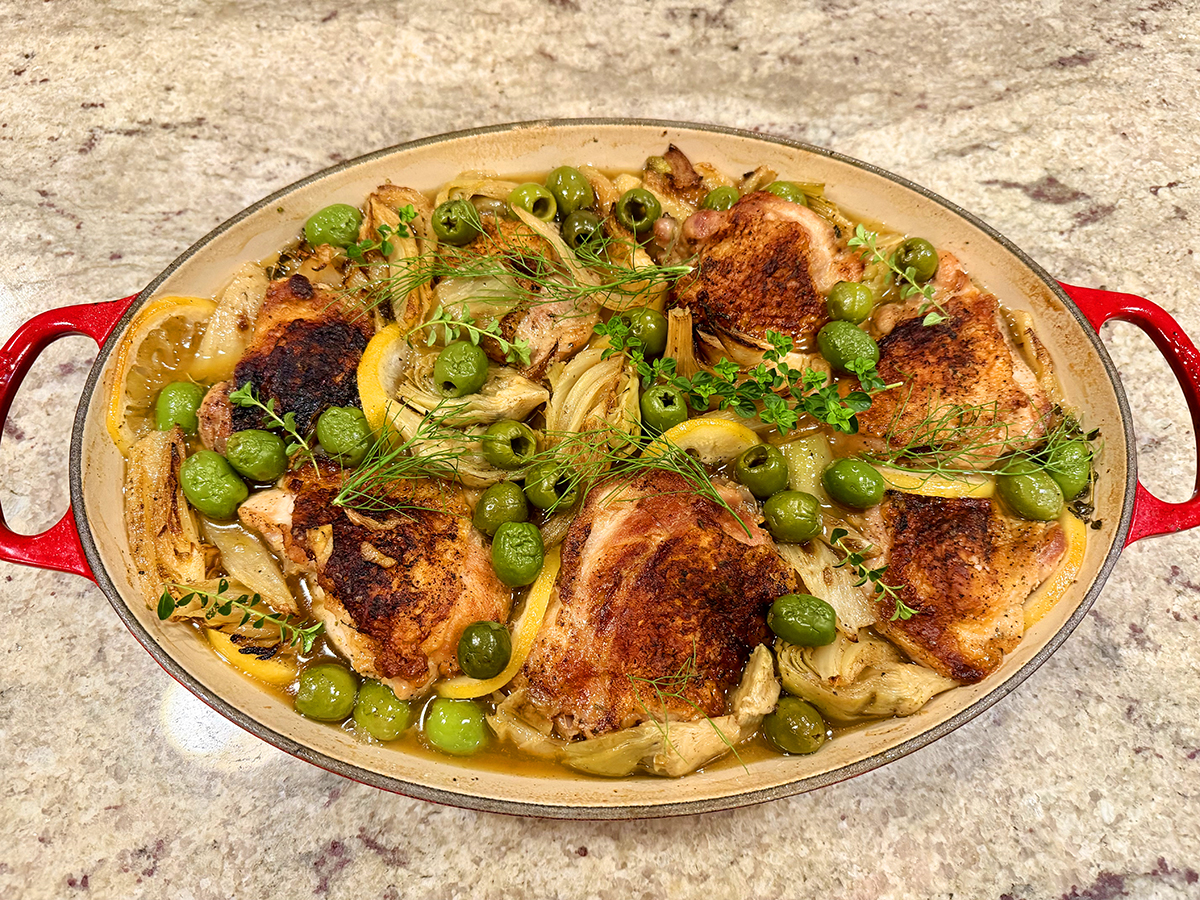
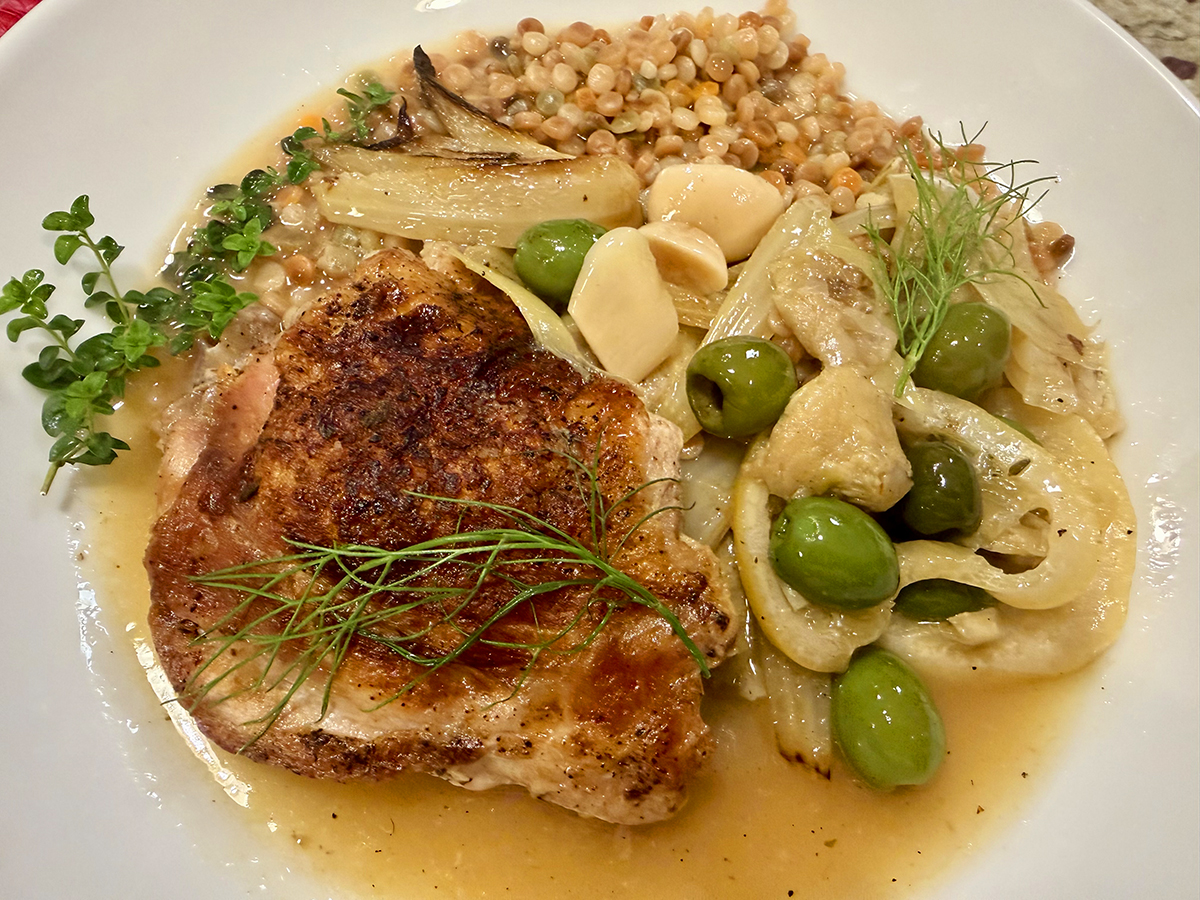
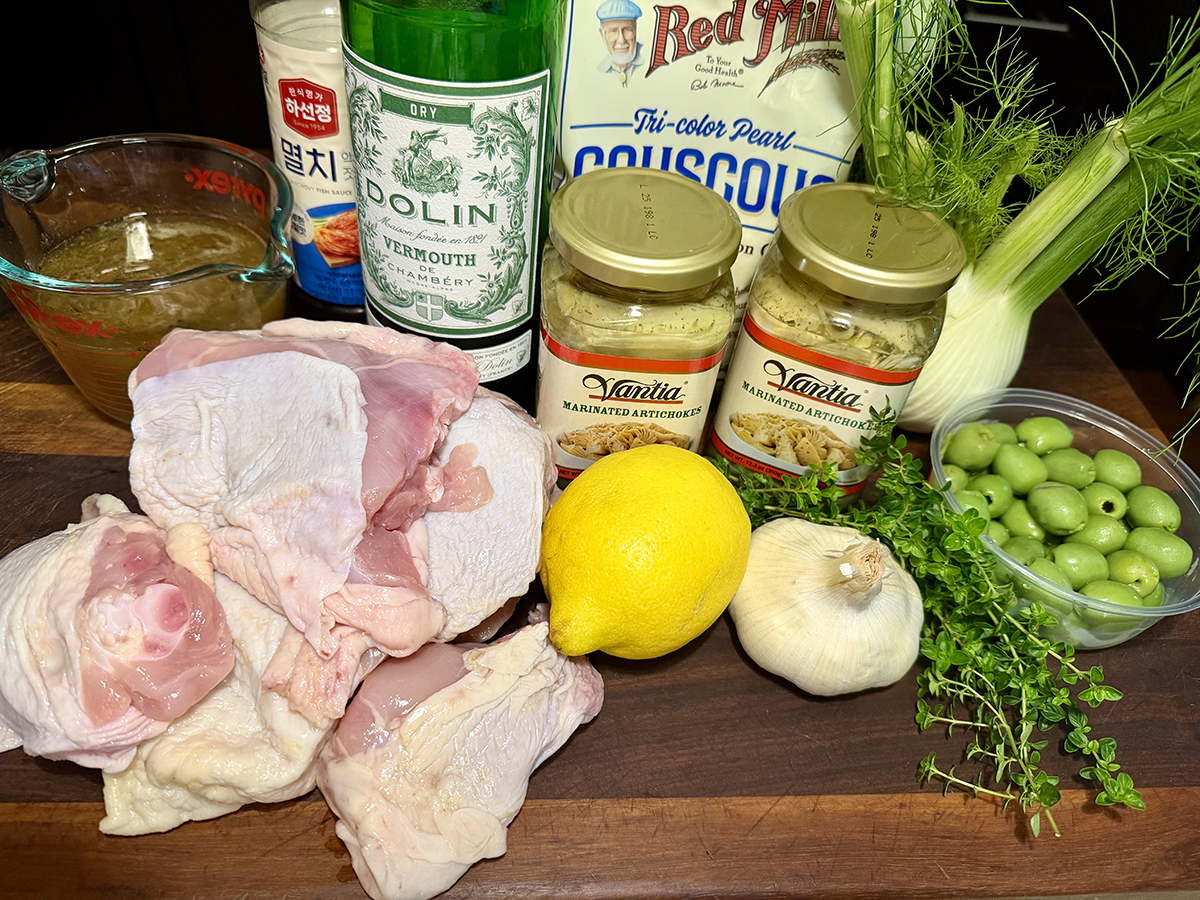
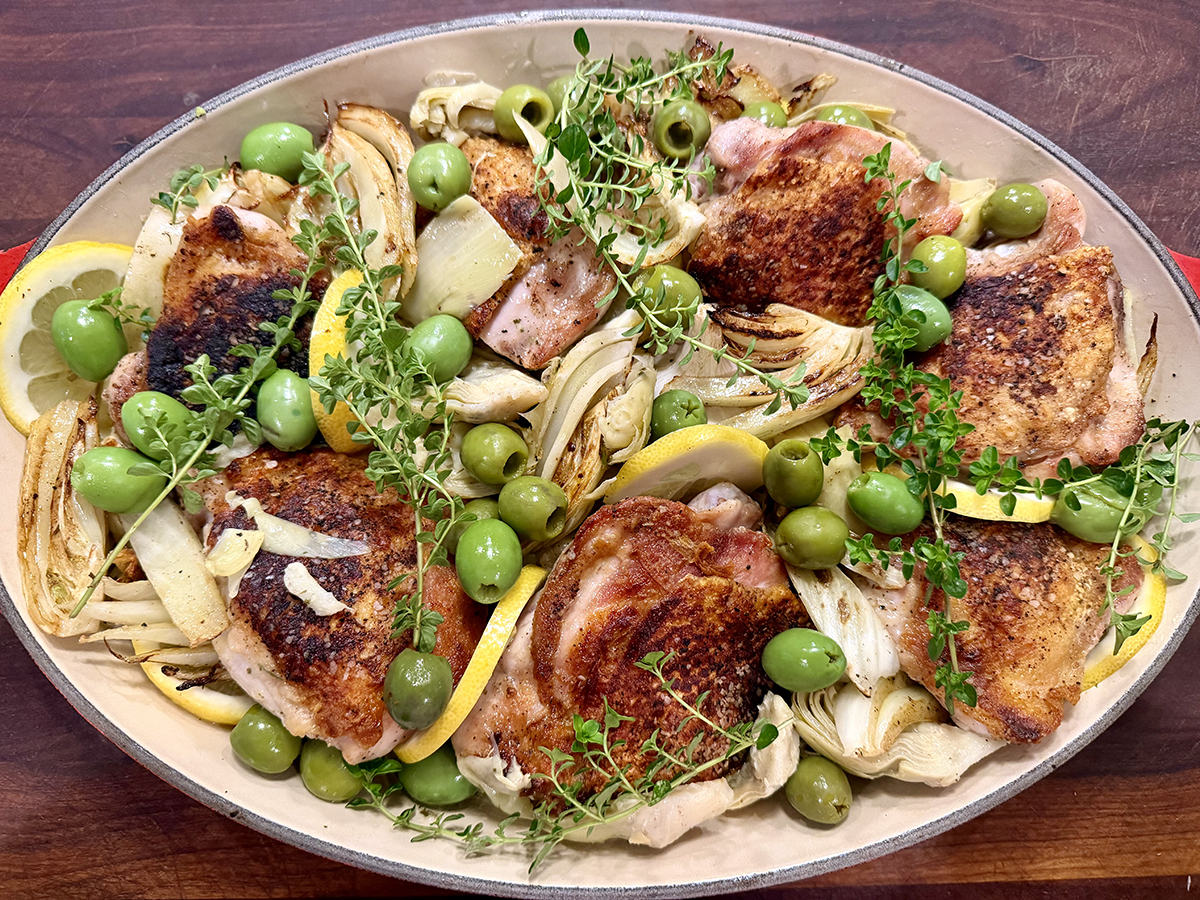
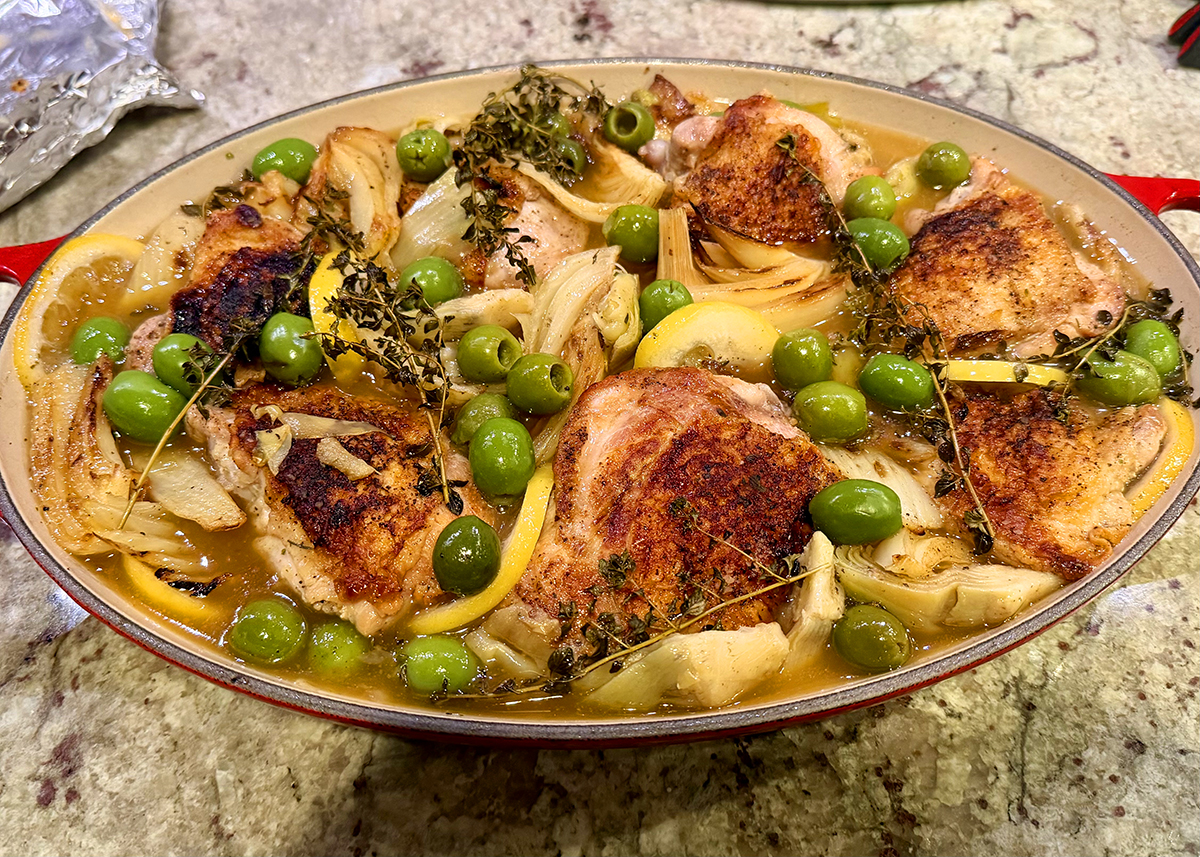
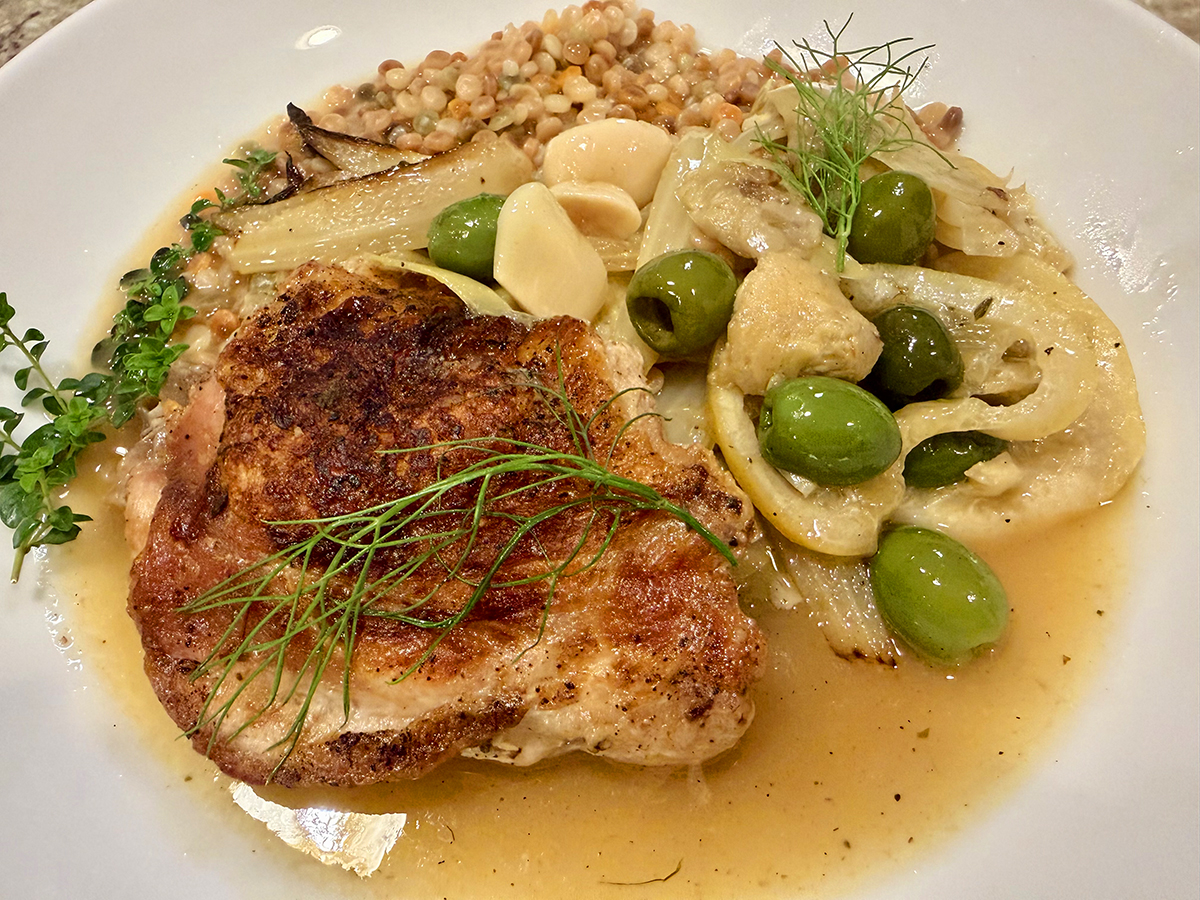
This Food & Wine recipe pairs crispy-skinned chicken thighs and drumsticks with a briny, sun-bright mix of buttery olives, marinated artichokes, and lemon. The pan sauce does the heavy lifting: sherry, fish sauce, thyme, and garlic simmer together into a savory, herb-flecked broth that’s begging to be mopped up. Pure magic in the mouth!
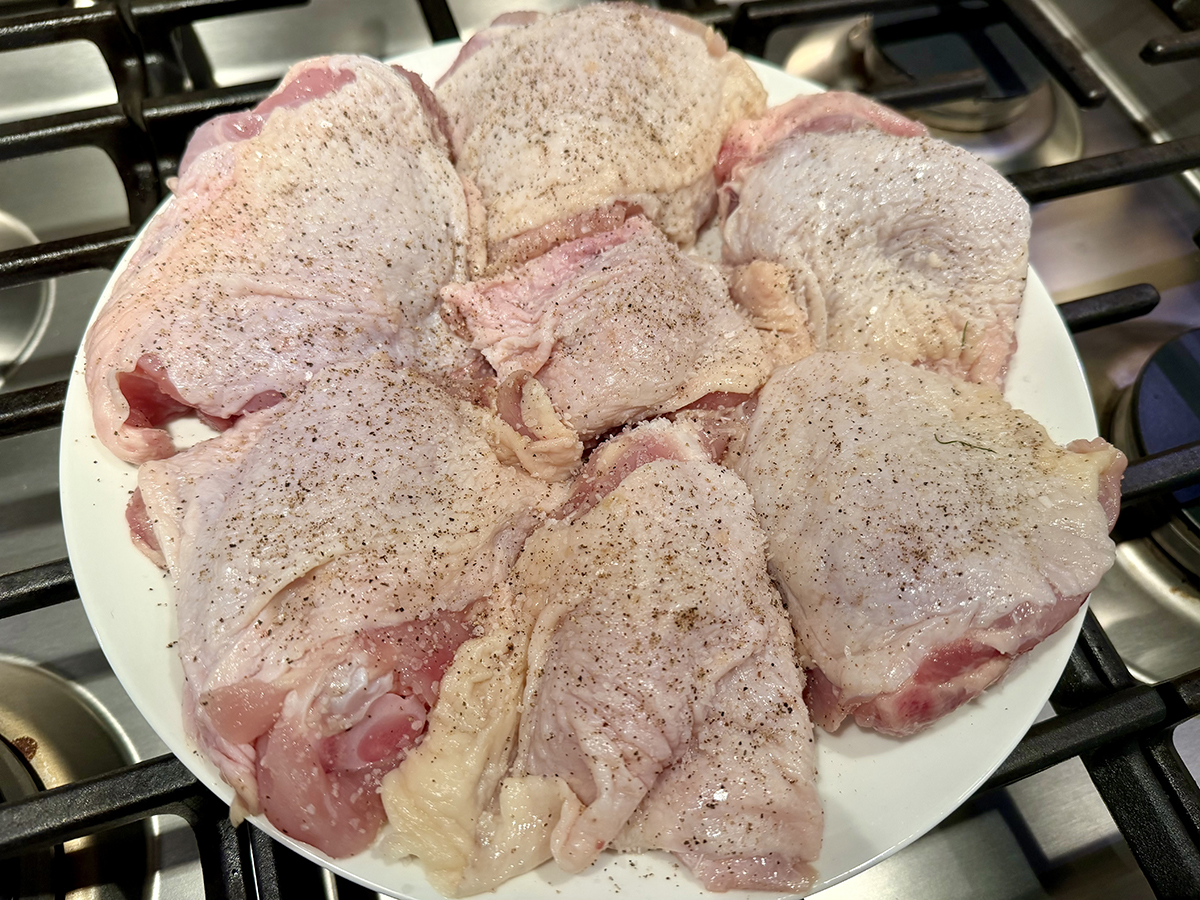
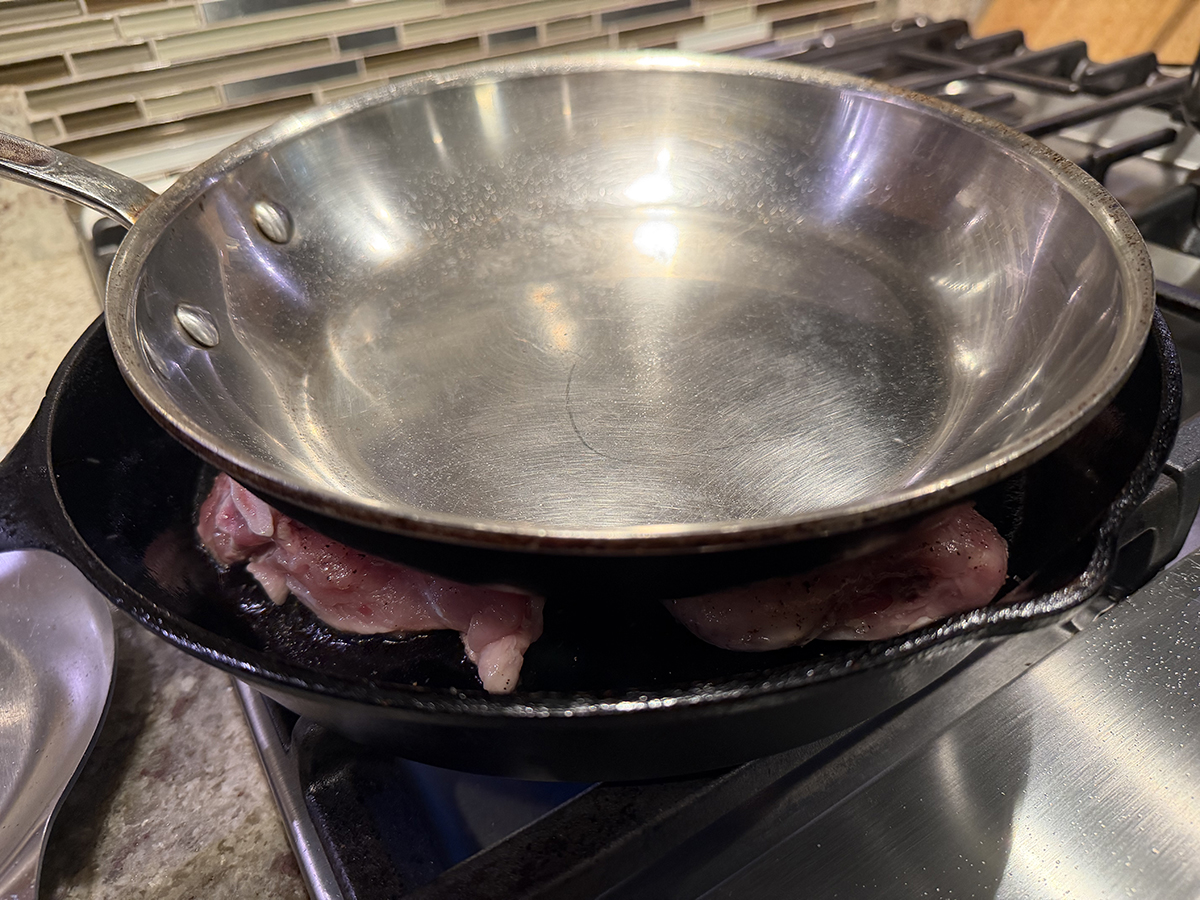
A few keys to get there: pat the chicken bone-dry before it hits the pan, so the skin actually browns instead of steaming. Weighing it down with a heavy lid or grill press (or a smaller cast-iron skillet, if that’s what you’ve got) keeps the skin flush against the heat for a deeper, more even crust. Then braise covered for most of the cooking time to keep the meat fall-apart tender, and uncover it for the last 15 minutes to let the skin crisp back up.
Serve it with crusty bread, couscous, or orzo for sauce-sopping duty. Turn it into a full one-pan dinner by tucking halved baby potatoes and/or sliced fennel (our choice) into the dish before it goes in the oven.
SUBSTITUTES: If you don’t have dry sherry, substitute dry white wine and add 1 to 2 teaspoons of honey to mimic sherry’s subtle sweetness. If you don’t have fish sauce, replace it with 1 to 2 teaspoons of soy sauce for a similarly savory, umami-rich finish. Cerignola olives are buttery and mild, manzanilla olives add a brinier bite, and kalamata olives contribute a deeper, more robust flavor. Any of these will work well, so use your favorite.
1 small fennel bulb, halved lengthwise, cored, sliced into thin wedges
3 cups drained marinated artichoke hearts, plus 1/4 cup brine from jar, divided
1 cup chicken stock
1/2 cup (4 oz.) dry sherry
1 Tbsp. fish sauce
Directions
Preheat oven to 375°F. Sprinkle both sides of chicken evenly with pepper and 1 1/2 teaspoons salt. Heat oil in a large cast-iron skillet or black carbon steel skillet over medium-high. Add half of the chicken, skin sides down; place a heavy pot lid on top of chicken pieces to weigh them down. (Do not cover skillet.) Cook, undisturbed, until browned and crisp, 10 to 12 minutes. Remove lid; transfer chicken, skin sides up, to a 12- x 9-inch oval baking dish or a 13- x 9-inch baking dish. Repeat cooking process with remaining chicken. Scatter olives, thyme, garlic (cut sides down), lemon, fennel slices and artichoke hearts around chicken in baking dish.
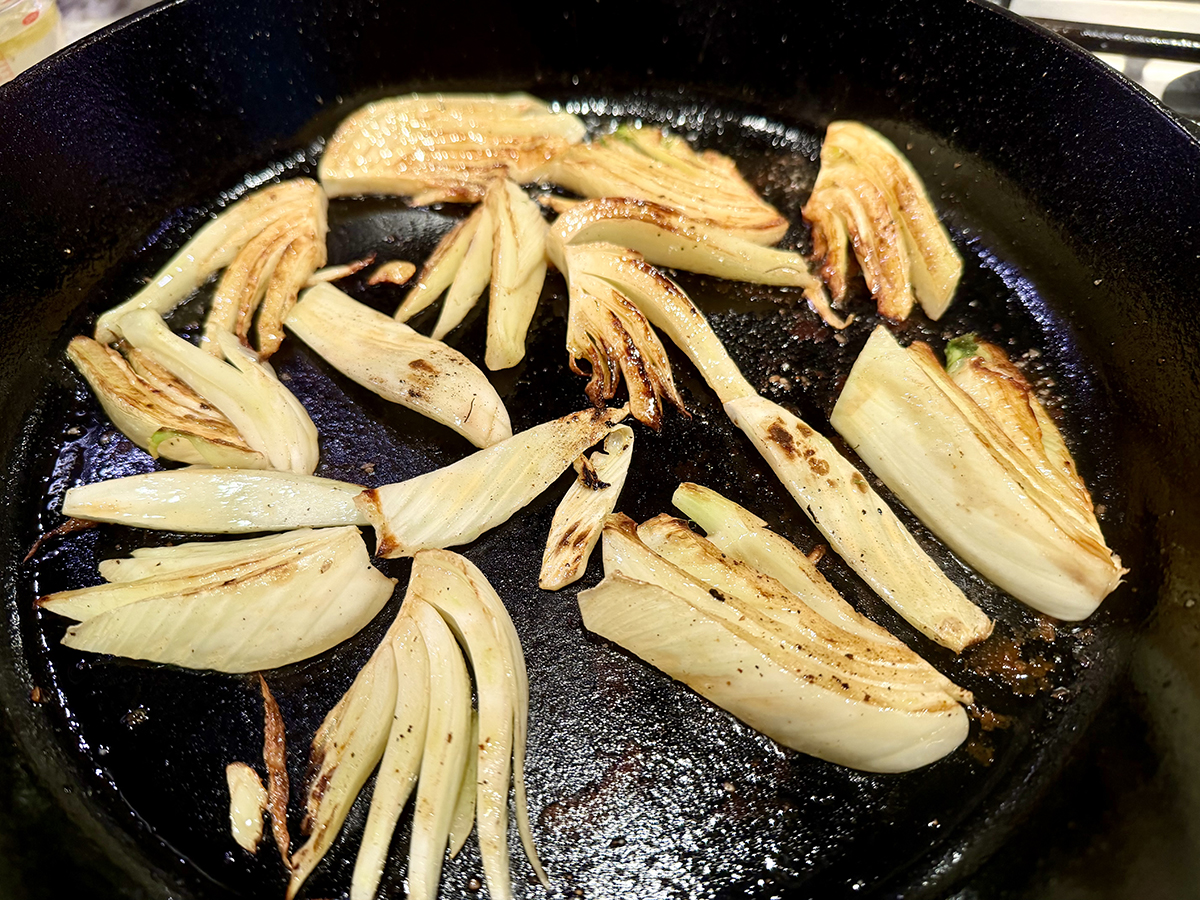
Brown the fennel wedges in hot empty skillet for about 2 minutes per side. Move to casserole dish with chicken.
Add stock, sherry, fish sauce, and artichoke brine to skillet; bring to a boil over medium-high, scraping up browned bits from bottom of pan. Stir in remaining 1 teaspoon salt; pour mixture around chicken in baking dish. Cover tightly with aluminum foil; braise until chicken is very tender, about 1 hour.
Remove foil from baking dish; increase oven temperature to 400°F. Turn garlic halves cut sides up. Roast chicken until skin is crisp, about 15 minutes.
Discard thyme sprigs. Either discard garlic (not us!), or remove cloves from skins and mash into sauce. Transfer to individual plates, and serve in shallow bowls.
A perfectly grilled tuna steak is one of the ocean’s most refined offerings. The exterior yields a gloriously caramelized crust — faintly smoky, kissed with the umami depth of soy and the warm whisper of ginger — while the interior remains luxuriously silky, almost buttery in its tenderness. It is meaty without being heavy, rich without being indulgent.
The marinade weaves its magic throughout: the brightness of lemon cuts through the steak’s natural richness, garlic adds an earthy warmth, and sesame oil lends a toasted, nutty undertone that lingers pleasantly on the palate. Each bite delivers a layered experience — first the satisfying sear of the crust, then the yielding, almost velvety pink center that melts rather than chews. It is the rare fish that eats like a fine steak, commanding the plate with confidence and elegance.
Beyond its extraordinary flavor, tuna is among the most nutritionally distinguished fish in the sea:
Exceptional protein source — A single steak delivers around 40g of lean, complete protein, supporting muscle repair, satiety, and sustained energy.
Rich in Omega-3 fatty acids — These essential fats actively support cardiovascular health, reduce inflammation, and promote brain function and cognitive clarity.
Loaded with B vitamins — Particularly B12 and niacin (B3), which are vital for nerve function, energy metabolism, and red blood cell production.
High in selenium — A powerful antioxidant mineral that protects cells from oxidative stress and supports thyroid health.
Excellent source of potassium and magnesium — Both essential for healthy blood pressure regulation and muscle function.
Low in saturated fat — Making it a heart-friendly alternative to red meat, without any sacrifice in satisfaction or substance.
In short, grilled tuna is that rare culinary treasure: a dish that feels like a treat, yet nourishes the body as thoroughly as it delights the senses.
NOTES:Tuna doneness: Medium-rare (120-125°F) is ideal — the center should be deep pink. Fully cooked tuna can become dry and chalky. If you prefer it more done, add 30–45 seconds per side. Grill alternative: A cast-iron skillet works beautifully if you don’t have a grill. Get it very hot before adding the fish.
Our sides were as simple, pairing the fish with steamed fresh corn on the cob and a side salad.
2-4, 20 min + marinating time
Ingredients
2 tuna steaks (about 1 inch thick)
3 Tbsp. olive oil
2 Tbsp. soy sauce
1 lemon, juiced
2 garlic cloves, minced
1 tsp. fresh ginger, grated
1 tsp. sesame oil
1/2 tsp. black pepper
1 Tbsp. sesame seeds (optional)
1 scallion, sliced thinly on a diagonal, for garnish
Directions
Marinate the tuna: Whisk together 3 tablespoons olive oil, 2 tablespoons soy sauce, 1 lemon, juiced, 2 garlic cloves, minced, 1 teaspoons fresh ginger, grated, 1 teaspoons sesame oil, and 1/2 teaspoons black pepper. Place the 2 tuna steaks (about 1 inch thick) in the marinade, turning after 20 minutes. Let rest at room temperature for another 10 to 20 minutes.
Preheat the grill: Heat your grill or grill pan over very high heat until smoking hot. Brush the grates with a little oil. Remove tuna from marinade and pat lightly dry.
Grill the tuna: Place the tuna steaks on the hot grill. For medium-rare (recommended), grill without moving them for 3 minutes.
Flip & finish: Flip the tuna steaks and grill the second side for an additional 3 minutes. The center should still be pink and slightly translucent — tuna dries out quickly, so don’t overcook! Internal temperature should register 120-125°F.
Rest & serve: Let the tuna rest for 1 minute. Squeeze a little fresh lemon over everything, sprinkle with sesame seeds, garnish with sliced scallions and serve immediately.
Four heads of garlic sounds like a lot — until you taste it. Slow-cooked until sweet, nutty, and pleasantly caramelized, garlic confit loses all its sharpness and transforms into something rich and almost buttery. Mashed with olive oil and fresh parsley, it becomes the kind of sauce that makes people ask what your secret is.
Boneless chicken thighs are seared until golden, then finished in the oven — simple technique, serious results. The whole dish is bold but never harsh, savory but never heavy.
A few things worth knowing before you start: The garlic confit comes together fastest in the microwave at 50% power, which gives you the same gentle, even cooking as a long stovetop simmer — in a fraction of the time. And when it comes to the skillet, a well-seasoned cast iron or nonstick pan isn’t optional — the garlic mixture will stick and scorch in a conventional pan, so don’t skip this one.
Finish the plate with warm flatbread or a crusty loaf to catch every bit of sauce, and a crisp, leafy salad to keep things bright. We paired ours with a cucumber, dill and sour cream salad.
NOTES: Don’t microwave the garlic heads in oil on high. Use 50 percent power so the oil doesn’t overheat and scorch the garlic. Also, don’t crank up the burner when browning the garlic-coated chicken in the skillet. Use moderate heat so the garlic does not burn. And when flipping the chicken, use a spatula to scrape them up so the garlic stays with the chicken rather than sticks to the pan.
Pour the oil into a large microwave-safe bowl. Place the garlic heads cut side down in the oil. Cover tightly and microwave on 50 percent power until the garlic heads feel soft and yielding when pressed on the sides with the back of a fork, 13 to 15 minutes. Cool, covered, until barely warm to the touch.
Measure 2 tablespoons of the oil into a small bowl and reserve for browning the chicken. Squeeze the garlic cloves out of their skins and into the oil remaining in the bowl in which the garlic was cooked. To the bowl, add the parsley, lemon zest and juice, 1 teaspoon salt and ½ teaspoon pepper. Mash with the fork to a coarse paste. (Alternatively, use a mini food processor.)
Add the chicken thighs and garlic confit to a large bowl, and mix until thoroughly coated. Let stand at room temperature while you heat the oven to 425°F with a rack in the middle position.
Set a rimmed baking sheet near the stovetop. In a 12-inch cast-iron or nonstick skillet over medium, heat 1 tablespoon of the reserved garlic oil until shimmering. Place half of the chicken in a single layer; do not scrape the garlic mixture off the thighs, but do not slather on any more, either. Cook, without disturbing, until spottily browned on the bottom and the chicken releases easily from the pan, 5 to 7 minutes. With a thin metal spatula (if using a cast-iron pan) or a silicone spatula (if using nonstick), scrape up each thigh, along with any garlic mixture under it that clings to the skillet, and flip. Cook until spottily browned on the second sides, 3 to 4 minutes. Using the spatula, transfer the thighs to the baking sheet. Using the remaining 1 tablespoon reserved garlic oil, brown the remaining thighs in the same way and transfer to the baking sheet.
Slather any garlic mixture remaining in the bowl onto the thighs, distributing it evenly. Place in the oven and cook until well browned and the thickest part of the largest thighs reach 175°F, 10 to 13 minutes. Transfer the chicken to a platter, then drizzle on any juices from the baking sheet. Sprinkle with additional chopped parsley and serve with lemon wedges.
Microwave Garlic Confit
Start to finish: 20 minutes Makes 3 or 4 heads garlic
Pour ½ cup extra-virgin olive oil into a large microwave-safe bowl. Remove the outer papery skins from 3 large or 4 medium heads garlic (9 to 10 ounces total weight), then cut off the top one-third of each head to expose the cloves. Place the garlic heads cut side down in the oil.
Cover tightly and microwave on 50 percent power until the garlic heads feel soft and yielding when pressed on the sides with the back of a fork, 13 to 15 minutes. Let the garlic cool, covered, in the oil.
These deviled eggs have a wonderfully tangy, creamy character. The filling starts with a rich, velvety base of sour cream and mayonnaise in equal measure — the sour cream lending a subtle tartness and lighter texture than mayo alone, while the mayo brings body and that classic richness. Together they create a silkier, slightly airier filling than the traditional all-mayo version.
The Dijon mustard adds a sharp, grown-up bite — more nuanced and complex than yellow mustard, with a gentle heat that lingers at the back of the palate. It pulls the whole filling together and gives it backbone.
The dill pickle relish is the surprise delight here — it introduces little bursts of briny, vinegary sweetness and a whisper of fresh dill herbaceousness. It also adds the tiniest bit of textural intrigue in an otherwise smooth filling.
Piped or spooned back into the cool, firm egg white cups, the filling is finished with a dusting of smoked paprika — that gorgeous rust-red powder bringing a gentle smokiness and just a touch of earthy sweetness, while making the eggs look absolutely stunning on a platter.
The overall flavor profile is tangy, creamy, and gently smoky, with a pleasant sharpness from the mustard and little pickle-bright pops throughout. These would be a welcome upgrade at any gathering — familiar enough to feel classic, but just distinctive enough to prompt “ooh, what’s in these?”
There’s a particular kind of kitchen magic that happens when you lock a lid, crank the heat, and surrender control — the kind of cooking that turns humble boneless beef short ribs into something that falls apart at the mere suggestion of a fork. This recipe harnesses that magic with a sauce that pulls from the pantry of Chinese cooking: smoky-sweet hoisin, salty soy, dry sherry, and a whisper of cayenne heat.
The pressure cooker does something a braise never quite can. Sealed tight with no room for steam to escape, it drives flavor into the meat rather than letting it drift away into your kitchen air. What emerges after 35 minutes is deeply savory beef swimming in a concentrated, glossy sauce — more than you’d ever coax from a Dutch oven, and richer for it. A handful of fresh scallion greens and torn cilantro added at the end lifts the whole thing, cutting through the richness with a bright, herby finish.
Serve it over a bowl of steamed white rice that can drink up every last drop of that sauce. This is weeknight cooking that eats like a weekend project — without the wait.
Pressure-Cooker Boneless Beef Short Ribs with Hoisin Sauce
1 2-inch piece ginger, peeled, sliced into ¼-inch-thick rounds, and smashed
½ cup hoisin sauce
2 Tbsp. soy sauce
2 Tbsp. dry sherry
4 scallions, white parts chopped coarse, green parts sliced thin
¼ tsp. cayenne pepper
48 oz. boneless beef short ribs (about 6 short ribs), trimmed
2 Tbsp. minced fresh cilantro
Directions
Cook oil, garlic, and ginger in pressure-cooker pot over medium-high heat until fragrant, about 1 minute. Stir in hoisin sauce, soy sauce, sherry, scallion whites, and cayenne, then add beef.
Lock pressure-cooker lid in place and bring to high pressure over medium-high heat. As soon as pot reaches high pressure, reduce heat to medium-low and cook for 35 minutes, adjusting heat as needed to maintain high pressure.
Remove pot from heat and allow pressure to release naturally for 15 minutes. Quick release any remaining pressure, then carefully remove lid, allowing steam to escape away from you.
Transfer short ribs to platter, tent loosely with aluminum foil, and let rest while finishing sauce. Strain sauce into fat separator, let sit 5 minutes, then pour defatted sauce into small bowl. Stir scallion greens and cilantro leaves into sauce and serve with ribs.
If you’re into roast chicken with oodles of flavor, this recipe is for you. Fragrant rosemary and oregano, bright citrus, spices and aromatics come together for a dish that’s effortlessly elegant. Imagine crisp, tangy, and succulent chicken seasoned Mediterranean-style and bathed in a bold wine and a orange-lime marinade.
The delicious jammy onion and citrusy-tangy sauce are splendid served over garlicky mashed potatoes, rice or polenta. To complete the dinner, add a side of roasted Brussels sprouts.
TIP: Use split chicken or chicken pieces of similar size for even cooking. For best flavor, allow 30 minutes, or preferably 2 hours for marinating.
Our bird was a good bit larger than the 3 1/2-pound listed chicken, and therefore required a longer cooking time. *And while it brings visual appeal to the platter, there really is no need for all of the extra citrus slices, perhaps just a few for color.
Because our chicken was sufficiently charred once it reached the proper internal temperature, we opted not to put it under the broiler, but did slather on the honey glaze. If however you might be broiling it, make sure to use an enameled cast iron, or other broiler-proof pan that won’t shatter under intense heat.
1 whole chicken (about 3 ½ lbs.), split in half through the backbone
Kosher salt
1 cup Pinot Noir
3 oranges, 1 zested, 2½ juiced, plus ½ sliced for garnish
2 limes, 1 juiced, plus 1* lime sliced for garnish
Extra virgin olive oil
3 Tbsp. tomato paste
1 ½ tsp. dried oregano
1 tsp. dried rosemary
1 tsp. sweet paprika
1 tsp. Aleppo pepper
7 to 8 garlic cloves minced
1 white onion, halved, peeled and sliced
1 Tbsp. honey
Directions
Season the chicken with kosher salt on all sides, making sure to season underneath the skin as well. (You can do this one night ahead of time and keep the chicken in the fridge to air-chill uncovered).
Prepare the citrus marinade. In a medium bowl, add the wine, orange juice and zest, lime juice, 3 tablespoons extra virgin olive oil, tomato paste, spices, and a good dash of kosher salt. Add the garlic, whisk to combine.
In a extra-large ziploc, add the chicken and onion slices and toss to coat, making sure to lift the skin up and spoon some of the marinade underneath (this will give you more flavor). Set aside at room temperature for 30 minutes. Alternatively, refrigerate for an hour or two, turning the bag every 20 minutes or so. (For best results, take it out of the fridge and leave the chicken at room temperature for 30 to 45 minutes before cooking)
Preheat the oven to 425°F and adjust a rack in the middle.
Transfer the chicken and the marinade to a braising pan that can withstand a broiling temperature. Roast for 30 minutes, then carefully turn the pan 180 degrees and roast for another 15 minutes or until the chicken is fully cooked and tender (juices should run clear).
In a small bowl, mix together the honey with 1 tablespoon of extra virgin olive oil. Carefully remove the chicken from the oven and brush the top with the honey and olive oil mixture.
If necessary, switch the oven to the broil function. Return the chicken back to the oven about 6 inches away from the broiler and cook briefly for 3 to 4 minutes, watching for the skin to turn a nice golden brown.
Remove from the heat and finish with lime juice. Add slices of fresh orange and lime, if desired.
This is a vibrant, Tex-Mex-inspired one-pan dish that layers bold, smoky flavors with creamy richness. The sauce is the heart of the dish — a silky, bright green salsa verde built from broiled and charred tomatillos, onion, and poblano chiles. Roasting them under the broiler first adds deep smokiness and sweetness before they’re blended with fresh cilantro and garlic into a tangy, herbaceous sauce that bubbles away in the skillet as the chicken bakes.
The chicken is butterflied and stuffed, so each breast opens like a book to cradle a slice of cream cheese and thin strips of the second roasted poblano. The cream cheese melts into a luscious, mild filling that contrasts beautifully with the chile’s subtle heat. Both sides of the chicken are seasoned with a warm spice rub of chili powder, cumin, and coriander, providing a savory, earthy exterior.
The finish is what elevates it — the whole skillet goes under the broiler after baking, blanketing the chicken in melted, golden-spotted pepper Jack cheese that adds a sharp, spicy pull to every bite. At the table, cool sliced avocado and a squeeze of fresh lime cut through the richness, while extra cilantro keeps that fresh green note alive throughout.
The overall experience is deeply savory and smoky with layers of mild heat, creamy pockets, tangy brightness from the tomatillos, and just enough richness from the two cheeses to make it feel indulgent — all in a single skillet.
We took the easy way out and used Trader Joe’s Salsa Verde in lieu of making it from scratch, saving a chunk of time and decreasing the number of ingredients. In fact, since we like “saucy” dishes, we used two jars, which also provided enough to top our side of Mexican rice.
NOTES: While it isn’t an exact substitute, 1 1/2 cups of your favorite jarred salsa verde can be used in place of the homemade version. Char one pepper as the recipe describes for the chicken filling. The green chile sauce can be made up to three days ahead and refrigerated in an airtight container. Simply reheat gently in the microwave or stove before continuing with the recipe.
1/2 cup fresh cilantro (tender leaves and stems included), plus more leaves for garnish
4 oz. cream cheese, softened
4 oz. pepper Jack cheese, shredded (about 1 cup)
1 ripe avocado, sliced
Pickled jalapeño slices for garnish, optional
Lime wedges
Directions
Preheat broiler with a rack 6 inches from heat source. Arrange tomatillos, chiles, garlic cloves, and onion wedges on a large rimmed baking sheet covered with foil. Drizzle vegetables evenly with oil. Broil until charred, about 12 minutes, flipping vegetables halfway through cooking time. Remove and discard charred papery skin from onion. Transfer vegetables and juices to a medium bowl, and cover using plastic wrap; let steam 10 minutes. Heat oven to 425°F.
Meanwhile, stir together chili powder, cumin, coriander, and 1 3/4 teaspoons salt in a small bowl. Arrange chicken breasts on a cutting board; slice each breast horizontally through the middle to within a 1/2-inch of other side. Open chicken breasts, and sprinkle evenly with 2 teaspoons spice mixture.
Once vegetables are steamed, remove and discard garlic and chile peels. Transfer peeled garlic, 1 peeled chile, tomatillos, onion, and any accumulated juices to a blender; add cilantro and remaining 3/4 teaspoon salt. Secure lid on blender, and remove center piece to allow steam to escape. Place a clean towel over opening; process until smooth, about 30 seconds. Pour into a large ovenproof skillet. Set aside.
Slice remaining peeled chile lengthwise into thin strips. Cut cream cheese into 4 equal slices; place 1 slice on one-half of each butterflied chicken breast. Top evenly with sliced chile, and close chicken breast. Sprinkle remaining 2 teaspoons spice mixture all over chicken; nestle stuffed breasts into sauce in skillet.
Bake until sauce is bubbly and a thermometer inserted into thickest portion of breasts registers 160°F, 20 to 25 minutes. Remove skillet from oven, and increase oven temperature to broil.
Sprinkle chicken and sauce with cheese. Broil until cheese is melted and starting to brown in spots, 2 to 3 minutes. Remove from oven, and garnish with avocado, additional cilantro and pickled jalapeño slices. Serve with lime wedges.
Quick and easy with few ingredients are welcome words for a weeknight meal. The fact that it is also tasty and visually appealing doesn’t hurt matters.
Harissa, the North African spice paste considered a pantry staple, adds flavor to salmon fillets along with garlic and lemon juice. After roasting, the fillets are served with a simple three-ingredient relish made by combining parsley, lemon zest and chopped green (or black) olives. The bold, zingy intensity of the herbal garnish is used to balance the fattiness of the salmon.
Our piece of salmon weighed in at 1 pound and we therefore left it intact instead of sizing down into 4 separate fillets. (Yes, this did extend the roasting time a bit.) While we served ours with steamed broccoli and a side salad, you could also pair with couscous and perhaps a cucumber or tomato salad.
Harissa-Roasted Salmon with Lemon, Olive and Parsely Relish
1/2 cup lightly packed fresh flat-leaf parsley OR cilantro, roughly chopped
1/2 cup pitted green OR black olives, roughly chopped
Directions
Set a wire rackin a rimmed baking sheet and mist it with cooking spray. In a small bowl, stir together the harissa, 1 tablespoon oil, garlic, the lemon juice and 1 teaspoon salt. Place the salmon skin side down on the rack. Rub the harissa mixture onto the top and sides of the fillets. Let stand at room temperature while the oven heats.
Heat the oven to 450°Fwith a rack in the middle position. Meanwhile, in a small bowl, stir together the parsley, olives, the remaining 1 tablespoon oil, the lemon zest and ¼ teaspoon salt.
Roast the salmonuntil the flesh flakes easily and the harissa mixture has deepened in color, 12 to 14 minutes. Serve the fillets with the parsley-olive mixture and lemon wedges.
Pollo al ajillo is a classic Spanish garlic chicken dish that’s bursting with robust, savory flavors. The recipe highlights the rich aroma and taste of garlic, using 10 cloves to infuse the chicken with a deep, fragrant essence. This weeknight garlic chicken recipe cooks in one large skillet. And because it uses boneless, skinless chicken thighs, it’s ready in just over 30 minutes.
The chicken pieces are browned in olive oil until golden and crispy on the outside. Then, whole garlic cloves are gently sautéed along with bay leaf and fresh thyme sprigs, which add an earthy, herbal note to the dish.
Once the chicken has developed a beautiful color and the garlic is softened but not burnt, a splash of white wine is added. The white wine not only deglazes the pan, lifting all the flavorful browned bits but also imparts a subtle acidity and complexity that balances the richness of the garlic and chicken.
The chicken is returned to the pot and simmers for about 10 minutes in this fragrant mixture, absorbing the combined flavors. The dish is finished with a generous garnish of freshly chopped parsley, adding a bright, fresh contrast and a pop of color.
It is astonishingly flavorful considering the small number of ingredients! The result is a beautifully aromatic, tender, and juicy chicken with a garlicky punch, complemented by thyme’s herbal aroma and the wine’s delicate acidity—a beloved staple of traditional Spanish home cooking perfect for serving with crusty bread, rice or potatoes.
Served with a roasted carrot and hazelnut side dish and Spanish rice.
Season the chicken. Pat the chicken dry and season all over with salt and pepper. Lightly coat both sides with the flour and shake off any excess.
Sear the chicken. In a large heavy-bottomed skillet, heat the olive oil over medium-high until shimmering but not smoking. Working in batches if necessary, cook the chicken until golden, about 4 minutes per side. Remove chicken to a plate and set aside.
Make the sauce. Add the garlic and cook until fragrant, about 1 minute. Pour in the wine and use a wooden spoon to scrape any browned bits stuck to the pan. Add the bay leaf and thyme, and return the chicken and any accumulated juices. Once the sauce comes to a boil, reduce the heat to low, cover the pan, and cook for 10 minutes.
Finish and serve. Uncover the pan and increase the heat back to medium-high. Cook, uncovered, until the sauce has reduced by half, about 5 minutes. Remove the skillet from the heat. Remove the bay leaf and thyme sprigs. Garnish with the parsley. Serve with the pan sauce drizzled over top.
Goong Ob Woon Sen is a beloved Thai comfort dish — deceptively simple but packed with layered, complex flavor. The magic here is in the steaming technique: the shrimp aren’t stir-fried or sautéed but rather laid on top of the noodles and essentially steamed under a tight lid, keeping them incredibly plump and juicy while the noodles below absorb every drop of the savory broth.
The sauce — a blend of soy sauce, oyster sauce, sesame oil, and a touch of brown sugar — creates a glossy, umami-rich coating on the glass noodles that’s salty, slightly sweet, and deeply savory all at once. The double pepper (black and white) is the dish’s signature move: black pepper adds bold, earthy heat while white pepper brings a more fragrant, floral warmth that’s distinctly Thai.
Glass noodles are perfect for this preparation — they start neutral and slippery, then become silky and translucent as they soak up the seasoned seafood (or chicken) stock, practically becoming one with the sauce. A final squeeze of lime at the table cuts through the richness and ties everything together with a bright acidic finish.
It’s a one-pot weeknight dream: deeply satisfying, ready in under an hour, and best eaten right away.
Glass noodles go by different names, including bean threads, bean vermicelli, cellophane noodles or saifun. They resemble rice vermicelli but the two are very different, so shop carefully. Check the label to make sure the noodles are made at least in part with mung bean starch. If you can find a brand made with 100 percent mung bean starch, even better.
TIP: Don’t soak the noodles in hot or boiling water, as they will wind up too soft. The aim is to soak them until only partially softened and pliable, but not fully tender; room-temperature or cool tap water is best. Be sure to swish the noodles once or twice during soaking to break up any clumps and ensure they hydrate evenly.
*White pepper is an important ingredient in this dish. But the problem with processed pre-ground pepper is the musty, dusty barnyard-like flavors. Fresh, well-handled peppercorns, by contrast, deliver bright citrus spice with hints of pine. A clear favorite, BoTree White Kampot Pepper is robust yet balanced, and offers impressive complexity — no funk, more flavor!
1 lb. large (26/30 per lb.) shrimp, peeled (tails removed) and deveined, patted dry
Ground black pepper
Ground white pepper, preferably from fresh peppercorns*
2 cups chicken OR seafood broth, preferably homemade
2 Tbsp. neutral oil
1½ Tbsp. minced fresh ginger
4 medium garlic cloves, minced
1 bunch scallions, cut into 1-inch lengths on the diagonal
Lime wedges, to serve
Directions
Place the noodles in a large bowl and add room-temperature water to cover. Let stand until the noodles are pliable, but not fully tender, about 15 minutes, swishing them once or twice to ensure even hydration. Drain in a colander. Using kitchen shears, snip the noodles in several places to cut them into shorter lengths.
While the noodles soak, in a medium bowl, combine the soy sauce, oyster sauce, sesame oil and sugar; stir until the sugar dissolves. In a small bowl, toss the shrimp with 2 tablespoons of the soy sauce mixture, ¼ teaspoon black pepper and ⅛ teaspoon white pepper. Stir the broth into the remaining soy sauce mixture.
In a large (7- to 8-quart) Dutch oven over medium, combine the neutral oil, ginger, garlic and ½ teaspoon each black and white pepper. Cook, stirring, until the garlic begins to brown, 2 to 3 minutes. Add the noodles, tossing, then distribute in an even layer. Scatter the scallions over the noodles, followed by the shrimp, then drizzle in any liquid remaining in the bowl; do not stir. Pour in the broth mixture and bring to a simmer over medium-high. Cover, reduce to medium-low and cook, undisturbed, until the shrimp are opaque throughout and the noodles are tender and have absorbed the liquid, 8 to 10 minutes. Toss to integrate the scallions and shrimp into the noodles. Serve with lime wedges.
Creamy Fennel and White Bean Soup is a comforting and flavorful dish characterized by its smooth, velvety texture and aromatic taste. The soup typically features tender white beans (such as cannellini or great northern beans) cooked until soft and then blended or partially puréed to create a creamy base without needing heavy cream.
Fennel, with its mild anise-like flavor, is a standout ingredient that adds a subtle sweetness and a hint of licorice aroma to the soup. Other common ingredients included here are onions, garlic, vegetable or chicken broth, and olive oil. The seasonings are rosemary, chives, salt, and pepper which round out the savory profile.
For contrast, as well as a smoky-savory counterpoint, top the soup with crisped bacon. Chopped fresh chives and a squeeze of lemon juice finish it with freshness. Overall, Creamy Fennel and White Bean Soup is a nourishing, mildly sweet, and savory soup that’s perfect for a light lunch or dinner, especially during cooler months.
NOTE: Don’t fill the blender jar more than a third full of the hot soup mixture; hot liquids tend to splash out when the blender is turned on. To help prevent this, remove the cap from the blender lid and cover tightly with a kitchen towel. Start the blender on low and gradually increase the speed.
Of course, using homemade stock is always preferable. Homemade chicken stock is one of the most versatile and flavorful ingredients you can have in your kitchen. Unlike store-bought stocks, homemade stock has a richer, deeper flavor and aroma, and it is free from preservatives, artificial flavors, and excess sodium. As an added bonus, homemade chicken stock is also incredibly inexpensive, and it is an excellent way to use up kitchen scraps and leftover chicken bones.
3 15½-oz. cans cannellini beans, rinsed and drained, divided
5 cups chicken, or vegetable broth, preferably homemade
1 4-inch sprig fresh rosemary
Kosher salt and ground black pepper
3 Tbsp. extra-virgin olive oil, plus extra to serve
3 Tbsp. finely chopped fresh chives
Lemon wedges, to serve
Directions
In a large Dutch oven over medium, cook the bacon, stirring occasionally, until crisp, about 10 minutes.
Using a slotted spoon, transfer the bacon to a paper towel-lined plate. Pour off all but 2 tablespoons fat from the pot.
Add the onions, fennel, garlic and ground fennel to the pot, cover and cook over medium-low, stirring occasionally, until the vegetables are tender, about 15 minutes.
Measure out 1½ cups of the beans and set aside. Add the remaining beans to the pot along with the broth, rosemary, ½ teaspoon salt and 1 teaspoon pepper. Bring to a simmer over medium-high. Cover, reduce to medium-low and simmer for 15 minutes.
Remove and discard the rosemary sprig. Let the soup cool slightly, about 15 minutes. Transfer about ⅓ of the soup to a blender. Add 1 tablespoon of the oil and puree until smooth.
Transfer to a large saucepan, then repeat with the remaining soup and oil, working in batches. Add the reserved beans and heat over medium-low, stirring, until the soup is heated through, about 10 minutes.
Taste and season with salt and pepper. Serve drizzled with oil, sprinkled with the bacon and chives, with lemon wedges on the side.
Crispy, caramelized, and totally irresistible! Barely roasted carrot halves are smashed to create more surface area and caramelly edges. Manchego and hazelnuts reinforce their nutty earthy flavor. A lovely, impressive way to prepare an ordinary side dish.
Bring out carrots’ natural sweetness by roasting them in the oven. Although it takes longer than steaming or microwaving, the tender, caramelized outcome makes the extra cook time worthwhile. Simply roast the carrots until they’re fork-tender, then smash them (without breaking), sprinkle with a little cheese, and roast again until the edges are nice and crispy and the cheese is melted.
If you are starting with raw filberts, toast the nuts in a dry pan. When cooled, removed the skins as much as possible. The hazelnuts can be chopped in a small mini food processor, or hit with a mallet while inside a ziploc bag.
1 lb. medium carrots, peeled and halved lengthwise
2 Tbsp. olive oil, divided
1/2 tsp. salt
1/4 tsp. smoked paprika
1/4 tsp. black pepper
1/4 to 1/2 cup shredded Manchego cheese (1 to 2 oz.)
2 Tbsp. chopped toasted hazelnuts, skins removed
1/2 tsp. orange zest (optional)
1 orange wedge (optional)
Directions
Preheat oven to 400°F. Line a 15×10-inch baking pan with parchment paper. Place carrots in prepared pan. Drizzle with 1 Tbsp. of the oil. Sprinkle with salt, paprika, and pepper; toss to coat.
Roast until carrots are fork tender, 20 to 25 minutes. Use the bottom of a heavy glass or measuring cup to smash carrots, without breaking them, to about 1/2-inch thickness. Drizzle with remaining 1 Tbsp. oil. Sprinkle with cheese. Roast until edges of carrots are lightly browned and crisp, 15 to 20 minutes more.
Sprinkle with hazelnuts. If you like, top with orange zest and squeeze orange wedge over carrots. Serve immediately.
In this Milk Street recipe (that all reviewers rated 5 stars), there is a slow and fast version. Here, we made it using the fast method (with a pressure cooker, not an InstaPot). The final result is fork tender meat with deeply satisfying flavor, all done from start to finish in one pot.
Adobo varies from household to household across the Philippines, with some versions being more sour, others sweeter or with a thicker sauce. It’s considered the unofficial national dish of the Philippines due to its popularity, ease of preparation, and flavorful, comforting taste. The defining flavors are vinegar, garlic, black pepper, bay and salt in some form (often soy sauce). For this version of pork adobo, instead of the oft-used pork belly, boneless shoulder is the meat choice because it is easier to find in supermarkets, but still is rich and flavorful.
Honey, or any type of sweetener, is an unconventional ingredient in adobo, but is used here to balance the salty and sour flavors in the dish. The serranos give the braise a gentle spiciness; if you prefer, use just one chili or keep both whole. Serve this over rice to soak up the sauce.
NOTE: When cooking the scallion whites, garlic and bay, don’t over stir; the goal is to develop deep browning, which builds flavor in the dish.
2 bunches scallions, white and light green parts cut into 1-inch pieces, green parts thinly sliced, reserved separately
8 medium garlic cloves, smashed and peeled
3 bay leaves
½ cup low-sodium soy sauce
¼ cup white vinegar
2 Tbsp. honey
2 serrano chilies, stemmed and halved
Ground black pepper
3 lbs. boneless pork shoulder, trimmed and cut into 2-inch chunks
1 Tbsp. cornstarch
Directions
On a 6-quart Instant Pot, select More/High Sauté. Add the oil and heat until shimmering. Add the scallion whites, garlic and bay, then cook without stirring until golden brown on the bottom, about 4 minutes.
Stir and continue to cook, stirring only once or twice, until darkly browned, about another 2 minutes. Press Cancel, then stir in the soy, vinegar, honey, serranos and 1 teaspoon pepper, scraping up any browned bits. Add the pork; stir to combine, then distribute in an even layer.
Lock the lid in place and move the pressure valve to Sealing. Select Pressure Cook or Manual; make sure the pressure level is set to High. Set the cooking time for 30 minutes.
When pressure cooking is complete, allow the pressure to release naturally for 15 minutes, then release the remaining steam by moving the pressure valve to Venting. Press Cancel, then carefully open the pot.
Using a large spoon, skim off and discard the fat from the surface of the cooking liquid. Remove and discard the chilies and bay.
In a small bowl, whisk the cornstarch with 3 tablespoons of the cooking liquid, then stir into the pot. Select Normal/Medium Sauté and bring to a simmer, stirring constantly, and cook, stirring, until lightly thickened, about 1 minute.
Press Cancel to turn off the pot. Taste and season with salt and pepper. Serve sprinkled generously with the scallion greens.