If gochujang isn’t already a permanent fixture in your fridge, this stir-fry is about to change that. The fermented Korean chili paste is the kind of ingredient that does everything at once — lending deep, complex heat, a rich umami backbone, and that signature rusty-red color that makes the whole dish look as good as it tastes. It is most definitely a staple in our fridge.
The best part? This is a stir-fry that doesn’t actually make you work like one. Once everything hits the pan, no split-second timing, no stress, just straightforward, high-heat cooking that comes together fast. Boneless country-style spareribs are the cut to reach for here, delivering the ideal ratio of tender meat to well-marbled fat.
One thing before you dive in: give that sauce a good re-whisk right before it goes in the pan. Cornstarch sinks fast, and a quick stir is all that stands between you and a silky, perfectly thickened sauce — versus a lumpy one. Serve over steamed rice if desired.
Word to the wise, it would be hard-pressed to get 4 decent-sized servings, especially if not served with rice. We even added some baby bell peppers for added color and volume.
3 medium celery stalks, thinly sliced on the diagonal
Thinly sliced scallions, for garnish
Toasted sesame seeds, to serve
Steamed rice (optional)
Directions
In a medium bowl, toss the pork with 1 tablespoon soy sauce, 1 tablespoon oil, 1 teaspoon cornstarch and ¼ teaspoon each salt and pepper. In a small bowl, whisk together ½ cup water, the remaining 2 tablespoons soy sauce, the remaining 1 tablespoon cornstarch, the sugar, gochujang and ½ teaspoon pepper.
In a 12- to 14-inch wok or a 12-inch skillet over medium-high, heat the remaining 1 tablespoon oil until barely smoking. Add the pork and cook, stirring, until no longer pink, about 2 minutes. Add the garlic and ginger, reduce to medium and stir until fragrant, about 30 seconds.
Add the celery and cook, stirring, until slightly wilted, about 1 minute. Whisk the sauce mixture to recombine, then add it to the pan. Bring to a simmer over medium-high and cook, stirring, until the sauce thickens, about 2 minutes. Off heat, taste and season with salt and pepper. Transfer to a serving dish, then sprinkle with scallions and sesame seeds.
Shrimp have a narrow window between perfectly cooked and overdone, but this Venetian-inspired dish has a clever solution. Rather than cooking them all the way through in the pan, the shrimp are quickly seared on just one side — golden on the bottom, still slightly translucent on top — before being set aside while a deeply flavored sauce comes together.
That final brief simmer in a tomato sauce spiked with dry vermouth and fennel seeds is all they need to finish cooking gently and evenly, staying plump and tender throughout. The sauce itself punches well above its weight. Vermouth adds a subtle herbal complexity, fennel seeds lend a gentle anise warmth, and shallots and garlic round everything out into something that tastes far more involved than the short time it takes to make.
Serve it with crusty bread to soak up every last drop, or spoon it over soft polenta, creamy white beans or a small pasta like orzo (our choice), and serve with a side salad for a more substantial meal. Garnish with a little fresh oregano for color and additional flavor.
Super easy. Super simple. Super tasty. It was so good, we got only 3 servings out of it!
1½ lbs. extra-large (21/25 per lb.) shrimp, peeled, deveined and patted dry
Kosher salt and ground black pepper
3 Tbsp. extra-virgin olive oil, divided
2 medium shallots OR ½ medium yellow onion, finely chopped
6 medium garlic cloves, thinly sliced
1 tsp. fennel seeds, crushed, OR ¼ to ½ tsp. red pepper flakes OR both
½ cup dry vermouth OR dry white wine
28 oz. can whole peeled tomatoes, crushed by hand
Fresh oregano for garnish, optional
Directions
Lightly season the shrimp on all sides with salt and black pepper. In a 12-inch nonstick skillet over medium-high, heat 1 tablespoon oil until shimmering. Add half the shrimp in an even layer and cook without disturbing until golden brown on the bottoms, 1 to 2 minutes; transfer to a large plate. Repeat with 1 tablespoon of the remaining oil and the remaining shrimp, transferring the shrimp to the plate.
In the now-empty skillet over medium-high, heat the remaining 1 tablespoon oil until shimmering. Add the shallots, garlic and fennel seeds; cook, stirring, until the garlic is lightly golden, about 30 seconds. Add the vermouth and cook, stirring, until almost evaporated, about 2 minutes. Add the tomatoes with juices and ¼ teaspoon each salt and black pepper. Cook, stirring occasionally, until the sauce is slightly thickened, 6 to 7 minutes. Add the shrimp and accumulated juices; cook, stirring, until the shrimp are opaque throughout, 1 to 2 minutes. Taste and season with salt and black pepper.
Optional garnish: Fresh oregano OR finely chopped fresh dill, parsley OR tarragon
This is summer cooking at its most effortless and elegant. A generous fillet of salmon is draped in a luscious, aromatic dressing of silky coconut cream, bright lemon zest and juice, a touch of brown sugar and mustard, and a generous handful of feathery fresh dill — then sealed snugly in foil and laid directly on a screaming-hot grill. Inside that packet, the fish steams in its own juices, absorbing every bit of that fragrant, tropical-herbal sauce until it’s impossibly tender and flavorful.
While the salmon does its thing on the grill, green beans get their own foil treatment — a quick toss in oil, salt, and pepper before being wrapped up and charred alongside the fish. Once off the heat, they’re tumbled into a bright, no-fuss salad with sweet fresh corn, juicy cherry tomatoes, and another generous shower of dill, all brought together with the reserved coconut-dill dressing.
The result is a dish that feels special without demanding much of the cook. It’s equally at home served straight off the grill, still warm and fragrant, or made hours ahead and brought to the table at room temperature or straight from the fridge — making it an ideal centerpiece for a laid-back backyard gathering or an elegant dinner party where you’d rather be with your guests than stuck in the kitchen.
TIP: Alternatively, cook the fish and green beans in a 450-degree oven. Place the packets on a baking sheet and cook for 13 to 15 minutes.
Coarse kosher salt (such as Morton) and black pepper
1 cup unsweetened coconut cream or coconut milk
2 Tbsp. dark brown sugar
1 Tbsp. sherry vinegar
1 tsp. Dijon mustard
1 lemon
1 cup chopped fresh dill
8 oz. green beans, trimmed and halved crosswise
1 cup fresh corn kernels (from 1 to 2 ears corn)
1 pint cherry tomatoes, lightly crushed open or sliced into halves
Directions
Heat an outdoor grill to high (see Tip). Pat the fish dry with paper towels and place on a large strip of heavy-duty aluminum foil (or 2 stacked sheets of regular foil) on a sheet pan. Drizzle with 1 tablespoon oil and sprinkle lightly with salt.
In a small bowl, combine the coconut cream, brown sugar, vinegar, mustard, 1 tablespoon oil, 1 teaspoon salt and ½ teaspoon pepper. Zest the lemon right into the bowl and squeeze in 2 tablespoons juice. Stir in ½ cup dill. Pour half of the dressing over the fish and set the other half aside. Wrap the fish in the foil by turning up the sides and crimping them together to form a packet. Use another strip of foil if necessary to make a tight seal.
On another large strip of foil, toss the green beans with the remaining teaspoon of oil and a pinch each of salt and pepper. Wrap the beans in the foil to form a packet.
Place both the salmon and green bean packets on the grill and cover if using a gas grill. Grill until the green beans and salmon are cooked through, about 10 minutes. To test the fish for doneness, remove the packet from heat, cut a slit in the top with a knife and slide the knife into the fish. It should be tender. Using two tongs or wearing oven mitts, carefully transfer the fish packet to a large serving platter and open the top.
Open the green bean packet, transfer the beans to a large bowl and add the corn, tomatoes, remaining ½ cup dill, half of the reserved dressing and a pinch of salt. Toss to coat.
To serve, top the fish with some of the vegetables and remaining dressing. Serve immediately with the remaining vegetables and dressing or refrigerate until ready to serve.
There’s a brief, restless stretch between winter and spring — that in-between moment where you’re not quite ready to let go of comfort food, but you’re already craving something fresher and lighter. This pasta was made for exactly that feeling. And yet, the dish is good anytime of year!
It marries the richness of a wintry pasta with the verdant vibrance of spring. It is built on the bones of a rich, cold-weather pasta: savory sausage, butter, and a glossy, silky sauce that coats every strand. But then spring shows up — bright asparagus, sweet frozen peas, a generous hit of lemon, and a full cup of basil that perfumes the whole dish. The result is something that feels simultaneously cozy and alive.
And despite how indulgent it tastes, the vegetables are actually the main event here. There’s more asparagus and peas than there is sausage or pasta — the sausage plays a supporting role, lending depth and richness without taking over. Think of it less as a meat pasta with vegetables, and more as a vegetable dish that happens to have pasta and sausage in it.
The shallot anchors the base with a gentle, slightly sweet bite, but this is a great recipe to riff on as the season progresses. Leeks, spring onions, or ramps all work beautifully in its place — coarsely chopped so they hold their own in the pan. Use whatever looks best at the market, and let the season lead.
We realized too late that we did not have any frozen peas on hand. Our substitute was frozen edamame, and we both agreed it was quite good as an alternate. Two changes we would make in the future is cut the pasta back to 12 ounces, and add some grated parmesan along with the water in Step 3.
1 lb. fusilli, or a similar style such as cavatappi
2 Tbsp. extra-virgin olive oil
1 lb. hot or sweet Italian sausage, casings removed
2 large shallots, coarsely chopped
5 garlic cloves, coarsely chopped
1 bunch asparagus, trimmed, cut into 1-inch pieces
1½ cups frozen peas, not thawed
1 lemon
2 Tbsp. unsalted butter
1 cup basil leaves, torn if large
Pinch of red pepper flakes, optional
Grated Parmesan, for serving
Directions
Bring a large pot of generously salted water to a boil. Add the pasta and cook until al dente. Reserve 2 cups of the pasta cooking water, then drain the pasta.
Meanwhile, in a large Dutch oven, heat the oil over medium-high. Add the sausage and cook, breaking into smaller pieces and stirring occasionally, until browned and crisp, 6 to 8 minutes. Add the shallot and garlic and stir until fragrant and softened, 2 to 3 minutes. Add the asparagus and peas, season with salt, and stir until bright green and crisp-tender, 2 to 4 minutes. Use the moisture from the vegetables to scrape the browned bits off the bottom of the pot. Turn off the heat and finely grate the zest of half the lemon over the sausage and vegetables. Set aside until the pasta is ready.
Add 1 cup pasta water, the pasta, and the butter to the Dutch oven. Set over medium and stir vigorously until the pasta is coated. Add more pasta water as needed until glossy.
Off the heat, add the juice from half the lemon and stir to combine. Stir in the basil and red pepper flakes, if using, then taste for salt and lemon and season as desired. Top servings with Parmesan, if desired.
Four heads of garlic sounds like a lot — until you taste it. Slow-cooked until sweet, nutty, and pleasantly caramelized, garlic confit loses all its sharpness and transforms into something rich and almost buttery. Mashed with olive oil and fresh parsley, it becomes the kind of sauce that makes people ask what your secret is.
Boneless chicken thighs are seared until golden, then finished in the oven — simple technique, serious results. The whole dish is bold but never harsh, savory but never heavy.
A few things worth knowing before you start: The garlic confit comes together fastest in the microwave at 50% power, which gives you the same gentle, even cooking as a long stovetop simmer — in a fraction of the time. And when it comes to the skillet, a well-seasoned cast iron or nonstick pan isn’t optional — the garlic mixture will stick and scorch in a conventional pan, so don’t skip this one.
Finish the plate with warm flatbread or a crusty loaf to catch every bit of sauce, and a crisp, leafy salad to keep things bright. We paired ours with a cucumber, dill and sour cream salad.
NOTES: Don’t microwave the garlic heads in oil on high. Use 50 percent power so the oil doesn’t overheat and scorch the garlic. Also, don’t crank up the burner when browning the garlic-coated chicken in the skillet. Use moderate heat so the garlic does not burn. And when flipping the chicken, use a spatula to scrape them up so the garlic stays with the chicken rather than sticks to the pan.
Pour the oil into a large microwave-safe bowl. Place the garlic heads cut side down in the oil. Cover tightly and microwave on 50 percent power until the garlic heads feel soft and yielding when pressed on the sides with the back of a fork, 13 to 15 minutes. Cool, covered, until barely warm to the touch.
Measure 2 tablespoons of the oil into a small bowl and reserve for browning the chicken. Squeeze the garlic cloves out of their skins and into the oil remaining in the bowl in which the garlic was cooked. To the bowl, add the parsley, lemon zest and juice, 1 teaspoon salt and ½ teaspoon pepper. Mash with the fork to a coarse paste. (Alternatively, use a mini food processor.)
Add the chicken thighs and garlic confit to a large bowl, and mix until thoroughly coated. Let stand at room temperature while you heat the oven to 425°F with a rack in the middle position.
Set a rimmed baking sheet near the stovetop. In a 12-inch cast-iron or nonstick skillet over medium, heat 1 tablespoon of the reserved garlic oil until shimmering. Place half of the chicken in a single layer; do not scrape the garlic mixture off the thighs, but do not slather on any more, either. Cook, without disturbing, until spottily browned on the bottom and the chicken releases easily from the pan, 5 to 7 minutes. With a thin metal spatula (if using a cast-iron pan) or a silicone spatula (if using nonstick), scrape up each thigh, along with any garlic mixture under it that clings to the skillet, and flip. Cook until spottily browned on the second sides, 3 to 4 minutes. Using the spatula, transfer the thighs to the baking sheet. Using the remaining 1 tablespoon reserved garlic oil, brown the remaining thighs in the same way and transfer to the baking sheet.
Slather any garlic mixture remaining in the bowl onto the thighs, distributing it evenly. Place in the oven and cook until well browned and the thickest part of the largest thighs reach 175°F, 10 to 13 minutes. Transfer the chicken to a platter, then drizzle on any juices from the baking sheet. Sprinkle with additional chopped parsley and serve with lemon wedges.
Microwave Garlic Confit
Start to finish: 20 minutes Makes 3 or 4 heads garlic
Pour ½ cup extra-virgin olive oil into a large microwave-safe bowl. Remove the outer papery skins from 3 large or 4 medium heads garlic (9 to 10 ounces total weight), then cut off the top one-third of each head to expose the cloves. Place the garlic heads cut side down in the oil.
Cover tightly and microwave on 50 percent power until the garlic heads feel soft and yielding when pressed on the sides with the back of a fork, 13 to 15 minutes. Let the garlic cool, covered, in the oil.
These deviled eggs have a wonderfully tangy, creamy character. The filling starts with a rich, velvety base of sour cream and mayonnaise in equal measure — the sour cream lending a subtle tartness and lighter texture than mayo alone, while the mayo brings body and that classic richness. Together they create a silkier, slightly airier filling than the traditional all-mayo version.
The Dijon mustard adds a sharp, grown-up bite — more nuanced and complex than yellow mustard, with a gentle heat that lingers at the back of the palate. It pulls the whole filling together and gives it backbone.
The dill pickle relish is the surprise delight here — it introduces little bursts of briny, vinegary sweetness and a whisper of fresh dill herbaceousness. It also adds the tiniest bit of textural intrigue in an otherwise smooth filling.
Piped or spooned back into the cool, firm egg white cups, the filling is finished with a dusting of smoked paprika — that gorgeous rust-red powder bringing a gentle smokiness and just a touch of earthy sweetness, while making the eggs look absolutely stunning on a platter.
The overall flavor profile is tangy, creamy, and gently smoky, with a pleasant sharpness from the mustard and little pickle-bright pops throughout. These would be a welcome upgrade at any gathering — familiar enough to feel classic, but just distinctive enough to prompt “ooh, what’s in these?”
There are weeknight dinners, and then there are weeknight dinners that taste like you know exactly what you’re doing. This Szechuan pork stir-fry is firmly, unapologetically the latter. Stir-fries are one of our favorite go-tos, especially when time is limited.
Wok cooking rewards confidence and punishes hesitation. The heat is high, the timing is quick, and the results — when you trust the process — are spectacular. If you’re new to stir-fry technique, this recipe is a masterclass in the fundamentals: proper oil selection, batch cooking for a true sear, and the discipline of having everything prepped and within reach before the first drop of oil hits the pan.
Serve it over steamed jasmine rice or alongside lo mein noodles, with an extra spoonful of chili garlic sauce on the side for those who like to live boldly. Either way, dinner is going to be very, very good tonight.
While the list of ingredients may seem daunting, don’t sweat it, the recipe is just a starting point with a lot of versatility. Feel free to switch out the protein and vegetables at whim.
After the recipe below, I’ll describe in-depth the ingredients used and why.
NOTE: The option to “velvet” the pork before stir-frying is up to you. The process is noted below the stir-fry recipe and requires additional time to do this step.
Szechuan Pork, Asparagus, Bell Pepper and Mushroom Stir-Fry
1 Tbsp. chili garlic sauce or sambal oelek or more to taste
1/2 tsp. Chinese Five Spice
1 Tbsp. cornstarch to thicken
The Meat and Veggies:
Peanut oil, divided
1 1/4 lbs. of boneless pork loin chops, halved horizontally, then sliced into 1/4″ strips
1 1b, med. thick asparagus, woody bottoms removes and sliced at a diagonal in 1-ich pieces
1 large red bell pepper, stemmed, seeded and sliced into 1/4″ strips
1 red onion, ends remove, and cut vertically into 1/4″ slices
8 oz. shiitake mushrooms, stems removed and cut into 1/4″ slices
1-2 scallions, sliced thin on a diagonal, for garnish (optional)
Directions
For the sauce:
Toast szechuan peppercorns in a hot dry skillet over medium heat, until fragrant, about 1-2 minutes. Crush.
Place all ingredients in a medium bowl or small jar and whisk until well combined. To thicken it, whisk in 1 tablespoon cornstarch.
For the Stir-Fry:
Heat peanut oil in a wok until searing. Working in two batches, sear the pork, constantly stirring for ??? minutes each batch. Remove to a side bowl.
Add more oil (??) to wok and when hot toss in the bell pepper and onion, stirring constantly until crisp tender, about ?? minutes. Add the asparagus and continue stir-frying for about ?? minutes. Remove all of these vegetables from the wok into the bowl with the pork.
More oil? Next, stir-fry the mushroom slices for about ?? minutes. Return the bowl of pork and vegetables to the wok with the mushrooms and stir to combine. Whisk the sauce again before adding along the inside edges of the wok. Stir-fry for a few minutes until sauce thickens.
Spoon over hot steamed rice garnished with thinly-sliced scallion greens.
Through the process of velveting, meats retain their moisture and take on a soft and velvety texture that is a signature quality of Chinese cuisine. The cornstarch and oil form a barrier that locks in juices and protects the meat from the hot cooking medium, and additional seasonings in the marinade add flavor.
Ingredients
Use pork from above recipe
1 Tbsp. water
1 1/2 tsp. Shaoxing wine
1 1/2 tsp. oyster sauces
3/8 tsp. baking soda
1 1/2 tsp. cornstarch
1 tsp. vegetable oil
1/4 tsp. sesame oil
1/8 tsp. white peppers
Directions
In a medium bowl, add the pork, water, Shaoxing wine, oyster sauce, and baking soda.
Mix with your hands until the pork is well coated and the liquid is absorbed into the meat. Add the cornstarch, vegetable oil, and optional sesame oil and white pepper. Mix again until everything’s well incorporated. Set aside and let the pork marinate for at least 30 minutes or overnight. If marinating overnight, let the pork come up to room temperature before starting your dish.
To sear the pork, place your wok over high heat. When it starts to smoke lightly, add 2 tablespoons oil around the perimeter of the wok to coat the surface. Add the pork in one layer, allowing it to sear for 30 seconds. Stir-fry until it has turned opaque, remove from the wok, and set aside.
Now your pork is ready to be added to your stir-fry. Remember, whether searing or blanching, you will cook the pork again in your stir-fry, so avoid overcooking it during the pre-cook step.
The Sauce: Building Layers of Flavor
The soul of this stir-fry lives in its sauce — a carefully balanced blend of bold, aromatic, and umami-rich ingredients that draws on the classic pantry of Chinese cooking.
Szechuan Peppercorns are the dish’s defining character. Unlike black pepper, these aren’t truly “hot” — instead, they deliver a singular má (麻) sensation: a floral, citrusy tingle that numbs the lips and electrifies the palate. Toast and lightly crush them before adding to unlock their full fragrance.
Soy sauce forms the backbone of the sauce, bringing deep, fermented saltiness and the savory umami that makes stir-fries so satisfying. It also contributes color, giving the finished dish its rich, lacquered glaze.
Brown sugar balances the salt and heat with gentle sweetness and a hint of molasses depth. It also encourages caramelization in the high heat of the wok, helping the sauce cling to the pork and vegetables rather than pool at the bottom of the pan.
Sesame oil is used here as a flavoring, not a cooking fat — its low smoke point makes it unsuitable for high-heat frying. Added to the sauce, it weaves in a deep, nutty, toasted richness that is unmistakably Chinese in character.
Rice wine vinegar or black vinegar introduces a necessary brightness. Rice wine vinegar is mild and clean; black vinegar (Chinkiang) is earthier and more complex, with a slightly smoky depth reminiscent of balsamic. Either works beautifully here, but black vinegar is the more traditional Szechuan choice and worth seeking out.
Shaoxing wine is a aged Chinese rice wine that adds an aromatic, slightly sweet complexity you simply can’t replicate with a substitute. It tenderizes the pork, lifts the other flavors, and contributes the subtle fermented backbone that distinguishes an authentic stir-fry from a merely good one. Dry sherry is the closest stand-in if needed.
Garlic and ginger, both finely minced, form the aromatic foundation of virtually every great stir-fry. Garlic brings pungent savory heat; ginger contributes bright, peppery warmth and a freshness that keeps the sauce from feeling heavy. Mince both as finely as possible so they melt into the sauce rather than dominate any single bite.
Chili garlic sauce or sambal oelek is where you control the fire. Chili garlic sauce is slightly more complex, with fermented depth and visible garlic throughout; sambal oelek is purer, brighter chile heat. Start with a tablespoon and adjust boldly — this dish is meant to have presence.
Chinese Five Spice adds an almost mysterious, warm complexity: a ground blend of star anise, cloves, Chinese cinnamon, Szechuan pepper, and fennel seeds. Just half a teaspoon is enough to infuse the entire dish with that distinctively fragrant, slightly sweet-and-spiced quality that sets Chinese braised and stir-fried pork apart from anything else.
Cornstarch, whisked into the sauce before adding it to the wok, performs two essential functions: it thickens the sauce into a glossy, restaurant-style coating, and it helps the flavors cling to every piece of pork, asparagus, bell pepper, and mushroom rather than sliding to the bottom of the pan. The result is that signature, satiny stir-fry finish.
The Meat & Vegetables: Technique is Everything
In stir-fry cooking, how you prepare your ingredients matters just as much as what you put in the sauce. Every cut here is deliberate — designed to maximize surface area, ensure even cooking, and create a finished dish where every component is perfectly tender, never soggy, and beautifully glazed.
Peanut oil is the ideal fat for wok cooking. Its exceptionally high smoke point allows it to withstand the fierce, sustained heat that a proper stir-fry demands — the kind of heat that sears rather than steams, creating those lightly charred, caramelized edges that define great wok food. Its flavor is clean and neutral with just the faintest hint of nuttiness that complements the sesame and Szechuan flavors beautifully. The oil is divided intentionally: you’ll cook the pork and vegetables in separate batches, adding fresh oil as needed so that the wok temperature stays high and nothing stews in its own juices.
Boneless pork loin chops, halved horizontally and sliced into quarter-inch strips, are an excellent choice for stir-fry. Loin is lean enough to cook quickly without becoming greasy, yet has just enough fat marbling to stay juicy under high heat. Halving the chops horizontally first — essentially butterflying them into thinner slabs — makes the subsequent slicing easier and ensures the strips are a consistent, delicate thickness that will sear and cook through in a matter of minutes. Cut against the grain wherever possible for the most tender result. Pat the strips dry before they hit the wok: moisture is the enemy of a good sear.
Asparagus, sliced on a diagonal into one-inch pieces with the woody bottoms snapped away, brings grassy, vegetal freshness and a satisfying crunch that holds up beautifully against the bold, assertive sauce. Medium-thick spears are ideal here — thin asparagus risks going limp too quickly, while very thick spears may not cook through in time. The diagonal cut isn’t merely decorative: it exposes more surface area to the heat, accelerating cooking and giving the sauce more to cling to.
Red bell pepper, sliced into thin quarter-inch strips, contributes sweetness, color, and a crisp bite that provides textural contrast throughout the dish. Red peppers are the ripest and sweetest of the bell pepper varieties, and their natural sugars caramelize beautifully in a screaming-hot wok. Their vivid color also makes the finished dish as visually striking as it is delicious.
Red onion, cut vertically into quarter-inch slices, softens and sweetens as it cooks, its sharpness mellowing into something almost silky under high heat. Cutting vertically — from root end to tip along the natural lines of the onion — helps the slices hold together in the wok rather than falling apart into individual rings. Red onion also brings a subtle purple hue that adds to the dish’s visual appeal.
Shiitake mushrooms, stems removed and sliced into quarter-inch pieces, are among the finest mushrooms for stir-fry. Their caps are meaty, dense, and remarkably absorbent, soaking up the Szechuan sauce like little flavor sponges while contributing their own deep, woodsy umami to the dish. The stems are fibrous and tough even when cooked, so removing them entirely is worth the small extra effort. If your shiitakes are particularly large, a rough chop rather than a slice works equally well.
Scallions, sliced thin on the diagonal and scattered over the finished dish just before serving, are more than garnish. Their mild, grassy onion flavor adds a final fresh note that cuts through the richness of the sauce, and their bright green color signals to every diner that something vibrant and carefully made has just arrived at the table. The diagonal slice, echoing the asparagus cut, gives the dish a visual coherence and exposes just enough of the scallion’s interior to release its fragrance without wilting.
This creamy pasta is exactly what you want when you’re craving something deeply satisfying without feeling weighed down. Tender Swiss chard, silky leeks and a luxurious cream sauce make it rich and comforting, while fresh tarragon and a bright hit of lemon zest keep things feeling fresh and vibrant. It’s the kind of dish that’s endlessly versatile and always welcome at the table.
The real secret weapon here is the toasted panko topping, which adds a satisfying crunch to every forkful — a simple trick worth keeping in your back pocket for any creamy pasta. Nutritional yeast gives it a subtle tang, but the topping is endlessly adaptable: swap in a melted anchovy for savory depth, or season it with herbes de Provence, Italian seasoning or ground coriander depending on your mood. However you finish it, don’t rush past the final garnish of tarragon and lemon zest — that last-minute freshness is what elevates the whole dish.
This recipe took about 50% longer than the 30 minutes originally allotted. The extended time is noted in the recipe below. It serves 4 as an entrée, or 8 to 10 as a first course. Add a sprinkle of red pepper flakes for a hit of heat, if desired.
Creamy Swiss Chard Pasta with Leeks, Tarragon and Lemon Zest
¾ lb. green Swiss chard (1 large bunch), washed and trimmed
2 large leeks (10 to 12 oz. each)
5 Tbsp. unsalted butter
½ cup panko bread crumbs
Kosher salt and black pepper
3 Tbsp. nutritional yeast
3 garlic cloves, thinly sliced
2 tsp. fresh thyme leaves
2 cups chicken or vegetable stock
1 cup heavy cream
1 lb. linguine or fettuccine
¾ cup finely grated Parmesan
Fresh tarragon leaves, for garnish
1 lemon, for garnish
Red pepper flakes, as a garnish, optional
Directions
Bring a large pot of salted water to a boil. Prepare the chard: Tear the leaves off the stems, separating the leaves and stems. Thinly slice the stems, then coarsely tear the leaves into bite-size pieces. Set both aside in separate bowls.
Prepare the leeks: Trim off the bottom and the dark green portion at the top, halve the remaining white and pale green portion lengthwise, then thinly slice them crosswise. Wash and drain the sliced leeks. Set aside.
Prepare the bread crumbs: In a large skillet, melt 2 tablespoons butter over medium. Add the panko, season lightly with salt and generously with pepper, and cook, stirring occasionally, until golden and toasted, 3 to 4 minutes. Stir in nutritional yeast, then transfer to a paper towel-lined plate.
Wipe out the skillet. Add the remaining 3 tablespoons butter and melt over medium-high. Add the leeks, chard stems, garlic and thyme, season with salt and pepper, and cook, stirring occasionally, until leeks start to wilt and soften, about 5 minutes. Add the torn chard, season with salt and pepper, and cook, stirring, until just wilted, 2 minutes.
Add the stock and heavy cream, and boil over high until thickened, about 10 minutes.
Once the mixture is simmering, add the pasta to the pot of boiling water and cook until al dente. Don’t drain the pasta.
With tongs, transfer the pasta directly from the pot to the pan with chard mixture. Stir the cooked pasta, then sprinkle with the Parmesan, stirring vigorously to melt it into the sauce. Ladle in more pasta water, a 1/4 cup at a time, if necessary for a smooth, silky consistency. Season to taste with salt and pepper.
Divide among shallow bowls or plates. Sprinkle generously with the prepared bread crumbs, top with tarragon and grate fresh lemon zest on top. Serve immediately.
Mongolian beef has a bit of an identity crisis — it’s not Mongolian, and it’s not quite Chinese either. The dish was born in Taiwan, where “Mongolian barbecue” restaurants took off in the 1950s, and it eventually found a permanent home on Chinese American restaurant menus across the country. The name stuck. So did the craving.
This version, developed by food blogger and cookbook author Cathy Erway, is built for a weeknight: thin-sliced flank steak, crisp celery, onion, and a deeply savory sauce, all ready in 30 minutes. No deep-frying, no overnight marinade, no special equipment beyond a hot pan.
The secret to getting restaurant-quality results at home is velveting — a Chinese technique where a cornstarch-based marinade insulates the meat from the wok’s fierce heat, keeping it silky and tender instead of tough and chewy. A pinch of baking soda in the mix does double duty, lightly tenderizing the steak while also coaxing out a deeper, more satisfying sear.
The sauce ties it all together: Taiwanese soy paste brings a rounded, almost caramel-like depth that soy sauce alone can’t match, brightened with fresh ginger for a glossy, cling-to-every-bite finish. Spooned over steamed rice, it’s the kind of dinner that makes takeout feel unnecessary.
NOTE: Taiwanese soy paste (jiang you gao) is a thick, soy sauce–based condiment traditionally made by simmering soy sauce with a starch — often glutinous rice flour, though some bottled versions use cornstarch or other thickeners — to give it body. It’s also commonly sweetened with sugar. It’s texturally similar to Cantonese oyster sauce, but the flavor is gentler and less briny.
If you can’t find (or don’t have) Taiwanese soy paste, the most common substitutes are:
Closest in flavor:
Chinese sweet bean paste (tianmianjiang) — thick, savory, and slightly sweet, very similar in profile
Hoisin sauce — a little sweeter and more complex, but works well; use slightly less since it’s more assertive
Oyster Sauce — while similar in color, oyster sauce tends to be more liquid than soy paste sauce.
In a pinch:
Regular soy sauce + a small amount of sugar and cornstarch — approximates the body and subtle sweetness; about 1 tbsp soy sauce + ½ tsp brown sugar + ¼ tsp cornstarch per tablespoon of soy paste called for
Dark soy sauce — adds the deeper color and slightly sweeter, more molasses-like richness, though it’s thinner
For this particular recipe, hoisin or tianmianjiang would be the smoothest swap since the sauce is meant to be glossy and rounded rather than sharp. If you go the soy sauce + sugar route, just taste as you go — it’s easy to over-salt.
1 1/4 lbs. flank steak, thinly sliced against the grain
1 Tbsp. toasted sesame oil
1/4 tsp. baking soda
1/4 tsp. ground white pepper
2 Tbsp. cornstarch, divided
2 Tbsp. soy sauce, divided
1/2 cup cold water
2 Tbsp. Taiwanese soy paste (see above for substitutions)
1/4 cup neutral cooking oil (such as canola), divided
1 (1-inch) piece fresh ginger, peeled and cut into thin matchsticks
3 small celery stalks, thinly sliced on an angle (about 1 cup)
1 cup white onion
Chile crisp, for garnish
Cooked white rice, for serving
Scallion greens, cut on the diagonal, for garnish (optional)
Directions
Toss together steak, sesame oil, baking soda, white pepper, 1 tablespoon cornstarch, and 1 tablespoon soy sauce in a medium bowl using your hands. Cover and refrigerate for 20 minutes.
Stir together 1/2 cup cold water, soy paste, remaining 1 tablespoon cornstarch, and remaining 1 tablespoon soy sauce in a small bowl; set aside.
Heat 2 tablespoons neutral oil in a large wok or 12-inch cast-iron skillet over high. Add steak mixture in an even layer; cook, undisturbed, until browned on bottom side, 2 to 3 minutes. Flip steak, and spread in an even layer; cook, undisturbed, until almost cooked through, about 1 minute. (Since our steak was slightly larger than called for, we decided to cook it in two batches.) Transfer steak to a large plate; do not wipe wok clean.
Add ginger and remaining 2 tablespoons oil to reserved wok; cook over high, stirring constantly, until fragrant, about 10 seconds. Add celery; cook, stirring often, until slightly softened, about 1 minute. Add onion; cook, stirring often, until slightly softened, about 1 minute.
Stir soy paste mixture into vegetable mixture in wok. Reduce heat to medium-high; cook, stirring constantly, until thickened, 15 to 30 seconds. Stir in steak; cook, stirring constantly, until cooked through, 1 to 2 minutes. Garnish with chile crisp; serve with rice.
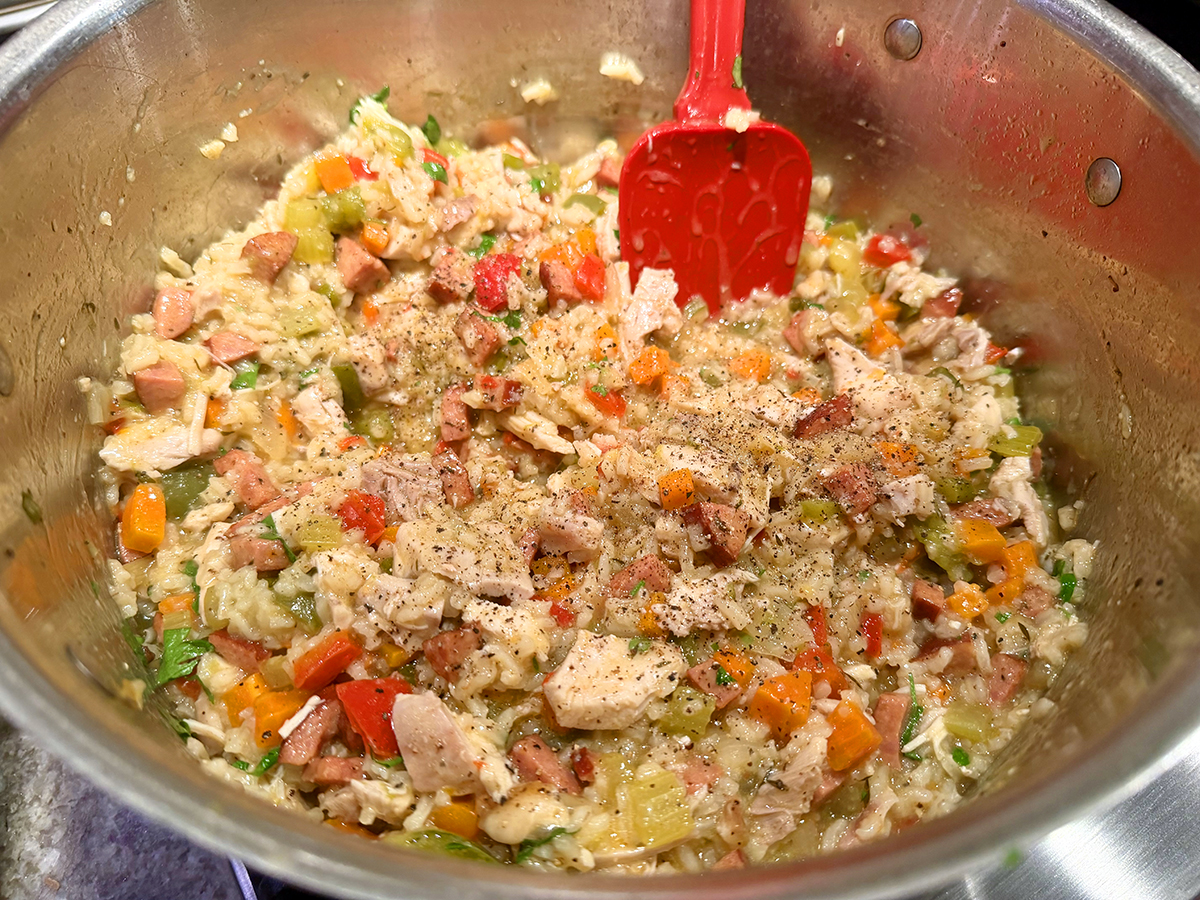
Chicken bog is a beloved South Carolina Lowcountry staple — essentially a hearty one-pot rice dish cooked with chicken, smoked sausage, and simple seasonings until the rice absorbs all the savory cooking liquid. The consistency of the dish feels like chicken and rice soup meets jambalaya.
The basics: Bone-in chicken pieces are simmered in a seasoned broth until tender, then the meat is pulled off and returned to the pot along with sliced smoked sausage (usually kielbasa or andouille) and raw long-grain Carolina gold rice. Everything cooks together until the rice soaks up the rich, chickeny broth.
The texture is the defining feature — the rice is meant to be moist and slightly sticky (“boggy”), not fluffy and separate like a pilaf. That’s where the name comes from: the rice bogs down in the liquid.
Seasonings are intentionally humble — onion, salt, pepper, and maybe a bay leaf or two. Depth and layers of flavor are built by browning the sausage in the chicken drippings and then using those drippings to sauté the vegetables. A little butter at the end adds richness.
Culturally, it’s deeply tied to the Pee Dee region of South Carolina (around Loris, SC, which calls itself the “Chicken Bog Capital of the World”) and is the quintessential community and festival food — traditionally made in giant cast-iron pots to feed crowds.
It’s humble, unfussy, and deeply satisfying — a dish where technique matters more than fancy ingredients. The hot sauce is optional, and we decided to use some as a spice enhancer. Oh, and because our package of andouille weighed in at 13 ounces, we used the entire thing 😉 .
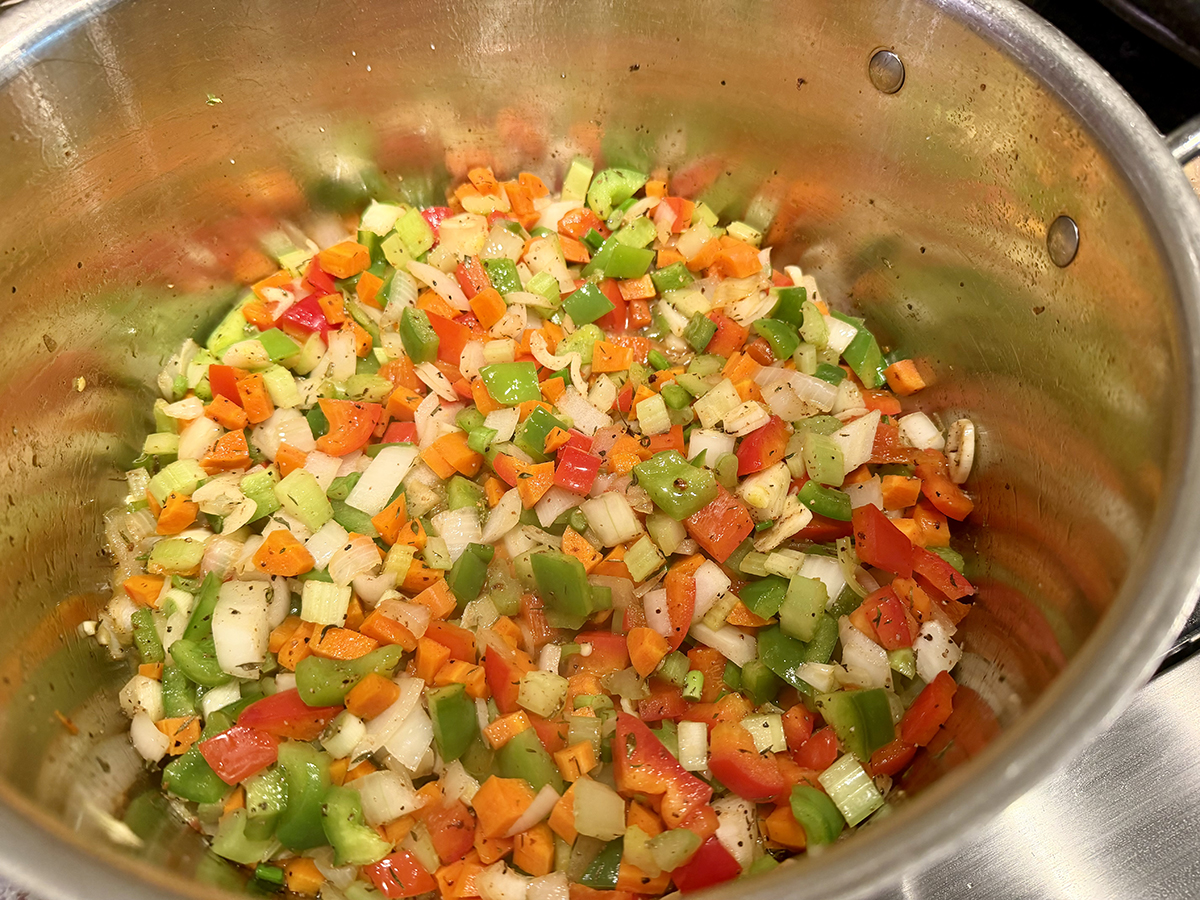
1 1/2 cups chopped yellow onion (about 1 medium onion)
1 cup chopped carrots (about 2 medium carrots)
1 cup chopped celery (about 3 stalks)
1/2 cup chopped green bell pepper
1/2 cup chopped red bell pepper
1/2 tsp. dried thyme
2 garlic cloves, thinly sliced
1 cup Carolina Gold rice
4 cups chicken broth, preferably homemade
2 fresh bay leaves or 1 dried bay leaf
1 Tbsp. unsalted butter
1 Tbsp. fresh lemon juice
1 Tbsp. chopped fresh flat-leaf parsley
Hot sauce (such as Tabasco, OR Louisiana Crystal), optional
Lemon wedges
Directions
Preheat oven to 350°F. Sprinkle chicken evenly with 1/2 teaspoon salt and 1/2 teaspoon black pepper. Heat oil in a large Dutch oven over medium. Add chicken, skin side down; cook until skin is golden brown, 9 to 12 minutes. Flip chicken, and cook until both sides are browned, 4 to 6 minutes. Transfer chicken to a plate. Add sausage to drippings; cook, stirring occasionally, until browned on all sides, 5 to 7 minutes. Transfer sausage using a slotted spoon to a bowl lined with paper towels.
Add onion, carrots, celery, bell peppers, thyme, garlic, remaining 1 teaspoon salt, and remaining 1/2 teaspoon black pepper to drippings in Dutch oven. Cook over medium, stirring occasionally, until vegetables are softened, about 10 minutes. Add rice; cook, stirring constantly, until lightly toasted, about 1 minute. Stir in broth and bay leaves. Return sausage and chicken thighs along with any juices to Dutch oven; bring to a simmer over high.
Cover Dutch oven, and transfer to oven. Bake until a thermometer inserted into thickest portion of chicken registers 160°F and rice is tender, about 15 minutes.
Remove Dutch oven from oven. Let stand, covered, for 5 minutes. (Internal temperature of chicken will continue to rise to 165°F.) Transfer chicken thighs to a plate; let cool 5 minutes. Shred chicken into bite-size pieces; discard skin and bones.
Stir shredded chicken and any juices into Dutch oven. Discard bay leaves. Stir in butter, lemon juice, and parsley. Garnish with black pepper. Serve with hot sauce and lemon wedges (if using).
This one-pan Mediterranean salmon is weeknight cooking at its best — bold flavors, minimal cleanup, and dinner on the table in about 30 minutes. A warm spice blend of oregano, sumac, and cumin does double duty, seasoning both the vegetables and the fish, while chunks of feta melt into the mix as everything roasts, turning soft, creamy, and rich.
The vegetables — cherry tomatoes, bell peppers, baby bella mushrooms, and whole garlic cloves — go in first to get a head start in the hot oven, then the seasoned salmon joins them for a final steam under foil that keeps the fish tender and flaky. A squeeze of fresh lemon over everything at the end ties it all together with a bright, clean finish.
Sumac, the tart, ruby-red spice common throughout Middle Eastern and Mediterranean cooking, is the secret weapon here — it brings a fruity, citrusy acidity that plays off the lemon and lifts the richness of both the salmon and the feta. If it’s not already in your pantry, it’s worth seeking out.
Fresh thyme scattered over the vegetables adds a gentle herbal note as they roast, perfuming the whole pan. This dish is flexible by nature. Any color bell pepper works, and the vegetables can be swapped based on what’s on hand — zucchini, red onion, or olives all make excellent additions. The salmon fillets can be skin-on or skinless. Serve straight from the pan with good crusty bread to soak up the juices, or alongside rice or warm pita.
We increased a few of the ingredients, specifically the cocktail tomatoes and cremini mushrooms, with the newer amounts reflected below. And because we were a party of three for dinner, we portioned the salmon fillet into as many pieces.
1 bell pepper, any color, cored and sliced into thin sticks
5 oz. baby bella mushrooms, trimmed and halved
4 to 5 large garlic cloves, peeled
5 to 6 oz. feta cheese block, cut into large chunks
Kosher salt
Black pepper
6 to 7 sprigs of fresh thyme
Extra virgin olive oil
4 6-oz. portions salmon fillet
1 to 2 large lemons, halved, for serving
Directions
Get ready. Preheat your oven to 425°F. In a small bowl, combine the oregano, sumac, and cumin.
Season the vegetables. Add the tomatoes, mushrooms, bell peppers, and 4 to 5 peeled garlic cloves to a large baking dish or sheet tray. Sprinkle with 1/2 tablespoon of the spice mixture (save the rest for the fish) and a good pinch of salt and pepper. Drizzle with 1 to 2 tablespoon olive oil, toss to coat, and spread so that everything is in one layer.
Bake the vegetables and feta. Nestle chunks of feta in between the vegetables and top with a few sprigs of fresh thyme. Place in the heated oven and bake until the vegetables have begun to soften, about 10 minutes.
Season the fish. Meanwhile, pat the fish dry and season on both sides with salt, pepper, and the remaining spice mixture.
Bake the salmon. Carefully remove the sheet pan from the oven and nestle the salmon in with the veggies and feta. Top the salmon with a drizzle of olive oil, then cover the pan with aluminum foil to trap the steam. Return to the center rack of the heated oven until the fish is cooked through and flakes easily, about 10 minutes.
Finish and serve. Remove the salmon from the oven, carefully remove the foil, and immediately squeeze lemon juice onto the fish. Serve with lemon wedges on the side for squeezing.