Tag Archives: asparagus

Asparagus and Sausage Pasta

There’s a brief, restless stretch between winter and spring — that in-between moment where you’re not quite ready to let go of comfort food, but you’re already craving something fresher and lighter. This pasta was made for exactly that feeling. And yet, the dish is good anytime of year!

It marries the richness of a wintry pasta with the verdant vibrance of spring. It is built on the bones of a rich, cold-weather pasta: savory sausage, butter, and a glossy, silky sauce that coats every strand. But then spring shows up — bright asparagus, sweet frozen peas, a generous hit of lemon, and a full cup of basil that perfumes the whole dish. The result is something that feels simultaneously cozy and alive.

And despite how indulgent it tastes, the vegetables are actually the main event here. There’s more asparagus and peas than there is sausage or pasta — the sausage plays a supporting role, lending depth and richness without taking over. Think of it less as a meat pasta with vegetables, and more as a vegetable dish that happens to have pasta and sausage in it.

The shallot anchors the base with a gentle, slightly sweet bite, but this is a great recipe to riff on as the season progresses. Leeks, spring onions, or ramps all work beautifully in its place — coarsely chopped so they hold their own in the pan. Use whatever looks best at the market, and let the season lead.

We realized too late that we did not have any frozen peas on hand. Our substitute was frozen edamame, and we both agreed it was quite good as an alternate. Two changes we would make in the future is cut the pasta back to 12 ounces, and add some grated parmesan along with the water in Step 3.

Asparagus and Sausage Pasta

  • Servings: 4-6
  • Difficulty: easy
  • Print

Ingredients

  • Salt
  • 1 lb. fusilli, or a similar style such as cavatappi 
  • 2 Tbsp. extra-virgin olive oil
  • 1 lb. hot or sweet Italian sausage, casings removed
  • 2 large shallots, coarsely chopped 
  • 5 garlic cloves, coarsely chopped
  • 1 bunch asparagus, trimmed, cut into 1-inch pieces
  • 1½ cups frozen peas, not thawed
  • 1 lemon
  • 2 Tbsp. unsalted butter
  • 1 cup basil leaves, torn if large
  • Pinch of red pepper flakes, optional
  • Grated Parmesan, for serving

Directions

  1. Bring a large pot of generously salted water to a boil. Add the pasta and cook until al dente. Reserve 2 cups of the pasta cooking water, then drain the pasta.
  2. Meanwhile, in a large Dutch oven, heat the oil over medium-high. Add the sausage and cook, breaking into smaller pieces and stirring occasionally, until browned and crisp, 6 to 8 minutes. Add the shallot and garlic and stir until fragrant and softened, 2 to 3 minutes. Add the asparagus and peas, season with salt, and stir until bright green and crisp-tender, 2 to 4 minutes. Use the moisture from the vegetables to scrape the browned bits off the bottom of the pot. Turn off the heat and finely grate the zest of half the lemon over the sausage and vegetables. Set aside until the pasta is ready.
  3. Add 1 cup pasta water, the pasta, and the butter to the Dutch oven. Set over medium and stir vigorously until the pasta is coated. Add more pasta water as needed until glossy. 
  4. Off the heat, add the juice from half the lemon and stir to combine. Stir in the basil and red pepper flakes, if using, then taste for salt and lemon and season as desired. Top servings with Parmesan, if desired.

http://www.lynnandruss.com

Adapted from a recipe by Ali Slagle for NYTimes Cooking

Fettuccine with Asparagus, Lemon and Prosciutto

Fettuccine with asparagus, lemon, and prosciutto strikes the perfect balance between effortless and impressive — weeknight-friendly in its simplicity, yet refined enough to anchor a dinner party spread. This is a definite keeper!

The ingredient list is short but mighty: delicate shallots lend a subtle sweetness, silky heavy cream and nutty Parmesan build a luxurious sauce, bright lemon cuts through the richness, and thin-sliced crisped prosciutto adds a savory, lightly salty depth and additional texture. Fresh asparagus ties it all together, bringing a verdant, slightly grassy note that makes the dish feel vibrant and seasonal.

To keep things efficient, the asparagus is cooked right alongside the pasta in the same pot of boiling water. For the best results, look for spears that are slightly thicker than a pencil — slender enough to cook quickly, but substantial enough to reach tender-crisp perfection right as the fettuccine hits al dente. (We gave our asparagus one extra minute in the pot before adding the fettuccine.)

TIP: Don’t allow the shallots to brown. Sauté them over moderate heat just until softened to keep their flavor delicate, without any notes of caramelization that would compete with the other flavors in the dish.

Although not part of the original recipe, before sautéing the shallots, we decided to crisp the prosciutto. The crisping adds a nice texture and brings out the flavor of the meat. 

Fettuccine with Asparagus, Lemon and Prosciutto

  • Servings: 4
  • Difficulty: easy
  • Print

Ingredients

  • 2 Tbsp. olive oil
  • 4 oz. thinly sliced prosciutto, cut into ½-inch ribbons
  • 2 Tbsp. salted butter
  • 2 medium shallots, minced
  • 1/2 cup heavy cream
  • 1 Tbsp. grated lemon zest, plus 1 Tbsp. lemon juice
  • 1 oz. Parmesan cheese, finely grated (½ cup), divided
  • Kosher salt and ground black pepper
  • 1 8- to 9-oz. container fresh fettuccine
  • 1 lb. asparagus, trimmed and cut on the diagonal into 2-inch lengths

Directions

  1. In a 12-inch skillet over medium-high, add 2 tablespoons olive oil and when hot drop in the prosciutto, stirring often until crisped, about 2-3 minutes. Remove prosciutto to a plate.
  2. Reduce heat to medium and melt the butter. Add the shallots and cook, stirring occasionally, until softened and translucent, 3 to 5 minutes.
  3. Stir in the cream, lemon zest, half of the Parmesan and ½ teaspoon pepper; remove from the heat and set aside.
  4. In a large pot, bring 2 quarts water to a boil. Add the asparagus and boil for 1 minute. Add the pasta to the pot with the asparagus and 2 teaspoons salt; cook, stirring occasionally, until the pasta is al dente and the asparagus is tender-crisp, about 2 minutes more. Reserve about 1 cup of the cooking water, then briefly drain in a colander, leaving water clinging to the pasta.
  5. Immediately add the pasta mixture and ½ cup of the reserved pasta water to the skillet. Cook over medium heat, tossing with tongs, until the pasta is lightly sauced, 1 to 2 minutes; add more reserved pasta water as needed so the sauce clings to the noodles.
  6. Add the lemon juice, then taste and season with salt and pepper. Transfer to a serving platter or individual bowls, then scatter on the crisped prosciutto and sprinkle with the remaining Parmesan.

http://www.lynnandruss.com

Adapted from a recipe by Rose Hattabaugh for Milk Street

Black Bean-Garlic Skirt Steak with Asparagus

In this recipe from Cooking the Borderlands: Spice and Smoke Between Mexico and the States, two culinary traditions are brought together: the high-heat grilling of northern Mexico and the bold savoriness of Chinese fermented black bean sauce. The result is a platter of wonderfully charred skirt steak draped with asparagus slicked in a glossy black bean–garlic sauce punctuated by chiles de árbol.

Salted fermented black beans, available at Asian markets and online, bring an ultra-concentrated savory quality. Here, they’re mashed with garlic, ginger, and scallions, then cooked gently with soy sauce, Shaoxing wine, and piloncillo until thick and lacquered. A spoonful transforms the asparagus stir-fry into something complex and multidimensional. The recipe makes more sauce than you need for this dish — an intentional gift to future meals. (Although we intentionally used more than the recipe called for.)

With simply marinated skirt steak grilled over high heat, the dish balances smoke, sweetness, heat, and salinity. A squeeze of lime and a scatter of herbs brighten each bite, making this a meal that feels both celebratory and deeply personal. If you, like us, find yourself firmly parked in the camp of craving intensely bold flavors, then you’ll want to take a spin with this recipe!

What takes time here is the meat marinating, which is anywhere from a minimum of 3 hours up to overnight — we chose the latter. By doing so, you can just jump right into dinner prep on the eve of your meal.

Black Bean-Garlic Skirt Steak with Asparagus

  • Servings: 4-6
  • Difficulty: moderate
  • Print

Ingredients

Black Bean-Garlic Sauce

  • 4 scallions
  • 1/2 cup salted fermented black beans, rinsed
  • 8 garlic cloves, smashed and peeled
  • 3 Tbsp. minced fresh ginger
  • 3 Tbsp. water
  • 3 Tbsp. grapeseed oil or other neutral cooking oil
  • 3 dried chiles de árbol, stemmed
  • 1/3 cup ground or grated piloncillo or dark brown sugar (about 1 oz.)
  • 3 Tbsp. Shaoxing cooking wine
  • 3 Tbsp. soy sauce

Skirt Steak

  • 1 2-lb. outside skirt steak (1/2 inch thick)
  • 2 Tbsp. olive oil
  • 1 Tbsp. minced garlic
  • 1 Tbsp. minced fresh ginger
  • 1 1/2 tsp. Diamond Crystal kosher salt

Asparagus Stir-Fry

  • 2 Tbsp. grapeseed oil or other neutral cooking oil
  • 1 lb. fresh asparagus, trimmed and cut crosswise into thirds (3 cups)
  • 2/3 cup thinly sliced red onion
  • 5 Tbsp. Black Bean–Garlic Sauce
  • 3 Tbsp. water
  • Fresh cilantro leaves, for garnish
  • Lime wedges and steamed rice, for serving

Directions

  1. Make the black bean–garlic sauce: Separate white parts from green parts of scallions; refrigerate scallion greens until ready to use. Coarsely chop white parts of scallions, and place in a mini food processor; add fermented black beans, garlic, ginger, and 3 tablespoons water. Pulse until you have a rough, minced paste (not a smooth puree), 8 to 10 pulses, stopping to scrape down sides of container as needed.
  2. Heat grapeseed oil in a large skillet or wok over medium-high until oil is shimmering. Add chiles; fry, stirring often, until chiles turn a dark burgundy color, 1 to 2 minutes. Transfer chiles to a small bowl using a slotted spoon; reserve for garnish.
  3. Add black bean mixture to oil in skillet; fry over medium heat, stirring constantly, until mixture is fragrant and just begins to stick to bottom of skillet, about 2 minutes. Whisk in wine, soy sauce, and piloncillo, combining thoroughly. Cook over medium, stirring constantly, until mixture thickens, is dark and glossy, and can almost be mistaken for a chocolate sauce, about 1 minute and 30 seconds. Scrape sauce into a small heatproof bowl. Reserve 5 tablespoons for this recipe; store remaining sauce (about 1/2 cup).
  4. Make the skirt steak: Place steak in a 13- x 9-inch baking dish. (Halve steak crosswise, if needed, to fit in dish.) Rub steak with olive oil, garlic, ginger, and salt, massaging thoroughly. Cover baking dish using plastic wrap, and refrigerate for at least 3 hours or up to overnight.
  5. Preheat grill to high (450°F to 500°F). Place steak on oiled grates; grill, uncovered and undisturbed, until a hard sear is achieved, 3 to 4 minutes. Flip steak; sear until a thermometer inserted into thickest portion of steak registers 120°F to 125°F for medium-rare, about 3 minutes, or until desired degree of doneness. Remove steak from grill, and let steak rest for at least 5 minutes before slicing.
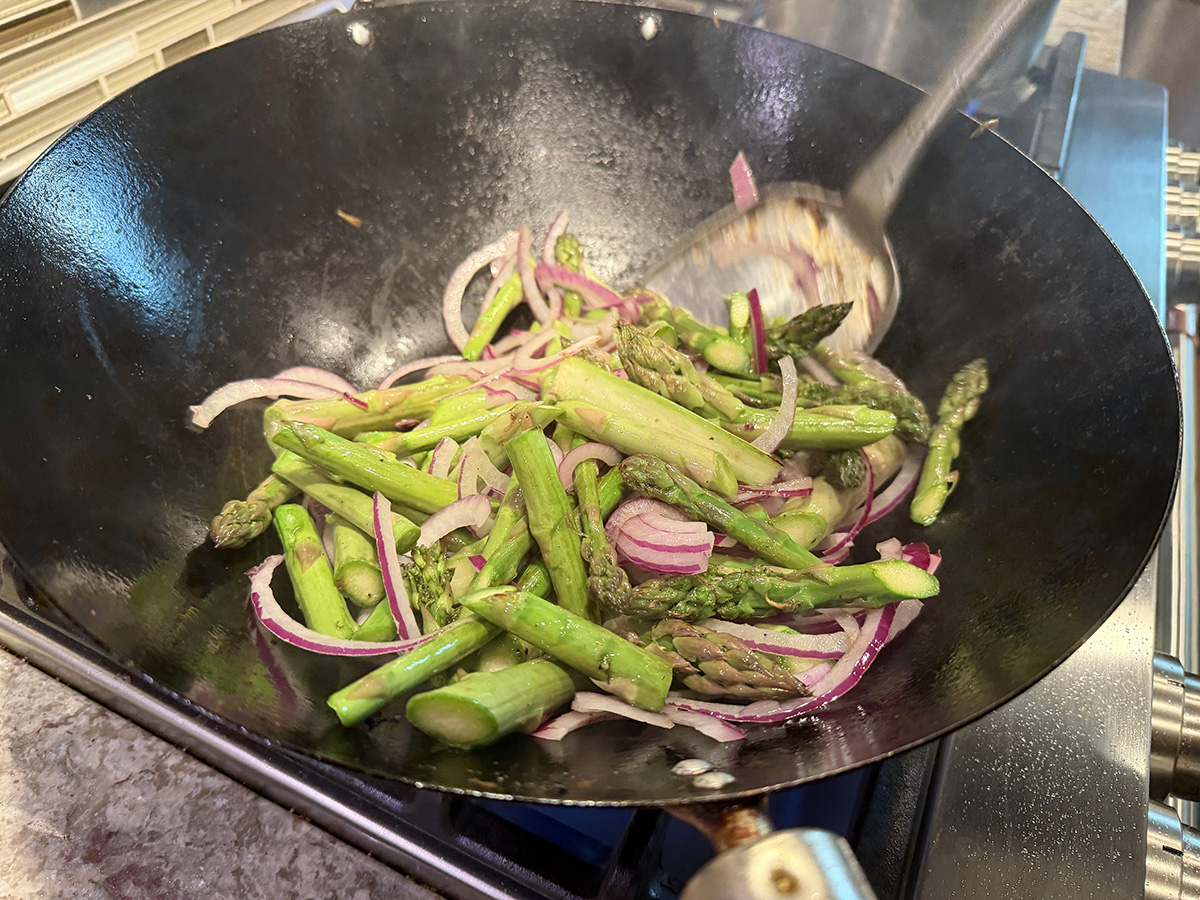
  6. Make the asparagus stir-fry: Heat grapeseed oil in a large wok or heavy skillet over high until oil starts lightly smoking. Quickly add asparagus and onion; cook, stirring constantly, until asparagus is crisp-tender, about 4 minutes.
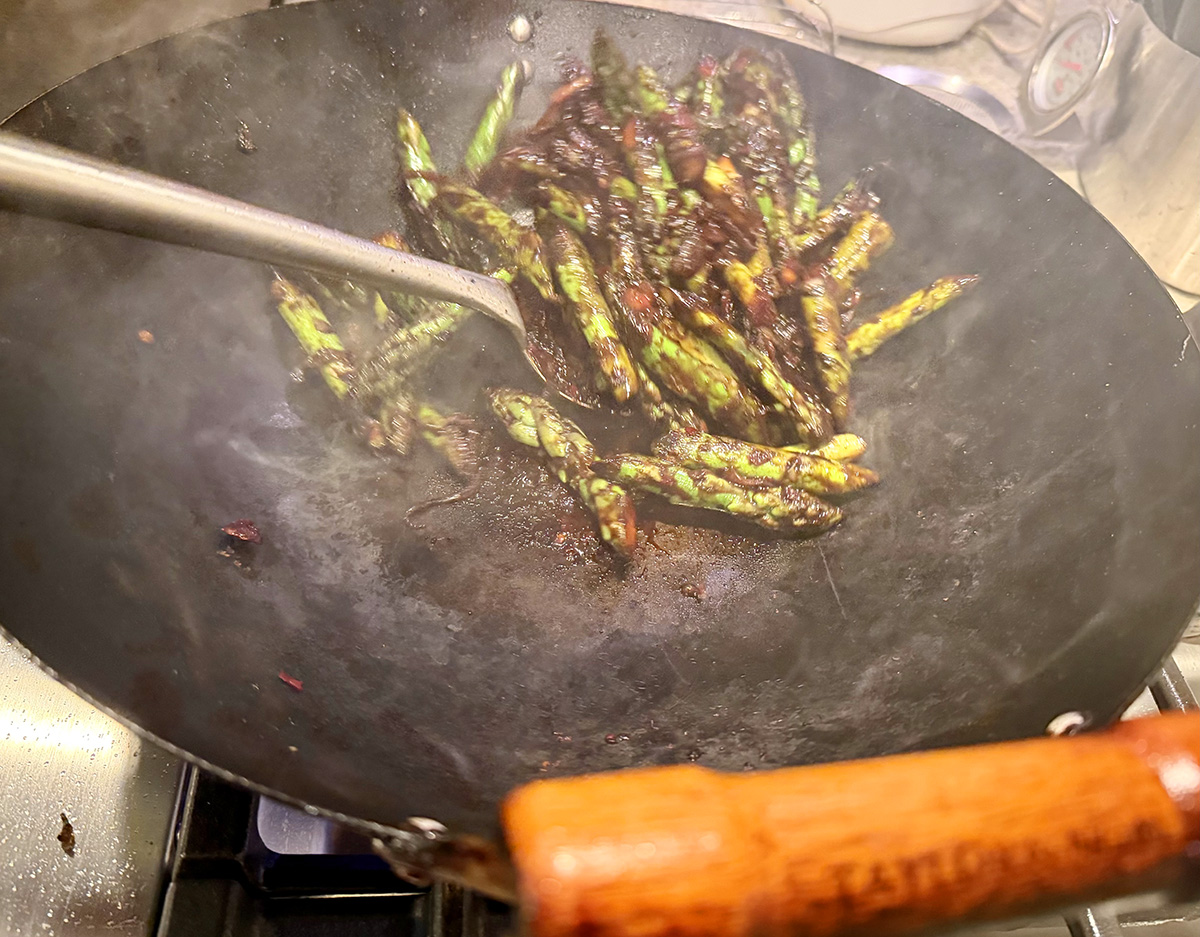
  7. Add black bean–garlic sauce and 3 tablespoons water to wok; cook, stirring often, until asparagus is just done and coated in sauce, about 1 minute. Remove from heat.
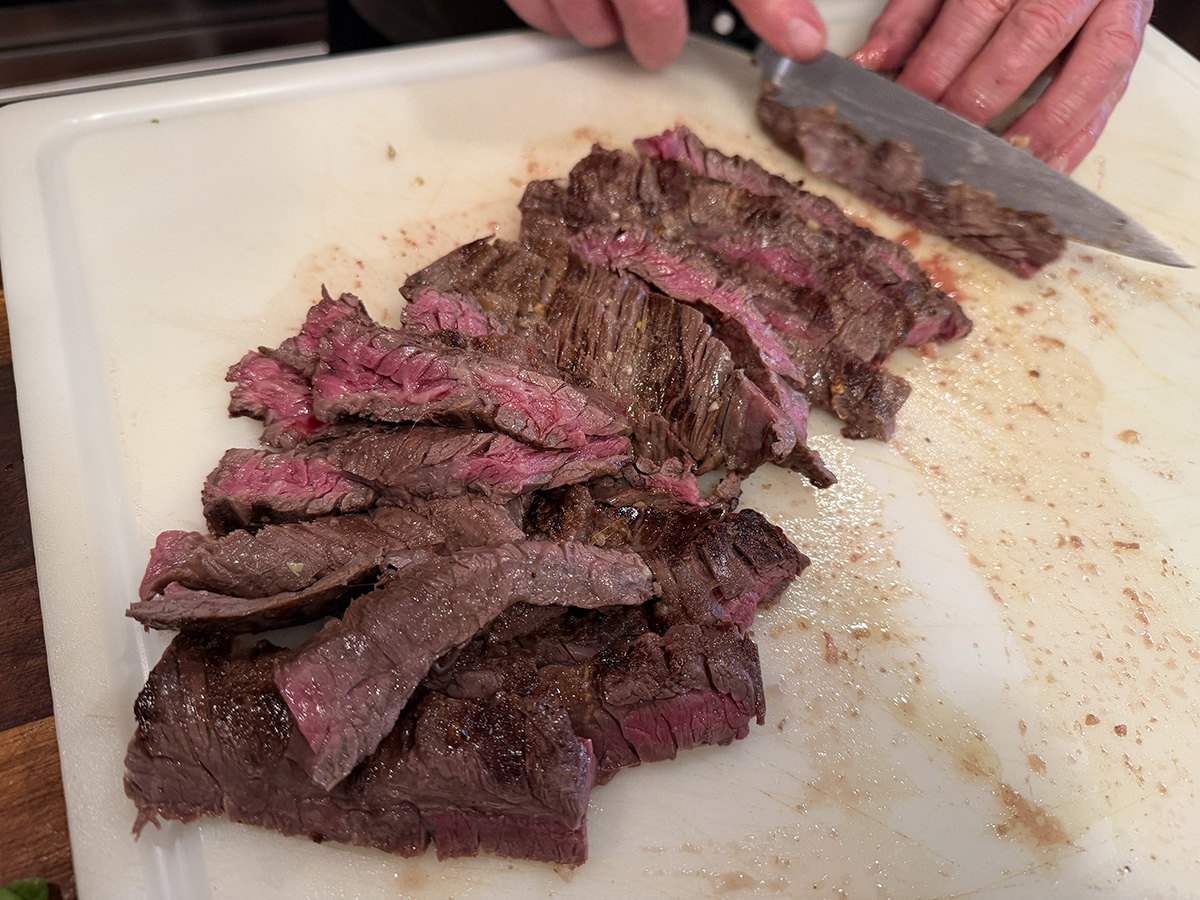
  8. Slice reserved green parts of scallions; finely chop fried chiles de árbol. Slice steak against the grain into thin strips; arrange on a large platter. Spoon asparagus mixture over steak. Garnish with cilantro leaves, scallion greens, and chile de árbol. Serve with lime wedges and rice.

http://www.lynnandruss.com

Adapted from a recipe by Claudette Zepeda for Food and Wine

Asparagus Involtini

When we spied this asparagus recipe in our latest issue of Food & Wine, we knew we had to get it on our short list. An elegant alternative to bacon-wrapped asparagus, these prosciutto-wrapped spears are a delightful combination and perfect for springtime.

Asparagus is quickly blanched and shocked to preserve its bright green color and crisp-tender texture. When paired with nutty Montasio cheese (named after the Montasio plateau in Italy, this rich, semi-hard cheese is made from cow’s milk and has a nutty, slightly fruity flavor). Montasio cheese is difficult to source in our area, so Asiago makes a good substitute.

Wrapped in salty prosciutto, these asparagus involtini—the Italian word for “rolls”—make for a great party appetizer or vegetable side dish. Serve these prosciutto-wrapped asparagus warm, accompanied by a fresh salad, or as part of an antipasto platter.

Asparagus typically takes about three to four minutes to blanch in boiling salted water. To keep the asparagus extra green and crisp before it finishes cooking in the pan, blanch it for just two to three minutes.

The wrapping process is a bit tricky, so keep your patience and perhaps buy a few extra slices of prosciutto. If you don’t need to use the extras, they make a mighty fine nibble. Since there was just two of us for dinner, we halved the recipe and still had leftovers.

TIP: Chilling the prosciutto in the refrigerator for a few minutes before rolling will help keep it together as you work it around the asparagus; when the prosciutto is too warm it can tear while rolling. 

Have a party coming up? Rolled and uncooked prosciutto and asparagus wraps can be made ahead and stored in an airtight container in the refrigerator for up to four days.

Asparagus Involtini

  • Servings: 4-8
  • Difficulty: moderately easy
  • Print

Ingredients

  • 1 lb. asparagus, trimmed
  • 8 oz. Montasio or Asiago cheese, chilled (about 4 cups)
  • 16 thin slices of prosciutto (preferably prosciutto di Parma)
  • 1 Tbsp. unsalted butter 
  • 1 Tbsp. extra-virgin olive oil
  • Black pepper and torn basil leaves, for garnish

Directions

  1. Bring a large pot of salted water to a boil over high. Fill a large bowl with ice water. Add asparagus to boiling water; cook, stirring occasionally, until bright green and crisp-tender, 2 to 3 minutes. Drain asparagus and immediately place in ice bath; let stand until thoroughly chilled, about 2 minutes. Drain and pat dry.
  2. Shave long strips of cheese using a vegetable peeler. Place 1 slice of prosciutto on a clean work surface. Place a small cheese slice (about 1/2 ounce) over prosciutto. Place 2 asparagus spears over cheese at the short end of the prosciutto slice. Tightly roll prosciutto around asparagus spears, spiraling upward. Repeat process with remaining prosciutto, cheese, and asparagus.
  3. Heat butter and oil in a large nonstick skillet over medium until butter melts and begins to foam. Add 4 or 5 asparagus rolls to skillet, seam side down, and cook until prosciutto is crisp and cheese is melted, 2 to 3 minutes per side. Repeat with remaining asparagus rolls. Transfer to a platter; sprinkle with black pepper and basil. Serve warm.

http://www.lynnandruss.com

Recipe by Lachlan Mackinnon-Patterson for Food & Wine

Thai Stir-Fried Chicken and Asparagus

This weeknight-easy chicken and asparagus stir-fry takes inspiration from pad prik khing, a Thai classic in which long beans and protein are cooked with red curry paste. Milk Street tested a variety of Thai red, green and yellow curry pastes—all work deliciously, though it is recommended you taste a small amount before deciding exactly how much to use, as they vary in spiciness. We used a full 3 tablespoons and didn’t feel it was overly spicy at all.

To round out the paste’s bold, zingy notes, combine it with fish sauce and sugar. Toss the chicken with a seasoning paste before and after browning to develop flavor-building caramelization while creating delicious layers of complexity and intensity. Serve with steamed jasmine rice. Even with the rice, the servings better equate to 3 plates, unless you have some light eaters…

Mistakenly, we had purchased boneless chicken thighs instead of breasts. The thighs offer more flavor and are forgiving as opposed to the breasts which can dry out if overcooked. Either choice is fine though because the cooking time is minimal. As an extra treat, I topped mine with a sprinkling of Trader Joe’s Thai cashews.

Thai Stir-Fried Chicken and Asparagus

  • Servings: 3-4
  • Difficulty: easy
  • Print

Ingredients

  • 2 to 3 Tbsp. Thai green OR red OR yellow curry paste (see headnote)
  • 2 Tbsp. fish sauce
  • 1 Tbsp. packed brown sugar
  • 1 lb. boneless, skinless chicken breasts, sliced crosswise about ¼ inch thick
  • 3 Tbsp. neutral oil, divided
  • 8 oz. asparagus OR green beans, trimmed and cut on the diagonal into 1-inch pieces
  • 1 medium red onion, halved and cut into ½-inch wedges, layers separated
  • Kosher salt and ground black pepper

Directions

  1. In a medium bowl, stir together the curry paste, fish sauce and sugar. In another medium bowl, combine 1 tablespoon of the curry paste mixture with the chicken, then toss until coated; let stand for about 10 minutes.
  2. In a 12-inch nonstick skillet over high, heat 2 tablespoons oil until barely smoking. Add the chicken in an even layer and cook, without stirring, until well browned on the bottom, about 2 minutes; the chicken will not be fully cooked. Transfer to the bowl with the remaining curry paste mixture; set aside.
  3. In the same skillet over high, heat the remaining 1 tablespoon oil until shimmering. Add the asparagus and onion; cook, without stirring, until browned on the bottom, about 2 minutes. Add the chicken-curry paste mixture; cook, stirring, until the sauce has thickened slightly and the vegetables are tender-crisp, about 1 minute. Off heat, taste and season with salt and pepper.
  4. Optional garnish: Chopped fresh cilantro OR basil OR lime wedges OR a combination

http://www.lynnandruss.com

Recipe for Milk Street by Dimitri Demopolous

Gingery Stir-Fried Pork and Asparagus

Stir-fries are one of our go to’s when we need to make a quick dinner with lots of flavor and healthy (mostly) ingredients. And this recipe doesn’t disappoint. And the savory-sweet pork and asparagus stir-fry calls on soy sauce, oyster sauce and Sriracha for bold flavor, fast.

Minced ginger and thinly sliced scallions bring bright freshness, while rings of Fresno chili contribute crunch and heat. For less of a kick, seed the chili before slicing. Ground pork is used so there’s no need to trim or slice the meat, keeping prep to a minimum. Pencil-size asparagus works best here; if your spears are smaller or larger, adjust the cooking time accordingly.

Instead of a skillet as the recipe suggests, we usually use our wok for most stir-fries. And as an additional garnish, we added some peanuts for another crunch. Don’t forget to add 2 tablespoons water to the soy sauce mixture. Just that small amount of liquid helps form a light, glaze-like sauce. Serve the stir-fry over steamed rice and top with a fried egg for a quick rice bowl.

Gingery Stir-Fried Pork and Asparagus

  • Servings: 3-4
  • Difficulty: easy
  • Print

Ingredients

  • 2 Tbsp. soy sauce
  • 2 Tbsp. oyster sauce
  • 2 Tbsp. unseasoned rice vinegar
  • 2 tsp. Sriracha
  • 1 tsp. cornstarch
  • 1 Tbsp. grapeseed or other neutral oil
  • 1 lb. medium asparagus, trimmed and cut on the diagonal into 1-inch pieces
  • 1 lb. ground pork
  • 2 Tbsp. minced fresh ginger
  • 1 bunch scallions, thinly sliced, whites and greens reserved separately
  • 1 Fresno chili, stemmed and sliced into thin rings
  • Cocktail peanuts as garnish, optional

Directions

  1. In a small bowl, whisk together the soy sauce, oyster sauce, vinegar, Sriracha, cornstarch and 2 tablespoons water; set aside.
  2. 02In a nonstick 12-inch skillet over medium-high, heat the oil until barely smoking. Add the asparagus and cook, tossing occasionally, until tender-crisp, 3 to 4 minutes. Transfer to a medium bowl; set aside.
  3. 03To the same skillet over medium-high, add the pork and cook, stirring to break it up into smallish chunks, until no longer pink, 3 to 4 minutes. Add the ginger and scallion whites, then cook, stirring, until fragrant, about 30 seconds. Stir the soy mixture to recombine, then pour it into the pan. Cook, stirring, until the sauce is simmering and has thickened, about 1 minute. Return the asparagus to the skillet and add the chili; cook, stirring, until heated through, about 1 minute. Transfer to a serving dish and sprinkle with the scallion greens, and peanuts if using.

http://www.lynnandruss.com

Recipe by Rose Hattabaugh for Milk Street

Lemony Pasta with Asparagus and White Beans

This pasta dish is incredibly simple to make: While the pasta cooks and the beans marinate, sauté the asparagus in olive oil, then use that pan to finish the dish. There’s enough asparagus in the mix to make this a one-pan meal, but serving it with a crisp green salad on the side will add a little crunch and freshness.

Marinating canned white beans in lemon juice and zest, along with red-pepper flakes and shallots, imbues them with brightness and a touch of heat, adding so much flavor to this warm-weather pasta. We massaged the ingredients a bit by doubling the white bean mixture that gets set aside while the asparagus and pasta cook.

Many reviewers cut back on the pasta, but with doubling the bean mixture you don’t really need to, plus you could feed another diner or save some for lunch the next day!

Lemony Pasta with Asparagus and White Beans

  • Servings: 4
  • Difficulty: easy
  • Print

Ingredients

  • 2 large lemon, plus more fresh lemon juice for serving
  • 2 15-oz. can white beans, rinsed
  • 2 shallots, finely diced, or 2 Tbsp. finely diced red onion
  • 6 garlic cloves (4 thinly sliced, 2 finely grated)
  • 1⁄2 tsp. red-pepper flakes, plus more to taste
  • Kosher salt
  • 5 Tbsp. extra-virgin olive oil
  • 1 lb. short pasta, such as campanelle, fusilli or farfalle
  • 2 bunches asparagus (about 2 lbs.), ends trimmed, stalks sliced into ½-inch pieces
  • ⅔ cup coarsely chopped Italian parsley leaves
  • ½ cup grated Parmesan, plus more for serving
  • Black pepper

Directions

  1. Grate the zest from the lemon into a small bowl. Halve the lemon and squeeze the juice from half of it on top of the zest. Add the white beans, shallot or onion, grated garlic, red-pepper flakes and a large pinch of salt and toss well. Drizzle in 2 tablespoons olive oil and set aside.
  2. Bring a large pot of heavily salted water to a boil. Add pasta and cook until just shy of al dente, usually 2 minutes less than the package directs.
  3. Meanwhile, heat a 12-inch sauté pan over medium-high heat. When hot, add the remaining 3 tablespoons oil, then add the asparagus. Sauté until the asparagus is tender and starting to brown at the edges, 7 to 10 minutes. Add a big pinch of salt and the sliced garlic and sauté until the garlic is lightly golden, 1 to 2 minutes longer.
  4. Dip a coffee mug or glass measuring cup into the pasta water and scoop out about ½ cup of it to use for the sauce. Drain pasta, shaking it well. Add pasta, bean mixture, parsley and Parmesan to sauté pan and cook until the beans are hot and the pasta is al dente. If the mixture looks dry, splash in some (or all) of the reserved pasta water. Squeeze remaining lemon half over pasta, toss and taste. Season with pepper; add more salt, red-pepper flakes and lemon juice, if desired.

http://www.lynnandruss.com

Adapted from a recipe by Melissa Clark for NYTimes Cooking

Stir-Fried Shrimp and Asparagus in Garlic Sauce

You’ll need to start this dish by tossing the shrimp with a little salt and sugar and letting them sit for 30 minutes. This not only seasons the shrimp but also helps them retain moisture during cooking. When the shrimp are almost ready, quickly cook the vegetable component and set it aside.

Then, rather than stir-fry the shrimp in a hot skillet as most recipes call for, add the sauce to the pan and poach the shrimp gently in the liquid, covered, to ensure that they stay moist. The sauce is a flavorful base of soy sauce, sherry, and sherry vinegar. A little cornstarch ensures that the sauce thickens to just the right shrimp- and vegetable-coating consistency.

If your asparagus stalks are thicker than usual, be sure to cut off any woody bottoms or even peel away the outer portions on the lower part of with a potato peeler.

Stir-Fried Shrimp and Asparagus in Garlic Sauce

  • Servings: 4
  • Difficulty: easy
  • Print

Ingredients

  • 1 lb. extra-large (21-25) shrimp, peeled, deveined, and tails removed
  • 1 tsp. sugar
  • ½ tsp. salt
  • ⅓ cup plus 2 Tbsp. dry sherry
  • 2 Tbsp. soy sauce
  • 1 Tbsp. Asian broad bean chili paste
  • 1 tsp. sherry vinegar
  • 2 tsp. cornstarch
  • 2 Tbsp. vegetable oil
  • 6 garlic cloves, sliced thin
  • 3 large scallions, white parts chopped fine, green parts cut into 1-inch pieces
  • 2 Tbsp. grated fresh ginger
  • 1 ½ lbs. asparagus, trimmed and cut on bias into 2-inch lengths

Directions

  1. Combine shrimp, sugar, and salt in medium bowl. Let stand at room temperature for 30 minutes.
  2. Whisk 1/3 cup sherry, soy sauce, chili paste, and vinegar together in bowl. Whisk cornstarch and remaining 2 tablespoons sherry together in second bowl.
  3. Combine shrimp, sugar, and salt in medium bowl. Let stand at room temperature for 30 minutes.
  4. Whisk 1/3 cup sherry, soy sauce, chili paste, and vinegar together in bowl. Whisk cornstarch and remaining 2 tablespoons sherry together in second bowl.
  5. Heat oil and garlic in 12-inch nonstick skillet over medium heat until garlic is just beginning to brown at edges, 3 to 4 minutes. Increase heat to high, add scallion whites and ginger, and cook until fragrant, about 1 minute.
  6. Add asparagus and scallion greens, cover, and cook, stirring occasionally, until asparagus is crisp-tender, 2 to 5 minutes. Transfer vegetable mixture to bowl.
  7. Add sherry–soy sauce mixture and shrimp to skillet and bring to simmer. Reduce heat to medium-low, cover, and cook, stirring occasionally, until shrimp are just cooked through, 3 to 5 minutes.
  8. Whisk sherry-cornstarch mixture to recombine and add to skillet; increase heat to high and cook, stirring constantly, until sauce is thickened, 1 to 2 minutes. Return vegetable mixture to skillet and toss to combine. Transfer to serving dish and serve.

http://www.lynnandruss.com

Adapted from a recipe by Andrew Janjigian for Cook’s Illustrated

Tuscan Spring Soup

In Tuscany, the advent of spring doesn’t signal the end of soup season, like it might here in the Northeast. But it does mean the soups that are served take on a different tone. Tender vegetables meet a rich, meaty broth in this light Tuscan-inspired soup—just perfect for a not-too-hot Spring evening.

And while a hallmark of Tuscan cuisine is its rusticity, this soup is all about luxury. In stark contrast to the typical hearty Tuscan soups, which often cleverly repurpose scraps, only the finest ingredients go into a typical “garmugia”—a pairing of pricey meats and the season’s freshest vegetables.

In garmugia, meat is a seasoning, not the main event. To that end, Milk Street omits the veal, as the combination of beef broth and pancetta (plus a simmered rind of Parmesan) gives the soup a wonderfully savory depth that enhances the vegetables without competing with them.

For their clean vegetal flavors and year-round availability, this soup opts for scallions, asparagus, artichoke hearts and frozen peas. By cooking the vegetables in sequence—starting with the sturdiest, ending with the most delicate—each ingredient retains its character, ensuring that they’re not overcooked. The artichoke hearts are simmered first, then the asparagus, followed by the peas, all topped with a finishing sprinkle of scallion greens for a burst of zingy freshness.

“Each bite of the finished soup is a spoonful of spring in a bowl, no matter the season.”

Milk Street instructs you to simmer the optional Parmesan rind into the mix to boost the umami notes. Canned artichoke hearts do well here, but frozen artichokes also work—just defrost and pat dry before use (you’ll need about 2 cups). To serve on the side, make savory Parmesan toasts that are perfect for dipping into the broth.

Don’t use ultra-slender asparagus, which will end up overcooked. Look for spears about the size of a pencil. To retain the bright-green color of the peas, don’t allow the soup to boil after the peas are stirred in.

Tuscan Spring Soup

  • Servings: 4
  • Difficulty: easy
  • Print

Ingredients

  • 4 Tbsp. extra-virgin olive oil, divided, plus more to serve
  • 3-4 oz. pancetta, chopped
  • 4 scallions, thinly sliced, whites and greens reserved separately
  • 4 thyme sprigs
  • 1½ qts. low-sodium beef broth
  • 1 chunk Parmesan rind (optional), plus ½ oz. Parmesan cheese, finely grated (¼ cup)
  • Kosher salt and ground black pepper
  • 8 oz. crusty white bread, sliced ½ inch thick
  • 14 oz. can artichoke hearts, rinsed, drained and quartered
  • 1 lb. asparagus, trimmed and cut into 1-inch lengths on the diagonal
  • ½ cup frozen peas, thawed

Directions

  • Heat the broiler with a rack about 6 inches from the element. In a large saucepan over medium, combine 1 tablespoon of oil and the pancetta. Cook, stirring occasionally, until the pancetta has rendered its fat and begins to brown, 3 to 5 minutes.
  • Add the scallion whites and thyme. Cook until the scallions are lightly browned, 1 to 2 minutes.
  • Add the broth, the Parmesan rind (if using) and ½ teaspoon pepper, then bring to a boil over medium-high.
  • Meanwhile, brush both sides of the bread slices with the remaining 3 tablespoons oil, then place in a single layer on a rimmed baking sheet. Sprinkle with the grated Parmesan, then broil until lightly browned, 1 to 2 minutes. Set aside.
  • When the soup reaches a boil, add the artichokes, reduce to medium and cook, stirring occasionally, for 5 minutes.
  • Add the asparagus and cook, stirring occasionally, until the asparagus is just tender, 2 to 4 minutes.
  • Stir in the peas, reduce to medium-low and cook, stirring, until the peas are heated through, about 3 minutes; do not allow the soup to boil.
  • Off heat, remove and discard the thyme and Parmesan rind (if used). Stir in the scallion greens, then taste and season with salt and pepper. Ladle into bowls, drizzle with additional oil and serve with the Parmesan toasts.

http://www.lynnandruss.com

Recipe by Shaula Clark for Milk Street

Braised Asparagus with Lemon and Chives

Here, braising coaxes asparagus’s gentler side into the spotlight. It’s not the typical crisp-tender, not browned, nor vibrant green—but it may end up being one of your favorite ways to cook the spears. The vegetable is vigorously simmered in a copious amount of liquid, allowing the braising liquid to evaporate, leaving behind a light glaze that coats the asparagus.

As Cook’s Illustrated mentions, the crisp bite gives way to silkiness; the fresh vegetal flavor evolves into more-complex sweet nuttiness, and the braising liquid can travel into the spears, seasoning them inside and out.

The dish is finished with a less-is-more approach adding just a splash of acidity and a handsome sprinkle of fresh herbs to accentuate the vegetable’s sweet flavor.

FYI, this recipe is best with asparagus spears that are at least ¾ inch thick. We bought ours picked fresh at a local farm market. The benefit of thicker spears is you can peel off their firm, waxy skin without whittling them down to toothpicks.

Braised Asparagus with Lemon and Chives

  • Servings: 4
  • Difficulty: easy
  • Print

Ingredients

  • 1 lb. thick asparagus
  • 1 cup water
  • ¼ cup chicken broth
  • 2 Tbsp. extra-virgin olive oil
  • ¼ tsp. table salt
  • ¼ tsp. grated lemon zest plus 1 tsp. juice
  • 2 tsp. minced fresh chives, divided

Directions

  1.  Trim bottom inch of asparagus spears; discard trimmings. Peel bottom two-thirds of spears until white flesh is exposed.
  2. Bring water, broth, oil, and salt to simmer in 12-inch skillet over high heat. Add asparagus in even layer. Reduce heat to maintain vigorous simmer and cover. Cook, gently shaking skillet occasionally, until asparagus is tender and can be easily pierced with tip of paring knife, 8 to 10 minutes.
  3. Remove lid and continue to cook, shaking and swirling skillet, until skillet is almost dry and asparagus is glazed, 1 to 3 minutes longer.
  4. Off heat, add lemon zest and juice and half of chives and toss to coat.
  5. Transfer asparagus to platter, sprinkle with remaining chives, season with salt to taste, and serve.

http://www.lynnandruss.com

Asparagus with Vietnamese Scallion Sauce

Adding fresh allium notes as well as bright green color to any dish, Vietnamese scallion oil, called mỡ hành, is used as a garnish or condiment on a number of different foods, here we are adding it to cooked asparagus.

This version from Milk Street includes savory fish sauce (or soy sauce), pungent ginger and a little sugar to build complexity. Try it on shrimp, steak, grilled pork chops, corn on the cob or steamed dumplings. Leftover scallion oil can be refrigerated in an airtight container for up to three days; return it to room temperature before serving.

For proper texture and flavor, the scallions should be chopped. Slice them first, then run the knife blade over them a few times to further break them down.

Asparagus with Vietnamese Scallion Sauce

  • Servings: 4
  • Difficulty: easy
  • Print

Ingredients

  • ½ cup chopped scallions (5 or 6 scallions)
  • Kosher salt and ground black pepper
  • ¼ cup peanut or other neutral oil
  • 1½ Tbsp. fish sauce or soy sauce
  • 1½ Tbsp. finely grated fresh ginger
  • 1 tsp. white sugar
  • 1 1⁄2 lbs. asparagus, trimmed and halved on the diagonal
  • 3 Tbsp. water

Directions

  1. In a medium heatproof bowl, combine the scallions, ¼ teaspoon salt and 1 teaspoon pepper. Using your fingers, gently rub the salt and pepper into the scallions until the scallions begin to wilt.
  2. In a small saucepan over medium-high, heat the oil until shimmering, then pour the hot oil over the scallions; the scallions will sizzle. Stir, then stir in the fish sauce, ginger and sugar. Cool to room temperature.
  3. In a 12-inch skillet over medium-high, heat 1 tablespoon neutral oil until barely smoking. Add asparagus and cook, stirring only a few times, until charred. Add 3 tablespoons water, then immediately cover. Reduce to low and cook, stirring just once or twice, until the asparagus is crisp-tender, 2 to 3 minutes. Serve with scallion oil spooned over.

http://www.lynnandruss.com

Recipe by Courtney Hill for Milk Street