Tag Archives: gluten-free

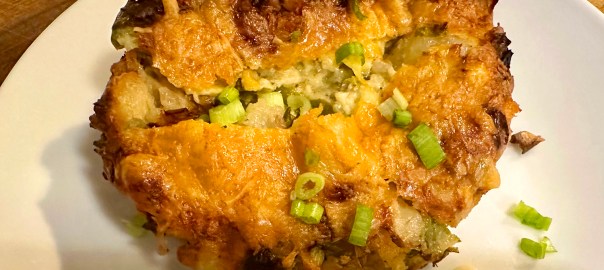
Twice-Baked Potatoes with Roasted Brussels Sprouts and Gouda

My twice-baked potatoes are a requested favorite when hosting family and friends. They consist of russet potatoes, a bit of butter, sour cream, crumbled blue cheese and chives or scallions. I was definitely intrigued when I happened upon this adaptation.

This riff on twice-baked potatoes is inspired by Irish colcannon and French pommes de terre braytoises, which flavors potatoes with Dijon and tangy crème fraîche. This version opts for more readily available sour cream and Brussels sprouts instead of colcannon’s classic cabbage, charring them to deepen their flavor. The dish is great as a side, but it is hearty enough to be served on its own.

We paired our twice-bakeds with aged and grilled sirloin steaks and a medley of freshly picked green beans and cauliflower.

Each stuffed half is considered to be one serving, therefore four potatoes could conceivably feed eight, with an entrée of course. But with only two of us for dinner that day, we decided to individually wrap, put in an airtight freezer bag and freeze 4 of them, which will last up to three months. Twice-baked potatoes take a fair amount of work and time to make, so making them in bulk and freezing makes so much sense.

However, we eliminated the scallions/chives from the potato mixture for the ones earmarked for the freezer. Evidently when frozen, those greens can turn and provide an unwanted taste. Wrap each stuffed potato in a sheet of plastic wrap and then in foil and transfer them to the air-tight freezer bag and label it with the date before freezing. 

Baking instructions for thawed potatoes: Unwrap the potatoes and place in a baking dish or on a baking sheet. Sprinkle the tops of the potatoes with cheese. Bake potatoes at 425°F for 15 to 20 minutes, until the potatoes are hot and the cheese has melted. Add chopped chives or scallions as a garnish.

Twice-Baked Potatoes with Roasted Brussels Sprouts and Gouda

  • Servings: 4-8
  • Difficulty: easy
  • Print

Ingredients

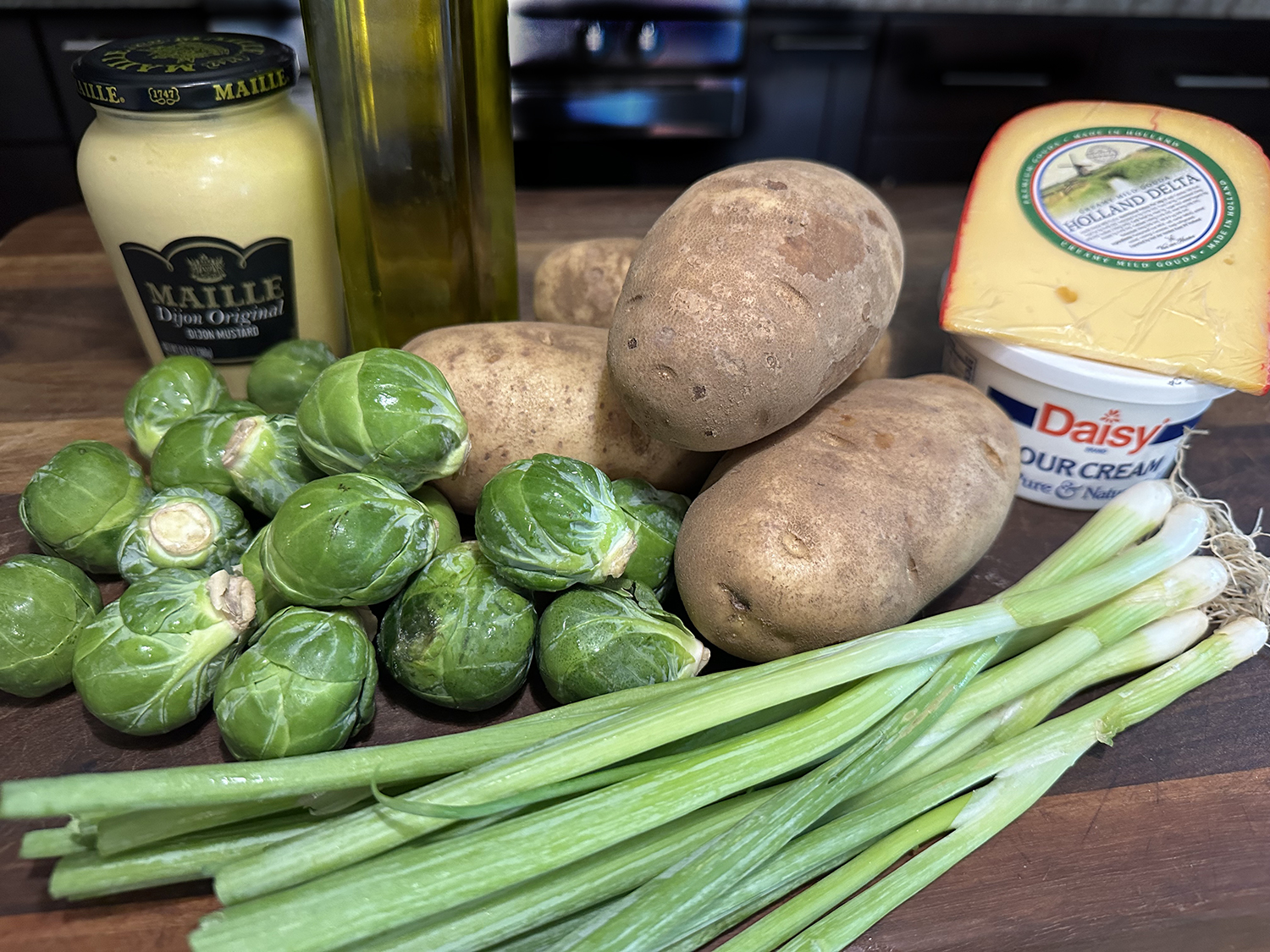
  • 3 lbs. (3 or 4 medium) russet potatoes, scrubbed
  • 2 Tbsp. extra-virgin olive oil, divided
  • Kosher salt and ground black pepper
  • 12 oz. Brussels sprouts, trimmed and halved lengthwise
  • 8 oz. Gouda cheese OR smoked Gouda cheese, shredded (2 cups)
  • 3 Tbsp. Dijon mustard
  • 1/3 cup sour cream
  • 1 bunch scallions, thinly sliced

Directions

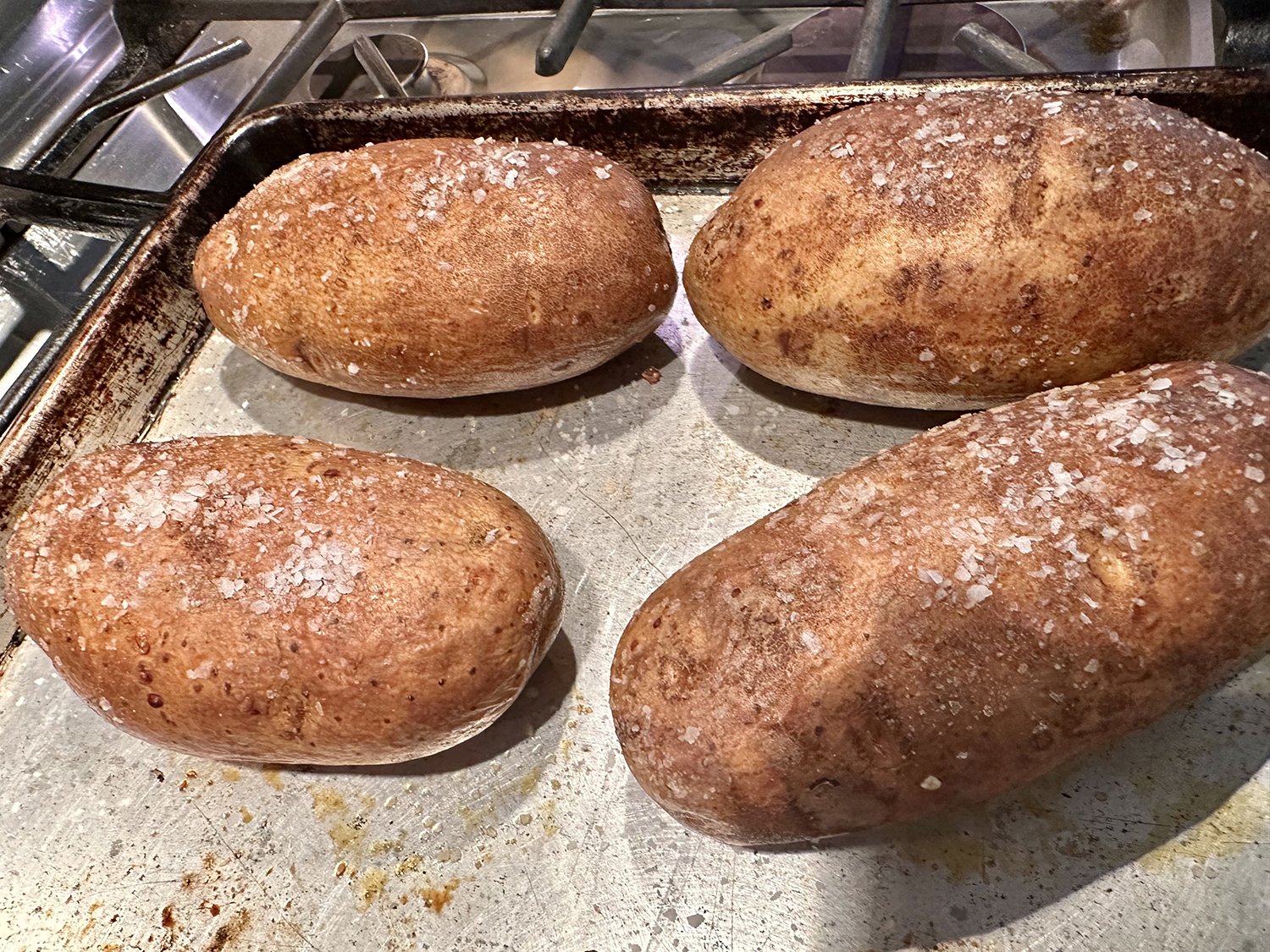
  1. Heat the oven to 400°F with a rack in the middle position. Coat the potatoes on all sides with 1 tablespoon of the oil and sprinkle with 1 teaspoon salt. Place on one side of a rimmed baking sheet.
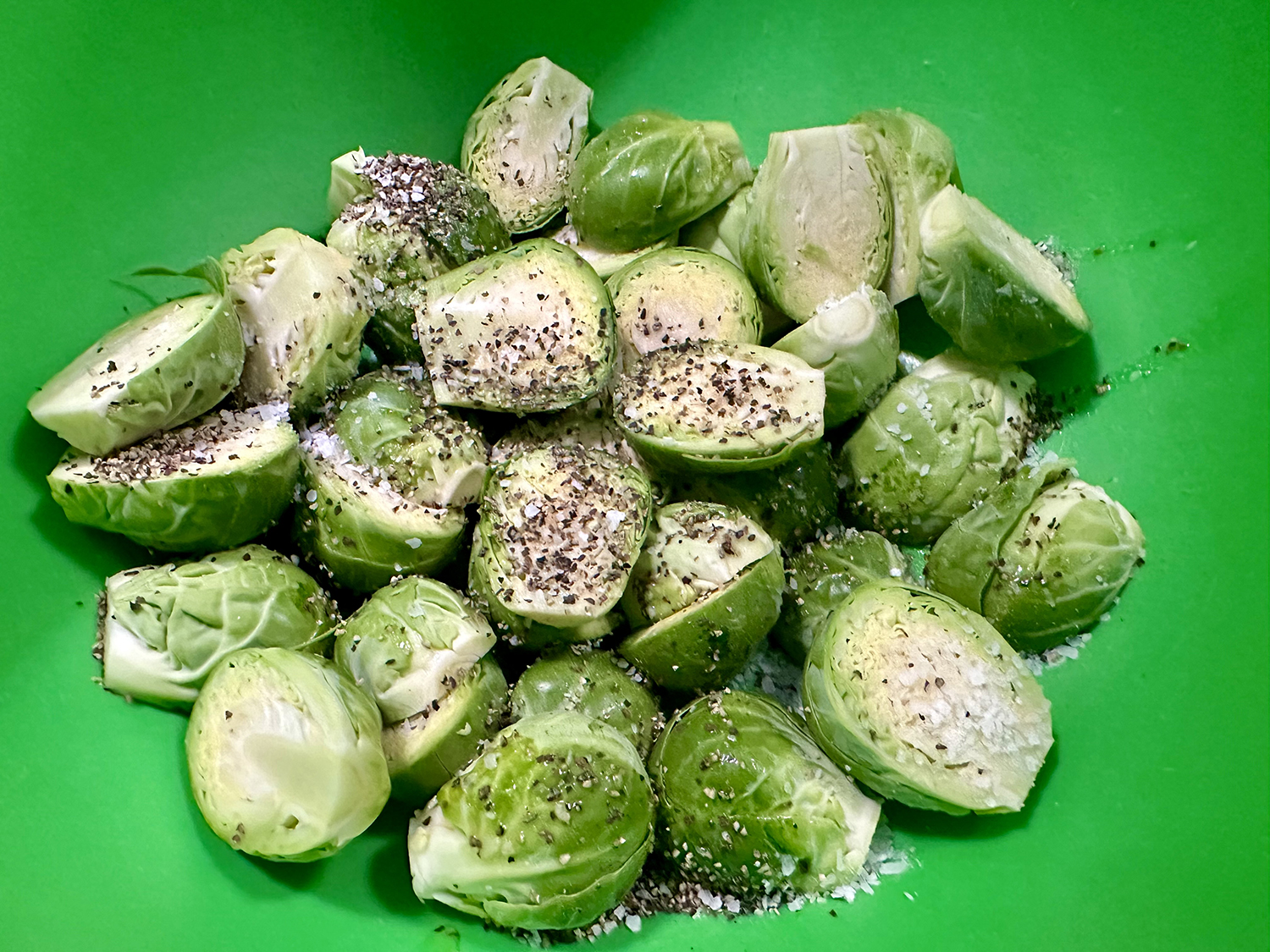
  2. In a medium bowl, toss the sprouts with the remaining 1 tablespoon oil and ½ teaspoon each salt and pepper. Arrange the sprouts cut side down on the other side of the baking sheet; reserve the bowl. Roast the vegetables until the sprouts are charred, about 20 minutes.
  3. Transfer the sprouts to a cutting board. Continue roasting the potatoes until a skewer inserted into the centers meets no resistance, about another 40 minutes. Set aside to cool for 20 to 30 minutes; leave the oven on.
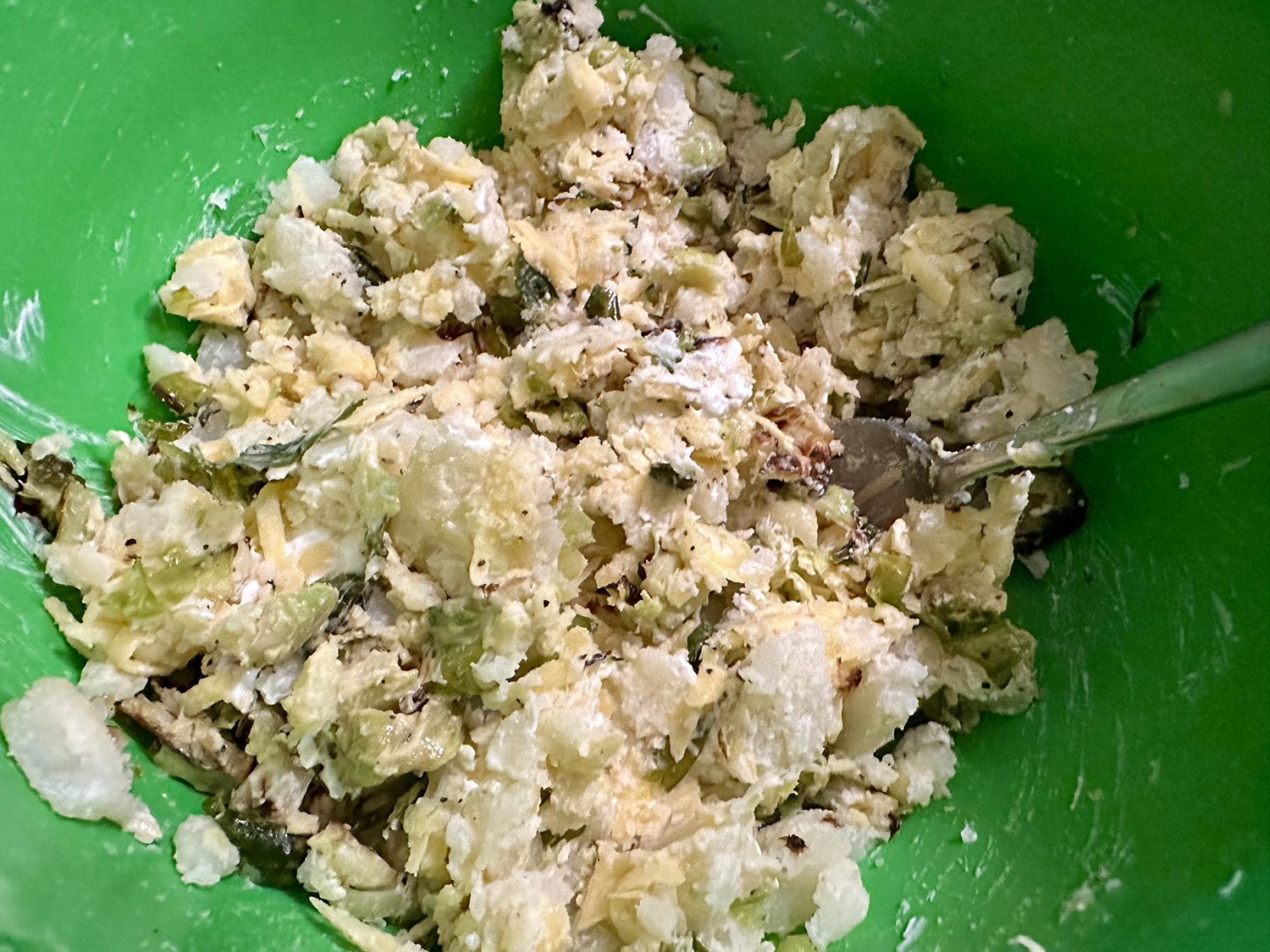
  4. Roughly chop the sprouts and return them to the bowl. Halve the potatoes lengthwise. Scoop the flesh from the halves into the bowl; return the skins, hollowed side up, to the baking sheet.
  5. To the bowl, add the cheese, mustard, sour cream and most of the scallions. Fold to combine, then taste and season with salt and pepper. Use the mixture to fill the skins. Bake until golden brown, about 30 minutes. Serve sprinkled with the remaining scallions.
  6. Any leftover spuds should be cooled completely, individually wrapped, stored in a freezer bag, and frozen for up to 3 months.

http://www.lynnandruss.com

Recipe by Hisham Ali Hassan for Milk Street

One-Pot Chicken and Rice with Caramelized Lemon

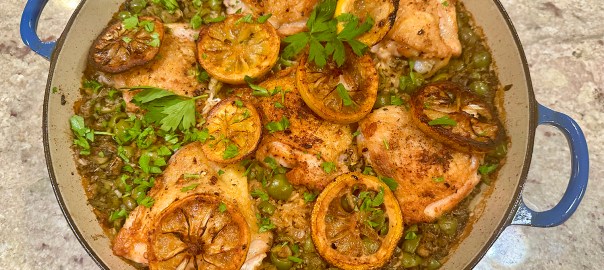
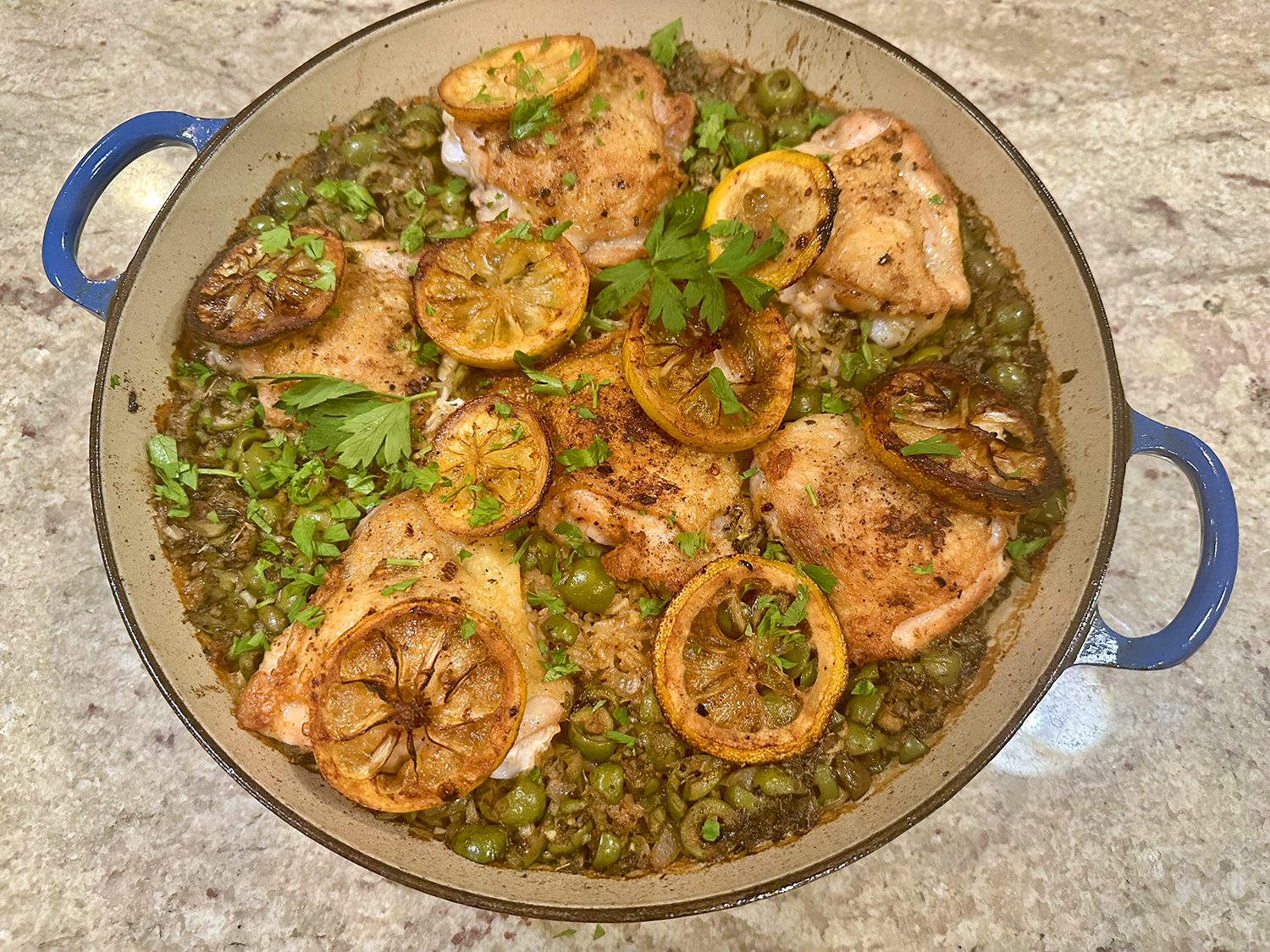
There are so many fabulous chicken recipes out there, and this is yet another winner to add to the list. This simple one-pot chicken and rice dish is topped with caramelized lemon slices that add sweet flavor and texture.

Thin slices of lemon are cooked in chicken fat and oil until their pulp dissolves, their pith sweetens and their rind softens to the point of being edible. Briny Castelvetrano olives and herby dried oregano are wrapped up in creamy rice and topped with juicy chicken thighs. Fresh parsley and a squeeze of fresh lemon juice on top before serving add brightness and crunch. 

What did we do differently? Increased the number of thighs from 4 to 6; cut 1 and 1/2 lemons into quarter-inch slices, and flipped those slices for an additional minute to caramelize both sides. Added about 1/2 cup more of the olives. Finally, we decreased the amount of rice to 1 1⁄2 cups, and reduced the chicken broth to 3 cups. And if at all possible, try to use homemade chicken stock which adds so much more chickeny flavor.

All of the prep and cooking time added 15 to 20 minutes longer than the noted 55* minutes, so keep that in mind when starting the dish.

One-Pot Chicken and Rice with Caramelized Lemon

  • Servings: 4-6
  • Difficulty: easy
  • Print

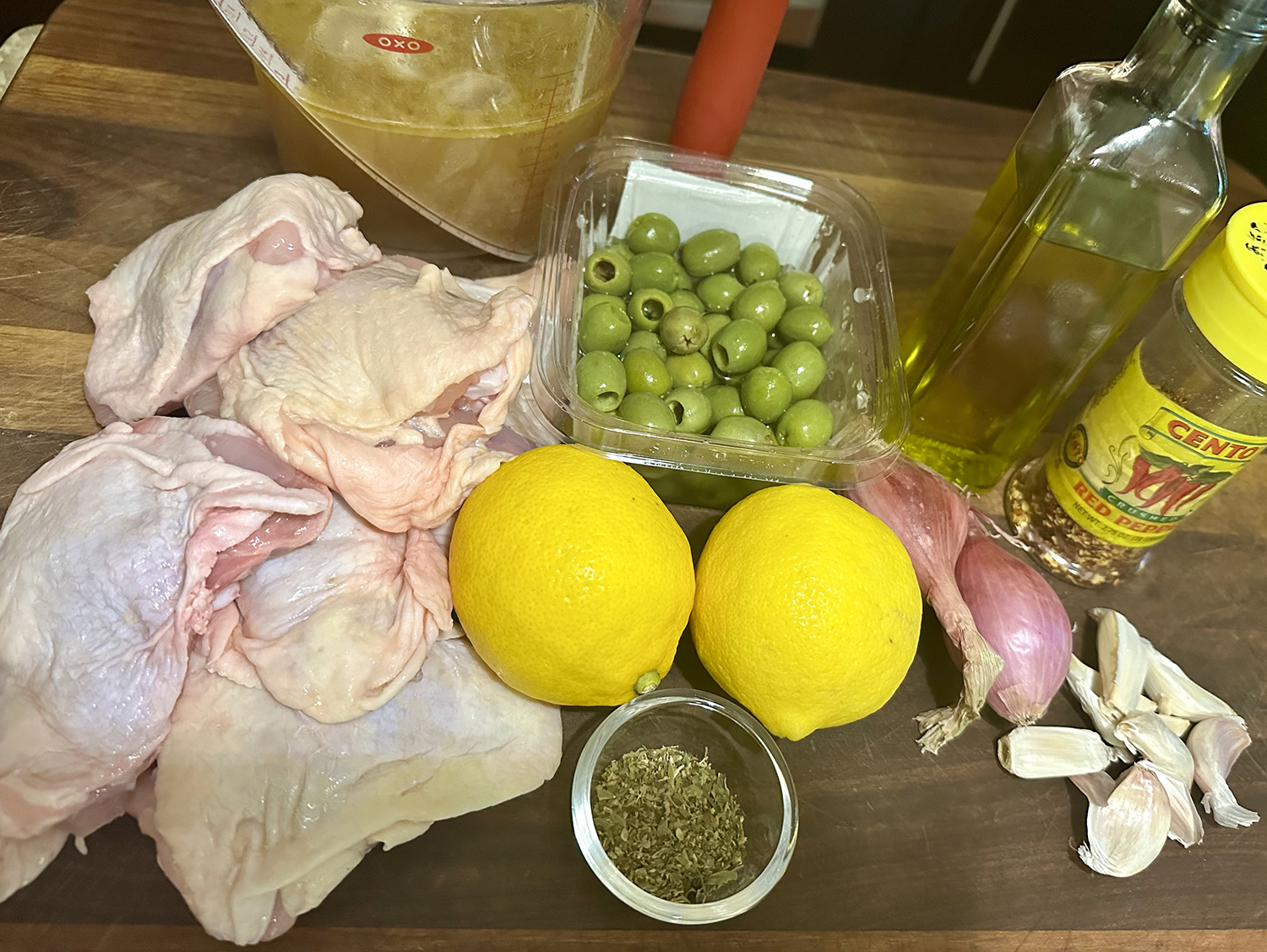
Ingredients

  • 6 bone-in, skin-on chicken thighs, trimmed of extra skin
  • Salt and black pepper
  • 2 tsp. dried oregano
  • Crushed red pepper
  • 2 Tbsp. extra-virgin olive oil
  • 2 lemons, divided
  • 1 cup pitted Castelvetrano or kalamata olives, smashed and roughly chopped
  • 6 garlic cloves, minced
  • 1 medium shallot or ½ medium onion, minced
  • 1 1⁄2 cups long-grain white rice, rinsed
  • 3 cups chicken broth, preferably homemade
  • ¼ cup roughly chopped fresh parsley, for serving

Directions

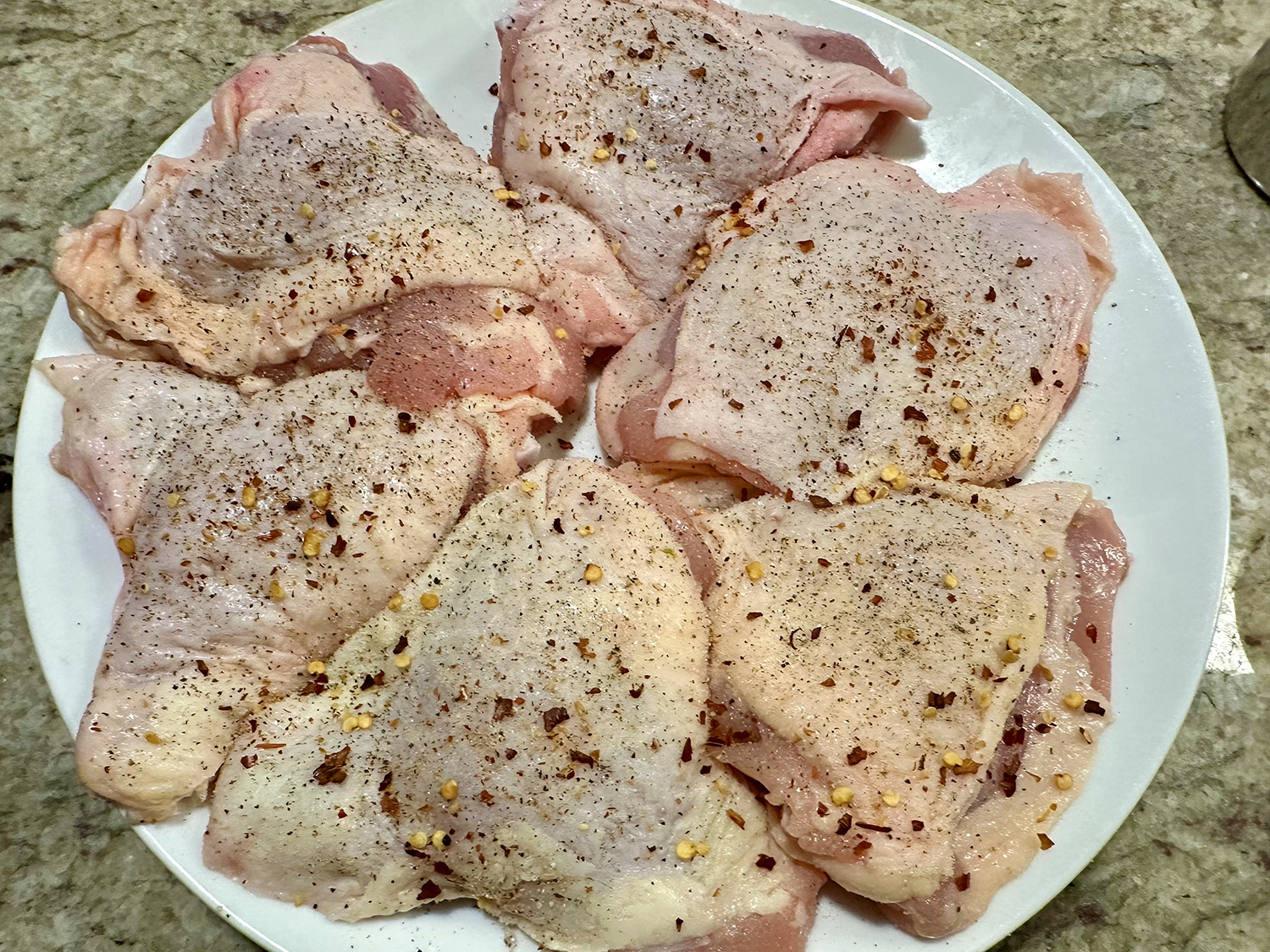
  1. Heat the oven to 400 degrees. Use paper towels to pat the chicken thighs until dry on all sides. Season the chicken with 1 teaspoon each salt, pepper and dried oregano and a pinch of crushed red pepper.
  2. Place a large Dutch oven or other heavy-bottomed pot over medium-high heat and add oil. Let oil heat up for a few minutes. Add thighs to the pot, skin side down, and let cook undisturbed until they self-release from the bottom of the pot, about 5 minutes. Remove from the pot and set aside.
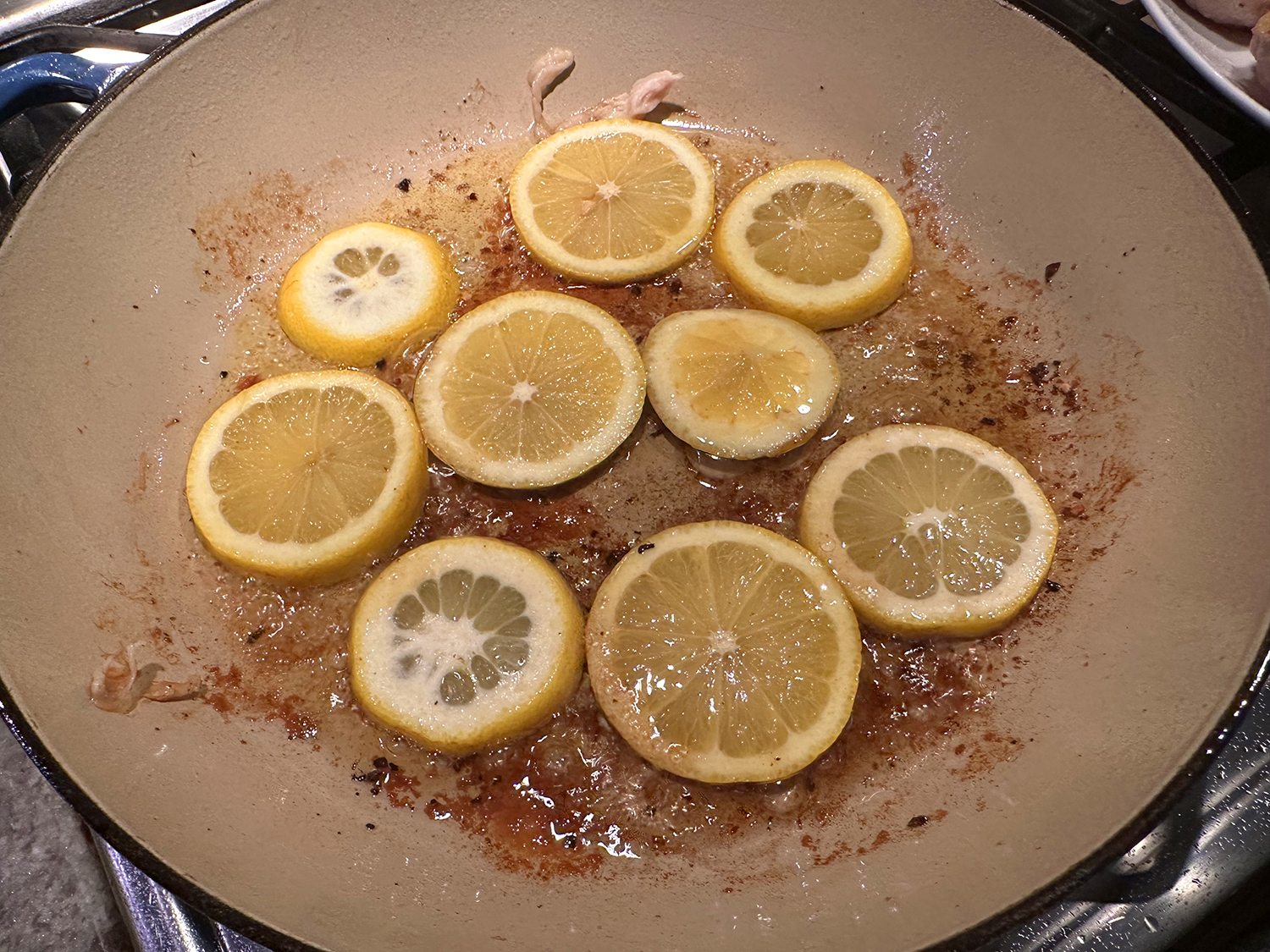
  3. Cut 1 1⁄2 lemons into ¼-inch-thick slices. Add to the pot and cook until caramelized and softened, about 2 minutes. Flip over, and caramelize the other side for 1 minute. Remove from the pot and set aside.
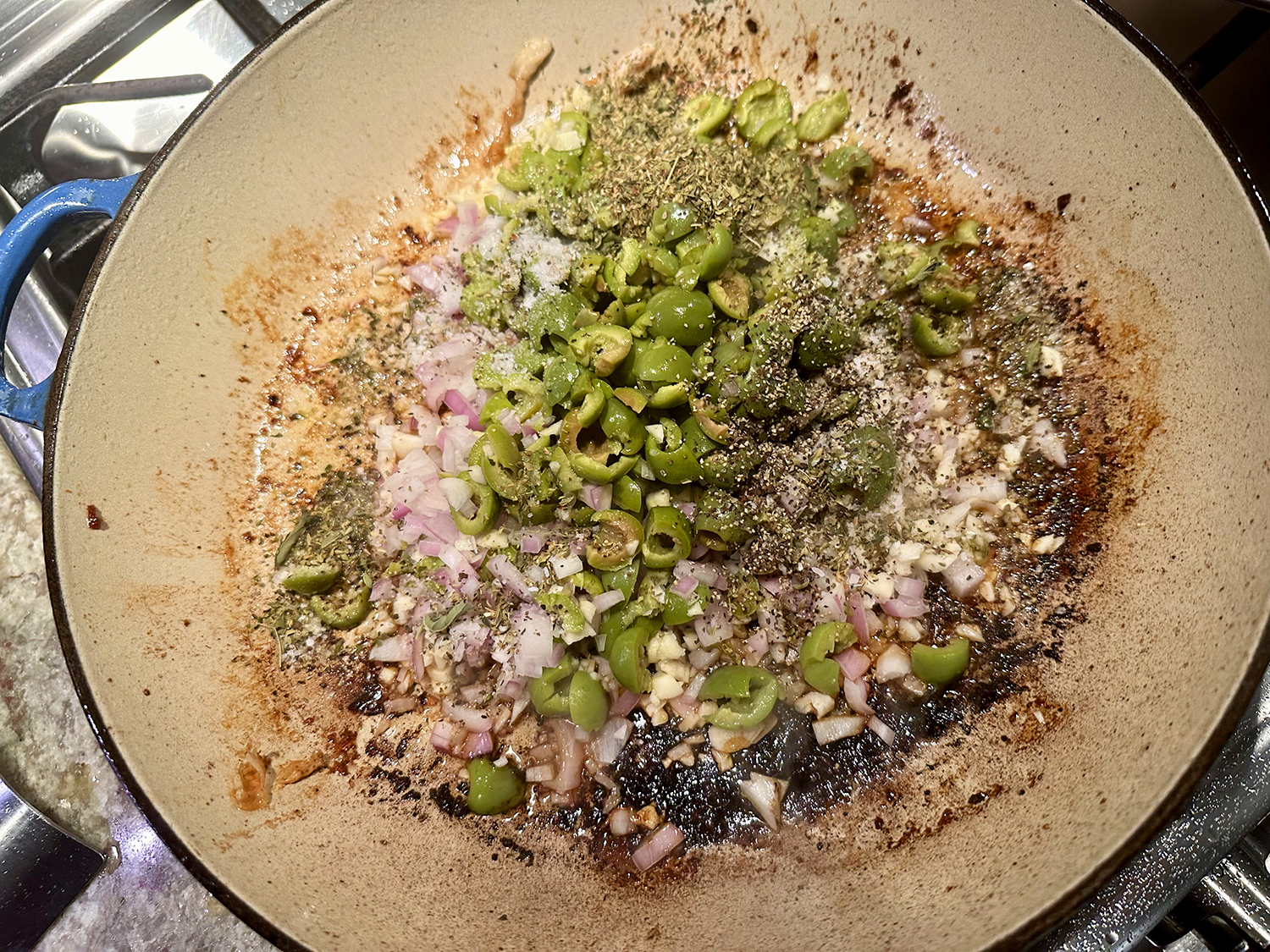
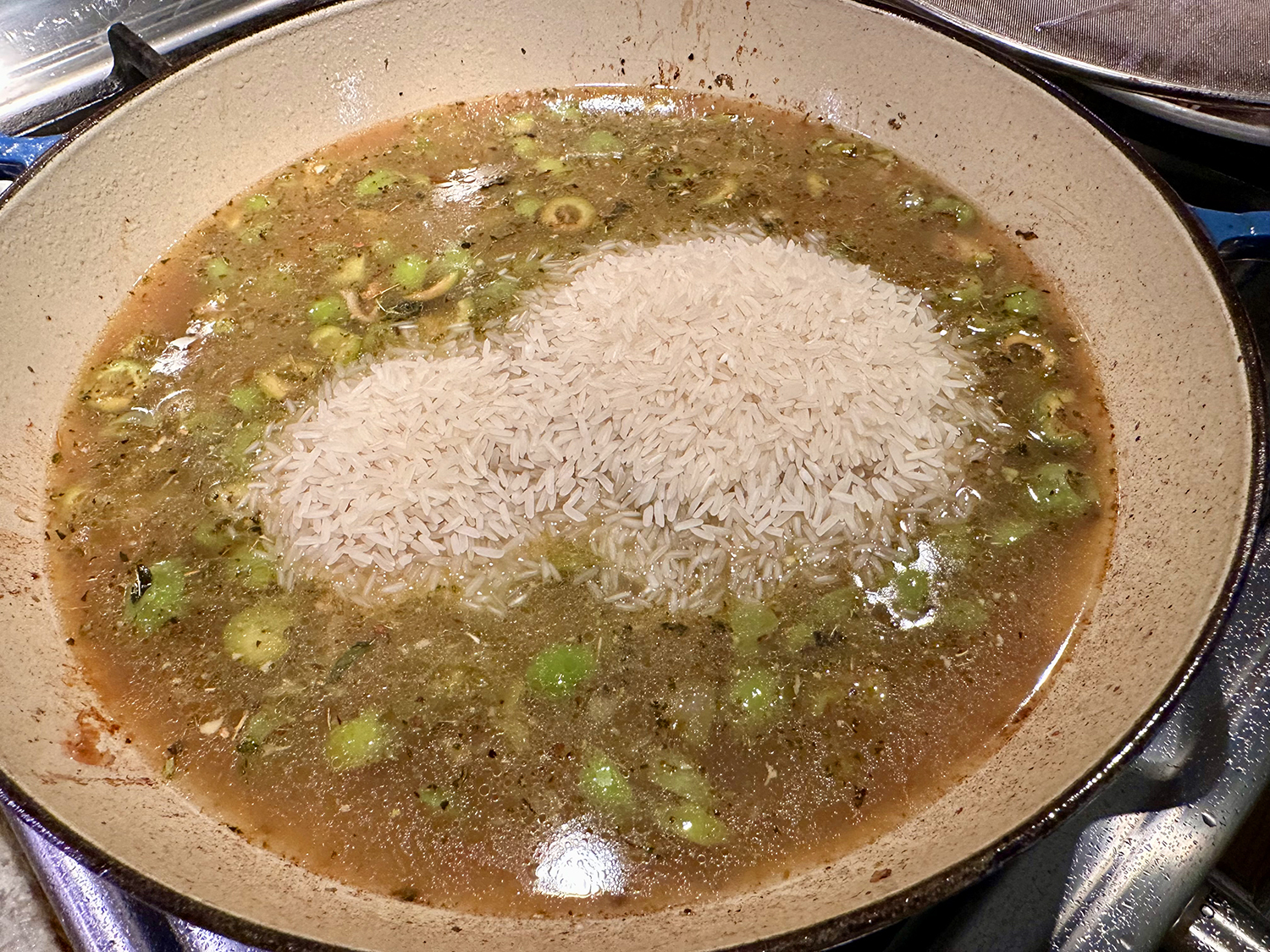
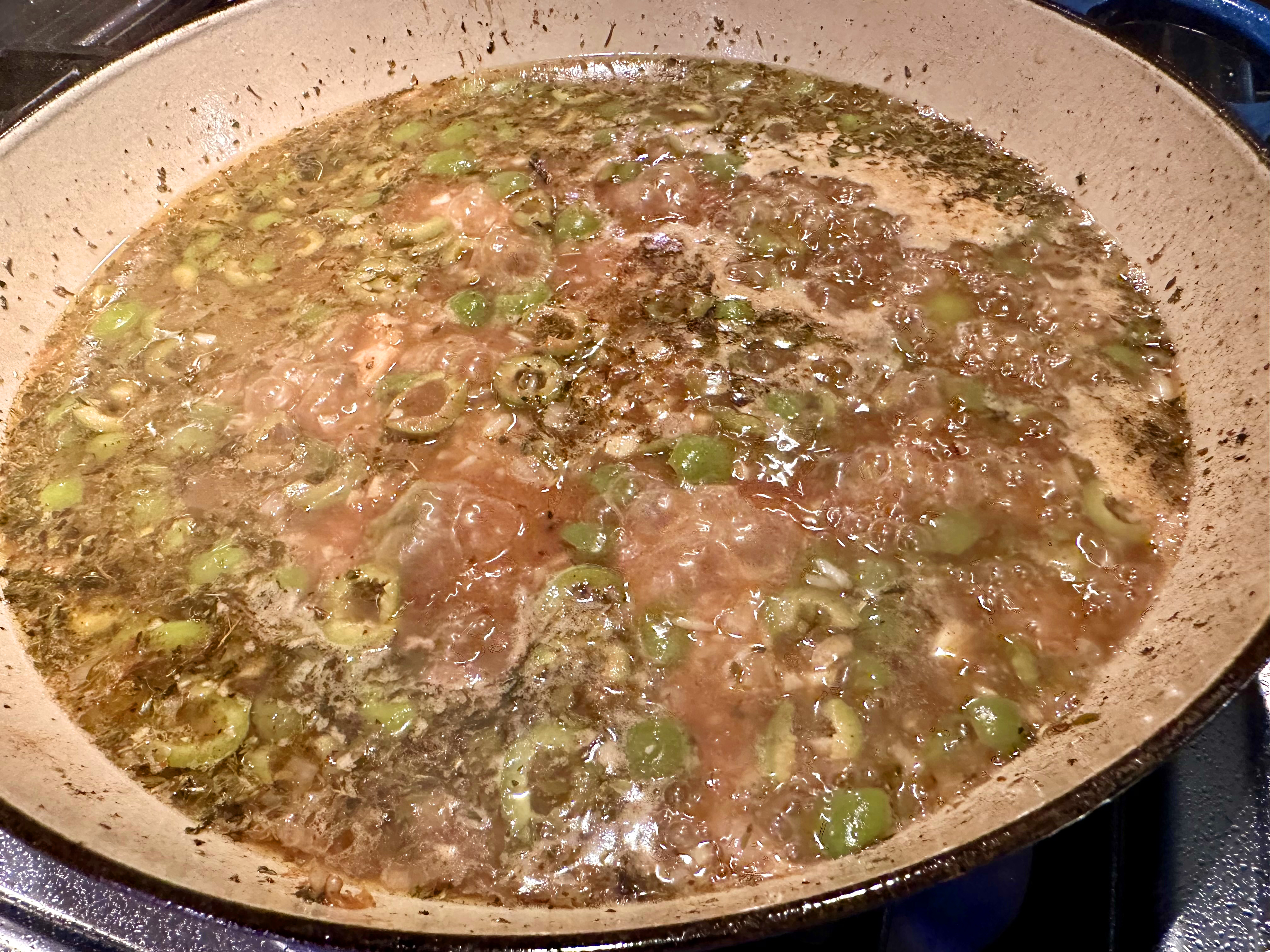
  4. Add the olives, garlic, shallot and 1 teaspoon each salt, pepper and dried oregano to the pot. Cook over medium-low heat, scraping browned bits from the bottom of the pan, until garlic is fragrant, 2 to 3 minutes. Turn the heat up to high, add the rice and broth to the pot, stir to combine and cover until it comes to a boil, about 5 minutes.
  5. Remove the pot from heat, add the browned chicken thighs on top of the rice, skin side up, then cover the chicken thighs with the lemon slices. Place the pot, covered, into the oven and bake until the rice and chicken are fully cooked, 25 to 30 minutes. Serve topped with fresh parsley and a squeeze of lemon juice.

http://www.lynnandruss.com

Adapted from a recipe by Dan Pelosi for NYTimes Cooking

Grilled Soy-Basted Chicken Thighs with Spicy Cashews

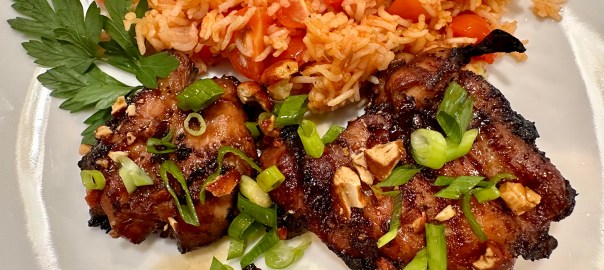
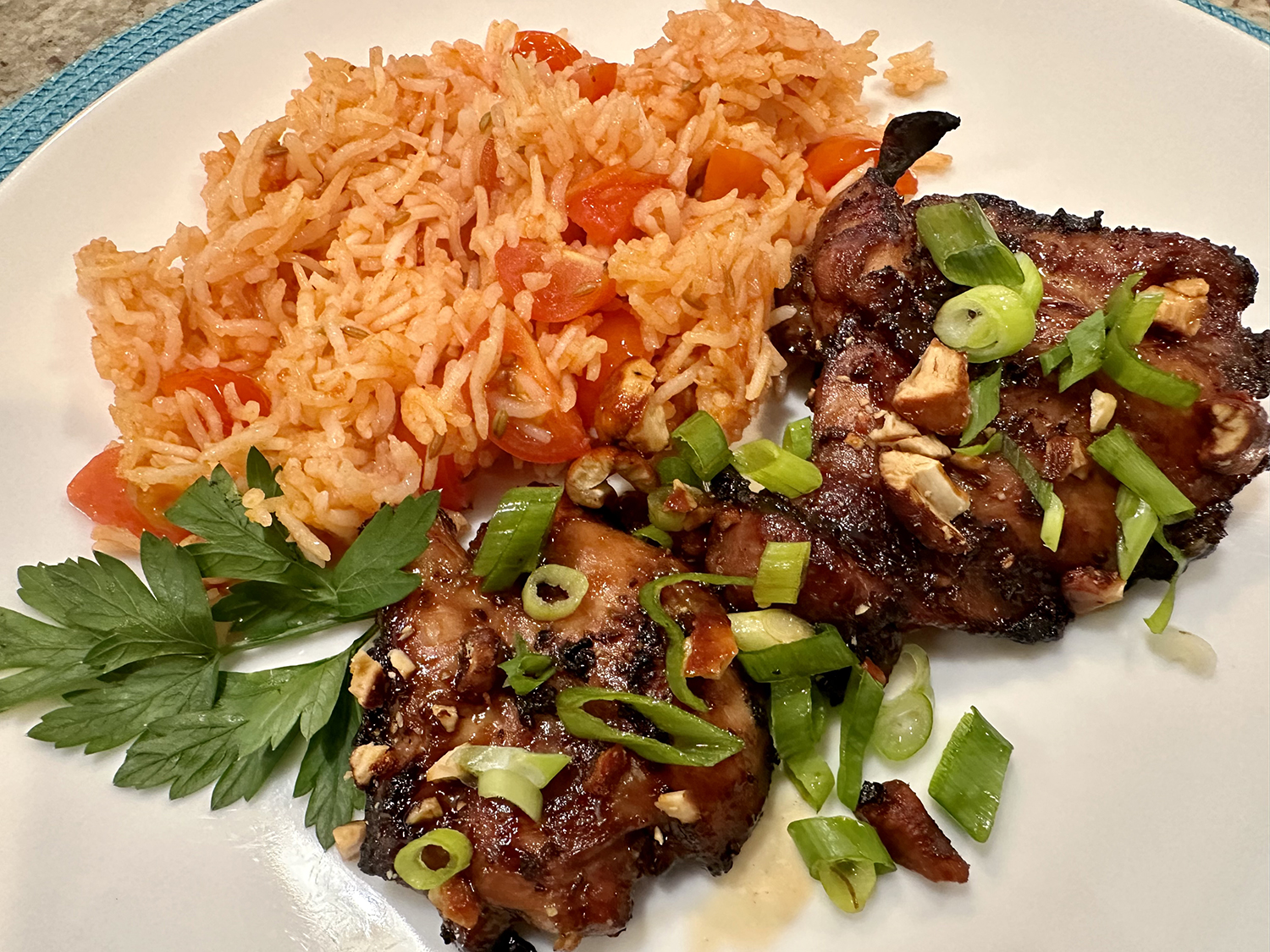
The skinless chicken browns nicely over a medium flame, and the sugary soy basting sauce lacquers it beautifully in the final few minutes of cooking. It’s terrific with rice, or as a topping for a salad of sturdy greens. You may wish to double the recipe for Sriracha-roasted cashews (we are glad that we did!). They are addictive, and for them you will find many delicious uses.

This dish was so packed with flavor, we couldn’t stop moaning with each bite we took. And we were thrilled to have leftovers for lunch the next day.

Grilled Soy-Basted Chicken Thighs with Spicy Cashews

  • Servings: 4-6
  • Difficulty: easy
  • Print

Ingredients

  • ½ cup unsalted cashews
  • 2 Tbsp. Sriracha sauce
  • 3 Tbsp. toasted sesame oil
  • ½ cup plus 3 Tbsp. soy sauce
  • 2 Tbsp. hoisin sauce
  • 1 Tbsp. cracked black pepper
  • Hot sauce, to taste
  • 2½ lbs. skinless, boneless chicken thighs
  • ¼ cup brown sugar (light or dark) or molasses
  • 2 Tbsp. peeled and minced ginger
  • 4 scallions, sliced thin
  • 5 or 6 springs cilantro, tough stems removed and roughly chopped (approximately 2 Tbsp.)

Directions

  1. Heat oven to 300 degrees. Combine cashews and Sriracha sauce in a small bowl and stir until nuts are coated. Line a small baking pan with foil and spread the coated cashews out on it, then place in the oven and bake until nuts are dry, approximately 20 minutes. Carefully remove the nuts from the foil and let cool, then chop roughly and set aside in a small bowl.
  2. Meanwhile, in a large bowl, whisk together sesame oil, ½ cup soy sauce, the hoisin sauce and the black pepper, and hot sauce if using. Add chicken thighs and stir to coat. Refrigerate until ready to cook.
  3. For the basting sauce, combine the remaining 3 tablespoons soy sauce, the brown sugar and the ginger in a small bowl, and whisk until the sugar has dissolved.
  4. When you are ready to cook the chicken, build a fire in a charcoal grill, leaving about ⅓ of the cooking space free of coals. When coals are covered with gray ash and the temperature is medium (you can hold your hand 5 inches above the coals for 5 to 7 seconds), you are ready to cook. (For a gas grill, turn one burner to high, leaving the others off, then lower cover and heat for 15 minutes.)
  5. Using tongs, remove chicken thighs from marinade and cook, directly over the coals, turning every few minutes, until they are well-browned but not crusty, approximately 8 to 10 minutes. Then, using a pastry brush, begin to baste them with the soy, ginger and sugar mixture, until they develop a lacquer, an additional 8 to 10 minutes, again turning every few minutes. (If chicken threatens to burn, place it over the part of the grill without coals.)
  6. Transfer chicken to a warmed platter, sprinkle with the chopped cashews, the scallions and the cilantro, and serve.

http://www.lynnandruss.com

Recipe from Sam Sifton for NYTimes Cooking

Cumin-Spiced Tomato Rice

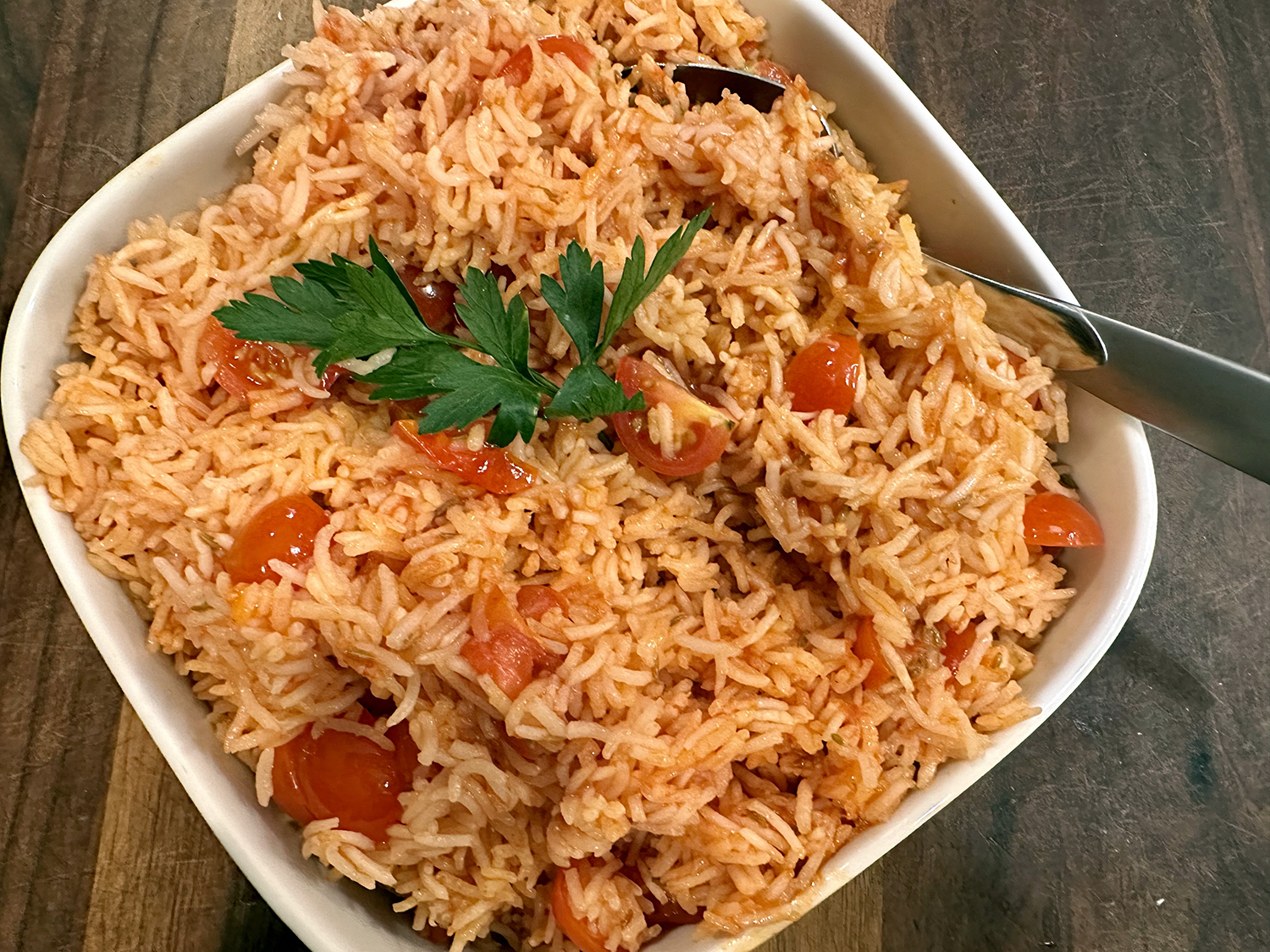
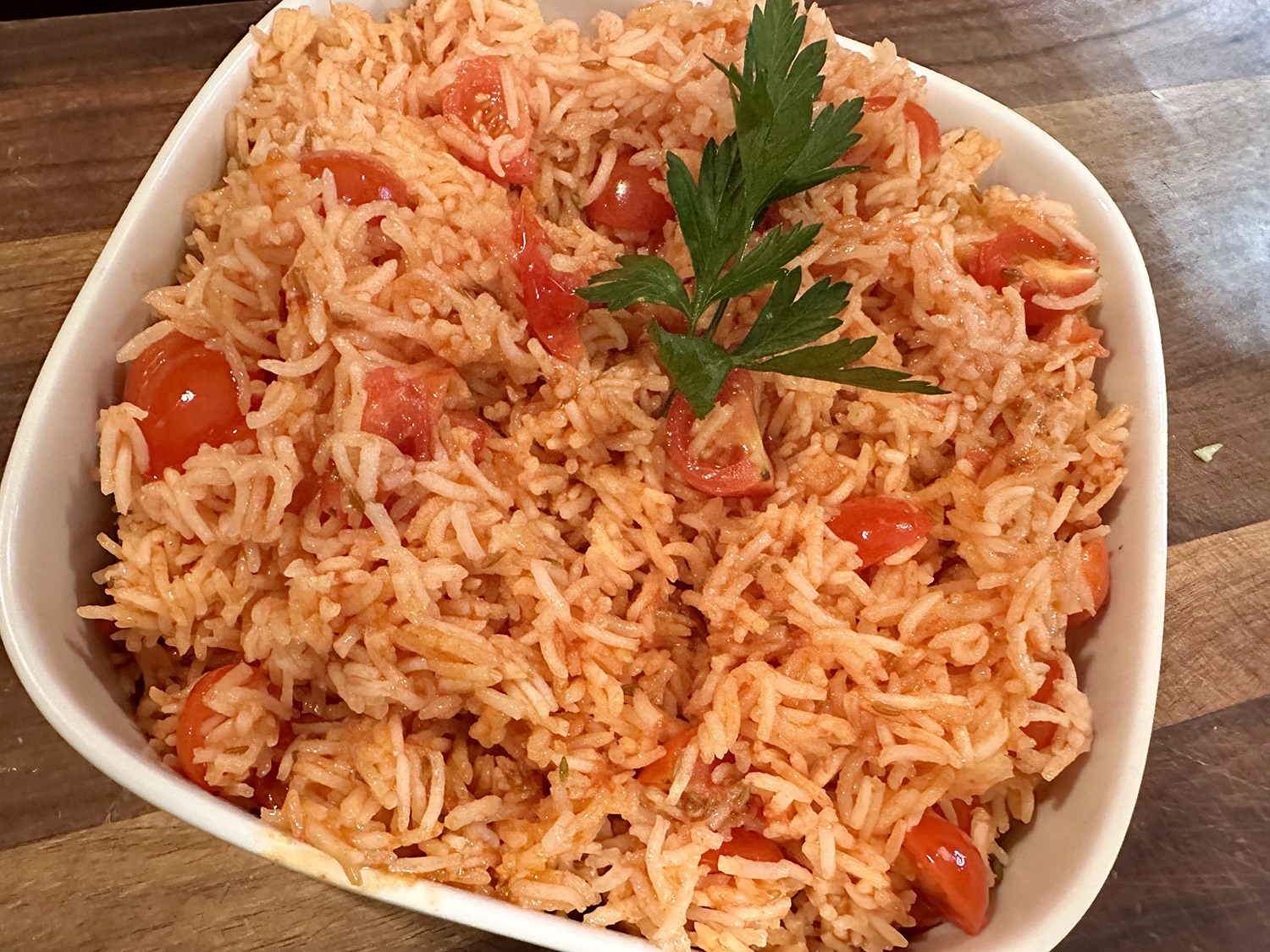
This tomato rice pairs well with seafood, poultry or vegetable-centric mains, or it can be eaten as a light meal with a dollop of yogurt or topped with a fried egg. The Hubs even chopped up some leftover pork tenderloin and stirred it in the remaining rice, creating a pork-fried rice of a sorts.

To make this version of South Indian tomato rice, two tomato forms are used: paste, which offers concentrated flavor and deep color, plus chopped cherry or grape tomatoes for freshness. The cooking starts with a tarka—that is, blooming the spices and aromatics in hot oil to draw out their essence—before basmati rice goes into the saucepan.

We like the subtle fruity, smoky notes that árbol chilies release into the rice, but if you have only red pepper flakes on hand, they will work, but will add a more direct, less nuanced spiciness. We didn’t find it very spicy at all. Be sure to rinse and drain the rice before use. Rinsing removes excess starch for especially light, fluffy grains.

Cumin-Spiced Tomato Rice

  • Servings: 4-6
  • Difficulty: easy
  • Print

Ingredients

  • 2½ Tbsp. tomato paste
  • Kosher salt
  • 2 Tbsp. grapeseed or other neutral oil
  • 2 tsp. cumin seeds OR yellow or brown mustard seeds OR a combination
  • 2 – 3 árbol chilies, broken in half, seeds discarded OR ¼ to ½ tsp. red pepper flakes
  • 2 medium garlic cloves, finely grated
  • 1½ tsp. finely grated fresh ginger
  • 1½ cups basmati rice, rinsed and drained
  • 1 pint cherry OR grape tomatoes, quartered

Directions

  1. In a 2-cup liquid measuring cup or a small bowl, whisk together 2 cups water, the tomato paste and ¾ teaspoon salt. In a large saucepan over medium, combine the oil, cumin seeds, chilies, garlic and ginger. Cook, stirring, until the seeds begin to pop and the mixture is fragrant, about 1 minute.
  2. Stir in the rice, coating the grains with oil. Stir in the tomato water and bring to a boil over medium-high. Cover, reduce to low and cook until the water has been absorbed, about 15 minutes.
  3. Remove the pan from the heat. Quickly scatter the tomatoes over the rice and re-cover. Let stand for 10 minutes. Using a fork, fluff the rice, incorporating the tomatoes into it. Remove and discard the chilies, if used. Taste and season with salt.
  4. Optional garnish: Chopped fresh cilantro

http://www.lynnandruss.com

Recipe by Elizabeth Germain & Elizabeth Mindreau for Milk Street

Pan-Roasted Pork Tenderloins with Apple, Sherry and Smoked Paprika

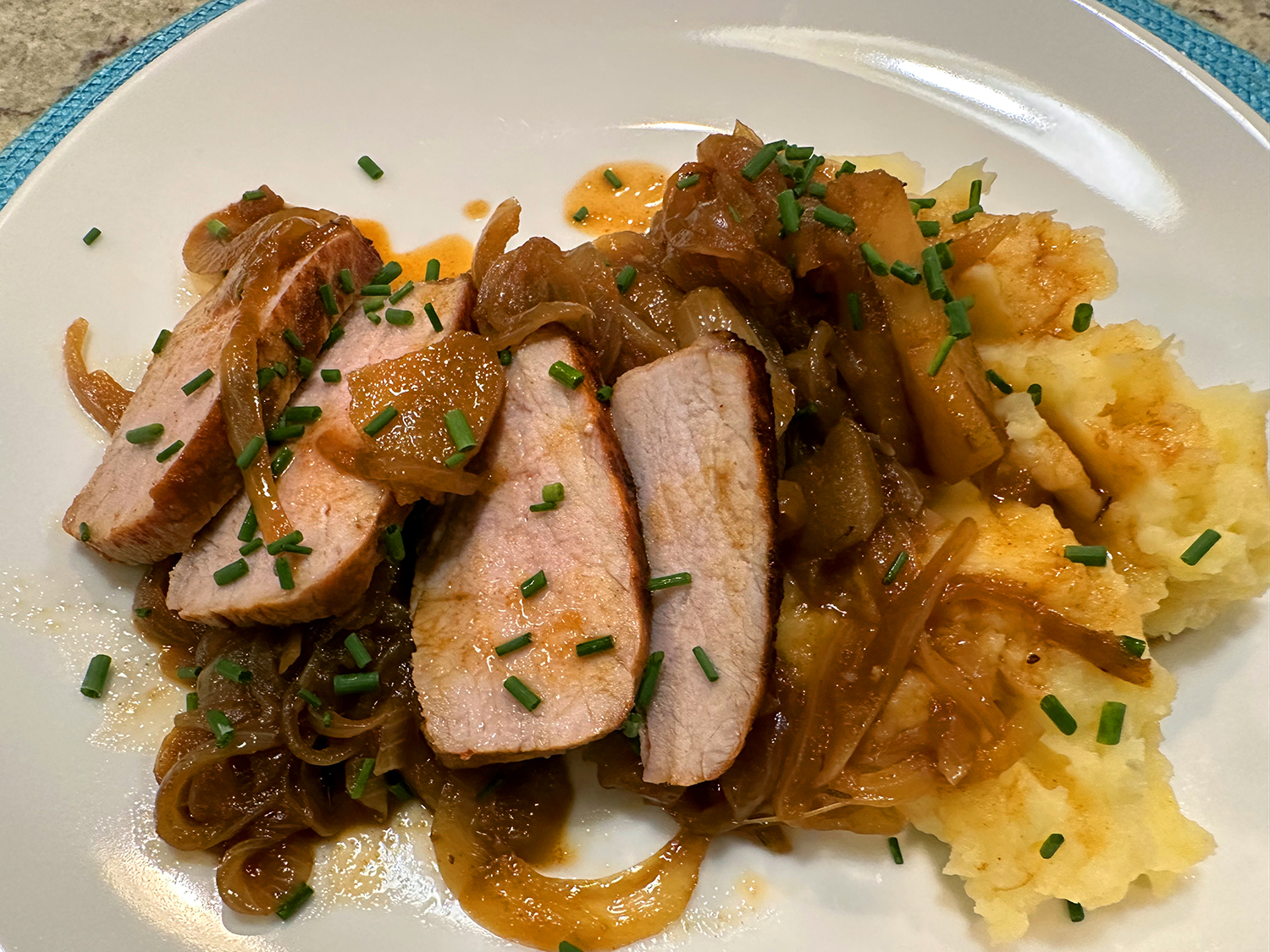
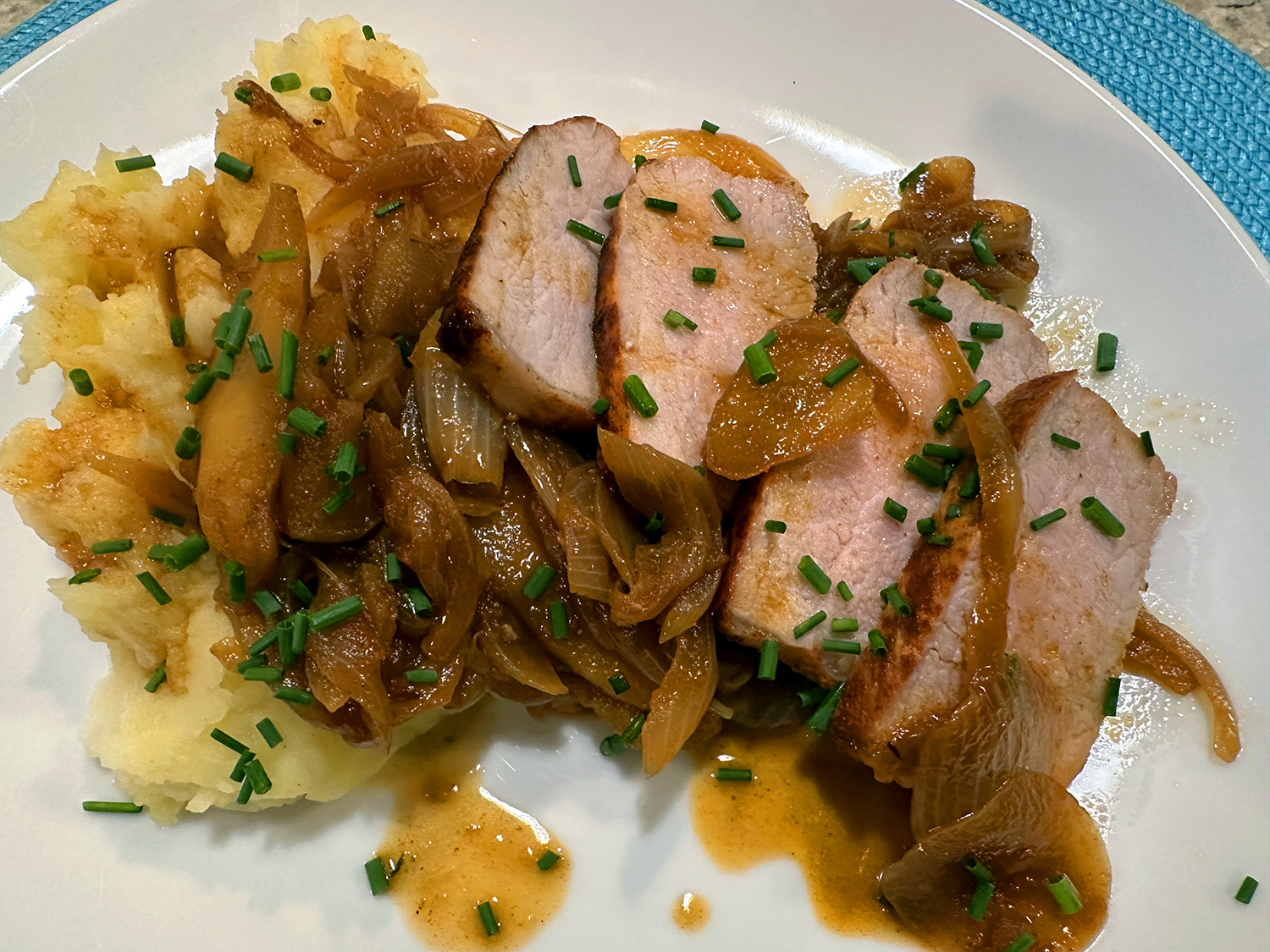
The inspiration for a Spanish spin on pork and apples comes from “Tapas: A Taste of Spain in America” by José Andrés. Milk Street’s version uses pork tenderloins that get a stovetop sear and finish in the oven on a bed of lightly sautéed onion and Granny Smith apple.

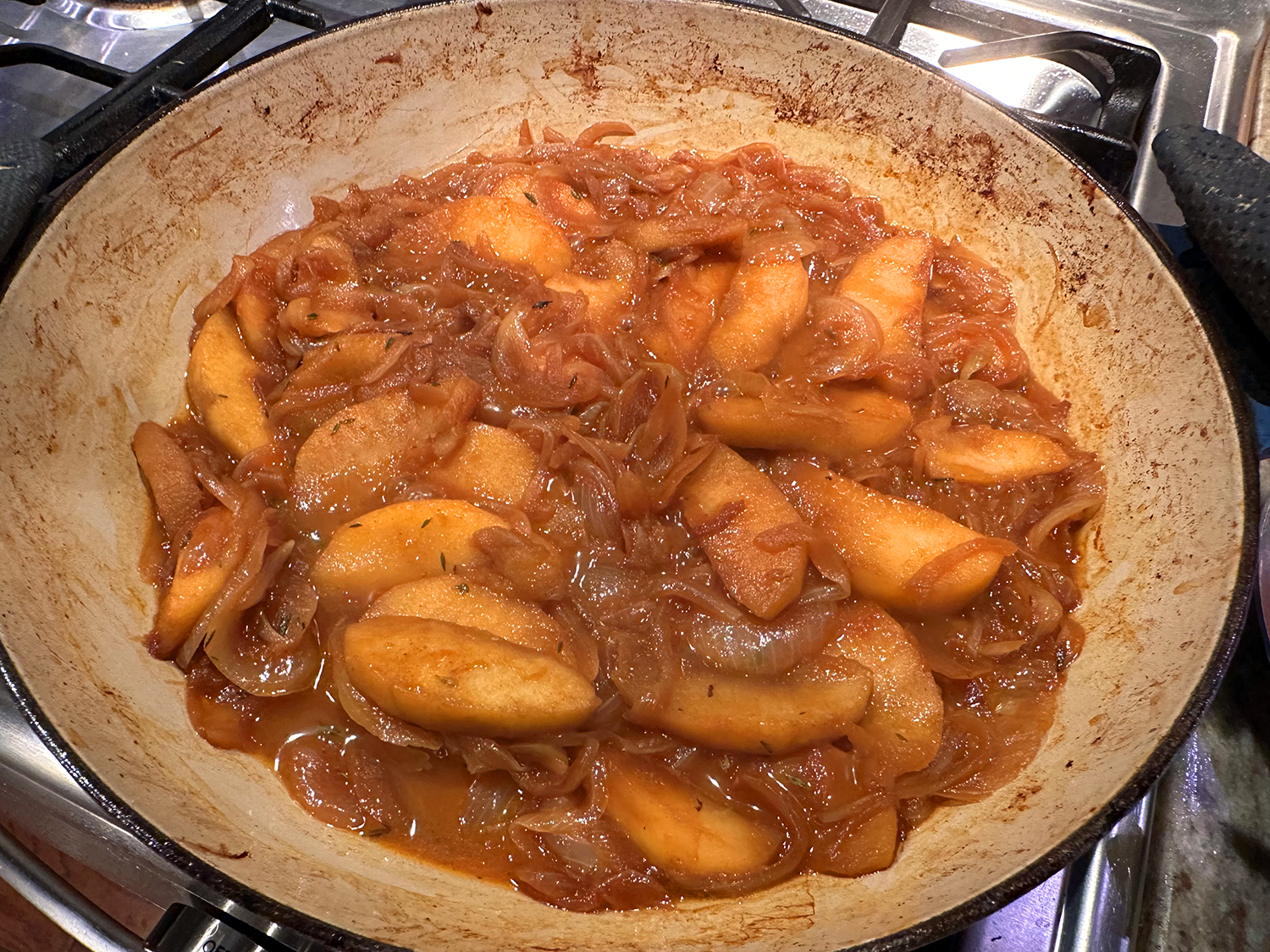
The onion-apple mixture softens to a relish-like accompaniment that is accented with smoked paprika and dry sherry. It’s a rich, woodsy complement to slices of the mild, meaty tenderloin. You will need a 12-inch oven-safe skillet for this recipe. And don’t forget to use an oven mitt or potholder when handling the skillet after removing it from the oven; the handle will be hot.

Nearly all previous reviewers of this recipe said they had, or will next time, double the apple/onion mixture (perhaps even triple it?). That made culinary sense to us, so we went ahead and doubled the sauce from the get-go. And the increased amounts are list under ingredients below.

As to doubling the ingredients for the apple/onion mixture, the recipe indicates to “Add the remaining 2 tablespoons butter and stir until melted” in Step 5. We completely forgot to do so, and that sauce was still divine; although the additional butter would lend more silkiness to the bottom line. Your call…

Serving suggestion: Spoon over mashed garlicky potatoes, parsnip and potato purée or wide egg noodles. We agree it is a company-worthy dish!

Pan-Roasted Pork Tenderloins with Apple, Sherry and Smoked Paprika

  • Servings: 6
  • Difficulty: easy
  • Print

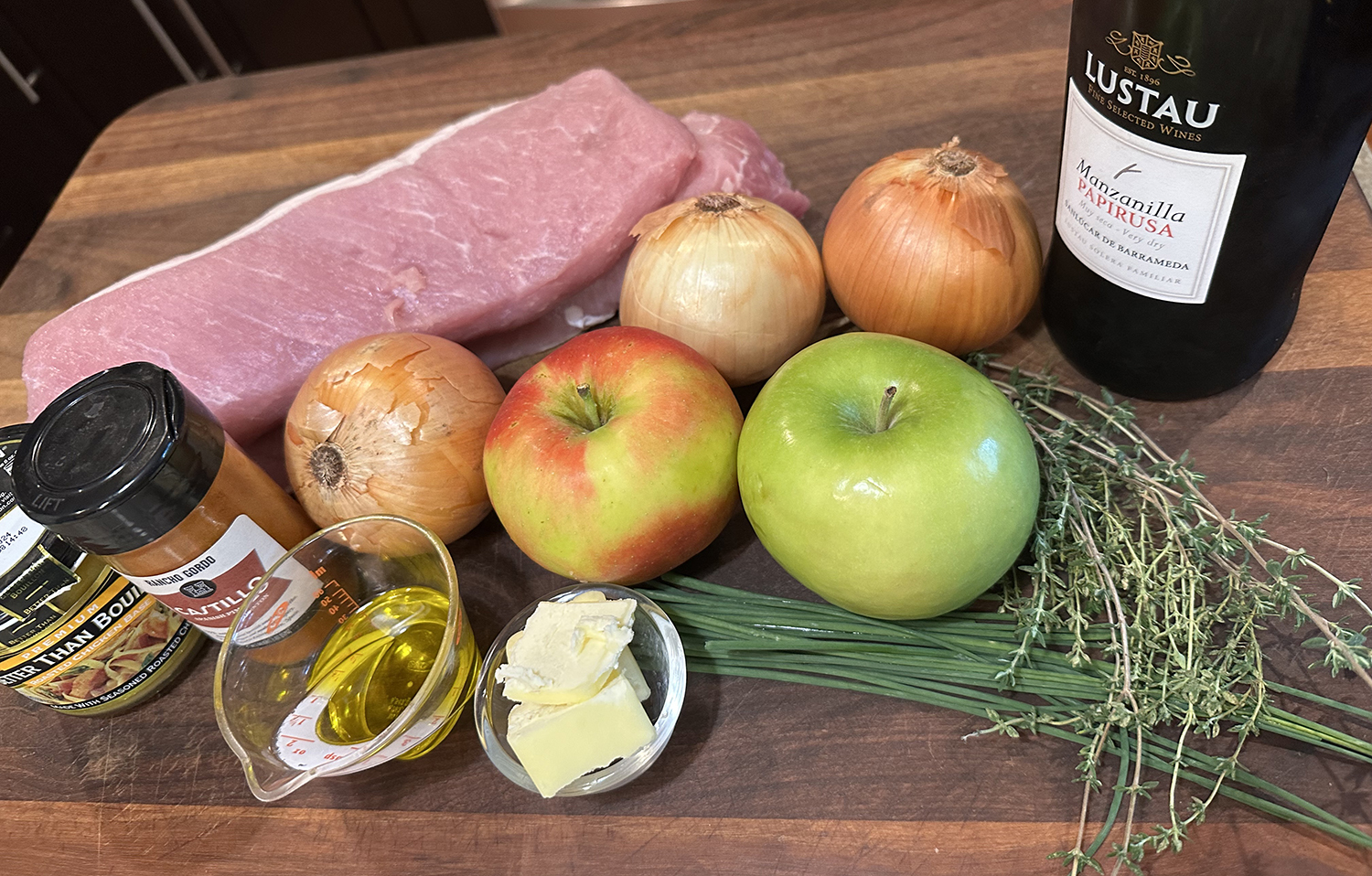
Ingredients

  • 2 tsp. smoked paprika, divided
  • Kosher salt and ground black pepper
  • 2 1¼-lb. pork tenderloins, trimmed of silver skin and halved crosswise
  • 2 Tbsp. extra-virgin olive oil
  • 4 Tbsp. salted butter, divided
  • 2 large, or 3 small yellow onions, halved and thinly sliced
  • 2 Granny Smith apples, peeled, halved, cored and cut into ½-inch-thick wedges
  • 5-7 sprigs thyme
  • 1 cup dry sherry
  • 1/2 cup chicken broth
  • 1 Tbsp. finely chopped fresh chives

Directions

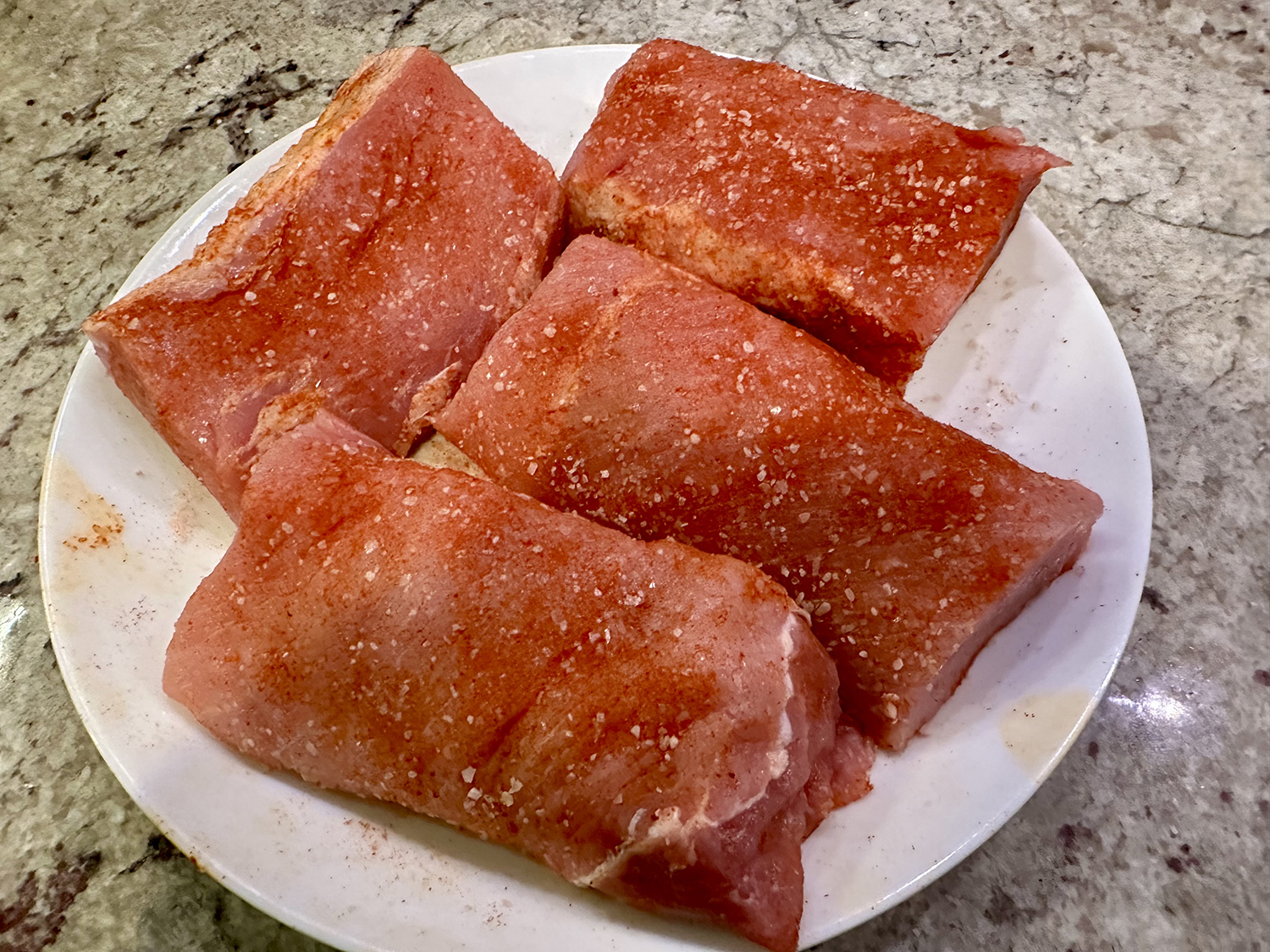
  1. Heat the oven to 450°F with a rack in the middle position. In a small bowl, mix together 1 teaspoon of paprika and 1½ teaspoons salt. Rub the mixture onto all sides of the pork.
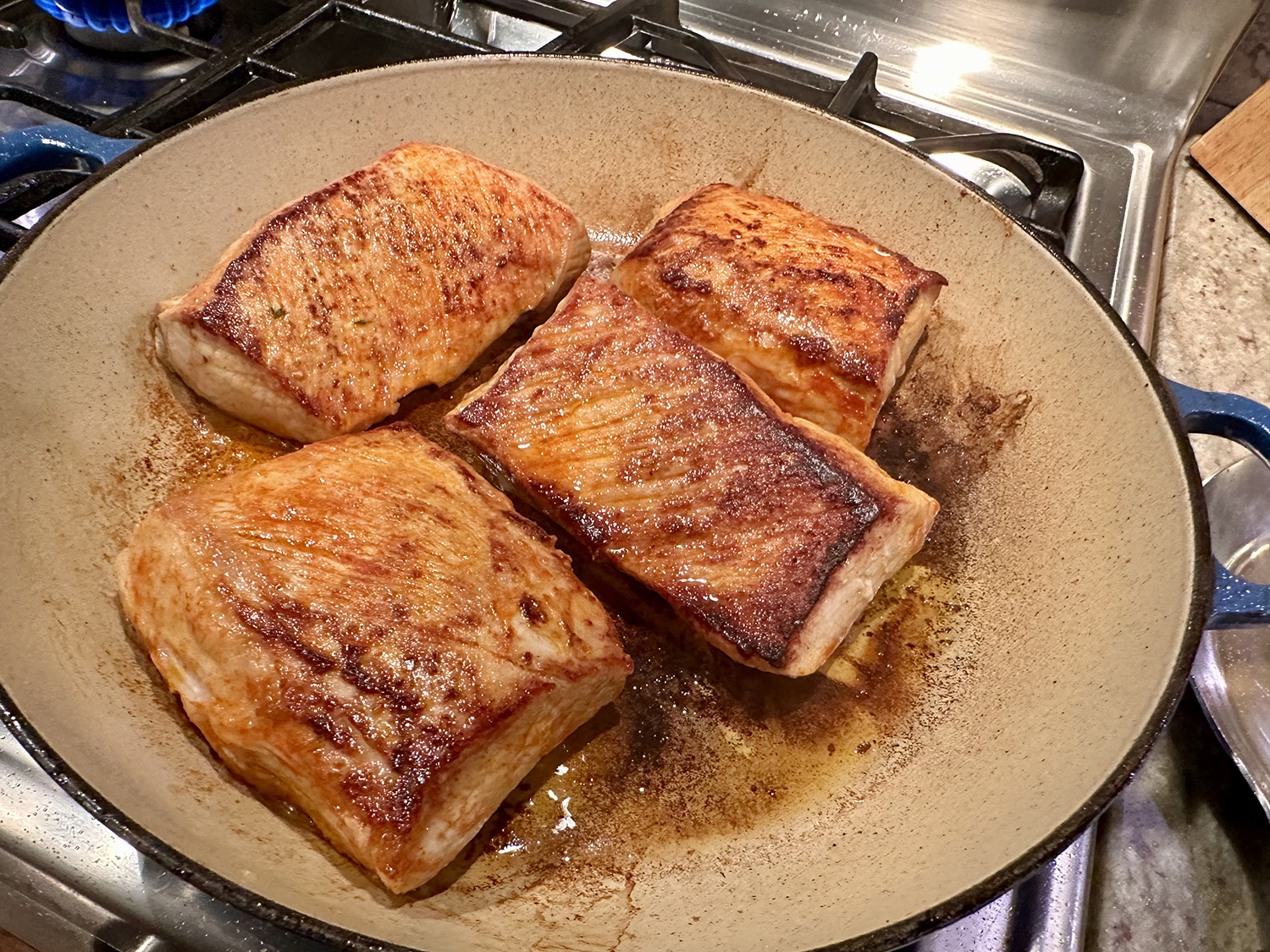
  2. In an oven-safe 12-inch skillet over medium-high, heat the oil until shimmering. Place the pork in the skillet. Cook, turning occasionally, until lightly browned on all sides, about 4 minutes total. Transfer to a large plate.
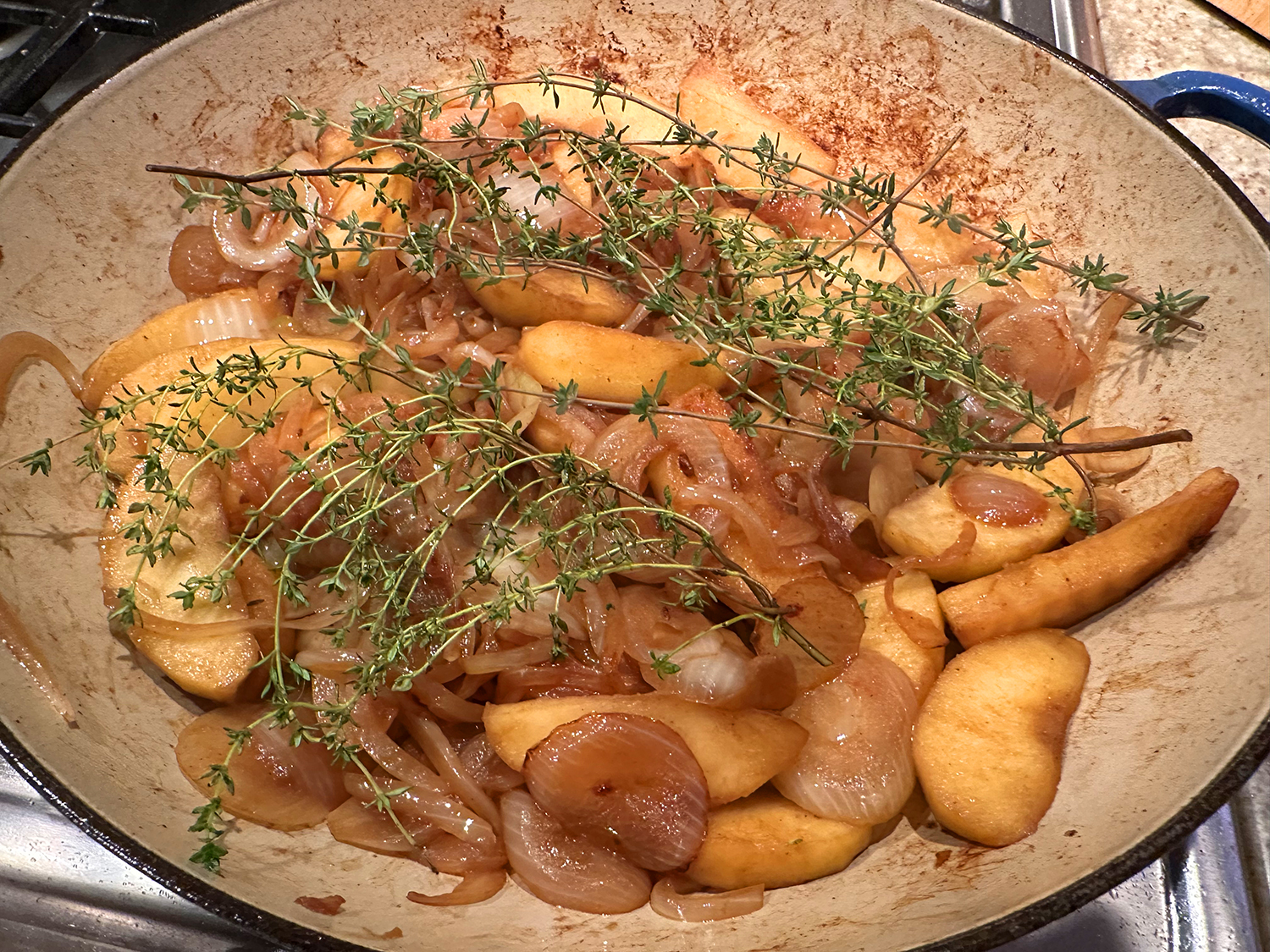
  3. Add 2 tablespoons of butter, the onion and apple to the skillet. Cook over medium-high, stirring occasionally, until softened and golden brown, about 8 minutes. Distribute the mixture in an even layer, then scatter on the thyme. Place the pork on top, add any accumulated juices and transfer to the oven. Roast until the center of the thickest piece of tenderloin reaches 135°F or is just slightly pink when cut into, 9 to 12 minutes.
  4. Remove the skillet from the oven; the handle will be hot. Using tongs, transfer the pork to a cutting board and tent with foil. Add the sherry, broth and the remaining 1 teaspoon paprika to the pan, then cook over medium-high, stirring occasionally, until the liquid is slightly reduced and thickened, about 4 minutes.
  5. Remove the pan from the heat, then remove and discard the thyme. Add the remaining 2 tablespoons butter and stir until melted. Taste and season with salt and pepper. Using a slotted spoon, transfer the onion-apple mixture to a serving platter, leaving the liquid in the pan. Thinly slice the pork and arrange over the onion-apple mixture. Drizzle the pan liquid over the meat and sprinkle with the chives.

http://www.lynnandruss.com

Recipe from Milk Street

Sheet-Pan Chicken Thighs with Spicy Corn

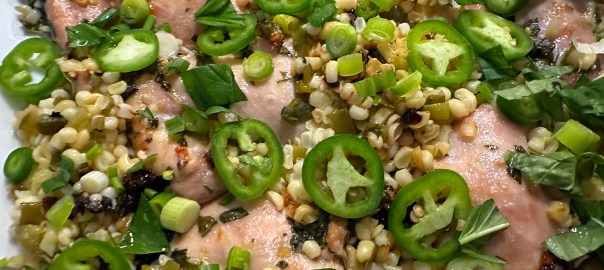
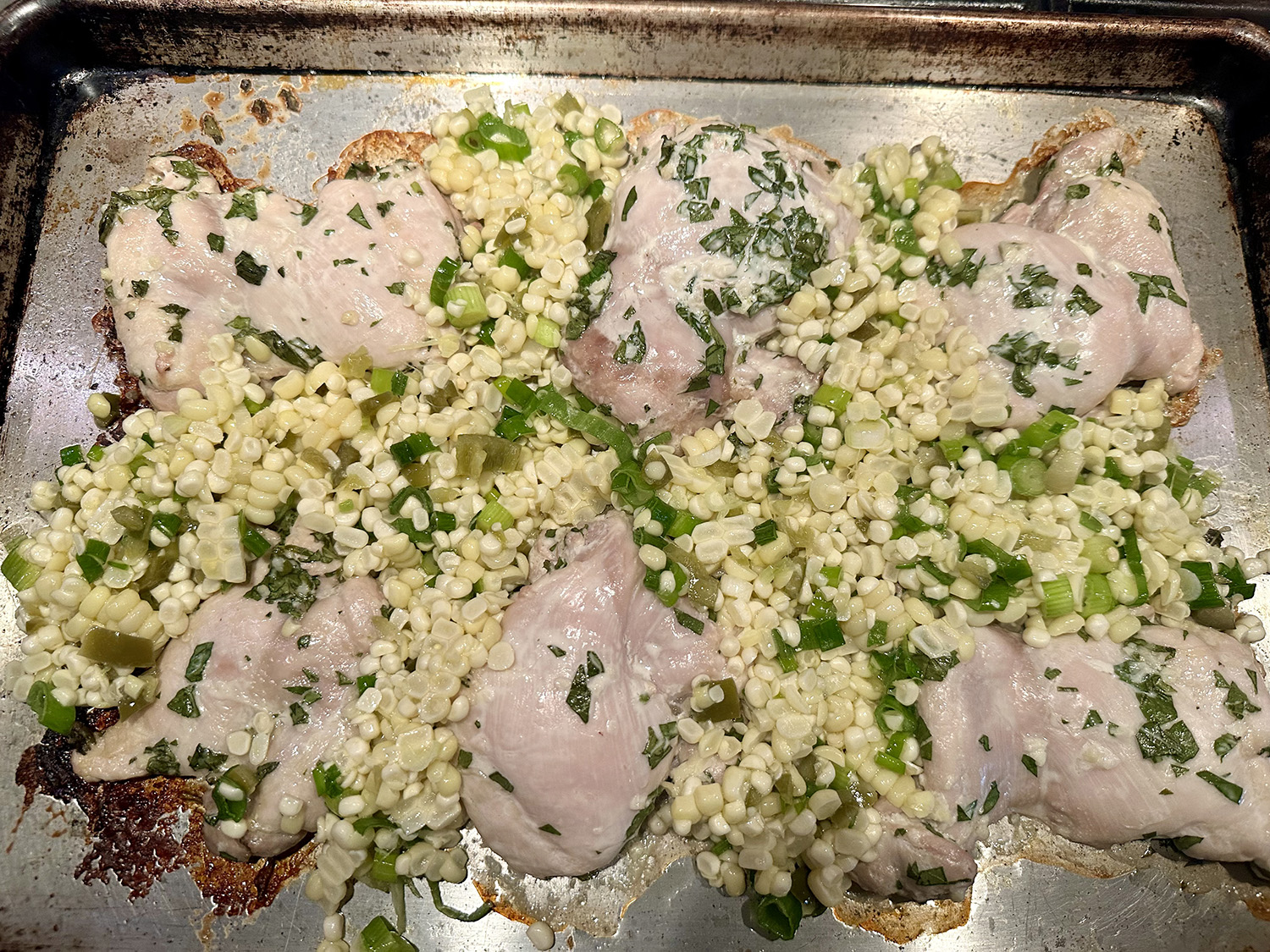
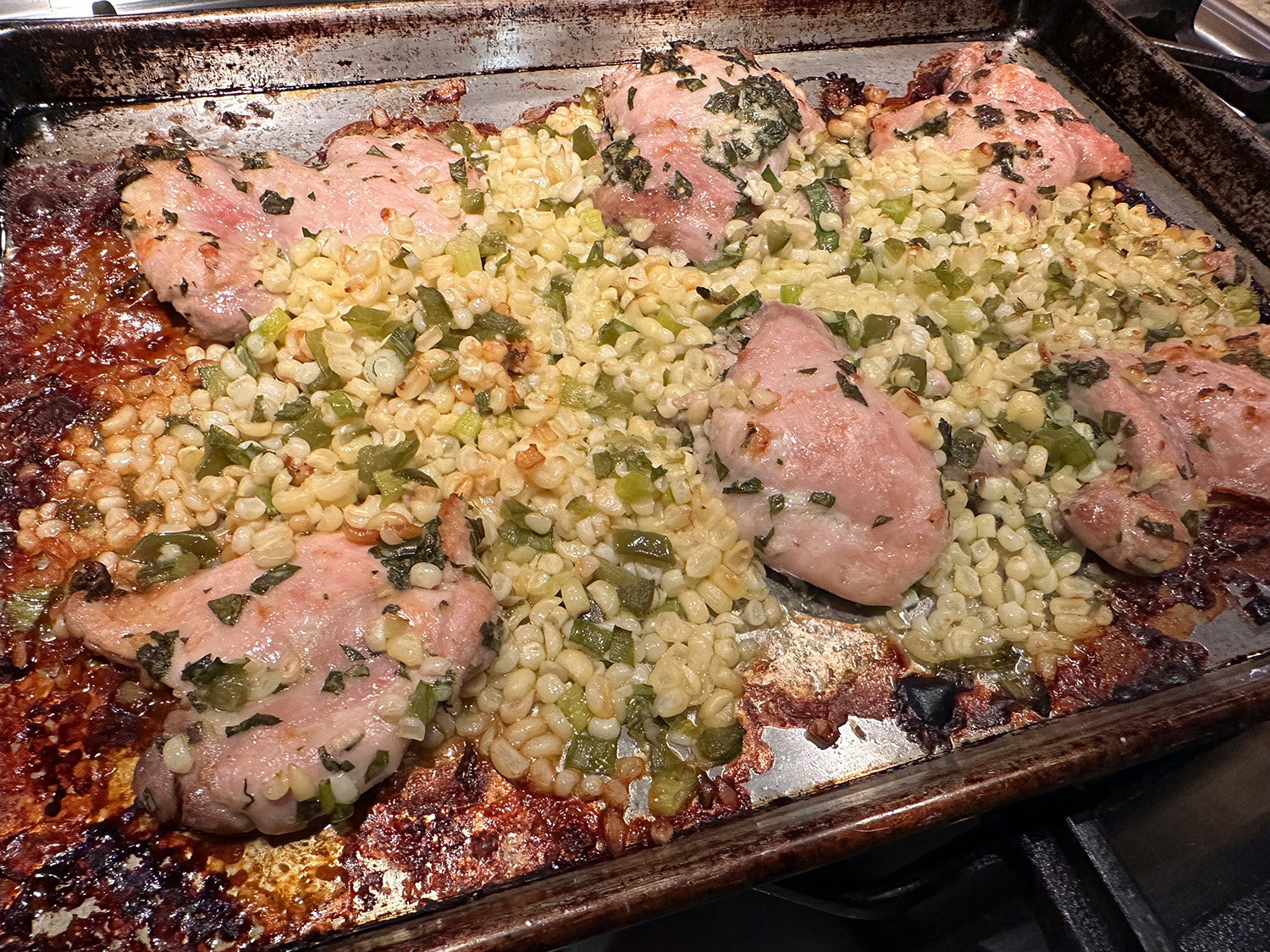
Another winner, sheet-pan dinner. The spicy, salty jalapeño brine balances sweet corn kernels, which roast on a sheet pan alongside chicken thighs in this simple, summery weeknight meal. The chicken, marinated with basil, garlic and a little mayonnaise, stays juicy even after a brief stint under the broiler.

You can serve this hot from the oven or at room temperature — it’s equally good each way — and cold leftovers are excellent piled onto lettuce or avocado for a salad the next day. BINGO!

It is required that you marinate the chicken in a mayo mixture for at least 30 minutes, and up to six hours. Ours marinated for three hours, so keep this in mind when planning to make this dish. We had two ears of corn already previously heated, plus two more fresh cobs, and just sliced off the kernels from all four and mixed them together.

Sheet-Pan Chicken Thighs with Spicy Corn

  • Servings: 4-6
  • Difficulty: easy
  • Print

Ingredients

  • 2 lbs. boneless, skinless chicken thighs
  • 1 ¾ tsp. fine sea or table salt, divided
  • 2 Tbsp. mayonnaise
  • ¼ cup finely chopped basil, plus more for garnish
  • 2 garlic cloves, finely grated or minced
  • ⅓ cup chopped pickled jalapeños, plus brine from the jar
  • 4 cups fresh or frozen corn kernels (from about 4 ears)
  • 3 Tbsp. olive oil, plus more for drizzling
  • 5 scallions, thinly sliced
  • 1 jalapeño, sliced into rings
  • 1 lime, halved

Directions

  1. Season the chicken all over with ¾ teaspoon of salt. In a large bowl, stir together the mayonnaise, basil, garlic and 2 tablespoons jalapeño brine. Add the chicken to the marinade. Cover and refrigerate for 30 minutes and up to 6 hours.
  2. Heat oven to 425 degrees. In a medium bowl, toss together corn, pickled jalapeños, olive oil, remaining 1 teaspoon salt and half of the scallions (save remaining scallions for serving).
  3. Arrange the chicken on a baking sheet, spacing it out. Roast for 12 minutes. Spoon the corn mixture onto the empty parts of the baking sheet. Drizzle chicken and corn with oil. Continue to roast until the chicken is cooked through, 10 to 15 minutes longer, stirring the corn once while roasting. (Our chicken thighs were ready after 10 minutes.)
  4. Turn the broiler on high and broil the chicken and corn until golden brown in spots, 2 to 4 minutes (watch carefully so it doesn’t burn, though a little blistering is nice).
  5. Garnish chicken and corn with basil, remaining scallions and fresh jalapeño slices. Sprinkle with with lime juice. Serve hot or at room temperature.

http://www.lynnandruss.com

Adapted from a recipe by Melissa Clark for NYTimes Cooking

Braised Chicken and Mushrooms over Polenta

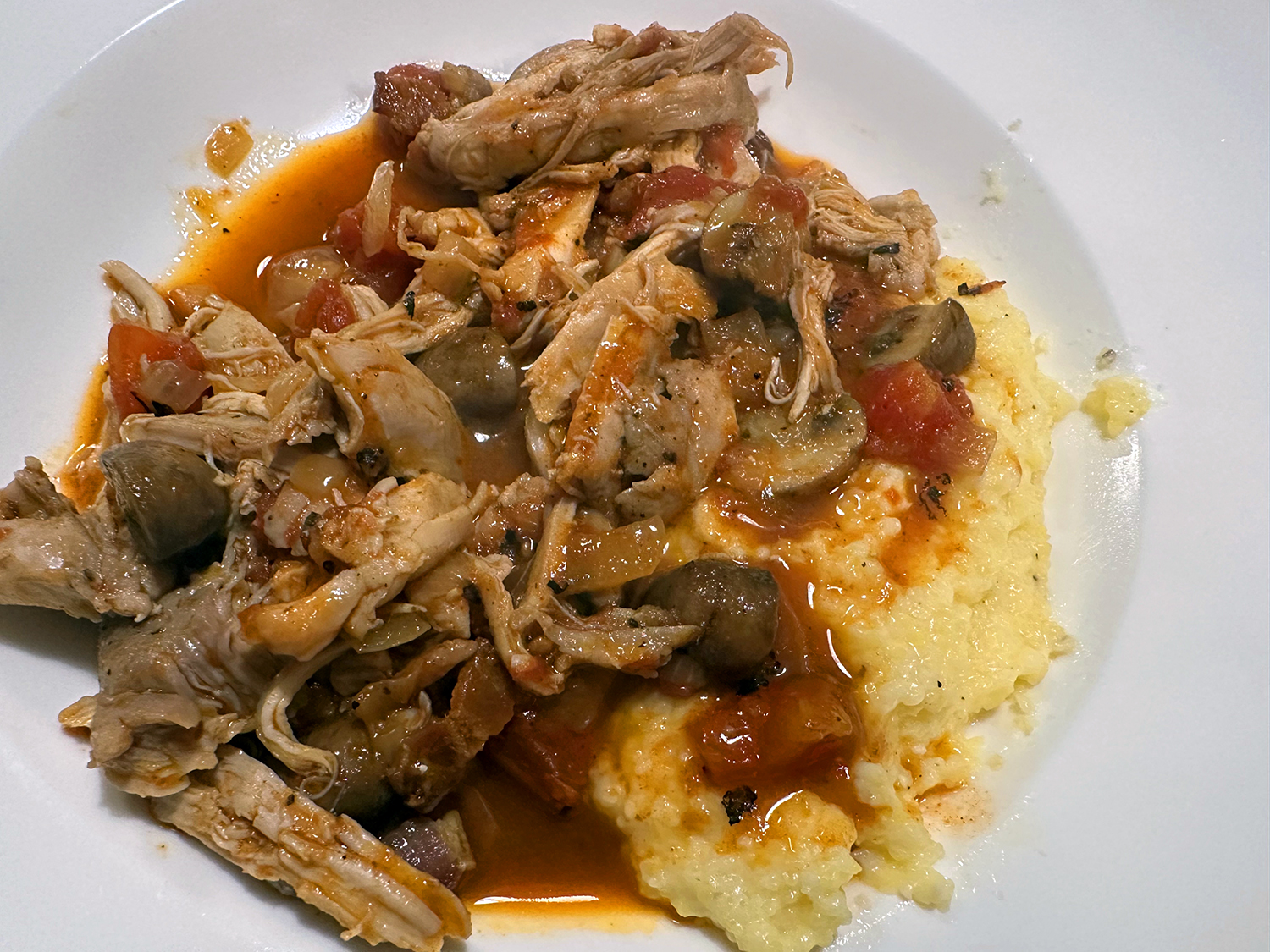
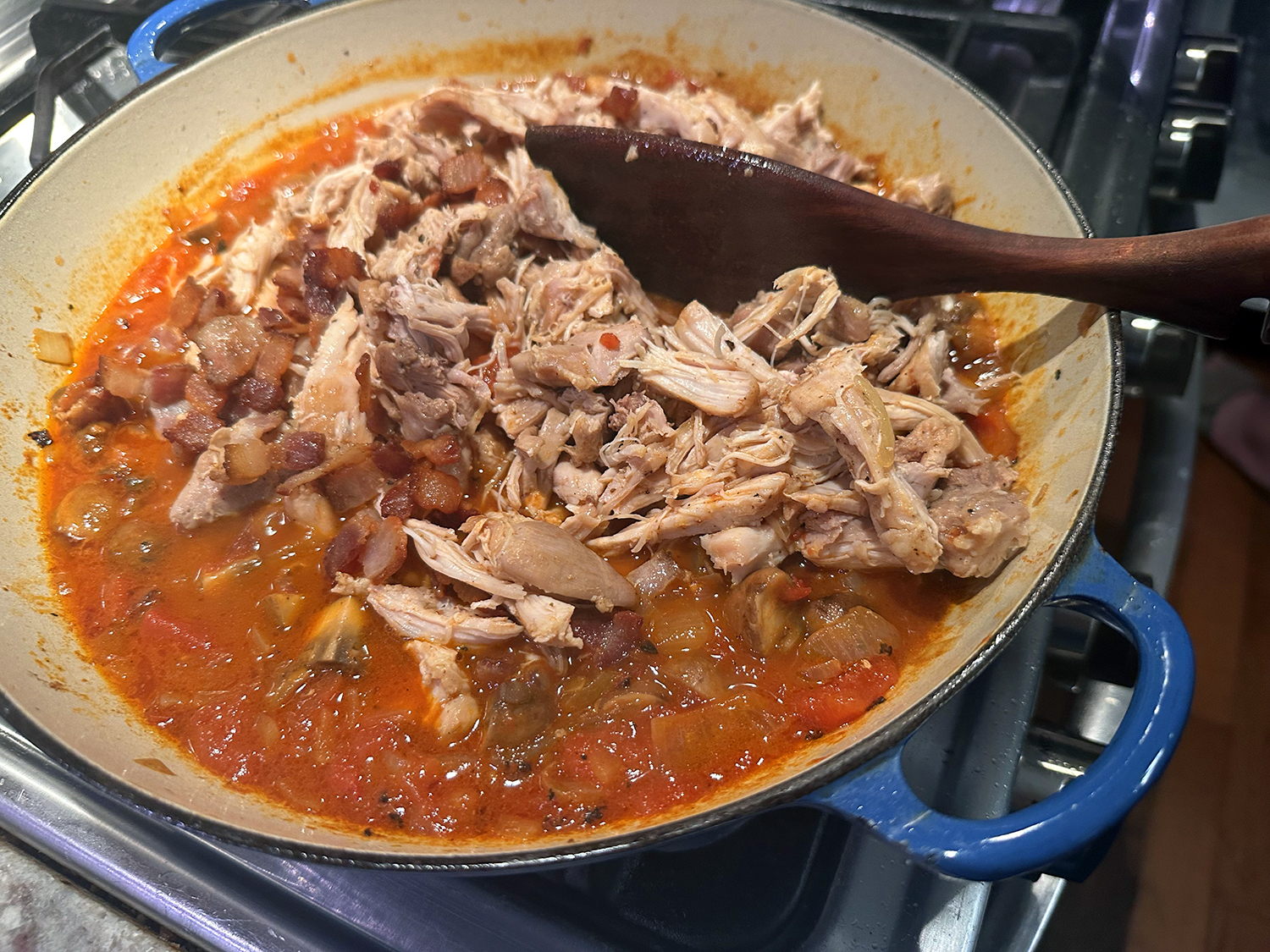
This stewy chicken dish takes inspiration from chicken cacciatore. Braised boneless, skinless chicken thighs are quickly braised to a tender, shreddable consistency in this easy weeknight meal.

These days, polenta is usually made from yellow cornmeal. Cornmeal is made from dent corn – also known as field corn, which is different from the sweet corn you eat. It’s higher in starch and lower in sugar. Because polenta is made from dried, ground corn, it’s gluten-free.

It’s often prepared as a porridge-like dish similar to grits, made by cooking cornmeal in water over low heat. It needs to be stirred often and cooked slowly. It can be made from finely ground or coarse ground cornmeal. In some countries, polenta is made from white or red cornmeal. 

Instant – or “quick” polenta – is pre-processed so that the cooking time is shorter. Some people say it doesn’t taste as good as regular polenta. You can also find ready-made polenta that’s fully cooked. It’s often served with various foods like meats, fish, and vegetables.  We chose to switch the instant polenta to regular corn grits polenta.

An easy way to shred the cooked chicken is with two large serving forks.

Braised Chicken and Mushrooms over Polenta

  • Servings: 4
  • Difficulty: easy
  • Print

Ingredients

  • 1 1⁄2 lbs. boneless, skinless chicken thighs, trimmed
  • 1⁄2 tsp. pepper
  • 1 3⁄4 tsp. table salt, divided
  • 6 slices bacon, cut into 1⁄2-inch pieces
  • 8 oz. cremini mushrooms, trimmed and quartered
  • 1 onion, chopped
  • 1 14.5-oz. can fire-roasted diced tomatoes
  • 2 1⁄2 cups chicken broth, divided (1⁄2 cup for chicken; 1⁄2 for polenta)
  • 2 tsp. smoked paprika
  • 2 cups milk
  • 1 cup polenta

Directions

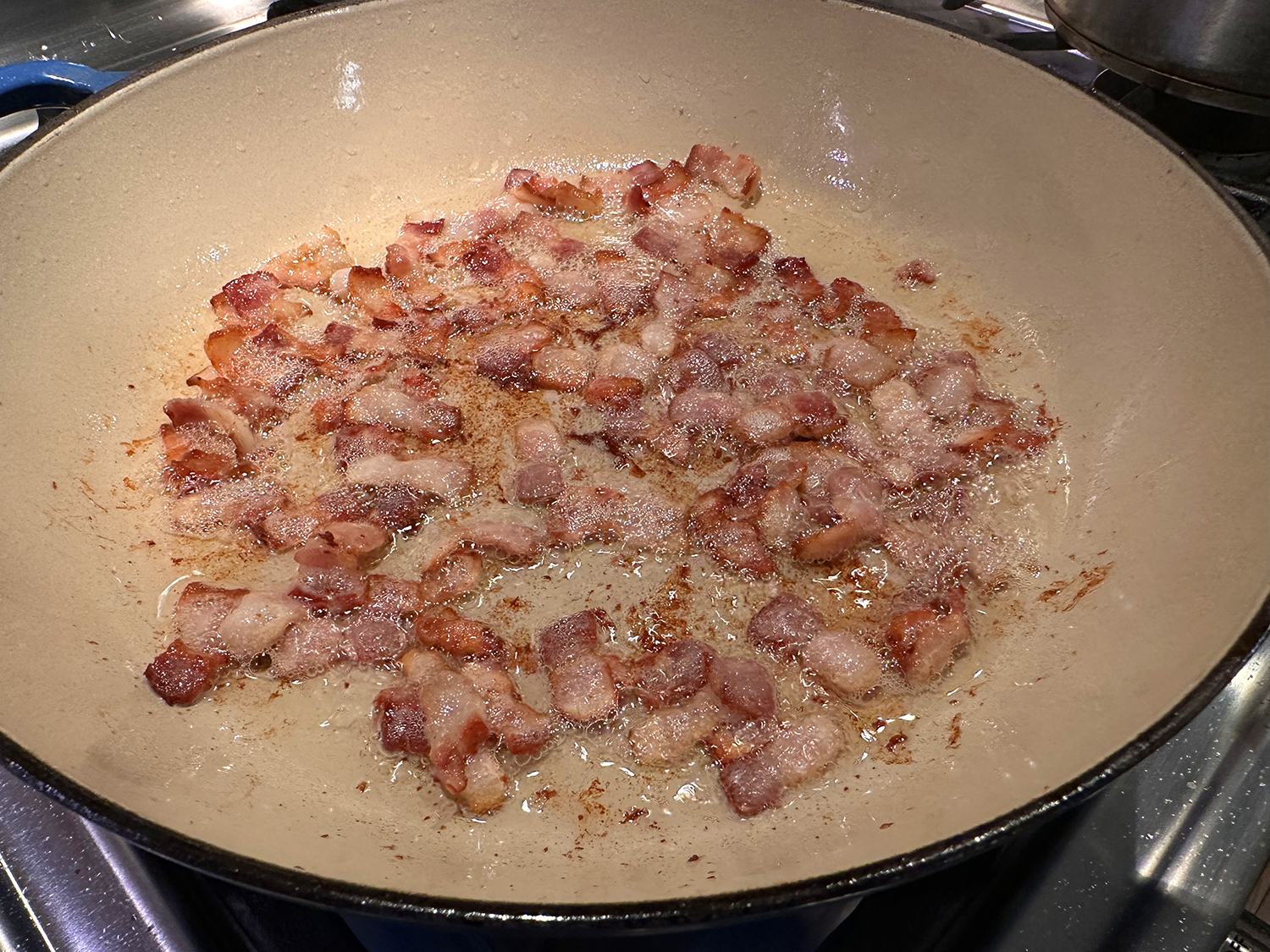
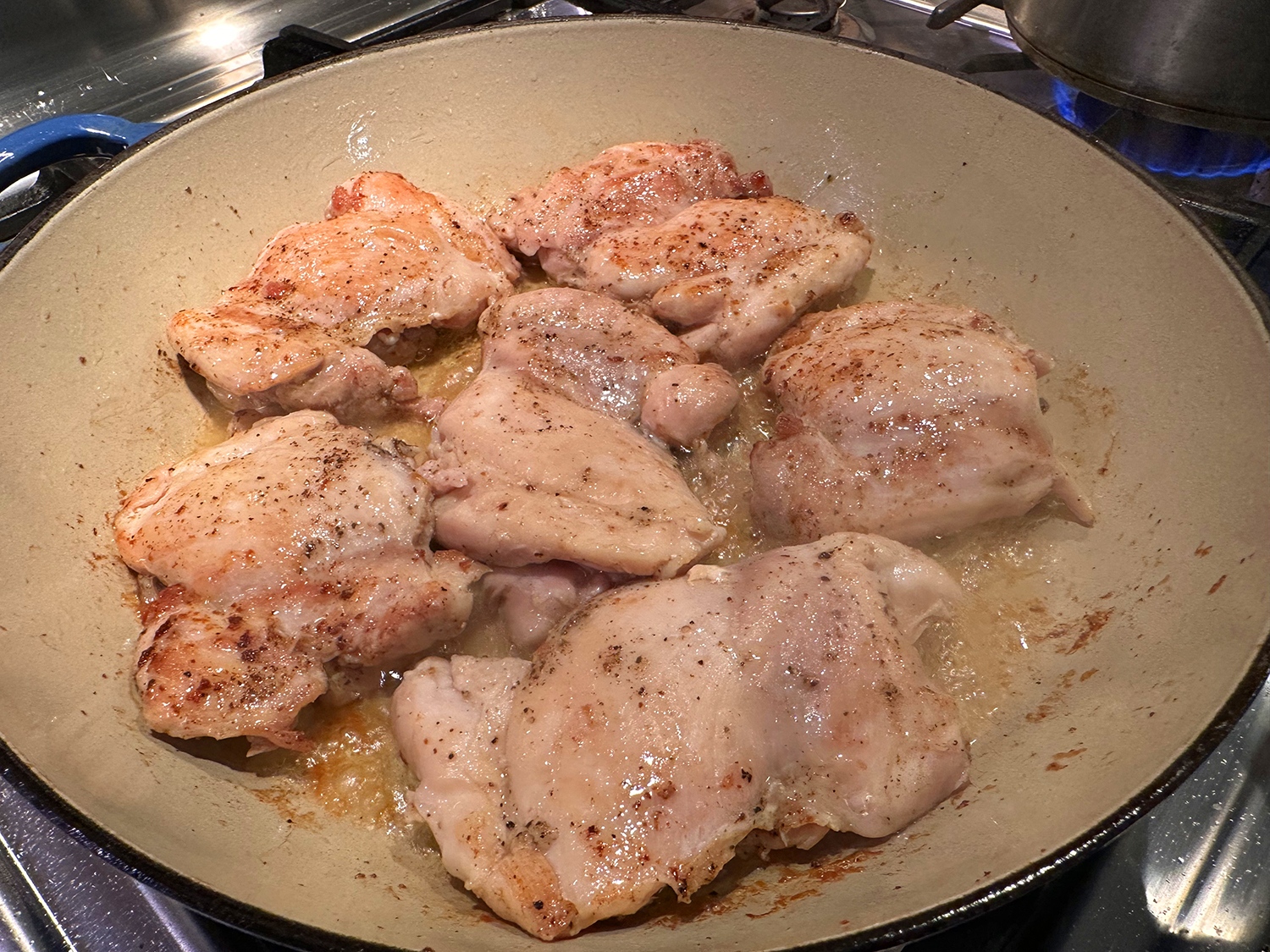
  1. Pat chicken dry with paper towels and sprinkle with pepper and 1 teaspoon salt. Cook bacon in Dutch oven over medium-high heat until crispy, 5 to 7 minutes. Using slotted spoon, transfer bacon to plate.
  2. Add chicken to fat left in pot and cook until lightly browned, 3 to 5 minutes per side. Transfer to plate.
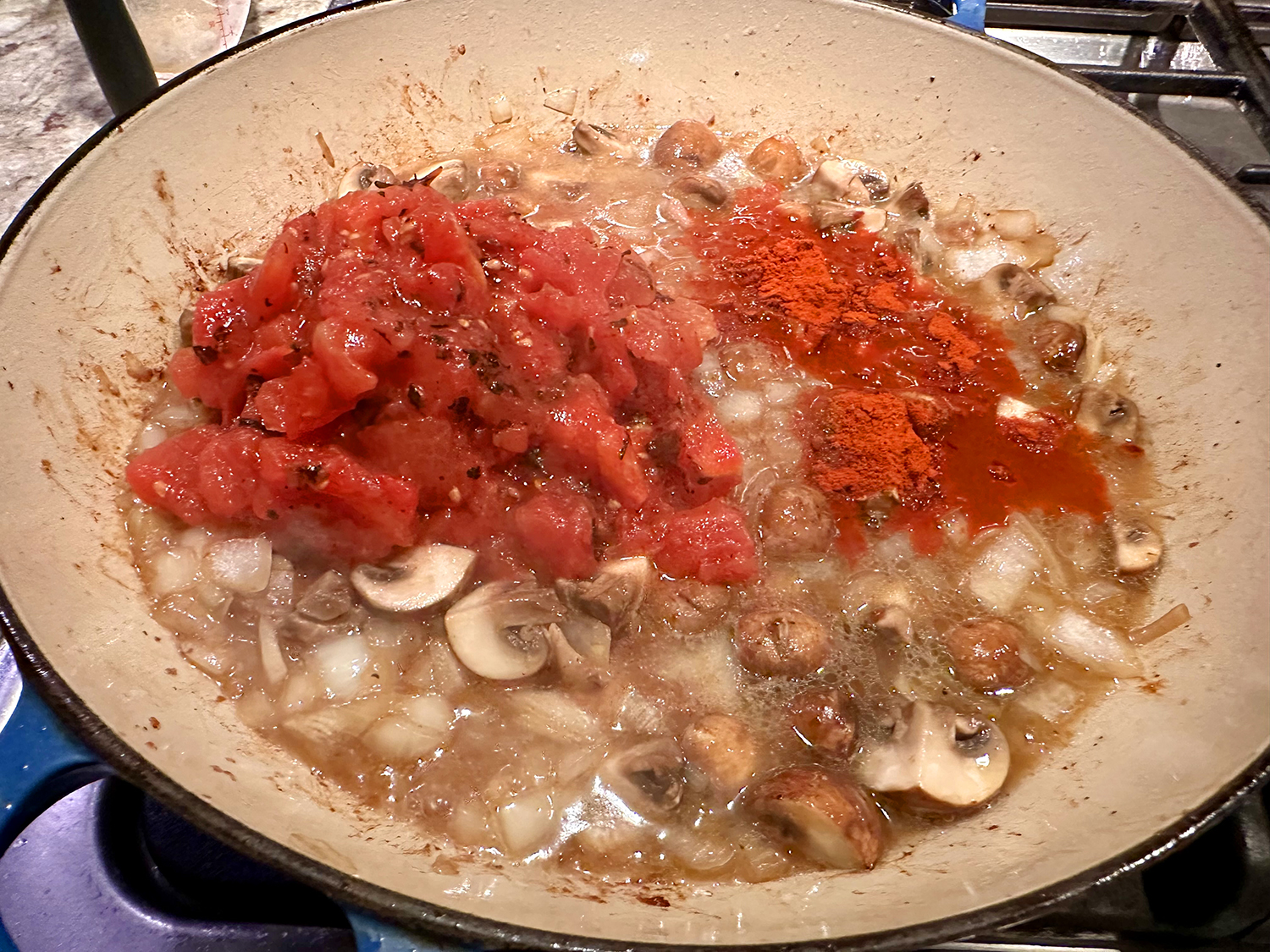
  3. Add mushrooms, onion, and ¼ teaspoon salt to now-empty pot and cook, stirring frequently, until browned, about 5 minutes.
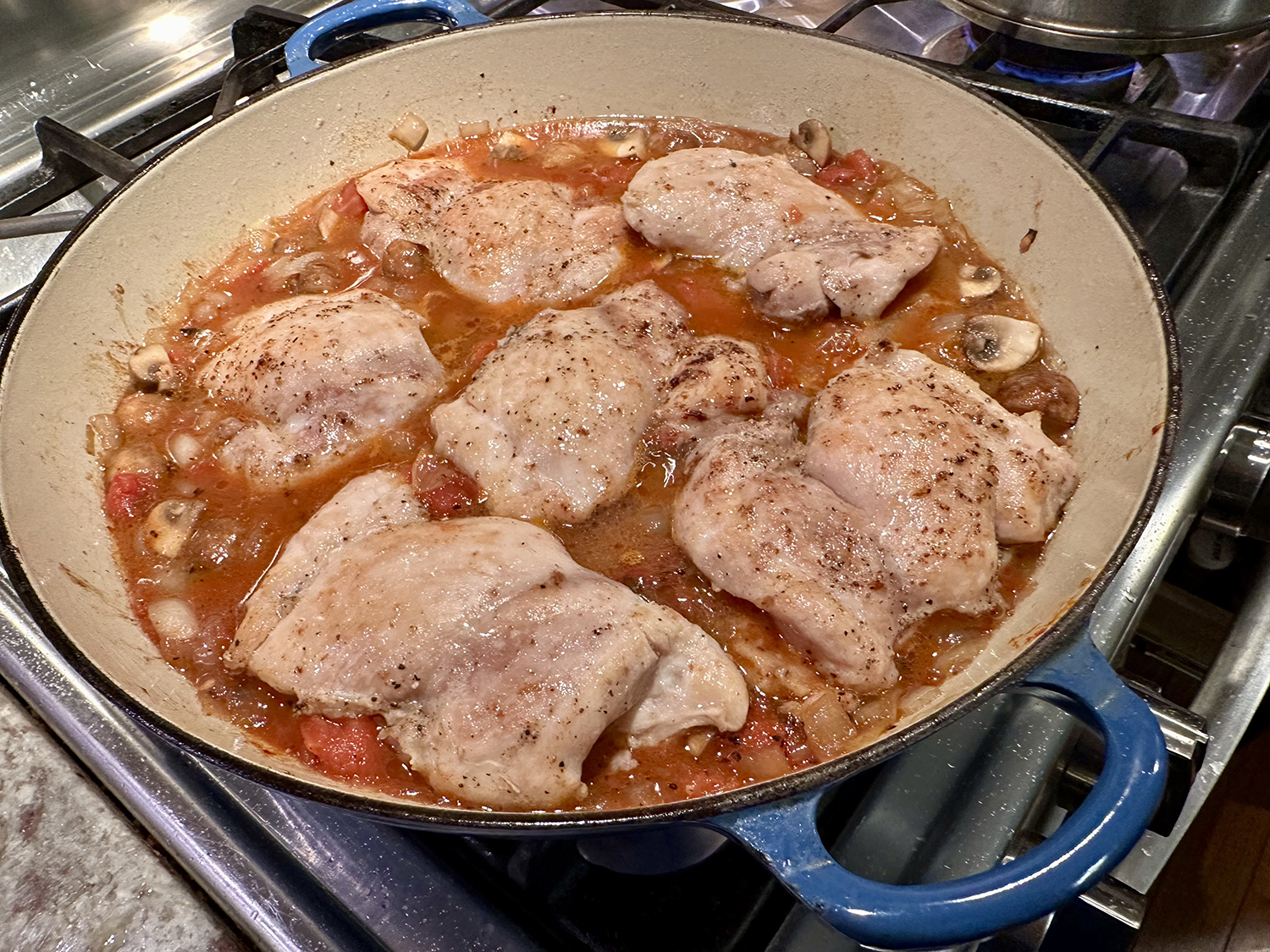
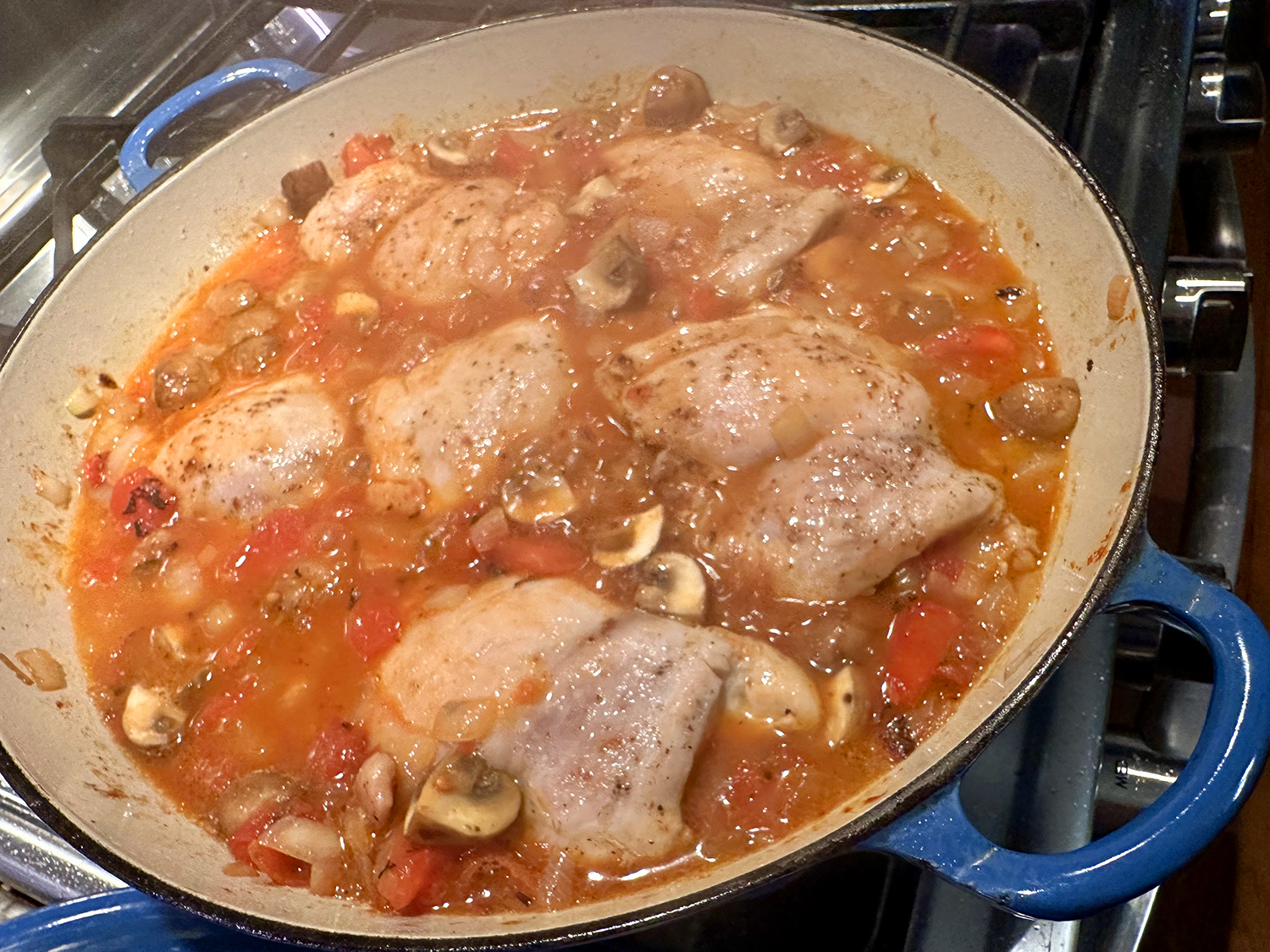
  4. Add tomatoes, ½ cup broth, and paprika and bring to boil, scraping up any browned bits. Return chicken to pot; reduce heat to medium; cover; and cook, stirring occasionally, until meat registers 195 degrees, 10 to 12 minutes.
  5. Transfer chicken to cutting board and shred into bite-size pieces. Simmer sauce until slightly thickened, about 5 minutes, then stir chicken and bacon back into sauce.
  6. Polenta: packaged directions for regular corn grits polenta. Or for Instant Polenta: bring milk and remaining 3½ cups broth to boil in large saucepan over medium-high heat. Whisk in polenta and remaining ½ teaspoon salt. Reduce heat to medium-low and cook until thickened, about 3 minutes. Serve.

http://www.lynnandruss.com

Recipe for Milk Street by Dimitri Demopolous

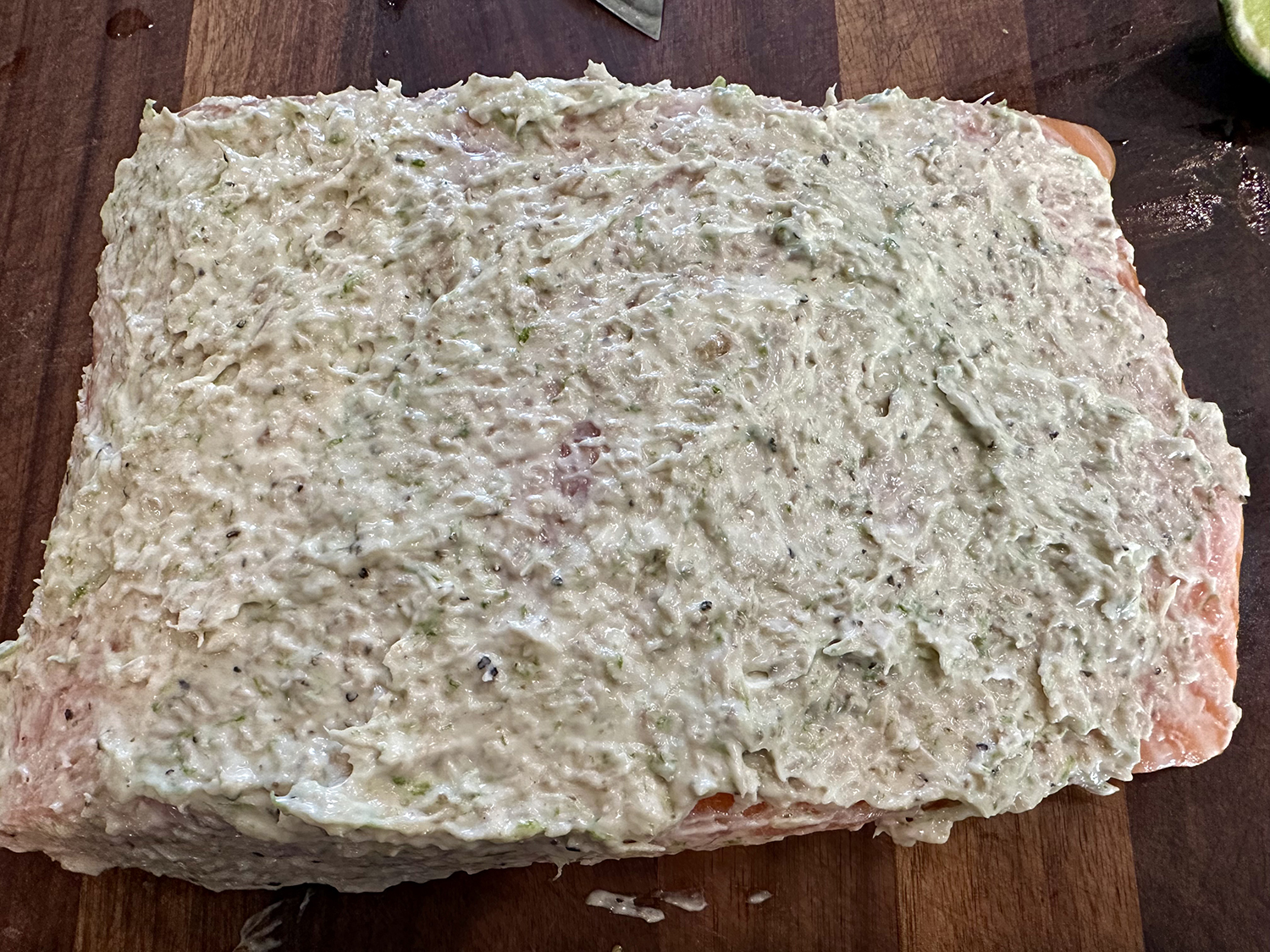
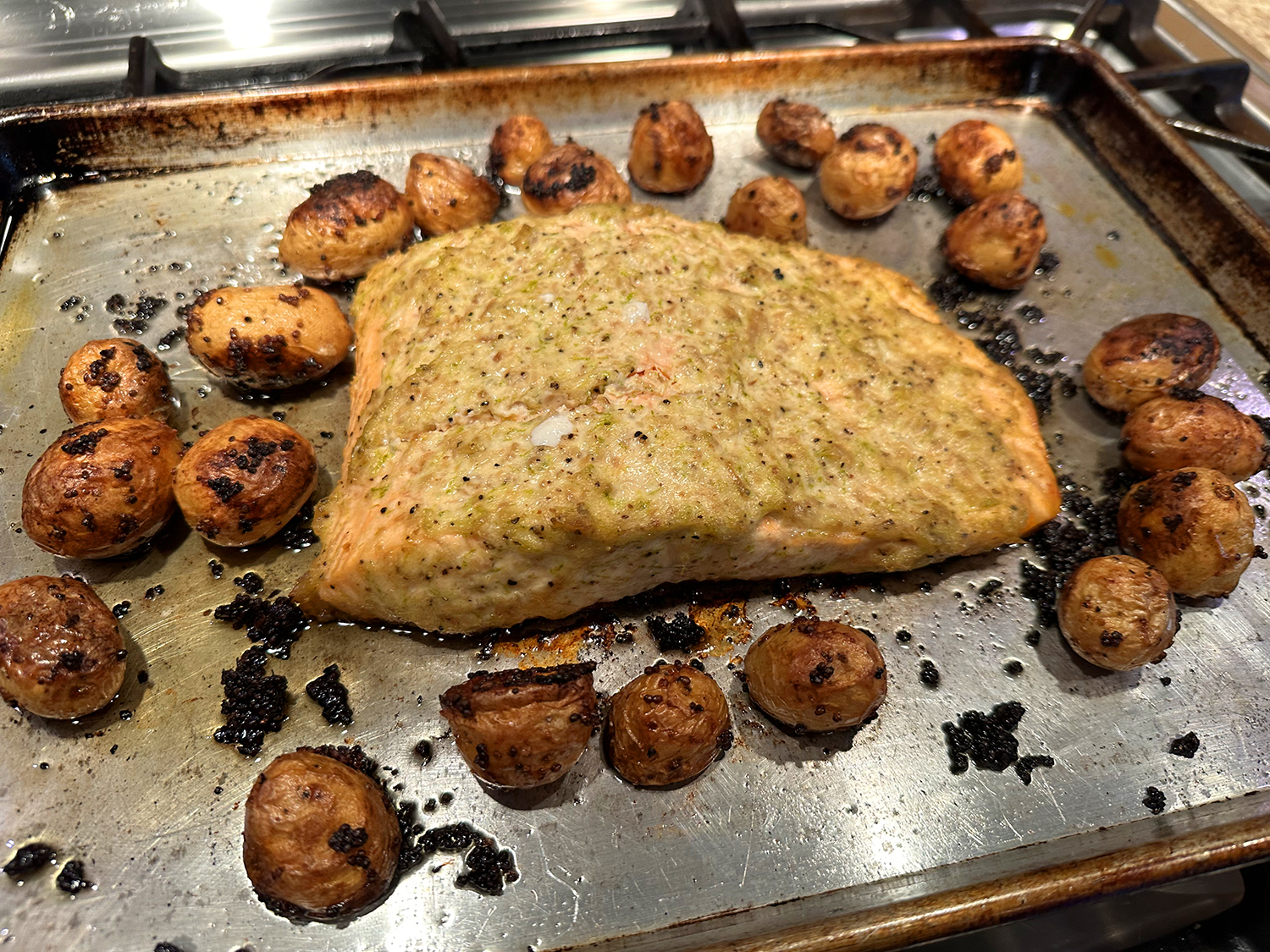
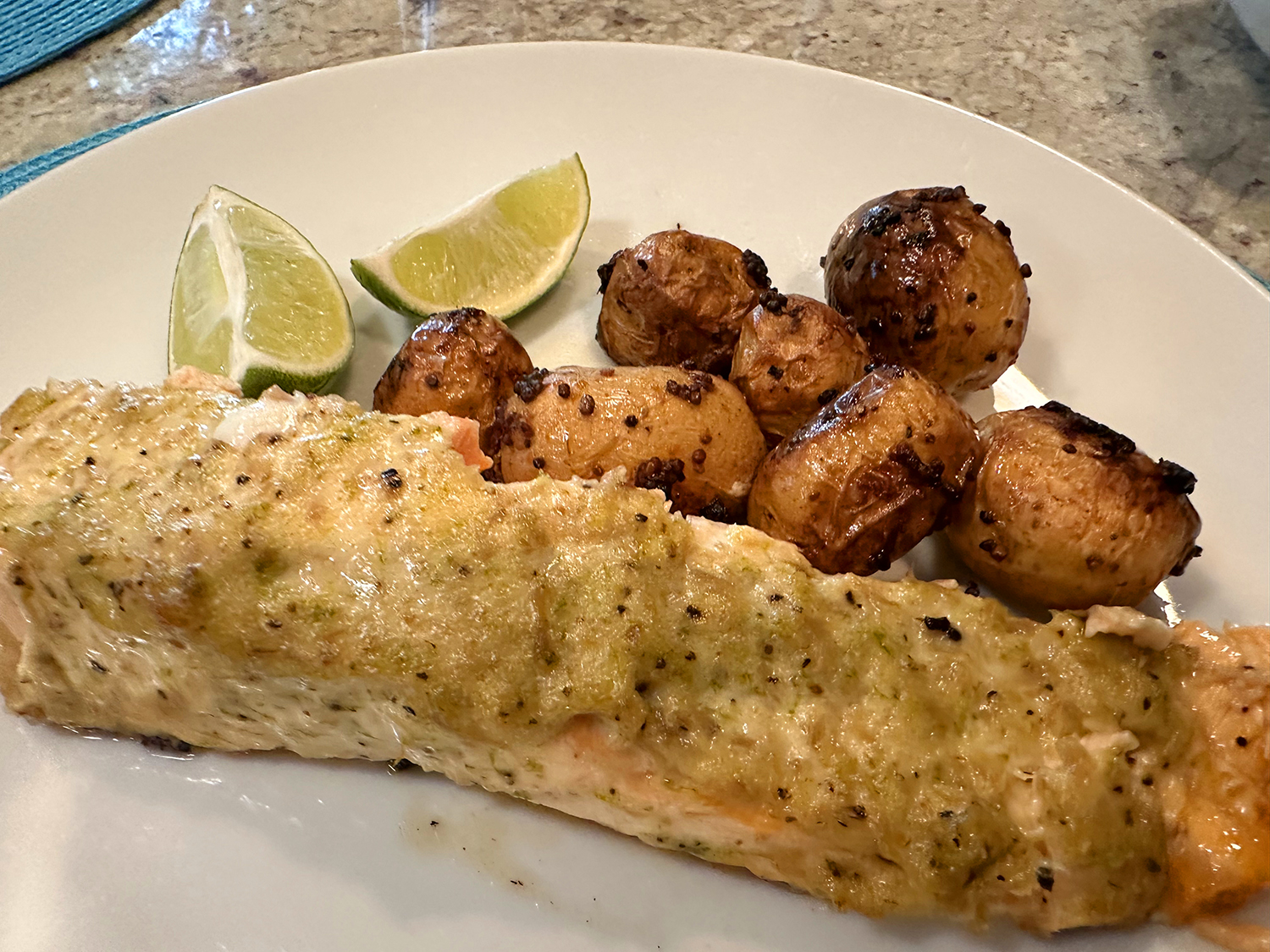
Horseradish Roasted Salmon with Mustard Potatoes

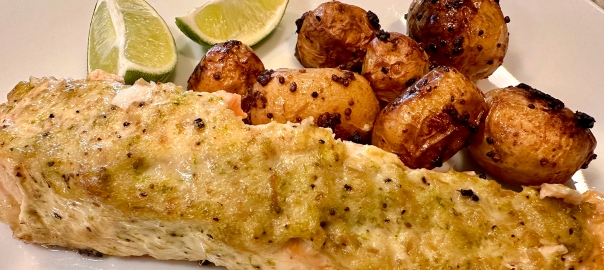
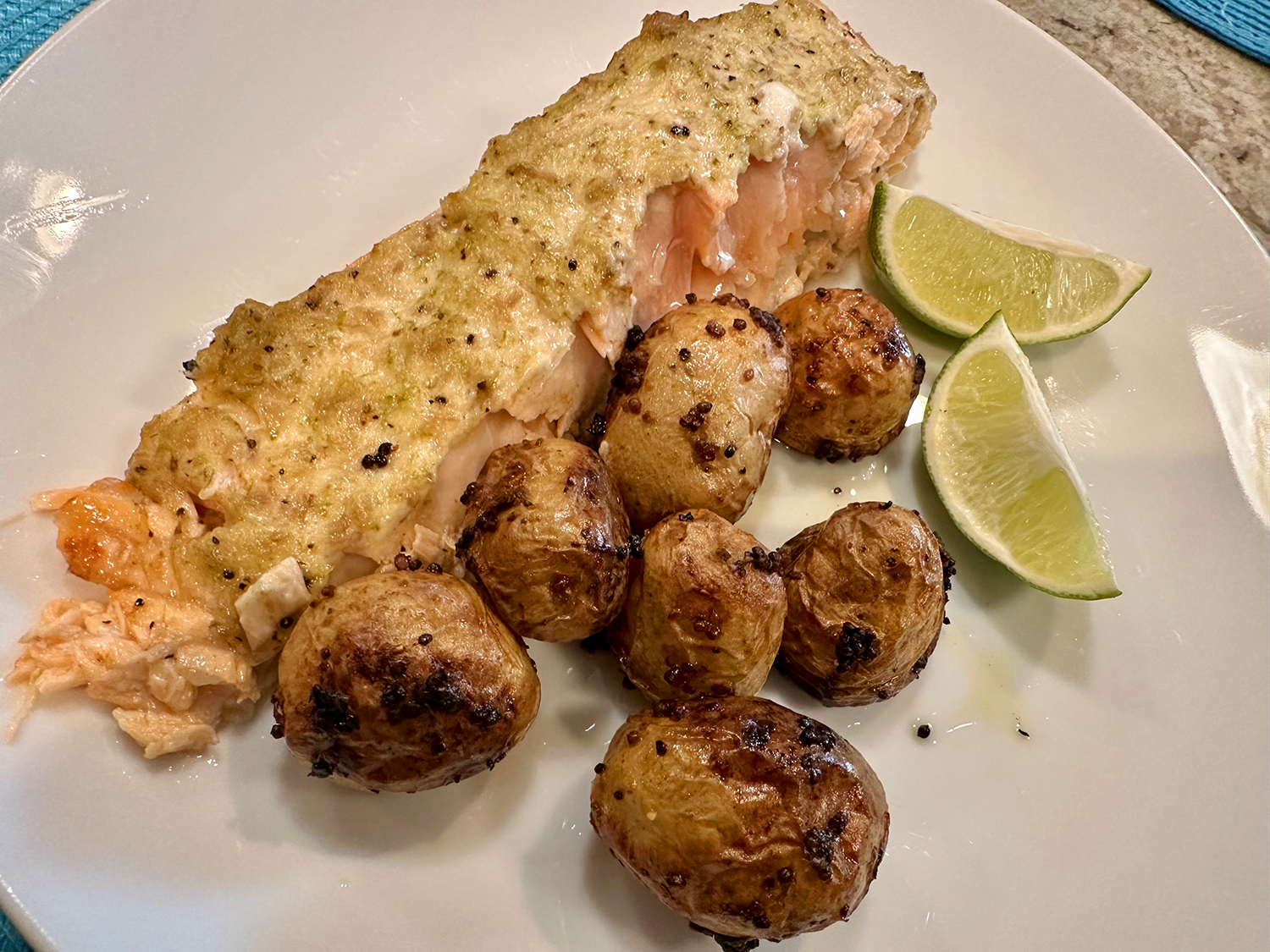
Salmon is one of our go-to fish purchases. Usually it is priced relatively well, and we can source good salmon from one of two places close by. Slathered in a creamy horseradish mayonnaise, salmon fillet is a weeknight winner. (You can cook smaller fillets or one larger center-cut piece, whichever you prefer.)

The key to moist, flavorful salmon is to roast it at a high temperature for a short length of time. Here it’s baked alongside tangy mustard potatoes, but asparagus, broccoli or even green beans would be nice, too. If using less hearty vegetables, just cut the initial bake time down to 5 to 10 minutes.

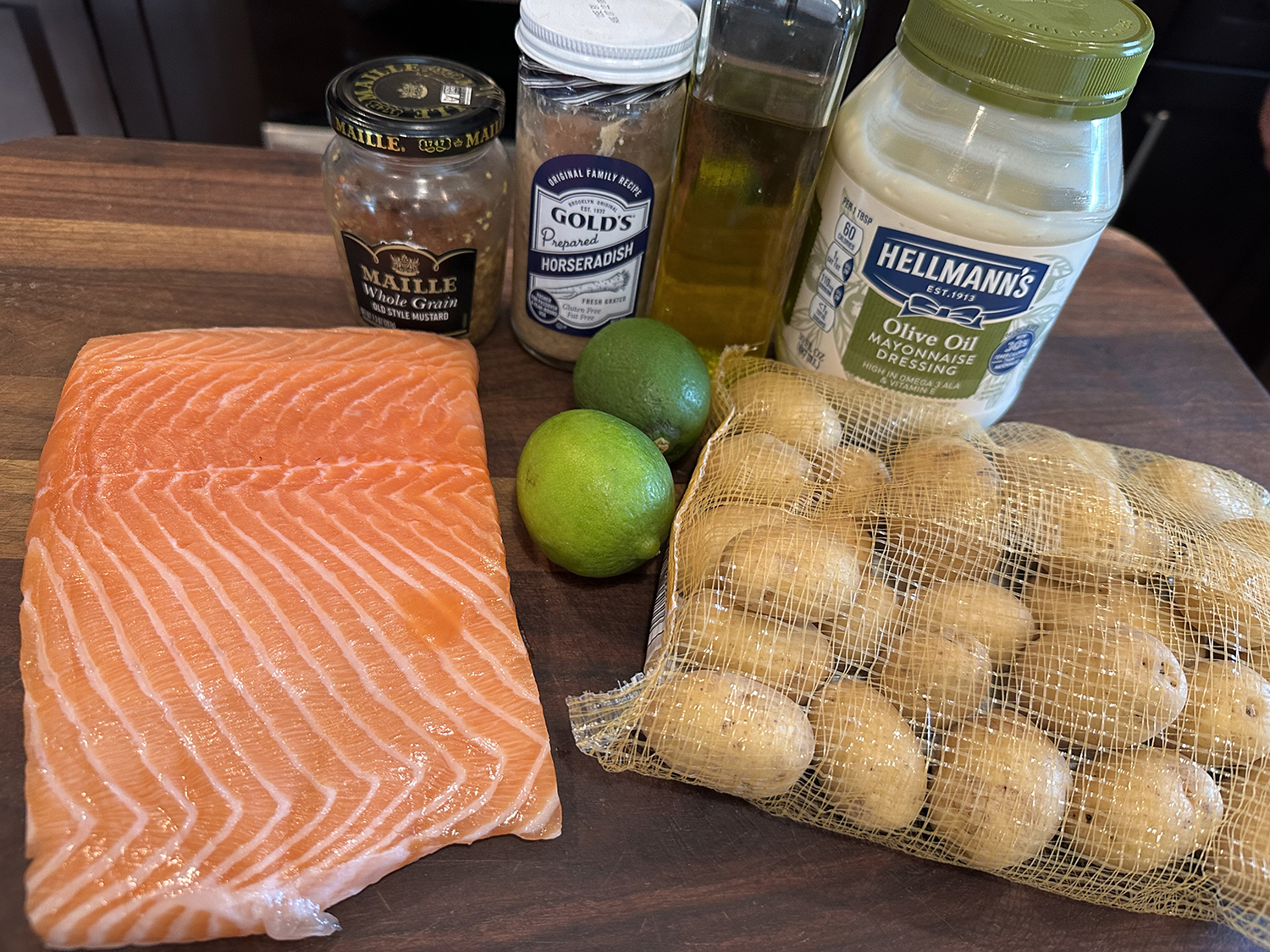
For future repeat on this recipe, we recommend to add more potatoes; use Dijon instead of whole grain mustard (which didn’t stick to the potatoes). The fix is one tablespoon Dijon, with one tablespoon whole grain mustard.

Horseradish Roasted Salmon with Mustard Potatoes

  • Servings: 4
  • Difficulty: easy
  • Print

Ingredients

  • 1 lb. baby Yukon Gold potatoes, halved if large
  • 3 Tbsp. olive oil
  • 2 Tbsp. whole-grain mustard
  • Kosher salt and coarsely ground black pepper
  • 3 Tbsp. mayonnaise
  • 2 Tbsp. drained prepared horseradish
  • 2 limes
  • 1½ lbs. skinless salmon fillet (preferably 1 single center-cut piece)

Directions

  1. Heat oven to 400 degrees.
  2. On a rimmed sheet pan, toss together the potatoes, olive oil and mustard. Season with salt and pepper. Roast for 20 minutes, tossing once halfway through.
  3. Meanwhile, combine the mayonnaise and horseradish in a small bowl. Finely grate 2 teaspoons lime zest and then cut the remaining lime into wedges. Add the lime zest to the mayonnaise mixture and season to taste with salt and pepper. Season the salmon with salt and pepper and then slather the sauce all over the top and sides.
  4. Remove the potatoes from the oven and use a spatula to make space in the center of the pan. Add the salmon, skinned side down. Return the pan to the oven and cook until the potatoes are browned and tender and the salmon is cooked through to your liking, 10 to 20 minutes, depending on the thickness of the salmon.
  5. Serve the salmon and potatoes with lime wedges.

http://www.lynnandruss.com

Recipe by Julia Gartland for NYTimes Cooking

Chicken with Artichokes and Lemon

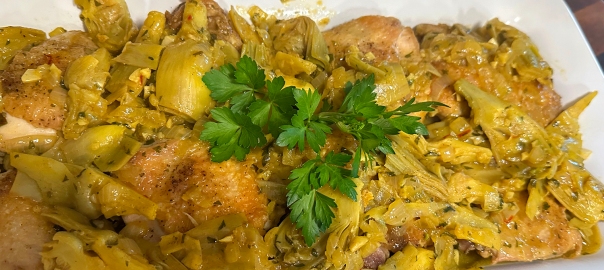
The original recipe called for using fresh artichokes, which adds a lot more time and effort to this tasty dish. And since we had a 12-ounce bag of frozen artichokes at the ready, we opted to make this recipe in a more time-sensitive manner. And it didn’t disappoint.

This chicken dish partnered well with our side of Mushroom Risotto with Peas. The meal was absolutely delicious!

Chicken with Artichokes and Lemon

  • Servings: 4-6
  • Difficulty: easy
  • Print

Ingredients

  • 1 large lemons
  • 12-oz. bag of frozen artichoke hearts
  • 6-8 bone-in, skin-on chicken thighs (about 2 lbs. total)
  • Kosher salt and freshly ground pepper
  • 2 Tbsp. olive oil
  • 1 medium yellow onion, diced
  • 4 garlic cloves, chopped
  • 1 tablespoon chopped fresh parsley, plus more to garnish
  • ½ tsp. saffron
  • ½ tsp. ground cinnamon
  • 1½ cups chicken broth, plus more if needed

Directions

  1. Pat chicken dry, then season all over with salt and pepper. In a large skillet, warm the olive oil over medium-high heat, then add the chicken, skin-side down. Cook, undisturbed until well browned, 7 to 8 minutes. Flip and brown the other side, about 5 minutes. Transfer chicken thighs to a plate and spoon out about 3 tablespoons of fat from the pan, if desired. (You can discard the excess fat or save for another use.)
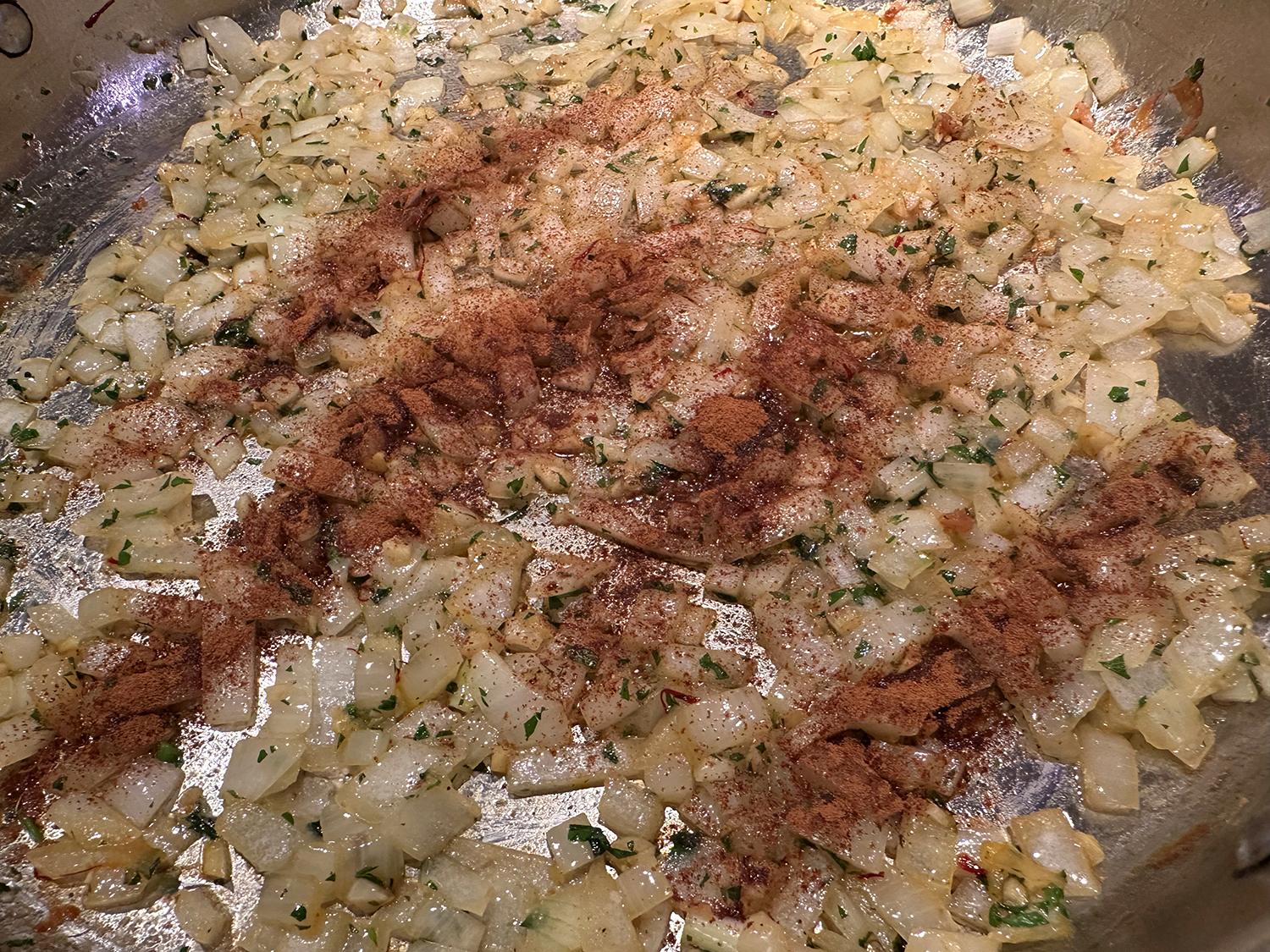
  2. Return the skillet to medium heat and add the onion, garlic, parsley and saffron. Season with salt and pepper, and cook, stirring occasionally, until onion is translucent, about 5 minutes. Sprinkle the cinnamon over the onion, then stir to combine.
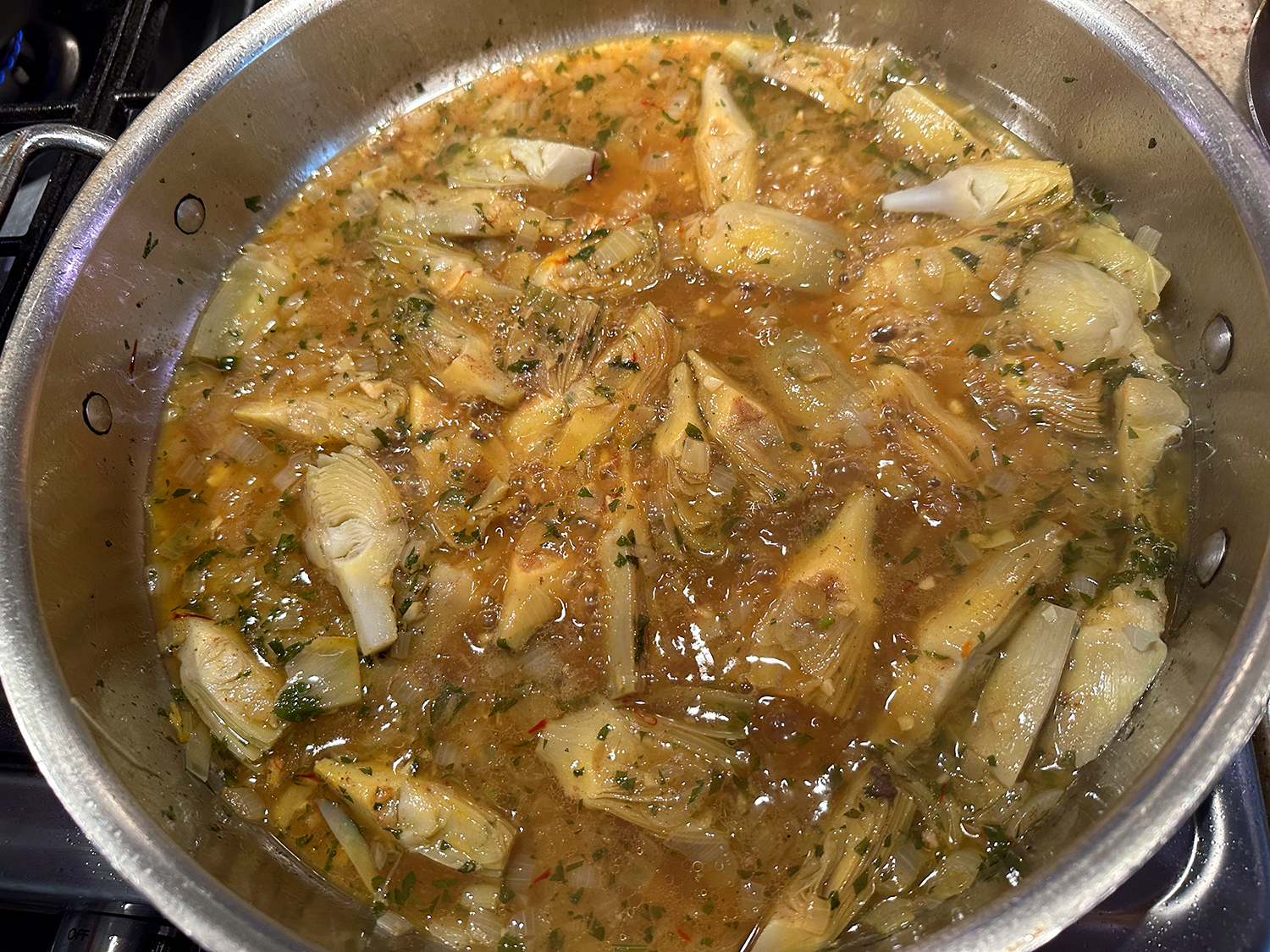
  3. Add the broth to deglaze, scraping the bottom of the pan, and bring to a simmer over medium-high. Return the chicken to the pan, nestling it into the pan skin-side up. Arrange the artichokes between the chicken pieces, cover, and simmer over medium-low until the chicken is cooked through, 20 to 25 minutes. Remove the chicken with a slotted spoon and transfer to a plate.
  4. Raise the heat to medium-high and cook until the sauce is thickened and the artichokes slightly browned, about 5 minutes. Stir in the juice from half the remaining lemon, taste, and adjust with salt and more lemon juice if needed. Spoon artichokes and pan sauces over the chicken, sprinkle with parsley to garnish, and serve.

http://www.lynnandruss.com

Adapted from a recipe by Joan Nathan for NYTimes Coooking

Chicken En Cocotte

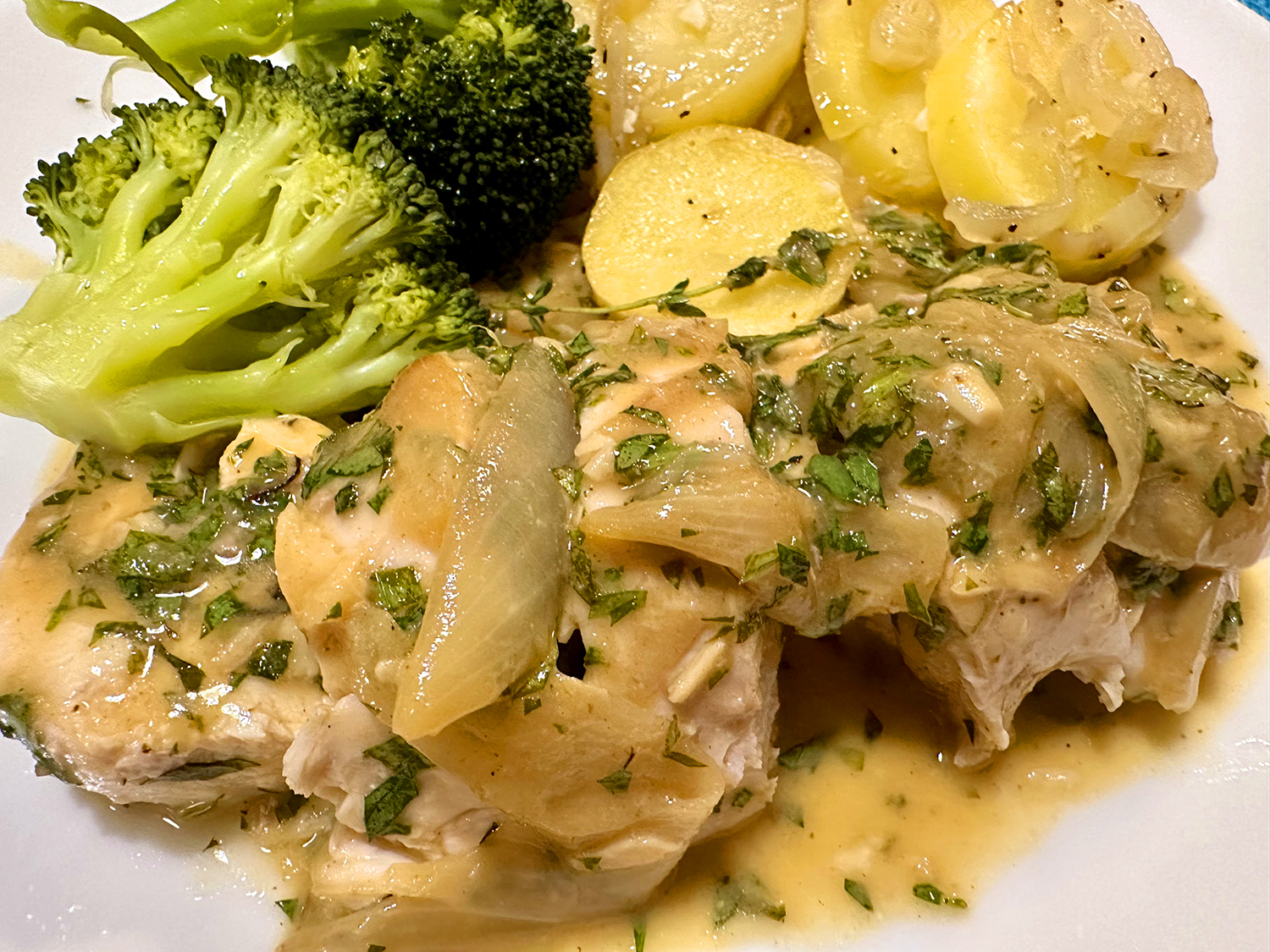
With very little prep involved in this Chicken En Cocotte—or in a pot—and most of the cooking being hands-off, you should get this tasty recipe on your short list. You will not get crispy skin from this method, in fact it gets discarded, but you will end up with super-moist poultry meat. We oooohed and aaaahhhed all the way through dinner.

Cooking the chicken breast side down allows the delicate white meat to gently poach in the wine while the legs bake up above, a technique that helps equalize the cooking of the white meat (done at 160°F) and dark meat (done between 175°F to 180°F). Allowing the chicken to rest breast side up after prevents the white meat from overcooking.

The sauce was just amazing, we even spooned it over our side dish of Spanish Potatoes in Olive Oil, a perfect companion to the chicken because they both share several ingredients: white wine, garlic, onion and thyme.

NOTE: Don’t use a Dutch oven smaller than 7 quarts or a chicken larger than 4½ pounds. If the bird fits too snugly, there won’t be enough space for heat to circulate, hindering even cooking.

Chicken En Cocotte

  • Servings: 4
  • Difficulty: easy
  • Print

Ingredients

  • 5 Tbsp. salted butter, divided
  • 1 large yellow onion, cut into 8 wedges
  • 8 medium garlic cloves, peeled and halved
  • 1 1/2 cups dry white wine
  • 10 thyme sprigs
  • 1 4- to 4½-lb. whole chicken, wings tucked and legs tied
  • Kosher salt and ground black pepper
  • 3 Tbsp. lemon juice
  • 2 Tbsp. dijon mustard
  • 1/2 cup finely chopped fresh tarragon leaves

Directions

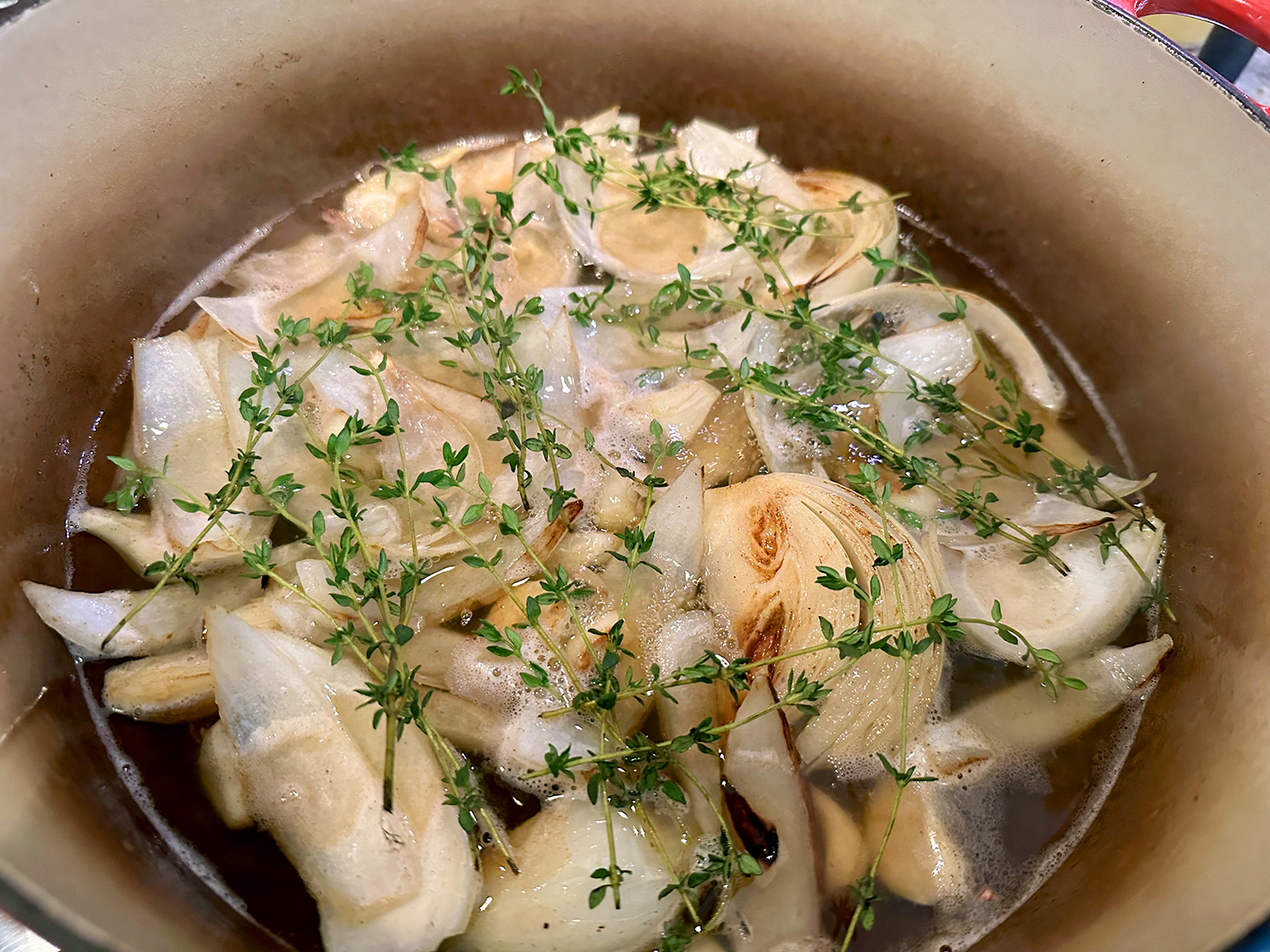
  1. Heat the oven to 400°F with a rack in the lower-middle position. In a large Dutch oven over medium, melt 1 tablespoon of the butter. When the foaming subsides, add the onion and garlic and cook until lightly browned, about 5 minutes. Pour in the wine and bring to a simmer. Lay the thyme sprigs on the onion mixture.
  2. Using paper towels, pat the chicken dry then season with salt and pepper. Set the chicken breast side down over the thyme and onions. Cover and bake until the thickest part of the breast reaches 160°F and the thighs reach 175°F to 180°F, 55 to 65 minutes. Using tongs inserted into the cavity of the chicken, carefully transfer it to a large baking dish, turning it breast side up. Let rest for at least 15 minutes.
  3. Meanwhile, remove and discard the thyme sprigs. Tilt the pot to pool the liquid to one side and use a wide spoon to skim and discard the fat. Bring to a simmer over medium and cook until thickened and reduced to about 1 cup (with solids), about 5 minutes. Off heat, whisk in the remaining 4 tablespoons butter, the lemon juice and mustard. Taste and season with salt and pepper.
  4. Remove the legs from the chicken by cutting through the hip joints. Remove and discard the skin from the legs, then separate the thighs from the drumsticks. Remove the breast meat from the bone, remove and discard the skin, then cut each crosswise into thin slices. Arrange the chicken on a platter. Transfer the sauce to a bowl, stir in the tarragon and serve with the chicken.

http://www.lynnandruss.com

Recipe from Milk Street

Artichoke-Parmesan Soup

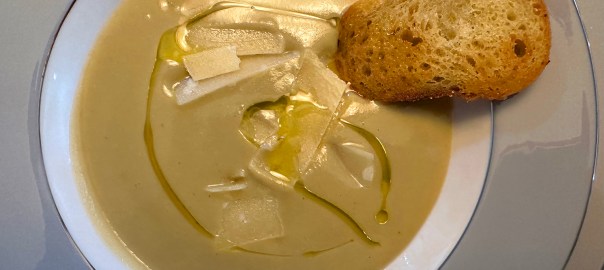
This sublime soup combines the nutty flavor of artichokes and the richness of Parmesan. Although fresh artichokes are preferred many home cooks may not have the patience for turning artichoke bottoms. Frozen artichokes—usually sold in nine-ounce packages labeled artichoke hearts—are a worthy substitute. The wine here works its magic, adding just enough acid to lighten the soup. 

Homemade chicken stock adds oodles of flavor, so if you have some use it instead of the boxed or canned varieties. For a finishing touch, add a shower of shaved Parmesan, a swirl of good extra-virgin olive oil and serve with toasted brioche for dipping.

*If using frozen artichoke hearts, omit lemon and water and start at Step 2. The soup can be refrigerated overnight. Rewarm gently over moderately low heat.

Artichoke-Parmesan Soup

  • Servings: 4
  • Difficulty: easy
  • Print

Ingredients

  • One 2-oz. chunk of Parmigiano-Reggiano cheese, shaved into strips with a vegetable peeler
  • 1 lemon, halved
  • 4 large globe artichokes (about 3 1/2 lbs.); OR 4 cups frozen artichoke hearts*, thawed
  • 1/4 cup extra-virgin olive oil
  • 2 medium shallots, minced
  • Sea salt
  • 1 cup white wine, preferably Chardonnay
  • 3 cups chicken stock or canned low-sodium broth
  • 1 Tbsp. unsalted butter

Directions

  1. If using fresh artichokes: Squeeze the lemon juice into a large bowl of cold water and add the lemon halves. Break off or cut the stem from the base of the artichokes. Using your hands, snap off the tough outer leaves near the base. Continue snapping off leaves until only the central cone of yellow leaves with pale green tips remain. Using a large sharp knife, trim the top cone of leaves to just below the green tips. Trip any tough, dark green areas from the base with a small knife. Cut the artichoke hearts in half. Using a small spoon or a melon baller, scrape out and discard the hairy chokes. Cut each half lengthwise into 4 even slices. Place the artichoke slices in the acidulated water.
  2. In a large nonreactive saucepan, combine 2 tablespoons of the oil with the shallots and a pinch of sea salt and cook over moderate heat, stirring often, until softened but not brown.
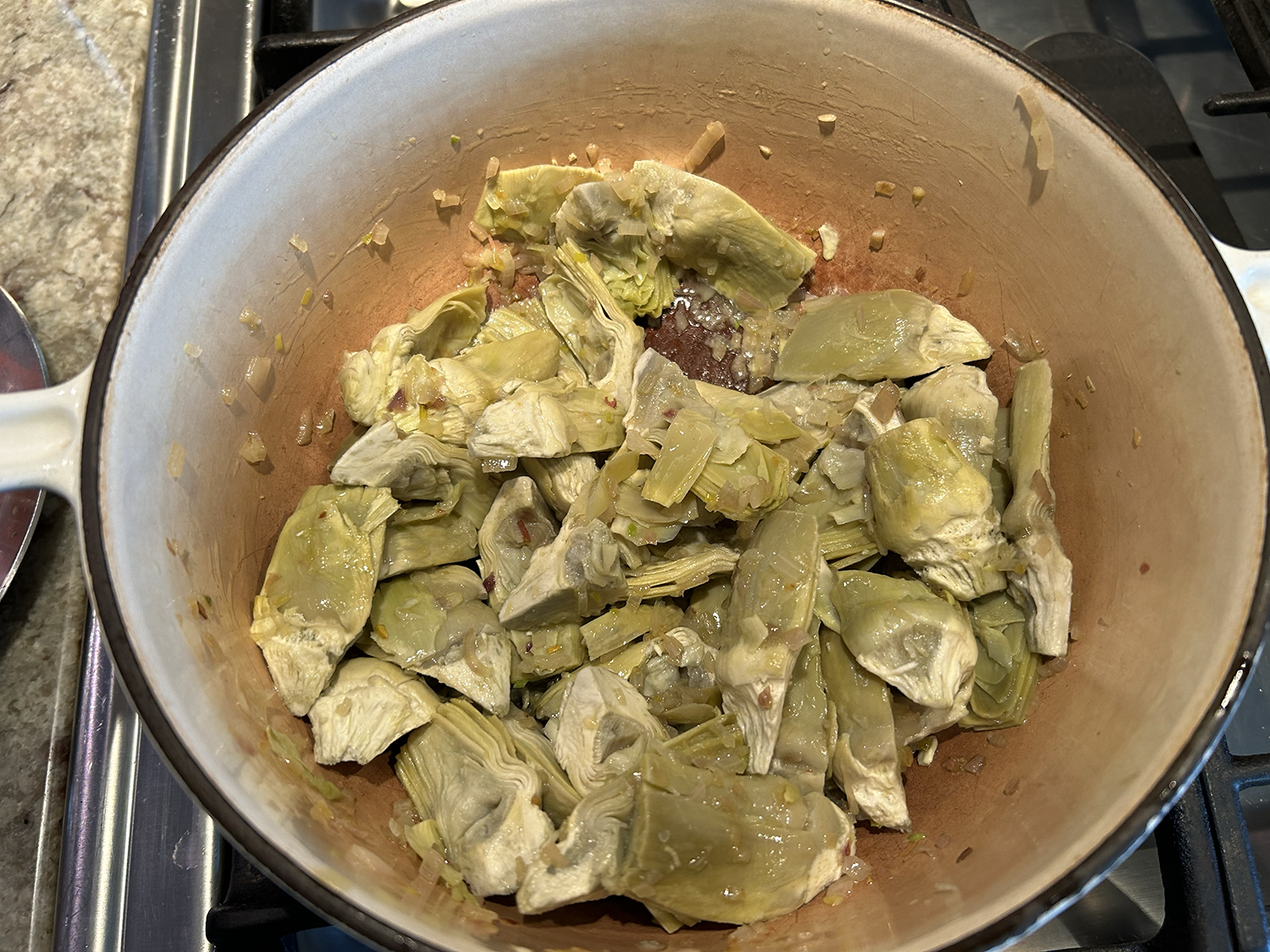
  3. Stir in the remaining 2 tablespoons oil. Drain and add the artichoke slices and cook until slightly softened, about 2 minutes. Pour the wine all over the artichokes, increase the heat to moderately high and simmer until almost evaporated, about 7 minutes.
  4. Add the chicken stock and reduce the heat. Cover and simmer gently until the flavors have mingled, about 20 minutes.
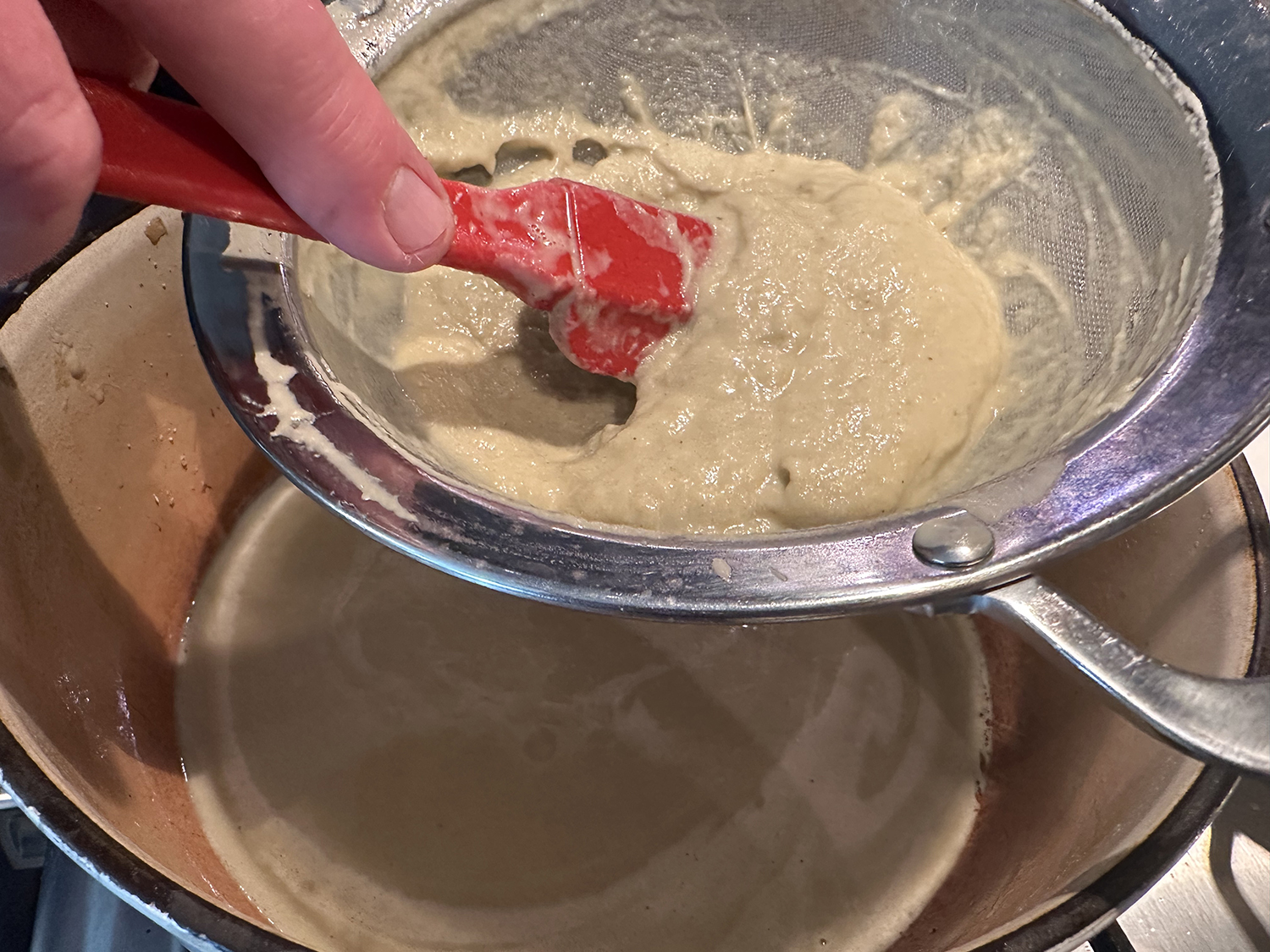
  5. Transfer the soup to a food mill with a fine disk and puree. Discard any fibrous artichoke pieces that remain in the food mill. Return the soup to the pan; you should have about 3 cups. If the soup is too thin, return it to the saucepan and boil until reduced and thickened.
  6. Just before serving, whisk the butter into the hot soup over moderate heat until melted and incorporated. Pour the soup into heated soup plates or bowls and scatter the cheese strips on top. Serve immediately.

http://www.lynnandruss.com

Recipe by Patricia Wells for Food & Wine

Stewed Lentils With Sausage

For this one-pot preparation, sausage is fried in oil to brown and release a bit of fat. Next, the soffritto and tomatoes come together, lentils are added, then the dish simmers until the legumes are tender and the liquid is saucy and thick. Like most stews, this dish can be made a few days ahead and reheated when desired.  

While the recipe calls for hot or sweet Italian sausage, we used up some red pepper and provolone we had on hand. Most reviewers emphasized removing the casings on the sausage if they are in links, so that is noted that below.

Truly tasty, and then for even more flavor, we topped ours with some grated pecorino and a shake of red pepper flakes, which would be most welcome if not using hot Italian sausage.

Interesting tidbit. In Italy, lentils are traditionally eaten at midnight to bring luck in the coming year. Because lentils are round, resembling coins, they are believed to bring prosperity to those who eat them. We can run with that… although we ate much earlier than midnight…

NOTE: While the lentils do not need a presoak, a two-hour soak will cut the cooking time in half.

Stewed Lentils With Sausage

  • Servings: 6
  • Difficulty: easy
  • Print

Ingredients

  • 3 Tbsp. extra-virgin olive oil
  • 1 lb. large (sweet or hot) Italian sausages, casings removed; or bulk sausage
  • 2 garlic cloves, thinly sliced
  • 2 medium carrots, peeled and cut into ¼-inch dice
  • 2 celery stalks, cut into ¼-inch dice
  • 1 small yellow onion, cut into ¼-inch dice
  • 1 Tbsp. tomato paste
  • Kosher salt and black pepper
  • 3 cups vegetable stock
  • 1 (15-oz.) can tomato purée; or 1 3/4 cup passatta
  • 2 cups dried brown lentils (about 14 oz.), rinsed and picked over
  • 2 dried bay leaves
  • Red pepper flakes, optional
  • ½ cup finely grated Pecorino Romano cheese, for garnish

Directions

  1. In a large heavy pot or Dutch oven, heat oil over medium. Break the sausages into 1-inch pieces and add to the pot. Allow the chunks to sear and brown on all sides for 3 to 4 minutes, occasionally smashing with a wooden spoon to break into smaller pieces. Leaving the oil and brown bits behind, transfer the sausages to a dish layered with paper towel to soak up excess oil.
  2. Add the garlic, carrots, celery and onion to the pot and allow to cook for 5 minutes, stirring occasionally, until vegetables have softened and onion is translucent; add salt to taste.
  3. Stir in the tomato paste until the vegetables are coated, then stir in the vegetable stock, tomato purée and lentils. Add the sausages and bay leaves; bring to a boil, then reduce to a simmer.
  4. Cover the pot and simmer gently for 45 to 50 minutes (ours took 60 min.), stirring occasionally to ensure the lentils are not sticking to the bottom. The final dish should be thick and lentils will have a bit of a bite. Discard bay leaves. Season to taste with salt and pepper; garnish each serving with cheese.

http://www.lynnandruss.com

Recipe by Anna Francese Gass for NYTimes Cooking

Braised Shallot Confit

Braised shallots are one of those things that every resourceful cook should know about. When braised in a bit of red wine, Cognac and fresh thyme, shallots turn unbelievably sweet and jammy—wonderful served alongside roast chicken or a juicy grilled steak.

We loved, loved, loved this dish! In fact, you may want to make extra to spread onto bruschetta and top with a little goat cheese. Or try them tucked into a sliced turkey sandwich on chewy country bread.

Look for shallots that are all about the same size—preferably medium sized 1 to 1 1/2 inch across—so they will braise evenly. One word of caution, when adding the cognac, be prepared for a flare up…

Screenshot

The shallots can be made ahead and kept, covered, at room temperature for several hours, or refrigerated for a few days.

Braised Shallot Confit

  • Servings: 4
  • Difficulty: easy
  • Print

Ingredients

  • 3/4 lb. shallots
  • 1 1/2 Tbsp. unsalted butter
  • Coarse salt and freshly ground pepper
  • 2 Tbsp. Cognac, or other brandy.
  • 1/2 cup dry red wine
  • 1 1/2 tsp. chopped fresh thyme.

Directions

  1. Trimming the shallots: Peel the shallots and trim off any bits of the root end that remain. Divide and large shallots in two—the halves should fall apart naturally, but you may need to peel off the first layer of shallot to serparate them.
  2. Browning and flaming the shallots. Melt the butter in a medium skillet over medium-high heat. Add the shallots, season with salt and pepper, and toss to coat. Sauté, tossing frequently, until the shallots are brown in spotsand you can smell the aromaof cooking onions, about 5 minutes.
  3. Add the Cognac: If you are cooking over a gas stove, carefully tilt the pan and let the flame ignite the Cognac. On electric, hold a match to the pan to light the cognac. Stand backas the flame flares up, then swirl the panaround and let the flameburn down. Simmeruntil there is onlya glaze lefton the bottom of the oan.
  4. The braise. Add the wine and one teaspoon of thymeand bring to a simmer, then reduce heat to medium-low and cover the pan. Simmer until the shallots are completely soft and falling apart, about 40 to 45 minutes.After the first 15 minutes, check to make sure that the pan is not dry, ad a few tablespoons of water if necessary.Check again 2 or 3 times as the shalloys braise.
  5. The Finish: When the shallots are done, remove the lid and, over medium heat, boil down any liquid, shaking and stirring a few times, until a glaze forms on the shallots. Add the remaining 1/2 teaspoon thyme, gently stir (expect some of the shallots to fall apart a bit). Taste for salt and pepper; serve warm or a room temperature

http://www.lynnandruss.com

Recipe by Molly Stevens in “All About Braising”

Cumin-Seared Flank Steak with Lime

WOW, what a weeknight treat! This Cumin-Seared Flank Steak dish was fantastic, with so much flavor, and a minimal amount of ingredients in under 45 minutes!

To make the Cuban classic bistec de palomilla, thin-cut steak is marinated in garlic and lime juice before it is pan-fried, and it is served under a pile of sautéed onions. Though sirloin or top round is commonly the choice of meat, here, flank steak is used instead and the process allows to skip any marination.

Instead, the surface of the meat is scored with shallow crosshatched cuts before cooking. The grooves not only grip the seasoning mix of crushed cumin, dried oregano, salt and pepper so they stay on the meat instead of winding up in the pan, they also help produce better flavor-boosting caramelization.

In just eight minutes, the steak was perfectly medium rare, removed to a platter so that the remaining ingredients can be cooked along with browned bits left in the skillet.

Typical side dishes might be rice or beans. We decided on a simple skillet potato dish. The Yukon Golds were first microwaved until just barely fork tender. Once they cooled slightly they were cut into 1/2″ slices; browned in olive oil and butter with some minced shallots, salt and pepper.

Cumin-Seared Flank Steak with Lime

  • Servings: 4
  • Difficulty: easy
  • Print

Ingredients

  • 2 tsp. cumin seeds, lightly crushed
  • 3/4 tsp. dried oregano, divided
  • Kosher salt and ground black pepper
  • 1½ lbs. flank steak
  • 1 Tbsp. grapeseed or other neutral oil
  • 3 Tbsp. salted butter, cut into 3 pieces
  • 1 large yellow onion, halved and thinly sliced
  • 1 ripe medium tomato, cored and chopped
  • 4 medium garlic cloves, minced
  • 1/4 cup lime juice, plus lime wedges to serve
  • 2 Tbsp. chopped fresh flat-leaf parsley

Directions

  1. In a small bowl, stir together the cumin, ¼ teaspoon of the oregano and 1 teaspoon each salt and pepper. Using a sharp knife, score shallow cuts into the steak, perpendicular to the grain and spaced ½ inch apart. Now crosshatch at a 45-degree angle to the first cuts. Flip the steak and crosshatch the second side.
  2. Rub the cumin mixture into the cuts on both sides, then cut the steak into 2 or 3 pieces with the grain. In a 12-inch skillet over medium-high, heat the oil until barely smoking. Add the steak and cook, flipping once, until well browned and the center reaches 125°F (for medium-rare), 6 to 8 minutes. Transfer to a plate and tent with foil.
  3. In the same skillet over medium, melt the butter. Add the onion, tomato, garlic, remaining ½ teaspoon oregano and ½ teaspoon salt; cook, stirring, until the onion is wilted, 6 to 8 minutes.
  4. Add the lime juice and accumulated steak juices; cook, stirring, until slightly reduced, about 1 minute.
  5. Off heat, stir in the parsley. Taste and season with salt and pepper. Transfer the onion mixture to a platter. Thinly slice the steak against the grain and place on the platter. Serve with lime wedges.

http://www.lynnandruss.com

Recipe by Courtney Hill for Milk Street

Pork Tenderloins with Sun-Dried Tomatoes and Green Olives

Oodles of flavor in this simple and quick weeknight recipe. Inspired by a recipe in “How to Roast a Lamb” by chef Michael Psilakis, two umami-packed ingredients are used for this dish: sun-dried tomatoes and olives. But instead of applying the ingredients to lamb, they are used as a big Mediterranean flavor boost for lean, mild pork tenderloin.

They are combined to make a relish-like pan sauce to finish pork tenderloins seasoned with Dijon, garlic and oregano. A quick sear followed by pan-roasting ensures the meat gets caramelization on the exterior, but also cooks speedily. Serving suggestions: a simple salad, carrot medallions, crusty bread, or rice or orzo pilaf. BTW, you will need an oven-safe 12-inch skillet for this recipe.

Don’t sear the pork until deeply browned. Instead, aim for light, spotty charring, which takes about 4 minutes. Also, don’t worry if the drippings in the skillet become very dark and even smoke lightly during roasting. Deglazing the pan to make the sauce will loosen the drippings.

Confession. It was our intention to cut the amount of meat in half (keeping the other ingredients the same). While at the grocery store, we both had a senior moment because we picked up a pork loin filet, and not a pork tenderloin, which usually come two to a package. In all honesty, the cooking times worked just as well with the filet. All-in-all, we loved the dish which we paired with cooked carrot medallions and a side salad.

Pork Tenderloins with Sun-Dried Tomatoes and Green Olives

  • Servings: 6
  • Difficulty: easy
  • Print

Ingredients

  • 4 Tbsp. grapeseed or other neutral oil, divided
  • 2 tsp. minced fresh oregano, plus 1 tablespoon chopped fresh oregano
  • 3 medium garlic cloves, finely grated
  • 2 Tbsp. dijon mustard
  • Kosher salt and ground black pepper
  • 2 1¼-lb. pork tenderloins, trimmed of silver skin, halved crosswise
  • 1 medium shallot, halved and thinly sliced
  • ½ cup drained oil-packed sun-dried tomatoes, finely chopped
  • ¼ cup pitted green olives, roughly chopped
  • 2 tsp. red wine vinegar

Directions

  1. Heat the oven to 450°F with a rack in the middle position. In a large bowl, stir together 2 tablespoons of oil, the minced oregano, garlic, mustard, ¾ teaspoon salt and ½ teaspoon pepper. Add the pork, turn to coat and rub the seasonings into the meat.
  2. In an oven-safe 12-inch skillet over medium-high, heat the remaining 2 tablespoons oil until shimmering. Add the pork and cook, turning occasionally, until lightly browned on all sides, about 4 minutes.Transfer the skillet to the oven and roast until the center of the thickest piece reaches 135°F or is just slightly pink when cut into, 9 to 12 minutes. Remove from the oven; the handle will be hot. Using tongs, transfer the pork to a platter and let rest while you make the sauce.
  3. Set the skillet over medium and add the shallot. Cook, stirring constantly, until the shallot is lightly browned, about 1 minute.Add the sun-dried tomatoes, olives, vinegar and ¼ cup water, then cook, scraping up any browned bits, until the tomatoes are plumped and the mixture has the consistency of a loose relish, about 3 minutes. Remove the pan from the heat. Thinly slice the pork and return to the platter. Spoon the sauce over it and sprinkle with the chopped oregano.

http://www.lynnandruss.com

Recipe by Courtney Hill for Milk Street