Tag Archives: pescatarian

Horseradish Roasted Salmon with Mustard Potatoes

Salmon is one of our go-to fish purchases. Usually it is priced relatively well, and we can source good salmon from one of two places close by. Slathered in a creamy horseradish mayonnaise, salmon fillet is a weeknight winner. (You can cook smaller fillets or one larger center-cut piece, whichever you prefer.)

The key to moist, flavorful salmon is to roast it at a high temperature for a short length of time. Here it’s baked alongside tangy mustard potatoes, but asparagus, broccoli or even green beans would be nice, too. If using less hearty vegetables, just cut the initial bake time down to 5 to 10 minutes.

For future repeat on this recipe, we recommend to add more potatoes; use Dijon instead of whole grain mustard (which didn’t stick to the potatoes). The fix is one tablespoon Dijon, with one tablespoon whole grain mustard.

Horseradish Roasted Salmon with Mustard Potatoes

  • Servings: 4
  • Difficulty: easy
  • Print

Ingredients

  • 1 lb. baby Yukon Gold potatoes, halved if large
  • 3 Tbsp. olive oil
  • 2 Tbsp. whole-grain mustard
  • Kosher salt and coarsely ground black pepper
  • 3 Tbsp. mayonnaise
  • 2 Tbsp. drained prepared horseradish
  • 2 limes
  • 1½ lbs. skinless salmon fillet (preferably 1 single center-cut piece)

Directions

  1. Heat oven to 400 degrees.
  2. On a rimmed sheet pan, toss together the potatoes, olive oil and mustard. Season with salt and pepper. Roast for 20 minutes, tossing once halfway through.
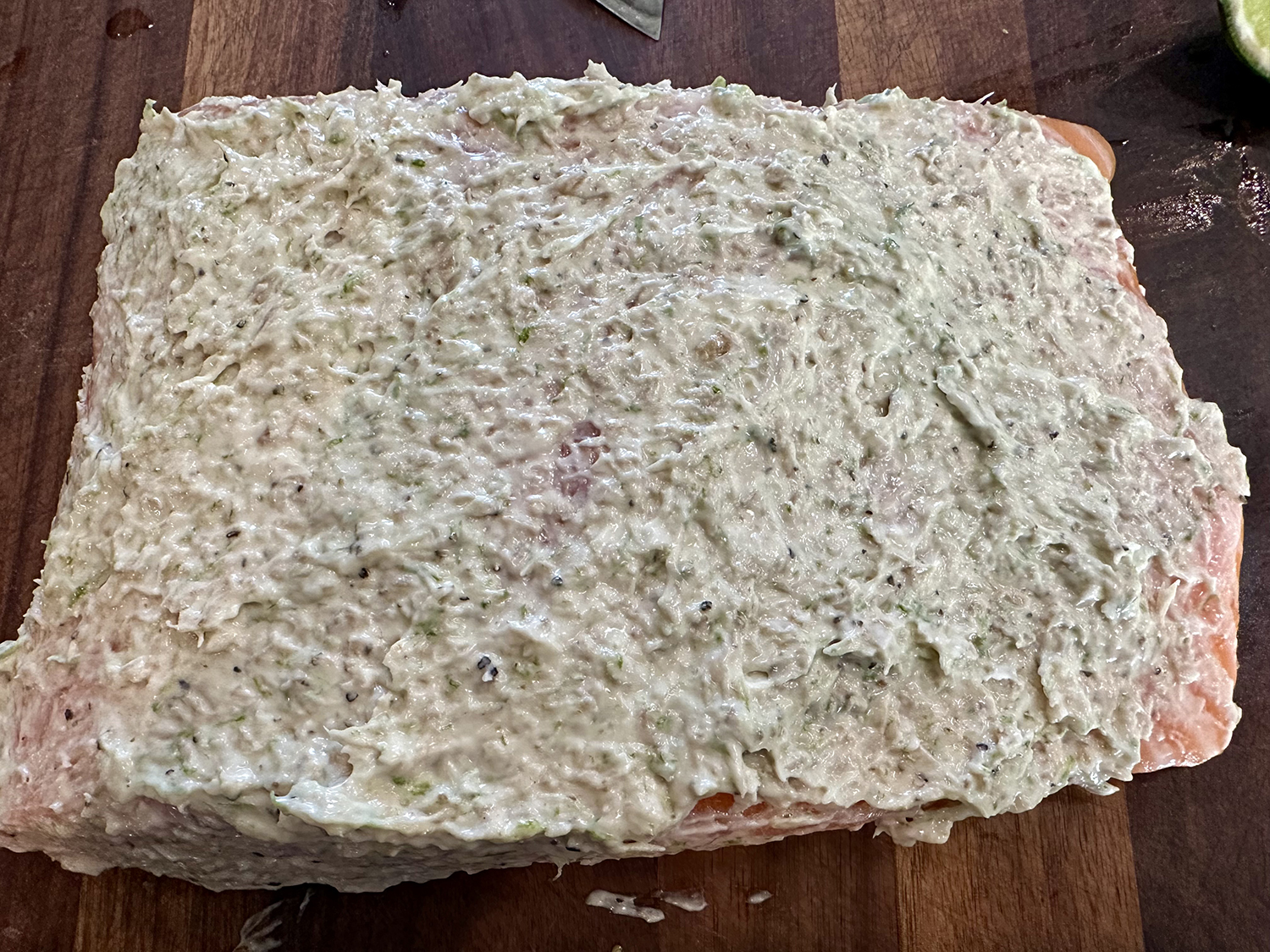
  3. Meanwhile, combine the mayonnaise and horseradish in a small bowl. Finely grate 2 teaspoons lime zest and then cut the remaining lime into wedges. Add the lime zest to the mayonnaise mixture and season to taste with salt and pepper. Season the salmon with salt and pepper and then slather the sauce all over the top and sides.
  4. Remove the potatoes from the oven and use a spatula to make space in the center of the pan. Add the salmon, skinned side down. Return the pan to the oven and cook until the potatoes are browned and tender and the salmon is cooked through to your liking, 10 to 20 minutes, depending on the thickness of the salmon.
  5. Serve the salmon and potatoes with lime wedges.

http://www.lynnandruss.com

Recipe by Julia Gartland for NYTimes Cooking

Orange-Scented Mediterranean Shrimp Braise

It’s been over 6 years since we made this lovely braise, and thought it high time to create it again. It’s from Molly Steven’s “All About Braising” cookbook, and we adjusted the recipe slightly.

“The shrimp get tossed in just a few minutes before serving, making the finished dish a real cornucopia of seafood and vegetables.”

Molly Stevens

The braising liquid for this dish consists of a colorful mix of tomatoes, garlic, onion, carrots, and celery that is brightened with the zests and juice of orange and lime. Also included are small potatoes turning it into a satisfying one-dish meal. 

*However, even though I halved or quartered the baby potatoes, they still were on the hard side after 45 minutes! We suggest either microwave, or steam the potatoes before adding them to the pan, or omit them altogether and serve over a bed of orzo. Both times we made this dish, we used a 28-ounce can of whole tomatoes instead of the smaller 14.5-ounce size; and that is reflected in the list of ingredients below.

Then there’s the age old controversy about leaving the olives pitted, which can be annoying when trying to eat civilly in the presence of company. But when you cook olives whole, it’s almost like an anchovy. The salt comes out of the olives, and the olive becomes more like a vegetable, and the salt from the olive flavors the dish really wonderfully. Pits, or no pits, we’ll leave that dilemma up to you…

Orange-Scented Mediterranean Shrimp Braise

  • Servings: 4
  • Difficulty: easy
  • Print

Ingredients

  • 3 Tbsp. extra-virgin olive oil
  • 3 to 4 garlic cloves, thinly sliced
  • ½ cup finely chopped yellow onion (about ½ small onion)
  • 1 small carrot, finely chopped
  • 1 stalk celery, finely chopped
  • Coarse salt and freshly ground black pepper
  • ½ cup dry white wine or dry white vermouth
  • 2 strips orange zest, removed with a vegetable peeler (each about 3 inches by ¾ inch)
  • 1 strip lime zest, removed with a vegetable peeler (about 2 inches by ½ inch)
  • ¼ cup freshly squeezed orange juice
  • ¼ cup freshly squeezed lime juice
  • One 28-oz. can whole peeled tomatoes, drained and chopped
  • Pinch of crushed red pepper flakes
  • ¼ cup chopped flat-leaf parsley
  • ¾ lb. small potatoes*, preferably fingerlings or white creamers (omit altogether and serve over orzo)
  • ¼ cup small green olives, such as Picholine, (pitted or not, that’s up to you)
  • 2 Tbsp. capers, rinsed and drained
  • ¾ lb. large shrimp (30 to 35 count per pound), peeled and deveined
  • 1 Tbsp. unsalted butter, cut into 4 pieces (optional)

Directions

  1. The aromatics and braising liquid: Heat the oil in a large deep lidded skillet (13-inch works well) over medium-high heat until shimmering. Add the onion, carrot, and celery. Season with salt and pepper, stir, and sauté until just beginning to soften, about 5 minutes. Add the garlic, sauté another minute more. Add the white wine, orange and lime zests, and orange and lime juices, and let the liquid simmer vigorously until reduced by half, 5 to 8 minutes. Stir in the tomatoes, crushed red pepper, and 2 tablespoons of the parsley. Return to a simmer.
  2. The braise: Turn the heat to very low, cover, and simmer gently for 5 minutes. Then add the potatoes, olives, and capers. Stir so the potatoes are evenly distributed, replace the cover, and continue to simmer until the potatoes are easily pierced with the tip of a knife, another 30 to 40 minutes.
  3. The finish: Add the shrimp, leave the pan uncovered, and adjust the heat so the liquid simmers gently. Simmer just until the shrimp are cooked through, 4 to 5 minutes. Stir in the remaining 2 tablespoons parsley, and taste. If the sauce tastes too acidic or too sharp, stir in the butter. The small bit of butter will soften the acidity nicely. Taste again for salt and pepper. Remove the zests if you like, and serve in shallow bowls.

http://www.lynnandruss.com

Recipe adapted from Molly Stevens “All About Braising”

Double Pepper Diavolo With Shrimp

A great weeknight alternative, this pasta and seafood dinner incorporates a twist to the typical red tomato sauce. According to the Bon Appétit article where we found this dish, it’s hard to pinpoint exactly why Italian American red sauce restaurants are almost universally comforting.

Maybe it’s the checkered tablecloths (although I doubt it) and the heaping platters of food. Or, perhaps, the reassuring familiarity of the menu. From penne alla vodka to spaghetti and meatballs, it’s like seeing old friends. Fra diavolo (one of my faves) is a stalwart among the classics, adorned with pink claws of lobster or shrimp or a jumble of mixed seafood.

Fans will appreciate it for the lick of heat from crushed red pepper flakes, a high point in an otherwise simple tomato sauce. Here, however, the usual canned tomatoes are replaced with jarred roasted red peppers, a subtle but effective change that imparts a smokier, sweeter allure to the dish that plays off the sweetness of the shrimp. Look for smaller shrimp so every mouthful of pasta contains a bite. (Unable to source unfrozen small shrimp while grocery shopping, I resorted to the large shrimp on sale.)

Not an anchovy fan? Me neither, but The Hubs loves them. Yes, 10 anchovies seems a bit extreme to me, so I had reservations. However, they break down completely and meld into the sauce and add the extra depth of flavor. If I didn’t know they were in the dish, I would never have guessed.

As a final flourish with the chopped fresh parsley, we sprinkled on a bit of grated Parm. Complete the meal with a side salad.

Double Pepper Diavolo With Shrimp

  • Servings: 4
  • Difficulty: easy
  • Print

Ingredients

  • 1 lb. deveined small shrimp, fresh or frozen
  • 3 tsp. Diamond Crystal or 1½ tsp. Morton kosher salt, divided, plus more
  • 1 12-oz. jar roasted red peppers, drained
  • 12 oz. bucatini or other long-strand pasta
  • ¼ cup extra-virgin olive oil
  • 1 medium onion, finely chopped
  • 8 garlic cloves, coarsely chopped
  • 10 oil-packed anchovy fillets
  • ¼ cup double-concentrated tomato paste
  • 1 cup dry white wine
  • 1½ tsp. crushed red pepper flakes
  • 1 tsp. sugar
  • 2 Tbsp. unsalted butter, cut into ½” pieces
  • Chopped parsley (for serving)

Directions

  1. If using frozen shrimp: Remove 1 pound frozen peeled, deveined small shrimp from bag and place in a large bowl. Pour in cool water to cover and let sit until mostly thawed, about 15 minutes. Drain and pat dry. Return to bowl, add 2 teaspoon Diamond Crystal or 1 teaspoon Morton kosher salt, and toss to coat. Fresh shrimp can be patted dry and placed in bowl with salt. Set aside.
  2. Meanwhile, blend one 12-ounce jar roasted red peppers, drained, in a blender until smooth. Set aside.
  3. Cook 12 ounce bucatini or other long-strand pasta in a large pot of boiling salted water, stirring occasionally, until very al dente, about 2 minutes less than package directions. Drain, reserving 1½ cups pasta cooking liquid.
  4. Heat ¼ cup extra-virgin olive oil in a large heavy pot over medium-high. Cook 1 medium onion, finely chopped, 8 garlic cloves, coarsely chopped, 10 oil-packed anchovy fillets, and 1 teaspoon Diamond Crystal or ½ teaspoon Morton kosher salt, stirring often, until onion is softened and anchovies are dissolved, 5–7 minutes. Add ¼ cup double-concentrated tomato paste and cook, stirring often, until darkened slightly, about 4 minutes.
  5. Add 1 cup dry white wine, 1½ teaspoon crushed red pepper flakes, and 1 teaspoon sugar; cook, stirring and scraping bottom and sides of pan, until wine is reduced by half, about 4 minutes.
  6. Pour reserved red pepper purée into pot. Pour 1 cup pasta cooking liquid into blender and swish around to get every last bit of purée; pour into pot. Add 2 tablespoons unsalted butter, cut into ½” pieces, pasta, and reserved shrimp and cook, stirring often and adding up to ½ cup pasta cooking liquid a little at a time if needed, until shrimp are cooked through and pasta is coated in sauce, about 5 minutes. Taste and season with more salt if needed.
  7. Divide among plates; top with chopped parsley.

http://www.lynnandruss.com

Recipe by Shilpa Uskokovic for Bon Appétit Magazine

Honey-Miso Salmon and Broccolini Traybake

Here is a wonderful fish and veggie dish from Milk Street. Miso, soy sauce and honey make a savory-sweet, umami-rich marinade for meaty, fat-rich salmon. Some of the mixture is set aside and combined with orange juice and zest, creating a savory-sweet sauce for drizzling over the finished dish.

While the fish marinates, the broccolini gets a head start on roasting. Then once the quick-cooking salmon is added, the traybake is nearly done. Serve with steamed rice if desired (we didn’t), and perhaps a leafy green salad alongside (we did).

Traybakes are a wonderful weeknight option because you are using only one pan in the cooking process and they tend to be quick. But let’s talk about the broccolini. In the end, ours was over-charred, and that is even after removing it from the sheet pan before the salmon was finished.

The directions indicate to cook the broccolini spears in a 425°F oven for 15 minutes before turning and adding the salmon. Well, it was perfectly cooked at that point, so we should have removed it to a plate and covered it with foil until the salmon was ready, but against our better judgement, we let the broccolini cook longer.

After about 8 minutes of cooking the traybake, we yanked the over-charred broccolini and let the salmon cook longer. Instead of four pieces, we cut our fillet in half which added to a bit of time to come to temperature. Word to the wise, if your broccolini stems are on the narrow side, perhaps only cook them about 5-8 minutes before adding the salmon.

Honey-Miso Salmon and Broccolini Traybake

  • Servings: 4
  • Difficulty: easy
  • Print

Ingredients

  • 2 Tbsp. white OR red miso
  • 2 Tbsp. soy sauce
  • 2 Tbsp. honey
  • 3 Tbsp. neutral oil, divided
  • 4 6-oz. center-cut salmon fillets (1 to 1¼ inches thick), patted dry
  • 1 Tbsp. grated orange zest, plus 2 tablespoons orange juice
  • 1 lb. broccolini, trimmed OR broccoli crowns, cut into 1-inch florets
  • Kosher salt and ground black pepper

Directions

  1. Heat the oven to 425°F with a rack in the middle position. In a small bowl, whisk together the miso, soy sauce, honey and 1 tablespoon oil. Transfer half of the mixture to a wide, shallow dish; add the salmon skin-side up and set aside. Stir the orange zest and juice into the mixture remaining in the bowl; set aside.
  2. On a rimmed baking sheet, toss the Broccolini with the remaining 2 tablespoons oil and ½ teaspoon each salt and pepper. Distribute in an even layer, then roast until beginning to brown at the edges, about 15 minutes.
  3. Remove the baking sheet from the oven. Using a wide metal spatula, scrape up and flip the Broccolini, pushing it to the edges. Add the salmon, skin-side down, to the center of the baking sheet. Roast until the fish flakes easily and the Broccolini is lightly charred and tender-crisp, 7 to 10 minutes. Transfer to a platter and drizzle with the miso-orange sauce.
  4. Optional garnish: Toasted sesame oil OR toasted sesame seeds OR sliced scallions OR red pepper flakes OR a combination

http://www.lynnandruss.com

Recipe from Malcom Jackson for Milk Street

Greek-Style Spinach Rice with Shrimp and Dill

Loved this shrimp and rice recipe from Milk Street, where we found it in a recent issue of their magazine under Tuesday Night Dinners. We try to have a seafood/fish dinner at least once a week, and this was not only easy, but delicious!

Spanakorizo, or spinach rice (literally translated), is a homestyle Greek dish. The addition of shrimp creates a complete one-pot meal. With dill and lemon as accents, the flavors are fresh and bright, but a little butter used to wilt the spinach and olive oil drizzled on as a final flourish add a satisfying richness. To simplify prep, look for shrimp that are sold already peeled and deveined.

Don’t use a wide pot, such as a Dutch oven, to make this recipe. We found that a large surface area can result in unevenly cooked grains. The narrower diameter of a saucepan is the better choice. Don’t peek at the shrimp after adding them to the rice, except while stirring them into the rice after the first 10 minutes. Keeping the lid on traps heat in the pan so the shrimp cook through.

Greek-Style Spinach Rice with Shrimp and Dill

  • Servings: 4
  • Difficulty: easy
  • Print

Ingredients

  • 2 Tbsp. salted butter
  • 2 5-oz. containers baby spinach
  • 2 Tbsp. extra-virgin olive oil, plus more to serve
  • 2 medium shallots, halved and thinly sliced
  • Kosher salt and ground black pepper
  • 1½ cups long-grain white rice, rinsed and drained
  • 1 lb. extra-large (21/25 per pound) shrimp, peeled (tails removed), deveined and patted dry
  • 1 cup lightly packed fresh dill, roughly chopped
  • 1 tsp. grated lemon zest, plus 3 Tbsp. lemon juice

Directions

  1. In a large saucepan over medium-high, heat the butter until bubbling. Add the spinach and cook, stirring, until wilted but still bright green, about 1 minute. Transfer to a bowl, including any liquid released by the spinach; set aside.
  2. Set the same pan over medium-high. Add the oil, shallots and ¼ teaspoon salt, then cook, stirring often, until the shallots are translucent, about 2 minutes. Add the rice, 2½ cups water, and ¼ teaspoon each salt and pepper. Stir to combine, then bring to a boil. Cover, reduce to low and cook until the liquid has been absorbed, 15 to 18 minutes. Meanwhile, season the shrimp with salt and pepper.
  3. When the rice is done, remove the pan from the heat. Quickly and evenly scatter the shrimp over the surface, re-cover and let stand for 10 minutes. Using a fork, fluff the rice and fold in the shrimp. Re-cover and let stand until the shrimp are opaque throughout, another 5 to 7 minutes.
  4. Add the spinach with its liquid, the dill and the lemon zest and juice, then fold until well combined. Taste and season with salt and pepper. Serve drizzled with additional oil.

http://www.lynnandruss.com

Recipe by Rebecca Richmond for Milk Street

Pan-Seared Sesame-Crusted Tuna Steaks

There was a good sale on tuna steaks at our favorite supermarket a few weeks back, even though tuna was not on our short list for the week’s meals. But we repackaged them for future use and placed them in the freezer. A few weeks later we remembered we had the tuna and found a perfect recipe from America’s Test Kitchen.

Problem was, the recipe was for 4 people, which in normal cases, typically is not an issue because we will eat them for lunch the next day. No problem, we just cut the recipe in half, including the ginger soy sauce.

The fact that there are minimal ingredients, and takes very little time for prep and cooking, makes it a winner-dinner for mid-week. Paired with a side dish of Soy-Braised Baby Bok Choy, we enjoyed a tasty, healthy and quick dinner.

Pan-Seared Sesame-Crusted Tuna Steaks

  • Servings: 4
  • Difficulty: easy
  • Print

Ingredients

  • ¾ cup sesame seeds
  • 4 tuna steaks, 8 oz. each and about 1 inch thick
  • 2 Tbsp. vegetable oil
  • Salt and ground black pepper

Directions

  1. Spread sesame seeds in shallow baking dish or pie plate. Pat tuna steaks dry with paper towel; use 1 tablespoon oil to rub both sides of steaks, then sprinkle with salt and pepper. Press both sides of each steak in sesame seeds to coat.
  2. Heat remaining 1 tablespoon oil in 12-inch nonstick skillet over high heat until just beginning to smoke; swirl to coat pan. Add tuna steaks and cook 30 seconds without moving steaks. Reduce heat to medium-high; continue to cook until seeds are golden brown, about 1 1/2 minutes.
  3. Using tongs, carefully flip tuna steaks; cook, without moving steaks, until golden brown on second side, about 1 1/2 minutes for rare (opaque at perimeters and translucent red and cool at center when checked with tip of paring knife) or 3 minutes for medium-rare (opaque at perimeters and reddish pink at center). To serve, cut into 1/4-inch-thick slices.

Ginger Soy Sauce with Scallions

This savory sauce flavored with fresh ginger and scallions is the perfect accompaniment for our Pan-Seared Sesame-Crusted Tuna Steaks.

Ingredients

  • ¼ cup soy sauce
  • ¼ cup rice vinegar
  • ¼ cup water
  • 2 ½ tsp. sugar
  • 1 medium scallion, sliced thin
  • 2 tsp. minced fresh ginger
  • 1 ½ tsp. toasted sesame oil
  • ½ tsp. red pepper flakes

Directions

Combine all ingredients in a small bowl, stirring to dissolve sugar.

http://www.lynnandruss.com

Limoncello and Whiskey Shrimp

This light healthy meal of crisp-tender celery and sautéed shrimp get a tangy punch from a double hit of lemon—both fresh juice and limoncello. To balance it out, cookbook author Amy Thielen adds a splash of whiskey; the sharp bite of the alcohol is tamed as the sauce simmers, leaving behind a warm earthiness in the glaze.

Since we had 1 1/2 pounds of shrimp—50% more that the recipe called for—we decided to increase all of the other ingredients. In the end, that wasn’t necessary. If using only one pound of shrimp, plan on four first course servings, or 3-4 entrées over a bed of jasmine rice or polenta.

Limoncello and Whiskey Shrimp

  • Servings: 3-4
  • Difficulty: easy
  • Print

Ingredients

  • 1 lb. peeled and deveined raw jumbo shrimp, tails on
  • 4 (3 x 1-inch) lemon peel strips
  • 1 Tbsp. extra-virgin olive oil
  • 2 tsp. limoncello (liqueur)
  • 1/2 tsp. finely chopped fresh rosemary
  • 3/4 tsp. black pepper, divided
  • 1/2 tsp. salt, divided
  • 1 medium bunch celery (about 1 1/2 lbs.)
  • 6 Tbsp. unsalted butter
  • 4 garlic cloves, finely chopped’
  • 3 Tbsp. (1 1/2 oz.) whiskey
  • 2 Tbsp. fresh lemon juice, plus lemon slices for serving
  • Toasted baguette slices for serving

Directions

  1. Pat shrimp dry and place in a medium bowl. Add lemon peel strips, oil, limoncello, rosemary, 1/4 teaspoon pepper and 1/4 teaspoon salt. Toss to coat. Cocer and marinate in refrigerator at least 30 minutes or up to an hour.
  2. Meanwhile remove outer stalks of celery, reserve for another use. Finely chop inner celery stalks and heart to yield one cup; set aside. Pick off pale yellow leaves to yieldabout 1/4 cup; set aside for garnish. Reserve any remaining stalks for another use.
  3. Heat butter over medium until foamy. Add chopped celery, garlic, remaining 1/2 teaspoon pepper, and remaining 1/4 teaspoon salt; cook, stirring often until mixture is fragrant, 30 seconds to 1 minute.
  4. Add shrimp, reserving marinade in bowl (there won’t be much); cook, flipping shrimp occasionally, until shrimp begin to turn pink, about 1 minute.
  5. To skillet, add whiskey, lemon juice, and reserved marinade in bowl; cook, stirring occasionally, until sauce bubbles and shrimp turn opaque, 1 to 2 minutes.
  6. Remove from heat, and sprinkle with celery leaves. Serve immediately with lemon wedges and toasted baguette slices.

http://www.lynnandruss.com

Recipe from Food & Wine Magazine

Sea Scallops with Browned Butter, Capers and Lemon

Sea scallops are a rare delicacy due to the high price at restaurants and at the fish market. So in the event of a stay-at-home New Year’s Eve celebration for the two of us, the occasion was the perfect opportunity to “treat” ourselves. Couple that with a few lump meat crab cakes, and our year-end meal was one to remember.

In this recipe, sea scallops get the piccata treatment, and who can resist that? Their sweet, briny flavor is perfectly matched by nutty browned butter, salty capers and puckery lemon. And while not part of the original recipe, we added in 8 pre-cooked shrimp (leftover from another appetizer), reheating them at the end of step four with the addition of the lemon juice.

When shopping, look for dry sea scallops—“Dry” indicates that the shellfish has not been treated with sodium tripolyphosphate (STPP), a preservative that forces water retention and that has a bleaching effect. In fact, bright white color is a tell-tale sign of the presence of STPP, as untreated scallops have a pale coral or ivory hue. And at the seafood counter, dry scallops should not be sitting in a pool of milky liquid.

Don’t attempt to move the scallops immediately after placing them in the skillet. They may stick at first but will release after they’ve formed a nicely browned bottom crust. Serve with crusty bread and a leafy salad dressed with a bright vinaigrette.

With a minimum of ingredients and a short cooking time, you can have an elegant meal on the table in under a half hour!

Sea Scallops with Browned Butter, Capers and Lemon

  • Servings: 2-4
  • Difficulty: easy
  • Print

Ingredients

  • 1 1/4 lbs. dry sea scallops, side tendons removed and discarded, patted dry
  • Kosher salt and ground black pepper
  • 2 Tbsp. extra-virgin olive oil
  • 4 Tbsp. salted butter, cut into 4 pieces
  • 1/4 cup drained capers
  • 2 scallions, thinly sliced on the diagonal, whites and greens reserved separately
  • 1 tsp. grated lemon zest
  • 1 Tbsp. lemon juice
  • Lemon wedges to serve

Directions

  1. Place the scallops on a paper towel–lined plate. Season lightly on all sides with salt; set aside. In a 12-inch nonstick skillet over medium-high, heat the oil until barely smoking. Quickly pat the scallops dry once again and place in the pan, a flat side down, spacing them evenly apart. Cook without disturbing until golden brown on the bottoms and they release easily from the pan, 2 to 4 minutes.
  2. Flip each scallop, then add the butter, capers and scallion whites, swirling the pan to incorporate.
  3. Cook, spooning some of the hot butter over the scallops, until the butter smells nutty and the scallops are opaque throughout, 2 to 3 minutes.
  4. Remove the pan from the heat and, using tongs, transfer the scallops to a serving plate. To the skillet, add the lemon zest and juice; stir to combine.
  5. Taste and season with salt and pepper, then pour the sauce over the scallops. Sprinkle with the scallion greens.

http://www.lynnandruss.com

Recipe from Milk Street

Salmon Traybake with Harissa-Roasted Pepper Sauce

The inspiration for this colorful traybake is Moroccan-style red chermoula: a bold, warmly spiced sauce, often served with fish. This weeknight-friendly version from Milk Street calls on smoky harissa, a North African chili and spice paste, plus sweet roasted peppers, earthy cumin, bright lemon juice and fresh garlic and parsley, all whirred together in the blender.

Harissa spiciness varies by brand, so a range is suggested. To make the most of the mixture, use it three ways: as a salmon marinade, a seasoning for roasted zucchini and as a sauce for the finished dish. Serve with couscous, rice or warmed flatbreads.

The original recipe called for 1 1/2 pounds of salmon, but we purchased a one-pound piece and cut it in half allowing for 2 servings. If using 1 1/2 pounds, cut the filet into 3 or 4 pieces, or buy them already cut down to 6 ounce servings.

Don’t use large zucchini for this. They tend to contain many seeds and will turn soft and mushy with cooking. Instead, look for medium to small zucchini.

Salmon Traybake with Harissa-Roasted Pepper Sauce

  • Servings: 3-4
  • Difficulty: easy
  • Print

Ingredients

  • 1/2 cup drained roasted red peppers, chopped
  • 1/2 cup lightly packed fresh flat-leaf parsley, plus chopped parsley to serve
  • 1/4 cup extra-virgin olive oil
  • 2 Tbsp. lemon juice, plus lemon wedges to serve
  • 1-2 Tbsp. harissa paste
  • 1 medium garlic clove, smashed and peeled
  • 1/2 tsp. ground cumin
  • Kosher salt
  • 4 6-oz. center-cut salmon fillets, patted dry
  • 3 medium zucchini (about 1½ lbs. total), cut into ¼-inch cubes
  • 1 ripe medium tomato, cored, seeded and chopped
  • 1/2 cup pitted green olives, chopped

Directions

  1. Heat the oven to 425°F with a rack in the middle position. In a blender, combine the roasted peppers, parsley, oil, lemon juice, harissa, garlic, cumin and ½ teaspoon salt. Puree until smooth, about 30 seconds. Measure out 2 tablespoons, then spread it onto the flesh side of the salmon fillets.
  2. On a rimmed baking sheet, toss the zucchini with ¼ cup of the remaining puree; transfer the rest of the puree to a small bowl for serving. Roast until the zucchini is tender, 20 to 25 minutes, stirring halfway through. Remove the baking sheet from the oven and sprinkle the tomato and olives over the zucchini. Scrape up and stir the zucchini and push it to the edges.
  3. Place the salmon, skin side down, in the center of the baking sheet. Roast until the flesh flakes easily and the zucchini is lightly charred, and registers 135°F, about 10 to 14 minutes. Transfer to a platter and sprinkle with additional parsley. Serve with lemon wedges and the remaining sauce on the side.

http://www.lynnandruss.com

Recipe by Rose Hattabaugh for Milk Street

Baked Cod with Lemon and Garlic

Not only is this one of the best fish recipes, you can make it in no time. Prepared Mediterranean-style with a few spices and a mixture of lemon juice, olive oil and lots of garlic, it bakes in only 15 minutes!

We paired our cod with another dish from Suzy Karadsheh, Mediterranean Chickpea Salad, a union made in heaven. You bet we’ll be making both of these real soon….

Baked Cod with Lemon and Garlic

  • Servings: 4
  • Difficulty: easy
  • Print

Ingredients
  • 1 1/2 lbs. cod fillet, cut into 4 pieces
  • 1/4 cup chopped fresh parsley leaves

Lemon Sauce:

  • 5 Tbsp. fresh lemon juice
  • 5 Tbsp. extra virgin olive oil
  • 2 Tbsp. melted butter
  • 5 cloves garlic, minced

For Coating:

  • 1/3 cup all-purpose flour
  • 1 tsp. ground coriander
  • 3/4 tsp. sweet Spanish smoked paprika
  • 3/4 tsp. ground cumin
  • 3/4 tsp. salt
  • 1/2 tsp. black pepper
Instructions
  1. Preheat oven to 400 degrees F.
  2. Mix together the lemon juice, olive oil, and melted butter in a shallow bowl (do not add the garlic yet). Set aside.
  3. In another shallow bowl, mix the all-purpose flour, spices, salt and pepper. Set next to the lemon sauce.
  4. Pat the fish dry. Dip the fish in the lemon sauce then dip it in the flour mixture. Shake off excess flour. Reserve the lemon sauce for later.
  5. Heat 2 tablespoon olive oil in a cast iron skillet (or an oven-safe pan) over medium-high heat (watch the oil to be sure it is shimmering but not smoking). Add the fish and sear on each side to give it some color, but do not fully cook (about 2 minutes on each side). Remove the skillet from heat.
  6. To the remaining lemon sauce, add the minced garlic and mix. Drizzle all over the fish fillets.
  7. Bake in the heated oven until the fish flakes easily with a fork (10 minutes should do it, but begin checking earlier). Remove from the heat and sprinkle chopped parsley. Serve immediately.

http://www.lynnandruss.com

Recipe by Suzy Karadsheh

Salmon with Avocado Sauce and Tomato-Cilantro Salsa

Milk Street borrows from Colombia’s take on guacamole—spiked with both lime juice and vinegar as well as fresh chilies—to create an easy, no-cook sauce for salmon fillets. A fresh tomato-cilantro salsa finishes the dish, adding a bright, acidic note to balance the rich, savory fish.

Don’t shy away from using the habañero chili. Its fruity flavor pairs perfectly with the avocado. It does give bold spiciness to the sauce, but the richness of the salmon keeps the heat in check. The recipe makes enough avocado salsa, so you could easily by 2-pounds* of salmon or more to feed more dinner guests.

For just the two of us, we purchased a one-pound piece of organic salmon and split it into two filets. Fresh corn on the cob and a hefty side salad rounded out the healthy, flavorful meal.

Seared Salmon with Avocado Sauce and Tomato-Cilantro Salsa

  • Servings: 4
  • Difficulty: easy
  • Print

Ingredients

  • 1 1/2 cups cherry or grape tomatoes, roughly chopped
  • 5 Tbsp. lime juice, divided, plus lime wedges, to serve
  • Kosher salt
  • 2 scallions, cut into 1-inch lengths
  • 1 Anaheim chili, stemmed, seeded, cut into rough 1-inch pieces
  • 1 habañero chili, stemmed and seeded
  • 2 Tbsp. white vinegar
  • 1 1/2 cups fresh cilantro leaves and tender stems, divided
  • 1 ripe avocado, halved, pitted, peeled and chopped
  • 4 6-oz. center-cut salmon fillets (each 1 to 1¼ inches thick), patted dry
  • 1 Tbsp. grapeseed or other neutral oil
  • 2 Tbsp. salted butter

Directions

  1. In a medium bowl, toss the tomatoes with 1 tablespoon of the lime juice and a pinch of salt. Set aside.
  2. In a blender, combine the scallions, both chilies, vinegar, 2 tablespoons of the remaining lime juice and ½ teaspoon salt. Blend until smooth, about 30 seconds. Add ¾ cup of the cilantro and the peeled avocado.
  3. With the blender running, stream in 3 tablespoons water and blend until smooth and creamy, about 1 minute, scraping the blender jar as needed; if needed, add up to 1 tablespoon more water to achieve the correct consistency. Set aside.
  4. Season the salmon on both sides with salt. In a 12-inch nonstick skillet over medium-high, heat the oil until shimmering. Add the fillets flesh side down, reduce to medium and cook until golden, about 4 minutes.
  5. Using a wide metal spatula, flip the fillets, add the butter and increase to medium-high. Once the butter stops foaming, spoon it over the fillets, adjusting the heat to prevent the butter from burning.
  6. Cook and baste the fish until the thickest parts reach 115°F to 120°F, or are nearly opaque when cut into, 2 to 3 minutes. Pour the remaining 2 tablespoons lime juice into the pan and baste the fillets once or twice more.
  7. With a wide metal spatula, transfer the fillets to individual plates. Spoon about 2 tablespoons avocado sauce over each fillet.
  8. Add the remaining ¾ cup cilantro to the tomatoes and toss, then spoon over the salmon. Serve the remaining avocado sauce on the side, along with lime wedges.

http://www.lynnandruss.com

Recipe from Milk Street

Jerk Shrimp with Pineapple Salad

If you have ever been to the Caribbean islands, then you must have had an encounter with jerk seasoning. Commonly recognized as a hallmark of Caribbean cuisine, jerk shrimp stands alongside jerk chicken as one of Jamaica’s signature dishes.

According to the Bon Appétit article, many recipes for this bright, summery grilled shrimp dinner start with a homemade jerk seasoning marinade (a mixture of puréed Scotch bonnet peppers, allspice, ginger, and a host of other aromatics that might include bell peppers, habaneros, soy sauce, jalapeños, brown sugar, fresh thyme, and more).

Others may rely on a premade spice blend with an equally long list, including cayenne pepper, garlic powder, and paprika. This Jamaican jerk shrimp recipe, however, comes together quickly thanks to a scoop of store-bought jerk seasoning paste, which acts as an instant flavor enhancer for the seafood. Not able to source the paste easily, we bought a liquid jerk marinade, and reduced it down to a thicker consistency.

You can use fresh (highly recommended) or frozen shrimp for this dish; if buying fresh, look for large or jumbo deveined shrimp, and if using frozen, thaw the shrimp in the refrigerator overnight. Marinate the raw shrimp for at least 30 minutes (and up to 8 hours; any longer and the shrimp will start to get mushy).

To balance the heat, pair the jerk shrimp with a citrusy, herbaceous pineapple salad. No fresh pineapples to be found? Opt for a mango salsa. Serve as is, or tuck everything into tortillas for shrimp tacos, or pile onto a plate with grilled vegetables. Add a colorful salad to round out the meal, and you have one fancy, flavorful, nutritious healthy dinner!

OK, let’s talk about the elephant in the room. That would be cilantro in this case, and the recipe calls for a full cup. According to recent statistics, a whopping 10% of the population can’t stand and/or tolerate cilantro. So the obvious switch out is fresh basil.

And while it is visually more attractive to leave the shrimp tails on, they are a bit of mess to remove once they are grilled and on your plate. So we say, just get rid of them before you throw the shrimp in with the jerk seasoning.

Jerk Shrimp with Pineapple Salad

  • Servings: 4
  • Difficulty: easy
  • Print

Ingredients

  • ¼ cup mild jerk seasoning paste
  • 1 Tbsp. vegetable oil, plus more for grill
  • 2 lb. large shrimp, peeled, deveined
  • 1 tsp. Diamond Crystal or ½ tsp. Morton kosher salt, plus more
  • Freshly ground pepper
  • 1 medium pineapple, peeled, cored, sliced into ½”-thick rounds
  • ½ medium red onion, thinly sliced
  • 1 Persian cucumber, halved, thinly sliced
  • 1 cup finely chopped cilantro; or fresh basil
  • ⅓ cup fresh lime juice, about 3 limes

Directions

  1. Whisk ¼ cup mild jerk seasoning paste and 1 Tbsp. vegetable oil in a medium bowl. Add 2 lb. large shrimp, peeled, deveined, and lightly season with kosher salt and freshly ground pepper; toss to coat. Cover and chill at least 30 minutes and up to 8 hours.
  2. Meanwhile, prepare a grill for medium heat; oil grate. Grill 1 medium pineapple, peeled, cored, sliced into ½”-thick rounds, turning halfway through, until tender and there are deep brown marks on both sides, about 4 minutes. Transfer to a cutting board and let cool slightly.
  3. Cut pineapple into ¼” pieces; place in a large bowl. Add ½ medium red onion, thinly sliced, 1 Persian cucumber, halved, thinly sliced, 1 cup finely chopped cilantro, ⅓ cup fresh lime juice, and 1 tsp. Diamond Crystal or ½ tsp. Morton kosher salt; toss well.
  4. Thread shrimp onto skewers. Cook shrimp on grill until opaque and lightly charred, 3–4 minutes per side.
  5. Spoon pineapple salad onto plates with a slotted spoon, then top with shrimp. Spoon any juices left in bowl over shrimp.

To make without a grill: Heat broiler. Spread marinated shrimp out on one side of a rimmed baking sheet (do not skewer); arrange pineapple on other side. Broil, turning halfway through, until shrimp are opaque and pineapple is blistered in spots, about 5 minutes.

http://www.lynnandruss.com

Recipe by Inés Anguiano for Bon Appétit

Shrimp with Ouzo, Orange and Oregano Over Orzo

Here’s a lovely, bright, citrusy shrimp dinner that can be on your weeknight table in under an hour. This recipe borrows an ouzo-orange combination to make a delicious sauce for plump, briny-sweet shrimp, and finishes the dish with a little butter to round out the flavors.

If you don’t have ouzo, substitute ½ teaspoon aniseed, lightly crushed, stirred into ⅓ cup vodka. Serve the shrimp with orzo.

Warning: Don’t add the ouzo while the skillet is on the burner (if cooking with gas), as the alcohol may ignite. Either turn off the burner or slide the pan off the stovetop before pouring in the ouzo.

Shrimp with Ouzo, Orange and Oregano Over Orzo

  • Servings: 4
  • Difficulty: easy
  • Print

Ingredients

  • 1½ lbs. extra-large (21/25 per pound) shrimp, peeled (tails removed), deveined and patted dry
  • Kosher salt and ground black pepper
  • 5 Tbsp. extra-virgin olive oil, divided
  • 2 medium shallots, halved and thinly sliced
  • 1 pint grape tomatoes, halved
  • ½ yellow, orange or red bell pepper, stemmed, seeded and chopped
  • ⅓ cup ouzo
  • 1 tsp. grated orange zest, plus ⅔ cup orange juice
  • 2 Tbsp. salted butter, cut into 2 pieces
  • 3 Tbsp. fresh oregano, chopped

Directions

  1. Season the shrimp with salt and pepper. In a 12-inch skillet over medium-high, heat 2 tablespoons of oil until shimmering. Add half the shrimp in an even layer and cook until well browned on the bottoms, about 3 minutes, then transfer to a large plate. Repeat, using 2 tablespoons of the remaining oil and the remaining shrimp.
  2. In the same skillet over medium-high, heat the remaining 1 tablespoon oil until shimmering. Add the shallots, tomatoes and bell pepper, then cook, stirring occasionally, until the shallots and tomatoes soften, 4 to 5 minutes.
  3. Remove the pan from the heat and add the ouzo. Return to medium-high and cook, scraping up any browned bits, until the liquid is reduced and syrupy, 1 to 2 minutes.
  4. Add the orange juice, bring to a simmer and cook, stirring, until once again reduced and syrupy, 4 to 5 minutes.
  5. Reduce to medium-low and return the shrimp with any accumulated juices to the pan. Cover and cook until the shrimp are opaque throughout, 3 to 4 minutes.
  6. Off heat, add the butter and stir until melted, then stir in the orange zest and oregano. Taste and season with salt and pepper, then transfer to a serving dish.

http://www.lynnandruss.com

Recipe taken from Milk Street’s Tuesday Night Mediterranean cookbook

Salmon with Miso, Mirin and Sake

Here’s a quick, healthy weeknight meal bursting with flavor. You just have to be mindful of marinating the salmon the night before, or the morning of.

Instead of buying 4, 6-ounce fish filets, we bought one large piece and cut it down into 3 filets measuring 8 ounces each. We paired ours with a side salad and Roasted Butternut Squash with Hoisin and Chives, which also had an Asian profile.

During the broiling process, the internal temperature was too low while the outsides were getting scorched. To continue cooking the fish, drape a piece of aluminum foil over the fish, and cook for a few minutes more.

What is the difference between white and red miso? White miso, also known as “sweet” or “mellow” miso, is fermented for a shorter time and lower in salt than darker varieties. It has a milder, more delicate flavor. A longer-fermented miso that encompasses any darker red and brown varieties, red miso is generally saltier than light yellow and white miso and has a more assertive, pungent flavor.

FYI: Miso paste should be stored in a tightly sealed container in the refrigerator. Lighter varieties will keep for about 9 months and darker ones up to a year.

Salmon with Miso, Mirin and Sake

  • Servings: 3-4
  • Difficulty: easy
  • Print

Ingredients

  • 1⁄2 cup white (or red) miso
  • 1⁄3 cup granulated white sugar
  • 3 Tbsp. mirin
  • 2 Tbsp. sake
  • 1 1⁄2 Tbsp. soy sauce
  • 1 Tbsp. toasted sesame oil
  • 1 1⁄2 lbs. skin-on salmon fillet, cut into 3 or 4 filets
  • Pickled ginger

Directions

  1. Whisk together miso, sugar, mirin, sake, soy sauce, and sesame oil in medium bowl. Pat salmon dry with paper towels and place in 1-gallon zipper-lock bag. Pour miso mixture over fish. Press out air, seal bag, and turn to coat fish in marinade. Refrigerate for at least 8 hours or up to 24 hours, turning occasionally.
  2. Adjust oven rack 8 inches from broiler and heat broiler. Set wire rack in rimmed baking sheet and cover with aluminum foil. Lightly grease foil with nonstick cooking spray. Wipe excess marinade from salmon with fingers, leaving thin layer on fish, and transfer to prepared pan, skin side down.
  3. Broil until salmon is deeply browned and registers 125 degrees, 10 to 14 minutes, rotating sheet halfway through cooking and shielding filets with foil if they begin to get too dark. Serve with slices of pickled ginger.

http://www.lynnandruss.com

Toasted Noodles with Shrimp

Also known as Rossejat de Fideus, this Toasted Noodles with Shrimp dish is similar to paella, but instead of rice, uses slender noodles that have been toasted until richly browned. Here capellini pasta (aka angel hair) is used. Break it by hand into rough 1-inch pieces (do this over a bowl to keep the pieces contained).

Toasting brings out the nutty-wheaty notes of the pasta, which then is simmered in broth instead of water. You will need a broiler-safe 12-inch skillet for this recipe, as the noodles are first cooked on the stovetop, then browned under the broiler. This dish is traditionally served with aioli, a garlicky mayonnaise. The recipe below makes a quick, extra-lemony version using store-bought mayonnaise. We decided to use up an open jar of Stonewall brand garlic aioli.

Don’t use regular paprika. Smoked paprika gives this dish a very Spanish flavor profile. Before broiling the noodles, make sure most of the liquid has been absorbed; too much moisture in the pan will prevent the surface from crisping and browning. Don’t forget that the skillet handle will be hot after broiling; use a potholder or oven mitt.

Typically, we would incorporate our homemade chicken stock, but we were completely out, so we used a boxed brand. Then it hit us halfway through making the dish, we should have used our homemade seafood stock!!

Toasted Noodles with Shrimp

  • Servings: 4
  • Difficulty: easy
  • Print

Ingredients

  • ½ cup mayonnaise
  • 1 tsp. grated lemon zest, plus 2 tablespoons lemon juice
  • 3 garlic cloves, 1 finely grated, plus 2 thinly sliced
  • 1 lb. extra-large (21/25 per lb.) shrimp, peeled and deveined
  • 2 tsp. smoked sweet paprika, divided
  • Kosher salt and ground black pepper
  • 3 Tbsp. extra-virgin olive oil, divided
  • 6 oz. capellini pasta, broken into rough 1-inch pieces (see note)
  • 1 small yellow onion, finely chopped
  • 1 plum tomato, cored and chopped
  • 2 cups chicken broth or seafood stock, preferably homemade
  • 1 pinch saffron threads
  • ¼ cup lightly packed fresh flat-leaf parsley, chopped

Directions

  1. In a small bowl, stir together the mayonnaise, lemon zest and juice and the grated garlic. Cover and refrigerate until ready to use. (Or use a store-bought brand.)
  2. Heat the broiler with a rack about 6 inches from the heat. In a medium bowl, toss the shrimp with 1 teaspoon paprika, ¾ teaspoon salt and ¼ teaspoon pepper; set aside.
  3. In a broiler-safe 12-inch skillet over medium, heat 1 tablespoon of oil until shimmering. Add the pasta and cook, stirring frequently, until deep golden brown, about 5 minutes. Transfer to a medium bowl and set aside; wipe out the skillet with paper towels.
  4. Return the skillet to medium-high, heat 1 tablespoon of the remaining oil until barely smoking. Add the shrimp in a single layer and cook without stirring until deep golden brown, 1 to 2 minutes. Flip the shrimp and continue to cook until opaque, another 20 to 30 seconds. Transfer to a plate, tent with foil and set aside.
  5. In the same skillet over medium, combine the remaining 1 tablespoon oil, the onion, the remaining 1 teaspoon paprika and ½ teaspoon salt. Cook, stirring occasionally, until softened, about 5 minutes. Add the tomato and the sliced garlic and cook, stirring, until fragrant, about 30 seconds.
  6. Stir in the toasted pasta, the broth and the saffron. Bring to a boil over medium-high, then reduce to medium and cook, uncovered, stirring occasionally, until almost all of the liquid has been absorbed, 3 to 5 minutes.
  7. Place the skillet under the broiler and cook until the surface is crisp and the tips of the noodles begin to brown, 3 to 5 minutes.
  8. Remove from the broiler, then top with the shrimp and drizzle with the accumulated juices. Spoon on some of the mayonnaise and sprinkle with the parsley; serve the remaining mayonnaise mixture on the side.

http://www.lynnandruss.com

Adapted from a recipe for Milk Street