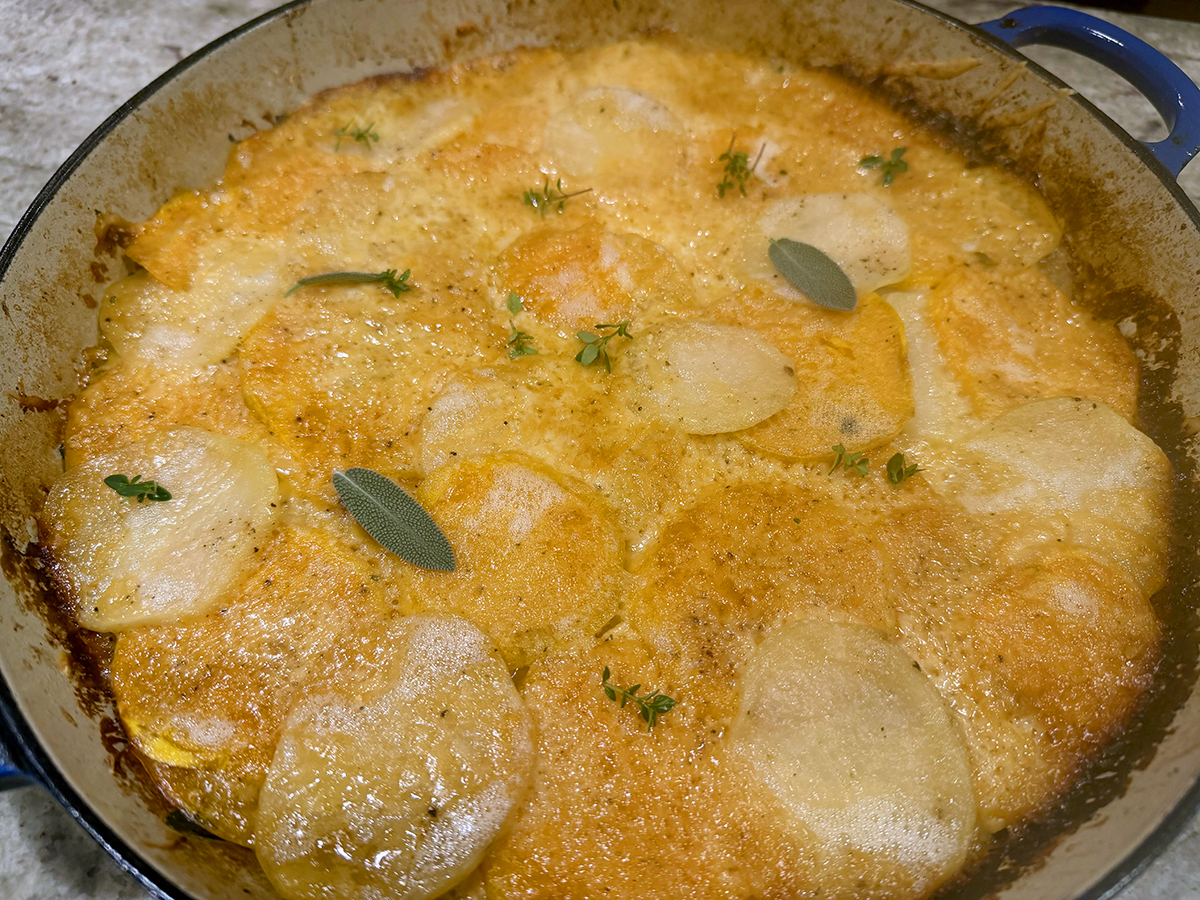
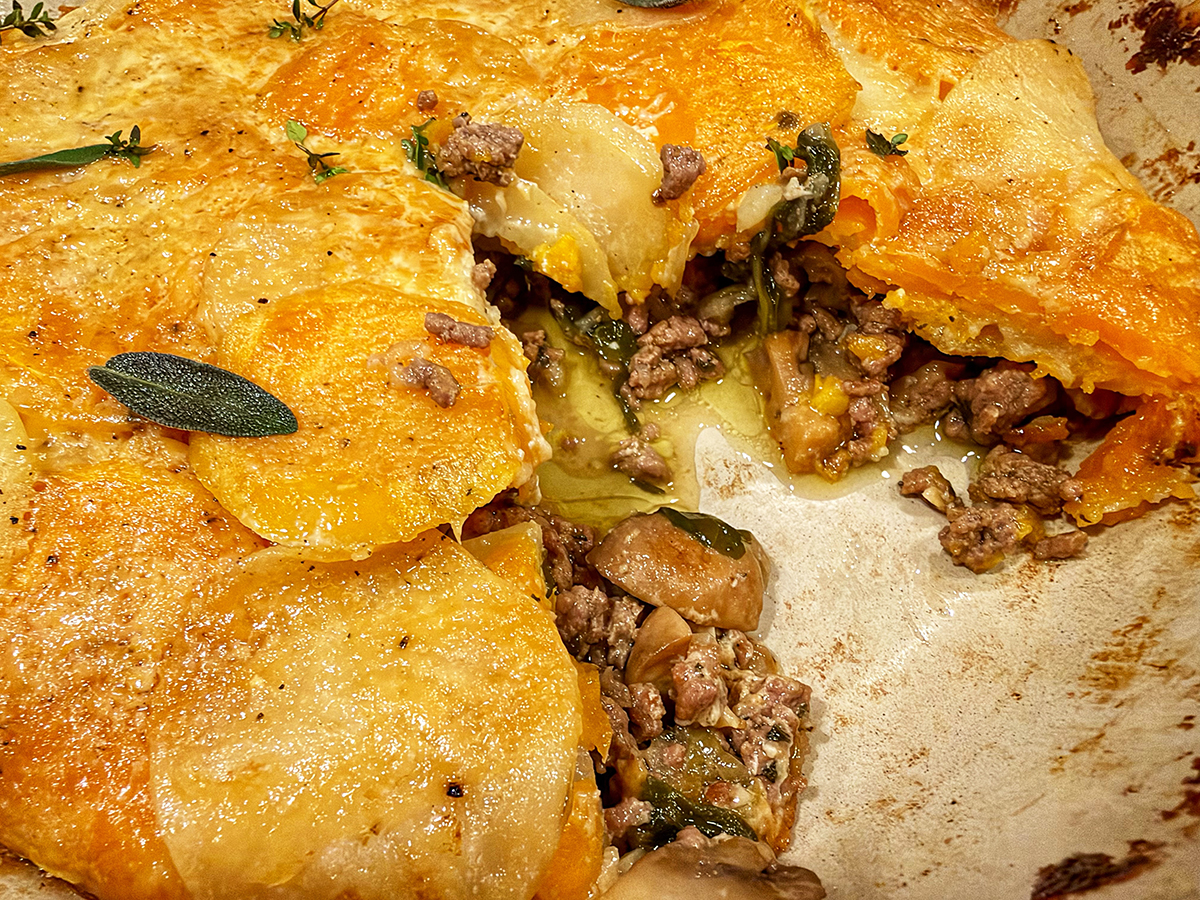
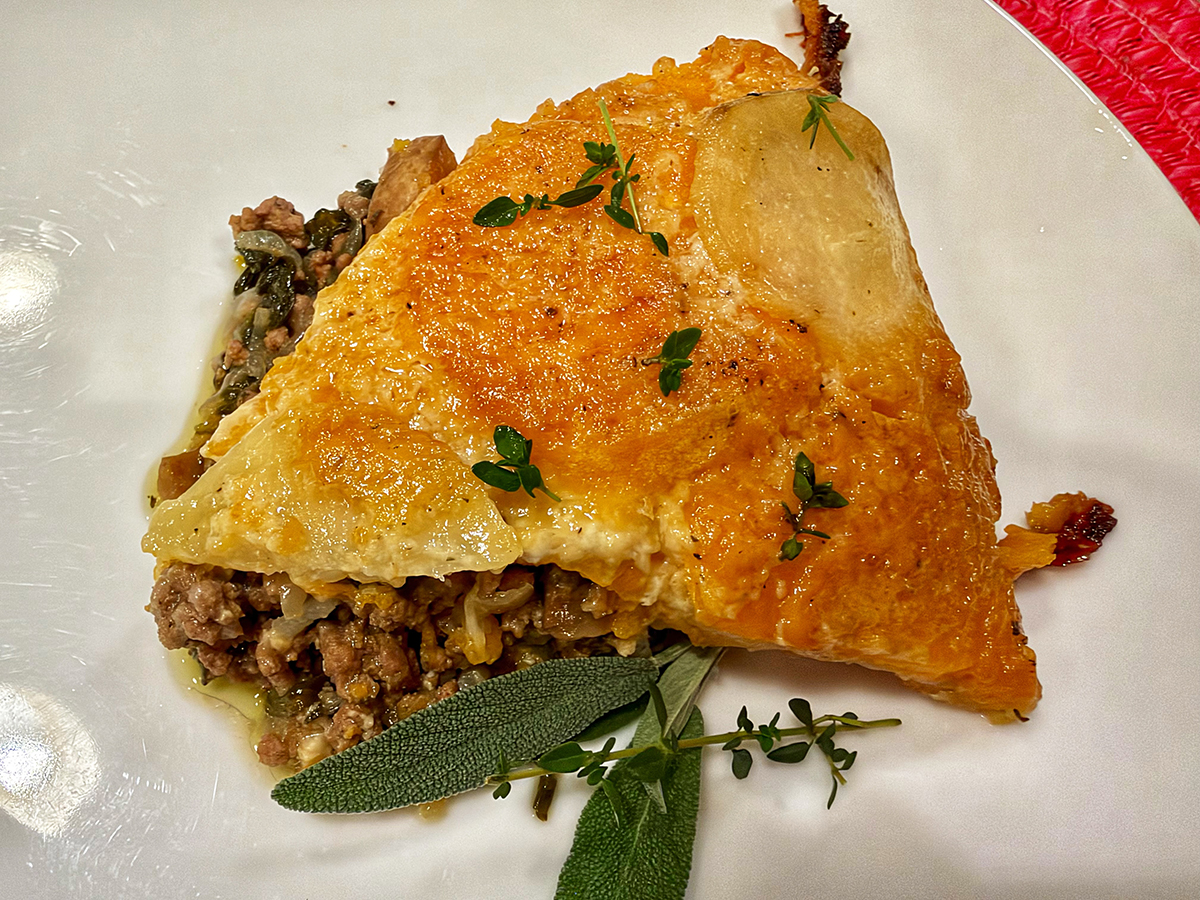
Here’s a hearty, cool weather dish that is a cross between a shepherd’s pie and potato gratin, if you will. Lean ground beef is browned until deeply savory, then layered with golden onions, silky wilted spinach, and overlapping rounds of russet and sweet potatoes (which were a substitute from the original recipe with rutabagas.) Cremini mushrooms were our additional ingredient.
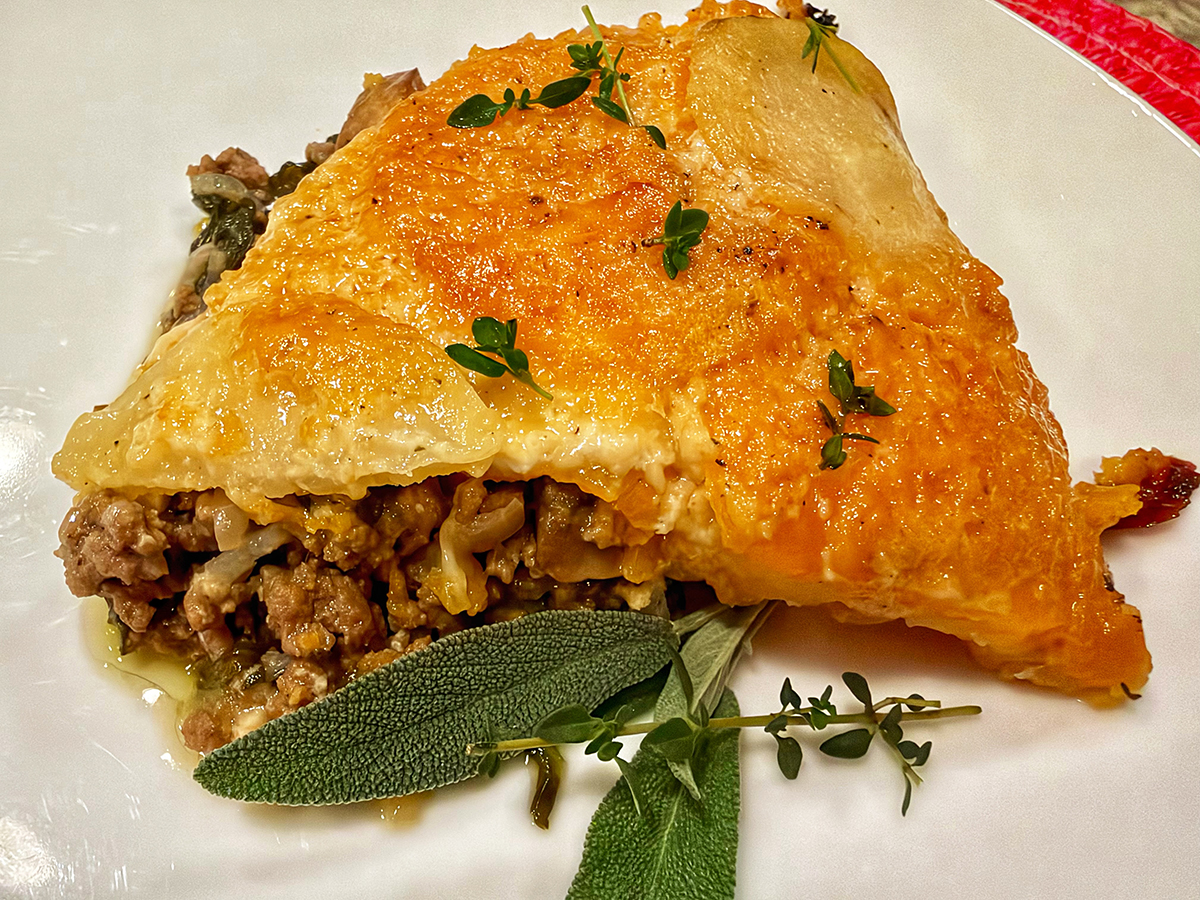
Two kinds of potato give you the best of both worlds: the earthy, starchy backbone of the russet and the gentle caramel sweetness of the sweet potato. Everything is blanketed in nutty, melty Gruyère and finished with a spoonful of herb-infused reduced cream. It all bakes together in a single cast-iron skillet, so the flavors meld and the cleanup stays easy.
And although it qualifies as a one-pan meal (with meat, green vegetable and starch altogether), a fresh and tangy green salad on the side rounds things out nicely. It was amazingly good with a lot of flavor.
Meat and Potato Skillet Gratin
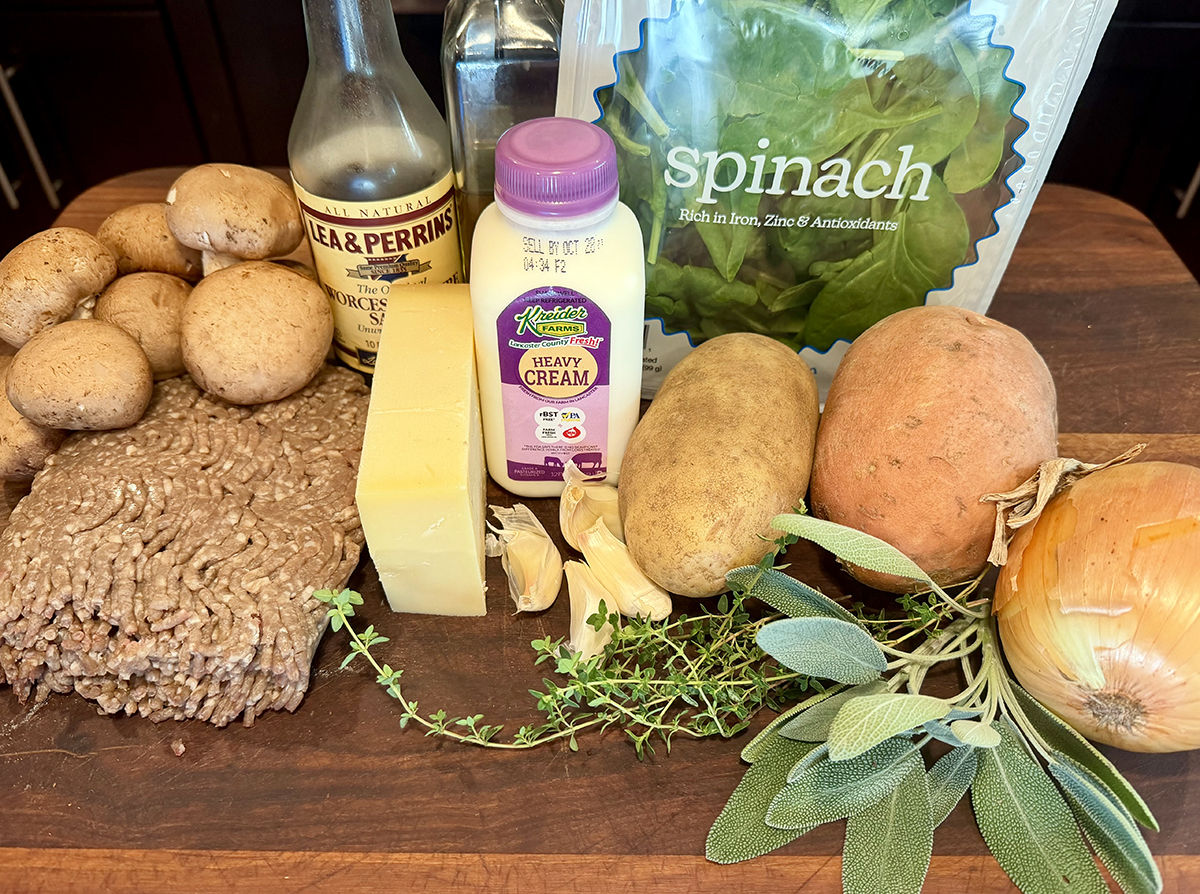
Ingredients
- 4 garlic cloves, peeled and chopped
- 1 cup heavy cream
- 2 thyme branches
- 2 Tbsp. finely chopped fresh sage
- 1 Tbsp. extra-virgin olive oil, more as needed
- 1 lb. ground lean beef
- ¾ tsp. kosher salt, more as needed
- Black pepper, as needed
- 1 cup thinly sliced onion
- 6 oz. cremini mushrooms, cleaned and cut into large chunks
- 3½ oz. baby spinach
- 2 tsp. Worcestershire sauce
- ½ lb. sweet potatoes, peeled and cut in half
- ½ lb. russet potatoes, peeled and cut in half
- 6 oz. Gruyère, grated and divided
Directions
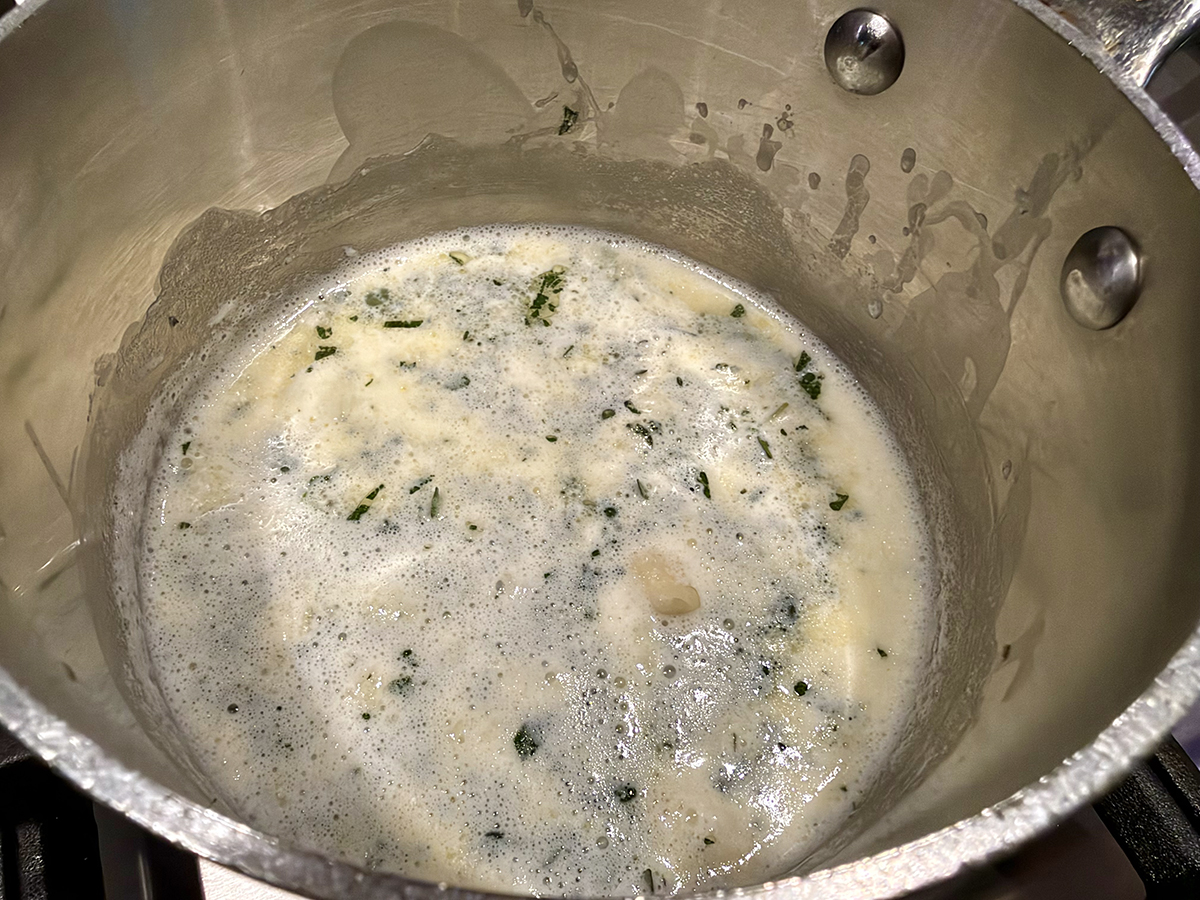
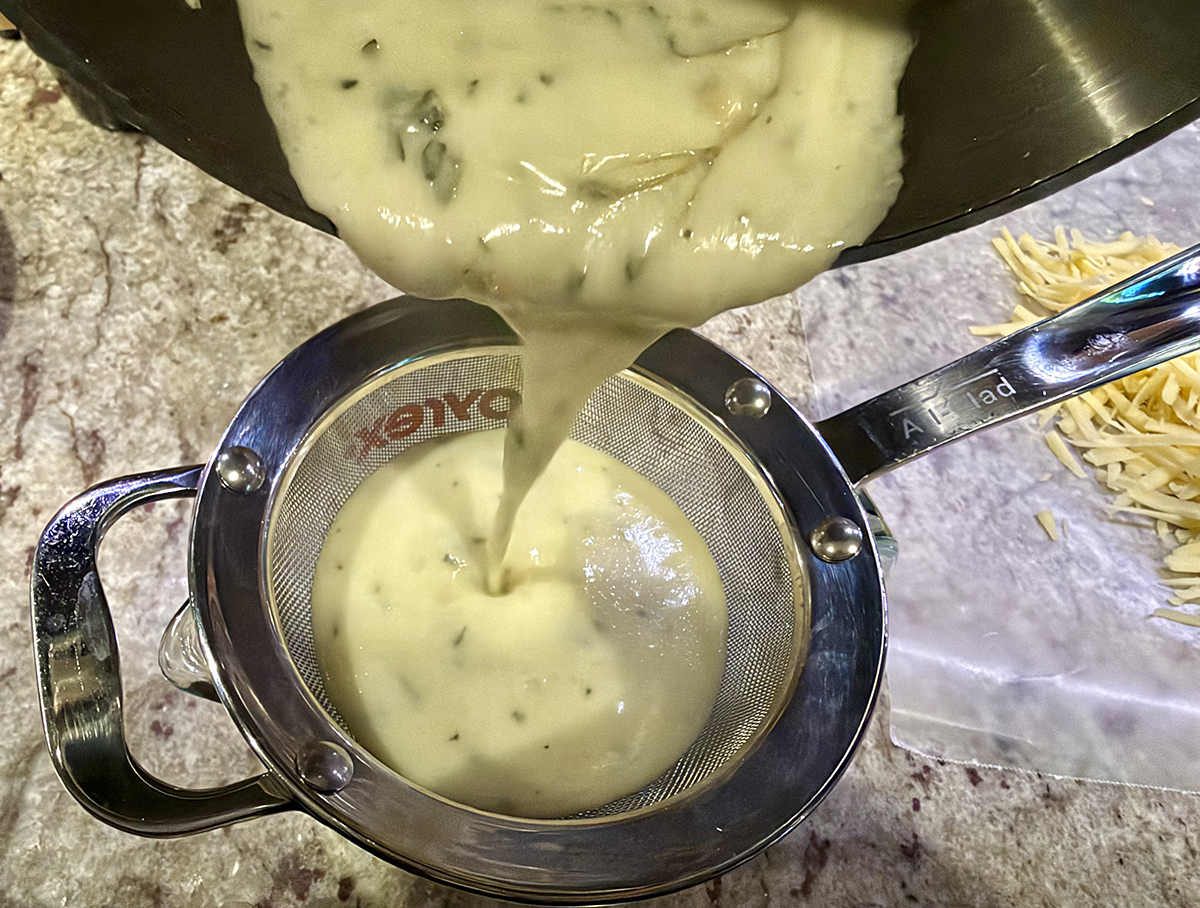
- Crush and peel 2 garlic cloves. In a small pot over medium heat, combine cream, the crushed garlic, the thyme and ½ tablespoon sage. Bring to a simmer; cook until reduced to ½ cup, about 30 minutes. Strain and cool.
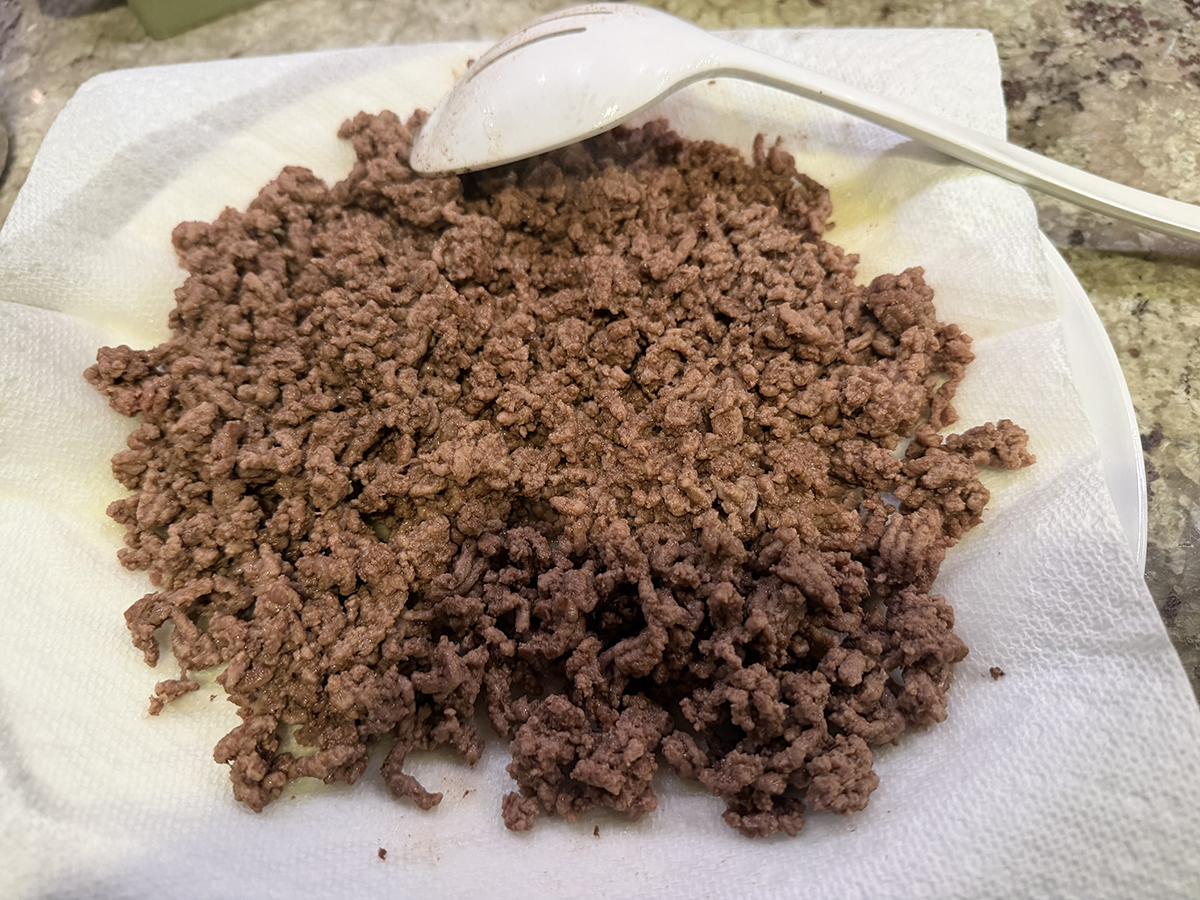
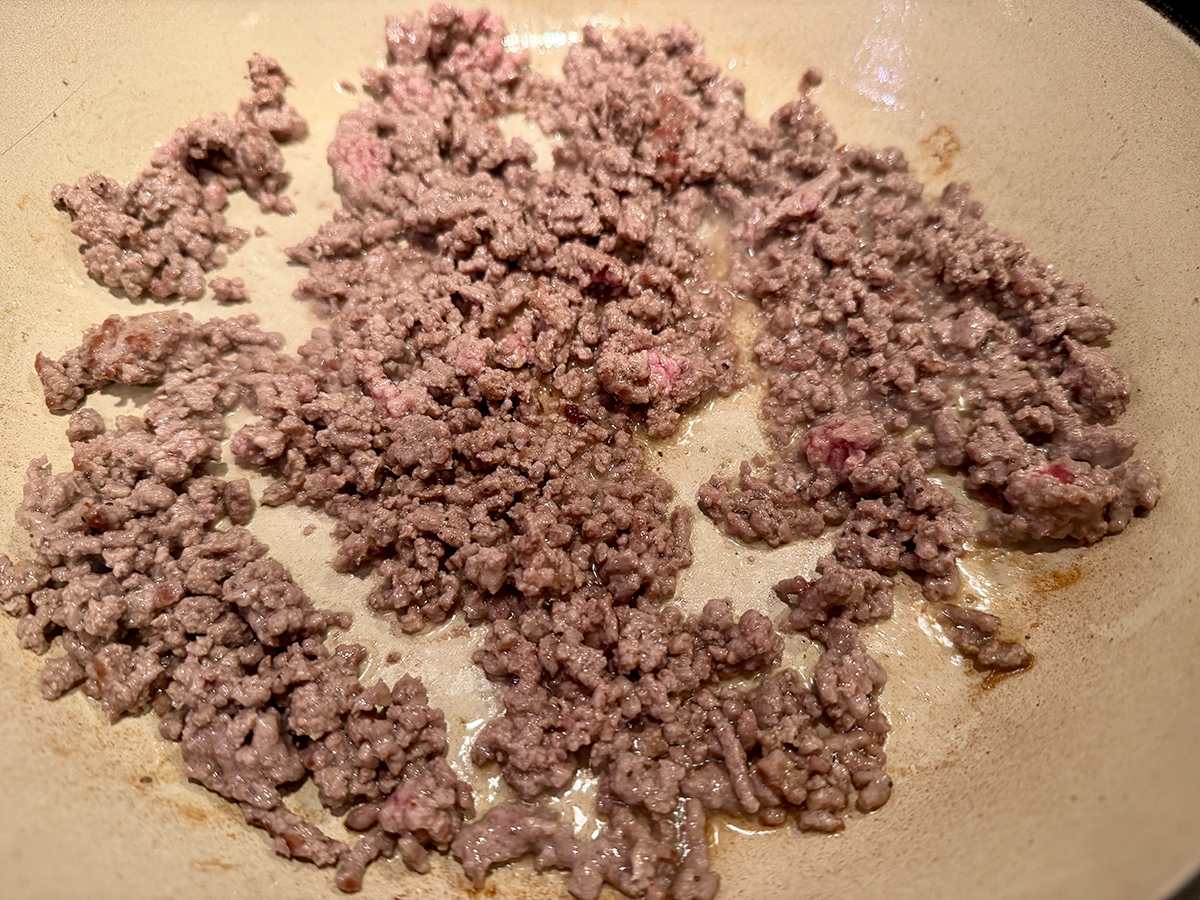
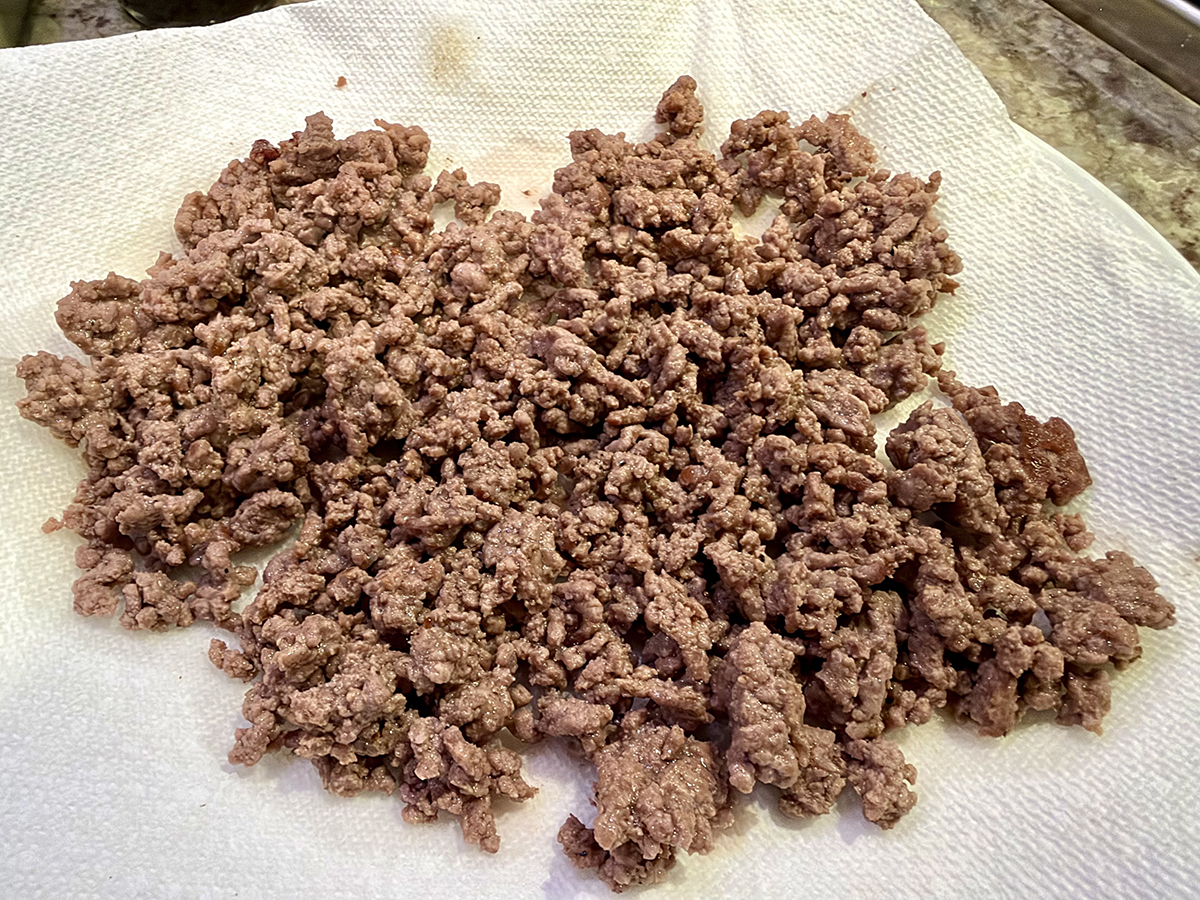
- While cream cools, heat oil in an ovenproof 10-inch skillet (preferably cast iron) over medium-high heat. Add half the beef and brown well, crumbling with a fork as it cooks. Season with ¼ teaspoon salt and a few grinds of pepper; transfer meat to a paper-towel-lined plate. Repeat with remaining meat, ¼ teaspoon salt and the pepper.
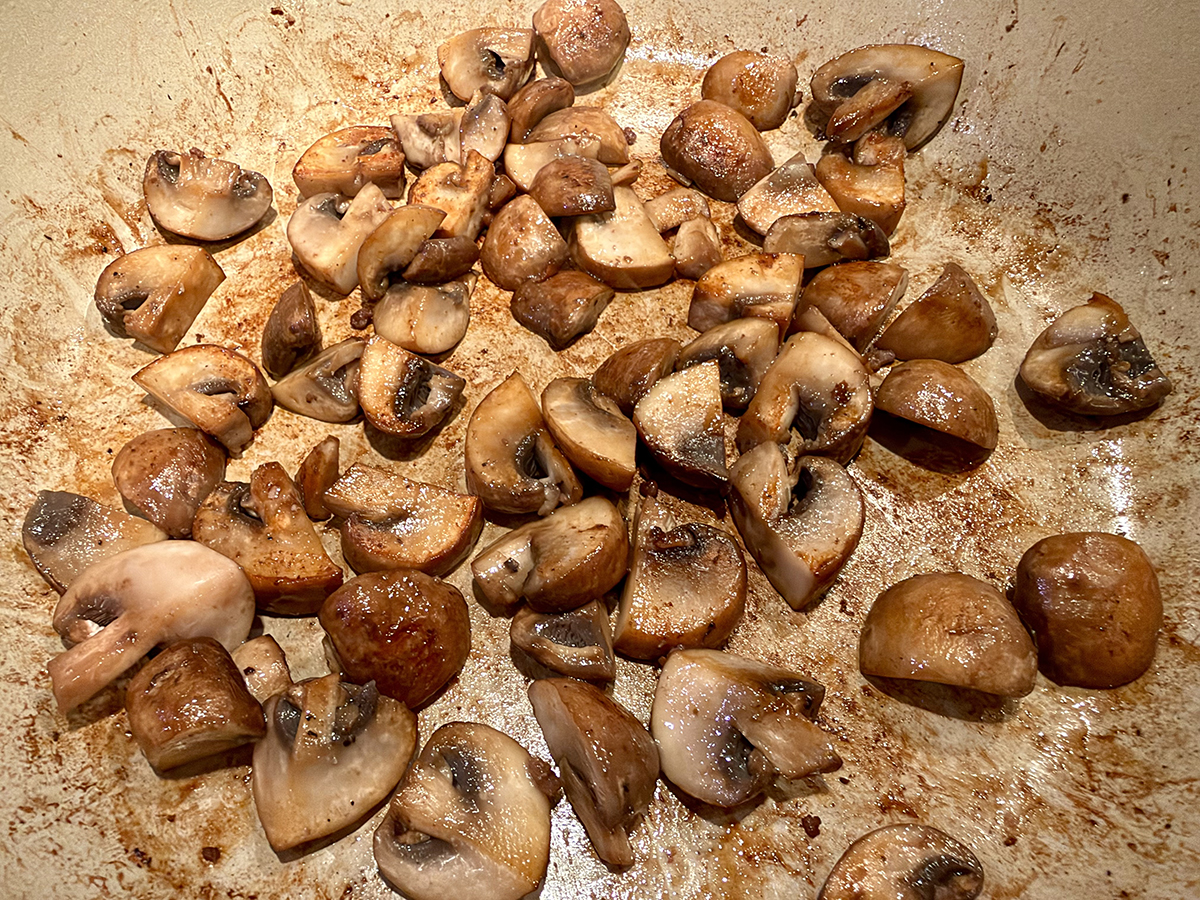
- Add mushrooms to pan drippings (drizzle with oil if pan seems dry). Cook, stirring occasionally until mushrooms are browned and the moisture has evaporated, about 6-8 minutes. Remove to a bowl for later.
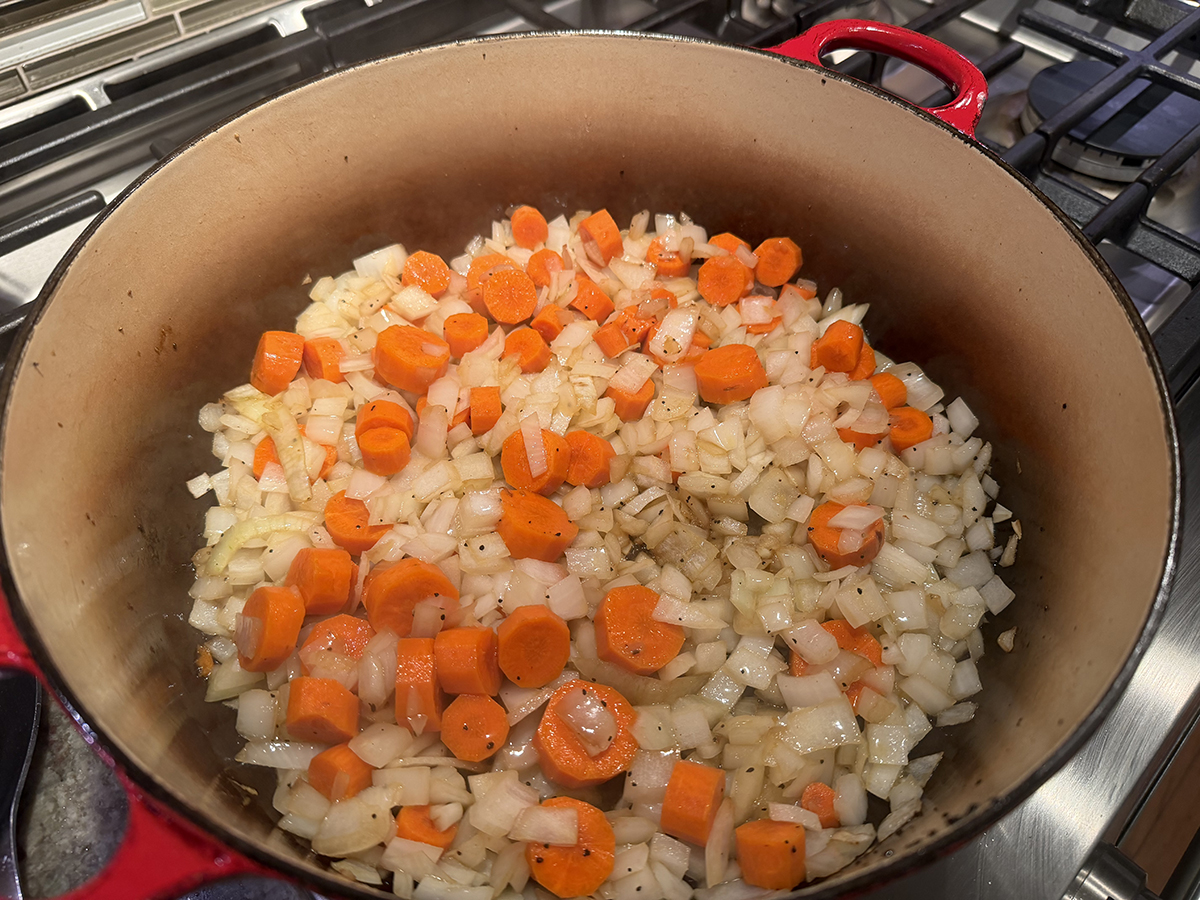
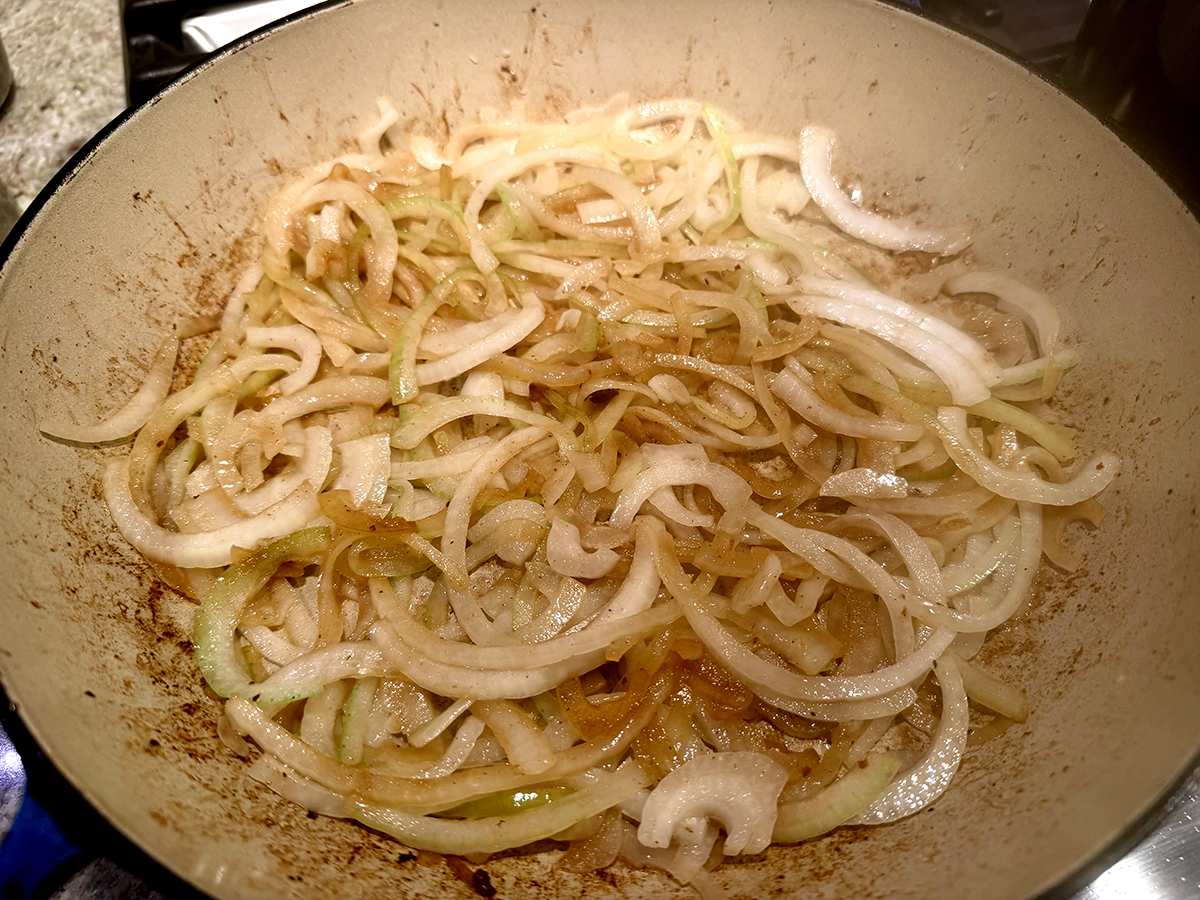
- Add more oil to dry pan and when heated add sliced onions, stirring occasionally until tender and golden, about 10 minutes.
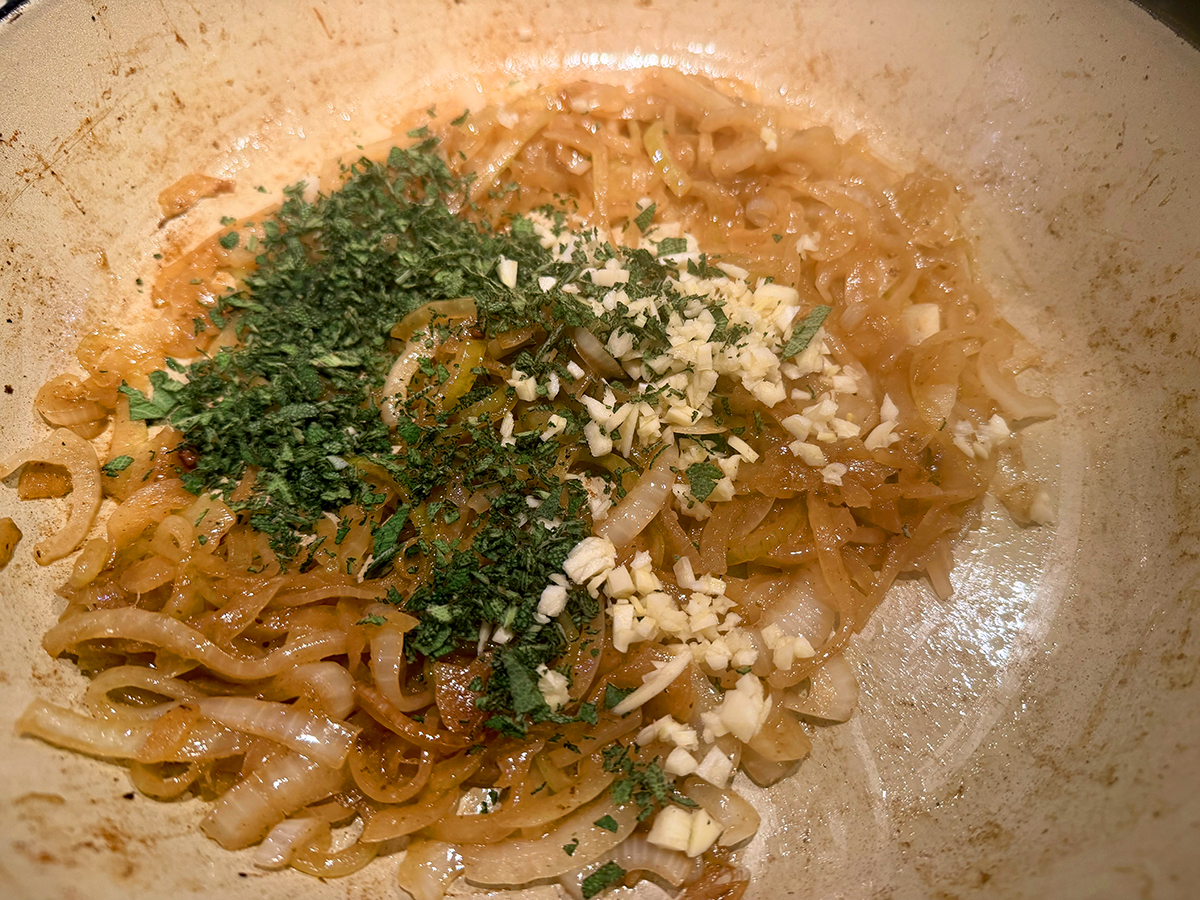
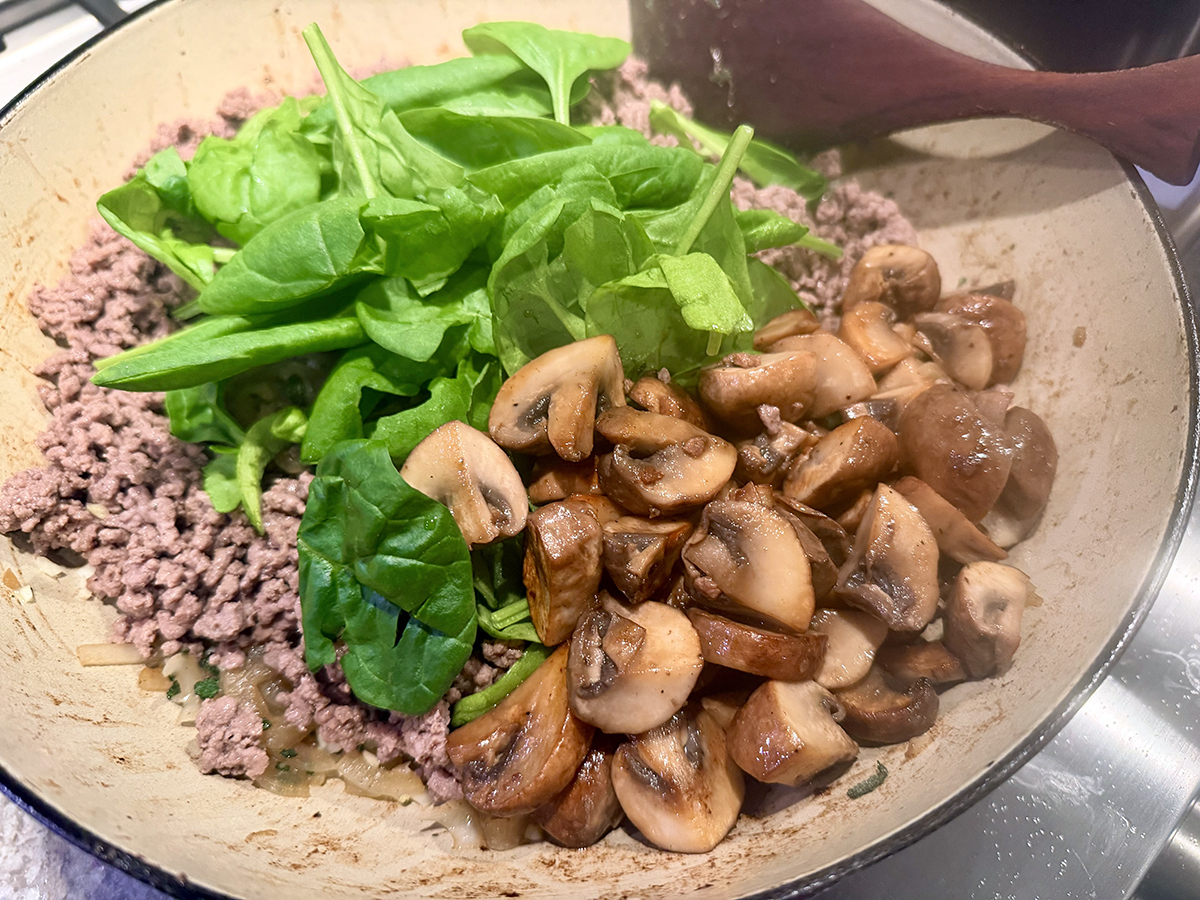
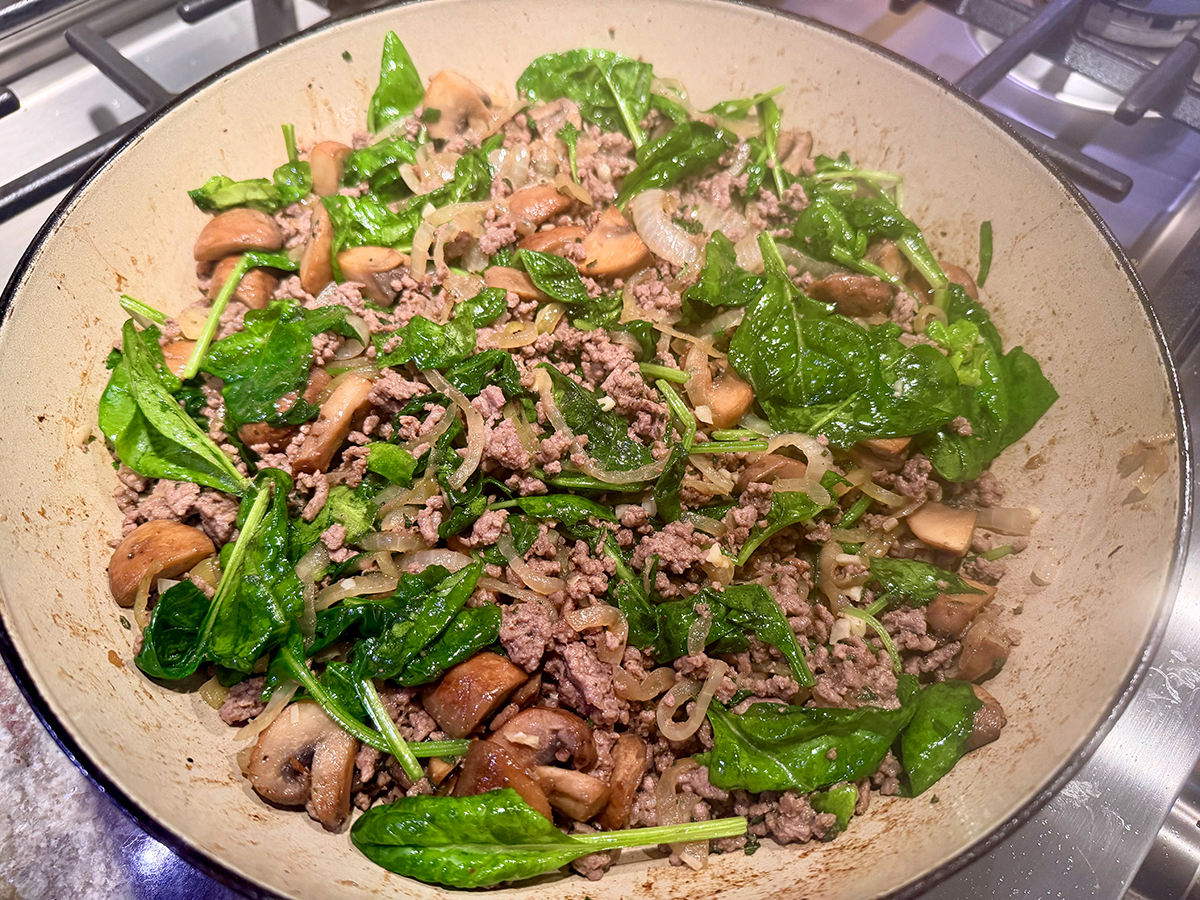
- Peel and chop remaining 2 garlic cloves; add to pan with remaining sage. Return meat and mushrooms to skillet. Toss in spinach, a handful at a time, until wilted. Season with ¼ teaspoon salt, the Worcestershire and pepper to taste.
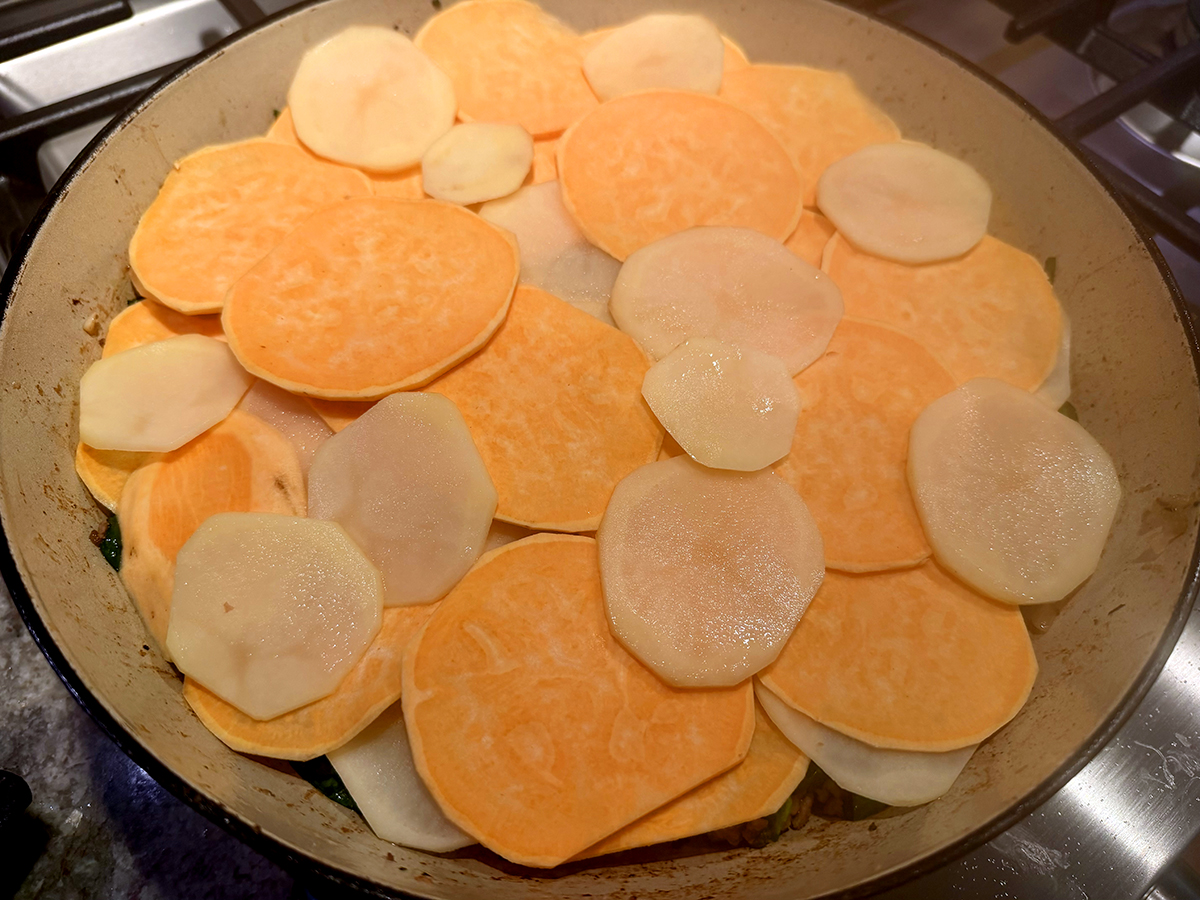
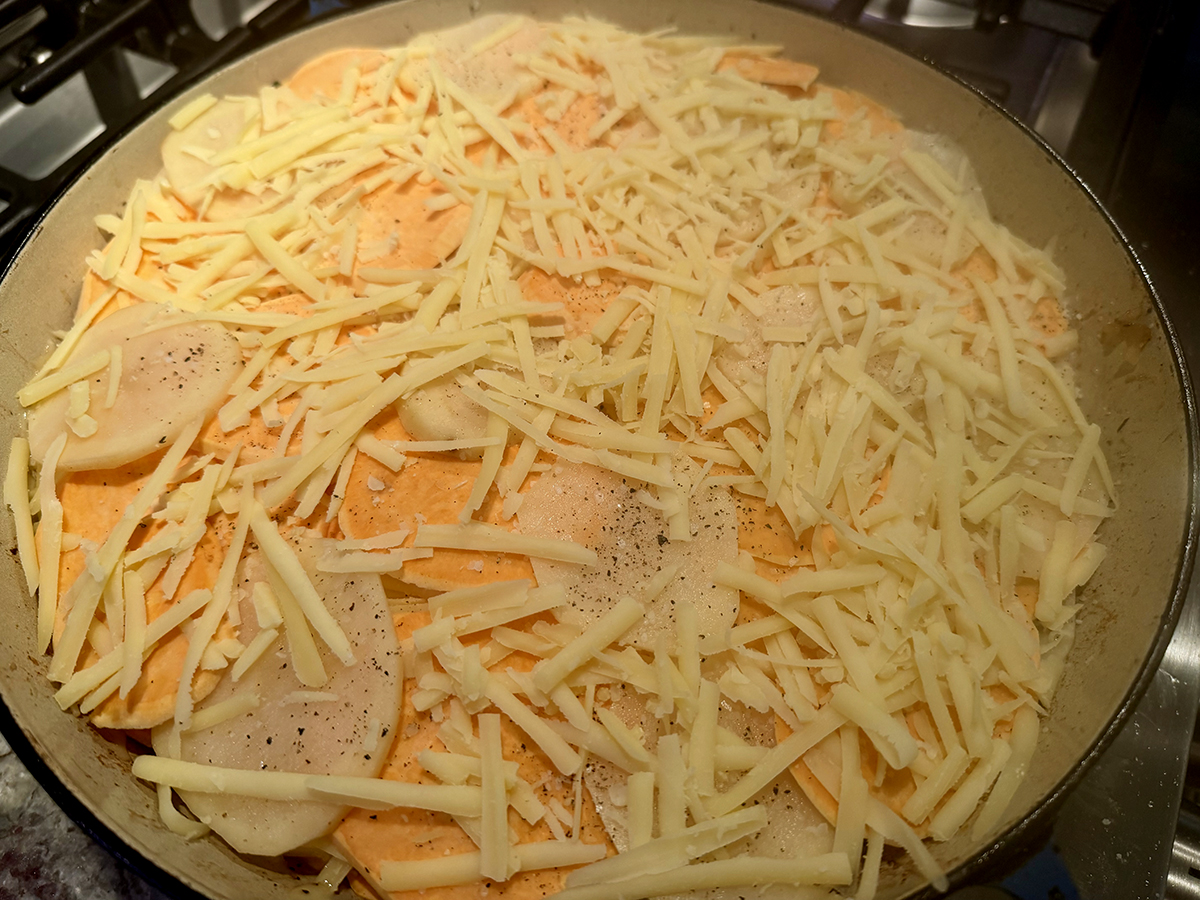
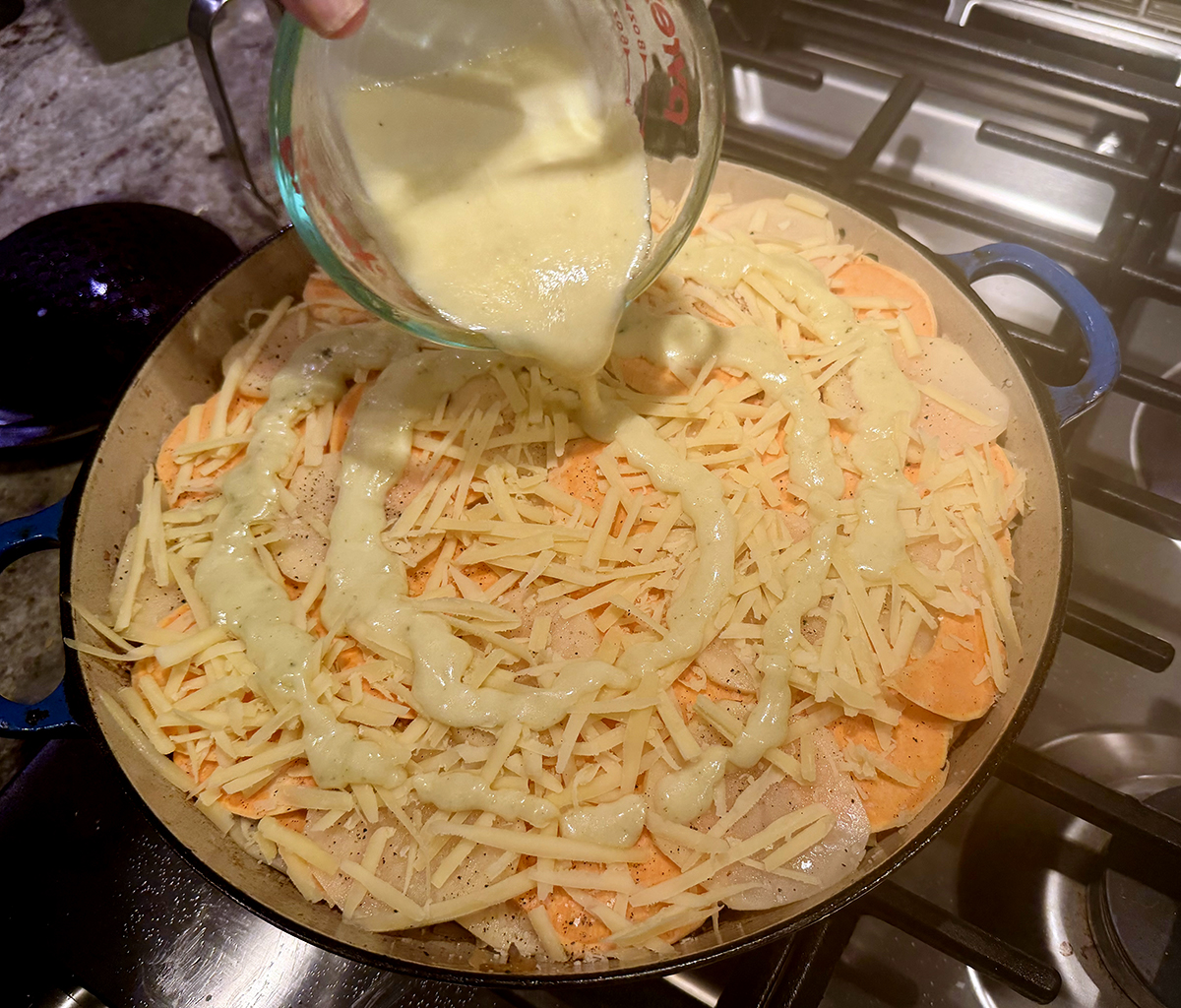
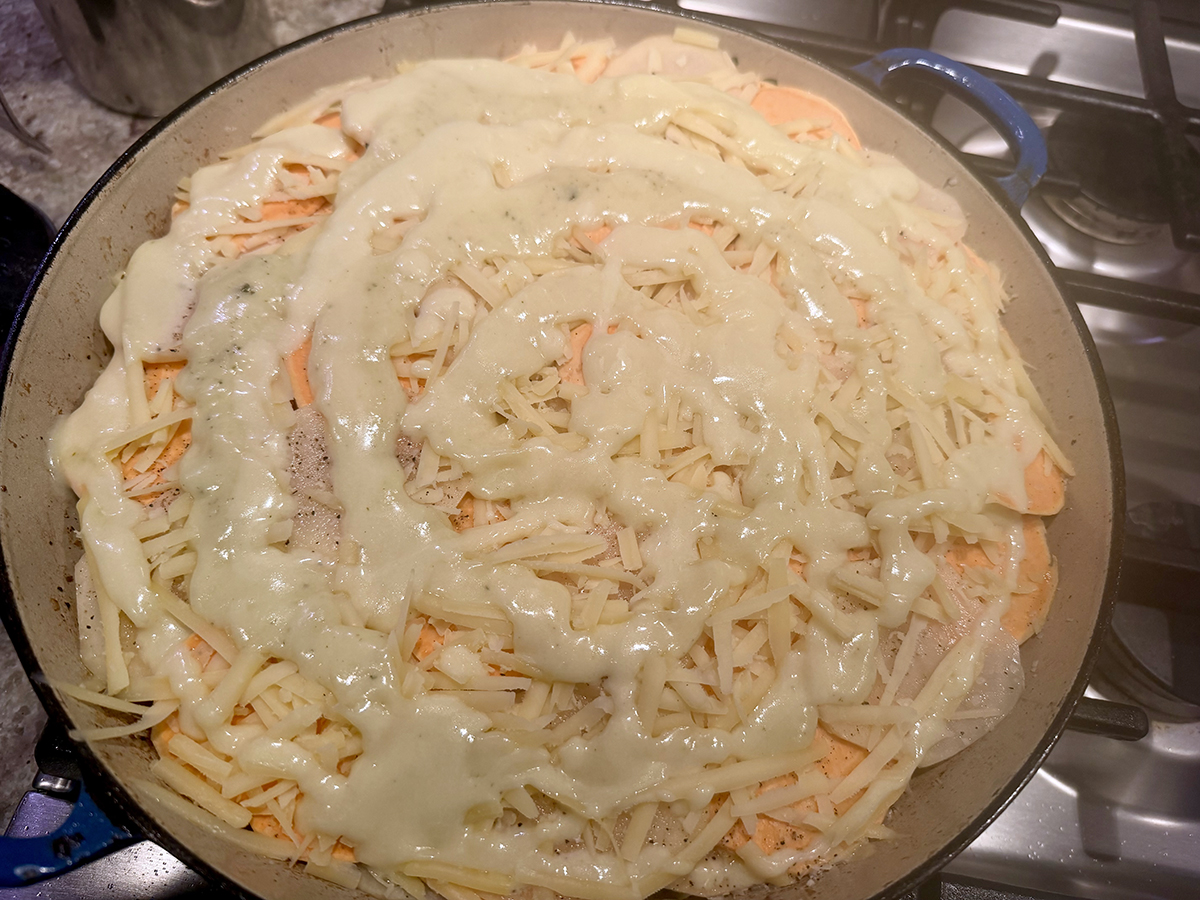
- Heat oven to 350 degrees. Slice all potato halves crosswise into ¼-inch-thick rounds. Layer half the sweet potato and russet potato slices over meat, alternating between sweet potato and russet potato, with slices overlapping one another. Season lightly with salt and pepper; top with half the cheese. Repeat with remaining vegetables and cheese. Spoon reduced cream evenly over top.
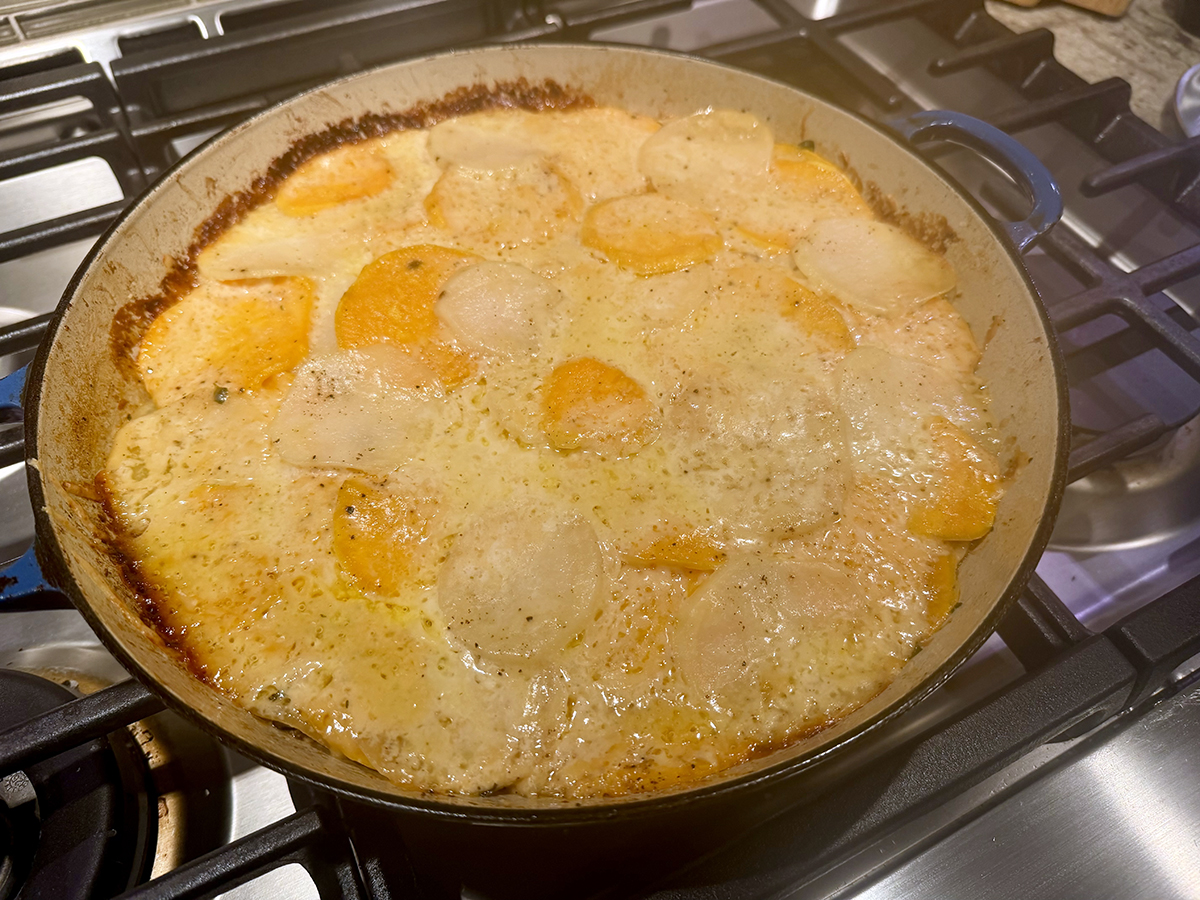
- Cover pan tightly with foil and bake until vegetables are very tender, 60 to 75 minutes. Uncover and cook until golden brown, about 10 minutes more. Cool 10 minutes before serving.
Adapted from a recipe by Melissa Clark for NYTimes Cooking