Tag Archives: gluten-free

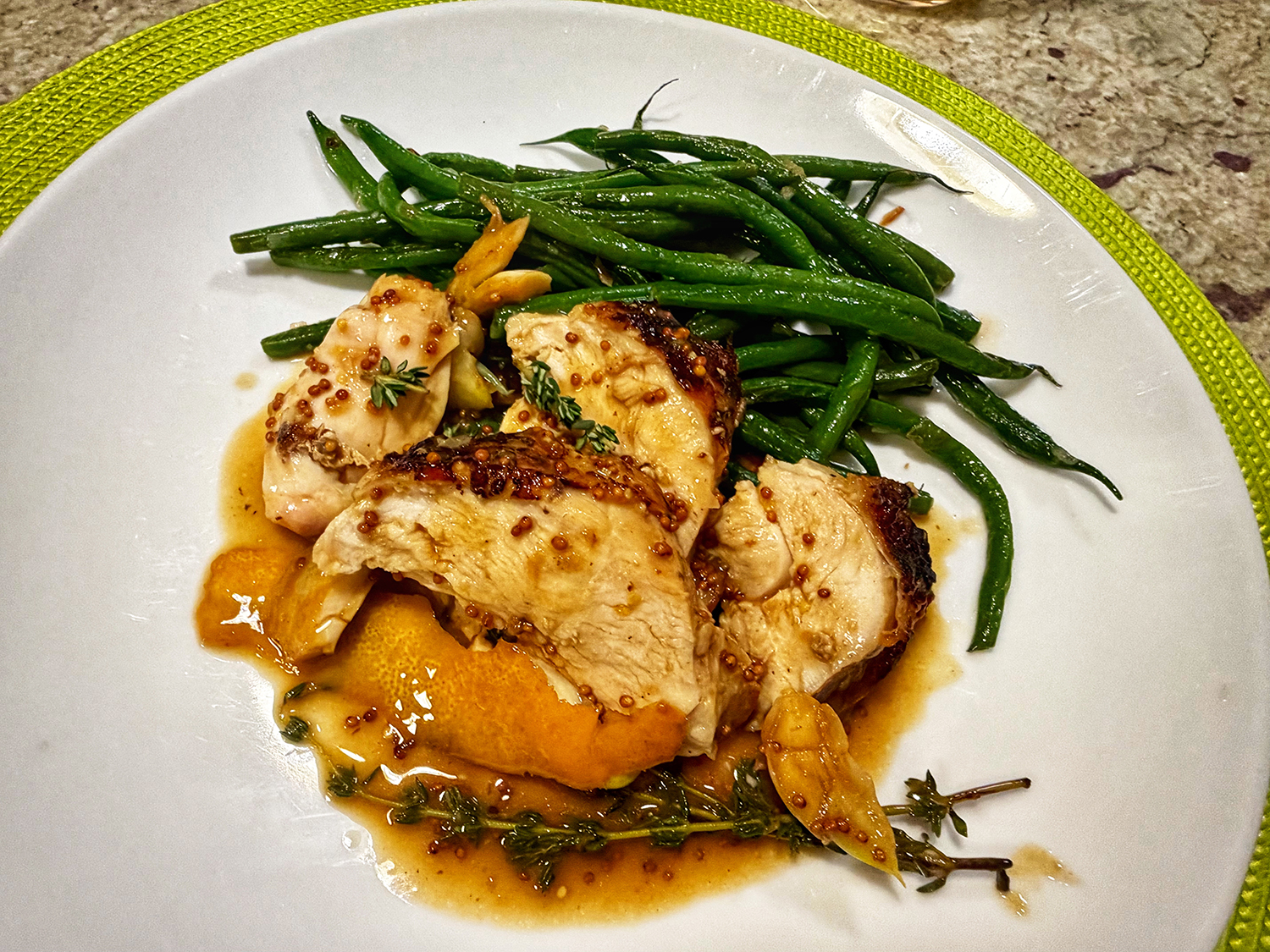
Skillet-Roasted Chicken Breasts with Rustic Orange-Thyme Sauce

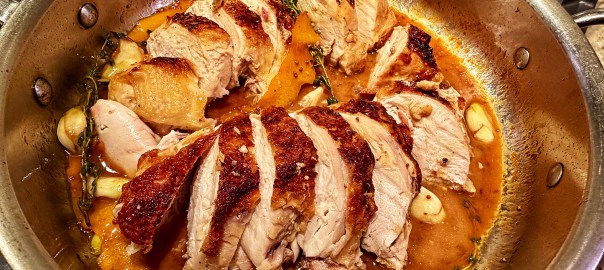
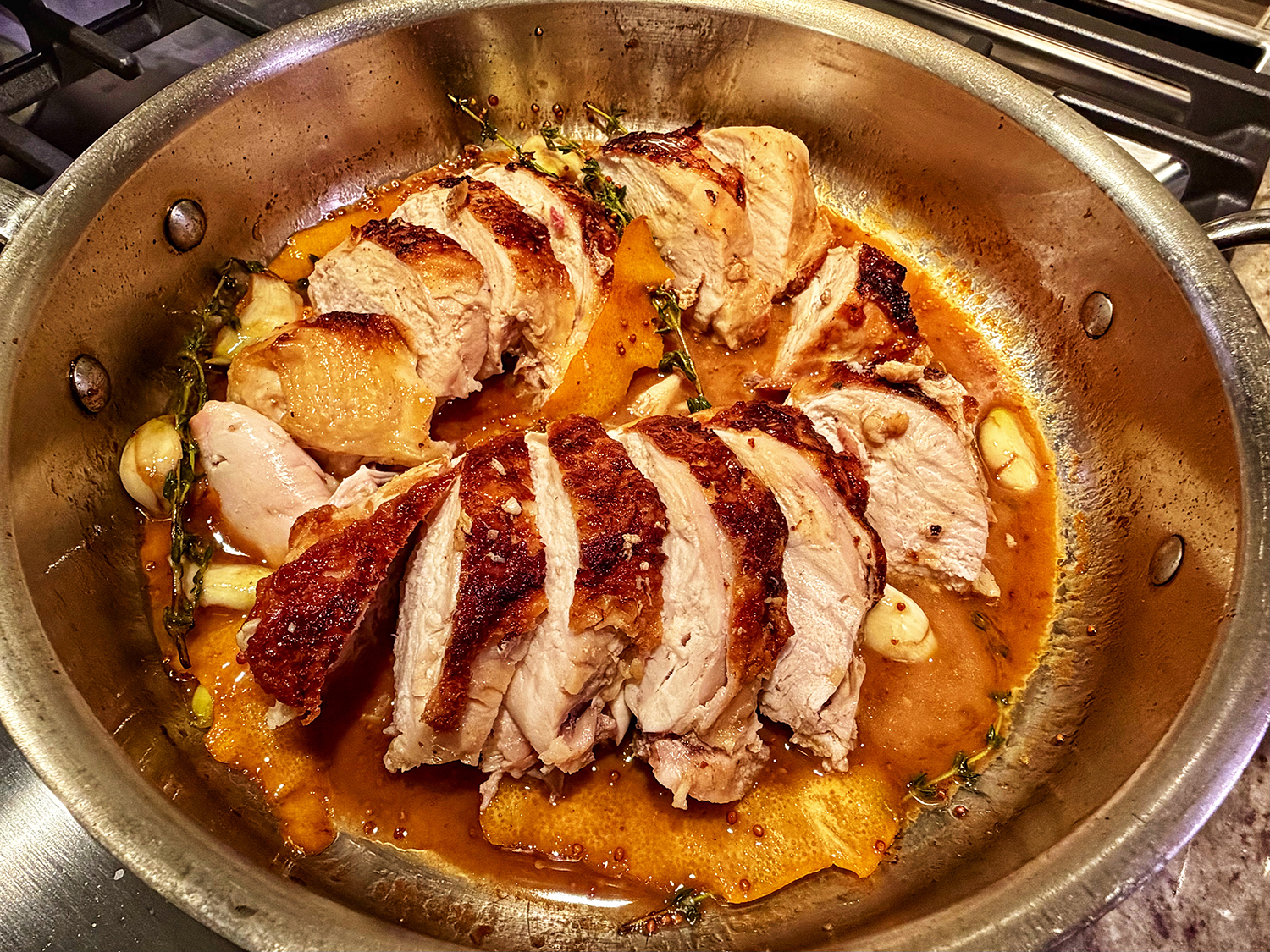
This low-fuss method for skillet-roasted chicken breasts produces perfectly tender, juicy white meat and flavorful pan juices that are easily transformed into a bright, buttery sauce. Bone-in, skin-on chicken breasts are used—the skin and bones make the breasts less prone to overcooking.

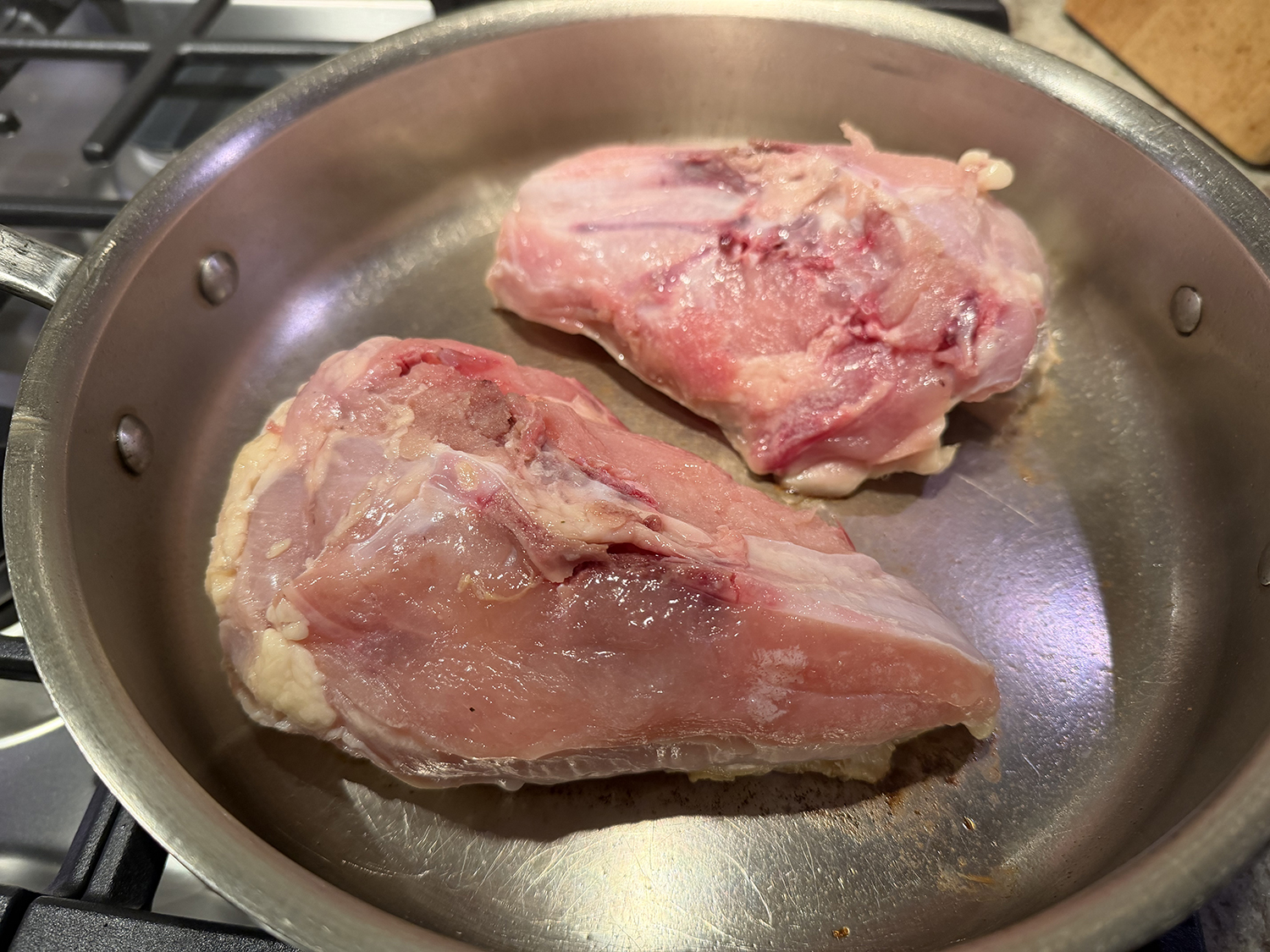
Salting under the skin seasons the meat directly, while piercing the skin helps it render efficiently. Spraying the chicken—not the pan—with cooking spray minimizes the fat in the skillet and, thus, grease splatters, and starting in a cold pan gives the skin time to render and brown before the meat overcooks.

Finishing the chicken in the oven brings it up to temperature gently, so the thinner portions don’t dry out. It is fast and easy to reduce the juices left in the pan, creating a rich fond for the sauce that doesn’t require boxed broth.

To cut back on knife-work, leave the garlic, zest, and herbs in large pieces and simply add more of them. Melting a generous amount of butter all at once is much faster and easier than emulsifying it piece by piece and results in a rustically elegant sauce. The meat is sliced and served it in the skillet, which keeps the chicken and sauce warm.

For the best results, buy chicken breasts of similar size. Use kitchen shears to snip off the ribs and trim the excess fatty skin from the thick ends of the breasts. (See illustration box below.)

Illustration above from Cook’s Illustrated No. 198, January, February 2026

Skillet-Roasted Chicken Breasts with Rustic Orange-Thyme Sauce

  • Servings: 4-6
  • Difficulty: moderate
  • Print

Ingredients

  • 4 (10- to 12-oz.) bone-in* split chicken breasts, ribs removed, trimmed
  • 1½ tsp. kosher salt, divided
  • Vegetable oil spray
  • 4 Tbsp. unsalted butter
  • 4 garlic cloves, smashed and peeled
  • 4 (3-inch) strips orange zest, divided, plus ¼ cup orange juice
  • 10 sprigs fresh thyme, divided
  • 1½ Tbsp. whole-grain mustard

Directions

  1. Adjust oven rack to upper-middle position and heat oven to 325 degrees. Use your fingers to carefully separate skin from 4 trimmed chicken breasts, ribs removed. Peel back skin, leaving skin attached at top and bottom of breast. 
  2. Sprinkle 1½ teaspoons kosher salt evenly over chicken (⅜ teaspoon per breast). Lay skin back in place. Using metal skewer or tip of paring knife, poke 6 to 8 holes in fat deposits in skin of each breast. Spray skin with vegetable oil spray.
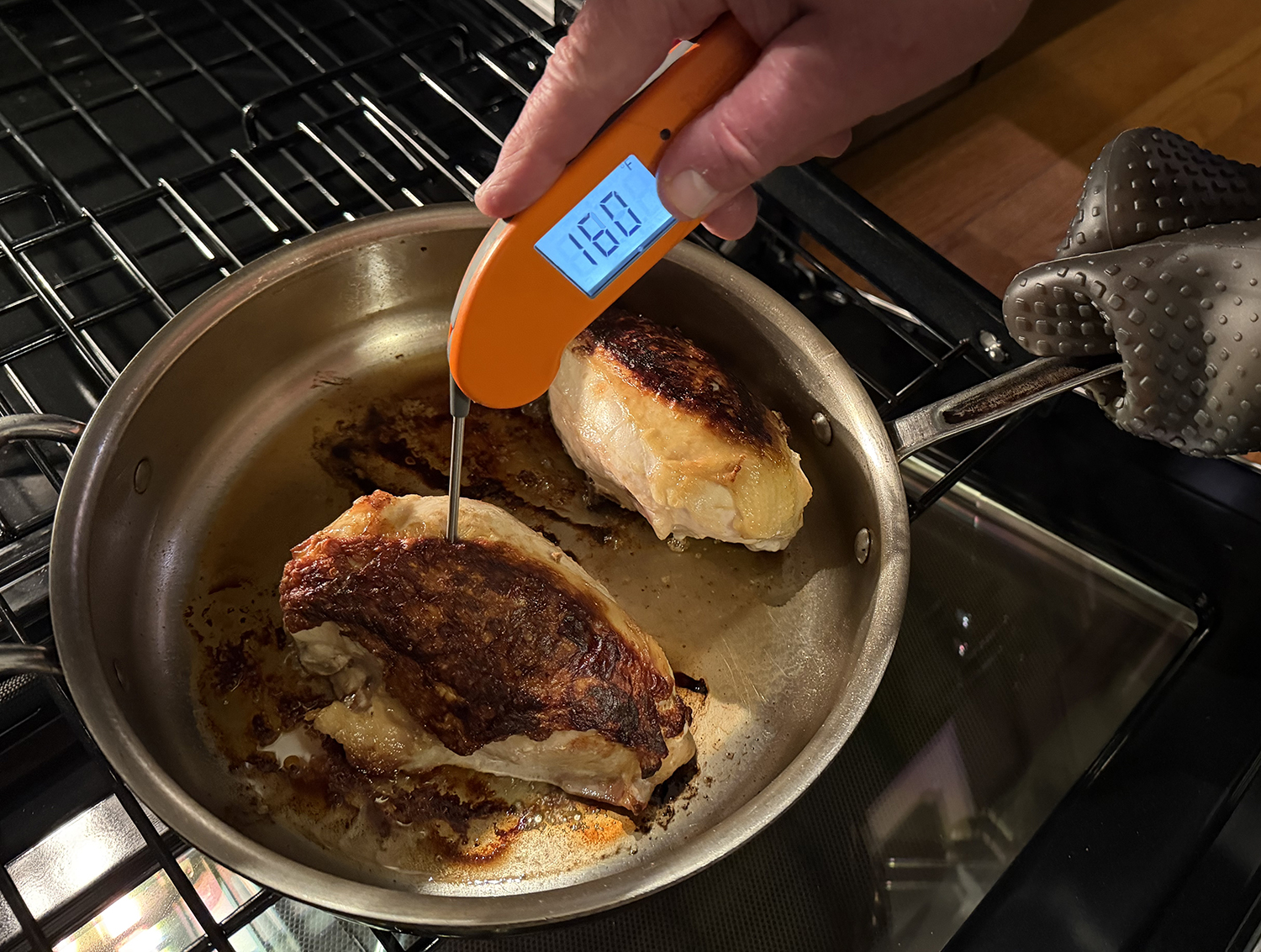
  3. Place chicken skin side down in 12-inch skillet and set over medium-high heat. Cook until skin is well browned, 7 to 9 minutes. Carefully flip chicken, transfer skillet to oven, and roast until chicken registers 160 degrees, about 30 minutes. 
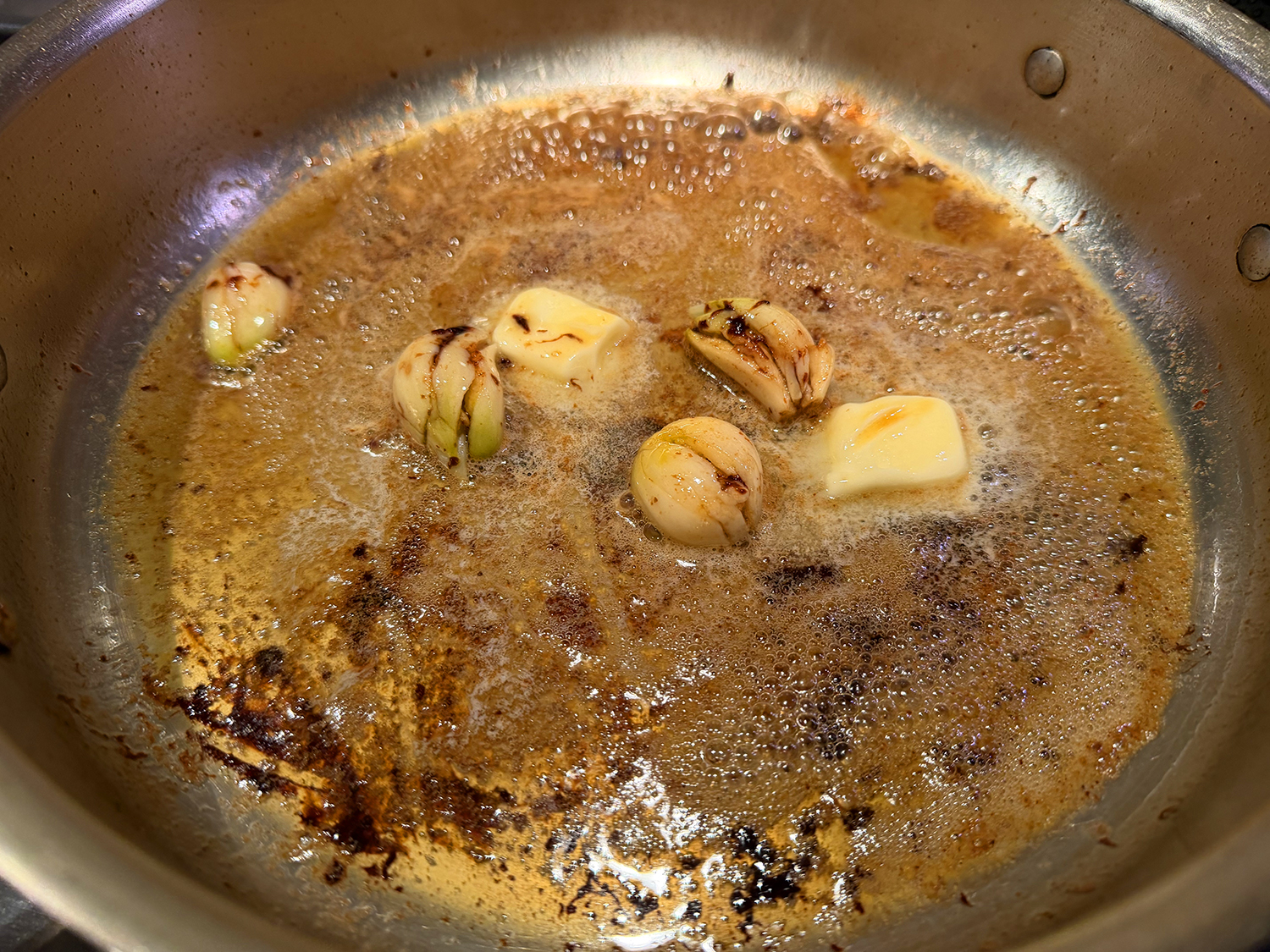
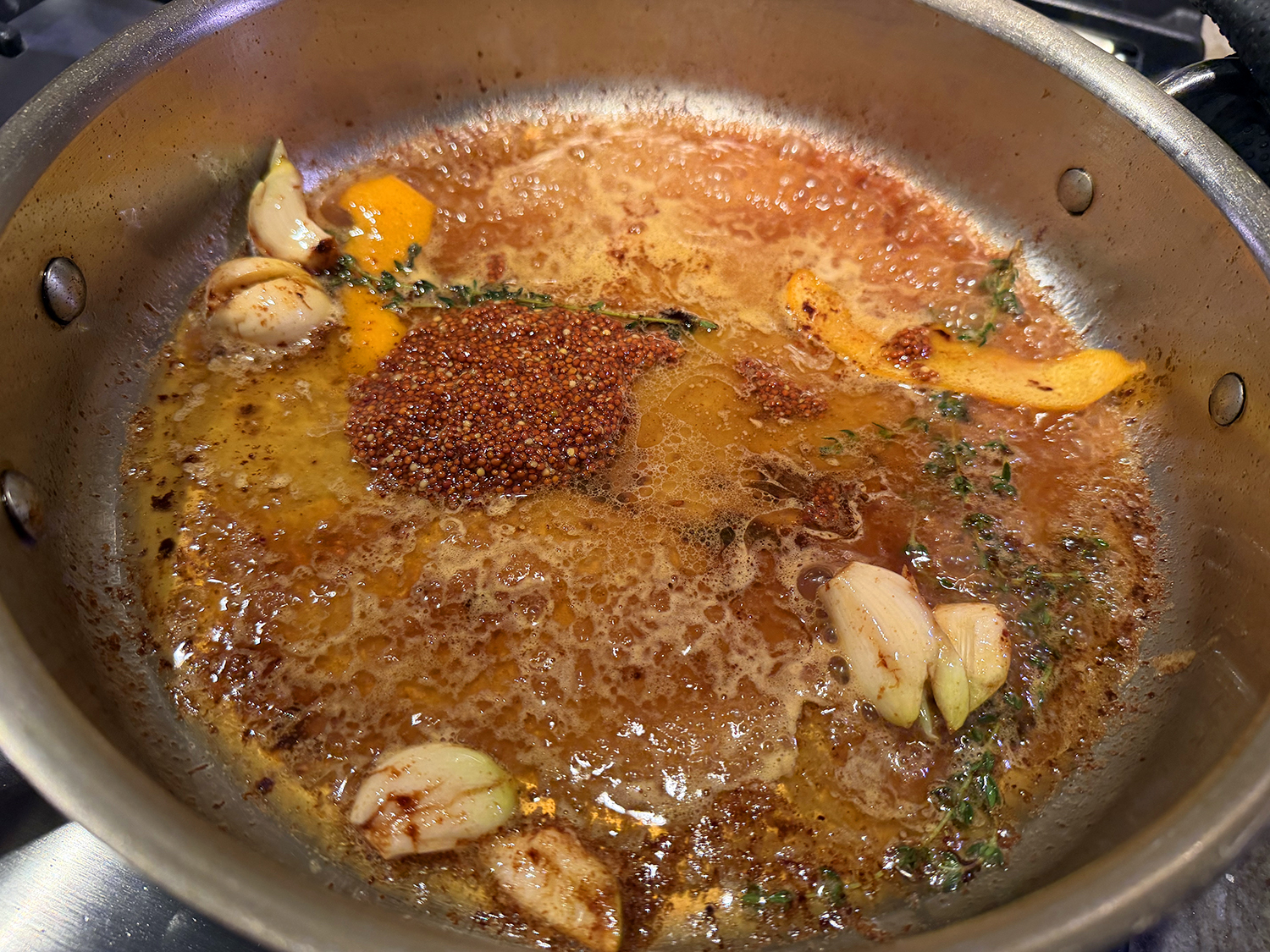
  4. Transfer chicken to plate skin side up. Place skillet over medium heat and cook, stirring occasionally, until juices in skillet form dark fond, about 1 minute. Add 4 tablespoons unsalted butter and 4 smashed and peeled garlic cloves and cook, stirring constantly, until butter is fully melted, about 1 minute. Add 2 (3-inch) strips orange zest and 5 sprigs thyme and cook, stirring constantly until fragrant, about 20 seconds. 
  5. Stir in ¼ cup orange juice and 1½ tablespoons whole-grain mustard. Off heat, add remaining 2 (3-inch) strips orange zest and 5 sprigs thyme. Season with salt and pepper to taste.
  6. Carve meat from bones and slice breasts on bias against grain into ¾-inch-thick slices. Return slices to skillet along with any accumulated juices and serve.

http://www.lynnandruss.com

Recipe by Lan Lam for Cook’s Illustrated

Shio Koji-Marinated Flank Steak

This super-easy reverse-seared steak recipe is just the thing for a flavor-packed tasty dinner. The list of ingredients is manageable, but one in particular, shio koji, may be unfamiliar to you.

To educate, Shio Koji is a fermented seasoning made from rice koji, salt, and water. The fermentation process of these three ingredients creates a creamy, paste-like condiment with a salty and sweet, umami-rich flavor. It contains enzymes like amylase and protease, which break down starches and proteins, making it a popular marinade and meat tenderizer. 

Shio koji, which can be made at home or purchased, is often used as a marinade because it is rich in protease enzymes (which break down proteins), so it can create an array of new flavors in protein-rich foods.

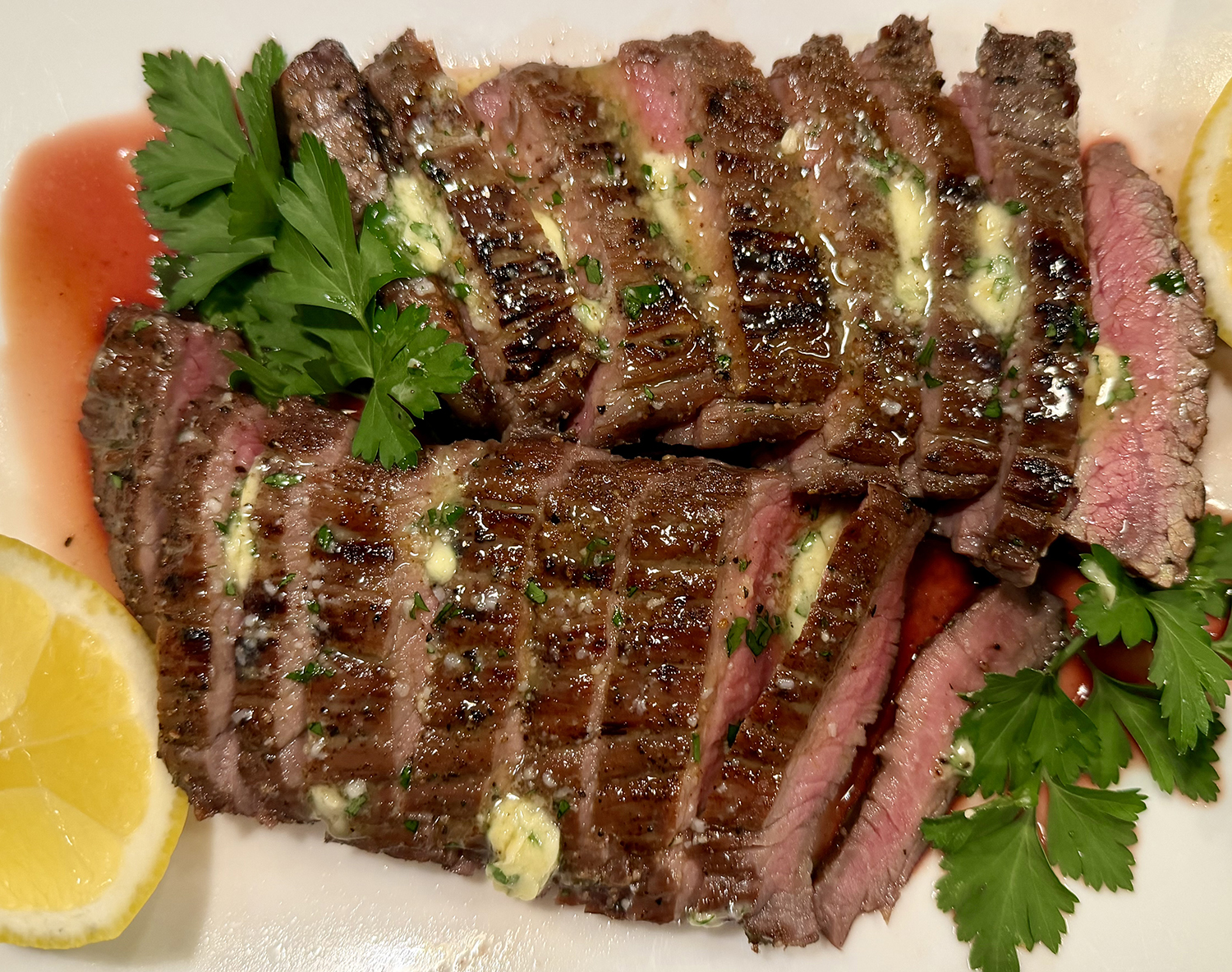
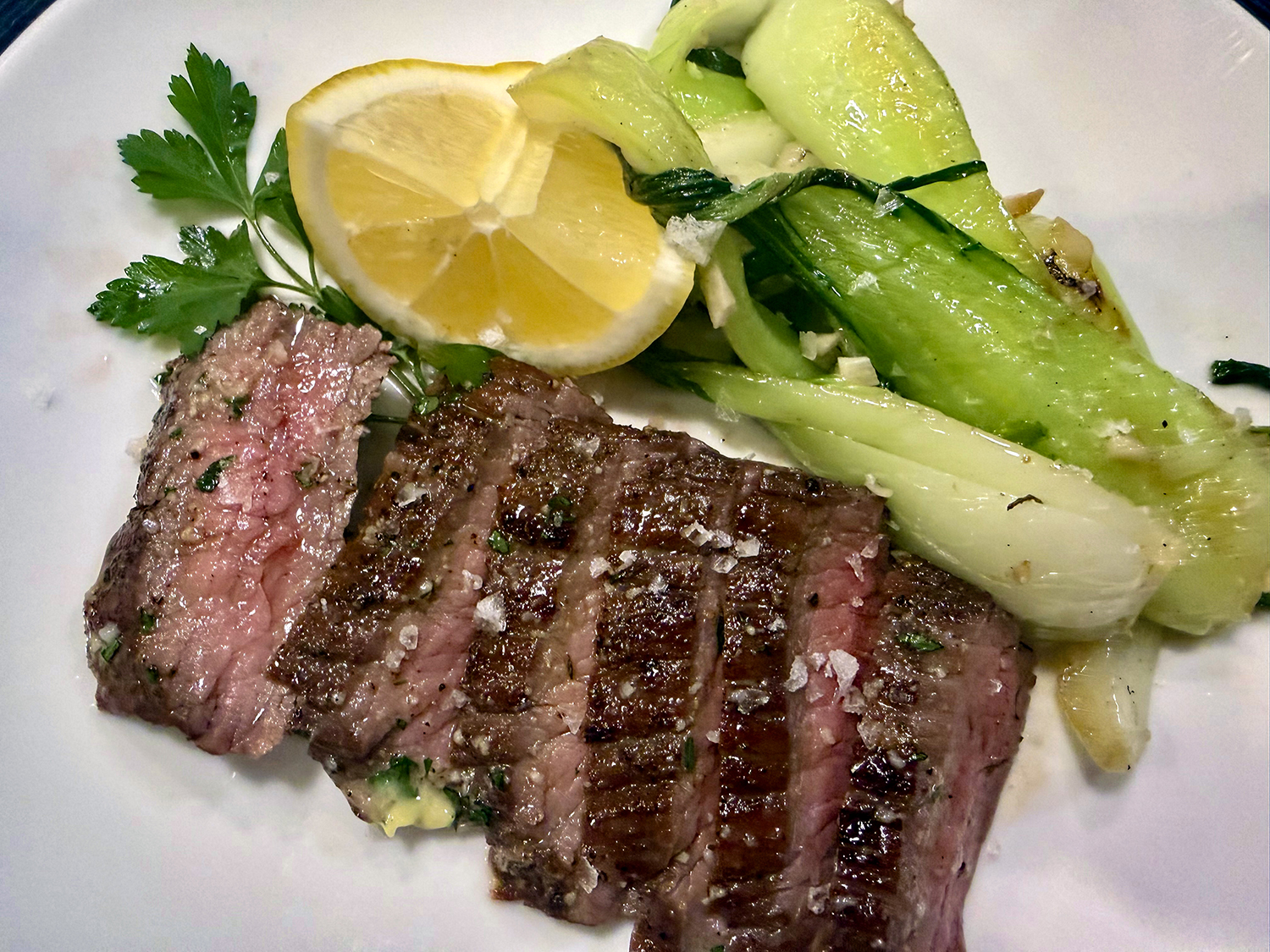
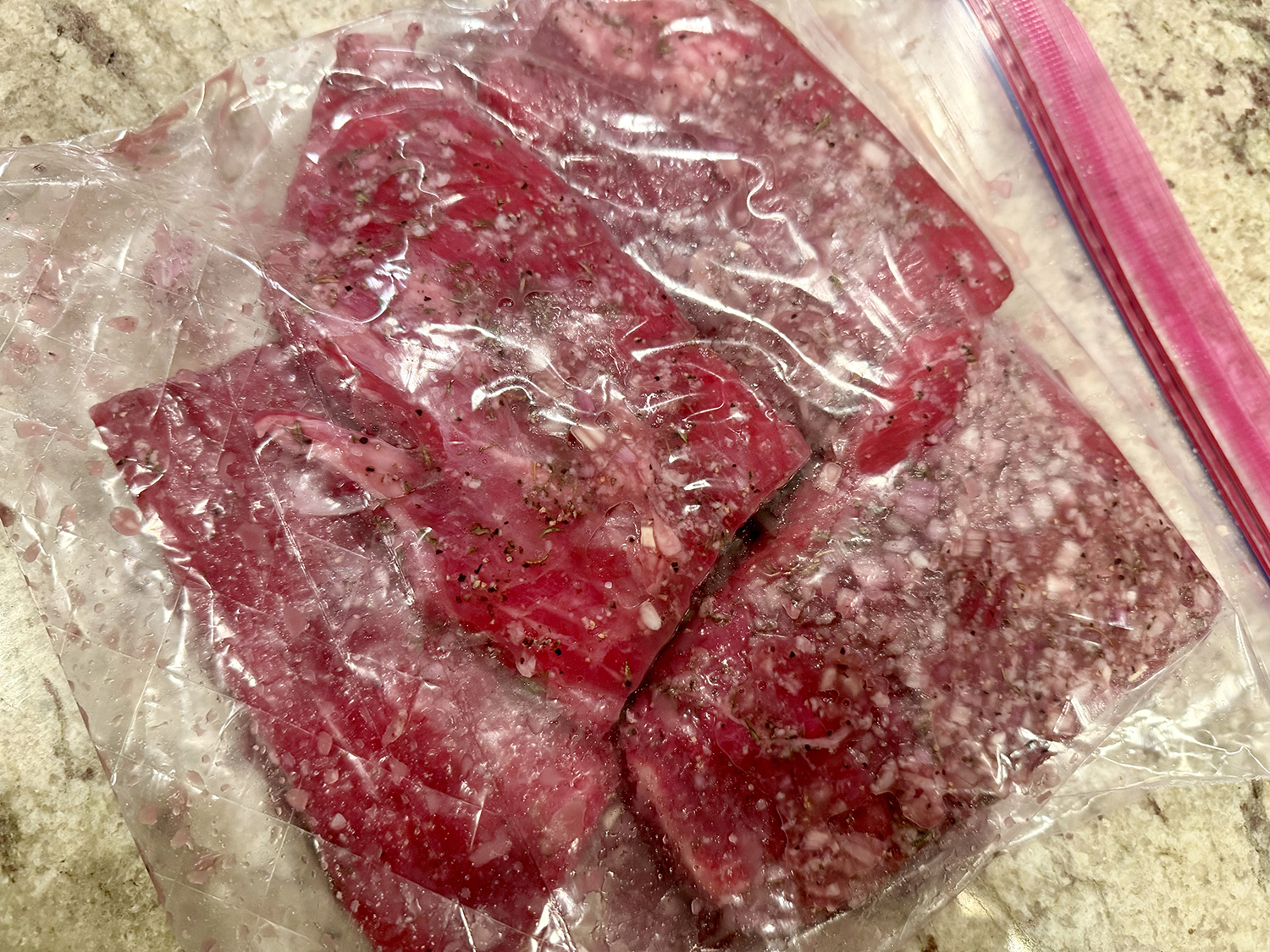
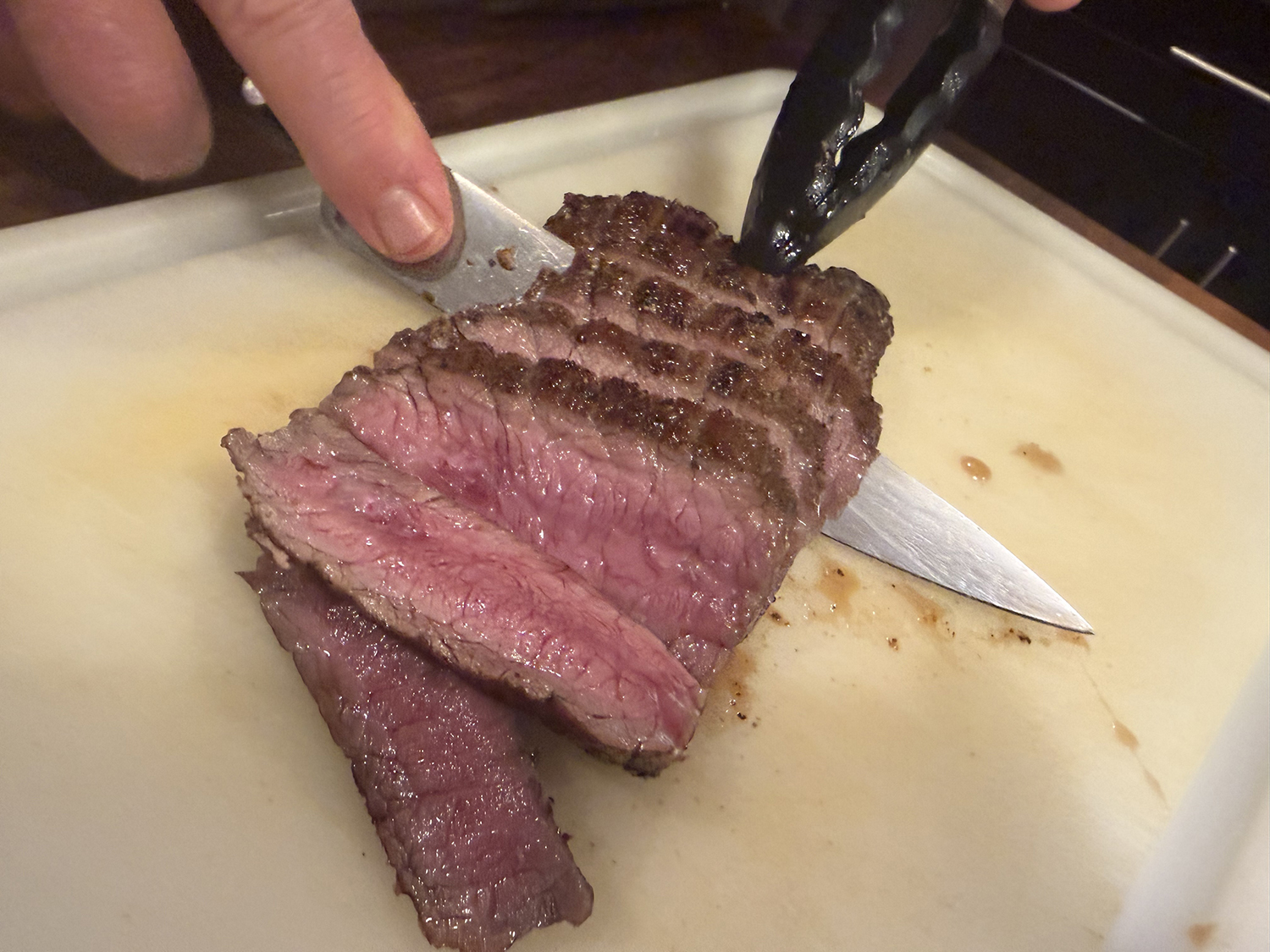
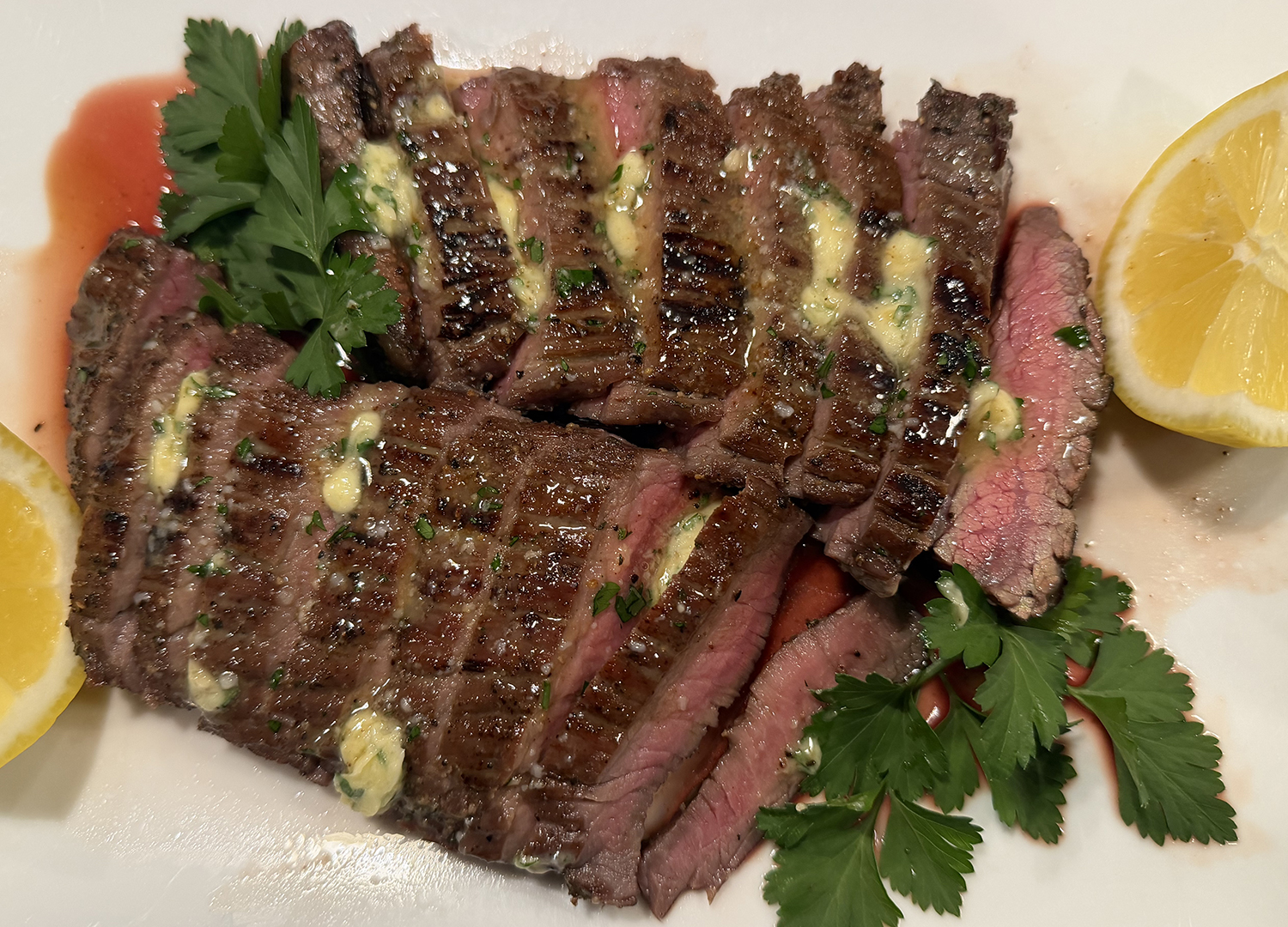
Here, shio koji gives marinated flank steaks the nutty, savory, blue-cheese-y flavors typically found in expensive dry-aged steaks. After wiping the marinade from the steaks, cook them in the oven with a gentle heat to keep their interiors juicy and rosy pink. Finally, quickly sear them on the stovetop to create a slightly charred crust.

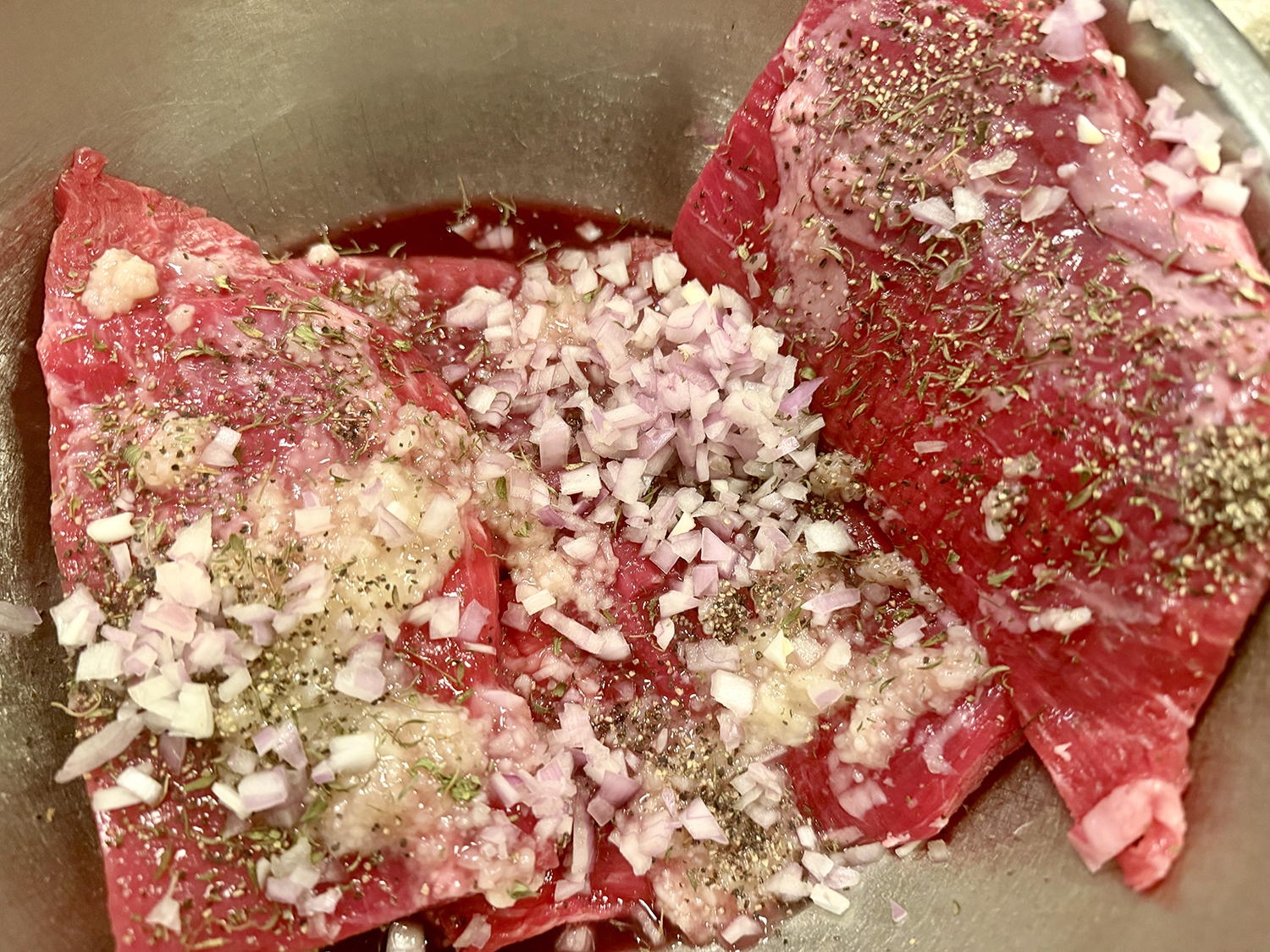
This recipe contains three marinating options (see below), of which we chose the Red-Wine Shallot variation.

Shio Koji-Marinated Flank Steak

  • Servings: 4
  • Difficulty: easy
  • Print

Ingredients

For the Steak

  • 1 (1½- to 1¾-lb.) flank steak, well trimmed
  • 3 Tbsp. shio koji
  • ½ tsp. pepper
  • 1 tsp. vegetable oil
  • Flaky sea salt (optional)
  • Lemon wedges (optional)

For the Butter

  • 4 Tbsp. unsalted butter, softened
  • 1 1⁄2 ysp. shio koji
  • 1 tsp. minced fresh parsley (or other herb of your choice)
  • 1⁄8 tsp. kosher salt

Directions

For the Steak

  1. Adjust oven rack to middle position and heat oven to 275 degrees. While oven heats, set wire rack in rimmed baking sheet. 
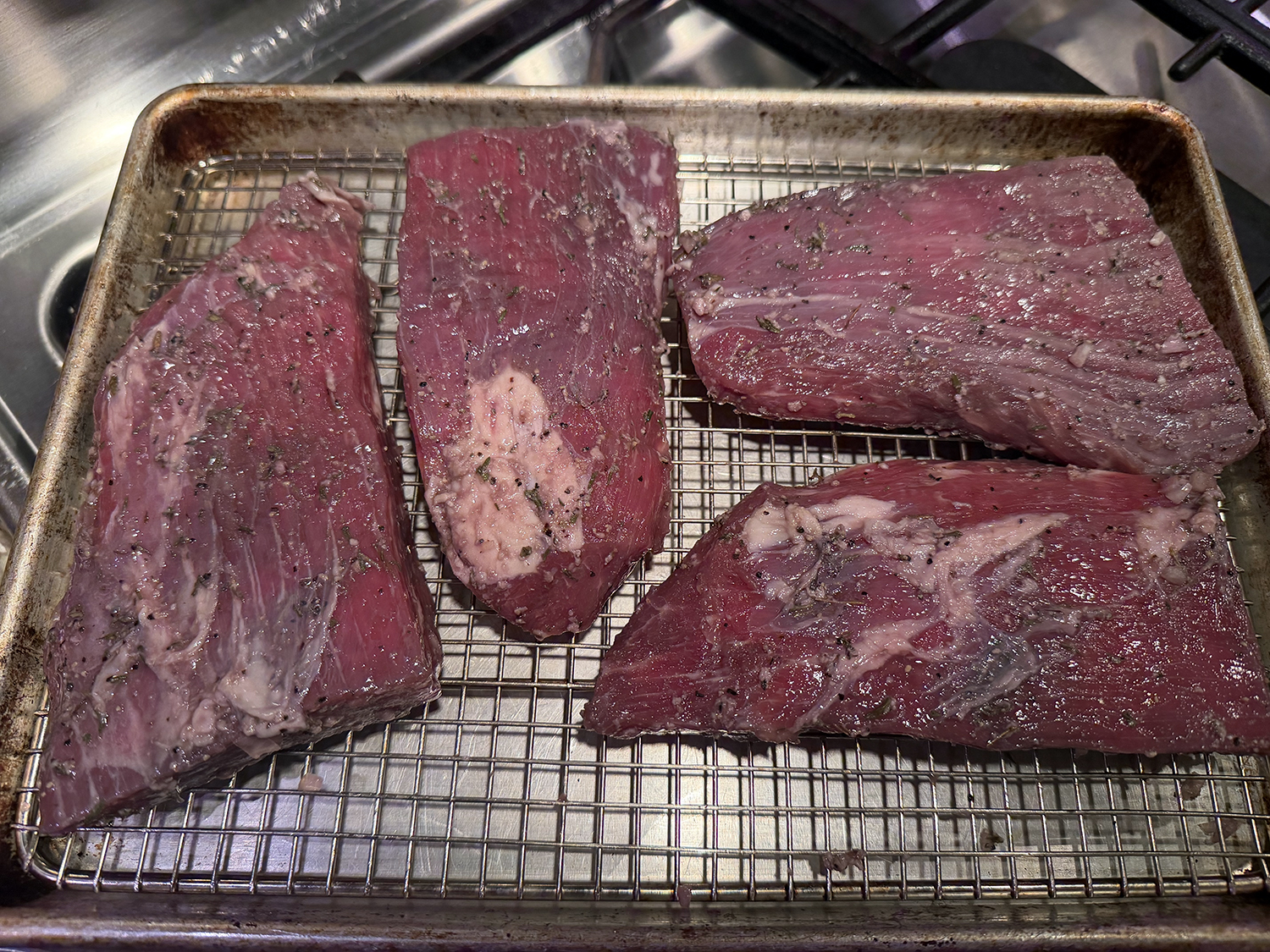
  2. With damp towel, wipe koji from steaks (it’s OK if a few grains remain on steak). Sprinkle with ½ teaspoon pepper. Set steaks on prepared rack and transfer to oven. Cook until thickest part of largest steak registers 125 degrees, 25 to 30 minutes.  
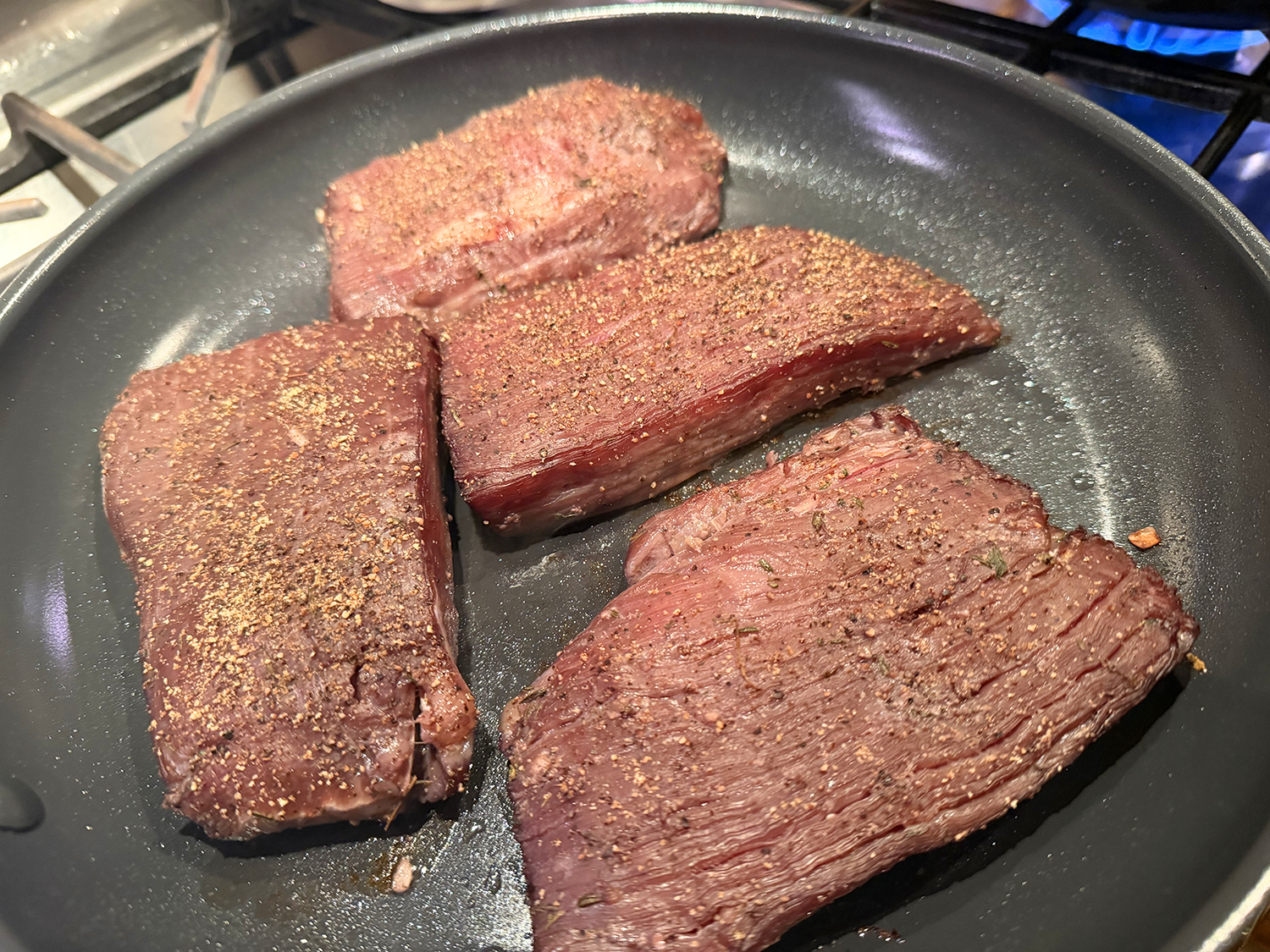
  3. Heat 1 teaspoon vegetable oil in 12-inch nonstick skillet over medium-high heat until shimmering. Add steaks and cook, pressing steaks gently into pan until browned and slightly charred in spots on both sides, 1 to 2 minutes per side. Cut steaks on bias against grain into ½-inch-thick slices. Serve, passing flake sea salt and lemon wedges, if using, separately.

For the Butter

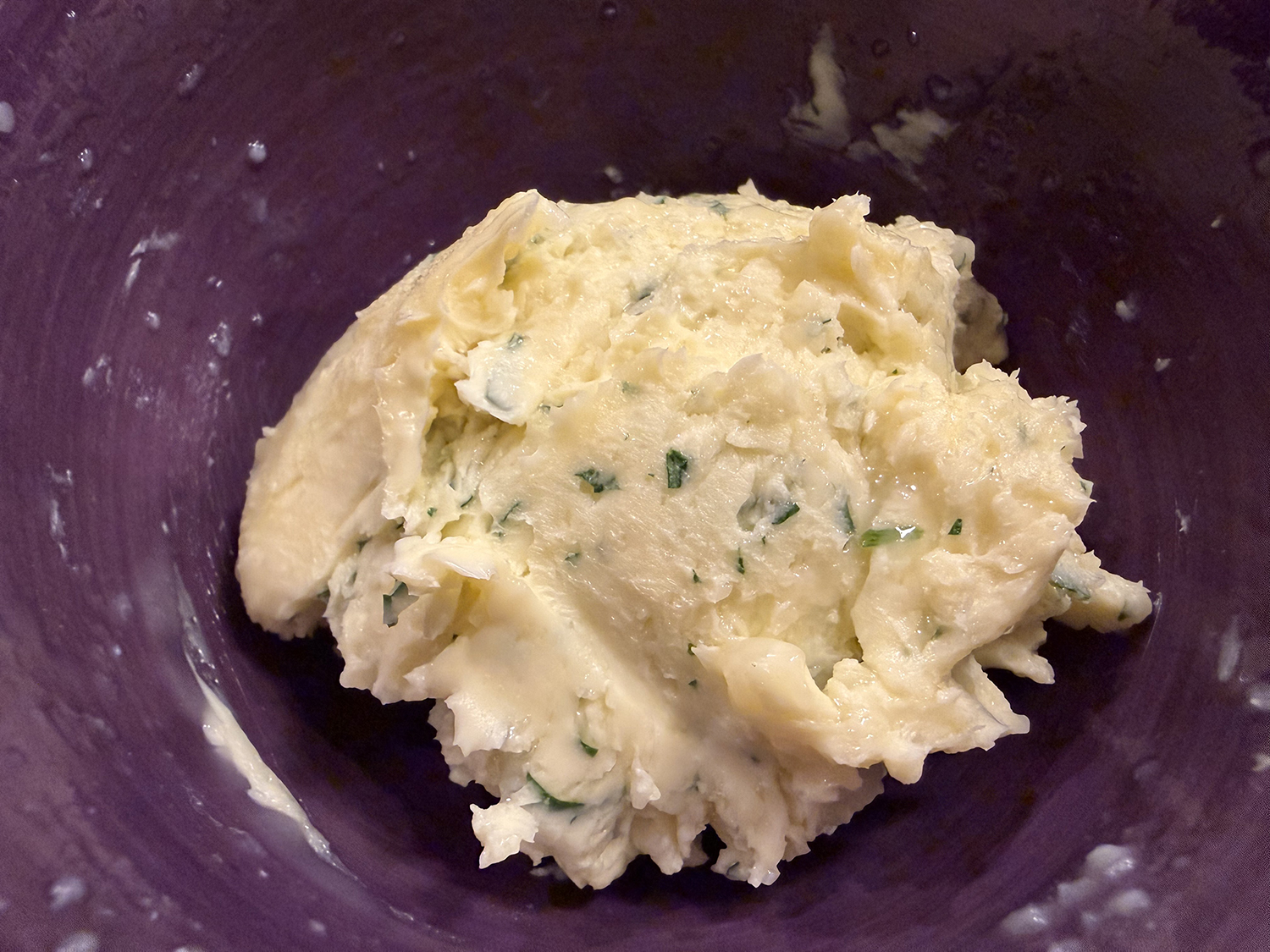
  1. Combine all ingredients in a bowl. The butter mixture can be refrigerated for up to one week.

http://www.lynnandruss.com

Recipe by Lan Lam for America’s Test Kitchen

Simple Ways to Vary the Marinade

Shio koji creates plenty of complexity on its own, but it also enhances the flavors of additional seasonings. Try the following combinations, stirring the ingredients into 3 tablespoons of shio koji before applying the marinade to the steak.

WORCESTERSHIRE-GARLIC 

  • 3 Tbsp. Worcestershire sauce
  • 2 tsp. minced garlic
  • ½ tsp. pepper

BOURBON-SOY

  • 3 Tbsp. bourbon
  • 2 Tbsp. soy sauce
  • ¾ tsp. ground allspice

RED WINE–SHALLOT

  • 3 Tbsp. red wine
  • 2 Tbsp. minced shallot
  • 1 tsp. dried thyme
  • ½ tsp. pepper

Shio Koji Steak Primer

Shio koji works differently than other marinades. Here’s how to make the most of its special properties.

Shio-Koji-to-steak ratio: 1 tablespoon to 8 ounces

One tablespoon of shio koji per ½ pound of steak is enough to produce a broad range of flavors (and since commercially produced shio koji contains only 8 to 14 percent salt, that amount won’t make the meat overly salty.) Shio koji pairs beautifully with other seasonings too (see “Simple Ways to Vary the Marinade”).

Marinating time: 2 to 24 hours

The longer the steak marinates, the more intense its flavor will become. Four hours is a good place to start if it’s your first time using shio koji so that you can get to know how it changes the flavor of the meat.

Best cooking method: reverse searing

Both the simple sugars contained in shio koji and the amino acids that are liberated as the steak marinates facilitate browning, but the sugars are also prone to scorching. The most failproof cooking method, then, is reverse searing: gently bringing the steak to serving temperature in the oven and then quickly searing it in a skillet to develop a well-browned crust with a hint of char.

Spicy Korean Braised Chicken and Vegetables

This flavor-packed stew from Milk Street, called dakbokkeumtang, counts gochujang—or Korean fermented chili paste—as one of its primary seasonings. The thick, bright-red paste usually is sold in plastic tubs or bottles in Asian markets or in the international aisle of regular supermarkets. It’s pretty much a staple in our house.

On the other hand, soy sauce and a dose of brown sugar add salty-sweet flavor to balance to the dish, while sesame oil and seeds add nutty notes. The potatoes and carrots absorb the seasonings so the pieces are flavored throughout. Therefore make sure to cut the vegetables into pieces about 1 inch in size, not smaller, so they don’t wind up overdone. Serve the stew with steamed rice.

NOTE: Don’t use chicken breasts instead of thighs. Sturdy dark meat does well when braised, but more delicate white meat dries out and turns tough. Dark meat also lends the finished dish a richer, meatier flavor.

There is a conflict in the quantity of potatoes to use. In the Milk Street Magazine Sept./Oct. issue, it notes 12 ounces (as listed below), while online, their recipe indicates the amount as 10 ounces. We decided on an even greater amount and switched out the Yukons for sweet potatoes. Because of this flip, we used a third less brown sugar. And the amount of ginger was increased because that’s how we roll!

After only 8 minutes in the pressure cooker (and 10 minutes more for pressure reduction), we had a scrumptiously incredible flavorful dinner! Every morsel was fork-tender, no knife needed.

Spicy Korean Braised Chicken and Vegetables

  • Servings: 4
  • Difficulty: easy
  • Print

Ingredients

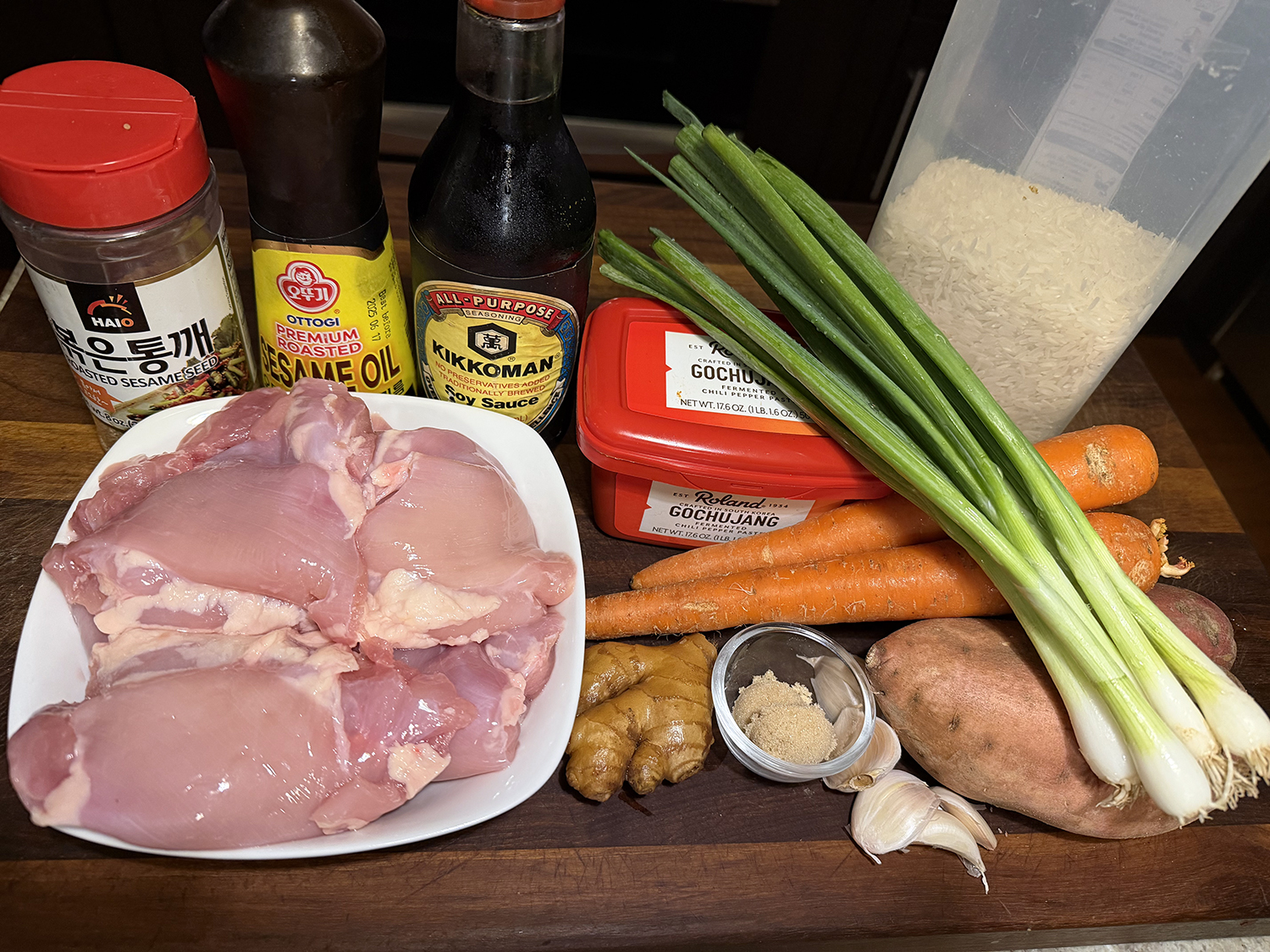
  • 3 Tbsp. gochujang
  • 2 Tbsp. unseasoned rice vinegar
  • 2 Tbsp. soy sauce
  • 1 Tbsp. packed brown sugar
  • 1 Tbsp. toasted sesame oil, plus more to serve
  • 2 inch piece fresh ginger (about 1½ oz.), peeled, cut into 3 pieces and smashed
  • 5 medium garlic cloves, finely chopped
  • 1 bunch scallions, whites chopped, greens cut into 1-inch lengths, reserved separately
  • 2 lbs. boneless, skinless chicken thighs, trimmed and halved
  • 12 oz. Yukon Gold potatoes, peeled and cut into 1-inch chunks
  • 2 medium carrots, peeled and cut into 1-inch pieces
  • Sesame seeds, toasted, to serve

Directions

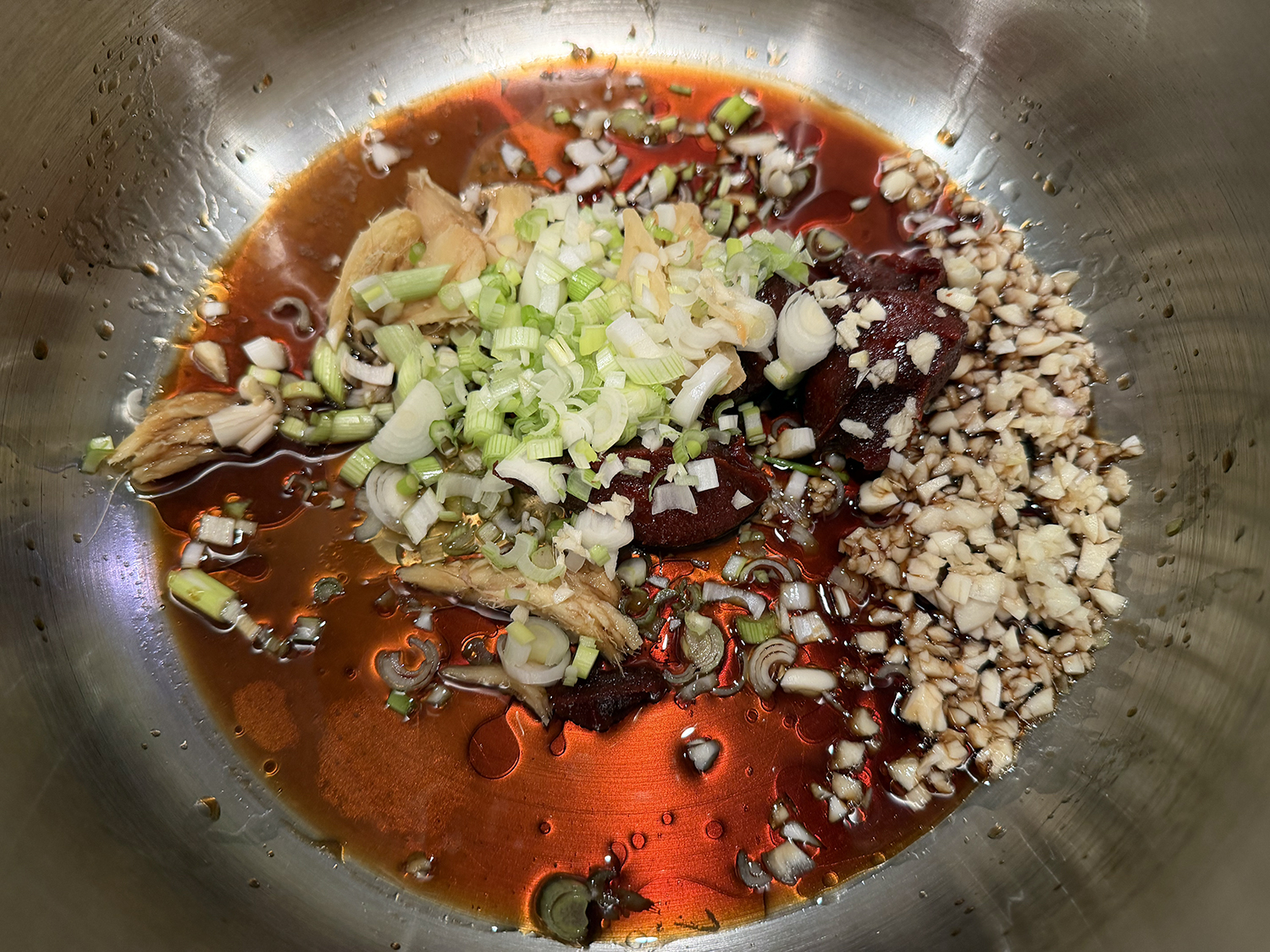
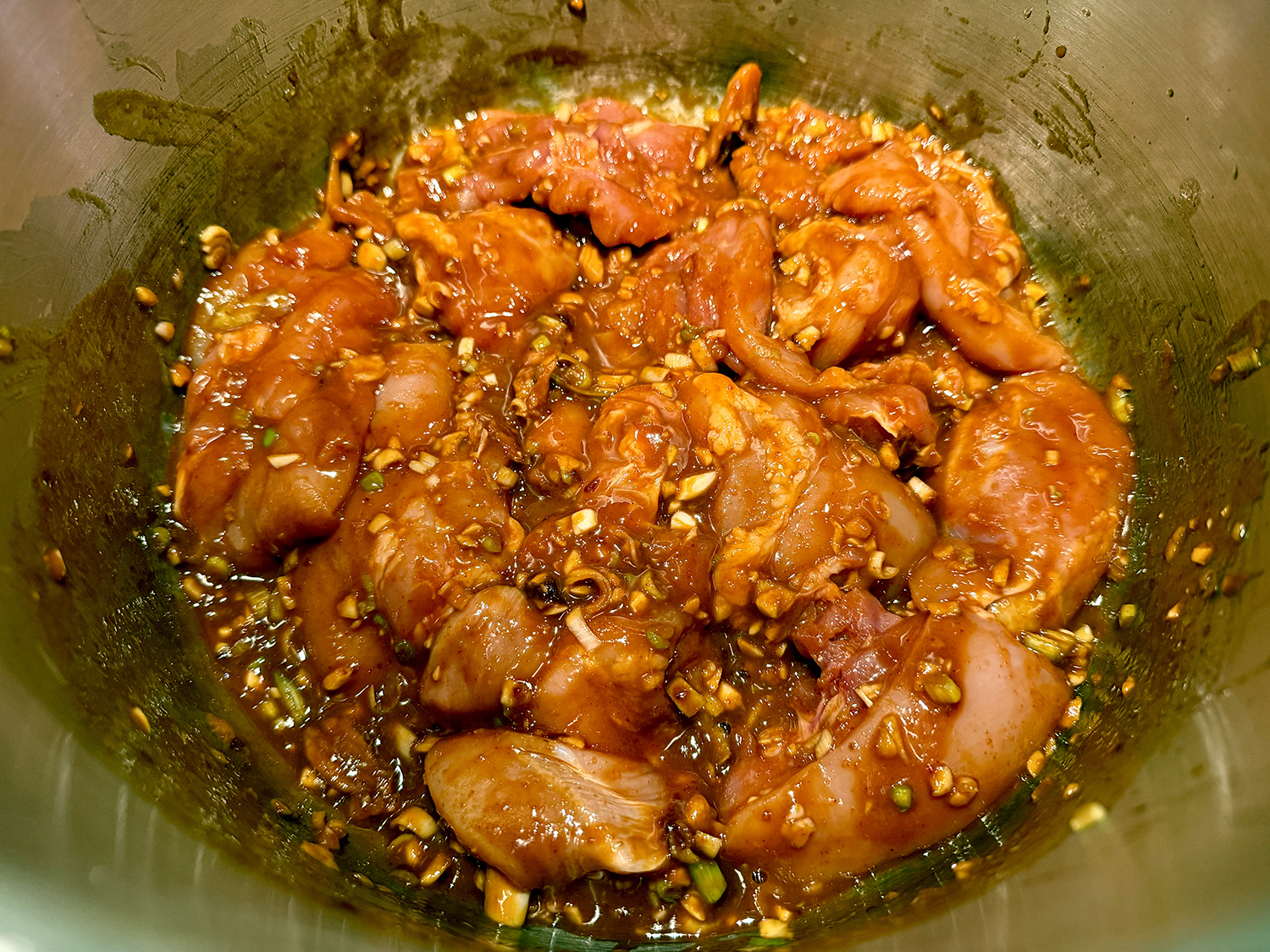
  1. In a 6-quart Instant Pot (or pressure cooker), whisk together the gochujang, vinegar, soy sauce, sugar, sesame oil, ginger, garlic and scallion whites. Add the chicken and toss to coat. Let stand for 15 minutes. Stir in the potatoes, carrots and ½ cup water, then distribute in an even layer.
  2. Add the chicken and toss to coat. Let stand for 15 minutes. Stir in the potatoes, carrots and ½ cup water, then distribute in an even layer.
  3. Lock the lid in place and move the pressure valve to Sealing. Select Pressure Cook or Manual; make sure the pressure level is set to High. Set the cooking time for 8 minutes. When pressure cooking is complete, let the pressure reduce naturally for 10 minutes, then quick-release the remaining steam by moving the pressure valve to Venting. Press Cancel, then carefully open the pot.
  4. Remove and discard the ginger (this may be a bit impossible), then stir in the scallion greens. Transfer to a serving bowl, drizzle with additional sesame oil and sprinkle with sesame seeds.

http://www.lynnandruss.com

Adapted from a recipe by Courtney Hill for Milk Street
Classic Marinara Sauce with Fresh Tomatoes

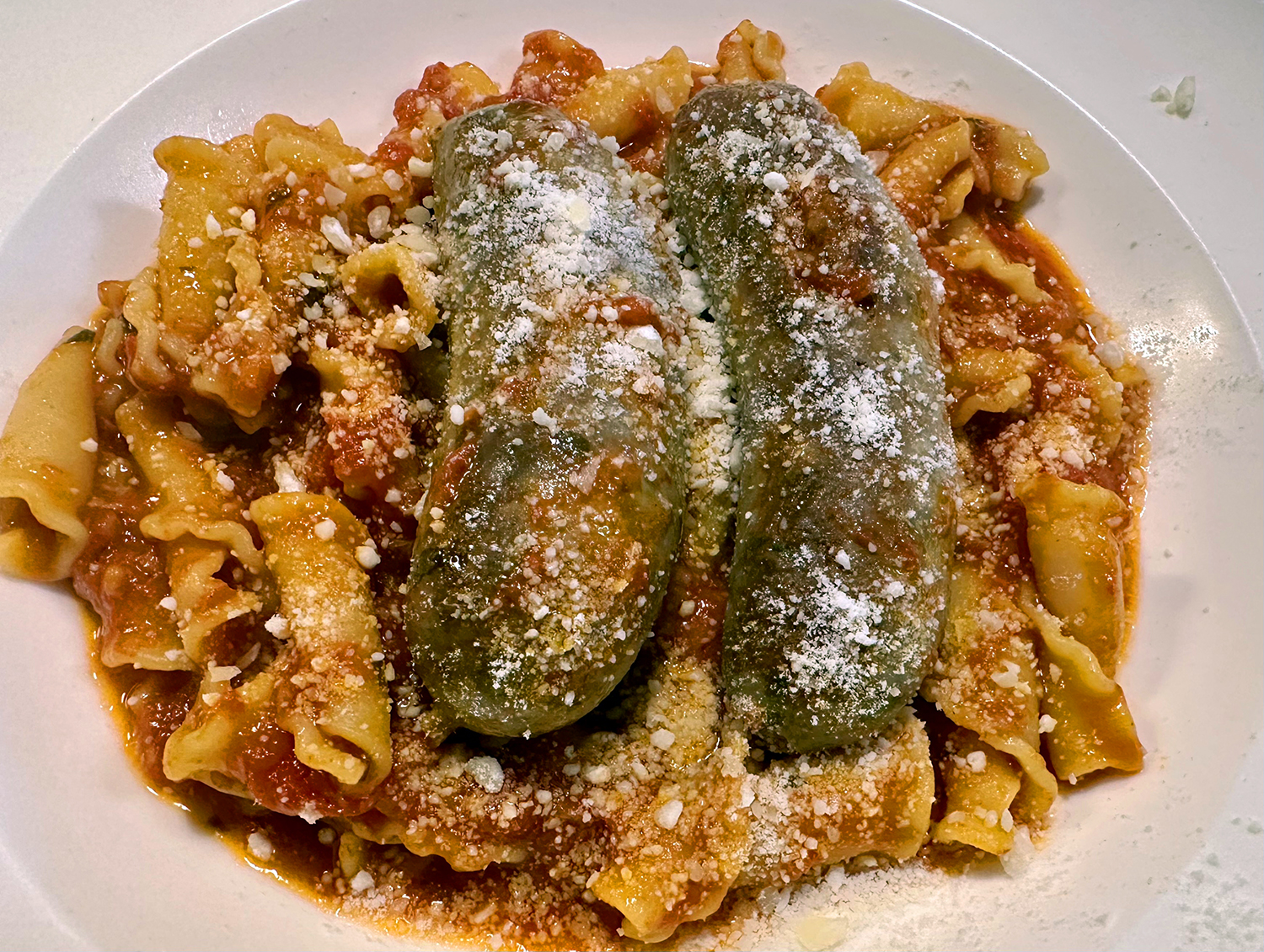
When ripe tomatoes from your garden or the local farm market are in season, why not make a large batch of marinara sauce? The ingredients and techniques often vary wildly. If you can get all roma style tomatoes, that is best, but we made the sauce here with a mix of the roma and slicing fruits due to what we harvested from our gardens.

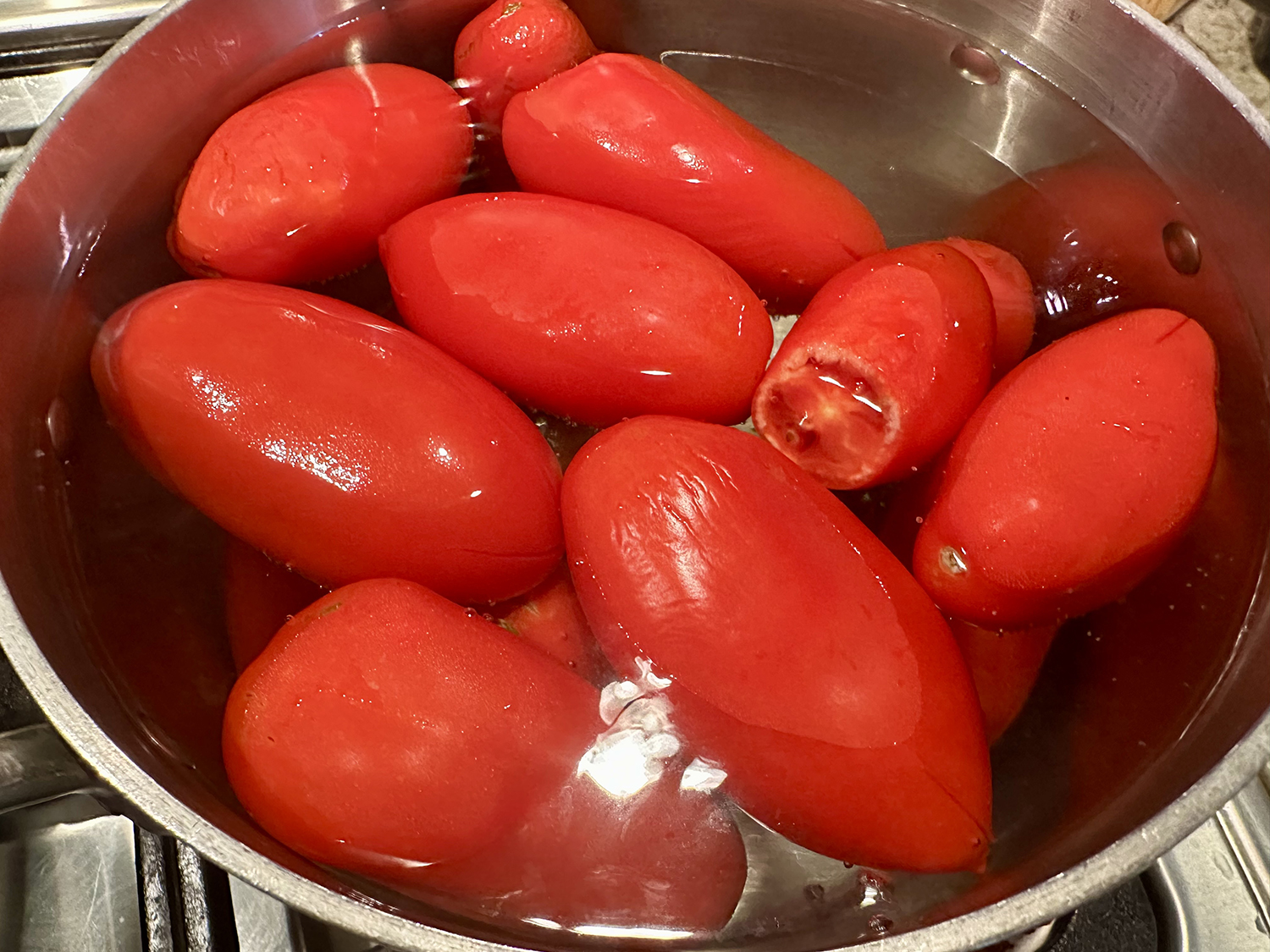
To core or not to core? We did some both ways and it seems the uncored ones kept more of their tomato juices intact. So we suggest blanche in boiling water, plunge in ice bath, peel from the X, then core.

The beauty of homemade marinara lies in its simplicity and the ability to customize the ingredients to suit personal taste preferences. However, this simplicity also means that the sauce lacks the preservatives found in commercial products, which can affect its shelf life. More acidic sauces tend to have a longer shelf life.

Generally, homemade marinara sauce can last for up to 5 to 7 days when stored properly in the refrigerator. It’s also worth noting that the quality of the sauce may degrade over time, even if it remains safe to eat. This means that the sauce might not taste as fresh or have the same vibrant color after a few days.

Consider freezing the sauce for longer storage. Frozen marinara sauce can last for several months and helps preserve the flavor and texture.

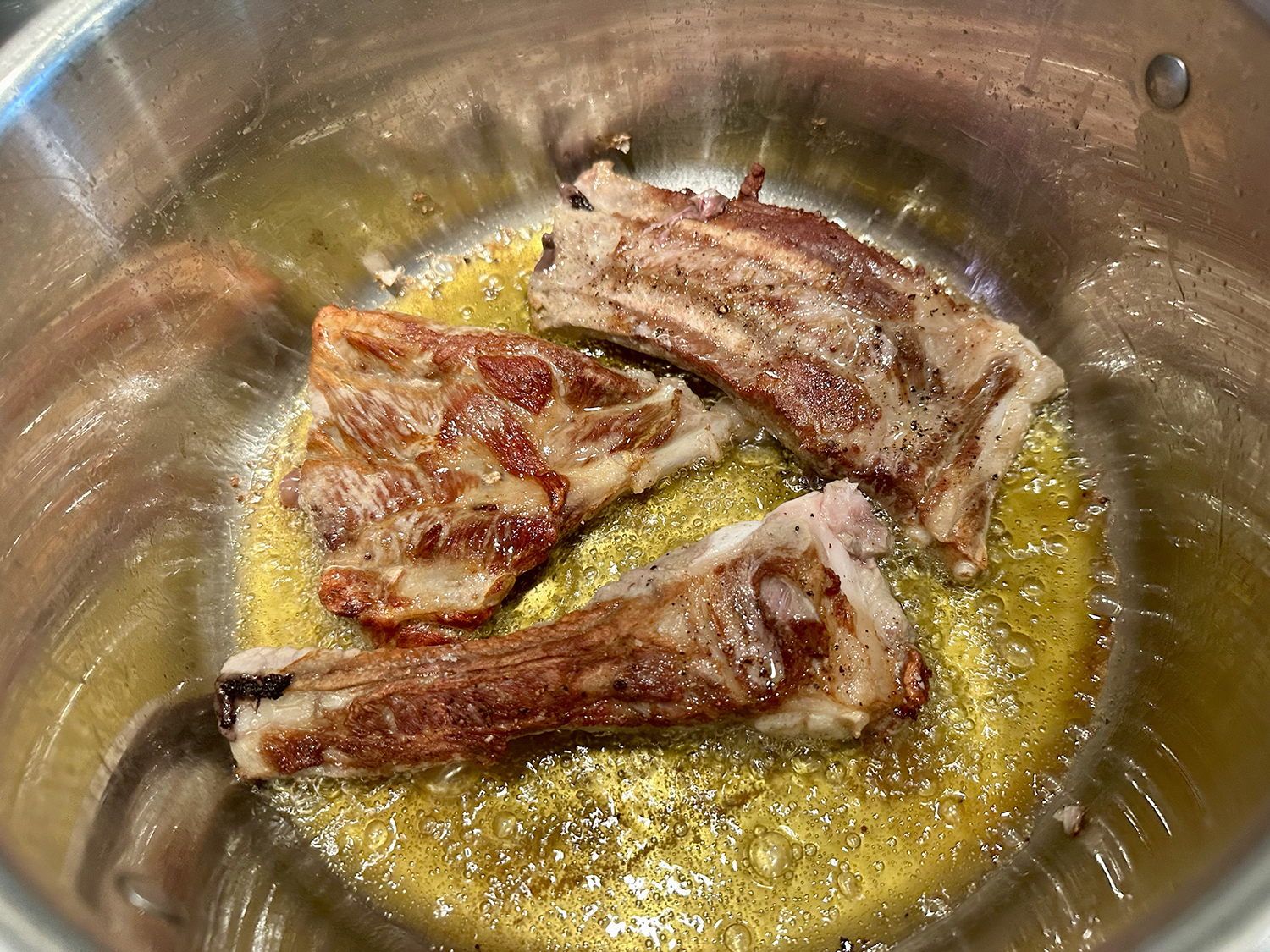
NOTE: While we usually make vegetarian marinara sauce, in this batch we decided to brown some leftover pork spare ribs for meaty flavor (then they were removed before storing the sauce), but just omit them if you want a straight-up marinara sauce.

Classic Marinara Sauce with Fresh Tomatoes

  • Servings: about 3 quarts
  • Difficulty: easy
  • Print

Ingredients

  • 20 cloves garlic, peeled and thinly sliced
  • 8 lbs. fresh tomatoes, preferably roma, bad spots removed
  • 3/4 cup olive oil
  • 1/2 tsp. red pepper flakes, (optional)
  • 6 oz. can double-concentrated tomato paste, (from a tube)
  • 2 sprigs fresh basil; more to stir in at end, torn
  • 1 sprig fresh oregano; more to stir in at end, chopped
  • 1 bay leaf
  • 1 tsp. kosher salt, plus more to taste
  • 1 lb. pork spare ribs (optional)

Directions

  1. Wash, and core (or not) the tomatoes. Slice and X on their bottoms then drop into boiling water and blanche for 1 minute. (You will need to do this in two or three batches, depending on size of pot.) Immediately plunge tomatoes into an ice water bath. When cool enough to touch, peel skin off starting with corners on the bottom X. If not cored beforehand, core them after peeling.
  2. Squeeze and crush the tomatoes with your hands until a chunky sauce forms with pieces no bigger than 1 1/2 inch.
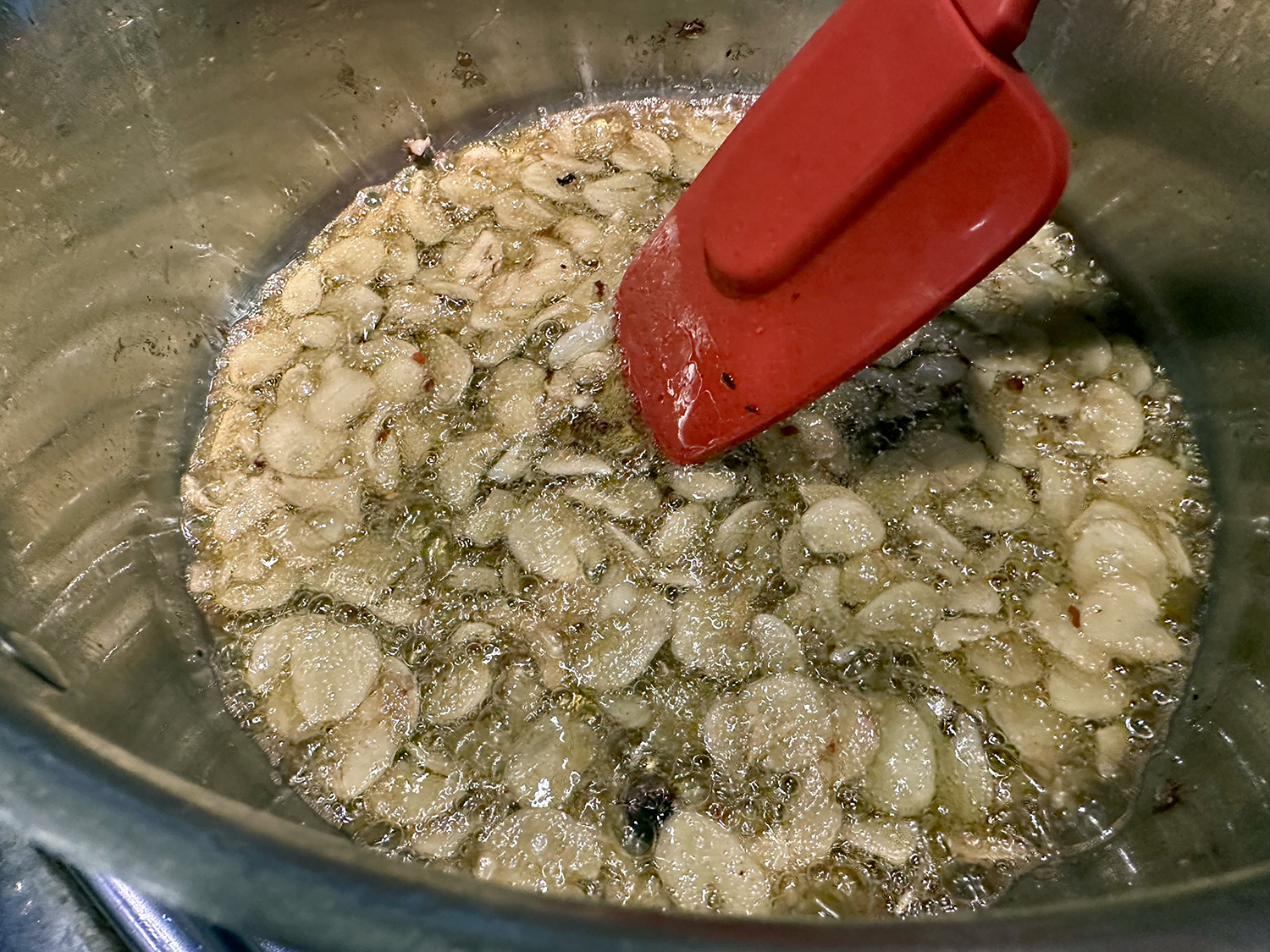
  3. Heat olive oil in a large Dutch oven over medium-low heat until shimmering. (If using ribs, brown them in oil first, a few minutes on each side, remove to a plate.) Add the garlic and cook for 1 minute. Add 1/2 teaspoon red pepper flakes if desired and cook, stirring occasionally, until the garlic is lightly golden and fragrant, 1 to 2 minutes.
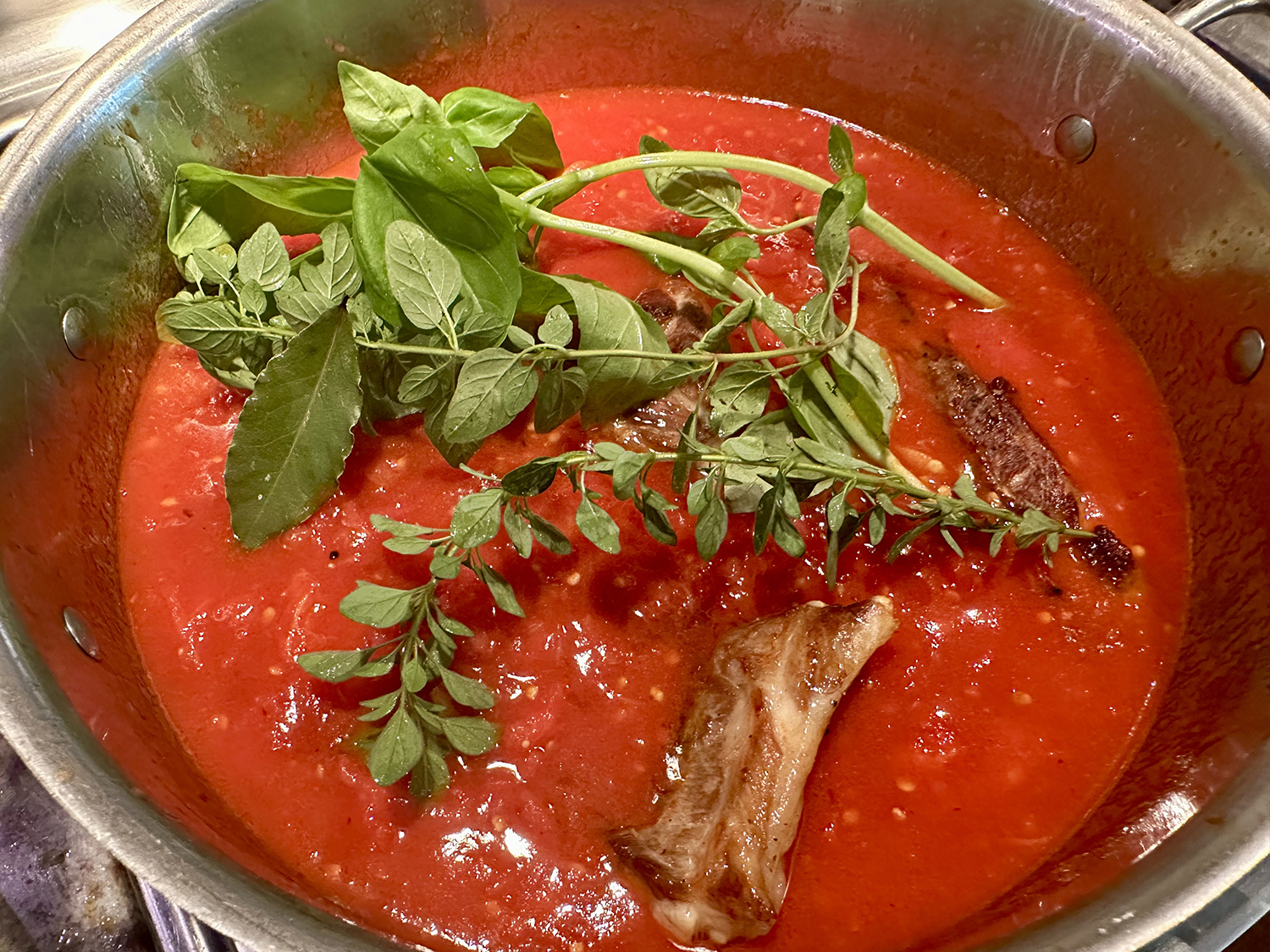
  4. Add 6-ounce can of double-concentrated tomato paste. Cook, stirring often, until the paste is darker in color and fragrant, 2 to 3 minutes. Add the tomatoes, 2 fresh basil sprigs, oregano sprig, bay leaf and 1 teaspoon kosher salt. (Add spare ribs back in if using.) Increase the heat to medium-high and bring to a simmer.
  5. Reduce the heat to medium and simmer, stirring occasionally, until the tomatoes no longer taste acidic, the flavors meld, and the sauce has reduced by at least one inch, 60 to 80 minutes. (If you added ribs, remove them and discard or save the meat for another use.)
  6. Stir in remaining chopped basil and oregano. Taste and season with more kosher salt as needed. Let cool completely and fill quart-sized containers.
  7. If freezing, when ready to use, simply thaw the sauce in the refrigerator or reheat it from frozen.

http://www.lynnandruss.com

Cast Iron Crispy Home Fries with Bacon

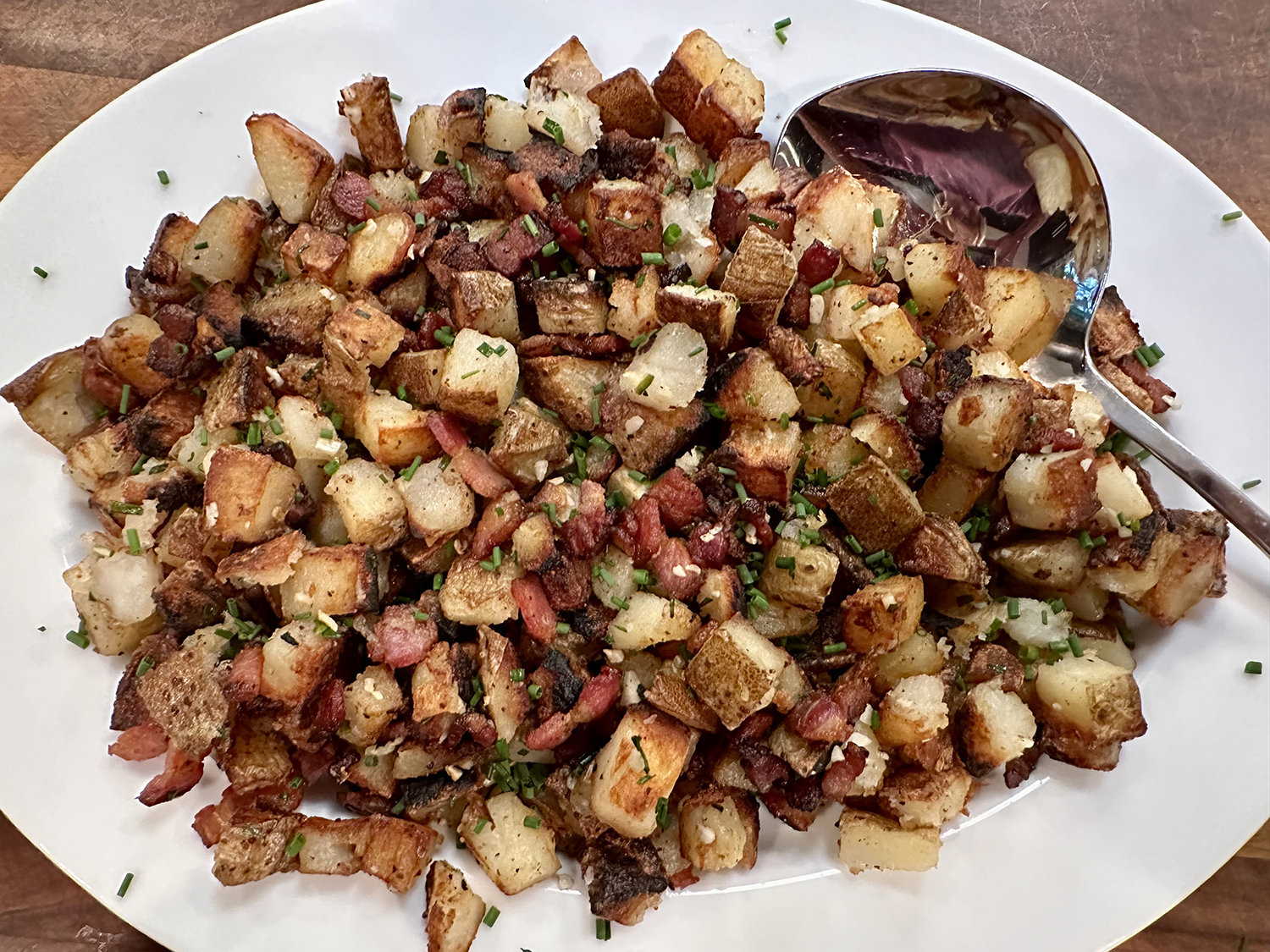
Super-savory spuds for any time of day—breakfast, lunch, dinner, or late night. We beta-tested this recipe for America’s Test Kitchen many months ago, and it was published in Cook’s Country April/May 2025 issue.

This recipe for bacon-y potatoes demonstrates the superior browning ability of cast-iron skillets. For home fries with tender, fluffy insides and crispy, browned exteriors, precooking the potatoes is essential.

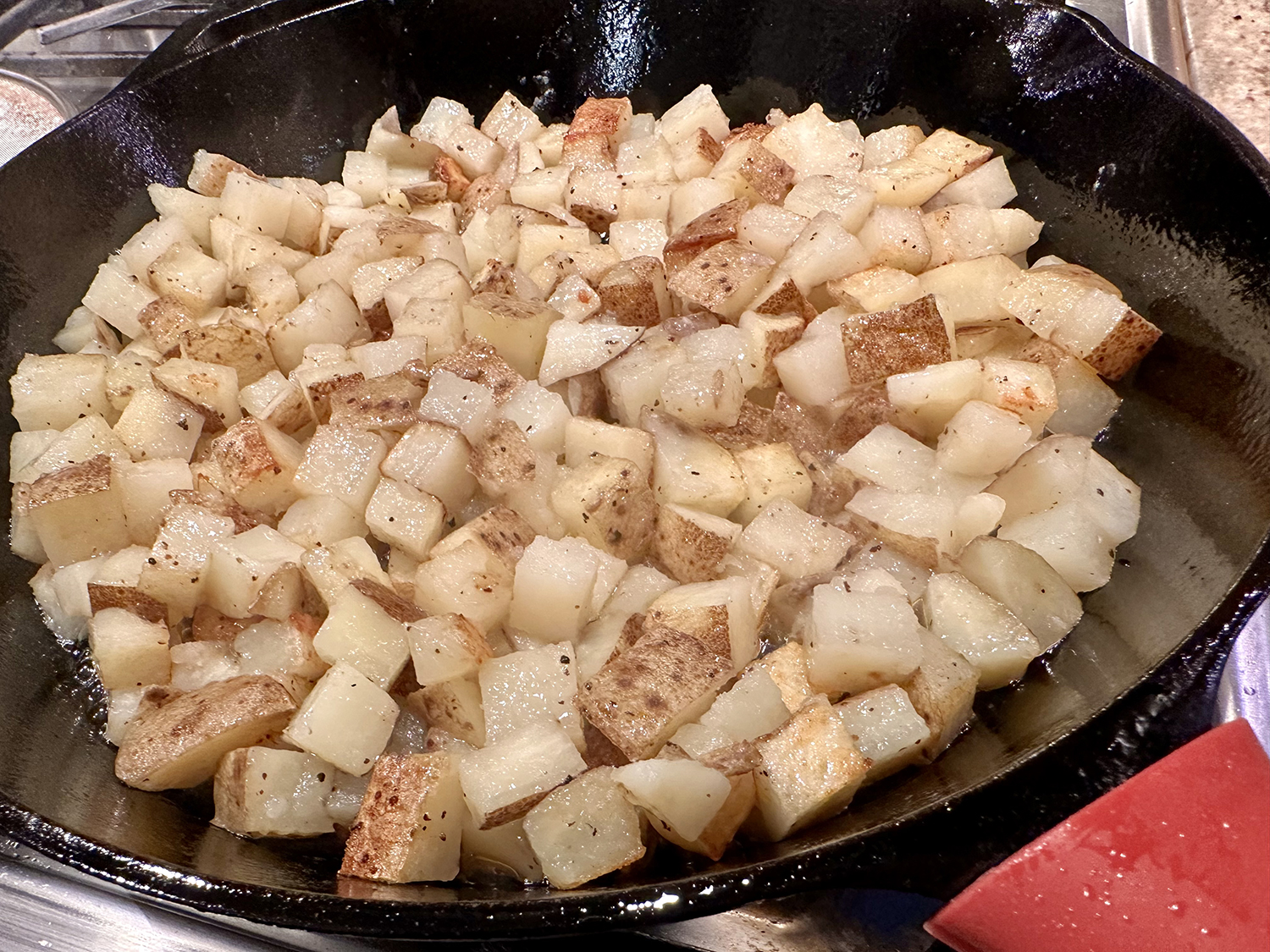
Peel and cut russet potatoes into ¾-inch pieces before microwaving them, covered, with oil, salt, and pepper until tender. Then crisp the potatoes in a hot cast-iron skillet, using bacon fat to give them smoky savoriness.

Fresh garlic and delicate chives provided sweet-savory depth without overpowering the spuds. As mentioned, these potatoes aren’t just for breakfast—they can be enjoyed any time of the day.

NOTE: To minimize food waste, when cutting peeled potatoes into cubes, don’t bother squaring off the sides of the potatoes. The cubes just need a few flat sides; some rounded sides are fine too. FYI: Six slices of bacon should weigh six ounces.

Cast Iron Crispy Home Fries with Bacon

  • Servings: 4
  • Difficulty: easy
  • Print

Ingredients

  • 6 slices bacon, cut into ½-inch pieces
  • 2¼ lbs. russet potatoes, peeled and cut into ¾-inch cubes
  • 2 tablespoons vegetable oil, plus extra as needed
  • 1¼ tsp. table salt
  • ¼ tsp. pepper
  • 1 garlic clove, minced
  • 2 Tbsp. minced fresh chives

Directions

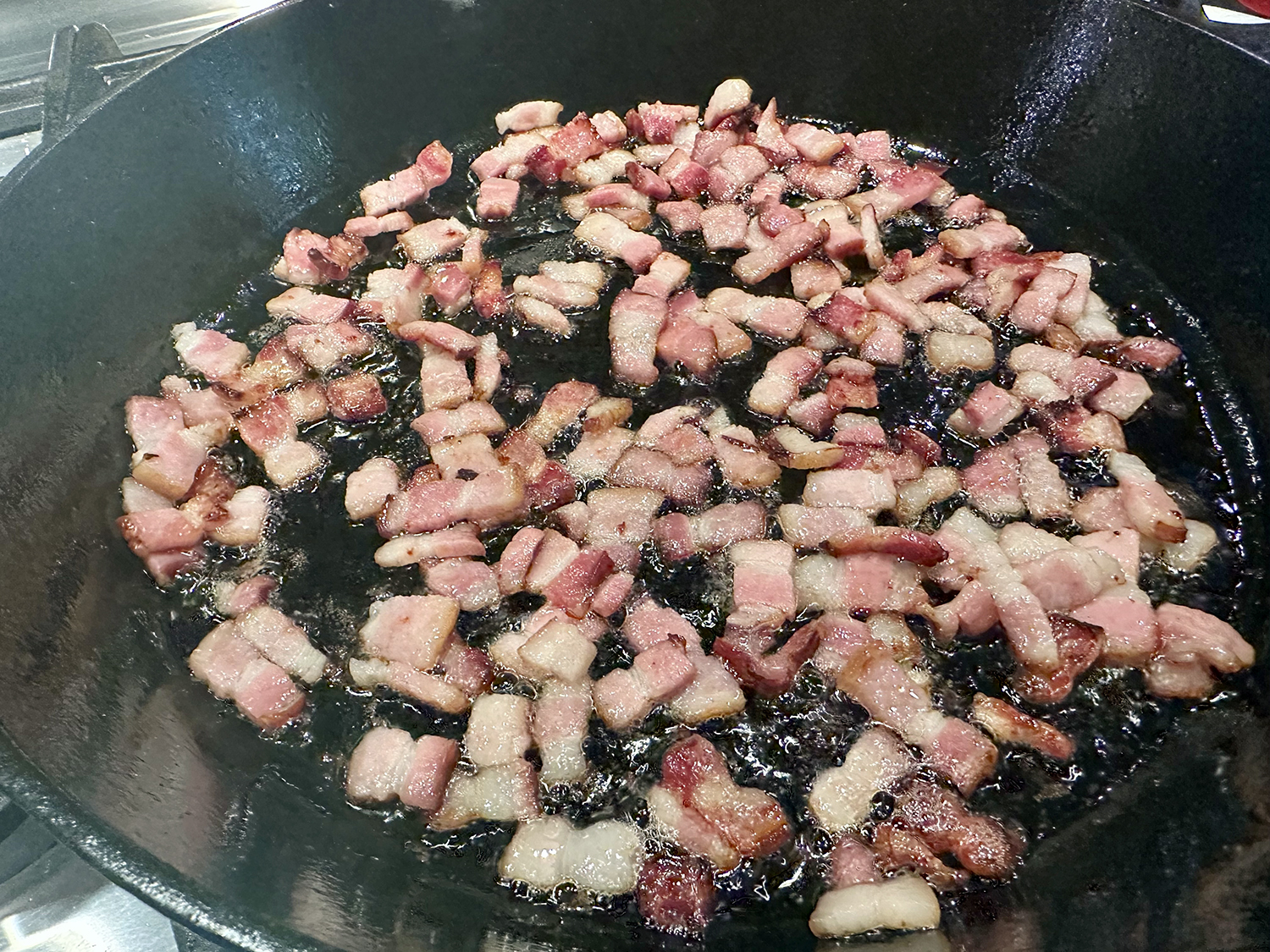
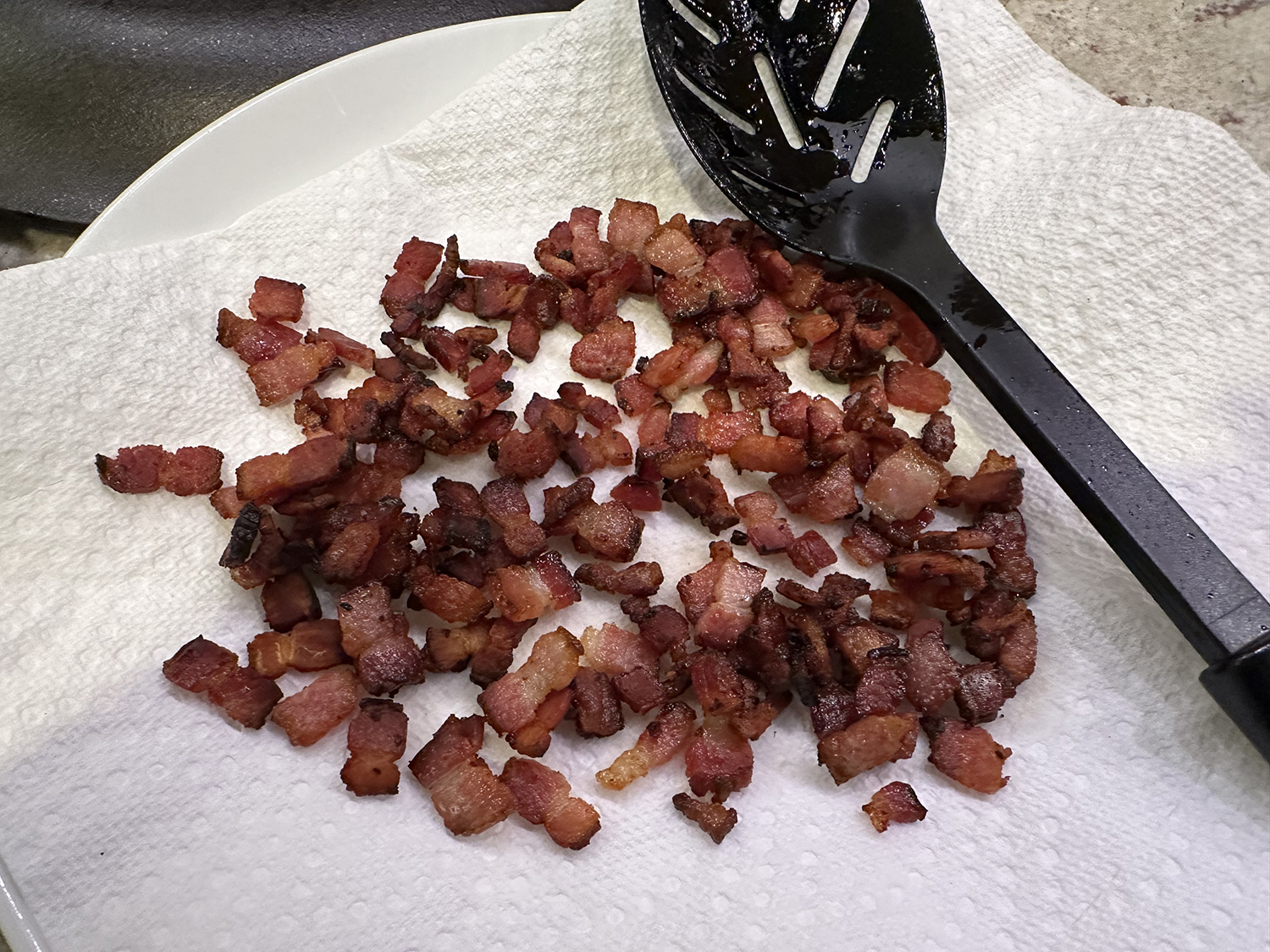
  1. Cook bacon in 12-inch cast-iron skillet over medium heat until crispy, 5 to 7 minutes. Using slotted spoon, transfer bacon to paper towel–lined plate. Transfer rendered bacon fat to small bowl and reserve. (You should have about 5 tablespoons fat; add vegetable oil as needed to equal 5 tablespoons.) Wipe skillet clean with paper towels.
  2. Meanwhile, toss potatoes with 2 tablespoons vegetable oil, salt, and pepper in large bowl and microwave, covered, until potatoes are fully tender, 10 to 12 minutes, stirring halfway through microwaving. (Take care when removing cover; steam will be very hot.) Transfer potatoes to colander and let cool for 15 minutes.
  3. Heat reserved 5 tablespoons bacon fat in now-empty skillet over medium-high heat until just smoking. Add potatoes and cook without moving until first side is well browned, about 3 minutes. Continue to cook, stirring every 3 minutes, until potatoes are well browned and crisp all over, about 12 minutes longer.
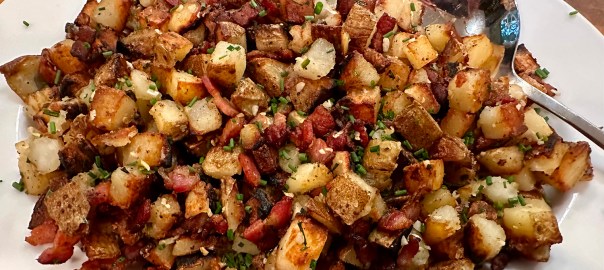
  4. Off heat, stir in garlic. Transfer to platter and sprinkle with chives. Serve.

http://www.lynnandruss.com

Recipe by Mark Huxoil for America’s Text Kitchen

Stir-Fried Beef and Tomatoes

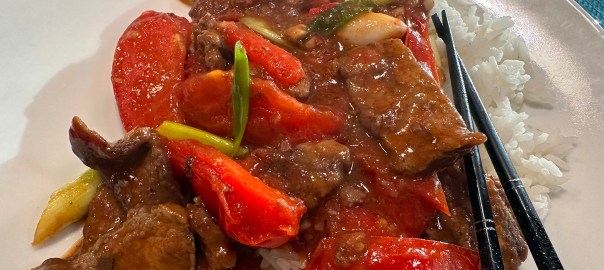
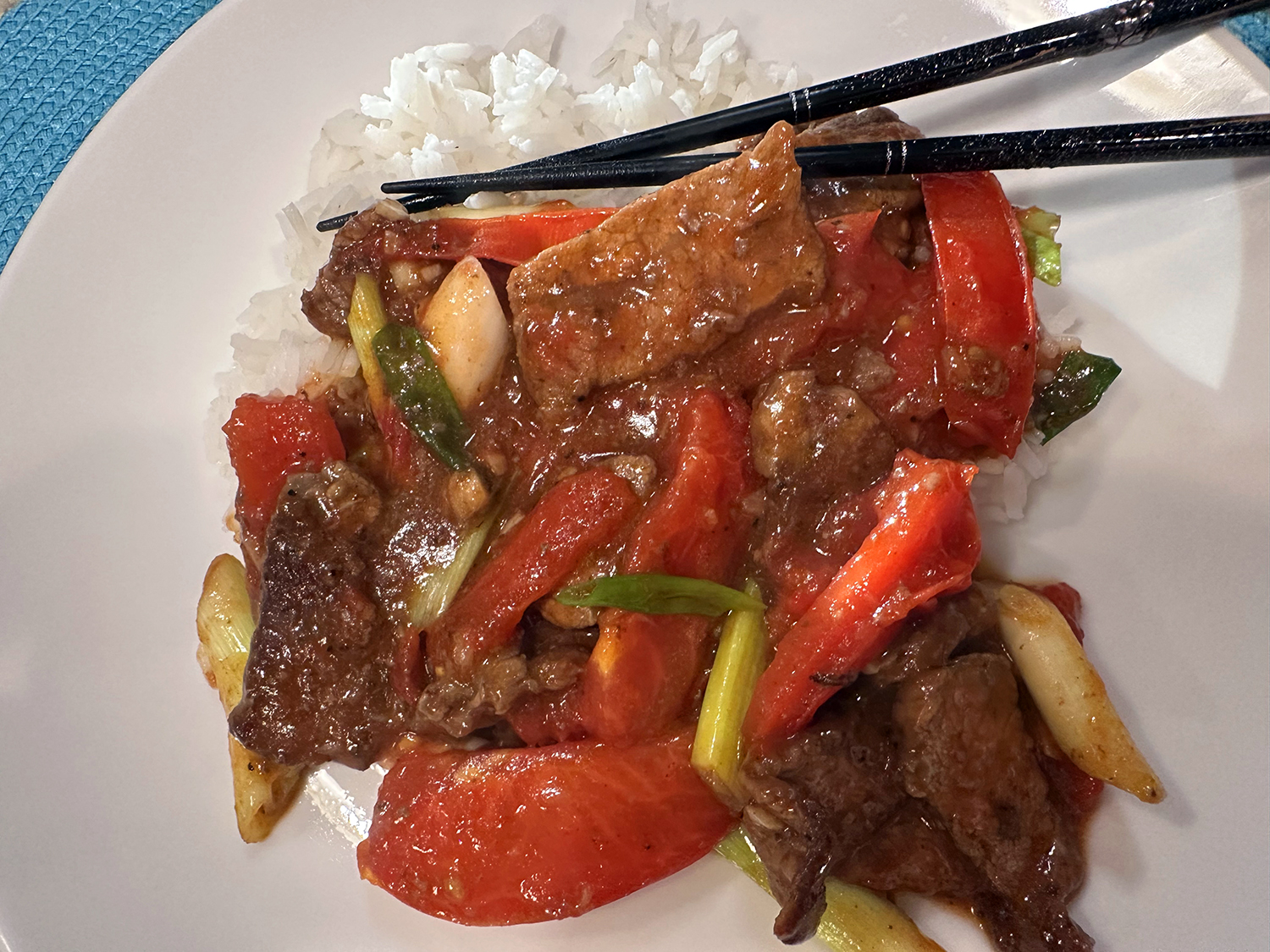
Here’s a very easy, low-count-ingredient, tasty stir-fry recipe from Milk Street. If you can get local in-season plum tomatoes, all the better.

The protein flank steak, has a beefy flavor and slightly coarse texture that makes it versatile for many dishes, from fajitas to stir-fries. But what happens when flank steak is unavailable, or you’re looking for a more budget-friendly or tender option? The good news is that several excellent flank steak alternatives can provide similar results.

Here are three possible options: Skirt steak is the most common substitute for flank steak. Both cuts are similar in shape and have pronounced muscle fibers, making them ideal for high-heat cooking. Cut from the shoulder, flat iron steak is tender and flavorful. It is often considered one of the most underrated cuts of beef. Or hanger steak, often called the “butcher’s cut” because of its rich flavor, hanger steak comes from the cow’s diaphragm.

Whatever your protein choice, if the pan is too crowded the meat will steam instead of brown. At first, we thought all of that meat in the skillet was too much. But to our delight, the pieces did brown. If your amount looks tighter than the image below, you may want to cook in two batches just to be sure the beef does brown.

There is no spicy heat in this dish, but if that is your preference, you can always add some spicy chiles or include a bit of red pepper flakes.

Stir-Fried Beef and Tomatoes

  • Servings: 4
  • Difficulty: easy
  • Print

Ingredients

  • 4 Tbsp. oyster sauce OR hoisin sauce, divided
  • 1 Tbsp. cornstarch
  • Kosher salt and ground white or black pepper
  • 1 lb. flank steak, cut with the grain into 2- to 3-inch pieces, then thinly sliced against the grain
  • 1 lb. plum tomatoes, cored and cut into 1/2-inch wedges
  • 3 Tbsp. neutral oil, divided
  • 2 tsp. minced fresh ginger OR 3 medium garlic cloves, minced, OR both
  • 1 bunch scallions, cut on the diagonal into 1-inch lengths
  • Steamed rice
  • Optional garnish: Toasted sesame oil

Directions

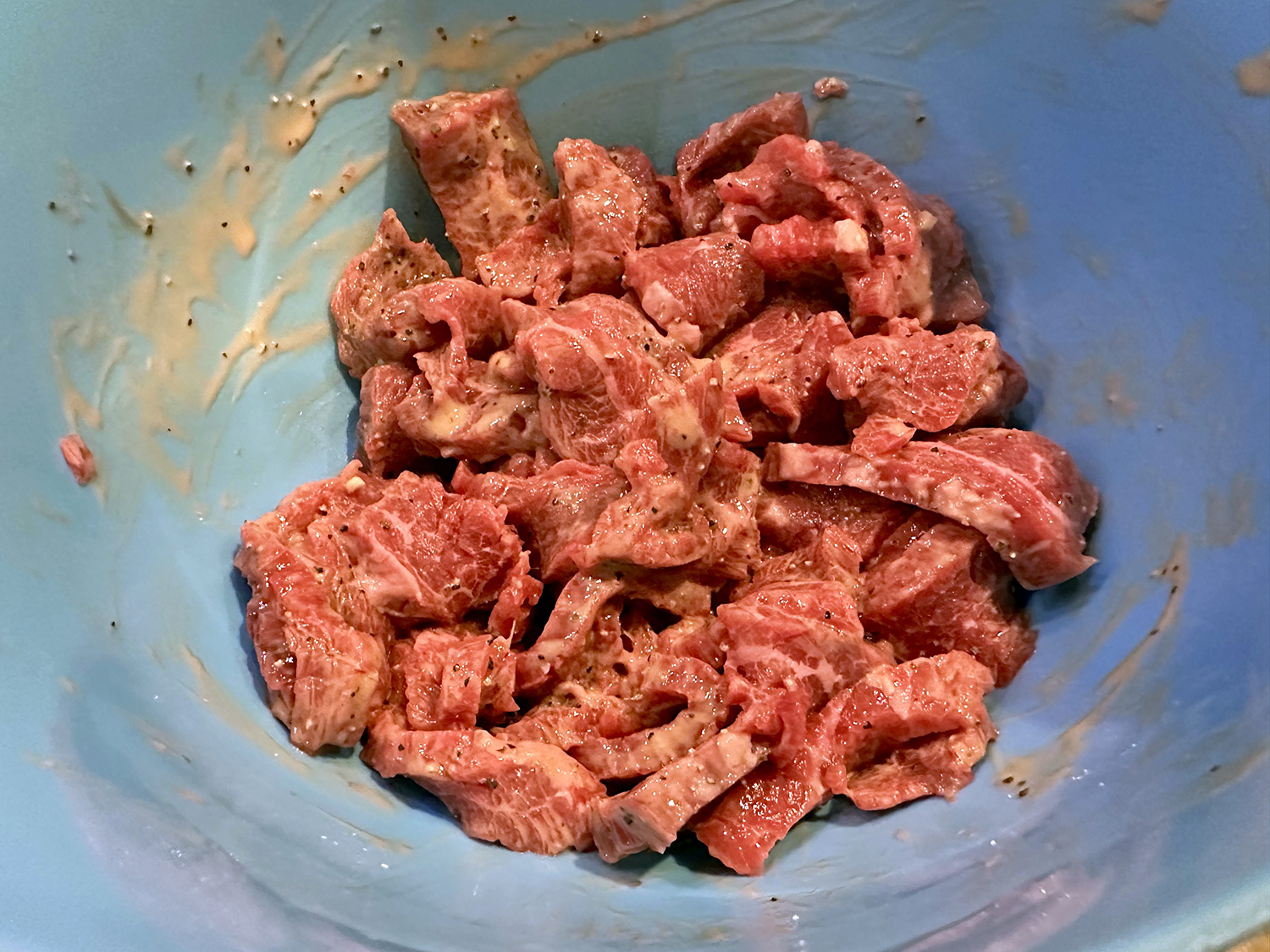
  1. In a medium bowl, whisk 1 tbsp. oyster sauce, the cornstarch, ½ tsp. pepper, and 1 tbsp. water. Add the beef, stirring; let stand at room temperature for 15 minutes or cover and refrigerate for 1 hour. Meanwhile, place the tomatoes on a paper-towel-lined plate and sprinkle with ¼ tsp. salt; set aside.
  2. In a 12-inch skillet over high, heat 2 tbsp. oil until barely smoking. Add the beef in an even layer and cook without stirring until well browned and the pieces release easily from the skillet, 2 to 3 minutes. Stir, then transfer to a large plate.
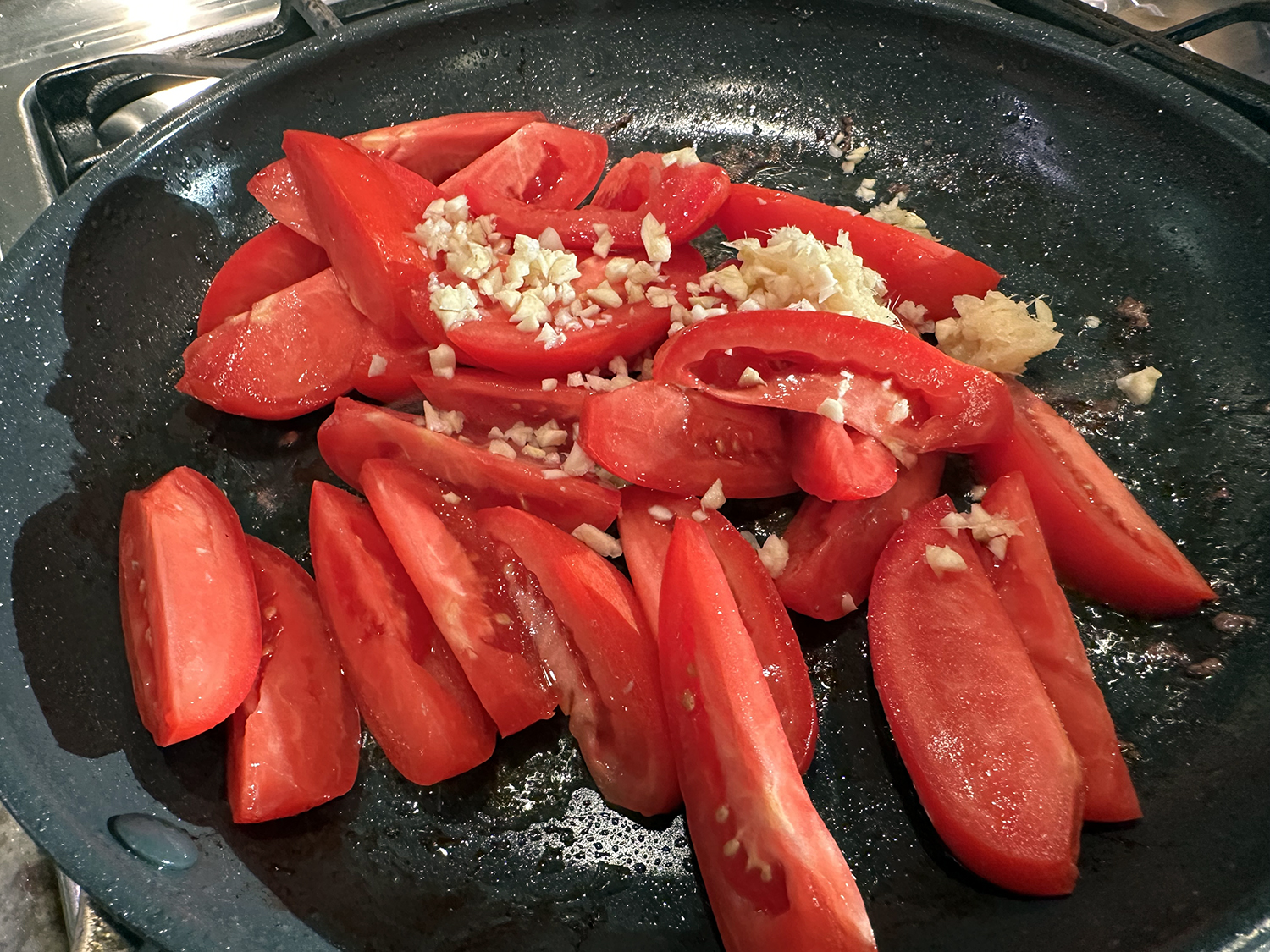
  3. In the same skillet over medium-high, heat the remaining 1 tbsp. oil until shimmering. Add the tomatoes and ginger; cook, scraping up any browned bits, until the tomatoes soften and the ginger is aromatic, 30 to 60 seconds. Add the beef and any juices, then stir in the remaining 3 tbsp. oyster sauce and 2 tbsp. water. Cook, stirring, until the meat is tender and the sauce has thickened, 1 to 2 minutes. Stir in the scallions to wilt slightly, about 30 seconds. Off heat, taste and season with salt and pepper. Serve with hot cooked rice.

http://www.lynnandruss.com

Recipe by Christopher Kimball for Milk Street
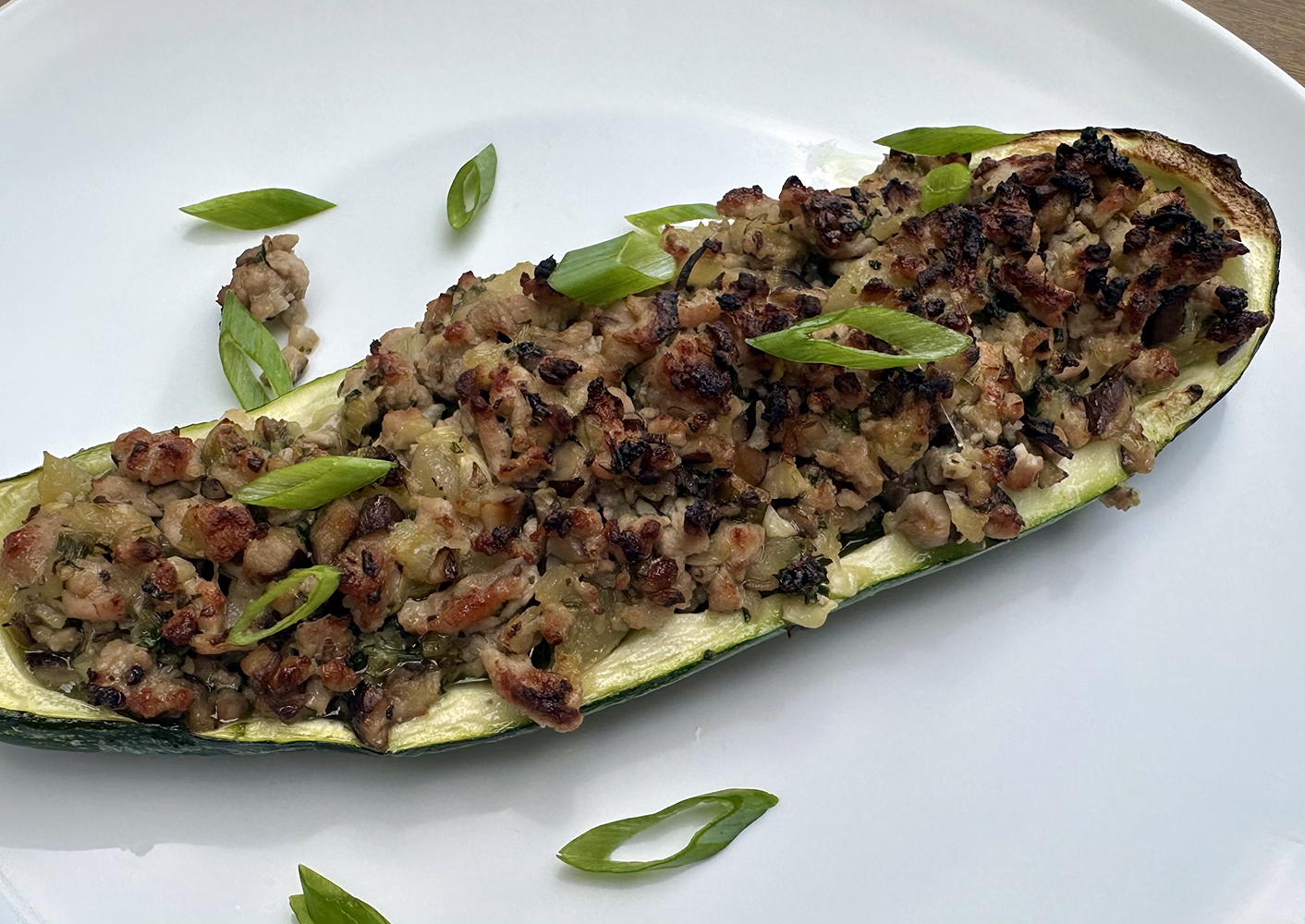
Pork-and-Mushroom Stuffed Zucchini Boats

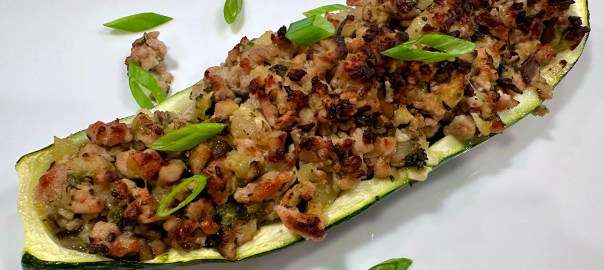
A great keto-friendly, low-carb meal option from Food & Wine, these aromatic with garlic, scallions, and fish sauce, these zucchini boats are stuffed with juicy pork and mushrooms for a dish that’s light, satisfying, and packed with Vietnamese flavor. You can even make most of it a day ahead (which came in real handy when we went to make them).

It’s a fun and easy vegetable-and-meat dish that makes the most out of the bounty of farmers market squash. Reminiscent of a dumpling filling, the pork-and-mushroom stuffing has notes of ginger, garlic, and scallions.

Bouillon powder (although we used bullion paste) and fish sauce bring umami to the forefront. Salting and baking the scooped-out cavities of the zucchini help release excess moisture, creating a perfectly textured final dish.

If looking to amp up the meal, serve these stuffed zucchini boats with rice, and/or a side salad for a quick and delicious dinner. 

NOTE: If you don’t eat pork, you can easily swap it for an equal amount of ground beef or ground turkey in this recipe.

Pork-and-Mushroom Stuffed Zucchini Boats

  • Servings: 4
  • Difficulty: easy
  • Print

Ingredients

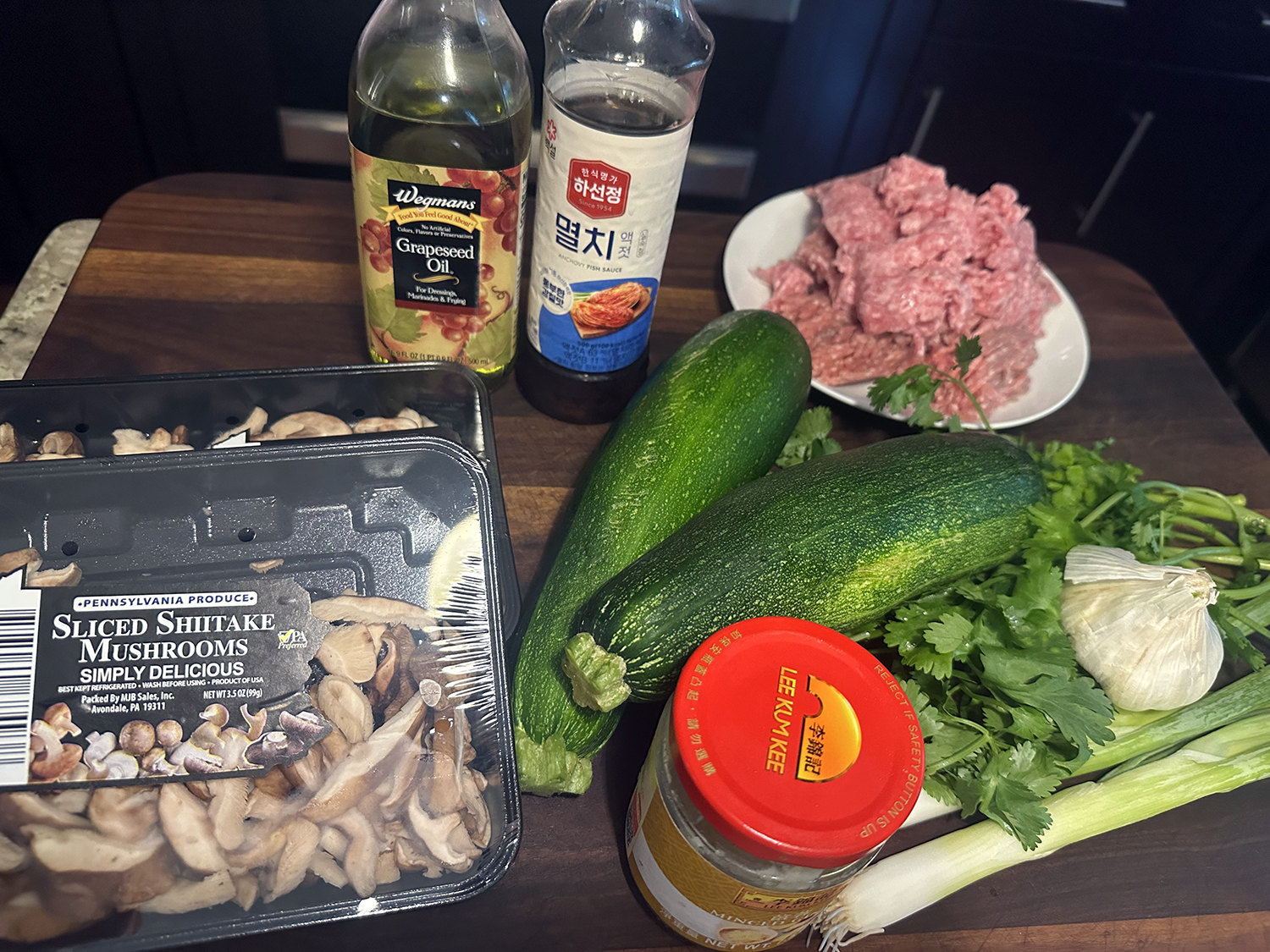
  • 2 12-oz. zucchini
  • 1/2 tsp. kosher salt
  • 2 Tbsp. neutral cooking oil, plus more for brushing
  • 1 (5-oz.) package sliced shiitake mushrooms, finely chopped
  • 1/4 cup thinly sliced scallion 
  • 1 Tbsp. finely chopped garlic (about 3 cloves)
  • 2 tsp. finely chopped fresh ginger, from 1-inch piece
  • 1 lb. ground pork
  • 1/4 cup chopped fresh cilantro, plus more for garnish
  • 2 Tbsp. fish sauce
  • 1 tsp. chicken bouillon granules
  • 1/2 tsp. black pepper

Directions

  1. Preheat oven to 425°F. Halve zucchini lengthwise; scoop the flesh from each half using a spoon or melon baller, leaving a 1/4- to 1/2-inch wall on the sides and base. Set scooped flesh aside. Sprinkle cut sides with salt, and place zucchini, cut side down, on a paper towel–lined plate. Let stand for 20 minutes.
  2. Meanwhile, heat oil in a large skillet over medium-high. Add mushrooms, and cook, stirring occasionally, until tender and browned, 4 to 5 minutes. Add scallion, garlic, ginger, and reserved zucchini flesh; cook, stirring often, until softened and the released liquids evaporate, 3 to 5 minutes. Add pork; cook, stirring occasionally to break meat into fine crumbles, until browned, 6 to 8 minutes. Remove from heat, and let cool for 5 minutes.
  3. Pat zucchini halves dry, and lightly brush with oil. Arrange zucchini, cut sides down, on an aluminum foil–lined baking sheet. Bake until the zucchini begins to soften, 8 to 10 minutes; remove from oven. Increase oven temperature to broil.
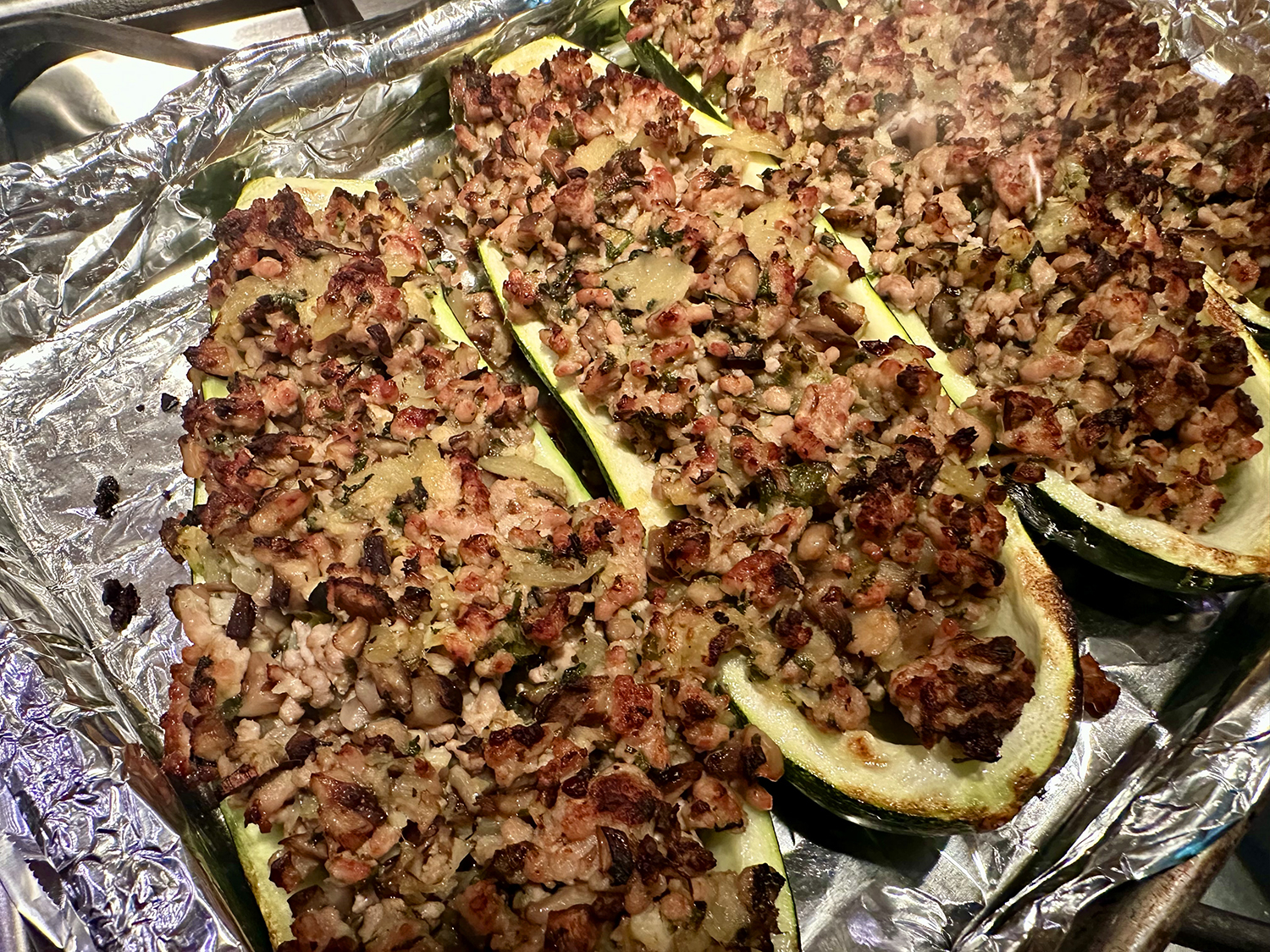
  4. Stir cilantro, fish sauce, bouillon, and pepper into pork mixture. Fill each zucchini cavity with pork mixture (about 2/3 cup per half); firmly press mixture into zucchini. Place on an aluminum foil–lined baking sheet, and broil until browned on top, 2 to 3 minutes. Let cool slightly, about 3 minutes. (With an electric oven, in order to get a little brown crisp on top, it took several minutes longer under the broiler.) Serve zucchini hot, garnished with additional cilantro and/oror scallion slices.

http://www.lynnandruss.com

Adapted from a recipe by Cường Phạm for Food & Wine

Pan-Seared Zucchini with Spicy Honey and Scallions

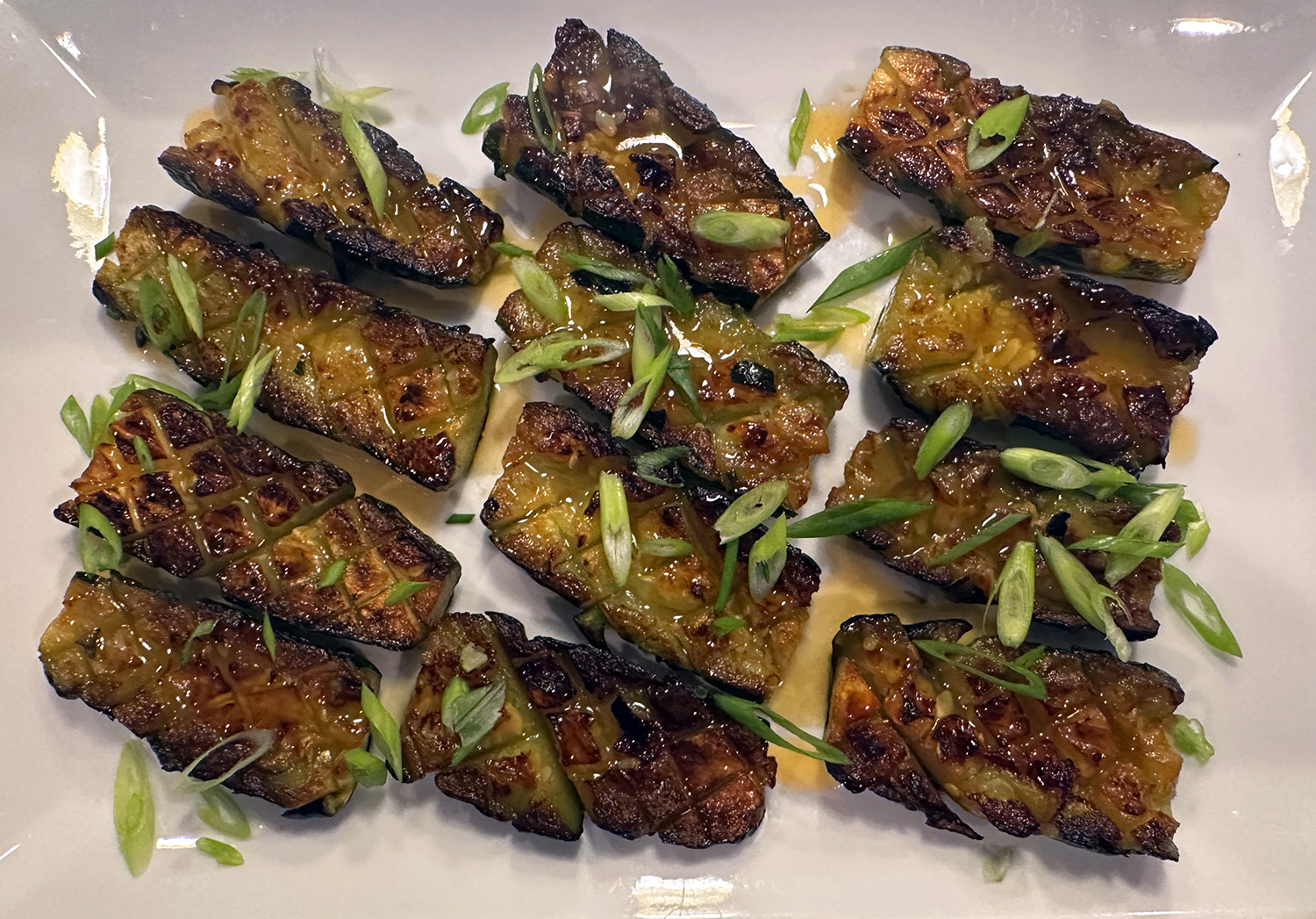
Come summertime, zucchini is everywhere—if not in your own garden, then an abundance can be found at local farm markets, neighbor’s backyards and the nearby grocery store. But let’s forget dull and watery. “If you treat summer’s most ubiquitous squash with intention, it can sear like a steak and turn downright lush”—so claims Cook’s illustrated (CI). So we had to see for ourselves. OMG, the most luscious zucchini dish we’ve ever experienced!

For dense, meltingly soft, and dramatically browned zucchini, CI says to start by halving and scoring the cut surfaces of the squashes, rubbing them with salt, and briefly microwaving them. The salt and heat draws moisture from the flesh, and the slits provided escape routes for the water so that the surfaces are primed for browning.

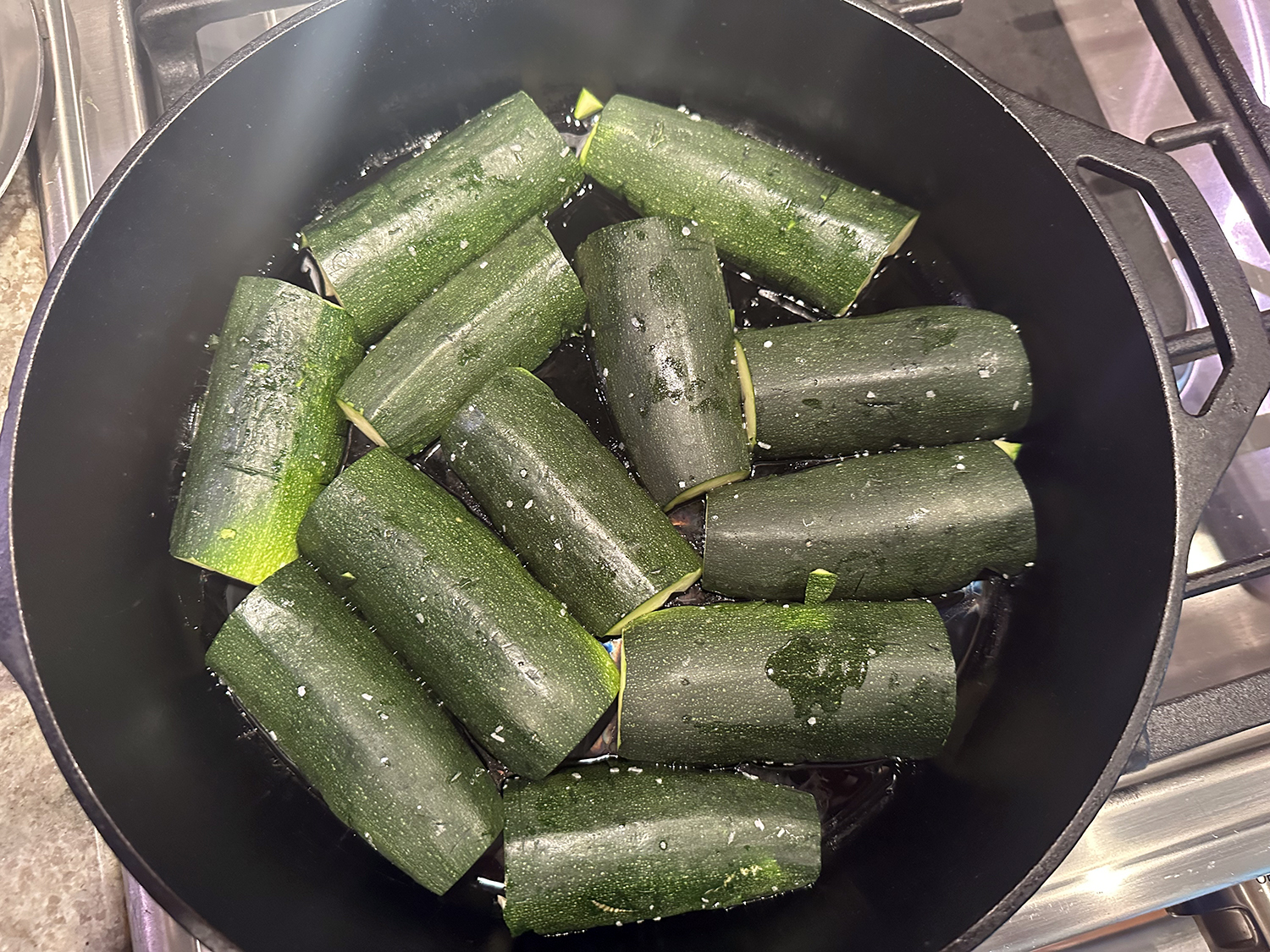
Cooking in a well-oiled cast-iron skillet encourages rich browning; the metal holds the heat really well, and the fat facilitates heat transfer between the pan and the food. Covering the skillet for most of the cooking time traps moist heat that forces air out of the flesh and also dissolves its pectin, rendering the flesh fork-tender.

A mixture of honey and hot sauce, microwaved (or heated in a sauce pan) to a glaze consistency, adds sweetness with a bit of heat; while sliced scallions bring fresh crunch and color. If you taste the sauce by itself, it may seem too spicy. However, once it is spread on the cooked zucchini, it mellows into the perfect blend of sweet and spicy.

Instead of microwave: Reduce the honey mixture in a saucepan on the stovetop. Leave the salted zucchini cut side down on the paper towels for 30 minutes to drain and add a couple of minutes to the cooking time.

*NOTE: After reading other recipe reviewers comments that after you remove the lid from the pan and flip the zucchini, the pieces on the outer edge were not fully browned. This happened to us also. So if needed, rearrange zucchini from middle to outer edges, and cook the scored surfaces another 3 minutes without covering to char all pieces evenly.
Then flip, and cook another 3 minutes uncovered.

Pan-Seared Zucchini with Spicy Honey and Scallions

  • Servings: 4
  • Difficulty: easy
  • Print

Ingredients

  • 2 Tbsp. honey
  • 1 Tbsp. hot sauce
  • 3 zucchini (8 oz. each), halved lengthwise
  • 2 tsp. kosher salt
  • 3 Tbsp. vegetable oil
  • 1 scallion, sliced thin on bias

Directions

  1. Whisk honey and hot sauce together in 1-cup liquid measuring cup. Microwave until mixture comes to boil, 30 to 45 seconds. Continue to microwave, stirring every 30 seconds, until sauce is slightly thickened, about 1 minute (sauce will continue to thicken as it cools).
  2. Using sharp paring knife, score cut sides of zucchini diagonally, about ¼ inch deep, at ½-inch intervals. Turn zucchini 90 degrees and score again in opposite direction. Place scored zucchini halves close to each other, cut side up, on cutting board. Sprinkle salt evenly over halves. Rub salt into cut sides until mostly dissolved.
  3. Line large plate with double layer of paper towels. Place zucchini cut side down on paper towels and press gently. Microwave until zucchini has exuded water and is hot to touch, about 3 minutes. Cut each piece in half crosswise.
  4. Spread oil over surface of cold 12-inch cast-iron skillet. Arrange zucchini cut side down in skillet and press to ensure that cut sides are flush with skillet surface (reserve paper towel–lined plate). Cover skillet. Cook over medium-high heat, rotating skillet one-quarter turn every 2 minutes for even cooking, until cut sides are deeply browned, 8 to 10 minutes.
  5. Slide skillet off heat. Uncover and turn zucchini cut side up. (*See above note regarding evenly browned surfaces.) Return to medium-high heat and continue to cook, uncovered, until paring knife meets little to no resistance when slipped into center of squash, 2 to 3 minutes longer. Transfer zucchini cut side up to reserved paper towel–lined plate to drain for 5 minutes.
  6. Transfer zucchini cut side up to platter. Drizzle with honey mixture, sprinkle with scallion, and serve.

http://www.lynnandruss.com

Adapted from a recipe by Andrea Geary for Cook’s Illustrated

Eggplant Chickpea Tagine

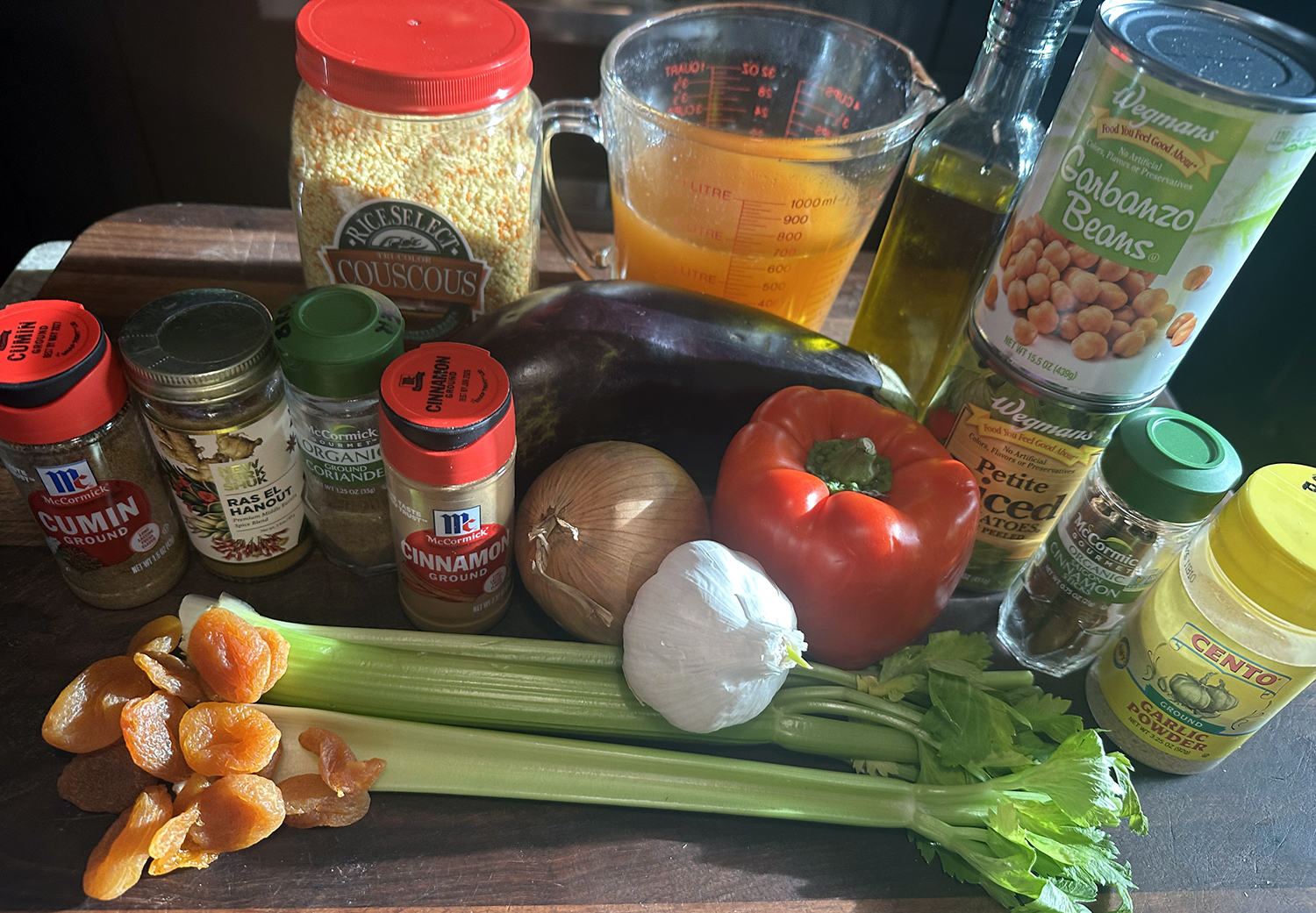
The tantalizing aromas as this dish comes together make your mouth water, your nostrils flare (in a good way), and your stomach growl. There are a lot of spices that contribute to the flavor-packed meal, but don’t let that deter you.

NOTE: One of those spices Ras El Hanout, can be easily purchased at most supermarkets, but if you can’t readily find it, there is a recipe variation below. I suggest you make this a day or two ahead of time and have it on hand when ready to cook.

This amazing recipe addresses several dietary restraints such as gluten-free, vegan, vegetarian, and high-fiber, but does not lack in flavor! It is a simple, delicious tagine recipe with eggplant and chickpeas infused with Moroccan spices served over cinnamon-scented couscous.

It’s luscious and hearty, yet totally plant-based and vegan. Another plus is that it can be made ahead, as leftovers get even more flavorful as the flavors have time to meld. The eggplant is succulent and meaty, a deliciously satisfying way to cook it!

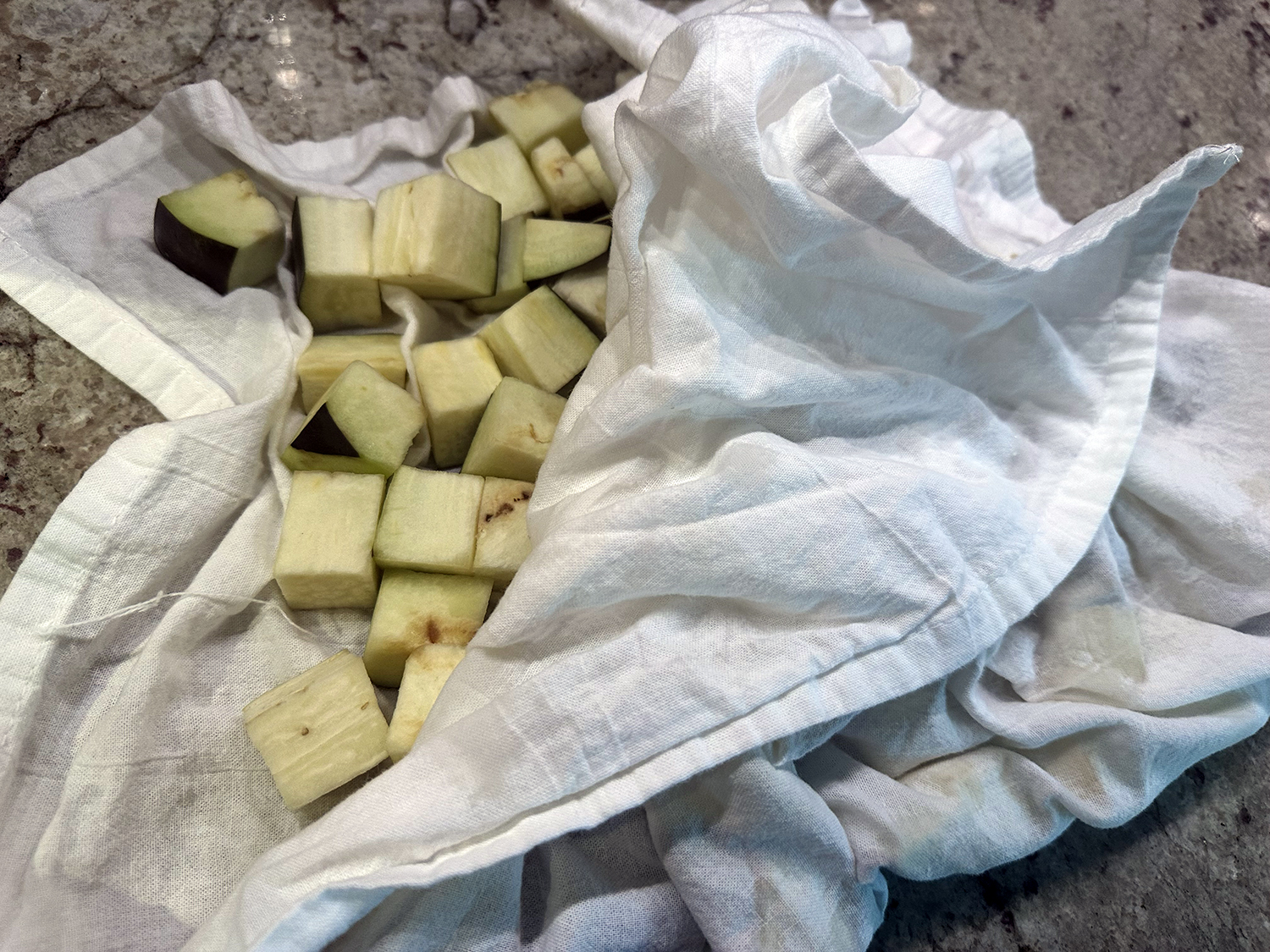
This vegan tagine recipe starts with cutting and salting the eggplant, which is so meaty and filling here, you really won’t miss the meat at all (well some of you may). Salting the eggplant will not only help remove bitterness but will also prevent the it from soaking up too much oil.

TIPS: Soaking the eggplant, not only seasons it, it helps remove some bitterness and helps the eggplant absorb less oil. Don’t skip this step. If leaving the raisins and apricots out, you will need to add a little sweetness, 1-3 teaspoons honey, sugar, something, to taste. Feel free to cook and bake in a tagine – if using a brand new tagine, make doubly sure you soak it first.

Eggplant Chickpea Tagine

  • Servings: 4-6
  • Difficulty: easy
  • Print

Ingredients

  • 1 extra-large eggplant (or two small)
  • 2 tsp. salt
  • Bowl of water
  • 6 Tbsp. olive oil (divided)
  • 1 large onion, diced
  • 6–8 garlic cloves, rough chopped
  • 3 stalks celery, chopped
  • 1 red bell pepper, seeded and chopped (or large carrot)
  • 1 Tbsp., ras el hanout, more taste
  • 1 tsp. cumin
  • 1 tsp. coriander
  • 1/4 tsp. cinnamon
  • 14-oz. can diced or crushed tomatoes
  • 1/3 cup raisins (or chopped dried apricots)
  • 1 tsp. salt, more to taste
  • 1/2 tsp. pepper
  • 14-oz. can chickpeas, drained, rinsed.
  • 2 cups vegetable broth
  • Optional Garnishes: Cinnamon scented couscous, cilantro, olive oil, optional yogurt, optional Aleppo chili flakes

Cinnamon-Scented Couscous (serves 4) 

  • 2 cups vegetable stock
  • 2 Tbsp. olive oil
  • 1 small cinnamon stick (or 1/2 tsp.)
  • 1/2 tsp. cumin
  • 1/2 tsp. granulated garlic (or onion)
  • 1/2 tsp. salt, more to taste
  • 1 1/2 cups dry couscous

Directions

  1. PREP EGGPLANT: Quarter the eggplant, and cut into large chunks (1 1/2 inches at widest part). Place in a big bowl, cover with cool water just to enough to cover,  and stir in the salt. Place a plate over top to keep the eggplant submerged 20 minutes. Drain and pat dry. (Don’t rinse.)
  2. Preheat the oven to 375F 
  3. Pan Sear: In a large dutch oven, or ovenproof skillet, over medium-high heat, heat 1/4 cup oil. Working in 2 batches, brown two sides of the eggplant, until golden, then set these aside. No need to cook through. Add more oil for second batch if pot is dry.
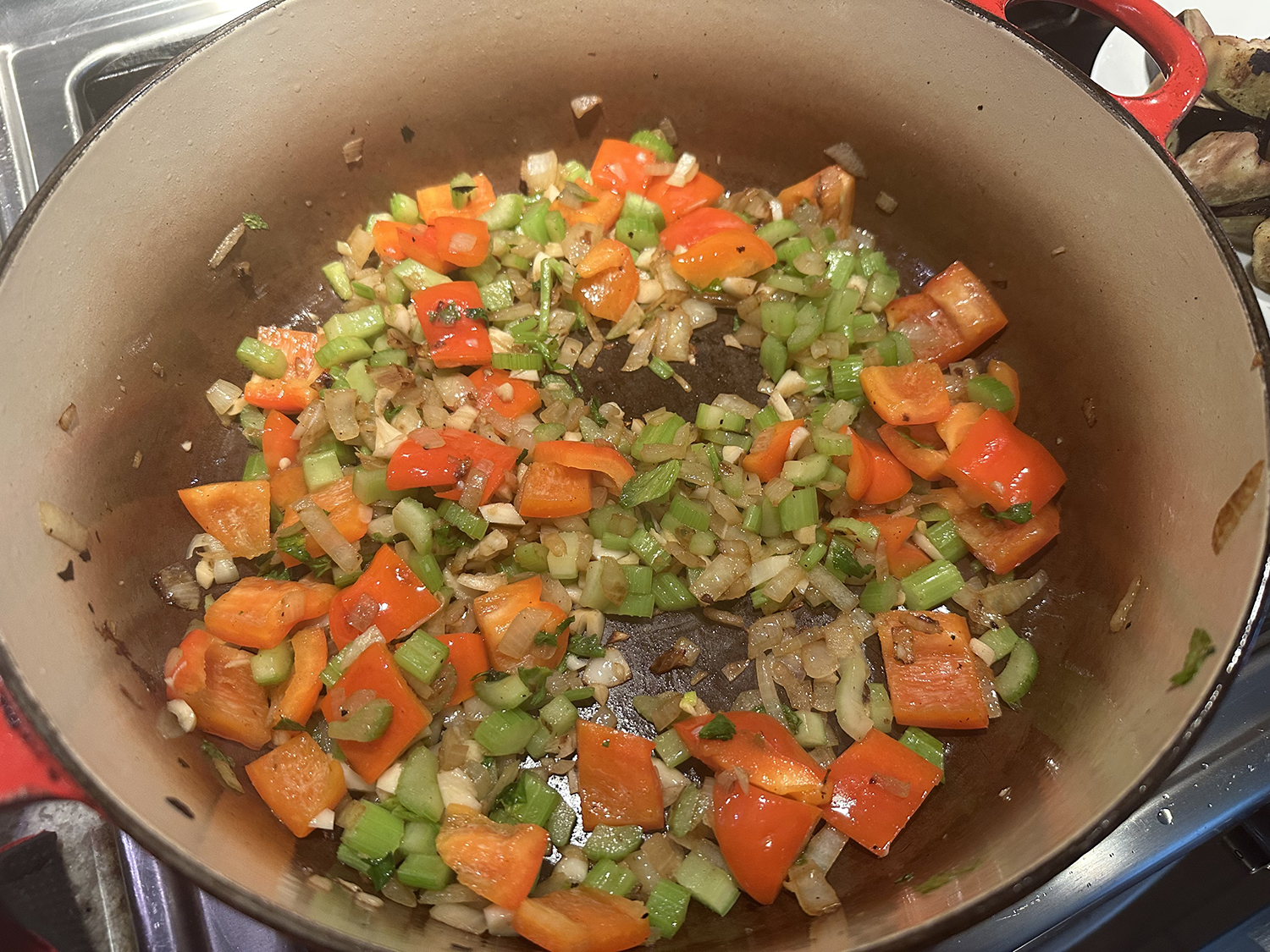
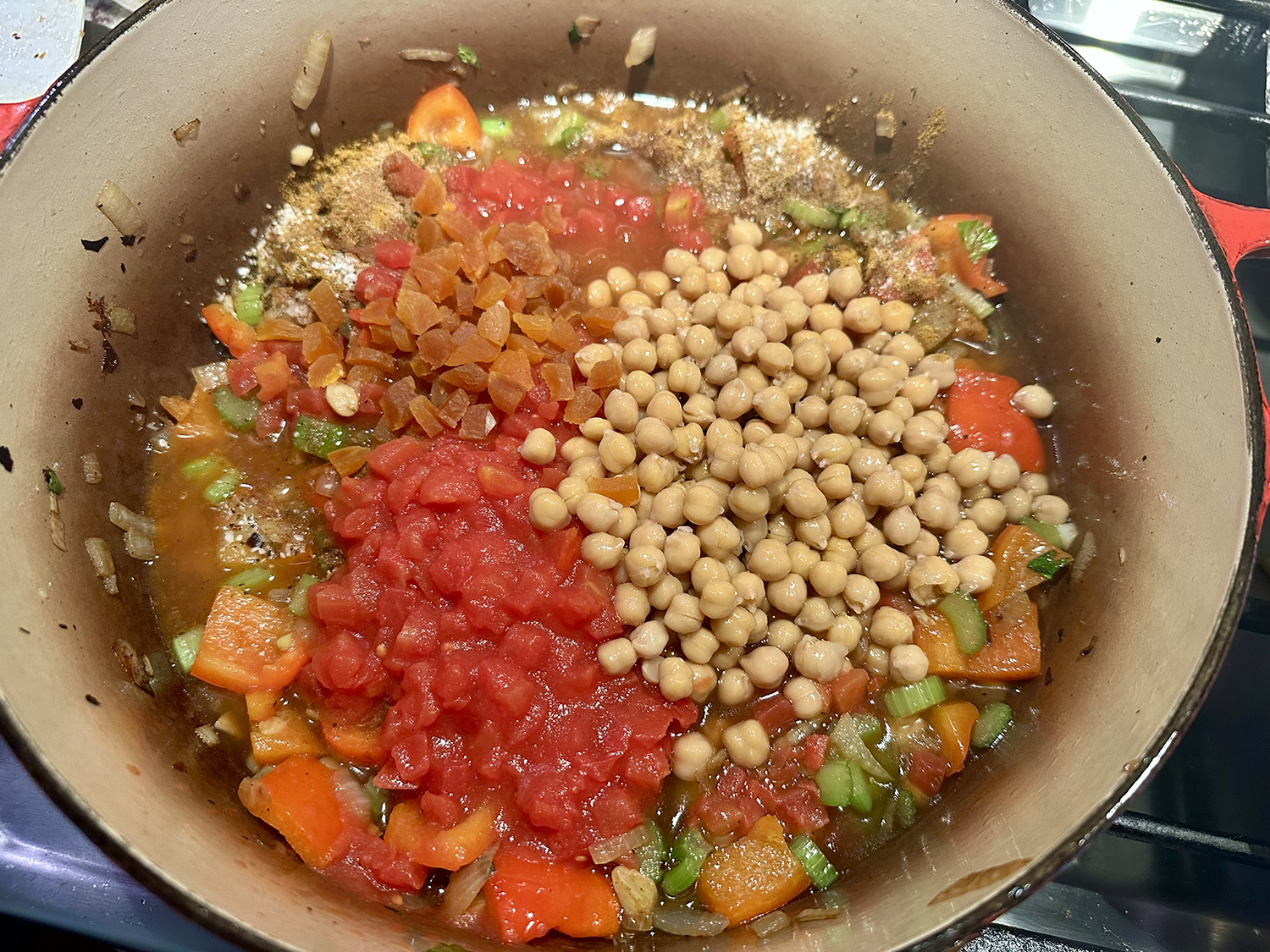
  4. Make the stew: Add 2 more tablespoonsmore oil to the same pan, and the onion and saute 2-3 minutes, stirring. Add the garlic, celery and red pepper, lower heat to medium and cook until tender, about 5 minutes. Add the spices, canned tomatoes (and juices),  raisins, salt, pepper, chickpeas and vegetable broth. Bring to simmer, stirring.
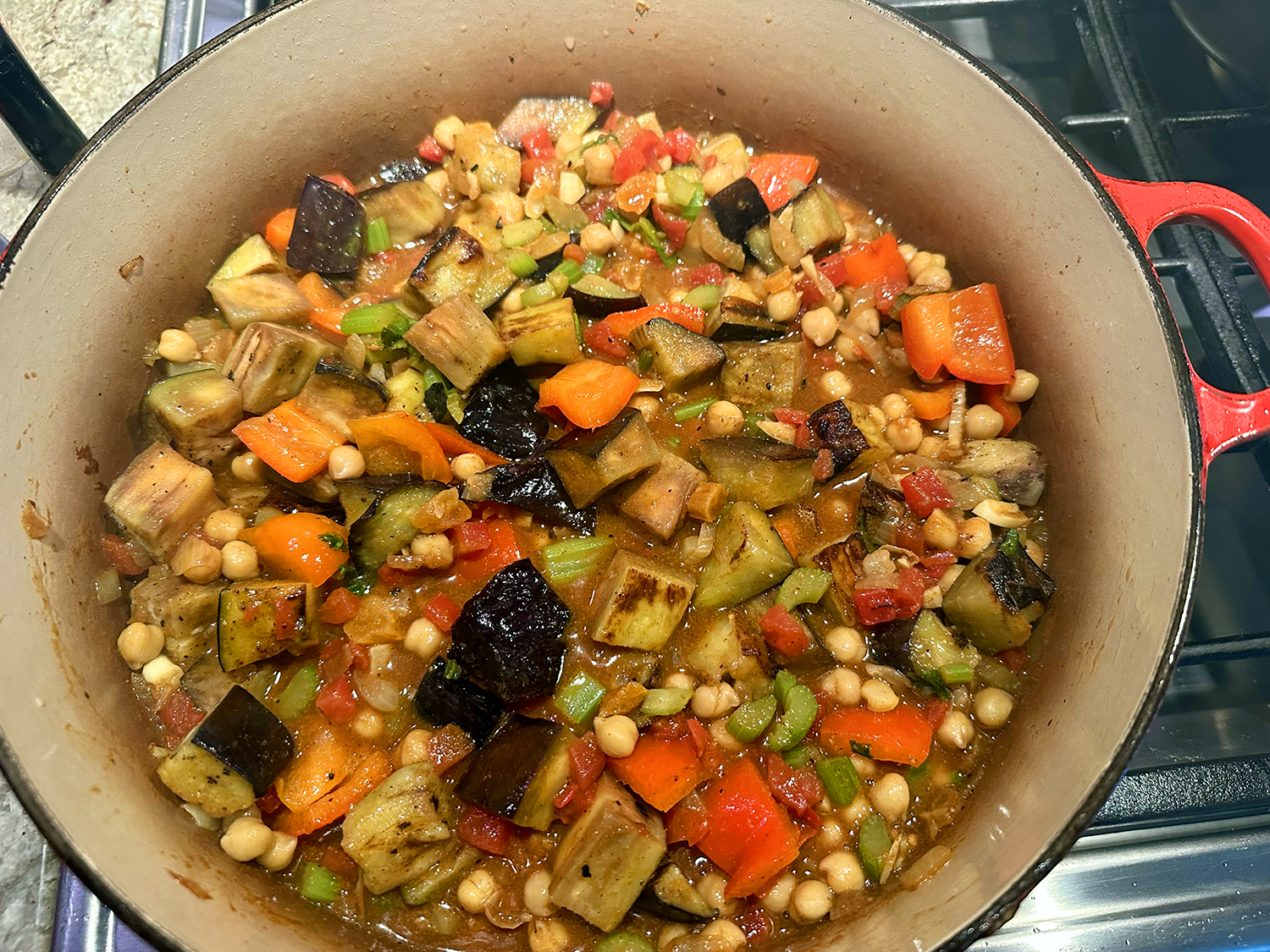
  5. Nestle in the eggplant and give the pan a good shake so the stew levels. It should be like a stew-like. If it seems dry, add a little water. Drizzle with a little olive oil, cover tightly and place in the warm oven.
  6. Bake 20-25 minutes or until eggplant is tender and cooked through. While it’s baking make the couscous.
  7. Remove the lid, taste adding more salt to taste, keeping in mind the couscous will soak up some of the salt. If you feel the stew needs more flavor overall, add a little more ras el hanout, a 1/2 teaspoon at a time, tasting as you go. If it seems watery, bake uncovered for a few minutes. If dry, add a little water. To serve, sprinkle with optional  Aleppo chili flakes and fresh cilantro. Perhaps add an additional drizzle of olive oil, or a dollop of yogurt, if you desire.
  8. Serve with the cinnamon-scented couscous.
  9. To make couscous: Place broth, oil, spices and salt in a medium pot, and bring to boil. Stir in couscous. Cover and remove from heat. Let stand 7 minutes. Uncover and fluff with fork. Adjust salt.

http://www.lynnandruss.com

Adapted from a recipe by Sylvia fountaine

Ras el Hanout Recipe

Makes about 2 1/2 Tablespoons

  • 1 tsp. ground ginger
  • 1 tsp. turmeric
  • 1 tsp. salt
  • 34 tsp. sugar
  • 34 tsp. fresh ground black pepper
  • 12 tsp. cinnamon
  • 12 tsp. ground coriander
  • 12 tsp. cayenne
  • 12 tsp. ground allspice
  • 12 tsp. ground fennel
  • 14 tsp. ground cloves

Chicken Tinga Tacos

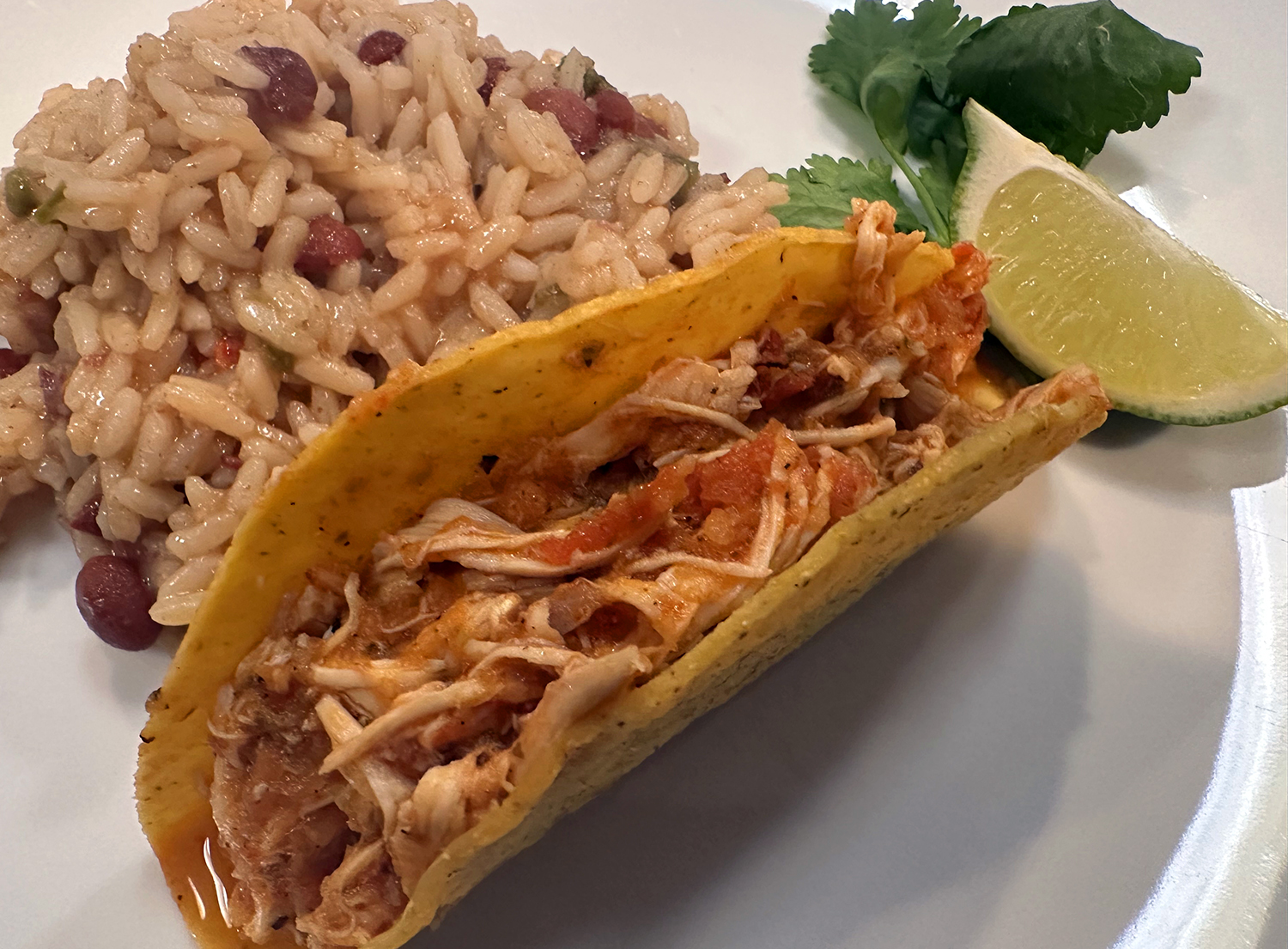
We took a basic Chicken Tinga recipe using a rotisserie chicken and made tacos as our main dish. If you’ve never had it, chicken tinga has a smoky sweetness that’s hard to resist and uses easy-to-find ingredients such as tomatoes (canned or fresh), chipotle peppers in adobo, and of course, chicken.

The dish originates from Puebla, Mexico, and it falls under what a guisado: a meat or vegetable that is cooked with few ingredients and is stewy, homey, and delicious. There are many variations for this recipe so feel free to adjust to your own preferences.

The number of servings will vary depending on how and what you serve the tinga in. For us, one serving equaled two stuffed tacos and a side of rice and beans.

Not fans of anything too sweet with our meat, we reduced the amount of honey from three tablespoons down to one.
Chicken Tinga Tacos

  • Servings: 5-6
  • Difficulty: easy
  • Print

Ingredients

  • 1 Tbsp. olive oil
  • 1 medium white onion
  • 4 large cloves garlic
  • 2-4 chipotle chiles in adobo sauce (plus 1 Tbsp. of the adobo sauce)
  • 1 15-oz. can fire-roasted tomatoes
  • 1 cup chicken stock
  • 1 Tbsp. honey
  • 1 1/2 tsp. ground cumin
  • 1 tsp. dried oregano
  • 6 cups shredded cooked chicken (such as from a 3 1/2 lb. rotisserie chicken)
  • 1 bay leaf
  • Optional toppings: chopped fresh cilantro, shredded Mexican cheese blend, crumbled cotija cheese, fresh lime wedges, quick pickled red onions, sliced avocado, and/or Mexican crema
  • Corn tortillas, taco shells, or tostadas, for serving

Directions

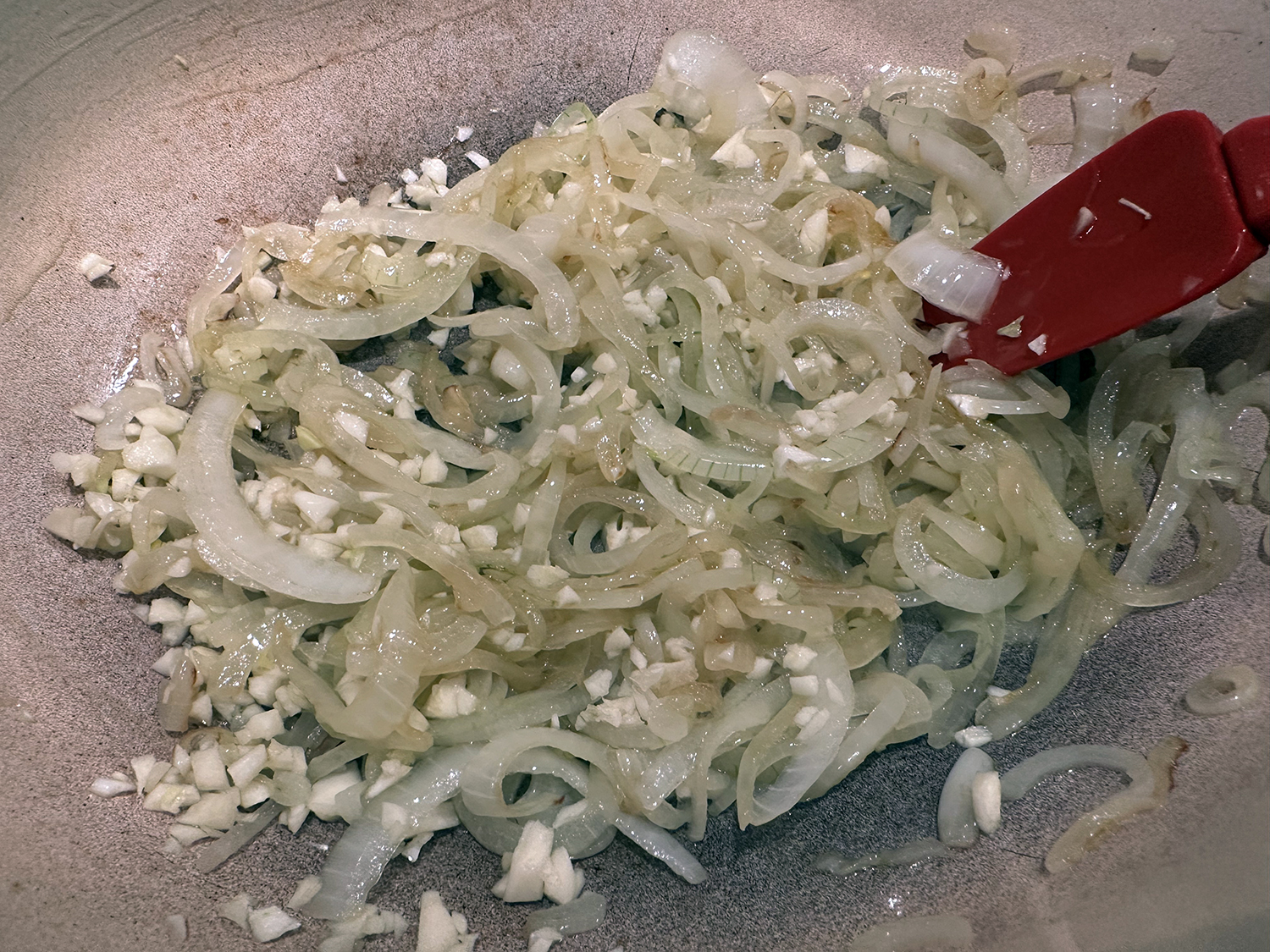
  1. Heat oil in a large stockpot over medium-high heat. Add the onion and sauté for 5 minutes, stirring occasionally. Add the garlic and sauté for 1-2 minutes, stirring frequently, until fragrant. Remove stockpot from heat and transfer the onion mixture to a blender.
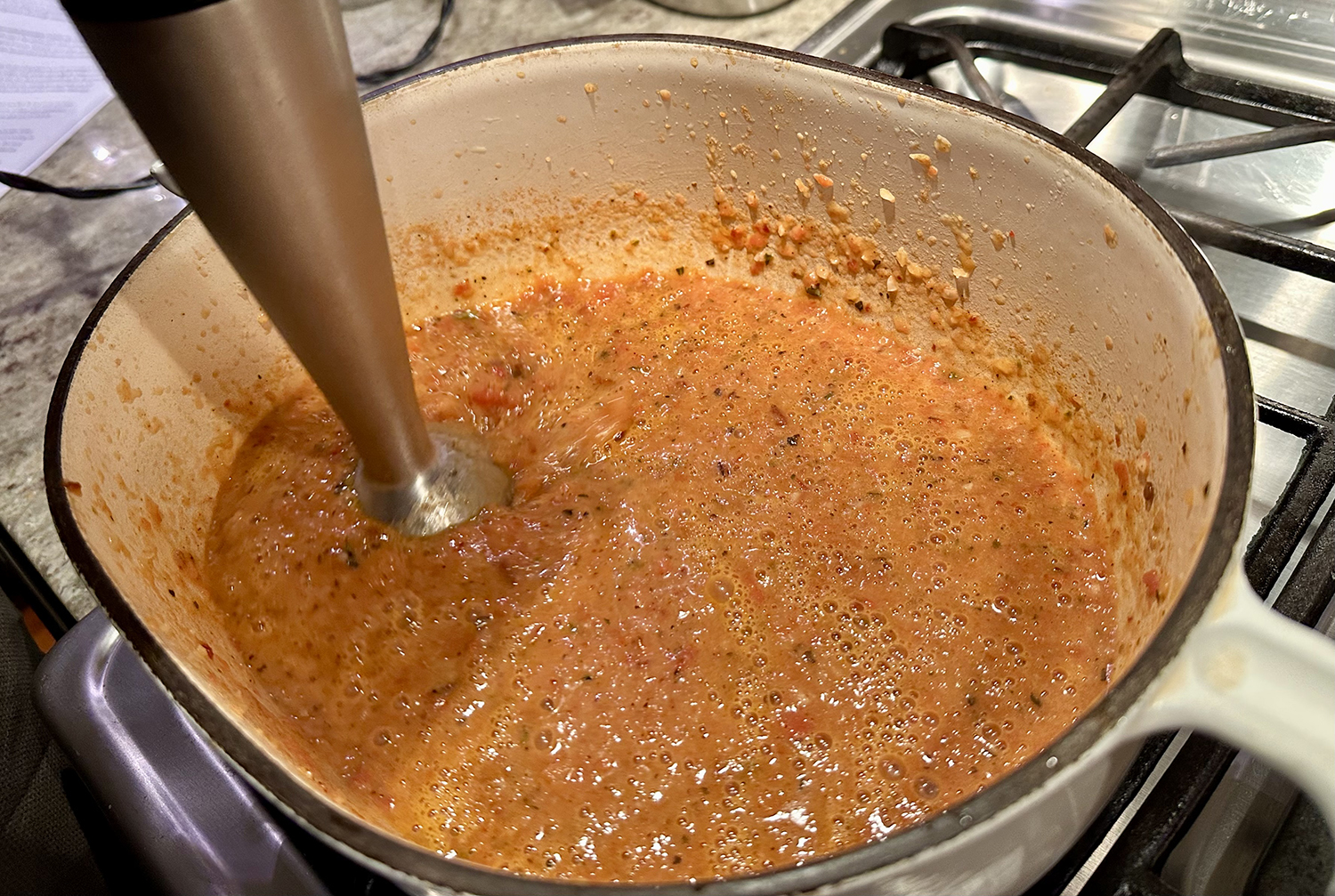
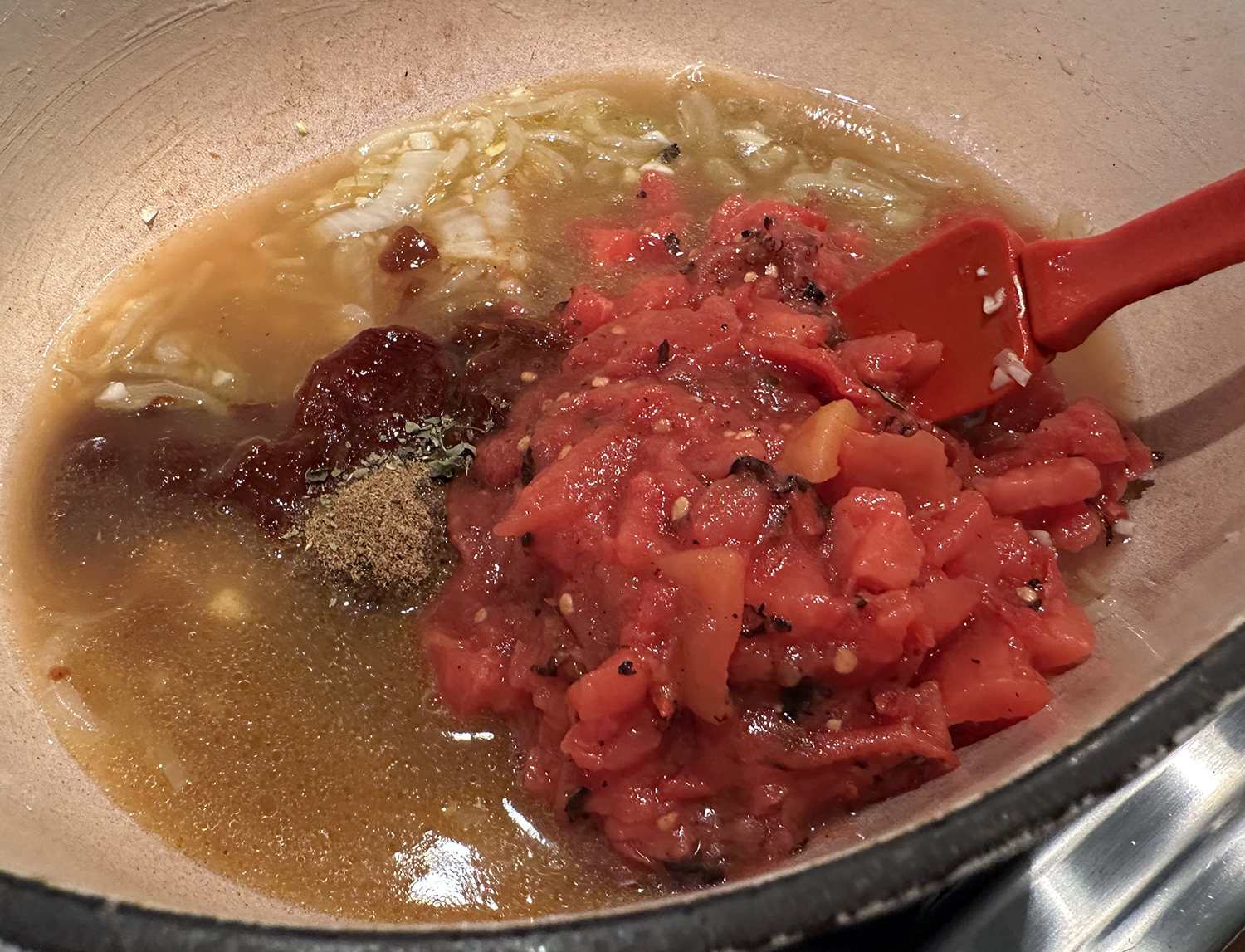
  2. Add the chipotles and 1 tablespoon of adobo sauce, tomatoes, chicken stock, honey, cumin and oregano to the blender. Cover and purée until smooth, then pour the sauce back into the stockpot.
    Alternatively, use a an immersion blender directly into the stockpot.
  3. Add the chicken and bay leaf to the sauce and toss until combined. Cook over medium-high heat for 5 minutes, stirring occasionally. Remove and discard the bay leaf.
  4. Season the chicken with salt and pepper to your taste.
  5. Serve it warm with your tortillas and choice of toppings.

http://www.lynnandruss.com

Adapted from a recipe from GimmeSomeOven.com

Spicy Shrimp and Mushroom Stir-Fry

We found that this assertively spicy and savory stir-fry from Ali Slagle for NYTimes Cooking comes together quickly because each ingredient brings so much to the skillet. Just a few minor changes were made on our end, and we liked the dish even more than we thought we would!

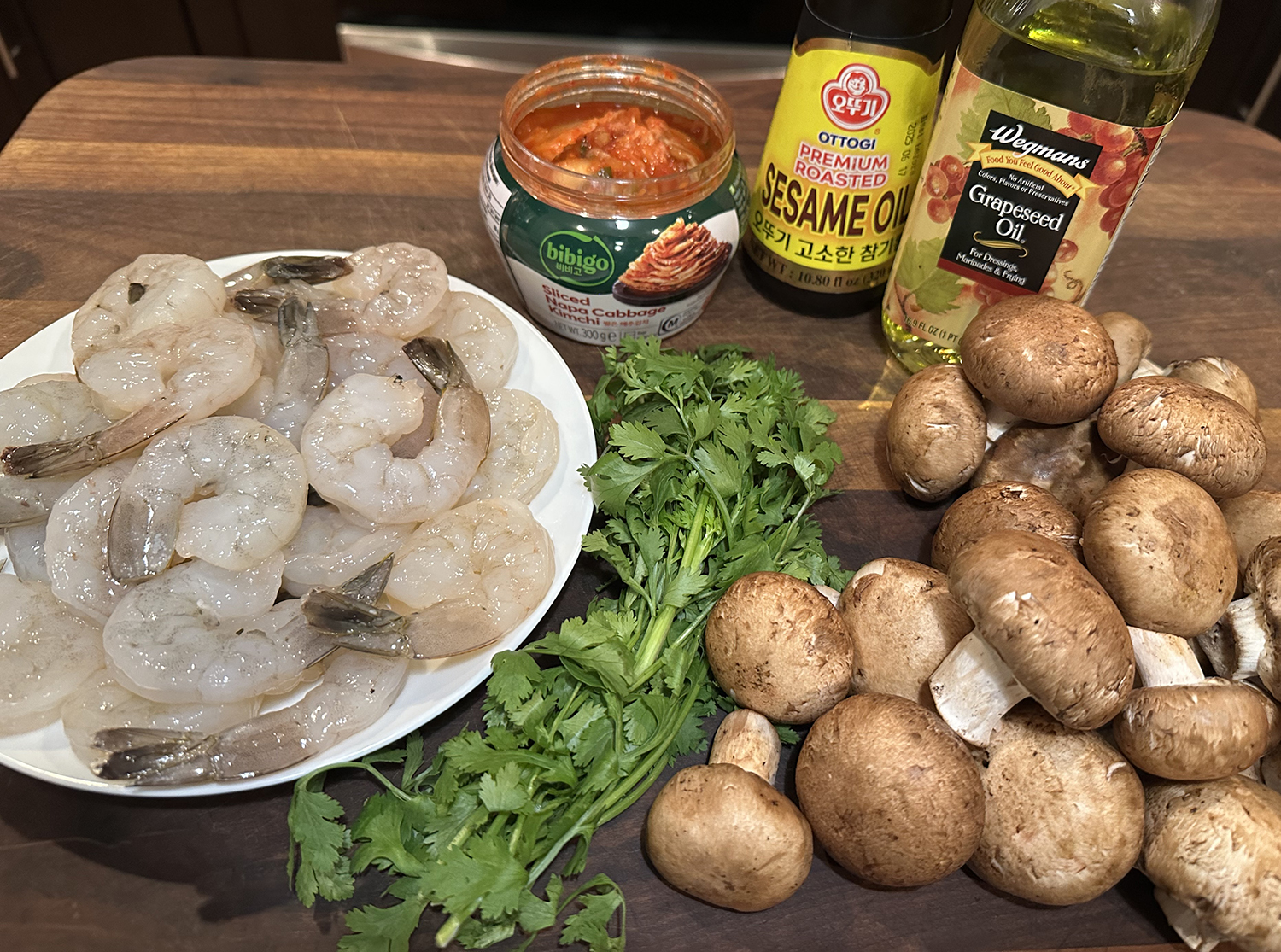
Meaty mushrooms provide an earthy base, while the shrimp offers a sweet, saline snap. But the key ingredient is a considerable amount of kimchi: The fermented cabbage is cooked until just warm so it stays effervescent, spicy, crunchy and juicy.

As you may know, kimchi’s heat varies jar by jar, so if you find the dish a bit too punchy, stir in a tablespoon of butter at the end. If you want a green vegetable, toss in a handful of spinach. Serve with rice, lettuce cups, rice cakes or ramen noodles (our choice).

Conveniently, we were able to buy a one-cup package of kimchi from the local Asian market. The pieces were small enough that we didn’t have to “snip” them down in size. Worried there wasn’t enough brine in the one-cup container to coat all of the noodles, The Hubs made a two tablespoon combo of water mixed with gochujang, which ended up working perfectly.

Spicy Shrimp and Mushroom Stir-Fry

  • Servings: 4
  • Difficulty: easy
  • Print

Ingredients

  • 2 Tbsp. neutral oil, such as grapeseed
  • 1 lb. sliced button or cremini mushrooms
  • Kosher salt and black pepper
  • 1 lb. peeled medium shrimp
  • 1 packed cup cabbage kimchi, snipped into small pieces with scissors
  • 2 Tbsp. kimchi brine
  • 2 Tbsp. toasted sesame oil
  • Cilantro leaves and tender stems, for serving

Directions

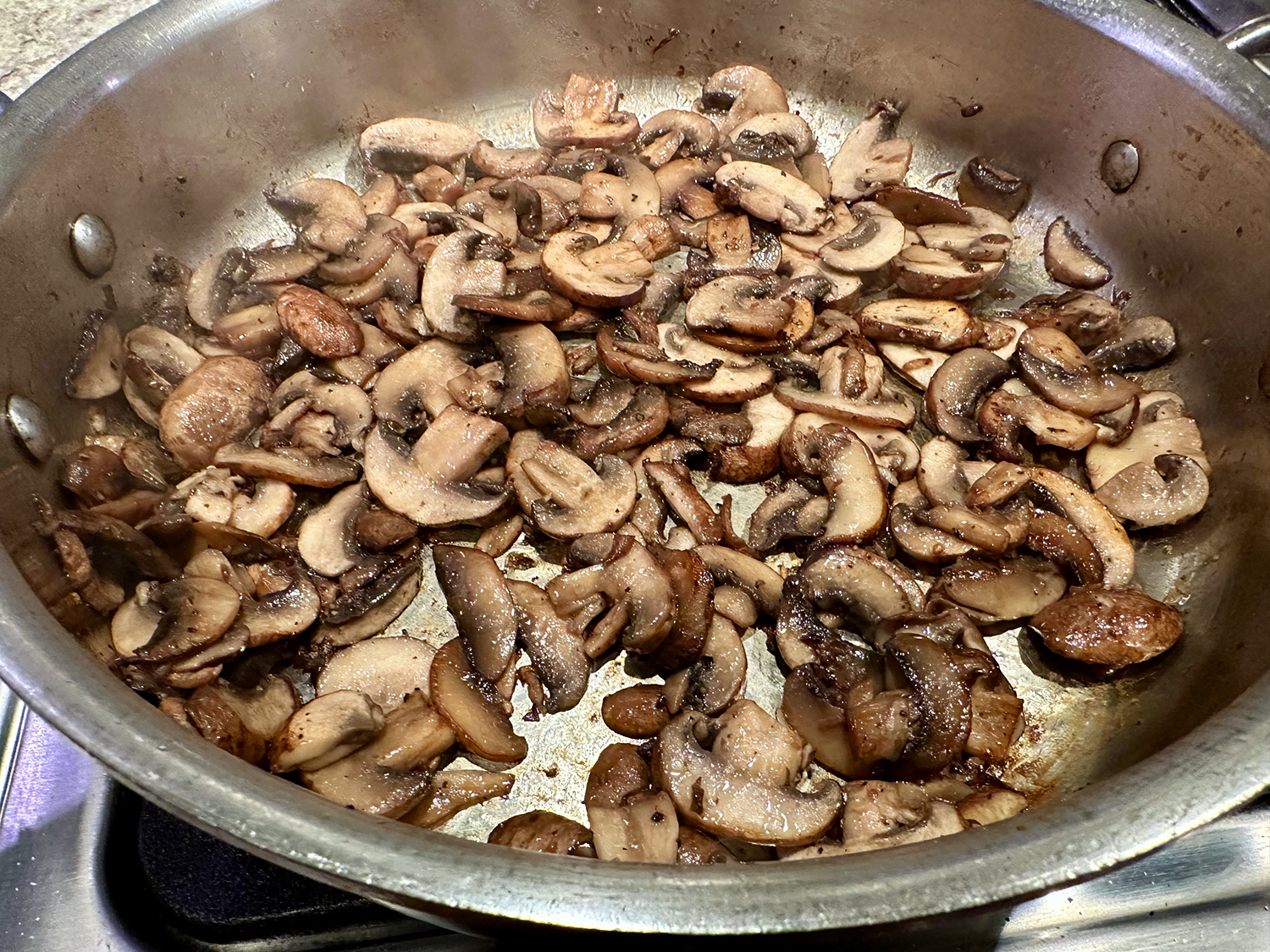
  1. Heat the oil in a large (12-inch) skillet over medium-high. Add the mushrooms, season with salt and pepper, and cook, stirring just once every minute or two, until browned and crisp, 8 to 11 minutes.
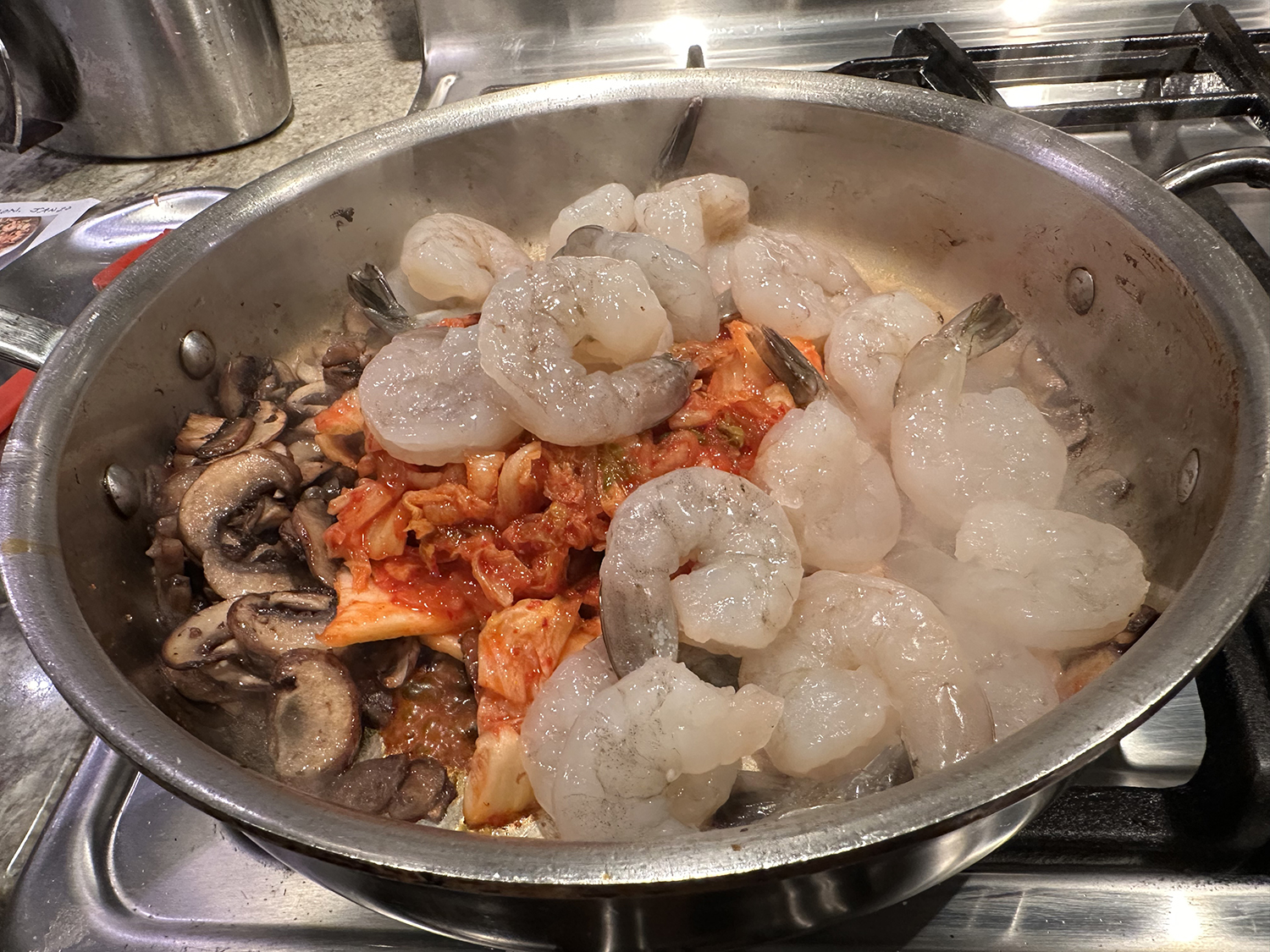
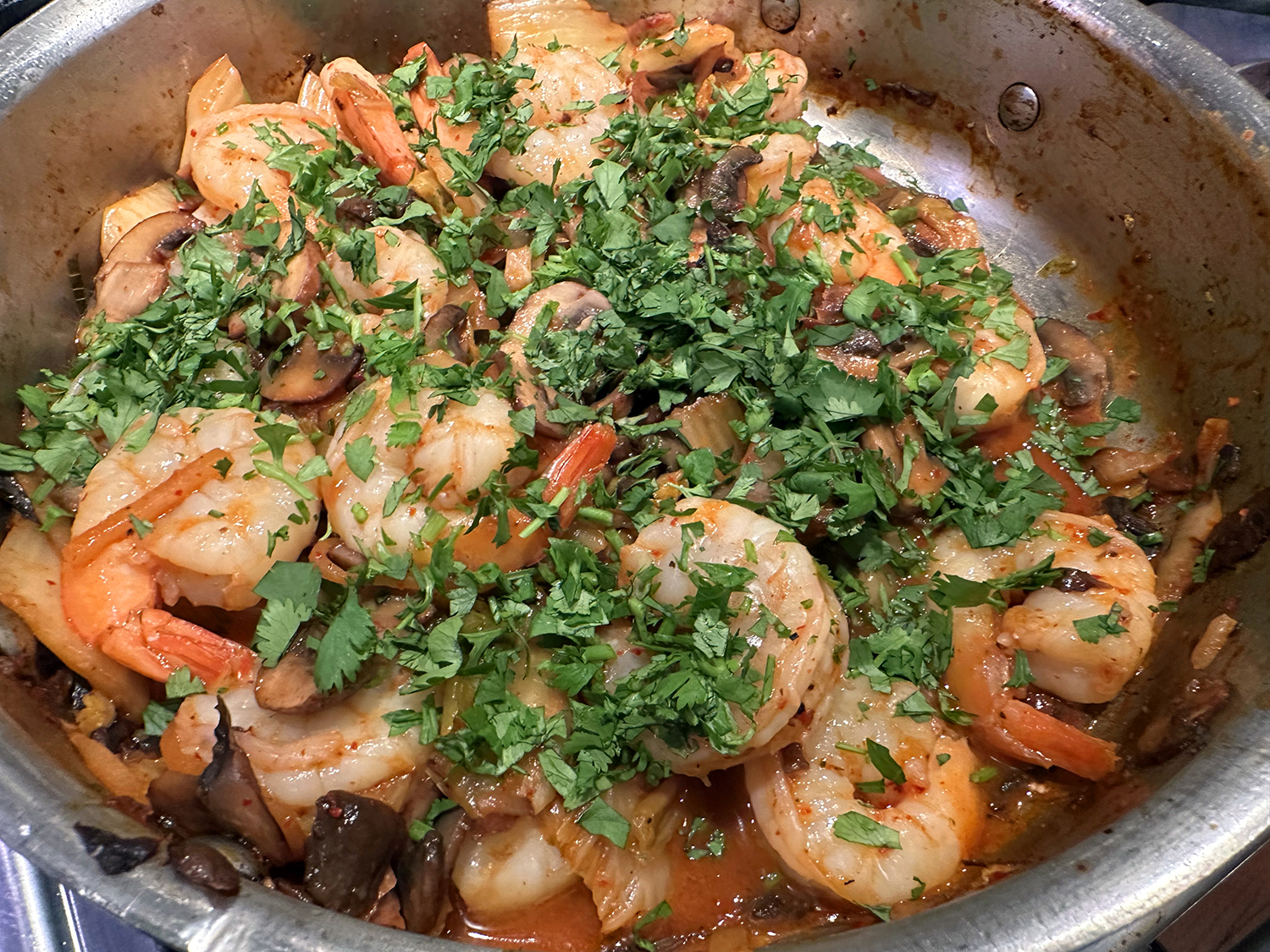
  2. Reduce heat to medium and add the shrimp, kimchi, kimchi brine and sesame oil. Stir until the shrimp is just opaque, 2 to 4 minutes. Top with cilantro. (Since shrimp and kimchi are both salty, you likely won’t need more salt.)

http://www.lynnandruss.com

Recipe by Ali Slagle for NYTimes Cooking

Veal Shanks Braised with Honey and Rosemary

According to chef/author Molly Stevens‘ cookbook “All About Braising” where this fabulous recipe hails from, veal has an inherent sweetness that really comes to the fore when it is braised with a bit of honey. Not too sweet, just a hint.

To ensure the veal shanks didn’t fall apart during braising, The Hubs tied each one around the outer diameter with kitchen twine. Once plated on a platter, the twine was removed before the carrots and shallots were added.

Along with the braised shallots and carrots, we served a side of velvety Manchego Mashed Potatoes, a perfect vehicle to corral some of the wonderful silky sauce. It was the perfect dinner to celebrate a close friend’s upcoming birthday.

Veal Shanks Braised with Honey and Rosemary

  • Servings: 4
  • Difficulty: easy
  • Print

Ingredients

The Braise

  • 4 meaty veal shanks, each 2 to 2 1/2 inches thick (3 to 3 1/2 lbs. total)
  • Coarse salt and freshly ground black pepper
  • 2 Tbsp. extra-virgin olive oil
  • 1 large onion, coarsely chopped
  • 1 cup dry white wine or vermouth
  • 2 cups veal or chicken stock, preferably homemade
  • 2 Tbsp. honey (rosemary or lavender if possible); we had lilac honey
  • Zest and juice of 1 orange, zest removed in strips with a vegetable peeler
  • Zest and juice of 1 lemon, zest removed in strips with a vegetable peeler
  • 2 6-inch leafy fresh rosemary branches
  • 2 Tbsp. balsamic vinegar

The Carrot and Shallot Garnish

  • 1 Tbsp. unsalted butter, plus more to finish
  • 1 Tbsp. extra-virgin olive oil
  • 12 to 18 medium shallots, peeled, larger ones cut in half
  • 12 to 18 small carrots, peeled; OR 4 larger carrots, cut into 3-by-3/4 inch sticks
  • Coarse salt and freshly ground black pepper
  • 2 6-inch leafy fresh rosemary branches

Directions

  1. Heat the oven to 300 degrees.
  2. Browning the shanks: Season the veal shanks on all sides with salt and pepper. Heat the oil in a wide Dutch oven or heavy braising pot (6- to7-quart) over medium-high heat. When the oil is quite hot, add as many shanks as will fit without crowding. (If necessary, sear the shanks in batches.) Sear the shanks, turning once withe tongs, until both flat sides have an attractive bronze color, about 5 minutes per side. transfer to a large plate or tray, without stacking.
  3. The aromatics and braising liquid: Add the onion to the pot, stir and sauté, still over medium-high heat, until they soften and begin to brown, 3 to 4 minutes. The bottom of the pot should be developing a caramelized crust. Pour in the wine, stir to dissolve the brown crust on the bottom of the pot, and boil until the wine is reduced by half, about 10 minutes.
  4. The braise: Add the stock, honey orange zest and juice, lemon zest, rosemary, and balsamic vinegar to the pot. Return the shanks to the pot, arranging them in a snug single layer, and pour over any juices that accumulated while they sat. Bring to a simmer and cover with parchment paper, pressing down so the paper nearly touches the shanks and the edges hang over the sides of the pot by about an inch. Then secure the lid in place and slide the pot into the lower third of the oven to braise at a gentle simmer for 1 hour. After the first 10 to 15 minutes, check that the liquid is not boiling too energetically; if i is lower the oven heat by 10 to 15 degrees and continue to braise.
  5. Prepare the garnish: heat the butter and oil in a large 12-inch skillet over medium-high heat. when the butter has melted and the oil is quite hot, add the shallots and carrots, season with salt and pepper, and sauté, stirring and shaking the pan frequently, until tinged with brown all over, about 8 minutes. Add the rosemary branches and sauté for another minute.
  6. Finishing the sauce: With a slotted spoon, lift the shanks along with the shallots and carrots, onto a platter, without stacking. Handle the veal carefully at this point, as it will tend to fall apart. Cover loosely with foil to keep warm. Strain the braising liquid into a saucepan, pushing down on the vegetables, zest, and spent herbs to extract all the juices, and discard the solids. Skim the surface fat from the strained liquid, and bring to a simmer over medium-high heat. Simmer, skimming a few more times, until reduced enough to lightly coat the back of a spoon, about 15 minutes. Season with salt and pepper, and keep at a low simmer.
  7. Portioning the veal shanks: If the shanks are reasonably sized, serve one shank per person. If the shanks are enormous, pull apart the larger shanks, separating them at their natural seams, and serve smaller amounts. be sure to offer the marrow bones as well.
  8. Serving: For a luxurious sauce, whisk a walnut-sized knob of butter into the barely simmering sauce.Once you’ve added the butter, avoid prolonged boiling. Serve the shanks accompanied by the carrots and shallots, and spoon the sauce over the top.

http://www.lynnandruss.com

Recipe by Molly Stevens from All About Braising

Skillet-Braised Chicken With Greens and Olives

Braising chicken and greens together in a skillet does wonderful things to both bird and vegetables. As the chicken cooks, the skin browns, crisps, and renders savory fat, which suffuses the greens with flavor. The greens, in turn, make a soft, moist bed on which to cook the chicken, keeping the meat supremely tender.

In the end, the silky greens make a rich, mineral contrast to the juicy meat, while lemon juice and olives add brightness and acidity to the mix, giving it a pleasant jolt. Serve this with crusty bread, mashed potatoes, or a bed of couscous to catch all the juices.

Using homemade chicken stock will add oodles of flavor, plus some preserved lemon (about 1 1/2 tablespoons of chopped rind) adds an additional depth of flavor.

Skillet-Braised Chicken With Greens and Olives

  • Servings: 4
  • Difficulty: easy
  • Print

Ingredients

  • 2 ¼ to 2½ lbs. bone-in chicken thighs and drumsticks
  • Fine sea salt or table salt and freshly ground black pepper
  • 1/4 tsp. hot smoked paprika, plus more for serving (or use red-pepper flakes)
  • 3 Tbsp. extra-virgin olive oil, more for serving
  • 1 cup sliced shallots, about 2 to 3 (or use red onion)
  • 3 garlic cloves, thinly sliced
  • 1 pound sturdy greens, such as escarole, Swiss chard or kale, coarsely chopped
  • 1 cup coarsely chopped cilantro or parsley
  • 1¼ cups chicken stock, preferably homemade, plus more as needed
  • ½ cup pitted coarsely chopped Castelvetrano olives
  • 1 lemon, halved
  • Flaky salt, for serving (optional)

Directions

  1. In a small bowl, blend 1 teaspoon of salt, 1/2 teaspoon of black pepper, and the paprika. Pat the chicken pieces dry with paper towels and then sprinkle all over with the seasoning mix.
  2. Preheat oven to 400F (375F convection).
  3. In a large (12-inch), heavy-bottomed skillet heat the oil over medium-high. Add chicken to the skillet and let sear until it browns lightly on both sides, removing it to a plate when finished browning.
  4. Add shallots and a pinch of salt, and cook until pale golden brown all over, 5 to 7 minutes.
  5. Add garlic to the pan and cook until fragrant, 1 minute more. Add chopped greens, cilantro, and another ¼ teaspoon salt to the pan, and stir, tossing to coat in the residual chicken fat. It may seem like a lot of greens, but they will cook down. Cook until they have just started to wilt, about 2 minutes.
  6. Add the chicken and any juices on the plate to the skillet with the greens. Pour in enough of the chicken stock to come halfway up the chicken. Bring liquid to a gentle simmer. Place the skillet in the oven and bake until the internal temperature of the chicken reaches 165 degrees, about 25 to 35 minutes. Add more stock as needed to keep the greens tender and moist.
  7. Remove the skillet from the oven. Stir in olives and cook uncovered over medium heat until they are warmed through, about 1 minute more. Squeeze one lemon half over everything, then taste greens, and add more salt or lemon juice if needed. Serve topped with flaky salt, a drizzle of extra-virgin olive oil, and more smoked paprika.

http://www.lynnandruss.com

Adapted from a recipe by Melissa Clark for NYTimes Cooking

Sheet-Pan Sausages and Brussels Sprouts with Honey Mustard

This hearty pan of sticky, honey mustard-glazed sausages, Brussels sprouts and potatoes only adds to the argument that sheet-pan dinners make the best weeknight meals. As the sausages roast, they yield a delicious fat that coats and seasons the caramelized vegetables. Use any fresh sausage you like, as long as it pairs well with the honey mustard. Feel free to substitute or add other vegetables like red onion, squash, cherry tomatoes, broccoli, carrots or cabbage. The mustard seeds and nuts provide texture and crunch, but leave them out if you prefer.

Our potatoes may look charred in the photo, but they were actually baby purple spuds that hold their deep coloring all the way through. As mentioned, you can substitute, or add vegetables that appeal to your own preferences.

As many other reviewers noted, they would double the honey mustard mix to fully coat all of the ingredients. We agree. An increase by half to 1 1/2 pounds of sausage could be beneficial especially for those meat-centric foodies. We also served additional Dijon mustard on the side.

Sheet-Pan Sausages and Brussels Sprouts with Honey Mustard

  • Servings: 4
  • Difficulty: easy
  • Print

Ingredients

  • 1 lb. fresh sausage, such as sweet or hot Italian, or bratwurst
  • 1 lb. Brussels sprouts, trimmed and halved lengthwise
  • 1 lb. small potatoes, like baby Yukon gold, purple or red potatoes, halved
  • 2 Tbsp. extra-virgin olive oil, plus more as needed
  • Kosher salt and black pepper
  • 4 tsp. honey
  • 1 Tbsp. Dijon mustard
  • 1 Tbsp. yellow mustard seeds (optional)
  • ¼ cup almonds or walnuts, chopped (optional)

Directions

  1. Heat oven to 450 degrees, and place a sheet pan in the oven. Score the sausages in a few places on both sides, making sure not to cut all the way through. Transfer to a large bowl with the brussels sprouts, potatoes and 2 tablespoons olive oil, and stir until coated. (If the mixture seems dry, add a little more oil.) Season with salt and pepper.
  2. Spread the mixture in an even layer on the heated baking sheet, and arrange the vegetables cut-sides down. Roast 15 minutes, until the brussels sprouts and potatoes start to soften. (The sausages will not be cooked through yet.)
  3. Meanwhile, in a small bowl, stir together the honey, mustard and mustard seeds, if using.
  4. Drizzle the honey mustard over the sausages and vegetables, and toss or shake to coat. Flip the sausages. Sprinkle with almonds, if using. Roast until the sausages are cooked through and the vegetables are golden and tender, another 10 minutes or so. Season to taste with salt and pepper.

http://www.lynnandruss.com

Recipe by Ali Slagle for NYTimes Cooking

Braised Potatoes with Garlic and Bay Leaves

As Chef/author Molly Stevens states “Sharing a meal from one pot, as you often do with a braise, creates a feeling of communality that leads to sharing a congenial meal.”

Molly’s side dish is quite simple, and uses only a handful of ingredients. Place the potatoes to fit snuggly in a single layer in your saucepan. Add enough water or stock to come halfway up the potatoes and add a generous drizzle of olive oil, a few whole cloves of garlic, bay leaves, salt and pepper.

The potatoes are covered and braised gently until tender, then the lid is removed. The heat is cranked up to evaporate the liquid. Then shake the pan back and forth so the spuds roll around and get coated in the garlicky-olive oil glaze that’s forming. And voila! a simple yet tasty side dish. These are a keeper for sure.

Feel free to vary the ingredients by changing the herbs (such as rosemary instead of bay leaves), substitute dry white wine for the water or chicken stock, or butter in place of olive oil.

Braised Potatoes with Garlic and Bay Leaves

  • Servings: 4-6
  • Difficulty: easy
  • Print

Ingredients

  • 1 ½ lbs. small red or white potatoes, scrubbed
  • 3 Tbsp. Extra Virgin Olive Oil (or Garlic Olive Oil)
  • 1 cup water or chicken stock
  • 2 bay leaves, fresh if possible
  • 2 to 3 garlic cloves, peeled and bruised
  • Coarse salt and freshly ground pepper

Directions

  1. Evaluate the potatoes: If the potatoes are larger than a golf ball, cut them in half. If you are leaving them whole, check to see if they have thick skins by scraping your thumb nail across the skin. If the skin doesn’t tear, remove a strip of skin around the circumference of each potato with a vegetable peeler – this will allow the flavors of the braising liquid to penetrate the potato better. If the skins are relatively thin, leave them intact.
  2. The braise: Place the potatoes in a saucepan large enough to hold them in a snug single layer without crowding Add the olive oil and pour in enough water or stock to come halfway up the sides of the potatoes. Tear the bay leaves in half and add them along with the garlic. Season with salt and pepper. Cover and bring to a simmer over medium heat. When the water is simmering, lower the heat to medium-low so the liquid simmers gently. Braise, lifting the lid and turning the potatoes with a spoon once halfway through, until the potatoes are just tender when pierced with a thin skewer, about 20 minutes.
  3. The finish: Remove the lid, increase the heat to high, and boil, gently shaking the pan back and forth, until the water evaporates and you can hear the oil sizzle, about 5 minutes. The braised garlic cloves will break down and coat the potatoes as you shake them in the pan. Serve hot.

http://www.lynnandruss.com

Recipe by Molly Stevens