Tag Archives: rice

Coconut Chicken Curry with Cashews

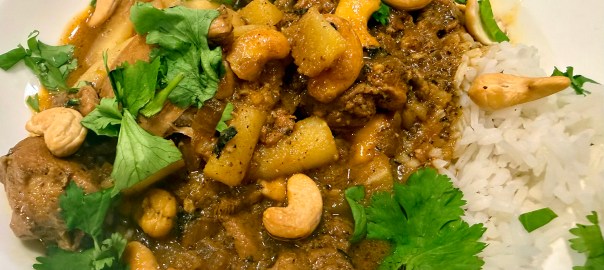
This Sri Lankan curry goes together fairly quickly despite the long list of ingredients. It’s best to use skinless, boneless thigh meat because it always stays moist and can absorb a lot of flavor from a short marinade in ginger, garlic, and spices.

To intensify the taste, the cashews and coconut are incorporated. First, half a cup of cashews is ground to a powder and added to the sauce. Then, after simmering for 30 minutes or so, the curry is finished with a generous cup of thick coconut milk and garnished with the remaining cashews.

In an unusual twist—a totally nontropical vegetable—parsnips are added, because of how they harmonize with the rest of the dish. However, we suggest changing up how they are cooked, indicated in the directions below. Instead of boiling them, sauté until lightly browned, then add back to the pot in the last 10 to 15 minutes.

Because we are not fond of coconut meat (but like coconut milk), we omitted the flakes. And as far as the cashews, why bother buying raw and then toast them, when you can purchase roasted cashews to begin with?

Coconut Chicken Curry with Cashews

  • Servings: 4
  • Difficulty: easy
  • Print

Ingredients

  • 2 lbs. skinless boneless chicken thighs, cut in 3-inch chunks
  • Salt and pepper
  • 1 Tbsp. grated ginger
  • 2 tsp. grated garlic
  • ¼ tsp. whole cloves
  • ¼ tsp. fennel seeds
  • ¼ tsp. cardamom seeds
  • ¼ tsp. allspice berries
  • ¼ tsp. cumin seeds
  • ¼ tsp. coriander seeds
  • ¼ tsp. turmeric
  • ¼ tsp. cayenne, or more to taste
  • 3 Tbsp. lemon juice
  • 1 cup roasted, salted cashews
  • 1 lb. small parsnips, peeled and cut in 2-inch batons, woody cores removed if necessary
  • 2 Tbsp. ghee, coconut oil or vegetable oil
  • 1½ cups finely diced onion
  • 1 Tbsp. tomato paste
  • 12-inch piece cinnamon stick
  • 3 cups chicken broth or water
  • 1 cup thick coconut milk
  • Steamed rice
  • A few sprigs of mint and cilantro for garnish, optional
Directions

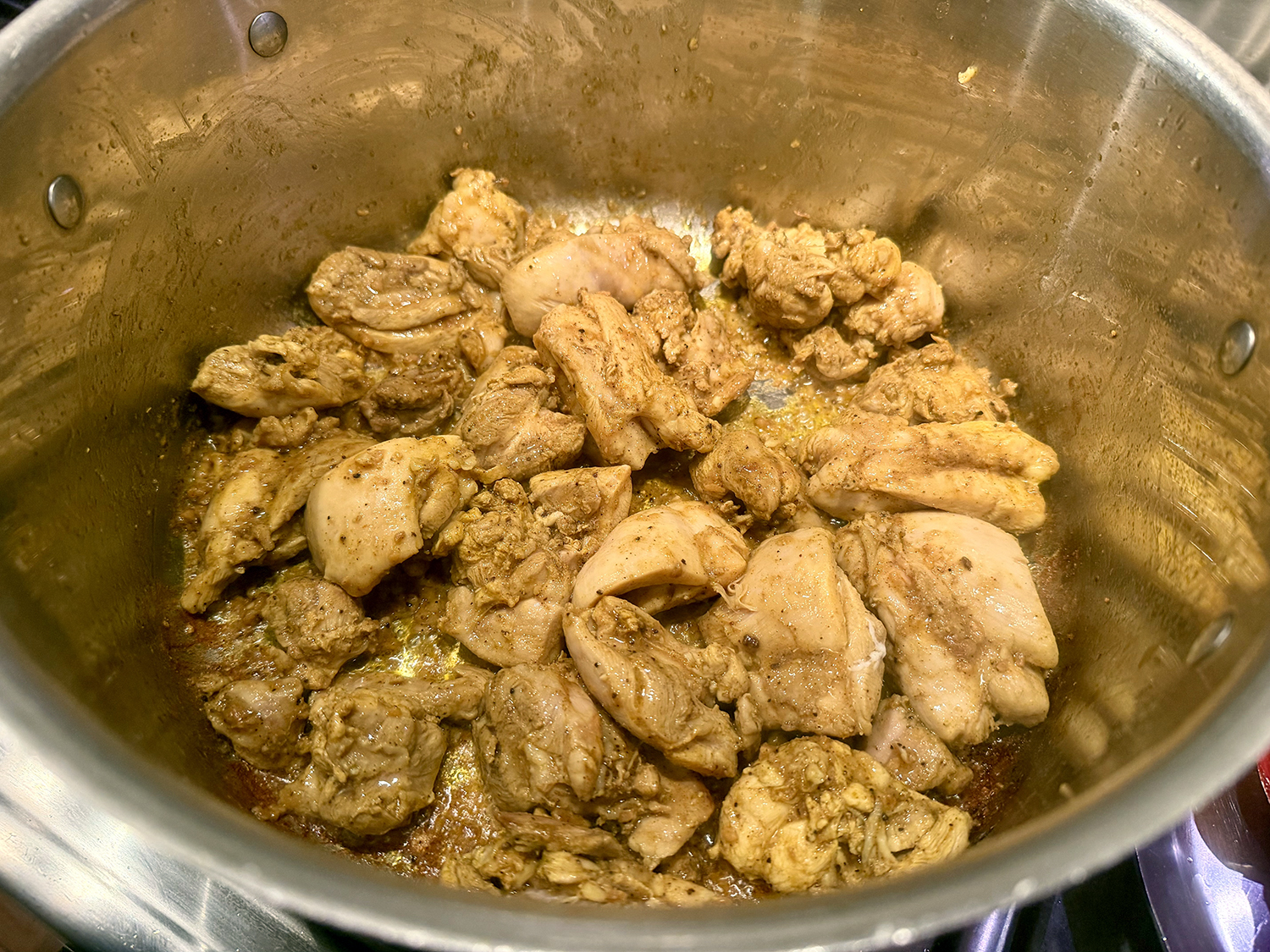
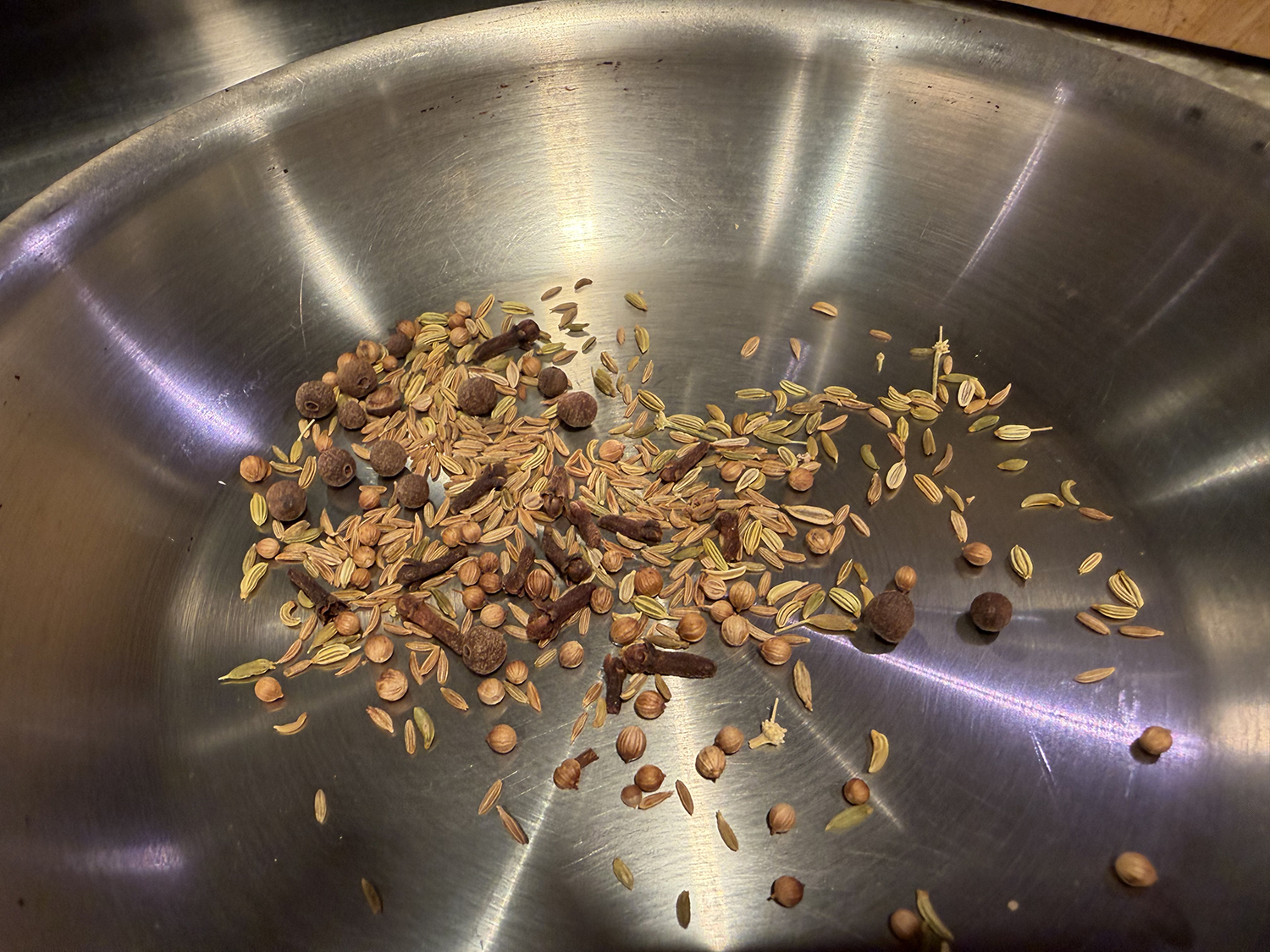
  1. Season chicken generously with salt and pepper and put it in a mixing bowl. Add ginger and garlic and massage into meat. In a dry skillet over medium heat, toast cloves, fennel, cardamom, allspice, cumin and coriander until fragrant, about 2 minutes. Grind the toasted spices to a fine powder in an electric spice mill and add to chicken. Add turmeric, cayenne and lemon juice and mix well. Let marinate at room temperature for at least 15 minutes, or refrigerate up to 1 hour.
  2. Grind the ½ cup cashews in a spice mill or small food processor to make a rough powder. Reserve ½ cup cashews for garnish.
  3. In a wide heavy-bottomed pot, heat ghee over medium-high heat. Add parsnips and sauté until lightly browned. Remove and reserve. Add chicken pieces to the pot, stirring occasionally until lightly browned, about 5 minutes, then remove and set aside.
  4. Add onions and cook until softened, about 5 minutes more. Add tomato paste and let it sizzle with onions for a minute or two. Add broth and bring to a brisk simmer, stirring with a wooden spoon and scraping up any caramelized bits from the pot. Add cinnamon stick, chicken, and the ground cashews. Adjust the heat to a gentle simmer, cover, and cook for 15 minutes. Add parsnips, cover the pot again, and simmer until the chicken and parsnips are tender, about 10-15 minutes longer. Taste the sauce and adjust the seasoning, if necessary.
  5. To finish the dish, stir in coconut milk. Cook for 3 to 4 minutes until heated through and the sauce has thickened slightly. Transfer to a serving bowl over steaming rice and sprinkle with reserved cashews. Garnish with mint and cilantro sprigs, if using.

http://www.lynnandruss.com

Adapted from a recipe by David Tanis for NYTimes Cooking

Hunan Pork and Tofu Spicy Stir-Fry

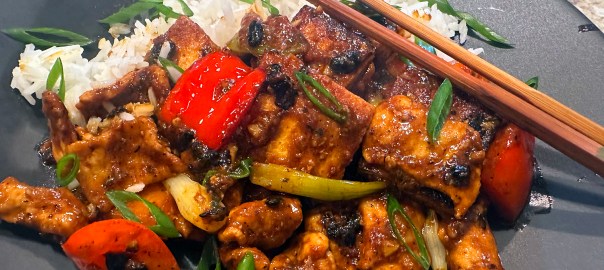
An easy and tasty Hunan Pork and Tofu classic dish served at many Hunan restaurants throughout China and the US., and now you can create in your own home. Hunan-style food, like Sichuan food, features chilis and spice as a core flavor, and has really taken off in popularity in recent years as more Chinese immigrants and visitors make their way into all parts of America. 

According to Woks of Life where we got this dish, this Hunan Pork and Tofu recipe uses a liberal amount of oil (6 tablespoons), but you’ll notice that it’s lacking the strong/visible greasiness that you might see in Chinese restaurants, thank goodness.

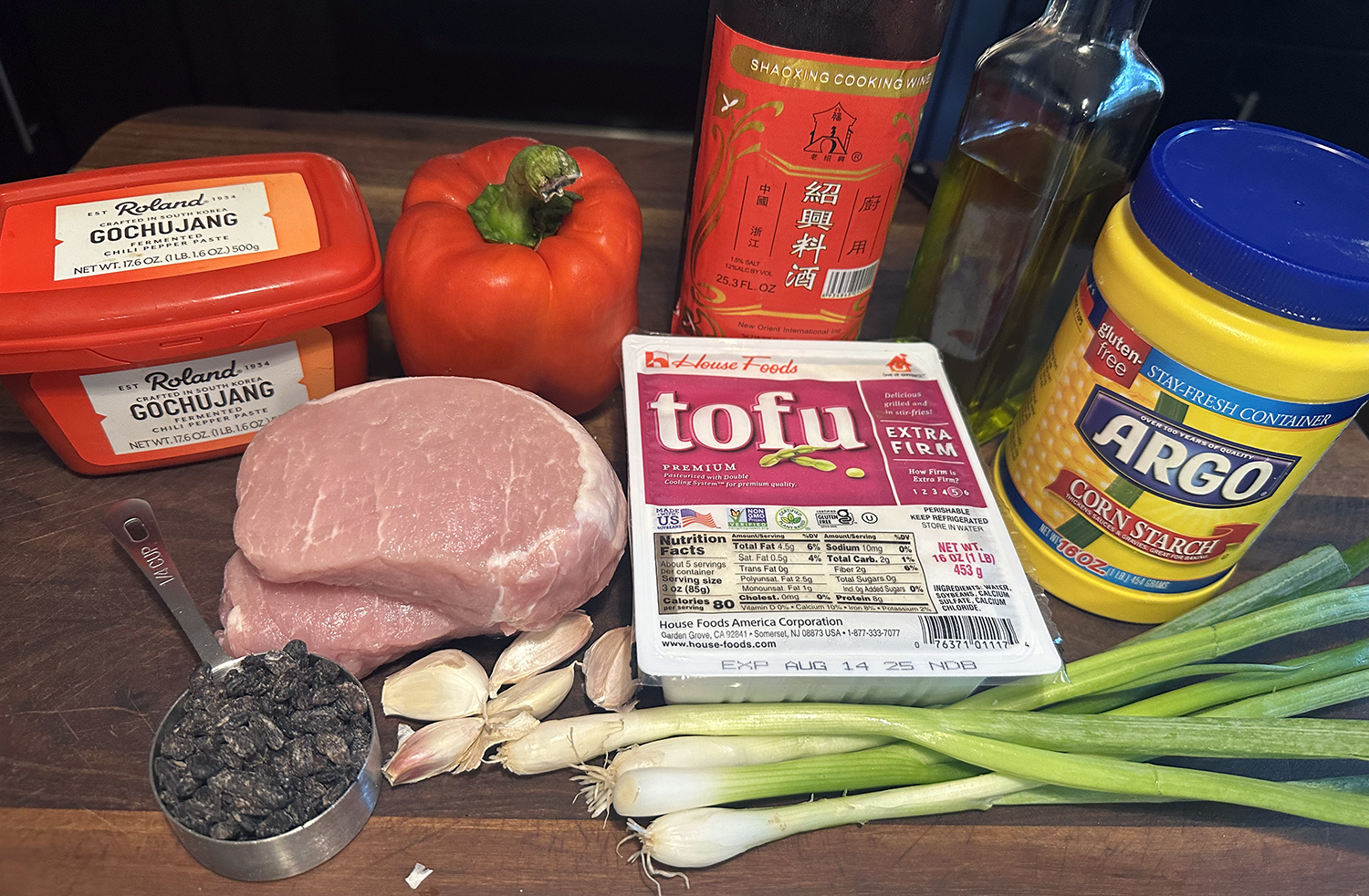
NOTES: We had two boneless pork loins, each weighing 8 ounces, we decided to use both thus increasing the amount of pork from 10 ounces to a total of 16*. Because of the additional protein, we upped the amount of some of the other ingredients. We also used extra-firm tofu.

Out of spicy bean sauce, we substituted gochujang. In most recipes, doubanjiang and gochujang are used in comparable ways. They both provide spicy hits to any meal. However, doubanjiang balances out that spiciness with savory flavors, while gochujang emits sweeter flavors to provide a similar balance. 

Hunan Pork and Tofu Spicy Stir-Fry

  • Servings: 4
  • Difficulty: easy
  • Print

Ingredients

For the pork and marinade:

  • 10 oz. pork (see above note*), sliced ⅛-inch thick
  • 2 Tbsp. water
  • 1 tsp. oil
  • 1 tsp. cornstarch

For the rest of the dish:

  • 6 Tbsp. vegetable or canola oil, divided
  • 1 lb. firm tofu, drained and cut into 2-inch squares, ½-inch thick
  • 1 tsp. ginger, minced
  • 2 Tbsp. spicy bean sauce (dou ban jiang)
  • 3 scallions, cut on an angle into 2-inch pieces
  • 2 tsp. fresh garlic, minced
  • 3 Tbsp. fermented black beans
  • 1 red bell pepper, cut into 1×2-inch pieces, about 1½ cups
  • 1 Tbsp. Shaoxing wine
  • ¾ tsp. sugar
  • ⅓ cup hot water or chicken stock
  • 1 tsp. cornstarch, mixed with 1 Tbsp. water

Directions

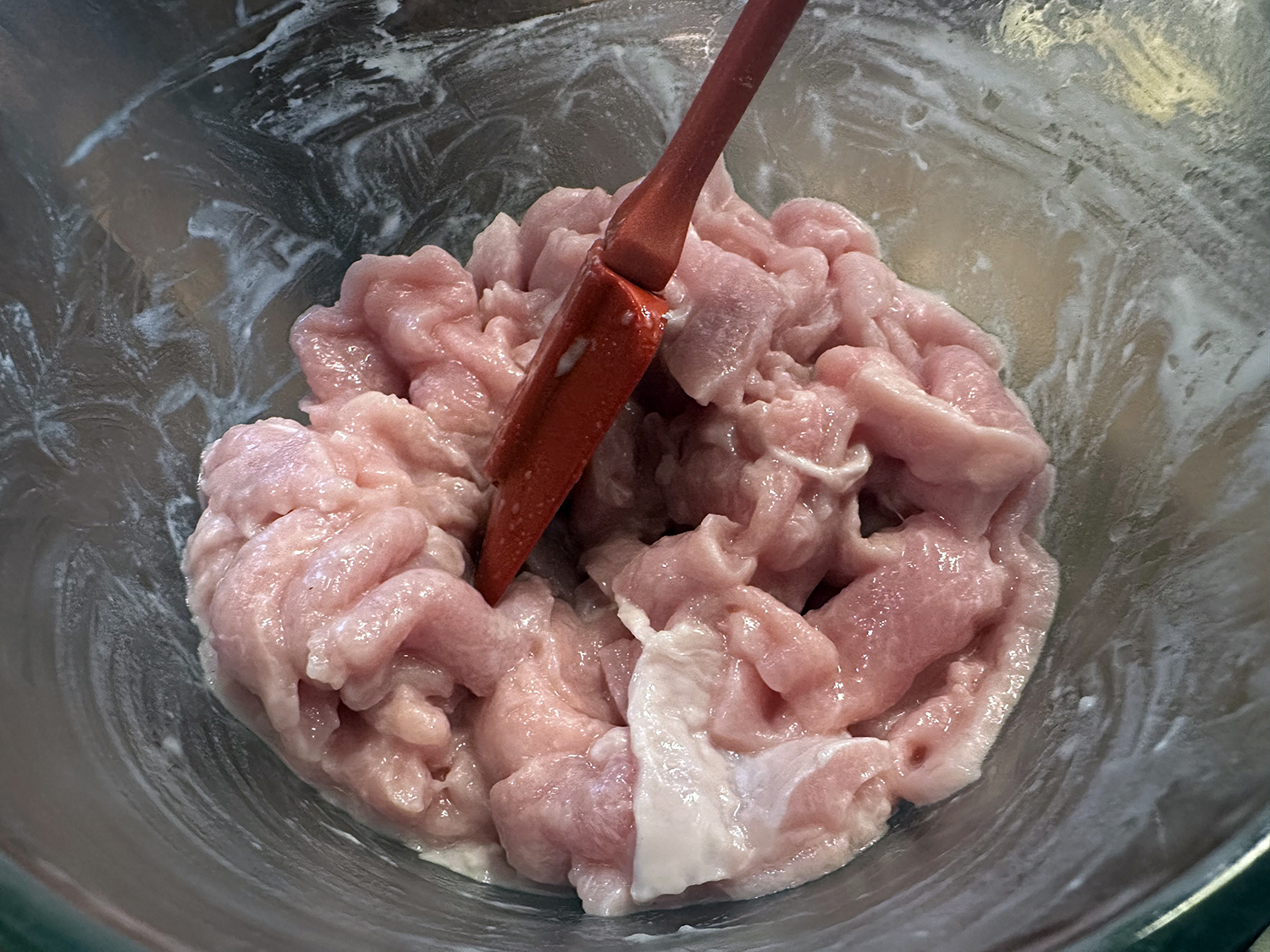
  1. In a bowl, add 2 tablespoons of water to the pork slices and massage until the pork absorbs all of the water. Next, add the oil and cornstarch, mix thoroughly until the pork is coated, and set aside.
  2. Heat your wok over high heat, and spread 2 tablespoons of oil around the wok to evenly coat the surface. Add the tofu slices to the wok in one layer, and let them sear. Don’t move them for a least 1 minute. Tilt your wok so the oil reaches the tofu on all sides. Add more oil if needed.
  3. After another 1 to 2 minutes, the tofu should be browned, and it should not stick to the wok. You may have use a metal spatula to loosen the pieces slightly. Turn down the heat, and carefully flip all of the tofu slices. After the tofu is golden brown on both sides, transfer to a plate. They should be much easier to handle now.
  4. Over high heat, add another 2 tablespoons of oil to your wok. When the wok just starts to smoke a bit, immediately add the pork. Spread the pork around the wok using your metal spatula, and let the meat sear for 20 seconds on one side. Stir fry for another 15 seconds, and scoop out the meat into your marinade bowl. It should be about 80% cooked.
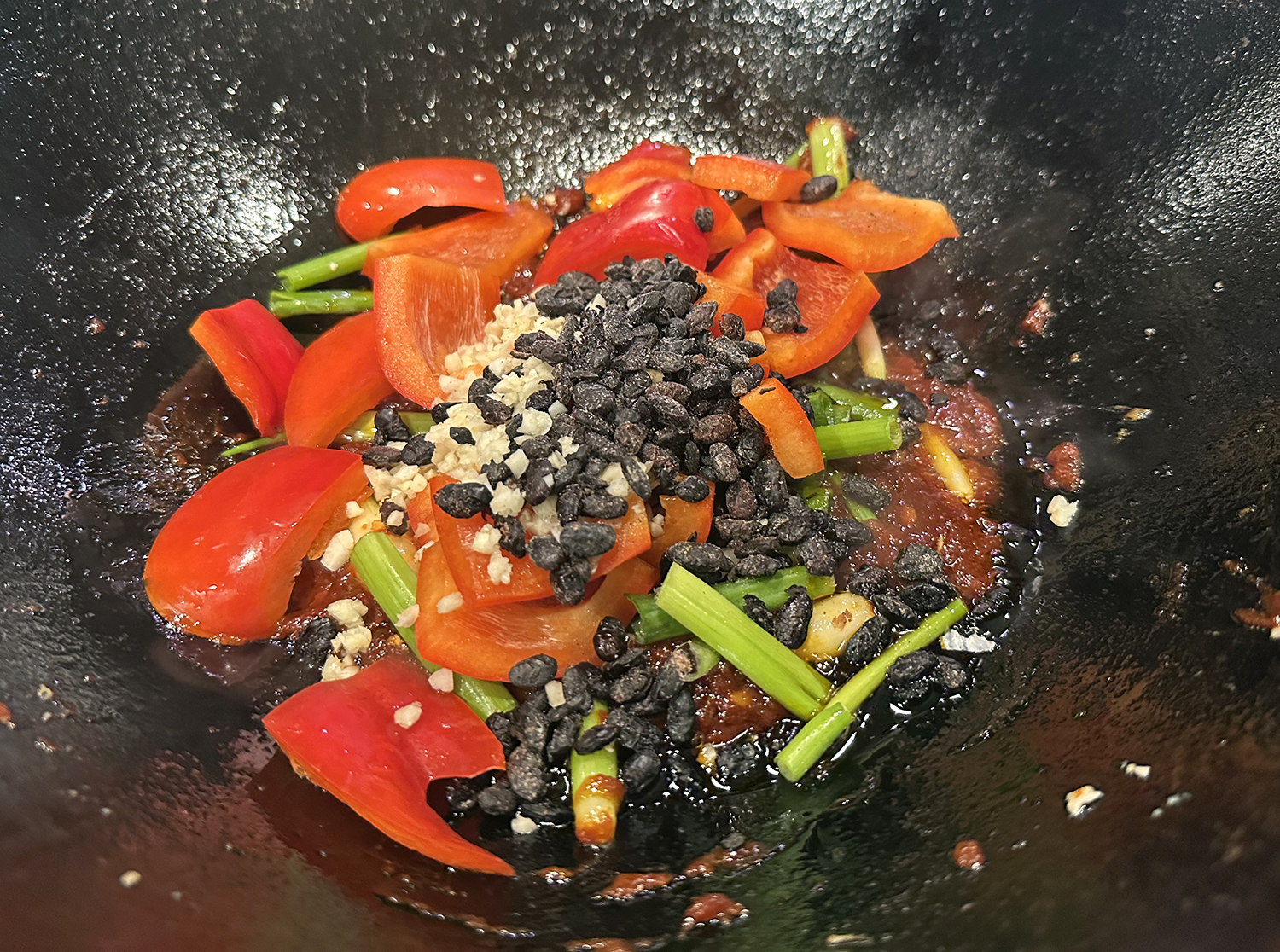
  5. Using the same wok, turn the heat to low, and immediately add 2 tablespoons oil, the minced ginger, the spicy chili bean paste (doubanjiang), and the white parts of the scallions. Stir this mixture into the oil and let it fry at low heat for 15 seconds to infuse the oil and bring out a rich red color.
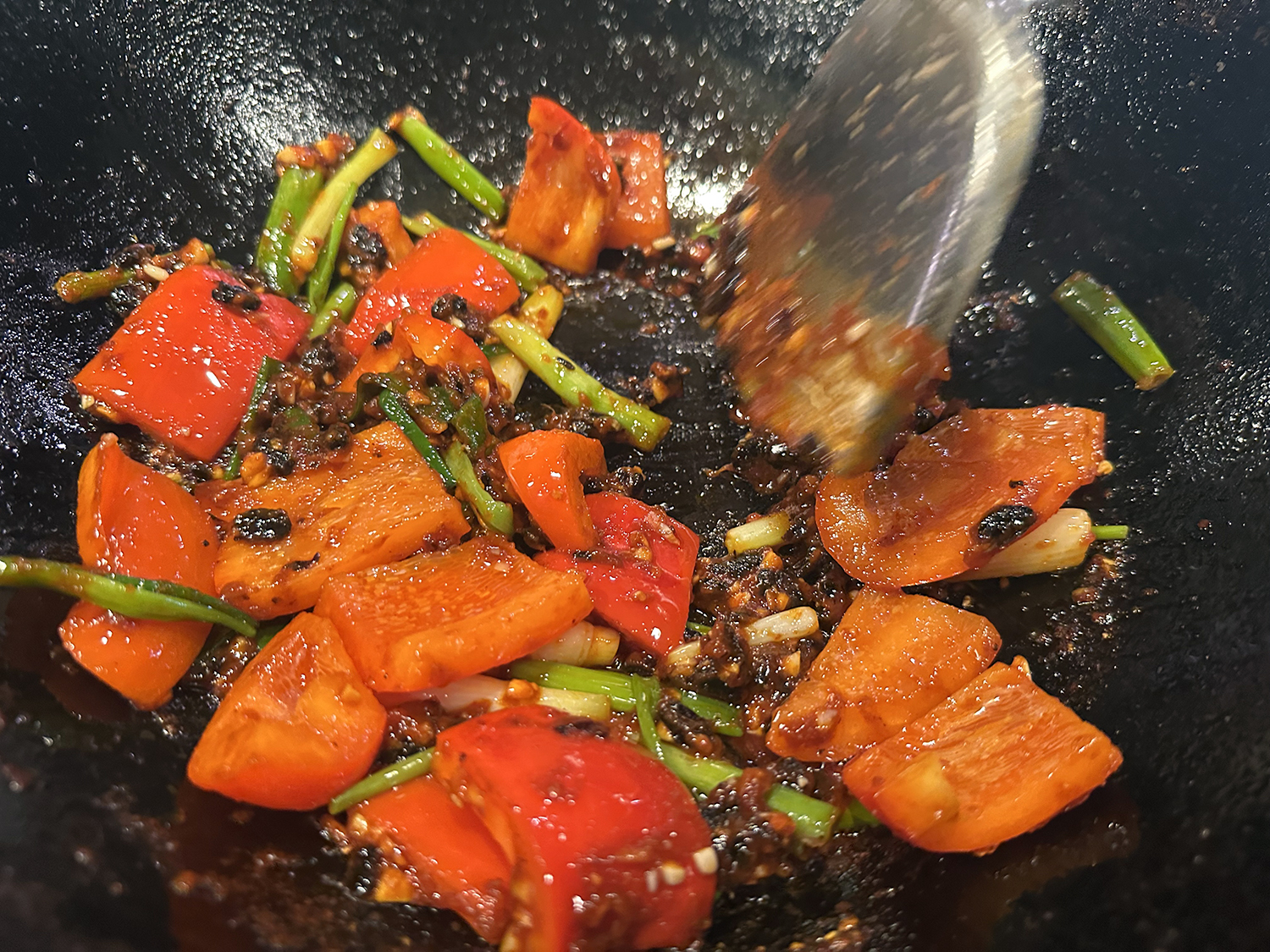
  6. Next, add the garlic, black beans, red bell peppers, and the rest of the scallions. Turn the heat to high, and give everything a good stir-frying for 45 seconds. The red pepper will sear and add more natural red color to this dish.
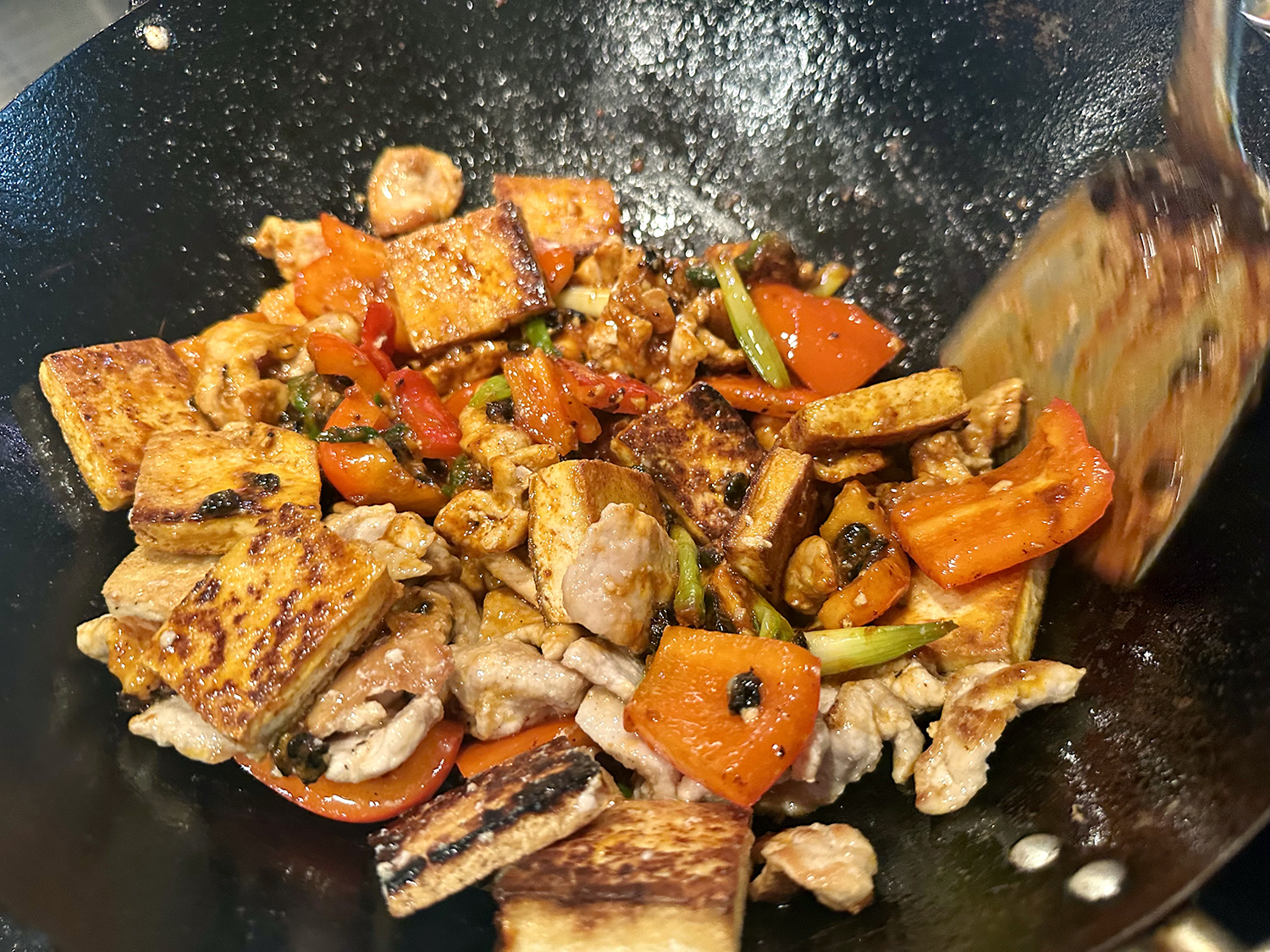
  7. Add the pork and juices from your marinade bowl and the tofu back to the wok. Next, spread 1 tablespoon of Shaoxing wine around the perimeter of the wok, add the sugar, and continue to stir-fry for 15 seconds. Be gentle so you don’t break up the tofu.
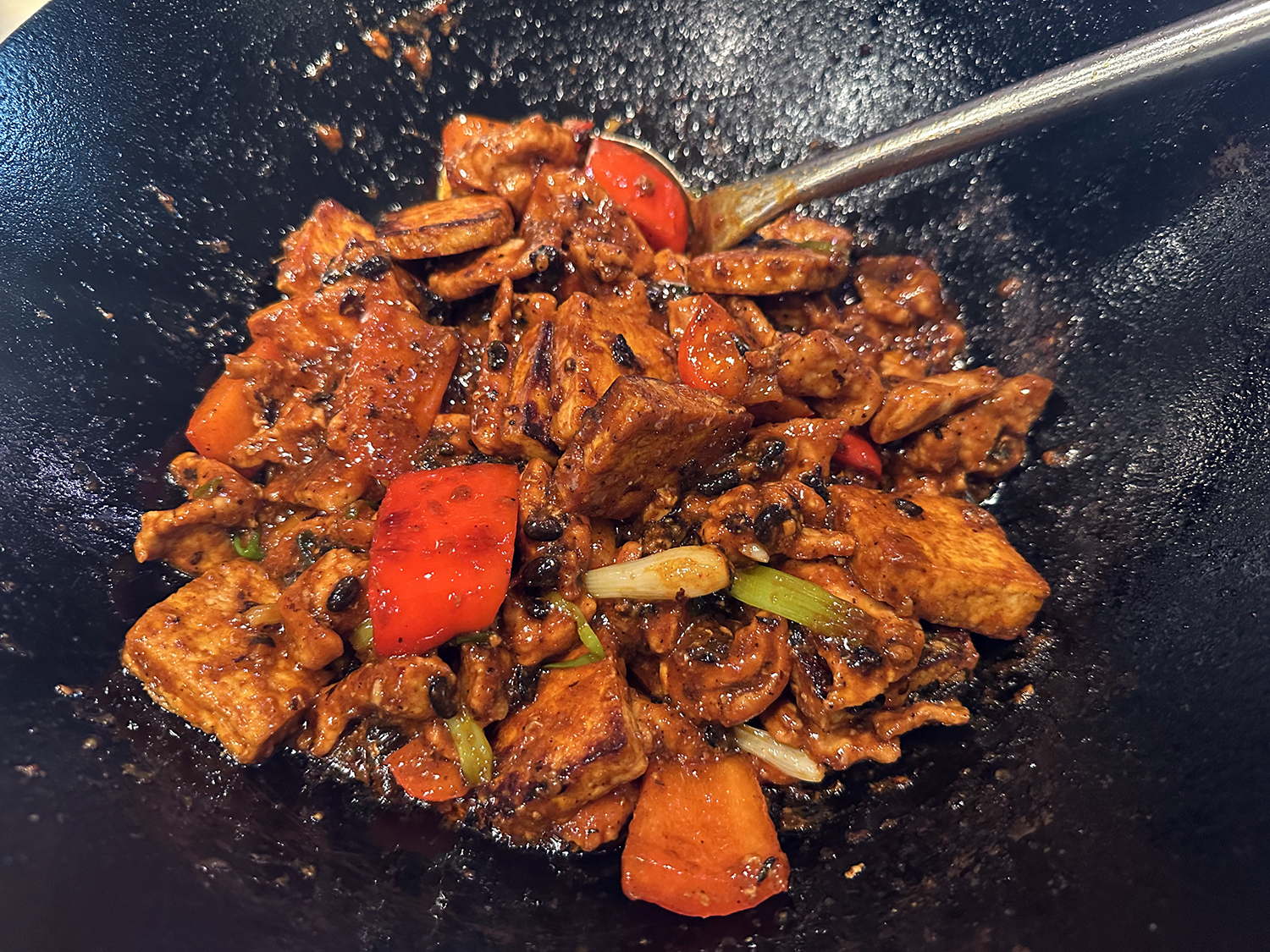
  8. After another 15 seconds of stir-frying, spread the hot chicken stock or water around the perimeter of the wok to deglaze it. Continue to stir fry for another 30 seconds, being sure to spread the liquid to the sides of the wok to further deglaze it.
  9. At this point, you can continue to stir-fry the dish until most of the liquid is reduced, or add the water and cornstarch to thicken any standing liquid. Plate with steamed rice.

http://www.lynnandruss.com

Adapted from a recipe by Woks of Life

Panang Curry

Rich with coconut milk and crushed peanuts, panang curry, also known as phanaeng or panaeng curry, is subtly spiced with coriander and cumin. This version is made with chicken, but you’ll often find it made with beef and sometimes prawns.

Panang curry is sometimes mistakenly linked to Penang, a Malaysian island, but it actually originated in Thailand. It’s important to use thick coconut milk for the creamiest results, and be sure to break the sauce by simmering until a layer of bright red oil shimmers on top. Purchase panang curry paste online or at an Asian market and add crushed peanuts to it if it doesn’t include them (not all of them do), or prepare your own paste, as is done here.

Since there are really no veggies other than the Fresno chili, serve with a vegetable side and/or salad. The original recipe indicates it will create 4 servings with rice. We beg to differ. You could maybe squeeze out 3 servings, but realistically plan on 2. (See above photo showing one of our serving portions.)

TIPS: Different brands of curry paste vary in spice levels. Taste a little first and determine how much to use. Maesri brand curry paste is highly recommended.
Coconut milk varies widely in its make up. Some cheap brands have as little as 25% coconut. Look at the ingredients, you should not accept less than 60%, some brands go up to 85% plus… Not all coconut milks are the same, it will makes a huge difference to the taste.

Panang Curry

  • Servings: 2-3
  • Difficulty: easy
  • Print

Ingredients

For the Panang Curry Paste

  • ½ tsp. coriander seeds
  • ½ tsp. cumin seeds
  • ¼ cup/1 ounce dry-roasted, unsalted peanuts
  • 2 to 4 Tbsp. red curry paste, to taste (see Tip)

For the Curry

  • 1 lb. boneless, skinless chicken breasts or thighs
  • 2 tsp. fish sauce, plus more as needed
  • 1 (13.5-oz) can full-fat coconut milk (do not shake)
  • 8 makrut lime leaves, deveined, 6 torn and 2 thinly sliced, OR 1 teaspoon grated lime zest, for serving
  • 1½ tsp. palm, granulated or brown sugar, plus more as needed
  • 1 small, mild, thin-skinned pepper, such as a Fresno, Anaheim or banana pepper, or ½ small red bell pepper, thinly sliced
  • Thai basil, thinly sliced, for serving (optional, if makrut lime leaves are not used)
  • Rice, for serving

Directions

  1. Prepare the curry paste: Heat a medium sauté pan over medium. Add the coriander and cumin. Swirl the pan around, or toss the seeds with a wooden spoon, and gently toast until fragrant, about 1 minute, taking care not to burn the spices. Transfer to a small plate and cool, then place in a spice grinder or mortar and pestle, and grind to a fine powder.
  2. Add the peanuts and finely grind until smooth. Transfer the mixture to a small bowl, add the red curry paste and stir until mixed.
  3. Thinly slice the chicken into 1½-inch-long pieces. Place in a medium bowl, drizzle with the fish sauce and mix until coated.
  4. Heat the same pan over medium-high. Scoop 4 tablespoons of the thick cream off the top of the coconut milk and add it to the pan; it will immediately sizzle. Stir until thickened and bubbling on the sides, about 30 seconds. Stir in the curry paste, to taste. Reduce to medium, and cook the paste, continuously stirring, until a thick paste forms and the coconut oil separates (the sauce “breaks”), 2 to 3 minutes. If it starts sticking, add a splash of coconut milk and scrape up anything from the bottom of the pan.
  5. Add the torn lime leaves or zest and sugar. Cook, continuously stirring, to dissolve the sugar and infuse the flavors, about 2 minutes. Add the remaining coconut milk, increase to medium-high, bring to a boil and cook, continuously stirring, until the curry has thickened enough to coat the back of a spoon and has a layer of bright red oil on top, 4 to 8 minutes. The curry should be at a lively simmer; adjust the heat as necessary.
  6. Add the chicken and cook, stirring frequently, until cooked through, 3 to 4 minutes. If using, stir in the peppers, saving a few for serving, and cook until just incorporated, about 1 minute. Taste and add more fish sauce and sugar, if needed. (Be mindful, this is not a sweet curry; the sweetness should hit a back note, not lead with it.)
  7. Garnish with the sliced lime leaves or Thai basil and reserved peppers. Serve alongside rice.

http://www.lynnandruss.com

Recipe by Naz Deravian for NYTimes Cooking
Red Curry Shrimp with Coconut Rice and Cucumber Relish

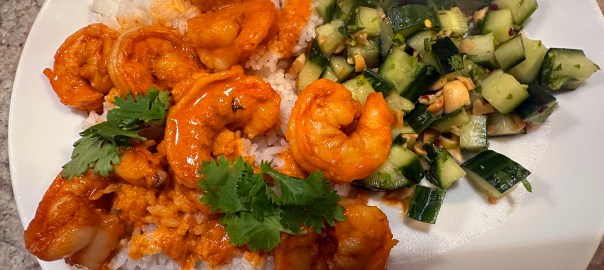
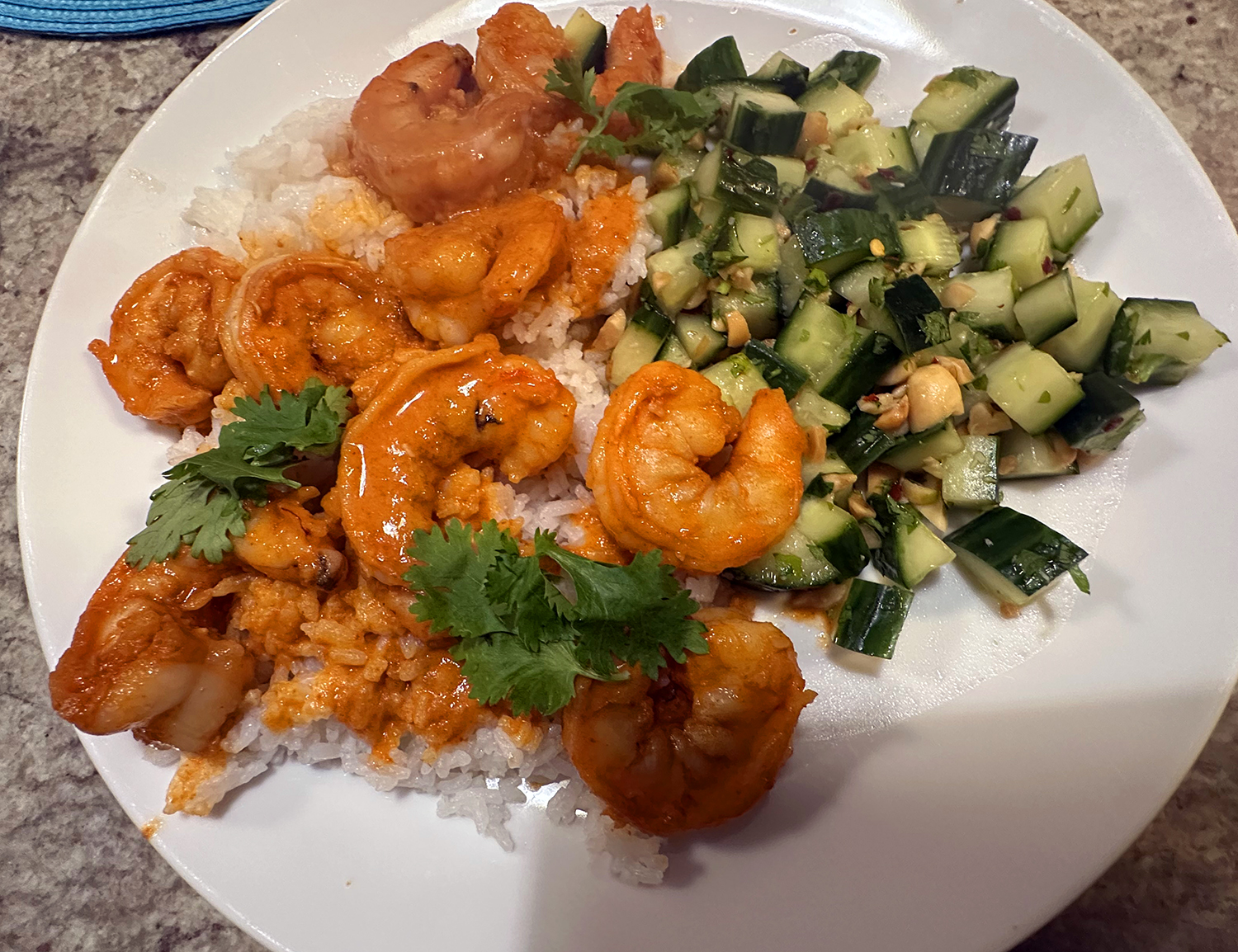
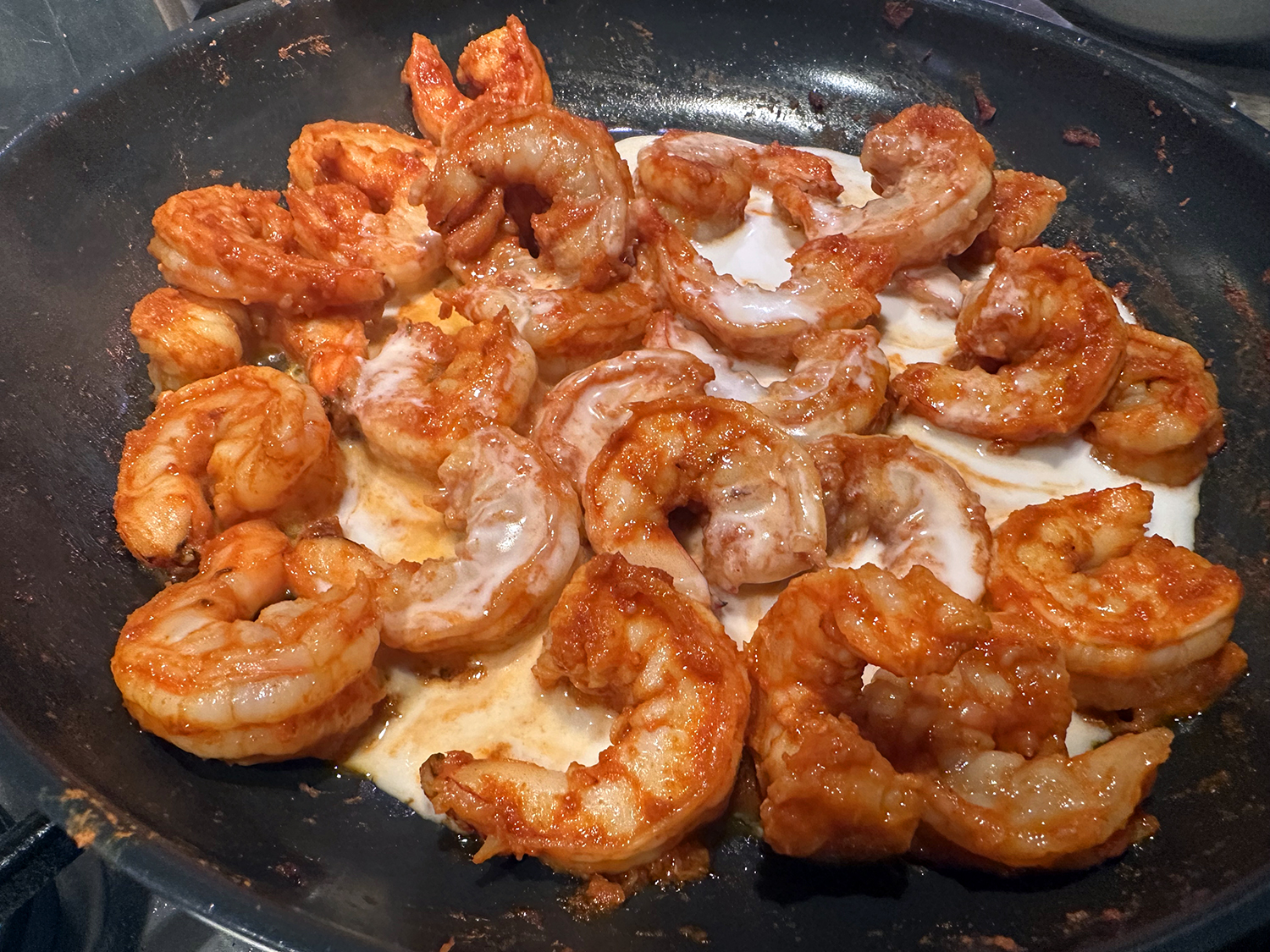
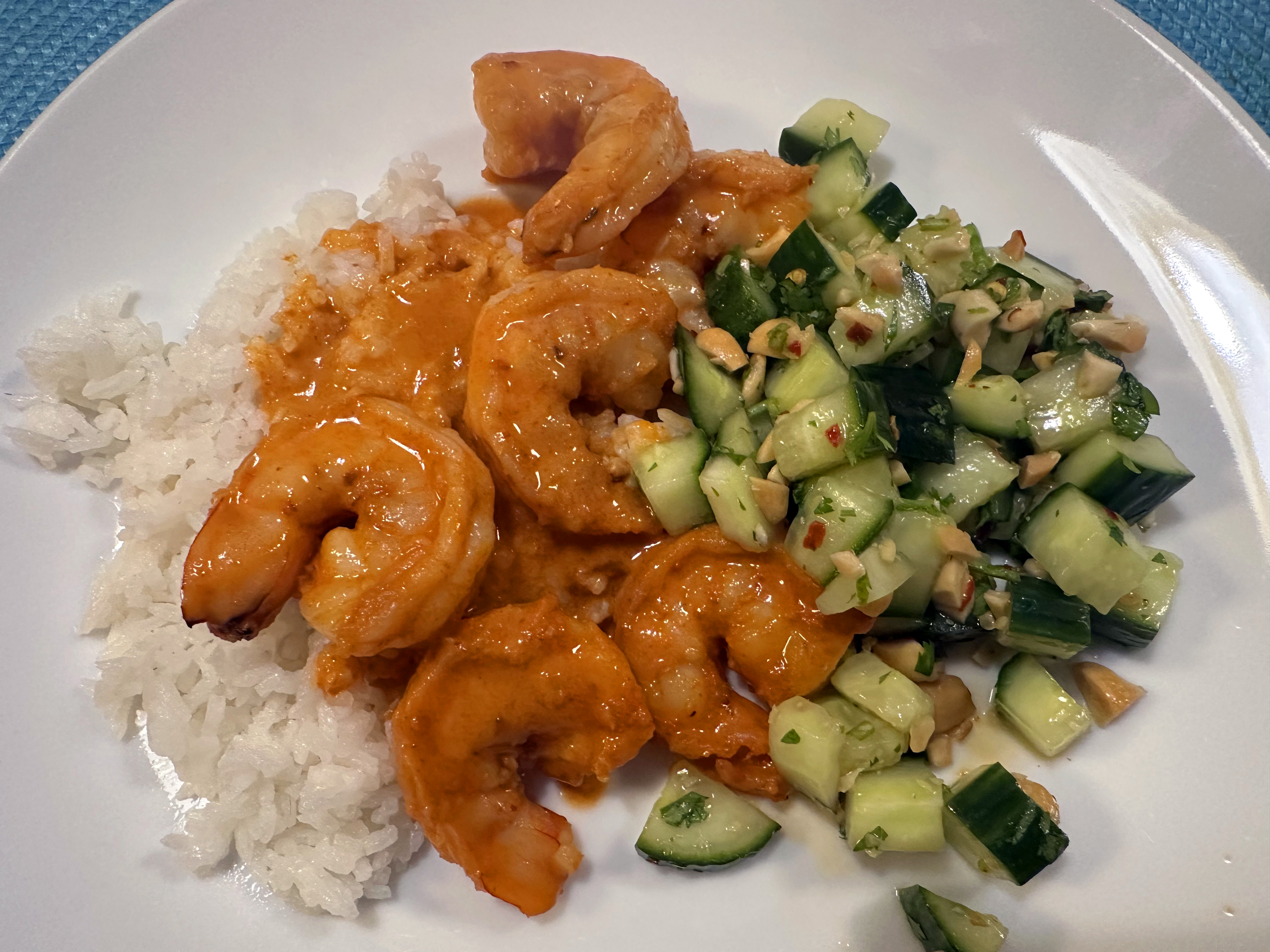
Sweet and creamy coconut rice provide a cooling contrast to shrimp sautéed with red curry paste and a piquant cucumber relish. A delicious Thai dish that’s sure to impress and please. The coconut rice and the combination of cucumber and peanuts in the salad was fabulous — a nice change from a traditional side salad.

It was a bit of a fiasco in the kitchen that night. Just as three of us had filled our plates (thank goodness) from the pans on the stove, the Hubs bashed into the skillet handle sending the remaining shrimp and sauce flying into the air and all over the cabinets, floor and appliances.

Our grand doggie Bentley was in for a visit from the West Coast and made an immediate, lightening-fast U-turn to start licking up the floors and chow down any shrimp he could get to. Luckily Mommy Bentley scooped up the critter and held onto him until The Hubs wiped down the entire mess. Dinner take two…

As the meal ended, The Hubs knocked his glass of red wine over, with some spilling onto his brand new Kindle birthday gift—I kid you not. It was time for someone to just go to bed…

TIP: We typically buy shrimp with their heads on (this time we did not) so that we can save them and the shells for making shellfish stock. If you intend to do the same, buy about 1/4- to 1/2-pound more in weight.

Red Curry Shrimp with Coconut Rice and Cucumber Relish

  • Servings: 4
  • Difficulty: easy
  • Print

Ingredients

  • 1½ cups jasmine rice, rinsed thoroughly
  • 1½ cups water
  • 1¼ cups plus 2 Tbsp. canned coconut milk, divided
  • 2 Tbsp. plus 1 tsp. sugar, divided
  • 2¼ tsp. table salt, divided
  • ¼ cup distilled white vinegar
  • ¼ tsp. red pepper flakes
  • 1 English cucumber, cut into ½-inch pieces
  • ½ cup salted dry-roasted peanuts, chopped coarse
  • 2 Tbsp. chopped fresh cilantro
  • 2 Tbsp. red curry paste
  • 1½ lbs. jumbo shrimp (16 to 20 per lb.), peeled, deveined, and tails removed

Directions

  1. Combine rice, water, 1 cup coconut milk, 1 tablespoon sugar, and ¾ teaspoon salt in large saucepan. Bring to boil over high heat. Reduce heat to low to maintain bare simmer. Cover and cook until liquid is absorbed, about 20 minutes. Remove saucepan from heat and let sit, covered, for 10 minutes. Mix rice gently but thoroughly with rubber spatula.
  2. Meanwhile, whisk vinegar, pepper flakes, 1 tablespoon sugar, and 1 teaspoon salt in bowl until sugar is dissolved. Add cucumber, peanuts, and cilantro and toss to combine. Let stand until ready to serve, tossing occasionally.
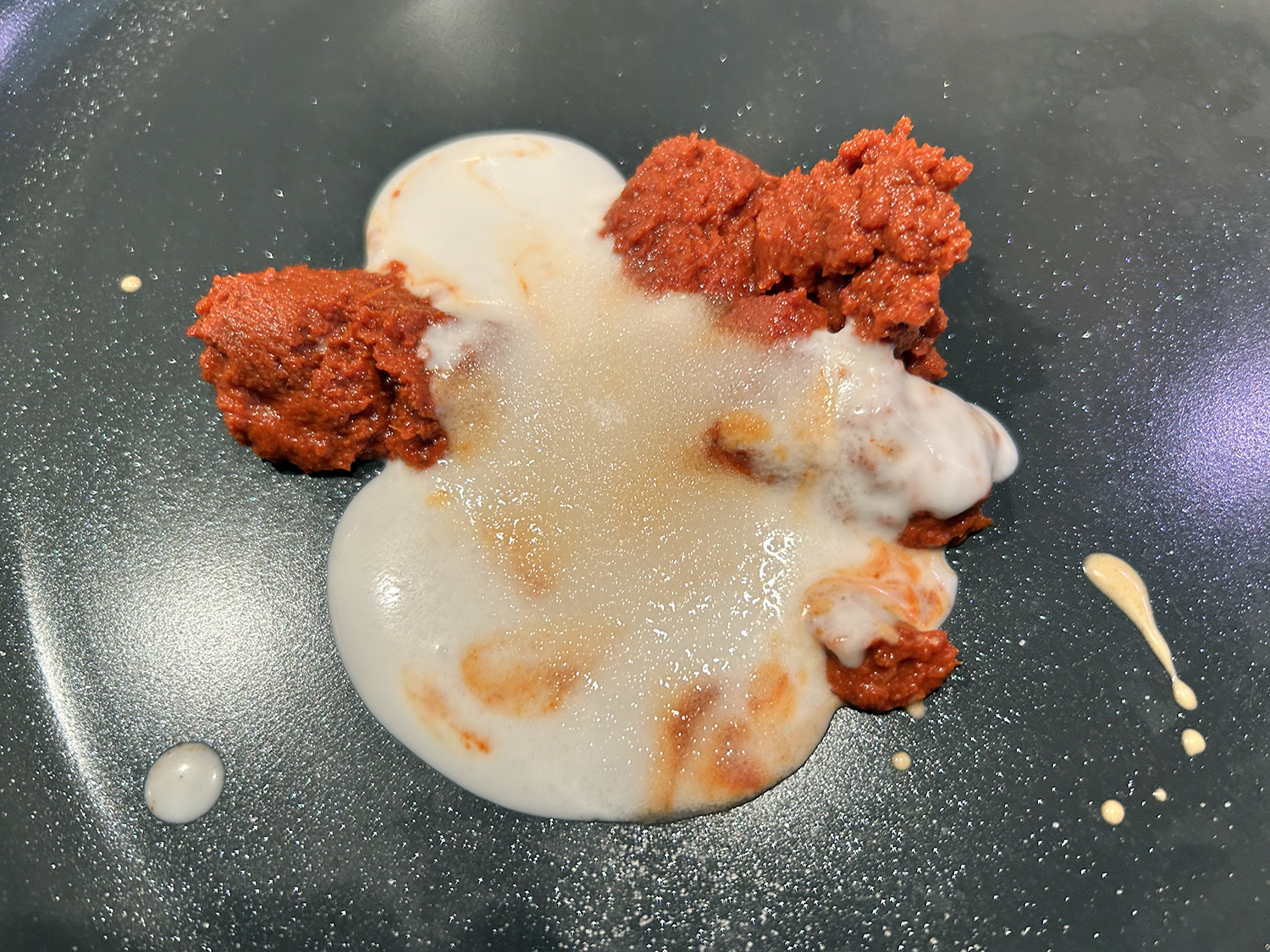
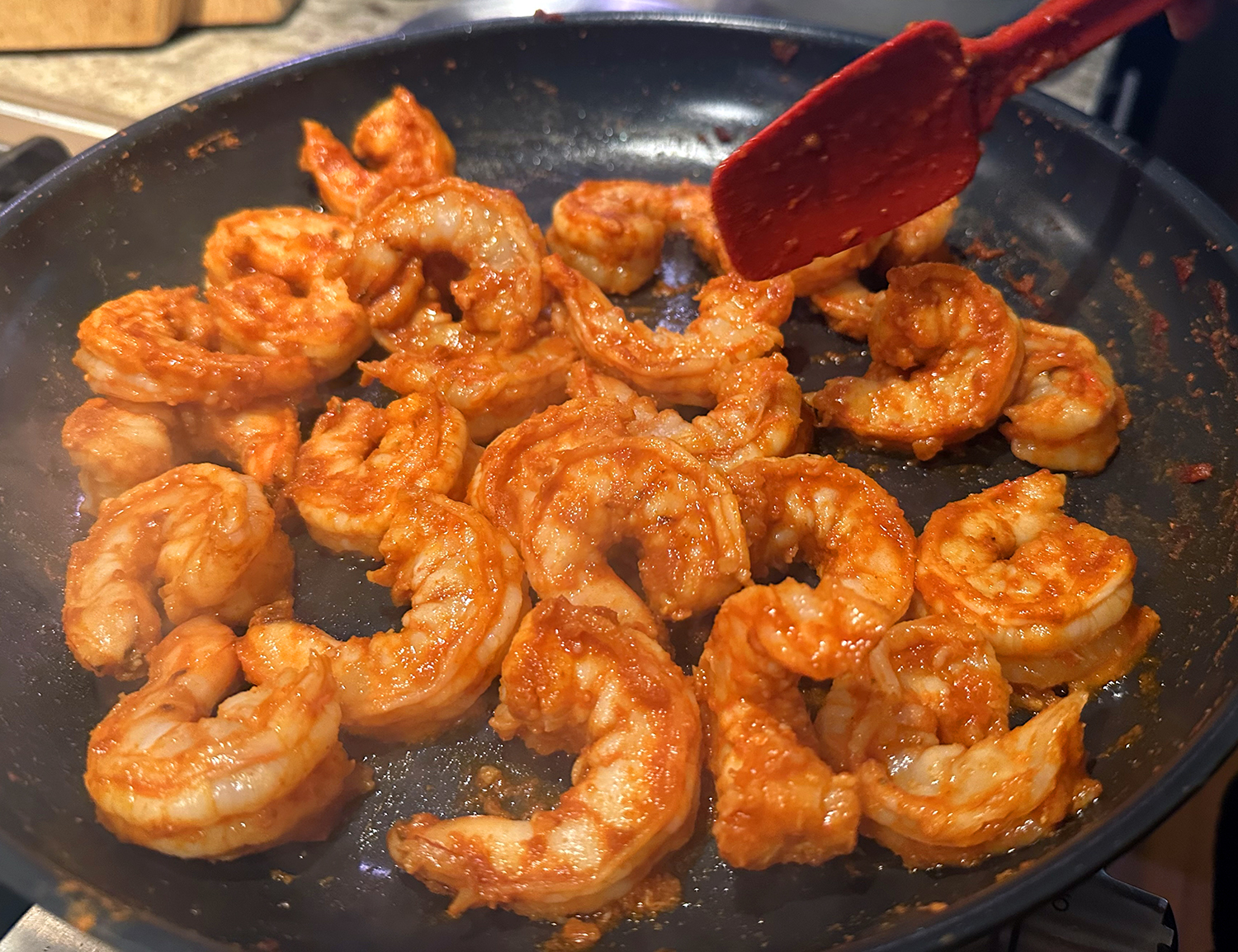
  3. Cook curry paste, 1 tablespoon coconut milk, remaining 1 teaspoon sugar, and remaining ½ teaspoon salt in 12-inch nonstick skillet over medium-high heat until mixture is dry, about 3 minutes. Add shrimp and cook, stirring occasionally, until shrimp are opaque throughout, 4 to 5 minutes. Stir in remaining 5 tablespoons coconut milk. Bring to simmer, then remove from heat. Serve shrimp with coconut rice and cucumber relish.

http://www.lynnandruss.com

Recipe by Jessica Rudolf for ATK’s Cooks Country

One-Pot Chicken and Rice with Caramelized Lemon

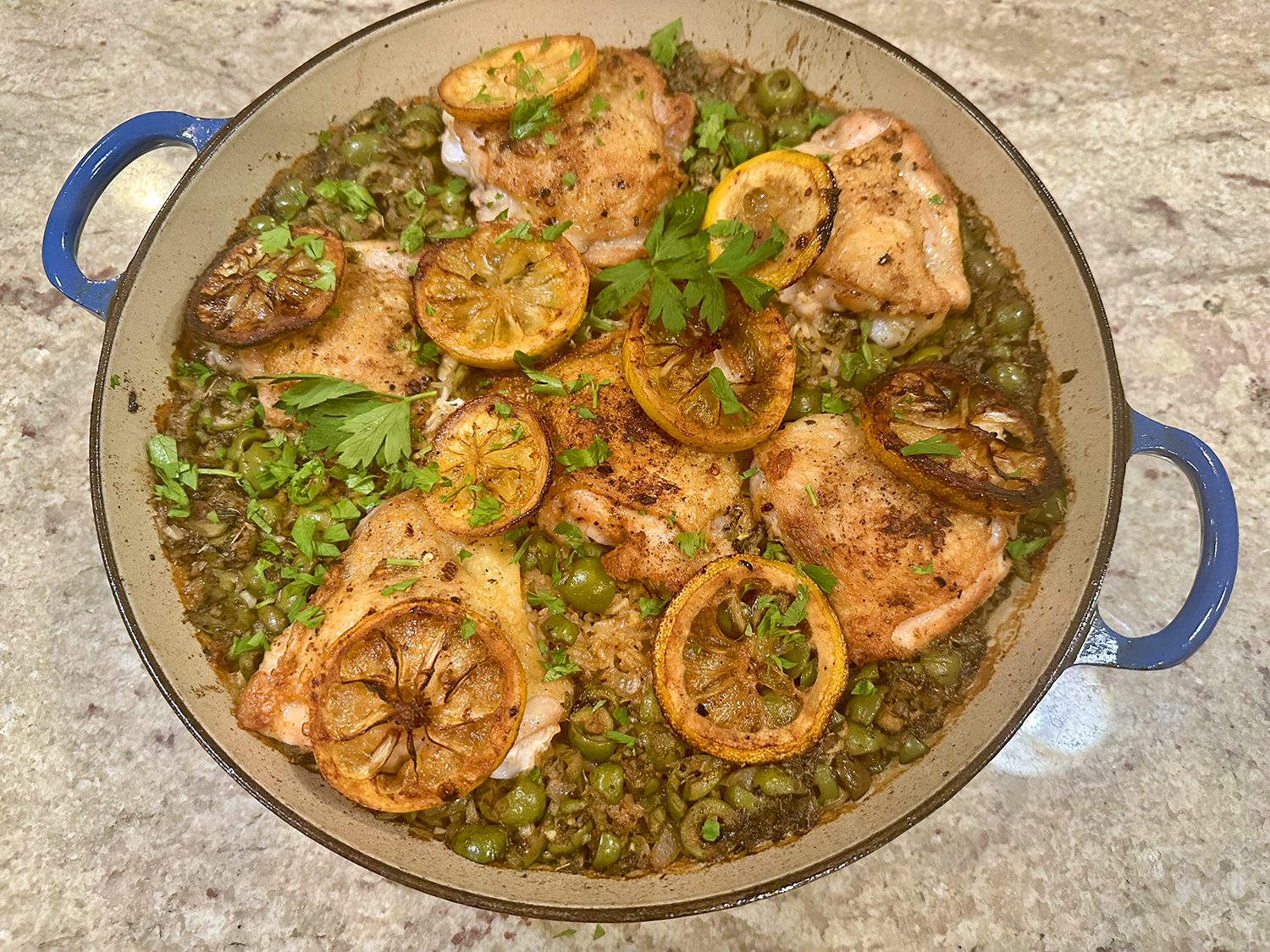
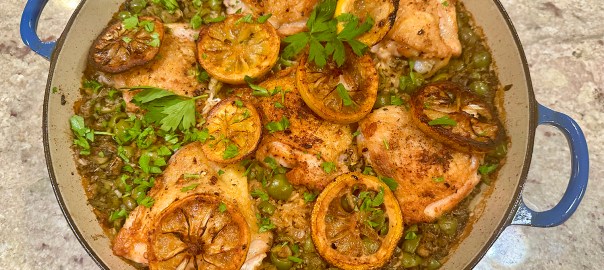
There are so many fabulous chicken recipes out there, and this is yet another winner to add to the list. This simple one-pot chicken and rice dish is topped with caramelized lemon slices that add sweet flavor and texture.

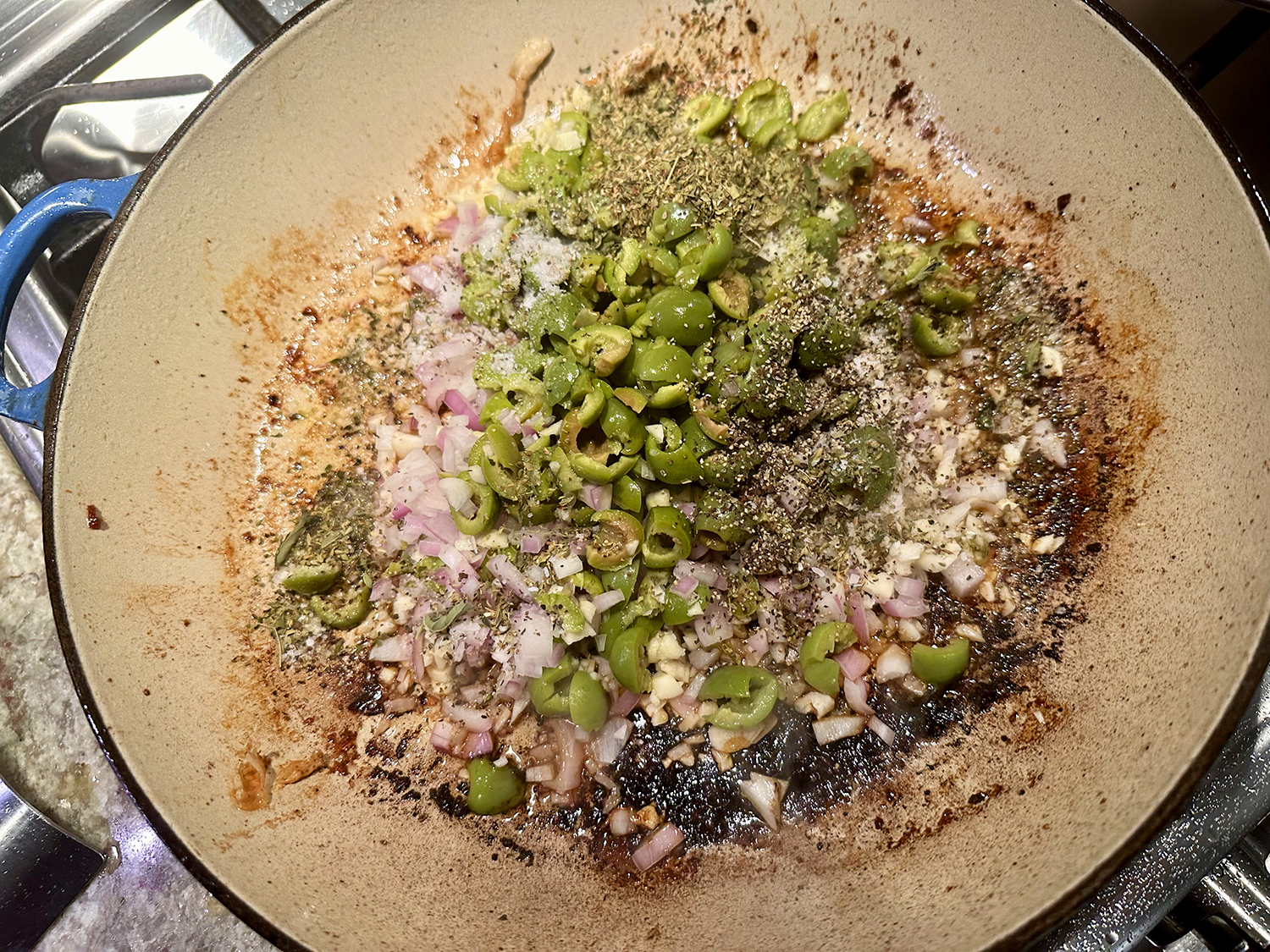
Thin slices of lemon are cooked in chicken fat and oil until their pulp dissolves, their pith sweetens and their rind softens to the point of being edible. Briny Castelvetrano olives and herby dried oregano are wrapped up in creamy rice and topped with juicy chicken thighs. Fresh parsley and a squeeze of fresh lemon juice on top before serving add brightness and crunch. 

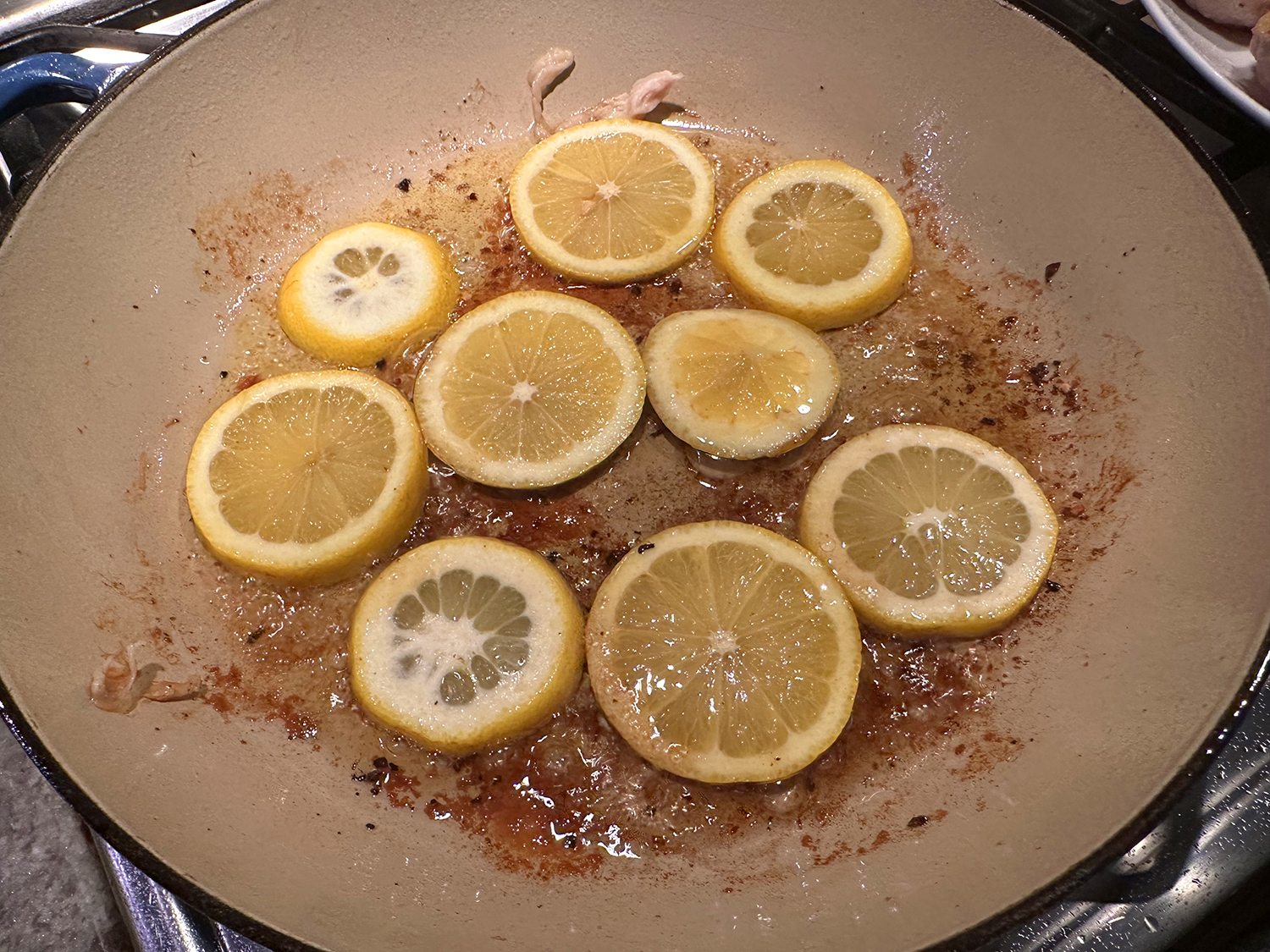
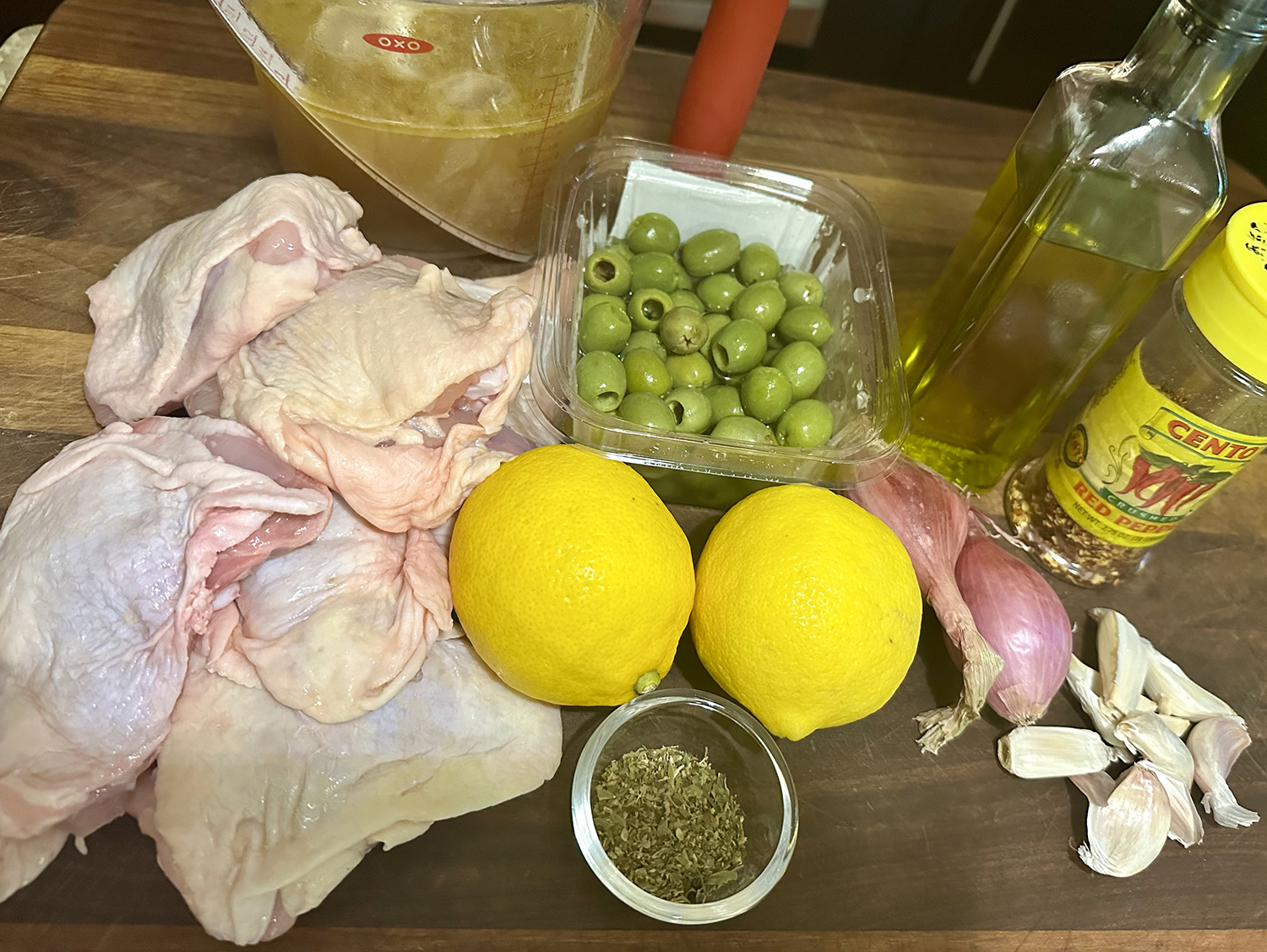
What did we do differently? Increased the number of thighs from 4 to 6; cut 1 and 1/2 lemons into quarter-inch slices, and flipped those slices for an additional minute to caramelize both sides. Added about 1/2 cup more of the olives. Finally, we decreased the amount of rice to 1 1⁄2 cups, and reduced the chicken broth to 3 cups. And if at all possible, try to use homemade chicken stock which adds so much more chickeny flavor.

All of the prep and cooking time added 15 to 20 minutes longer than the noted 55* minutes, so keep that in mind when starting the dish.

One-Pot Chicken and Rice with Caramelized Lemon

  • Servings: 4-6
  • Difficulty: easy
  • Print

Ingredients

  • 6 bone-in, skin-on chicken thighs, trimmed of extra skin
  • Salt and black pepper
  • 2 tsp. dried oregano
  • Crushed red pepper
  • 2 Tbsp. extra-virgin olive oil
  • 2 lemons, divided
  • 1 cup pitted Castelvetrano or kalamata olives, smashed and roughly chopped
  • 6 garlic cloves, minced
  • 1 medium shallot or ½ medium onion, minced
  • 1 1⁄2 cups long-grain white rice, rinsed
  • 3 cups chicken broth, preferably homemade
  • ¼ cup roughly chopped fresh parsley, for serving

Directions

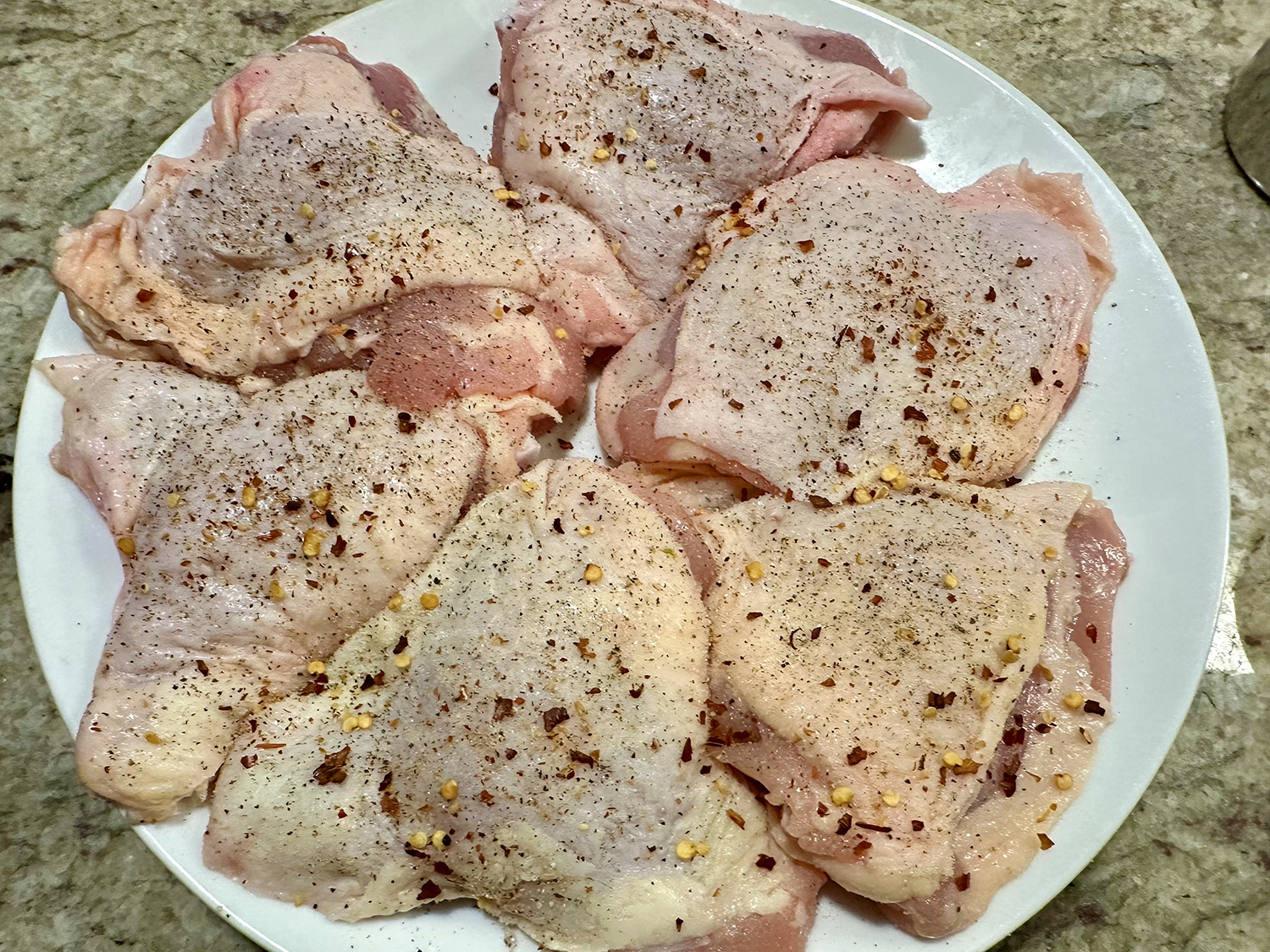
  1. Heat the oven to 400 degrees. Use paper towels to pat the chicken thighs until dry on all sides. Season the chicken with 1 teaspoon each salt, pepper and dried oregano and a pinch of crushed red pepper.
  2. Place a large Dutch oven or other heavy-bottomed pot over medium-high heat and add oil. Let oil heat up for a few minutes. Add thighs to the pot, skin side down, and let cook undisturbed until they self-release from the bottom of the pot, about 5 minutes. Remove from the pot and set aside.
  3. Cut 1 1⁄2 lemons into ¼-inch-thick slices. Add to the pot and cook until caramelized and softened, about 2 minutes. Flip over, and caramelize the other side for 1 minute. Remove from the pot and set aside.
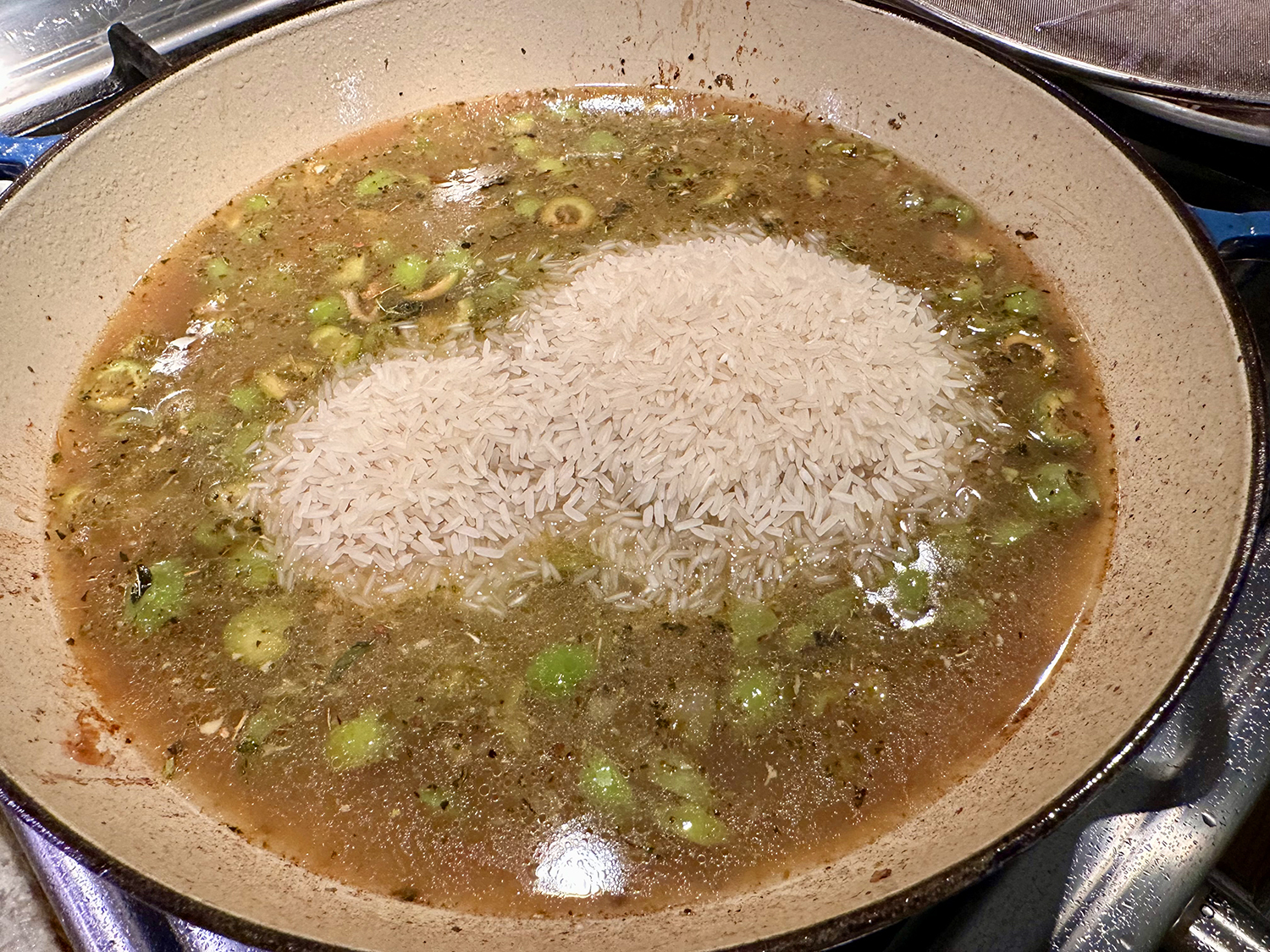
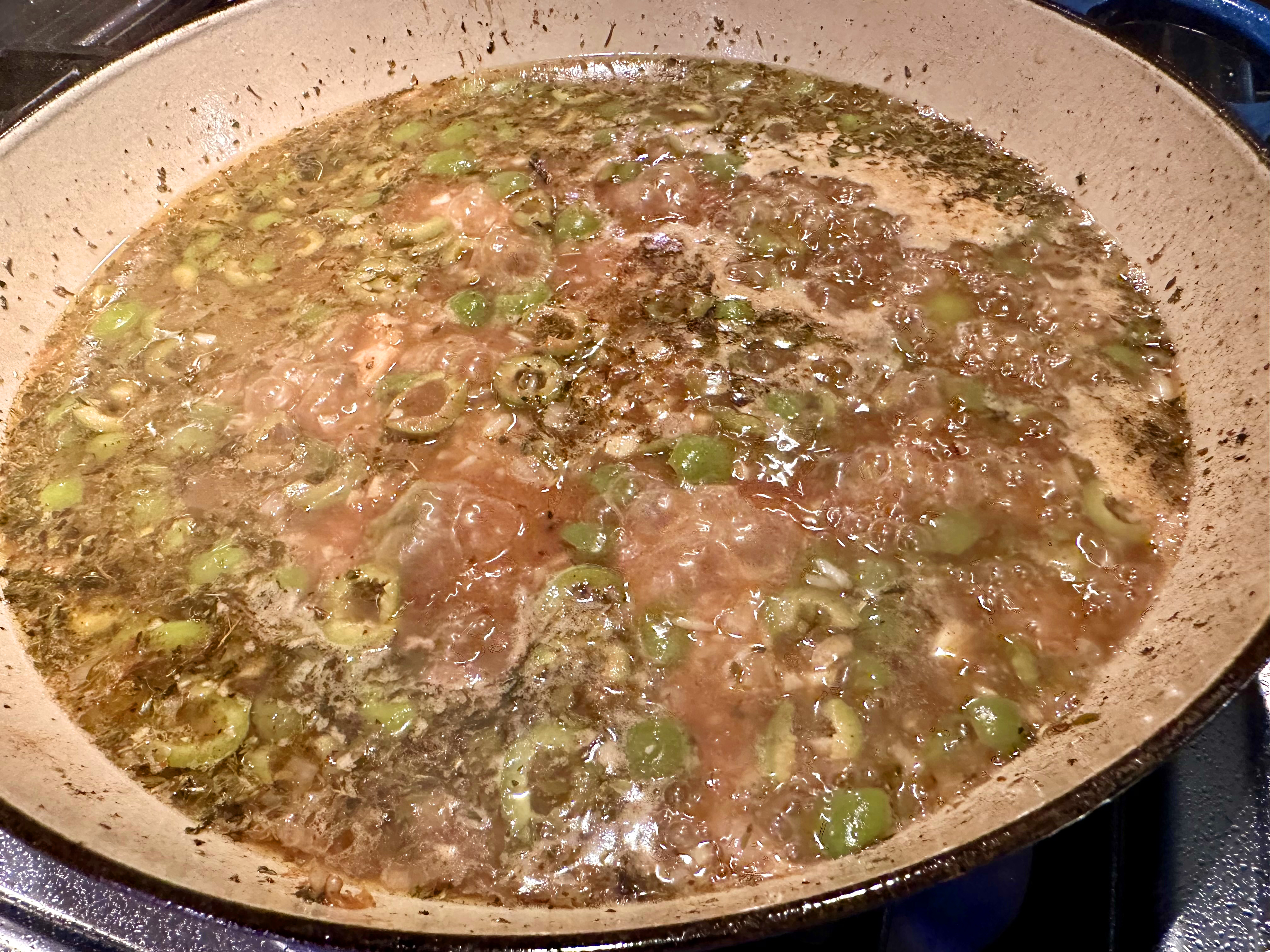
  4. Add the olives, garlic, shallot and 1 teaspoon each salt, pepper and dried oregano to the pot. Cook over medium-low heat, scraping browned bits from the bottom of the pan, until garlic is fragrant, 2 to 3 minutes. Turn the heat up to high, add the rice and broth to the pot, stir to combine and cover until it comes to a boil, about 5 minutes.
  5. Remove the pot from heat, add the browned chicken thighs on top of the rice, skin side up, then cover the chicken thighs with the lemon slices. Place the pot, covered, into the oven and bake until the rice and chicken are fully cooked, 25 to 30 minutes. Serve topped with fresh parsley and a squeeze of lemon juice.

http://www.lynnandruss.com

Adapted from a recipe by Dan Pelosi for NYTimes Cooking
Cumin-Spiced Tomato Rice

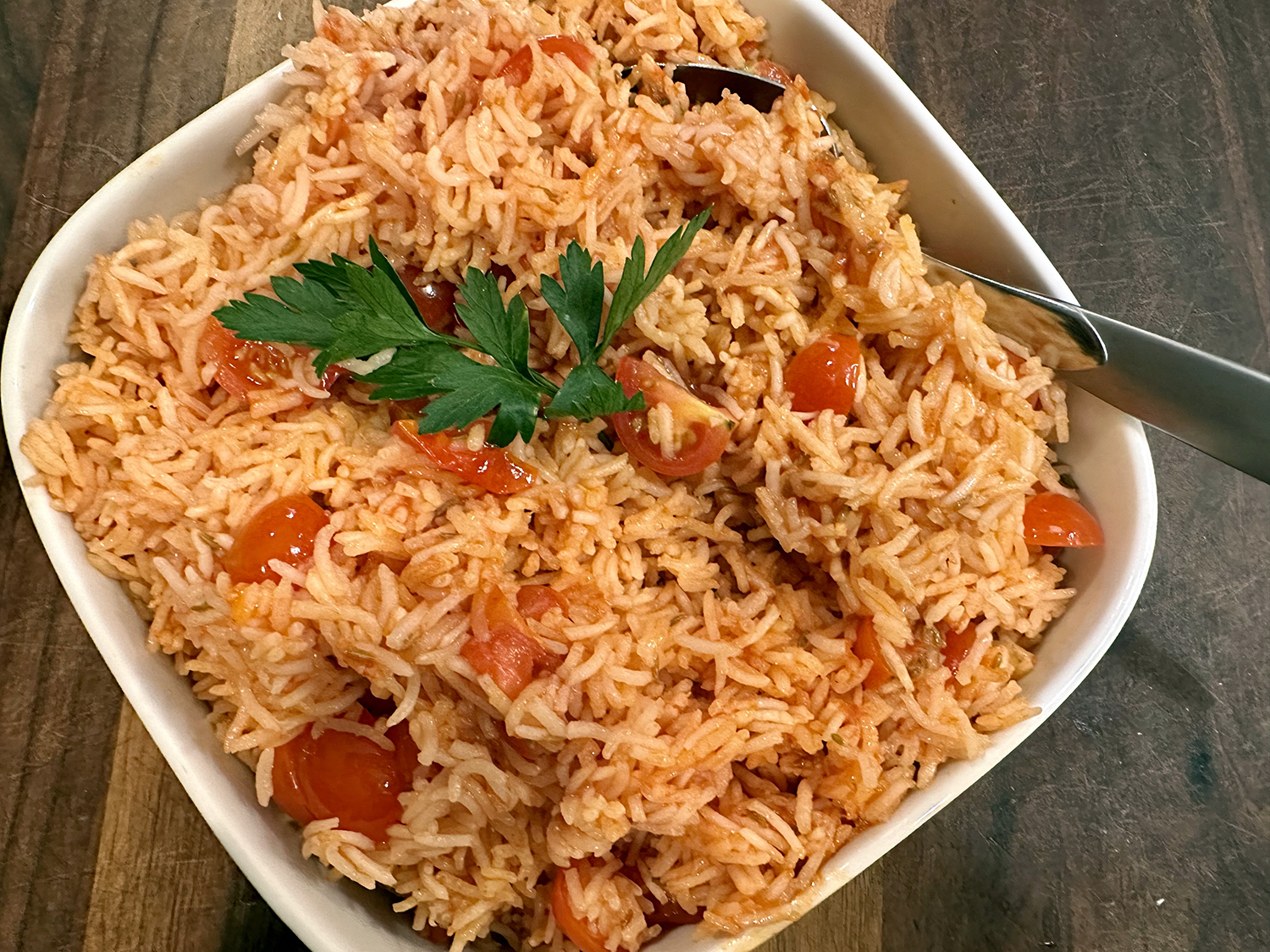
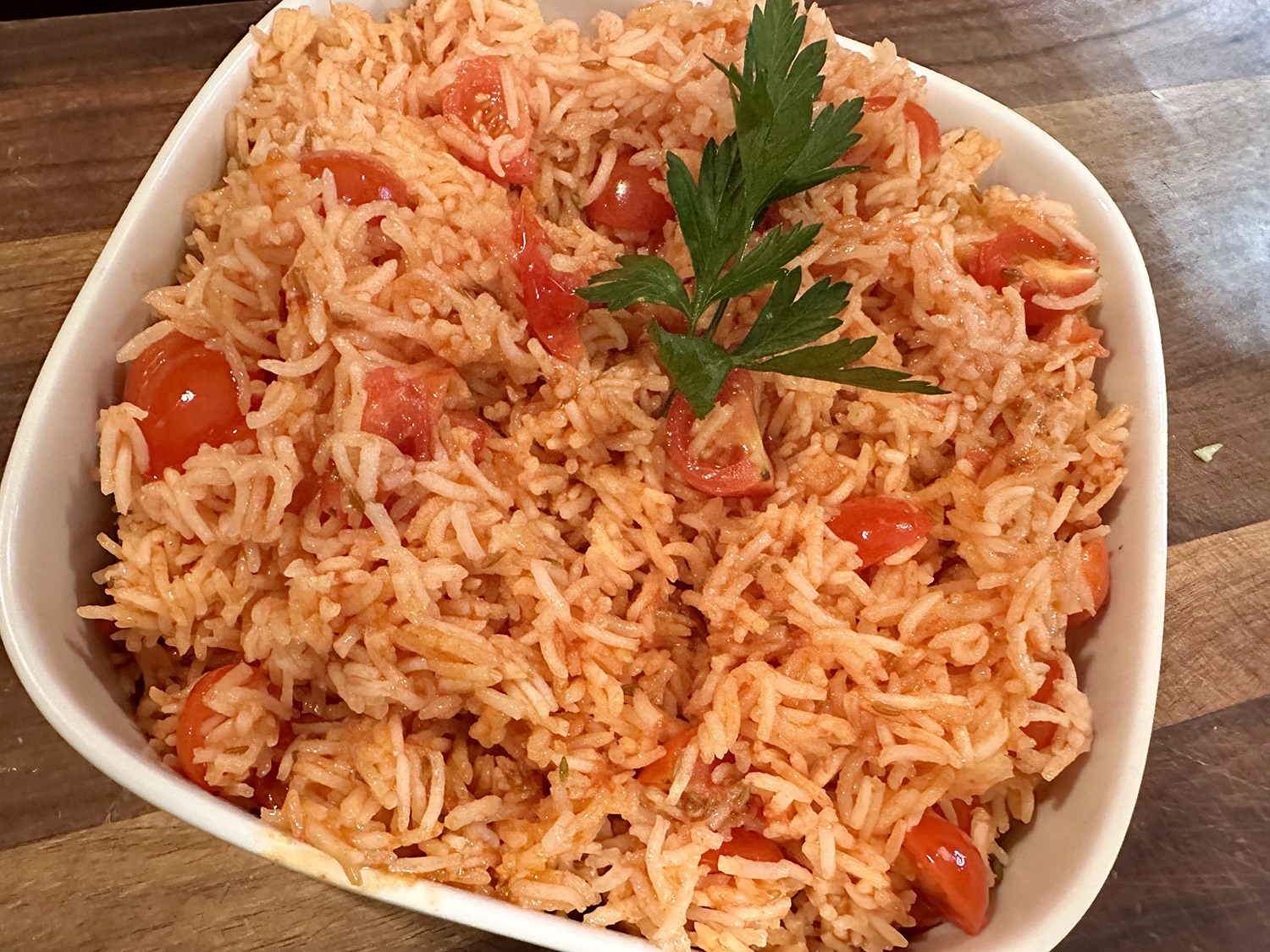
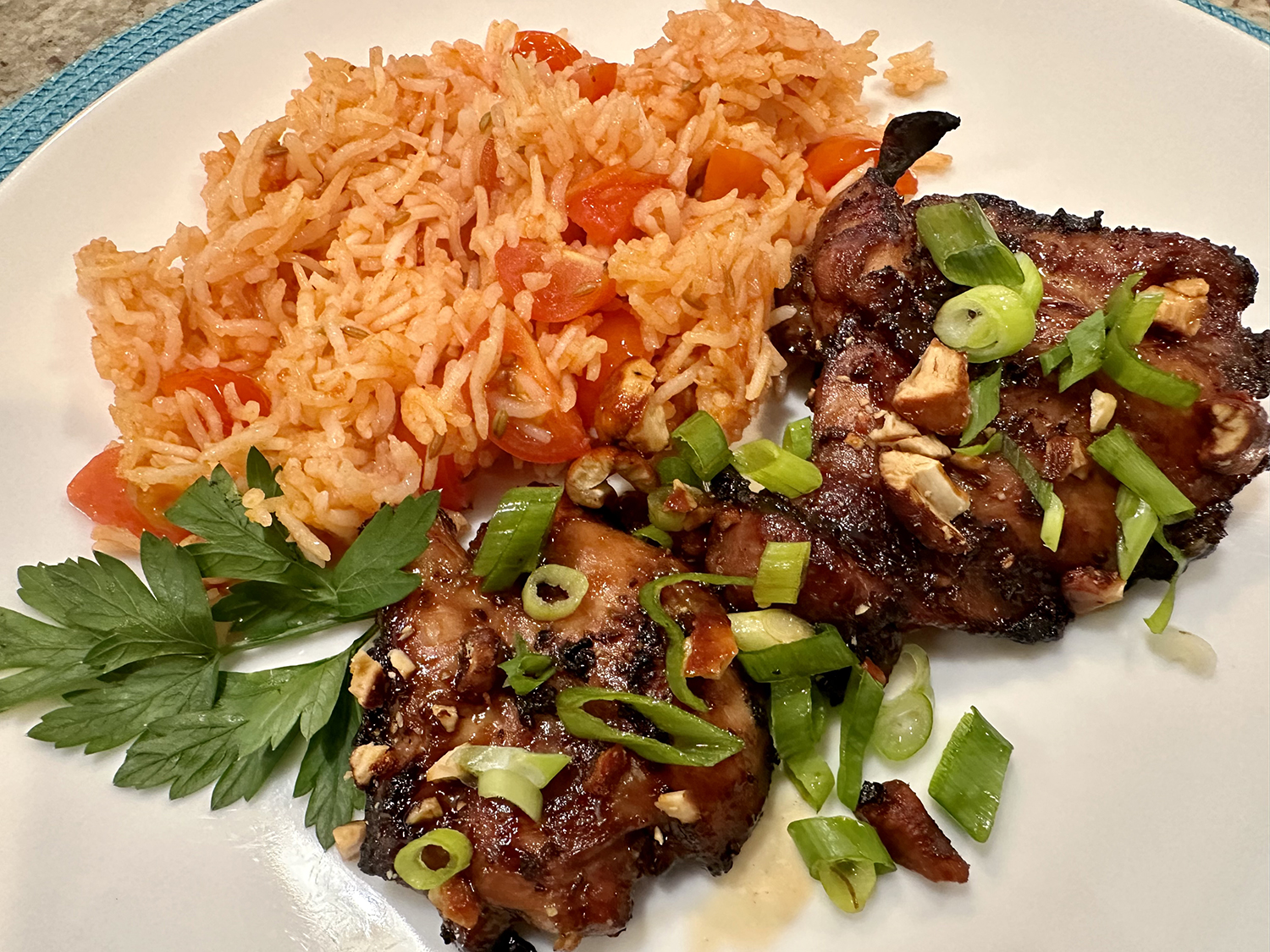
This tomato rice pairs well with seafood, poultry or vegetable-centric mains, or it can be eaten as a light meal with a dollop of yogurt or topped with a fried egg. The Hubs even chopped up some leftover pork tenderloin and stirred it in the remaining rice, creating a pork-fried rice of a sorts.

To make this version of South Indian tomato rice, two tomato forms are used: paste, which offers concentrated flavor and deep color, plus chopped cherry or grape tomatoes for freshness. The cooking starts with a tarka—that is, blooming the spices and aromatics in hot oil to draw out their essence—before basmati rice goes into the saucepan.

We like the subtle fruity, smoky notes that árbol chilies release into the rice, but if you have only red pepper flakes on hand, they will work, but will add a more direct, less nuanced spiciness. We didn’t find it very spicy at all. Be sure to rinse and drain the rice before use. Rinsing removes excess starch for especially light, fluffy grains.

Cumin-Spiced Tomato Rice

  • Servings: 4-6
  • Difficulty: easy
  • Print

Ingredients

  • 2½ Tbsp. tomato paste
  • Kosher salt
  • 2 Tbsp. grapeseed or other neutral oil
  • 2 tsp. cumin seeds OR yellow or brown mustard seeds OR a combination
  • 2 – 3 árbol chilies, broken in half, seeds discarded OR ¼ to ½ tsp. red pepper flakes
  • 2 medium garlic cloves, finely grated
  • 1½ tsp. finely grated fresh ginger
  • 1½ cups basmati rice, rinsed and drained
  • 1 pint cherry OR grape tomatoes, quartered

Directions

  1. In a 2-cup liquid measuring cup or a small bowl, whisk together 2 cups water, the tomato paste and ¾ teaspoon salt. In a large saucepan over medium, combine the oil, cumin seeds, chilies, garlic and ginger. Cook, stirring, until the seeds begin to pop and the mixture is fragrant, about 1 minute.
  2. Stir in the rice, coating the grains with oil. Stir in the tomato water and bring to a boil over medium-high. Cover, reduce to low and cook until the water has been absorbed, about 15 minutes.
  3. Remove the pan from the heat. Quickly scatter the tomatoes over the rice and re-cover. Let stand for 10 minutes. Using a fork, fluff the rice, incorporating the tomatoes into it. Remove and discard the chilies, if used. Taste and season with salt.
  4. Optional garnish: Chopped fresh cilantro

http://www.lynnandruss.com

Recipe by Elizabeth Germain & Elizabeth Mindreau for Milk Street

Coconut-Miso Salmon Curry

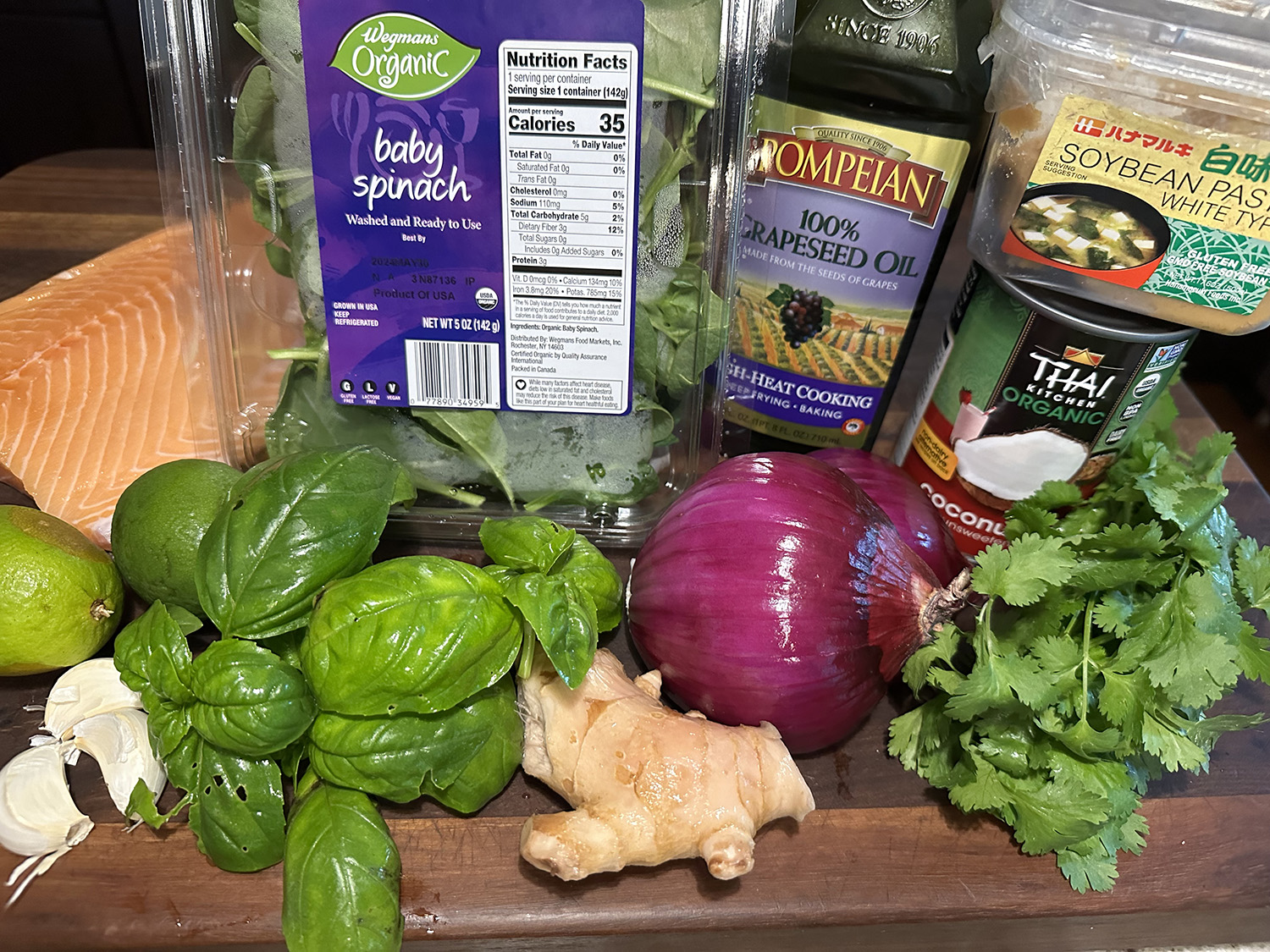
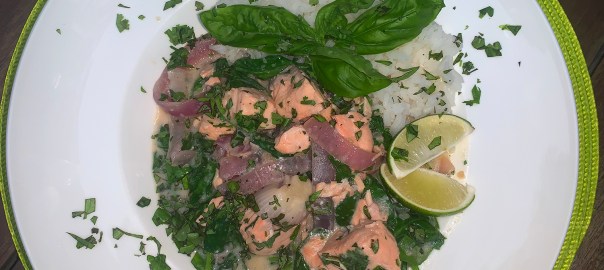
Defined by its deep miso flavor, this light, delicate weeknight curry comes together in less than 30 minutes. A fact that most home cooks appreciate during the week, who doesn’t love that! Miso is typically whisked into soups toward the end of the recipe, but sweating it directly in the pot with ginger, garlic and a little oil early on helps the paste caramelize, intensifying its earthy sweetness.

Adding coconut milk creates a rich broth that works with a wide range of seafood. Salmon is used here, but flaky white fish, shrimp or scallops would all benefit from this quick poaching method. A squeeze of lime and a flurry of fresh herbs keep this curry bright and citrusy. For a hit of heat, garnish with sliced fresh jalapeño or serrano chile peppers.

Coconut-Miso Salmon Curry

  • Servings: 4
  • Difficulty: easy
  • Print

Ingredients

  • 2 Tbsp. safflower or canola oil
  • 1 medium red onion, halved and sliced ½-inch thick (about 2 cups)
  • 1 1-inch piece fresh ginger, minced (about 2 Tbsp.)
  • 3 garlic cloves, thinly sliced
  • Kosher salt and black pepper
  • ¼ cup white miso
  • ½ cup unsweetened, full-fat canned coconut milk
  • 1 1½-lb. salmon fillet, cut into 2-inch pieces
  • 5 oz. baby spinach (about 5 packed cups)
  • 1 Tbsp. fresh lime juice, plus lime wedges for serving
  • Steamed rice, such as jasmine or basmati, for serving
  • ¼ cup chopped fresh basil
  • ¼ cup chopped fresh cilantro

Directions

  1. In a large pot, heat 2 tablespoons oil over medium. Add onion, ginger and garlic and season with salt and pepper. Cook, stirring occasionally, until softened, about 3 minutes. Add miso and cook, stirring frequently, until miso is lightly caramelized, about 2 minutes.
  2. Add coconut milk and 3 cups water and bring to a boil over high heat. Cook until liquid is slightly reduced, about 5 minutes.
  3. Stir in salmon, reduce the heat to medium-low and simmer gently until just cooked through, about 5 minutes. Turn off heat and stir in spinach and lime juice.
  4. Divide rice among bowls. Top with salmon curry, basil and cilantro. Serve with lime wedges for squeezing on top.

http://www.lynnandruss.com

Recipe by Kay Chun for NYTimes Cooking

Peruvian Arroz con Pollo (Rice with Chicken)

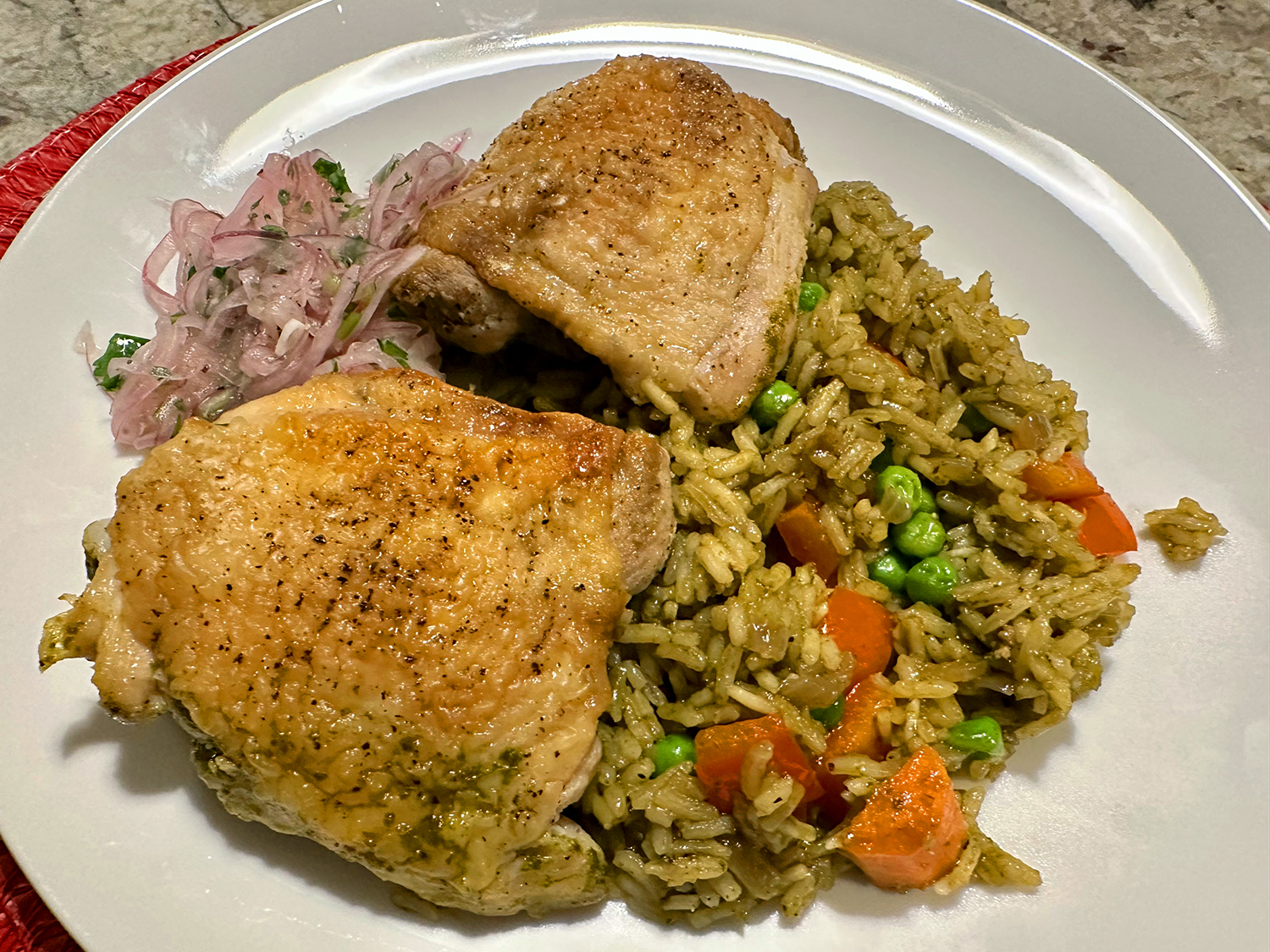
Arroz con pollo is classic comfort food throughout Latin America. A staple in many Latin American kitchens, arroz con pollo combines inexpensive ingredients—chicken, rice, and spices—in a filling one-pot meal.

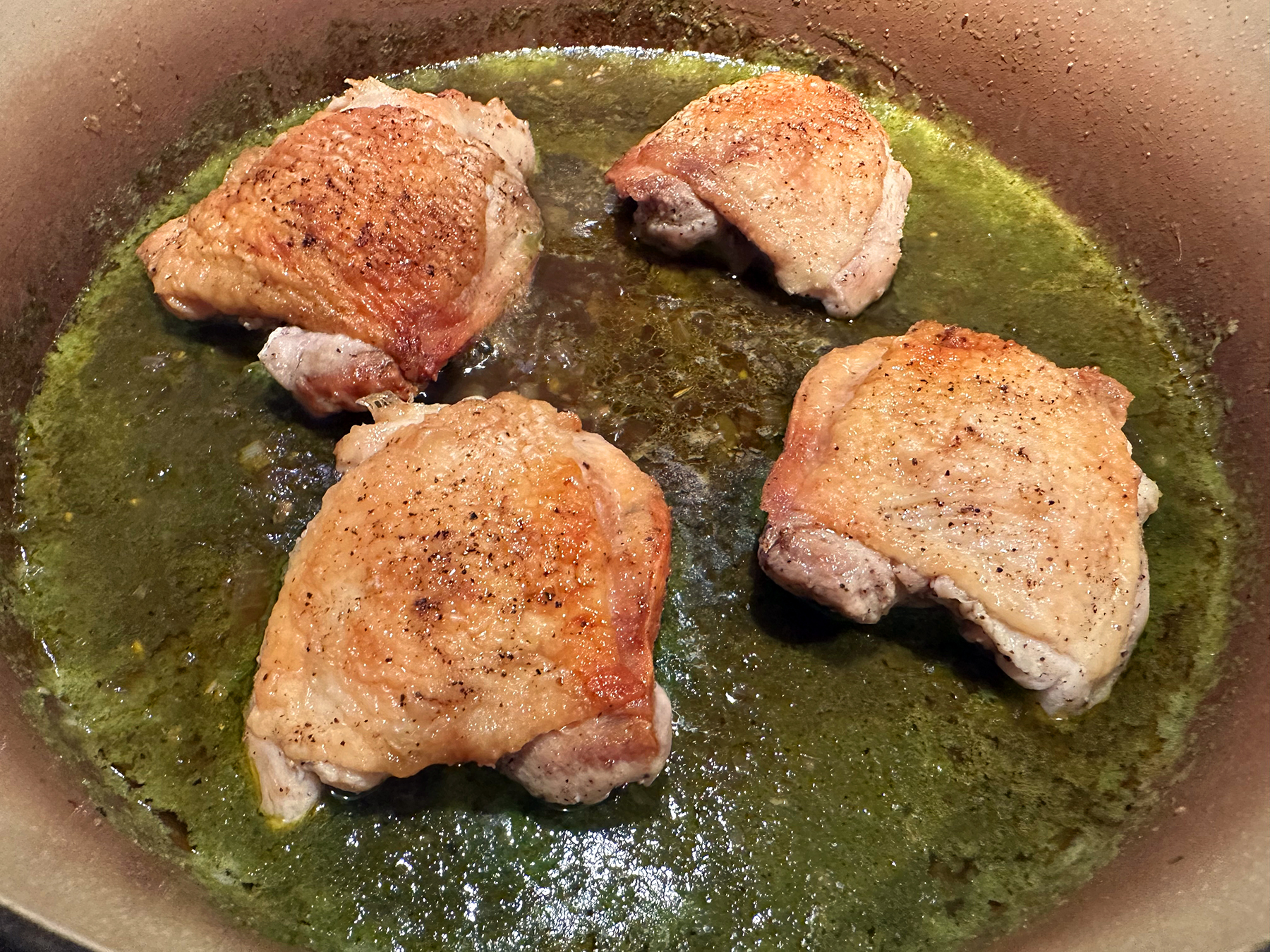
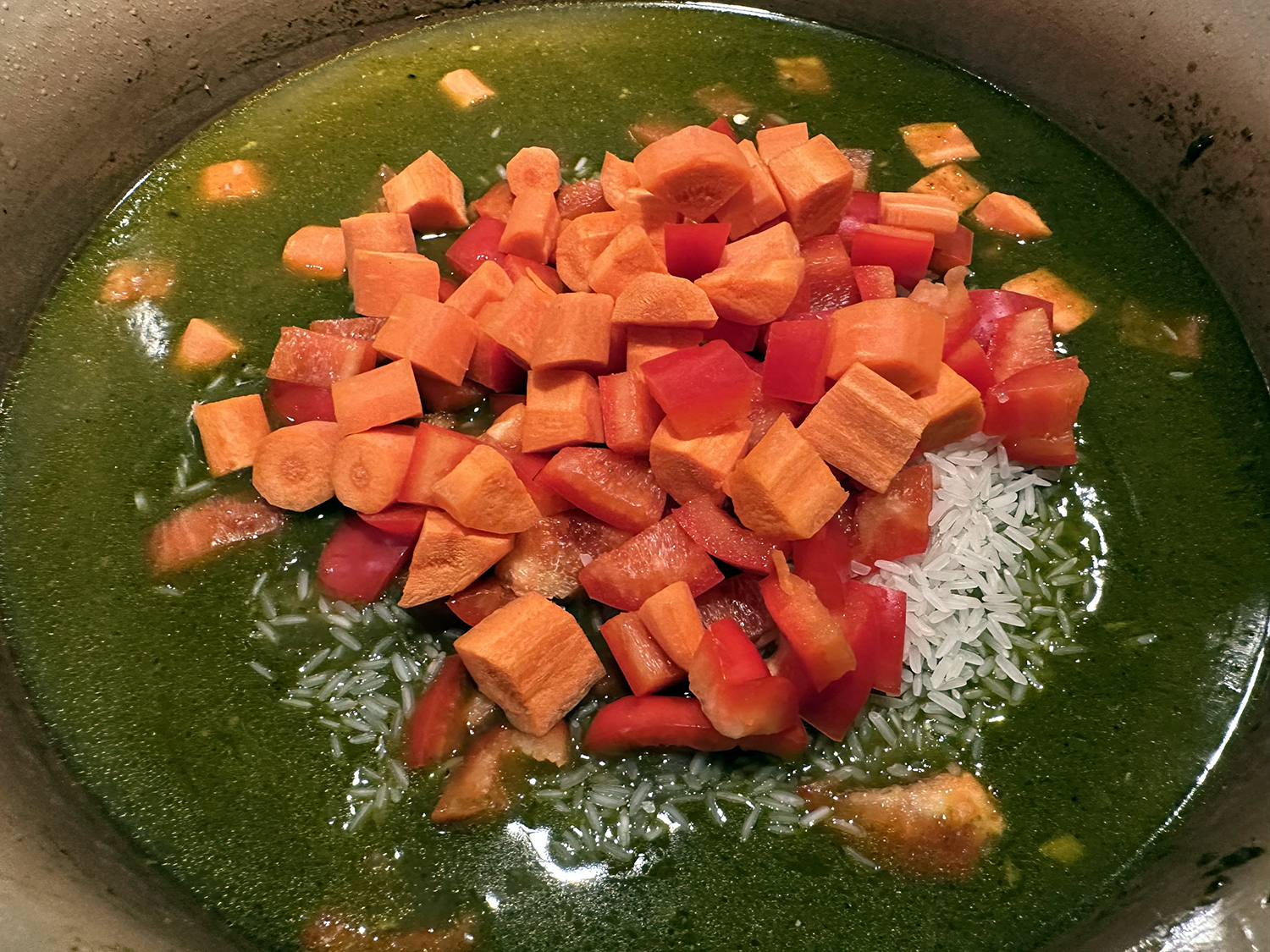
To make this Cook’s Illustrated version, choose moist chicken thighs, which are browned in a Dutch oven to build flavor and render fat. Use a food processor to transform onion, cilantro, Cubanelle pepper, garlic, and cumin into a flavorful sofrito that serves as the backbone for the dish. Medium-grain rice to long- and short-grain varieties are preferred because it gives the dish a creamy, cohesive texture. Sazón seasoning does double duty here, adding both savory flavor and vibrant color.

A staple of many cuisines, including Puerto Rican, Dominican and Mexican cooking, sazón is a blend of spices, and when translated from Spanish, it means simply “seasoning.” It can be found with the other Latin American foods in most supermarkets. It was easily sourced at our local supermarket, but if you can’t find sazón, a decent substitute would be smoked paprika.

All of the ingredients in sazón will add a warm, earthy taste to your dish, but the main reason you use sazón is to give your dish a pop of orange color. You can use sazón in a myriad of applications since it plays well with acidic foods and dishes such as in a vibrant tomato dish, as a seasoning on French fries and popcorn, and as a dry rub for pork belly.

If necessary, substitute 3/4 cup of chopped green bell pepper for the Cubanelle pepper. Allow the rice to rest for the full 15 minutes before lifting the lid to check it. Long-grain rice may be substituted for medium-grain, but the rice will be slightly less creamy. 

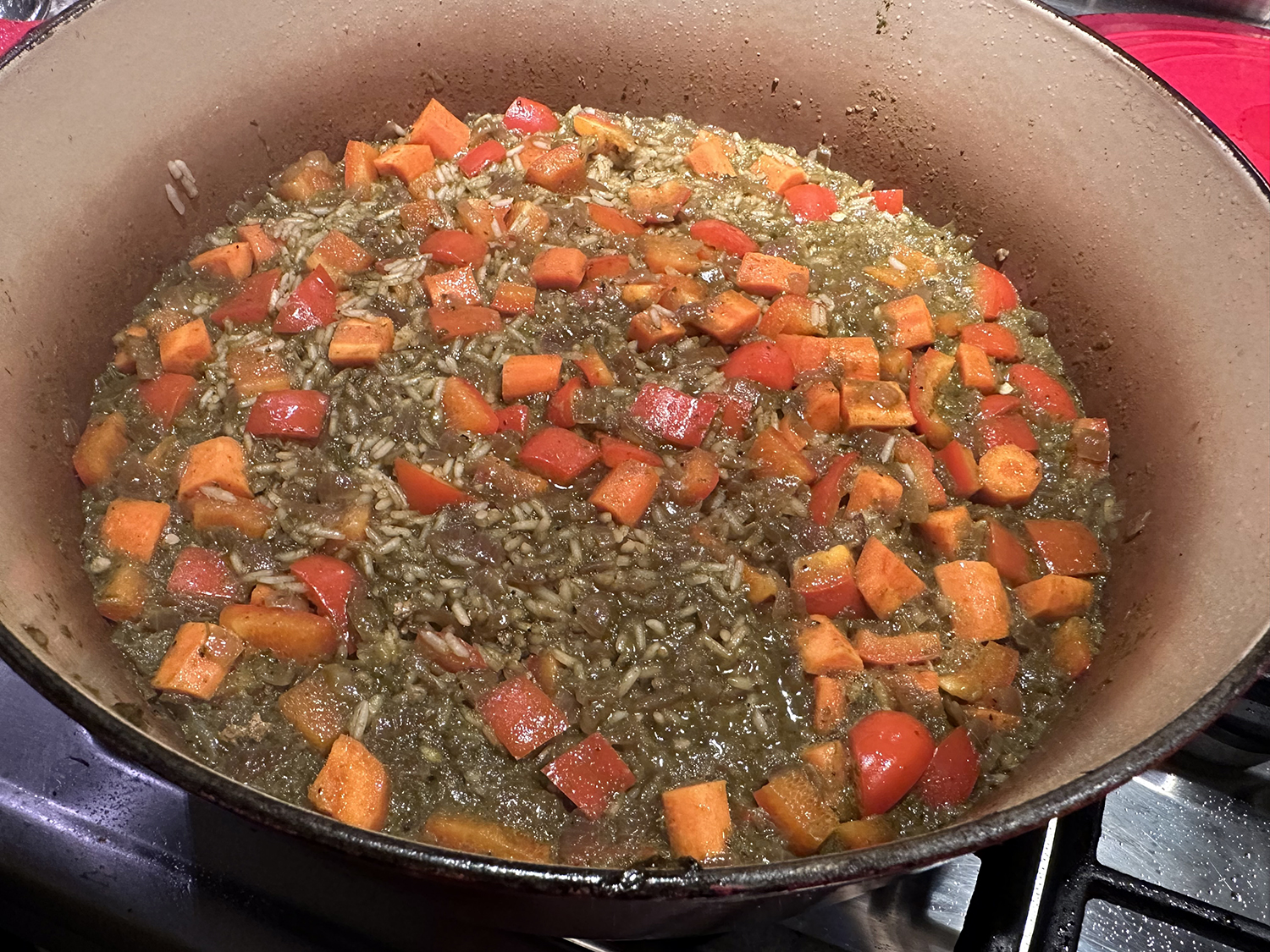
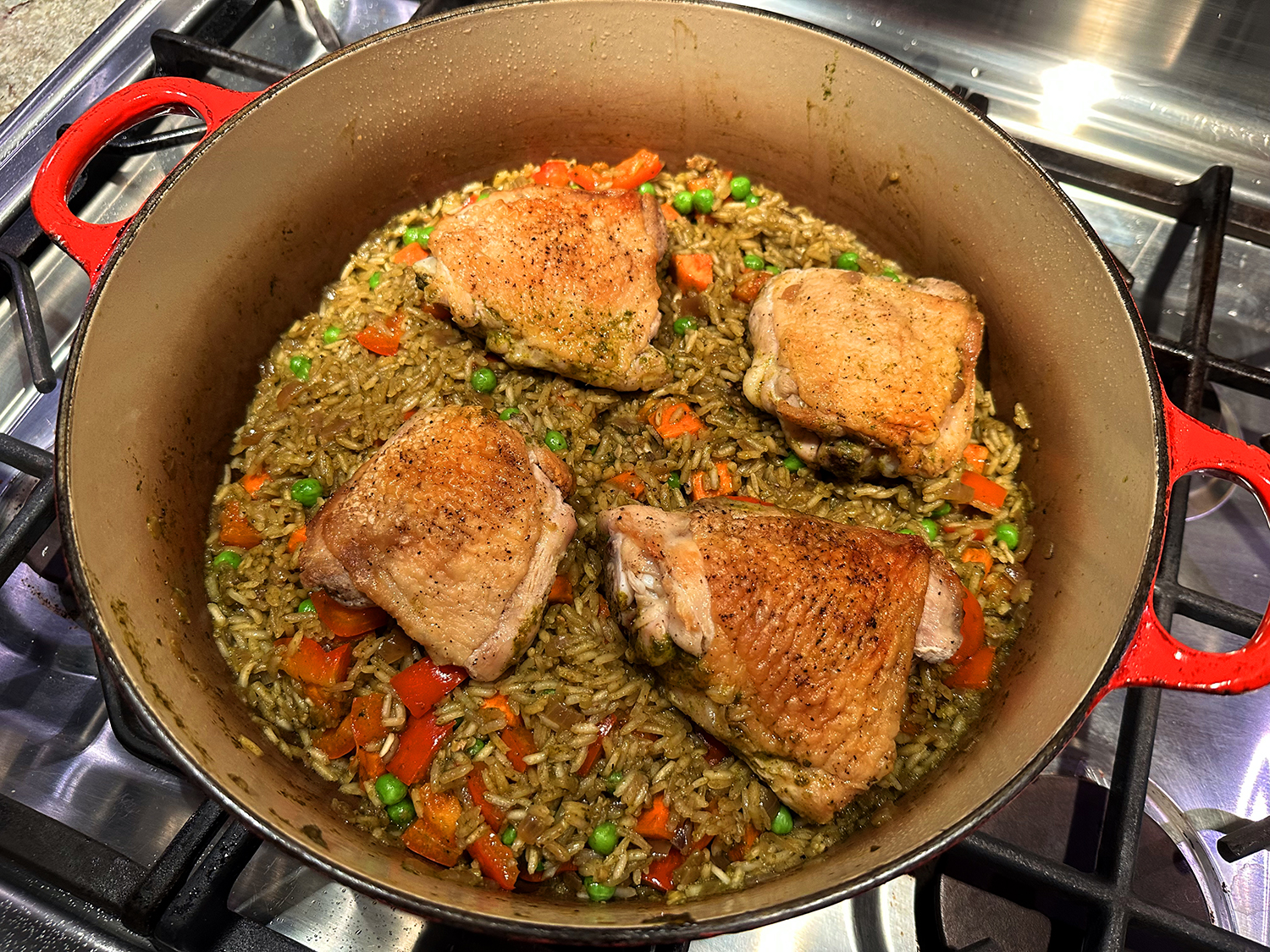
These photos were taken when beta testing the recipe for America’s Test Kitchen. Once revised and published six months later, the ingredients and instructions were altered and those revisions are reflected in the recipe below.

  • Servings: 4-6
  • Difficulty: easy
  • Print

Ingredients

  • 1 cup fresh cilantro leaves, and stems, chopped
  • 1 onion, chopped (1 cup)
  • 1 Cubanelle pepper, stemmed, seeded, and chopped (3/4 cup)
  • 5 garlic cloves, chopped coarse
  • 1 tsp. ground cumin
  • ½ cup mayonnaise
  • 3 ½ Tbsp. lemon juice, (2 lemons), plus lemon wedges for serving
  • Salt and pepper
  • 6 (5- to 7-oz.) bone in chicken thighs, trimmed
  • 1 Tbsp. vegetable oil
  • 2 cups medium-grain rice, rinsed
  • 1 Tbsp. Goya Sazón with Coriander and Annatto; OR smoked paprika
  • 2 ½ cups chicken broth
  • ¼ cup pimento-stuffed green olives, halved
  • 2 Tbsp. capers, rinsed
  • 2 bay leaves
  • ½ cup frozen peas, thawed (optional)

Directions

  1. Adjust oven rack to middle position and heat oven to 350 degrees. Process cilantro, 1/2 cup onion, Cubanelle, garlic, and cumin in food processor until finely chopped, about 20 seconds, scraping down bowl as needed. Transfer sofrito to bowl.
  2. Process mayonnaise, 1 1/2 tablespoons lemon juice, 1/8 teaspoon salt, and 2 tablespoons sofrito in now-empty processor until almost smooth, about 30 seconds. Transfer mayonnaise-herb sauce to small bowl, cover, and refrigerate until ready to serve.
  3. Pat chicken dry with paper towels and sprinkle with 1 teaspoon salt and 1/4 teaspoon pepper. Heat oil in Dutch oven over medium heat until shimmering. Add chicken to pot skin side down and cook without moving it until skin is crispy and golden, 7 to 9 minutes. Flip chicken and continue to cook until golden on second side, 7 to 9 minutes longer. Transfer chicken to plate; discard skin.
  4. Pour off all but 2 tablespoons fat from pot and heat over medium heat until shimmering. Add remaining 1/2 cup onion and cook until softened, 3 to 5 minutes. Stir in rice and Sazón and cook until edges of rice begin to turn translucent, about 2 minutes.
  5. Stir in broth, olives, capers, bay leaves, remaining sofrito, remaining 2 tablespoons lemon juice, 1 teaspoon salt, and 1/2 teaspoon pepper, scraping up any browned bits. Nestle chicken into pot along with any accumulated juices and bring to vigorous simmer. Cover, transfer to oven, and bake for 20 minutes.
  6. Transfer pot to wire rack and let stand, covered, for 15 minutes. Fluff rice with fork and stir in peas, if using. Discard bay leaves. Serve with mayonnaise-herb sauce and lemon wedges.

http://www.lynnandruss.com

Recipe from Cook’s Illustrated

Curried Chicken Fried Rice with Chiles

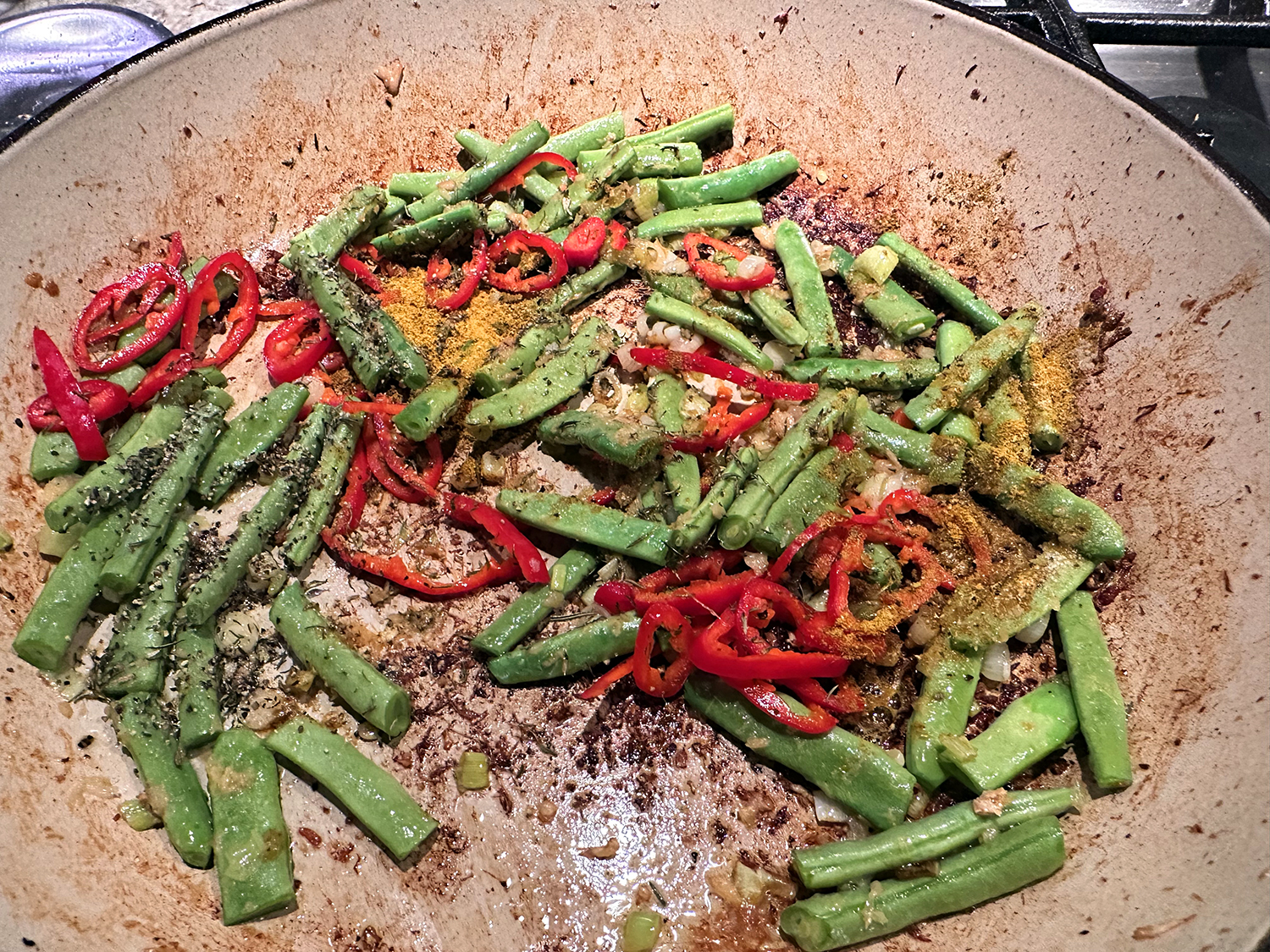
Another weeknight recipe that transports you out of the ordinary doldrums of your usual meal rotation. Nigerian fried rice, seasoned with curry powder, dried thyme and a handful of aromatics, inspired this meal-in-a-skillet. While beef liver and an assortment of vegetables are classic ingredients, here it is comprised of chicken thighs and green beans.

Instead of using just-cooked rice, which results in a softer, moisture texture in the finished dish, plain cooked rice that’s been chilled is used so the grains “fry” up light and fluffy. Fragrant basmati is especially good, but any type of long-grain white rice works.

Don’t be afraid to really scrape up the browned bits from the surface of the skillet after you’ve added the broth. The caramelization lends the fried rice great depth of flavor.

Curried Chicken Fried Rice with Chiles

  • Servings: 4
  • Difficulty: easy
  • Print

Ingredients

  • 3 Tbsp. neutral oil or refined coconut oil, divided
  • 1 lb. boneless, skinless chicken thighs, trimmed and cut into 1-inch pieces
  • 2 tsp. curry powder, divided
  • Kosher salt and ground black pepper
  • 4 scallions, thinly sliced, whites and greens reserved separately
  • 2 Tbsp. minced fresh ginger
  • 4 oz. green beans, trimmed and cut into 1-inch pieces
  • 1 tsp. dried thyme
  • 1 Fresno or jalapeño chili, stemmed, seeded and thinly sliced
  • 4 cups cooked and chilled long-grain white rice, preferably basmati
  • 1 cup chicken broth, preferably homemade

Directions

  1. In a 12-inch skillet over medium-high, heat 2 tablespoons of the oil until barely smoking. Add the chicken and sprinkle with ½ teaspoon of the curry powder, ½ teaspoon salt and ¼ teaspoon pepper. Cook, stirring occasionally, until evenly browned, 4 to 6 minutes.
  2. Push the chicken to the perimeter of the pan. To the center, add the remaining 1 tablespoon oil, scallion whites and ginger; cook, stirring, until lightly browned, about 1½ minutes. Into the scallion mixture, stir the beans, thyme, half of the chili, the remaining 1½ teaspoons curry powder and ¼ teaspoon each salt and pepper. Stir the chicken into the bean mixture; cook, stirring occasionally, until the beans are bright green, about 2 minutes. Stir in the rice, then add the broth and scrape up any browned bits. Cook, stirring, until the liquid is absorbed, 3 to 5 minutes.
  3. Off heat, taste and season with salt and pepper. Serve sprinkled with the scallion greens and remaining chili.

http://www.lynnandruss.com

Recipe by Courtney Hill for Milk Street

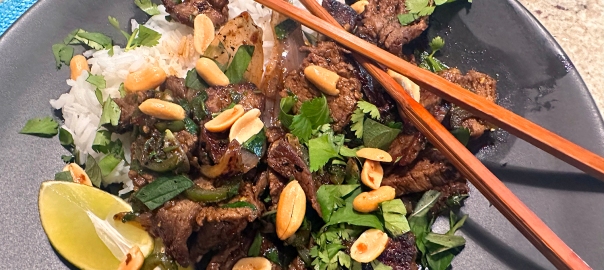
Stir-Fried Thai-Style Beef with Chiles and Shallots

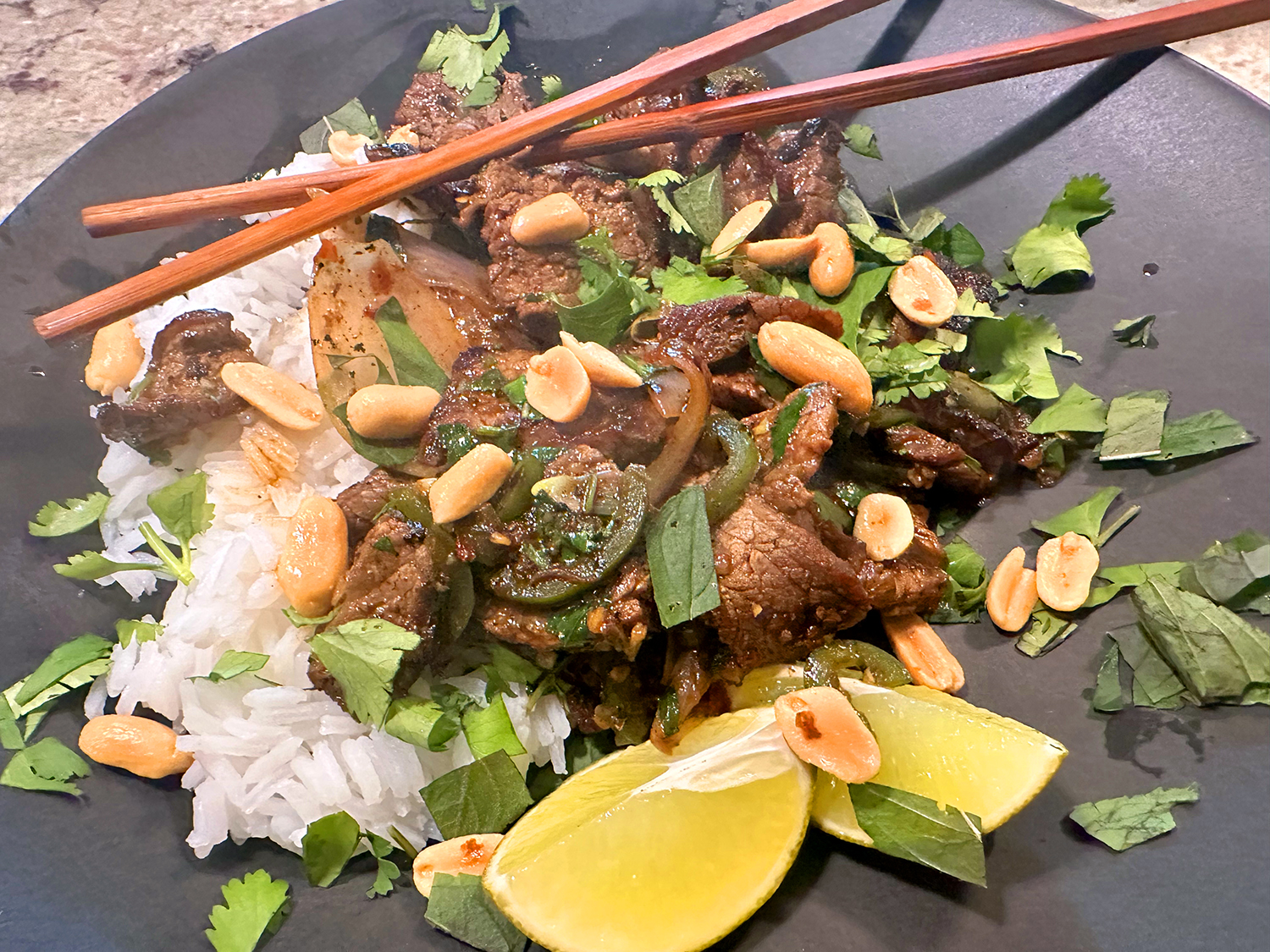
Stir-fried dishes are one of our favorite go-to meals. You can basically add whatever ingredients that suits your fancy—or in an effort to use up some fresh vegetables.

For a sophisticated Thai beef recipe using available ingredients and requiring minimal cooking time, you can use an inexpensive blade steak, which offers both tenderness and robust flavor. With a marinade made of fish sauce, white pepper, citrusy coriander, and a little light brown sugar, the beef needs to marinated for only 15 minutes to develop full flavor.

To add heat to this stir-fried Thai beef recipe, use an easily controlled heat source—Asian chili-garlic paste—that also adds toasty garlicky flavors along with heat.

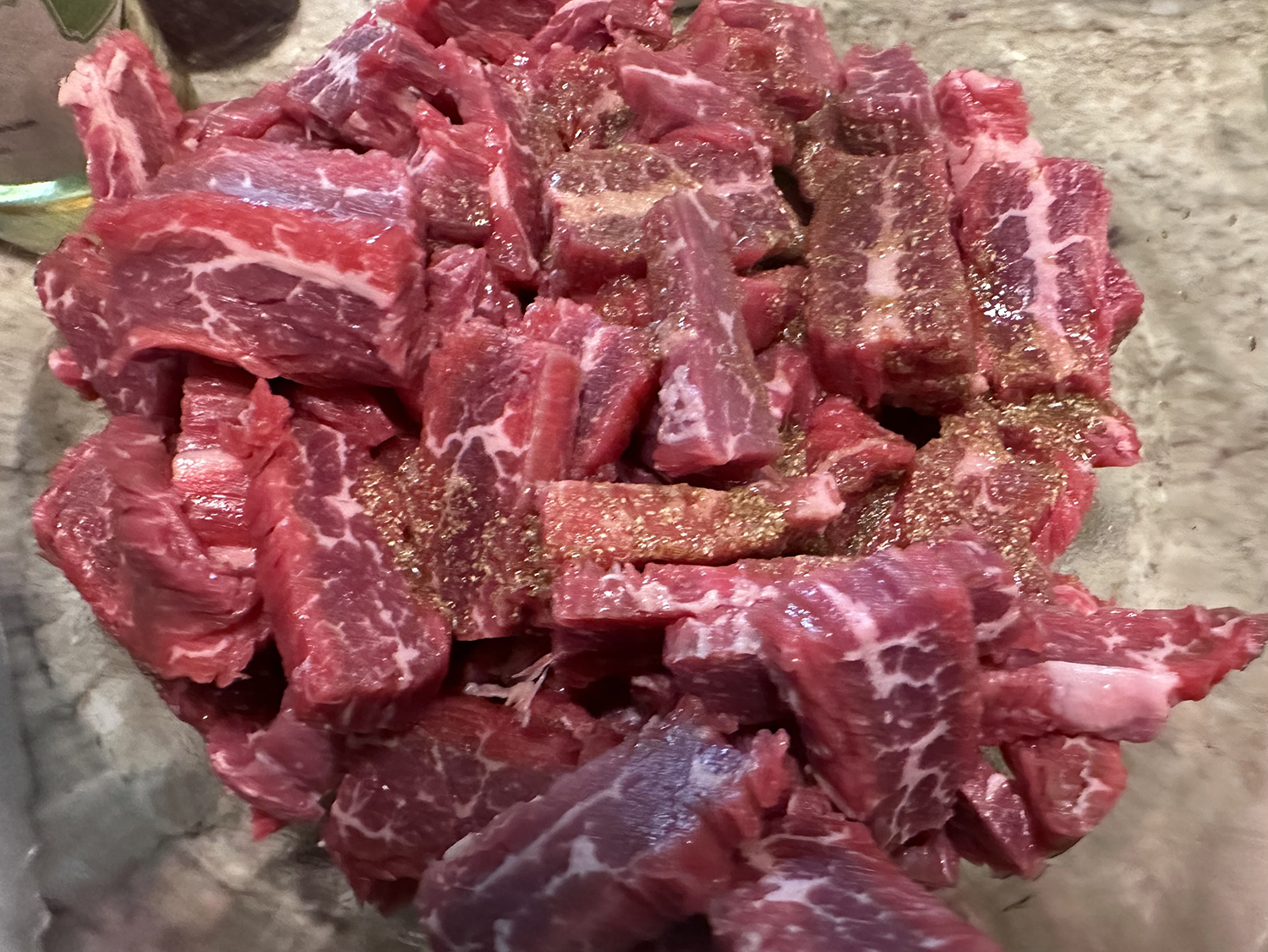
If you cannot find blade steaks, use flank steak (our choice). To cut a flank steak into the proper-sized slices for stir-frying, first cut the steak with the grain into 1 1/2-inch strips, then cut the strips against the grain into 1/4-inch-thick slices (see photo below). White pepper lends this stir-fry a unique flavor (black pepper is not a good substitute). Serve the stir-fry with steamed jasmine rice.

Stir-Fried Thai-Style Beef with Chiles and Shallots

  • Servings: 4
  • Difficulty: easy
  • Print

Ingredients

Beef and Marinade

  • ¾ tsp. ground coriander
  • ⅛ tsp. ground white pepper
  • 1 tsp. light brown sugar
  • 1 Tbsp. fish sauce
  • 2 lbs. blade or flank steak, trimmed and cut into 1/4-inch-thick strips

Stir-Fry

  • 2 Tbsp. fish sauce
  • 2 Tbsp. rice vinegar
  • 2 Tbsp. water
  • 1 Tbsp. light brown sugar
  • 1 Tbsp. Asian chili-garlic paste
  • 3 medium cloves garlic, minced or pressed through garlic press (about 1 Tbsp.)
  • 3 Tbsp. vegetable oil
  • 3 Serrano chiles or jalapeño chiles, halved, seeds and ribs removed, chiles cut crosswise ⅛ inch thick
  • 3 medium shallots, trimmed of ends, peeled, quartered lengthwise, and layers separated
  • ½ cup fresh mint leaves, large leaves torn into bite-sized pieces
  • ½ cup fresh cilantro leaves
  • ⅓ cup chopped unsalted roasted peanuts and lime wedges for serving

Directions

  1. FOR THE BEEF AND MARINADE: Combine coriander, white pepper, brown sugar, and fish sauce in large bowl. Add beef, toss well to combine; marinate 15 minutes.
  2. FOR THE STIR-FRY: In small bowl, stir together fish sauce, vinegar, water, brown sugar, and chili-garlic paste until sugar dissolves; set aside.
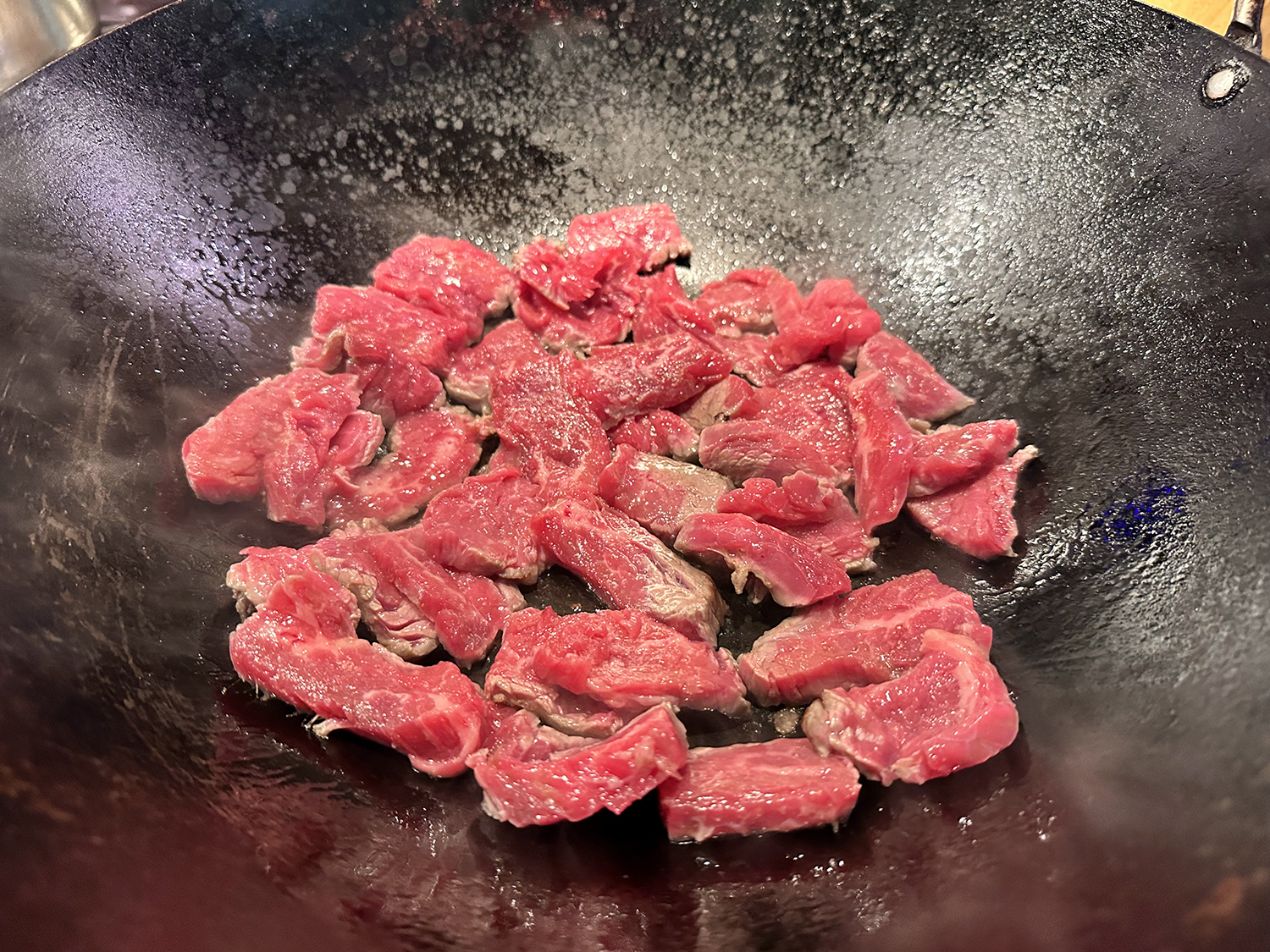
  3. In small bowl, mix garlic with 1 teaspoon oil; set aside. Heat 2 teaspoons oil in 12-inch nonstick skillet (or use a wok like we did) over high heat until smoking; add one-third of beef to skillet in even layer. Cook, without stirring, until well browned, about 2 minutes, then stir and continue cooking until beef is browned around edges and no longer pink in the center, about 30 seconds.
  4. Transfer beef to medium bowl. Repeat with additional oil and remaining meat in 2 more batches.
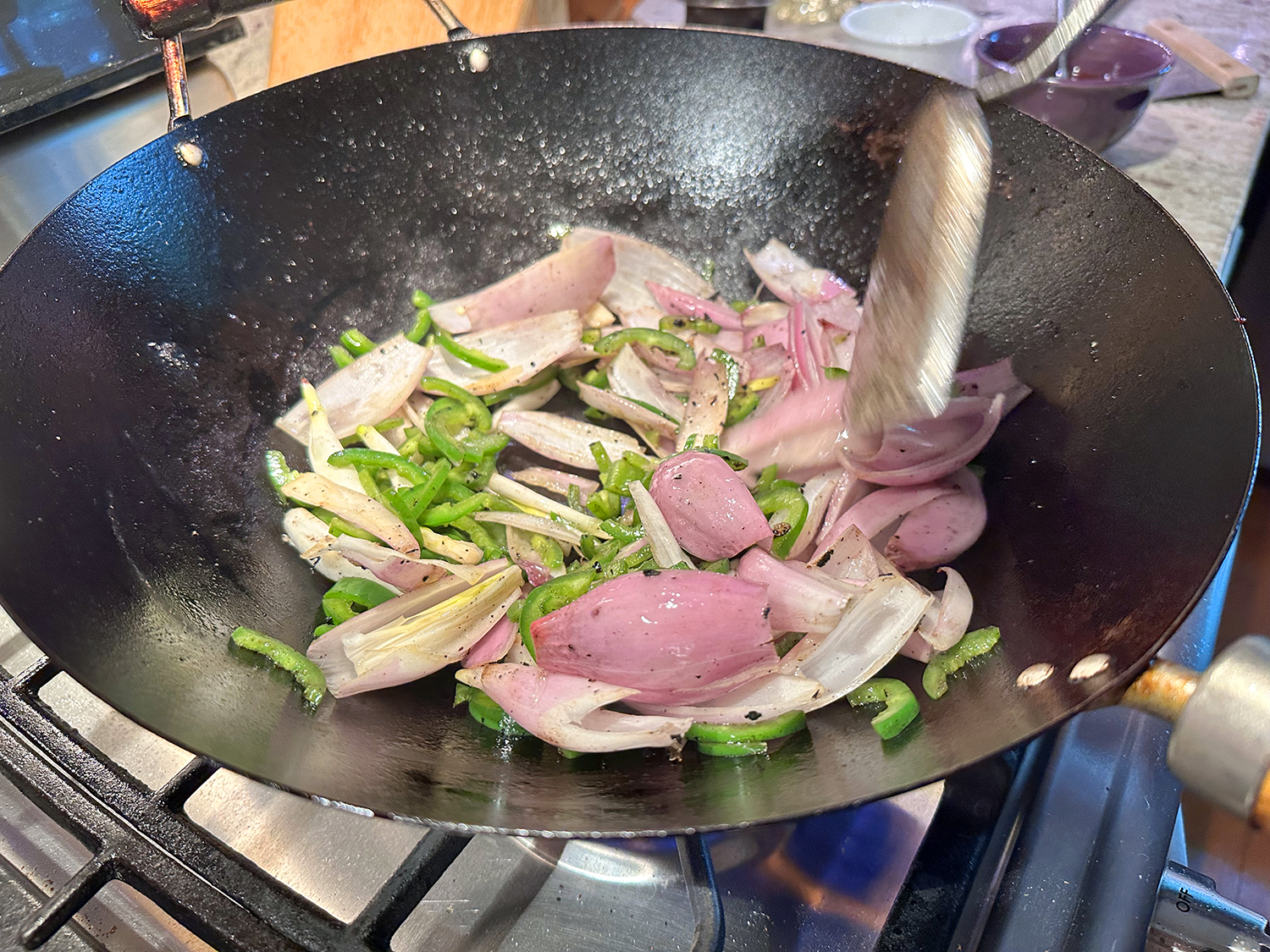
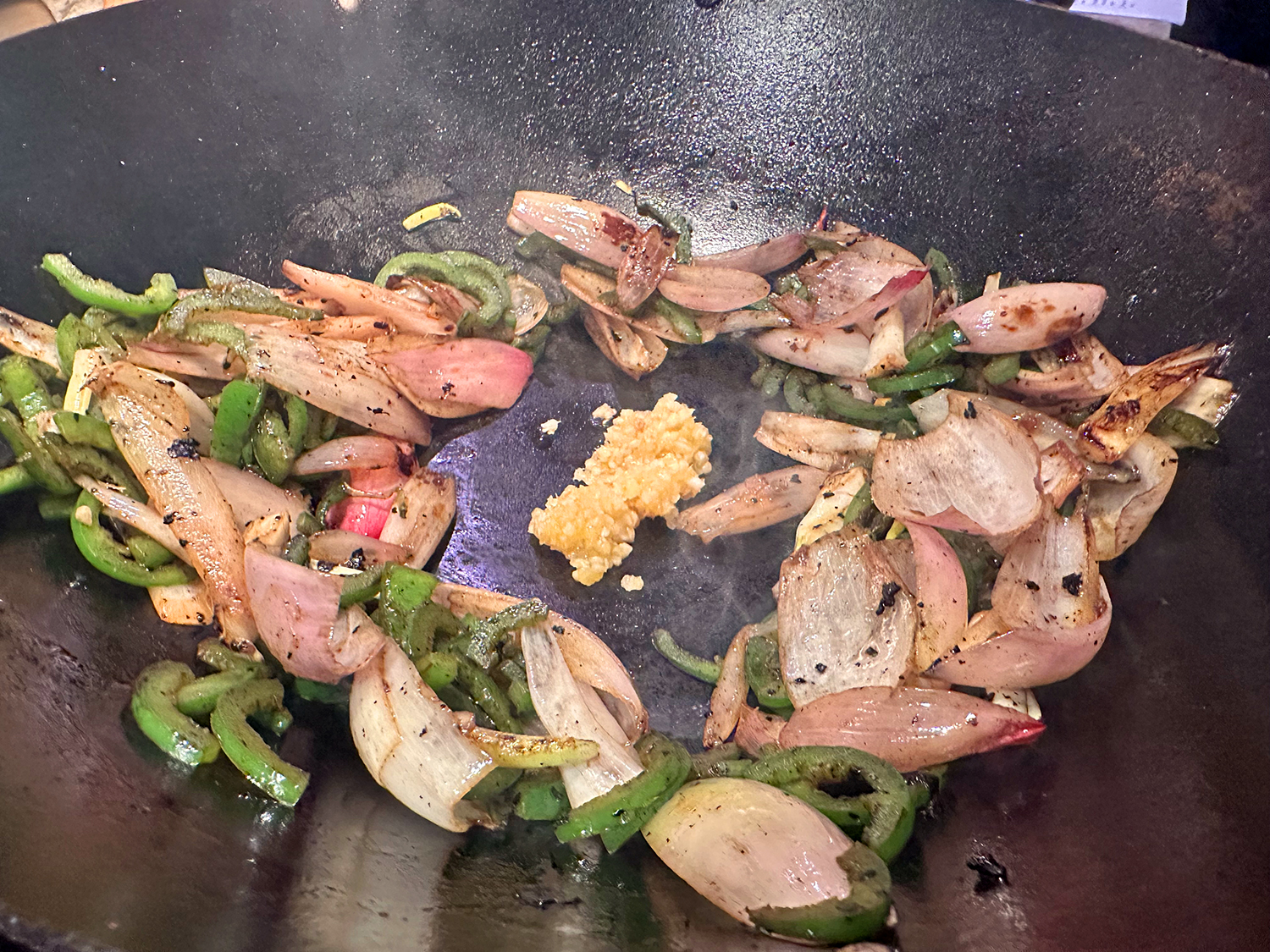
  5. After transferring last batch of beef to bowl, reduce heat to medium; add remaining 2 teaspoons oil to now-empty skillet and swirl to coat. Add chiles and shallots and cook, stirring frequently, until beginning to soften, 3 to 4 minutes.
  6. Push chile-shallot mixture to sides of skillet to clear center; add garlic to clearing and cook, mashing mixture with spoon, until fragrant, about 15 seconds. Stir to combine garlic with chile-shallot mixture.
  7. Add fish sauce mixture to skillet; increase heat to high and cook until slightly reduced and thickened, about 30 seconds.
  8. Return beef and any accumulated juices to skillet, toss well to combine and coat with sauce, stir in half of mint and cilantro; serve immediately, sprinkling individual servings with portion of peanuts and remaining herbs, and passing lime wedges separately.

http://www.lynnandruss.com

Adapted from a recipe in Cook’s Illustrated

Spanish Rice and Beans

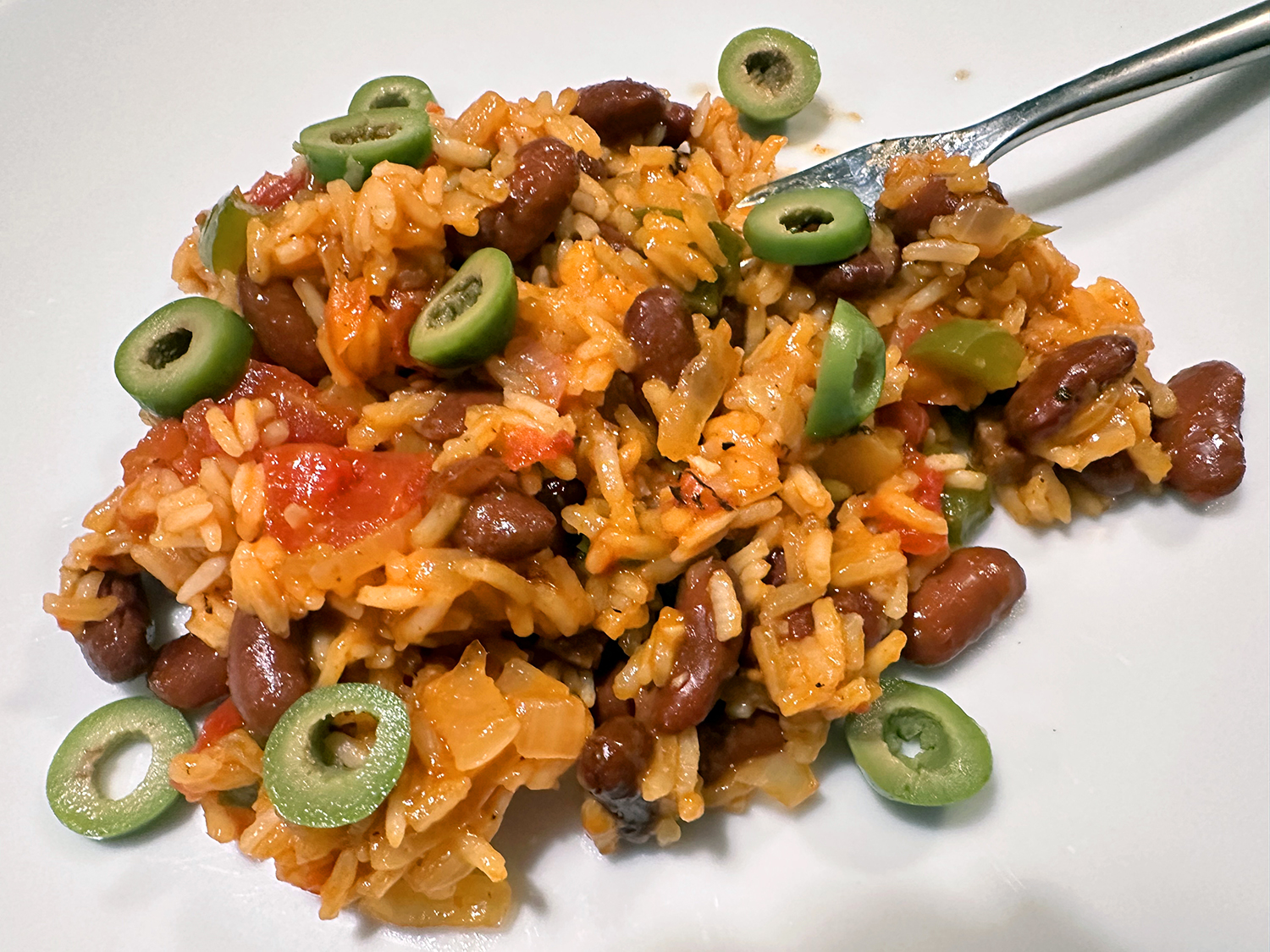
Spanish rice and beans is a quick and easy vegetarian, vegan, and gluten-free weeknight dinner. Serve as a side dish, vegan main dish, or top with baked chicken or shrimp for a little extra protein. It’s ready in just 30-minutes and made with pantry staples like rice, kidney beans, and olives.

This dish is the definition of versatile: it’s flavorful enough to stand on its own, but mild enough to complement the flavors of a wide variety of dishes. Rice and beans are a complete protein: they’re high in nutritional value, essential vitamins, minerals, and fiber. Plus, they’re super filling, inexpensive, easy to store, and delicious! What more could you ask for in a vegan recipe?

Confession. Ours was not vegetarian because we used some of our homemade chicken stock and a 3-inch piece of Mexican chorizo that was finely minced. Both of them added another dimension of flavor.

As far as the timing, our rice was still a bit crunchy after 20 minutes, so we cooked it another 5 minutes, took it off the burner, left it covered, and let it sit for another 10 minutes, at which point it was perfect.

Spanish Rice and Beans

  • Servings: 6
  • Difficulty: easy
  • Print

Ingredients

  • 2 Tbsp. extra virgin olive oil
  • 1 large yellow onion, finely chopped
  • 1 green bell pepper, cored and chopped
  • Kosher salt
  • 2 garlic cloves, minced
  • 1 tsp. smoked or sweet paprika
  • 1 tsp. ground cumin
  • ½ tsp. red pepper flakes, optional
  • 2 cups basmati rice or similar long grain rice, rinsed very well
  • 2 (15-oz.) cans kidney beans, drained and rinsed
  • 1 (15-oz.) can diced fire roasted tomatoes
  • 2 Tbsp. tomato paste
  • 2 ½ cups vegetable broth
  • ⅓ cup sliced green olives, optional, for garnish
  • ¼ cup chopped fresh cilantro or parsley, optional, for garnish

Directions

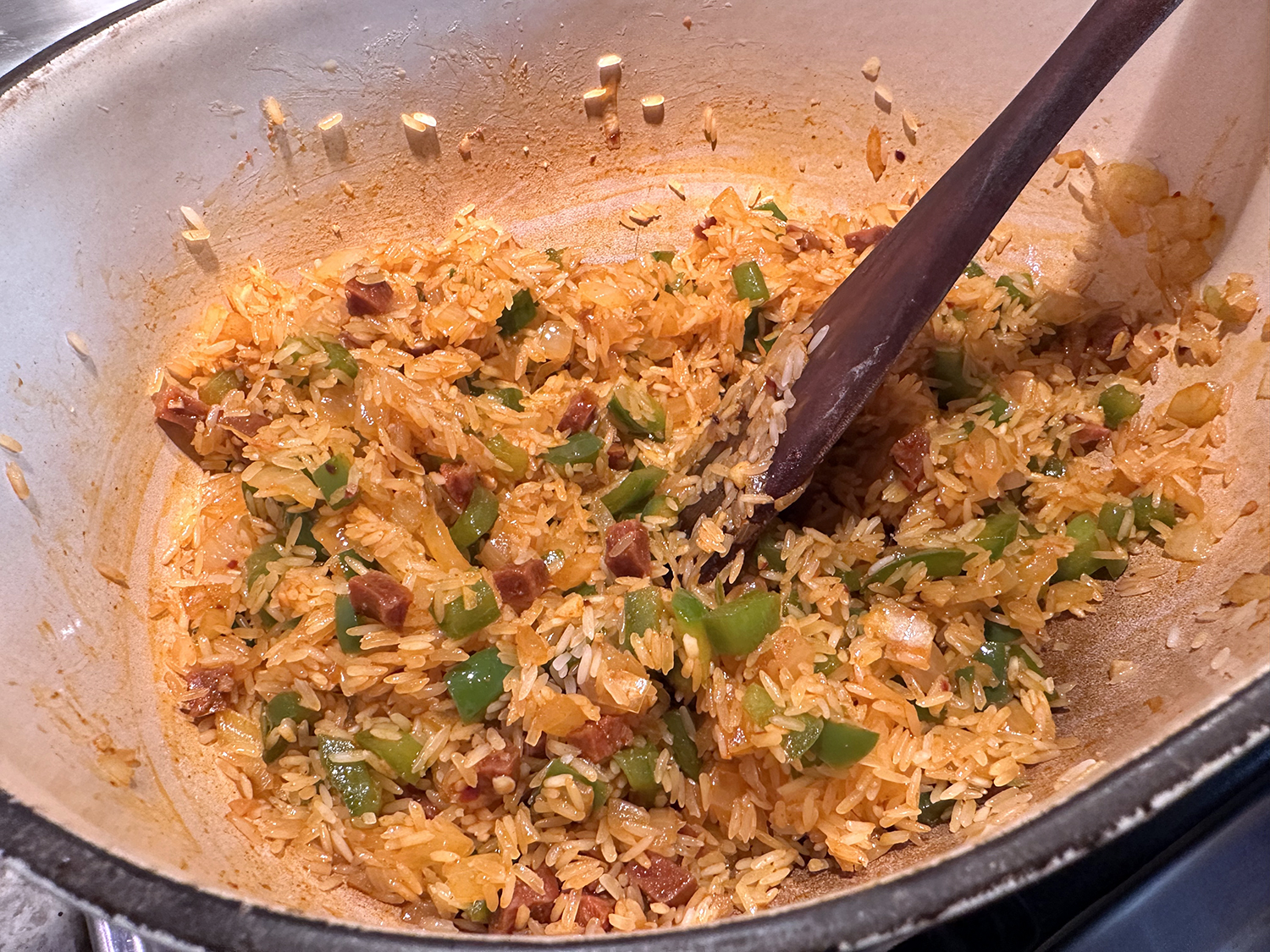
  1. Saute the onion and pepper: In a large, deep pan heat 2 tablespoons extra virgin olive oil over medium heat until shimmering but not smoking. Add the chopped onion, chopped bell pepper and season with a big pinch of kosher salt. Cook, tossing regularly until the vegetables soften a bit.
  2. Add the garlic and spices: Add the garlic, paprika, cumin, and red pepper flakes. Cook for about 30 more seconds.
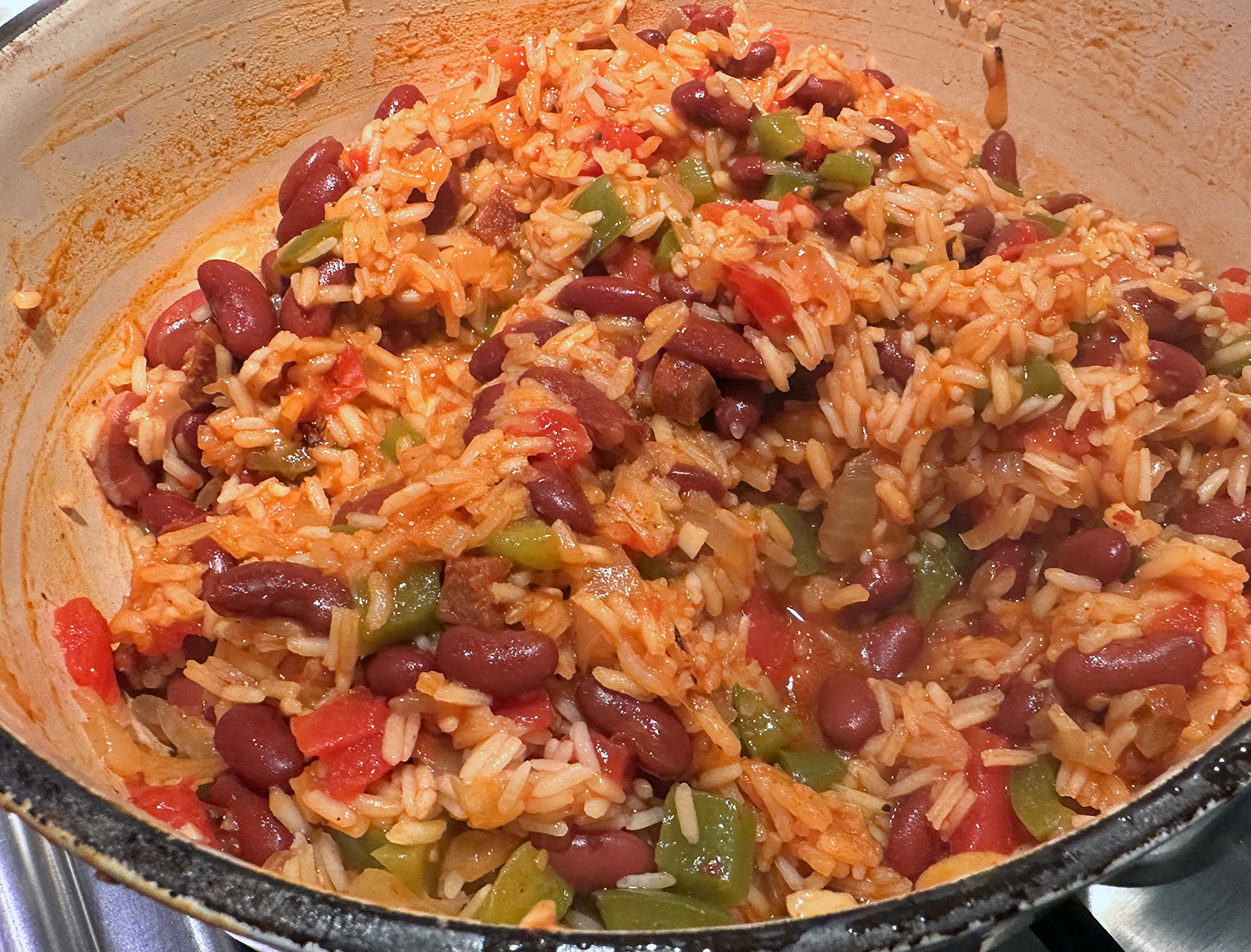
  3. Add the rice, beans and tomatoes: Add the rice and season with another pinch of kosher salt. Toss to combine, then add the beans and fire roasted tomatoes. In a small bowl or liquid measuring cup, mix the tomato paste and broth together, then add it to the rice mixture.
  4. Boil then simmer: Raise the heat and bring the mixture to a boil, then reduce the heat to low. You want it to simmer gently. Cover with a tight fitting lid and allow the rice to cook until its tender and the liquid is fully absorbed, about 20 minutes.
  5. Garnish and serve: Garnish with the olives and parsley, if using, and serve.

http://www.lynnandruss.com

Recipe from Suzy Karadsheh

Braised Tuna Puttanesca with Lemon-Garlic Rice

Did you know that Puttanesca sauce originated in Naples Italy? The name derives from the Italian word puttana which translates roughly to “lady of the night,” or “in the style of the whore.” Puttana in turn arises from the Latin word putida which means stinking. It’s a wonder how this tasty dish became associated with such sordid content, but I’ll leave you to research that aspect… There is a lot of disagreement about the origins, and the authorities on Italian food seem to be wary of making a definitive statement about it.

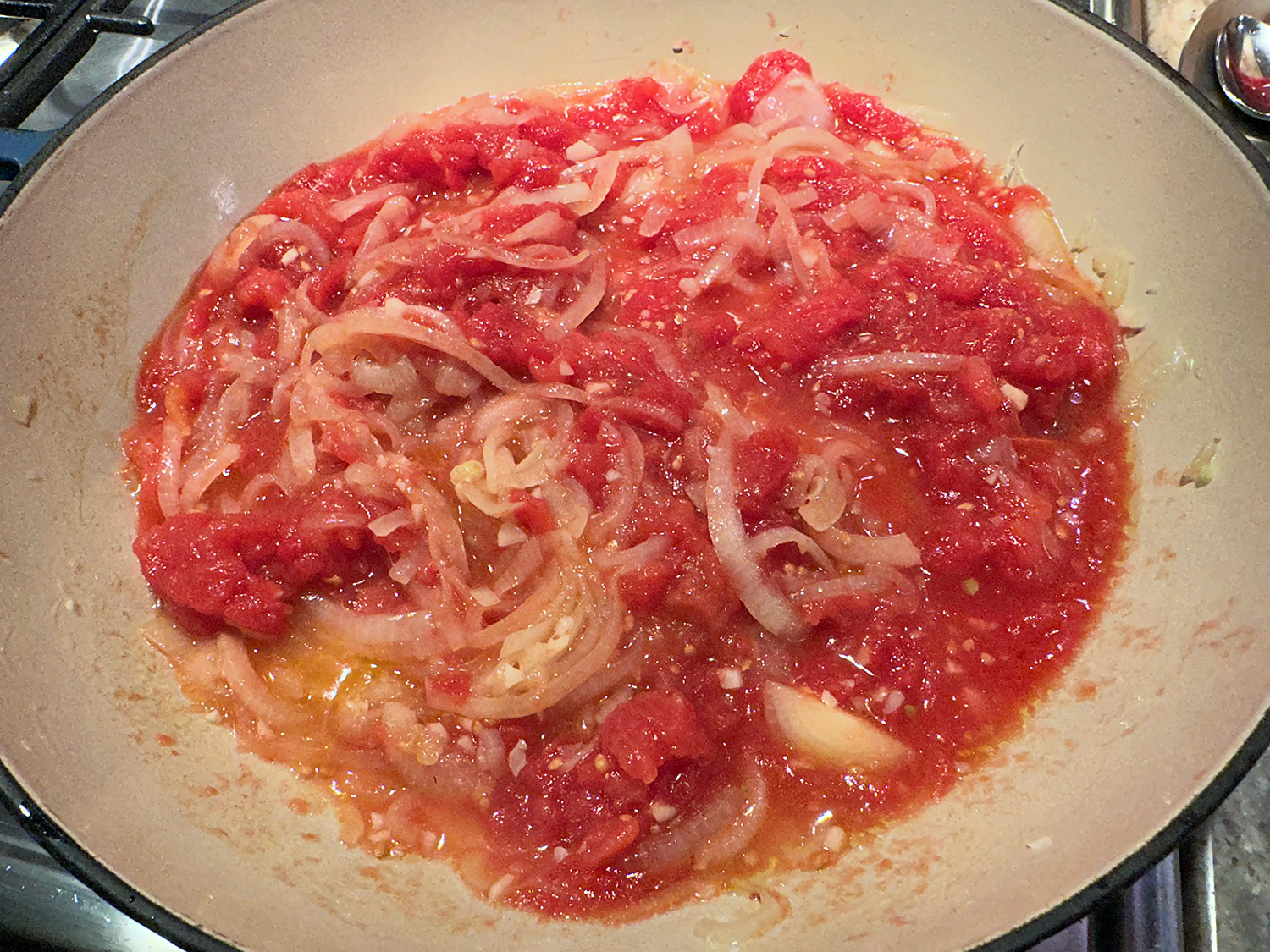
OK, so let’s get to the delicious recipe. Puttanesca is made from tomatoes, black olives, capers, anchovies, onions, garlic, and herbs, usually oregano and parsley but sometimes also basil; we used cilantro for a change of pace. This particular version leaves out the anchovies, but you could easily add some in if desired.

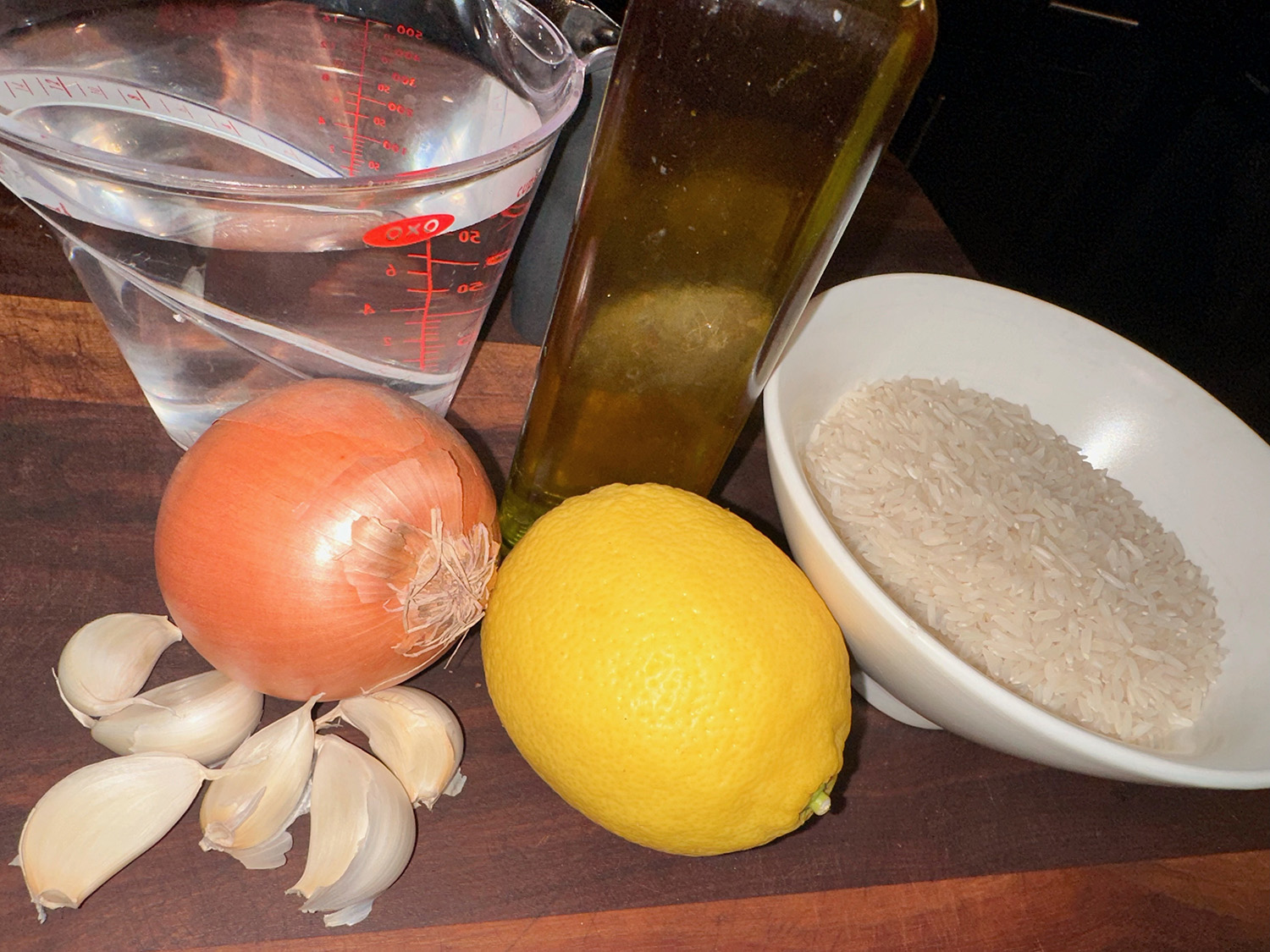
It is an easy sauce, briefly cooked, and is very fragrant and spicy. We paired it here with a Lemon-Garlic Rice, but fell free to use a simple steamed rice.

Braised Tuna Puttanesca

  • Servings: 4
  • Difficulty: easy
  • Print

Ingredients

  • 1/4 cup extra virgin olive oil
  • 1 1/2 cups onion, thinly sliced
  • 2 Tbsp. garlic, minced
  • 28-oz. can whole tomatoes, crushed with hands
  • 1/4 cup capers, rinsed
  • 1/3 cup pitted olives, black or green, or a mix, sliced
  • Pinch red pepper flakes
  • 1 1/2 cups dry white wine
  • 4 tuna steaks, about 6 oz. each
  • 1/4 cup cilantro, chopped
  • 1/4 cup slivered almonds, toasted
  • Lemon Garlic Rice (see recipe below)

Directions

  1. Heat oil in large saute pan. Add onions and cook for about 4 minutes.
  2. Add garlic and cook 1 minute. Add tomatoes; saute until softened, about 3 minutes.
  3. Add capers, olives, pepper flakes and wine. Bring to simmer. Add tuna steaks. Reduce heat to low. Cover and simmer for 10-15 minutes. Remove tuna and keep warm.
  4. Reduce sauce to desired consistency. Stir in cilantro. Serve tuna with warm sauce and sprinkle with slivered almonds.
  5. Serve with Lemon Garlic Rice, (see recipe below).

http://www.lynnandruss.com

Lemon-Garlic Rice

Lemon-Garlic Rice

  • Servings: 4
  • Difficulty: easy
  • Print

Ingredients

  • 2 Tbsp. olive oil
  • 1/2 cup onion, minced
  • 2 Tbsp. garlic, minced
  • 1 cup long-grain white rice, uncooked
  • 2 cups water
  • Pinch salt
  • 1/2 lemon, juiced
  • 2 Tbsp. chopped cilantro
  • 1 lemon, zested
  • Black pepper

Directions

  1. Heat oil in saucepan over medium high heat. Add onion and cook until soft.
  2. Add garlic and cook one minute.
  3. Add rice and toss to coat with oil. Add water, a pinch of salt and lemon juice. Bring to a boil. Cover and reduce heat to low. Simmer until all liquid is absorbed.
  4. Remove from heat, fluff with fork, toss with lemon zest and chopped cilantro. Season to taste with salt and pepper.

http://www.lynnandruss.com

Baked Cajun Seafood and Rice

Instead of more traditional ground beef lasagna, try this shrimp and crabmeat casserole from Better Homes & Garden. Pair it with a side salad for a satisfying and vegetable-rich dinner.

With the cost of fresh lump carb meat sky-high, refrigerated pasteurized lump crabmeat is an excellent choice over the traditional canned crabmeat or more expensive fresh crab. Look for it at the meat and seafood counter of your supermarket.

When it comes to the rice, measure out 3 cups AFTER it is cooked. The Hubs had an off-moment and cooked too much rice and we used all of it. Although it did not alter the flavor of the dish, it did make it a bit too rice-forward. If you do have extra rice, save it for another meal.

Purchasing a 1-pound bag of frozen salad shrimp made prepping a lot easier because they didn’t need to be peeled and deveined; plus the small size was perfect in the casserole. This is an ideal dish when hosting/attending a potluck lunch or dinner, just make sure to keep it warm until serving time.

Baked Cajun Seafood and Rice

  • Servings: 6-8
  • Difficulty: easy
  • Print

Ingredients

  • 1 lb. fresh or frozen small shrimp, peeled and deveined
  • 1 medium green sweet pepper, chopped
  • 1 onion, chopped
  • 1 stalk celery, sliced
  • 2 cloves garlic, minced
  • 3 Tbsp. butter, divided
  • ½ tsp. dried thyme, crushed
  • 3 cup cooked long grain white rice, (1 cup uncooked)
  • 4 strips thick-cut bacon, chopped
  • 8 cups fresh baby kale or spinach, stems removed
  • 2 Tbsp. butter
  • 2 Tbsp. all-purpose flour
  • 1 Tbsp. Cajun seasoning
  • 2 cup milk
  • 2 cups shredded Monterey Jack cheese (8 oz.)
  • 16 oz. cooked crabmeat, flaked
  • ½ cup shredded Parmesan cheese (2 oz.)
  • ½ cup chopped green onions (4)

Directions

  1. Make rice according to package directions.
  2. Thaw shrimp, if frozen; set aside. Preheat oven to 350°F. In a large skillet cook the green pepper, onion, celery, and garlic in 1 tablespoon hot butter over medium heat about 4-5 minutes or until vegetables are tender.
  3. Stir in thyme; cook and stir for 1 minute. Transfer to a large bowl. Add cooked rice; stir to combine. Set aside.
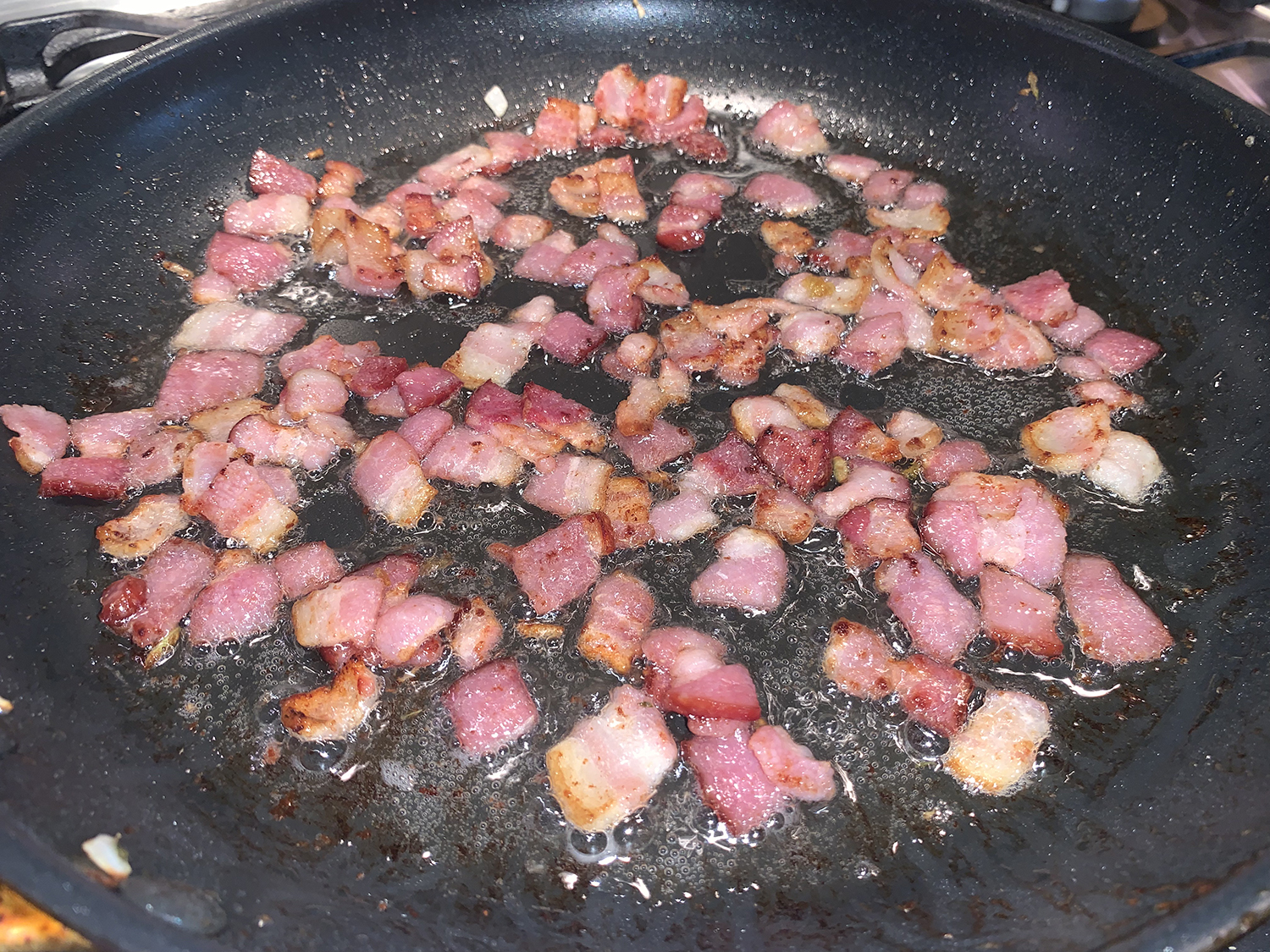
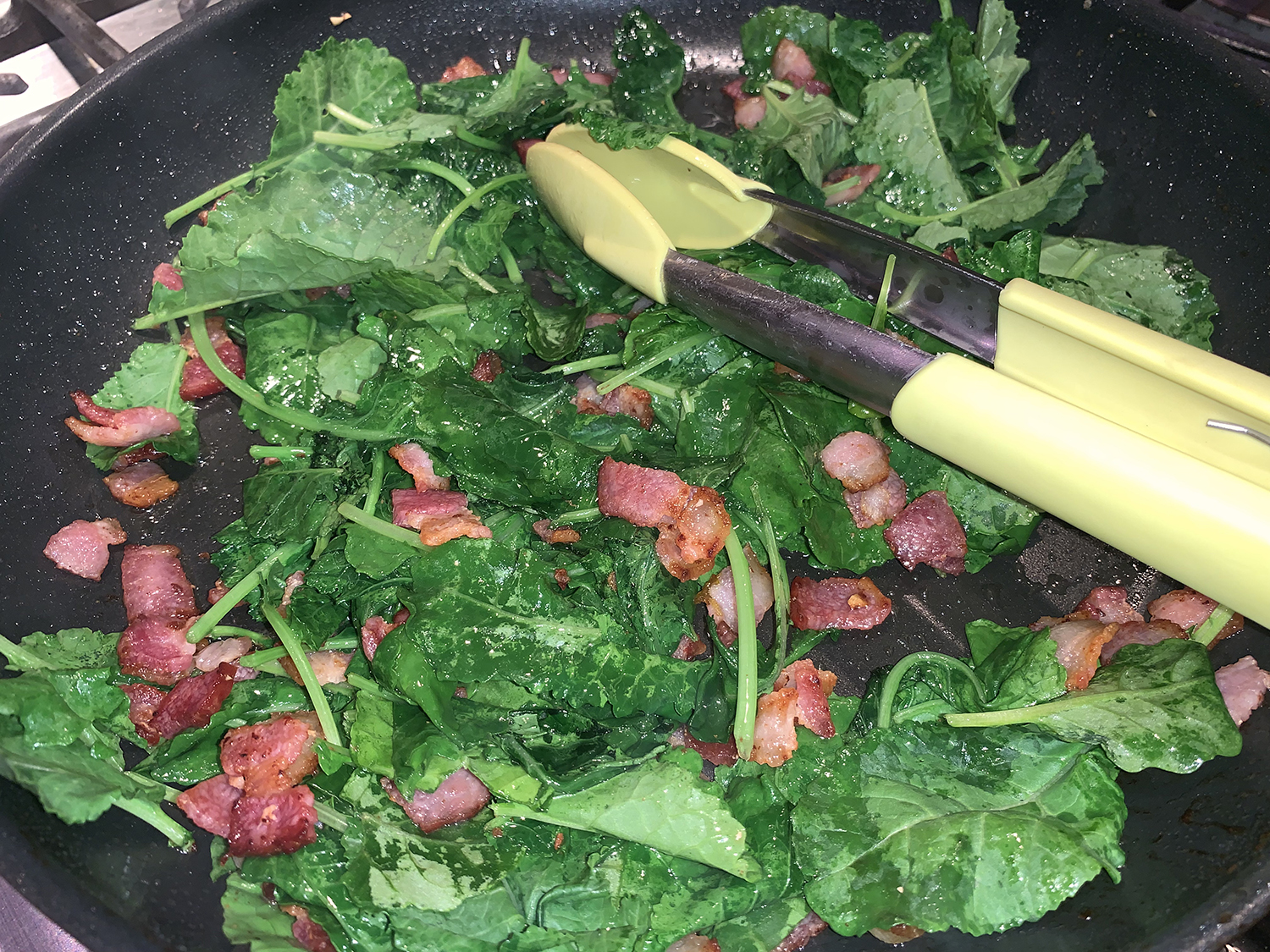
  4. In the same skillet cook bacon over medium heat until crisp. Add the kale; cook and stir for 3 to 5 minutes or until wilted and tender. Remove from heat. Set aside.
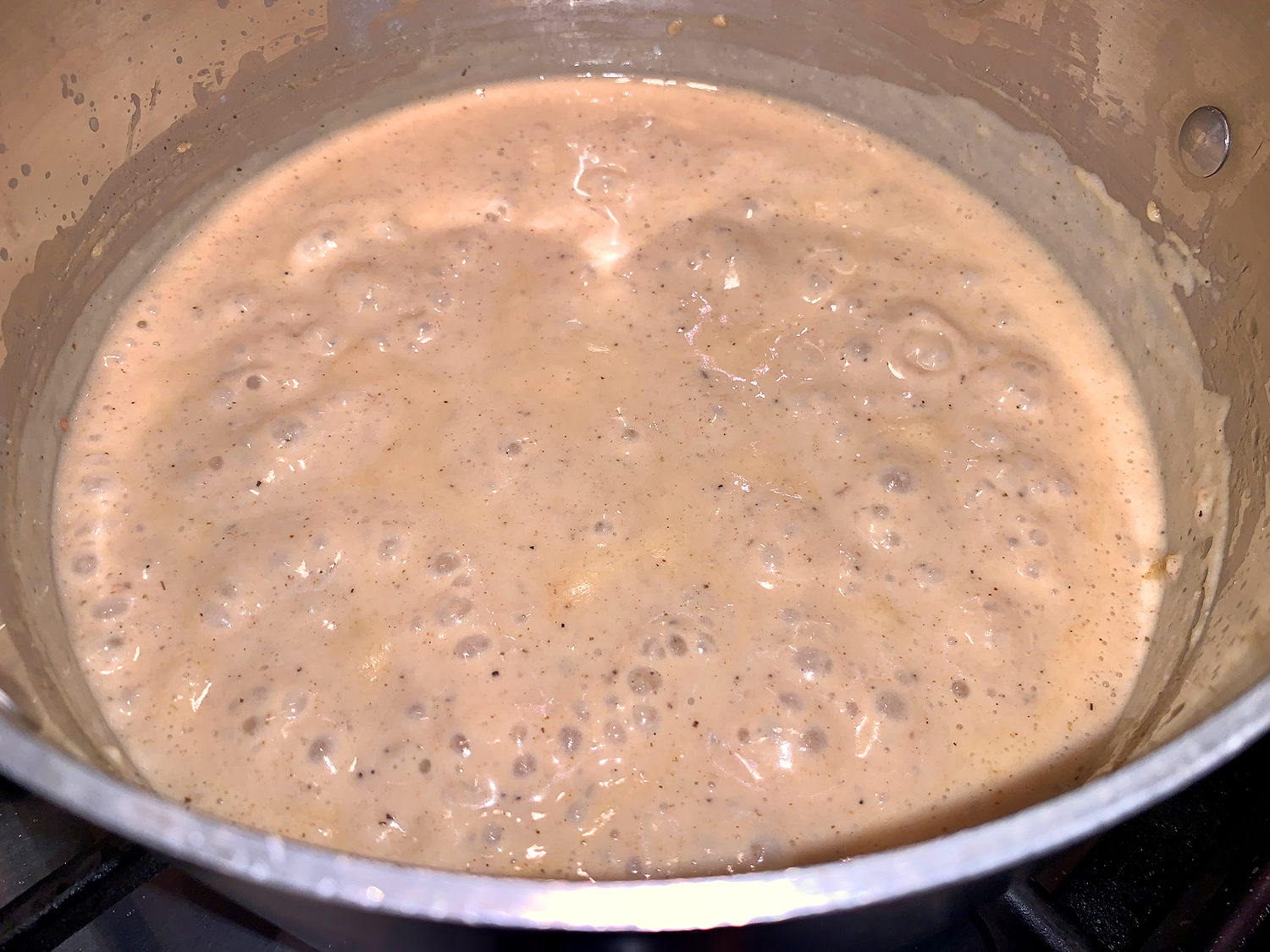
  5. In a medium saucepan melt 2 tablespoons butter over medium heat. Stir in flour and Cajun seasoning; cook and stir for 1 minute.
  6. Stir in milk; cook and stir until thickened and bubbly. Cook and stir for 1 minute more. Reduce heat to low. Add Monterey Jack cheese; stir until cheese melts.
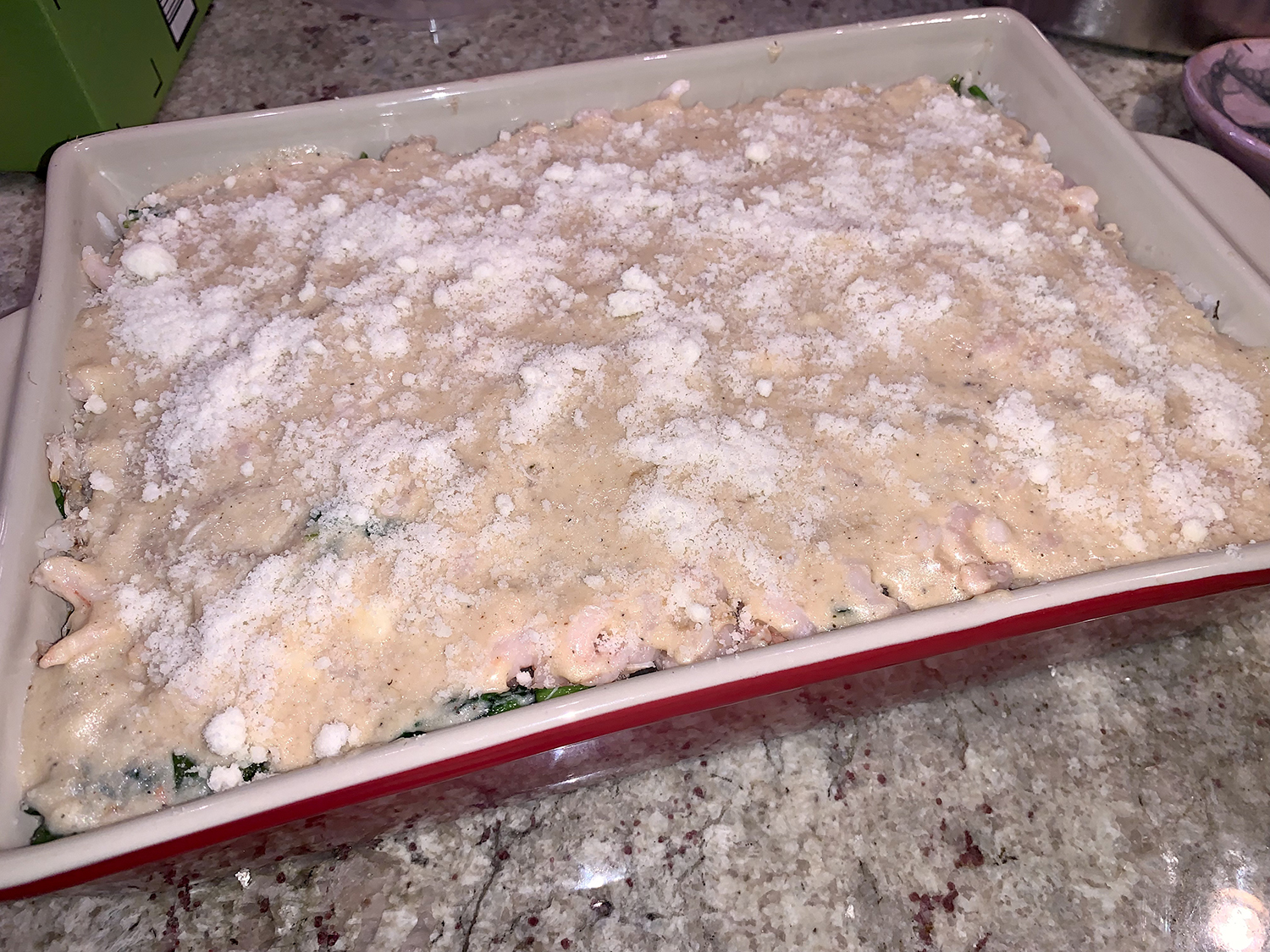
  7. Lightly grease a 4-quart rectangular baking dish. Spread half of the rice mixture over bottom of dish. Layer with half of the kale mixture, half of the shrimp, half of the crabmeat, and half of the cheese sauce. Repeat layers. Sprinkle evenly with Parmesan cheese.
  8. Bake, uncovered, for 30-45 minutes or until bubbly and lightly golden. Sprinkle with green onions.

http://www.lynnandruss.com

Roughly adapted from a recipe for Better Homes & Garden

Ground Lamb Pulao

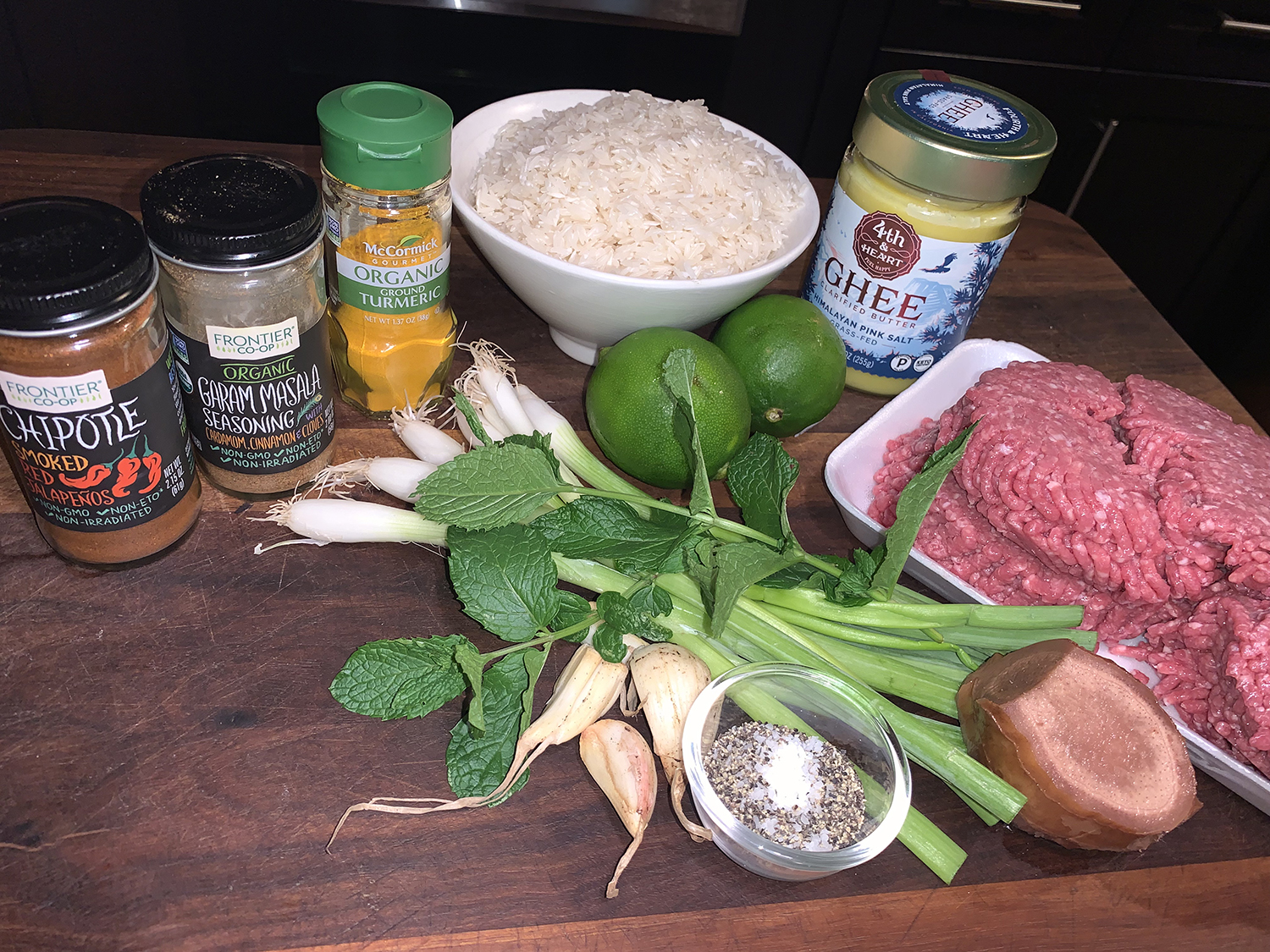
The aroma of fresh mint and spices permeates this bright, turmeric-painted pulao made with basmati rice and ground lamb. This recipe, which has origins in the ground meat pulaos of India, is quite flexible and open to additions: a handful of fresh dill, a generous sprinkling of fried peanuts or other nuts, or crispy, fried onions tossed in just before serving.

It also works well if you substitute beef for the lamb, and really needs no sides, except maybe some raita, creamy plain yogurt or a salad. And we did just that, a simple side salad completed our meal.

We had plenty leftover with only the two of us for dinner. The extras were refrigerated and a day later reheated and enjoyed for lunch.

Ground Lamb Pulao

  • Servings: 4-6
  • Difficulty: easy
  • Print

Ingredients

  • 2 cups basmati rice
  • 1 ½ lbs. ground lamb or beef
  • 1 tsp. ghee, unsalted butter or extra-virgin olive oil
  • 4 garlic cloves, peeled and grated
  • 2 Tbsp. grated fresh ginger
  • 1 ½ tsp. garam masala
  • ½ tsp. red chile powder
  • ½ tsp. black pepper
  • 2 tsp. kosher salt
  • 3 Tbsp. lime juice
  • ½ tsp. ground turmeric
  • 1 bunch scallions (about 6), trimmed and thinly sliced
  • ¼ cup loosely packed fresh mint leaves

  1. Check the rice and discard any debris. Place the rice in a fine-mesh sieve and rinse under running water until the water runs clear. Place the rice in a bowl, cover with water by 1 inch, and soak for 30 minutes.
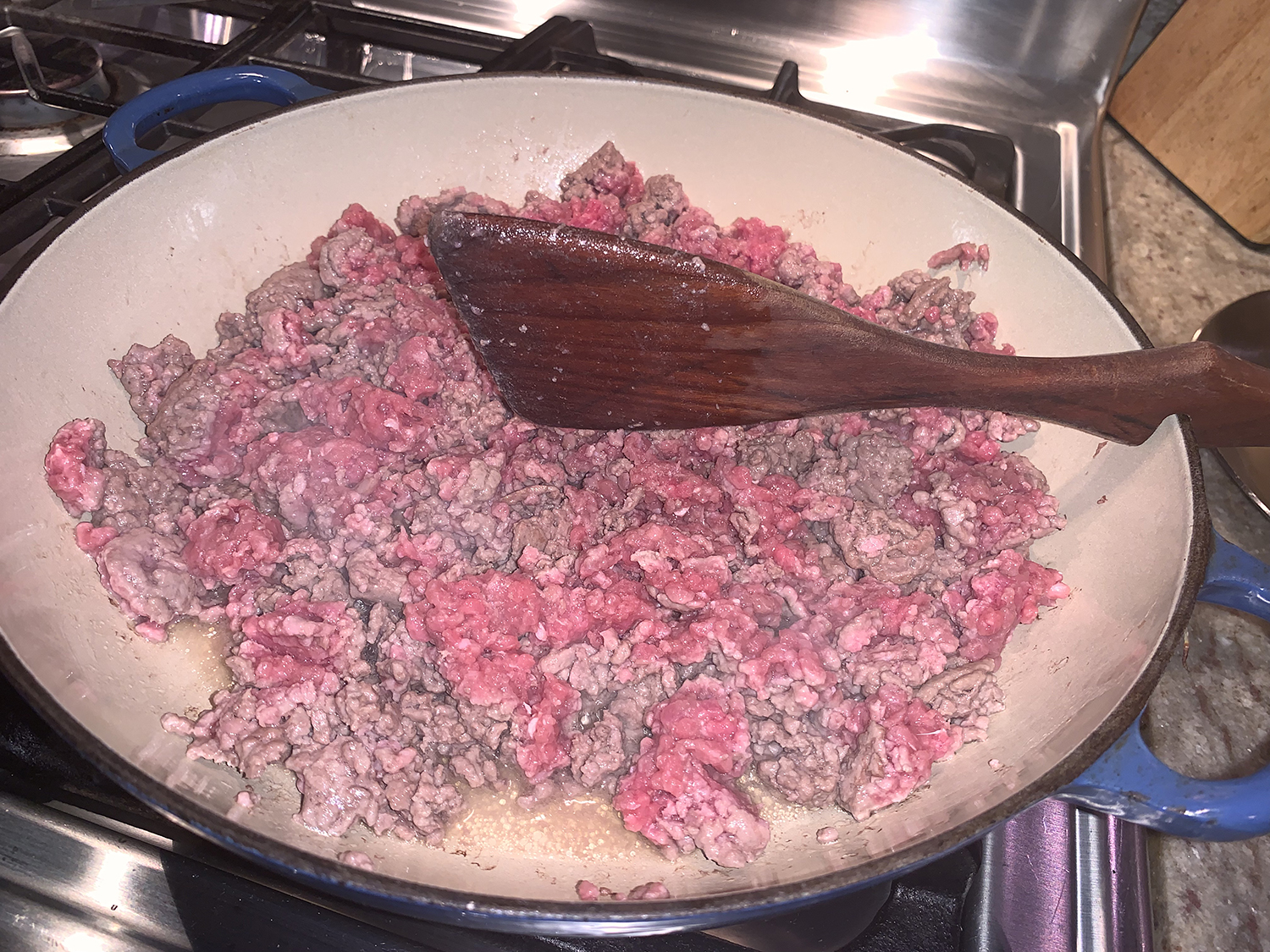
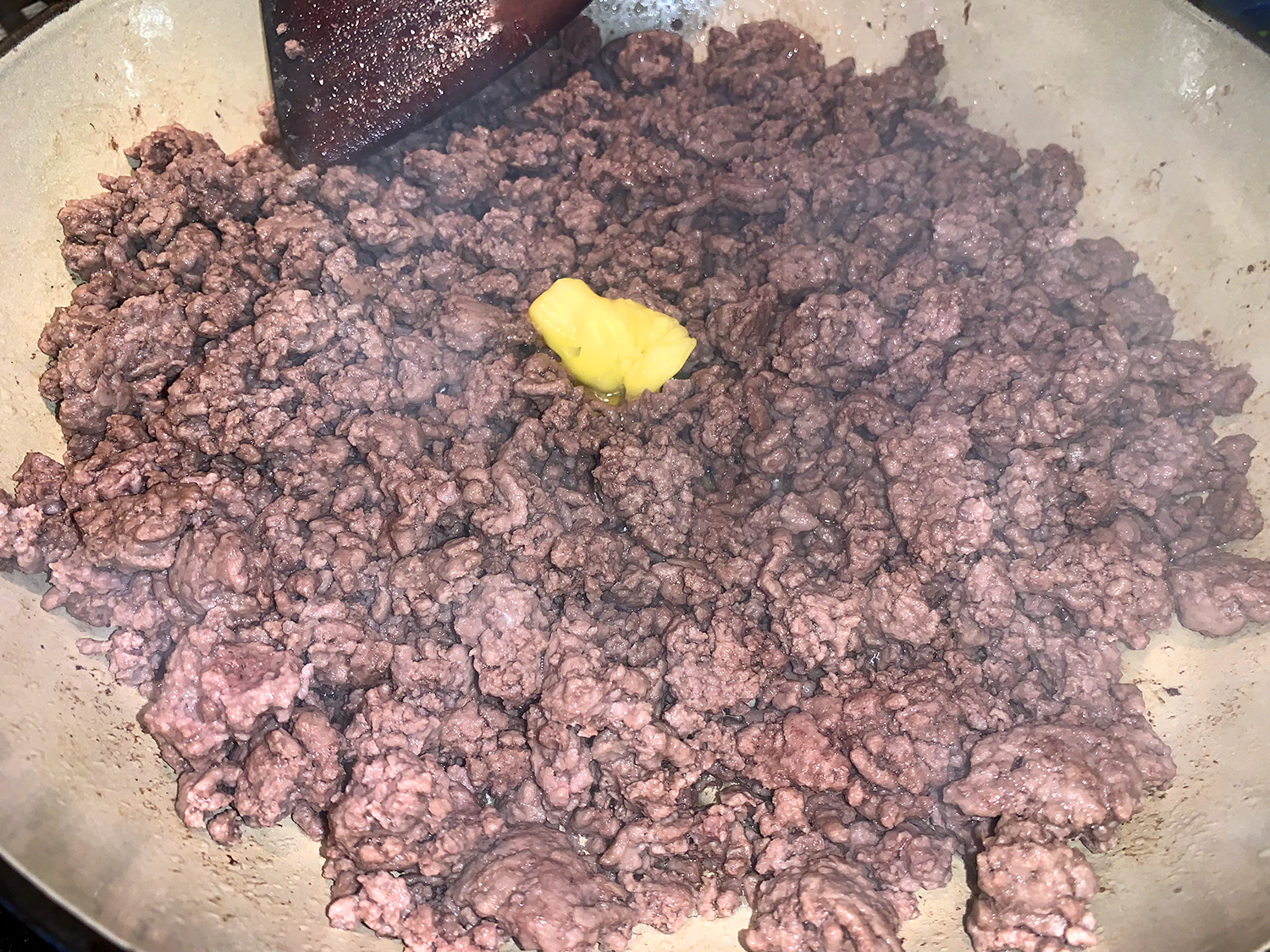
  2. As the rice soaks, cook the lamb: Place a medium saucepan with a heavy lid or a Dutch oven over medium heat. When the saucepan is hot, break the lamb into chunks, and cook until the fat renders, about 2 minutes. Drain most of the fat, leaving behind 1 to 2 tablespoons, and continue to cook the lamb until it browns, another 2 minutes.
  3. Add the ghee and heat over medium until it melts, 30 to 45 seconds. Add the garlic and ginger and sauté for 1 minute.
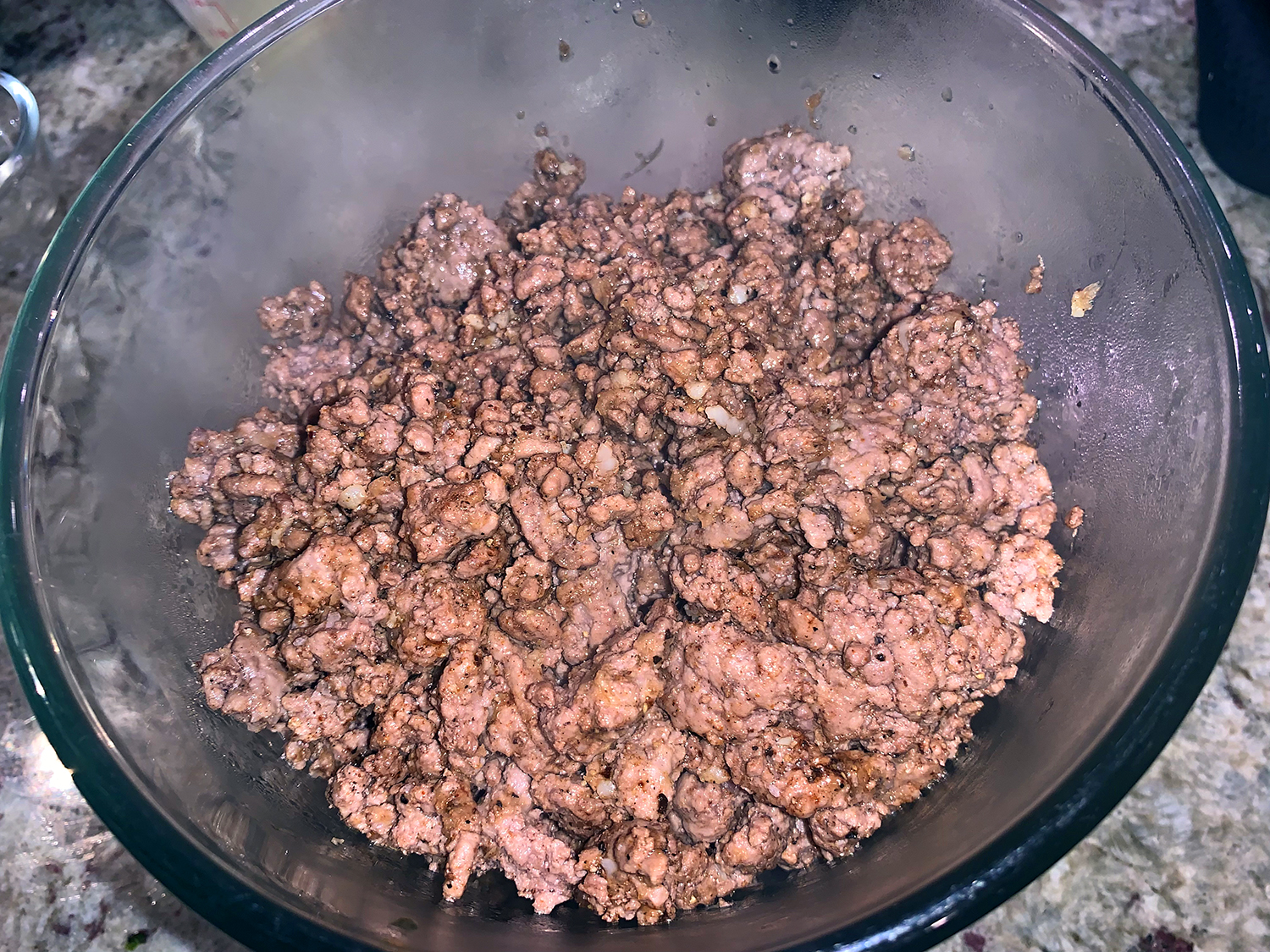
  4. Add the garam masala, chile powder, black pepper and 1 teaspoon salt and sauté until the spices are fragrant, 1 minute. Add 1 tablespoon lime juice and stir until the flavors come together, about 1 minute.
  5. Transfer the lamb mixture to a large bowl and keep warm. (To do so, you could transfer it to a 250-degree oven.) Clean the saucepan and wipe dry.
  6. Drain the soaked rice. Add to the same saucepan and cover with water by 1 inch. Stir in 1 tablespoon lime juice, the turmeric and the remaining 1 teaspoon salt. Bring to a boil over medium heat, then cover, and reduce heat to simmer until the rice absorbs all the water, about 10 minutes. (Do not stir the rice as it cooks, or the grains might break.) Remove the saucepan from heat, and let sit, uncovered, for 5 minutes.
  7. Stir the rice into the cooked lamb mixture, then drizzle with the remaining 1 tablespoon lime juice. Fold the scallions and mint into the rice, and serve immediately.

Directions

http://www.lynnandruss.com

Adapted from a recipe by Nik Sharma for NYTimes Cooking

Coconut-Miso Salmon Curry

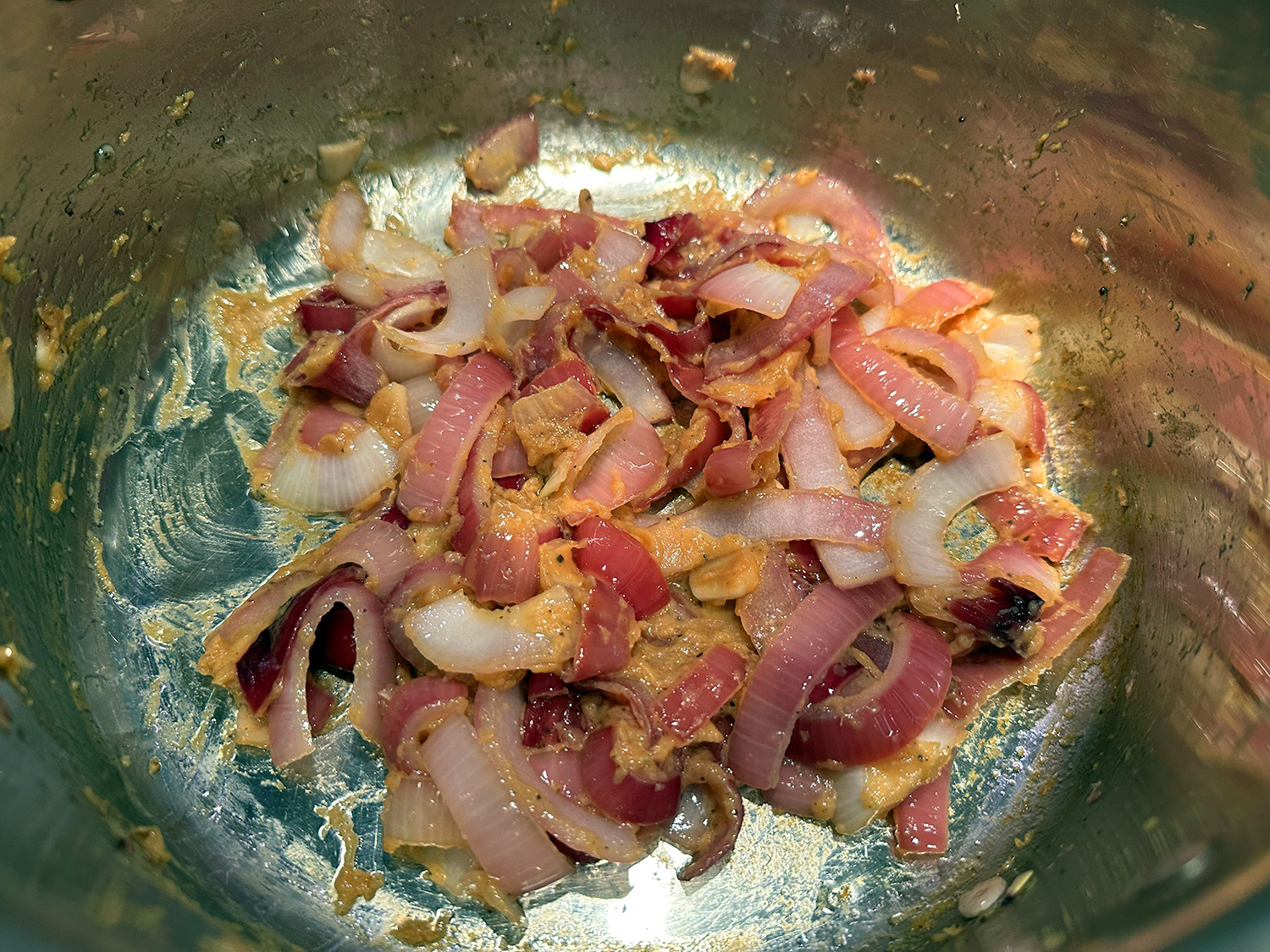
This light, delicate weeknight curry comes together in less than 30 minutes and is defined by its deep miso flavor. Miso is typically whisked into soups toward the end of the recipe, but sweating it directly in the pot with ginger, garlic and a little oil early on helps the paste caramelize, intensifying its earthy sweetness.
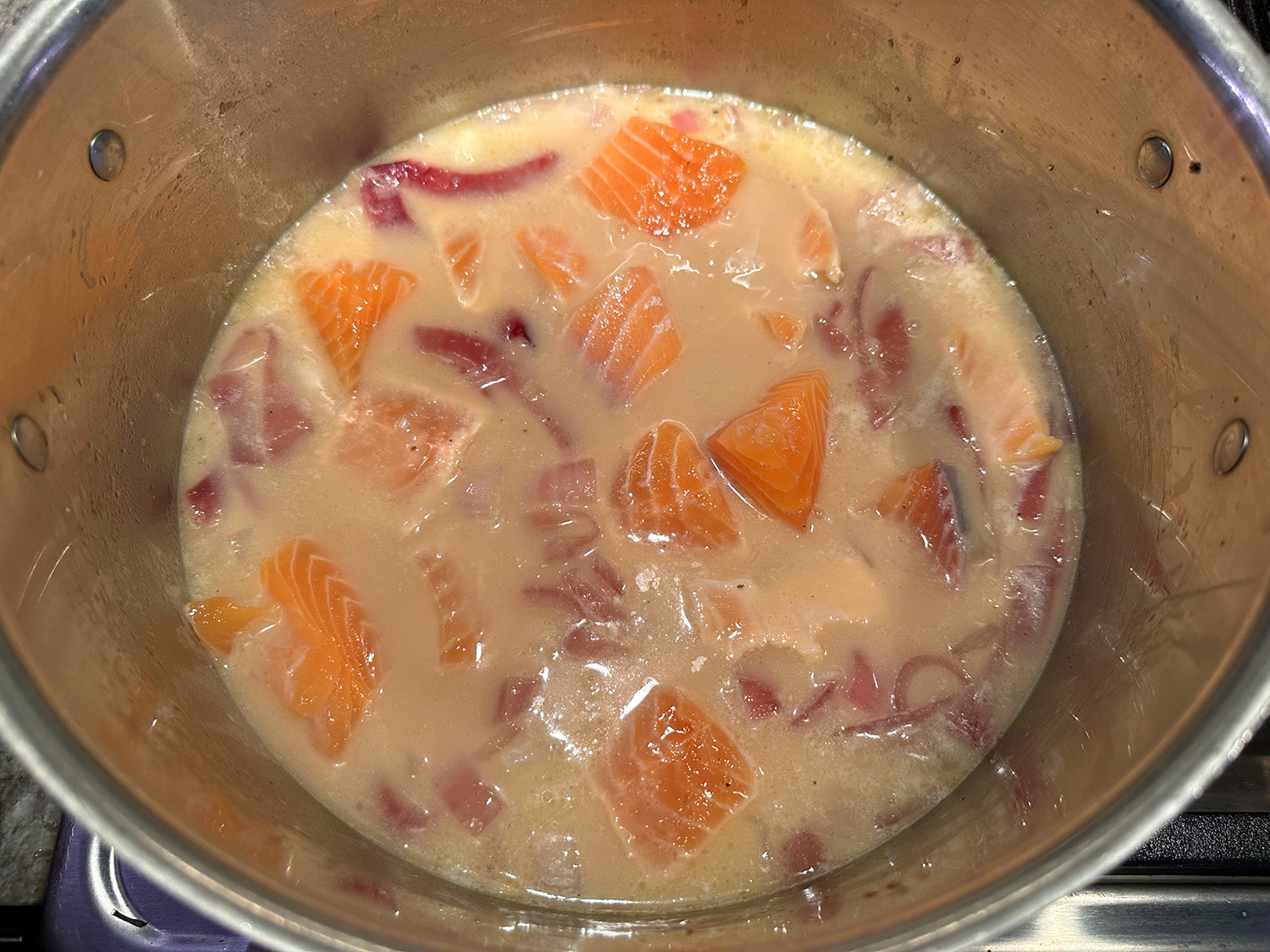
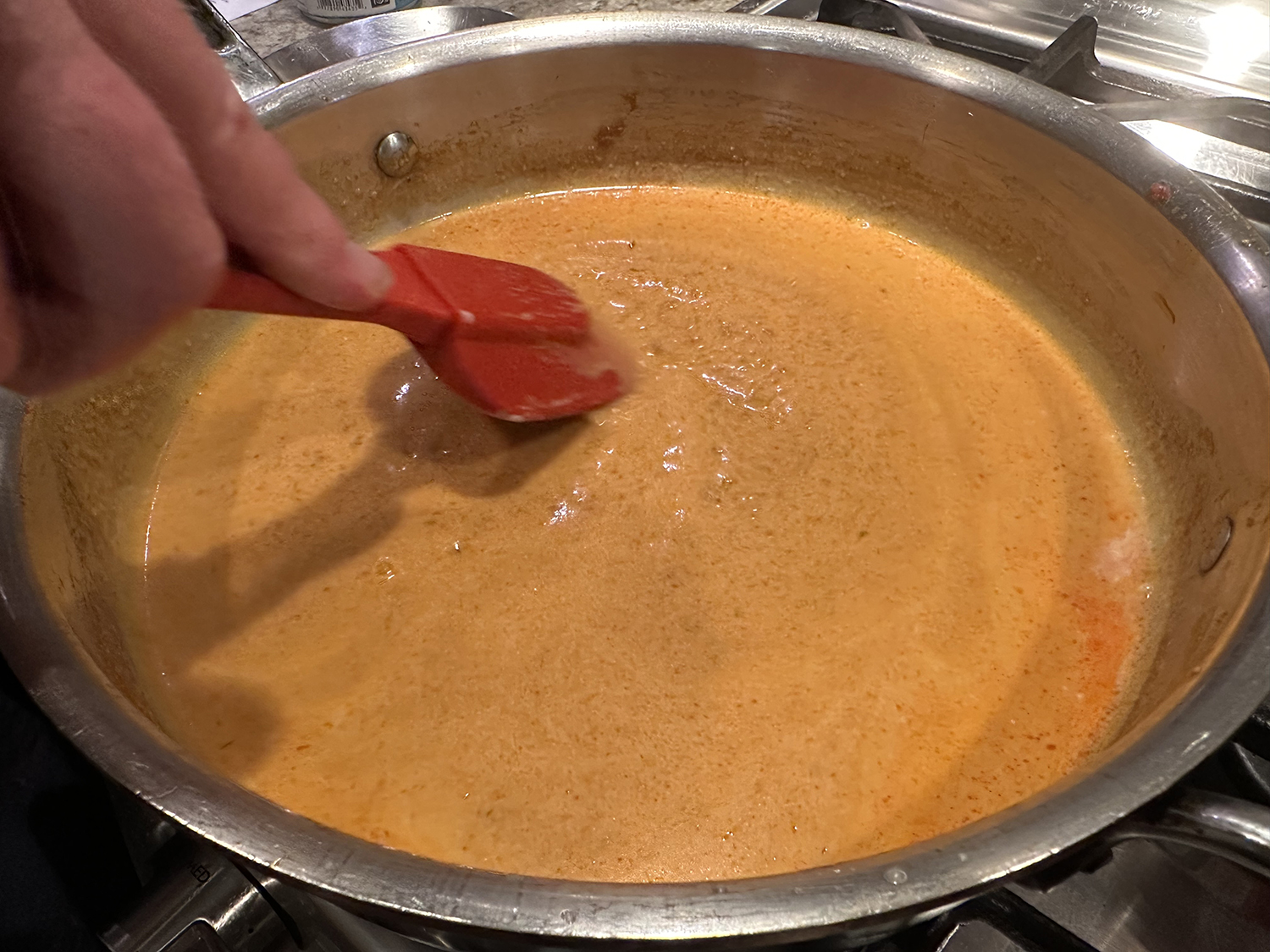
Unfortunately, I misread the instructions and didn’t add the miso until after the coconut milk had been boiling for several minutes, missing out on the nice caramelization—mea culpa. While the overall flavor is on the mild side, adding a tablespoon of red Thai curry paste at the same time as introducing the miso to the pot, will provide a more pronounced touch of heat and deepen the overall color.
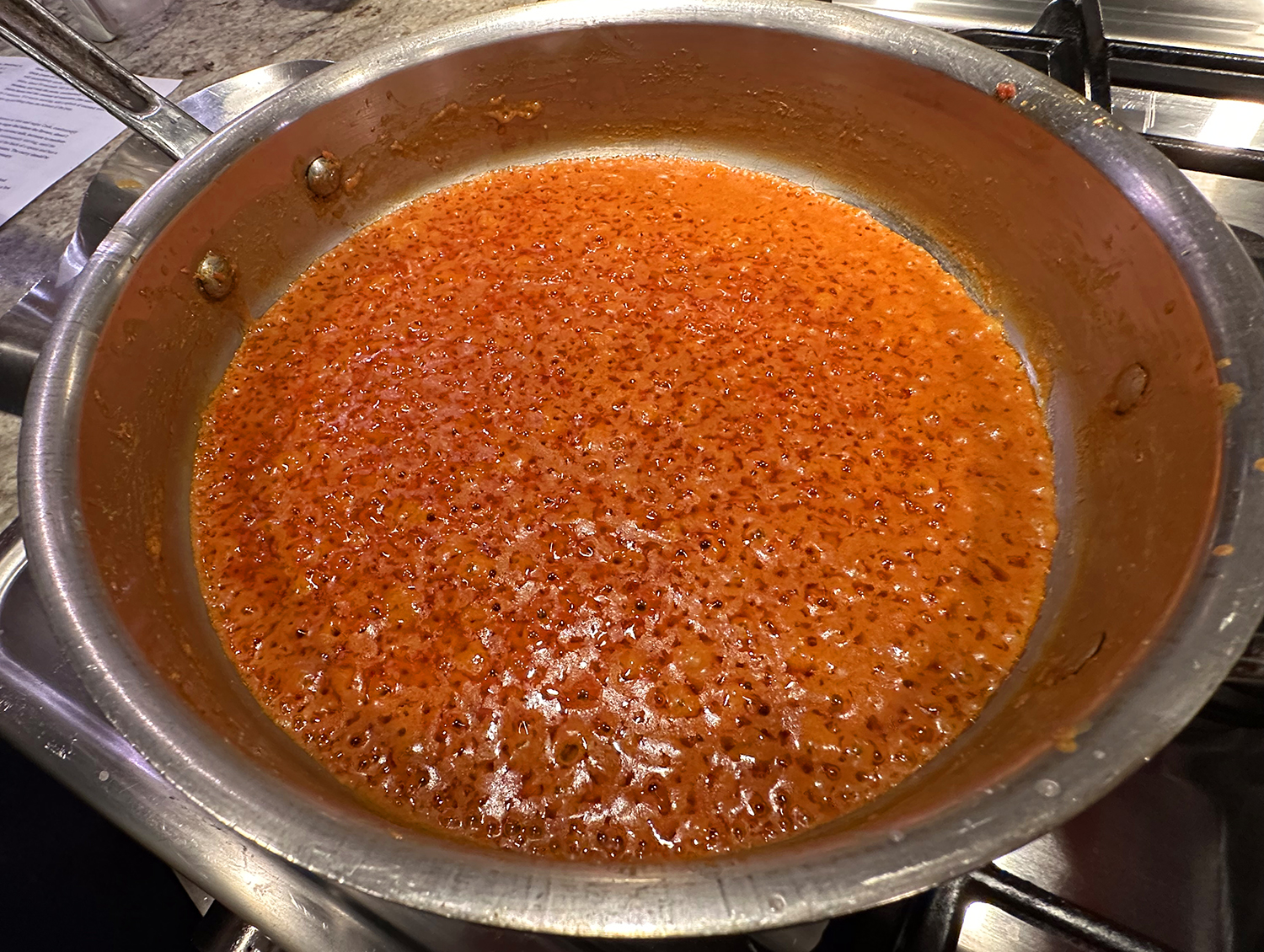
Adding coconut milk creates a rich broth that works with a wide range of seafood. Salmon is used here, but flaky white fish, shrimp or scallops would all benefit from this quick poaching method. A squeeze of lime and a flurry of fresh herbs keep this curry bright and citrusy. For a hit of heat, garnish with sliced fresh jalapeño or serrano chile peppers.

Coconut-Miso Salmon Curry

  • Servings: 4
  • Difficulty: easy
  • Print

Ingredients

  • 2 Tbsp. safflower or canola oil
  • 1 medium red onion, halved and sliced 1/2-inch thick (about 2 cups)
  • 1 (1-inch) piece fresh ginger, minced (about 2 Tbsp.)
  • 3 garlic cloves, thinly sliced
  •  Kosher salt and black pepper
  • ¼ cup white miso
  • ½ cup unsweetened, full-fat canned coconut milk
  • 1 1/2-lb. salmon fillet, cut into 2-inch pieces
  • 5 oz. baby spinach (about 5 packed cups)
  • 1 Tbsp. fresh lime juice, plus lime wedges for serving
  •  Steamed rice, such as jasmine or basmati, for serving
  • ¼ cup chopped fresh basil
  • ¼ cup chopped fresh cilantro

Directions

  1. In a large pot, heat 2 tablespoons oil over medium. Add onion, ginger and garlic and season with salt and pepper. Cook, stirring occasionally, until softened, about 3 minutes.
  2. Add miso and cook, stirring frequently, until miso is lightly caramelized, about 2 minutes.
  3. Add coconut milk and 3 cups water and bring to a boil over high heat. Cook until liquid is slightly reduced, about 5 minutes.
  4. Stir in salmon, reduce the heat to medium-low and simmer gently until just cooked through, about 5 minutes. Turn off heat and stir in spinach and lime juice.
  5. Divide rice among bowls. Top with salmon curry, basil and cilantro. Serve with lime wedges for squeezing on top.

http://www.lynnandruss.com

Adapted from a recipe by Kay Chun for NYTimes Cooking