All posts by LynnHoll

Unknown's avatar

About LynnHoll

I have been an artist and designer all my life incorporating graphic design for websites, gardens, publications, fabrics, interior design and cooking. I am now retired from my professional job, but still create artistic visions in all forms on a daily basis.

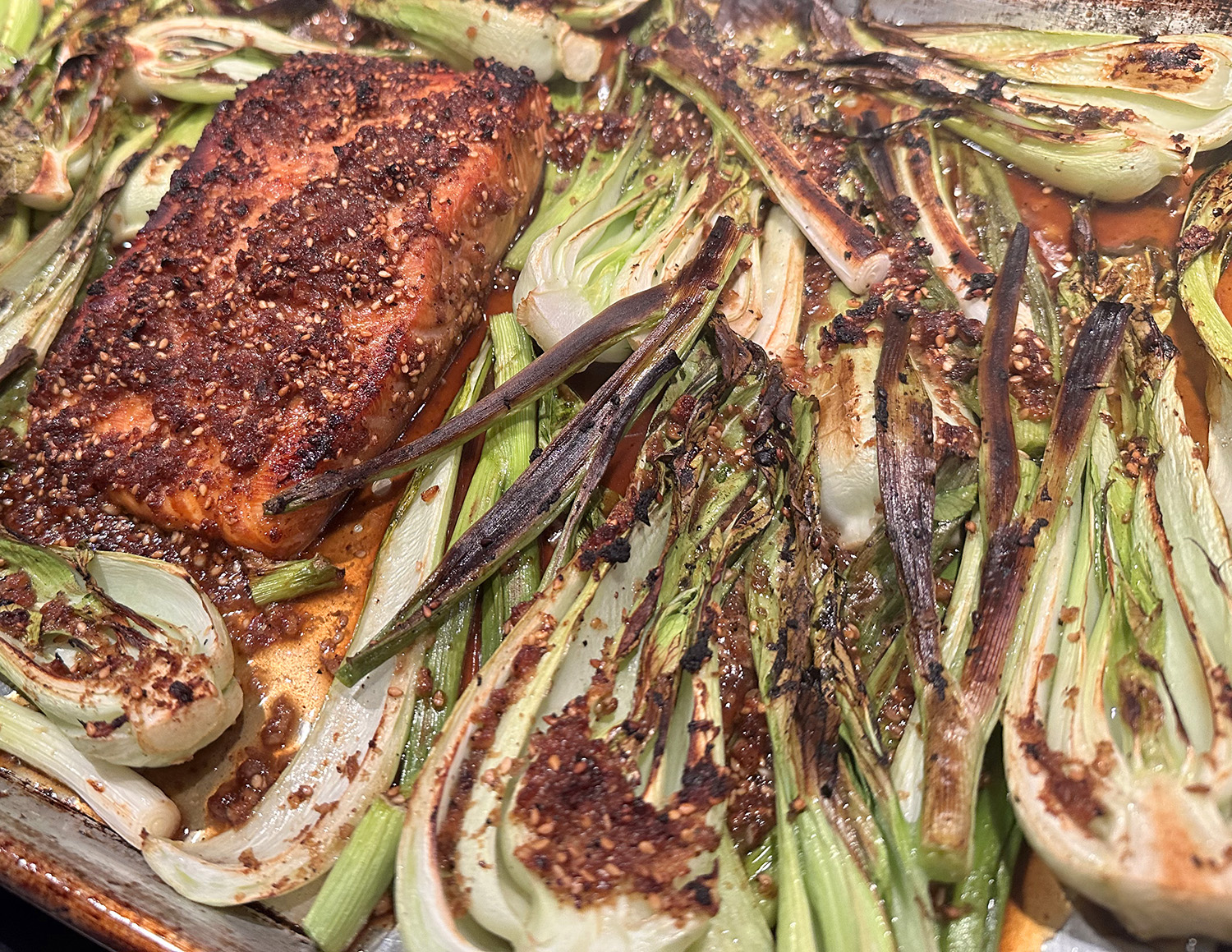
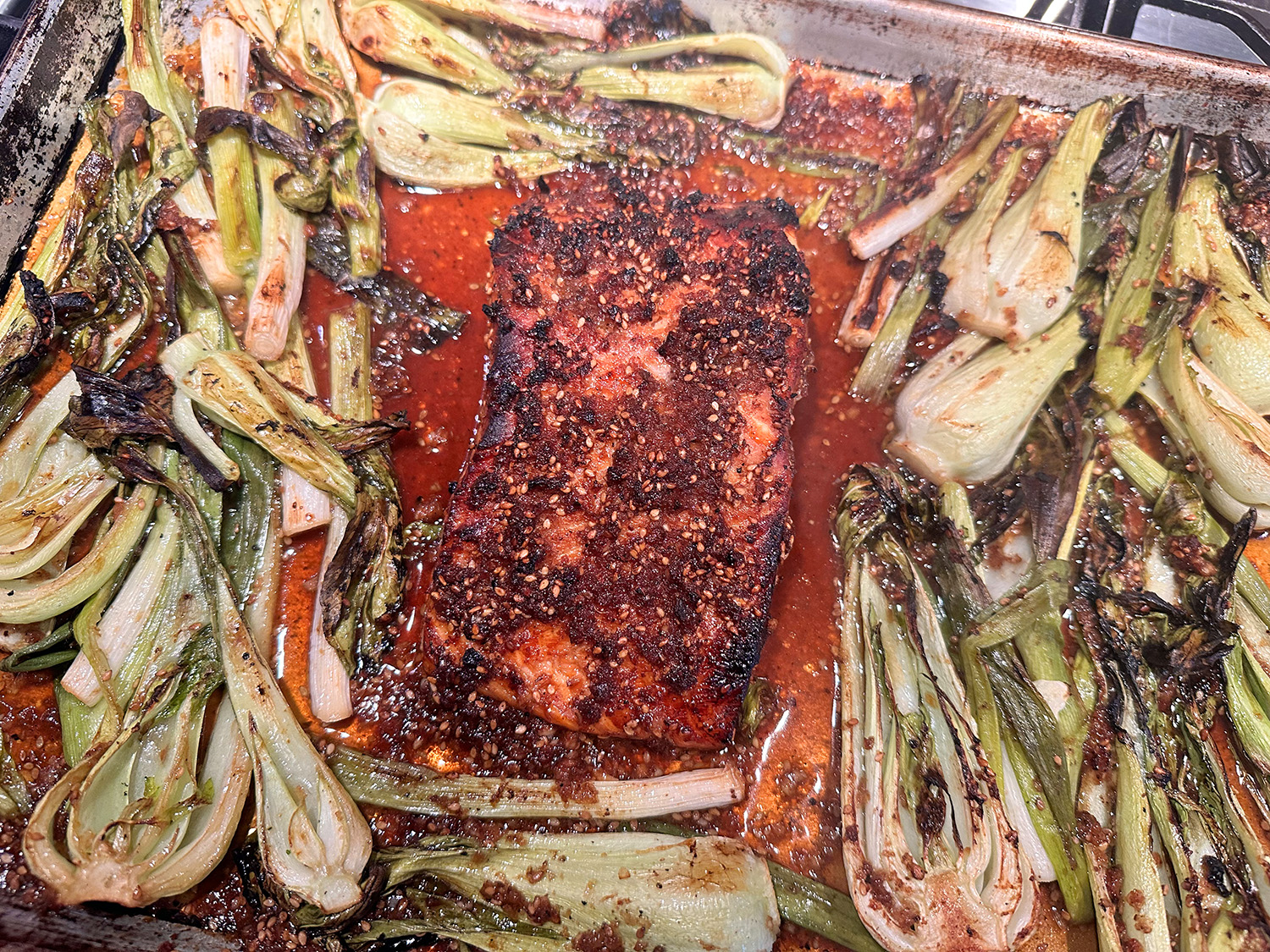
Glazed Black Cod with Baby Bok Choy and Scallions

A flavor-packed marinade of salty soy sauce and sweet honey coats black cod for a quick but flavorful dinner. Black cod is a species of cod fish found in the North Pacific Ocean; also known as sablefish, butterfish, and blue cod, it is a rich white-flesh fish with a moist, succulent texture. It is not a true cod.

When it comes to home cooking, Alaskan black cod is an exceptional choice. Black cod has a meaty and flaky texture, making it incredibly versatile and pretty forgiving in the oven. In fact, it’s rather difficult to overcook this fish, making it a popular option for home chefs of all backgrounds.
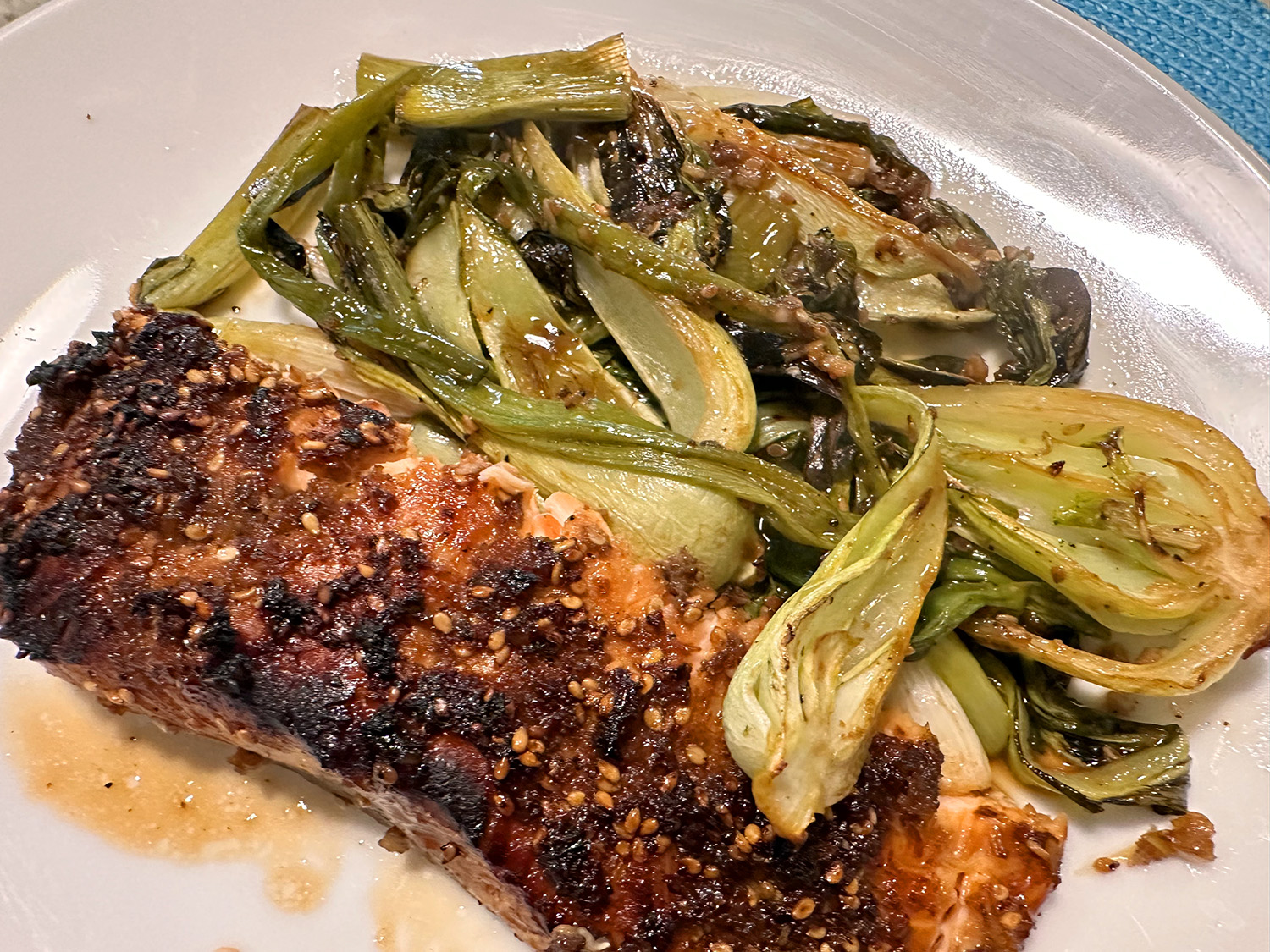
The backbone of this simple, flavor-packed marinade is the salty soy sauce and sweet honey that permeate the fish, bok choy, and scallions while they cook together under the broiler—and all on the same baking sheet. Everything is ready in less than 15 minutes and the result is lightly charred vegetables and perfectly cooked fish that flakes easily with a fork.

The secret yet simple flavor-enhancing trick of this dish is the Sichuan peppercorns that are lightly toasted beforehand, and add tingling heat to the dish, making this meal even more of a stand-out.

Unable to source black cod at the time, salmon was noted as an acceptable substitution. And just for the 2 of us, we cooked a one-pound piece; but kept the amounts of marinating ingredients the same. To make the meal more vegetable-centric, we nearly doubled the baby bok choy.

Glazed Black Cod with Baby Bok Choy and Scallions

  • Servings: 4
  • Difficulty: easy
  • Print

Ingredients

  • 1 1/2 tsp. Szechuan peppercorns
  • 6 Tbsp. lower-sodium soy sauce
  • 1/4 cup honey
  • 6 garlic cloves, minced (about 2 Tbsp.)
  • 2 pieces fresh ginger, peeled and finely chopped (about 2 Tbsp.)
  • 2 Tbsp. rice wine vinegar
  • 1 1/2 Tbsp. toasted sesame seeds
  • 1 Tbsp. hot chile oil
  • 2 (1-lb.) skinless wild Alaskan black cod fillets (about 1 inch thick), pin bones removed
  • 6 heads baby bok choy, halved lengthwise or quartered if large (about 1 1/4 lbs.)
  • 12 medium scallions, halved crosswise
  • 2 Tbsp.s canola oil

Directions

  1. Toast peppercorns in a small skillet over medium, shaking pan often, until fragrant, 2 to 4 minutes. Transfer to a mortar, and let cool slightly, about 1 minute. Crush with pestle into a coarse powder; set aside.
  2. Stir together soy sauce, honey, garlic, ginger, rice vinegar, sesame seeds, chile oil, and crushed peppercorns in a medium bowl. Transfer to a large ziplock plastic bag. Add cod fillets, and seal bag, pressing out as much air as possible. Refrigerate 4 to 8 hours.
  3. Preheat broiler with oven rack 6 to 8 inches from heat. Toss together bok choy, scallions, and oil on a large rimmed baking sheet; spread in an even layer. Remove fish from marinade, reserving marinade. Place fish in center of baking sheet. Pour reserved marinade over fish, bok choy, and scallions, coating well.
  4. Broil in preheated oven until vegetables and fish are nicely charred and fish is just cooked through and flakes easily with a fork, 10 to 12 minutes, rotating baking sheet halfway through broiling time. Serve immediately.

http://www.lynnandruss.com

Adapted from a recipe by Justin Chappel for Food & Wine

Saumon Aux Lentilles (Pan-Seared Salmon with Braised Lentilles Du Puy)

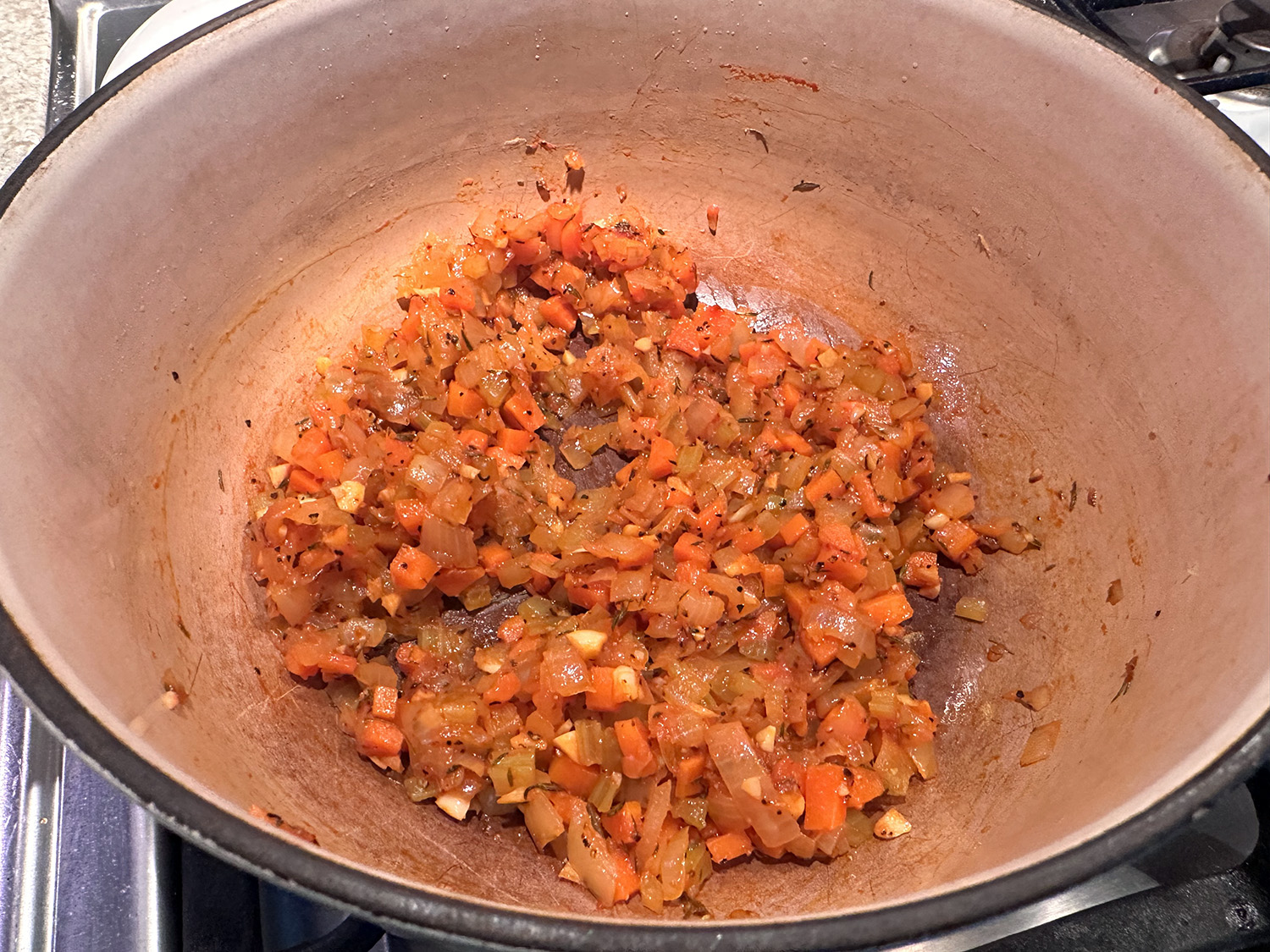
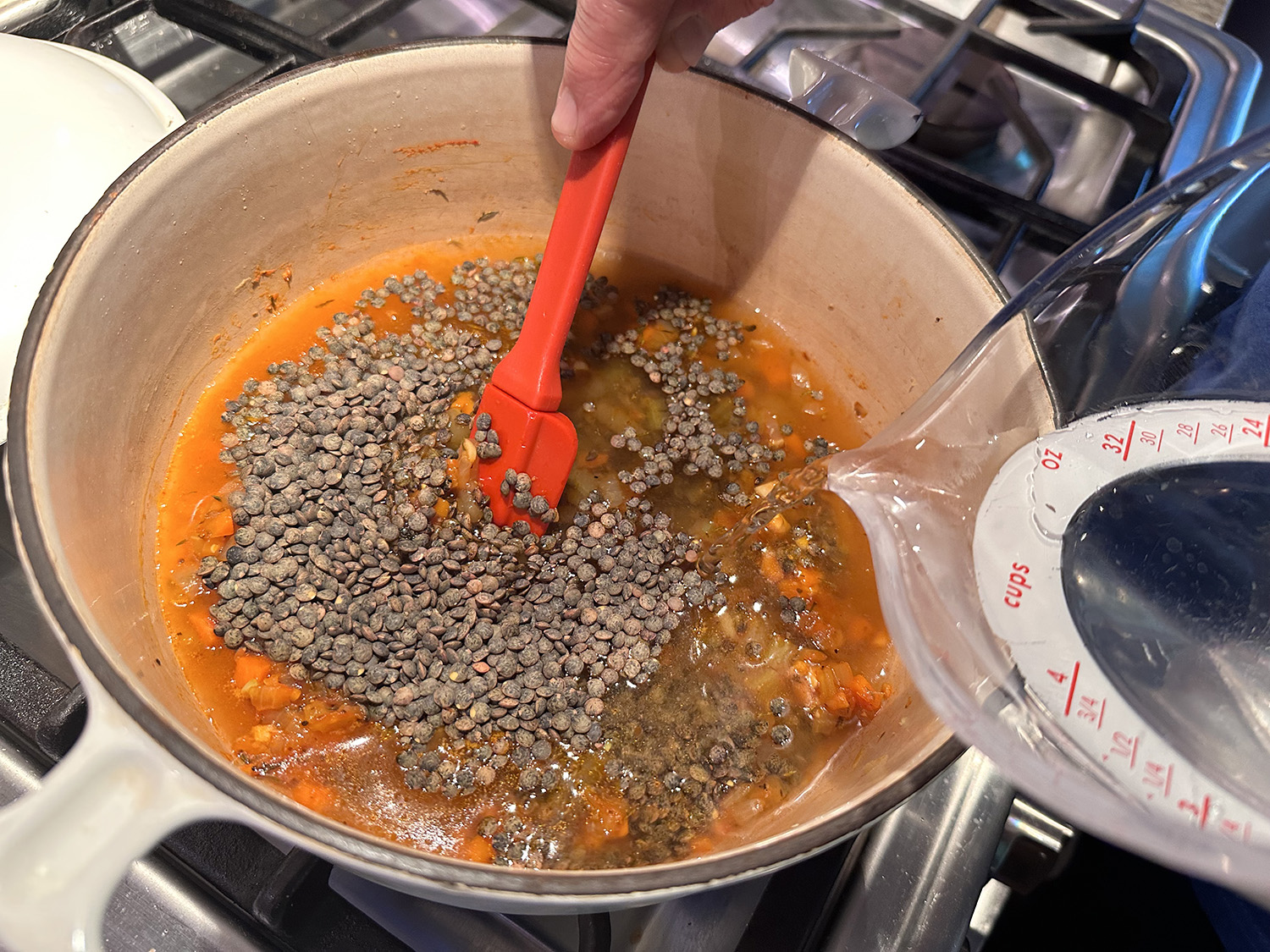
For this version of a classic French pairing, you start by building a flavorful base for the lentils, by gently cooking onion, carrots, and celery in olive oil until soft. Fruity tomato paste and plenty of garlic add even more depth before the lentils and water go in.

When the lentils are fully softened and most of the moisture in the pot has either evaporated or been absorbed, set them aside to focus on the salmon, which is briefly brined in a saltwater solution to season the fish and to ensure that it retained plenty of moisture as it cooked.

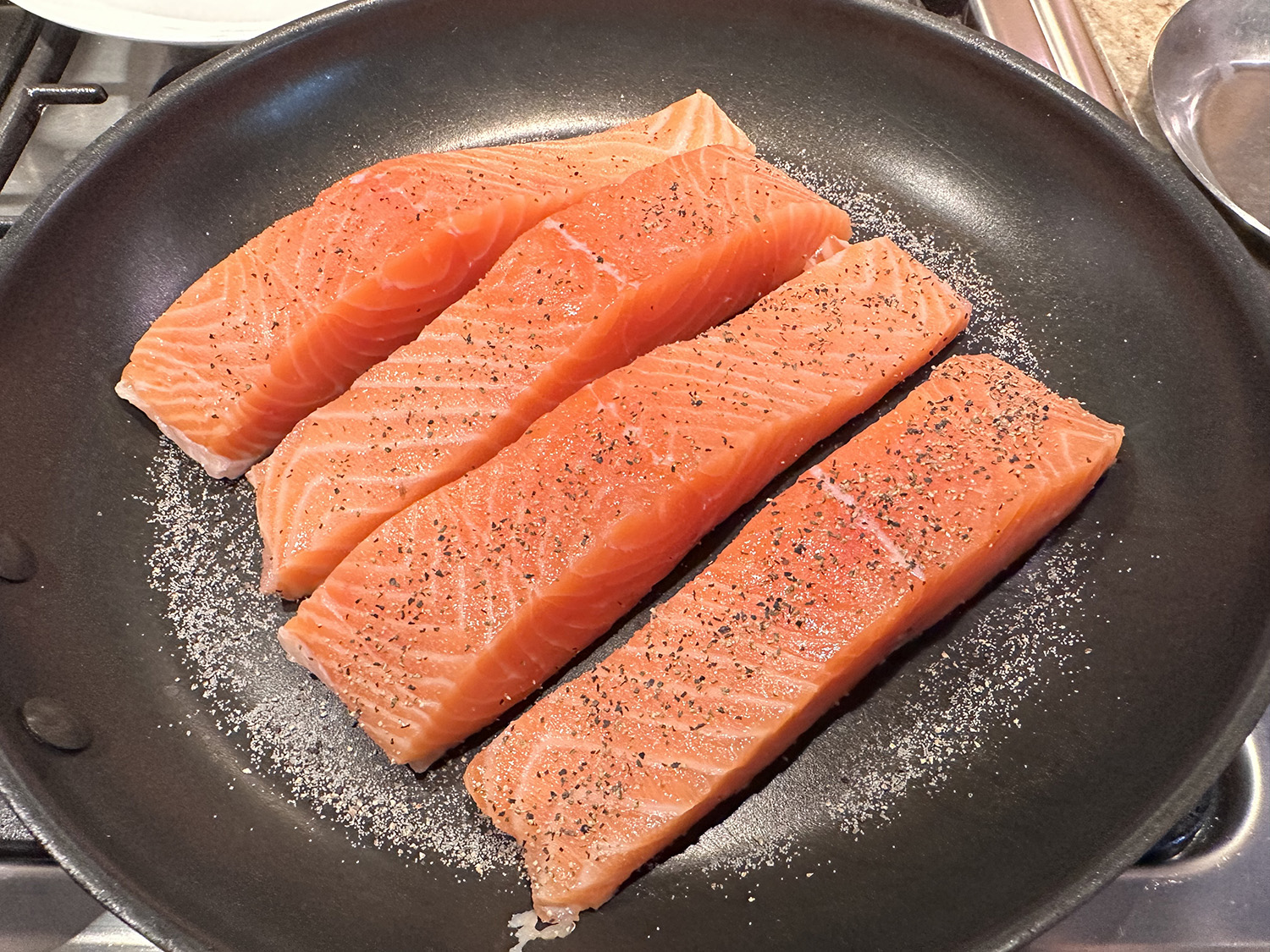
Unconventionally, the salmon skin is placed side down in a cold nonstick skillet that had been strewn with salt and pepper. As the pan heated up, the salmon began to release some of the fat that lies just beneath the skin, crisping it, and enabling us to cook the fish without any additional fat.

A bit of mustard and sherry vinegar stirred into the lentils brightens their flavor, making them an ideal pairing for the rich fish, and a final addition of extra-virgin olive oil adds grassy top notes.

NOTES: To ensure uniform cooking, buy a 1½-pound center-cut salmon fillet and cut it into four pieces. Using skin-on salmon is important here, as we rely on the fat underneath the skin as the cooking medium. If using wild salmon, check for doneness earlier and cook it until it registers 120 degrees. Small, olive-green lentilles du Puy are worth seeking out for their meaty texture, but if you can’t find them, substitute another small green lentil. Do not use red or brown lentils.

Saumon Aux Lentilles (Pan-Seared Salmon with Braised Lentilles Du Puy)

  • Servings: 4
  • Difficulty: easy
  • Print

Ingredients

Lentils

  • 2 Tbsp. extra-virgin olive oil, divided
  • 1 large onion, chopped fine
  • 1 celery rib, chopped fine
  • 1 carrot, peeled and chopped fine
  • ¾ tsp. table salt
  • 1 Tbsp. minced garlic
  • 1 Tbsp. tomato paste
  • ½ tsp. dried thyme
  • ½ tsp. pepper
  • 2½ cups water
  • 1 cup dried lentilles du Puy (French green lentils), picked over and rinsed
  • 1 Tbsp. sherry vinegar
  • 2 tsp. Dijon mustard

Salmon

  • ¾ tsp. table salt, divided,
  • plus ¼ cup for brining fish
  • ¾ tsp. pepper, divided4 (6-oz.) skin-on salmon fillets

Directions

  1. FOR THE LENTILS: Heat 1 tablespoon oil in medium saucepan over medium heat until shimmering. Add onion, celery, carrot, and salt and stir to coat vegetables. Cover and cook, stirring occasionally, until vegetables are softened but not browned, 8 to 10 minutes.
  2. Add garlic, tomato paste, thyme, and pepper and cook, stirring constantly, until fragrant, about 2 minutes. Stir in water and lentils. Increase heat and bring to boil. Adjust heat to simmer. Cover and cook, stirring occasionally, until lentils are tender but not mushy and have consistency of thick risotto, 40 to 50 minutes. Remove from heat and keep covered.
  3. FOR THE SALMON: While lentils are cooking, dissolve ¼ cup salt in 1 quart water in narrow container. Submerge salmon in brine and let stand for 15 minutes. Remove salmon from brine and pat dry with paper towels. Allow to stand while lentils finish cooking.
  4. Sprinkle bottom of 12-inch nonstick skillet evenly with ½ teaspoon salt and ½ teaspoon pepper. Place fillets, skin side down, in skillet and sprinkle tops of fillets with remaining ¼ teaspoon salt and remaining ¼ teaspoon pepper. Heat skillet over medium-high heat and cook fillets, without moving them, until fat begins to render, skin begins to brown, and bottom ¼ inch of fillets turns opaque, 6 to 8 minutes.
  5. Using tongs and thin spatula, flip fillets and continue to cook without moving them until centers are still translucent when checked with tip of paring knife and register 125 degrees (for medium-rare), 5 to 8 minutes longer. Transfer fillets, skin side up, to clean plate.
  6. Warm lentils briefly if necessary. Stir in vinegar, mustard, and remaining 1 tablespoon oil. Season with salt, pepper, and vinegar to taste. Divide lentils among wide, shallow serving bowls. Arrange salmon skin side up on lentils and serve.

http://www.lynnandruss.com

Recipe by Andrea Geary for Cook’s Illustrated

Skirt Steak Saltimbocca

This company-worthy recipe puts a tasty spin on traditional Italian Saltimbocca with thinly pounded skirt steak, wrapped in sage and prosciutto for a delicious variation. Typically, this dish is usually made with veal, but if desired, you could also make this recipe with chicken breasts or pork tenderloin.

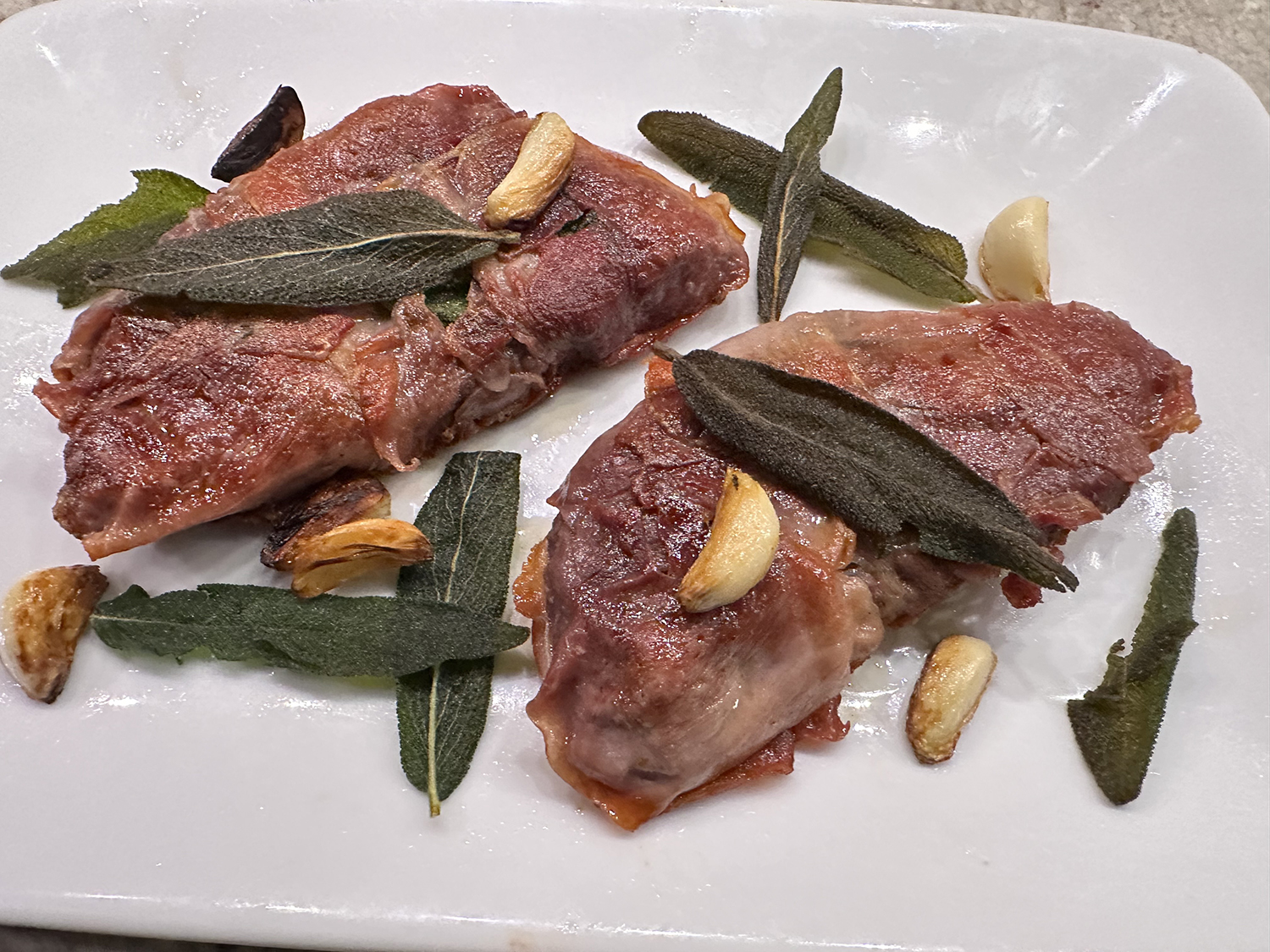
Instead of veal, this classic Italian dish uses thinly pounded skirt steak (or in our case, flat iron steak) to create a remarkably tender and flavorful variation that cooks in just minutes. The prosciutto’s crispy and salty flavor pairs nicely with the tender and juicy steak, while the sage provides an earthy and slightly peppery flavor.

The sauce, made with chicken broth, white wine, and butter, is rich and creamy, making it an ideal match for the savory steak. And it was also wonderful poured over our side of orzo.

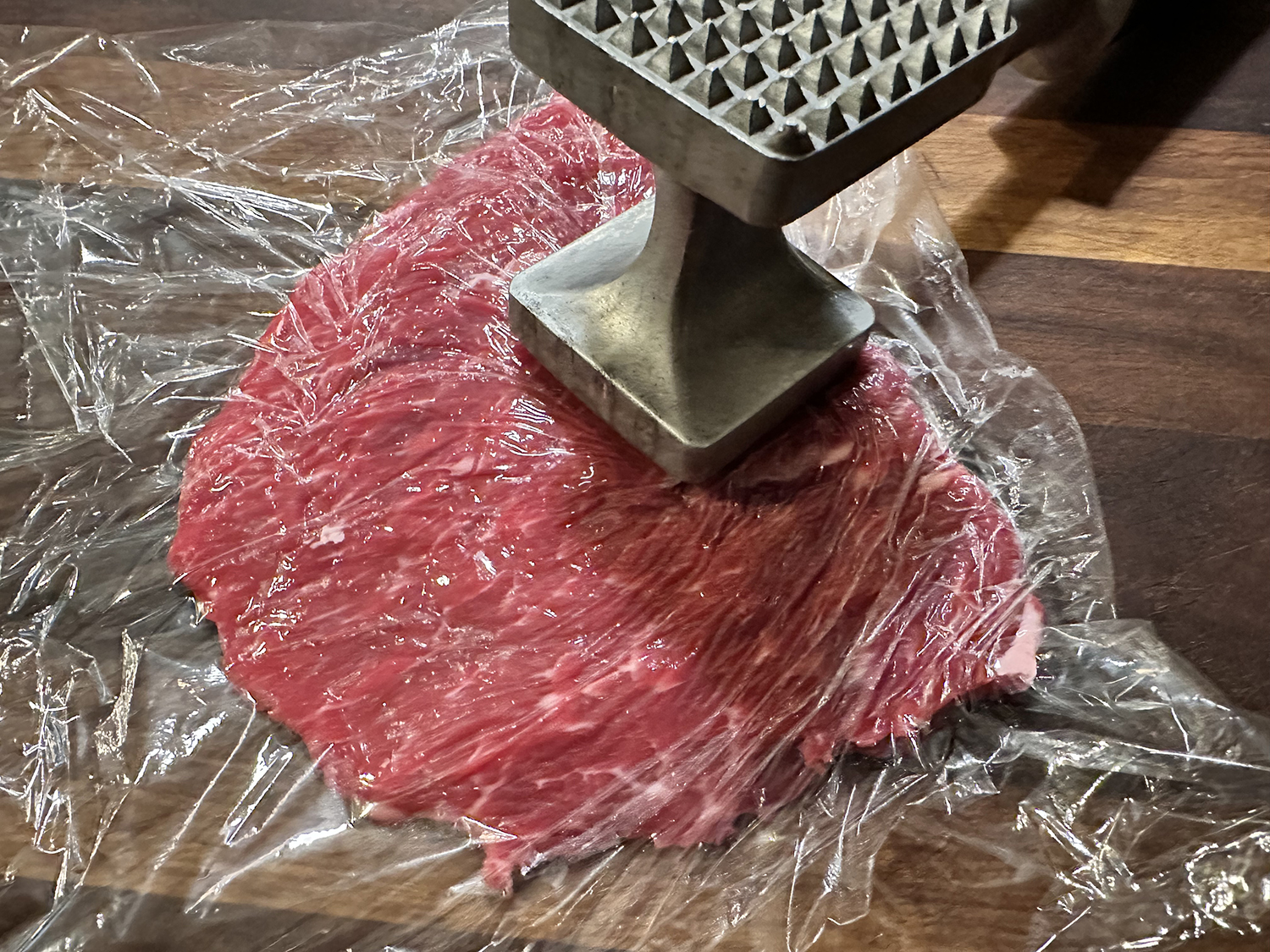
We cut a 12-ounce piece of flat iron in half crosswise; and pounded each half to a 1/4 inch thick. After which, we seasoned the steak and laid 3 sage leaves across each one. Then 3 ultra-thin slices of prosciutto were wrapped around front and back.

Skirt Steak Saltimbocca

  • Servings: 2-3
  • Difficulty: easy
  • Print

Ingredients

  • 1 (12-oz.) skirt steak (about 1 inch thick), trimmed
  • 3/4 tsp. kosher salt, divided
  • 1/2 tsp. black pepper, divided
  • 12 fresh sage leaves, divided
  • 6 thin slices prosciutto 
  • 1/4 cup extra-virgin olive oil (or 2 oz. if searing only two pieces of steak)
  • 4 medium garlic cloves (unpeeled to prevent burning), crushed
  • 1/3 cup chicken broth
  • 1/3 cup white wine
  • 2 Tbsp. cold unsalted butter

Directions

  1. Cut steak crosswise into 4 (3-ounce) pieces; lightly pound each piece between 2 pieces of plastic wrap using a meat mallet or rolling pin until each piece is about 1/4 inch thick. Sprinkle 1/2 teaspoon salt and 1/4 teaspoon pepper evenly over steaks. Place 2 sage leaves on each steak. Wrap 1 piece of prosciutto around each steak, pressing to adhere. (Prosciutto should cover the sage leaves.)
  2. Heat olive oil in a large skillet over medium-high. Add garlic cloves and remaining 4 sage leaves; cook, stirring often, until garlic is lightly browned and sage is crispy, about 2 minutes.
  3. Transfer to paper towels to drain; remove garlic peels, and set garlic cloves and sage aside. Pour half of oil in skillet into a heatproof bowl, and set aside; reserve remaining half of oil in skillet.
  4. Transfer to paper towels to drain; remove garlic peels, and set garlic cloves and sage aside. Pour half of oil in skillet into a heatproof bowl, and set aside; reserve remaining half of oil in skillet.
  5. Reheat oil in skillet over medium-high. Add 2 steak pieces, and cook, undisturbed, until prosciutto is browned and crispy, 1 to 2 minutes. Flip steaks, and cook until prosciutto is crispy and steaks are cooked to desired degree of doneness, about 2 minutes for medium-rare.
  6. Transfer  to a plate, and let rest. Discard oil in skillet. Add reserved oil to skillet, and repeat cooking process with remaining 2 steaks. Transfer to plate with reserved steaks. Do not wipe skillet clean.
  7. Add broth and wine to skillet, and cook over medium-high, stirring occasionally and scraping up any browned bits from bottom of skillet using a wooden spoon, until reduced by half, about 3 minutes.
  8. Remove from heat, and gradually whisk in butter until emulsified and creamy, about 1 minute. Sprinkle with remaining 1/4 teaspoon salt and remaining 1/4 teaspoon pepper. Serve steaks immediately with sauce, and garnish with reserved crispy sage and garlic cloves.

http://www.lynnandruss.com

Adapted from a recipe by Justin Chapple for Food & Wine

Stir-Fried Shrimp and Asparagus in Garlic Sauce

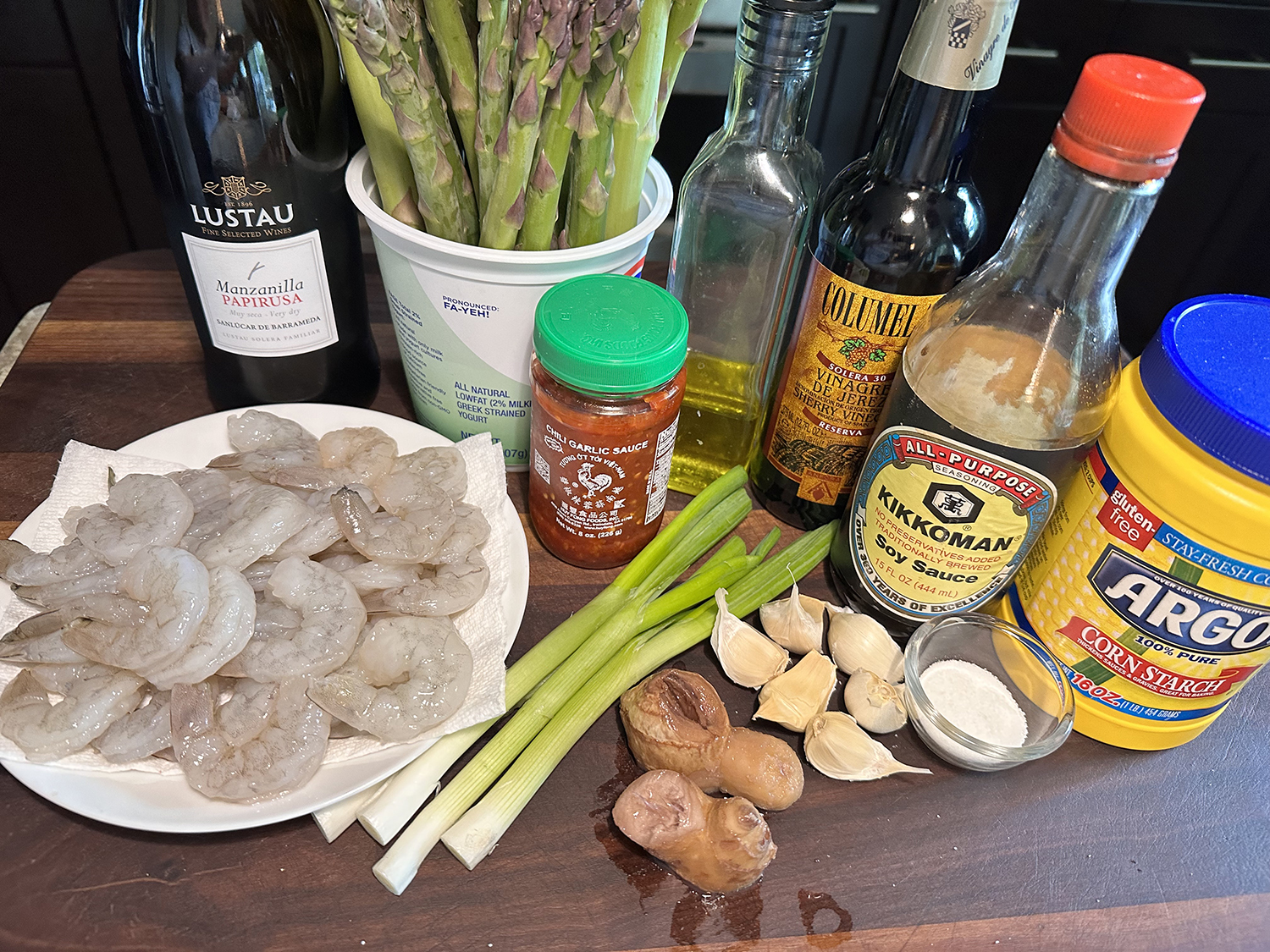
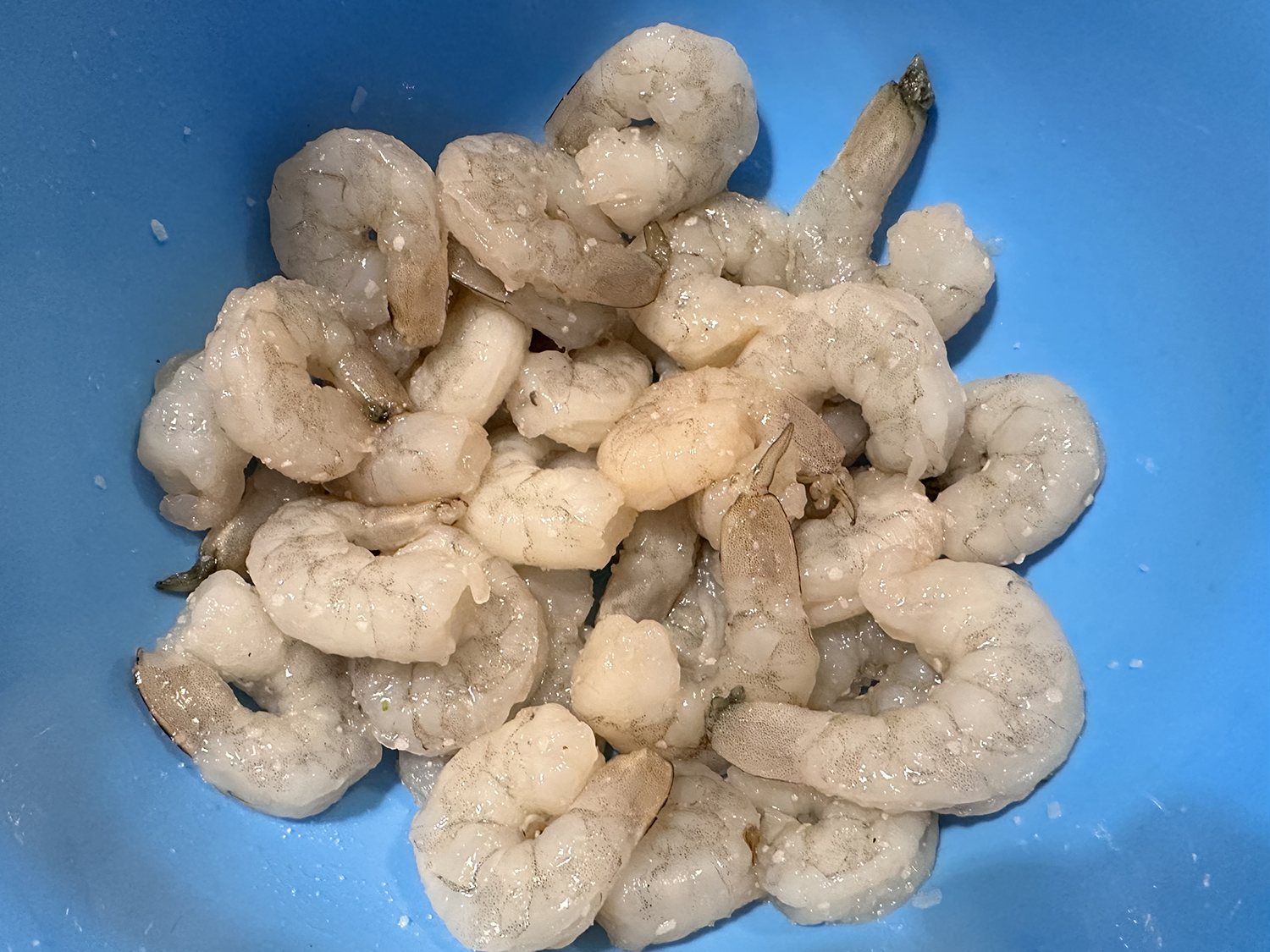
You’ll need to start this dish by tossing the shrimp with a little salt and sugar and letting them sit for 30 minutes. This not only seasons the shrimp but also helps them retain moisture during cooking. When the shrimp are almost ready, quickly cook the vegetable component and set it aside.

Then, rather than stir-fry the shrimp in a hot skillet as most recipes call for, add the sauce to the pan and poach the shrimp gently in the liquid, covered, to ensure that they stay moist. The sauce is a flavorful base of soy sauce, sherry, and sherry vinegar. A little cornstarch ensures that the sauce thickens to just the right shrimp- and vegetable-coating consistency.

If your asparagus stalks are thicker than usual, be sure to cut off any woody bottoms or even peel away the outer portions on the lower part of with a potato peeler.

Stir-Fried Shrimp and Asparagus in Garlic Sauce

  • Servings: 4
  • Difficulty: easy
  • Print

Ingredients

  • 1 lb. extra-large (21-25) shrimp, peeled, deveined, and tails removed
  • 1 tsp. sugar
  • ½ tsp. salt
  • ⅓ cup plus 2 Tbsp. dry sherry
  • 2 Tbsp. soy sauce
  • 1 Tbsp. Asian broad bean chili paste
  • 1 tsp. sherry vinegar
  • 2 tsp. cornstarch
  • 2 Tbsp. vegetable oil
  • 6 garlic cloves, sliced thin
  • 3 large scallions, white parts chopped fine, green parts cut into 1-inch pieces
  • 2 Tbsp. grated fresh ginger
  • 1 ½ lbs. asparagus, trimmed and cut on bias into 2-inch lengths

Directions

  1. Combine shrimp, sugar, and salt in medium bowl. Let stand at room temperature for 30 minutes.
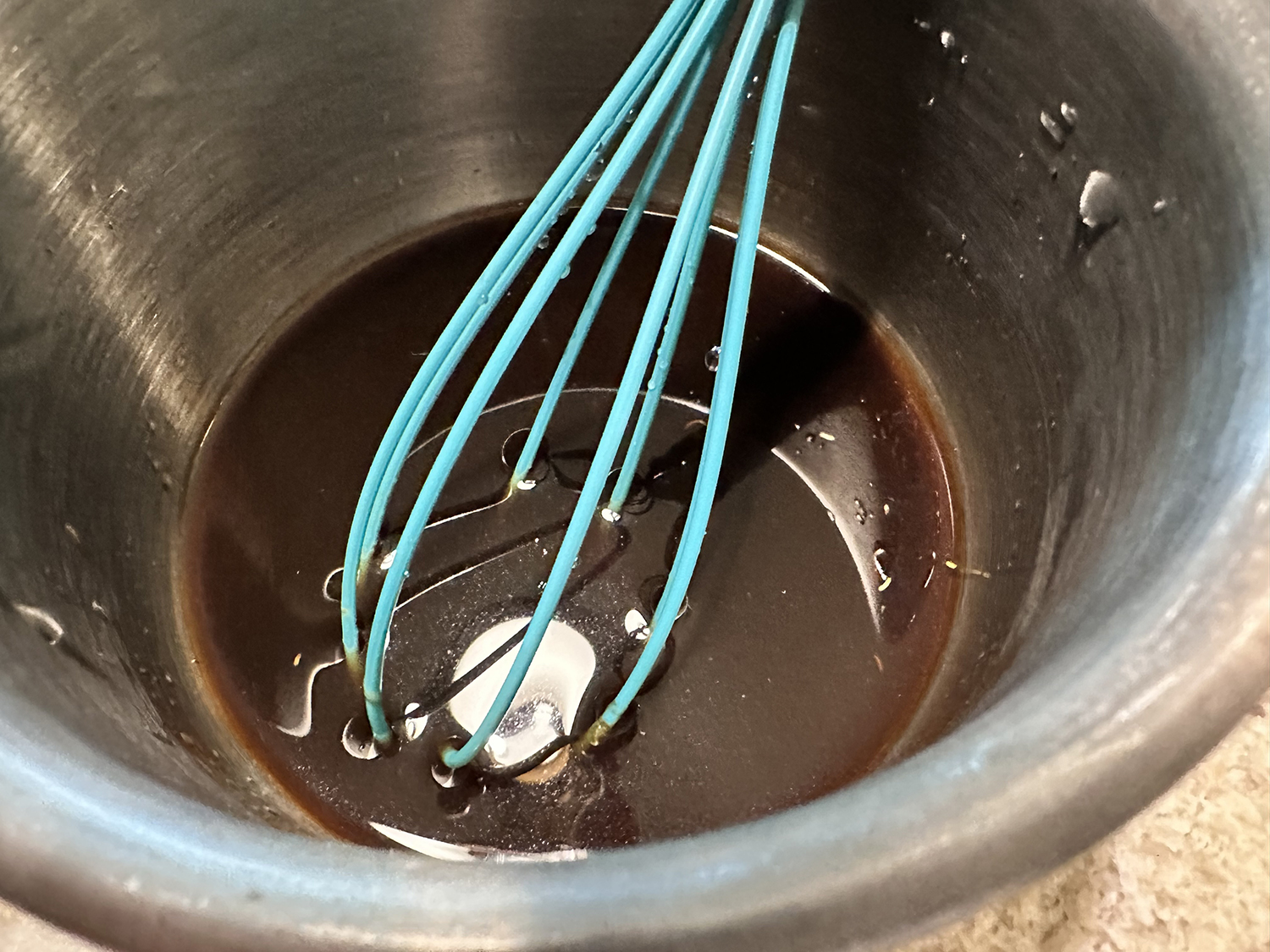
  2. Whisk 1/3 cup sherry, soy sauce, chili paste, and vinegar together in bowl. Whisk cornstarch and remaining 2 tablespoons sherry together in second bowl.
  3. Combine shrimp, sugar, and salt in medium bowl. Let stand at room temperature for 30 minutes.
  4. Whisk 1/3 cup sherry, soy sauce, chili paste, and vinegar together in bowl. Whisk cornstarch and remaining 2 tablespoons sherry together in second bowl.
  5. Heat oil and garlic in 12-inch nonstick skillet over medium heat until garlic is just beginning to brown at edges, 3 to 4 minutes. Increase heat to high, add scallion whites and ginger, and cook until fragrant, about 1 minute.
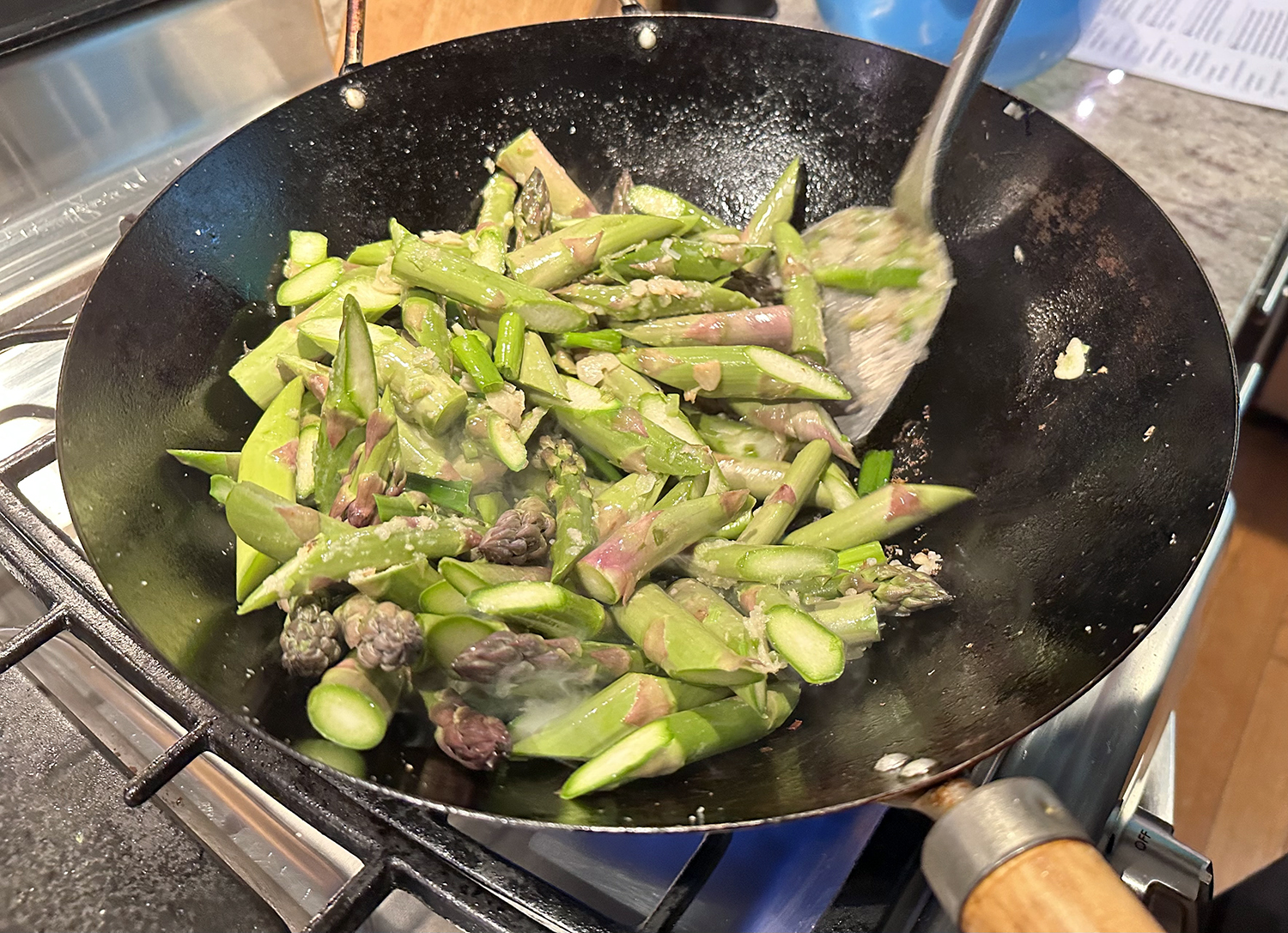
  6. Add asparagus and scallion greens, cover, and cook, stirring occasionally, until asparagus is crisp-tender, 2 to 5 minutes. Transfer vegetable mixture to bowl.
  7. Add sherry–soy sauce mixture and shrimp to skillet and bring to simmer. Reduce heat to medium-low, cover, and cook, stirring occasionally, until shrimp are just cooked through, 3 to 5 minutes.
  8. Whisk sherry-cornstarch mixture to recombine and add to skillet; increase heat to high and cook, stirring constantly, until sauce is thickened, 1 to 2 minutes. Return vegetable mixture to skillet and toss to combine. Transfer to serving dish and serve.

http://www.lynnandruss.com

Adapted from a recipe by Andrew Janjigian for Cook’s Illustrated

Pan-Seared Pork Chops with Beer and Grainy Mustard

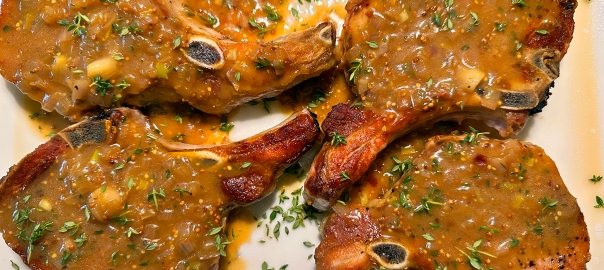
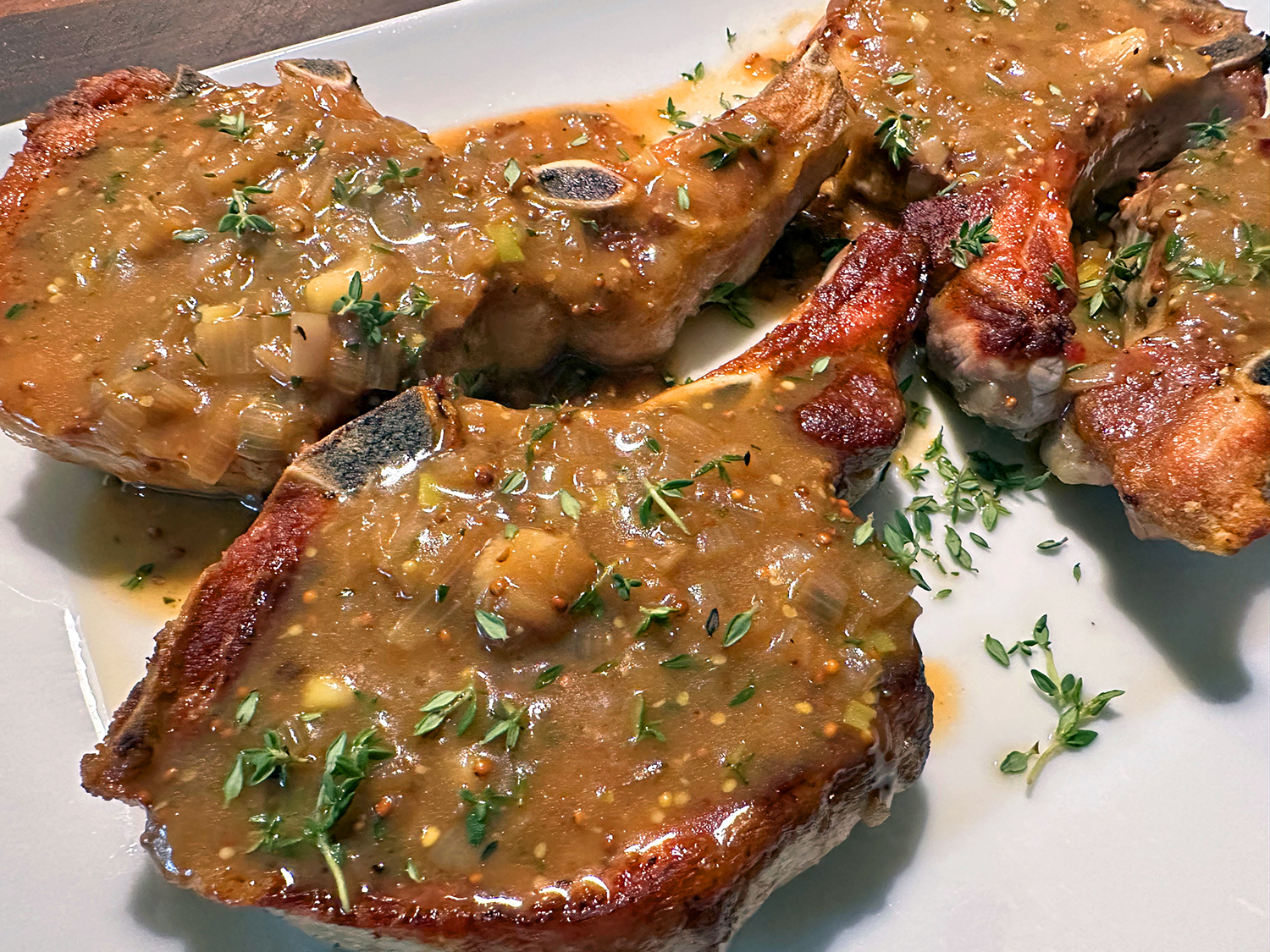
The original recipe called for chicken thighs, but we had been eating a lot of meals using chicken thighs, so we opted to use pork rib chops instead. The sauce was just fantastic on the meat as well as a great companion for our side of roasted Brussels sprouts!

With no lager readily available, we substituted a canned beer which didn’t seem to noticeably alter the flavor profile. It is always preferable to use a homemade chicken stock, but in a pinch, the Better Than Boullion brand is a decent choice.

Pan-Seared Pork Chops with Beer and Grainy Mustard

  • Servings: 4
  • Difficulty: easy
  • Print

Ingredients

  • 4 pork rib chops, 2 to 2 1⁄2 lbs. total
  • Kosher salt and freshly ground black pepper
  • 2 tsp. vegetable oil
  • 2 medium shallots, minced
  • 12 tsp. all-purpose flour
  • 1 cup amber lager beer
  • 12 cup chicken broth
  • 12 Tbsp. pure maple syrup
  • 1 tsp. chopped fresh thyme, more for garnish
  • 1 Tbsp. whole-grain mustard
  • 1 oz. (2 Tbsp.) unsalted butter

Directions

  1. Preheat the oven to 475°F. Season the pork chops all over with salt and pepper.
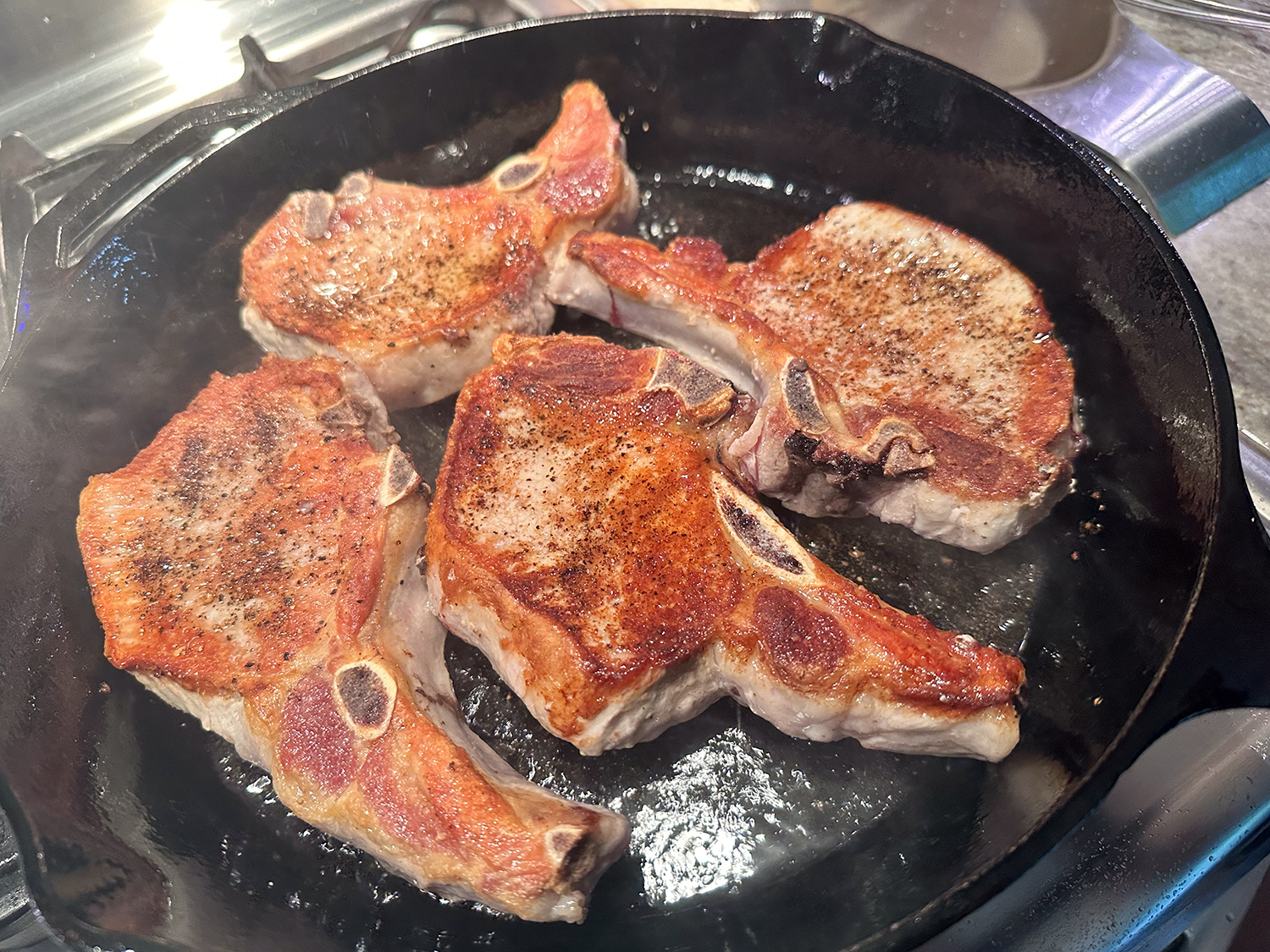
  2. Heat the oil in a heavy-duty ovenproof 12-inch skillet (such as cast iron) over medium-high heat until shimmering hot. Swirl to coat the pan bottom. Arrange the chops in the pan in a single layer (it will likely be a snug fit), cover with an ovenproof splatter screen (if you have one) and cook until they are deep golden-brown, about 6 minutes.
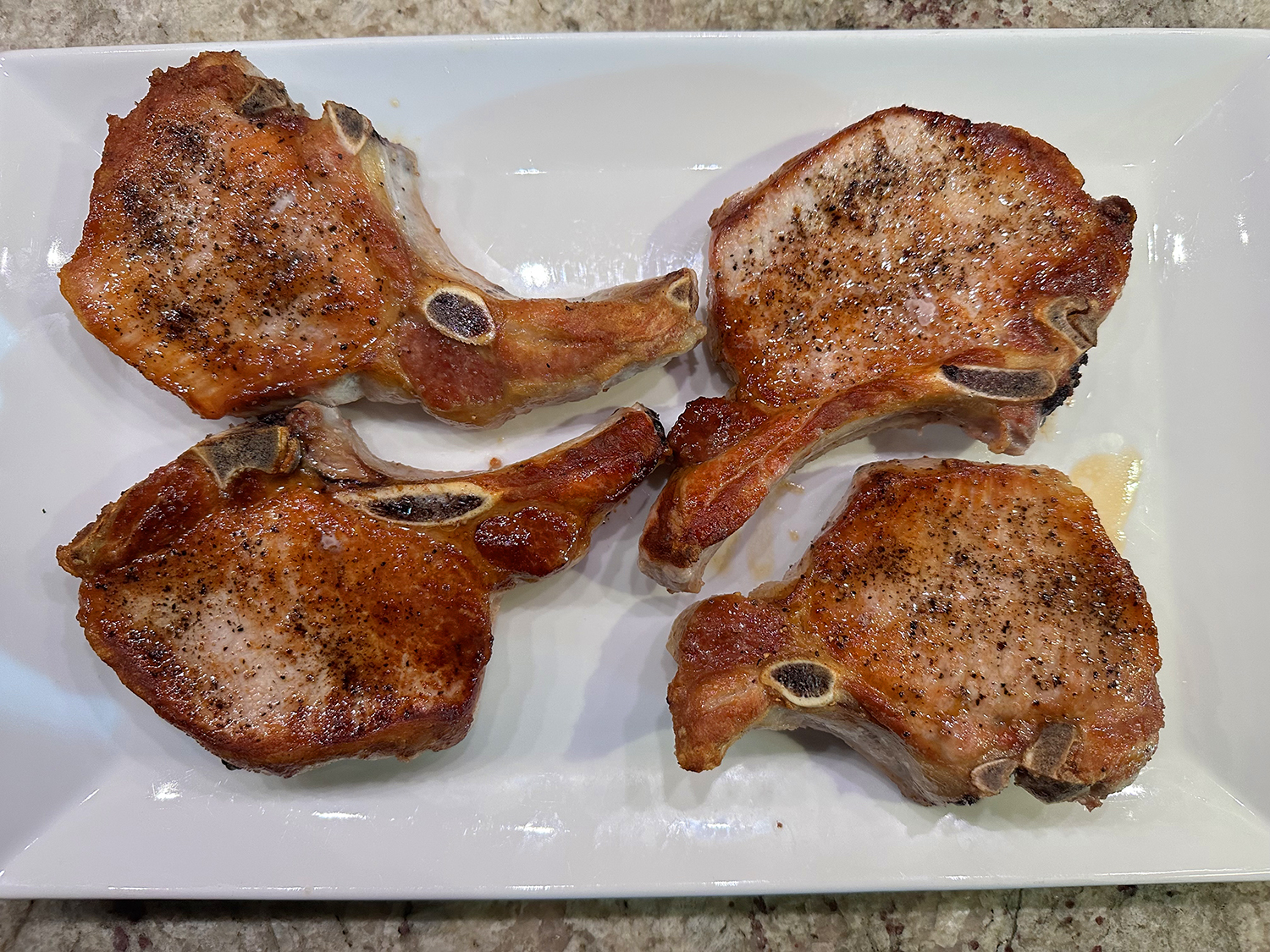
  3. Turn the pork and transfer the skillet and splatter screen, if using, to the oven. Roast until an instant-read thermometer inserted into the chops registers 145°F, 5 to 6 minutes. Transfer to a plate and cover with foil to keep warm.
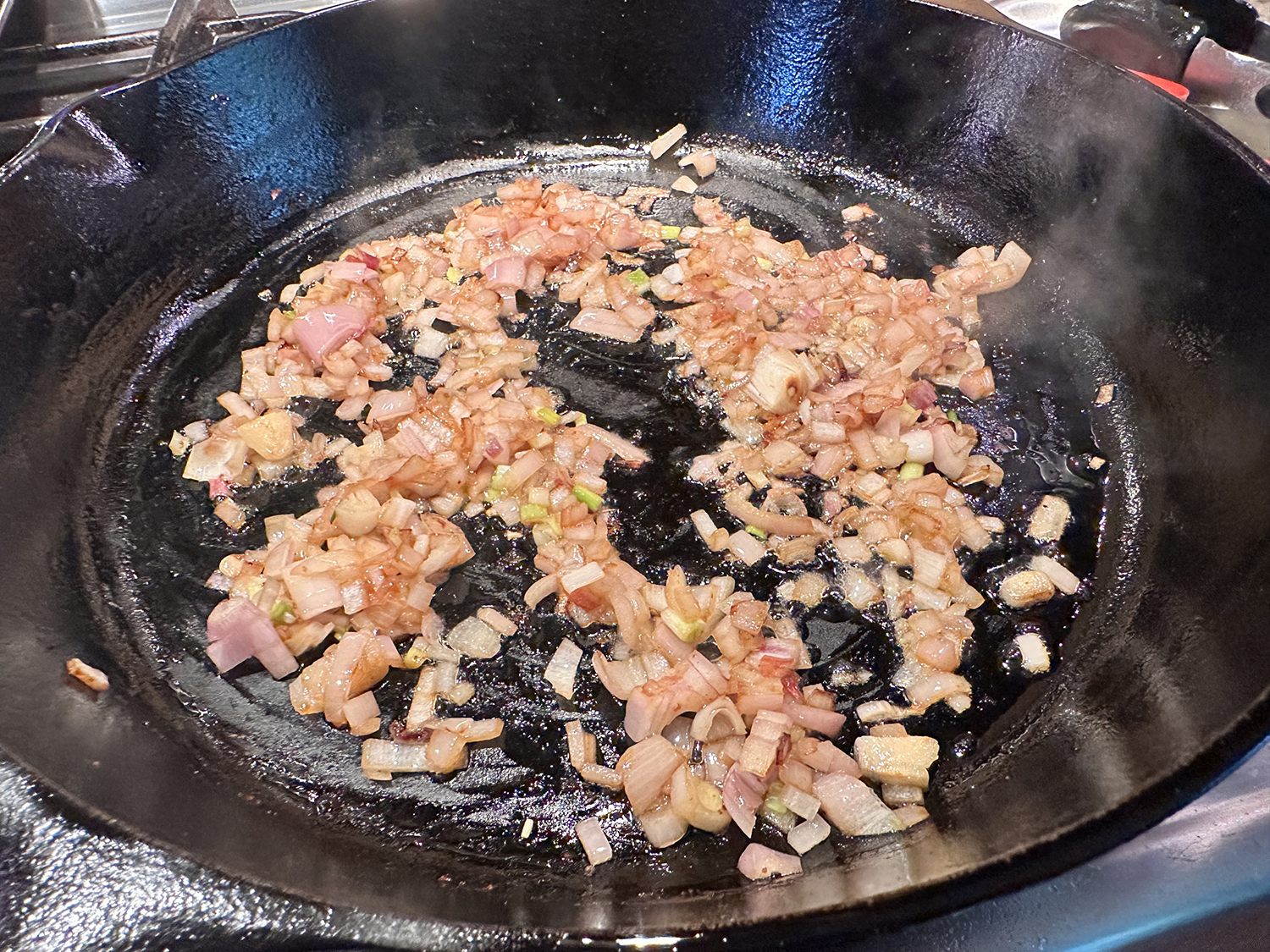
  4. Pour off all but 1 tablespoon fat from the skillet. Add the shallots and sauté over medium heat until softened, about 2 minutes. Stir in the flour until combined. Stir in the beer, chicken broth, maple syrup, and thyme. Increase the heat to high and bring to a boil, scraping up any browned bits from the skillet with a wooden spoon.
  5. Simmer vigorously until reduced to about 1 cup, about 3-4 minutes. Remove from the heat and whisk in the mustard, then the butter. Season the sauce to taste with salt and pepper.
  6. Arrange rib chops on a platter, drizzle pan sauce over, and garnish with the thyme. Serve immediately.

http://www.lynnandruss.com

Adapted from a recipe in Make-It-Tonite for Fine Cooking

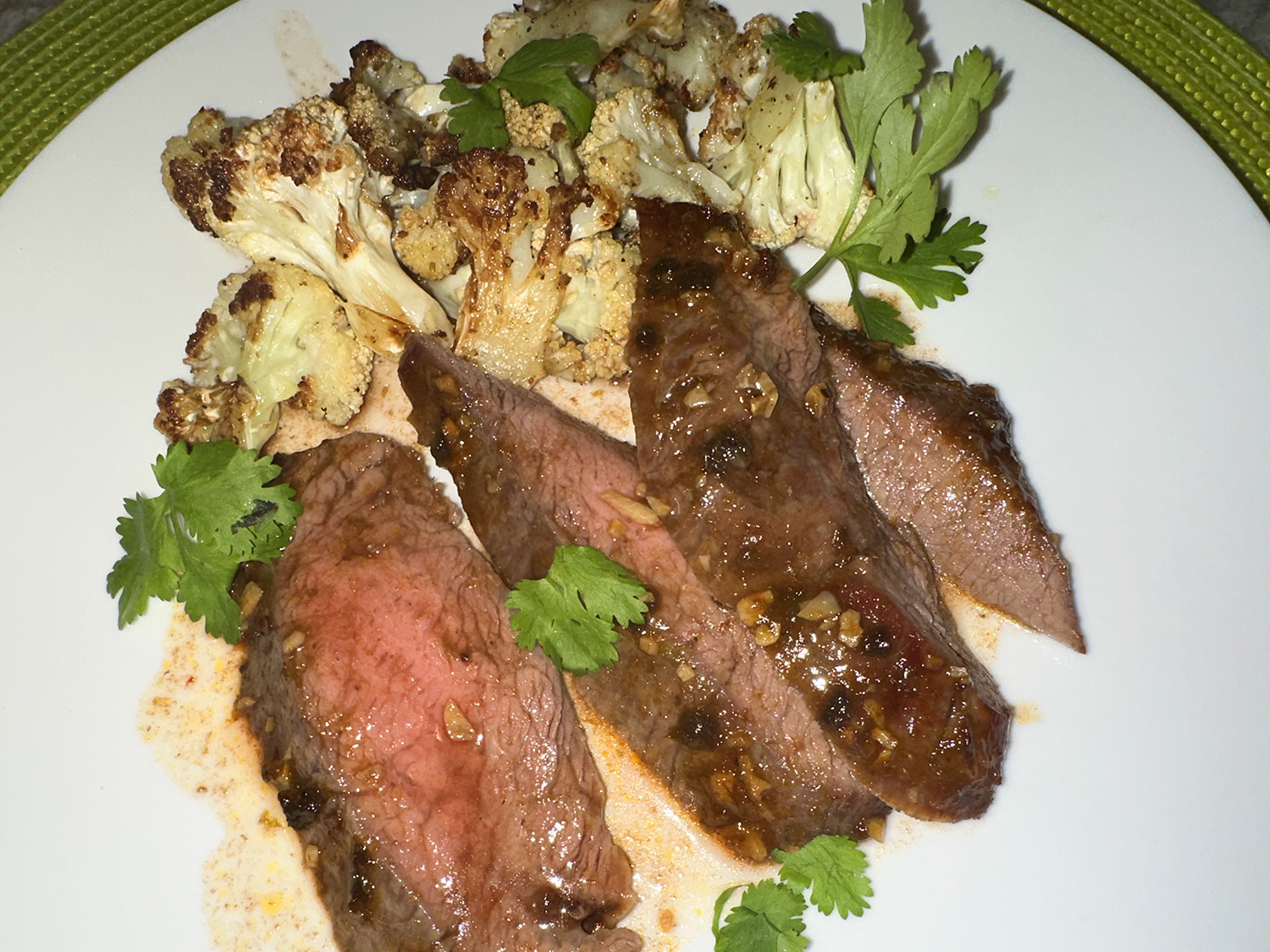
Honey-Chipotle Glazed Flank Steak and Cumin Cauliflower

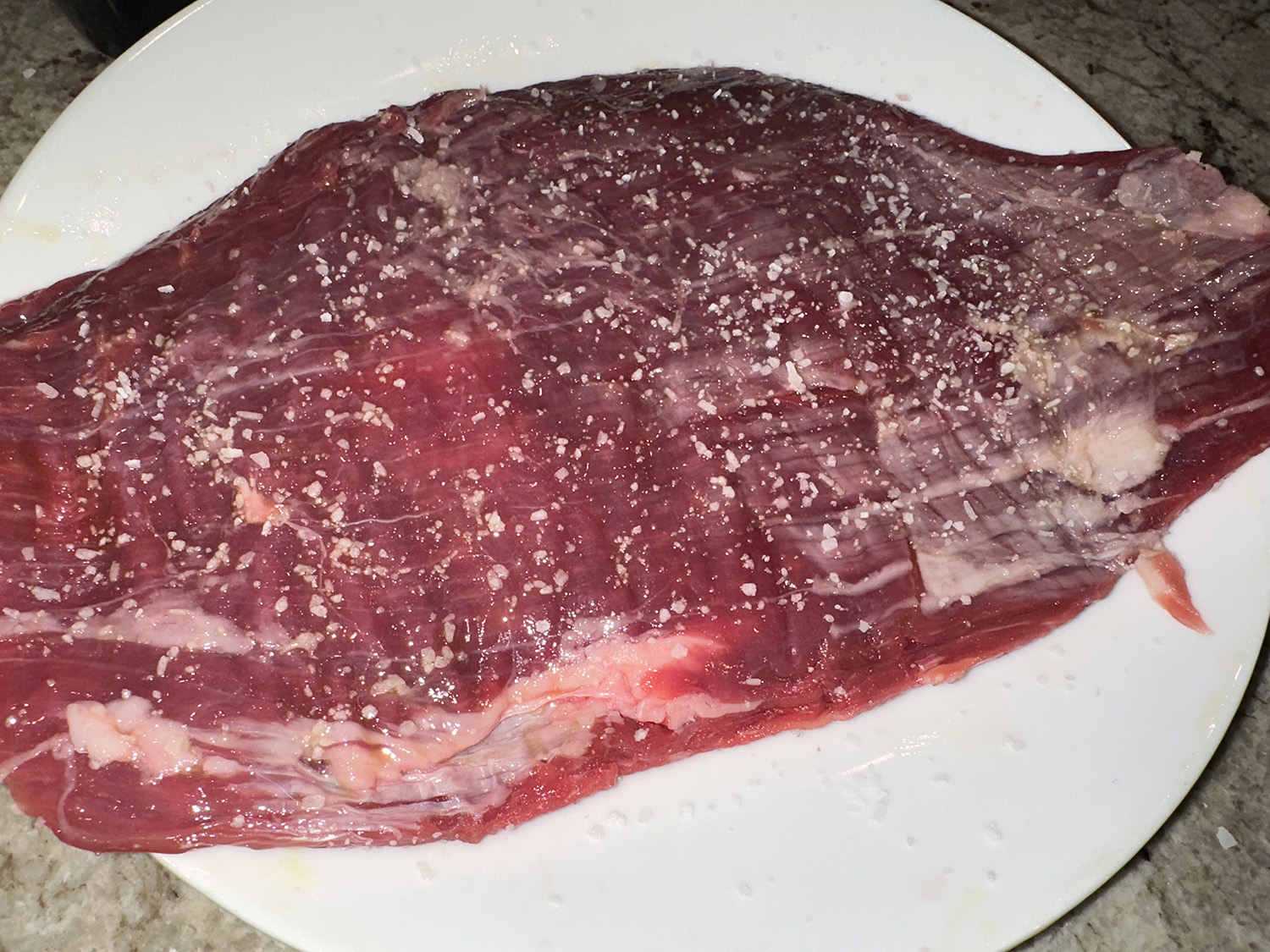
Flank steak, with its deep beefy flavor and standout striations that soak up rubs and marinades, it should be on everybody’s list of favorite grilling cuts. So when you’re craving a little barbecue flavor anytime of year, this recipe does the trick. The beauty of flank steak is that it absorbs the flavors of any rub or marinade easily.

One of the tastiest, and potentially toughest cuts of meat you’ll ever eat, there are two opposite cooking choices with flank. You either cook it hot and fast, or long and slow by braising. The purpose is to break down the connective tissues by cutting thin slices or by heat and moisture. Clearly we are doing the fast method here.

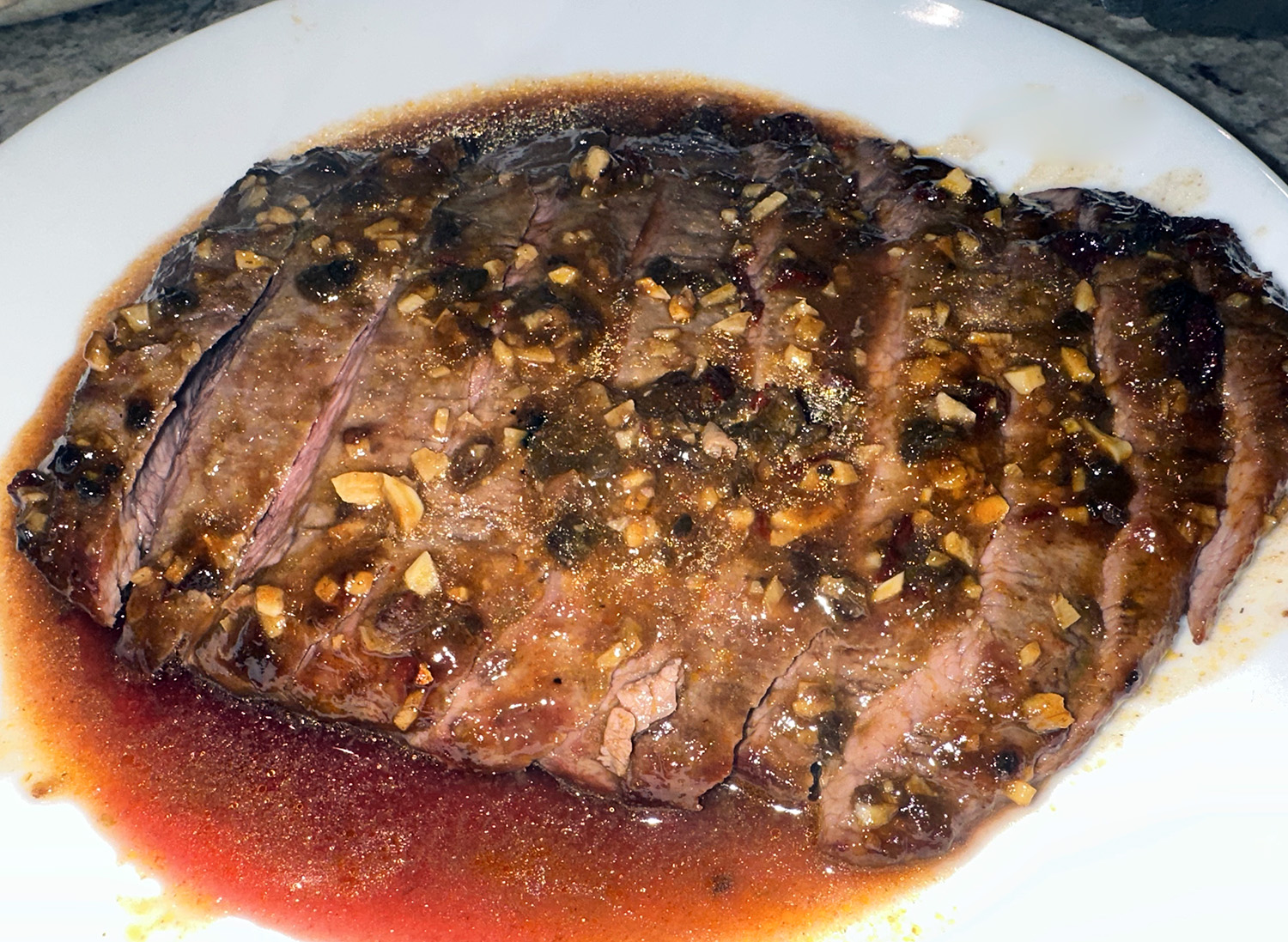
Using cumin as the common seasoning on both the meat and the cauliflower make them pair together well.

Honey-Chipotle Glazed Flank Steak and Cumin Cauliflower

  • Servings: Yield: 4
  • Difficulty: easy
  • Print

Ingredients

  • 2 tsp. extra virgin olive oil
  • 2 tsp. minced garlic
  • 1/2 tsp. ground cumin
  • Kosher salt
  • 1 1/2 Tbsp. minced canned chipotle in adobo sauce
  • 1 Tbsp. honey
  • 1 tsp. finely grated lime zest
  • 1 Tbsp. fresh lime juice
  • 1 lb. flank steak

Directions

  1. Position an oven rack 6 inches below the broiler and heat the broiler on high. Line a large-rimmed baking sheet with foil.
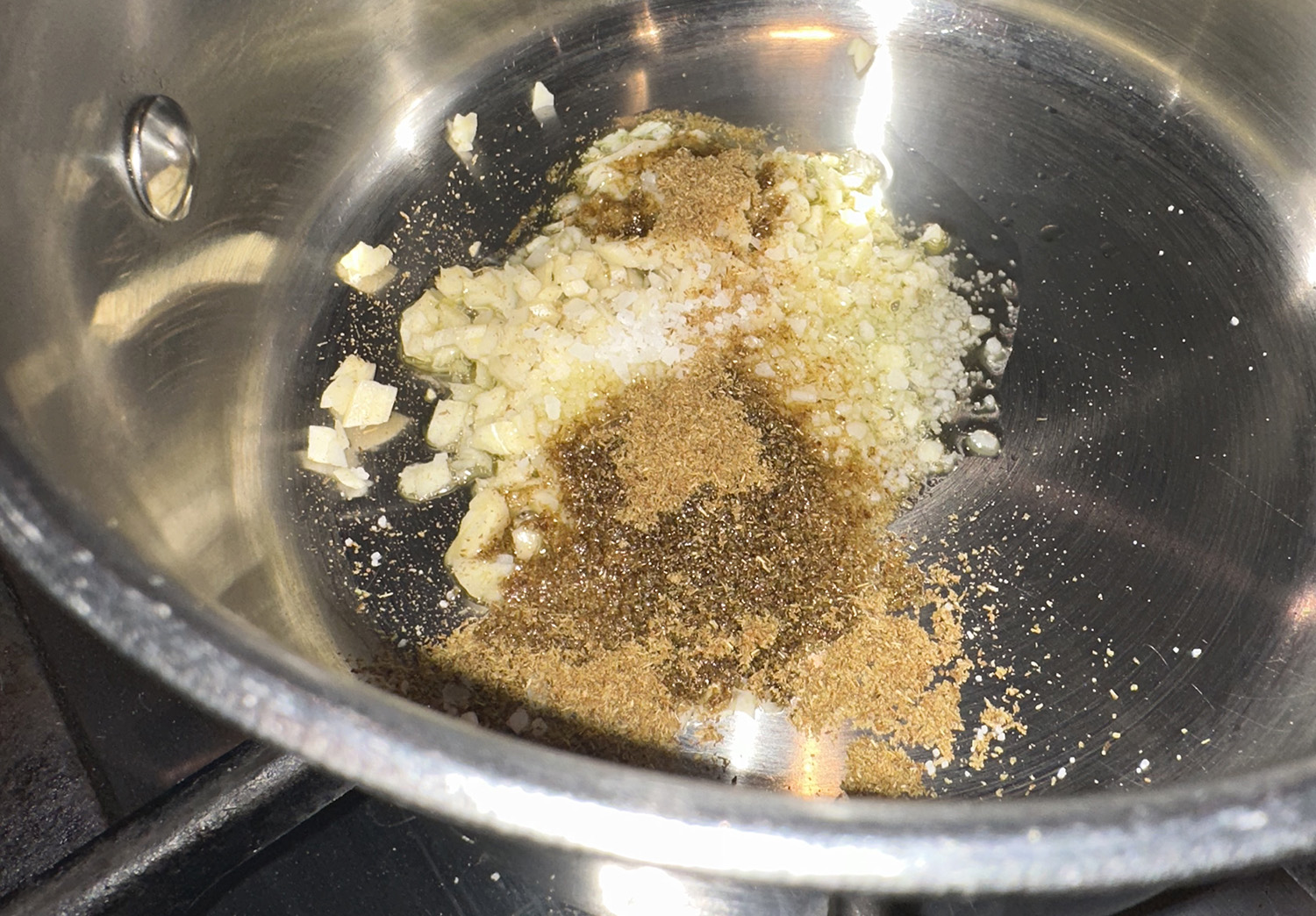
  2. Combine 1 tsp. of the oil, garlic, cumin, and 1/2 tsp. salt in a 1-quart saucepan over medium-low heat; cook, stirring occasionally, until the garlic is golden, about 2 minutes. Add the chipotle and honey and stir until heated through about 1 minute. Remove from the heat and stir in the lime juice and zest.
  3. Rub the flank steak with the remaining 1 tsp. oil and season generously with salt. Transfer to the prepared baking sheet and broil, turning once, until slightly browned and cooked to your liking, about 3 minutes per side for an internal temperature of 140°F.
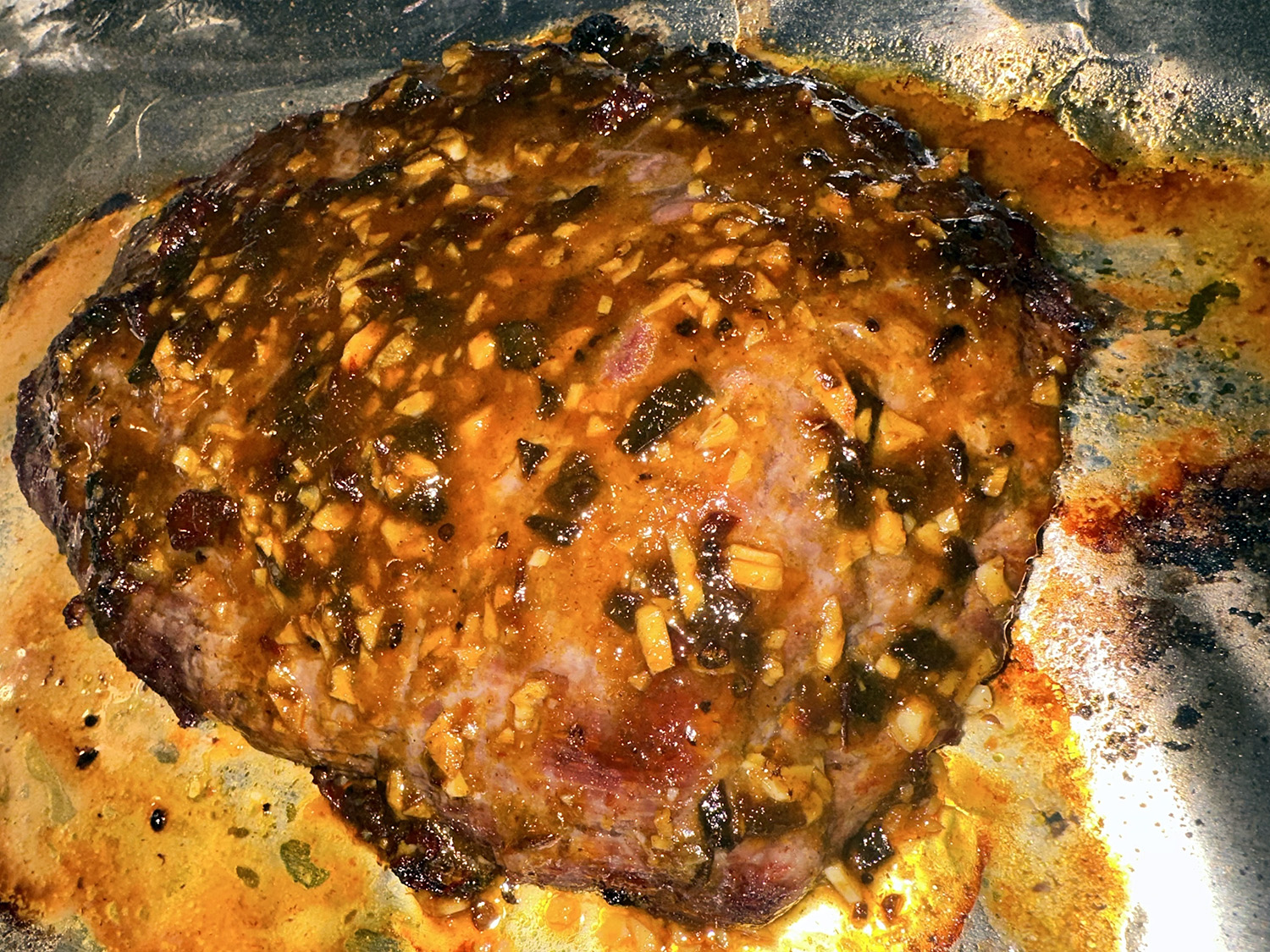
  4. Spread the glaze over the top of the steak and broil until it begins to bubble and darken in places, 1 to 2 minutes. Transfer to a cutting board and let rest for 5 minutes. Slice against the grain and serve.

Cumin Roasted Cauliflower

Ingredients

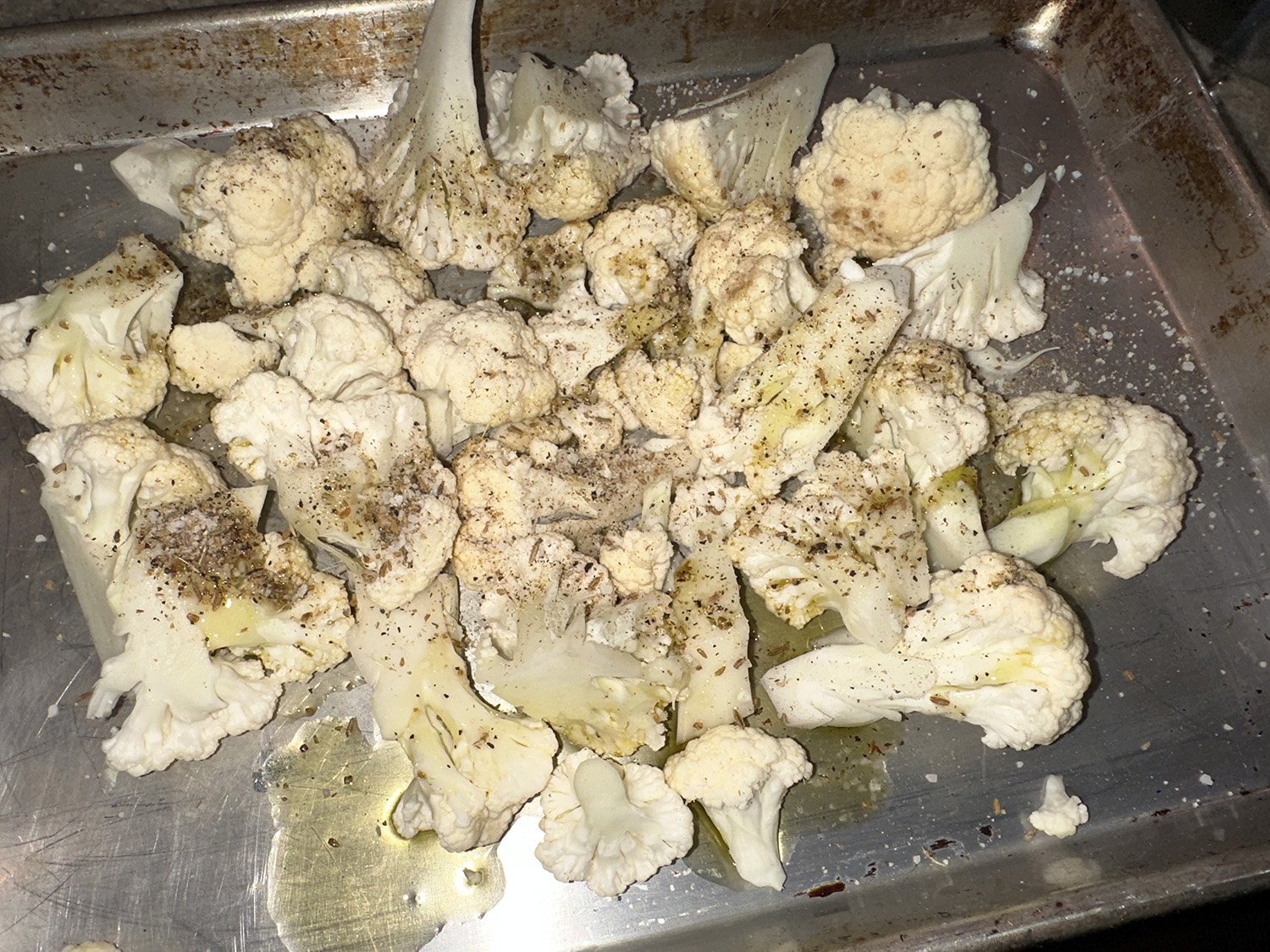
  • 1 medium cauliflower, broken down into florets
  • 1 tsp. cumin seeds, lightly crushed
  • 2 Tbsp. extra virgin olive oil
  • Kosher salt and ground black pepper, to taste

Directions

  1. Preheat oven to 450 degrees.
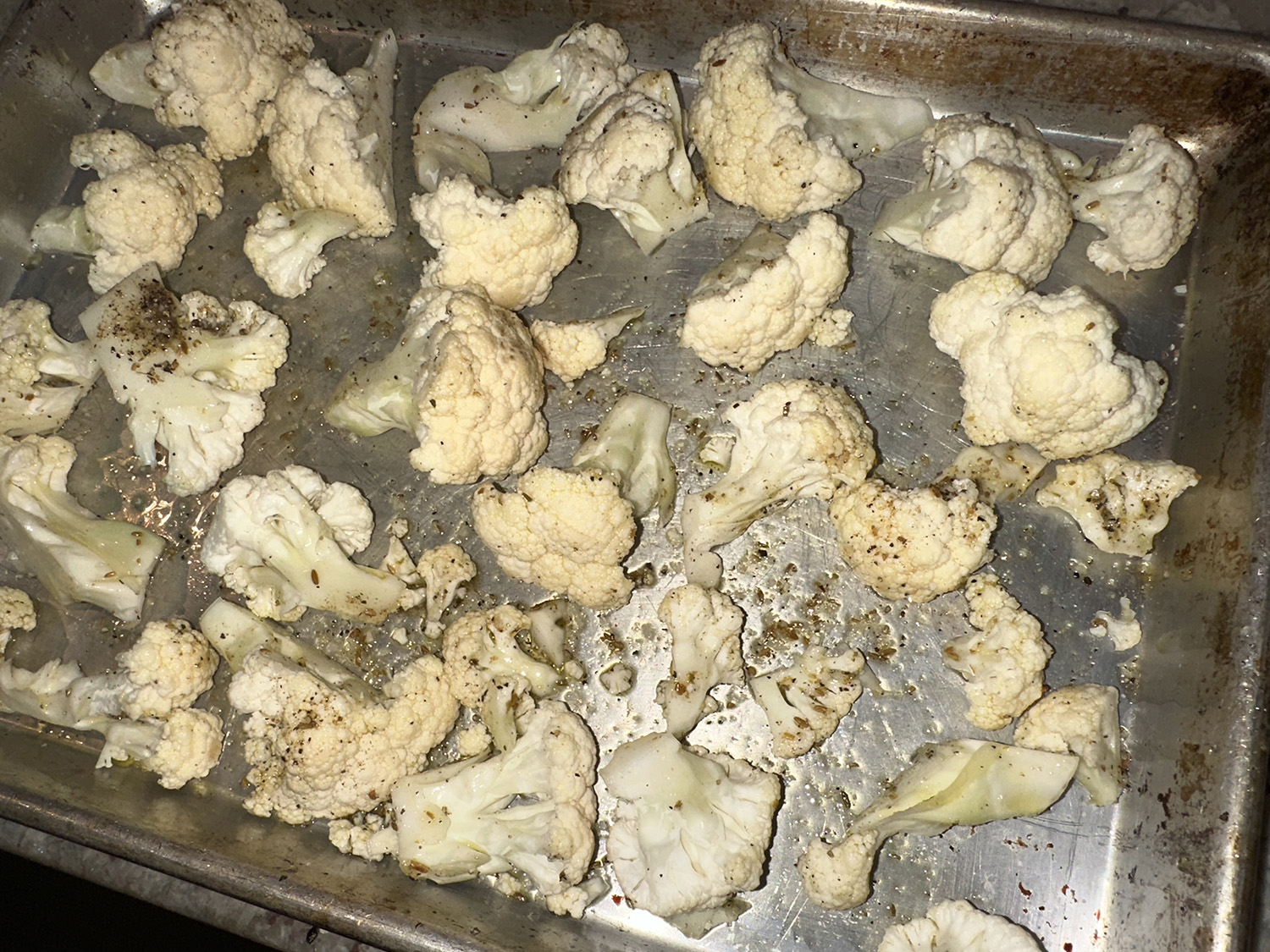
  2. Toss the cauliflower with olive oil, cumin seeds, and salt and pepper in a large bowl.
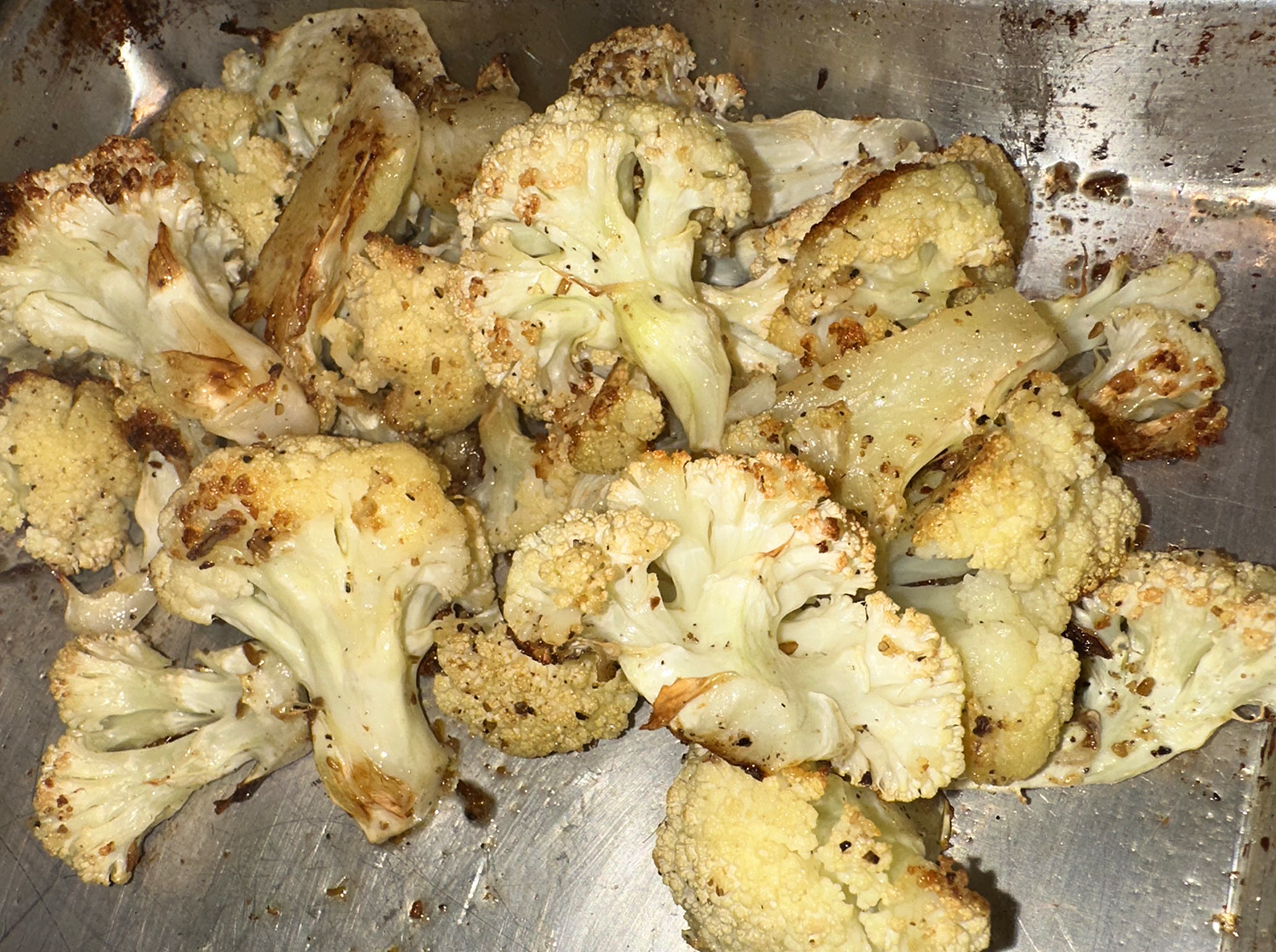
  3. Spread the cauliflower on a large sheet pan and roast in the preheated oven for 15-20 minutes turning halfway through cooking (cauliflower should be browned in spots and tender).

http://www.lynnandruss.com

Recipes by Julissa Roberts for Fine Cooking

Gunpowder Potatoes

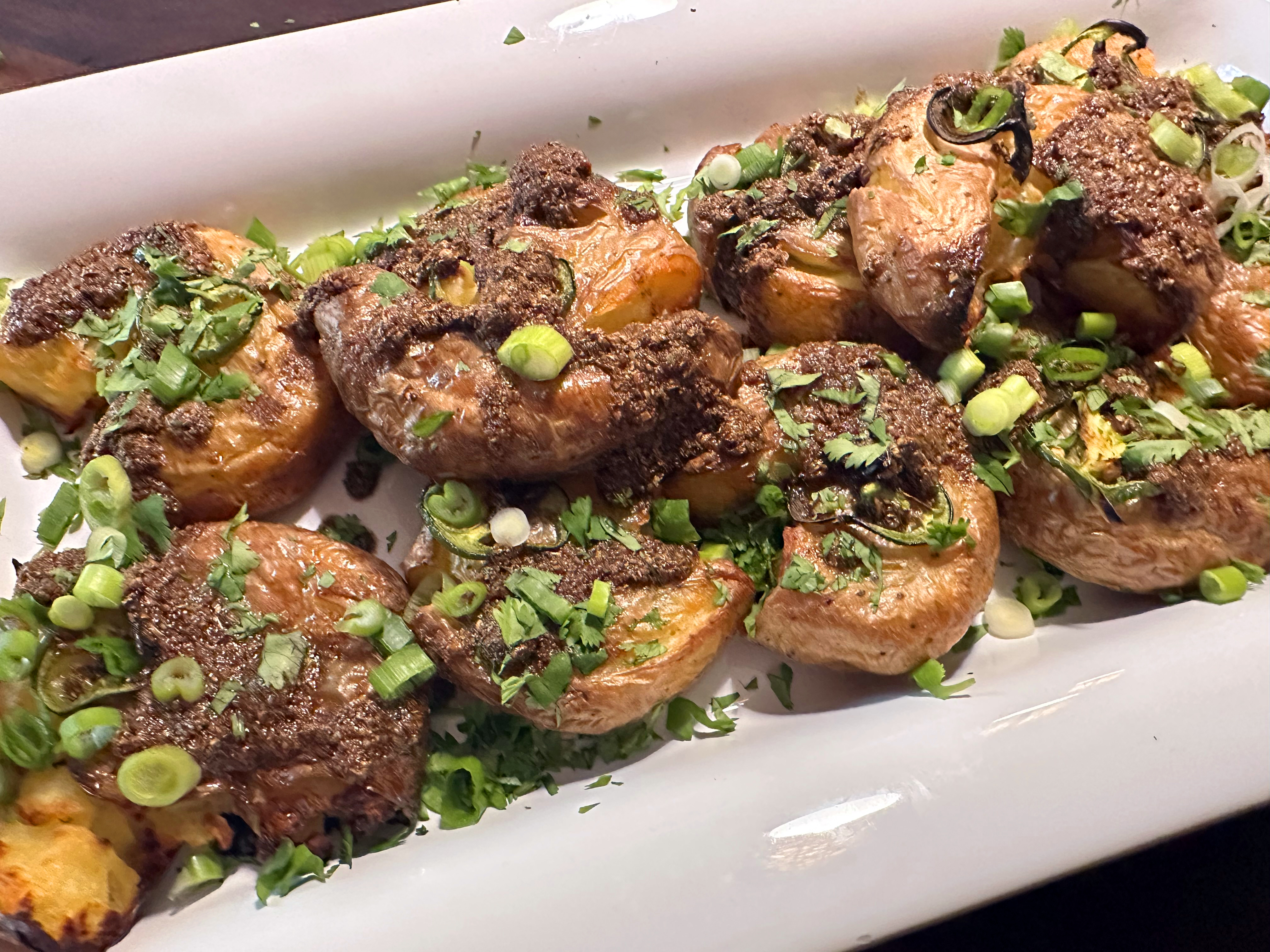
Here, new potatoes are transformed into a culinary powerhouse with toasted spices, butter, cilantro and green chilies. Gunpowder potatoes are the ideal recipe: a bit of crunch, a touch of herbiness, a dash of tang and a pop of heat, all married to a foundation of creamy potatoes. My mouth waters just thinking about them.

The term “gunpowder” refers to a spice mix that has many variations. This version hails from Parsi cuisine and contains coarsely ground toasted cumin, coriander and fennel seeds with a finishing dusting of a “kabab masala,” which is made with fenugreek, chili powder, chaat masala and garam masala. Kind in mind, like much Indian food, the spices are bold.

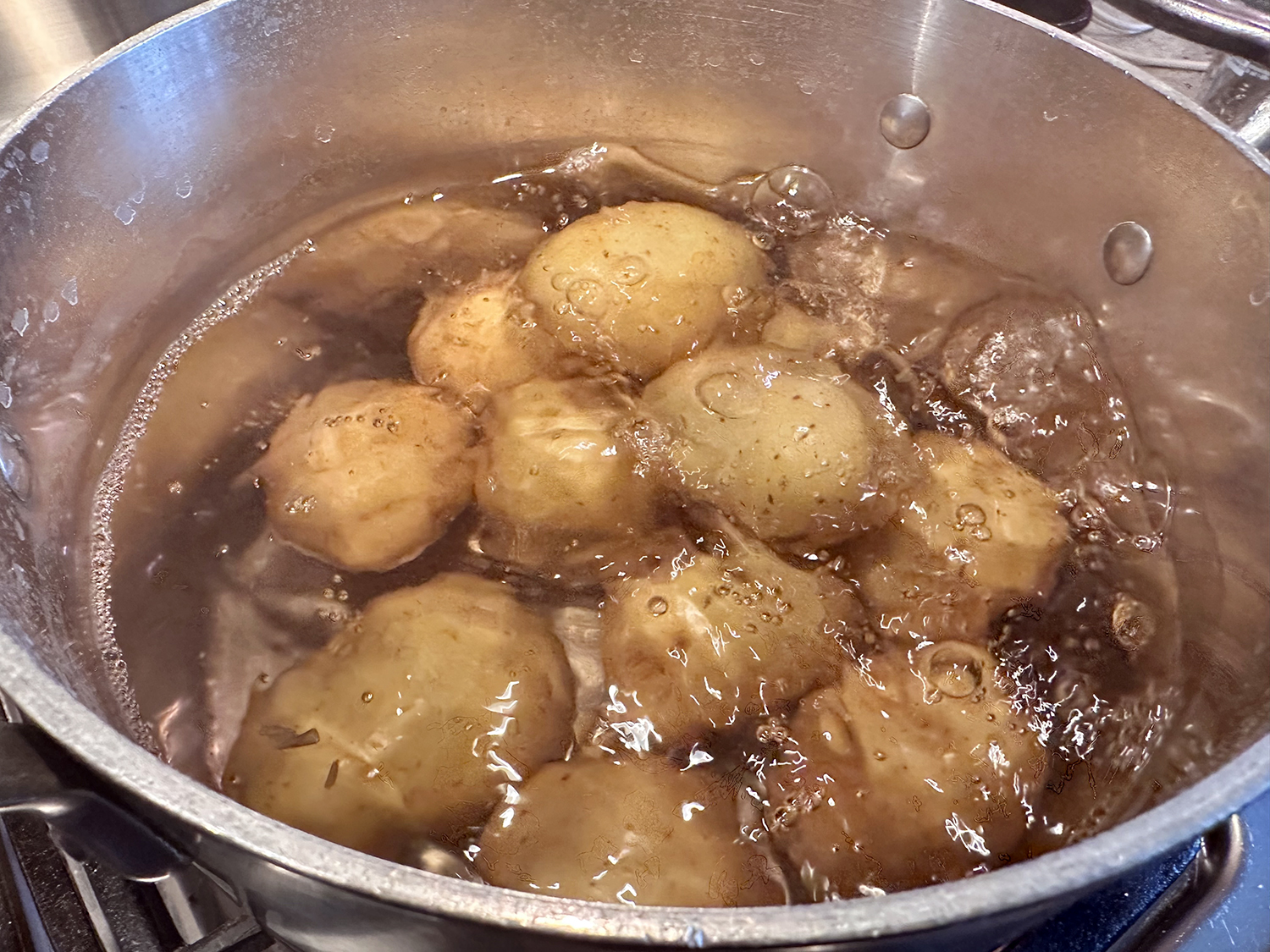
Start by parcooking new potatoes with their skins on. Next, either grille or broil, then split them open. The potatoes are mixed with the gunpowder spice mixture, along with butter, spring onions, cilantro and green chilies. Finish them with lime juice, flaky salt and a teaspoon or two of the kabab masala, and serve them with a cooling yogurt raita.

For this adaptation, the ingredient list was pared down while maximizing flavor, and focusing on getting deeply browned, crusty potatoes without a grill. The crushed spices are cooked in butter to bloom their flavor and the parcooked potatoes are flattened before roasting them in a 500°F oven. And, in a nod to kabab masala, fenugreek is included, a touch that adds a distinctive maple-like flavor.

Our potatoes were on the larger size for this recipe (about the size of a lime), so they couldn’t be tossed in a bowl with the butter spice mixture. Instead, the baked potatoes were placed on a platter with the spiced butter poured over the top. Another addition would be to make the Raita as an accompaniment, recipe follows.

Gunpowder Potatoes

  • Servings: 4-6
  • Difficulty: easy
  • Print

Ingredients

  • 2 1⁄2 lbs. Yukon gold or red potatoes
  • Kosher salt and pepper
  • 3 Tbsp. grapeseed or other neutral oil
  • 2 jalapeños chillies, stemmed and thinly sliced into thin rings
  • 2 tsp. cumin seeds
  • 2 tsp. coriander seeds
  • 2 tsp. fennel seeds
  • 4 Tbsp. butter, cut into 4 pieces
  • 3⁄4 tsp. ground fenugreek
  • 3 scallions, thinly sliced
  • 1⁄4 cup finely chopped fresh cilantro
  • 2 Tbsp. lime juice
  • Lime wedges and/or raita (recipe below) to serve

Directions

  1. In a large pot, combine the potatoes, 3 tablespoons salt, and 2 quarts water. Bring to a boil and cook, stirring occasionally, until a skewer inserted into the potatoes meets no resistance, about 25 minutes.
  2. Meanwhile, heat the oven to 500°F with a rack in the middle position.
  3. Drain the potatoes in a colander. Transfer to a rimmed baking sheet and toss with oil. Using the bottom of a dry measuring cup or ramekin, press down on each potato so it flattens slightly and splits open but remains intact.
  4. Roast, without stirring for 20 minutes, then sprinkle evenly with chiles. Continue to roast without stirring until the potatoes are crisp and well-browned, another 10 to 15 minutes.
  5. Meanwhile, in a spice grinder, combine the cumin, coriander and fennel seeds; pulse until coarsely ground.
  6. In a small saucepan over medium heat, melt the butter. Add the ground seeds and fenugreek, and cook, swirling the pan, until fragrant, 2 to 3 minutes; set aside off heat.
  7. When the potatoes are done, use a wide metal spatula to transfer them to a large bowl. Add the spiced butter, and toss to coat.
  8. Fold in the scallions and cilantro; taste for salt and pepper; serve with lime wedges and/or raita.

http://www.lynnandruss.com

Raita

Raiti

  • Servings: makes 1 cup
  • Difficulty: easy
  • Print

Ingredients

  • 3/4 cup plain whole-milk Greek yogurt
  • 3 tablespoons finely chopped fresh cilantro
  • 2 tablespoons lime juice
  • 2 tablespoons water
  • 1 jalapeño chili (stemmed and minced)
  • 1 scallion (thinly sliced)
  • kosher salt and ground black pepper

Directions

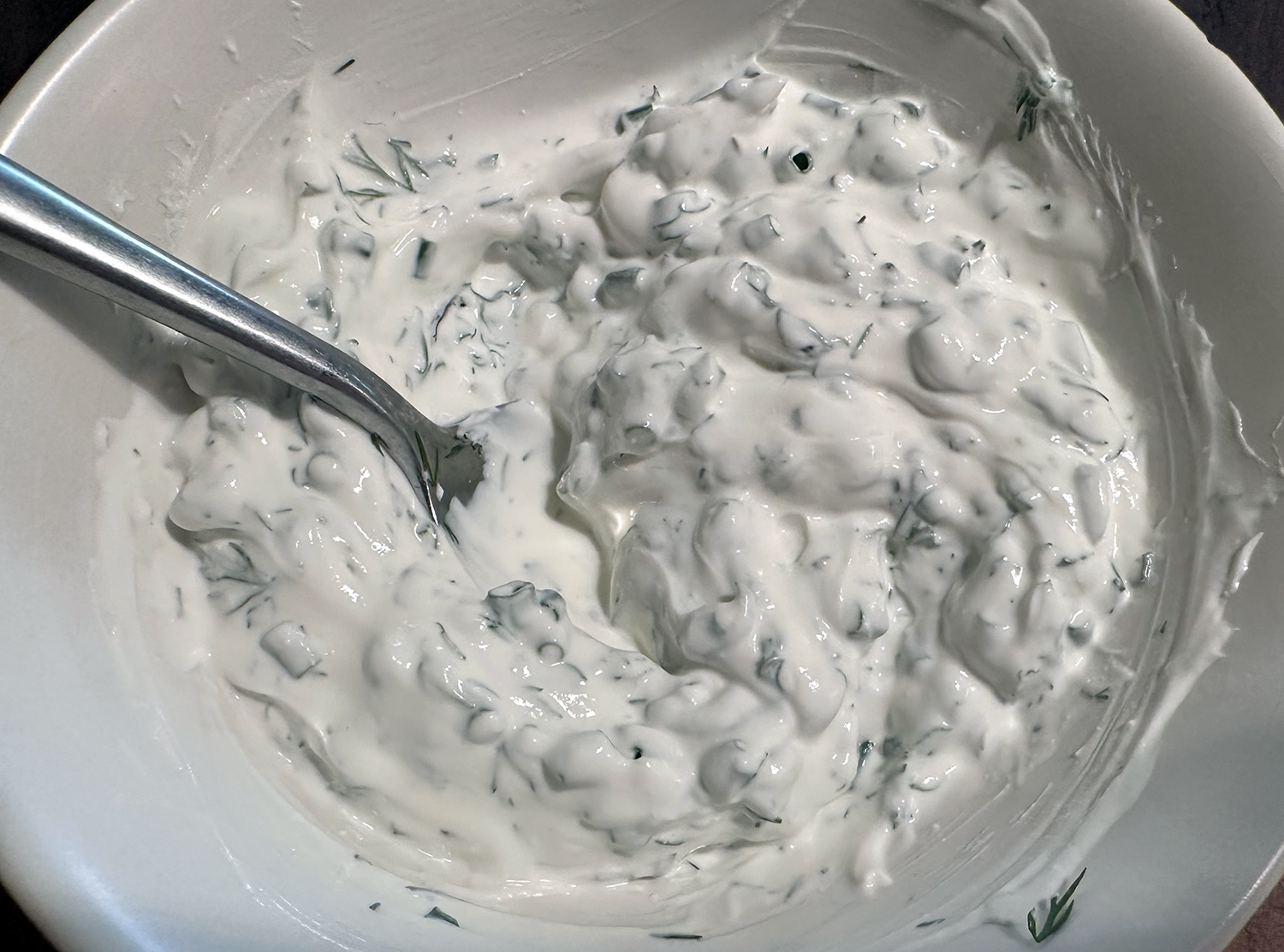
In a small bowl, stir together whole-milk Greek yogurt, finely chopped fresh cilantro, lime juice, water, jalapeño chilis, scallions and kosher salt and ground black pepper, to taste.

http://www.lynnandruss.com

Recipes from Milk Street

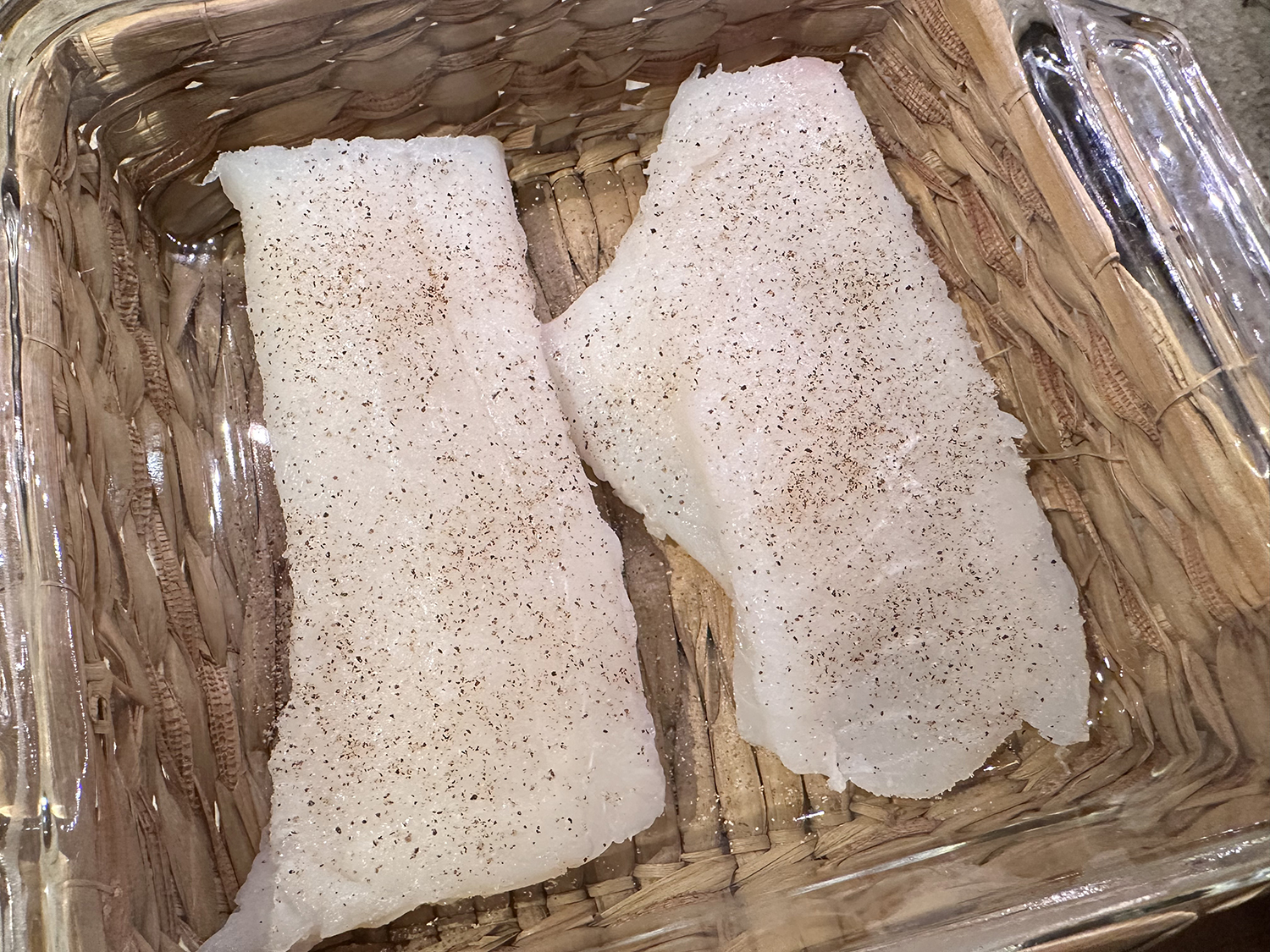
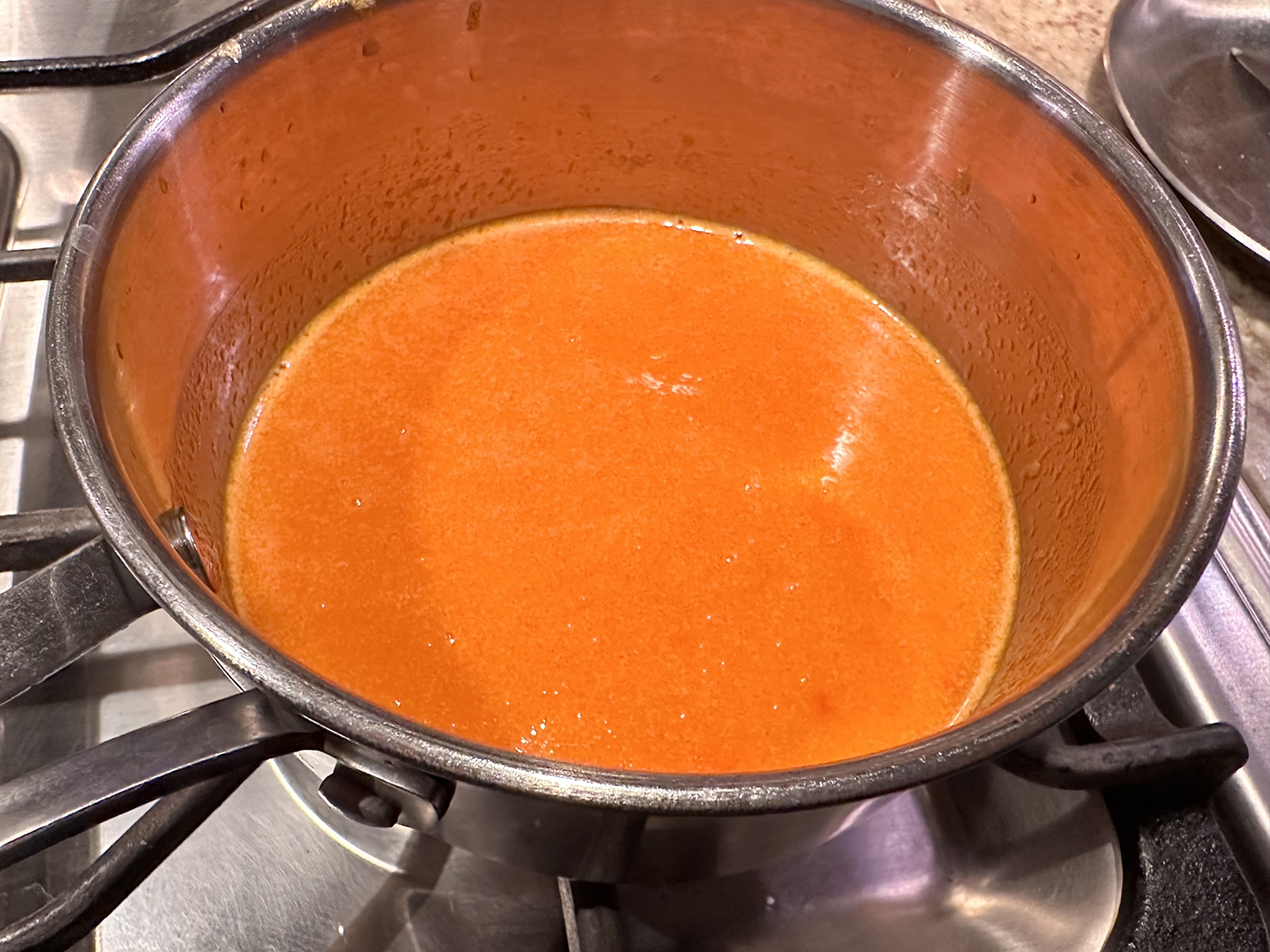
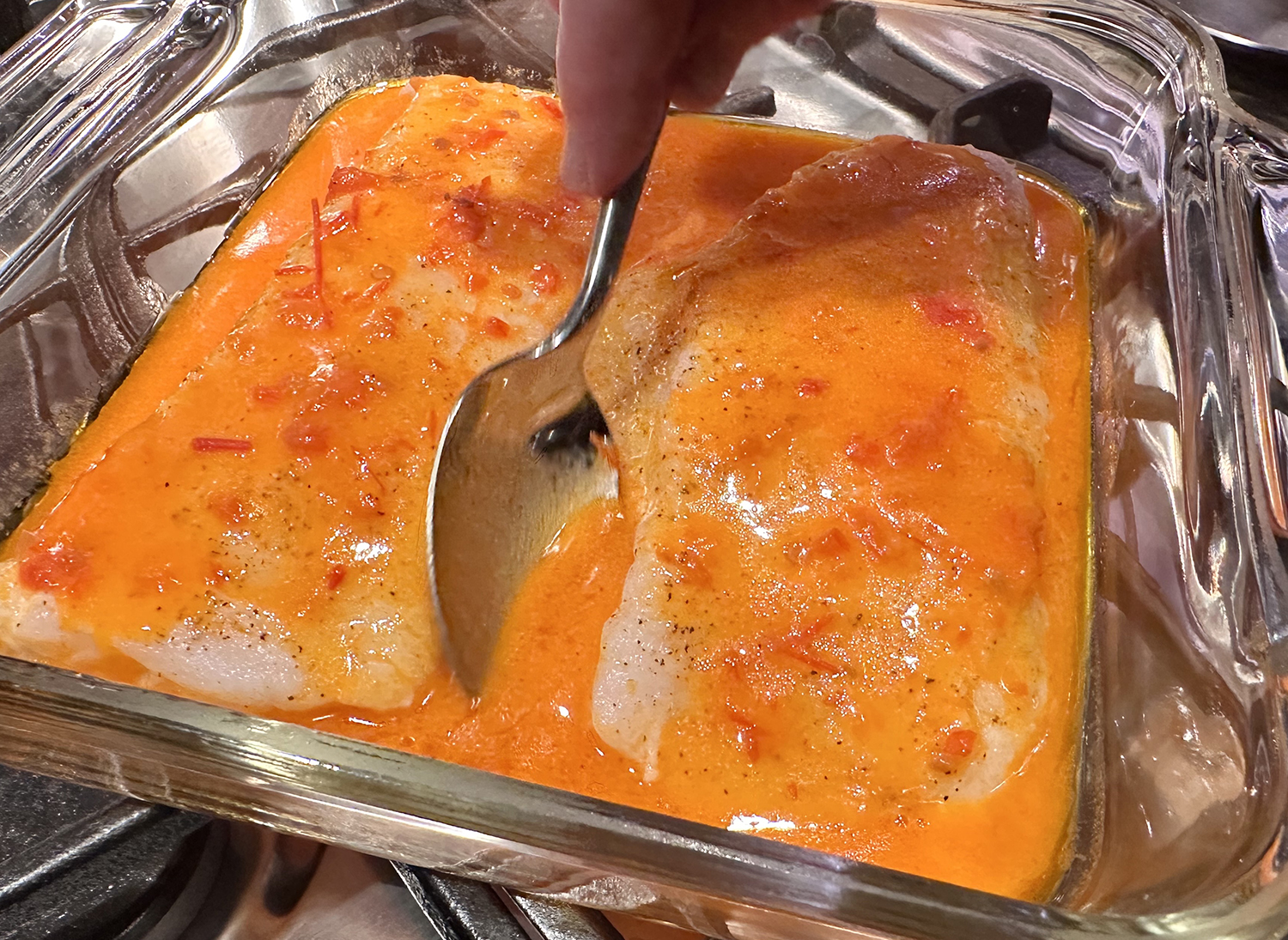
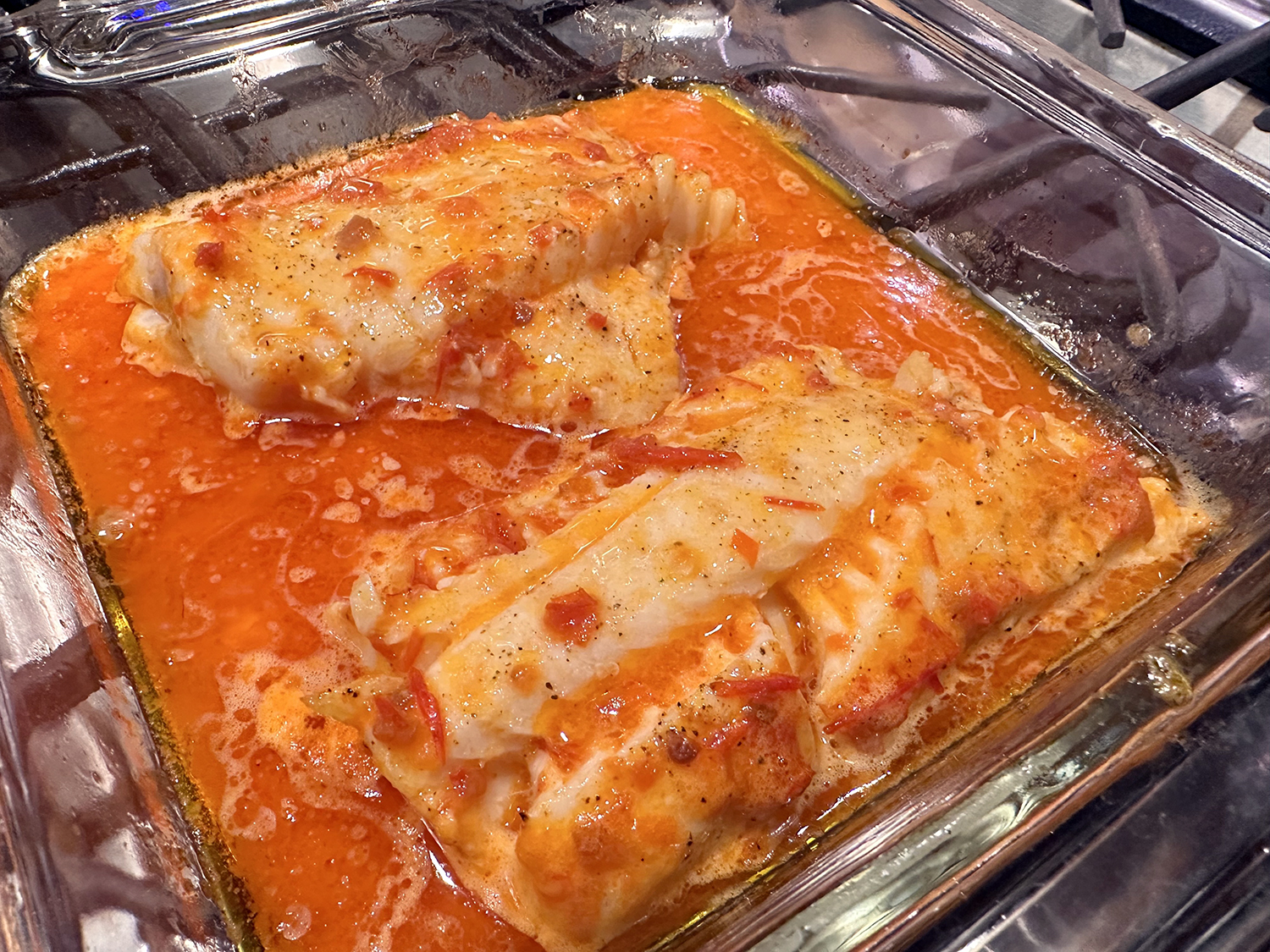
Butter-Basted Spiced Cod with Polenta

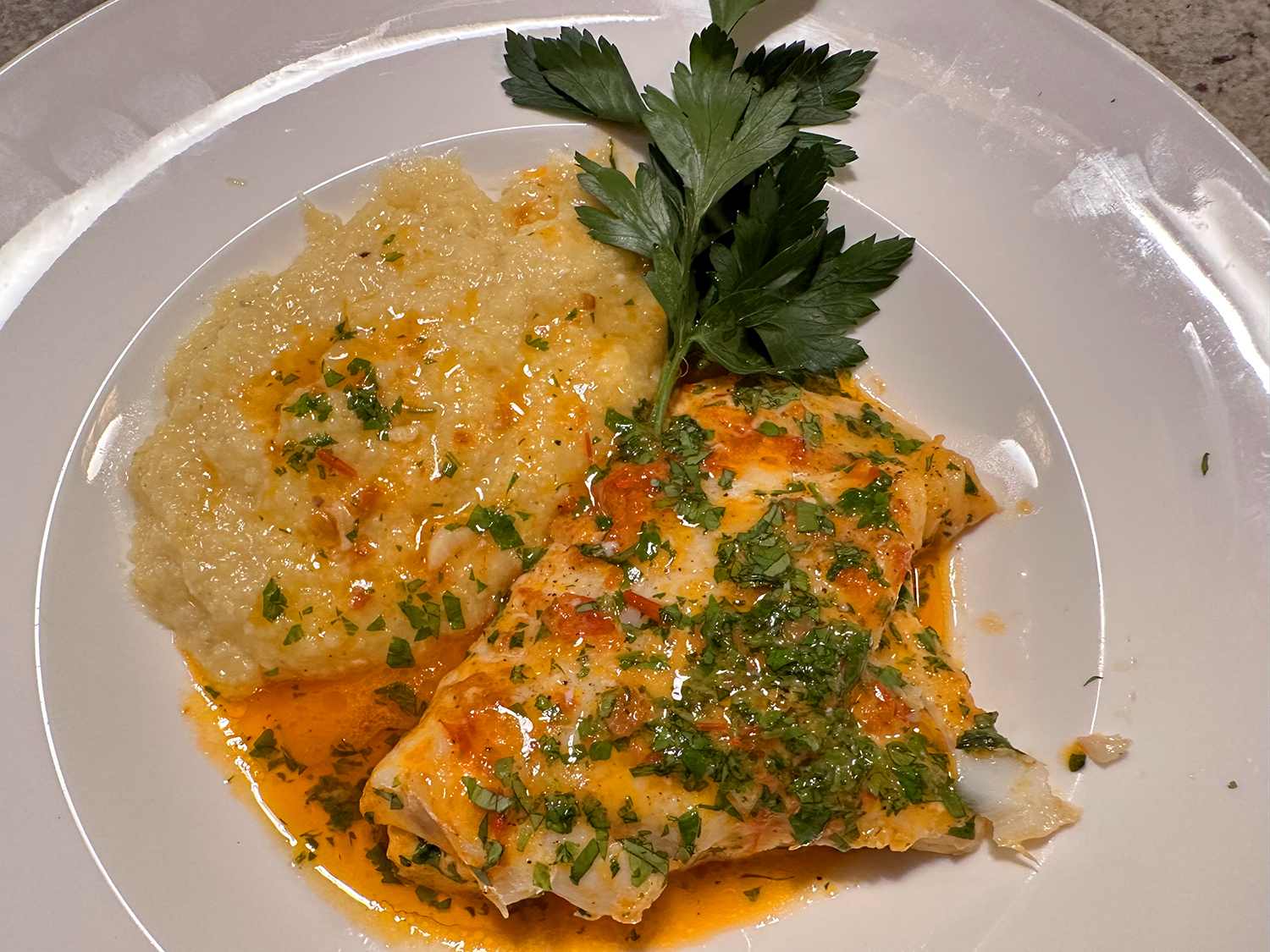
Our Monday dinner menu often includes a fish dish or something vegetarian. So Fine Cooking’s “Make It Tonight” Series came through again with this Butter-Basted Spiced Cod with Polenta by Ronne Day. Yes, we’ve made it before, but that was years ago and we were ready for a rehash.

As mentioned in an earlier post, baking cod in melted butter adds a richness to the fish that nicely balances the heat from the harissa, a yummy North African paste made of ground dried chile peppers, garlic, olive oil, and spices. Harissa comes in mild or spicy. Other uses for the condiment include stirring into couscous, stews, soups and pastas. You’ll find it packaged in cans, tubes and jars at well-stocked grocery stores and specialty markets.

We cut back on the amount of cod to one pound, enough for two 6-ounce fillets; although we used the full amounts of the remaining ingredients. A refreshing orange, fennel and red pepper salad with mint and lemon completed our meal.

Butter-Basted Spiced Cod with Polenta

  • Servings: 4
  • Difficulty: easy
  • Print

Ingredients

  • 1-1/2 tsp. crushed whole coriander seeds or ground coriander
  • 2 medium lemons, 1 finely grated to yield 1/2 tsp. zest and squeezed for 2 Tbsp. juice, the other cut into wedges
  • Kosher salt
  • 1 cup cornmeal
  • 3 oz. (6 Tbs.) unsalted butter
  • 4 6-oz. pieces cod loin
  • Freshly ground black pepper
  • 2 Tbsp. harissa paste
  • 2 tsp. coarsely chopped cilantro or parsley

Directions

  1. Position a rack in the center of the oven and heat the oven to 400°F.
  2. Heat a 3-quart saucepan over medium heat. Add the coriander and stir until fragrant, about 30 seconds.
  3. Add 3 cups of water, the lemon zest, and 1 tsp. salt; turn the heat up to medium high.
  4. Whisk in the cornmeal and cook, stirring often, until thick and creamy, about 20 minutes. (If the polenta gets too thick, loosen with a little hot water.)
  5. Meanwhile, melt the butter in a small saucepan. Season the fish lightly with salt and pepper and arrange in a 9×13 baking dish with space between each piece.
  6. Remove the butter from the heat, stir in the harissa and lemon juice, and pour it over the fish.
  7. Bake, basting every 5 minutes or so, until cooked through (the fish will flake easily), about 15 minutes. If necessary, cover with foil to keep warm.
  8. Divide the polenta among 4 shallow bowls or plates. Top with the fish and spoon the butter over the fish.
  9. Top with the cilantro or parsley and serve with the lemon wedges.

http://www.lynnandruss.com

Original recipe from Fine Cooking

Roast Tarragon-Cognac Chicken

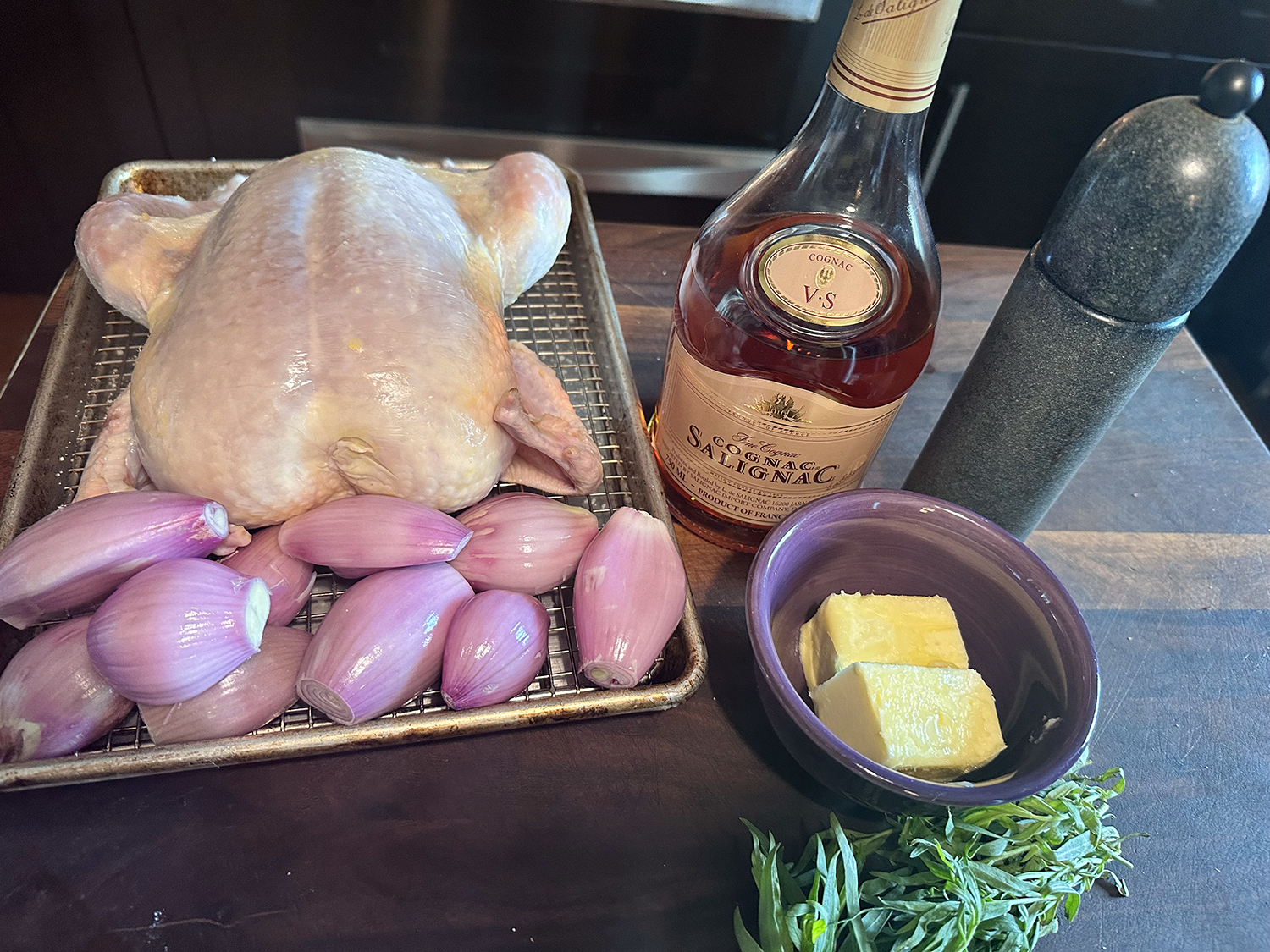
Chef/author Melissa Clark tell us “The sophisticated, French flavors of brandy, butter and tarragon season this golden-skinned roast chicken, adding panache to what is otherwise an easy and straightforward recipe.”

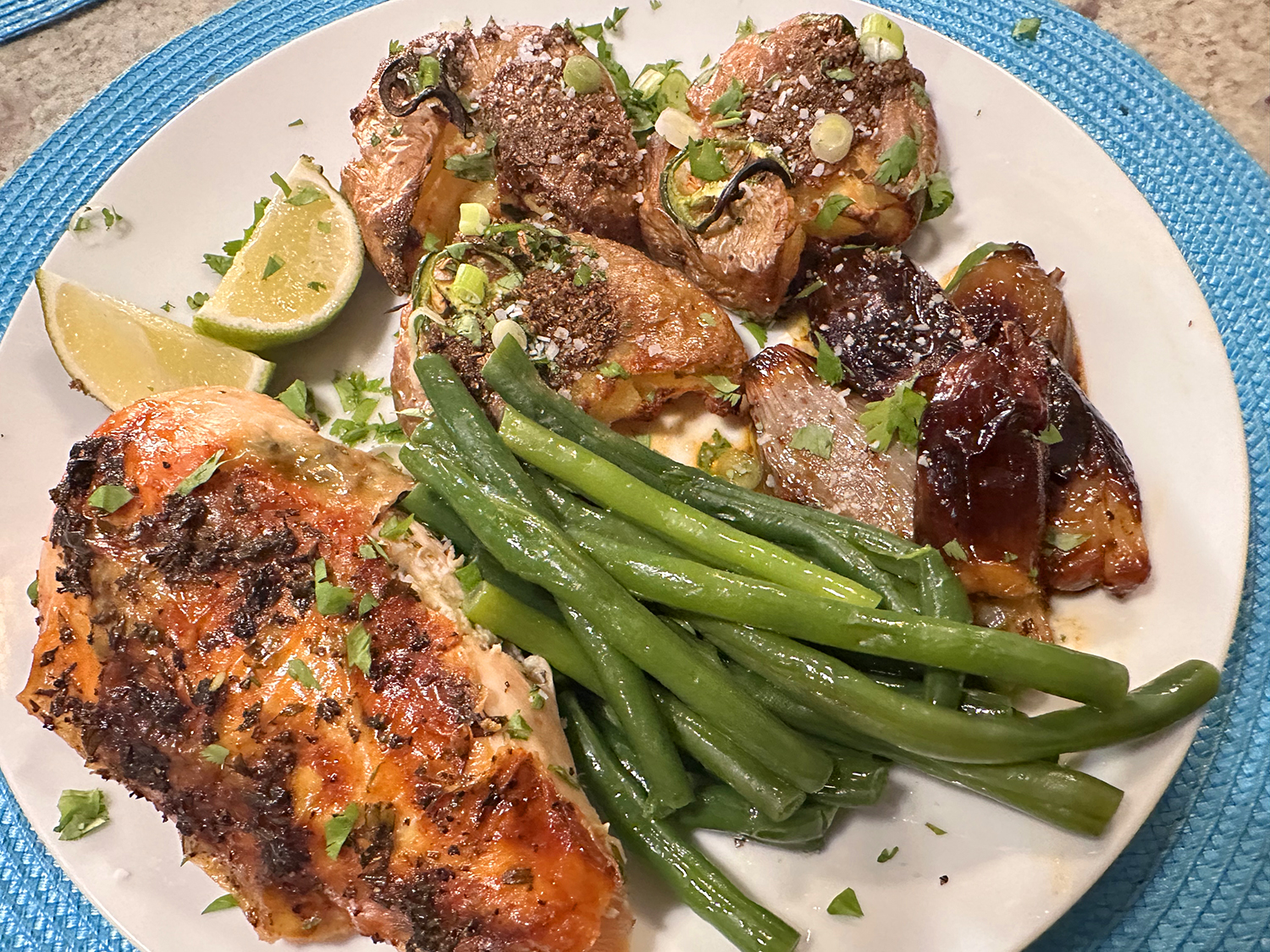
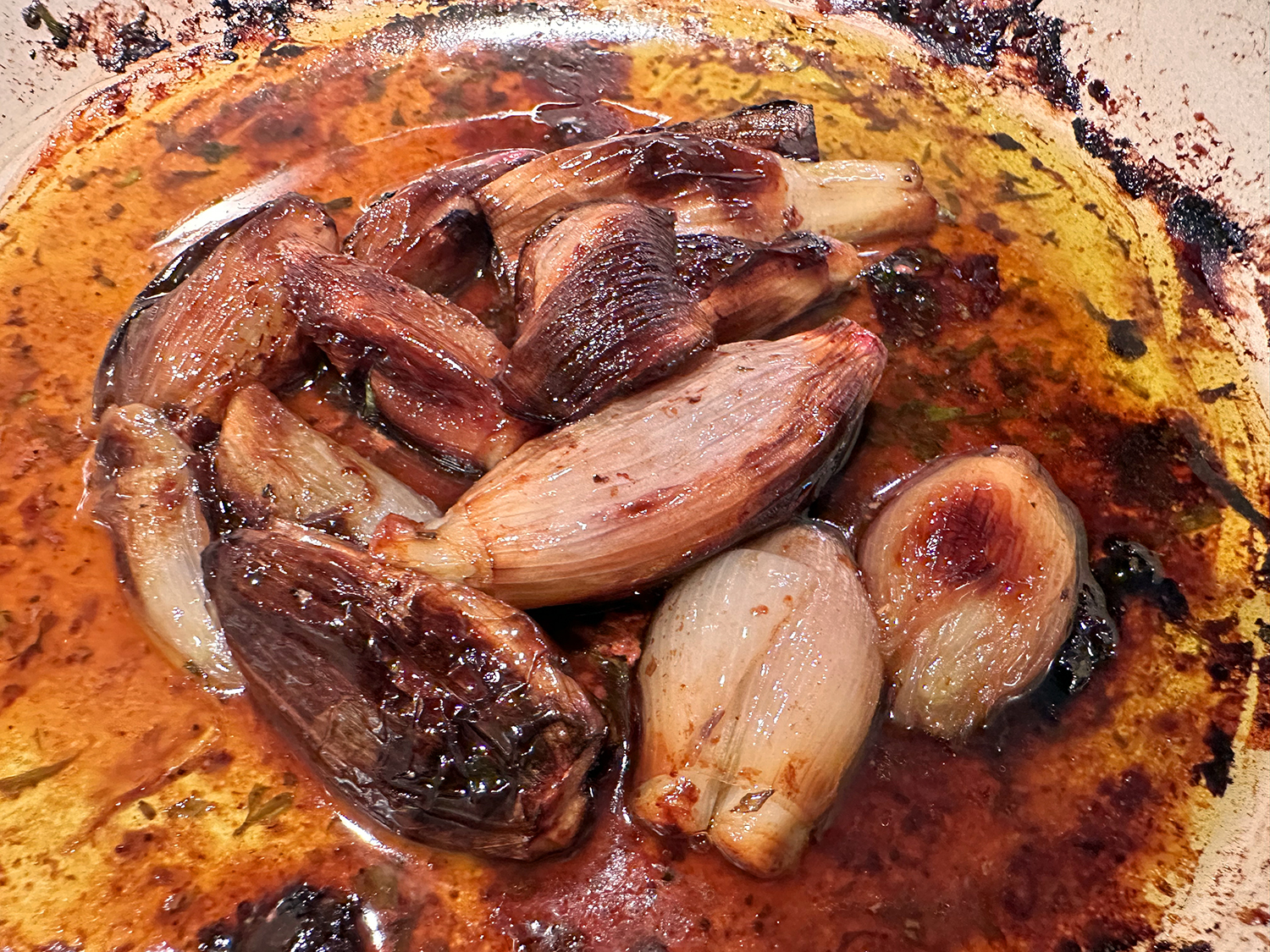
Nothing like a fabulous meal using a limited number of ingredients. We decided to include about a dozen shallots to surround the poultry and add the beloved allium flavor. As they roast with the chicken, the shallots become all soft and jammy.

Serving the chicken with mashed potatoes or polenta, provide a soft bed to absorb all the heady, buttery juices. But we were jonesing to try the “Gunpowder Potatoes” in this case. If you choose the mashed potatoes idea, go ahead and make a flavorful pan sauce, especially if you add those shallots.

Oh, and if you’re not a tarragon fan, fresh thyme makes an excellent, milder substitute.

Roast Tarragon-Cognac Chicken

  • Servings: 4
  • Difficulty: easy
  • Print

Ingredients

  • 1 4-lb. whole chicken
  • 10-12 shallots, trimmed and peeled
  • 2 tsp. coarse gray sea salt or 2½ teaspoons kosher salt (such as Diamond Crystal)
  • 6 Tbsp. unsalted butter, softened
  • 1 bunch fresh tarragon, leaves and tender stems coarsely chopped (about ¾ cup)
  • 2 Tbsp.s Cognac
  • 1 tsp. freshly ground black pepper

Directions

  1. Pat the chicken dry and salt the bird inside and out. Transfer to a plate or baking dish, preferably on a rack, and refrigerate uncovered for at least 1 hour or overnight. (Ours was in the fridge for 4 hours.)
  2. When ready to cook the chicken, heat the oven to 400 degrees.
  3. In a small bowl, combine butter, tarragon, 1 tablespoon Cognac and the pepper. Rub mixture inside the chicken cavity and over and under the chicken skin.
  4. Place chicken on a rimmed sheet pan or in a large, ovenproof skillet. Roast, breast side up, until the skin is golden and crisp, and the juices run clear when you insert a fork in the thickest part of the thigh (165 degrees), about 1 hour.
  5. Turn off the oven — don’t skip this step, or the Cognac may overheat and catch fire — and transfer the pan with the chicken to the stovetop. Pour the remaining 1 tablespoon Cognac over the bird and baste with some of the buttery pan juices. Immediately return the chicken to the turned-off oven and let rest there for 10 minutes before carving and serving.

http://www.lynnandruss.com

Adapted from a recipe by Melissa Clark for NYTimes Cooking

Romanian Pork and White Bean Soup with Vinegar and Caraway

The original Romanian soup is called ciorbă de porc, which features beef, pork, sausage, meatballs or even just vegetables. Beans and smoked meat are a common pairing, and that is included in this version.

No matter the headlining ingredient, the defining characteristic of ciorbă is a distinct tanginess that comes from the addition of a souring agent. Here, white wine vinegar is used, but other options include pickle brine, sauerkraut liquid, or even the juice of sour plums. Quick-pickled red onion garnishes individual bowlfuls of this ciorbă, adding a sharp, punchy flourish. Make the pickles a day ahead or while the soup simmers so the onion has time to steep in the vinegar mixture.

Don’t forget to soak the beans, as directed in the first step of the recipe, for at least 12 hours before you plan to begin cooking. Soaking the beans in water that is salted tenderizes them as wells as seasons them throughout.

It is recommended smoking the sausage at home in a roasting pan, but for ease, go ahead and use a smoked ham hock and bulk out the soup with the meat from a half-rack of baby back ribs. Topped with quick-­pickled onions and fresh dill, this bright, brothy stew encompasses the hallmarks of Romanian cuisine—tangy, smoky and rich with flavor.

Romanian Pork and White Bean Soup with Vinegar and Caraway

  • Servings: 4-6
  • Difficulty: easy
  • Print

Ingredients

  • Kosher salt and ground black pepper
  • 1 lb. dried great northern beans
  • 2 Tbsp. grapeseed or other neutral oil
  • 2 medium yellow onions, chopped
  • 2 medium celery stalks, chopped
  • 2 medium carrots, peeled and chopped
  • 1 medium red bell pepper, stemmed, seeded and chopped
  • 1-lb. smoked ham hock, OR 1 lb. smoked pork neck
  • 1 1/2 lbs. pork baby back ribs (½ rack), cut between the bones into 3 sections
  • 28-oz. can whole tomatoes, finely crushed by hand
  • 2 tsp. caraway seeds
  • 1 qt. low-sodium chicken broth
  • 3 Tbsp. finely chopped fresh dill
  • 1/4 cup white wine vinegar
  • Pickled red onions to serve, if desired

Directions

  1. First, soak the beans. In a large bowl, combine 3 quarts water, 1½ teaspoons salt and the beans. Stir until the salt dissolves, then soak at room temperature for at least 12 hours or up to 24 hours. Drain the beans and set aside.
  2. In a large pot over medium-high, heat the oil until shimmering. Add the onions, celery, carrots and bell pepper, then cook, stirring often, until the vegetables begin to brown, 5 to 8 minutes.
  3. Add the soaked beans, ham hock, ribs, tomatoes with juices, caraway, broth and 1 quart water; stir to combine. Bring to a boil over high, then cover, reduce to medium and cook, stirring occasionally and adjusting the heat as needed to maintain a simmer, until the beans are tender and a paring knife inserted into the meat between the rib bones meets no resistance, about 2 hours.
  4. Remove the pot from the heat. Using tongs, transfer the ham hock and ribs to a large plate. When cool enough to handle, remove the meat from both and shred into bite-size pieces; discard the bones, fat and gristle.
  5. Return the meat to the pot and bring to a simmer over medium, stirring occasionally. Remove from the heat, then stir in the dill and vinegar. Taste and season with salt and pepper. Serve with pickled red onions, if desired.

http://www.lynnandruss.com

Original recipe by Diane Unger for Milk Street

Seared Salmon Paka

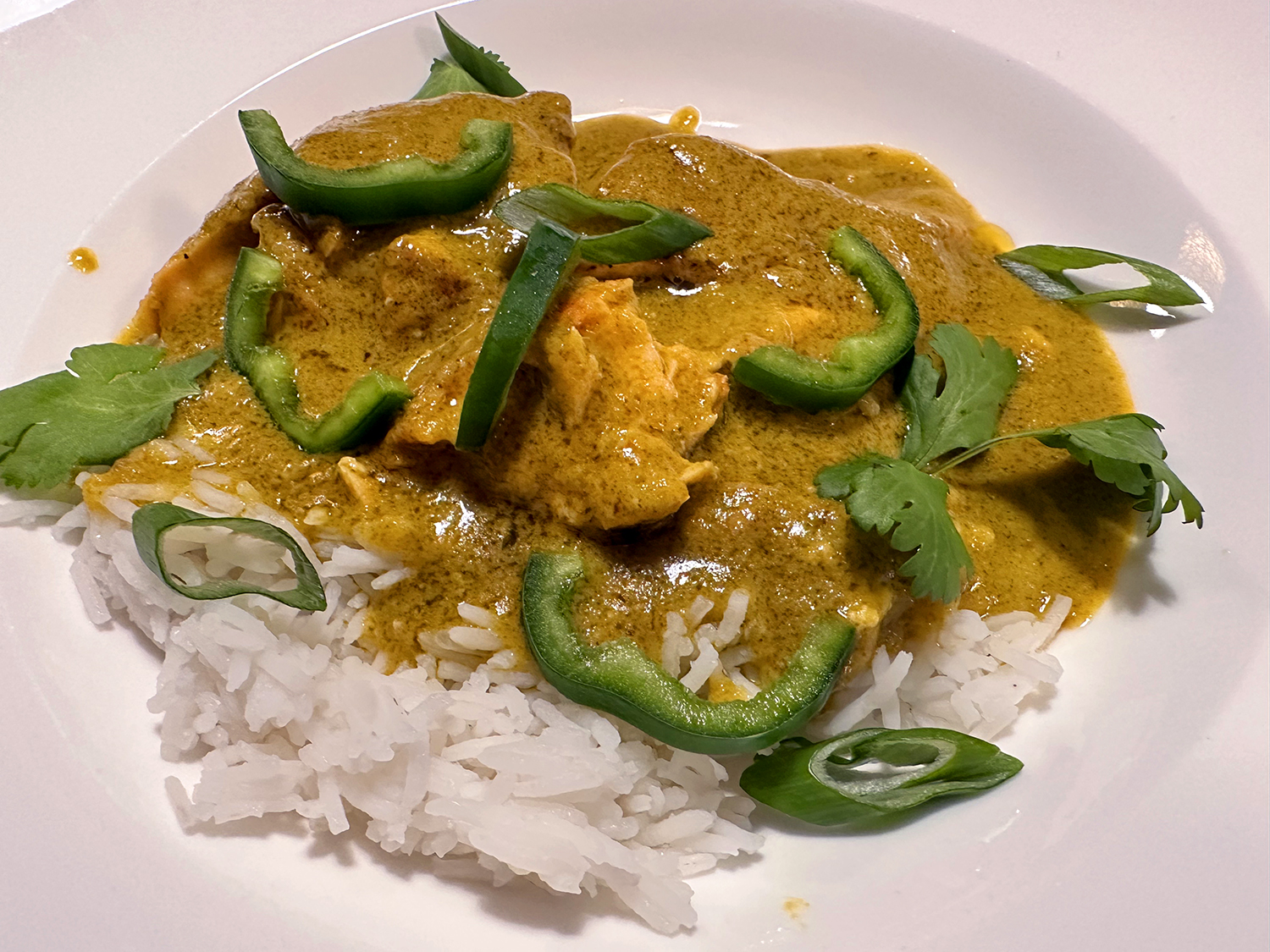
Paka refers to a silky coconut-milk-based sauce popular in East African cuisine. In this take from Bon Apétit on machi paka—a classic fish curry—quickly seared salmon takes the place of the traditional charred, grilled white fish. Cooking the blended curry base down until the coconut milk breaks and the aromatics toast in its rich fat is key to developing deep flavor—don’t rush this part.

The curry base is wonderfully versatile; if fish isn’t your thing, sub in chicken or your favorite canned beans (adjust cooking times accordingly). Having a lot of rice and curry sauce left over, we browned some boneless chicken thigh pieces and added them to the sauce for another dinner a few days later.

Since no Thai chiles were available at the grocery store, we opted to incorporate jalapeños instead. The color of the paka may be a bit off-putting as it gives the appearance of pea soup, but don’t be fooled by that, the sauce is amazing!

Seared Salmon Paka

  • Servings: 4
  • Difficulty: easy
  • Print

Ingredients

  • 1 Tbsp. vegetable oil
  • 4 6-oz. boneless salmon fillets, preferably skin-on
  • 2 tsp. Diamond Crystal or 1¼ tsp. Morton kosher salt
  • 1 medium onion
  • 2–3 green Thai chiles
  • 3 garlic cloves 
  • 1 1½” piece ginger, peeled 
  • 1 Tbsp. double-concentrated tomato paste,
  • ½ tsp. ground turmeric 
  • ¼ cup cilantro leaves with tender stems 
  • 2 13.5-oz. can unsweetened coconut milk
  • 1 Tbsp. fresh lime
  • Cooked basmati rice

Directions

  1. Heat 1 Tbsp. vegetable oil in a large nonstick skillet over medium-high. Season four 6-oz. boneless salmon fillets, preferably skin-on, with kosher salt and cook (skin side down if it has skin), pressing fillets gently with a spatula, until golden brown, about 4 minutes. Turn fillets over and cook until golden brown and just cooked through, about 3 minutes. Transfer to a plate. Wipe out skillet and reserve.
  2. Purée 1 medium onion, coarsely chopped, 2–3 green Thai chiles, depending on heat preference, 3 garlic cloves, one 1½” piece ginger, peeled, 1 Tbsp. double-concentrated tomato paste, ½ tsp. ground turmeric, ¼ cup cilantro leaves with tender stems, and one 13.5-oz. can unsweetened coconut milk in a blender on high speed until smooth. Pour onion mixture into reserved skillet and sprinkle with 2 tsp. Diamond Crystal or 1¼ tsp. Morton kosher salt. Bring to a brisk simmer over medium-high heat, then reduce heat to medium and cook, stirring often with a wooden spoon, until mixture is reduced to a thick paste, fat separates from coconut milk (it will look broken), and aromatics are golden brown, 30–35 minutes.
  3. Pour in remaining one 13.5-oz. can unsweetened coconut milk and ¼ cup water and bring to a simmer, scraping up any browned bits.
  4. Gently break salmon fillets into 3″ pieces and return to skillet. Cook just until salmon is heated through, about 3 minutes. Stir 1 Tbsp. fresh lime juice into curry and remove from heat.
  5. Divide curry among shallow bowls and top with cilantro leaves with tender stems and halved green Thai chiles. Serve with cooked basmati rice or country-style bread and lime wedges alongside.

Do ahead: Curry base can be made 1 day ahead. Let cool; cover and chill. Reheat over medium-low, adding water to thin as needed.

http://www.lynnandruss.com

Recipe from Bon Appétit

World’s Best(?) Lasagna

Well, those are some pretty big boasting words! “World’s Best” is maybe pushing it just a tad, but our dinner guests helped themselves to seconds and wiped their plates clean. OK, this lasagna powerhouse does take most of an afternoon, so be prepared to spend some time. But, oh how you will love it when dinner time rolls around. Your dining companions will be screaming for more, as did ours.

The back story is, John Chandler submitted this lasagna recipe to Allrecipes more than 20-some years ago. One of their top-performing recipes of all time, World’s Best Lasagna racks up more than 7 million views per year and has ranked among the most popular lasagna recipes on the internet for two decades!

Folks adore this lasagna recipe because it’s incredibly customizable, so you can easily alter the ingredient list to suit your needs. Our personal touches included using an entire pound of mozzarella, and a bit more grated parm than called for. Then a bit of the leftover meat sauce and mozzarella slices were the crowning feature.

While assembling, whether or not you lay the lasagna noodles length- or crosswise, you’ll likely have to trim them down a bit to fit the dish.

The assembled lasagna should take about 50 minutes to cook in an oven preheated to 375°. Cover it with foil for the first 25 minutes, then let it cook uncovered for the final 25 minutes. Also, it’s important to let the lasagna rest at room temperature for about 15 minutes before you cut into it.

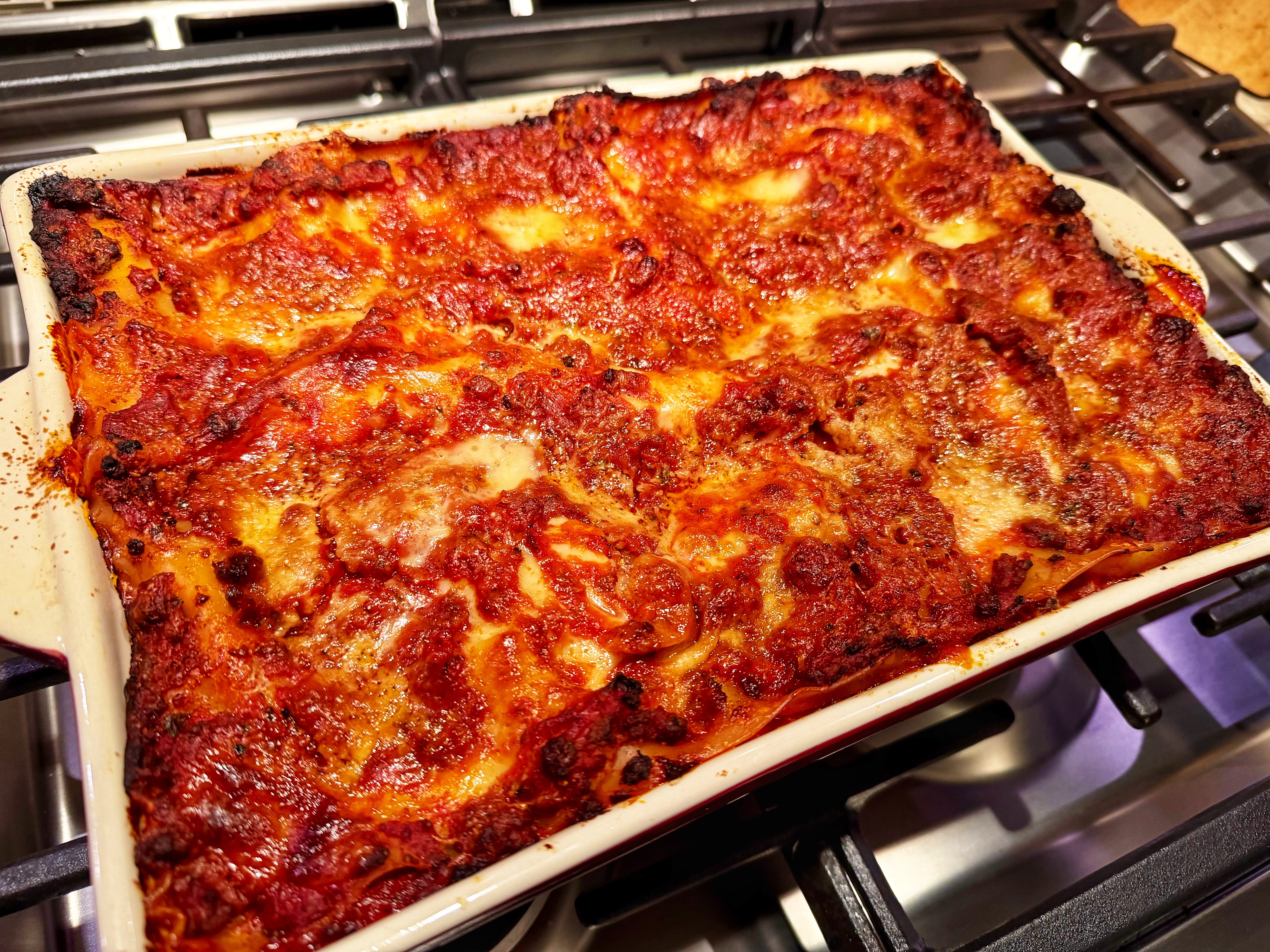
We were all so excited to eat, I completely forgot to take photos of the finished lasagna, so snapped a couple of the leftovers…

World's Best Lasagna

  • Servings: 6-8
  • Difficulty: easy
  • Print

Ingredients

  • 1 lb. sweet Italian sausage
  • ¾ lb. lean ground beef
  • ½ cup minced onion
  • 2 cloves garlic, crushed
  • 1 28 oz. can crushed tomatoes
  • 2 6.5 oz. cans canned tomato sauce
  • 2 6 oz. cans tomato paste
  • ½ cup water
  • 2 Tbsp. white sugar
  • 4 Tbsp. chopped fresh parsley, divided
  • 1 ½ tsp. dried basil leaves
  • 1 ½ tsp. salt, divided, or to taste
  • 1 tsp. Italian seasoning
  • ½ tsp. fennel seeds
  • ¼ tsp. ground black pepper
  • 12 lasagna noodles
  • 16 oz. ricotta cheese
  • 1 egg
  • ¾ lb. mozzarella cheese, sliced
  • ¾ cup grated Parmesan cheese

Directions

  1. Cook sausage, ground beef, onion, and garlic in a Dutch oven over medium heat until well browned. Remove as much excess grease as possible and discard.
  2. Stir in crushed tomatoes, tomato sauce, tomato paste, and water. Season with sugar, 2 tablespoons parsley, basil, 1 teaspoon salt, Italian seasoning, fennel seeds, and pepper. Simmer, covered, for about 1 1/2 hours, stirring occasionally.
  3. Bring a large pot of lightly salted water to a boil. Cook lasagna noodles in boiling water for 8 to 10 minutes. Drain noodles, and rinse with cold water.
  4. In a mixing bowl, combine ricotta cheese with egg, remaining 2 tablespoons parsley, and 1/2 teaspoon salt.
  5. Preheat the oven to 375° F.
  6. To assemble, spread 1 1/2 cups of meat sauce in the bottom of a 9×13-inch baking dish. Arrange 6 noodles length- or crosswise over the meat sauce (which ever fits your dish the best). Spread with 1/2 of the ricotta cheese mixture. Top with 1/3 of the mozzarella cheese slices. Spoon 1 1/2 cups meat sauce over mozzarella, and sprinkle with 1/4 cup Parmesan cheese.
  7. Repeat layers, and top with remaining mozzarella and Parmesan cheese. Cover with foil: to prevent sticking, spray foil with cooking spray.
  8. Bake in the preheated oven for 25 minutes. Remove the foil and bake for an additional 25 minutes. Rest lasagna for 15 minutes before serving.

http://www.lynnandruss.com

Recipe by John Chandler 

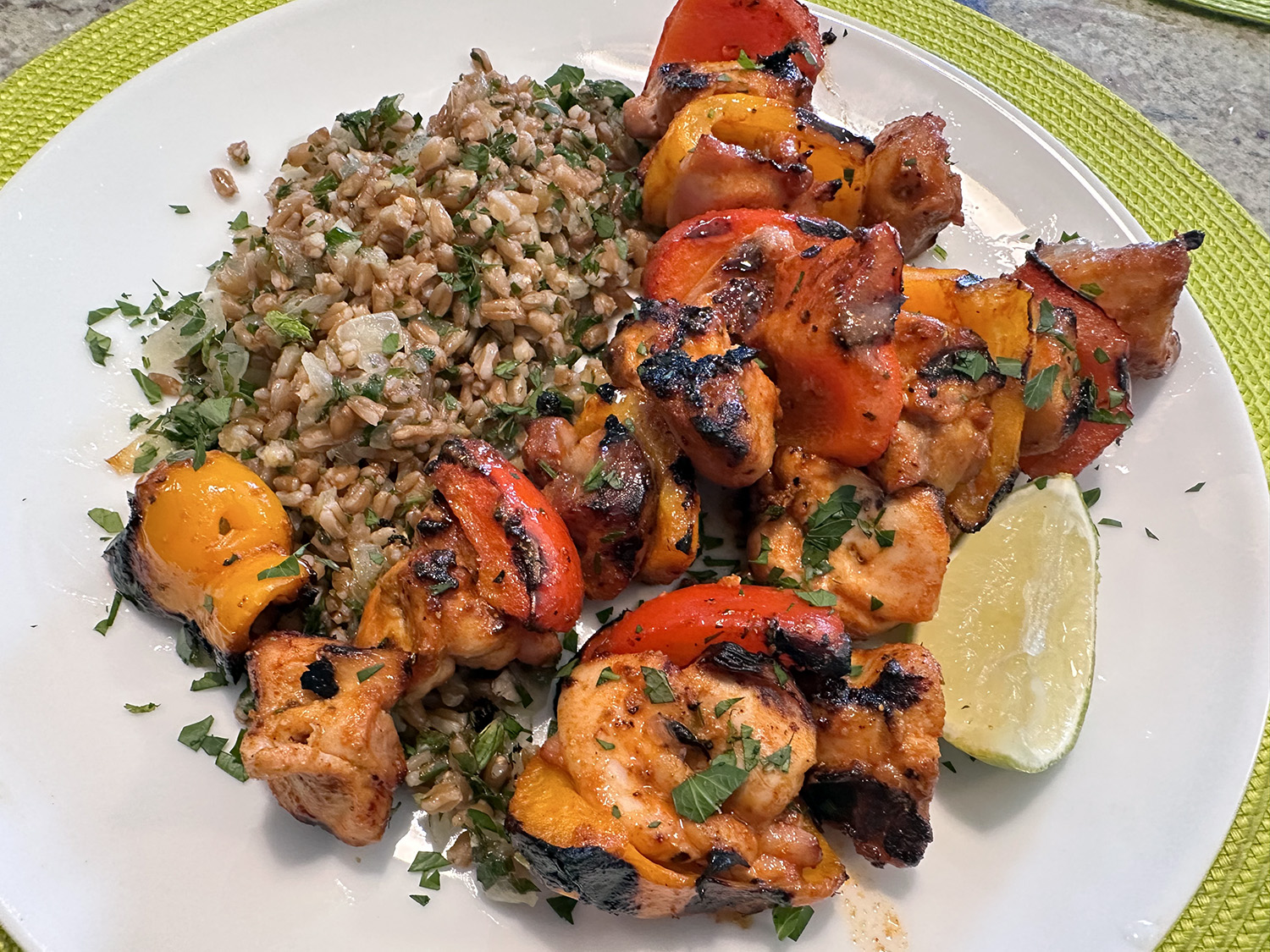
Berbere-Spiced Chicken Skewers

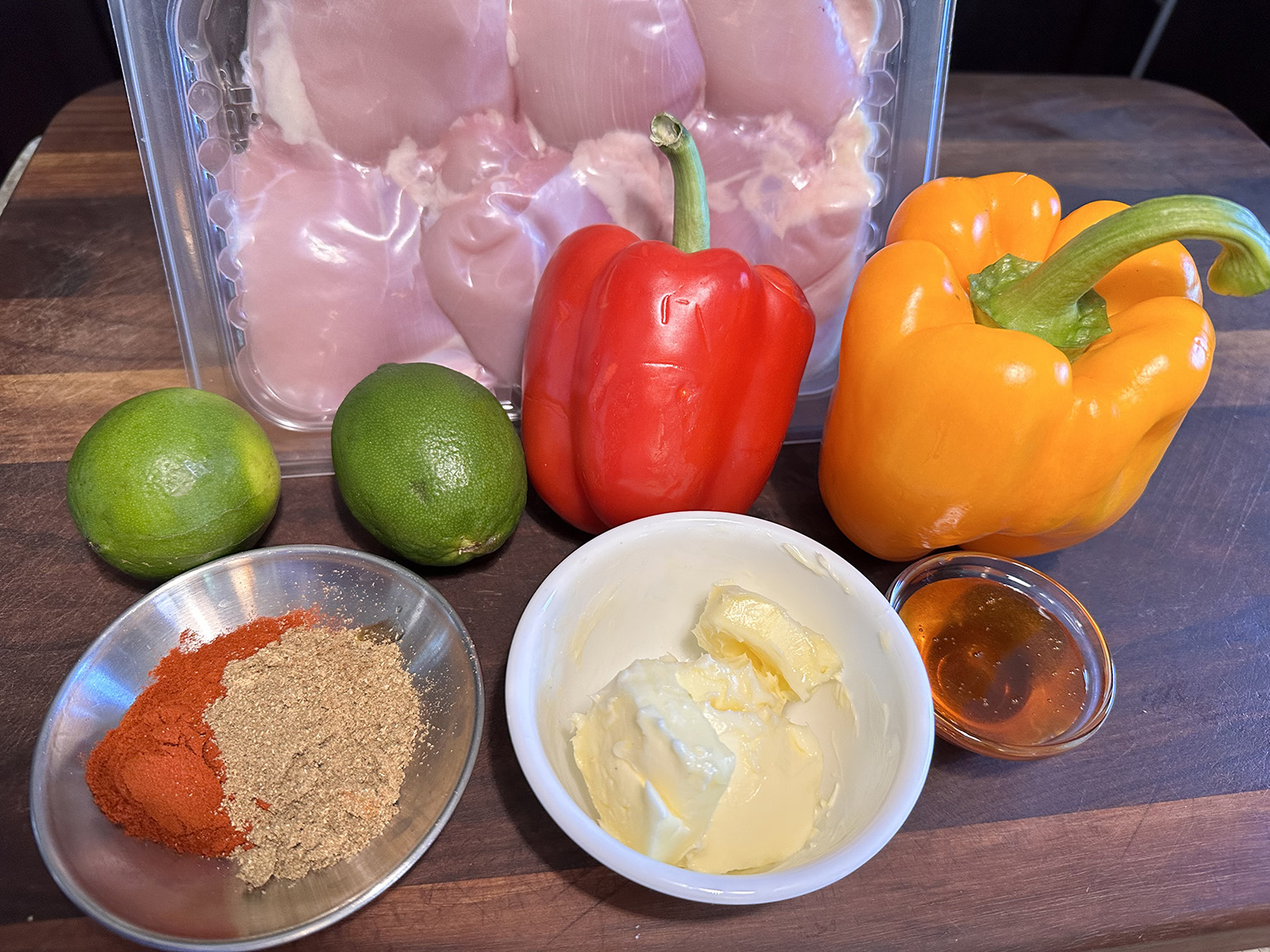
If you’ve never tried Ethiopia’s signature spice blend berbere, these vibrant chicken skewers get deep flavor from it. Made with dried alliums, chilies and warm spices, berbere features complex flavor and a rich, earthy aroma. Look for it in spice shops or well-stocked grocery stores.

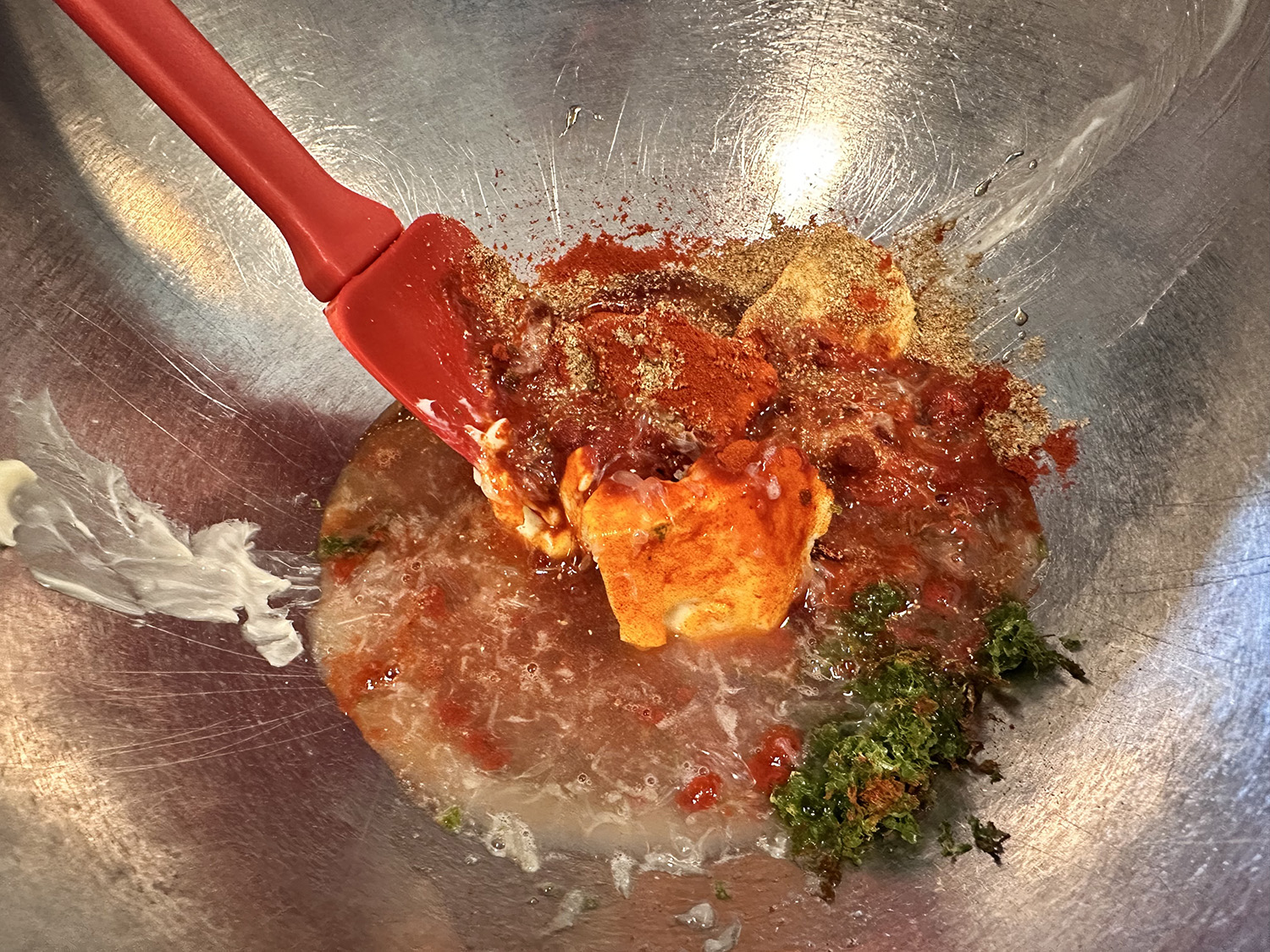
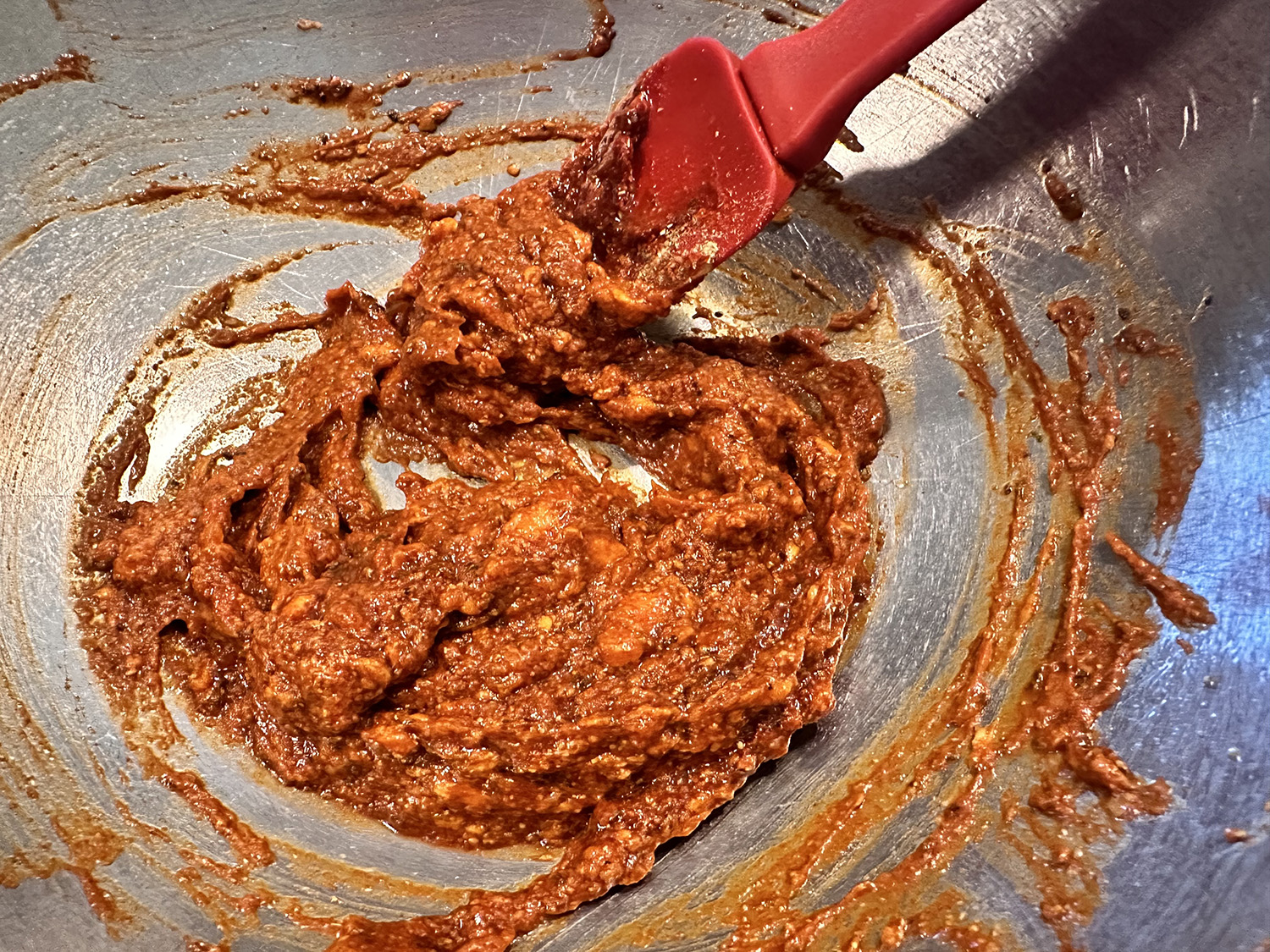
If you can’t find berbere, or don’t feel like purchasing another spice to add to your growing collection, use a mixture of ground coriander and smoked paprika (which is what we did). In this recipe from Milk Street, they combine berbere with softened butter, lime juice and honey, making a spicy-sweet seasoning mix ideal for clinging to the chicken before cooking.

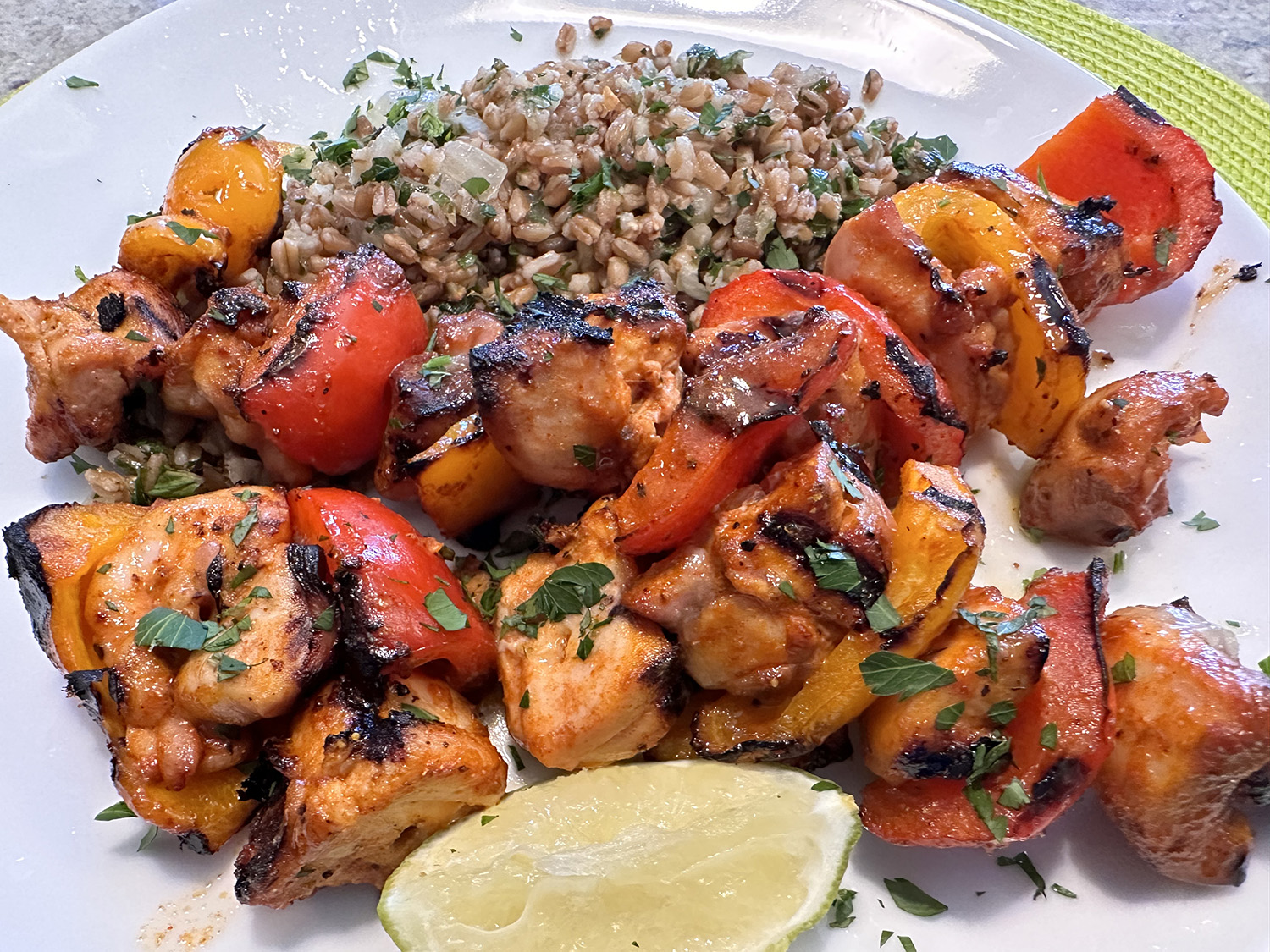
We served our skewers with a Lemon and Herb Farro side dish.

Berbere-Spiced Chicken Skewers

  • Servings: 4
  • Difficulty: easy
  • Print

Ingredients

  • 4 Tbsp. salted butter, room temperature
  • 2 Tbsp. berbere OR 1 Tbsp. ground coriander plus 1 Tbsp. smoked paprika
  • 2 Tbsp. honey, plus more to serve
  • 1 Tbsp. grated lime zest, plus 2 Tbsp. lime juice, plus lime wedges to serve
  • Kosher salt and ground black pepper
  • 1½ lbs. boneless, skinless chicken thighs, trimmed and cut into 1½-inch pieces
  • 2 medium red OR orange OR yellow bell peppers OR a combination, stemmed, seeded and cut into 1½-inch pieces

Directions

  1. Set a wire rack in a broiler-safe rimmed baking sheet and mist with cooking spray.
  2. In a large bowl, mix the butter, berbere, honey, lime zest and juice, 1 teaspoon salt and ½ teaspoon pepper. Measure 2 tablespoons of the mixture into a small bowl; set aside for brushing.
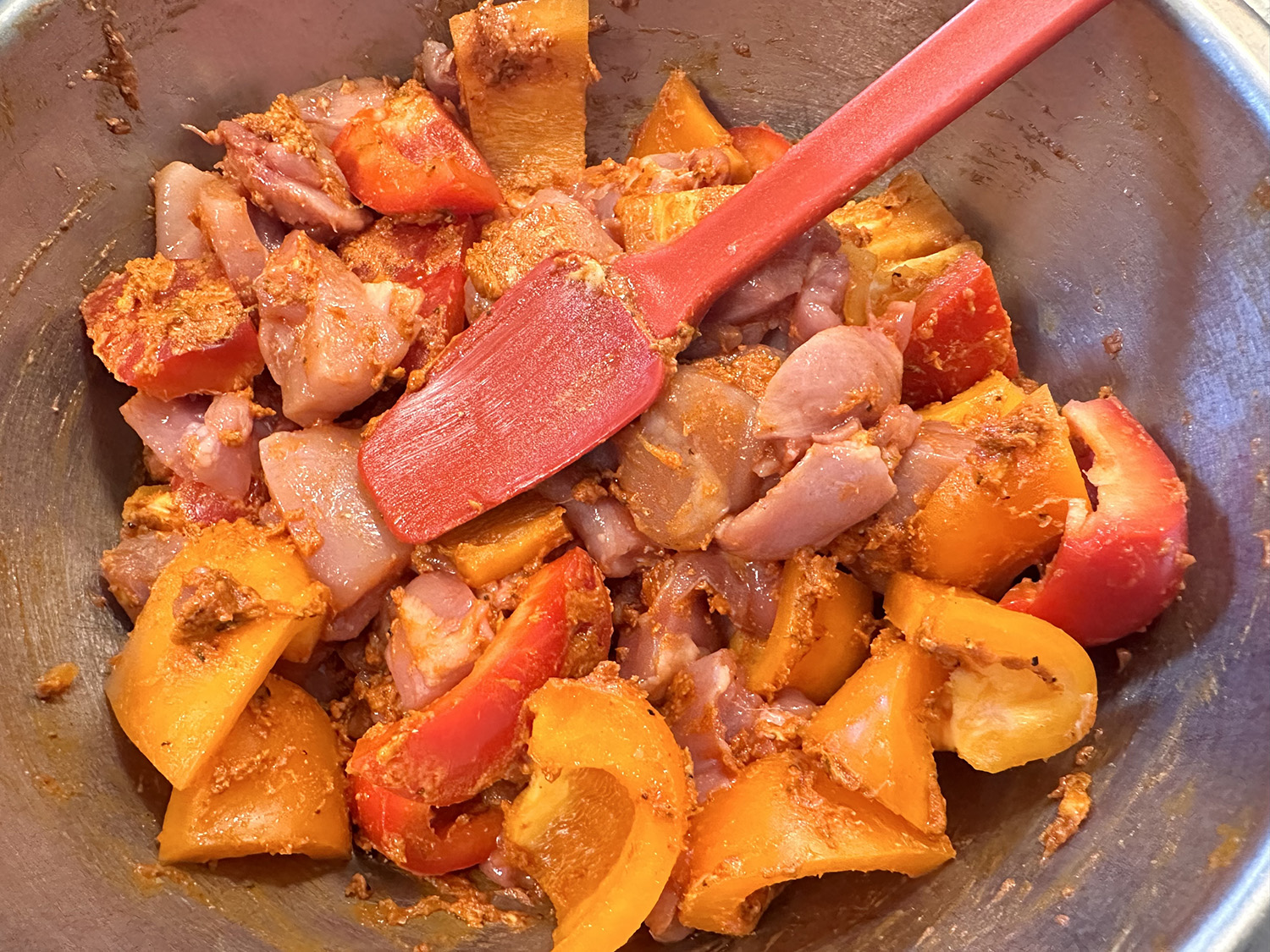
  3. Add the chicken and peppers to the bowl with the remaining berbere mixture and mix with your hands to coat.
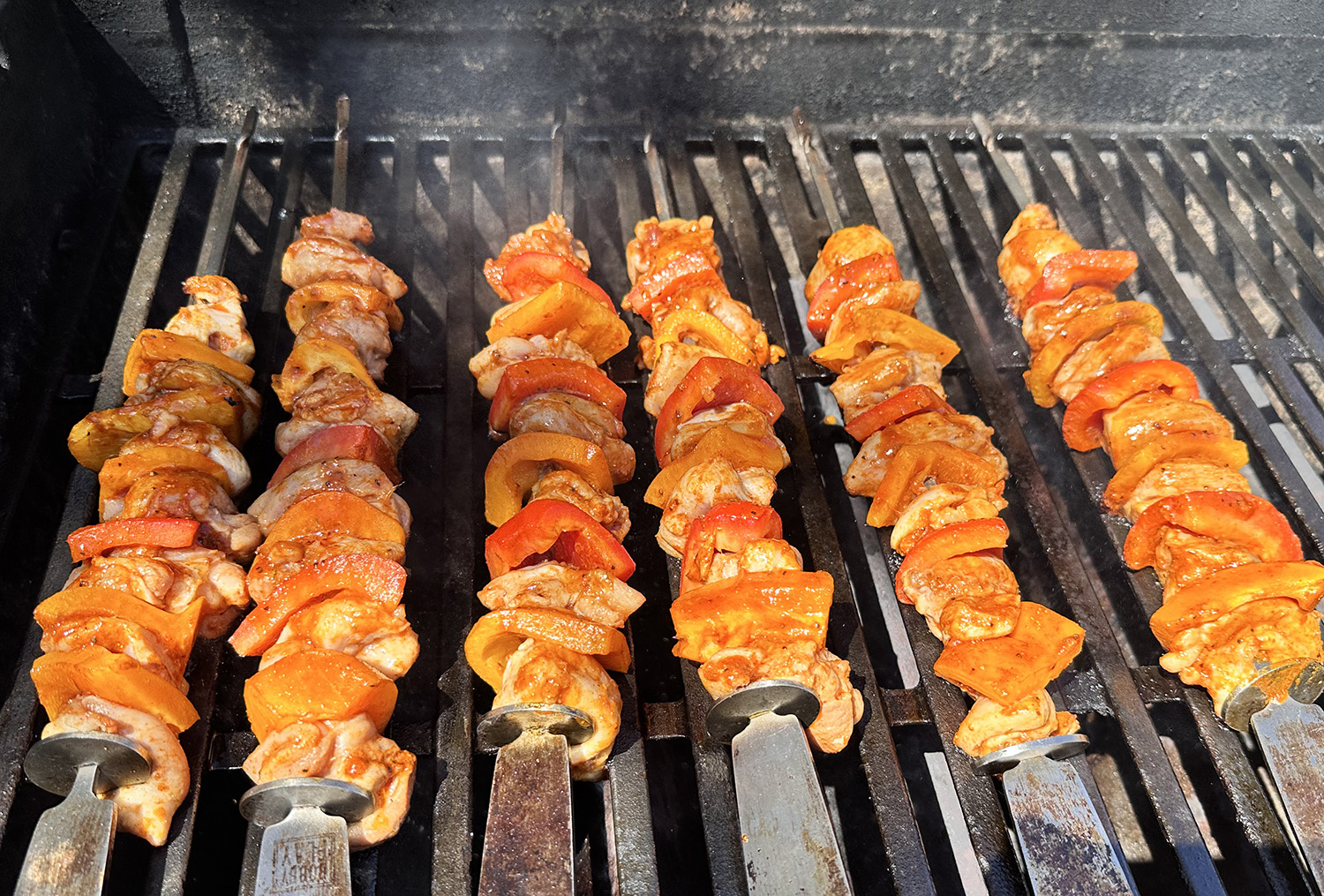
  4. Thread the chicken, alternating with the peppers, onto four 12-inch metal skewers. Place the skewers on the prepared rack, spacing them evenly. Let stand at room temperature while the broiler heats.
  5. Heat the broiler with a rack about 6 inches from the element. Broil the skewers until lightly charred, 6 to 7 minutes. Remove from the oven, flip and broil until charred on the second sides, another 6 to 7 minutes.
  6. Transfer to a serving platter, brush with the reserved butter mixture and drizzle with additional honey. Serve with lime wedges.

http://www.lynnandruss.com

Original recipe from Milk Street

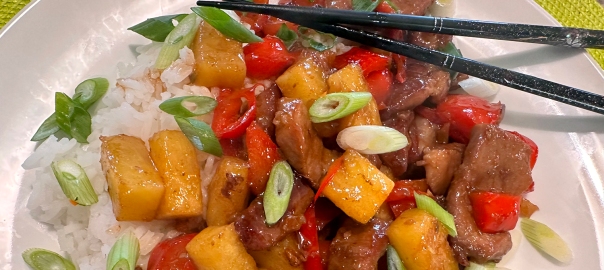
Sweet-and-Sour Pork with Pineapple

This takeout classic has delicious roots in Cantonese cooking. Now, it is tempting to dismiss sweet-and-sour pork as gloppy, Americanized Chinese food. And, let’s face it, it often is. Been there, tasted that.

Looking to harness that enticing sweet-tart profile without the saccharine stickiness, Milk Street was drawn to the dish’s origins. A lighter, earlier variation happens to be preserved in Taiwan, where cooks skip the deep-frying—and the ketchup—to better highlight the other ingredients.

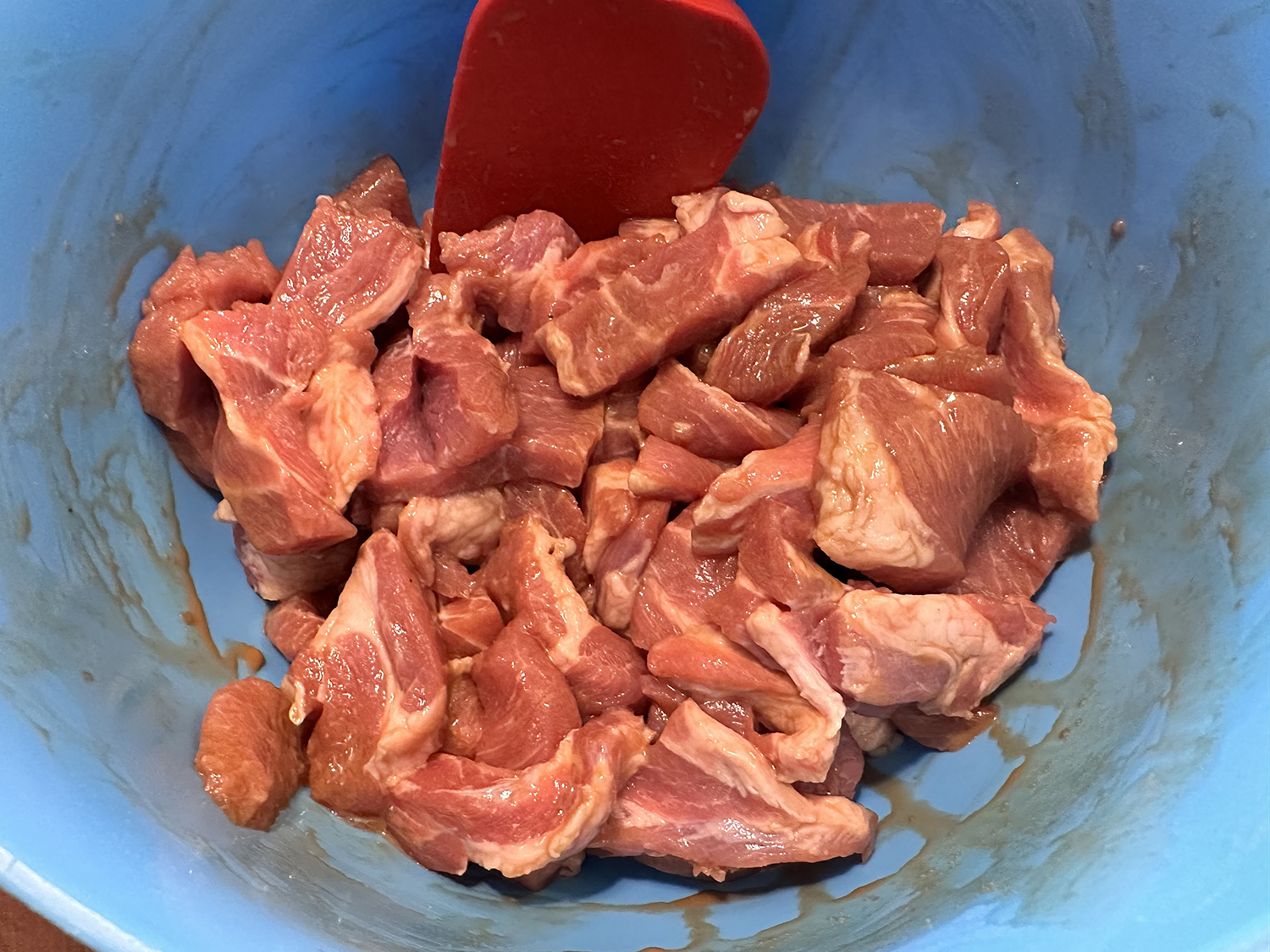
Thinly sliced pork shoulder is marinated in soy sauce, a bit of sugar and cornstarch. The starch creates a protective layer against the high heat of a stir-fry, helping to keep the pork tender by preventing it from overcooking. After briefly stir-frying the meat with ginger, in go red bell pepper, chilies, scallions and pineapple with roughly equal parts rice vinegar, sugar and more soy sauce.

A hefty chunk of ginger is cut into matchsticks for bigger pops of piquant flavor, while thinly sliced serrano chilies add spice to further balance the sweetness. It makes for a savory-sweet dish, a little tart and well-balanced to the last bite. A delicious return to the dish’s roots.

NOTES: Don’t use canned pineapple, as its flavor is dull compared to fresh. But if prepping a whole pineapple is too much work, look for ones sold already cleaned in the produce section of the supermarket. Also, don’t use a conventional (i.e., not nonstick) skillet. Without a nonstick coating, the sugars from the pineapple and sauce are likely to stick to the pan’s surface and scorch.

Sweet-and-Sour Pork with Pineapple

  • Servings: 4
  • Difficulty: easy
  • Print

Ingredients

  • 1 1/2 lbs. boneless pork shoulder, trimmed, cut into 2-inch-wide strips, and thinly sliced
  • 3 Tbsp. soy sauce, divided, plus more if needed
  • 1/2 tsp. plus 1 Tbsp. white sugar, divided
  • 1 Tbsp. cornstarch
  • 3 Tbsp. grapeseed or other neutral oil
  • 1 medium red bell pepper, stemmed, seeded and chopped
  • 1 cup chopped fresh pineapple (½-inch chunks)
  • 2-3 serrano chilies, stemmed, seeded and thinly sliced on the diagonal
  • 1 inch piece fresh ginger, peeled and cut into matchsticks (about 3 Tbsp.)
  • 1/3 cup unseasoned rice vinegar, plus more if needed
  • 3 scallions, thinly sliced on the diagonal

Directions

  1. In a medium bowl, combine the pork, 1 tablespoon soy sauce, the ½ teaspoon sugar and the cornstarch; stir until the pork is evenly coated.
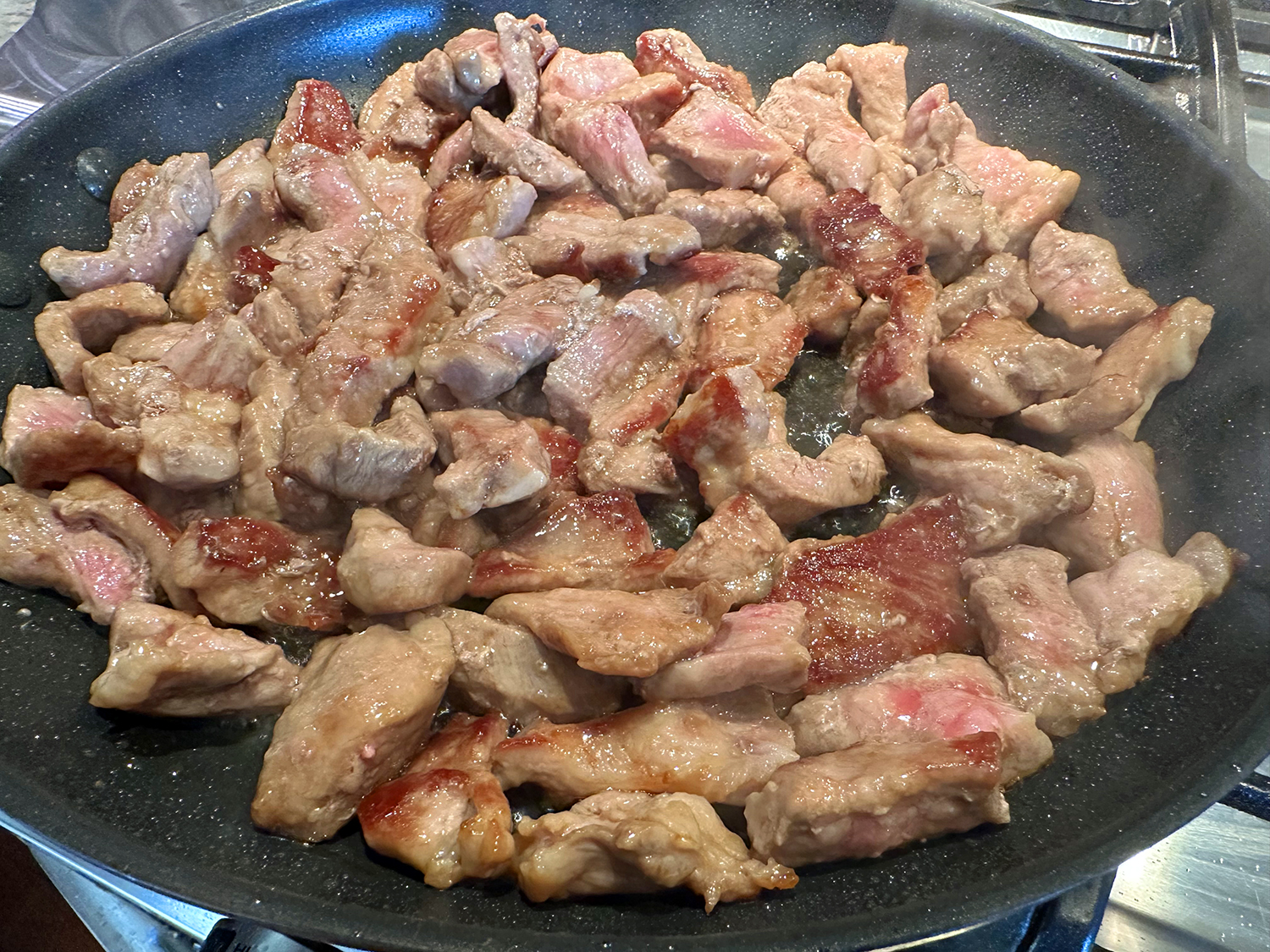
  2. In a 12-inch nonstick skillet over medium-high, heat the oil until barely smoking. Add the pork in an even layer and cook, stirring only once or twice, until the pork is lightly browned, 4 to 5 minutes.
  3. Add the bell pepper and cook, stirring occasionally, until the pepper is lightly browned, 4 to 5 minutes.
  4. Add the pineapple, chilies and ginger, then cook, stirring occasionally, until the pineapple begins to brown, 2 to 3 minutes.
  5. Stir in the vinegar, the remaining 2 tablespoons soy sauce and the remaining 1 tablespoon sugar. Cook, stirring often, until the meat and vegetables are lightly coated with the sauce, 1 to 2 minutes.
  6. Off heat, taste and season with additional soy sauce and vinegar. Transfer to a serving dish and sprinkle with the scallions.

http://www.lynnandruss.com

Original recipe by Albert Stumm for Milk Street

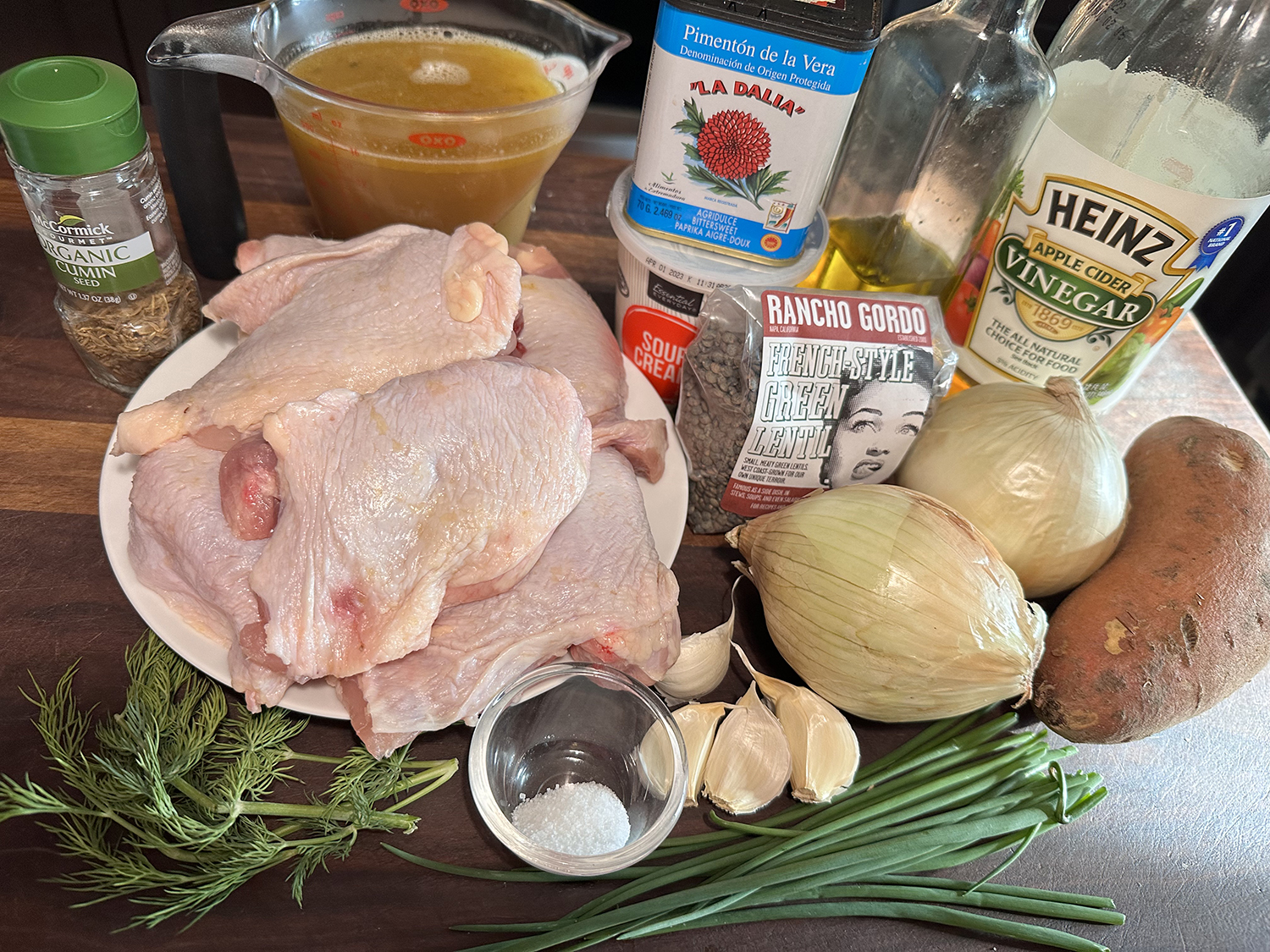
One-Pan Paprika Chicken with Lentils, Squash and Daqa

Who doesn’t love a one-pan dinner? (Although you will be using several bowls.) This oven bake requires minimal effort and is very much a meal in itself. Daqa is a vinegar-based condiment, most commonly used when making the much-loved Egyptian koshari, a hearty dish of rice, pasta and lentils.

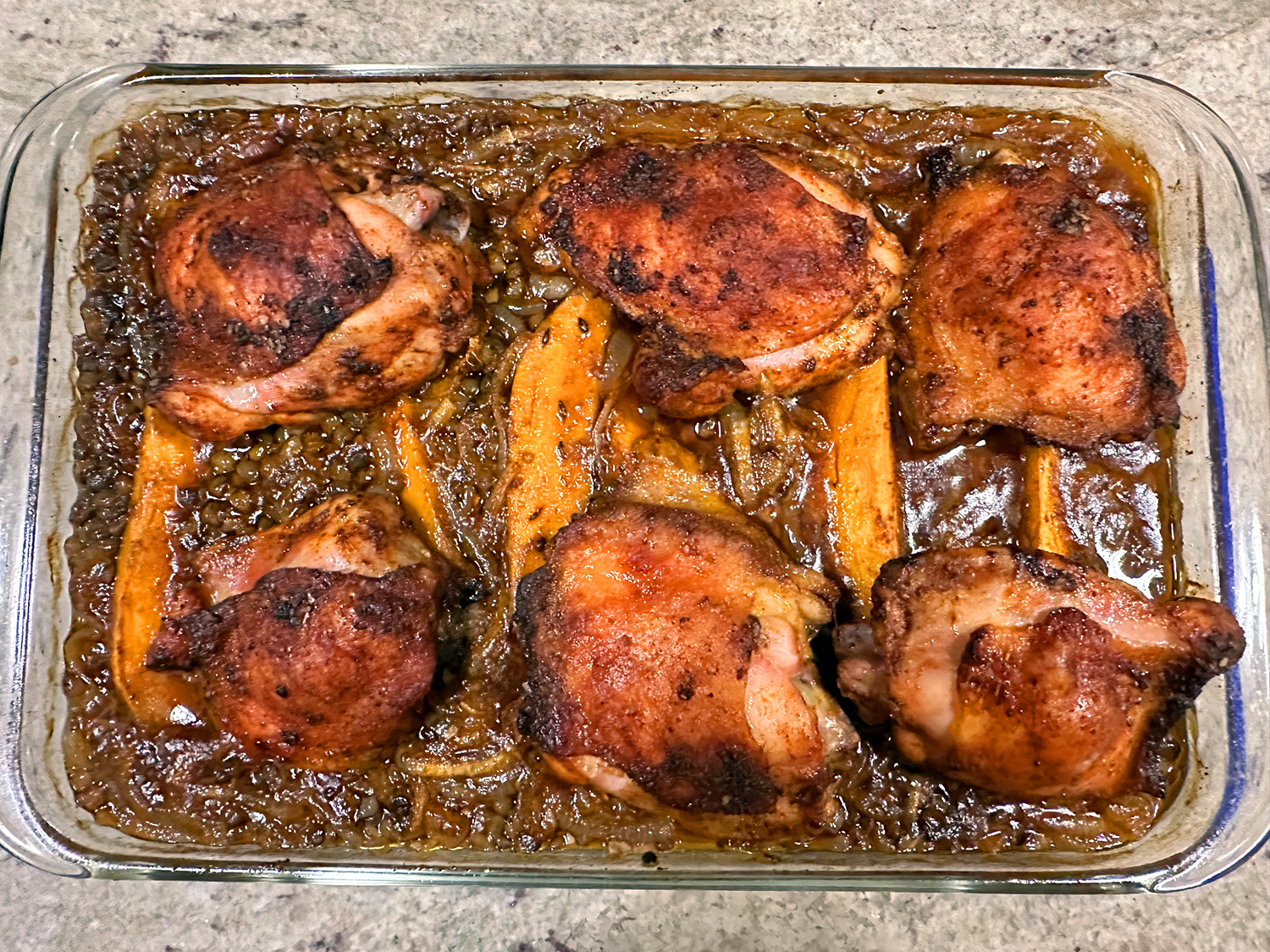
Daqa is a nifty way to brighten stews, braises and anything that needs an acidic lift. Feel free to swap out the kabocha squash for root vegetables, such as sweet potato (which we used) or celery root, and serve the whole thing with nothing more than a leafy green salad.

This meal was so flavorful, and fantastic as leftovers.

One-Pan Paprika Chicken with Lentils, Squash and Daqa

  • Servings: 4-6
  • Difficulty: easy
  • Print

Ingredients

  • 6 bone-in, skin-on chicken thighs (about 2¼ lbs.)
  • ¾ lb. skin-on kabocha squash, seeds removed, cut into about 6 (1-inch-thick) wedges
  • 1 Tbsp. plus 2 tsp. ground sweet paprika
  • 3 Tbsp. olive oil
  • Fine sea salt
  • 2 small yellow onions, halved and thinly sliced
  • 3 garlic cloves, minced
  • 1 tsp. cumin seeds, lightly toasted
  • 8 oz./1 heaping cup (uncooked) French green lentils, rinsed
  • 2 cups chicken stock
  • ¾ cup sour cream
  • ¼ cup finely chopped chives
  • 3 Tbsp. finely chopped fresh dill, plus 1 tablespoon picked leaves for serving
  • 3 Tbsp. apple cider vinegar
  • ½ tsp. granulated sugar

Directions

  1. Heat the oven to 450 degrees.
  2. In a large bowl, mix together the chicken, squash, 1 tablespoon paprika, 1 tablespoon oil and 1 teaspoon salt; set aside.
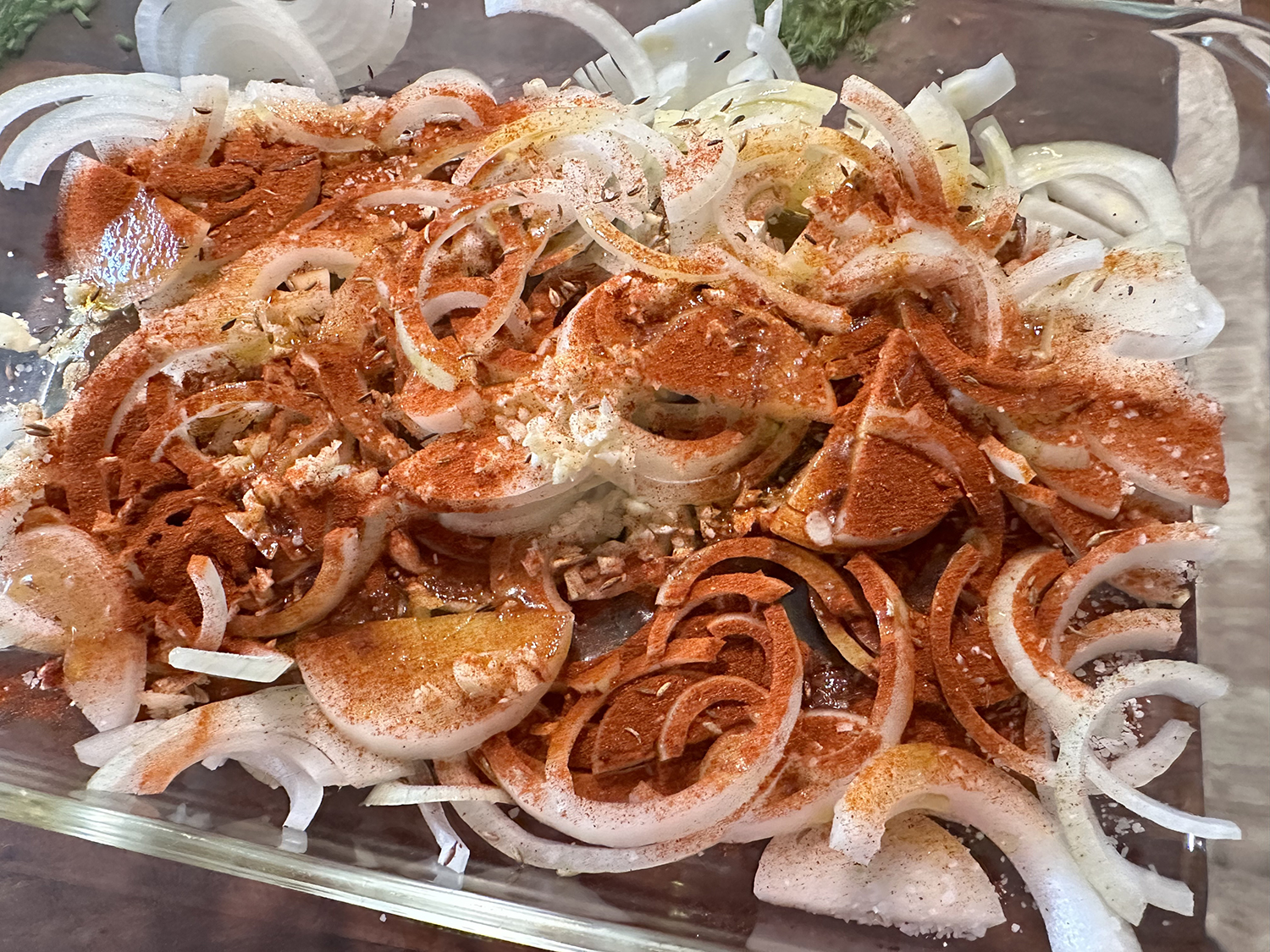
  3. Place the onions, 2 garlic cloves, ½ teaspoon cumin, 1 teaspoon salt and the remaining 2 tablespoons oil and 2 teaspoons paprika in a 9-by-13-inch baking dish and mix to combine. Roast for 10 minutes, stirring halfway, until the onions are lightly colored.
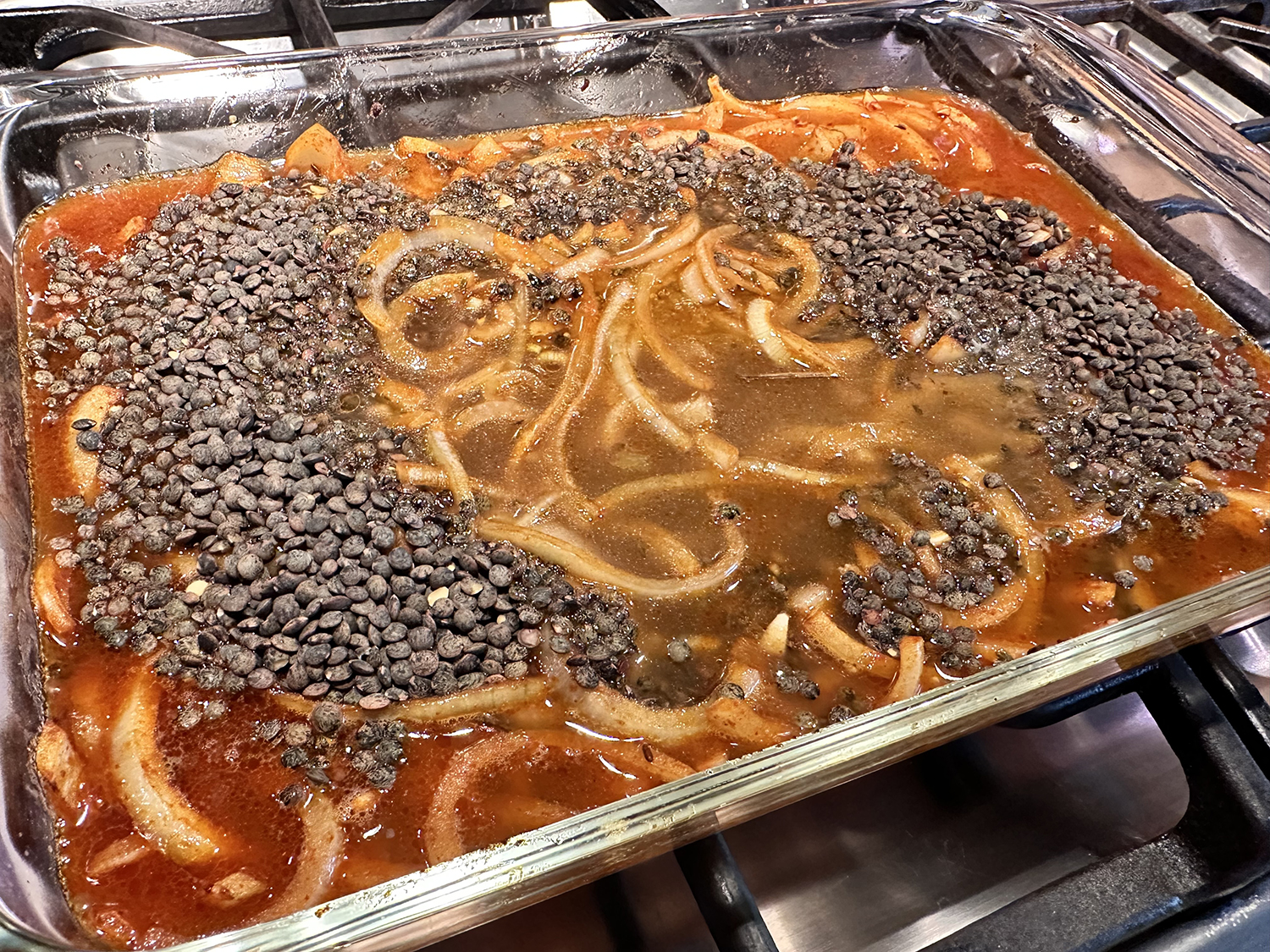
  4. Stir in the lentils and chicken stock. Arrange the squash wedges and the chicken, skin-side up, on top and roast for another 20 minutes, until the chicken skin is deeply golden.
  5. Turn the oven down to 350 degrees and cook for another 40 minutes, until the chicken is cooked through and the squash is nicely softened.
  6. Meanwhile, in a small bowl, combine the sour cream, chives and dill; set aside.
  7. To make the daqa, mix the remaining garlic and cumin with the vinegar, sugar, ¼ teaspoon salt and 2 tablespoons of water.
  8. When ready, remove the bake from the oven and top with spoonfuls of the sour cream mixture. Pour over the daqa and sprinkle with the extra dill. Serve hot, straight out of the baking dish.

http://www.lynnandruss.com

Recipe by Yotam Ottolenghi for NYTimes Cooking