Tag Archives: side dish

Grilled Corn Ribs with Honey Butter

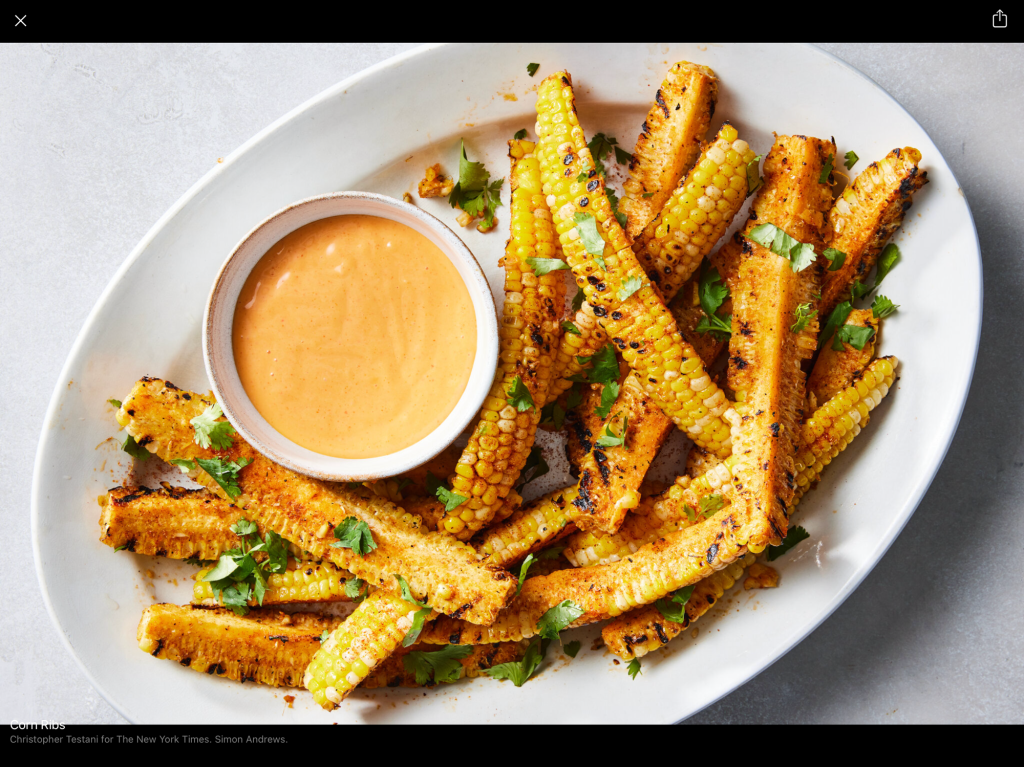
What a real cool idea! These corn ribs were a big hit at a recent patio party. The spice-rubbed and honey-drizzled corn “ribs” combined the best things about corn on the cob and barbecue ribs. And are a much more “civilized” approach when dining among friends.

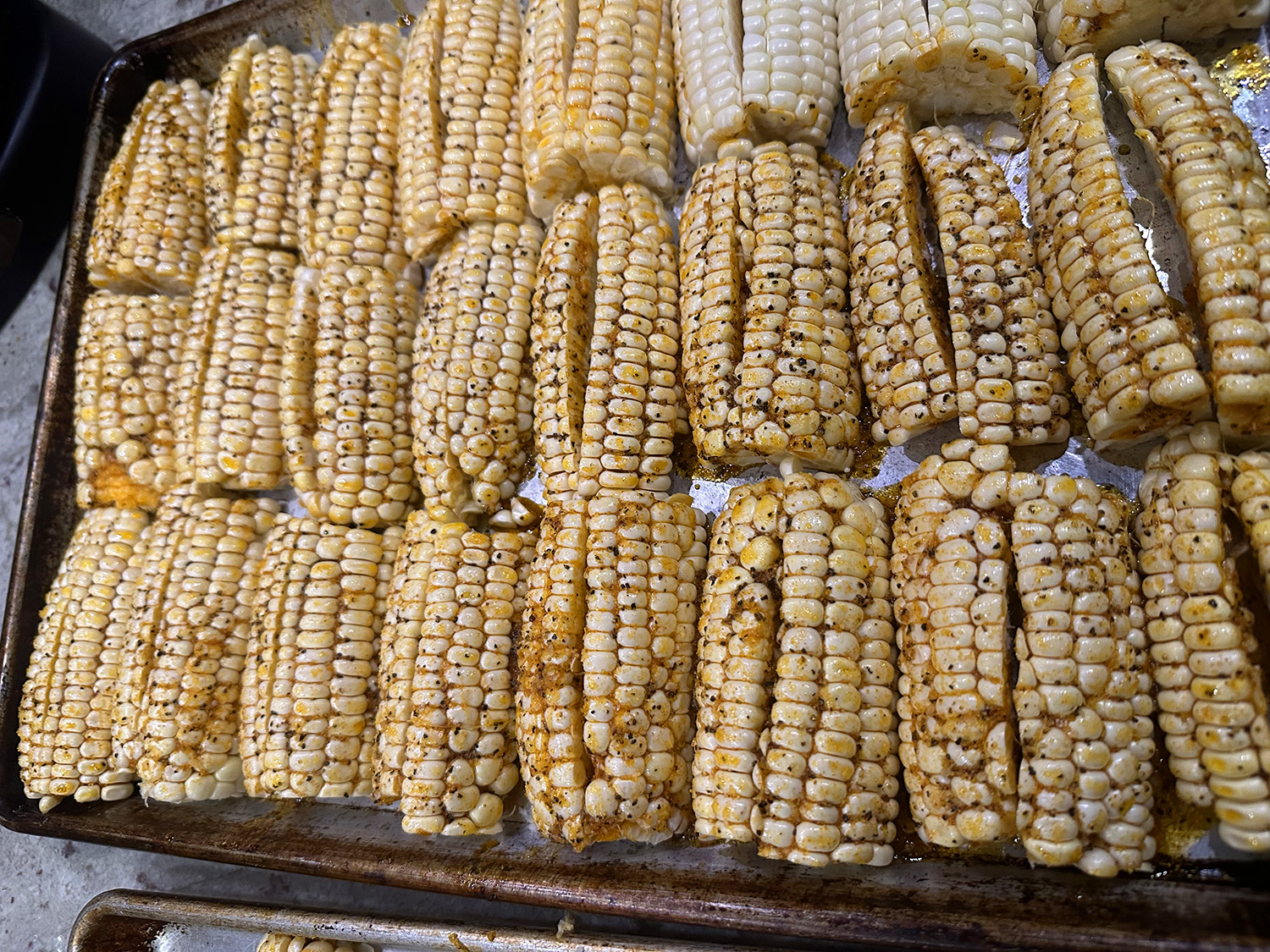
The safest and easiest way to cut corn into “ribs” is to first trim the ends of husked corn on the cob so they’re flat. Cut the corn in the cob in half crosswise, and then stand the corn up on the widest cut side. Use a sharp knife to cut straight down lengthwise, then lay each half flat on your cutting board, and cut in half again lengthwise. 

Make Ahead: The corn ribs can be cut up to a day in advance and stored in a large ziplock plastic bag in the refrigerator.

Grilled Corn Ribs with Honey Butter

  • Servings: 4
  • Difficulty: easy
  • Print

Ingredients

  • 4 ears fresh yellow corn, husked
  • 6 Tbsp. extra-virgin olive oil, plus more for grill
  • 1 tsp. black pepper
  • 1 tsp. light brown sugar
  • 1 tsp. smoked paprika
  • 1/2 tsp. garlic powder
  • 1/8 tsp. cayenne pepper
  • 2 1/4 tsp. kosher salt, divided
  • 3 Tbsp. unsalted butter, melted
  • 2 Tbsp. honey
  • Thinly sliced scallions, for garnish
Photo by Christopher Testani

Directions

  1. Preheat grill to high (450°F to 500°F). Cut 1/2 inch off ends of each corn cob; discard trimmed ends. Cut each cob in half l
  2. crosswise. Working with 1 cob piece at a time, stand cob upright, and carefully cut in half lengthwise.
  3. Place cob halves, cut sides down, on cutting board; cut in half lengthwise again to create “ribs.” Repeat with remaining cob pieces. Place corn ribs in an even layer on a large rimmed baking sheet; set aside.
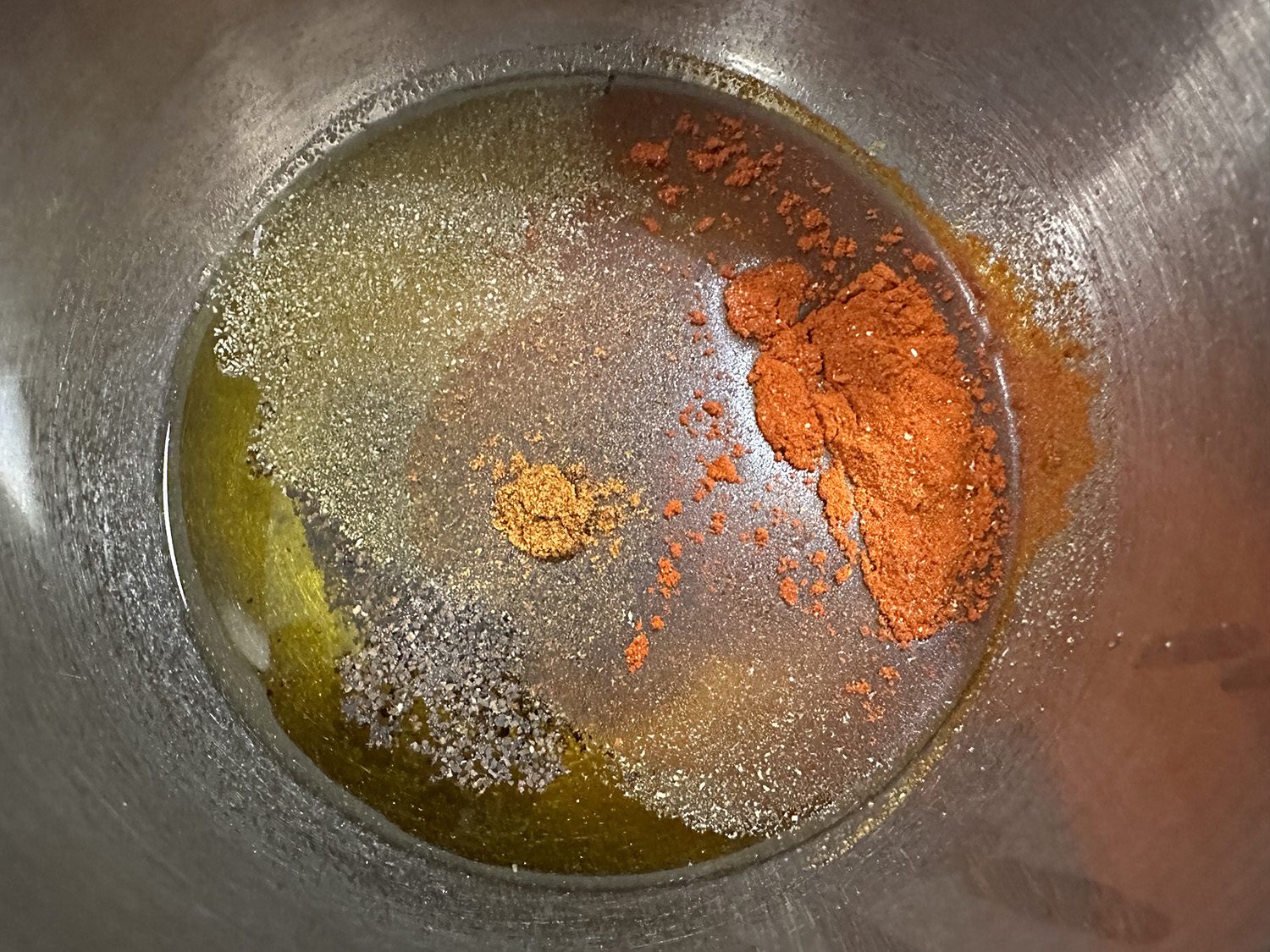
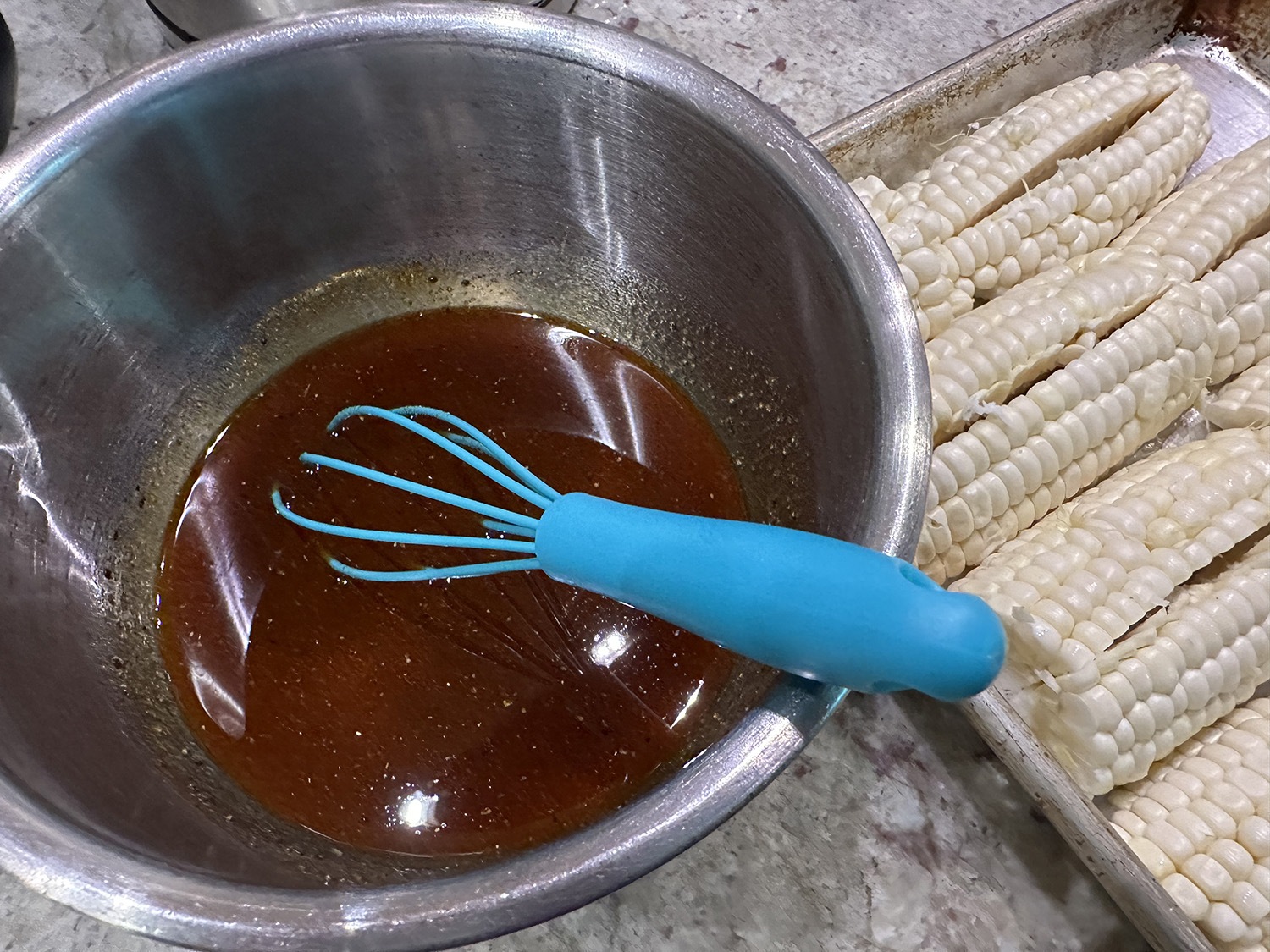
  4. Whisk together oil, black pepper, brown sugar, smoked paprika, garlic powder, cayenne pepper, and 2 teaspoons salt in a small bowl; brush evenly over corn ribs.
  5. Place corn ribs on oiled grates; grill, covered, turning often, until corn is charred and tender, 4 to 8 minutes. Arrange corn ribs on a serving platter.
  6. Whisk together melted butter, honey, and remaining 1/4 teaspoon salt in a small bowl. Drizzle butter mixture over corn ribs; garnish with scallions. Serve hot.

http://www.lynnandruss.com

Recipe by Anna Theoktisto originally appeared in Food & Wine magazine, June 2024

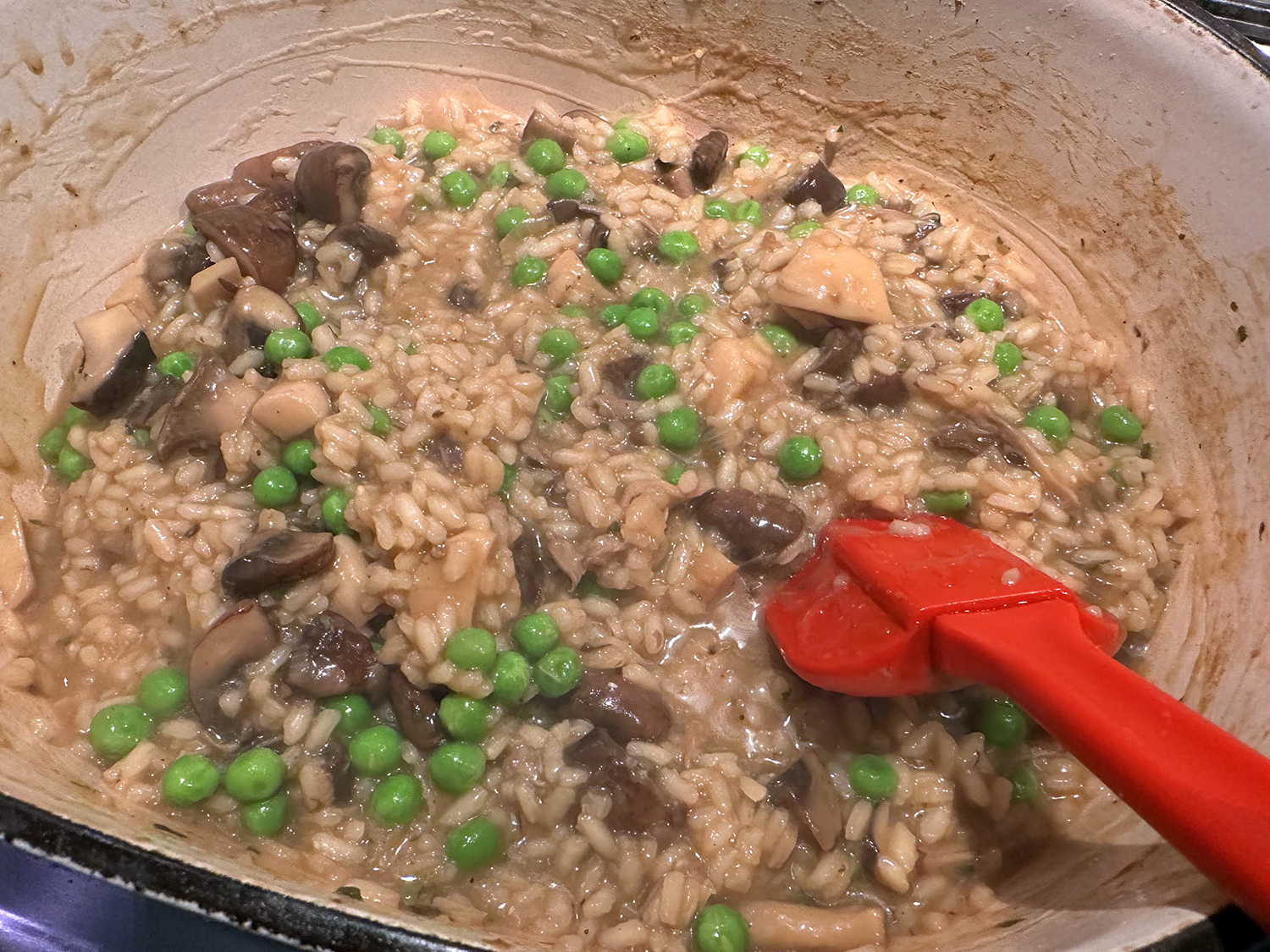
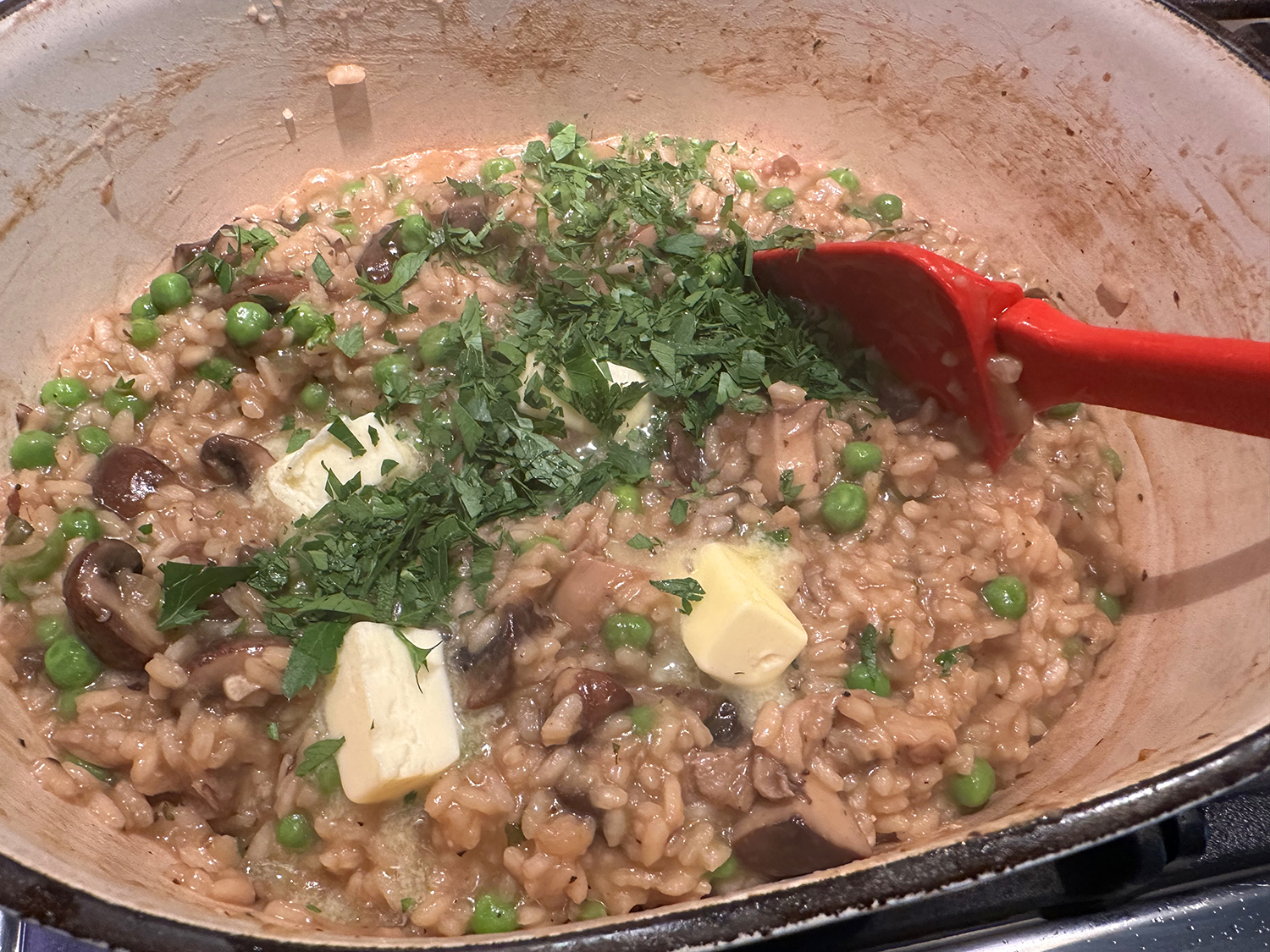
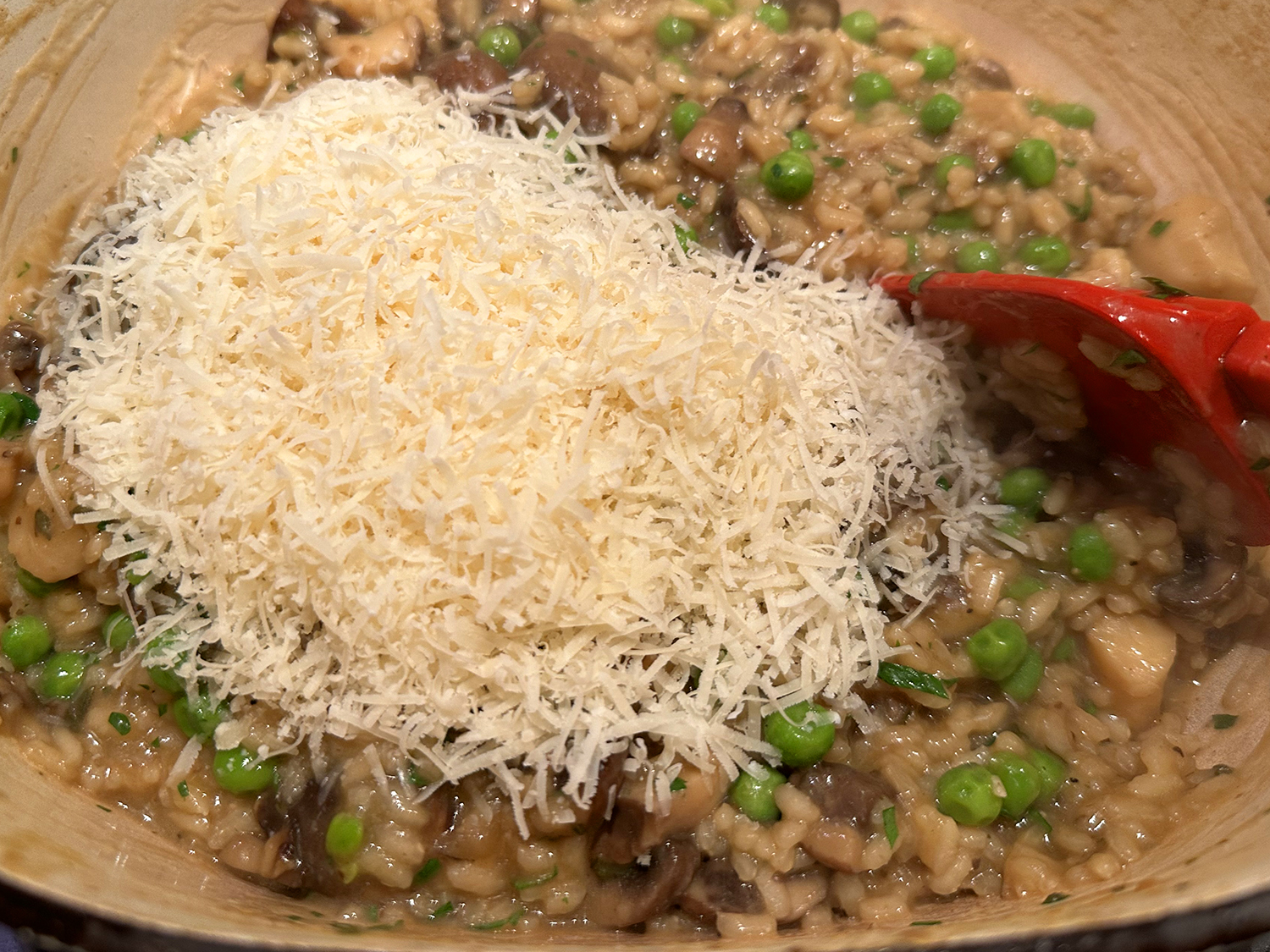
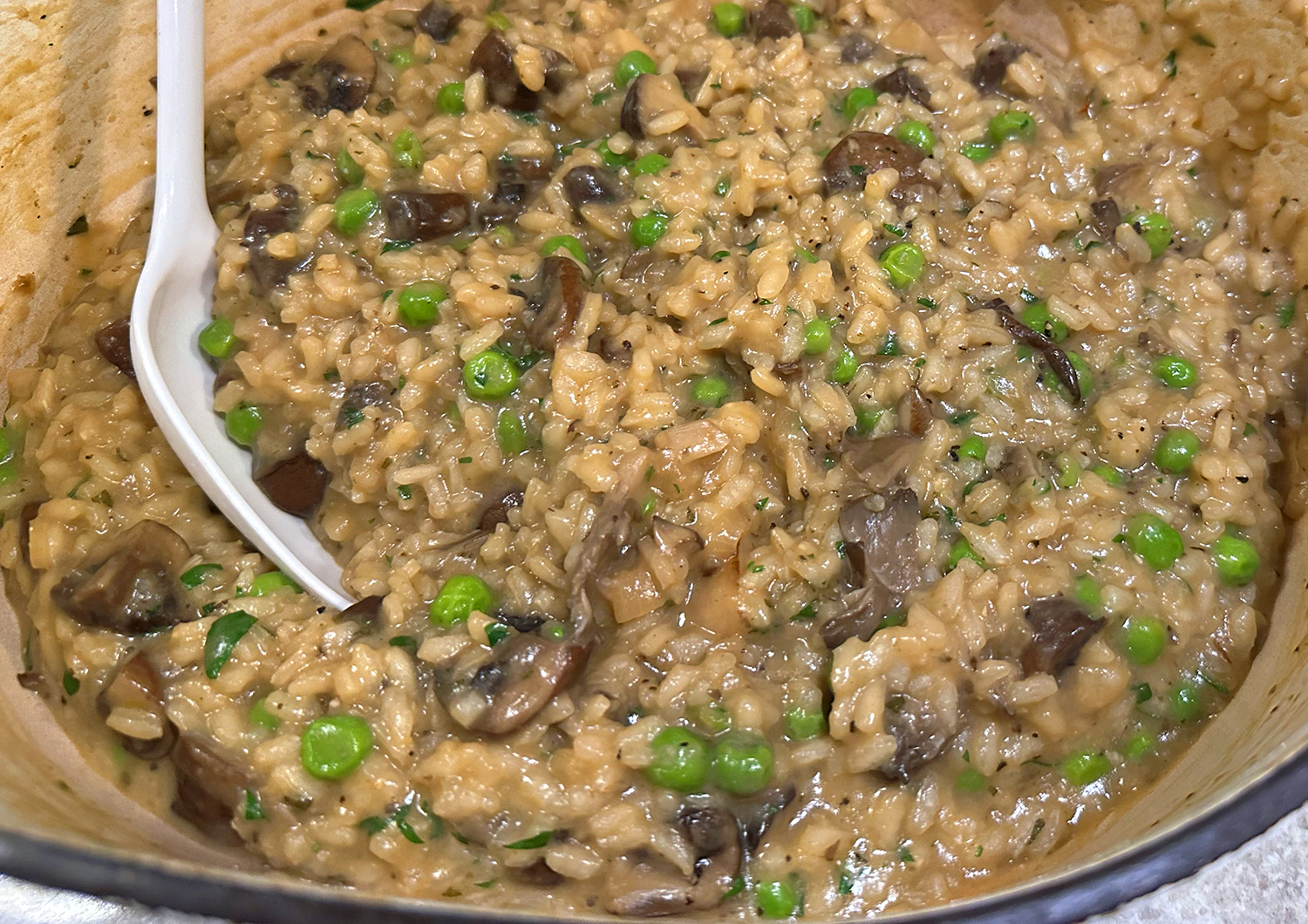
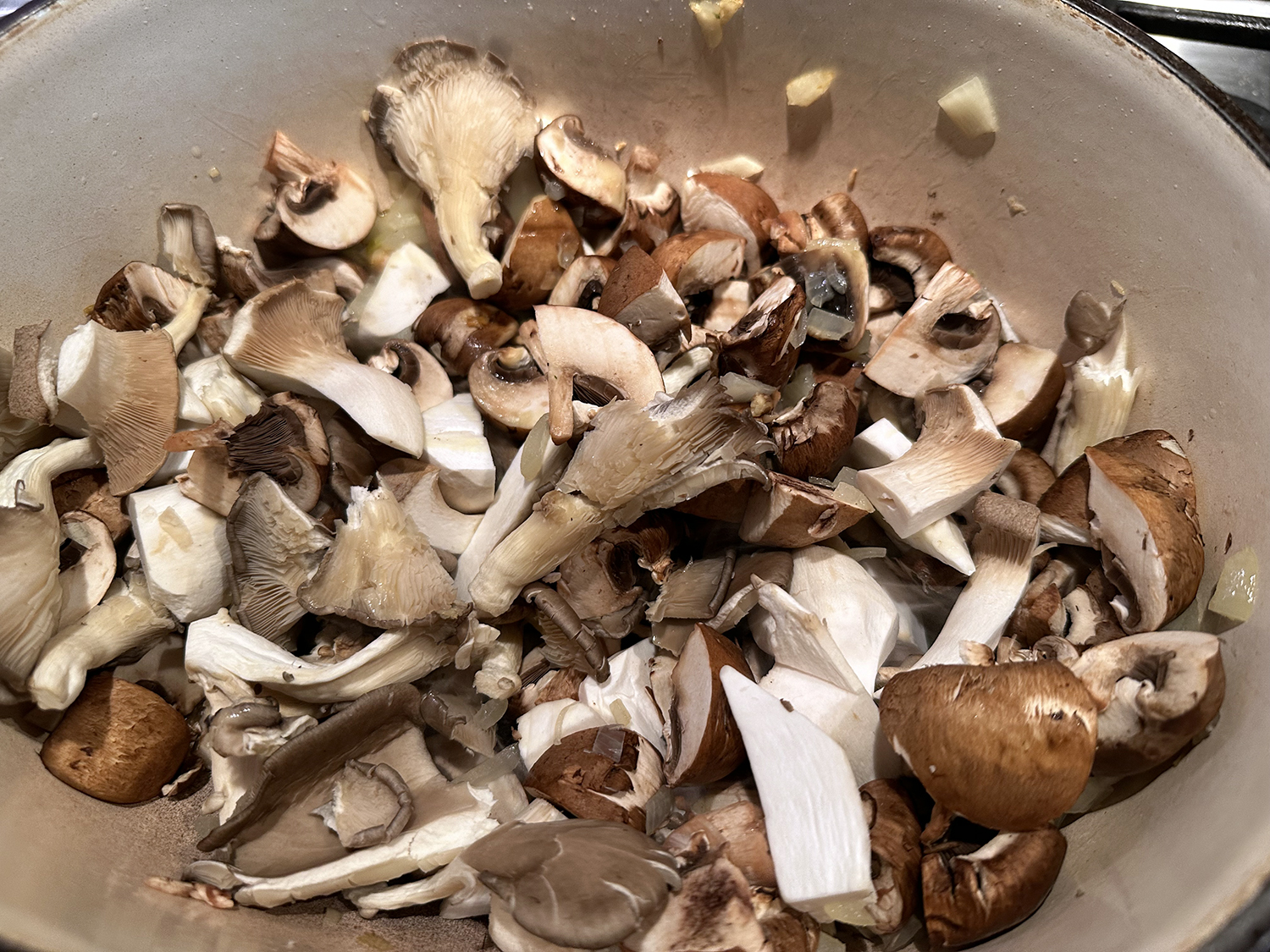
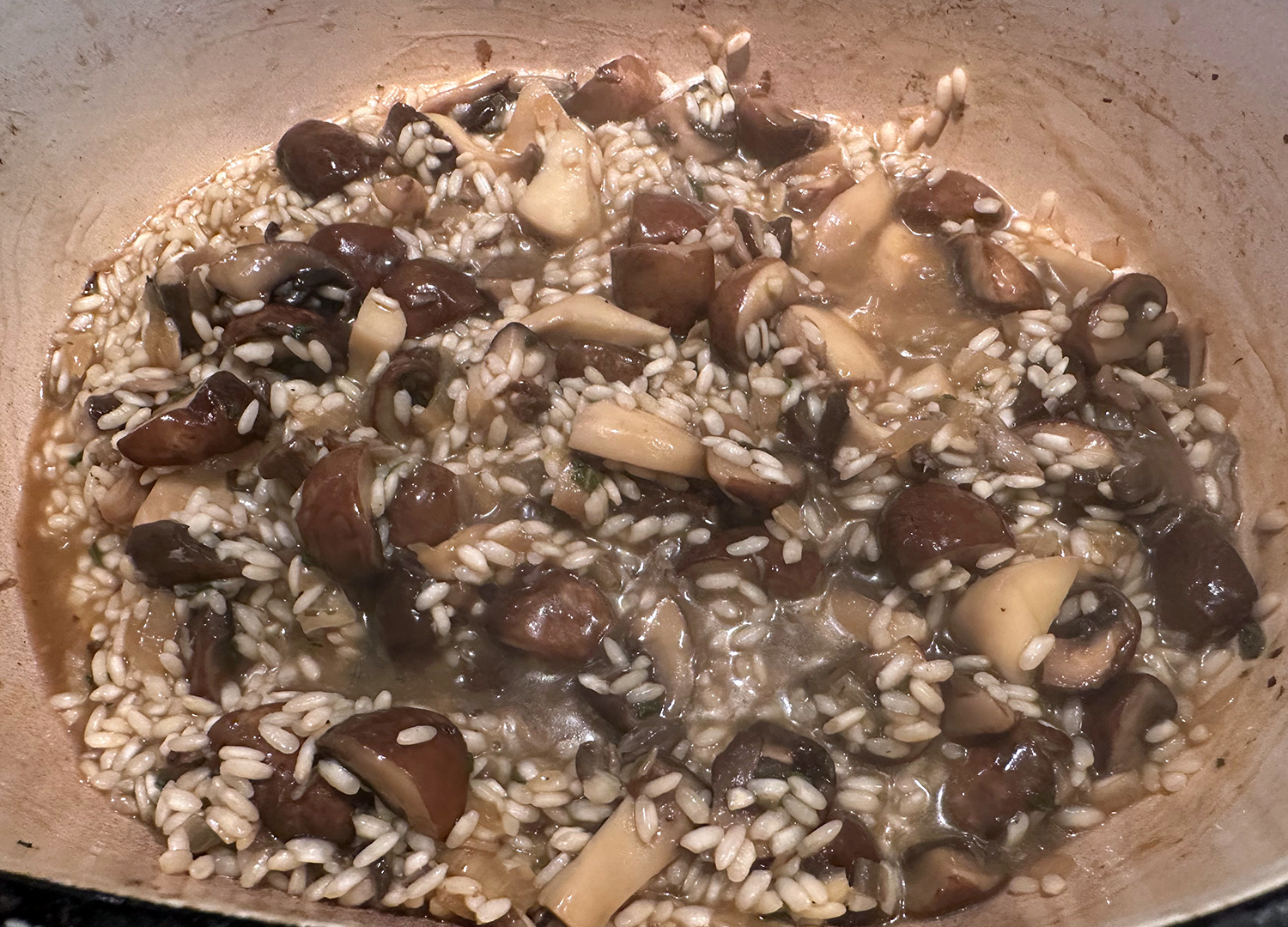
Mushroom Risotto with Peas

If you are ever at a loss for what to make for an impromptu dinner party, especially if there will be vegetarians at the table, consider this luxurious mushroom risotto. Peas add a welcome pop of color, and the sweetness of the peas fits right in with the flavors of this dish. And you’ll get another vibrant dash of green from the parsley added at the end of cooking.

As far as which stock to use, homemade is always best of course, but The Hubs used a combination of vegetable and mushroom from Better Than Bouillon; keeping it vegetarian. It was the perfect side dish for our Chicken with Artichokes and Lemon entrée.

Advance preparation: You can begin up to several hours before serving: proceed with the recipe and cook halfway through Step 4, for about 10 minutes. The rice should still be hard in the middle when you remove it from the heat, and there should not be any liquid in the pan. Spread it in an even layer in the pan or on a baking sheet and keep it away from the heat until you resume cooking. 15 minutes before serving, resume cooking as instructed.

Mushroom Risotto with Peas

  • Servings: 6
  • Difficulty: easy
  • Print

Ingredients

  • 6 cups chicken, vegetable or garlic broth or stock, or more as needed (preferably homemade)
  • Salt and freshly ground pepper
  • 2 Tbsp. extra-virgin olive oil
  • 1/2 cup finely chopped onion, or 2 shallots, minced
  • 1 lb. wild mushrooms, cleaned if necessary and torn or sliced into smaller pieces if thick (small wild mushrooms should be left whole, mushrooms like maitake can just be separated into small pieces)
  • 2 cloves garlic, minced
  • 2 tsp. chopped fresh thyme or sage leaves
  • 1 1/2 cups arborio or carnaroli rice
  • 1/2 cup dry white wine, such as pinot grigio or sauvignon blanc
  • 1 cup frozen peas, thawed
  • 2 Tbsp. butter
  • 2 Tbsp. chopped fresh parsley
  • 1/2 cup grated Parmesan cheese, or a mixture of Parmesan and Pecorino Romano

Directions

  1. Bring stock or broth to a simmer in a saucepan, with a ladle nearby. Make sure stock is well seasoned, and keep it simmering on the stove.
  2. Heat oil in a wide, heavy nonstick skillet or saucepan over medium heat. Add onions or shallots and cook gently until just tender, 3 to 5 minutes.
  3. Turn up heat and add mushrooms. Cook, stirring, until they begin to sweat, about 3 minutes, then add garlic and thyme or sage. Cook, stirring, until fragrant, about 30 seconds. Season mushrooms with salt and pepper and continue to cook over medium heat until they are soft. Taste and adjust seasoning.
  4. Add rice and stir until grains begin to crackle. Add wine and cook, stirring, until wine is no longer visible in pan. Stir in enough simmering stock to just cover the rice. The stock should bubble slowly. Cook, stirring often and vigorously, until stock is just about absorbed. Add another ladleful or two of stock and continue cooking, not too fast and not too slowly, stirring often and adding more stock when rice is almost dry, for 15 minutes.
  5. Add peas and continue adding stock and stirring for another 10 minutes. Rice should be tender all the way through but still al dente. Taste now and adjust seasoning.
  6. Add another ladleful or two of stock to rice. Stir in the butter until it melts, then stir in the parsley and Parmesan, and remove from heat. Season with black pepper and serve right away in wide soup bowls or on plates.

http://www.lynnandruss.com

Recipe from NYTimes Cooking

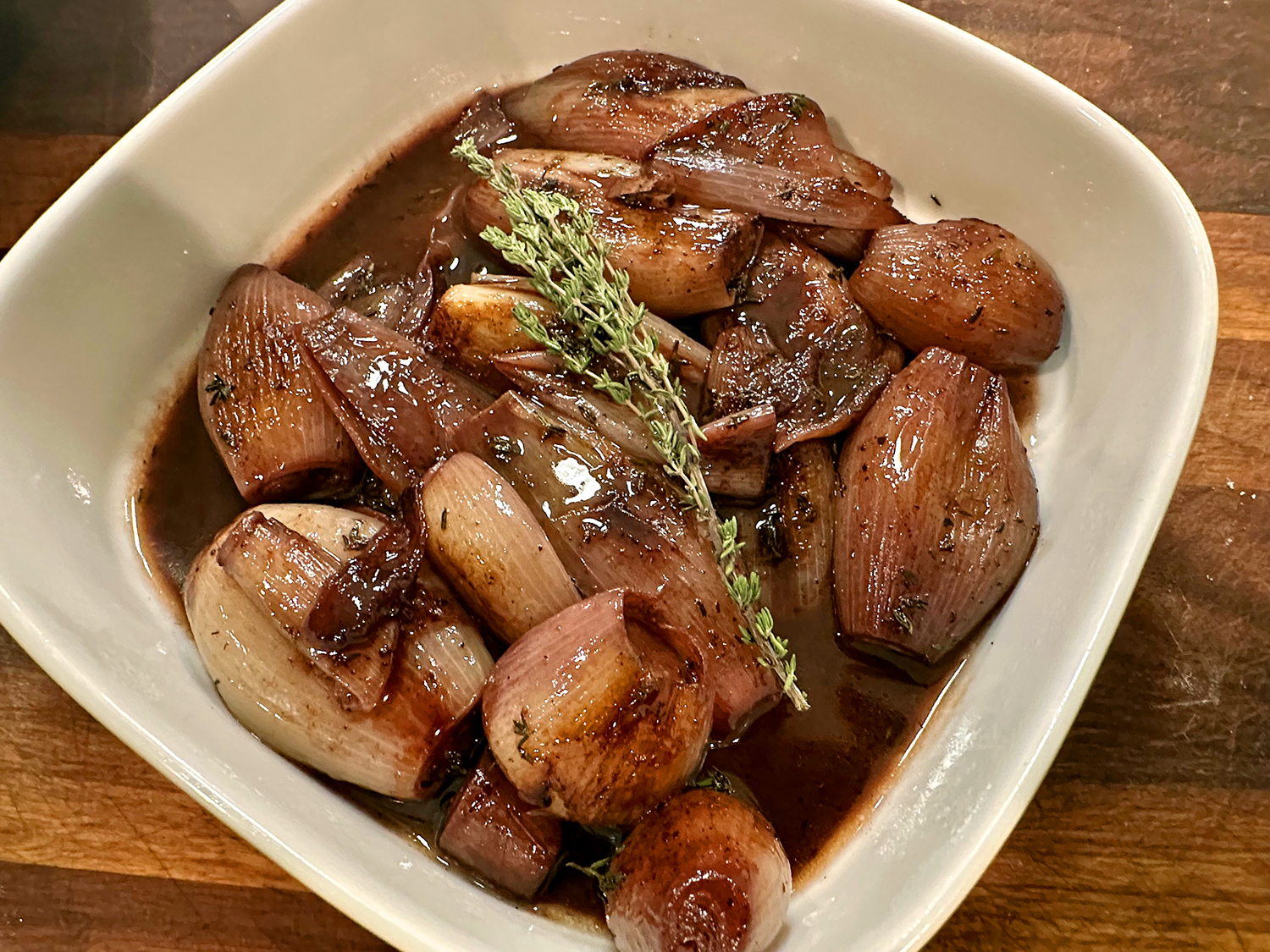
Braised Shallot Confit

Braised shallots are one of those things that every resourceful cook should know about. When braised in a bit of red wine, Cognac and fresh thyme, shallots turn unbelievably sweet and jammy—wonderful served alongside roast chicken or a juicy grilled steak.

We loved, loved, loved this dish! In fact, you may want to make extra to spread onto bruschetta and top with a little goat cheese. Or try them tucked into a sliced turkey sandwich on chewy country bread.

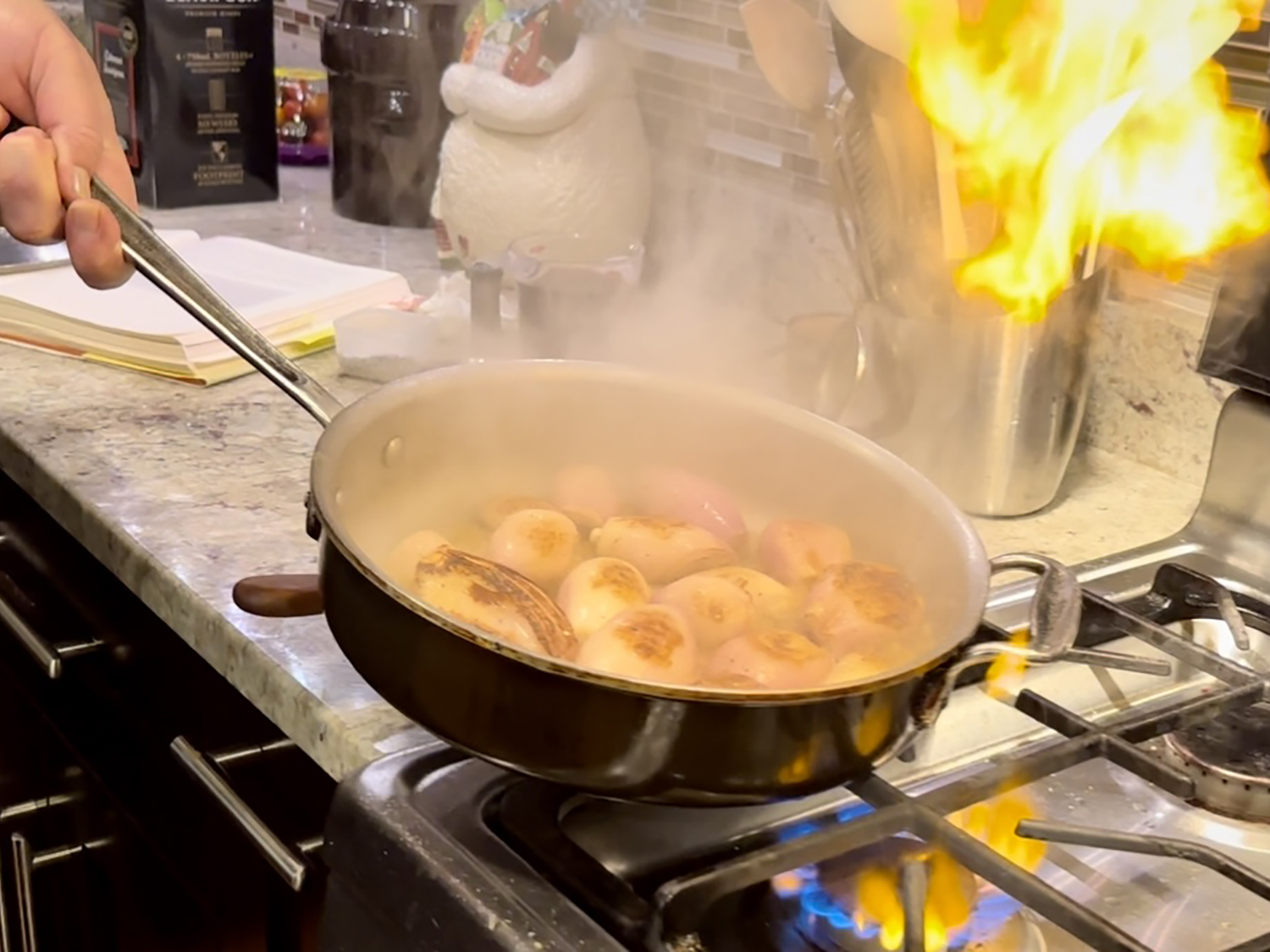
Look for shallots that are all about the same size—preferably medium sized 1 to 1 1/2 inch across—so they will braise evenly. One word of caution, when adding the cognac, be prepared for a flare up…

Screenshot

The shallots can be made ahead and kept, covered, at room temperature for several hours, or refrigerated for a few days.

Braised Shallot Confit

  • Servings: 4
  • Difficulty: easy
  • Print

Ingredients

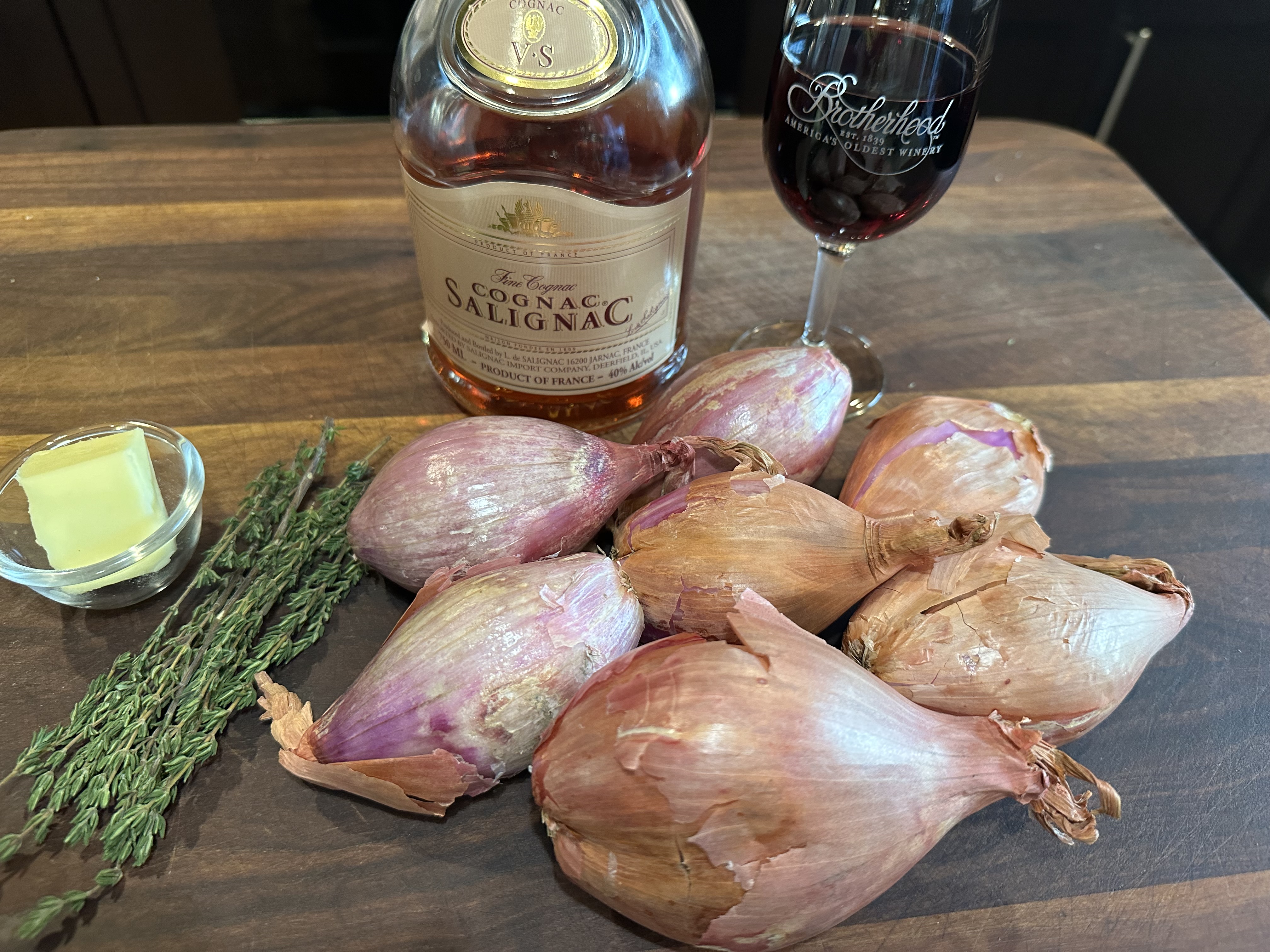
  • 3/4 lb. shallots
  • 1 1/2 Tbsp. unsalted butter
  • Coarse salt and freshly ground pepper
  • 2 Tbsp. Cognac, or other brandy.
  • 1/2 cup dry red wine
  • 1 1/2 tsp. chopped fresh thyme.

Directions

  1. Trimming the shallots: Peel the shallots and trim off any bits of the root end that remain. Divide and large shallots in two—the halves should fall apart naturally, but you may need to peel off the first layer of shallot to serparate them.
  2. Browning and flaming the shallots. Melt the butter in a medium skillet over medium-high heat. Add the shallots, season with salt and pepper, and toss to coat. Sauté, tossing frequently, until the shallots are brown in spotsand you can smell the aromaof cooking onions, about 5 minutes.
  3. Add the Cognac: If you are cooking over a gas stove, carefully tilt the pan and let the flame ignite the Cognac. On electric, hold a match to the pan to light the cognac. Stand backas the flame flares up, then swirl the panaround and let the flameburn down. Simmeruntil there is onlya glaze lefton the bottom of the oan.
  4. The braise. Add the wine and one teaspoon of thymeand bring to a simmer, then reduce heat to medium-low and cover the pan. Simmer until the shallots are completely soft and falling apart, about 40 to 45 minutes.After the first 15 minutes, check to make sure that the pan is not dry, ad a few tablespoons of water if necessary.Check again 2 or 3 times as the shalloys braise.
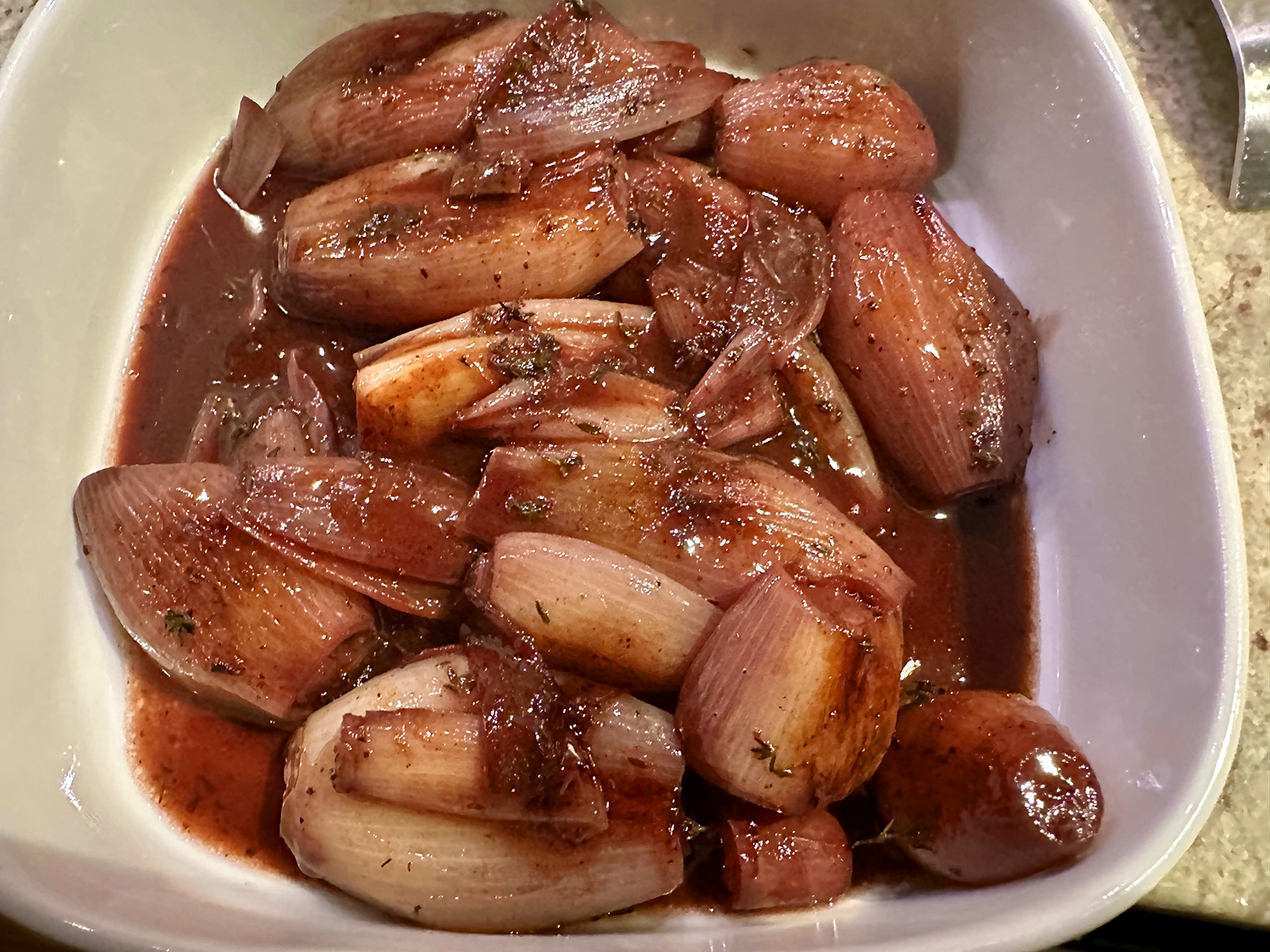
  5. The Finish: When the shallots are done, remove the lid and, over medium heat, boil down any liquid, shaking and stirring a few times, until a glaze forms on the shallots. Add the remaining 1/2 teaspoon thyme, gently stir (expect some of the shallots to fall apart a bit). Taste for salt and pepper; serve warm or a room temperature

http://www.lynnandruss.com

Recipe by Molly Stevens in “All About Braising”

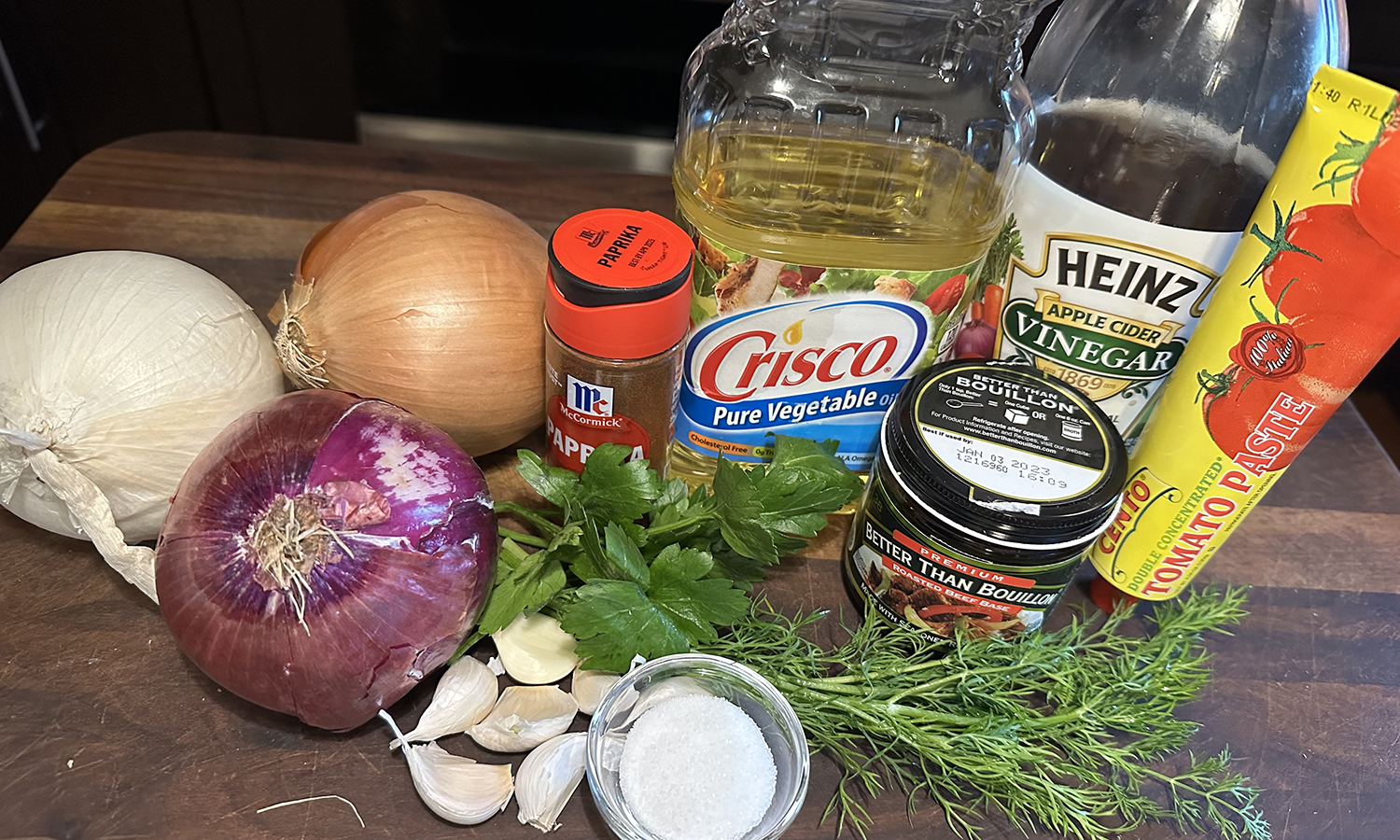
Tomato-Roasted Onions with Paprika

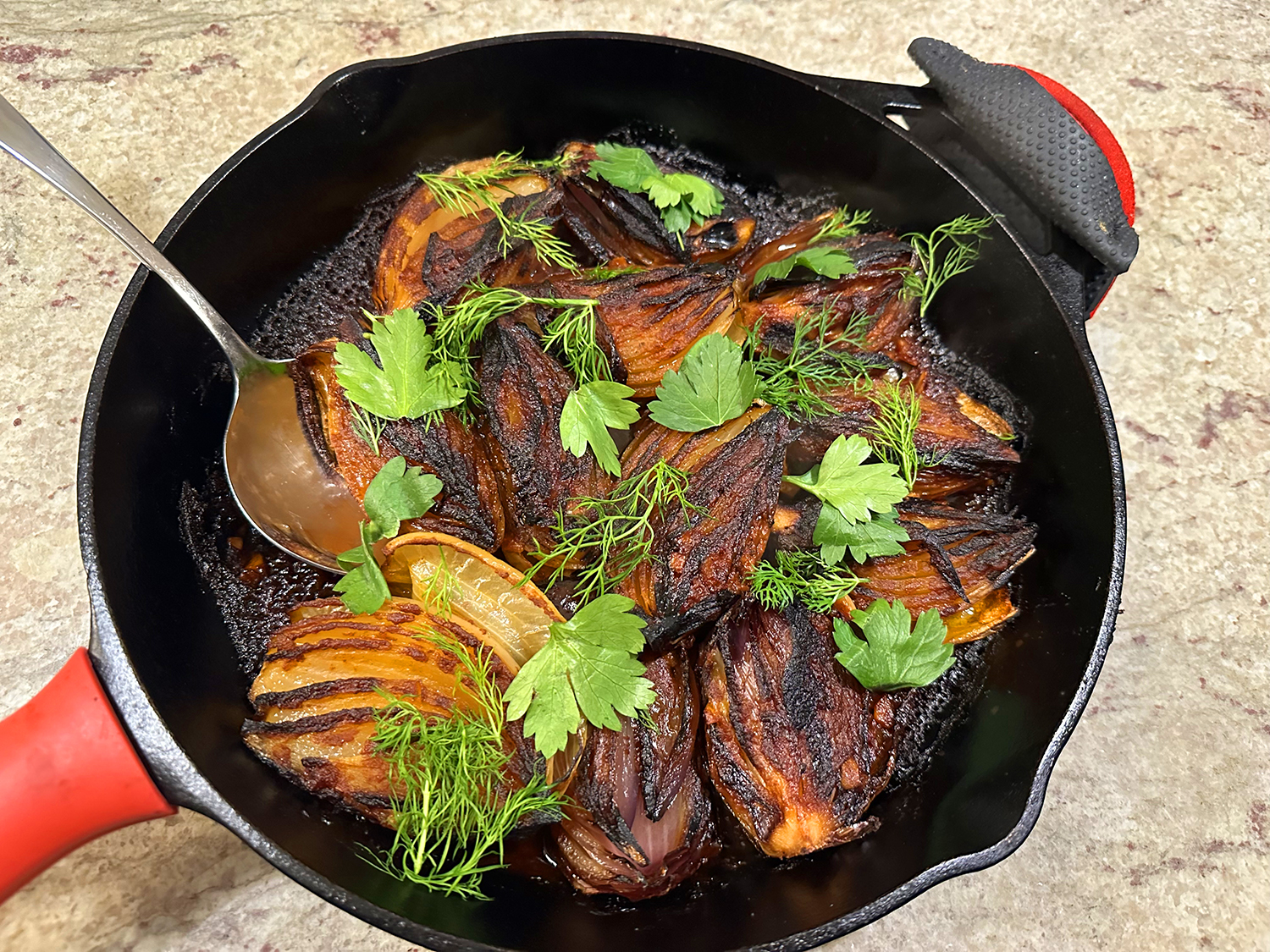
We have never considered onions as an entrée—side dish, absolutely; condiment, of course; salad addition, naturally. But onions can be a startling delight when they’re served as the main event. Here, a hot sear produces a glorious collection of complex flavors, and the gentle roast that follows renders the collection of onions fully spoonable, soft like butter on a hot day.

If you’re looking for proof that onions can be more than just background players, this is it. Sweet paprika balances the richness of the dish, lending its vibrant red hue and a fruity, mild heat. To better appreciate every nuance of the onions, serve this simply—a side of buttered egg noodles or rice will do nicely.

But we went whole hog and paired the onions with a reverse-seared NY strip steak and a side salad. The recipe calls for a mix of six small onions, we bought three large. Therefore our wedges were much bigger than they would have been with small onions. Luckily they all fit in a large cast-iron skillet, so we didn’t need to brown them in two batches. However, we did need to brown them almost 50% longer.

Next time, we will cover the skillet for the first 30 minutes in the oven, then remove the cover, cooking until the onions are tender all the way through.

Tomato-Roasted Onions with Paprika

  • Servings: 4-6
  • Difficulty: easy
  • Print

Ingredients

  • 6 garlic cloves, coarsely chopped
  • ¼ cup double-concentrated tomato paste
  • ¼ cup extra-virgin olive oil
  • 3 Tbsp. paprika
  • 1 Tbsp. vegetable or beef bouillon paste
  • 2 tsp. apple cider vinegar
  • 2 tsp. sugar
  • 2 tsp. Diamond Crystal or 1¼ tsp. Morton kosher salt, plus more
  • 2 Tbsp. (or more) vegetable oil
  • 2 lb. mixed onions (about 6 small), roots trimmed with ends left intact, peeled, quartered through root ends
  • Dill sprigs and parsley leaves with tender stems (for serving)

Directions

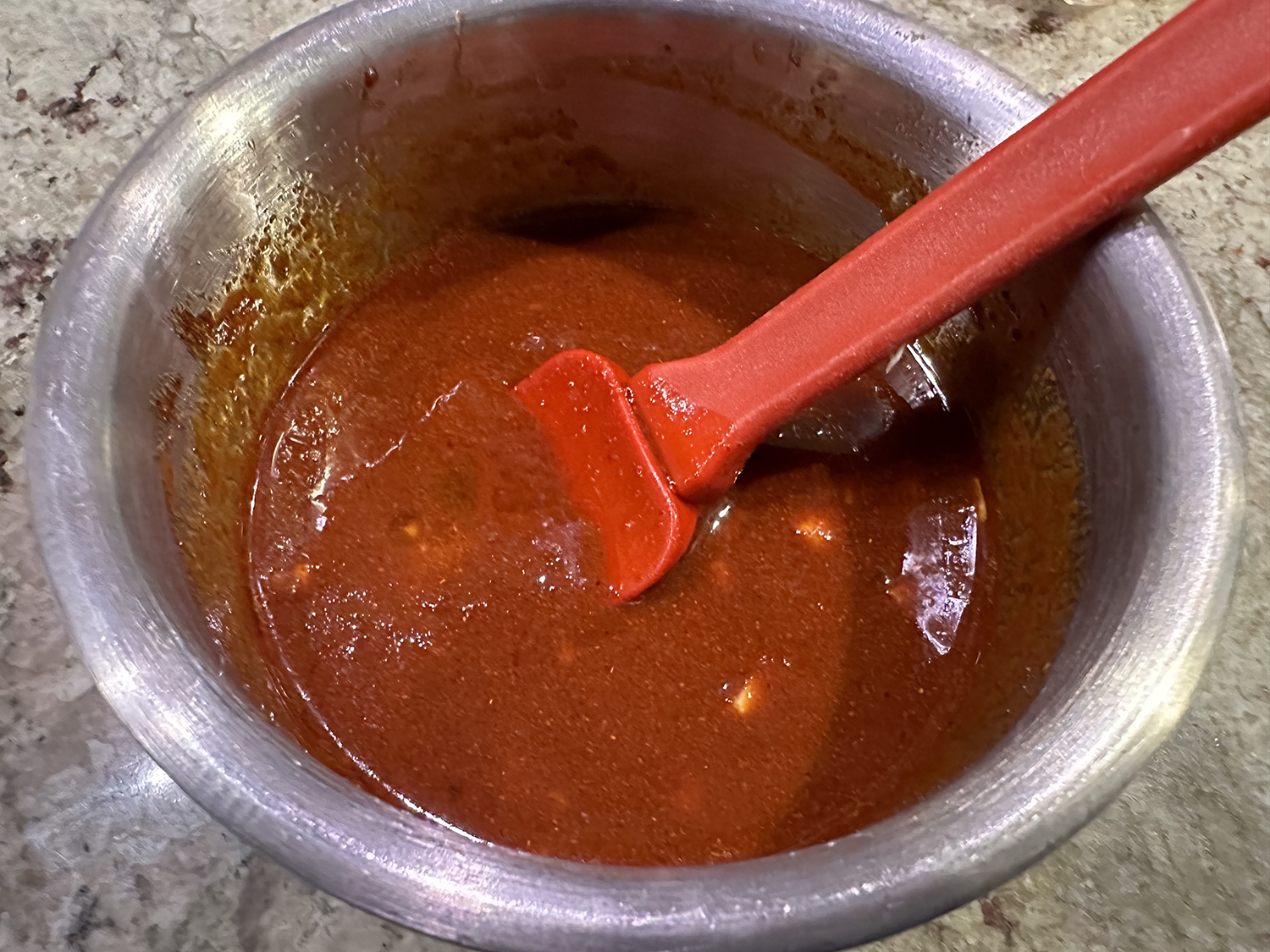
  1. Place a rack in middle of oven; preheat to 375°. Mix 6 garlic cloves, coarsely chopped, ¼ cup double-concentrated tomato paste, ¼ cup extra-virgin olive oil, 3 Tbsp. paprika, 1 Tbsp. vegetable or beef bouillon paste, 2 tsp. apple cider vinegar, 2 tsp. sugar, and 2 tsp. Diamond Crystal or 1¼ tsp. Morton kosher salt, and ¾ cup water in a small bowl to combine; set garlic mixture aside.
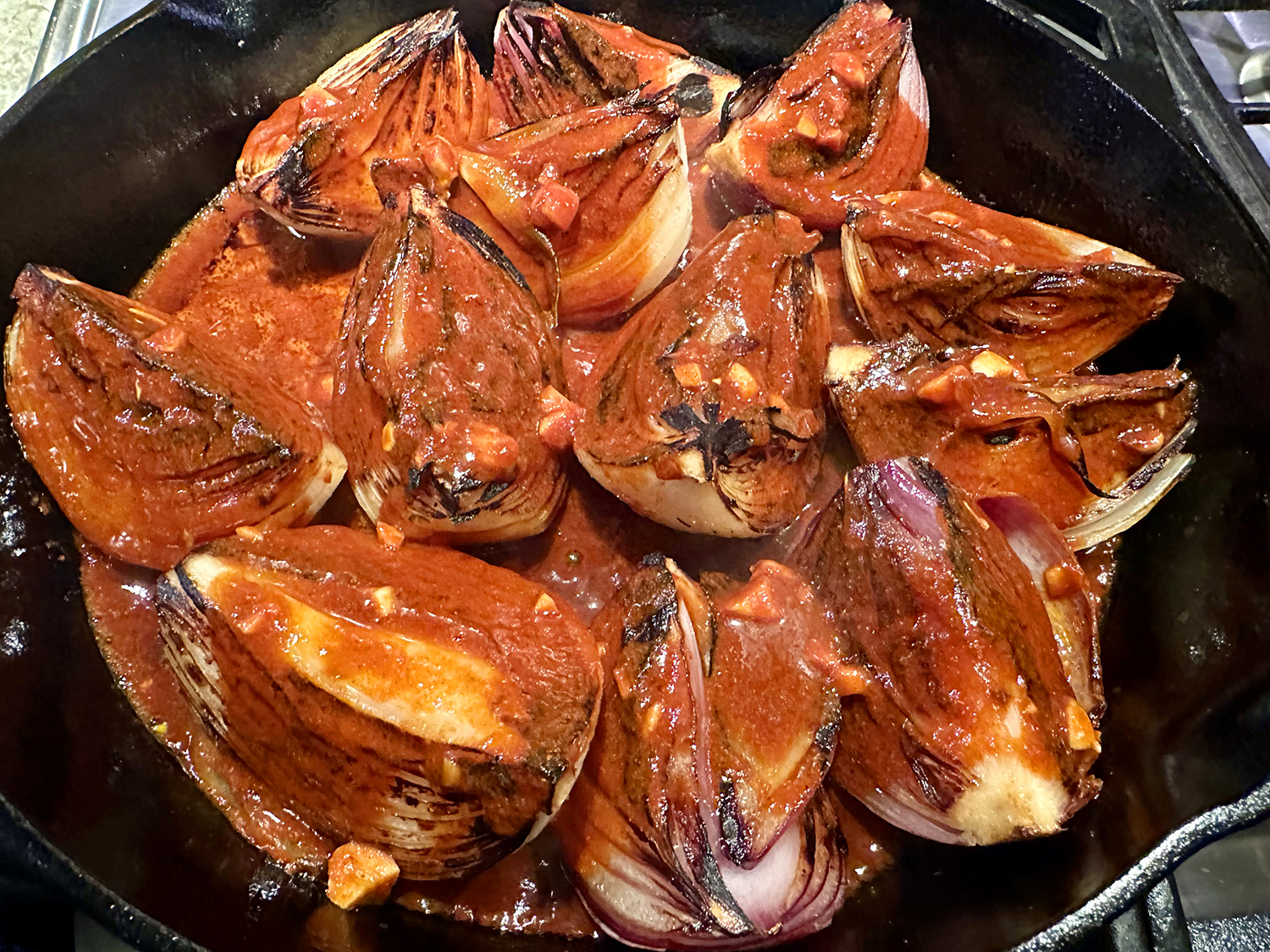
  2. Heat 2 Tbsp. vegetable oil in a medium cast-iron skillet over medium-high. Working in batches if needed and adding up to 1 Tbsp. more vegetable oil to pan if it looks dry at any point, arrange 2 lb. mixed onions (about 6 small), roots trimmed with ends left intact, peeled, quartered through root ends, cut side down, in pan with tongs (be careful and stand back; the oil will spatter) and season lightly with salt. Cook until charred underneath, about 5 minutes; repeat for the other cut side of each wedge. If working in batches, transfer onions to a plate as you go (be gentle here; you want them to hold their shape).
  3. Return all onions to pan if you cooked them in batches and arrange so cut sides are facing up. Add reserved garlic mixture and shake pan gently to settle sauce. Bake in oven until onions are very tender and oil begins to separate from tomato paste, 30–40 minutes. (Our large onion wedges took over an hour before they were completely softened the entire way through.)
  4. Scatter dill sprigs and parsley leaves with tender stems over onions to serve.

http://www.lynnandruss.com

Recipe by Shilva Uskokovic for Bon Appétit

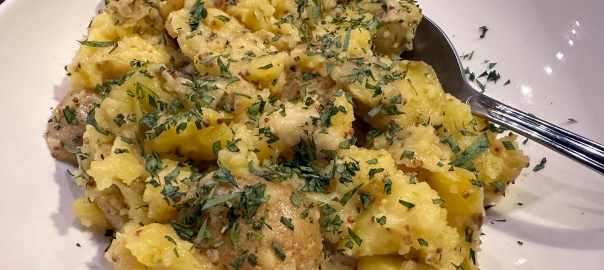
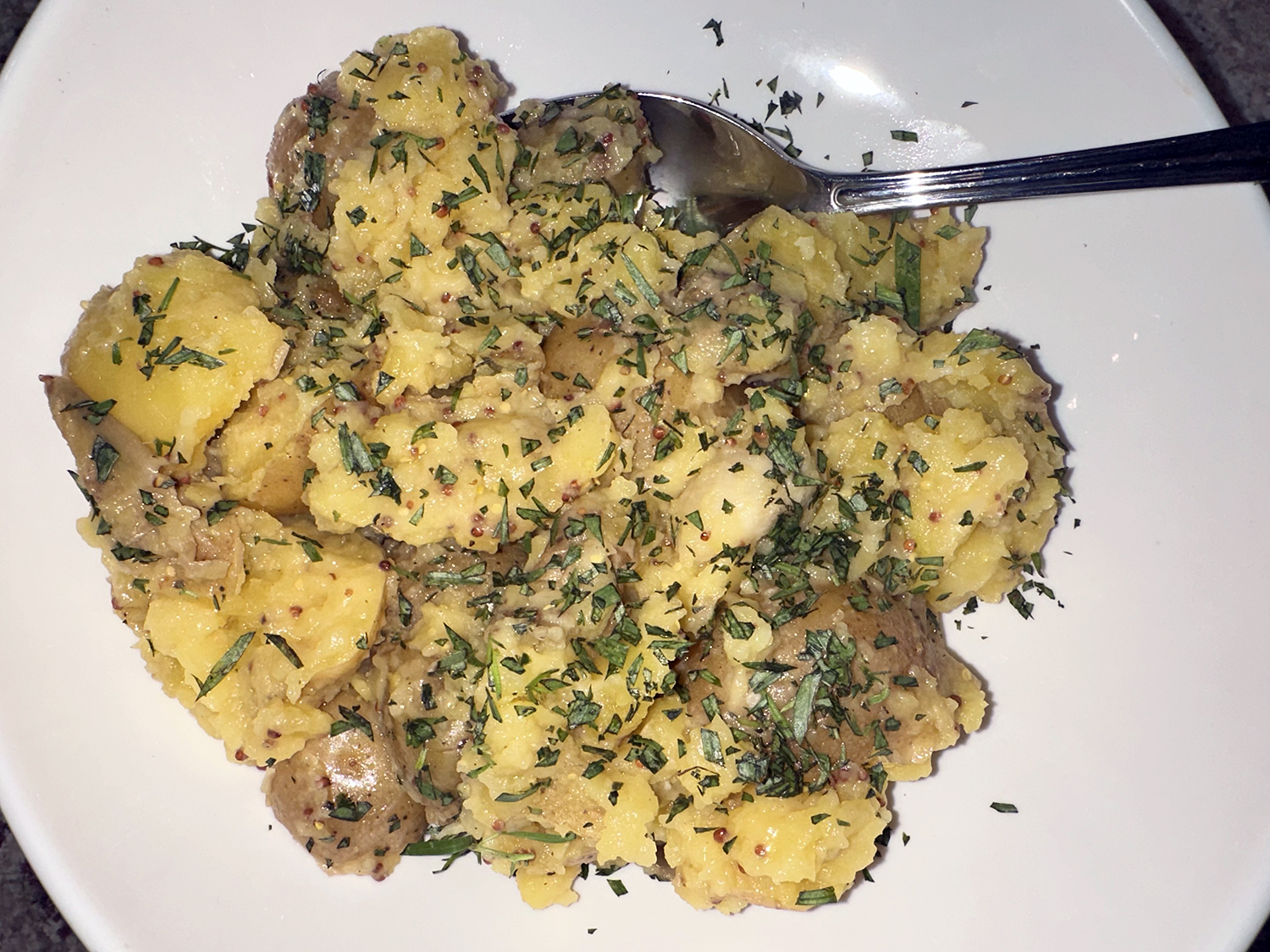
Braised Baby Potatoes with Dijon and Tarragon

What if you could get the creamy interiors produced by steaming baby potatoes and the browned exteriors produced by roasting—without doing either of those things? Well, we just had to find out…

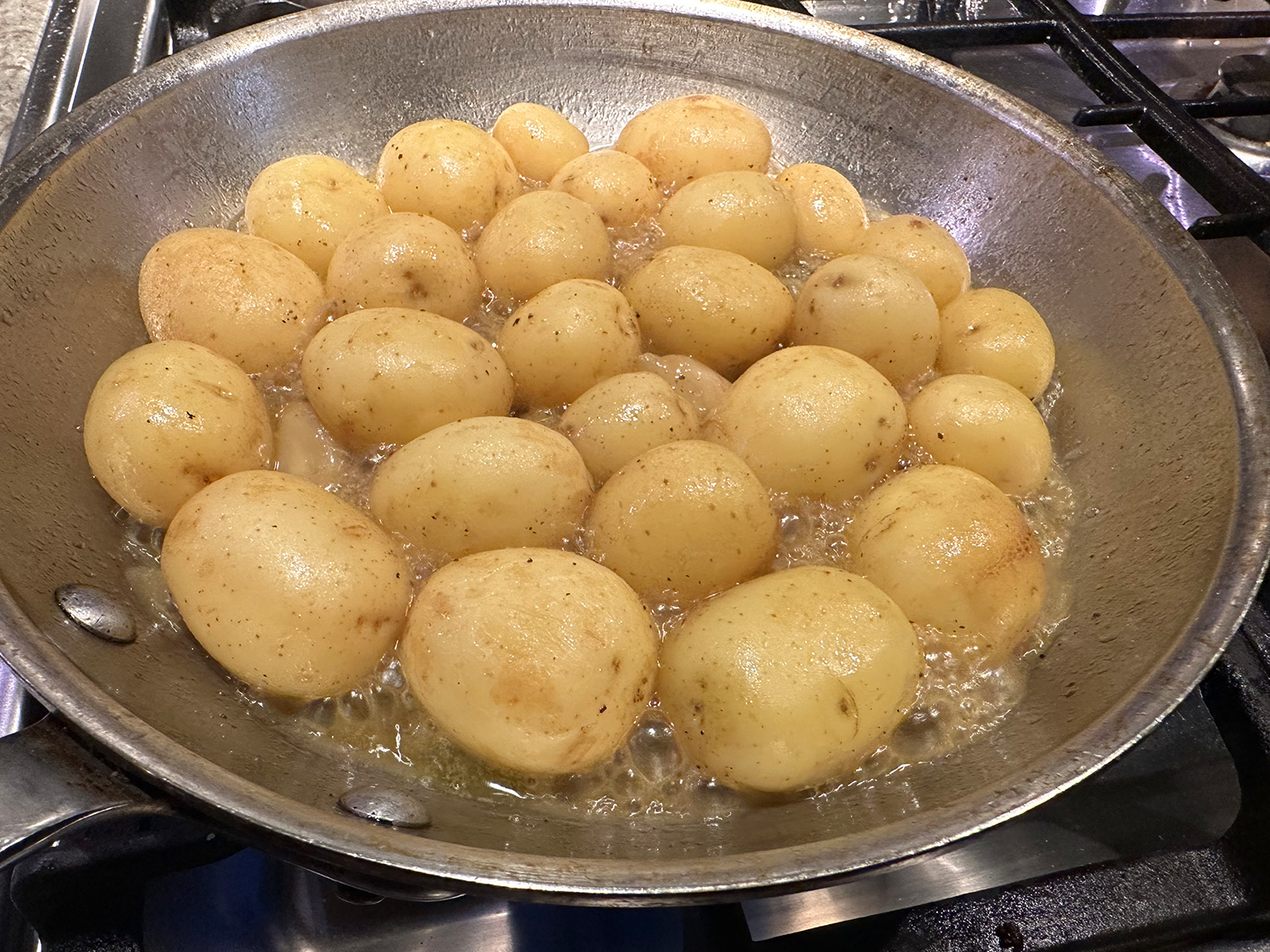
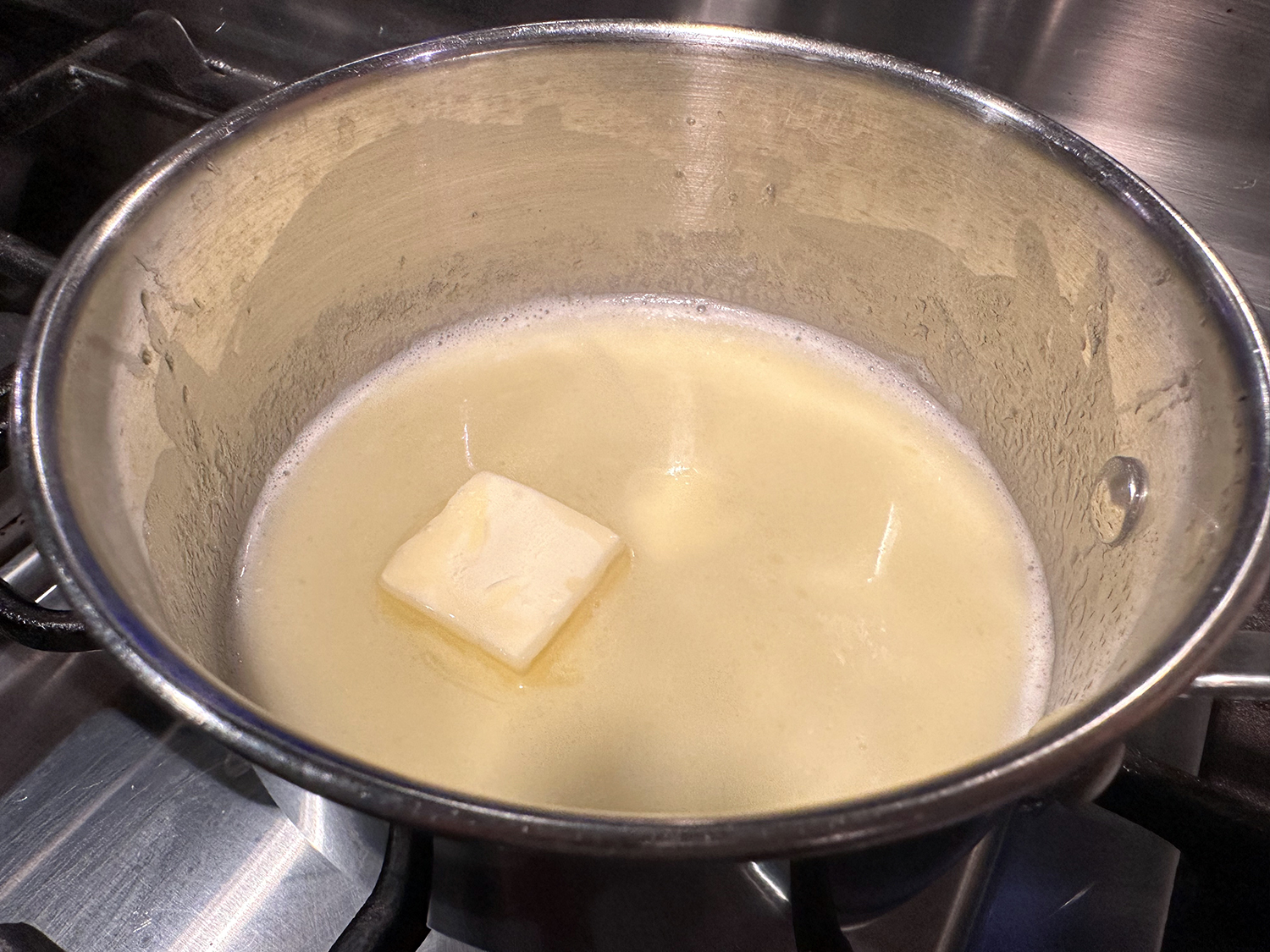
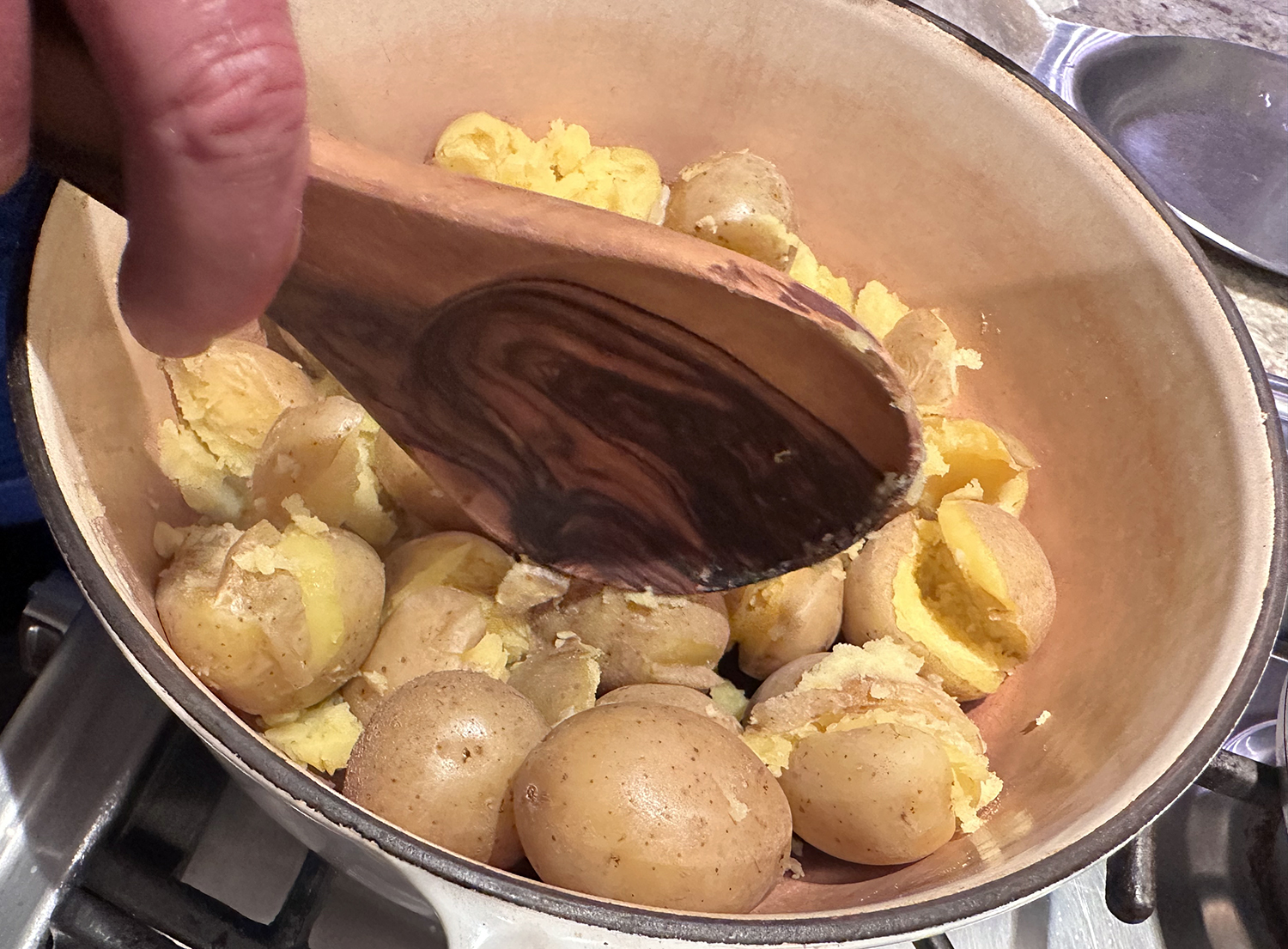
This is a creative recipe for a simple, one-pot potato side dish that features the benefits of both boiling and roasting. Halved small potatoes (about 1 1/2 inches in diameter) are combined with butter, and salted water in a 12-inch skillet. Then they are simmered until the potatoes turn creamy and the water fully evaporates.

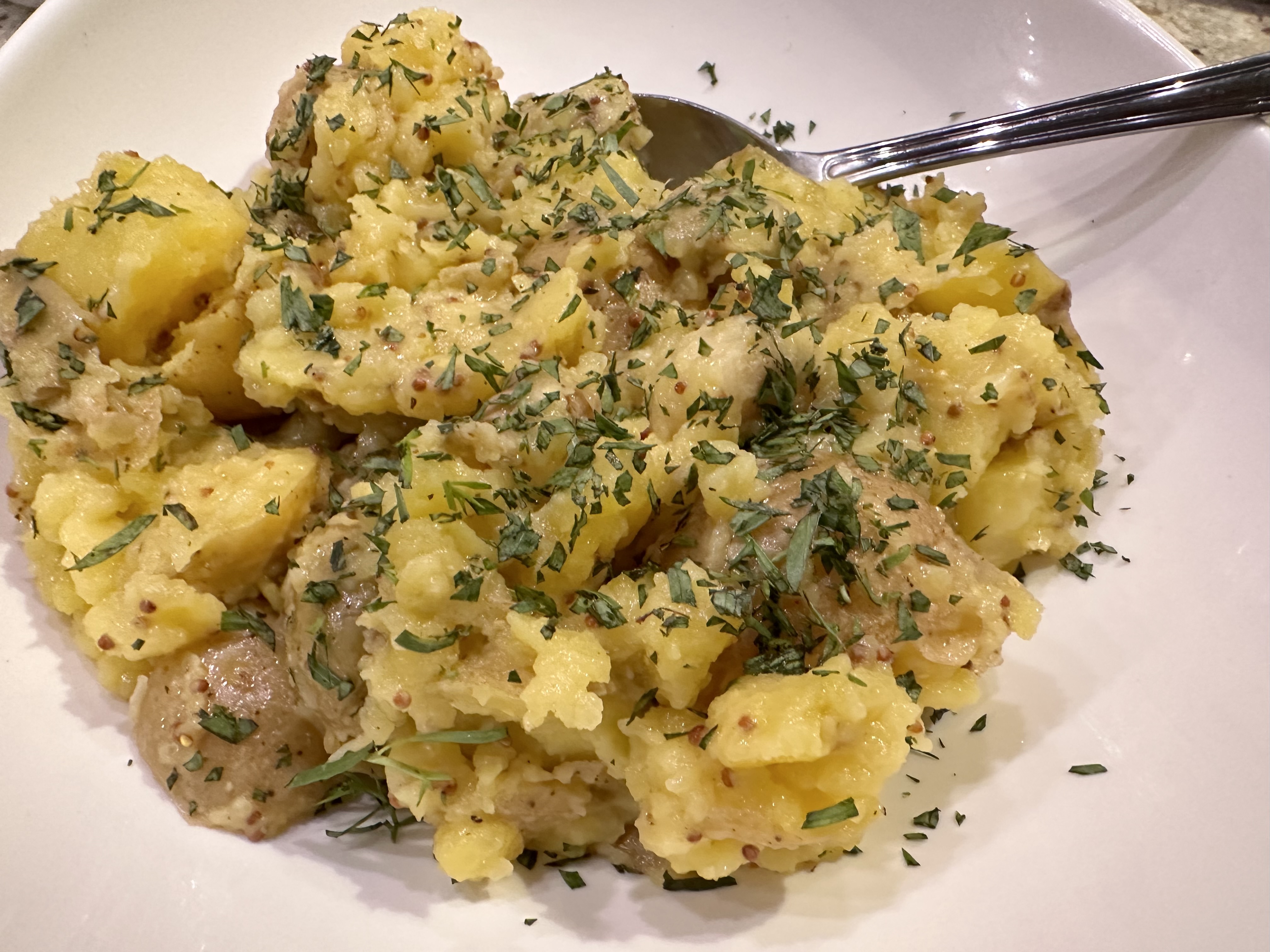
In the then-dry skillet, the potatoes and butter are left alone to fry and develop great flavor and color. Subtle aromatics like thyme and garlic balance well with last-minute additions like Dijon mustard. Potatoes turn nicely browned and the dressing is just enough to give them good flavor.

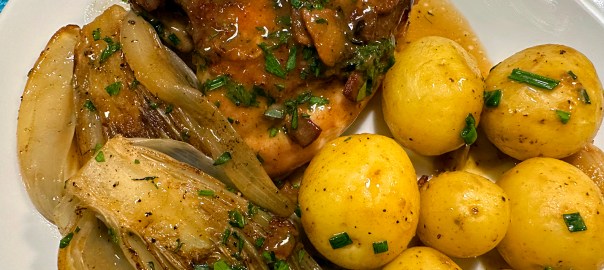
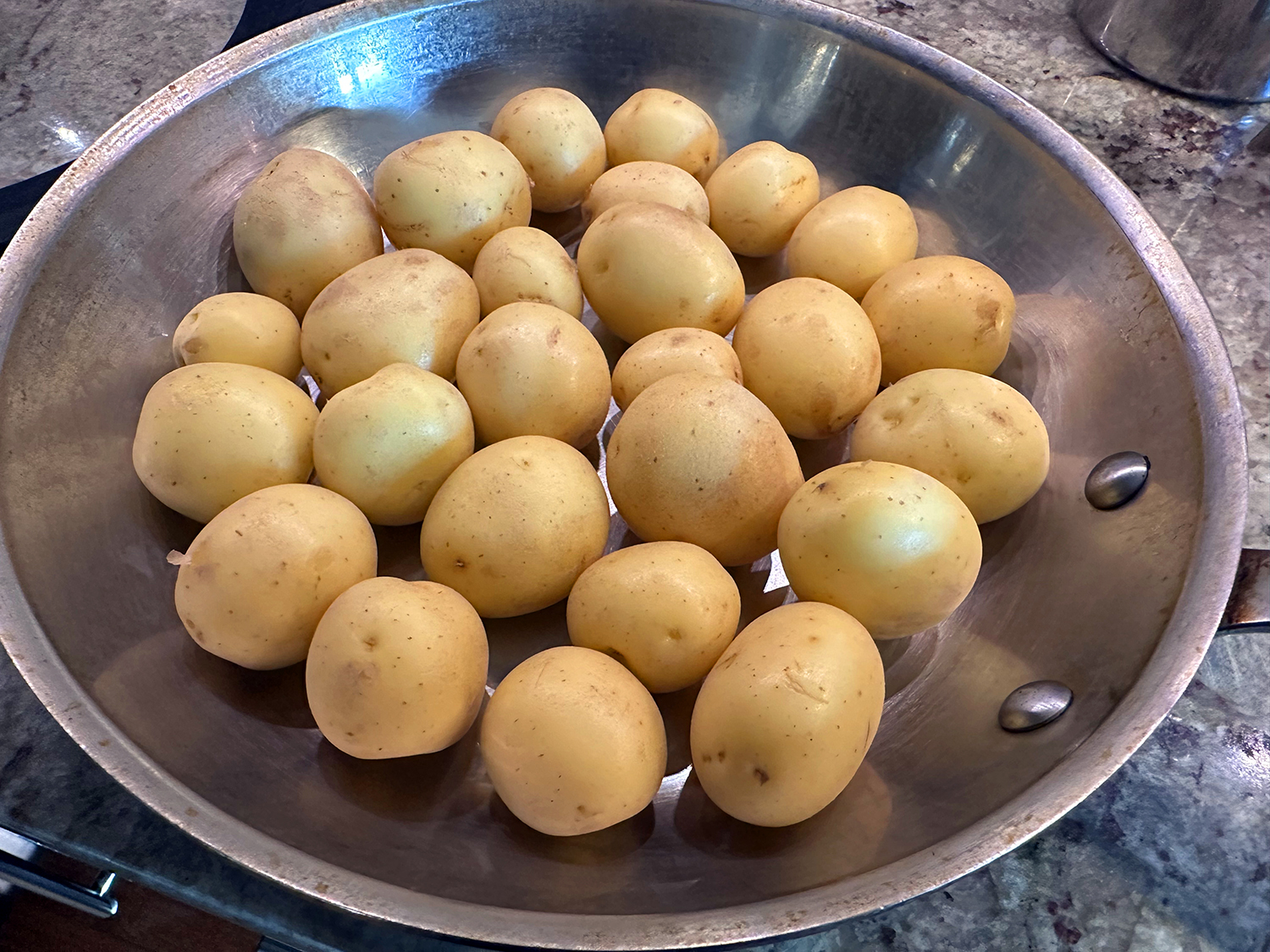
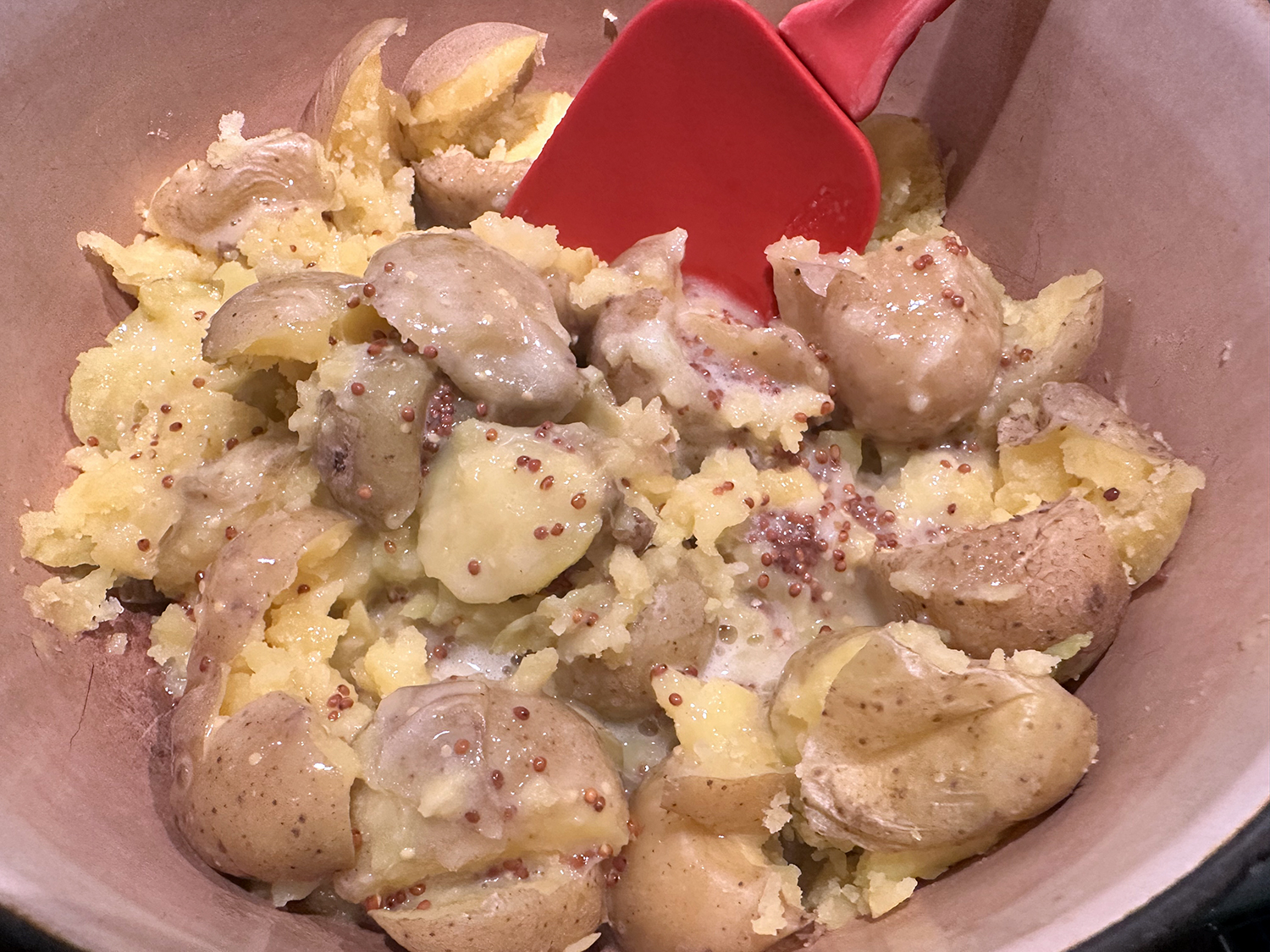
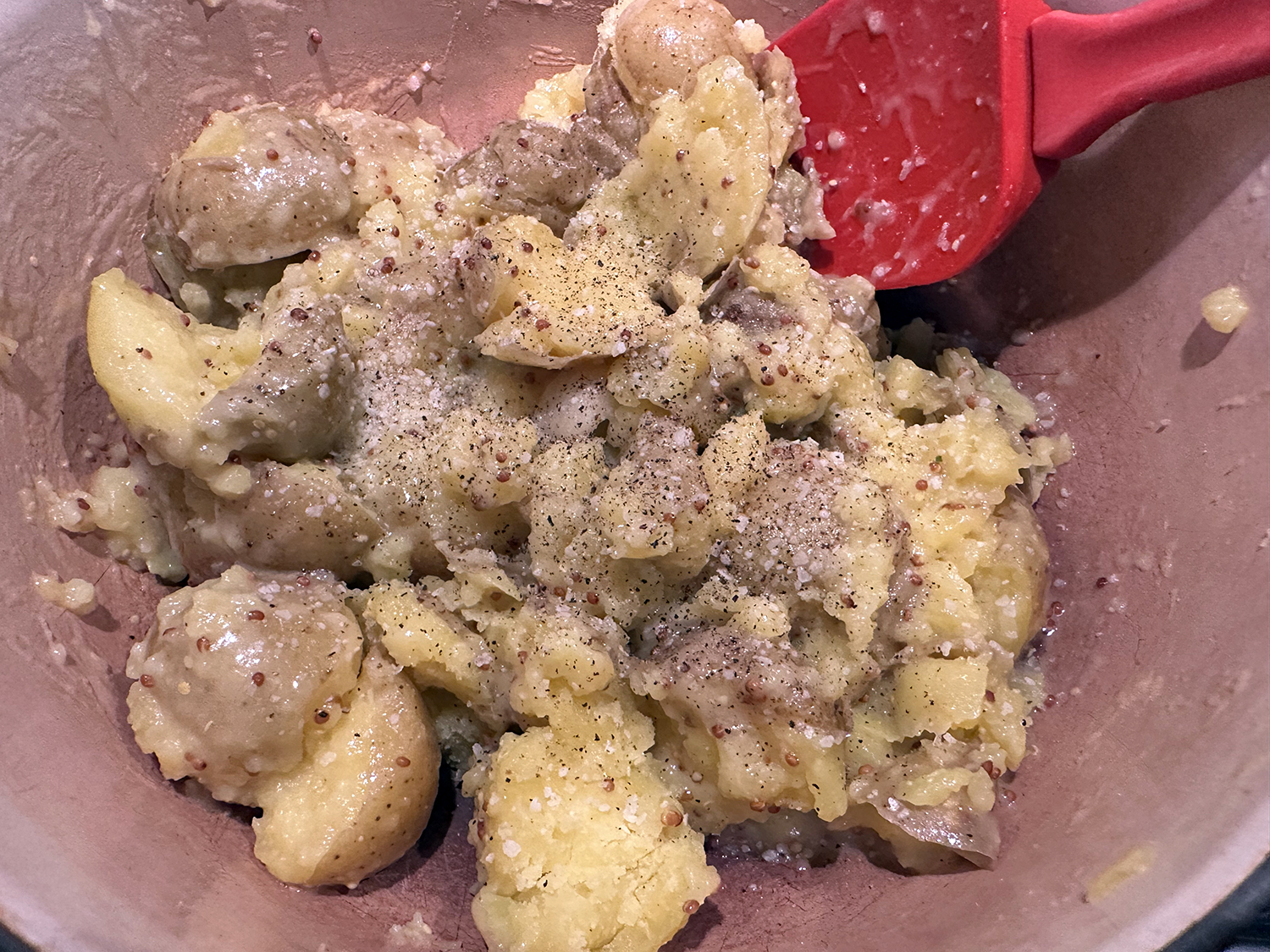
As you may have noticed, we did not use red potatoes due to the fact that the supermarket was only carrying large red spuds. Therefore, we opted for small yellow potatoes. In another twist, whole grain mustard was substituted for the Dijon.

Braised Baby Potatoes with Dijon and Tarragon

  • Servings: 4-6
  • Difficulty: easy
  • Print

Ingredients

  • 1 ½ lbs. small red potatoes, unpeeled, halved; about 1 1/2 inches in diameter
  • 2 cups water
  • 3 Tbsp. unsalted butter
  • 3 garlic cloves, peeled
  • 3 sprigs fresh thyme
  • ¾ tsp. salt
  • 2 tsp. Dijon mustard
  • ¼ tsp. pepper
  • 1 Tbsp. minced fresh tarragon

Directions

  1. Arrange potatoes in single layer, cut side down, in 12-inch nonstick skillet. Add water, butter, garlic, thyme, and salt and bring to simmer over medium-high heat. Reduce heat to medium, cover, and simmer until potatoes are just tender, about 15 minutes.
  2. Remove lid and use slotted spoon to transfer garlic to cutting board; discard thyme. Increase heat to medium-high and vigorously simmer, swirling pan occasionally, until water evaporates and butter starts to sizzle, 15 to 20 minutes. When cool enough to handle, mince garlic to paste. Transfer paste to bowl and stir in mustard and pepper.
  3. Continue to cook potatoes, swirling pan frequently, until butter browns and cut sides of potatoes turn spotty brown, 4 to 6 minutes longer. Off heat, add garlic mixture and tarragon and toss to thoroughly coat. Serve immediately.

http://www.lynnandruss.com

Recipe courtesy of America’s Test Kitchen for Cook’s Illustrated

Kabocha-Cauliflower Mash

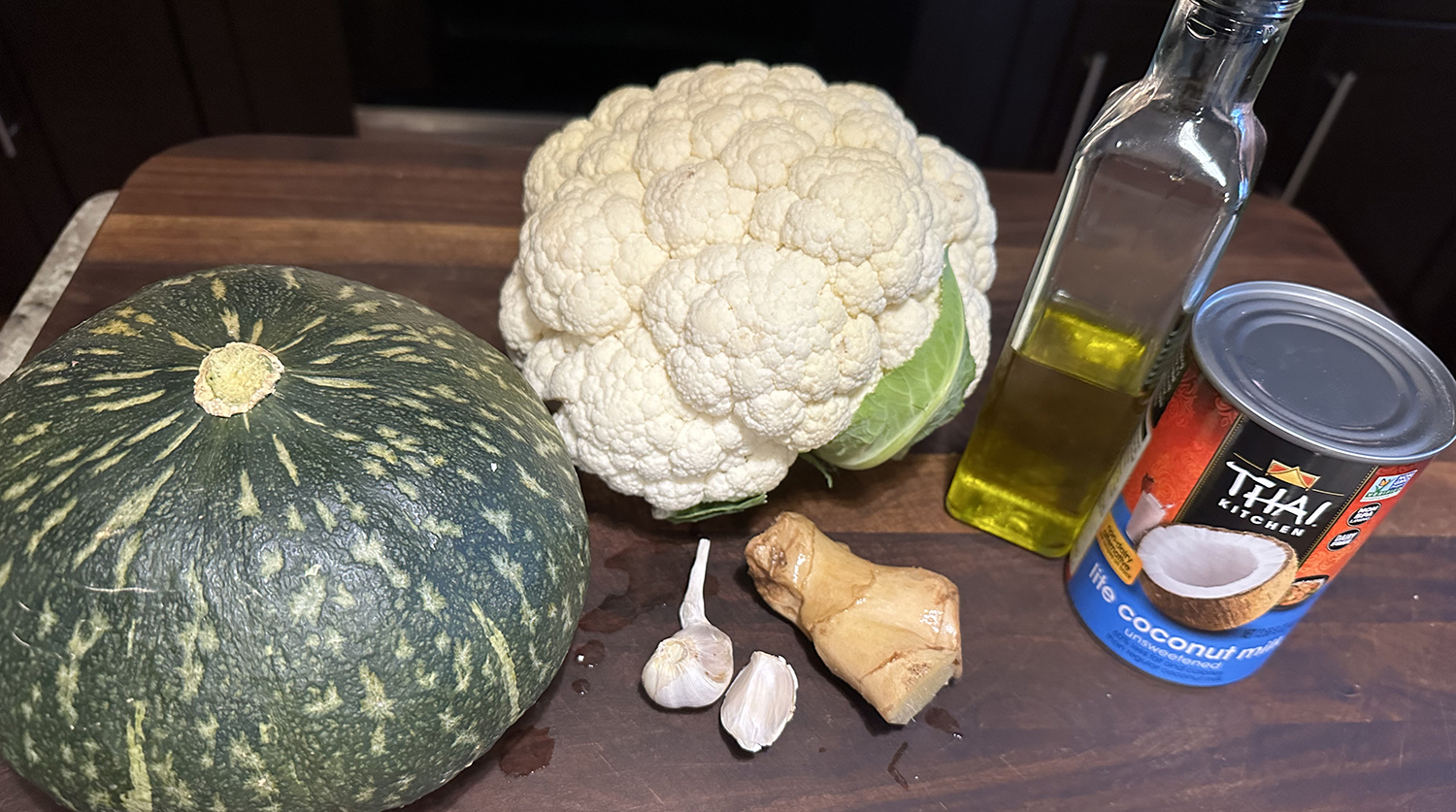
This dairy-free mash allows for everyone at the table to take a scoop no matter what the dinner may be. Kabocha squash and cauliflower blend seamlessly with creamy coconut milk and minced ginger. The resulting dish is a luscious, Asian-inspired alternative to mashed potatoes—without a speck of cream or butter in sight.

While it suggests to use a ricer, and we did, it’s probably easier to just use a hand mixer. Can’t find, or not a fan of Kabocha squash? Acorn or butternut squash would work just as well.

Kabocha-Cauliflower Mash

  • Servings: 8
  • Difficulty: easy
  • Print

Ingredients

  • 2 ½ lbs. kabocha squash (from 1 medium), halved, peeled, seeded, and cut into 2-inch pieces
  • Kosher salt and freshly ground pepper
  • 2 lbs. cauliflower (from 1 medium), cored and cut into large florets
  • ¼ cup extra-virgin olive oil
  • 2 tsp. minced fresh ginger (from a 1-inch piece)
  • 2 tsp. minced garlic (from 2 cloves)
  • ¾ cup light coconut milk
  • Chicken or vegetable broth, or water, if needed

Directions

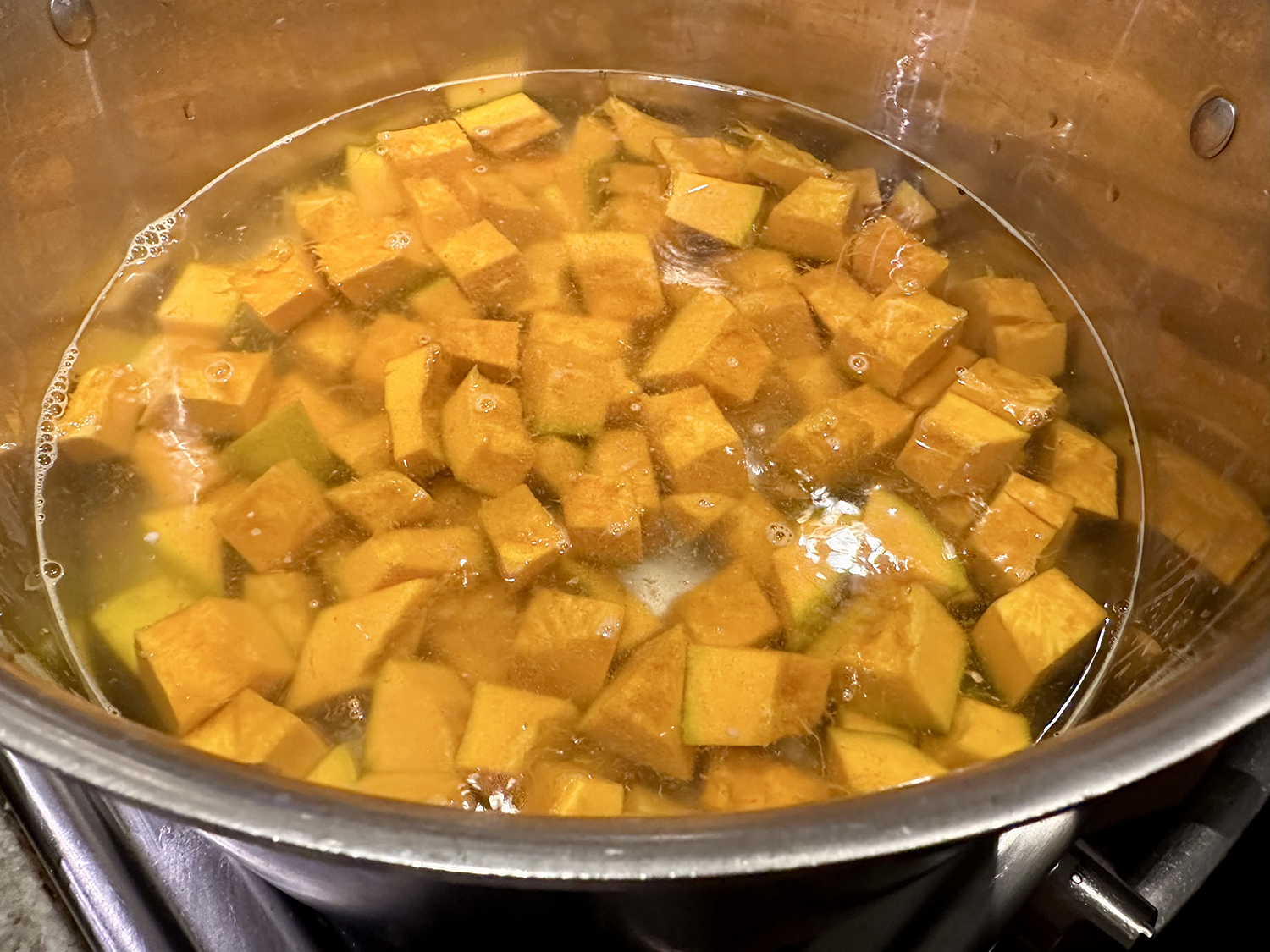
  1. Cook squash in a large pot of simmering (not boiling) salted water 6 minutes. Add cauliflower; continue simmering until vegetables are very tender, 10 to 12 minutes more.
  2. Drain, then return vegetables to pot. Cook over medium heat, stirring frequently, until vegetables appear dry and a film forms on bottom of pot, 3 to 4 minutes.
  3. Pass vegetables through a ricer, food mill, or chinois strainer; cover to keep warm.
  4. Heat oil in a saucepan over medium. When it shimmers, add ginger and garlic; cook until fragrant and sizzling, about 30 seconds. Add coconut milk; season with salt and pepper. Bring to a simmer, then remove from heat and stir into vegetable mixture until smooth.
  5. If mash is too stiff, add broth, coconut milk, or water, a few tablespoons at a time. Season with salt and pepper and serve warm.

http://www.lynnandruss.com

Recipe by Greg Lofts for Martha Stewart

Limoncello and Whiskey Shrimp

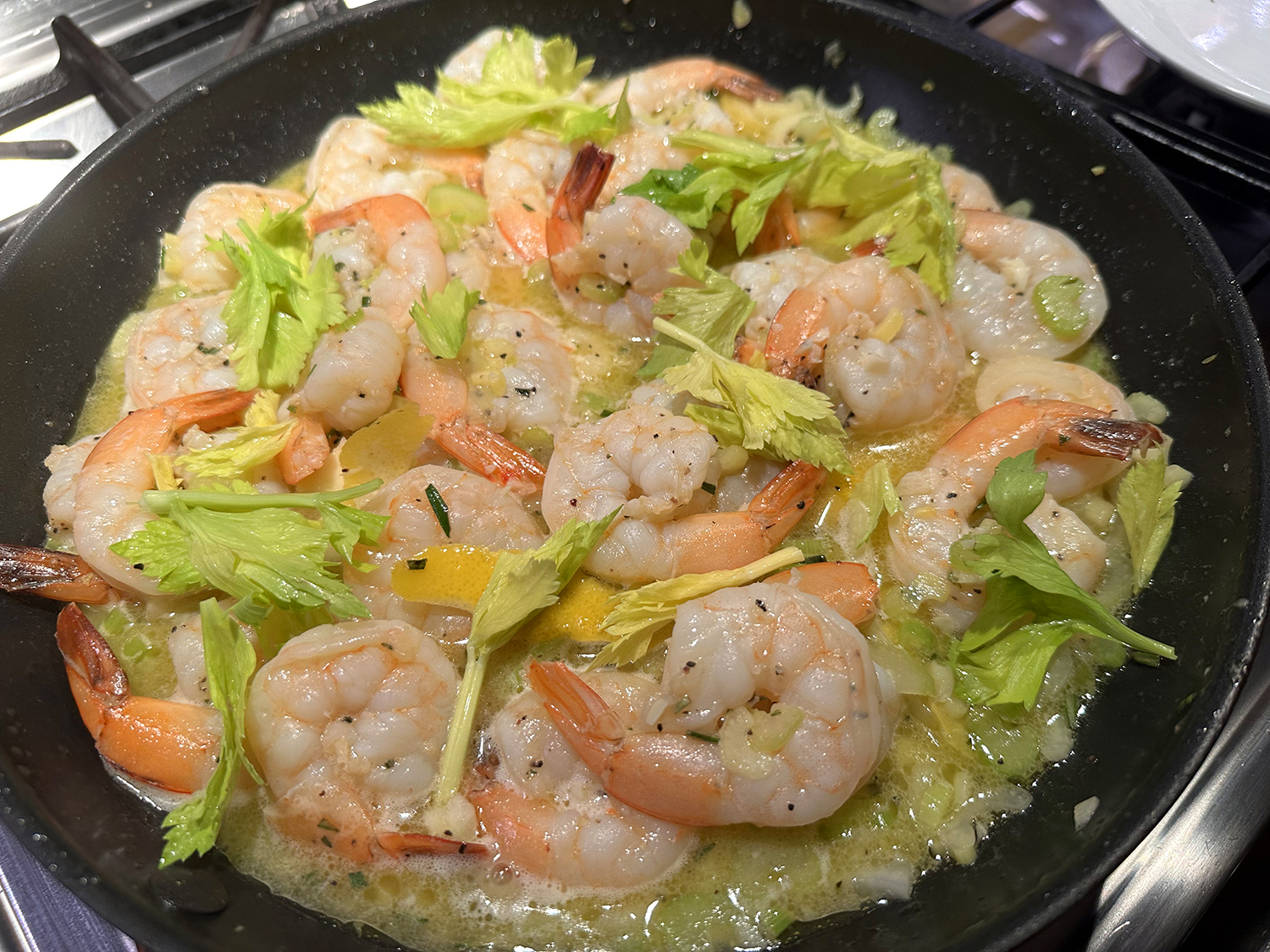
This light healthy meal of crisp-tender celery and sautéed shrimp get a tangy punch from a double hit of lemon—both fresh juice and limoncello. To balance it out, cookbook author Amy Thielen adds a splash of whiskey; the sharp bite of the alcohol is tamed as the sauce simmers, leaving behind a warm earthiness in the glaze.

Since we had 1 1/2 pounds of shrimp—50% more that the recipe called for—we decided to increase all of the other ingredients. In the end, that wasn’t necessary. If using only one pound of shrimp, plan on four first course servings, or 3-4 entrées over a bed of jasmine rice or polenta.

Limoncello and Whiskey Shrimp

  • Servings: 3-4
  • Difficulty: easy
  • Print

Ingredients

  • 1 lb. peeled and deveined raw jumbo shrimp, tails on
  • 4 (3 x 1-inch) lemon peel strips
  • 1 Tbsp. extra-virgin olive oil
  • 2 tsp. limoncello (liqueur)
  • 1/2 tsp. finely chopped fresh rosemary
  • 3/4 tsp. black pepper, divided
  • 1/2 tsp. salt, divided
  • 1 medium bunch celery (about 1 1/2 lbs.)
  • 6 Tbsp. unsalted butter
  • 4 garlic cloves, finely chopped’
  • 3 Tbsp. (1 1/2 oz.) whiskey
  • 2 Tbsp. fresh lemon juice, plus lemon slices for serving
  • Toasted baguette slices for serving

Directions

  1. Pat shrimp dry and place in a medium bowl. Add lemon peel strips, oil, limoncello, rosemary, 1/4 teaspoon pepper and 1/4 teaspoon salt. Toss to coat. Cocer and marinate in refrigerator at least 30 minutes or up to an hour.
  2. Meanwhile remove outer stalks of celery, reserve for another use. Finely chop inner celery stalks and heart to yield one cup; set aside. Pick off pale yellow leaves to yieldabout 1/4 cup; set aside for garnish. Reserve any remaining stalks for another use.
  3. Heat butter over medium until foamy. Add chopped celery, garlic, remaining 1/2 teaspoon pepper, and remaining 1/4 teaspoon salt; cook, stirring often until mixture is fragrant, 30 seconds to 1 minute.
  4. Add shrimp, reserving marinade in bowl (there won’t be much); cook, flipping shrimp occasionally, until shrimp begin to turn pink, about 1 minute.
  5. To skillet, add whiskey, lemon juice, and reserved marinade in bowl; cook, stirring occasionally, until sauce bubbles and shrimp turn opaque, 1 to 2 minutes.
  6. Remove from heat, and sprinkle with celery leaves. Serve immediately with lemon wedges and toasted baguette slices.

http://www.lynnandruss.com

Recipe from Food & Wine Magazine

Soy-Braised Baby Bok Choy

In traditional recipes for Chinese soy-braised greens, the greens are likely to be blanched before they’re quickly cooked with ingredients that supply high-impact flavor. In this recipe, however, the baby bok choy is stir-fried with aromatics, then braised in a mixture of Shaoxing rice wine and soy sauce, with sugar for sweetness and sesame oil for nuttiness.

A few minutes of uncovered cooking drives off excess moisture, leaving the greens meltingly tender and coated in a light savory-sweet sauce. Serve with steamed fish or spooned atop a bowl of rice. Ours paired nicely with Pan-Seared Sesame-Crusted Tuna Steaks.

NOTE: Don’t forget to wash the bok choy, as the inner leaves often trap dirt or sand. But make sure to drain and dry so it browns rather than steams when it hits the hot skillet.

Soy-Braised Baby Bok Choy

  • Servings: 4
  • Difficulty: easy
  • Print

Ingredients

  • 2 Tbsp. grapeseed or other neutral oil
  • 2 lbs. baby bok choy, trimmed and cut crosswise into 1-inch pieces
  • 1 bunch scallions, whites thinly sliced, greens thinly sliced on the diagonal, reserved separately
  • 1 Tbsp. minced fresh ginger
  • 2 medium cloves garlic, minced
  • 3 Tbsp. Shaoxing wine OR dry sherry OR sake
  • 3 Tbsp. soy sauce
  • 1 Tbsp. packed light brown sugar OR white sugar
  • 2 tsp. toasted sesame oil

Directions

  1. In a 12-inch skillet over medium-high, heat the neutral oil until shimmering. Add the bok choy and cook, stirring occasionally, until wilted and lightly browned, 3 to 4 minutes.
  2. Add the scallion whites, ginger and garlic, then cook, stirring, until fragrant, 30 to 60 seconds. Reduce to medium and stir in the Shaoxing wine, soy sauce, sugar and sesame oil, then immediately cover. Cook until the bok choy is tender-crisp, 2 to 3 minutes.
  3. Uncover and cook, stirring occasionally, until the liquid is lightly thickened and the bok choy is fully tender, 2 to 3 minutes. Transfer to a serving dish and sprinkle with the scallion greens.

http://www.lynnandruss.com

Recipe from Milk Street

Spanish-Style Butter Beans

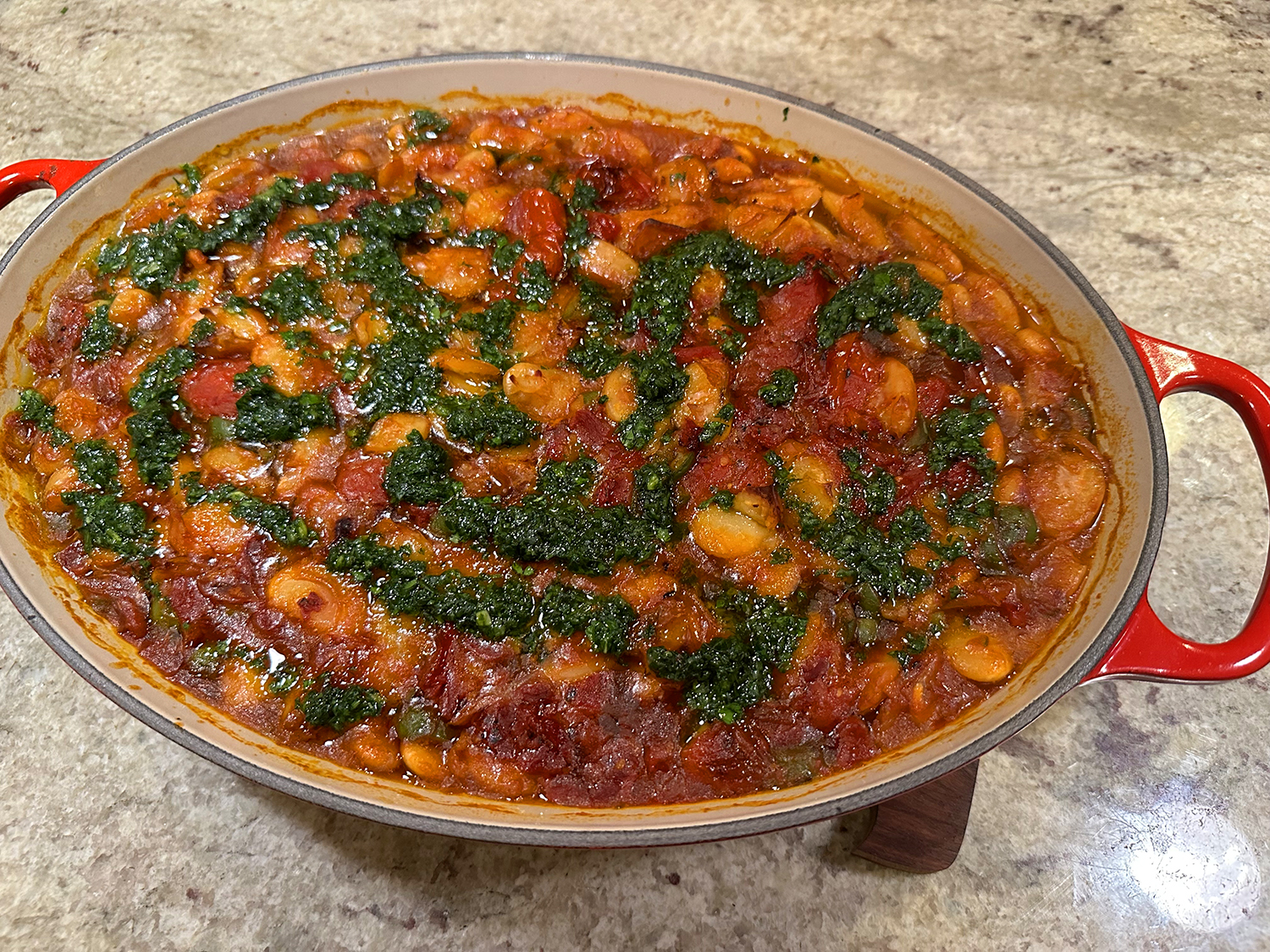
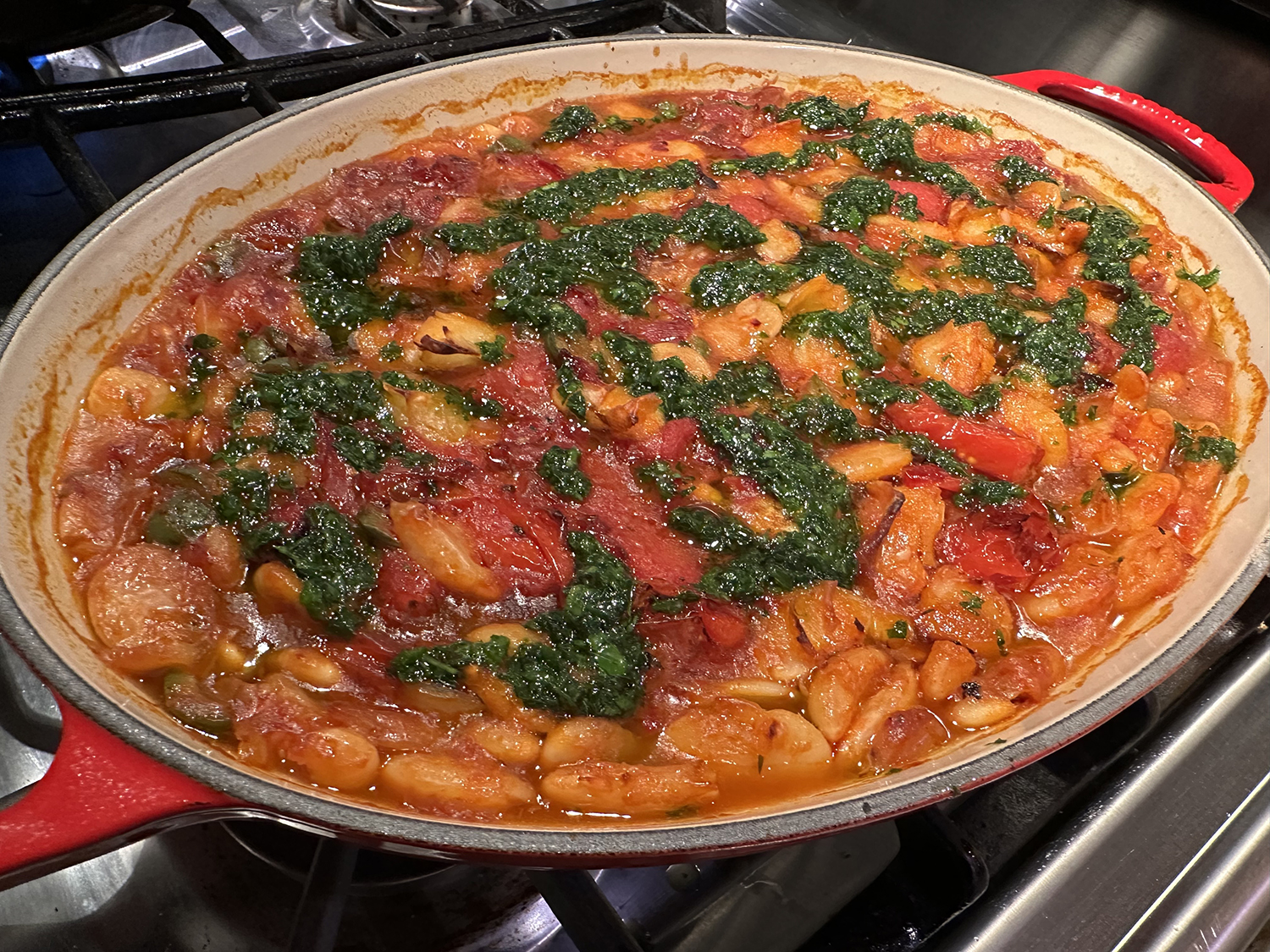
In this scrumptious Spanish recipe, large butter beans and tomatoes take up tons of flavor from saffron, sherry vinegar, olives, smoked paprika, and garlic. Simply serve them as a vegetarian main with toasted crusty garlic bread, or as a side to a meat entrée.

Are you one of those that just hearing the words “lima beans” sends you into a spiral of loathing and revulsion? It doesn’t matter what the rest of the dish is, the cloud has descended and nothing else is getting through to you. I used to be one of “those.” Now change “lima” to the word “butter” however, and what happens? Suddenly, I’m paying attention. But is that all there is to it? Or are butter beans a completely different ingredient?

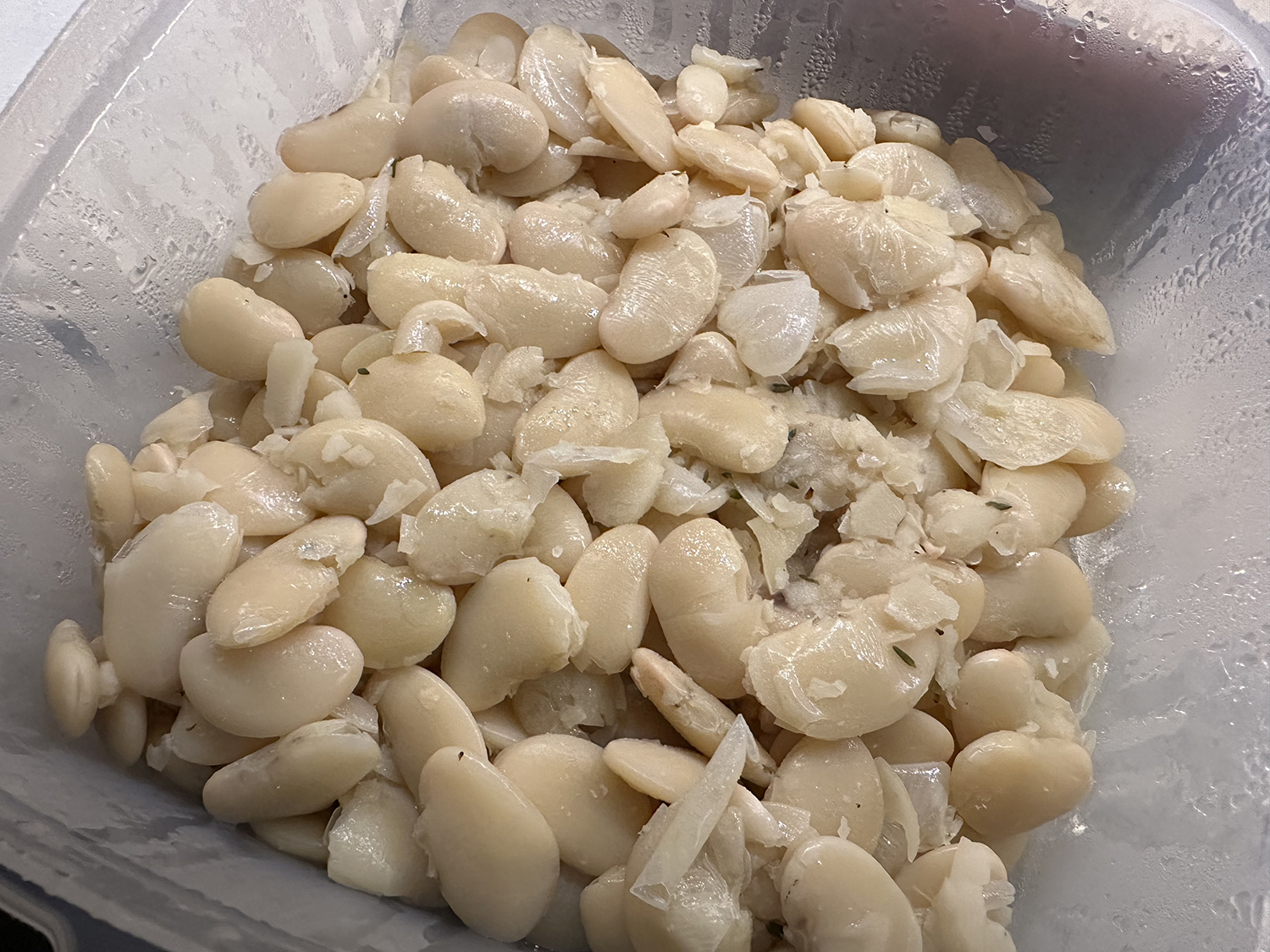
No, rest assured; the two are actually one in the same. There’s no difference between lima beans and butter beans, though sometimes they’re sold at different stages of maturity. Interestingly, whether you prefer to call them lima beans or butter beans is a result of your own geographical traditions and how your family and friends refer to them.

In the American South and the United Kingdom, they’re butter beans. For the rest of the United States, they’re typically called lima—after the bean’s origin city of Lima, Peru, where they’ve grown for over 9,000 years. I say tomato, you say toemahtoe….

*NOTE: In the end, we thought the dish was a bit too liquidy, in addition to the reserved bean cooking liquid, the tomatoes and red peppers both release juices. Therefore we suggest cutting back the amount from 2 cups to 1 1/2 or less cups.

Spanish-Style Butter Beans

  • Servings: 8
  • Difficulty: easy
  • Print

Ingredients

  • 1/2 cup extra-virgin olive oil, divided
  • 6 cloves garlic; 4 smashed, plus 1 1/2 tsp. minced
  • 2 pints grape tomatoes
  • 1 cup roasted red sweet peppers, drained and chopped
  • 1 Tbsp. smoked paprika
  • ¼ tsp. saffron threads, crushed
  • 6 cups cooked and drained large lima beans, plus 2 cups* reserved bean cooking liquid
  • 1/2 cup chopped manzanilla olives
  • 1 1/2 tsp. salt, divided
  • 2 Tbsp. sherry vinegar
  • 1 cup fresh parsley leaves, finely chopped

Directions

  1. Soak dry beans overnight and cook as per package directions.
  2. Preheat oven to 350°F.
  3. Heat 2 tablespoons extra-virgin olive oil in a large saucepan over medium heat. Add grape tomatoes, roasted red bell peppers, smoked paprika, saffron threads, and smashed garlic cloves; cook over medium, stirring occasionally, until tomatoes are softened and begin to burst, 10 to 12 minutes.
  4. Stir in cooked butter/lima beans and bean cooking liquid, olives, sherry vinegar, and 1 teaspoon kosher salt.
  5. Spoon into an ungreased 13 x 9 baking dish. Bake in preheated oven until heated through and liquid is slightly reduced, 45 to 55 minutes. (We put the casserole under the broiler for several minutes afterward.)
  6. Let stand 5 minutes before serving.
  7. Stir together parsley, chopped garlic, remaining 6 tablespoons of EVOO, and remaining 1/2 teaspoon Kosher salt. Spoon mixture over warm beans. Serve beans with toasted crusty bread.

http://www.lynnandruss.com

Recipe from Melissa Gray for Food & Wine Magazine

Orzotto: Two-Cheese Orzo with Cauliflower

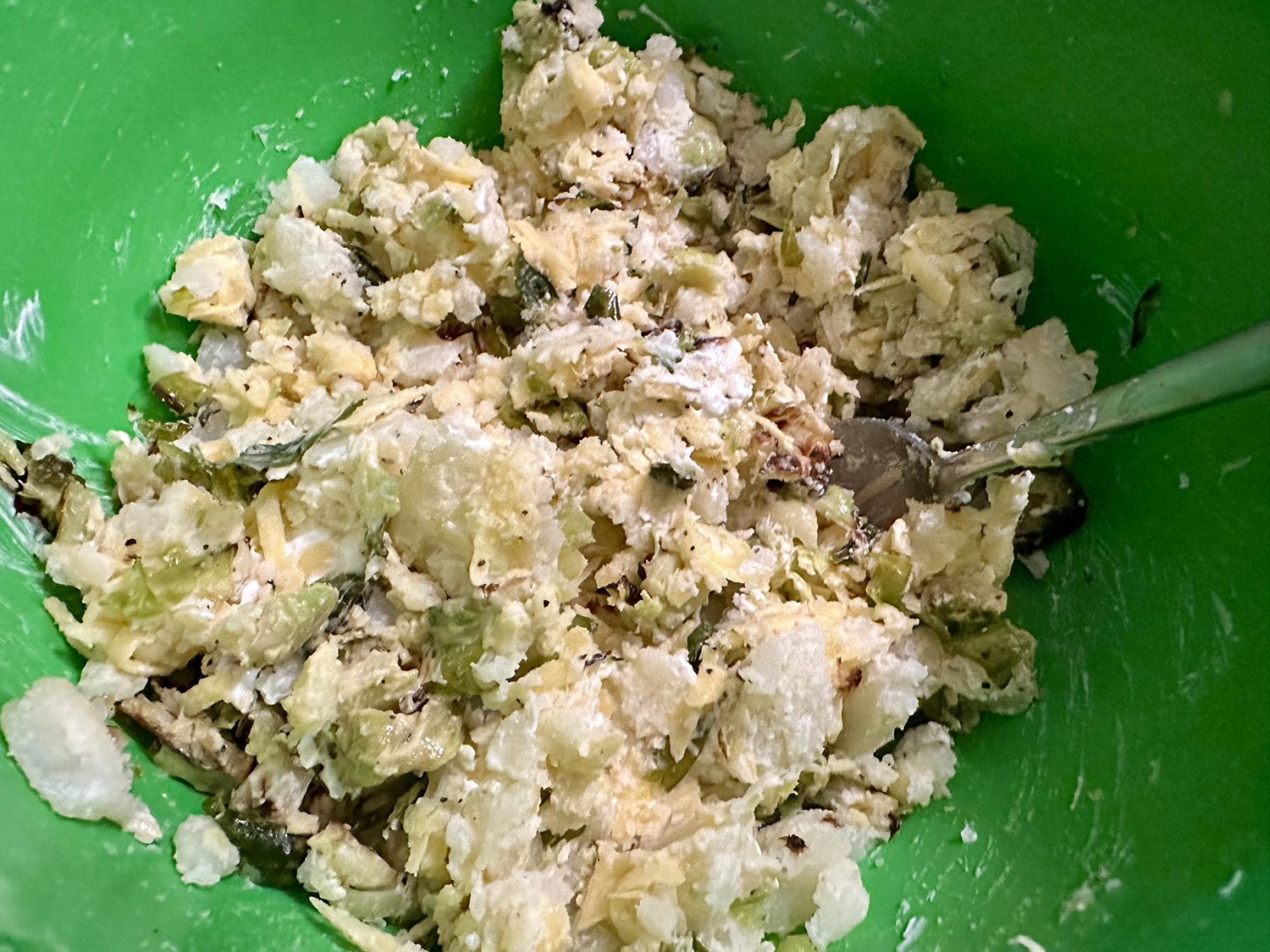
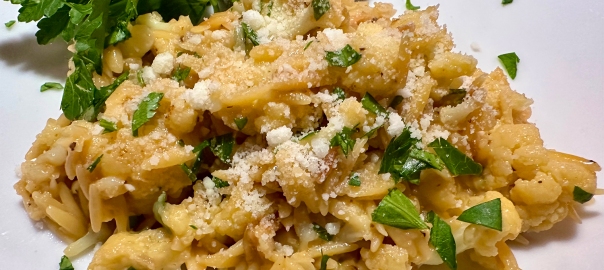
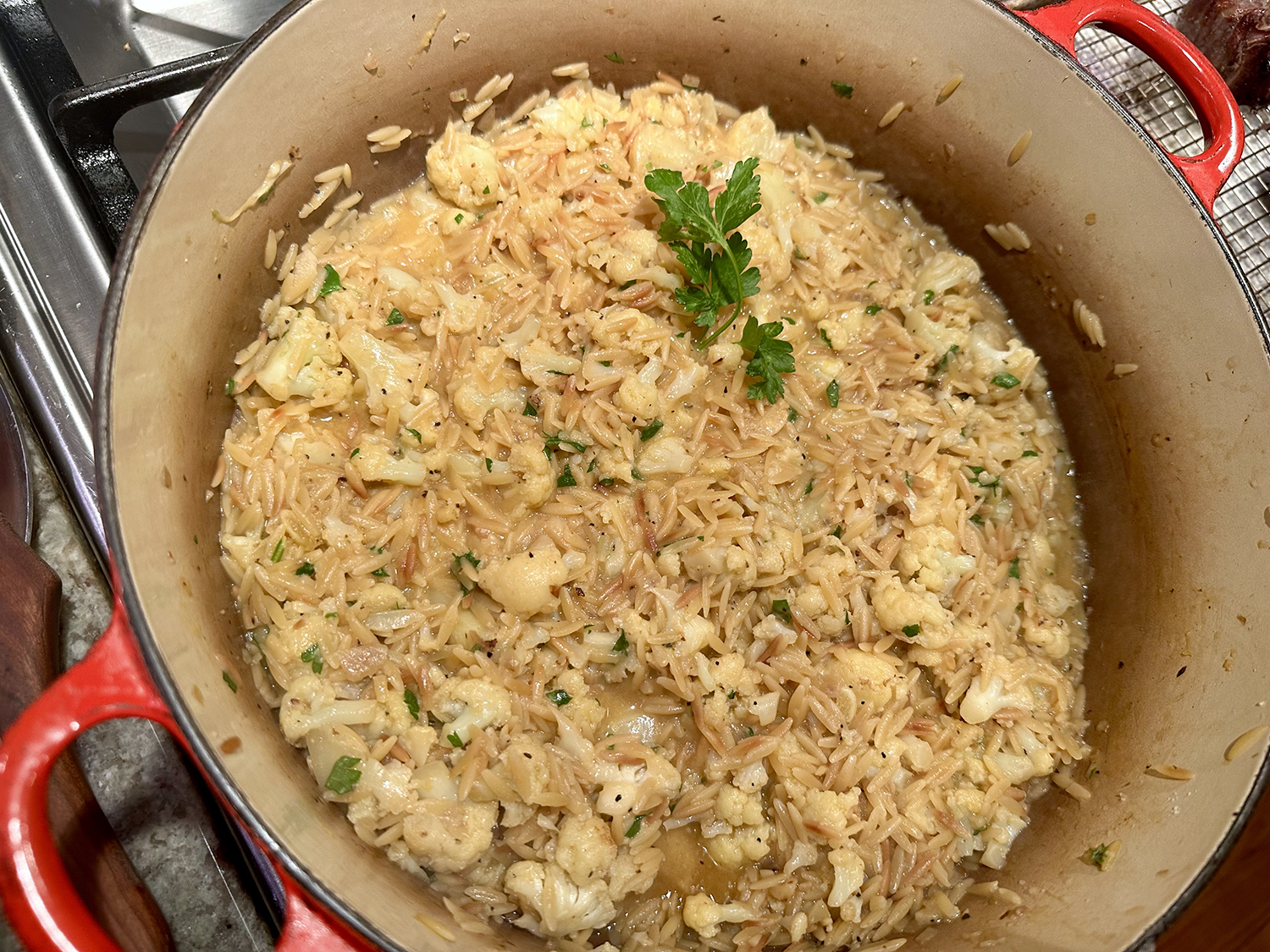
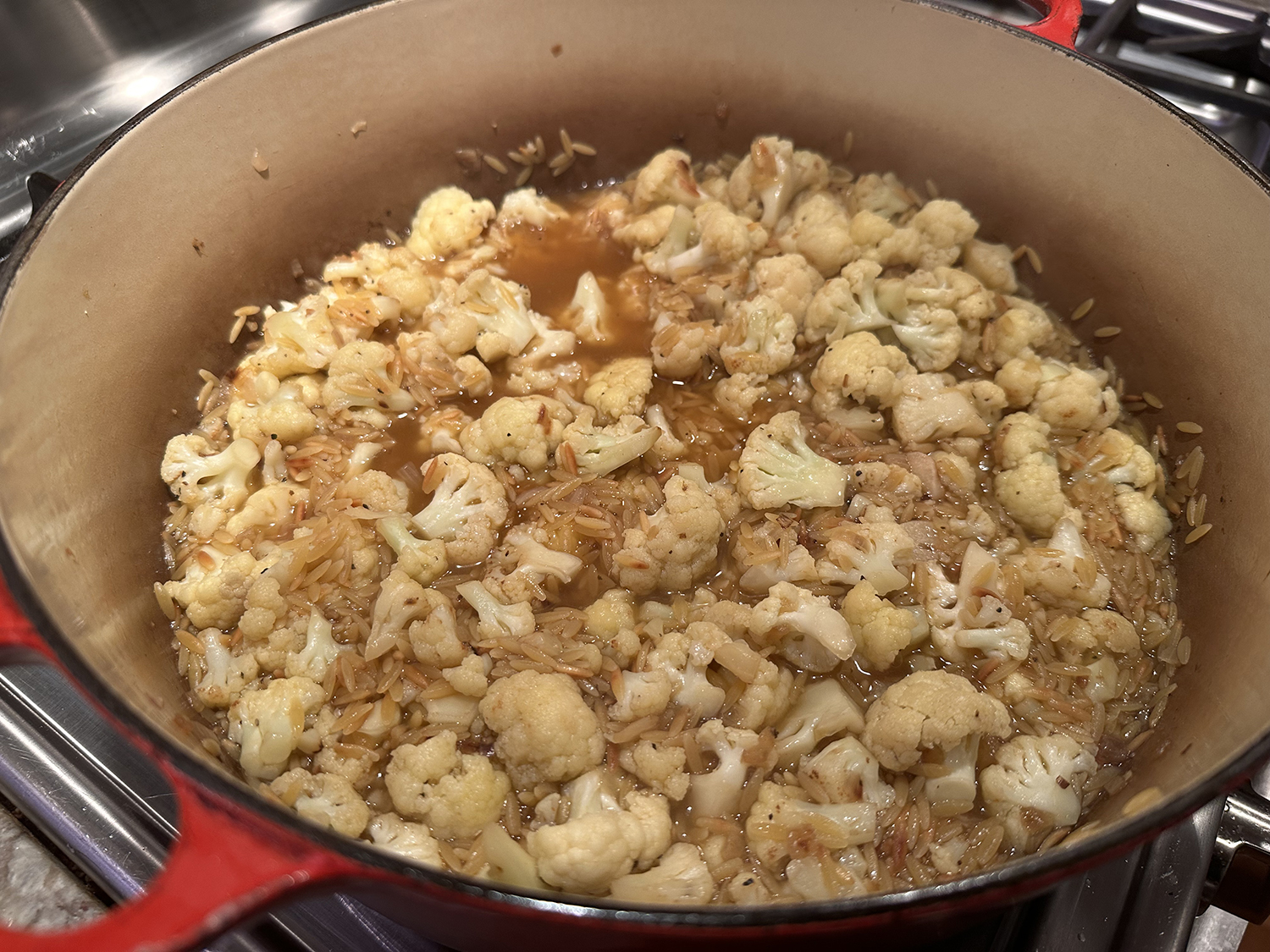
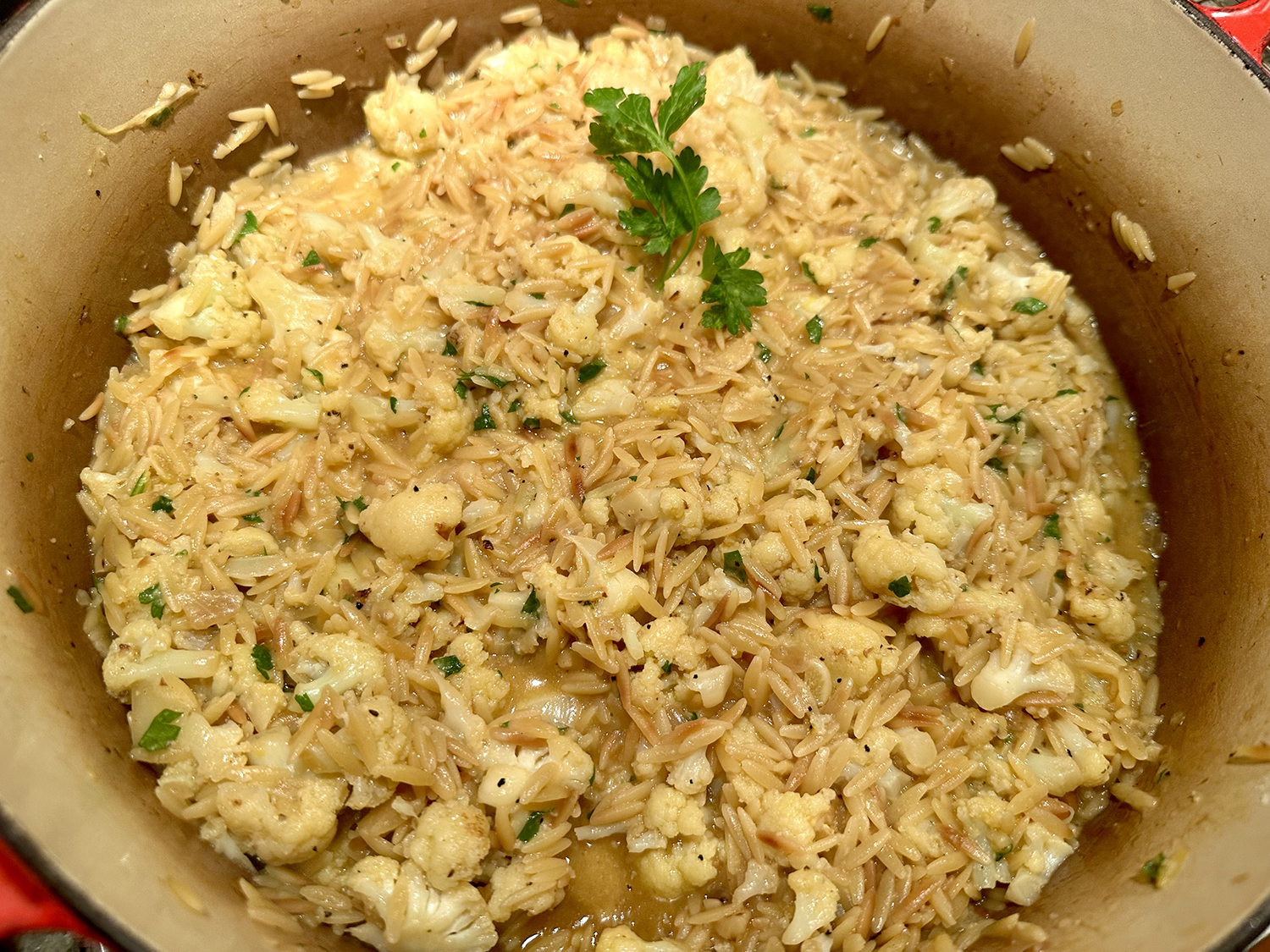
A very flavorful side dish that’s not only visually enticing, this Two-Cheese Orzo with Cauliflower tastes fantastic too!

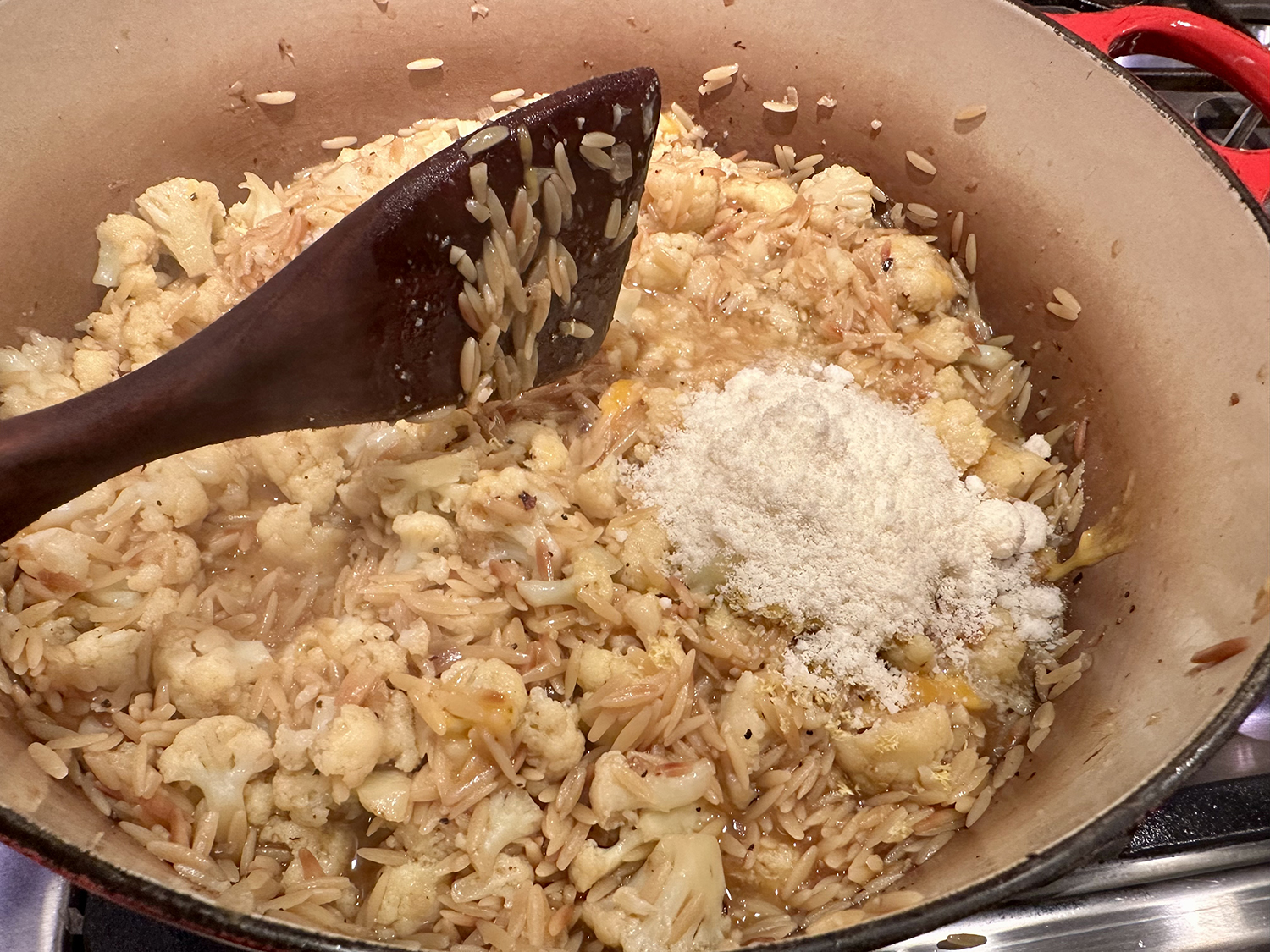
This “orzotto” has a creaminess similar to classic risotto thanks to the starchiness of the orzo pasta, but it’s easier and faster to prepare. A combination of melty cheddar cheese and nutty Parmesan lends richness, while cauliflower brings subtly sweet notes and makes the “orzotto” more substantial.

Chicken broth can be used in place of the vegetable broth (but then it’s no longer vegetarian). Herbs other than parsley work nicely, too—chives or dill are particularly good. This is a terrific side to a simple roasted chicken, or served as a side to steak, or as in our case, lamb loin chops; and it’s also hearty enough to be a meat-free main.

Don’t be shy about stirring after adding the broth. Frequent and brisk stirring helps create an especially creamy consistency. Be sure to also scrape along the bottom of the pot to ensure the mixture isn’t sticking to the bottom.

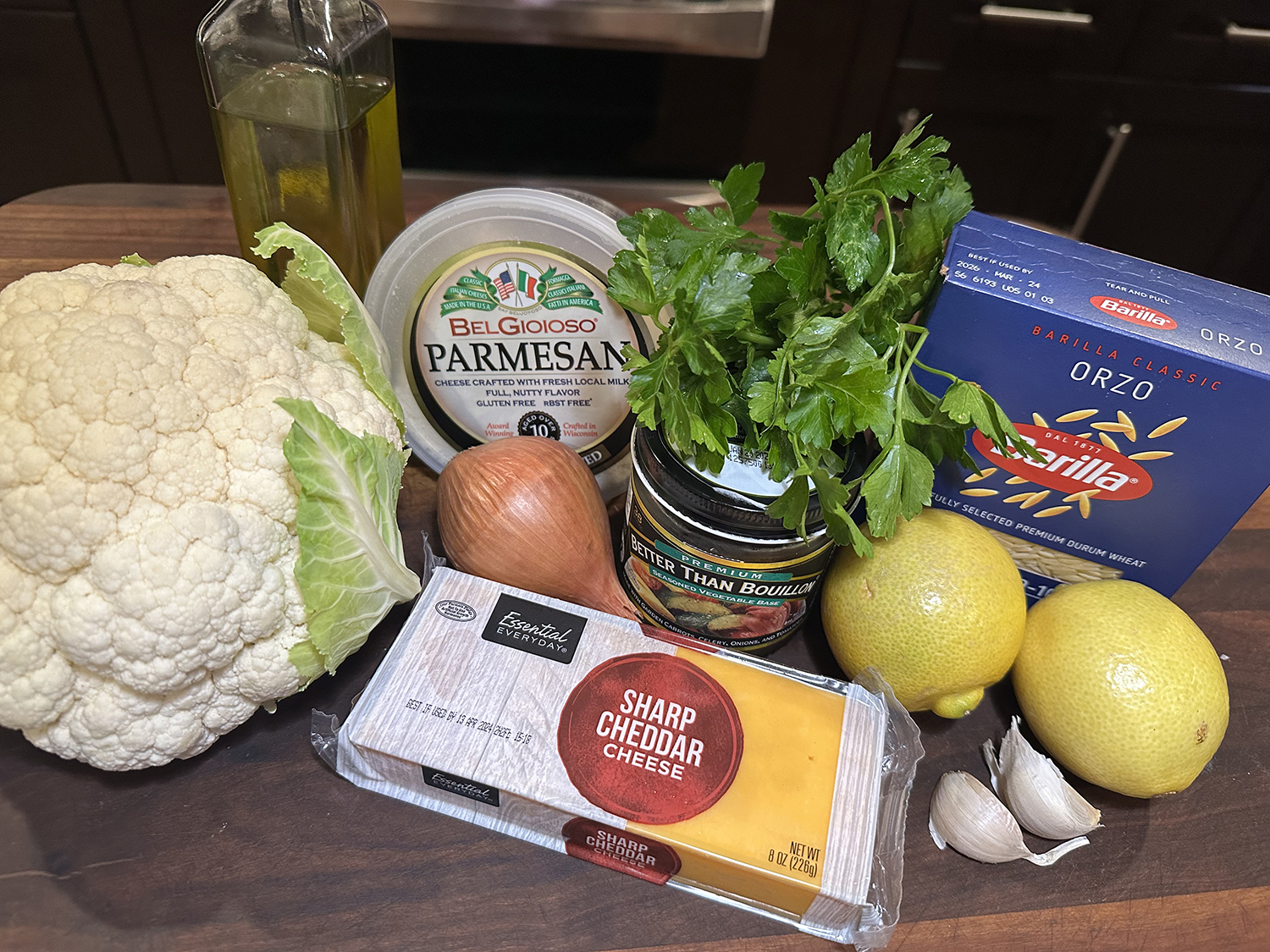
Ingredients

Two-Cheese Orzo with Cauliflower

  • Servings: 4-6
  • Difficulty: easy
  • Print

  • 2 Tbsp. extra-virgin olive oil
  • 1 medium shallot, minced
  • 2 medium garlic cloves, thinly sliced
  • Kosher salt and ground black pepper
  • 1 2-lb. head cauliflower, trimmed and cut into ½-inch pieces
  • 8 oz. (1¼ cups) orzo
  • 3 3/4 cups low-sodium vegetable broth, divided, plus more if needed
  • 2 oz. sharp cheddar cheese, shredded (1 cup)
  • 2 tsp. grated lemon zest, plus 2 Tbsp. lemon juice
  • 1 oz. Parmesan cheese, finely grated (½ cup), plus more to serve
  • 1/2 cup lightly packed fresh flat-leaf parsley, roughly chopped

Directions

  1. In a large Dutch oven over medium, heat the oil until shimmering. Add the shallot, garlic and ½ teaspoon salt; cook, stirring, until starting to brown, about 1 minute.
  2. Add the cauliflower and cook, stirring, until lightly browned in spots, 4 to 5 minutes.
  3. Add the orzo and cook, stirring, until beginning to brown, about 2 minutes.
  4. Stir in 2 cups of the broth and ½ teaspoon pepper; bring to a simmer over medium-high. Cook, uncovered and stirring, until the liquid is absorbed, about 5 minutes.
  5. Add 1½ cups of the remaining broth and simmer, stirring, until the liquid is again absorbed, the orzo is al dente and the cauliflower is tender-crisp, about 5 minutes.
  6. Stir in the remaining ¼ cup broth. Add the cheddar; stir until melted. Remove the pot from the heat. If the “orzotto” is dry and thick, stir in additional broth a few tablespoons at a time to reach the desired consistency.
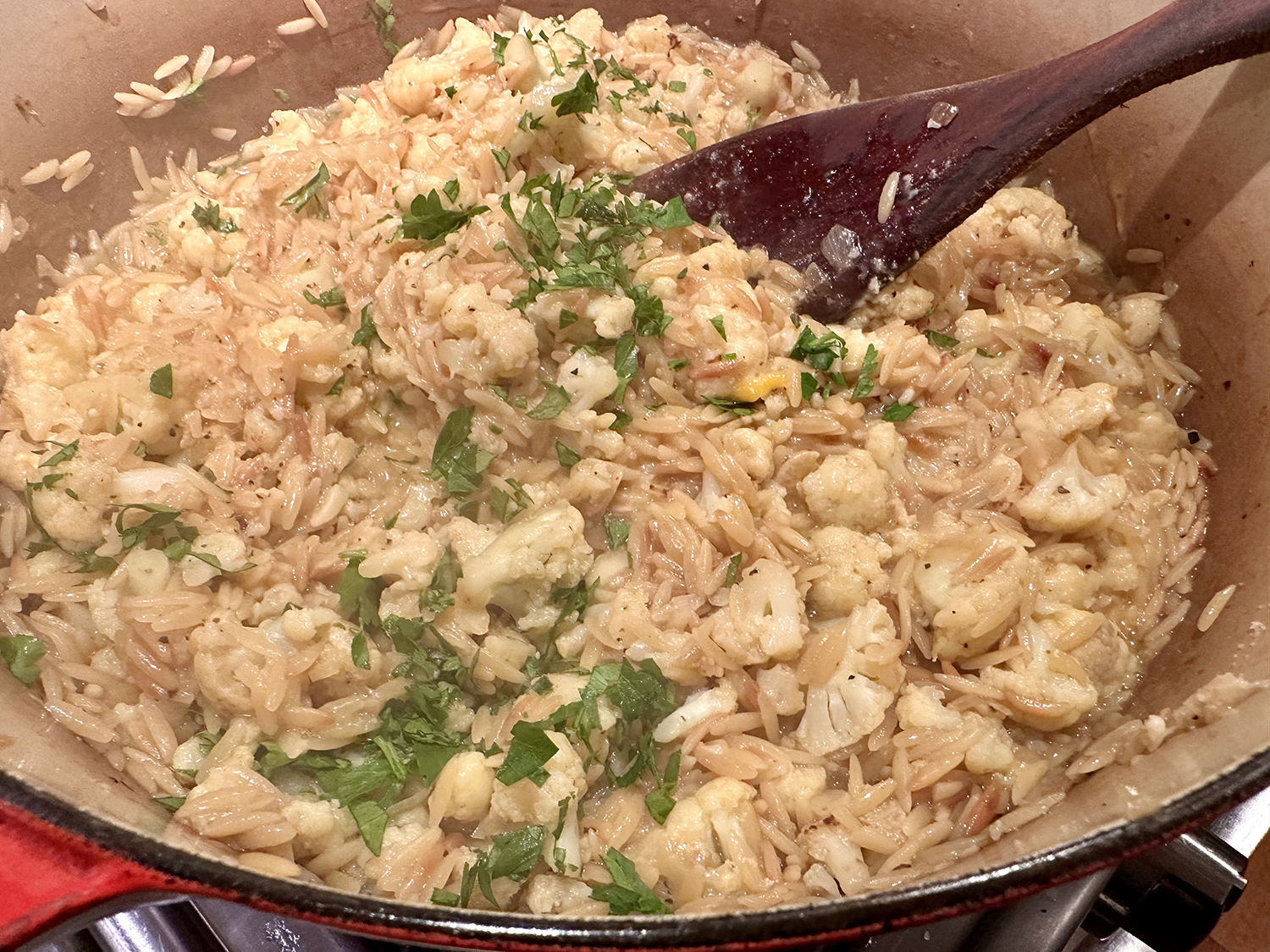
  7. Stir in the lemon zest and juice, Parmesan and half of the parsley. Taste and season with salt and pepper. Serve sprinkled with the remaining parsley and additional Parmesan.

http://www.lynnandruss.com

Recipe by Rose Hattabaugh for Milk Street

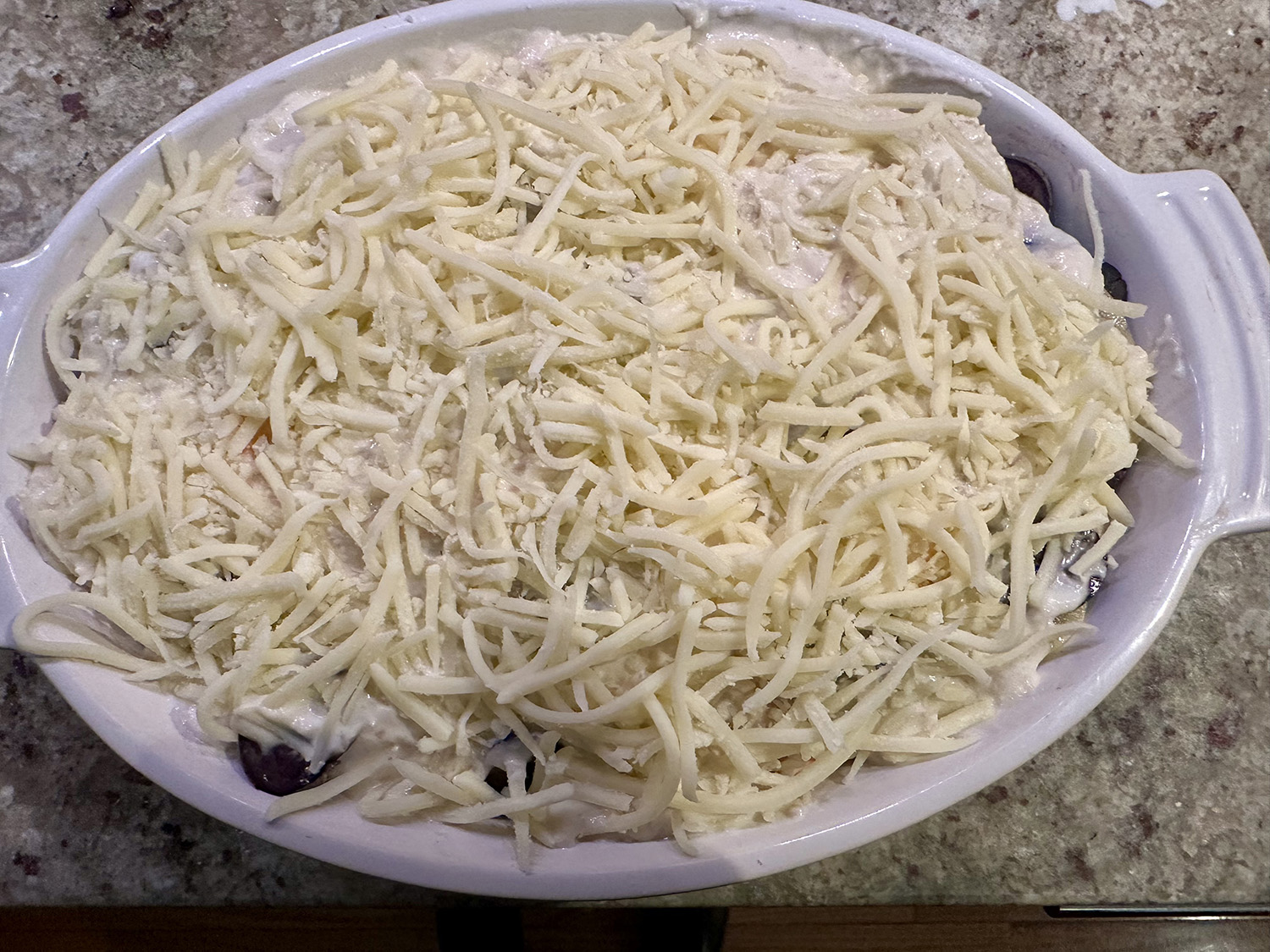
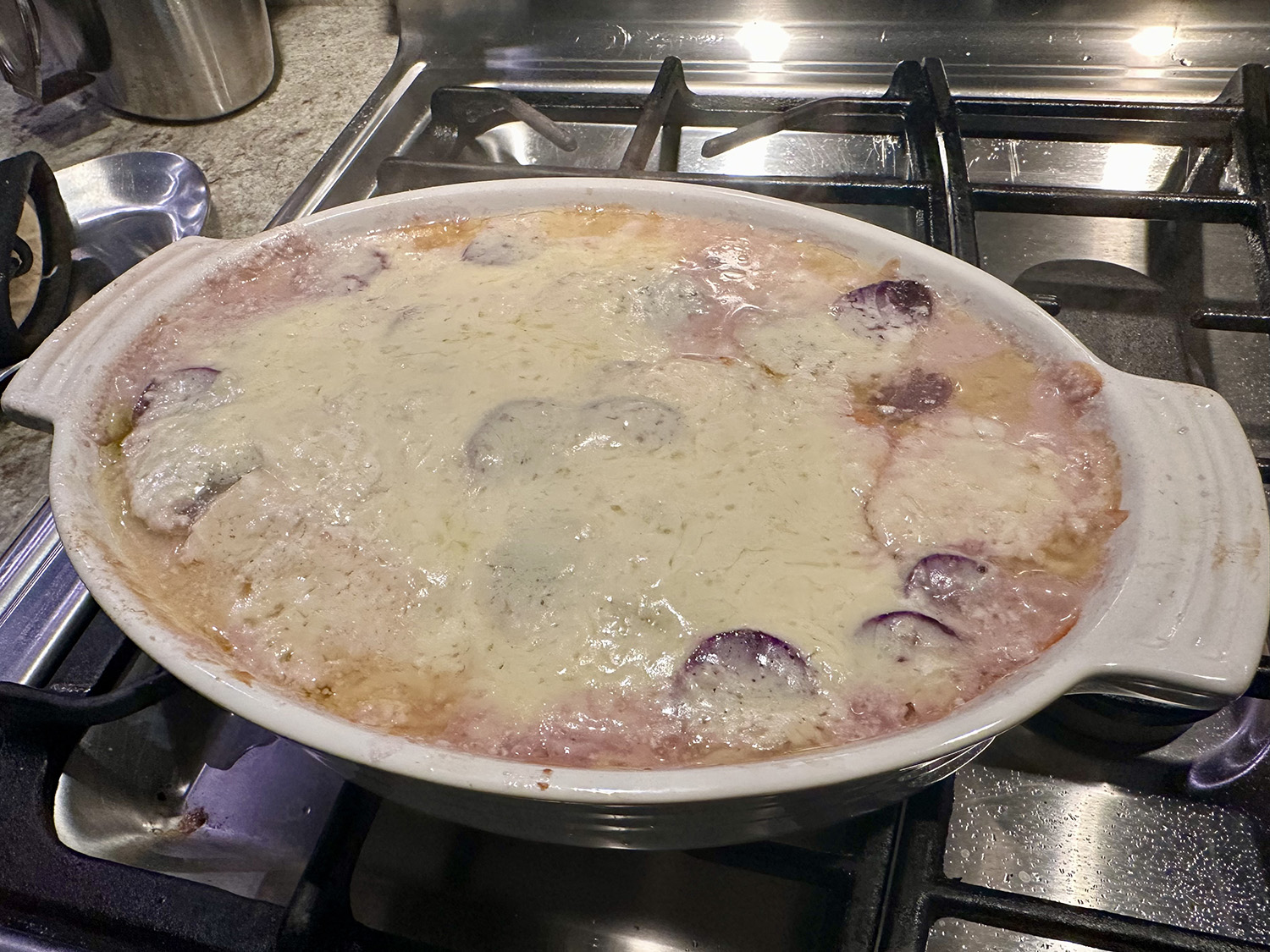
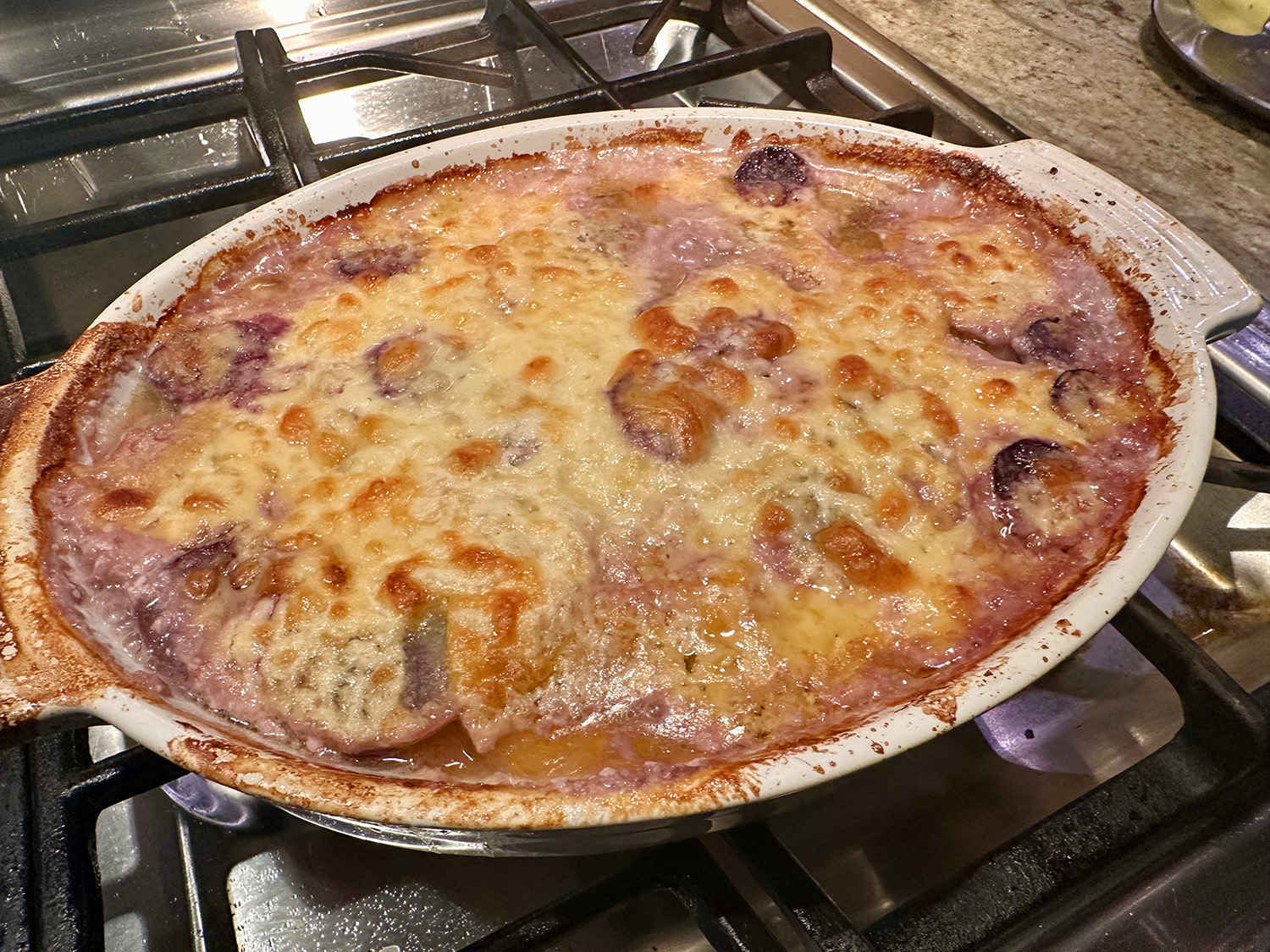
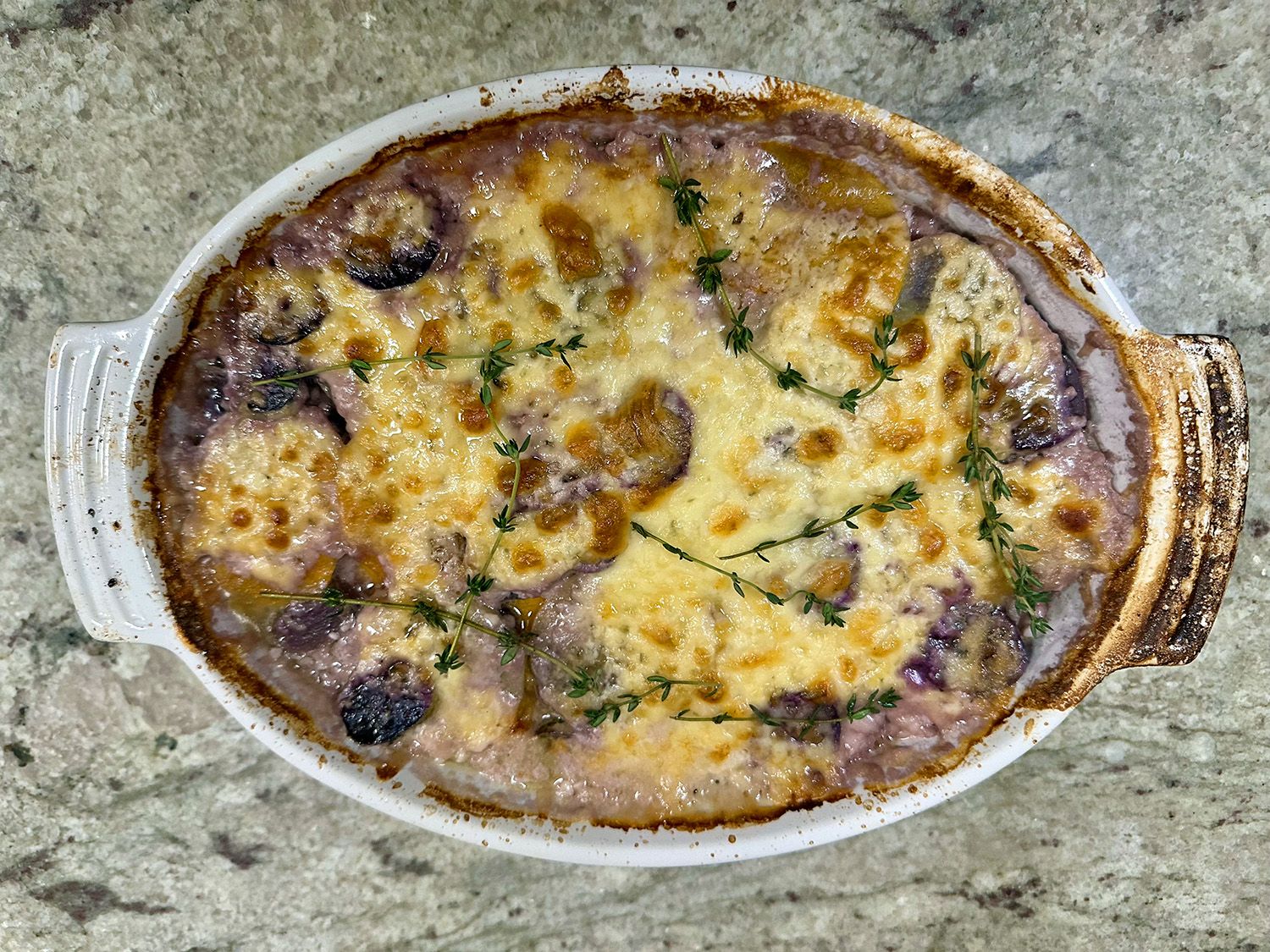
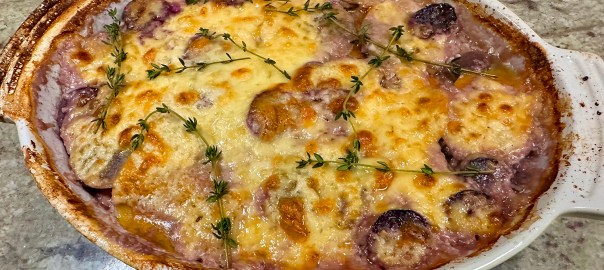
Cheesy Hasselback Potato Gratin

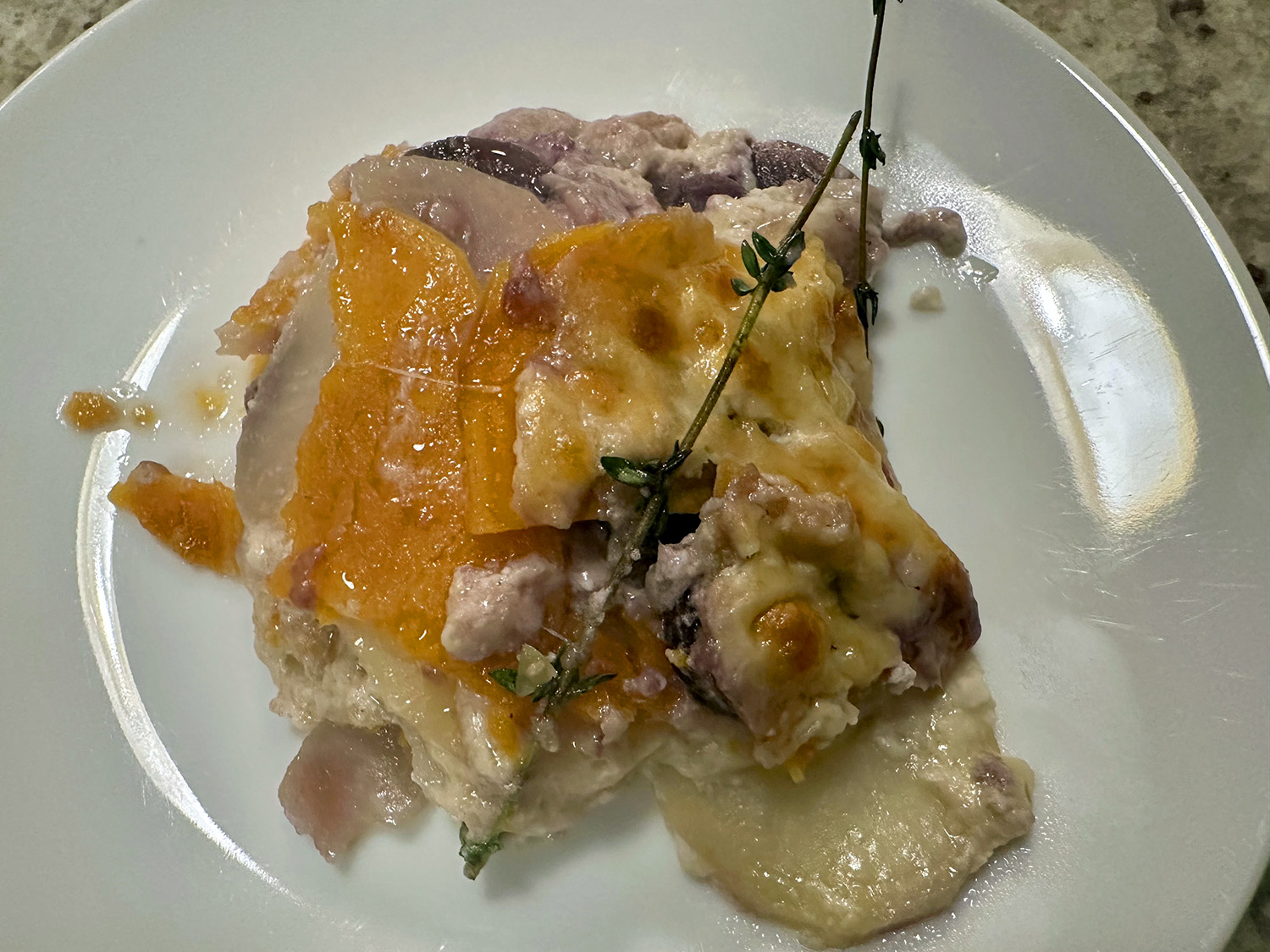
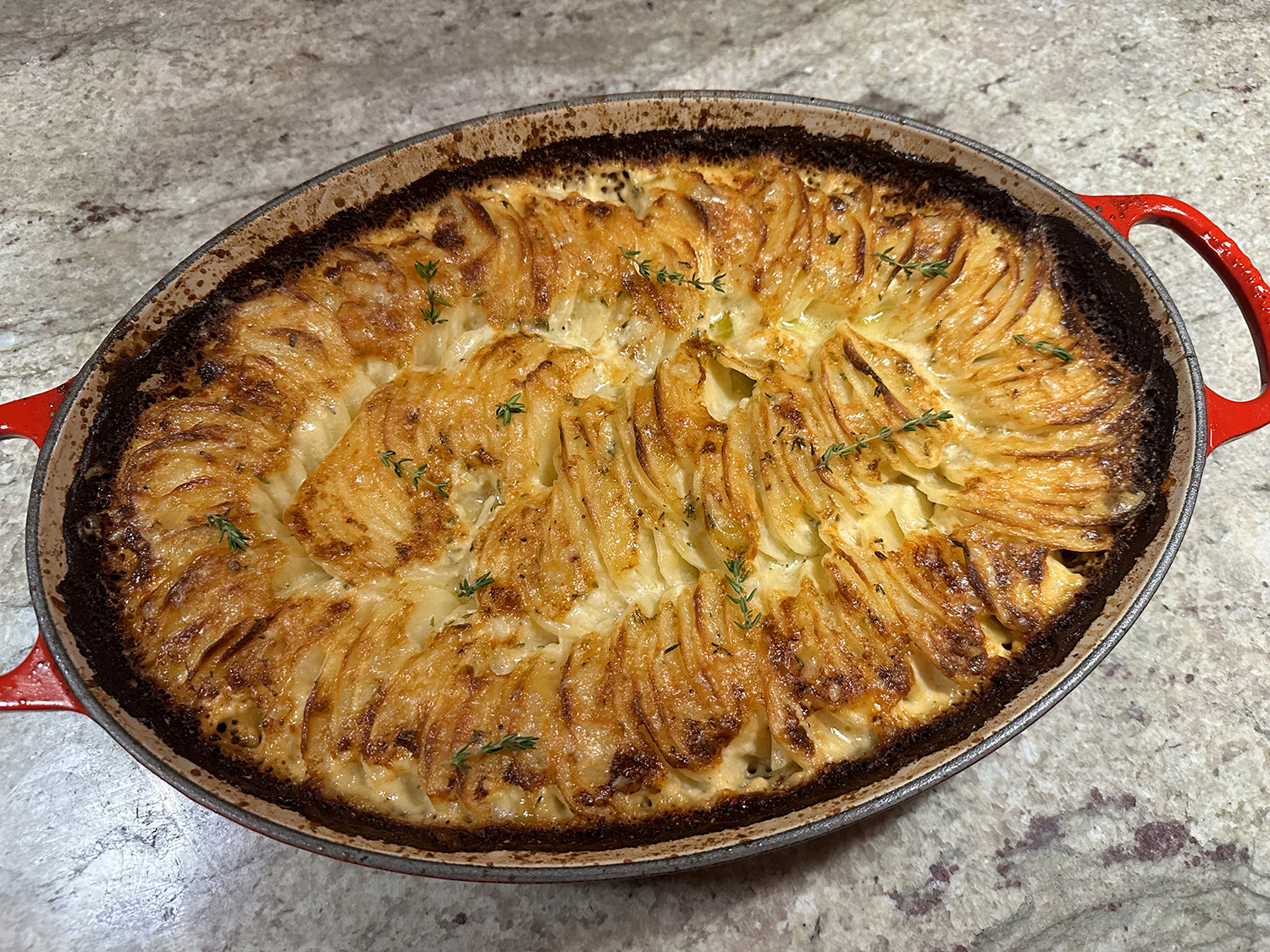
Looking for a side dish with a WOW factor? This golden and glorious mash-up of potato gratin and Hasselback potatoes, from the acclaimed food science writer J. Kenji López-Alt, has been engineered to give you both creamy potato and singed edge in each bite. The overall flavor is mild and therefore would go with about any entrée, be it chicken, steak, fish or pork.

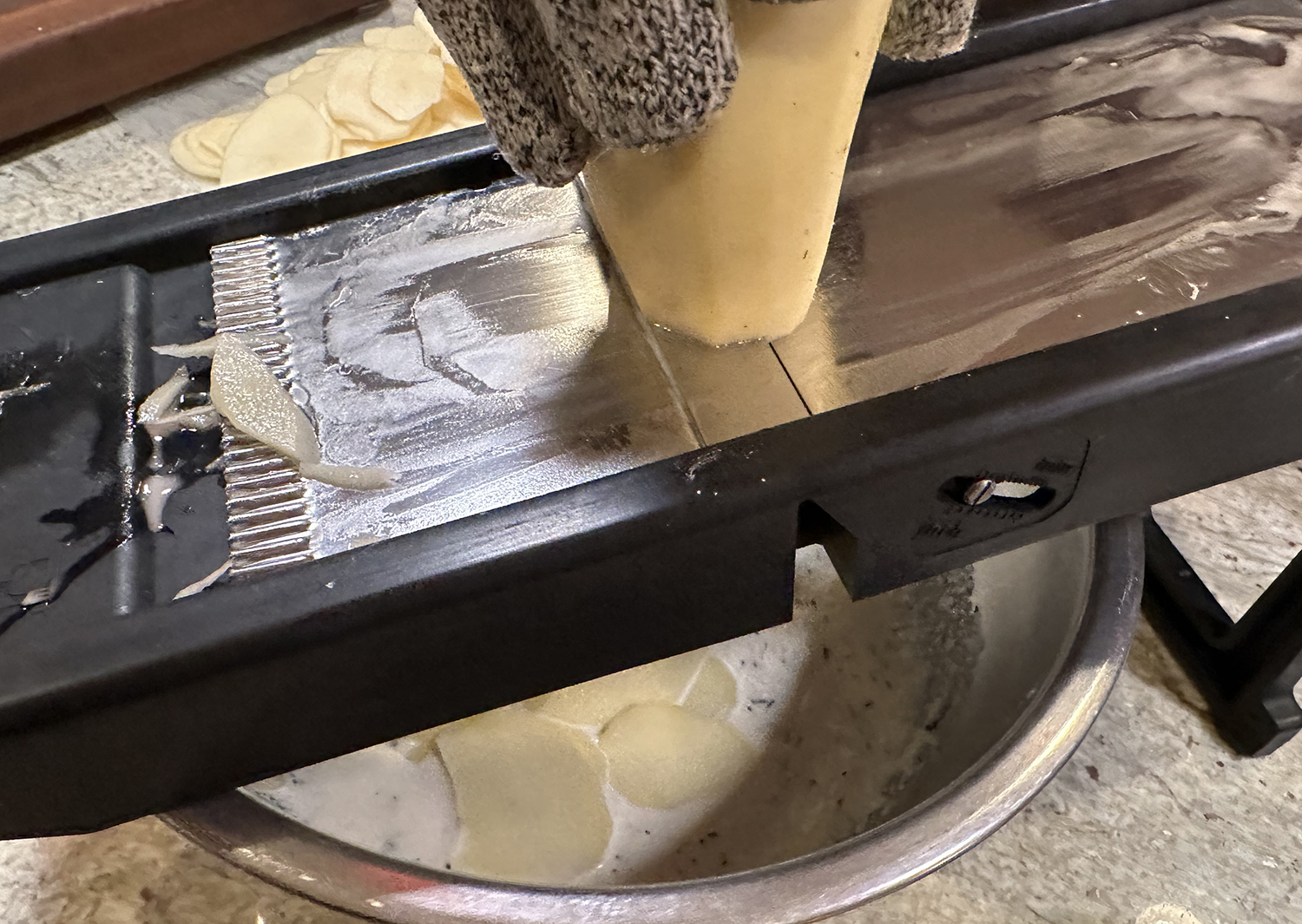
The principal innovation here is placing the sliced potatoes in the casserole dish vertically, on their edges, rather than laying them flat as in a standard gratin, in order to get those crisp ridges on top. Allow extra time for the task of slicing the potatoes, for which it’s helpful to have a mandoline or food processor (though not necessary, strictly speaking). And do buy extra potatoes, just in case; you want to pack the potatoes tightly and keep them standing up straight.

NOTE: Because of variation in the shape of potatoes, the amount of potato that will fit into a single casserole dish varies. Longer, thinner potatoes will fill a dish more than shorter, rounder potatoes. When purchasing potatoes, buy a few extra in order to fill the dish if necessary. Depending on exact shape and size of potatoes and casserole dish, you may not need all of the cream mixture, although we used it all.

Cheesy Hasselback Potato Gratin

  • Servings: 6
  • Difficulty: moderate
  • Print

Ingredients

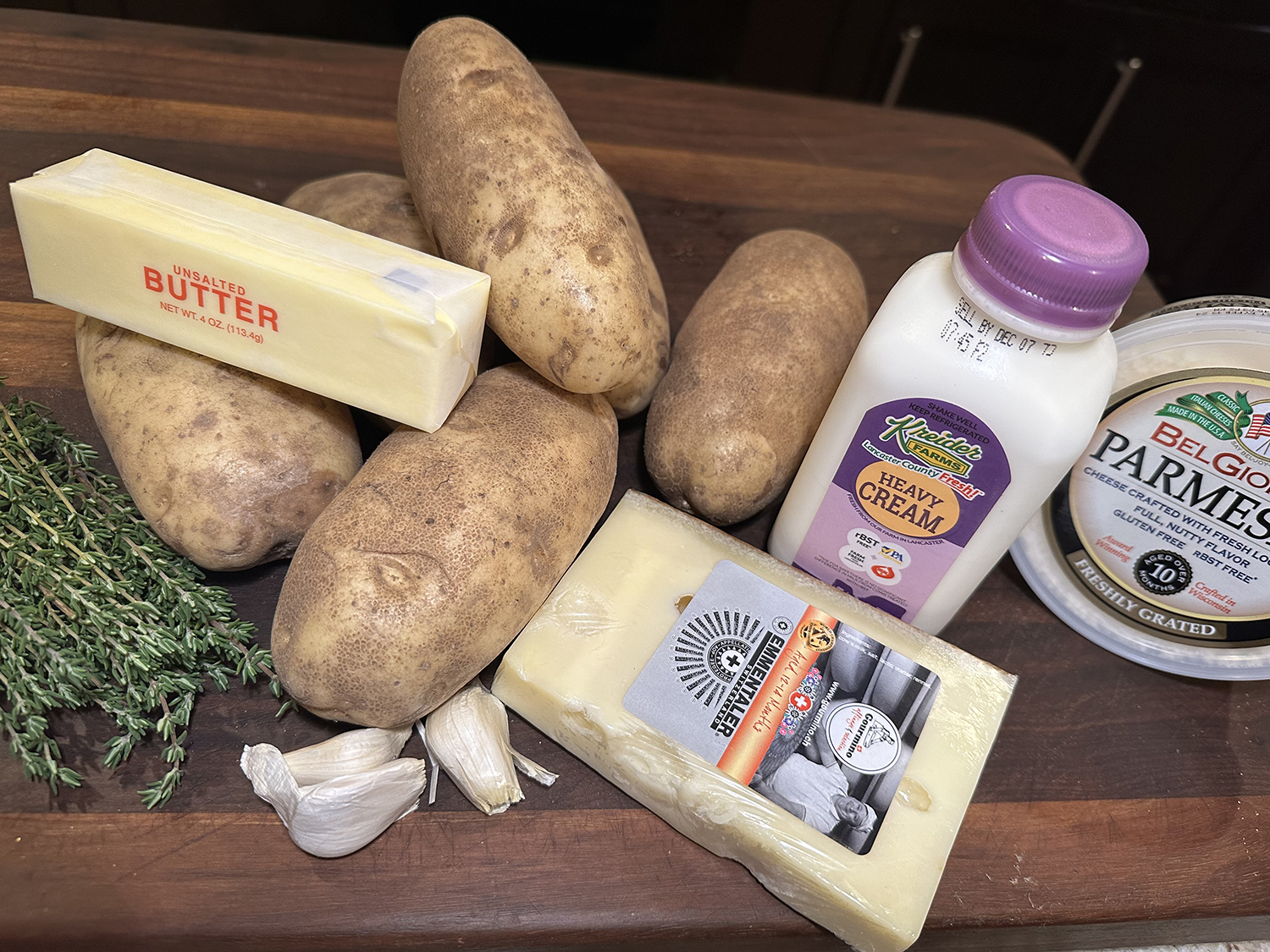
  • 4 oz. finely grated Gruyère or comté cheese
  • 2 oz. finely grated Parmigiano-Reggiano
  • 2 cups heavy cream
  • 2 medium cloves garlic, minced
  • 1 Tbsp. fresh thyme leaves, roughly chopped
  • Kosher salt and black pepper
  • 4½ to 5 lbs. russet potatoes, peeled and sliced ⅛-inch thick on a mandoline slicer (7 to 8 medium, see note above)
  • 2 Tbsp. unsalted butter, divided

Directions

  1. Adjust oven rack to middle position and heat oven to 400 degrees. Combine cheeses in a large bowl. Transfer ⅓ of cheese mixture to a separate bowl and set aside. Add cream, garlic and thyme to cheese mixture. Season generously with salt and pepper.
  2. Add potato slices and toss with your hands until every slice is coated with cream mixture, making sure to separate any slices that are sticking together to get the cream mixture in between them.
  3. Grease a 2-quart casserole dish with one tablespoon of butter. Pick up a handful of potatoes, organizing them into a neat stack, and lay them in the casserole dish with their edges aligned vertically. Continue placing potatoes in the dish, working around the perimeter and into the center until all the potatoes have been added. The potatoes should be very tightly packed. If necessary, slice an additional potato, coat with cream mixture, and add to casserole. Pour the excess cream/cheese mixture evenly over the potatoes until the mixture comes halfway up the sides of the casserole. You may not need all the excess liquid.
  4. Cover dish tightly with foil and transfer to the oven. Bake for 30 minutes.
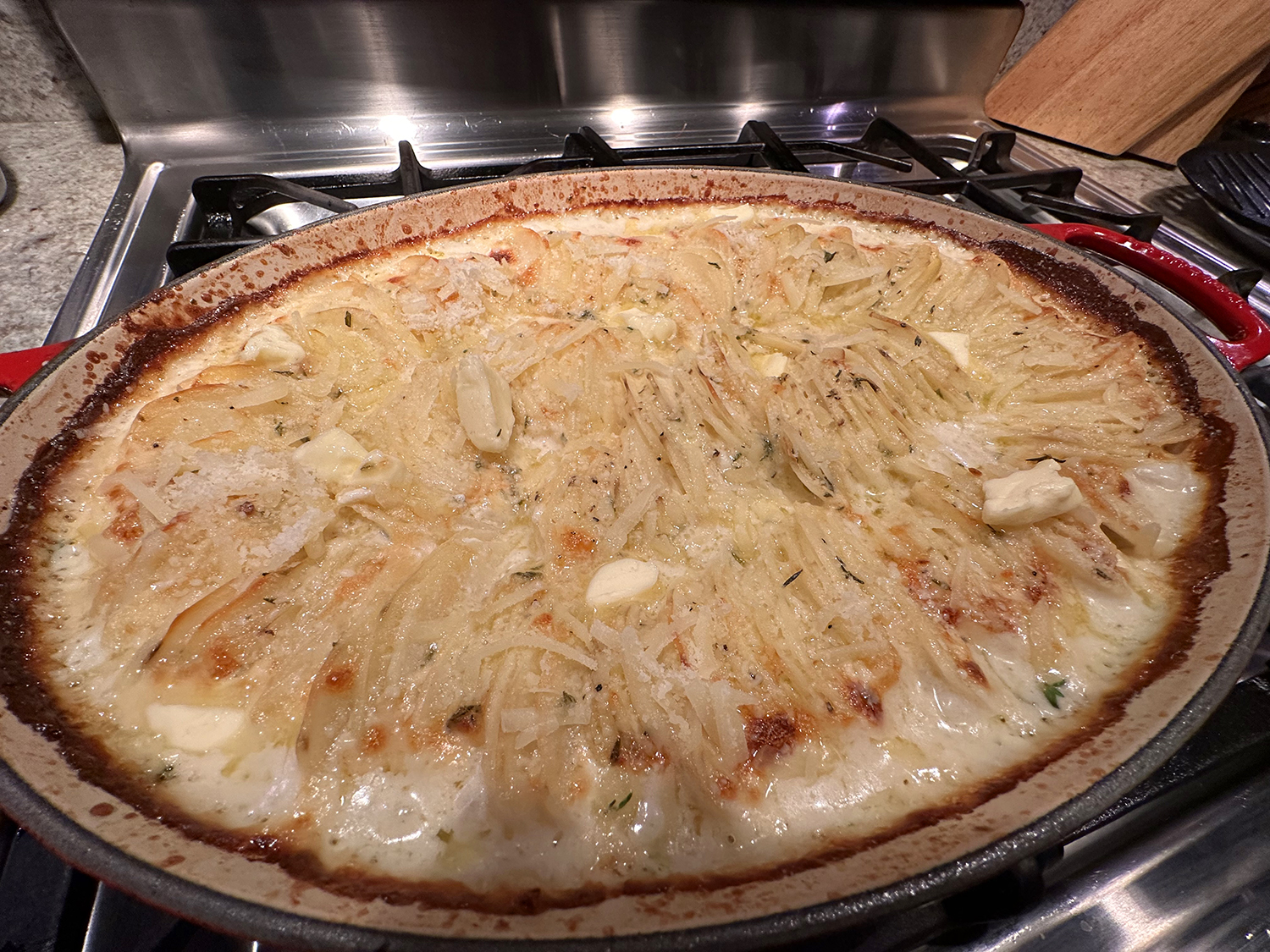
  5. Remove foil and continue baking until the top is pale golden brown, about 30 minutes longer. Carefully remove from oven, dot with remaining butter, sprinkle with remaining cheese, and return to oven.
  6. Bake until deep golden brown and crisp on top, about 30 minutes longer. Remove from oven and let rest for a few minutes. Garnish with a few small stems of thyme and serve.

http://www.lynnandruss.com

Slightly adapted from a recipe by J. Kenji Lopez-Alt

Spicy Roasted New Potatoes with Lemon and Herbs

Middle Eastern batata harra inspired these lightly spicy roasted potatoes. Tradition may inform much of Sami Tamimi’s cooking, but it doesn’t constrain it. His willingness to play is a delicious undercurrent to his book “Falastin,” a collection of stories and updated classic Palestinian recipes he wrote with Tara Wigley. In fact, nearly every recipe includes a note titled “Playing around.”

“After a while we realized that traditional recipes take a bit of time to do. Second, they’re not so pretty to look at,” says Tamimi. Taking the two things together he, and cookbook partner Tara decided to do something that both stayed true to the country but also something people will be able to do within the demands of having two kids when they get off work.

Typically, fried or roasted potatoes are tossed with olive oil, chili flakes, garlic and one or more spices, though variations abound depending on the region and even family. In North Africa, they’re doused in harissa and are quite spicy, whereas in Egypt they go heavier on the garlic and warm spices, such as turmeric, and have only mild heat.

Tamimi’s approach, builds upon his mother’s recipe, and skews toward Gazan flavors, with fresh green chilies, fresh dill and cilantro, and crushed cumin and coriander seeds that add both texture and flavor. The crushed spices are bloomed with garlic in hot oil, similar to an Indian tarka, then cooked briefly with the chilies and cherry tomatoes. The seasoned mixture is combined with the potatoes and roasted together, then tossed with the herbs and lemon zest and juice. “If you look at the ingredient list, you say, ‘Oh, it’s so simple,’ but the end result is so surprising,” he says.

Combining the fresh and roasted ingredients yields a brighter, bolder take on roasted potatoes. But Milk Street found it difficult to get the desired crispy, browned texture, so the tomatoes were eliminated and the oven temperature raised to 475°F. Trouble was, the higher heat risked burning the spices.

The fix was to first partially roast the potatoes with just oil, salt and pepper. Then combine more oil with the seasonings and let the flavors meld for a bit. When the potatoes are about two-thirds cooked, toss them with the flavored oil and return to the oven until golden brown and creamy. Fresh cilantro and lemon zest give the bright, balanced and crispy potatoes you want on your plate.

Don’t forget to oil the baking sheet with cooking spray to ensure the potatoes won’t stick to the surface.

Spicy Roasted New Potatoes with Lemon and Herbs

  • Servings: 4-6
  • Difficulty: easy
  • Print

Ingredients

  • 3 lbs. medium Yukon gold potatoes, unpeeled, quartered lengthwise then cut crosswise into 1-inch chunks. (Since our new potatoes were small, we just cut them in half.)
  • 3 Tbsp., plus ¼ cup extra-virgin olive oil, divided
  • Kosher salt and ground black pepper
  • 3-4 Fresno or jalapeño chilies, stemmed, halved lengthwise, seeded and thinly sliced crosswise
  • 8 medium garlic cloves, thinly sliced
  • 2 Tbsp. cumin seeds, crushed
  • 1 Tbsp. ground coriander
  • 2 Tbsp. grated lemon zest, plus lemon wedges to serve
  • ¼ cup finely chopped fresh cilantro

Directions

  1. Heat the oven to 475°F with a rack in the middle position.
  2. Mist a rimmed baking sheet with cooking spray and line with parchment paper. In a large bowl, toss the potatoes with 3 tablespoons oil and 1 teaspoon salt. Transfer to the prepared baking sheet, arranging the pieces cut side down in a single layer; reserve the bowl. Roast until light golden brown and a skewer inserted into the potatoes meets just a little resistance, about 20 minutes.
  3. Meanwhile, in the reserved bowl, stir together the remaining ¼ cup oil, the chilies, garlic, cumin and coriander.
  4. When the potatoes are almost tender, use a wide metal spatula to transfer them to the reserved bowl; leave the oven on. Gently toss the potatoes until well combined with the seasonings, then scrape the mixture back onto the baking sheet and distribute in an even layer.
  5. Roast until the garlic is light golden brown and a skewer inserted into the potatoes meets no resistance, another 10 to 15 minutes. Cool for about 5 minutes.
  6. Sprinkle the lemon zest and cilantro over the potatoes, then toss. Transfer to a serving dish. Serve with lemon wedges.

http://www.lynnandruss.com

Recipe by Sami Tamimi for Milk Street

Roasted Brussels Sprouts with Garlic

So easy, yet so elegant. This recipe for roasted Brussels sprouts from Mark Bittman is an ATK popular version and is perfect as a holiday side dish. If you haven’t yet figured out a go-to recipe, this simple preparation is the answer. It results in sweet caramelized Brussels sprouts which is sure to satisfy just about anyone.

  • Use oven-safe cast-iron pan, as noted above.
  • Getting sprouts brown is important to avoid bitter taste.
  • Smaller quantity of large, hand-selected sprouts is better than big bag of assorted sprouts.
  • Don’t cook more than can fit in pan with cut side down.

Roasted Brussels Sprouts with Garlic

  • Servings: 4-6
  • Difficulty: easy
  • Print

Ingredients

  • 1 lb. Brussels sprouts, trimmed
  • 4-6 Tbsp extra virgin olive oil, to coat bottom of pan
  • 5 cloves garlic, peeled salt and pepper to taste
  • 1 Tbsp. balsamic vinegar (maybe less, to taste)

Directions

  1. Heat oven to 400°F. Trim bottom of Brussels sprouts, and slice each in half top to bottom. Heat oil in cast-iron pan over medium-high heat until it shimmers; put sprouts cut side down in one layer in pan. Put in garlic, and sprinkle with salt and pepper.
  2. Cook, undisturbed, until sprouts begin to brown on bottom, and transfer to oven. roast for 10-20 minutes at 400°F with a few shakes of the pan in between..
  3. Taste, and add more salt and pepper if necessary. Stir in (CAREFUL, NOT TOO MUCH) balsamic vinegar, and serve hot or warm.

http://www.lynnandruss.com

Recipe by Mark Bittman for NYTimes Cooking

Butter-Roasted Carrots with Za’atar and Pomegranate Molasses

This lovely side dish is definitely company-worthy. Not only do they look and smell delicious, they taste phenomenal. Carrots roast in a moderately hot oven for almost an hour and become super-sweet and almost meltingly tender. Start them coated with olive oil, but drizzle them with melted butter partway through roasting.

The milk solids in the butter caramelize in the oven, adding a rich, nutty fragrance and flavor. Za’atar, a Middle Eastern seed and spice blend, and orange zest and juice bring complexity to the dish. Pistachios and sweet-tart pomegranate molasses are finishing touches that make this dish special.

Bunch carrots—the type sold with their greens attached—are especially good here because they’re slender and fresh. If using carrots with especially thick upper portions, after halving them lengthwise, halve them again to create more uniform pieces.

Even though we have Za’atar seasoning, we decided to do a mixx of one teaspoon each of ground coriander and Aleppo pepper. You can use any of the three spices or a mix of them.

Butter-Roasted Carrots with Za'atar and Pomegranate Molasses

  • Servings: 6
  • Difficulty: easy
  • Print

Ingredients

  • 2½ lbs. slender carrots, peeled and halved lengthwise (see headnote)
  • 1 Tbsp. extra-virgin olive oil
  • Kosher salt and ground black pepper
  • 1 orange
  • 4 Tbsp. salted butter, melted
  • 2 tsp. za’atar OR ground coriander OR Aleppo pepper
  • 2 Tbsp. raw OR roasted pistachios, finely chopped
  • 2 tsp. pomegranate molasses

Directions

  1. Heat the oven to 350°F with a rack in the middle position. On a rimmed baking sheet, toss the carrots with the oil, ¾ teaspoon salt and ¼ teaspoon pepper, then distribute evenly. Roast for 30 minutes. Meanwhile, grate 1 teaspoon zest from the orange, then cut the orange into quarters.
  2. Drizzle the carrots with the butter and sprinkle with the za’atar and zest. Toss, then redistribute evenly. Place the orange quarters cut sides up on the baking sheet. Roast until a skewer inserted into the largest carrot meets no resistance, another 15 to 20 minutes, stirring once about halfway through.
  3. Squeeze the juice from 1 orange quarter over the carrots. Using a wide metal spatula, transfer to a platter, scraping up any browned bits. Taste the carrots and season with salt and pepper. Sprinkle with the pistachios and drizzle with the pomegranate molasses. Serve the remaining orange quarters on the side.
http://www.lynnandruss.com

Recipe by Courtney Hill for Milk Street

Braised Sweet Potatoes and Coriander, Orange and Olives

This colorful side dish taken from Milk Street features an unusual combination of flavors. Earthy sweet potatoes pair well with the subtle citrusy notes of coriander and the fruitiness of orange juice, while savory onion, spicy cayenne and salty olives balance the natural sugars.

It has gained a place as one of the top side dishes we’ve ever made, it is phenomenal! The texture and flavor pop of lightly crushed coriander seeds where a mortar and pestle are the best tools for the task but the bottom of a heavy skillet works, too. If you prefer, you can use 1 tablespoon ground coriander in place of the seeds, but keep in mind, it will require less than a minute to bloom in the oil.

Don’t use a narrow saucepan or pot for this recipe. The wider diameter of a Dutch oven allows the potatoes to be distributed in a thinner layer, which results in more even cooking.

The flavor profile of this sweet potato dish blended nicely with our main course of Yucatan-Style Grille Pork.

Braised Sweet Potatoes and Coriander, Orange and Olives

  • Servings: 4
  • Difficulty: easy
  • Print

Ingredients

  • 3 Tbsp. extra-virgin olive oil
  • 2 tsp. coriander seeds, lightly crushed
  • 1 medium red onion, halved and thinly sliced
  • Kosher salt and ground black pepper
  • 2 lbs. orange-flesh sweet potatoes, peeled and cut into 1-inch chunks
  • ⅔ cup orange juice
  • ¼ tsp. cayenne pepper
  • ½ cup black or green pitted olives, or a mixture, chopped

Directions

  1. In a Dutch oven over medium-high, cook the oil and coriander seeds, stirring, until fragrant and sizzling, 2 to 4 minutes. Add the onion and ¼ teaspoon salt, then cook, stirring occasionally, until the onion is softened and lightly browned, 3 to 5 minutes.
  2. Add the sweet potatoes, orange juice, cayenne, ½ teaspoon salt, ¼ teaspoon pepper and ½ cup water. Bring to a simmer, cover and reduce to medium. Cook, stirring occasionally, until a skewer inserted into the potatoes meets no resistance, 8 to 11 minutes.
  3. Uncover and cook, stirring constantly, until the liquid has almost fully reduced and the potatoes are glazed, about 2 minutes. Off heat, stir in the olives. Taste and season with salt and pepper.

http://www.lynnandruss.com

Recipe by Courtney Hill for Milk Street