Tag Archives: Main Course

Shio Koji-Marinated Flank Steak

This super-easy reverse-seared steak recipe is just the thing for a flavor-packed tasty dinner. The list of ingredients is manageable, but one in particular, shio koji, may be unfamiliar to you.
To educate, Shio Koji is a fermented seasoning made from rice koji, salt, and water. The fermentation process of these three ingredients creates a creamy, paste-like condiment with a salty and sweet, umami-rich flavor. It contains enzymes like amylase and protease, which break down starches and proteins, making it a popular marinade and meat tenderizer. 

Shio koji, which can be made at home or purchased, is often used as a marinade because it is rich in protease enzymes (which break down proteins), so it can create an array of new flavors in protein-rich foods.

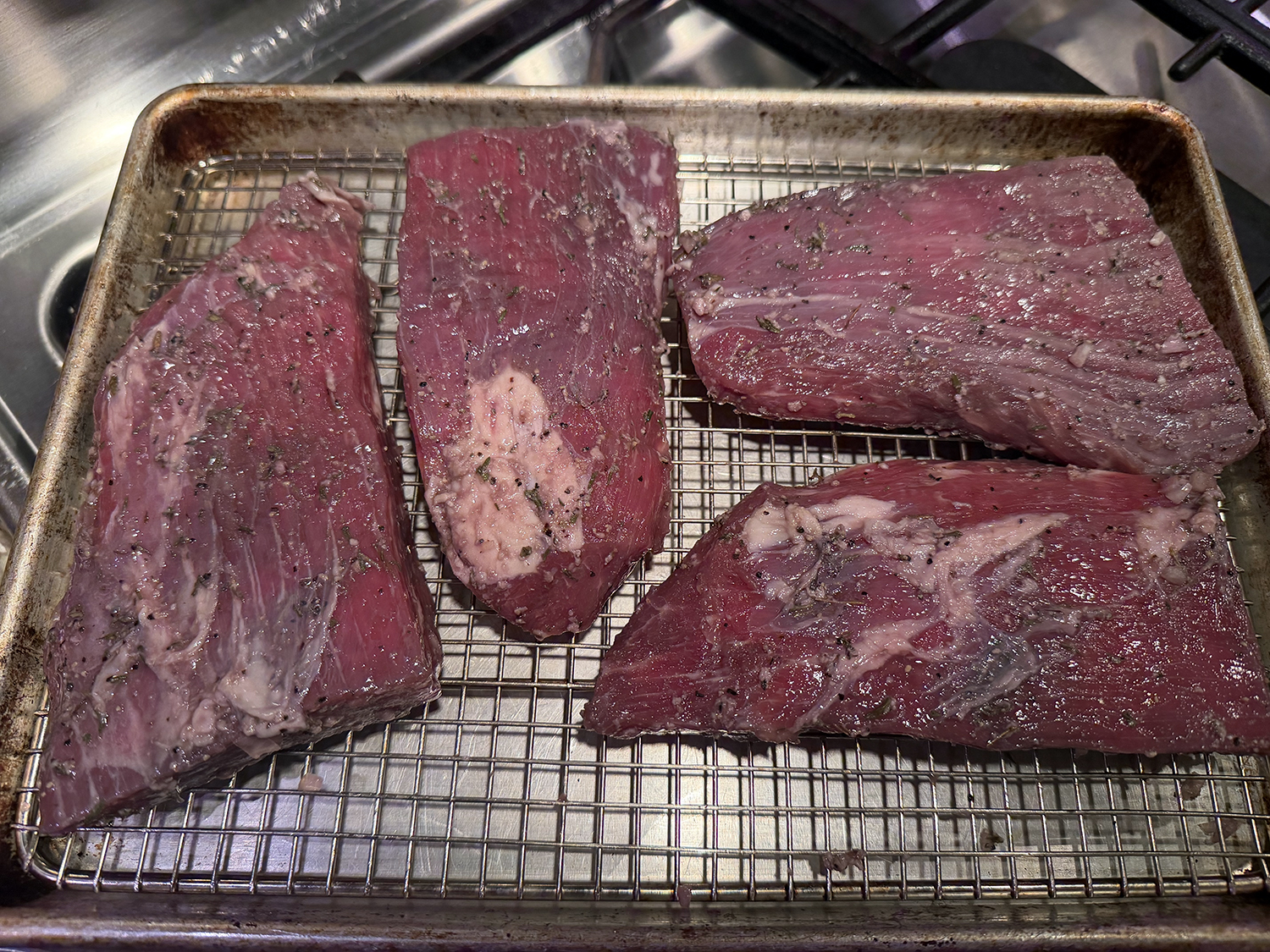
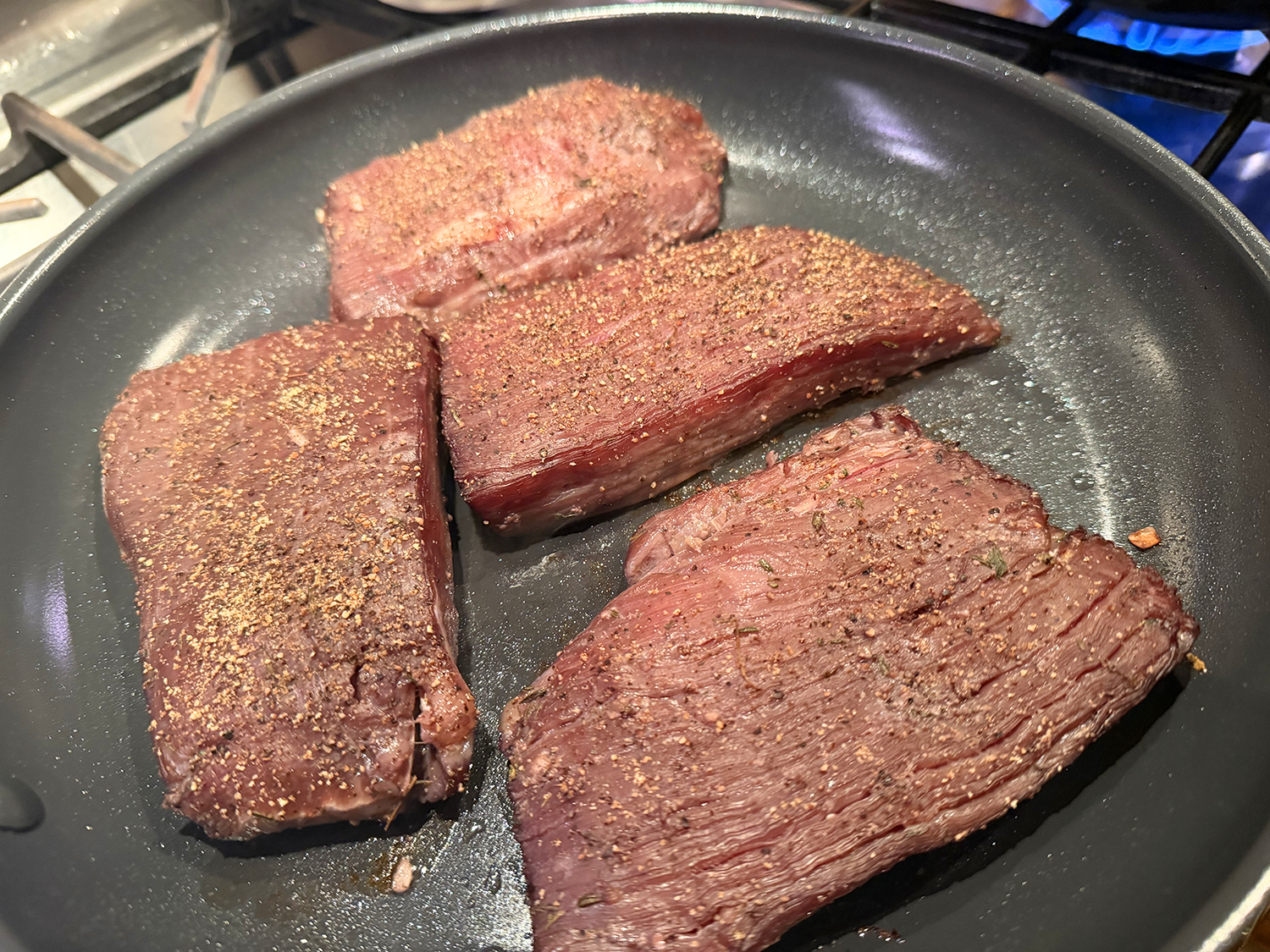
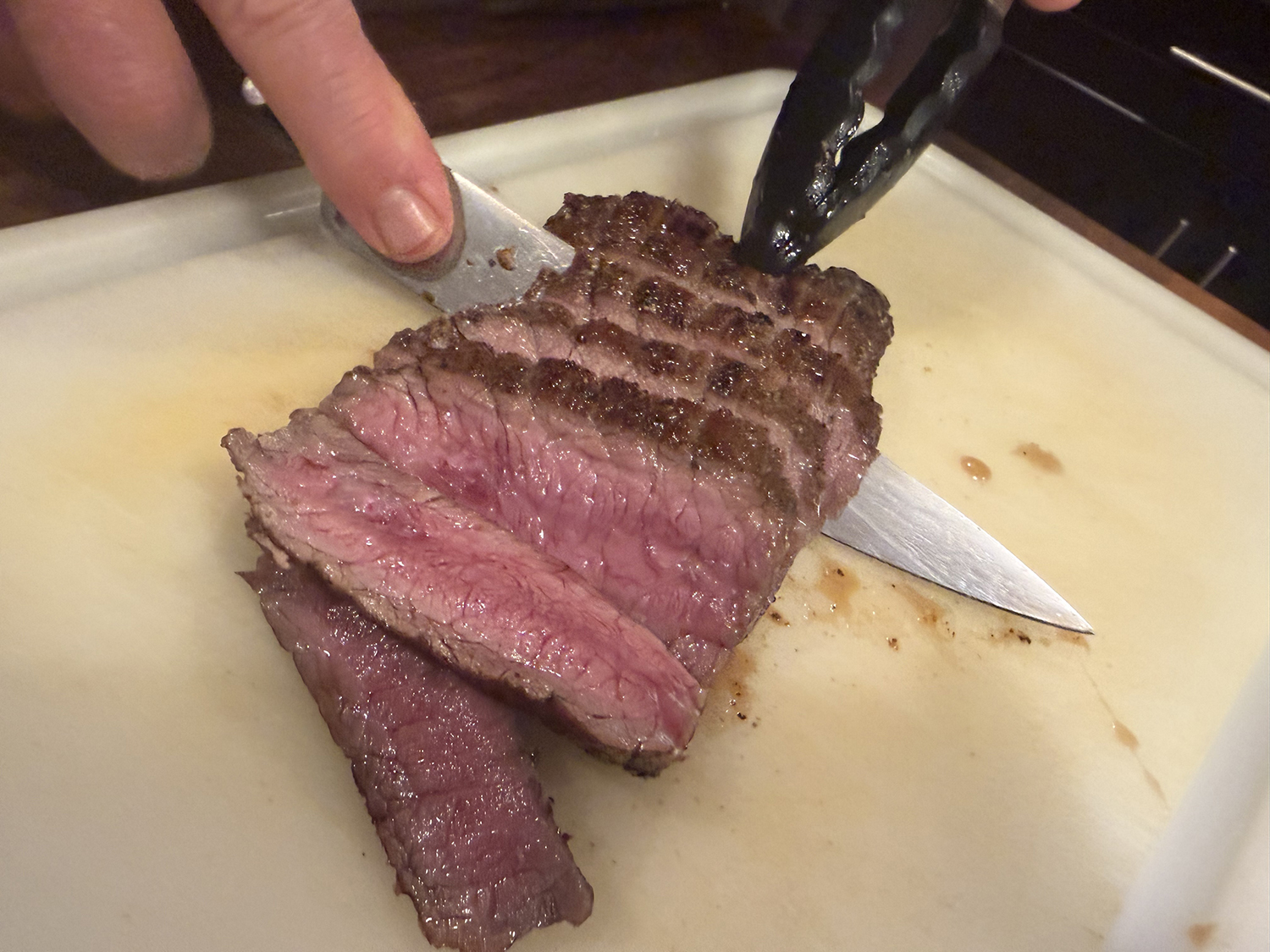
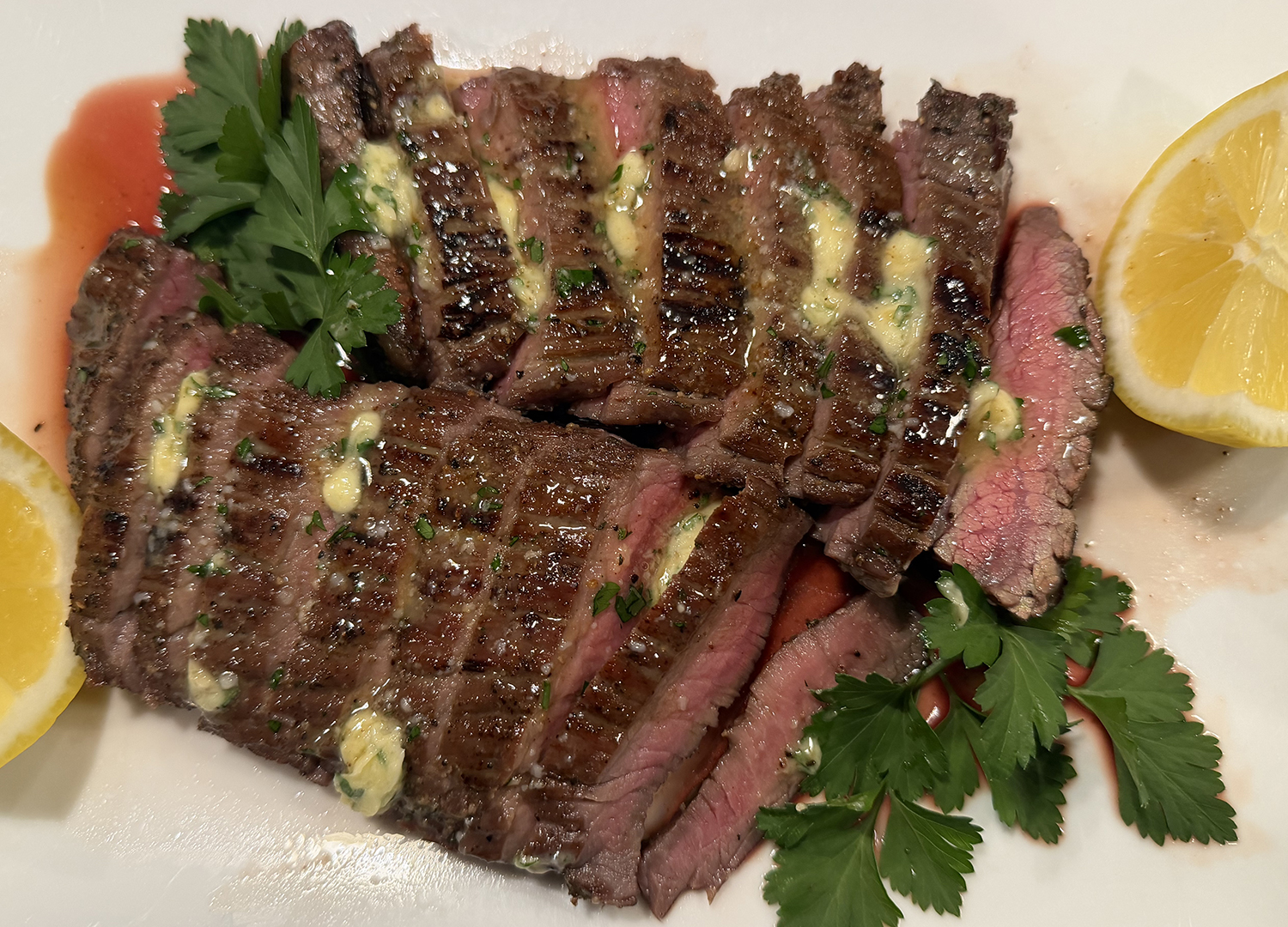
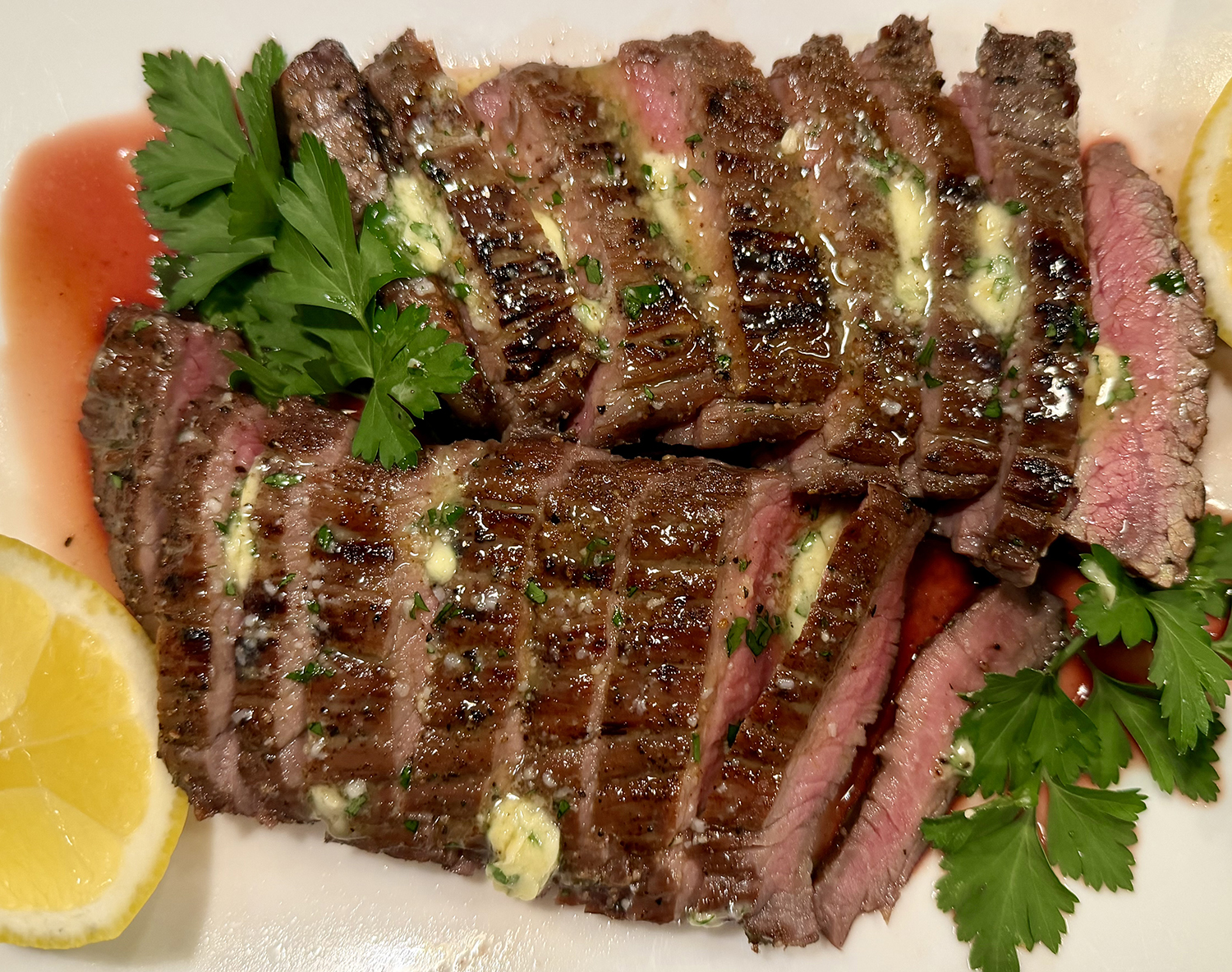
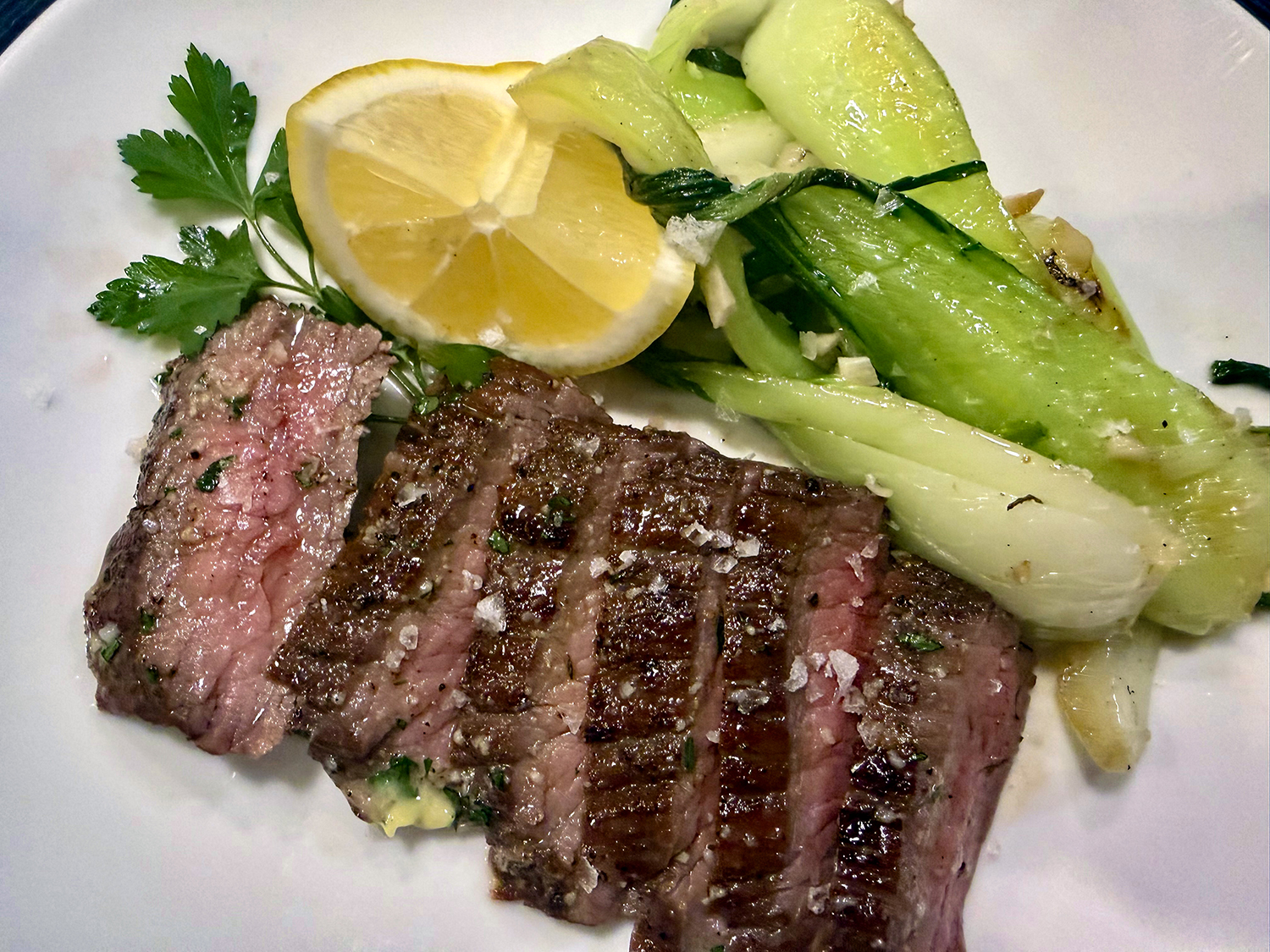
Here, shio koji gives marinated flank steaks the nutty, savory, blue-cheese-y flavors typically found in expensive dry-aged steaks. After wiping the marinade from the steaks, cook them in the oven with a gentle heat to keep their interiors juicy and rosy pink. Finally, quickly sear them on the stovetop to create a slightly charred crust.

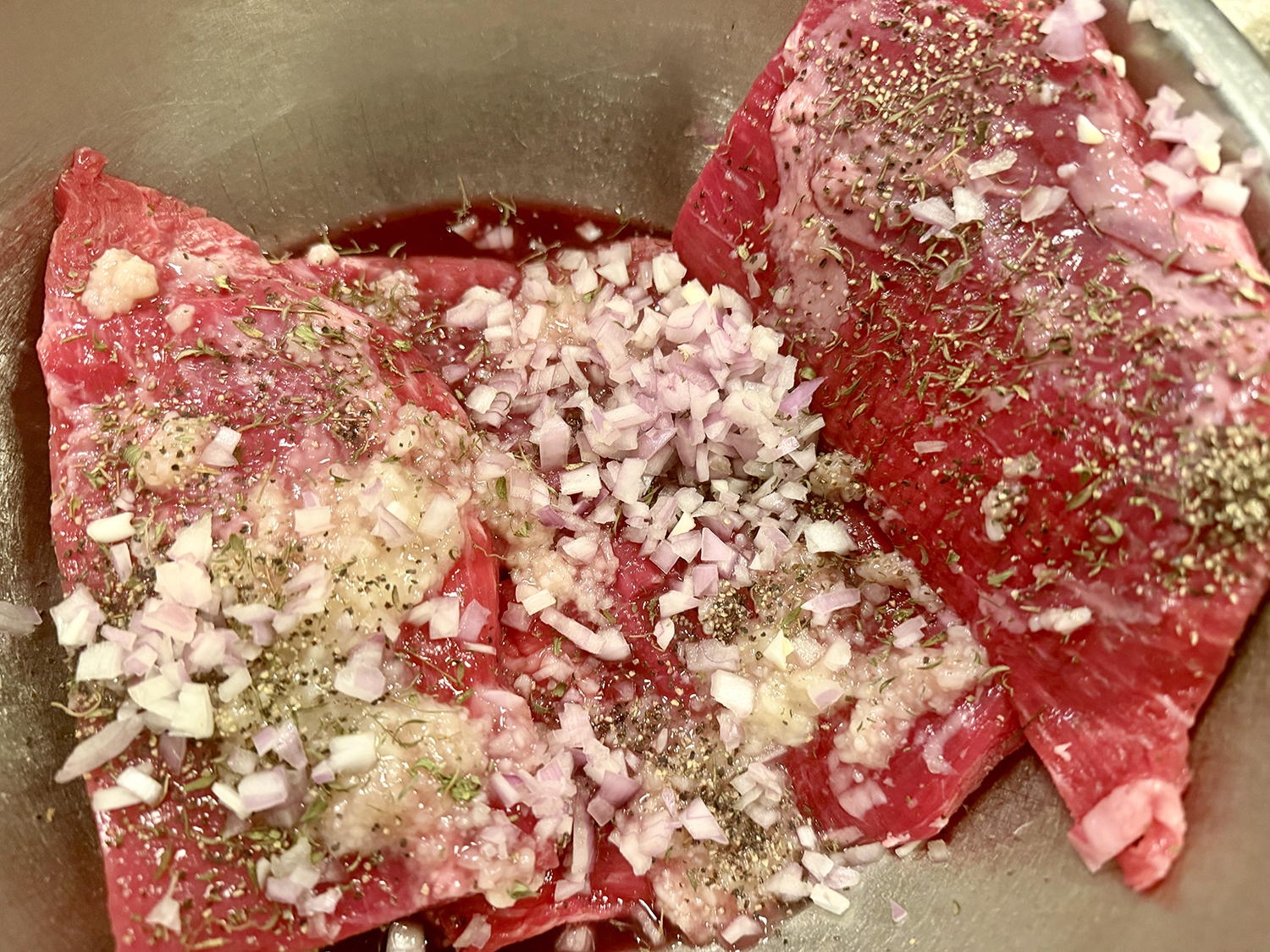
This recipe contains three marinating options (see below), of which we chose the Red-Wine Shallot variation.
Shio Koji-Marinated Flank Steak

  • Servings: 4
  • Difficulty: easy
  • Print

Ingredients

For the Steak

  • 1 (1½- to 1¾-lb.) flank steak, well trimmed
  • 3 Tbsp. shio koji
  • ½ tsp. pepper
  • 1 tsp. vegetable oil
  • Flaky sea salt (optional)
  • Lemon wedges (optional)

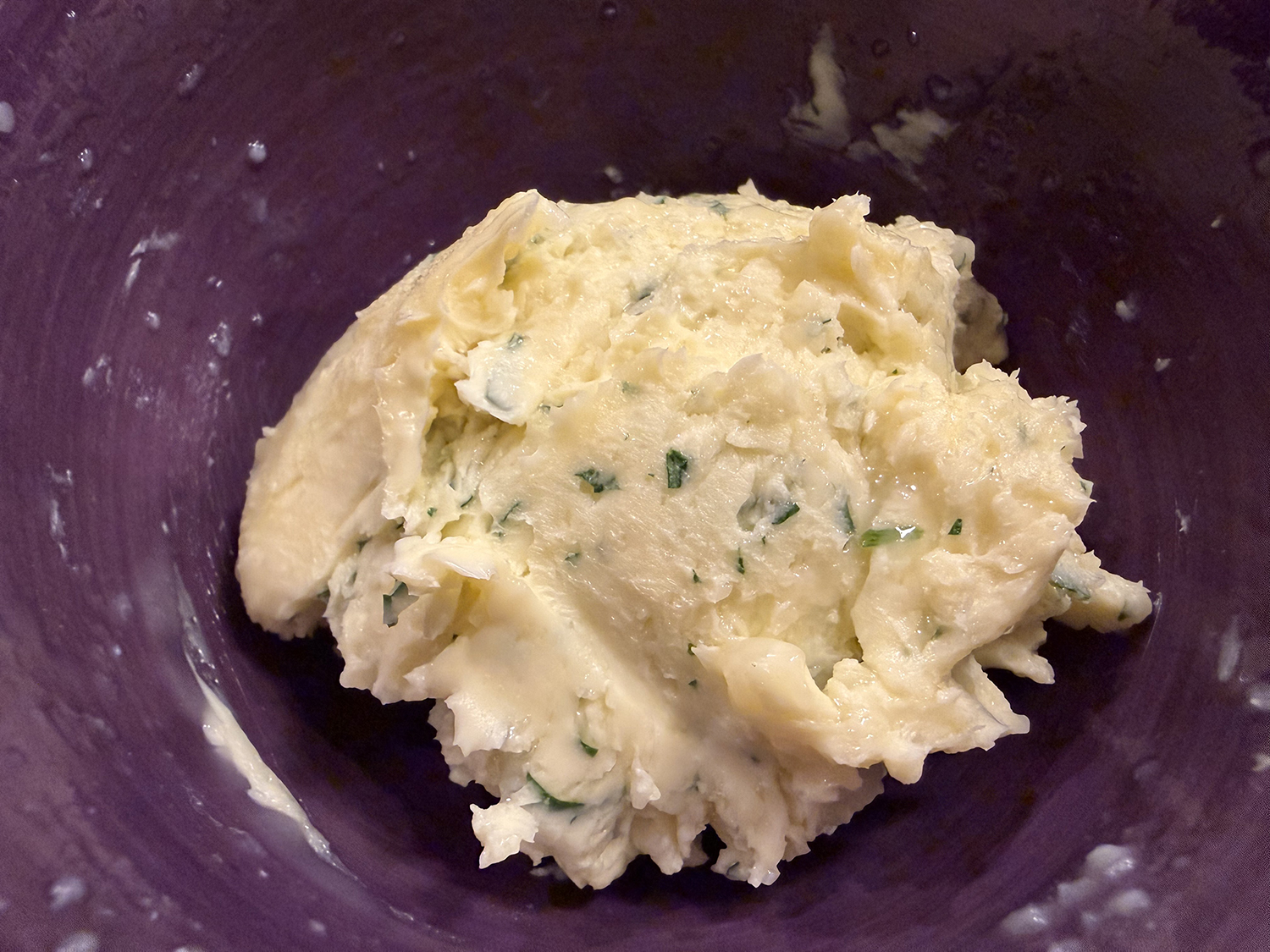
For the Butter

  • 4 Tbsp. unsalted butter, softened
  • 1 1⁄2 ysp. shio koji
  • 1 tsp. minced fresh parsley (or other herb of your choice)
  • 1⁄8 tsp. kosher salt

Directions

For the Steak

  1. Adjust oven rack to middle position and heat oven to 275 degrees. While oven heats, set wire rack in rimmed baking sheet. 
  2. With damp towel, wipe koji from steaks (it’s OK if a few grains remain on steak). Sprinkle with ½ teaspoon pepper. Set steaks on prepared rack and transfer to oven. Cook until thickest part of largest steak registers 125 degrees, 25 to 30 minutes.  
  3. Heat 1 teaspoon vegetable oil in 12-inch nonstick skillet over medium-high heat until shimmering. Add steaks and cook, pressing steaks gently into pan until browned and slightly charred in spots on both sides, 1 to 2 minutes per side. Cut steaks on bias against grain into ½-inch-thick slices. Serve, passing flake sea salt and lemon wedges, if using, separately.

For the Butter

  1. Combine all ingredients in a bowl. The butter mixture can be refrigerated for up to one week.

http://www.lynnandruss.com

Recipe by Lan Lam for America’s Test Kitchen

Simple Ways to Vary the Marinade

Shio koji creates plenty of complexity on its own, but it also enhances the flavors of additional seasonings. Try the following combinations, stirring the ingredients into 3 tablespoons of shio koji before applying the marinade to the steak.

WORCESTERSHIRE-GARLIC 

  • 3 Tbsp. Worcestershire sauce
  • 2 tsp. minced garlic
  • ½ tsp. pepper

BOURBON-SOY

  • 3 Tbsp. bourbon
  • 2 Tbsp. soy sauce
  • ¾ tsp. ground allspice

RED WINE–SHALLOT

  • 3 Tbsp. red wine
  • 2 Tbsp. minced shallot
  • 1 tsp. dried thyme
  • ½ tsp. pepper

Shio Koji Steak Primer

Shio koji works differently than other marinades. Here’s how to make the most of its special properties.

Shio-Koji-to-steak ratio: 1 tablespoon to 8 ounces

One tablespoon of shio koji per ½ pound of steak is enough to produce a broad range of flavors (and since commercially produced shio koji contains only 8 to 14 percent salt, that amount won’t make the meat overly salty.) Shio koji pairs beautifully with other seasonings too (see “Simple Ways to Vary the Marinade”).

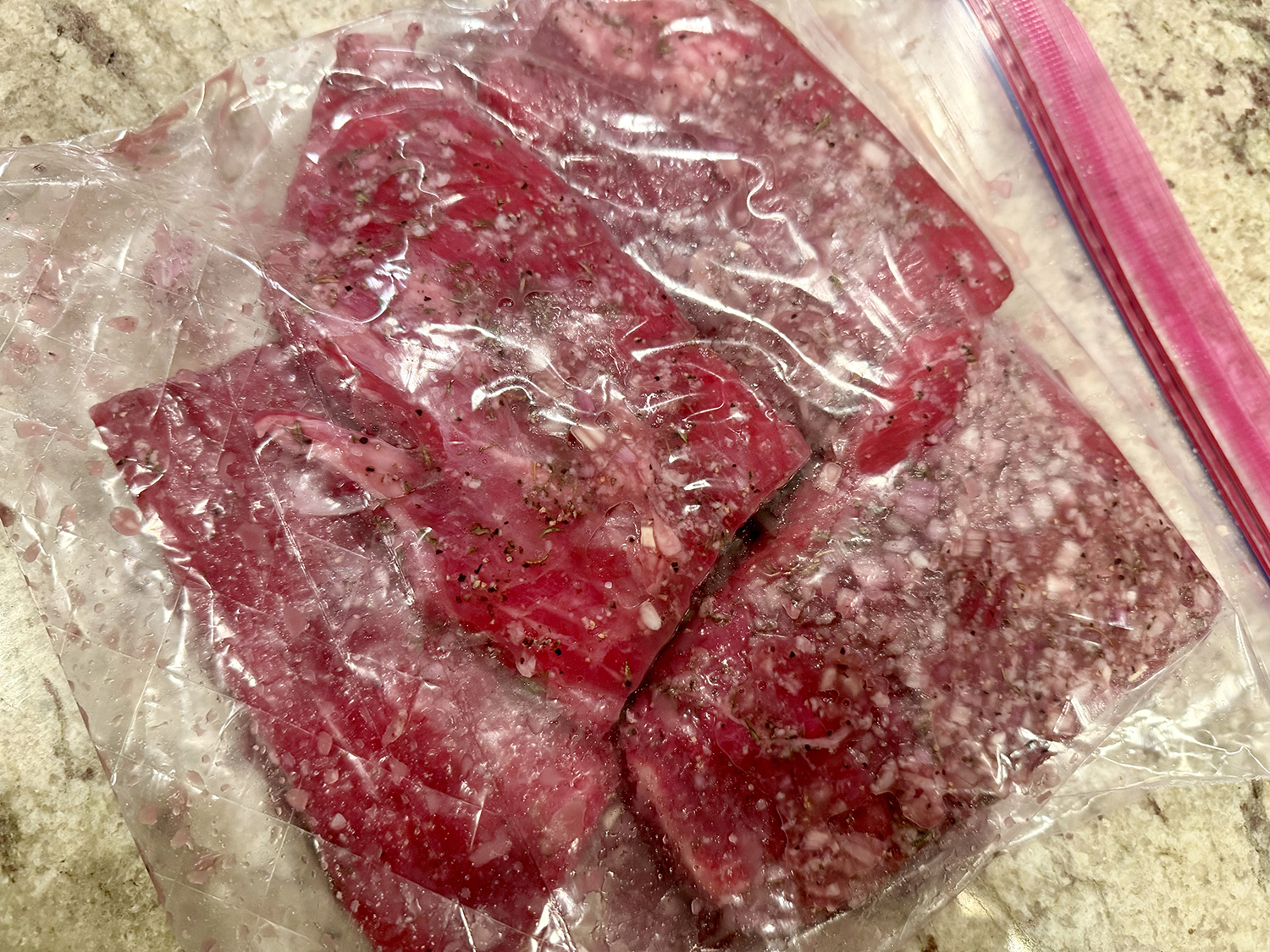
Marinating time: 2 to 24 hours

The longer the steak marinates, the more intense its flavor will become. Four hours is a good place to start if it’s your first time using shio koji so that you can get to know how it changes the flavor of the meat.

Best cooking method: reverse searing

Both the simple sugars contained in shio koji and the amino acids that are liberated as the steak marinates facilitate browning, but the sugars are also prone to scorching. The most failproof cooking method, then, is reverse searing: gently bringing the steak to serving temperature in the oven and then quickly searing it in a skillet to develop a well-browned crust with a hint of char.

Tuscan-Style Shrimp with White Beans

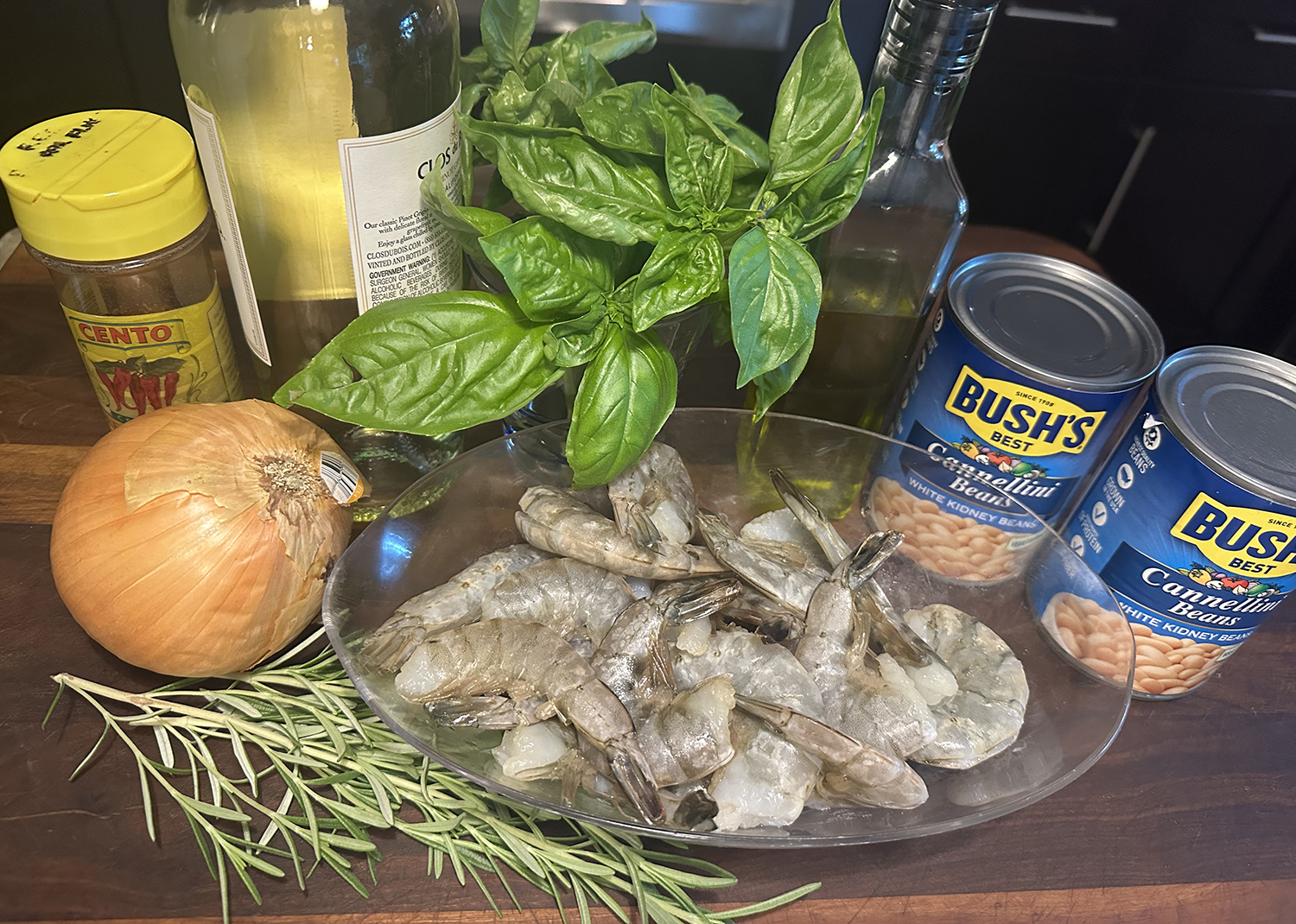
In the cuisine of Tuscany, Italy, with its miles of coastline and reputation as the home of mangiafagioli—or bean eaters—it’s no surprise that shrimp and white beans are a classic pairing. And they do a fine job of co-starring in this dish.

In this quick, easy recipe from Milk Street, the two are the highlights. With so few supporting ingredients, it’s important to use a dry white wine that’s good enough to drink on its own. And why not pour yourself a glass with the meal?!

While the original recipe indicates it takes a total time of 25 minutes from start to finish, it was more like 40-45 minutes with prep. Serve warm or at room temperature with a leafy salad and crusty bread to round out the meal.

Tuscan-Style Shrimp with White Beans

  • Servings: 4
  • Difficulty: easy
  • Print

Ingredients

  • 3 Tbsp. extra-virgin olive oil, plus more to serve
  • 1 medium yellow onion, finely chopped
  • 1 sprig fresh rosemary OR ½ teaspoon dried rosemary
  • 1/2 tsp. red pepper flakes
  • Kosher salt and ground black pepper
  • 2 15½-oz. cans butter beans OR cannellini beans, rinsed and drained
  • 3/4 cup dry white wine
  • 1 lb. extra-large (21/25 per pound) shrimp, peeled and deveined
  • 1 cup lightly packed fresh flat-leaf parsley OR fresh basil, roughly chopped

Directions

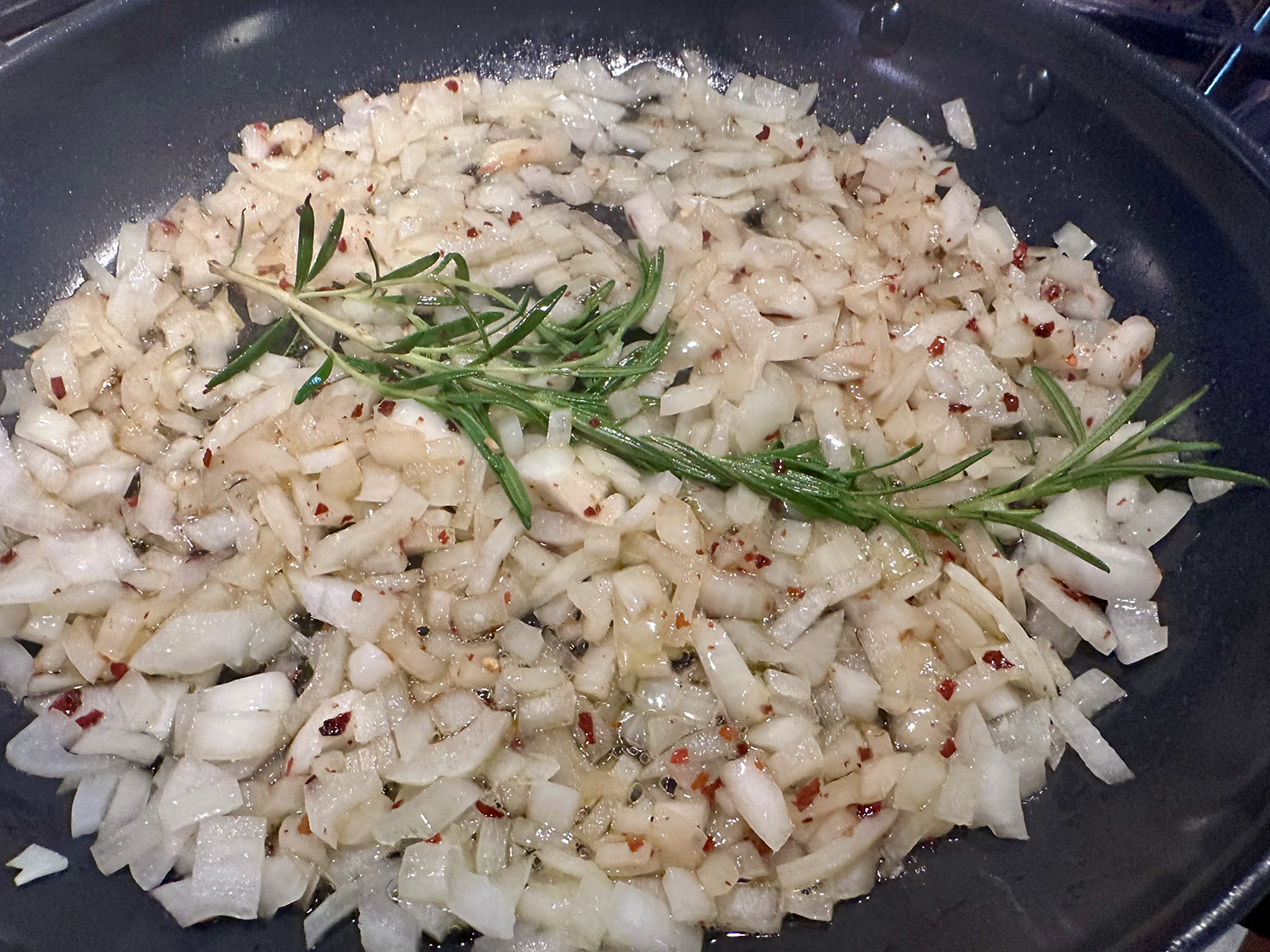
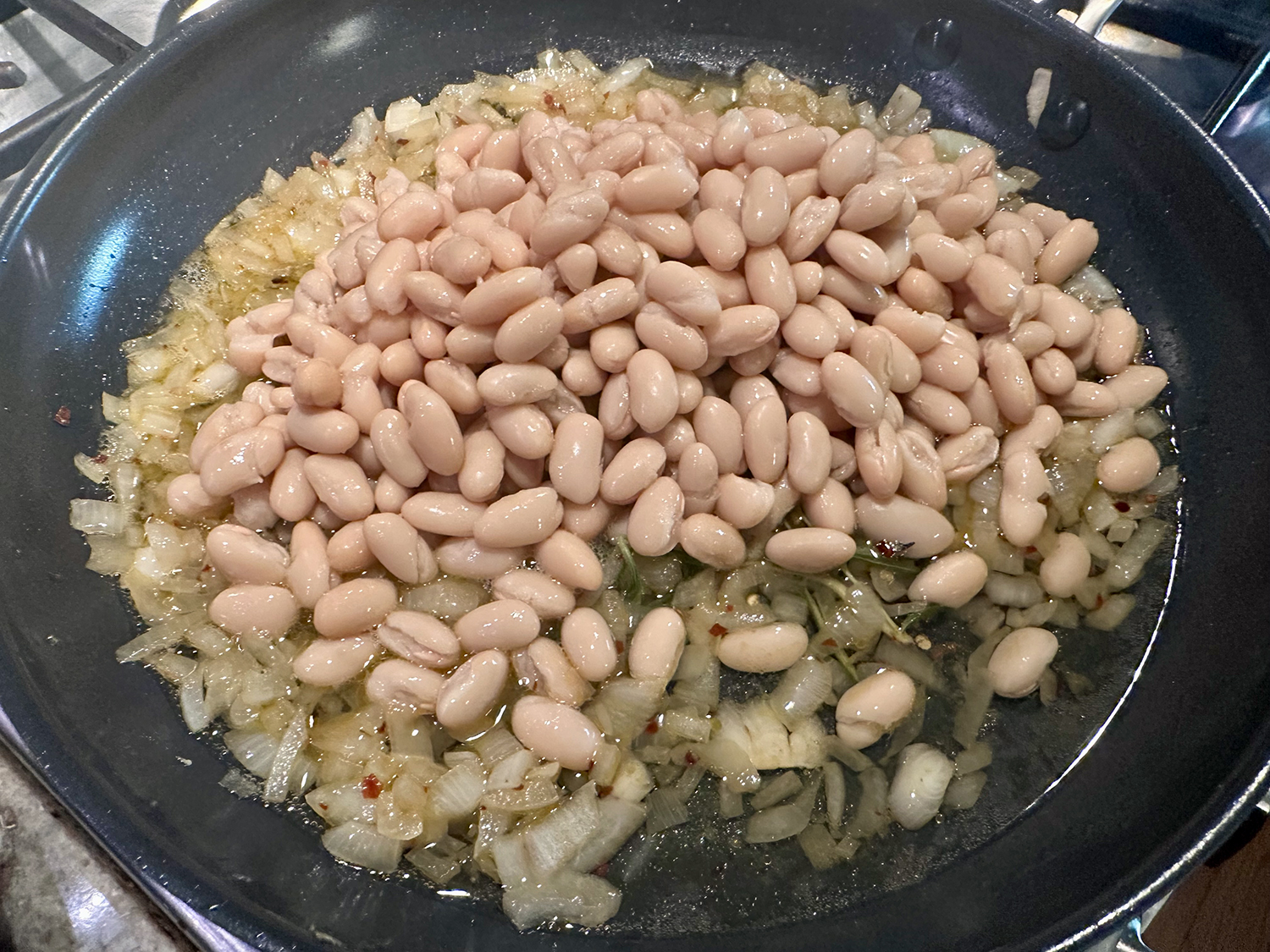
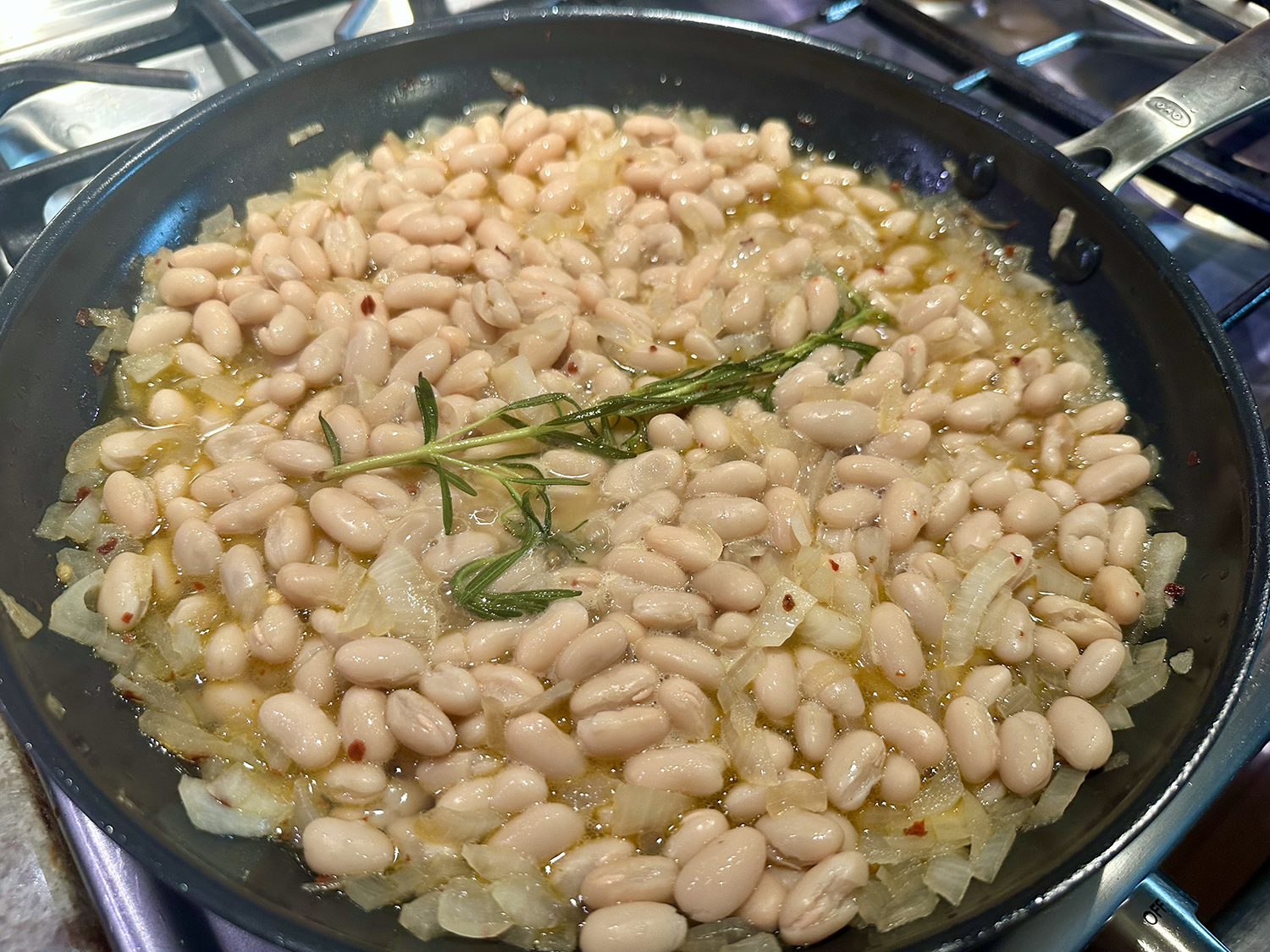
  1. In a 12-inch skillet over medium-high, heat the oil until shimmering. Add the onion, rosemary, pepper flakes and ½ teaspoon salt; cook, stirring occasionally, until the onion is translucent, 4 to 6 minutes. Stir in the beans, then add the wine and cook, uncovered and stirring occasionally, until the pan is dry, 5 to 7 minutes.
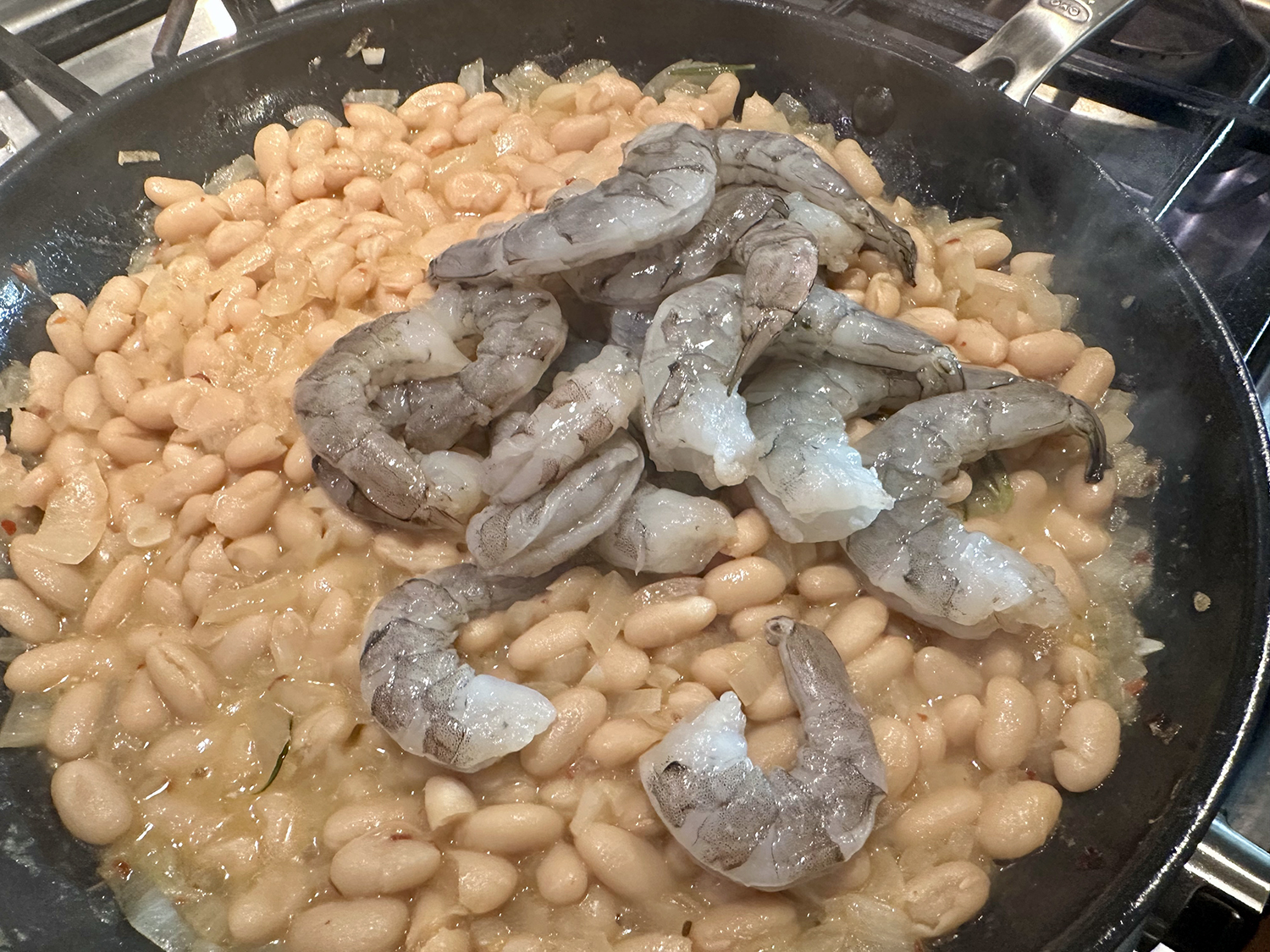
  2. 02Stir in the shrimp. Cover, reduce to medium-low and cook until the shrimp are opaque throughout, 4 to 5 minutes; stir once about halfway through.
  3. 03Off heat, taste and season with salt and black pepper. Remove and discard the rosemary sprig (if used). Stir in the parsley and serve drizzled with additional oil.

http://www.lynnandruss.com

Recipe by Coutney Hill for Milk Street

Orecchiette Salad with Roasted Vegetables, Chicken and Jalapeño-Lime Dressing

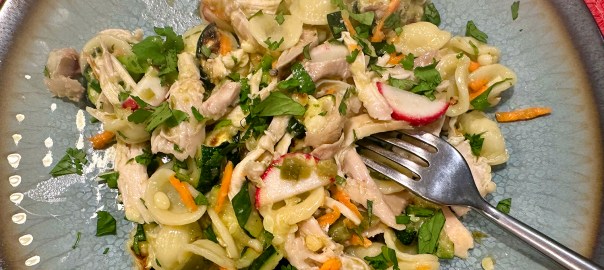
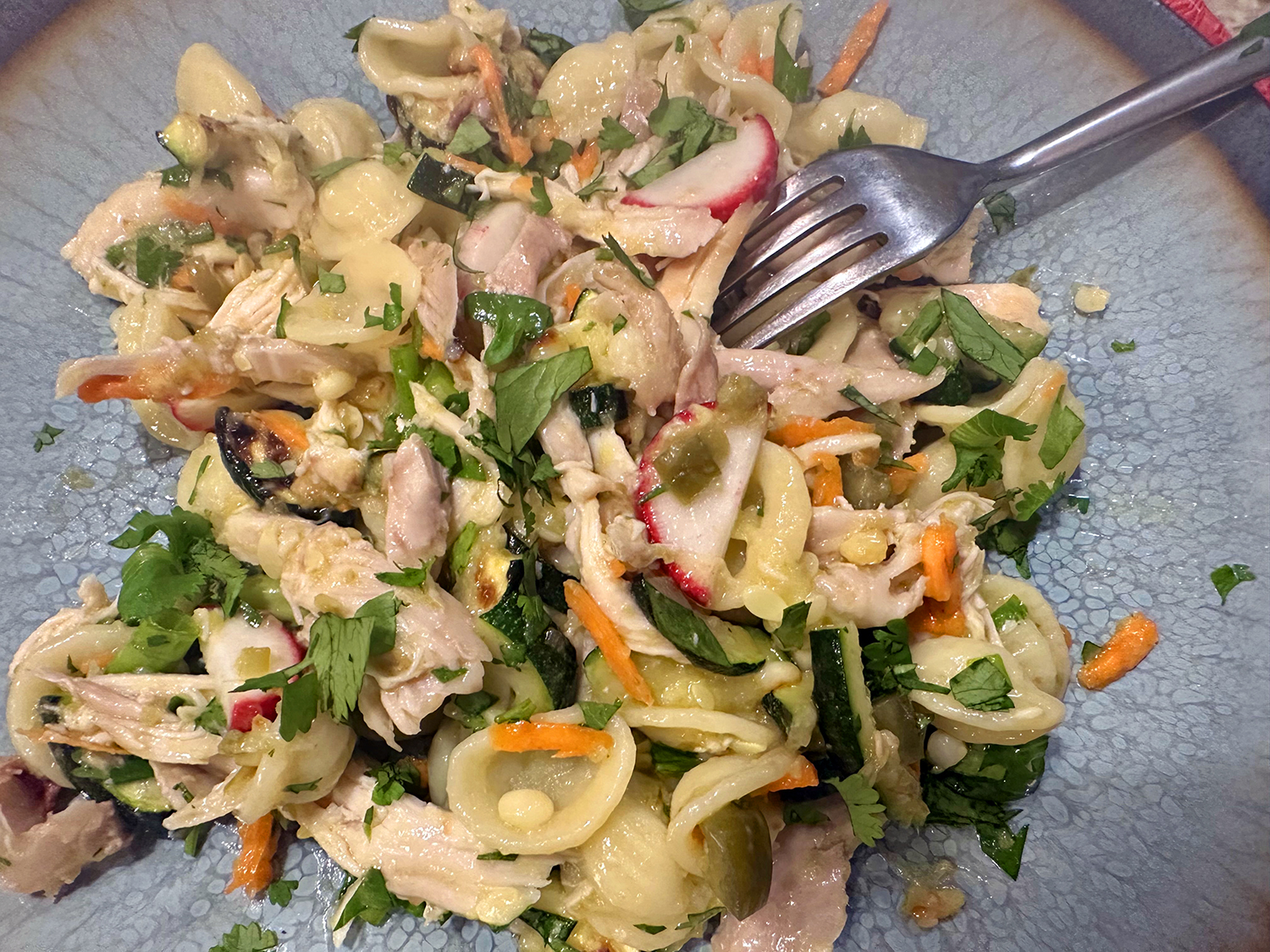
For a pasta salad that could serve as a main course, some of the pasta is swapped out for chicken, roasted corn and zucchini. Orecchiette works great because its little cup shapes are perfect for holding dressing. The pasta is cooked until it is a little too soft so that as it cools and firms up, it has just the right tender texture.

Because a classic thin vinaigrette would slide to the bottom of the bowl, it is thickened by blending it with pickled jalapeños and scallion whites. Add some crunch with bits of carrot and sliced radish, then top with cilantro leaves and scallions to contribute color and fresh herbal notes.

NOTES: For convenience, a store-bought rotisserie is the way to go. And, the pasta is intentionally overcooked in this recipe so that it remains tender, even when served cold. If making this salad ahead, dress the salad and garnish it with the reserved cilantro right before serving.

There is a fair amount of prep, and it easily took closer to an hour than the 45 minutes suggested in the original recipe. Since good fresh corn was available at farm stands, we used that instead of frozen corn. Just slice the kernels off the cob, and mix with the cut zucchini.

It may seem like a lot of jalapeños, but we found it to be just right. The quantity is versatile, so add or subtract the pickled chile to suit your own preferences.

Orecchiette Salad with Roasted vegetables, chicken and Jalapeño-Lime Dressing

  • Servings: 4-6
  • Difficulty: easy
  • Print

Ingredients

  • 1 lb. zucchini, quartered lengthwise and sliced ¼ inch thick
  • 1½ cups fresh or frozen corn kernels
  • 2 Tbsp. plus
  • ½ cup vegetable oil, divided
  • 1½ tsp. table salt, divided, plus salt for cooking pasta
  • 8 oz. (2¼ cups) orecchiette
  • ⅓ cup plus ¼ cup jarred sliced jalapeños, drained, divided
  • 4 scallions, white parts sliced thin, green parts cut into 1-inch pieces
  • ¼ cup lime juice (2 limes)
  • 1 lb. cooked chicken, torn into bite-size pieces (3 cups)
  • ¾ cup fresh cilantro leaves, divided
  • 8 radishes, trimmed, halved, and sliced thin
  • 1 large carrot, peeled and shredded

Directions

  1. Arrange oven rack 4 inches from broiler element and heat broiler. Combine zucchini, corn kernels, 2 tablespoons oil, and ½ teaspoon salt in large bowl and toss to coat. Transfer to rimmed baking sheet (do not wash bowl) and spread into even layer. Broil until spotty brown in places, 8 to 10 minutes, stirring halfway through broiling. Transfer sheet to wire rack to cool.
  2. Meanwhile, bring 2 quarts water to boil in large saucepan. Add pasta and 1½ teaspoons salt and cook until pasta is tender throughout, 2 to 3 minutes past al dente. Drain well and rinse with cold water. Drain well and transfer to now-empty bowl.
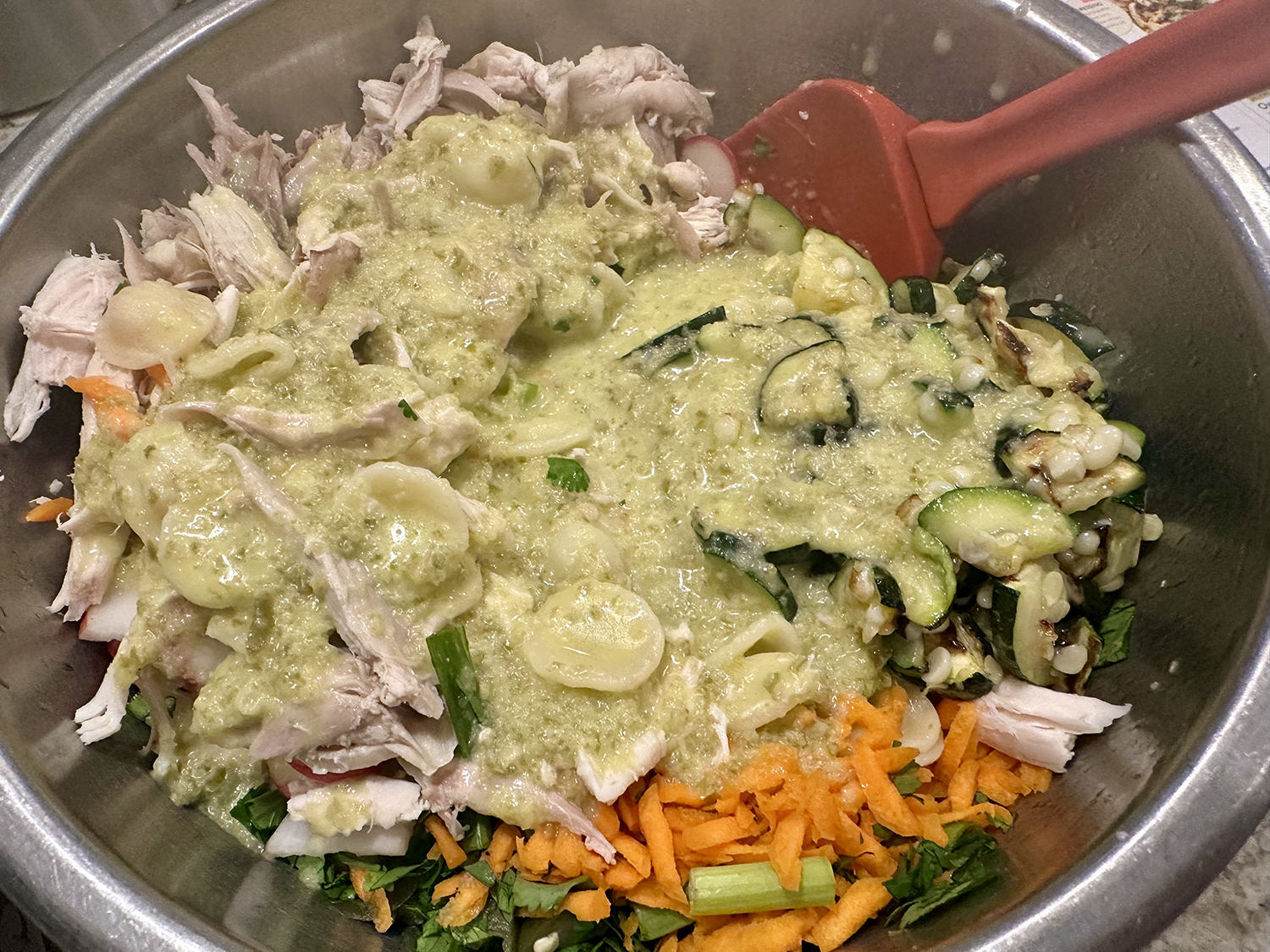
  3. Process ⅓ cup jalapeños, scallion whites, lime juice, and remaining 1 teaspoon salt in blender until coarse paste forms, about 30 seconds. With blender running, drizzle in remaining ½ cup oil and continue to process until dressing is emulsified and smooth, about 1 minute.
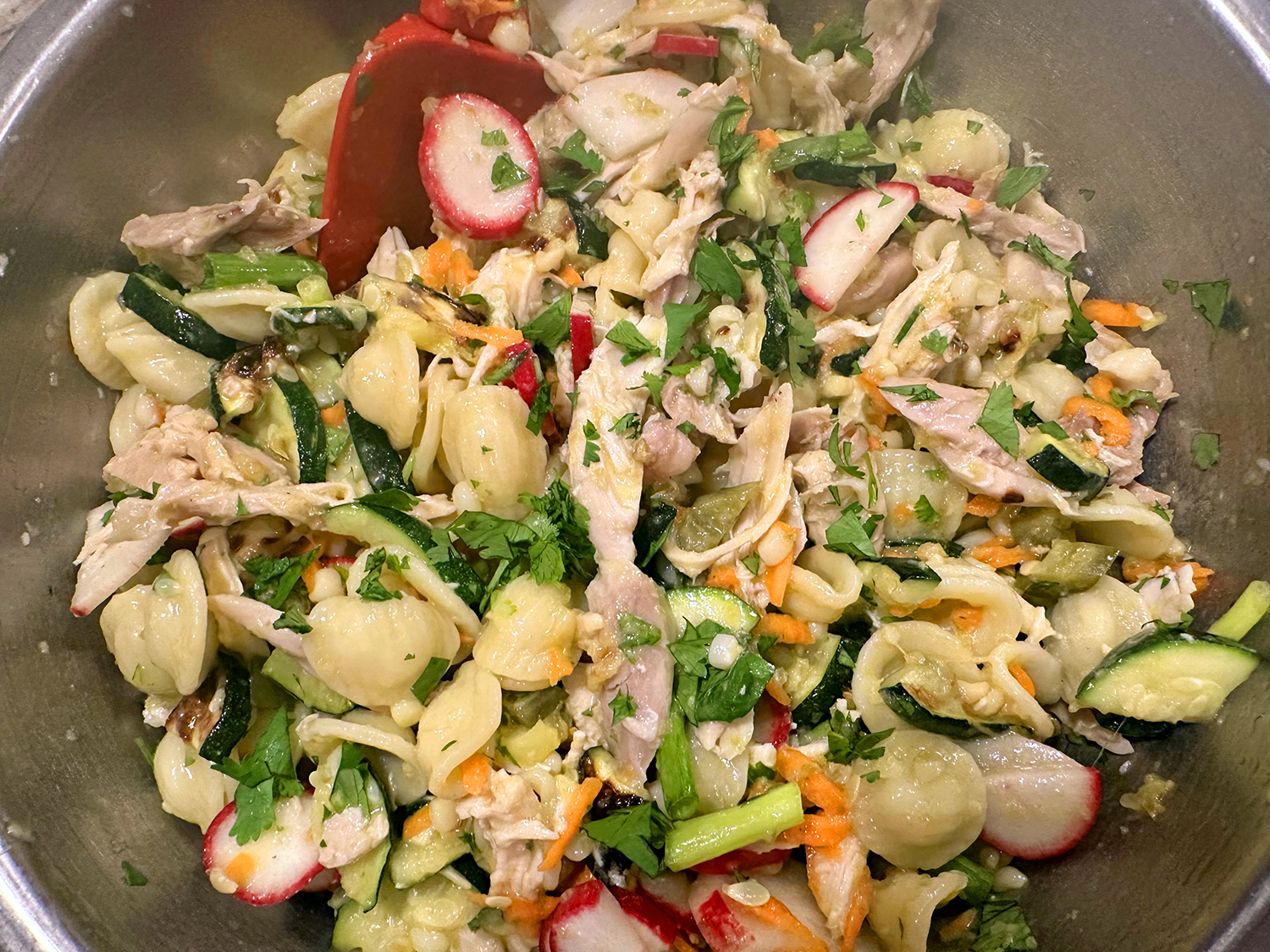
  4. Chop remaining ¼ cup jalapeños and add to pasta along with chicken, ½ cup cilantro, radishes, carrot, zucchini and corn, and scallion greens. Pour dressing over salad and toss to coat. Transfer to serving bowl. Sprinkle with remaining ¼ cup cilantro and serve.

http://www.lynnandruss.com

Recipe by Andrea Geary for America’s Test Kitchen

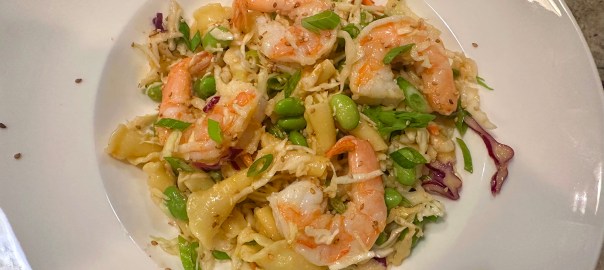
Campanelle Salad with Shrimp, Cabbage an Scallion-Ginger Dressing

When it’s too hot to cook, a cool salad with little prep is a go-to in our household. So this campanelle salad from Cook’s Illustrated chock-full of crunchy vegetables and succulent shrimp fits the bill.

The pasta is intentionally overcooked here. When cooked pasta is refrigerated, it goes through a process called retrogradation in which the water in the noodles becomes bound up in starch crystals, making the pasta firm and dry. But if you’re making a cold pasta salad, you can make retrogradation work to your advantage by boiling the pasta 2 or 3 minutes beyond al dente. This way the pasta’s starch absorbs more water and becomes extra-soft so that when it firms up with cooling, the final texture is just right.

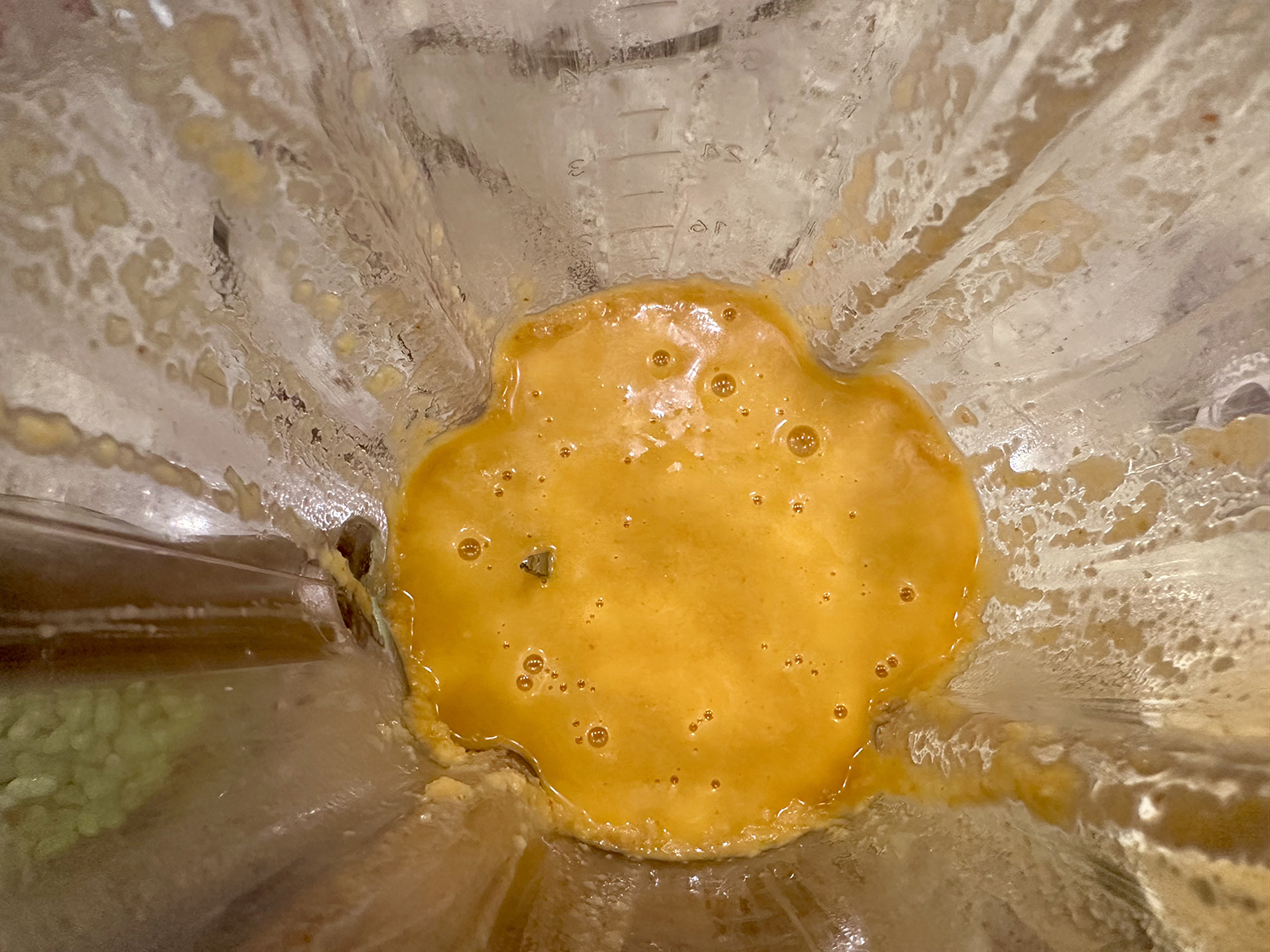
While numerous reviewers were somewhat disappointed in the dressing—it was too gingery, too vinegary, etc.—we found it to be almost perfect! (The amount of sriracha we used was reduced slightly.) Another change included cooking the edamame with the pasta 1 minute longer.

NOTES: If campanelle is unavailable, substitute penne. There’s no need to peel the ginger; just give it a thorough wash. Use the full amount of sriracha if you’re a fan of spice. We intentionally overcook the pasta in this recipe so that it remains tender, even when served cold. If making this salad ahead, dress the salad and then garnish it with the scallion greens and sesame seeds right before serving. A mix of white and black sesame seeds is desired, but it’s fine to use 2 teaspoons of either.

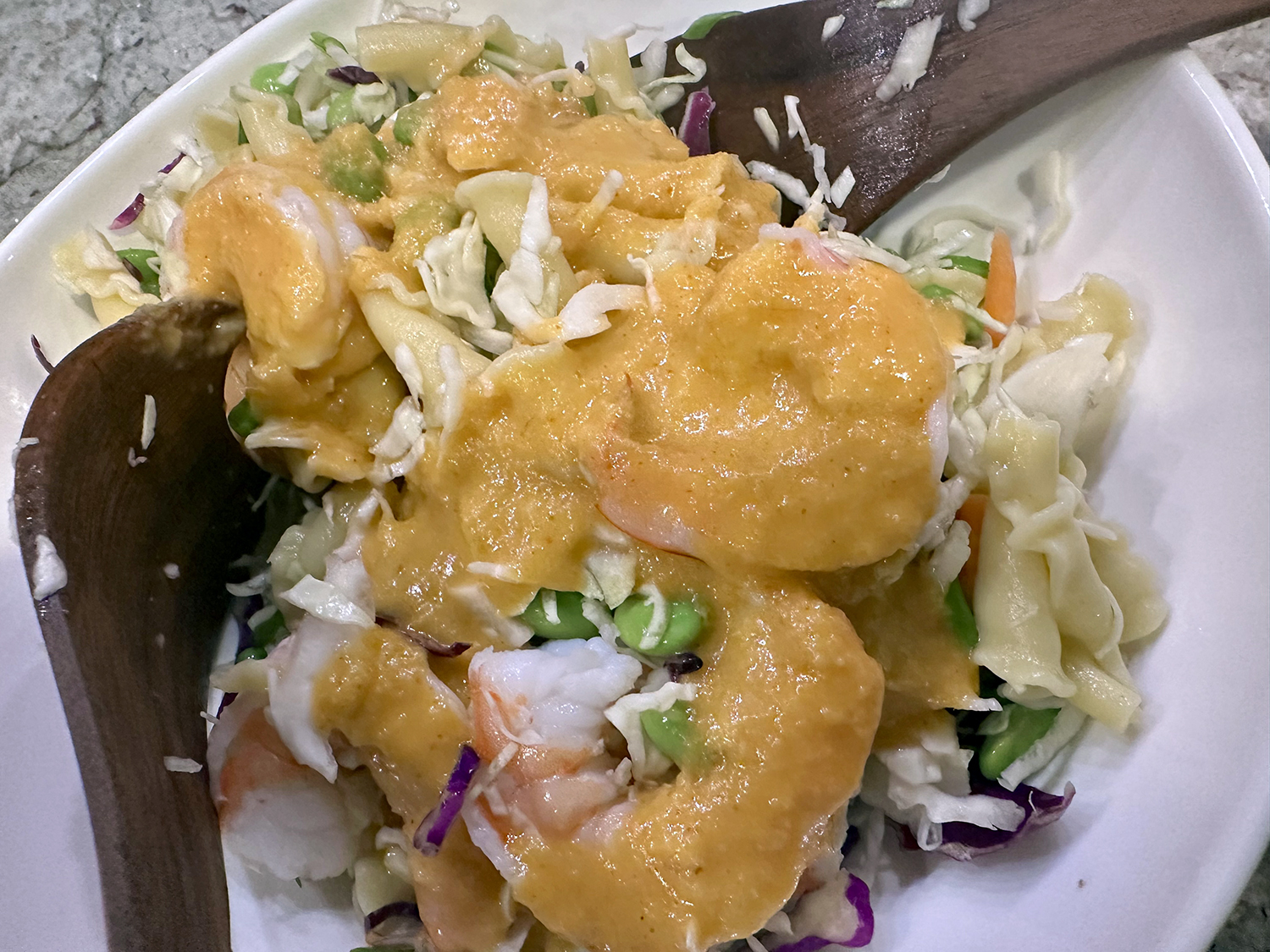
If feeding only two or three, place the desired amount of salad mix in a large bowl then stir in dressing and plate. Reserve any leftover salad and dressing in separate sealed containers for the next day.

Campanelle Salad with Shrimp, Cabbage an Scallion-Ginger Dressing

  • Servings: 4-6
  • Difficulty: easy
  • Print

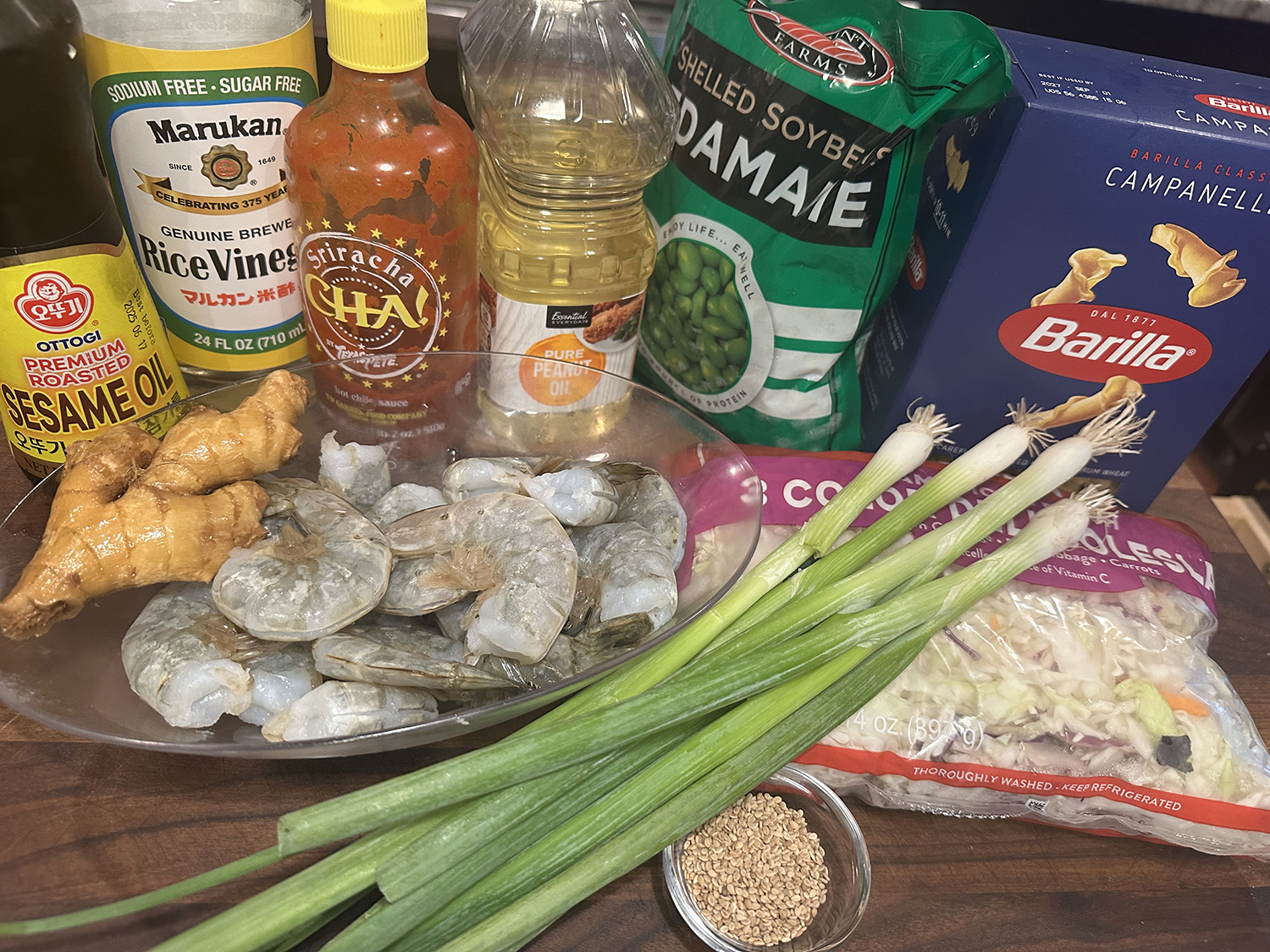
Ingredients

  • 1 lb. large shrimp (26 to 30 per lb.), peeled, deveined, and tails removed
  • 1¼ tsp. table salt, plus salt for cooking pasta and shrimp
  • 8 oz. (2½ cups) campanelle
  • 8 oz. frozen shelled edamame
  • 4 cups (11 oz.) shredded green coleslaw mix
  • 4 scallions, white parts chopped, green parts sliced thin on bias, divided
  • ⅓ cup chopped fresh ginger
  • ⅓ cup unseasoned rice vinegar
  • 1½ Tbsp. sriracha
  • 2 tsp. toasted sesame oil
  • ½ cup vegetable oil
  • 1 tsp. black sesame seeds, toasted
  • 1 tsp. white sesame seeds, toasted

Directions

  1. Bring 3 cups water to boil in large saucepan over high heat. Stir in shrimp and 1 tablespoon salt. Cover and let stand off heat until shrimp are opaque, about 5 minutes, shaking saucepan halfway through. Using spider skimmer or slotted spoon, transfer shrimp to colander; rinse with cold water until cool. Drain well and transfer to large bowl. Add 1 quart water to water in saucepan and return to boil.
  2. Add pasta and 1½ teaspoons salt to boiling water and cook until pasta is al dente. Add edamame to saucepan with pasta and cook 2 minutes more. Drain and rinse with cold water. Drain well and add to shrimp along with coleslaw mix and two-thirds of scallion greens.
  3. Process scallion whites, ginger, vinegar, sriracha, sesame oil, and salt in blender until coarse paste forms, about 30 seconds. With blender running, slowly drizzle in vegetable oil until dressing is emulsified and smooth, about 1 minute.
  4. Pour dressing over salad and toss to combine. Transfer to serving bowl. Sprinkle with remaining scallion greens and sesame seeds and serve.

http://www.lynnandruss.com

Adapted from a recipe by Andrea Geary for Cook’s Illustrated

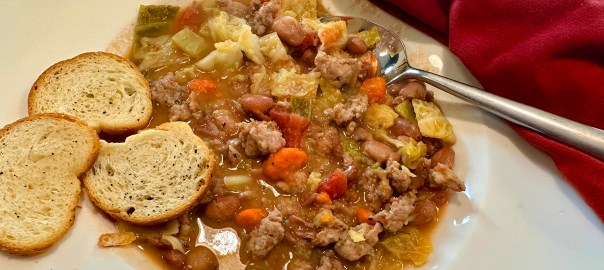
Hearty Tuscan Bean Stew with Sausage and Cabbage

In Tuscany, creamy, flavorful beans transform rustic soups and stews into something special, perfect for hunkering down on a cool weather afternoon/evening. But you want to avoid tough, exploded beans in this Tuscan bean stew recipe. Therefore, soak the beans overnight in salted water, which softens the skins.

Gently cooking the beans in a 250-degree oven produces perfectly cooked beans that stay intact. To complete the bean stew recipe, add tomatoes toward the end of cooking, since their acid keeps the beans from becoming too soft.

Please note: The creamier texture of beans soaked overnight are preferred for this recipe. If you’re short on time, quick-soak them: Place the rinsed beans in a large heat-resistant bowl. Bring 2 quarts of water and 3 tablespoons of salt to a boil. Pour the water over the beans and let them sit for 1 hour. Drain and rinse the beans well before proceeding with step 2. For a more substantial dish, serve the stew over toasted bread. This variation has much more meat than the Hearty Tuscan Bean Stew and is made with crinkly Savoy cabbage.

Hearty Tuscan Bean Stew with Sausage and Cabbage

  • Servings: 8
  • Difficulty: easy
  • Print

Ingredients

  • Table salt
  • 1 lb. dried cannellini beans (about 2 cups), rinsed and picked over
  • 1 Tbsp. extra virgin olive oil, plus extra for drizzling
  • 1 ½ lbs. sweet Italian sausage, casings removed
  • 1 large onion, chopped medium (about 1 1/2 cups)
  • 2 medium celery ribs, cut into 1/2-inch pieces (about 3/4 cup)
  • 2 medium carrots, peeled and cut into 1/2-inch pieces (about 1 cup)
  • 8 medium garlic cloves, peeled and crushed
  • 4 cups chicken broth, preferably homemade
  • 3 cups water
  • 2 bay leaves
  • ½ medium head savoy cabbage, cut into 1-inch pieces
  • 1 (14.5-oz.) can diced tomatoes drained and rinsed
  • 1 sprig fresh oregano leaves
  • Ground black pepper
  • 8 slices country white bread, each 1 1/4 inches thick, broiled until golden brown on both sides and rubbed with garlic clove, (optional)

Directions

  1. Dissolve 3 tablespoons salt in 4 quarts cold water in large bowl or container. Add beans and soak at room temperature for at least 8 hours and up to 24 hours. Drain and rinse well.
  2. Adjust oven rack to lower-middle position and heat oven to 250 degrees. Heat oil and sausage in large Dutch oven over medium heat. Cook, breaking meat into small pieces with wooden spoon until it loses its raw color, about 8 minutes. Transfer sausage to paper towel-lined plate and place in refrigerator. Add onion, celery, and carrots. Cook, stirring occasionally, until vegetables are softened and lightly browned, 10 to 16 minutes. Stir in garlic and cook until fragrant, about 1 minute. Stir in broth, water, bay leaves, and soaked beans. Increase heat to high and bring to simmer. Cover pot, transfer to oven, and cook until beans are almost tender (very center of beans will still be firm), 45 minutes to 1 hour.
  3. Remove pot from oven and stir in greens, sausage, and tomatoes. Cover pot, return pot to oven and continue to cook until beans and greens are fully tender, 30 to 40 minutes longer.
  4. Remove pot from oven and submerge oregano sprig in stew. Cover and let stand 15 minutes. Discard bay leaves and oregano sprig and season stew with salt and pepper to taste. If desired, use back of spoon to press some beans against side of pot to thicken stew. Serve over toasted bread, if desired, and drizzle with olive oil.

http://www.lynnandruss.com

Recipe from America’s Test Kitchen

Braised Cod with Peperonata

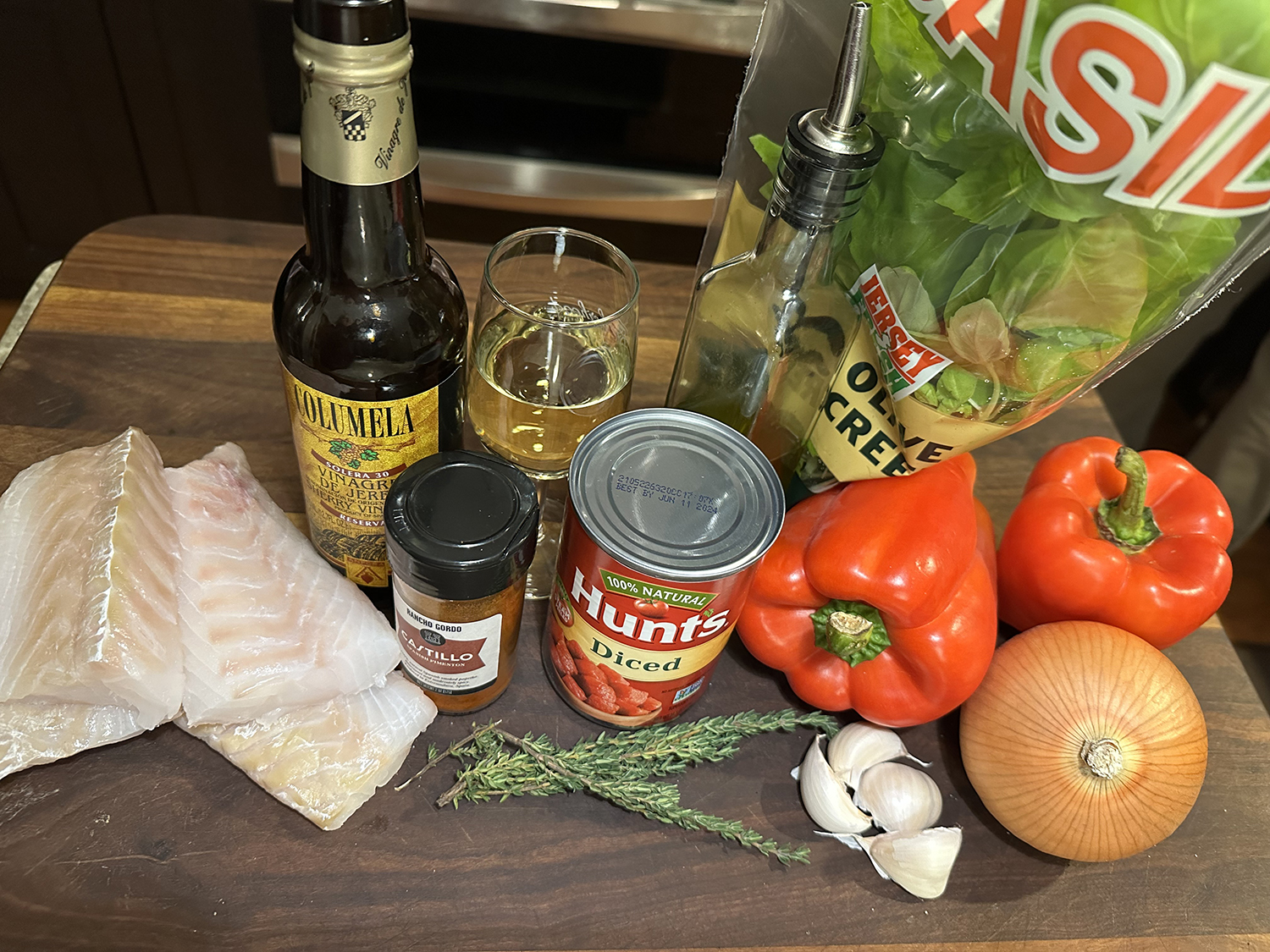
What home cook doesn’t want a quick dinner without too much prep, is healthy, and is ready to eat in under an hour? This lovely recipe fits the bill. Nice bright flavors, delicate flaky fish and a bit of punch from the paprika (we used smoked paprika).

Flaky white cod is one of the more widely distributed and moderately priced fish available. Its mild flavor can be used in countless different dishes, but we think it’s at its best when braised with assertive flavorings, like the sweet peppers, thyme, garlic, and paprika of peperonata, a classic Spanish dish.

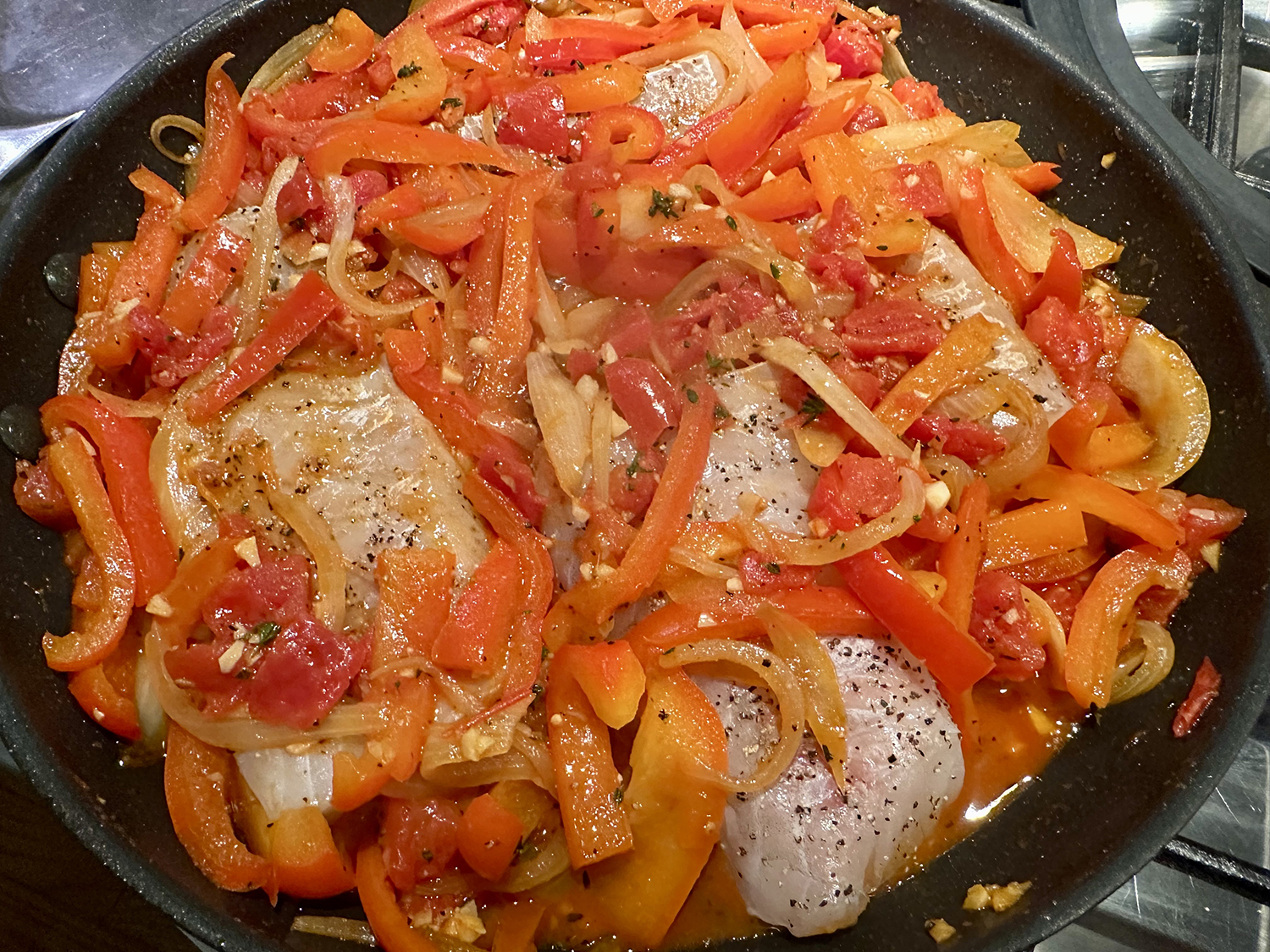
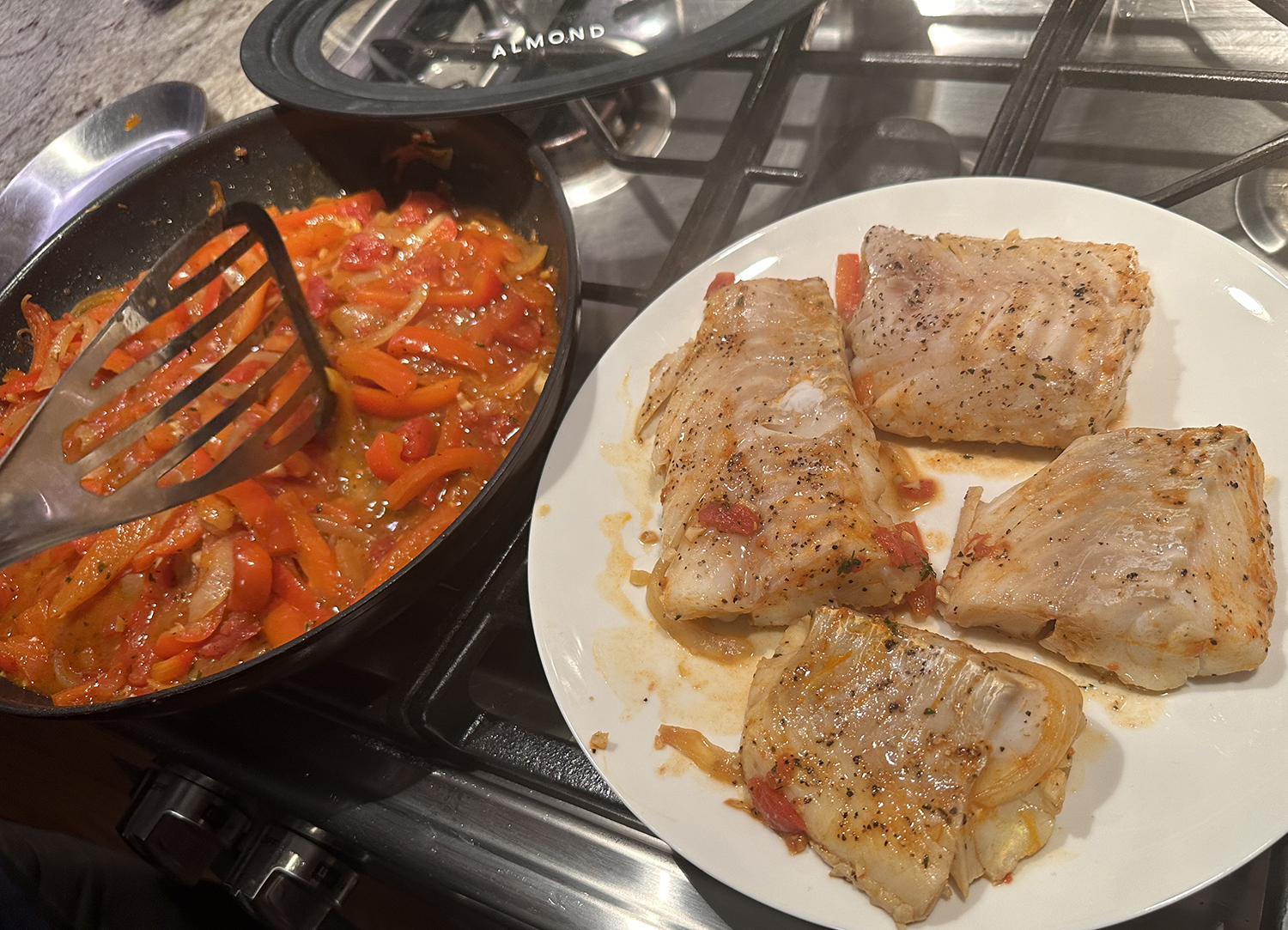
For this Spanish-style braised cod recipe, we laid down a base of sautéed onion, bell pepper, garlic, and paprika, to which we added tomatoes, fresh thyme, and wine. Once the broth was prepared, we simply nestled the pieces of fish down into the sauce, dropped the heat to low, covered the skillet, and let the fish cook in the moist environment. Within about 10-15 minutes, the fish was cooked through—the result being a tender, moist, and very well seasoned braised cod recipe.

Halibut, snapper, tilapia, bluefish, monkfish, or sea bass fillets are all good substitutions for the cod. If desired, drizzle with extra-virgin olive oil before serving. Smoked paprika (often found in specialty spice markets) is a nice substitution for the paprika here. Serve with soft polenta or crusty bread. Or go low-carb as we did, and just serve the fish and sauce.

Braised Cod with Peperonata

  • Servings: 4
  • Difficulty: easy
  • Print

Ingredients

  • 2 Tbsp. olive oil
  • 2 red bell peppers, cored and sliced thin
  • 1 onion, halved and sliced thin
  • 2 tsp. paprika
  • Salt and ground black pepper
  • 4 garlic cloves, minced
  • 1 (14.5-oz.) can diced tomatoes, drained
  • ½ cup dry white wine
  • 1 tsp. minced fresh thyme
  • 4 skinless cod fillets, 1 inch thick
  • 2 Tbsp. coarsely chopped fresh basil leaves
  • 2 tsp. balsamic vinegar or sherry vinegar

Directions

  1. Heat oil in 12-inch nonstick skillet over medium heat until shimmering. Add bell peppers, onion, paprika, and 1/2 teaspoon salt and cook until softened, about 7 minutes. Stir in garlic and cook until fragrant, about 30 seconds.
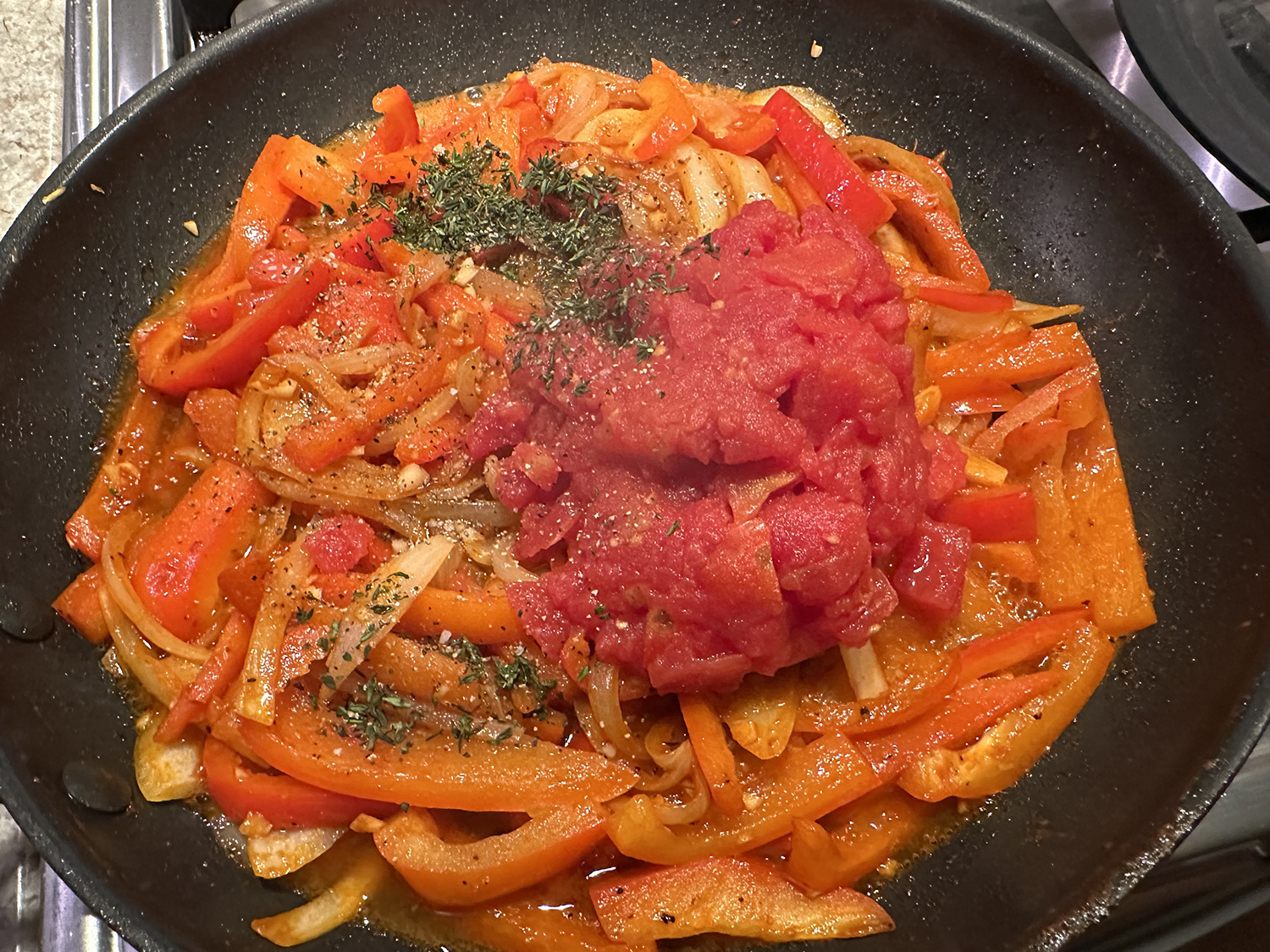
  2. Stir in tomatoes, wine, thyme, and 1/4 teaspoon pepper, and bring to simmer.
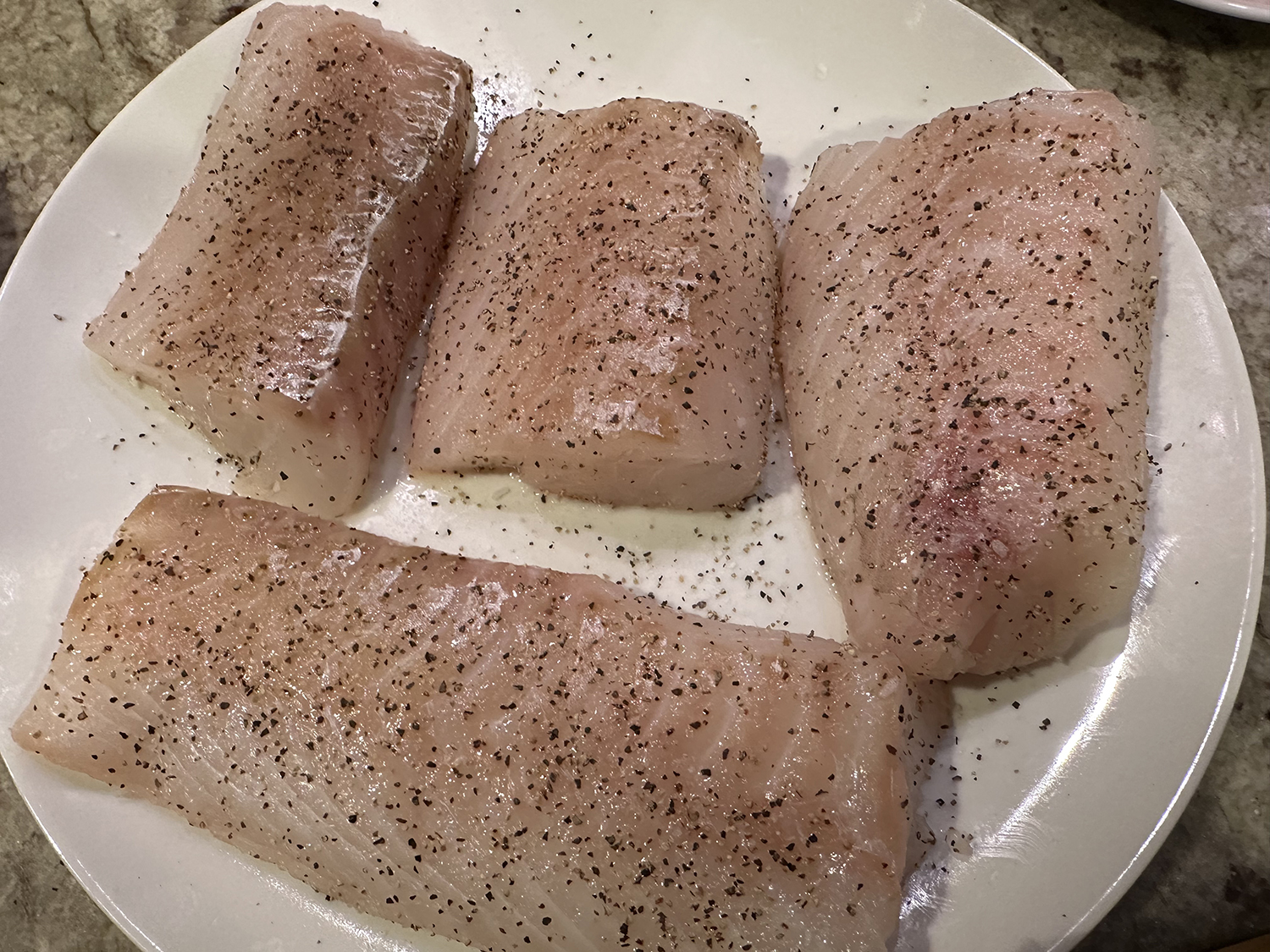
  3. Pat cod dry with paper towels and season with salt and pepper. Nestle cod into pan and spoon sauce over fish. Cover and cook over low heat until fish flakes apart when gently prodded with paring knife, about 10 minutes. (Ours took 15 minutes before it was flaky.)
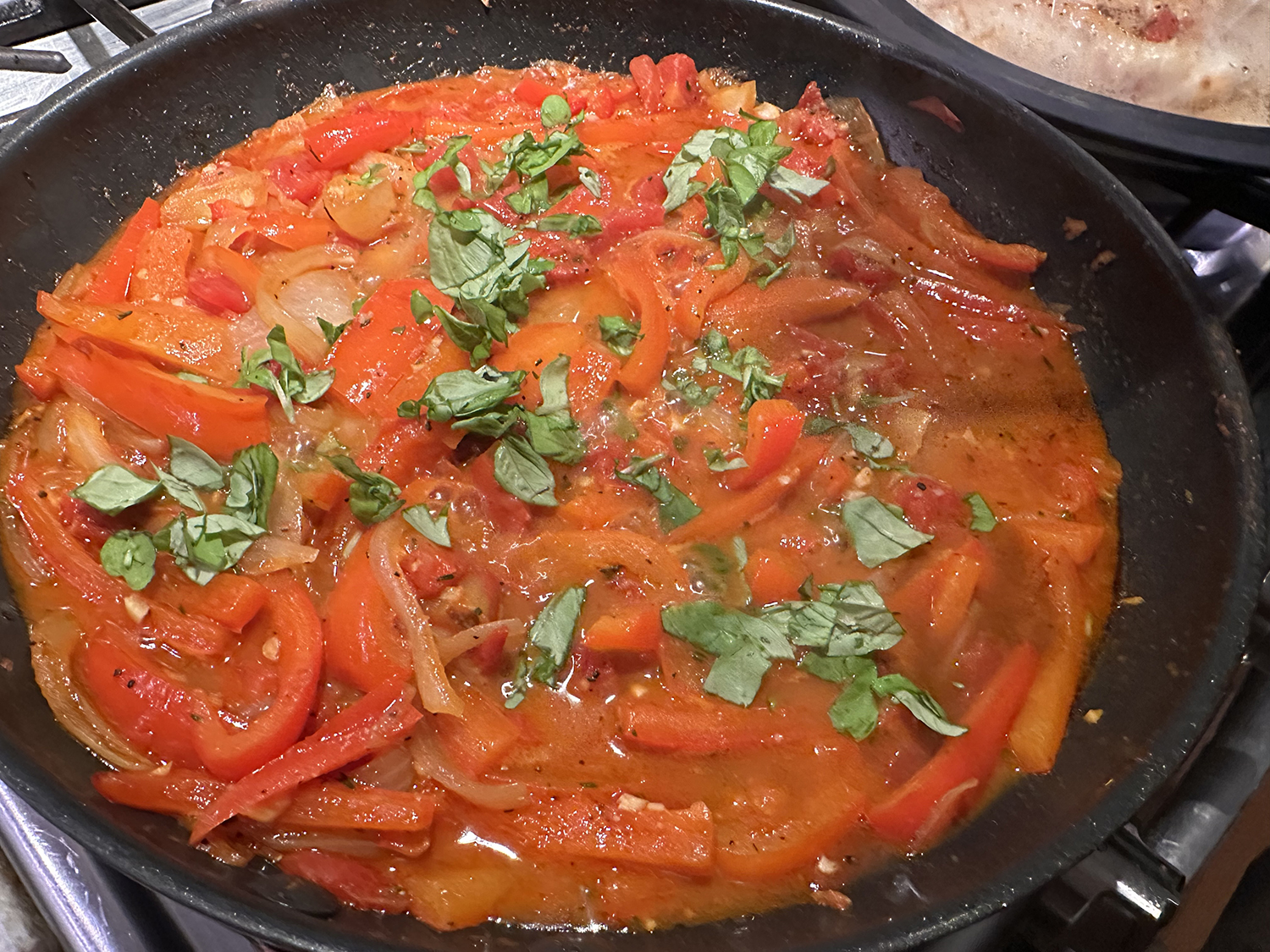
  4. Transfer fish to individual plates. Stir basil and vinegar into sauce and season with salt and pepper to taste. Spoon sauce over fish and serve.

http://www.lynnandruss.com

Recipe from America’s Test Kitchen

Tuscan-Style Roast Pork with Garlic and Rosemary (Arista)

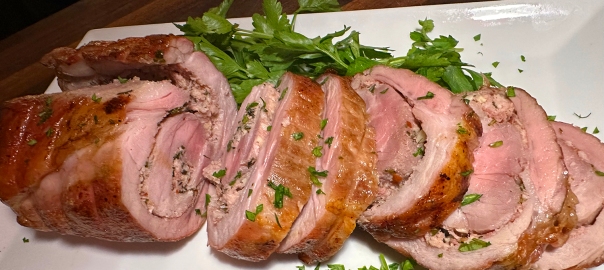
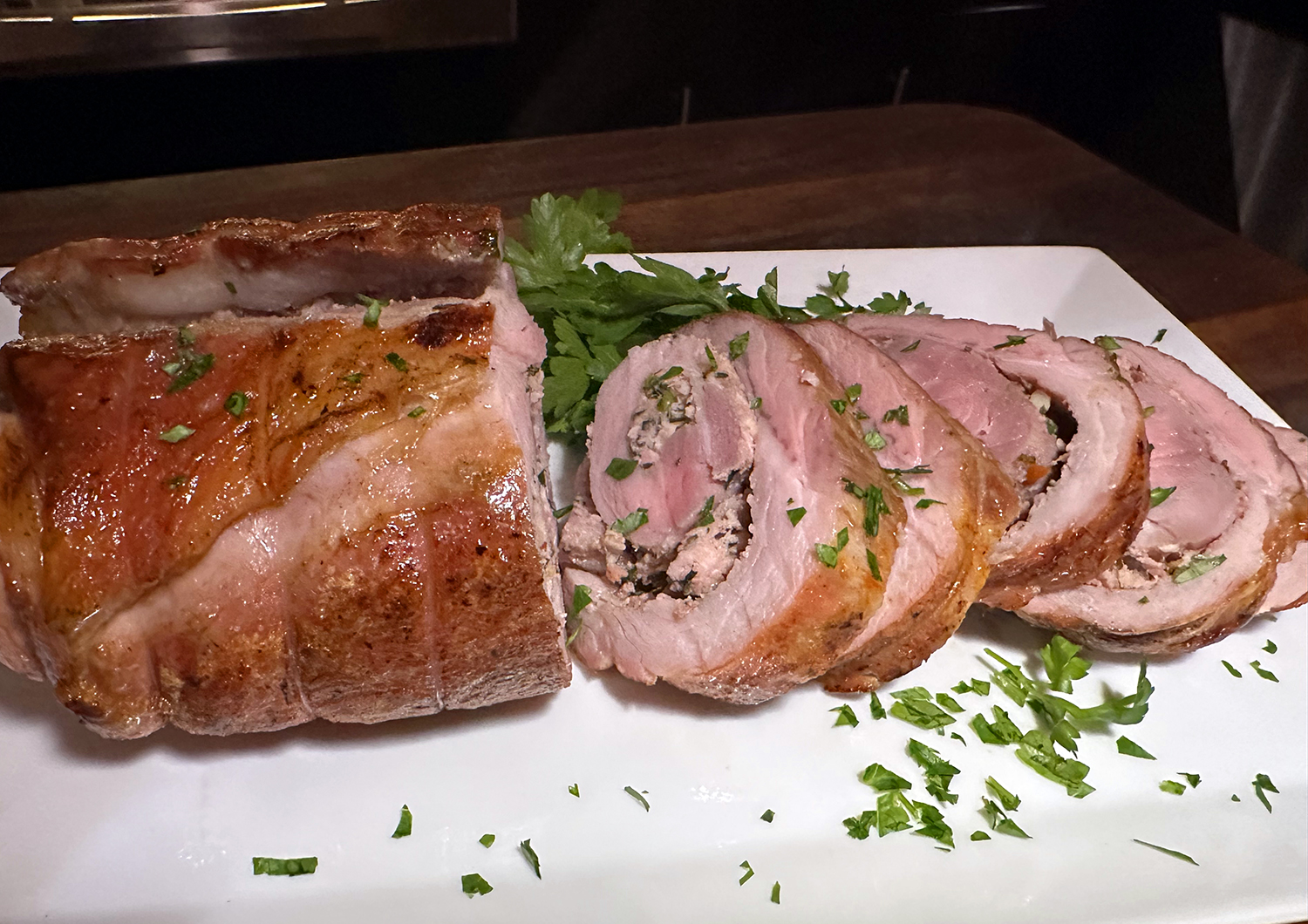
Arista means “the best.” This dish promises a superlative pork loin flavored with garlic, rosemary, and deep browning. Too bad few versions live up to their name. Preparing it this way, the pork is very juicy and full of flavor; plus it makes a nice presentation on a platter. And it is a very economical piece of meat to feed a small dinner party without feeling you need to break the bank to impress.

Note that we doubled the amount of pancetta paste after other reviewers suggested it. Another change: just before adding the cooked lemon to the sauce at the end to make the vinaigrette, The Hubs added the oils first to the pan to lift the fond left after searing the roast, then strained this and added the strained cooked lemon.

Tuscan-Style Roast Pork with Garlic and Rosemary

  • Servings: 4-6
  • Difficulty: moderate
  • Print

ingredients

  • 1 lemon
  • ⅓ cup extra-virgin olive oil
  • 8 garlic cloves, minced
  • ¼ teaspoon red pepper flakes
  • 1 tablespoon chopped fresh rosemary
  • 4 oz. pancetta, diced
  • 1 (2 1/2-lb.) boneless center-cut pork loin roast, trimmed
  • Kosher salt

Directions

  1. Finely grate 1 teaspoon zest from lemon. Cut lemon in half and reserve. Combine lemon zest, oil, garlic, and pepper flakes in 10-inch nonstick skillet. Cook over medium-low heat, stirring frequently, until garlic is sizzling, about 3 minutes. Add rosemary and cook, 30 seconds. Strain mixture through fine-mesh strainer set over bowl, pushing on garlic-rosemary mixture to extract oil. Set oil aside and let garlic-rosemary mixture cool. Using paper towels, wipe out skillet.
  2. Process pancetta in food processor until smooth paste forms, 20 to 30 seconds, scraping down sides of bowl as needed. Add garlic-rosemary mixture and continue to process until mixture is homogeneous, 20 to 30 seconds longer, scraping down sides of bowl as needed.
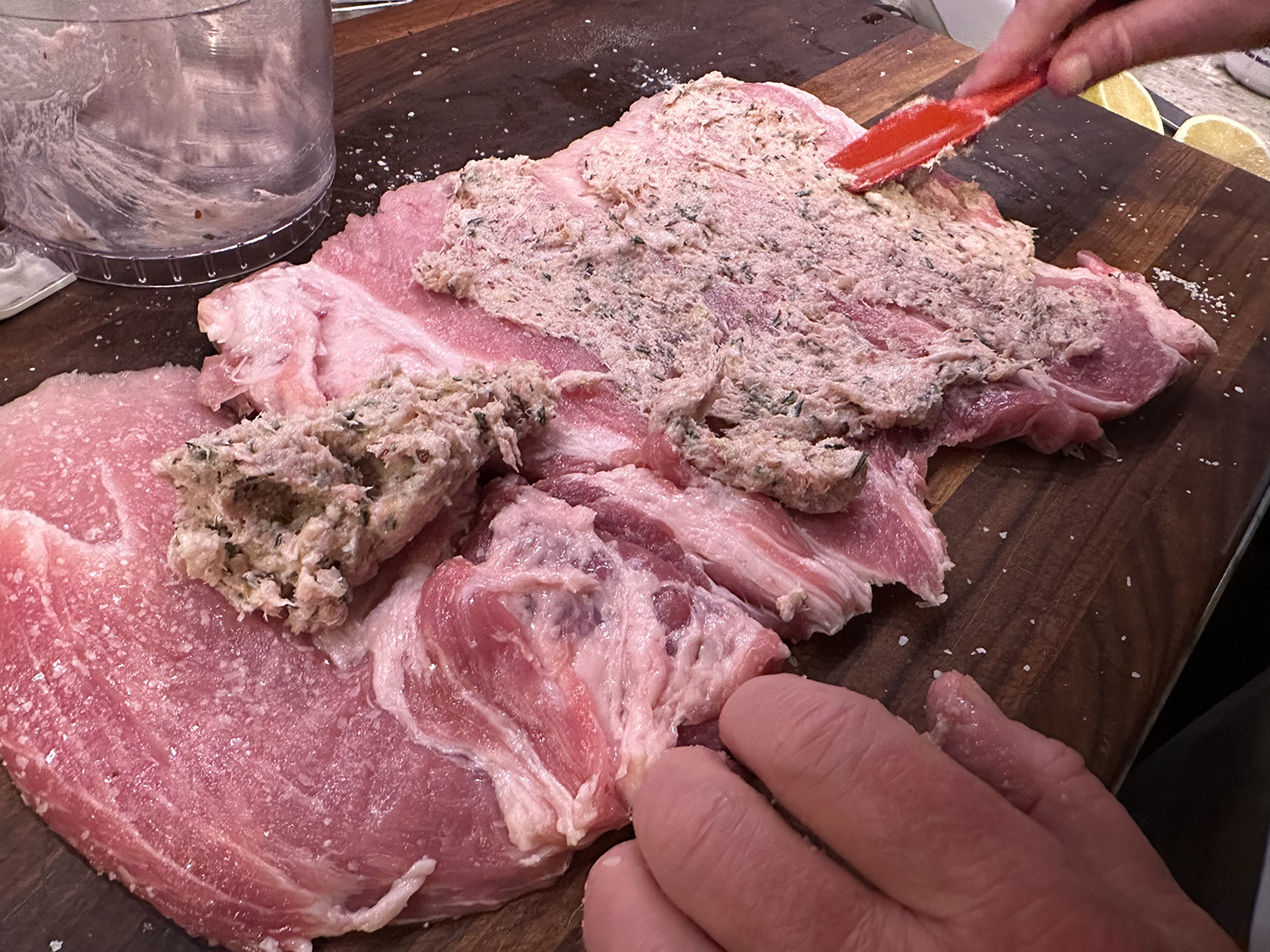
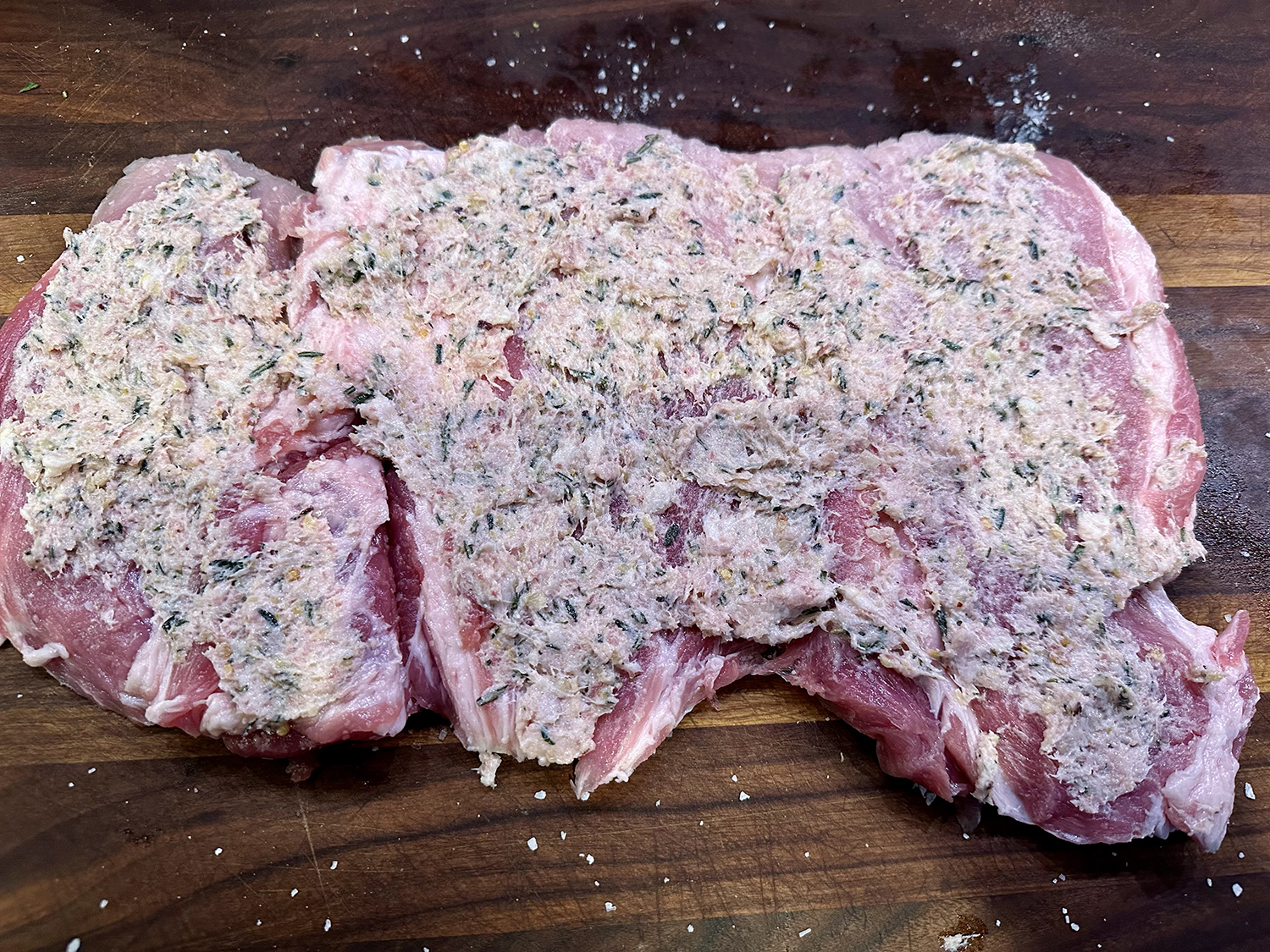
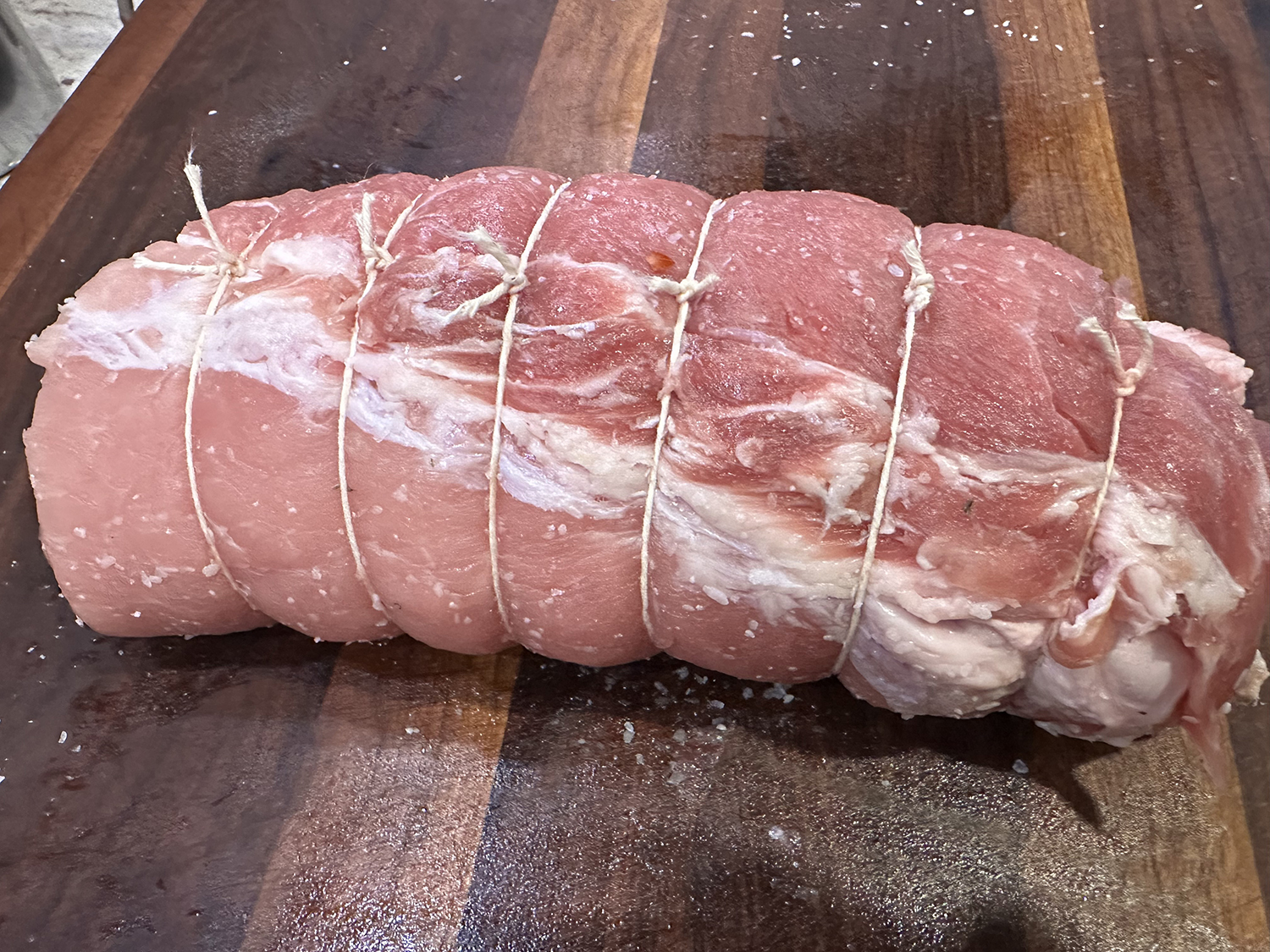
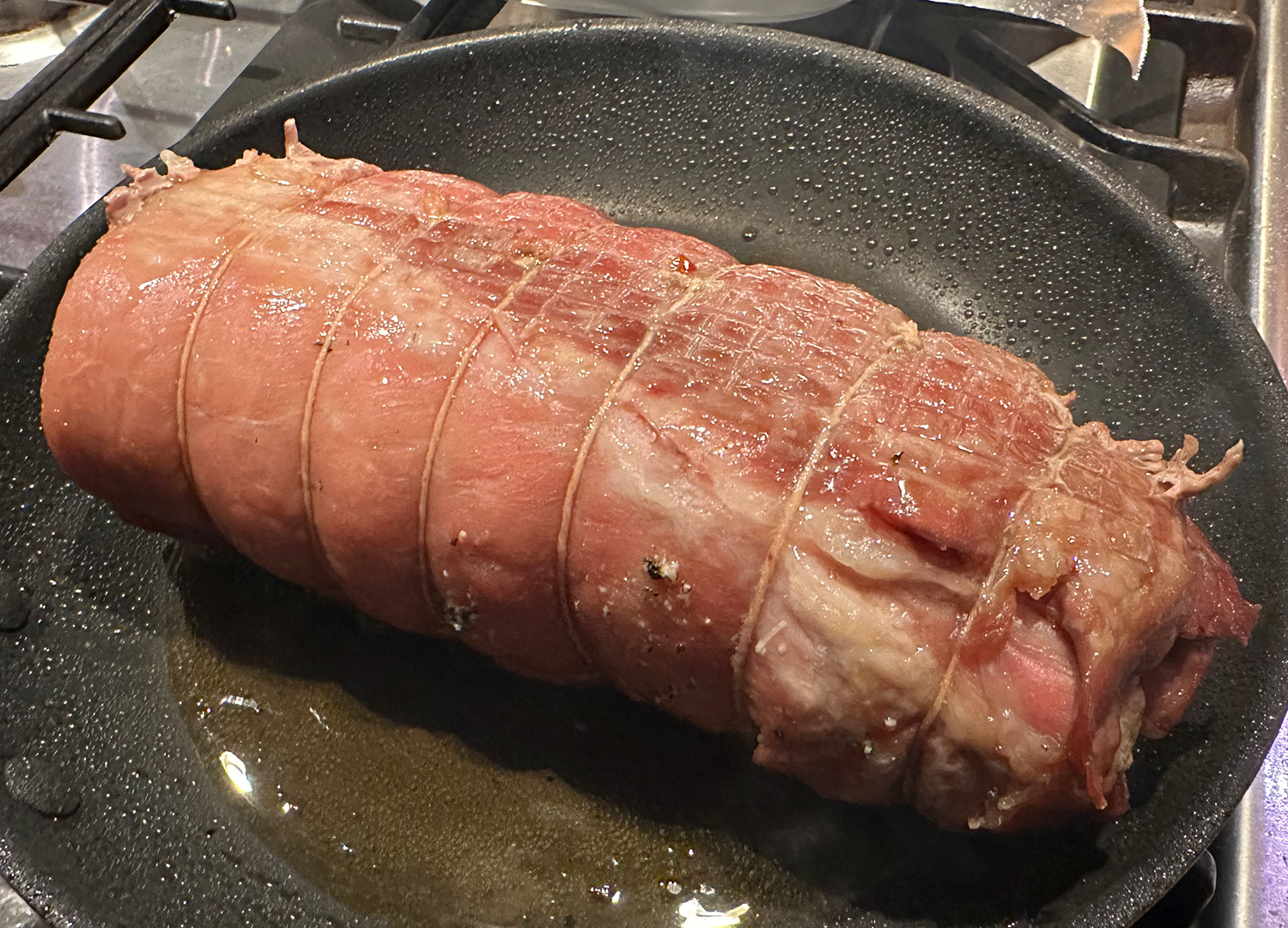
  3. Position roast fat side up. Insert knife one-third of way up from bottom of roast along 1 long side and cut horizontally, stopping 1/2 inch before edge. Open up flap. Keeping knife parallel to cutting board, cut through thicker portion of roast about 1/2 inch from bottom of roast, keeping knife level with first cut and stopping about 1/2 inch before edge. Open up this flap. If uneven, cover with plastic wrap and use meat pounder to even out. Sprinkle 1 tablespoon kosher salt over both sides of roast (1/2 tablespoon per side) and rub into meat to adhere. Spread inside of roast evenly with pancetta-garlic paste, leaving about 1/4-inch border on all sides. Starting from short side, roll roast (keeping fat on outside) and tie with twine at 1-inch intervals. Set wire rack in rimmed baking sheet and spray with vegetable oil spray. Set roast fat side up on prepared rack and refrigerate for 1 hour.
  4. Adjust oven rack to middle position and heat oven to 275 degrees. Transfer roast to oven and cook until meat registers 135 degrees, 1 1/2 to 2 hours. Remove roast from oven, tent with aluminum foil, and let rest for 20 minutes.
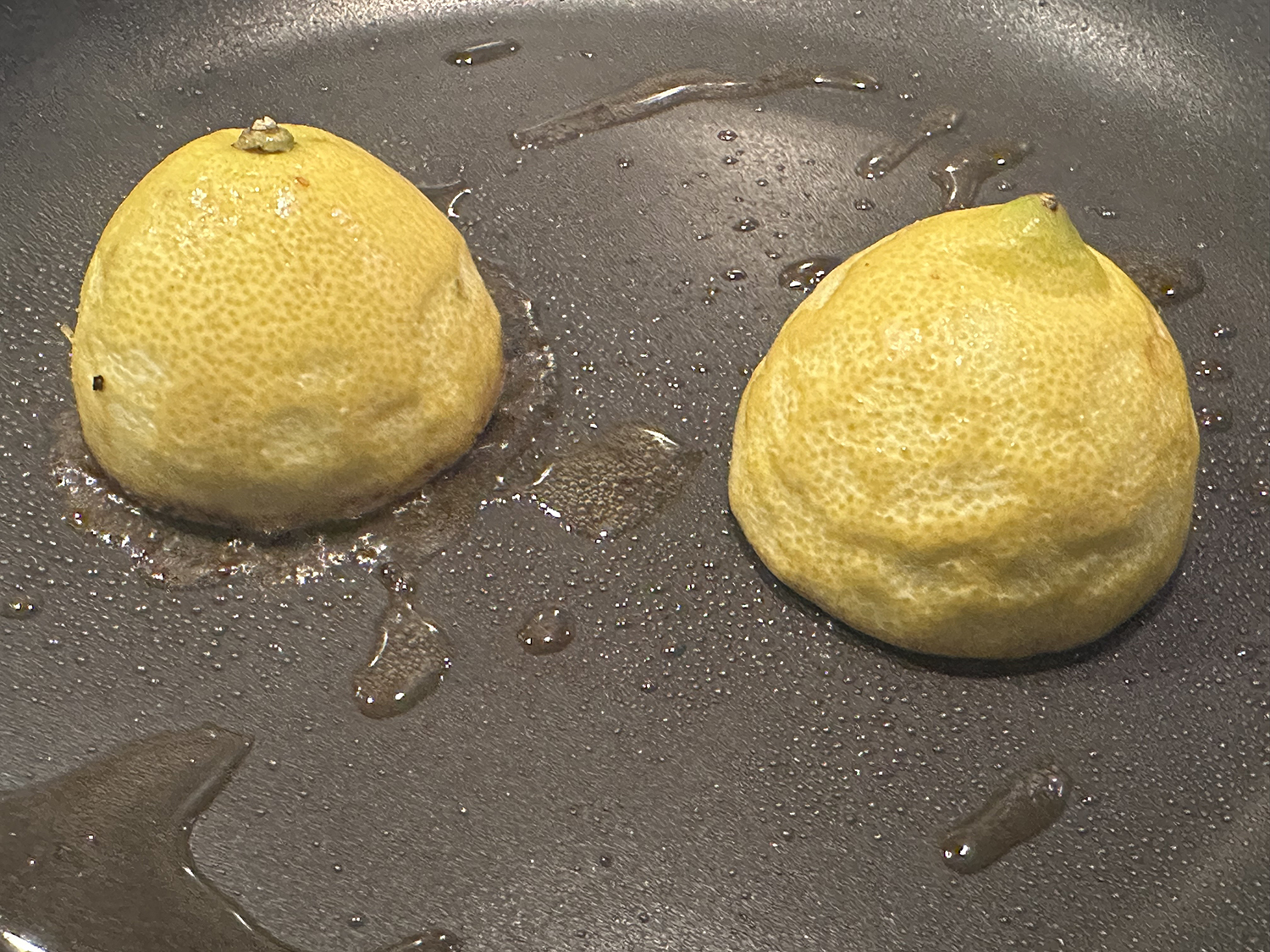
  5. Heat 1 teaspoon reserved oil in now-empty skillet over high heat until just smoking. Add reserved lemon halves, cut side down, and cook until softened and cut surfaces are browned, 3 to 4 minutes. Transfer lemon halves to small plate.
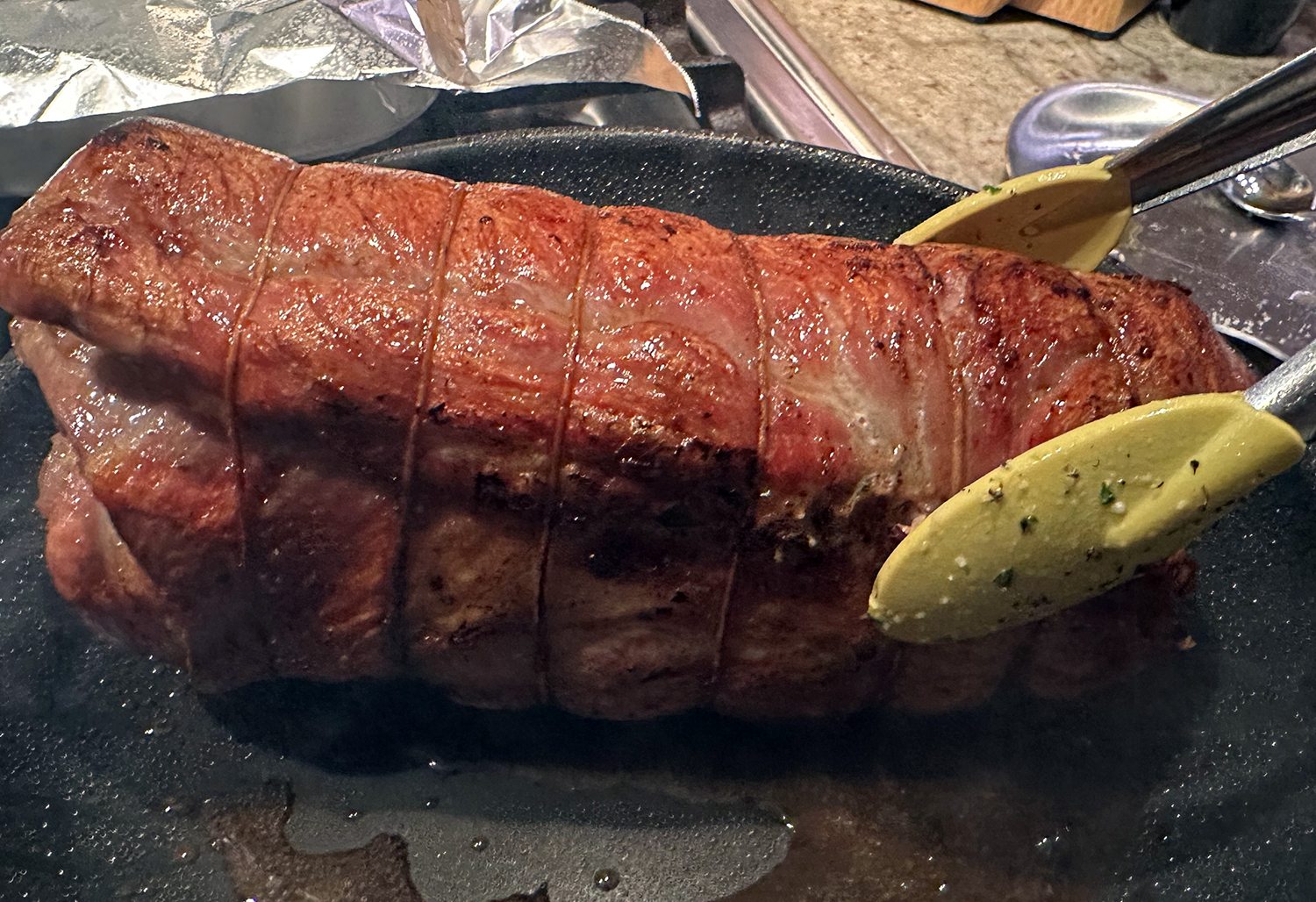
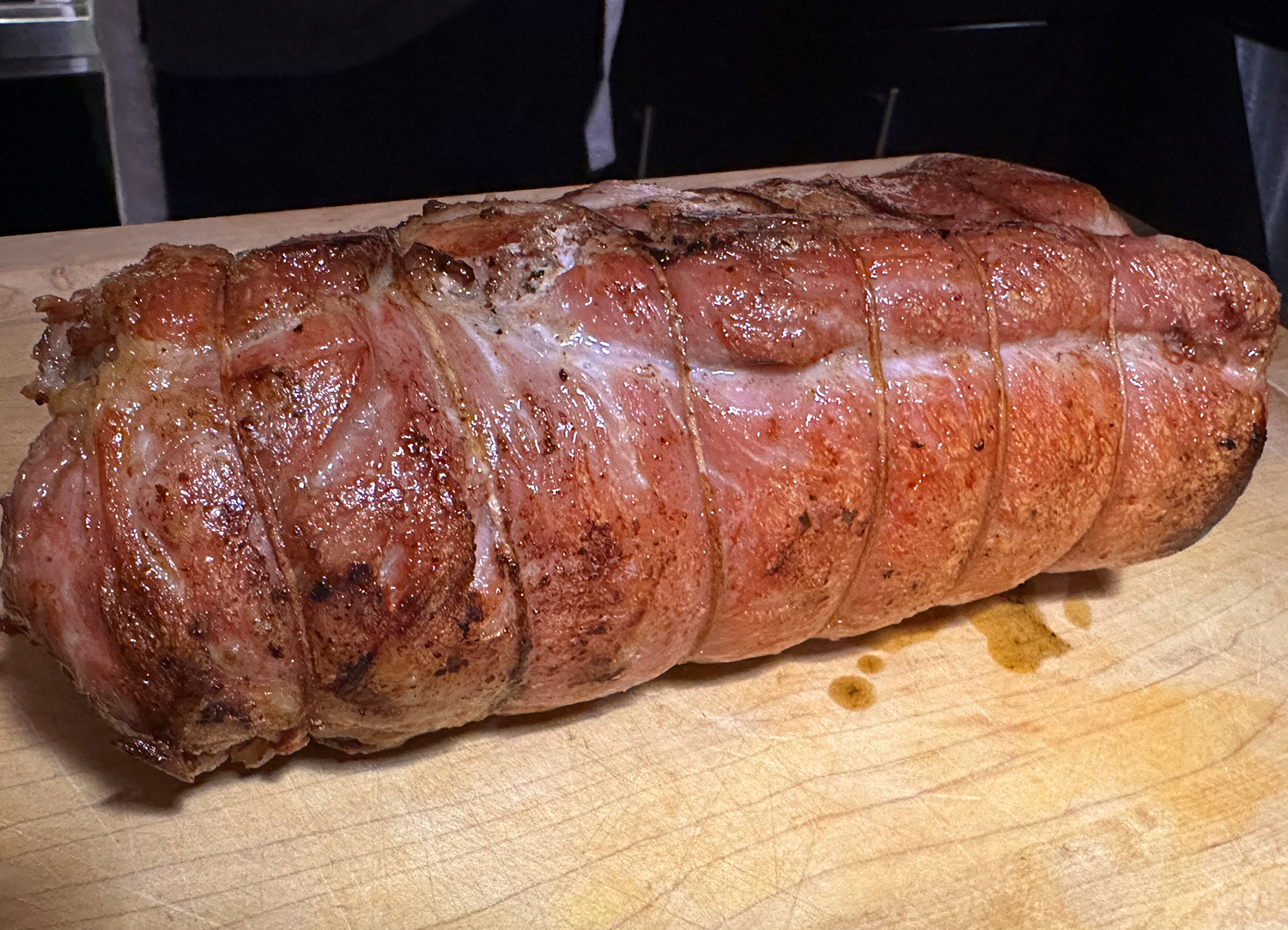
  6. Pat roast dry with paper towels. Heat 2 tablespoons reserved oil in now-empty skillet over high heat until just smoking. Brown roast on fat side and sides (do not brown bottom of roast), 4 to 6 minutes. Transfer roast to carving board and remove twine.
  7. Once lemon halves are cool enough to handle, squeeze into fine-mesh strainer set over bowl. Press on solids to extract all pulp; discard solids. Whisk 2 tablespoons strained lemon juice into bowl with remaining reserved oil. Slice roast into 1/4-inch-thick slices and serve, passing vinaigrette separately.

http://www.lynnandruss.com

Adapted recipe from America’s Test Kitchen

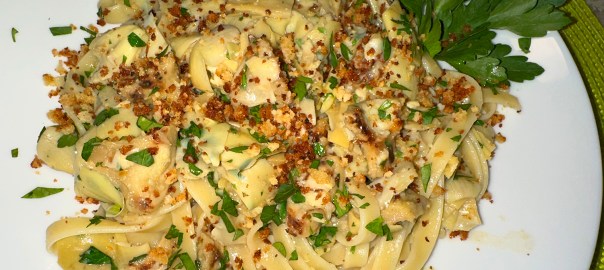
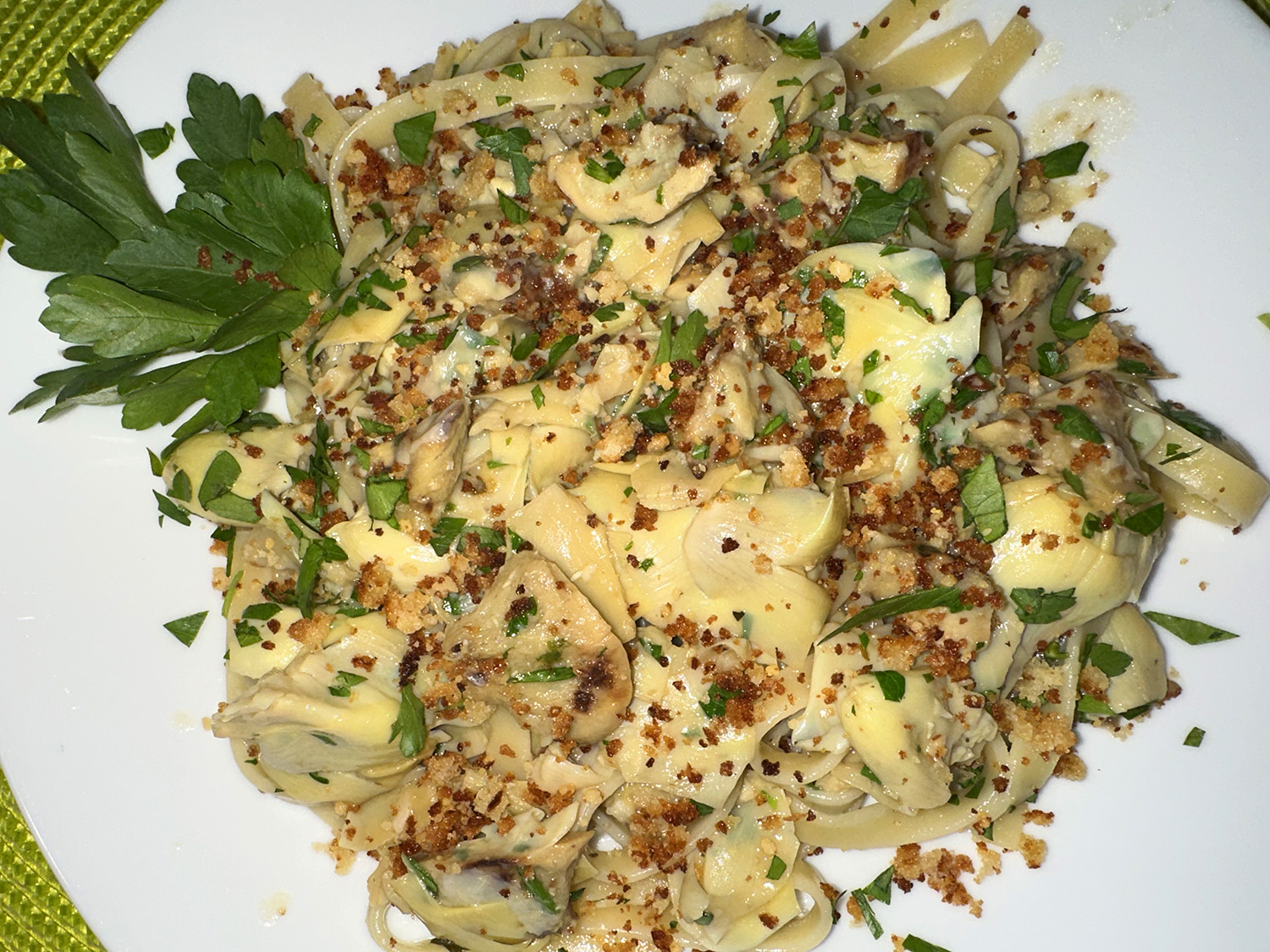
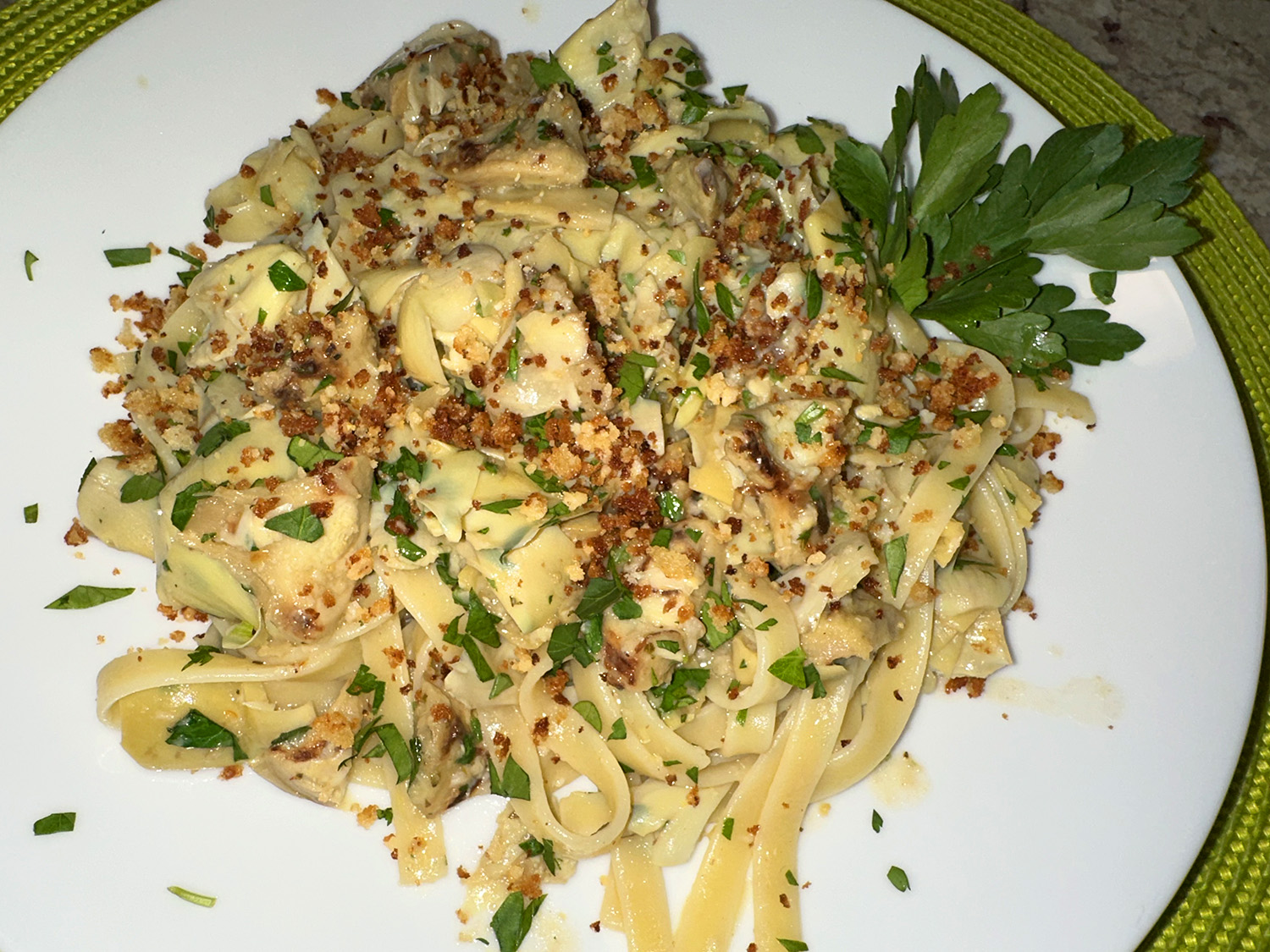
Tagliatelle with Artichokes and Olive Oil for Two

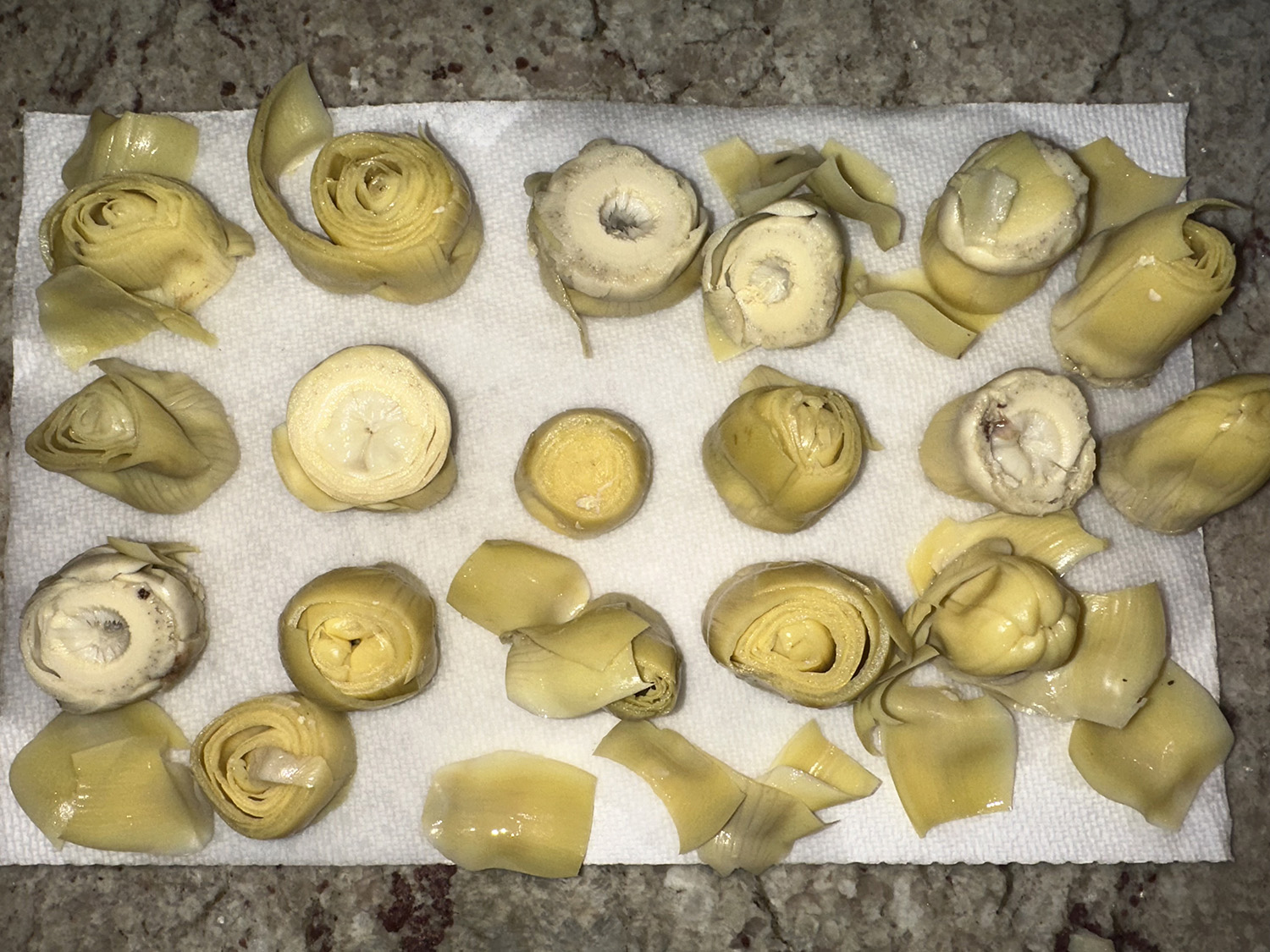
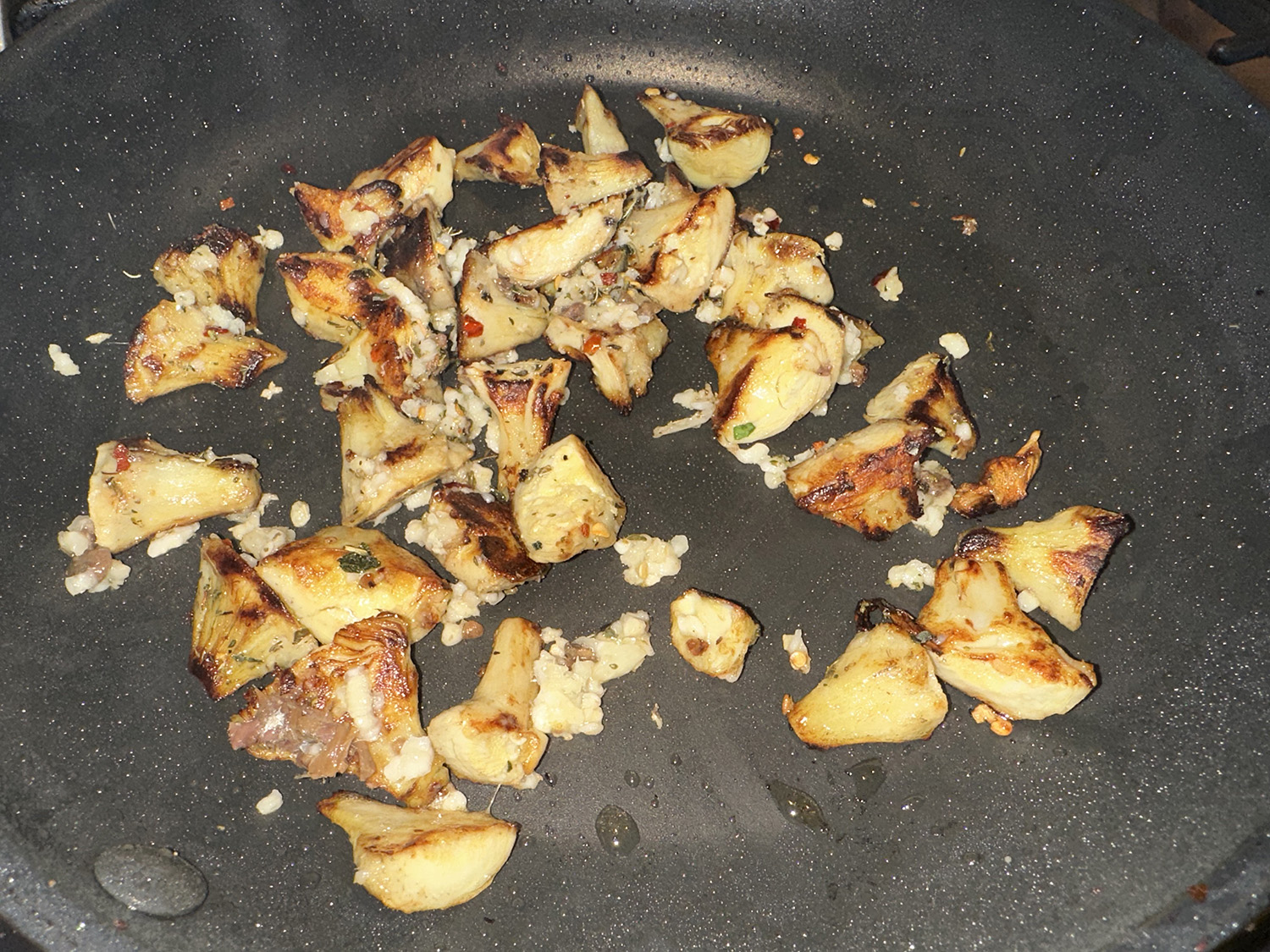
Jarred artichoke hearts and tagliatelle make a quick and elegant dinner. The leaves from jarred artichoke hearts need to be separated from the hearts and then given a quick soak to temper the harsh flavors they pick up from the brine. Slice the hearts in half and then dry them well so that they can be easily browned to bring out their natural nuttiness.

Anchovy gives the sauce savory depth without imparting a fishy taste—don’t omit it; and cream ties together the aromatics, wine, and artichoke flavor. A simple Parmesan bread-crumb topping gives the dish some savory crunch. Even though it adds more carbs, the crumb topping adds another dimension and necessary texture.

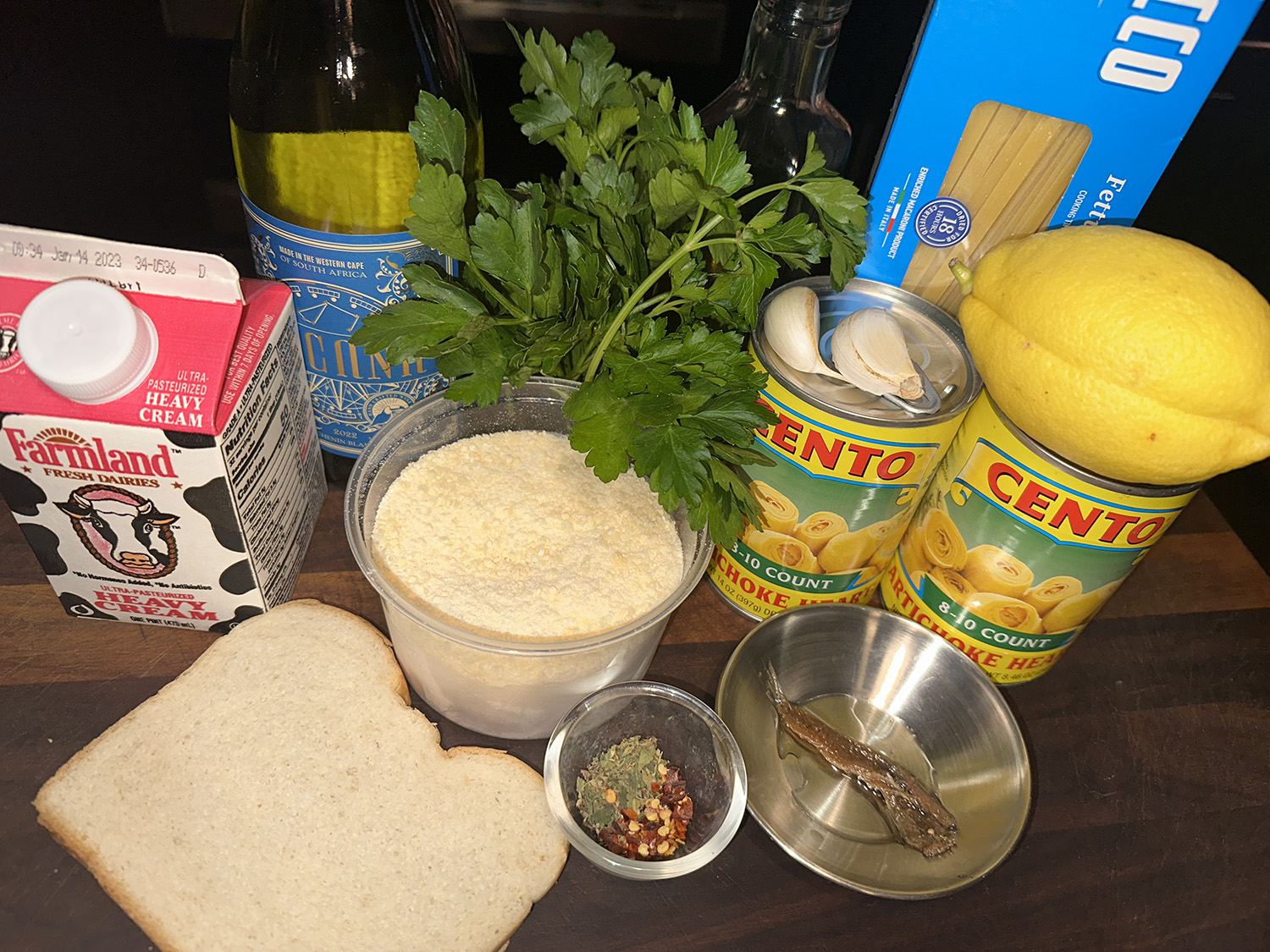
Jarred artichoke hearts labeled “baby” or “cocktail” that are 1 1/2 inches or shorter in length are preferred. Larger artichoke hearts tend to have fibrous leaves. But, if you must use larger hearts, trim the top 1/4 to 1/2 inch from the leaves. Do not use marinated or oil-packed artichoke hearts. You’ll need two 9.9-ounce jars of artichokes for this recipe—however, because we love artichokes, we added two 14-ounce jars.

This recipe can easily be doubled to feed 4 or 5 guests. Unable to source tagliatelle (who knows why, it is usually a popular pasta), we substituted fettuccini, though pappardelle would also work.

Tagliatelle with Artichokes and Olive Oil for Two

  • Servings: 2
  • Difficulty: easy
  • Print

Ingredients

  • 1 ½ cups jarred whole artichoke hearts packed in water, preferably baby or cocktail size
  • 1 slice hearty white sandwich bread, torn into 1-inch pieces
  • 3 ½ Tbsp. extra-virgin olive oil
  • ¼ cup grated Parmesan cheese, plus extra for serving
  • Salt and pepper
  • 2 garlic cloves, minced
  • 1 anchovy fillet, rinsed, patted dry, and minced
  • ¼ tsp. dried oregano
  • Pinch red pepper flakes
  • ¼ cup dry white wine
  • 1 Tbsp. heavy cream
  • 6 oz. tagliatelle
  • 2 Tbsp. minced fresh parsley
  • ½ tsp. grated lemon zest

Directions

  1. Cut leaves from artichoke hearts. Cut hearts in half and dry with paper towels. Place leaves in bowl and cover with water. Let leaves stand for 15 minutes. Drain well.
  2. Pulse bread in food processor until finely ground, 7 to 10 pulses. Heat 1 tablespoon oil in 8-inch nonstick skillet over medium heat until shimmering. Add bread crumbs and cook, stirring constantly, until crumbs begin to brown, 2 to 4 minutes.
  3. Add 2 tablespoons Parmesan and continue to cook, stirring constantly, until crumbs are golden brown, 1 to 2 minutes. Transfer crumbs to bowl and season with salt and pepper to taste. Wipe out skillet.
  4. Heat 1/2 tablespoon oil in now-empty skillet over medium-high heat until shimmering. Add artichoke hearts and pinch salt; cook, stirring frequently, until hearts are spotty brown, 5 to 7 minutes.
  5. Add garlic, anchovy, oregano, and pepper flakes; cook, stirring constantly, until fragrant, about 30 seconds.
  6. Stir in wine and cream and bring to simmer. Remove skillet from heat and stir in artichoke leaves. Set aside.
  7. Meanwhile, bring 2 quarts water to boil in large pot. Add pasta and 1/2 tablespoon salt and cook, stirring often, until al dente. Reserve 3/4 cup cooking water, then drain pasta and return it to pot. Stir in artichoke sauce, remaining 2 tablespoons Parmesan, 1/3 cup reserved cooking water, remaining 2 tablespoons oil, parsley, and lemon zest. Adjust consistency with remaining reserved cooking water as needed. Season with salt and pepper to taste. Serve, passing bread-crumb mixture and extra Parmesan separately.

http://www.lynnandruss.com

Adapted from a recipe by Cook’s Illustrated

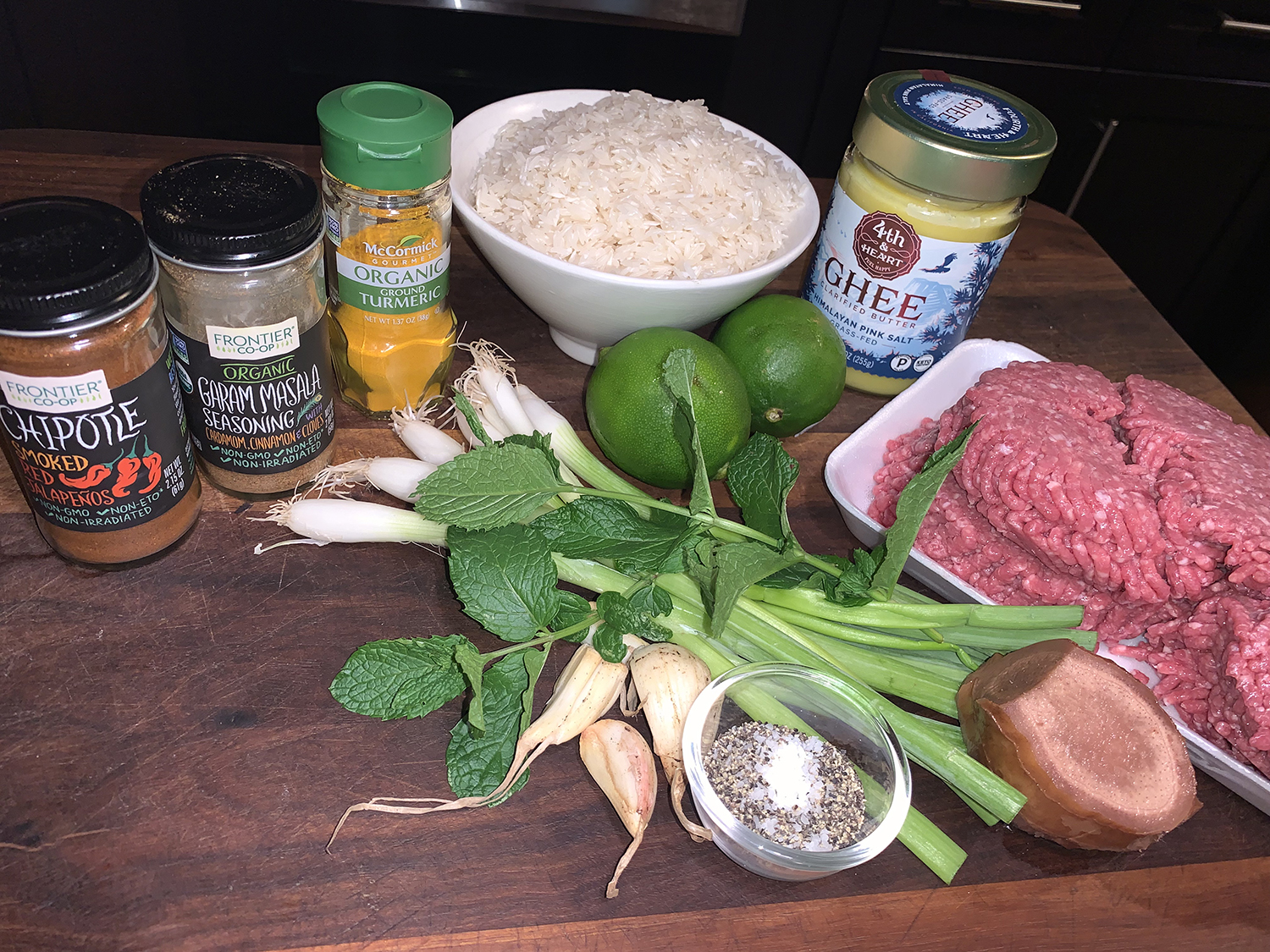
Ground Lamb Pulao

The aroma of fresh mint and spices permeates this bright, turmeric-painted pulao made with basmati rice and ground lamb. This recipe, which has origins in the ground meat pulaos of India, is quite flexible and open to additions: a handful of fresh dill, a generous sprinkling of fried peanuts or other nuts, or crispy, fried onions tossed in just before serving.

It also works well if you substitute beef for the lamb, and really needs no sides, except maybe some raita, creamy plain yogurt or a salad. And we did just that, a simple side salad completed our meal.

We had plenty leftover with only the two of us for dinner. The extras were refrigerated and a day later reheated and enjoyed for lunch.

Ground Lamb Pulao

  • Servings: 4-6
  • Difficulty: easy
  • Print

Ingredients

  • 2 cups basmati rice
  • 1 ½ lbs. ground lamb or beef
  • 1 tsp. ghee, unsalted butter or extra-virgin olive oil
  • 4 garlic cloves, peeled and grated
  • 2 Tbsp. grated fresh ginger
  • 1 ½ tsp. garam masala
  • ½ tsp. red chile powder
  • ½ tsp. black pepper
  • 2 tsp. kosher salt
  • 3 Tbsp. lime juice
  • ½ tsp. ground turmeric
  • 1 bunch scallions (about 6), trimmed and thinly sliced
  • ¼ cup loosely packed fresh mint leaves

  1. Check the rice and discard any debris. Place the rice in a fine-mesh sieve and rinse under running water until the water runs clear. Place the rice in a bowl, cover with water by 1 inch, and soak for 30 minutes.
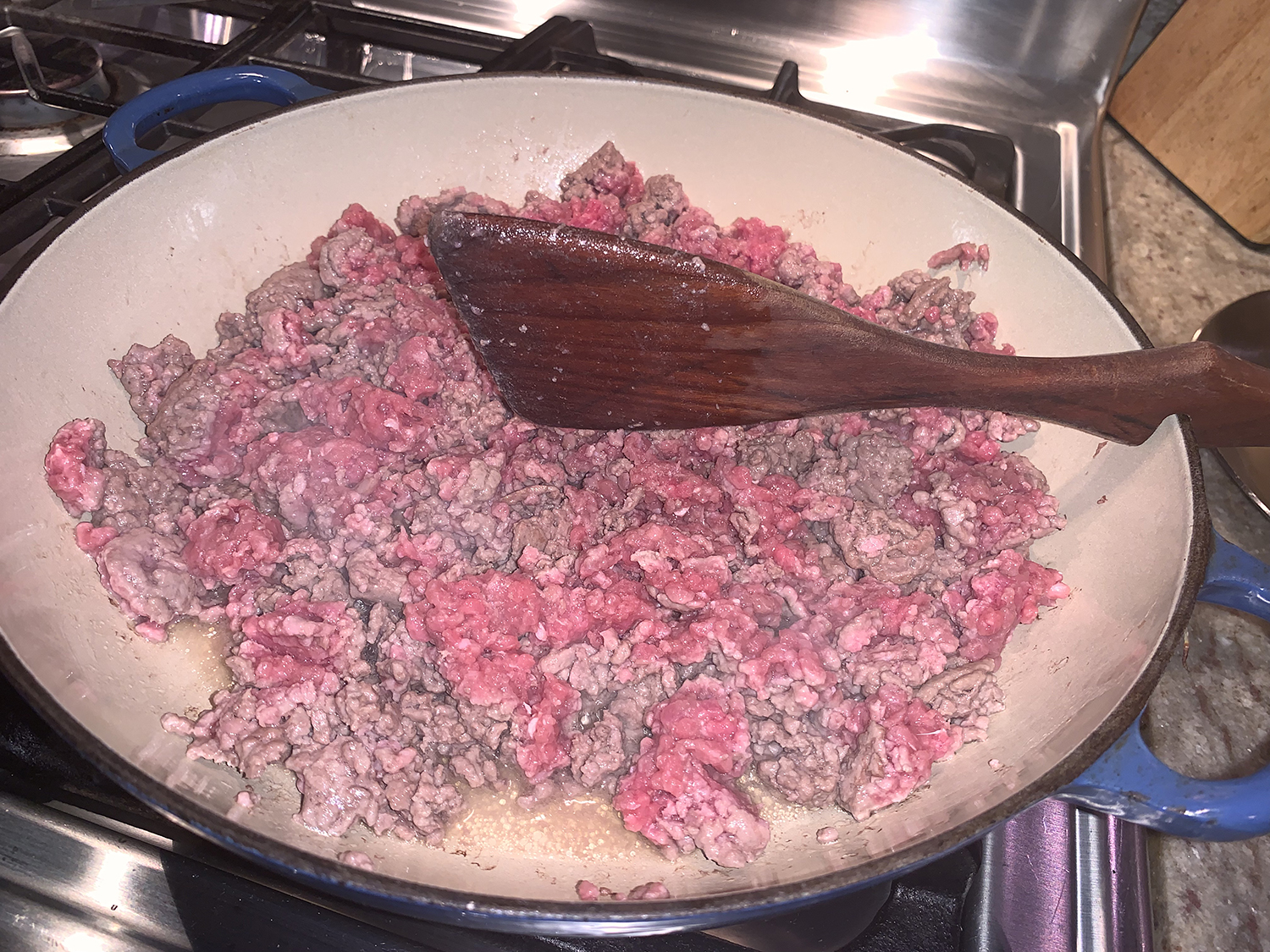
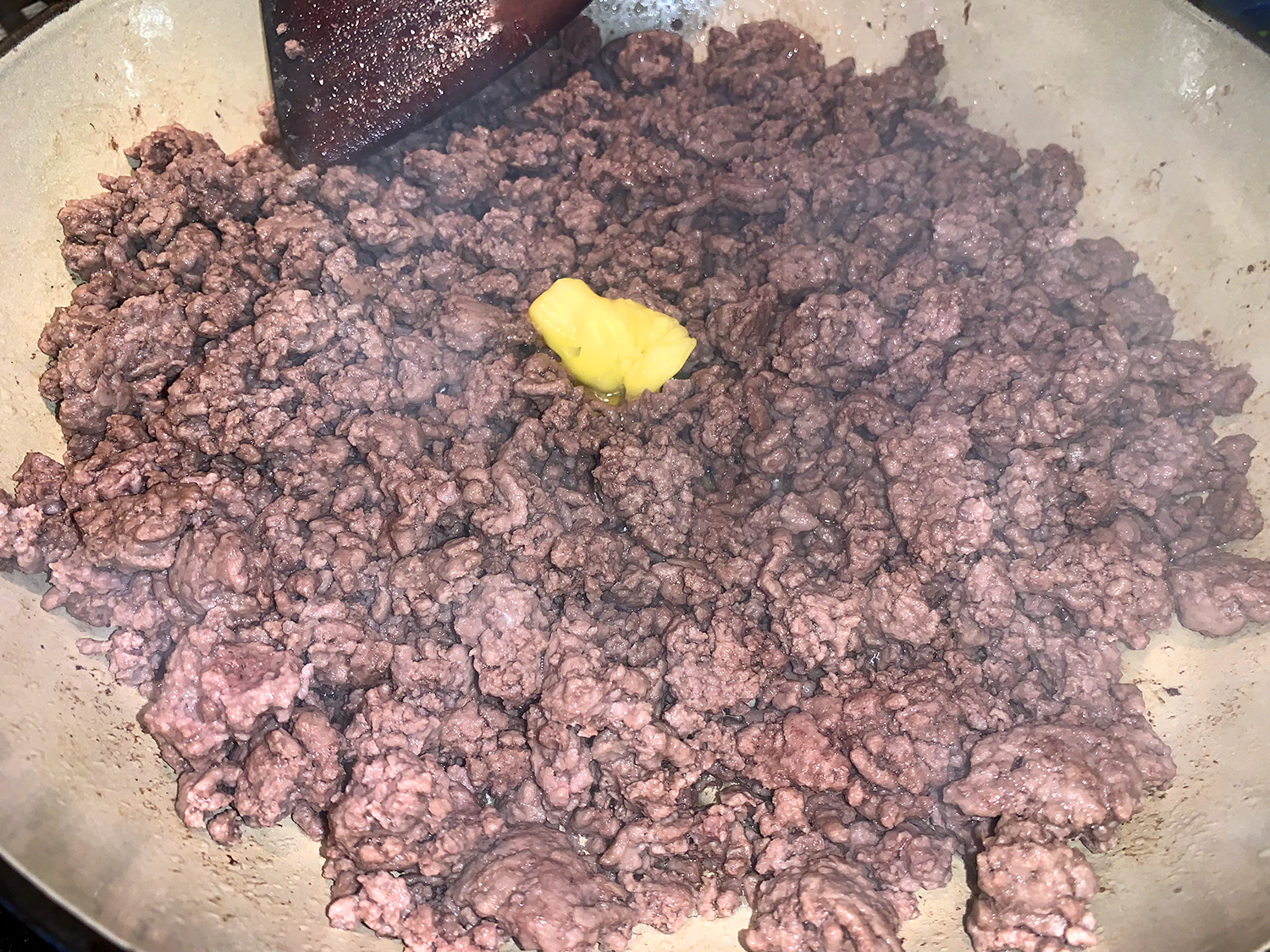
  2. As the rice soaks, cook the lamb: Place a medium saucepan with a heavy lid or a Dutch oven over medium heat. When the saucepan is hot, break the lamb into chunks, and cook until the fat renders, about 2 minutes. Drain most of the fat, leaving behind 1 to 2 tablespoons, and continue to cook the lamb until it browns, another 2 minutes.
  3. Add the ghee and heat over medium until it melts, 30 to 45 seconds. Add the garlic and ginger and sauté for 1 minute.
  4. Add the garam masala, chile powder, black pepper and 1 teaspoon salt and sauté until the spices are fragrant, 1 minute. Add 1 tablespoon lime juice and stir until the flavors come together, about 1 minute.
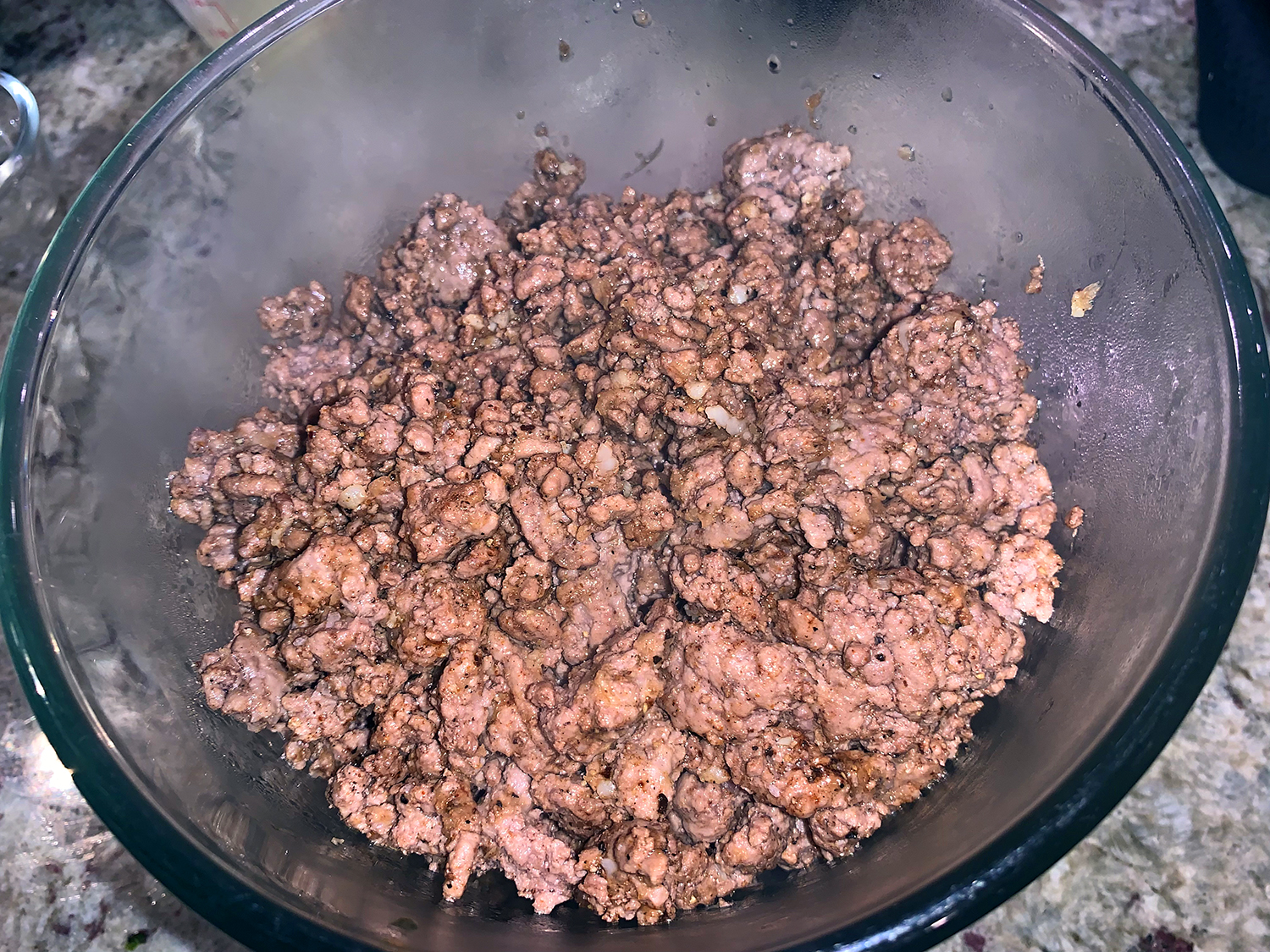
  5. Transfer the lamb mixture to a large bowl and keep warm. (To do so, you could transfer it to a 250-degree oven.) Clean the saucepan and wipe dry.
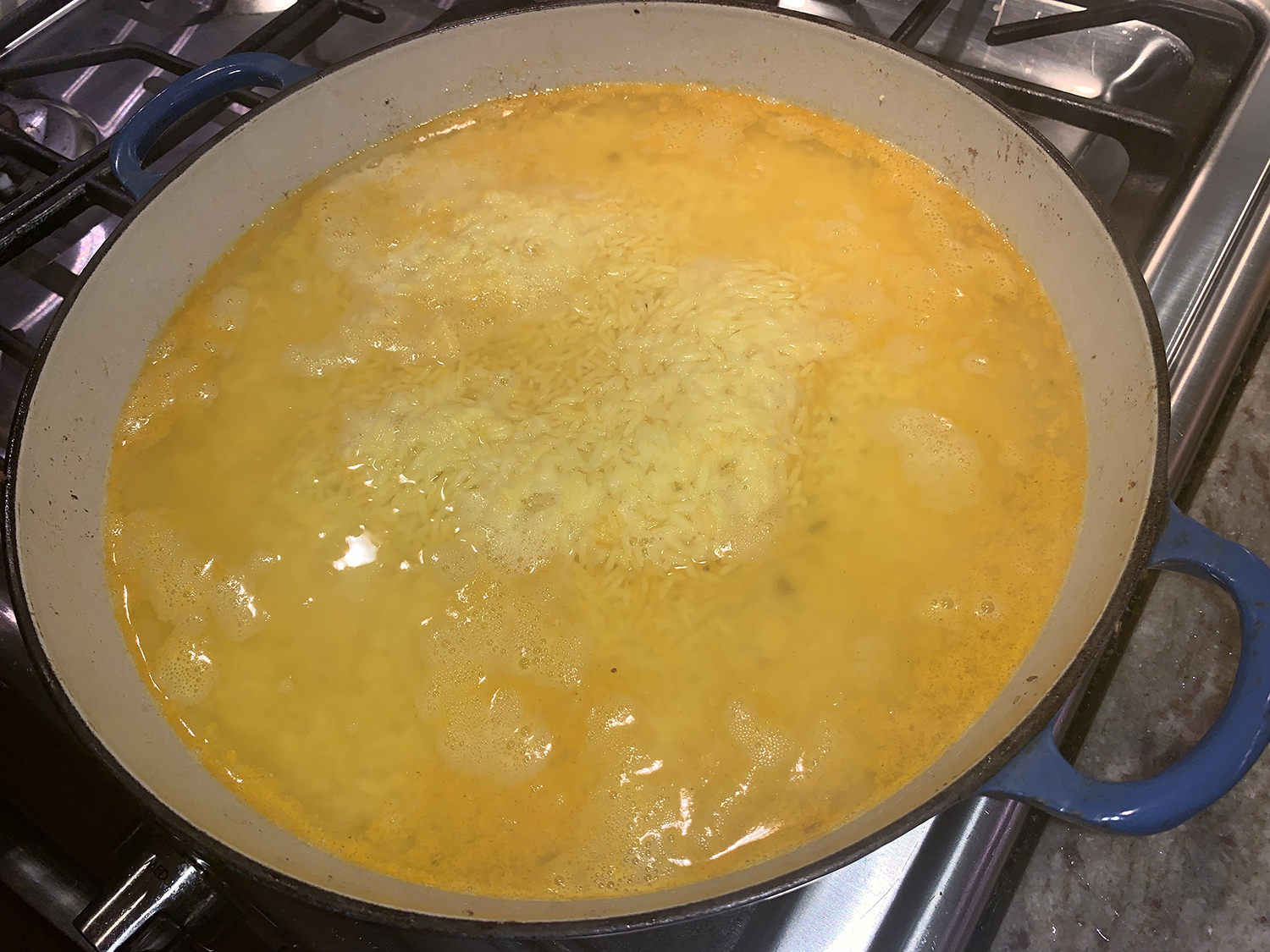
  6. Drain the soaked rice. Add to the same saucepan and cover with water by 1 inch. Stir in 1 tablespoon lime juice, the turmeric and the remaining 1 teaspoon salt. Bring to a boil over medium heat, then cover, and reduce heat to simmer until the rice absorbs all the water, about 10 minutes. (Do not stir the rice as it cooks, or the grains might break.) Remove the saucepan from heat, and let sit, uncovered, for 5 minutes.
  7. Stir the rice into the cooked lamb mixture, then drizzle with the remaining 1 tablespoon lime juice. Fold the scallions and mint into the rice, and serve immediately.

Directions

http://www.lynnandruss.com

Adapted from a recipe by Nik Sharma for NYTimes Cooking

Coconut-Miso Salmon Curry

This light, delicate weeknight curry comes together in less than 30 minutes and is defined by its deep miso flavor. Miso is typically whisked into soups toward the end of the recipe, but sweating it directly in the pot with ginger, garlic and a little oil early on helps the paste caramelize, intensifying its earthy sweetness.

Unfortunately, I misread the instructions and didn’t add the miso until after the coconut milk had been boiling for several minutes, missing out on the nice caramelization—mea culpa. While the overall flavor is on the mild side, adding a tablespoon of red Thai curry paste at the same time as introducing the miso to the pot, will provide a more pronounced touch of heat and deepen the overall color.
Adding coconut milk creates a rich broth that works with a wide range of seafood. Salmon is used here, but flaky white fish, shrimp or scallops would all benefit from this quick poaching method. A squeeze of lime and a flurry of fresh herbs keep this curry bright and citrusy. For a hit of heat, garnish with sliced fresh jalapeño or serrano chile peppers.
Coconut-Miso Salmon Curry

  • Servings: 4
  • Difficulty: easy
  • Print

Ingredients

  • 2 Tbsp. safflower or canola oil
  • 1 medium red onion, halved and sliced 1/2-inch thick (about 2 cups)
  • 1 (1-inch) piece fresh ginger, minced (about 2 Tbsp.)
  • 3 garlic cloves, thinly sliced
  •  Kosher salt and black pepper
  • ¼ cup white miso
  • ½ cup unsweetened, full-fat canned coconut milk
  • 1 1/2-lb. salmon fillet, cut into 2-inch pieces
  • 5 oz. baby spinach (about 5 packed cups)
  • 1 Tbsp. fresh lime juice, plus lime wedges for serving
  •  Steamed rice, such as jasmine or basmati, for serving
  • ¼ cup chopped fresh basil
  • ¼ cup chopped fresh cilantro

Directions

  1. In a large pot, heat 2 tablespoons oil over medium. Add onion, ginger and garlic and season with salt and pepper. Cook, stirring occasionally, until softened, about 3 minutes.
  2. Add miso and cook, stirring frequently, until miso is lightly caramelized, about 2 minutes.
  3. Add coconut milk and 3 cups water and bring to a boil over high heat. Cook until liquid is slightly reduced, about 5 minutes.
  4. Stir in salmon, reduce the heat to medium-low and simmer gently until just cooked through, about 5 minutes. Turn off heat and stir in spinach and lime juice.
  5. Divide rice among bowls. Top with salmon curry, basil and cilantro. Serve with lime wedges for squeezing on top.

http://www.lynnandruss.com

Adapted from a recipe by Kay Chun for NYTimes Cooking

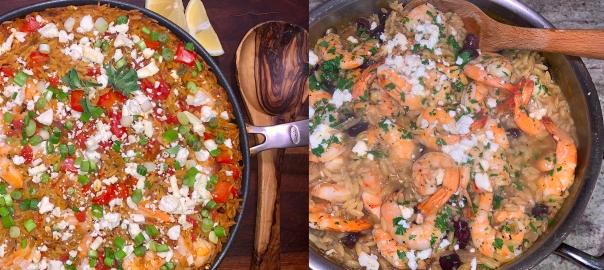
Orzo with Shrimp: Two Recipes

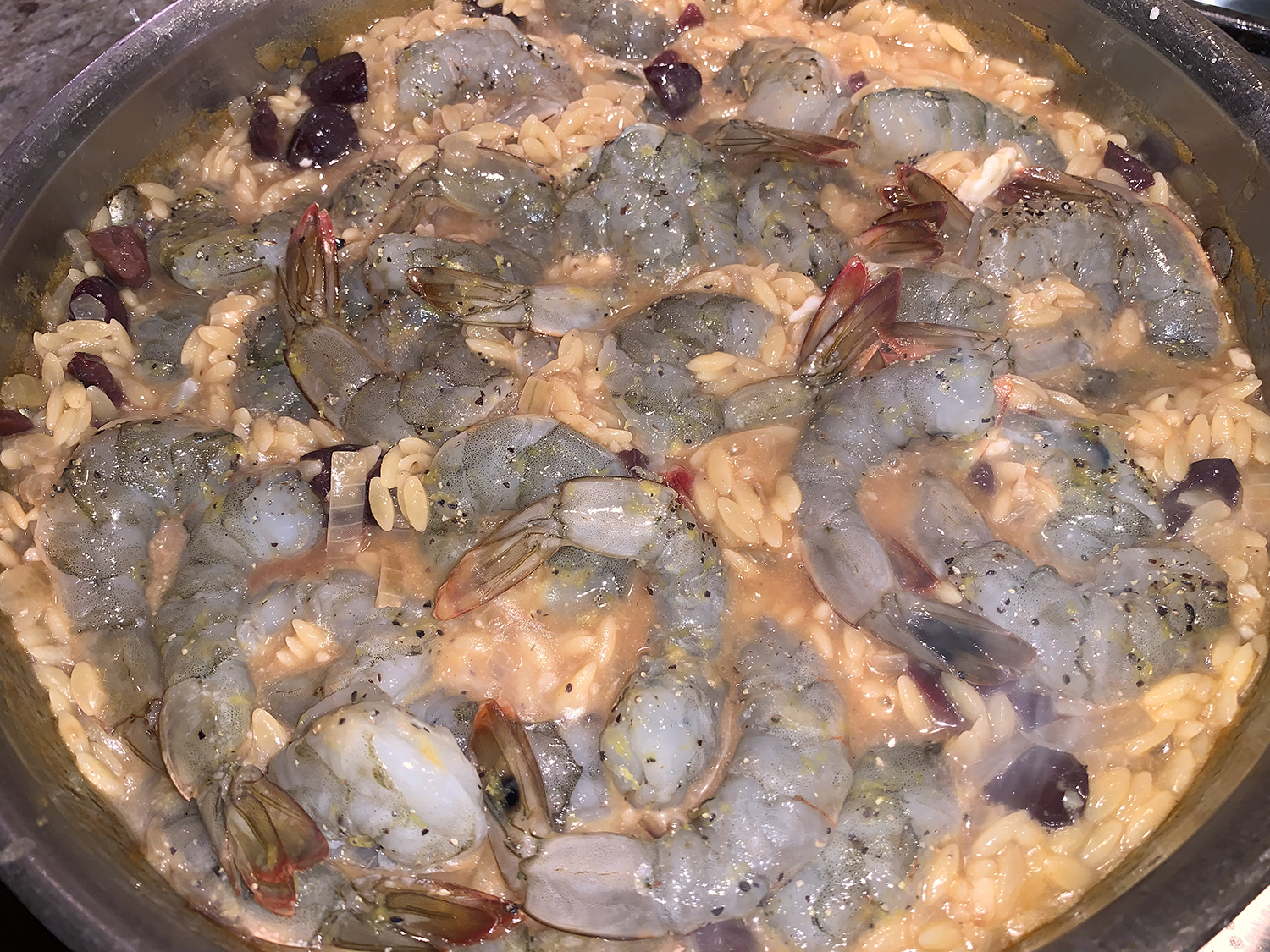
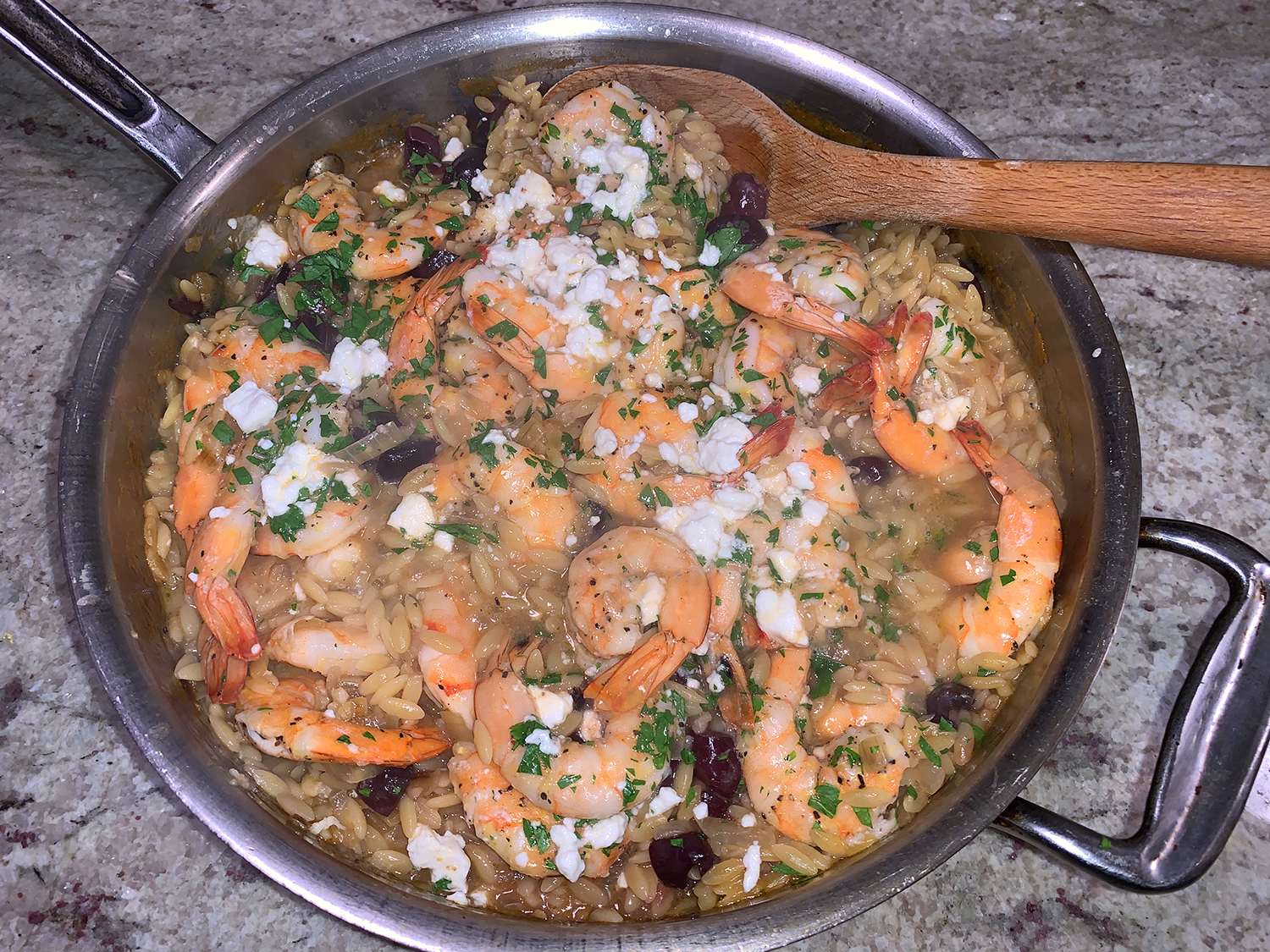
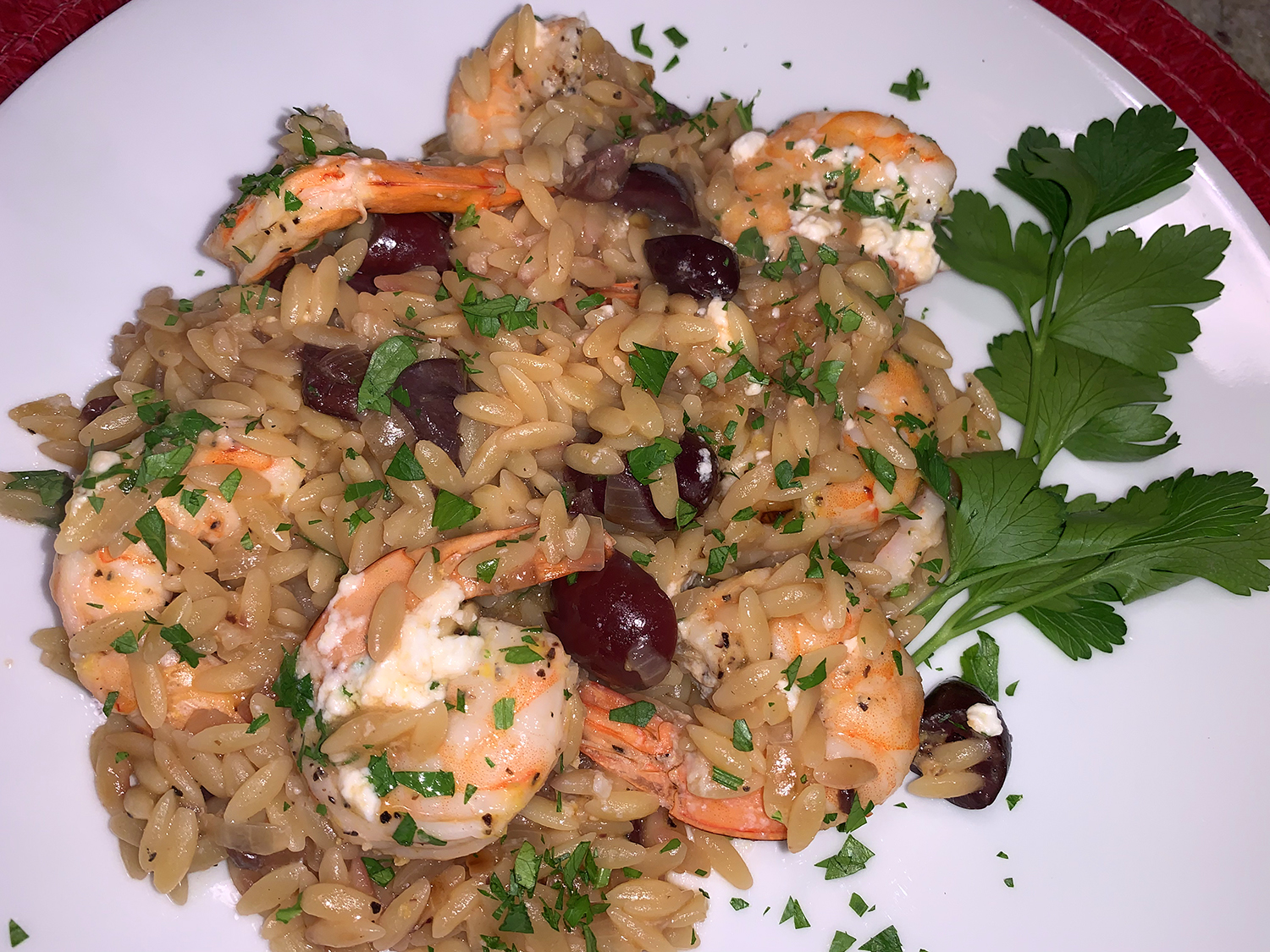
Does a Mediterranean diet appeal to you? Then these two recipes might be worth a try. The first from Cook’s Country, Orzo with Shrimp, Feta and Lemon dish will grab your attention. Cooking the orzo pilaf-style gives it extra flavor and allows you to control the slightly creamy consistency.

To keep this meatless, use seafood/shellfish stock as opposed to chicken broth. Also, if the broth you use is on the bland side, use 4 cups of the stock and omit the water. If, like our homemade shellfish stock, it is intense, dilute it with two cups of water.

Adjust the amounts of olives and feta to suit your own preferences. One version of the recipe indicated only a half cup of Kalamatas and only 2 ounces of feta, while the list below indicates double of each.

Because we cooked our meal in a 10-inch-wide nonstick pan, the shrimp took an extra two minutes to become opaque. Keep that in mind if using less than a 12-inch skillet.

Orzo with Shrimp, Feta and Lemon

  • Servings: 4
  • Difficulty: easy
  • Print

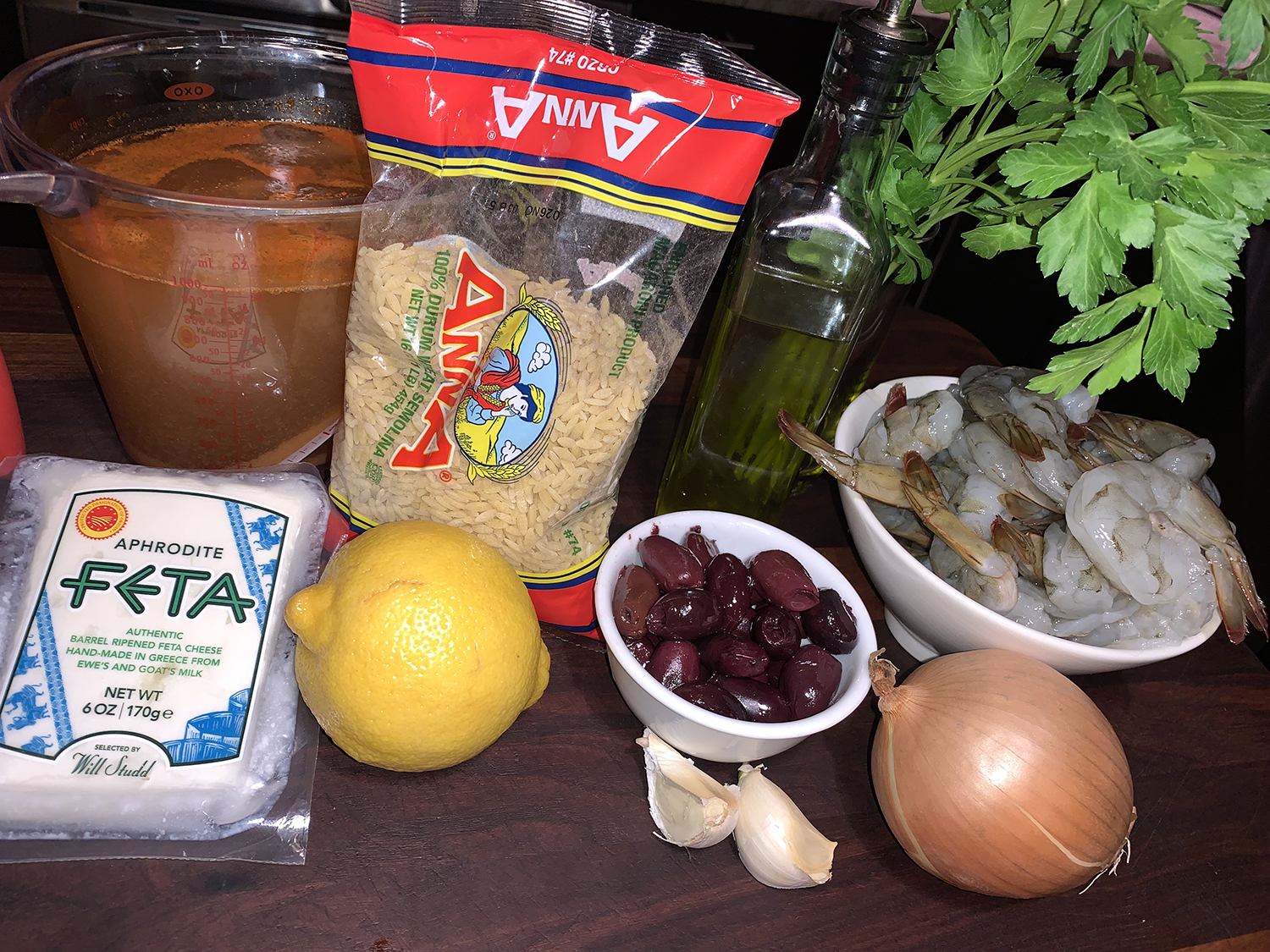
Ingredients

  • 1 Tbsp. grated lemon zest, plus 1 Tbsp. juice
  • Salt and pepper
  • 1 ½ lbs. extra-large shrimp (21 to 25 per pound), peeled and deveined
  • 2 Tbsp. extra-virgin olive oil, plus extra for drizzling
  • 1 onion, chopped fine
  • 2 garlic cloves, minced
  • 2 cups orzo
  • 2 cups seafood (or chicken) broth
  • 2 cups water
  • 1 cup pitted Kalamata olives, chopped coarse
  • 4 oz. feta cheese, crumbled (1 cup)
  • Fresh parsley, for garnish

Directions

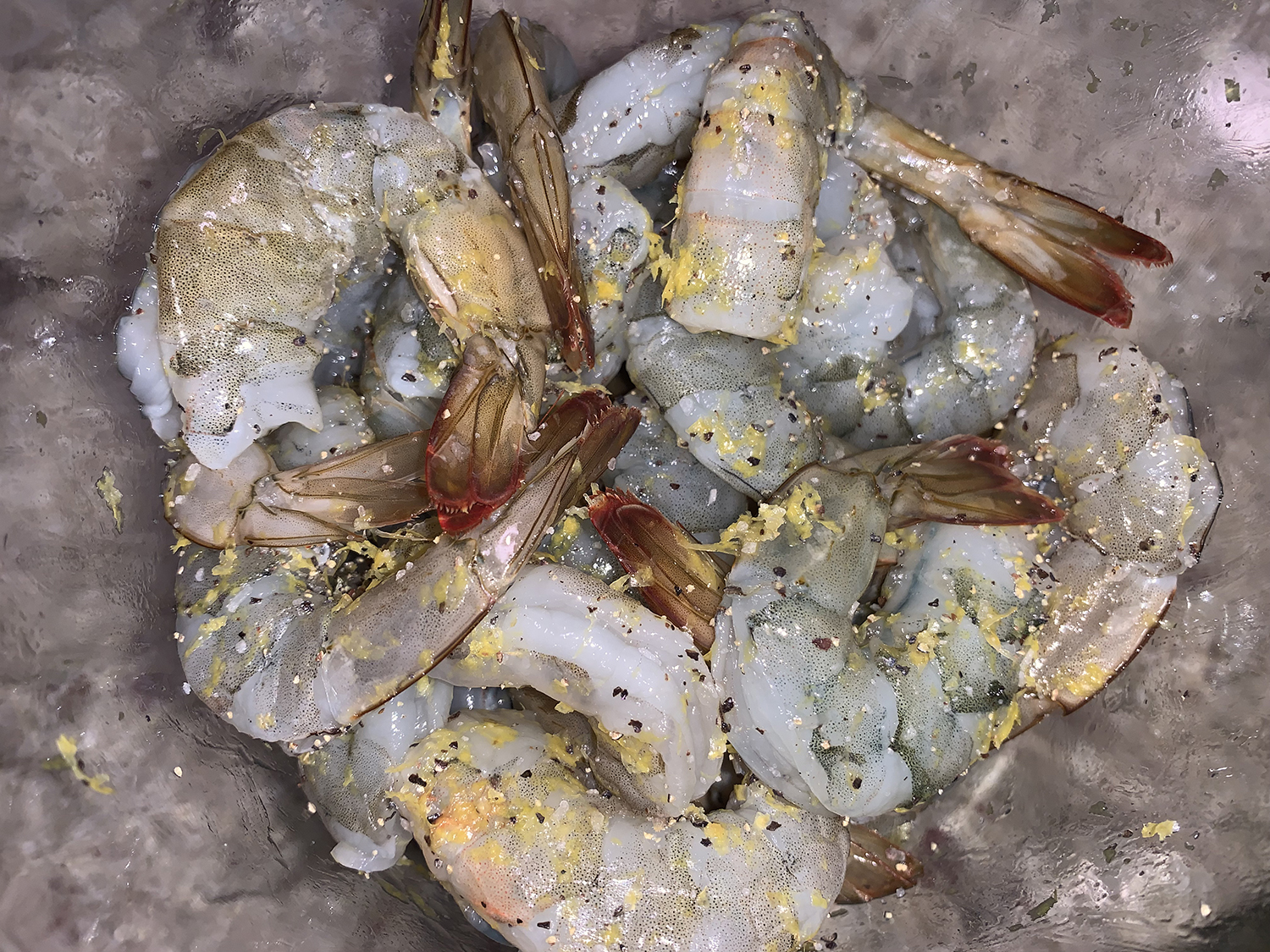
  1. Mix lemon zest, 1/2 teaspoon salt, and 1/2 teaspoon pepper together. Pat shrimp dry with paper towels and toss with lemon-salt mixture to coat; set aside.
  2. Heat 1 tablespoon oil in 12-inch nonstick skillet over medium-high heat until just smoking. Add onion and cook until softened, about 4 minutes.
  3. Stir in garlic and cook until fragrant, about 30 seconds.
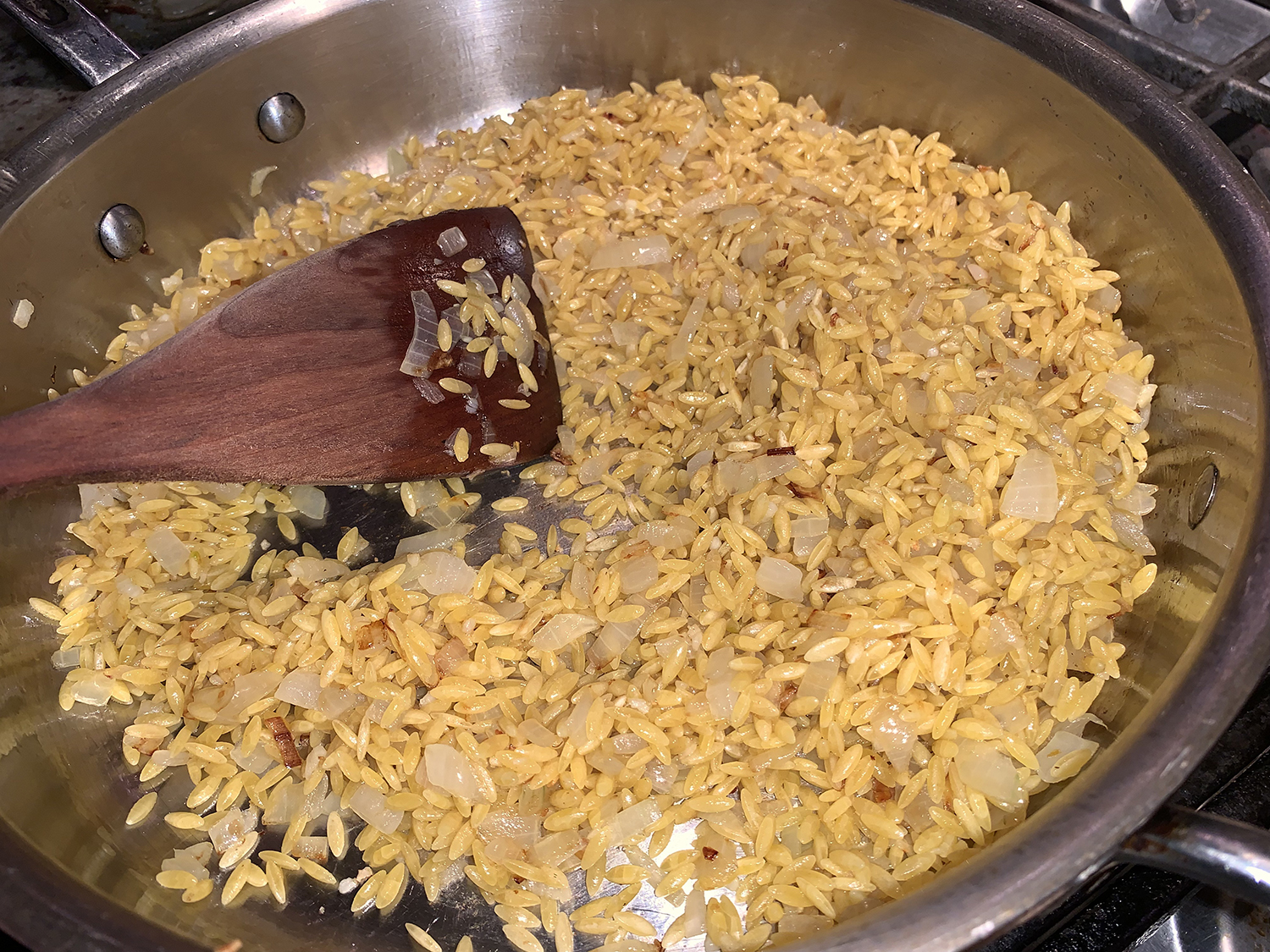
  4. Stir in orzo and cook, stirring frequently, until orzo is coated with oil and lightly browned, about 4 minutes.
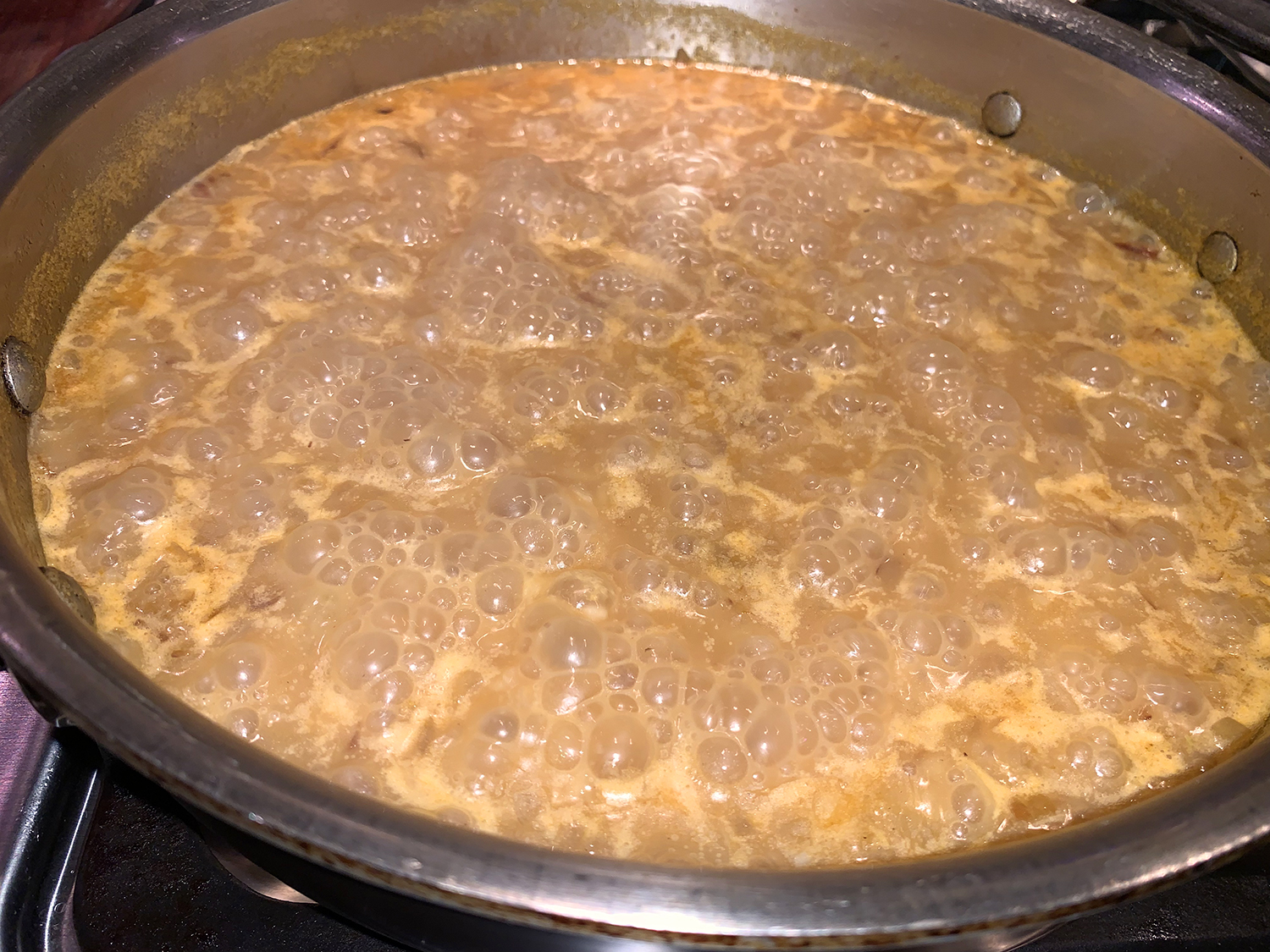
  5. Add broth and water, bring to boil, and cook, uncovered, until orzo is al dente, about 6 minutes.
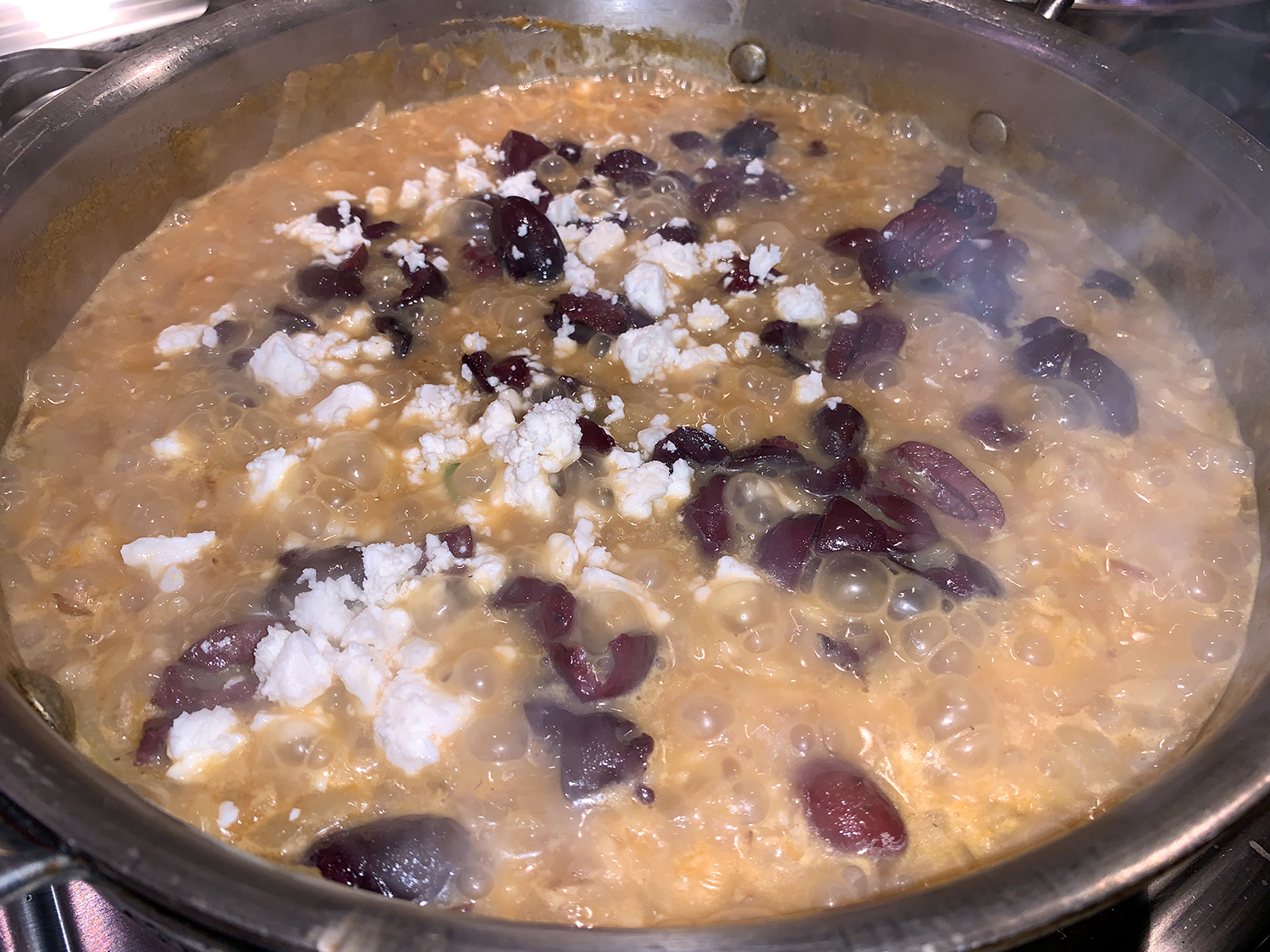
  6. Stir in olives, 1/2 cup feta, and lemon juice. Season with salt and pepper to taste.
  7. Reduce heat to medium-low, nestle shrimp into orzo, cover, and cook until shrimp are pink and cooked through, about 5 minutes.
  8. Sprinkle remaining 1/2 cup feta over top and drizzle with extra oil. Serve.

http://www.lynnandruss.com

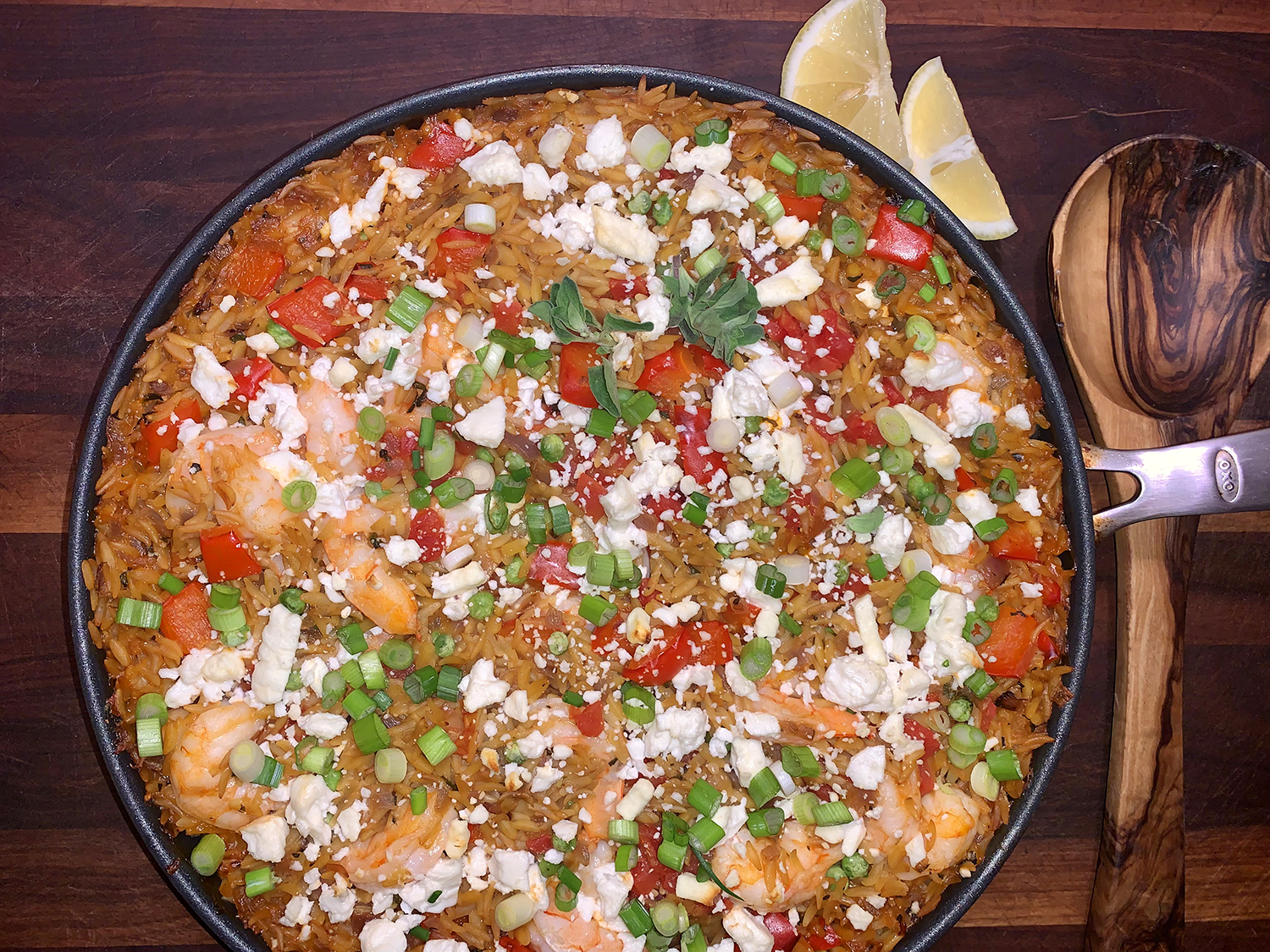
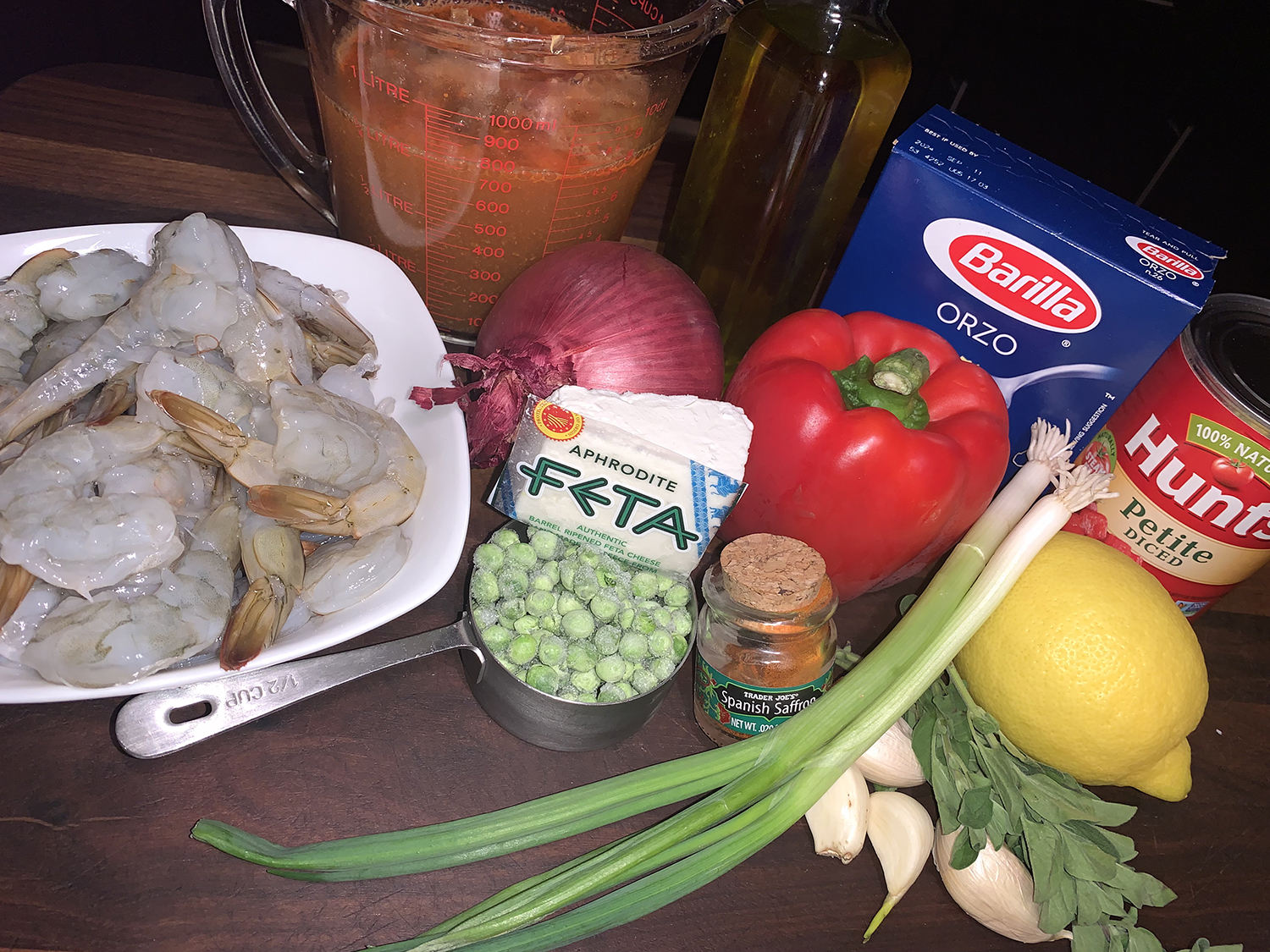
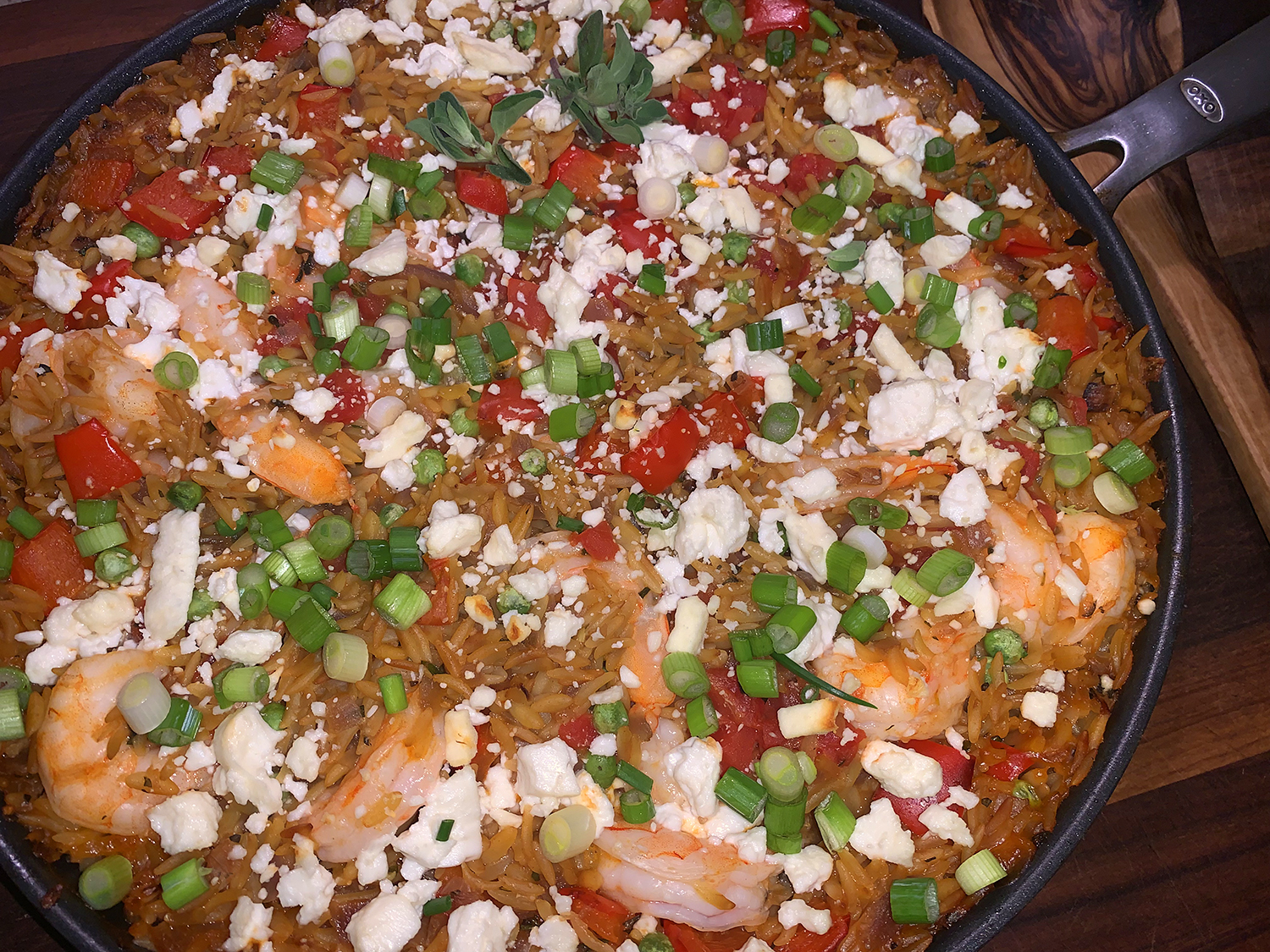
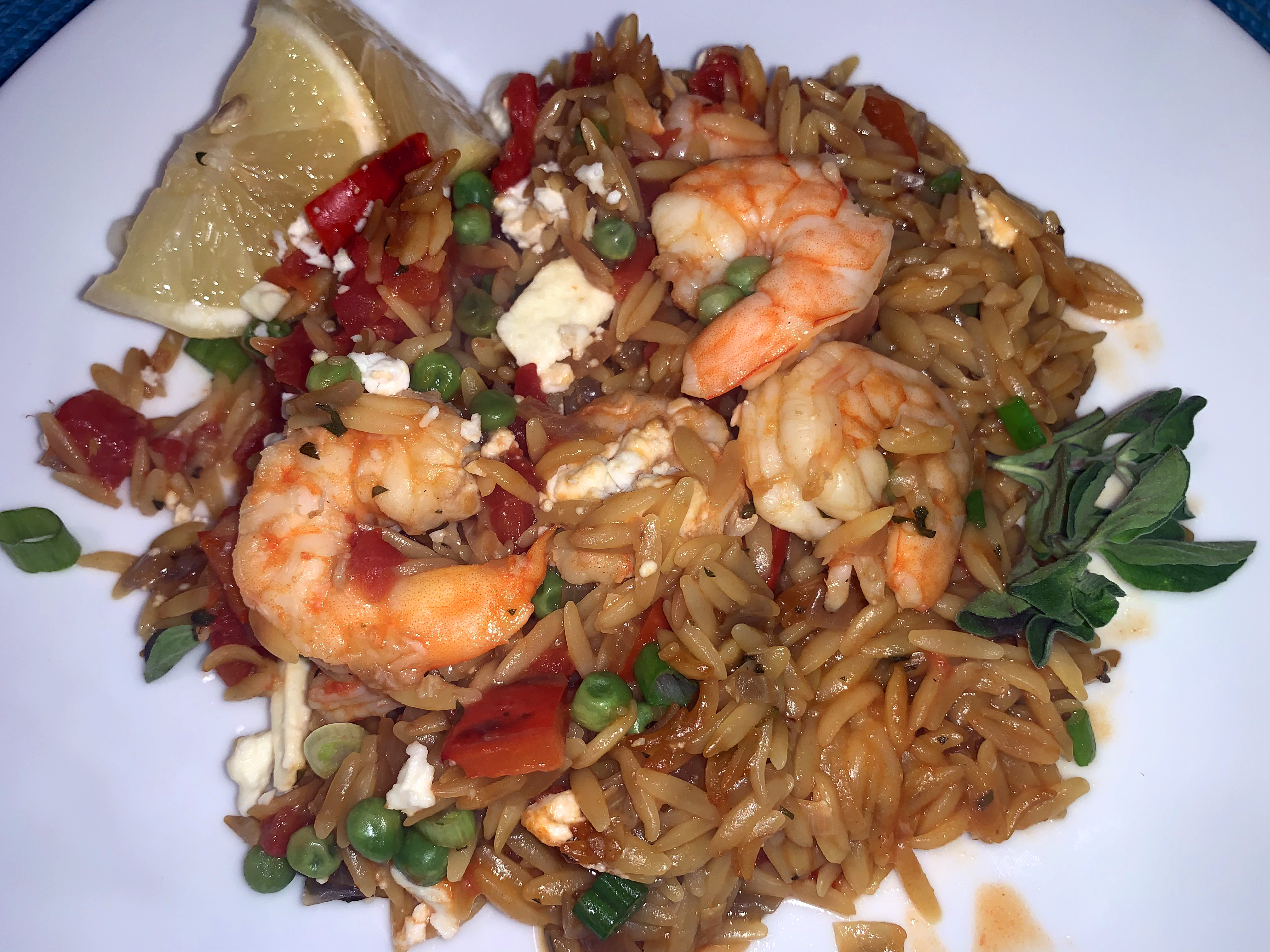
The second recipe, Baked Shrimp and Orzo with Feta and Tomatoes, is another Mediterranean-inspired shrimp dish similar to the Orzo with Shrimp, Feta and Lemon above, however this version gets started on the cooktop and then baked in the oven. It only calls for 1 pound of shrimp but we had 1 1⁄2 pounds and decided to use it all. The 12-inch skillet was brimming full. Our other change was incorporating homemade shellfish stock for the chicken broth.

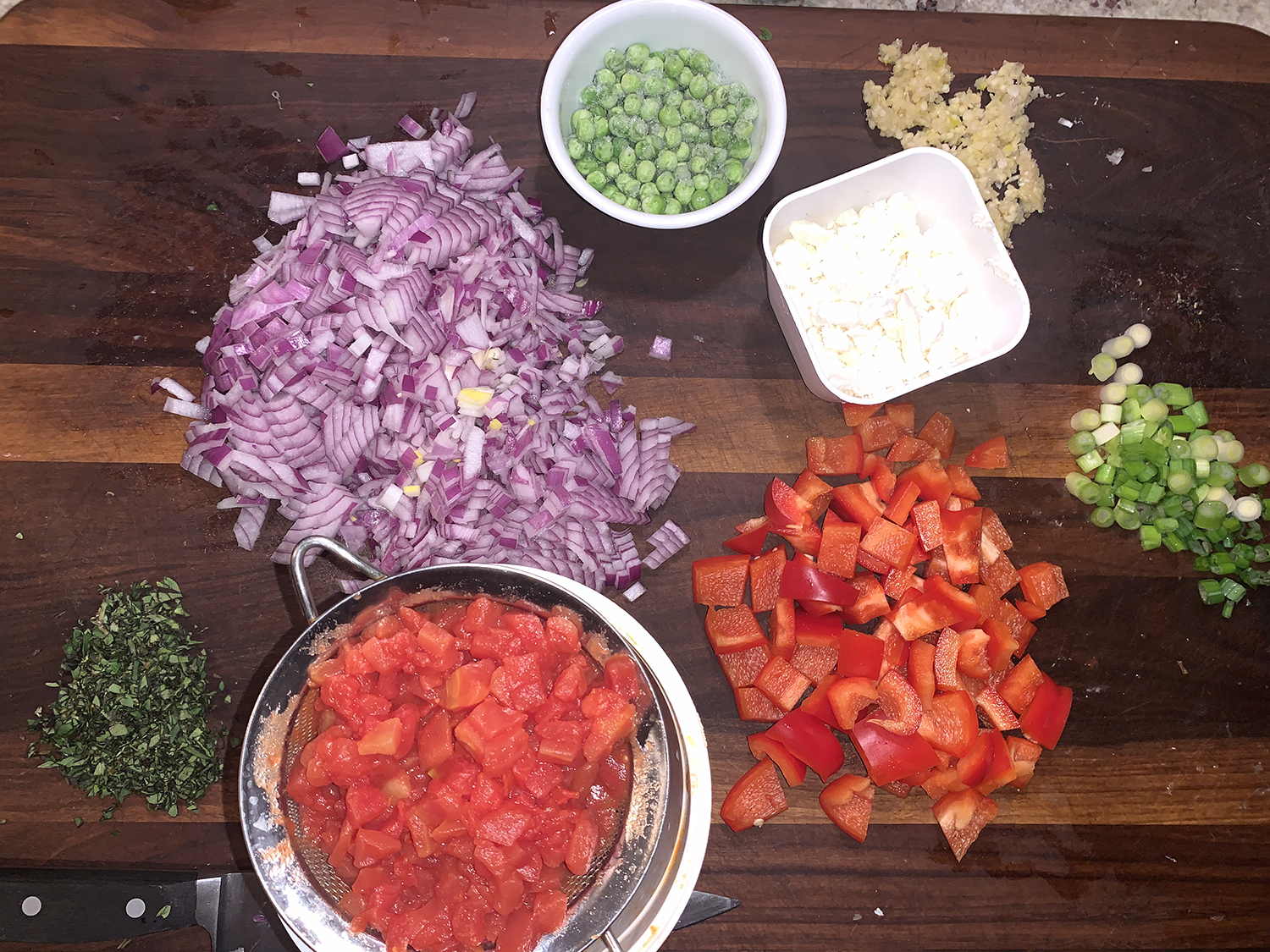
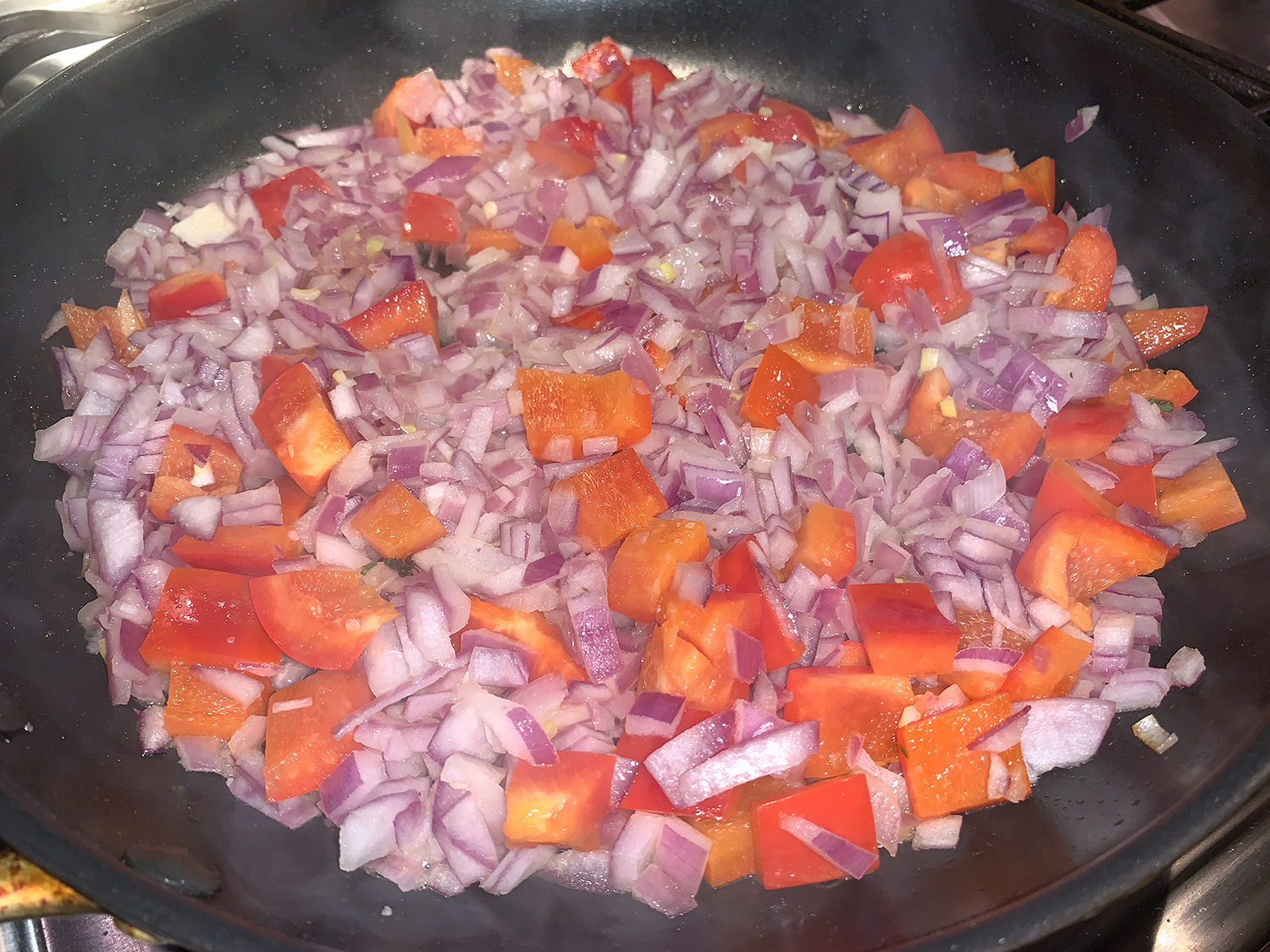
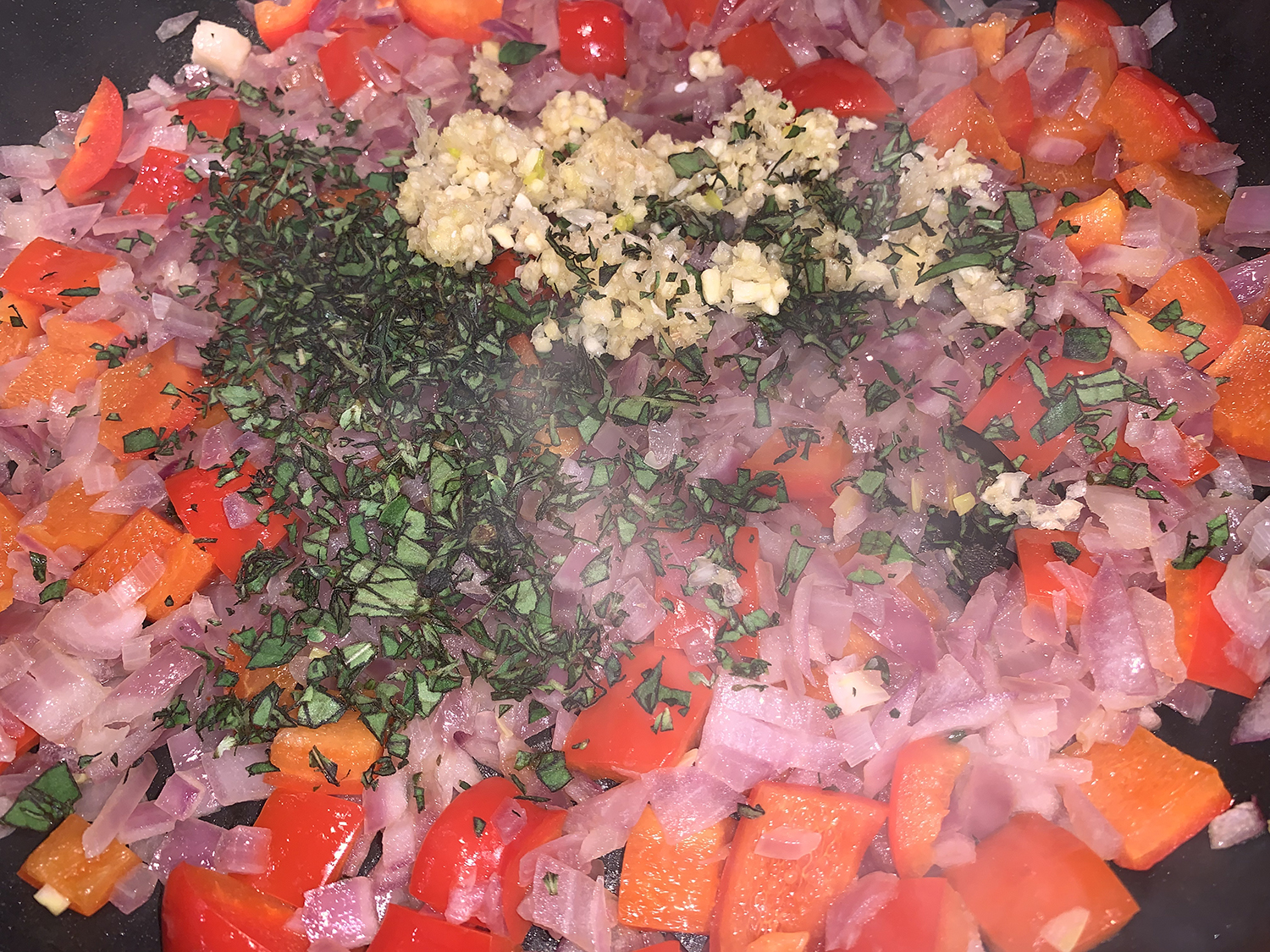
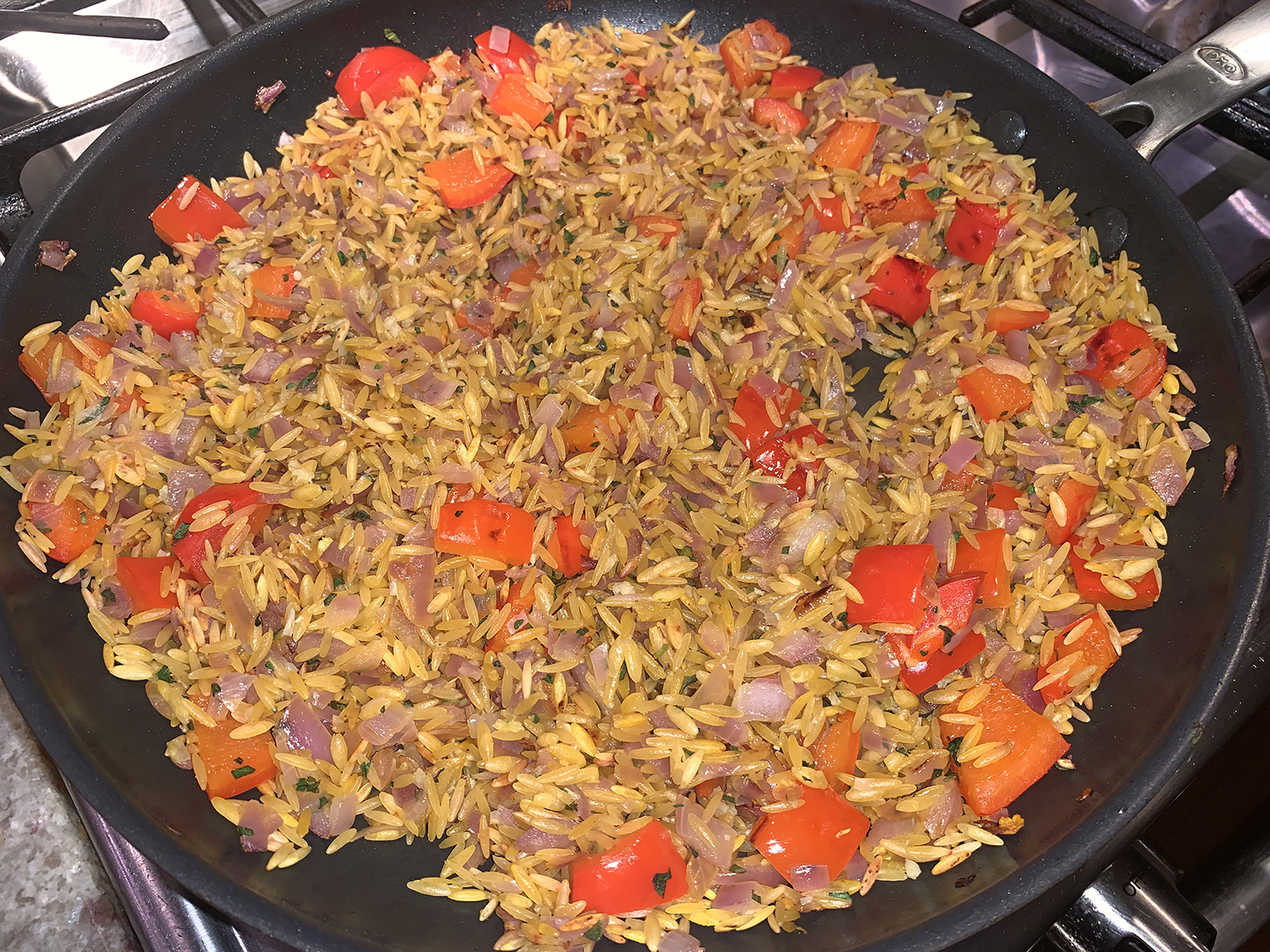
To build in plenty of Mediterranean flavor, start by sautéing chopped onion and red bell pepper, to soften them before adding in minced garlic and oregano. To guarantee perfectly cooked shrimp and pasta, sauté the orzo in the aromatics to unlock its toasty notes. The crumbled saffron threads, though not traditional, introduce a sunny hue and warm, complex flavor.

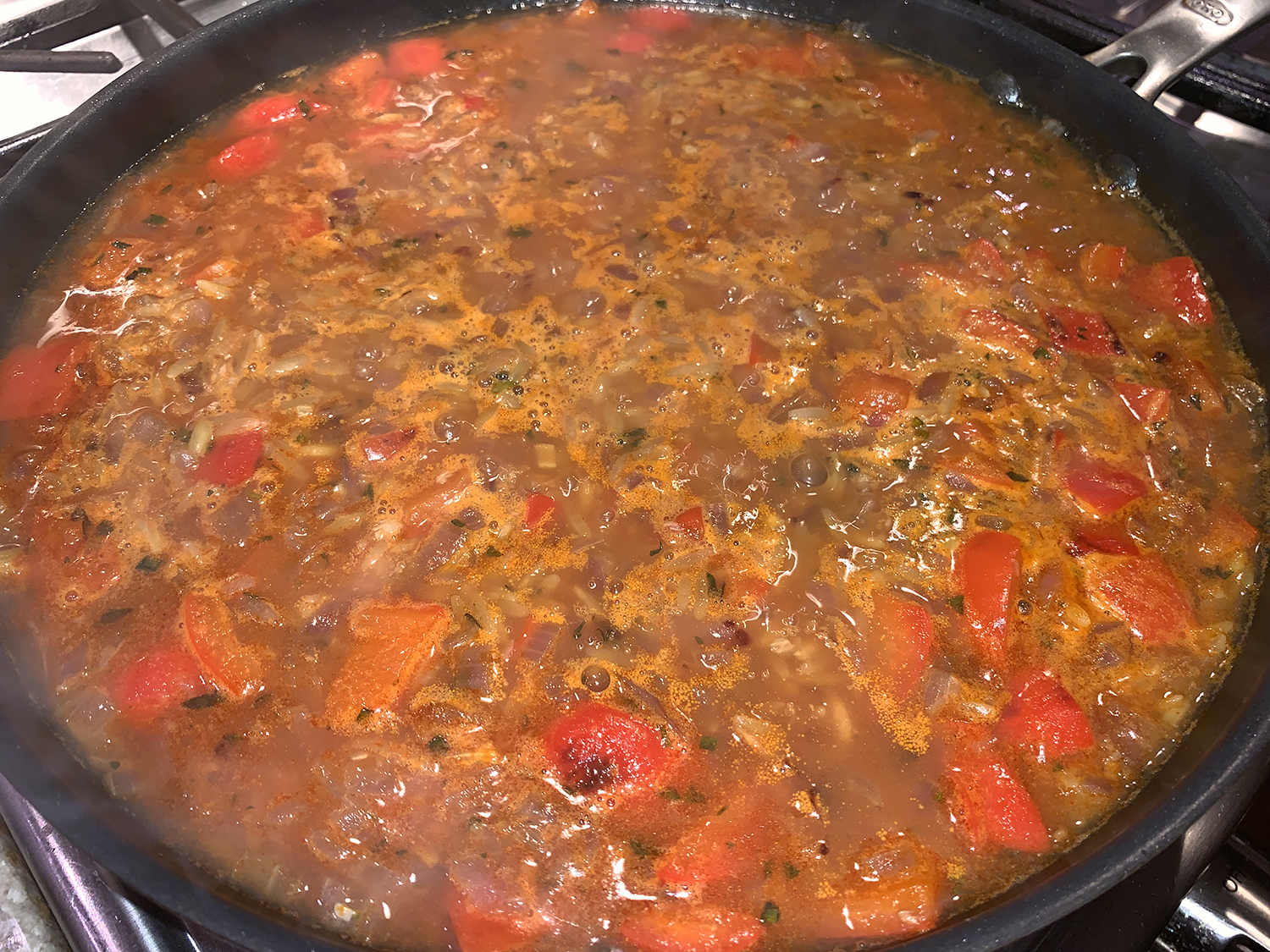
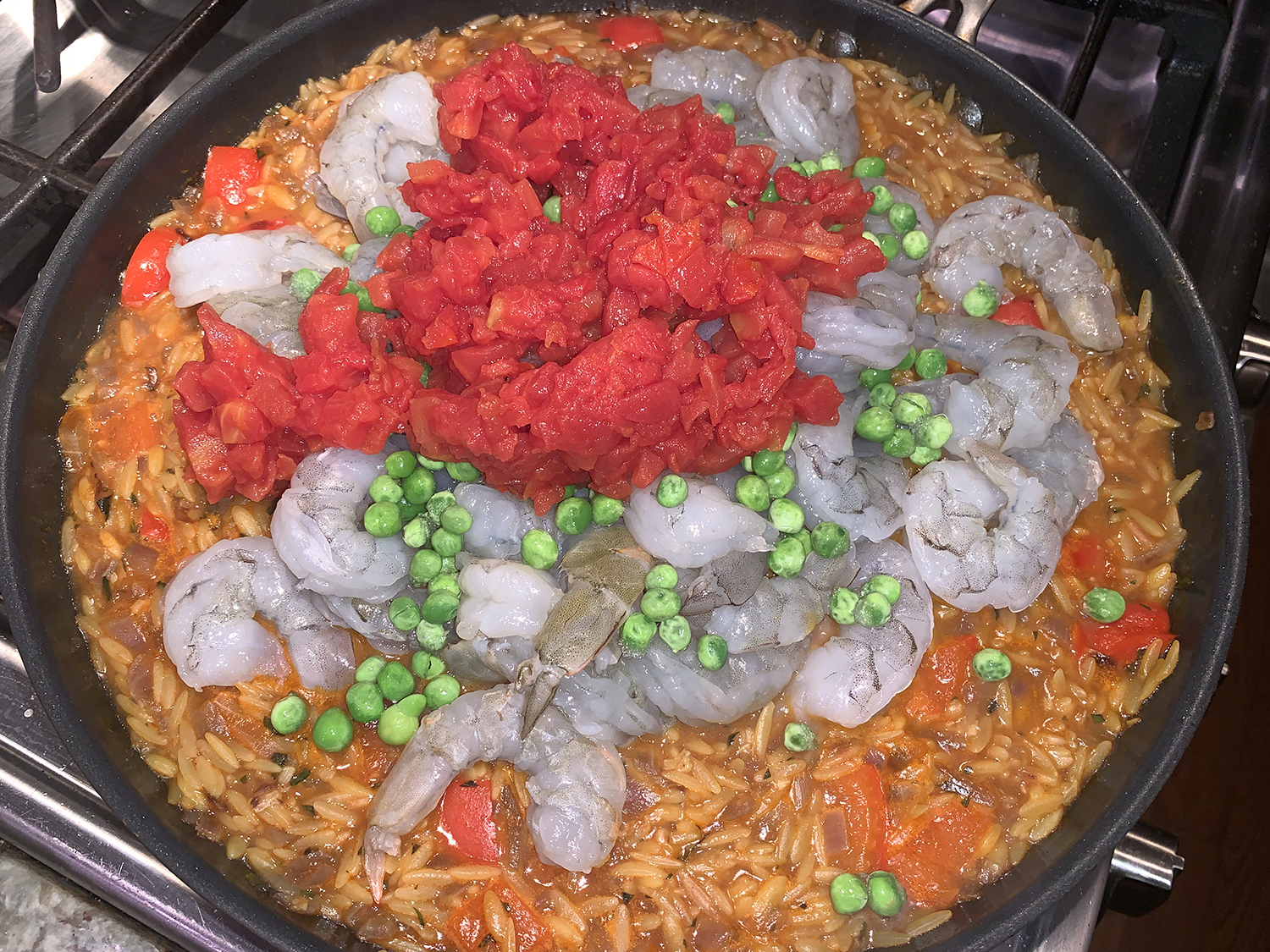
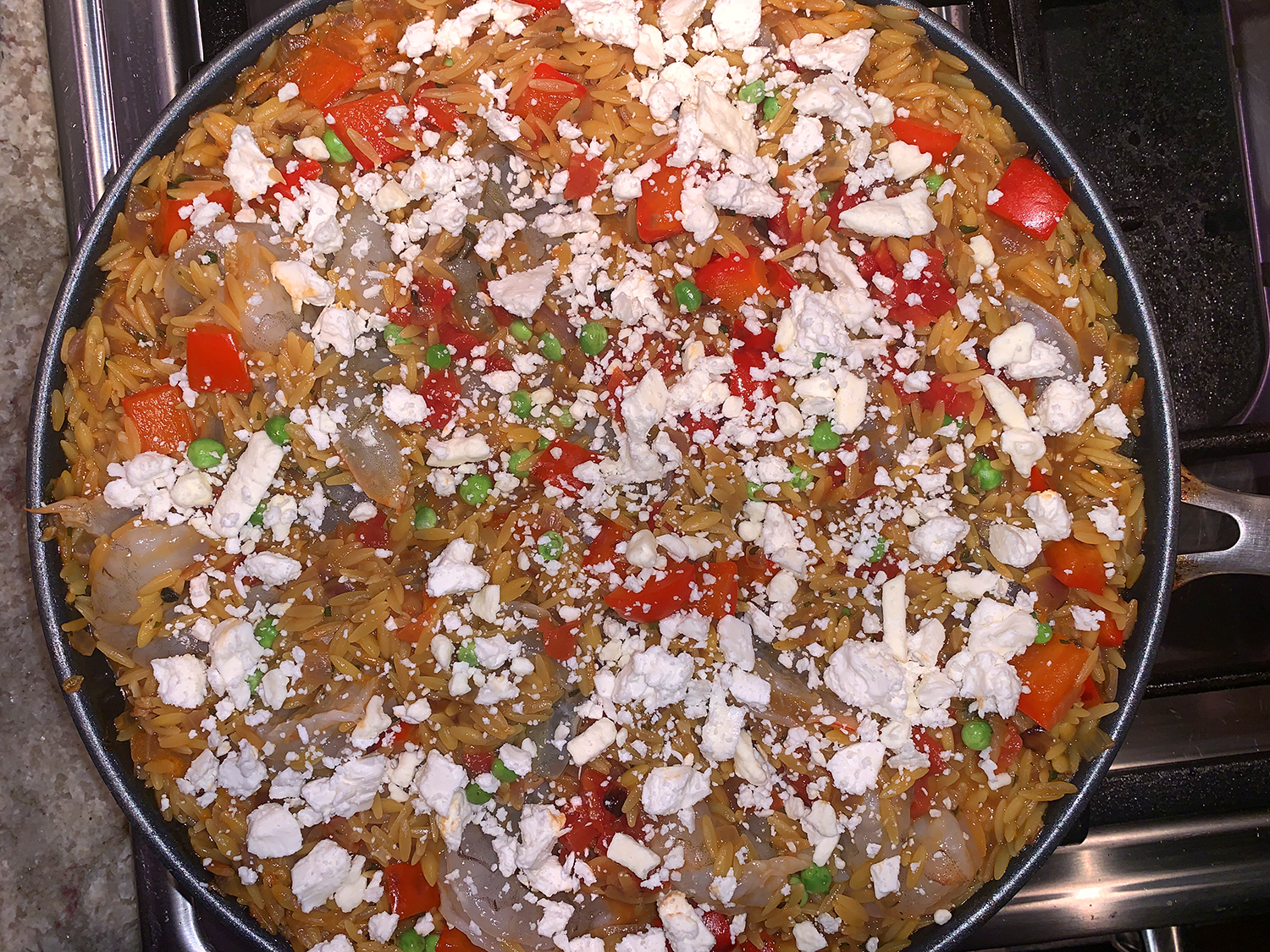
Chicken (or shellfish) broth and the drained juice from a can of diced tomatoes are then stirred in; as the orzo cooks to al dente, its releases starch (similar to a risotto) creating a sauce with a subtly creamy texture. To prevent the shrimp from overcooking, stir them right into the orzo, along with the reserved tomatoes and frozen peas, and transfer the skillet to the oven to cook through gently. A sprinkling of feta before baking reinforces the dish’s Greek flavors and promises an appealing browned, cheesy crust.

Make sure that the orzo is al dente, or slightly firm to the bite; otherwise it may overcook in the oven. If using smaller or larger shrimp, the cooking times may vary accordingly. You can leave the shrimp tails on, if desired. The small amount of saffron makes a big difference to the flavor and look of the dish, so be sure to include it. You will need a 12-inch oven-safe nonstick skillet for this recipe.

Baked Shrimp and Orzo with Feta and Tomatoes

  • Servings: 4
  • Difficulty: easy
  • Print

Ingredients

  • 1 lb. extra-large shrimp (21 to 25 per pound), peeled, deveined, and tails removed
  • Salt and pepper
  • 1 Tbsp. extra-virgin olive oil
  • 1 red onion, chopped fine
  • 1 red bell pepper, stemmed, seeded, and cut into ½-inch pieces
  • 4 garlic cloves, minced
  • 2 tsp. minced fresh oregano or ½ teaspoon dried
  • 2 cups (12 oz.) orzo
  • Pinch saffron threads, crumbled
  • 3 cups chicken or shellfish broth
  • 1 (14.5-oz.) can diced tomatoes, drained with juice reserved
  • ½ cup frozen peas
  • 3 oz. feta cheese, crumbled (¾ cup)
  • 2 scallions, sliced thin
  • Lemon wedges

Directions

  1. Adjust oven rack to middle position and heat oven to 375 degrees. Pat shrimp dry with paper towels and season with salt and pepper; cover and refrigerate until needed.
  2. Heat oil in 12-inch oven-safe nonstick skillet over medium heat until shimmering. Add onion and bell pepper and cook until vegetables are softened, 5 to 7 minutes. Stir in garlic and oregano and cook until fragrant, about 30 seconds. Stir in orzo and saffron and cook, stirring often, until orzo is lightly browned, about 4 minutes.
  3. Stir in broth and reserved tomato juice, bring to simmer, and cook, stirring occasionally, until orzo is al dente, 10 to 12 minutes.
  4. Stir in shrimp, tomatoes, and peas, then sprinkle feta evenly over top. Transfer skillet to oven and bake until shrimp are cooked through and feta is lightly browned, about 20 minutes.
  5. Remove skillet from oven (skillet handle will be hot). Sprinkle scallions over top and serve with lemon wedges.

http://www.lynnandruss.com

Adapted from a recipe from More Mediterranean by America’s Test Kitchen

Sous Vide Pork Loin Roast with Garlic Herb Rub

This recipe for sous vide pork loin roast with a garlic herb rub produces the juiciest, most flavorful pork roast you’ve ever had! Just 3-5 hours at 140 degrees F for a perfect medium roast.

FYI, if you purchase a roast bigger than 4 pounds, it is recommend you cut it in half to make it easier to work with. You can freeze the other half or vacuum seal them in different bags and cook them together.

As the water bath warms up, the pork loin gets prepped with the garlic rosemary paste and spread all over the meat. The roast is then placed in a vacuum-sealed bag and clipped to the side of the water bath container with the immersion blender.

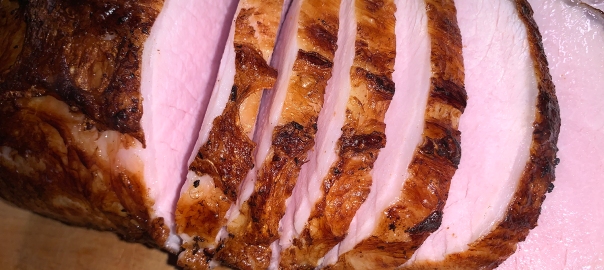
This table below shows the time pretty much remains the same, but the temp needs to be regulated for your preferred end result. We like ours medium, so when it reached 140° out it came for the final searing treatment. Instead of trusting our not-so-popular broiler, we opted to accomplish the sear in a carbon-steel skillet, making sure to include browning the end caps. A pair of tongs comes in handy to hold the meat steady.

ResultTempTime
Medium Rare130 degrees F3-5 hours
Medium140 degrees F3-5 hours
Medium-Well150 degrees F3-5 hours
Well Done160 degrees F3-5 hours
Our sides included Red Cabbage Glazed with Maple Syrup and Sweet Potatoes with Orange and Coriander

Sous Vide Pork Loin Roast with Garlic Herb Rub

  • Servings: 6-8
  • Difficulty: easy
  • Print

Ingredients

Pork Loin Roast:

  • 3-4 lb. pork loin roast
  • Leaves from 1 sprig rosemary
  • 5 cloves of garlic, peeled
  • 2 tsp. kosher salt
  • 1/2 tsp. freshly cracked black pepper
  • 1/2 tsp. red pepper flakes, optional
  • 1/2 tsp. olive oil, if necessary

Sauce (optional):

  • Liquid from sous vide bag
  • Juice of 1/2 lemon
  • 1 Tbsp. chopped fresh parsley
  • 1/2 tsp. flaked sea salt

Directions

  1. Preheat a water bath to your desired temp with an immersion circulator. 130F for medium rare, 140F for medium, 150F for medium-well, 160F for well done.
  2. Prepare the rub by adding garlic cloves, rosemary, salt, pepper, and red pepper flakes to a food processor (or large mortar and pestle) to make a paste. If it needs to be thinned out a bit, add olive oil and continue to process.
  3. Rub this mixture all over the pork loin roast.
  4. Vacuum seal the pork loin roast, or use another air removal method if desired.
  5. Add to water bath and cook for 3-5 hours.
  6. When the roast is done, preheat a large cast-iron or carbon steel skillet. Remove the roast from the water bath and the bag, saving the liquid, and place roast in the skillet. Sear for several minutes on all sides, including the ends, until deeply golden brown.
  7. In a bowl, whisk together the liquid from the bag, lemon juice, parsley, and flaked sea salt.
  8. Slice the pork roast into thick slices and serve with sauce.

http://www.lynnandruss.com

Adapted from a recipe by Chelsea Cole

Feast for Funghi Fanatics

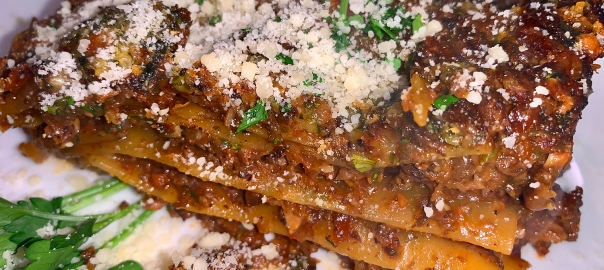
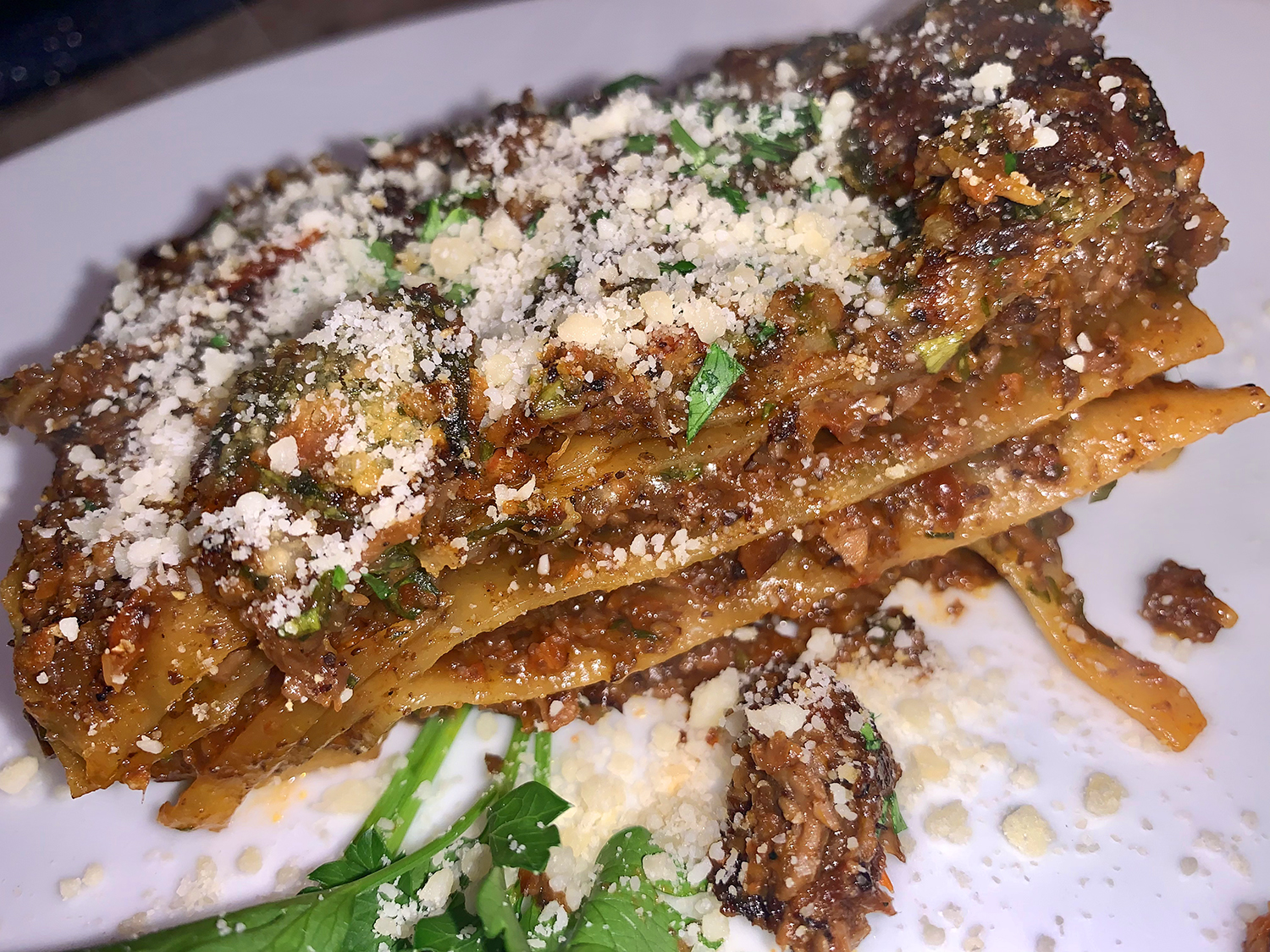
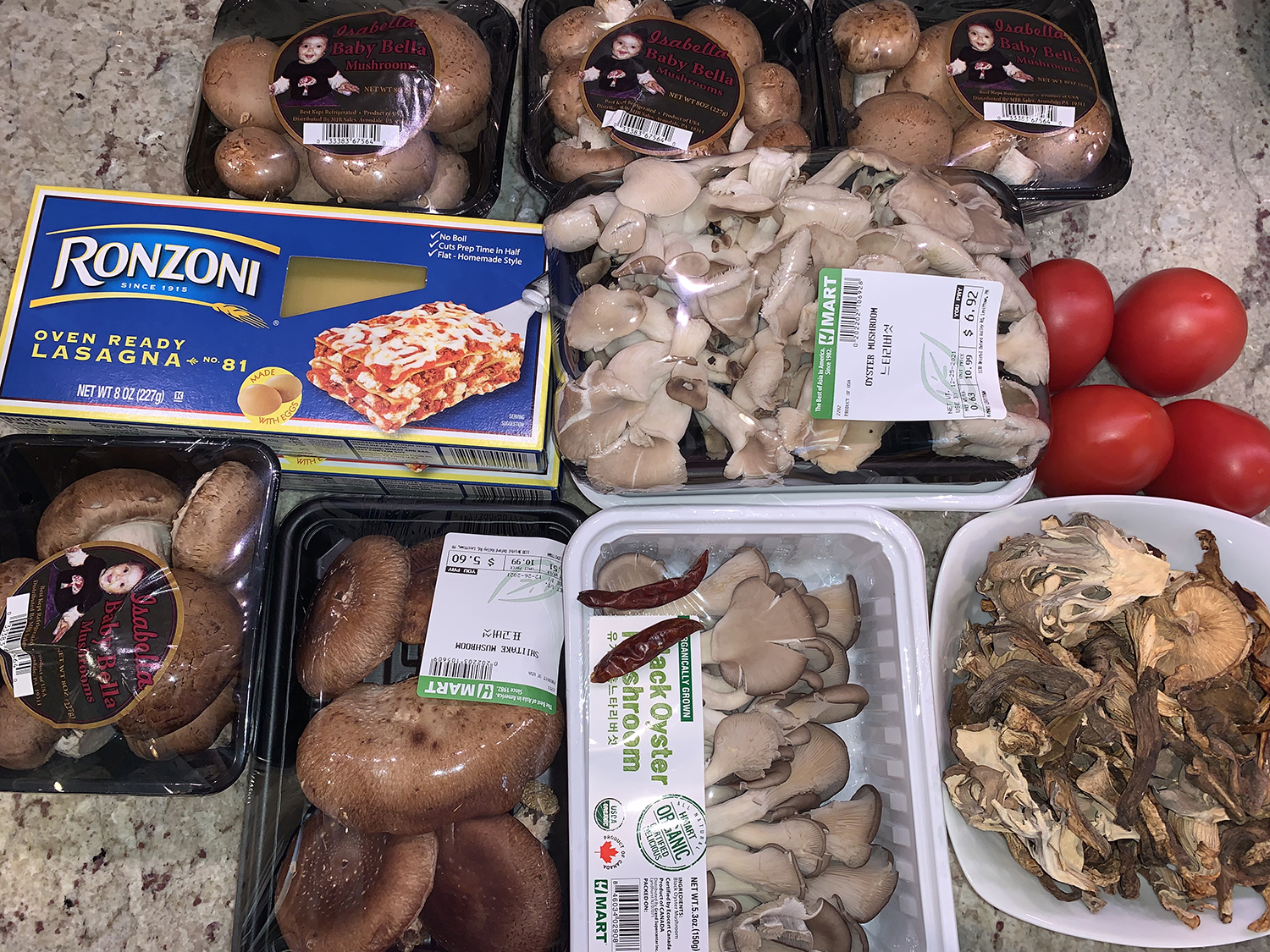
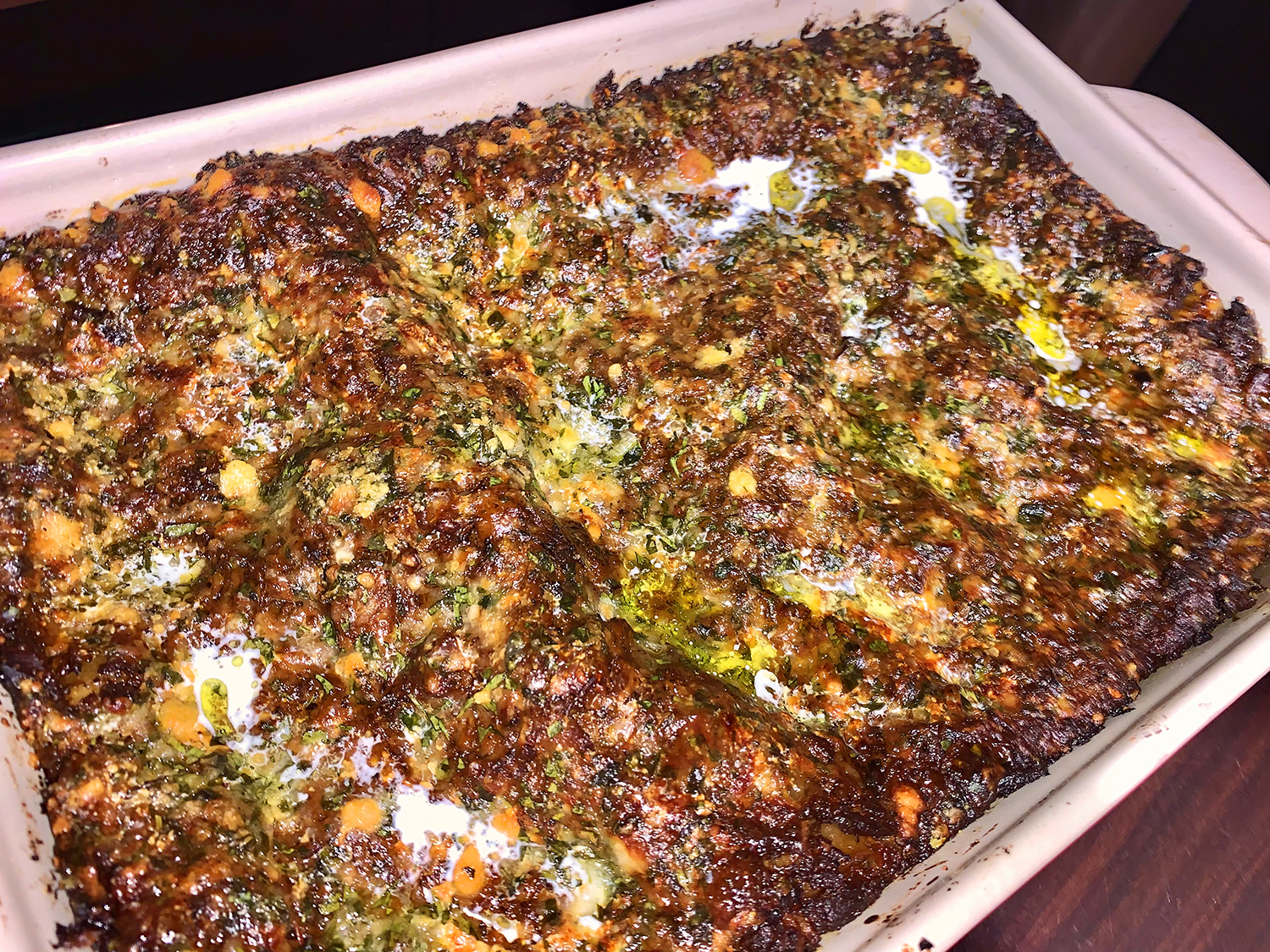
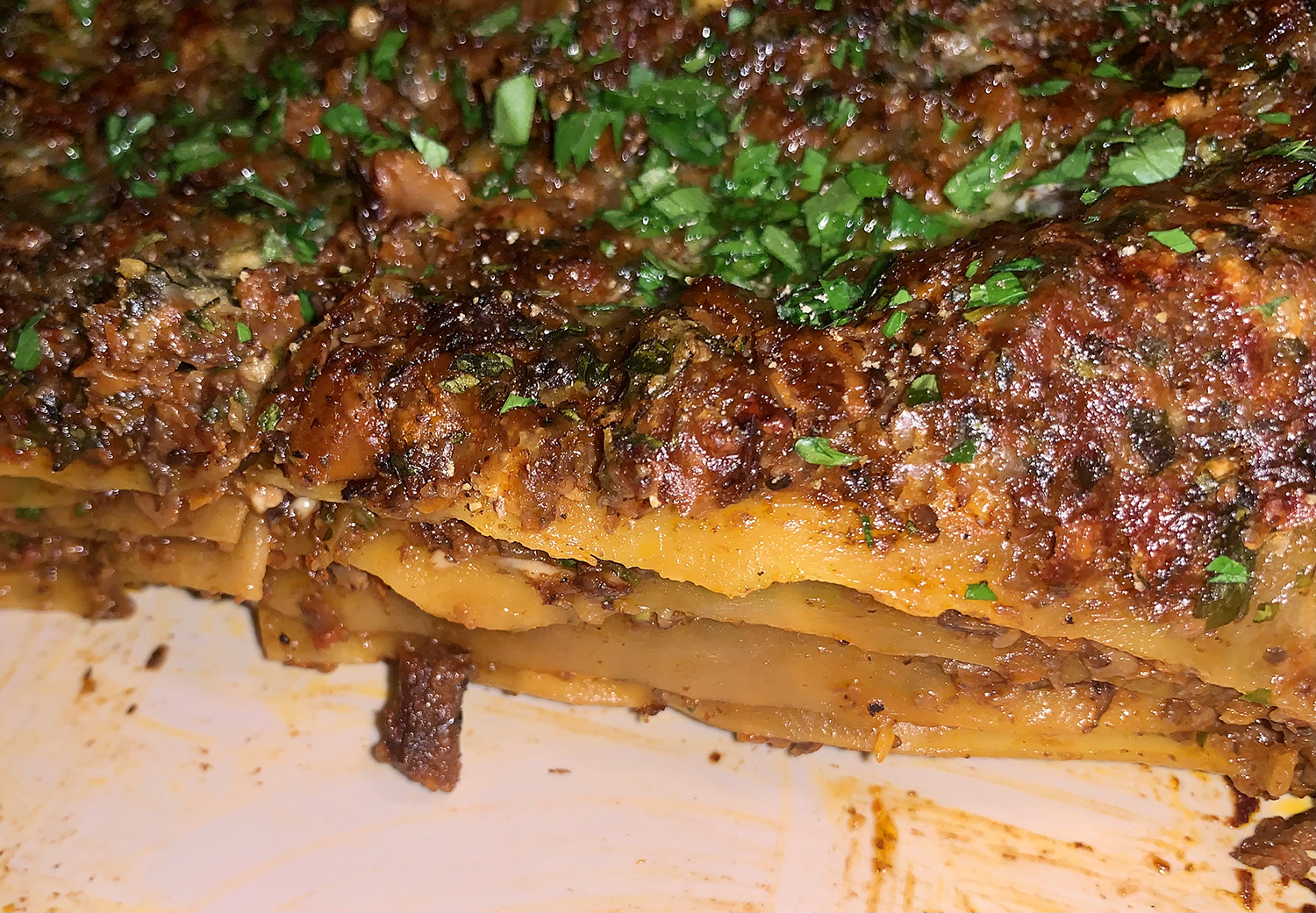
A glorious meat-free dish that contains four types of mushroom and two types of cheese which lend it the most satisfying, and savory intensity. They claim there’s a fair amount of heat in this Spicy Mushroom Lasagna, but we beg to differ, we could barely detect any heat. However, if you feel the need to tone it down a bit, reduce the amount of pepper and omit the chili altogether.

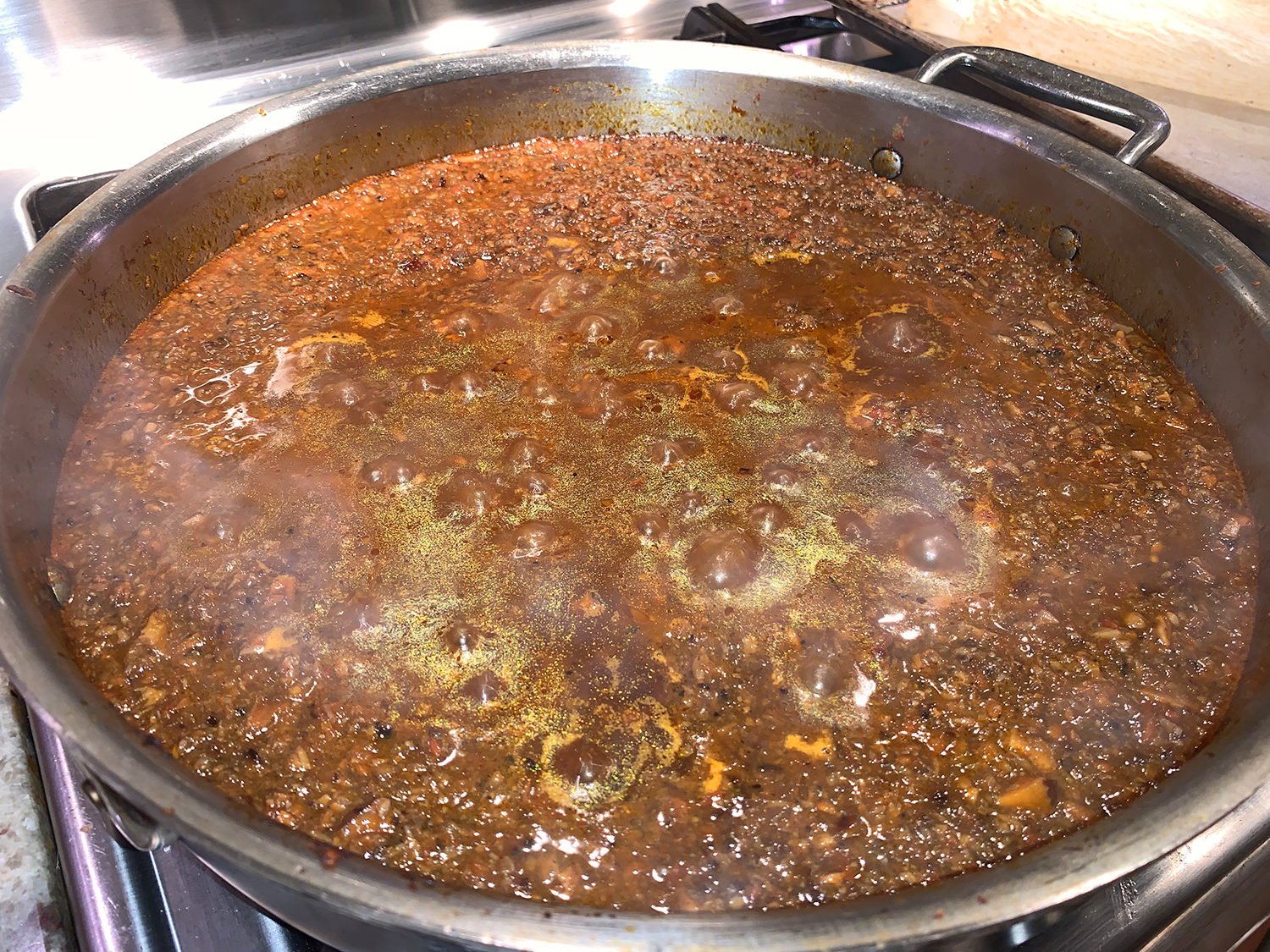
The mushrooms are the star here and their flavor truly shines. Those layers of flavor and umami build on each other with each delicious bite. Yes, quite a LOT of time and effort is necessary, as it is prep- and ingredient-intense, yet the result is well worth your effort. To get ahead, build the lasagna one day, chill, then bake the next.

One reviewer wrote “The umami factor here was really off the charts. To me it was one of those rare recipes in which all the ingredients sound good by themselves and smell wonderful when cooking, but when brought together, the finished product is head and shoulders above the individual parts.” We have to agree…

You will be dehydrating the fresh mushrooms and rehydrating the dried mushrooms, then mixing them altogether to obtain a very tasty, meaty consistency. While the original recipe called for only two plum tomatoes, we decided to double that and added in 4 large. Paired with a side salad and a glass of wine, it was the perfect Sunday evening meal.

Spicy Mushroom Lasagna

  • Servings: 8
  • Difficulty: moderate
  • Print

Ingredients

For the fresh mushrooms

  • 26 oz. cremini or baby bella mushrooms halved
  • 18 oz. oyster mushrooms or other wild mushrooms
  • 3 Tbsp. olive oil
  • 1 tsp. table salt

For the dried mushrooms

  • 2 1/4 oz. dried porcini mushrooms
  • 1 oz. dried wild mushrooms or dried porcini mushrooms
  • 2 dried red chili peppers roughly chopped (seeded if desired)
  • 2 cups plus 2 Tbsp. hot vegetable stock

For the filling

  • 1 onion, peeled and quartered
  • 5 garlic cloves, peeled and roughly chopped
  • 1 carrot, peeled and quartered
  • 6 Tbsp. olive oil
  • 4 medium plum tomatoes, quartered
  • 1/3 cup tomato paste
  • 1 1/2 tsp. table salt
  • 1 3/4 tsp. freshly ground black pepper plus more as desired
  • 3 1/3 cups water
  • 9 Tbsp. heavy cream (just a touch more than 1/2 cup)
  • 2/3 cup pecorino, finely grated
  • 2/3 cup Parmesan, finely grated
  • 1/4 cup fresh basil leaves, finely chopped
  • 1/2 cup parsley leaves, finely chopped, plus 1 tsp.
  • 12 oz. oven-ready dried lasagna sheets (about 14 sheets)

Directions

Roast the fresh mushrooms

  1. Preheat the oven to 450°F. Line a large rimmed baking sheet with parchment paper.
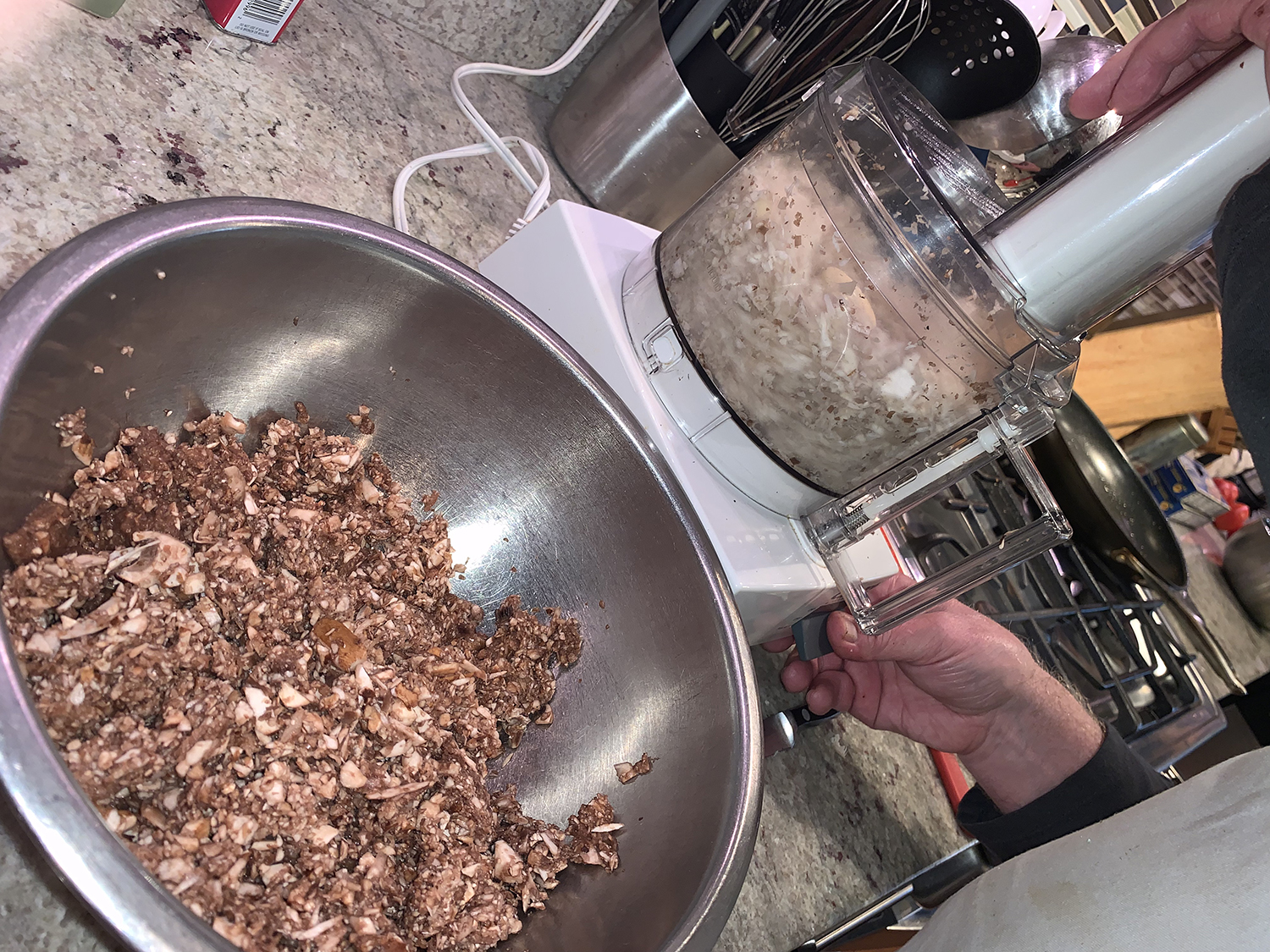
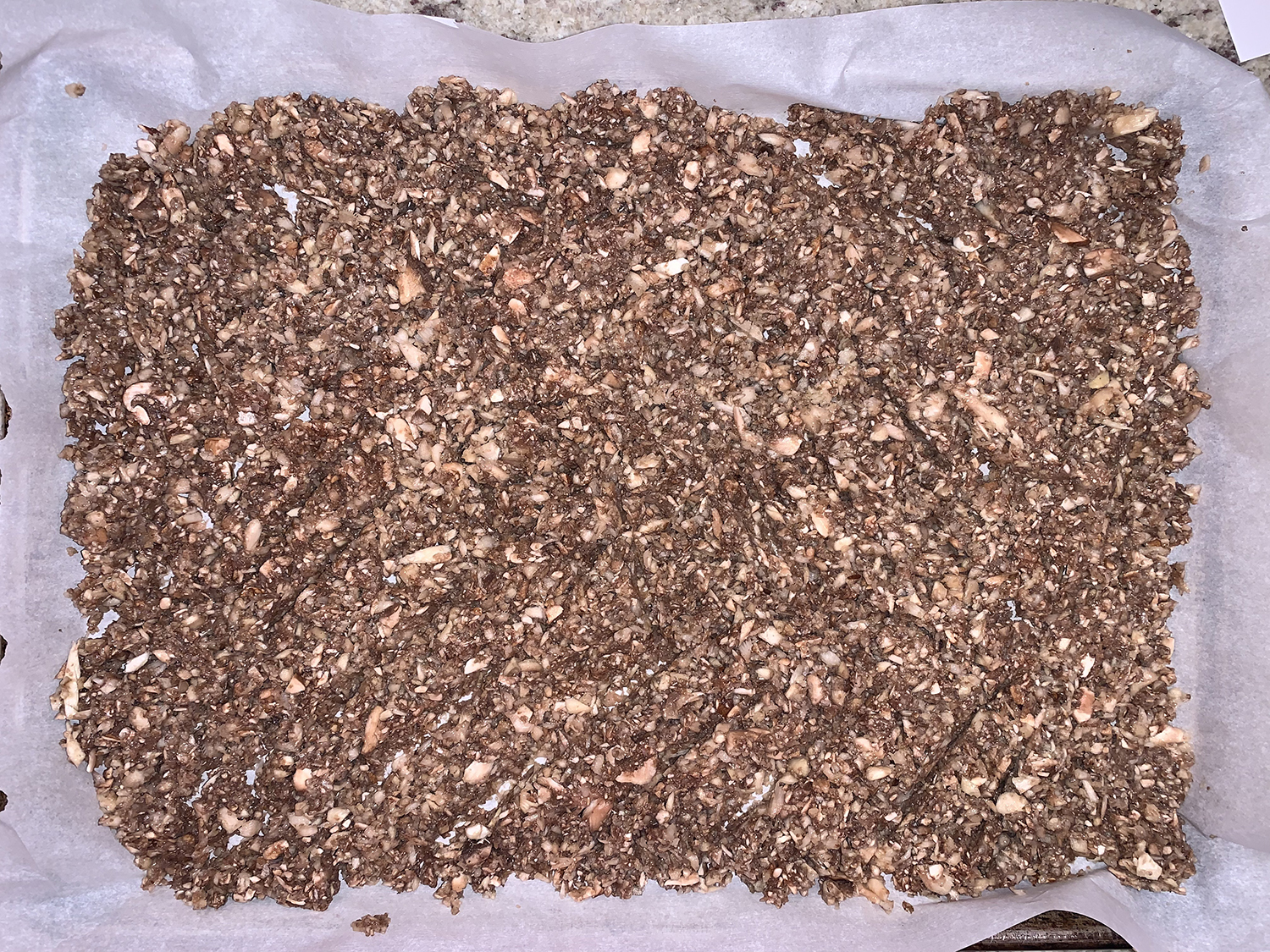
  2. In a food processor, working in 3 or 4 batches, add the button mushrooms and oyster mushrooms and pulse each batch until finely chopped (or finely chop everything by hand). Avoid filling the processor bowl more than halfway so that the mushrooms are finely chopped and not over processed.
  3. In a large bowl, toss the chopped mushrooms with the oil and salt. Spread out on the prepared baking sheet.
  4. Roast near the top of the oven, stirring 3 or so times throughout, until the mushrooms are golden brown and have reduced in volume significantly, 30 to 45 minutes. Let cool.
  5. Decrease the oven temperature to 425°F.

Rehydrate the dried mushrooms

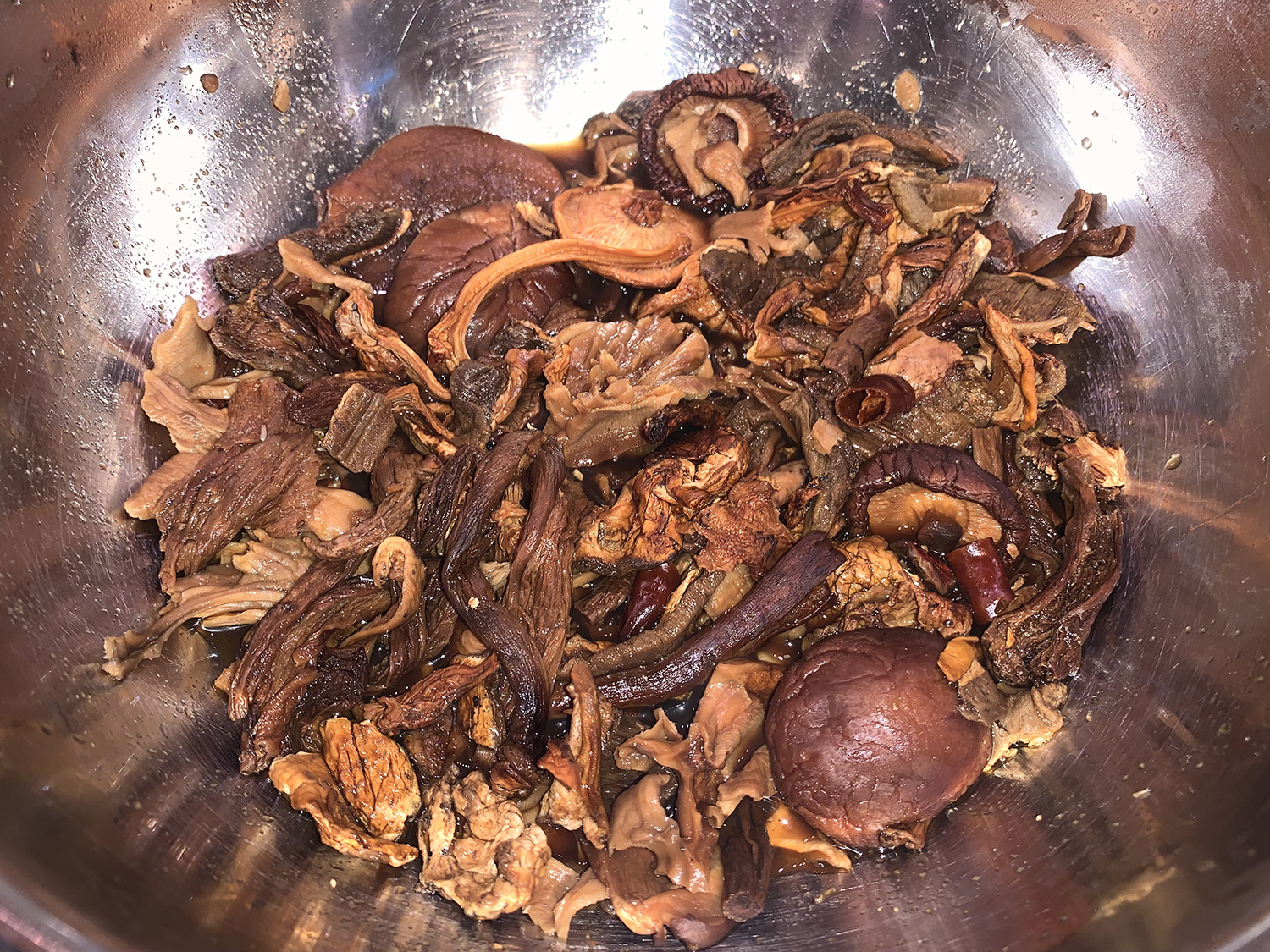
  1. Meanwhile, in a large bowl, combine all the dried mushrooms, the chiles, and hot stock, and let soak for 30 minutes. Strain the liquid into another bowl, squeezing as much liquid from the mushrooms as possible to get just under 1 1/2 cups—if you have any less, top up with water.
  2. Very roughly chop the rehydrated mushrooms (you want some chunks) and finely chop the chili peppers. Set the stock and mushrooms aside separately.

Make the filling

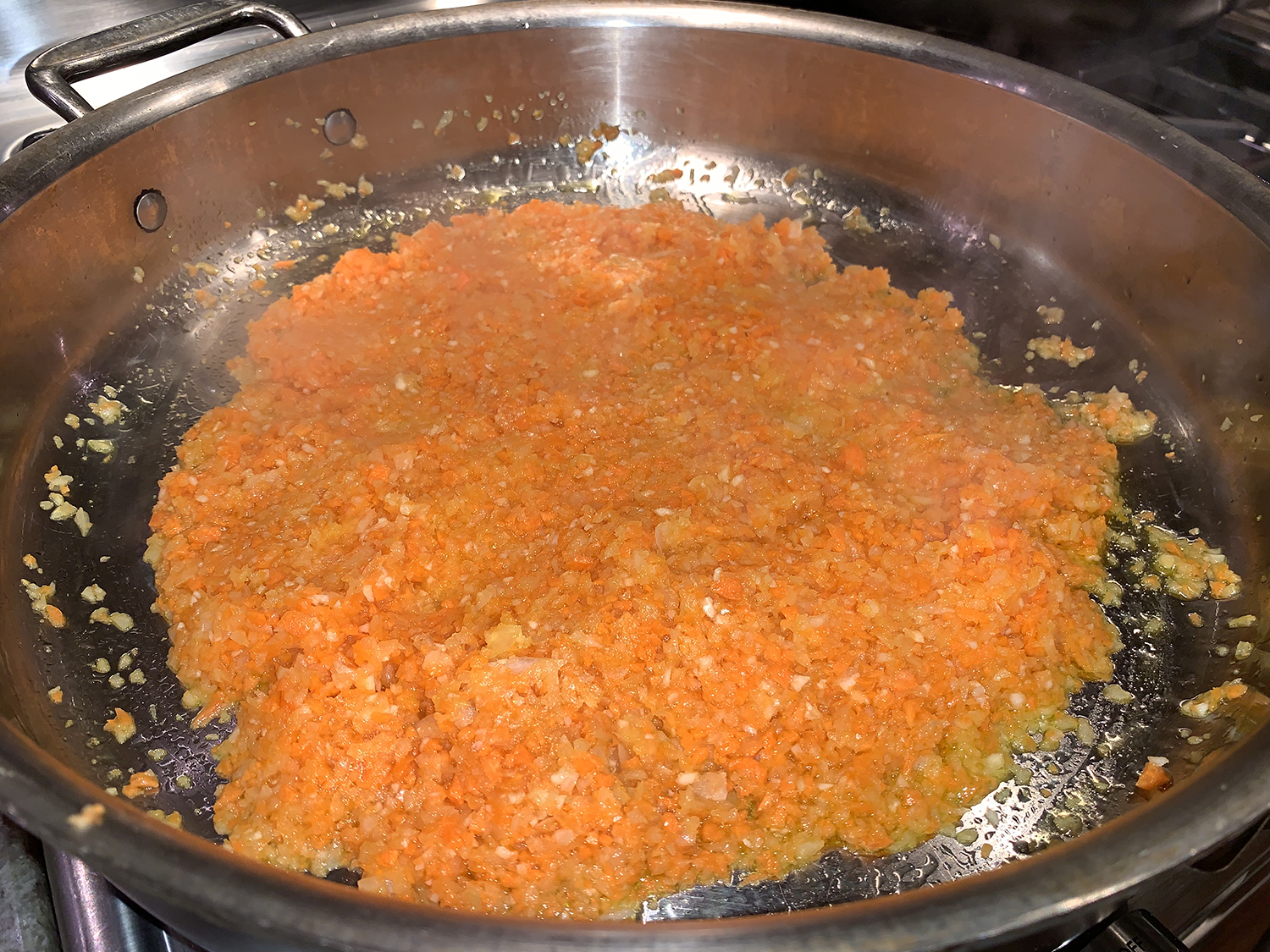
  1. In the food processor, combine the onion, garlic, and carrot, and pulse until finely chopped or finely chop everything by hand.
  2. In a large sauté pan or pot over medium-high heat, warm 4 tablespoons oil. Once hot, add the onion mixture and cook, stirring occasionally, until softened and golden, about 8 minutes.
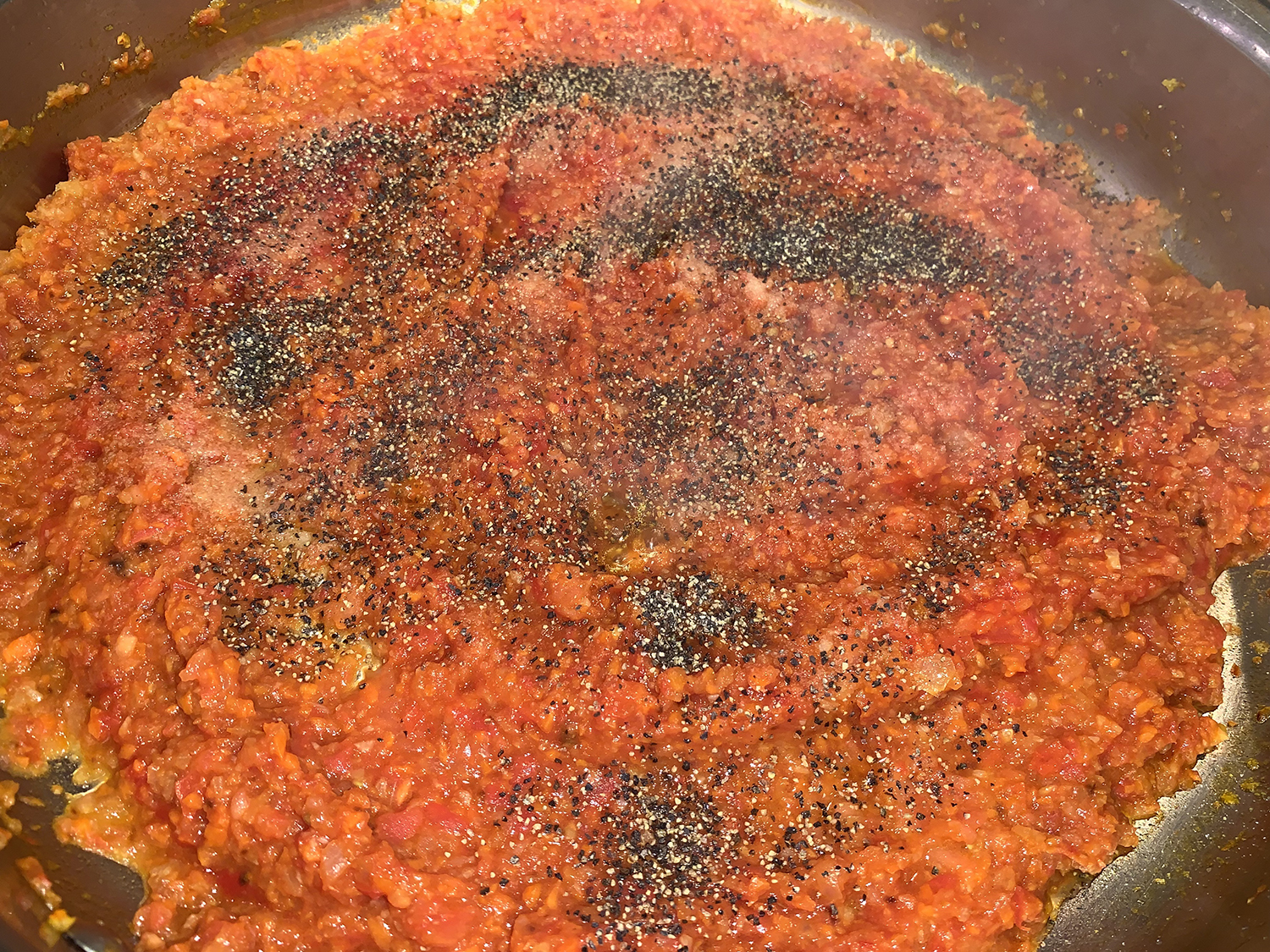
  3. In the food processor, pulse the tomatoes until finely chopped or finely chop by hand and then add them to the pan along with the tomato paste, salt, and pepper. Cook, stirring occasionally, for 7 minutes.
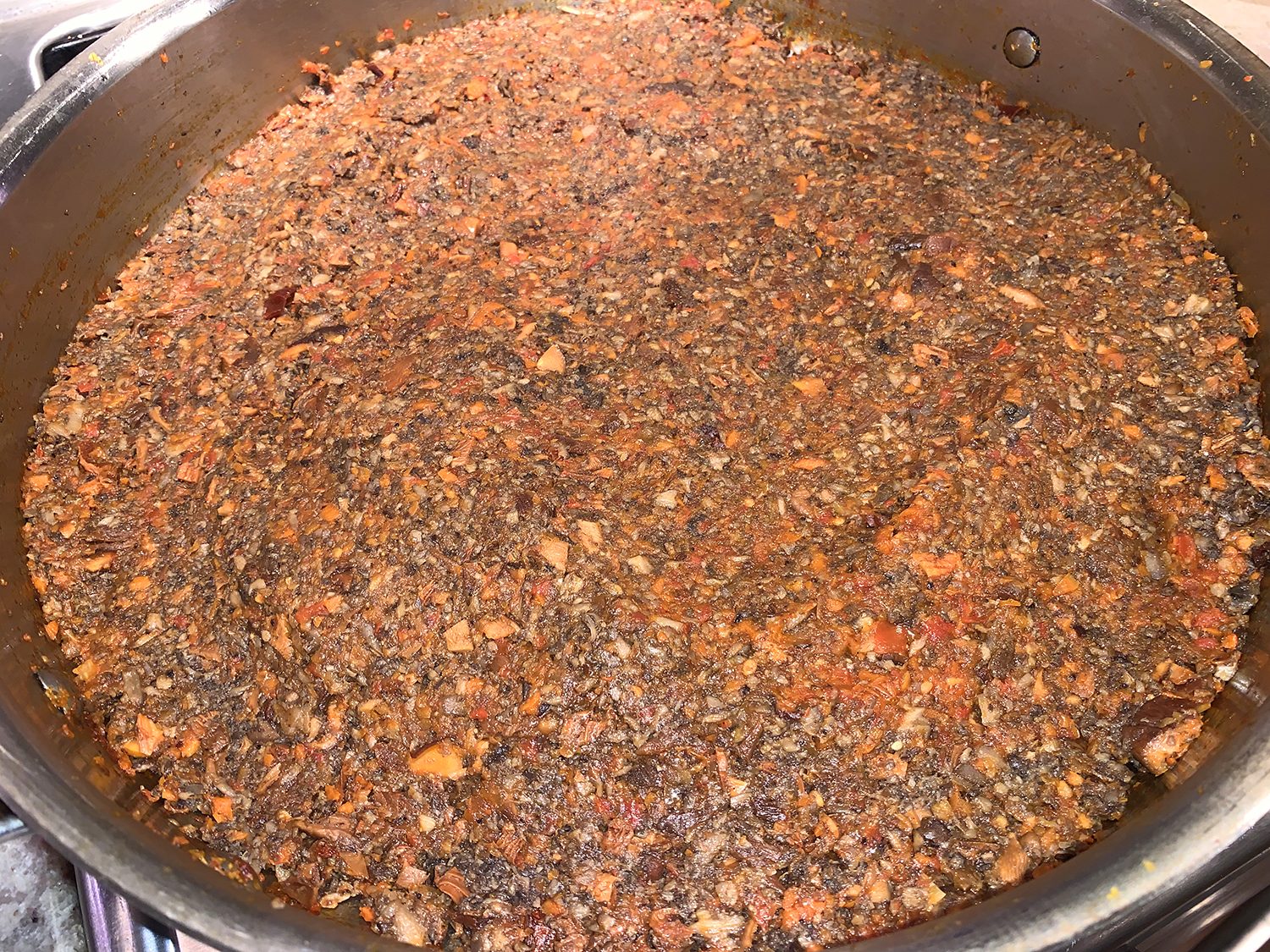
  4. Add the rehydrated mushrooms and chiles and the roasted mushrooms and cook for 9 minutes, stirring only once during the cooking. Resist the urge to stir more frequently; you want the mushrooms to be slightly crisp and browned on the bottom.
  5. Stir in the water and reserved stock and bring to a simmer. Reduce the heat to medium and cook, stirring occasionally, until you get the consistency of a ragù, about 25 minutes.
  6. Stir in 7 tablespoons of the cream and simmer for 2 minutes more, then remove from the heat.
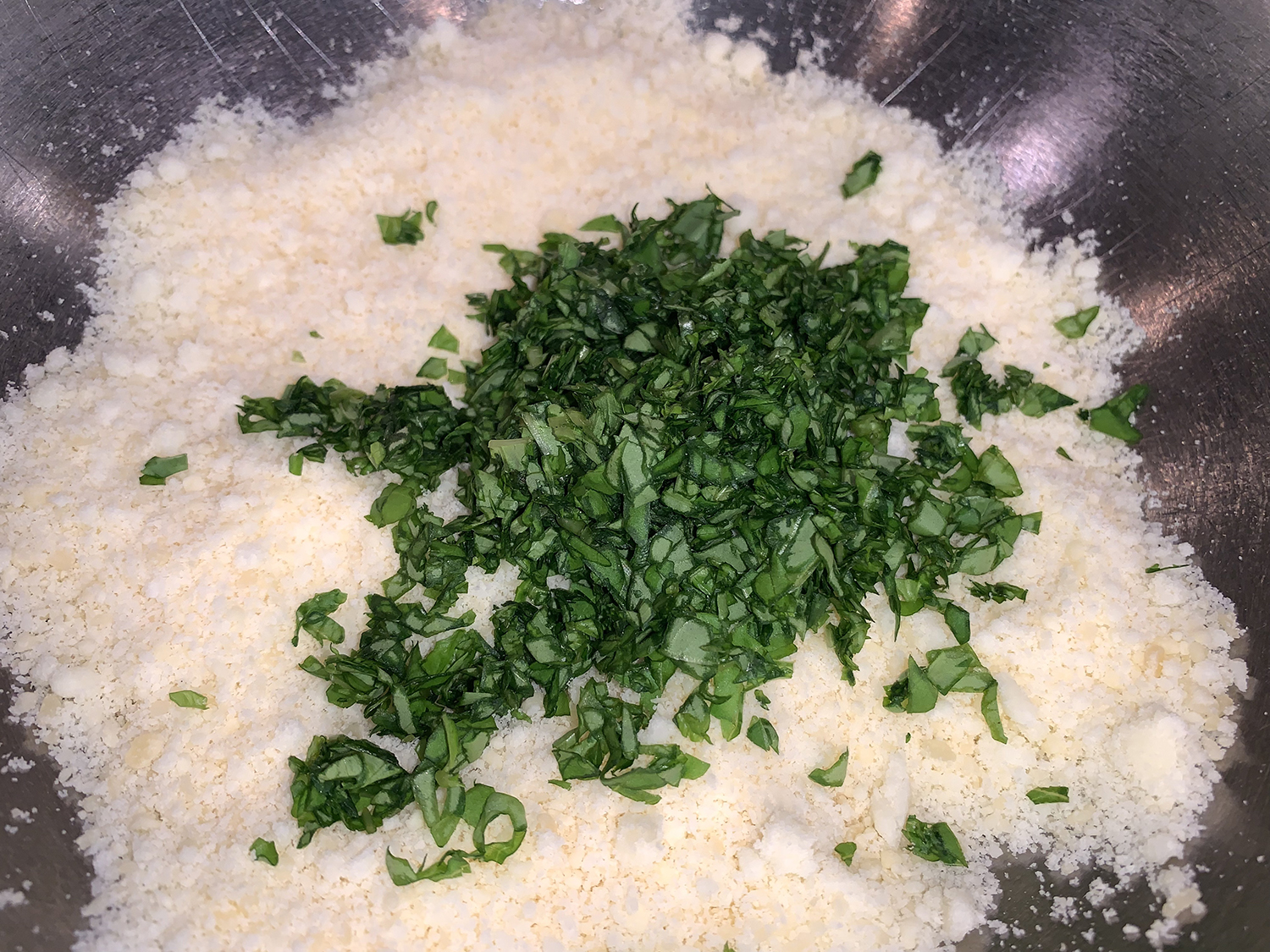
  7. In a small bowl, combine both cheeses, the basil, and 1/2 cup parsley.
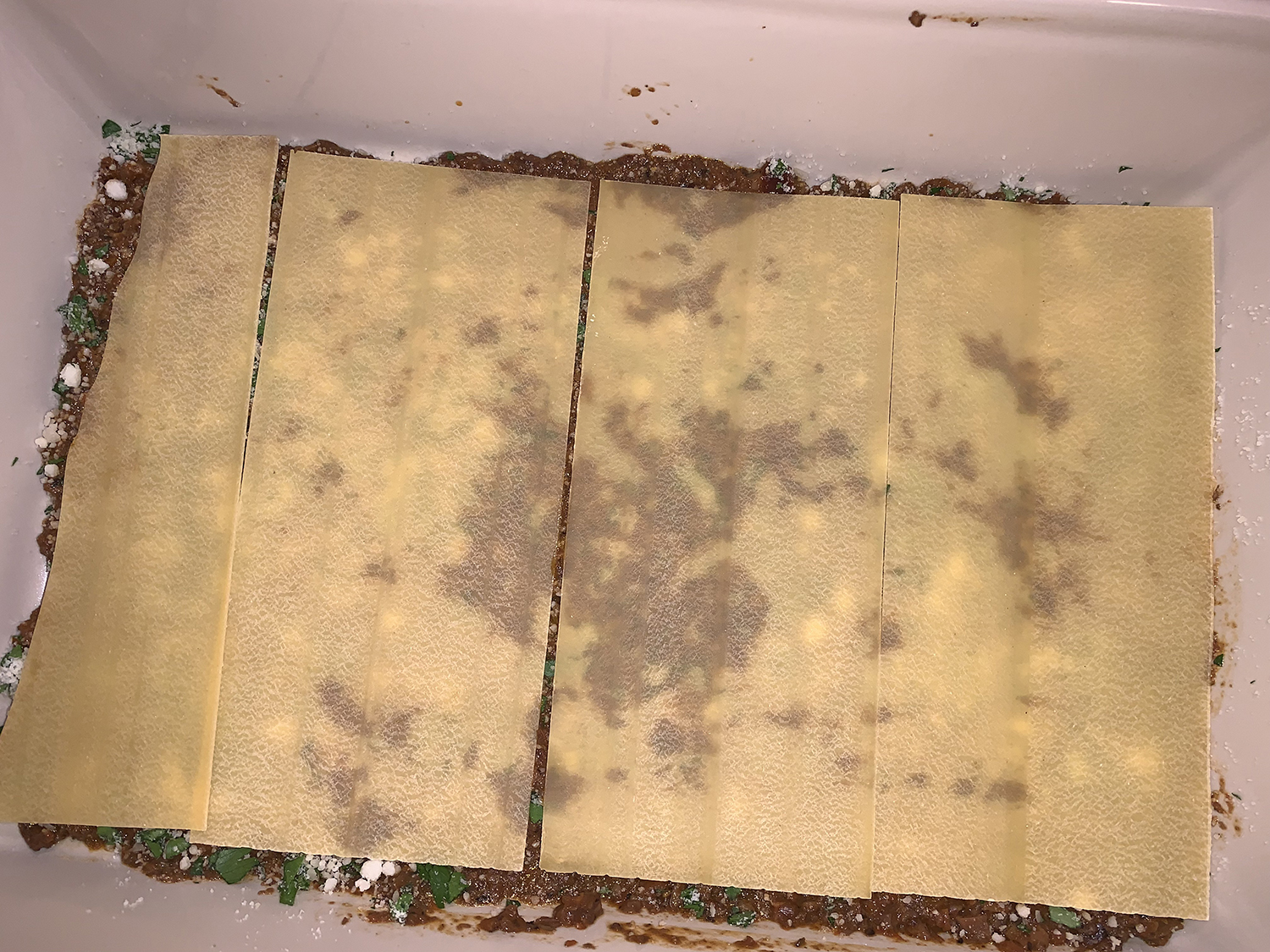
  8. Spread 1/5 of the sauce in the bottom of a round 12-inch baking dish or a 9-by-13-inch rectangular dish, then top with 1/5 of the cheese mixture, followed by a layer of lasagna sheets, broken to fit where necessary. Repeat these layers 3 more times in that order. Finish with a final layer of sauce and cheese; that’s 5 layers of sauce, 5 layers of cheese, and 4 layers of pasta.
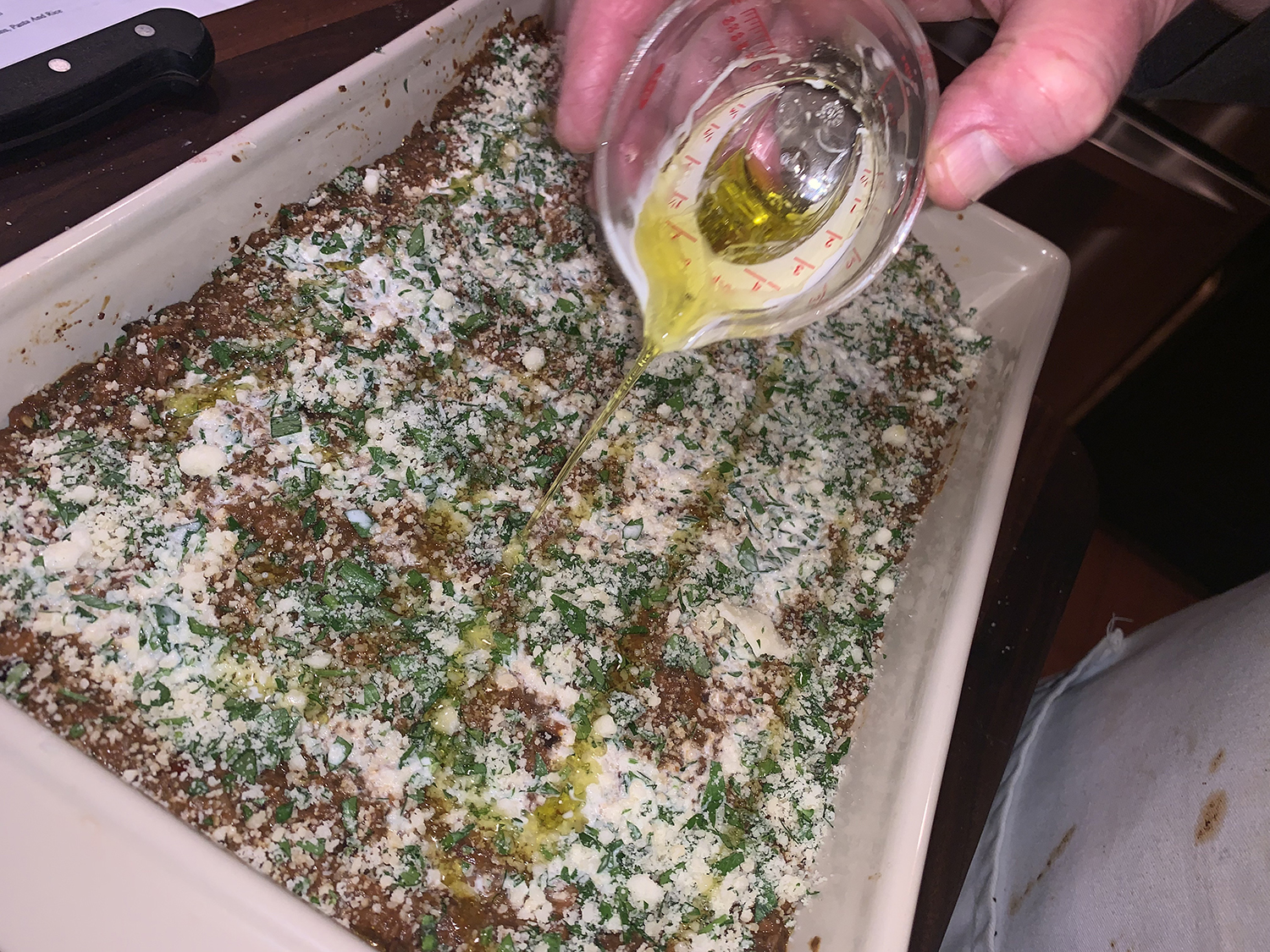
  9. Drizzle with 1 tablespoon cream and 1 tablespoon olive oil, then cover with aluminum foil and bake for 15 minutes. Remove the foil, increase the temperature to 450°F, and bake for 12 minutes more, rotating the dish halfway through.
  10. Turn the oven to the broil setting and broil until the edges are brown and crisp, about 2 minutes.
  11. Set aside to cool for 5 minutes or so, then drizzle with the remaining 1 tablespoon cream and 1 tablespoon oil. Sprinkle with the 1 teaspoon parsley and finish with a good grind of pepper. Serve immediately.

http://www.lynnandruss.com

Recipe from Yotam Ottolenghi and Ixta Belfrage

Jalapeño-Turkey Meatballs and Spaghetti

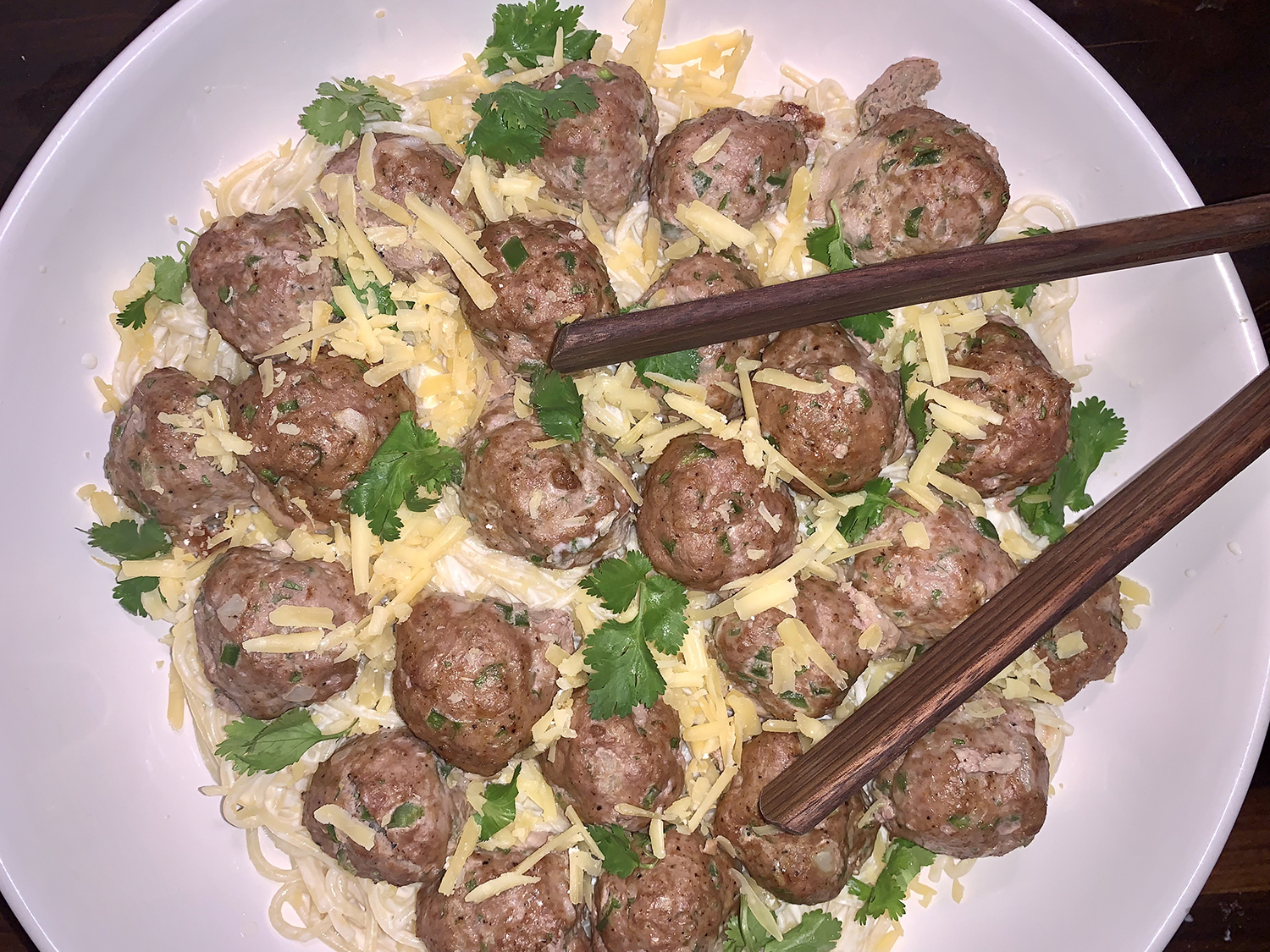
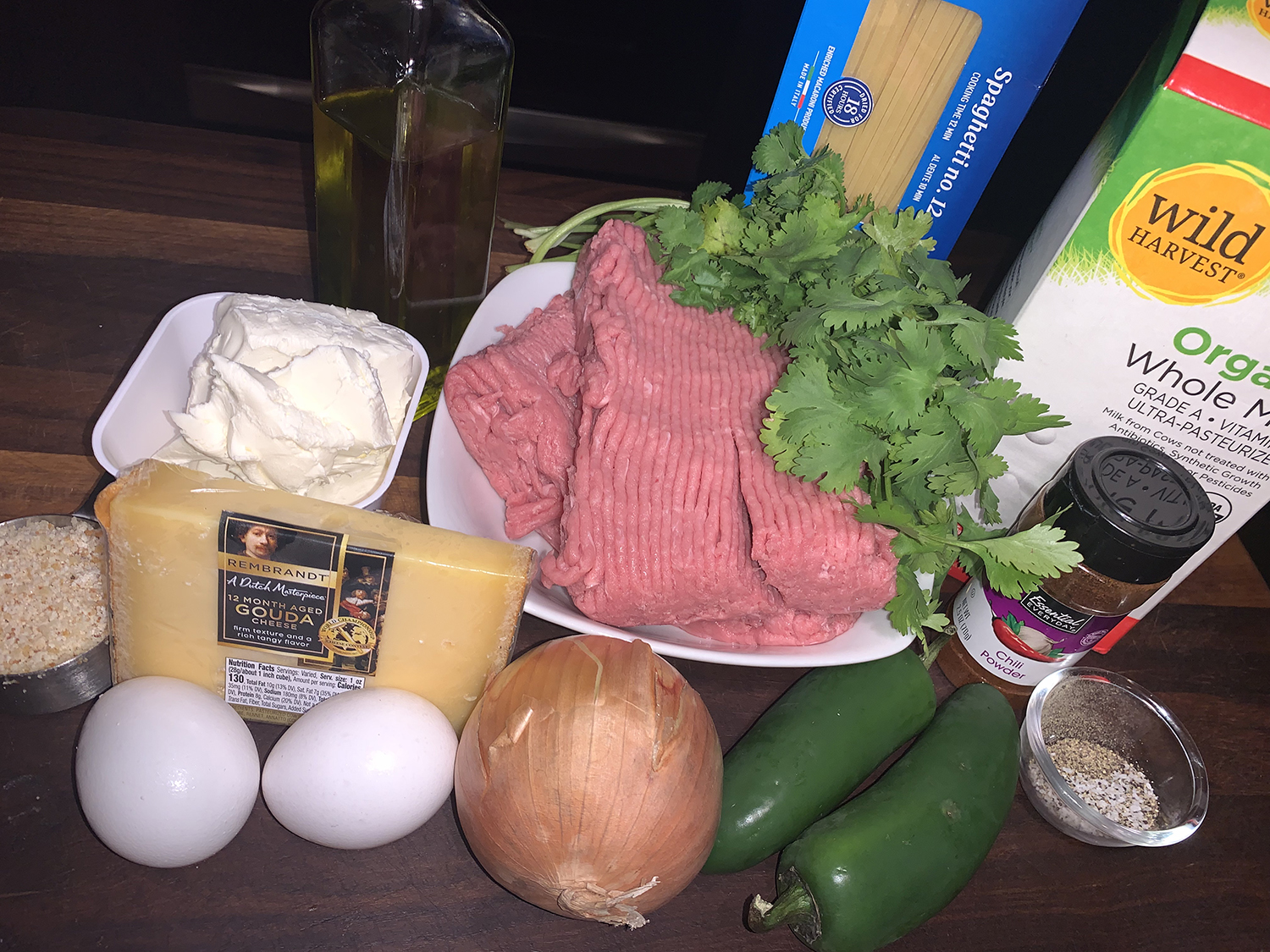
Intrigued with this odd combination found in a recent Fine Cooking Magazine, we were pleasantly surprised at the results. Despite two large jalapeños and some chili powder, it was only slightly spicy. Of course, if you did want to ramp up the heat, don’t discard the jalapeño seeds.

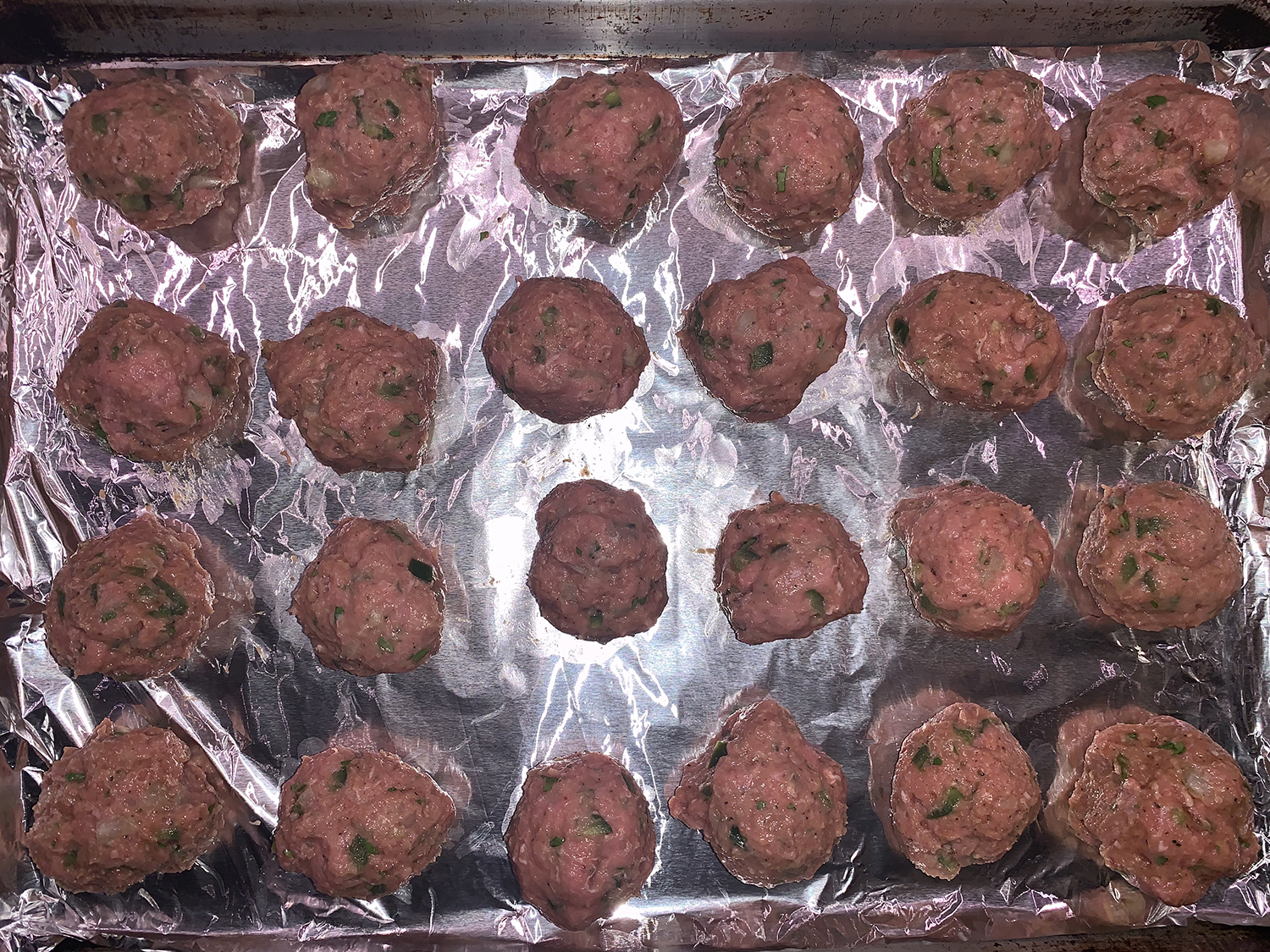
Our meatballs did stick to the foil, so we suggest using parchment or coating the baking sheet with an oil spray such as Pam. Also, to thicken the sauce, we added about 2/3 of the shredded Gouda to the cream cheese/milk mixture, then sprinkled the remainder on top.

If you have leftovers, top with some milk and/or olive oil to add moisture before popping in the microwave.

Jalapeño-Turkey Meatballs and Spaghetti

  • Servings: 6-8
  • Difficulty: easy
  • Print

Ingredients

  • 2 egg whites, lightly beaten 
  • 2 Tbsp.s olive oil 
  • 1 Tbsp. milk
  • 2 tsp. chili powder
  • 2 lbs. uncooked ground turkey breast or ground turkey
  • ⅓ cup finely chopped onion 
  • ¼ cup fine dry bread crumbs
  • 2 jalapeño peppers, seeded and minced
  • 1 tablespoon chopped fresh cilantro
  • 1 14-16 oz. package dried multigrain, whole wheat or regular spaghetti
  • 6 oz. packages cream cheese
  • 2 cups milk
  • Salt (optional)
  • 4 oz. Gouda cheese, shredded
  • Fresh cilantro

Directions

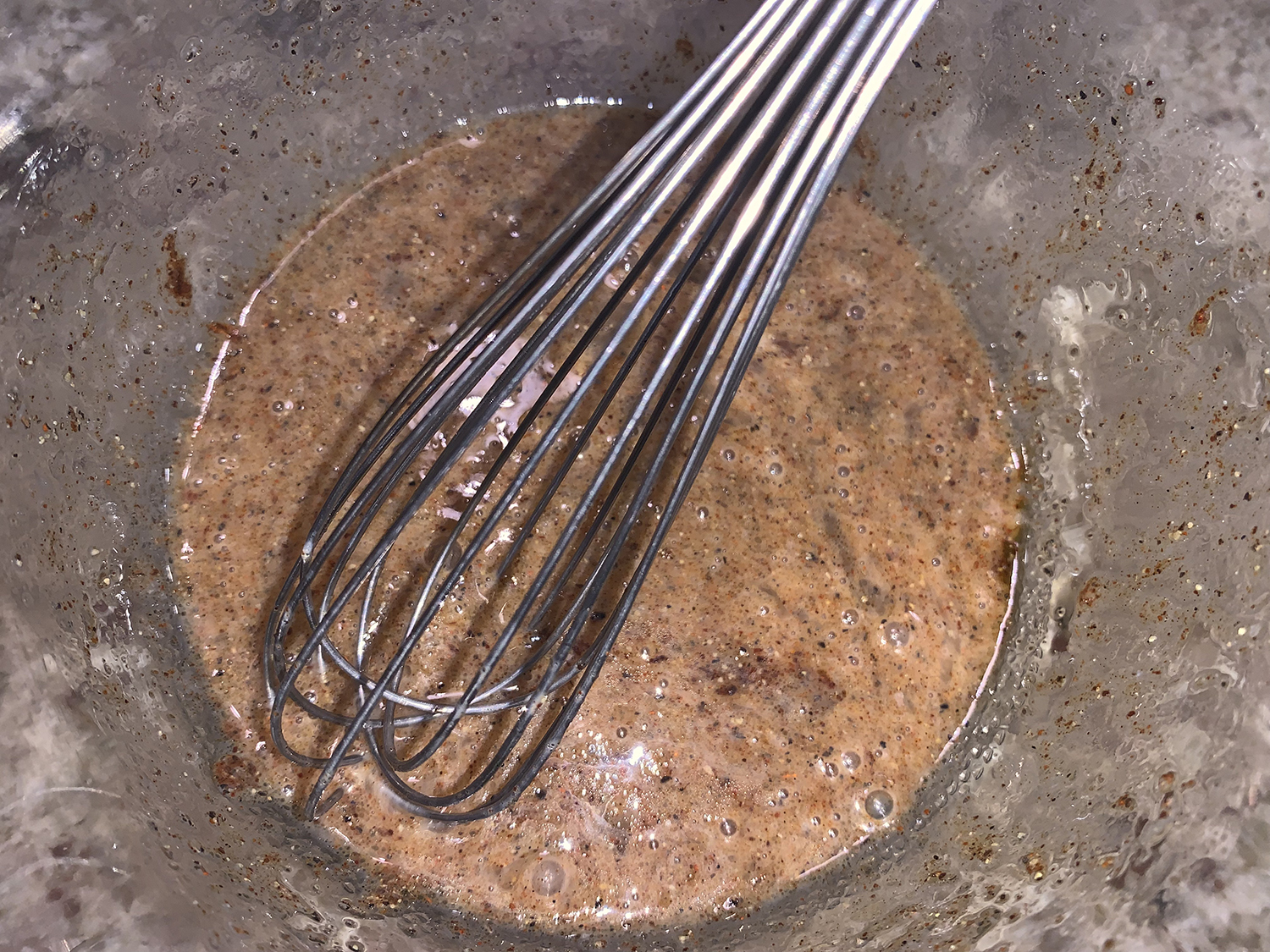
  1. Heat oven to 375 degrees F. In bowl stir together egg whites, oil, milk, chili powder, 1 tsp. black pepper, and 1/2 tsp. salt.
  2. In large bowl combine turkey, onion, bread crumbs, jalapeños, and chopped cilantro. Fold egg white mixture into turkey mixture; mix well. Shape turkey mixture in 1-1/2-inch balls. Place on a foil-lined 15x10x1-inch baking pan. Bake 20 minutes or until no longer pink (170 degrees F).
  3. Meanwhile, cook spaghetti, with 1 tablespoon salt added to water, according to package directions. Drain; keep warm.
  4. In same pan used for pasta melt cream cheese over low heat. Add milk. Cook, stirring, until bubbly. Return spaghetti to pan; toss to coat with cream cheese mixture.
  5. Serve spaghetti with meatballs, cheese, and cilantro.

http://www.lynnandruss.com

Recipe from Fine Cooking

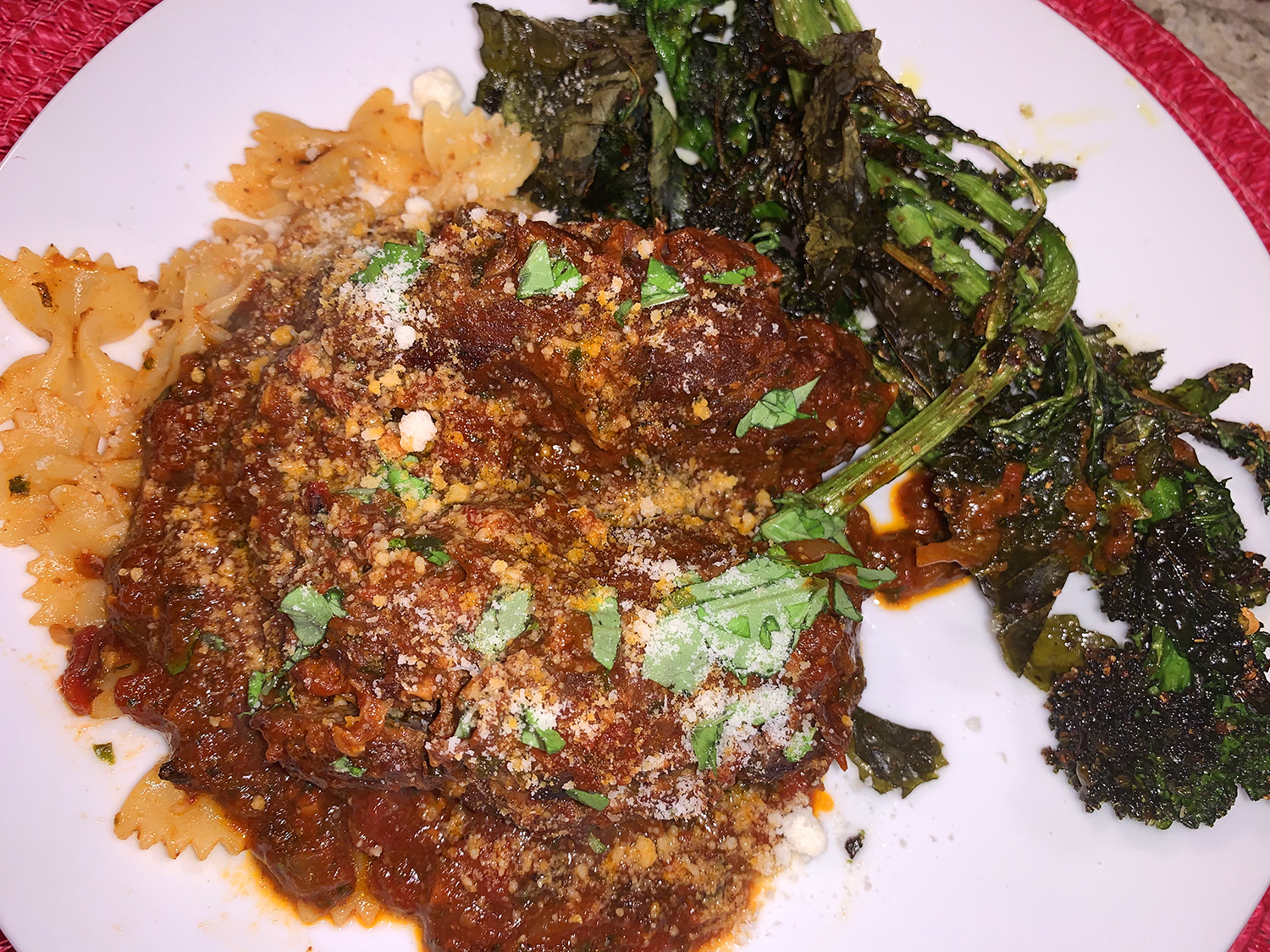
Hearty Beef Braciole

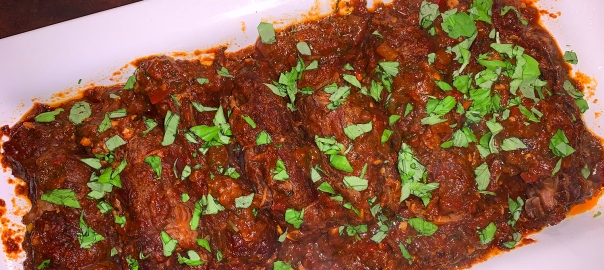
If you’re not familiar with Beef Braciole (I had never heard of it until I moved out East in my early twenties), it’s a classic Italian dish with many variations. It can be made with thin, individual slices of beef such as round or as one large roll using flank steak. It can also be made with pork and it always has a savory filling. But first, get the pronunciation right: [brah-chee-oh-ley, brah-choh-; Italian brah-chaw-le].

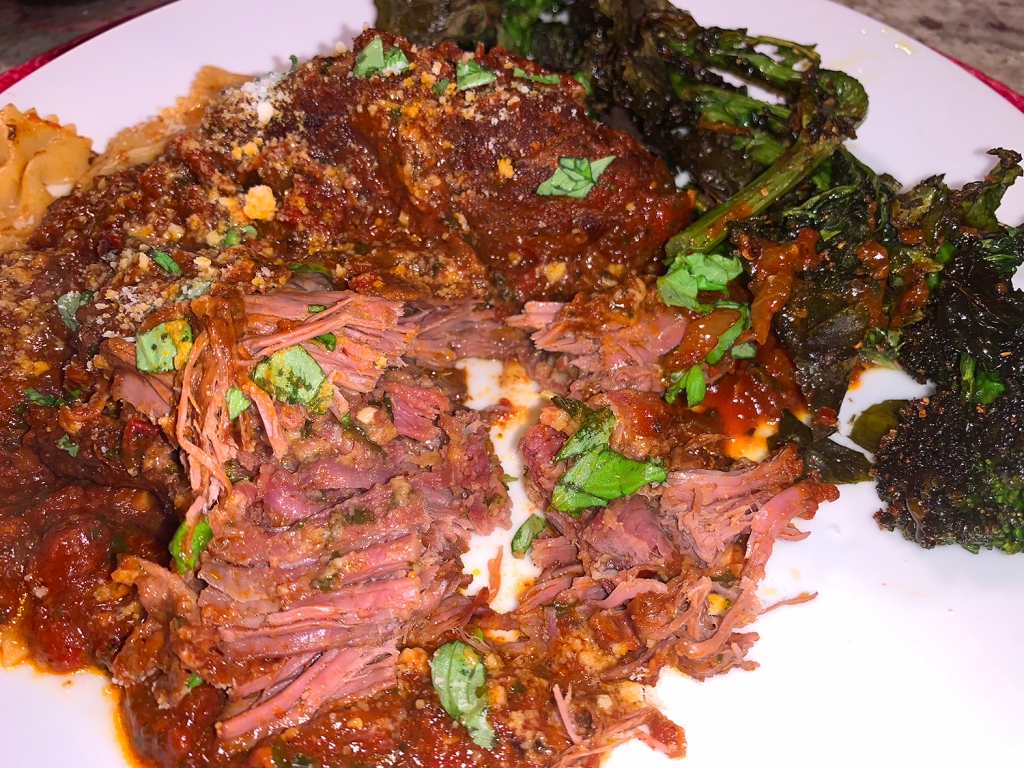
For this take on stuffed beef rolls, Cook’s Illustrated chose flank steak rather than top or bottom round because its loose grain makes it easier to pound thin and its higher fat content means that it emerges from the oven tender and moist. And that it did!

This filling is on the bold side, with the inclusion of umami-rich ingredients such as prosciutto; anchovies; and fontina, a good melter that also brings much-needed fat to the dish. In addition, a gremolata-inspired mix added to the filling provides a jolt of flavor and freshness. Right up our alley! Finally, beef broth is added to the tomato sauce to integrate the beef and the sauce into a unified whole.

This is not your quick weeknight meal. It takes the better part of 4 to 5 hours before you will be serving it on the dinner table, so plan accordingly.

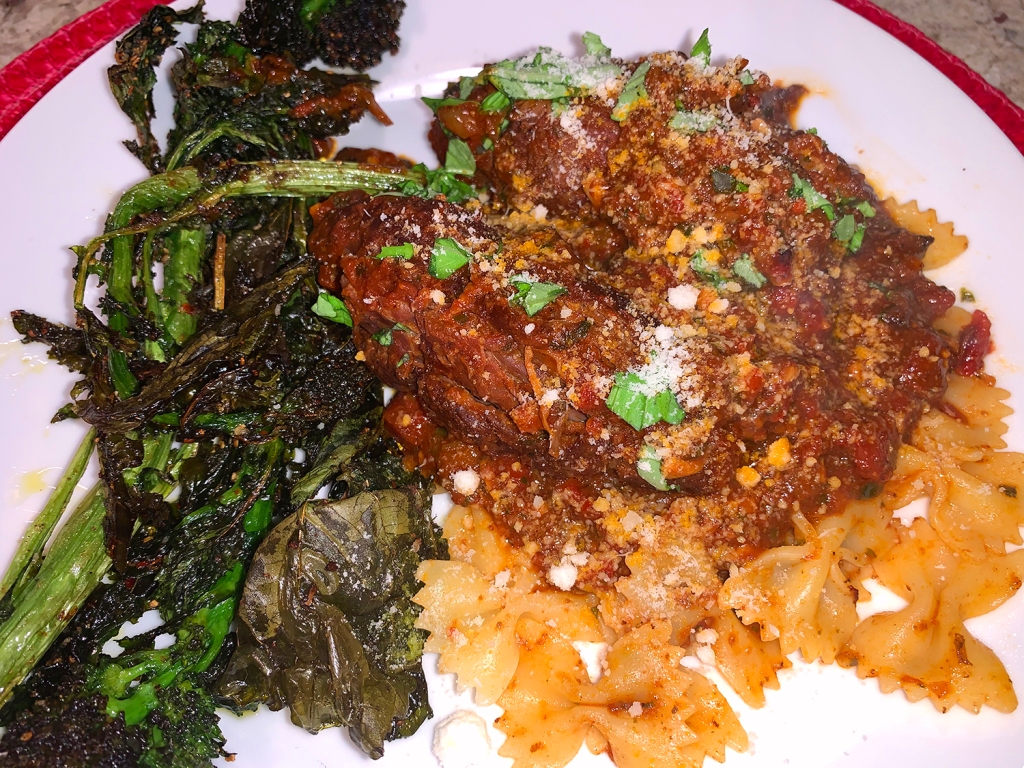
And below is a bonus Roasted Broccoli Rabe recipe to accompany the main dish; this recipe hailing from Milk Street. It takes about 30 minutes max, so you can make it just as the braciole is getting done.

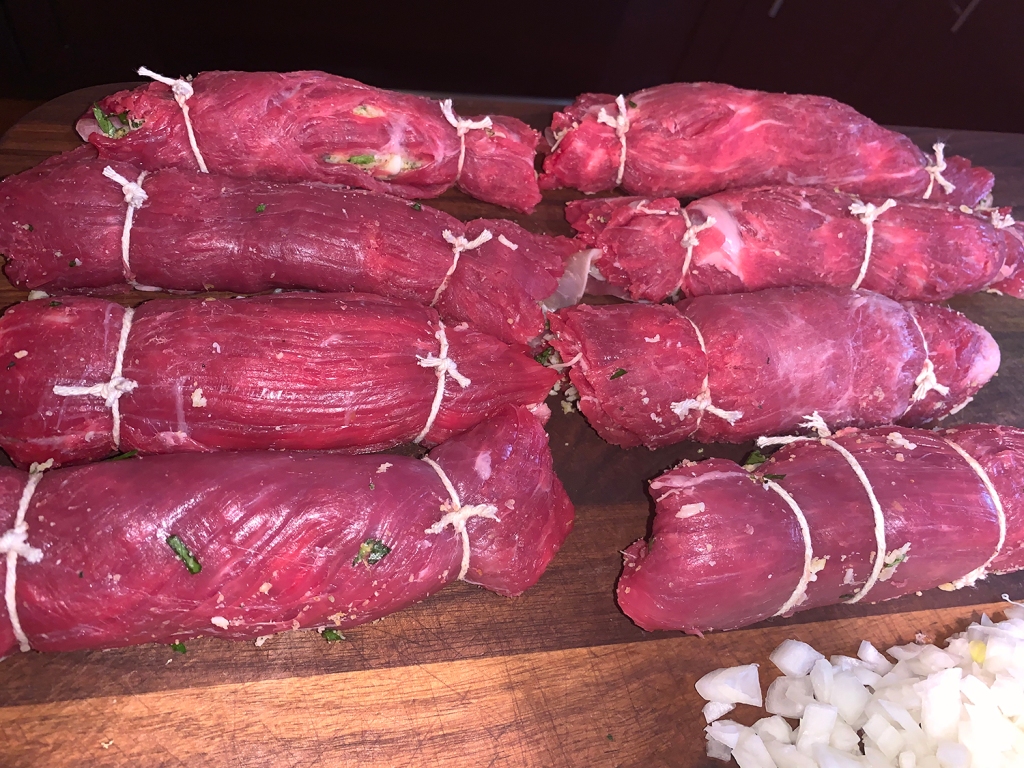
NOTES: Before you begin, cut sixteen 10-inch lengths of kitchen twine. You can substitute sharp provolone for the fontina, if desired. For the most tender braciole, be sure to roll the meat so that the grain runs parallel to the length of the roll. Serve the braciole and sauce together, with pasta or polenta, or separately, as a pasta course with the sauce followed by the meat.

Hearty Beef Braciole

  • Servings: 6-8
  • Difficulty: moderate
  • Print

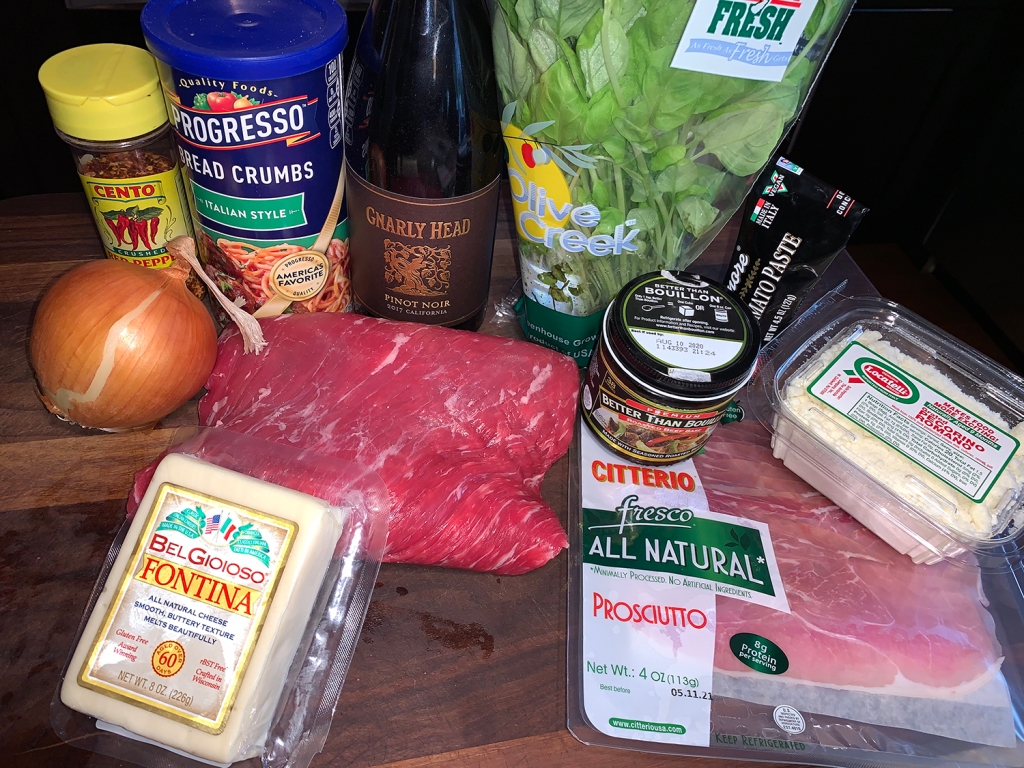
Ingredients

  • 7 Tbsp. extra-virgin olive oil, divided
  • 10 garlic cloves, minced, divided
  • 3 anchovy fillets, rinsed and minced
  • 2 tsp. grated lemon zest
  • ⅓ cup plus 2 Tbsp. chopped fresh basil, divided
  • ⅓ cup minced fresh parsley
  • ⅓ cup grated Pecorino Romano cheese, plus extra for serving
  • ⅓ cup plain dried bread crumbs
  • 3 oz. fontina cheese, shredded (3⁄4 cup)
  • (2- to 2½-pound) flank steak
  • 8 thin slices prosciutto
  • 1 tsp. kosher salt
  • ½ tsp. pepper
  • 1 large onion, chopped fine
  • ¼ tsp. red pepper flakes
  • ¼ cup tomato paste
  • ¾ cup dry red wine
  • (28-oz.) can crushed tomatoes
  • 2 cups beef broth
  • Your choice of pasta, optional

Directions

  1. Adjust oven rack to lower-middle position and heat oven to 325 degrees.
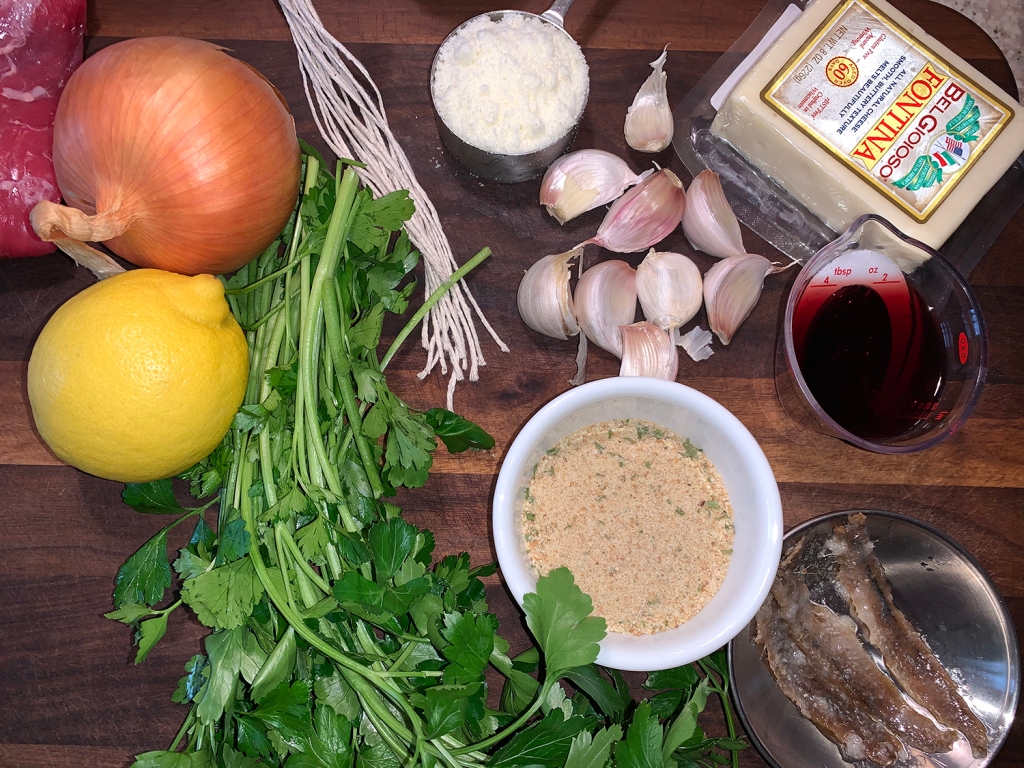
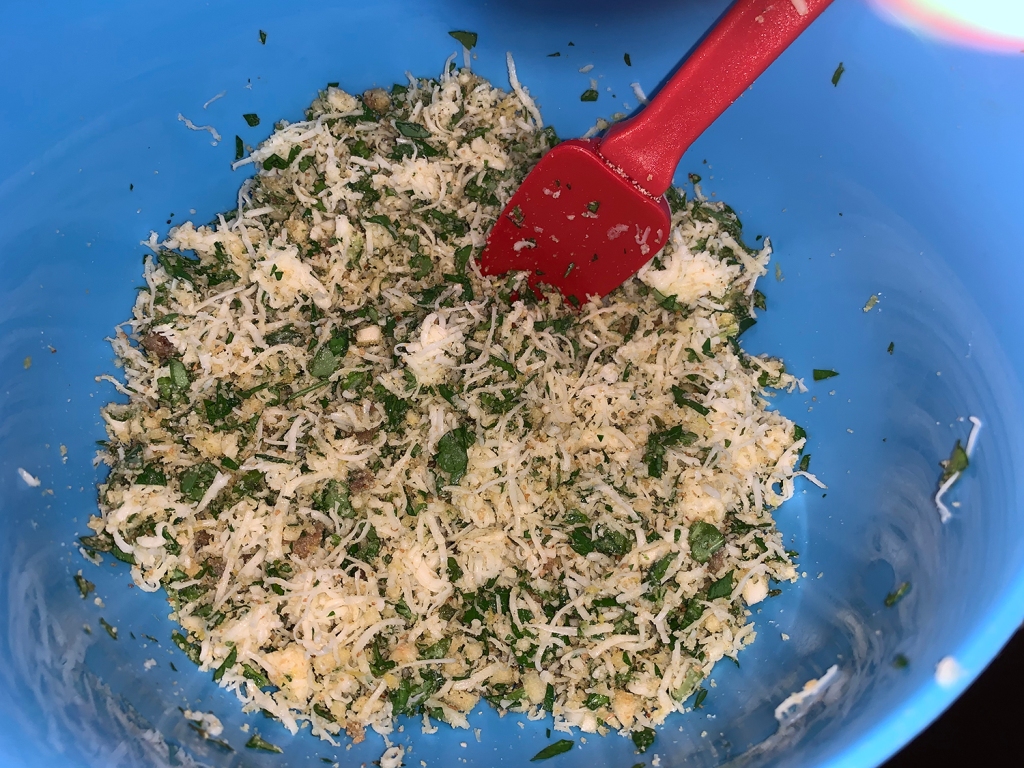
  2. Stir 3 tablespoons oil, half of garlic, lemon zest, and anchovies together in medium bowl. Add ⅓ cup basil, parsley, Pecorino, and bread crumbs and stir to incorporate. Stir in fontina until evenly distributed and set aside filling.
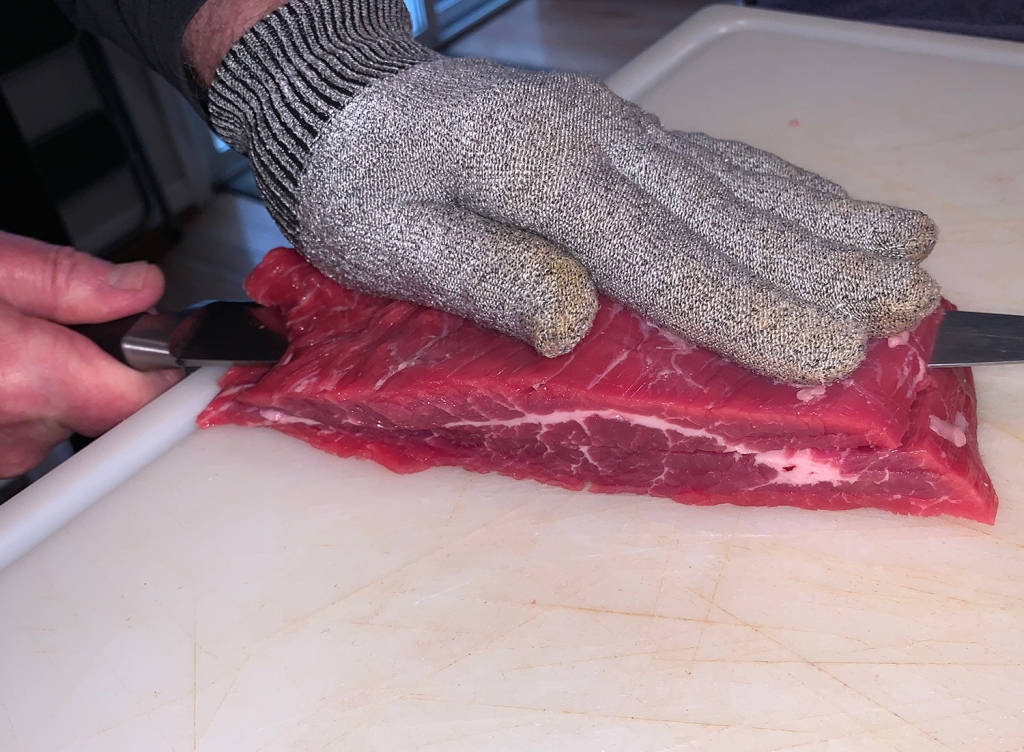
  3. Halve steak against grain to create 2 smaller steaks. Lay 1 steak on cutting board with grain running parallel to counter edge. Holding blade of chef’s knife parallel to counter, halve steak horizontally to create 2 thin pieces. Repeat with remaining steak.
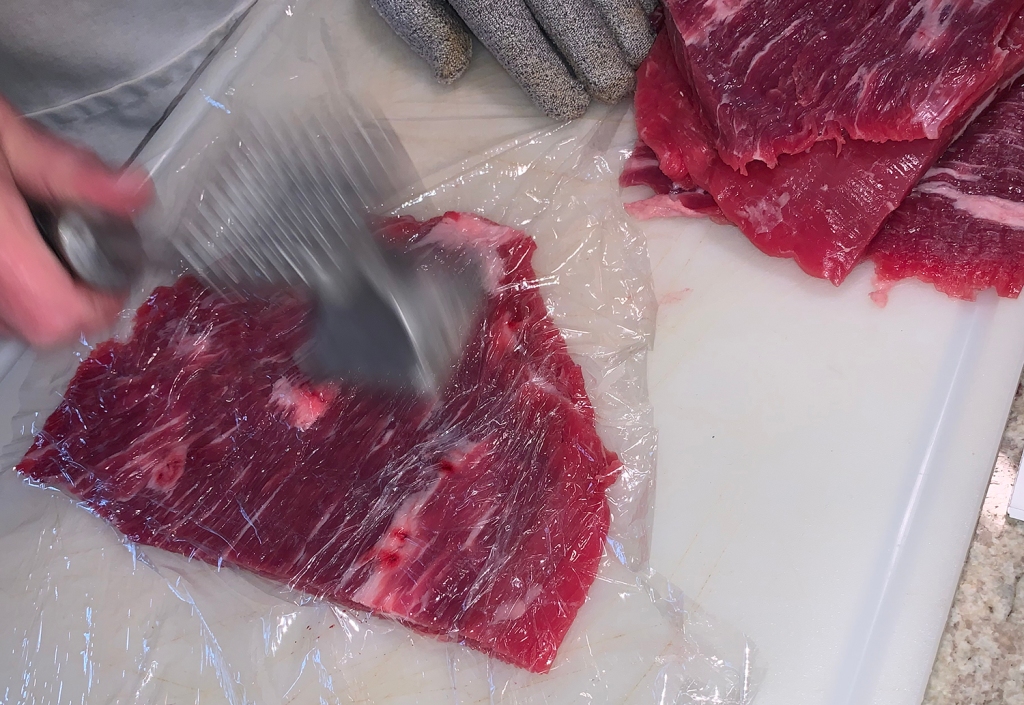
  4. Cover 1 piece with plastic wrap and, using meat pounder, flatten into rough rectangle measuring no more than ¼ inch thick. Repeat pounding with remaining 3 pieces. Cut each piece in half, with grain, to create total of 8 pieces.
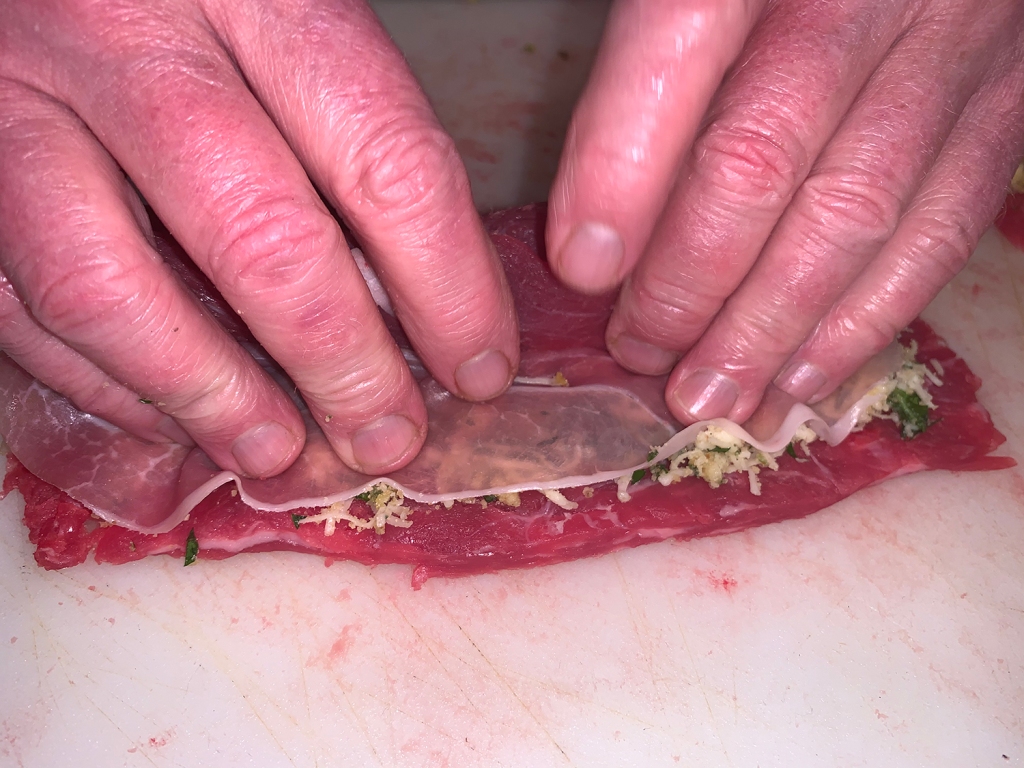
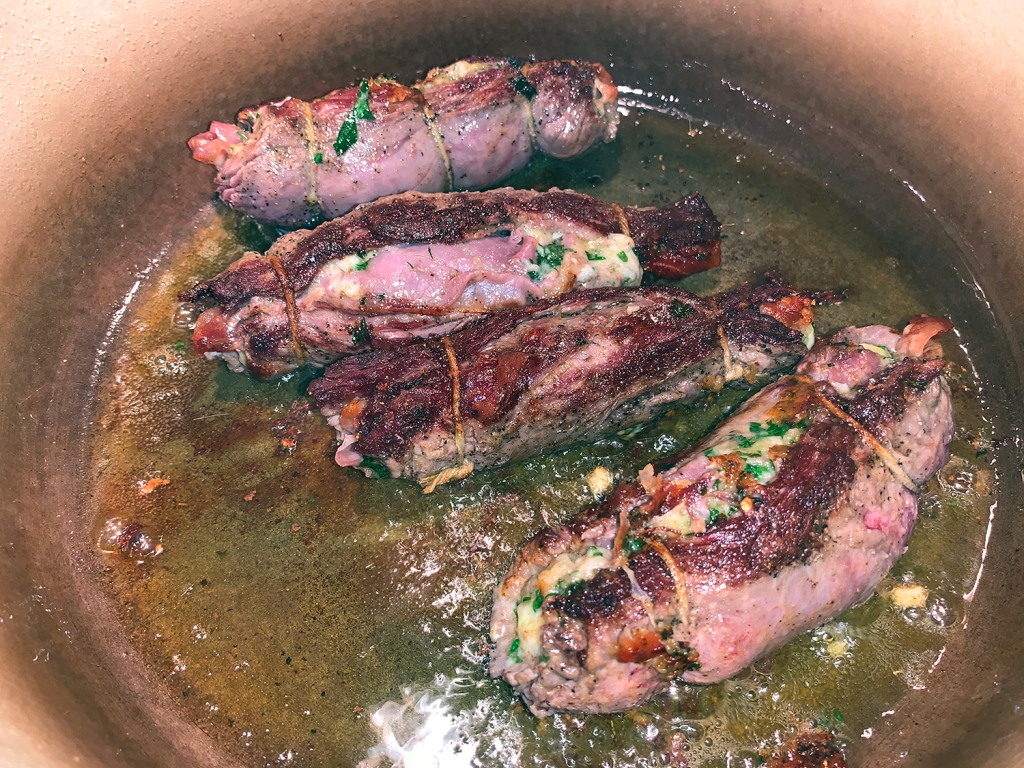
  5. Lay 4 pieces on cutting board with grain running parallel to counter edge (if 1 side is shorter than the other, place shorter side closer to you). Distribute half of filling evenly over pieces. Top filling on each piece with 1 slice of prosciutto, folding to fit, and press firmly. Keeping filling in place, roll each piece away from you to form tight log. Tie each roll with 2 pieces kitchen twine to secure. Repeat process with remaining steak pieces, filling, and prosciutto. Sprinkle rolls on both sides with salt and pepper.
  6. Heat remaining ¼ cup oil in large Dutch oven over medium-high heat until shimmering. Brown rolls on 2 sides, 8 to 10 minutes. Using tongs, transfer rolls to plate.
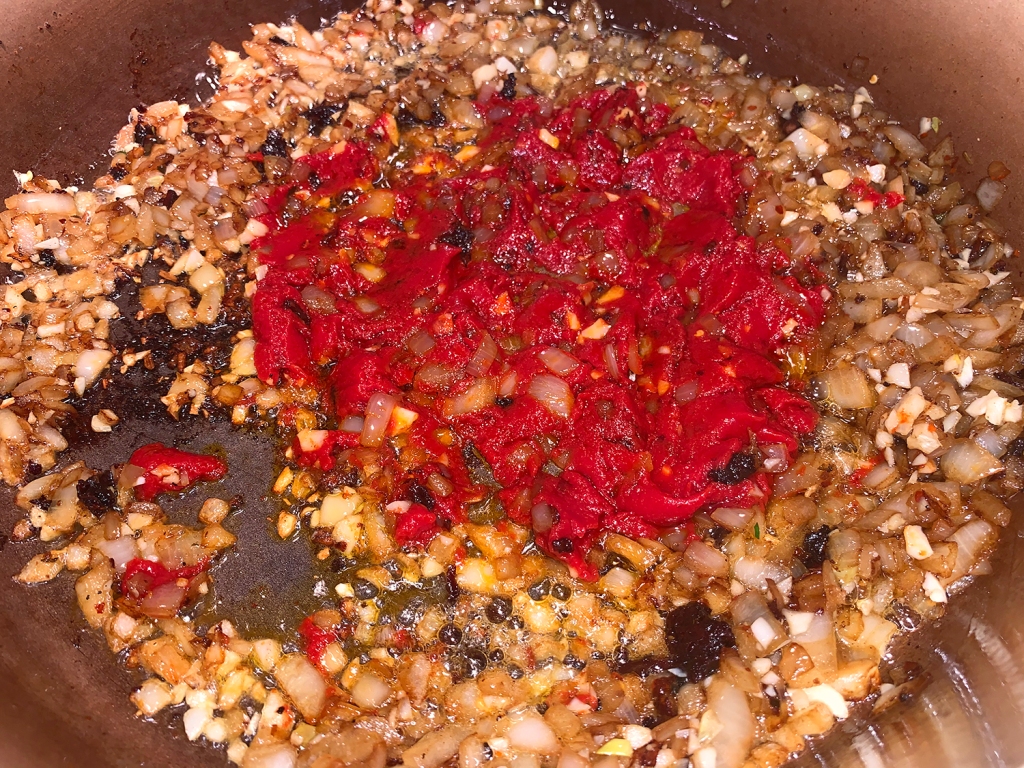
  7. Add onion to pot and cook, stirring occasionally, until softened and lightly browned, 5 to 7 minutes. Stir in pepper flakes and remaining garlic; cook until fragrant, about 30 seconds. Stir in tomato paste and cook until slightly darkened, 3 to 4 minutes.
  8. Add wine and cook, scraping up any browned bits. Stir in tomatoes and broth. Return rolls to pot; bring to simmer. Add parchment paper to cover the entire pot opening, then cover tightly and transfer to oven. Braise until meat is fork-tender, 2½ to 3 hours, using tongs to flip rolls halfway through braising.
  9. Transfer braciole to serving dish and discard twine. If there is a lot of fat on the surface of the sauce, skim off as much as you can with a large spoon.
  10. Meanwhile, if serving pasta, cook according to package directions.
  11. TIP: If your sauce reduced too much (ours did), add up to a cup of the pasta water to thin it. Stir remaining 2 tablespoons basil into tomato sauce and season with salt and pepper to taste. Pour sauce over braciole and serve, passing extra Pecorino separately.

http://www.lynnandruss.com

Recipe courtesy of Cook’s Illustrated

Roasted Broccoli Rabe with Fennel and Chili Flakes

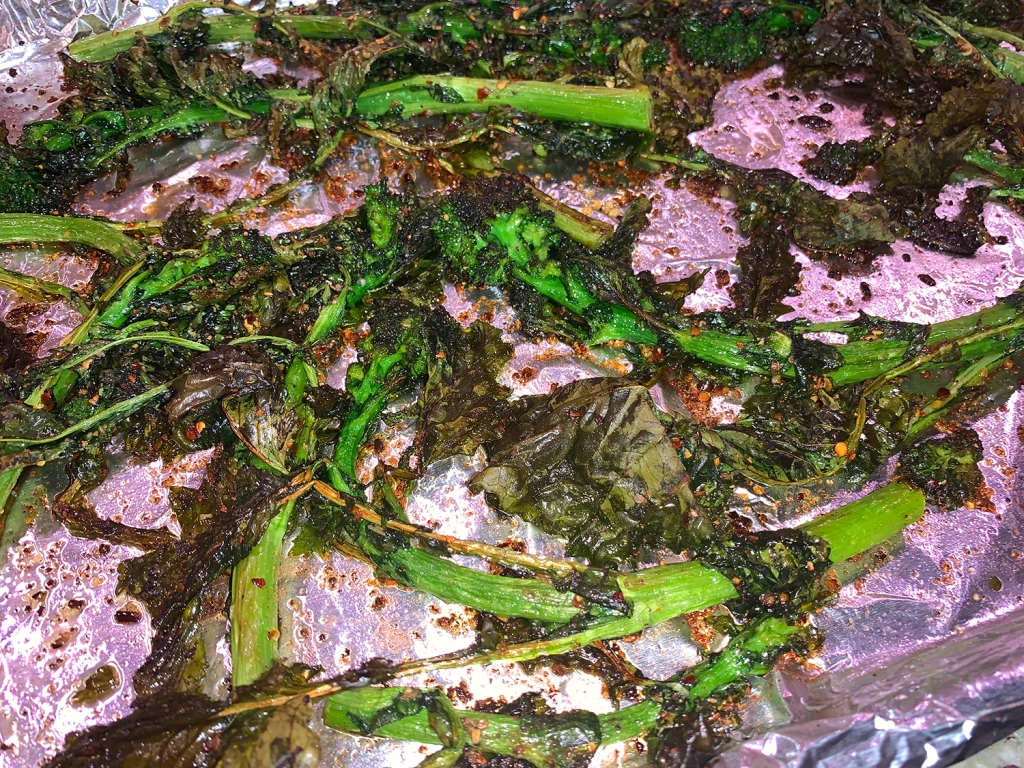
The high heat renders the stems and florets tender while the leaves crisp around the edges, like kale chips with a spicy broccoli bite. Make sure not crowd the pan or everything will steam rather than roast. In the end, they may not look real pretty, but they are fantastic in the taste category!

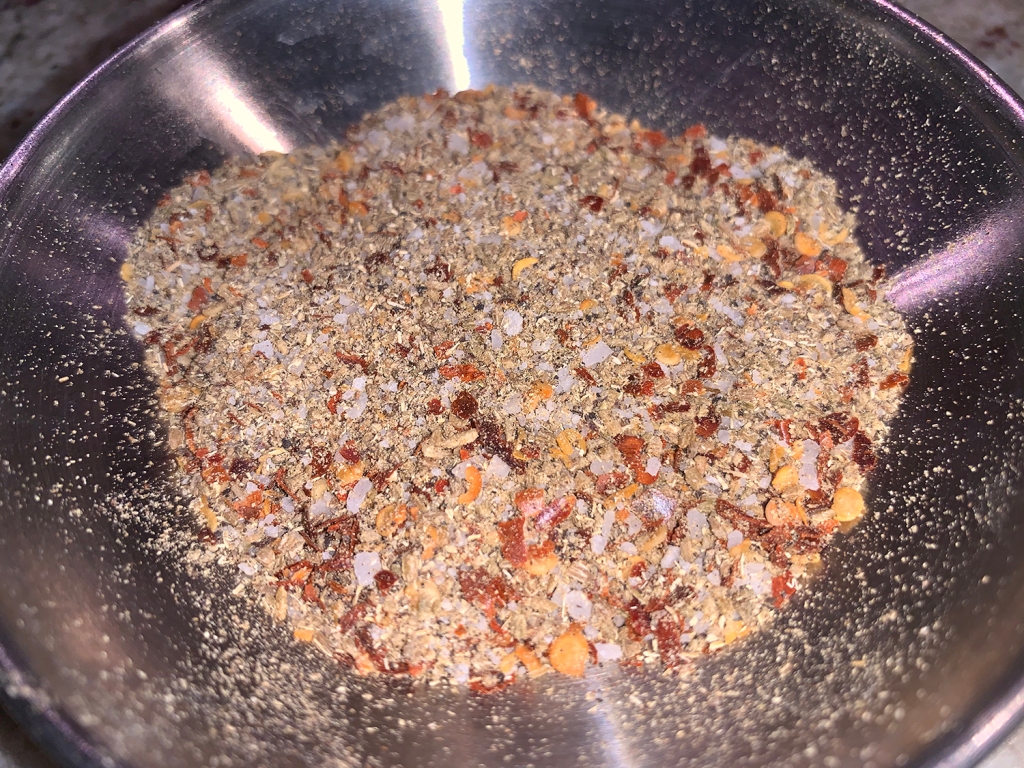
If possible, use whole toasted fennel seed then grind it down yourself either with a spice grinder or mortar and pestle. There was a sweet-and-sour mint dressing that was also part of this recipe, but we omitted it. And in a word, the rabe was “Delish!”

Roasted Broccoli Rabe with Fennel and Chili Flakes

  • Servings: 4
  • Difficulty: easy
  • Print

Ingredients

  • 1 lb. broccoli rabe, ends trimmed, well dried
  • 1/2 cup olive oil
  • 1 Tbsp. ground fennel seed
  • 1 tsp. Kosher salt
  • 1 tsp. ground black pepper
  • 1 tsp. red pepper flakes

Directions

  1. Heat oven to 500°F. Line a rimmed baking sheet with foil.
  2. In a large bowl, toss broccoli rabe with olive oil, fennel, salt, black pepper and red pepper flakes.
  3. Transfer the broccoli rabe to the baking sheet and roast until just beginning to brown, stirring halfway through, 12 to 15 minutes total.

http://www.lynnandruss.com

Recipe courtesy of Milk Street