Tag Archives: keto-friendly

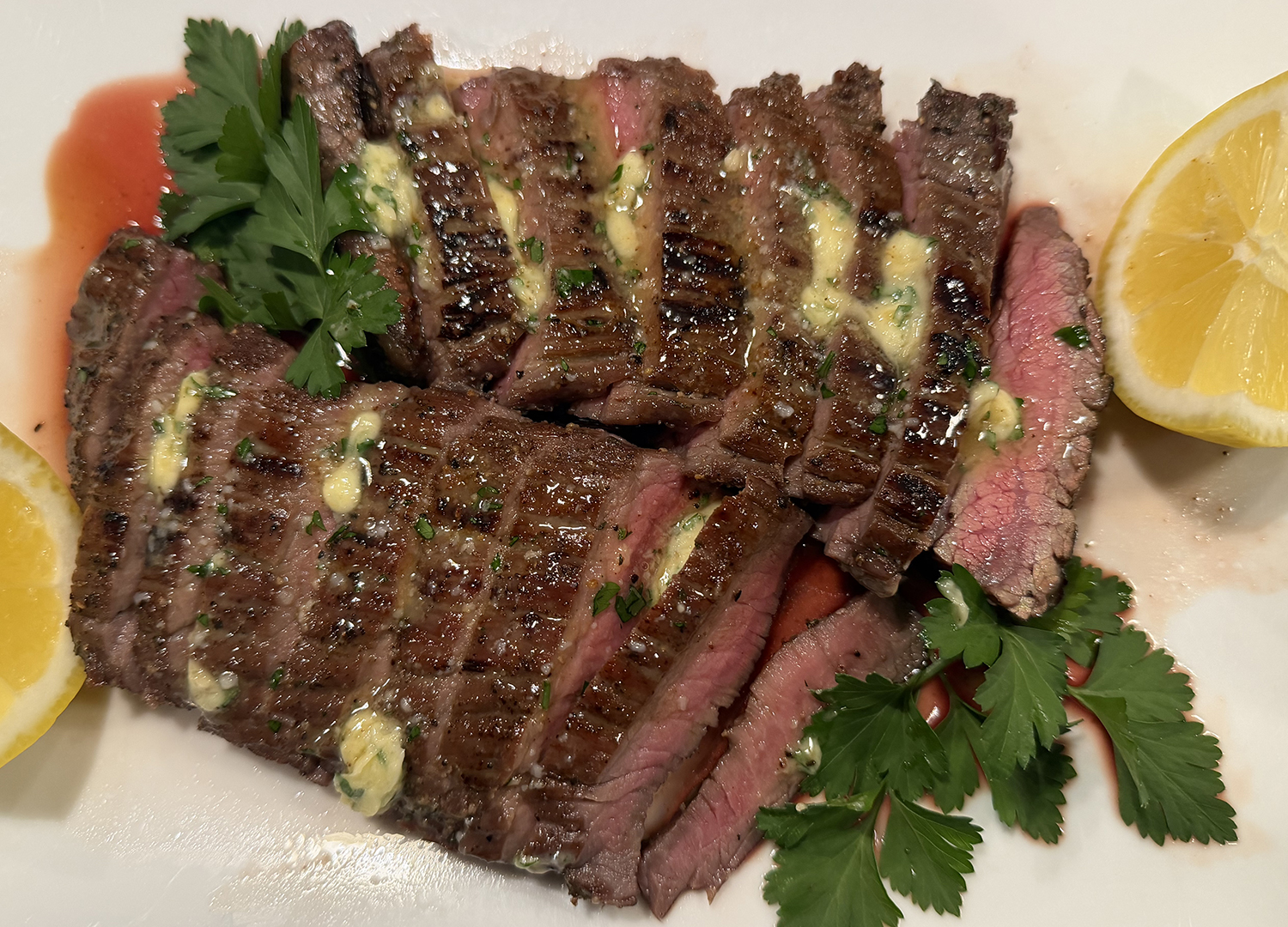
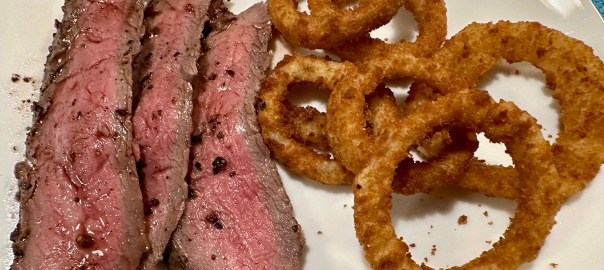
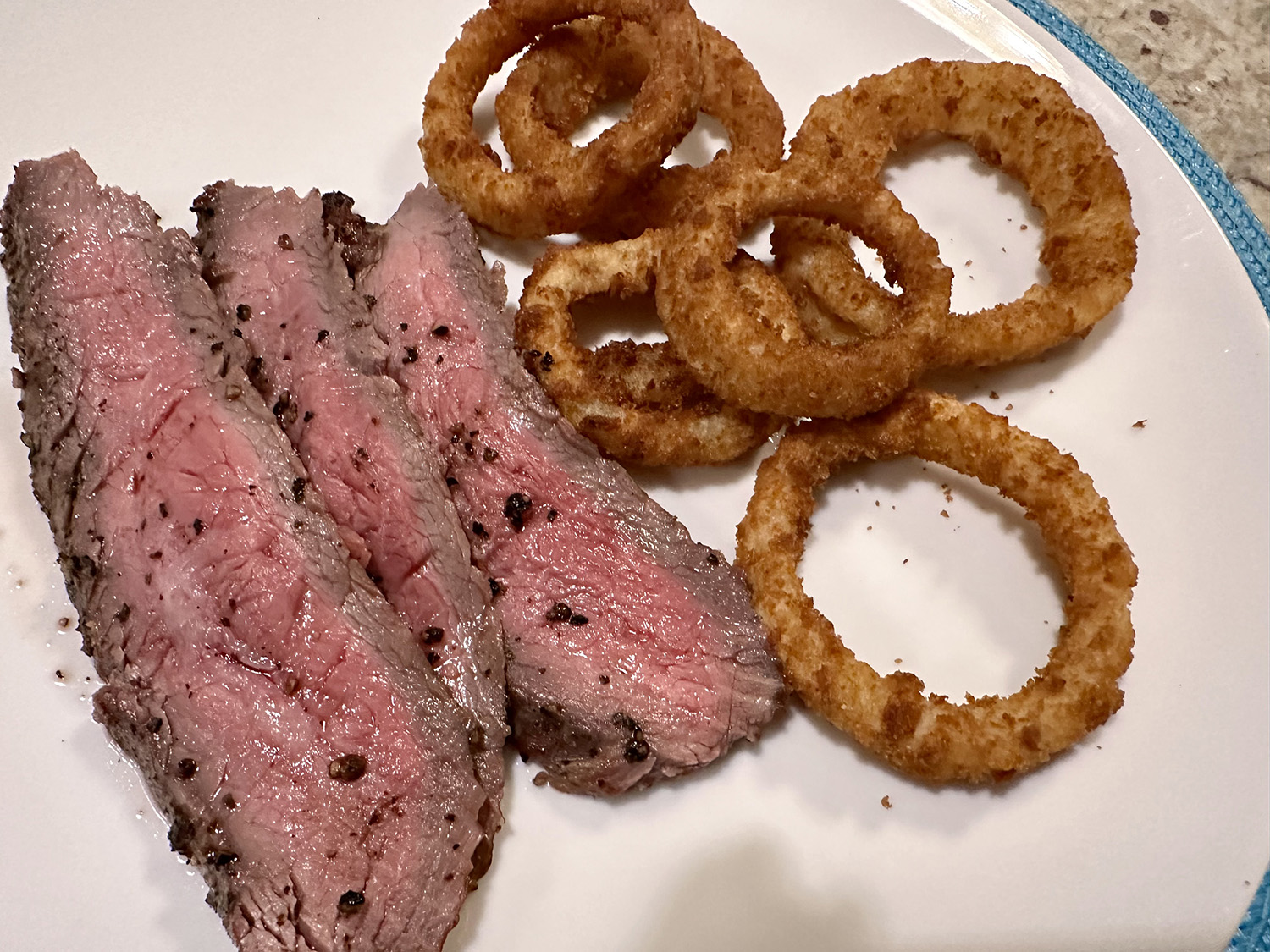
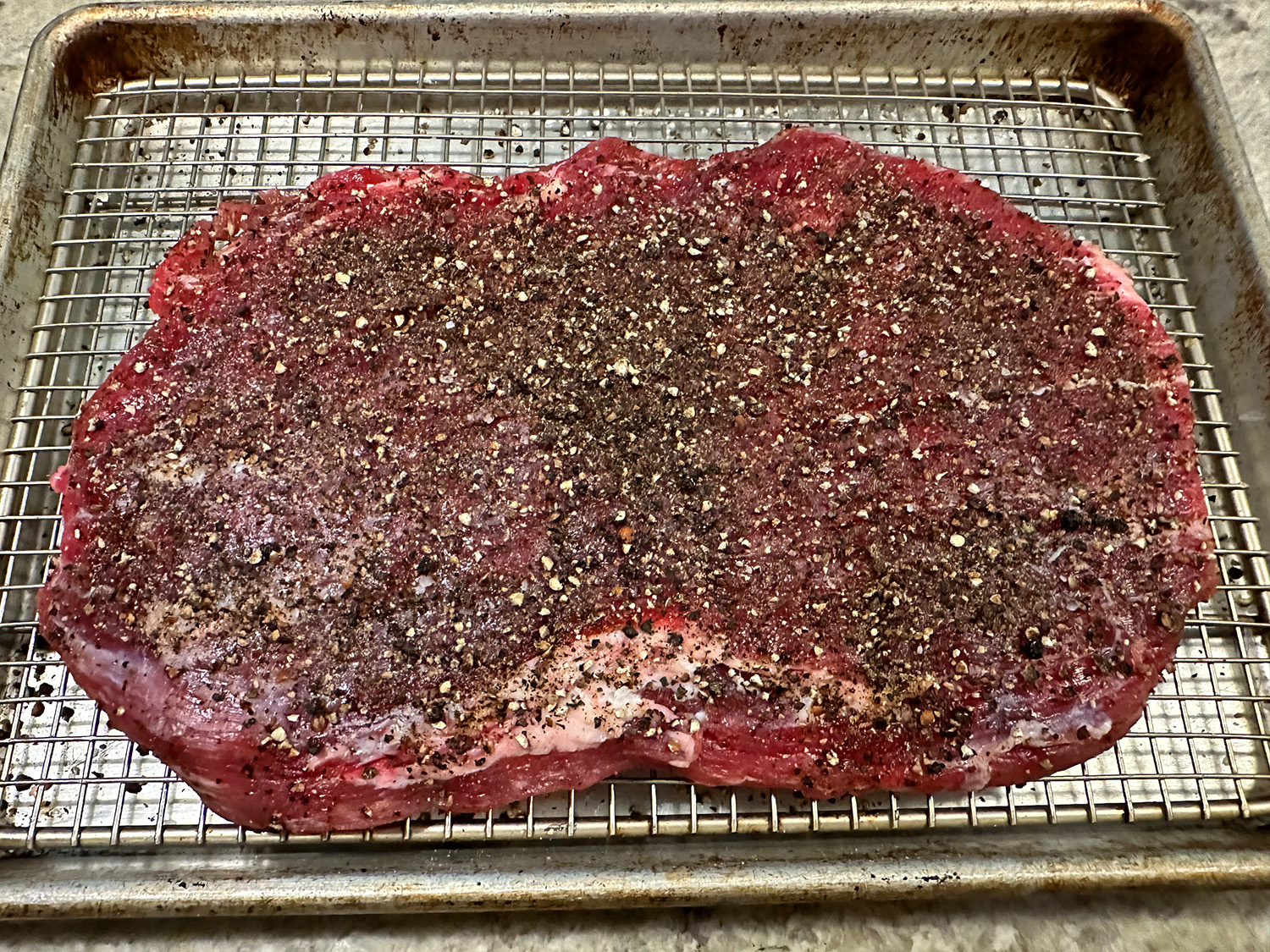
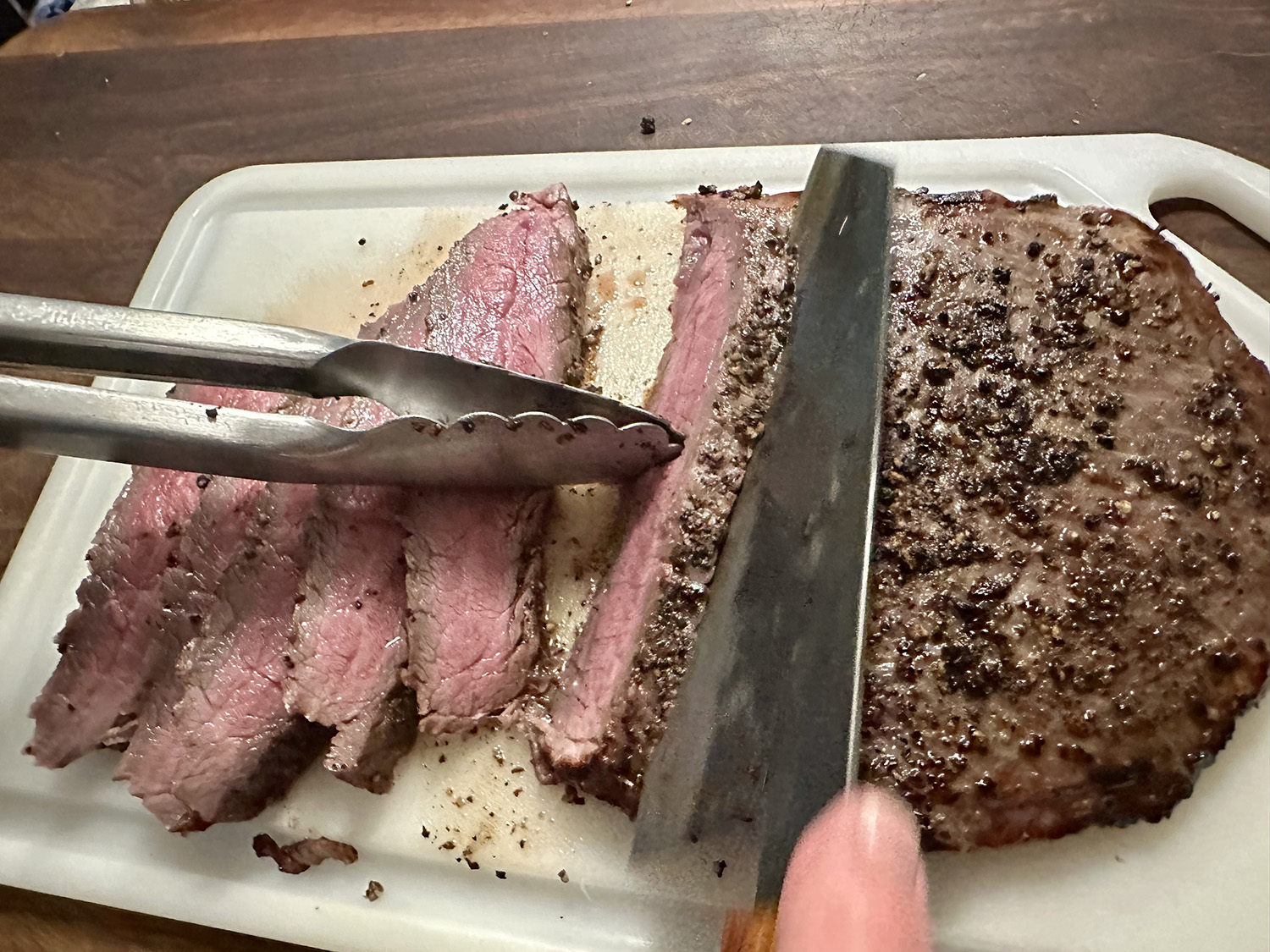
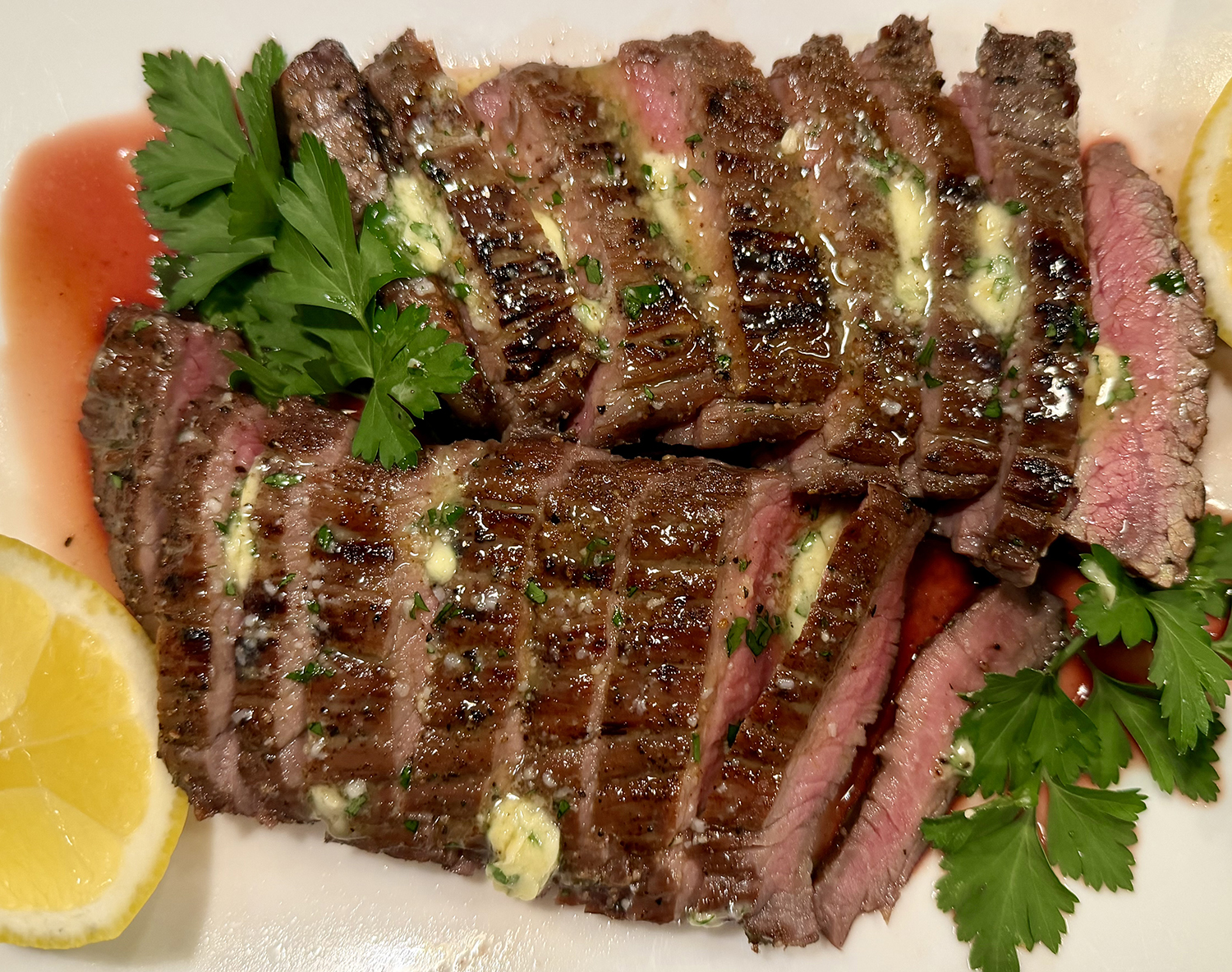
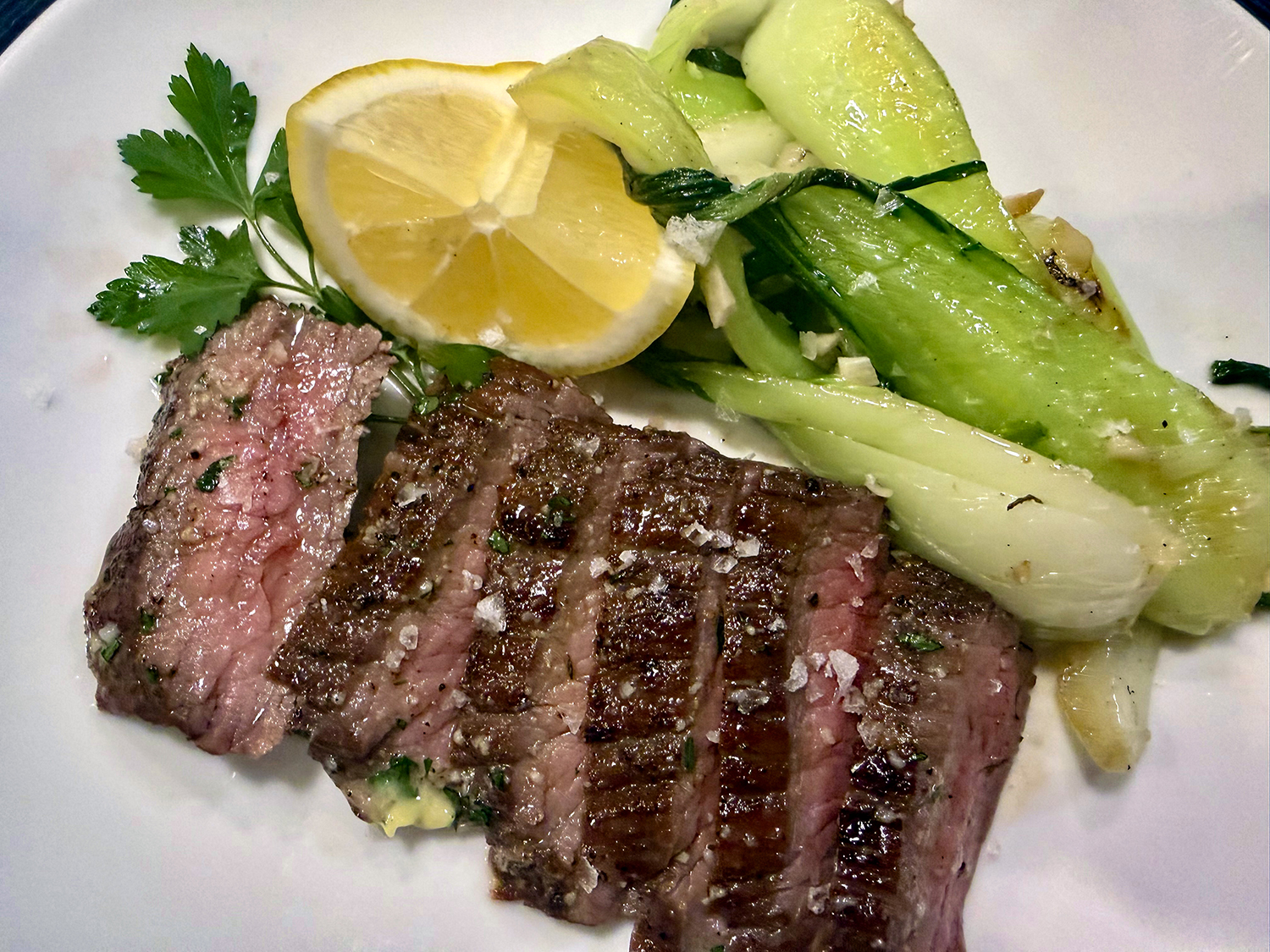
Shio Koji-Marinated Flank Steak

This super-easy reverse-seared steak recipe is just the thing for a flavor-packed tasty dinner. The list of ingredients is manageable, but one in particular, shio koji, may be unfamiliar to you.
To educate, Shio Koji is a fermented seasoning made from rice koji, salt, and water. The fermentation process of these three ingredients creates a creamy, paste-like condiment with a salty and sweet, umami-rich flavor. It contains enzymes like amylase and protease, which break down starches and proteins, making it a popular marinade and meat tenderizer. 

Shio koji, which can be made at home or purchased, is often used as a marinade because it is rich in protease enzymes (which break down proteins), so it can create an array of new flavors in protein-rich foods.

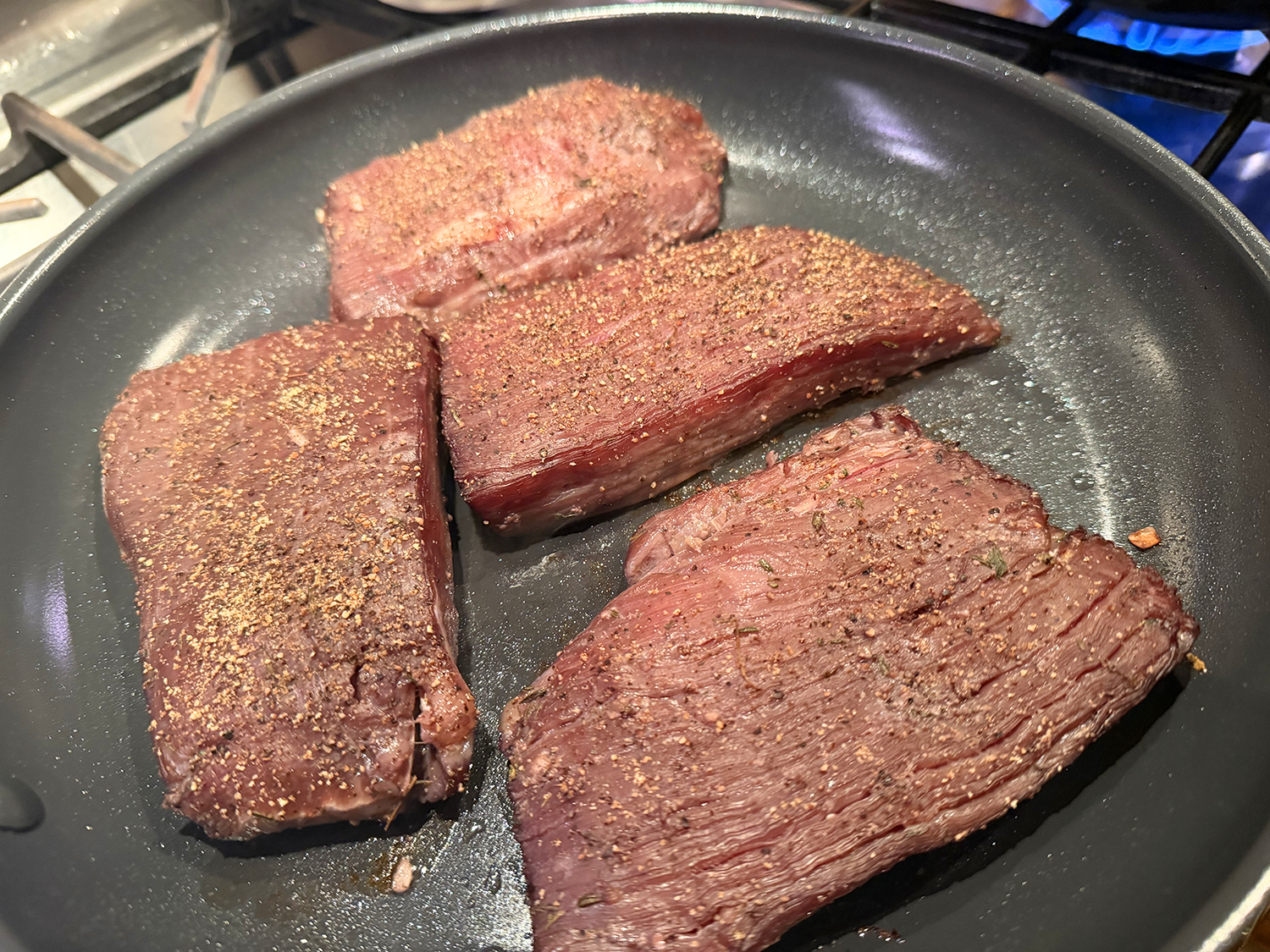
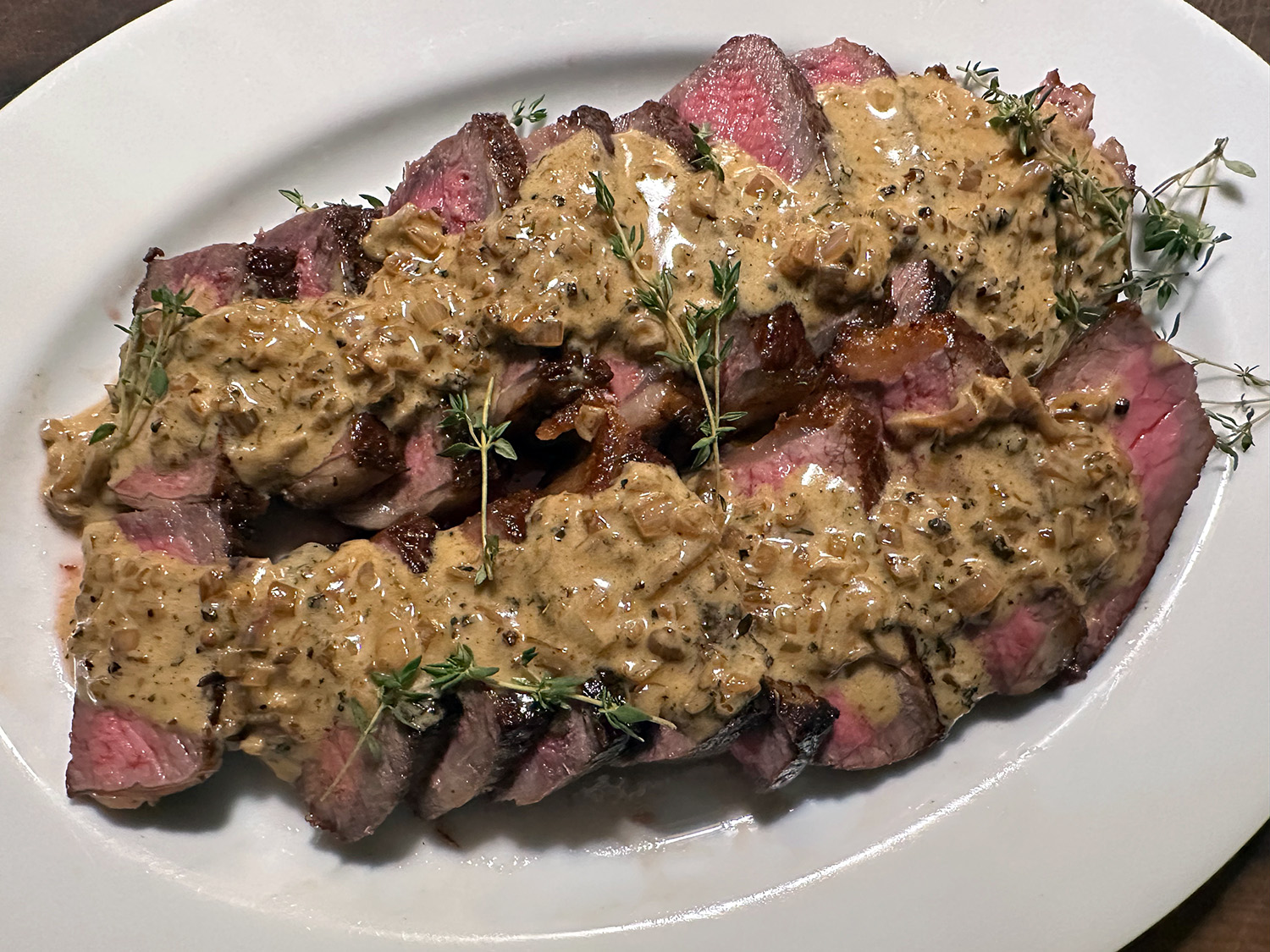
Here, shio koji gives marinated flank steaks the nutty, savory, blue-cheese-y flavors typically found in expensive dry-aged steaks. After wiping the marinade from the steaks, cook them in the oven with a gentle heat to keep their interiors juicy and rosy pink. Finally, quickly sear them on the stovetop to create a slightly charred crust.

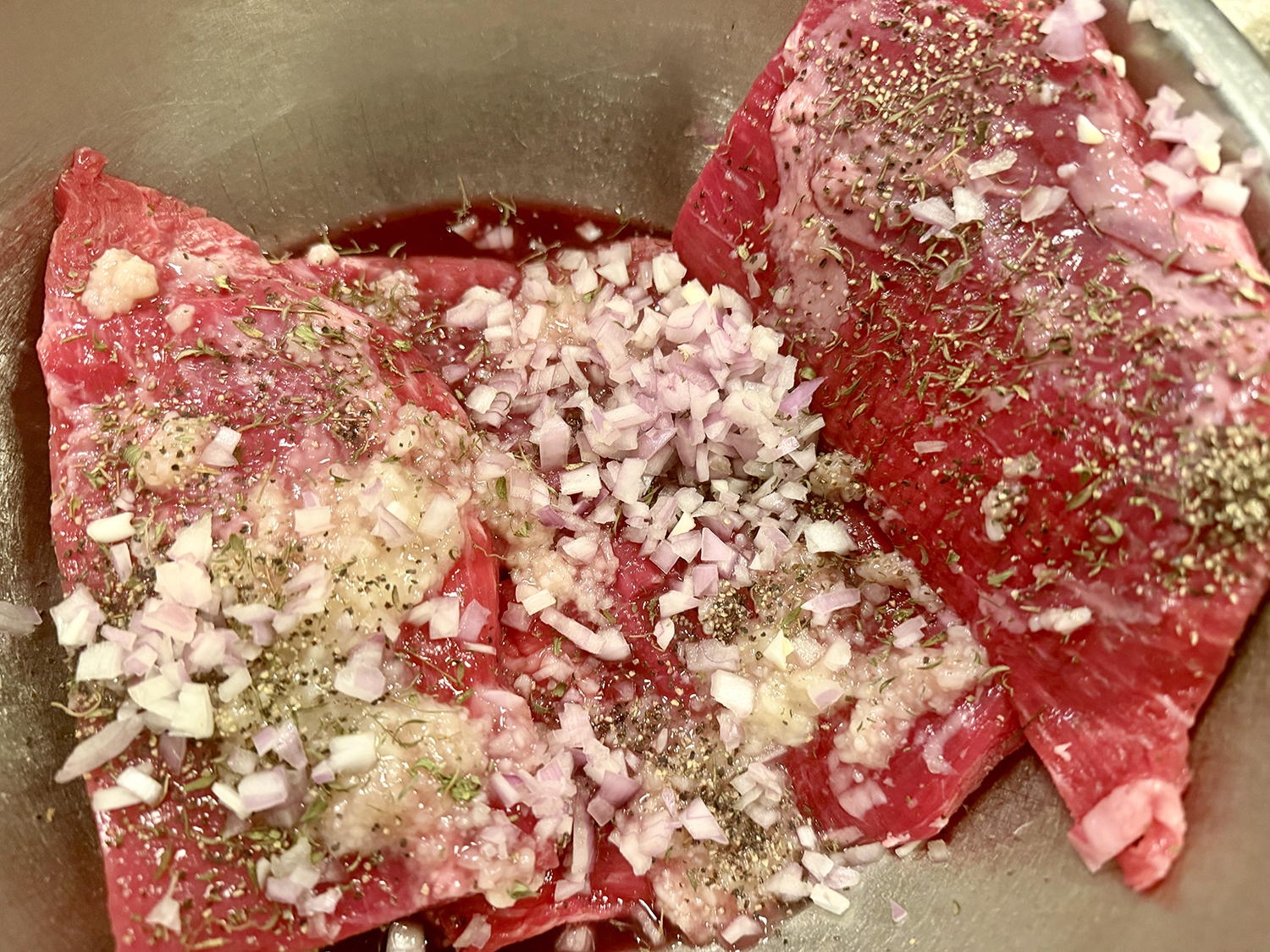
This recipe contains three marinating options (see below), of which we chose the Red-Wine Shallot variation.
Shio Koji-Marinated Flank Steak

  • Servings: 4
  • Difficulty: easy
  • Print

Ingredients

For the Steak

  • 1 (1½- to 1¾-lb.) flank steak, well trimmed
  • 3 Tbsp. shio koji
  • ½ tsp. pepper
  • 1 tsp. vegetable oil
  • Flaky sea salt (optional)
  • Lemon wedges (optional)

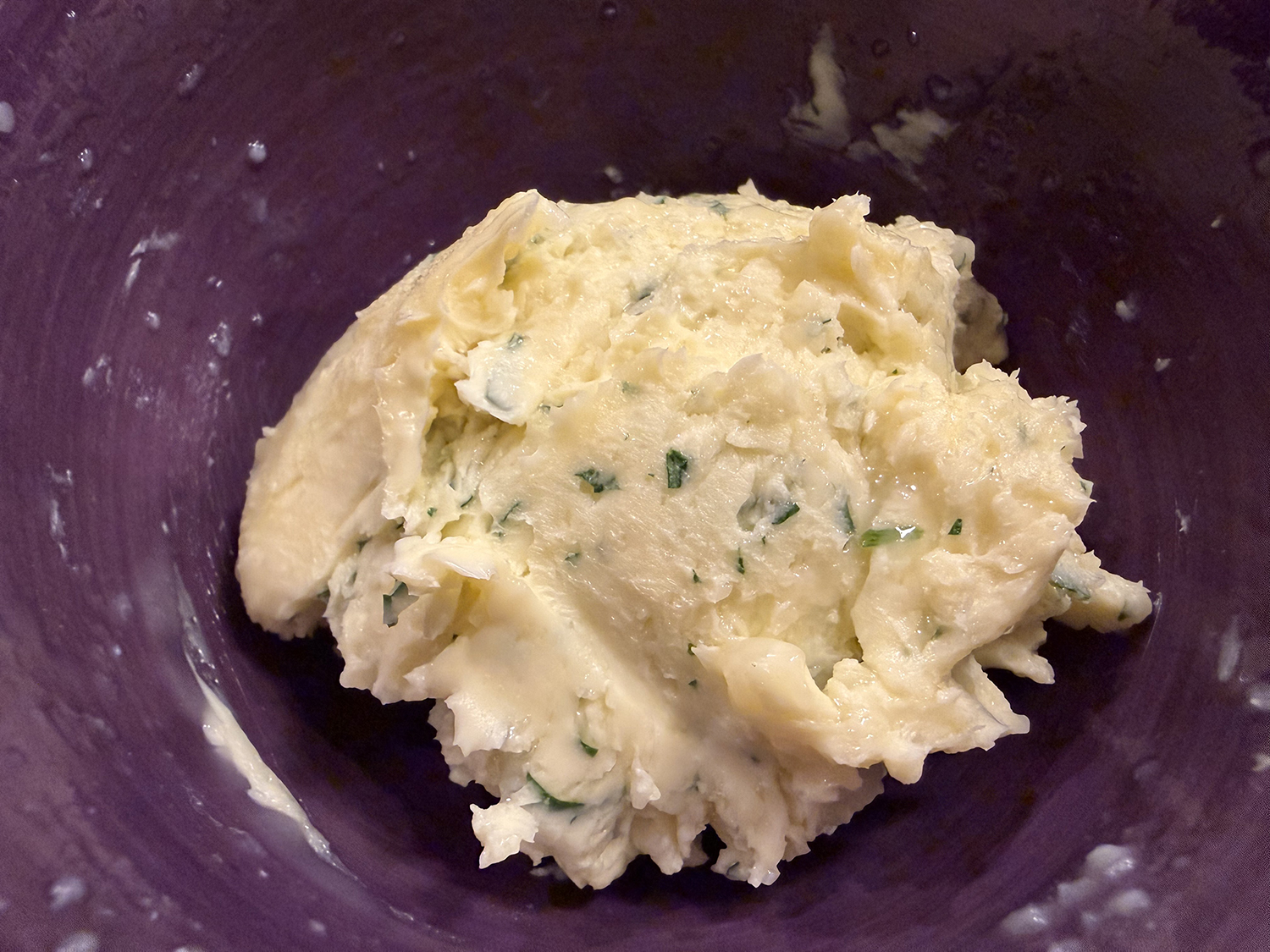
For the Butter

  • 4 Tbsp. unsalted butter, softened
  • 1 1⁄2 ysp. shio koji
  • 1 tsp. minced fresh parsley (or other herb of your choice)
  • 1⁄8 tsp. kosher salt

Directions

For the Steak

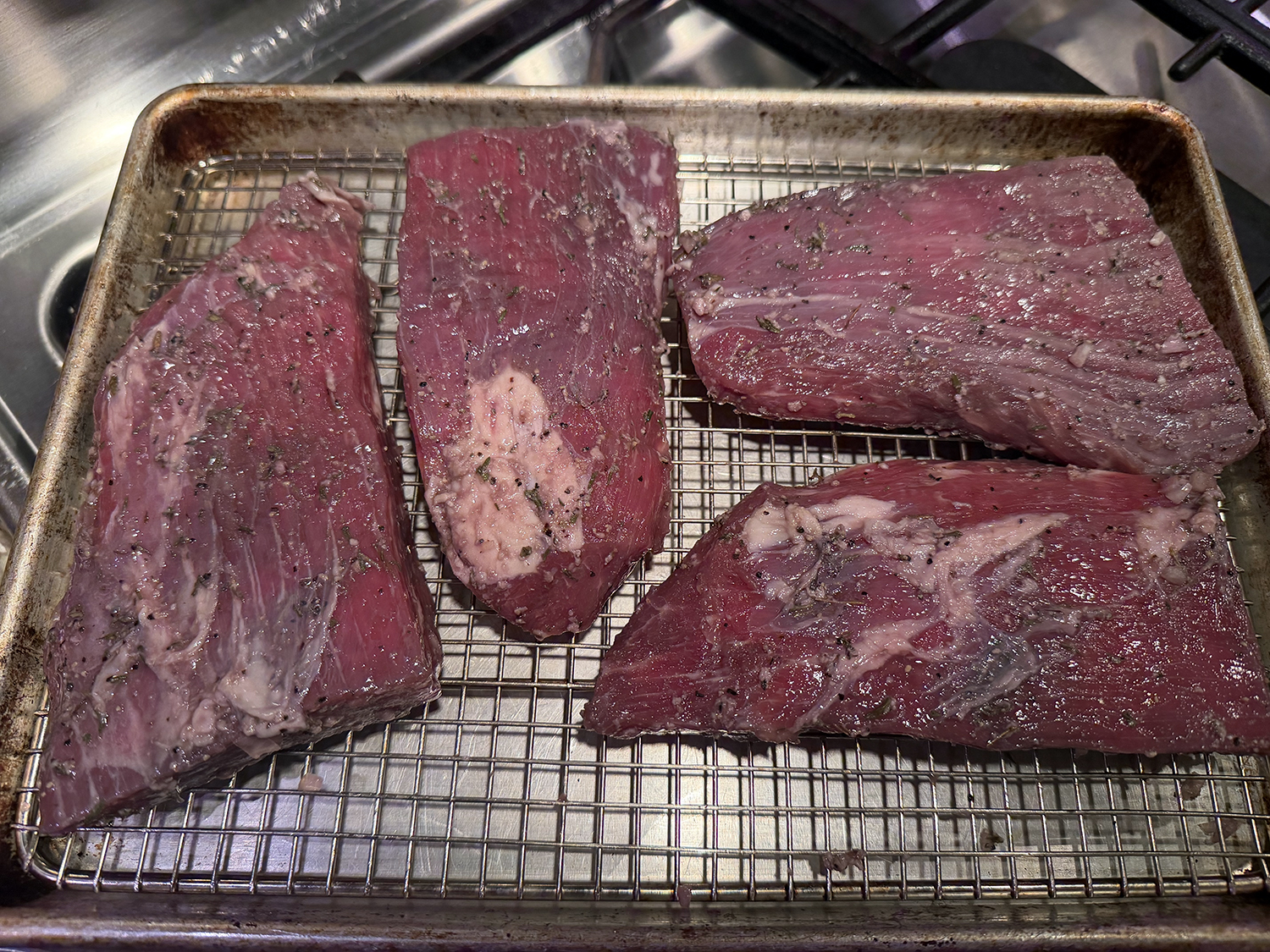
  1. Adjust oven rack to middle position and heat oven to 275 degrees. While oven heats, set wire rack in rimmed baking sheet. 
  2. With damp towel, wipe koji from steaks (it’s OK if a few grains remain on steak). Sprinkle with ½ teaspoon pepper. Set steaks on prepared rack and transfer to oven. Cook until thickest part of largest steak registers 125 degrees, 25 to 30 minutes.  
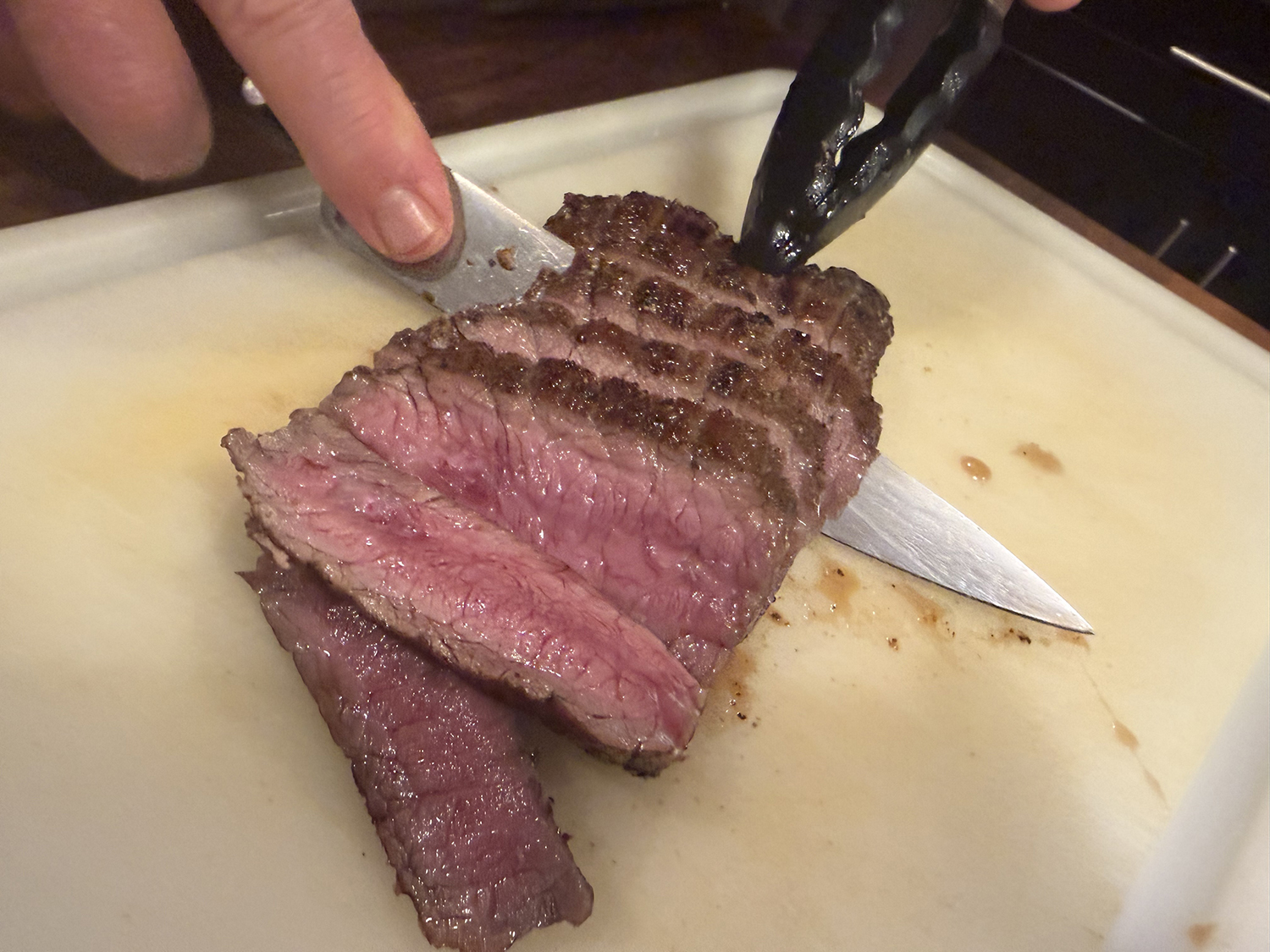
  3. Heat 1 teaspoon vegetable oil in 12-inch nonstick skillet over medium-high heat until shimmering. Add steaks and cook, pressing steaks gently into pan until browned and slightly charred in spots on both sides, 1 to 2 minutes per side. Cut steaks on bias against grain into ½-inch-thick slices. Serve, passing flake sea salt and lemon wedges, if using, separately.

For the Butter

  1. Combine all ingredients in a bowl. The butter mixture can be refrigerated for up to one week.

http://www.lynnandruss.com

Recipe by Lan Lam for America’s Test Kitchen

Simple Ways to Vary the Marinade

Shio koji creates plenty of complexity on its own, but it also enhances the flavors of additional seasonings. Try the following combinations, stirring the ingredients into 3 tablespoons of shio koji before applying the marinade to the steak.

WORCESTERSHIRE-GARLIC 

  • 3 Tbsp. Worcestershire sauce
  • 2 tsp. minced garlic
  • ½ tsp. pepper

BOURBON-SOY

  • 3 Tbsp. bourbon
  • 2 Tbsp. soy sauce
  • ¾ tsp. ground allspice

RED WINE–SHALLOT

  • 3 Tbsp. red wine
  • 2 Tbsp. minced shallot
  • 1 tsp. dried thyme
  • ½ tsp. pepper

Shio Koji Steak Primer

Shio koji works differently than other marinades. Here’s how to make the most of its special properties.

Shio-Koji-to-steak ratio: 1 tablespoon to 8 ounces

One tablespoon of shio koji per ½ pound of steak is enough to produce a broad range of flavors (and since commercially produced shio koji contains only 8 to 14 percent salt, that amount won’t make the meat overly salty.) Shio koji pairs beautifully with other seasonings too (see “Simple Ways to Vary the Marinade”).

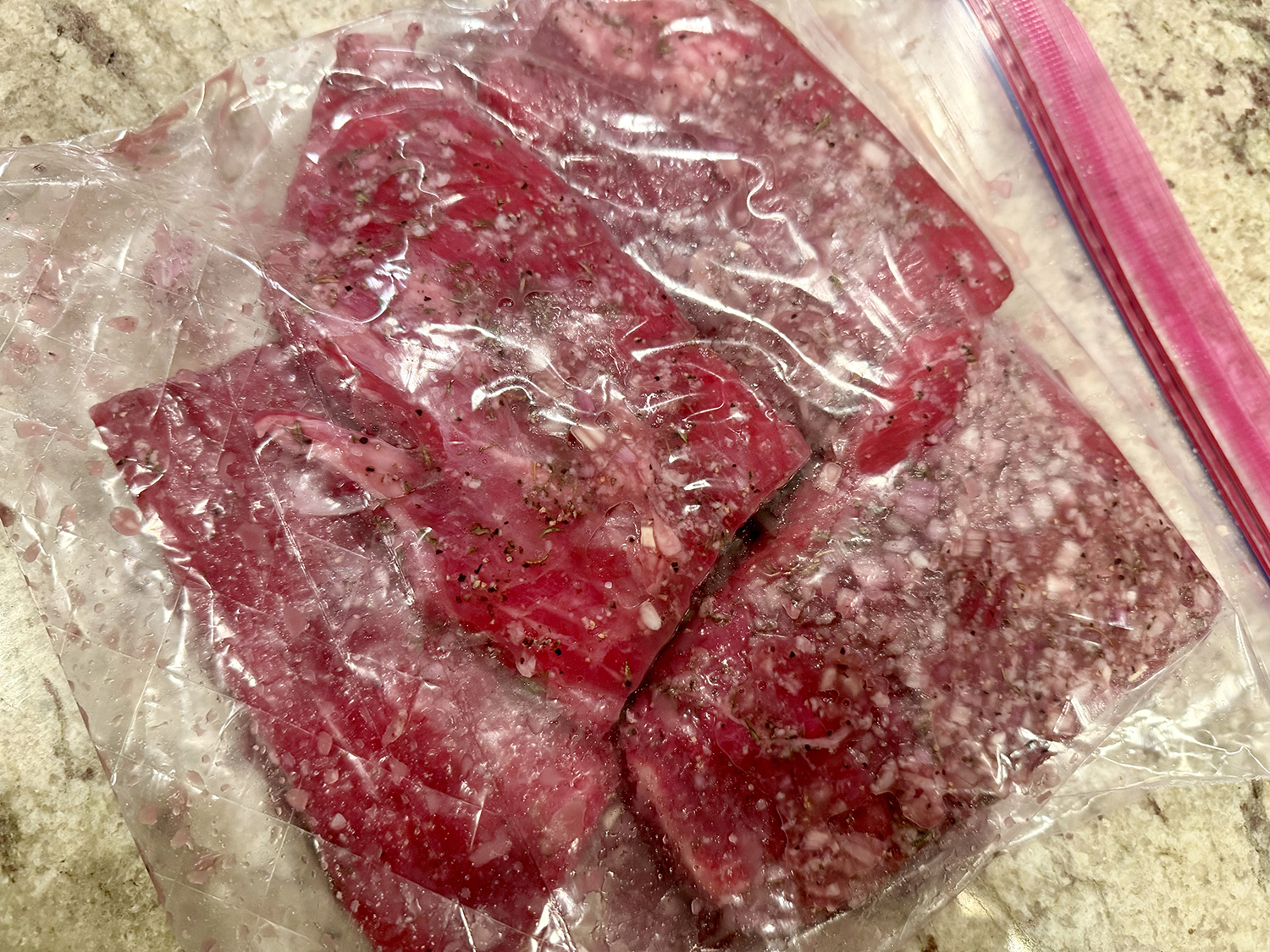
Marinating time: 2 to 24 hours

The longer the steak marinates, the more intense its flavor will become. Four hours is a good place to start if it’s your first time using shio koji so that you can get to know how it changes the flavor of the meat.

Best cooking method: reverse searing

Both the simple sugars contained in shio koji and the amino acids that are liberated as the steak marinates facilitate browning, but the sugars are also prone to scorching. The most failproof cooking method, then, is reverse searing: gently bringing the steak to serving temperature in the oven and then quickly searing it in a skillet to develop a well-browned crust with a hint of char.

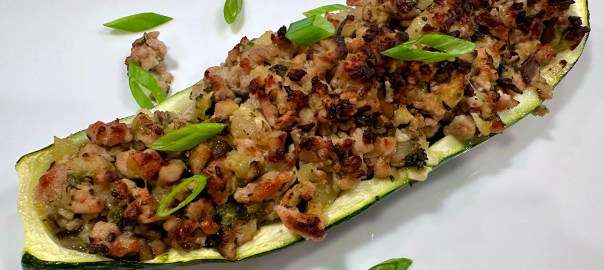
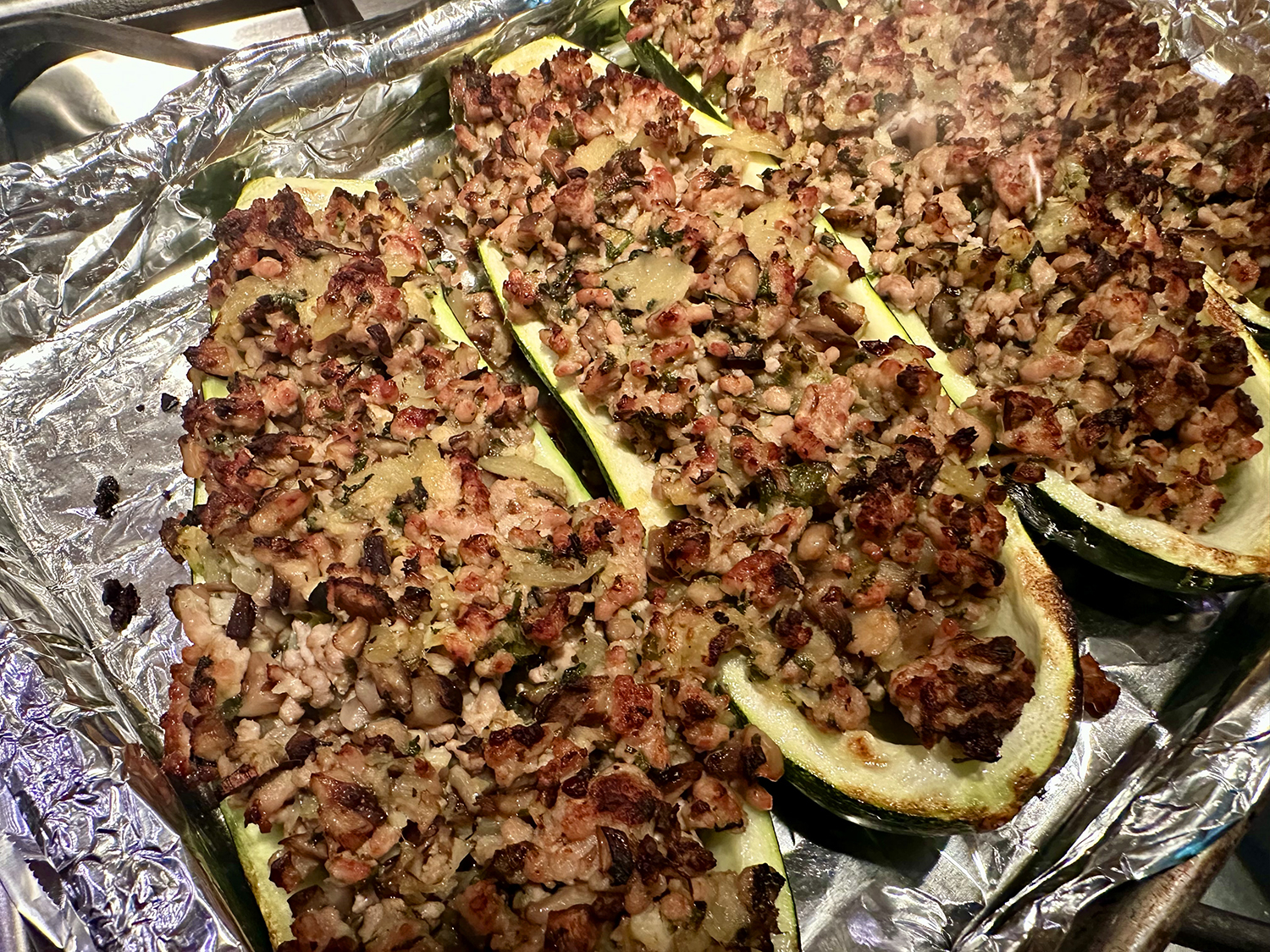
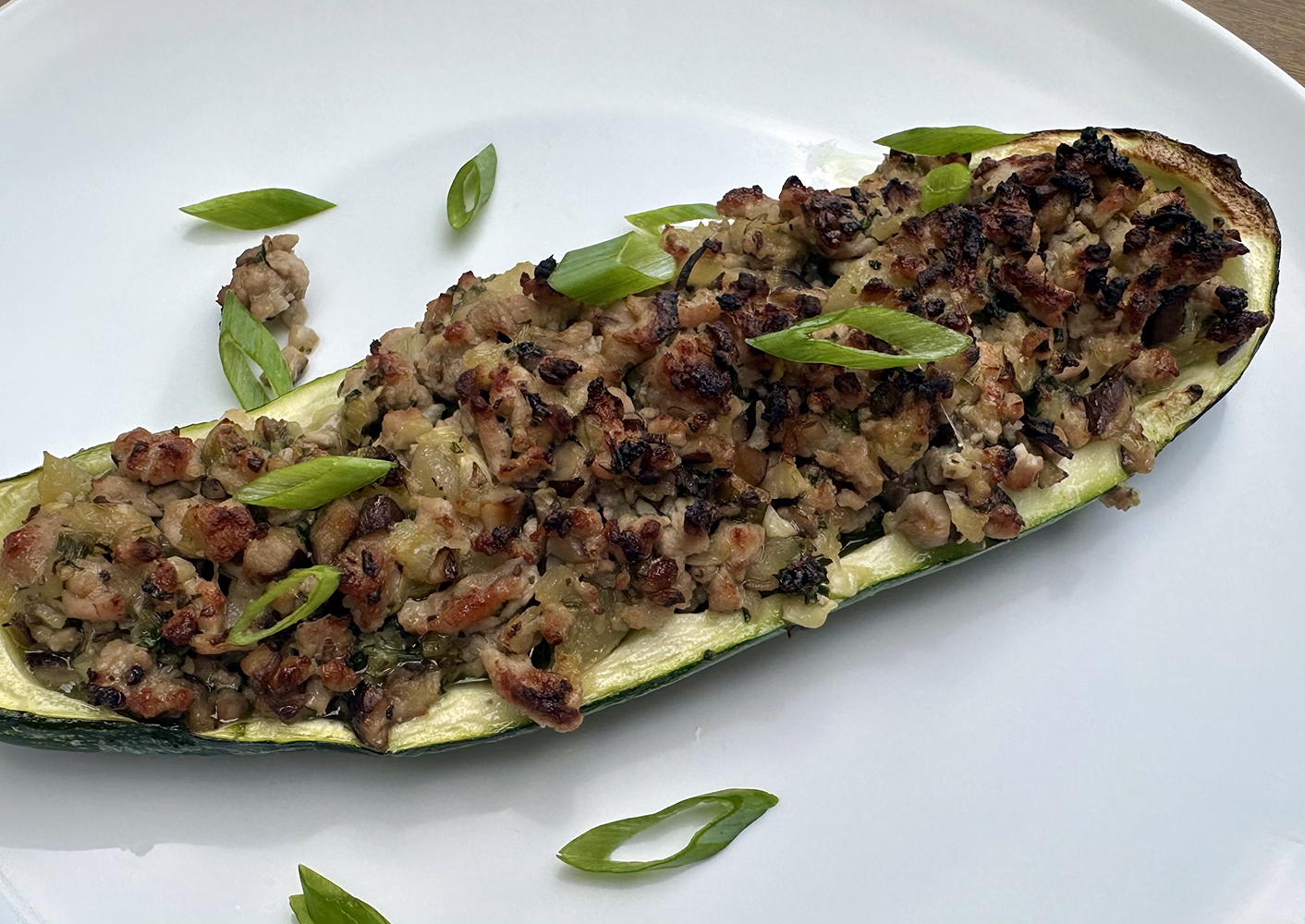
Pork-and-Mushroom Stuffed Zucchini Boats

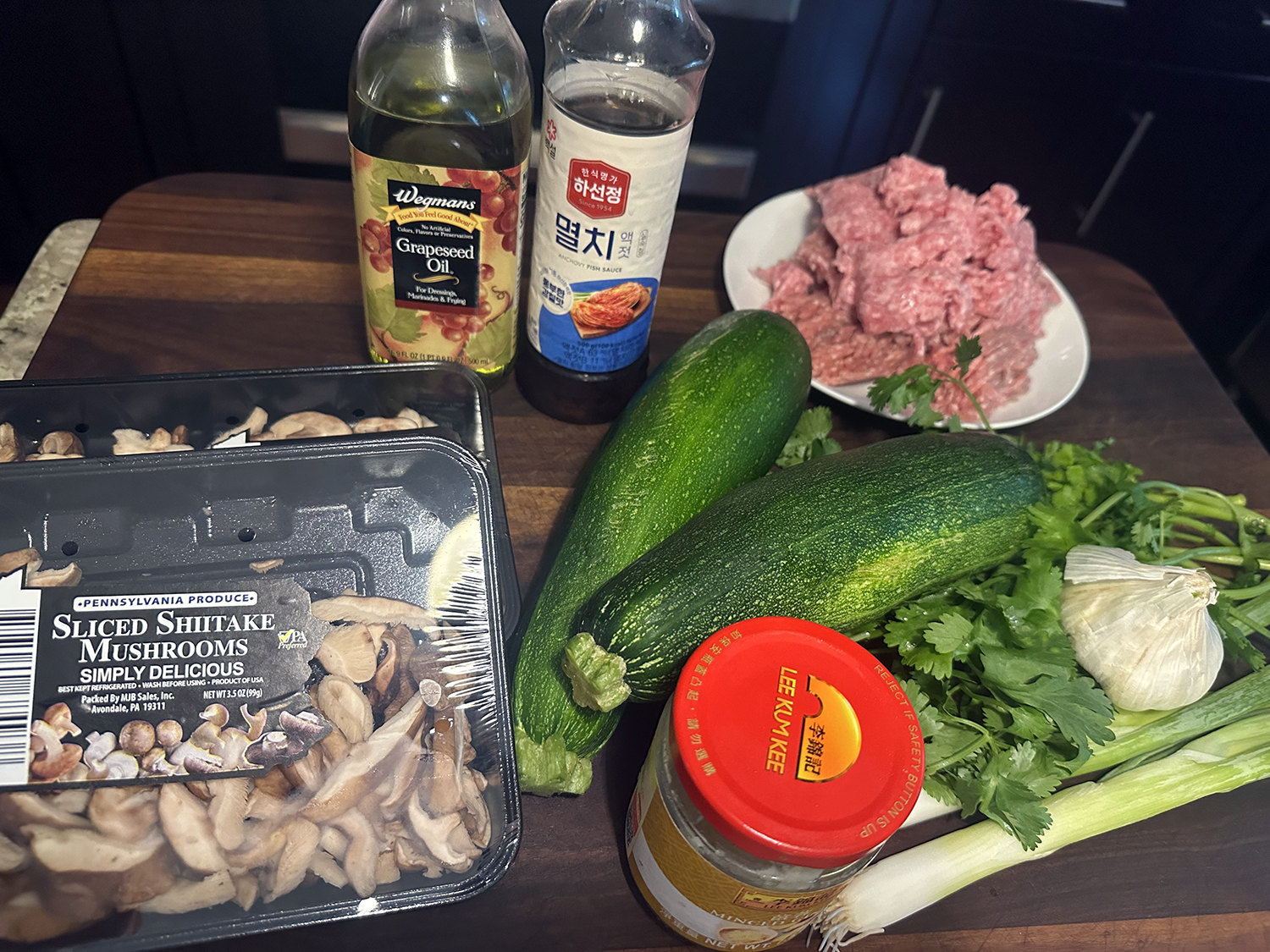
A great keto-friendly, low-carb meal option from Food & Wine, these aromatic with garlic, scallions, and fish sauce, these zucchini boats are stuffed with juicy pork and mushrooms for a dish that’s light, satisfying, and packed with Vietnamese flavor. You can even make most of it a day ahead (which came in real handy when we went to make them).

It’s a fun and easy vegetable-and-meat dish that makes the most out of the bounty of farmers market squash. Reminiscent of a dumpling filling, the pork-and-mushroom stuffing has notes of ginger, garlic, and scallions.

Bouillon powder (although we used bullion paste) and fish sauce bring umami to the forefront. Salting and baking the scooped-out cavities of the zucchini help release excess moisture, creating a perfectly textured final dish.

If looking to amp up the meal, serve these stuffed zucchini boats with rice, and/or a side salad for a quick and delicious dinner. 

NOTE: If you don’t eat pork, you can easily swap it for an equal amount of ground beef or ground turkey in this recipe.

Pork-and-Mushroom Stuffed Zucchini Boats

  • Servings: 4
  • Difficulty: easy
  • Print

Ingredients

  • 2 12-oz. zucchini
  • 1/2 tsp. kosher salt
  • 2 Tbsp. neutral cooking oil, plus more for brushing
  • 1 (5-oz.) package sliced shiitake mushrooms, finely chopped
  • 1/4 cup thinly sliced scallion 
  • 1 Tbsp. finely chopped garlic (about 3 cloves)
  • 2 tsp. finely chopped fresh ginger, from 1-inch piece
  • 1 lb. ground pork
  • 1/4 cup chopped fresh cilantro, plus more for garnish
  • 2 Tbsp. fish sauce
  • 1 tsp. chicken bouillon granules
  • 1/2 tsp. black pepper

Directions

  1. Preheat oven to 425°F. Halve zucchini lengthwise; scoop the flesh from each half using a spoon or melon baller, leaving a 1/4- to 1/2-inch wall on the sides and base. Set scooped flesh aside. Sprinkle cut sides with salt, and place zucchini, cut side down, on a paper towel–lined plate. Let stand for 20 minutes.
  2. Meanwhile, heat oil in a large skillet over medium-high. Add mushrooms, and cook, stirring occasionally, until tender and browned, 4 to 5 minutes. Add scallion, garlic, ginger, and reserved zucchini flesh; cook, stirring often, until softened and the released liquids evaporate, 3 to 5 minutes. Add pork; cook, stirring occasionally to break meat into fine crumbles, until browned, 6 to 8 minutes. Remove from heat, and let cool for 5 minutes.
  3. Pat zucchini halves dry, and lightly brush with oil. Arrange zucchini, cut sides down, on an aluminum foil–lined baking sheet. Bake until the zucchini begins to soften, 8 to 10 minutes; remove from oven. Increase oven temperature to broil.
  4. Stir cilantro, fish sauce, bouillon, and pepper into pork mixture. Fill each zucchini cavity with pork mixture (about 2/3 cup per half); firmly press mixture into zucchini. Place on an aluminum foil–lined baking sheet, and broil until browned on top, 2 to 3 minutes. Let cool slightly, about 3 minutes. (With an electric oven, in order to get a little brown crisp on top, it took several minutes longer under the broiler.) Serve zucchini hot, garnished with additional cilantro and/oror scallion slices.

http://www.lynnandruss.com

Adapted from a recipe by Cường Phạm for Food & Wine

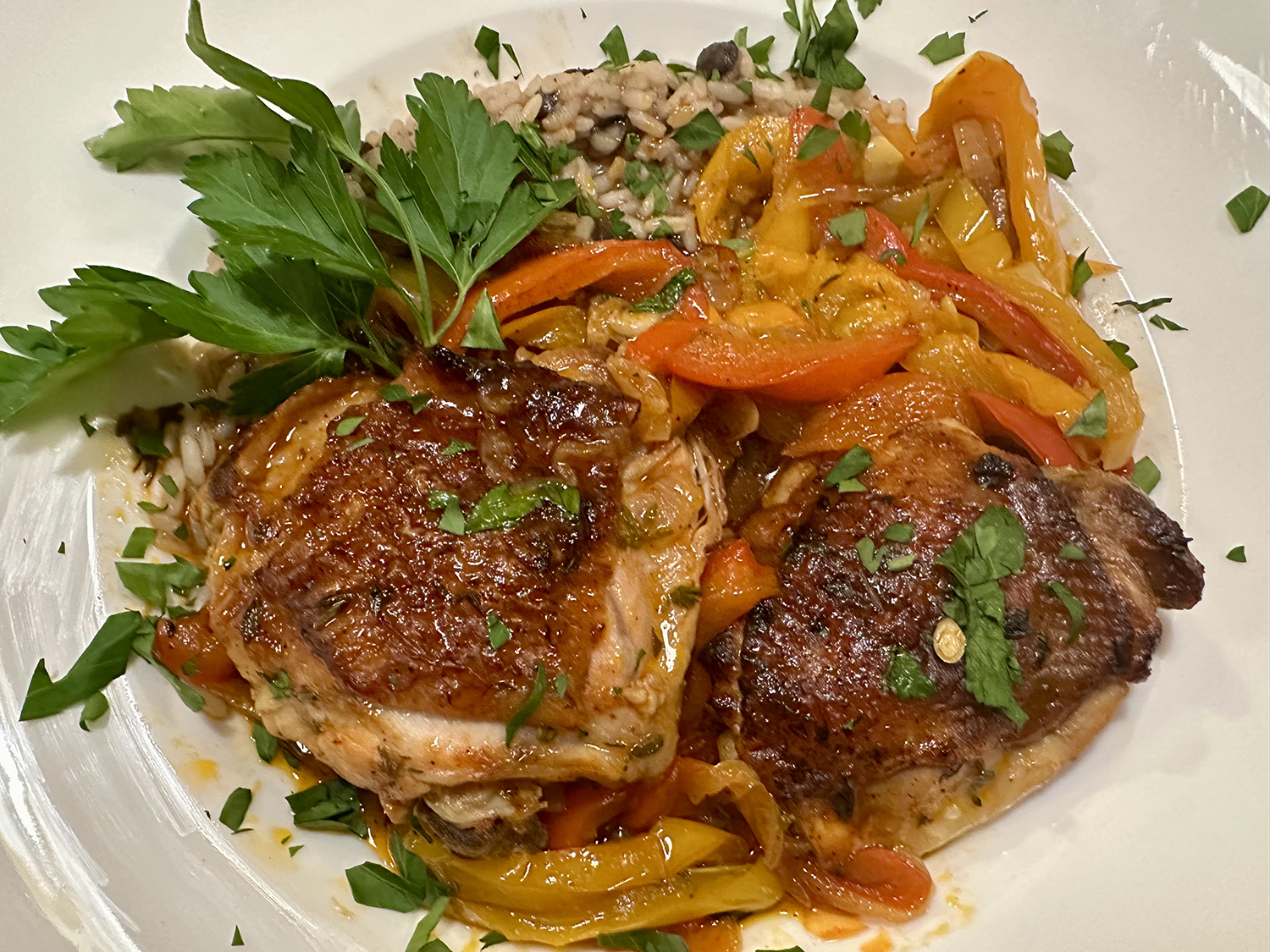
Haitian Chicken in Sauce (Poul Nan Sos)

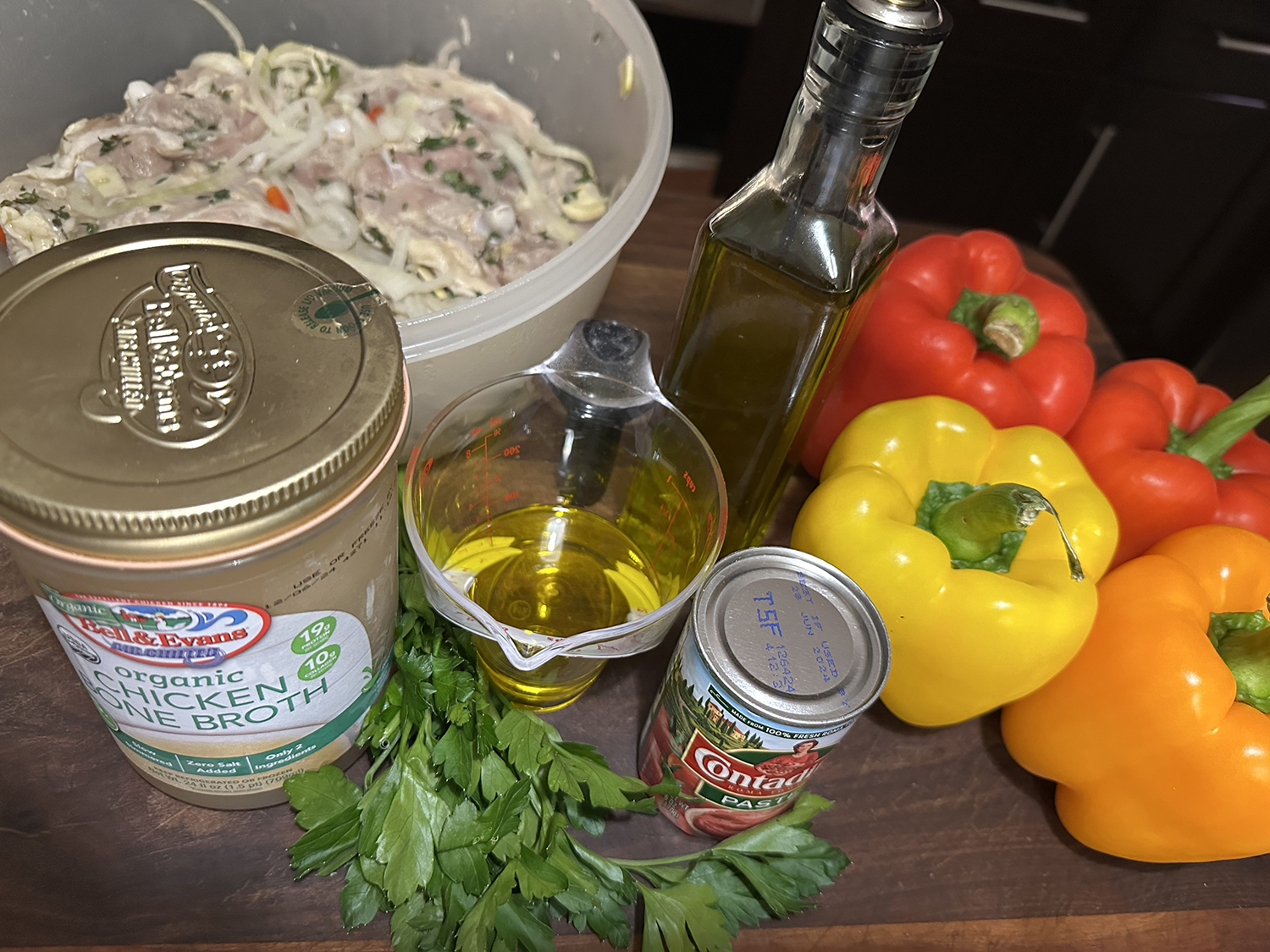
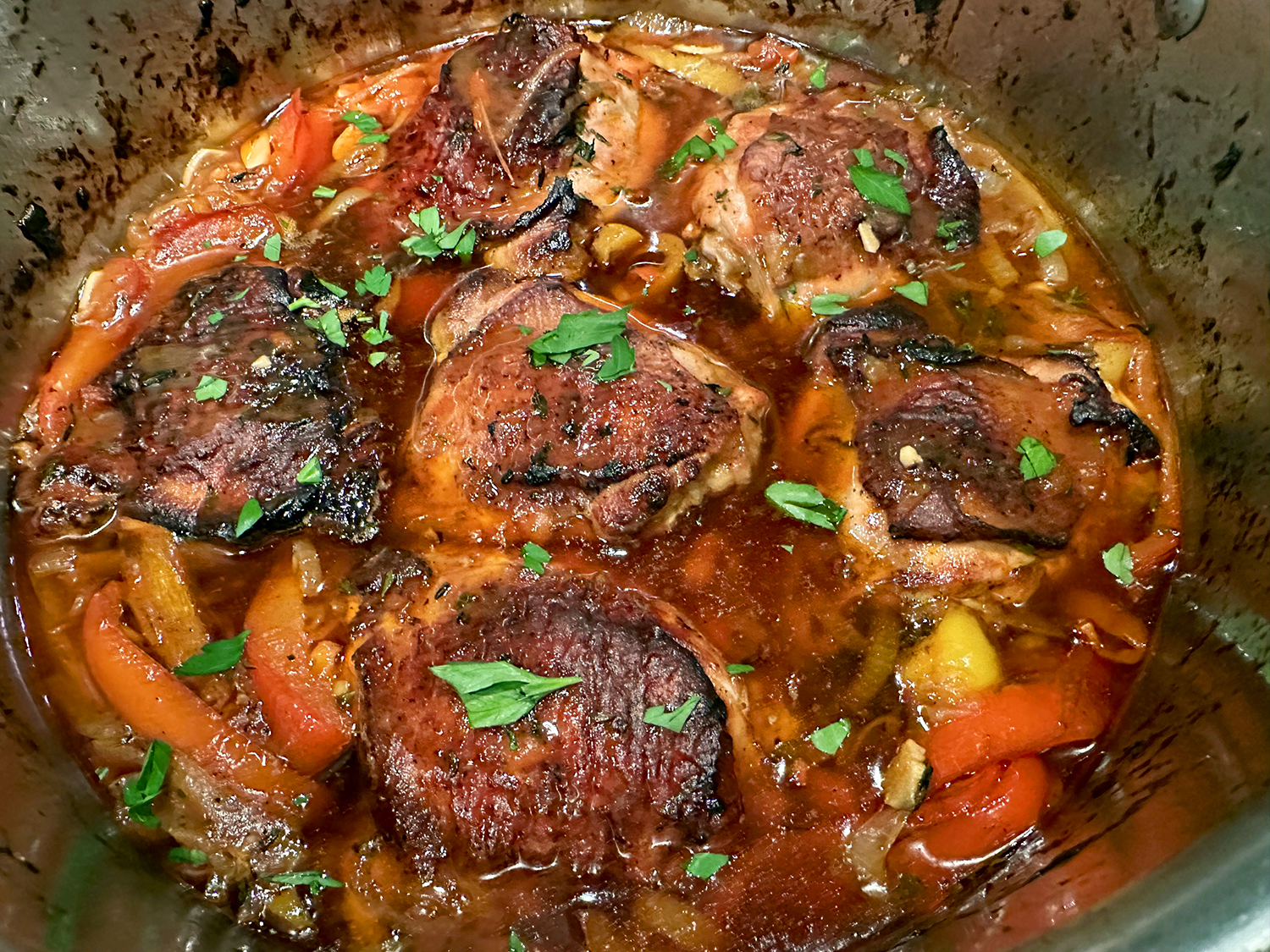
For this ultra-flavorful dish, the chicken is marinated overnight with onions, garlic, thyme, chiles, and citrus before it’s stewed with loads of bell peppers. The meltingly tender puddle of bell peppers collapses into a nest of lusciousness as they simmer under the chicken pieces.

According to Chef/Author Gregory Gourdet “The meat is marinated overnight with onions, garlic, thyme, and chiles along with citrus, which is rubbed forcefully onto the chicken to access the fragrant oils. After the meat takes on all that flavor, it’s stewed with the marinade and loads of bell peppers for a satisfying, thrilling stew.”

About the hot pepper choice: The heat level of any given pepper can vary widely, but Scotch bonnet and habanero peppers both generally register between 100,000 and 350,000 Scoville units. Scotch bonnets, which tend to be sweeter and have distinct citrus notes, are the traditional choice for Haitian chicken stew, but the closely related habanero makes a fine substitution. In the end, there was barely any heat from these peppers, but they added a nice subtle nuance of flavor.

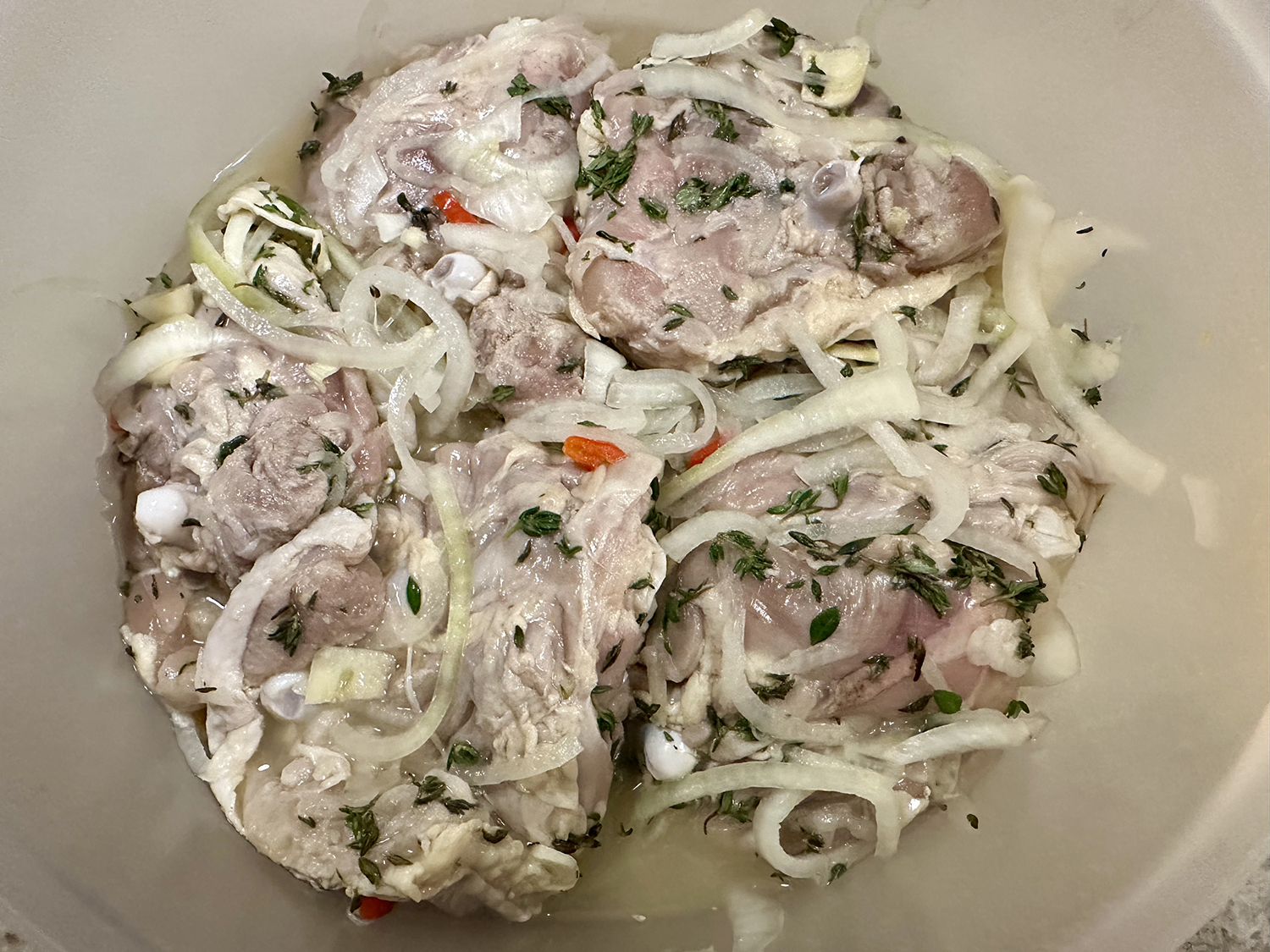
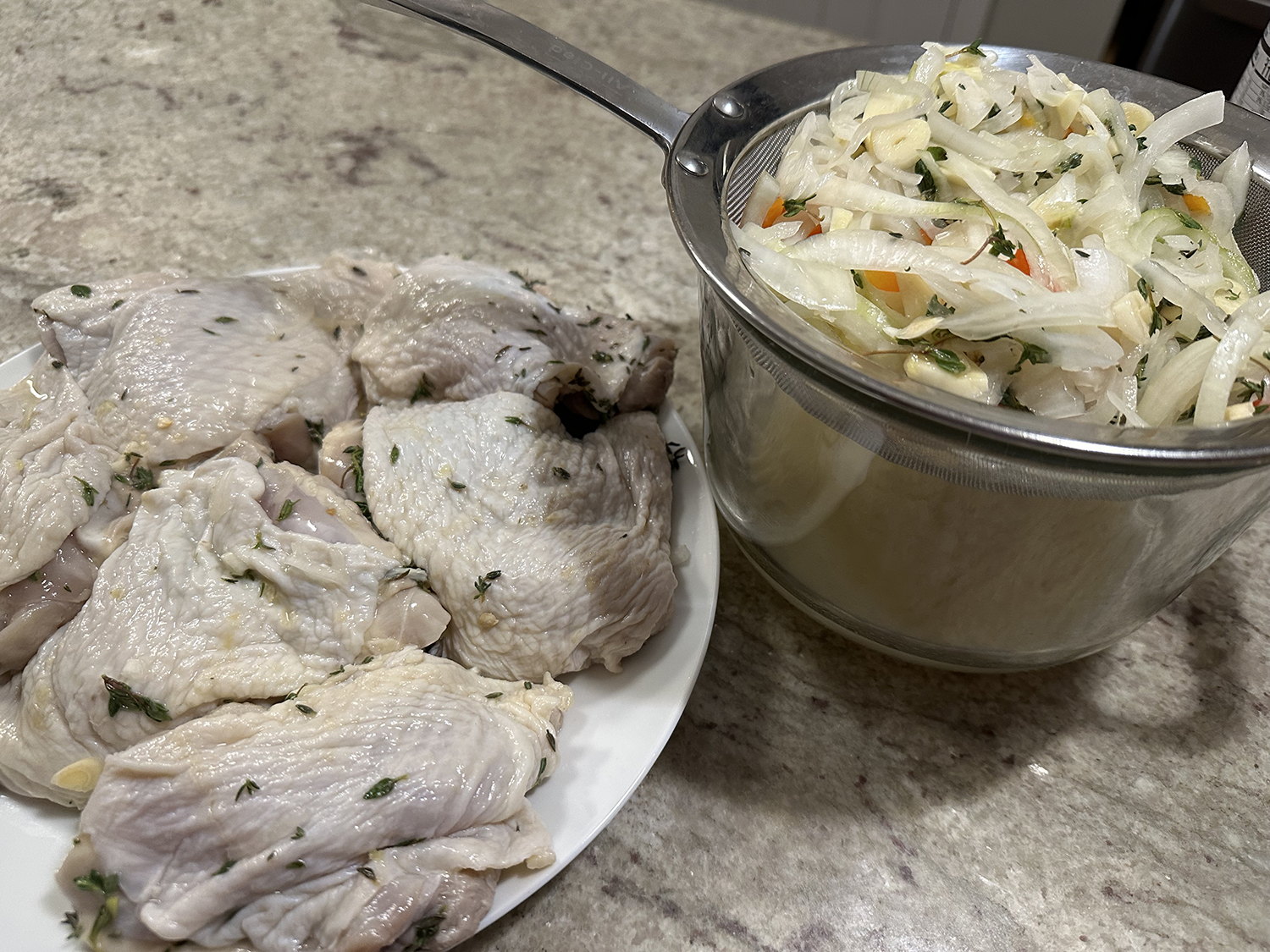
While this dish isn’t particularly difficult or time-consuming to prepare, the chicken does require a long marination, so you’ll need to plan ahead. Allow anywhere from 12 to 48 hours for the chicken to absorb all those flavors in the fridge. When it comes time to cook the meat, be sure to reserve both the marinade’s liquid and solids, which will be incorporated back in later.

You definitely need a bed of rice or something to help soak up all of the liquid (we served with a side of rice and beans). In fact, it may be wise to reduce the amount of chicken broth from 2 cups down to 1 cup, which is indicated below*. After all, more liquid comes from the marinade, and moisture that comes from the peppers and chicken.

So unbelievably good!!

Haitian Chicken in Sauce (Poul Nan Sos)

  • Servings: 4-6
  • Difficulty: easy
  • Print

Ingredients

Marinade

  • 3 lbs. bone-in chicken thighs (drumsticks optional), patted dry (we used all thighs)
  • 3 Tbsp. kosher salt
  • 1 juicy orange, halved
  • 1 juicy lime, halved
  • 1 juicy lemon, halved
  • 2 medium yellow onions, halved and thinly sliced
  • 8 garlic cloves, sliced
  • 2 Scotch bonnet or habanero chiles, cut in half and sliced thin
  • 1/4 cup fresh thyme leaves

Stew

  • 1/3 cup extra-virgin olive oil
  • 1/2 cup tomato paste
  • 1 Tbsp kosher salt
  • 2 red bell peppers, seeded and deveined, cut into long, thin slices
  • 2 yellow bell peppers, seeded and deveined, cut into long, thin slices
  • 1 cup chicken stock*, salted homemade or store-bought
  • Small handful roughly chopped parsley sprigs, for serving

Directions

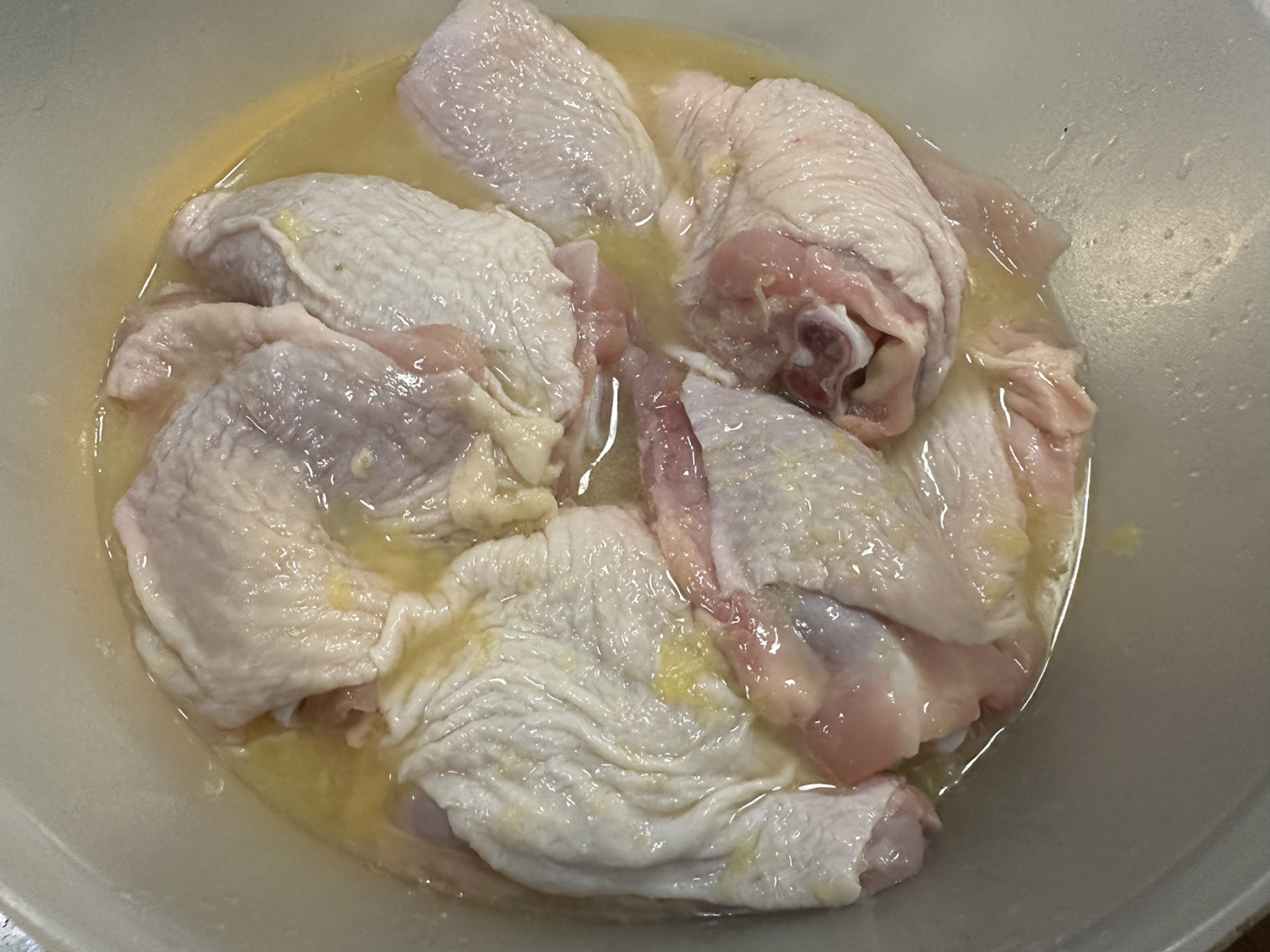
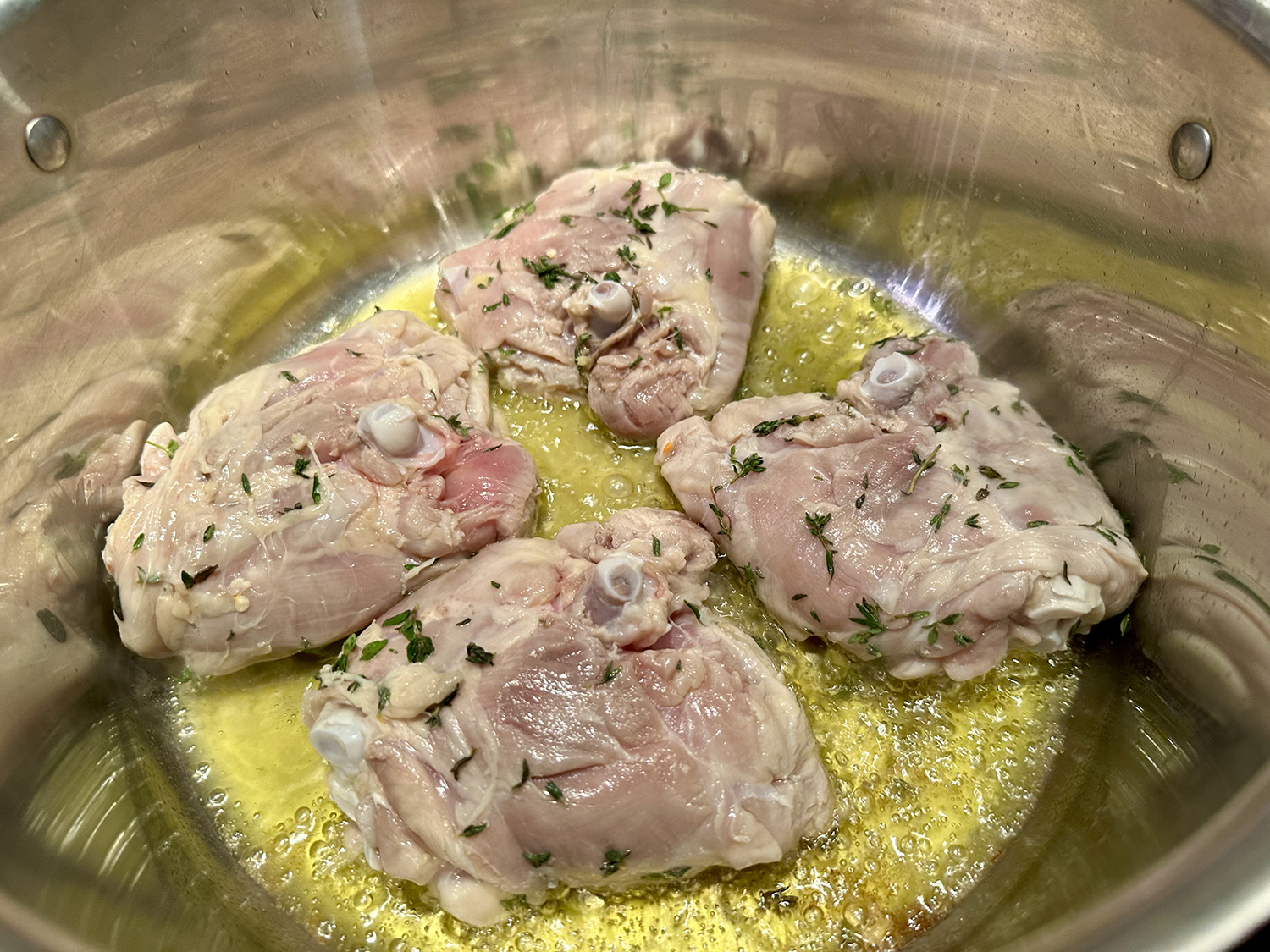
  1. Put the chicken pieces in a large bowl and season with the salt. Squeeze the citrus halves over the chicken, then spend a minute or so rubbing the cut sides of the citrus against the chicken. Add the onions, garlic, chile, and thyme and toss well, rubbing the chicken as you do. Cover and marinate in the fridge for at least 12 hours or up to 48 hours. (We marinated 27 hours.)
  2. Preheat the oven to 375°F. Remove the chicken from the marinade, guiding any stuck-on aromatics back into the bowl. Set a strainer over a small mixing bowl. Pour the marinade through the strainer, reserving the solids and liquid. Pat the chicken very dry with paper towels.
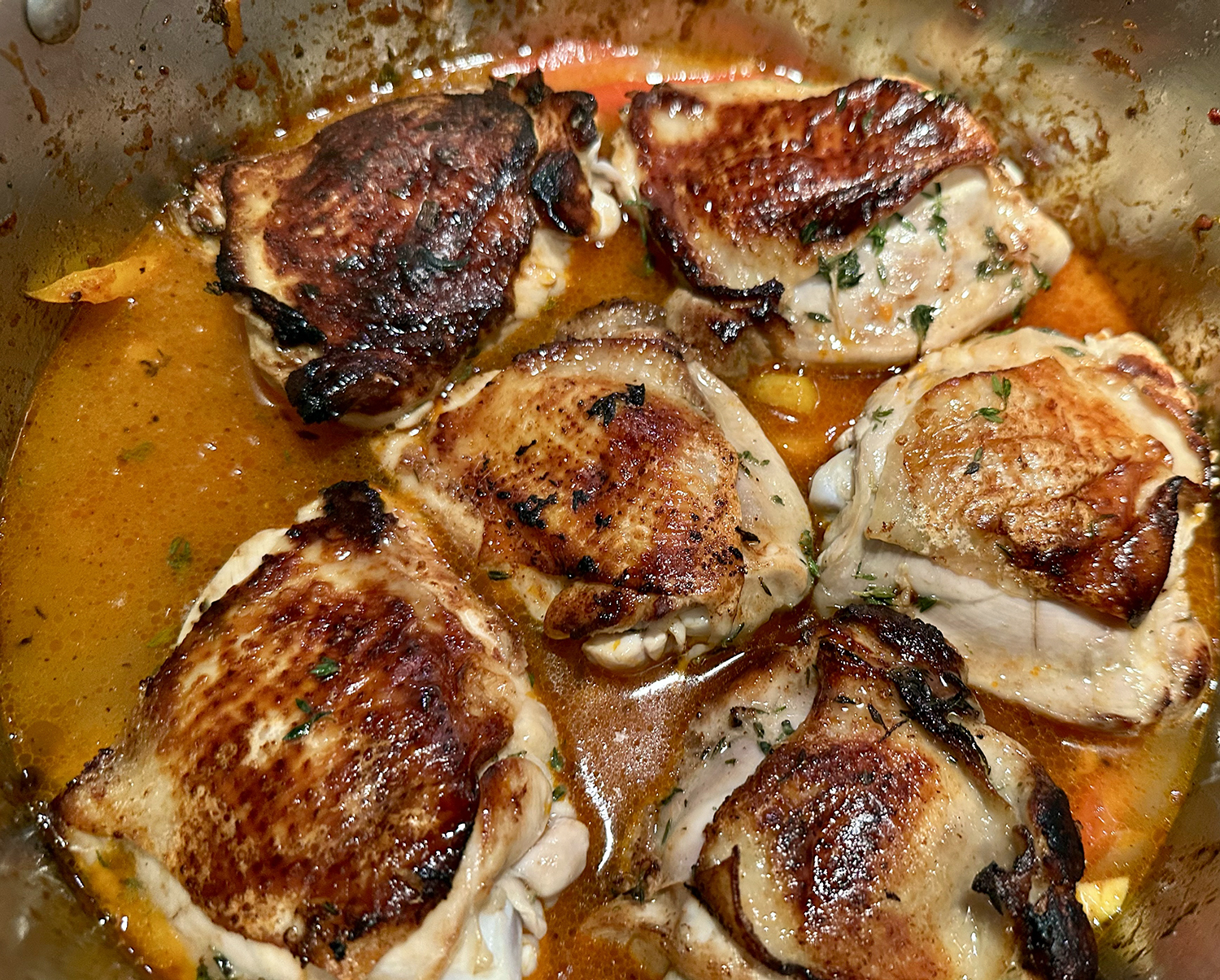
  3. Heat the oil in a wide, heavy ovenproof pot (such as a 3 1/2-quart braiser) over medium-high heat just until shimmery. Cook the chicken, skin-side down, occasionally turning the drumsticks but not the thighs, until the skin is deep brown, about 8 minutes. (It may take two batches so that the chicken browns instead of steams.) Transfer the chicken pieces to a plate.
  4. Reduce the heat to medium-low, add the tomato paste and salt, and cook, stirring often, until it turns several shades darker, about 3 minutes. Add the bell peppers and the reserved solids from the marinade; cook, stirring occasionally, until the peppers soften slightly and take on a little color, about 8 to 10 minutes.
  5. Return the chicken to the pan, skin side up and in a single layer nestled into the peppers, arranging the pile of peppers, onions, and other aromatics around the chicken. Then evenly pour in the reserved liquid from the marinade along with the stock. Cook in the oven, basting every 15 minutes to coat the chicken with the peppers and sauce, until the sauce has thickened slightly and the meat pulls off the bone with a gentle tug from a fork, about 1 hour. Garnish with the parsley and serve over rice and beans.

http://www.lynnandruss.com

Adapted fro a recipe by Gregory Gourdet for Food & Wine

Grilled Swordfish Salmoriglio

Lemony, garlicky, oregano-infused salmoriglio is a workaday Sicilian staple, stirred together from basic ingredients and always on hand to season grilled foods, particularly swordfish and other proteins. A nearly 1:1 ratio of lemon juice to olive oil made for a bracing sauce, and adding lemon zest boosted its aroma.

Yes, swordfish is just as pricey in our area as is halibut, but we decided we were worth a splurge. And with just the two of us for dinner, we got by with only two steaks weighing in at just a bit over a pound. With a minimum of easy-to-source ingredients, and with only 40 minutes from start to finish, you can easily squeeze this fish meal into a weekday.

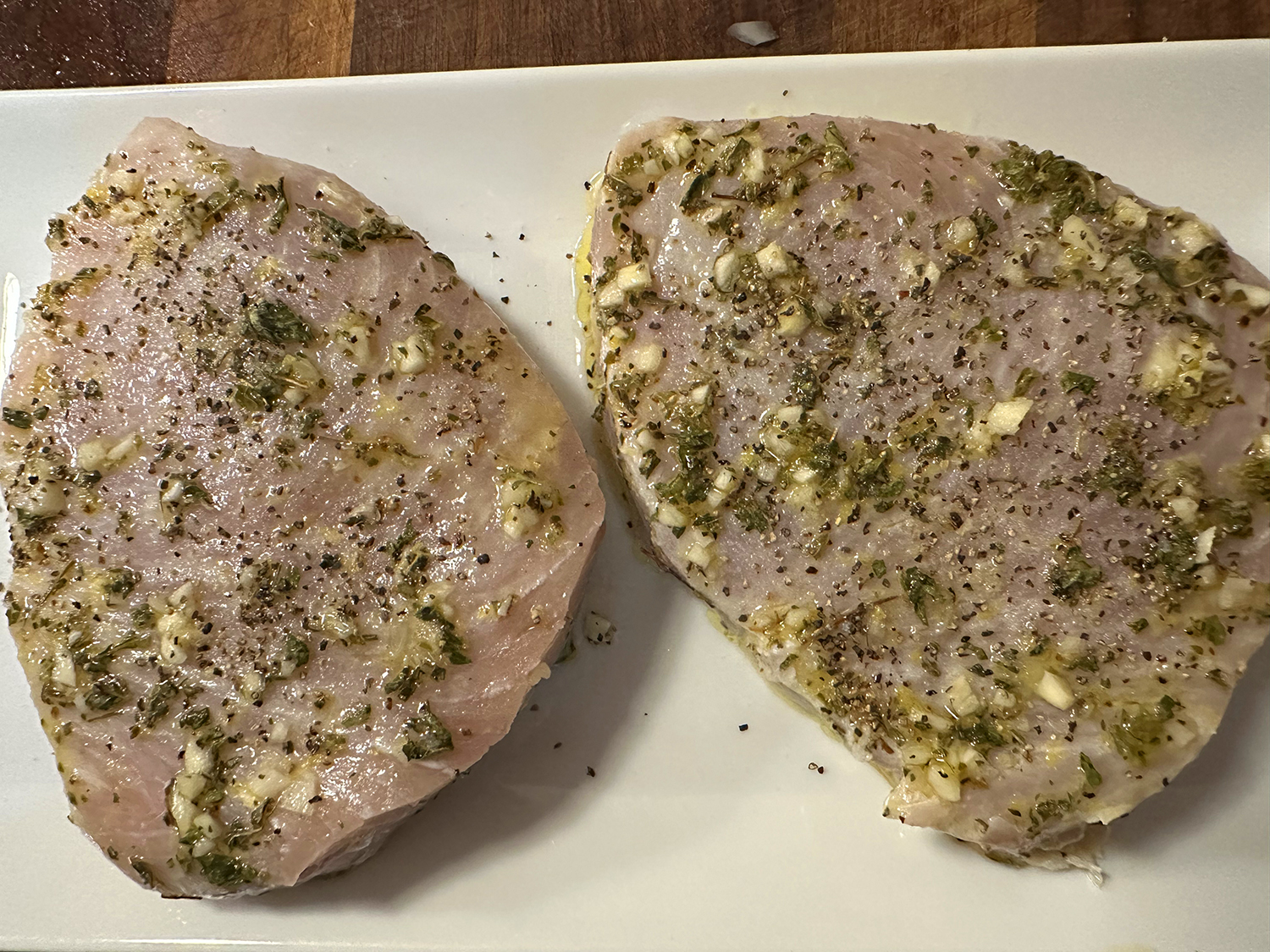
As the cooked fish rests in the salmoriglio, it sheds juices that slightly dilute the sauce’s acidity and balances its flavor. Plenty of dried oregano, garlic, salt, and pepper adds savory, herbaceous character to the bright sauce. Applying it to the swordfish three times—before and after cooking, as well as alongside the fish for serving—means every bite is full of flavor.

Flipping the fish every 2 minutes during cooking ensured that heat continuously hit both sides of the flesh, promoting uniform doneness. Pulling the swordfish off the grill when it reached 130 degrees and letting carryover cooking bring it up to its serving temperature (140 degrees) prevented overcooking.

While the swordfish rested for 10 minutes, it allowed us time to prepare our side of baby spinach and garlic sauté, and a side salad.

Purchase swordfish steaks that are 1 to 1½ inches thick, either four steaks that weigh 7 to 9 ounces each or two steaks that weigh about 1 pound each. Cut the larger steaks in half to create four steaks. Ask your fishmonger to remove the skin or trim it yourself with a thin, sharp knife.

Grilled Swordfish Salmoriglio

  • Servings: 4
  • Difficulty: easy
  • Print

Ingredients

  • 1 Tbsp. dried oregano
  • 2 tsp. grated lemon zest plus ¼ cup juice (2 lemons)
  • 2 garlic cloves, minced
  • 2 tsp. kosher salt, divided
  • 1 tsp. pepper, divided
  •  cup extra-virgin olive oil
  • 2 lbs. skinless swordfish steaks, 1 to 1½ inches thick
  • 2 Tbsp. chopped fresh parsley, divided

Directions

  1. Whisk oregano, lemon zest and juice, garlic, 1¼ teaspoons salt, and ½ teaspoon pepper in bowl until salt is dissolved. Whisk in oil.
  2. Arrange swordfish in single layer in shallow pan or dish. Pour half of marinade over fish, flipping steaks to ensure both sides are evenly covered. Refrigerate for at least 20 minutes or up to 45 minutes. Whisk 1½ tablespoons parsley into remaining marinade and set aside.
  3. FOR A CHARCOAL GRILL: Open bottom vent completely. Light large chimney starter filled with charcoal briquettes (6 quarts). When top coals are partially covered with ash, pour evenly over half of grill. Set cooking grate in place, cover, and open lid vent completely. Heat grill until hot, about 5 minutes.
    FOR A GAS GRILL: Turn all burners to high; cover; and heat grill until hot, about 15 minutes. Leave primary burner on high and turn other burner(s) to medium-high.
  4. Clean and oil cooking grate. Remove fish from marinade, letting excess drip off (do not pat dry). Sprinkle both sides with remaining ¾ teaspoon salt and ½ teaspoon pepper. Place fish on hotter side of grill and cook (covered if using gas), flipping every 2 minutes, until steaks develop dark grill marks and register 130 to 135 degrees, 7 to 11 minutes.
  5. Transfer fish to clean shallow pan or dish and pour reserved marinade over top. Tent with aluminum foil and let rest until centers register 140 degrees, 5 to 10 minutes. Transfer fish to serving platter or individual plates and sprinkle with remaining 1½ teaspoons parsley. Transfer sauce in pan to small bowl. Serve, passing sauce separately.

http://www.lynnandruss.com

Recipe from Cook’s Illustrated

Pepper-Crusted Flank Steak

Easy beyond belief. Only 3 ingredients for the main course? Count me in! One ingredient, coarse black pepper, coats the flank steak for a zesty bust of flavor, complementing the rare grilled meat. It’s best to crush your own, in a mortar and pestle or a spice mill. The entrée can be served warm or at room temperature.

Many reviewers commented that it was too salty, we didn’t think so. But because it’s very hard to find a 2-pound flank steak, ours was just over 1 1/2 pounds, and therefore we used less salt to begin with.

Ours sides were baked onion rings and a side salad. Dinner done.

Pepper-Crusted Flank Steak

  • Servings: 4
  • Difficulty: super easy
  • Print

Ingredients

  • 1 flank steak, about 2 lbs.
  • 2 Tbsp. kosher salt (such as Diamond Crystal)
  • 3 Tbsp. coarse crushed black peppercorns (do not use regular table pepper)

Directions

  1. Pat steak dry. Sprinkle 1 tablespoon salt on each side.
  2. Coat both sides of the steak with the crushed pepper, pressing down to coat evenly. Allow to rest and absorb seasoning for at least 1 hour. Or place on a rack over a rimmed baking sheet and put in the refrigerator, uncovered, overnight or up to 24 hours.
  3. Bring steak to room temperature. Grill over medium-hot coals or a covered gas grill at 450 degrees, about 4 to 5 minutes per side, until juices appear on the surface of the steak. Check with a meat thermometer; 125 degrees for rare, 130 for medium-rare. (Alternatively, cook in a cast-iron pan over medium-high heat or broil.) Let rest at least 10 minutes before slicing.
  4. With a sharp knife, slice on a slight bias against the grain, about ⅛-inch thick. Arrange on a serving platter. Serve warm or at room temperature.

http://www.lynnandruss.com

Adapted from a recipe by David Tanis for NYTimes Cooking

Chicken En Cocotte

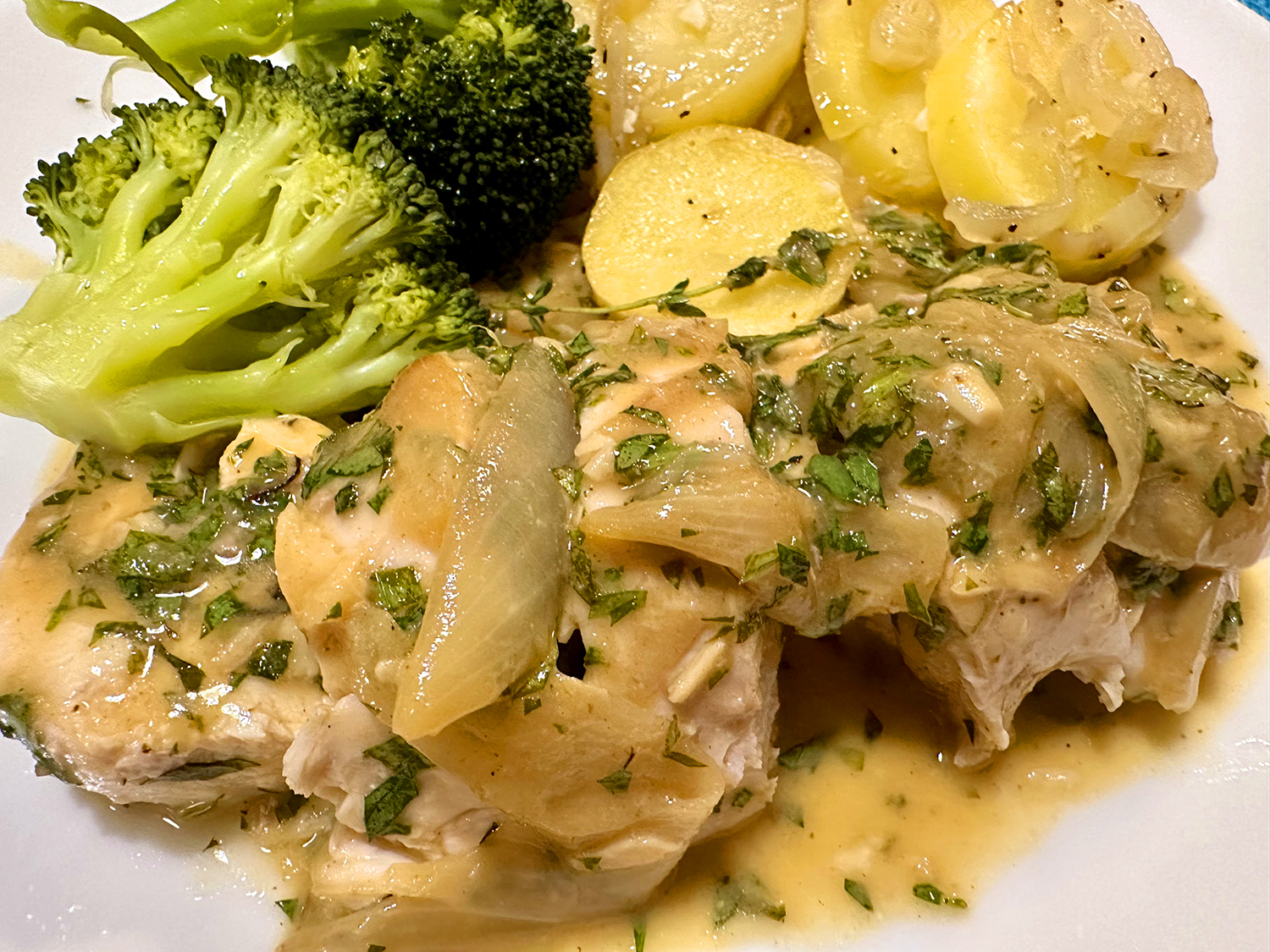
With very little prep involved in this Chicken En Cocotte—or in a pot—and most of the cooking being hands-off, you should get this tasty recipe on your short list. You will not get crispy skin from this method, in fact it gets discarded, but you will end up with super-moist poultry meat. We oooohed and aaaahhhed all the way through dinner.

Cooking the chicken breast side down allows the delicate white meat to gently poach in the wine while the legs bake up above, a technique that helps equalize the cooking of the white meat (done at 160°F) and dark meat (done between 175°F to 180°F). Allowing the chicken to rest breast side up after prevents the white meat from overcooking.

The sauce was just amazing, we even spooned it over our side dish of Spanish Potatoes in Olive Oil, a perfect companion to the chicken because they both share several ingredients: white wine, garlic, onion and thyme.

NOTE: Don’t use a Dutch oven smaller than 7 quarts or a chicken larger than 4½ pounds. If the bird fits too snugly, there won’t be enough space for heat to circulate, hindering even cooking.

Chicken En Cocotte

  • Servings: 4
  • Difficulty: easy
  • Print

Ingredients

  • 5 Tbsp. salted butter, divided
  • 1 large yellow onion, cut into 8 wedges
  • 8 medium garlic cloves, peeled and halved
  • 1 1/2 cups dry white wine
  • 10 thyme sprigs
  • 1 4- to 4½-lb. whole chicken, wings tucked and legs tied
  • Kosher salt and ground black pepper
  • 3 Tbsp. lemon juice
  • 2 Tbsp. dijon mustard
  • 1/2 cup finely chopped fresh tarragon leaves

Directions

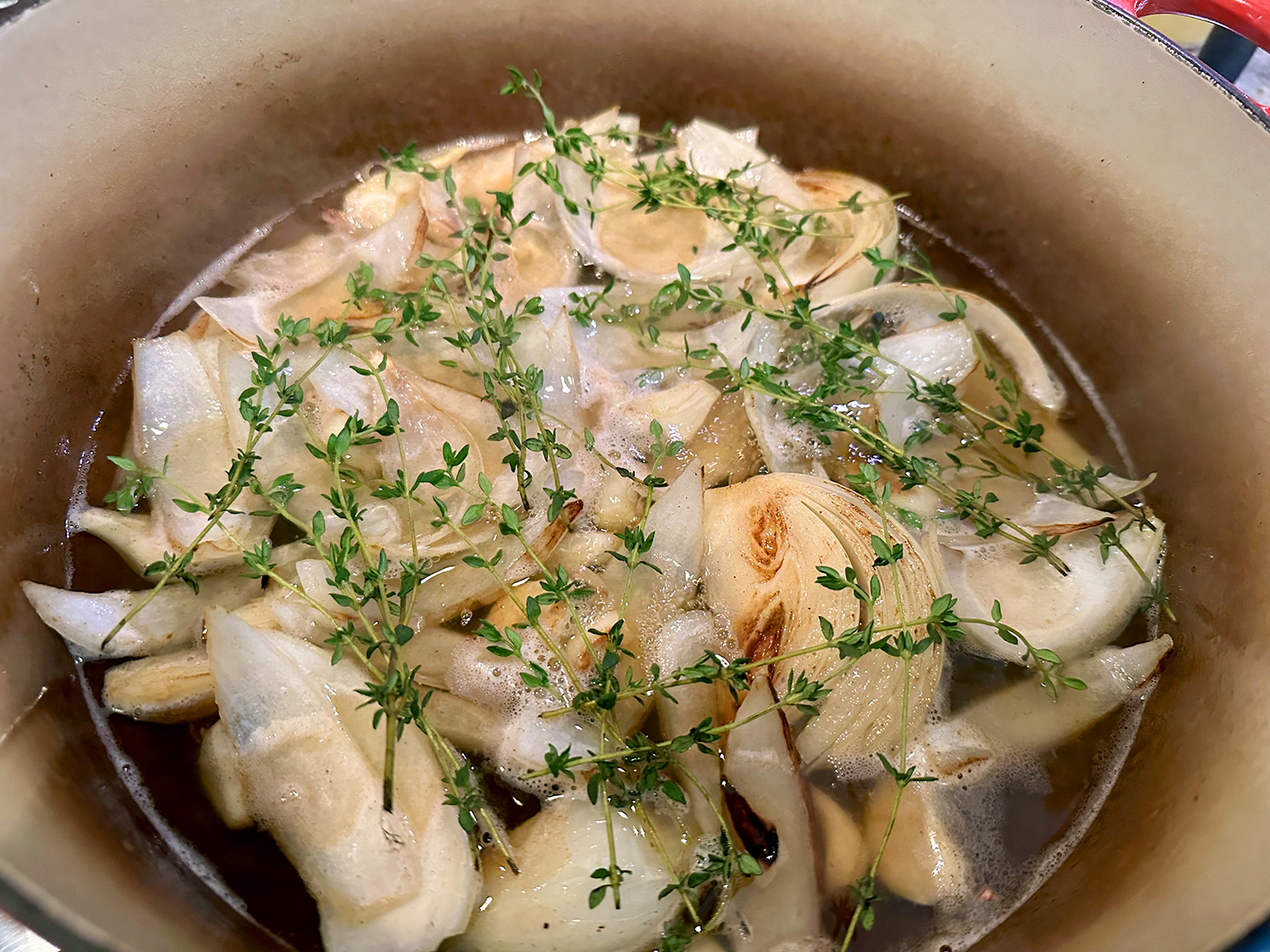
  1. Heat the oven to 400°F with a rack in the lower-middle position. In a large Dutch oven over medium, melt 1 tablespoon of the butter. When the foaming subsides, add the onion and garlic and cook until lightly browned, about 5 minutes. Pour in the wine and bring to a simmer. Lay the thyme sprigs on the onion mixture.
  2. Using paper towels, pat the chicken dry then season with salt and pepper. Set the chicken breast side down over the thyme and onions. Cover and bake until the thickest part of the breast reaches 160°F and the thighs reach 175°F to 180°F, 55 to 65 minutes. Using tongs inserted into the cavity of the chicken, carefully transfer it to a large baking dish, turning it breast side up. Let rest for at least 15 minutes.
  3. Meanwhile, remove and discard the thyme sprigs. Tilt the pot to pool the liquid to one side and use a wide spoon to skim and discard the fat. Bring to a simmer over medium and cook until thickened and reduced to about 1 cup (with solids), about 5 minutes. Off heat, whisk in the remaining 4 tablespoons butter, the lemon juice and mustard. Taste and season with salt and pepper.
  4. Remove the legs from the chicken by cutting through the hip joints. Remove and discard the skin from the legs, then separate the thighs from the drumsticks. Remove the breast meat from the bone, remove and discard the skin, then cut each crosswise into thin slices. Arrange the chicken on a platter. Transfer the sauce to a bowl, stir in the tarragon and serve with the chicken.

http://www.lynnandruss.com

Recipe from Milk Street

Cumin-Seared Flank Steak with Lime

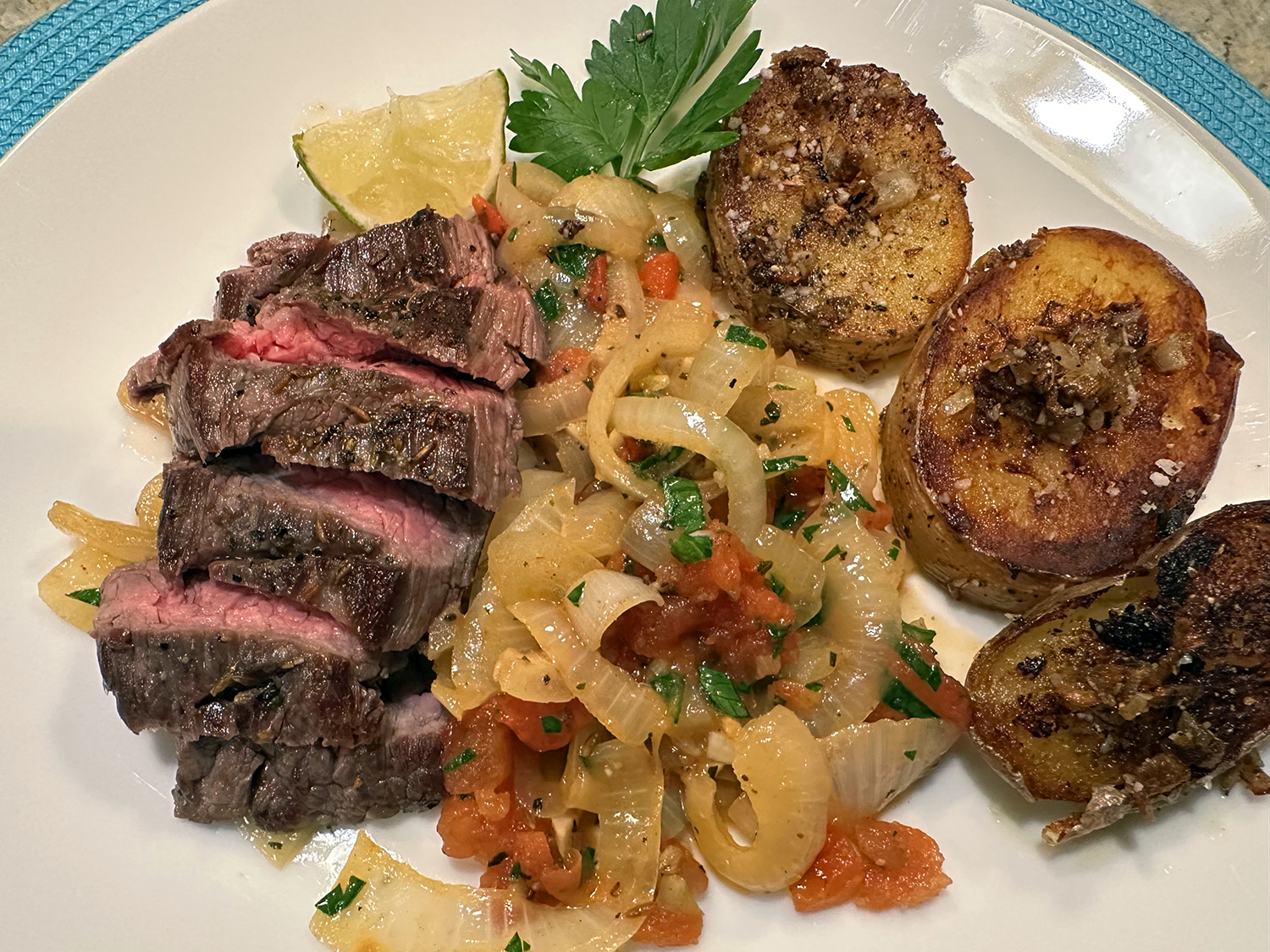
WOW, what a weeknight treat! This Cumin-Seared Flank Steak dish was fantastic, with so much flavor, and a minimal amount of ingredients in under 45 minutes!

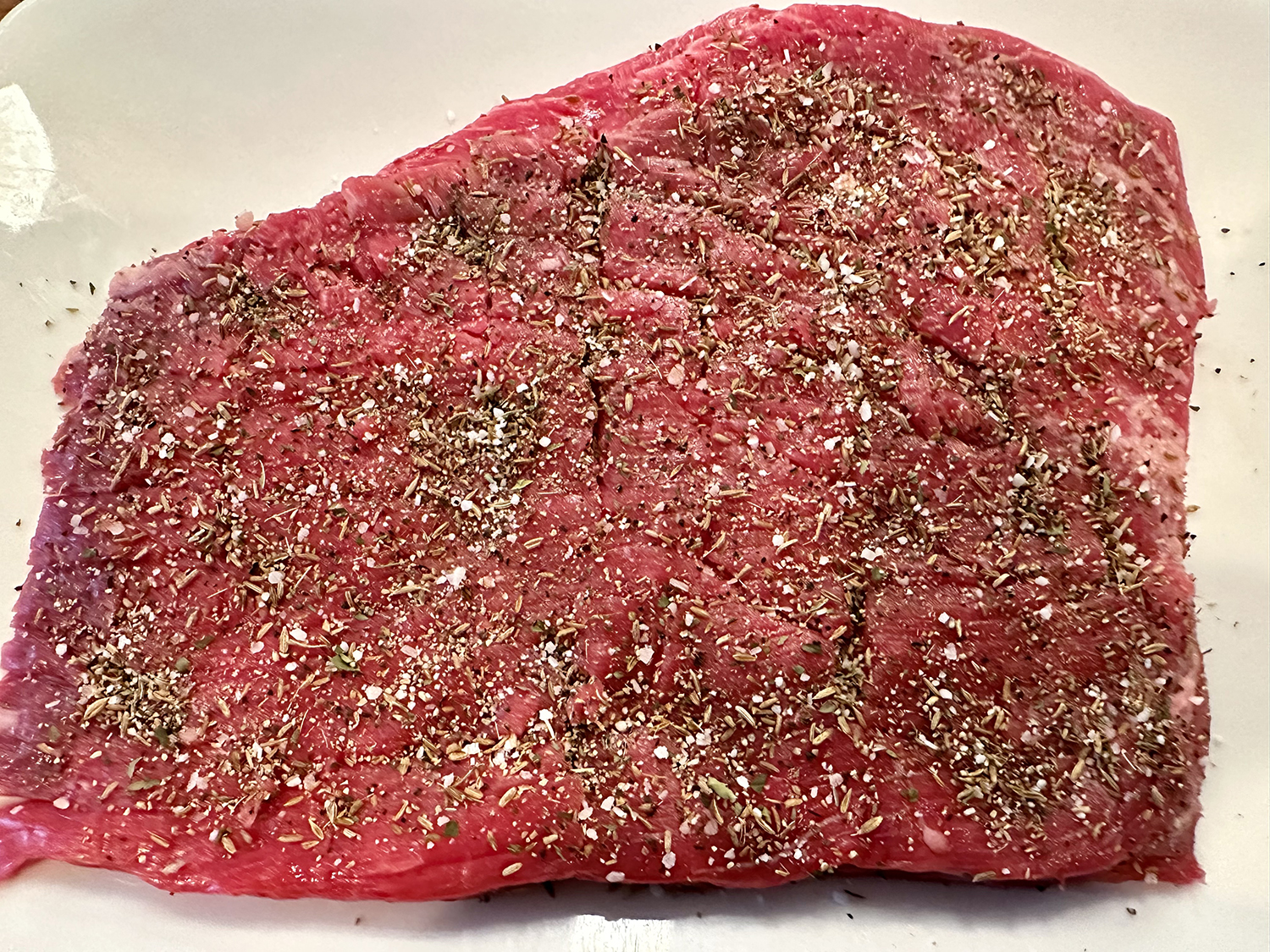
To make the Cuban classic bistec de palomilla, thin-cut steak is marinated in garlic and lime juice before it is pan-fried, and it is served under a pile of sautéed onions. Though sirloin or top round is commonly the choice of meat, here, flank steak is used instead and the process allows to skip any marination.

Instead, the surface of the meat is scored with shallow crosshatched cuts before cooking. The grooves not only grip the seasoning mix of crushed cumin, dried oregano, salt and pepper so they stay on the meat instead of winding up in the pan, they also help produce better flavor-boosting caramelization.

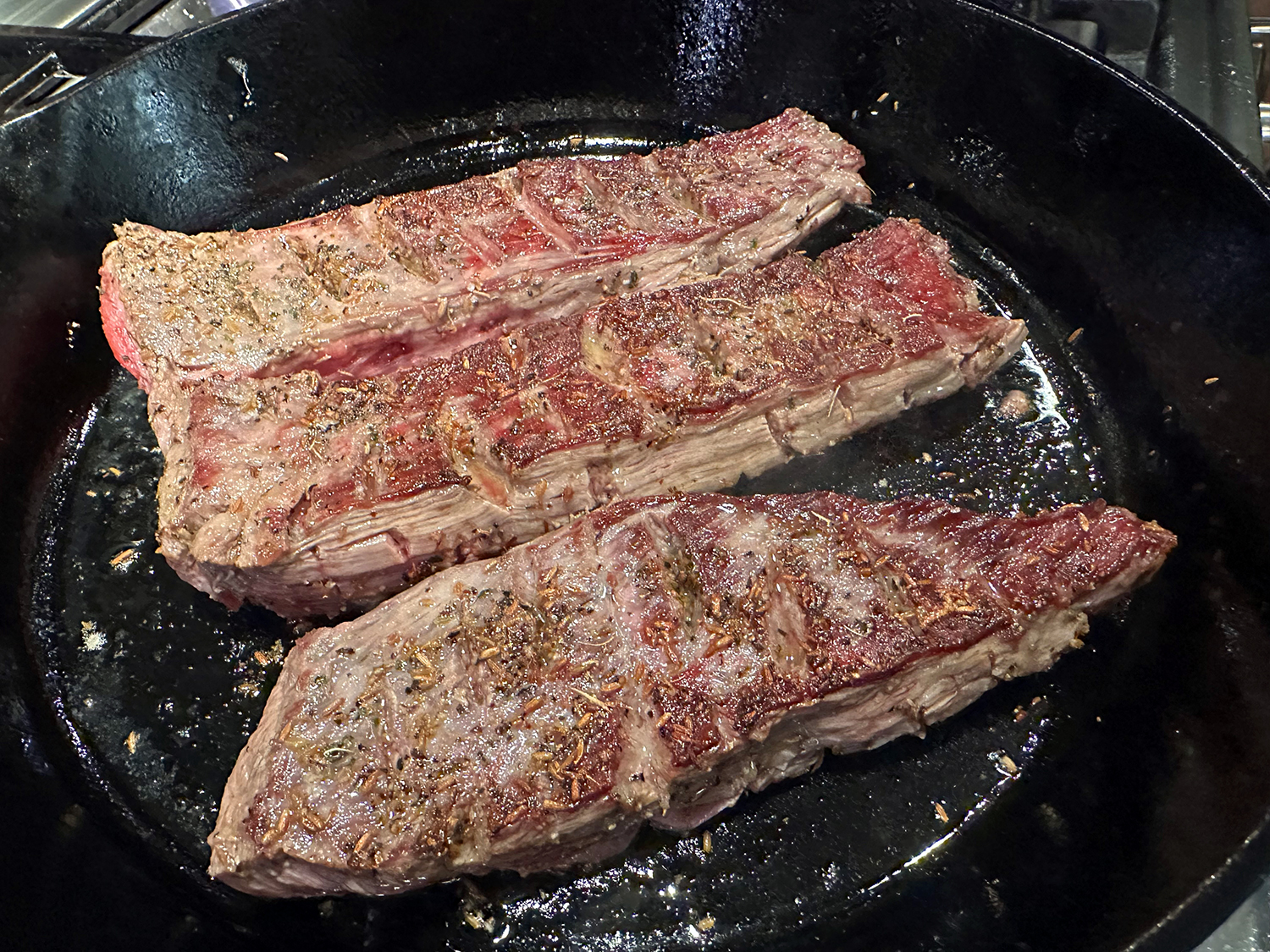
In just eight minutes, the steak was perfectly medium rare, removed to a platter so that the remaining ingredients can be cooked along with browned bits left in the skillet.

Typical side dishes might be rice or beans. We decided on a simple skillet potato dish. The Yukon Golds were first microwaved until just barely fork tender. Once they cooled slightly they were cut into 1/2″ slices; browned in olive oil and butter with some minced shallots, salt and pepper.

Cumin-Seared Flank Steak with Lime

  • Servings: 4
  • Difficulty: easy
  • Print

Ingredients

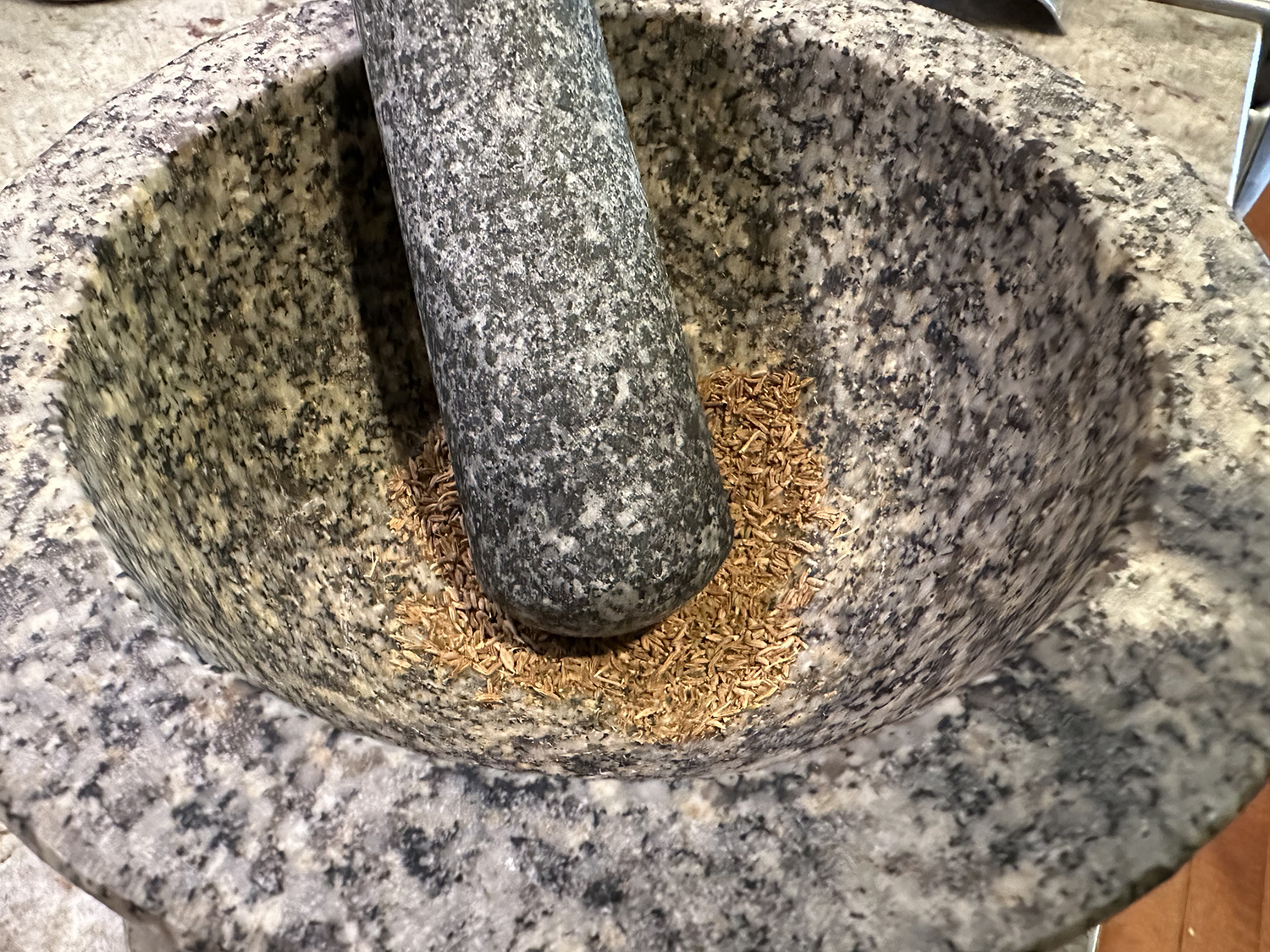
  • 2 tsp. cumin seeds, lightly crushed
  • 3/4 tsp. dried oregano, divided
  • Kosher salt and ground black pepper
  • 1½ lbs. flank steak
  • 1 Tbsp. grapeseed or other neutral oil
  • 3 Tbsp. salted butter, cut into 3 pieces
  • 1 large yellow onion, halved and thinly sliced
  • 1 ripe medium tomato, cored and chopped
  • 4 medium garlic cloves, minced
  • 1/4 cup lime juice, plus lime wedges to serve
  • 2 Tbsp. chopped fresh flat-leaf parsley

Directions

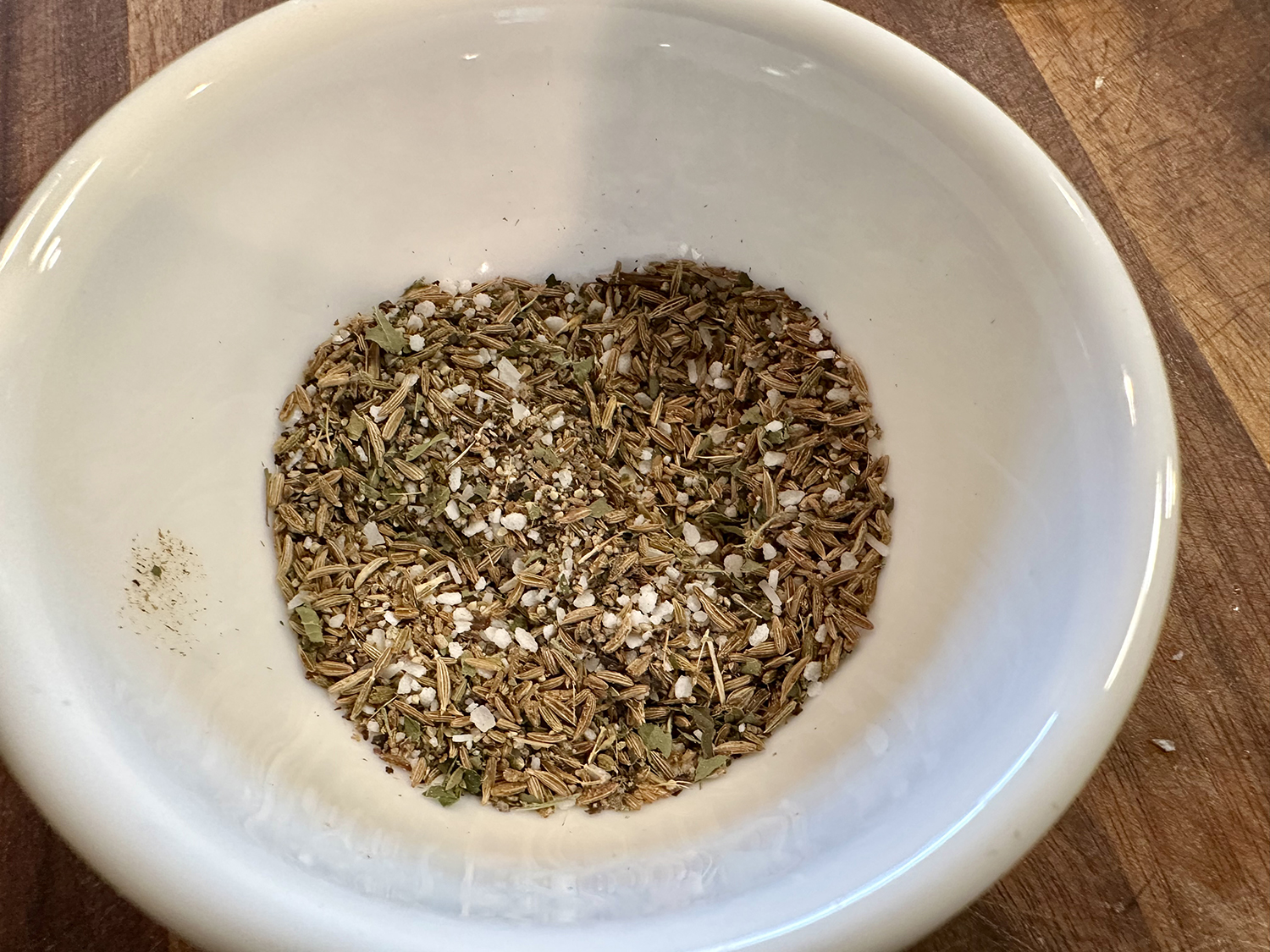
  1. In a small bowl, stir together the cumin, ¼ teaspoon of the oregano and 1 teaspoon each salt and pepper. Using a sharp knife, score shallow cuts into the steak, perpendicular to the grain and spaced ½ inch apart. Now crosshatch at a 45-degree angle to the first cuts. Flip the steak and crosshatch the second side.
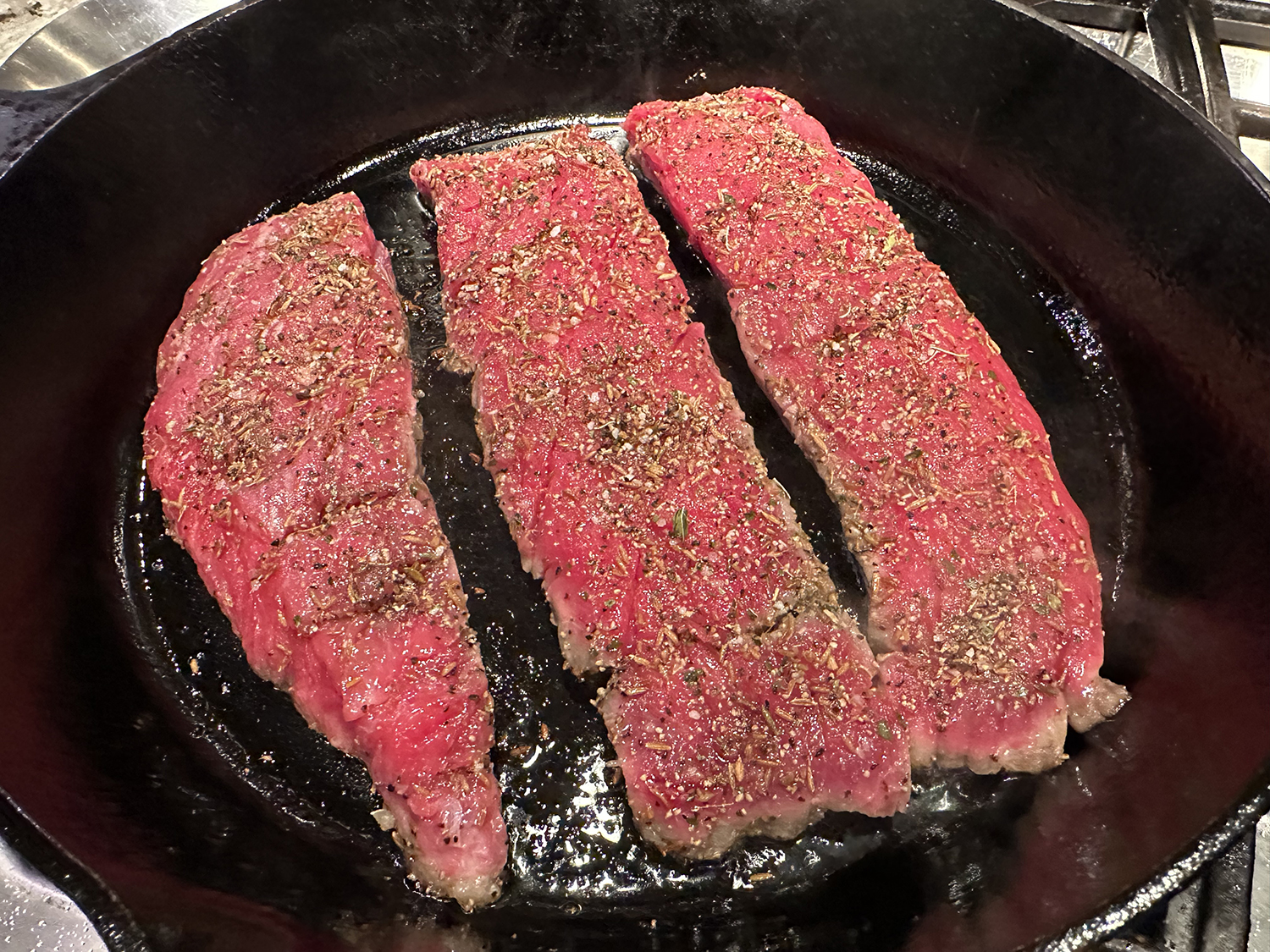
  2. Rub the cumin mixture into the cuts on both sides, then cut the steak into 2 or 3 pieces with the grain. In a 12-inch skillet over medium-high, heat the oil until barely smoking. Add the steak and cook, flipping once, until well browned and the center reaches 125°F (for medium-rare), 6 to 8 minutes. Transfer to a plate and tent with foil.
  3. In the same skillet over medium, melt the butter. Add the onion, tomato, garlic, remaining ½ teaspoon oregano and ½ teaspoon salt; cook, stirring, until the onion is wilted, 6 to 8 minutes.
  4. Add the lime juice and accumulated steak juices; cook, stirring, until slightly reduced, about 1 minute.
  5. Off heat, stir in the parsley. Taste and season with salt and pepper. Transfer the onion mixture to a platter. Thinly slice the steak against the grain and place on the platter. Serve with lime wedges.

http://www.lynnandruss.com

Recipe by Courtney Hill for Milk Street

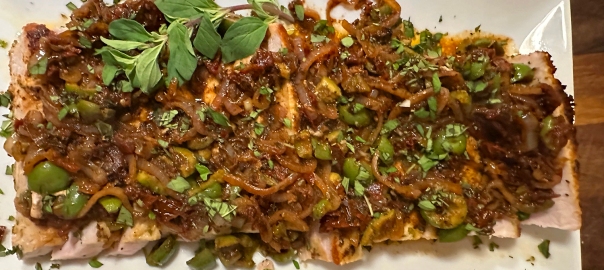
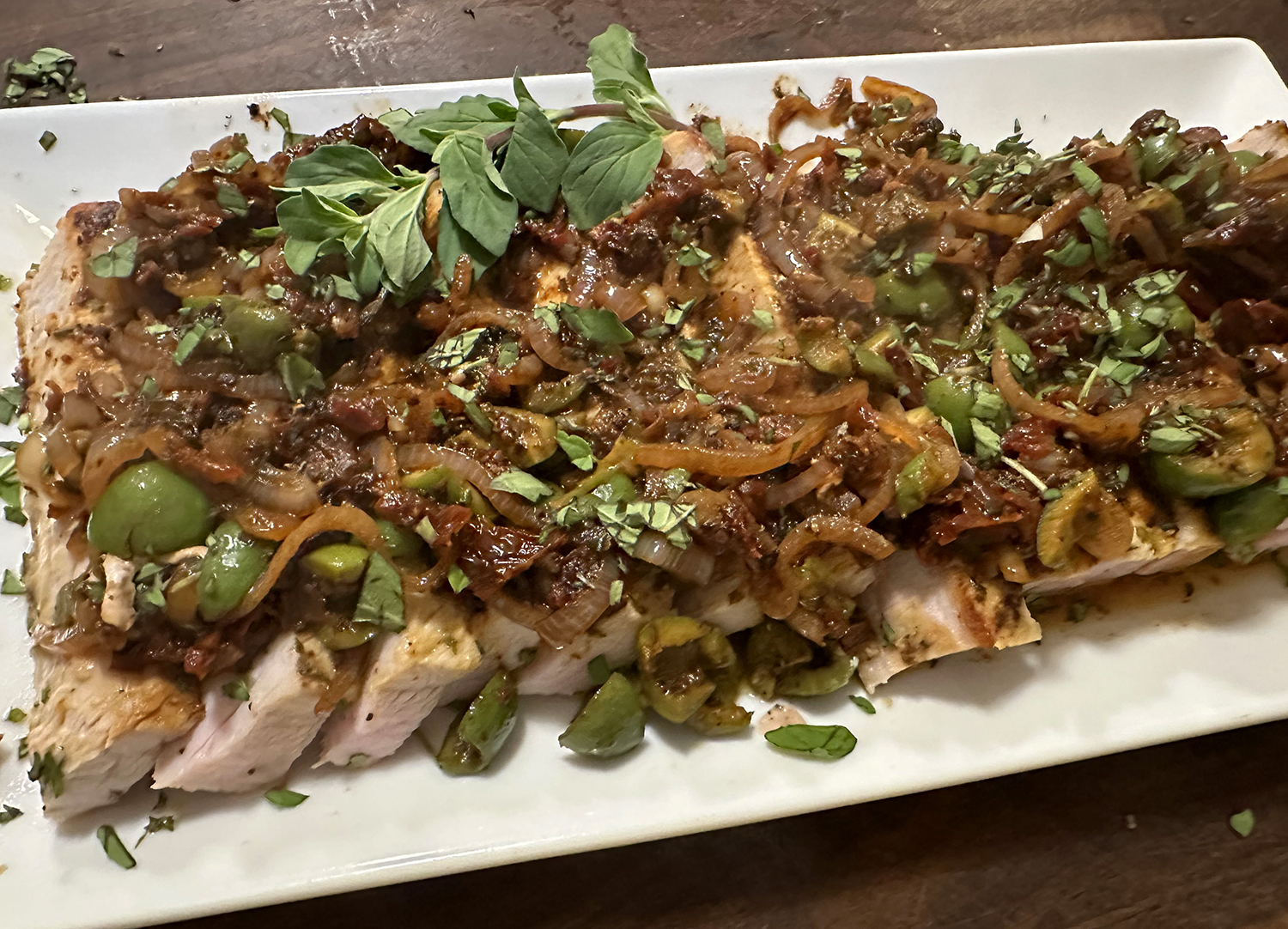
Pork Tenderloins with Sun-Dried Tomatoes and Green Olives

Oodles of flavor in this simple and quick weeknight recipe. Inspired by a recipe in “How to Roast a Lamb” by chef Michael Psilakis, two umami-packed ingredients are used for this dish: sun-dried tomatoes and olives. But instead of applying the ingredients to lamb, they are used as a big Mediterranean flavor boost for lean, mild pork tenderloin.

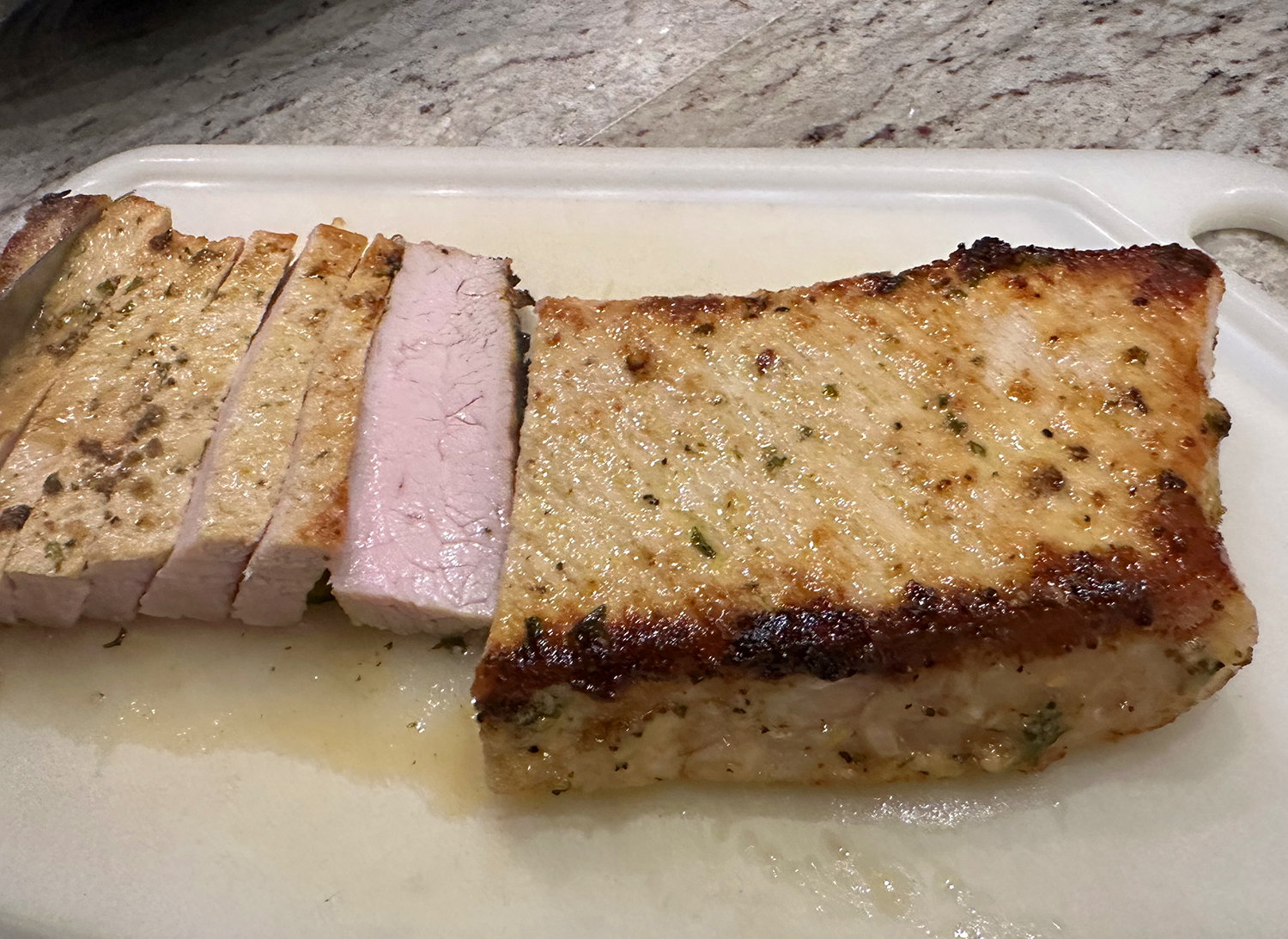
They are combined to make a relish-like pan sauce to finish pork tenderloins seasoned with Dijon, garlic and oregano. A quick sear followed by pan-roasting ensures the meat gets caramelization on the exterior, but also cooks speedily. Serving suggestions: a simple salad, carrot medallions, crusty bread, or rice or orzo pilaf. BTW, you will need an oven-safe 12-inch skillet for this recipe.

Don’t sear the pork until deeply browned. Instead, aim for light, spotty charring, which takes about 4 minutes. Also, don’t worry if the drippings in the skillet become very dark and even smoke lightly during roasting. Deglazing the pan to make the sauce will loosen the drippings.

Confession. It was our intention to cut the amount of meat in half (keeping the other ingredients the same). While at the grocery store, we both had a senior moment because we picked up a pork loin filet, and not a pork tenderloin, which usually come two to a package. In all honesty, the cooking times worked just as well with the filet. All-in-all, we loved the dish which we paired with cooked carrot medallions and a side salad.

Pork Tenderloins with Sun-Dried Tomatoes and Green Olives

  • Servings: 6
  • Difficulty: easy
  • Print

Ingredients

  • 4 Tbsp. grapeseed or other neutral oil, divided
  • 2 tsp. minced fresh oregano, plus 1 tablespoon chopped fresh oregano
  • 3 medium garlic cloves, finely grated
  • 2 Tbsp. dijon mustard
  • Kosher salt and ground black pepper
  • 2 1¼-lb. pork tenderloins, trimmed of silver skin, halved crosswise
  • 1 medium shallot, halved and thinly sliced
  • ½ cup drained oil-packed sun-dried tomatoes, finely chopped
  • ¼ cup pitted green olives, roughly chopped
  • 2 tsp. red wine vinegar

Directions

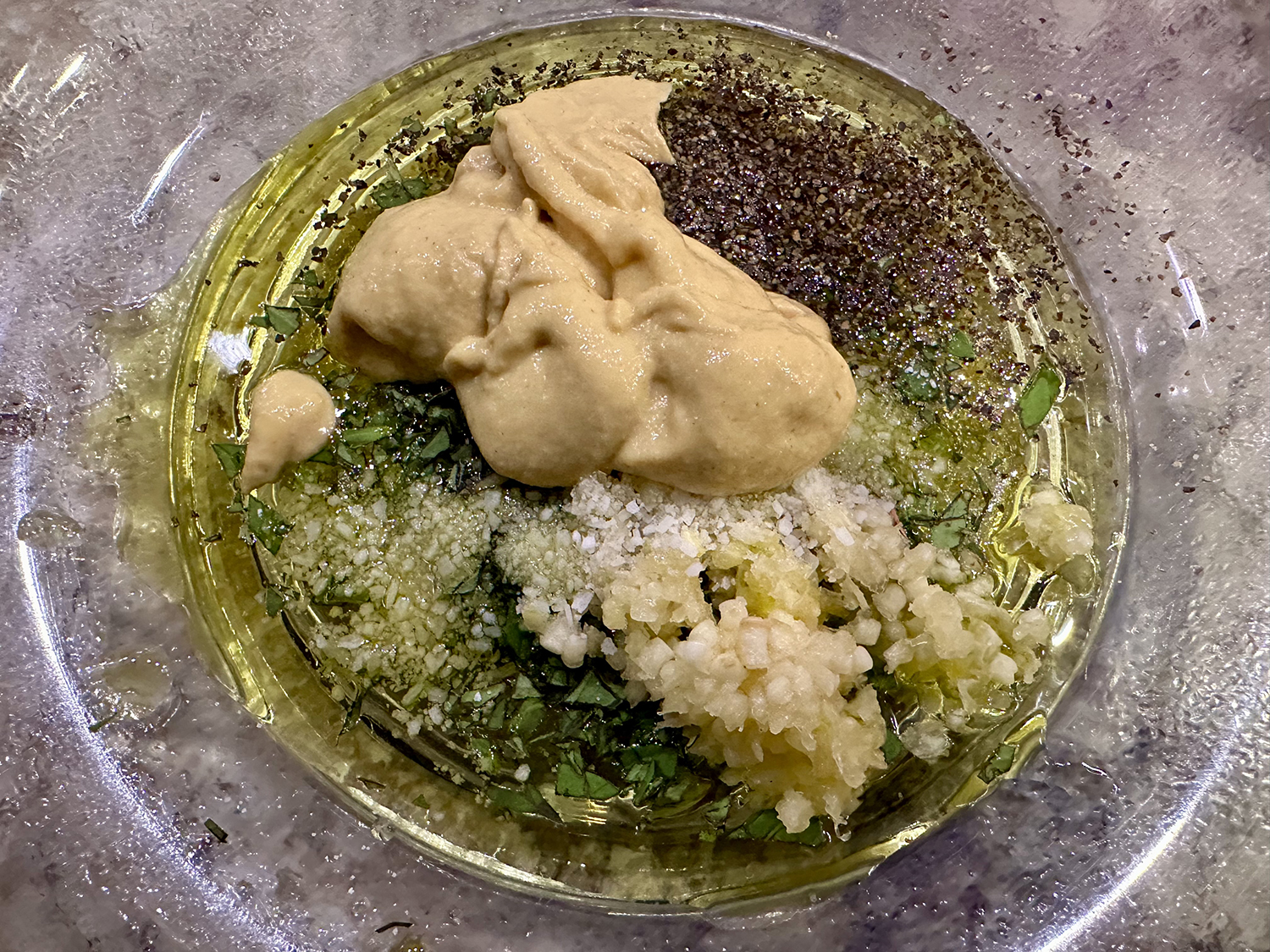
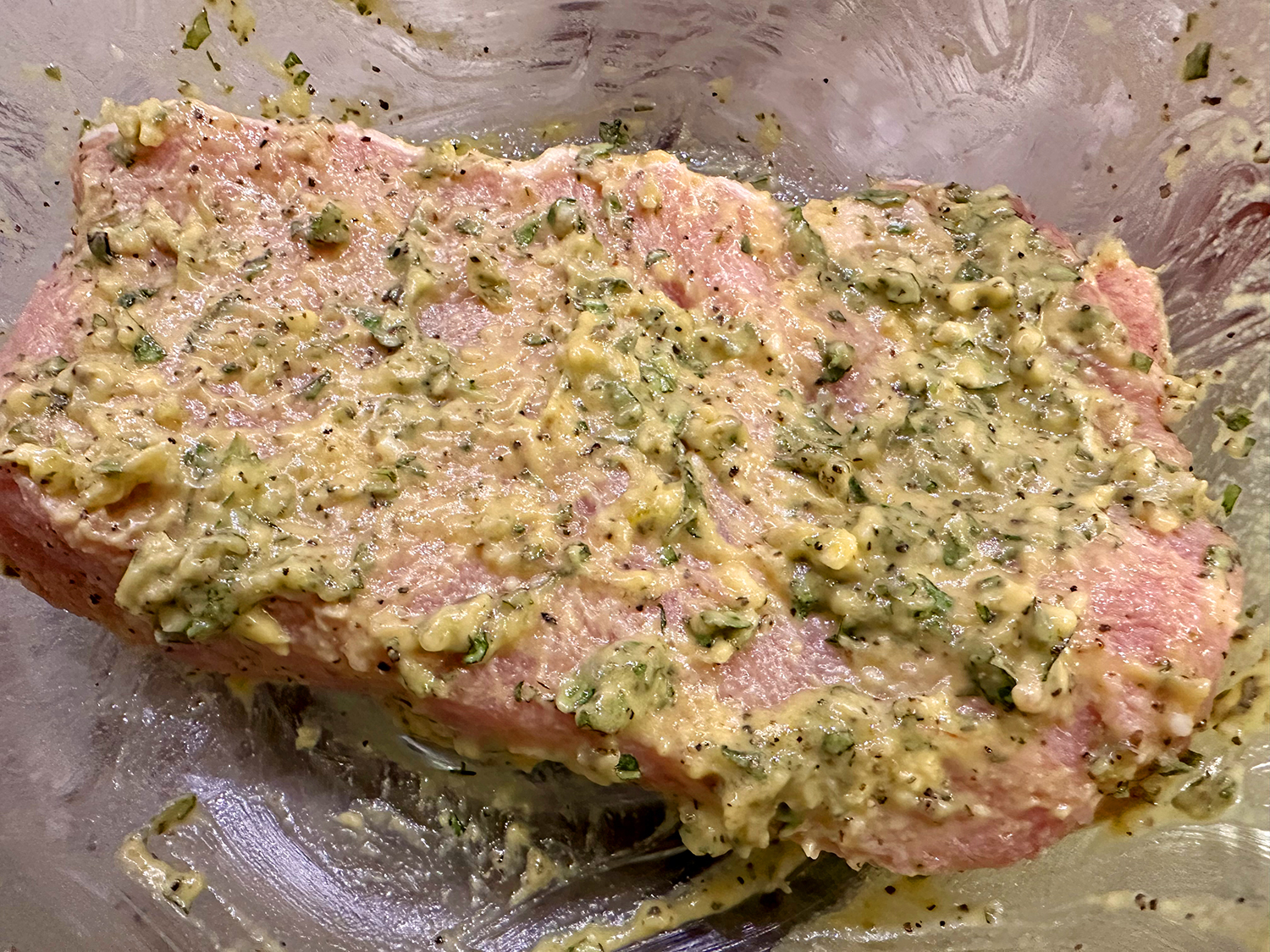
  1. Heat the oven to 450°F with a rack in the middle position. In a large bowl, stir together 2 tablespoons of oil, the minced oregano, garlic, mustard, ¾ teaspoon salt and ½ teaspoon pepper. Add the pork, turn to coat and rub the seasonings into the meat.
  2. In an oven-safe 12-inch skillet over medium-high, heat the remaining 2 tablespoons oil until shimmering. Add the pork and cook, turning occasionally, until lightly browned on all sides, about 4 minutes.Transfer the skillet to the oven and roast until the center of the thickest piece reaches 135°F or is just slightly pink when cut into, 9 to 12 minutes. Remove from the oven; the handle will be hot. Using tongs, transfer the pork to a platter and let rest while you make the sauce.
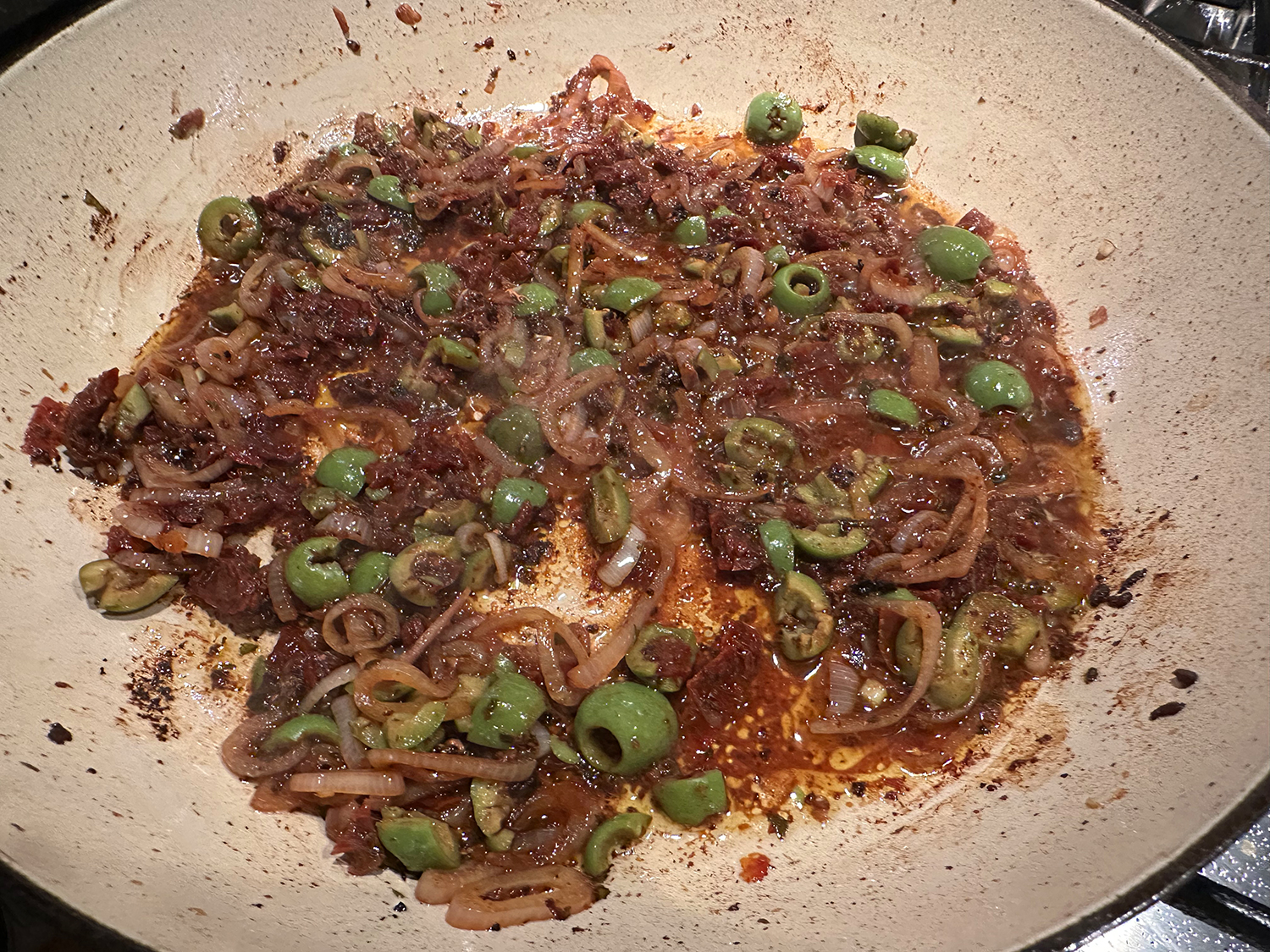
  3. Set the skillet over medium and add the shallot. Cook, stirring constantly, until the shallot is lightly browned, about 1 minute.Add the sun-dried tomatoes, olives, vinegar and ¼ cup water, then cook, scraping up any browned bits, until the tomatoes are plumped and the mixture has the consistency of a loose relish, about 3 minutes. Remove the pan from the heat. Thinly slice the pork and return to the platter. Spoon the sauce over it and sprinkle with the chopped oregano.

http://www.lynnandruss.com

Recipe by Courtney Hill for Milk Street

Steak with Olive White-Wine Pan Sauce

Craving a quick red meat meal? Rib-eye steaks are front and center here, while pimento-stuffed green olives and white wine provide a salty, briny component. With just the two of us for dinner, only one steak was necessary, but it was big and thick—we even had some leftovers. We did not cut back on the other ingredients, and intentionally used more than a half cup of the olives.

Oh, an addition to the recipe was dry-aging our steak. Dry-aging, improves flavor and texture while making cuts easier to cook simply and beautifully. Tenderization occurs when enzymes naturally present in the meat act to break down some of the tougher muscle fibers and connective tissues. A well-aged steak should be noticeably more tender than a fresh steak.

As you are well aware, dry-aged meat at a restaurant or grocery store can cost twice as much as its younger counterparts, but you can do it at home, better—and for free. Exposing meat to cold, circulating air for an extended period of time gently dehydrates it, concentrating flavor and increasing the ratio of fat to muscle. It’s best to dry-age a steak on a rack, uncovered, overnight and up to several days.

Don’t slice the steaks until they have rested for 10 minutes. Resting not only permits the meat to finish cooking with residual heat, it gives the muscle fibers a chance to relax, thereby allowing the juices forced to the surface during cooking to redistribute throughout meat. This results in less moisture loss during slicing.

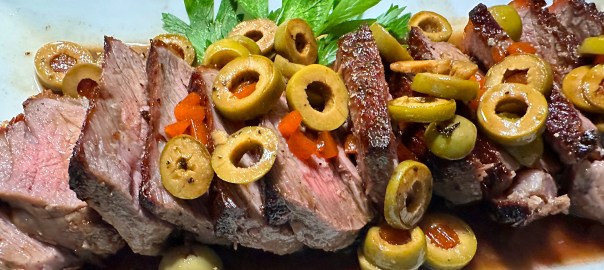
A little history behind this recipe: This is a riff on a dish from the new edition of “Spain: The Cookbook” written by Simone Ortega and first published in Spain in 1972. The 1,080-recipe tome has since become a bible of Spanish home cooking. We use pimento-stuffed green olives to add pops of bright color and flavor to the white wine pan sauce. Serve with warm, crusty bread to soak up any sauce left on the plate.

Steak with Olive White-Wine Pan Sauce

  • Servings: 4-6
  • Difficulty: easy
  • Print

Ingredients

  • 2 1-lb. boneless ribeye steaks, each about 1 inch thick, trimmed and patted dry
  • Kosher salt and ground black pepper
  • 1 Tbsp. grapeseed or other neutral oil
  • 3 Tbsp. salted butter, cut into 1-Tbsp. pieces, divided
  • 1 medium garlic clove, smashed and peeled
  • ½ cup pimento-stuffed green olives, finely chopped, plus 1 Tbsp. olive brine
  • ½ cup dry white wine
  • 1 Tbsp. sherry vinegar

Directions

  1. Season the steaks on both sides with salt and pepper. If possible, dry age the steak on a rack, uncovered, overnight and up to several days.
  2. In a 12-inch skillet over medium-high, heat the oil until barely smoking.Add the steaks, reduce to medium and cook until well browned on the bottoms, 5 to 7 minutes.
  3. Flip and cook for 3 minutes, then add 1 tablespoon of butter and the garlic. Swirl the pan to distribute the butter and continue to cook until the second sides of the steaks are well browned, another 3 to 4 minutes. Transfer to a serving platter, tent with foil and let rest for 10 minutes.
  4. While the steaks rest, remove and discard the garlic, then set the pan over medium-high. Add the olives and cook, stirring, until fragrant, 30 to 60 seconds. Add the wine, bring to a simmer and cook, scraping up any browned bits, until the liquid has almost evaporated, about 3 minutes.
  5. Remove from the heat, stir in the olive brine, vinegar and remaining 2 tablespoons butter, then stir until melted. Remove from the heat, then taste and season with salt and pepper. Cover and set aside.
  6. After the steaks have rested, cut them on the diagonal into ¼- to ½-inch-thick slices. Transfer to a platter, pour over any accumulated juices and spoon on the sauce.

http://www.lynnandruss.com

Adapted from a recipe for Milk Street

Steak with Preserved-Lemon-Marinated Tomatoes

Toss peak heirloom tomatoes in a simple preserved lemon, soy sauce, and chile marinade while you sear off a nice, well-marbled steak for a dinner for two in no time. The rich, fatty meat is just the right counterpoint to the punchy salad. Returning to this recipe off-season? Opt for cherry tomatoes instead of heirloom.

The Hubs used ghee instead of olive oil in the cast iron pan. Toward the end of searing the steak, he spooned the juices over the meat numerous times. An optional flavor booster was including one large smashed garlic glove and a sprig of fresh rosemary to the scalding skillet, discarding them when steak is ready.

OK, most home cooks are not going to have preserved lemons on hand. We pretty much always do. Preserved lemons are one of those ingredients that sound exotic and hard-to-find but are actually really easy to make. However they do take a few weeks, so if you don’t have the time, there are some good preserved lemon substitutes.

If you have a few hours, you can make a quick, substitute. Just squeeze the juice from a lemon, keeping it for another use. Then finely slice the lemon skins and toss in plenty of fine salt. The finer you slice, the quicker they will ‘preserve’. Stand for at least an hour (preferably longer) then use as per your recipe.

A little lemon zest will add a different type of lemony fragrance to your dish. It will be much milder but better than nothing. But plan ahead, and do try to have the real McCoy preserved lemons for the best results.

Steak with Preserved-Lemon-Marinated Tomatoes

  • Servings: 2-3
  • Difficulty: easy
  • Print

Ingredients

  • 1, 1-lb. New York strip steak (1″–1¼” thick)
  • Kosher salt, freshly ground pepper
  • 2 red Thai chiles or 1 red Fresno or jalapeño chile, halved
  • 2 Tbsp. soy sauce
  • 2 Tbsp. thinly sliced preserved lemon, plus 2 tsp. brine
  • 2 Tbsp. extra-virgin olive oil, divided
  • 2 lb. assorted heirloom tomatoes, halved, cut into wedges if large

Directions

  1. Season one 1-lb. New York strip steak (1”–1¼” thick) all over with kosher salt and freshly ground pepper and let sit 15 minutes.
  2. Meanwhile, whisk 2 red Thai chiles or 1 red Fresno or jalapeño chile, halved, 2 Tbsp. soy sauce, 2 Tbsp. thinly sliced preserved lemon, 2 tsp. lemon brine, and 1 Tbsp. extra-virgin olive oil in a large bowl to combine. Add 2 lb. assorted heirloom tomatoes, halved, quartered if large, and toss to coat. Chill tomato mixture until ready to use.
  3. Heat a dry large cast-iron skillet over medium-high until very hot. Drizzle remaining 1 Tbsp. extra-virgin olive oil over steak; rub all over to coat evenly. Cook, turning every 2 minutes or so, until deeply browned and an instant-read thermometer inserted into the thickest part registers 120°, 8–10 minutes for medium-rare. Transfer to a cutting board, tent with foil, and let rest 10 minutes.
  4. Slice steak against the grain ¼” thick. Add steak to marinated tomato mixture and toss to coat. Using a slotted spoon, transfer steak and tomatoes to a platter and drizzle some of the marinade remaining in bowl over (discard the rest). Season with pepper.

http://www.lynnandruss.com

Recipe by Zaynab Issa for Bon Appétit

Flank Steak with Tomato-Eggplant Ragù

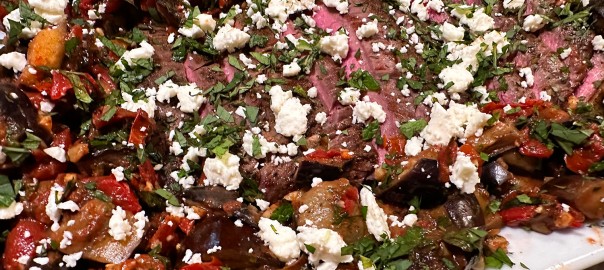
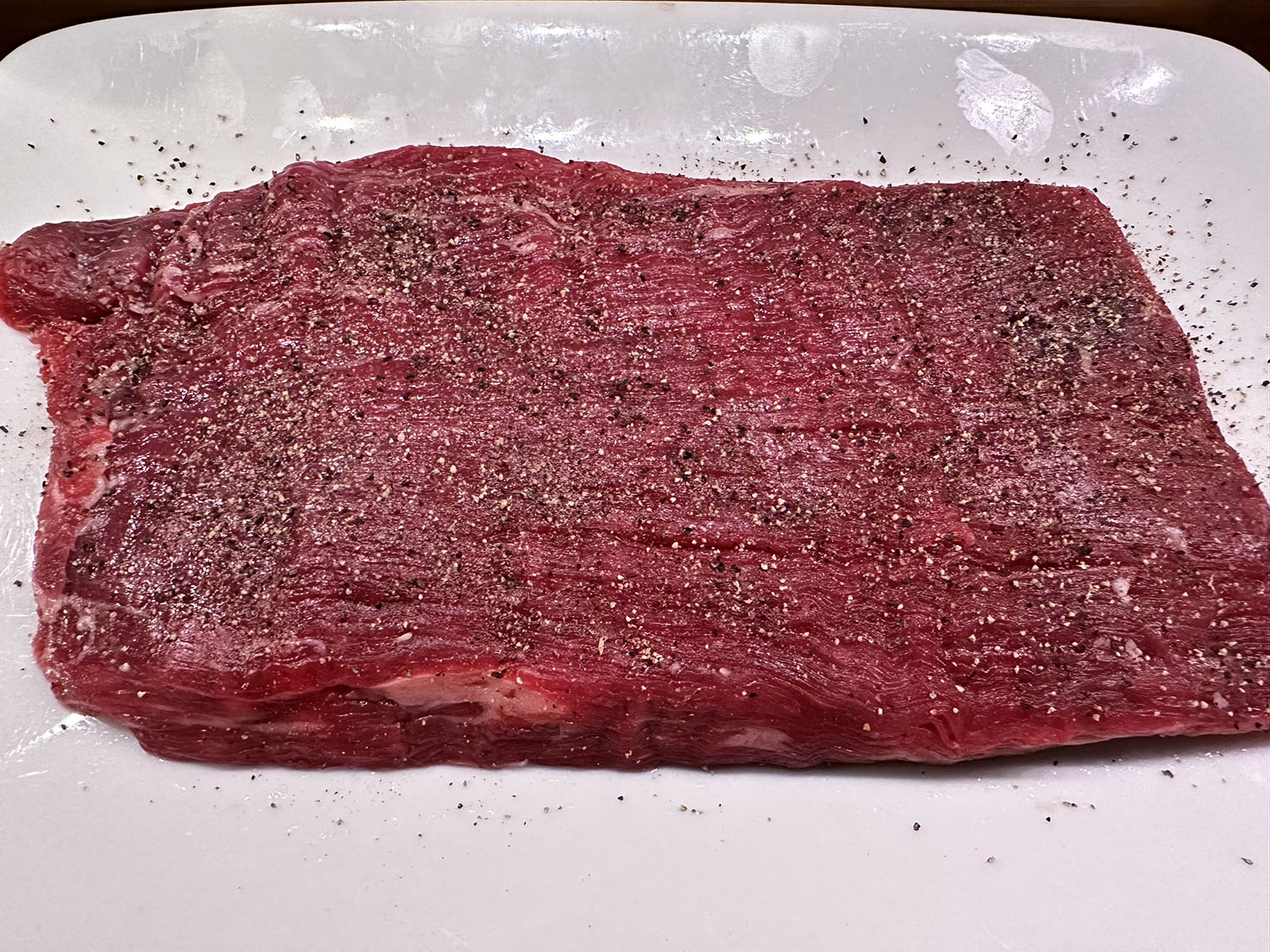
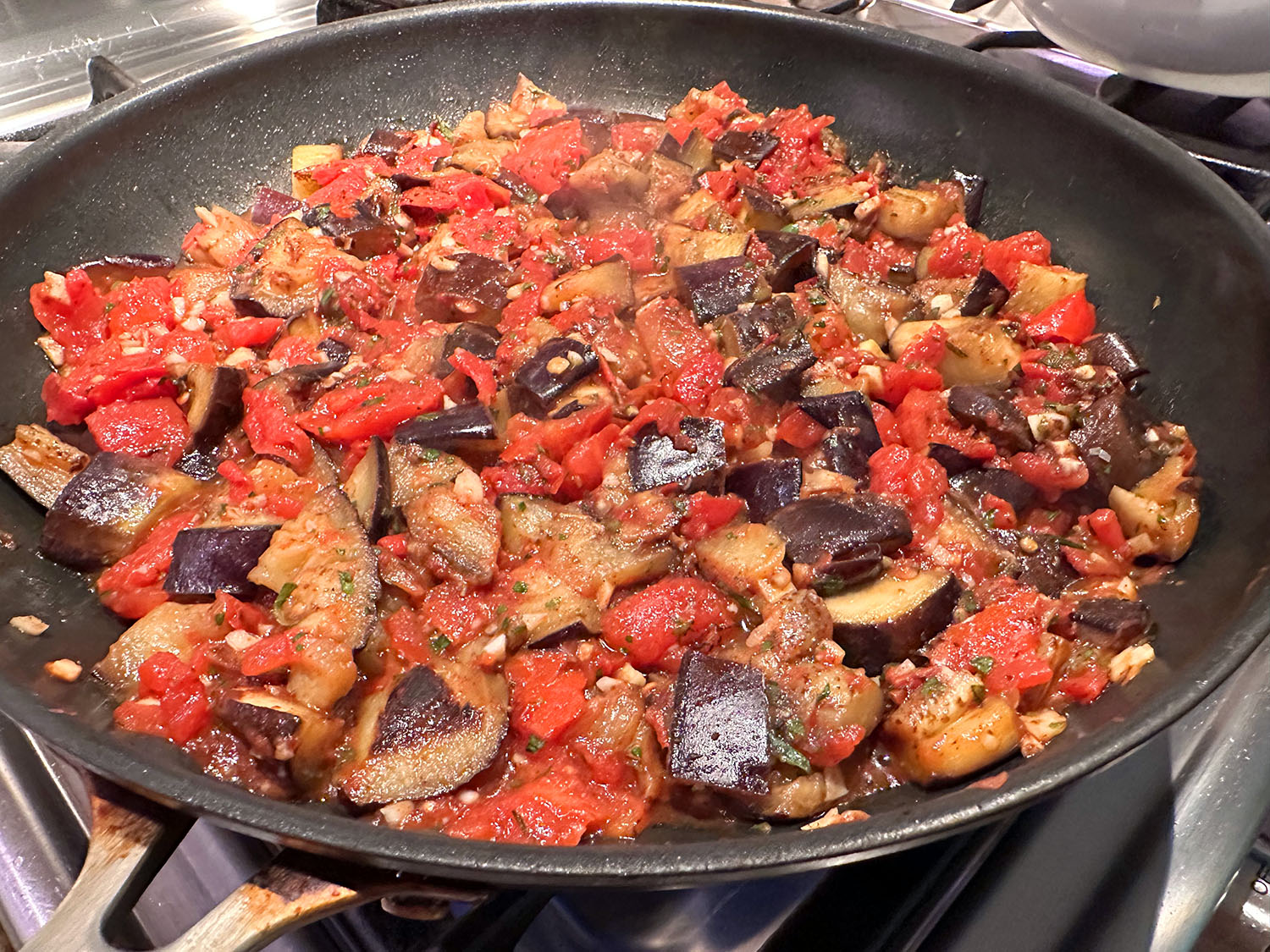
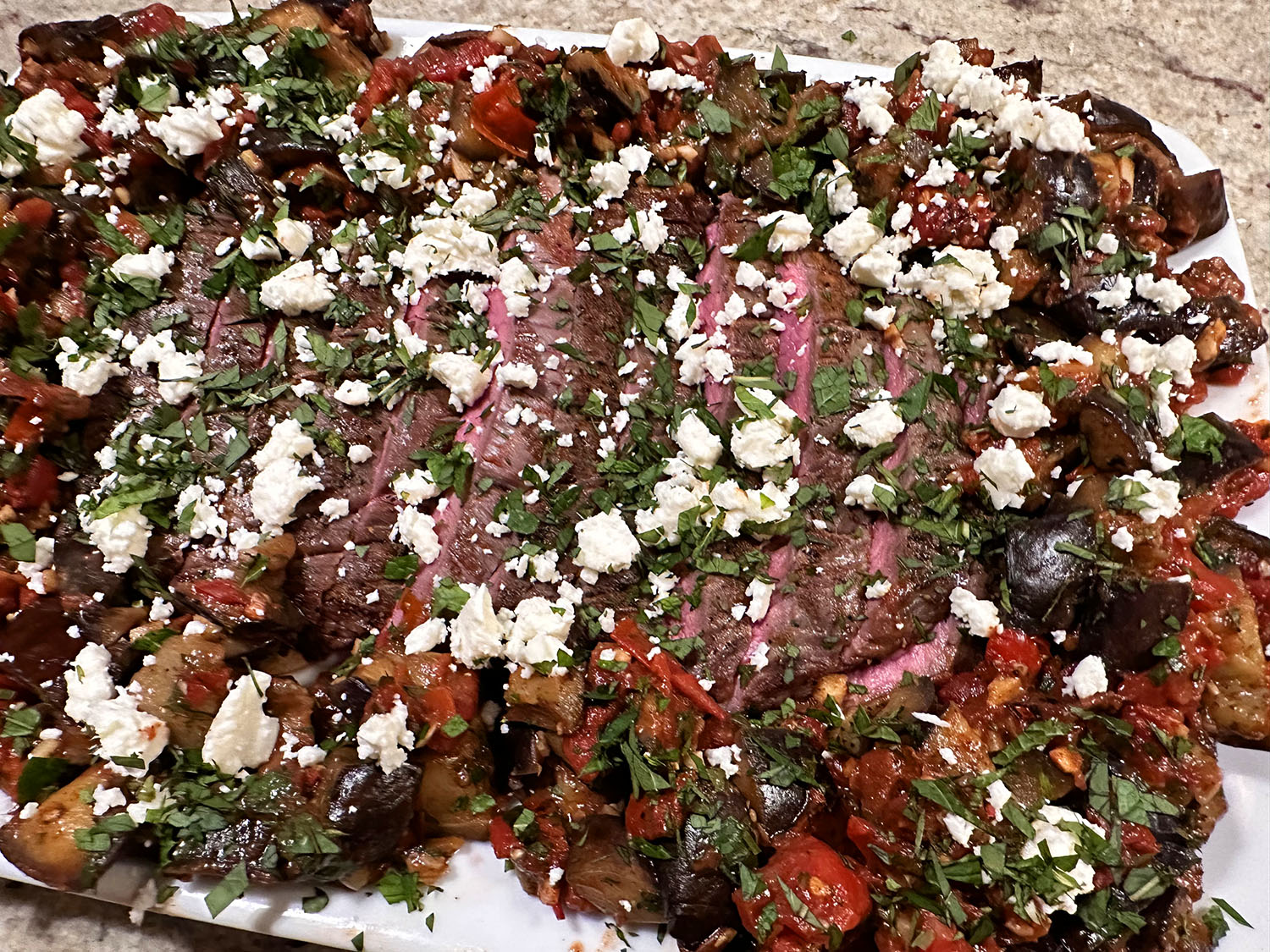
Seared flank steak is finished with a rustic sauce-like side of eggplant, tomatoes, garlic and herbs. Crumbled feta cheese adds briny notes that contrast nicely with the sweetness of the vegetables and the richness of the beef. Milk Street borrowed some of the flavors of Greek moussaka for this quick-one pan meal.

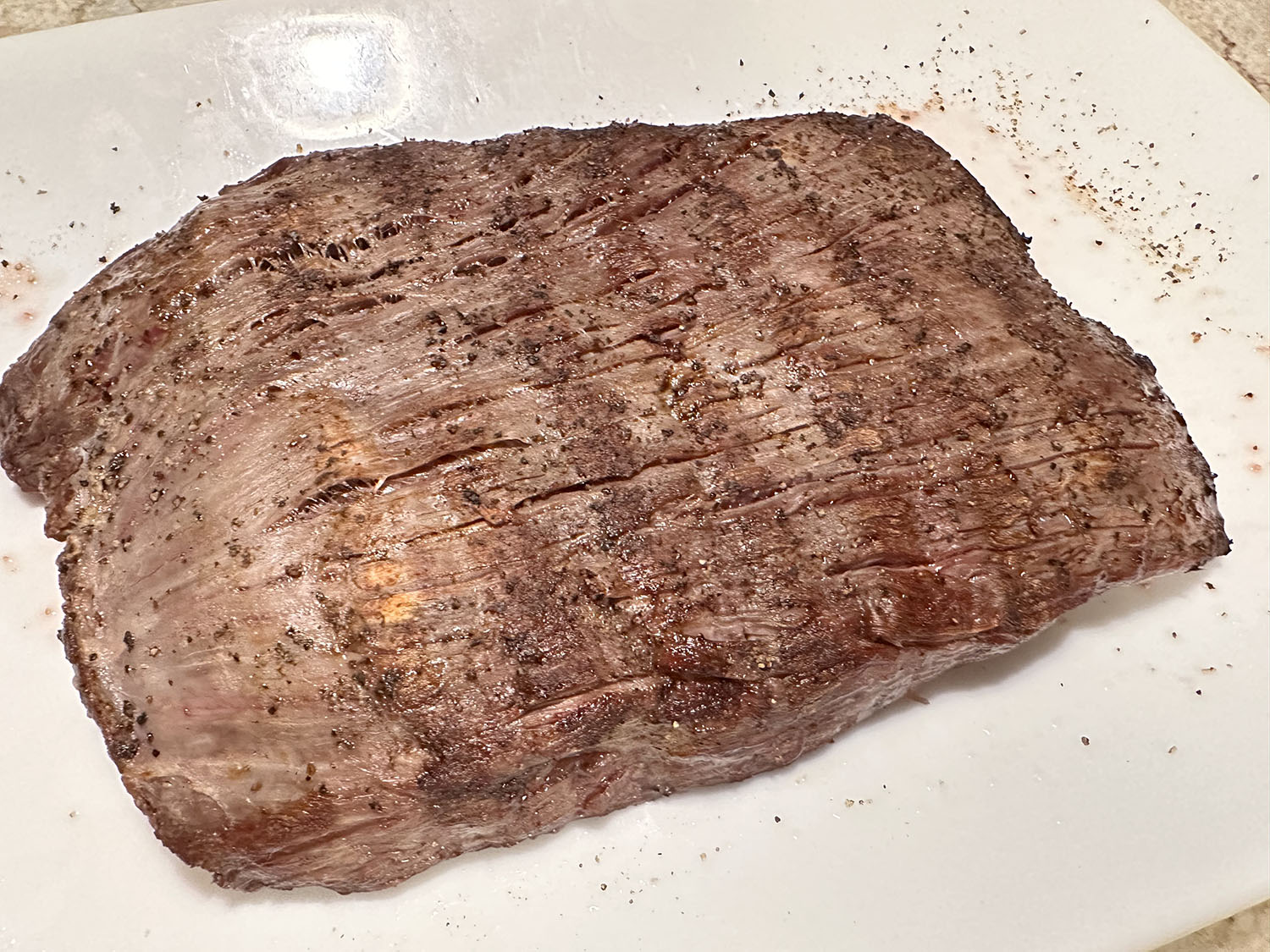
In Italian cuisine, the word “ragù” refers to a whole category of meat sauces. However, this recipe is a veggie-forward version as an accompaniment to the steak. The original directions instructs you to divide the flank steak into 4 sections and cook it in a pan. *We decided to grill it, about 9-10 minutes total for a medium-rare finish. The meat then sits, covered with foil, for another 10 minutes before slicing.

FYI, don’t drain the juices from the tomatoes. The liquid helps form the sauce and prevents the eggplant from drying out so that the pieces become silky-soft. When slicing the flank steak for serving, make sure to slice it against the grain for the tenderest texture.

Paired with the first white sweet corn of the season, it was a fabulous meal!

Flank Steak with Tomato-Eggplant Ragù

  • Servings: 4
  • Difficulty: easy
  • Print

Ingredients

  • 1½ lbs. flank steak, trimmed, halved lengthwise, then crosswise
  • Kosher salt and ground black pepper
  • 4 Tbsp. extra-virgin olive oil, divided
  • 1 lb. eggplant, cut into 1-inch chunks
  • 14½ oz. can diced tomatoes
  • 4 medium garlic cloves, minced
  • 2 tsp. dried oregano
  • ¾ tsp. ground cinnamon
  • ½ cup lightly packed fresh mint, chopped
  • 1½ oz. feta cheese, crumbled (about ⅓ cup)

Directions

  1. Season the steak with salt and pepper. *(See above to grill.) In a nonstick 12-inch skillet over medium-high, heat 2 tablespoons of oil until shimmering. Add the steak and brown on both sides, 6 to 8 minutes total, flipping the pieces once. Transfer to a plate.
  2. In the same pan over medium-high, combine the remaining 2 tablespoons oil, the eggplant and 1 teaspoon salt. Cook, stirring occasionally, until browned and softened, 5 to 6 minutes.
  3. Reduce to medium and add the tomatoes with juices, the garlic, oregano and cinnamon. Cook, stirring occasionally, until thickened and the eggplant has begun to break down, about 5 minutes.
  4. Off heat, stir in any accumulated beef juices and half the mint. Taste and season with salt and pepper. Thinly slice the steak against the grain and place on a platter. Spoon the eggplant mixture on and around the steak, then sprinkle with feta and the remaining mint.

http://www.lynnandruss.com

Recipe adapted from Julia Rackow for Milk Street

Zucchini Parmesan

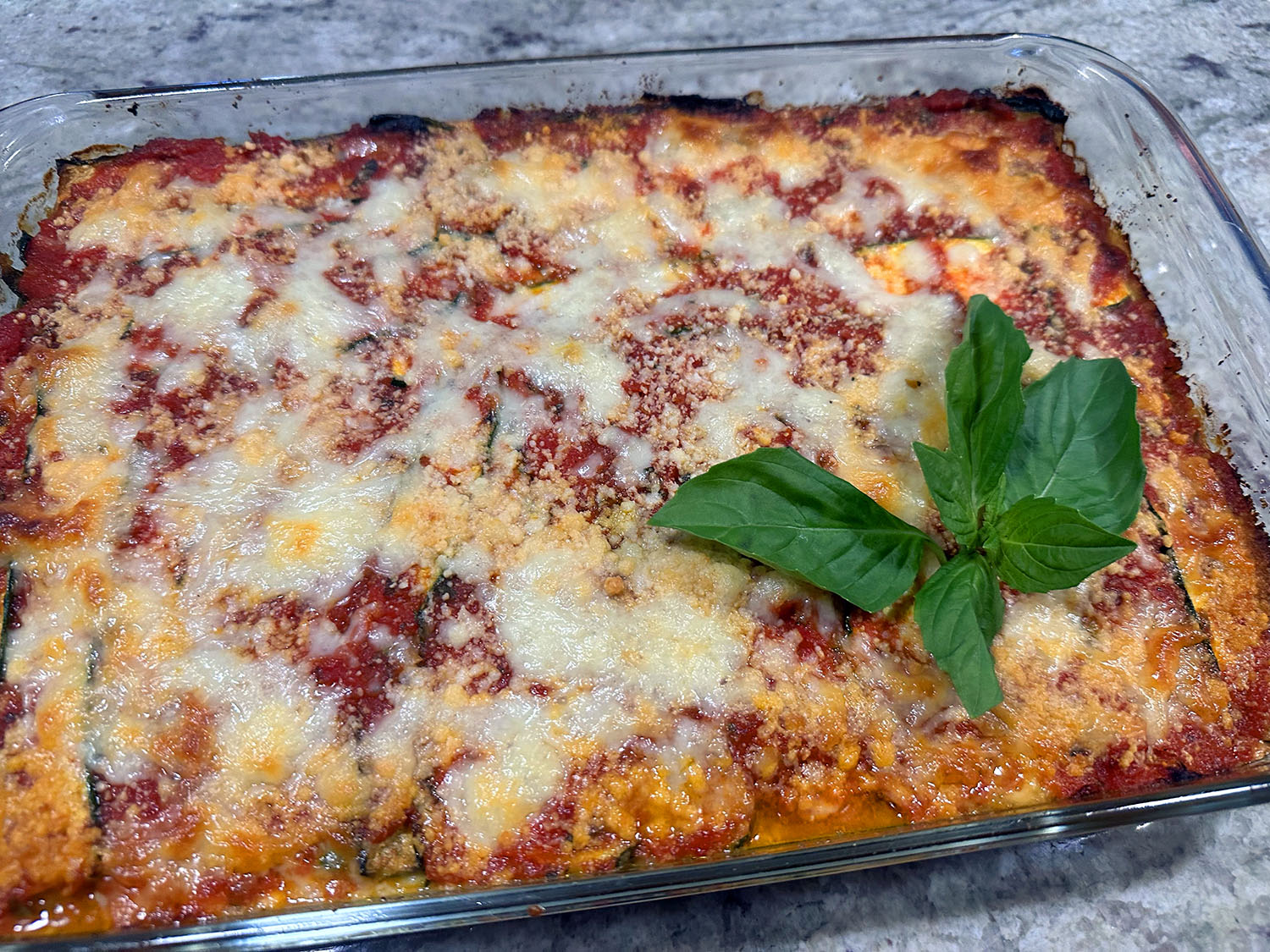
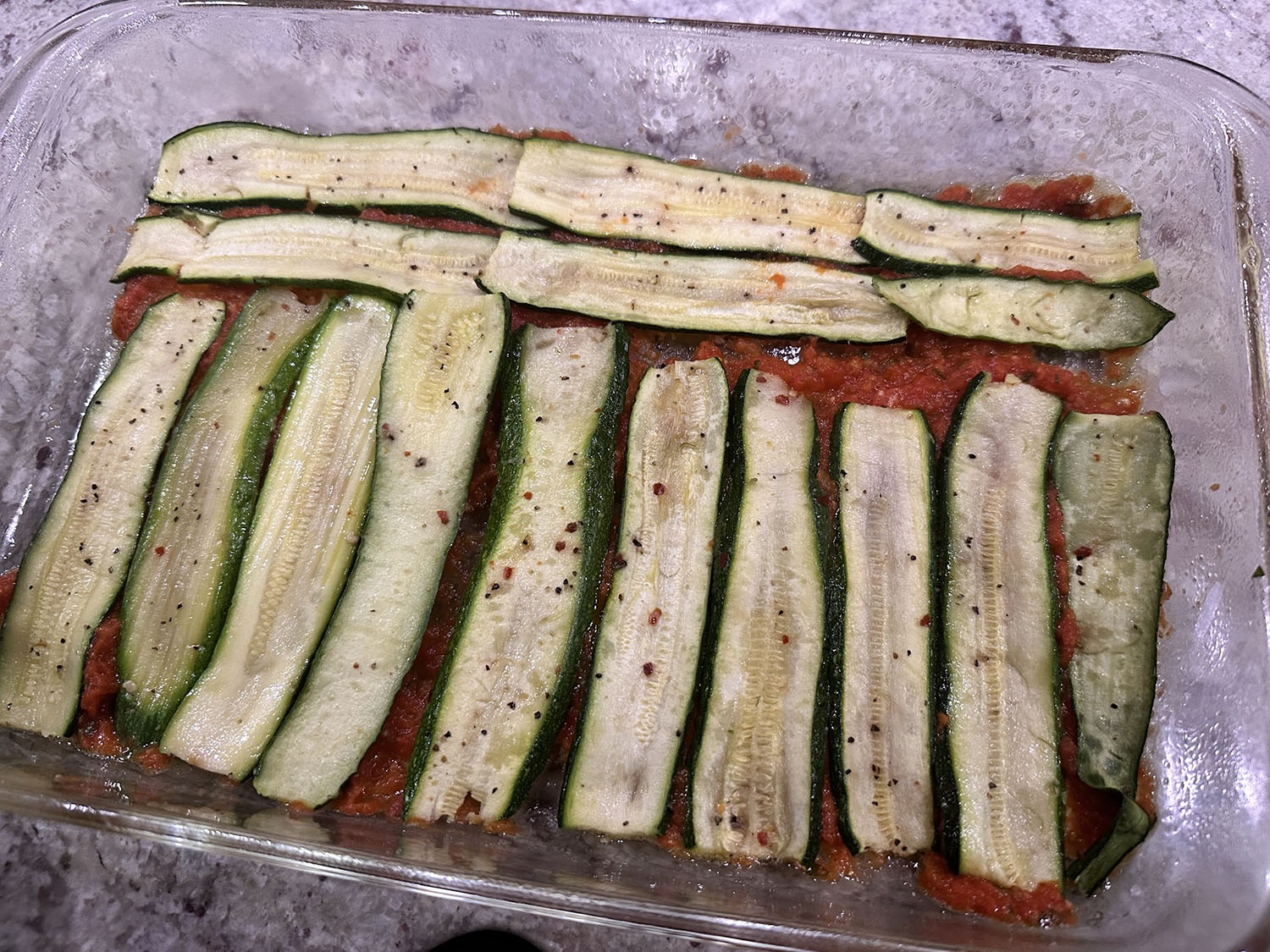
By mid- to late-summer, many home gardeners (or farm stands) will have ample tomatoes and zucchini, so this tasty recipe will assist in using up some of that seasonal bounty. It’s a wonderful meatless dish that can be served as a side or as an entrée with a side salad.

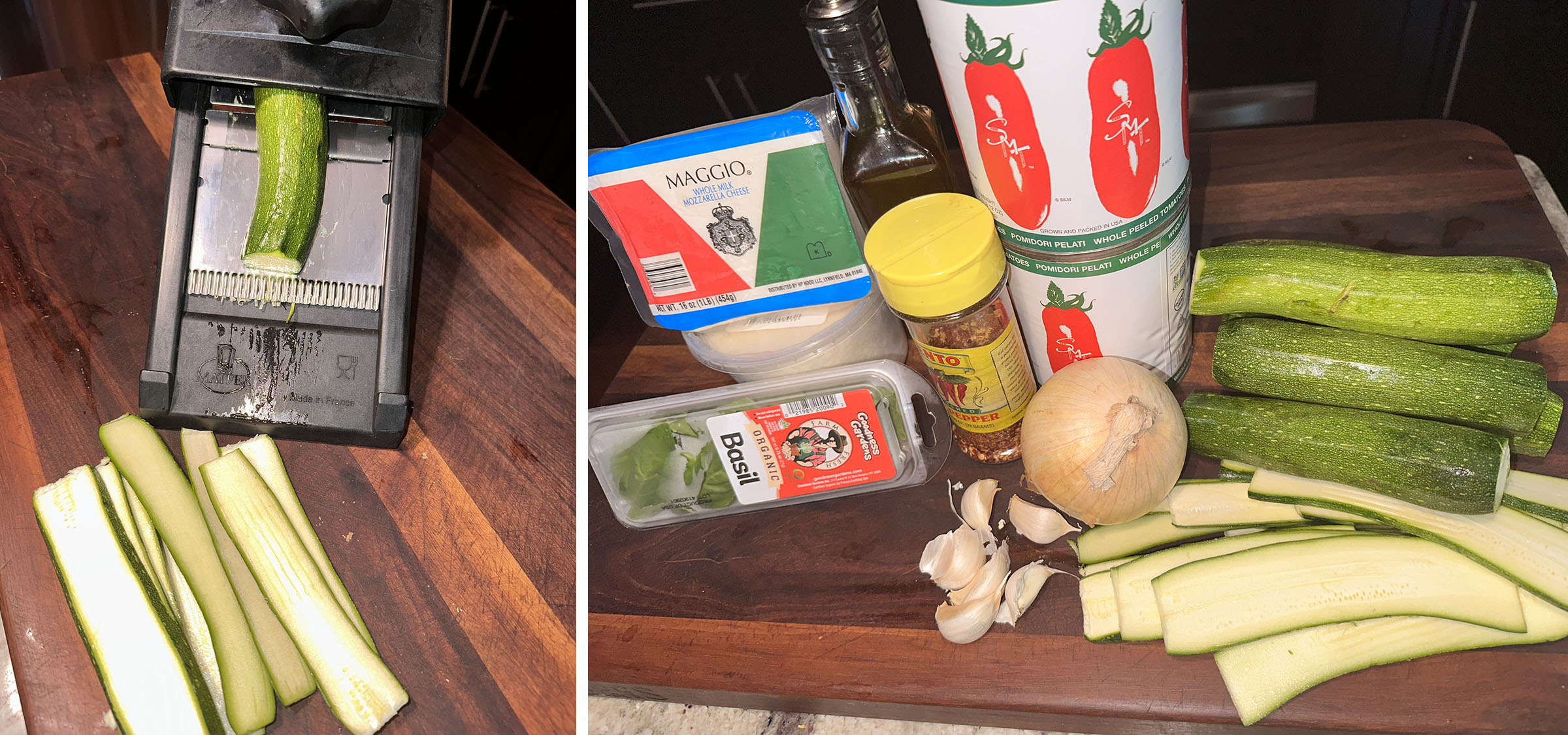
The original recipe by Martha Shulman looked very appetizing, however, we felt a number of alterations could improve the outcome. Roasting, rather than frying the zucchini, allows you to cut down on olive oil and time. With small zucchini under 8 inches long, there is no need to cut them in half crosswise; simply slice them into 1/4″ strips using a mandoline if you have one.

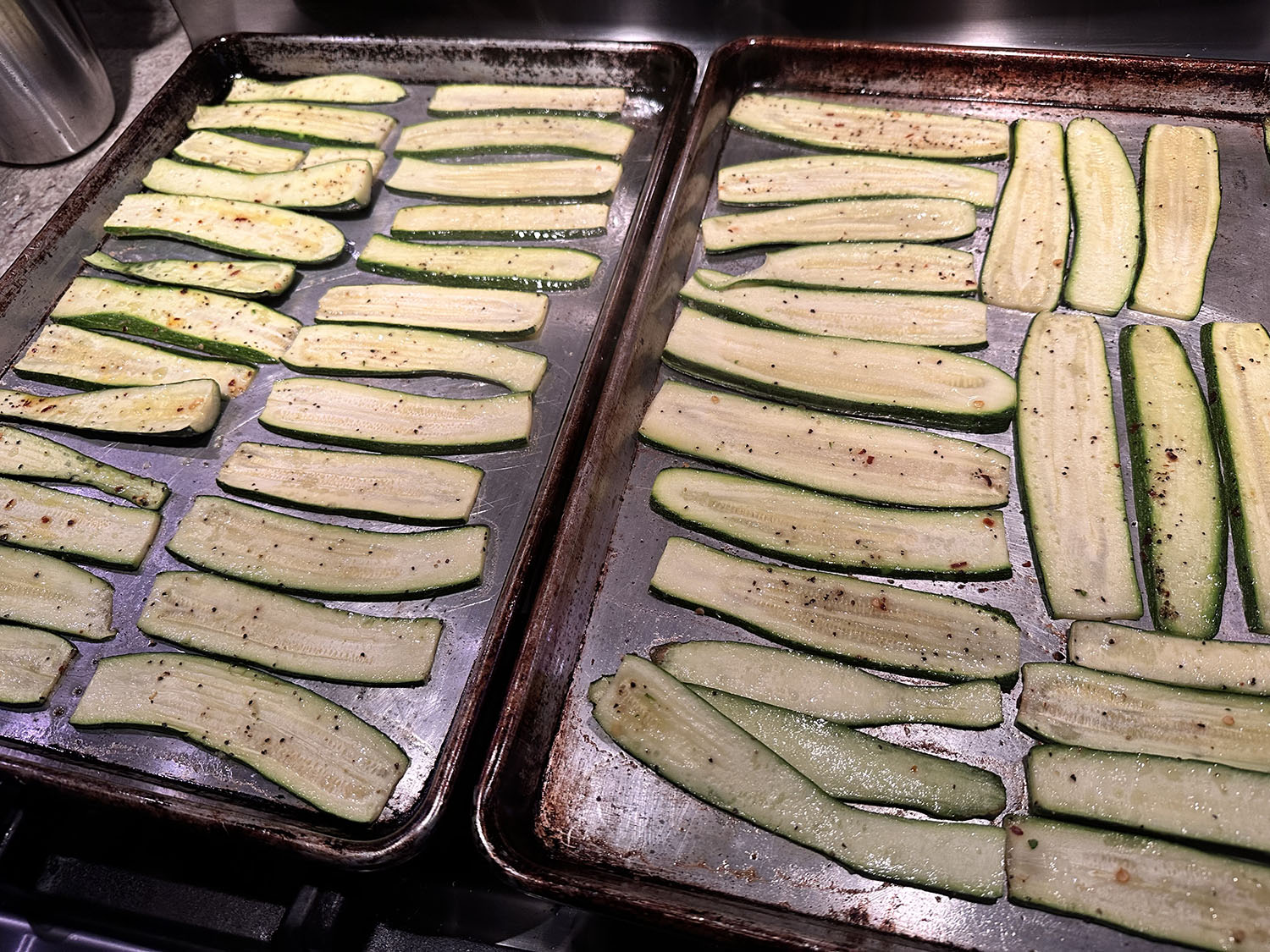
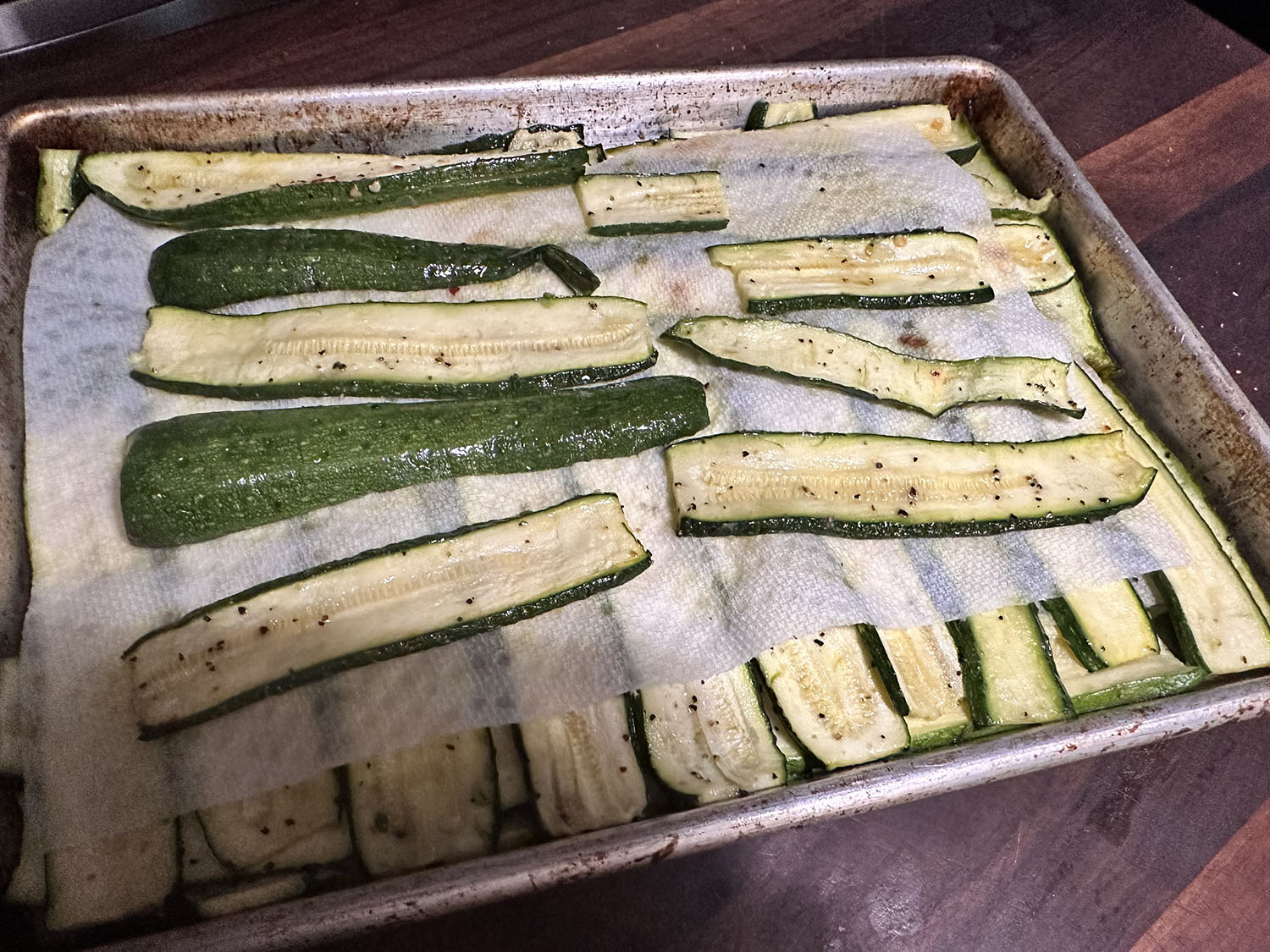
Two sheet pans are oiled with Pam Olive Oil spray instead of lining them with parchment (which many reviewers claimed left the zucchini too watery). After roasting the zucchini, layer the cooled planks between paper towels, and refrigerate until ready to assemble. This helps eliminate any extra moisture. Do this step the day before or that morning, which will save time when you are ready to prep.

Of course, while using fresh tomatoes is preferred, another time saver is to use canned whole tomatoes instead. Crush them with your hands, then follow the directions for making the sauce. For a heftier meal, amp up the dish with 8 ounces of shredded mozzarella, sprinkling between each set of layers with some on top. A small amount of sugar (1⁄8 tsp.) was in the recipe, but we did not include any.

It will serve 4-6 as an entrée, or 8-10 as a side. Fabulous as leftovers too… eaten at room temperature, or reheated.

Zucchini Parmesan

  • Servings: 4-6
  • Difficulty: easy
  • Print

Ingredients

For the Tomato Sauce

  • 2 to 2½ lbs. fresh ripe tomatoes; OR 2, 28-ounce cans of whole tomatoes, hand crushed
  • 1 Tbsp. extra-virgin olive oil
  • 1 small onion, chopped
  • 6 garlic cloves (more or less to taste), roughly chopped
  • Salt and pepper
  • 3 Tbsp. chopped fresh basil, divided

For the Zucchini Parmesan

  • 2 to 2¼ lbs. zucchini
  • Salt and pepper
  • 3 Tbsp. extra-virgin olive oil, divided
  • ½ to 1 tsp. red pepper flakes, to taste
  • ¾ cup freshly grated Parmesan
  • 8 oz. shredded mozzarella

Directions

  1. If you have a food mill, quarter tomatoes. If not, peel, seed and chop them. OR, use canned whole tomatoes and drain the juices saving for another purpose. Crush tomatoes with hands.
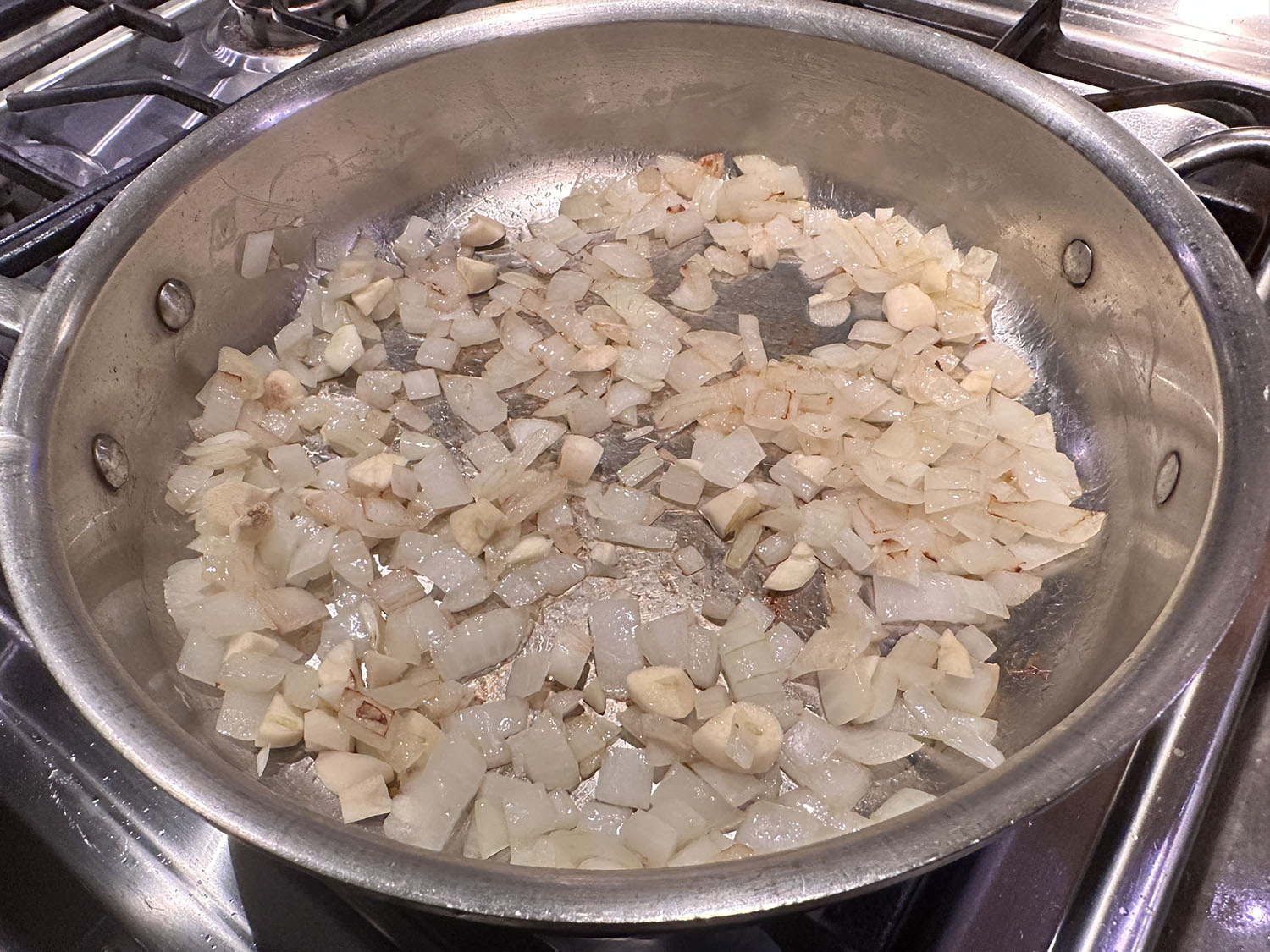
  2. To make tomato sauce, heat 1 tablespoon olive oil in a large, heavy skillet over medium heat and add onion. Cook, stirring often, until tender, about 5 minutes.
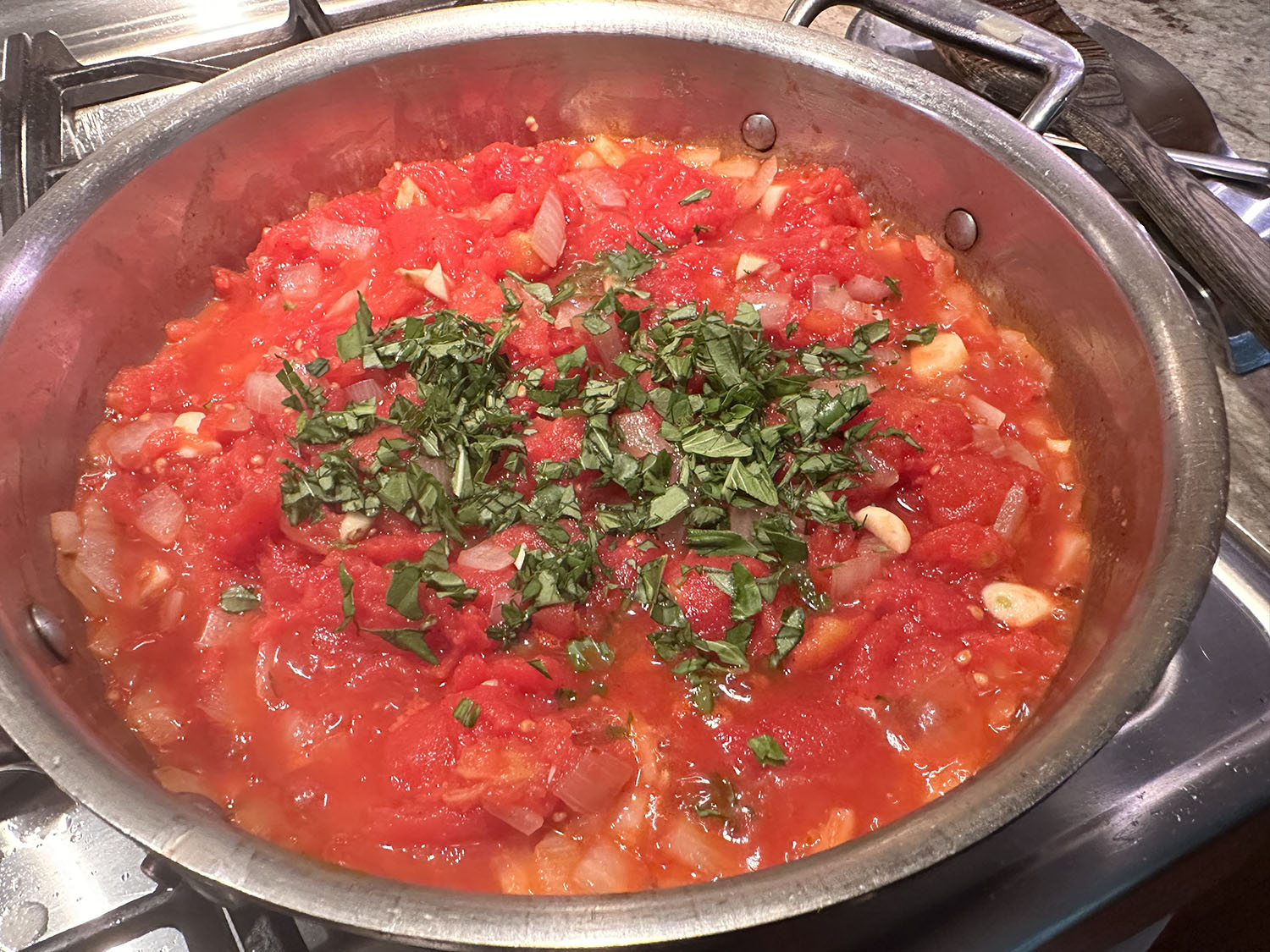
  3. Add garlic. Cook, stirring, until fragrant, 30 seconds to a minute, and add crushed tomatoes, salt, pepper, and 2 tablespoons of chopped basil. Increase heat to medium-high. When tomatoes are bubbling briskly, stir and reduce heat to medium. Cook, stirring often, until tomatoes have cooked down and are beginning to stick to pan, 15 to 25 minutes, depending on consistency. Taste and adjust seasoning.
  4. Heat oven to 450 degrees. Spray 2 sheet pans with olive oil. Trim ends off zucchini and cut in half crosswise if larger than 8 inches long, then cut into lengthwise slices, about ¼ to ⅓ inch thick (a mandoline comes in handy for this step).
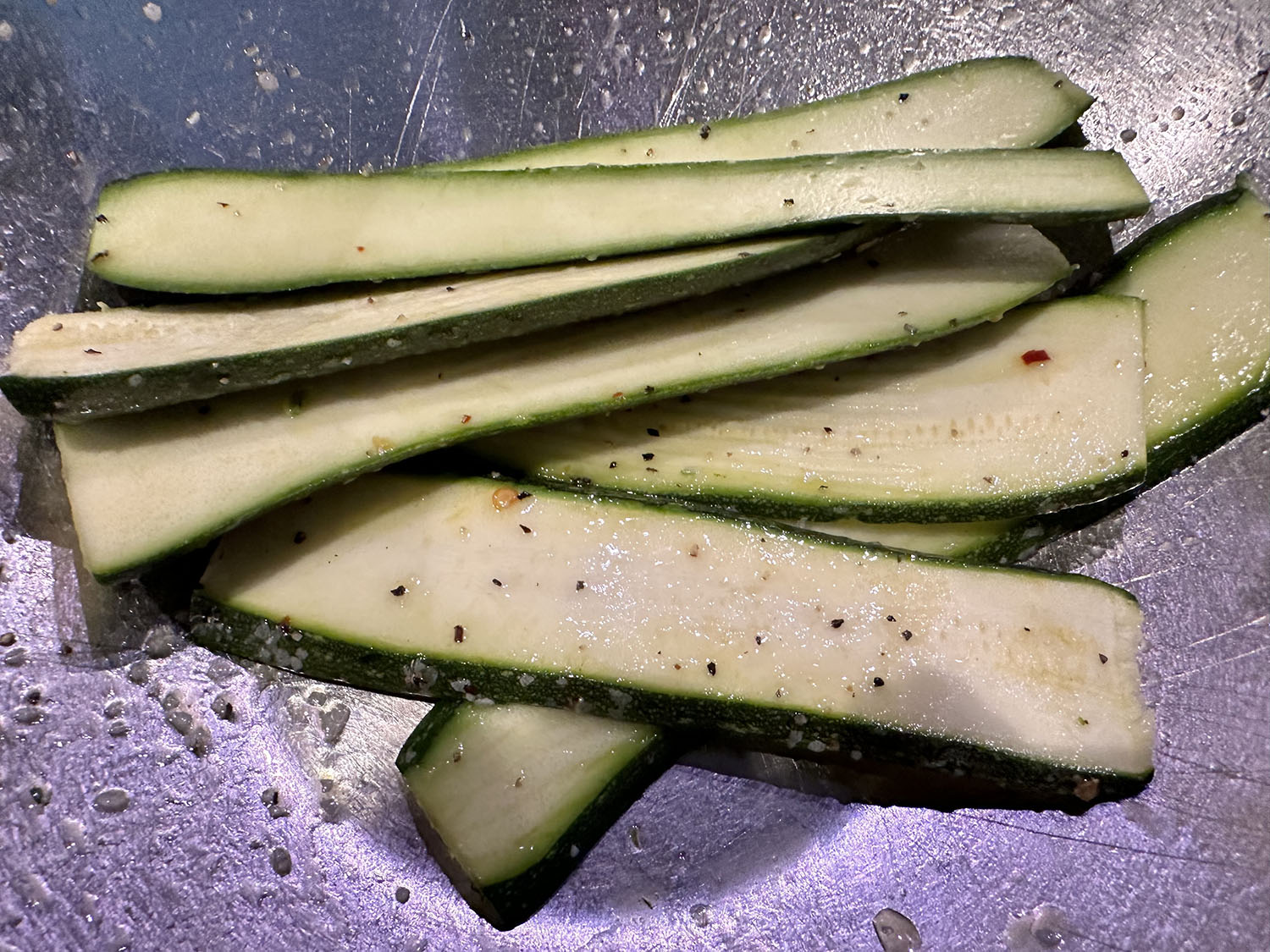
  5. Season on both sides with salt and pepper and toss with 2 tablespoons olive oil. Arrange zucchini slices on baking sheets in one layer and sprinkle with red pepper flakes. Roast for 12 minutes, until lightly browned and easily pierced with a knife. Remove from oven and reduce heat to 375 degrees.
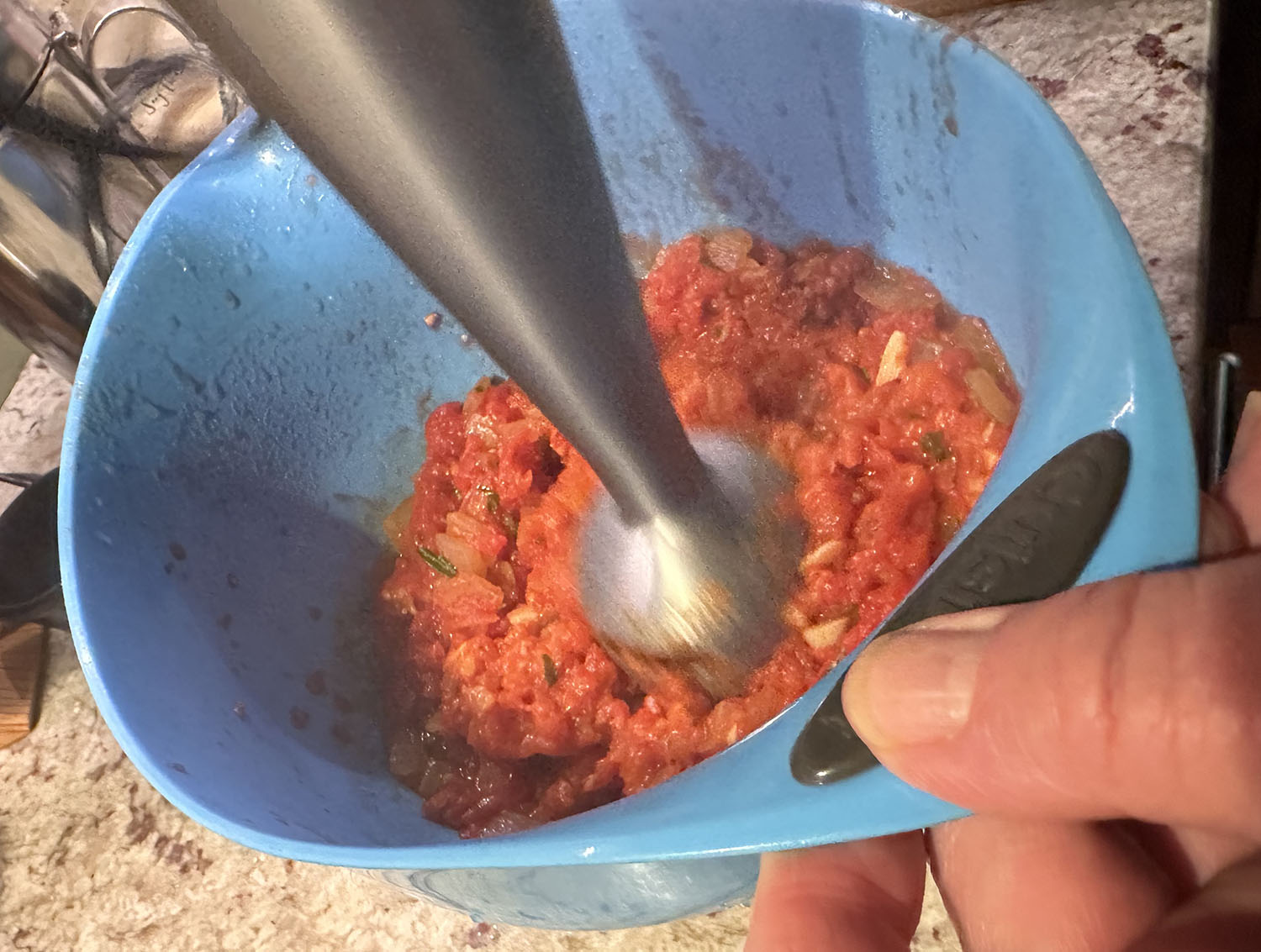
  6. If using a food mill, put sauce through medium blade. If not, pulse sauce in a food processor fitted with steel blade until just coarsely puréed. (Or use an immersion blender.) Stir in remaining chopped basil.
  7. To assemble the dish, oil a 2-quart gratin pan with olive oil. Spread ¼ cup tomato sauce over bottom of dish. Arrange a third of the zucchini in an even layer over tomato sauce. Spoon a third of remaining sauce over zucchini, sprinkle with ¼ cup Parmesan, and add 1⁄3 of mozzarella. Repeat with 2 more layers, ending with ¼ cup Parmesan and remaining mozzarella. Drizzle on remaining tablespoon olive oil.
  8. Bake 30 to 35 minutes, until bubbling and browned on the top and edges. Remove from heat and allow to sit for 10 minutes before serving.

http://www.lynnandruss.com

Loosely adapted from a recipe by Martha Shulman for NYTimes Cooking

Steak Au Poivre

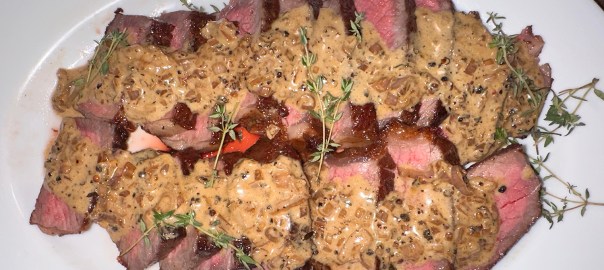
Bringing back a classic. Want to impress your significant other with an impossibly fancy-sounding dish that really isn’t all that complicated? Then Steak Au Poivre (pronounced oh-pwav) is your guy, …er recipe. Even though we made it for our Valentine’s dinner, you can make it for any special occasion, or just because.

Steak au poivre sounds as if it would be difficult, but it is actually quite simple to prepare, and makes an easy and elegant (perhaps somewhat pricy) meal. Essentially it is a sautéed steak, with a quick pan sauce. This version made with black peppercorns tastes bright but not overpoweringly peppery or boozy.

Although the classic cut of beef for this dish is filet mignon, other cuts of boneless steak can be prepared au poivre, including boneless ribeye, strip steak (our choice), or sirloin. Just remember, a bad or tough steak will still be tough, so select a decent piece of beef with good marbling. It’s best if you season the raw steaks with salt and pepper then place them on a rack without covering in the fridge for 8 up to 24 hours. Take them out of refrigerator 1 hour before cooking.

Because pepper is such an important part of the dish (at least one teaspoon of whole peppercorns per steak), it’s applaudable to splurge on high quality peppercorns. Crush the peppercorns with a light hand. They should be “just-cracked” into big pieces, so it’s best to use a mallet, or mortar and pestle, but not a pepper grinder. The au poivre sauce is made from pan drippings, liquor, and cream.

Steak Au Poivre

  • Servings: 4
  • Difficulty: easy
  • Print

Ingredients

  • 2 1½”-thick New York strip steaks (about 1½ lb. total)
  • Kosher salt, freshly ground pepper
  • 1 Tbsp. whole black peppercorns
  • 2 Tbsp. vegetable oil
  • 4 Garlic cloves, 2 smashed, 2 thinly sliced
  • 3 Sprigs thyme
  • 3 Tbsp. unsalted butter, divided
  • 1 Large shallot, finely chopped
  • ⅓ cup cognac, dry sherry, or brandy
  • ½ cup heavy cream
  • Flaky sea salt

Directions

  1. Pat steaks dry with paper towels. Season all over with kosher salt and a generous amount of ground pepper. Let sit 15–30 minutes.
  2. Coarsely crush peppercorns with a mortar and pestle or place in a resealable plastic bag and crush with a small saucepan (they should be a lot coarser than ground pepper).
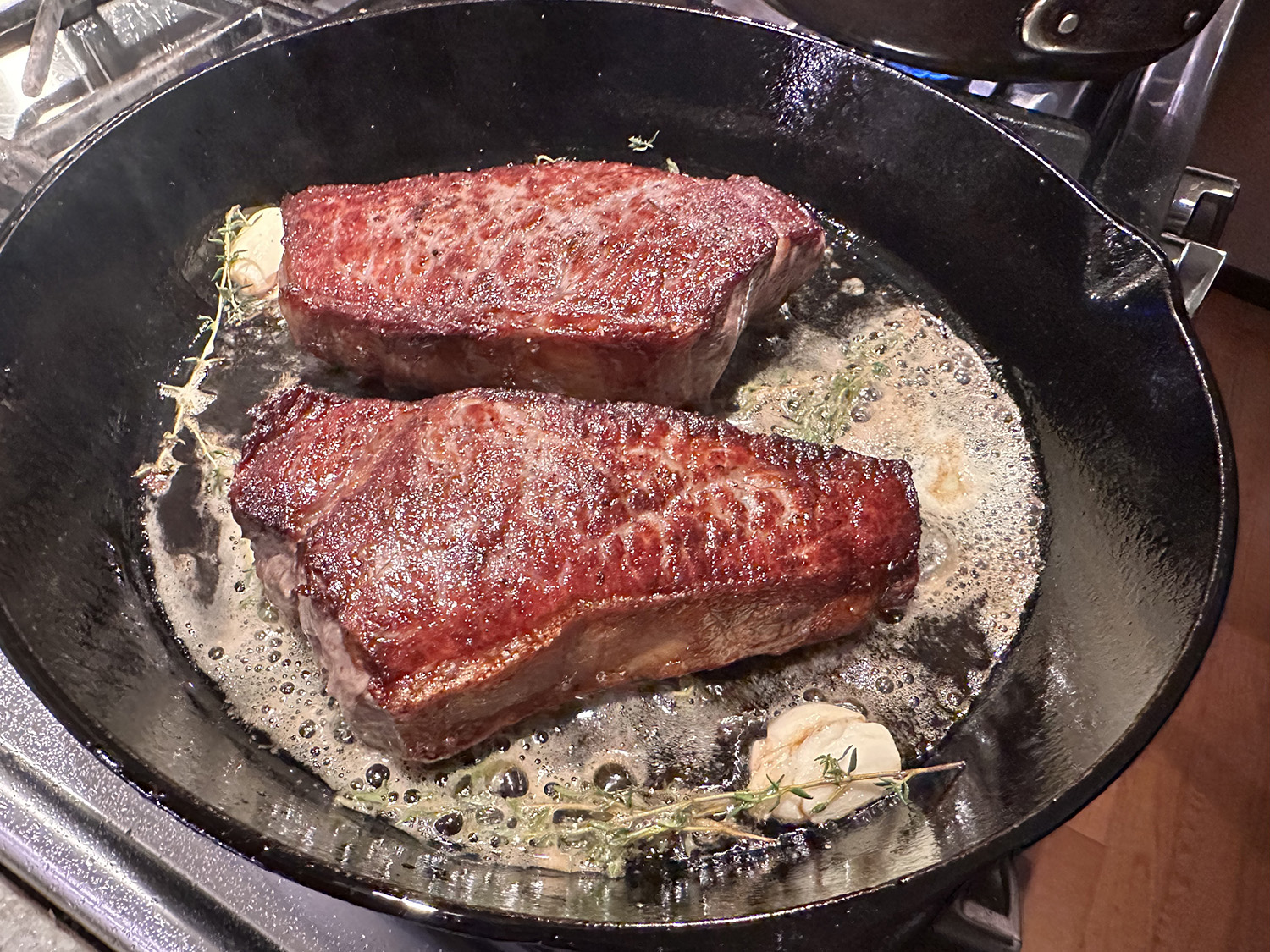
  3. Heat oil in a large skillet, preferably cast iron, over medium-high. Cook steaks, undisturbed, until a deep golden brown crust forms underneath, about 3 minutes. Turn over and cook on second side until golden brown, about 3 minutes. If the steaks have a fat cap, stand them on their sides with tongs and cook until browned, about 3 minutes.
  4. Reduce heat to medium-low. Add smashed garlic cloves, thyme sprigs, and 1 Tbsp. butter to the pan. Cook, basting steak continuously, until an instant-read thermometer inserted into the thickest part of each steak registers 120°, about 2 minutes. Transfer steaks to a cutting board and let rest 10 minutes.
  5. Meanwhile, combine shallot, sliced garlic, crushed peppercorns, and remaining 2 Tbsp. butter in skillet and cook, stirring often, until shallot and garlic are softened but not browned, about 5 minutes.
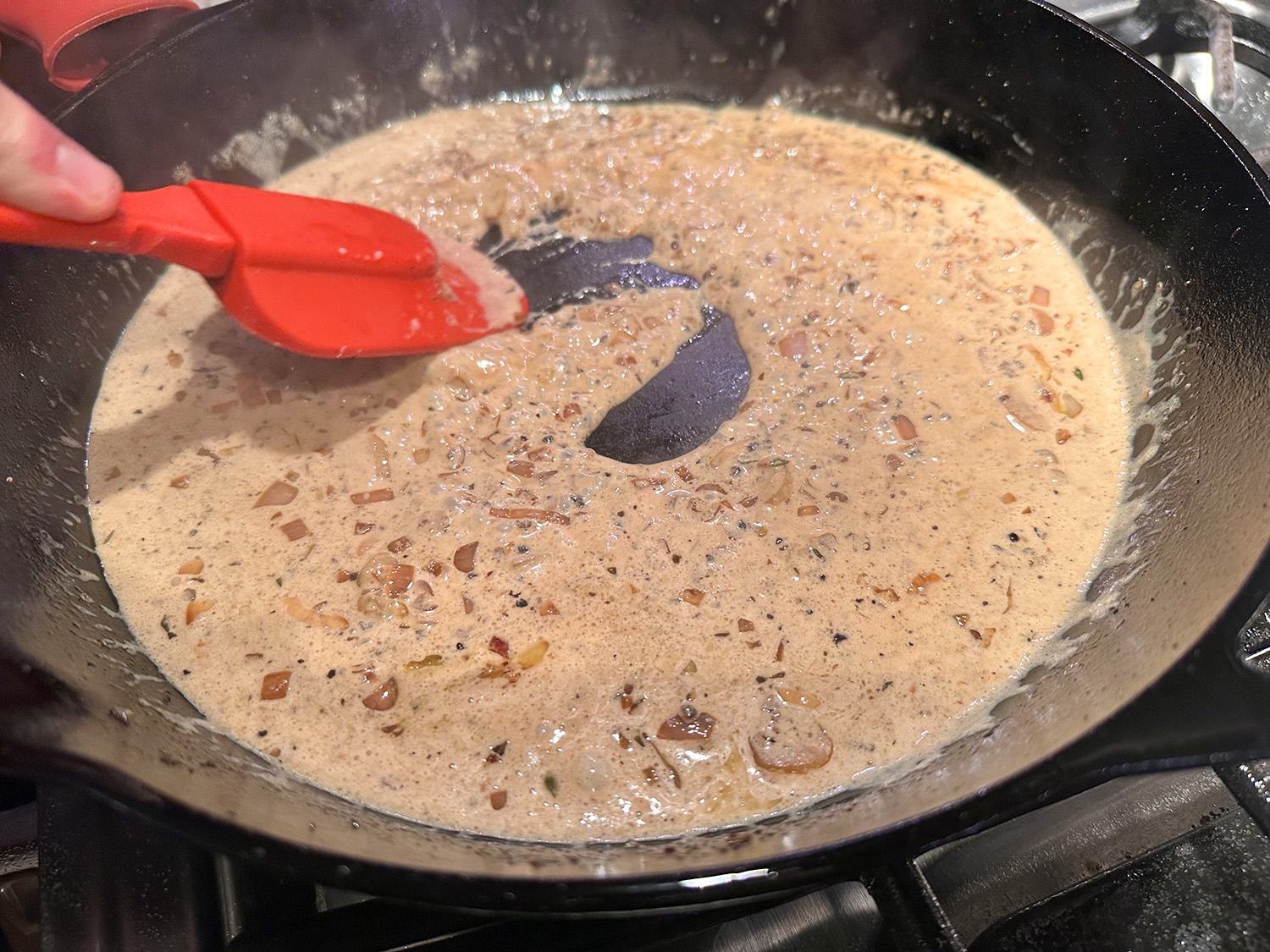
  6. Remove from heat and add cognac to pan. Set over medium heat and cook until cognac is mostly evaporated and spoon leaves streaks in skillet while stirring, 1–2 minutes. Add cream, bring to a simmer, and cook until sauce coats spoon, about 1 minute. Season with kosher salt.
  7. Slice steaks against the grain and transfer to a platter. Pour any juices from cutting board back into skillet and stir into sauce. Spoon sauce generously over steak; sprinkle with sea salt. 

http://www.lynnandruss.com

Adapted from recipe in “Cook This Bookby Molly Baz

Ground Turkey Unstuffed Cabbage Roll Goulash

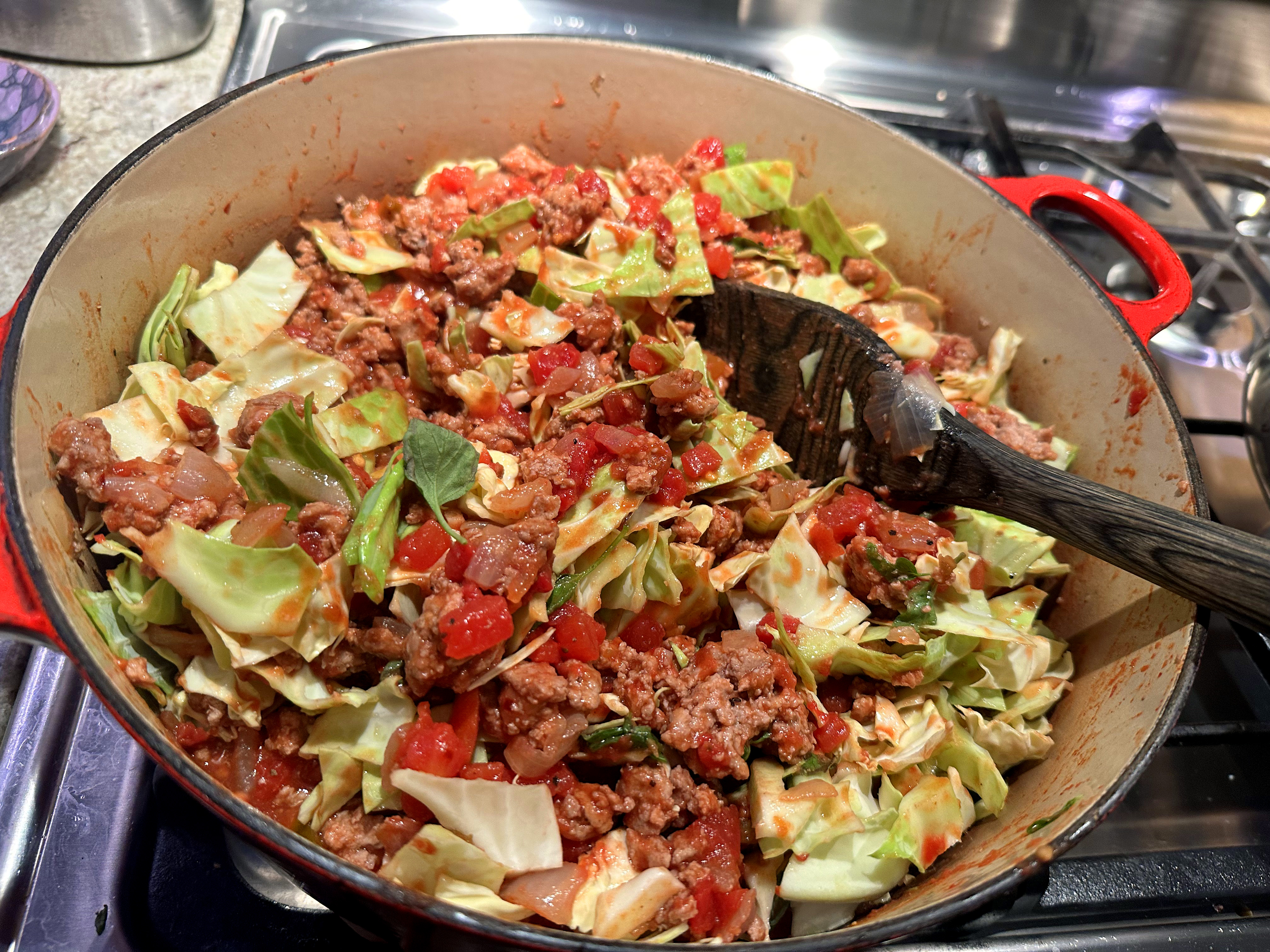
We try as often as possible to include super foods, and in this recipe it’s cabbage. In fact, according to Wiki studies, cabbage has protective effects against colon cancer amongst many other diseases. Cabbage is also an excellent source of vitamin C, vitamin K, dietary fiber, vitamin B6 and folate. That sounded like good enough reason to try this recipe.

It’s best to season the mixture with what you and your family prefer. I made the cumin and red pepper flakes as part of the ingredients and NOT optional. But if you feel on the adventurous side, you may want to consider including a little brown sugar, celery seed and/or add 1 tablespoon of Worcestershire sauce.

Another one-pot wonder… The original recipe called for a small head of cabbage, but after making it, we both felt it could use a large head for a better meat to veggie ratio. A slice of toasted crusty bread with a garlic-butter sauce was a perfect compliment to the goulash.

Note: It may seem like you don’t have enough liquid at first but when the cabbage cooks down it will be perfect.

Ground Turkey Unstuffed Cabbage Roll Goulash

  • Servings: 6
  • Difficulty: easy
  • Print

Ingredients

  • 2 lbs. ground turkey, (or pork, or lamb, or beef)
  • 1 large yellow onion, chopped
  • 1 head cabbage, chopped
  • 2 14.5 oz. cans diced fire roasted tomatoes
  • 1 6 oz. can tomato paste
  • 6 oz. vegetable or chicken broth, preferably homemade
  • 2 cloves garlic, minced
  • 2 tsp. salt
  • 1 tsp. ground black pepper
  • 1⁄2 to 1 tsp. crushed red pepper
  • 1 tsp. cumin
  • A few leaves of chopped fresh basil

Directions

  1. Heat a Dutch oven or extra large skillet over medium-high heat.
  2. Drizzle a teaspoon of olive oil and cook the onions until translucent. Cook beef or turkey meat and onion in the hot Dutch oven until browned.
  3. Drain and discard grease.
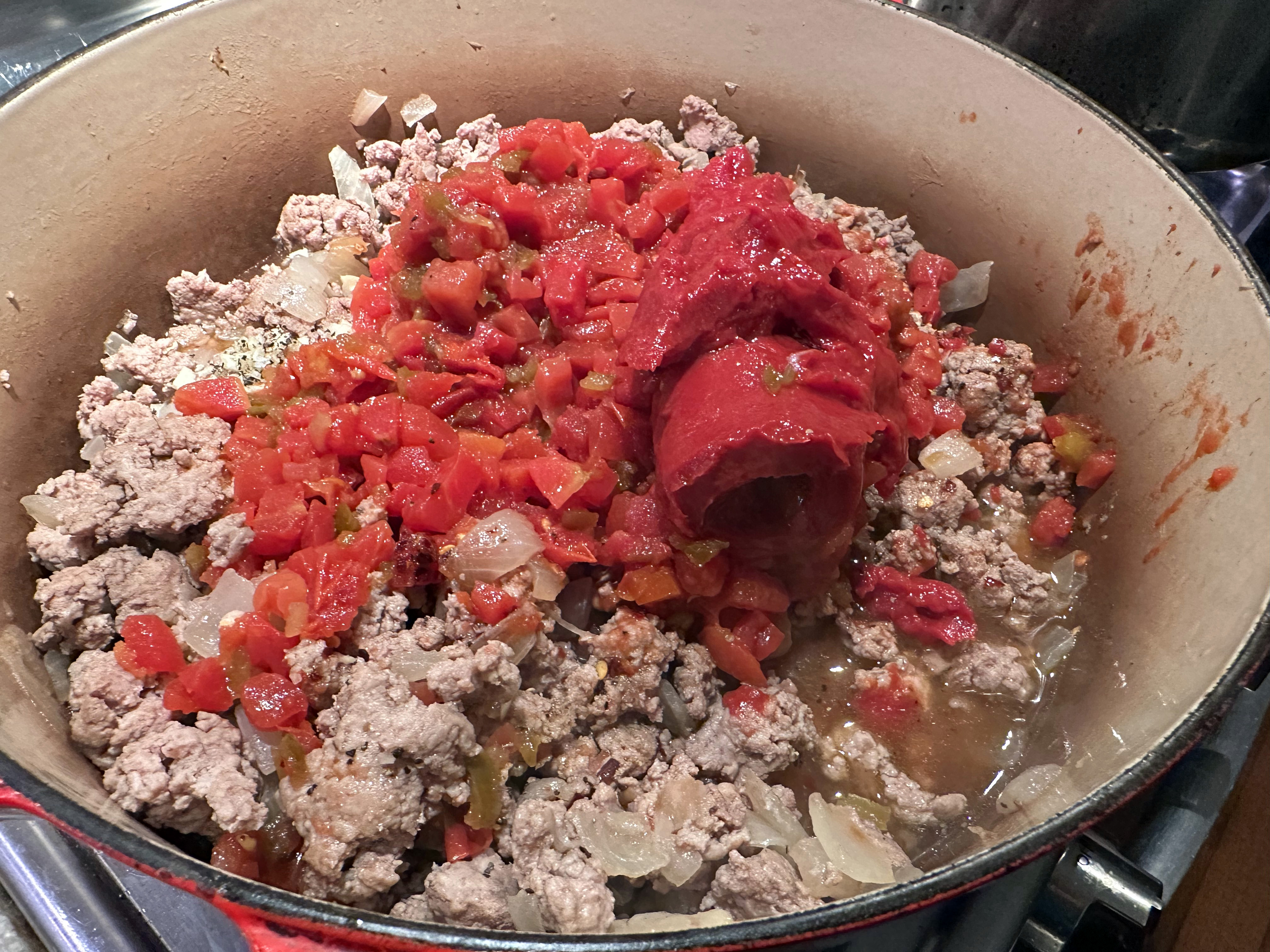
  4. Add the chopped cabbage, tomatoes, tomato paste, water, garlic, salt, pepper, crushed red pepper, cumin, and fresh basil. Use fire roasted or flavored diced tomatoes for more flavor.
  5. Bring the ingredients to a boil.
  6. Cover Dutch oven, reduce heat and simmer until cabbage is tender. This will take about 30 minutes.

http://www.lynnandruss.com

Loosely adapted from a recipe on isavea2z.com

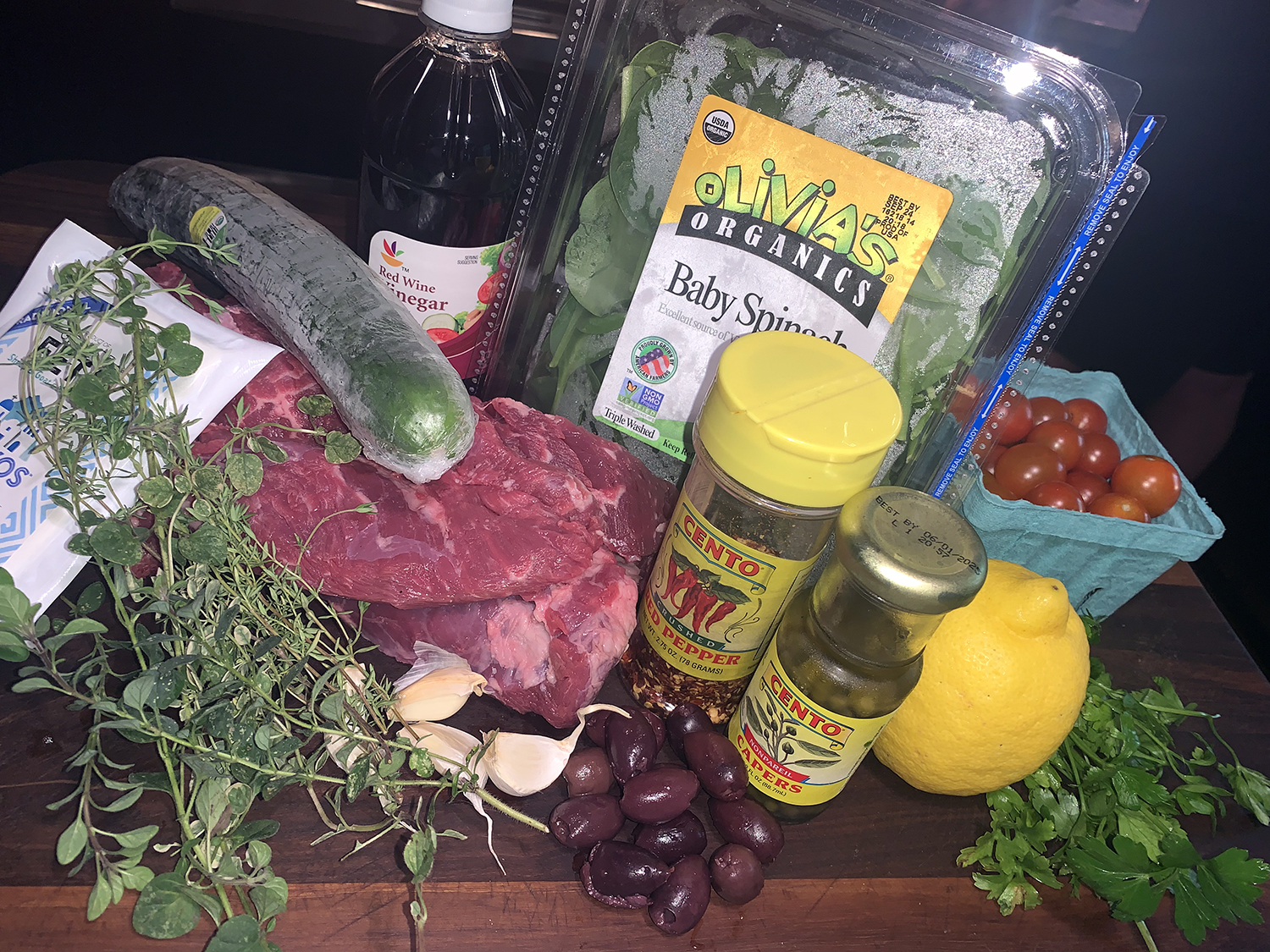
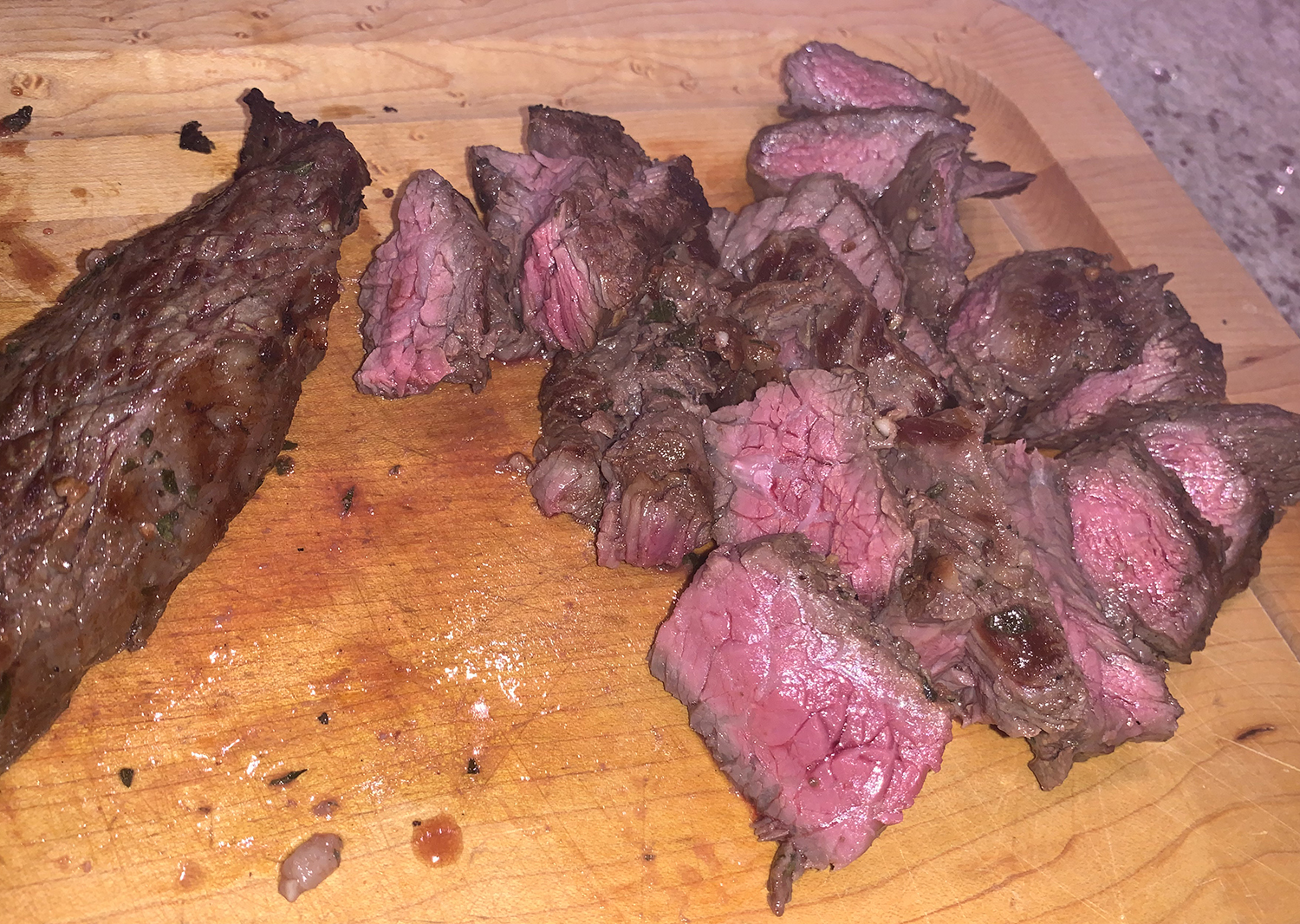
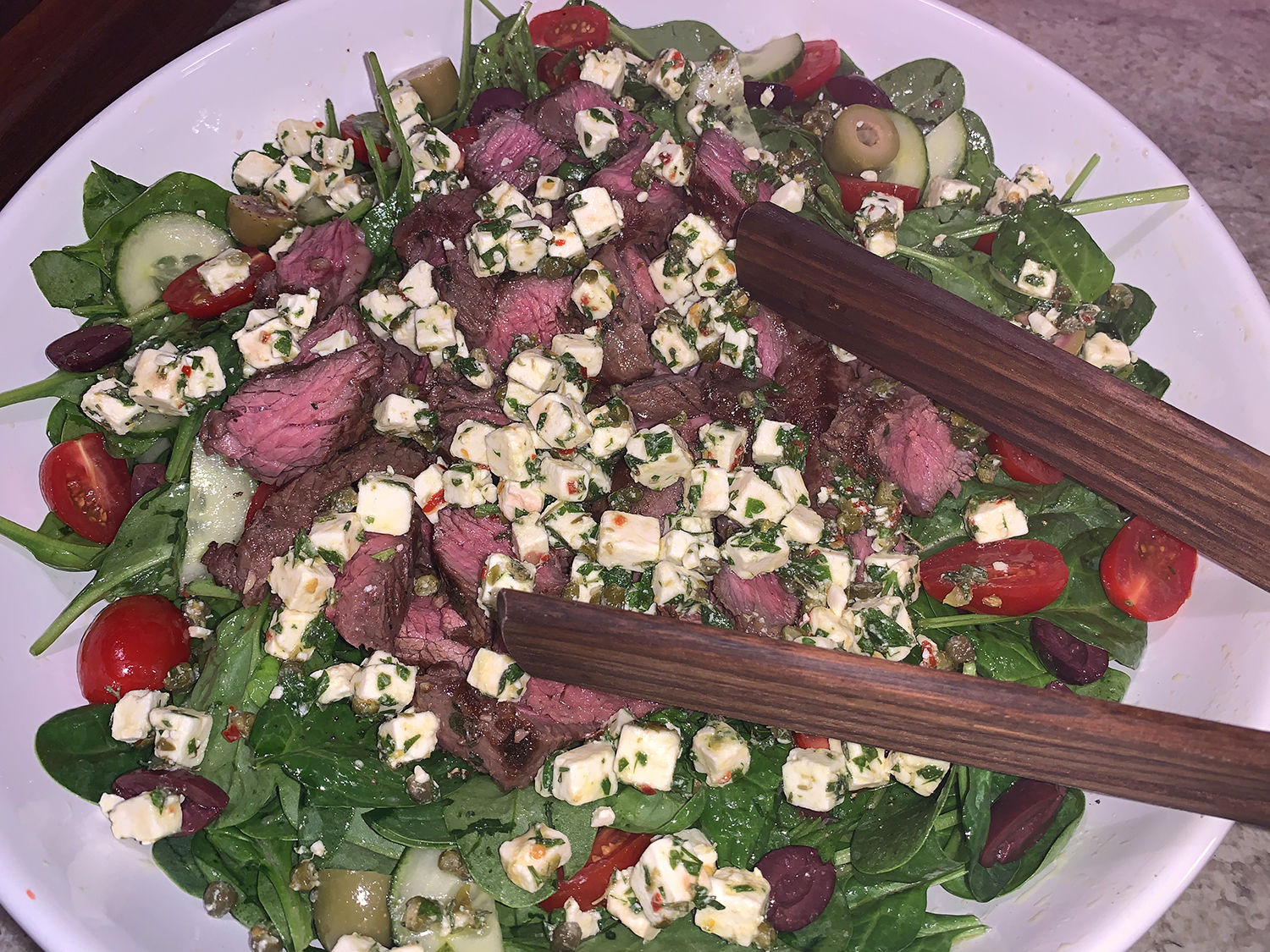
Greek Spinach Salad with Grilled Flap Steak and Marinated Feta

As grilling weather will begin its hibernation not too far down the road, at least for many of us, it’s time to take advantage of that weather and grill al fresco as often as we can. This wonderful Greek salad incorporates flap meat as one of its ingredients. We like that cut of meat for it’s beefiness and loose grain for the marinade to seep into.

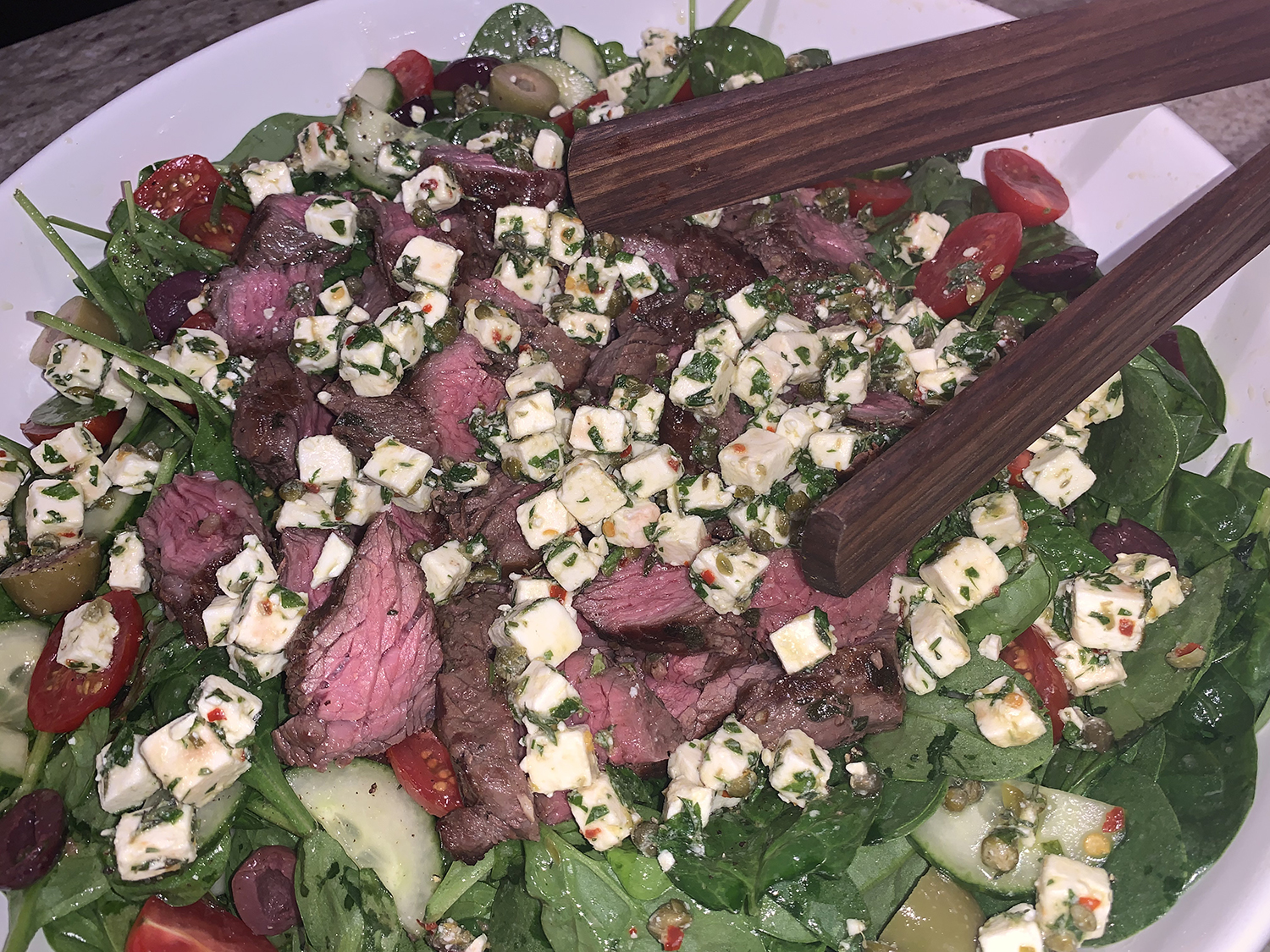
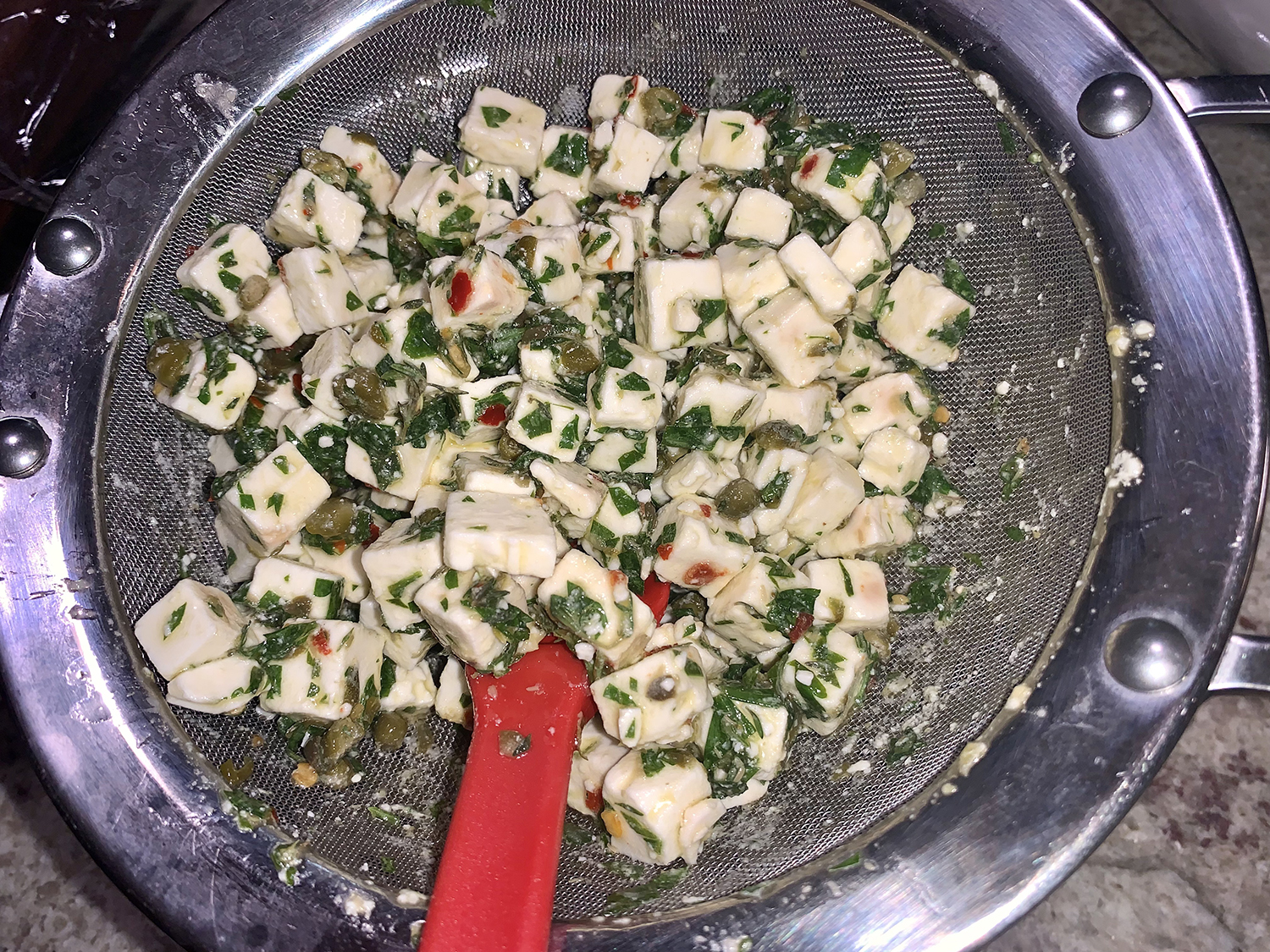
Here, grilled steak turns a Greek salad into a substantial dish, while marinating the feta in a mixture of spicy chile flakes, briny capers, bright lemon, and herbs adds a big punch of flavor. For a heftier meal, serve with grilled pita or crusty bread rubbed with fresh garlic.

As far as amount of beef, we happened to have 2 pounds of flap meat in the freezer, so even though that is double the amount listed, we used it all. Therefore our salad was a little more meat-forward than the original.

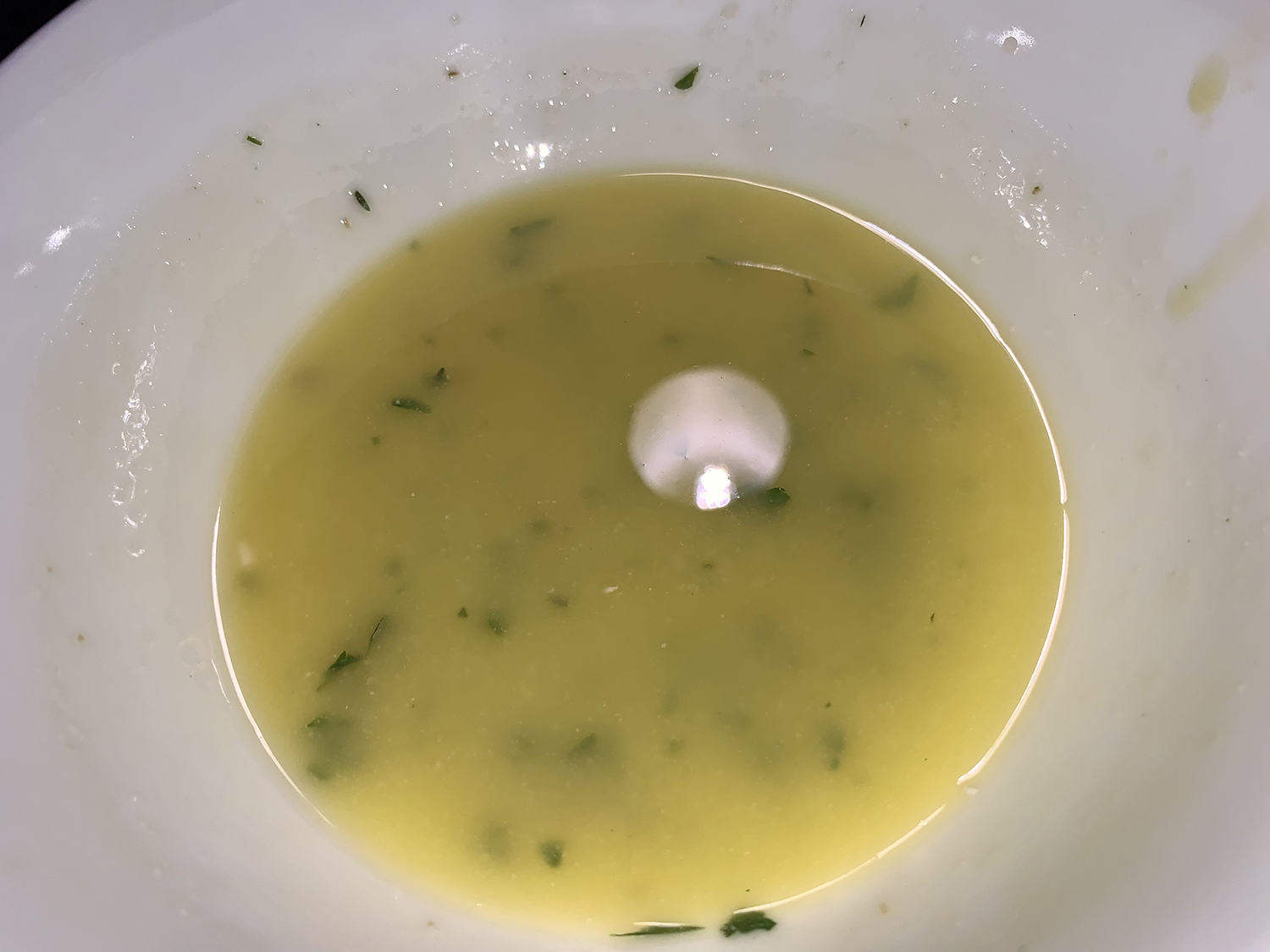
Unable to source mini cucumbers, we opted for a seedless Persian variety and used about half of it sliced into small rounds. Additionally, there was very little dressing left after draining the feta from its marinade, so we increased the amount of a few of those ingredients which are noted below.

Greek Spinach Salad with Grilled Flap Steak and Marinated Feta

  • Servings: 4
  • Difficulty: easy
  • Print

Ingredients

  • 9 Tbsp. extra-virgin olive oil, divided
  • 3 cloves garlic, minced
  • 1 Tbsp. chopped fresh oregano or 1 tsp. dried
  • 2 tsp. red wine vinegar
  • Kosher salt and freshly ground black pepper
  • 1 1b. beef flap meat, cut into pieces of even thickness, if necessary
  • 2 Tbsp. chopped fresh flat-leaf parsley
  • 1 Tbsp. capers, rinsed and chopped
  • 2 Tbsp. fresh lemon juice
  • 1 tsp. chopped fresh thyme
  • 1/4 tsp. crushed red chile flakes
  • 7 oz. feta (preferably Greek), cut into small cubes (about 1-1/2 cups)
  • 5 oz. baby spinach, (about 5 lightly packed cups)
  • 2 mini cucumbers, halved lengthwise and thinly sliced crosswise
  • 1 1/2 cups cherry tomatoes (preferably a mix of colors and shapes), halved
  • 1/2 cup pitted Kalamata olives, halved

Directions

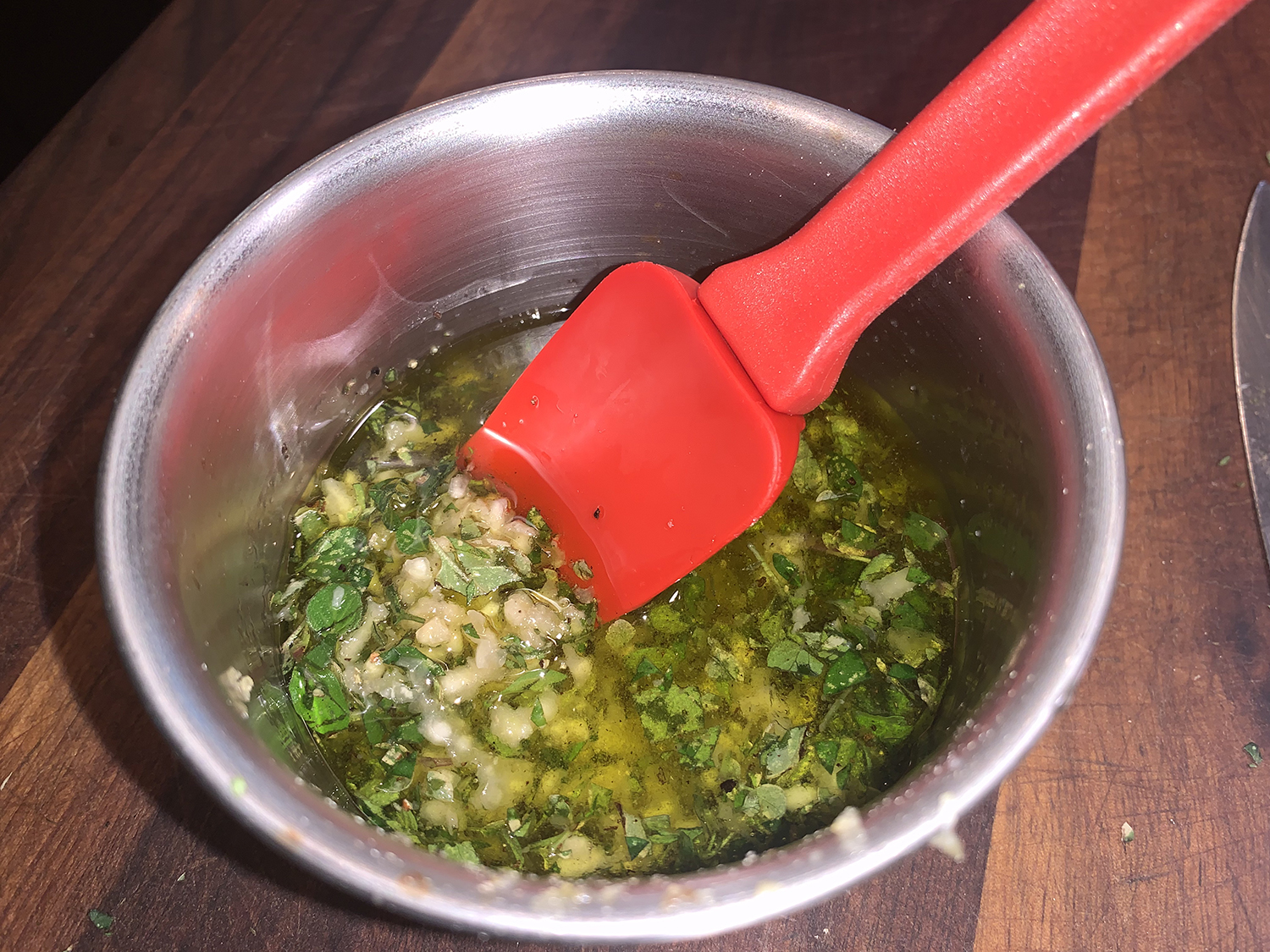
  1. In a medium bowl, whisk 3 Tbs. of the oil with the garlic, oregano, vinegar, 1/4 tsp. salt, and a few grinds pepper. Add the steaks and turn to coat. Cover and marinate in the refrigerator for up to 4 to 6 hours.
  2. Meanwhile, in a medium bowl, whisk the remaining 6 Tbs. oil, the parsley, capers, lemon juice, thyme, and chile flakes. Add the feta and stir gently to coat. Marinate at room temperature for up to 1 hour, or in the refrigerator for up to 6 hours. Remove from the fridge one hour before using.
  3. Prepare a medium-high (400°F to 475°F) gas or charcoal grill fire. Remove the steaks from the marinade and pat dry. Grill, turning every 2 minutes, until cooked to your liking, 6 to 8 minutes for medium (140°F).
  4. Transfer to a cutting board, cover loosely with foil, and let rest for 5 to 10 minutes. Thinly slice the steak against the grain, then season lightly with salt.
  5. Put the spinach, cucumbers, tomatoes, and olives in a large bowl. Drizzle all of the marinade from the feta over the salad, using a spatula to hold back the feta (it’s OK if a few pieces fall in).
  6. Season with salt and pepper, and toss to coat. Arrange on a serving platter or divide among four dinner plates. Scatter the steak and feta over the salad, and serve.

http://www.lynnandruss.com

Original recipe from Fine Cooking