Tag Archives: artichoke hearts

Creamy Spinach-Artichoke Stew

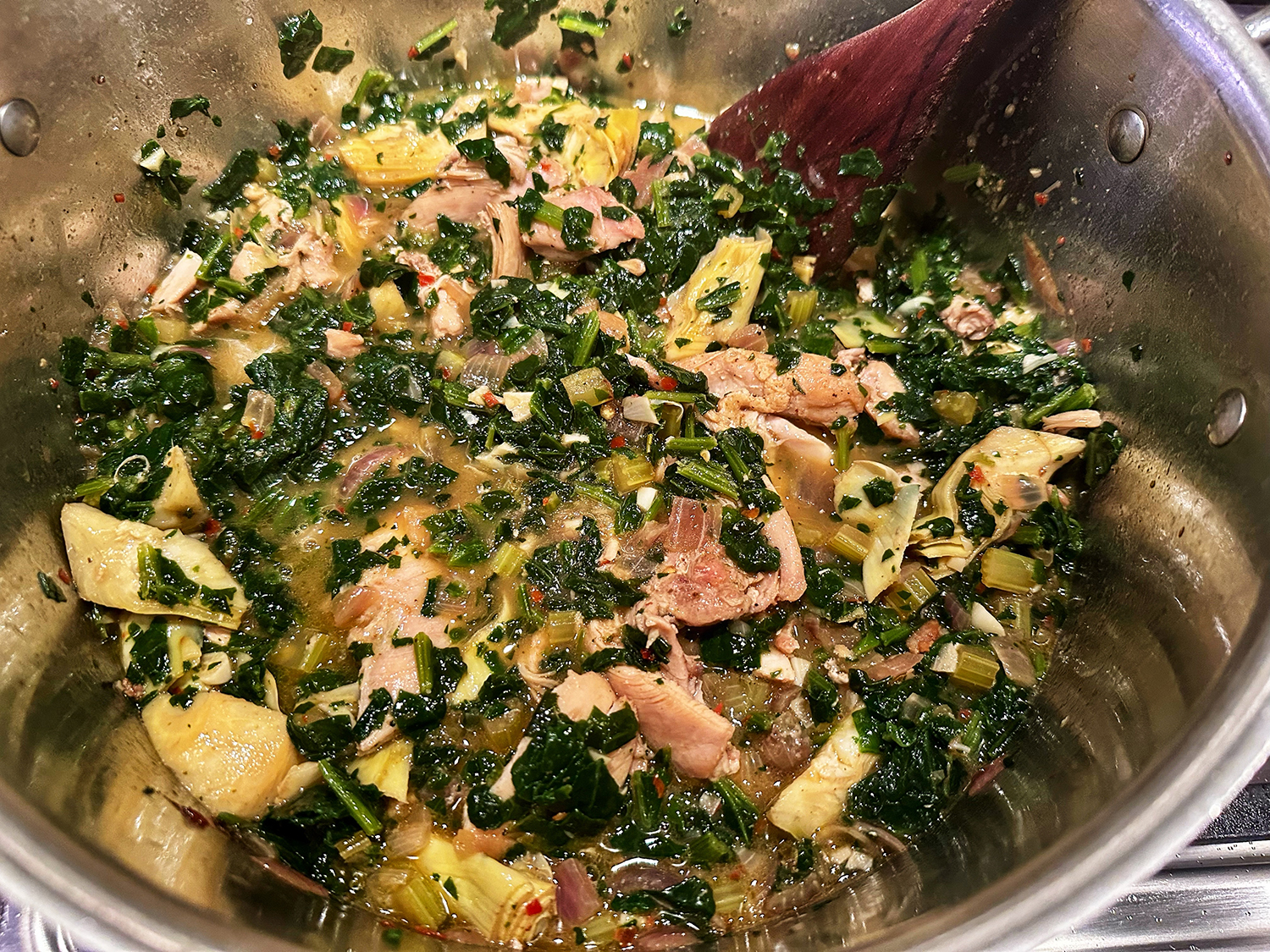
This creamy chicken stew is spinach-artichoke dip reimagined as a simple stovetop braise. It comes together quickly, thanks to frozen spinach and jarred artichoke hearts, though if you have time, NYTimes Cooking also has a slow-cooker version of this recipe.

Fresh dill and scallions are added just before serving, and provide bright, herbal flavor that offsets the richness of the finished dish. Delicious and packed with flavor, that is even better the next day!
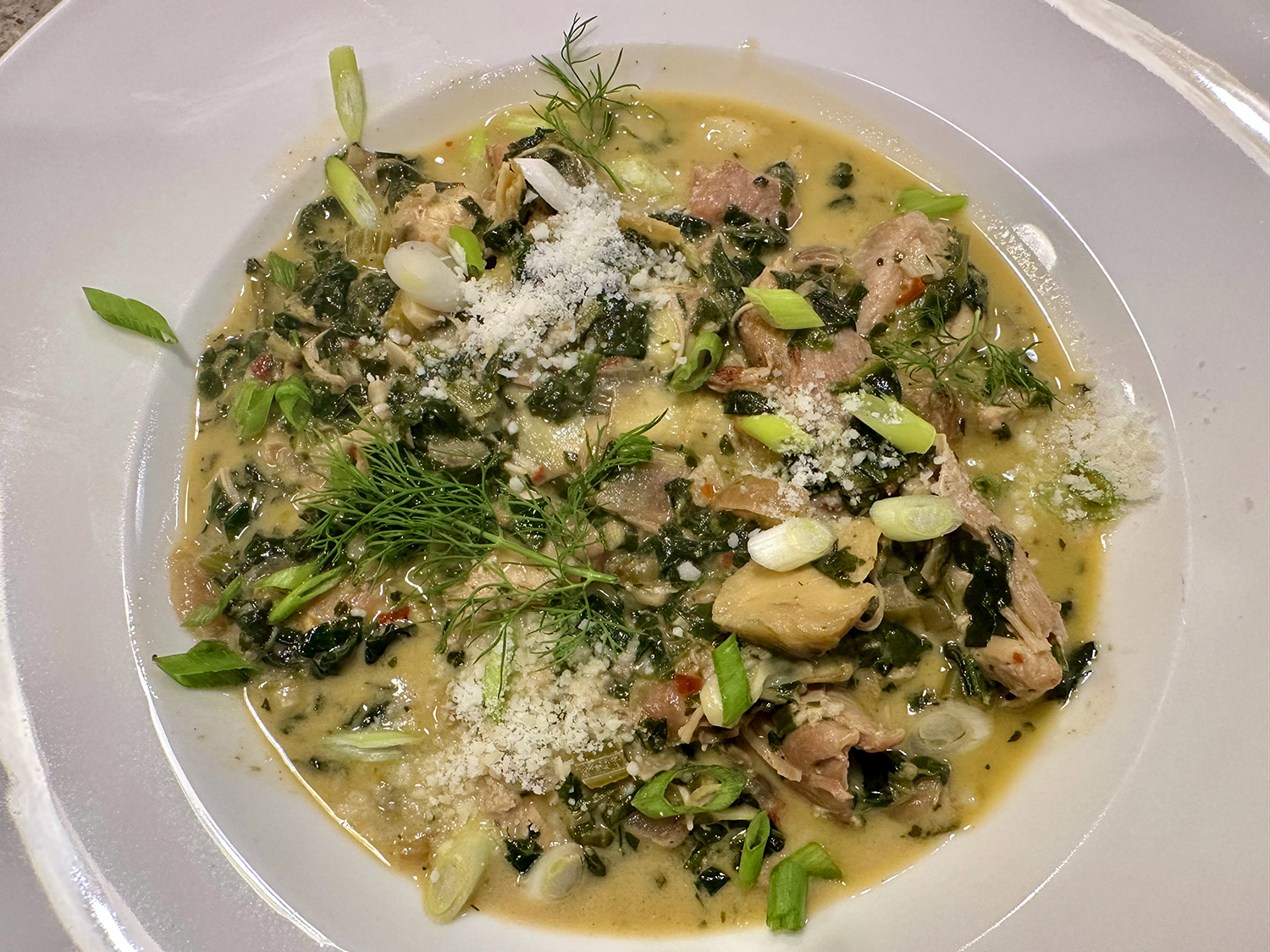
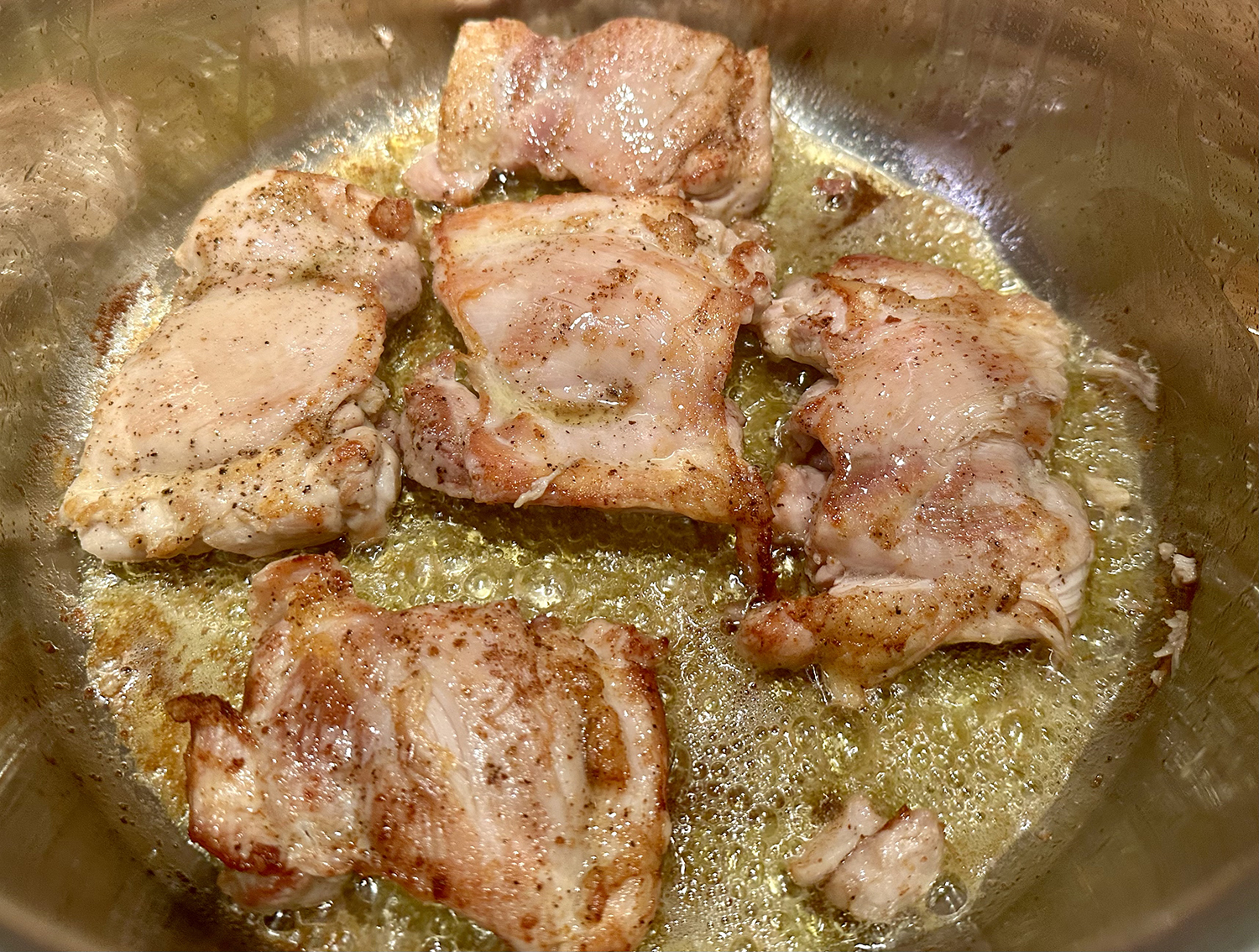
Some changes we made included adding olive oil with the butter and browning the chicken thighs on both sides to render some of the fat and add that extra layer of flavorful fond for the base. A parm rind was incorporated at the time the wine and stock are added to the pot. The original amount of 1/2 cup of fresh dill just seemed overpowering, so we cut by half, to a quarter cup, plus more for garnish.

Creamy Spinach-Artichoke Stew

  • Servings: 4
  • Difficulty: easy
  • Print

Ingredients

  • 2 Tbsp. unsalted butter
  • 3 Tbsp. olive oil
  • 2 to 2¼ lbs. boneless, skinless chicken thighs
  • 1 large yellow or red onion, finely chopped
  • Kosher salt and black pepper
  • 3 celery stalks, chopped
  • 8 garlic cloves, smashed and chopped
  • 2 cups chicken stock, preferably homemade
  • ¾ cup white wine
  • Parm rind
  • ½ lemon, juiced (about 1½ Tbsp.)
  • 1 tsp. red-pepper flakes
  • 1 10-oz. package frozen cut spinach
  • 1 12-oz. jar marinated artichoke hearts, drained (about 1 heaping cup artichoke hearts)
  • ½ cup cream cheese (about 4 oz.)
  • 1⁄4 cup finely chopped fresh dill, more for garnish
  • 4 to 6 scallions, thinly sliced, for topping
  • Grated Parmesan cheese, for topping

Directions

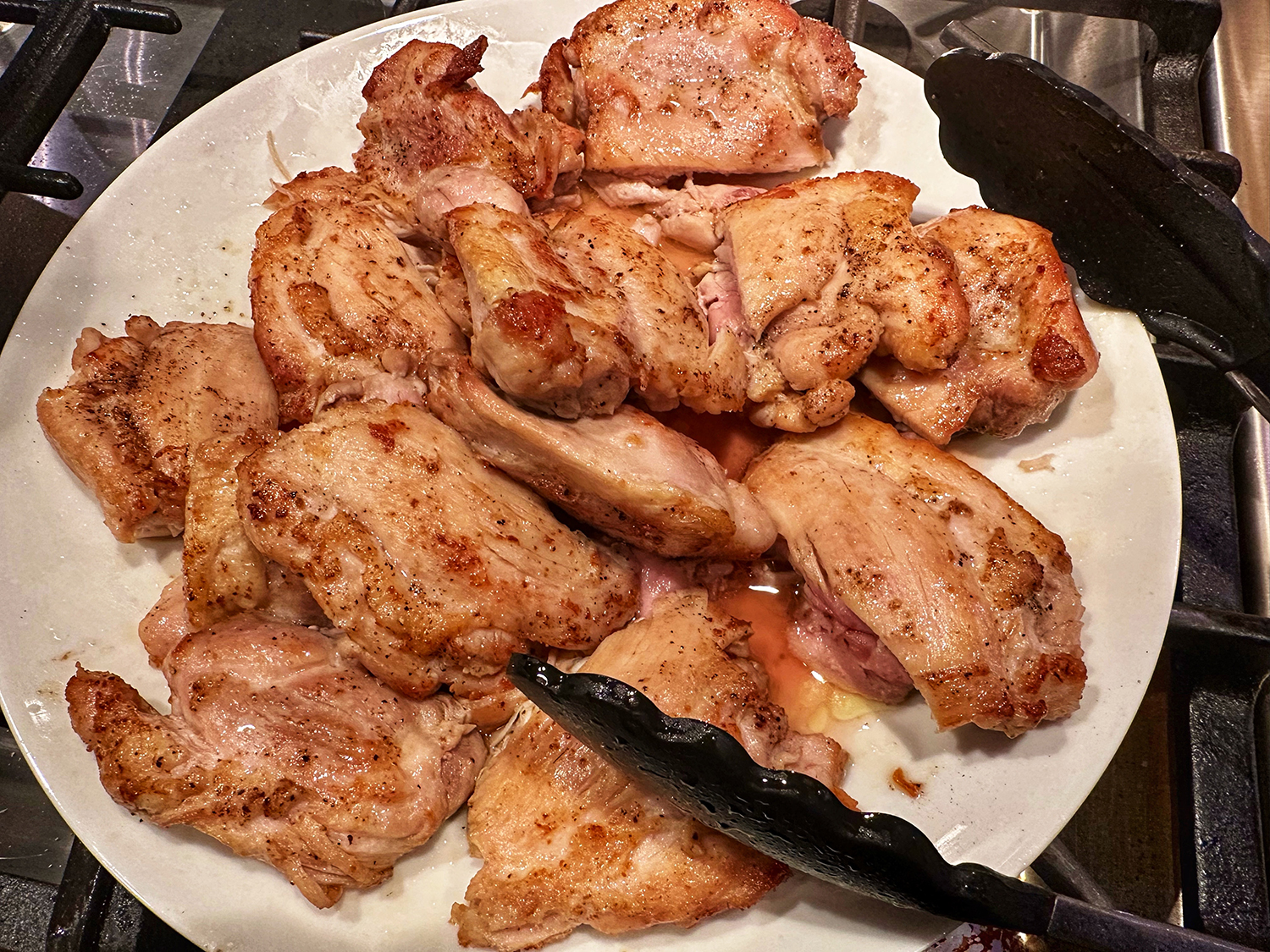
  1. In a large Dutch oven over medium-high heat, add the olive oil and melt the butter. Add the seasoned chicken thighs, and brown for a few minutes on both sides. Remove to a platter and cut in half.
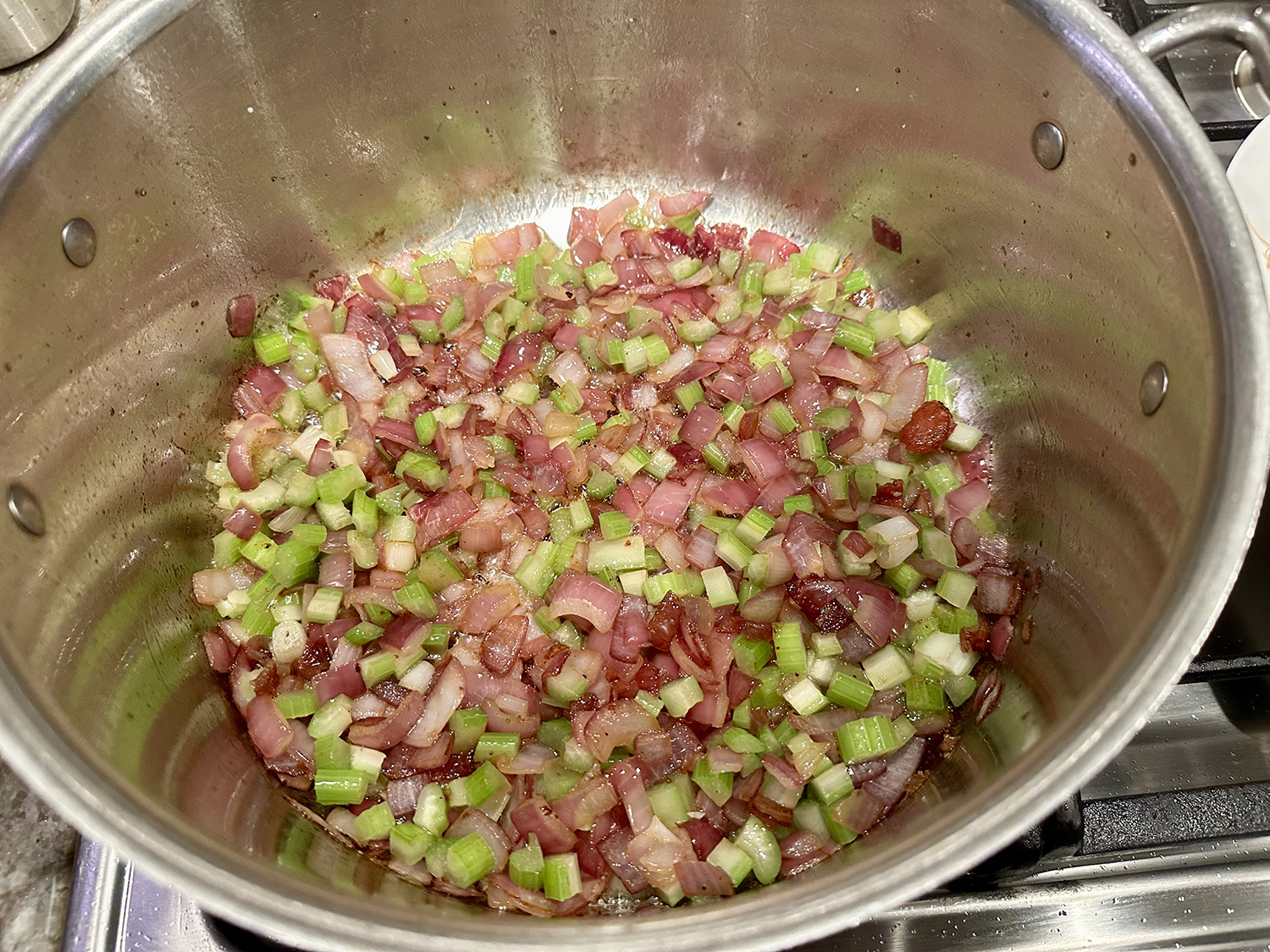
  2. Add the onion, season lightly with salt, and cook, stirring occasionally, until softened and translucent, about 5 minutes. Add the celery and cook, stirring, until softened, about 5 minutes, adjusting the heat as necessary to avoid scorching. Stir in the garlic.
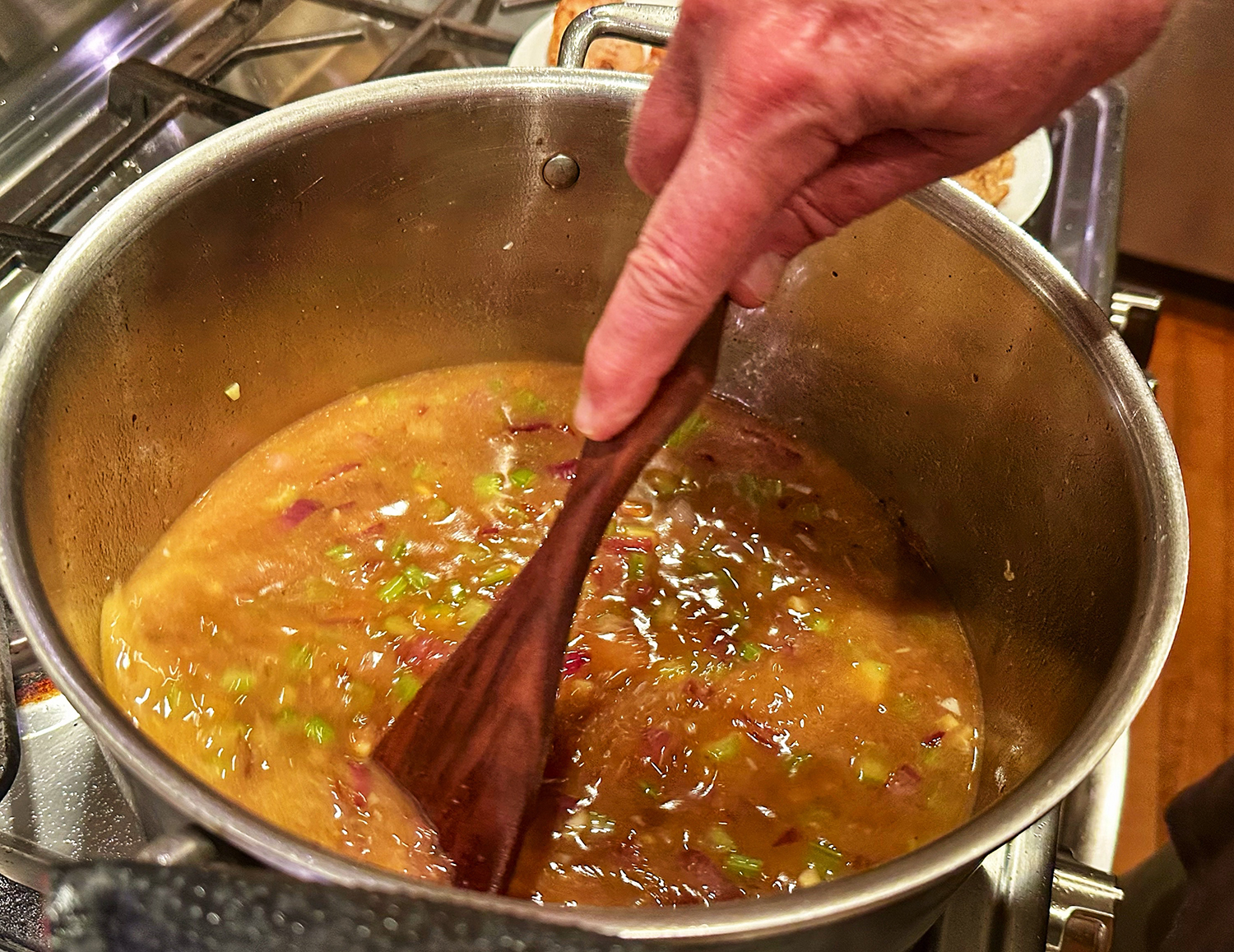
  3. Pour in the stock and wine and add the parm rind, and bring to a bubble. Add the chicken thighs, lemon juice and red-pepper flakes; season with 1 teaspoon salt and a generous amount of pepper. Mix well to combine all the ingredients and bring to a boil.
  4. Reduce the heat to maintain a low simmer and simmer, uncovered, for 20 minutes.
  5. Add the frozen spinach and the artichoke hearts to the pot. Increase the heat to medium-high and cook, stirring to help the spinach defrost and wilt into the stew. When the spinach is warm and evenly distributed, reduce the heat and simmer until the chicken is tender and the flavors are blended, another 10 to 15 minutes.
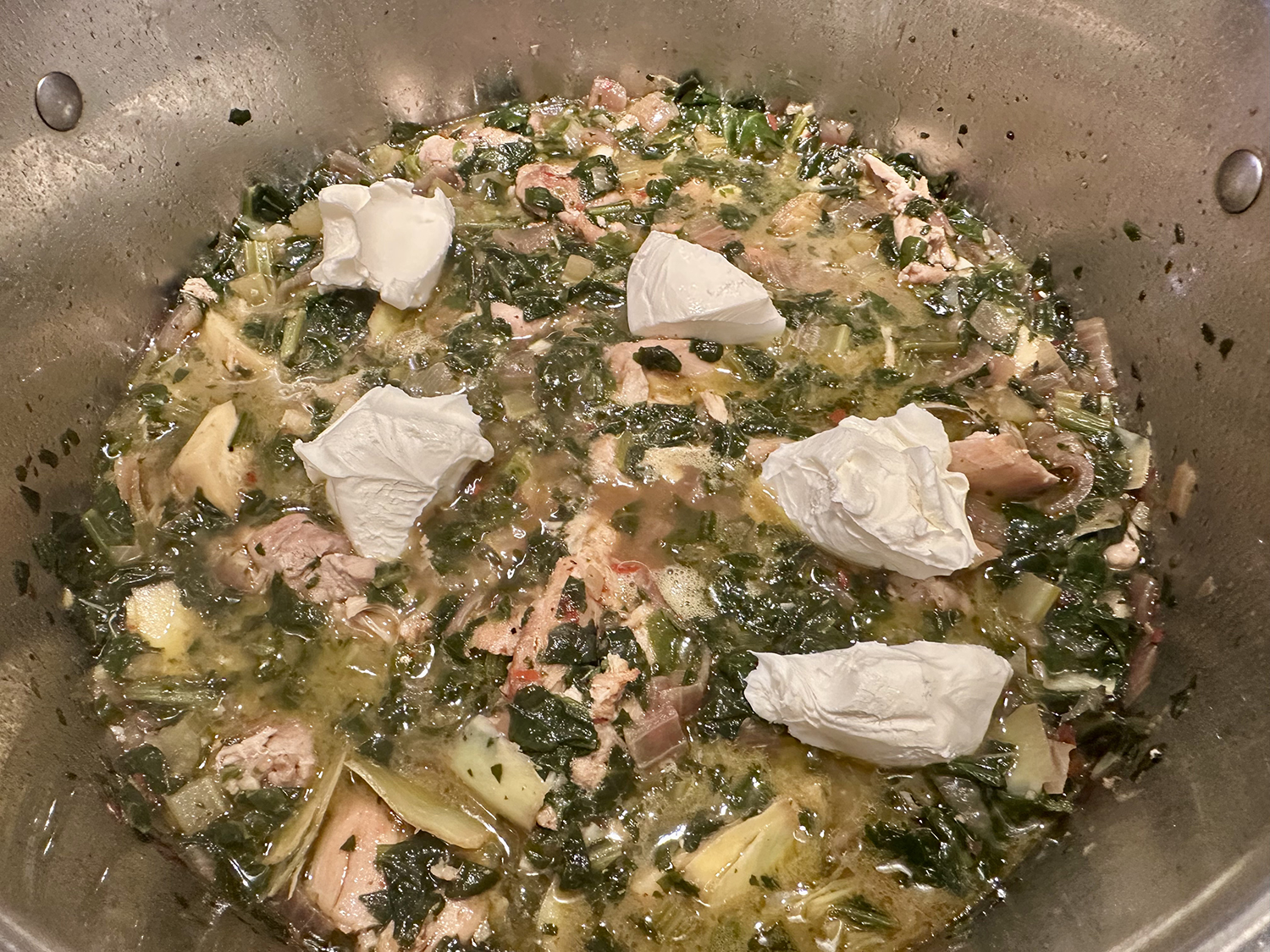
  6. Add the cream cheese in dollops, stirring to melt it into the soup. Add the dill. Using two forks, coarsely break or shred the chicken into large chunks. Taste and add more salt and black pepper if necessary. Remove the parm rind.
  7. Divide the stew among bowls, and top with scallions and Parmesan.

http://www.lynnandruss.com

Adapted from a recipe by Sarah DiGregorio for NYTimes Cooking.

Chicken with Artichokes and White Wine

Maybe you have never of Artichauts à la barigoule, a classic Provençal braise that combines fresh artichoke hearts with aromatic vegetables, herbs and white wine. If not, this recipe is worth a try. Here, chicken thighs are seared on the stovetop and while they finish cooking in the oven, canned artichokes are used to put together a simplified barigoule that serves as both a vegetable accompaniment and a flavorful sauce.

For subtle lemony notes, strips of zest are simmered with the artichokes. A Y-style vegetable peeler is the best tool for removing zest in strips from the fruit, but try to take only the yellow peel, as the white pith underneath is bitter. If desired, serve with warm crusty bread and or a side salad.

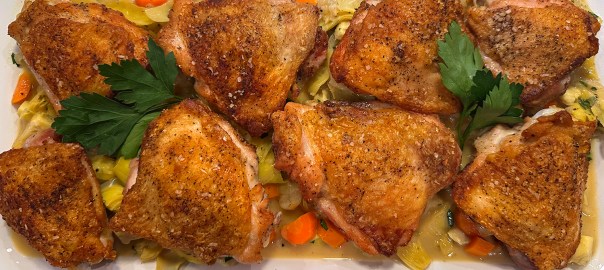
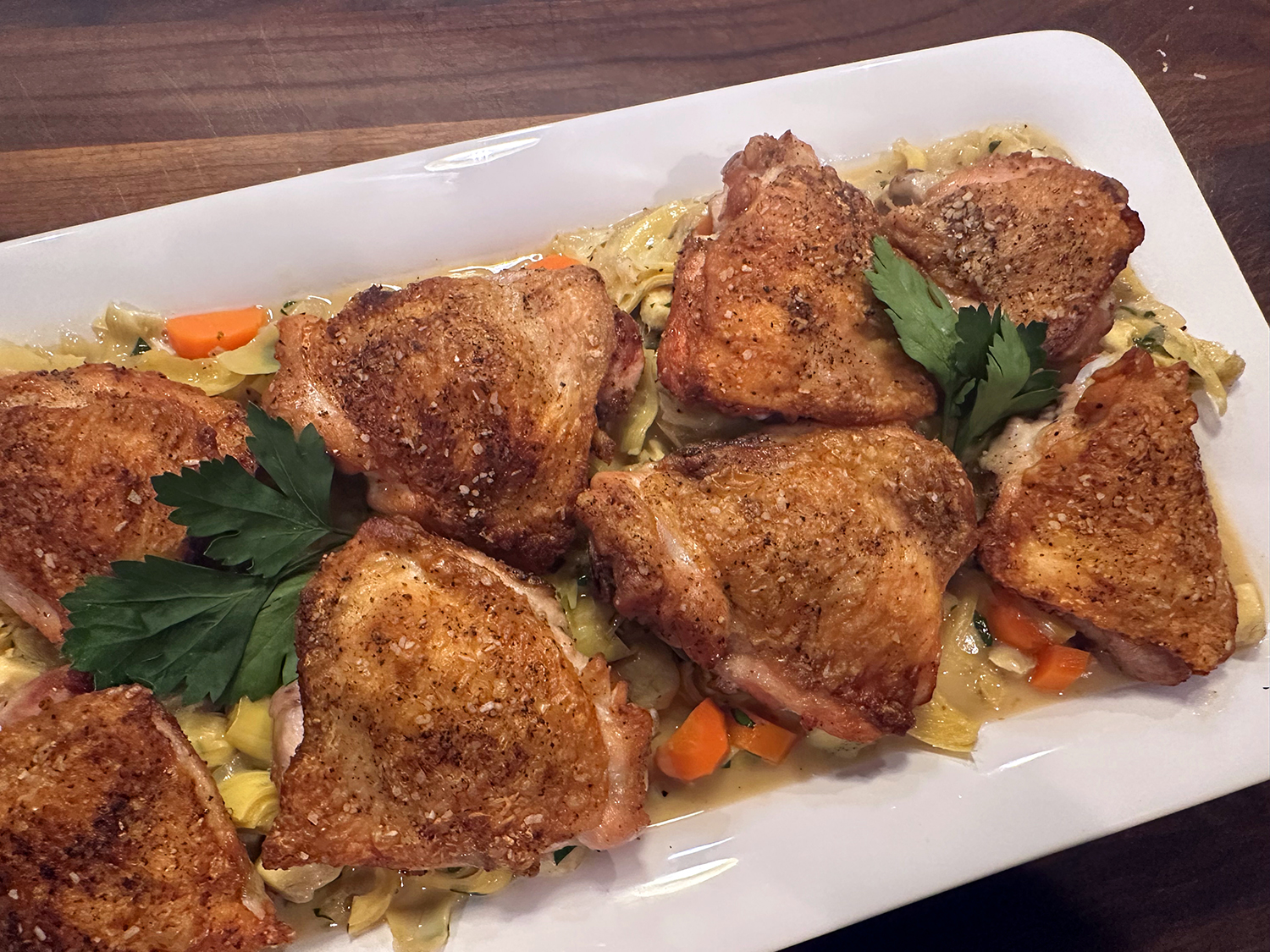
Don’t use marinated artichoke hearts for this recipe. The seasonings will overpower the other ingredients. Instead of spooning the artichoke mixture on and around the thighs, we laid the mixture in a deep platter and placed the chicken on top to prevent the crispy skin from getting soggy before serving.

Chicken with Artichokes and White Wine

  • Servings: 4
  • Difficulty: easy
  • Print

Ingredients

  • 2½ lbs. bone-in, skin-on chicken thighs, trimmed and patted dry
  • Kosher salt and ground black pepper
  • 1 Tbsp. extra-virgin olive oil
  • 3 Tbsp. salted butter, cut into 1-Tbsp. pieces, divided
  • 1 medium yellow onion, halved and thinly sliced
  • 2 medium carrots, peeled, halved lengthwise and sliced crosswise ¼ inch thick
  • 4 medium garlic cloves, minced
  • 1 cup dry white wine
  • 2 14-oz. cans artichoke hearts, drained, cut into quarters if whole
  • 3 3-inch-long strips lemon zest, plus 2 Tbsp. lemon juice
  • 1 cup low-sodium chicken broth
  • ¼ cup finely chopped fresh flat-leaf parsley

Directions

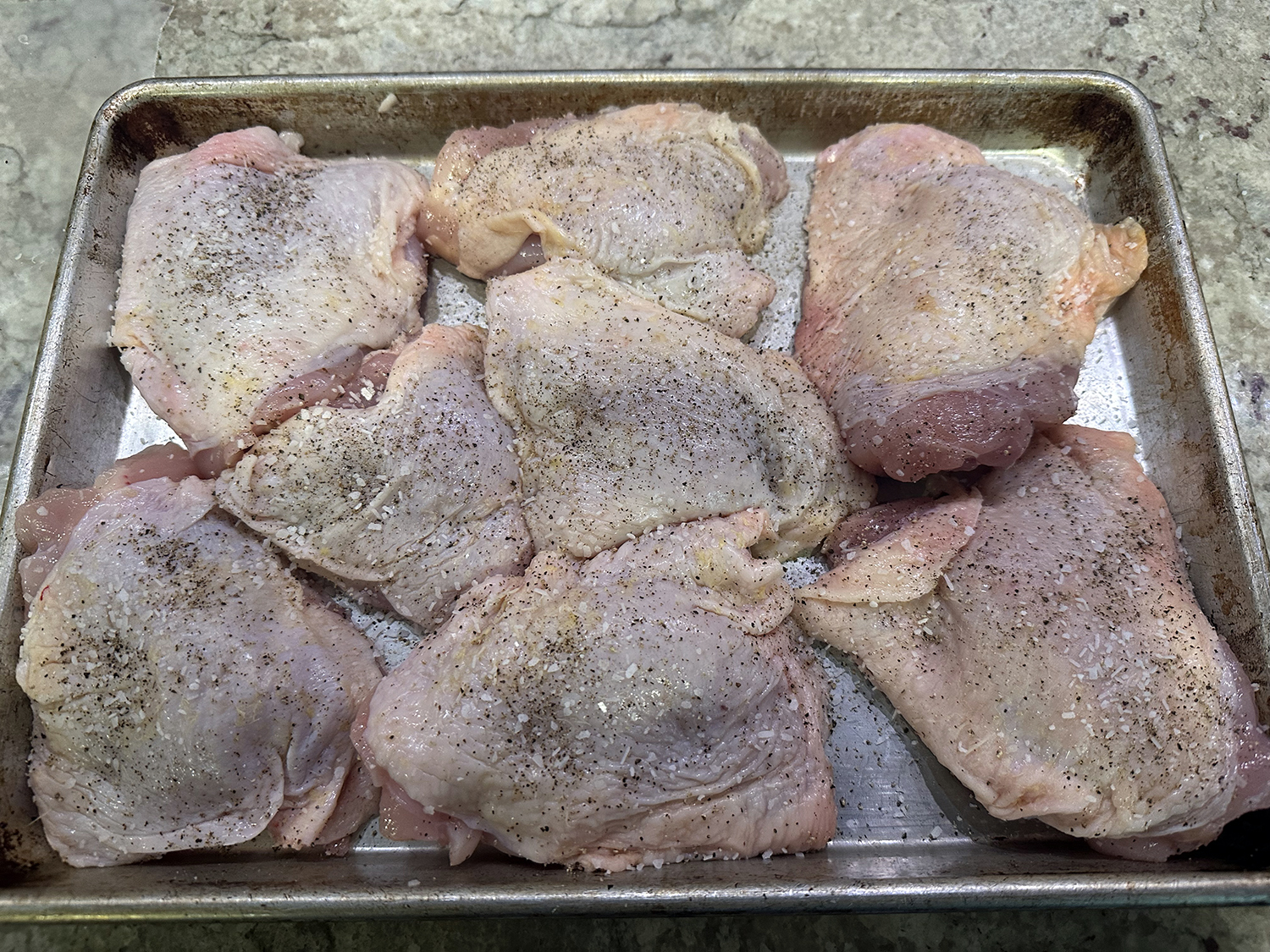
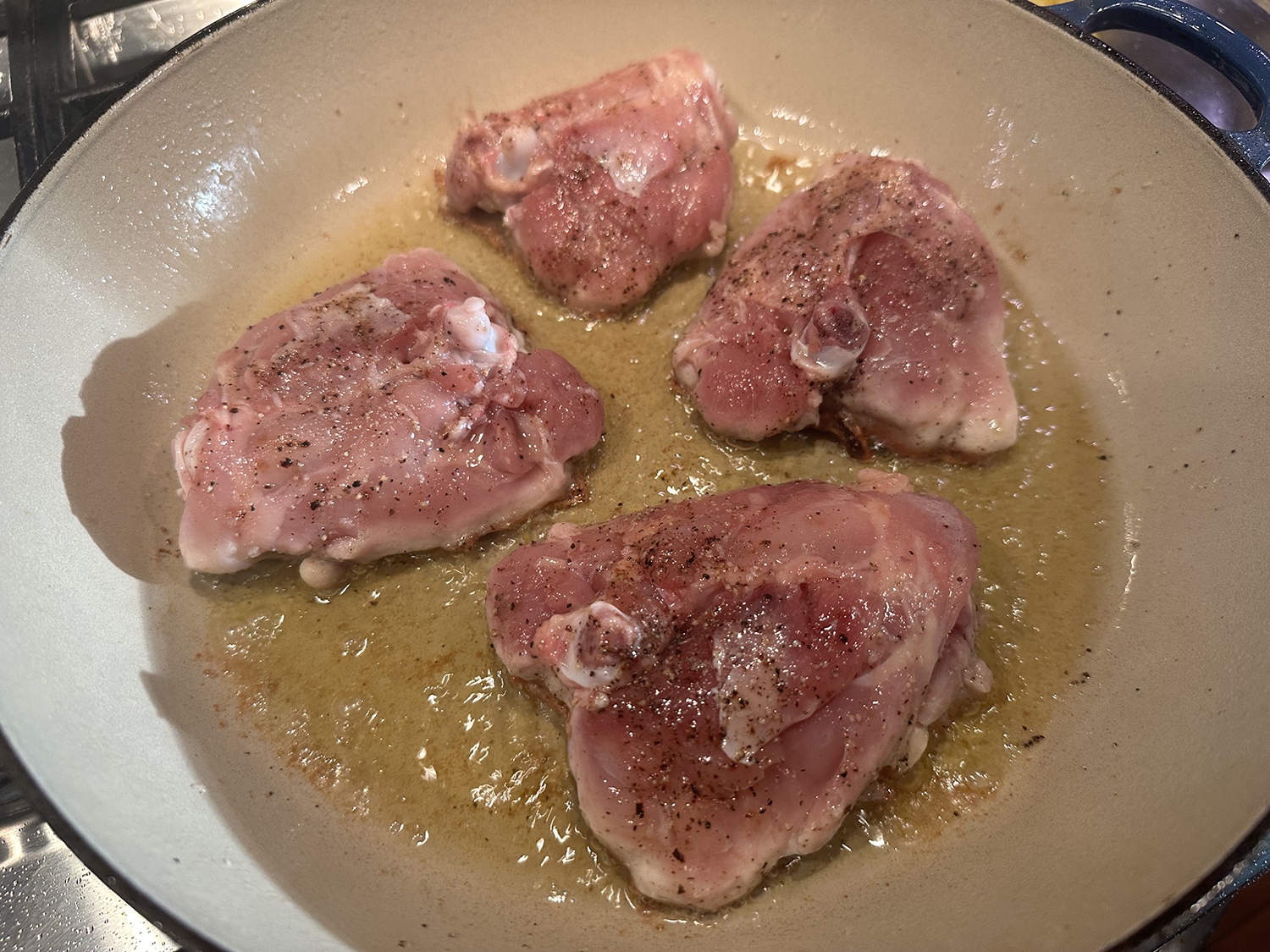
  1. Heat the oven to 475°F with a rack in the middle position. Season the chicken all over with salt and pepper. In a 12-inch skillet over medium-high, heat the oil until barely smoking. Add the chicken skin down and cook without disturbing until golden brown on the bottoms, 5 to 8 minutes. Using tongs, transfer the chicken skin up to a rimmed baking sheet and roast until the thickest part of the thighs reach 175°F, 15 to 20 minutes.
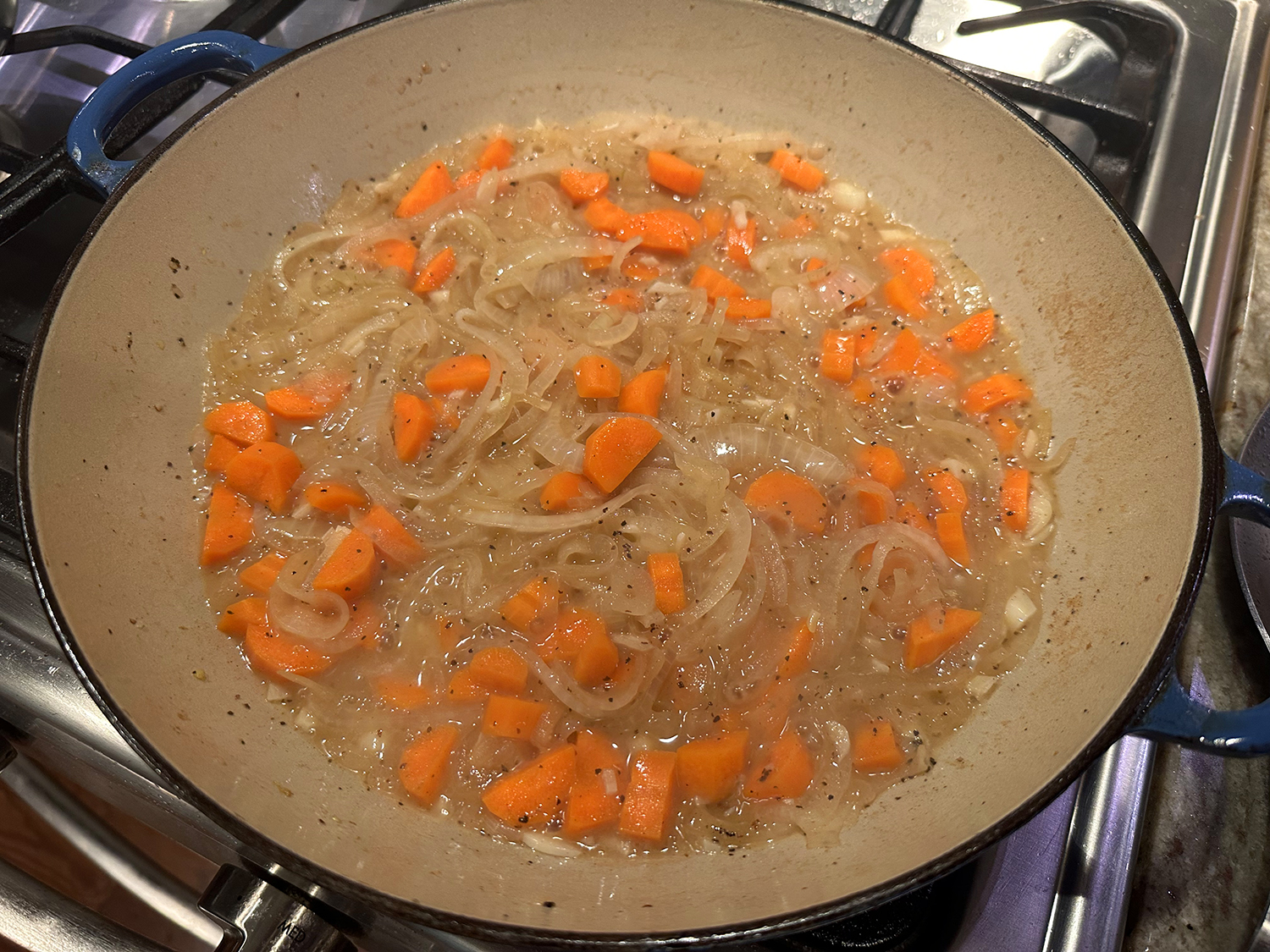
  2. While the chicken roasts, pour off and discard all but 1 tablespoon fat from the skillet. Set the pan over medium and melt 2 tablespoons of butter.Add the onion, carrots and ¼ teaspoon salt and ½ teaspoon pepper, then cook, stirring occasionally, until the onion is translucent, 3 to 5 minutes. Add the garlic and cook, stirring, until fragrant, about 30 seconds. Add the wine and cook, scraping up any browned bits, until reduced by about half, 2 to 4 minutes.
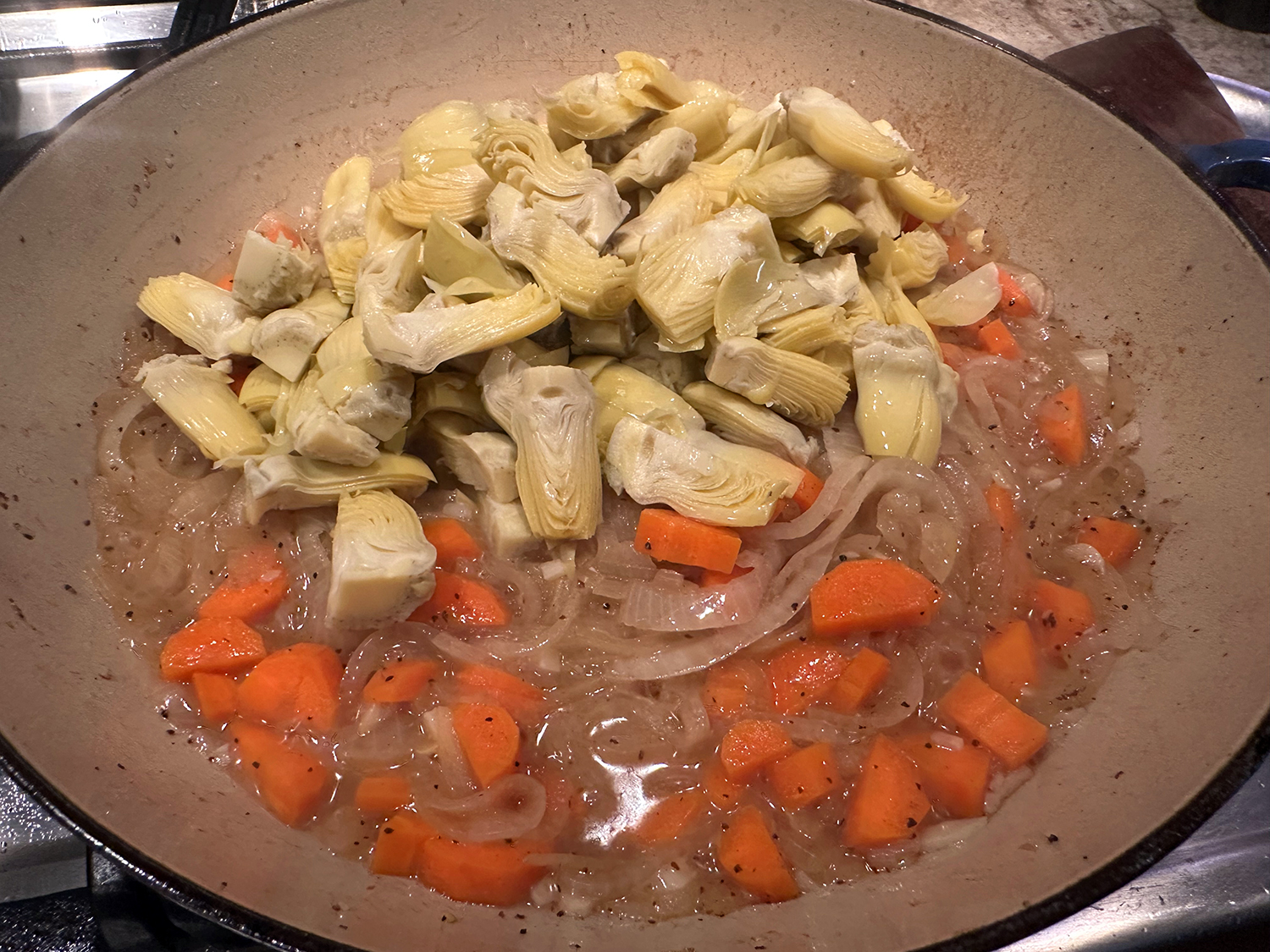
  3. Stir in the artichokes, lemon zest and broth. Bring to a simmer over medium-high and cook, uncovered and stirring occasionally, until the carrots are tender and the liquid is slightly reduced, 4 to 5 minutes. Remove from the heat, cover and set aside.
  4. When the chicken is done, using tongs, transfer it to a plate. Remove and discard the lemon zest from the artichoke mixture. Add the remaining 1 tablespoon butter and stir until melted, then stir in the lemon juice and parsley. Taste and season with salt and pepper. Transfer the mixture to a deep platter and place the chicken thighs on top to keep the crispy skin from getting soggy before serving.

http://www.lynnandruss.com

Recipe from Rose Hattabaugh for Milk Street

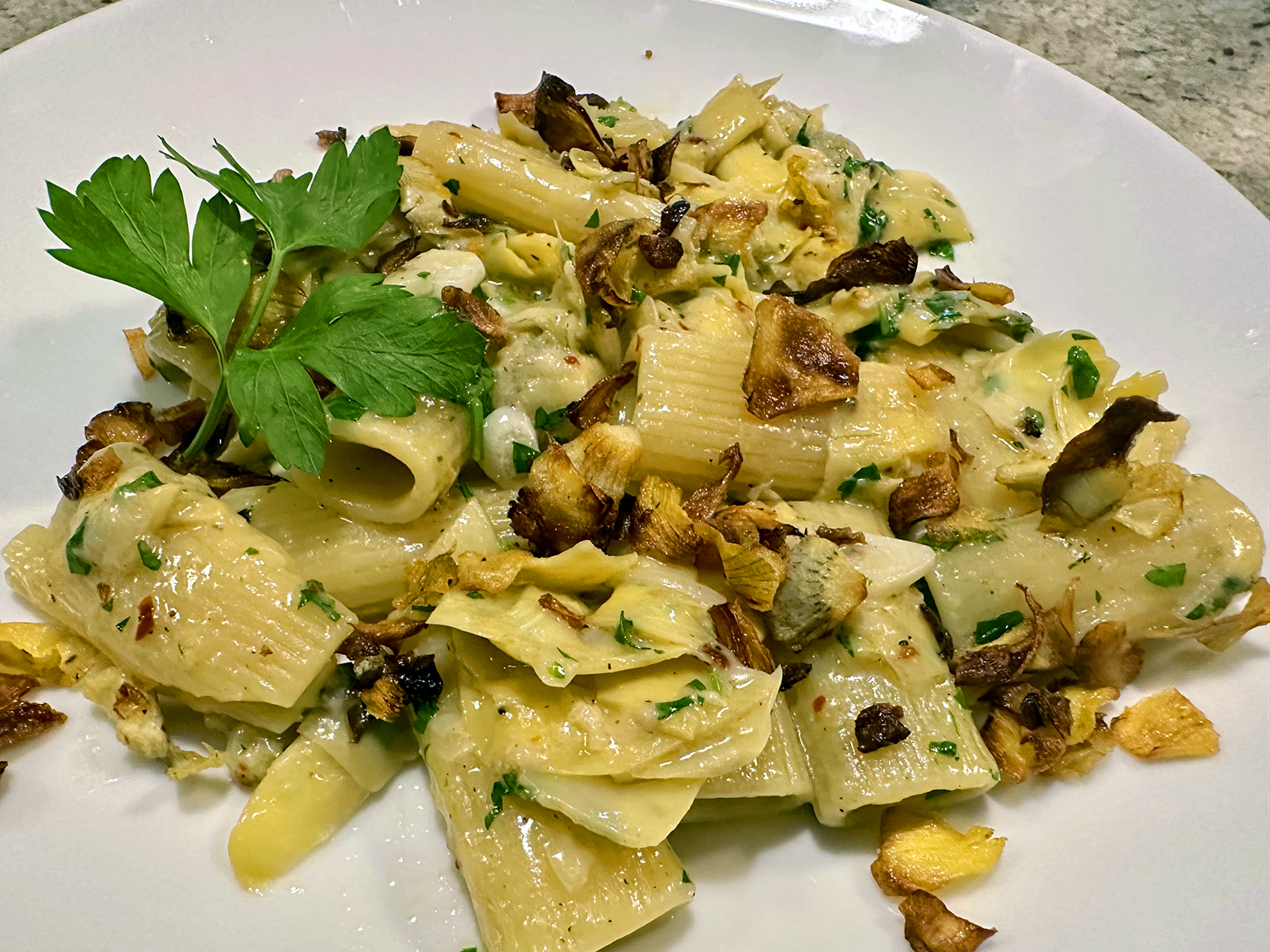
Crispy Artichoke Pasta

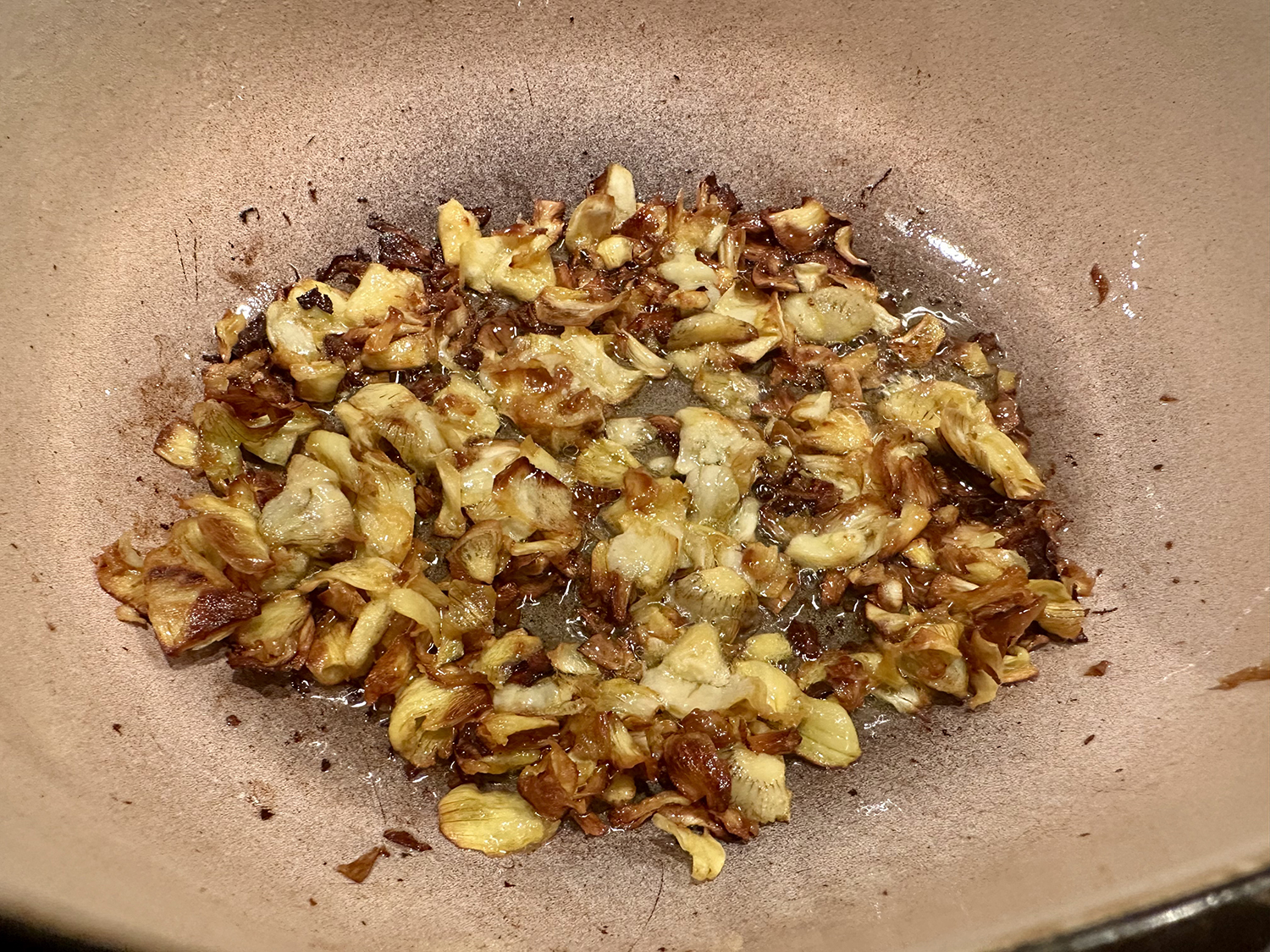
Quick, easy, tasty and filling—what’s not to like about that? Fast enough for a weeknight mad dash to dinner, this pantry pasta tastes more like a restaurant dish with its silky, flavorful sauce. The recipe uses canned artichokes which are brought to the peak of their crispy potential. The key is to remove as much water from the artichokes as possible by pressing them gently with paper towels (as you would tofu).

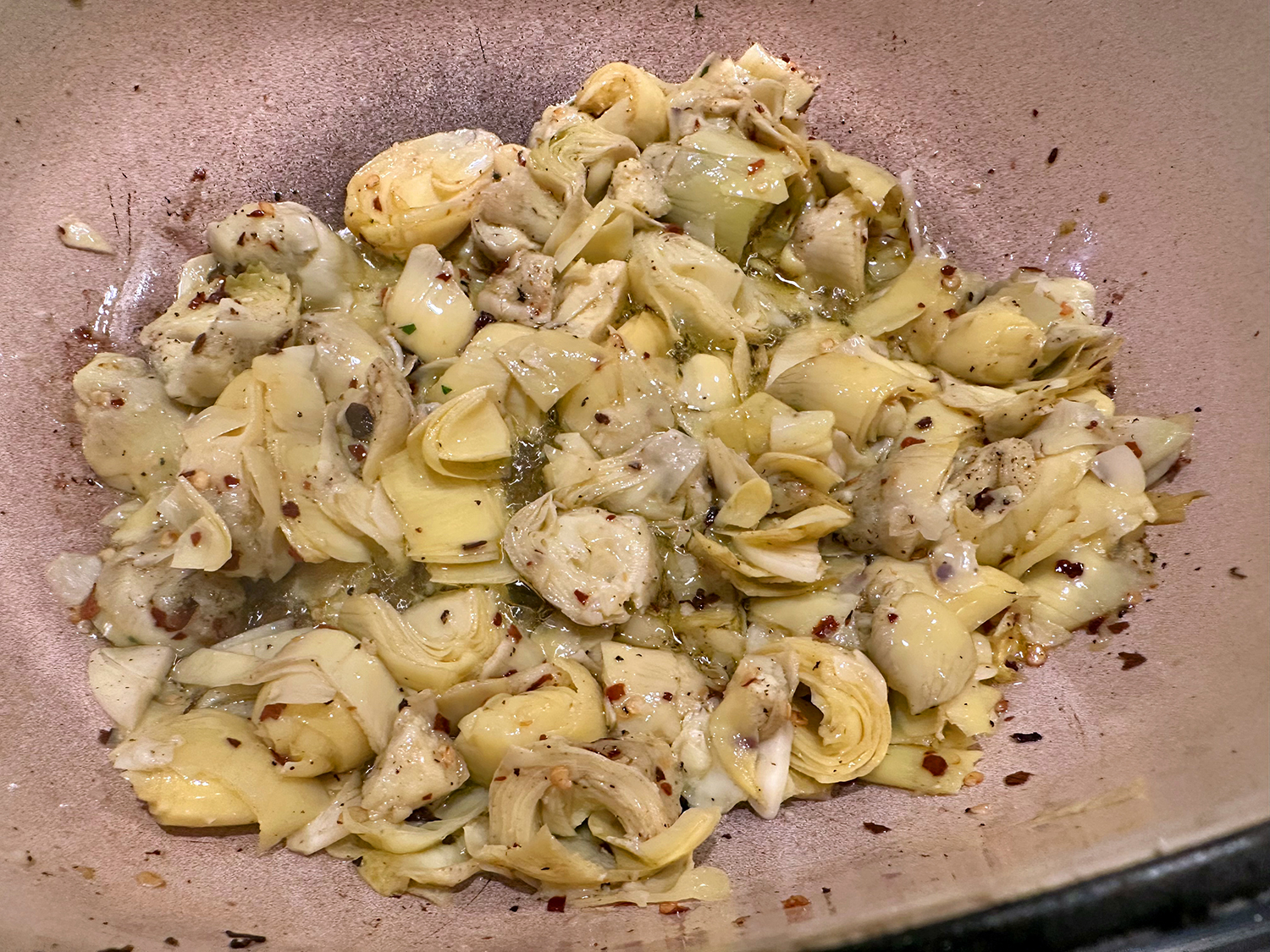
Some of the artichokes are fried in olive oil until shatteringly crisp, then the rest cook gently in more oil, along with garlic and chile flakes, to soften. They’re all mixed with pasta and Parmesan into a stunning weeknight meal. 

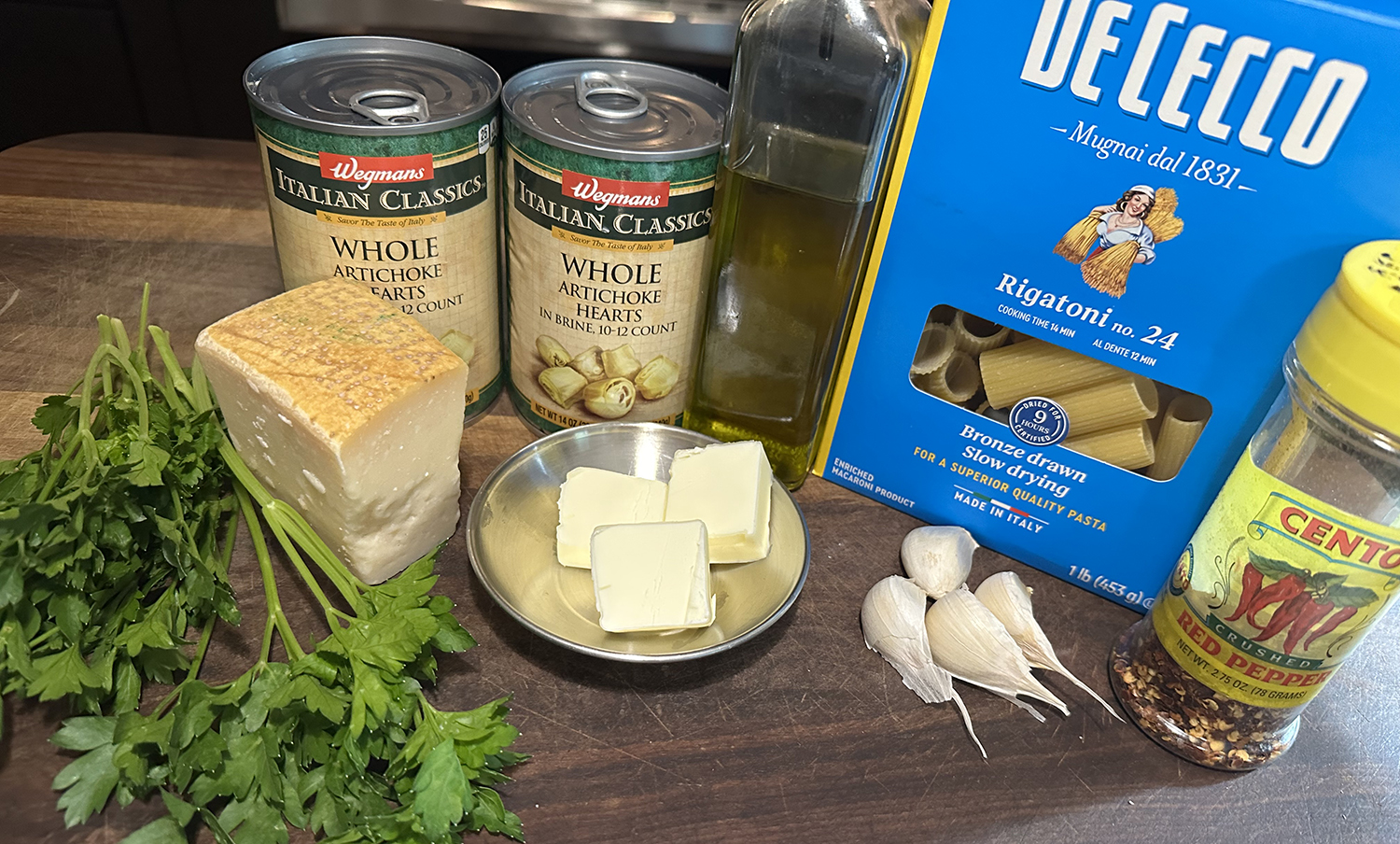
While the original recipe calls for one pound* of dried pasta, we cut that in half to 8 ounces, but kept the other ingredients as they were. However, using less rigatoni facilitated an adjustment for the amount of water. Save at least a cup of the pasta water before draining and introduce it bit-by-bit to the entire mixture until you get a silky consistency.

If you want to amp up the dish, you could add in some decent jarred tuna, crispy pancetta, bacon or prosciutto.

Crispy Artichoke Pasta

  • Servings: 4
  • Difficulty: easy
  • Print

Ingredients

  • Salt and black pepper
  • 1 lb. short cut pasta*, such as rigatoni or gemelli
  • 2 14-oz. cans whole or quartered artichoke hearts
  • ½ cup extra-virgin olive oil
  • 4 garlic cloves, thinly sliced
  • 1 tsp. crushed red pepper flakes
  • 3 Tbsp. unsalted butter, cut into small pieces
  • ½ cup finely grated Parmesan, plus more for serving
  • ⅓ cup finely chopped parsley

Directions

  1. Bring a large pot of water to a boil, then season generously with salt. Cook the pasta until a bit firmer than al dente, about 2 fewer minutes than listed on the package. (It’ll finish cooking in the sauce.) Reserve 2 cups of pasta water, then drain.
  2. While the water comes to a boil, drain the artichokes and place on a clean kitchen towel (or paper towels). Cover with another kitchen towel (or paper towels), and gently press down to remove the excess water. Give the artichokes a rough chop.
  3. Line a plate with paper towels. Set another large pot over medium-high heat, and pour in ¼ cup oil. When the oil is hot, after 1 to 2 minutes, add one-third of the artichokes and cook, stirring occasionally, until deeply brown and crisp in most spots, 3 to 5 minutes. Using a slotted spoon, scoop out the artichokes, transfer to the lined plate and season with salt.
  4. Adjust heat to medium, add the remaining ¼ cup oil and the remaining artichokes to the pot, along with the garlic and red pepper. Season with salt and pepper and cook, stirring occasionally, until the garlic begins to soften and everything smells very good, 2 to 3 minutes.
  5. Add the drained pasta and 1½ cups of the pasta water and bring to a simmer, still over medium heat. (This may seem like a lot of liquid, but it will thicken when the remaining ingredients are added.) Add the butter and sprinkle in the Parmesan and continue to cook, tossing vigorously, until the cheese is melted and the sauce is creamy and clings to the pasta, 2 to 3 minutes. If the sauce looks too thick, add more pasta water, 1 to 2 tablespoons at a time. Turn off the heat and stir in the parsley. Season to taste with salt and pepper.
  6. Divide among bowls or plates. Sprinkle the reserved crispy artichokes and more Parmesan on top before serving.

http://www.lynnandruss.com

Adapted from a recipe by Andy Baraghani for NYTimes Cooking

Navy Bean and Artichoke Dip

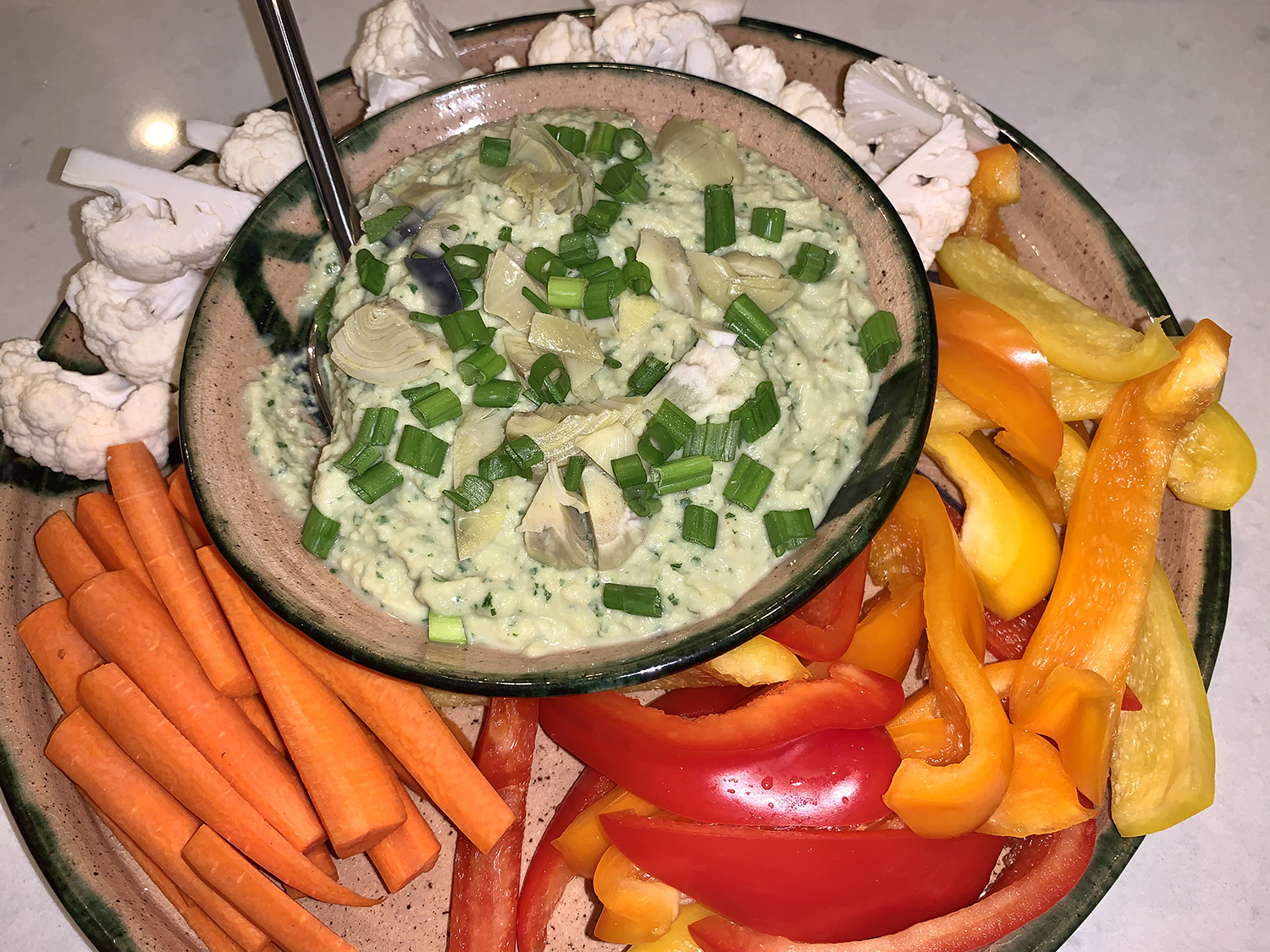
Perfect party pleaser. Looking for something healthy, yet tasty, to serve your guests or bring to a party? The secret behind this creamy and complex tasting bean dip is to pair a starchy bean with a lighter legume or vegetable. By using a combination, you avoid the pastiness of dips that use only beans. To further freshen the dips, add creamy Greek-style yogurt, a healthy dose of lemon juice, and a full ¼ cup of herbs.

Navy Bean and Artichoke Dip

  • Servings: Yields 2 cups
  • Difficulty: easy
  • Print

Ingredients

  • 1 small garlic clove, minced
  • 1 tsp. grated lemon zest plus 2 Tbsp. juice
  • 1 cup frozen artichoke hearts, thawed and patted dry
  • 1 15-oz. can navy beans, 2 Tbsp. liquid reserved, beans rinsed
  • 1 scallion, white and light-green parts cut into 1/2-inch pieces, green part sliced thin on bias
  • ¼ cup fresh parsley
  • ¼ tsp. ground fennel seeds
  • ¾ tsp.
  • Salt
  • Pinch cayenne pepper
  • ¼ cup plain Greek-style yogurt
  • Extra-virgin olive oil, for drizzling

Directions

  1. Combine garlic and lemon zest and juice in small bowl; set aside for at least 15 minutes. Measure out 2 tablespoons artichoke hearts, chop coarsely, and set aside for garnish.
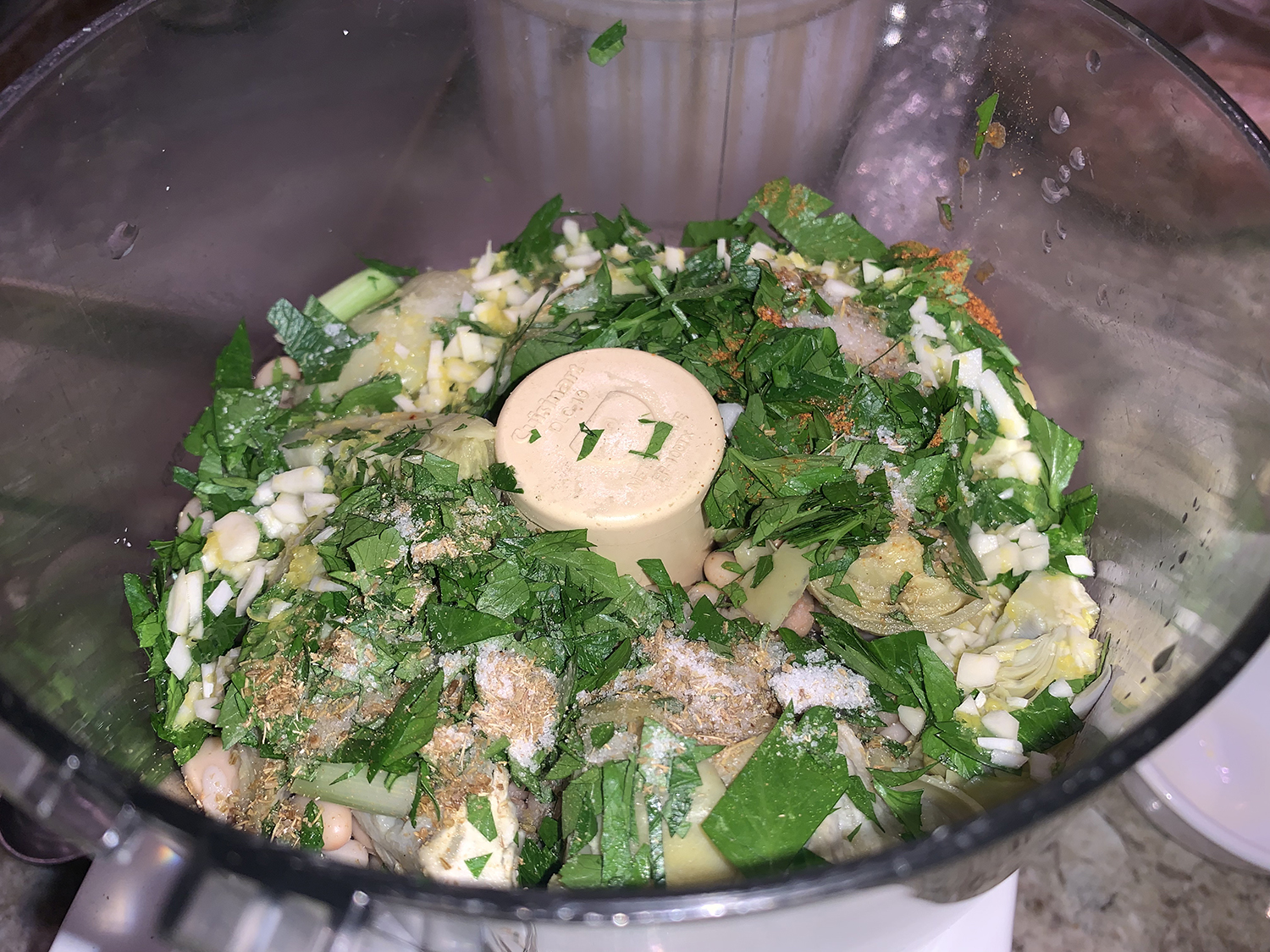
  2. Pulse beans, reserved bean liquid, remaining artichoke hearts, scallion whites and light greens, parsley, ground fennel, ¾ teaspoon salt, cayenne, and lemon juice mixture in food processor until fully ground, 5 to 10 pulses. Scrape down bowl with rubber spatula.
  3. Continue to process until uniform paste forms, about 1 minute, scraping down bowl twice. Add yogurt and continue to process until smooth and homogeneous, about 15 seconds, scraping down bowl as needed.
  4. Transfer to serving bowl, cover, and let stand at room temperature for at least 30 minutes. (Dip can be refrigerated for up to 1 day. Let refrigerated dip stand at room temperature for 30 minutes before serving.)
  5. Season with salt to taste. Sprinkle with reserved artichoke hearts and scallion greens. Drizzle with oil and serve.

http://www.lynnandruss.com

Recipe from America’s Test Kitchen

Salmon with Barigoule

As a Milk Street article informed us, barigoule is a Provençal braise of fresh artichokes in white wine, with aromatics such as garlic and thyme. The name “barigoule” comes from a type of mushroom once said to be a part of the dish; the moniker stuck even though the fungi no longer are added to modern versions.

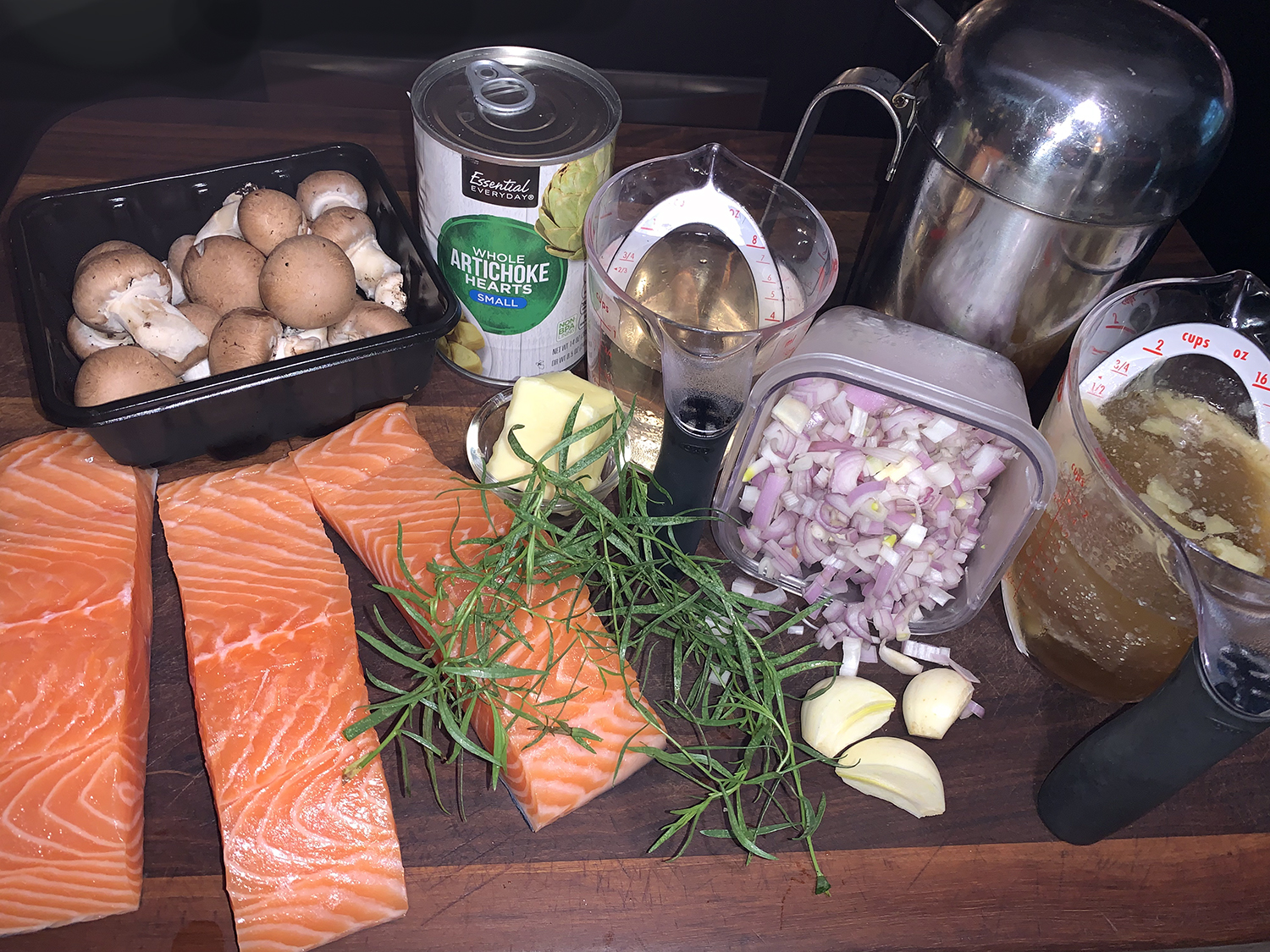
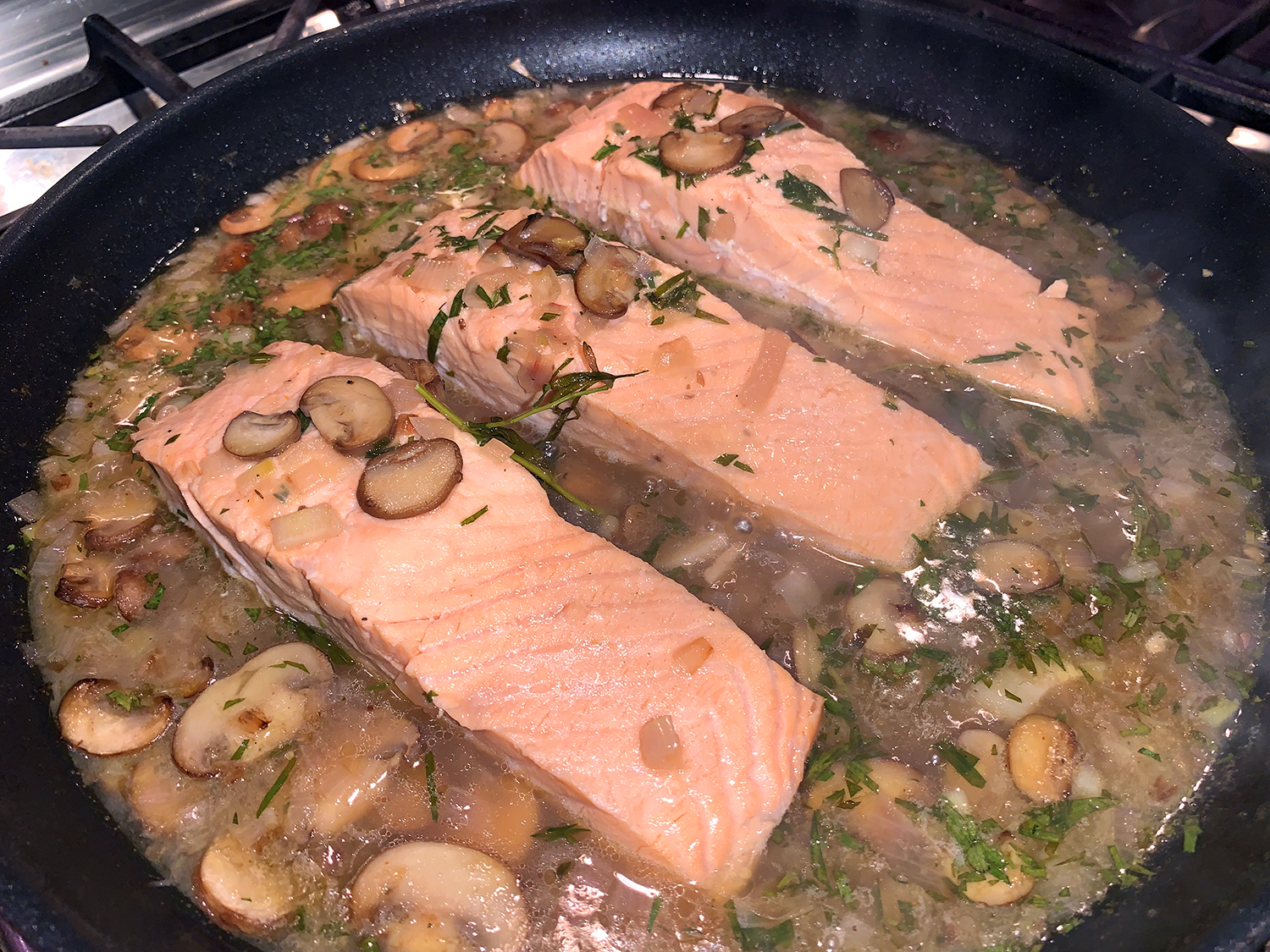
Here, cremini mushrooms are added for their earthy depth and meaty texture that balance the acidity of the wine and complement the mildness of the artichokes. To make this doable on a weeknight, use canned artichokes rather than fresh, but to keep their flavor as bright as possible, cook them in the broth only for as long as it takes to heat them through.

Our changes? Instead of four, 6-ounce filets, we bought a 1 1⁄2-pound single filet and cut it into 3 strips, which gave each of us an 8-ounce portion. Similarly, 4 ounces of mushrooms just didn’t float our boat, so we doubled that amount to 8 ounces.

Another alteration was cutting the artichoke hearts in half instead of quartered, because they were on the small side to begin with. Finally, because our salmon filets were a bit larger, and the fact that prefer ours less translucent, we simmered them until they reached an internal temperature of 130°. All changes are noted below.

Don’t forget to turn down the heat after adding the salmon to the skillet. Gentle poaching ensures the fillets cook evenly and stay moist. Don’t cover the skillet while cooking the salmon; too much heat will be trapped inside, resulting in overcooked fillets.

Salmon with Barigoule

  • Servings: 4
  • Difficulty: easy
  • Print

Ingredients

  • 4 6-oz. salmon fillets, each about 1 inch thick
  • Kosher salt
  • 2 Tbsp. extra-virgin olive oil
  • 8 oz. cremini mushrooms, trimmed and thinly sliced
  • 3 medium garlic cloves, thinly sliced
  • 2 medium shallots, chopped
  • 1 sprig tarragon, plus 2 Tbsp. chopped fresh tarragon
  • 1 cup dry white wine
  • 1 1/2 cups chicken broth or vegetable broth
  • 14 oz. can artichoke hearts, drained, cut into halves or quarters if whole
  • 2 Tbsp. salted butter, cut into 4 pieces

Directions

  1. Season the salmon all over with salt. In a 12-inch nonstick skillet over medium-high, heat the oil until shimmering. Add the mushrooms and cook, stirring occasionally, until the moisture released by the mushrooms has evaporated and the mushrooms are browned, 4 to 6 minutes.
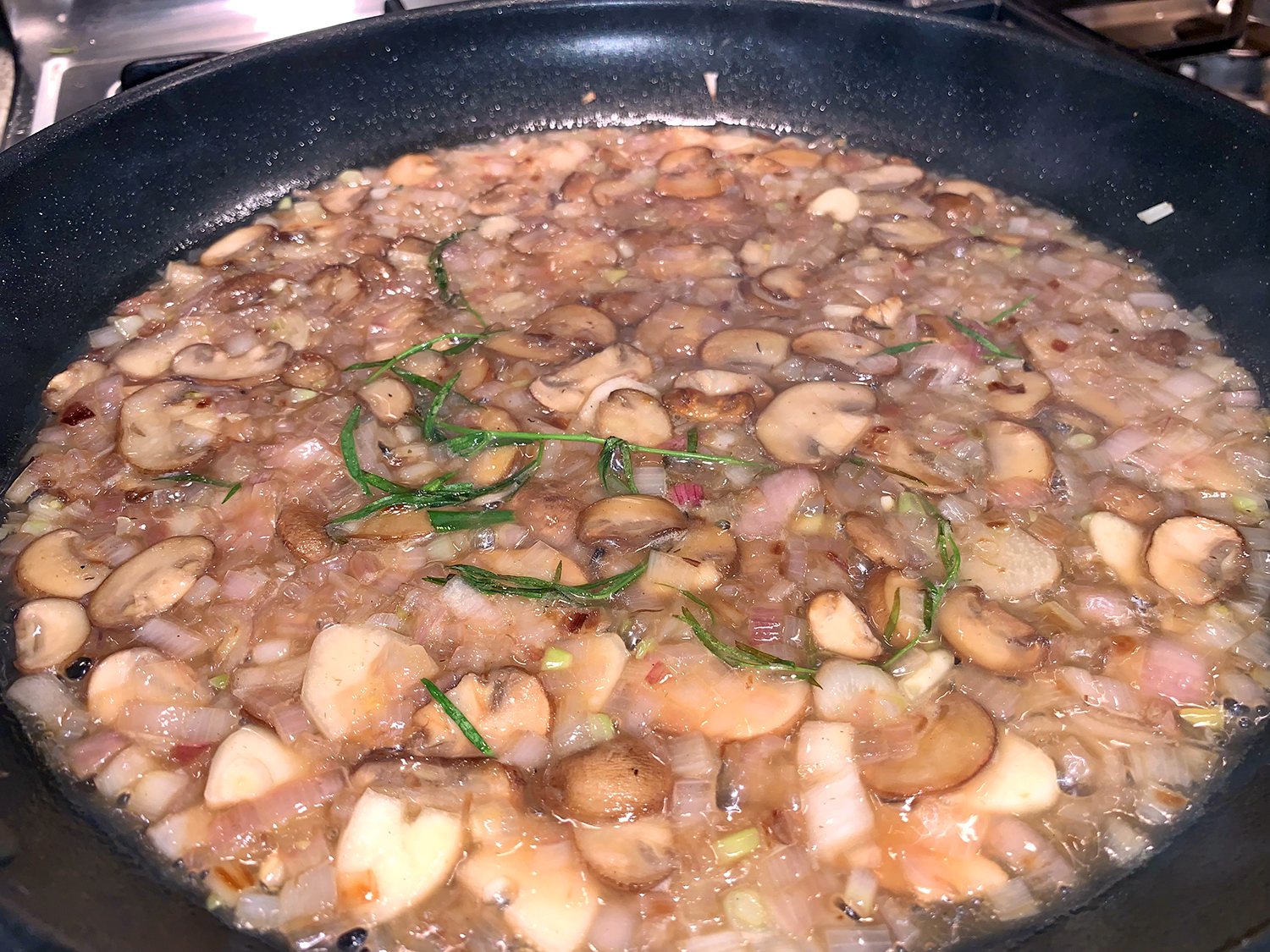
  2. Add the garlic, shallots, tarragon sprig and ½ teaspoon salt; cook, stirring often, until the garlic is golden brown, 1 to 2 minutes.
  3. Add the wine and cook, stirring occasionally, until reduced by about half, 3 to 5 minutes.
  4. Add the broth and bring to a simmer. Place the salmon boned side down in the pan, reduce to low and cook at a very gentle simmer, uncovered, for 5 minutes. Flip the fillets and cook until the thickest parts reach 130°F or are slightly translucent when cut into, about 5 minutes.
  5. Remove the pan from the heat. Using a wide metal spatula, transfer the salmon to wide, shallow serving bowls.
  6. Bring the broth to a simmer over medium-high, then add the artichokes and butter; cook, stirring, until the artichokes are heated through and the butter is emulsified into the sauce, about 1 minute.
  7. Off heat, taste and season with salt. Remove and discard the tarragon sprig, then spoon the mixture over and around the salmon and sprinkle with the chopped tarragon.

http://www.lynnandruss.com

Recipe by Courtney Hill for Milk Street

Tuscan Spring Soup

In Tuscany, the advent of spring doesn’t signal the end of soup season, like it might here in the Northeast. But it does mean the soups that are served take on a different tone. Tender vegetables meet a rich, meaty broth in this light Tuscan-inspired soup—just perfect for a not-too-hot Spring evening.

And while a hallmark of Tuscan cuisine is its rusticity, this soup is all about luxury. In stark contrast to the typical hearty Tuscan soups, which often cleverly repurpose scraps, only the finest ingredients go into a typical “garmugia”—a pairing of pricey meats and the season’s freshest vegetables.

In garmugia, meat is a seasoning, not the main event. To that end, Milk Street omits the veal, as the combination of beef broth and pancetta (plus a simmered rind of Parmesan) gives the soup a wonderfully savory depth that enhances the vegetables without competing with them.

For their clean vegetal flavors and year-round availability, this soup opts for scallions, asparagus, artichoke hearts and frozen peas. By cooking the vegetables in sequence—starting with the sturdiest, ending with the most delicate—each ingredient retains its character, ensuring that they’re not overcooked. The artichoke hearts are simmered first, then the asparagus, followed by the peas, all topped with a finishing sprinkle of scallion greens for a burst of zingy freshness.

“Each bite of the finished soup is a spoonful of spring in a bowl, no matter the season.”

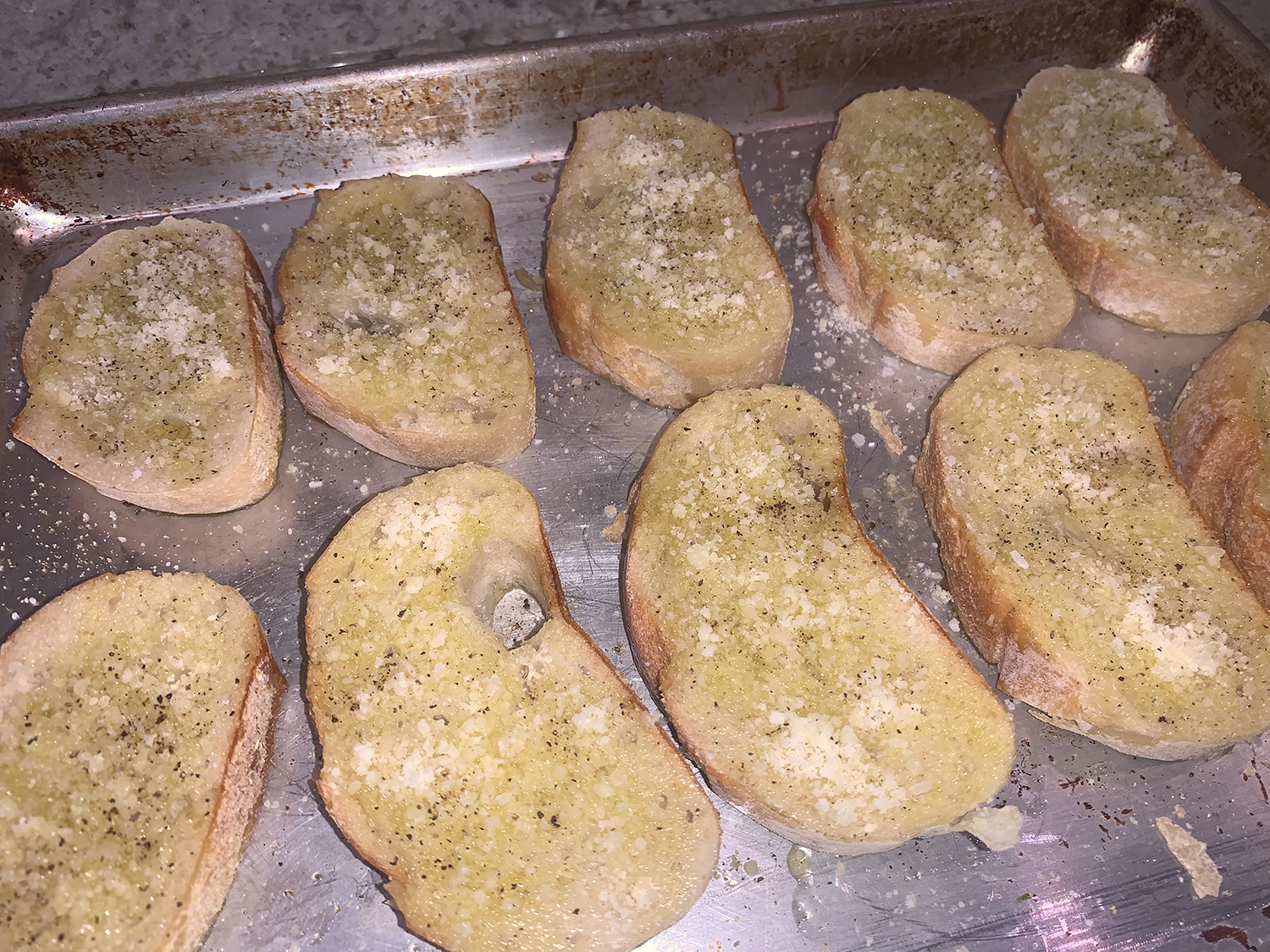
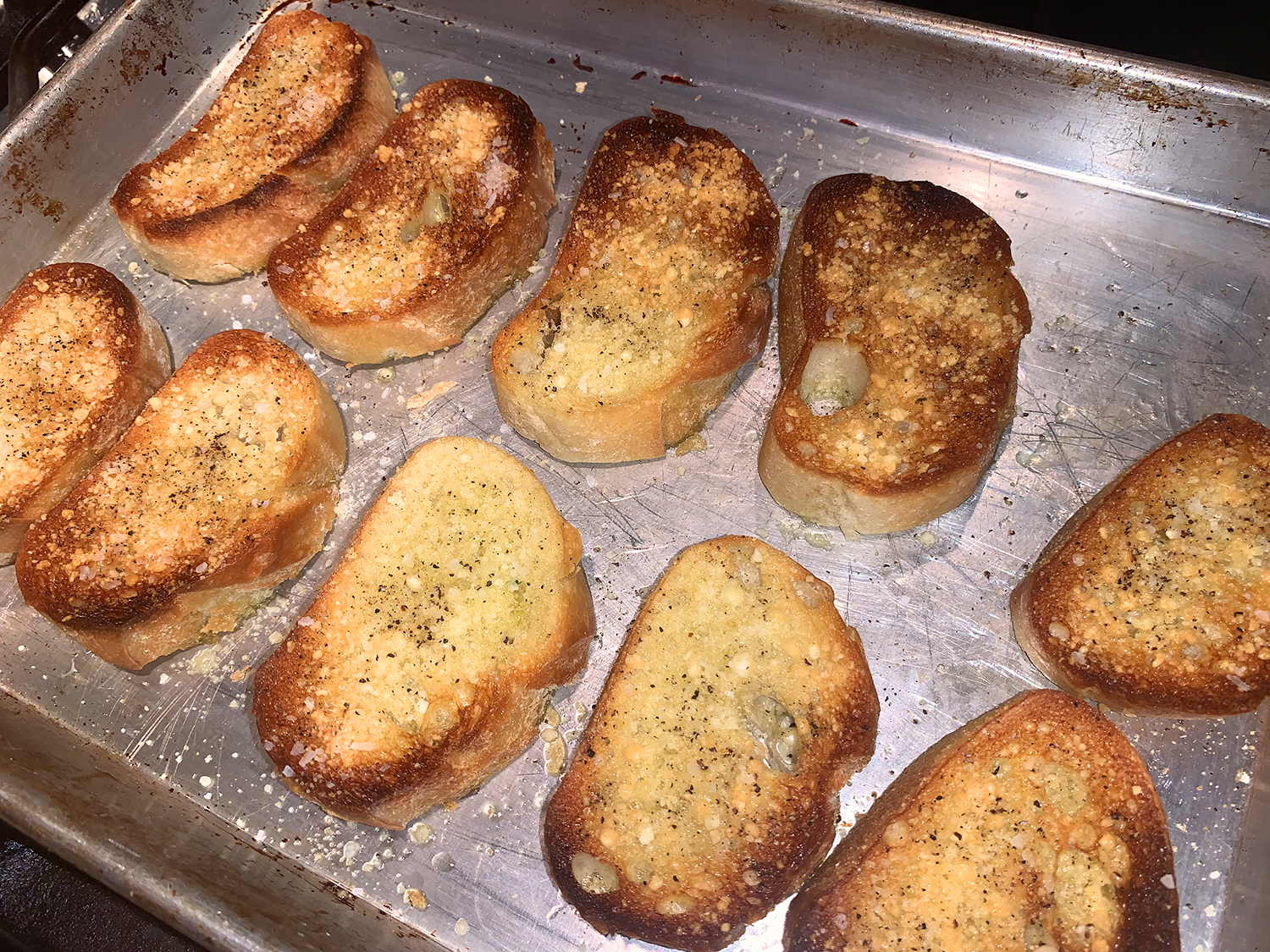
Milk Street instructs you to simmer the optional Parmesan rind into the mix to boost the umami notes. Canned artichoke hearts do well here, but frozen artichokes also work—just defrost and pat dry before use (you’ll need about 2 cups). To serve on the side, make savory Parmesan toasts that are perfect for dipping into the broth.

Don’t use ultra-slender asparagus, which will end up overcooked. Look for spears about the size of a pencil. To retain the bright-green color of the peas, don’t allow the soup to boil after the peas are stirred in.

Tuscan Spring Soup

  • Servings: 4
  • Difficulty: easy
  • Print

Ingredients

  • 4 Tbsp. extra-virgin olive oil, divided, plus more to serve
  • 3-4 oz. pancetta, chopped
  • 4 scallions, thinly sliced, whites and greens reserved separately
  • 4 thyme sprigs
  • 1½ qts. low-sodium beef broth
  • 1 chunk Parmesan rind (optional), plus ½ oz. Parmesan cheese, finely grated (¼ cup)
  • Kosher salt and ground black pepper
  • 8 oz. crusty white bread, sliced ½ inch thick
  • 14 oz. can artichoke hearts, rinsed, drained and quartered
  • 1 lb. asparagus, trimmed and cut into 1-inch lengths on the diagonal
  • ½ cup frozen peas, thawed

Directions

  • Heat the broiler with a rack about 6 inches from the element. In a large saucepan over medium, combine 1 tablespoon of oil and the pancetta. Cook, stirring occasionally, until the pancetta has rendered its fat and begins to brown, 3 to 5 minutes.
  • Add the scallion whites and thyme. Cook until the scallions are lightly browned, 1 to 2 minutes.
  • Add the broth, the Parmesan rind (if using) and ½ teaspoon pepper, then bring to a boil over medium-high.
  • Meanwhile, brush both sides of the bread slices with the remaining 3 tablespoons oil, then place in a single layer on a rimmed baking sheet. Sprinkle with the grated Parmesan, then broil until lightly browned, 1 to 2 minutes. Set aside.
  • When the soup reaches a boil, add the artichokes, reduce to medium and cook, stirring occasionally, for 5 minutes.
  • Add the asparagus and cook, stirring occasionally, until the asparagus is just tender, 2 to 4 minutes.
  • Stir in the peas, reduce to medium-low and cook, stirring, until the peas are heated through, about 3 minutes; do not allow the soup to boil.
  • Off heat, remove and discard the thyme and Parmesan rind (if used). Stir in the scallion greens, then taste and season with salt and pepper. Ladle into bowls, drizzle with additional oil and serve with the Parmesan toasts.

http://www.lynnandruss.com

Recipe by Shaula Clark for Milk Street

Low-Carb Spinach Artichoke Chicken

Spinach artichoke chicken is an easy and delicious keto skillet recipe. It features crispy chicken thighs in a rich cream sauce with spinach, artichokes, garlic, and parmesan. However, the original recipe only called for half (which we deemed too paltry) of the spinach and artichokes so we doubled that, as noted in the list below. Also, we added two more thighs to total eight, allowing two per person for a dinner feeding four.

This AMAZING recipe takes all the rich flavors of a great spinach artichoke dip and turns it into a full meal. And it’s an easy one pan recipe that’s ready in about an hour. Truly delicious! Typically, I am more of a white meat fan, while The Hubs prefers dark meat. Next time I may include a mix of thighs and chicken breast quarters, but again, maybe not…

Instead of frozen, fresh spinach works in this recipe as well. You obviously won’t need to thaw and squeeze it; simply chop it up and stir it into the sauce before transferring the dish to the oven.

Low-Carb Spinach Artichoke Chicken

  • Servings: 4
  • Difficulty: easy
  • Print

Ingredients

  • 8 chicken thighs, bone in, skin on
  • 2 tsp. Italian seasoning
  • Salt and pepper
  • 3 Tbsp. olive oil or avocado oil
  • 4 cloves garlic, minced
  • ⅓ cup chicken broth
  • ⅔ cup heavy whipping cream
  • 1 oz. Parmesan cheese, finely grated
  • 12 oz. artichoke hearts, drained and chopped
  • 10 oz. frozen spinach, thawed and squeezed dry

Directions

  1. Preheat the oven to 350F. Pat the chicken thighs dry and sprinkle all over with the Italian seasoning, salt, and pepper.
  2. Heat the oil over medium heat in a large (at least 12″) ovenproof skillet. Add the chicken thighs, skin side down, and cook undisturbed for 3 to 4 minutes, until golden brown. (Our chicken skin took 8 minutes to get a nice golden brown.)
  3. Flip the thighs over and cook another 4 minutes, then transfer to a plate. Drain most of the fat from the pan and discard.
  4. Add the garlic to the pan and sauté until fragrant, about 1 minute.
  5. Stir in the broth to deglaze the pan, scraping up any browned bits. Bring to a simmer. Add the cream and Parmesan and continue to cook until slightly thickened, another minute or two.
  6. Stir in the chopped artichokes and the spinach until well combined. Place the chicken thighs on top of the cream sauce and bake 20 to 25 minutes, until the chicken is cooked through to a temp of 170° to 175°, and the sauce is bubbling.

http://www.lynnandruss.com

Roughly adapted from an online recipe from All Day I Dream About Food

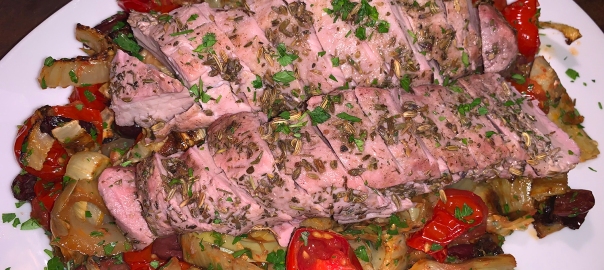
Spice-Rubbed Pork Tenderloin with Fennel, Tomatoes, Artichokes, and Olives

Another one-pan wonder, and who doesn’t like that for ease of clean-up and prep? It works as well for company as it does for a weeknight dinner. According to ATK’s “Complete Mediterranean Cookbook”, cooking the tenderloins until buttery-smooth is key, and roasting them atop a bed of vegetables buffers the heat to ensure juicy meat all the way through, which is rubbed with herbes de Provence, salt, and pepper.

The Mediterranean seasoning inspired the selection of vegetables: sweet, delicately flavored fennel, earthy artichoke hearts (frozen, to keep things easy), and briny olives (which I doubled the quantity). After softening the fennel in the microwave, it was tossed with the other vegetables and olive oil, and the mixture was spread into the roasting pan (or rimmed baking sheet), placing the tenderloins on top.

The vegetables are nearly cooked when the pork is done, so remove the meat to a moated cutting board and tent with foil. To the cooked veggies, add in juicy halved cherry tomatoes and lemon zest, and let them finish in the oven. After 10 minutes, the fennel should be tender, the tomatoes softened and releasing their juices.

NOTE: If using frozen artichoke hearts, be sure to thoroughly thaw and pat them dry; otherwise their moisture will inhibit the browning of the roasted vegetables.

Spice-Rubbed Pork Tenderloin with Fennel, Tomatoes, Artichokes, and Olives

  • Servings: 4-6
  • Difficulty: easy
  • Print

Ingredients

  • (12- to 16-oz.) pork tenderloins, trimmed
  • 2 tsp. herbes de Provence
  • Salt and pepper
  • 2 large fennel bulbs, stalks discarded, bulbs halved, cored, and cut into ½-inch-thick strips
  • 12 oz. frozen artichoke hearts, thawed and patted dry
  • ½ cup pitted kalamata olives, halved
  • 3 Tbsp. extra-virgin olive oil
  • 18 oz. cherry tomatoes, halved
  • 1 Tbsp. grated lemon zest
  • 2 Tbsp. minced fresh parsley

Directions

  1. Adjust oven rack to lower-middle position and heat oven to 450 degrees. Pat pork dry with paper towels and season with herbes de Provence, ½ teaspoon salt, and ¼ teaspoon pepper.
  2. Combine fennel and 2 tablespoons water in bowl, cover, and microwave until softened, about 5 minutes; drain well. Toss drained fennel, artichokes, olives, and oil together in bowl and season with salt and pepper.
  3. Spread vegetables into 16 by 12-inch roasting pan and lay pork on top, tucking under the thin part of the tail. Roast until pork registers 140 to 145 degrees, 25 to 30 minutes, turning tenderloins over halfway through roasting.
  4. Remove pan from oven. Transfer pork to cutting board, tent loosely with aluminum foil, and let rest for 10 minutes. Meanwhile, stir cherry tomatoes and lemon zest into vegetables and continue to roast until fennel is tender and tomatoes have softened, about 10 minutes.
  5. Remove pan from oven. Stir parsley into roasted vegetables. Slice pork into ½-inch-thick slices, and arrange vegetables and sliced pork on a platter, pouring any accumulated meat juices back over the plated pork and vegetables.

http://www.lynnandruss.com

Recipe from America’s Test Kitchen

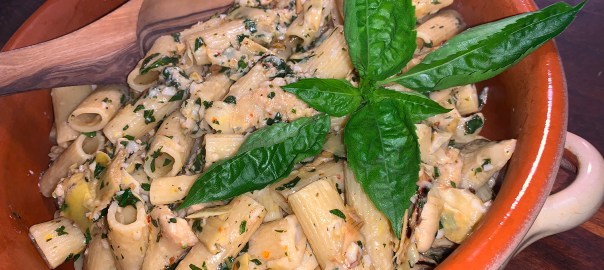
Rigatoni with Artichokes, Basil and Pecorino

Fresh basil, I like that this pasta recipe uses a lot of it. At the time we made the entrée, our garden was brimming with the herb, one of my all-time faves. Freshly picked, the aroma alone titillates the senses.

This recipe is Milk Street’s weeknight adaptation of the pasta fresca con carciofi e pecorino. The flavors are bright and fresh, and the prep is a breeze (chopping the basil is as arduous as it gets here). In 30 minutes or so, you have a tasty and filling entrée that’s sure to please.

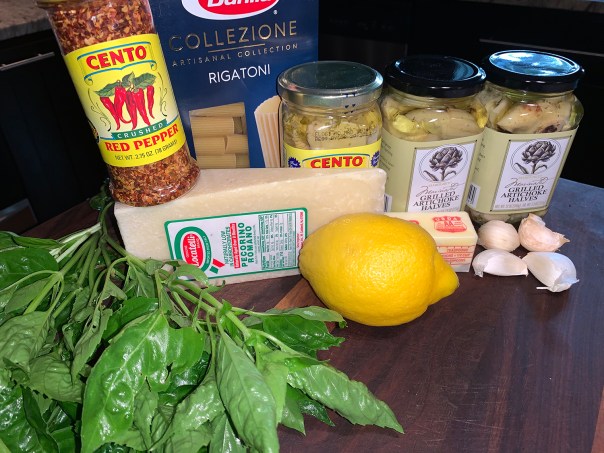
As per Milk Street’s instructions, be sure to purchase jarred marinated artichoke hearts—they offer much more flavor than canned or frozen. You will need three 12-ounce jars to get the 3 cups drained artichokes called for. The hearts usually are halved or quartered; there’s no need to chop them after draining, as they will break apart during cooking.

About those artichokes, if you happen to have jars marinating in mostly oil, go ahead and use that in place of the additional EVOO listed in the ingredients. Trader Joe’s fits that bill, while Cento for example has too much vinegar in the mix.

Our box of rigatoni was only 12 ounces as opposed to the 1 pound called for, which we thought made for a better pasta-to-artichoke ratio, and still provided 4 full servings.

Don’t forget to save 2 cups of the cooking water before draining the rigatoni. You will need the starchy seasoned water to create a sauce that lightly coats and marries the artichokes and pasta.

Rigatoni with Artichokes, Basil and Pecorino

  • Servings: 4-6
  • Difficulty: easy
  • Print

Ingredients

  • 1 lb. rigatoni (we only used 12 oz.)
  • Kosher salt and ground black pepper
  • ¼ cup extra-virgin olive oil (or use the oil from the jarred artichokes)
  • 3 cups drained oil-marinated artichoke hearts, patted dry
  • 4 medium garlic cloves, finely grated
  • ½ tsp. red pepper flakes
  • 2 oz. pecorino romano cheese, finely grated (1 cup)
  • 1 Tbsp. grated lemon zest, plus 2 tablespoons lemon juice
  • 1 cup lightly packed fresh basil, chopped
  • 3 Tbsp. salted butter, cut into 3 pieces

Directions

  1. In a large Dutch oven, bring 4 quarts water to a boil. Stir in the pasta and 1 tablespoon salt, then cook, stirring occasionally, until just shy of al dente. Reserve about 2 cups of the cooking water, then drain the pasta.
  2. Wipe out the pot, add the oil and heat over medium-high until shimmering. Add the artichokes and cook, stirring, until well browned, 5 to 7 minutes. (Ours took 9 minutes.)
  3. Add the garlic and pepper flakes, then cook, stirring, until fragrant, about 30 seconds. Return the pasta to the pot, along with 1½ cups of the reserved pasta water. Cook, uncovered and stirring often, until the pasta is al dente and little liquid remains, 3 to 5 minutes.
  4. Remove from the heat. Add the pecorino, lemon zest and juice, basil and butter, then stir until the butter is melted.
  5. Stir in additional pasta water 1 tablespoon at a time until slightly saucy. Taste and season with salt and pepper.

http://www.lynnandruss.com

Adapted from a recipe by Diane Unger from Milk Street