Go-To Grilled Chicken Kebabs

Grilled kebabs that are juicy and savory with deep browning and charring are pretty much everyone’s desired result. So to start, use boneless, skinless chicken thighs, which have a rich flavor and collagen that can break down to keep the meat juicy.

It may not please you, but leave the fat on the chicken to encourage small flare-ups, which contribute to creating char and grill flavor. Cut the chicken into 1-inch pieces and toss them in a thick, flavorful mixture of tomato paste*, salt, sugar, fish sauce, garlic, and oil.

After letting the chicken marinate for at least an hour (up to 12 hours), thread onto skewers and cook over a moderately hot grill. The fat on the chicken encourages small flare-ups that create lots of char and grill flavor. Rotate the skewers a quarter-turn every couple of minutes to ensure even cooking and browning.

These bite-size morsels are tailor-made for sliding off the skewer onto warm flatbread or scooping up with rice and vegetables. We paired ours with a rice pilaf dish and a side salad.

*For a little kick, the tomato paste was cut in half and and two tablespoons of gochujang was added. Our chicken chunks marinated for 6 1/2 hours before threading them onto metal skewers.

TIP: Chose boneless, skinless thighs for the kebabs. They are more flavorful and fattier than breasts and, more important, can be cooked to a higher temperature, which allows them to thoroughly brown without drying out. That’s because thighs contain collagen, which, when heated, breaks down and becomes able to hold water and thus keeps the meat juicier.

Go-To Grilled Chicken Kebabs

  • Servings: 4
  • Difficulty: easy
  • Print

Ingredients

  • ¼ cup tomato paste, OR 2 Tbsp. each of tomato paste and gochujang for a little kick
  • 3 Tbsp. vegetable oil
  • 2 Tbsp. fish sauce
  • 3 garlic cloves, minced to paste
  • 1½ tsp. sugar
  • 1¼ tsp. kosher salt
  • ½ tsp. pepper
  • 2 lbs. boneless, skinless chicken thighs, untrimmed, cut into 1-inch pieces
  • 4 (12-inch) metal skewers

Directions

  1. Whisk tomato paste, oil, fish sauce, garlic, sugar, salt, and pepper in medium bowl until smooth. Add chicken and, using your hands or silicone spatula, mix until chicken is evenly coated. Cover and refrigerate for at least 1 hour or up to 12 hours.
  2. FOR A CHARCOAL GRILL: Open bottom vent completely. Light large chimney starter three-quarters filled with charcoal briquettes (4½ quarts). When top coals are partially covered with ash, pour evenly over half of grill. Set cooking grate in place, cover, and open lid vent completely. Heat grill until hot, about 5 minutes.
  3. FOR A GAS GRILL: Turn all burners to high; cover; and heat grill until hot, about 15 minutes. Leave primary burner on high and turn off other burner(s).
  4. While grill heats, thread chicken onto skewers, rolling or folding pieces as necessary to form 1-inch pieces and alternating leaner pieces with fattier pieces (fold any excess fat onto skewers as needed to keep it from hanging loose).
  5. Clean and oil cooking grate. Place kebabs directly over coals (over primary burner if using gas) and cook (covered if using gas) until grilled side is well browned and slightly charred, 2 to 2½ minutes. Turn one-quarter turn. Continue to cook and turn until all sides are browned and charred and meat registers 175 degrees, about 12 minutes in total, rearranging skewers halfway through cooking so those farthest from heat source are now closer and vice versa. (If large flare-ups occur, slide kebabs to cool side of grill until fire dies down.) Remove kebabs from grill and let rest for 5 minutes. Serve.
Two Other Options

FOR HARISSA, ALEPPO PEPPER, AND MINT MARINADE: Reduce tomato paste to 2 tablespoons. Add 2 tablespoons harissa, 2 teaspoons ground dried Aleppo pepper, and 2 teaspoons dried mint to marinade in step 1.

FOR RED CURRY PASTE AND LIME MARINADE: Reduce tomato paste to 2 tablespoons. Add 2 tablespoons Thai red curry paste and 2 teaspoons grated lime zest to marinade in step 1. Serve kebabs with lime wedges.

http://www.lynnandruss.com

Adapted from a recipe by Annie Petito for Cook’s Illustrated

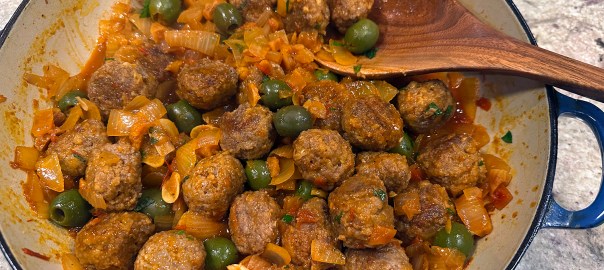
One-Pot Lamb Meatballs with Eggplant and Chickpeas

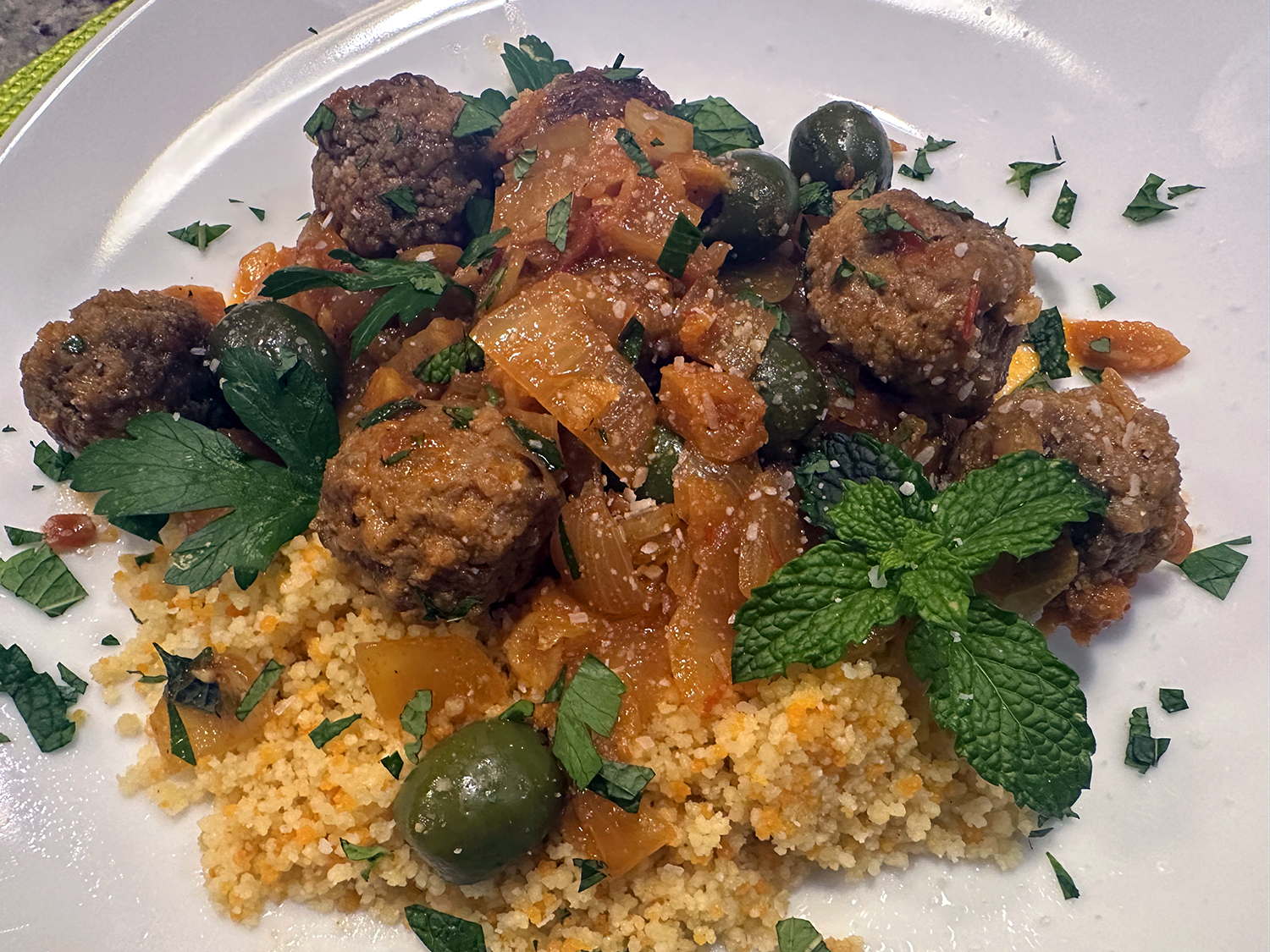
The inspiration for the flavors in this one-pot dish are those commonly used in Moroccan tagines, stewed dishes cooked in earthenware pots of the same name. Here, the dish is cooked in a Dutch oven instead of a tagine, and features lemony lamb meatballs in a tomato-based sauce spiced with harissa and studded with eggplant and chickpeas for more heft and substance.

Bold ras el hanout linked the meatballs and the sauce while golden raisins (which we omitted) and pitted green olives brought sweetness and brininess, respectively. Fresh chopped herbs at the end add visual pop and bright flavor. Even though we used a spicy variety of harissa, we didn’t consider the dish very spicy at all, but then we can tolerate more potency.

NOTES: Harissa is available in spicy and mild varieties; we prefer spicy, but you can use the mild kind here or less of the spicy variety if you’re spice averse. You can substitute ground beef for the lamb, if desired. Couscous makes a nice side dish.

Keep in mind, the overall prep and cooking time took longer than the 1 hour noted in America’s Test Kitchen recipe, therefore I adjusted that notation in the recipe below.

One-Pot Lamb Meatballs with Eggplant and Chickpeas

  • Servings: 4-6
  • Difficulty: easy
  • Print

Ingredients

Meatballs

  • 1 lb. ground lamb
  • ½ cup panko bread crumbs
  • 1 large egg, lightly beaten
  • 1 Tbsp. ras el hanout
  • 2 tsp. grated lemon zest
  • 2 garlic cloves, minced
  • 1 tsp. table salt
  • 2 Tbsp. extra-virgin olive oil

Eggplant and Sauce

  • 1 lb. eggplant, cut into ½-inch pieces
  • 1 onion, chopped fine
  • 4 garlic cloves, minced
  • 1 Tbsp. ras el hanout
  • 1 tsp. table salt
  • 1 28-oz. can crushed tomatoes
  • 1 15-oz. can chickpeas, rinsed
  • ¾ cup golden raisins (optional)
  • ½ cup water
  • ½ cup pitted green olives, halved
  • ¼ cup harissa
  • 2 tsp. grated lemon zest
  • ½ cup coarsely chopped fresh cilantro, divided
  • ½ cup coarsely chopped fresh mint, divided

Directions

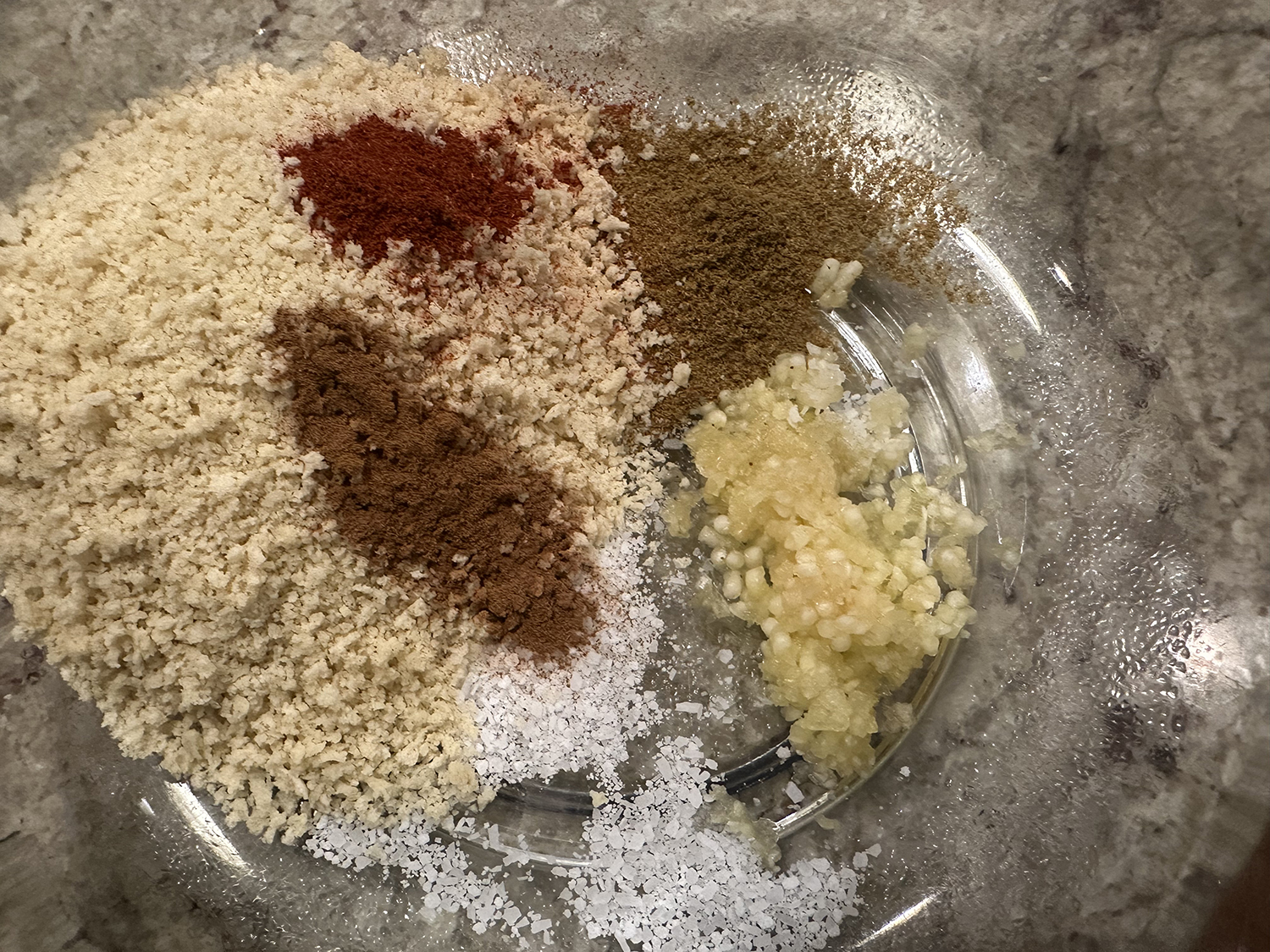
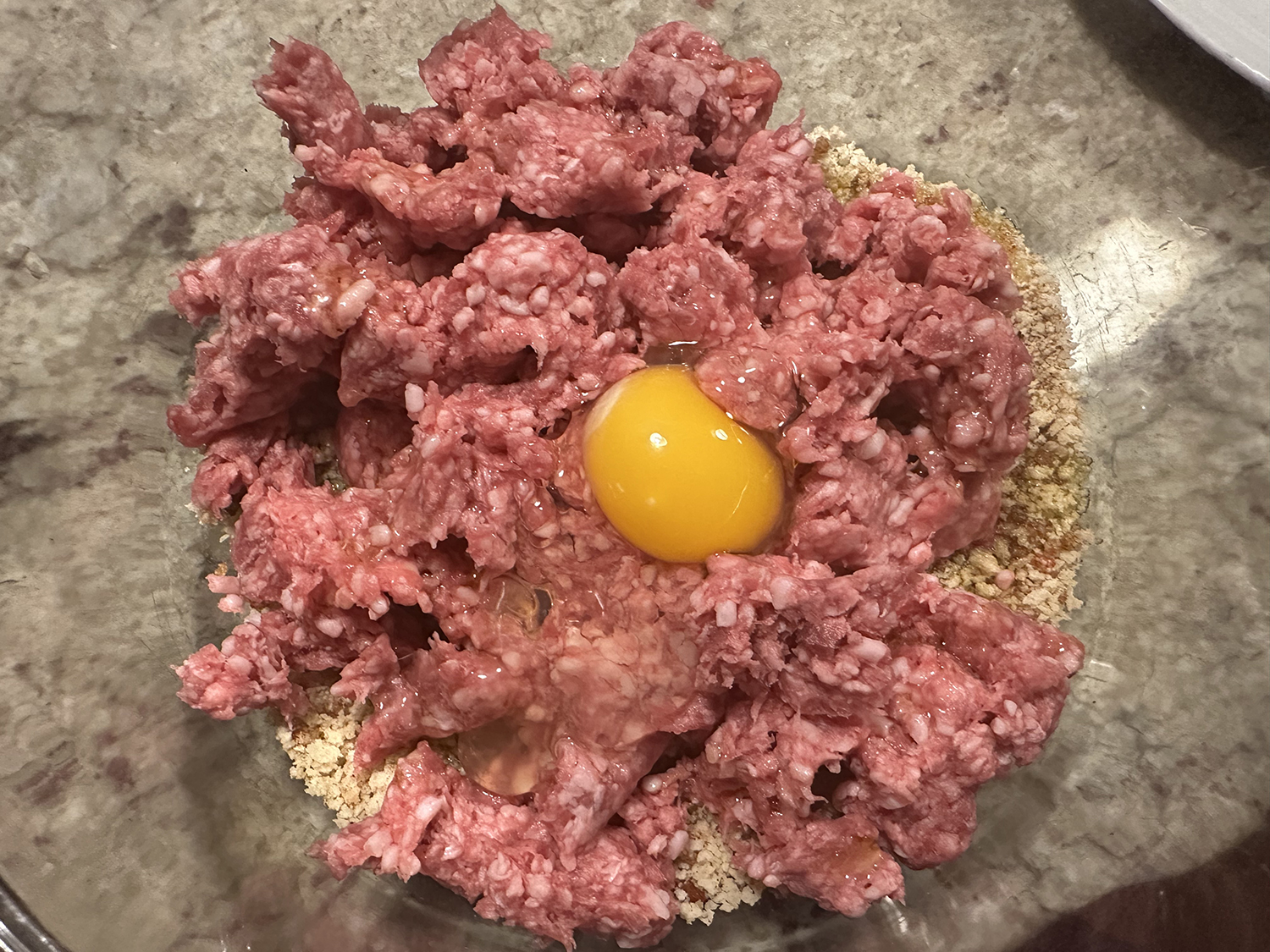
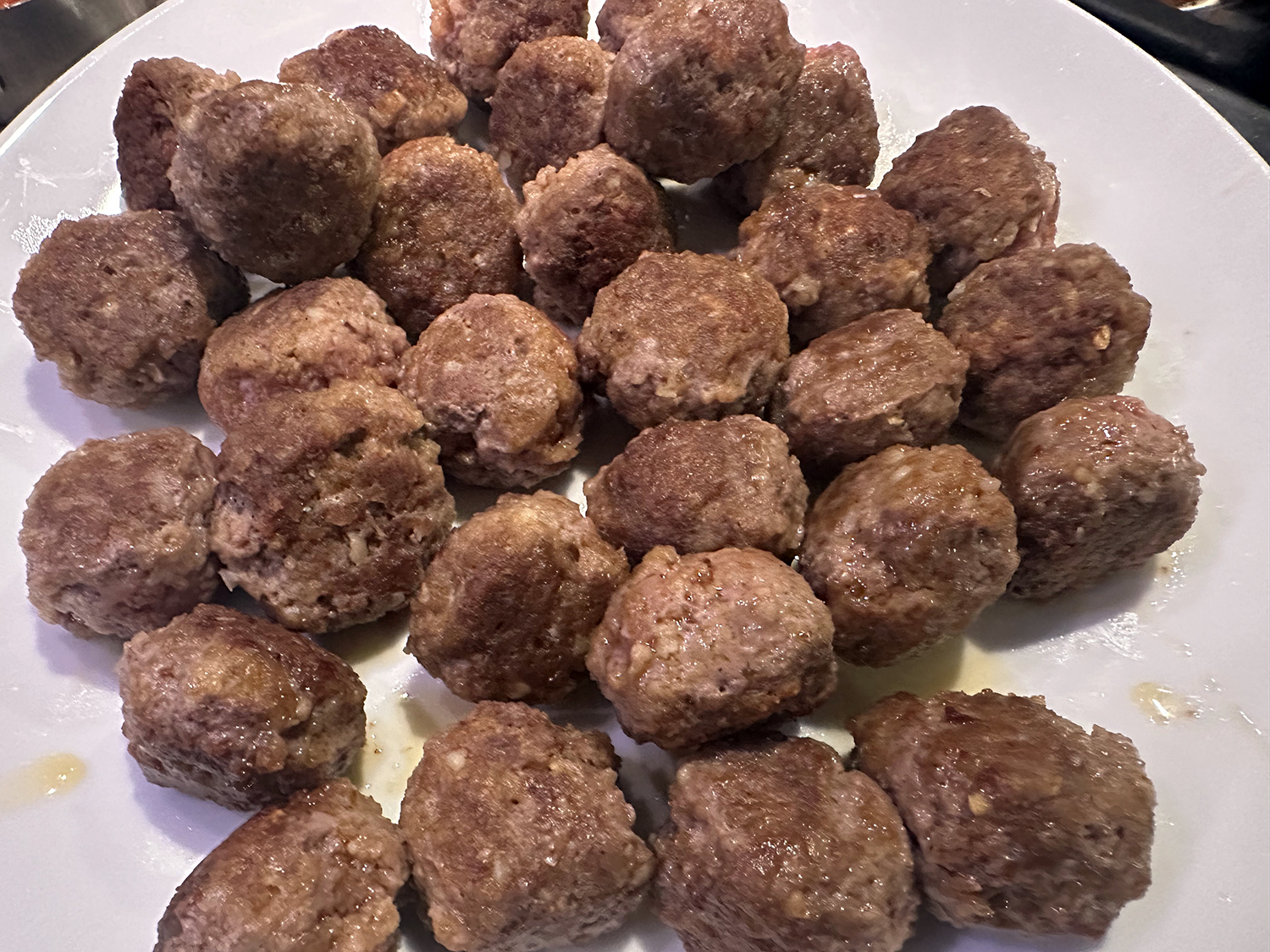
  1. FOR THE MEATBALLS: Combine lamb, panko, egg, ras el hanout, lemon zest, garlic, and salt in large bowl and mix with your hands until thoroughly combined. Divide into 16 even portions, about 1¼ ounces each. Using your hands, roll each portion into ball.
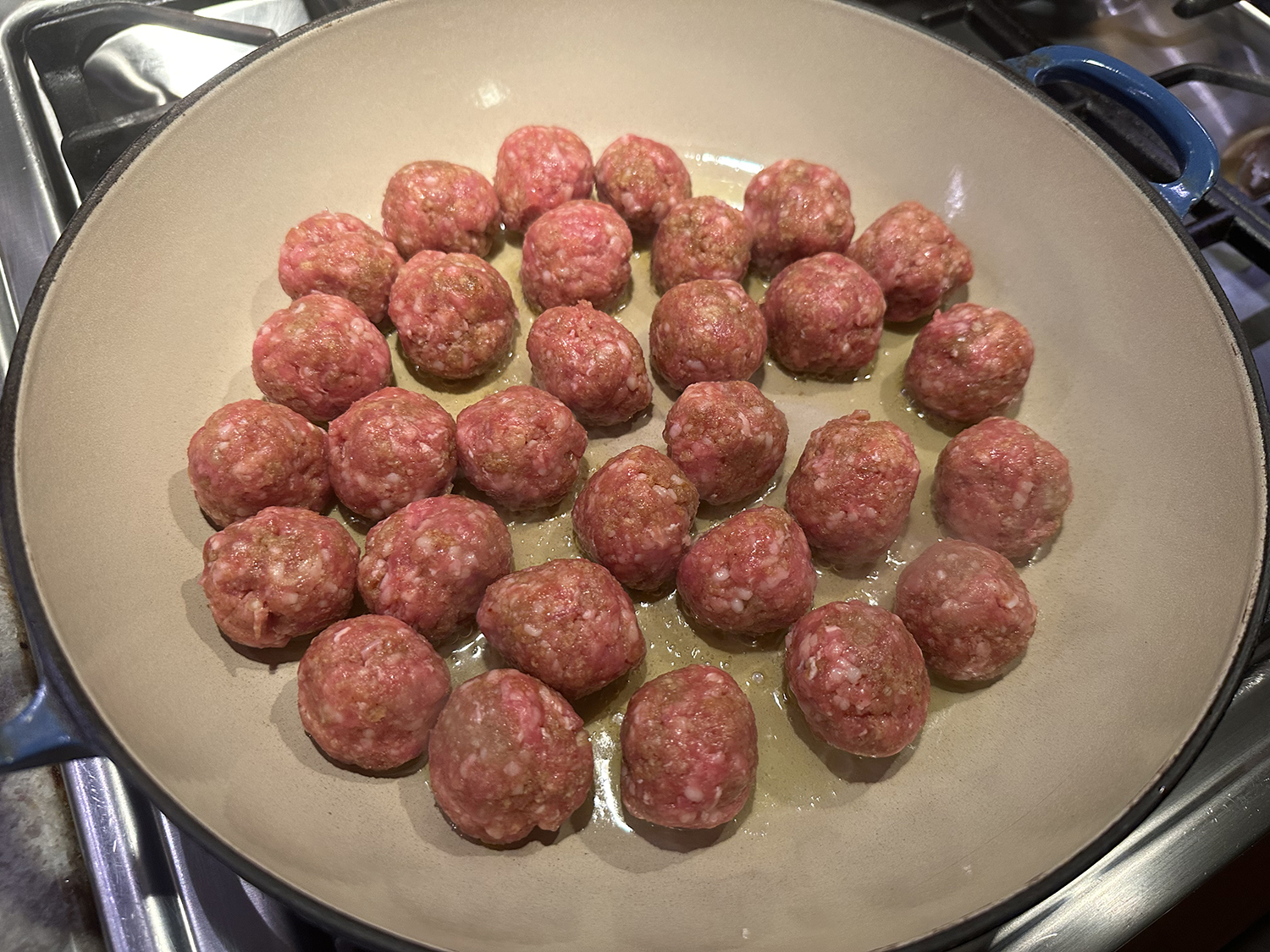
  2. Heat oil in Dutch oven over medium-high heat until just smoking. Add meatballs and cook until well browned all over, about 5 minutes. Transfer meatballs to large plate, leaving fat in pot.
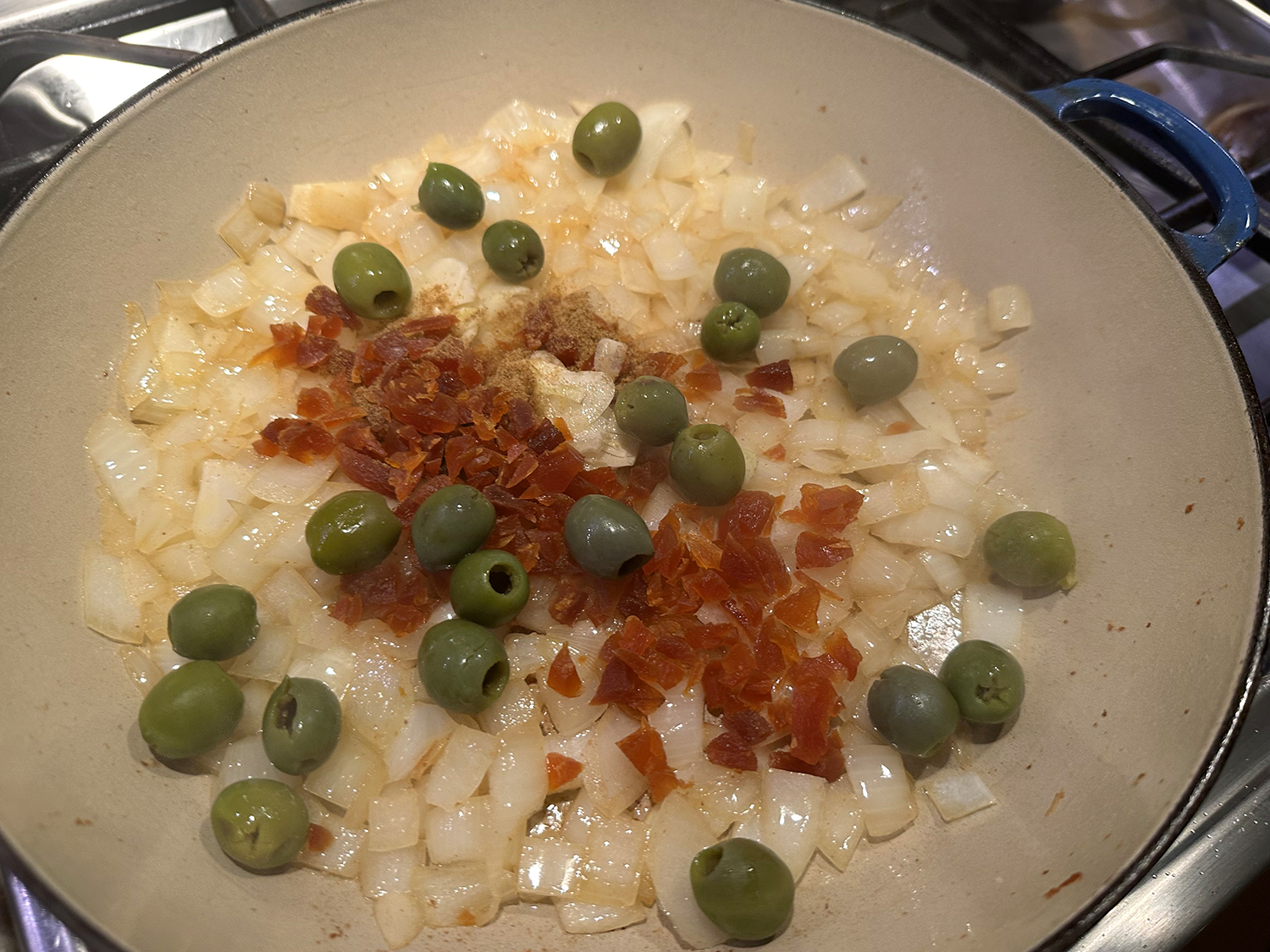
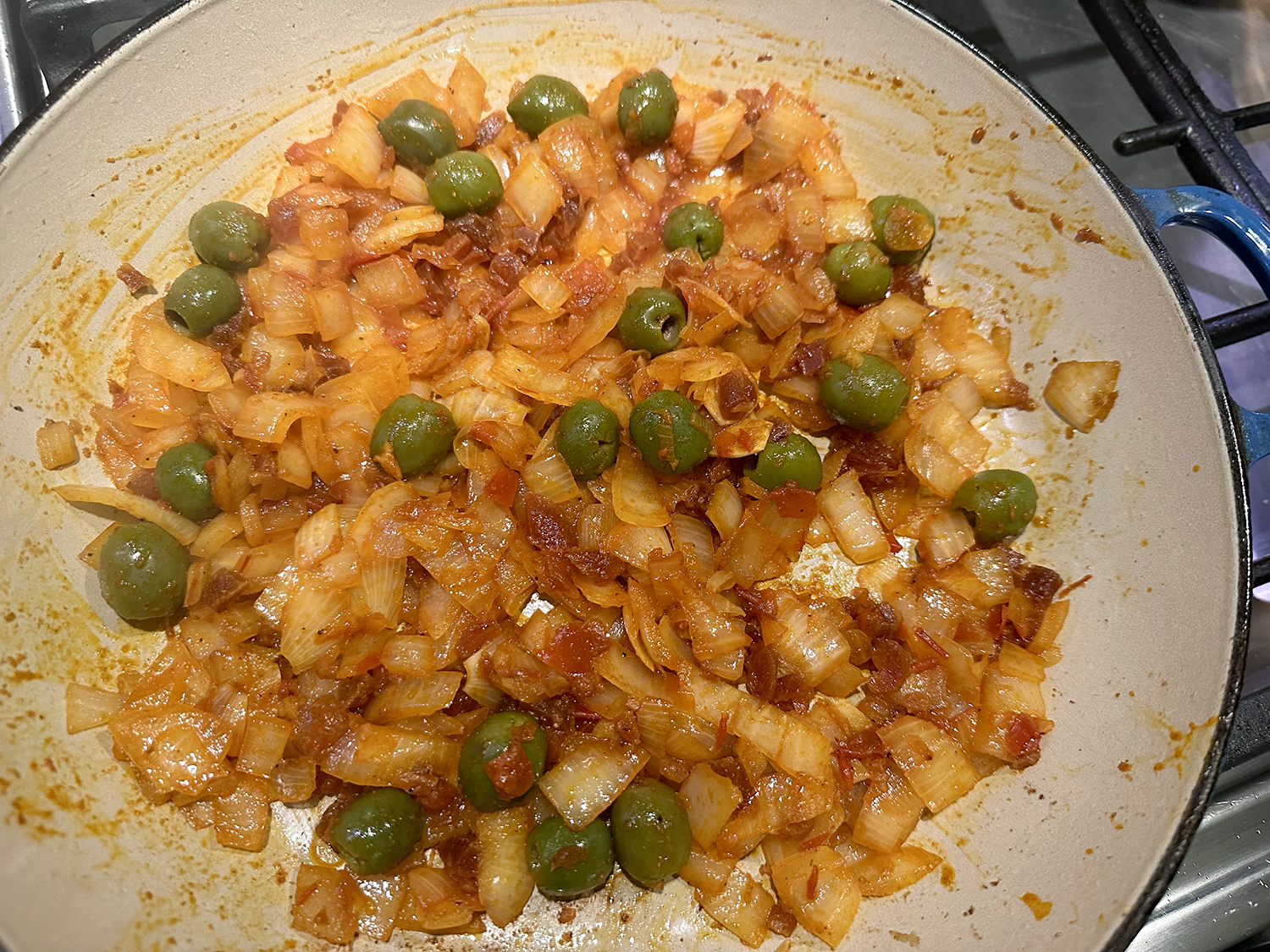
  3. FOR THE EGGPLANT AND SAUCE: Heat fat left in pot over medium-high heat until just smoking. Add eggplant, onion, garlic, ras el hanout, and salt and cook until vegetables are beginning to soften, 8 to 10 minutes, stirring frequently.
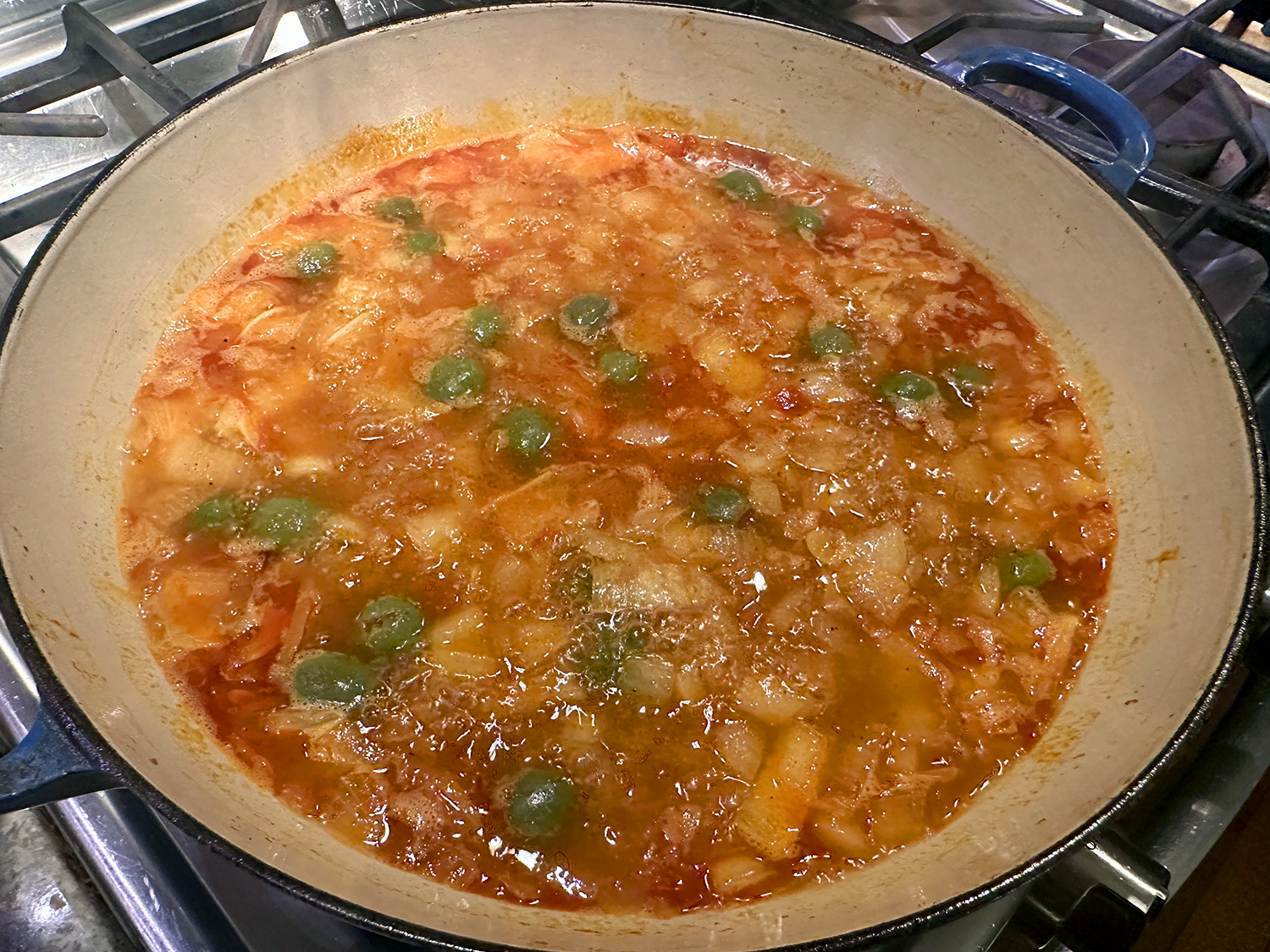
  4. Stir in tomatoes, chickpeas, raisins, water, olives, harissa, and lemon zest. Nestle meatballs into sauce. Reduce heat to medium-low; cover; and cook until eggplant is very tender and meatballs register 160 degrees, about 10 minutes.
  5. Off heat, stir in ¼ cup cilantro and ¼ cup mint. Sprinkle remaining ¼ cup cilantro and remaining ¼ cup mint over top and serve.

http://www.lynnandruss.com

Adapted from a recipe by Mark Huxsoll for America’s Test Kitchen

Lemon-Tarragon Shrimp Scampi with Orzo

For a delicious and simple one-dish dinner, this lemony shrimp scampi is served over a bed of tarragon-and-parsley-flecked orzo. Lightly toast the orzo before simmering to impart a faint nutty flavor and toasty aroma.

The orzo will continue to absorb some liquid after you add the shrimp and re-cover, so don’t worry if it still looks a little soupy when you take it off the heat — you don’t want the skillet to be completely dry.
Fresh tarragon brings an anise-like pop of flavor to the classic garlicky white wine sauce in this version of shrimp scampi. Serve the shrimp over creamy, herb-flecked orzo, or crusty bread if you are short on time. The Hubs suggested if you dislike tarragon, use cilantro instead and swap out the lemon juice and zest with lime for a Mexican riff.

F&W suggests you might pair this one-skillet dish with with a fresh, crunchy side, such as Celery and Apple Salad or Wedge Salad with Candied Bacon.

*Since we had homemade shellfish stock on hand, we used it instead of chicken stock. This makes the dish pescatarian.

Lemon-Tarragon Shrimp Scampi with Orzo

  • Servings: 4
  • Difficulty: easy
  • Print

Ingredients

  • 1/4 cup unsalted butter
  • 2 Tbsp. extra-virgin olive oil, divided
  • 4 garlic cloves, thinly sliced
  • 1/2 tsp. crushed red pepper
  • 1/2 cup (4 oz.) dry white wine  
  • 1 tsp. kosher salt
  • 1 tsp. grated lemon zest plus 1/4 cup fresh lemon juice (about 2 medium lemons),
  • divided
  • 1 lb. jumbo (16/20) peeled and deveined raw shrimp, tail-on
  • 8 oz. orzo (about 1 1/3 cups)
  • 2 cups chicken stock*
  • 1 cup water
  • 1/4 cup finely chopped fresh parsley
  • 1 Tbsp. chopped fresh tarragon, divided, plus more for garnish

Directions

  1. Heat butter and 1 tablespoon oil in a large skillet over medium-high. Add garlic and crushed red pepper; cook, stirring constantly, until fragrant, about 1 minute. Stir in wine, salt, and lemon zest; cook, stirring occasionally, until wine is slightly reduced, about 3 minutes.
  2. Add shrimp in a single layer to sauce in skillet; cook until shrimp are opaque and just cooked through, 1 to 2 minutes, flipping once halfway through cook time. Transfer shrimp mixture to a medium bowl, and tent with aluminum foil to keep warm; set aside. Wipe skillet clean.
  3. Heat remaining 1 tablespoon oil in skillet over medium. Add orzo, and cook, stirring constantly, until lightly toasted, about 1 minute. Add chicken stock and 1 cup water; bring to a simmer over high. Reduce heat to medium-low; simmer, uncovered and undisturbed, until orzo is al dente and liquid is mostly absorbed, about 12 minutes. Remove from heat, and add parsley, 2 tablespoons lemon juice, and 1 teaspoon tarragon. Stir orzo mixture using a fork until evenly combined.
  4. Stir remaining 2 tablespoons lemon juice and remaining 2 teaspoons tarragon into reserved shrimp mixture. Spoon shrimp mixture over orzo; cover and let stand, allowing residual heat from the orzo to warm the shrimp through, 4 to 5 minutes. Uncover and garnish with additional chopped tarragon; serve immediately.

http://www.lynnandruss.com

Recipe by Paige Grandjean for Food & Wine

One-Pan Bratwurst with Fennel, Olives, and Oranges

America’s test Kitchen tells us why sausages are a great focal point for speedy one-pan meals. Starting the sausages in a covered skillet with some water keeps their casings from turning tough and leathery. The links are then pricked with the tip of a paring knife so that they give up a bit of their fat and juices. When the juices evaporate, they form a robust fond that could be deglazed from the pan with wine and used to create a braising liquid that deeply infuses the fennel with savory, meaty flavor. Quick-to-prep and quick-to-cook ingredients rounds out the meal.

The fond—the savory superstar of the kitchen—infuses every bite of the meal with porky goodness. “Though unassuming in appearance, the bronzed bits that form on the bottom of a pan as meat juices sizzle, evaporate, and brown are pure flavor, and the more of it that you can create, the meatier, richer, and all-around better-tasting your food will be.”

Pricking the links before too much pressure has built up inside the casings is vital, as it allows the meat to exude just enough fat and moisture to create a generous fond but not so much that the meat’s succulence is diminished.

We were beta testers for this recipe in the early summer of 2024. The final recipe and article were published in the Jan/Feb 2025 issue of Cook’s Illustrated.

One-Pan Bratwurst with Fennel, Olives, and Oranges

  • Servings: 4
  • Difficulty: easy
  • Print

Ingredients

  • 2 fennel bulbs, bases lightly trimmed
  • 2 Tbsp. fronds minced, divided, stalks discarded
  • 2 navel oranges
  • 1 lb. bratwurst
  • 2 cups water, divided, plus extra as needed
  • 1⁄2 cup dry white wine
  •  2 Tbsp. plus 2 tsp. extra-virgin olive oil, divided
  • 1⁄4 tsp. table salt
  • 1⁄8 tsp. pepper
  • 16 pitted Castelvetrano olives, halved lengthwise
  • 2 tsp. sherry vinegar
  • 1½ tsp. cornstarch
  • 1 tsp. honey

Directions

  1. Cut each fennel bulb lengthwise through core into 8 wedges (do not remove core); set aside. Cut away peel and pith from oranges. Holding fruit over bowl, use paring knife to slice between membranes to release segments. Squeeze remaining juice from membranes to yield 2 tablespoons; set aside. Cut segments in half and place in second bowl.
  2. Bring bratwursts and ¼ cup water to simmer in 12-inch skillet over medium heat. Cover and cook until bratwursts register about 135 degrees, 5 to 7 minutes. (If skillet contents begin to sizzle, add ¼ cup water.)
  3. Uncover and, using paring knife, pierce each bratwurst in 8 to 10 spots to release fat and juices. Continue to cook, uncovered, moving bratwursts as necessary, until dark fond forms on bottom of skillet, 2 to 4 minutes longer. Transfer bratwursts to cutting board.
  4. Add wine, 1 tablespoon oil, salt, pepper, and remaining 1¾ cups water to now-empty skillet. Stir, scraping up any browned bits. Add fennel wedges, arranging them cut side down in single layer. Add olives and bring to boil over medium-high heat. Adjust heat to maintain simmer; cover; and cook until fennel is tender, 10 to 12 minutes. Flip wedges and continue to cook, uncovered, until liquid is reduced by half, 5 to 7 minutes longer.
  5. While fennel cooks, add 2 teaspoons fennel fronds, vinegar, cornstarch, honey, and remaining 5 teaspoons oil to reserved orange juice and whisk to combine.
  6. Return bratwursts to pan, nestling links between fennel. Cover and continue to cook until bratwursts register 160 degrees, 7 to 12 minutes. Transfer bratwursts to cutting board and slice each link into thirds.
  7. Whisk orange juice mixture to recombine, then add to skillet. Cook, stirring constantly, until sauce is thickened and glossy, about 1 minute. Off heat, season with salt and pepper to taste. Divide fennel and sauce among shallow bowls. Top with bratwursts and orange segments and garnish with remaining 4 teaspoons fronds. Serve.

http://www.lynnandruss.com

Recipe from Steve Dunn for America’s Test Kitchen

Seared Chicken Thighs with Cherry Tomatoes and Olives

Always game for a weeknight one-pan dinner, here’s another winner to add to your repertoire. In this one-pan meal, freshly seared chicken thighs simmer in their own schmaltz alongside bursting tomatoes and salty olives. Those sweet and bright tomato juices serve as a starting point for a delicate sauce.

To make the most of the leftover olive brine, this recipe uses it in lieu of salt to season the sauce, as well as to deglaze the pan and extract the rich flavors that stick to the bottom when you sear chicken. Tarragon sprigs add their irresistible peppery aroma. If tarragon is impossible to find, fresh rosemary or marjoram make equally tasty alternatives. 

Overall, the recipe couldn’t have been much simpler, there is almost no prep. Other than seasoning the chicken thighs and slicing the shallots (a hand-held mandoline comes in real handy for that), the remaining ingredients just get thrown in the pan without any slicing or dicing.

Of course, if you are not enamored with olives, then this just isn’t for you…

Seared Chicken Thighs with Cherry Tomatoes and Olives

  • Servings: 4-5
  • Difficulty: easy
  • Print

Ingredients

  • 2 1/2 lbs. bone-in, skin-on chicken thighs (5 to 7 thighs)
  • Salt
  • 1 Tbsp. neutral oil, such as avocado or grapeseed oil
  • 2 shallots, thinly sliced
  • 1 6-oz. jar pitted green olives, drained, brine reserved
  • 1 6-oz. jar pitted Kalamata olives, drained
  • 1½ lbs. cherry tomatoes
  • 3 fresh tarragon sprigs
  • Crusty bread, or couscous for serving

Directions

  1. Pat dry the chicken using a paper towel and season with salt on all sides.
  2. In a large (12-inch) skillet over medium-high, heat the oil. Place the chicken skin-side down in the skillet and sear for 7 to 9 minutes, until crispy, golden and the skin easily releases from the bottom of the skillet. Flip the chicken thighs and continue cooking for 5 minutes, until golden brown. Transfer the seared chicken to a plate.
  3. Remove all but about 3 tablespoons of schmaltz from the skillet and add the shallots. Decrease the heat to medium. Cook, stirring frequently, until translucent and soft, about 3 minutes.
  4. Add ⅓ cup of the green olive brine to the skillet and scrape to loosen the brown bits from the bottom of the pan. Add the green olives, Kalamata olives, tomatoes and tarragon. Partly cover with a lid and bring the mixture to a simmer, occasionally stirring and crushing some of the tomatoes with the back of a spoon to release their juices.
  5. When the mixture reaches a simmer, tuck the chicken thighs in between the cherry tomatoes and olives, skin-side up. Partly cover with a lid and simmer over medium for 12 minutes, until the tomatoes have released most of their juices and have burst and softened.
  6. Meanwhile, place an oven rack as close to the broiler as possible and set the oven to broil.
  7. Remove the lid and place the skillet under the broiler for 2 to 3 minutes, until the chicken skin is slightly charred in places and crispy.
  8. Serve right away, with bread on the side.

http://www.lynnandruss.com

Recipe by Carolina Gelen for the NYTimes Cooking

Red Curry Shrimp with Coconut Rice and Cucumber Relish

Sweet and creamy coconut rice provide a cooling contrast to shrimp sautéed with red curry paste and a piquant cucumber relish. A delicious Thai dish that’s sure to impress and please. The coconut rice and the combination of cucumber and peanuts in the salad was fabulous — a nice change from a traditional side salad.

It was a bit of a fiasco in the kitchen that night. Just as three of us had filled our plates (thank goodness) from the pans on the stove, the Hubs bashed into the skillet handle sending the remaining shrimp and sauce flying into the air and all over the cabinets, floor and appliances.

Our grand doggie Bentley was in for a visit from the West Coast and made an immediate, lightening-fast U-turn to start licking up the floors and chow down any shrimp he could get to. Luckily Mommy Bentley scooped up the critter and held onto him until The Hubs wiped down the entire mess. Dinner take two…

As the meal ended, The Hubs knocked his glass of red wine over, with some spilling onto his brand new Kindle birthday gift—I kid you not. It was time for someone to just go to bed…

TIP: We typically buy shrimp with their heads on (this time we did not) so that we can save them and the shells for making shellfish stock. If you intend to do the same, buy about 1/4- to 1/2-pound more in weight.

Red Curry Shrimp with Coconut Rice and Cucumber Relish

  • Servings: 4
  • Difficulty: easy
  • Print

Ingredients

  • 1½ cups jasmine rice, rinsed thoroughly
  • 1½ cups water
  • 1¼ cups plus 2 Tbsp. canned coconut milk, divided
  • 2 Tbsp. plus 1 tsp. sugar, divided
  • 2¼ tsp. table salt, divided
  • ¼ cup distilled white vinegar
  • ¼ tsp. red pepper flakes
  • 1 English cucumber, cut into ½-inch pieces
  • ½ cup salted dry-roasted peanuts, chopped coarse
  • 2 Tbsp. chopped fresh cilantro
  • 2 Tbsp. red curry paste
  • 1½ lbs. jumbo shrimp (16 to 20 per lb.), peeled, deveined, and tails removed

Directions

  1. Combine rice, water, 1 cup coconut milk, 1 tablespoon sugar, and ¾ teaspoon salt in large saucepan. Bring to boil over high heat. Reduce heat to low to maintain bare simmer. Cover and cook until liquid is absorbed, about 20 minutes. Remove saucepan from heat and let sit, covered, for 10 minutes. Mix rice gently but thoroughly with rubber spatula.
  2. Meanwhile, whisk vinegar, pepper flakes, 1 tablespoon sugar, and 1 teaspoon salt in bowl until sugar is dissolved. Add cucumber, peanuts, and cilantro and toss to combine. Let stand until ready to serve, tossing occasionally.
  3. Cook curry paste, 1 tablespoon coconut milk, remaining 1 teaspoon sugar, and remaining ½ teaspoon salt in 12-inch nonstick skillet over medium-high heat until mixture is dry, about 3 minutes. Add shrimp and cook, stirring occasionally, until shrimp are opaque throughout, 4 to 5 minutes. Stir in remaining 5 tablespoons coconut milk. Bring to simmer, then remove from heat. Serve shrimp with coconut rice and cucumber relish.

http://www.lynnandruss.com

Recipe by Jessica Rudolf for ATK’s Cooks Country

Chicken Manchurian

We just love colorful stir-fries that explode with flavor! And this recipe doesn’t disappoint.

A bit of background: “A stalwart of Desi Chinese cooking, chicken Manchurian is immensely popular at Chinese restaurants across South Asia. Nelson Wang, a third generation Chinese chef who was born in Kolkata (formerly Calcutta), is credited with inventing the dish in Mumbai in the 1970s. This recipe comes from attempts at recreating the version served at Hsin Kuang in Lahore, Pakistan, in the late ’90s.”

You may have noticed at restaurants, it’s almost always served on a sizzler platter, the tangy, sweet-and-sour sauce bubbling and thickening on its way to the table. But making it at home doesn’t compromise any of the punchy flavors, in fact you can adjust the spiciness to your own preferences.

Velveting the chicken in egg and cornstarch means it’ll stay tender through the short cooking process; bell pepper, snow peas and onions add freshness and crunch to the otherwise intense flavors from ketchup and chile-garlic sauce.

As is typical, we did make some alterations. The ketchup was cut back by half to limit the sweetness. And last minute, we nixed the dried chiles altogether since their was so much chile-garlic sauce, and it was plenty spicy. Six ounces of snow peas were included for more color and crunch.

Finally at the end, for the slurry, a mere teaspoon of cornstarch wasn’t enough. Start with 1 tablespoon of corn starch in 1/4 cup of cool water combined until smooth. In Step 6, add half of it, and if more is needed, add a tablespoon at a time until you get your consistency. We used it all.

Chicken Manchurian

  • Servings: 4
  • Difficulty: easy
  • Print

Ingredients

  • 1 egg
  • 1/4 cup cornstarch, plus 1 Tbsp. for the slurry
  • 1 tsp. garlic paste or freshly grated garlic
  • 1 tsp. black pepper
  • Fine sea salt
  • 1½ lbs. boneless, skinless chicken breast, cut into ¾-inch cubes
  • ⅓ cup vegetable oil
  • 3 whole dried dundicut chiles or bird’s-eye chiles (optional)
  • 2-4 Tbsp. ketchup
  • ¼ cup chile-garlic sauce
  • 2 Tbsp. soy sauce
  • 1 cup chicken stock
  • 1 red bell pepper, halved, seeded and cut into ¾-inch pieces
  • 1 small onion, cut into ¾-inch cubes; OR 4 large scallion, trimmed and thinly sliced, more for garnish; OR both
  • 6 oz. snow peas, trimmed of strings, cut in half diagonally if large
  • Cooked white rice or fried rice, for serving

Directions

  1. Velvet the chicken: In a medium bowl, whisk the egg. Continue whisking and gradually add 4 tablespoons of cornstarch until there are no lumps. Stir in garlic, black pepper and ½ teaspoon salt. Add the chicken pieces and stir until well coated. Cover and set aside for 30 minutes.
  2. Meanwhile, in a small bowl, stir together ketchup, chile-garlic sauce, soy sauce, ½ teaspoon salt and chicken stock (if not using chicken stock, stir in 1 cup water). Set aside.
  3. In a large wok or deep, high-sided skillet, heat oil on medium for 45 seconds. Add half of the chicken (done in two batches to avoid crowding) and cook until it starts turning white, 1 to 2 minutes. Flip the pieces and continue cooking until the chicken starts to turn golden, 2 to 3 minutes. Using a slotted spoon, remove chicken and set aside. Repeat with remaining chicken.
  4. (Optional) Add dried chiles and cook on medium for about 1 minute, stirring occasionally.
  5. Add more oil to the wok. When hot, add the bell pepper and onion. Cook, stir-frying constantly until crisp tender. Add the snow peas and scallions, stirring altogether for about 1 minute more.
  6. Separately, mix the remaining 1 tablespoon cornstarch with ¼ cup water until smooth. Stir it into the wok and simmer until the sauce thickens and starts to turn glossy, 3 to 4 minutes. Add chicken and stir to combine. Top with scallion slices. Serve over steamed rice.

http://www.lynnandruss.com

Adapted from a recipe by Zainab Shah for NYTimes Cooking

Eggplant Chickpea Tagine

The tantalizing aromas as this dish comes together make your mouth water, your nostrils flare (in a good way), and your stomach growl. There are a lot of spices that contribute to the flavor-packed meal, but don’t let that deter you.

NOTE: One of those spices Ras El Hanout, can be easily purchased at most supermarkets, but if you can’t readily find it, there is a recipe variation below. I suggest you make this a day or two ahead of time and have it on hand when ready to cook.

This amazing recipe addresses several dietary restraints such as gluten-free, vegan, vegetarian, and high-fiber, but does not lack in flavor! It is a simple, delicious tagine recipe with eggplant and chickpeas infused with Moroccan spices served over cinnamon-scented couscous.

It’s luscious and hearty, yet totally plant-based and vegan. Another plus is that it can be made ahead, as leftovers get even more flavorful as the flavors have time to meld. The eggplant is succulent and meaty, a deliciously satisfying way to cook it!

This vegan tagine recipe starts with cutting and salting the eggplant, which is so meaty and filling here, you really won’t miss the meat at all (well some of you may). Salting the eggplant will not only help remove bitterness but will also prevent the it from soaking up too much oil.

TIPS: Soaking the eggplant, not only seasons it, it helps remove some bitterness and helps the eggplant absorb less oil. Don’t skip this step. If leaving the raisins and apricots out, you will need to add a little sweetness, 1-3 teaspoons honey, sugar, something, to taste. Feel free to cook and bake in a tagine – if using a brand new tagine, make doubly sure you soak it first.

Eggplant Chickpea Tagine

  • Servings: 4-6
  • Difficulty: easy
  • Print

Ingredients

  • 1 extra-large eggplant (or two small)
  • 2 tsp. salt
  • Bowl of water
  • 6 Tbsp. olive oil (divided)
  • 1 large onion, diced
  • 6–8 garlic cloves, rough chopped
  • 3 stalks celery, chopped
  • 1 red bell pepper, seeded and chopped (or large carrot)
  • 1 Tbsp., ras el hanout, more taste
  • 1 tsp. cumin
  • 1 tsp. coriander
  • 1/4 tsp. cinnamon
  • 14-oz. can diced or crushed tomatoes
  • 1/3 cup raisins (or chopped dried apricots)
  • 1 tsp. salt, more to taste
  • 1/2 tsp. pepper
  • 14-oz. can chickpeas, drained, rinsed.
  • 2 cups vegetable broth
  • Optional Garnishes: Cinnamon scented couscous, cilantro, olive oil, optional yogurt, optional Aleppo chili flakes

Cinnamon-Scented Couscous (serves 4) 

  • 2 cups vegetable stock
  • 2 Tbsp. olive oil
  • 1 small cinnamon stick (or 1/2 tsp.)
  • 1/2 tsp. cumin
  • 1/2 tsp. granulated garlic (or onion)
  • 1/2 tsp. salt, more to taste
  • 1 1/2 cups dry couscous

Directions

  1. PREP EGGPLANT: Quarter the eggplant, and cut into large chunks (1 1/2 inches at widest part). Place in a big bowl, cover with cool water just to enough to cover,  and stir in the salt. Place a plate over top to keep the eggplant submerged 20 minutes. Drain and pat dry. (Don’t rinse.)
  2. Preheat the oven to 375F 
  3. Pan Sear: In a large dutch oven, or ovenproof skillet, over medium-high heat, heat 1/4 cup oil. Working in 2 batches, brown two sides of the eggplant, until golden, then set these aside. No need to cook through. Add more oil for second batch if pot is dry.
  4. Make the stew: Add 2 more tablespoonsmore oil to the same pan, and the onion and saute 2-3 minutes, stirring. Add the garlic, celery and red pepper, lower heat to medium and cook until tender, about 5 minutes. Add the spices, canned tomatoes (and juices),  raisins, salt, pepper, chickpeas and vegetable broth. Bring to simmer, stirring.
  5. Nestle in the eggplant and give the pan a good shake so the stew levels. It should be like a stew-like. If it seems dry, add a little water. Drizzle with a little olive oil, cover tightly and place in the warm oven.
  6. Bake 20-25 minutes or until eggplant is tender and cooked through. While it’s baking make the couscous.
  7. Remove the lid, taste adding more salt to taste, keeping in mind the couscous will soak up some of the salt. If you feel the stew needs more flavor overall, add a little more ras el hanout, a 1/2 teaspoon at a time, tasting as you go. If it seems watery, bake uncovered for a few minutes. If dry, add a little water. To serve, sprinkle with optional  Aleppo chili flakes and fresh cilantro. Perhaps add an additional drizzle of olive oil, or a dollop of yogurt, if you desire.
  8. Serve with the cinnamon-scented couscous.
  9. To make couscous: Place broth, oil, spices and salt in a medium pot, and bring to boil. Stir in couscous. Cover and remove from heat. Let stand 7 minutes. Uncover and fluff with fork. Adjust salt.

http://www.lynnandruss.com

Adapted from a recipe by Sylvia fountaine

Ras el Hanout Recipe

Makes about 2 1/2 Tablespoons

  • 1 tsp. ground ginger
  • 1 tsp. turmeric
  • 1 tsp. salt
  • 34 tsp. sugar
  • 34 tsp. fresh ground black pepper
  • 12 tsp. cinnamon
  • 12 tsp. ground coriander
  • 12 tsp. cayenne
  • 12 tsp. ground allspice
  • 12 tsp. ground fennel
  • 14 tsp. ground cloves

Sheperd’s Style Pasta

Pasta alla pecorara, known as “shepherd’s style pasta,” gets its name from its use of sheep’s milk cheese and local vegetables. Milk Street was inspired by Abruzzese home cook Luisa Carinci, who enhanced her version with pancetta. The sauce is seasoned with marjoram, which grows abundantly in the region and tastes like a sweeter, more delicate oregano. If you can’t find it, fresh oregano works fine. We used a combo of both fresh from our herb garden.

The sauce traditionally is paired with a handmade ring-shaped pasta called anellini. In its place, store-bought orecchiette is used , which does an excellent job of catching chunks of the rustic sauce.

Don’t rush the cooking of the pancetta and aromatics. Keeping the pot covered and the heat on medium-low will give the pancetta time to render its fat and for the aromatics to relinquish their flavor and become meltingly soft.

Sheperd's Style Pasta

  • Servings: 6-8
  • Difficulty: easy
  • Print

Ingredients

  • 1/4 cup plus 1 Tbsp. extra-virgin olive oil, plus more to serve
  • 1 large zucchini (about 12 oz.), cut into ½-inch cubes
  • 1 small Italian eggplant (about 8 oz.), cut into ½-inch cubes
  • 1 medium red bell pepper, stemmed, seeded and cut into ½-inch pieces
  • Kosher salt and ground black pepper
  • 4 oz. pancetta, chopped
  • 1 small yellow onion, finely chopped
  • 2 medium carrots, peeled and finely chopped
  • 1 medium celery stalk, finely chopped
  • 1 pound orecchiette
  • 14½ oz. can crushed tomatoes
  • 1 Tbsp. finely chopped fresh marjoram or oregano
  • 1 cup lightly packed fresh basil, chopped
  • 1/2 oz. Parmesan cheese, finely grated (¼ cup), plus more to serve
  • Whole-milk ricotta or crumbled ricotta salata cheese, to serve

Directions

  1. In a Dutch oven over medium, heat ¼ cup oil until shimmering. Add the zucchini, eggplant, bell pepper, 1 teaspoon salt and ½ teaspoon pepper. Cook, stirring, until the vegetables are tender but still hold their shape, 10 to 12 minutes. Transfer to a plate and set aside.
  2. 02To the fat remaining in the pot, add the pancetta, onion, carrots and celery. Cover and cook over medium-low, stirring occasionally, until the pancetta is beginning to brown and the vegetables are softened, 18 to 20 minutes.
  3. 03Meanwhile, in a large pot, boil 4 quarts water. Add the pasta and 1 tablespoon salt, then cook, stirring occasionally, until al dente. Reserve 1 cup of the cooking water, then drain. Drizzle the pasta with the remaining 1 tablespoon oil and toss.
  4. 04To the mixture in the Dutch oven, add the tomatoes, marjoram and ½ cup pasta water. Bring to a simmer over medium and cook, uncovered and stirring, until a wooden spoon drawn through leaves a trail, 5 to 6 minutes. Add the pasta and vegetables; cook, stirring, until heated through, 2 to 3 minutes. Stir in the basil and Parmesan; add additional cooking water as needed if the mixture looks dry. Taste and season with salt and pepper. Serve topped with ricotta, additional oil and additional Parmesan.

http://www.lynnandruss.com

Adapted from a recipe by Rose Hattabaugh for Milk Street

Roasted Salmon with Miso Rice and Ginger-Scallion Vinaigrette

This NYTimes Cooking recipe appealed to us on several fronts. First, we love salmon, are fond of Asian cuisine and liked the idea that dinner was ready in only 30 minutes or so.

This simple weeknight meal makes great use of pantry staples to create complex flavors with minimal work. Miso is often used to flavor soups or sauces, and here, it is added to raw rice before cooking, which results in a delightfully sticky, savory steamed rice. Fragrant and nutty basmati is called for, but any long-grain rice will work.

Shredded cabbage brings freshness and crunch to the finished dish, but use whatever crispy vegetable you have on hand: shredded Brussels sprouts, carrots, snap peas, radishes and iceberg lettuce are all great options.

We purchased one large piece of salmon portioning it down to three 8-ounce pieces. For an even heftier meal, add some canned chickpeas, white beans or black beans (we opted not to). To finish, the vibrant tang of the bright ginger-scallion vinaigrette balances the richness of the roasted salmon.

Roasted Salmon with Miso Rice and Ginger-Scallion Vinaigrette

  • Servings: 4
  • Difficulty: easy
  • Print

Ingredients

  • ¼ cup white or sweet miso
  • 1½ cups basmati or other long-grain rice
  • 4 6-oz. skin-on salmon fillets
  • 2 Tbsp. extra-virgin olive oil
  • Kosher salt and black pepper
  • ¼ cup low-sodium soy sauce
  • ¼ cup chopped scallions, plus more for garnish
  • 1 Tbsp. distilled white vinegar or unseasoned rice vinegar
  • 1 Tbsp. minced fresh ginger
  • 4 cups finely shredded cabbage, such as green, Napa or savoy (about 8 oz.)
  • Roasted sesame oil, for serving

Directions

  1. Heat oven to 425 degrees. In a medium saucepan, whisk miso with 2¼ cups water until dissolved. Stir in rice and bring to a boil. Cover, reduce heat to low and cook until all of the liquid is absorbed and rice is tender, about 15 minutes. Remove from heat and let stand for 5 minutes. Fluff rice with a fork (it will be a little sticky).
  2. On a rimmed baking sheet, rub salmon all over with olive oil, season with salt and pepper and arrange skin-side up. Roast until fish is just opaque and cooked to medium, 8 to 10 minutes.
  3. In a small bowl, combine soy sauce, scallions, vinegar and ginger, and season with salt and pepper.
  4. Divide miso rice and cabbage among bowls. Top with salmon, ginger-scallion vinaigrette and sesame oil.

http://www.lynnandruss.com

Recipe by Kay Chun for NYTimes Cooking

Orzotto Alfredo with Sweet Peas

This Milk Street recipe is the delicious marriage of orzo pasta and fettuccine Alfredo. The orzo is cooked like rice, as if making risotto, so the starches create a creamy, silky sauce. Butter and Parmesan join the mix as a nod to Alfredo, and sweet peas add color and sweetness.

For the lushest texture, use a good-quality bronze-cut pasta; it will release more starch during cooking. At the supermarket, look for orzo with a rough, floury appearance. According to Milk Street, Widely available De Cecco works well, as does DeLallo.

It made a great side dish for another Milk Street recipe: Chicken with Artichokes and White Wine. They both shared some of the same ingredients.

Orzotto Alfredo with Sweet Peas

  • Servings: 6
  • Difficulty: easy
  • Print

Ingredients

  • 4 Tbsp. salted butter, cut into 1-Tbsp. pieces, divided
  • 1 medium shallot, minced
  • Kosher salt and ground black pepper
  • 8 oz. (1¼ cups) orzo
  • 1/4 cup dry white wine or dry vermouth
  • 2 z. Parmesan cheese, finely grated (1 cup), divided
  • 1 cup frozen peas, thawed
  • 1 Tbsp. grated lemon zest
  • 1/2 cup finely chopped fresh flat-leaf parsley

Directions

  1. In a large saucepan over medium, melt 3 tablespoons butter. Add the shallot and ½ teaspoon salt; cook, stirring, until softened and translucent, 1 to 2 minutes. Add the orzo and cook, stirring, until beginning to brown, 2 to 3 minutes. Add the wine and cook, stirring, until absorbed, about 1 minute.
  2. Stir in 2½ cups water, ½ cup Parmesan and ½ teaspoon each salt and pepper. Simmer over medium-high and cook, uncovered and stirring, until al dente, 12 to 16 minutes; add water, 1 to 2 tablespoons at a time, if the mixture is dry.
  3. Stir in another ½ cup water, followed by the remaining ½ cup Parmesan, the peas, lemon zest, parsley and remaining 1 tablespoon butter. Stir until the butter is melted and the peas are warmed through, 1 to 2 minutes. Off heat, taste and season with salt and pepper.

http://www.lynnandruss.com

Recipe by Rose Hattabaugh for Milk Street

Chicken with Artichokes and White Wine

Maybe you have never of Artichauts à la barigoule, a classic Provençal braise that combines fresh artichoke hearts with aromatic vegetables, herbs and white wine. If not, this recipe is worth a try. Here, chicken thighs are seared on the stovetop and while they finish cooking in the oven, canned artichokes are used to put together a simplified barigoule that serves as both a vegetable accompaniment and a flavorful sauce.

For subtle lemony notes, strips of zest are simmered with the artichokes. A Y-style vegetable peeler is the best tool for removing zest in strips from the fruit, but try to take only the yellow peel, as the white pith underneath is bitter. If desired, serve with warm crusty bread and or a side salad.

Don’t use marinated artichoke hearts for this recipe. The seasonings will overpower the other ingredients. Instead of spooning the artichoke mixture on and around the thighs, we laid the mixture in a deep platter and placed the chicken on top to prevent the crispy skin from getting soggy before serving.

Chicken with Artichokes and White Wine

  • Servings: 4
  • Difficulty: easy
  • Print

Ingredients

  • 2½ lbs. bone-in, skin-on chicken thighs, trimmed and patted dry
  • Kosher salt and ground black pepper
  • 1 Tbsp. extra-virgin olive oil
  • 3 Tbsp. salted butter, cut into 1-Tbsp. pieces, divided
  • 1 medium yellow onion, halved and thinly sliced
  • 2 medium carrots, peeled, halved lengthwise and sliced crosswise ¼ inch thick
  • 4 medium garlic cloves, minced
  • 1 cup dry white wine
  • 2 14-oz. cans artichoke hearts, drained, cut into quarters if whole
  • 3 3-inch-long strips lemon zest, plus 2 Tbsp. lemon juice
  • 1 cup low-sodium chicken broth
  • ¼ cup finely chopped fresh flat-leaf parsley

Directions

  1. Heat the oven to 475°F with a rack in the middle position. Season the chicken all over with salt and pepper. In a 12-inch skillet over medium-high, heat the oil until barely smoking. Add the chicken skin down and cook without disturbing until golden brown on the bottoms, 5 to 8 minutes. Using tongs, transfer the chicken skin up to a rimmed baking sheet and roast until the thickest part of the thighs reach 175°F, 15 to 20 minutes.
  2. While the chicken roasts, pour off and discard all but 1 tablespoon fat from the skillet. Set the pan over medium and melt 2 tablespoons of butter.Add the onion, carrots and ¼ teaspoon salt and ½ teaspoon pepper, then cook, stirring occasionally, until the onion is translucent, 3 to 5 minutes. Add the garlic and cook, stirring, until fragrant, about 30 seconds. Add the wine and cook, scraping up any browned bits, until reduced by about half, 2 to 4 minutes.
  3. Stir in the artichokes, lemon zest and broth. Bring to a simmer over medium-high and cook, uncovered and stirring occasionally, until the carrots are tender and the liquid is slightly reduced, 4 to 5 minutes. Remove from the heat, cover and set aside.
  4. When the chicken is done, using tongs, transfer it to a plate. Remove and discard the lemon zest from the artichoke mixture. Add the remaining 1 tablespoon butter and stir until melted, then stir in the lemon juice and parsley. Taste and season with salt and pepper. Transfer the mixture to a deep platter and place the chicken thighs on top to keep the crispy skin from getting soggy before serving.

http://www.lynnandruss.com

Recipe from Rose Hattabaugh for Milk Street

Asparagus Involtini

When we spied this asparagus recipe in our latest issue of Food & Wine, we knew we had to get it on our short list. An elegant alternative to bacon-wrapped asparagus, these prosciutto-wrapped spears are a delightful combination and perfect for springtime.

Asparagus is quickly blanched and shocked to preserve its bright green color and crisp-tender texture. When paired with nutty Montasio cheese (named after the Montasio plateau in Italy, this rich, semi-hard cheese is made from cow’s milk and has a nutty, slightly fruity flavor). Montasio cheese is difficult to source in our area, so Asiago makes a good substitute.

Wrapped in salty prosciutto, these asparagus involtini—the Italian word for “rolls”—make for a great party appetizer or vegetable side dish. Serve these prosciutto-wrapped asparagus warm, accompanied by a fresh salad, or as part of an antipasto platter.

Asparagus typically takes about three to four minutes to blanch in boiling salted water. To keep the asparagus extra green and crisp before it finishes cooking in the pan, blanch it for just two to three minutes.

The wrapping process is a bit tricky, so keep your patience and perhaps buy a few extra slices of prosciutto. If you don’t need to use the extras, they make a mighty fine nibble. Since there was just two of us for dinner, we halved the recipe and still had leftovers.

TIP: Chilling the prosciutto in the refrigerator for a few minutes before rolling will help keep it together as you work it around the asparagus; when the prosciutto is too warm it can tear while rolling. 

Have a party coming up? Rolled and uncooked prosciutto and asparagus wraps can be made ahead and stored in an airtight container in the refrigerator for up to four days.

Asparagus Involtini

  • Servings: 4-8
  • Difficulty: moderately easy
  • Print

Ingredients

  • 1 lb. asparagus, trimmed
  • 8 oz. Montasio or Asiago cheese, chilled (about 4 cups)
  • 16 thin slices of prosciutto (preferably prosciutto di Parma)
  • 1 Tbsp. unsalted butter 
  • 1 Tbsp. extra-virgin olive oil
  • Black pepper and torn basil leaves, for garnish

Directions

  1. Bring a large pot of salted water to a boil over high. Fill a large bowl with ice water. Add asparagus to boiling water; cook, stirring occasionally, until bright green and crisp-tender, 2 to 3 minutes. Drain asparagus and immediately place in ice bath; let stand until thoroughly chilled, about 2 minutes. Drain and pat dry.
  2. Shave long strips of cheese using a vegetable peeler. Place 1 slice of prosciutto on a clean work surface. Place a small cheese slice (about 1/2 ounce) over prosciutto. Place 2 asparagus spears over cheese at the short end of the prosciutto slice. Tightly roll prosciutto around asparagus spears, spiraling upward. Repeat process with remaining prosciutto, cheese, and asparagus.
  3. Heat butter and oil in a large nonstick skillet over medium until butter melts and begins to foam. Add 4 or 5 asparagus rolls to skillet, seam side down, and cook until prosciutto is crisp and cheese is melted, 2 to 3 minutes per side. Repeat with remaining asparagus rolls. Transfer to a platter; sprinkle with black pepper and basil. Serve warm.

http://www.lynnandruss.com

Recipe by Lachlan Mackinnon-Patterson for Food & Wine

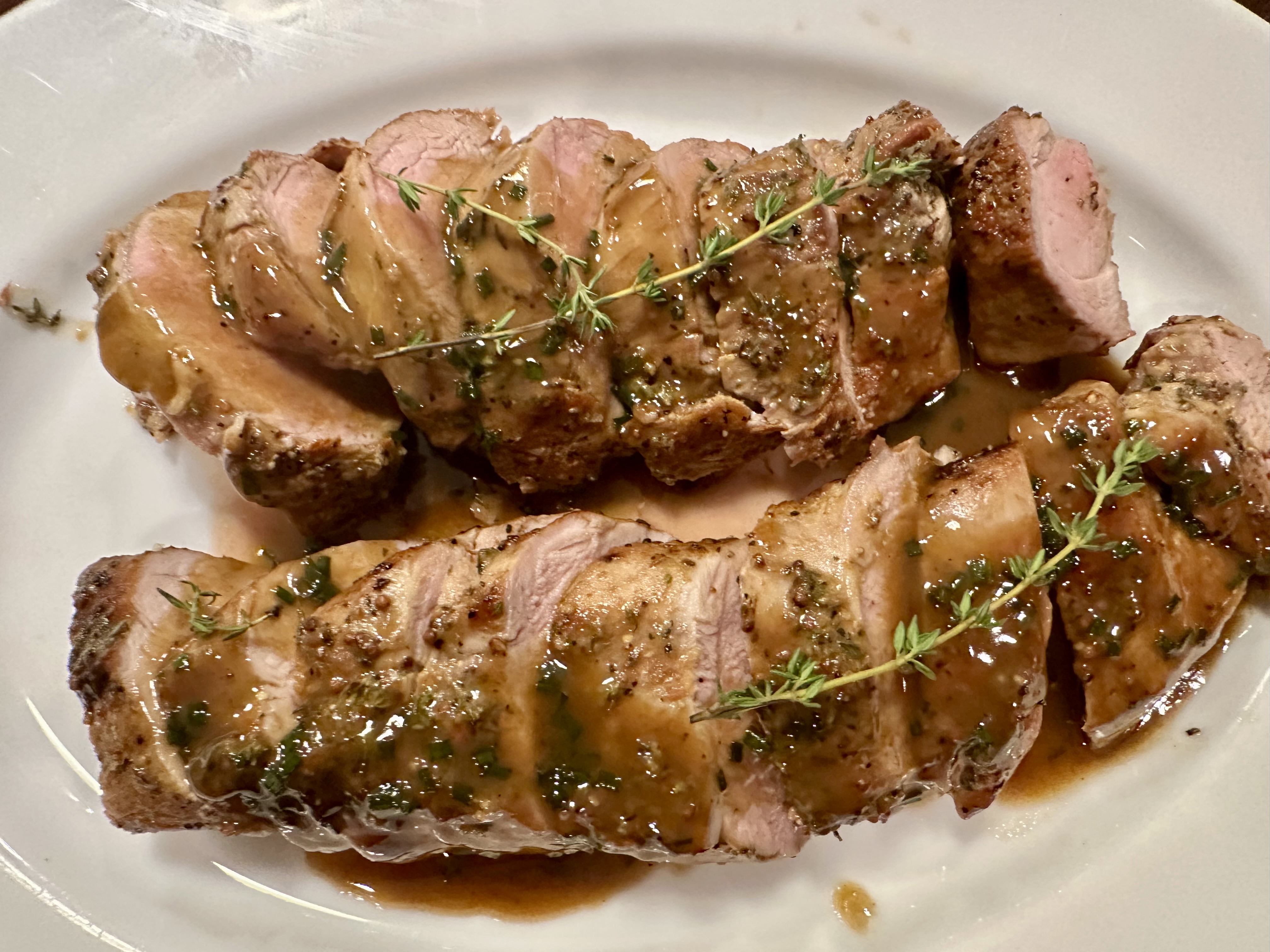
Hot Honey-Glazed Pork Chops

OMG, these skillet-cooked pork chops have it all going on, and then some. Here, Calabrian chiles combine with bright orange juice, honey, and salt for a sweet and zippy marinade that infuses the meat with smoky, fruity flavor while simultaneously tenderizing the chops. And sucking the meat off the bones is a must!

Calabrian chiles have a moderate heat level, comparable to cayenne peppers. There are three major types of Calabrian chiles, and their heat ranges from warming and tangy to mildly fruity. Whole jarred Calabrian chiles, such as the ones called for in this recipe, tend to be more warming and tangy than fruity.

Can’t quickly source Calabrian chiles? Do what we did and use Fresno chiles as a substitution. Chop a couple of them up, sauté in about 1 tablespoon olive oil for several minutes, then strain the oil from the chiles. Separate and use both for the recipe.

Aside from adding flavor to a dish, raw honey is mildly acidic and contains trace amounts of a key enzyme called protease, which both help break down connective muscle tissue, gradually tenderizing tougher meat cuts. For more tender cuts like these chops, honey caramelizes the surface for a cracking crust suffused with toasty notes and a lustrous glaze that doesn’t require much work on your behalf.

Remember you’ll be marinating the pork chops for at least 1 hour. Ours marinated for 2 1/2 hours. And by all means, get the rib chops. We kept oohing and aahing through out the dinner, and again with the leftovers. It is on the short list to make again.

Hot Honey-Glazed Pork Chops

  • Servings: 4
  • Difficulty: easy
  • Print

Ingredients

  • 3/4 cup plus 1 Tbsp. orange juice, divided
  • 2 Tbsp. plus 1/4 cup honey, divided
  • 2 Jarred whole Calabrian chiles, chopped, plus 2 tsp. chile oil, divided
  • 1 Tbsp. kosher salt, divided, plus more to taste
  • 4 Bone-in rib-cut pork chops (about 1 inch thick) (about 2 lbs.)
  • 1 tsp. black pepper
  • 2 Tbsp. canola oil, divided
  • 2 Shallots, sliced
  • 4 Garlic cloves, thinly sliced 
  • 1 1/4 cups chicken broth
  • 1 Tbsp. Dijon mustard
  • 1 Whole small navel orange, sliced into half-moons
  • 2 Tbsp. cold unsalted butter, cut into 2 pieces 
  • 2 tsp. fresh thyme leaves

Directions

  1. Whisk together 3/4 cup orange juice, 2 tablespoons honey, Calabrian chile oil, and 1 teaspoon salt in a small bowl. Transfer mixture to a large ziplock plastic bag; add pork chops. Seal bag, and turn to coat pork. Refrigerate for at least 1 hour and up to 8 hours.
  2. Preheat oven to 425°F. Place marinated pork chops on a large plate; reserve marinade. Pat pork chops dry using paper towels. Sprinkle both sides evenly with black pepper and remaining 2 teaspoons salt.
  3. Heat a 12-inch cast-iron skillet over high until starting to smoke. Reduce heat to medium. Add 1 tablespoon canola oil to skillet, swirling to coat. Add 2 pork chops; cook, undisturbed, until browned on 1 side, 3 to 4 minutes. Transfer to a plate, browned side up; repeat cooking process with remaining 2 pork chops. Set aside.
  4. Wipe skillet clean. Return skillet to medium heat and add remaining 1 tablespoon canola oil, shallots and garlic. Cook over medium, stirring often, until starting to soften, 2 to 3 minutes. Add chicken broth, and bring to a boil over high. Boil, stirring often, until slightly reduced, about 1 minute. Add reserved marinade, and continue to boil for 1 minute. Reduce heat to medium; add chopped Calabrian chiles. Place pork chops in skillet, browned side up, and bake until a meat thermometer inserted into thickest portion of pork chops registers 140°F, about 12 minutes.
  5. Transfer pork chops to a plate. Bring marinade mixture in skillet to a boil over medium-high. Whisk in mustard, remaining 1/4 cup honey, and remaining 1 tablespoon orange juice until combined. Add orange slices, and cook, stirring occasionally, until mixture is thickened and begins to resemble a sauce, about 4 minutes. Remove from heat; add butter, 1 tablespoon at a time, whisking until emulsified, about 1 minute. Season to taste.
  6. Nestle pork chops in skillet, spooning orange slices and sauce over pork chops. Sprinkle with thyme; serve.

http://www.lynnandruss.com

Recipe by Andee Gosnell for Food & Wine

Sausage and Barley Soup with Greens

This simple, satisfying soup relies on sausage as its flavorful base, therefore we doubled the amount. Start by cooking raw sausage, rather than precooked links, since it generally has better texture and flavor for soup.

Pearled barley adds heartiness and a wonderful chewy texture, another item we increased. We also doubled the greens which are stirred in at the end. A little vinegar is added for brightness, and voila!, you have a cozy meal in less than an hour of mostly hands-off time.

To make this soup gluten-free, you can substitute French green lentils for the barley. If you are making it ahead of time, wait to add the greens until you’re ready to serve to preserve their bright, fresh flavor.

As mentioned above, we altered certain ingredients, in some cases because that is how the items were packaged. Instead of 8 ounces of sausage, our coil was 1 pound and felt that amount was perfect. The baby kale came in 5-ounce clam shells so we used two for a total of 10 ounces instead of the 8 listed. The barley was increased to 3/4 cup and we added 4 cloves of garlic, chopped. Our changes are noted in the recipe below.

Tip: If using regular (hulled) barley, add about 15 minutes to the simmer time for the barley to become tender.

Sausage and Barley Soup with Greens

  • Servings: 6-8
  • Difficulty: easy
  • Print

Ingredients

  • 2 Tbsp. olive oil 
  • 1 lb. raw Italian pork or chicken sausage (casings removed if necessary)
  • 1 medium onion, chopped (about 2 cups)
  • 3 large carrots, peeled and chopped (about 2 cups)
  • 4 cloves garlic, peeled and chopped
  • Salt and black pepper
  • 6 cups chicken stock or water
  • 1 14-oz. can diced tomatoes
  • 3/4 cup pearled barley (see Tip)
  • 10 oz. tender greens, like spinach or baby kale
  • 2 Tbsp. red wine vinegar or apple cider vinegar
  • Grated Parmesan and fresh herbs (optional), for garnishing

Sausage and Barley Soup with Greens

  • Servings: 6
  • Difficulty: easy
  • Print

Directions

  1. Heat a medium Dutch oven or other heavy-bottomed pot over medium. Add the olive oil and swirl to coat the bottom of the pot. Add the sausage, pressing it into a thin layer that covers the bottom of the pot. Cook, undisturbed, until golden brown on the bottom, about 5 minutes. Flip the sausage and break it up into bite-size pieces, then cook until golden brown all over, stirring occasionally, about 5 minutes more. If there is a large amount of fat left in the pot after browning the sausage, remove all but about 2 tablespoons.
  2. Add the onion and carrots, season with salt and pepper, and cook, stirring occasionally, until the onion is translucent, about 5 minutes.
  3. Stir in the stock, tomatoes and their juices and the barley, scraping the browned bits from the bottom of the pot. Bring to a simmer, then turn the heat down to low and cook, stirring occasionally, until the barley is tender, about 30 minutes.
  4. When ready to serve, stir in the greens and cook until bright green and slightly wilted, about 2 minutes.
  5. Add the vinegar, taste and season with salt and pepper as needed.
  6. Divide among bowls and garnish with Parmesan and fresh herbs, if using. (The soup will keep, refrigerated, for up to 3 days. The barley will absorb some liquid as the soup sits, so loosen any leftover soup with a bit of water or stock.)

http://www.lynnandruss.com

Adapted from a recipe by Linda Xiao for NYTimes Cooking