Tag Archives: company-worthy

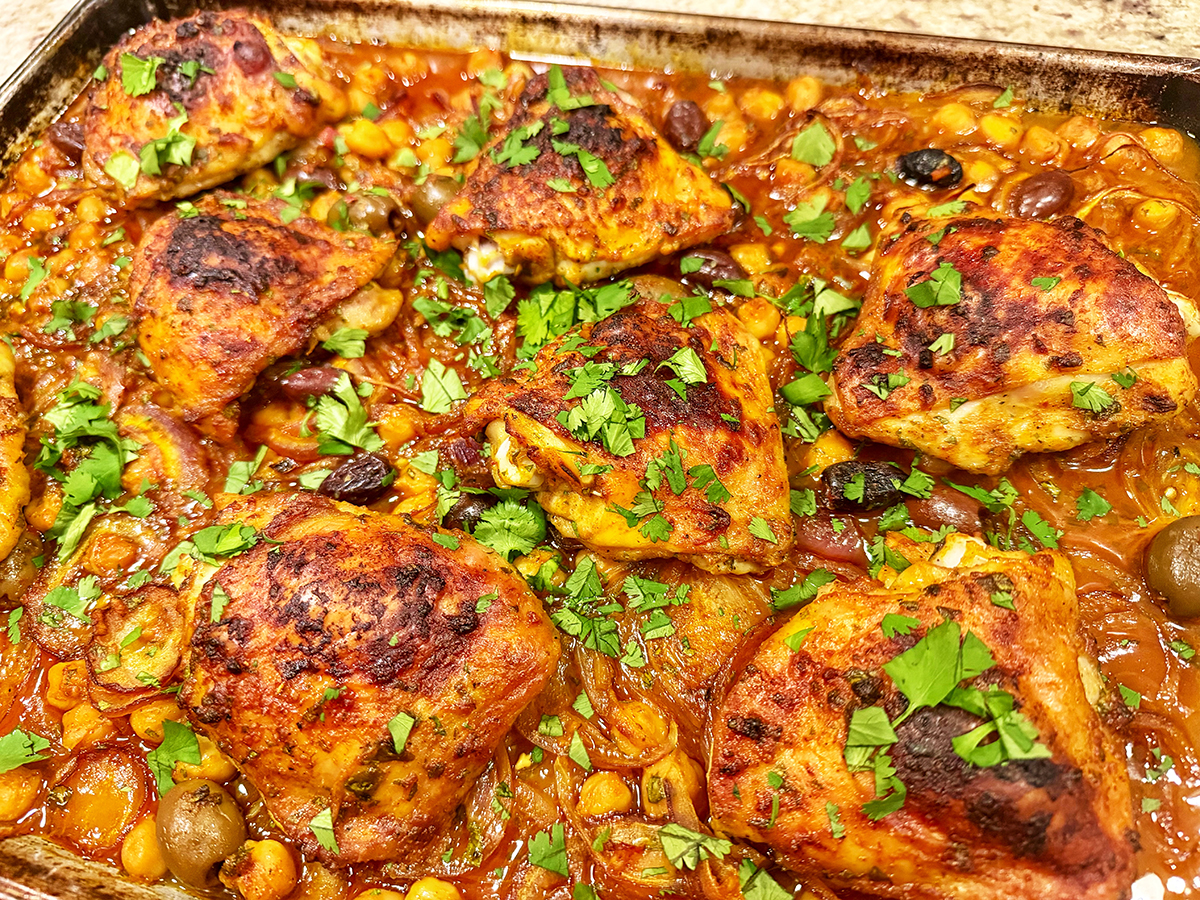
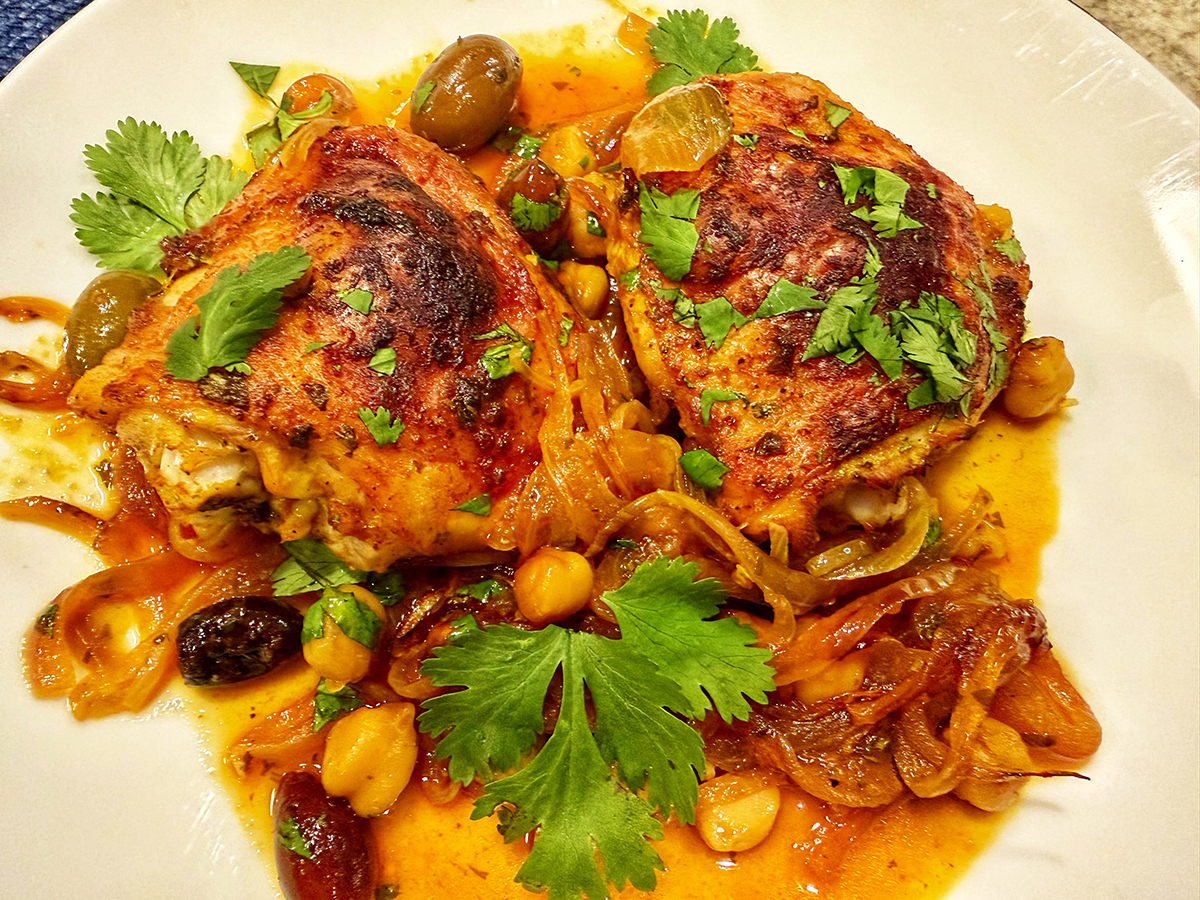
Sheet-Pan Harissa and Orange Chicken with Chickpeas

Look, I don’t make the rules, but I do make this chicken, and it’s a top contender for Best Chicken Recipe Alive. The marinade—harissa, honey, orange, warm spices—does all the heavy lifting while you do basically nothing except dirty one pan. Harissa, a North African spice, is the ringleader: smoky, fiery, and completely unwilling to be subtle (unless you use a mild version).

There’s something undeniably satisfying about a sheet-pan meal: the ease, the minimal cleanup, and the way flavors meld together on just one pan in the oven to create something so much more flavorful than the sum of its parts.
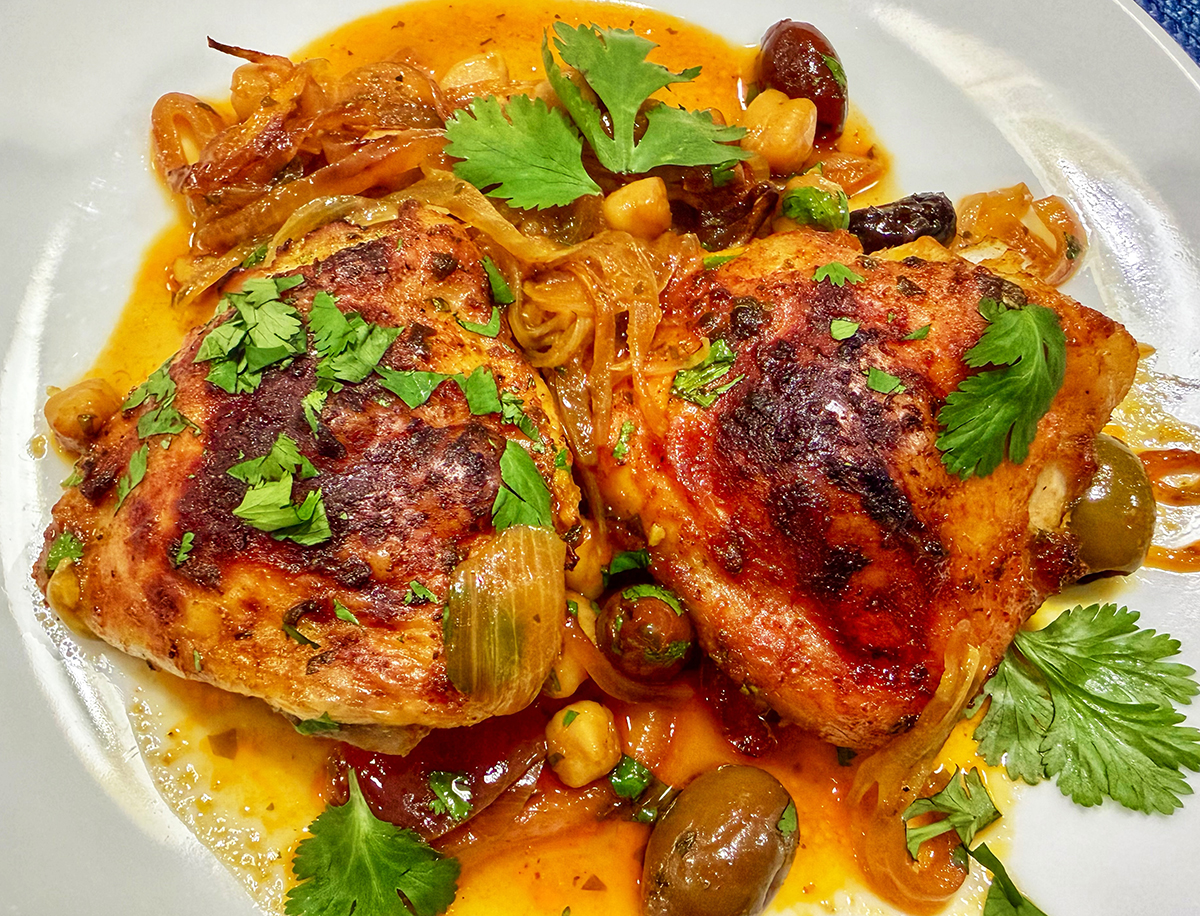
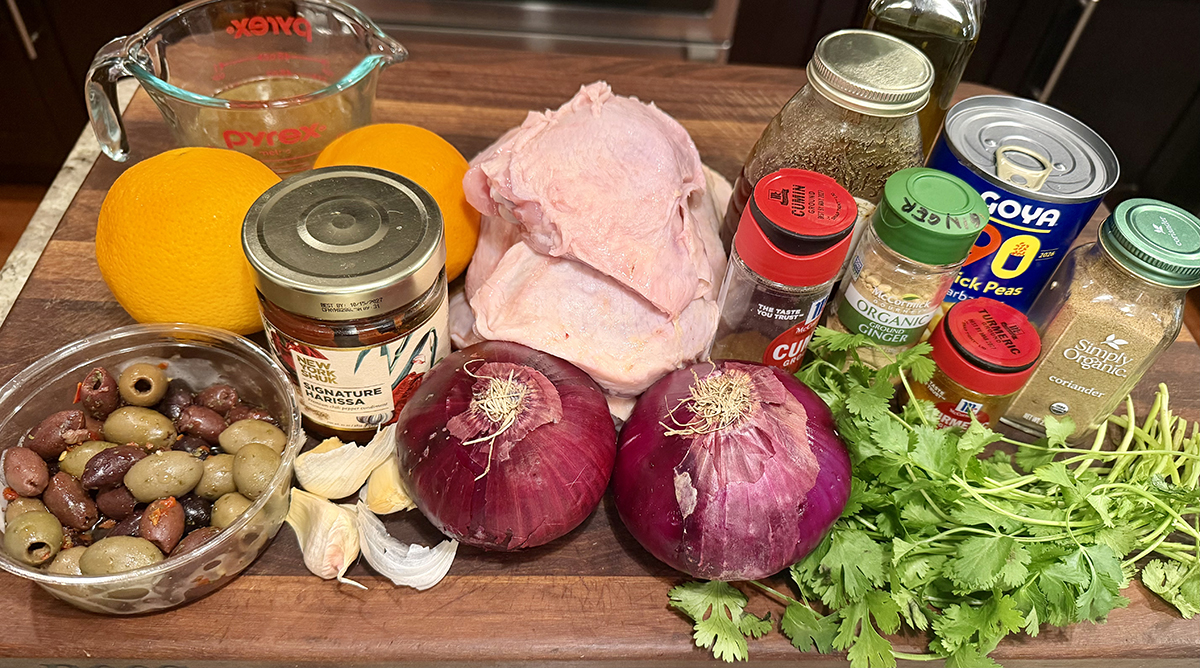
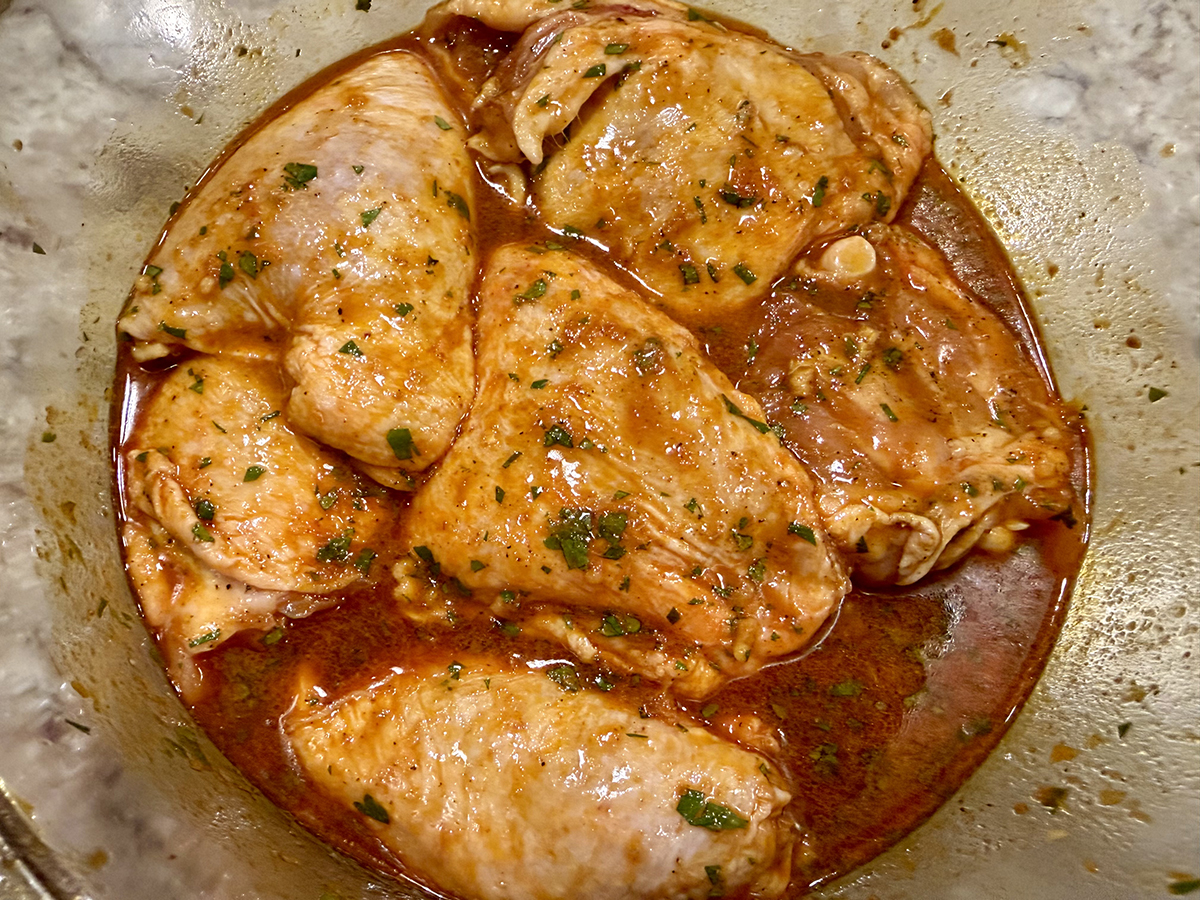
This recipe is a perfect example of this. It’s vibrant, bold, and aromatic from a flavorful marinade of harissa, fresh orange zest and juice, and warm spices, including cumin, coriander, turmeric, and ginger, which coats every element of the meal. It takes just a few minutes to prepare before cooking completely hands-off in the oven.

The spicy harissa balanced with the sweet orange juice and honey brings layers of heat and complexity to the dish. Bone-in, skin-on chicken thighs are ideal here, as they stay juicy and tender while the skin crisps up in the oven. Meanwhile, the chickpeas roast underneath the thighs, soaking up all the flavorful chicken juices as the chickpeas turn golden and slightly crispy on the edges.

Generously coating everything in the marinade creates this dish’s bold, bright flavor, which sets it apart from other basic weeknight sheet-pan chicken dinners. The addition of red onion and garlic further deepens the dish’s flavor, creating a meal that’s both comforting and exciting to eat.

Adaptability? You bet! You can adjust the spice level by choosing a mild or spicy harissa and using less or more as desired, swap chickpeas for small potato chunks or cauliflower, or even add a handful of olives for a briny punch.

Because the marinade is like liquid gold, you may want to add another can of chickpeas or serve over steamed rice to help sop up all that lusciousness.
Sheet-Pan Harissa and Orange Chicken with Chickpeas

  • Servings: 4
  • Difficulty: easy
  • Print

Ingredients

  • 2 1/2 lbs. bone-in, skin-on chicken thighs (about 8 chicken thighs)
  • 2 tsp. kosher salt, divided; for table salt use half as much by volume
  • 1/4 teaspoon freshly ground black pepper
  • 1/2 cup homemade chicken stock
  • Zest of 2 oranges plus 1/2 cup freshly squeezed orange juice
  • 3 Tbsp. extra-virgin olive oil
  • 1 to 2 Tbsp. harissa paste, according to taste
  • 1 1/2 Tbsp. honey
  • 3 cloves garlic, minced or pressed
  • 2 Tbsp. chopped fresh cilantro, plus more for garnish
  • 1 tsp. ground coriander
  • 1 tsp. ground turmeric
  • 1 tsp. ground ginger
  • 1 tsp. ground cumin
  • 1 lb. red onions (about 2 medium), thinly sliced
  • 1 15-oz. can chickpeas, drained and rinsed
  • 1 cup briny pitted olives (optional)
Directions

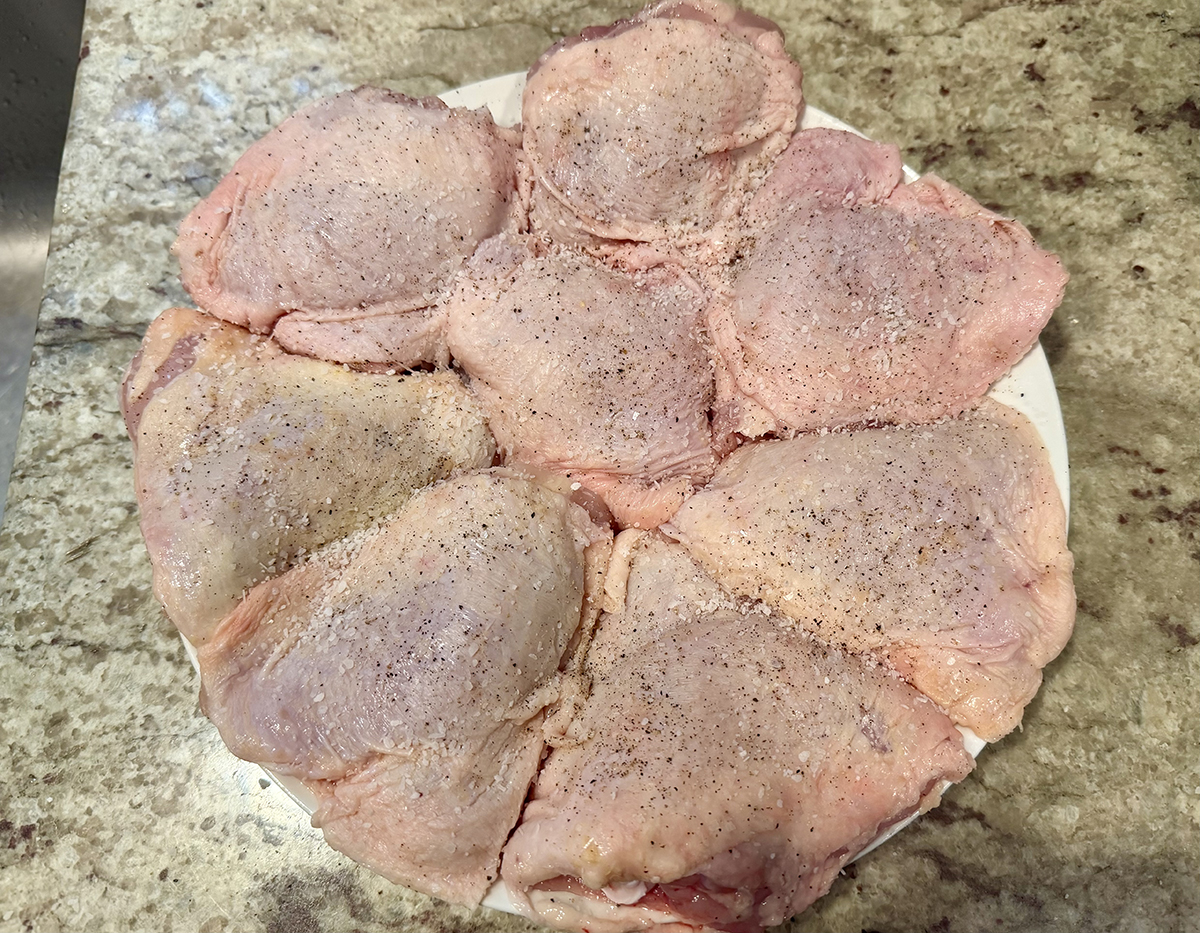
  1. Adjust oven rack to upper middle position and preheat oven to 425°F (220°C). Pat chicken dry with paper towels and season all over with 1 teaspoon salt and 1/4 teaspoon pepper; set aside.
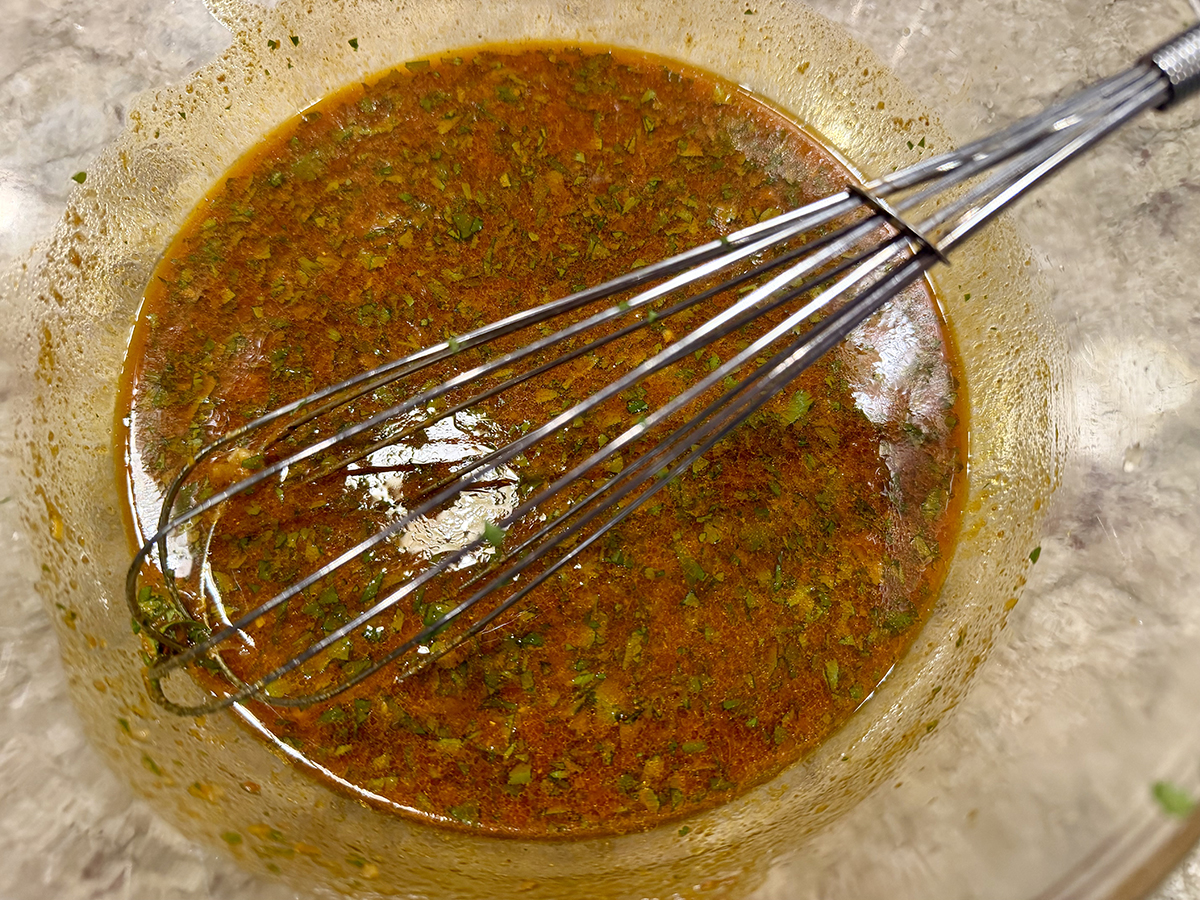
  2. For the Marinade: In a large bowl whisk to combine stock, orange zest, orange juice, oil, 1 tablespoon harissa, honey, garlic, cilantro, coriander, turmeric, ginger, cumin, and remaining 1 teaspoon salt. Taste marinade and add up to 1 tablespoon more harissa if needed for desired heat level.
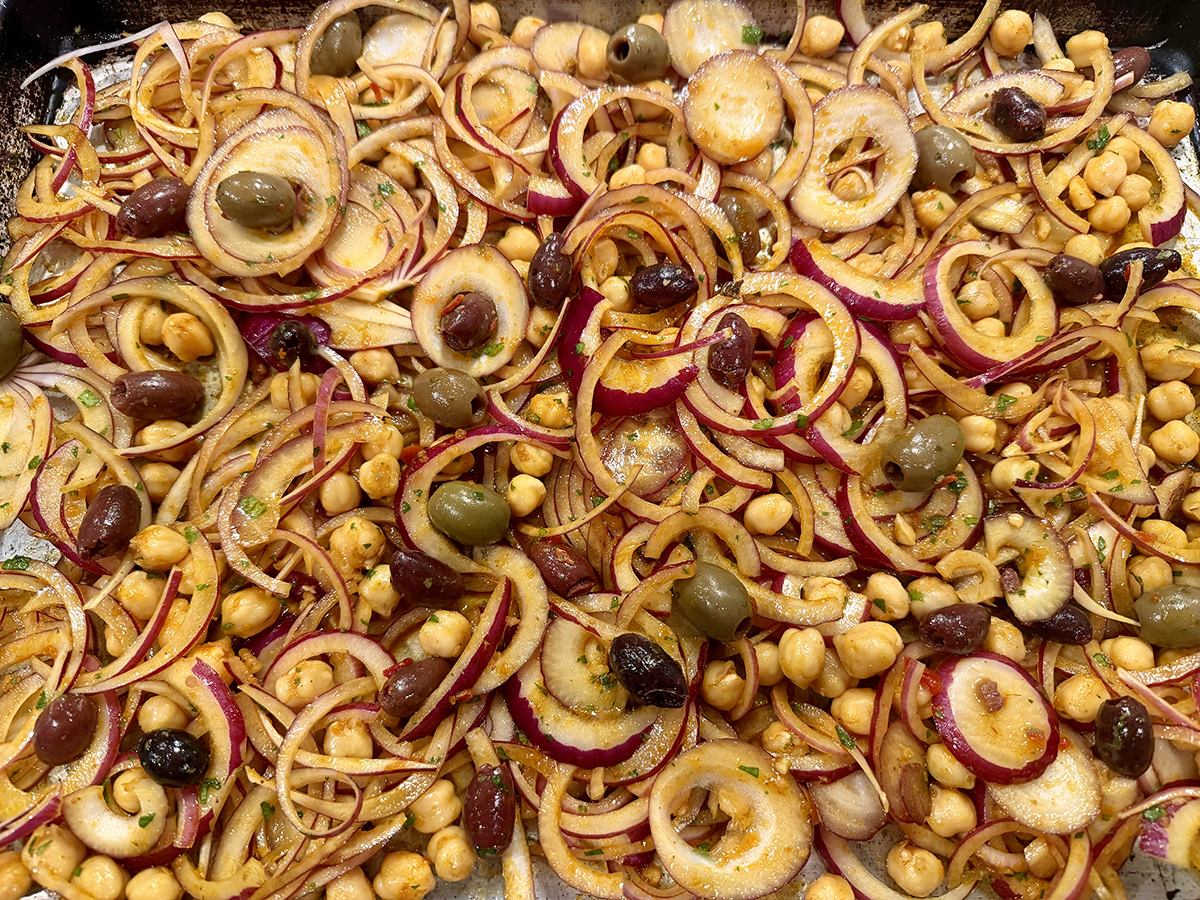
  3. To a rimmed baking sheet, add onions, chickpeas and olives (if using), pour half of marinade over top, and use hands or a large spoon to toss to coat and spread into an even layer.
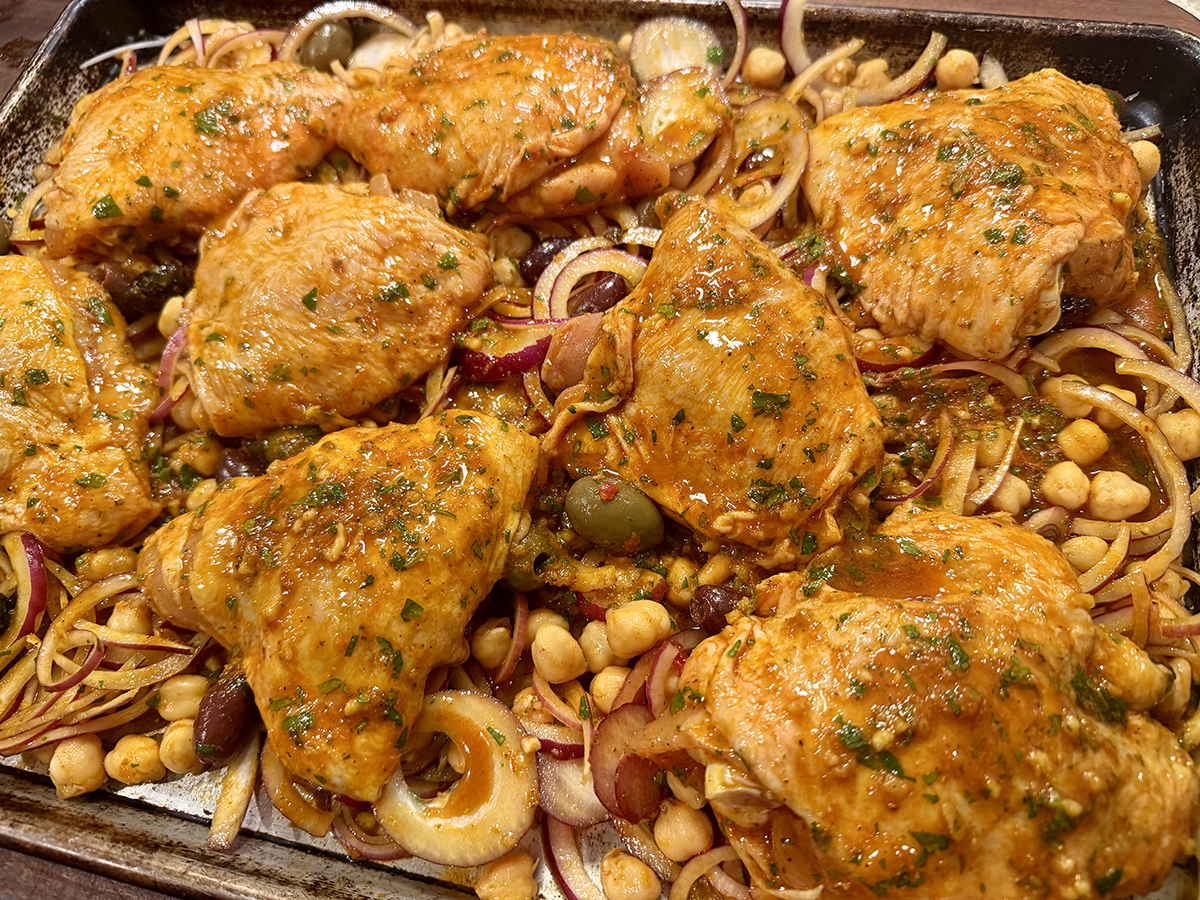
  4. In bowl with remaining marinade, add chicken and use hands or a large spoon to thoroughly coat chicken with marinade. Place chicken, skin side up, on top of onions and chickpeas. Pour leftover marinade around the chicken in the sheet-pan. Roast until onions are tender, chicken skin is browned and crispy, and a thermometer inserted into thickest part of chicken registers 175°F, about 40-45 minutes.
  5. Garnish chicken and chickpeas with cilantro and serve immediately.

http://www.lynnandruss.com

Adapted from a recipe by Nargisse Benkabbou for Serious Eats

Lamb Shanks Braised in Red Wine with Herbes de Provence

This uncomplicated America’s Test Kitchen recipe is truly a company-worthy, memorable main dish. Braising lamb shanks turns a richly flavored but tough cut of meat meltingly tender. However, the high fat content of lamb can all too often lead to a greasy sauce—not a pleasant memory.

To avoid this pitfall, trim the shanks well and then brown them before adding liquid to get a head start on rendering their fat. Also, defat the braising liquid after the shanks have cooked. There is more liquid than is called for in many braises to guarantee that plenty remains in the pot despite about an hour of uncovered cooking.

For starters, we only purchased 4 lamb shanks since it was going to be just the two of us, keeping the quantity of most everything at the same amount — except the carrots, which doubled. And we roasted some baby potatoes seasoned with herbes de Provence separately. We were thrilled to get another meal out of the braise because it was beyond delicious!

NOTES: Côtes du Rhône works particularly well here. If you can’t locate herbes de Provence, substitute a mixture of one teaspoon each of dried thyme, rosemary, and marjoram. If you’re using smaller shanks than the ones called for in this recipe, reduce the braising time.

Lamb Shanks Braised in Red Wine with Herbes de Provence

  • Servings: 6
  • Difficulty: easy
  • Print

Ingredients

  • 6 (12- to 16-oz.) lamb shanks, trimmed
  • 1 tsp. plus a pinch table salt
  • 2 Tbsp. vegetable oil, divided
  • 3 carrots, peeled and cut crosswise into 2-inch pieces
  • 2 onions, sliced thick
  • 2 celery ribs, cut into 2-inch pieces
  • 2 Tbsp. tomato paste
  • 4 garlic cloves, minced
  • 2 Tbsp. herbes de Provence
  • 2 cups dry red wine
  • 3 cups chicken broth
  • Ground black pepper

Directions

  1. Adjust oven rack to middle position and heat oven to 350 degrees. Pat lamb shanks dry with paper towels and sprinkle with 1 teaspoon salt. Heat 1 tablespoon oil in Dutch oven over medium- high heat until just smoking. Brown 3 shanks on all sides, 7 to 10 minutes. Transfer shanks to large plate and repeat with remaining 1 tablespoon oil and remaining 3 shanks.
  2. Pour off all but 2 tablespoons fat from pot. Add carrots, onions, celery, tomato paste, garlic, herbes de Provence, and remaining pinch salt and cook until vegetables just begin to soften, 3 to 4 minutes. Stir in wine, then broth, scraping up any browned bits; bring to simmer. Nestle shanks, along with any accumulated juices, into pot.
  3. Return to simmer and cover; transfer pot to oven. Cook for 1½ hours. Uncover and continue to cook until tops of shanks are browned, about 30 minutes. Flip shanks and continue to cook until remaining sides are browned and fork slips easily in and out of shanks, 15 to 30 minutes longer.
  4. Remove pot from oven and let rest for 15 minutes. Using tongs, transfer shanks and vegetables to large plate and tent with aluminum foil. Skim fat from braising liquid and season liquid with salt and pepper to taste. Return shanks to braising liquid to warm through before serving.

http://www.lynnandruss.com

Recipe from America’s Test Kitchen

Thyme-and-Dijon-Seared Pork Tenderloin with Cider Pan Sauce

Yummy-to-my-tummy! A fragrant thyme-and-Dijon crust locks in the tenderloin’s juiciness, while a quick cider deglaze turns pan drippings into a bright, tangy-sweet sauce for an elegant weeknight or holiday main. Welcome to Autumn cooking!

This show-stopping, juicy pork tenderloin recipe is fantastic! A quick sear in a hot pan seals in the moisture before being brushed with a simple dijon, Worcestershire sauce and thyme glaze and roasted until perfectly cooked through.

Meanwhile, an easy pan sauce with shallots, clove, juniper, and allspice are simmered with fresh apple cider until reduced and thickened. A touch of butter finishes the sauce to give it a rich and luscious mouthfeel.

BTW, apple cider and apple juice both contain apples that have been pressed for their juice, but they differ in how they are processed. Generally, apple cider is unfiltered and unpasteurized, resulting in a drink that needs to be refrigerated and has a richer apple flavor. Apple juice is the opposite and is typically filtered and pasteurized, allowing for it to be more shelf-stable and giving it a sweeter taste and paler color. 

Serve the pork with mashed potatoes or rice, and your favorite roasted vegetables. We chose to pair it with Apple Cider Risotto with Bacon and Butternut Squash, which utilized many of the same flavors.

NOTE: This recipe doesn’t yield a ton of sauce, but if you want things saucier, you could easily double the sauce (which we did), though it’ll need more time to reduce. However, in the end, we did not feel it was absolutely necessary to do so.

In the end the meal was delicious — thank goodness because the process was long and excruciating, and the number of pans and bowls mounted up. For those who love a challenge, it’s a perfect endeavor!

Thyme-and-Dijon-Seared Pork Tenderloin with Cider Pan Sauce

  • Servings: 4-6
  • Difficulty: moderate
  • Print

Ingredients

  • 2 (about 1 1/4-lb.) pork tenderloins, silver skin trimmed
  • 2 1/2 tsp. kosher salt, divided
  • 1 1/4 tsp. black pepper, divided
  • 1 Tbsp. Worcestershire sauce
  • 1/2 tsp. grated garlic
  • 3 Tbsp. neutral cooking oil (such as avocado oil), divided
  • 2 Tbsp. coarse-ground Dijon mustard, divided
  • 1 Tbsp. finely chopped fresh thyme, divided
  • 3 Tbsp. cold unsalted butter, divided
  • 2 Tbsp. finely chopped shallot
  • 2 whole allspice
  • 2 whole cloves
  • 2 juniper berries (optional)
  • 3 Tbsp. apple cider vinegar
  • 1 cup fresh apple cider
  • 1 Tbsp. finely chopped fresh chives, plus more for garnish

Directions

  1. Preheat oven to 350°F. Line a large rimmed baking sheet with aluminum foil; set aside.
  2. Pat pork dry with paper towels, and season with 2 teaspoons salt and 1/2 teaspoon pepper; set aside. Whisk together Worcestershire sauce, grated garlic, 1 tablespoon oil, 1 tablespoon mustard, 2 teaspoons thyme, and 1/2 teaspoon pepper in a small bowl until smooth; set aside.
  3. Heat remaining 2 tablespoons oil in a large stainless steel skillet over high until shimmering, about 3 minutes. Add pork; cook, turning occasionally, until well browned on all sides, 6 to 8 minutes total. Remove from heat, and transfer pork to prepared baking sheet. Brush reserved Worcestershire mixture evenly over pork. Do not wipe skillet clean.
  4. Bake pork until an instant-read thermometer inserted into the thickest portion of pork registers 140°F (for medium), 15 to 18 minutes, or until desired degree of doneness. Remove from the oven, and let rest for 5 to 10 minutes.
  5. While pork is baking, melt 1 tablespoon butter in reserved skillet over medium-low. Add shallot, allspice, cloves, juniper berries (if using), remaining 1 teaspoon thyme, and remaining 1/4 teaspoon pepper. Cook, stirring constantly, until shallot is softened, about 1 minute. Add vinegar; cook, scraping bottom of skillet to release any browned bits, until vinegar is nearly evaporated, about 2 minutes. Add apple cider, remaining 1 tablespoon mustard, and remaining 1/2 teaspoon salt.
  6. Bring to a simmer over medium-high, and cook, stirring occasionally, until sauce thickens and is reduced to about 1/3 cup, about 8 minutes. Remove from heat.
  7. Strain sauce through fine-mesh sieve; pressing down on solids. Return velvety silken sauce to pan. Vigorously stir in chives and remaining 2 tablespoons butter until sauce is glossy and emulsified, about 1 minute.
  8. Transfer pork to a cutting board, and cut into 1/2-inch-thick slices. Transfer to a platter, and spoon cider sauce over top. Garnish with additional chives.

http://www.lynnandruss.com

Recipe by Breana Lai Killeen for Food & Wine