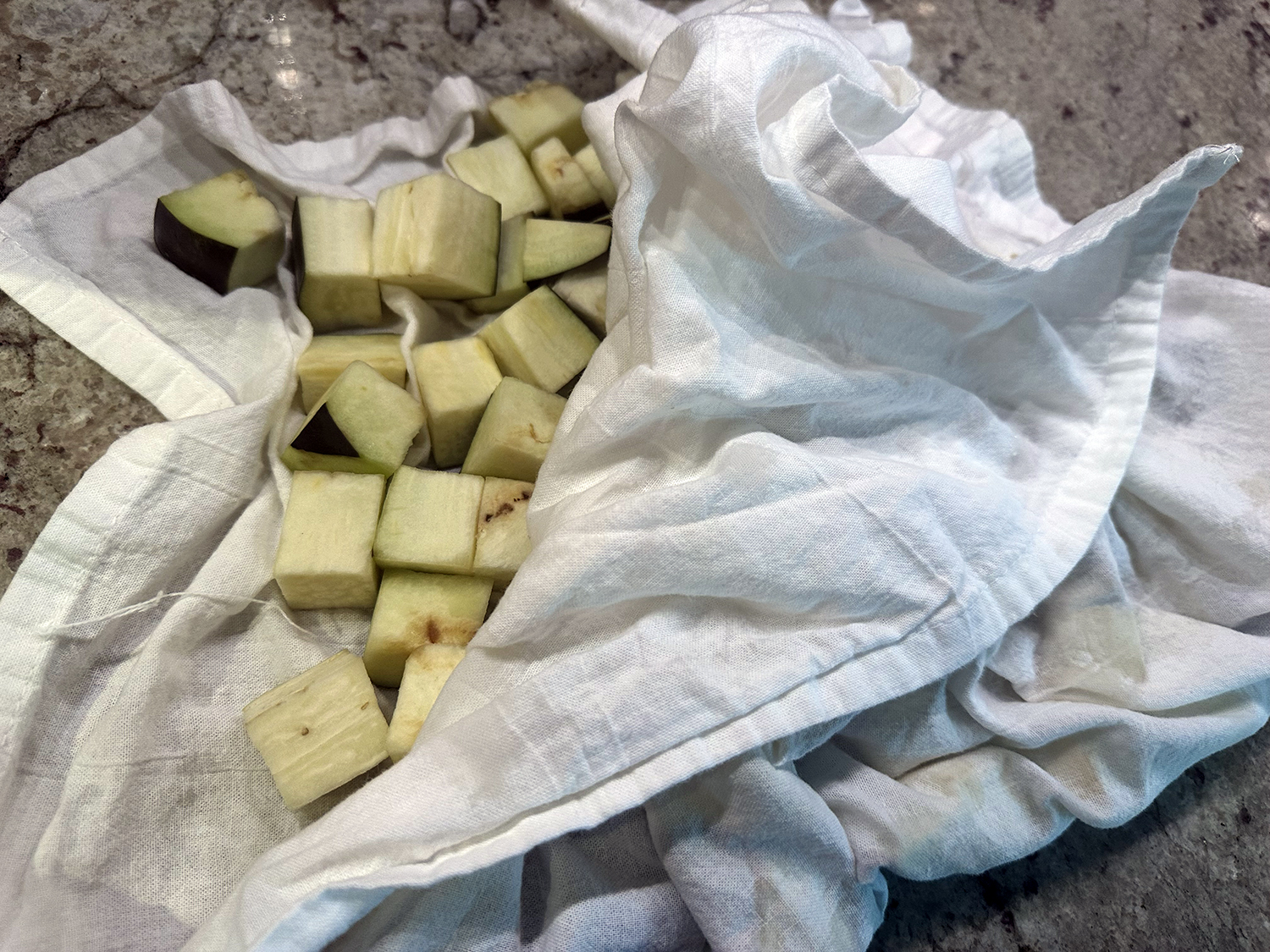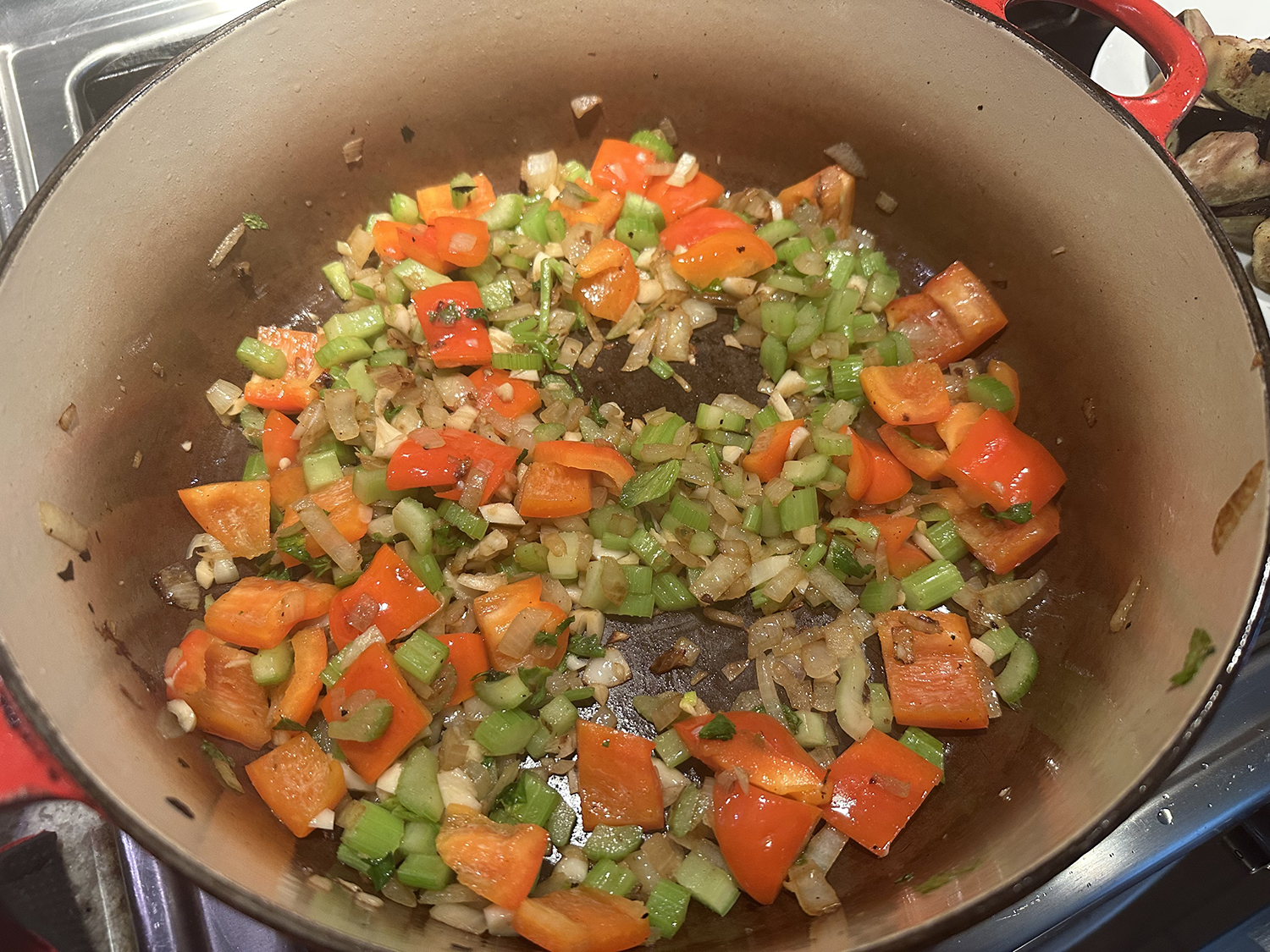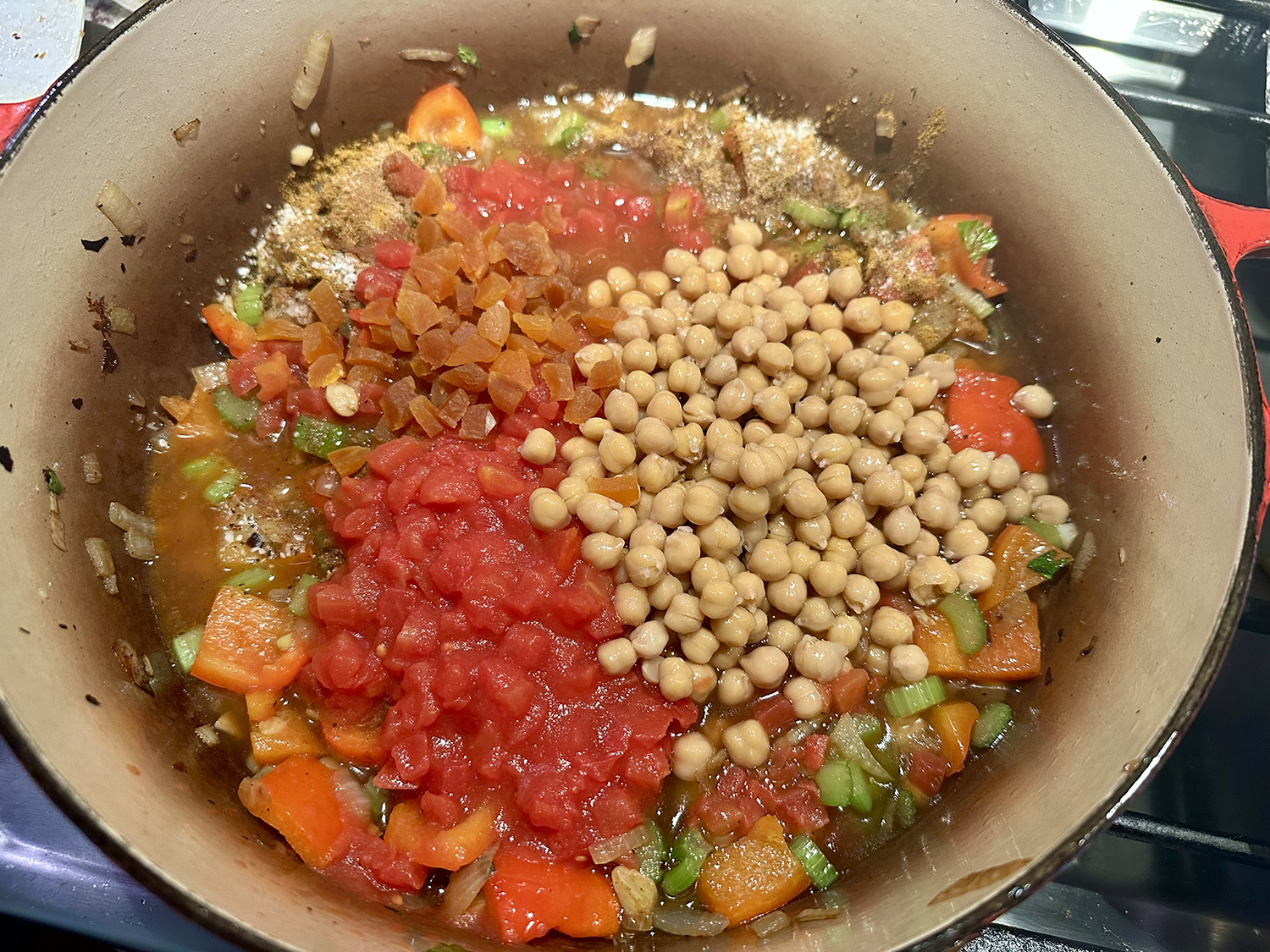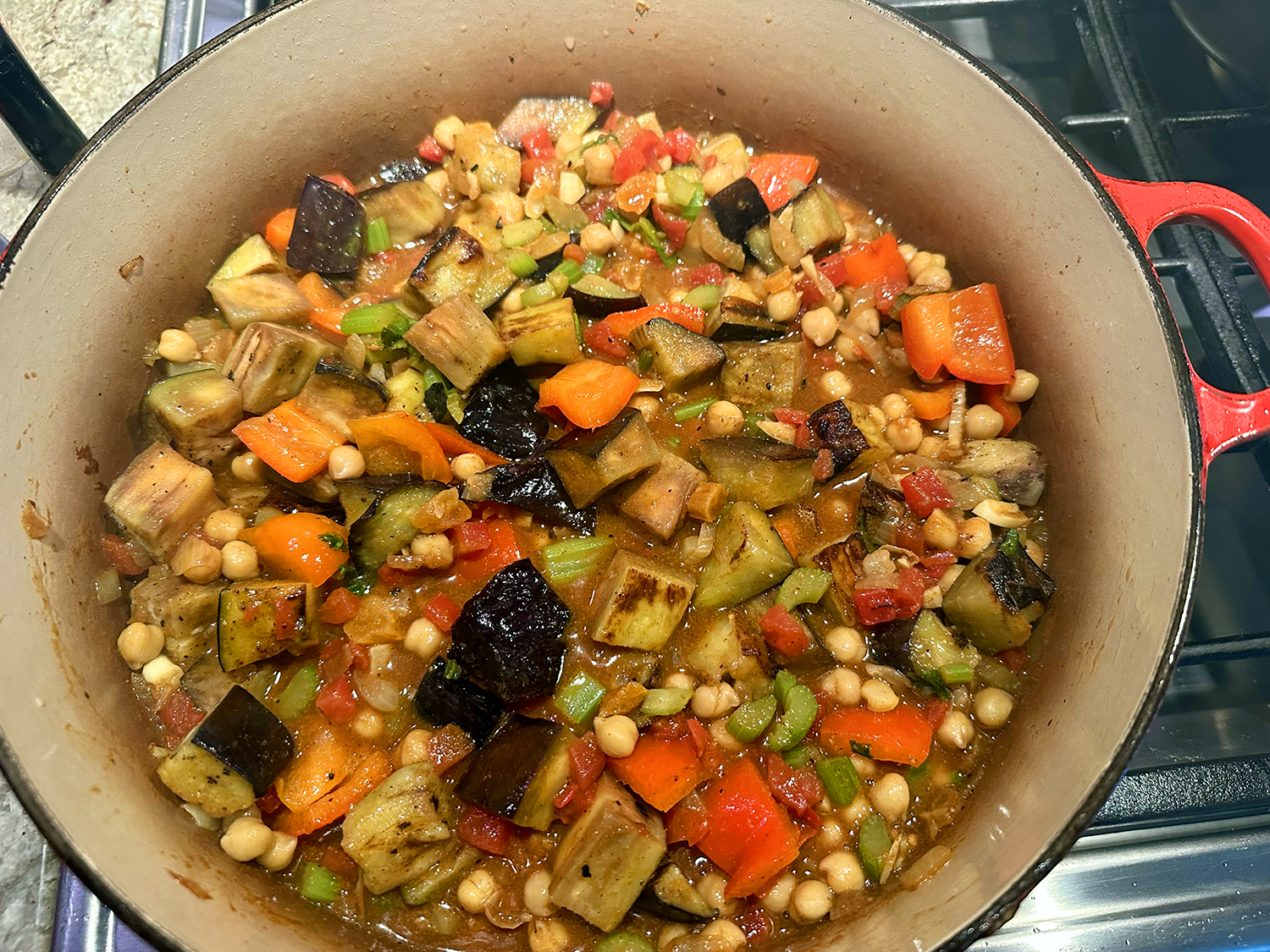
All posts by LynnHoll

Unknown's avatar

About LynnHoll

I have been an artist and designer all my life incorporating graphic design for websites, gardens, publications, fabrics, interior design and cooking. I am now retired from my professional job, but still create artistic visions in all forms on a daily basis.

Catalan Braised Pork Shoulder with Dried Fruit

A long braise on a cool Sunday afternoon is not uncommon in our household. And we just happened to have a 4-pound pork shoulder in the freezer waiting for a chance to show off. It was over nine years ago since we made this luscious Catalan pork dish, so I located the post in our blog and resurrected the recipe, with several changes this time.

For a little background, I am repeating “Spain is a nation of pork eaters. Their penchant for pork has economic underpinnings because the matanza—the fall slaughter of the family hog—was central to rural life. A country within a country, with its own language, complex history, and a wealth of artistic traditions, Catalunya (to natives) has more in common with neighboring France, than macho Castile—but all share a love of pork. Catalan food blends Roman, Arabic and even Italian influences into one of Europe’s most distinct and emphatic cuisines.”

About those changes. One major alteration involves the cooking time. The original recipe said to cook the roast for 1 1/2 hours until it reaches an internal temperature of 165°. According to all of our other sources, a 4-pound pork shoulder roast needs to be cooked at least 2 hours with an internal temp of 180-185°F. This ensures tender slices.

After searing the roast on all sides, including the end caps, The Hubs removed the meat to a platter and poured the contents of the pot through a strainer into a cup. This way it is easy to eliminate the burnt garlic, return the oil to the Dutch oven and continue the cooking process. And though we didn’t cut down the apricots this time or last, we suggest you give them a rough chop so that the pieces are easier to consume.

BTW, kirsch can be substituted for the brandy. We had never cooked with it before and thought you might be interested in the flavor profile, which sounds like a great match for this dish:

kirsch, dry, colourless brandy distilled from the fermented juice of the black morello cherry. Kirsch is made in the Black Forest of Germany, across the Rhine River in Alsace (France), and in the German-speaking cantons of Switzerland. Its production methods remain traditional. The fully ripened cherries are mashed in a large wooden tub or vat and allowed to ferment freely. Upon completion of this process, the entire mass—liquid, pulp, and cherry stones—is distilled in a pot still. During the mashing some of the cherry stones, or pits, are crushed, releasing some of their oils and acids. These include small amounts of hydrocyanic acid, which impart a distinctive bitter almond undertone to the beverage. Kirsch is not aged. It is marketed at 90 to 100 proof, in the clear white (colorless) state it comes off the still. It is a fruit brandy with a clean cherry fragrance and bitter almond taste. Kirsch is consumed neat, as brandy, and in cocktails and is also used in cooking as a flavoring.

So if pork is in your wheelhouse, you may want to get this on your shortlist.

Catalan Braised Pork Shoulder with Dried Fruit

  • Servings: 6-8
  • Difficulty: easy
  • Print

Ingredients

  • 1 boneless pork shoulder, such as Boston Butt (about 4 lbs., trimmed of excess fat)
  • Salt and freshly ground black pepper (kosher or sea)
  • 2 medium garlic cloves, crushed
  • 3 Tbsp. light olive oil
  • 1 medium onion, chopped
  • 1 carrot, diced
  • 8 oz. frozen white pearl onions
  • 1⁄4 cup brandy
  • 2 cups full-bodied dry red wine
  • 1 cup stock (beef or chicken)
  • 3⁄4 cup pitted dried sour cherries
  • 1⁄2 cup dried apricots (or dried figs), roughly chopped
  • 1 large bay leaf
  • 1 small piece cinnamon stick
  • 2 fresh rosemary sprigs

Directions

  1. Preheat oven to 325º.
  2. Using kitchen string, tie the pork shoulder crosswise, spacing the ties 1 inch apart. Rub the pork generously with salt and pepper and the garlic.
  3. Heat 2 tablespoons of the olive oil in a 5 to 6 quart flameproof casserole or Dutch oven over high heat until almost smoking. Add the pork and cook until richly browned on all sides, about 8 minutes total. Add the remaining oil while the pork browns, if the casserole looks too dry. Transfer the pork to a platter. Drain oil and drippings over a strainer on a cup to remove burnt garlic, and return strained oil to the Dutch oven.
  4. Add the chopped onion, carrot, and pearl onions to the casserole and brown well, 6 to 7 minutes. Add the brandy and cook over high heat until it is reduced to about 1 tablespoon, about 1 minute.
  5. Add the wine, beef stock, cherries, apricots, bay leaf, cinnamon stick, and rosemary sprigs and bring to a boil, scraping the bottom of the casserole to dislodge the brown bits. Season the sauce with salt to taste.
  6. Return the pork to the casserole. Place a large piece of parchment that over hangs the pot, then cover tightly and transfer it to the oven. Bake the pork, turning it once or twice, until it is very tender and an instant-read thermometer registers 180-185°, about 2 hours and 15 minutes. Start checking at 2 hours.
  7. Transfer the pork to a plate and cover it tightly with foil to keep warm. Remove and discard the bay leaf, cinnamon stick, and rosemary sprigs.
  8. Transfer the casserole to the stove top and cook the sauce over high heat until it is slightly syrupy, about 5 minutes.
  9. Remove the string from the pork and discard it. Cut the pork into slices and arrange on a serving platter. Pour the sauce over the pork and serve.

http://www.lynnandruss.com

Adapted from a recipe in Anya Von Bremzen’s cookbook “The New Spanish Table”

Orecchiette Puttanesca with Tuna and White Beans

In a word, delicious! A great choice for those nights where you prefer a meatless or pescatarian meal.

A one-pot wonder, this recipe is bold, with a briny puttanesca sauce that finds delicious partners in creamy white beans and flaked tuna (just needed more of it). First the pasta is boiled and drained, then the same pot is used to make the sauce.

Orecchiette pasta is preferred because the small saucer shapes catch bits of the olives, capers and tuna. The consistency is on the “soupy” side; stir in additional pasta water at the end to adjust the consistency to suit your taste.

Two major changes we made included doubling the canned tuna to two 5-ounce cans, and decreasing the pasta by 25%, down to 12 ounces. These differences still provided 4 large portions. Also, don’t discard the olive oil when draining the tuna. Use it as part of, or in place of, the necessary olive oil for the recipe.

NOTES: Don’t forget to rinse and drain the beans. If their starchy liquid makes it into the pot, it will turn the sauce thick and heavy. Don’t worry about removing the garlic cloves after they’re lightly browned. They’ll soften and break apart slightly as the sauce cooks.

Orecchiette Puttanesca with Tuna and White Beans

  • Servings: 4-6
  • Difficulty: easy
  • Print

Ingredients

  • 12 oz. orecchiette pasta
  • Kosher salt and ground black pepper
  • 1 Tbsp. extra-virgin olive oil, plus more to serve
  • 2 medium garlic cloves, smashed and peeled
  • 1 tsp. red pepper flakes
  • 1 cup pitted green or black olives (or a combination), roughly chopped
  • ¼ cup drained capers, rinsed and patted dry
  • 28 oz. can whole peeled tomatoes, crushed by hand
  • 15½ oz. can cannellini beans, rinsed and drained
  • 2 5 oz. cans olive oil-packed tuna, drained and flaked
  • ⅓ cup lightly packed fresh flat-leaf parsley, roughly chopped

Directions

  1. In a large pot, bring 4 quarts of water to a boil. Stir in the pasta and 1 tablespoon salt, then cook, stirring occasionally, until just shy of al dente. Reserve 2½ cups of the cooking water, then drain.
  2. In the same pot over medium, combine the oil and garlic. Cook, stirring occasionally, until the garlic is light golden brown, 2 to 4 minutes. Add the pepper flakes, olives, and capers. Increase to medium-high and cook, stirring, until the capers begin to brown, about 1 minute. Add the tomatoes with juices along with the beans, then cook, stirring occasionally, until the mixture is slightly thickened, 3 to 4 minutes.
  3. Stir in 1½ cups of the reserved water and bring to a simmer over medium-high. Add the orecchiette and cook, stirring occasionally, until the pasta is al dente, 2 to 4 minutes; add more reserved water if needed to thin. Taste and season with salt and black pepper. Off heat, stir in the tuna and parsley. Serve drizzled with additional oil.

http://www.lynnandruss.com

Adapted from a recipe from Karen Waldman for Milk Street

Coq Au Vin Meatballs

From Food & Wine, this riff on Coq au Vin, a classic French dish of chicken braised in a red wine stew, swaps out the chicken for ground turkey, leans on white wine, and transforms the dish into a semi-quick weeknight dinner. Tender turkey meatballs are browned and then finished in a simple and lightly acidic pan sauce speckled with earthy mushrooms and smoky bacon.

When making these meatballs, you can substitute ground chicken for ground turkey. Be sure to source ground chicken that is a mix of white and dark meat, not just ground chicken breast, which is very lean and will result in dry meatballs. Keep the meatballs chilled until you are ready to cook to help them hold their shape.

*Our meatballs ended up being quite dense, probably because they were too lean at 99%. So, just as you should not purchase all white chicken meat, buy ground turkey that’s no more than 93% lean, and try not to overwork them when creating the balls. We also suggest that after you place the meatballs back into the skillet with the sauce that you partially cover the pan. This should ensure the sauce won’t reduce too much and the meatballs will get to temperature quicker and stay more moist.

The original recipe indicates it feeds four, three 1 1/2-inch meatballs per guest. We had our doubts, thinking so few meatballs per person would be a bit on the shy side. However, served over noodles or pasta, it was quite filling (we also paired with a side salad). Meatballs can be prepared through Step 1 up to one day in advance. Proceed with the recipe as directed when ready to cook.

Coq Au Vin Meatballs

  • Servings: 4
  • Difficulty: easy
  • Print

Ingredients

  • 1 lb. lean ground turkey (see above*)
  • 1 large egg, beaten
  • 1/3 cup panko
  • 1 tsp. kosher salt, plus more to taste
  • 1 Tbsp. minced garlic, divided
  • 1/2 tsp. black pepper, divided
  • 4 thick-cut bacon slices, chopped
  • 8 oz. cremini mushrooms, sliced
  • 1 small yellow onion, finely chopped
  • 1/2 cup plus 2 Tbsp.  chicken broth, divided
  • 1 Tbsp.  all-purpose flour
  • 1 cup (8 oz.) dry white wine
  • 2 Tbsp.  Dijon mustard
  • 1 Tbsp.  fresh thyme leaves, plus more for garnish
  • 1/2 cup heavy cream

Directions

  1. Stir together ground turkey, egg, panko, salt, 1 teaspoon garlic, and 1/4 teaspoon pepper in a medium bowl until evenly combined. Shape mixture into 12 (about 1 1/2-inch) meatballs; transfer to a parchment paper–lined baking sheet. Cover and refrigerate until ready to cook.
  2. Cook bacon in a large skillet over medium-high, stirring often, until crisp and rendered, about 8 minutes. Transfer bacon to a paper towel–lined plate using a slotted spoon. Reserve 1/4 cup drippings in skillet; discard remaining drippings, or reserve for another use.
  3. Return skillet with drippings to medium-high. Cook meatballs, turning occasionally, until browned on all sides, about 6 minutes. Transfer meatballs to a plate, and set aside.
  4. Add mushrooms to skillet with drippings, and cook over medium-high, undisturbed, until browned on 1 side, about 3 minutes; stir and cook 2 more minutes. Add onion, 2 tablespoons broth, and remaining 2 teaspoons garlic. Cook, scraping up browned bits from the bottom of the skillet, until onion is just tender, about 3 minutes. Add flour; cook, stirring constantly, for 1 minute. Add wine, mustard, thyme, and remaining 1/2 cup broth; bring to a boil over medium-high.
  5. Add meatballs and half of reserved bacon to skillet; simmer over medium-low, partially cover and turn meatballs occasionally, until a thermometer inserted into meatballs registers 165°F and sauce is thickened, 8 to 10 minutes. Stir in cream and remaining 1/4 teaspoon pepper. Season to taste with salt. Sprinkle with remaining bacon, and garnish with additional thyme leaves.

http://www.lynnandruss.com

Original recipe from Anna Theoktisto for Food & Wine

Cod with Chorizo, Greens and Chickpeas

In this one-pan dinner from Bon Appétit, cod and Spanish chorizo—the dry, cured kind, often sold in a link like salami—showcase why the ingredients make such a great pair.

Chorizo is a highly seasoned chopped or ground pork sausage used in Spanish and Mexican cuisine. Mexican chorizo is made with fresh (raw, uncooked) pork; while the Spanish version, which is used here, is made with garlic and pimentón (Spanish smoked paprika, either sweet or hot), which gives it its deep brick-red color and smoky flavor.

Using rendered chorizo to cook down garlic, tomato paste, and sherry vinegar creates a red-tinged mixture at the bottom of the pan; with water, it becomes a flavorful braising liquid for sturdy greens, then warming canned chickpeas, and finishing your previously seared fish.

Finishing the lean, flaky fish in liquid ensures gentle cooking so you don’t end up with rubbery overdone fish. Crispy chickpeas, made first, in the same pan, add a textural garnish. Add a piece of crusty bread for sopping up all the extra sauce and you have a dish that’s fast enough for a weeknight but elevated enough for company.

For an extra fiery version of this dish, swap in a tablespoon of Calabrian chile paste for one of the two tablespoons of tomato paste (you’ll want to still use a bit of tomato paste to ensure the sauce gets some color).

We made numerous changes including increasing the olive oil, using a larger can of chickpeas, decreasing the amount of flour, and starting with a larger skillet. All of our changes are noted in the recipe below.

Cod with Chorizo, Greens and Chickpeas

  • Servings: 4-6
  • Difficulty: easy
  • Print

Ingredients

  • 2 Tbsp. all-purpose flour, for dusting one side of the fish
  • 1–1½ lb. skinless cod fillet, cut into 2–4 pieces, patted dry
  • Kosher salt, freshly ground pepper
  • 4 Tbsp. extra-virgin olive oil
  • 1 19 oz. can chickpeas, rinsed, divided
  • 4 oz. smoked Spanish chorizo, casing removed if needed, cut into very small pieces
  • 5 garlic cloves, thinly sliced
  • 2 Tbsp. sherry vinegar or red wine vinegar
  • 2 Tbsp. tomato paste
  • ¼ tsp. crushed red pepper flakes
  • 1 bunch kale, ribs and stems removed, leaves torn into large pieces (about 6 cups)
  • 2 Tbsp. unsalted butter

Directions

  1. Place ⅓ cup all-purpose flour in a shallow bowl. Season 1–1½ pounds skinless cod fillet, cut into 2–4 pieces, patted dry, on both sides with kosher salt and freshly ground black pepper, then press one side into flour to coat and tap off excess.
  2. Heat 2 tablespoons extra-virgin olive oil in a large high-sided skillet over medium-high. Cook ½ cup chickpeas, rinsed, tossing often, until crisp, about 3 minutes. Using a slotted spoon, transfer to a small bowl; season with salt.
  3. Reduce heat to medium. Cook cod, flour side down, in oil left in pan until light golden underneath, about 3 minutes. Transfer to a plate and arrange browned side up.
  4. Cook 4 ounces smoked Spanish chorizo, casing removed if needed, cut into very small pieces, in same pan, stirring often, until oil is red and chorizo is starting to crisp, about 1 minute. Add 5 garlic cloves, thinly sliced, and cook, stirring often, until fragrant, about 1 minute. Add 2 tablespoons sherry vinegar, 2 tablespoons tomato paste, and ¼ teaspoon crushed red pepper flakes and cook, stirring often, until combined about 1 minute. Add 1 medium bunch kale, ribs and stems removed, leaves torn into large pieces (about 4 cups), and stir to coat, then add 2 tablespoons unsalted butter, remaining chickpeas, a pinch of salt, and 1 cup water. Cook, tossing often, until kale is wilted, about 3 minutes.
  5. Arrange cod, browned side up, in pan; simmer, spooning sauce over, until cooked through, about 3 minutes. Top with crisped chickpeas and season with black pepper.

http://www.lynnandruss.com

Adapted from a recipe by Kendra Vaculin for Bon Appétit

Reuben Sandwich

Although there are several versions as to the origins of a Reuben sandwich, today’s Reuben sandwiches feature corned beef, sauerkraut, Swiss cheese and a healthy smear of Russian dressing between toasted, buttered rye.

Instead of bottled dressing, make this homemade concoction. Homemade dressing has a brighter, fresher flavor than the store-bought variety, and comes together in just a few turns of a whisk. To achieve the prized crispy crust and gooey cheese, keep the heat low enough to allow the buttered bread to toast while the cheese melts.

We had homemade sauerkraut on hand which still contain the benefits of fermentation. But of course, supermarket varieties work just fine in this case. The quality of the rye bread, Swiss cheese and corned beef all come into play for an excellent outcome, so choose wisely.

The Russian dressing is fantastic. We added some horseradish for an additional brightness and kick. According to one reviewer, “The reason the Reuben is a great sandwich is because it contains, among its various ingredients, a good balance of all the basic flavors (sweet, sour, salt, bitter, umami). Without the horseradish the bitter is missing, and the sandwich just isn’t the sublime creation it can and should be.”

Instead of buttering the outsides of the bread, The Hubs chose to use mayonnaise as his spread. One note of caution, be very careful when flipping the sandwiches…

Reuben Sandwich

  • Servings: 4 sandwiches
  • Difficulty: easy
  • Print

Ingredients

For the Russian Dressing

  • ½ cup mayonnaise
  • 5 Tbsp. ketchup
  • 3 Tbsp. dill pickle relish (not sweet)
  • 1 Tbsp. minced onion
  • 1 tsp. yellow mustard
  • 1 tsp. Worcestershire sauce
  • 1/2 tsp. horseradish, more to taste

For the Sandwiches

  • 8 slices rye sandwich bread
  • 4 Tbsp. unsalted butter, at room temperature
  • 1 lb. thinly sliced corned beef
  • 1 cup drained sauerkraut
  • 8 slices Swiss cheese

Directions

  1. Make the Russian dressing: In a small bowl, combine all ingredients and mix well.
  2. Make the sandwiches: Spread one side of each bread slice with ½ tablespoon butter. In a large nonstick skillet (or flat griddle), arrange 2 slices of bread, buttered side down, over medium-low heat.
  3. Spread 2 tablespoons of Russian dressing on each slice of bread, then top each with ¼ pound corned beef, ¼ cup sauerkraut and 2 slices cheese. Top each with 1 slice of bread, buttered side up.
  4. Cook until golden and crispy underneath, about 5 minutes. Flip the sandwiches and cook, pressing down gently with a spatula, until second side is golden and cheese melts, about 3 minutes more.
  5. Transfer sandwiches to a wire rack for 5 minutes so that bread doesn’t get soggy underneath before putting them on plates. Wipe out skillet, and repeat with the remaining bread, sauce, corned beef, sauerkraut and cheese. Serve warm.

http://www.lynnandruss.com

Original recipe from Kay Chun for NYTimes Cooking

Shrimp Saganaki

Attending a Greek dinner party, we were tasked with supplying an appetizer to go with the theme. After a bit of a search, we decided on the Shrimp in a Skillet with Feta and Tomatoes from our “My Greek Table” cookbook by Diane Kochilas.

This Greek recipe is a taverna classic and beloved all over Greece, AND in Greek restaurants all over the world, too. It’s also very easy to prepare at home and can be served as a meze or as a main course. It’s delicious over rice or pasta, too.

There were a total of 10 guests at the party so we decided to double the recipe which required cooking the shrimp in two batches. Lucky for us, there were some leftovers which we served atop a bed of orzo for dinner a couple of days later.

Shrimp Saganaki

  • Servings: 4-6
  • Difficulty: easy
  • Print

Ingredients

  • 1 ½ lbs. large shrimp cleaned, with heads and tails intact
  • 6 Tbsp. ouzo
  • Juice of 1/2 lemon, strained
  • 4 Tbsp. extra virgin olive oil
  • 1 large red onion finely chopped
  • 1 large garlic clove minced
  • 1 green chile pepper (such as Anaheim), seeded and finely chopped
  • 2 cups chopped or grated fresh tomatoes, or diced canned tomatoes
  • Salt and freshly ground black pepper
  • 1 tsp. finely grated lemon zest
  • 2/3 cup Greek feta cheese, crumbled
  • 2 tsp. dried oregano
  • 2 Tbsp. finely chopped flat-leaf parsley

Directions

  1. Place the shrimp, 3 tablespoons of the ouzo and the lemon juice in a bowl. Cover, and refrigerate for at least 15 minutes or up to 2 hours.
  2. In a large, deep skillet, heat two tablespoons of the oil over medium heat. Add the onion and chile and cook, stirring until wilted, about 8 minutes. Stir in half the garlic. Add the tomatoes and bring to a simmer. Season lightly with salt and pepper. Raise the heat to medium-high and cook for 15 minutes, until most of the watery liquid from the tomatoes has evaporated.
  3. In a separate large skillet. heat the remaining two tablespoons of olive oil over medium-high heat. Add the shrimp and remaining garlic, toss to combine and cook until the shrimp turn pink. Carefully spritz with the remaining 3 tablespoons ouzo; it may flame up a bit.
  4. Add the shrimp and pan juices to the tomato sauce. Stir in the lemon zest and feta. When the feta starts to melt, gently stir in the oregano and parsley. Remove from the heat and serve.

http://www.lynnandruss.com

Adapted from a recipe by Diane Kochilas

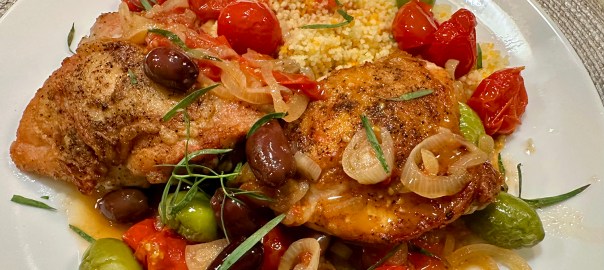
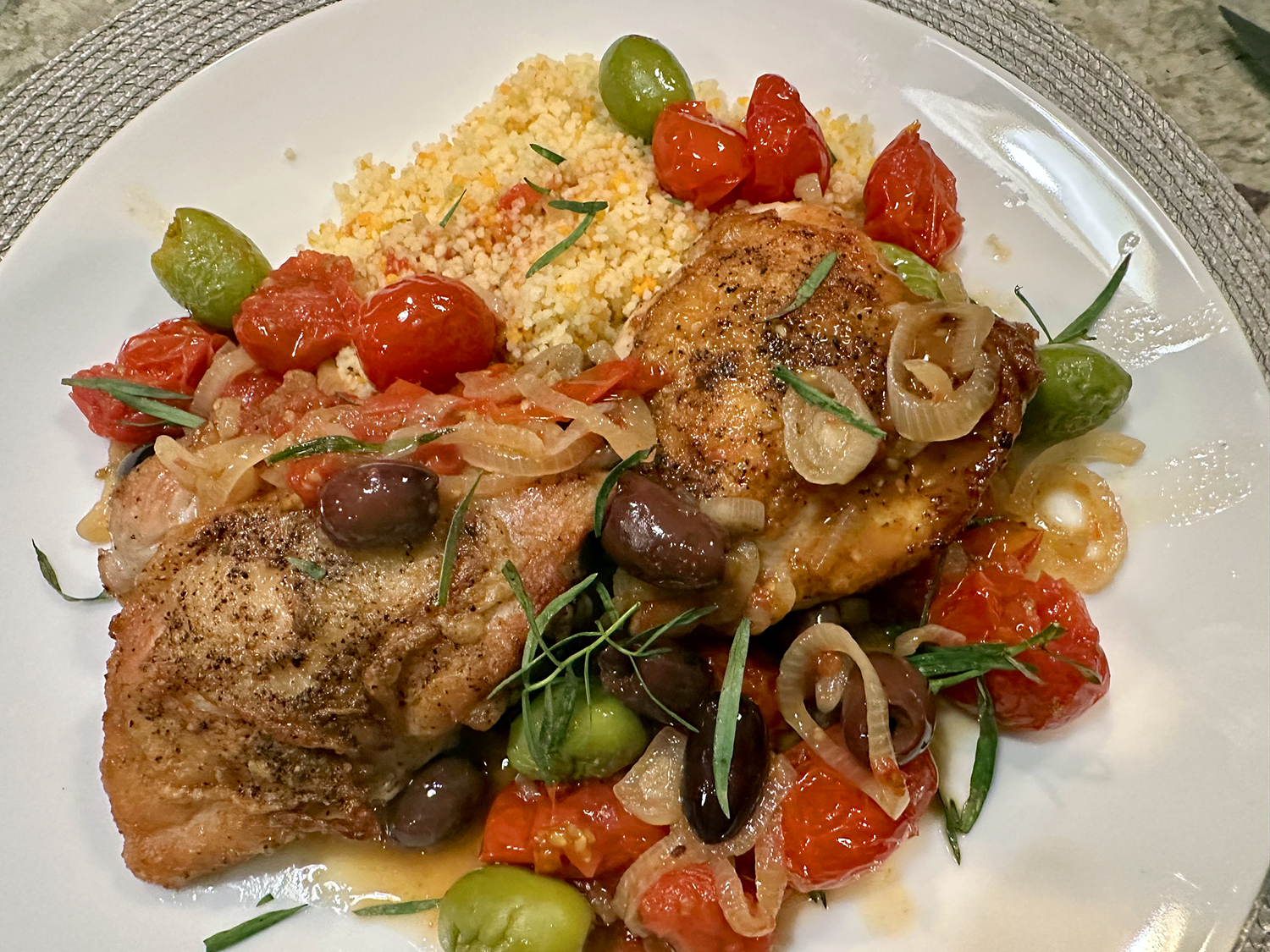
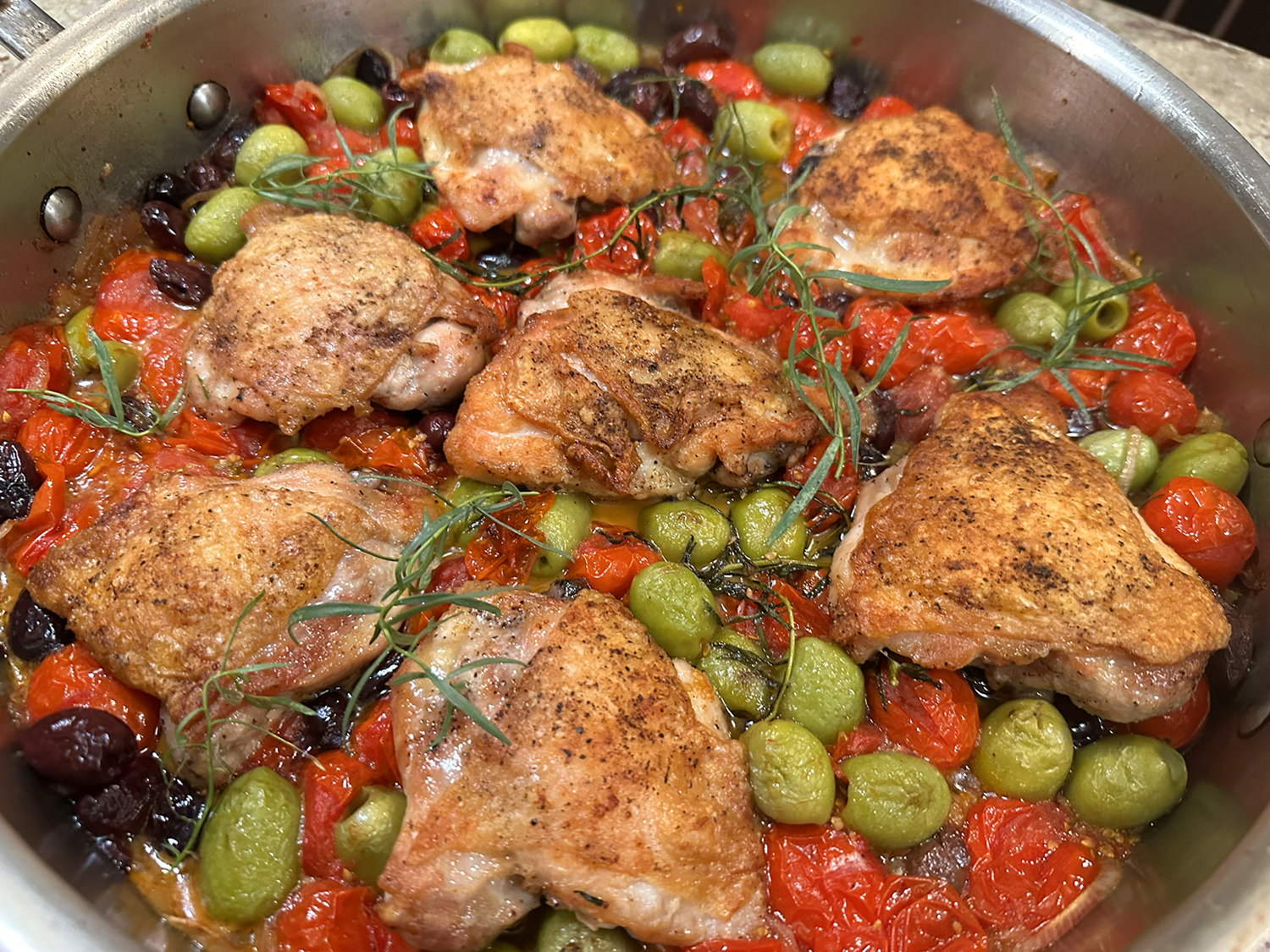
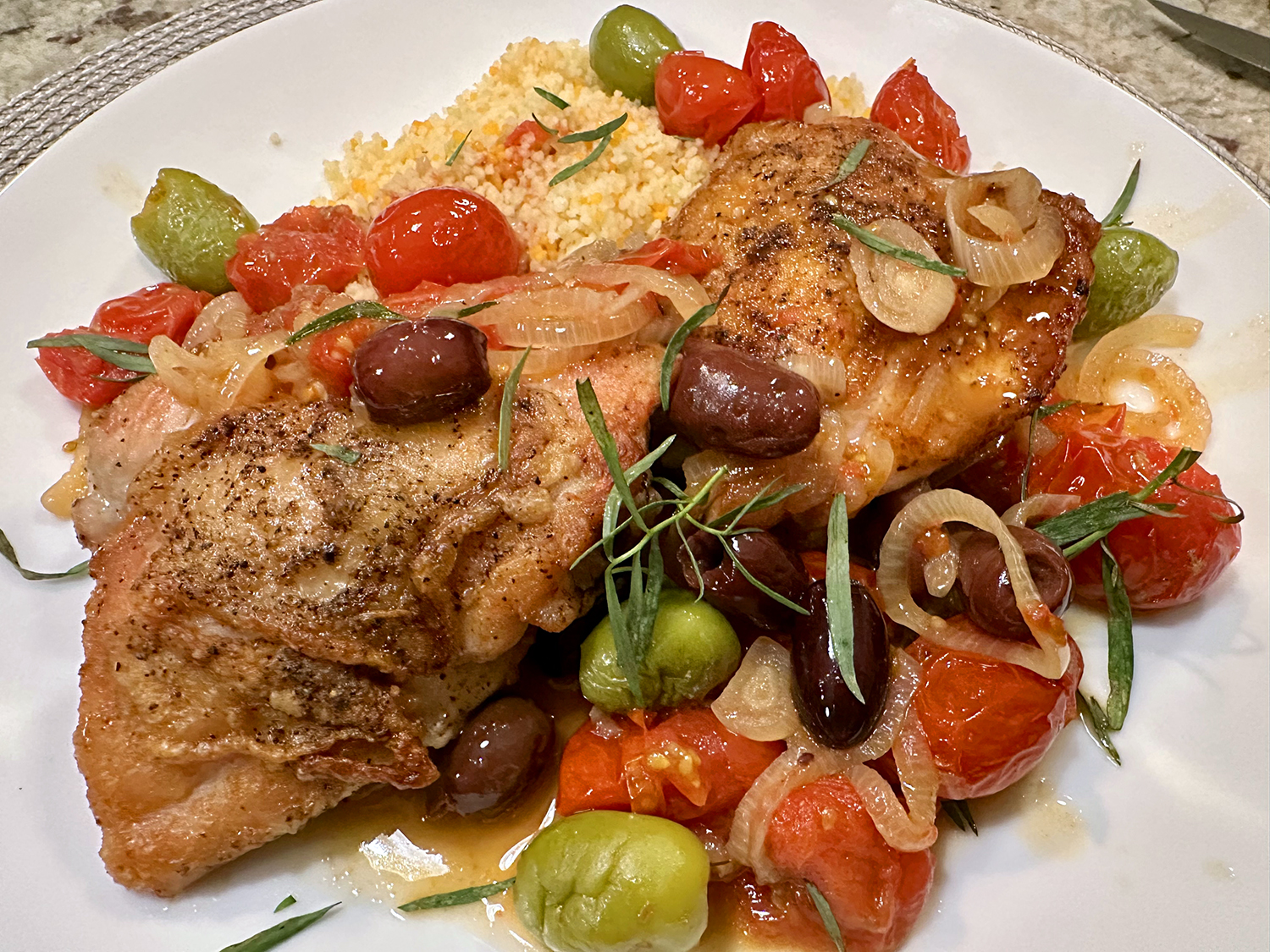
Braised Chicken with Olives and Capers

With chicken being the most popular meat in America, it’s no wonder there are an endless variety of recipes worth your time and effort! This lovely Mediterranean-influenced braised dish from Williams Sonoma’s Test Kitchen is right up there with the best of them.

Braising chicken in white wine instead of red results in a lighter, brighter flavor, which in this recipe is heightened with piquant olives and capers. If desired, serve with a good loaf of bread, some mashed potatoes, or polenta so you can soak up the flavorful braising liquid, because it is worth every drop.

Instead of cutting up a whole chicken, you could certainly save some time buying a selection of bone-in, skin-on pieces such as thighs, breasts and legs. For us, the positive in using an entire bird, is saving the leftover parts (back, wingtips, etc.) for making home made stock at another time.

The regular amounts of white wine (3/4 cup) and chicken broth (2 1/2 cups) were way too much, thus causing the reduction time to increase considerably, from 5 to 20 minutes. The opposite was true of braising the chicken. Instead of the hour to hour-and-a-half noted in the original directions, the pieces were overdone after only 45 minutes.

To offset the chicken (especially white meat) from being overcooked, the oven temp gets lowered down to 325°F (braises are typically low heat). Additionally, pile the breast pieces on top of the dark meat 15 minutes after the the braise goes into the oven. In Step 3, the stovetop burner was reduced to medium. All of our corrections are noted in the recipe below.

To complete our meal, we served the chicken with sides of glazed carrots and a potato-parsnip mash. WOW, was that sauce amazing!!

Braised Chicken with Olives and Capers

  • Servings: 4
  • Difficulty: easy
  • Print

Ingredients

  • 1 whole chicken, about 3 1/2- to 4-lb, cut into 8-10 serving pieces
  • Kosher salt and freshly ground pepper, to taste
  • 1 Tbsp. olive oil
  • 3 Tbsp. unsalted butter
  • 1 onion, diced
  • 2 garlic cloves, chopped
  • 1/2 cup dry white wine
  • 1 1/2 cups chicken broth, preferably homemade
  • 3/4 cup pitted olives, such as Kalamata, halved
  • Zest of 1 lemon, peeled into strips using a vegetable peeler and
      then julienned
  • 3 Tbsp. capers, drained and rinsed
  • 2 tsp. fennel seeds
  • 8 oz. cup cherry tomatoes

Directions

  1. Preheat an oven to 325ºF.
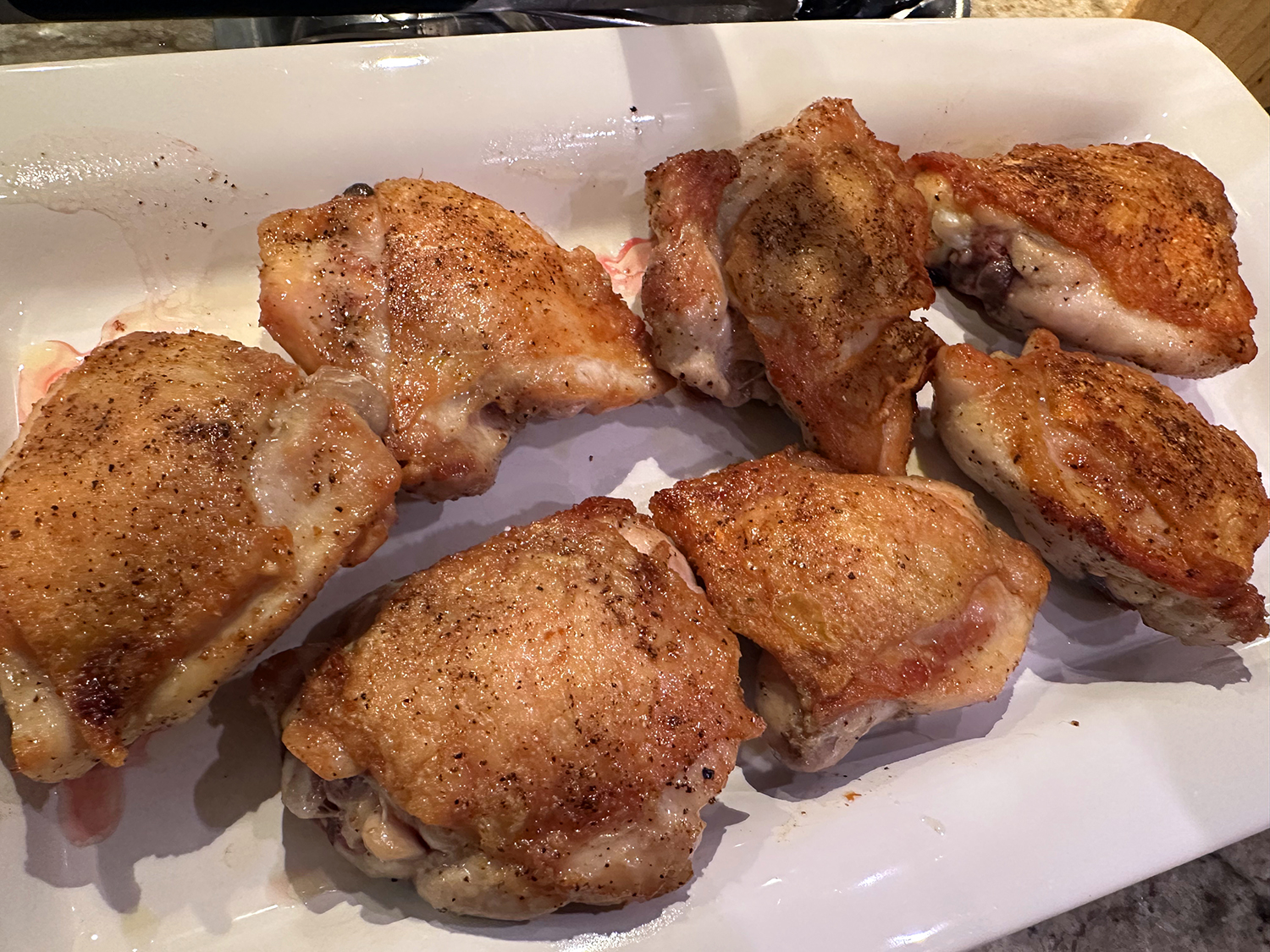
  2. Pat the chicken dry and season with salt and pepper. In a Dutch oven over medium-high heat, warm the olive oil. Working in batches, brown the chicken on all sides, 8 to 10 minutes per batch. Transfer the chicken to a plate and carefully pour the fat from the Dutch oven.
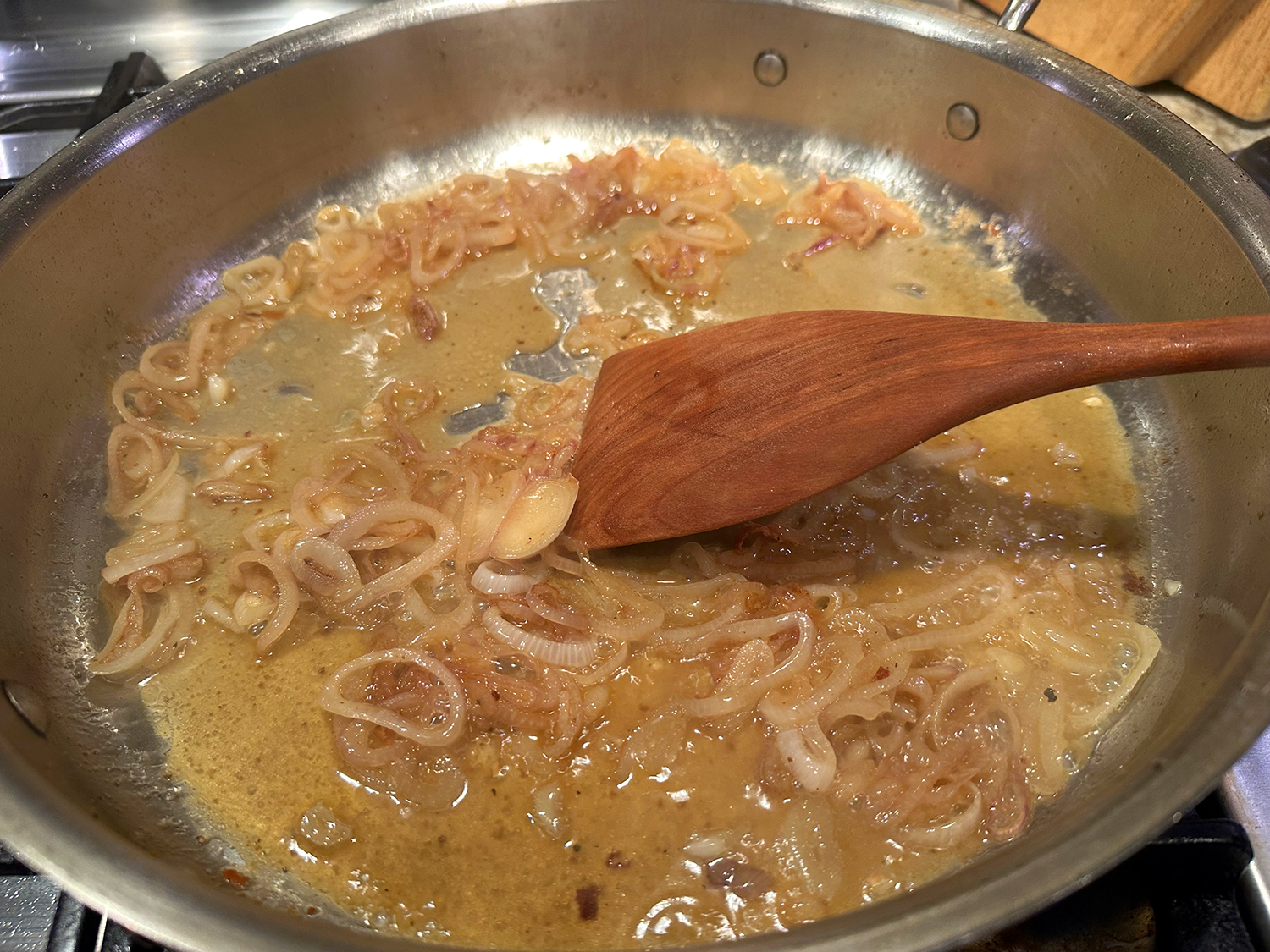
  3. Reduce heat to medium. Add the butter to the Dutch oven. When it has melted, add the onion and sauté until translucent, 4 to 6 minutes. Add the garlic and continue to cook for 1 minute more.
  4. Add the wine and cook, stirring to scrape up the browned bits from the bottom, until the wine reduces slightly, about 2 minutes. Add the broth, olives, lemon zest, capers and fennel seeds.  Return the dark meat chicken to the Dutch oven and top with the tomatoes.
  5. Cover, place the Dutch oven in the oven. After 15 minutes of cooking, place the breast pieces on top of the dark meat, cover, and cook until the chicken is tender, 20 minutes more — 35 to 40 minutes total, checking with an insta-read thermometer at 35 minutes. The breast meat should register 155° and the thigh meat should be 165°.
  6. When the chicken is cooked, transfer the chicken pieces to a plate and place the Dutch oven over medium-high heat. Cook until the braising liquid is thickened a good bit, about 10-15 minutes. Season with salt and pepper and return the chicken to the Dutch oven. Serve immediately.

http://www.lynnandruss.com

Recipe was loosely adapted from one by Williams Sonoma Test Kitchen

Better-Than-My-Mom’s Chungking Pork

Although Sichuan is famous for its fiery food, the flavors in Chungking Pork are relatively mild on the heat scale, instead hitting you with a combination of three different fermented beans. However in this revised version by J. Kenji Lopez-Alt, it uses only fermented black beans, and a touch of hoisin sauce for sweetness.

Don’t forget to roughly chop the fermented beans. And if you have the time, try to marinate the pork for longer than 15 minutes. Our sliced meat did so for 3 and half hours and it turned out perfect.

In his revised recipe, it indicates it serves four. When we made it, which truth be told our pork weighed in at a bit under one pound, we didn’t even get 3 full servings, more like two-and-a-half. Something to keep in mind if you are meal planning for four people.

But lo and behold, it was absolutely delicious! A side salad rounds out the meal and provides more nutritious vegetables.

Better-Than-My-Mom's Chungking Pork

  • Servings: 3
  • Difficulty: easy
  • Print

Ingredients

For the Pork:

  • 1 lb. boneless pork loin or tenderloin cut into 1/4 by 1- by 2-inch pieces
  • 1 tsp. dark soy sauce
  • 1 tsp. Shaoxing wine or dry sherry
  • 1/4 tsp. baking soda
  • 1 tsp. cornstarch
  • 1/4 tsp. MSG (optional)

For the Sauce:

  • 2 Tbsp. dried fermented black beans, roughly chopped
  • 2 Tbsp. hoisin sauce
  • 2 tsp. dark soy sauce
  • 2 Tbsp. chicken stock or water
  • 1/2 tsp. hot red pepper flakes or ground Chinese hot chiles

For the Stir Fry:

  • 3 Tbsp. peanut, rice bran, or other neutral oil
  • 3 slices fresh ginger
  • 3 medium garlic cloves, peeled and lightly smashed with the side of a knife
  • 6 oz. green cabbage, cut into 1 1/2-inch squares
  • 2 scallions, sliced thinly on the diagonal for garnish (optional)

Directions

  1. For the Pork: Place the pork slices in a medium bowl, cover with cold water, and vigorously agitate it. Drain through a fine-mesh strainer set in the sink and press on the pork with your hands to remove excess water.
    Return the pork to the bowl and add the soy sauce, wine, baking soda and cornstarch. Stir vigourosly with your fingertips for 30 seconds. Set aside for 15 minutes at room temperature, or refrigerate for up to 8 hours.
  2. For the Sauce: Combine the fermented black beans, hoisin sauce, hoisin sauce, water or broth, and red pepper flakes in a small bowl and mix with a fork until homogenous.
  3. For the Stir-fry: Heat a wok over high heat until lightly smoking. Add 1 tablespoon of the oil and swirl to coat. Add 1 slice of the ginger and 1 garlic clove and let sizzle for 5 seconds. Immediately add the cabbage and stir-fry until lightly translucent and browned in spots, 1 to 2 minutes. Transfer to a large bowl.
  4. Wipe out the wok and return to high heat until lightly smoking. Add 1 tablespoon of the remaining oil and swirl to coat. Add 1 more slice of ginger and 1 more garlic clove and let sizzle for 5 seconds. Immediately add half of the pork and stir-fry until the pork is no longer pink and is mostly cooked through, about 1 minute. Transfer the pork to the bowl with the cabbage, wipe out the wok, and repeat with the remaining oil, ginger, garlic and pork.
  5. Return all the pork and cabbage to the wok. Add the sauce mixture and toss until the cabbage and pork are coated evenly. Transfer to a serving platter and serve immediately with steamed rice.

http://www.lynnandruss.com

Recipe from J. Kenji Lopez-Alt’s cookbook “The Wok”

Roasted Mushroom Soup

If you love mushrooms, then you must try this soup from Ali Slagle (for NYTimes cooking). It is noted that you don’t need fancy mushrooms to make a rich soup, you just need to brown them. To do that, spread creminis — no need for fancier mushrooms here — on a sheet pan and roast them until they’re juicy. Pour off and save the umami-heavy juices which will provide a savory backbone to the soup; then keep roasting the mushrooms until they’re glistening brown.

Blending so many mushrooms with plain water (or preferably stock, if you have some) creates a thick soup, not to mention one with a deeply earthy flavor. While the soup has a lot of flavor, it lacks in looks unless garnished with color and texture. For a more substantial meal, top with croutons (as shown), farro or sautéed spinach, or serve alongside buttered toast, roasted sausage or a green salad. Lots of options to round out the meal!

Roasted Mushroom Soup

  • Servings: 4
  • Difficulty: easy
  • Print

Ingredients

  • 2 lbs. cremini mushrooms, halved, quartered if large
  • 2 shallots, cut into wedges
  • 2 garlic cloves, minced
  • 4 thyme sprigs, plus 1 Tbsp. leaves for serving
  • ¼ cup extra-virgin olive oil
  • 2 Tbsp. soy sauce
  • Salt and black pepper
  • 3 cups water, or chicken broth
  • 2-3 Tbsp. sherry
  • ¼ cup heavy cream, plus more for serving

Directions

  1. Heat the oven to 400 degrees. On a sheet pan, toss together the mushrooms, shallots, thyme, oil and soy sauce until well combined. Sprinkle with salt and pepper and spread into an even layer.
  2. Roast until the mushrooms are pooling in liquid, about 15 minutes. Carefully pour the liquid into a small bowl and reserve. Return the sheet pan to the oven and roast, stirring occasionally, until browned, another 25 to 30 minutes.
  3. Discard the thyme sprigs and set aside ½ cup of the roasted mushrooms. If using an immersion blender, transfer the remaining mushrooms to a pot, or transfer to a regular blender. To the sheet pan, add some of the water (about ½ cup but no need to measure) and scrape off the stuck-on browned bits. Pour the mixture into the pot or blender, along with the remaining water, reserved mushroom liquid and sherry. Blend until smooth.
  4. Warm the soup on the stove over medium-high. Turn off the heat and stir in the cream. Taste; if the flavor is bland, add salt and pepper; repeat until the mushroom flavor is pronounced. Serve topped with a drizzle of cream, the reserved mushrooms and thyme leaves.

http://www.lynnandruss.com

Adapted from a recipe by Ali Slagle for NYTimes Cooking

Thai Vegetable Curry

This colorful, aromatic Thai Vegetable Curry recipe may be vegetarian, but it doesn’t skimp on flavor. Creamy coconut milk and Thai red curry paste create the perfect base for tender eggplant, crisp vegetables, and fragrant Thai basil. 

The beauty of this dish is its versatility. You can easily adjust the spice level by using less curry paste, and the vegetables can be swapped based on what you have in your fridge. We made some minor adjustments, but followed the recipe pretty closely otherwise. And it definitely has a kick to it, so cut back on the red curry paste if you have a more “delicate” palate.

Our Asian Mart was carrying Taiwan Basil as opposed to the Thai variety so we used that. And using just half of a red bell pepper? C’mon, that’s just silly, so we incorporated the entire pepper. We loved it!

Thai Vegetable Curry

  • Servings: 4
  • Difficulty: easy
  • Print

Ingredients

  • 3 Tbsp. neutral oil (such as vegetable, canola, or avocado oil)
  • 1 Chinese eggplant, sliced on an angle into ½-inch/1cm thick slices
  • 2 cloves garlic, minced
  • 2 slices ginger, peeled and minced
  • 4 oz. Thai red curry paste
  • 2 tsp. brown sugar (or palm sugar)
  • 1 small onion, cut into small wedges, root end removed
  • 1 red bell pepper, seeded and chopped into 3⁄4″ chunks
  • 1 zucchini, halved lengthwise, and sliced on an angle
  • 6 oz. green beans, ends trimmed, and cut in half crosswise
  • 5 oz. bamboo shoots, drained
  • 2 tsp. vegan fish sauce or soy sauce
  • 13.5 oz. coconut milk
  • ½ cup Thai basil leaves
  • ¼ cup roasted peanuts, chopped, optional

Directions

  1. Heat a wok or large cast iron/carbon steel skillet over medium-high heat until it just starts to smoke. Add 2 tablespoons of oil, and spread it around to coat. Add the eggplant, and stir-fry for about 7 minutes, until the eggplant is lightly browned and tender. Drizzle in a little more oil during this process if the eggplant looks dry, and try to keep it in one layer so it sears on all sides. Transfer the eggplant to a dish and set aside.
  2. Over medium-low heat, add the remaining 1 tablespoon oil to the pan, along with the garlic and ginger, and fry for 1 minute until fragrant. Increase the heat to medium-high, add the curry paste, and fry for another minute. Stir in the sugar.
  3. Add the onion, bell pepper, zucchini, green beans, bamboo shoots, and vegan fish sauce (or soy sauce/regular fish sauce), and fry for 3 minutes, until the vegetables begin to get tender. Then reduce the heat to medium, and add the coconut milk and eggplant. Bring to a simmer. (From this point on, keep the curry at a simmer. Avoid boiling it too vigorously, or the coconut milk may split.)
  4. Simmer for 4 minutes, or until the vegetables are crisp-tender. Stir in the Thai basil until wilted. Garnish with chopped peanuts if desired, and serve over steamed rice.

http://www.lynnandruss.com

Adapted from a recipe courtesy of The Woks of Life

Chicken and Chickpea Tray Bake

Another winner of a dinner from NYTImes Cooking! They claimed this easy chicken sheet-pan supper brings bold, warming flavors with minimal fuss—and they weren’t kidding. Tossed with ras el hanout, the chicken roasts alongside potatoes, sweet peppers and chickpeas, creating a richly flavored dish that practically makes its own sauce. The sheet pan may look crowded, but everything melts beautifully together as it cooks.

The peppers, potatoes and chickpeas simmer gently in the (reduced amount of) oil, while the chicken sits halfway in, its skin staying crispy as the juices mingle below. Any chickpeas peeking out get delightfully crisp, while the rest confit in the oil, becoming soft and smooth.

A finishing drizzle of sherry vinegar adds a bright, tangy kick, balancing the warm spices and bringing out the dish’s deep roasted flavors. Best of all, the prep is simple, and the oven does the rest, making this perfect for a cozy midweek dinner that still feels special. Although it does take a good bit more than one hour.

Here’s what we did differently: A huge reduction was made in the amount of oil, from 3/4 cup to just over a 1/4 cup. The quantity of Roma tomatoes was doubled from 3 to 6, and garlic from 1 head to 2. Unable to source romano peppers, we used the tricolored mini bell peppers. The potatoes were first cut in half crosswise, then sliced into small wedges. Since the homemade ras el hanout made about 2 1/2 tablespoons, the entire amount was incorporated.

TIP: It is really difficult to evenly toss all of the chicken and vegetables with the oil on the rimmed baking sheet. I used a very large mixing bowl instead. If you don’t have a large enough bowl, try oiling the ingredients in two batches before spreading onto the baking sheet.

There are numerous versions for the ras el hanout spice combination. It is a North African Spice and it’s name translates loosely to “House Blend”. It can contain as many as 50 ingredients including rosebuds and Spanish fly (say what??). If the recipe below doesn’t suit your tastes, feel free to create another mixture, or use a store-bought variety.

Chicken and Chickpea Tray Bake

  • Servings: 4-6
  • Difficulty: easy
  • Print

Ingredients

  • 6-8 bone-in, skin-on chicken thighs (about 3 ¼ lbs.)
  • 2 Tbsp. ras el hanout (store bought, or recipe below)
  • Fine sea salt and black pepper
  • 3 small Yukon Gold (or similar) potatoes, each cut into 1-inch-thick wedges
  • 1 15-oz. can chickpeas, rinsed
  • 4-6 medium Roma tomatoes, halved lengthwise
  • 4 romano peppers, halved lengthwise and stems removed (or 12 mini bell peppers)
  • 2 heads garlic, top ½ inch removed to expose the tip of each clove
  • ¼ cup + 1 Tbsp. extra-virgin olive oil
  • 2 Tbsp. sherry vinegar
  • ¼ cup roughly chopped fresh cilantro

Ras El Hanout Ingredients

Makes about 2 1/2 Tablespoons

  • 1 tsp. ground ginger
  • 1 tsp. turmeric
  • 1 tsp. salt
  • 34 tsp. sugar
  • 34 tsp. fresh ground black pepper
  • 12 tsp. cinnamon
  • 12 tsp. ground coriander
  • 12 tsp. cayenne
  • 12 tsp. ground allspice
  • 12 tsp. ground fennel
  • 14 tsp. ground cloves

Directions

  1. Heat the oven to 375 degrees.
  2. Season the chicken with the ras el hanout, 2 teaspoons of salt and a good crack of black pepper on a 13-by-18-inch sheet pan sprayed with cooking spray, and leave to marinate for 10 minutes.
  3. In a very large bowl, add the potatoes, chickpeas, tomatoes, peppers, garlic, oil, seasoned chicken thighs and 1 tablespoon of the vinegar, and gently mix so that everything is coated with oil. Spread the mixture as evenly as possible across the treated baking sheet arranging the chicken on top, skin-side up.
  4. Bake for 30 minutes, then give the pan a gentle shake to encourage everything into an even layer. Cook for another 35 minutes, until the chicken is tender and well browned.
  5. Use tongs to squeeze out the garlic cloves, discarding the papery skins. Use a fork to crush the tomatoes and the garlic cloves, then loosely mix them into the sauce. Sprinkle with the cilantro, mixing it in as well. Drizzle over the remaining 1 tablespoon vinegar before serving.

http://www.lynnandruss.com

Adapted from a recipe by Yotam Ottolenghi for NYTimes Cooking

Creamy Mushroom and Leek Pasta

The premise of a one-pot meal is always compelling. But after reading the reviewers comments from this NYTimes Cooking recipe, I decided numerous changes were necessary. It seems the original was bland (not our MO at all!), and using just one pot wasn’t the best approach.

It ended up being a deeply satisfying pasta, brimming with rich umami flavor. Once the leek, shallots, and mushrooms are caramelized and sticking to the pot, they’re deglazed to lift all the extra depth from the bottom of the pan. Using half a lemon as the original recipe suggested didn’t do such a great job of deglazing so I also dribbled in a couple tablespoons of white wine as well.

This recipe leaves the choice of mushrooms up to you: Cremini and shiitake are a good combination, but you could even use rehydrated porcinis. However, a mere 6 ounces is truly not enough, so increase the amount to at least 12, and up to 16 ounces. To round out the meal, add a green salad or side of a green vegetable such as broccolini.

Creamy Mushroom and Leek Pasta

  • Servings: 3-4
  • Difficulty: easy
  • Print

Ingredients

  • 4 Tbsp. olive oil
  • 1 leek, white part only, finely sliced
  • 1 large (or 3 small) shallots, diced
  • 2 garlic cloves, finely chopped
  • 12-16 oz. mixed mushrooms, such as cremini, shiitake or oyster, sliced
  • 1 lemon, halved
  • Zest of 1 lemon
  • 8 oz. short pasta, such as orecchiette, cavatappi, gemelli or penne
  • 2 cups vegetable or chicken stock
  • 1 Tbsp. white miso
  • 2 Tbsp. unsalted butter
  • ½ cup chopped fresh parsley, plus more for garnish
  • Kosher salt and black pepper
  • ½ to 1 cup whole-milk ricotta
  • ½ to 1 tsp. red-pepper flakes
  • ½ cup chopped parsely, more for garnish

Directions

  1. Heat a wide, deep 12-inch skillet or Dutch oven over medium-high. When hot, add 3 tablespoons of olive oil, leeks and shallots, reduce heat to medium and cook, stirring constantly, until softened and lightly golden, 5 minutes. Remove to a side dish. (In my photos, I neglected to do this before adding the mushrooms.)
  2. In the meantime, cook the pasta until al dente.
  3. Add remaining tablespoon of olive oil, garlic and mushrooms to hot pan. Cook, undisturbed, for 2 minutes, then stir and cook, undisturbed, until the mushrooms start to caramelize and stick to the bottom of the pan, another 2 to 3 minutes. (This allows the water from the mushrooms to evaporate, encouraging caramelization.) Return the leeks and shallots to pan with mushrooms. Add the juice of one lemon half to deglaze the pan and stir to combine. (White wine seems to do a better job of deglazing.)
  4. Drain the pasta and add it and 1 cup of the stock with miso mixed in to the pan; stir well. Add more liquid if necessary, a bit at a time. (I did not need to use any more, but if you included more pasta, you may need to do so.) Stir in the red pepper flakes.
  5. Cook for about 1 minute, turn off the heat and add the butter and parsley. Squeeze in the juice from the remaining lemon half and stir until butter is melted and dispersed. Season with salt and pepper.
  6. To serve, top with ricotta, more red-pepper flakes (to taste), and more chopped parsley.

http://www.lynnandruss.com

Chicken Tinga Tacos

We took a basic Chicken Tinga recipe using a rotisserie chicken and made tacos as our main dish. If you’ve never had it, chicken tinga has a smoky sweetness that’s hard to resist and uses easy-to-find ingredients such as tomatoes (canned or fresh), chipotle peppers in adobo, and of course, chicken.

The dish originates from Puebla, Mexico, and it falls under what a guisado: a meat or vegetable that is cooked with few ingredients and is stewy, homey, and delicious. There are many variations for this recipe so feel free to adjust to your own preferences.

The number of servings will vary depending on how and what you serve the tinga in. For us, one serving equaled two stuffed tacos and a side of rice and beans.

Not fans of anything too sweet with our meat, we reduced the amount of honey from three tablespoons down to one.

Chicken Tinga Tacos

  • Servings: 5-6
  • Difficulty: easy
  • Print

Ingredients

  • 1 Tbsp. olive oil
  • 1 medium white onion
  • 4 large cloves garlic
  • 2-4 chipotle chiles in adobo sauce (plus 1 Tbsp. of the adobo sauce)
  • 1 15-oz. can fire-roasted tomatoes
  • 1 cup chicken stock
  • 1 Tbsp. honey
  • 1 1/2 tsp. ground cumin
  • 1 tsp. dried oregano
  • 6 cups shredded cooked chicken (such as from a 3 1/2 lb. rotisserie chicken)
  • 1 bay leaf
  • Optional toppings: chopped fresh cilantro, shredded Mexican cheese blend, crumbled cotija cheese, fresh lime wedges, quick pickled red onions, sliced avocado, and/or Mexican crema
  • Corn tortillas, taco shells, or tostadas, for serving

Directions

  1. Heat oil in a large stockpot over medium-high heat. Add the onion and sauté for 5 minutes, stirring occasionally. Add the garlic and sauté for 1-2 minutes, stirring frequently, until fragrant. Remove stockpot from heat and transfer the onion mixture to a blender.
  2. Add the chipotles and 1 tablespoon of adobo sauce, tomatoes, chicken stock, honey, cumin and oregano to the blender. Cover and purée until smooth, then pour the sauce back into the stockpot.
    Alternatively, use a an immersion blender directly into the stockpot.
  3. Add the chicken and bay leaf to the sauce and toss until combined. Cook over medium-high heat for 5 minutes, stirring occasionally. Remove and discard the bay leaf.
  4. Season the chicken with salt and pepper to your taste.
  5. Serve it warm with your tortillas and choice of toppings.

http://www.lynnandruss.com

Adapted from a recipe from GimmeSomeOven.com

Hunan-Style Ginger Chicken

This is a flavorful , easy-to-make weeknight dish. Here, you simmer juicy chicken thigh pieces in an umami-rich soy-based sauce with earthy shiitake mushrooms and sweet mini peppers for this 30-minute, one-pan dinner.

This version of the comforting Hunan classic, lao jiang men ji, from cookbook author Andrea Nguyen is a simple braise that gets its heat from a generous handful of unpeeled fresh ginger root. However, we decided to peel our ginger…

If you don’t have a wok, a large skillet, with plenty of surface area, will also work well. It is recommended to use a cast-iron skillet, which has a naturally nonstick surface. (Avoid using a skillet with a nonstick Teflon coating when cooking over high heat, such is the case in this recipe.)

Our changes? We had a frozen packet of chicken thighs that weighed in at 2 1/4 pounds, more than the recipe called for. That fact, plus only 4 ounces of bell pepper just seemed too paltry so we tripled that amount, doubled the scallions, and replaced the water with chicken stock. With all of the “extra” ingredients, we decided to double the sauce ingredients too. Then, at the end, the sauce didn’t seem thick enough so we mixed in a small cornstarch slurry.

The Hubs decided to stir-fry the ginger and garlic, then instead of pushing them to the side, he removed them to a side plate so as not to burn. Next he stir-fried the chicken in two batches (remember we had more than the instructed amount), and added the ginger and garlic back to the wok with the chicken. While the recipe was very good, it just didn’t contain enough “heat” for us, so next time we’ll add some dried chili peppers to kick it up a notch.

Hunan-Style Ginger Chicken

  • Servings: 4
  • Difficulty: easy
  • Print

Ingredients

  • 1 1/2 lbs. boneless, skinless chicken thighs, cut into 1 1/2-inch pieces 
  • 3/4 tsp. kosher salt
  • 2 1/2 Tbsp. canola oil
  • 3 garlic cloves, halved lengthwise
  • 1 (3-inch) piece fresh ginger, halved crosswise and cut into 1/8-inch-thick matchsticks
  • 6 oz. shiitake mushrooms, stemmed and caps halved (quartered if large)
  • 2/3 cup chicken stock
  • 1 1/2 Tbsp. Shaoxing wine
  • 2 tsp. soy sauce, plus more to taste
  • 1 1/2 tsp. dark soy sauce
  • 1/2 tsp. granulated sugar
  • 4 oz. multicolored sweet mini peppers, stemmed and thinly sliced crosswise
  • 1 tsp. toasted sesame oil
  • 3 scallions, thinly sliced
  • Steamed white rice

Directions

  1. Toss together chicken and salt in a large bowl; set aside. Heat oil in a wok or large cast iron skillet over medium. Add garlic and ginger; cook, stirring constantly, until fragrant, about 30 seconds. Push garlic and ginger to one side of wok; increase heat to high, and add chicken pieces in a single layer. Cook, undisturbed, until browned in spots, about 2 minutes. Continue cooking, stirring occasionally, until chicken is no longer pink, about 3 minutes.
  2. Stir mushrooms, 2/3 cup chicken stock, Shaoxing wine, soy sauce, dark soy sauce, and sugar into wok. Bring to a boil over high. Reduce heat to medium; cover and simmer vigorously, undisturbed, until a thermometer inserted in the thickest piece of chicken registers 165°F, 5 to 8 minutes.
  3. Uncover wok, and increase heat to high. Add peppers and sesame oil; cook, stirring occasionally, until liquid has reduced into a thick sauce, 3 to 5 minutes. If not thick enough to your liking, stir in a small amount of cornstarch slurry.
  4. Remove from heat, and stir in scallions. Season to taste with additional soy sauce. Serve with steamed rice on the side.

http://www.lynnandruss.com

Adapted from a recipe by Andrea Nguyen for Food & Wine
Shrimp Scampi with Orzo

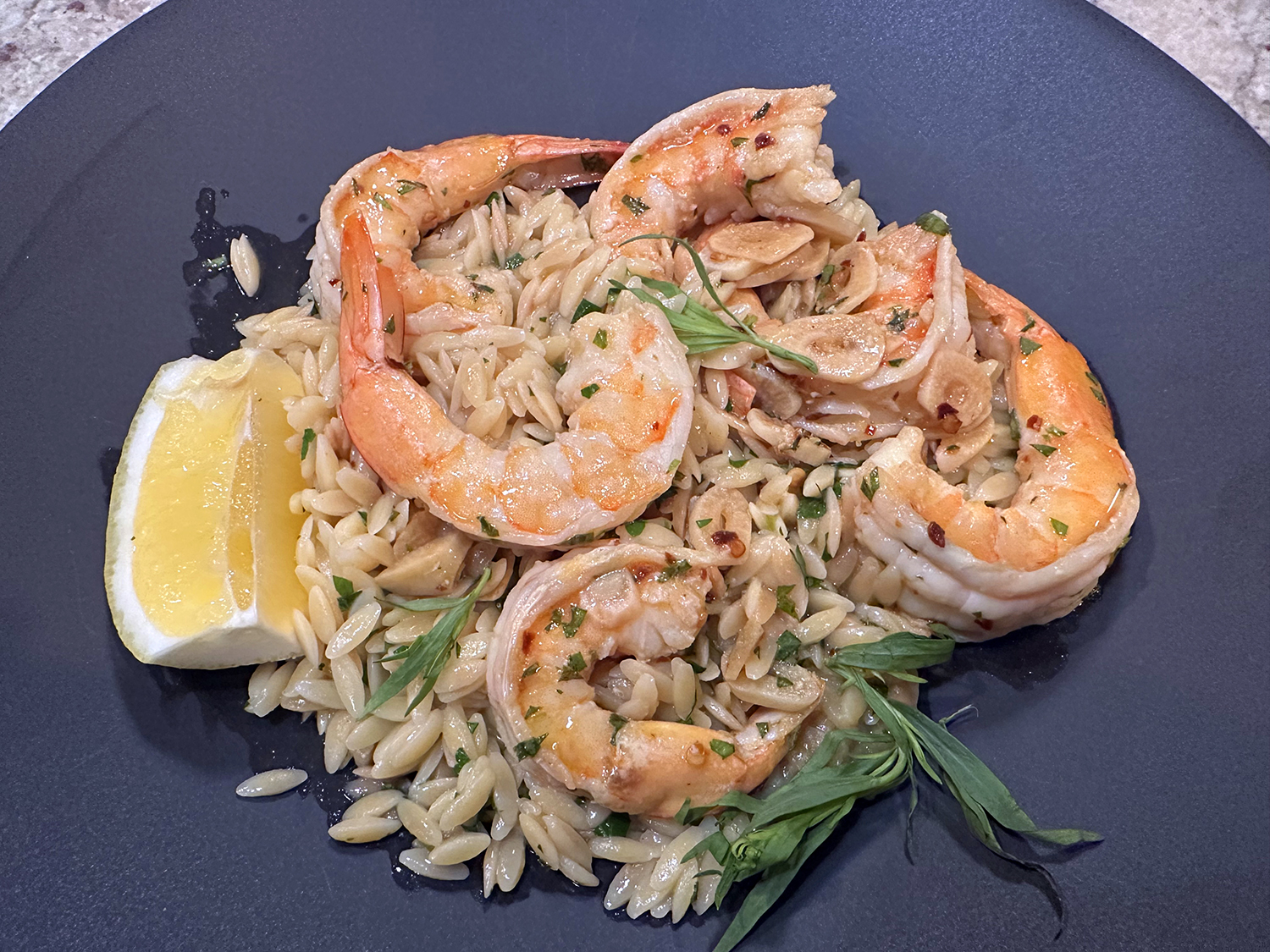
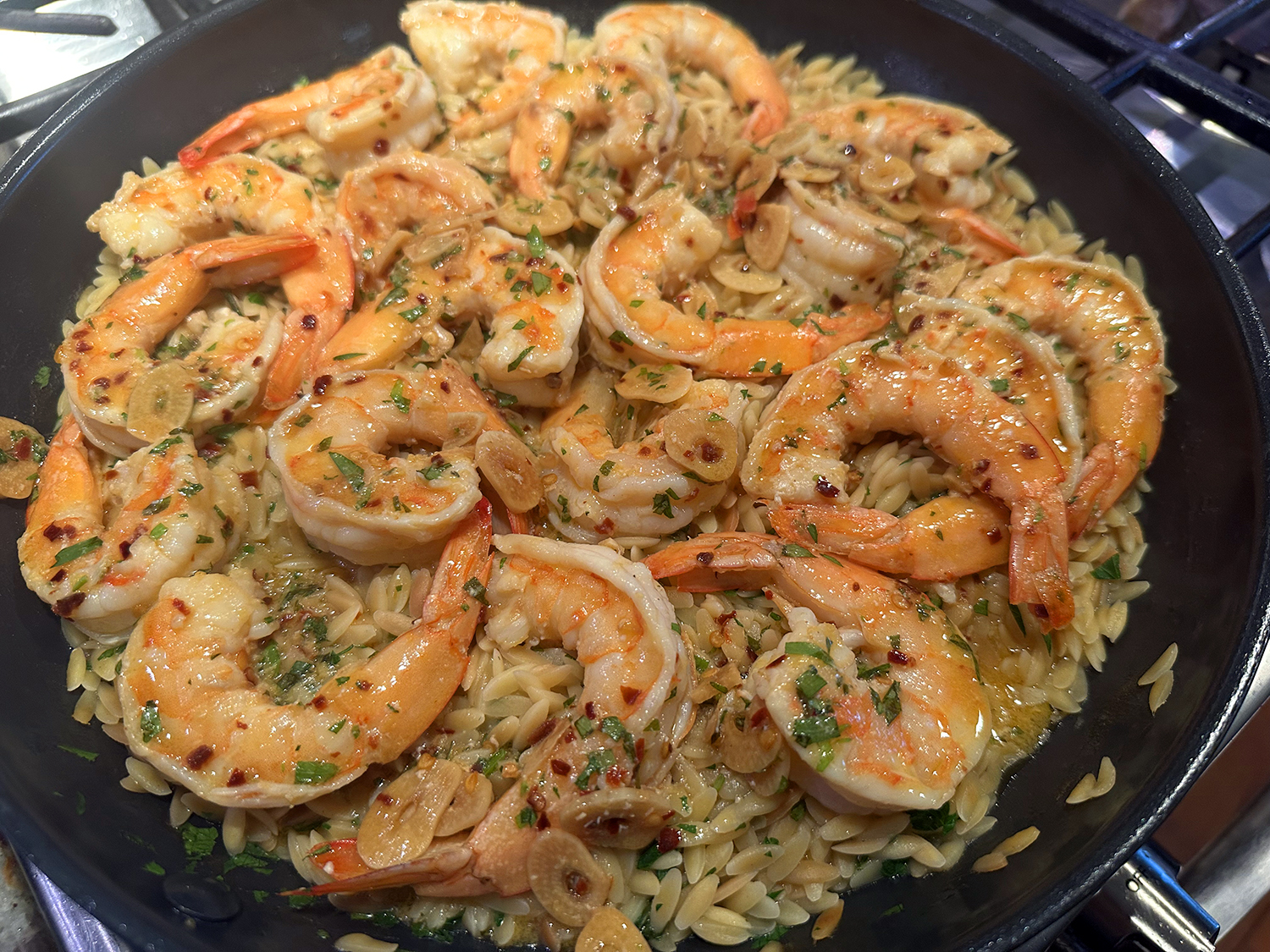
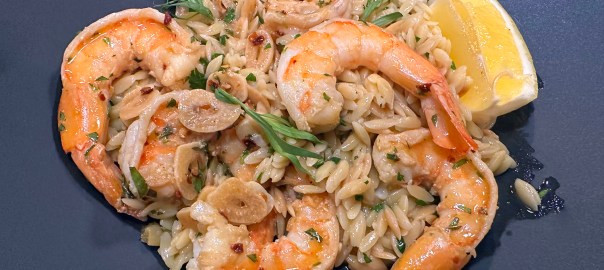
With over 16,600 5-star reviewer ratings, this recipe sounded like a win-win, and it was! According to NYTimes Cooking, the universal appeal of shrimp scampi they say, isn’t the shrimp but the pan sauce: garlicky butter lightened with white wine and bursts of lemon, parsley and red-pepper flakes. Scampi is often tossed with pasta or served with crusty bread, but this version instead uses quick-cooking orzo.
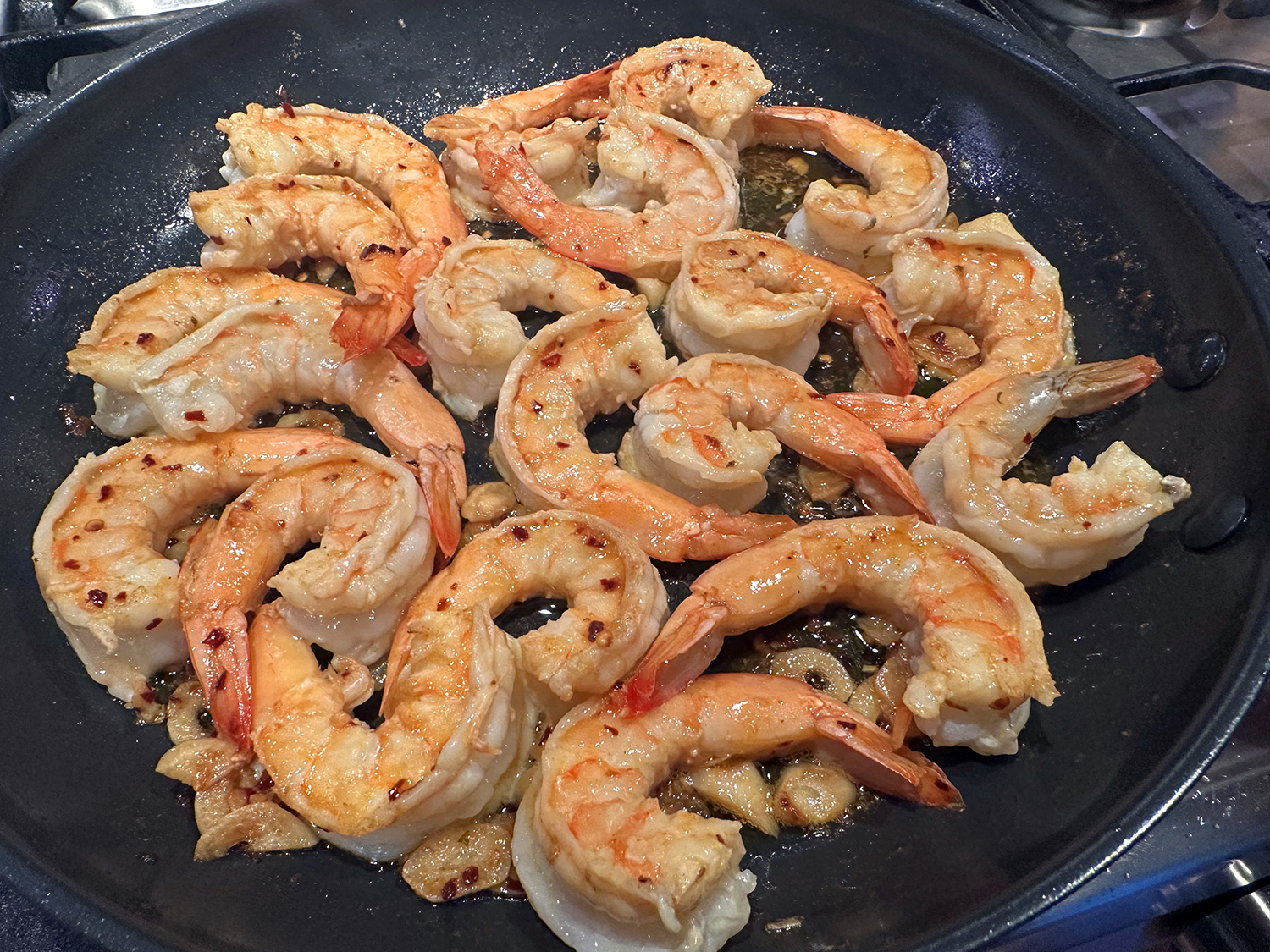
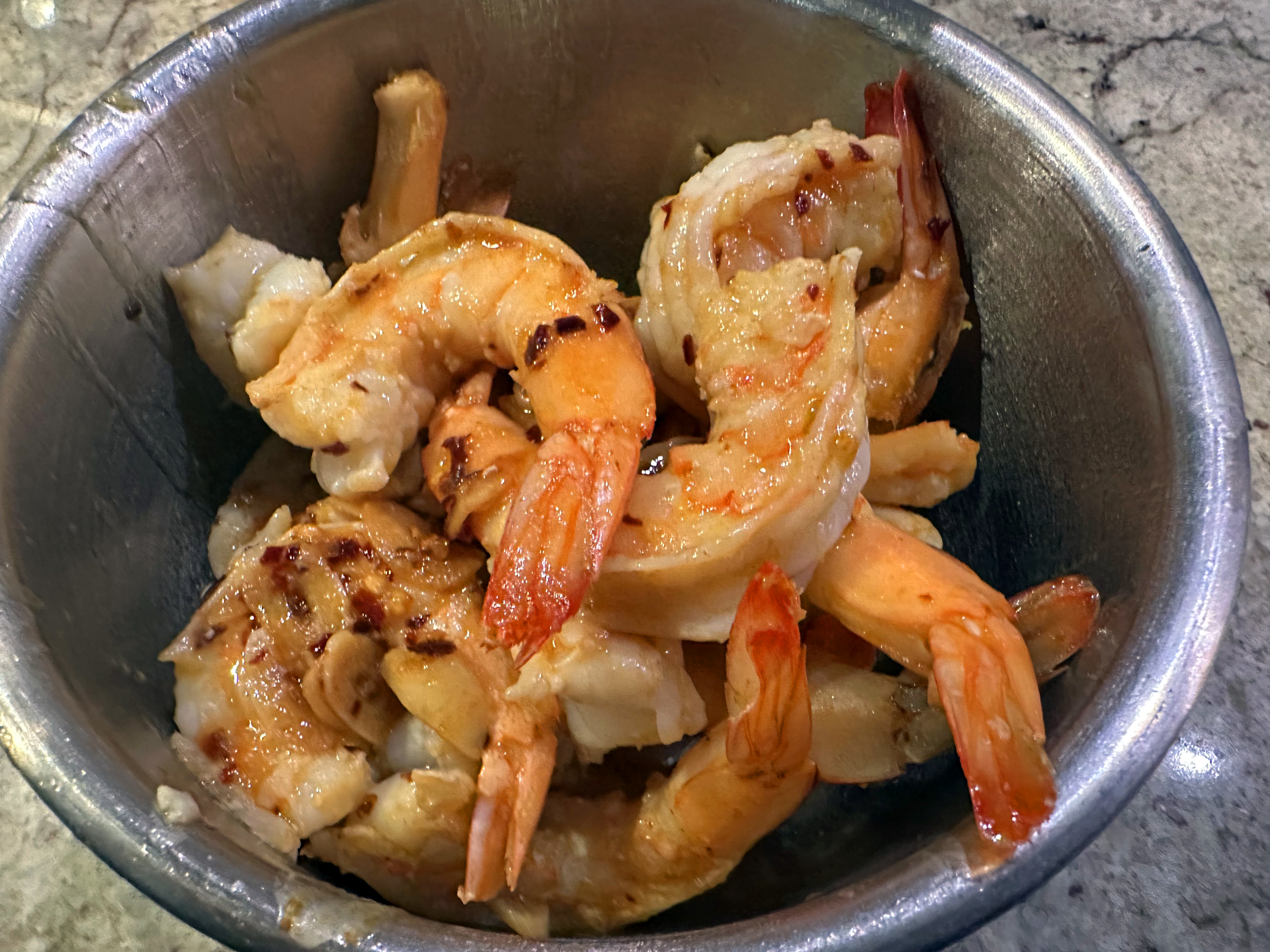
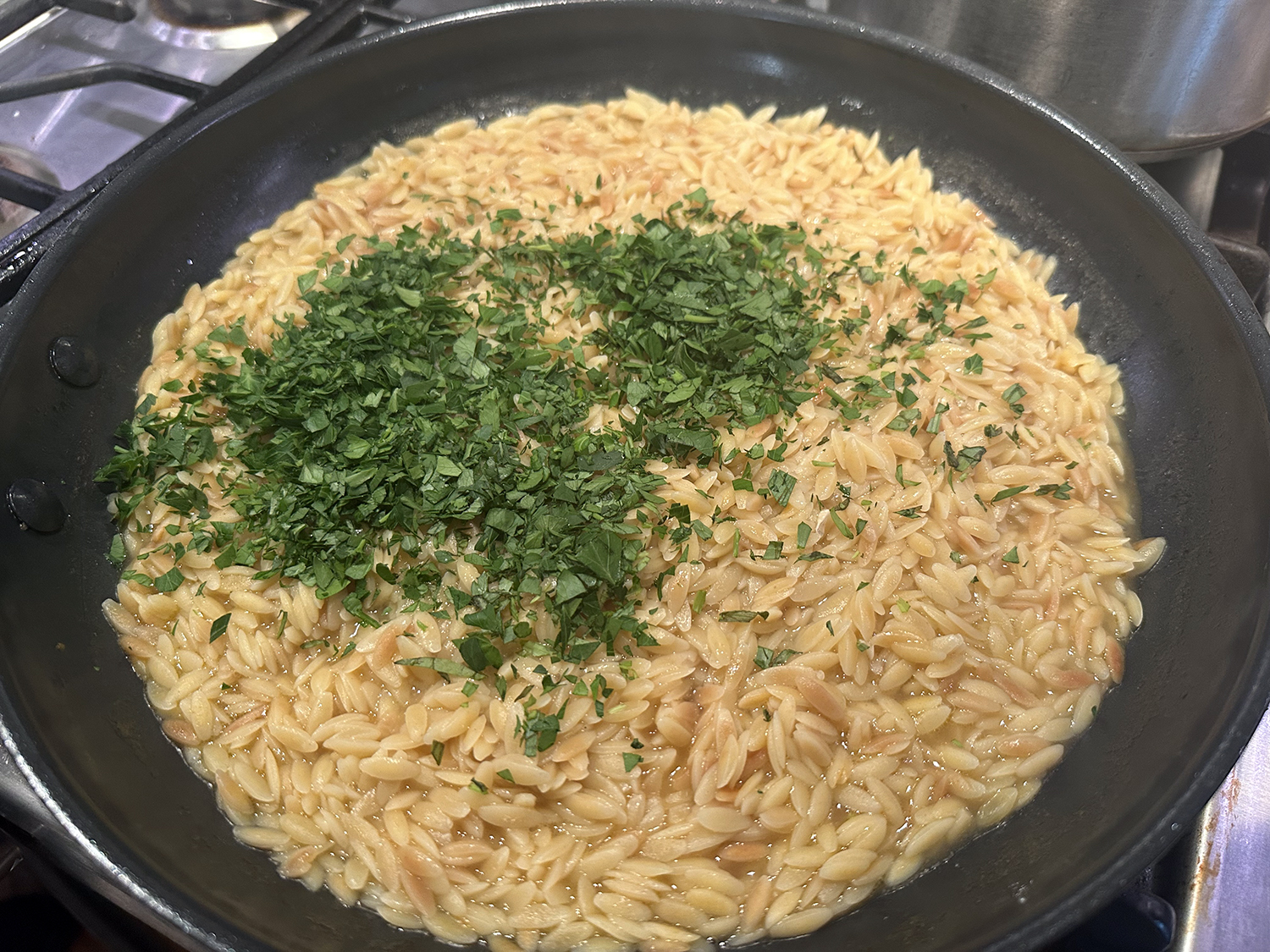
It simmers directly in the pan sauce, imparting a starchy gloss — and soaking up the garlicky scampi flavors. Toss the shrimp with some garlic, lemon zest and red-pepper flakes to marinate while the pasta gets a head start on the stove, then simply toss the shrimp on top of the orzo to steam. It all comes together in a flash, and feels effortless. Pair this dish with Caesar salad, steamed broccoli or arugula, or bask in its simple comfort, straight from a spoon.

Whichever liquid you choose, make sure it is boiling. We had homemade seafood stock on hand so we opted for that which makes a huge difference in amping up the depth of flavor. (Clam broth would also be a great choice.) In lieu of parsley, which we were fresh out of, we included chopped fresh basil.

Both the orzo and the shrimp had to be cooked a few minutes longer than suggested. But once the dish rested for a couple of minutes off the heat at the end, everything came together perfectly.

Shrimp Scampi with Orzo

  • Servings: 3-4
  • Difficulty: easy
  • Print

Ingredients

  • 1 lb. large shrimp, peeled and deveined
  • 3 Tbsp. extra-virgin olive oil
  • 1 Tbsp. lemon zest, plus 1 tablespoon juice (from 1 lemon)
  • ½ tsp. red-pepper flakes
  • Kosher salt and black pepper
  • 4 garlic cloves, minced
  • 2 Tbsp. unsalted butter
  • 1 cup orzo
  • ⅓ cup dry white wine
  • 2 cups boiling water, seafood stock, clam broth or chicken stock
  • 3 Tbsp. finely chopped parsley, or parsely

Directions

  1. In a medium bowl, stir together shrimp, 1 tablespoon olive oil, lemon zest, red-pepper flakes, ½ teaspoon salt, ¼ teaspoon pepper and half of the garlic. Set aside to marinate. (This step can be done up to 1 hour in advance.)
  2. Add butter, remaining 2 tablespoons olive oil and remaining garlic to a medium skillet set over medium heat. When the butter starts to bubble, add the orzo and ½ teaspoon salt and cook, stirring often, until the orzo is toasted, about 2 minutes, adjusting the heat as necessary to prevent the garlic from burning. Carefully add the wine — it will bubble — and stir until absorbed, about 1 minute. Stir in boiling liquid, reduce heat to low, cover, and cook until orzo is al dente, about 12 minutes.
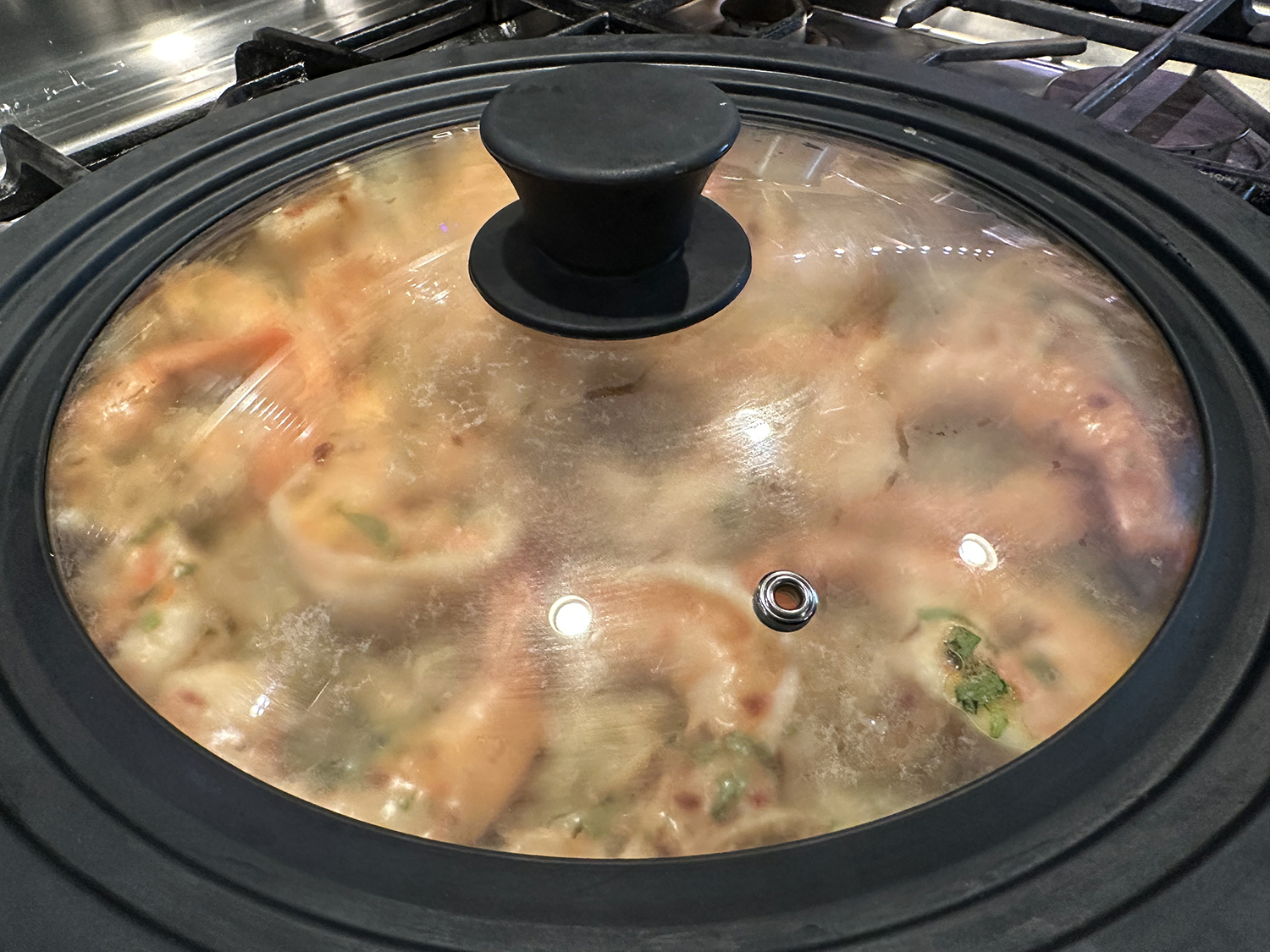
  3. Add the shrimp in a snug, even layer on top of the orzo, cover, and cook until all the shrimp is pink and cooked through, 2 to 4 minutes. Remove from heat and let sit, covered, 2 minutes.
  4. Sprinkle with parsley and lemon juice, season with salt and pepper, and serve immediately.

http://www.lynnandruss.com

Recipe by Ali Slagle for NYTimes Cooking