To pump up the flavors of the braising liquid in this Beer-Braised Cabbage, Cook’s Country chose a light-bodied lager. They also used beer-complementing ingredients like sautéed onion, mustard, vinegar, and thyme. To ensure the cabbage doesn’t overcook from extended simmering, the braising liquid is simmered until slightly thickened before adding the cabbage.
We paired the cabbage with a pan-seared pork chop and braised red potatoes with miso and scallions.
A great side dish that’s quick enough for a weeknight. You can substitute ¼ teaspoon of dried thyme for the fresh. This hearty side dish was a nice complement to the pork, although you can serve it as a vegetarian side.
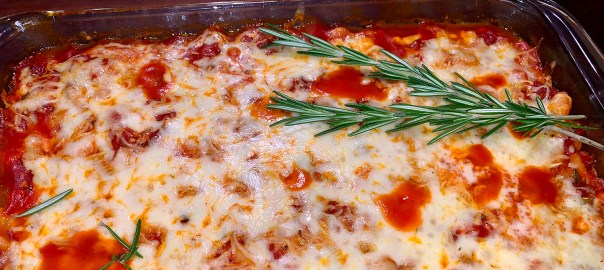
Flexible in that this Cheesy Italian Baked Beans recipe could be your main dish, or part of a meal as a side. Here, traditional Italian ingredients like onion, garlic, tomatoes, cheese, and rosemary put a spin on classic baked beans.
The prep is minimal and afterward it only cooks in the oven for about 20 minutes. When it came to topping the casserole with the shredded fontina cheese, I may have put a bit more than the 1/2 cup that was called for… like 50% more 🙂
I added a final step of letting the casserole sit for 5-10 minutes after removing from the oven. We paired the entrée with a side of steamed broccolini and a toasted whole grain baguette with garlic and parmesan.
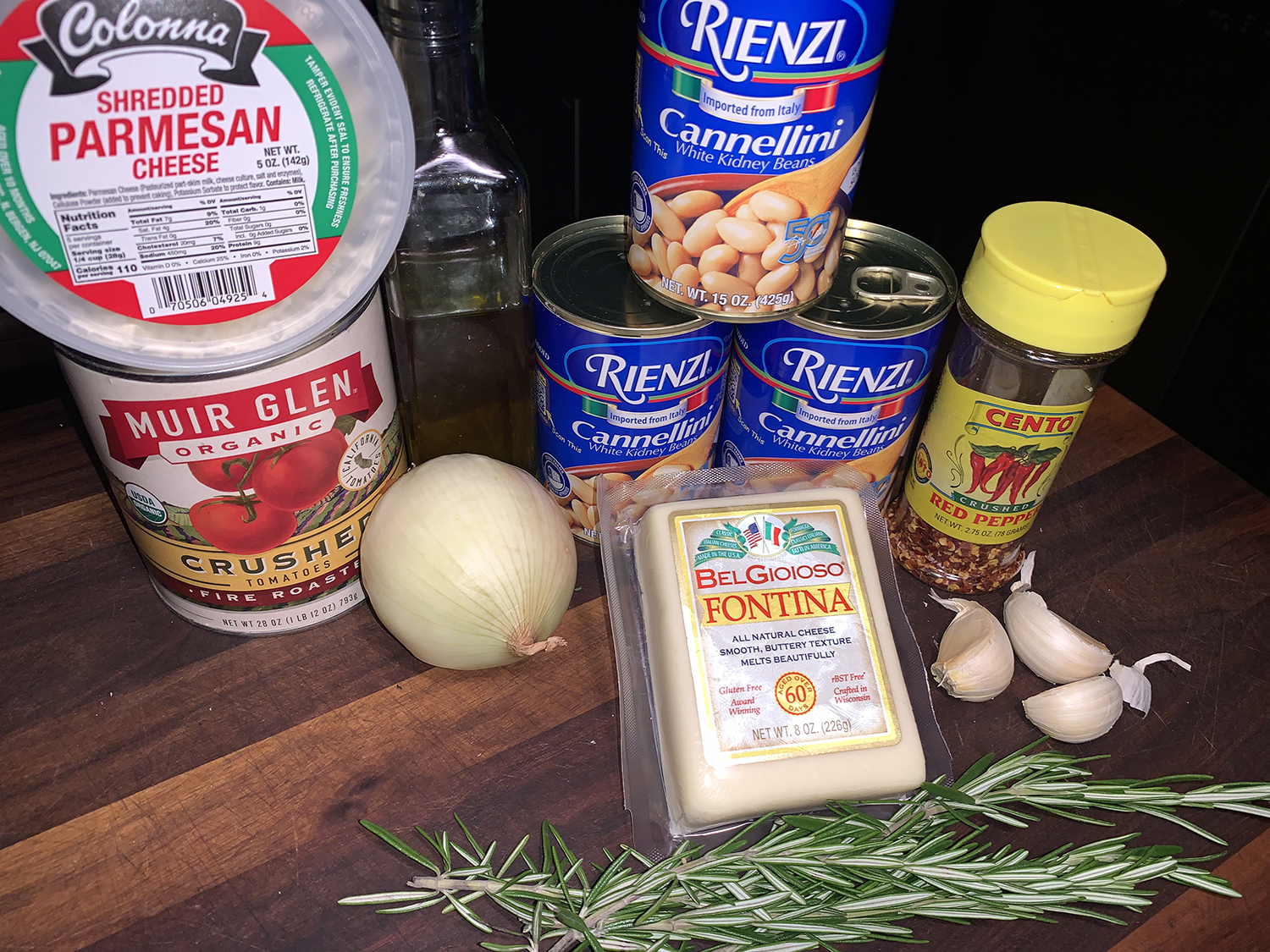
1 28-oz. can fire-roasted crushed tomatoes, undrained
¼ cup fresh rosemary leaves, coarsely chopped, plus additional for garnish
3 15-oz. cans cannellini beans, rinsed and drained
¾ cup shredded Parmesan cheese
Crushed red pepper
Coarse salt and freshly ground black pepper
½ cup cup shredded Fontina cheese
Directions
Preheat oven to 400°F. In a large skillet heat olive oil over medium-high heat. Add onion, garlic, and 1/8 tsp. salt. Cook and stir for 5 minutes or until tender.
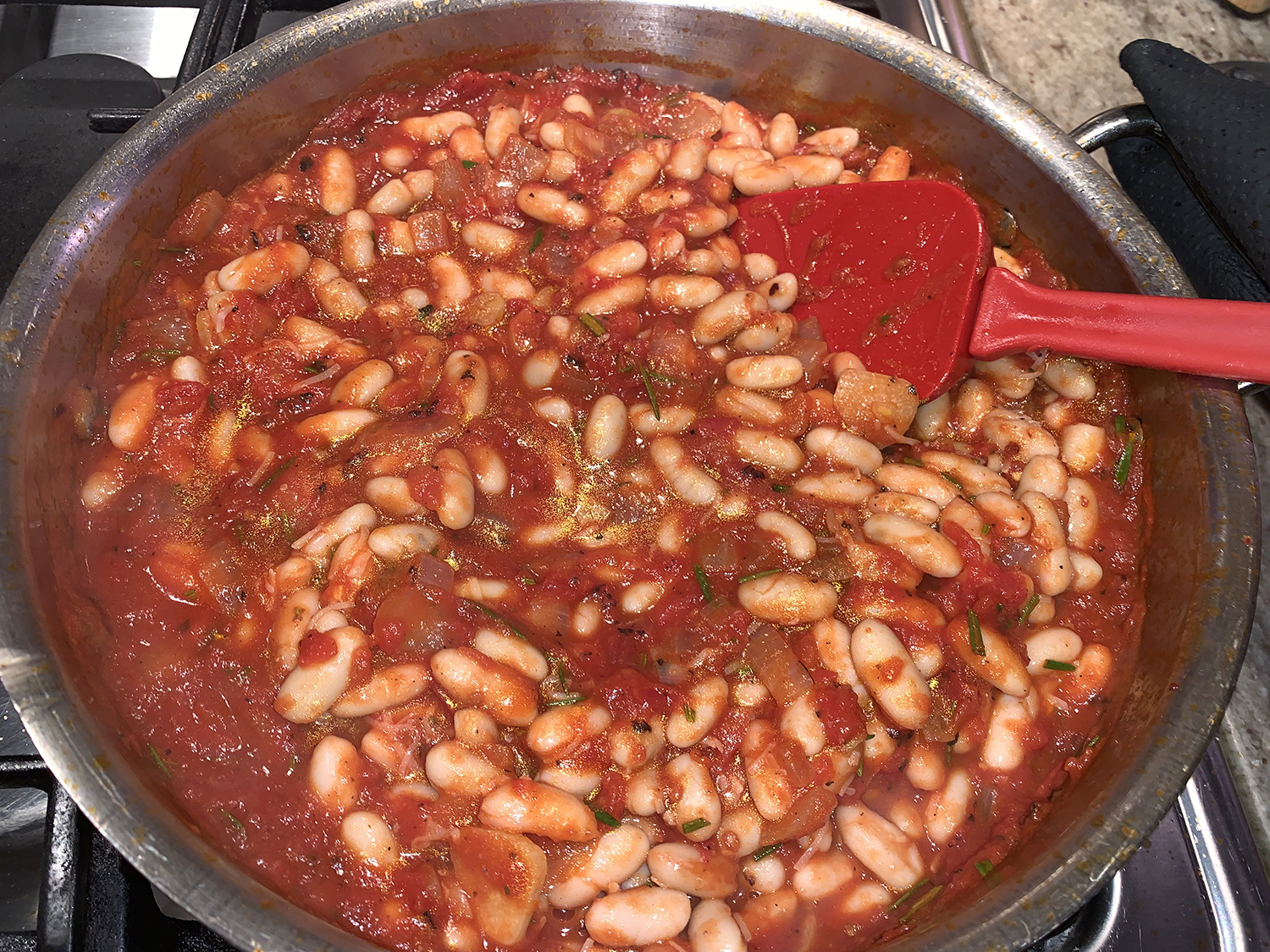
Stir in tomatoes and rosemary. Bring to boiling; boil gently, uncovered, 5 minutes or until slightly thickened.
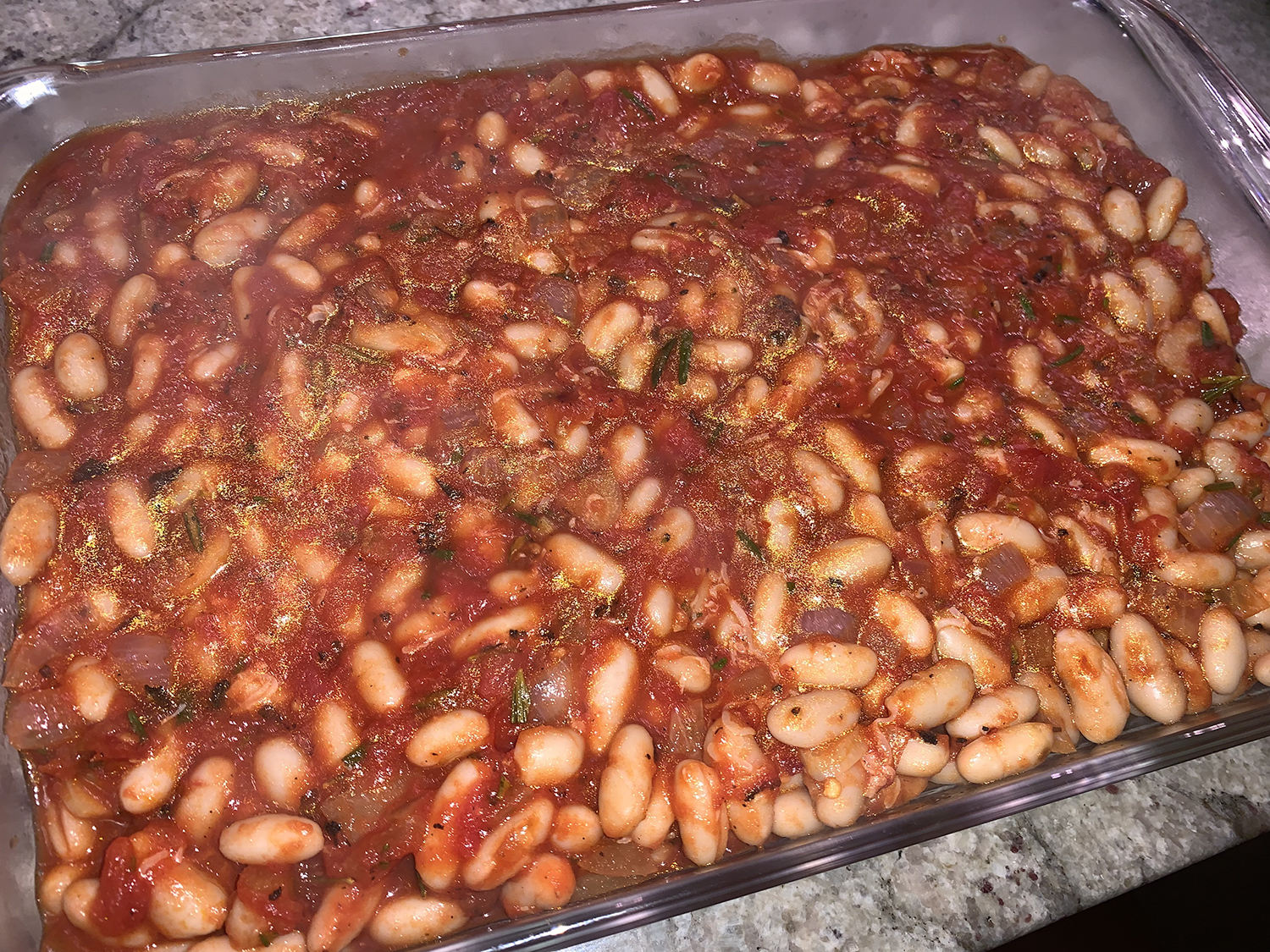
Stir in beans and half the Parmesan. Season to taste with crushed red pepper, salt, and black pepper. Transfer to a 2-qt. rectangular baking dish. Top with remaining Parmesan and the Fontina. Bake 15 to 20 minutes or until beginning to lightly brown around the edges.
Remove from the oven and let sit for 5-10 minutes to thicken.
This recipe, published in The Times in 1991, was adapted from Yves Labbé, the chef at Le Cheval d’Or, a restaurant in Jeffersonville, Vt., that showcased French country cooking. Mr. Labbé was known to serve this side dish alongside quail in a red-wine sauce, and its simple instructions belie depths of flavor. The cabbage cooks down, braising in its own juices, while the sweetness of the apples and maple syrup, a Vermont staple, tones down the bitterness of the cabbage. The result has broad appeal. —Marialisa Calta
We decided to pair it with a tasty and moist Sous Vide Pork Loin which came out of it’s immersion bath at just the right temperature, then was seared on all sides to achieve a golden crust…. but I’m getting ahead of myself… now about this cabbage dish.
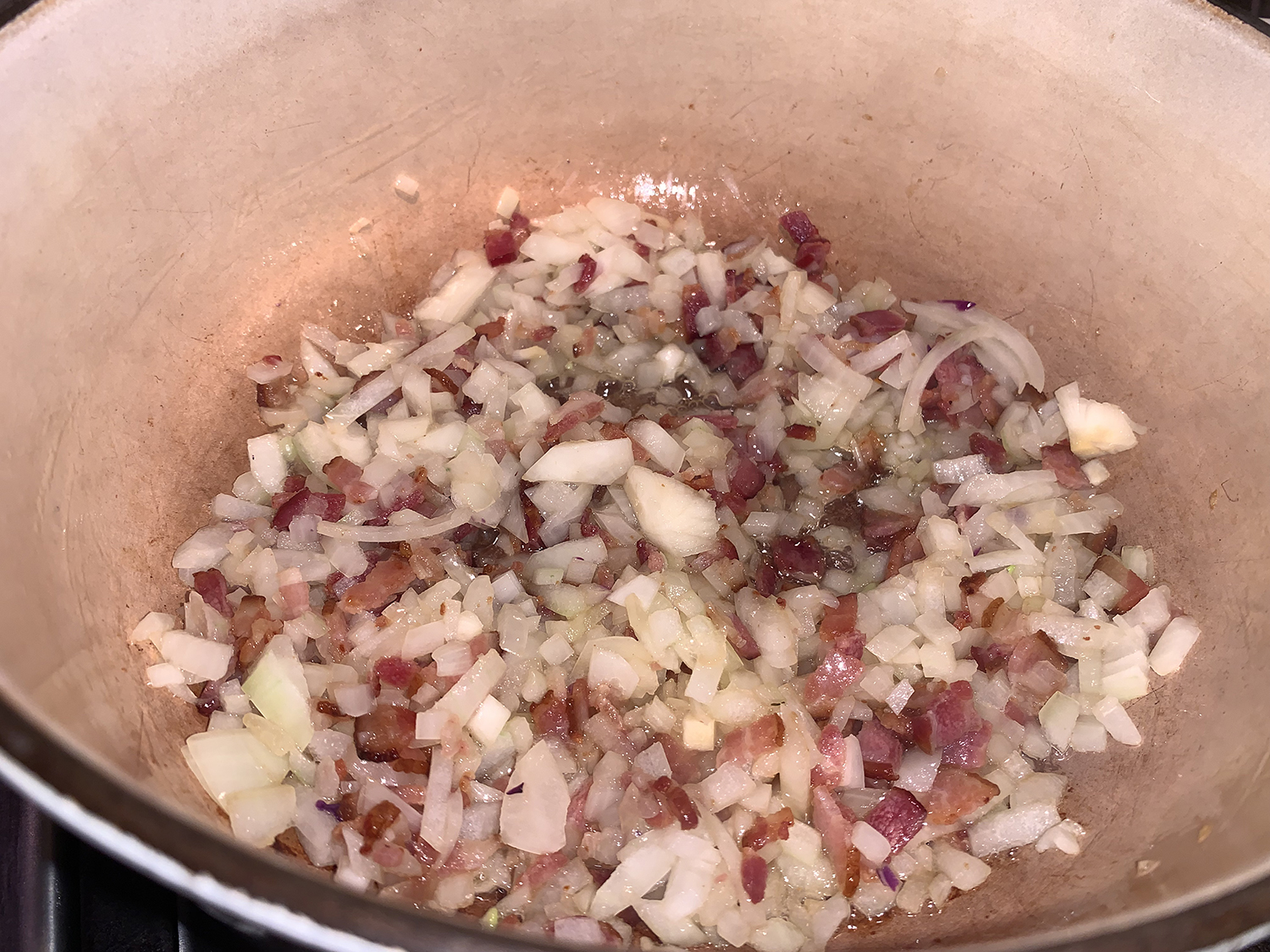
It’s quite easy actually. Spend a bit of prep time chopping or mincing the first four ingredients. Next several minutes are spent sautéing the bacon and onion. Everything else now goes in the Dutch oven, the pot is covered and put in the preheated oven for 30 minutes.
The dish was incredibly good. We did notice however quite a bit of liquid in the bottom of the pot and thought perhaps next time we’d reduce the amount of maple syrup by half, using only a 1/4 cup instead of a 1/2 cup. Which would appeal to our preference for more savory than sweet.
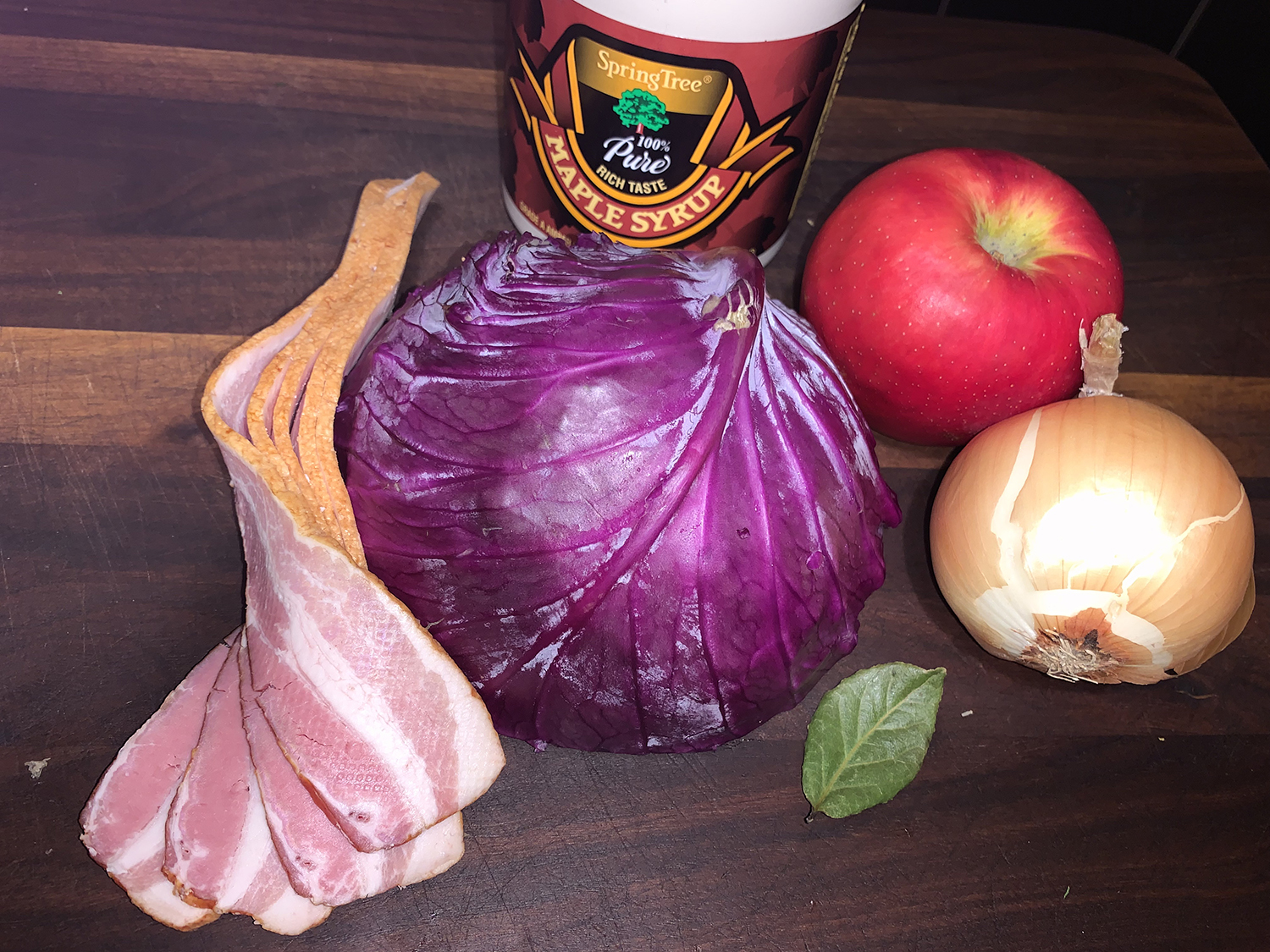
1 medium firm, tart apple, peeled, quartered, cored and sliced
1 lb. red cabbage (about 1/2 head), cored, outer leaves removed and shredded
1 bay leaf
1/4 cup maple syrup
Salt and black pepper
Directions
Heat oven to 350 degrees. In an ovenproof saucepan or Dutch oven large enough to hold all of the ingredients, sauté the bacon over medium until crisp, about 5 minutes. Add the onion and sauté until translucent, about 5 more minutes.
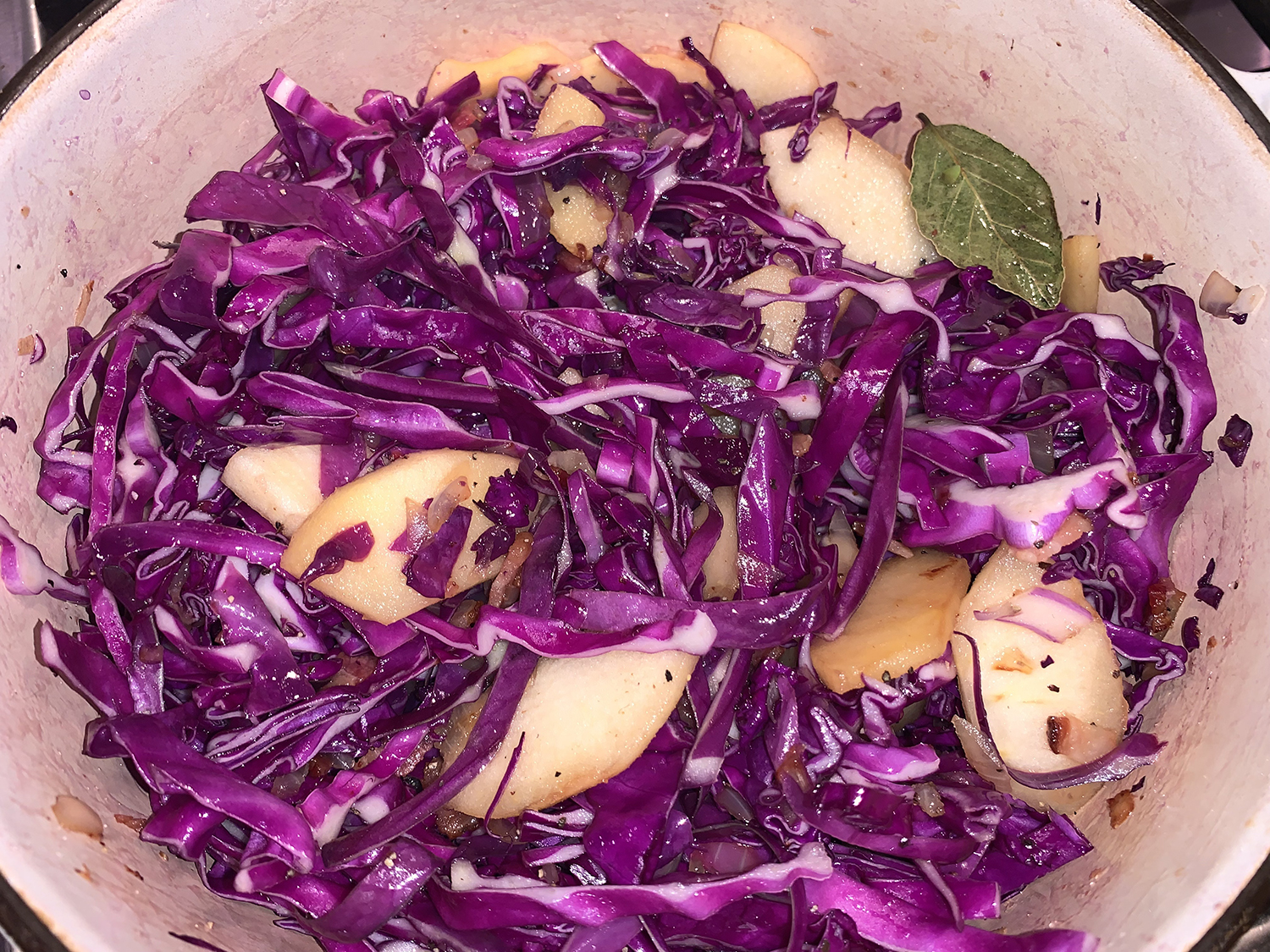
Add the apple, cabbage, bay leaf, maple syrup, and season with salt and pepper, cover, and transfer to the oven. Bake for 30 minutes.
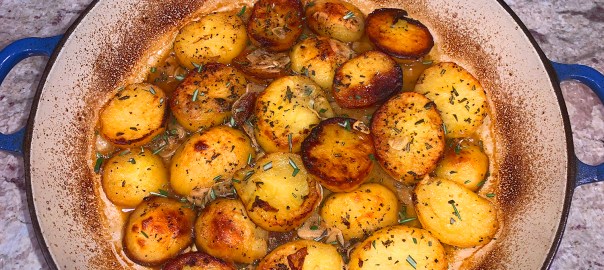
“These full-flavored potatoes are a great new approach to your typical potato side dish. The potatoes roast, then “melt” with the flavors of lemon, rosemary and garlic. They’re good enough for a special occasion, but easy enough for a weeknight.” —EatingWell
We paired our potatoes with a sous vide, pan-seared steak and spinach sautéed with garlic and olive oil.
The original recipe indicates the potatoes will serve six. They were so good, we barely got three portions from them, so I would plan on a maximum of four servings.
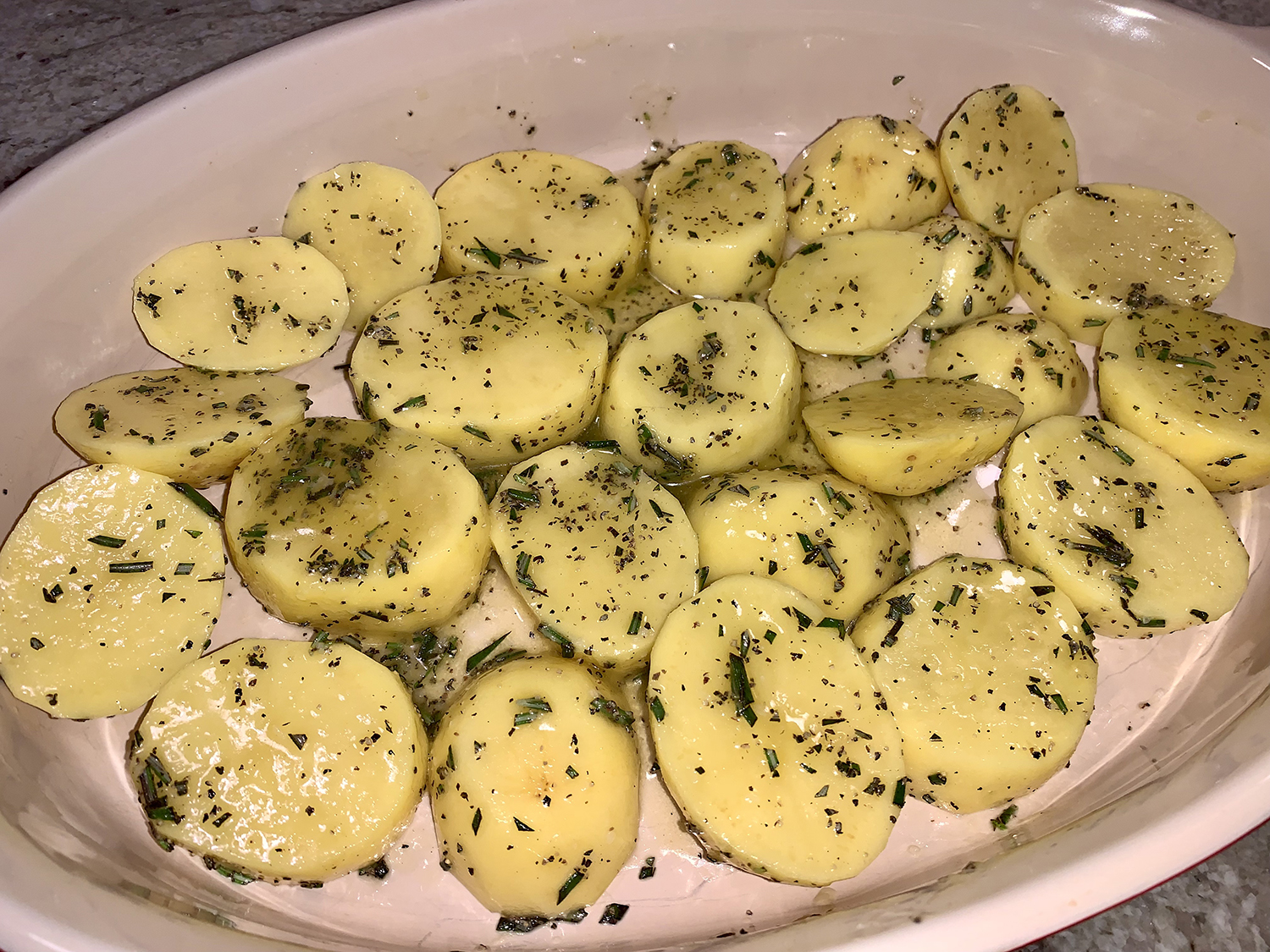
A word to the wise, DO NOT use glass or stone bakeware. When it’s time to add the broth and lemon, even though the liquids are room temperature, there’s a high likelihood the very hot dish will crack, trust us on this one. Either a metal pan or enameled cast-iron one are good choices. Ideally, the pan should have a wide enough bottom to accommodate the potato slices arranged in a single layer.
2 lbs. Yukon Gold potatoes, peeled and sliced 1 inch thick
2 Tbsp. butter, melted
2 Tbsp. extra-virgin olive oil
1 Tbsp. chopped fresh rosemary, plus more for garnish
¾ tsp. salt
½ tsp. ground pepper
¾ cup vegetable or chicken broth
¼ cup lemon juice
2 Tbsp. sliced garlic
Directions
Position rack in upper third of the oven; preheat to 500 degrees F.
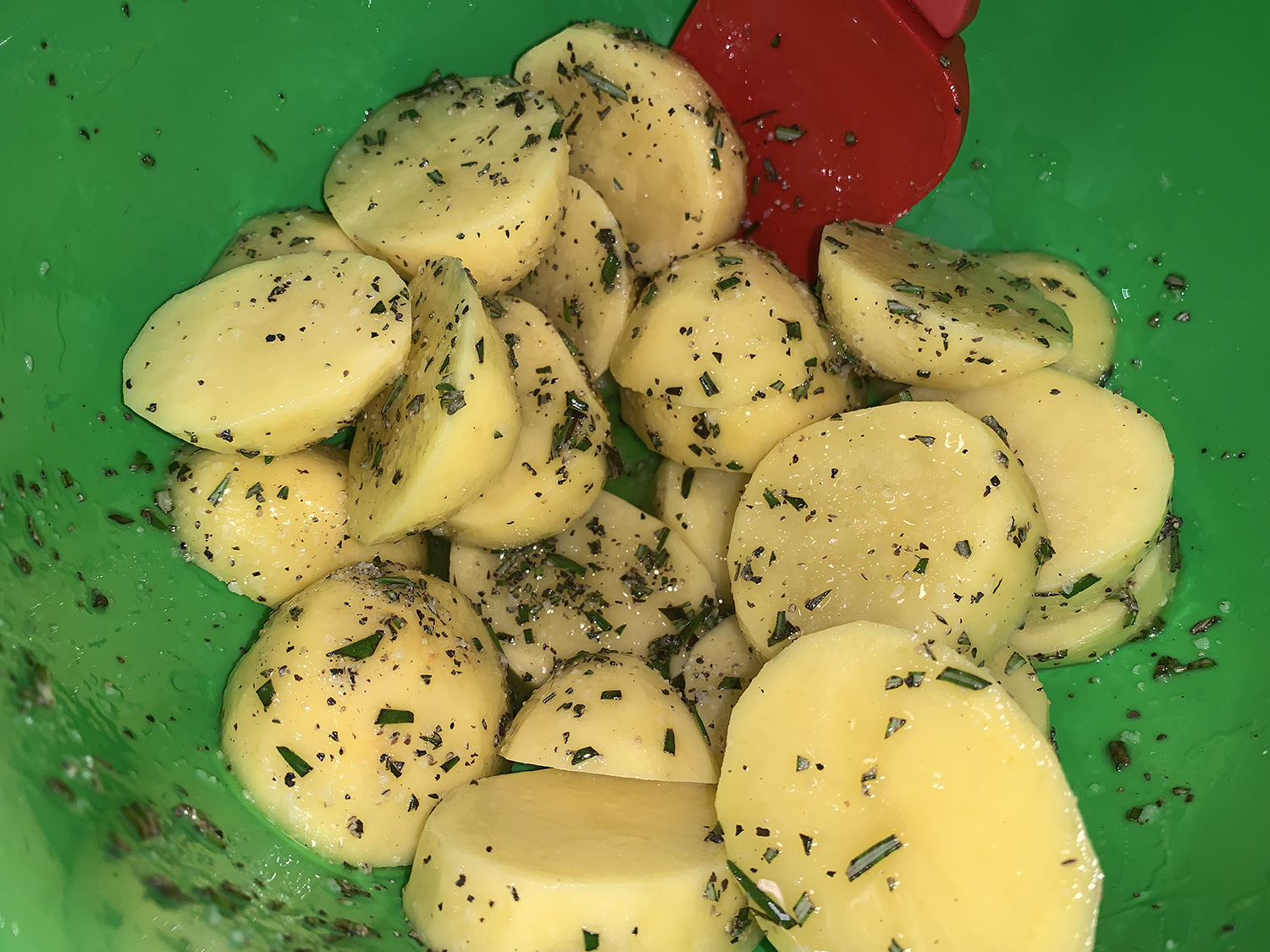
Toss potatoes, butter, oil, rosemary, salt and pepper in a large bowl. Arrange the potatoes in a single layer in a 9-by-13-inch metal baking pan. (Don’t use a glass dish, which could shatter.) Roast, turning once, until browned, about 30 minutes.
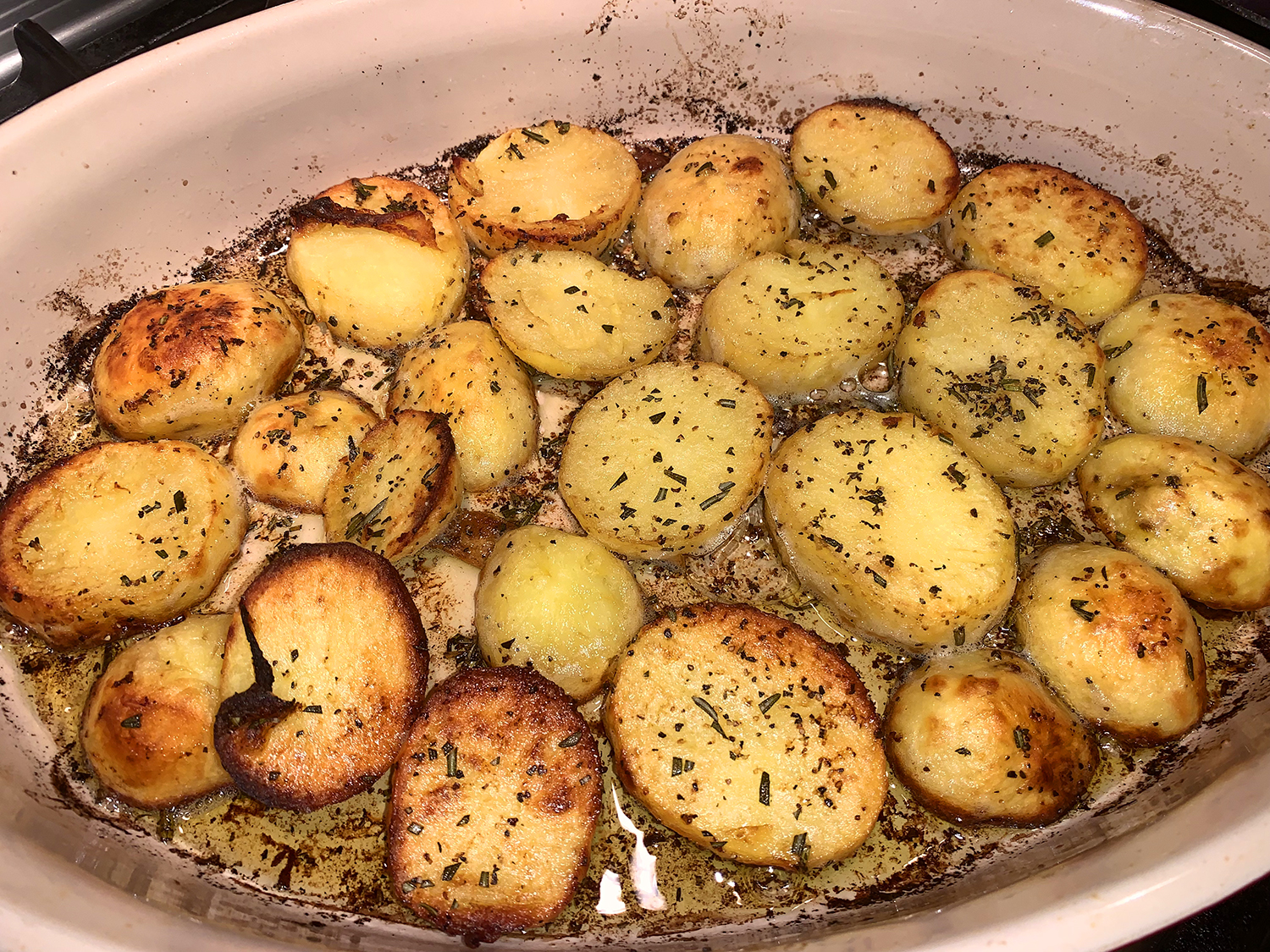
Carefully add broth, lemon juice and garlic to the pan. Continue roasting until most of the liquid is absorbed and the potatoes are very tender, 10 to 12 minutes more.
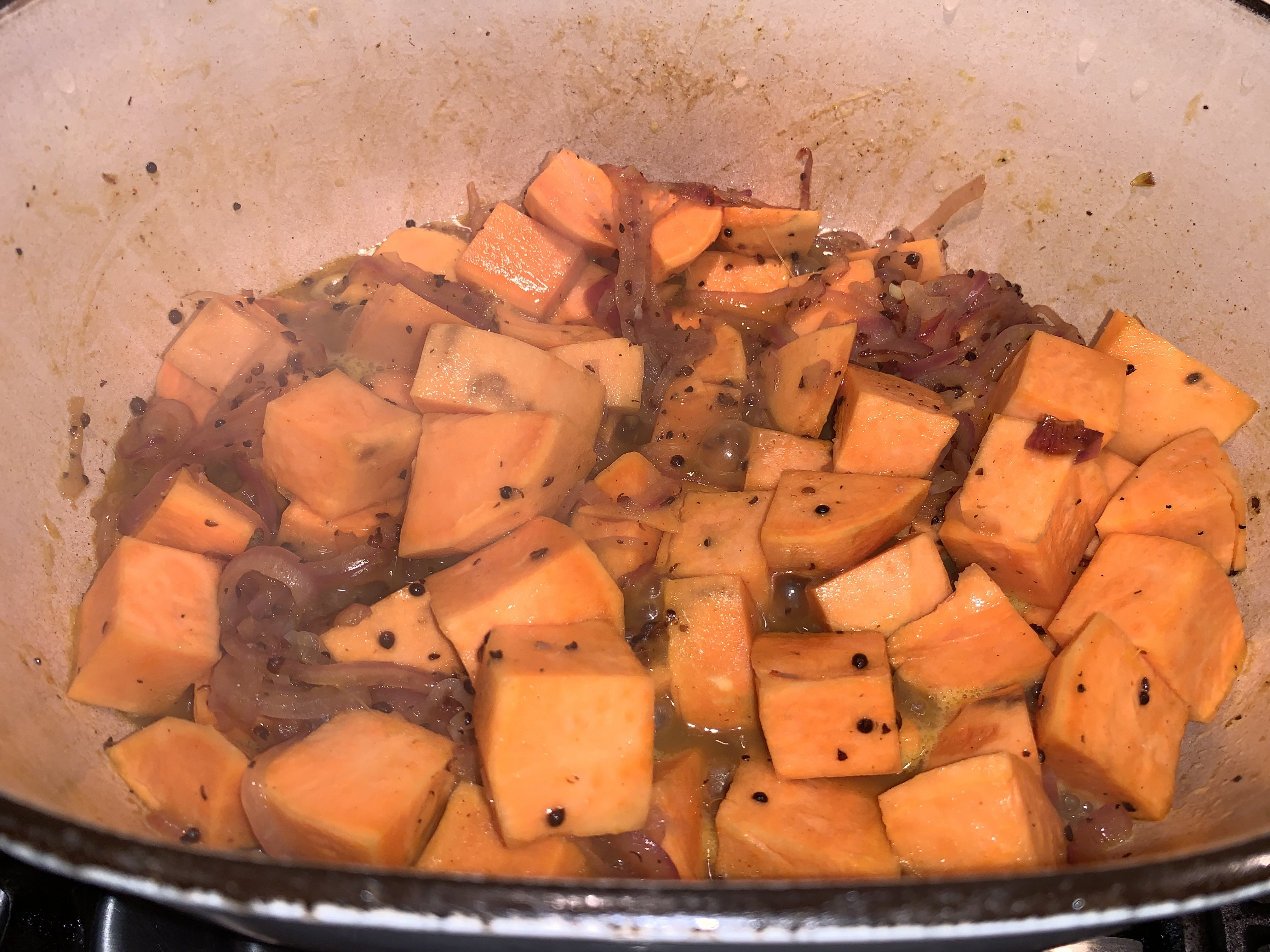
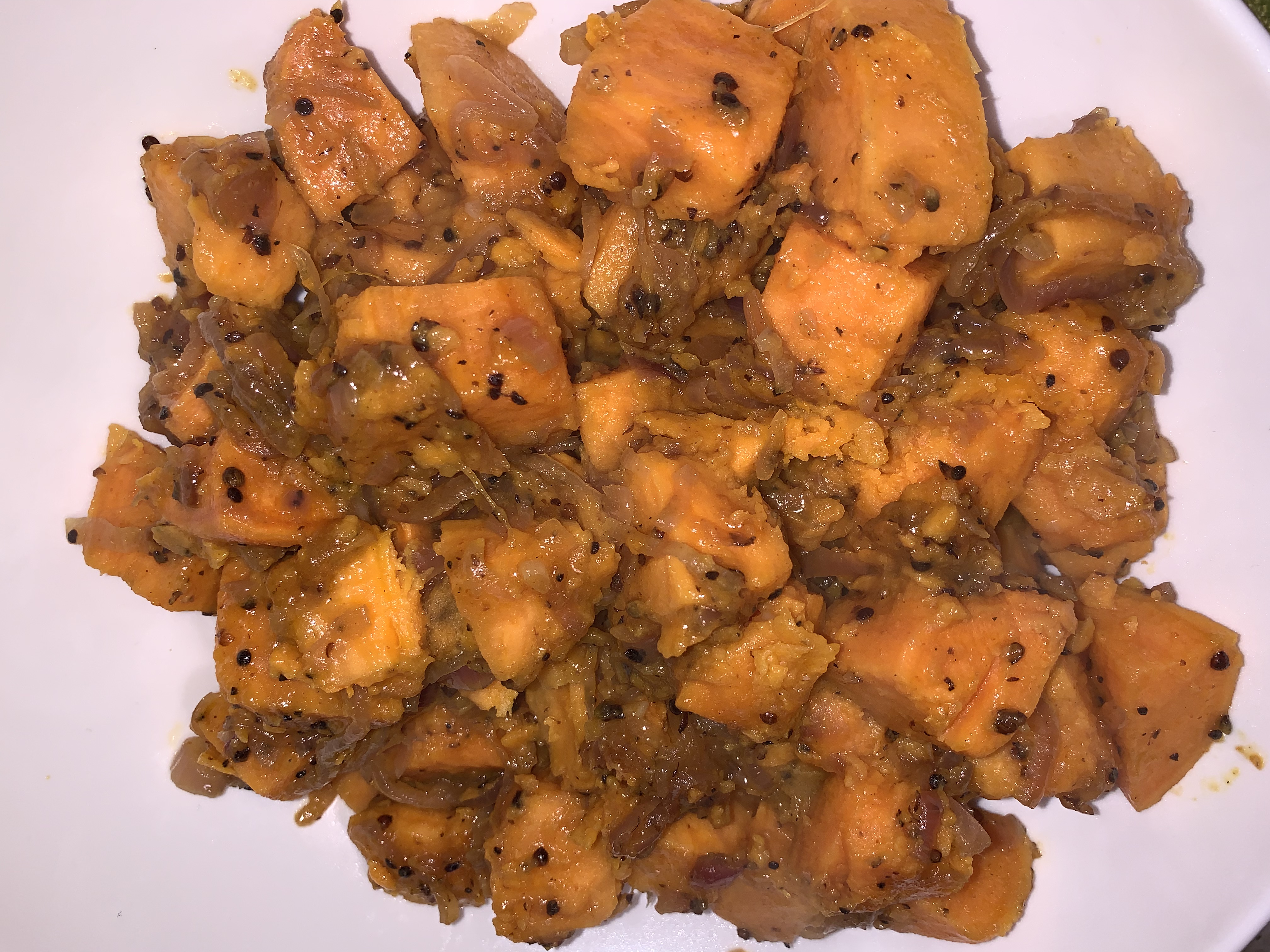
This colorful side dish features an unusual combination of flavors; the inspiration comes from a recipe in “365,” a cookbook by German food blogger Meike Peters. Earthy sweet potatoes pair well with the subtle citrusy notes of coriander and the fruitiness of orange juice, while savory onion, spicy cayenne and salty olives balance the natural sugars. Although we skipped the olives altogether this time in reference to the rest of the meal.
We love the texture and flavor pop of lightly crushed coriander seeds; a mortar and pestle are the best tools for the task but the bottom of a heavy skillet works, too; OR put them in a small ziploc and mash with a heavy meat club. If you prefer, you can use 1 tablespoon ground coriander in place of the seeds, but it will require less than a minute to bloom in the oil.
Don’t use a narrow saucepan or pot for this recipe. The wider diameter of a Dutch oven allows the potatoes to be distributed in a thinner layer, which results in more even cooking. If you like sweet potatoes, you’ll LOVE this amped-up version of the colorful spuds.
1 medium red onion, peeled, halved and thinly sliced
Kosher salt and ground black pepper
2 lbs. orange-flesh sweet potatoes, peeled and cut into 1-inch chunks
2/3 cup orange juice
1/4 tsp. cayenne pepper
1/2 cup black or green pitted olives, or a mixture, chopped (optional)
Directions
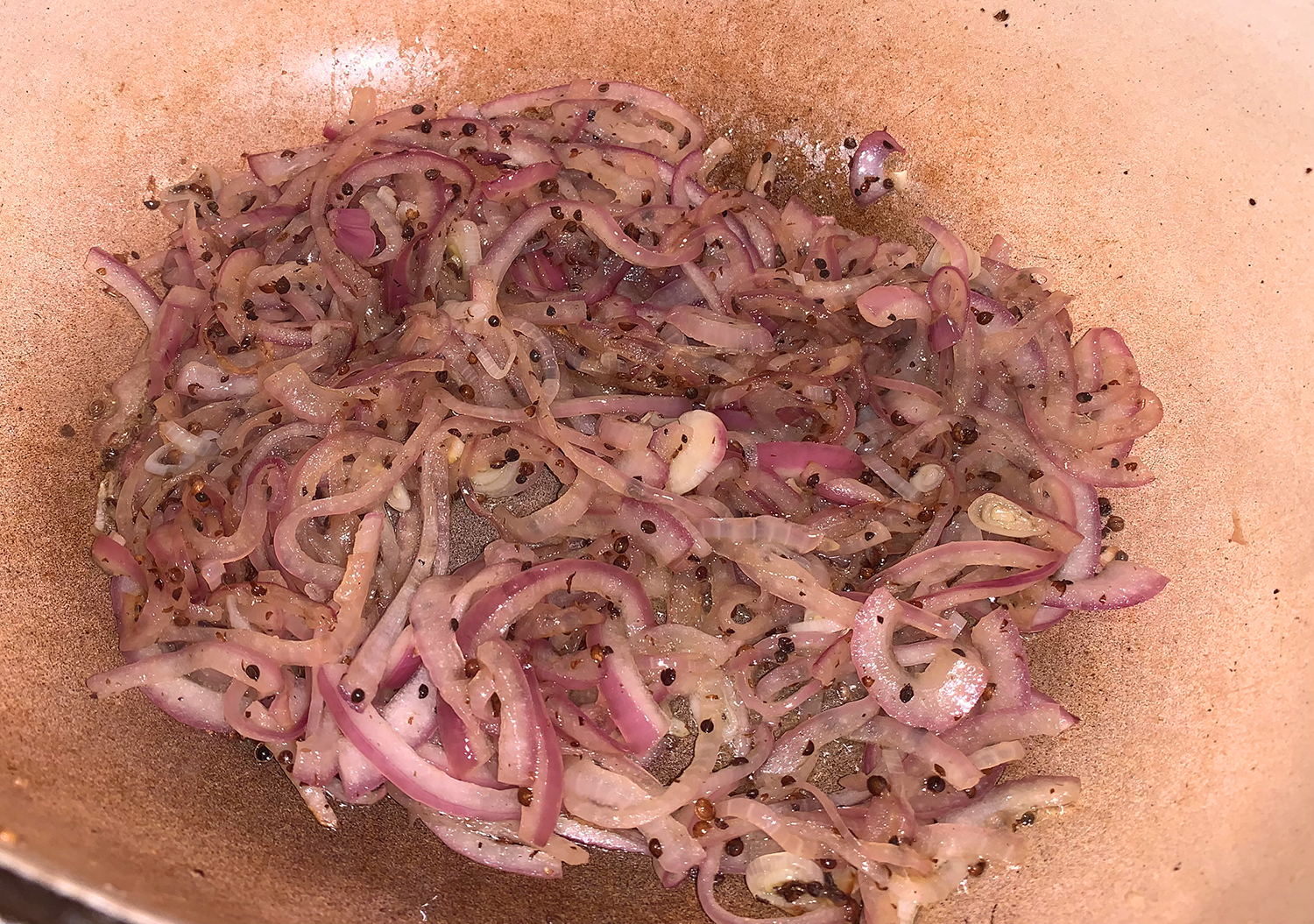
In a Dutch oven over medium-high, cook the oil and coriander seeds, stirring, until fragrant and sizzling, 2 to 4 minutes. Add the onion and ¼ teaspoon salt, then cook, stirring occasionally, until the onion is softened and lightly browned, 3 to 5 minutes.
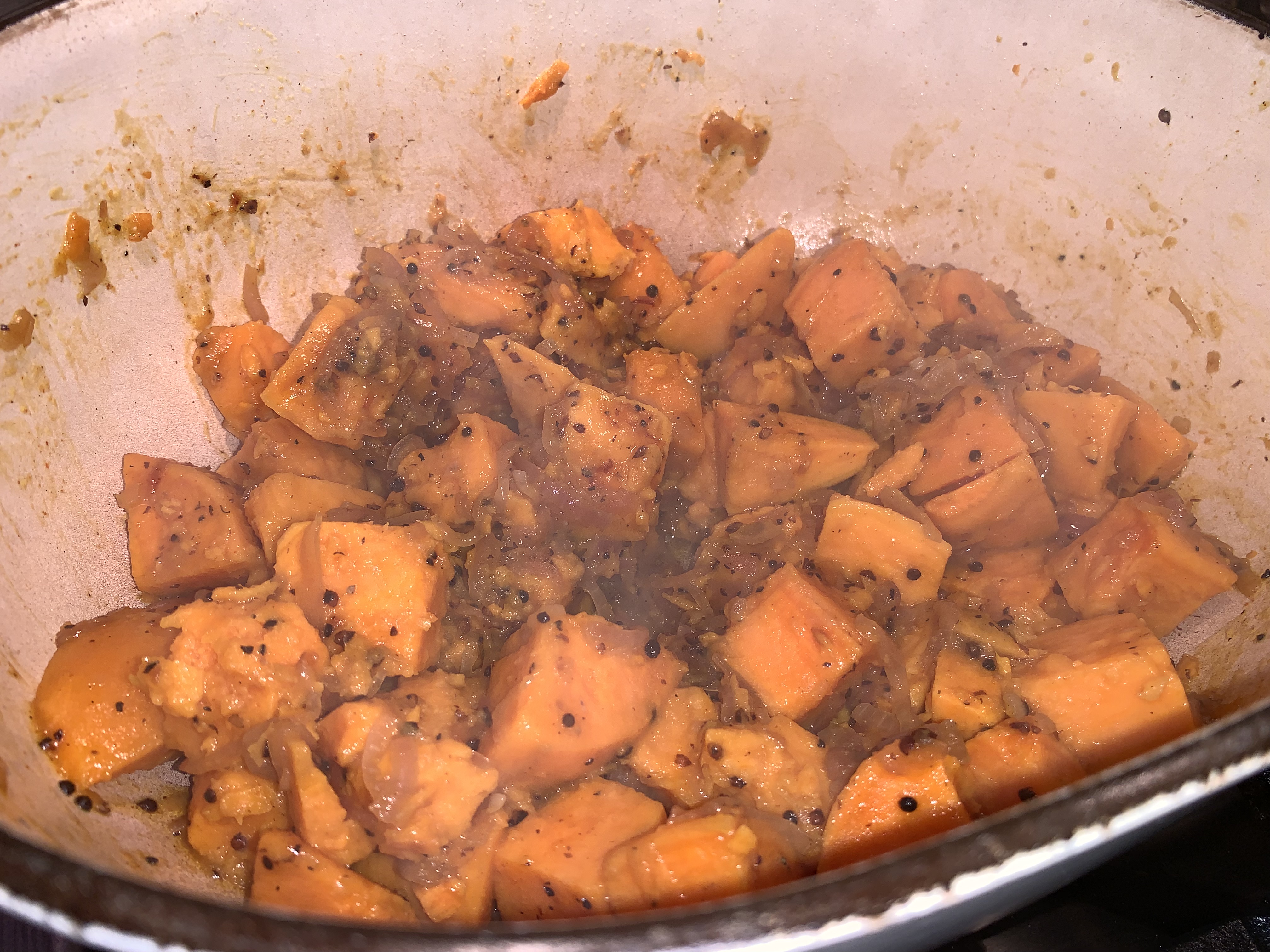
Add the sweet potatoes, orange juice, cayenne, ½ teaspoon salt, ¼ teaspoon pepper and ½ cup water. Bring to a simmer, cover and reduce to medium. Cook, stirring occasionally, until a skewer inserted into the potatoes meets no resistance, 8 to 11 minutes.
Uncover and cook, stirring constantly, until the liquid has almost fully reduced and the potatoes are glazed, about 2 minutes. Off heat, stir in the olives, if using. Taste and season with salt and pepper.
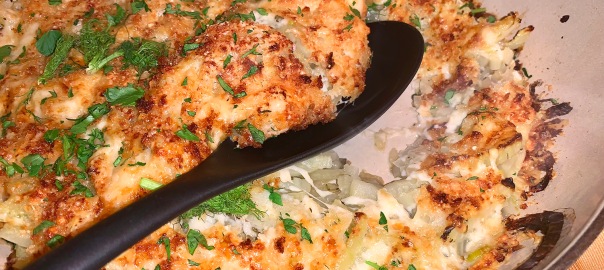
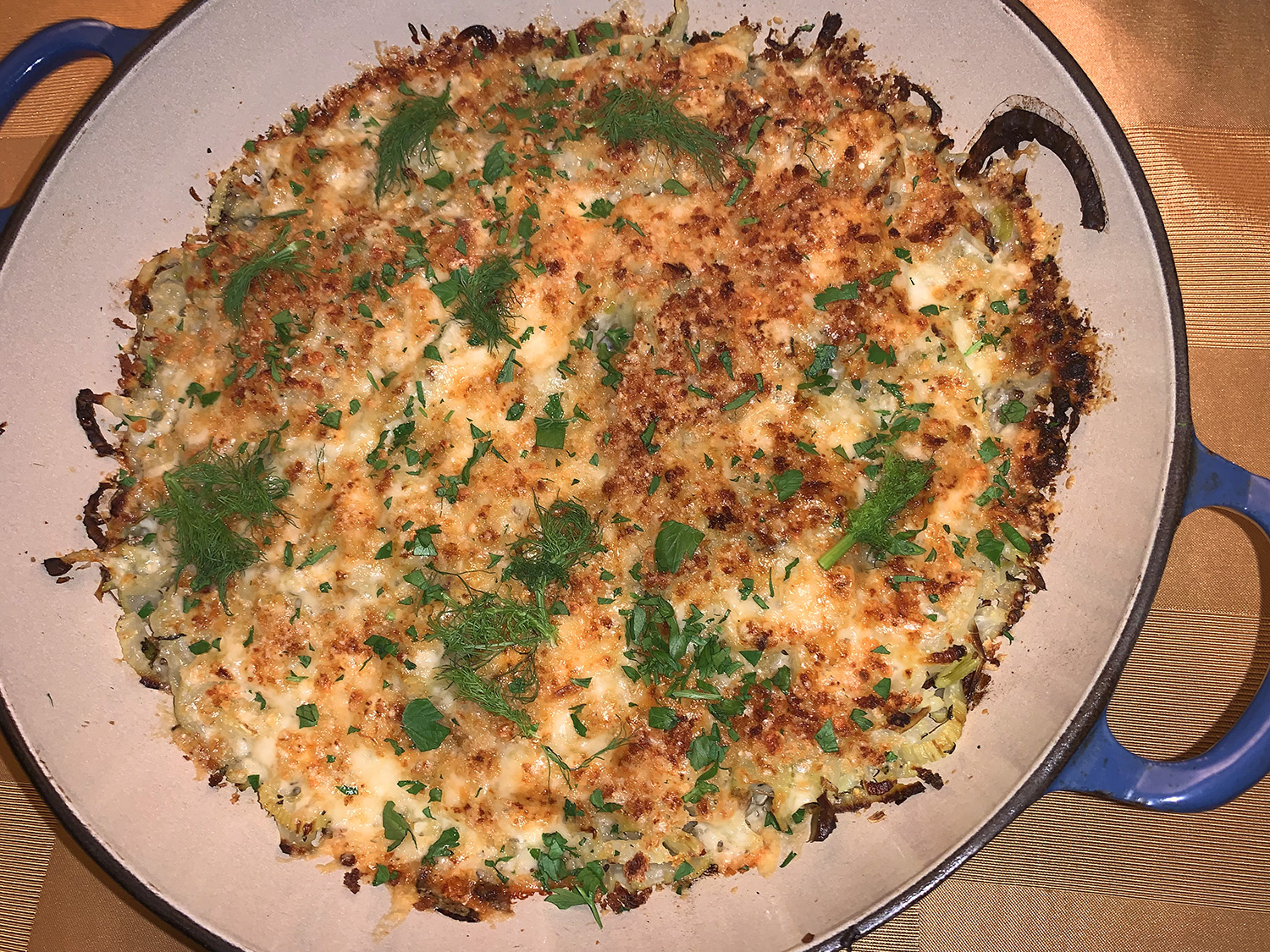
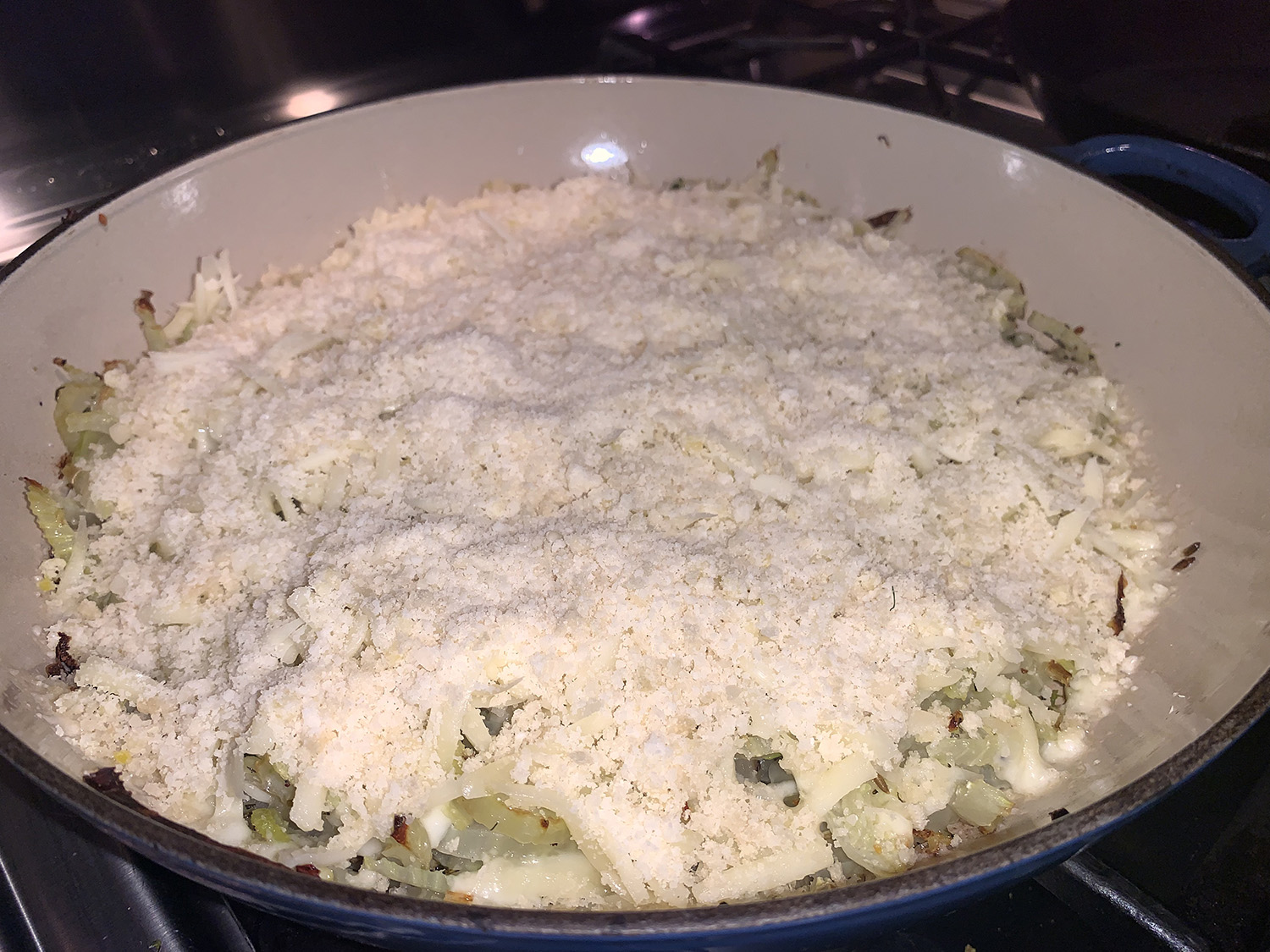
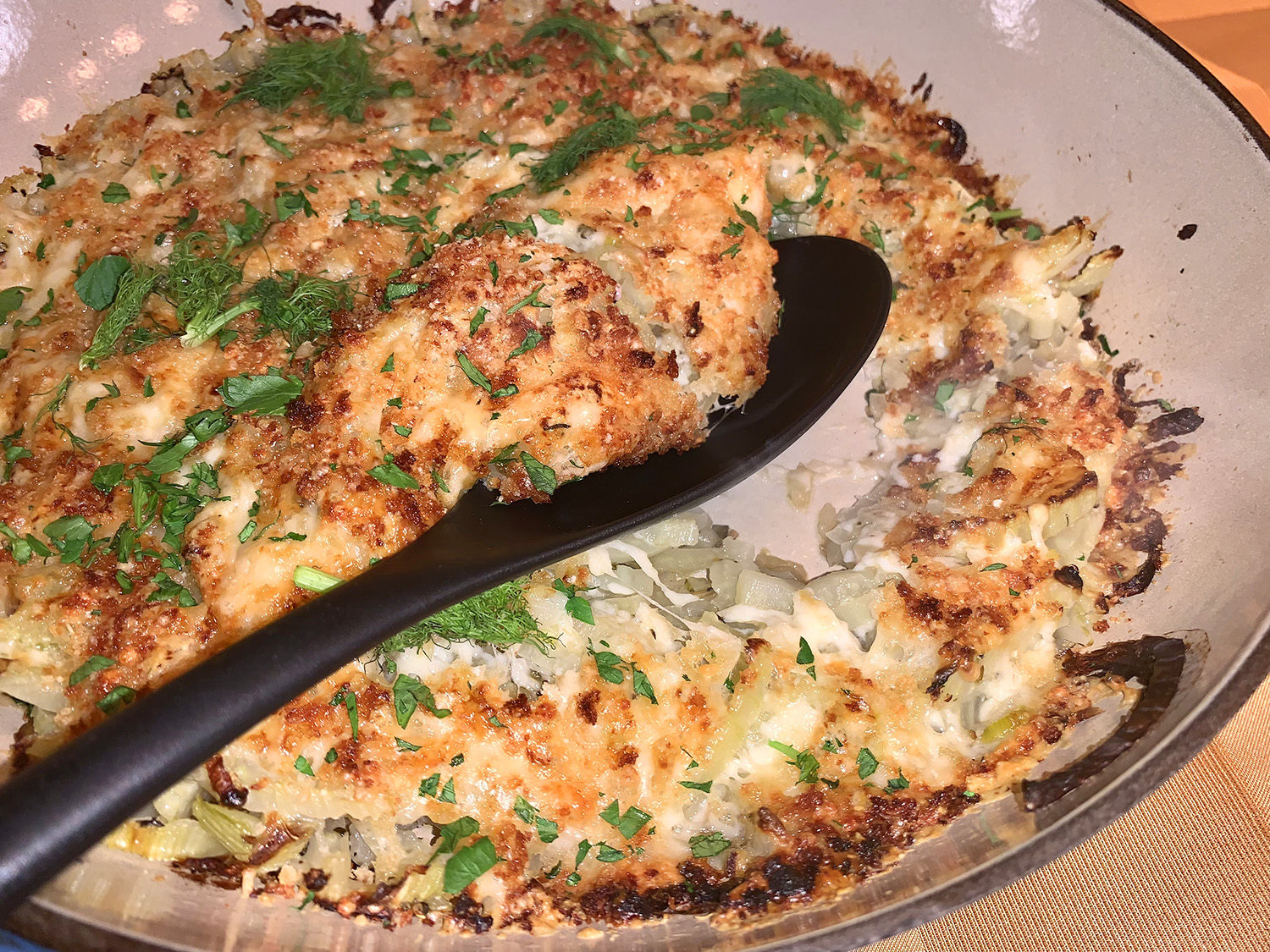
Hands down, one of our most favorite side dishes ever! American chef and cookbook author David Tanis‘ homey but sophisticated Cheesy and Creamy Fennel Gratin casserole, incorporates fresh mozzarella, fennel seed, garlic, crushed red pepper and rosemary, plus a hearty glug of olive oil to help the flavors meld in the oven.
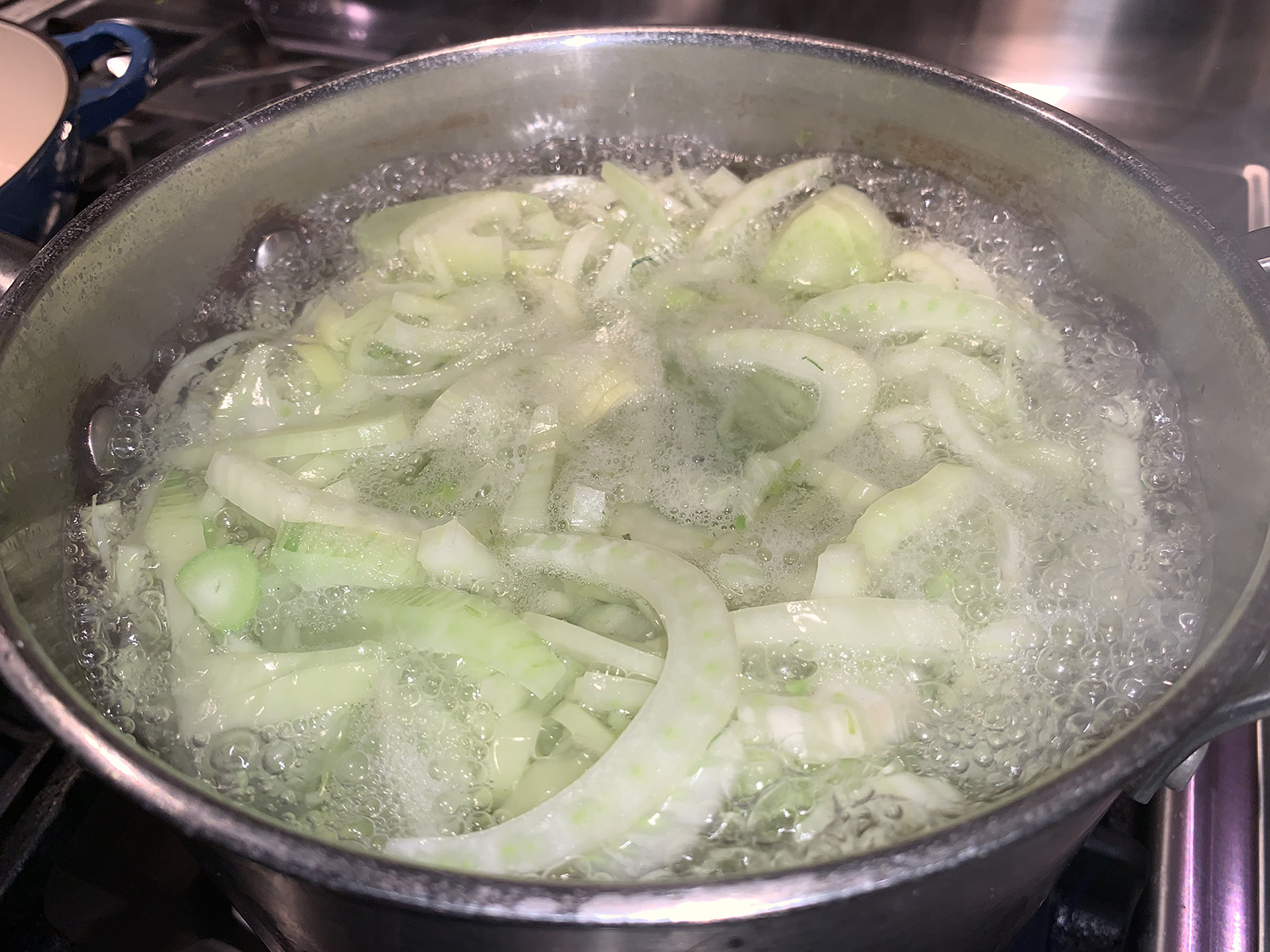
To avoid stringy and tough cooked fennel, David explains in his latest book, “David Tanis Market Cooking,” to blanch the fennel for a few minutes, drain, then run under cold water, a process that just barely tenderizes the fennel slices. The result, after baking, strikes the ideal balance between toothsome bite and jammy caramelized onion.
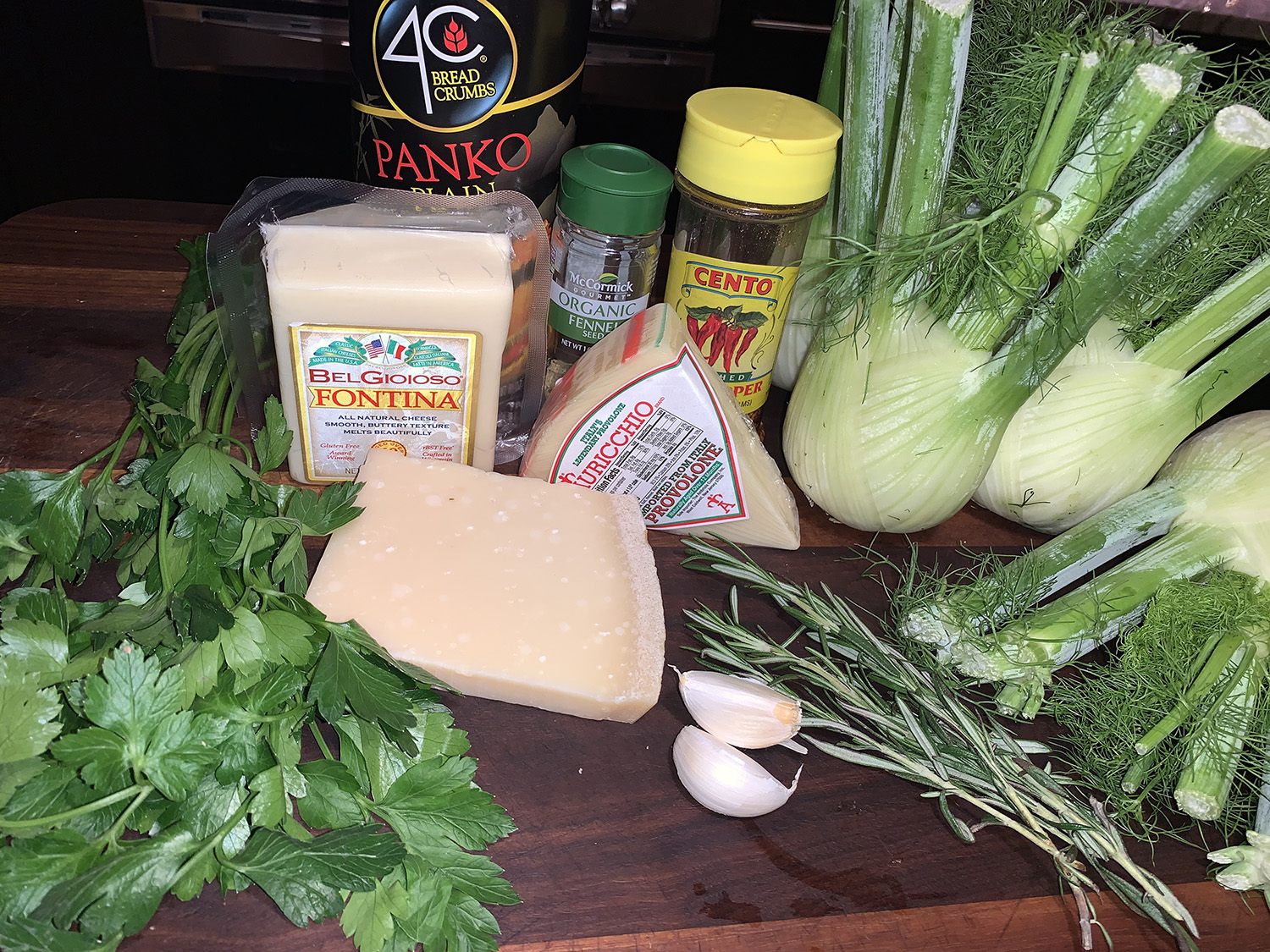
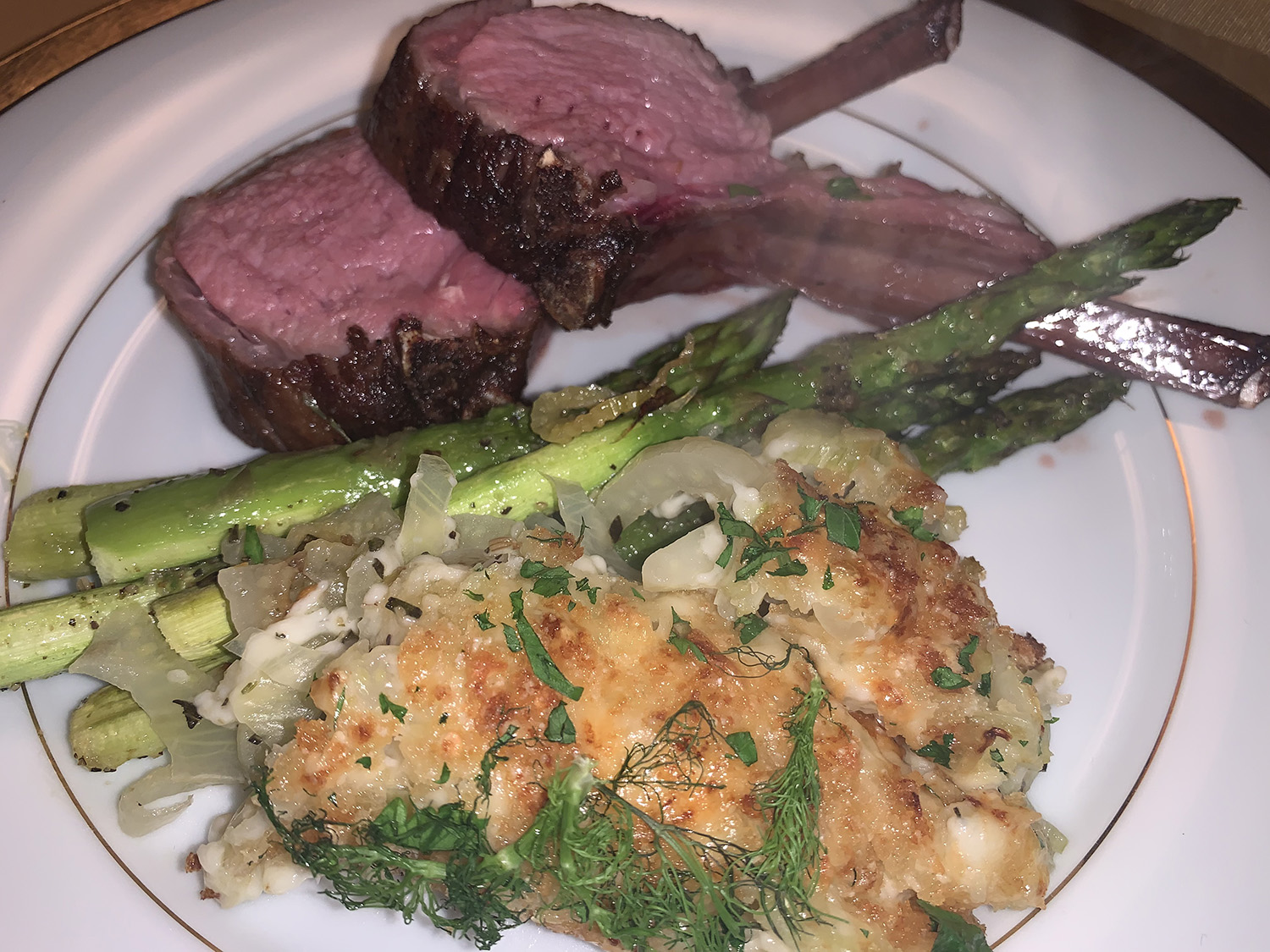
Since many supermarket mozzarellas lack the creaminess of harder-to-find fresh, Milk Street (where we found this recipe) opts for a blend of shredded fontina and provolone. And mixing Parmesan into panko breadcrumbs creates a solid crust that contrasts with the tender fennel beneath. Finally, a sprinkle of fresh parsley adds a pop of color and grassy notes to balance the cheese. This simple combination elevates the dish into something much more than the sum of its parts, and was a perfect compliment to our rack of lamb entrée.
Important: Don’t use a baking dish or pan that is not broiler safe. After baking, the gratin spends a couple minutes under the broiler to brown the topping, so be sure the vessel can withstand the intense heat.
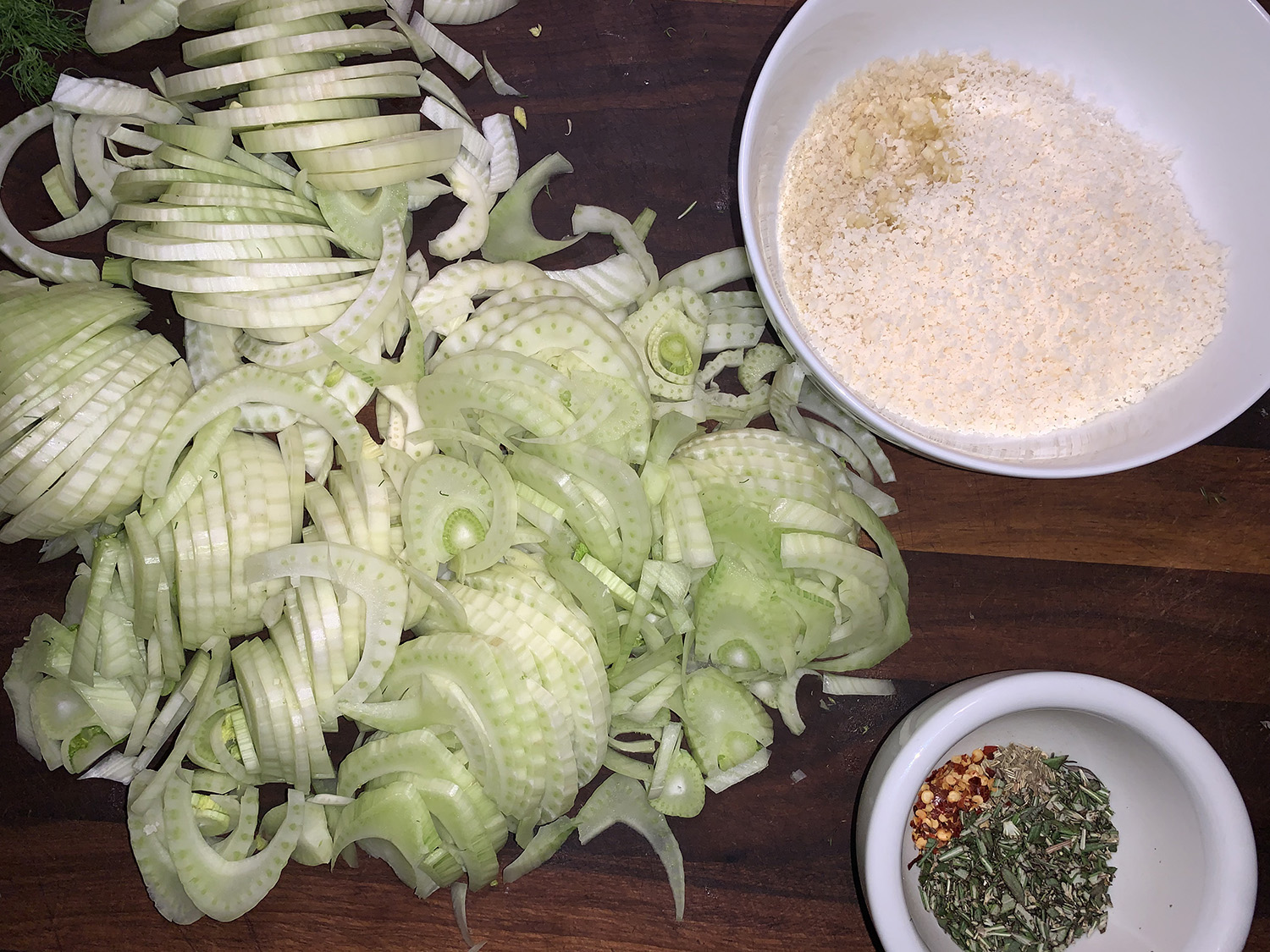
4 medium fennel bulbs (about 2½ lbs. total), halved lengthwise, cored and sliced about ¼ inch thick
Kosher salt and ground black pepper
2 Tbsp. extra-virgin olive oil
2 tsp. finely chopped fresh rosemary
1 tsp. fennel seeds, lightly crushed
1/4 tsp. red pepper flakes
1 1/2 oz. Parmesan cheese, finely grated (¾ cup)
1/4 cup panko breadcrumbs
2 medium garlic cloves, minced
4 oz. fontina cheese, shredded (1 cup)
4 oz. provolone cheese, shredded (1 cup)
1/3 cup lightly packed fresh flat-leaf parsley, chopped
Directions
Heat the oven to 450°F with a rack in the upper-middle position.
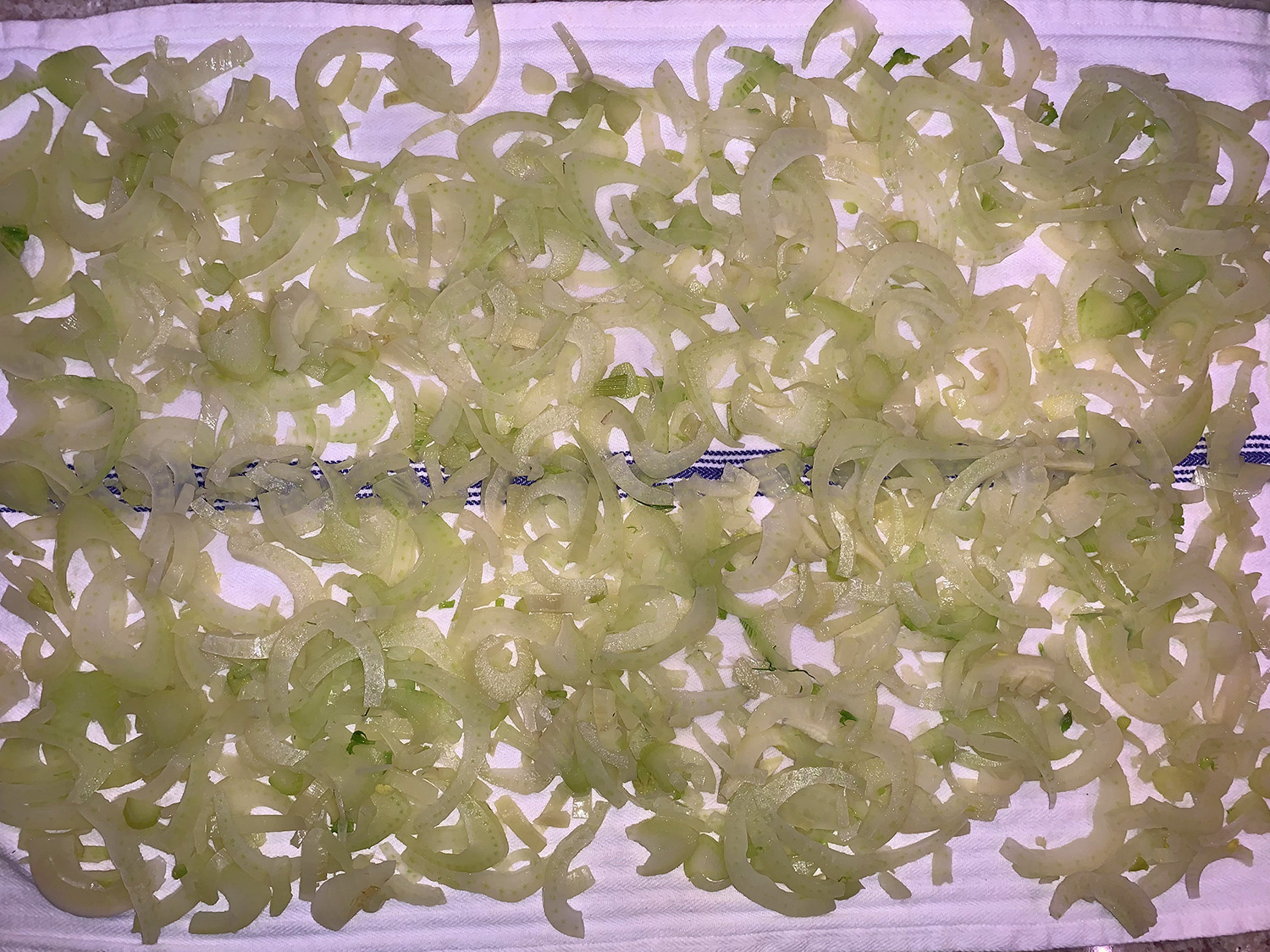
In a large pot, bring 2 quarts water to a boil. Add the fennel and 1 tablespoon salt, then cook for 3 minutes. Drain in a colander and rinse under running cold water until cool to the touch. Shake the colander to remove as much water as possible, then lay the slices out on a kitchen towel and thoroughly pat them dry.
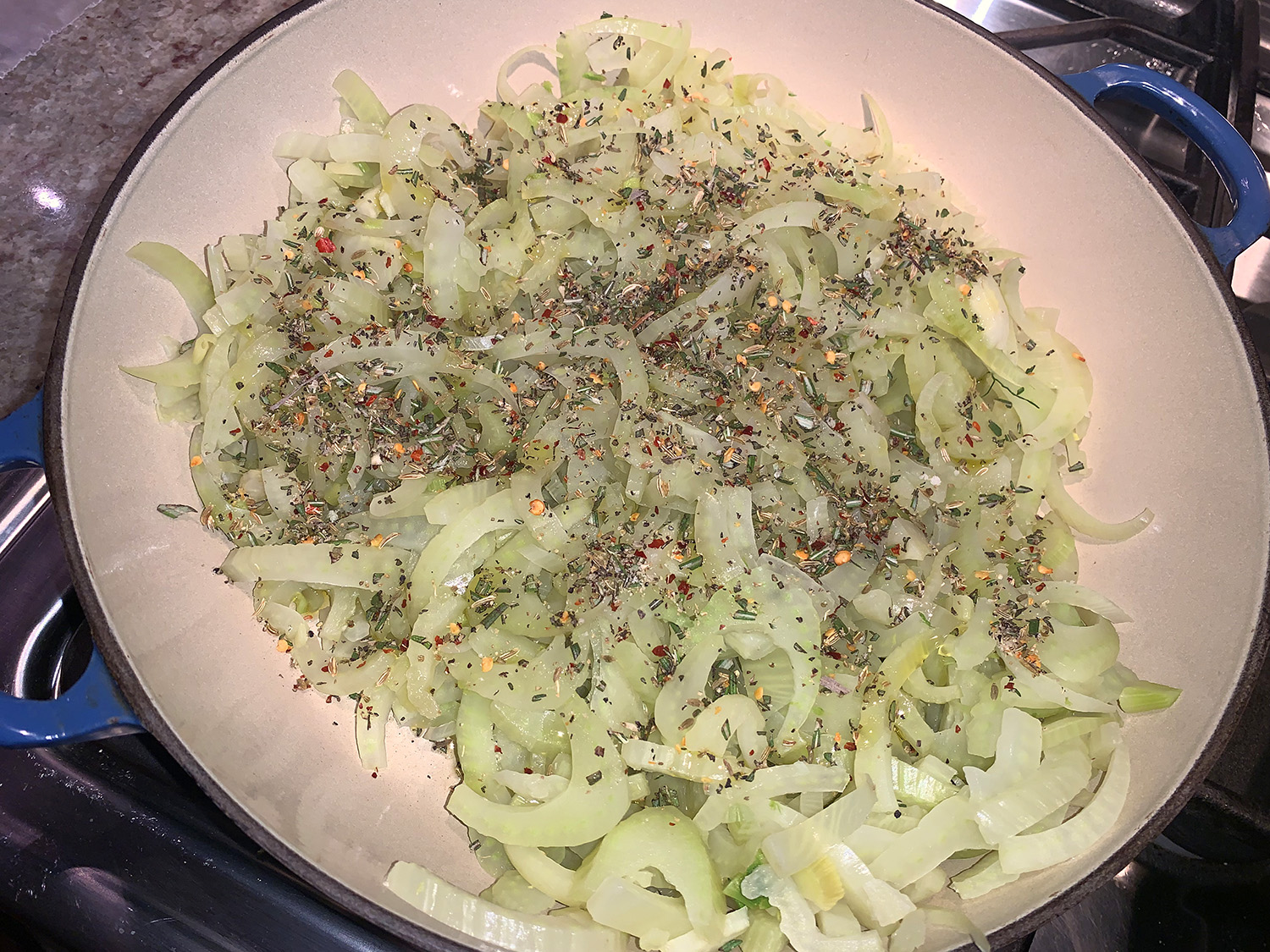
In a 9-by-13-inch broiler-safe baking dish, toss together the fennel, oil, rosemary, fennel seeds, pepper flakes and ¼ teaspoon each salt and black pepper; distribute in an even layer.
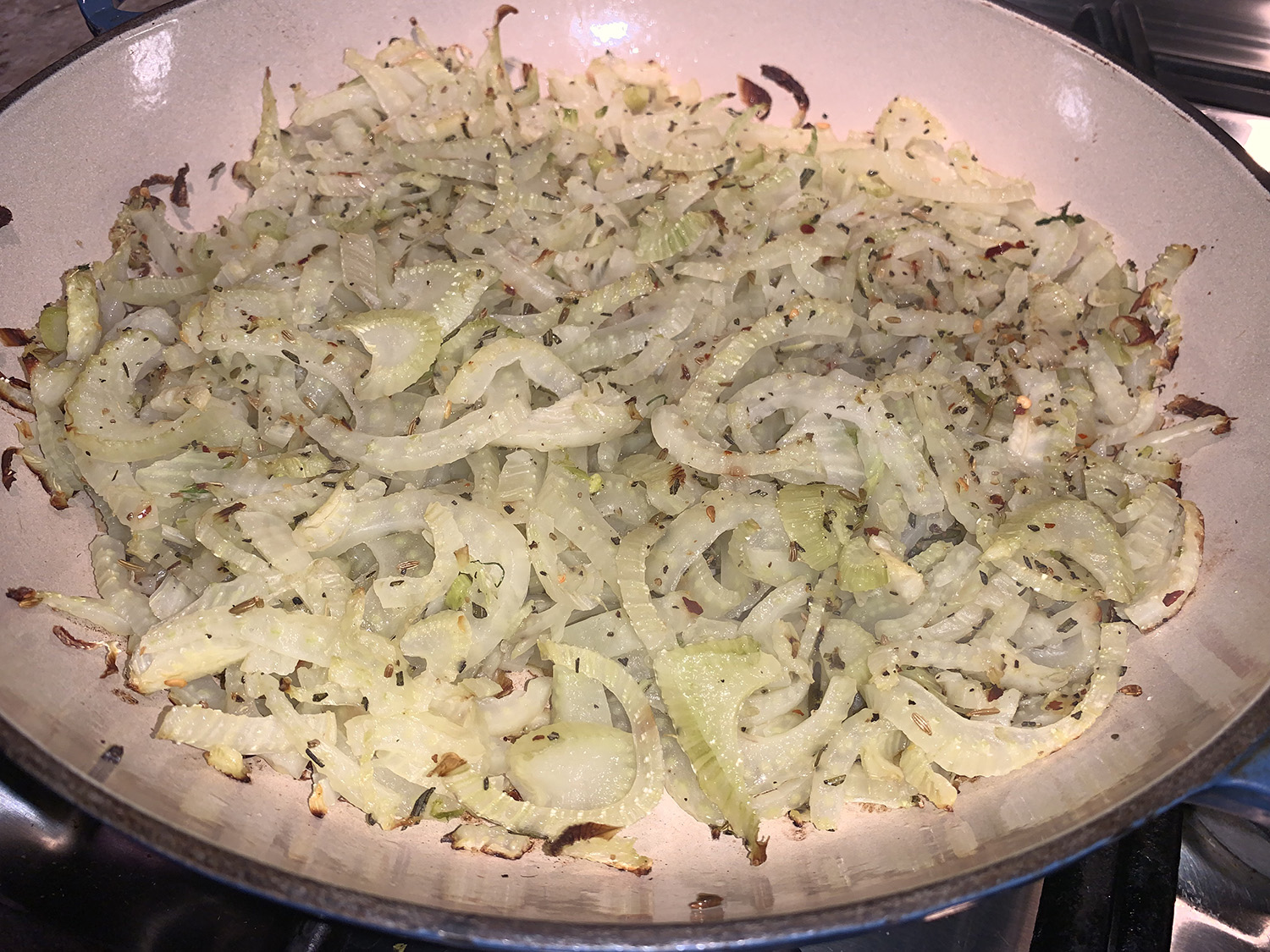
Roast until beginning to brown and a skewer inserted into the fennel meets no resistance, 25 to 30 minutes.
Meanwhile, in a small bowl, stir together the Parmesan, panko and garlic.
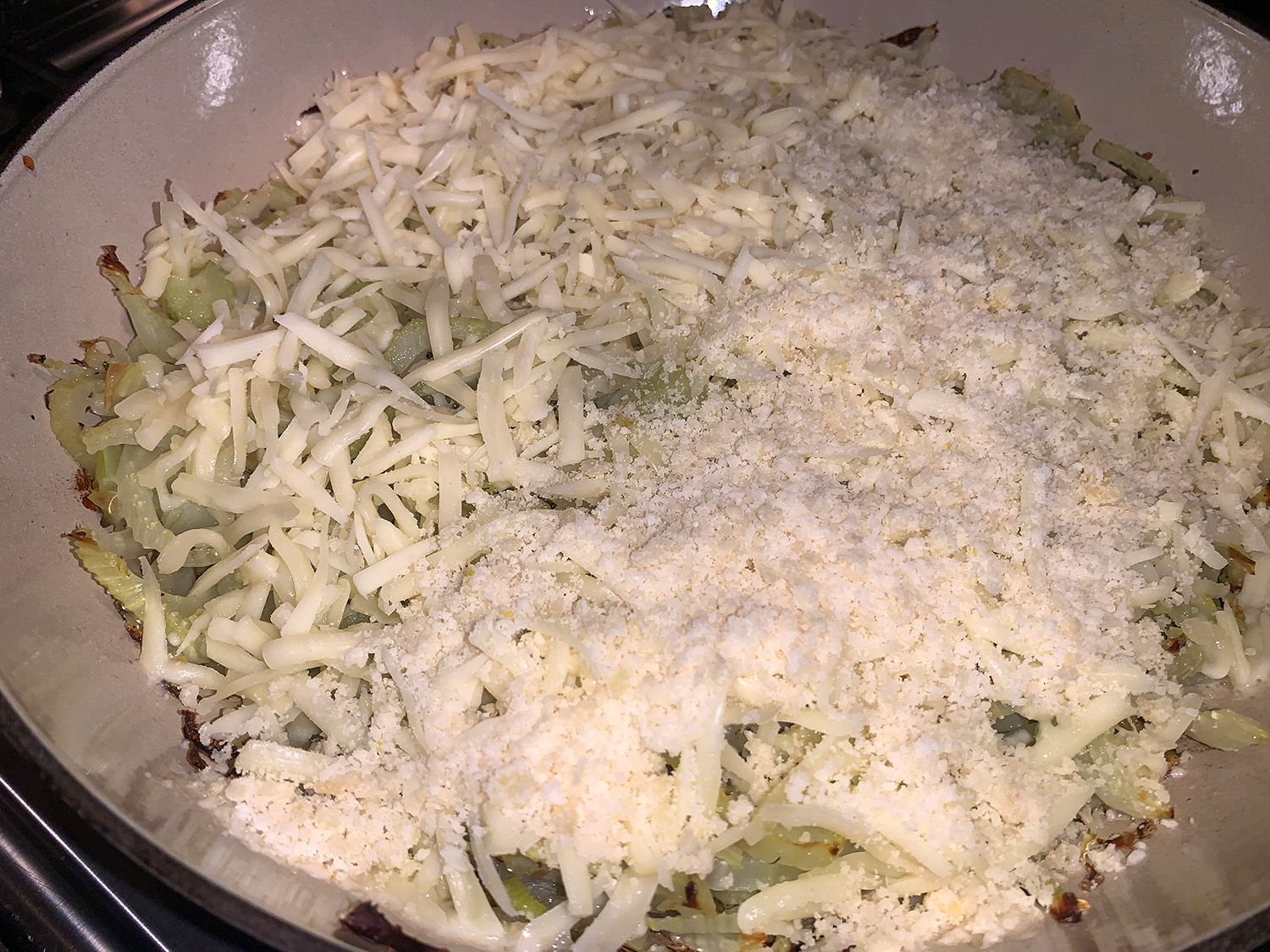
Remove the baking dish from the oven and turn on the broiler. Evenly distribute the fontina and provolone over the top of the fennel, then sprinkle on the Parmesan-panko mixture.
Broil until the top is nicely browned, 2 to 3 minutes. Remove from the oven and cool for 5 minutes. Sprinkle with the parsley and serve.
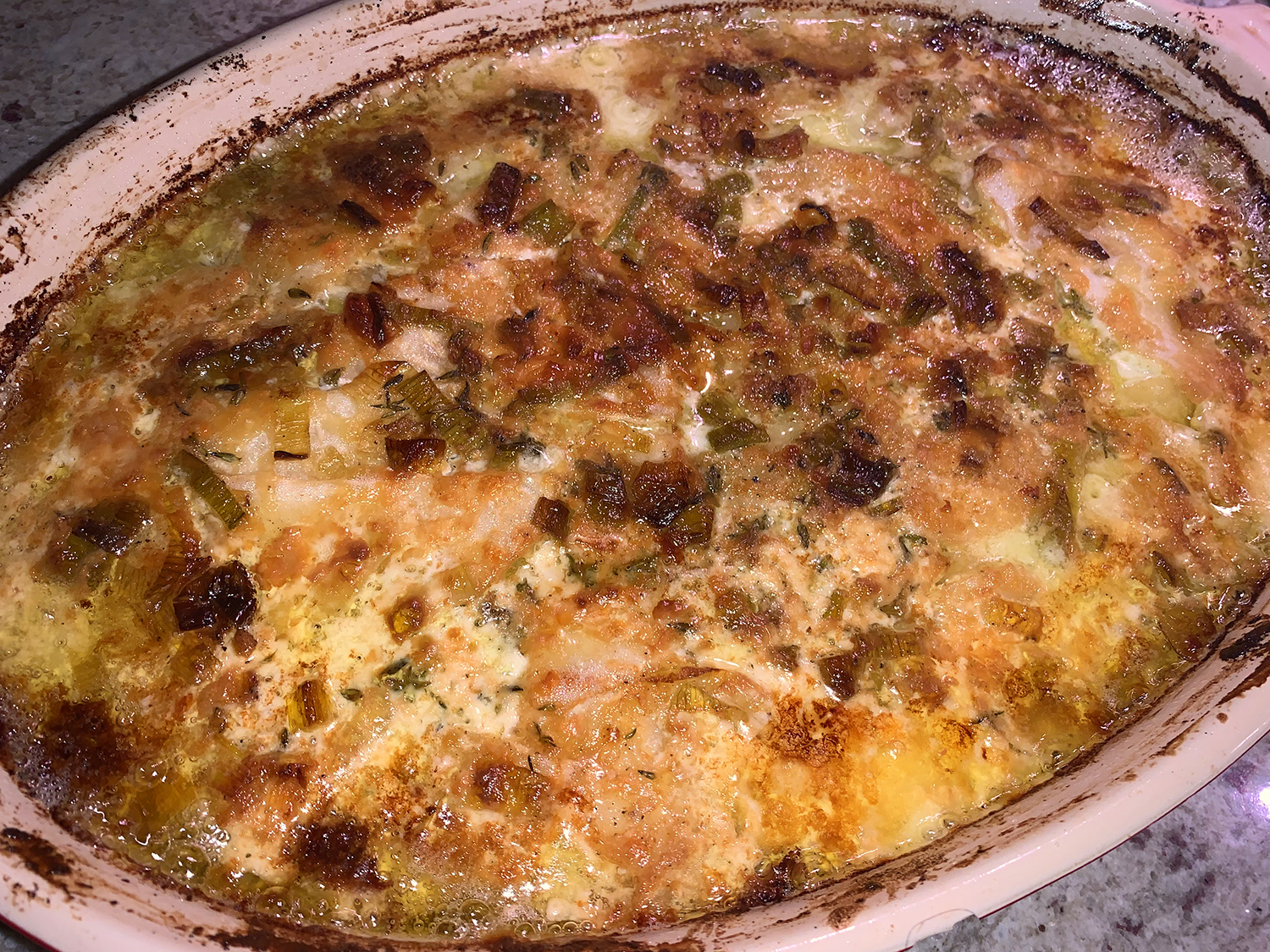
We are talking calorie-busting decadence here, but oh so worth it! Just keep in mind, a little goes a long way—think French when considering portion size; after all, Gruyère cheese is in the gratin. And it was a perfect accompaniment to our main course of sous vide, pan-seared beef tenderloin, which in of itself is very lean. Completing the plate was a lump crab meat patty, and roasted Brussels sprouts with an orange sauce.
The Hubs and I were a bit leery about the seemingly low amount of liquid, but it turned out perfectly creamy. One of our dinner guests admitted to disliking celery immensely and was concerned when he heard it contained celery root. However, he loved the gratin, even taking seconds!
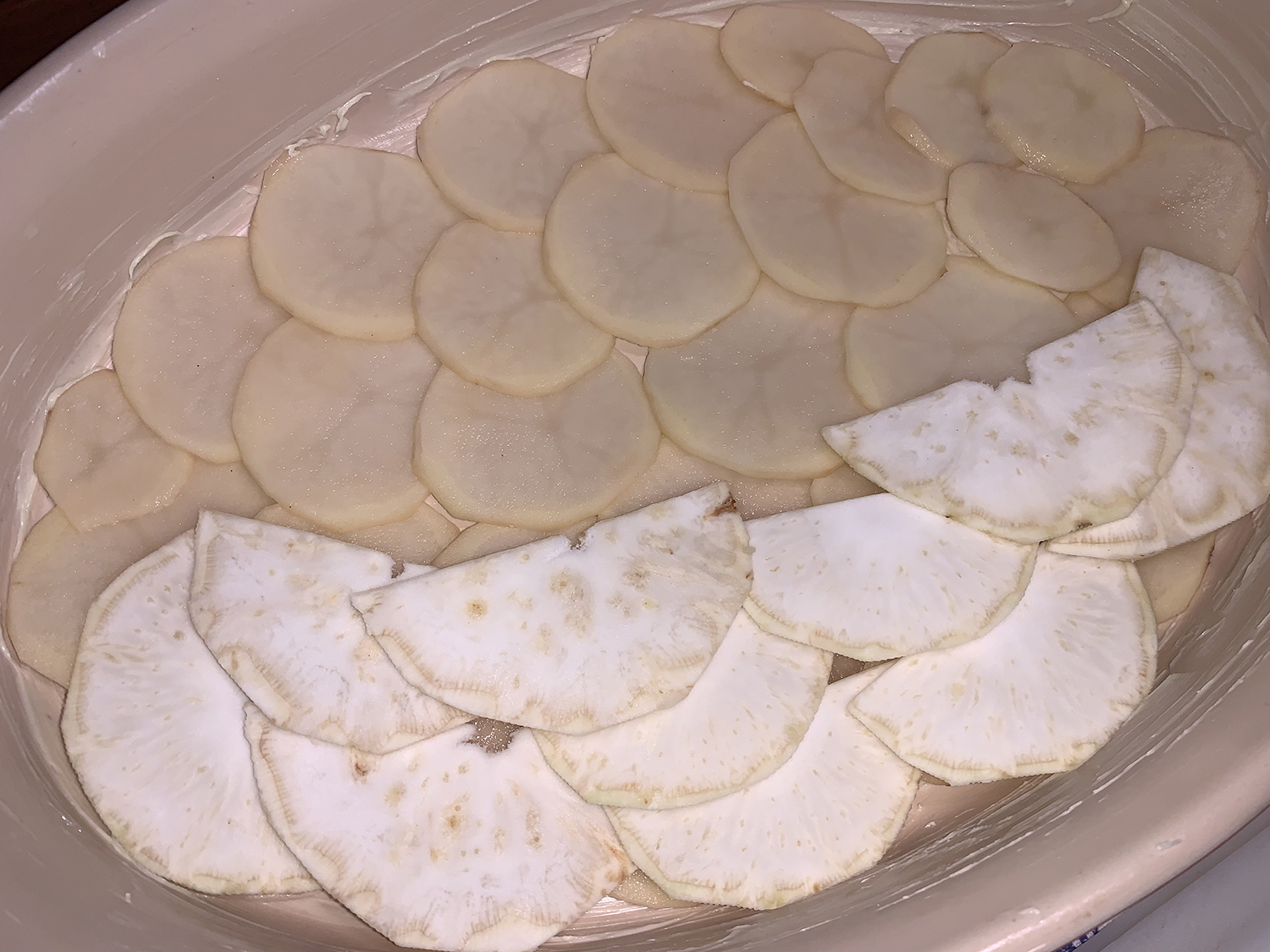
A mandoline comes in real handy for uniformly-thin slices of potatoes and celery root. To aid in scheduling your dinner, this gratin can be made up to two hours ahead of time, covered with foil, then reheated for about 20 minutes.
Preheat to 350°. Heat cream, garlic, and thyme sprig in a medium saucepan just until bubbles begin to form around edge of pan. Remove from heat; set aside to steep.
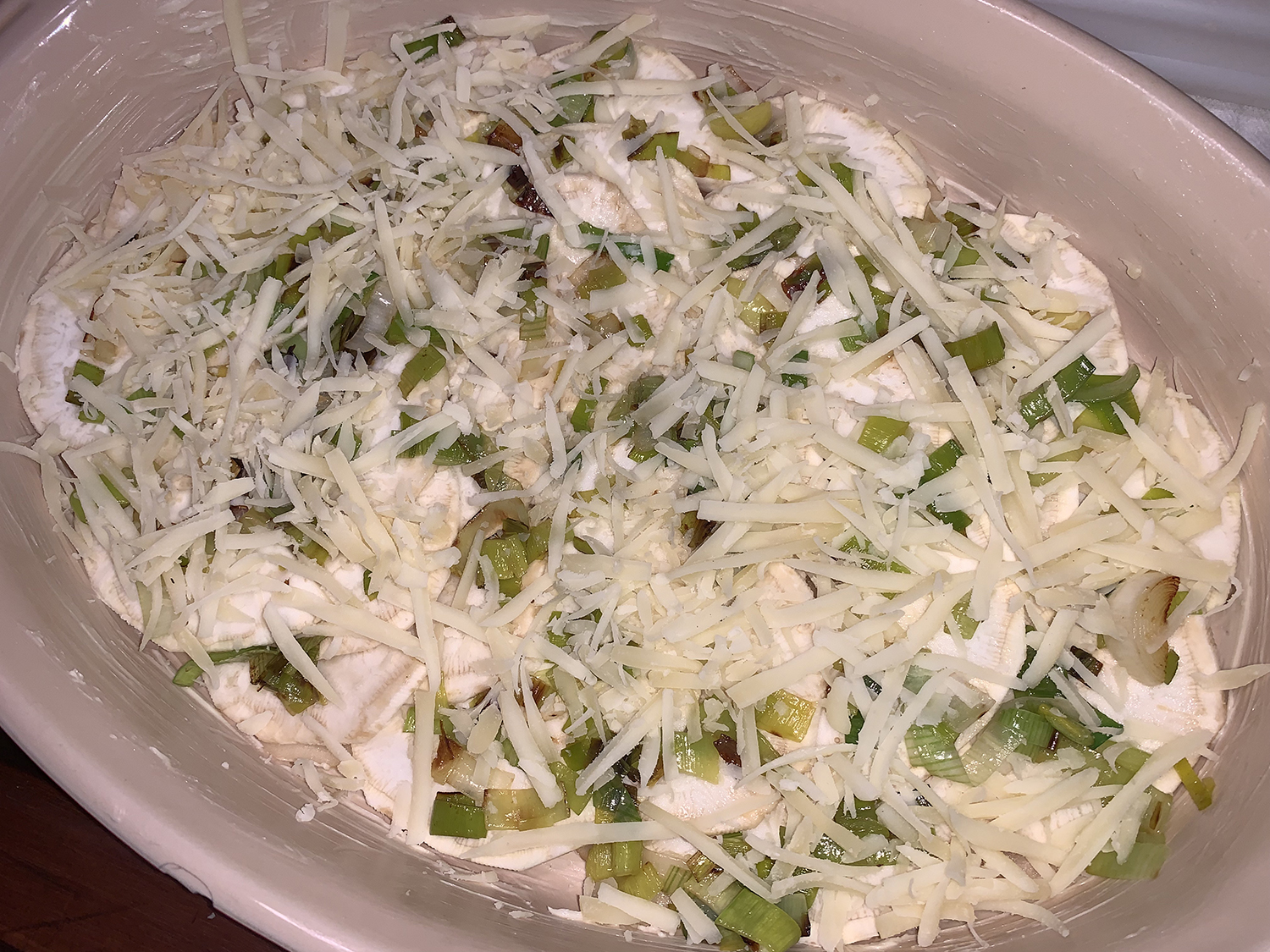
Melt 1 tablespoon butter in a medium skillet over medium heat. Add leeks; season with salt and cook, stirring often, until tender (do not brown), 10–12 minutes. Transfer to a small bowl and set aside.
Butter a 3-quart gratin dish with remaining 1 tablespoon butter. Layer 1/3 of potato slices and 1/3 of celery root slices evenly over bottom of baking dish. Cover with 1/3 of leeks, then 1/3 of Gruyère. Sprinkle with salt, pepper, and 1 teaspoon thyme leaves. Repeat layers twice more. Strain cream mixture into a medium pitcher and pour over vegetables.
Set gratin dish on a large rimmed baking sheet and cover tightly with foil. Bake for 1 hour. Carefully remove foil; continue baking until top is golden brown and sauce is bubbling, 25–30 minutes. DO AHEAD: Can be made 2 hours ahead. Let stand at room temperature. Tent with foil and rewarm in a 300° oven until hot, about 20 minutes.
Growing up, I was never a fan of cranberry sauce, probably because it was the canned jellied version that was plated as one big lump on the festive table. Not too appealing… But of course, as we age, our tastes change, and so hopefully do our desires for something more elegant, especially at holiday time.
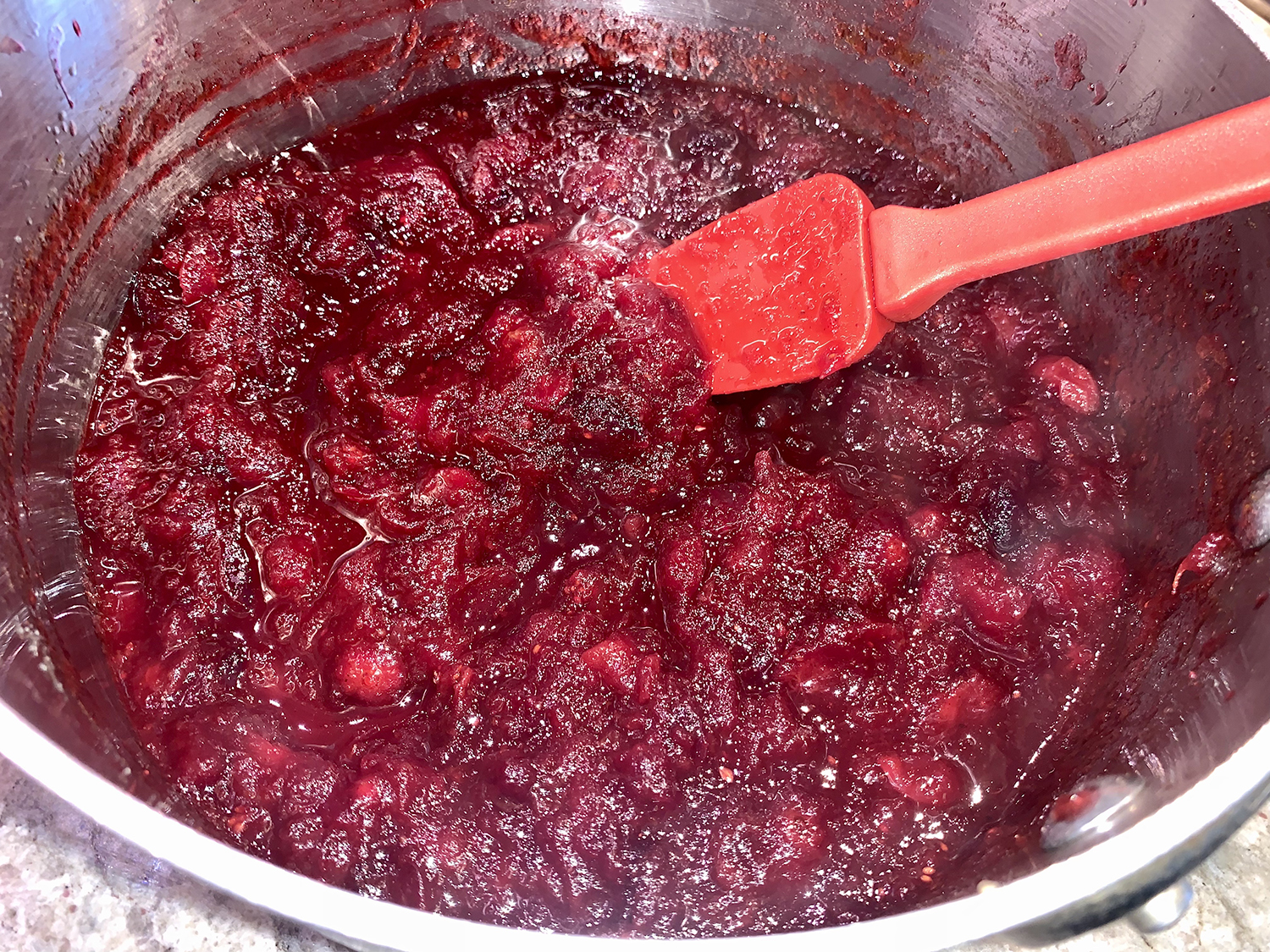
For this variation from Serious Eats, spices like cinnamon, allspice, nutmeg, and cloves as well as orange juice and zest are combined, then finished off with a bit of spiced rum. “The end result is incredible: a cranberry sauce that has a multidimensional array of seasonal flavors that fits seamlessly into any Thanksgiving meal,” according to chef Joshua Bousel.
And it couldn’t be any easier. I bet if you still are ambivalent about cranberry sauce, this time around you just might love it!
Place all cranberries, white sugar, water, brown sugar, orange juice, orange zest, cinnamon, allspice, Kosher salt, nutmeg, and cloves in a medium sauce pan and bring to a boil over medium heat. Cook, stirring occasionally until berries start to pop, about 10 minutes.
Remove from heat, stir in spiced rum, and let cool for 30 minutes. Adjust consistency with additional water as needed. Serve immediately or place in an airtight container and store in the refrigerator, reheating prior to serving.
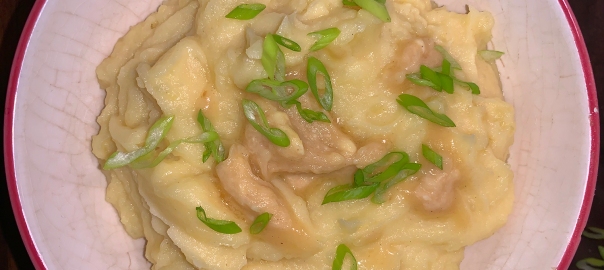
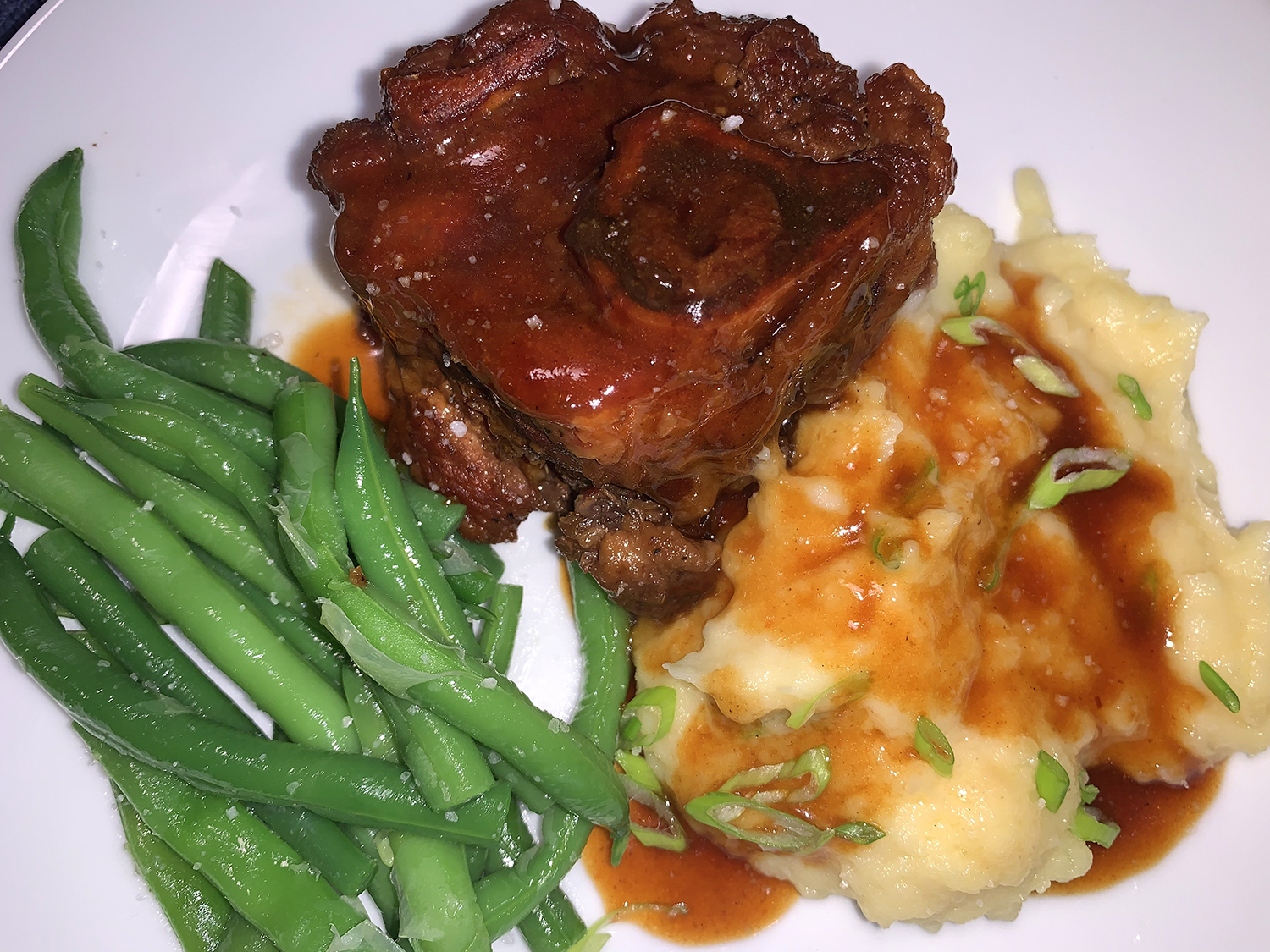
In the most recent issue of Bon Appétit Magazine, the minute I saw this recipe I knew we had to make them. Then serendipitously, while deciding our weeks menus, The Hubs came across a Braised Asian-Style Pork Shank entree which we knew would pair well with these potatoes—and we had shanks in our freezer!
But back to those potatoes. The original serves eight, so we cut it in half for just the two of us (with leftovers). After rereading the recipe numerous times, and the fact that I’ve made mashed potatoes for decades—and am pretty darn good at them—I instinctively knew there was WAY too much butter and cream, resulting in potato soup. After I made them my way, I went back to the online comments and sure enough, many disappointed reviewers noted that fact.
For example, the BA recipe called for 1 1/2 cups heavy cream which I cut back by 2/3, to only a 1/2 cup. The butter was listed as two full sticks, cut that by at least 50% and use only one stick, or less, if making the full recipe. And I always like to use ground white pepper in my potatoes, but that’s a personal preference. Ground pepper of any kind is a must.
“A couple of spoonfuls of miso adds a little extra umami and saltiness to these spuds, a subtle bridge between the roasted garlic and dairy that nobody will quite be able to put their finger on. And yes: These potatoes are actually mashed. I’m not going to stop you from pulling out a ricer or food mill if supersmooth is your thing, but I personally like a bit of texture—a few bits of intact potato remind you that you’re actually eating, you know, potatoes.” —Brad Leone
NOTE: You can either make the garlic paste ahead (Steps 1 through 3), or if you already have some in the fridge, you are way ahead of the game. You’ll save an hour and a half on dinner day.
In the end, even with my diminished amounts of butter and cream, I still found the mash too loose, especially the reheated leftovers, so consider scaling back even more… although they were indeed delicious!
The silver dish on the left holds the homemade silky garlic paste.
Preheat oven to 350°. Cut ½” off top of each head of garlic to expose just the tops of the cloves inside. Place on a 12″-square piece of parchment paper or foil. Drizzle with oil and season with salt. Drizzle 1 tsp. water over.
Bring edges of parchment up and over garlic and fold together to make a packet and seal. Place on a small rimmed baking sheet and bake until very tender, 60–75 minutes.
Let garlic sit until cool enough to handle, then squeeze out cloves into a medium bowl. Add butter and mash together into a paste with a wooden spoon or stiff rubber spatula. Add miso and mix well. Season garlic-miso butter with salt and pepper; set aside.
Peel and quarter potatoes. Place in a large pot and pour in water to cover by 1″; season generously with salt. Bring water to a boil over medium-high, then reduce heat and simmer gently, stirring occasionally, until potatoes are very tender (a tester or paring knife should easily slide into flesh), about 20 minutes from the time water starts to simmer. Drain potatoes and let sit 5 minutes to dry out; reserve pot.
Bring cream to a simmer in reserved pot over medium-high. Remove from heat and return potatoes to pot. Set aside about 3 Tbsp. garlic-miso butter for serving and add remaining garlic-miso butter to pot. Using a potato masher (or use a potato ricer or food mill if you prefer a silkier texture), smash potatoes until mostly smooth; taste and season mashed potatoes with salt.
Transfer mashed potatoes to a large shallow bowl. Top with reserved garlic-miso butter and season generously with more pepper.
Do ahead: Mashed potatoes can be made 2 days ahead. Cover and chill potatoes and reserved garlic-miso butter separately. Reheat potatoes over medium, stirring often and adding 1 tablespoon milk at a time to thin if needed.
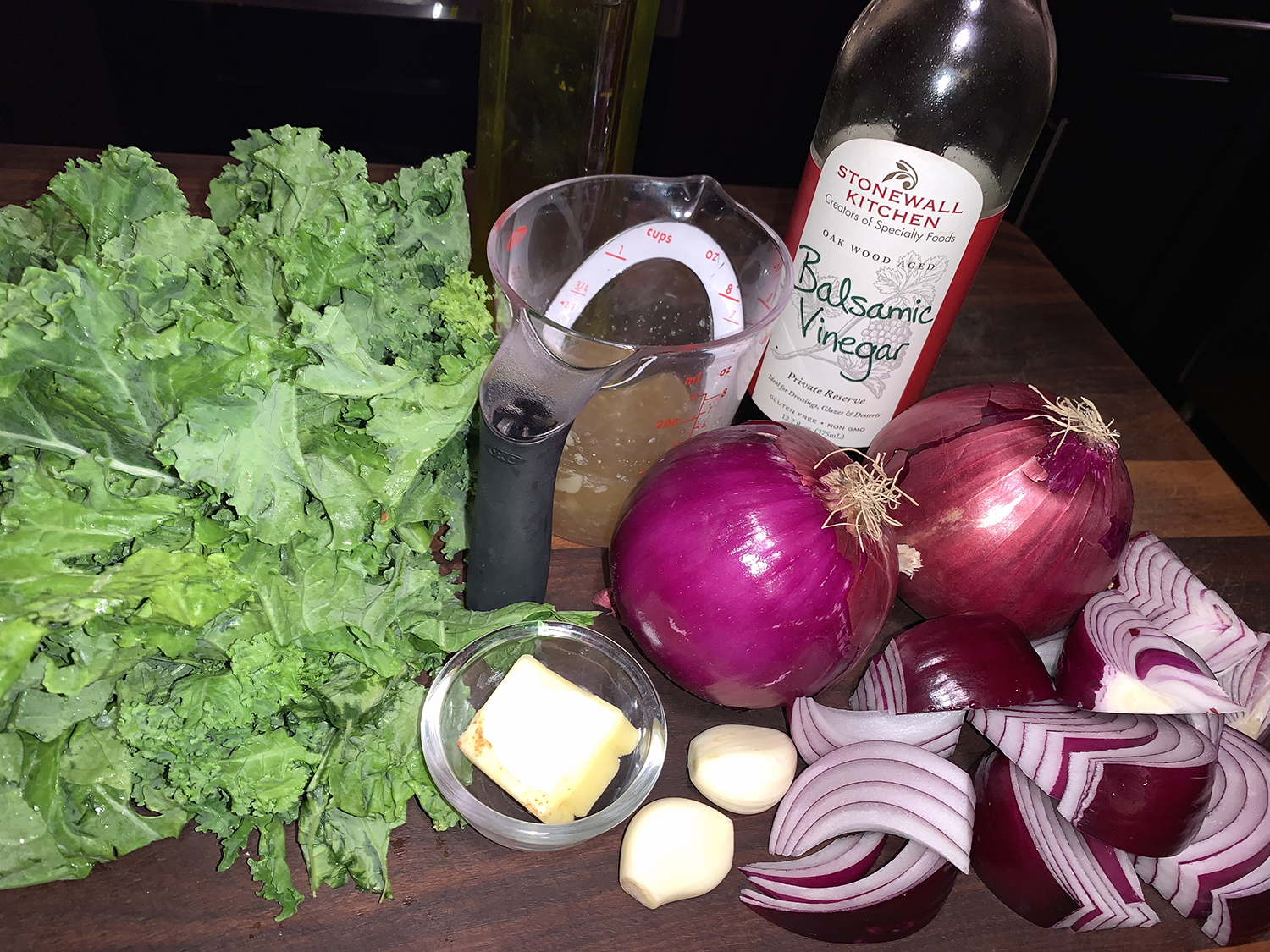
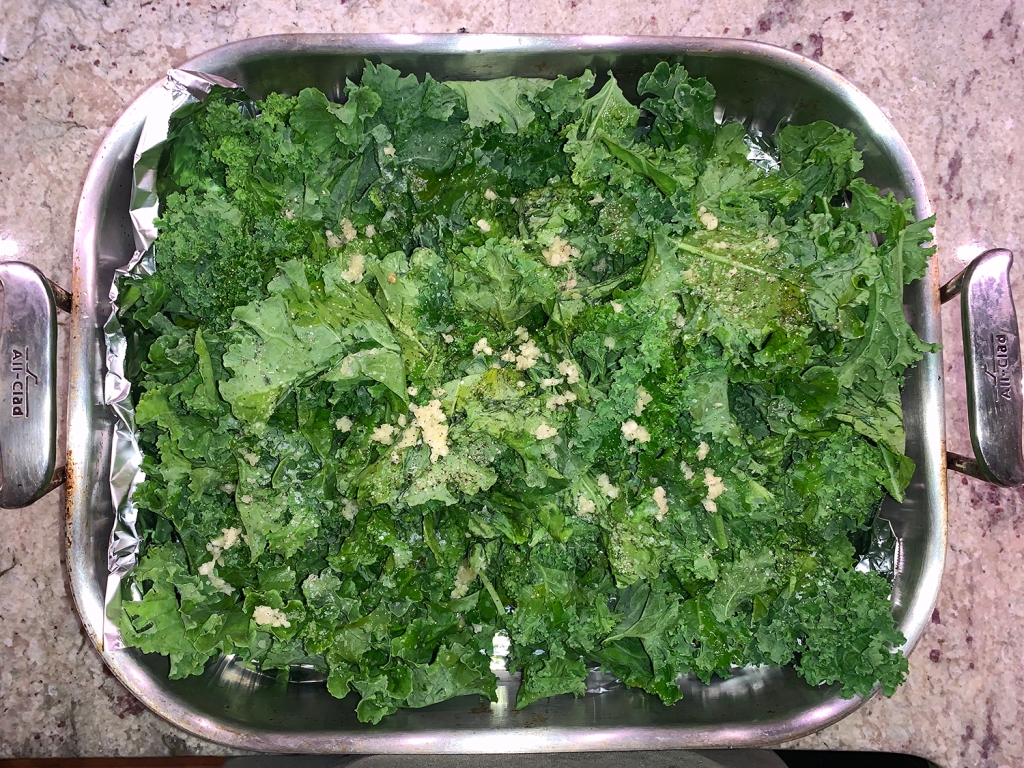
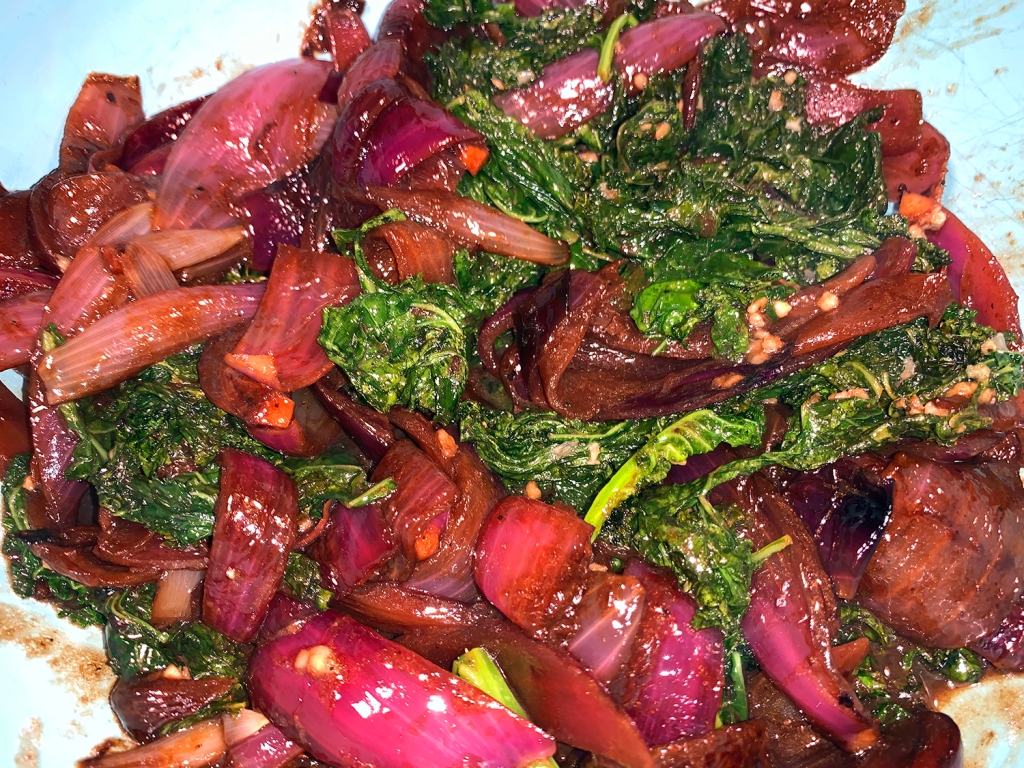
Found in a recent Fine Cooking Magazine, this tasty side dish recipe is a perfect combination of balsamic vinegar, kale, and red onion. The side made a wonderful partner to our Roasted Loin Chops with Charmoula.
With only the two of us, we cut the amount of onions and kale in half, the balsamic vinegar and chicken broth by a third, and the remaining ingredients were kept the same. The original recipe is intact below.
In bowl toss onion with 1 tablespoon of the oil, 1/4 teaspoon of the salt, and 1/4 teaspoon of the pepper; set aside.
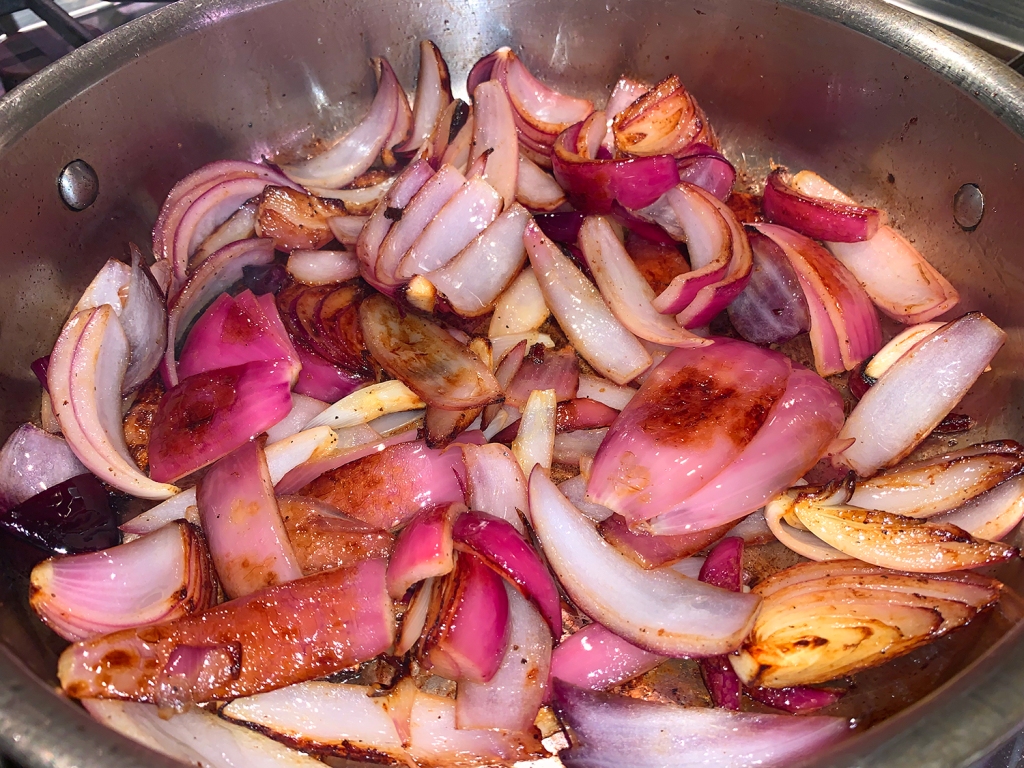
Heat 1 tablespoon of the oil in large skillet; add onion mixture. Cook over medium-high heat 5 minutes, stirring occasionally, until onions begin to brown. Reduce heat to medium-low. Add broth and vinegar. Cover; cook 15 minutes or until onions are tender.
Add butter. Increase heat to high. Cook 2 to 3 minutes, shaking pan occasionally, until onions are glazed.
Meanwhile, add kale to roasting pan. Toss with remaining oil, garlic, salt, and pepper. Roast, uncovered, 15 minutes, tossing 3 times.
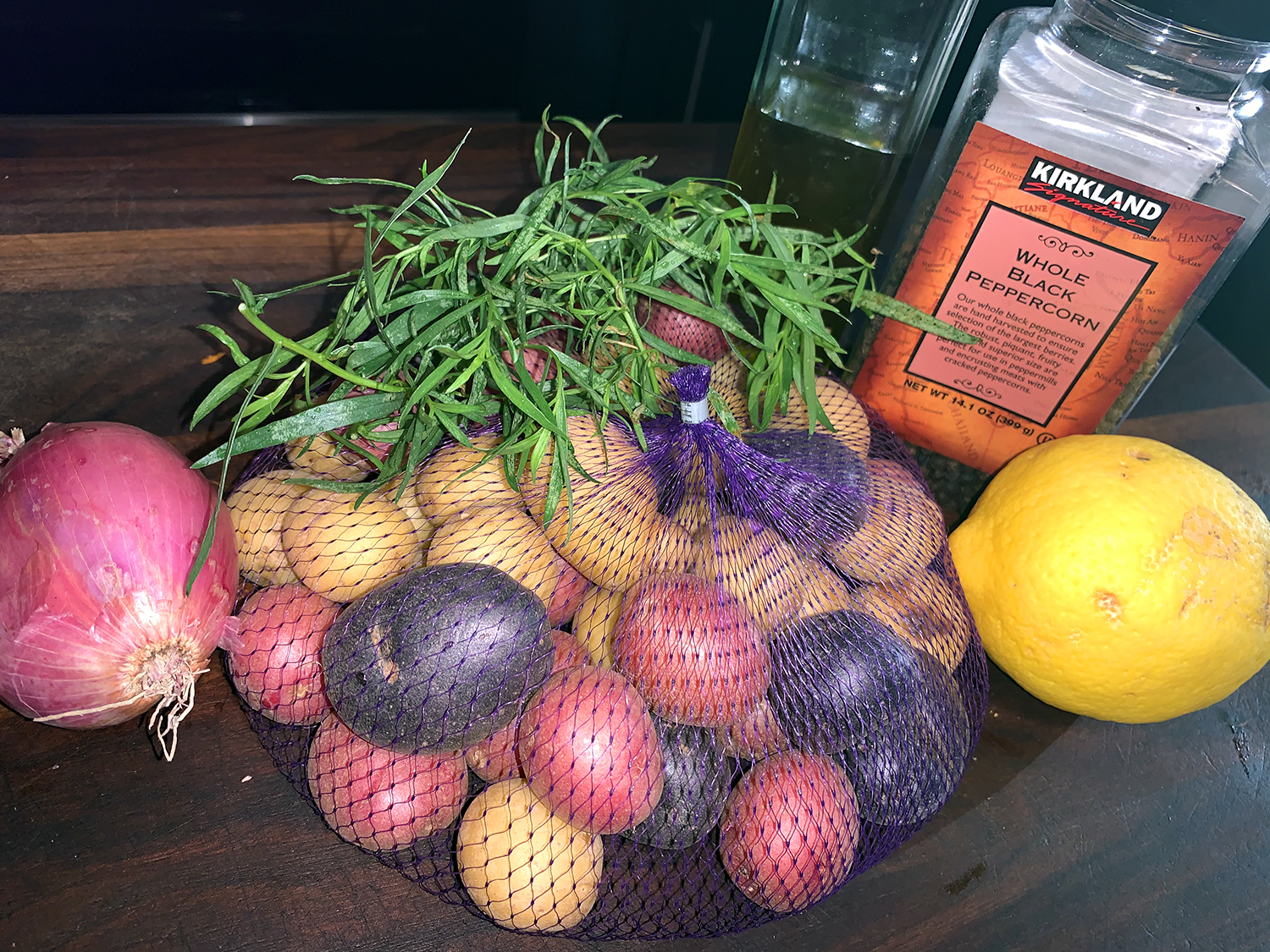
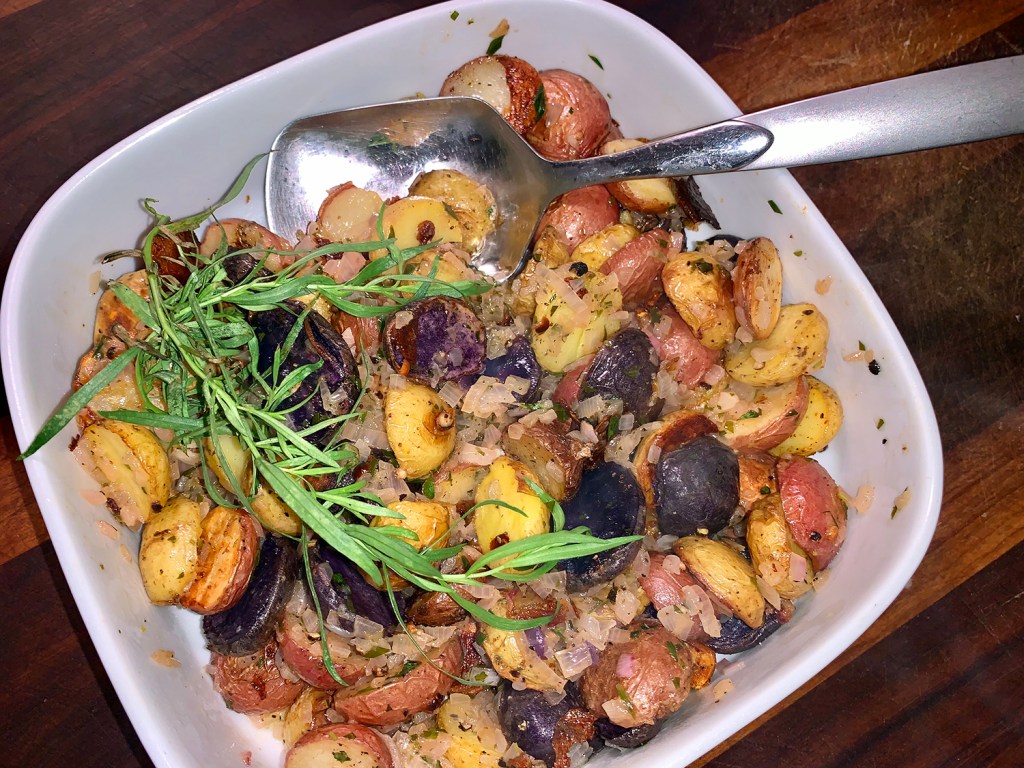
Potatoes are one of my favorite sides, no matter how they are cooked. And, this recipe is one I’ve never tried before, but will be sure to make again. Paired with a sirloin steak that marinaded in a sauce also containing fresh tarragon, they made great dinner companions.
The original recipe called for mixed-color fingerling potatoes, but the grocery store was plum out of any type of fingerlings. However, there were some tri-colored baby spuds available. And I mean “baby” to the point of almost preemies! Thus I knew the cooking time was going to be drastically reduced.
As your potatoes are finishing roasting, make the luscious tarragon-shallot sauce. The actual sauce is made up of only five ingredients: unsalted butter, finely chopped shallot, crushed black peppercorns, lemon zest and juice, and finely chopped tarragon. But boy, it delivers flavor in spades!
Roasted Fingerling Potatoes with Tarragon Shallot Butter
1½ lbs. fingerling potatoes, mixture of yellow, red, and blue, if possible
1 Tbsp. extra virgin olive oil
Kosher salt
Freshly ground black pepper
Tarragon Shallot Butter:
3 Tbsp.unsalted butter
1 large shallot, finelydiced
½ tsp. whole black peppercorns, coarsely crushed
2 tsp. fresh lemon zest
3 large sprigs fresh tarragon, plus more for garnishing leaves removed and finely chopped
Juice of ½ lemon
Fosher salt
Directions
Roast Fingerling Potatoes: Preheat oven to 450°F (232°C) with a rack in the center position. Rinse and dry the potatoes thoroughly. Slice the fingerling potatoes in half lengthwise. Toss on a large baking sheet with the olive oil and a generous sprinkling of salt and pepper.
Place the potatoes cut-side down on the sheet pan and spread them out evenly on the baking sheet. Roast for 15 minutes. Flip the potatoes and roast for an additional 10 minutes, or until the potatoes are caramelized, crispy, and fork-tender. Remove the potatoes from the oven, place on a rack, and allow them to cool slightly while you prepare the tarragon shallot butter.
Prepare Tarragon Shallot Butter: In a small skillet, heat the butter over medium heat. Once the butter has melted fully and is bubbling slightly, add the shallot and sauté, stirring frequently, for 1 to 2 minutes, or until soft and translucent.
Add the crushed peppercorns, lemon zest, chopped tarragon leaves, and lemon juice. Reduce heat to low, and continue to reduce the sauce for an additional minute or so. Season sauce to taste with salt and pepper.
Place the roasted potatoes in a shallow heat-proof bowl. Pour the warm tarragon shallot butter (scrape the skillet with a spatula to remove any bits) over the potatoes, and toss them gently with a spoon until they are evenly coated. Season to taste with salt and pepper. Garnish with additional tarragon and serve immediately.
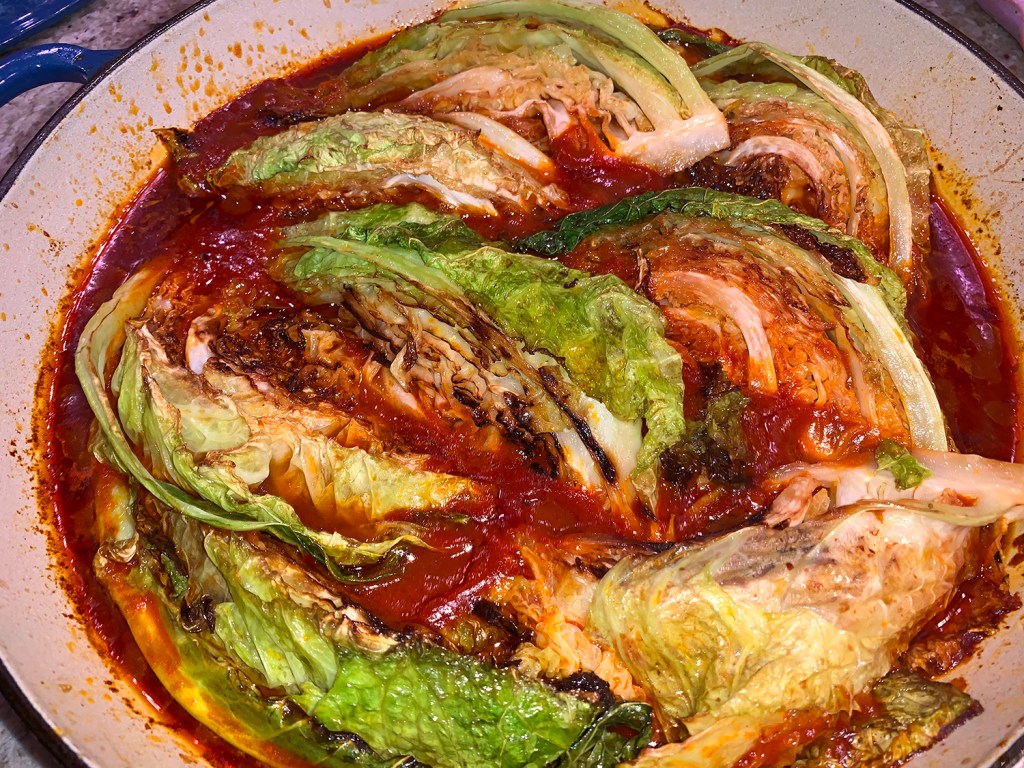
According to Bon Appétit, this is one of the easiest, most delicious ways to cook down a whole head of cabbage until it’s falling-apart tender. And those gorgeous Autumn colors welcome you to a new cooler season.
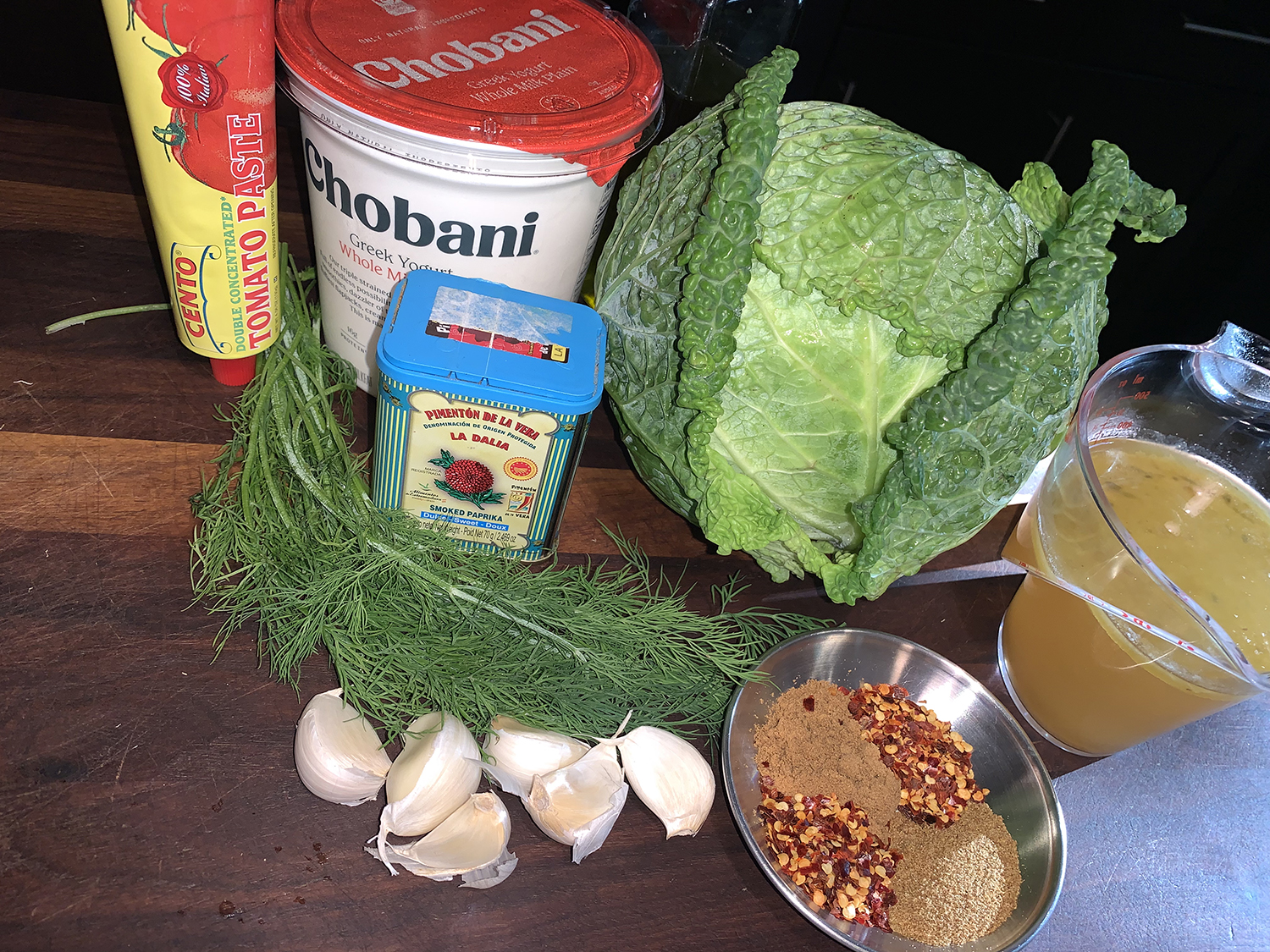
Numerous reviewers mentioned they had, or wished they had, doubled the sauce, therefore I went ahead with that suggestion. I also added some smoked paprika, just enough to give it a slightly smoky kick. Finally, homemade chicken stock was subbed for the water. Of course, if you are vegetarian you could keep the water or use vegetable stock.
If the spiced tomato paste has reduced and the pan starts getting dry and dark before the cabbage is ready, just add a splash of water to loosen and let it keep going.
The Hubs couldn’t get enough, he even wanted to drink any leftover sauce—good thing I doubled it! He said the aroma and taste reminded him of Gołąbki without the filling. Smacznego!
1 medium head of savoy cabbage (about 2 lb. total)
½ cup extra-virgin olive oil, divided
Kosher salt
2 cups chicken stock, preferably homemade (or water to keep it vegetarian)
3 Tbsp. chopped dill, parsley, or cilantro
Full-fat Greek yogurt or sour cream (for serving)
Directions
Preheat oven to 350°. Mix tomato paste, garlic, coriander, cumin, and red pepper flakes in a small bowl.
Cut cabbage in half through core. Cut each half through core into 4 wedges, so that the core remains on each piece.
Heat ¼ cup oil in a large cast-iron skillet over medium-high. Working in batches if needed, add cabbage to pan cut side down and season with salt. Cook, turning occasionally, until lightly charred, about 4 minutes per side. Transfer cabbage to a plate. You may have to add a bit more oil to the pan if doing a second batch.
Pour remaining ¼ cup oil into skillet. Add spiced tomato paste and cook over medium heat, stirring frequently, until tomato paste begins to split and slightly darken, 3–4 minutes. Pour in enough chicken stock (or water) to come halfway up sides of pan (about 2 cups), season with salt, and bring to a simmer.
Nestle cabbage wedges back into skillet (they should have shrunk while browning; a bit of overlap is okay). Transfer cabbage to oven and bake, uncovered and turning wedges halfway through, until very tender, liquid is mostly evaporated, and cabbage is caramelized around the edges, 40–50 minutes.
Scatter dill over cabbage. Serve with yogurt alongside.
We love all things mushrooms, but I know they are not everyone’s cup of tea. However you might be enticed to try this rich, woodsy side dish with combined straightforward creminis and meaty, smoky shiitakes.
To ensure that the mushrooms are evenly seasoned and stay moist during roasting, they are brined in a saltwater solution. This went against everything we’ve ever read about preparing mushrooms, but we gave it a whirl. A glass pie plate was put over the soaking mushrooms to keep them submerged in the brine.
The ‘shrooms are roasted in a hot oven for about an hour until they are deeply browned. Then they’re coated in extra-virgin olive oil and lemon juice before adding the flavorful mix-ins of grated Parmesan, parsley, and pine nuts.
Oh yeah Babe, this recipe from America’s Test Kitchen was divine. Served with grilled tomatoes and strip steaks, we felt like royalty on a weeknight!
Adjust oven rack to lowest position and heat oven to 450°F.
Dissolve 5 teaspoons salt in 2 quarts room-temperature water in large container. Add cremini mushrooms and shiitake mushrooms to brine, cover with plate or bowl to submerge, and let stand for 10 minutes
Drain mushrooms in colander and pat dry with paper towels. Spread mushrooms evenly on rimmed baking sheet, drizzle with oil, and toss to coat. Roast until liquid from mushrooms has completely evaporated, 35 to 45 minutes.
Remove sheet from oven (be careful of escaping steam when opening oven) and, using thin metal spatula, carefully stir mushrooms. Return to oven and continue to roast until mushrooms are deeply browned, 5 to 10 minutes longer.
Combine remaining olive oil and lemon juice in large bowl. Add mushrooms and toss to coat. Add Parmesan, pine nuts, and parsley and toss. Season with salt and pepper to taste; serve immediately.
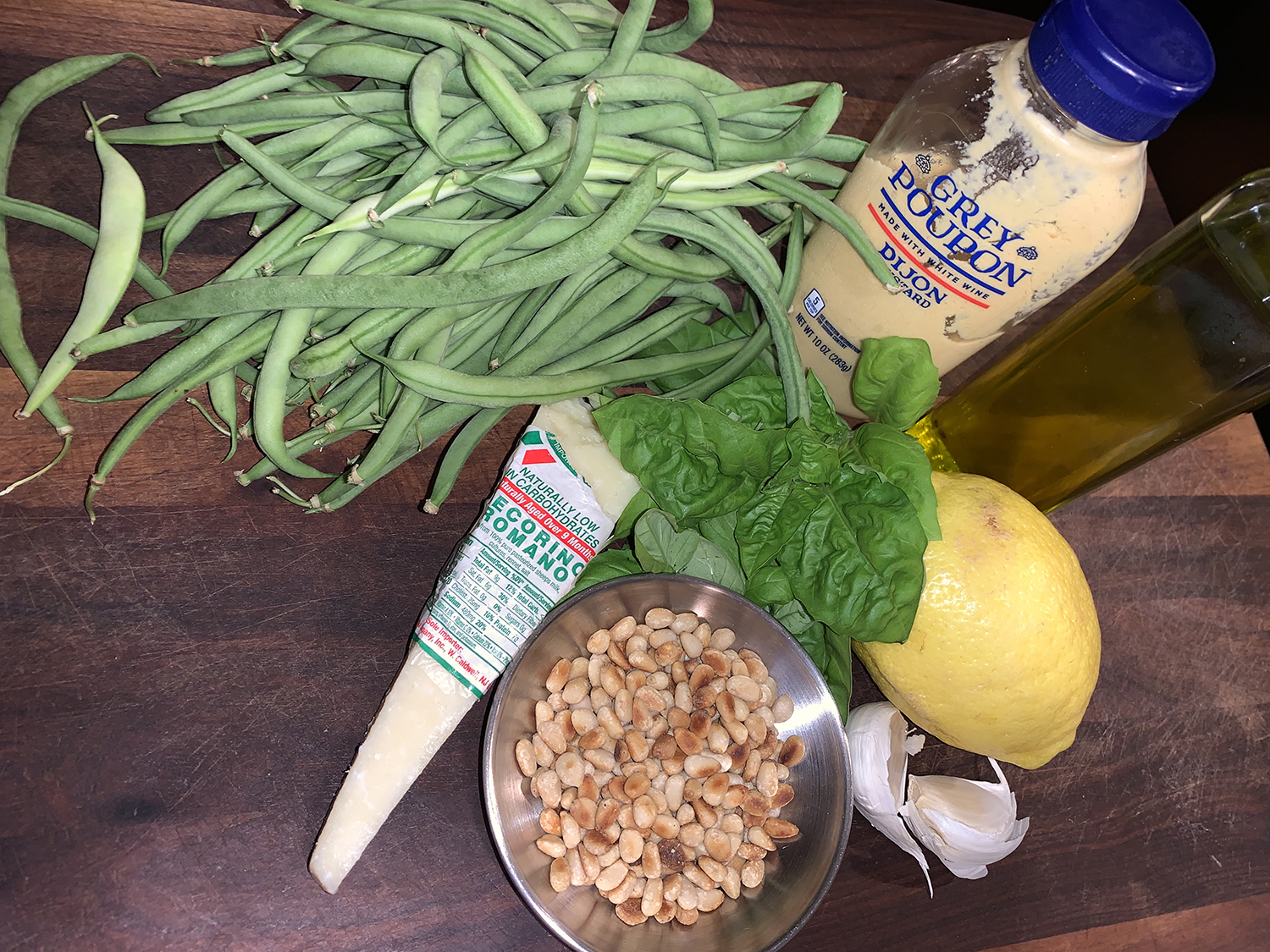
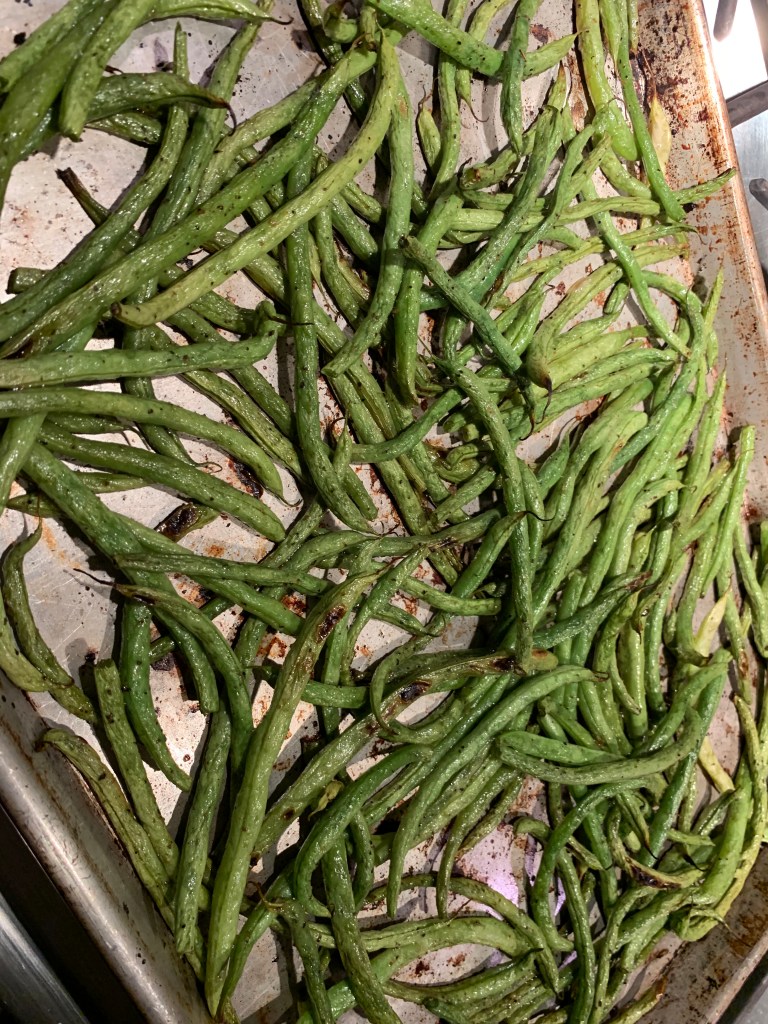
If you want earthy, sweet green beans with moist interiors and just the right amount of browning, this roasted bean recipe from Cook’s Country does the trick. Because they are often dry and leathery; start by covering the roasting beans which are mixed with oil, salt, pepper, and sugar and let them gently steam for 10 minutes.
The sugar promotes browning when the foil is removed to let the beans blister in the oven’s high heat. To add a lively bite to the flavorful beans, toss them with a lemon vinaigrette and top them with salty, sharp Pecorino and crunchy pine nuts.
1 ½ oz. Pecorino Romano cheese, shredded (1/2 cup)
¼ cup pine nuts, toasted
Directions
Adjust oven rack to lowest position and heat oven to 475 degrees.
Combine green beans, 1 1/2 tablespoons oil, sugar, 3/4 teaspoon salt, and 1/2 teaspoon pepper in bowl. Evenly distribute green beans on rimmed baking sheet.
Cover sheet tightly with aluminum foil and roast for 10 minutes. Remove foil and continue to roast until green beans are spotty brown, about 10 minutes longer, stirring halfway through roasting.
Meanwhile, combine garlic, lemon zest, and remaining 1/4 cup oil in medium bowl and microwave until bubbling, about 1 minute; let mixture steep for 1 minute. Whisk lemon juice, mustard, 1/4 teaspoon salt, and 1/4 teaspoon pepper into garlic mixture.
Transfer green beans to bowl with dressing, add basil, and toss to combine. Transfer to serving platter and sprinkle with Pecorino and pine nuts. Serve.
These crispy zucchini fritters make a wonderful starter or side dish, and they’re a delicious way to use up summer zucchini, because Lord knows, you or your neighbors are likely swamped with it. Of course there is always the local farm market or grocery store…
The word fritter usually conjures up something heavy and deep-fried, but these zucchini fritters are as light as can be. Serve them as a light vegetarian meal or mezze (small plate) with tzatziki and a Greek salad, or as a side dish to any Mediterranean-style fish, chicken or lamb dish.
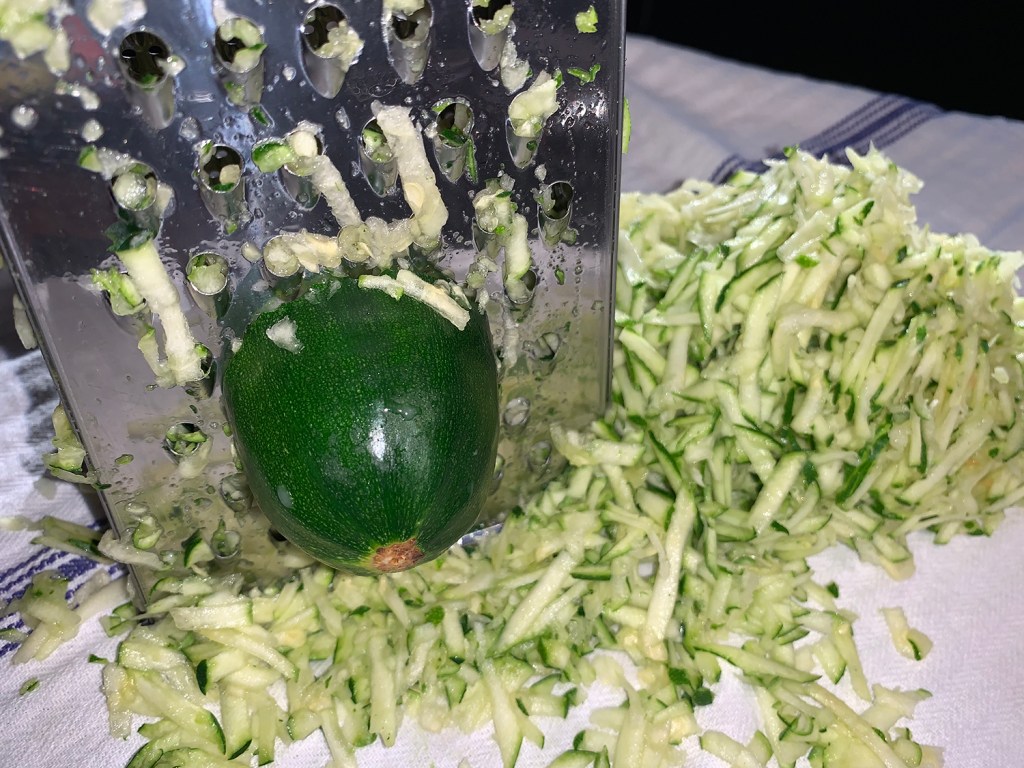
To eliminate all of the excess moisture in zucchini, shred on a box shredder, salt it and let it drain in a fine mesh strainer for 10 minutes. Finally you want to wrap it tightly in a clean towel and squeeze out any lingering moisture. Do not let the zucchini sit on its own for too long after it’s been squeezed dry or it will turn brown.
Bind the dried zucchini with eggs and a little flour which allows its delicate flavor to shine. In ATK’s The Complete Mediterranean Cookbook where we found this recipe, and the one I followed, it did not mention baking powder as an ingredient. However, online it shows adding 1/2 teaspoon, which makes sense so I listed it below.
Oh, and do yourself a favor and buy a good block of feta cheese, not the pre-crumbled varieties. Odyssey and Mt Vikos are two great brands that contain no preservatives, additives, or calcium chloride and are Non-GMO. Traditional feta is made authentically by small family dairies in central Greece using fresh milk from sheep and goats.
1 medium garlic clove, minced or pressed through a garlic press
1/4 tsp. black pepper
1/4 cup all-purpose flour (or cornstarch)
1/2 tsp. baking powder
3 Tbsp. olive oil, plus more if necessary
Lemon wedges, for serving
Directions
Shred the zucchini on the large holes of a box grater or in a food processor fitted with the shredding disk. Transfer the zucchini to a fine mesh strainer and set over a bowl. Toss the zucchini with the salt and let it sit for 10 minutes.
Put zucchini in a clean dish towel and fold and wring out real well with (you may need to repeat with another towel), then set aside.
Beat the eggs in a large bowl. Mix in the dried zucchini, scallions, dill, feta, garlic and black pepper. Sprinkle the flour (or corn starch) and baking powder over mixture and stir until uniformly incorporated.
Heat 3 tablespoons olive oil in a large non-stick skillet over medium heat. Drop 2-tablespoon sized portions into the pan, then use the back of a spoon to gently press the batter into 2-inch-wide fritters. Pan-fry until golden brown on both sides, 2-3 minutes per side. Repeat as needed.
Transfer the fritters to a paper towel-lined plate. Add a bit more oil to the pan if necessary, then repeat with the remaining batter. Serve warm or room temperature with lemon wedges.








































 Accounting for Taste