Tag Archives: gluten-free

Baked White Beans and Sausages with Paprika, Onions and Sweet Peppers

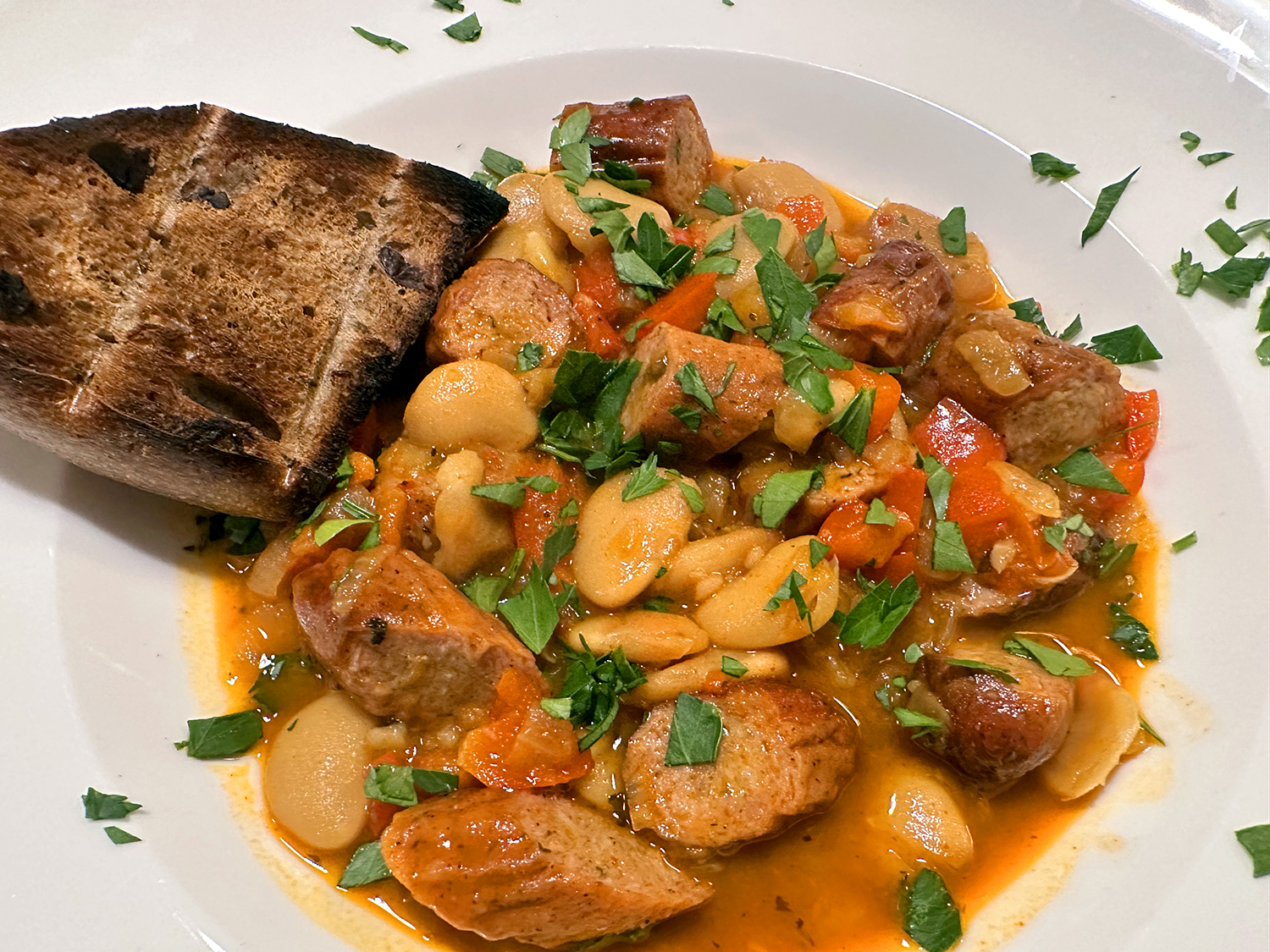
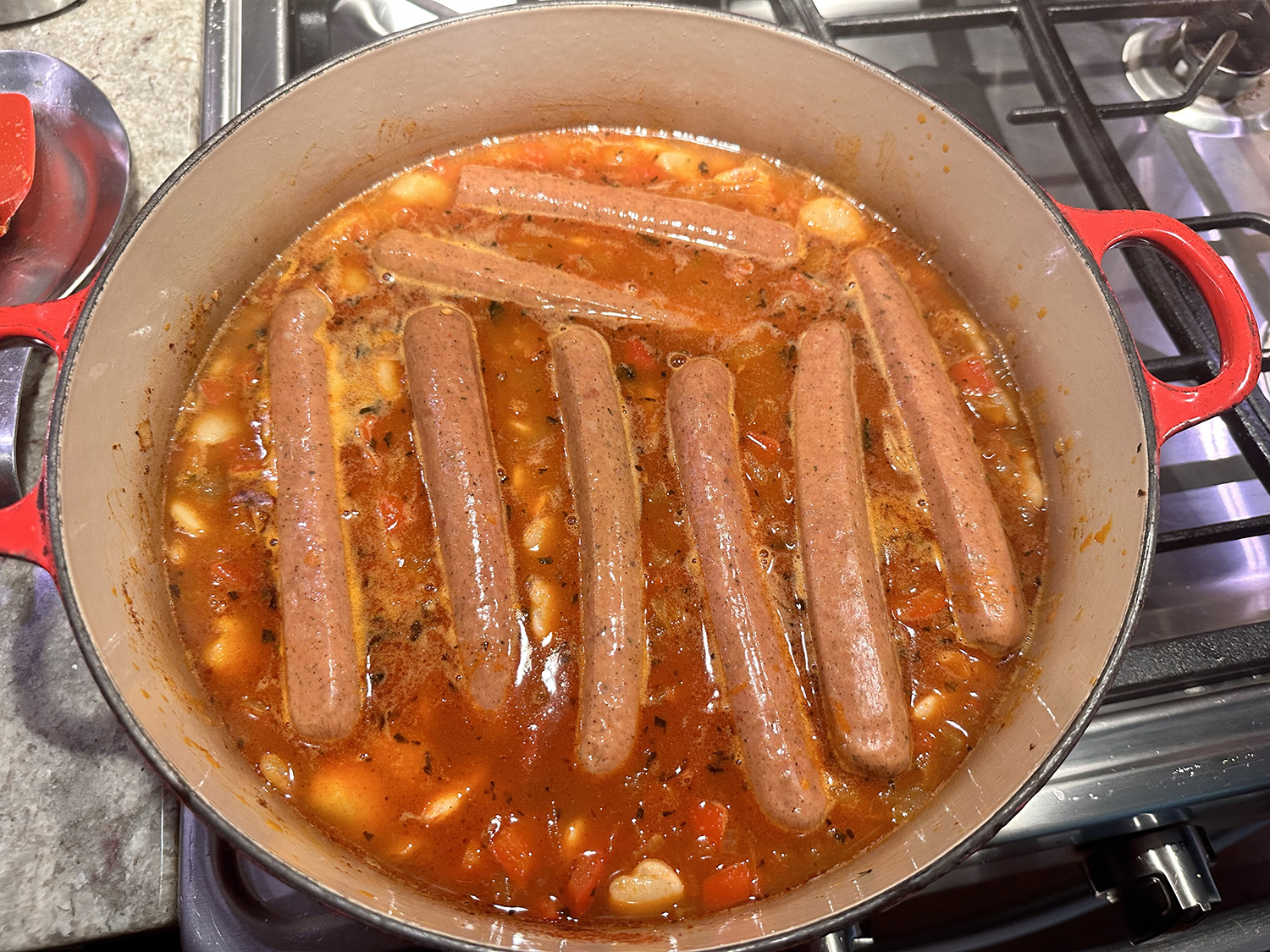
This lovely, tasty “stew” is all done in one pot, which appeals to many home cooks. The time commitment is nearly two hours, so it is not necessarily a weeknight effort. Our concern was if the butter beans would hold up and not turn to mush in that amount of time. Spoiler alert—they were perfect. And all of the wonderful flavors melded together. It’s even better as leftovers!

The story from Milk Street reads “tavče gravče, which translates as “beans in a pan,” is a Macedonian classic. Traditionally, large dried white beans called tetovac, named after a city in northwestern Macedonia, are the star of the rustic dish, while onions, garlic, peppers and paprika provide deep, rich flavor and color.”

The convenience of canned butter beans, which are plump, creamy and the best widely available alternative to tetovac beans was the obvious choice here. If butter beans are difficult to find, cannellini beans work, too. Combined with sautéed aromatics and baked for an hour with smoked sausages, the beans turn silky-soft and deeply flavorful. Serve with crusty bread on the side.

Don’t forget to reserve 1½ cups of the bean liquid before draining the cans. The liquid is added to the pot and keeps the beans plump and moist during baking. (If the amount of liquid from the cans comes up short, make up the difference with more water.) To ensure enough liquid evaporates during cooking, use a Dutch oven with a wide diameter—ideally between 11 and 12 inches.

We used smoked chicken Andouille sausages, and paired with a thick, crusty slice of toasted olive loaf and a side salad.

Baked White Beans and Sausages with Paprika, Onions and Sweet Peppers

  • Servings: 6
  • Difficulty: easy
  • Print

Ingredients

  • 4 Tbsp. grapeseed or other neutral oil, divided
  • 2 medium yellow onions, chopped
  • 2 medium red bell peppers, stemmed, seeded and chopped
  • Kosher salt and ground black pepper
  • 6 medium garlic cloves, thinly sliced
  • 4 tsp. sweet paprika
  • 1 1/2 tsp. dried mint (optional)
  • 3 15½-oz. cans butter beans (1½ cups liquid reserved), rinsed and drained
  • 2 dried árbol chilies OR ¼ teaspoon red pepper flakes
  • 1-1 1/4 lbs. smoked sausage, such as kielbasa or bratwurst
  • 1/4 cup lightly packed fresh flat-leaf parsley, chopped

Directions

  1. Heat the oven to 400°F with a rack in the lower-middle position. In a large Dutch oven over medium-high, heat 3 tablespoons of the oil until shimmering. Add the onions, bell peppers and 1 teaspoon salt; cook, stirring occasionally, until lightly browned, 8 to 10 minutes.
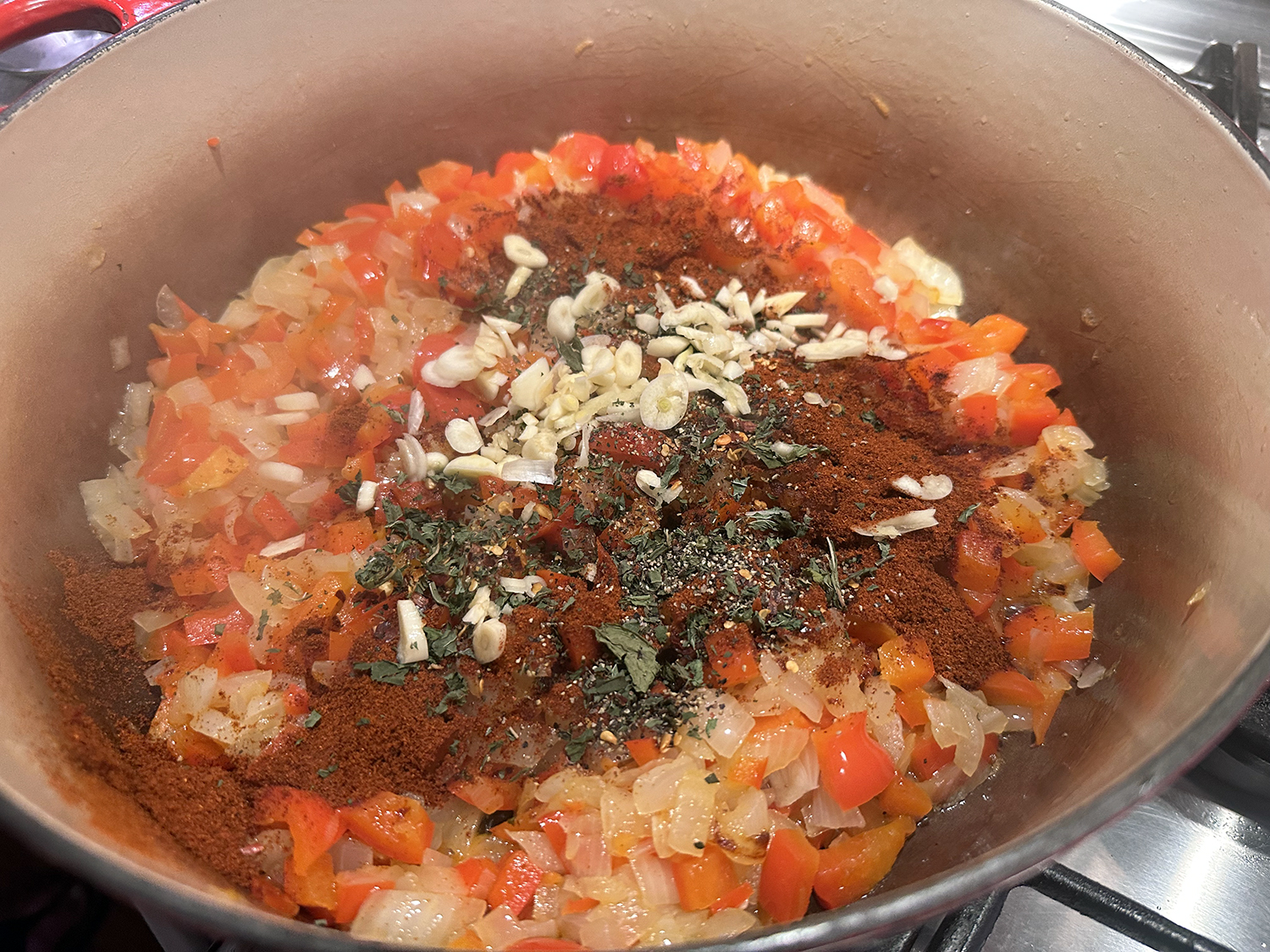
  2. Add the garlic, paprika, mint (if using) and ½ teaspoon pepper; cook, stirring, until fragrant, about 1 minute. Stir in the beans and reserved liquid, árbol chilies and 1½ cups water. Bring to a simmer, stirring occasionally, then nestle the sausages into the pot and drizzle the surface with the remaining 1 tablespoon oil. Transfer to the oven and bake, without stirring, until the sausages are browned and the beans on the surface are slightly crisped, 1 to 1¼ hours.
  3. Remove the pot from the oven and let stand, uncovered, for about 15 minutes; the bean mixture will thicken as it cools. Transfer the sausages to a cutting board. Cut them into pieces, return them to the pot and stir into the beans. Remove and discard the árbol chilies (if used). Taste and season with salt and pepper, then sprinkle with the parsley. Serve from the pot.

http://www.lynnandruss.com

Recipe by Courtney Hill for Milk Street

Steak with Olive White-Wine Pan Sauce

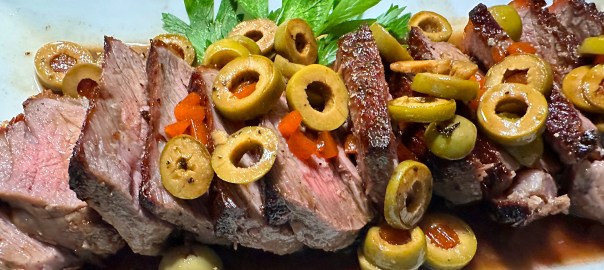
Craving a quick red meat meal? Rib-eye steaks are front and center here, while pimento-stuffed green olives and white wine provide a salty, briny component. With just the two of us for dinner, only one steak was necessary, but it was big and thick—we even had some leftovers. We did not cut back on the other ingredients, and intentionally used more than a half cup of the olives.

Oh, an addition to the recipe was dry-aging our steak. Dry-aging, improves flavor and texture while making cuts easier to cook simply and beautifully. Tenderization occurs when enzymes naturally present in the meat act to break down some of the tougher muscle fibers and connective tissues. A well-aged steak should be noticeably more tender than a fresh steak.

As you are well aware, dry-aged meat at a restaurant or grocery store can cost twice as much as its younger counterparts, but you can do it at home, better—and for free. Exposing meat to cold, circulating air for an extended period of time gently dehydrates it, concentrating flavor and increasing the ratio of fat to muscle. It’s best to dry-age a steak on a rack, uncovered, overnight and up to several days.

Don’t slice the steaks until they have rested for 10 minutes. Resting not only permits the meat to finish cooking with residual heat, it gives the muscle fibers a chance to relax, thereby allowing the juices forced to the surface during cooking to redistribute throughout meat. This results in less moisture loss during slicing.

A little history behind this recipe: This is a riff on a dish from the new edition of “Spain: The Cookbook” written by Simone Ortega and first published in Spain in 1972. The 1,080-recipe tome has since become a bible of Spanish home cooking. We use pimento-stuffed green olives to add pops of bright color and flavor to the white wine pan sauce. Serve with warm, crusty bread to soak up any sauce left on the plate.

Steak with Olive White-Wine Pan Sauce

  • Servings: 4-6
  • Difficulty: easy
  • Print

Ingredients

  • 2 1-lb. boneless ribeye steaks, each about 1 inch thick, trimmed and patted dry
  • Kosher salt and ground black pepper
  • 1 Tbsp. grapeseed or other neutral oil
  • 3 Tbsp. salted butter, cut into 1-Tbsp. pieces, divided
  • 1 medium garlic clove, smashed and peeled
  • ½ cup pimento-stuffed green olives, finely chopped, plus 1 Tbsp. olive brine
  • ½ cup dry white wine
  • 1 Tbsp. sherry vinegar

Directions

  1. Season the steaks on both sides with salt and pepper. If possible, dry age the steak on a rack, uncovered, overnight and up to several days.
  2. In a 12-inch skillet over medium-high, heat the oil until barely smoking.Add the steaks, reduce to medium and cook until well browned on the bottoms, 5 to 7 minutes.
  3. Flip and cook for 3 minutes, then add 1 tablespoon of butter and the garlic. Swirl the pan to distribute the butter and continue to cook until the second sides of the steaks are well browned, another 3 to 4 minutes. Transfer to a serving platter, tent with foil and let rest for 10 minutes.
  4. While the steaks rest, remove and discard the garlic, then set the pan over medium-high. Add the olives and cook, stirring, until fragrant, 30 to 60 seconds. Add the wine, bring to a simmer and cook, scraping up any browned bits, until the liquid has almost evaporated, about 3 minutes.
  5. Remove from the heat, stir in the olive brine, vinegar and remaining 2 tablespoons butter, then stir until melted. Remove from the heat, then taste and season with salt and pepper. Cover and set aside.
  6. After the steaks have rested, cut them on the diagonal into ¼- to ½-inch-thick slices. Transfer to a platter, pour over any accumulated juices and spoon on the sauce.

http://www.lynnandruss.com

Adapted from a recipe for Milk Street

Laotian Grilled Chicken (Ping Gai)

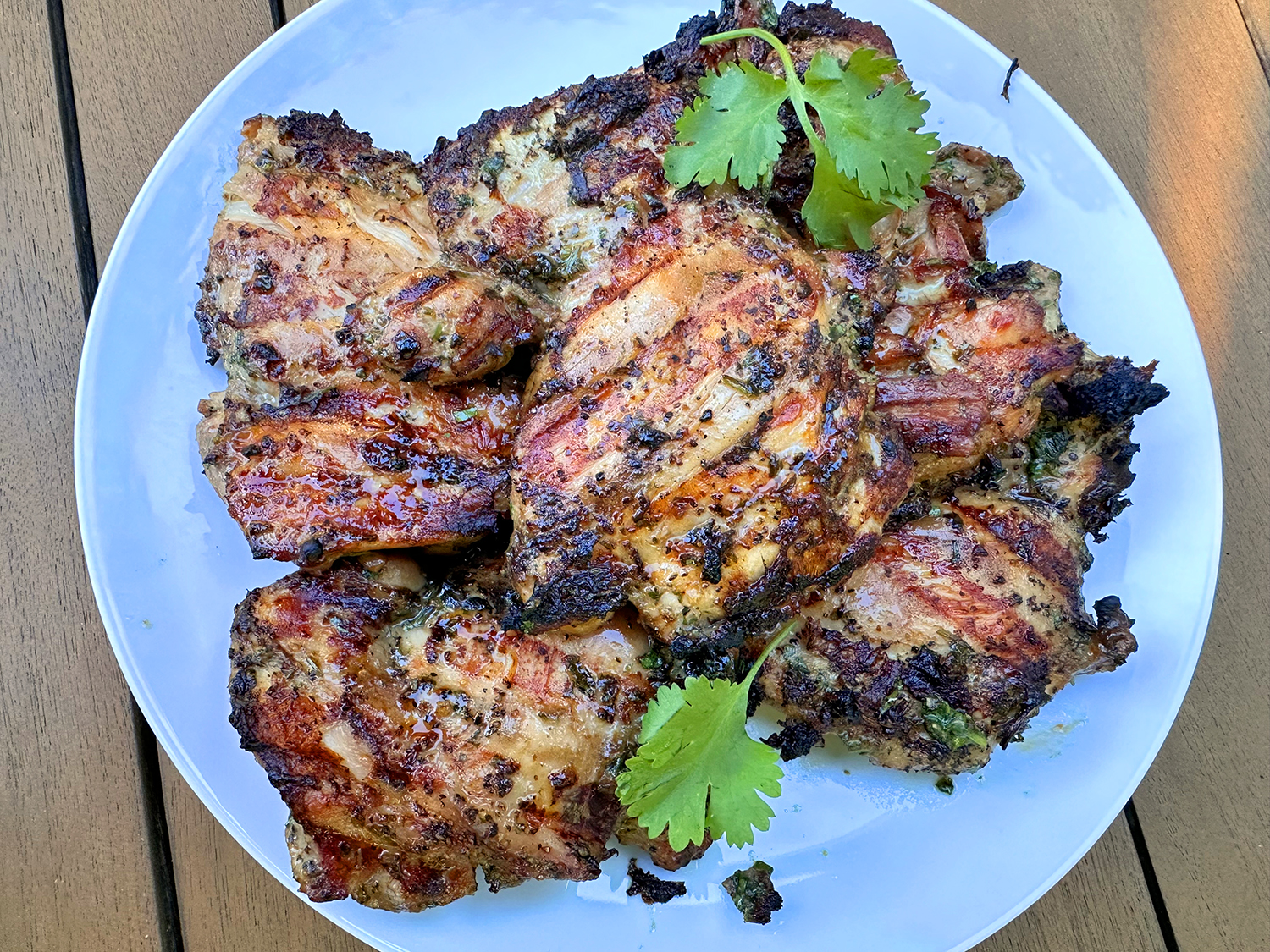
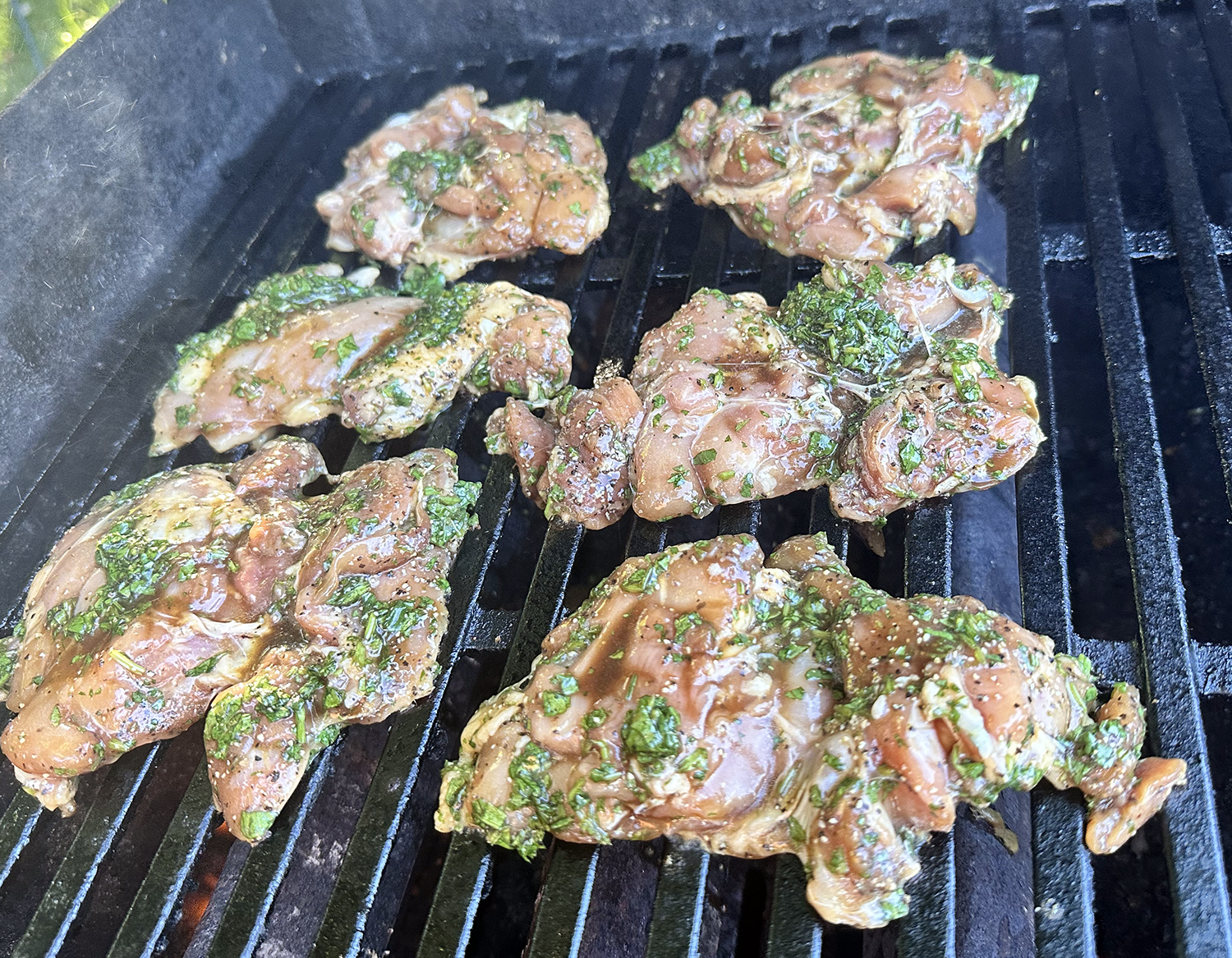
During grilling season (or all year for those in more temperate climates), it’s good to have several chicken recipes in waiting. This one bursts with flavor, and only takes about 40 minutes once the poultry has marinated for 4-12 hours.

“This particular ping gai (Laotian for ‘grilled chicken’) recipe seems to have originated from the Queen Mother Cafe in Toronto, so some North-Americanization may have occurred. But rest assured, this is at least twice as good as your average grilled chicken, North American or otherwise. Generous amounts of freshly ground pepper and chopped cilantro are the main players in the marinade, while a sweet, garlicky dipping sauce is the perfect accompaniment.”

We chose to cook just six chicken thighs for the two of us, but kept the amount of other ingredients the same. It would have fed three, with two breasts per diner. Feel free to increase the number up to ten, depending how many guests will be eating.

Fresh corn is king at this time of year, and our garden was bursting with string beans. They paired wonderfully with the grilled chicken.

Laotian Grilled Chicken (Ping Gai)

  • Servings: 6-8
  • Difficulty: easy
  • Print

Ingredients

For the Marinade:

  • 1 Tbsp. whole black peppercorns, or more to taste
  • 1 large bunch fresh cilantro stems and leaves
  • 3 Tbsp. oyster sauce
  • 2 Tbsp. soy sauce
  • Tbsp. fish sauce
  • 2 Tbsp. vegetable oil
  • 2 pinches cayenne pepper
  • 6-10 boneless, skinless chicken thighs

For the Dipping Sauce:

  • ⅔ cup seasoned rice vinegar
  • 1 lime, juiced
  • 4 cloves garlic, crushed
  • 1 Tbsp. sambal oelek (chile paste)
  • 1 Tbsp. fish sauce
  • ¼ cup freshly chopped cilantro
  • 2 Tbsp. honey, or more to taste

Directions

  1. Grind peppercorns coarsely using a mortar and pestle, electric grinder, or spice mill.
  2. Chop cilantro finely and transfer to a mixing bowl. Stir in the freshly ground pepper, oyster sauce, soy sauce, fish sauce, oil, and cayenne. Add chicken thighs and toss by hand until completely coated. Cover with plastic wrap and marinate in the fridge for 4 to 12 hours.
  3. Combine rice vinegar, lime juice, garlic, sambal, fish sauce, cilantro, and honey to make the dipping sauce. Refrigerate until ready to use.
  4. Preheat grill for medium- to medium-high heat and lightly oil the grate.
  5. Place chicken thighs on the grill, discarding any excess marinade. Cover and grill until thighs spring back to the touch, 5 to 6 minutes per side. An instant-read thermometer inserted into the center should read at least 155 degrees F (68 degrees C). Slice and serve with the dipping sauce.

http://www.lynnandruss.com

Recipe from Chef John for All Recipes

Braised Cauliflower with Garlic and Scallions

Looking for a unique and tasty side dish? Cauliflower tends to be quite bland on its own, but perks up when seasoned with any number of different flavorings. Known as the chameleon of the culinary world, cauliflower adapts well to everything from “rice” to pizza crusts. But no matter how you use it, the key is pairing it with high impact ingredients.

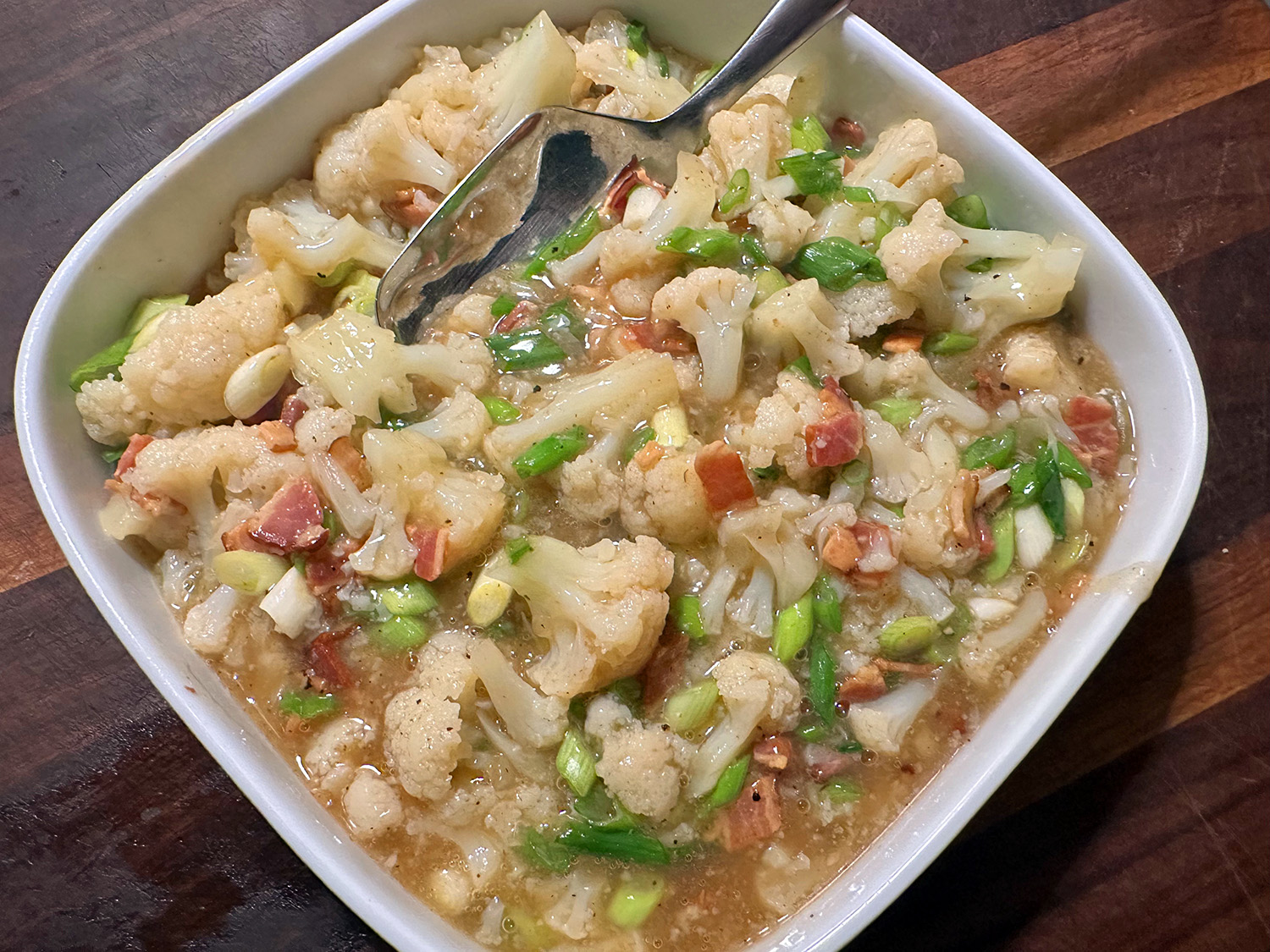
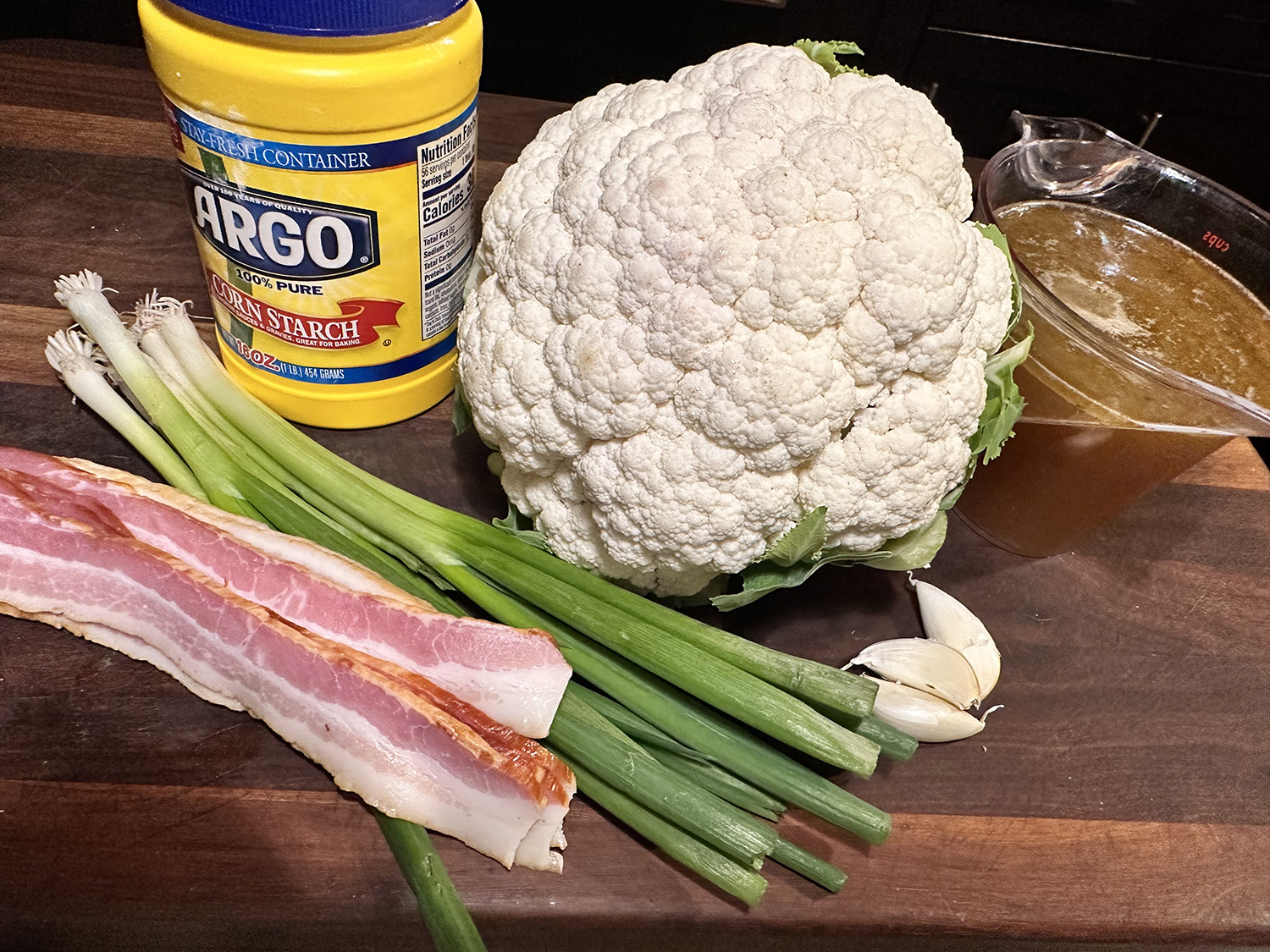
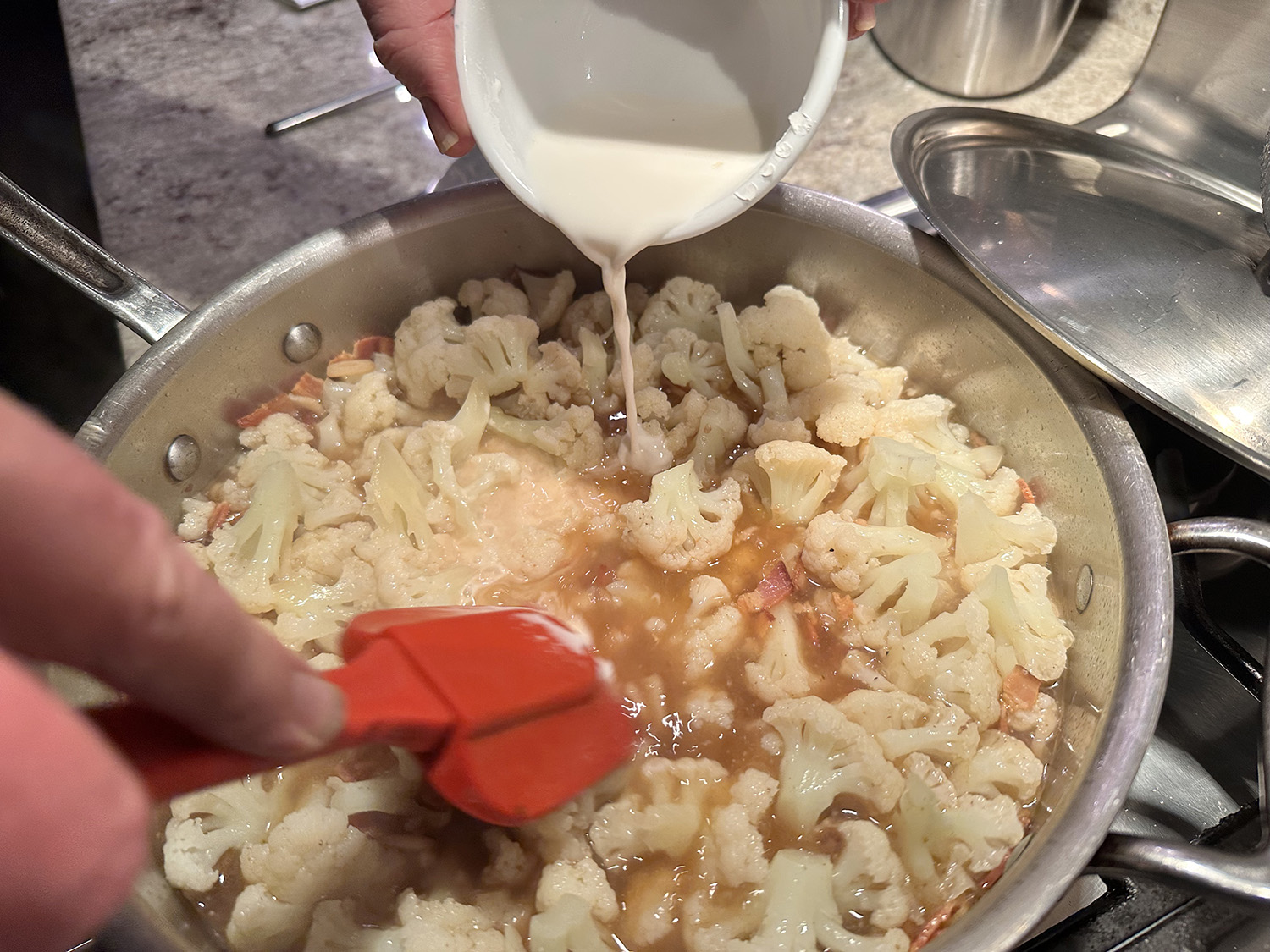
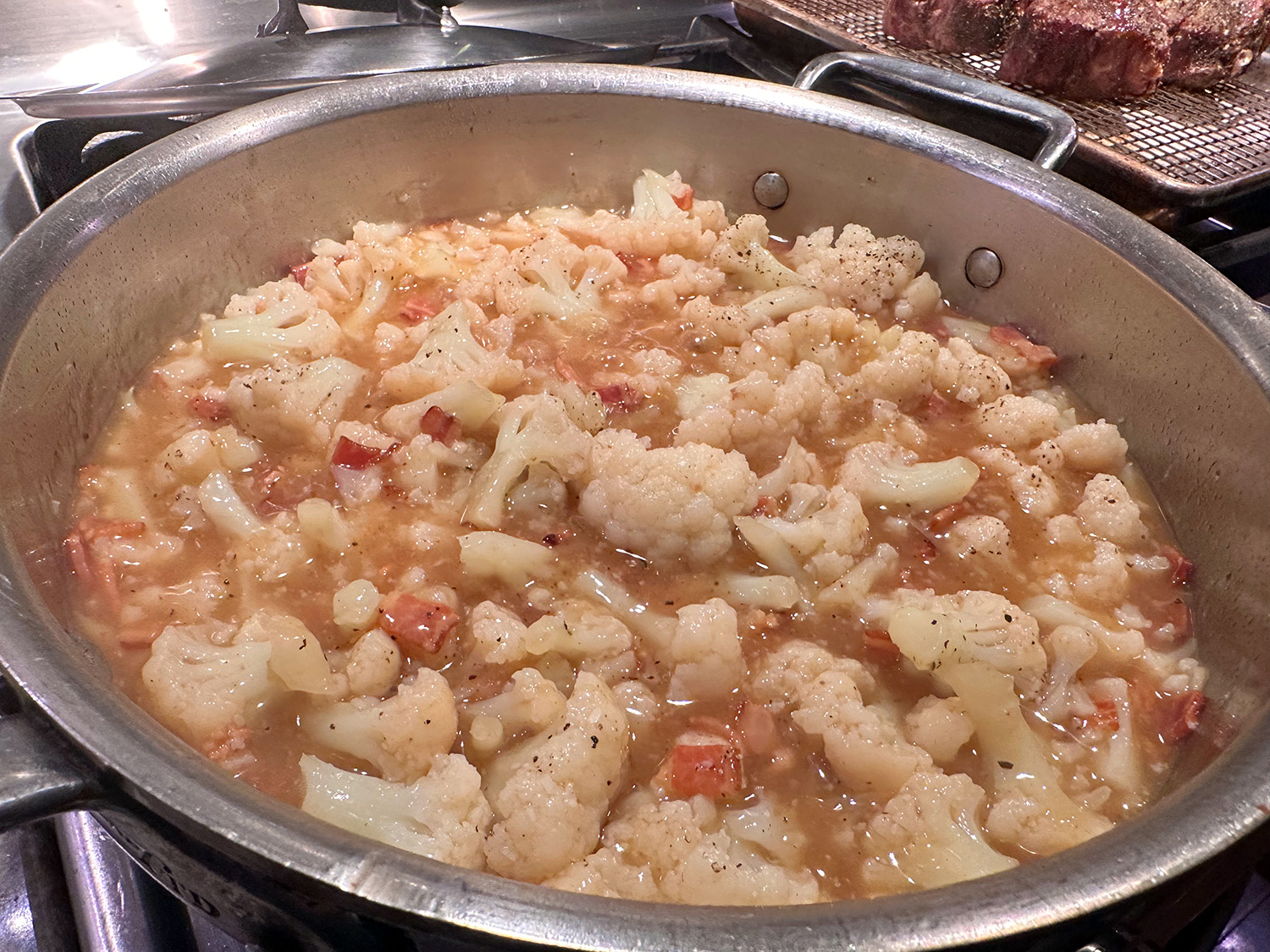
Here, salty, smoky bacon and lightly toasted garlic bring loads of flavor to cauliflower simmered in chicken broth. At the end of cooking, the broth is thickened with a cornstarch slurry to create a velvety sauce. A full bunch of scallions, thinly sliced and stirred in to finish, adds punchy allium flavor.

According to Milk Street, this method gently—and quickly—cooks the chopped veggie, ensuring the pieces are toothsomely tender. As the ingredients mingle, complex layers of savory, sweet and vegetal permeate all the nooks and crannies of the florets. To finish the dish, a smattering of chopped scallions rounds out the flavors, balancing the savory notes with oniony freshness.

In the end, while the flavor profile was spot on, we both thought that it was too liquidy, more soupy if you will. The ingredients list below is adjusted to reflect cutting back the amount of broth and corn starch by half. This should give the cauliflower more of a glaze than a broth.

Braised Cauliflower with Garlic and Scallions

  • Servings: 4
  • Difficulty: easy
  • Print

Ingredients

  • 4-6 oz. thick-cut bacon, cut crosswise into ½-inch pieces
  • 3 medium garlic cloves, thinly sliced
  • 1 2- to 2½-lb. head cauliflower, trimmed and cut into 1-inch florets
  • 1 cups chicken broth, preferably homemade
  • 1 Tbsp. cornstarch
  • Kosher salt and ground black pepper
  • 1 bunch scallions, thinly sliced on the diagonal
  • Optional garnish: Chili oil OR hot sauce

Directions

  1. In a 12-inch skillet, cook the bacon, stirring occasionally, until browned and crisp. Add the garlic and cook, stirring, until lightly browned.
  2. Stir in the cauliflower and broth. Cover, bring to a simmer and cook until the florets are tender.
  3. In a small bowl, whisk together the cornstarch and 1 tablespoon water. Stir the cornstarch slurry into the cauliflower mixture and cook, stirring, until the sauce returns to a simmer and has thickened.
  4. Season with salt and pepper, then stir in the scallions.

http://www.lynnandruss.com

Recipe by Calvin Cox for Milk Street
Greek Tomato Salad

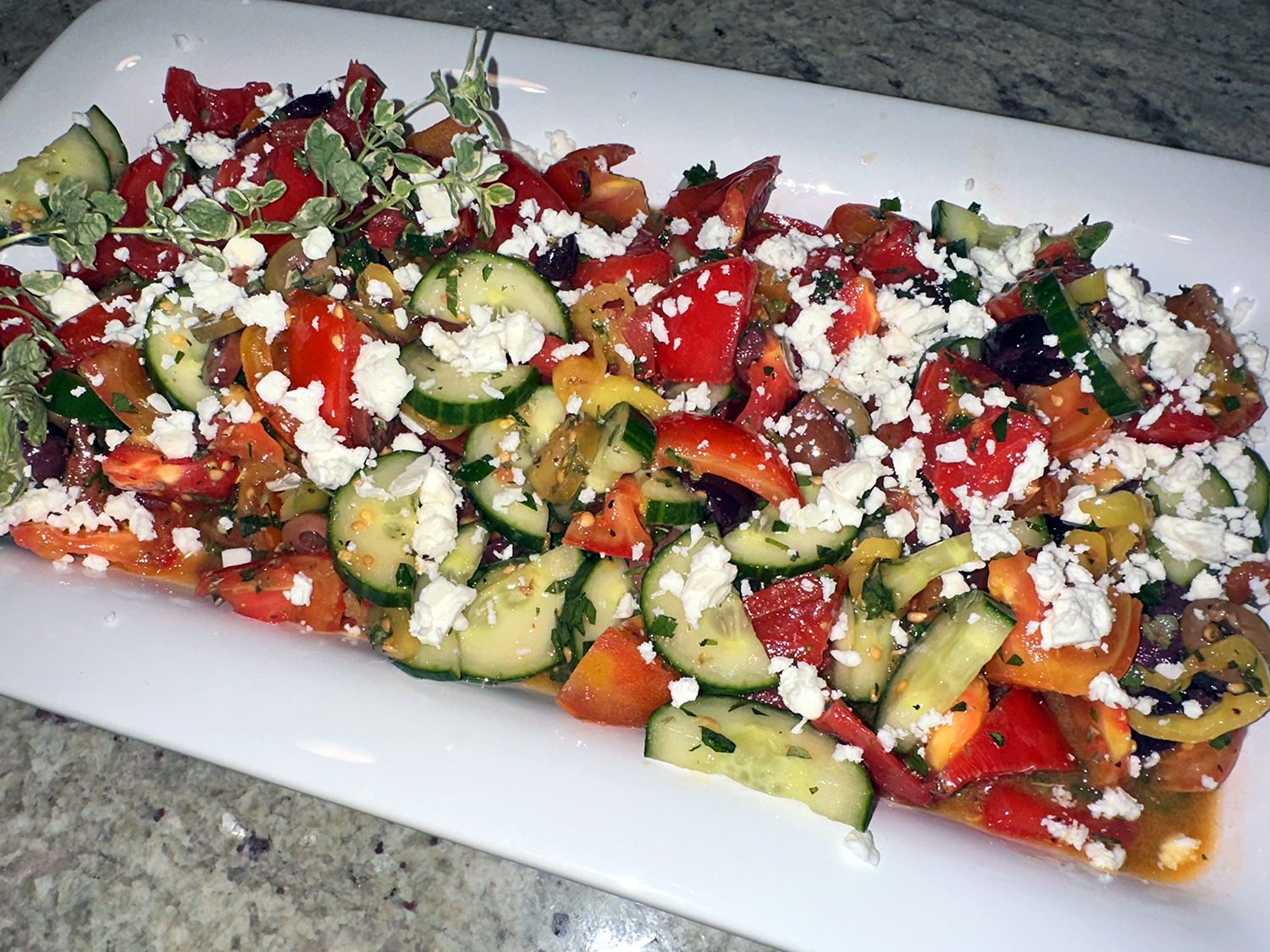
This was a last minute decision after realizing our leaf lettuce had seen better days. Not in the mood to run to the food store, The Hubs did a quick online search to find a salad that would utilize on-hand ingredients. We were after a vibrant salad full of ripe, juicy tomatoes; crisp cucumbers; and lots of herbs. To prevent the cukes and tomatoes from getting soggy, the trick is to salt the vegetables in a colander, which helps draw out excess moisture and seasons them at the same time.

Sliced pepperoncini and shallot were briefly marinated in a pungent vinaigrette before tossing in the seasoned vegetables, torn fresh mint, and chopped fresh oregano. A sprinkling of salty, briny feta is the perfect finishing touch. 

Feeling that the finished salad was a bit too mint-forward, we reduced the amount of mint and increased the amount of oregano. Use your own judgement as to how much of each herb to use based on your family’s preferences.

Greek Tomato Salad

  • Servings: 4-6
  • Difficulty: easy
  • Print

Ingredients

  • 1 ½ lbs. ripe tomatoes, cored
  • ½ English cucumber, halved lengthwise and sliced crosswise ⅛ inch thick
  • 1 ½ tsp. table salt, divided
  • 5 Tbsp. extra-virgin olive oil
  • 2 Tbsp. red wine vinegar
  • 1 Tbsp. lemon juice
  • ½ tsp. pepper
  • ⅓ cup thinly sliced pepperoncini
  • 1 shallot, sliced into thin rings
  • 1 Tbsp. fresh mint leaves, torn
  • ¼ cup chopped fresh oregano
  • 4 oz. feta cheese, crumbled (1 cup)

Directions

  1. Cut tomatoes into ½-inch-thick wedges, then cut wedges in half crosswise. Toss tomatoes, cucumber, and 1 teaspoon salt together in bowl; transfer to colander and let drain for 30 minutes.
  2. While vegetables drain, whisk oil, vinegar, lemon juice, pepper, and remaining ½ teaspoon salt together in large bowl. Add pepperoncini and shallot and let sit until slightly softened, about 15 minutes.
  3. Add mint, oregano, and drained vegetables to bowl with dressing and toss to combine. Season with salt and pepper to taste. Transfer to platter and sprinkle with feta. Serve.

http://www.lynnandruss.com

Recipe by America’s Test Kitchen

Flank Steak with Tomato-Eggplant Ragù

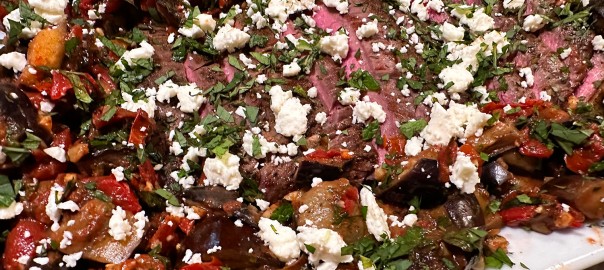
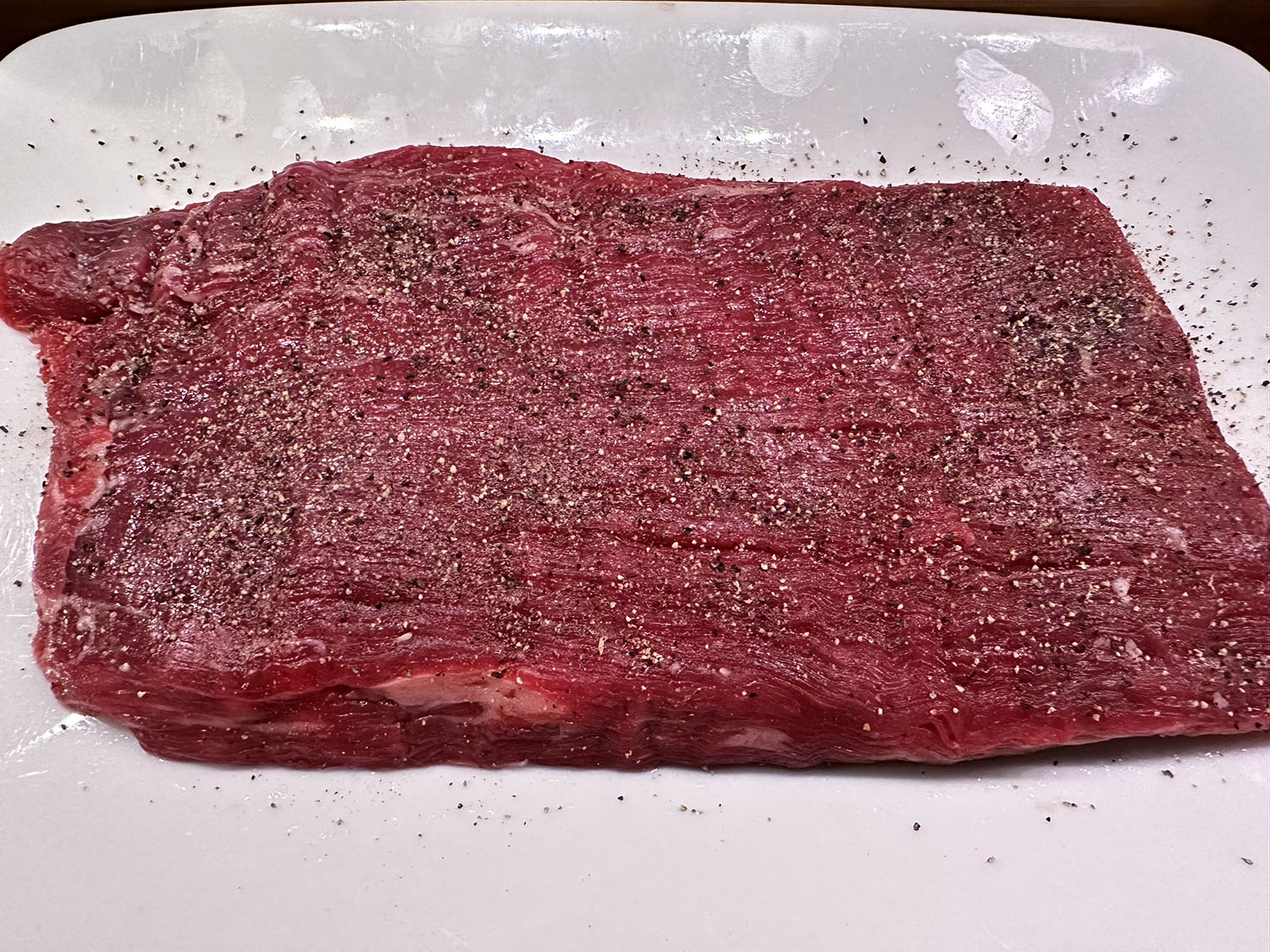
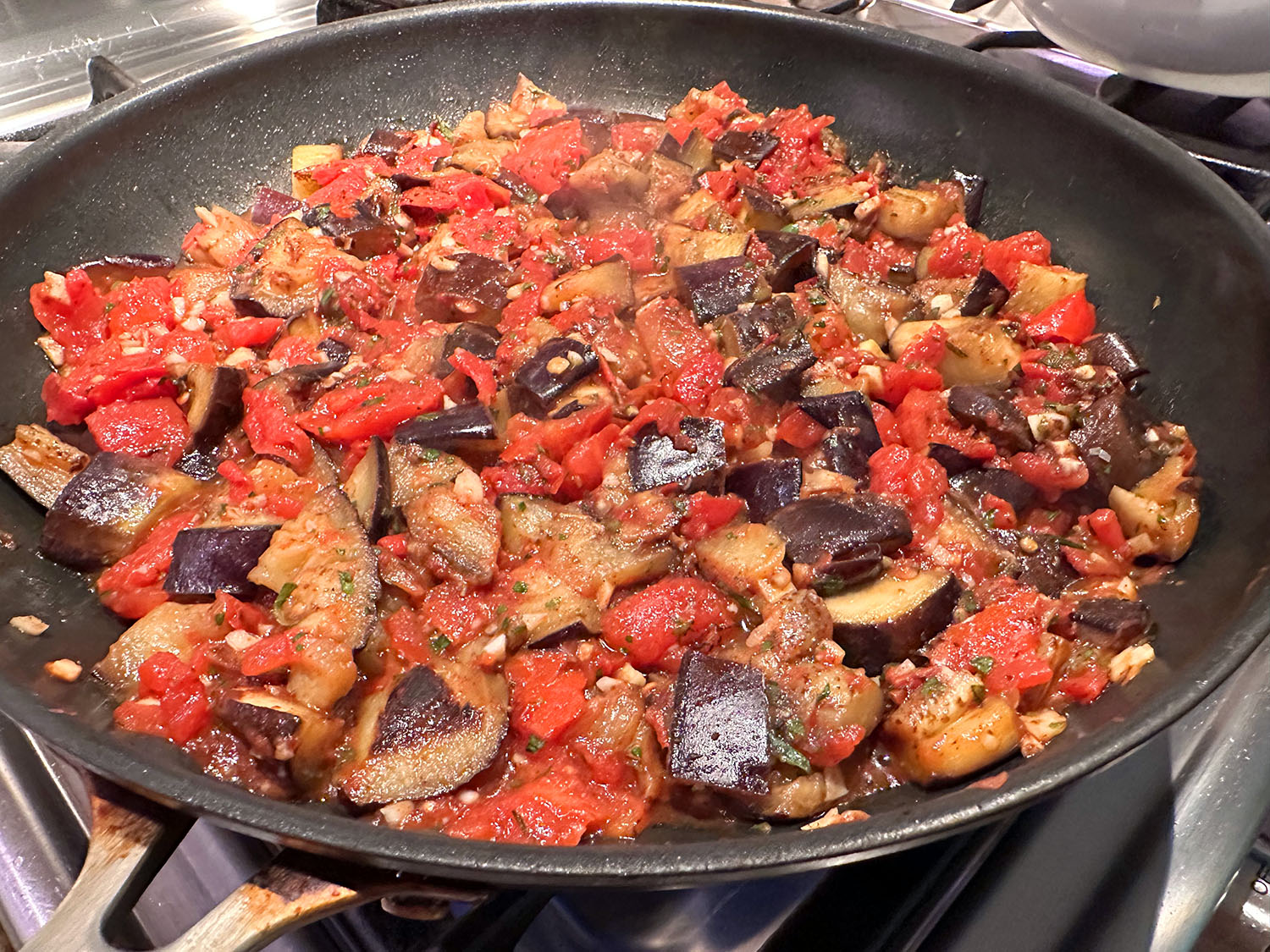
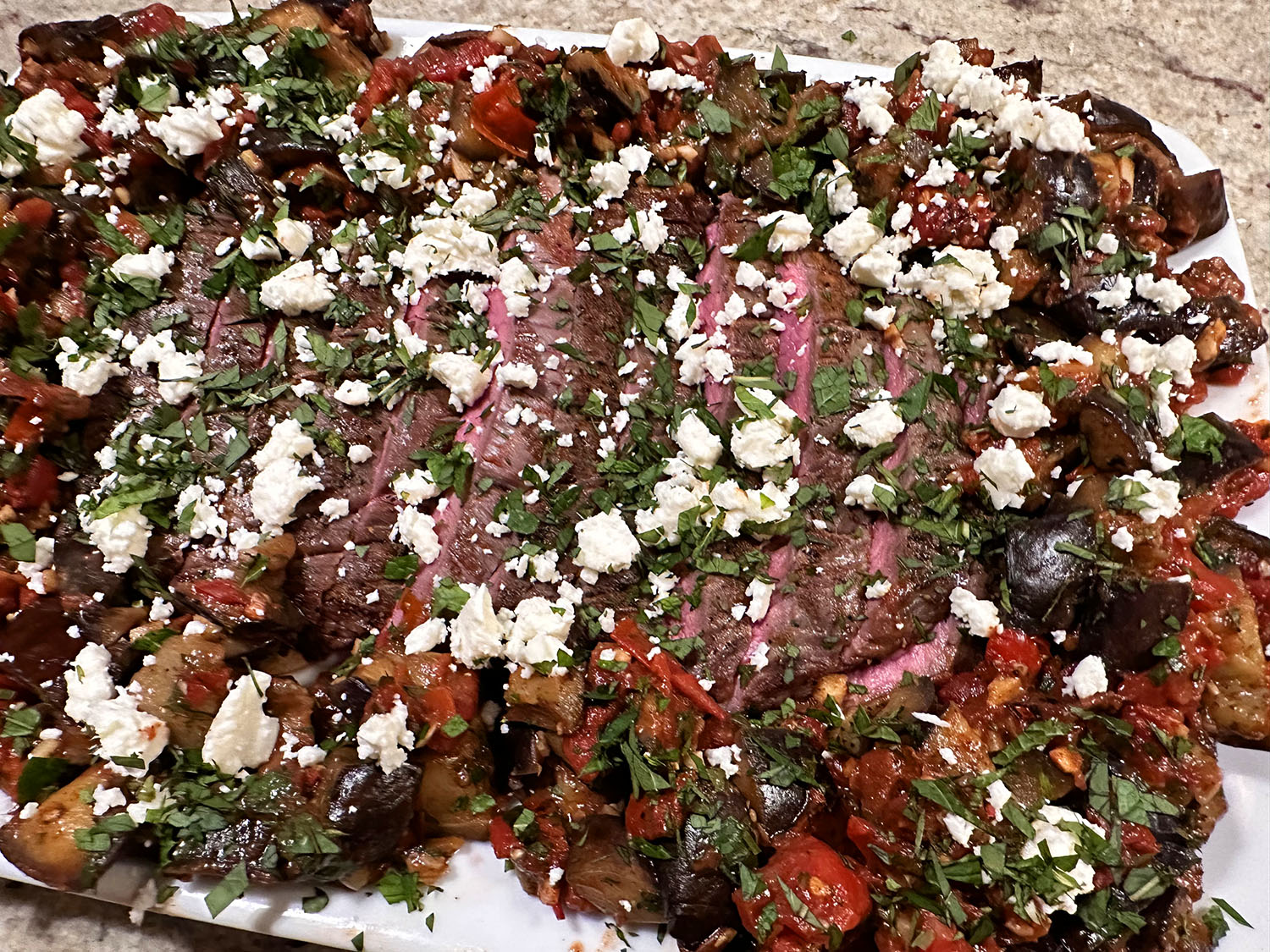
Seared flank steak is finished with a rustic sauce-like side of eggplant, tomatoes, garlic and herbs. Crumbled feta cheese adds briny notes that contrast nicely with the sweetness of the vegetables and the richness of the beef. Milk Street borrowed some of the flavors of Greek moussaka for this quick-one pan meal.

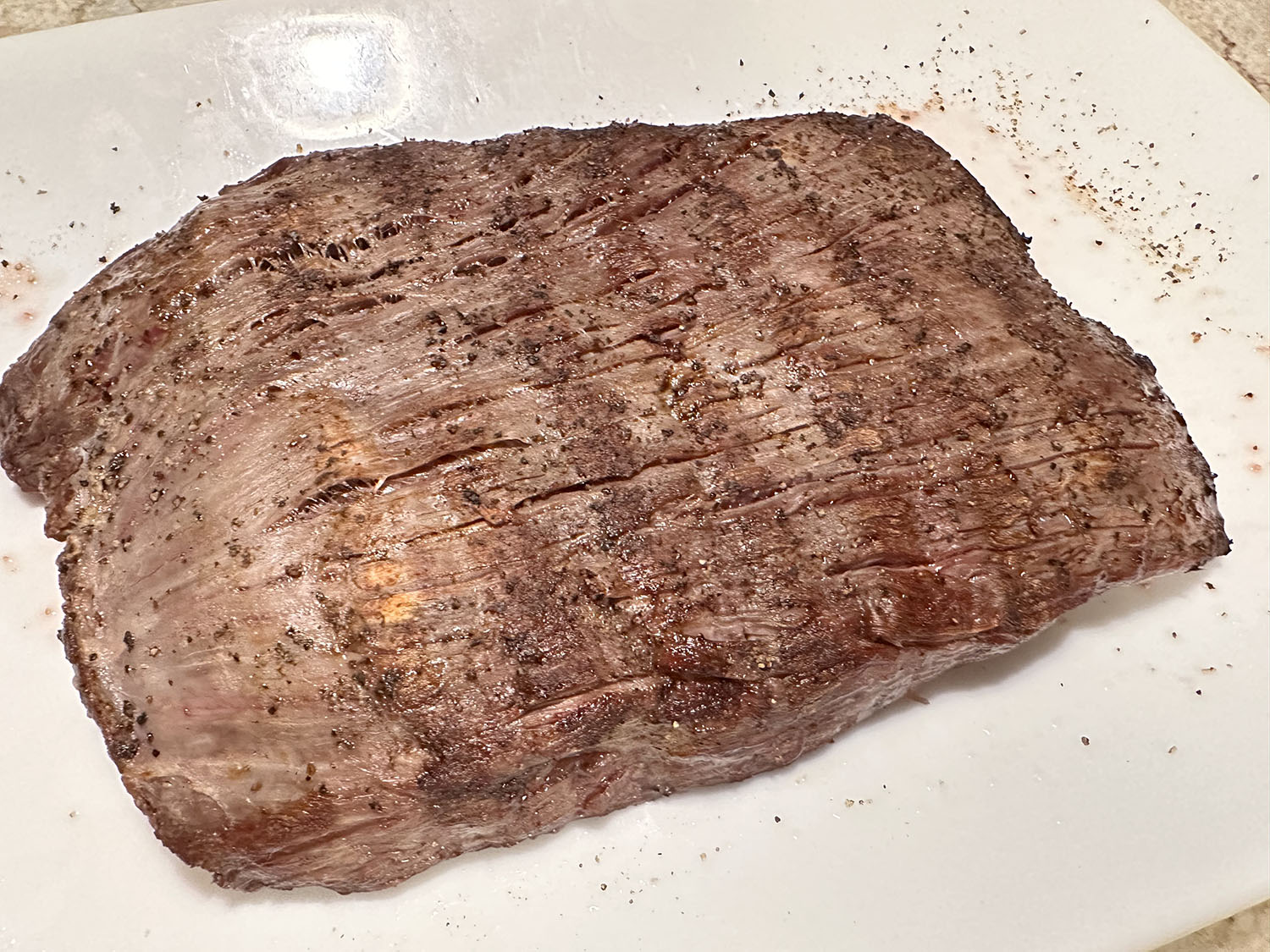
In Italian cuisine, the word “ragù” refers to a whole category of meat sauces. However, this recipe is a veggie-forward version as an accompaniment to the steak. The original directions instructs you to divide the flank steak into 4 sections and cook it in a pan. *We decided to grill it, about 9-10 minutes total for a medium-rare finish. The meat then sits, covered with foil, for another 10 minutes before slicing.

FYI, don’t drain the juices from the tomatoes. The liquid helps form the sauce and prevents the eggplant from drying out so that the pieces become silky-soft. When slicing the flank steak for serving, make sure to slice it against the grain for the tenderest texture.

Paired with the first white sweet corn of the season, it was a fabulous meal!

Flank Steak with Tomato-Eggplant Ragù

  • Servings: 4
  • Difficulty: easy
  • Print

Ingredients

  • 1½ lbs. flank steak, trimmed, halved lengthwise, then crosswise
  • Kosher salt and ground black pepper
  • 4 Tbsp. extra-virgin olive oil, divided
  • 1 lb. eggplant, cut into 1-inch chunks
  • 14½ oz. can diced tomatoes
  • 4 medium garlic cloves, minced
  • 2 tsp. dried oregano
  • ¾ tsp. ground cinnamon
  • ½ cup lightly packed fresh mint, chopped
  • 1½ oz. feta cheese, crumbled (about ⅓ cup)

Directions

  1. Season the steak with salt and pepper. *(See above to grill.) In a nonstick 12-inch skillet over medium-high, heat 2 tablespoons of oil until shimmering. Add the steak and brown on both sides, 6 to 8 minutes total, flipping the pieces once. Transfer to a plate.
  2. In the same pan over medium-high, combine the remaining 2 tablespoons oil, the eggplant and 1 teaspoon salt. Cook, stirring occasionally, until browned and softened, 5 to 6 minutes.
  3. Reduce to medium and add the tomatoes with juices, the garlic, oregano and cinnamon. Cook, stirring occasionally, until thickened and the eggplant has begun to break down, about 5 minutes.
  4. Off heat, stir in any accumulated beef juices and half the mint. Taste and season with salt and pepper. Thinly slice the steak against the grain and place on a platter. Spoon the eggplant mixture on and around the steak, then sprinkle with feta and the remaining mint.

http://www.lynnandruss.com

Recipe adapted from Julia Rackow for Milk Street
Colombian-Style Asado Pork Chops

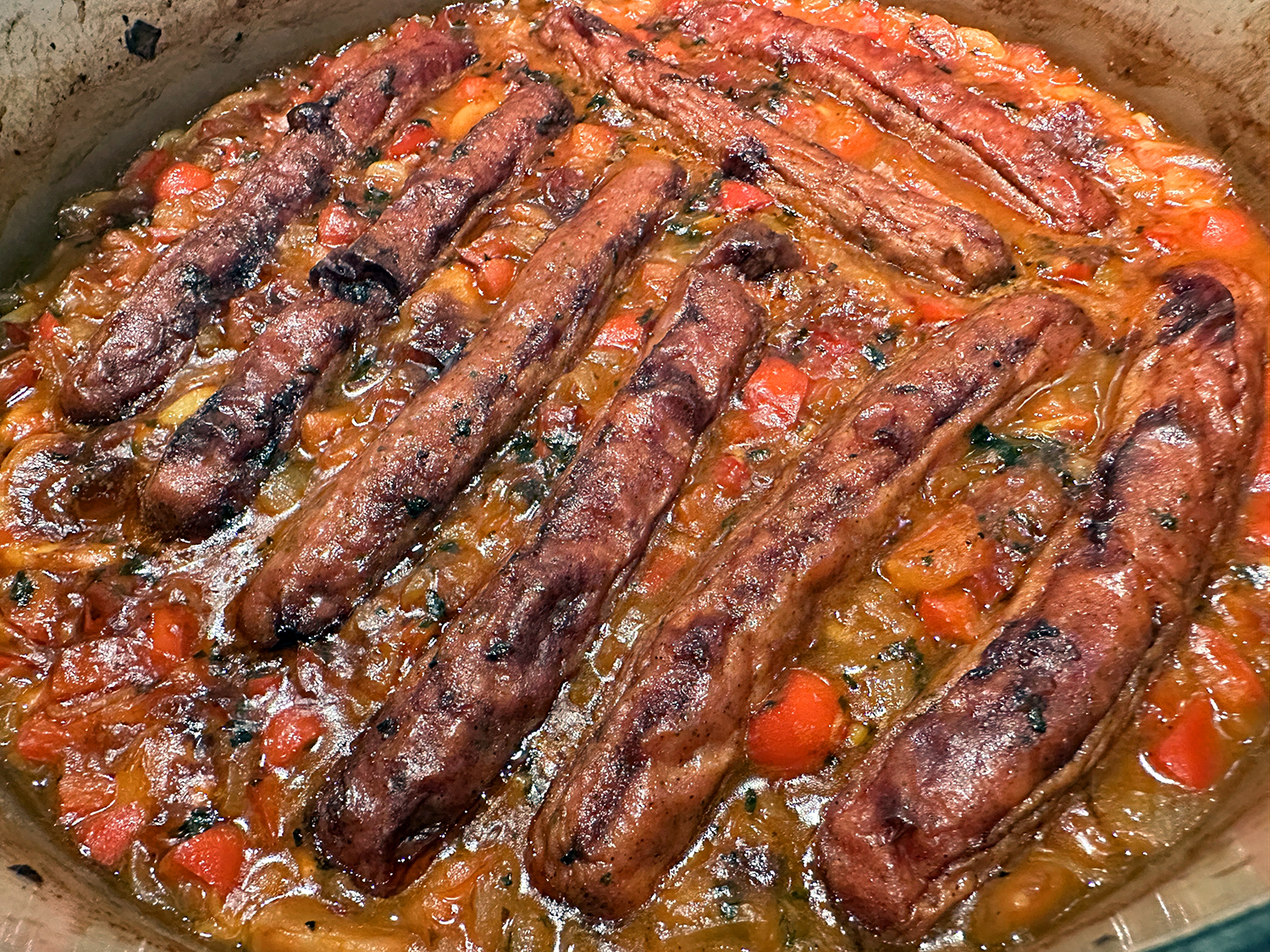
The flavor, a bold blend of sweet and savory, with herbs and onions most obvious, but sugar and brine almost as pronounced. The thick pork chops are drenchingly moist and wildly flavorful. Each bite has briny and spicy and rich and savory.

This recipe is an attempt to recreate a Bogotá asado mix. Instead of a mix of meats, this option is for easy-to-cook, richly flavorful bone-in pork chops. Typically it includes achiote, a seed that adds vivid red-orange color and mild, earthy notes. Easier-to-source sweet paprika is substituted here, and cider vinegar is a stand-in for apple wine (a beverage similar to dry hard cider) to bring tart, fruity notes that balance the spices and herbs.

A blender makes quick work of the seasoning paste, half of which coats the chops for marinating; the rest is brushed onto the pork midway through cooking. If desired, serve with roasted potatoes and/or fried plantains, as asado is served in Bogotá. We paired ours with grilled broccoli and pickled shallots.

Don’t scrape the seasoning paste off the chops before grilling. The paste aids with browning and develops a rich, heady aroma along with depth of flavor on the grill.

Colombian-Style Asado Pork Chops

  • Servings: 4
  • Difficulty: easy
  • Print

Ingredients

  • 1/4 cup sweet paprika
  • 2 scallions, roughly chopped
  • 2 bay leaves
  • 1 1/2 tsp. ground cumin
  • 1 tsp. dried thyme
  • 1 tsp. ground allspice
  • 2 medium garlic cloves, smashed and peeled
  • 3 Tbsp. cider vinegar
  • 2 Tbsp. packed brown sugar
  • 2 Tbsp. grapeseed or other neutral oil
  • Kosher salt and ground black pepper
  • 4 10- to 12-oz. bone-in pork loin chops (each ¾ to 1 inch thick), patted dry
  • Lime wedges, to serve (optional)

Directions

  1. In a blender, combine the paprika, scallions, bay, cumin, thyme, allspice, garlic, vinegar, sugar, oil, ¼ cup plus 2 tablespoons water, 2 teaspoons salt and 1 teaspoon pepper. Blend, scraping the jar as needed, until smooth, about 30 seconds. Measure ⅓ cup of the paste into a small bowl, then stir in 2 tablespoons water; cover and set aside or cover and refrigerate if you will be marinating the chops for more than 2 hours. It is preferable to marinate a full 24 hours if possible.
  2. Coat the chops on all sides with the remaining seasoning paste, rubbing it into the meat. Set on a large plate or baking dish, cover and refrigerate for at least 1 hour or up to 24 hours.
  3. When you are ready to cook the chops, remove from the refrigerator (along with the reserved seasoning paste, if refrigerated) and let stand at room temperature while you prepare a charcoal or gas grill.
  4. For a charcoal grill, ignite a large chimney of coals, let burn until lightly ashed over, then distribute evenly over one side of the grill bed; open the bottom grill vents. For a gas grill, turn all burners to high. Heat the grill, covered, for 5 to 10 minutes, then clean and oil the grate.
  5. Without scraping off the seasoning paste, place the chops on the grill (on the hot side, if using charcoal). Cook, uncovered, until nicely charred on the bottoms, 5 to 7 minutes.
  6. Brush the chops with about half of the reserved seasoning paste, then flip the chops and brush with the remaining reserved seasoning paste. Cook, uncovered, until the second sides are well charred and the centers near the bone reach 135°F or are just barely pink when cut into, another 5 to 7 minutes.
  7. Flip the chops once again and cook for about 1 minute to heat the newly applied seasoning paste. Transfer to a platter and tent with foil; let rest for 10 minutes. Serve with lime wedges (if using).

http://www.lynnandruss.com

Recipe from an adaptation by Diane Unger for Milk Street

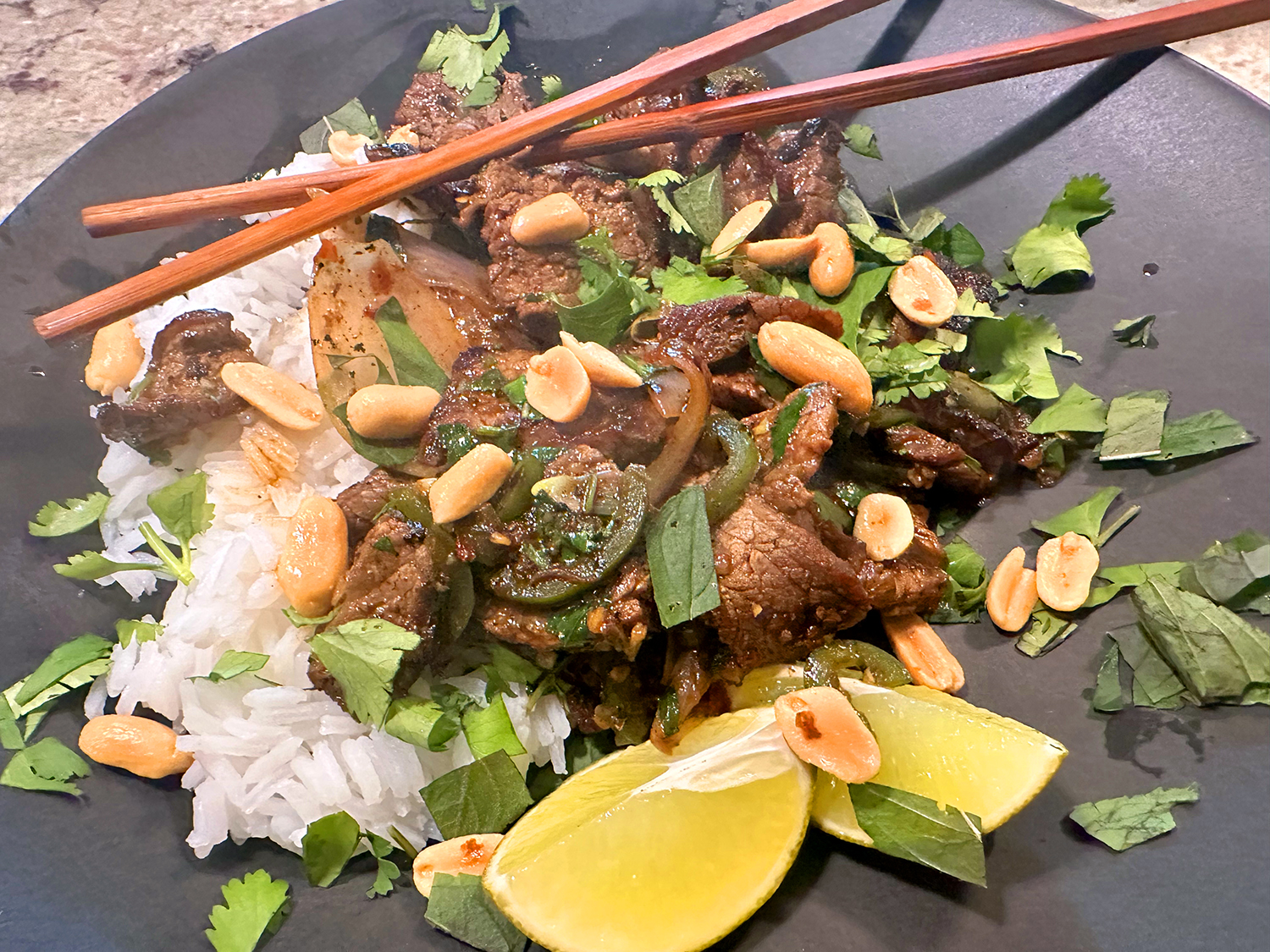
Stir-Fried Thai-Style Beef with Chiles and Shallots

Stir-fried dishes are one of our favorite go-to meals. You can basically add whatever ingredients that suits your fancy—or in an effort to use up some fresh vegetables.

For a sophisticated Thai beef recipe using available ingredients and requiring minimal cooking time, you can use an inexpensive blade steak, which offers both tenderness and robust flavor. With a marinade made of fish sauce, white pepper, citrusy coriander, and a little light brown sugar, the beef needs to marinated for only 15 minutes to develop full flavor.

To add heat to this stir-fried Thai beef recipe, use an easily controlled heat source—Asian chili-garlic paste—that also adds toasty garlicky flavors along with heat.

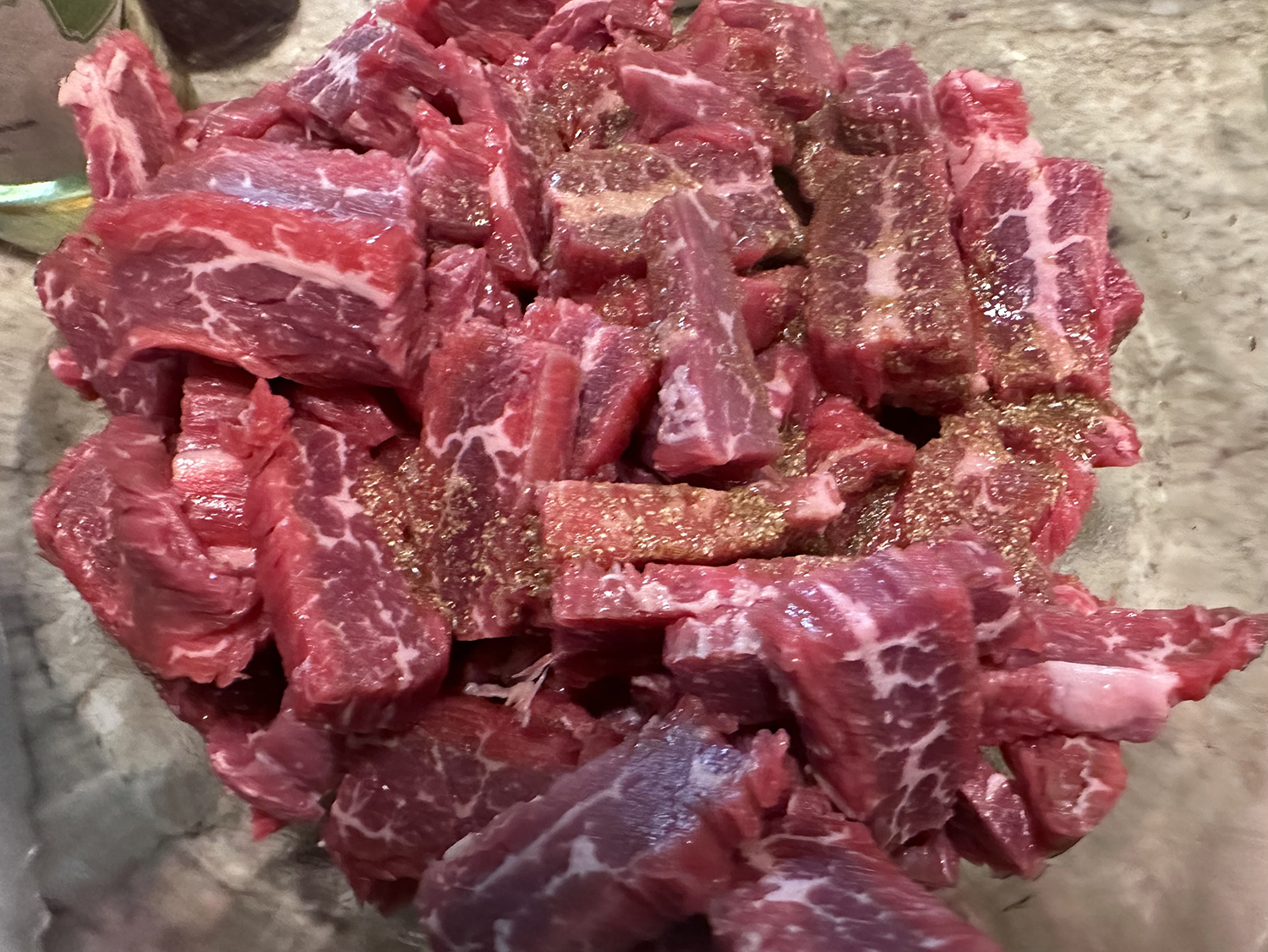
If you cannot find blade steaks, use flank steak (our choice). To cut a flank steak into the proper-sized slices for stir-frying, first cut the steak with the grain into 1 1/2-inch strips, then cut the strips against the grain into 1/4-inch-thick slices (see photo below). White pepper lends this stir-fry a unique flavor (black pepper is not a good substitute). Serve the stir-fry with steamed jasmine rice.

Stir-Fried Thai-Style Beef with Chiles and Shallots

  • Servings: 4
  • Difficulty: easy
  • Print

Ingredients

Beef and Marinade

  • ¾ tsp. ground coriander
  • ⅛ tsp. ground white pepper
  • 1 tsp. light brown sugar
  • 1 Tbsp. fish sauce
  • 2 lbs. blade or flank steak, trimmed and cut into 1/4-inch-thick strips

Stir-Fry

  • 2 Tbsp. fish sauce
  • 2 Tbsp. rice vinegar
  • 2 Tbsp. water
  • 1 Tbsp. light brown sugar
  • 1 Tbsp. Asian chili-garlic paste
  • 3 medium cloves garlic, minced or pressed through garlic press (about 1 Tbsp.)
  • 3 Tbsp. vegetable oil
  • 3 Serrano chiles or jalapeño chiles, halved, seeds and ribs removed, chiles cut crosswise ⅛ inch thick
  • 3 medium shallots, trimmed of ends, peeled, quartered lengthwise, and layers separated
  • ½ cup fresh mint leaves, large leaves torn into bite-sized pieces
  • ½ cup fresh cilantro leaves
  • ⅓ cup chopped unsalted roasted peanuts and lime wedges for serving

Directions

  1. FOR THE BEEF AND MARINADE: Combine coriander, white pepper, brown sugar, and fish sauce in large bowl. Add beef, toss well to combine; marinate 15 minutes.
  2. FOR THE STIR-FRY: In small bowl, stir together fish sauce, vinegar, water, brown sugar, and chili-garlic paste until sugar dissolves; set aside.
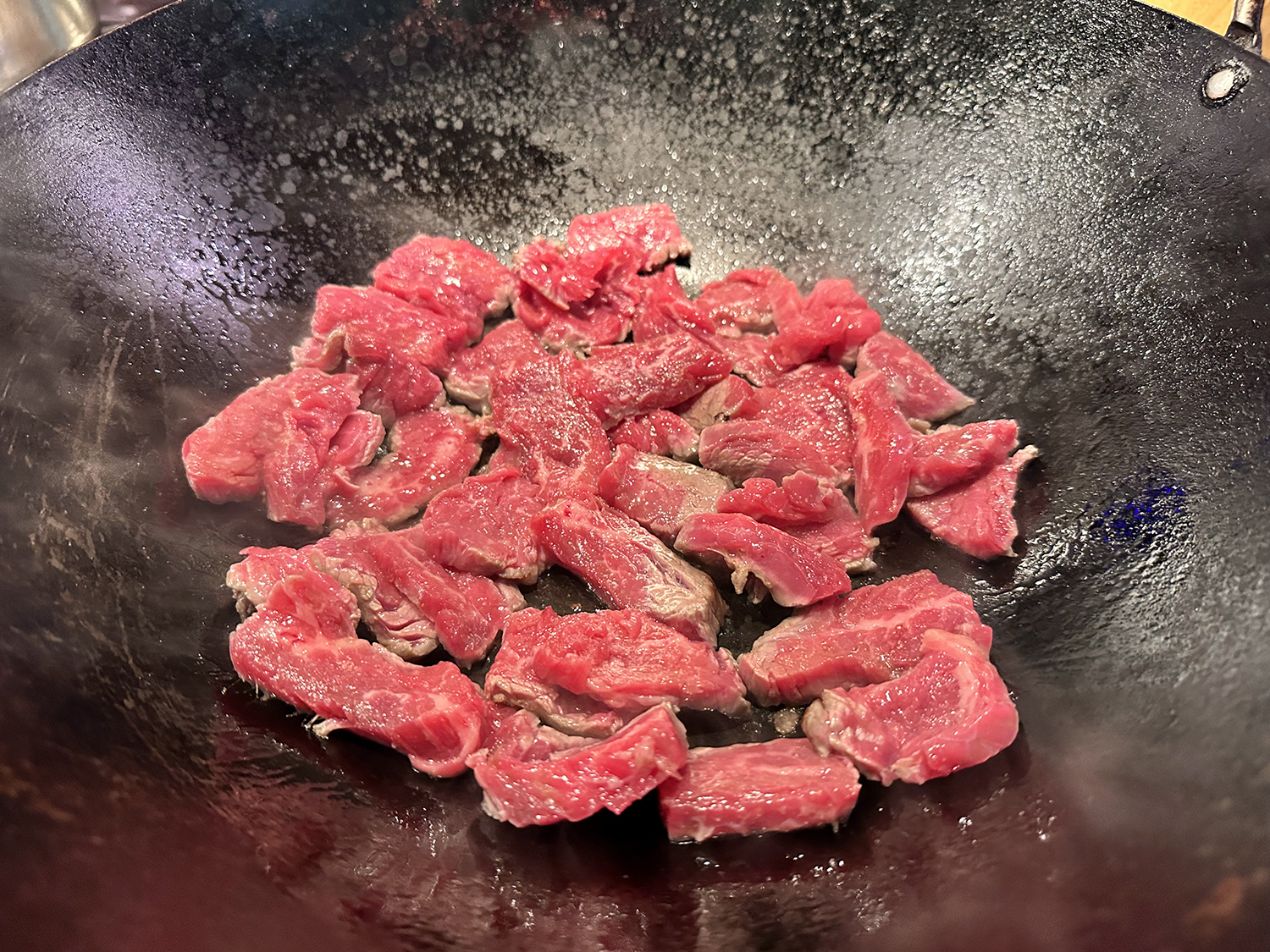
  3. In small bowl, mix garlic with 1 teaspoon oil; set aside. Heat 2 teaspoons oil in 12-inch nonstick skillet (or use a wok like we did) over high heat until smoking; add one-third of beef to skillet in even layer. Cook, without stirring, until well browned, about 2 minutes, then stir and continue cooking until beef is browned around edges and no longer pink in the center, about 30 seconds.
  4. Transfer beef to medium bowl. Repeat with additional oil and remaining meat in 2 more batches.
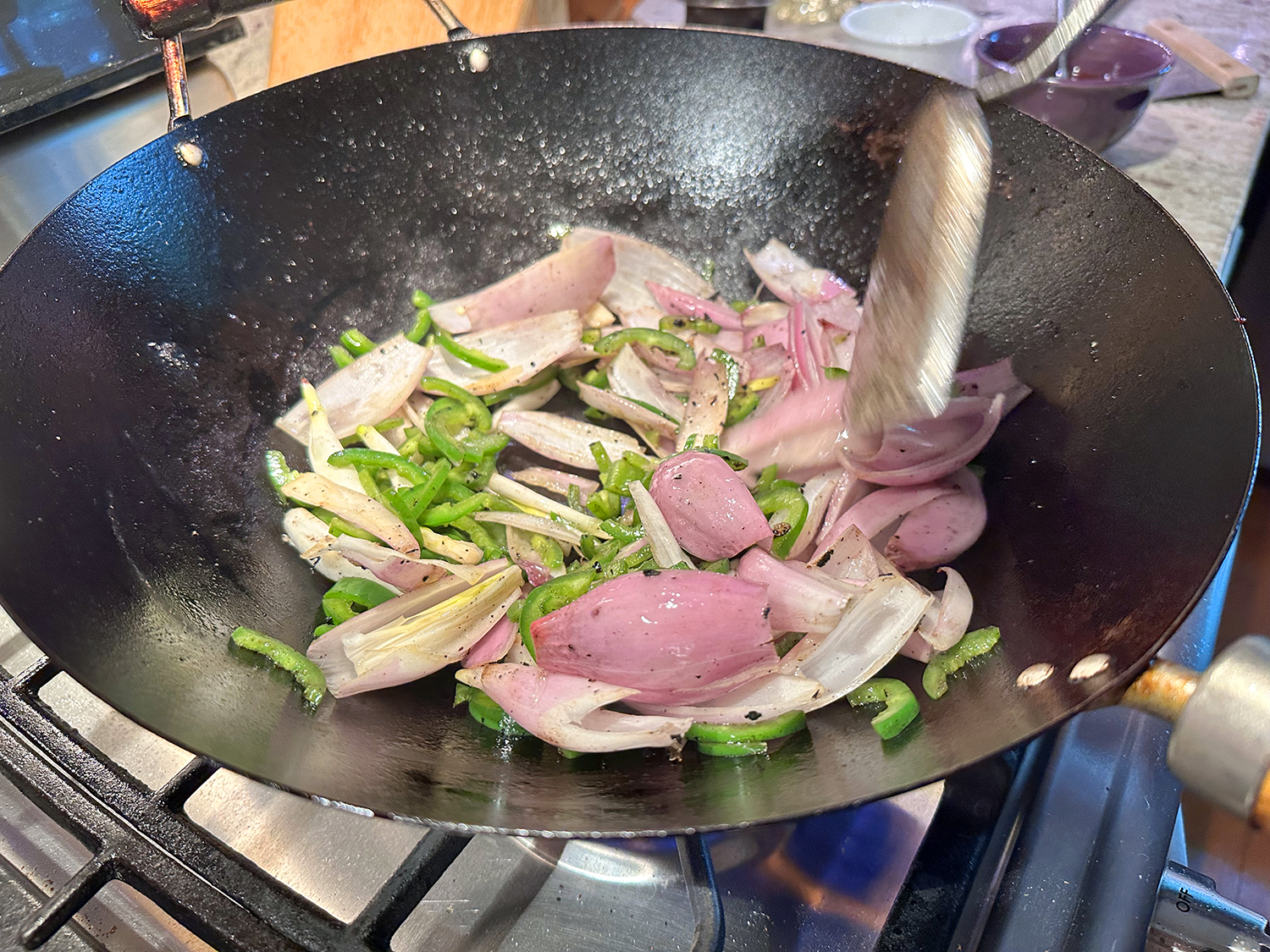
  5. After transferring last batch of beef to bowl, reduce heat to medium; add remaining 2 teaspoons oil to now-empty skillet and swirl to coat. Add chiles and shallots and cook, stirring frequently, until beginning to soften, 3 to 4 minutes.
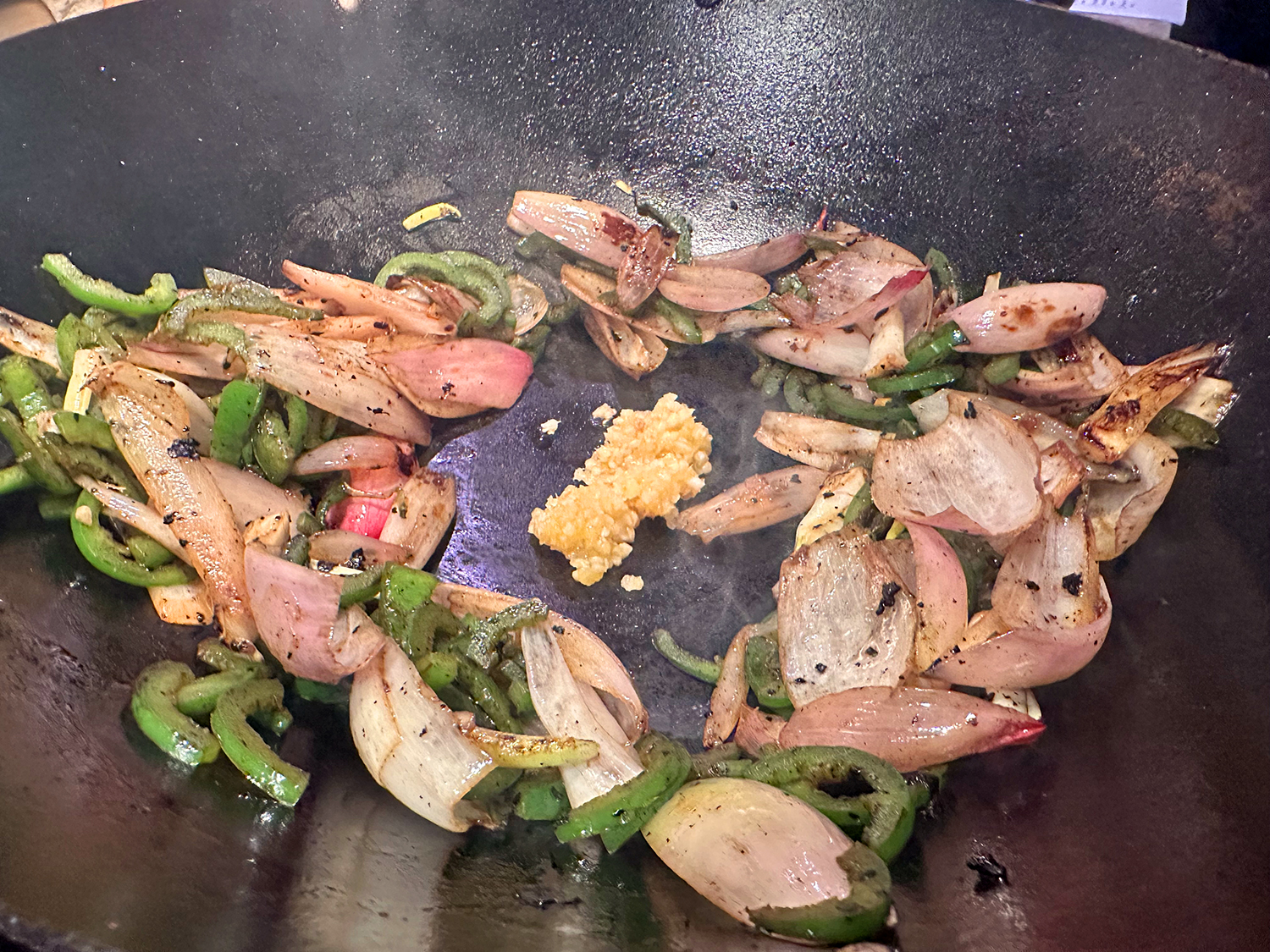
  6. Push chile-shallot mixture to sides of skillet to clear center; add garlic to clearing and cook, mashing mixture with spoon, until fragrant, about 15 seconds. Stir to combine garlic with chile-shallot mixture.
  7. Add fish sauce mixture to skillet; increase heat to high and cook until slightly reduced and thickened, about 30 seconds.
  8. Return beef and any accumulated juices to skillet, toss well to combine and coat with sauce, stir in half of mint and cilantro; serve immediately, sprinkling individual servings with portion of peanuts and remaining herbs, and passing lime wedges separately.

http://www.lynnandruss.com

Adapted from a recipe in Cook’s Illustrated

Spanish Rice and Beans

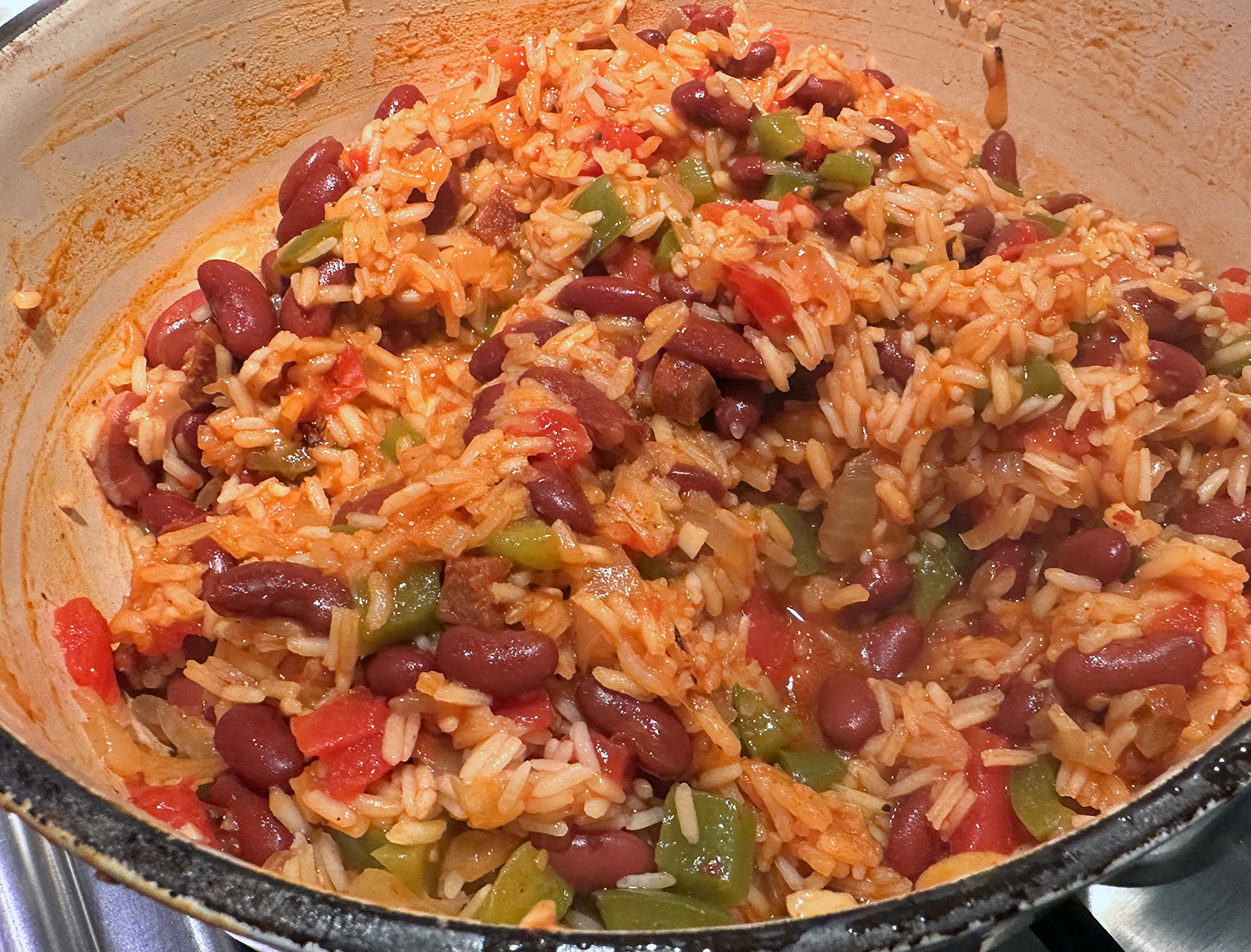
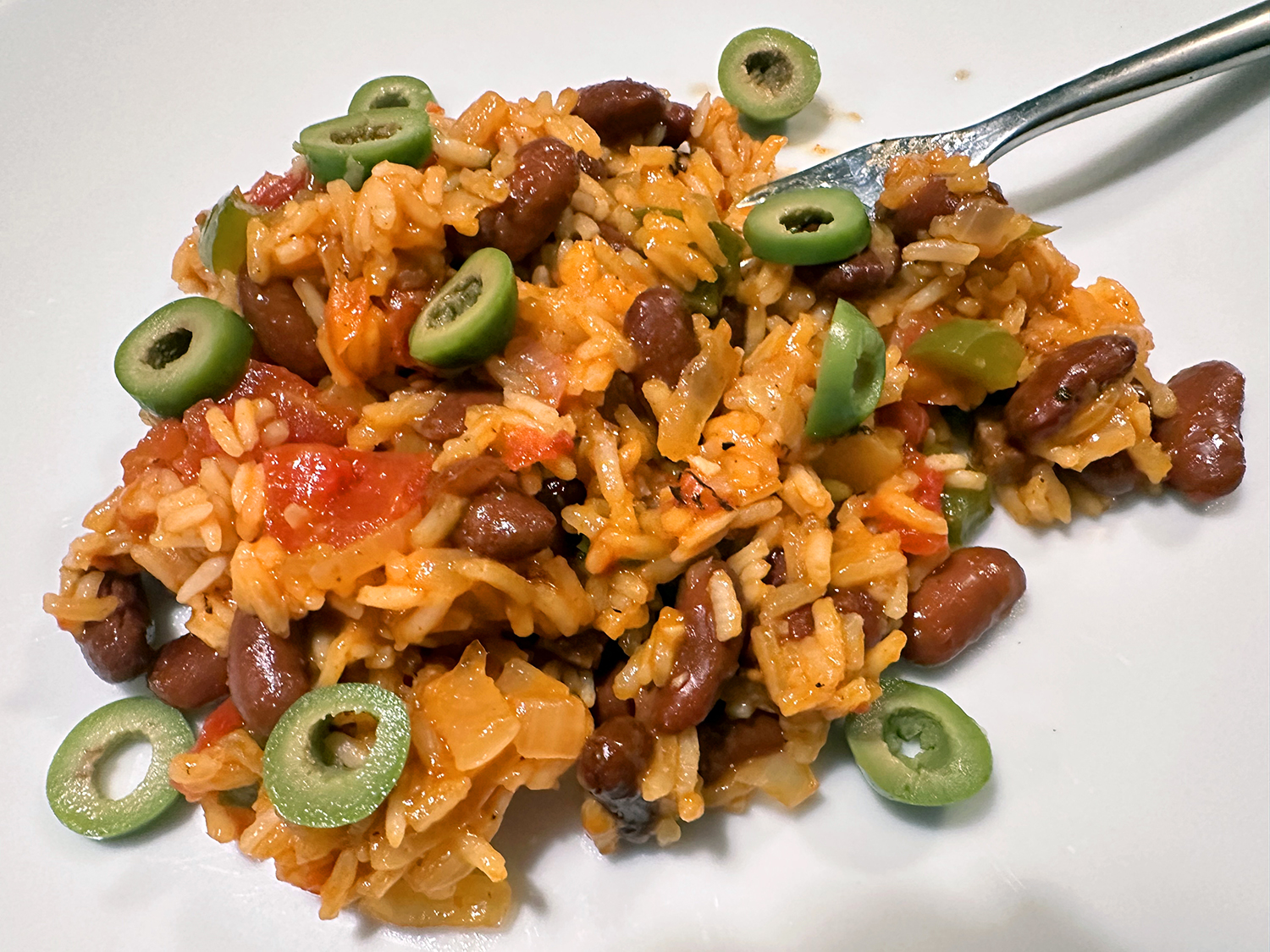
Spanish rice and beans is a quick and easy vegetarian, vegan, and gluten-free weeknight dinner. Serve as a side dish, vegan main dish, or top with baked chicken or shrimp for a little extra protein. It’s ready in just 30-minutes and made with pantry staples like rice, kidney beans, and olives.

This dish is the definition of versatile: it’s flavorful enough to stand on its own, but mild enough to complement the flavors of a wide variety of dishes. Rice and beans are a complete protein: they’re high in nutritional value, essential vitamins, minerals, and fiber. Plus, they’re super filling, inexpensive, easy to store, and delicious! What more could you ask for in a vegan recipe?

Confession. Ours was not vegetarian because we used some of our homemade chicken stock and a 3-inch piece of Mexican chorizo that was finely minced. Both of them added another dimension of flavor.

As far as the timing, our rice was still a bit crunchy after 20 minutes, so we cooked it another 5 minutes, took it off the burner, left it covered, and let it sit for another 10 minutes, at which point it was perfect.

Spanish Rice and Beans

  • Servings: 6
  • Difficulty: easy
  • Print

Ingredients

  • 2 Tbsp. extra virgin olive oil
  • 1 large yellow onion, finely chopped
  • 1 green bell pepper, cored and chopped
  • Kosher salt
  • 2 garlic cloves, minced
  • 1 tsp. smoked or sweet paprika
  • 1 tsp. ground cumin
  • ½ tsp. red pepper flakes, optional
  • 2 cups basmati rice or similar long grain rice, rinsed very well
  • 2 (15-oz.) cans kidney beans, drained and rinsed
  • 1 (15-oz.) can diced fire roasted tomatoes
  • 2 Tbsp. tomato paste
  • 2 ½ cups vegetable broth
  • ⅓ cup sliced green olives, optional, for garnish
  • ¼ cup chopped fresh cilantro or parsley, optional, for garnish

Directions

  1. Saute the onion and pepper: In a large, deep pan heat 2 tablespoons extra virgin olive oil over medium heat until shimmering but not smoking. Add the chopped onion, chopped bell pepper and season with a big pinch of kosher salt. Cook, tossing regularly until the vegetables soften a bit.
  2. Add the garlic and spices: Add the garlic, paprika, cumin, and red pepper flakes. Cook for about 30 more seconds.
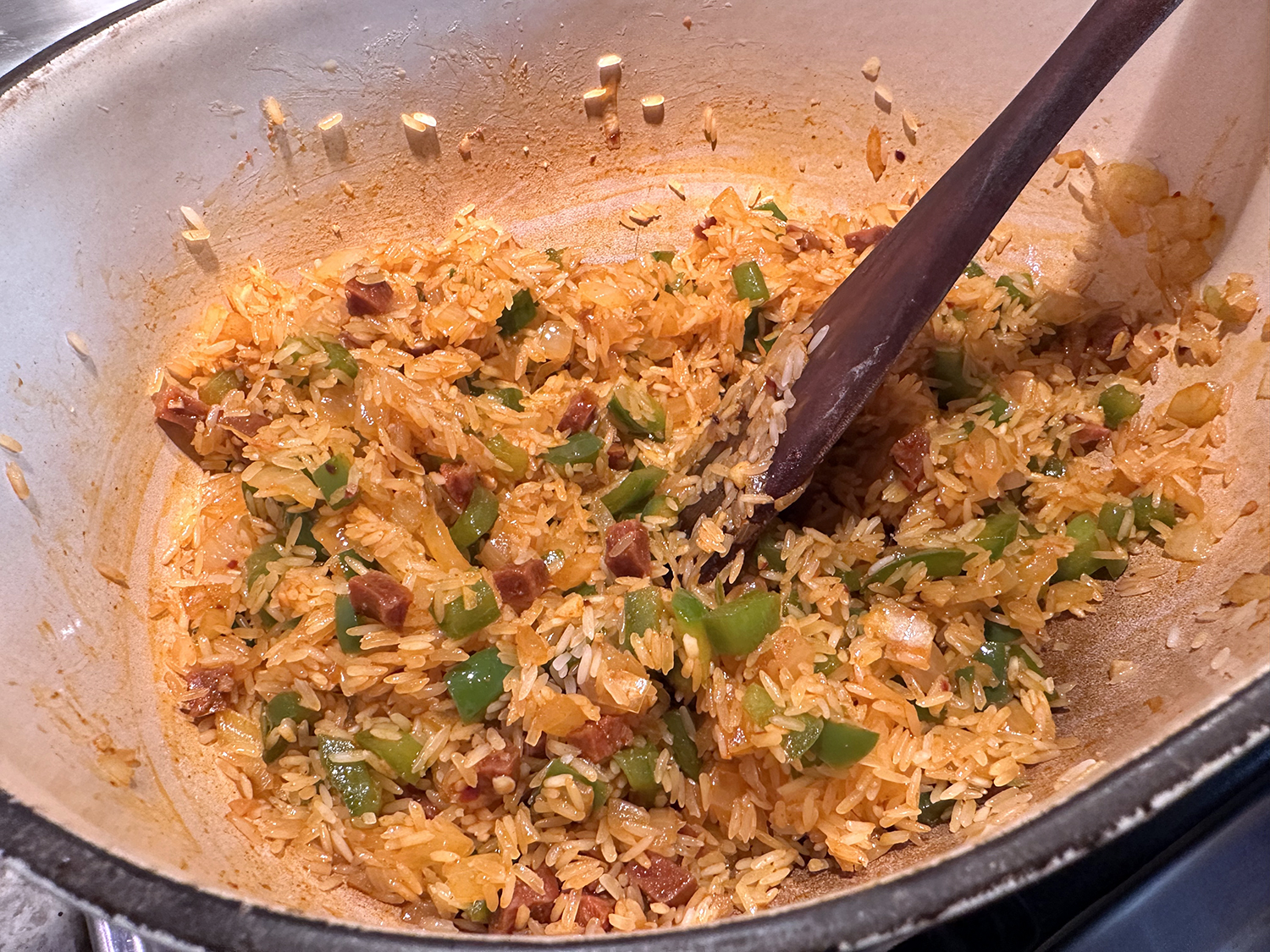
  3. Add the rice, beans and tomatoes: Add the rice and season with another pinch of kosher salt. Toss to combine, then add the beans and fire roasted tomatoes. In a small bowl or liquid measuring cup, mix the tomato paste and broth together, then add it to the rice mixture.
  4. Boil then simmer: Raise the heat and bring the mixture to a boil, then reduce the heat to low. You want it to simmer gently. Cover with a tight fitting lid and allow the rice to cook until its tender and the liquid is fully absorbed, about 20 minutes.
  5. Garnish and serve: Garnish with the olives and parsley, if using, and serve.

http://www.lynnandruss.com

Recipe from Suzy Karadsheh

Glazed Black Cod with Baby Bok Choy and Scallions

A flavor-packed marinade of salty soy sauce and sweet honey coats black cod for a quick but flavorful dinner. Black cod is a species of cod fish found in the North Pacific Ocean; also known as sablefish, butterfish, and blue cod, it is a rich white-flesh fish with a moist, succulent texture. It is not a true cod.

When it comes to home cooking, Alaskan black cod is an exceptional choice. Black cod has a meaty and flaky texture, making it incredibly versatile and pretty forgiving in the oven. In fact, it’s rather difficult to overcook this fish, making it a popular option for home chefs of all backgrounds.

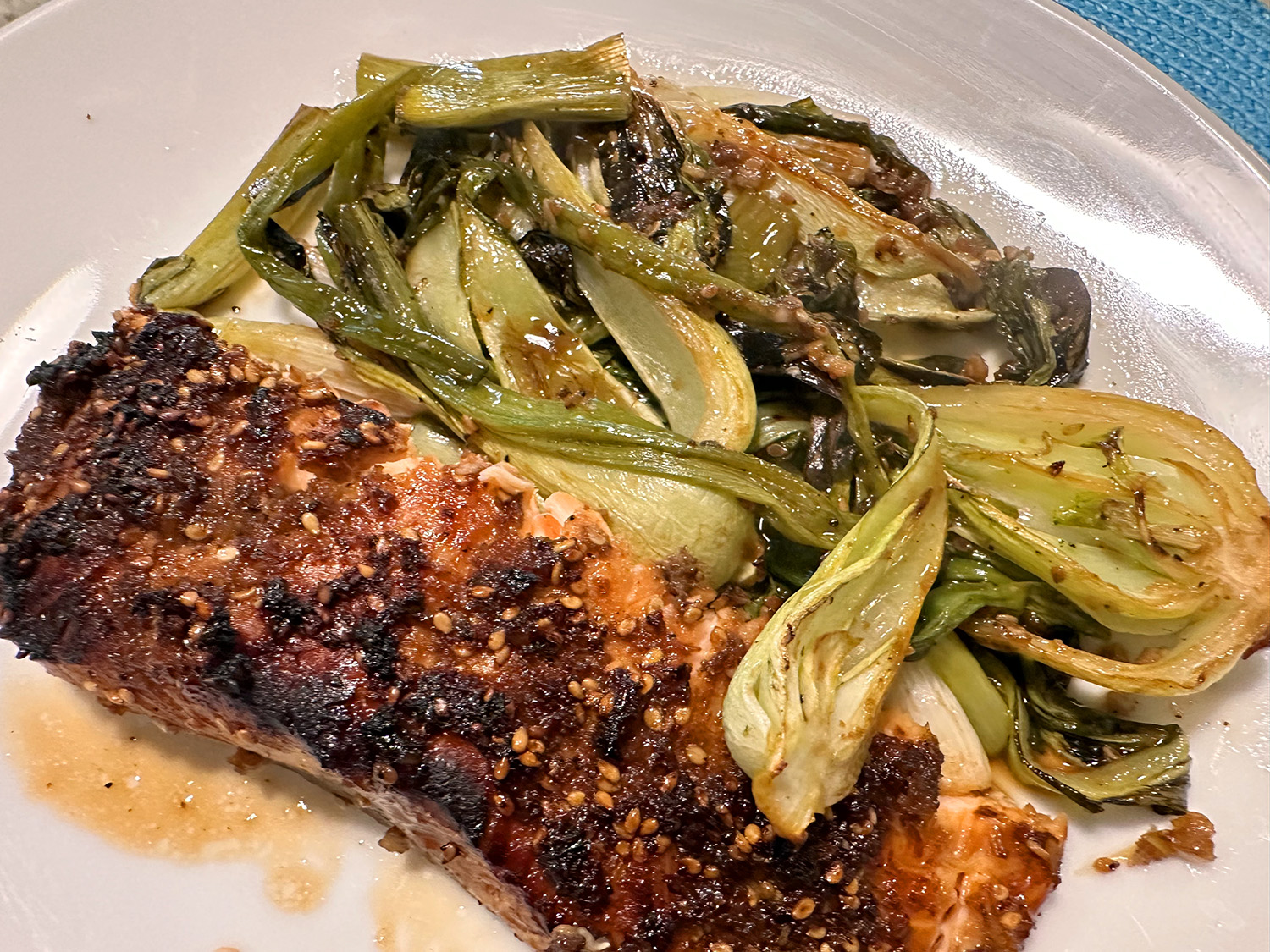
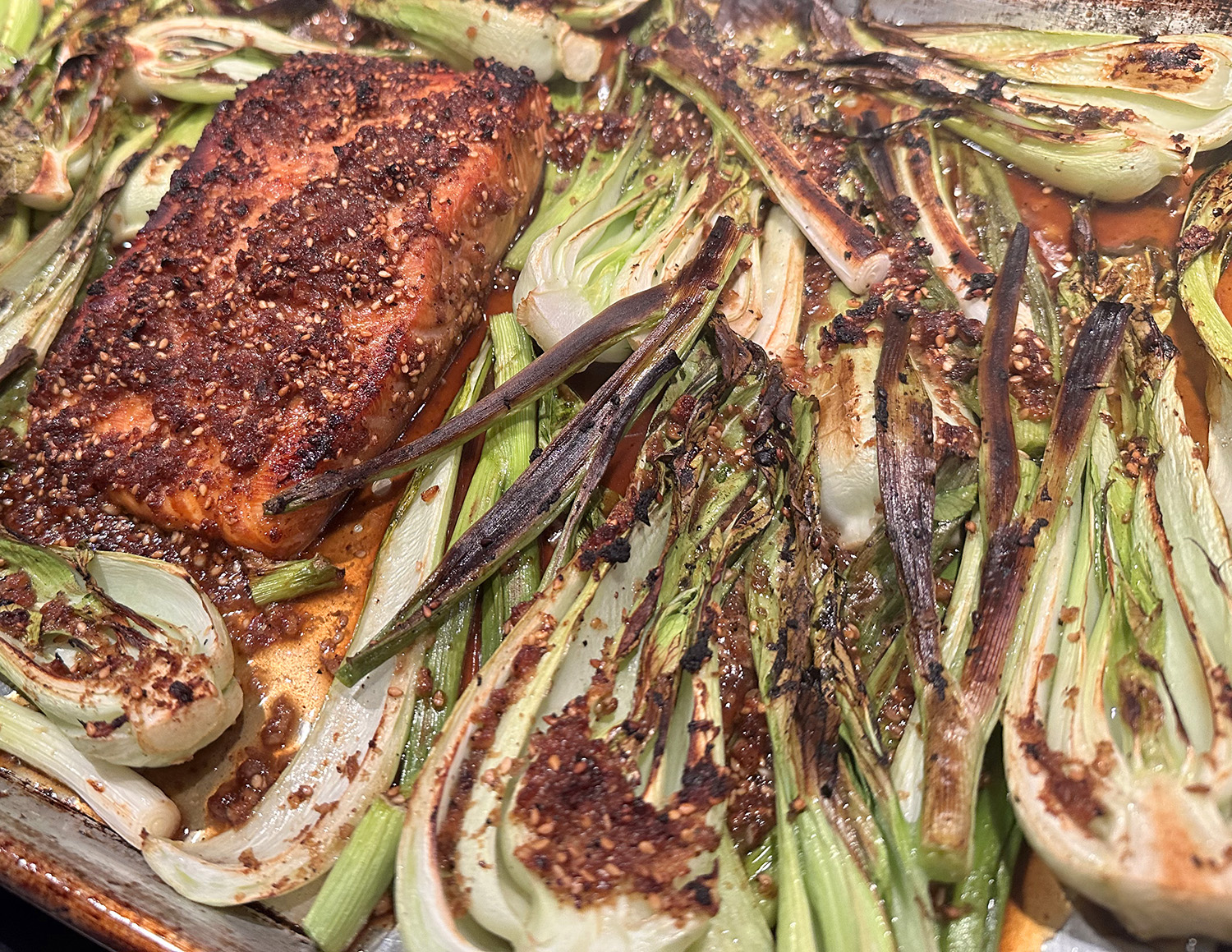
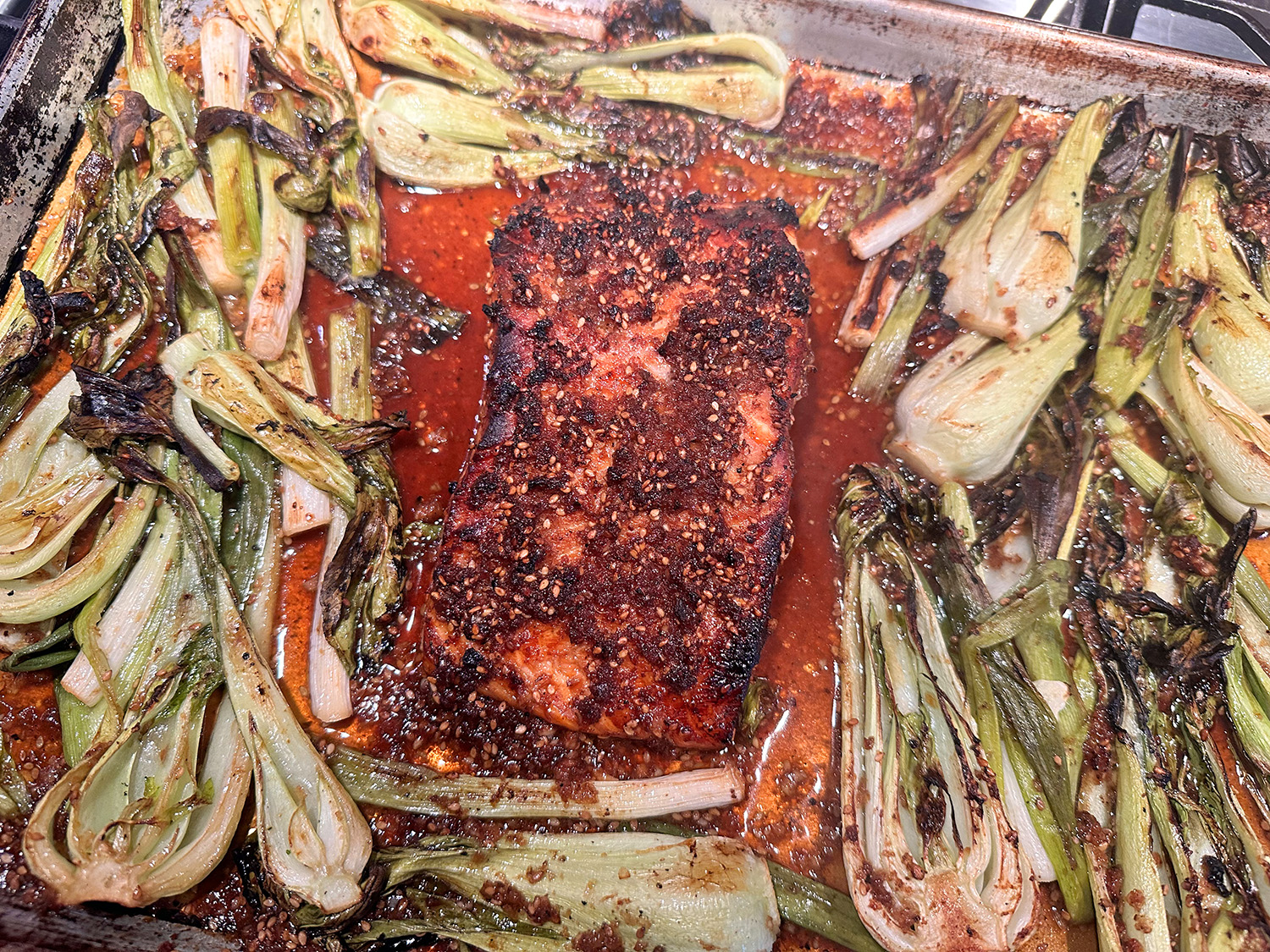
The backbone of this simple, flavor-packed marinade is the salty soy sauce and sweet honey that permeate the fish, bok choy, and scallions while they cook together under the broiler—and all on the same baking sheet. Everything is ready in less than 15 minutes and the result is lightly charred vegetables and perfectly cooked fish that flakes easily with a fork.

The secret yet simple flavor-enhancing trick of this dish is the Sichuan peppercorns that are lightly toasted beforehand, and add tingling heat to the dish, making this meal even more of a stand-out.

Unable to source black cod at the time, salmon was noted as an acceptable substitution. And just for the 2 of us, we cooked a one-pound piece; but kept the amounts of marinating ingredients the same. To make the meal more vegetable-centric, we nearly doubled the baby bok choy.

Glazed Black Cod with Baby Bok Choy and Scallions

  • Servings: 4
  • Difficulty: easy
  • Print

Ingredients

  • 1 1/2 tsp. Szechuan peppercorns
  • 6 Tbsp. lower-sodium soy sauce
  • 1/4 cup honey
  • 6 garlic cloves, minced (about 2 Tbsp.)
  • 2 pieces fresh ginger, peeled and finely chopped (about 2 Tbsp.)
  • 2 Tbsp. rice wine vinegar
  • 1 1/2 Tbsp. toasted sesame seeds
  • 1 Tbsp. hot chile oil
  • 2 (1-lb.) skinless wild Alaskan black cod fillets (about 1 inch thick), pin bones removed
  • 6 heads baby bok choy, halved lengthwise or quartered if large (about 1 1/4 lbs.)
  • 12 medium scallions, halved crosswise
  • 2 Tbsp.s canola oil

Directions

  1. Toast peppercorns in a small skillet over medium, shaking pan often, until fragrant, 2 to 4 minutes. Transfer to a mortar, and let cool slightly, about 1 minute. Crush with pestle into a coarse powder; set aside.
  2. Stir together soy sauce, honey, garlic, ginger, rice vinegar, sesame seeds, chile oil, and crushed peppercorns in a medium bowl. Transfer to a large ziplock plastic bag. Add cod fillets, and seal bag, pressing out as much air as possible. Refrigerate 4 to 8 hours.
  3. Preheat broiler with oven rack 6 to 8 inches from heat. Toss together bok choy, scallions, and oil on a large rimmed baking sheet; spread in an even layer. Remove fish from marinade, reserving marinade. Place fish in center of baking sheet. Pour reserved marinade over fish, bok choy, and scallions, coating well.
  4. Broil in preheated oven until vegetables and fish are nicely charred and fish is just cooked through and flakes easily with a fork, 10 to 12 minutes, rotating baking sheet halfway through broiling time. Serve immediately.

http://www.lynnandruss.com

Adapted from a recipe by Justin Chappel for Food & Wine

Skirt Steak Saltimbocca

This company-worthy recipe puts a tasty spin on traditional Italian Saltimbocca with thinly pounded skirt steak, wrapped in sage and prosciutto for a delicious variation. Typically, this dish is usually made with veal, but if desired, you could also make this recipe with chicken breasts or pork tenderloin.

Instead of veal, this classic Italian dish uses thinly pounded skirt steak (or in our case, flat iron steak) to create a remarkably tender and flavorful variation that cooks in just minutes. The prosciutto’s crispy and salty flavor pairs nicely with the tender and juicy steak, while the sage provides an earthy and slightly peppery flavor.

The sauce, made with chicken broth, white wine, and butter, is rich and creamy, making it an ideal match for the savory steak. And it was also wonderful poured over our side of orzo.

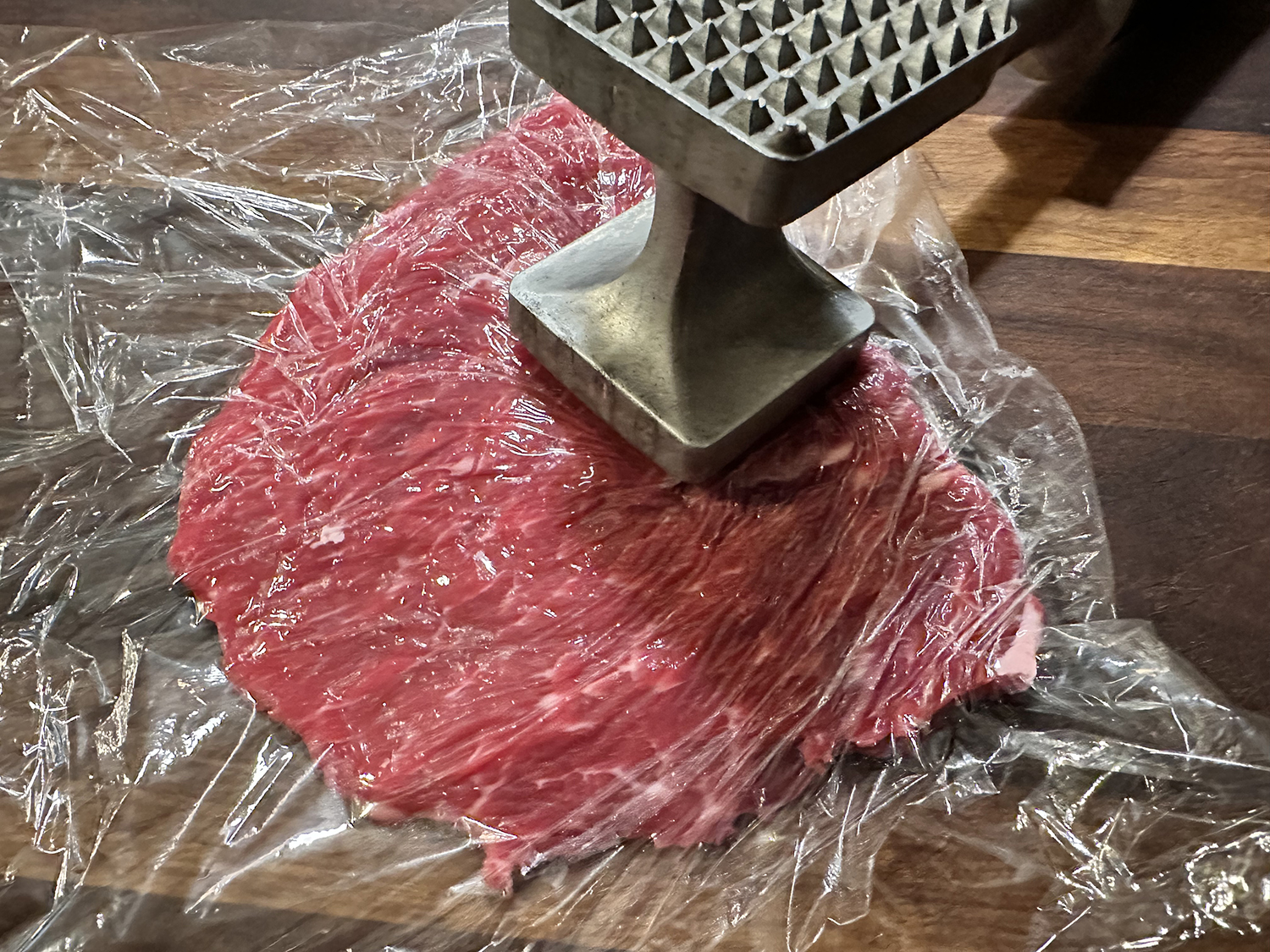
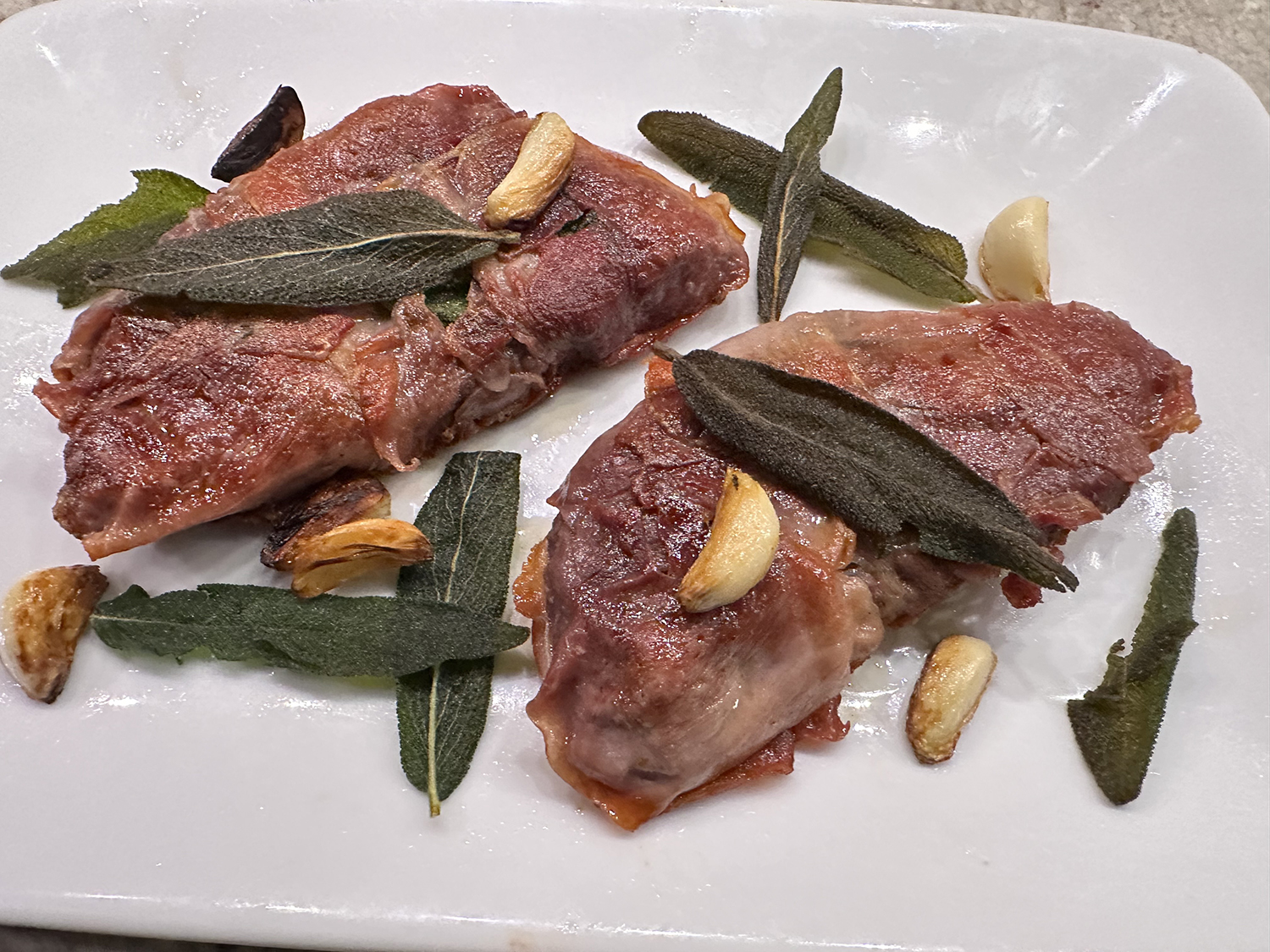
We cut a 12-ounce piece of flat iron in half crosswise; and pounded each half to a 1/4 inch thick. After which, we seasoned the steak and laid 3 sage leaves across each one. Then 3 ultra-thin slices of prosciutto were wrapped around front and back.

Skirt Steak Saltimbocca

  • Servings: 2-3
  • Difficulty: easy
  • Print

Ingredients

  • 1 (12-oz.) skirt steak (about 1 inch thick), trimmed
  • 3/4 tsp. kosher salt, divided
  • 1/2 tsp. black pepper, divided
  • 12 fresh sage leaves, divided
  • 6 thin slices prosciutto 
  • 1/4 cup extra-virgin olive oil (or 2 oz. if searing only two pieces of steak)
  • 4 medium garlic cloves (unpeeled to prevent burning), crushed
  • 1/3 cup chicken broth
  • 1/3 cup white wine
  • 2 Tbsp. cold unsalted butter

Directions

  1. Cut steak crosswise into 4 (3-ounce) pieces; lightly pound each piece between 2 pieces of plastic wrap using a meat mallet or rolling pin until each piece is about 1/4 inch thick. Sprinkle 1/2 teaspoon salt and 1/4 teaspoon pepper evenly over steaks. Place 2 sage leaves on each steak. Wrap 1 piece of prosciutto around each steak, pressing to adhere. (Prosciutto should cover the sage leaves.)
  2. Heat olive oil in a large skillet over medium-high. Add garlic cloves and remaining 4 sage leaves; cook, stirring often, until garlic is lightly browned and sage is crispy, about 2 minutes.
  3. Transfer to paper towels to drain; remove garlic peels, and set garlic cloves and sage aside. Pour half of oil in skillet into a heatproof bowl, and set aside; reserve remaining half of oil in skillet.
  4. Transfer to paper towels to drain; remove garlic peels, and set garlic cloves and sage aside. Pour half of oil in skillet into a heatproof bowl, and set aside; reserve remaining half of oil in skillet.
  5. Reheat oil in skillet over medium-high. Add 2 steak pieces, and cook, undisturbed, until prosciutto is browned and crispy, 1 to 2 minutes. Flip steaks, and cook until prosciutto is crispy and steaks are cooked to desired degree of doneness, about 2 minutes for medium-rare.
  6. Transfer  to a plate, and let rest. Discard oil in skillet. Add reserved oil to skillet, and repeat cooking process with remaining 2 steaks. Transfer to plate with reserved steaks. Do not wipe skillet clean.
  7. Add broth and wine to skillet, and cook over medium-high, stirring occasionally and scraping up any browned bits from bottom of skillet using a wooden spoon, until reduced by half, about 3 minutes.
  8. Remove from heat, and gradually whisk in butter until emulsified and creamy, about 1 minute. Sprinkle with remaining 1/4 teaspoon salt and remaining 1/4 teaspoon pepper. Serve steaks immediately with sauce, and garnish with reserved crispy sage and garlic cloves.

http://www.lynnandruss.com

Adapted from a recipe by Justin Chapple for Food & Wine

Gunpowder Potatoes

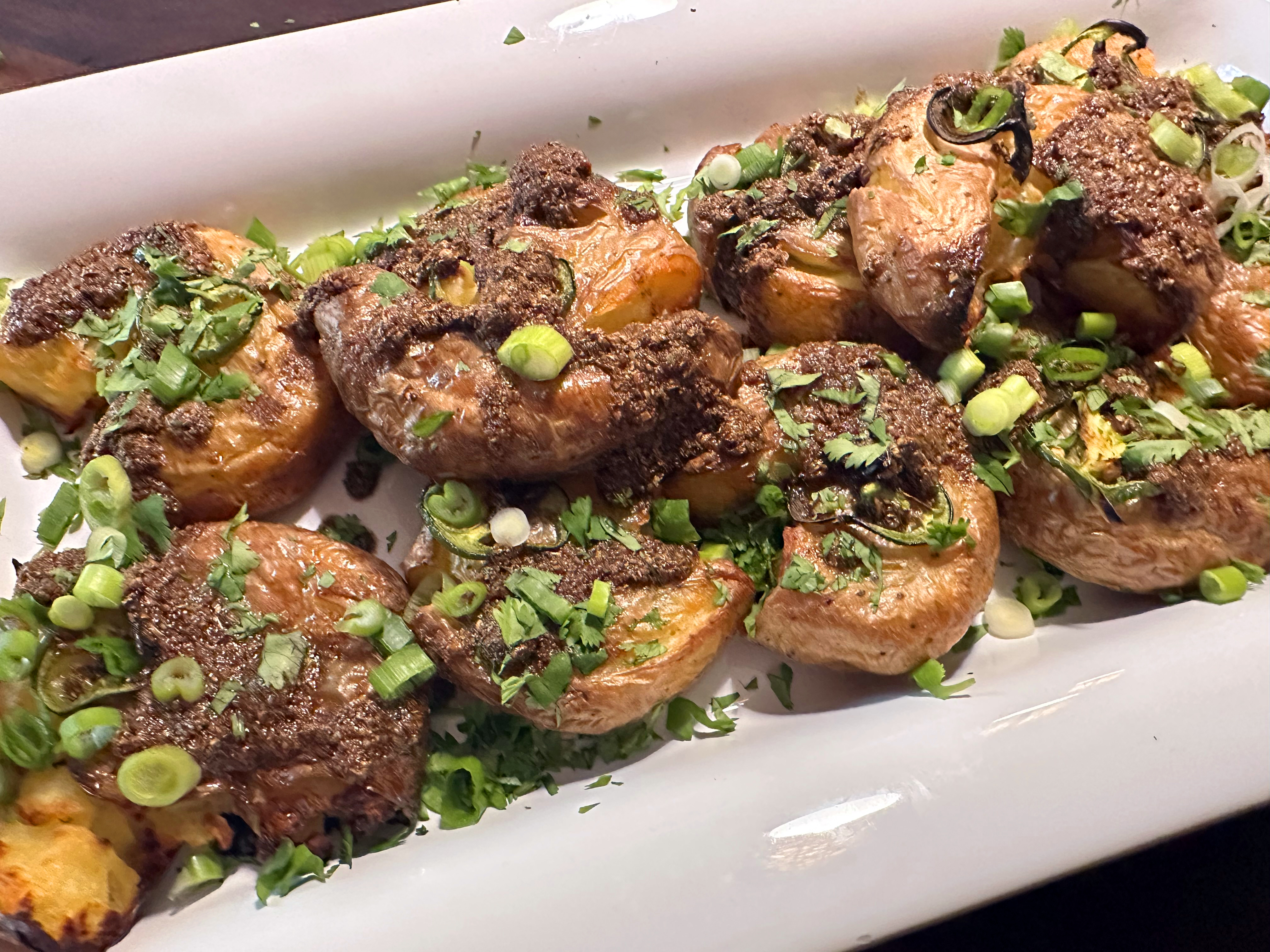
Here, new potatoes are transformed into a culinary powerhouse with toasted spices, butter, cilantro and green chilies. Gunpowder potatoes are the ideal recipe: a bit of crunch, a touch of herbiness, a dash of tang and a pop of heat, all married to a foundation of creamy potatoes. My mouth waters just thinking about them.

The term “gunpowder” refers to a spice mix that has many variations. This version hails from Parsi cuisine and contains coarsely ground toasted cumin, coriander and fennel seeds with a finishing dusting of a “kabab masala,” which is made with fenugreek, chili powder, chaat masala and garam masala. Kind in mind, like much Indian food, the spices are bold.

Start by parcooking new potatoes with their skins on. Next, either grille or broil, then split them open. The potatoes are mixed with the gunpowder spice mixture, along with butter, spring onions, cilantro and green chilies. Finish them with lime juice, flaky salt and a teaspoon or two of the kabab masala, and serve them with a cooling yogurt raita.

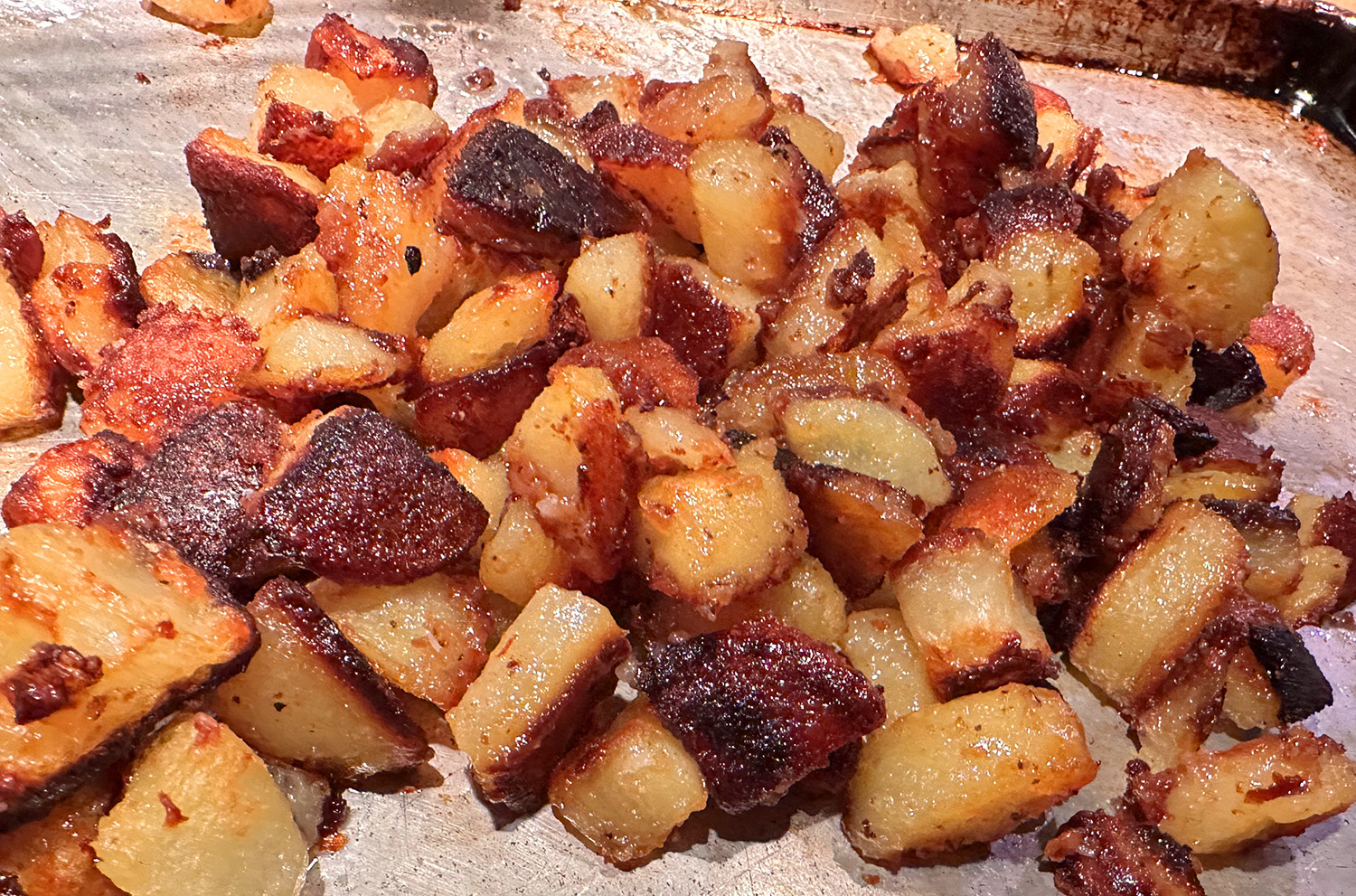
For this adaptation, the ingredient list was pared down while maximizing flavor, and focusing on getting deeply browned, crusty potatoes without a grill. The crushed spices are cooked in butter to bloom their flavor and the parcooked potatoes are flattened before roasting them in a 500°F oven. And, in a nod to kabab masala, fenugreek is included, a touch that adds a distinctive maple-like flavor.

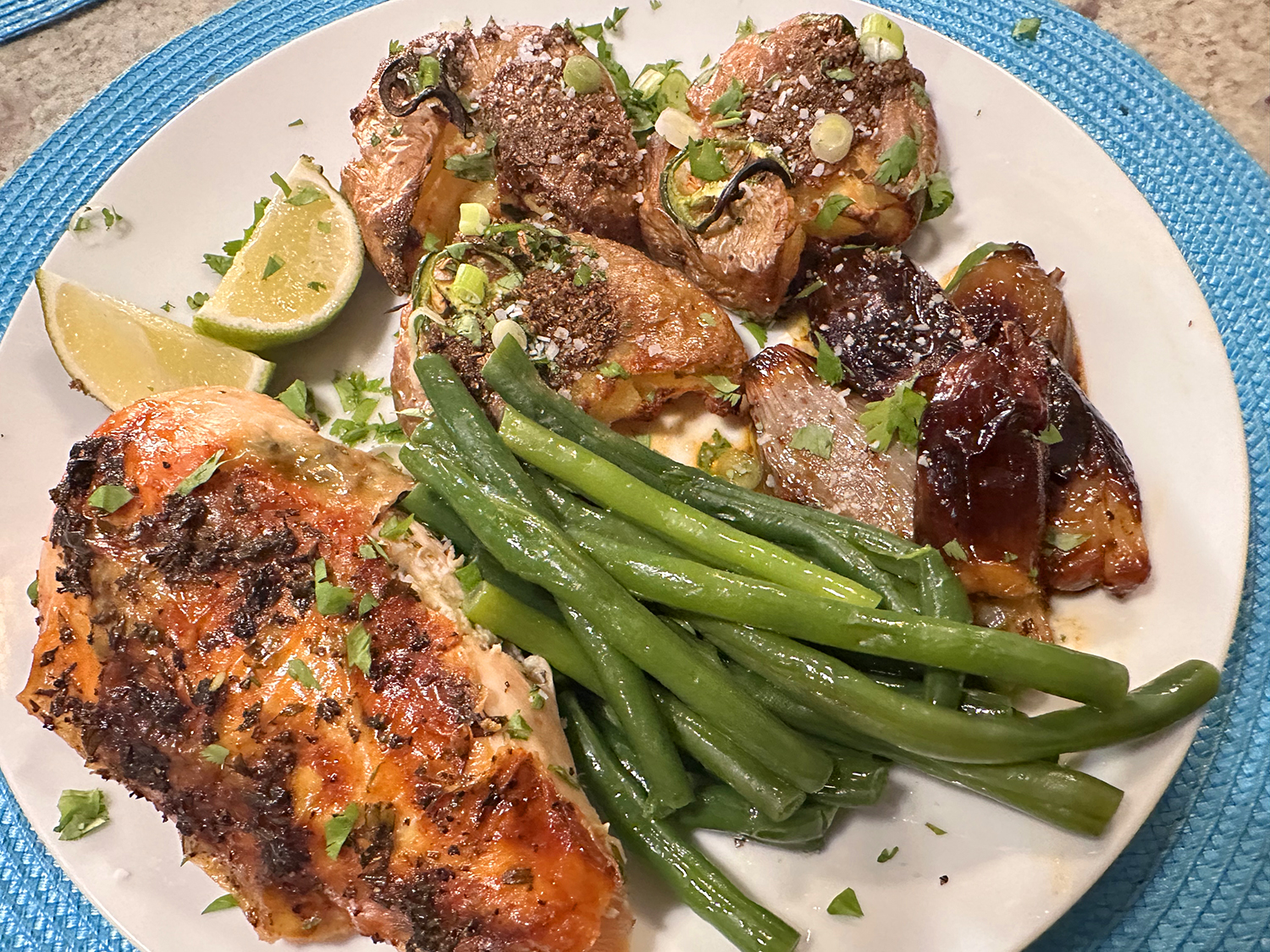
Our potatoes were on the larger size for this recipe (about the size of a lime), so they couldn’t be tossed in a bowl with the butter spice mixture. Instead, the baked potatoes were placed on a platter with the spiced butter poured over the top. Another addition would be to make the Raita as an accompaniment, recipe follows.

Gunpowder Potatoes

  • Servings: 4-6
  • Difficulty: easy
  • Print

Ingredients

  • 2 1⁄2 lbs. Yukon gold or red potatoes
  • Kosher salt and pepper
  • 3 Tbsp. grapeseed or other neutral oil
  • 2 jalapeños chillies, stemmed and thinly sliced into thin rings
  • 2 tsp. cumin seeds
  • 2 tsp. coriander seeds
  • 2 tsp. fennel seeds
  • 4 Tbsp. butter, cut into 4 pieces
  • 3⁄4 tsp. ground fenugreek
  • 3 scallions, thinly sliced
  • 1⁄4 cup finely chopped fresh cilantro
  • 2 Tbsp. lime juice
  • Lime wedges and/or raita (recipe below) to serve

Directions

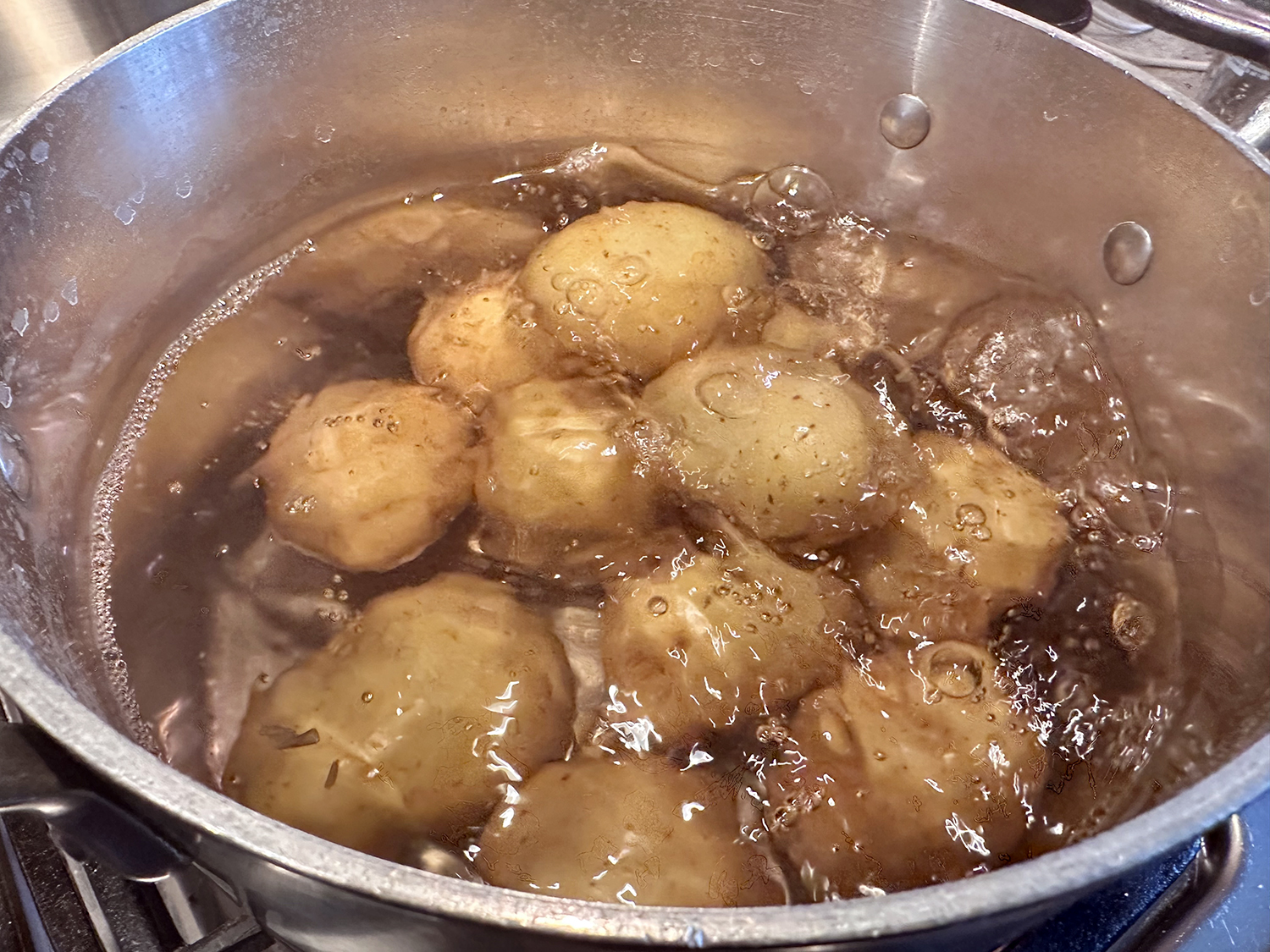
  1. In a large pot, combine the potatoes, 3 tablespoons salt, and 2 quarts water. Bring to a boil and cook, stirring occasionally, until a skewer inserted into the potatoes meets no resistance, about 25 minutes.
  2. Meanwhile, heat the oven to 500°F with a rack in the middle position.
  3. Drain the potatoes in a colander. Transfer to a rimmed baking sheet and toss with oil. Using the bottom of a dry measuring cup or ramekin, press down on each potato so it flattens slightly and splits open but remains intact.
  4. Roast, without stirring for 20 minutes, then sprinkle evenly with chiles. Continue to roast without stirring until the potatoes are crisp and well-browned, another 10 to 15 minutes.
  5. Meanwhile, in a spice grinder, combine the cumin, coriander and fennel seeds; pulse until coarsely ground.
  6. In a small saucepan over medium heat, melt the butter. Add the ground seeds and fenugreek, and cook, swirling the pan, until fragrant, 2 to 3 minutes; set aside off heat.
  7. When the potatoes are done, use a wide metal spatula to transfer them to a large bowl. Add the spiced butter, and toss to coat.
  8. Fold in the scallions and cilantro; taste for salt and pepper; serve with lime wedges and/or raita.

http://www.lynnandruss.com

Raita

Raiti

  • Servings: makes 1 cup
  • Difficulty: easy
  • Print

Ingredients

  • 3/4 cup plain whole-milk Greek yogurt
  • 3 tablespoons finely chopped fresh cilantro
  • 2 tablespoons lime juice
  • 2 tablespoons water
  • 1 jalapeño chili (stemmed and minced)
  • 1 scallion (thinly sliced)
  • kosher salt and ground black pepper

Directions

In a small bowl, stir together whole-milk Greek yogurt, finely chopped fresh cilantro, lime juice, water, jalapeño chilis, scallions and kosher salt and ground black pepper, to taste.

http://www.lynnandruss.com

Recipes from Milk Street

Roast Tarragon-Cognac Chicken

Chef/author Melissa Clark tell us “The sophisticated, French flavors of brandy, butter and tarragon season this golden-skinned roast chicken, adding panache to what is otherwise an easy and straightforward recipe.”

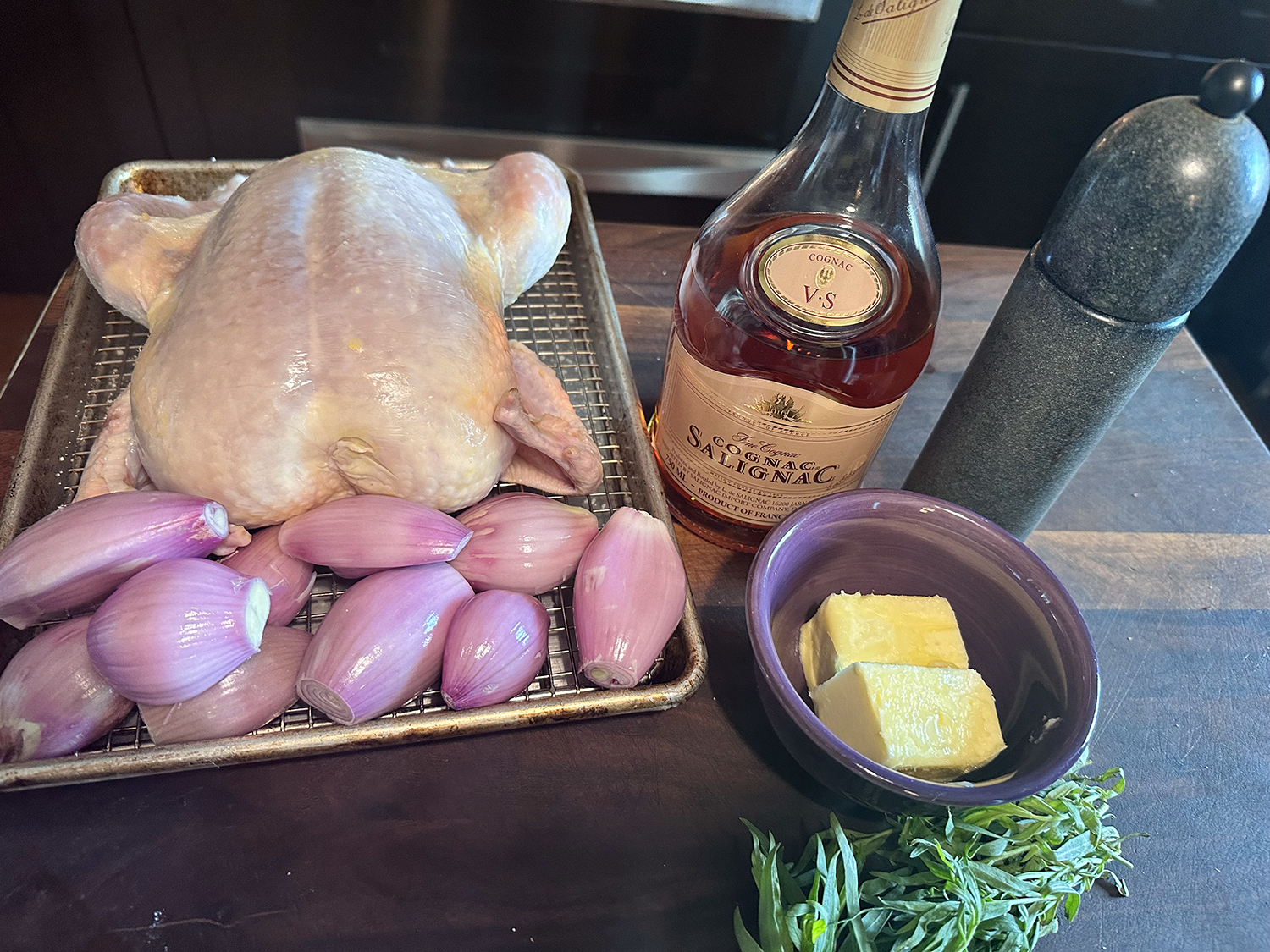
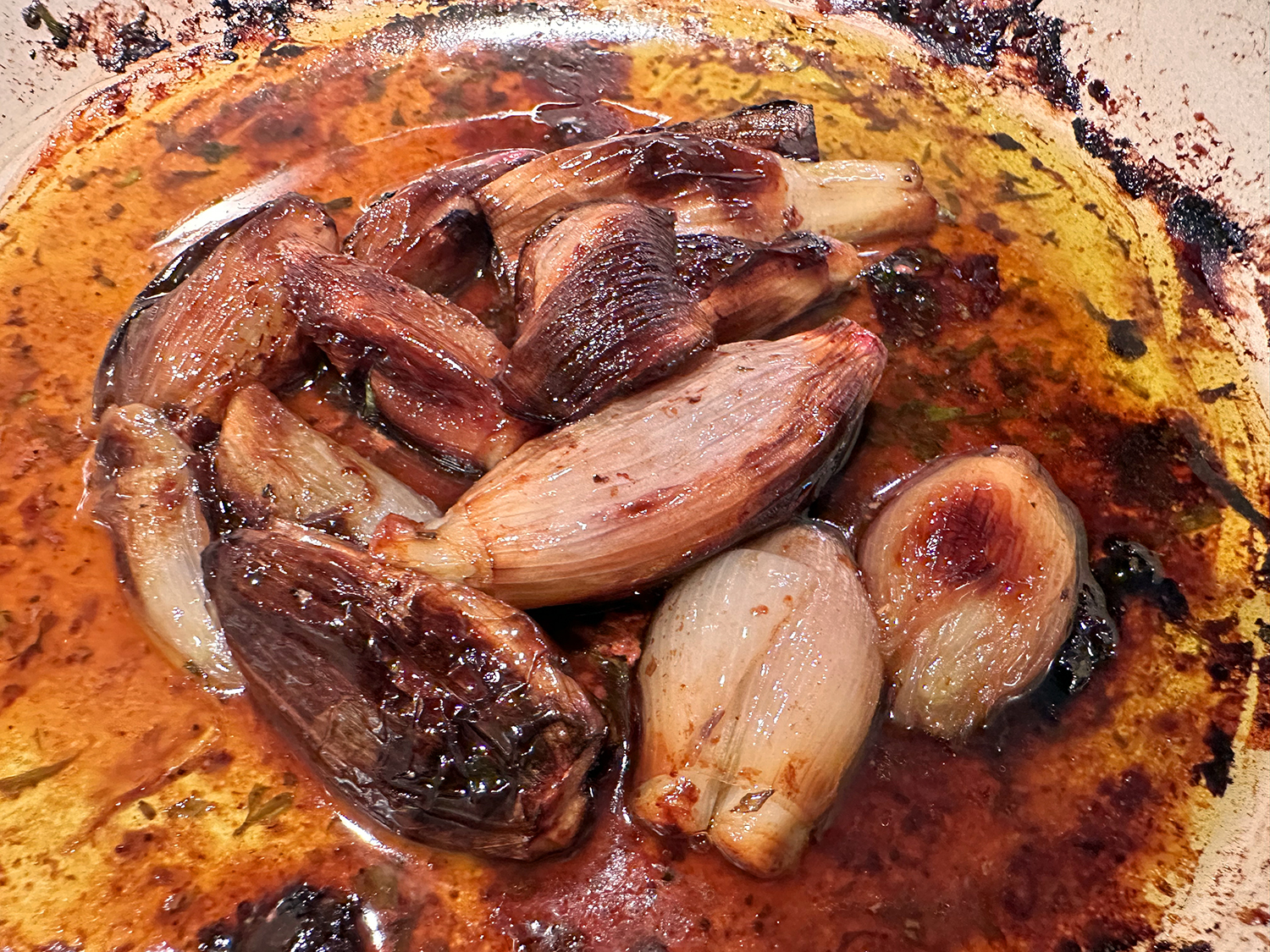
Nothing like a fabulous meal using a limited number of ingredients. We decided to include about a dozen shallots to surround the poultry and add the beloved allium flavor. As they roast with the chicken, the shallots become all soft and jammy.

Serving the chicken with mashed potatoes or polenta, provide a soft bed to absorb all the heady, buttery juices. But we were jonesing to try the “Gunpowder Potatoes” in this case. If you choose the mashed potatoes idea, go ahead and make a flavorful pan sauce, especially if you add those shallots.

Oh, and if you’re not a tarragon fan, fresh thyme makes an excellent, milder substitute.

Roast Tarragon-Cognac Chicken

  • Servings: 4
  • Difficulty: easy
  • Print

Ingredients

  • 1 4-lb. whole chicken
  • 10-12 shallots, trimmed and peeled
  • 2 tsp. coarse gray sea salt or 2½ teaspoons kosher salt (such as Diamond Crystal)
  • 6 Tbsp. unsalted butter, softened
  • 1 bunch fresh tarragon, leaves and tender stems coarsely chopped (about ¾ cup)
  • 2 Tbsp.s Cognac
  • 1 tsp. freshly ground black pepper

Directions

  1. Pat the chicken dry and salt the bird inside and out. Transfer to a plate or baking dish, preferably on a rack, and refrigerate uncovered for at least 1 hour or overnight. (Ours was in the fridge for 4 hours.)
  2. When ready to cook the chicken, heat the oven to 400 degrees.
  3. In a small bowl, combine butter, tarragon, 1 tablespoon Cognac and the pepper. Rub mixture inside the chicken cavity and over and under the chicken skin.
  4. Place chicken on a rimmed sheet pan or in a large, ovenproof skillet. Roast, breast side up, until the skin is golden and crisp, and the juices run clear when you insert a fork in the thickest part of the thigh (165 degrees), about 1 hour.
  5. Turn off the oven — don’t skip this step, or the Cognac may overheat and catch fire — and transfer the pan with the chicken to the stovetop. Pour the remaining 1 tablespoon Cognac over the bird and baste with some of the buttery pan juices. Immediately return the chicken to the turned-off oven and let rest there for 10 minutes before carving and serving.

http://www.lynnandruss.com

Adapted from a recipe by Melissa Clark for NYTimes Cooking

Seared Salmon Paka

Paka refers to a silky coconut-milk-based sauce popular in East African cuisine. In this take from Bon Apétit on machi paka—a classic fish curry—quickly seared salmon takes the place of the traditional charred, grilled white fish. Cooking the blended curry base down until the coconut milk breaks and the aromatics toast in its rich fat is key to developing deep flavor—don’t rush this part.

The curry base is wonderfully versatile; if fish isn’t your thing, sub in chicken or your favorite canned beans (adjust cooking times accordingly). Having a lot of rice and curry sauce left over, we browned some boneless chicken thigh pieces and added them to the sauce for another dinner a few days later.

Since no Thai chiles were available at the grocery store, we opted to incorporate jalapeños instead. The color of the paka may be a bit off-putting as it gives the appearance of pea soup, but don’t be fooled by that, the sauce is amazing!

Seared Salmon Paka

  • Servings: 4
  • Difficulty: easy
  • Print

Ingredients

  • 1 Tbsp. vegetable oil
  • 4 6-oz. boneless salmon fillets, preferably skin-on
  • 2 tsp. Diamond Crystal or 1¼ tsp. Morton kosher salt
  • 1 medium onion
  • 2–3 green Thai chiles
  • 3 garlic cloves 
  • 1 1½” piece ginger, peeled 
  • 1 Tbsp. double-concentrated tomato paste,
  • ½ tsp. ground turmeric 
  • ¼ cup cilantro leaves with tender stems 
  • 2 13.5-oz. can unsweetened coconut milk
  • 1 Tbsp. fresh lime
  • Cooked basmati rice

Directions

  1. Heat 1 Tbsp. vegetable oil in a large nonstick skillet over medium-high. Season four 6-oz. boneless salmon fillets, preferably skin-on, with kosher salt and cook (skin side down if it has skin), pressing fillets gently with a spatula, until golden brown, about 4 minutes. Turn fillets over and cook until golden brown and just cooked through, about 3 minutes. Transfer to a plate. Wipe out skillet and reserve.
  2. Purée 1 medium onion, coarsely chopped, 2–3 green Thai chiles, depending on heat preference, 3 garlic cloves, one 1½” piece ginger, peeled, 1 Tbsp. double-concentrated tomato paste, ½ tsp. ground turmeric, ¼ cup cilantro leaves with tender stems, and one 13.5-oz. can unsweetened coconut milk in a blender on high speed until smooth. Pour onion mixture into reserved skillet and sprinkle with 2 tsp. Diamond Crystal or 1¼ tsp. Morton kosher salt. Bring to a brisk simmer over medium-high heat, then reduce heat to medium and cook, stirring often with a wooden spoon, until mixture is reduced to a thick paste, fat separates from coconut milk (it will look broken), and aromatics are golden brown, 30–35 minutes.
  3. Pour in remaining one 13.5-oz. can unsweetened coconut milk and ¼ cup water and bring to a simmer, scraping up any browned bits.
  4. Gently break salmon fillets into 3″ pieces and return to skillet. Cook just until salmon is heated through, about 3 minutes. Stir 1 Tbsp. fresh lime juice into curry and remove from heat.
  5. Divide curry among shallow bowls and top with cilantro leaves with tender stems and halved green Thai chiles. Serve with cooked basmati rice or country-style bread and lime wedges alongside.

Do ahead: Curry base can be made 1 day ahead. Let cool; cover and chill. Reheat over medium-low, adding water to thin as needed.

http://www.lynnandruss.com

Recipe from Bon Appétit

Berbere-Spiced Chicken Skewers

If you’ve never tried Ethiopia’s signature spice blend berbere, these vibrant chicken skewers get deep flavor from it. Made with dried alliums, chilies and warm spices, berbere features complex flavor and a rich, earthy aroma. Look for it in spice shops or well-stocked grocery stores.

If you can’t find berbere, or don’t feel like purchasing another spice to add to your growing collection, use a mixture of ground coriander and smoked paprika (which is what we did). In this recipe from Milk Street, they combine berbere with softened butter, lime juice and honey, making a spicy-sweet seasoning mix ideal for clinging to the chicken before cooking.

We served our skewers with a Lemon and Herb Farro side dish.

Berbere-Spiced Chicken Skewers

  • Servings: 4
  • Difficulty: easy
  • Print

Ingredients

  • 4 Tbsp. salted butter, room temperature
  • 2 Tbsp. berbere OR 1 Tbsp. ground coriander plus 1 Tbsp. smoked paprika
  • 2 Tbsp. honey, plus more to serve
  • 1 Tbsp. grated lime zest, plus 2 Tbsp. lime juice, plus lime wedges to serve
  • Kosher salt and ground black pepper
  • 1½ lbs. boneless, skinless chicken thighs, trimmed and cut into 1½-inch pieces
  • 2 medium red OR orange OR yellow bell peppers OR a combination, stemmed, seeded and cut into 1½-inch pieces

Directions

  1. Set a wire rack in a broiler-safe rimmed baking sheet and mist with cooking spray.
  2. In a large bowl, mix the butter, berbere, honey, lime zest and juice, 1 teaspoon salt and ½ teaspoon pepper. Measure 2 tablespoons of the mixture into a small bowl; set aside for brushing.
  3. Add the chicken and peppers to the bowl with the remaining berbere mixture and mix with your hands to coat.
  4. Thread the chicken, alternating with the peppers, onto four 12-inch metal skewers. Place the skewers on the prepared rack, spacing them evenly. Let stand at room temperature while the broiler heats.
  5. Heat the broiler with a rack about 6 inches from the element. Broil the skewers until lightly charred, 6 to 7 minutes. Remove from the oven, flip and broil until charred on the second sides, another 6 to 7 minutes.
  6. Transfer to a serving platter, brush with the reserved butter mixture and drizzle with additional honey. Serve with lime wedges.

http://www.lynnandruss.com

Original recipe from Milk Street