Tag Archives: entrée

Slow-Roasted Pork Shoulder with Fennel, Garlic and Rosemary

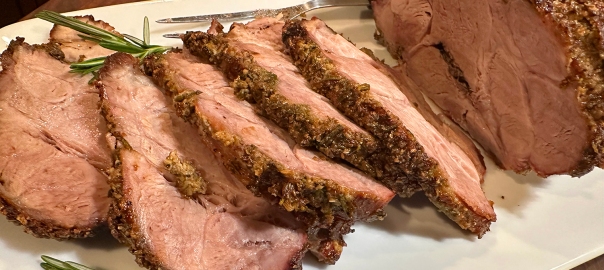
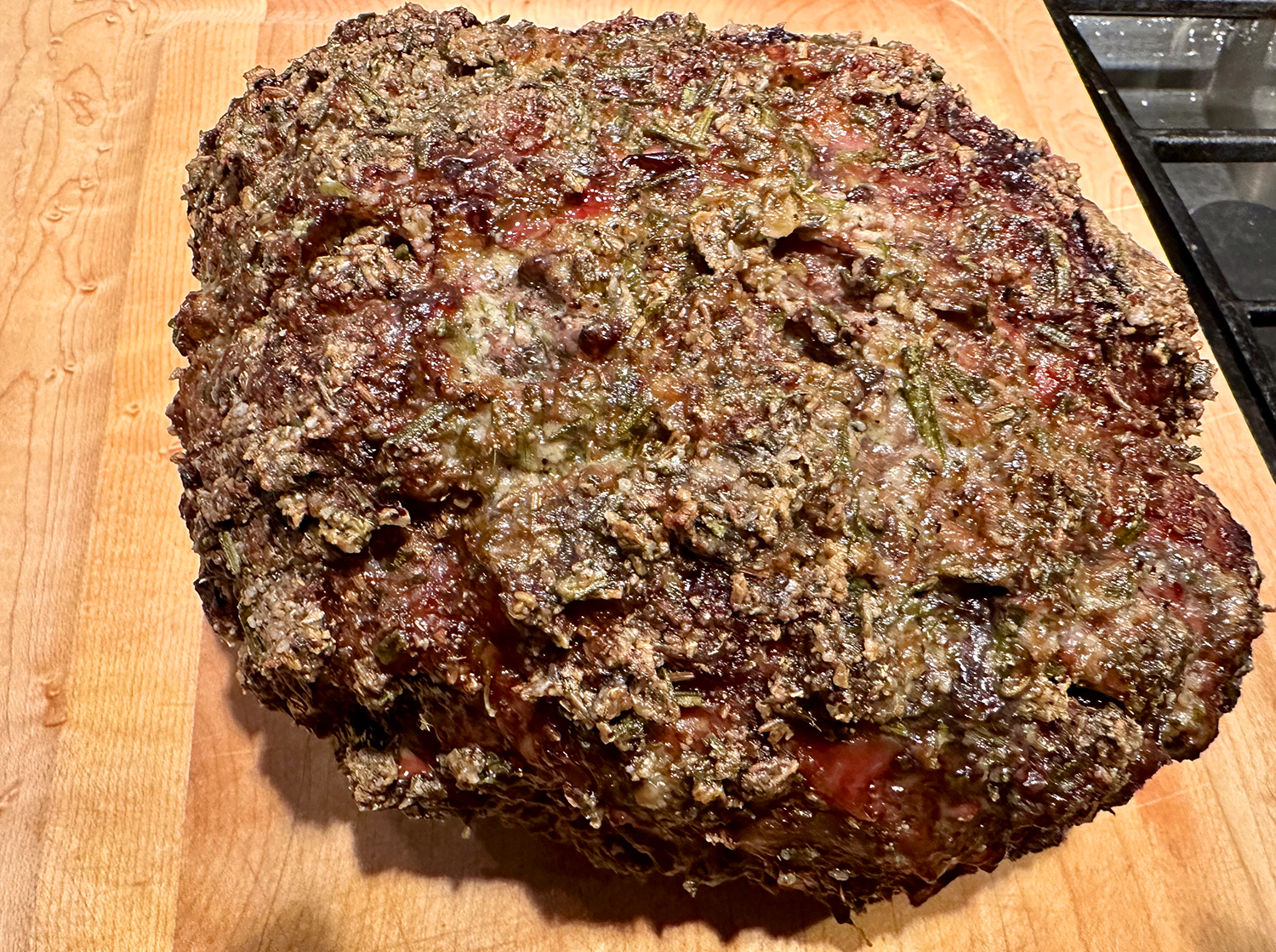
Often a pork roast can be dried out when it’s done cooking. But this lovely recipe from Milk Street is extremely simple to make and uses just over a handful of ingredients. The lefotovers were still juicy and full of flavor.

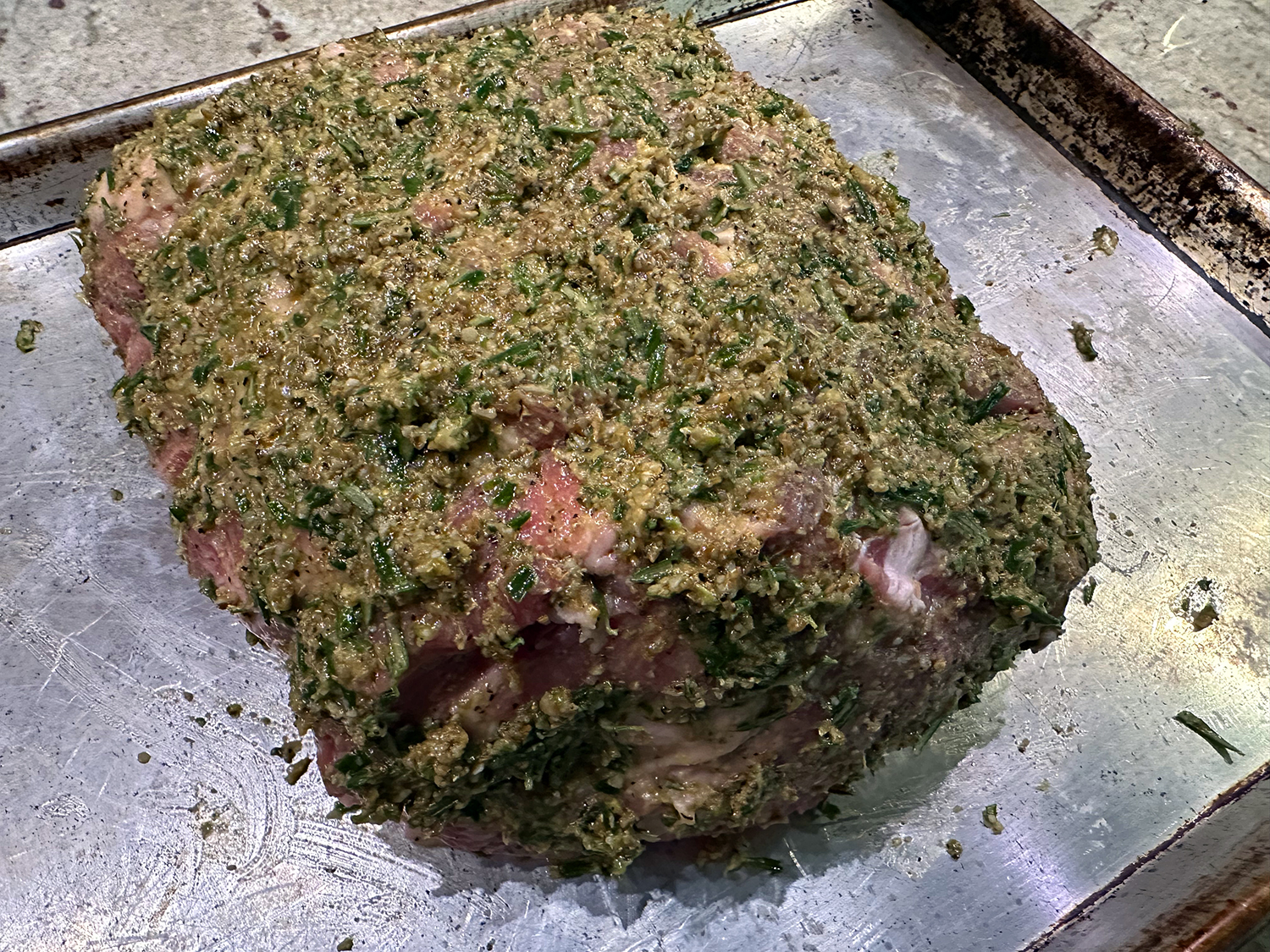
This recipe takes inspiration from porchetta, a Tuscan-style pork roast seasoned with garlic, herbs and spices. A simple fragrant seasoning paste rub is made and the mixture is massaged into shallow cuts in the meat’s fat cap so it clings to the roast.

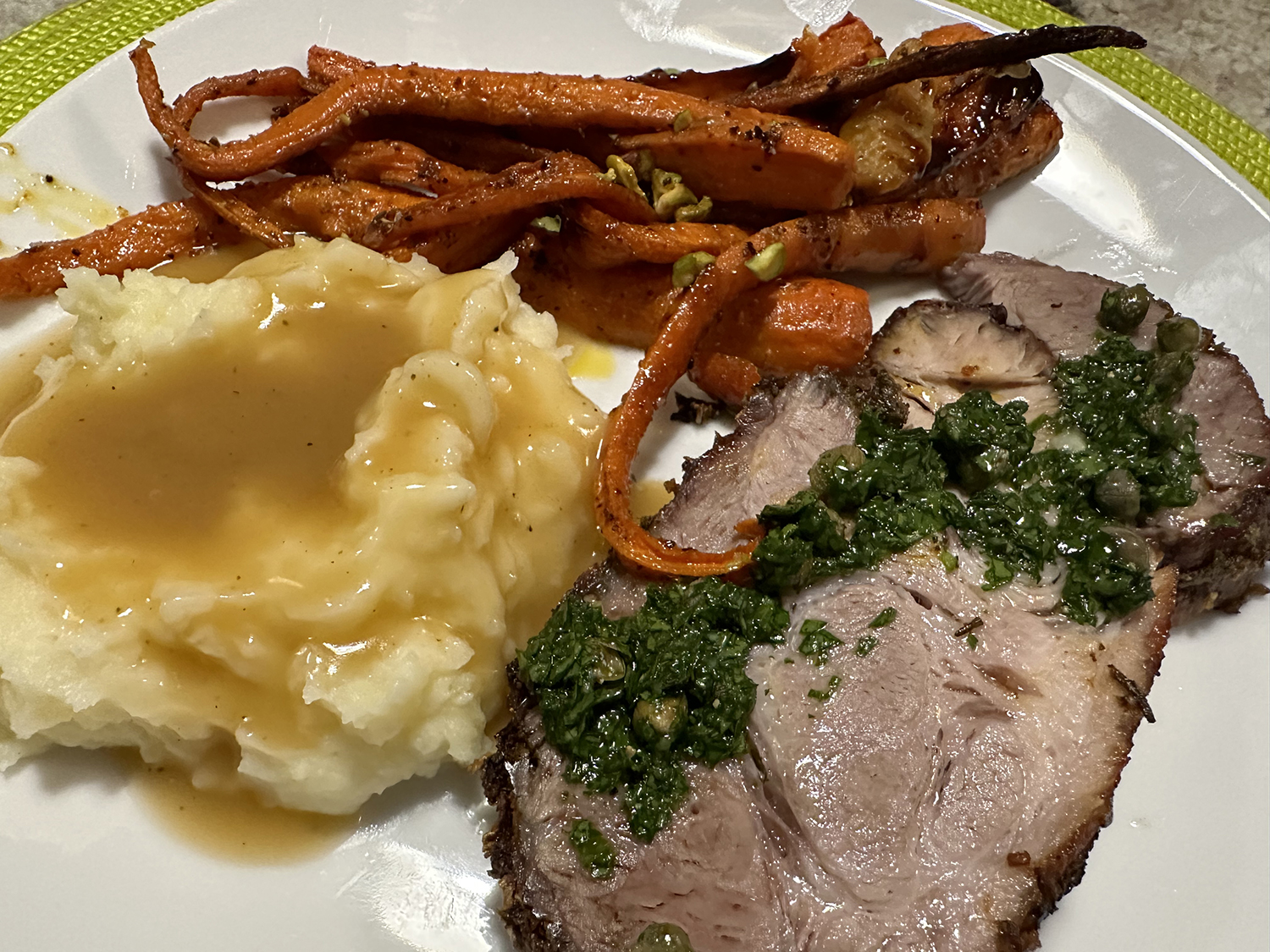
Roasting meat on a baking sheet, rather than in a roasting pan, promotes better air circulation, accelerating cooking and boosting browning. Use the time while the meat rests to throw together a zingy-fresh parsley-caper sauce that’s a perfect foil to the richness of the meat.

One noted difference that we made was to tie the pork with kitchen twine 3 or 4 times around the girth of the roast. And as ours didn’t have much of a fat cap, we made the cuts directly into the top of the meat. Butter-Roasted Carrots with Za’atar and Pomegranate Molasses, and garlicky mashed potatoes with gravy rounded out the meal.

Slow-Roasted Pork Shoulder with Fennel, Garlic and Rosemary

  • Servings: 6-8
  • Difficulty: easy
  • Print

Ingredients

  • 3 Tbsp. fennel seeds
  • ½ cup extra-virgin olive oil, divided
  • ⅔ cup lightly packed fresh rosemary
  • 9 medium garlic cloves, 8 smashed and peeled, 1 finely grated, reserved separately
  • Kosher salt and ground black pepper
  • 5 lb. boneless pork shoulder roast, untrimmed
  • 2 cups lightly packed fresh, flat-leaf parsley, chopped
  • ¼ cup drained capers, plus 3 Tbsp. caper brine

Directions

  1. Heat the oven to 300°F with a rack in the middle position. In a food processor, process the fennel seeds to a mixture of finely ground and coarsely cracked seeds, about 2 minutes. Add ¼ cup of the oil, the rosemary, smashed garlic cloves, 1 tablespoon salt and 2 teaspoons pepper. Process to form a paste, about 30 seconds, scraping the bowl as needed.
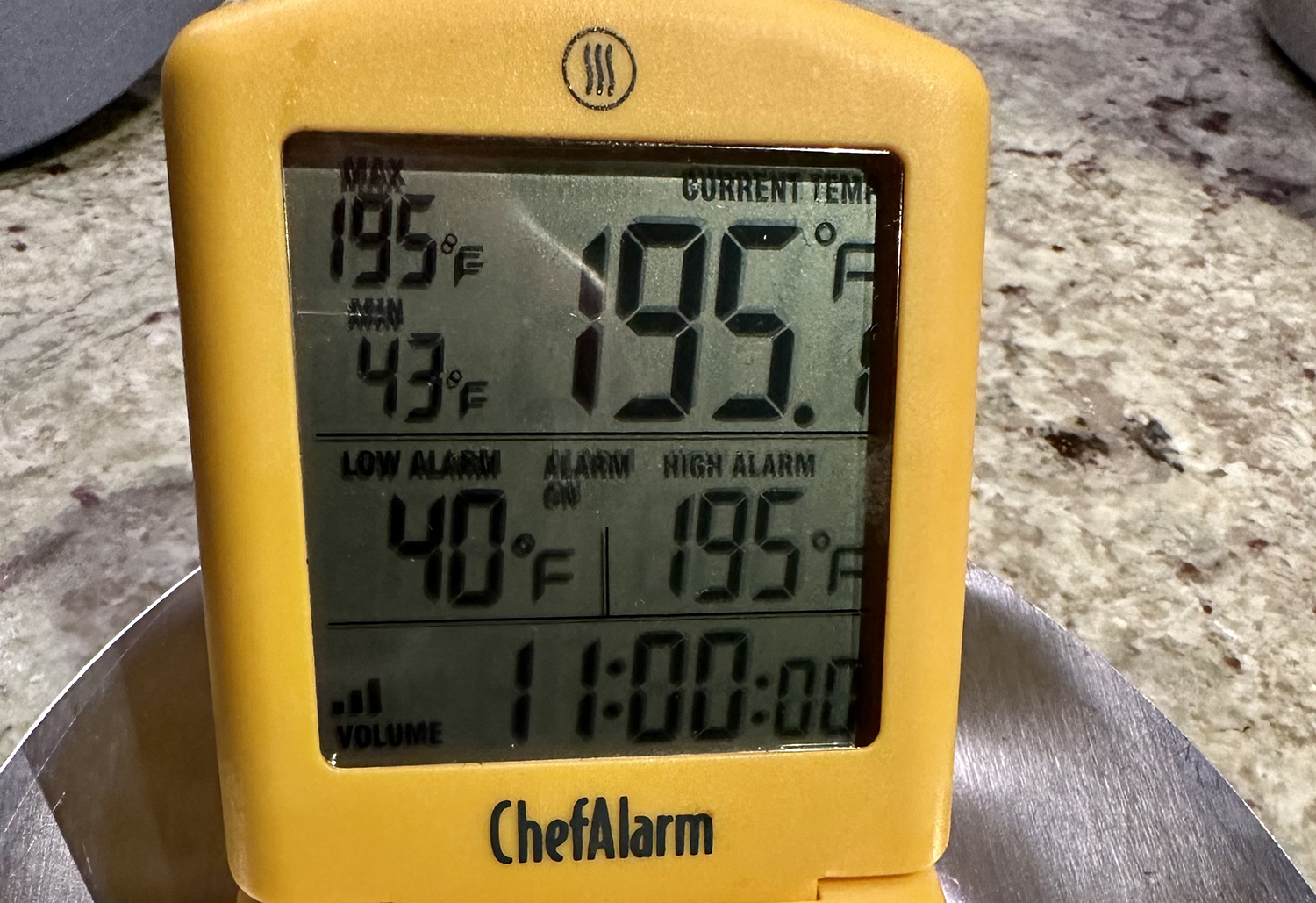
  2. With a knife, score a crosshatch pattern into the surface fat on top of the roast. Using your hands, rub the paste onto all sides of the roast and into the cuts. Place the pork fat side up on a rimmed baking sheet and roast until the center reaches 195°F, about 4 hours. (Ours took 4 1/2 hours to come to temp.)
  3. When the roast is done, tent with foil and let rest for about 15 minutes. Meanwhile, in a small bowl, stir together the remaining ¼ cup oil, grated garlic, parsley, capers and brine and ¼ teaspoon pepper. Transfer the roast to a cutting board. Cut into slices, then transfer to a platter. Serve with the sauce.

http://www.lynnandruss.com

Recipe by Dimitri Demopolous for Milk Street

Pan-Seared Scallops With Chorizo and Corn

We recently made another dish that featured scallops and chorizo—an odd, but very successful combination it seems. That first Scallops and Chorizo in Tomato Sauce dish was a real hit in our house, so we thought we’d give this recipe highlighting both of those same proteins an equal chance. Oh, so glad we did. Fantabulous! Is that a word?

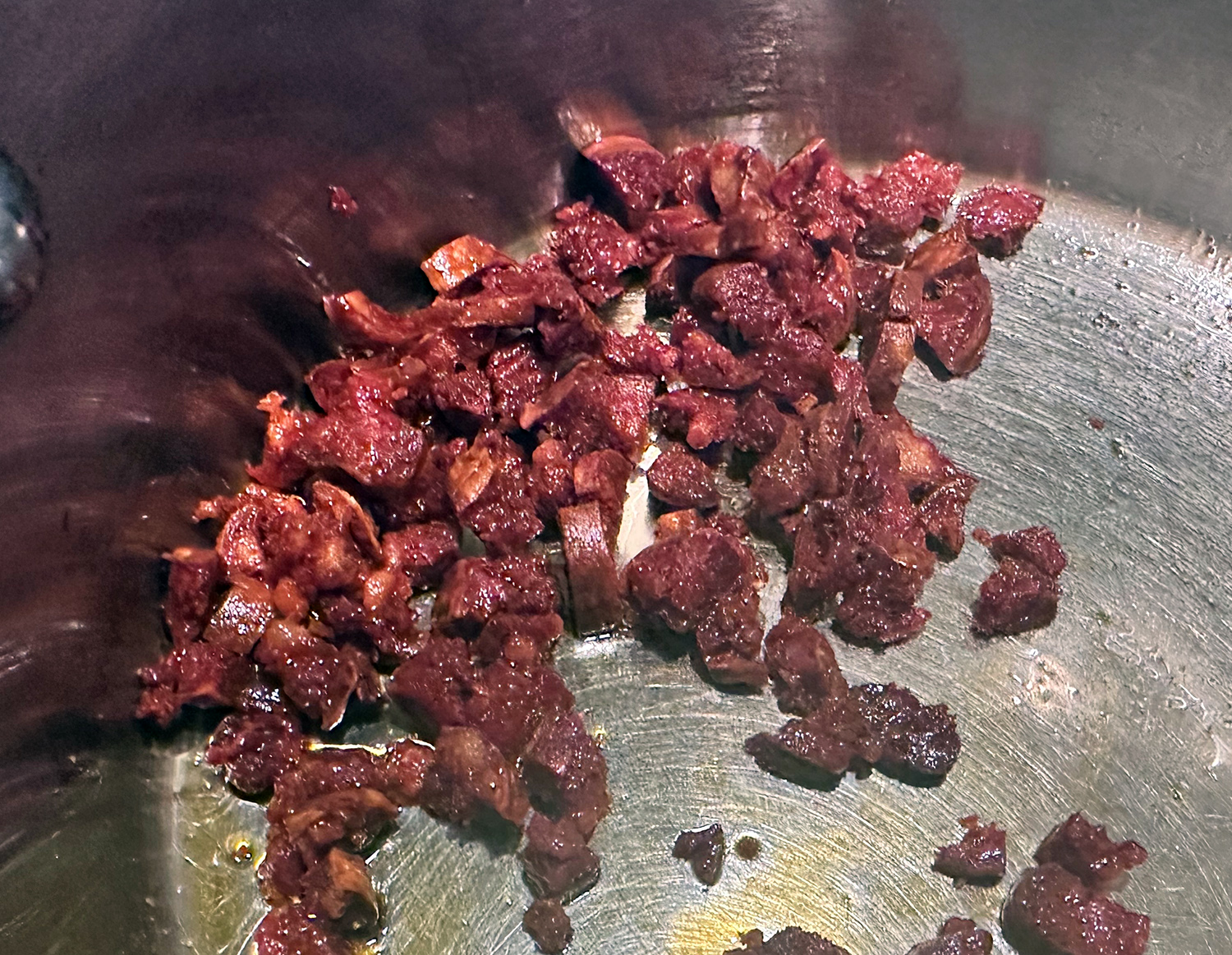
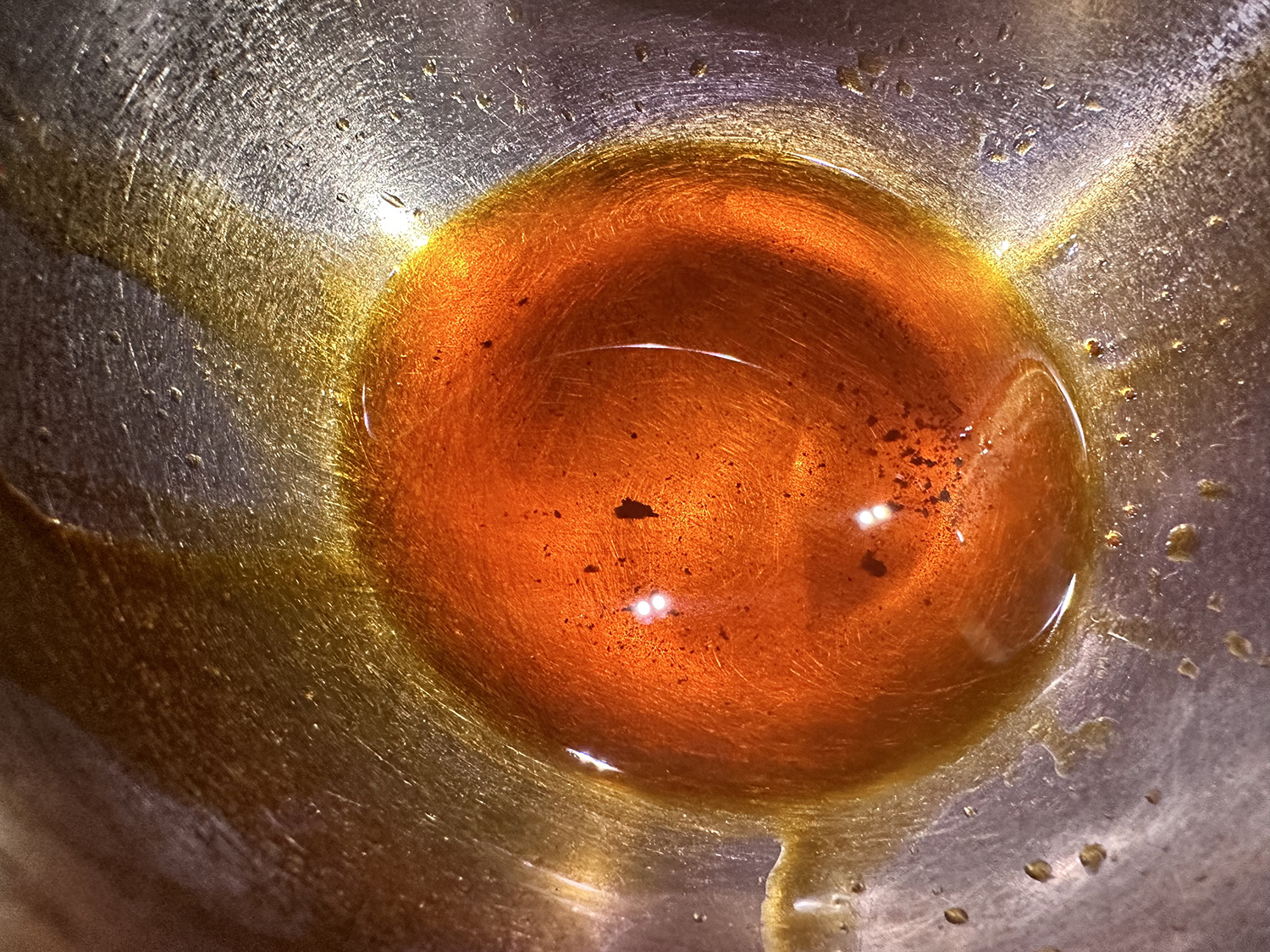
Large sea scallops are treated to the flavorful oil left behind when you cook the chorizo—and we agree with the description from Bon Appétit, “it’s basically liquid gold!”

There is no doubt, we’ll be making this again! Of course, fresh corn on the cob is a must, so you want to be making this dish during the peak of corn season, if at all possible.

Four portions seemed a little miserly to us, allowing only three scallops per diner. Split three ways, each person gets four scallops, a more reasonable quantity. You could easily use a total of 16 scallops, instead of 12, without changing the amounts of the other ingredients.

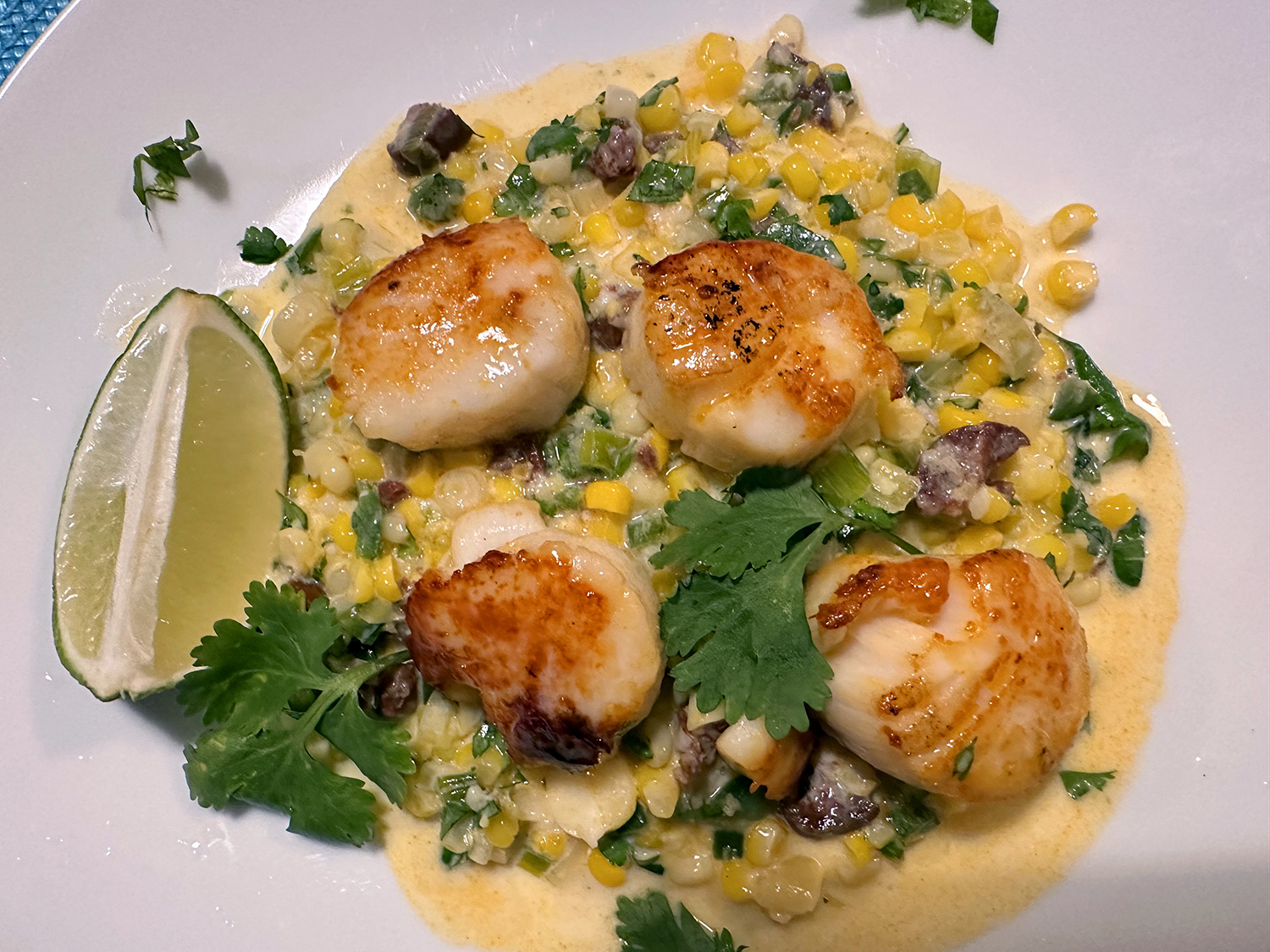
The melded flavors are fantastic with a bright note from the squeeze of fresh lime juice. We practically licked our plates clean.

Pan-Seared Scallops with Chorizo and Corn

  • Servings: 3-4
  • Difficulty: easy
  • Print

Ingredients

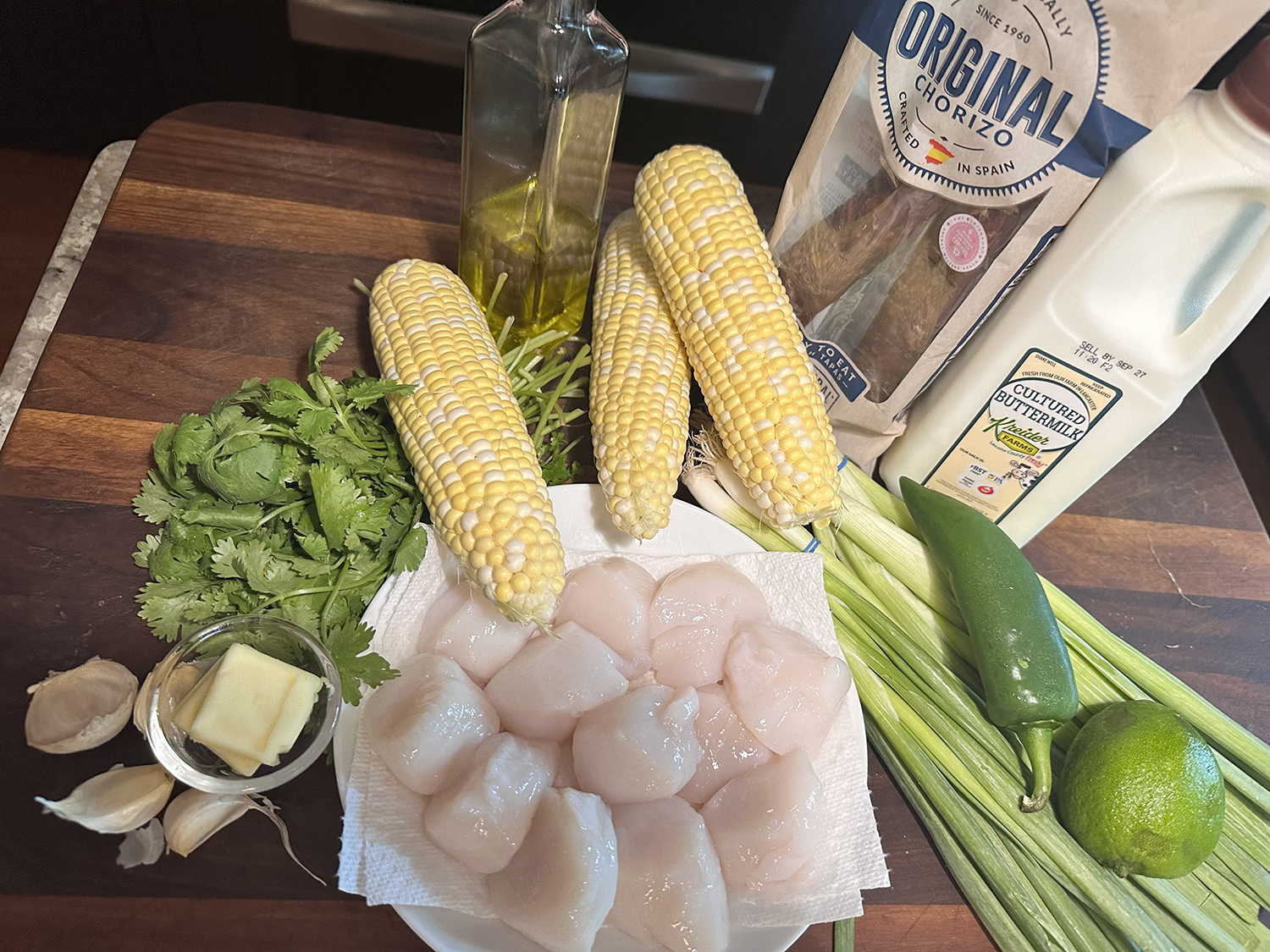
  • 3 ears of corn, husked
  • 3 Tbsp. extra-virgin olive oil, divided
  • 2 oz. smoked Spanish chorizo, finely chopped
  • 12 scallions, white and pale green parts only, thinly sliced
  • 4 garlic cloves, thinly sliced
  • ½–1 serrano chile (depending on heat), finely chopped
  • ¾ tsp. kosher salt, plus more
  • 1 cup buttermilk
  • ⅓ cup chopped cilantro
  • 12 large sea scallops (about 1 lb.), side muscle removed, patted dry
  • 2 Tbsp. unsalted butter
  • 1 lime, halved
  • Lime wedges (for serving)

Directions

  1. Cut kernels from corncobs and place in a medium bowl. Using the back of a chef’s knife, scrape milk from cobs into the bowl; discard cobs.
  2. Heat 1 Tbsp. oil in a medium saucepan over medium. Cook chorizo, stirring occasionally, until it starts to get crisp, about 2 minutes. Carefully pour chorizo oil into a small bowl (use a slotted spoon to hold back chorizo); set chorizo oil aside.
  3. Return chorizo pan to medium heat and add scallions, garlic, chile, 1 Tbsp. olive oil, and ¾ tsp. salt. Cook, stirring occasionally, until vegetables are softened but not browned, about 2 minutes.
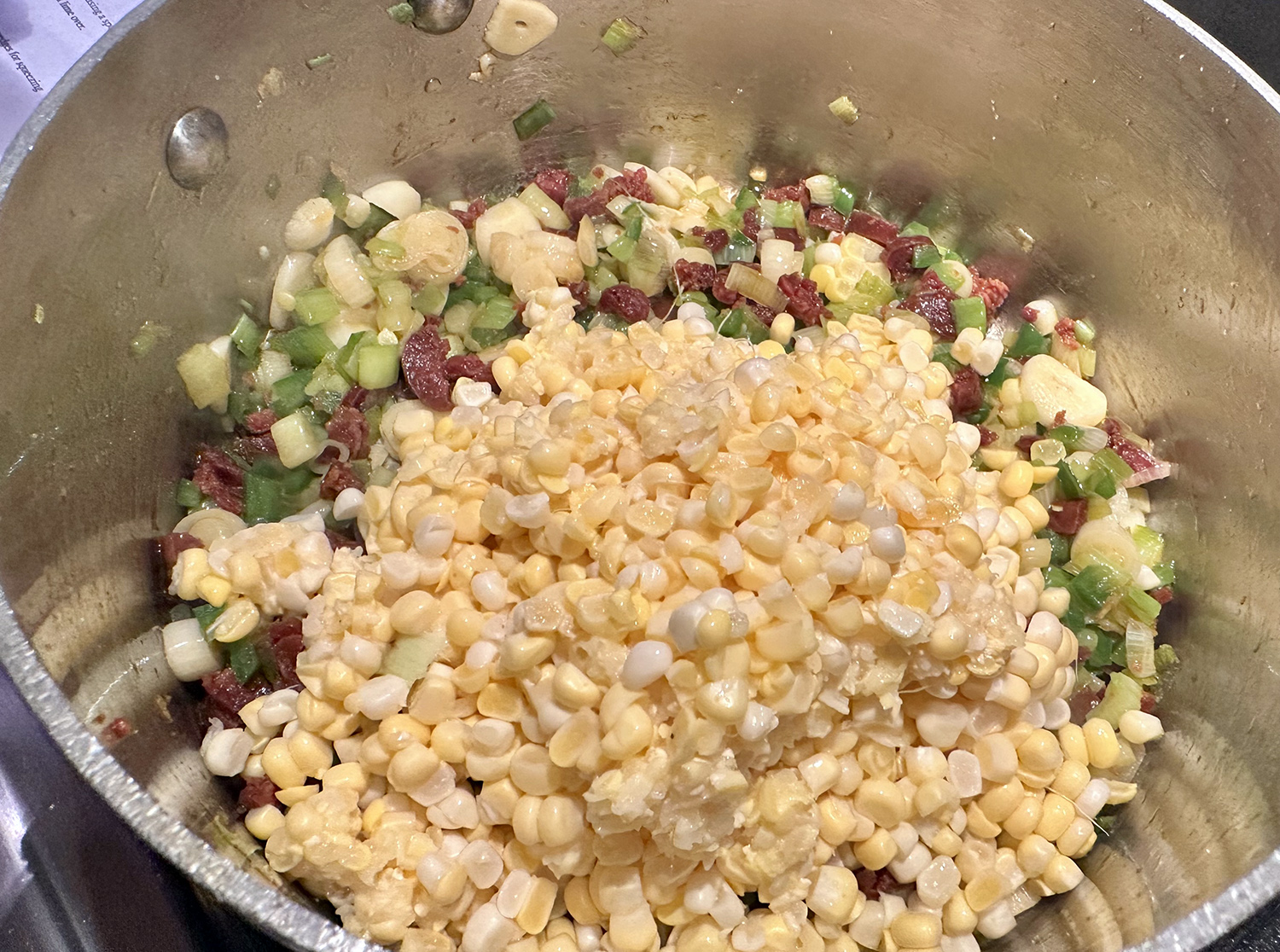
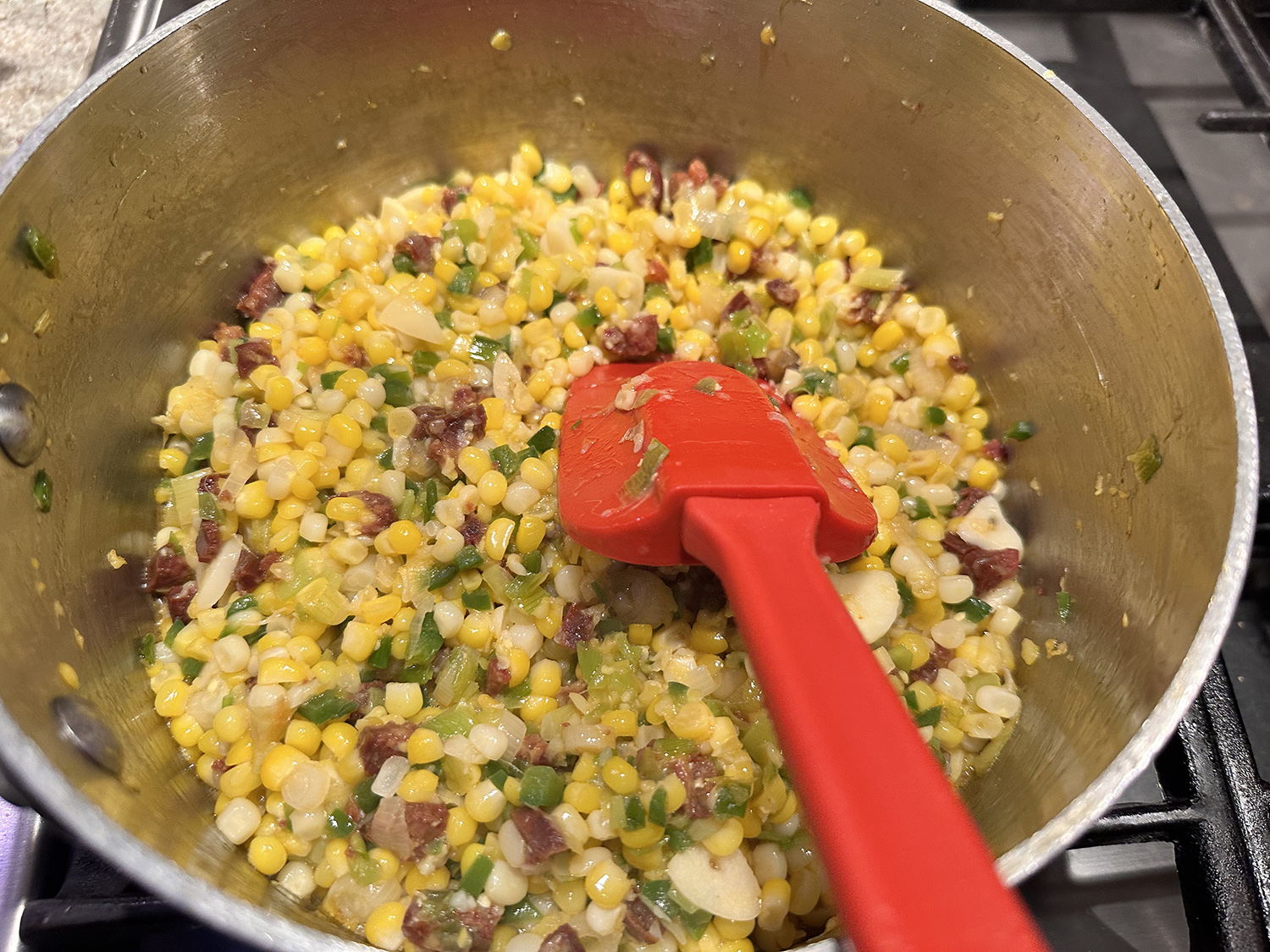
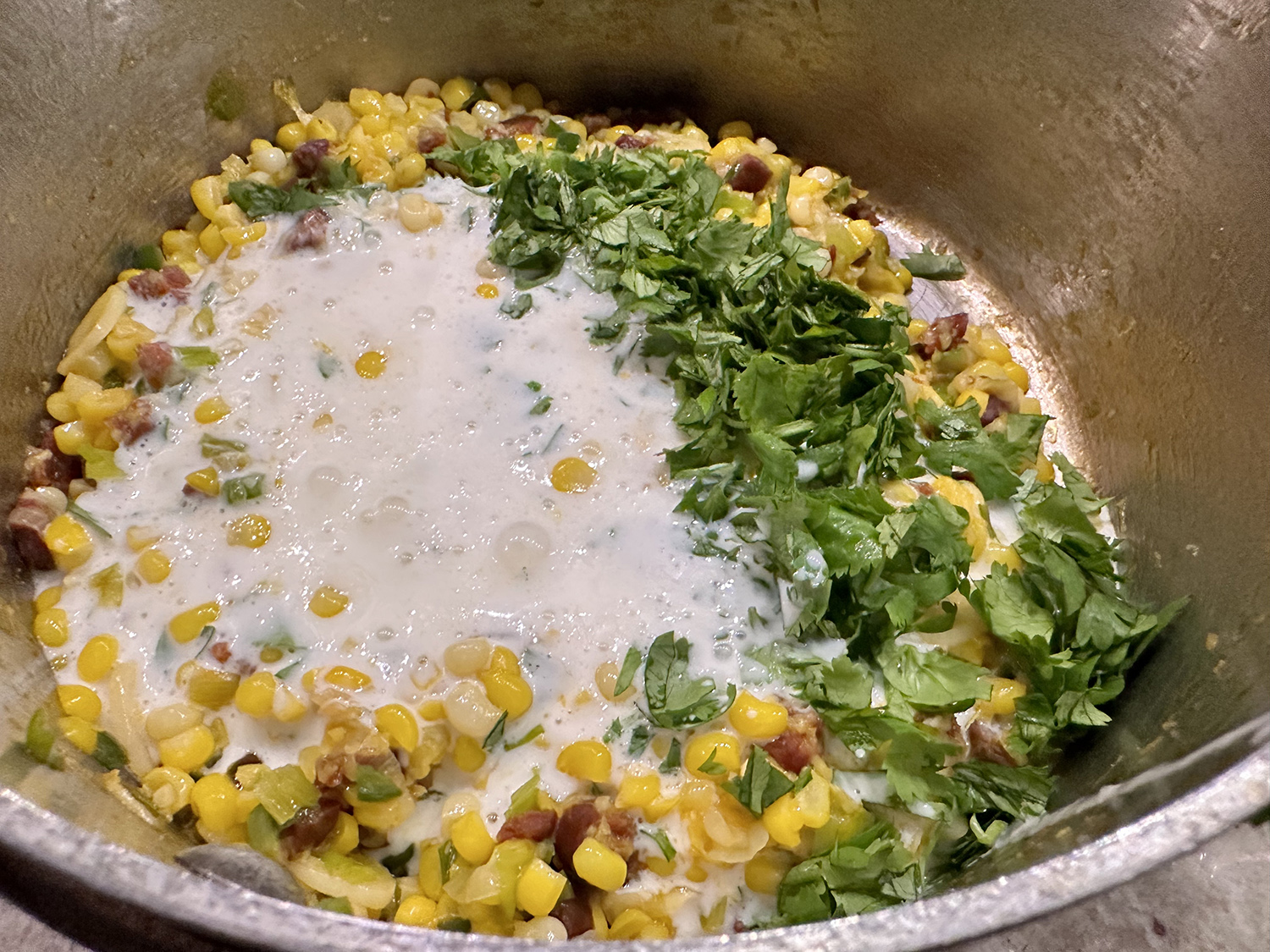
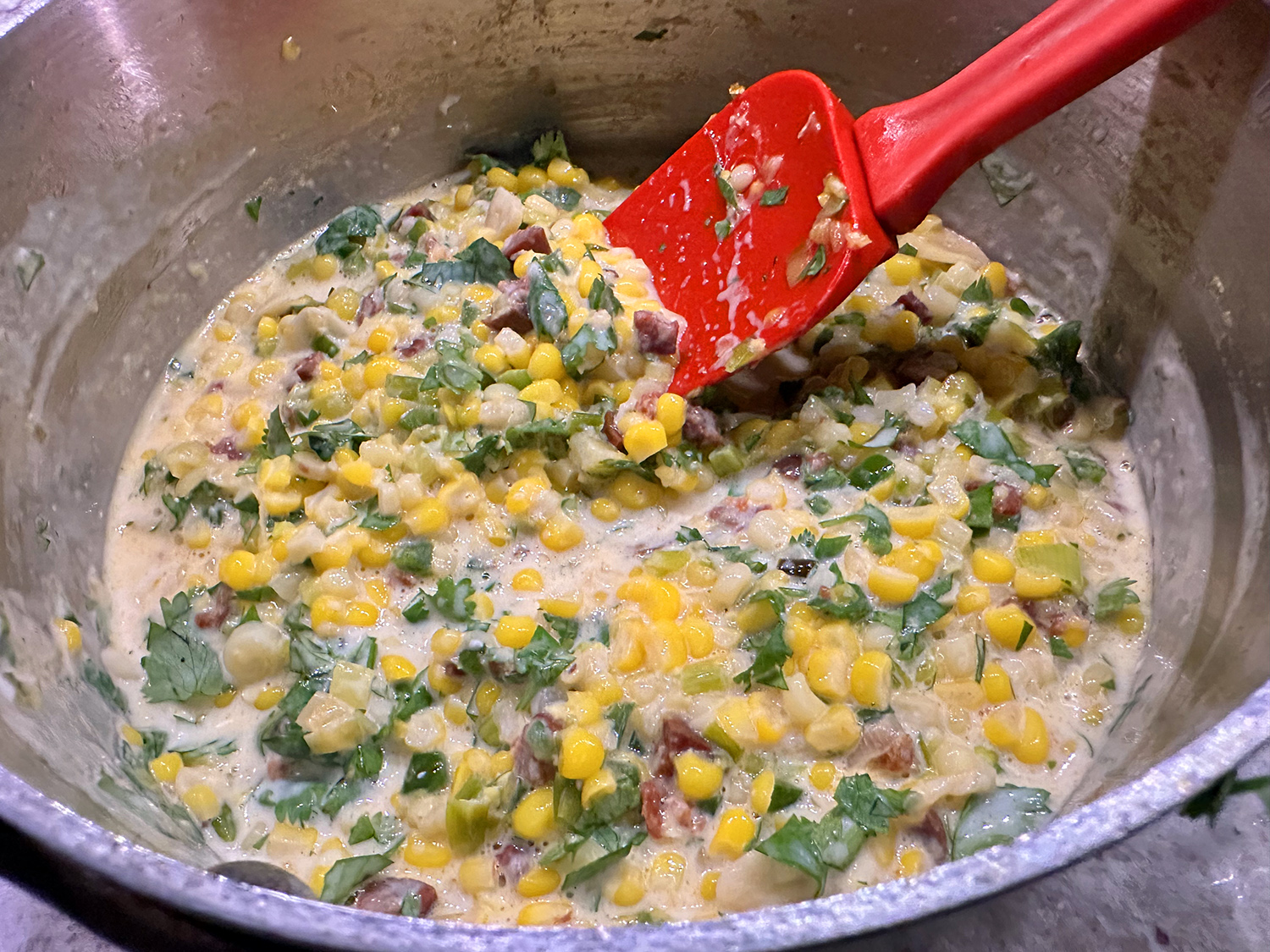
  4. Add corn kernels and cook, stirring occasionally, until bright yellow and softened, 5–7 minutes. Remove from heat and let corn mixture cool in pan 5 minutes. Gently mix in buttermilk and cilantro. Taste and season with more salt if needed.
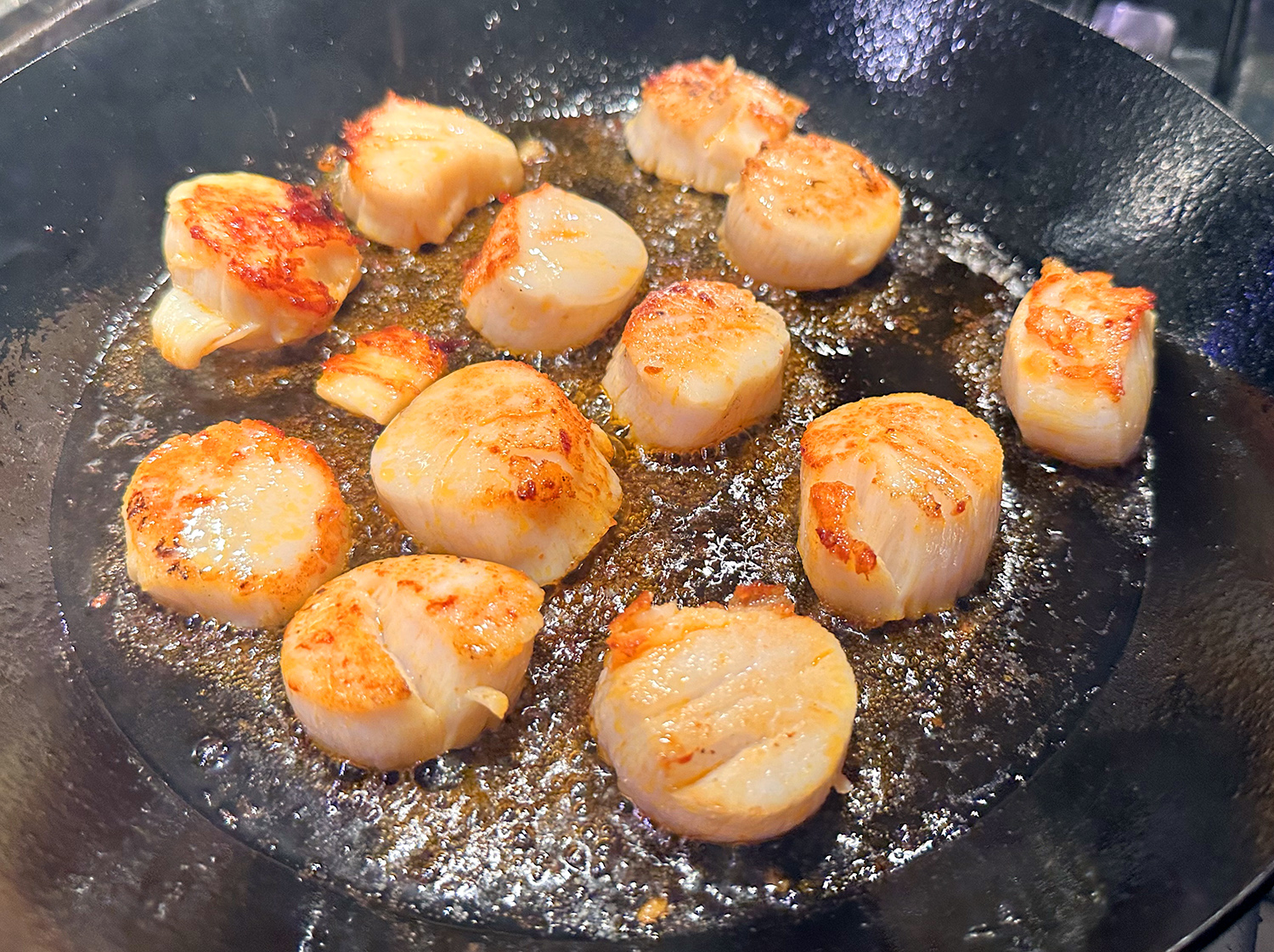
  5. Season scallops generously with salt. Heat reserved chorizo oil and remaining 1 Tbsp. olive oil in a large skillet over medium-high until just beginning to smoke. Cook scallops on one side, reducing heat if they are taking on too much color and moving around in pan for even browning, until a golden brown crust forms on the bottom, about 3 minutes.
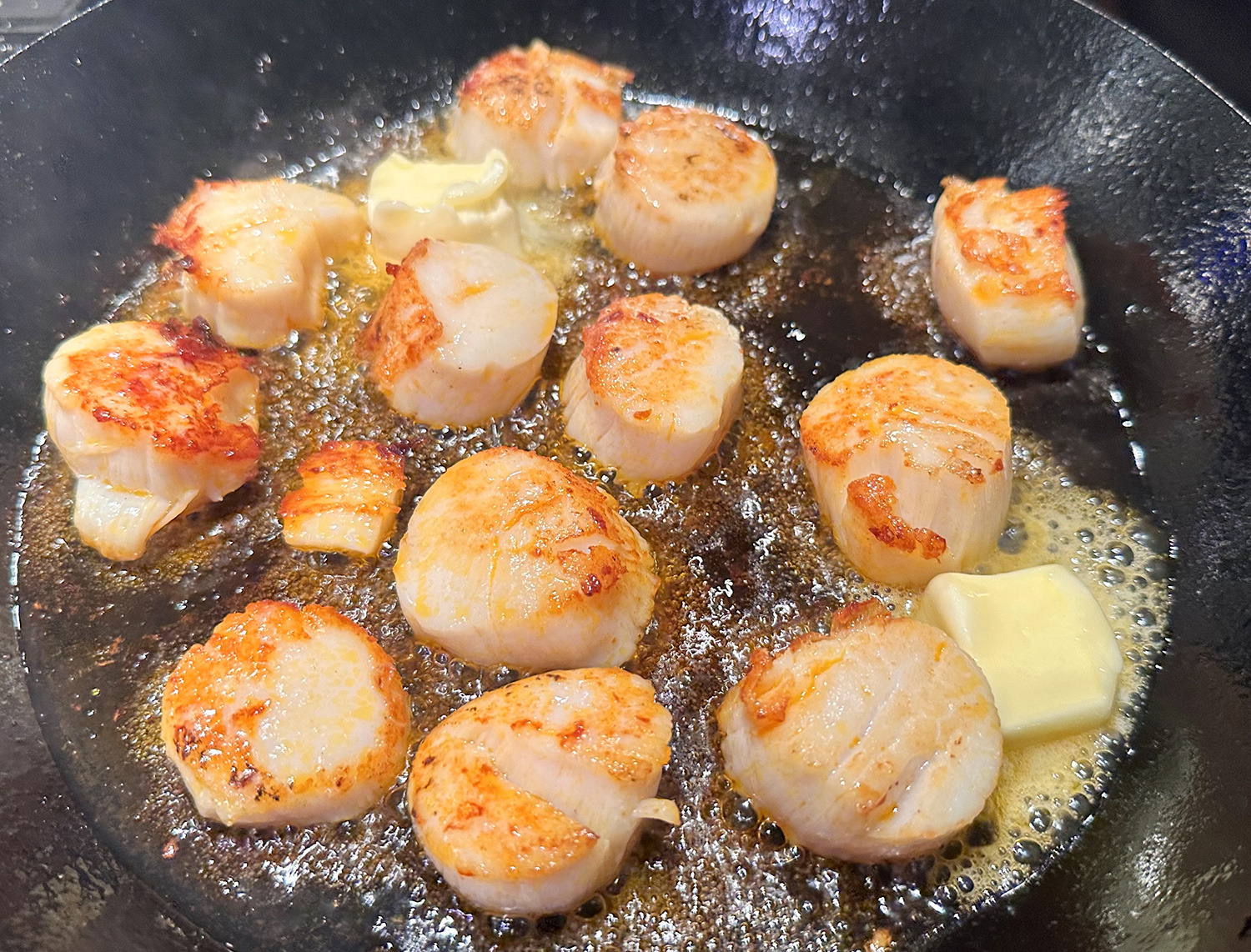
  6. Reduce heat to medium-low and turn scallops over. Add butter to skillet and, using a spoon, baste scallops with butter 30 seconds. Transfer scallops to a plate. Squeeze halved lime over.
  7. Divide corn mixture among plates and arrange scallops on top. Serve with lime wedges for squeezing over.

http://www.lynnandruss.com

Recipe by Molly Baz for Bon Appétit

Colombian-Style Asado Pork Chops

The flavor, a bold blend of sweet and savory, with herbs and onions most obvious, but sugar and brine almost as pronounced. The thick pork chops are drenchingly moist and wildly flavorful. Each bite has briny and spicy and rich and savory.

This recipe is an attempt to recreate a Bogotá asado mix. Instead of a mix of meats, this option is for easy-to-cook, richly flavorful bone-in pork chops. Typically it includes achiote, a seed that adds vivid red-orange color and mild, earthy notes. Easier-to-source sweet paprika is substituted here, and cider vinegar is a stand-in for apple wine (a beverage similar to dry hard cider) to bring tart, fruity notes that balance the spices and herbs.

A blender makes quick work of the seasoning paste, half of which coats the chops for marinating; the rest is brushed onto the pork midway through cooking. If desired, serve with roasted potatoes and/or fried plantains, as asado is served in Bogotá. We paired ours with grilled broccoli and pickled shallots.
Don’t scrape the seasoning paste off the chops before grilling. The paste aids with browning and develops a rich, heady aroma along with depth of flavor on the grill.

Colombian-Style Asado Pork Chops

  • Servings: 4
  • Difficulty: easy
  • Print

Ingredients

  • 1/4 cup sweet paprika
  • 2 scallions, roughly chopped
  • 2 bay leaves
  • 1 1/2 tsp. ground cumin
  • 1 tsp. dried thyme
  • 1 tsp. ground allspice
  • 2 medium garlic cloves, smashed and peeled
  • 3 Tbsp. cider vinegar
  • 2 Tbsp. packed brown sugar
  • 2 Tbsp. grapeseed or other neutral oil
  • Kosher salt and ground black pepper
  • 4 10- to 12-oz. bone-in pork loin chops (each ¾ to 1 inch thick), patted dry
  • Lime wedges, to serve (optional)

Directions

  1. In a blender, combine the paprika, scallions, bay, cumin, thyme, allspice, garlic, vinegar, sugar, oil, ¼ cup plus 2 tablespoons water, 2 teaspoons salt and 1 teaspoon pepper. Blend, scraping the jar as needed, until smooth, about 30 seconds. Measure ⅓ cup of the paste into a small bowl, then stir in 2 tablespoons water; cover and set aside or cover and refrigerate if you will be marinating the chops for more than 2 hours. It is preferable to marinate a full 24 hours if possible.
  2. Coat the chops on all sides with the remaining seasoning paste, rubbing it into the meat. Set on a large plate or baking dish, cover and refrigerate for at least 1 hour or up to 24 hours.
  3. When you are ready to cook the chops, remove from the refrigerator (along with the reserved seasoning paste, if refrigerated) and let stand at room temperature while you prepare a charcoal or gas grill.
  4. For a charcoal grill, ignite a large chimney of coals, let burn until lightly ashed over, then distribute evenly over one side of the grill bed; open the bottom grill vents. For a gas grill, turn all burners to high. Heat the grill, covered, for 5 to 10 minutes, then clean and oil the grate.
  5. Without scraping off the seasoning paste, place the chops on the grill (on the hot side, if using charcoal). Cook, uncovered, until nicely charred on the bottoms, 5 to 7 minutes.
  6. Brush the chops with about half of the reserved seasoning paste, then flip the chops and brush with the remaining reserved seasoning paste. Cook, uncovered, until the second sides are well charred and the centers near the bone reach 135°F or are just barely pink when cut into, another 5 to 7 minutes.
  7. Flip the chops once again and cook for about 1 minute to heat the newly applied seasoning paste. Transfer to a platter and tent with foil; let rest for 10 minutes. Serve with lime wedges (if using).

http://www.lynnandruss.com

Recipe from an adaptation by Diane Unger for Milk Street

Huli Huli Chicken

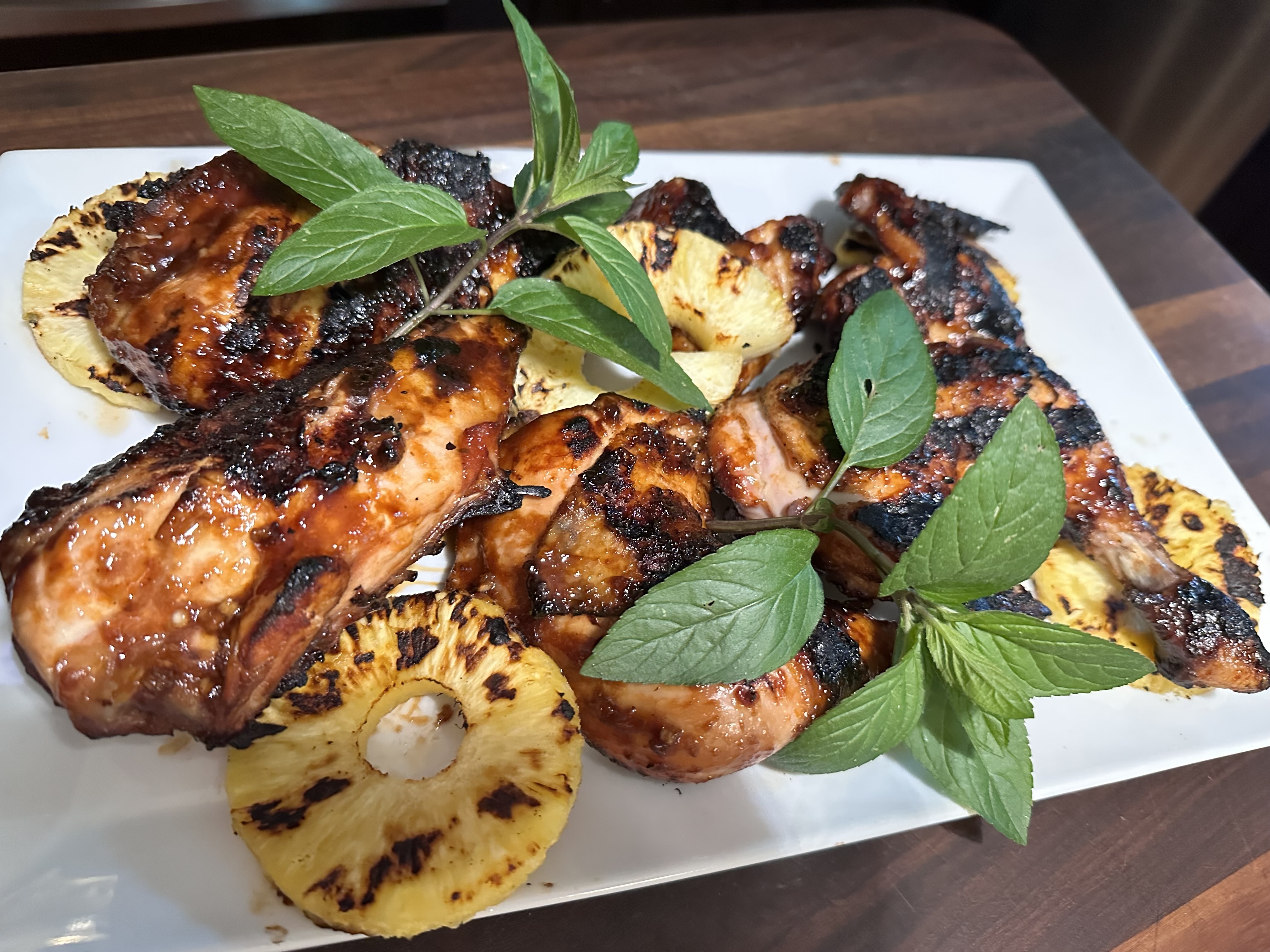
To transport yourself back to the tropics, try this grilled Huli Huli Chicken dinner, made with a minimum of everyday pantry ingredients.

Aloha my friends! As the story goes: “In 1955, Ernest Morgado, a Honolulu businessman, served a group of farmers grilled chicken that had been marinated in his mother’s teriyaki-style sauce. It was such a hit that he decided to market it with the name “huli huli.” Huli means “turn” in Hawaiian and refers to how it’s prepared: grilled between two racks and turned halfway through cooking.”

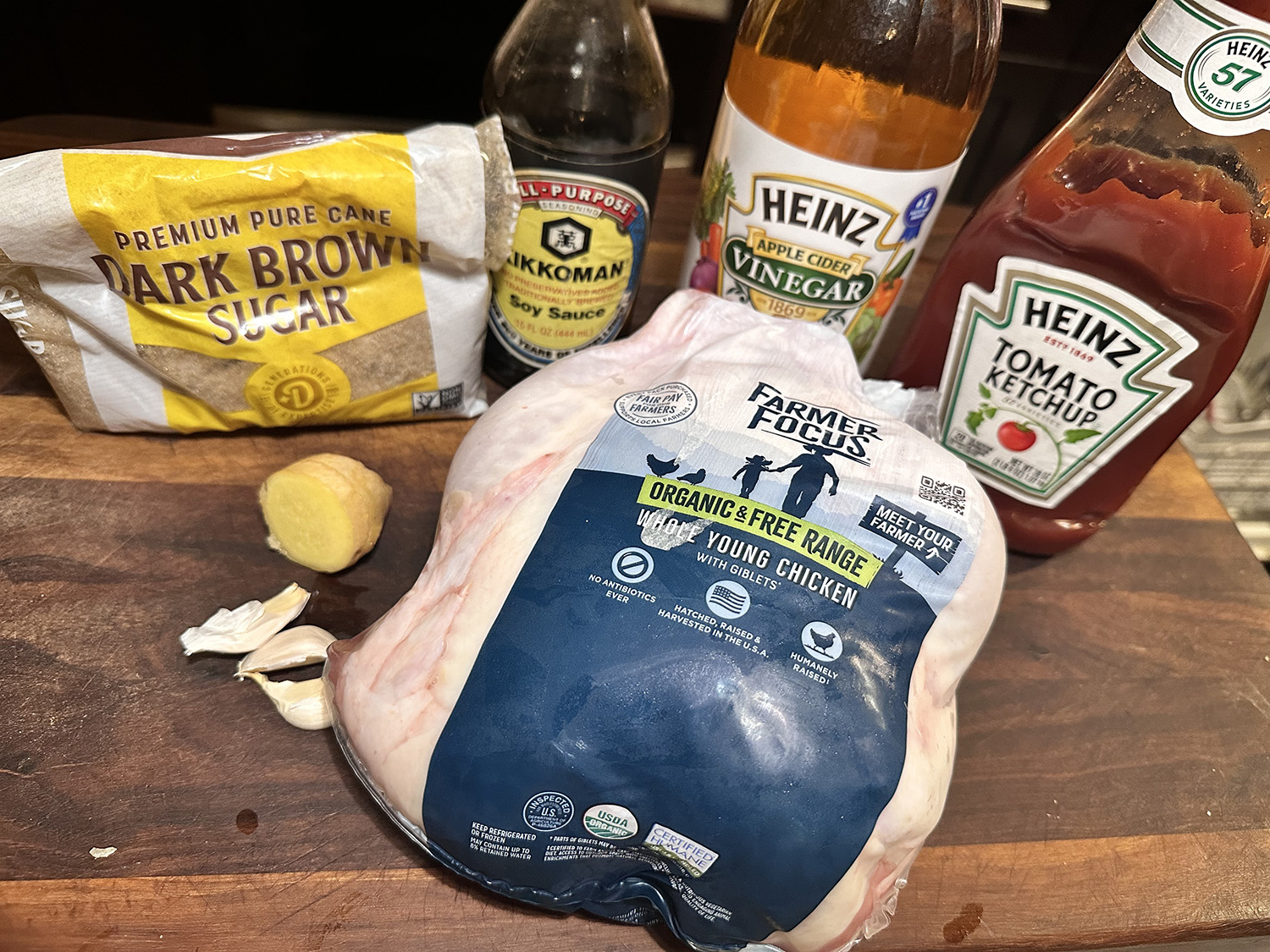
This simplified version from NY Times Cooking calls for chicken pieces and a standard grill. The original recipe is a trade secret, but you can find many slightly different variations on the internet, most all containing ginger, garlic, soy sauce, something sweet (honey, brown sugar or maple syrup) and something acidic (vinegar, white wine, lime juice or pineapple juice).

This recipe is adapted from “Aloha Kitchen: Recipes from Hawai‘i” by Alana Kysar. It also works beautifully with boneless chicken thighs, but adjust your cooking time accordingly.

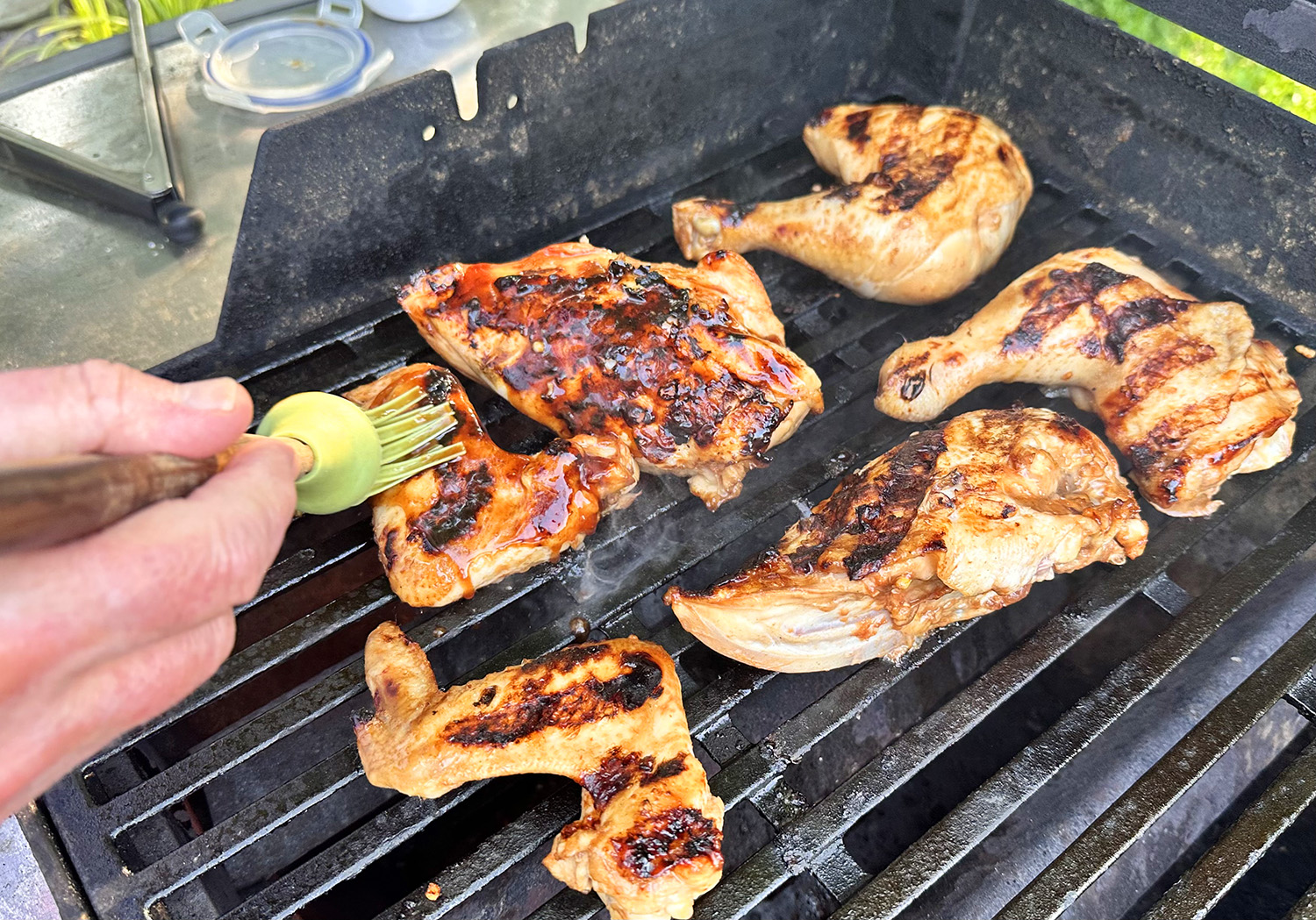
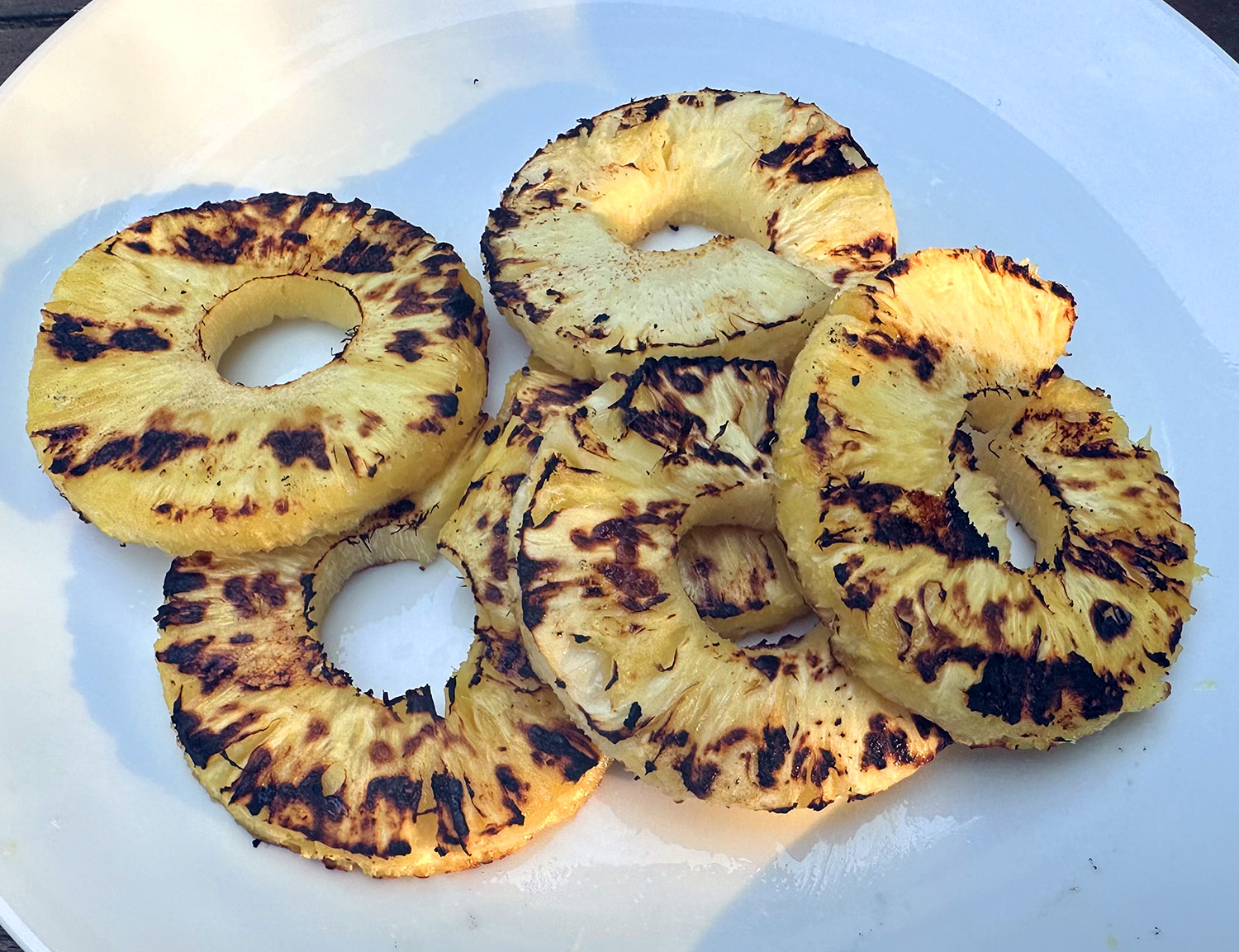
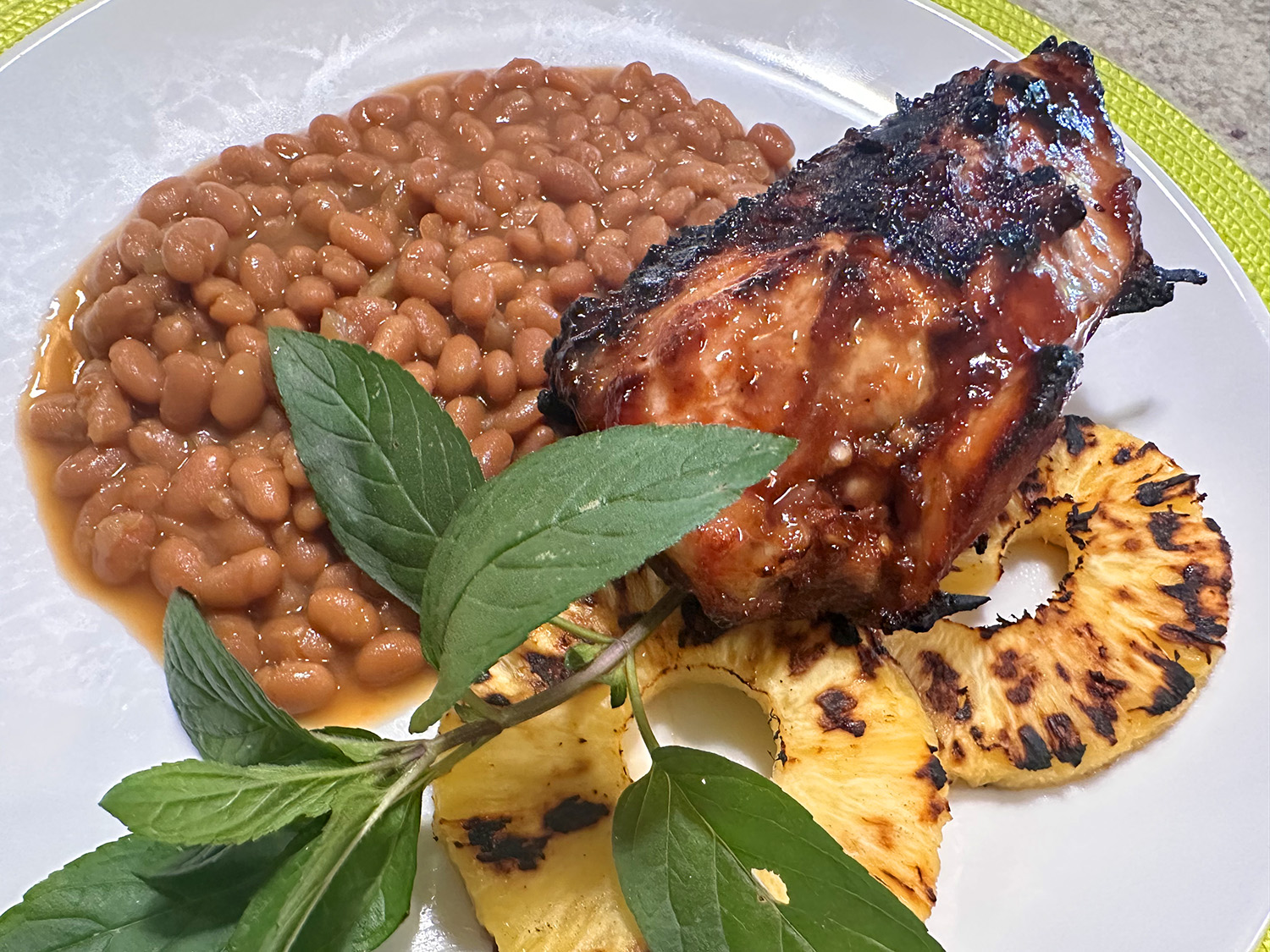
We deconstructed a whole chicken, ending up with unused body parts (back, neck, etc.) for our “body bag” of poultry pieces kept in the freezer for making homemade chicken stock. To add another layer of flavor, grill some pineapple slices. Buy them already sliced, and grill for about 3-4 minutes each side with a bit of the marinade brushed on.

To complete the meal, spoon some warmed baked beans onto your plate.

Huli Huli Chicken

  • Servings: 4
  • Difficulty: easy
  • Print

Ingredients

  • ½ cup ketchup
  • ½ cup soy sauce
  • ½ cup packed light or dark brown sugar
  • ¼ cup rice vinegar or apple cider vinegar
  • 1 (1-inch) piece fresh ginger, peeled and finely grated
  • 2 to 3 garlic cloves, peeled and finely grated
  • 3½ to 4 lbs. bone-in, skin-on chicken pieces
  • Grapeseed or canola oil, for brushing the grill grate

Directions

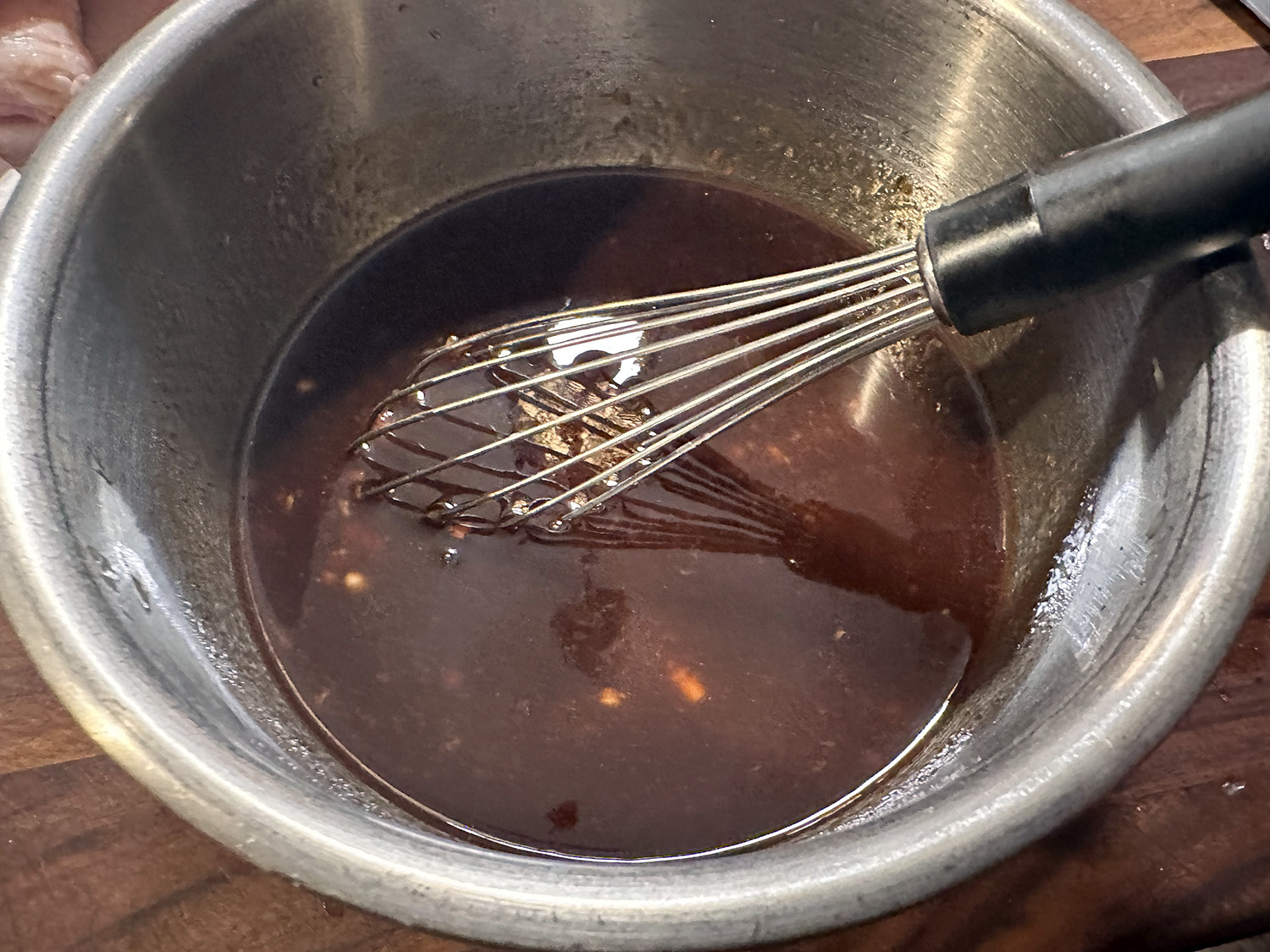
  1. In a large bowl or a gallon-size resealable plastic bag, combine the ketchup, soy sauce, brown sugar, rice vinegar, ginger and garlic, and stir or shake until combined. Reserve and refrigerate ½ cup of the mixture for basting the chicken later.
  2. Add the chicken to the remaining mixture, and stir or shake until evenly coated. If using a bowl, cover with plastic wrap. Refrigerate overnight, or at least 8 hours, turning the chicken at least once.
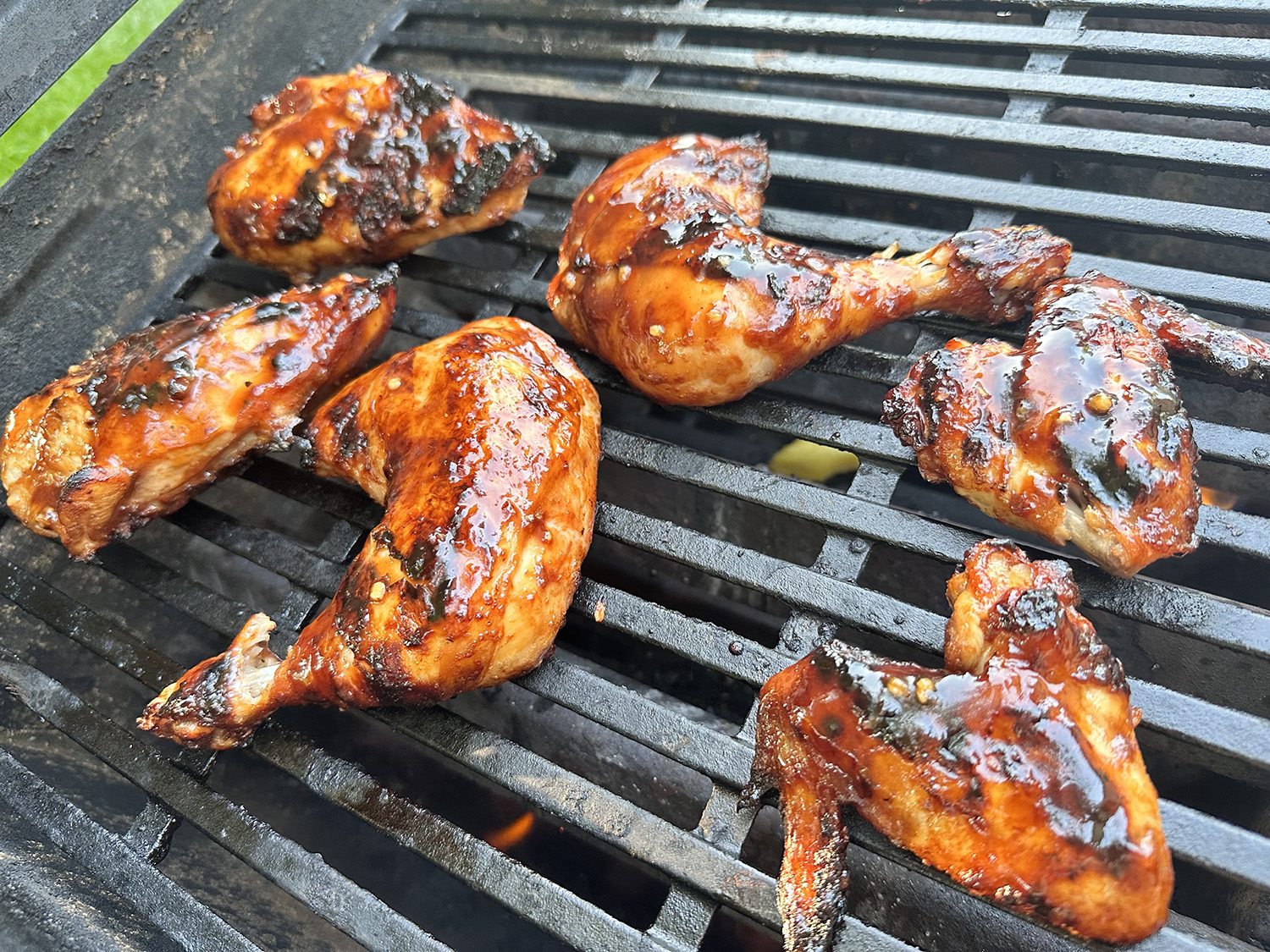
  3. When you’re ready to cook, oil your grill grates well. Heat the grill to medium (for charcoal, the grill is ready when you can hold your hand 5 inches above the coals for 5 to 7 seconds). Add the chicken to the grill, cover, and cook 25 to 35 minutes, turning every 5 minutes to keep the chicken from burning, and basting it with the reserved marinade after you turn it, until cooked through. (Cook times will vary depending on sizes and cuts of chicken pieces, so be sure to check for doneness: Meat should not be pink and the juices should run clear.)
  4. When the chicken is pretty much to temperature, move the meat to the indirect side of the grill, and place the pineapple slices over the direct heat. Baste with the marinade and cook for 3 minutes each side to show char marks. Plate with the grilled chicken.
  5. Serve immediately.

http://www.lynnandruss.com

Recipe adapted from Alana Kysar for NYTimes Cooking

Skirt Steak Saltimbocca

This company-worthy recipe puts a tasty spin on traditional Italian Saltimbocca with thinly pounded skirt steak, wrapped in sage and prosciutto for a delicious variation. Typically, this dish is usually made with veal, but if desired, you could also make this recipe with chicken breasts or pork tenderloin.

Instead of veal, this classic Italian dish uses thinly pounded skirt steak (or in our case, flat iron steak) to create a remarkably tender and flavorful variation that cooks in just minutes. The prosciutto’s crispy and salty flavor pairs nicely with the tender and juicy steak, while the sage provides an earthy and slightly peppery flavor.

The sauce, made with chicken broth, white wine, and butter, is rich and creamy, making it an ideal match for the savory steak. And it was also wonderful poured over our side of orzo.

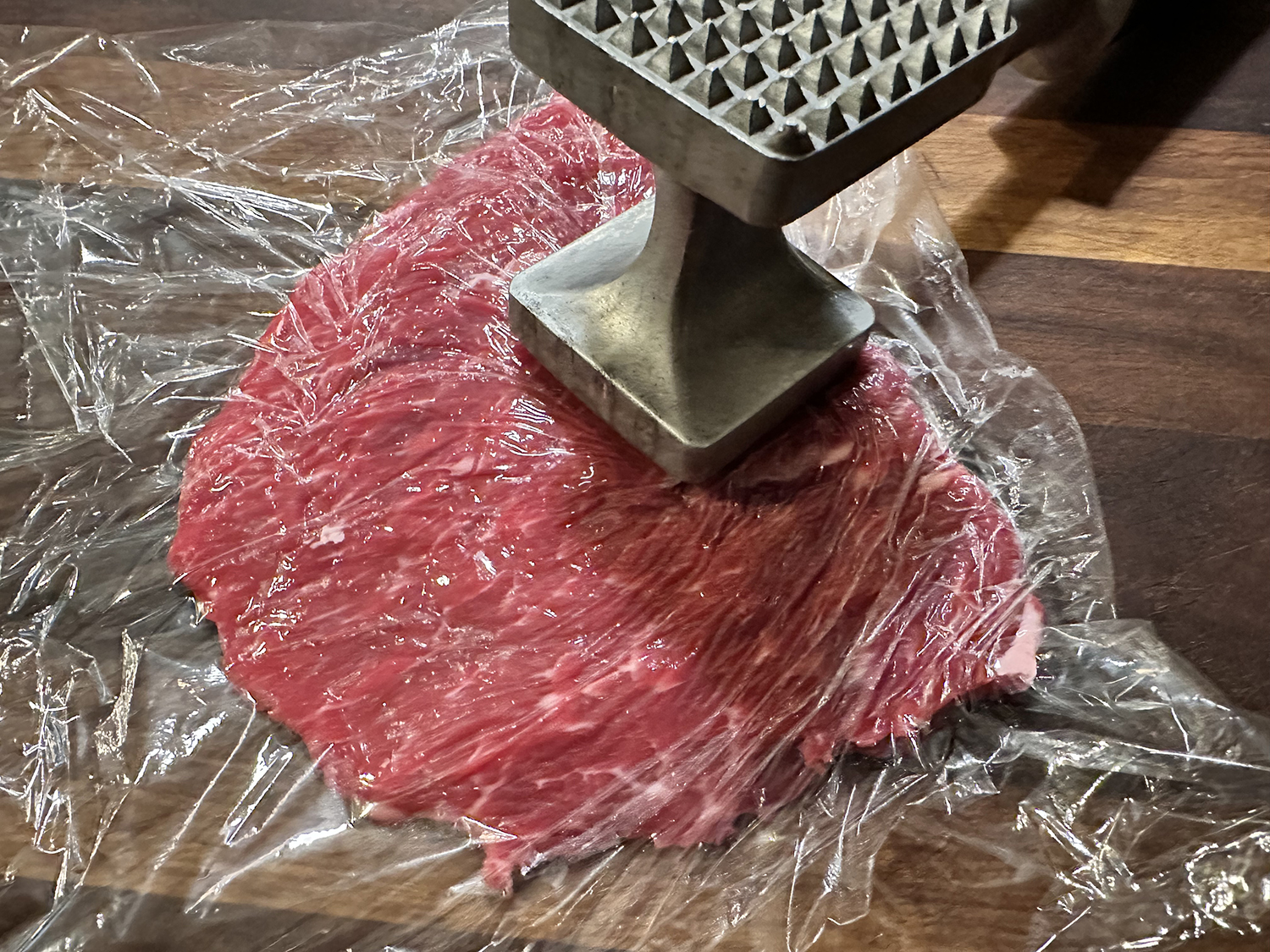
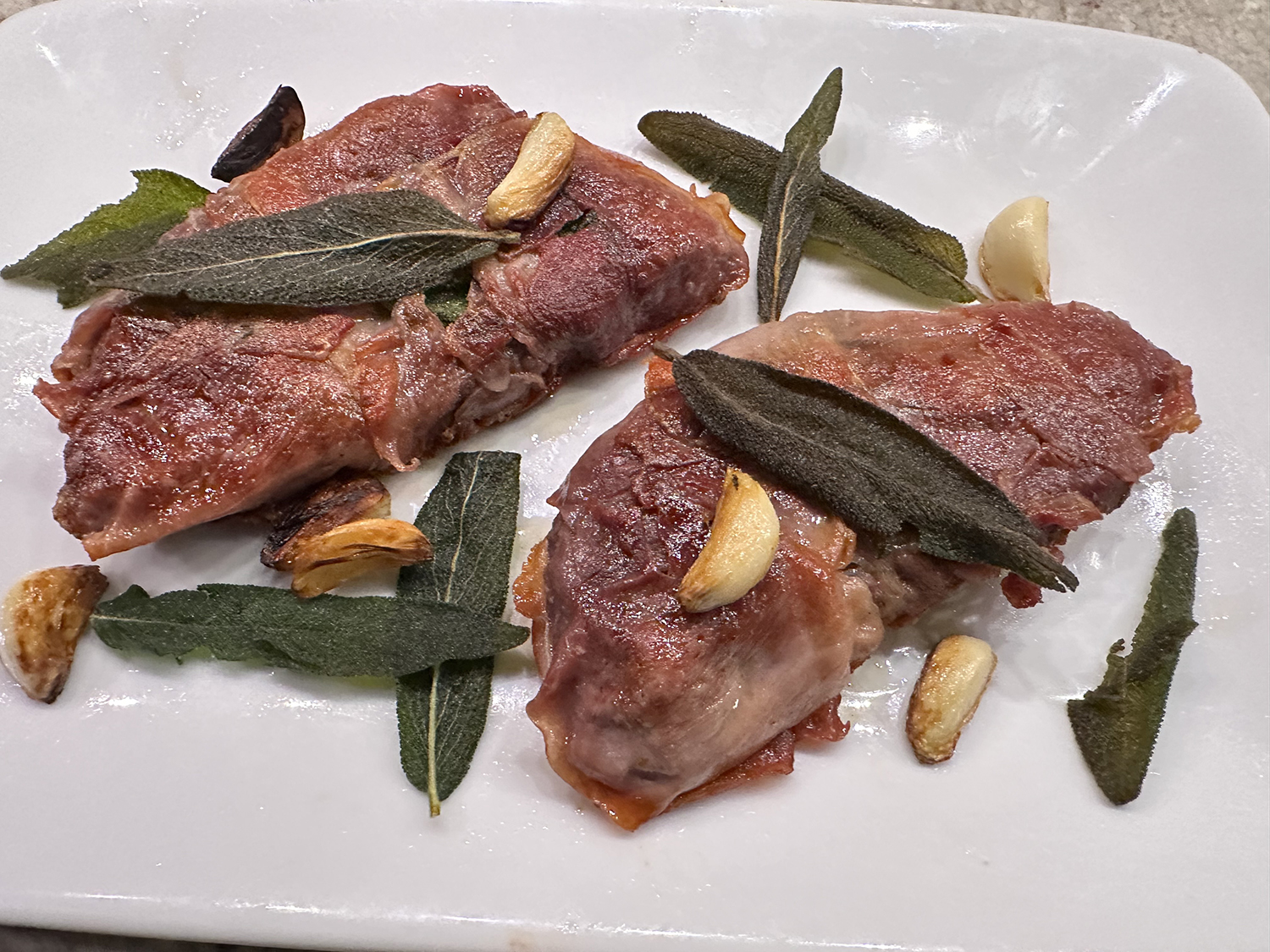
We cut a 12-ounce piece of flat iron in half crosswise; and pounded each half to a 1/4 inch thick. After which, we seasoned the steak and laid 3 sage leaves across each one. Then 3 ultra-thin slices of prosciutto were wrapped around front and back.

Skirt Steak Saltimbocca

  • Servings: 2-3
  • Difficulty: easy
  • Print

Ingredients

  • 1 (12-oz.) skirt steak (about 1 inch thick), trimmed
  • 3/4 tsp. kosher salt, divided
  • 1/2 tsp. black pepper, divided
  • 12 fresh sage leaves, divided
  • 6 thin slices prosciutto 
  • 1/4 cup extra-virgin olive oil (or 2 oz. if searing only two pieces of steak)
  • 4 medium garlic cloves (unpeeled to prevent burning), crushed
  • 1/3 cup chicken broth
  • 1/3 cup white wine
  • 2 Tbsp. cold unsalted butter

Directions

  1. Cut steak crosswise into 4 (3-ounce) pieces; lightly pound each piece between 2 pieces of plastic wrap using a meat mallet or rolling pin until each piece is about 1/4 inch thick. Sprinkle 1/2 teaspoon salt and 1/4 teaspoon pepper evenly over steaks. Place 2 sage leaves on each steak. Wrap 1 piece of prosciutto around each steak, pressing to adhere. (Prosciutto should cover the sage leaves.)
  2. Heat olive oil in a large skillet over medium-high. Add garlic cloves and remaining 4 sage leaves; cook, stirring often, until garlic is lightly browned and sage is crispy, about 2 minutes.
  3. Transfer to paper towels to drain; remove garlic peels, and set garlic cloves and sage aside. Pour half of oil in skillet into a heatproof bowl, and set aside; reserve remaining half of oil in skillet.
  4. Transfer to paper towels to drain; remove garlic peels, and set garlic cloves and sage aside. Pour half of oil in skillet into a heatproof bowl, and set aside; reserve remaining half of oil in skillet.
  5. Reheat oil in skillet over medium-high. Add 2 steak pieces, and cook, undisturbed, until prosciutto is browned and crispy, 1 to 2 minutes. Flip steaks, and cook until prosciutto is crispy and steaks are cooked to desired degree of doneness, about 2 minutes for medium-rare.
  6. Transfer  to a plate, and let rest. Discard oil in skillet. Add reserved oil to skillet, and repeat cooking process with remaining 2 steaks. Transfer to plate with reserved steaks. Do not wipe skillet clean.
  7. Add broth and wine to skillet, and cook over medium-high, stirring occasionally and scraping up any browned bits from bottom of skillet using a wooden spoon, until reduced by half, about 3 minutes.
  8. Remove from heat, and gradually whisk in butter until emulsified and creamy, about 1 minute. Sprinkle with remaining 1/4 teaspoon salt and remaining 1/4 teaspoon pepper. Serve steaks immediately with sauce, and garnish with reserved crispy sage and garlic cloves.

http://www.lynnandruss.com

Adapted from a recipe by Justin Chapple for Food & Wine

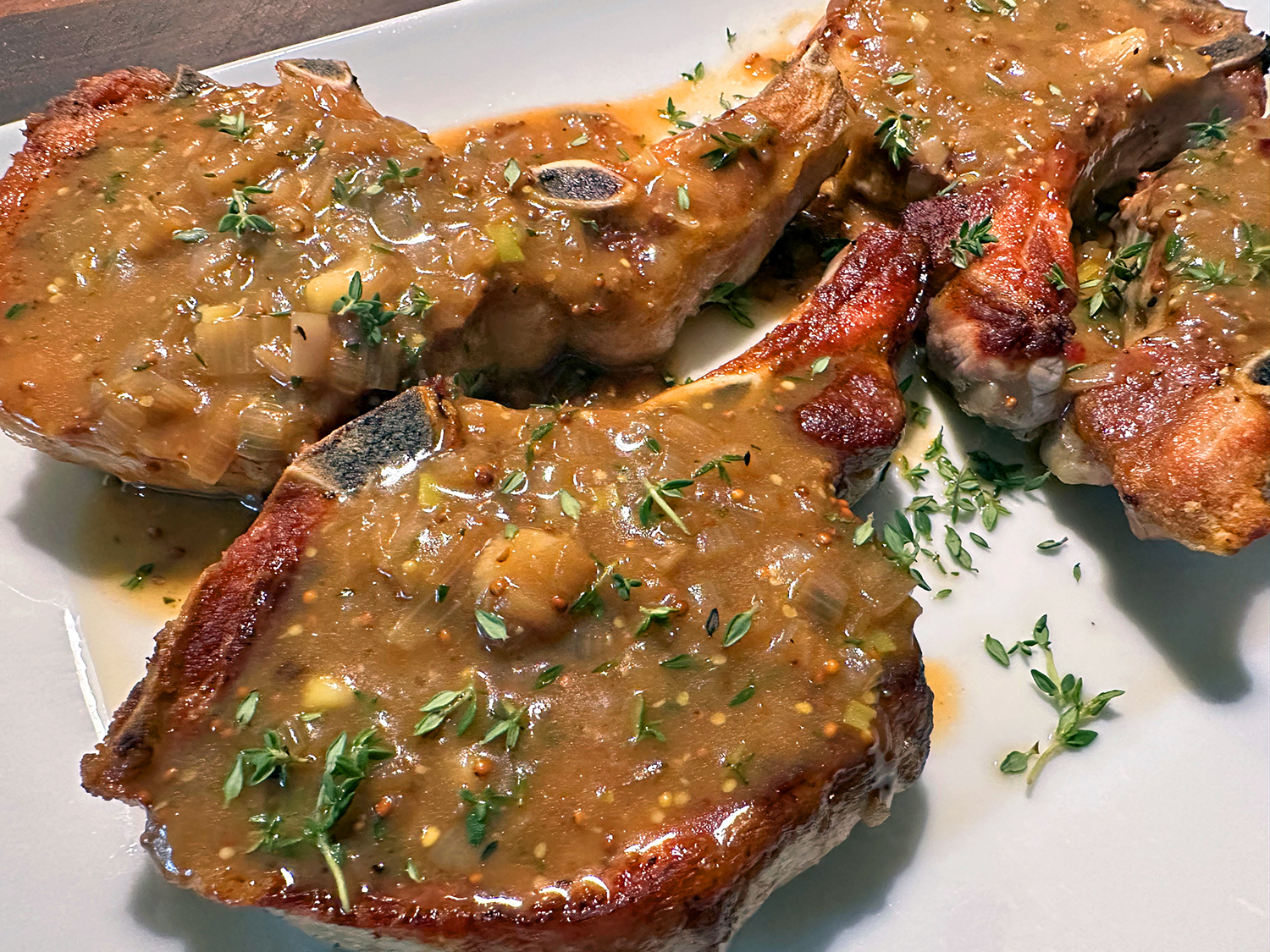
Pan-Seared Pork Chops with Beer and Grainy Mustard

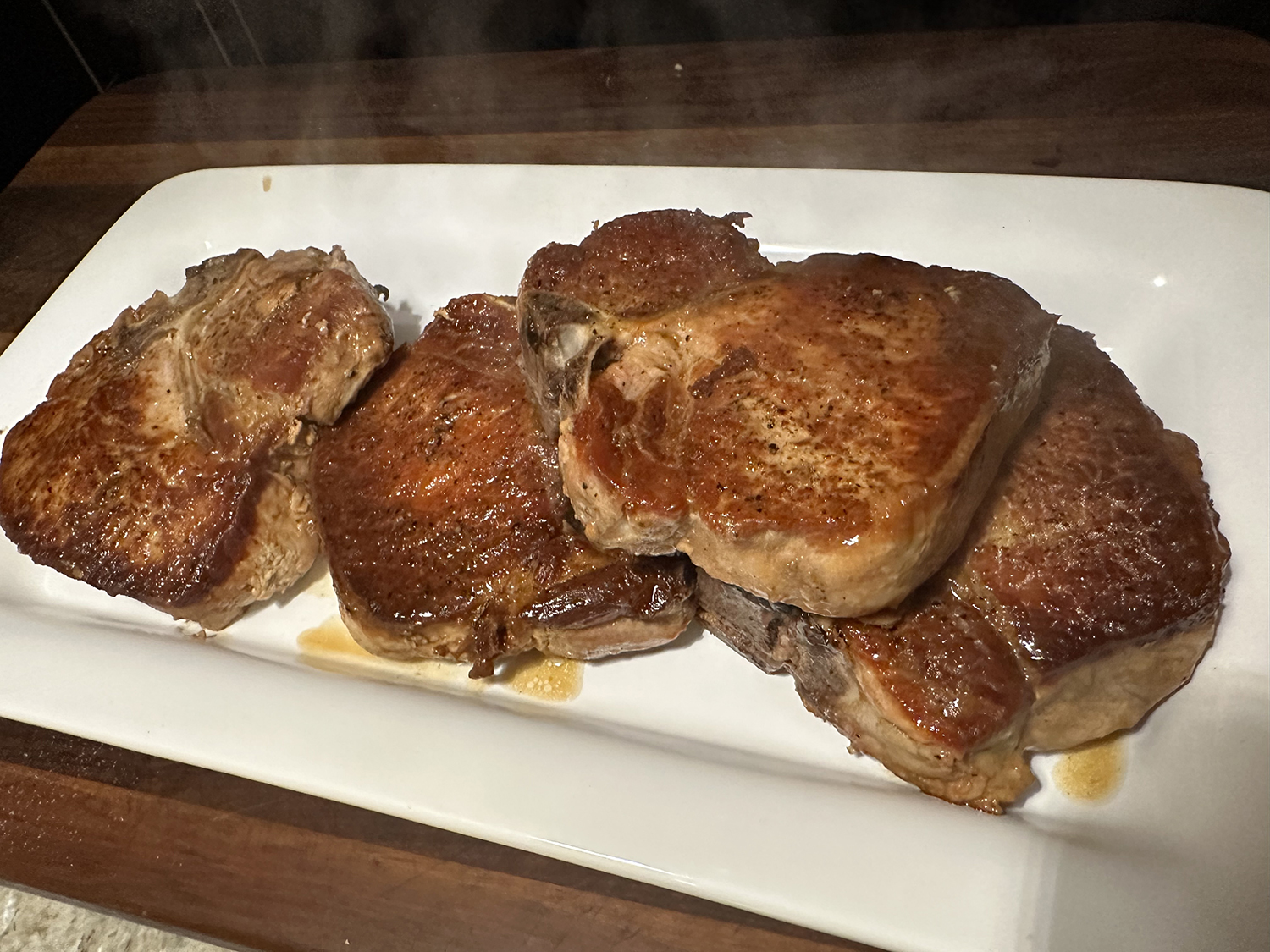
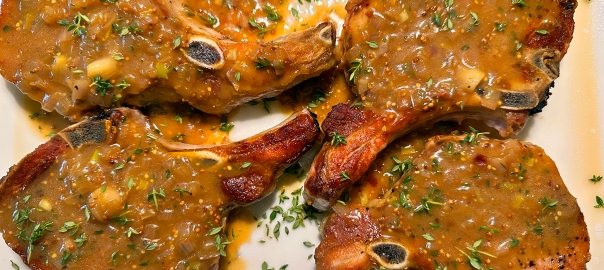
The original recipe called for chicken thighs, but we had been eating a lot of meals using chicken thighs, so we opted to use pork rib chops instead. The sauce was just fantastic on the meat as well as a great companion for our side of roasted Brussels sprouts!

With no lager readily available, we substituted a canned beer which didn’t seem to noticeably alter the flavor profile. It is always preferable to use a homemade chicken stock, but in a pinch, the Better Than Boullion brand is a decent choice.

Pan-Seared Pork Chops with Beer and Grainy Mustard

  • Servings: 4
  • Difficulty: easy
  • Print

Ingredients

  • 4 pork rib chops, 2 to 2 1⁄2 lbs. total
  • Kosher salt and freshly ground black pepper
  • 2 tsp. vegetable oil
  • 2 medium shallots, minced
  • 12 tsp. all-purpose flour
  • 1 cup amber lager beer
  • 12 cup chicken broth
  • 12 Tbsp. pure maple syrup
  • 1 tsp. chopped fresh thyme, more for garnish
  • 1 Tbsp. whole-grain mustard
  • 1 oz. (2 Tbsp.) unsalted butter

Directions

  1. Preheat the oven to 475°F. Season the pork chops all over with salt and pepper.
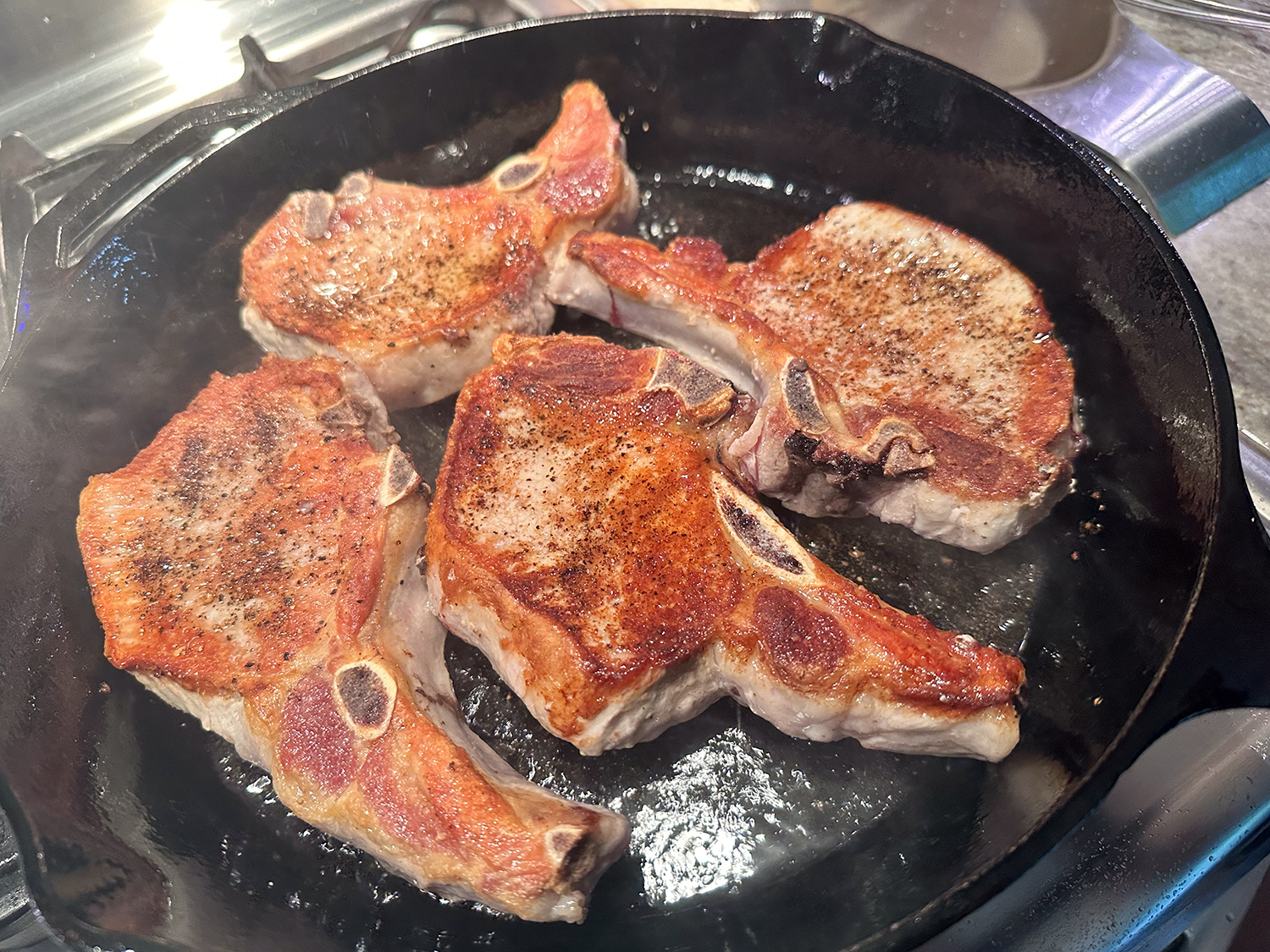
  2. Heat the oil in a heavy-duty ovenproof 12-inch skillet (such as cast iron) over medium-high heat until shimmering hot. Swirl to coat the pan bottom. Arrange the chops in the pan in a single layer (it will likely be a snug fit), cover with an ovenproof splatter screen (if you have one) and cook until they are deep golden-brown, about 6 minutes.
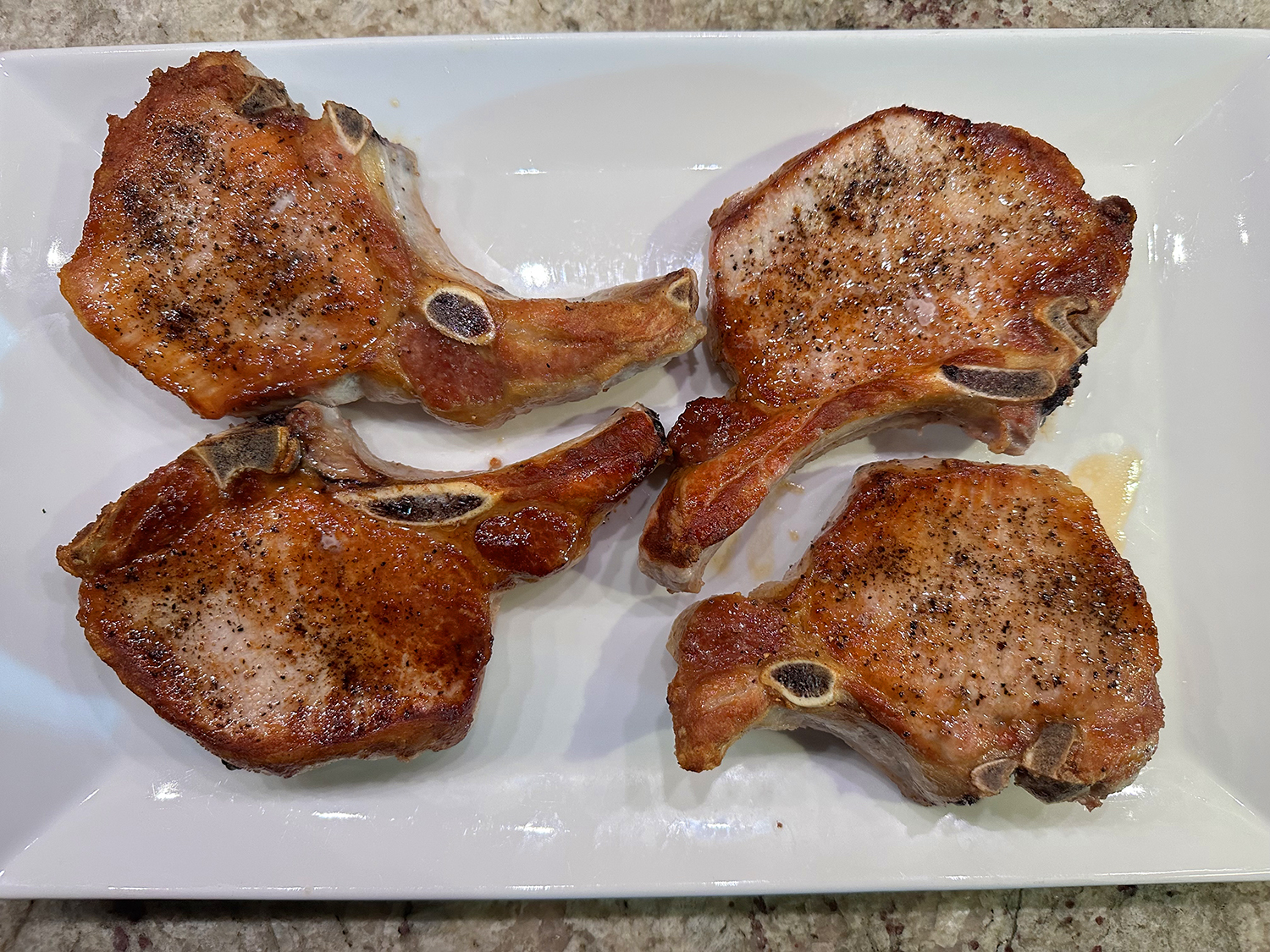
  3. Turn the pork and transfer the skillet and splatter screen, if using, to the oven. Roast until an instant-read thermometer inserted into the chops registers 145°F, 5 to 6 minutes. Transfer to a plate and cover with foil to keep warm.
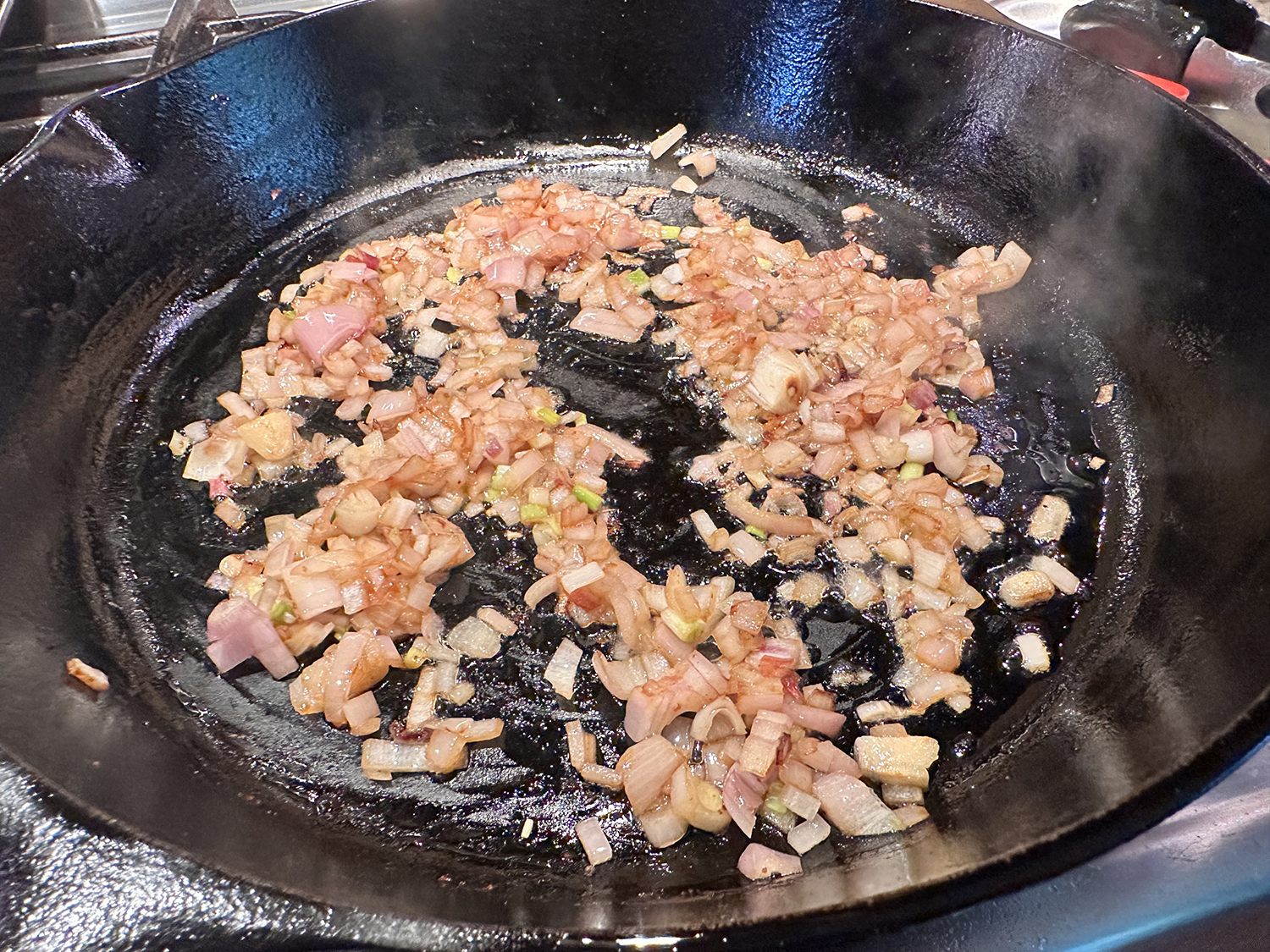
  4. Pour off all but 1 tablespoon fat from the skillet. Add the shallots and sauté over medium heat until softened, about 2 minutes. Stir in the flour until combined. Stir in the beer, chicken broth, maple syrup, and thyme. Increase the heat to high and bring to a boil, scraping up any browned bits from the skillet with a wooden spoon.
  5. Simmer vigorously until reduced to about 1 cup, about 3-4 minutes. Remove from the heat and whisk in the mustard, then the butter. Season the sauce to taste with salt and pepper.
  6. Arrange rib chops on a platter, drizzle pan sauce over, and garnish with the thyme. Serve immediately.

http://www.lynnandruss.com

Adapted from a recipe in Make-It-Tonite for Fine Cooking

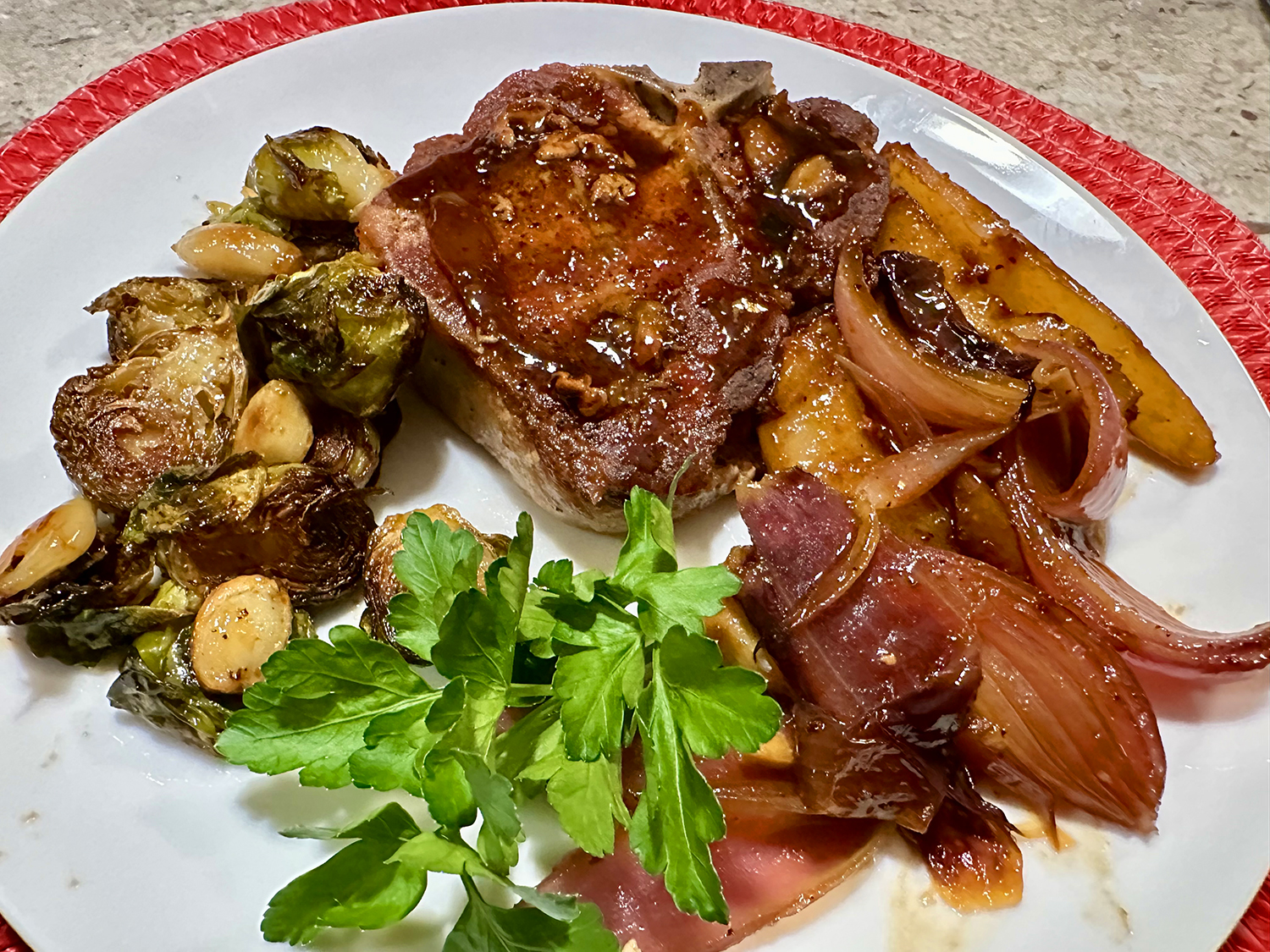
Roasted Sweet Vidalia Pork Loin

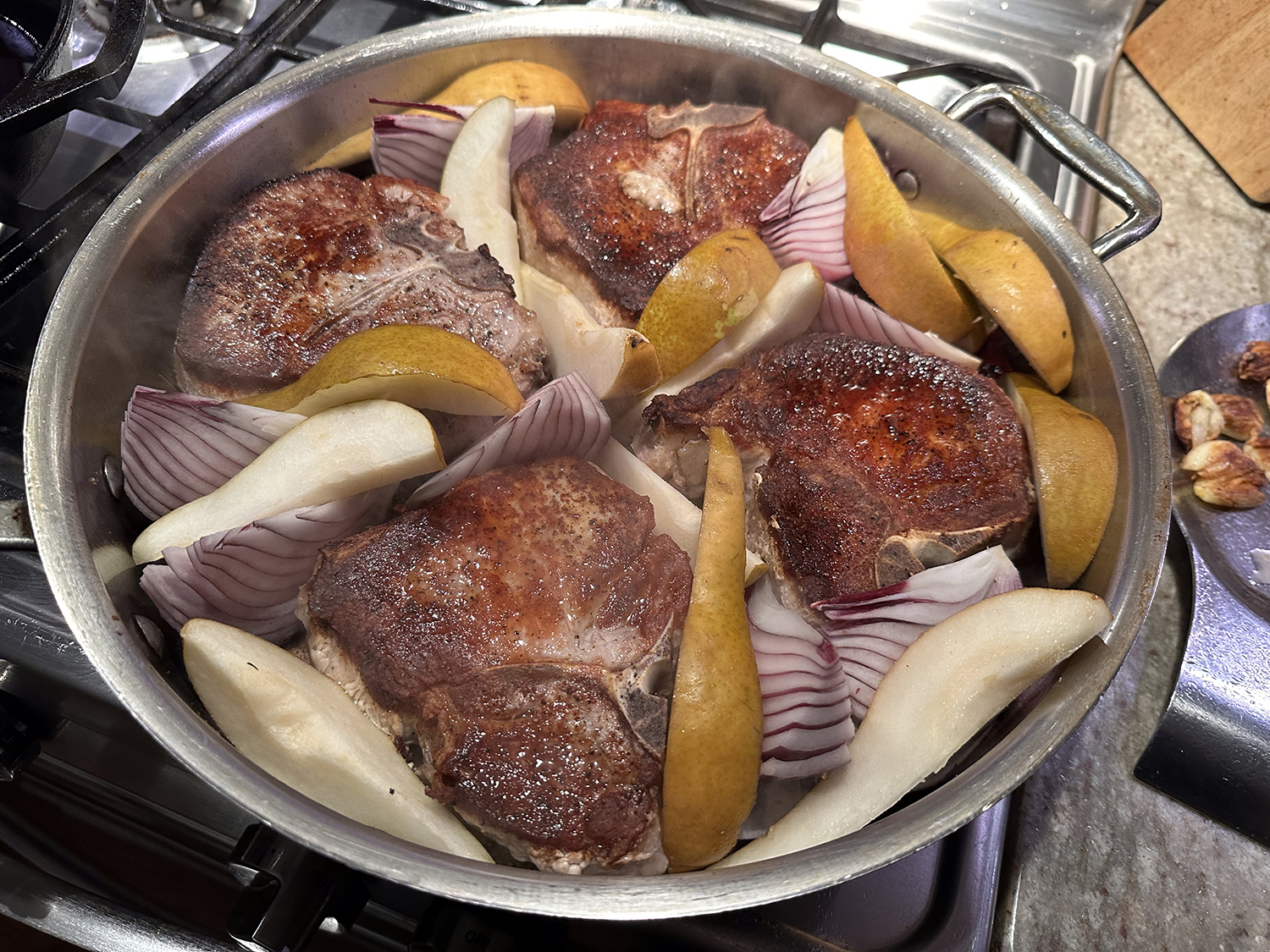
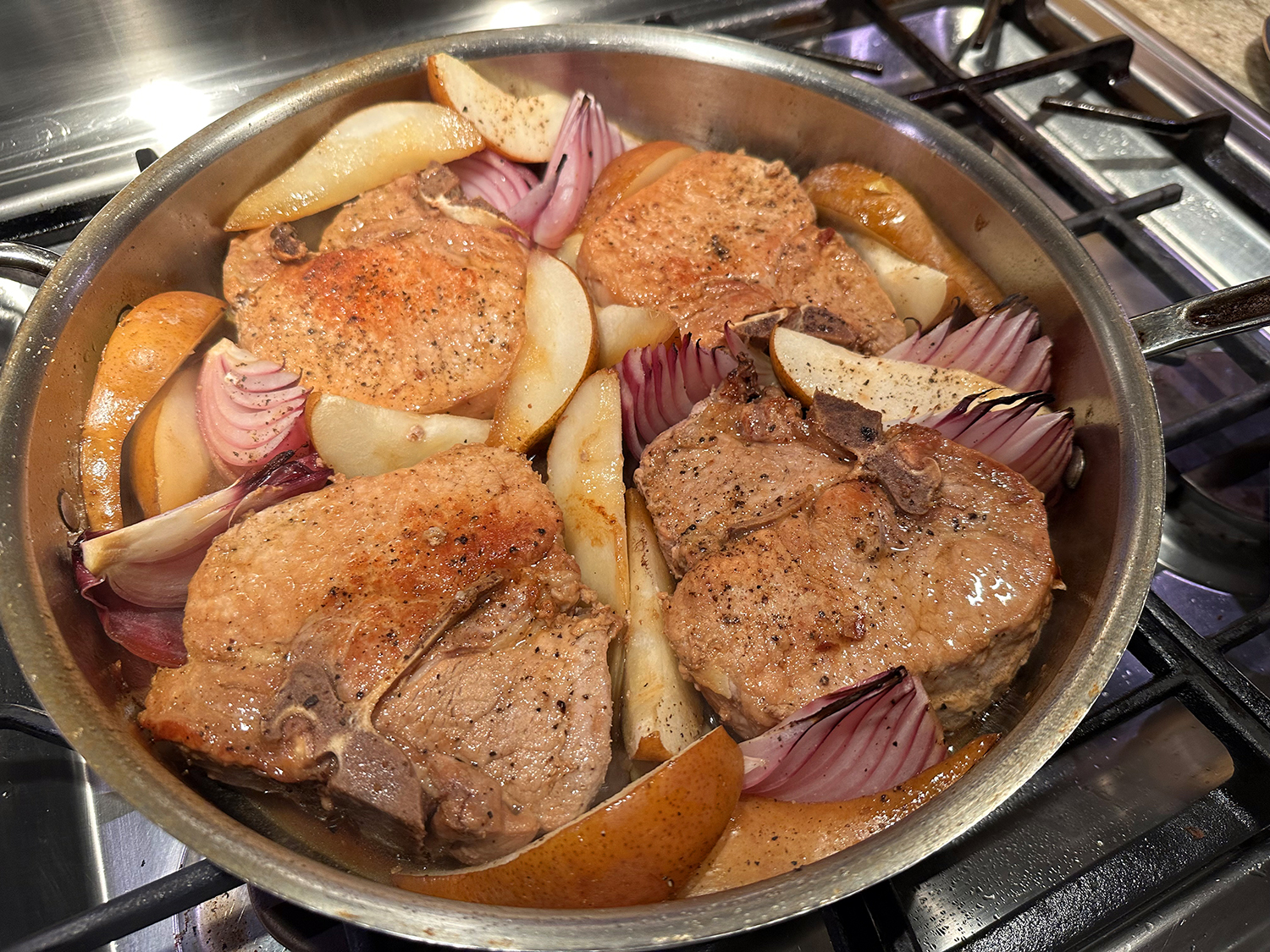
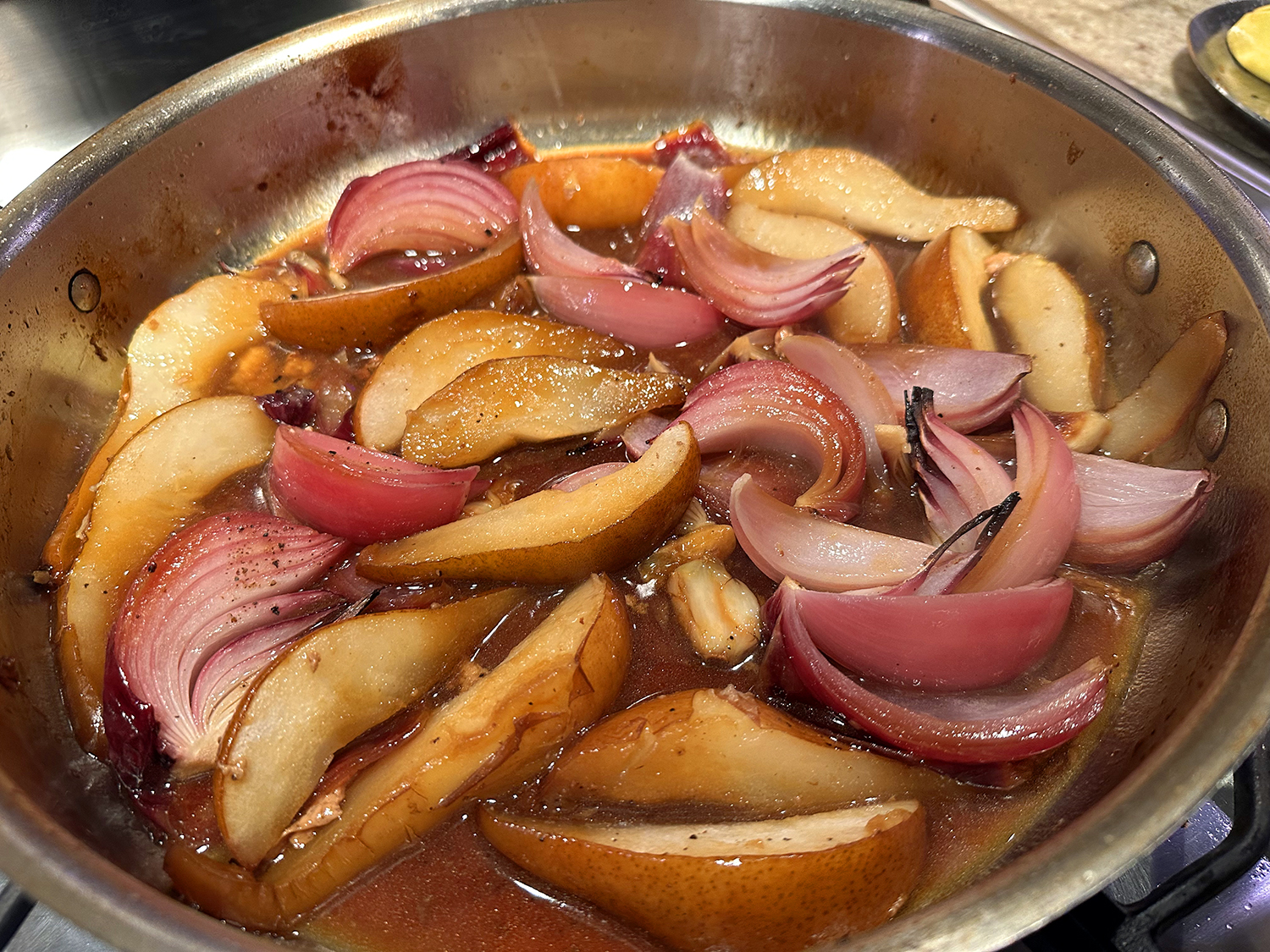
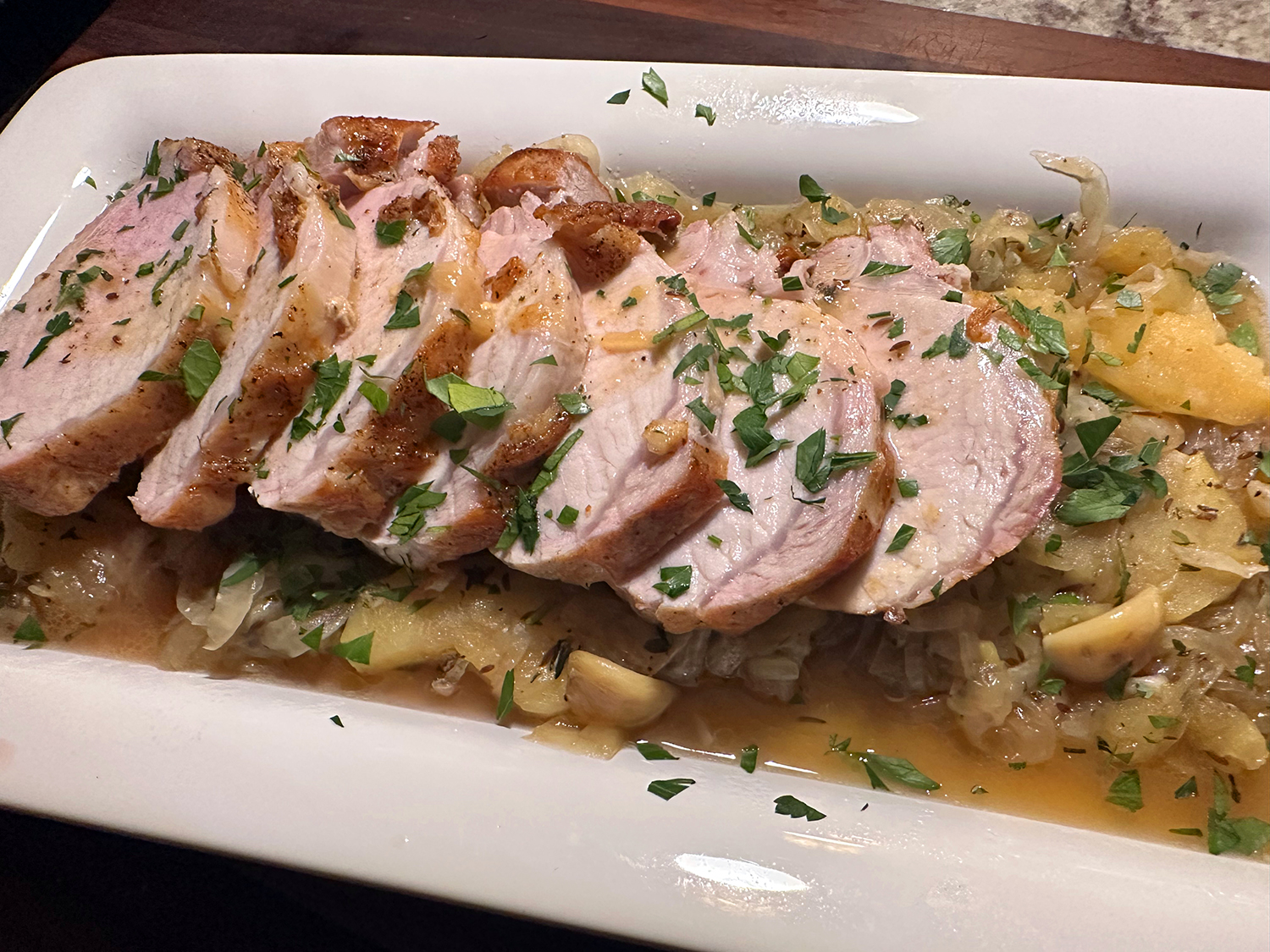
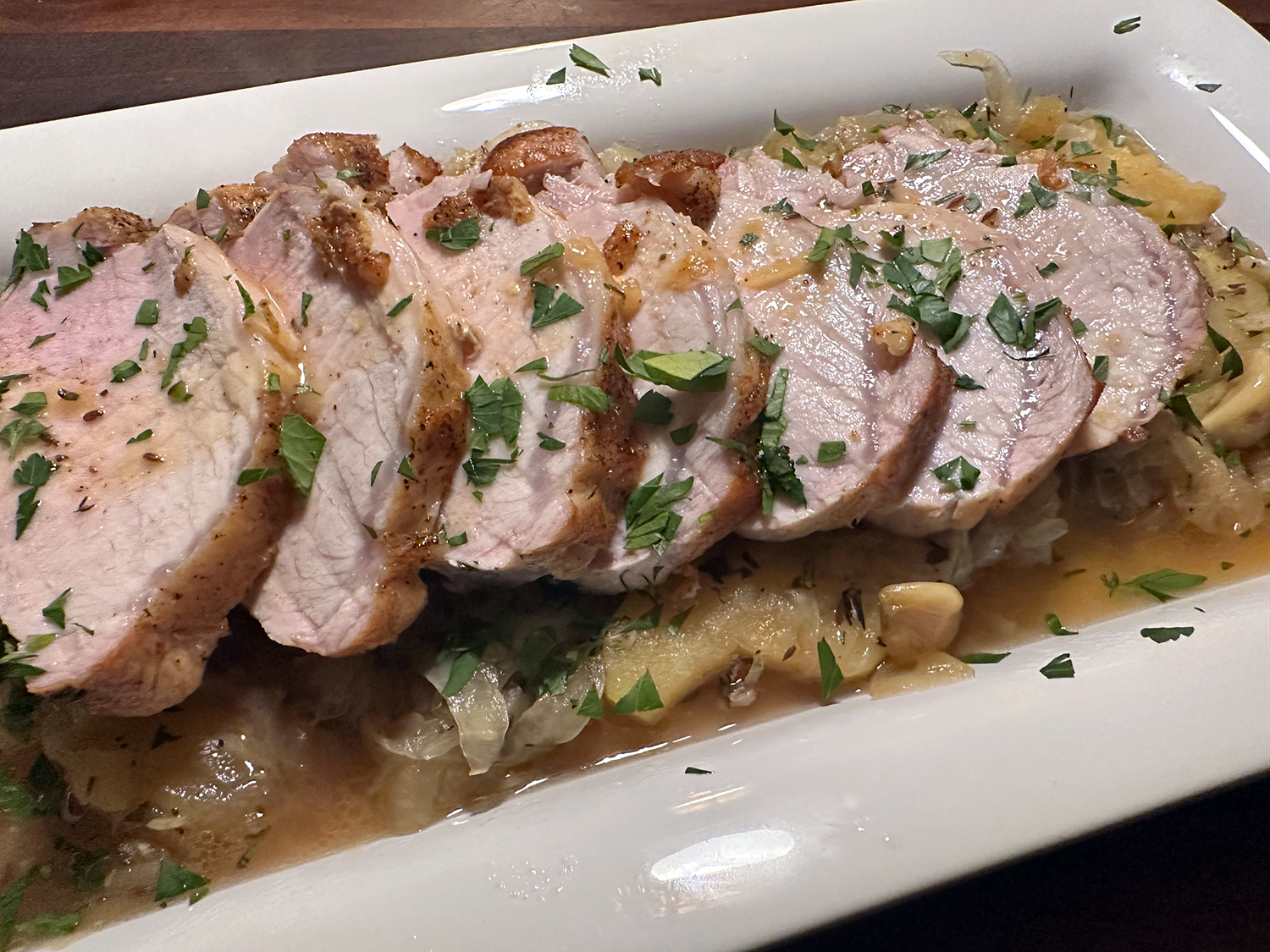
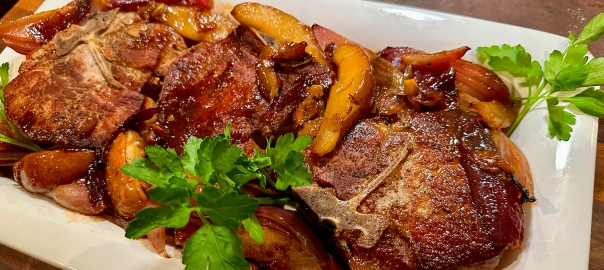
For quite a fancy spread, this elegant dinner comes together in not much more than an hour. The sweet Vidalia onions break down into luxurious softness, while the apple slices (we used Ruby Frost) and garlic render down and provide additional layers of flavor to the onion mixture.

Served with garlicky mashed potatoes and steamed broccoli, it was a complete and satisfying meal. We had plenty leftover so we plan to get two additional meals from it. One, a pork fried rice dish, and the other we’ll just simply reheat the leftovers as they are, and enjoy the meal all over again!

Roasted Sweet Vidalia Pork Loin

  • Servings: 6-8
  • Difficulty: easy
  • Print

Ingredients

  • 1 center-cut pork loin, (3 lbs.)
  • Kosher salt and freshly cracked black pepper
  • 3 Tbsp. olive oil
  • 3 Vidalia onions, sliced into thin half-moons
  • 1 apple, sliced thick
  • 1 tsp. caraway seeds
  • 1 tsp. dried thyme
  • 4 cloves garlic
  • 3/4 cup chicken stock
  • 1/2 cup hard apple cider, or beer
  • 1 Tbsp. Dijon mustard
  • 1 Tbsp. unsalted butter
  • 1/4 cup fresh flat-leaf parsley, chopped

Directions

  1. Preheat the oven to 375 degrees F.
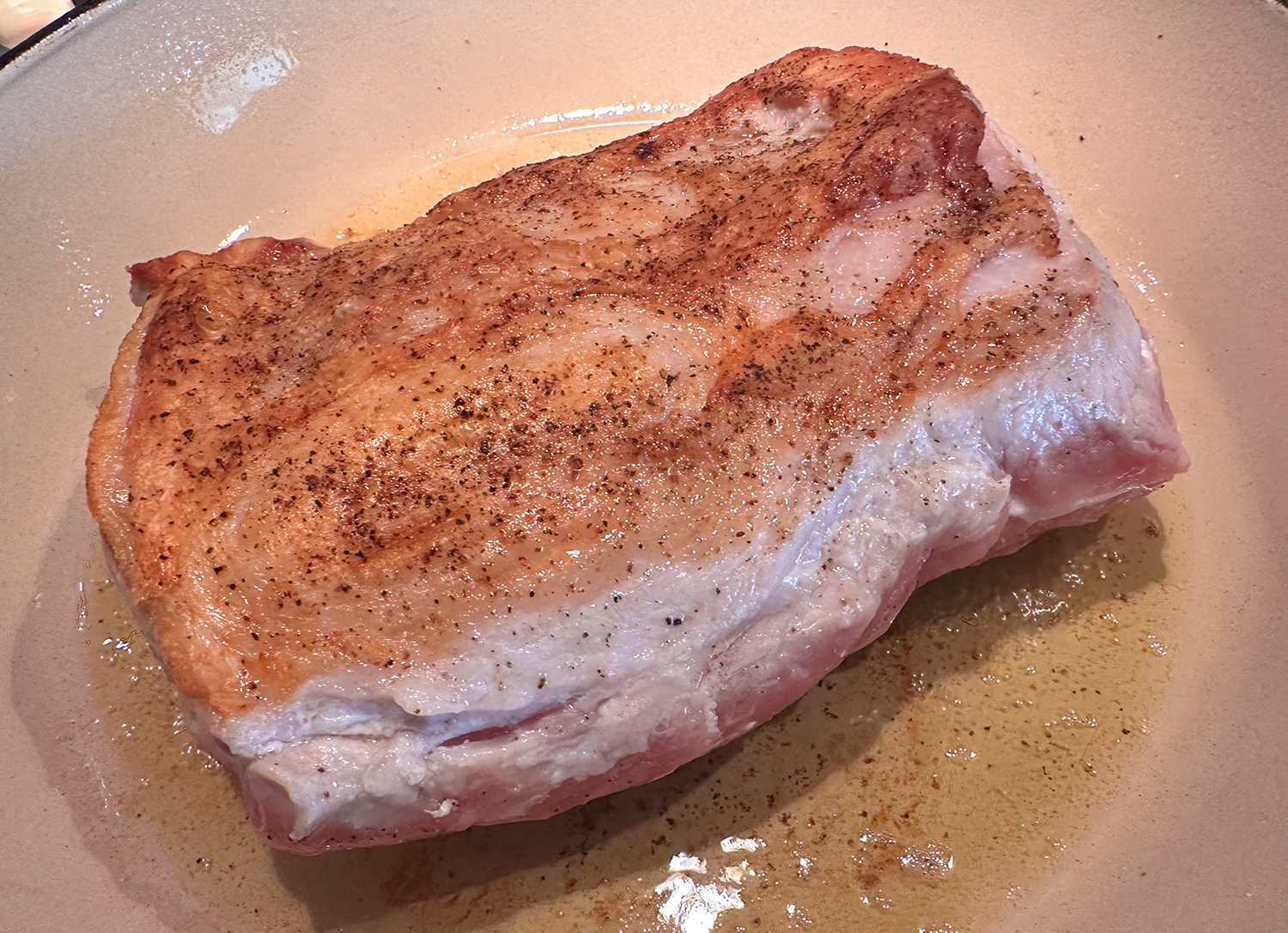
  2. Generously sprinkle all sides of the pork loin with salt and pepper. Place a braiser or shallow Dutch oven over medium-high heat. Add 2 tablespoons of the oil and heat until shimmering. Carefully put the pork in the pan. Sear until deeply golden on all sides, 1 to 2 minutes per side. Remove from the pan.
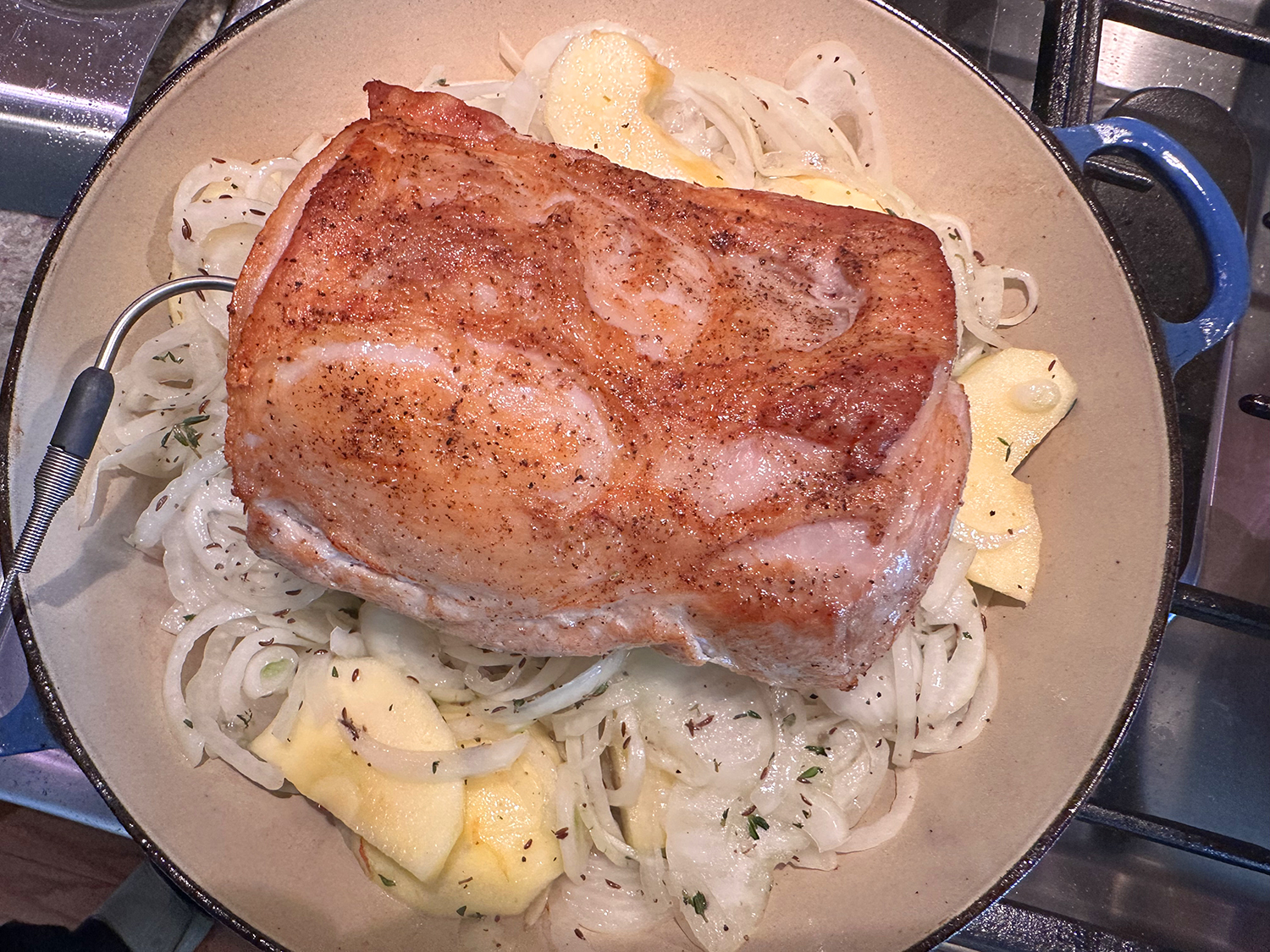
  3. Put the onions and apple in a large mixing bowl. Add the caraway seeds, dried thyme, remaining 1 tablespoon oil, 1 teaspoon salt and 1/2 teaspoon pepper and toss to coat. Transfer the mixture to the bottom of the braiser and nestle in the garlic cloves. Pour in 1/4 cup of the chicken stock and place the pork back on top. Put in the oven.
  4. About 20 minutes into the roasting time, turn the apple and onion mixture, leaving the pork loin alone. Continuing cooking the roast until the pork reaches an internal temperature of 145 degrees F, about 30 minutes. (Ours took 40 minutes to come to temperature.)
  5. Transfer the pork to a cutting board to rest while you make a pan sauce. Remove the apple and onion mixture to a platter
  6. Return the braiser to the stove over medium-high heat. Pour in the hard cider and remaining 1/2 cup chicken stock. Cook, scraping with a spatula to remove any brown bits from the bottom of the pan. Whisk in the mustard. Allow the sauce to simmer until reduced slightly, a couple of minutes. Add the butter, whisking until melted. Cook just until the sauce is shiny and slightly thickened, about 5 minutes. Taste and season with more salt and pepper if needed.
  7. Slice the pork and arrange the slices over the onion and apple mixture. Top with sauce and chopped parsley.

http://www.lynnandruss.com

Adapted from a recipe by Trisha Yearwood

Poulet au Vinaigre

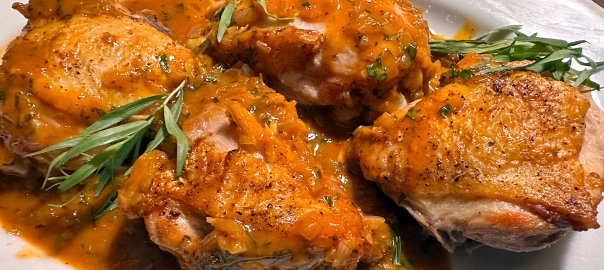
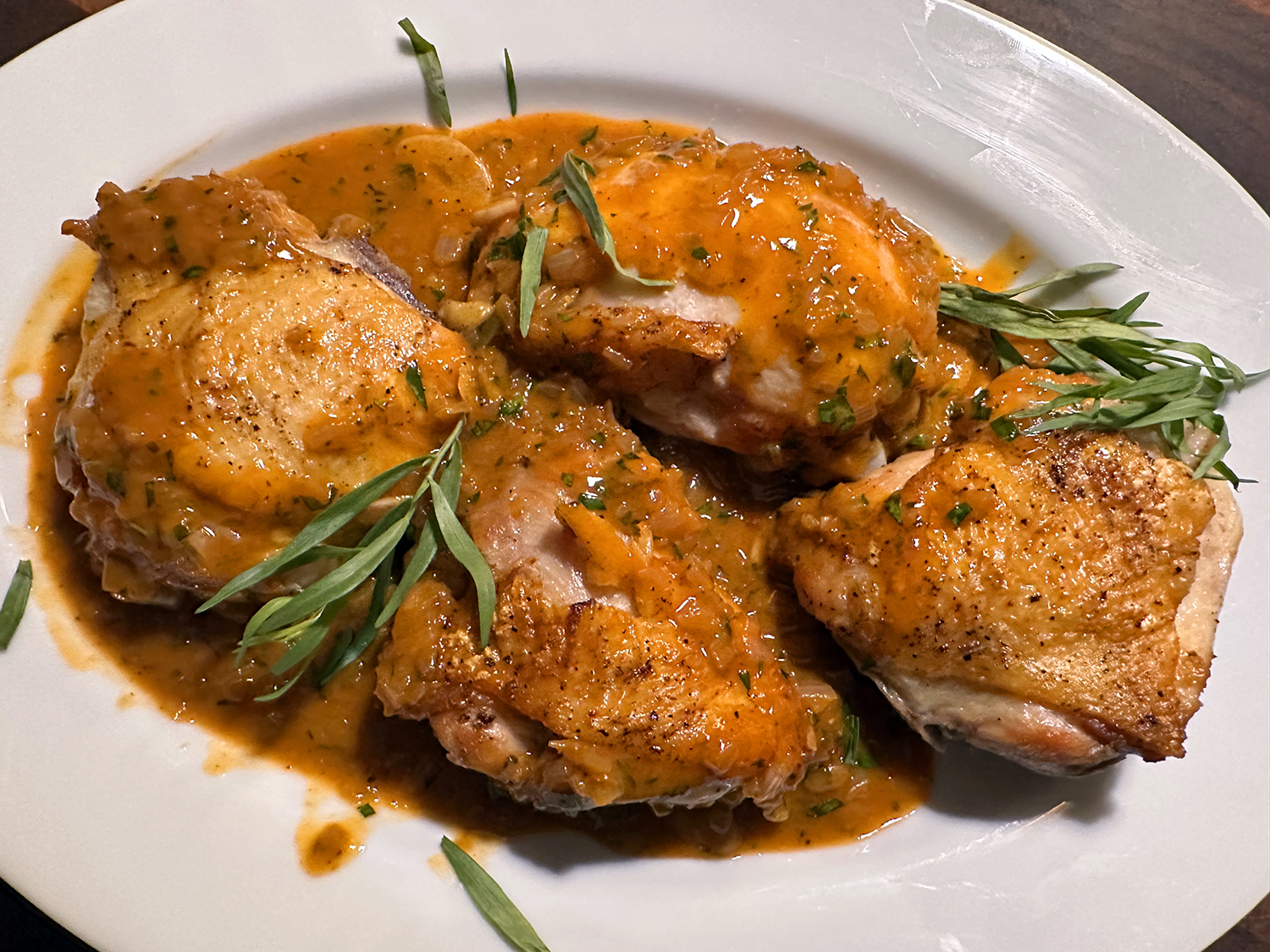
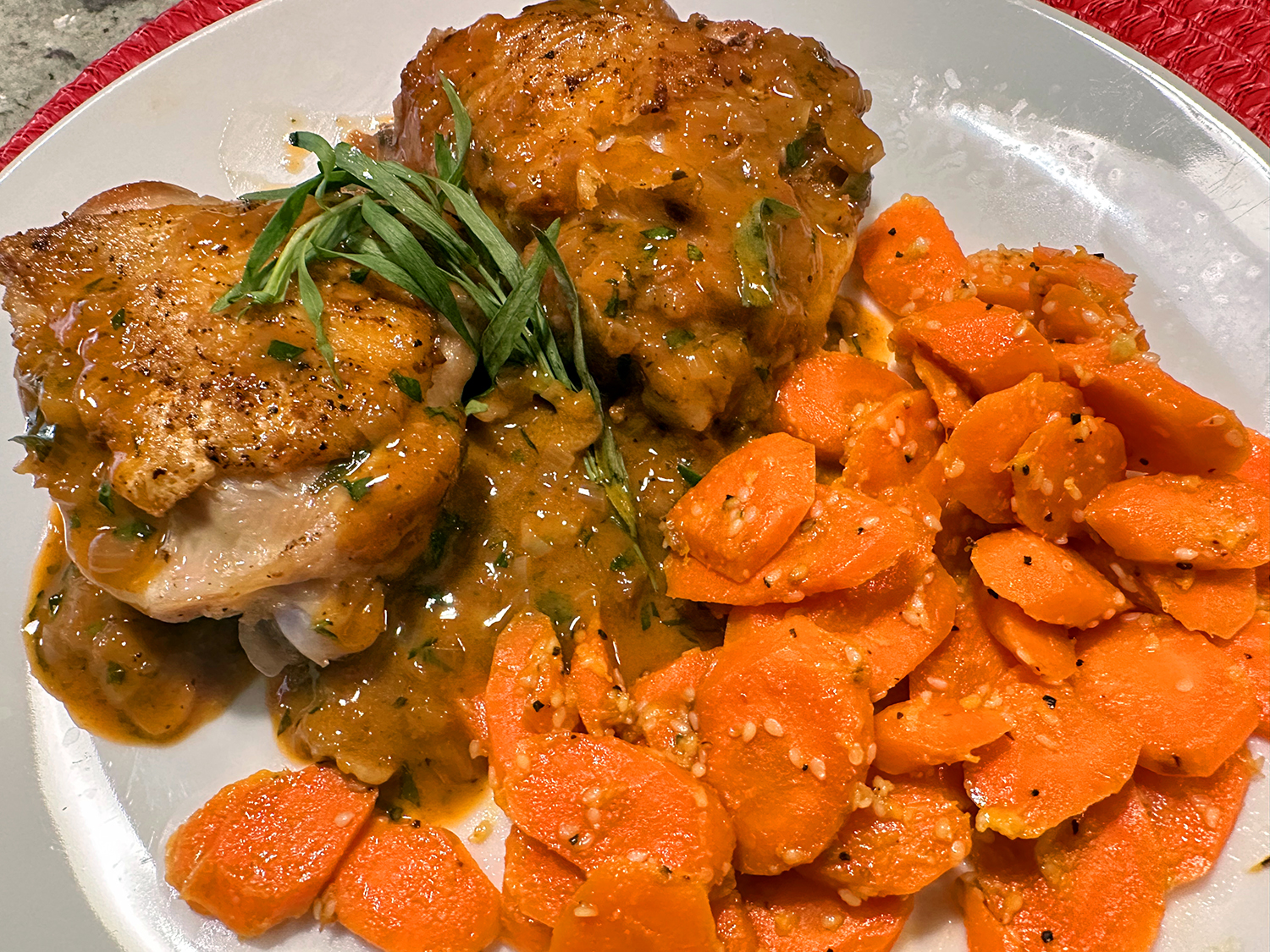
This classic Lyonnaise dish calls for using just chicken thighs rather than the usual combination of light and dark meat to ensure that all the meat cooks at the same rate. It hails from America’s Test Kitchen and we were excited to try the recipe.

The chicken thighs are browned to develop flavor and then braised in a flavorful mix of chicken broth (preferably homemade), white wine, and red wine vinegar until it reaches 195 degrees and is meltingly tender and juicy.

To finish the sauce, fortify the braising liquid with tomato paste and reduce it to a luxurious, lightly thickened consistency before adding minced fresh tarragon. The sauce is typically finished with heavy cream, but this version whisks in a couple tablespoons of butter instead to help preserve the vibrancy of the luscious sauce. 

We initially loved the fact that it was a recipe for two. But after dining on the amazing dish, we almost wished we did have leftovers. The sauce alone is so incredibly tasty, you’ll want to lick your plate clean! Our entree was paired with Miso-Orange Glazed Carrots.

NOTE: Use an inexpensive dry white wine here or substitute dry vermouth. Fresh tarragon is traditional for poulet au vinaigre, but parsley can be substituted, if desired.

Poulet au Vinaigre

  • Servings: 2
  • Difficulty: easy
  • Print

Ingredients

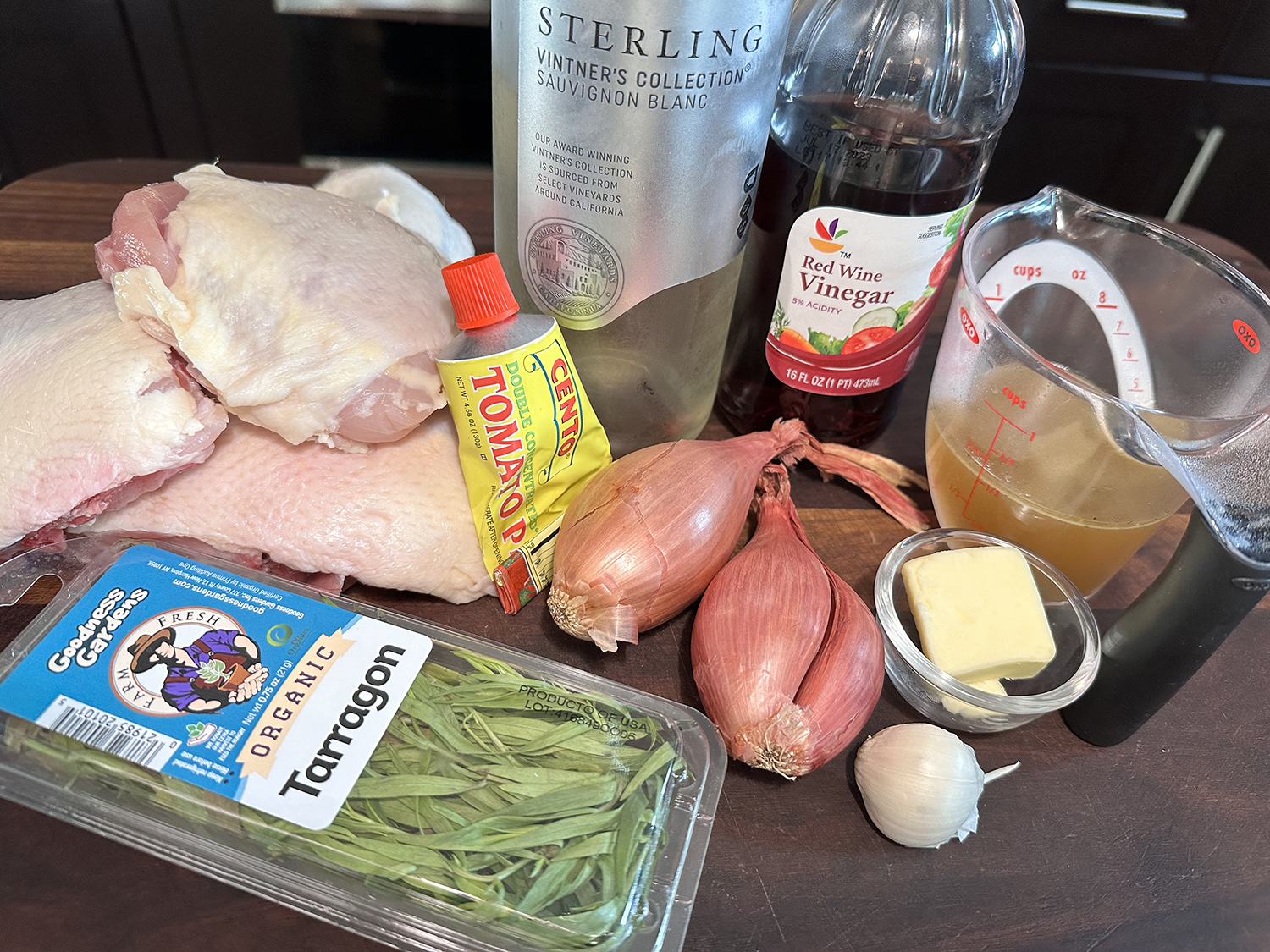
  • 4 (5- to 7-oz.) bone-in chicken thighs, trimmed
  • ½ tsp. table salt
  • ¼ tsp. pepper
  • 1 ½ tsp. vegetable oil
  • 2 Tbsp. minced shallot, or more (we doubled it to 1⁄4 cup)
  • 1 garlic clove, sliced thin
  • ½ cup chicken broth, preferably homemade
  • ½ cup dry white wine
  • 2 ½Tbsp. red wine vinegar, plus extra for seasoning
  • 1 ½ tsp. tomato paste
  • 1 Tbsp. unsalted butter, chilled
  • 1 ½ tsp. minced fresh tarragon

Directions

  1. Adjust oven rack to lower-middle position and heat oven to 325 degrees.
  2. Pat chicken dry with paper towels and sprinkle both sides with salt and pepper. Heat oil in 10-inch oven-safe skillet over medium heat until shimmering.
  3. Add chicken, skin side down, and cook, without moving it, until well browned, about 8 minutes. Using tongs, flip chicken and brown on second side, about 3 minutes. Transfer chicken to large plate.
  4.  Pour off all but 1 tablespoon fat from skillet. Add shallot and garlic and cook, stirring frequently, until garlic is golden brown, about 1½ minutes.
  5. Add broth, wine, and vinegar; bring to simmer, scraping up any browned bits. Return chicken to skillet, skin side up (skin will be above surface of liquid).
  6. Transfer skillet to oven and bake, uncovered, until chicken registers 195 degrees, 35 to 40 minutes. Using tongs, transfer chicken to clean serving platter and tent with aluminum foil.
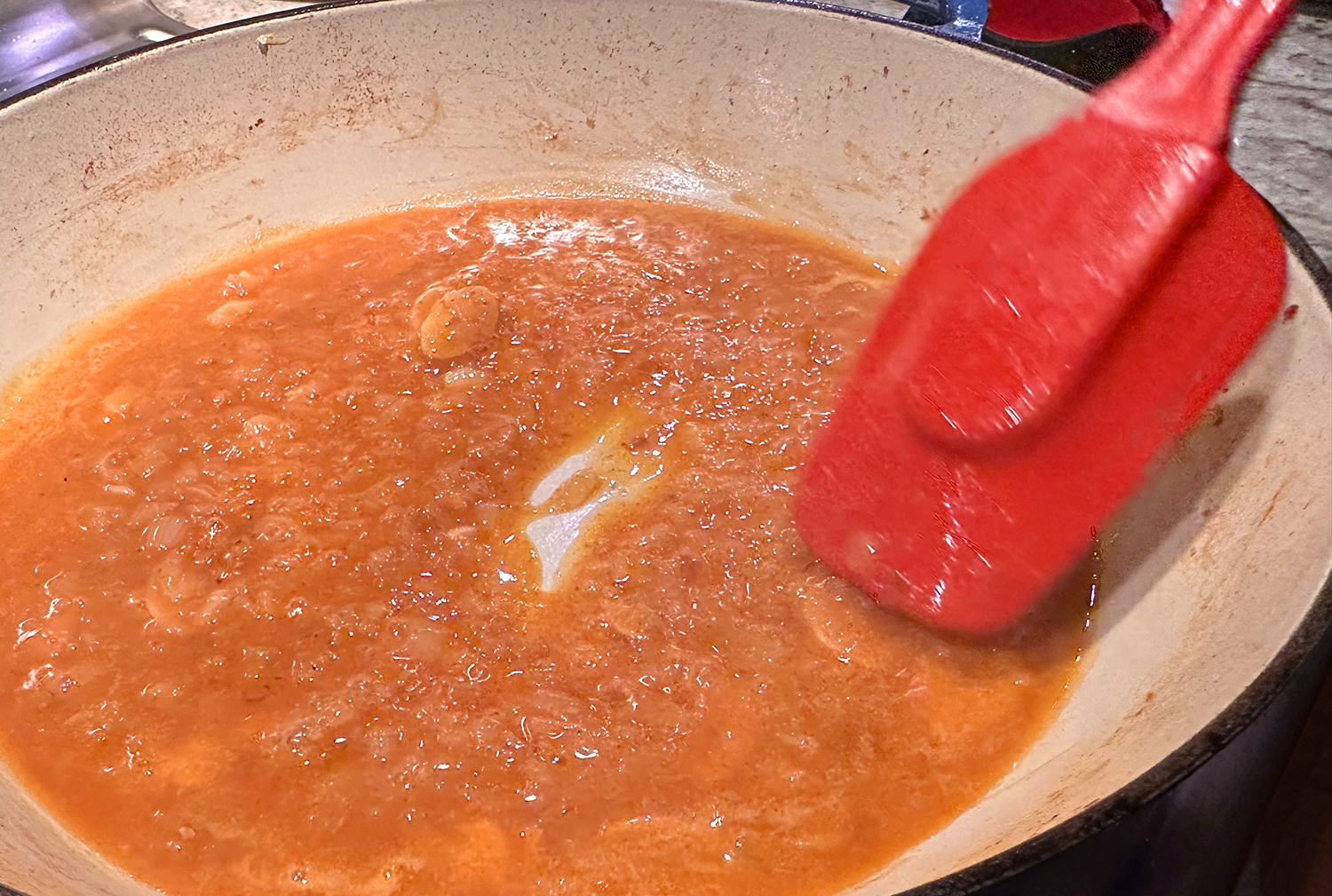
  7. Place skillet over high heat. Whisk tomato paste into liquid and bring to boil. Cook, occasionally scraping side of skillet to incorporate fond, until sauce is thickened and reduced to ⅔ cup, 5 to 7 minutes.
  8. Off heat, whisk in butter and tarragon. Season with salt, pepper, and up to ½ teaspoon extra vinegar (added ⅛ teaspoon at a time) to taste. Pour sauce around chicken and serve.

http://www.lynnandruss.com

Original recipe from America’s test Kitchen

One-Pan Baked Scallops with Couscous, Braised Leeks and Tarragon-Orange Vinaigrette

The fabulous entrée tastes surprisingly complex for the short amount of time it takes to prepare. The scallops and leeks really do release flavor into the couscous, and the vinaigrette definitely completes the dish. It is a great “special occasion” meal that anyone who loves scallops is sure to remember.

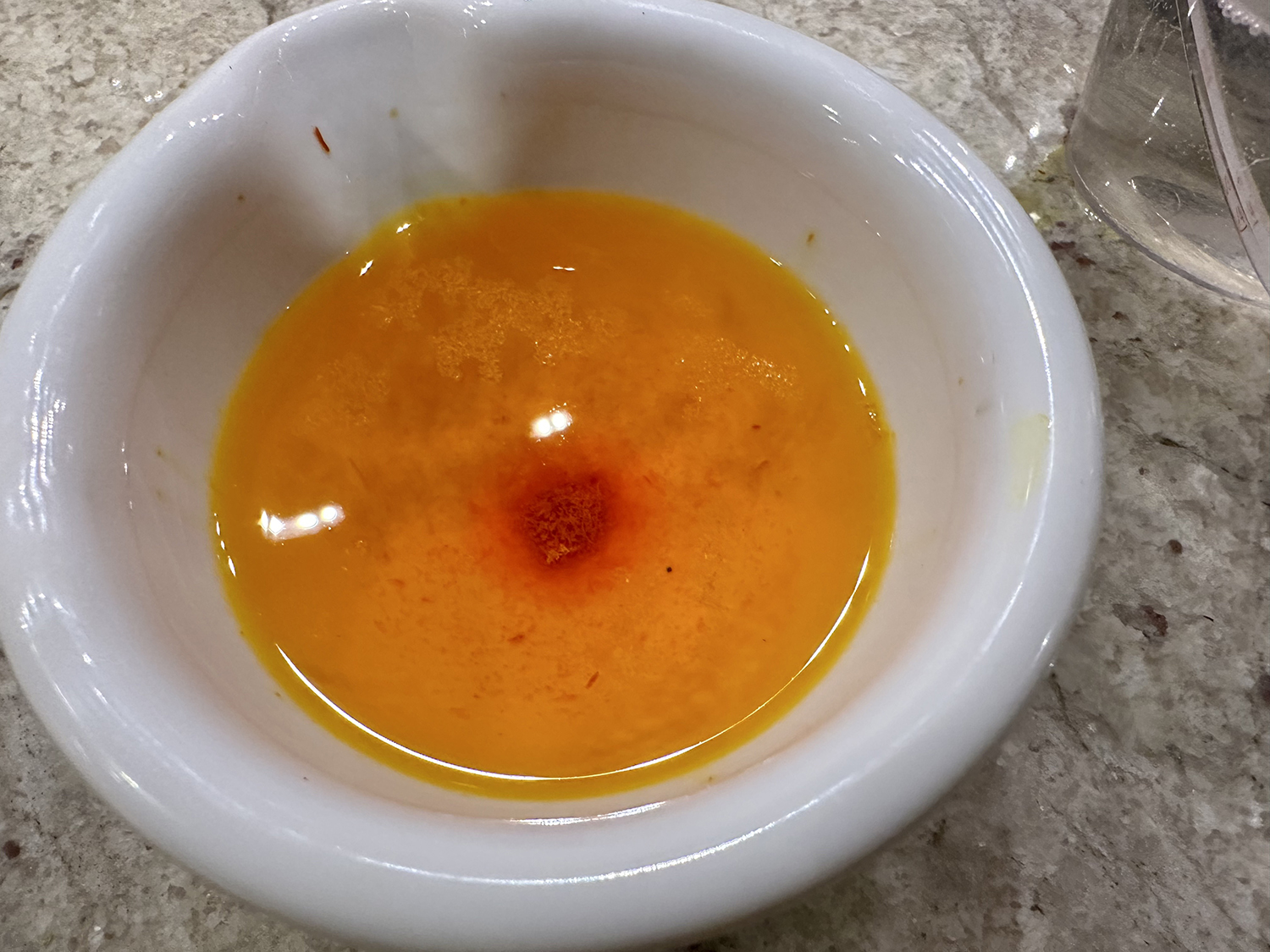
Cooking the scallops on a bed of Israeli couscous, leeks, and white wine is easy and allows the pearls of pasta to absorb the scallops’ briny liquid. To ensure the scallops finish cooking at the same time as the rest of the dish, jump-start the leeks and couscous in the microwave, adding garlic and a pinch of saffron* to subtly perfume the dish.

Stir in wine and boiling water (with the blooming saffron, if using), which starts the dish off hot and shortens the cooking time. Using a very hot oven and sealing the pan with foil promises perfectly, and efficiently, cooked scallops that steam atop the couscous. A quick tarragon-orange vinaigrette to drizzle over the finished dish provides an appealing accent that complements the scallops and leeks without overpowering them.

It is recommend that you buy “dry” scallops, which don’t have chemical additives and taste better than “wet.” Dry scallops will look ivory or pinkish; wet scallops are bright white.

TIPS: For an accurate measurement of boiling water, bring a full kettle of water to a boil and then measure out the desired amount. *If using saffron threads, pulverize them in a mortar with pestle and then put them in the hot water to bloom.

One-Pan Baked Scallops with Couscous, Braised Leeks and Tarragon-Orange Vinaigrette

  • Servings: 4
  • Difficulty: easy
  • Print

Ingredients

  • 1 lb. leeks, white and light green parts only, halved lengthwise, sliced thin, and washed thoroughly
  • 1 cup Israeli couscous
  • 5 Tbsp. extra-virgin olive oil, plus extra for serving
  • 4 garlic cloves, minced
  • Salt and pepper
  • Pinch saffron threads (optional, *see above tip)
  • ¾ cup boiling water
  • ¼ cup dry white wine
  • 1½ lbs. large sea scallops, tendons removed
  • 2 Tbsp. minced fresh tarragon
  • 1 Tbsp. white wine vinegar
  • ½ Tbsp. Dijon mustard
  • ½ tsp. grated orange zest plus 1 Tbsp. juice

Directions

  1. Adjust oven rack to middle position and heat oven to 450 degrees. Combine leeks, couscous, 2 tablespoons oil, garlic, ½ teaspoon salt, ¼ teaspoon pepper, and saffron (if using), in a bowl. Cover, and microwave, stirring occasionally, until leeks are softened, about 6 minutes. Stir in boiling water and wine, then transfer mixture to 13 by 9-inch baking dish.
  2. Pat scallops dry with paper towels and season with salt and pepper. Nestle scallops into couscous mixture and cover dish tightly with aluminum foil. Bake until couscous is tender, sides of scallops are firm, and centers are opaque, 20 to 25 minutes.
  3. Meanwhile, whisk remaining 3 tablespoons oil, tarragon, vinegar, mustard, orange zest and juice, and ⅛ teaspoon salt together in bowl.
  4. Remove dish from oven. Drizzle vinaigrette over scallops and serve, passing extra oil separately.

http://www.lynnandruss.com

Adapted from a recipe by America’s Test Kitchen

Pork Loin Roast with Gravy

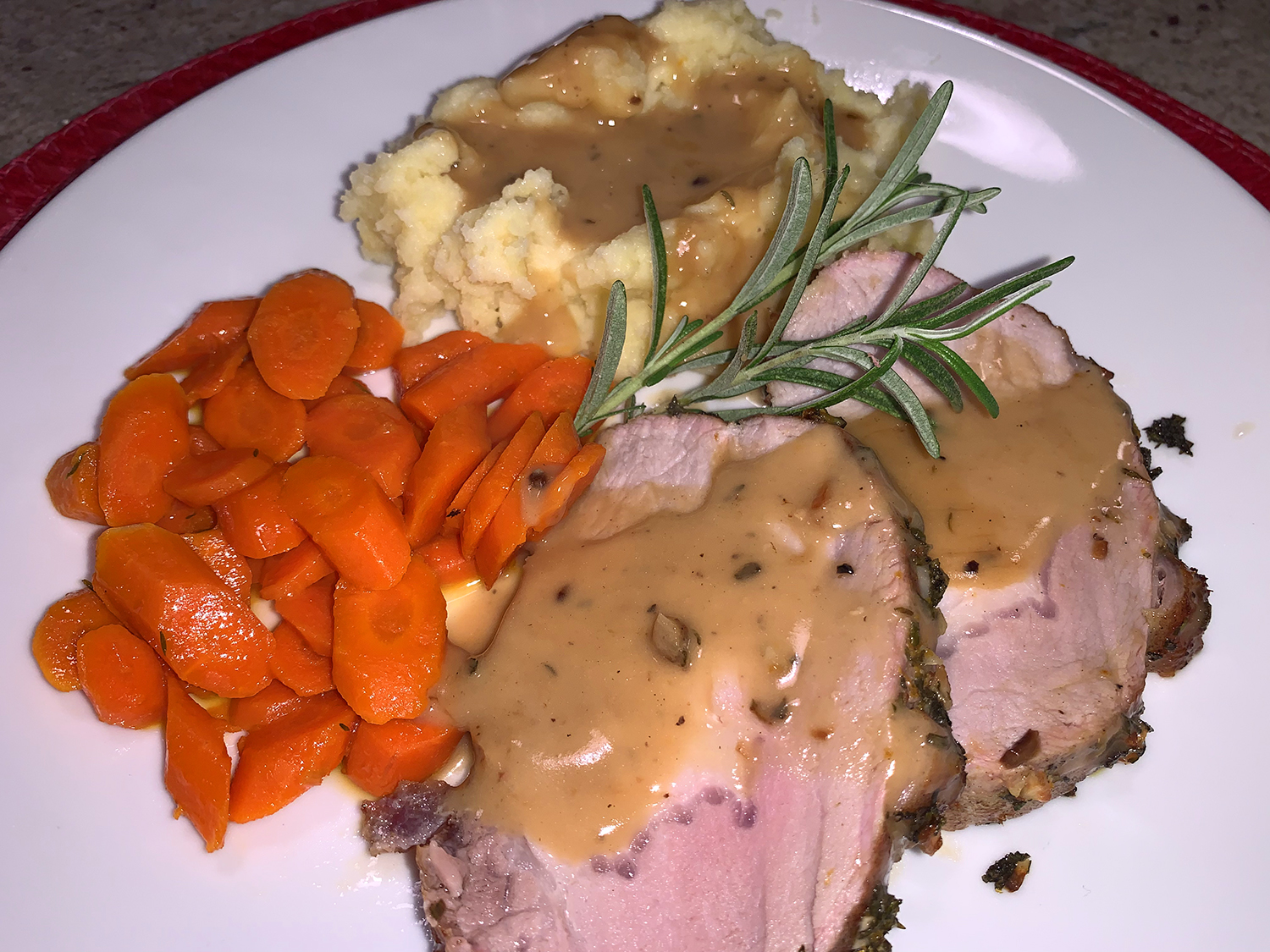
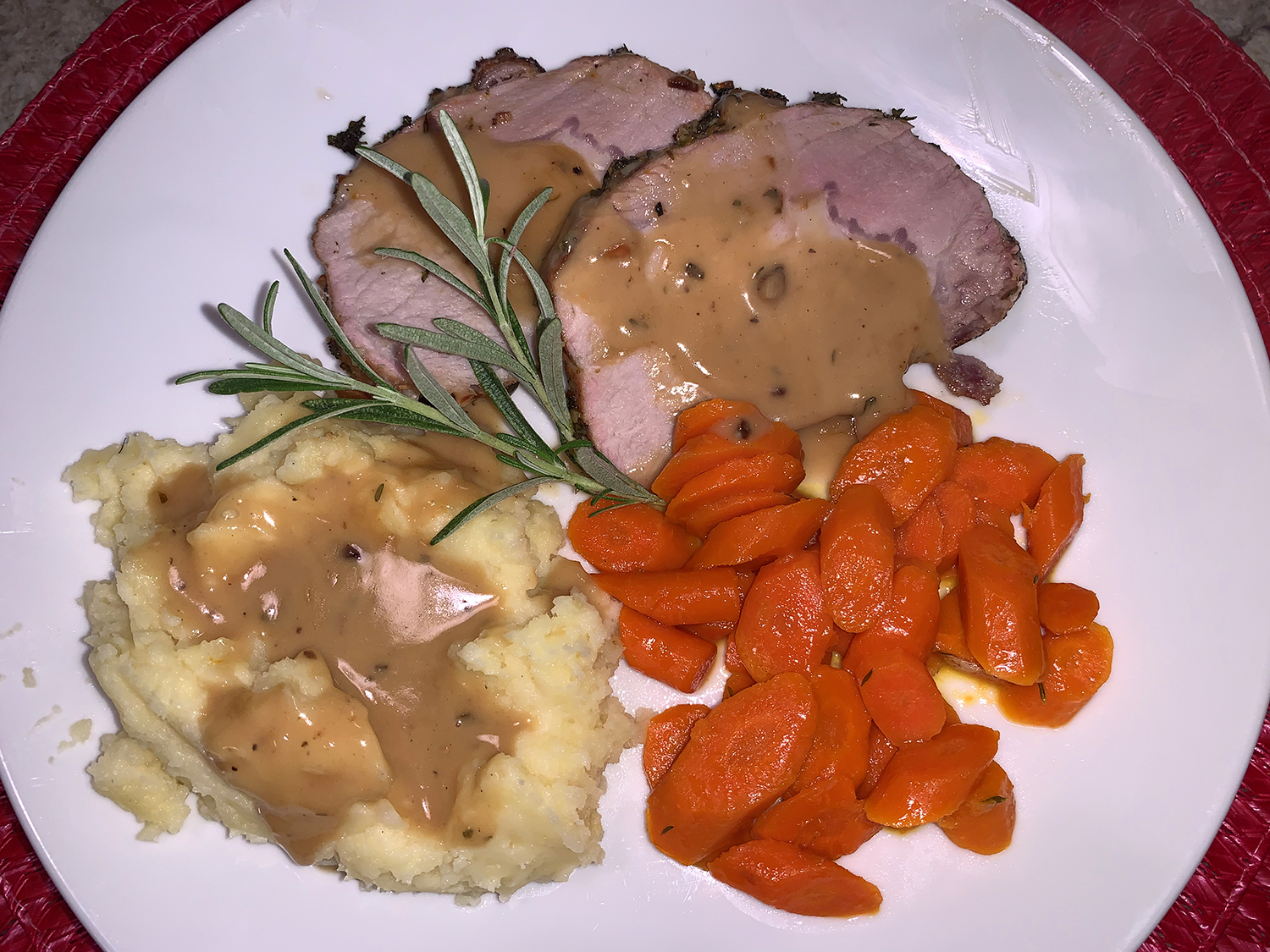
Pork loin roasts up beautifully and finishing it with a little gravy made with the pan drippings adds that much more flavor. Such a perfect meal for cooler weather; make sure to have some mashed potatoes or noodles to ladle the fabulous gravy over. Given the simplicity of effort and the relatively few amount of ingredients, the depth of flavor is incredible!

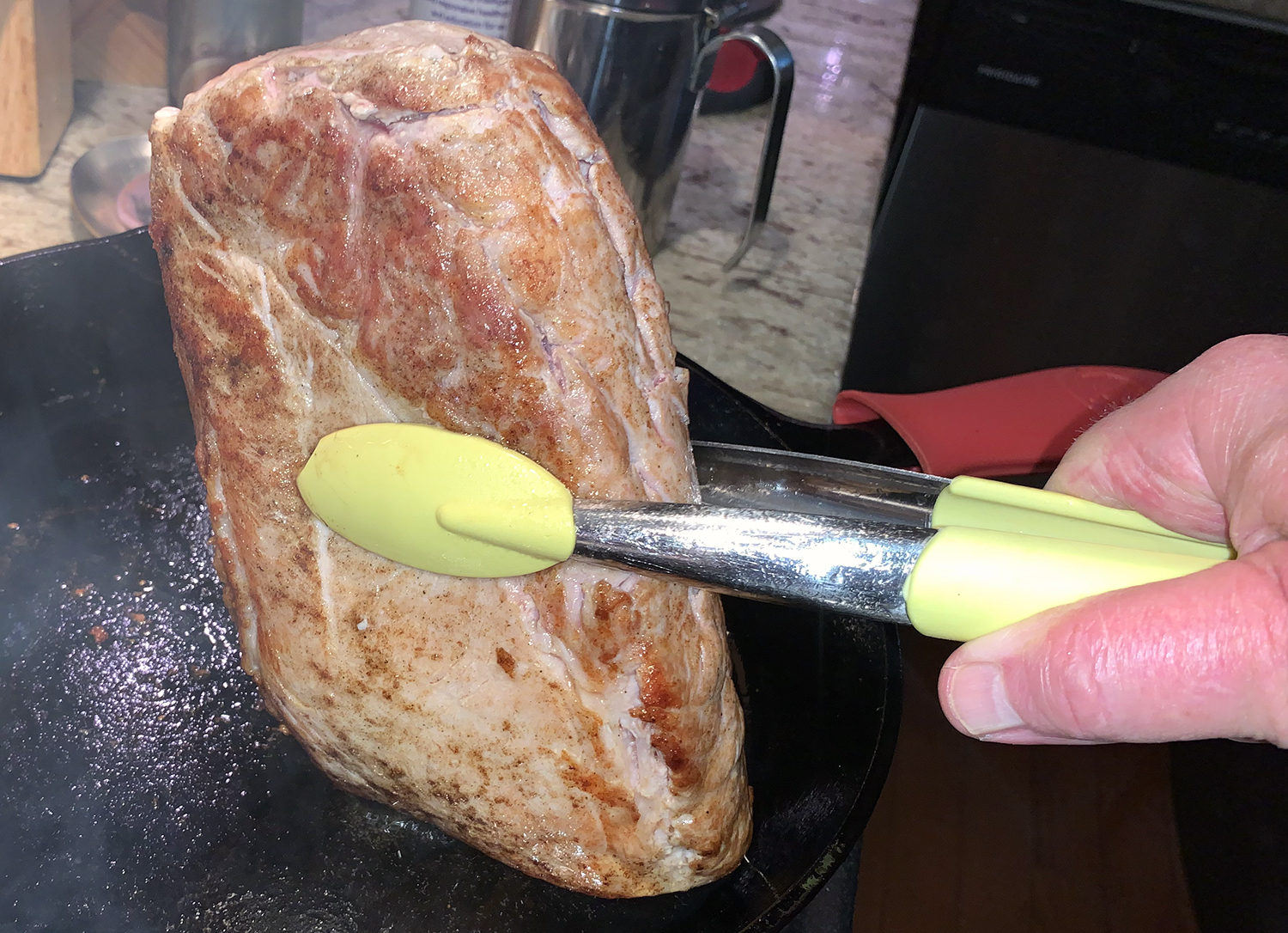
A few notable tips for a perfect roast: It’s helpful to dry first with paper towels to remove extra moisture from exterior so it browns better. Don’t skip searing the pork loin for that extra added layer of flavor. It also seasons the drippings.

A pork loin should be cooked to 145 degrees in the center of the loin with a slightly pink color. Test temperature with a thermometer for doneness rather than guessing or basing it off color.; and be careful not to over-cook or it starts to dry. Finally, let rest before carving to allow juices to evenly distribute so they don’t just end up on the carving board.

To shorten the cooking time, if you have a convention oven option, lower the oven temp to 300°, and cook the meat in about 25% less time. An internal thermometer will let you know exactly when it’s done.

Pork Loin Roast

  • Servings: 6-8
  • Difficulty: easy
  • Print

Ingredients

Roast

  • 3 – 4 lb. pork loin
  • Salt and freshly ground black pepper
  • 2 Tbsp. olive oil, divided
  • 2 tsp. chopped fresh thyme (or 3/4 tsp. dried)
  • 2 tsp. chopped fresh rosemary (or 3/4 tsp. dried)
  • 2 tsp. chopped fresh sage (or 3/4 tsp. dried)
  • 1 1/2 tsp. minced garlic, 4 cloves
  • 1 tsp. lemon zest or orange zest, optional

Gravy

  • 2 Tbsp. butter or olive oil
  • 2 Tbsp. flour
  • Pan drippings from roasting pan
  • 1 cup chicken broth, preferably homemade
  • 2 Tbsp. heavy cream, optional

Directions

  1. Preheat oven to 325 degrees. Heat a 12-inch skillet over medium-high heat (I like to use cast iron for nice browning).
  2. Dab pork loin dry with paper towels and season with salt and pepper.
  3. Heat 1 tablespoon oil in skillet and brown pork on all sides, about 2 minutes per side, including end caps, about 12 minutes total.
  4. Transfer pork to a plate. Let cool a few minutes so it’s not too hot to handle.
  5. Meanwhile in a small bowl stir together remaining 1 tablespoon olive oil with thyme, rosemary, sage, garlic and citrus zest.
  6. Using hands spread mixture over roast (on all sides, note it doesn’t stick perfectly well and that’s ok if some falls from the sides, just sneak it under the roast to season it). Place meat back into skillet and roast with fat side up.
  7. Insert an oven probe thermometer into center of middle area of pork loin (if you don’t have one use a standard probe thermometer to test temperature occasionally).
  8. Bake pork in preheated oven until center registers 145 degrees on thermometer, about 50 to 70 minutes.
  9. Remove from oven, transfer to carving board. Tent roast with foil and let rest 10 minutes. Meanwhile prepare gravy in the same skillet.

For the gravy

  1. In previously used skillet, melt butter over medium heat. Add flour and cook 1 1/2 minutes, whisking constantly.
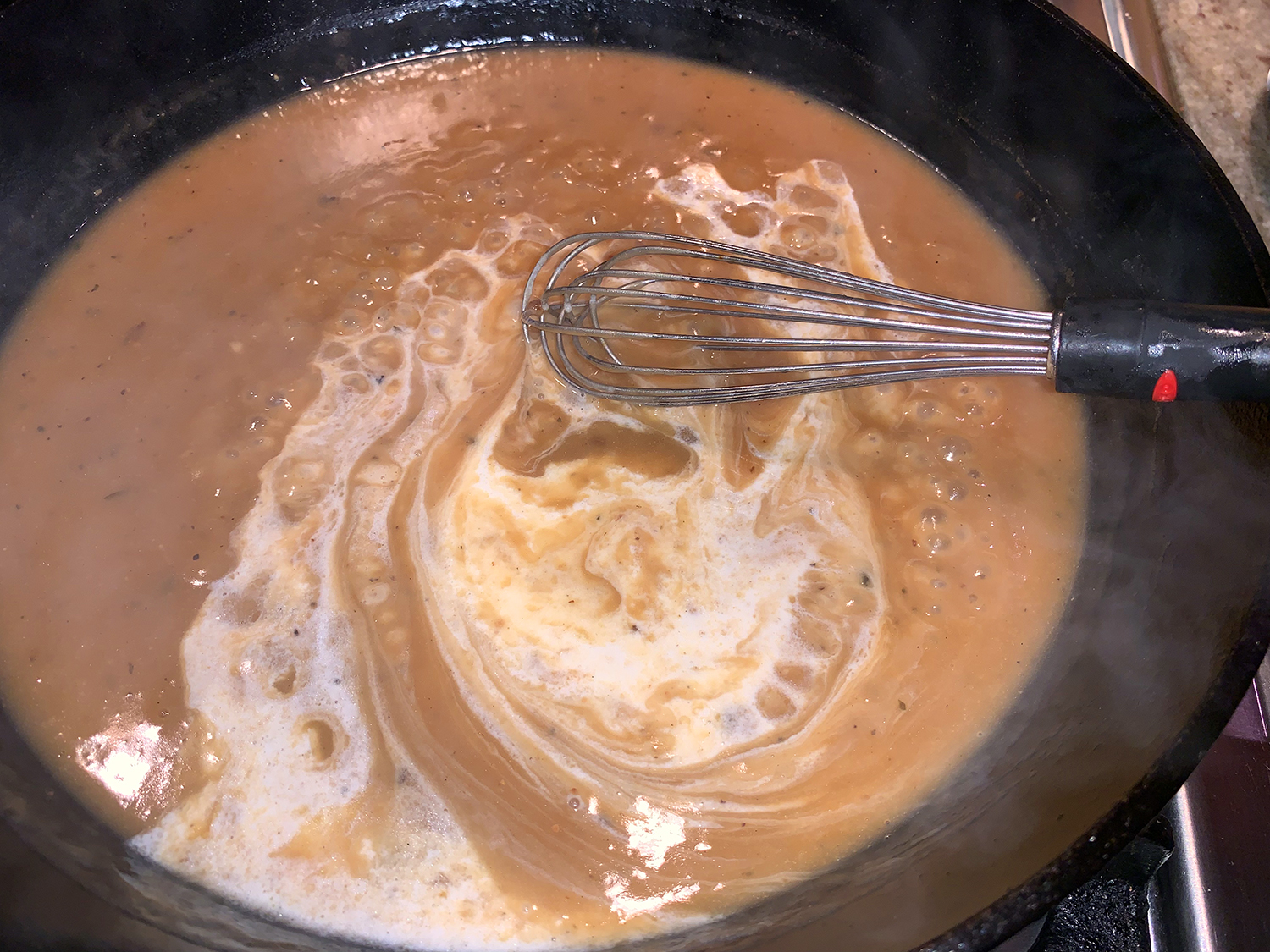
  2. While whisking slowly pour in chicken broth and drippings from roasting pan (you should have a few tablespoons, scrape up browned bits). Let cook until thickened, stirring frequently.
  3. Season with salt and pepper as needed. Stir heavy cream in at the end if using.
  4. Slice roast to desired thickness (I like to slice somewhat thin). Serve with gravy atop slices.

http://www.lynnandruss.com

Adapted from a recipe for cookingclassy.com

Citrus Rosemary Chicken

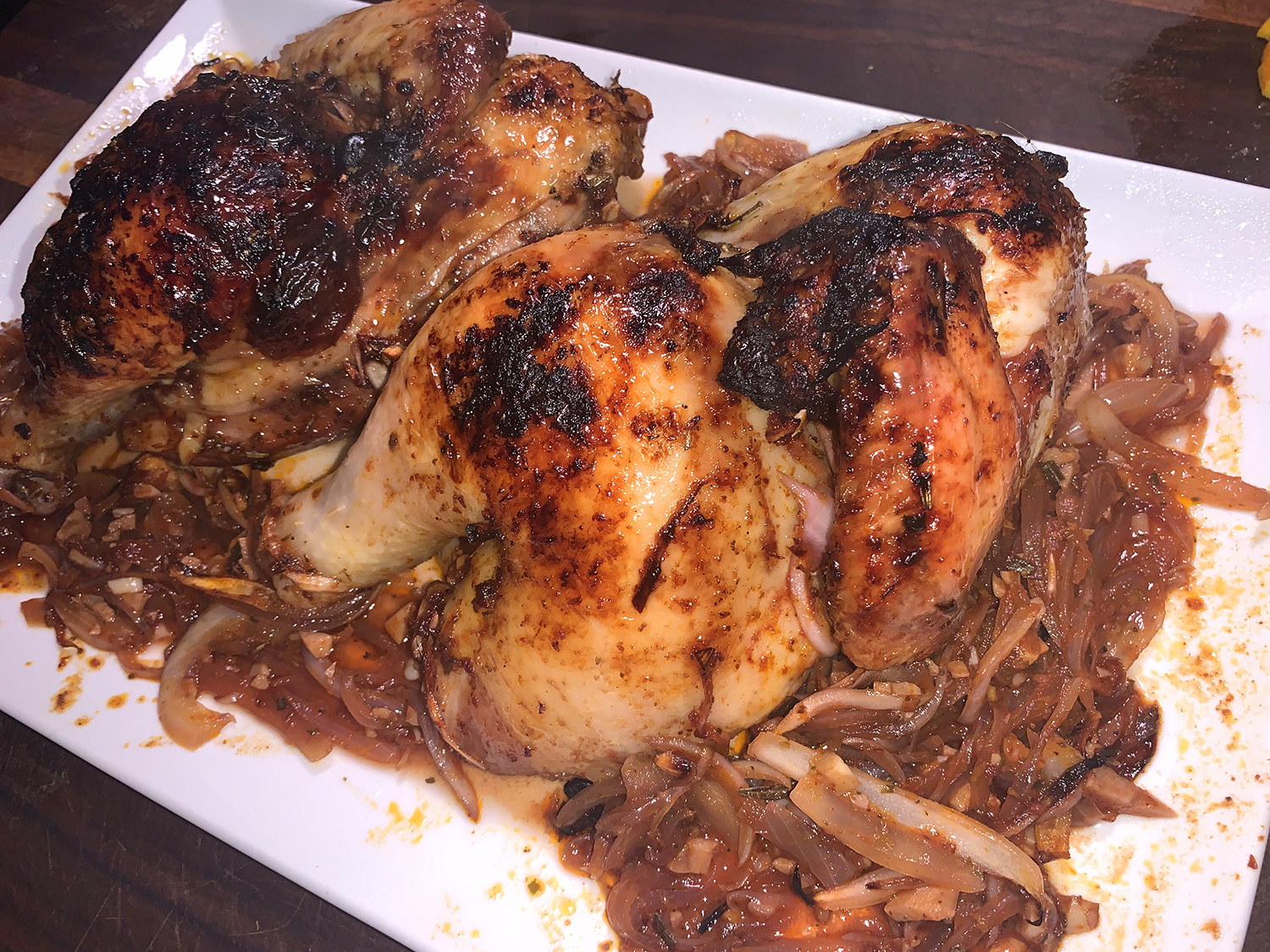
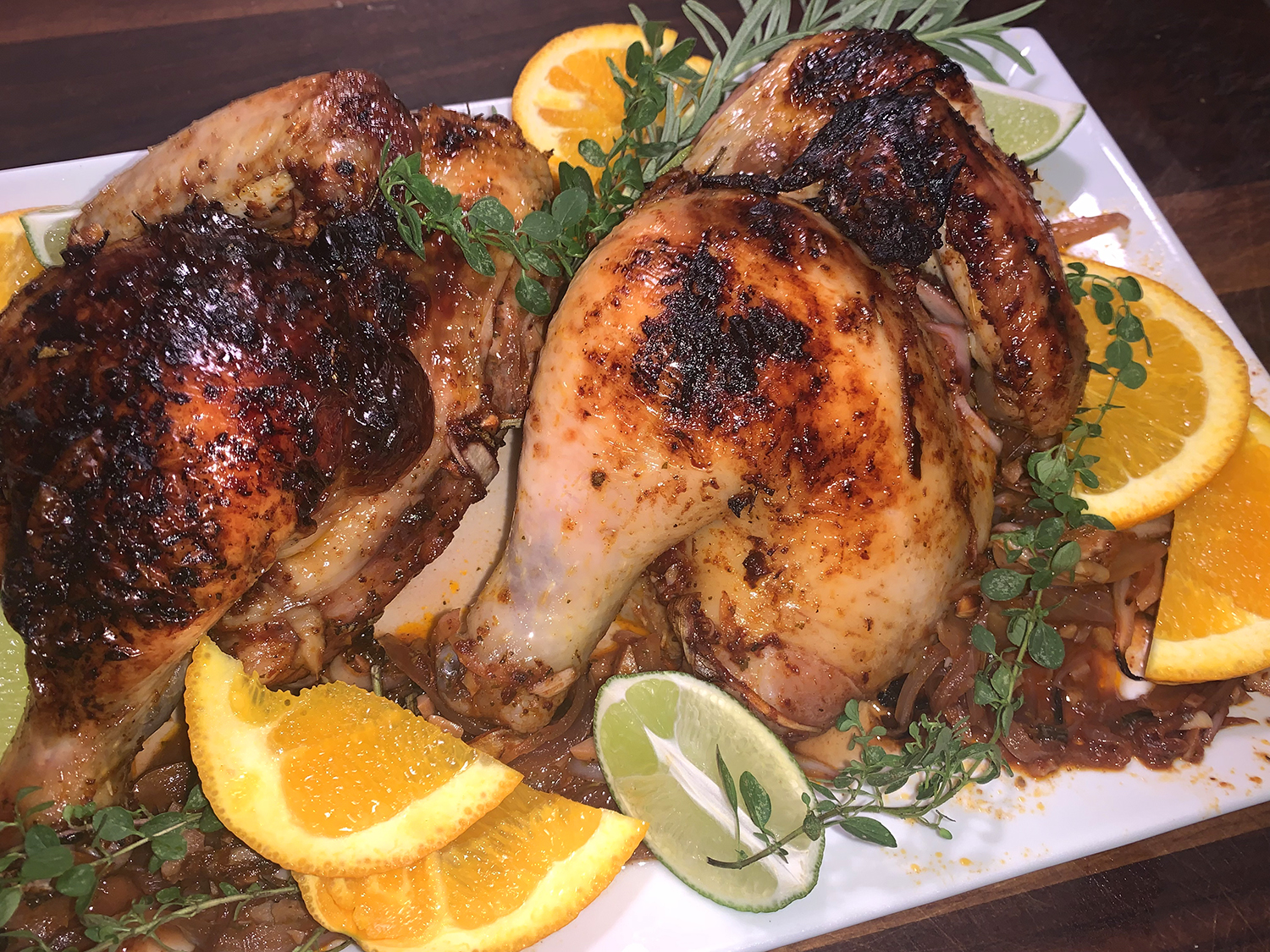
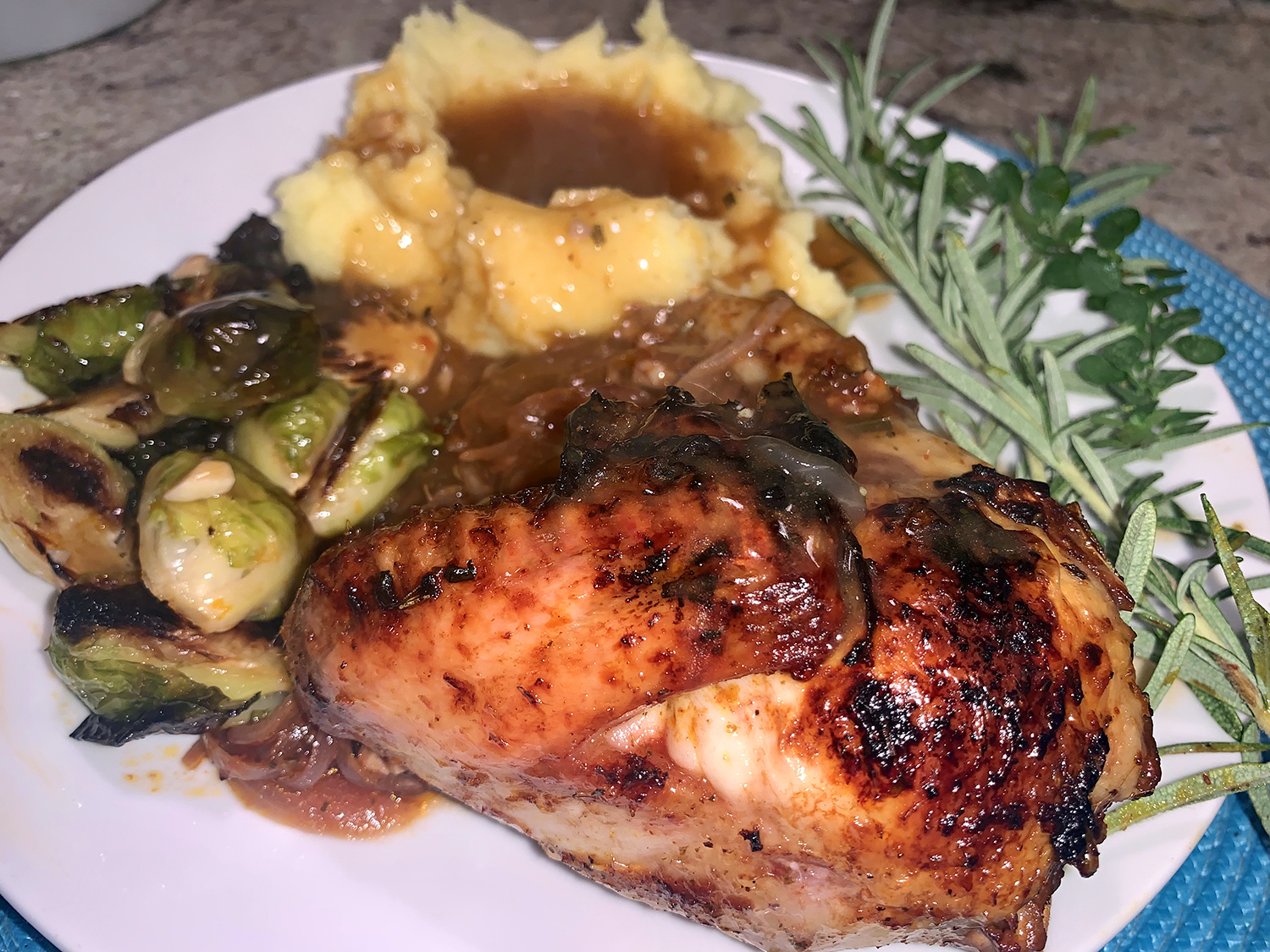
Citrusy roast chicken with mashed potatoes and gravy are my go-to comfort food, especially on a cool Sunday afternoon. The meal conjures up fond memories from my formative years growing up in Michigan. According to chef/author Suzy Karadsheh, this simple twist on roast chicken makes a dish that is at once crisp and succulent, with the perfect balance of savory, tangy, and warm flavors! Delicious and impressive with a modicum of work involved. You had me at “roast chicken.”

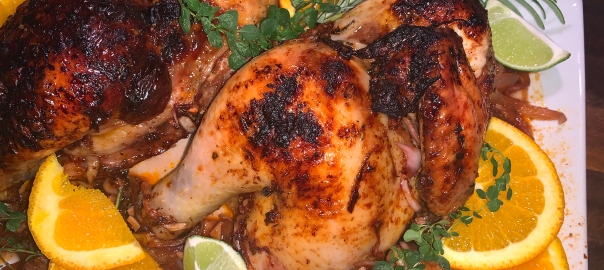
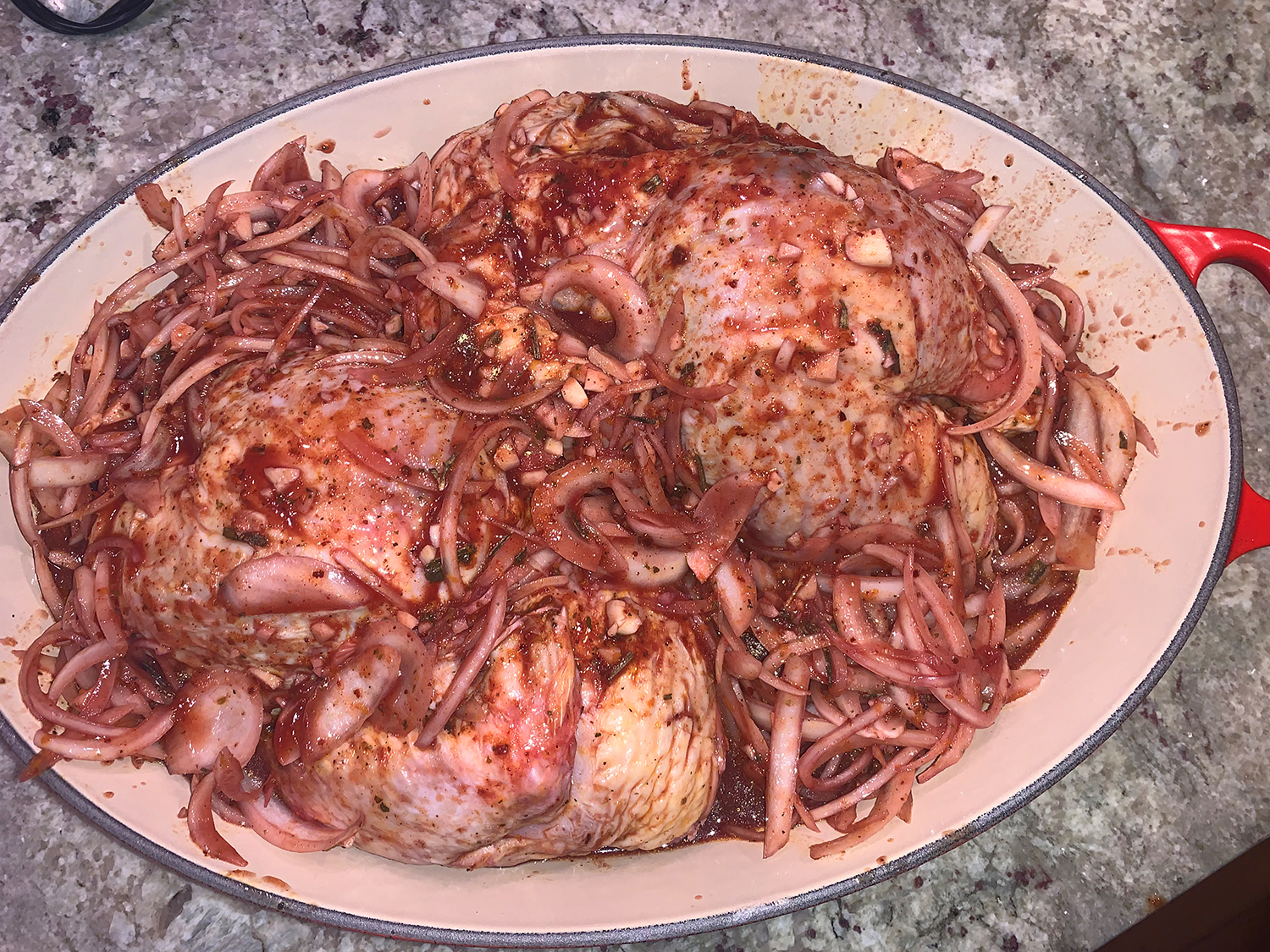
I say bring it on with crisp, tangy, and succulent citrus rosemary chicken, seasoned Mediterranean-style with garlic, rosemary, and oregano, and covered in a bold wine and orange marinade. It is preferable to use split chicken or chicken pieces of similar size for even cooking. We used a whole chicken split in half for this recipe, but you can also use chicken breast or thighs, and you may have to adjust the cooking time accordingly.

As wine pairings go, many people choose white wine to serve next to chicken dinners. But roast chicken is one of those rustic meals that pairs incredibly well with certain red wines, such as Pinot Noir. The beautiful red fruit notes in Pinot compliment the rosemary and citrus flavors in the chicken without overwhelming the palate. And the smooth, lengthy finish is just perfection! To elevate the flavor even more, Suzy also uses some of the wine in the chicken marinade. 

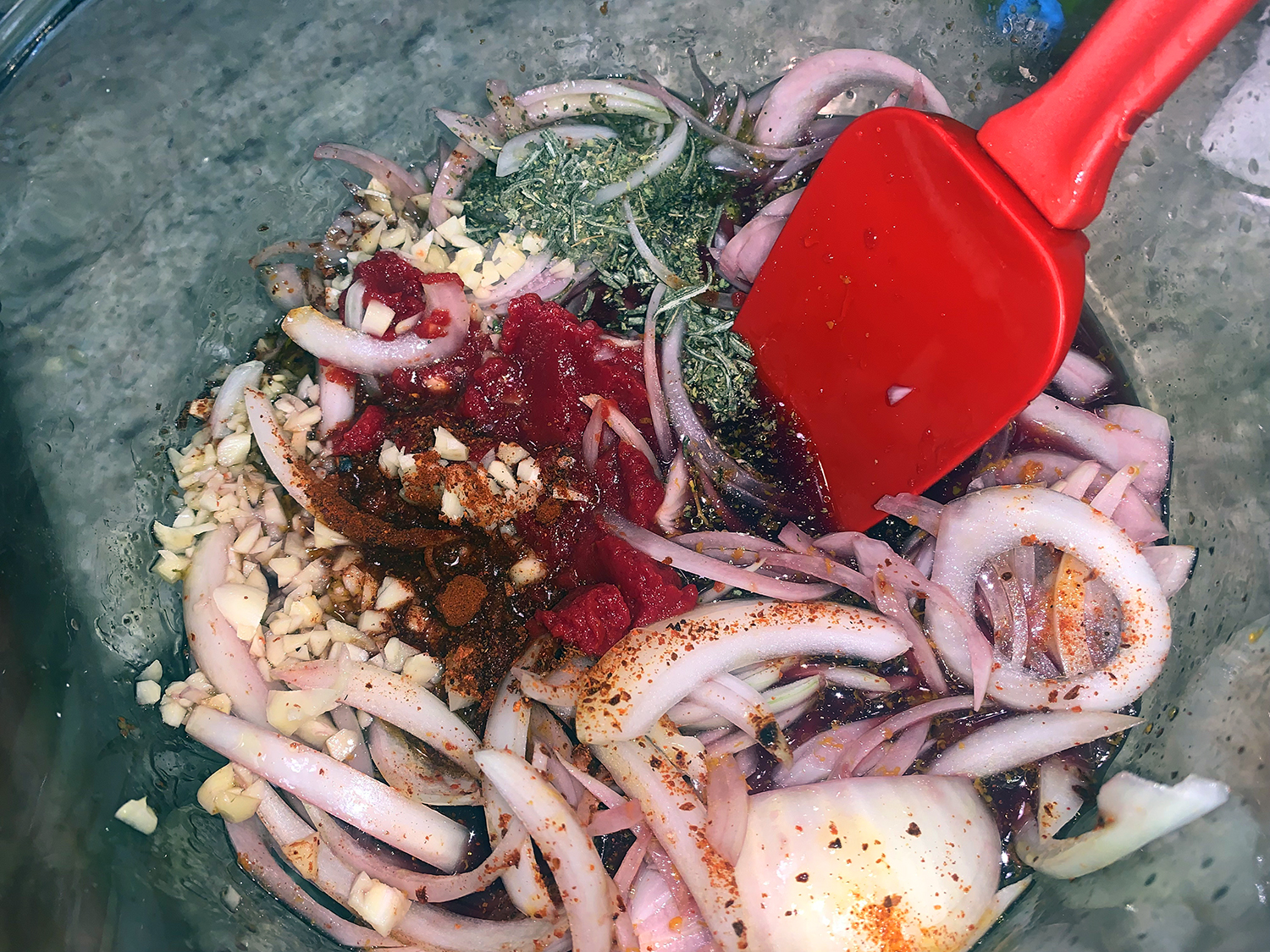
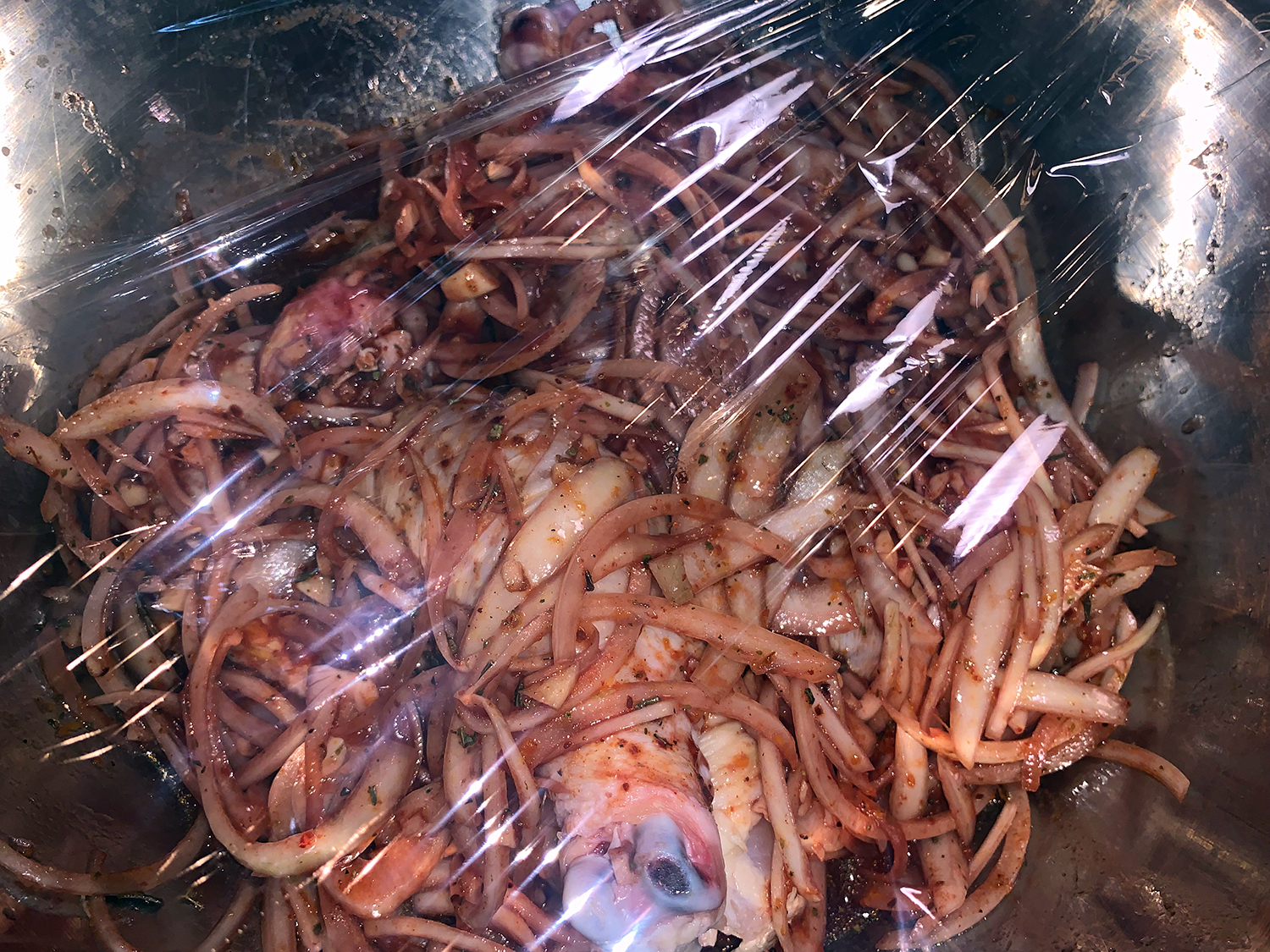
The citrus marinade in this recipe is made of a combination of wine, orange juice, lime juice, olive oil, tomato paste for color and umami, and fresh garlic, onions, rosemary, and other Mediterranean spices. The key to great flavor here is to allow the chicken a good 1 to 2 hours in the marinade (refrigerated), and make sure to lift up the chicken skin to spoon some of the garlicky, citrus marinade underneath.

When the chicken was done, we plated it and the onions on a platter covered with foil. The remaining juices were added with a quart of homemade chicken stock to a pot; then thickened with a corn starch slurry when the liquids began to boil. To complete the meal, we made Roasted Brussels Sprouts with Orange-Butter Sauce and garlicky mashed potatoes with gravy.

Please note: Since the pan will go under the broiler at the end, make sure to use a broiler-proof pan such as enameled cast iron.

Citrus Rosemary Chicken

  • Servings: 4
  • Difficulty: easy
  • Print

Ingredients

  • 1 whole chicken (about 3 ½ lbs.), split in half through the backbone
  • Kosher salt
  • 1 cup Pinot Noir
  • 1 orange zested and juiced plus 1 sliced orange
  • 1 lime juiced, plus 1 sliced lime
  • Extra virgin olive oil
  • 3 Tbsp. tomato paste
  • 1 ½ tsp. dried oregano
  • 1 tsp. dried rosemary
  • 1 tsp. sweet paprika
  • 1 tsp. Aleppo pepper
  • 7 to 8 garlic cloves minced
  • 1 yellow onion halved and sliced
  • 1 Tbsp. honey

Directions

  1. Season the chicken with kosher salt on all sides, making sure to season underneath the skin as well. (You can do this one night ahead of time and keep the chicken in the fridge to air-chill uncovered).
  2. Prepare the citrus marinade. In a large bowl, add the wine, orange juice and zest, lime juice, 3 tablespoons extra virgin olive oil, tomato paste, spices, and a good dash of kosher salt. Add the garlic and onion. Whisk to combine.
  3. Add the chicken and toss to coat, making sure to lift the skin up and spoon some of the marinade underneath (this will give you more flavor). Set aside at room temperature for 30 minutes. Alternatively, cover and refrigerate for an hour or two (for best results, take it out of the fridge and leave the chicken at room temperature for 30 to 45 minutes before cooking).
  4. Preheat the oven to 425° F and adjust a rack in the middle.
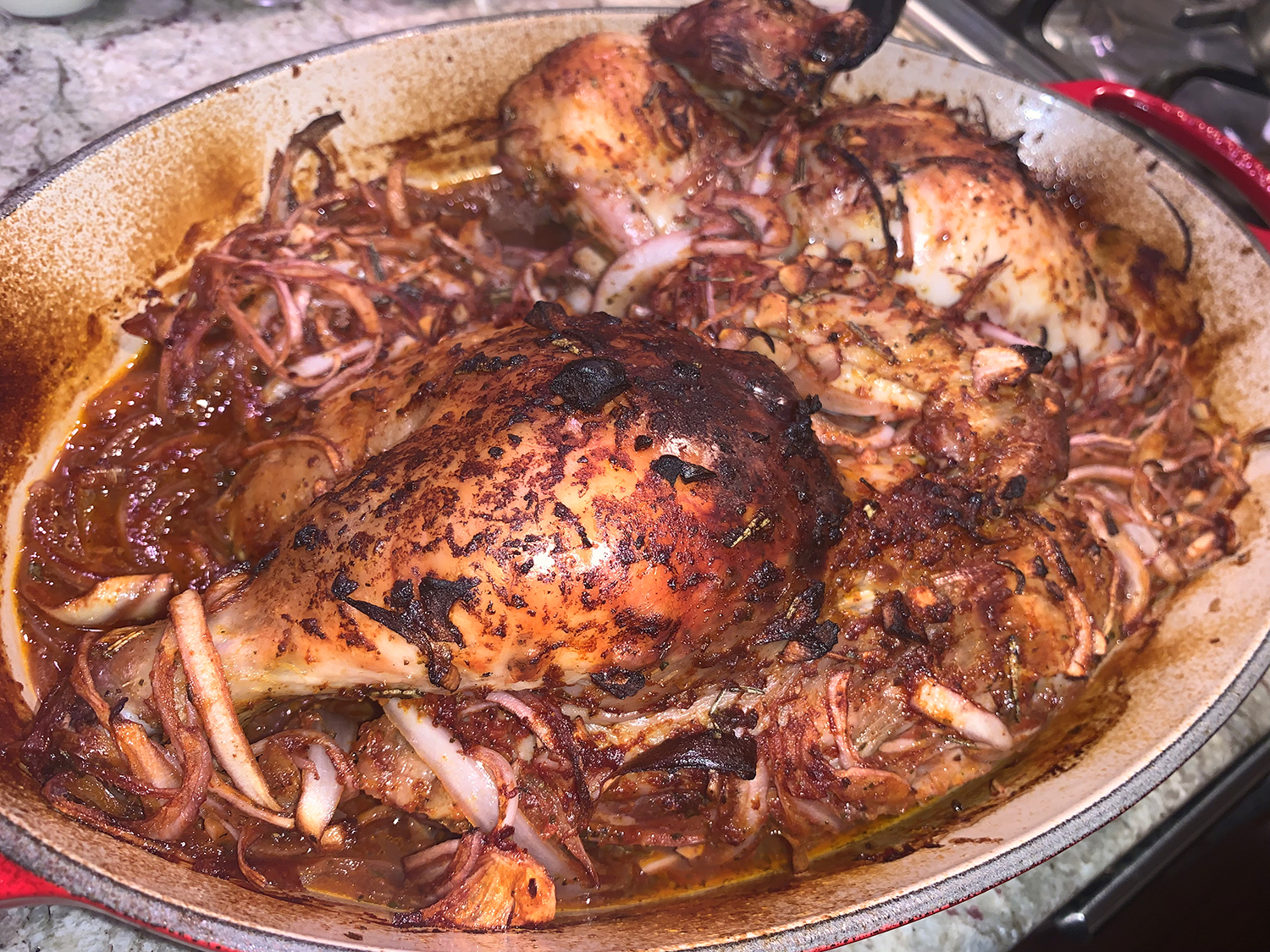
  5. Transfer the chicken and the marinade to a braising pan. Roast for 30 minutes, then carefully turn the pan 180 degrees and roast for another 15 minutes or until the chicken is fully cooked and tender, with an internal temperature of the breast meat at 165°.
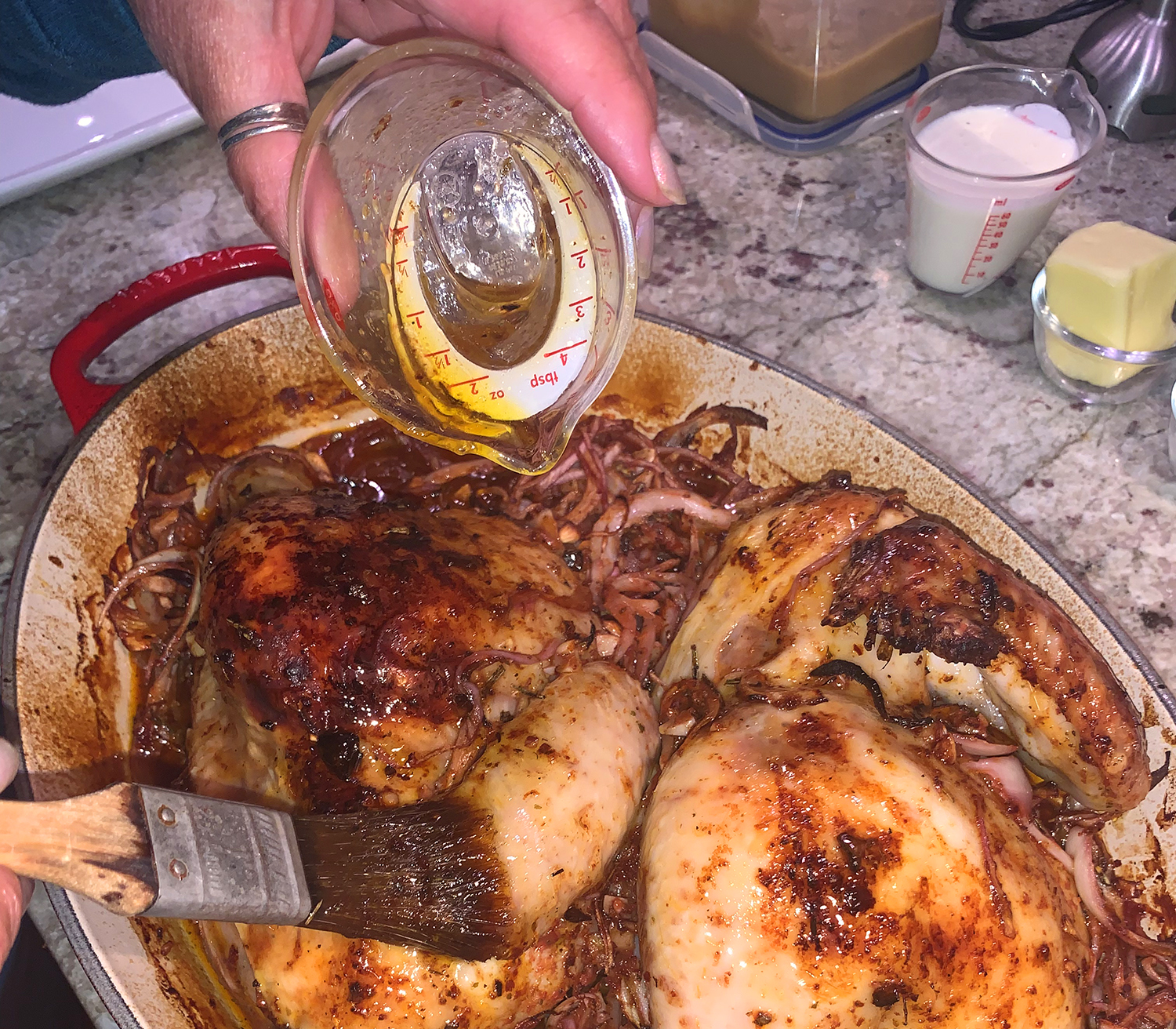
  6. In a small bowl, mix together the honey with 1 tablespoon of extra virgin olive oil. Carefully remove the chicken from the oven and brush the top with the honey and olive oil mixture.
  7. Switch the oven to the broil function. Return the chicken back to the oven about 6 inches away from the broiler and cook briefly for 3 to 4 minutes, watching for the skin to turn a nice golden brown.
  8. Remove from the heat. Move chicken and onions to platter. Garnish with slices of fresh orange, wedges of lime and fresh herbs. Allow chicken 10 minutes to rest before slicing and serving.
  9. If desired, while the chicken rests, bring 1 quart of chicken stock and the pan juices to a boil, then add a cornstarch slurry to thicken the gravy.

http://www.lynnandruss.com

Adapted from a recipe by Suzy Karadsheh for The Mediterranean Dish

Spicy Chinese Beef Skewers

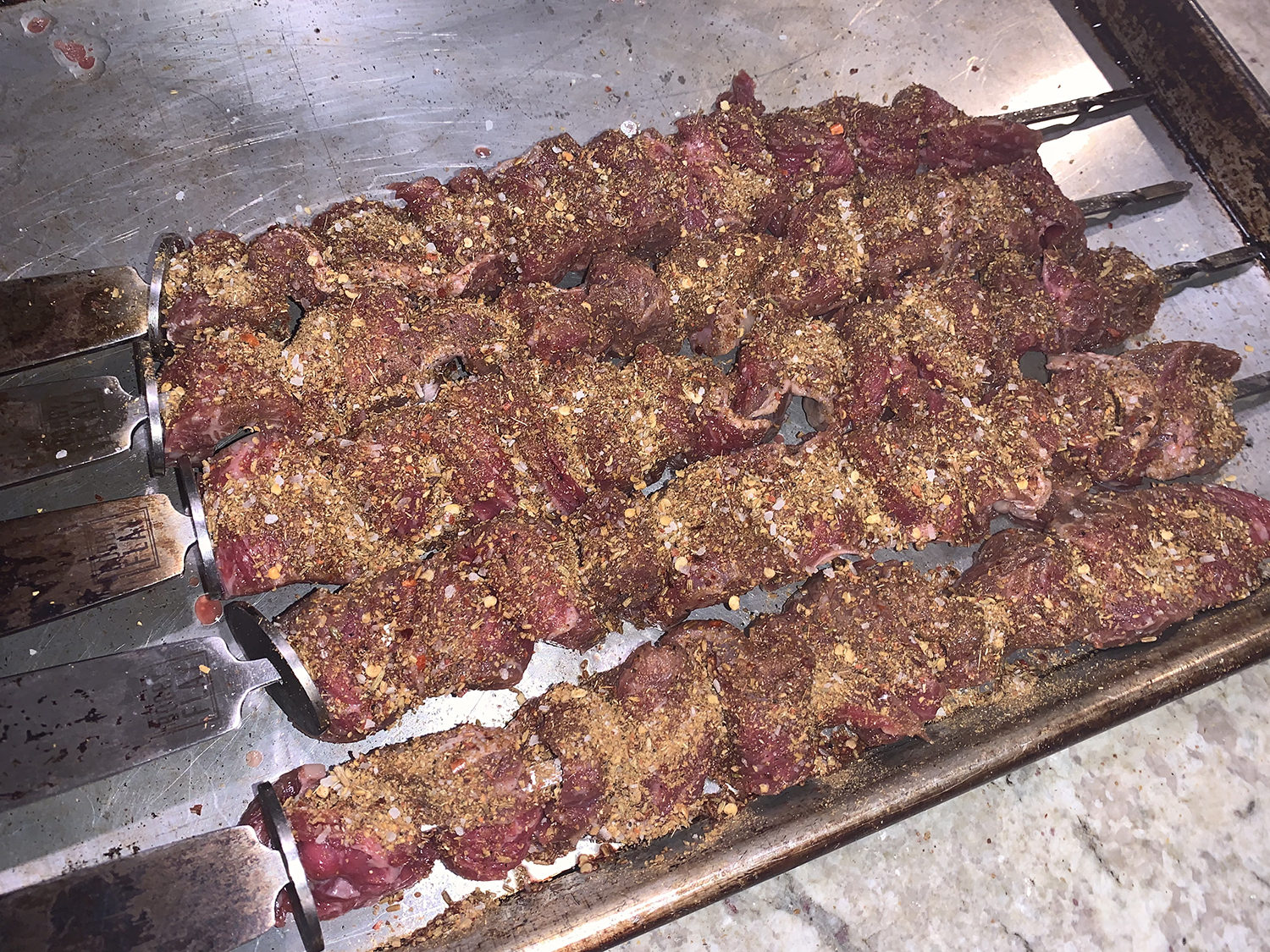
Spice it twice—the mantra for this flavorful beef skewer. After skewering but before going on the grill, the meat is dusted generously with the spices. Those spices toast, their flavors deepening during cooking. Once the meat comes off the heat, it’s seasoned a second time with the same spice blend, creating multiple layers of nuanced flavors from the same few ingredients.

What did we do different? In place of flat iron steak, we substituted flap meat because it was already in our freezer and it’s easier to source than the aforementioned flat iron cut. In keeping with the Asian theme, we also grilled bok choy right along with the meat skewers. They benefited from a chili oil sauce that complimented the meat rub.

Don’t trim the fat from the beef before cooking. The fat adds flavor and helps keep the meat succulent. If you’re using a gas grill, make sure to give it at least 10 to 15 minutes to heat before cooking the skewers. This ensures the meat gets a nice surface char without overcooking the interior.

Spicy Chinese Beef Skewers

  • Servings: 4
  • Difficulty: easy
  • Print

Ingredients

  • 1½ lbs. beef flat iron steak, sliced against the grain into ¼-inch-thick strips
  • 1 Tbsp. dry sherry or Shaoxing wine
  • 1 Tbsp. soy sauce
  • 2 Tbsp. grapeseed or other neutral oil, plus more for grill grate
  • 2½ Tbsp. cumin seeds
  • 2½ tsp. fennel seeds
  • 1½ tsp. sichuan peppercorns
  • 2 tsp. red pepper flakes
  • Kosher salt
  • chili oil, to serve (optional)

Directions

  1. In a medium bowl, combine the beef, sherry, soy sauce and oil. Let stand at room temperature while preparing the spice mix and the grill.
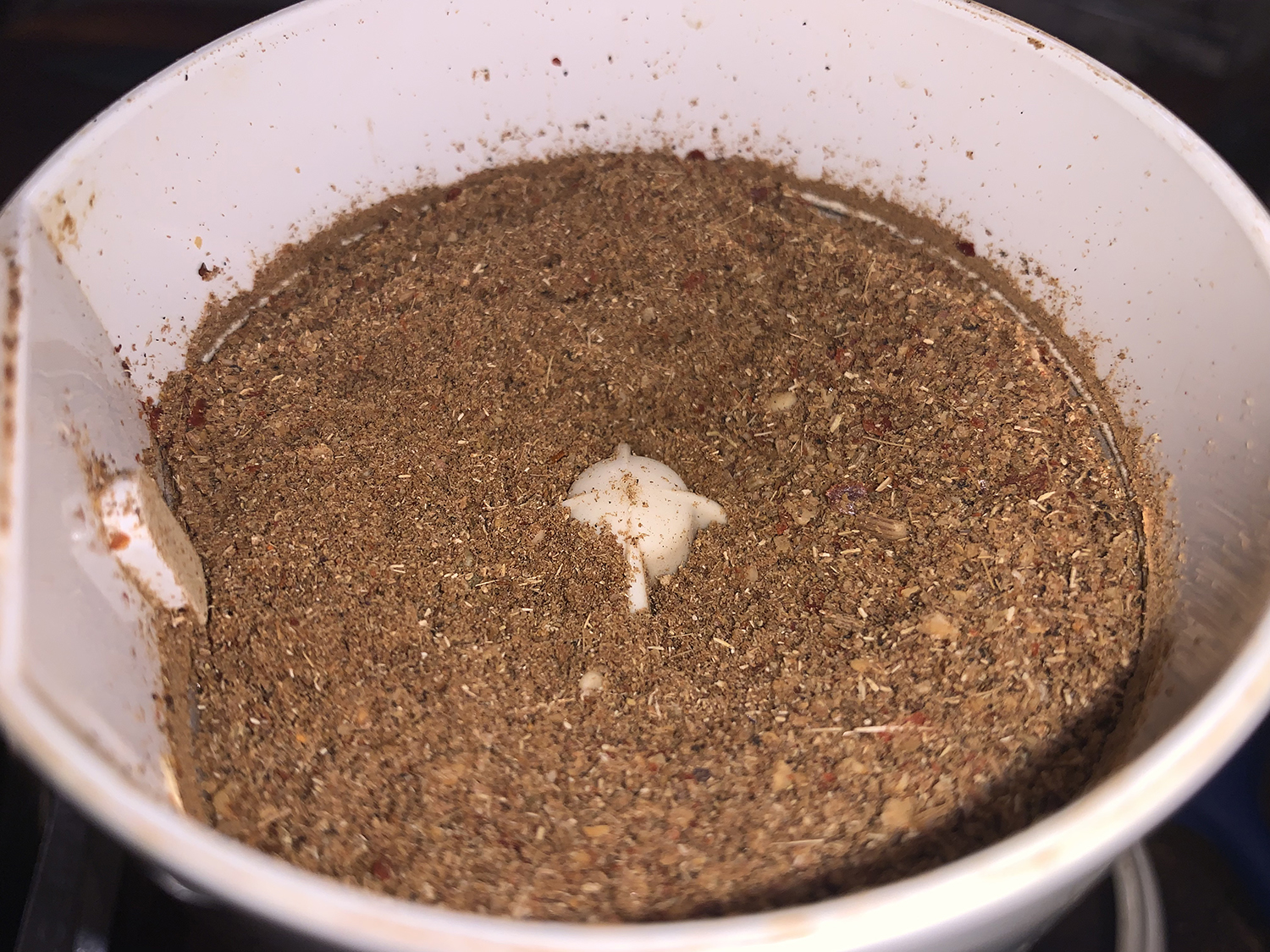
  2. In a small skillet over medium-low, toast the cumin, fennel and Sichuan peppercorns until fragrant, about 2 minutes. Transfer to a spice grinder and add the pepper flakes. Process until coarsely ground, about 10 seconds. Transfer to a small bowl and stir in 1¾ teaspoons salt. Measure out 1 tablespoon of the mix and set aside to use as garnish.
  3. Prepare a charcoal or gas grill for direct, high-heat cooking. For a charcoal grill, ignite a large chimney of coals and let burn until lightly ashed over, then distribute the coals evenly over one side of the grill bed; open the bottom grill vents and the lid vent. For a gas grill, turn all burners to high. Heat the grill, covered, for 10 to 15 minutes, then clean and oil the cooking grate.
  4. While the grill heats, thread the beef onto ten 8- to 10-inch metal skewers, evenly dividing the meat and pushing the pieces together. Sprinkle the remaining spice mixture evenly over both sides of the meat, patting gently to adhere.
  5. Grill until lightly charred, 2 to 3 minutes, then flip and grill until the second sides are lightly charred, another 2 minutes. Transfer to a serving platter, sprinkling both sides of the skewers with the reserved spice mix, then drizzle with chili oil (if using).

http://www.lynnandruss.com

Adapted from a recipe by Laura Russell for Milk Street

Saffron-Spiked Crispy Rice with Chicken and Lemon Zest

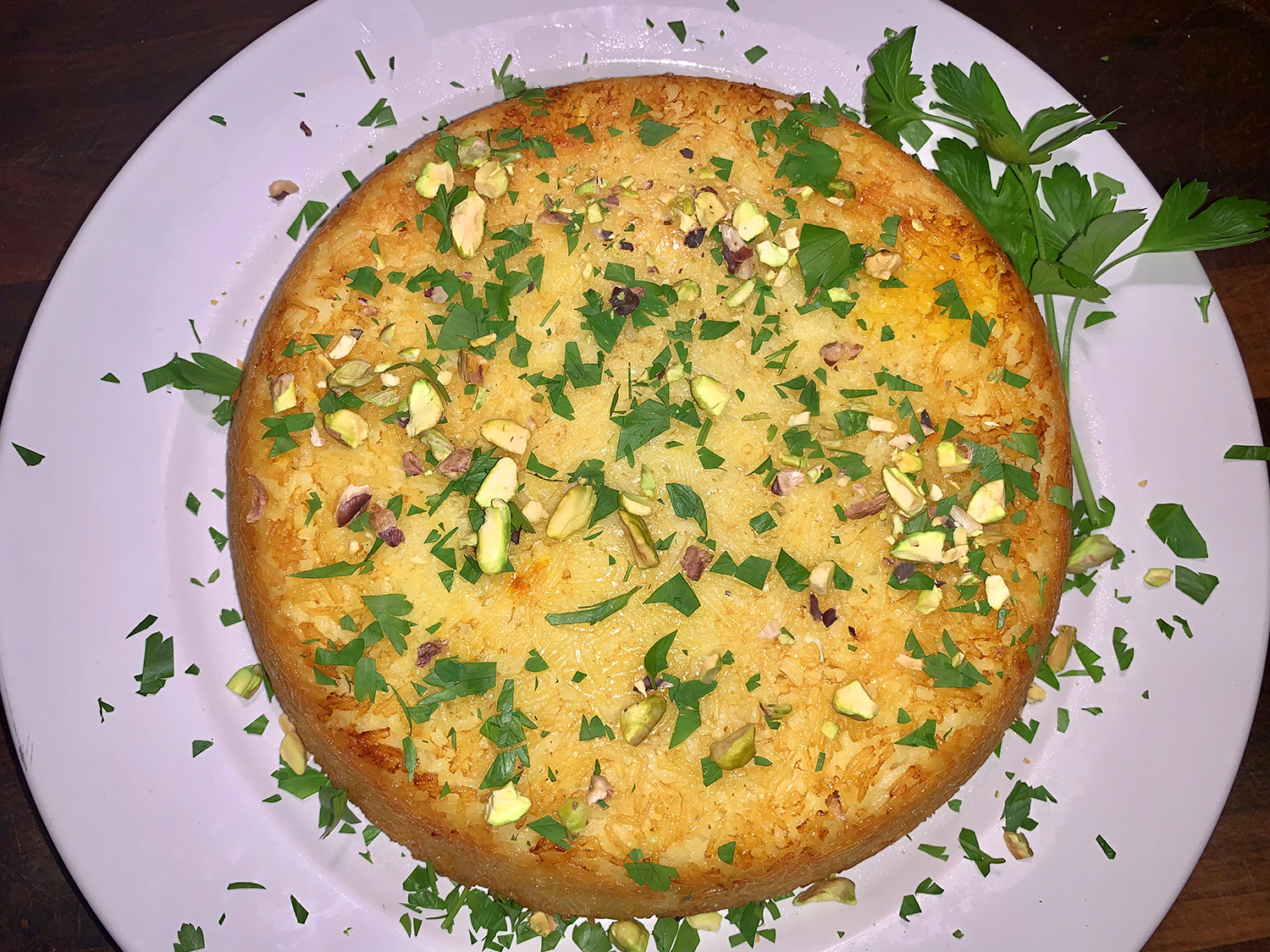
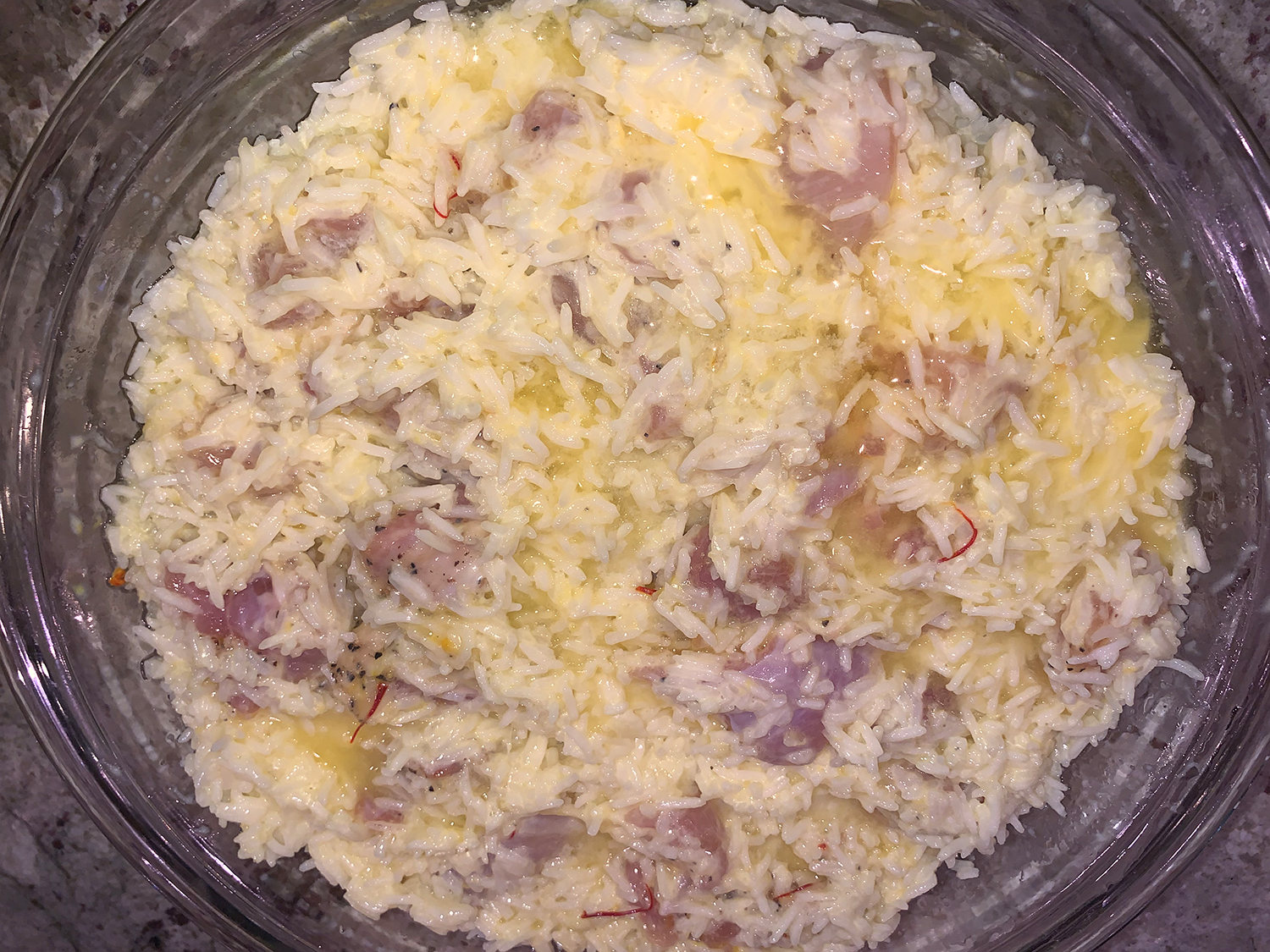
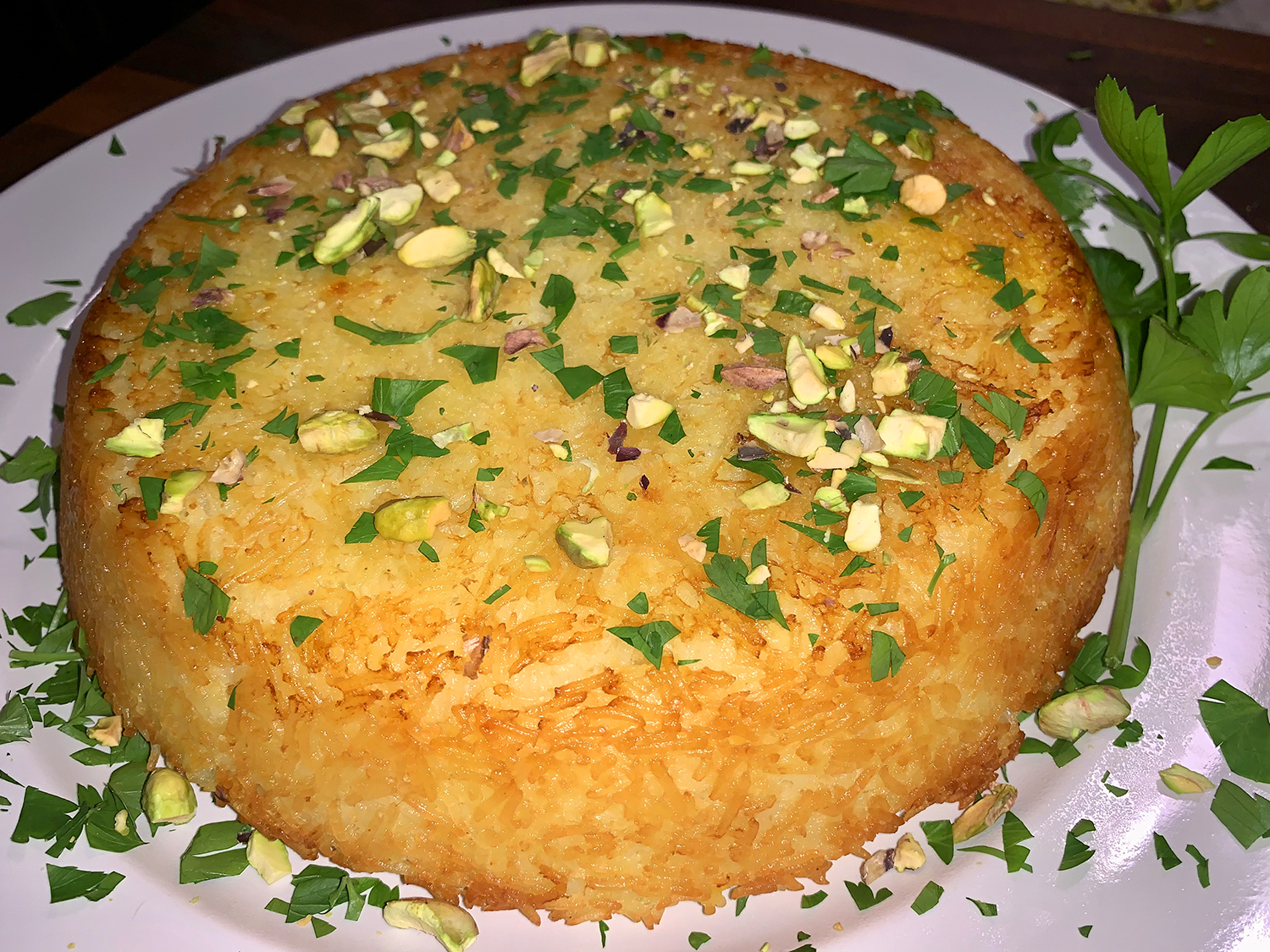
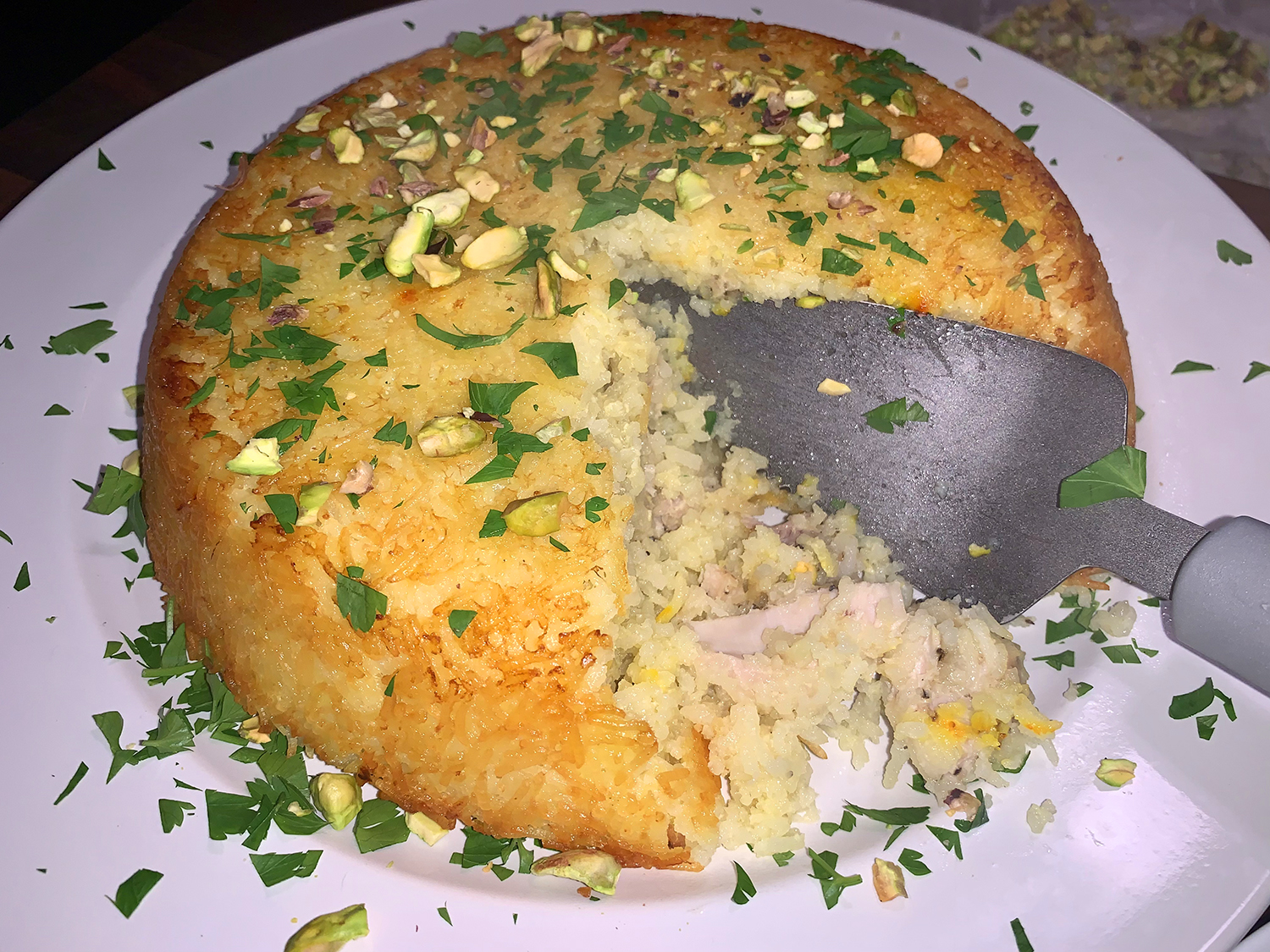
Tahchin is a traditional Persian dish of basmati rice mixed with saffron, yogurt and egg yolks, then baked into a cake. Here however, a tahchin morgh, or tahchin with chicken is made with a shortcut by simply layering uncooked pieces of seasoned chicken thighs into the rice so they bake right into the grains.

You will need a 9-inch deep-dish glass pie plate for this recipe. The glass not only conducts heat well so the rice forms a nice bottom crust, it also allows you to monitor browning. For make-ahead convenience, Milk Street says the rice can be put into the pie plate, covered and refrigerated for up to eight hours. When you’re ready to bake, drizzle on the melted butter, cover with foil and bake as directed.

I wasn’t so sure that I’d be bowled over by this recipe, but after a few bites I realized just how good it was! We omitted the currants, but kept everything else the same. Even though it is a one pan meal, it uses numerous bowls and containers to prep the ingredients, so make sure you have a dish washer on hand 😉

NOTE: Don’t use a metal baking pan or a ceramic pie plate. Neither will brown and crisp the bottom crust as well as glass. Also, be sure the oven rack is in the lowest position, as proximity to the heating element will assist with browning.

Saffron-Spiked Crispy Rice with Chicken and Lemon Zest

  • Servings: 4
  • Difficulty: easy
  • Print

Ingredients

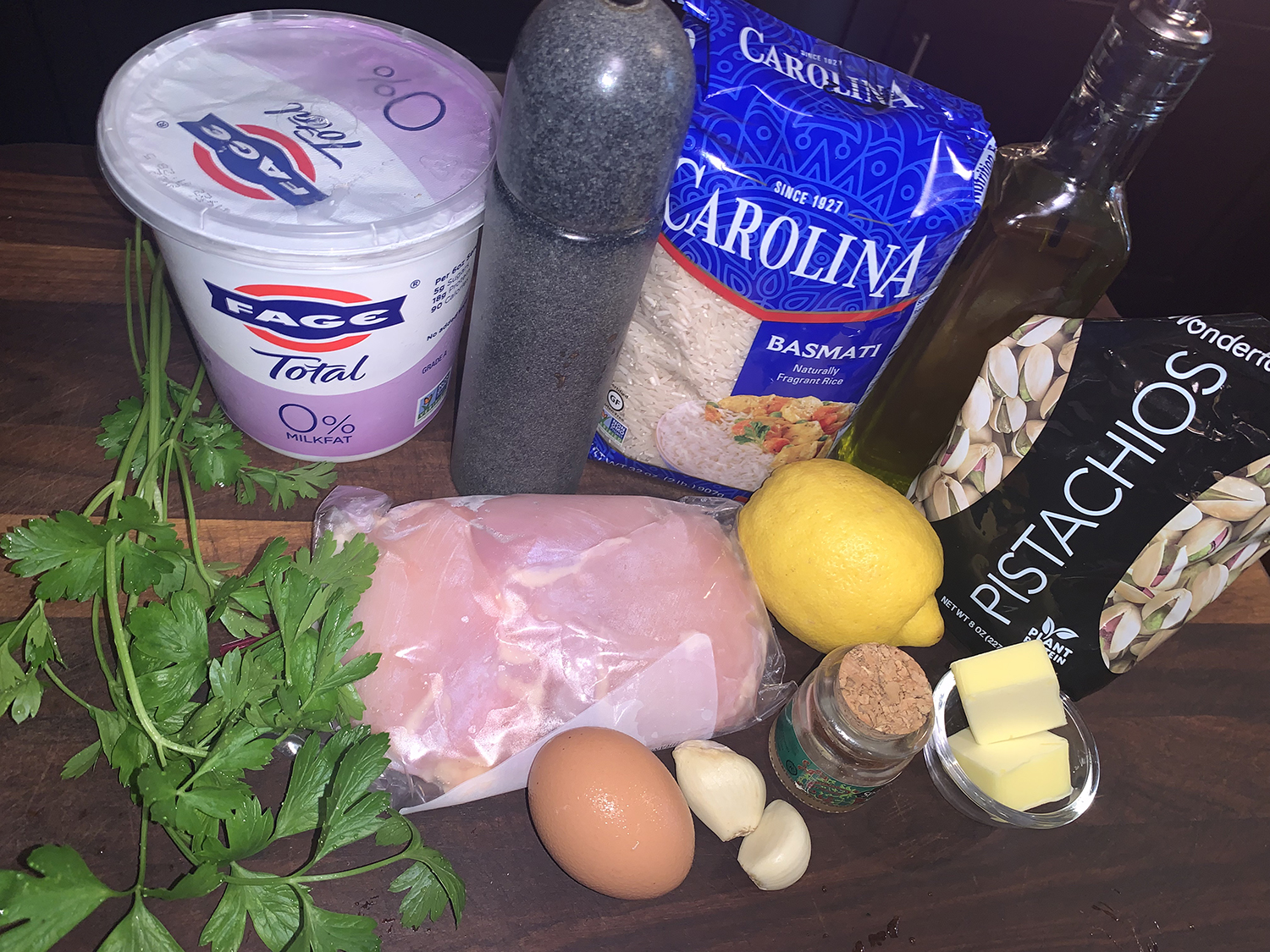
  • 1 1/2 cups basmati rice
  • 1/4 tsp. saffron threads, crumbled
  • 2 Tbsp. boiling water
  • 3 Tbsp. extra-virgin olive oil, divided
  • 12 oz. boneless, skinless chicken thighs, trimmed and cut into 1- to 1½-inch pieces
  • 3 tsp. grated lemon zest, divided
  • 2 medium garlic cloves, finely grated
  • Kosher salt and ground black pepper
  • 1/2 cup plain whole-milk Greek yogurt
  • 1 large egg yolk
  • 3 Tbsp. dried currants
  • 2 Tbsp. salted butter, melted
  • Chopped fresh flat-leaf parsley, to serve
  • Roughly chopped roasted pistachios, to serve

Directions

  1. In a medium bowl, combine the rice with enough water to cover by about 1 inch. Set aside at room temperature for at least 30 minutes or up 12 hours. Drain the rice in a fine-mesh sieve, then rinse under cool running water and drain again.
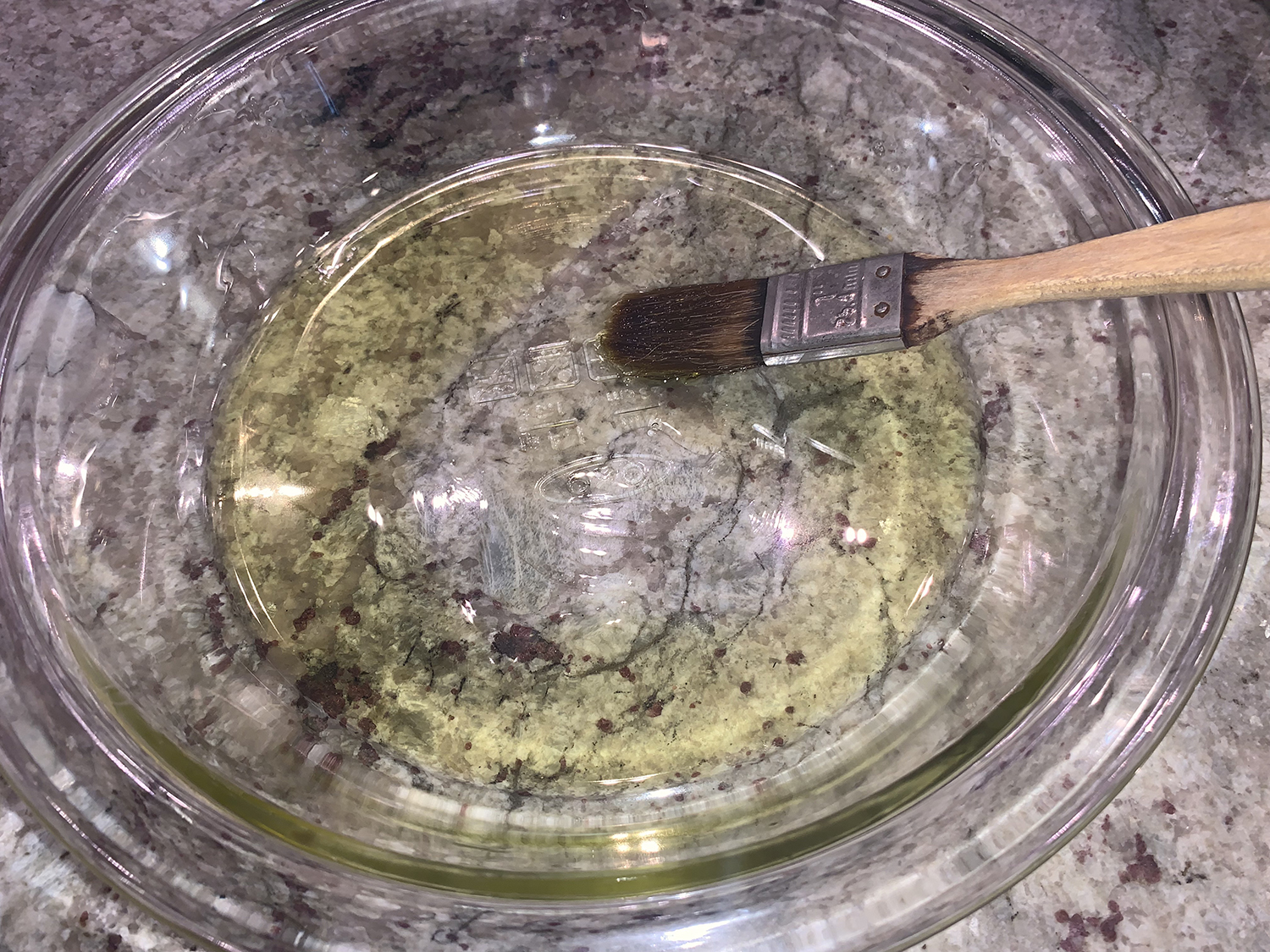
  2. In a small bowl, stir together the saffron and boiling water; set aside. Heat the oven to 400°F with a rack in the lowest position. Brush the bottom and sides of a 9-inch deep-dish glass pie plate with 2 tablespoons of the oil.
  3. In a medium bowl, combine the chicken, remaining 1 tablespoon oil, 1 teaspoon of the lemon zest, the garlic, ½ teaspoon each salt and pepper and 1 tablespoon of the saffron water. Stir until the chicken is evenly coated; set aside at room temperature.
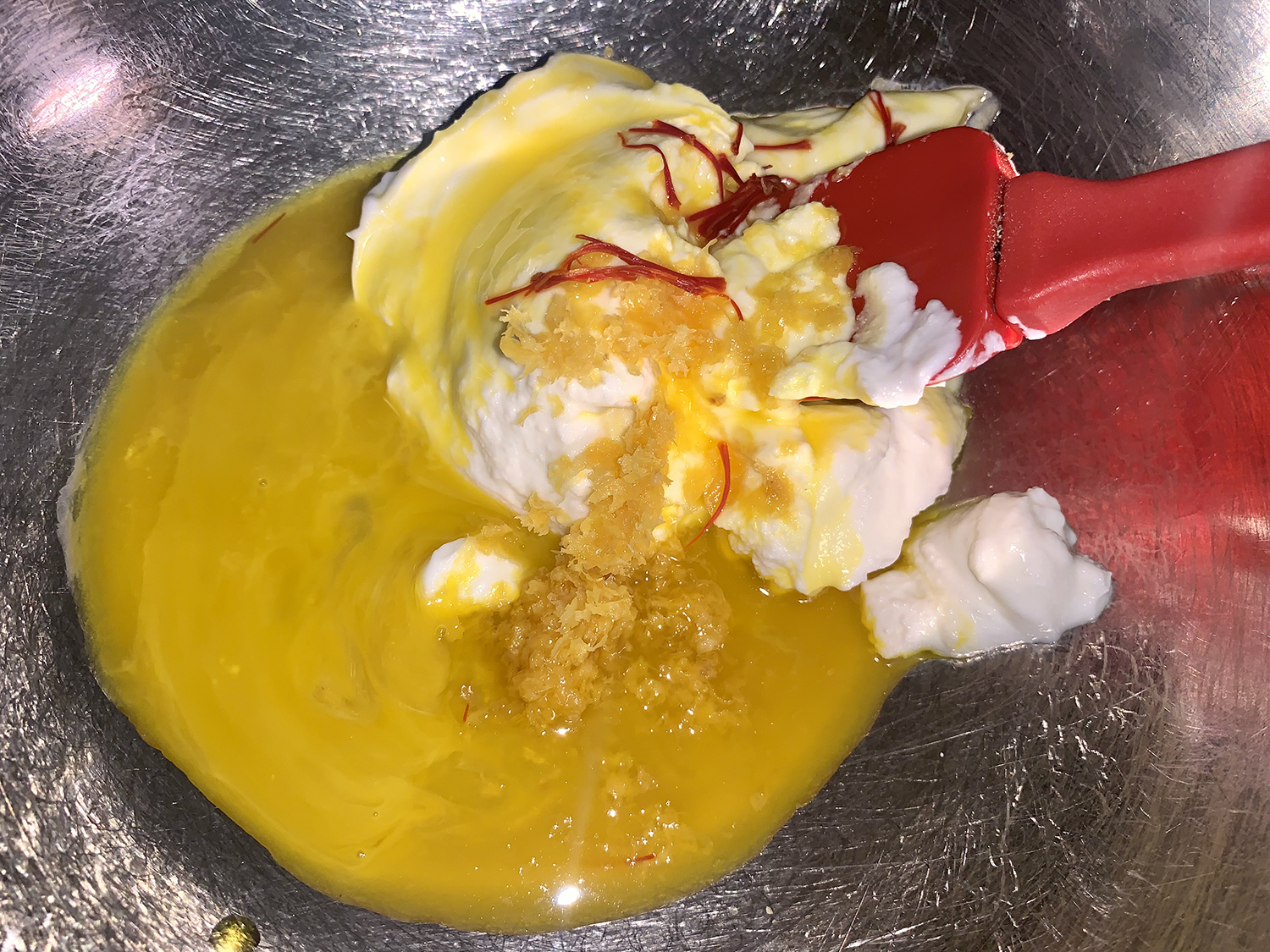
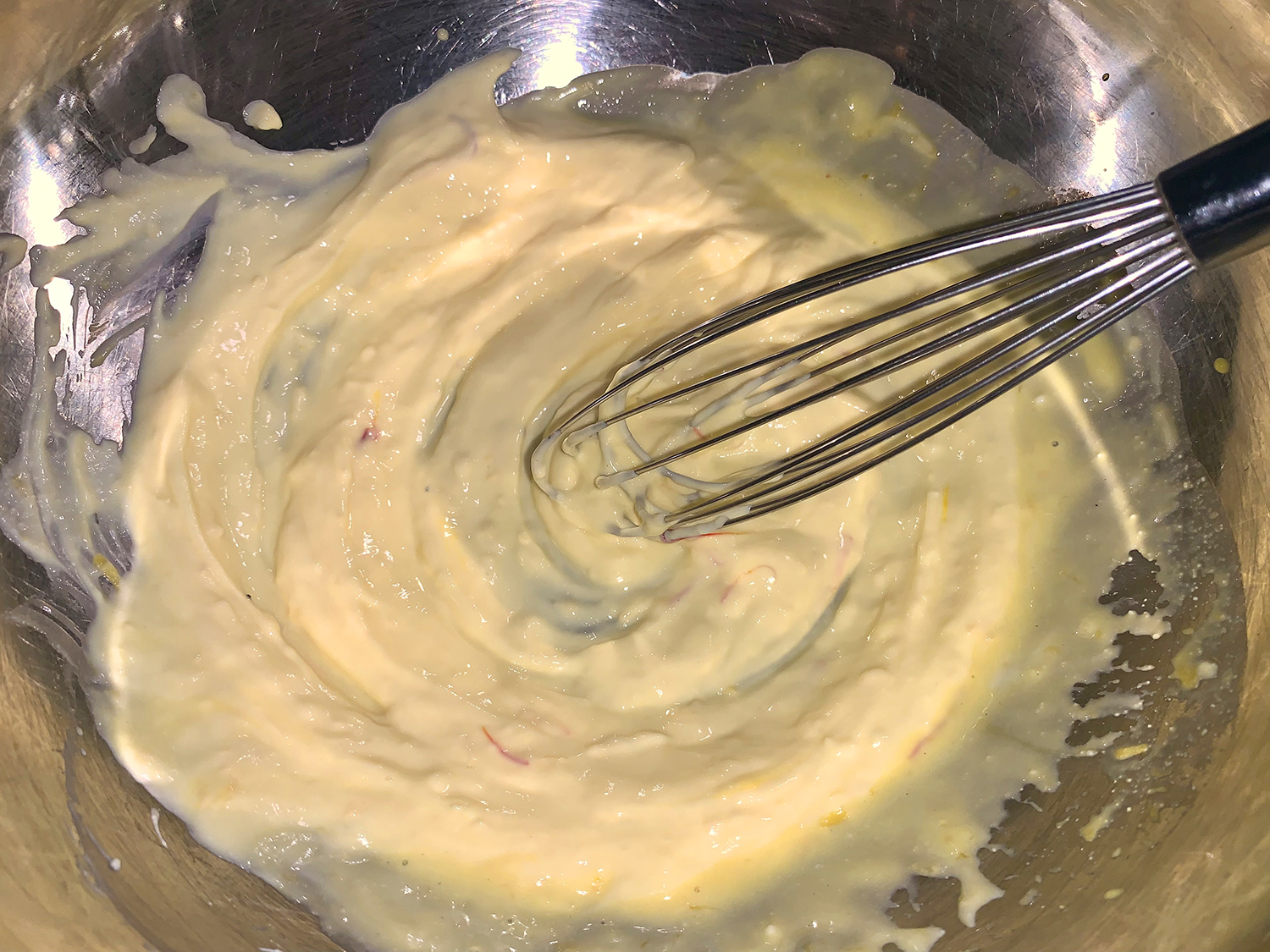
  4. In a large saucepan, bring 2 quarts water to a boil. Meanwhile, in a large bowl, combine the yogurt, egg yolk, remaining 2 teaspoons lemon zest and remaining saffron water; whisk until well combined.
  5. When the water reaches a boil, stir in the rice and 2 tablespoons salt. Return to a boil and cook, stirring occasionally, for 5 minutes; it will not be fully cooked. Drain the rice in a fine-holed colander or large fine-mesh sieve, shaking to remove excess water. Add the rice to the yogurt mixture and stir until thoroughly combined.
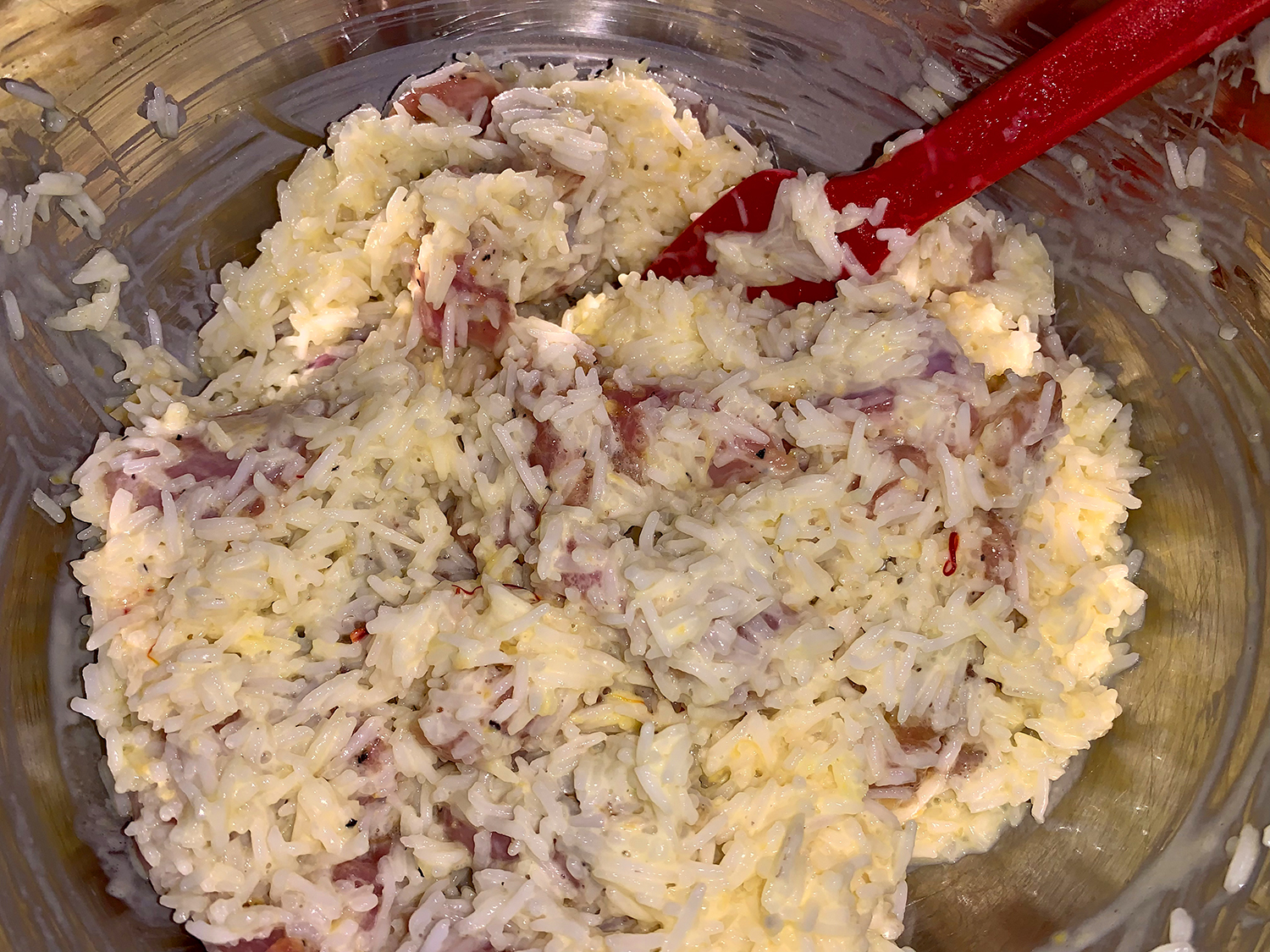
  6. Add about 1½ cups rice mixture to the prepared pie plate, gently pressing it into an even layer over the bottom and about halfway up the sides. Stir the chicken mixture and the currants into the remaining rice mixture, then transfer to the pie plate and distribute in an even layer; do not compact the rice mixture. Drizzle the melted butter evenly over top. Cover tightly with foil and bake for 1 hour. Carefully remove the foil and continue to bake until the bottom is golden brown, about 10 minutes. Remove from the oven and let rest for about 5 minutes.
  7. Run a silicone spatula around the edge to loosen the rice from the pie plate. Invert a serving platter over the pie plate. Holding the platter against the pie plate, carefully invert the two together. Carefully remove the pie plate. Sprinkle with parsley and pistachios.

http://www.lynnandruss.com

Adapted from a recipe by Courtney Hill for Milk Street

Grilled Pork Chops with Plum Mostarda

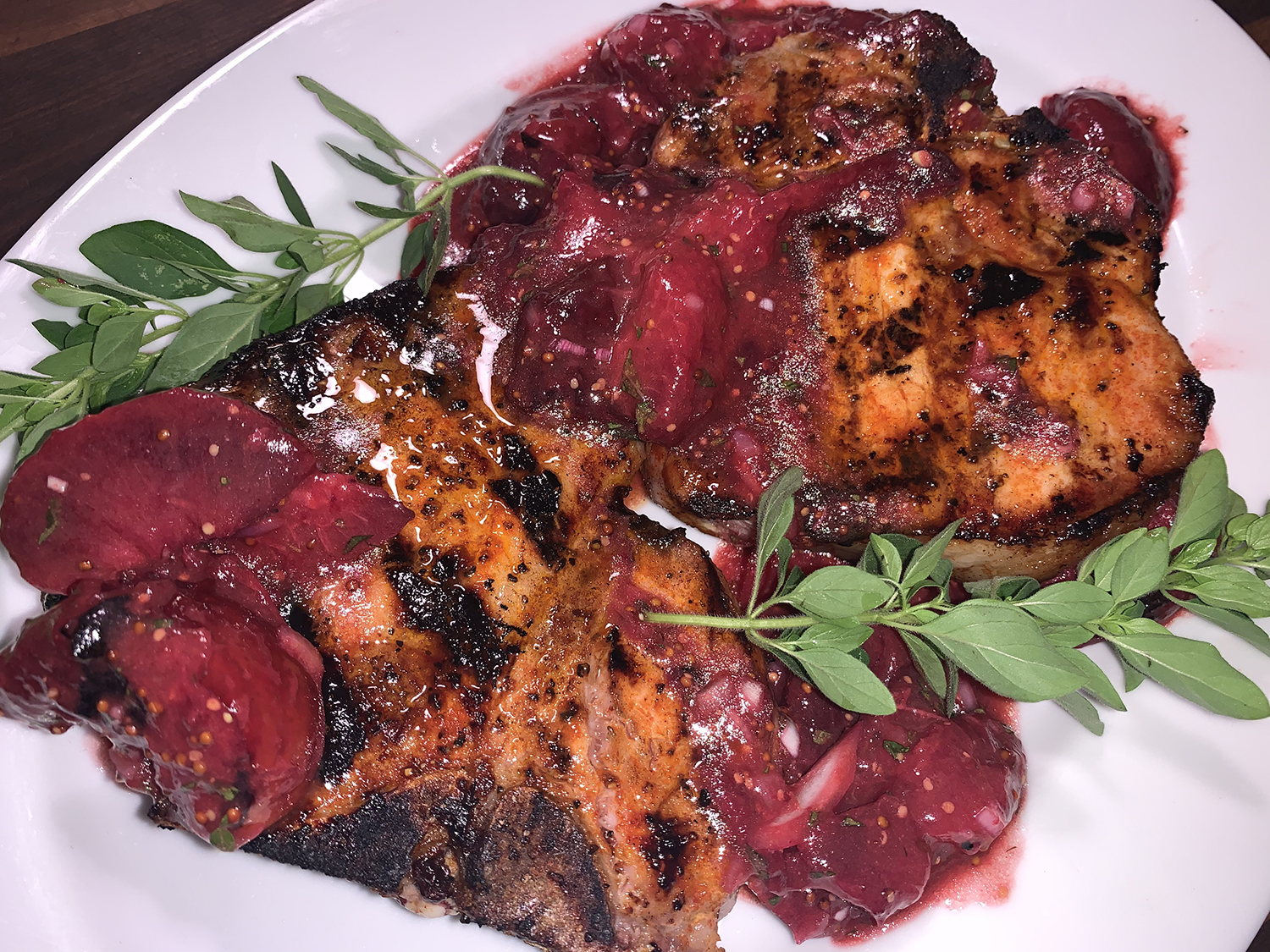
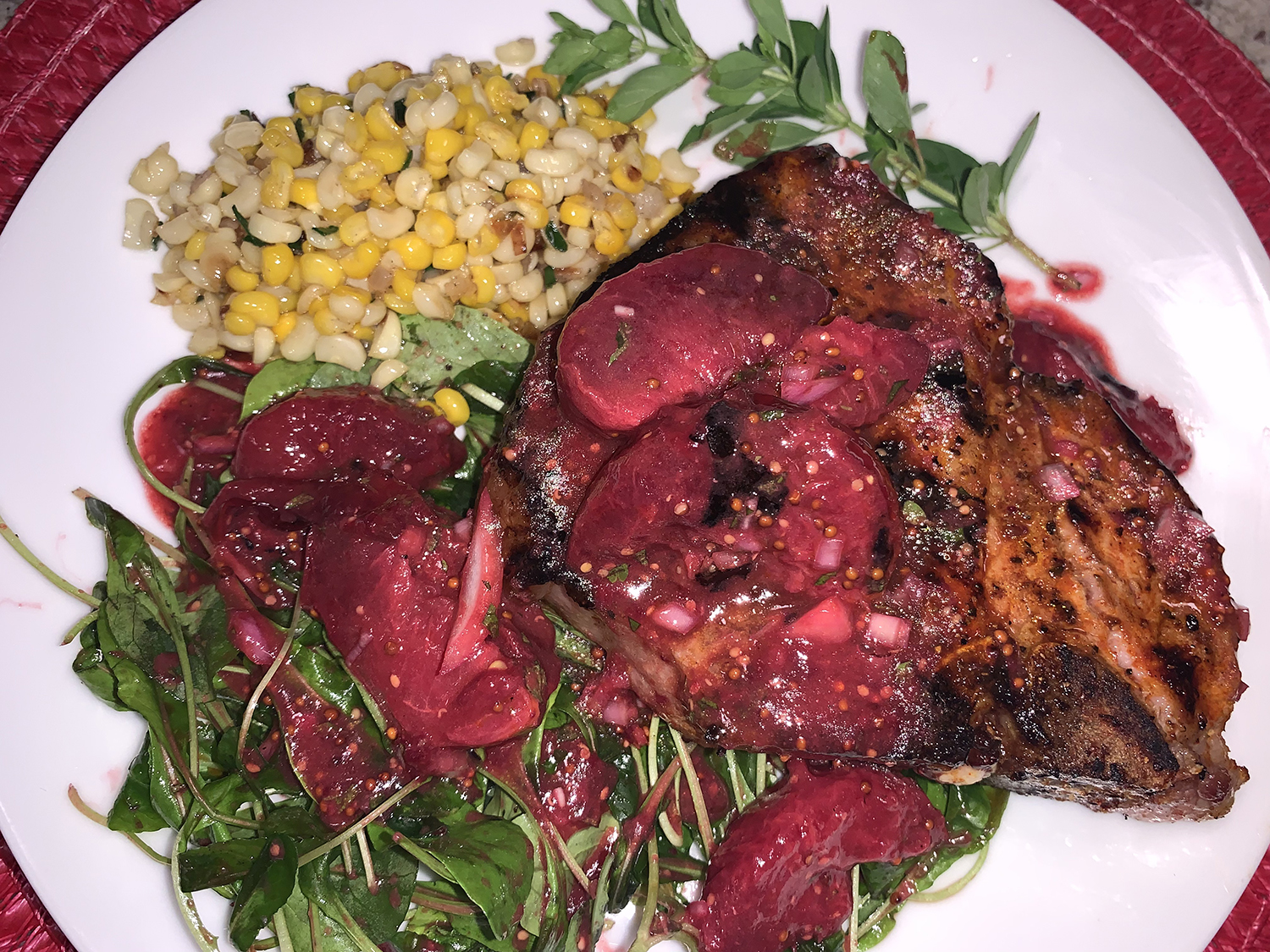
Absolutely delicious, this pork chop dinner was both slightly sweet and slightly spicy, with neither profile overwhelming the other. The Hubs is typically not fond of stone fruit, so when I mentioned that I’d like to make this recipe from Bon Appétit, he hesitantly got on board. After the first bite, he, and I, were amazed how much we plum loved it!

No doubt this will get on our rotation for company in the near future. The plum mostarda can easily be made ahead and rewarmed the evening of the party. All the host would have to do is season and grill the chops. The arugula gets mixed with a little of the sauce, and a simple side dish, such as a corn sauté completes the meal.

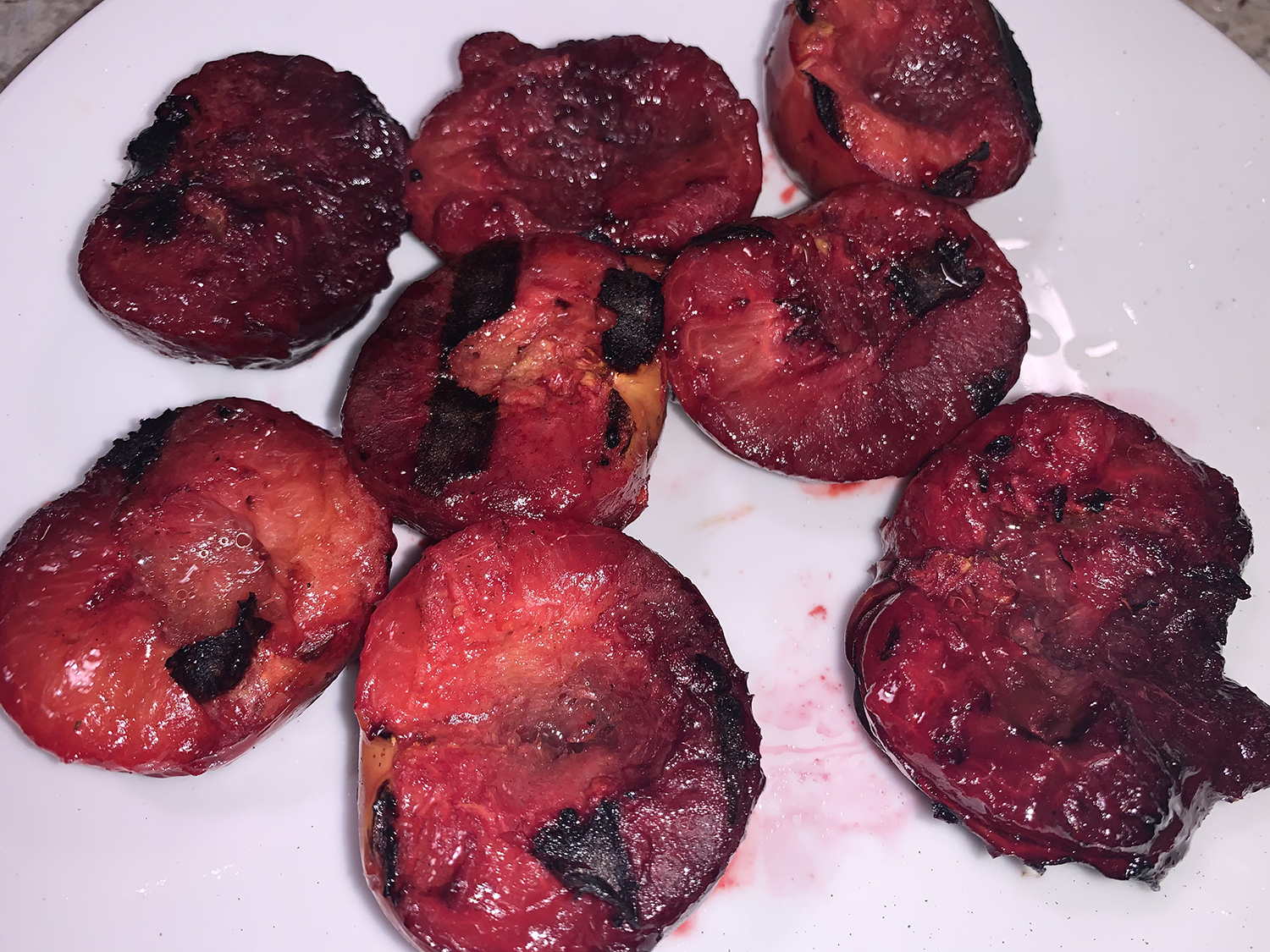
These grilled pork chops keep things simple—which is great when you are entertaining. Pop your seasoned plums onto the grill just before you add the meat. Then once everything is good and charred, toss the plums in the zingy dressing inspired by the flavors of mostarda, a sharp, heavy-hitting Italian condiment of candied fruit and dry mustard (used here is whole grain and Dijon mustard, red wine vinegar, and shallots).

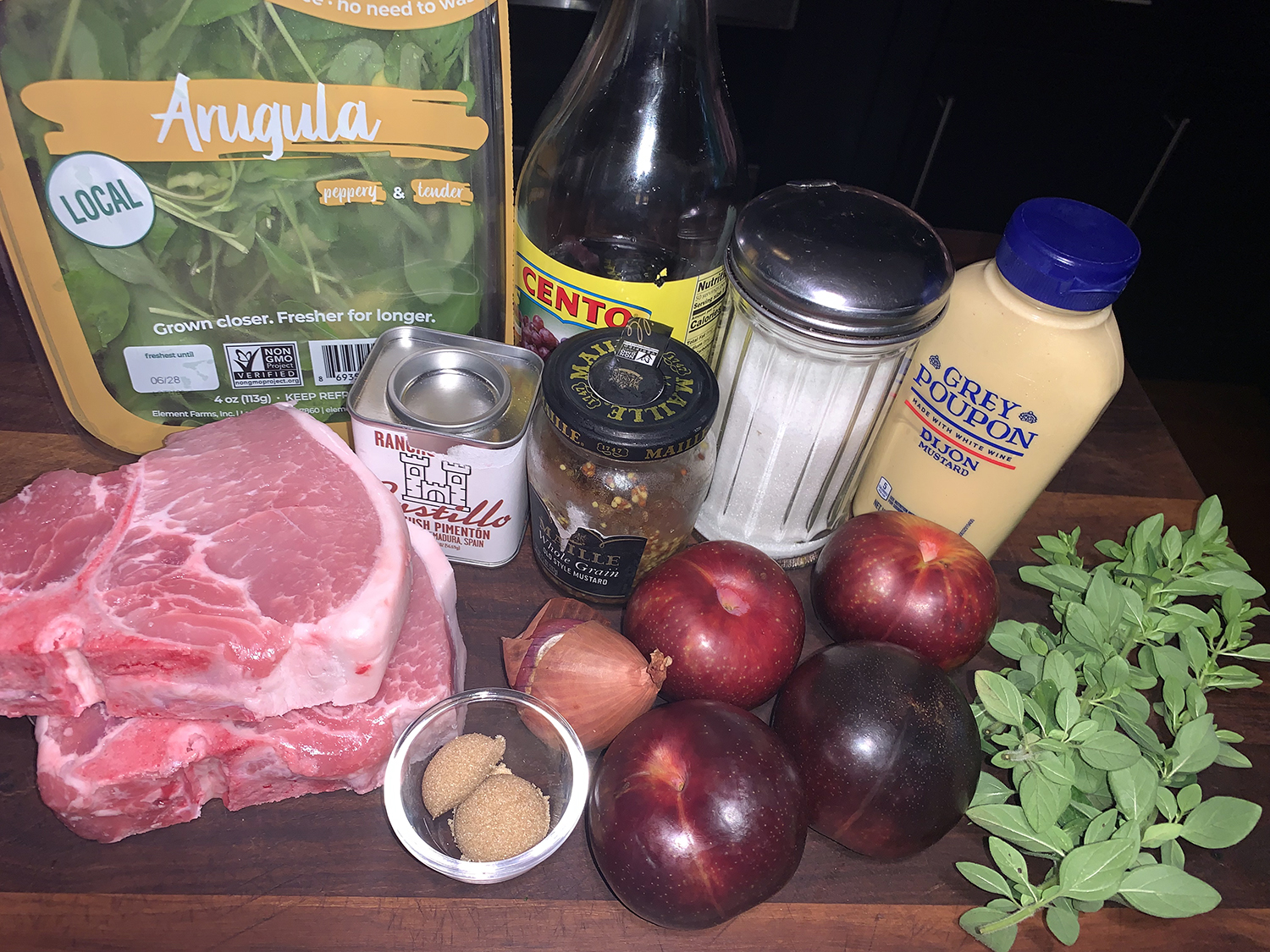
Not able to source pork rib chops at the grocery store, we opted for loin chops—just make sure they are at least an inch thick. For the rub, we mixed together and pimentón and brown sugar then added 1 1/2 teaspoons salt and 1/2 teaspoon pepper before sprinkling on the meat.

Grilled Pork Chops with Plum Mostarda

  • Servings: 2-4
  • Difficulty: easy
  • Print

Ingredients

  • 1 medium shallot, finely chopped
  • ¼ cup red wine vinegar
  • 2 Tbsp. whole grain mustard
  • 1 Tbsp. plus 1 tsp. granulated sugar
  • 2 tsp. Dijon mustard
  • ½ cup extra-virgin olive oil, plus more for grill
  • 2 tsp. finely chopped oregano
  • Kosher salt, freshly ground pepper
  • 4 large ripe plums, halved, pitted
  • 2 1”-thick bone-in pork rib chops
  • 2 tsp. light brown sugar
  • ½ tsp. smoked paprika
  • 4 oz. mature arugula, tough stems removed (about 4 cups)

Directions

  1. Whisk together shallot, vinegar, whole grain mustard, granulated sugar, and Dijon mustard in a medium bowl. Gradually stream in ½ cup oil, whisking vigorously until emulsified. Whisk in oregano and season with salt and pepper. Set vinaigrette aside.
  2. Prepare a grill for medium-high heat; oil grate. Grill plums, cut side down, until charred and fruit releases easily from grill, about 2 minutes. Transfer to a cutting board and let cool.
  3. Season pork chops all over with salt and pepper and sprinkle with brown sugar and paprika. Grill, turning occasionally, until deeply browned and an instant-read thermometer inserted near the bone registers 140° (internal temperature should climb to 145° as chops rest), 10–12 minutes. Transfer to a platter and let rest 10 minutes.
  4. Meanwhile, cut plum halves into 2 or 3 wedges each and add to reserved vinaigrette; toss gently to coat. Season plum mostarda with salt and pepper.
  5. To serve, toss arugula with some plum mostarda in a large bowl to coat; transfer to plates. Spoon more plum mostarda over pork chops; serve chops with arugula salad alongside.

http://www.lynnandruss.com

Adapted by a recipe from Tiana Gee for Bon Appétit

Flank Steak with Tomato-Eggplant Ragù 

This dish borrows some of the flavors of Greek moussaka for a quick-one pan meal. Seared flank steak is finished with a wonderful rustic sauce-like side of eggplant, tomatoes, garlic and herbs. Crumbled feta cheese adds briny notes that contrast nicely with the sweetness of the vegetables and the richness of the beef.

We paired ours with rice pilaf doctored with herbs and olive oil.

Prep is pretty easy because there is no need to peel the eggplant, canned tomatoes are used, and the feta cheese is already crumbled; not to mention it all happens in one skillet.

To keep the eggplant from drying out so that the pieces become silky-soft, don’t drain the juices from the tomatoes—the liquid helps form the sauce. When slicing the flank steak for serving, make sure to slice it against the grain for the tenderest texture.

Flank Steak with Tomato-Eggplant Ragù

  • Servings: 4-6
  • Difficulty: easy
  • Print

Ingredients

  • 1½ lbs. flank steak, trimmed, halved lengthwise, then crosswise
  • Kosher salt and ground black pepper
  • 4 Tbsp. extra-virgin olive oil, divided
  • 1 lb. eggplant, cut into 1-inch chunks
  • 14½ oz. can diced tomatoes, (don’t drain, save the juices)
  • 4 medium garlic cloves, minced
  • 2 tsp. dried oregano
  • ¾ tsp. ground cinnamon
  • ½ cup lightly packed fresh mint, chopped
  • 1½ oz. feta cheese, crumbled (about ⅓ cup)

Directions

  • Season the steak with salt and pepper. In a nonstick 12-inch skillet over medium-high, heat 2 tablespoons of oil until shimmering. Add the steak and brown on both sides, 6 to 8 minutes total, flipping the pieces once. Transfer to a plate.
  • In the same pan over medium-high, combine the remaining 2 tablespoons oil, the eggplant and 1 teaspoon salt. Cook, stirring occasionally, until browned and softened, 5 to 6 minutes. Reduce to medium and add the tomatoes with juices, the garlic, oregano and cinnamon. Cook, stirring occasionally, until thickened and the eggplant has begun to break down, about 5 minutes.
  • Off heat, stir in any accumulated beef juices and half the mint. Taste and season with salt and pepper. Thinly slice the steak against the grain and place on a platter. Spoon the eggplant mixture on and around the steak, then sprinkle with feta and the remaining mint.

http://www.lynnandruss.com

Recipe by Julia Rackow for Milk Street