Tag Archives: curry

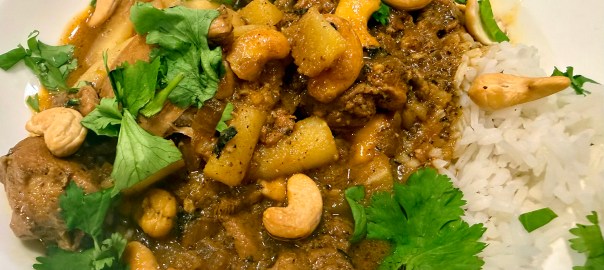
Coconut Chicken Curry with Cashews

This Sri Lankan curry goes together fairly quickly despite the long list of ingredients. It’s best to use skinless, boneless thigh meat because it always stays moist and can absorb a lot of flavor from a short marinade in ginger, garlic, and spices.

To intensify the taste, the cashews and coconut are incorporated. First, half a cup of cashews is ground to a powder and added to the sauce. Then, after simmering for 30 minutes or so, the curry is finished with a generous cup of thick coconut milk and garnished with the remaining cashews.

In an unusual twist—a totally nontropical vegetable—parsnips are added, because of how they harmonize with the rest of the dish. However, we suggest changing up how they are cooked, indicated in the directions below. Instead of boiling them, sauté until lightly browned, then add back to the pot in the last 10 to 15 minutes.

Because we are not fond of coconut meat (but like coconut milk), we omitted the flakes. And as far as the cashews, why bother buying raw and then toast them, when you can purchase roasted cashews to begin with?

Coconut Chicken Curry with Cashews

  • Servings: 4
  • Difficulty: easy
  • Print

Ingredients

  • 2 lbs. skinless boneless chicken thighs, cut in 3-inch chunks
  • Salt and pepper
  • 1 Tbsp. grated ginger
  • 2 tsp. grated garlic
  • ¼ tsp. whole cloves
  • ¼ tsp. fennel seeds
  • ¼ tsp. cardamom seeds
  • ¼ tsp. allspice berries
  • ¼ tsp. cumin seeds
  • ¼ tsp. coriander seeds
  • ¼ tsp. turmeric
  • ¼ tsp. cayenne, or more to taste
  • 3 Tbsp. lemon juice
  • 1 cup roasted, salted cashews
  • 1 lb. small parsnips, peeled and cut in 2-inch batons, woody cores removed if necessary
  • 2 Tbsp. ghee, coconut oil or vegetable oil
  • 1½ cups finely diced onion
  • 1 Tbsp. tomato paste
  • 12-inch piece cinnamon stick
  • 3 cups chicken broth or water
  • 1 cup thick coconut milk
  • Steamed rice
  • A few sprigs of mint and cilantro for garnish, optional
Directions

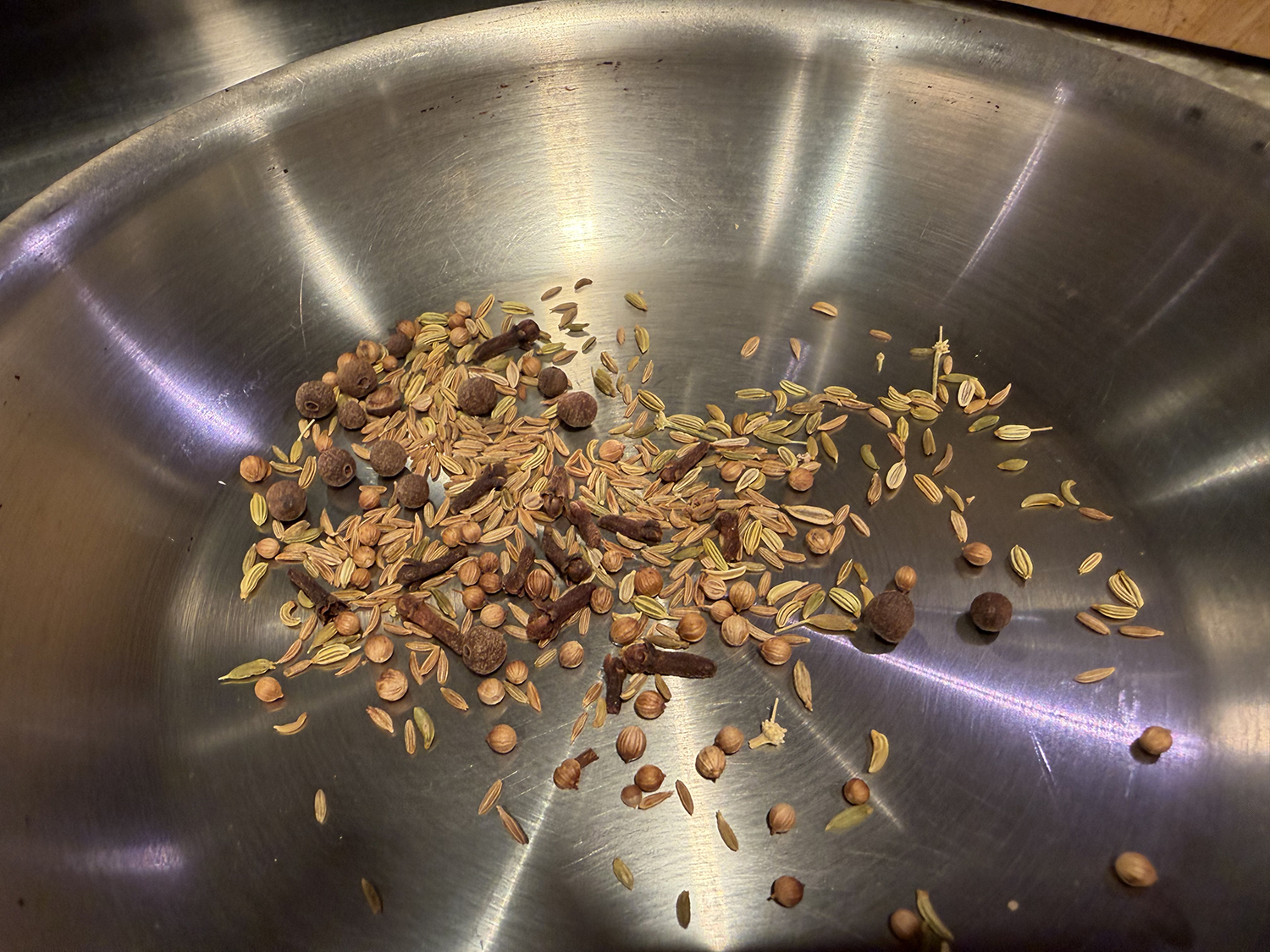
  1. Season chicken generously with salt and pepper and put it in a mixing bowl. Add ginger and garlic and massage into meat. In a dry skillet over medium heat, toast cloves, fennel, cardamom, allspice, cumin and coriander until fragrant, about 2 minutes. Grind the toasted spices to a fine powder in an electric spice mill and add to chicken. Add turmeric, cayenne and lemon juice and mix well. Let marinate at room temperature for at least 15 minutes, or refrigerate up to 1 hour.
  2. Grind the ½ cup cashews in a spice mill or small food processor to make a rough powder. Reserve ½ cup cashews for garnish.
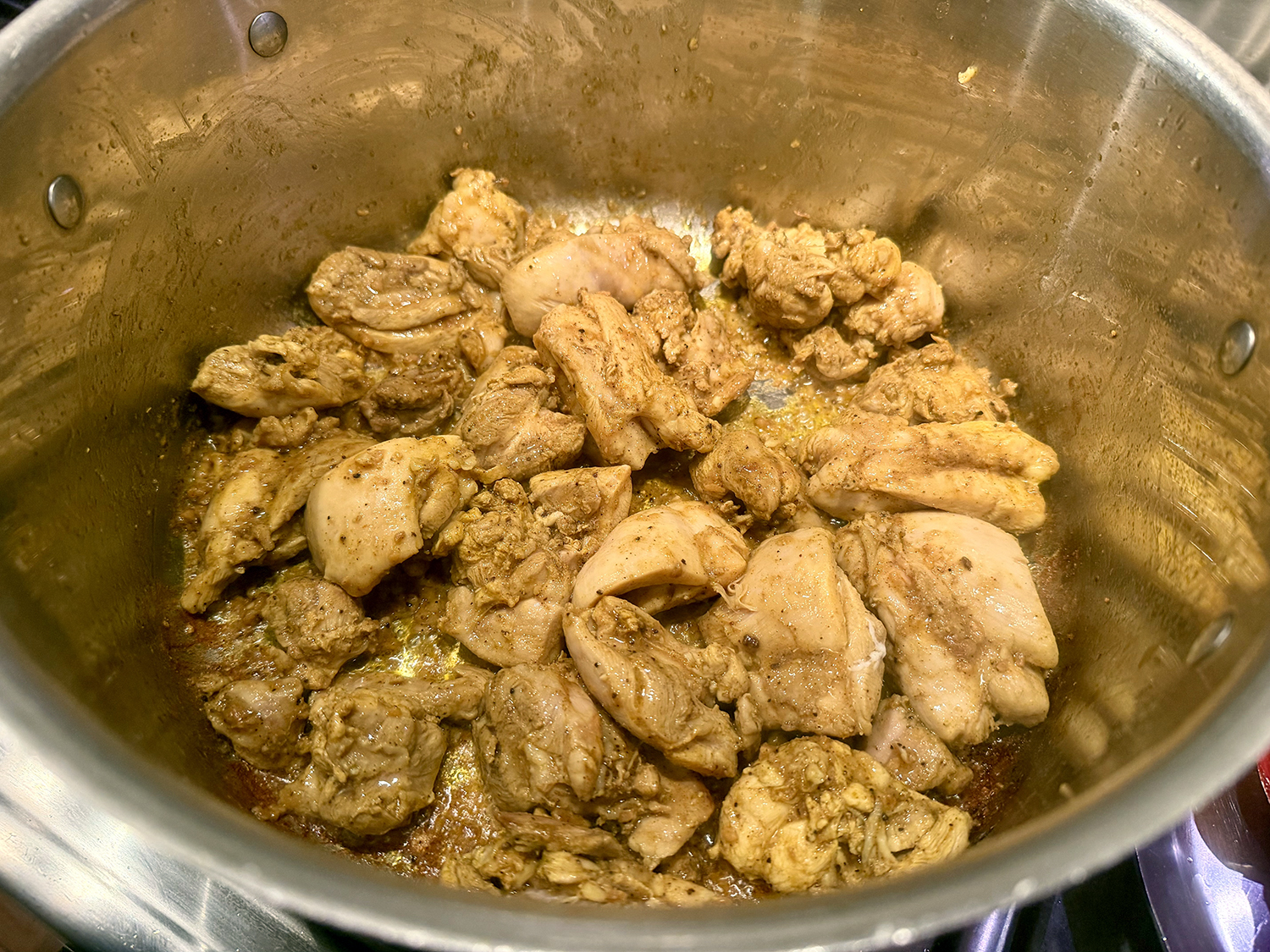
  3. In a wide heavy-bottomed pot, heat ghee over medium-high heat. Add parsnips and sauté until lightly browned. Remove and reserve. Add chicken pieces to the pot, stirring occasionally until lightly browned, about 5 minutes, then remove and set aside.
  4. Add onions and cook until softened, about 5 minutes more. Add tomato paste and let it sizzle with onions for a minute or two. Add broth and bring to a brisk simmer, stirring with a wooden spoon and scraping up any caramelized bits from the pot. Add cinnamon stick, chicken, and the ground cashews. Adjust the heat to a gentle simmer, cover, and cook for 15 minutes. Add parsnips, cover the pot again, and simmer until the chicken and parsnips are tender, about 10-15 minutes longer. Taste the sauce and adjust the seasoning, if necessary.
  5. To finish the dish, stir in coconut milk. Cook for 3 to 4 minutes until heated through and the sauce has thickened slightly. Transfer to a serving bowl over steaming rice and sprinkle with reserved cashews. Garnish with mint and cilantro sprigs, if using.

http://www.lynnandruss.com

Adapted from a recipe by David Tanis for NYTimes Cooking

Panang Curry

Rich with coconut milk and crushed peanuts, panang curry, also known as phanaeng or panaeng curry, is subtly spiced with coriander and cumin. This version is made with chicken, but you’ll often find it made with beef and sometimes prawns.

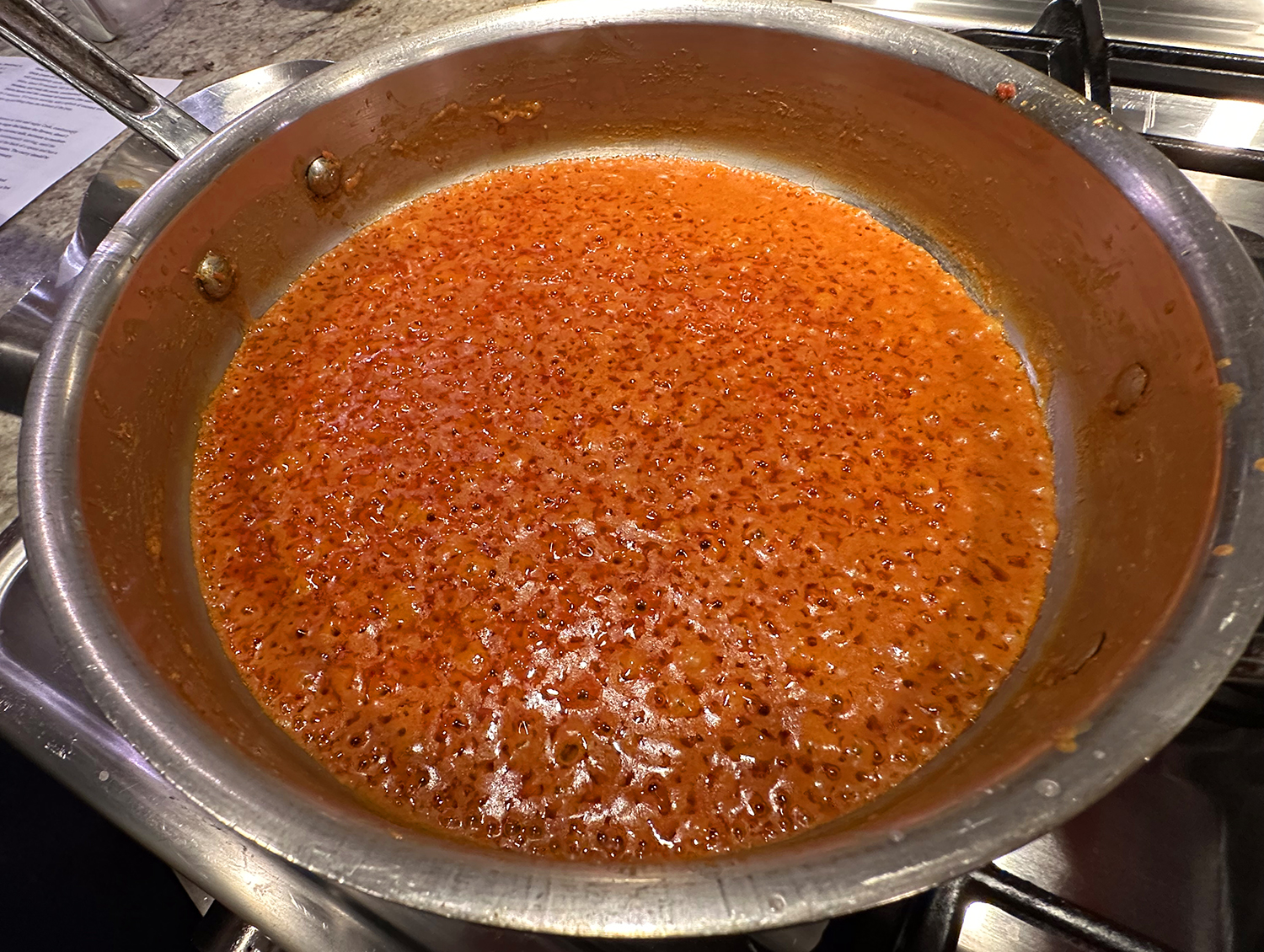
Panang curry is sometimes mistakenly linked to Penang, a Malaysian island, but it actually originated in Thailand. It’s important to use thick coconut milk for the creamiest results, and be sure to break the sauce by simmering until a layer of bright red oil shimmers on top. Purchase panang curry paste online or at an Asian market and add crushed peanuts to it if it doesn’t include them (not all of them do), or prepare your own paste, as is done here.

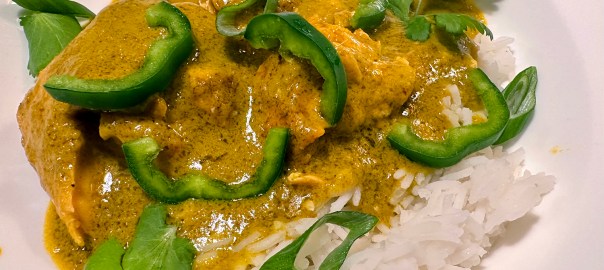
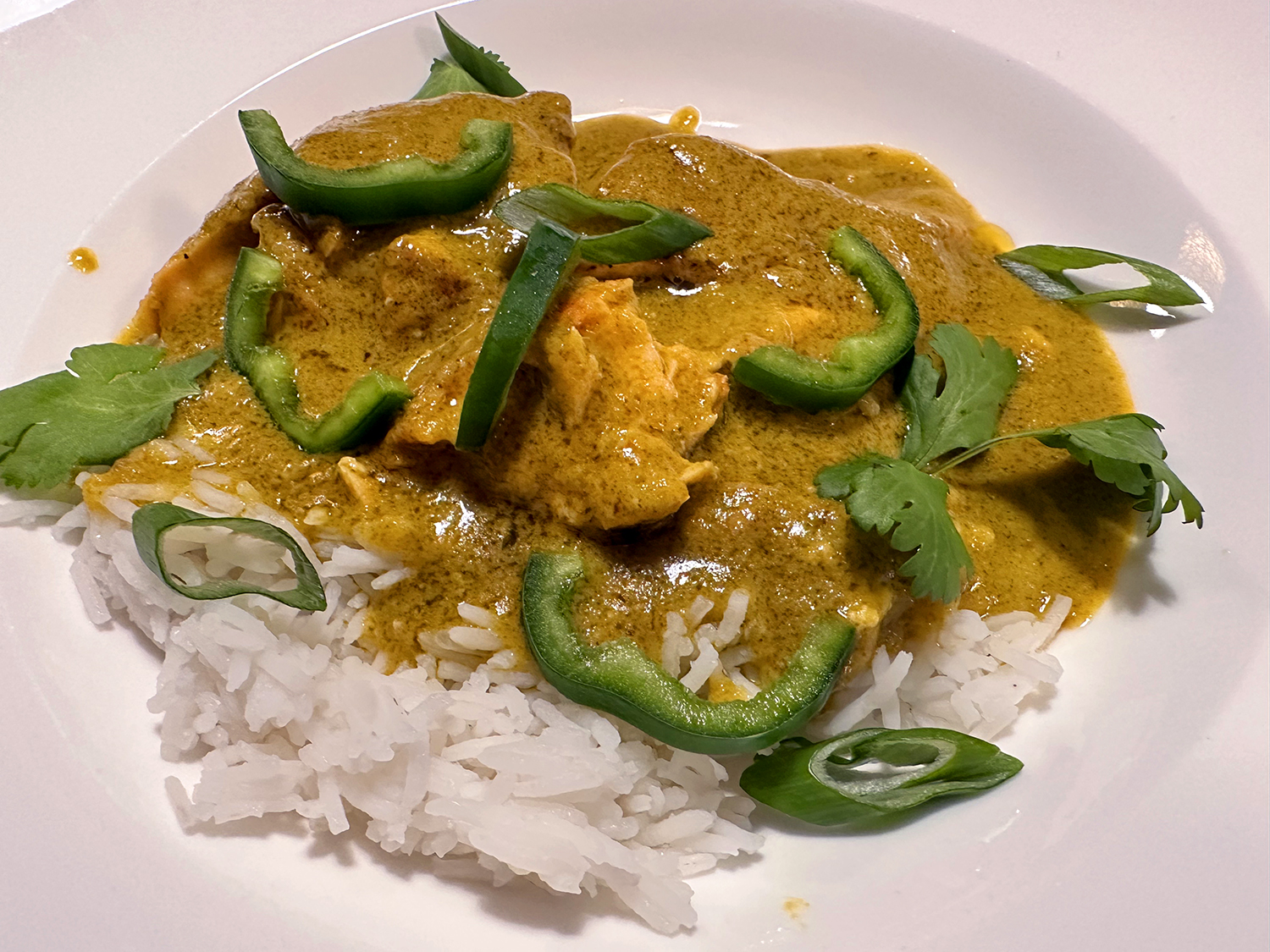
Since there are really no veggies other than the Fresno chili, serve with a vegetable side and/or salad. The original recipe indicates it will create 4 servings with rice. We beg to differ. You could maybe squeeze out 3 servings, but realistically plan on 2. (See above photo showing one of our serving portions.)

TIPS: Different brands of curry paste vary in spice levels. Taste a little first and determine how much to use. Maesri brand curry paste is highly recommended.
Coconut milk varies widely in its make up. Some cheap brands have as little as 25% coconut. Look at the ingredients, you should not accept less than 60%, some brands go up to 85% plus… Not all coconut milks are the same, it will makes a huge difference to the taste.

Panang Curry

  • Servings: 2-3
  • Difficulty: easy
  • Print

Ingredients

For the Panang Curry Paste

  • ½ tsp. coriander seeds
  • ½ tsp. cumin seeds
  • ¼ cup/1 ounce dry-roasted, unsalted peanuts
  • 2 to 4 Tbsp. red curry paste, to taste (see Tip)

For the Curry

  • 1 lb. boneless, skinless chicken breasts or thighs
  • 2 tsp. fish sauce, plus more as needed
  • 1 (13.5-oz) can full-fat coconut milk (do not shake)
  • 8 makrut lime leaves, deveined, 6 torn and 2 thinly sliced, OR 1 teaspoon grated lime zest, for serving
  • 1½ tsp. palm, granulated or brown sugar, plus more as needed
  • 1 small, mild, thin-skinned pepper, such as a Fresno, Anaheim or banana pepper, or ½ small red bell pepper, thinly sliced
  • Thai basil, thinly sliced, for serving (optional, if makrut lime leaves are not used)
  • Rice, for serving

Directions

  1. Prepare the curry paste: Heat a medium sauté pan over medium. Add the coriander and cumin. Swirl the pan around, or toss the seeds with a wooden spoon, and gently toast until fragrant, about 1 minute, taking care not to burn the spices. Transfer to a small plate and cool, then place in a spice grinder or mortar and pestle, and grind to a fine powder.
  2. Add the peanuts and finely grind until smooth. Transfer the mixture to a small bowl, add the red curry paste and stir until mixed.
  3. Thinly slice the chicken into 1½-inch-long pieces. Place in a medium bowl, drizzle with the fish sauce and mix until coated.
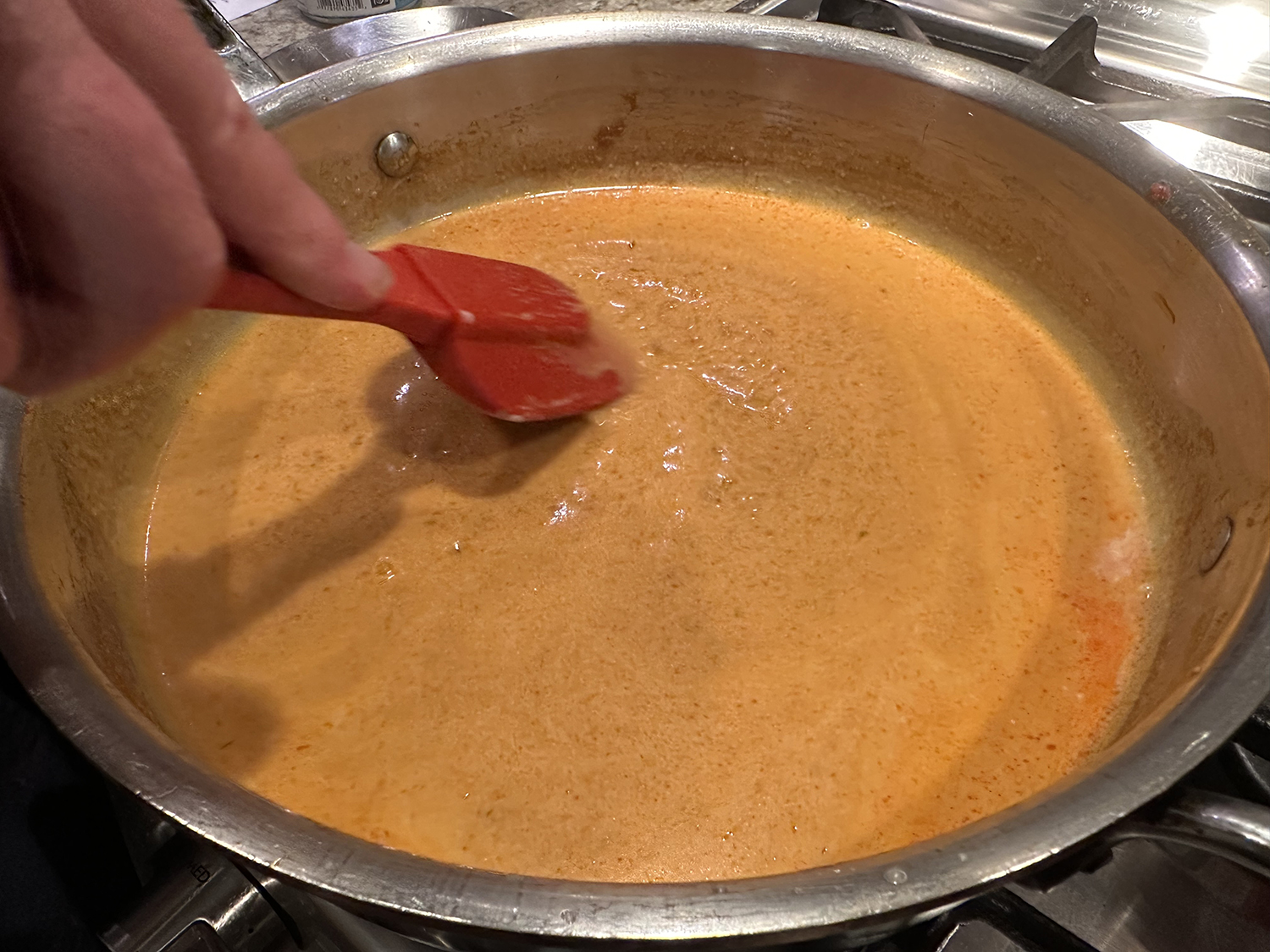
  4. Heat the same pan over medium-high. Scoop 4 tablespoons of the thick cream off the top of the coconut milk and add it to the pan; it will immediately sizzle. Stir until thickened and bubbling on the sides, about 30 seconds. Stir in the curry paste, to taste. Reduce to medium, and cook the paste, continuously stirring, until a thick paste forms and the coconut oil separates (the sauce “breaks”), 2 to 3 minutes. If it starts sticking, add a splash of coconut milk and scrape up anything from the bottom of the pan.
  5. Add the torn lime leaves or zest and sugar. Cook, continuously stirring, to dissolve the sugar and infuse the flavors, about 2 minutes. Add the remaining coconut milk, increase to medium-high, bring to a boil and cook, continuously stirring, until the curry has thickened enough to coat the back of a spoon and has a layer of bright red oil on top, 4 to 8 minutes. The curry should be at a lively simmer; adjust the heat as necessary.
  6. Add the chicken and cook, stirring frequently, until cooked through, 3 to 4 minutes. If using, stir in the peppers, saving a few for serving, and cook until just incorporated, about 1 minute. Taste and add more fish sauce and sugar, if needed. (Be mindful, this is not a sweet curry; the sweetness should hit a back note, not lead with it.)
  7. Garnish with the sliced lime leaves or Thai basil and reserved peppers. Serve alongside rice.

http://www.lynnandruss.com

Recipe by Naz Deravian for NYTimes Cooking
Creamy Coconut Curry Meatballs

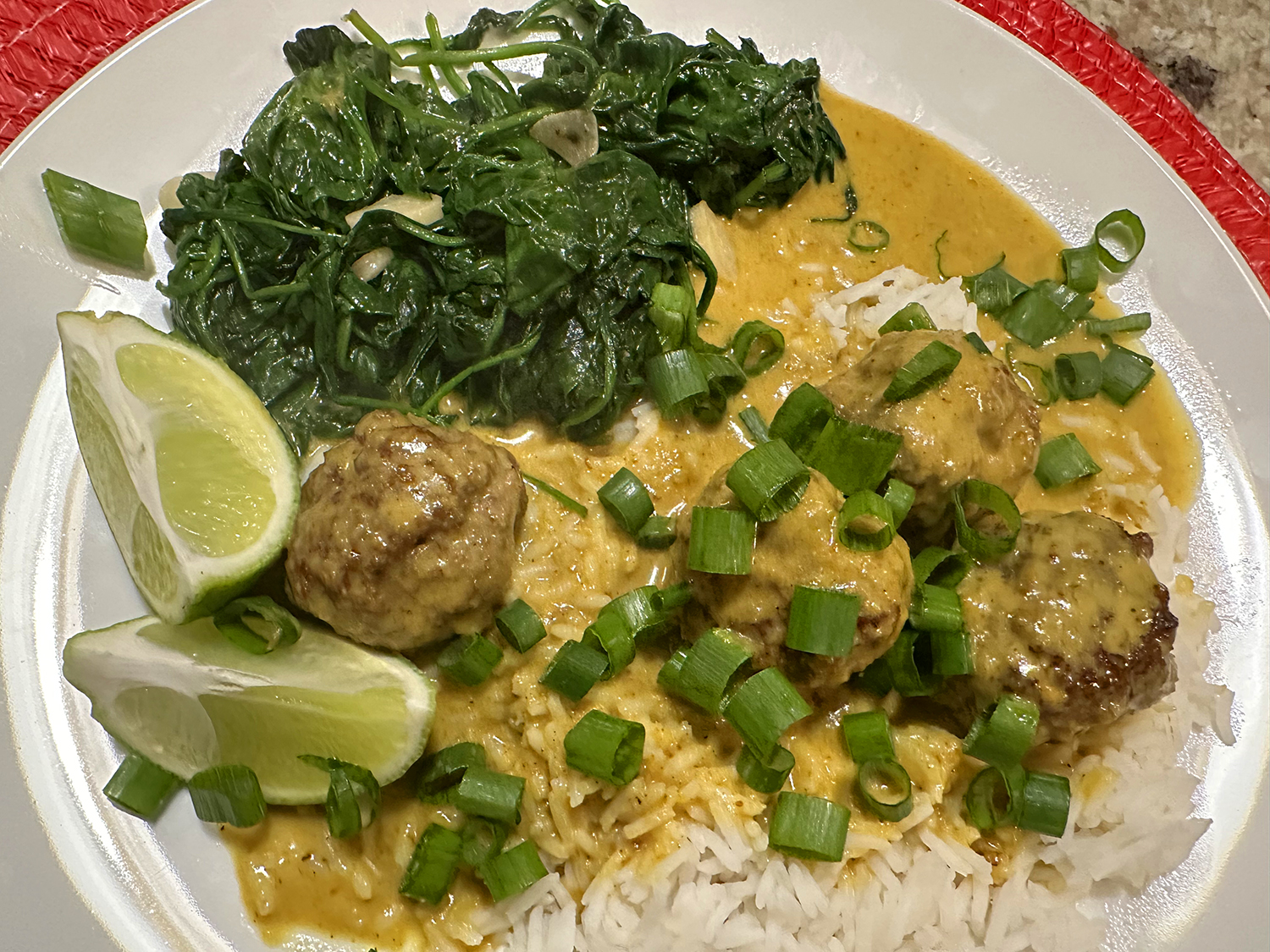
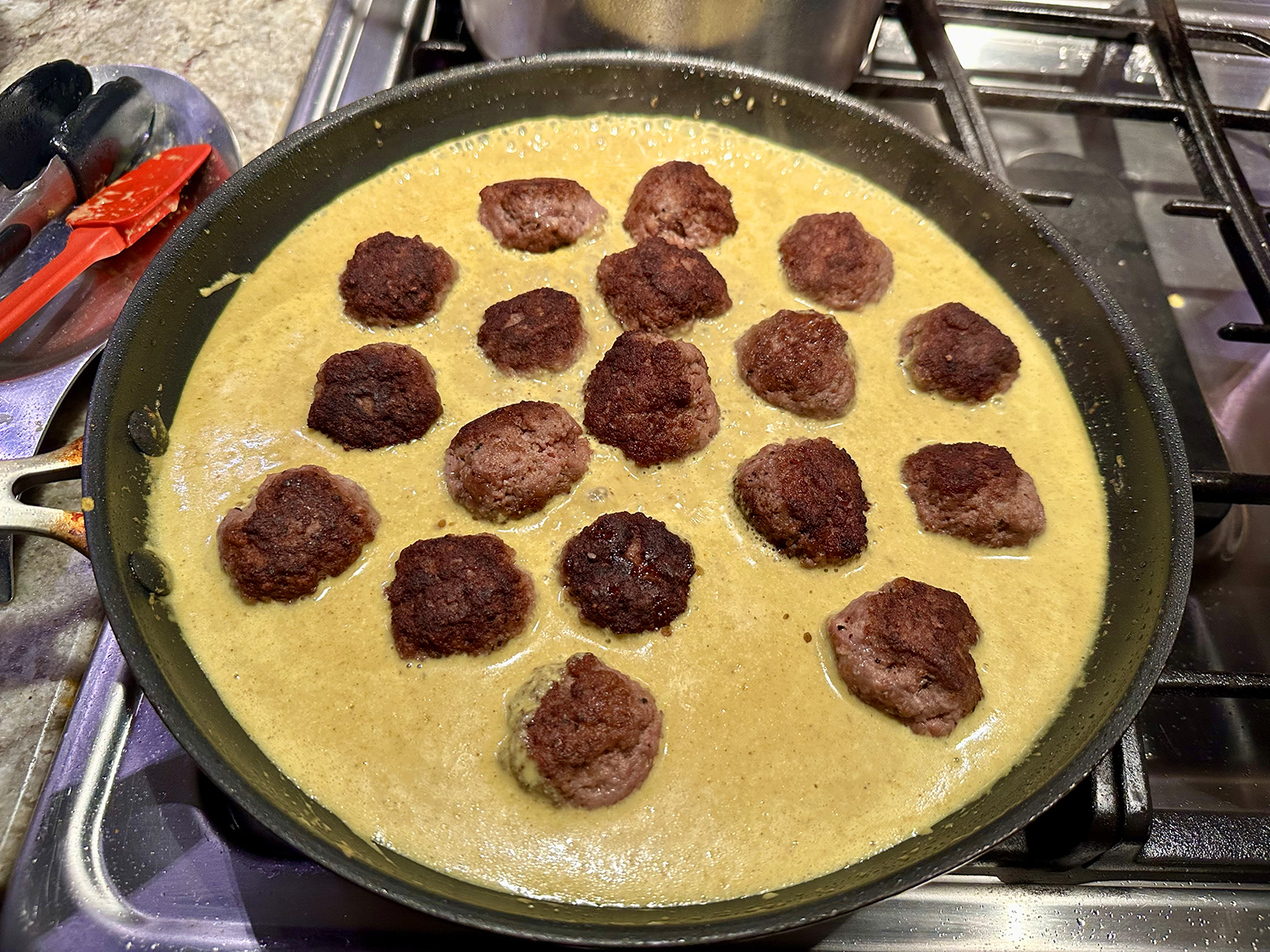
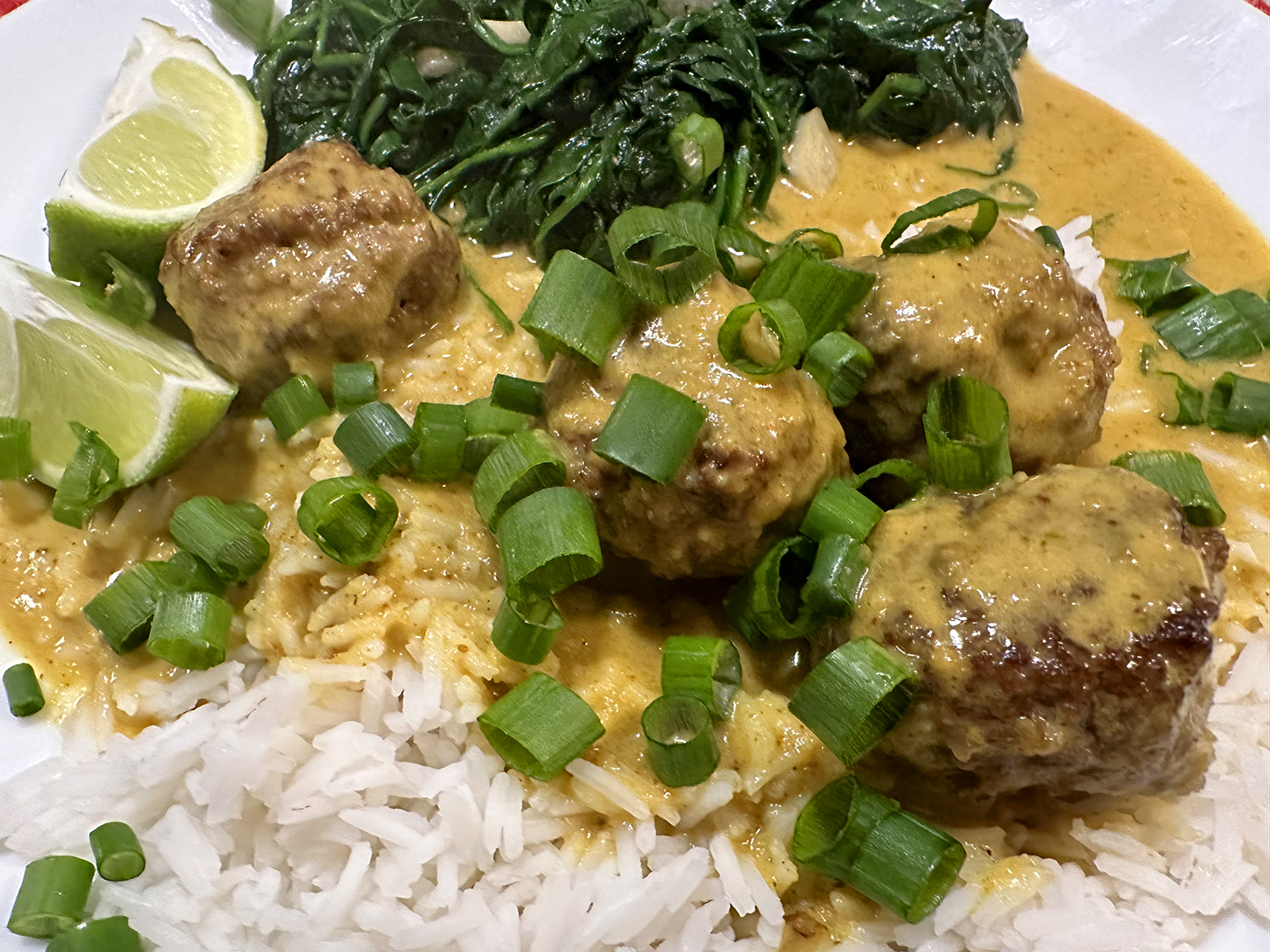
Another weeknight meal done in under an hour. And who doesn’t like meatballs? This is not a typical meatball and sauce combination, but rather exudes an Indian profile. We paired ours with a side of baby spinach and sliced garlic stir-fried in a wok.

Taken from an article in Bon Appétit Magazine, it informs us that puréeing onions allow you to harness all of that punchy allium flavor with none of the chopping and tears. Here, they’re blended up with yogurt and aromatics to create a mixture inspired by onion-and-yogurt pastes used in Mughal-style cooking.

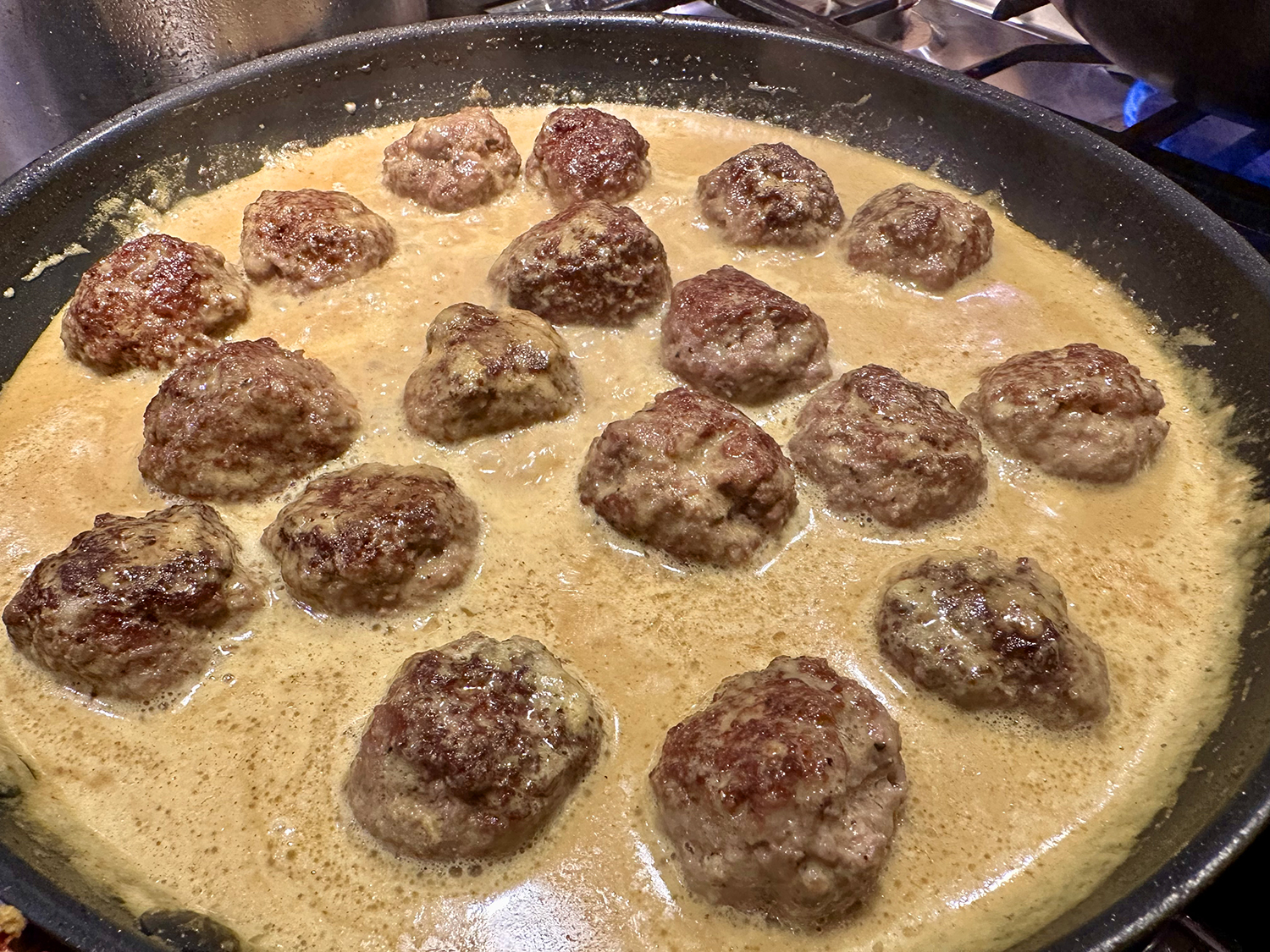
Added to both the base of the curry and the meatball mixture; the purée thickens and seasons the sauce while keeping the meatballs tender and sweet. Take care to cook out the paste for the curry until drops of fat bead on the surface, which ensures that the final product will taste rich and rounded.

This coconut curry sauce is incredibly versatile. Not a red meat fan? Try cooking canned chickpeas, cubes of seared tofu, or browned 1″ pieces of skinless, boneless chicken thighs in it instead of the meatballs. Just make sure to cook the full amount of purée in the pan before adding the coconut milk and water; it will take a minute or two longer.

Creamy Coconut Curry Meatballs

  • Servings: 4
  • Difficulty: easy
  • Print

Ingredients

  • 1 small onion, peeled, quartered through root end
  • 6 garlic cloves
  • 1 1″ piece ginger, peeled
  • 1 serrano chile, halved lengthwise
  • ½ cup plain whole-milk Greek yogurt
  • 2 Tbsp. mild curry powder (preferably S&B)
  • 1 tsp. sugar
  • 1 tsp. plus 1 Tbsp. Diamond Crystal or 2¼ tsp. Morton kosher salt, divided
  • 1 lb. ground lamb or ground beef chuck (20% fat)
  • ¼ cup panko
  • 1 tsp. freshly ground pepper
  • ¼ tsp. baking soda
  • 2 Tbsp. vegetable oil, divided
  • 1 13.5-oz. can unsweetened coconut milk
  • 6 scallions, dark green parts only, thinly sliced
  • Cooked rice or flatbread and lime wedges (for serving)

Directions

  1. Purée 1 small onion, peeled, quartered through root end, 6 garlic cloves, one 1” piece ginger, peeled, 1 serrano chile, halved lengthwise, and ½ cup plain whole-milk Greek yogurt in a blender until smooth. Transfer ¼ cup onion purée to a large bowl. Add 2 tablespoons mild curry powder, 1 tsp. sugar, and 1 tsp. Diamond Crystal or ½ teaspoon Morton kosher salt to remaining purée in blender and blend briefly to combine; set aside. 
  2. Add 1 pound ground lamb or ground beef chuck (20% fat), ¼ cup panko, 1 teaspoon freshly ground pepper, ¼ teaspoon baking soda, remaining 1 tablespoon Diamond Crystal or 1¾ teaspoon Morton kosher salt, and ¼ cup water to ¼ cup purée in bowl; mix vigorously with your hands until smooth and meat is beginning to stick to sides of bowl. Wet your hands and roll lamb mixture into 1½”-diameter balls (you should have about 16).
  3. Heat 1 tablespoon vegetable oil in a large nonstick skillet over medium-high. Cook half of meatballs, turning occasionally, until browned on all sides, about 5 minutes total (meatballs will still be raw in the center); transfer to a plate with a slotted spoon. Repeat with remaining meatballs and 1 tablespoon vegetable oil.
  4. Reduce heat to medium; add reserved onion purée to same skillet (stand back; mixture will spatter) and cook, stirring often, until purée thickens significantly and beads of oil form on the surface, 6–8 minutes. Add one 13.5-ounce can unsweetened coconut milk and ½ cup water, stirring to combine. Return meatballs to skillet, cover, and cook, stirring occasionally and reducing heat as needed to maintain a simmer, until meatballs are cooked through, 8–10 minutes.
  5. Transfer meatball curry to a large shallow bowl; top with 6 scallions, dark green parts only, thinly sliced. Serve with cooked rice or flatbread and lime wedges alongside.

http://www.lynnandruss.com

Recipe by Shilpa Uskokovic for Bon Appétit Magazine

Curried Chicken Fried Rice with Chiles

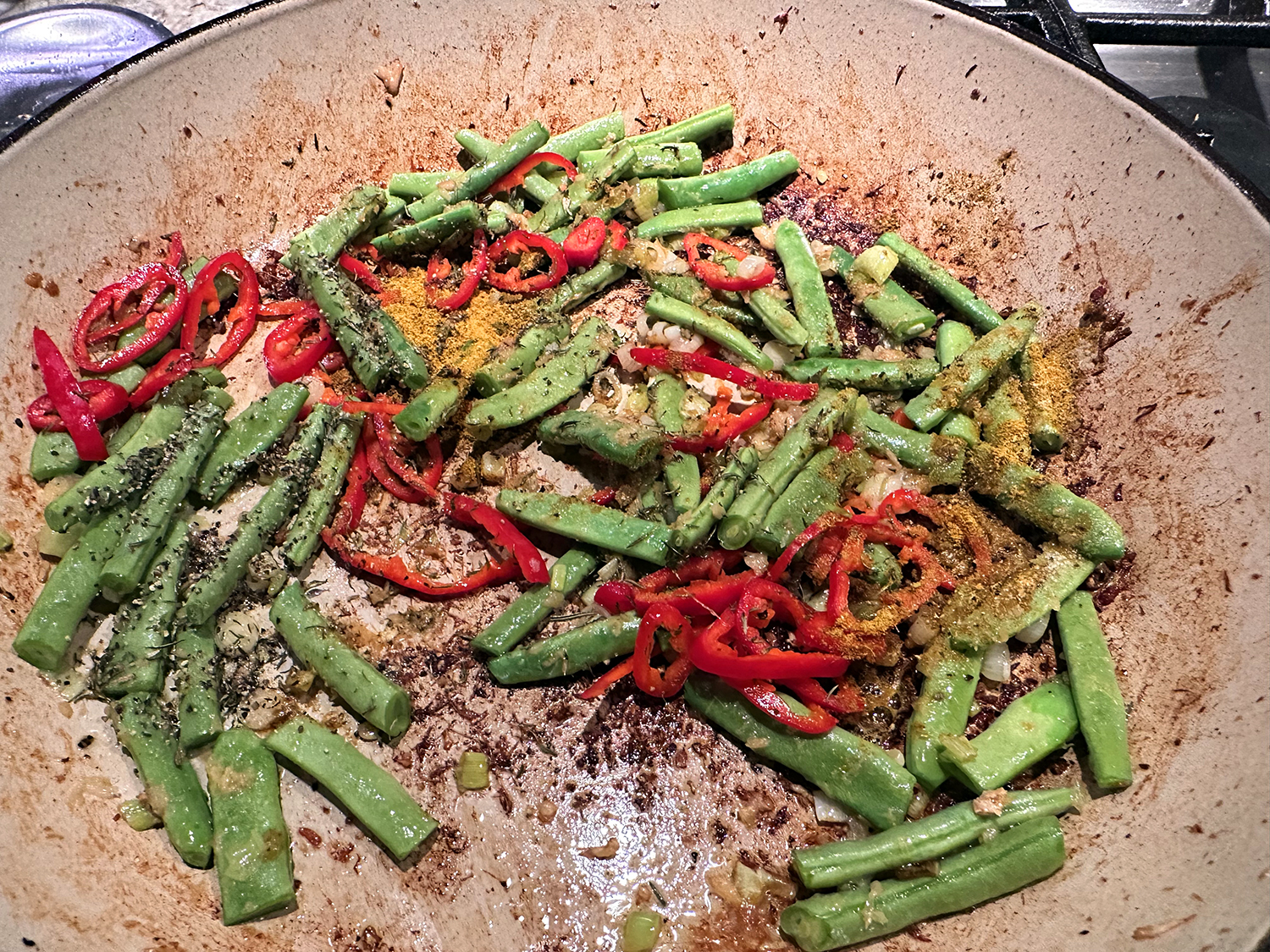
Another weeknight recipe that transports you out of the ordinary doldrums of your usual meal rotation. Nigerian fried rice, seasoned with curry powder, dried thyme and a handful of aromatics, inspired this meal-in-a-skillet. While beef liver and an assortment of vegetables are classic ingredients, here it is comprised of chicken thighs and green beans.

Instead of using just-cooked rice, which results in a softer, moisture texture in the finished dish, plain cooked rice that’s been chilled is used so the grains “fry” up light and fluffy. Fragrant basmati is especially good, but any type of long-grain white rice works.

Don’t be afraid to really scrape up the browned bits from the surface of the skillet after you’ve added the broth. The caramelization lends the fried rice great depth of flavor.

Curried Chicken Fried Rice with Chiles

  • Servings: 4
  • Difficulty: easy
  • Print

Ingredients

  • 3 Tbsp. neutral oil or refined coconut oil, divided
  • 1 lb. boneless, skinless chicken thighs, trimmed and cut into 1-inch pieces
  • 2 tsp. curry powder, divided
  • Kosher salt and ground black pepper
  • 4 scallions, thinly sliced, whites and greens reserved separately
  • 2 Tbsp. minced fresh ginger
  • 4 oz. green beans, trimmed and cut into 1-inch pieces
  • 1 tsp. dried thyme
  • 1 Fresno or jalapeño chili, stemmed, seeded and thinly sliced
  • 4 cups cooked and chilled long-grain white rice, preferably basmati
  • 1 cup chicken broth, preferably homemade

Directions

  1. In a 12-inch skillet over medium-high, heat 2 tablespoons of the oil until barely smoking. Add the chicken and sprinkle with ½ teaspoon of the curry powder, ½ teaspoon salt and ¼ teaspoon pepper. Cook, stirring occasionally, until evenly browned, 4 to 6 minutes.
  2. Push the chicken to the perimeter of the pan. To the center, add the remaining 1 tablespoon oil, scallion whites and ginger; cook, stirring, until lightly browned, about 1½ minutes. Into the scallion mixture, stir the beans, thyme, half of the chili, the remaining 1½ teaspoons curry powder and ¼ teaspoon each salt and pepper. Stir the chicken into the bean mixture; cook, stirring occasionally, until the beans are bright green, about 2 minutes. Stir in the rice, then add the broth and scrape up any browned bits. Cook, stirring, until the liquid is absorbed, 3 to 5 minutes.
  3. Off heat, taste and season with salt and pepper. Serve sprinkled with the scallion greens and remaining chili.

http://www.lynnandruss.com

Recipe by Courtney Hill for Milk Street

Creamy Red Curry Pasta

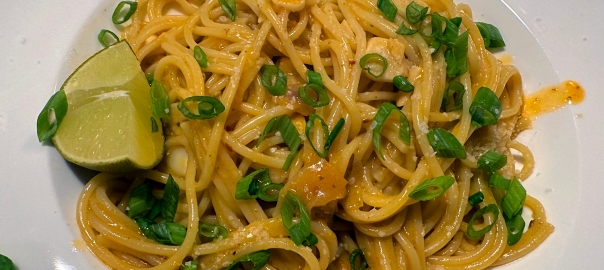
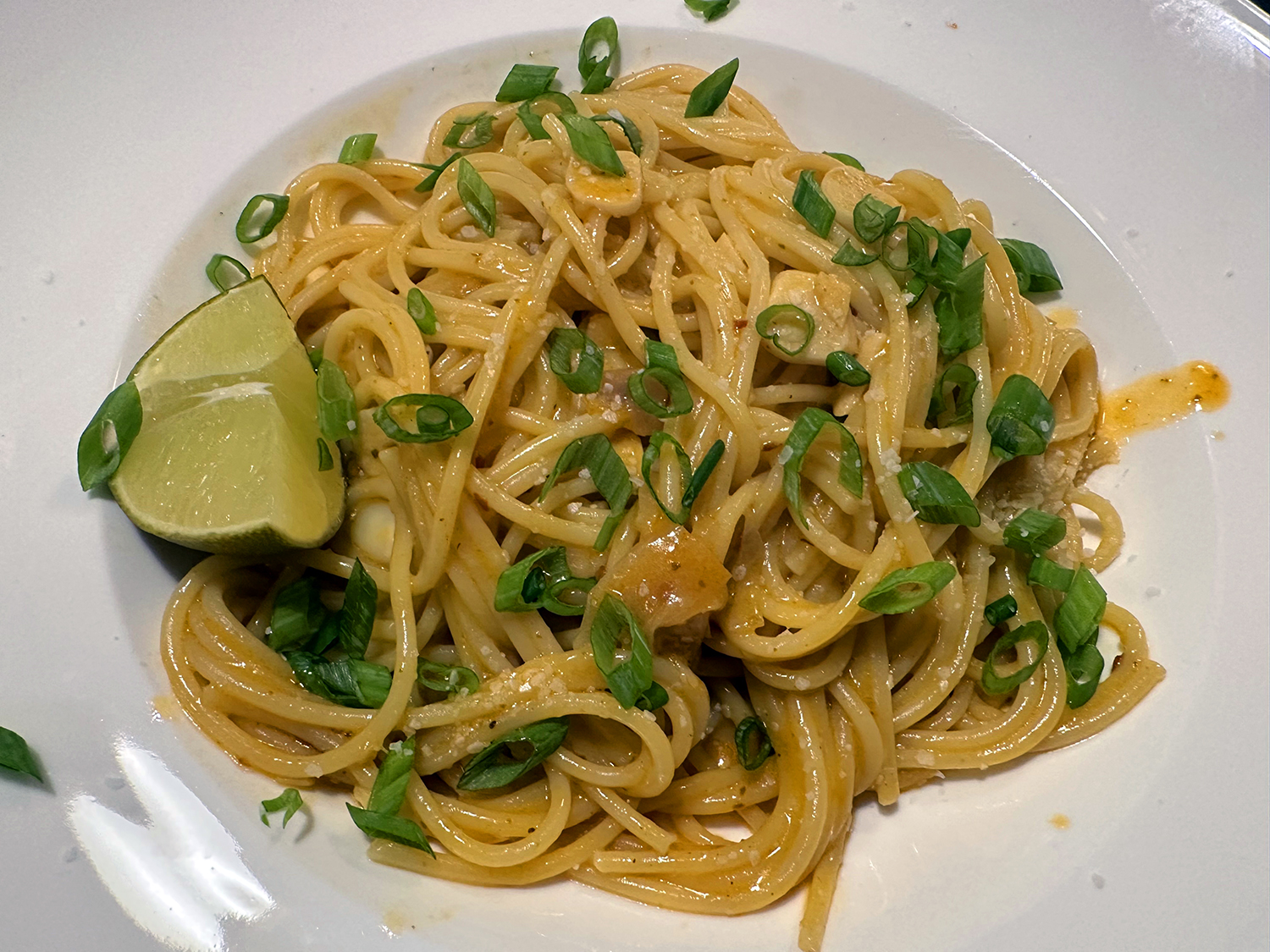
Pasta and red sauce? Not your typical pairing with tomato paste. Rather, this ode to pasta alla vodka brings in unexpected levels of flavor and intensity by using red curry paste—a staple of Thai cuisine. The other fragrant ingredients like chili peppers, lemongrass, and galangal are also staples in Thai cooking. Thus, The Hubs dubbed this dish Thaitalian, since it’s a fusion of Thai and Italian cuisines.

Finishing with coconut milk and lime juice rather than heavy cream and vodka adds extra layers of complexity to the clingy, rich sauce. A little spicy, a little sweet, and absolutely delicious, this flavor-packed, pantry-friendly meal is perfect for a quick weeknight dinner.

In a nod to the Thai aspect, we switched out lime for the lemon.

Creamy Red Curry Pasta

  • Servings: 4
  • Difficulty: easy
  • Print

Ingredients

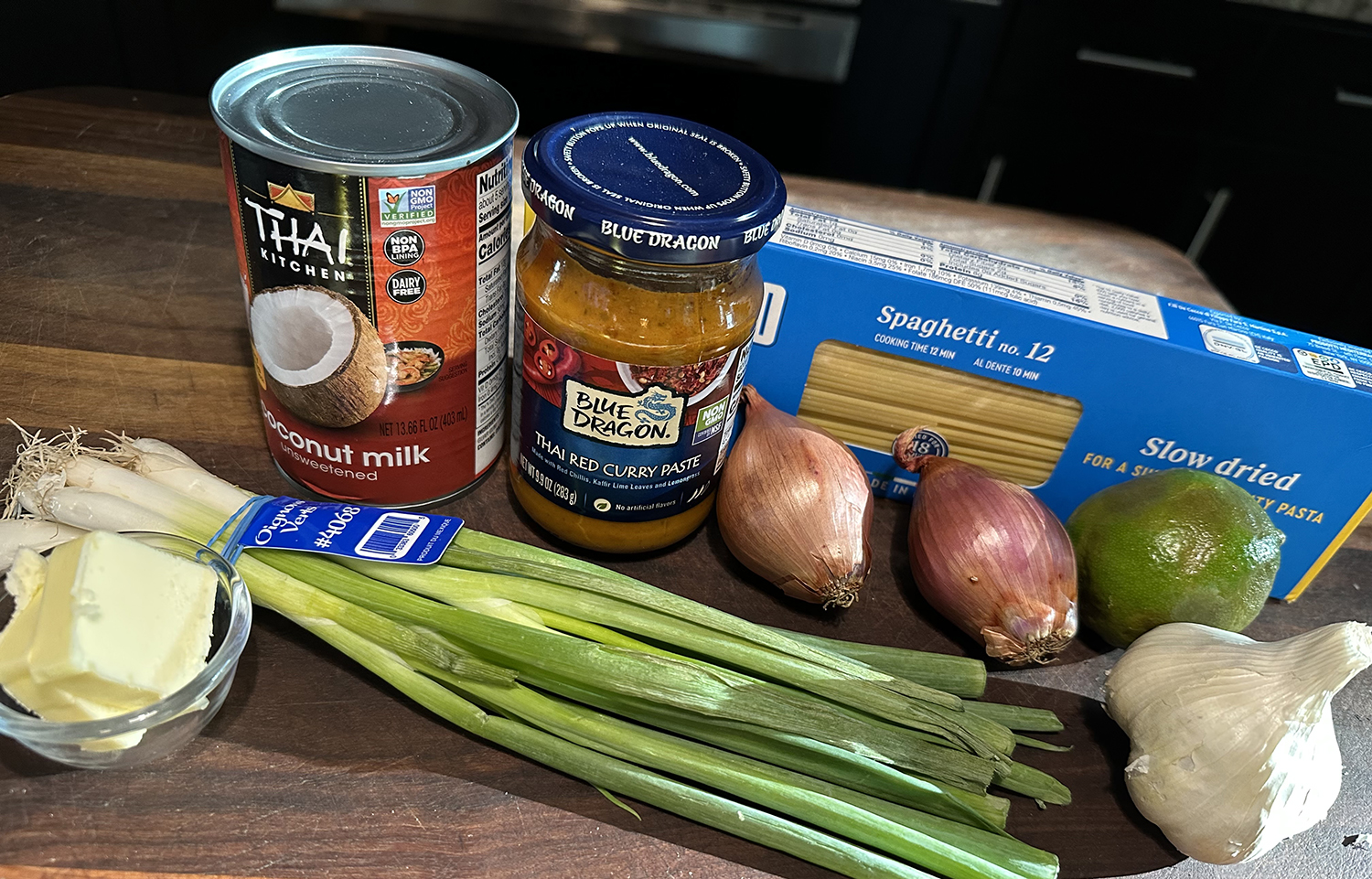
  • 1 lb. spaghetti
  • Kosher salt
  • 2 Tbsp. vegetable oil
  • 2 medium shallots, thinly sliced
  • 6 garlic cloves, thinly sliced
  • 1 4-oz. can red curry paste
  • 1 13.5-oz. can unsweetened coconut milk
  • 2 Tbsp. unsalted butter, cut into pieces
  • 2 tsp. fresh lime juice
  • Thinly sliced scallion greens and lime wedges (for serving)

Directions

  1. Cook 1 pound spaghetti in a large pot of boiling salted water, stirring occasionally, until just shy of al dente, about 1 minute less than package directions.
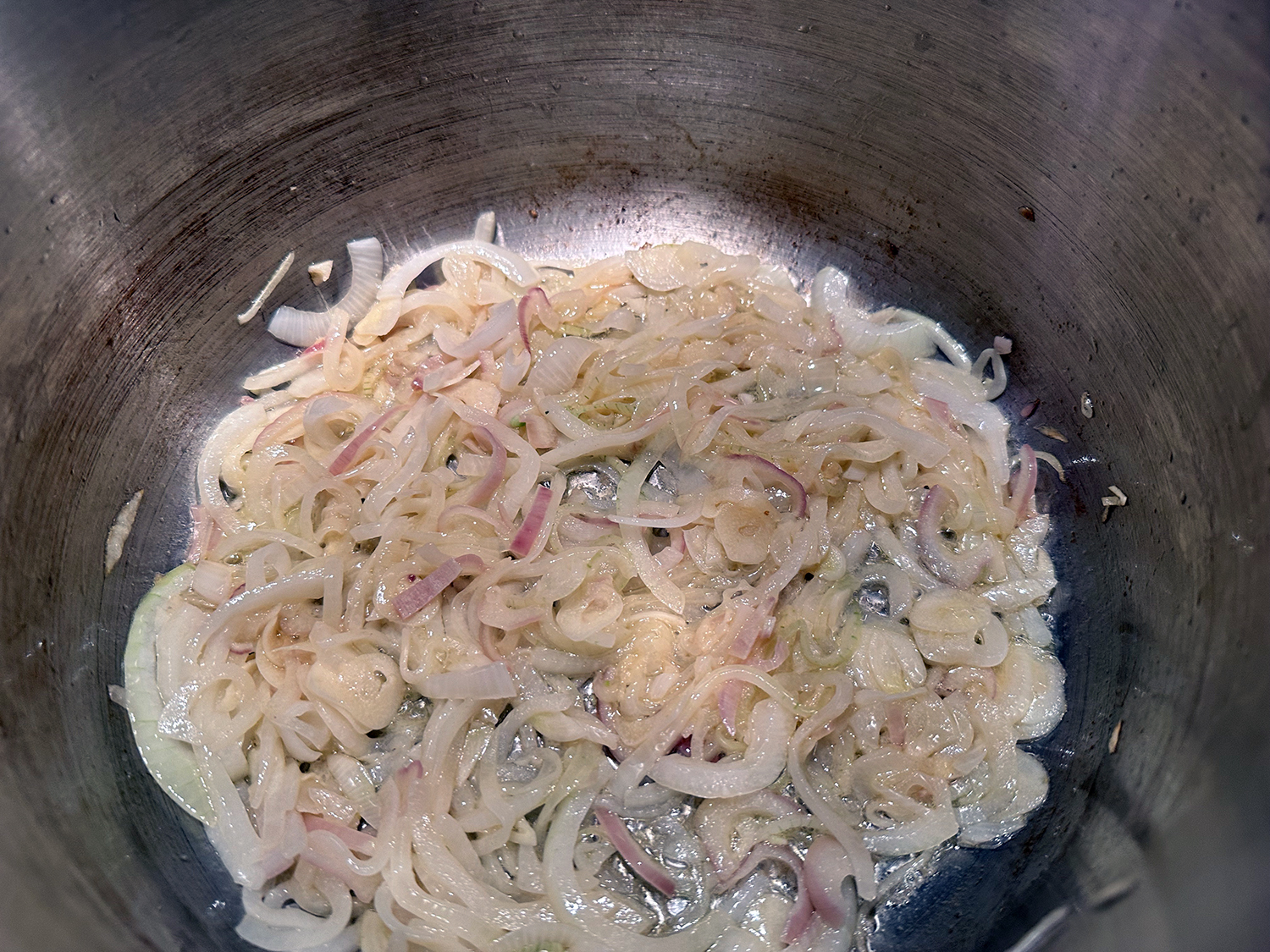
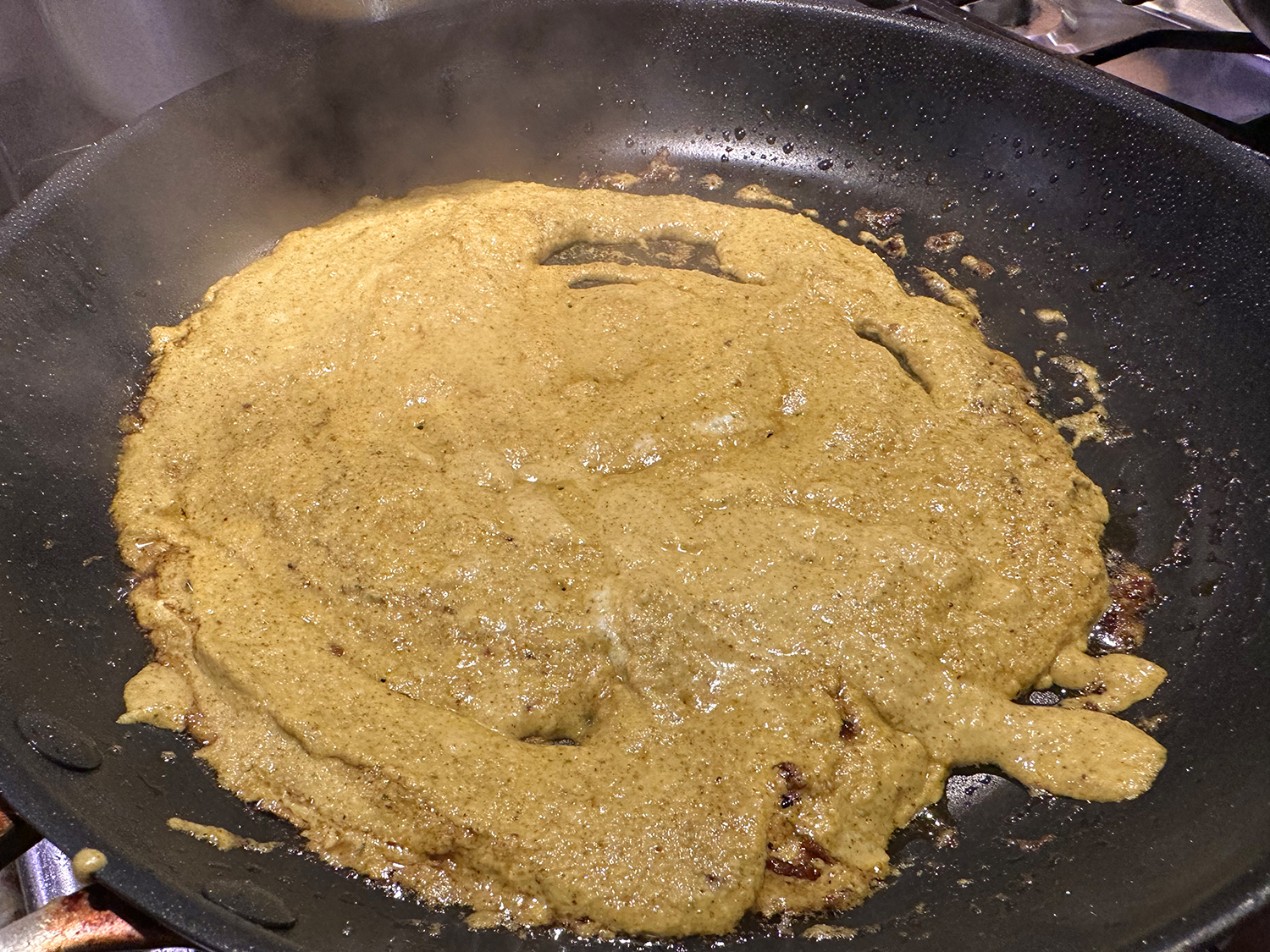
  2. Meanwhile, heat vegetable oil in a large Dutch oven or other heavy pot over medium. Cook shallots, thinly sliced, and garlic cloves, thinly sliced, stirring often, until softened, about 2 minutes. Add red curry paste and cook, stirring often, until paste is fragrant and slightly darkened and beginning to stick to bottom of pot, about 3 minutes.
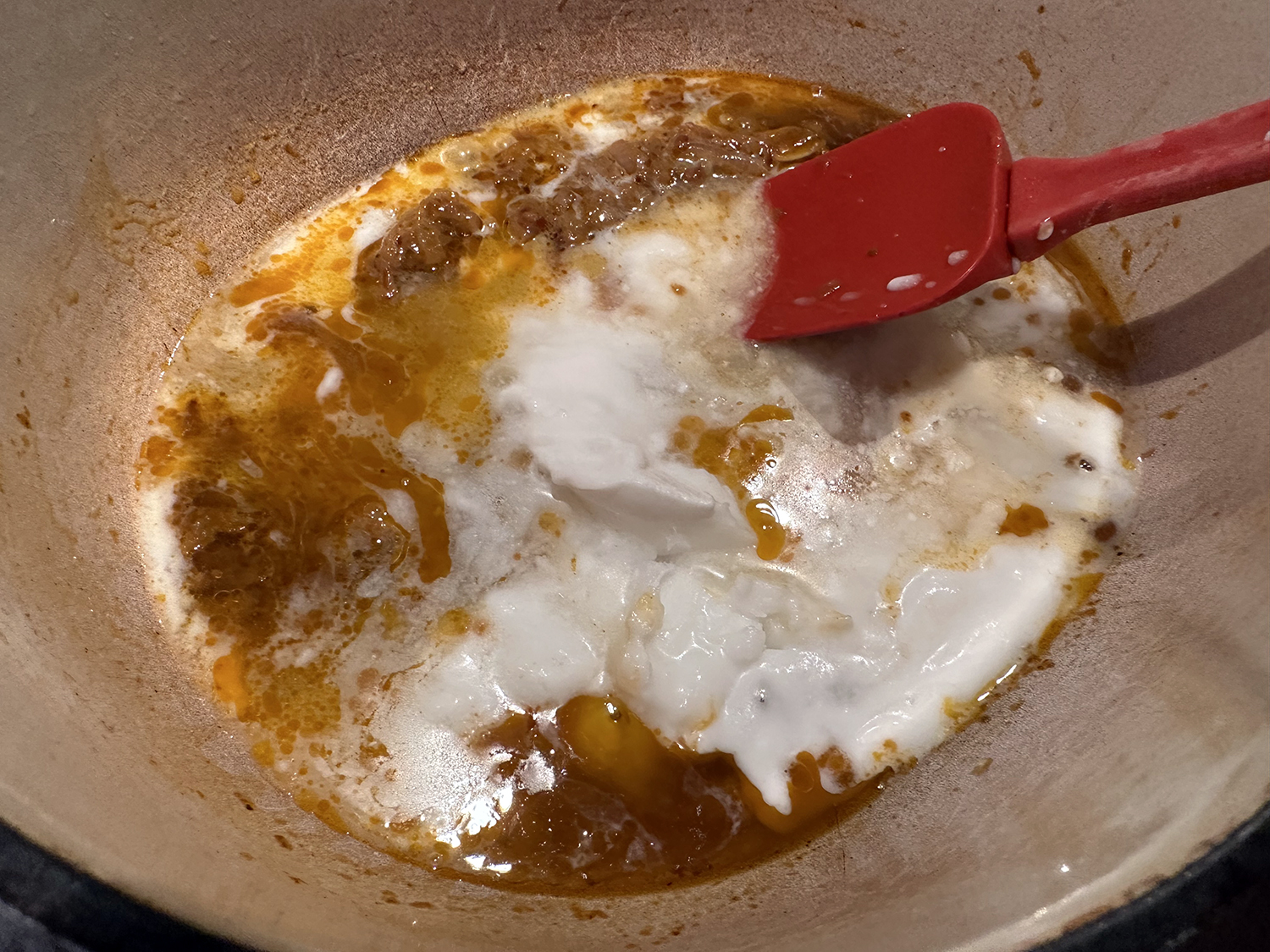
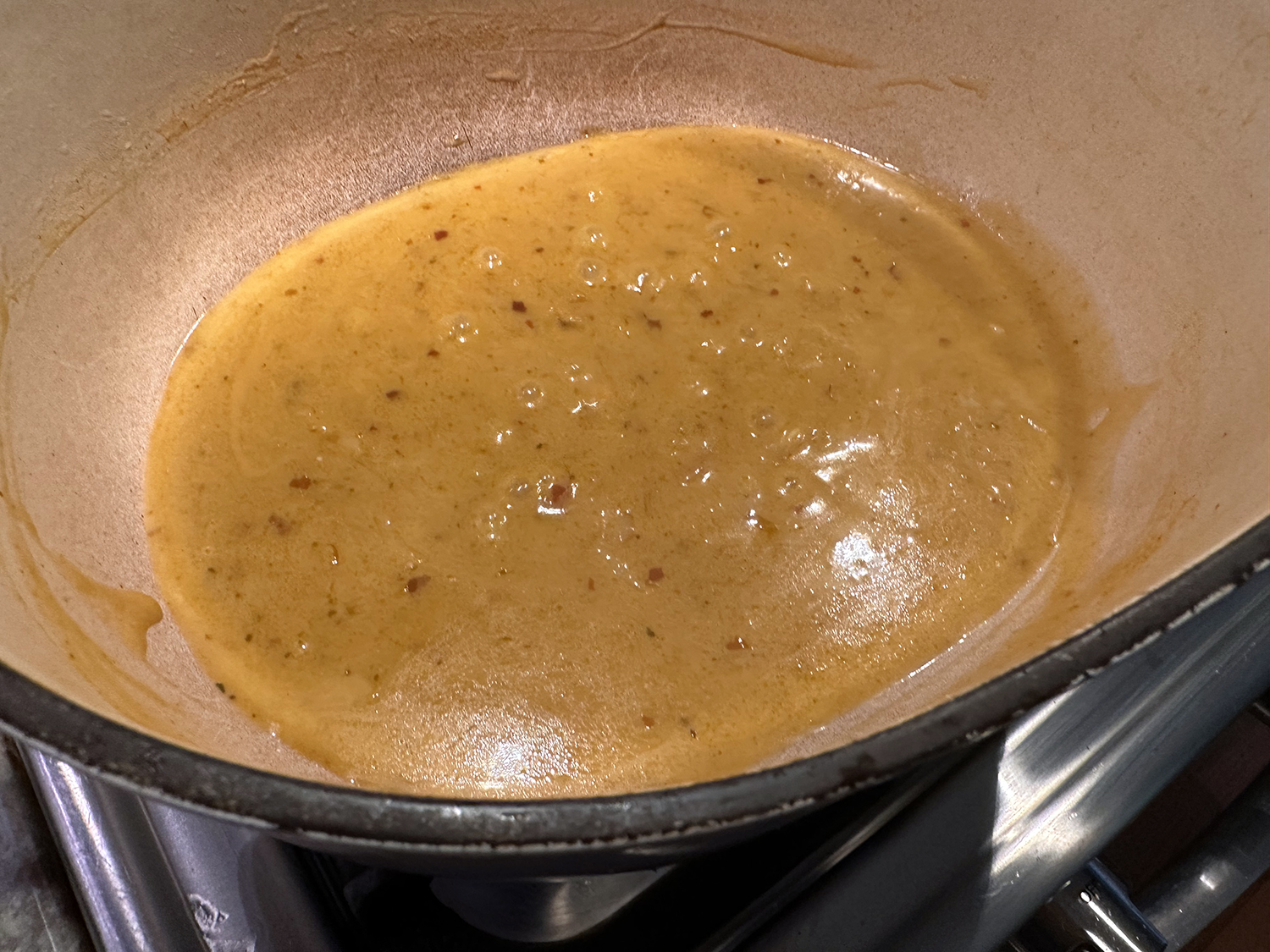
  3. Pour in can of unsweetened coconut milk and bring to a simmer, stirring and scraping up any browned bits. Cook, stirring often, until sauce thickens enough to lightly coat a spoon, about 3 minutes.
  4. Using tongs, transfer pasta to sauce (a little water coming along is okay). Add 2 tablespoons unsalted butter, cut into pieces, and ½ cup pasta cooking liquid. Increase heat to medium; cook, tossing vigorously and adding more pasta cooking liquid by the ¼-cupful as needed, until sauce is silky and pasta is coated and glossy, about 2 minutes. Remove from heat and add fresh lime juice; toss to combine.
  5. Divide pasta among shallow bowls; top with thinly sliced scallion greens. Serve with lime wedges.

http://www.lynnandruss.com

Recipe by Rachel Gurjar for Bon Appétit

Seared Salmon Paka

Paka refers to a silky coconut-milk-based sauce popular in East African cuisine. In this take from Bon Apétit on machi paka—a classic fish curry—quickly seared salmon takes the place of the traditional charred, grilled white fish. Cooking the blended curry base down until the coconut milk breaks and the aromatics toast in its rich fat is key to developing deep flavor—don’t rush this part.

The curry base is wonderfully versatile; if fish isn’t your thing, sub in chicken or your favorite canned beans (adjust cooking times accordingly). Having a lot of rice and curry sauce left over, we browned some boneless chicken thigh pieces and added them to the sauce for another dinner a few days later.

Since no Thai chiles were available at the grocery store, we opted to incorporate jalapeños instead. The color of the paka may be a bit off-putting as it gives the appearance of pea soup, but don’t be fooled by that, the sauce is amazing!

Seared Salmon Paka

  • Servings: 4
  • Difficulty: easy
  • Print

Ingredients

  • 1 Tbsp. vegetable oil
  • 4 6-oz. boneless salmon fillets, preferably skin-on
  • 2 tsp. Diamond Crystal or 1¼ tsp. Morton kosher salt
  • 1 medium onion
  • 2–3 green Thai chiles
  • 3 garlic cloves 
  • 1 1½” piece ginger, peeled 
  • 1 Tbsp. double-concentrated tomato paste,
  • ½ tsp. ground turmeric 
  • ¼ cup cilantro leaves with tender stems 
  • 2 13.5-oz. can unsweetened coconut milk
  • 1 Tbsp. fresh lime
  • Cooked basmati rice

Directions

  1. Heat 1 Tbsp. vegetable oil in a large nonstick skillet over medium-high. Season four 6-oz. boneless salmon fillets, preferably skin-on, with kosher salt and cook (skin side down if it has skin), pressing fillets gently with a spatula, until golden brown, about 4 minutes. Turn fillets over and cook until golden brown and just cooked through, about 3 minutes. Transfer to a plate. Wipe out skillet and reserve.
  2. Purée 1 medium onion, coarsely chopped, 2–3 green Thai chiles, depending on heat preference, 3 garlic cloves, one 1½” piece ginger, peeled, 1 Tbsp. double-concentrated tomato paste, ½ tsp. ground turmeric, ¼ cup cilantro leaves with tender stems, and one 13.5-oz. can unsweetened coconut milk in a blender on high speed until smooth. Pour onion mixture into reserved skillet and sprinkle with 2 tsp. Diamond Crystal or 1¼ tsp. Morton kosher salt. Bring to a brisk simmer over medium-high heat, then reduce heat to medium and cook, stirring often with a wooden spoon, until mixture is reduced to a thick paste, fat separates from coconut milk (it will look broken), and aromatics are golden brown, 30–35 minutes.
  3. Pour in remaining one 13.5-oz. can unsweetened coconut milk and ¼ cup water and bring to a simmer, scraping up any browned bits.
  4. Gently break salmon fillets into 3″ pieces and return to skillet. Cook just until salmon is heated through, about 3 minutes. Stir 1 Tbsp. fresh lime juice into curry and remove from heat.
  5. Divide curry among shallow bowls and top with cilantro leaves with tender stems and halved green Thai chiles. Serve with cooked basmati rice or country-style bread and lime wedges alongside.

Do ahead: Curry base can be made 1 day ahead. Let cool; cover and chill. Reheat over medium-low, adding water to thin as needed.

http://www.lynnandruss.com

Recipe from Bon Appétit

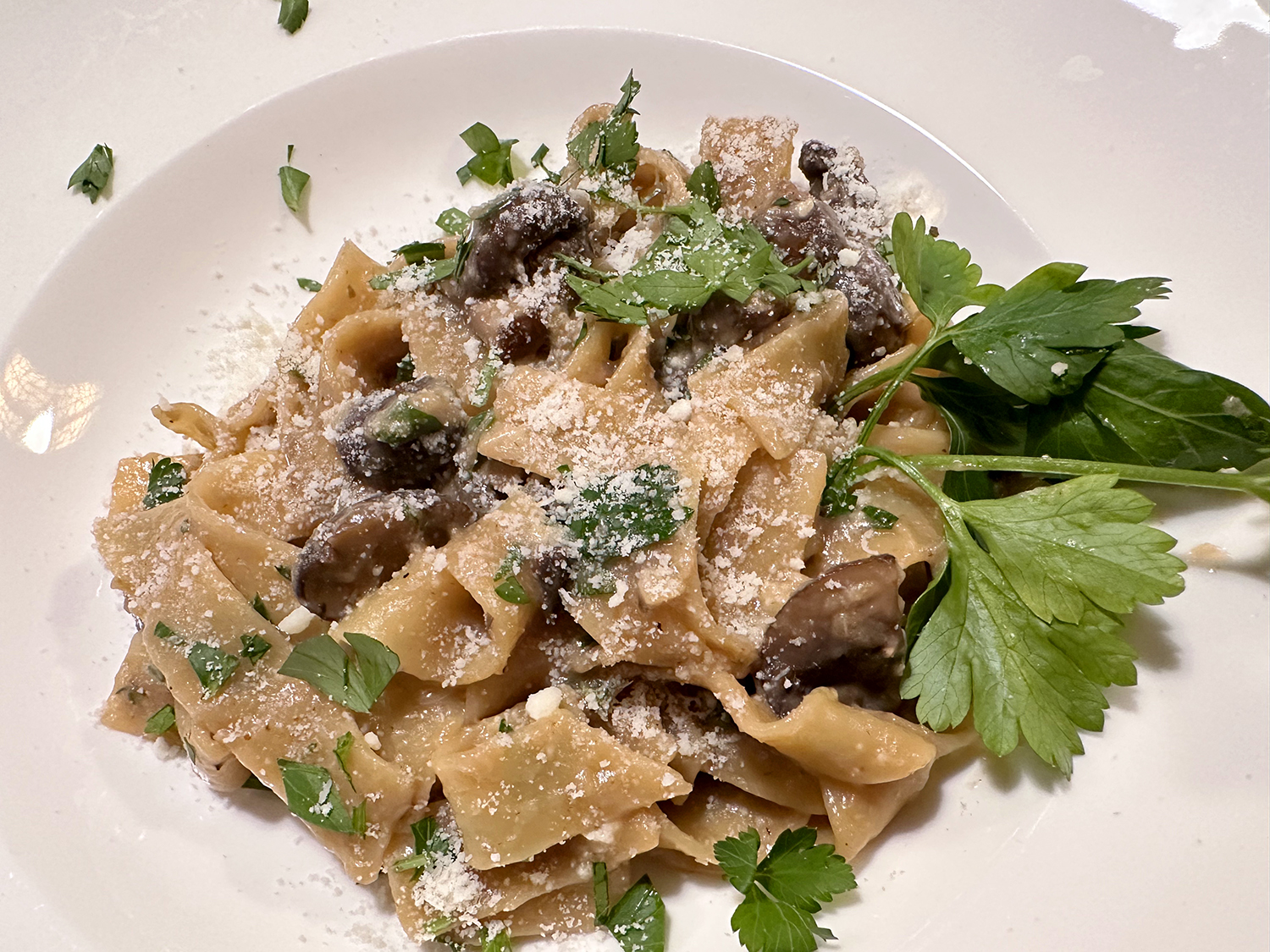
Pasta with Cremini Mushrooms and Miso

For this hearty vegetarian dish, the pasta is cooked directly in the sauce, so there’s no need to boil water in a separate pot. Japanese miso may seem an unlikely ingredient to pair with Italian pasta, but it deepens the mushrooms’ earthiness, and lightly browning the miso as it is done here develops even more flavor intensity so the dish tastes surprisingly meaty and rich.

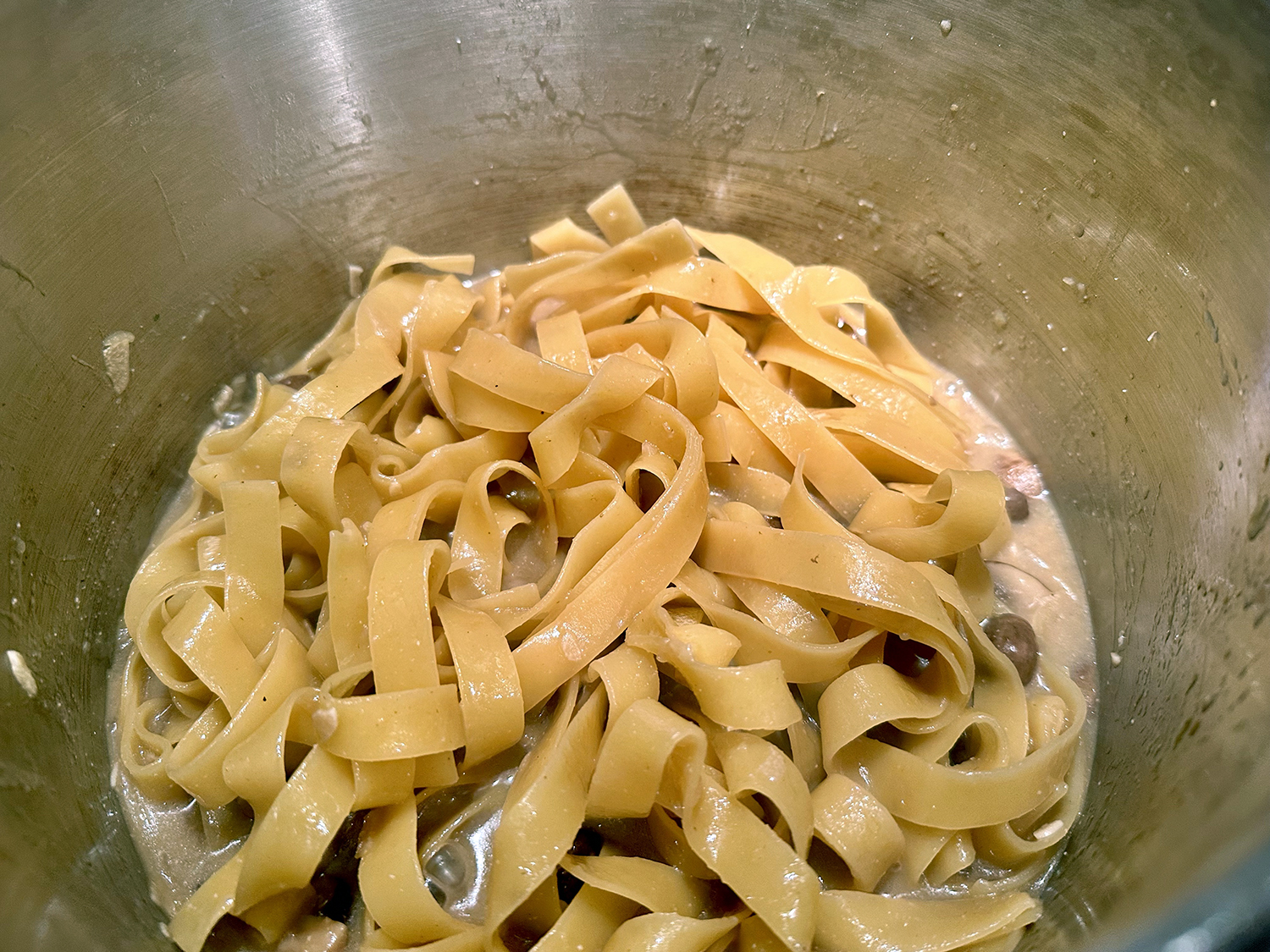
Cavatappi is a good choice because its twisty shape is a good match for the chunky mushrooms, but any short pasta shape, such as penne or fusilli, works well, too. But because we used a larger flat pasta, we needed to add another cup of water to loosen the sauce.

Don’t forget to stir the pasta as it cooks. The pot will be quite full, so frequent stirring will help ensure that the pasta cooks evenly.

Pasta with Cremini Mushrooms and Miso

  • Servings: 4-6
  • Difficulty: easy
  • Print

Ingredients

  • 4 Tbsp. (½ stick) salted butter
  • 1 medium yellow onion, halved and thinly sliced
  • 3 medium garlic cloves, thinly sliced
  • ⅓ cup white miso
  • ½ cup dry white vermouth
  • 2 lbs. cremini mushrooms, trimmed and quartered
  • 1 lb. short pasta (see note)
  • 1 tsp. minced fresh thyme
  • 2 tsp. lemon juice
  • Kosher salt and ground black pepper
  • ¼ cup roughly chopped fresh flat-leaf parsley
  • ½ oz. pecorino Romano cheese, finely grated (¼ cup)

Directions

  • On a 6-quart Instant Pot, select More/High Sauté. (Or use a pressure cooker.) Add the butter and melt. Add the onion and garlic, then cook, stirring occasionally, until the onion begins to soften, about 5 minutes.
  • Stir in the miso and cook until lightly browned, about 2 minutes. Add the vermouth and cook, stirring, until almost fully evaporated, about 5 minutes.
  • Add 3 cups water (or 4 if necessary to loosen) and whisk until the miso dissolves. Stir in the mushrooms and bring to a boil, then distribute in an even layer.
  • Press Cancel, lock the lid in place and move the pressure valve to Sealing. Select Pressure Cook or Manual; make sure the pressure level is set to High. Set the cooking time for 5 minutes. When pressure cooking is complete, quick-release the steam by moving the pressure valve to Venting. Press Cancel, then carefully open the pot.
  • Select More/High Sauté. Bring the mixture to a boil and add the pasta. Cook, stirring often, until the pasta is al dente and and the sauce clings lightly, about 10 minutes. Press Cancel to turn off the pot.
  • Stir in the thyme and lemon juice, then taste and season with salt and pepper. Transfer to a serving dish and sprinkle with the parsley and pecorino.

http://www.lynnandruss.com

Recipe by Phoebe Maglathlin for Milk Street

Coconut Chicken Curry

Curry powder is stirred into this braise only during the last minute of cooking, delivering a bright hit of spice on top of the paprika and turmeric mellowed into the slow-simmered chicken.

This dish needs time on the stove but not much attention, and gets even better after resting in the fridge, making it an ideal weeknight meal that can last days. There’s plenty of coconut milk broth to spoon over rice or noodles; or even platha, a buttery, flaky Burmese flatbread, for dipping.

Based on reader reviews claiming the curry was too soupy, we omitted adding any water. Other changes included altering the amounts of the spices including adding Thai red curry paste and fresh ginger to the mixture. These changes are noted in the list below.

In order to make the most of the ingredients, it is important to let the curry sit for 20 minutes at the end. This allows the chicken to soak in more flavors as the curry cools.

Coconut Chicken Curry

  • Servings: 4
  • Difficulty: easy
  • Print

Ingredients

  • 2 ½ lbs. boneless, skinless chicken thighs
  • 1 Tbsp. ground paprika
  • ½ tsp. ground turmeric
  • 2 tsp. kosher salt, plus more as needed
  • ⅓ cup canola oil
  • 2 yellow onions, finely diced
  • 4 garlic cloves, minced
  • 1 Tbsp. fresh ginger, finely grated
  • 1 13-oz. can unsweetened coconut milk
  • 3 Tbsp. fish sauce, plus more as needed
  • 1 ½ tsp. Madras curry powder
  • 1⁄4 tsp. ground cayenne
  • 2 Tbsp. Thai red curry paste
  •  Cooked rice or noodles, for serving
  • 1 cup cilantro sprigs, for serving
  • 1 lime or lemon, cut into wedges, for serving

Directions

  1. Trim the chicken thighs of excess fat and cut into 1/2- to 1-inch pieces; transfer to a bowl. Add the paprika, turmeric and salt, and use your hands to mix well. Let the chicken marinate at room temperature while you prepare the other ingredients, or cover and refrigerate overnight.
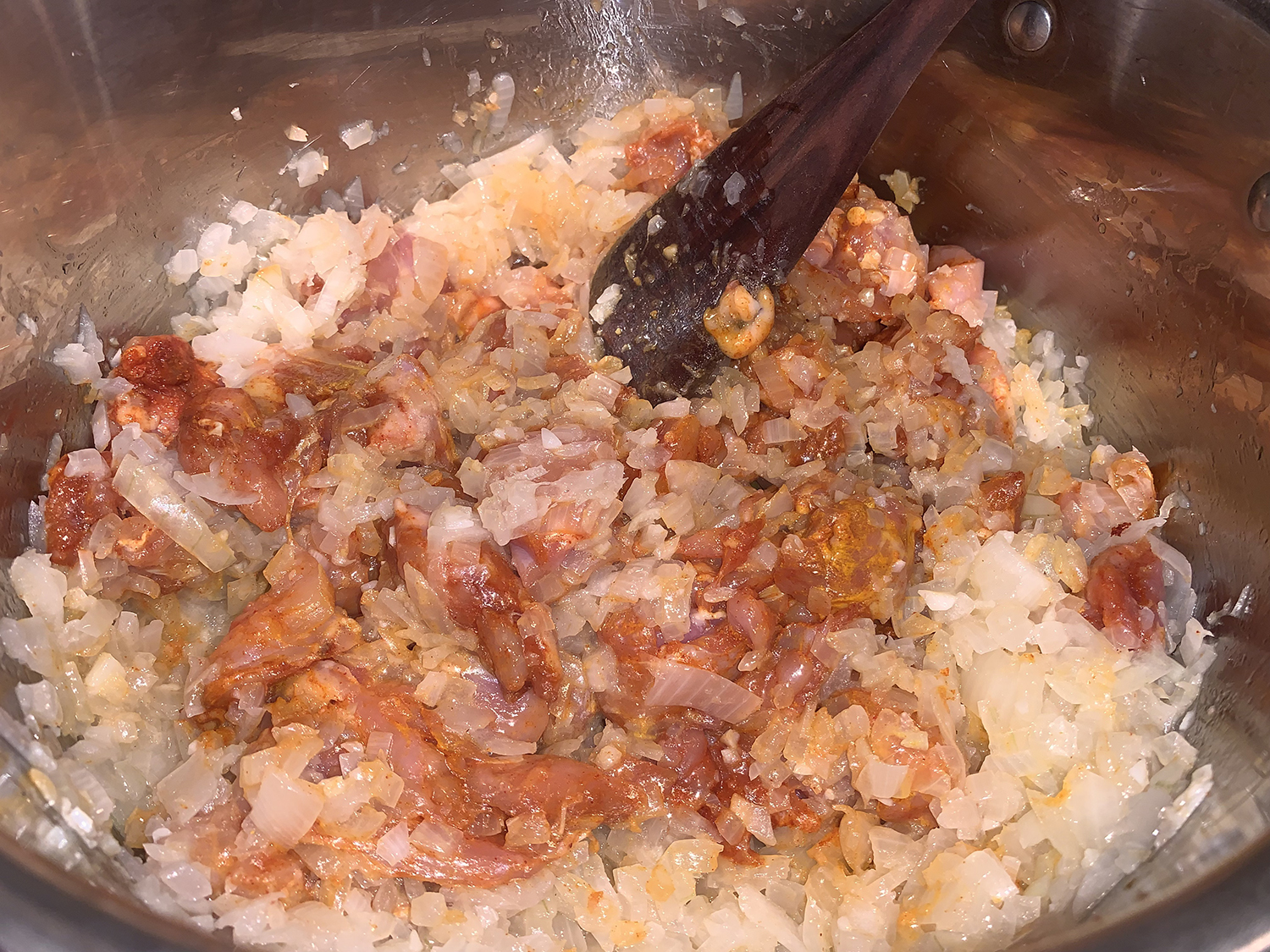
  2. In a large pot, heat the oil over medium-high. Stir in the onions, lower the heat to medium-low and cook gently, stirring often to prevent scorching, until tender and translucent, 8 to 10 minutes. Add the garlic and ginger and continue to cook, stirring often, until most of the water from the onions has been cooked out and a glossy layer of oil has risen to the surface, about 5 minutes more.
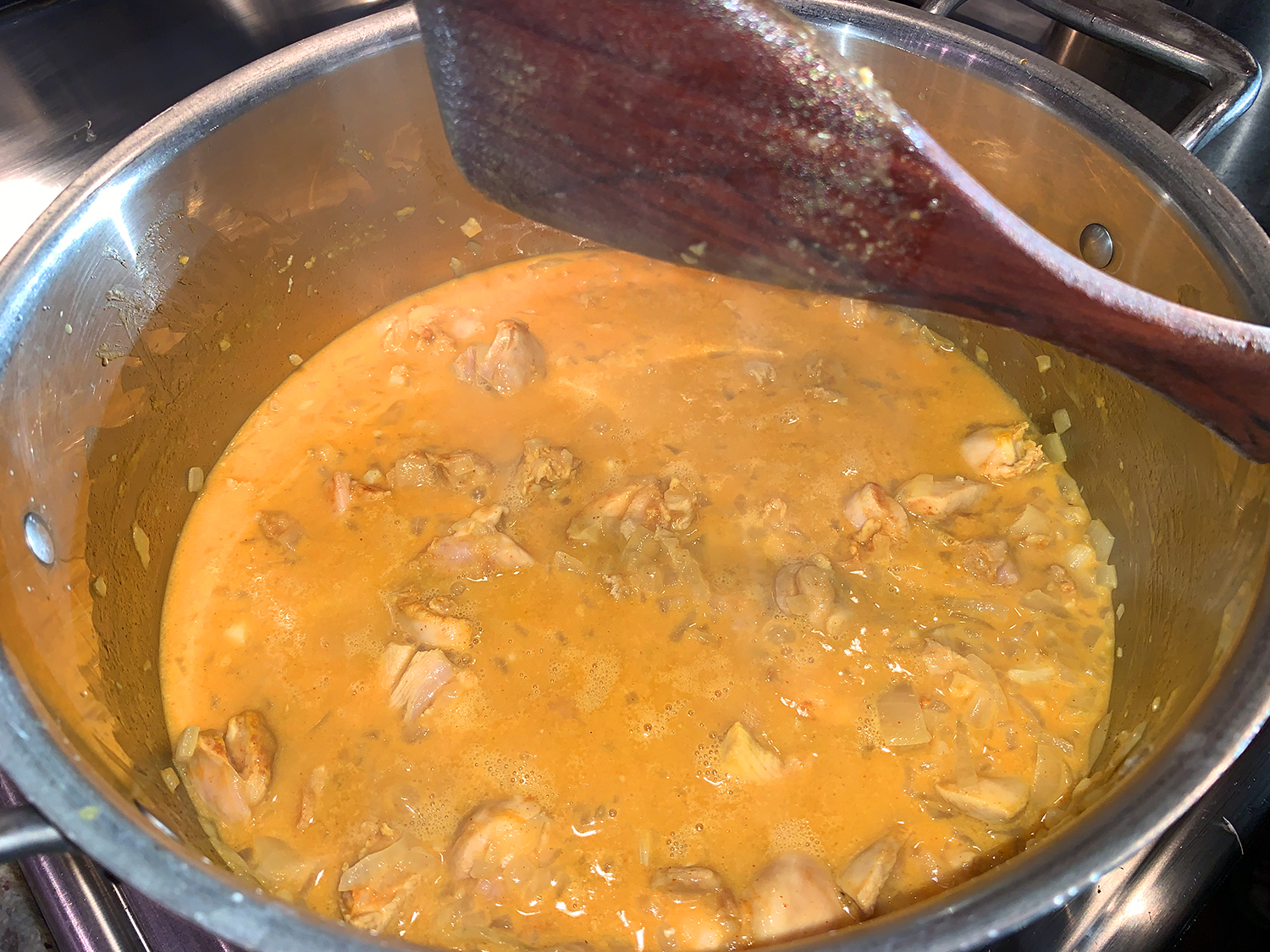
  3. Add the marinated chicken and stir to release the spices into the onion. Pour in the coconut milk and bring to a near boil. Let the coconut milk simmer briskly for about 4 minutes to thicken a bit. Lower the heat to medium-low and add the fish sauce. The broth will thin out as the chicken starts to release its juices.
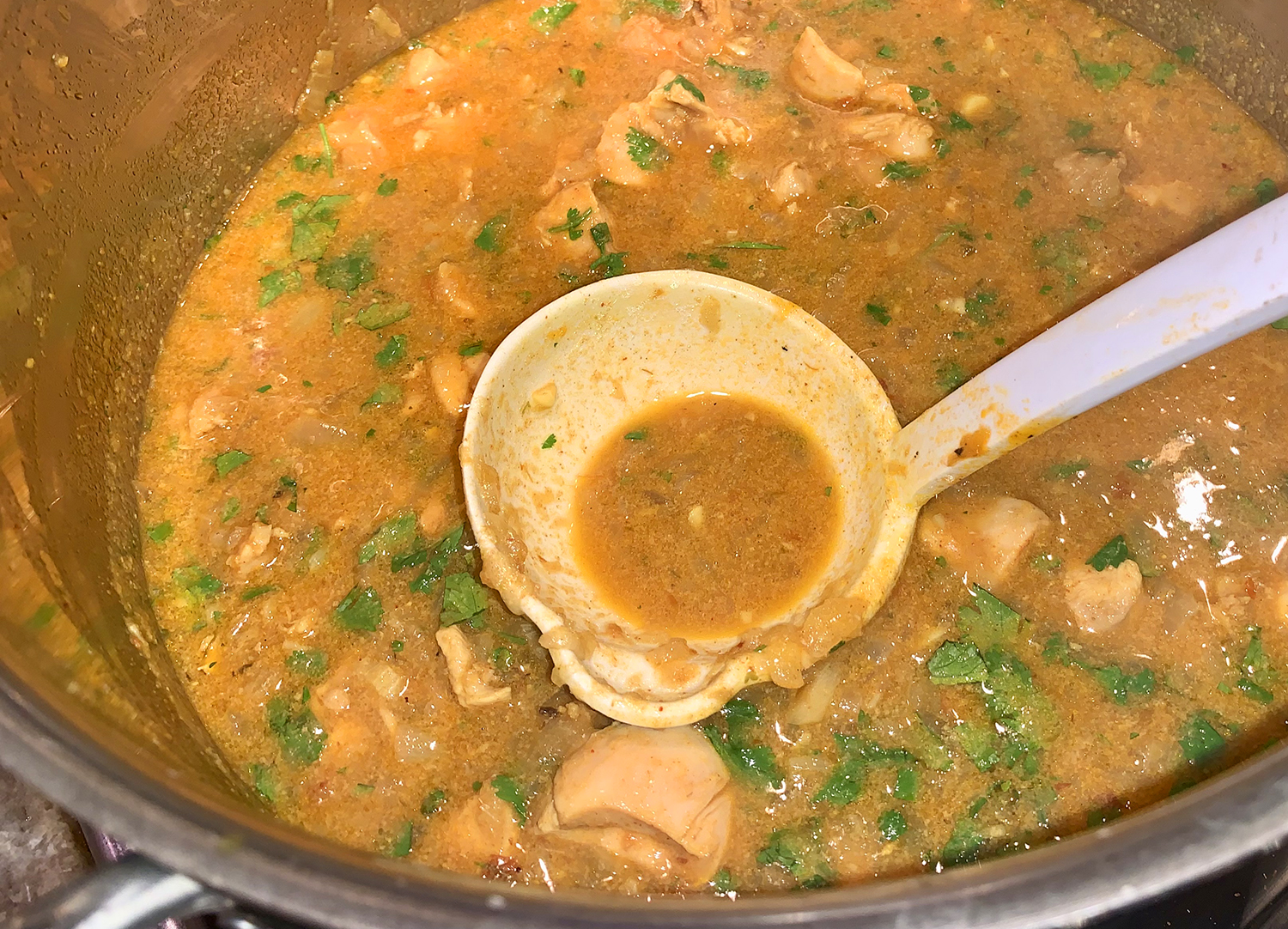
  4. Lower to a gentle simmer and cook, stirring occasionally, until the chicken is tender, about 30 minutes. Droplets of paprika-red oil will rise to the surface. Stir in the curry powder, cayenne and Thai red curry paste and simmer briefly and remove from the heat.
  5. Let the curry sit for at least 20 minutes before serving. This allows the chicken to soak in more flavors as the curry cools. Bring to a simmer again right before serving and taste, adding more salt or fish sauce if desired.
  6. Serve over rice or noodles, with bowls of cilantro and lime wedges.

http://www.lynnandruss.com

Adapted from recipe by Desmond Tan and Kate Leahy for NYT Cooking

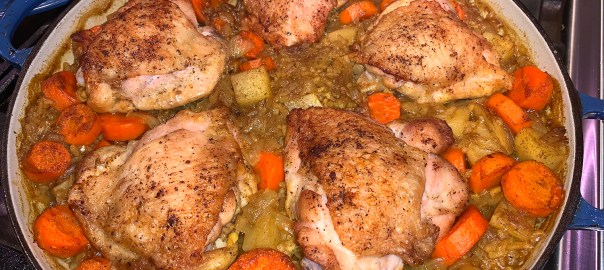
One-Pot Japanese Curry Chicken and Rice

An easy weeknight version of Indian curry, this Japanese-riff is a one-pot meal featuring juicy chicken thighs, vegetables and rice. Instead of relying on store-bought or homemade instant curry roux, the recipe builds on a few spices to mimic traditional Japanese curry flavors.

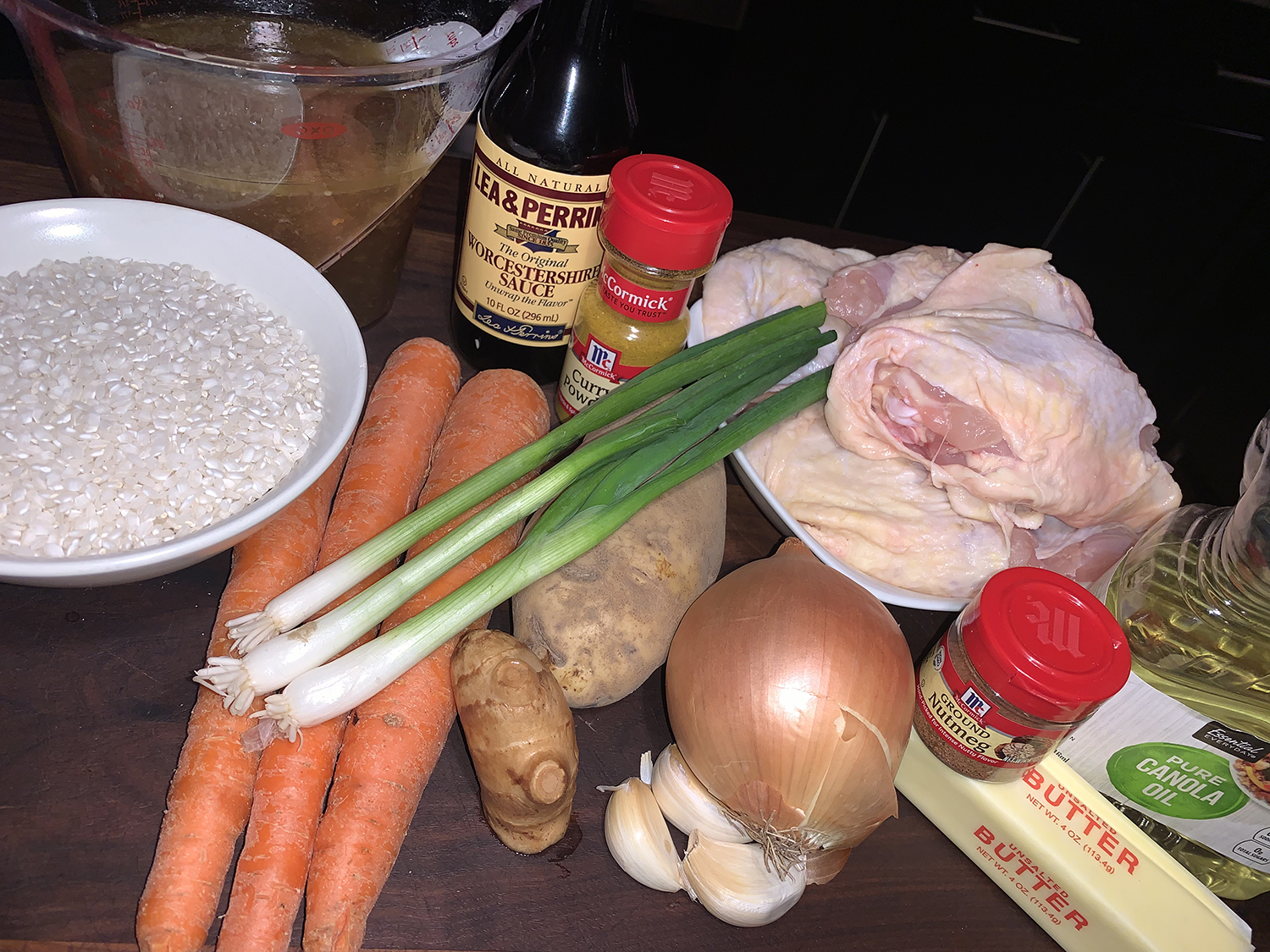
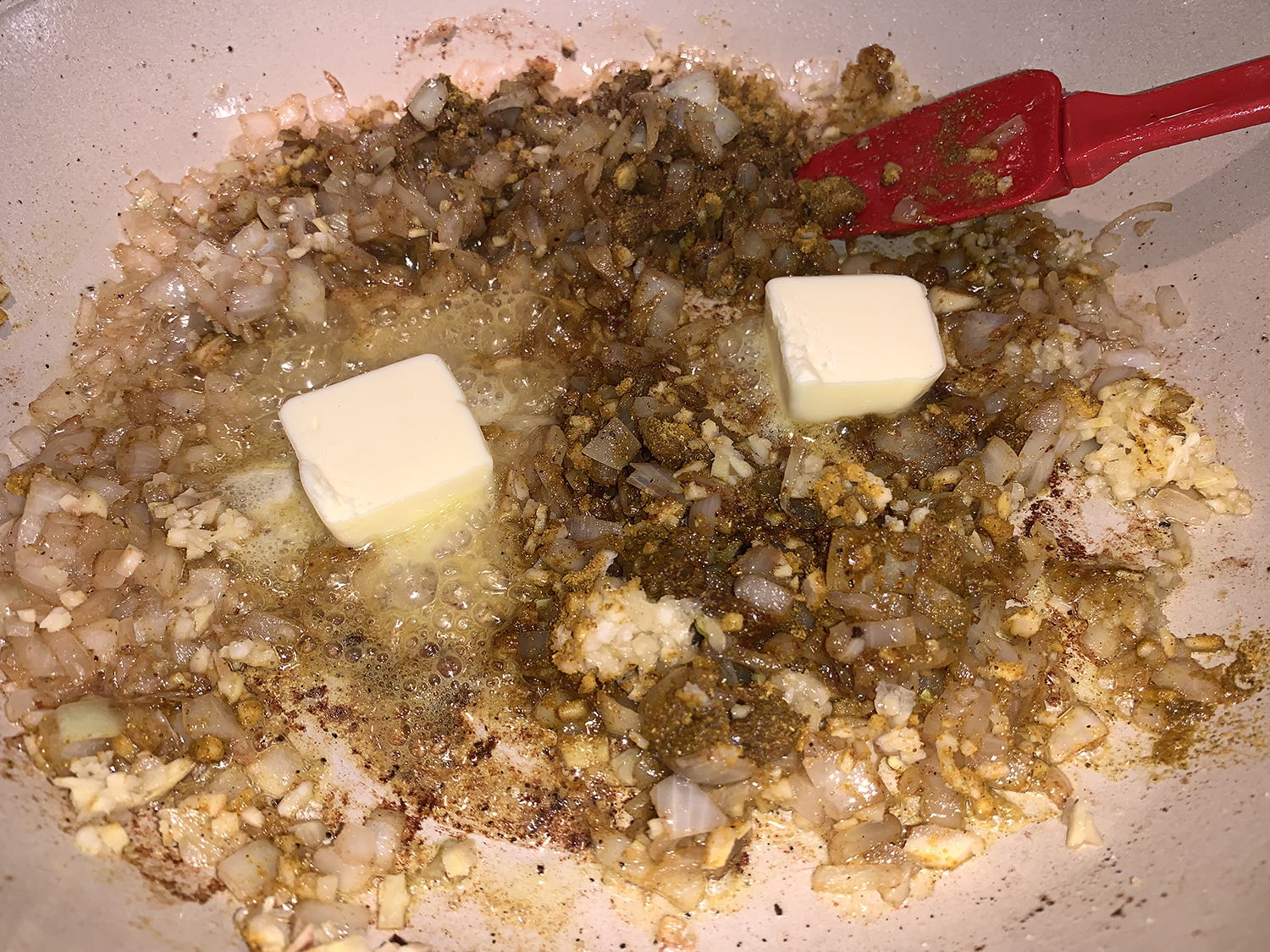
Curry powder, ground nutmeg and Worcestershire sauce are combined and bloomed in butter to create the round and rich sauce. Onions, potatoes and carrots create the bulk of traditional Japanese curry. You can easily substitute sweet potatoes, cauliflower and/or peas to address family preferences.

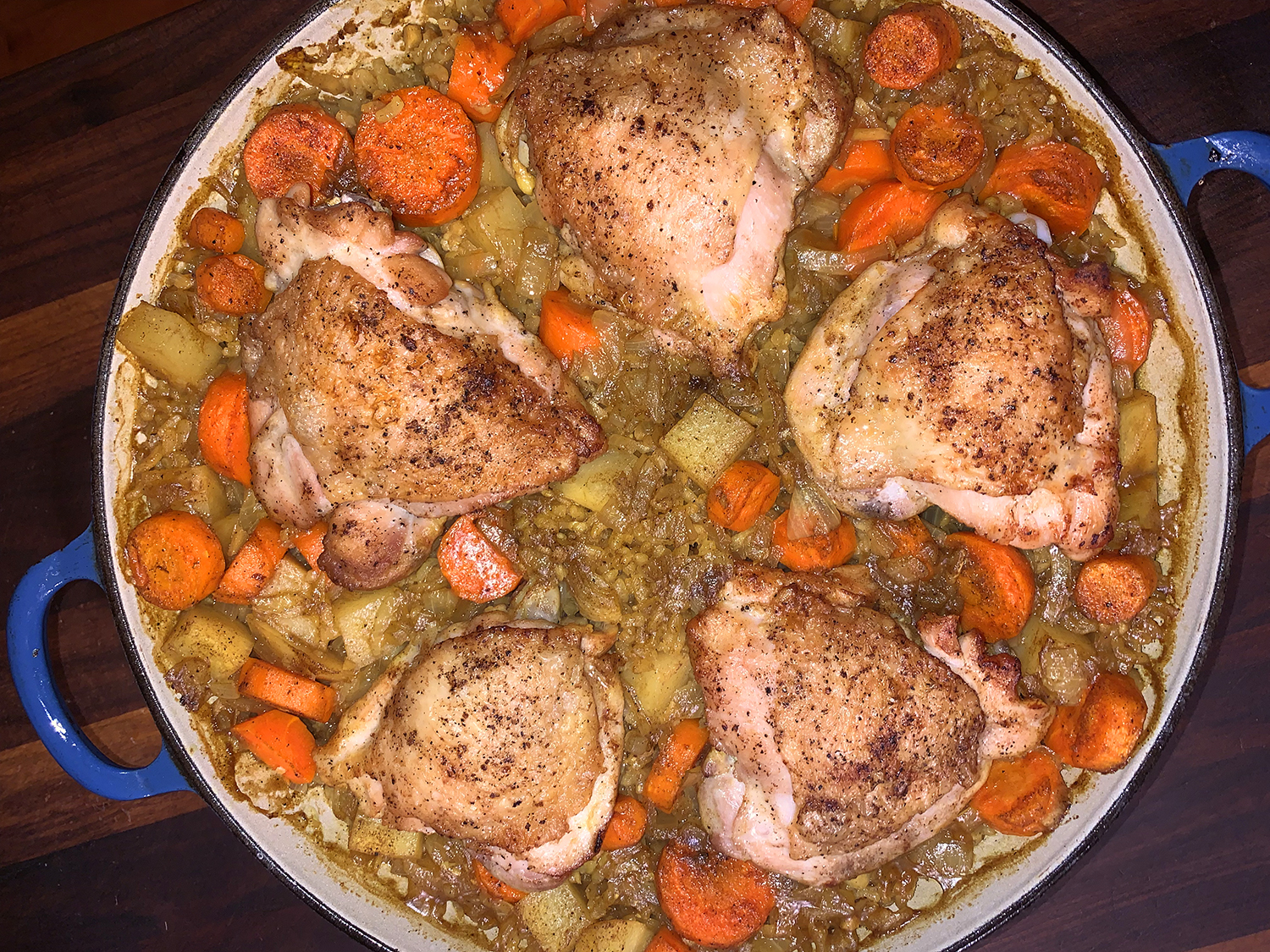
Kay Chun’s original recipe called for 2 pounds of large chicken thighs. The math doesn’t add up here. We bought a package nearly 2 1⁄2 pounds containing only 5 thighs—and they weren’t necessarily “large,” so if you were serving 6 people, that would be a challenge. I say forget the poundage, and just buy 6 large thighs—there is enough rice mixture to support that many servings.

It is suggested you serve in bowls. Maybe because we used a “paella” rice which is really absorbent, there wasn’t much liquid and could have been served on plates. Speaking of liquid, of course we used homemade stock which adds oodles of flavor. And we nearly doubled the amount of minced fresh ginger to really amp up the Asian flavor.

One-Pot Japanese Curry Chicken and Rice

  • Servings: 4-6
  • Difficulty: easy
  • Print

Ingredients

  • 6 bone-in, skin-on chicken thighs
  • 2 Tbsp. canola oil
  • Kosher salt and black pepper
  • 3 Tbsp. unsalted butter
  • 1/2 cup finely chopped onion
  • 3 Tbsp. Madras curry powder
  • 1 Tbsp. minced garlic
  • 1 Tbsp. minced fresh ginger
  • 3/4 tsp. ground nutmeg
  • 1 1/2 cups short-grain white rice, rinsed until water runs clear
  • 1 large baking potato (about 1 lb.), peeled and cut into 1/2-inch cubes
  • 3 medium carrots, sliced 1/2-inch-thick
  • 3 1/2 cups chicken broth
  • 2 Tbsp. Worcestershire sauce
  • Chopped scallions pickles, kimchi and/or hot sauce, for serving

Directions

  1. Heat oven to 375 degrees. Rub chicken with 1 tablespoon oil, and season with salt and pepper.
  2. In a large Dutch oven or heavy pot (at least 3 1⁄2 quarts), heat remaining 1 tablespoon oil with 1 tablespoon butter over medium until butter is melted. Working in two batches, brown chicken 3 to 4 minutes per side, and transfer to a plate.
  3. Add onion to the pot, season with salt and pepper and cook, stirring, until softened, 2 minutes. Add curry powder, garlic, ginger, nutmeg and the remaining 2 tablespoons butter, and stir until butter is melted and spices are fragrant, 1 minute.
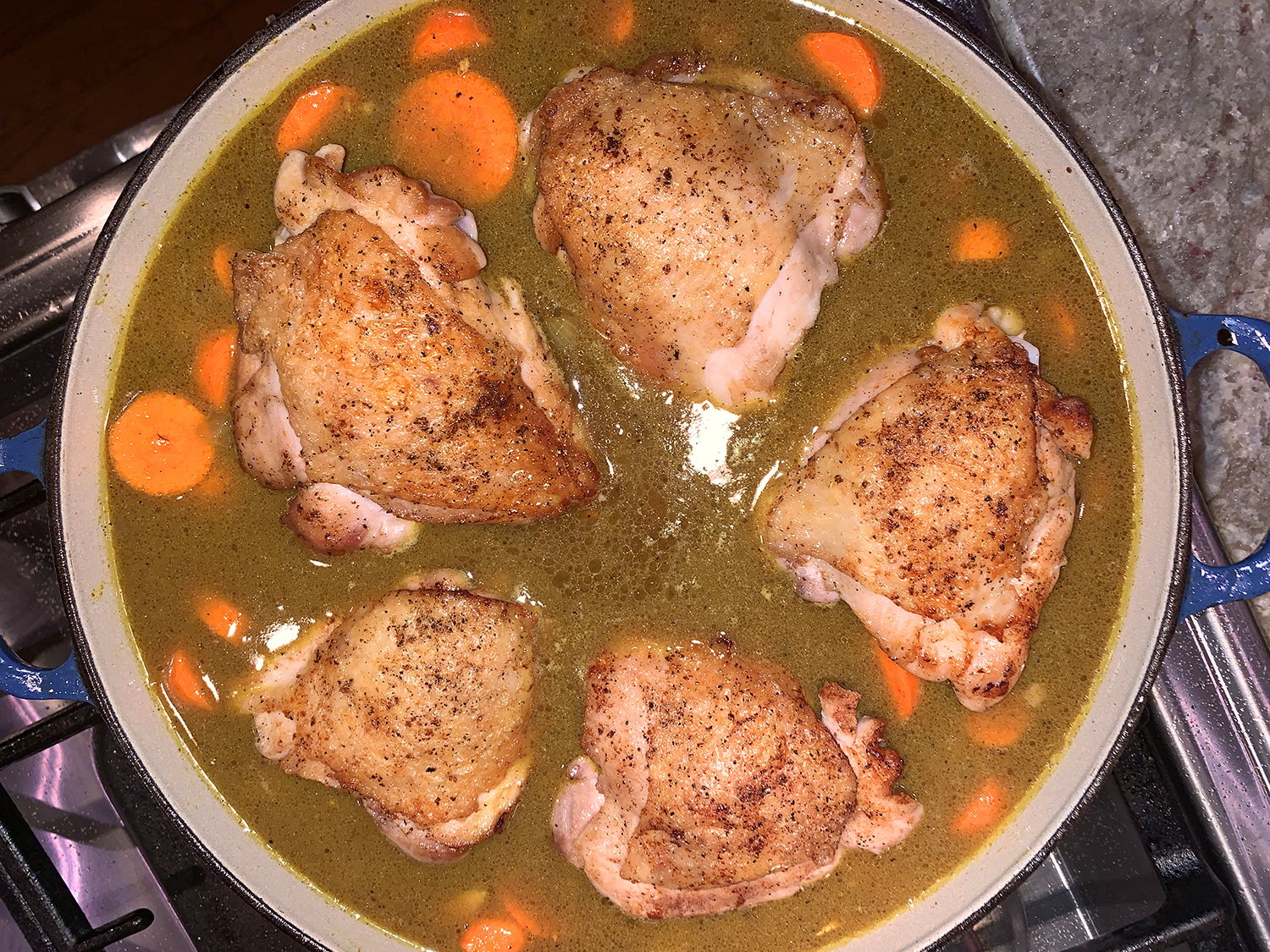
  4. Add rinsed rice and stir until evenly coated in spices. Add potato, carrots, broth and Worcestershire sauce, scraping bottom of pot to lift up any browned bits. Season broth generously with salt and pepper. Arrange chicken and any accumulated juices on top, skin-side up, and bring to a boil over high. Cover and bake for 20 minutes.
  5. Uncover and bake until most of the liquid is absorbed and chicken is golden and cooked through, about 10 minutes longer.
  6. Divide chicken and rice among bowls, and garnish with scallions. If desired, serve with any combination of pickles, kimchi and hot sauce.

http://www.lynnandruss.com

Adapted from a recipe by Kay Chun for NY Times Cooking

A South Asian Curry

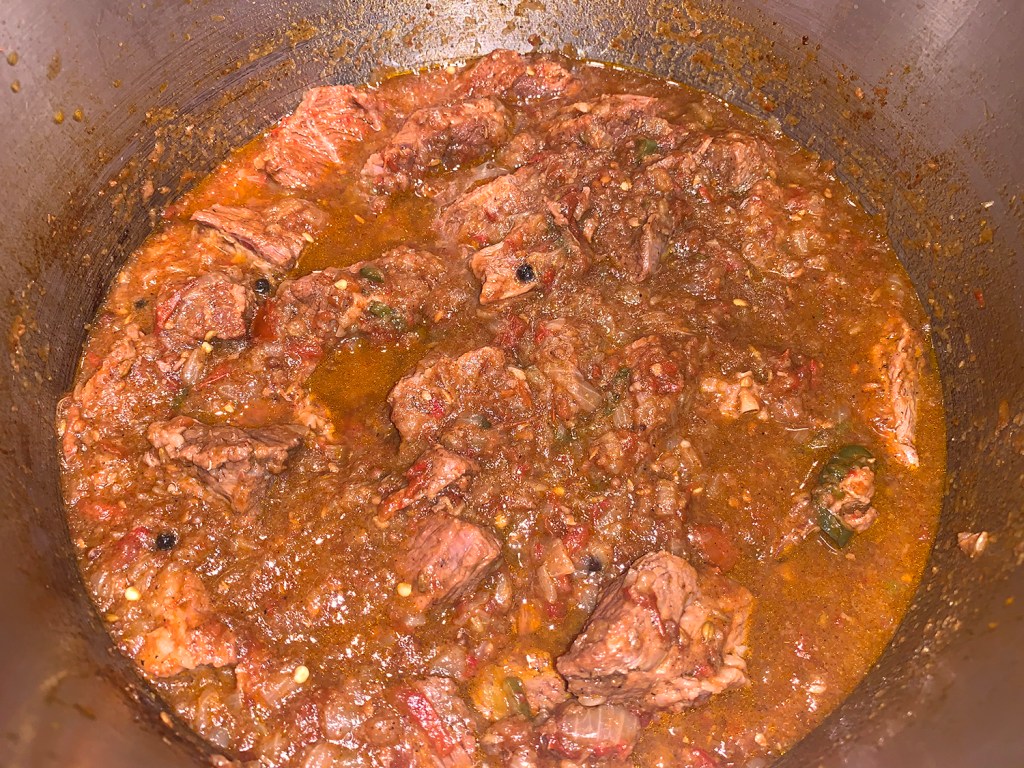
Ginger-Cumin Beef Curry — Bhuna is a type of South Asian curry that’s especially intense and flavorful because the aromatics and a generous amount of spices are fried in oil and only a little liquid is added to simmer the meat. This version we found in a recent issue of Milk Street.

Over the course of cooking, the liquid is allowed to reduce, resulting in deep, bold, concentrated flavors and a thick, rich sauce. According to some sources, the term bhuna refers to the cooking technique employed to make the dish. The Instant Pot is well-suited to making bhuna-style beef curry: the pressure cooker function cooks the meat without any added liquid at all and the slow cooker function simmers it gently and steadily with only a small amount of added moisture.

If you prefer more vegetables, you could incorporate carrots and/or broccoli. We simply paired ours with a side salad. Serve the curry garnished with thinly sliced red onion and with basmati rice on the side.

Don’t forget to add ⅓ cup water if slow-cooking. The liquid, added just before the pot is sealed, helps the beef mixture come to temperature more quickly, for a slightly shorter overall cooking time. The water is not needed if using the pressure-cooker function.

Ginger-Cumin Beef Curry

  • Servings: 4-6
  • Difficulty: easy
  • Print

Ingredients

  • 3 Tbsp. ghee or neutral oil
  • 2 medium yellow onions, finely chopped
  • 2 Tbsp. finely grated fresh ginger
  • 4 medium garlic cloves, finely grated
  • 1 tsp. ground cardamom
  • 1 tsp. cumin seeds
  • 1 tsp. coriander seeds
  • ½ tsp. ground cloves
  • ½ tsp. whole black peppercorns
  • 2 bay leaves
  • 2 medium ripe tomatoes, cored and chopped
  • 2 serrano chilies, stemmed and sliced into thin rings
  • Kosher salt and ground black pepper
  • 2½-3 lbs. boneless beef chuck roast, trimmed of fat and cut into 1½- to 2-inch chunks
  • 1/3 cup water (unless using a stove-top pressure cooker)
  • 2 Tbsp. lime juice
  • ½ cup lightly packed fresh cilantro, chopped

Directions

  1. On a 6-quart Instant Pot, select More/High Sauté. Heat the ghee until shimmering, then add the onions. Cook, stirring occasionally, until softened and browned, 10 to 12 minutes.
  2. Add the ginger, garlic, cardamon, cumin, coriander, cloves, peppercorns and bay, then cook, stirring, until fragrant, 1 to 2 minutes.
  3. Add the tomatoes, chilies and ½ teaspoon each salt and pepper. Cook, scraping up any browned bits, until the tomatoes begin to release their liquid, 2 to 3 minutes. Add the beef and distribute in an even layer.
  4. Press Cancel, lock the lid in place and move the pressure valve to Sealing. Select Pressure Cook or Manual; make sure the pressure level is set to High. Set the cooking time for 40 minutes. When pressure cooking is complete, let the pressure reduce naturally for 15 minutes, then release any remaining steam by moving the pressure valve to Venting. Press Cancel, then carefully open the pot.
  5. Using a slotted spoon, transfer the solids to a medium bowl. Remove and discard the bay. Using a large spoon, skim off and discard the fat from the surface of the cooking liquid (or use a fat separator).
  6. Select More/High Sauté, bring the liquid to a simmer and cook, stirring occasionally, until thickened and reduced to about 1 cup, 15 to 20 minutes. Return the meat to the pot and cook, stirring occasionally, until heated through, 2 to 3 minutes. Press Cancel.
  7. Stir in the lime juice, then taste and season with salt and pepper. Serve sprinkled with cilantro.

http://www.lynnandruss.com

Recipe from Milk Street