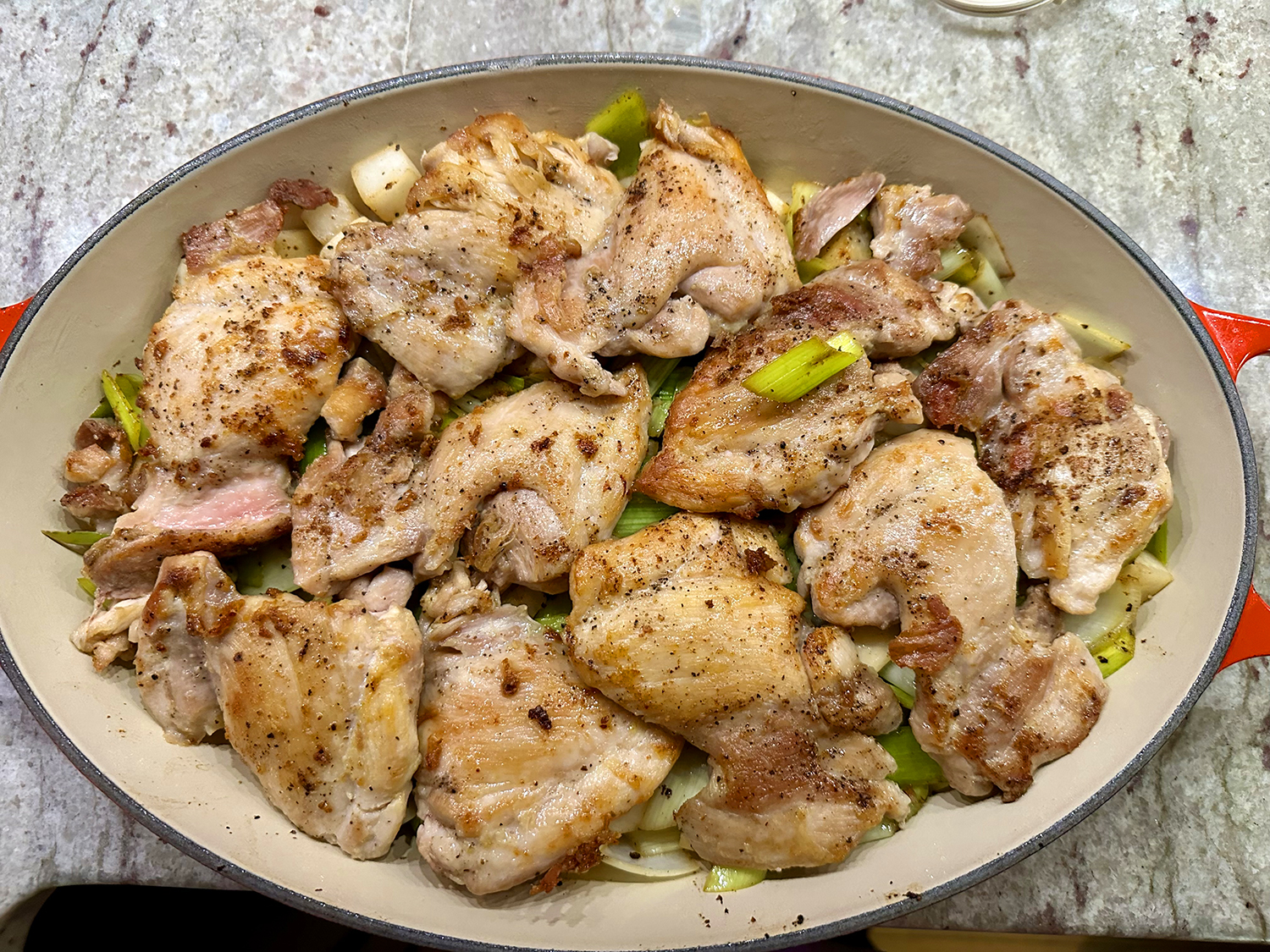
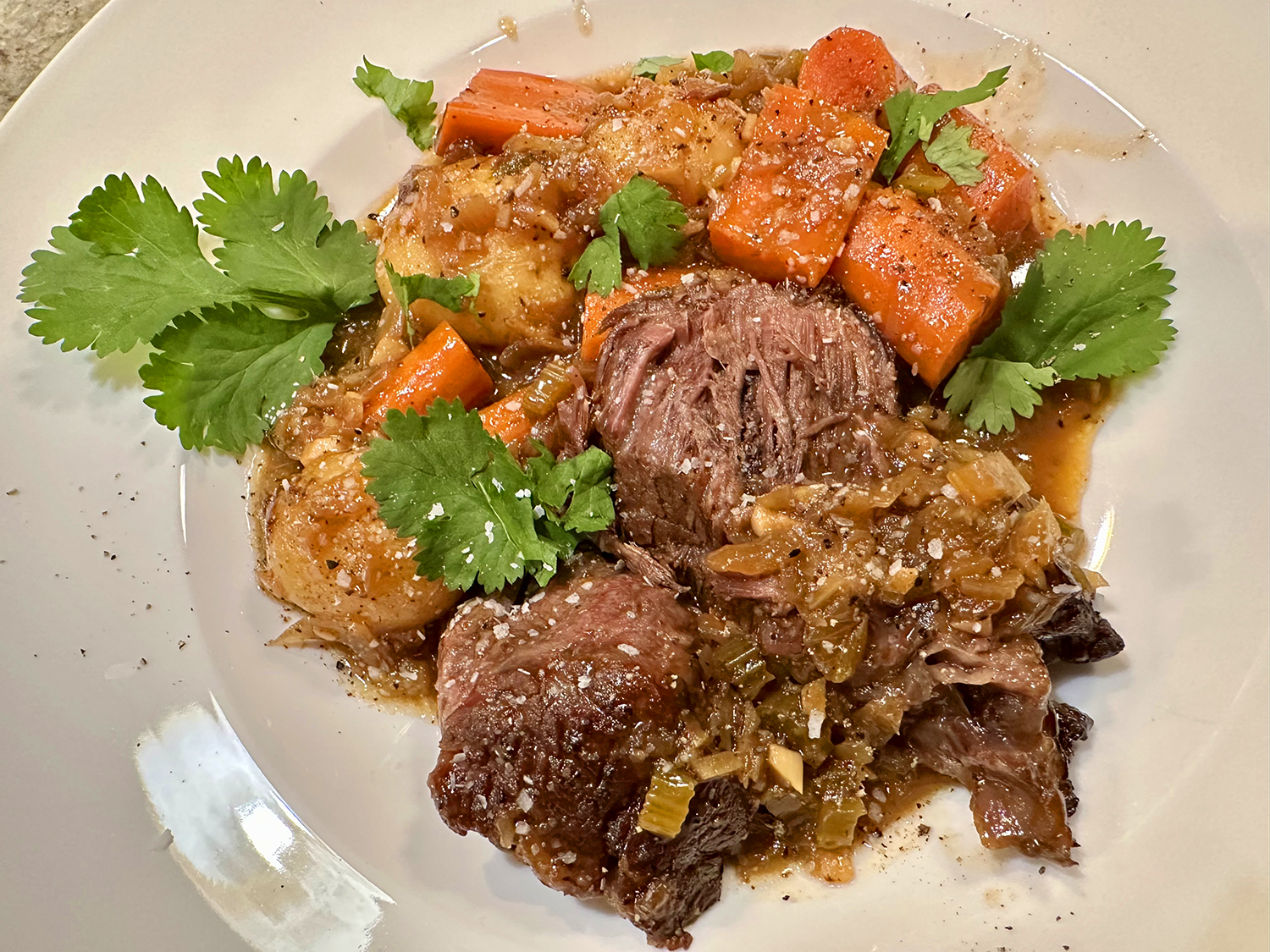
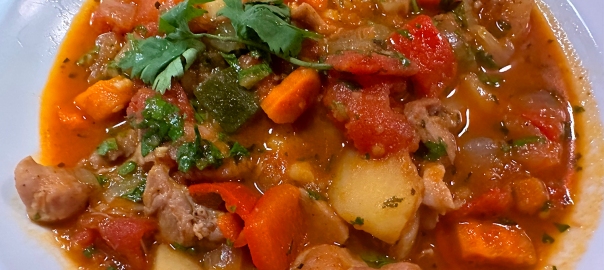
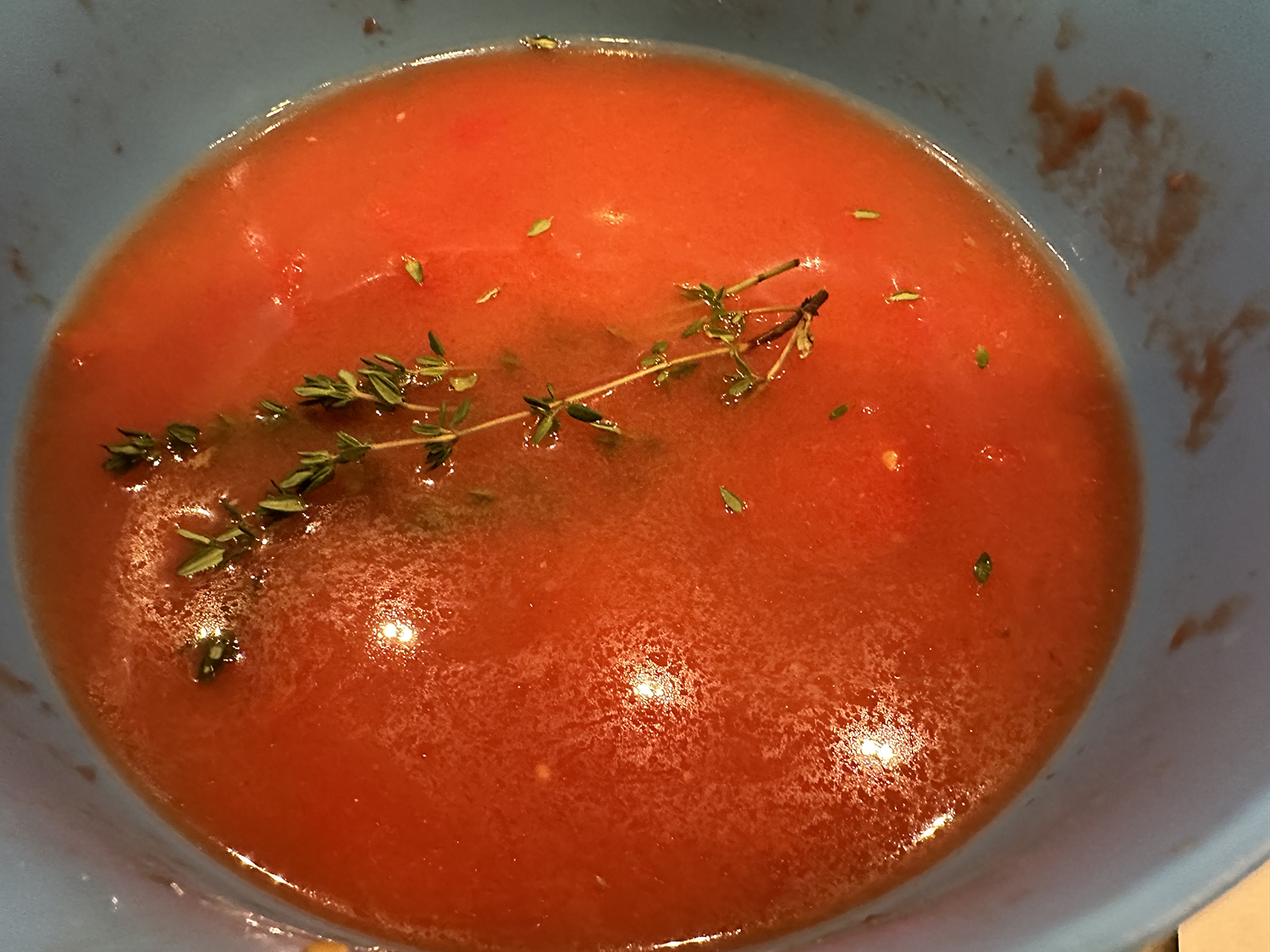
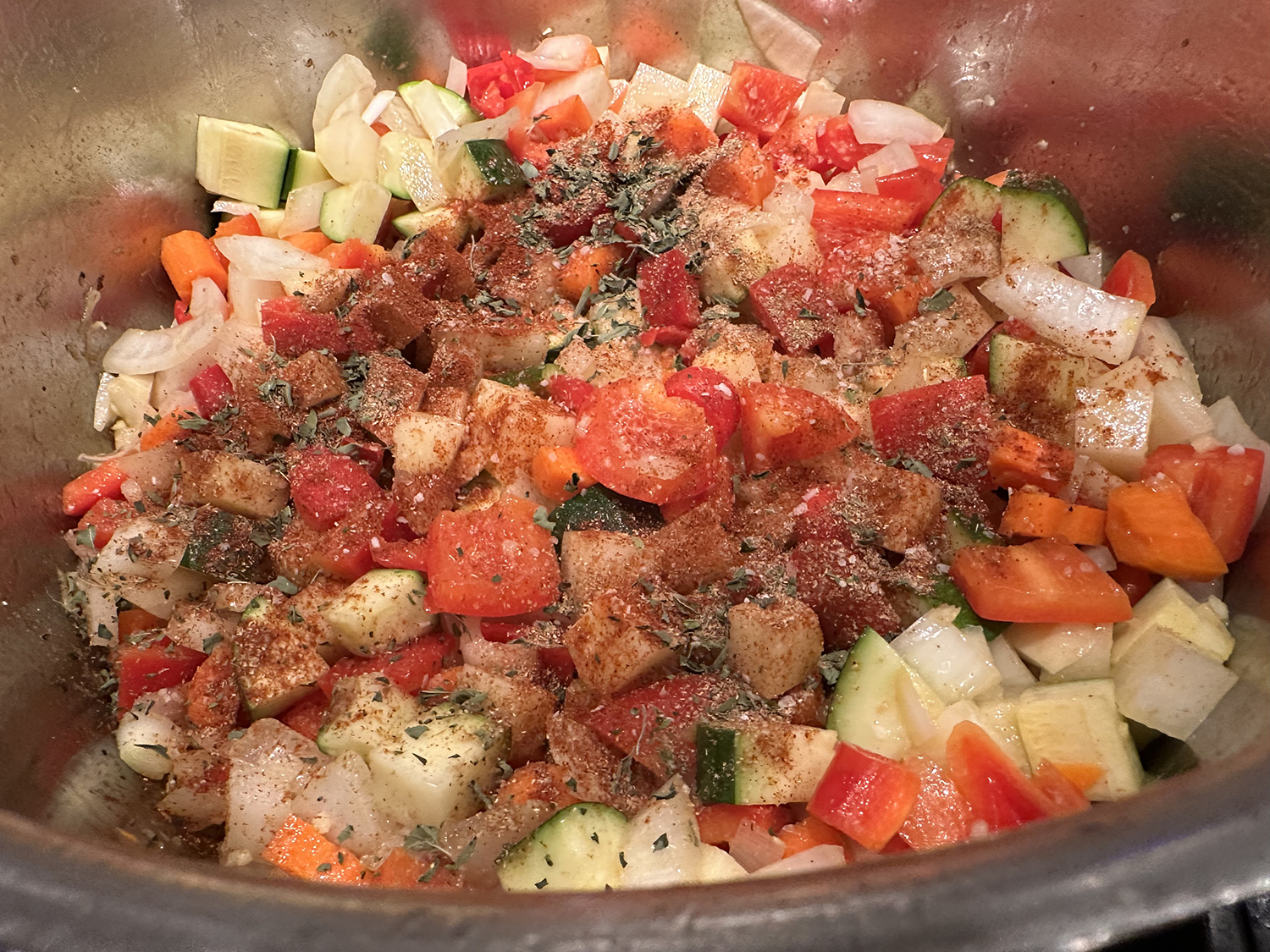
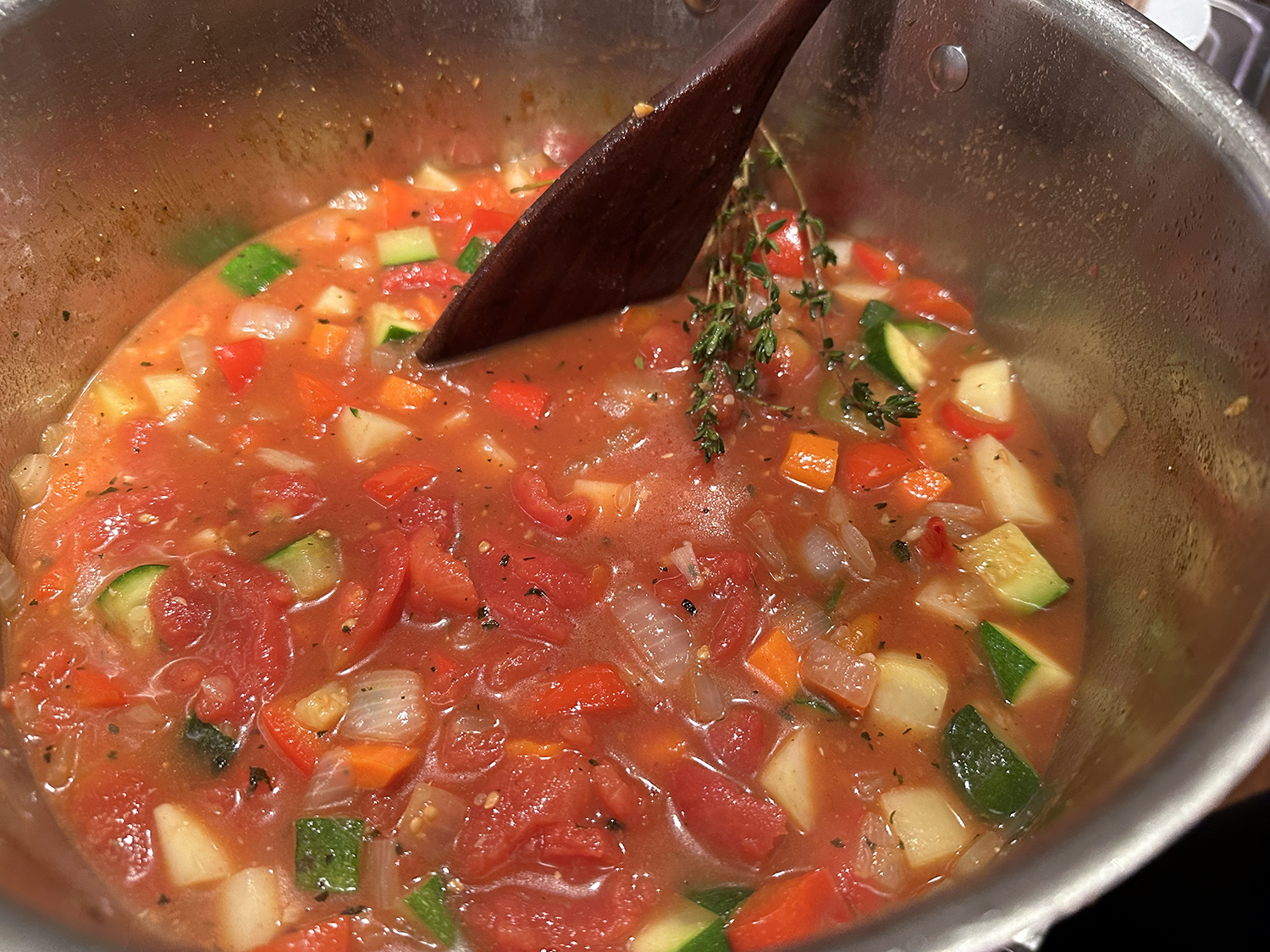
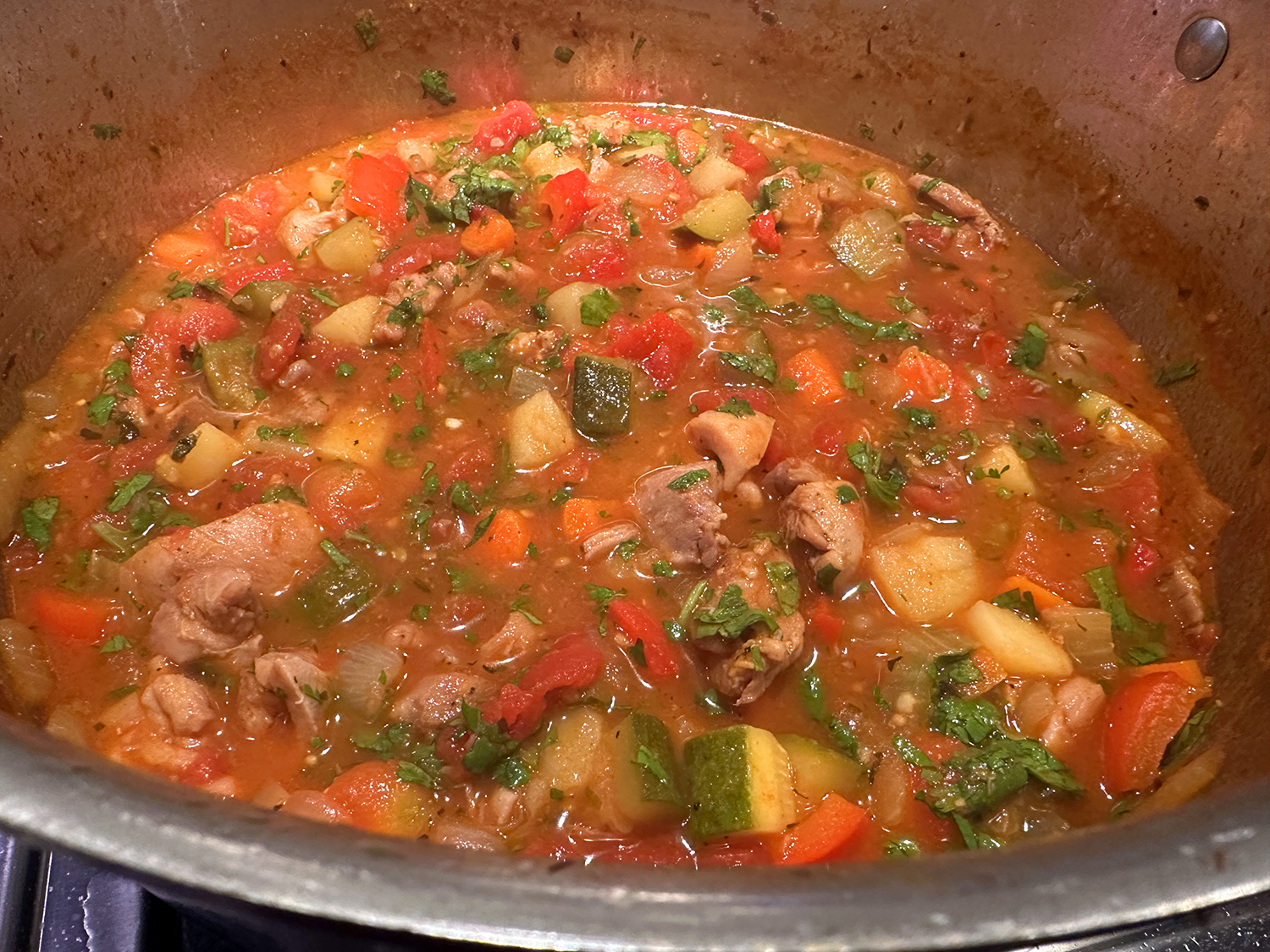
Saucy Pollo Guisado

Loaded with tomatoes and green olives, pollo guisado (Spanish for chicken stew) is a hearty, fall-off the bone braised chicken dish popular throughout Latin America and the Caribbean, and particularly in Puerto Rico.

Almost every version starts with sofrito, a fragrant mixture of bell peppers, onions, garlic, and cilantro, finely chopped or blended into a paste. This recipe makes extra sofrito, so you can freeze it to jump-start future soups, stews, and more.
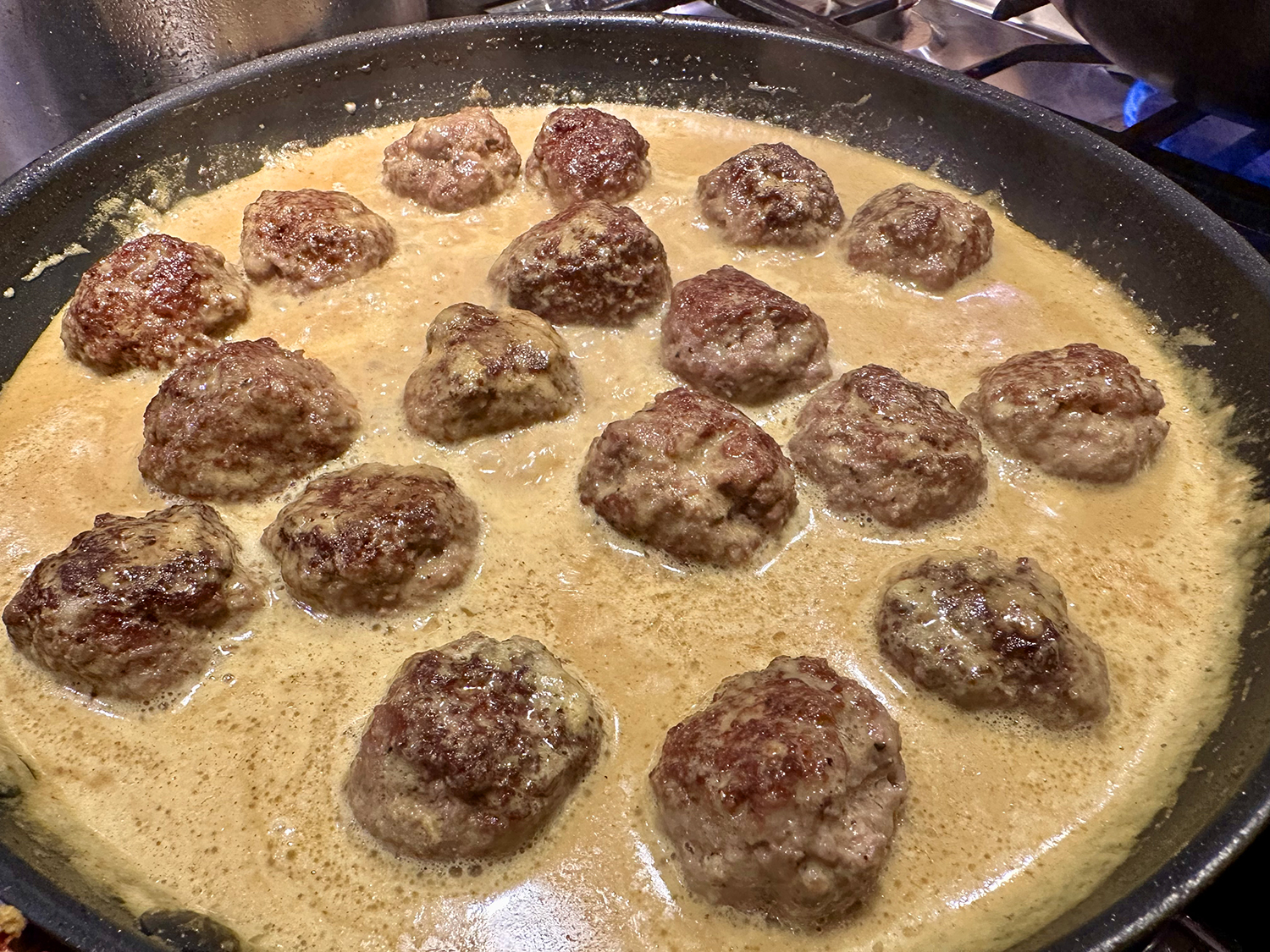
The other powerhouse in this pollo guisado recipe is adobo seasoning, any store-bought or hand-made-mix will work. For the chicken, use skin-on, bone-in chicken thighs, but you could also use drumsticks. Avoid boneless chicken and white meat (skinless chicken breasts just can’t compare to the depth and richness of dark meat).
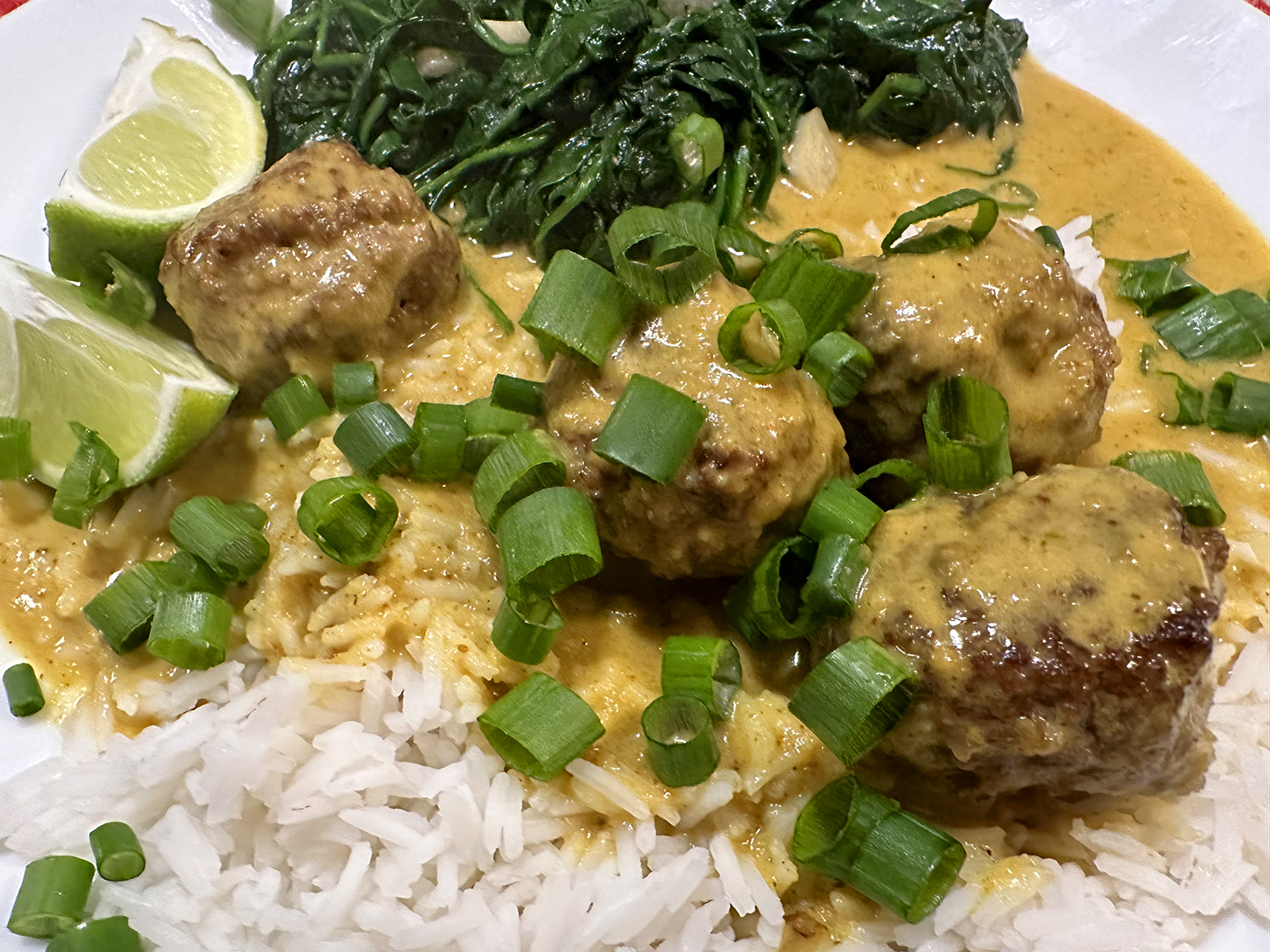
Often served with white rice or tostones (fried green plantains), pollo guisado tastes even better the next day. Garnish bowls with fresh cilantro and lime wedges.

Saucy Pollo Guisado

  • Servings: 4-6
  • Difficulty: easy
  • Print

Ingredients

SOFRITO

  • 1 medium green bell pepper, ribs and seeds removed, coarsely chopped
  • 1 medium red bell pepper, ribs and seeds removed, coarsely chopped
  • ½ small bunch cilantro, leaves with tender stems picked
  • 6 garlic cloves
  • 2 Tbsp. extra-virgin olive oil
  • 1 Tbsp. Diamond Crystal or 1¾ tsp. Morton kosher salt

STEW AND ASSEMBLY

  • 4 tsp. ground cumin
  • 1 Tbsp. powdered adobo seasoning
  • 1 tsp. ground turmeric
  • 1 tsp. paprika
  • 8 skin-on, bone-in chicken thighs (about 3 lb.)
  • 1 Tbsp. extra-virgin olive oil
  • 1 medium onion, finely chopped
  • 4 garlic cloves, finely chopped
  • 1 Tbsp. tomato paste
  • 1 8-oz. can tomato sauce
  • 2½ cups low-sodium chicken broth
  • 1 cup pitted manzanilla olives
  • Kosher salt
  • Steamed rice, cilantro leaves with tender stems, and lime wedges (for serving)

Directions

SOFRITO

  1. Pulse 1 medium green bell pepper, ribs and seeds removed, coarsely chopped, 1 medium red bell pepper, ribs and seeds removed, coarsely chopped, ½ small bunch cilantro, leaves with tender stems picked, 6 garlic cloves, 2 Tbsp. extra-virgin olive oil, and 1 Tbsp. Diamond Crystal or 1¾ tsp. Morton kosher salt in a food processor until a coarse purée forms. (Makes about 2¼ cups.)
    Do ahead: Sofrito can be made 3 days ahead. Transfer to an airtight container; cover and chill, or freeze up to 1 month.

STEW AND ASSEMBLY

  1. Whisk 4 tsp. ground cumin, 1 Tbsp. powdered adobo seasoning, 1 tsp. ground turmeric, and 1 tsp. paprika in a small bowl. Sprinkle half of spice mixture all over 8 skin-on, bone-in chicken thighs (about 3 lb.).
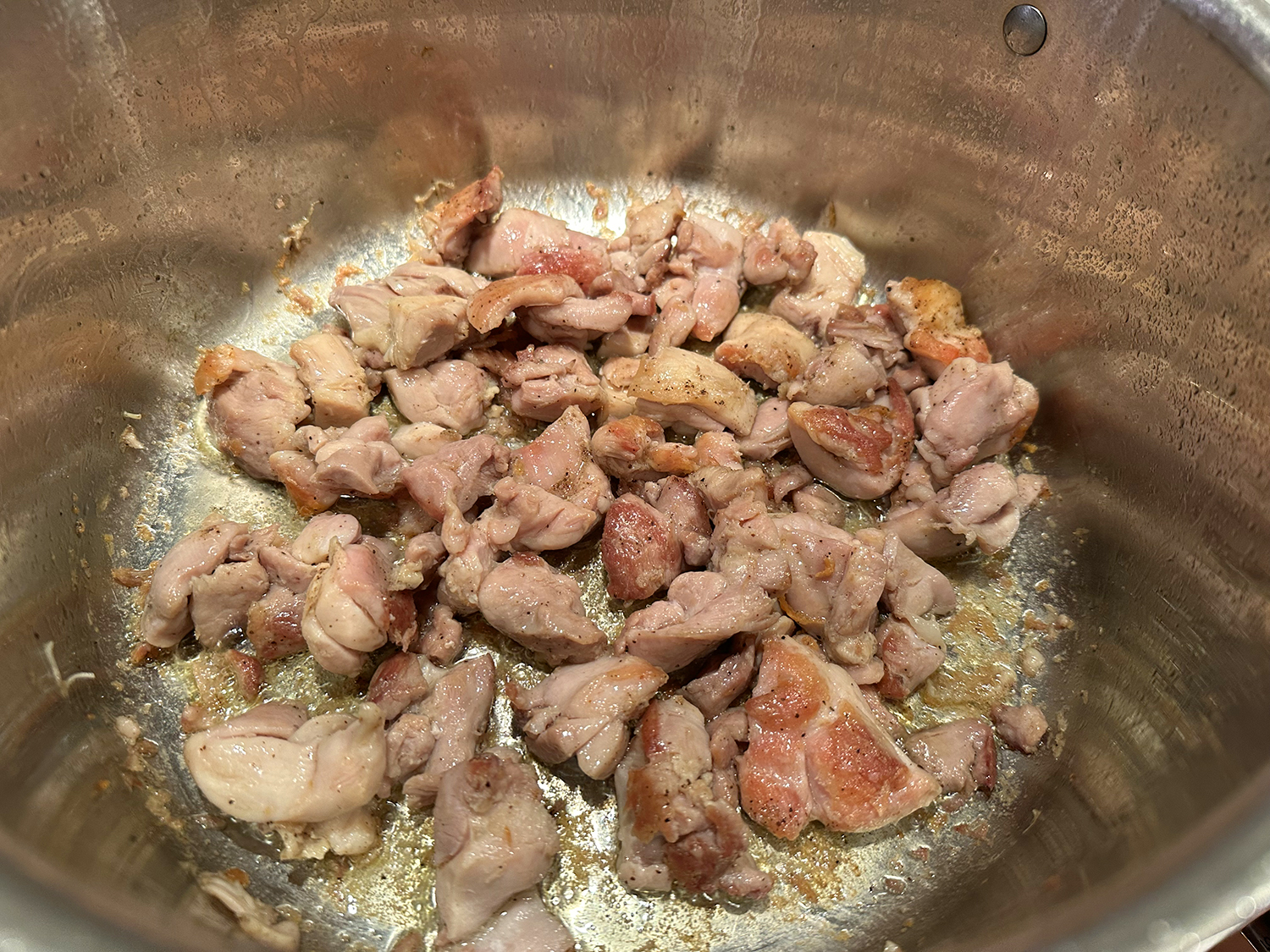
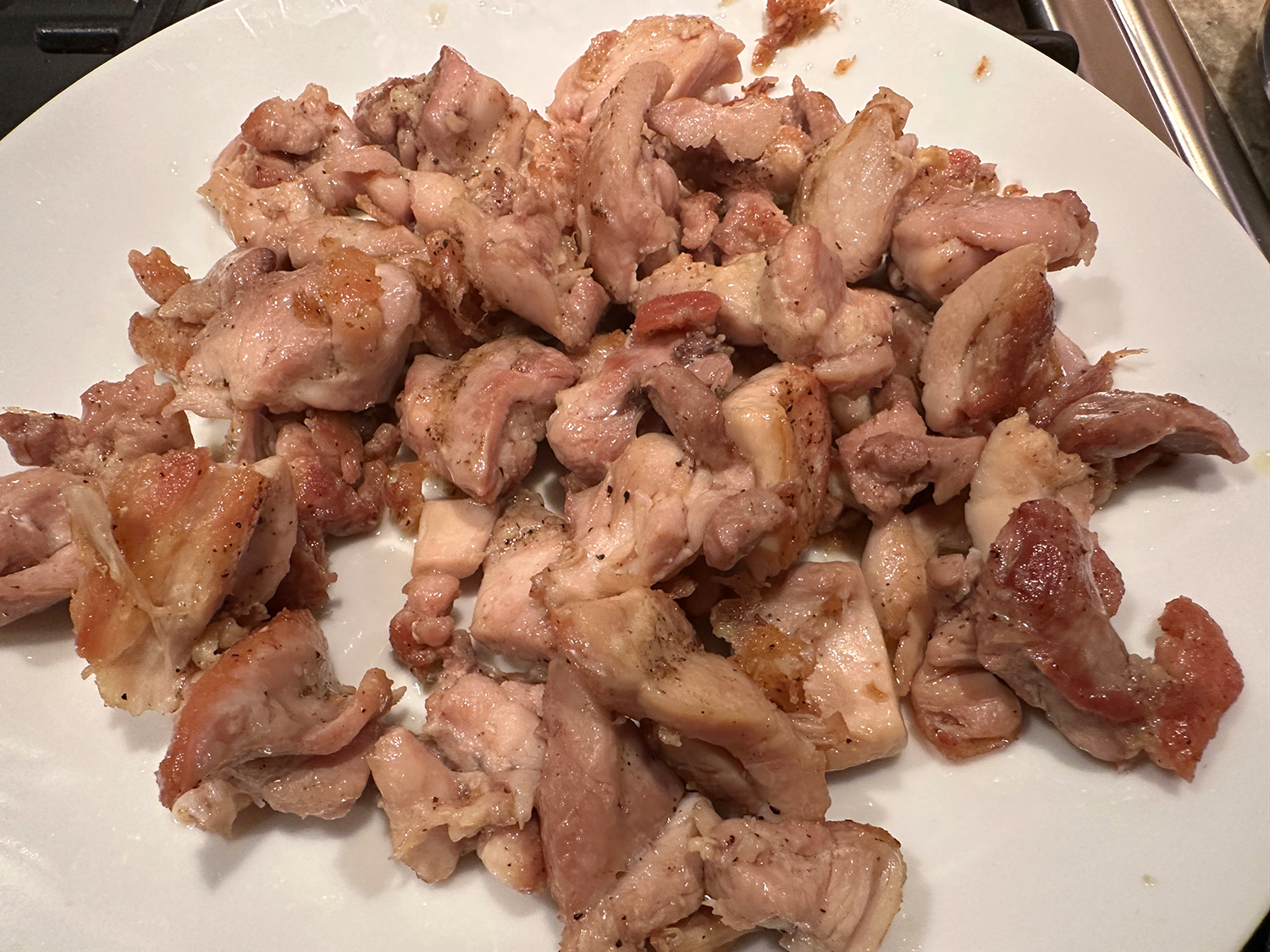
  2. Heat 1 Tbsp. extra-virgin olive oil in a large Dutch oven or other heavy pot over medium. Working in batches, arrange chicken, skin side down, in pot and cook, undisturbed, until skin is golden brown, 8–10 minutes. Turn over and cook until other side is browned, about 5 minutes. Transfer chicken to a plate.
  3. Add 1 medium onion, finely chopped, and 4 garlic cloves, finely chopped, to pot and cook, stirring often, until onion is softened and translucent, about 5 minutes. Add 1 Tbsp. tomato paste and cook, stirring, 1 minute. Stir in ½ cup sofrito and remaining spice mixture and cook, stirring, until fragrant and mixture is slightly darkened, about 3 minutes. Pour in one 8-oz. can tomato sauce and 2½ cups low-sodium chicken broth; stir to combine, scraping up any browned bits stuck to bottom of pot.
  4. Return chicken pieces to pot, arranging skin side up, and bring stew to a simmer. Cover with a lid and cook, adjusting heat as needed to maintain a simmer, until chicken is cooked through, 25–30 minutes.
  5. Uncover pot and stir in 1 cup pitted manzanilla olives. Simmer, stirring occasionally, until stew is slightly reduced, about 5 minutes. Remove from heat. Taste stew and season with kosher salt if needed.
  6. To serve, divide steamed rice among bowls and ladle stew over; top with cilantro leaves with tender stems. Serve with lime wedges.
    Do ahead: Stew (without cilantro) can be made 3 days ahead. Let cool; cover and chill. Add cilantro just before serving.

http://www.lynnandruss.com

Recipe by Jacqueline Woodson for Bon Appétit

Breakfast Casserole

What a wonderful breakfast/brunch item that will please up to 8 people. I got the recipe from a friend, who got it from her friend, who got it from who knows who? Doesn’t really matter the source, the thing is, you can customize it to suit your own preferences. For instance, if you are following a keto-friendly diet, skip the hash browns, but you might want to increase some of the other ingredients that go into the eggs. Instead of 1/4 cup of chopped onion, The Hubs added 3/4 cup of minced shallot.
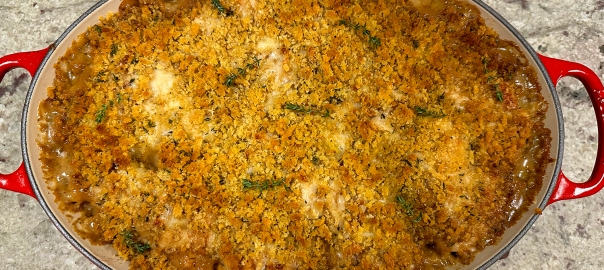
You can even assemble it the day before, just cover the uncooked dish with foil and refrigerate overnight, then bake it in the oven until cooked, about 45 minutes. Which was EGGSactly what we did, so the morning of the feast, we were basically prep-free!

Store any remaining casserole in tightly wrapped foil, and store in refrigerator for up yo 3 days.

Breakfast Casserole

  • Servings: 8-10
  • Difficulty: easy
  • Print

Ingredients

  • 20 oz. shredded hash browns, thawed
  • 1 lb. sausage cooked, crumbled and drained
  • 1/4 cup onion, finely diced
  • 1 red or green bell pepper, diced
  • 2 cups cheddar cheese, shredded
  • 8 eggs
  • 1 12 oz. can evaporated milk OR 1 1/3 cups milk
  • 1/2 tsp. Italian seasoning
  • 1/2 tsp. Kosher salt
  • 1/4 tsp. black pepper

Directions

  1. Preheat oven to 350°F.
  2. Grease a 9 x 13-inch baking dish.
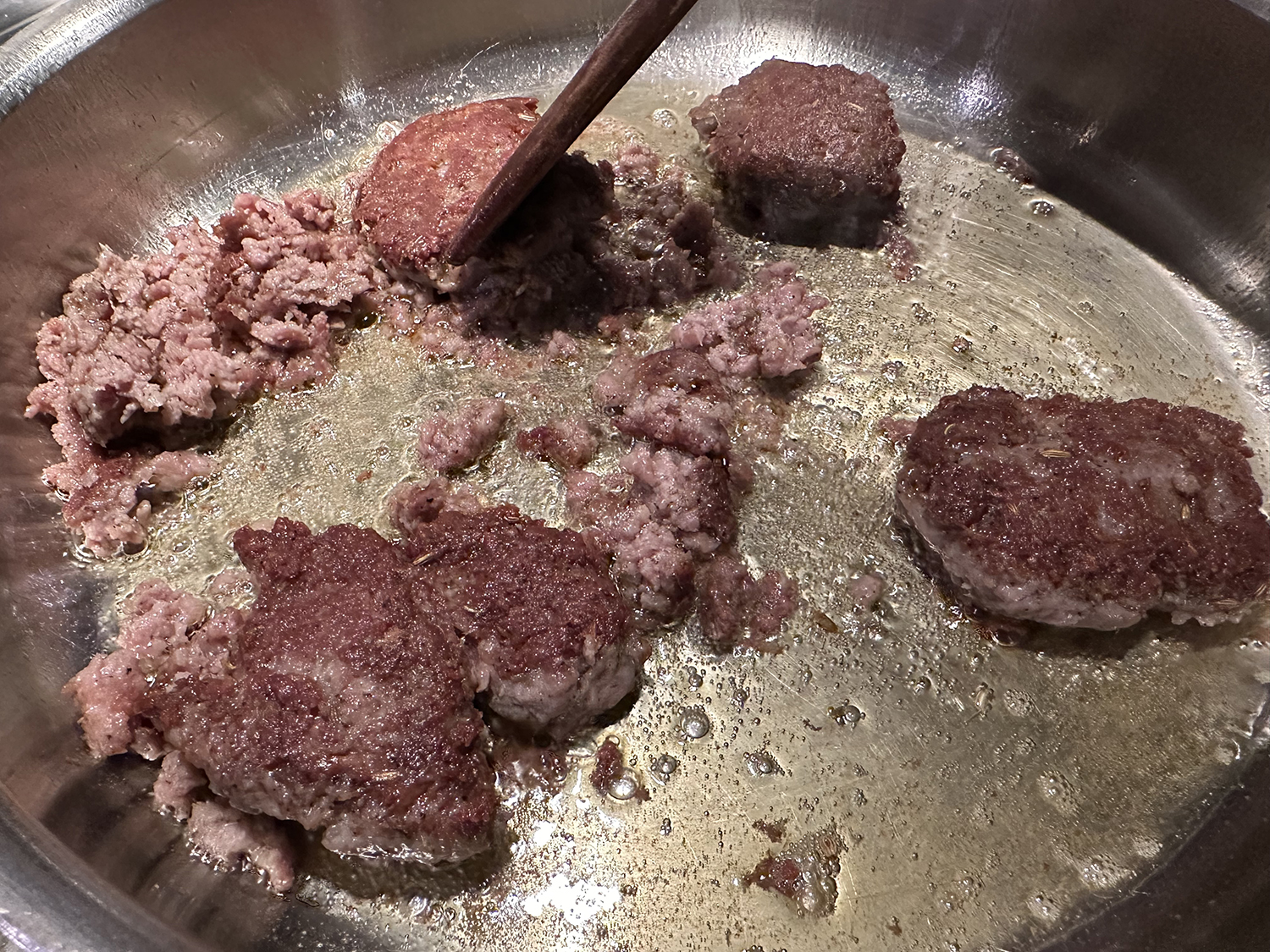
  3. Heat a large skillet over medium-high heat. Brown the sausage, breaking it up with a wooden spoon, until no pink remains. Drain the fat.
  4. In the prepared dish, add hash browns, sausage, onion, bell pepper, and a 1/2 cup cheese. Gently mix and spread evenly.
  5. In a large bowl, add eggs, evaporated milk, salt and pepper, and Italian seasoning. Whisk until combined.
  6. Pour the egg mixture over the pan ingredients, and sprinkle on the remaining cheese.
  7. Cover dish with foil, and refrigerate overnight, or bake immediately, uncovered for 45-55 minutes until cooked through.

http://www.lynnandruss.com

Salmon Traybake with Harissa-Roasted Pepper Sauce

The inspiration for this colorful traybake is Moroccan-style red chermoula: a bold, warmly spiced sauce, often served with fish. This weeknight-friendly version from Milk Street calls on smoky harissa, a North African chili and spice paste, plus sweet roasted peppers, earthy cumin, bright lemon juice and fresh garlic and parsley, all whirred together in the blender.

Harissa spiciness varies by brand, so a range is suggested. To make the most of the mixture, use it three ways: as a salmon marinade, a seasoning for roasted zucchini and as a sauce for the finished dish. Serve with couscous, rice or warmed flatbreads.

The original recipe called for 1 1/2 pounds of salmon, but we purchased a one-pound piece and cut it in half allowing for 2 servings. If using 1 1/2 pounds, cut the filet into 3 or 4 pieces, or buy them already cut down to 6 ounce servings.
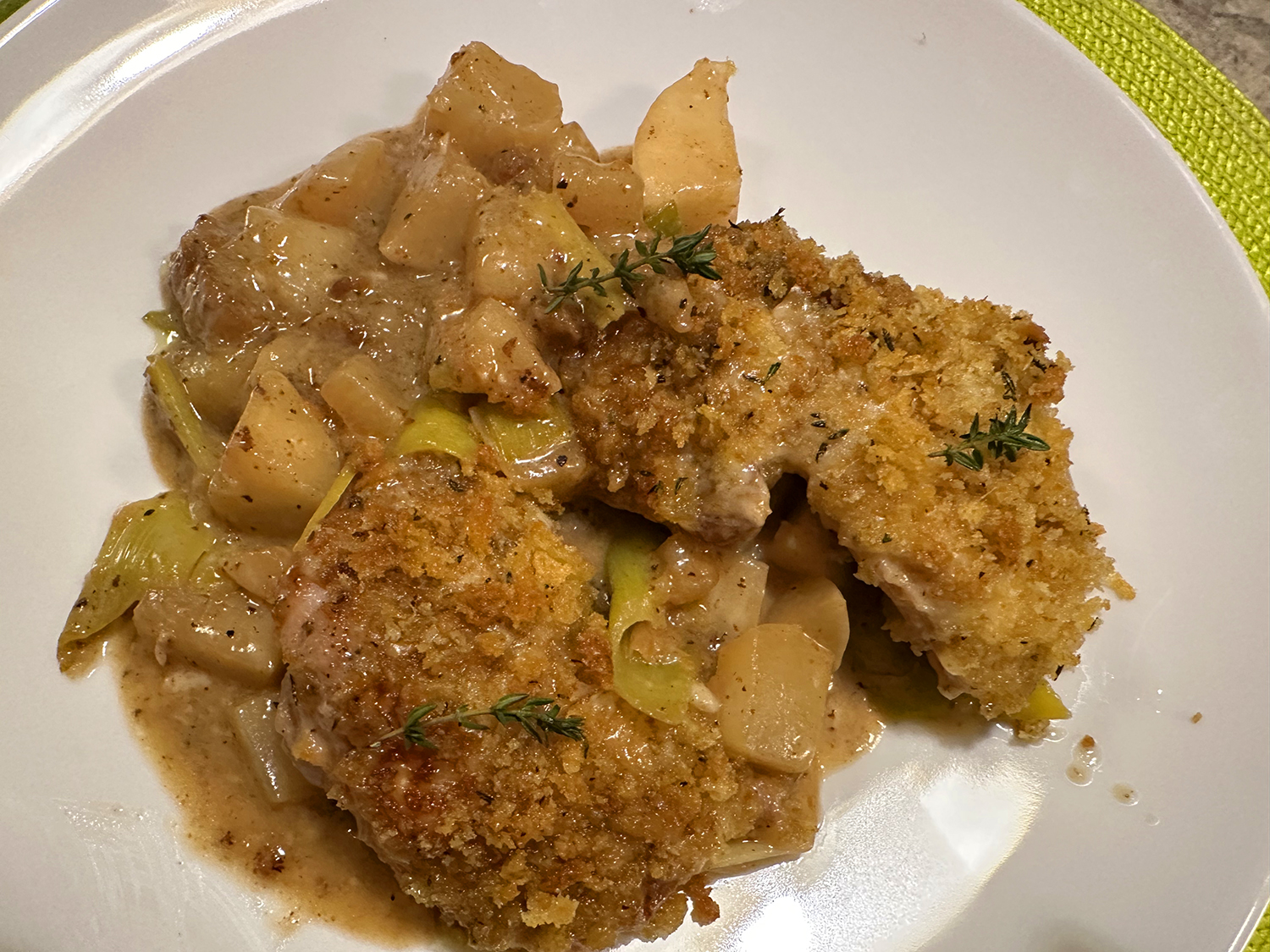
Don’t use large zucchini for this. They tend to contain many seeds and will turn soft and mushy with cooking. Instead, look for medium to small zucchini.

Salmon Traybake with Harissa-Roasted Pepper Sauce

  • Servings: 3-4
  • Difficulty: easy
  • Print

Ingredients

  • 1/2 cup drained roasted red peppers, chopped
  • 1/2 cup lightly packed fresh flat-leaf parsley, plus chopped parsley to serve
  • 1/4 cup extra-virgin olive oil
  • 2 Tbsp. lemon juice, plus lemon wedges to serve
  • 1-2 Tbsp. harissa paste
  • 1 medium garlic clove, smashed and peeled
  • 1/2 tsp. ground cumin
  • Kosher salt
  • 4 6-oz. center-cut salmon fillets, patted dry
  • 3 medium zucchini (about 1½ lbs. total), cut into ¼-inch cubes
  • 1 ripe medium tomato, cored, seeded and chopped
  • 1/2 cup pitted green olives, chopped

Directions

  1. Heat the oven to 425°F with a rack in the middle position. In a blender, combine the roasted peppers, parsley, oil, lemon juice, harissa, garlic, cumin and ½ teaspoon salt. Puree until smooth, about 30 seconds. Measure out 2 tablespoons, then spread it onto the flesh side of the salmon fillets.
  2. On a rimmed baking sheet, toss the zucchini with ¼ cup of the remaining puree; transfer the rest of the puree to a small bowl for serving. Roast until the zucchini is tender, 20 to 25 minutes, stirring halfway through. Remove the baking sheet from the oven and sprinkle the tomato and olives over the zucchini. Scrape up and stir the zucchini and push it to the edges.
  3. Place the salmon, skin side down, in the center of the baking sheet. Roast until the flesh flakes easily and the zucchini is lightly charred, and registers 135°F, about 10 to 14 minutes. Transfer to a platter and sprinkle with additional parsley. Serve with lemon wedges and the remaining sauce on the side.

http://www.lynnandruss.com

Recipe by Rose Hattabaugh for Milk Street

Fireside Cocktail

Let’s just say, our rendition was essentially a spicy Manhattan. With no high-end brandy or cognac, we substituted Bourbon. And instead of an apple slice, we used an orange peel. However you make it, this cocktail is perfect for a cool evening… by the fireplace perhaps?

According to America’s Test Kitchen, a Fireside is, when you get down to basics, a warmly spiced version of a brandy old-fashioned, a gentler version of the traditional whiskey-based cocktail. Intriguingly, the brandy old-fashioned is the unofficial cocktail of the states of Wisconsin and Minnesota, making those states the two top consumers of brandy in the nation.

To make this Fireside, first replace the bourbon with brandy (for a luxe version, you could even use cognac), which has a flavor profile featuring dried fruit and subtle warm spices. Next, add a conservative amount of Spiced Syrup, which is made with cinnamon, cloves, and allspice. These warm baking spices further emphasize the dried fruit flavors in the bourbon.

Citrus bitters provide the right amount of zingy brightness—think of it as not unlike the lemon juice that’s added to the very best spiced apple pie fillings. The optional Pumpkin Pie Spice Rim Sugar will further bump up the warmly spiced elements, plus add a little sweetness. 

Fireside Cocktail

  • Servings: 2
  • Difficulty: easy
  • Print

Ingredients

  • ¼ cup Pumpkin Pie Spice Rim Sugar (see below)
  • 2 oz. of top-shelf bourbon
  • 1 tsp. spiced syrup (see below)
  • ⅛ tsp. citrus bitters
  • orange peel slice

Directions

  1. Spread sugar, if using, into even layer on small saucer. Moisten about ½ inch of chilled old-fashioned glass rim by running orange wedge around outer edge; dry any excess juice with paper towel. Roll moistened rim in sugar to coat. Remove any excess sugar that falls into glass; set aside.
  2. Add brandy, spiced syrup, and bitters to mixing glass, then fill three-quarters full with ice. Stir until mixture is fully combined and well chilled, about 30 seconds. Fill prepared glass half-full with ice or add 1 large cube. Strain cocktail into glass. Garnish with apple slice and serve.

Spicy Syrup

  • ¾ cup sugar
  • 5 oz. water
  • 1 cinnamon stick
  • 8 allspice berries, lightly crushed
  • 4 whole cloves

Heat sugar, water, cinnamon stick, allspice berries, and cloves in small saucepan over medium heat, whisking often, until sugar has dissolved, about 5 minutes; do not boil. Let cool completely, about 30 minutes. Strain syrup through fine-mesh strainer into airtight container; discard solids.

  • ½ cup sugar
  • 2 tsp. ground cinnamon
  • 1 tsp. ground ginger
  • ½ tsp. ground nutmeg
  • ½ tsp. ground allspice

Whisk all ingredients together in bowl until combined.

http://www.lynnandruss.com

Recipe from America’s Test Kitchen

Italian Sausage and Lentils with Fennel

Our pantry is full of different grains and a variety of lentils, which are all part of a healthy diet. Lentils, like beans, soak up whatever flavor they are cooked with. Here, it is Italian chicken sausage and sweet fresh fennel with other aromatics like onions and garlic for a perfectly hearty lentil stew!

If you’re worried about the amount of fennel in the recipe, just know that the licorice-y taste of fresh fennel will mellow quite a bit once cooked, resulting in a slightly sweet flavor that is well balanced with the saltiness of the sausage.

Parboiling basically means partially cooked, so you’ll cook the lentils for about 10 minutes, they will start to become tender but will still have a firm bite (don’t worry, they will finish cooking later with the rest of the ingredients). Do NOT discard the lentil cooking water, you’ll need it for the stew.

The dish is easily customizable. Use whatever type of sausage you prefer and adjust the amount according to your preferences—we used a full pound of sausage. Add in more variety of veggies, such as mushroom and/or peas.

Italian Sausage and Lentils with Fennel

  • Servings: 4+
  • Difficulty: easy
  • Print

Ingredients

  • 1 cup green lentils, black lentils will work as well
  • Extra virgin olive oil
  • 8 oz. chicken or pork sausage, casings removed (about 2 to 3 sausages)
  • 1 fennel bulb large or 2 small, thinly sliced
  • 1 to 2 large cloves garlic, grated
  • 1 yellow onion, finely chopped
  • 1 carrot, grated
  • ½ tsp. fennel seeds
  • ½ cup chicken broth
  • 2 Tbsp. red wine vinegar

Directions

  1. In a saucepan, combine the lentils with 3 cups of water. Bring to a boil, then lower the heat and cover part-way to simmer for about 10 minutes (the lentils should be cooked just part-way through (there should be some liquid in the pan still).
  2. In a large 12″ skillet, heat 1 to 2 tablespoons of extra virgin olive oil. Add the sausage and cook over medium-high heat, tossing regularly and breaking the sausage up with a wooden spoon, until fully cooked and browned.
  3. Push the sausage to one side of the skillet and add the fennel, garlic, onion, carrots, and fennel seed. Add broth and red wine vinegar.
    Alternatively, remove the sausage from the pan to a plate and cover, then add the fennel, garlic, onion, carrots, and fennel seed. Add broth and red wine vinegar. Cook until the fennel is soft, about 8-10 minutes.
  4. Add the par-boiled lentils and the sausage (If they were removed) to the fennel skillet. Bring to a boil, then lower the heat and let simmer, partially covered, for 15 to 20 minutes.
  5. Taste and adjust seasoning. To serve, drizzle a bit of extra virgin olive oil on top. Serve immediately with your favorite crusty bread.

http://www.lynnandruss.com

Recipe by Suzy Karadsheh

Mayo-Roasted Thanksgiving Turkey With Gravy

A turkey dinner with all, or some, of the trimmings is not just for Thanksgiving you know. Growing up, our mother made a turkey dinner several times a year, usually, Christmas, New Years and/or Easter. Our family of seven all loved it, and it is not that complicated. Plus, we loved the leftovers.

Thanksgiving dinner is one of those meals that is revered in our house to this day. There are certain staples that are a must such as, stuffing, mashed potatoes and gravy, cranberry sauce, and of course the star of the show, Mr. Tom Turkey. But we do not hesitate to try out different recipes concerning these staples. For instance, this year we cooked a Mayo-Roasted Thanksgiving Turkey With Gravy recipe from J. Kenji Lopez-Alt.
Some recipes for mayo-roasted turkey promise extra-juicy results with minimal effort. This one does no such thing. The mayonnaise won’t help the turkey stay juicy: Only salting and resting (a light curing process known colloquially as dry-brining) and carefully monitoring its internal temperature as it roasts will. The mayonnaise will, however, produce a turkey with glistening, burnished, golden-brown skin evenly flavored with herbs, no basting required. (Perfect for a photo op!)

The mayo’s viscosity helps it stay in place as it roasts, while the extra protein from egg aids in browning. This recipe will make a little more mayonnaise than you’ll need. Use the excess for leftovers sandwiches, or toss it with roughly chopped vegetables (carrots, broccoli, brussels sprouts, zucchini or squash) before roasting at high heat for 10 to 15 minutes.

To the turkey ingredients we added bay leaves and fresh thyme. These herbs were placed on top of the cubed celery, onion and carrots, with the turkey placed ontop of it all to cook in the sheet pan.

If spatchcocking intimidates, you can cook the turkey whole. Place a baking stone or steel directly on an oven rack set in the lowest position when heating your oven in Step 4. (Let it preheat for at least 45 minutes.) Place the whole turkey, breast-side up on the rimmed baking sheet. Roast as directed in Step 6 for 30 minutes, then reduce heat to 350 degrees, and continue roasting, tenting with aluminum foil if the skin starts brown too quickly, until the breast meat registers 150 degrees at its coolest point and the thigh and leg meat register at least 165 degrees at their coolest point, another 80 to 100 minutes. Remove from oven, transfer turkey to a cutting board as soon as you can handle it, then continue recipe as directed from Step 7. You can make the herb mayo from scratch, if you like. In a tall container just wide enough to fit the head of a hand blender, combine 2 teaspoons Dijon mustard, 3 medium garlic cloves, 1 whole egg, and the zest and juice of 1 lemon. Top with 1 cup neutral oil, such as vegetable, light olive oil or canola, so that the oil forms a distinct layer. Place the head of a hand blender firmly at the bottom of the container. (The garlic cloves should be entirely within the business-end of the blender.) Turn on the blender and, over the course of 15 seconds, slowly pull it up through the oil. A thick, stable mayonnaise should form. Remove the blender, shaking off most of the excess mayonnaise back into the jar. Proceed with the recipe.
Mayo-Roasted Thanksgiving Turkey With Gravy

  • Servings: 10-14
  • Difficulty: moderate
  • Print

Ingredients

For the Turkey:

  • 1 whole turkey, (10- to 14-lb.) backbone removed, neck, giblets and backbone reserved for the gravy (see Notes)
  • 1/2 cup kosher salt, or 6 tablespoons coarse salt
  • 2 celery ribs, diced
  • 1 large onion, diced
  • 1 large carrot, diced
  • 3 bay leaves
  • 6-8 sprigs of fresh thyme

For the Herb Mayo:

  • 1 1/2 cups mayonnaise
  • 1 cup loosely packed fresh parsley leaves, stems reserved
  • 1/2 cup loosely packed fresh sage leaves, stems reserved
  • 2 Tbsp. fresh thyme or oregano leaves, stems reserved
  • 2 scallions, roughly chopped
  • 1 lemon, zested
  • Kosher salt and freshly ground black pepper

For the Gravy:

  • 2 tsp. neutral oil, such as vegetable, light olive oil or canola
  • 2 celery ribs, roughly chopped
  • 1 large onion, diced
  • 1 large carrot, roughly chopped
  • Reserved backbone, and any neck or giblets from the turkey, roughly chopped
  • 1 1/2 quarts homemade chicken or turkey stock
  • Reserved herb stems from the Herb Mayo
  • 2 bay leaves
  • 1/4 cup all-purpose flour
  • 4 Tbsp. unsalted butter
  • 1 Tbsp. soy sauce

Directions

  1. Dry-brine the turkey: Pat the turkey dry with paper towels. Carefully loosen the skin from the breast of the turkey — going in through the neck may be easier here — until you can slide your hand between the skin and the meat. Season each turkey breast with 1 teaspoon salt, spreading it as evenly as possible with your hands. Sprinkle the remaining salt evenly over every surface of the turkey. Place the turkey skin-side up on a rimmed sheet pan, and refrigerate, uncovered, for 12 to 24 hours.
  2. While the turkey dry-brines, make the herb mayo: In a tall container just wide enough to fit the head of a hand blender (or using a regular blender or food processor), combine the mayonnaise with the parsley, sage, thyme, or oregano, scallions, lemon zest, and 1 tablespoon water. Season generously with salt and pepper. Use the hand blender to blend until it all forms a relatively smooth, pale-green sauce. Transfer to a sealed container until ready to use. You should have about 1¾ cups of herb mayo. (You can make the mayo in advance for up to a week and keep it in the fridge.)
  3. Roast the turkey: Take the turkey out of the refrigerator to let it rest as the oven heats. Adjust the oven rack to a lower-middle position and heat the oven to 425 degrees for a 10- to 12-pound bird or 400 degrees for a 12- to 14-pound bird. Line a sheet pan with aluminum foil. Scatter the diced celery, onion, and carrot over it. Place a cooling rack directly on top of the vegetables, then place the turkey on top, skin-side down.
  4. With your hands, slather ½ cup of the herb-mayo mixture over the exposed side of the turkey, making sure to lightly coat every surface. Flip the turkey skin-side up. Spread the legs out to the sides (they should remain skin-side up) and tuck the wing tips behind the breast. With your hands, spread a couple of tablespoons of the herb mayo between the skin and meat of the breast. Generously slather the rest of the turkey with the herb mayo, getting it into every crack and crevice. (Reserve any remaining herb mayo for your day-after-Thanksgiving sandwiches.)
  5. Transfer the turkey to the oven and roast until the breast meat registers 150 degrees at its coolest point (typically the deepest point of the breast next to the breastbone) and the thigh and leg meat register at least 165 degrees at their coolest point (typically the center of the joint between the drumstick and thigh or thigh and hip), 80 to 90 minutes, rotating halfway through. (You may want to start checking the turkey’s internal temperature after about 1 hour.) If any of the skin starts to darken too much during roasting, tent darker areas loosely with aluminum foil. Remove from oven, transfer to a cutting board, and let it rest.
  6. While the turkey cooks, make the gravy: Heat the oil in a large saucepan over high until lightly smoking. Add the celery, onion, carrot, and turkey parts, and cook, stirring occasionally, until lightly browned, about 15 minutes. Add the stock, herb stems and bay leaves. Bring to a simmer and cook gently until reduced by about half, or until the turkey is done.
  7. After removing the turkey from the oven, strain the stock mixture through a fine-mesh strainer into a large bowl. Tilt and strain any collected liquids from the turkey-roasting tray into the same bowl. Discard the vegetables at the bottom of the tray. Skim off and discard most of the excess fat from the liquid.
  8. Heat the flour and butter in a medium saucepan over medium, stirring constantly with a whisk until the mixture is golden brown. Ladle the stock mixture into the saucepan, about a 1/2 cup at a time, whisking until smooth after each addition. Once all the stock is added, bring the gravy to a simmer until your desired consistency, stir in the soy sauce, and season to taste with salt and pepper.
  9. Carve and serve the turkey with the gravy.

http://www.lynnandruss.com

Slightly altered recipe by J. Kenji Lopez-Alt for NYTimes Cooking
Chili-Spiced Chicken Thighs and Potatoes

Chicken thighs have plenty of flavorful juices and fat, but they don’t release them until the meat is almost done, which is far too late to be helpful in roasting your potatoes. To better utilize the fat from the chicken, trim the thighs well and roast the trim on its own to render its fat.

Meanwhile, slash the flesh side of the thighs and cover them with a simple spice mix, taking care to get the mixture deep into the slashes. To ensure that the potatoes absorb all the savory juices thrown off by the roasting chicken thighs, parboil the spuds with baking soda. Its alkalinity quickly breaks down the pectin in the exteriors.

After drying the potatoes briefly, stir them vigorously with the fat rendered from the chicken trim and some kosher salt. The salt roughed up the exteriors, creating plenty of entry points for the flavorful chicken juices to suffuse the spuds as they roasted. Starting the potatoes lower in the oven provides plenty of bottom heat to jump-start browning. After adding the chicken, move the sheet up in the oven where the plentiful top heat ensures that the chicken skin becomes crisp. Sliced scallion and a spritz of citrus provides fresh flavor that complements the richness of the potatoes and chicken.

Chicken thighs are very forgiving in terms of doneness, so don’t worry if yours are different sizes. Use Yukon Gold potatoes here, but you can substitute russets if that’s what you have on hand.

Chili-Spiced Chicken Thighs and Potatoes

  • Servings: 4-6
  • Difficulty: easy
  • Print

Ingredients

  • 3½ tsp. kosher salt, divided
  • 1 tablespoon chili powder
  • 1 tsp. paprika
  • ½ tsp. pepper
  • ½ tsp. garlic powder
  • ¼ tsp. cayenne pepper
  • 3 lbs. bone-in chicken thighs
  • 3 lbs. Yukon gold potatoes, peeled and cut into 1-inch pieces
  • ½ tsp. baking soda
  • 1 scallion, sliced thin on bias
  • lime wedges

Directions

  1. Adjust oven racks to lowest and top positions and heat oven to 450 degrees. Combine 1½ teaspoons salt, chili powder, paprika, pepper, garlic powder, and cayenne in small bowl. Bring 2 quarts water to boil in Dutch oven.
  2. Place 1 thigh skin side down on cutting board. Cut away any pockets of fat and any skin that extends beyond meat and reserve trim. Make three ½-inch-deep slits in flesh parallel to bone. Turn skin side up. Repeat with remaining thighs. Using tip of paring knife, poke skin of each thigh 8 to 10 times. Sprinkle 1½ teaspoons spice mixture evenly over skin of thighs. Turn thighs over and sprinkle remaining spice mixture over flesh side. Rub mixture into slits.
  3. Place 1 thigh skin side down on cutting board. Cut away any pockets of fat and any skin that extends beyond meat and reserve trim. Make three ½-inch-deep slits in flesh parallel to bone. Turn skin side up. Repeat with remaining thighs. Using tip of paring knife, poke skin of each thigh 8 to 10 times. Sprinkle 1½ teaspoons spice mixture evenly over skin of thighs. Turn thighs over and sprinkle remaining spice mixture over flesh side. Rub mixture into slits.
  4. Scatter trim over surface of rimmed baking sheet. Roast on lower rack until trim is mostly crisped and fat is rendered, 8 to 10 minutes. Discard trim and leave fat in baking sheet. While trim is rendering, add potatoes and baking soda to boiling water and return to boil. Boil for 2 minutes and drain well. Return potatoes to Dutch oven and place over low heat. Cook, shaking pot occasionally, until any surface moisture has evaporated, about 2 minutes. Remove from heat.
  5. Add rendered fat and remaining 2 teaspoons salt to potatoes and stir with rubber spatula until potatoes are coated with starchy paste, about 30 seconds. Transfer potatoes to now-empty sheet pan and spread into even layer. Roast on lower rack until undersides of potatoes are brown and crisp, about 15 minutes.
  6. Using thin metal spatula, flip potatoes. Push potatoes aside to clear 1 space for each thigh. Place thighs skin side up in cleared spaces. Roast on upper rack until chicken is browned and crisp and largest thigh registers at least 185 degrees, 25 to 30 minutes, rotating pan halfway through roasting.
  7. Transfer thighs to platter to rest. Stir potatoes to coat with any remaining liquid and spread over surface of baking sheet. Return pan to upper rack and roast until potatoes are mostly dry, about 5 minutes. Transfer to platter with chicken and sprinkle potatoes with scallion. Serve, passing lime wedges separately.

http://www.lynnandruss.com

Recipe by Andrea Geary for America’s Test Kitchen
Santa’s Christmas Trash Cookies

Let’s talk trash. Not very appealing subject matter for a food blog is it? But here, Santa’s trash is another man’s treasure. More specifically, yours.

With the Winter Holidays fast approaching, I needed to start compiling the annual homemade cookie list. I like to include not only the tried-and-true favorites, but to introduce a new recipe or three. I asked the (now adult) kids what their “must haves” were, and one of them requested these Santa’s Christmas Trash Cookies.
Now the name is certainly NOT the most appetizing, but since it was requested, I felt they should definitely be part of the mix. And they seemed to have a quick turn-around time compared to my decorated sugar cookies, which literally take days.

Verdict? Trash never tasted so good!  A sweet and salty cookie recipe is a perfect match and always has you coming back for more. Imagine biting into soft, chewy cookies smooshed with loads of mini white and chocolate chips, Reese cups, M&Ms, pretzels, peanuts, sea salt and festive sprinkles! 

Seriously, you get the best of both worlds with epic sweet and salty yumminess in these holiday ‘junk food’ cookies! Be forewarned, they are addictive…

NOTES: Can add more potato or pretzels (up to ⅔ cup of each, if you wish for more saltiness). Feel free to modify any candies with whatever candies you prefer.

Santa's Christmas Trash Cookies

  • Servings: 16 cookies
  • Difficulty: easy
  • Print

Ingredients

  • 14 Tbsp. unsalted butter, room temperature
  • ½ cup granulated sugar
  • ½ cup brown sugar
  • 1 large egg
  • 1 tsp. vanilla
  • 2 ¼ cups all-purpose flour
  • 1 tsp. baking soda make sure it’s not expired
  • ¼ tsp. salt
  • ⅓ cup crushed potato chips; or cocktail peanuts, chopped
  • ⅓ cup crushed pretzels
  • ½ cup mini white chocolate Reese cups
  • ½ cup mini chocolate reese cups
  • ⅓ cup milk or semi-sweet chocolate chips
  • ½ cup M&M’s, red and green
  • ⅓ cup white chocolate chips
  • ¼ cup sprinkles of choice
  • Sprinkles of flaky sea salt for tops of cookies

Directions

  1. Preheat oven to 350º and line two baking sheets with parchment.
  2. In a medium bowl, whisk together flour, baking soda, and salt until combined, set aside.
  3. Using a mixer on, in a large bowl cream together butter and sugars for 1-3 minutes on medium speed until light and fluffy. Once the mixture turns pale yellow in color and has a light and fluffy texture, you’re done. Do not over-cream mixture.
  4. Beat in egg and vanilla until combined.
  5. Add dry ingredients to wet and mix until together until combined. (Dough will be very thick.)
  6. Add in potato chips or peanuts, pretzels, M&M’s, Reese cups, chocolate chips, and sprinkles and fold in with spatula. (Using mixer would crush them.)
  7. Using a medium sized scoop, scoop onto parchment paper and slightly press them down onto baking sheets and sprinkle with sea salt. Add additional pretzels, chips, candies and sprinkles to tops of cookies for decorative touches. If you want the cookies thick, don’t press down as much, you can control how thick you want them. Sprinkle with some sea salt if you wish.Can also chill dough until ready to use, scoop the dough balls and store them in fridge until ready to bake.
  8. Bake until edges are just starting to get golden, 7 to 8 minutes.
  9. Remove from oven and let cool 2 to 3 minutes, then transfer to cooling rack to cool completely.

http://www.lynnandruss.com

Adapted from a recipe by the bakingchocolatess.com

Orzotto: Two-Cheese Orzo with Cauliflower

A very flavorful side dish that’s not only visually enticing, this Two-Cheese Orzo with Cauliflower tastes fantastic too!

This “orzotto” has a creaminess similar to classic risotto thanks to the starchiness of the orzo pasta, but it’s easier and faster to prepare. A combination of melty cheddar cheese and nutty Parmesan lends richness, while cauliflower brings subtly sweet notes and makes the “orzotto” more substantial.

Chicken broth can be used in place of the vegetable broth (but then it’s no longer vegetarian). Herbs other than parsley work nicely, too—chives or dill are particularly good. This is a terrific side to a simple roasted chicken, or served as a side to steak, or as in our case, lamb loin chops; and it’s also hearty enough to be a meat-free main.

Don’t be shy about stirring after adding the broth. Frequent and brisk stirring helps create an especially creamy consistency. Be sure to also scrape along the bottom of the pot to ensure the mixture isn’t sticking to the bottom.

Ingredients

Two-Cheese Orzo with Cauliflower

  • Servings: 4-6
  • Difficulty: easy
  • Print

  • 2 Tbsp. extra-virgin olive oil
  • 1 medium shallot, minced
  • 2 medium garlic cloves, thinly sliced
  • Kosher salt and ground black pepper
  • 1 2-lb. head cauliflower, trimmed and cut into ½-inch pieces
  • 8 oz. (1¼ cups) orzo
  • 3 3/4 cups low-sodium vegetable broth, divided, plus more if needed
  • 2 oz. sharp cheddar cheese, shredded (1 cup)
  • 2 tsp. grated lemon zest, plus 2 Tbsp. lemon juice
  • 1 oz. Parmesan cheese, finely grated (½ cup), plus more to serve
  • 1/2 cup lightly packed fresh flat-leaf parsley, roughly chopped

Directions

  1. In a large Dutch oven over medium, heat the oil until shimmering. Add the shallot, garlic and ½ teaspoon salt; cook, stirring, until starting to brown, about 1 minute.
  2. Add the cauliflower and cook, stirring, until lightly browned in spots, 4 to 5 minutes.
  3. Add the orzo and cook, stirring, until beginning to brown, about 2 minutes.
  4. Stir in 2 cups of the broth and ½ teaspoon pepper; bring to a simmer over medium-high. Cook, uncovered and stirring, until the liquid is absorbed, about 5 minutes.
  5. Add 1½ cups of the remaining broth and simmer, stirring, until the liquid is again absorbed, the orzo is al dente and the cauliflower is tender-crisp, about 5 minutes.
  6. Stir in the remaining ¼ cup broth. Add the cheddar; stir until melted. Remove the pot from the heat. If the “orzotto” is dry and thick, stir in additional broth a few tablespoons at a time to reach the desired consistency.
  7. Stir in the lemon zest and juice, Parmesan and half of the parsley. Taste and season with salt and pepper. Serve sprinkled with the remaining parsley and additional Parmesan.

http://www.lynnandruss.com

Recipe by Rose Hattabaugh for Milk Street

Buttermilk-Brined Roast Chicken

The BEST roast chicken you’ve ever had, using only 3 ingredients? Well, here it is folks. The Hubs commented at least 3 times that this is his latest, greatest roast chicken. And we’ve made many a roasted chicken in our time. Not in the original recipe, at the last minute we decided to stuff the cavity with a half lemon, cut in two pieces, and several sprigs of thyme.

This recipe, adapted from Samin Nosrat’s “Salt Fat Acid Heat,” is inspired by the Southern grandma method of marinating chicken overnight in buttermilk before frying it. You’re roasting here, but the buttermilk and salt still work like a brine, tenderizing the meat on multiple levels to yield an unbelievably juicy chicken.

The pan drippings were bursting with flavor and would make a fantastic gravy, which we fully intend on doing next time. As a side dish, we paired our chicken with Cheesy Hasselback Potato Gratin.

As an added bonus, the sugars in the buttermilk will caramelize, contributing to an exquisitely browned skin. Be sure to leave 24 hours for marinating the chicken. While the beauty of roast chicken is that you can serve it anytime, anywhere, try serving it alongside panzanella, which plays the role of starch, salad and sauce.

Buttermilk-Brined Roast Chicken

  • Servings: 4
  • Difficulty: easy
  • Print

Ingredients

  • 1 chicken, 3½ to 4 lbs.
  • Kosher salt or fine sea salt
  • 2 cups buttermilk
  • Several sprigs of fresh thyme, optional
  • Half of a lemon, cut into two pieces, optional

Directions

  1. The day before you want to cook the chicken, remove the wingtips by cutting through the first wing joint with poultry shears or a sharp knife. Reserve for stock. Season chicken generously with salt and let it sit for 30 minutes.
  2. Stir 2 tablespoons kosher salt or 4 teaspoons fine sea salt into the buttermilk to dissolve. Place the chicken in a gallon-size resealable plastic bag and pour in the buttermilk. (If the chicken won’t fit in a gallon-size bag, double up 2 plastic produce bags to prevent leaks and tie the bag with twine.)
  3. Seal the bag, squish the buttermilk all around the chicken, place on a rimmed plate, and refrigerate for 12 to 24 hours. If you’re so inclined, you can turn the bag periodically so every part of the chicken gets marinated, but that’s not essential.
  4. Pull the chicken from the fridge an hour before you plan to cook it. Heat the oven to 425 degrees with a rack set in the center position.
  5. Remove the chicken from the plastic bag and scrape off as much buttermilk as you can without being obsessive. Stuff the cavity with lemon and thyme, if desired. Tightly tie together the legs with a piece of butcher’s twine. Place the chicken in a 10-inch cast-iron skillet or a shallow roasting pan.
  6. Slide the pan all the way to the back of the oven on the center rack. Rotate the pan so that the legs are pointing toward the rear left corner and the breast is pointing toward the center of the oven. (The back corners tend to be the hottest spots in the oven, so this orientation protects the breast from overcooking before the legs are done.) Pretty quickly you should hear the chicken sizzling.
  7. After about 20 minutes, when the chicken starts to brown, reduce the heat to 400 degrees and continue roasting for 10 minutes.
  8. Move the pan so the legs are facing the rear right corner of the oven. Continue cooking for another 30 minutes or so, until the chicken is brown all over and the juices run clear when you insert a knife down to the bone between the leg and the thigh. If the skin is getting too brown before it is cooked through, use a foil tent. Remove it to a platter and let it rest for 10 minutes before carving and serving.

http://www.lynnandruss.com

Recipe by Samin Rosrat for NYTimes Cooking

Cheesy Hasselback Potato Gratin

Looking for a side dish with a WOW factor? This golden and glorious mash-up of potato gratin and Hasselback potatoes, from the acclaimed food science writer J. Kenji López-Alt, has been engineered to give you both creamy potato and singed edge in each bite. The overall flavor is mild and therefore would go with about any entrée, be it chicken, steak, fish or pork.

The principal innovation here is placing the sliced potatoes in the casserole dish vertically, on their edges, rather than laying them flat as in a standard gratin, in order to get those crisp ridges on top. Allow extra time for the task of slicing the potatoes, for which it’s helpful to have a mandoline or food processor (though not necessary, strictly speaking). And do buy extra potatoes, just in case; you want to pack the potatoes tightly and keep them standing up straight.

NOTE: Because of variation in the shape of potatoes, the amount of potato that will fit into a single casserole dish varies. Longer, thinner potatoes will fill a dish more than shorter, rounder potatoes. When purchasing potatoes, buy a few extra in order to fill the dish if necessary. Depending on exact shape and size of potatoes and casserole dish, you may not need all of the cream mixture, although we used it all.

Cheesy Hasselback Potato Gratin

  • Servings: 6
  • Difficulty: moderate
  • Print

Ingredients

  • 4 oz. finely grated Gruyère or comté cheese
  • 2 oz. finely grated Parmigiano-Reggiano
  • 2 cups heavy cream
  • 2 medium cloves garlic, minced
  • 1 Tbsp. fresh thyme leaves, roughly chopped
  • Kosher salt and black pepper
  • 4½ to 5 lbs. russet potatoes, peeled and sliced ⅛-inch thick on a mandoline slicer (7 to 8 medium, see note above)
  • 2 Tbsp. unsalted butter, divided

Directions

  1. Adjust oven rack to middle position and heat oven to 400 degrees. Combine cheeses in a large bowl. Transfer ⅓ of cheese mixture to a separate bowl and set aside. Add cream, garlic and thyme to cheese mixture. Season generously with salt and pepper.
  2. Add potato slices and toss with your hands until every slice is coated with cream mixture, making sure to separate any slices that are sticking together to get the cream mixture in between them.
  3. Grease a 2-quart casserole dish with one tablespoon of butter. Pick up a handful of potatoes, organizing them into a neat stack, and lay them in the casserole dish with their edges aligned vertically. Continue placing potatoes in the dish, working around the perimeter and into the center until all the potatoes have been added. The potatoes should be very tightly packed. If necessary, slice an additional potato, coat with cream mixture, and add to casserole. Pour the excess cream/cheese mixture evenly over the potatoes until the mixture comes halfway up the sides of the casserole. You may not need all the excess liquid.
  4. Cover dish tightly with foil and transfer to the oven. Bake for 30 minutes.
  5. Remove foil and continue baking until the top is pale golden brown, about 30 minutes longer. Carefully remove from oven, dot with remaining butter, sprinkle with remaining cheese, and return to oven.
  6. Bake until deep golden brown and crisp on top, about 30 minutes longer. Remove from oven and let rest for a few minutes. Garnish with a few small stems of thyme and serve.

http://www.lynnandruss.com

Slightly adapted from a recipe by J. Kenji Lopez-Alt

Capellini with Smoked Paprika and Olives

We certainly had doubts when looking at the recipe and the amount of liquid. The juices from the large can of tomatoes plus 4 cups of water? The pound of angel hair pasta was supposed to absorb all of that? Well the recipe from Malcolm Jackson for Milk Street got many 5-star reviews so we went with it. Lo and behold, it was perfect.

This one-pan approach allows the noodles to absorb flavor as well as moisture as they cook. So stir often and taste the noodle for doneness. Keep in mind, the pasta will take 3 to 4 times longer to cook in the sauce than the package directions indicate.

For starters, you’ll need a pan that is at least 12”’ wide, preferably larger. If however, you don’t own a pot wide enough, you could break the dry pasta in half to fit flat into your pan.

This garlicky one-pot pasta takes inspiration from Catalan fideuà, a paella-like dish made with short, thin noodles. Smoked paprika adds earthy heat, while sherry contributes sweet, fruity notes—both balanced by the briny olives. As mentioned, the capellini is cooked directly in the tomato-based sauce, thickening it and imbuing the pasta with flavor while eliminating the need to boil water. This is a delicious weeknight dinner as is, but also pairs wonderfully with grilled shrimp or pan-roasted white fish. We paired ours with a side salad.

TIP: Make sure to stir the pasta often. The limited amount of water, as it evaporates, makes it easier for the pasta to stick to the bottom.

Capellini with Smoked Paprika and Olives

  • Servings: 4-6
  • Difficulty: easy
  • Print

Ingredients

  • 1/4 cup extra-virgin olive oil, plus more to serve
  • 3 medium garlic cloves, thinly sliced
  • 1 Tbsp. smoked paprika
  • 1/2 cup dry sherry OR dry white wine
  • 1 28-oz. can diced tomatoes
  • Kosher salt and ground black pepper
  • 4 cups of water
  • 1 lb. capellini
  • 1 cup pitted green OR black olives OR a combination, chopped
  • Roughly chopped fresh oregano OR finely grated manchego cheese OR both

Directions

  1. In a large pot over medium, heat the oil until shimmering. Add the garlic and paprika; cook, stirring, until fragrant, about 30 seconds. Stir in the sherry and cook until reduced by about half, 2 to 3 minutes.
  2. Stir in the tomatoes with juices and 1 teaspoon salt; bring to a simmer, stirring occasionally. Add 4 cups water and the pasta; stir to combine. Bring to a boil, then reduce to medium and cook, uncovered and stirring occasionally, until the pasta is al dente. (Which will be a lot longer than the package directions indicate.)
  3. Off heat, stir in the olives. Taste and season with salt and pepper. Serve drizzled with additional oil, and add toppings if desired.

http://www.lynnandruss.com

Recipe by Malcom Jackson for Milk Street

Spicy Roasted New Potatoes with Lemon and Herbs

Middle Eastern batata harra inspired these lightly spicy roasted potatoes. Tradition may inform much of Sami Tamimi’s cooking, but it doesn’t constrain it. His willingness to play is a delicious undercurrent to his book “Falastin,” a collection of stories and updated classic Palestinian recipes he wrote with Tara Wigley. In fact, nearly every recipe includes a note titled “Playing around.”

“After a while we realized that traditional recipes take a bit of time to do. Second, they’re not so pretty to look at,” says Tamimi. Taking the two things together he, and cookbook partner Tara decided to do something that both stayed true to the country but also something people will be able to do within the demands of having two kids when they get off work.

Typically, fried or roasted potatoes are tossed with olive oil, chili flakes, garlic and one or more spices, though variations abound depending on the region and even family. In North Africa, they’re doused in harissa and are quite spicy, whereas in Egypt they go heavier on the garlic and warm spices, such as turmeric, and have only mild heat.

Tamimi’s approach, builds upon his mother’s recipe, and skews toward Gazan flavors, with fresh green chilies, fresh dill and cilantro, and crushed cumin and coriander seeds that add both texture and flavor. The crushed spices are bloomed with garlic in hot oil, similar to an Indian tarka, then cooked briefly with the chilies and cherry tomatoes. The seasoned mixture is combined with the potatoes and roasted together, then tossed with the herbs and lemon zest and juice. “If you look at the ingredient list, you say, ‘Oh, it’s so simple,’ but the end result is so surprising,” he says.

Combining the fresh and roasted ingredients yields a brighter, bolder take on roasted potatoes. But Milk Street found it difficult to get the desired crispy, browned texture, so the tomatoes were eliminated and the oven temperature raised to 475°F. Trouble was, the higher heat risked burning the spices.

The fix was to first partially roast the potatoes with just oil, salt and pepper. Then combine more oil with the seasonings and let the flavors meld for a bit. When the potatoes are about two-thirds cooked, toss them with the flavored oil and return to the oven until golden brown and creamy. Fresh cilantro and lemon zest give the bright, balanced and crispy potatoes you want on your plate.

Don’t forget to oil the baking sheet with cooking spray to ensure the potatoes won’t stick to the surface.

Spicy Roasted New Potatoes with Lemon and Herbs

  • Servings: 4-6
  • Difficulty: easy
  • Print

Ingredients

  • 3 lbs. medium Yukon gold potatoes, unpeeled, quartered lengthwise then cut crosswise into 1-inch chunks. (Since our new potatoes were small, we just cut them in half.)
  • 3 Tbsp., plus ¼ cup extra-virgin olive oil, divided
  • Kosher salt and ground black pepper
  • 3-4 Fresno or jalapeño chilies, stemmed, halved lengthwise, seeded and thinly sliced crosswise
  • 8 medium garlic cloves, thinly sliced
  • 2 Tbsp. cumin seeds, crushed
  • 1 Tbsp. ground coriander
  • 2 Tbsp. grated lemon zest, plus lemon wedges to serve
  • ¼ cup finely chopped fresh cilantro

Directions

  1. Heat the oven to 475°F with a rack in the middle position.
  2. Mist a rimmed baking sheet with cooking spray and line with parchment paper. In a large bowl, toss the potatoes with 3 tablespoons oil and 1 teaspoon salt. Transfer to the prepared baking sheet, arranging the pieces cut side down in a single layer; reserve the bowl. Roast until light golden brown and a skewer inserted into the potatoes meets just a little resistance, about 20 minutes.
  3. Meanwhile, in the reserved bowl, stir together the remaining ¼ cup oil, the chilies, garlic, cumin and coriander.
  4. When the potatoes are almost tender, use a wide metal spatula to transfer them to the reserved bowl; leave the oven on. Gently toss the potatoes until well combined with the seasonings, then scrape the mixture back onto the baking sheet and distribute in an even layer.
  5. Roast until the garlic is light golden brown and a skewer inserted into the potatoes meets no resistance, another 10 to 15 minutes. Cool for about 5 minutes.
  6. Sprinkle the lemon zest and cilantro over the potatoes, then toss. Transfer to a serving dish. Serve with lemon wedges.

http://www.lynnandruss.com

Recipe by Sami Tamimi for Milk Street

Oven-Braised Pork Chops with Red Onion and Pears

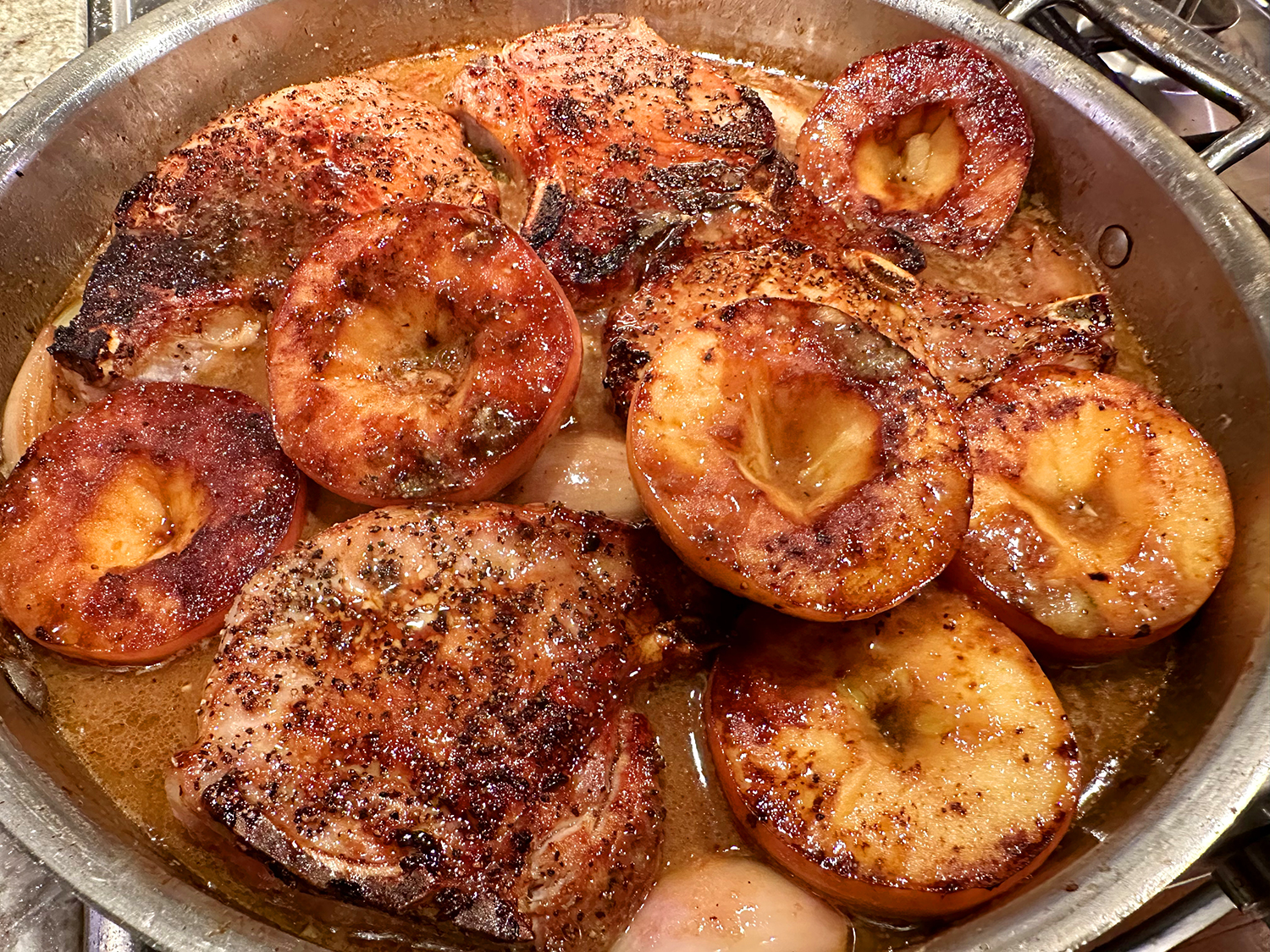
Oh, what a wonderful cool-weather meal. Here’s where you want to get thick, bone-in chops, and take the temperature starting after they’ve been roasting in the oven for 10 minutes. The chops will be ready at 135 F. If they have not reached that temperature, return the skillet to the oven and check the chops’ internal temperature every 5 minutes until they reach the desired temperature. You definitely don’t want them to dry out.

Once the chops are done, remove them to a platter and cover them with aluminum foil. Give the pears and onions a stir, return them to the oven, and cook them until they are tender and the juices are syrupy and dark brown, this could be anywhere from 10-20 minutes depending on how long it took the pork to reach temperature.

The sugar in the honey helps to caramelize the pork, onion, and pears as they oven-braise. It is a technique that works well with other roasted meats and birds as well. Just mix a little honey with the pan juices and baste or brush the roast with that during the last 10 minutes or so of roasting.

For some dishes, you want the onions cut fine, so they almost disappear. Here, cut the onions large—and the pears, too—so they keep their shape and don’t fall apart. Even when ripe, Bosc pears stay firmer than most, making them just right for this dish.

To ensure juicy results with today’s very lean pork products, use a dry brine before cooking them. For this recipe, pat the pork chops dry with a paper towel. Season the pork chops generously on all sides with sugar, a total of one tablespoon divided between all four. Then season them generously with salt to taste. Place them on a wire rack set in a rimmed baking sheet and refrigerate them, uncovered, for at least 8 hours and up to 24.

Oven-Braised Pork Chops with Red Onion and Pears

  • Servings: 4
  • Difficulty: easy
  • Print

Ingredients

  • 2 cups balsamic vinegar
  • 4 Tbsp. extra virgin olive oil
  • 6 garlic cloves, peeled
  • 4 center-cut pork rib chops, each about 12 oz. and 1 1/4″ inch” thick
  • 1 large red onion (about 12 oz.), cut into 8 wedges
  • Salt
  • Freshly ground pepper
  • 2 ripe but firm bosc pears, peeled, cored and cut into 8 wedges
  • 1/4 cup red wine vinegar
  • 2 Tbsp. honey

Directions

  1. In a small saucepan, bring the balsamic vinegar to a boil over high heat. Adjust the heat to a gentle boil and boil until the vinegar is syrupy and reduced to about 1/2 cup. Set aside.
  2. Preheat oven to 425 degrees F. Season the chops well with salt and pepper on both sides. Heat the oil in a large, heavy skillet with a flameproof handle over medium-high heat. Whack the garlic cloves with the flat side of a knife and scatter them over the oil. Cook, shaking the skillet, until brown, about 2 minutes. Remove the garlic cloves and reserve.
  3. Lay the pork chops in and cook until the undersides are browned, about 5 minutes. Turn the chops and continue cooking them until the second side of the chops has browned, about 5 minutes. Remove the chops to a platter.
  4. Place the onion and pear wedges in the skillet with the cut side down. Once they are lightly browned, turn them over and brown the other side. Stir the red wine vinegar and honey together in a small bowl until the honey is dissolved. Pour the vinegar/honey mixture into the skillet and bring to a vigorous boil. Return the garlic cloves to the skillet.
  5. Return the chops to the skillet, placing them on top of the pears and onions. Place the skillet in the oven and roast for 10 minutes, then check the internal temperature of the pork chops. The chops will be ready at 135 F. If they have not reached that temperature, return the skillet to the oven and check the chops’ internal temperature every 5 minutes until they reach the desired temperature. Once the chops are done, remove them to a platter and cover them with aluminum foil. Give the pears and onions a stir, return them to the oven, and cook them until they are tender and the juices are syrupy and dark brown, this could be anywhere from 10-20 minutes depending on how long it took the pork to reach temperature.
  6. Remove the skillet from the oven. Return the chops to the skillet and turn to cover them in the pan juices. Place a chop in the center of each warmed serving plate. Check the seasoning of the onion-pear mixture, adding salt and pepper if necessary. Spoon the pears, onion, and pan juices around the chops. Drizzle the balsamic vinegar reduction around the edge of the plate.

http://www.lynnandruss.com

Recipe courtesy of Lidia Bastianich

Roasted Brussels Sprouts with Garlic

So easy, yet so elegant. This recipe for roasted Brussels sprouts from Mark Bittman is an ATK popular version and is perfect as a holiday side dish. If you haven’t yet figured out a go-to recipe, this simple preparation is the answer. It results in sweet caramelized Brussels sprouts which is sure to satisfy just about anyone.

  • Use oven-safe cast-iron pan, as noted above.
  • Getting sprouts brown is important to avoid bitter taste.
  • Smaller quantity of large, hand-selected sprouts is better than big bag of assorted sprouts.
  • Don’t cook more than can fit in pan with cut side down.

Roasted Brussels Sprouts with Garlic

  • Servings: 4-6
  • Difficulty: easy
  • Print

Ingredients

  • 1 lb. Brussels sprouts, trimmed
  • 4-6 Tbsp extra virgin olive oil, to coat bottom of pan
  • 5 cloves garlic, peeled salt and pepper to taste
  • 1 Tbsp. balsamic vinegar (maybe less, to taste)

Directions

  1. Heat oven to 400°F. Trim bottom of Brussels sprouts, and slice each in half top to bottom. Heat oil in cast-iron pan over medium-high heat until it shimmers; put sprouts cut side down in one layer in pan. Put in garlic, and sprinkle with salt and pepper.
  2. Cook, undisturbed, until sprouts begin to brown on bottom, and transfer to oven. roast for 10-20 minutes at 400°F with a few shakes of the pan in between..
  3. Taste, and add more salt and pepper if necessary. Stir in (CAREFUL, NOT TOO MUCH) balsamic vinegar, and serve hot or warm.

http://www.lynnandruss.com

Recipe by Mark Bittman for NYTimes Cooking