Category Archives: Uncategorized

Marmitako—Basque Tuna Stew

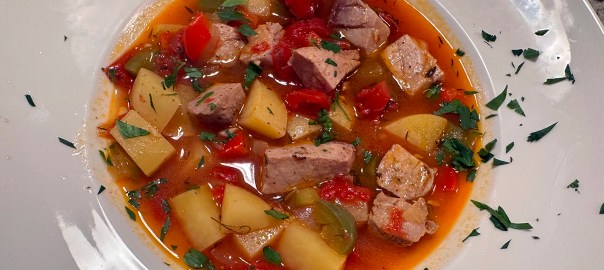
There is nothing better than a warm and comforting stew on a cold day, it takes all the chills out of your body and fills you with nothing but comfort. However, this tuna stew is equally welcome on a bright Spring Day. And since The Hubs loves all-things Spanish, making the dish was a no-brainer.

Marmitako is really quite simple to make and you don’t need any special equipment, just a standard stock/braising pot, and most importantly, fresh ingredients. With a recipe this simple, it is always important to use the freshest and highest of quality ingredients, it truly does make a difference in the overall flavor.

We made numerous changes to the original recipe, which included doubling most of the vegetable ingredients. Some of the timing was altered also to cook the potatoes 5 minutes longer, and the tuna cubes 5 minutes less. All of the changes are noted below.

Marmitako - Basque Tuna Stew

  • Servings: 4
  • Difficulty: easy
  • Print

Ingredients

  • 2 fillets fresh tuna
  • 1/4 cup extra virgin Spanish olive oil
  • 4 cloves of garlic
  • 1 onion
  • 1 red bell pepper
  • 1 green bell pepper
  • 2 medium Yukon gold potatoes
  • 1 can fire-roasted diced tomatoes
  • 1/2 tsp. dried thyme
  • 1/2 tsp. smoked paprika
  • 1/2 cup white wine
  • 2 1/2 cups fish broth, preferably homemade
  • Sea salt
  • Freshly cracked black pepper
  • Fresh parsley

Directions

  1. Begin by cutting all the vegetables first, 4 minced cloves of garlic, diced onion, diced red bell pepper, dice green bell pepper and cut 2 medium Yukon gold potato into 1/2-inch cubes.
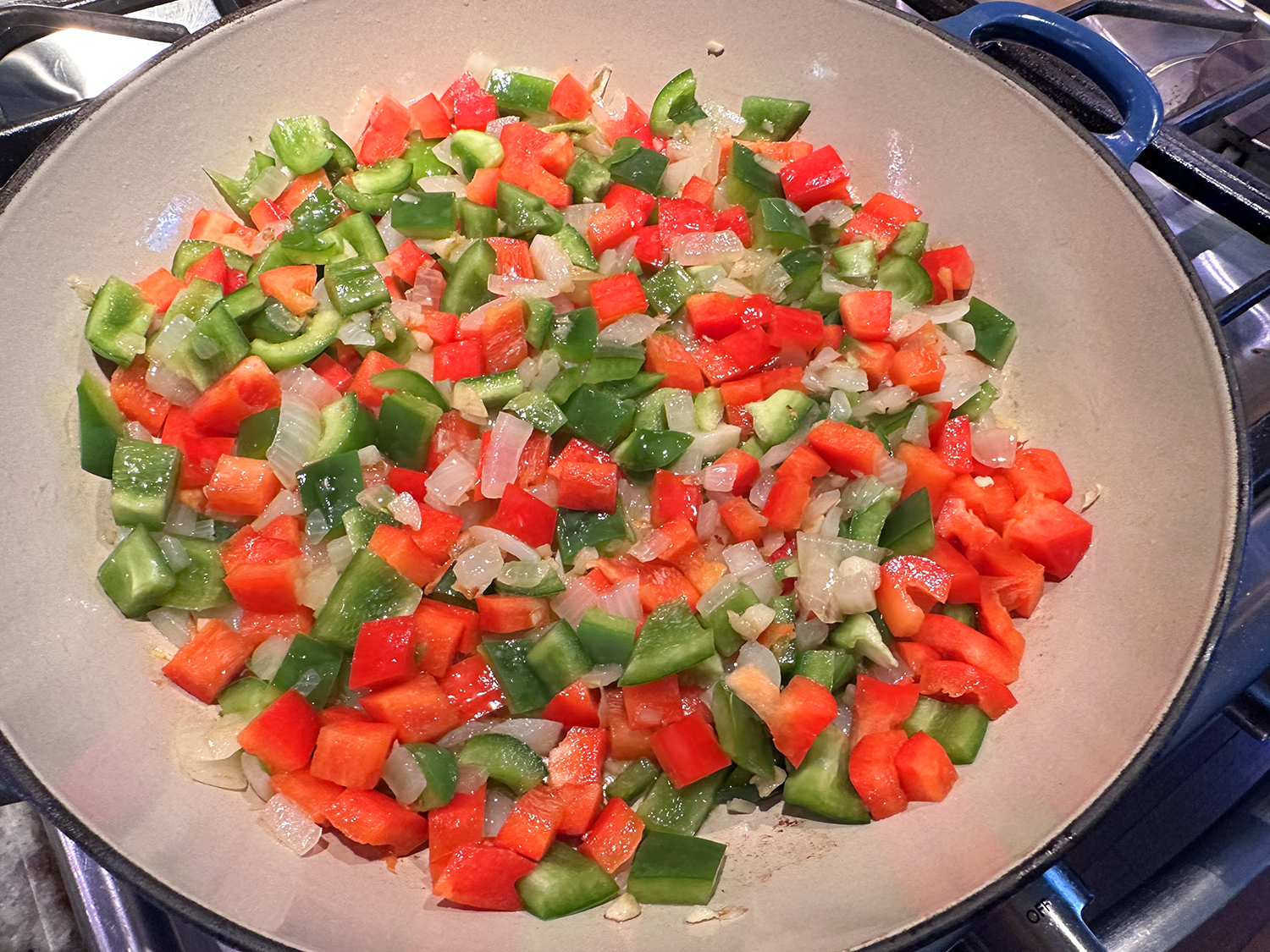
  2. Heat a large stock pot with a medium heat and add a 1/4 cup of extra virgin Spanish olive oil, once the oil gets hot add the diced onions and minced garlic, mix with the oil and cook for about 4 minutes, then add the diced bell peppers, mix and cook for another 5 minutes, then add the cubed potatoes, mix and cook for another 2 minutes, then add 1 cup of diced tomatoes, season everything with a generous pinch of sea salt, freshly cracked black pepper, 1/2 teaspoon of dried thyme and 1/2 teaspoon of smoked paprika, mix everything together and cook for 2 minutes.
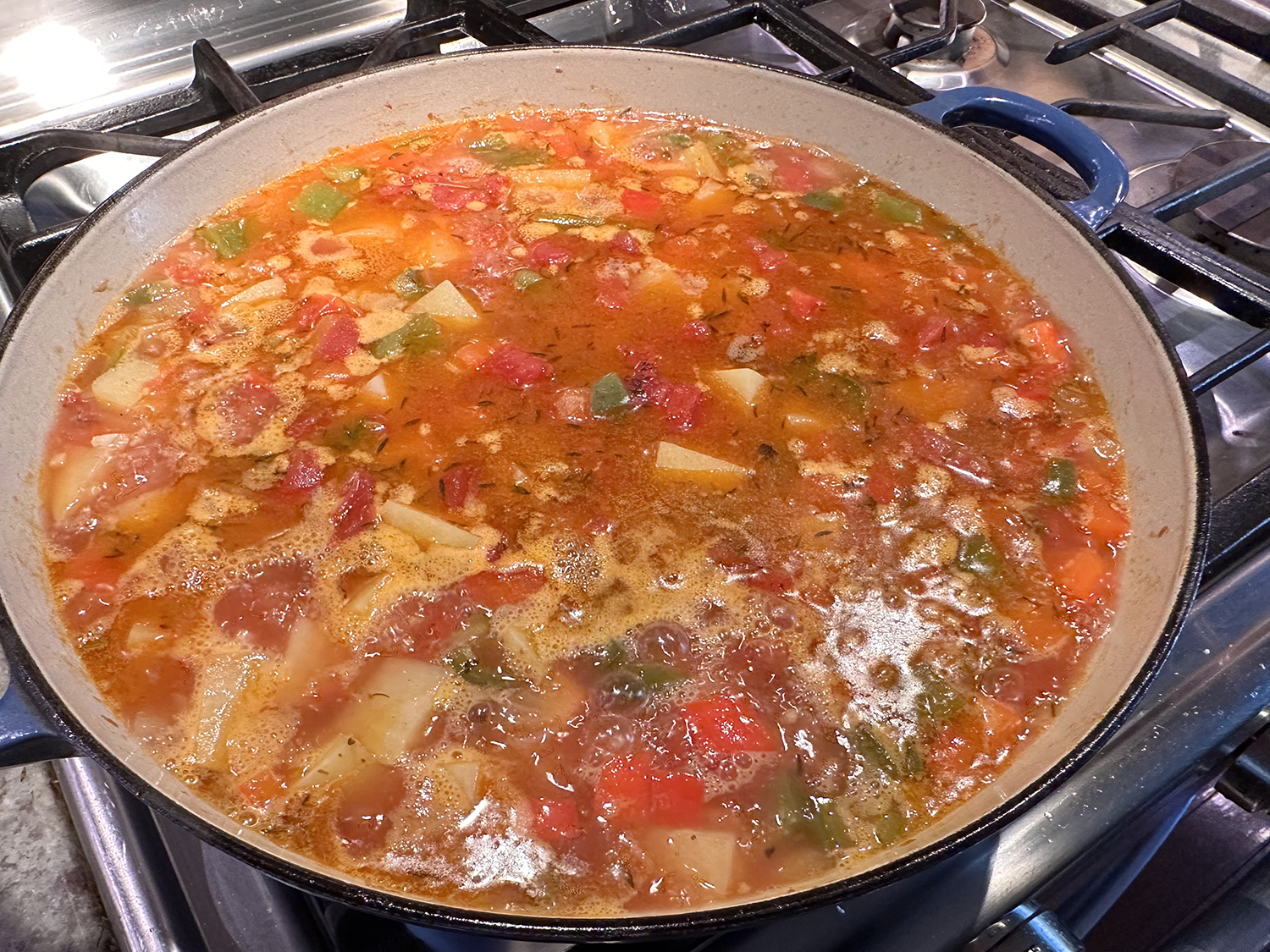
  3. Turn the fire up to a HIGH heat and add 1/2 cup of white wine, about 4 minutes after adding the white wine add 2 1/2 cups of fish broth, once it comes to a boil, place a lid on top and lower the fire to a LOW heat.
  4. While the stew is simmering, season 2 fresh tuna fillets with sea salt and freshly cracked black pepper on both sides, then cut each one into 1/2 inch cubes.
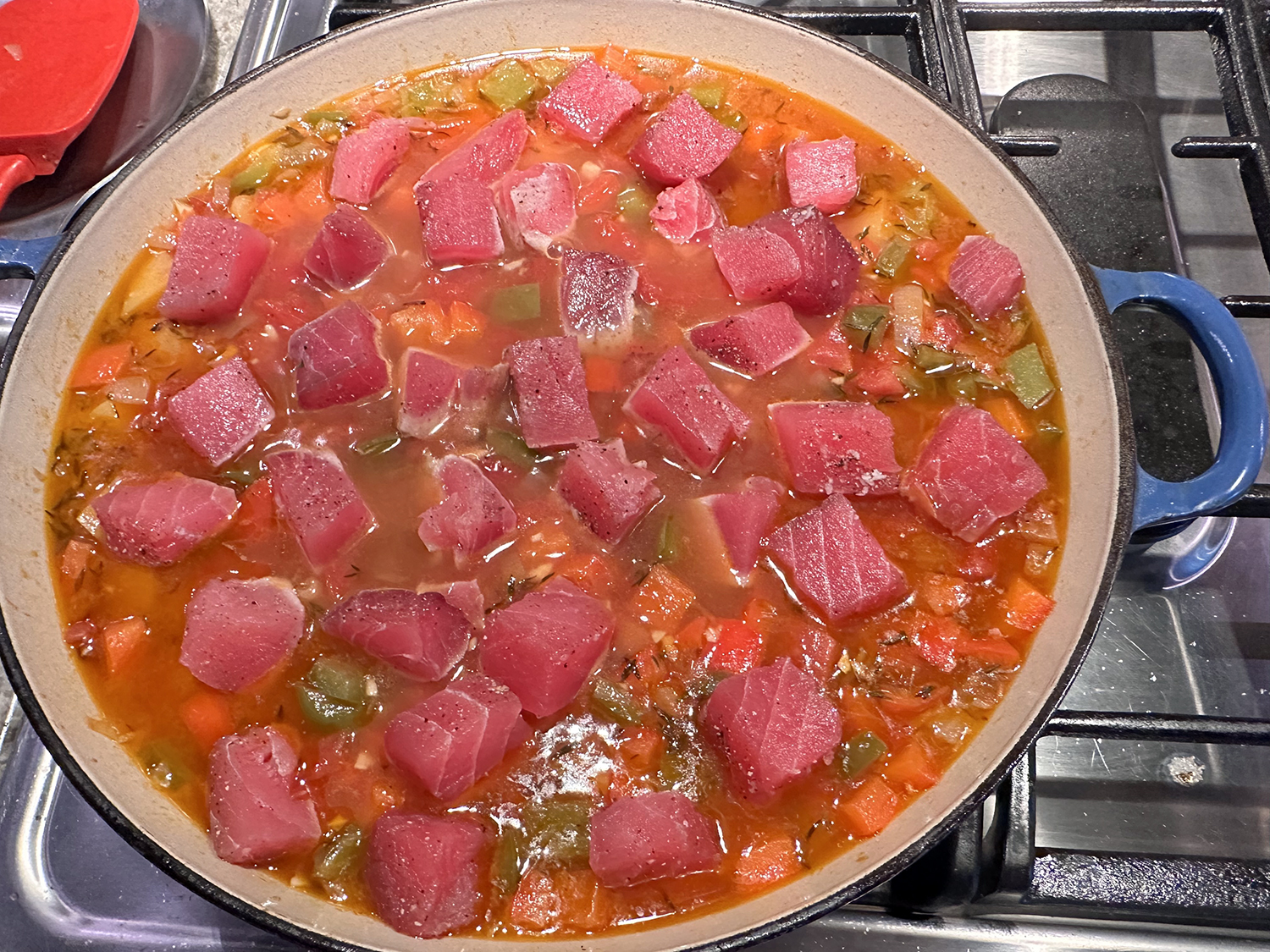
  5. After leaving the stew to simmer for 25 minutes, add the cubed tuna to the stock pot, mix it with the rest of the ingredients, place the lid back on top and cook for another 5 minutes.
  6. Transfer the tuna stew into shallow bowls and garnish each one with fresh parsley

http://www.lynnandruss.com

Adapted from a recipe from Spain on a Fork

Miso Pecan Banana Bread

How about a banana bread that is moist on the inside, with a crunchy bite around the edges? While banana bread has been around for decades, the dish is now a global mainstay. Morning with coffee, noon as a quick bite for lunch, or after dinner shared with a scoop of ice cream—it doesn’t really matter what time of day you indulge. My personal preference is a warm slice with a dab of ghee, or a schmear of peanut butter; or let’s face it, just by itself is perfectly fine.

In this recipe, the crunch of pecans complements the bread’s softness, while miso (which we always have on hand) adds complexity alongside the banana’s sweetness. Be sure to utilize the ripest bananas you can find because it really will make a difference. This banana bread can hold for several days on the counter or in the fridge—if you have any left.

“Banana-bread recipes over the decades have in common bananas, sweetener, a chemical leavener, some fat and flour. But beyond that they can differ wildly.”

PJ Hamel

Banana bread is extremely flexible: If this recipe doesn’t work for you, just change it. Add a little more miso. Maybe lighten up on the sugar. Or toss in another half cup of pecans until you’ve adjusted it to suit your own preferences. I followed the directions without any alterations (other than what I did with the toasted pecans), and loved the results!

“Banana bread is both striking and unremarkable, simple and staggering, found on the counters of coffee shops and apartment bar tops and tiny cafes globally. A corner piece can shift your entire day. Or maybe your choice is a slice from the middle, full of flavor without the baggage of a crust. Or perhaps your ideal banana bread is whichever iteration is available — YouTube’s code sags under the weight of banana-bread recipes, and they’re each as delicious as the impulses behind them. It’s a dish as perfect as it is malleable.” — Bryan Washington

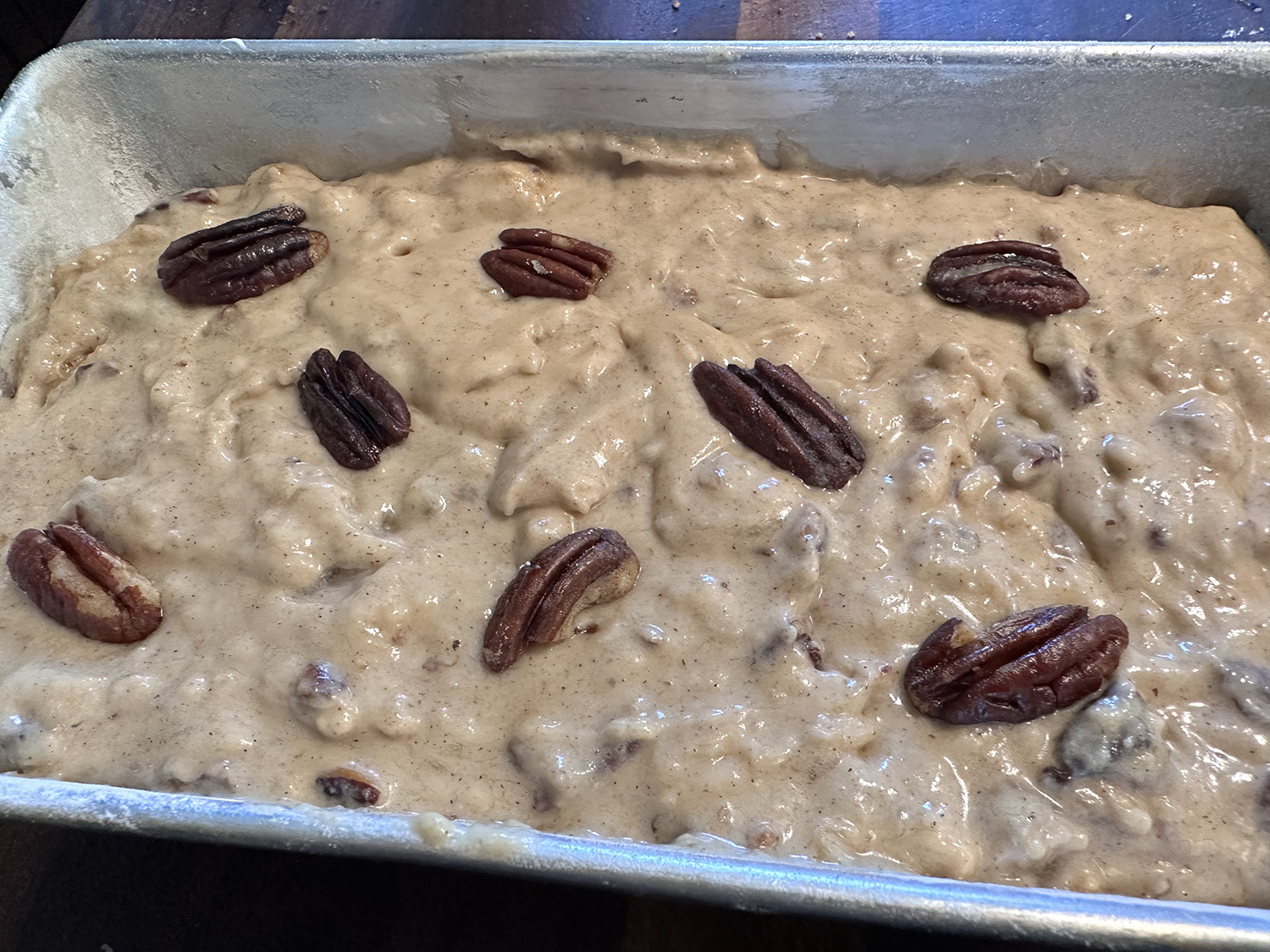
For the topping, you can add all of the chopped pecans to the batter, and place 8 or 9 whole roasted pecans to the top once in the loaf pan; or do half and half as instructed below. The indicated baking time of 60 to 80 minutes didn’t pan out for us. It took 1 hour and 35 minutes in the oven before the thin metal skewer stuck into the center came out clean.

Miso Pecan Banana Bread

  • Servings: 1, 9 to 10-inch loaf
  • Difficulty: easy
  • Print

Ingredients

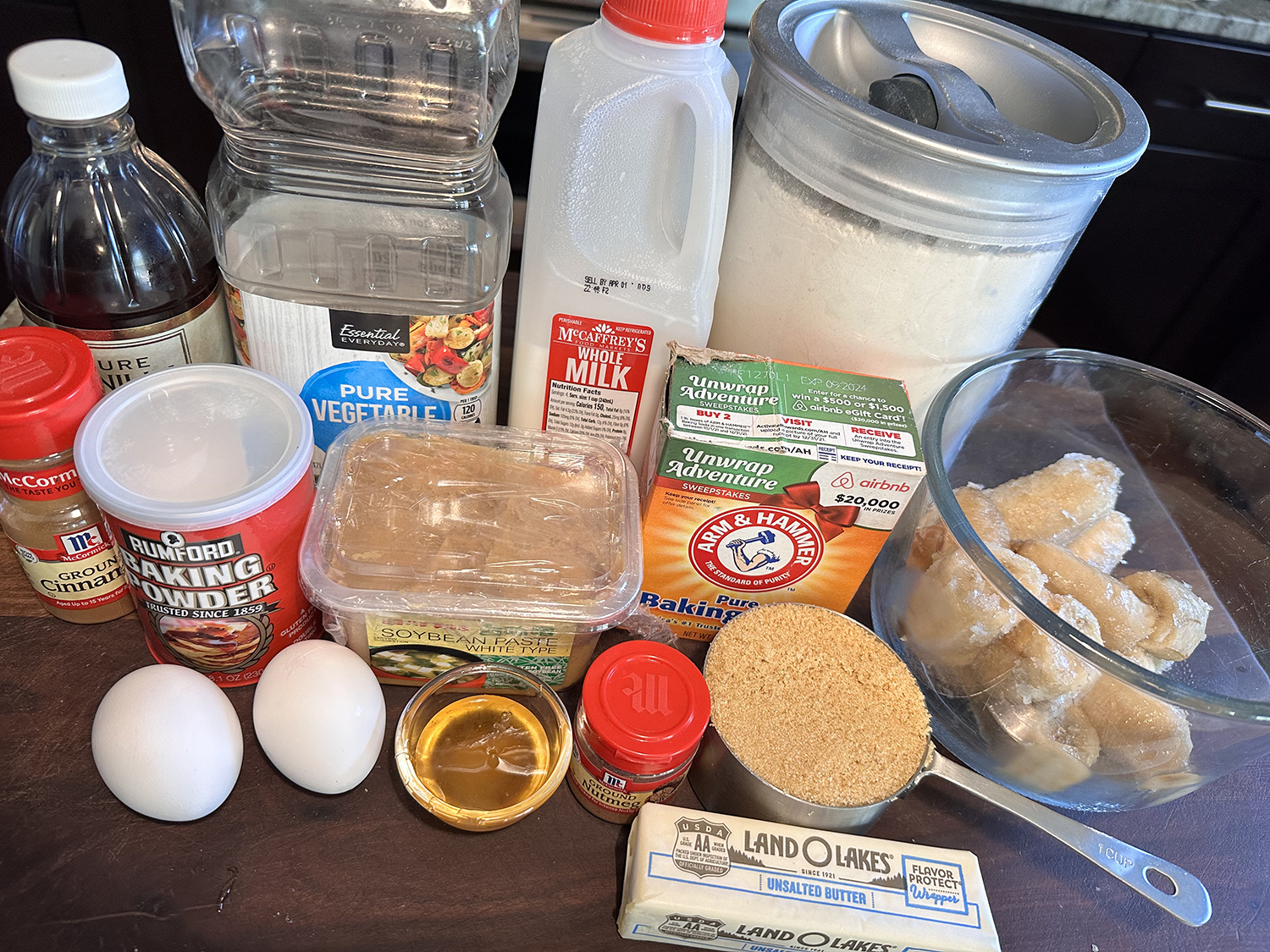
  • ½ tsp. vegetable oil, plus more for pan
  • 1 cup pecans
  • 1 tsp. fine sea or table salt
  • 2 cups all-purpose flour
  • 1 tsp. ground cinnamon
  • ½ tsp. ground nutmeg
  • ½ tsp. baking soda
  • ½ tsp. baking powder
  • ½ cup unsalted butter, at room temperature
  • 1 cup packed brown sugar
  • 2 large eggs, lightly beaten
  • 3 Tbsp. milk
  • 2 Tbsp. white miso
  • 1 Tbsp. honey
  • 1 tsp. vanilla extract
  • 4 very ripe bananas, mashed (1¾ cups)

Directions

  1. Heat oven to 350 degrees. Lightly oil a 9- or 10-inch loaf tin, then line the base with parchment paper. Also, grease and flour a loaf pan.
  2. Toss pecans on a parchment-lined baking sheet with salt and oil. Bake until fragrant, 7 to 10 minutes. When cool, chop to your desired consistency.
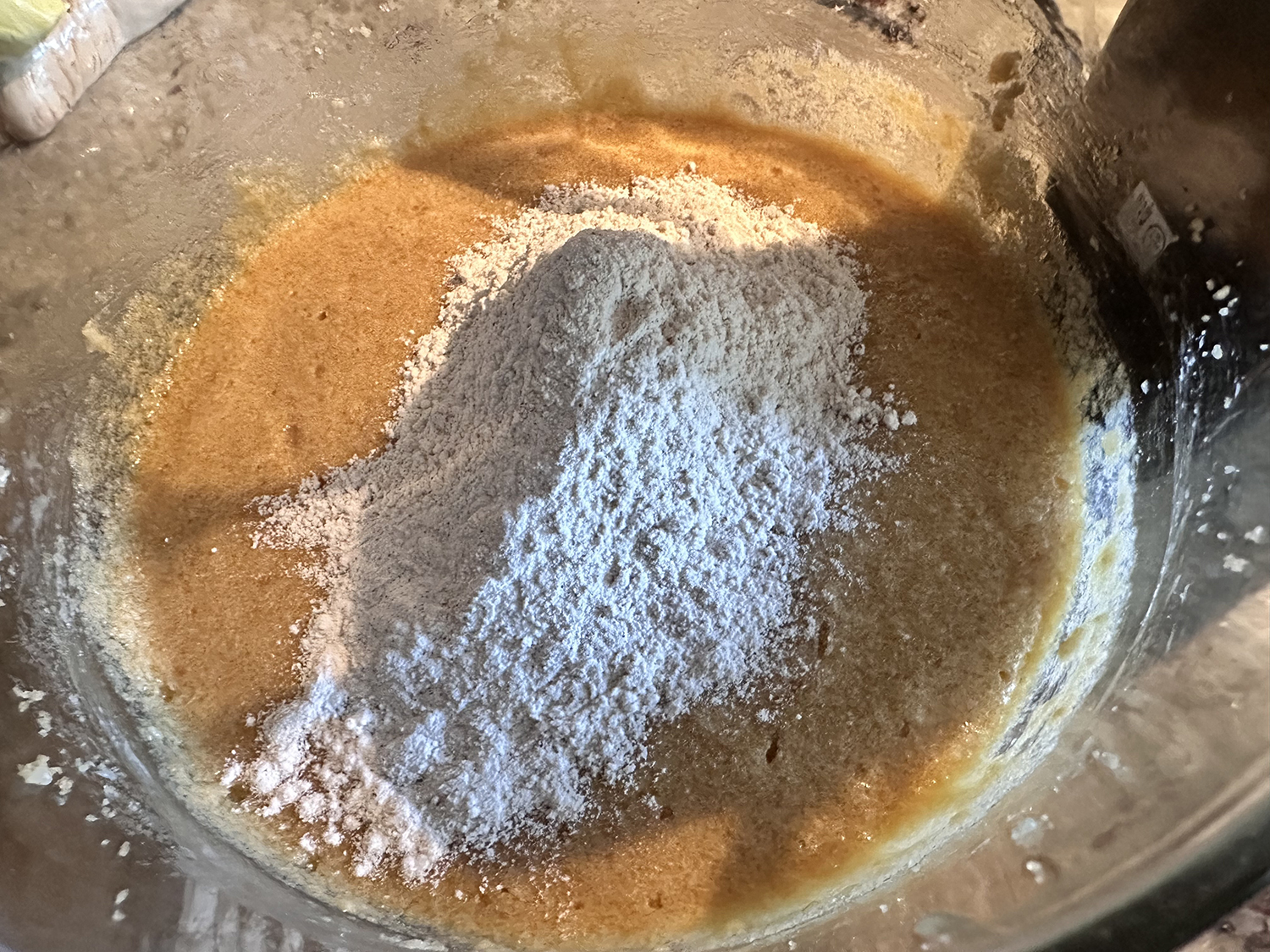
  3. While the pecans cool, whisk together flour, cinnamon, nutmeg, baking soda and baking powder in a medium bowl.
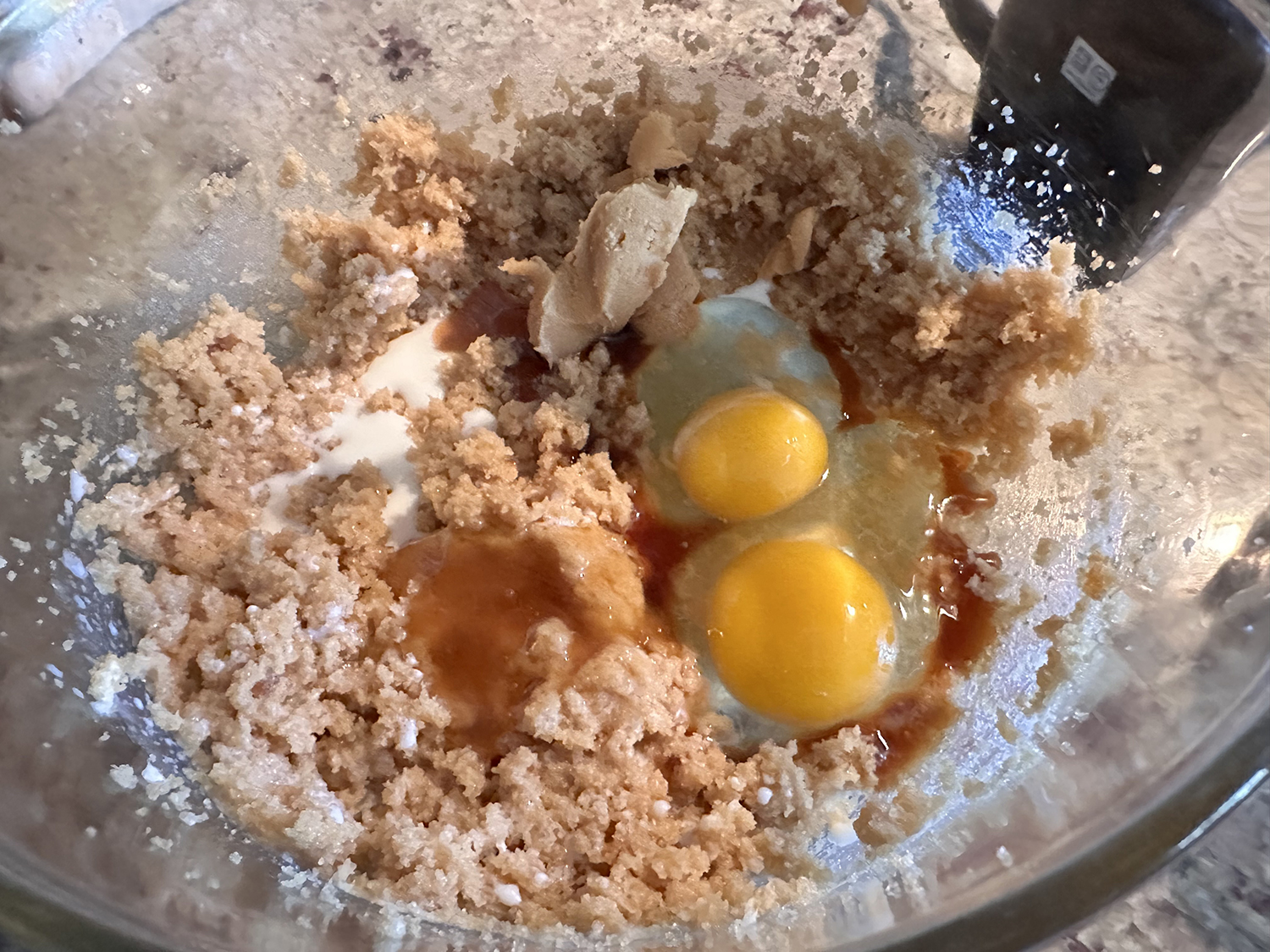
  4. In a large bowl, beat butter and sugar using an electric mixer until creamy, 3 to 4 minutes. Beat in eggs, milk, miso, honey and vanilla extract until well-combined. Gradually beat in dry ingredients until just combined.
  5. Using a spatula, stir bananas into the batter to combine evenly. Add half of the pecans (and any salt on the pan) to the batter and mix to combine evenly throughout. Add batter to the prepared loaf pan, smoothing when complete. Sprinkle the remaining pecans evenly on top.
  6. Bake until a wooden skewer inserted in several areas around the center comes out clean, 1 hour to 1 hour 20 minutes (ours took 1 hour 35 minutes). Tent with foil if it starts to darken too much on top before the middle is baked through.
  7. Let bread sit in tin for 10 minutes before removing and setting on a rack to cool for 60 minutes. Serve with coffee, ice cream or entirely by itself.

http://www.lynnandruss.com

Adapted from a recipe by Bryan Washington for NYTimes Cooking

Grilled Flap Steak, Mushroom and Onion Kebabs

As you are aware, Shish kebab is a dish of skewered and grilled cubes of meat that is popular all over the Middle East, and made of lamb, beef or chicken, they also are commonly found in the United States. When selecting the type of beef to make your kebabs, you have unlimited choices but ultimately you want your beef on the skewer to be tasty, tender and not break your budget.

If cost is not a hindrance, the best cut of beef for kebabs is definitely filet mignon. Other excellent beef options include Porterhouse, and if it looks good at the butcher or in the meat counter, also try a rib-eye. They all grill nicely and don’t require a marinade to make them tender. But while those cuts meet the criteria of best tasty beef, they’re pricey and will take a chunk out of your wallet.

For those looking for great flavor on a budget, sirloin tips work well if they are marinated ahead to make them more flavorful. Our choice, flap meat. Historically, flap meat was one of the cuts of beef that butchers kept out of the meat case for a reason: they were saving it for themselves. Much like skirt steak and hanger steak, it’s becoming more widely known and popular, and therefore easier to find in markets everywhere. (Costco carries flap meat.)

With its great beefy flavor, flap steak has a similar texture and grain to flank, hanger and skirt steaks. It tends to come to the market at 3 to 4 pounds, whereas skirt and flank steaks average around 2 pounds or less. Price-wise, flank and flap steaks are about the same.

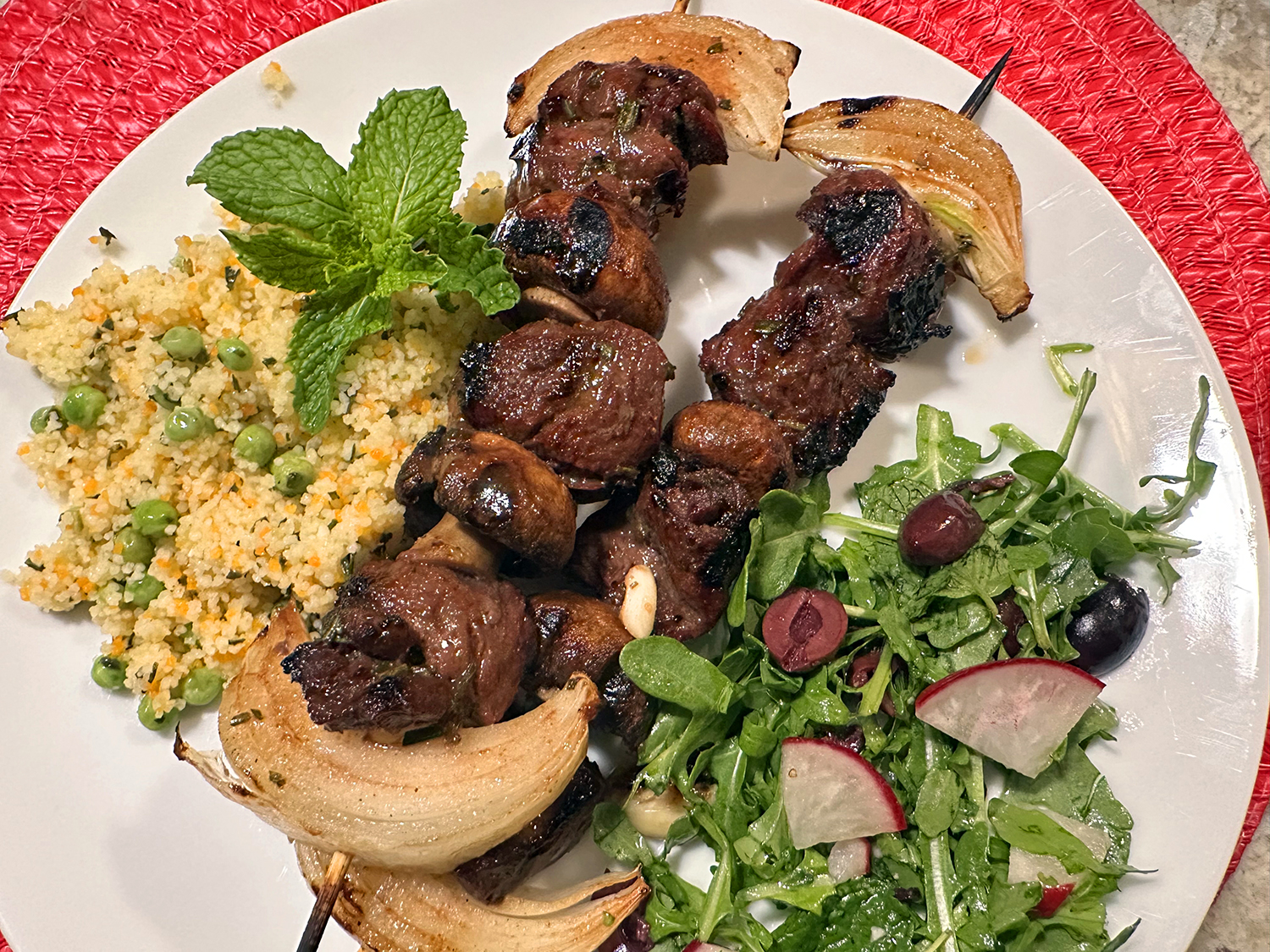
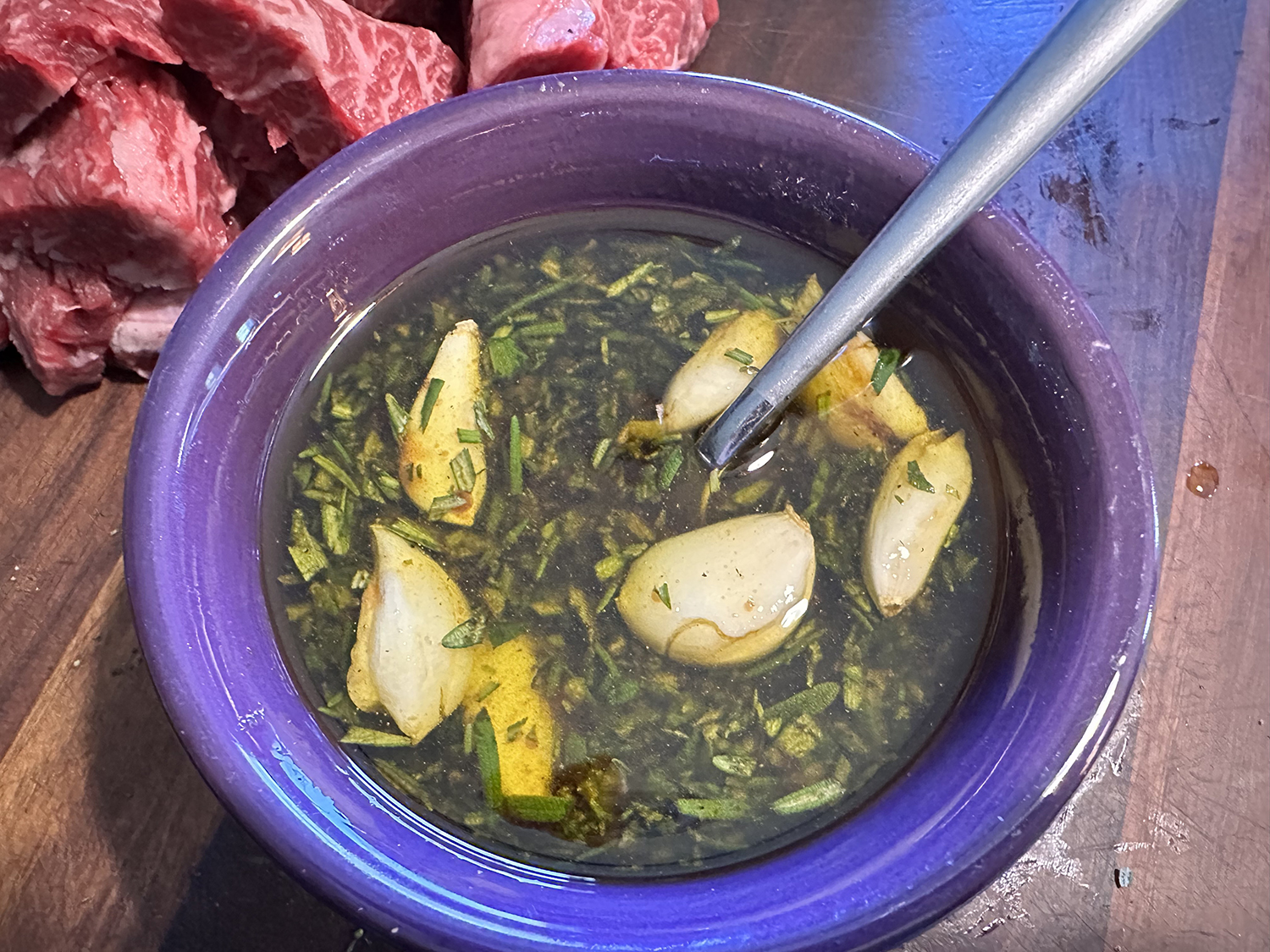
We had 2 pounds of flap meat instead of the 18 ounces originally called for, so we also increased the mushrooms from 8 to 12 ounces. Another alteration to the recipe was adding 6 whole smashed garlic cloves to the marinade. Our kebabs were served with a minted couscous (recipe below), and a baby arugula side salad that also contained mint.

Grilled Steak, Mushroom and Onion Kebabs

  • Servings: 4
  • Difficulty: easy
  • Print

Ingredients

  • 6 Tbsp. olive oil
  • 6 Tbsp. balsamic vinegar
  • 1 Tbsp. Dijon mustard
  • Kosher salt
  • Freshly ground black pepper
  • 1 Tbsp. minced fresh rosemary
  • 6 garlic cloves, peeled and smashed
  • 2 lbs. flap steak, cut into 24 cubes
  • 12 oz. baby bella (cremini) mushrooms, trimmed of stem
  • 1 large Vidalia onion, sliced into 12 wedges

Directions

  1. Whisk oil, vinegar, mustard, garlic cloves and rosemary into a large bowl. Season with salt and pepper. Add steak to a bowl, and mix to coat. Cover with plastic wrap (or place in a ziploc bag) and transfer to the refrigerator to marinate for a minimum of 1 hour (longer is better).
  2. While beef is marinating, soak 12 bamboo skewers in water.
  3. To assemble skewers: Add 1 piece of steak, 1 mushroom and onion wedge. Continue by adding the same. Continue until all 12 skewers are complete.
  4. Preheat the grill on high for 15 minutes. Reduce heat to medium-high and clean and then oil grates. Add skewers Cook for approximately 2-3 minutes and then flip skewers. Continue cooking for additional 2 minutes.
  5. Transfer to serving plate. Garnish with fresh rosemary if desired.

http://www.lynnandruss.com

Adapted from a recipe from Paula of Bell’alimento for The Mushroom Council

Minted Couscous

Minted Couscous

  • Servings: 4
  • Difficulty: easy
  • Print

Ingredients

  • 3⁄4 cup tri-colored couscous
  • 1⁄2 cup frozen peas, thawed
  • 1⁄4 cup fresh mint, chopped
  • 1 cup water
  • 3⁄4 tsp. salt
  • 2 Tbsp. fresh lemon juice
  • 1 Tbsp. olive oil
  • 1 garlic clove, minced

Directions

  1. In a small bowl combine the lemon juice, olive oil and garlic.
  2. While the kebabs are grilling, bring 1 cup water and 3⁄4 teaspoon salt to a boil in a small saucepan over medium-high heat.
  3. Stir in the couscous, peas, and lemon juice mixture. Cover, remove from heat and let stand at least until the peas are tender and the couscous has absorbed all of the liquid, at least 10 minutes.

http://www.lynnandruss.com

Chickpeas with Spinach, Chorizo, and Smoked Paprika

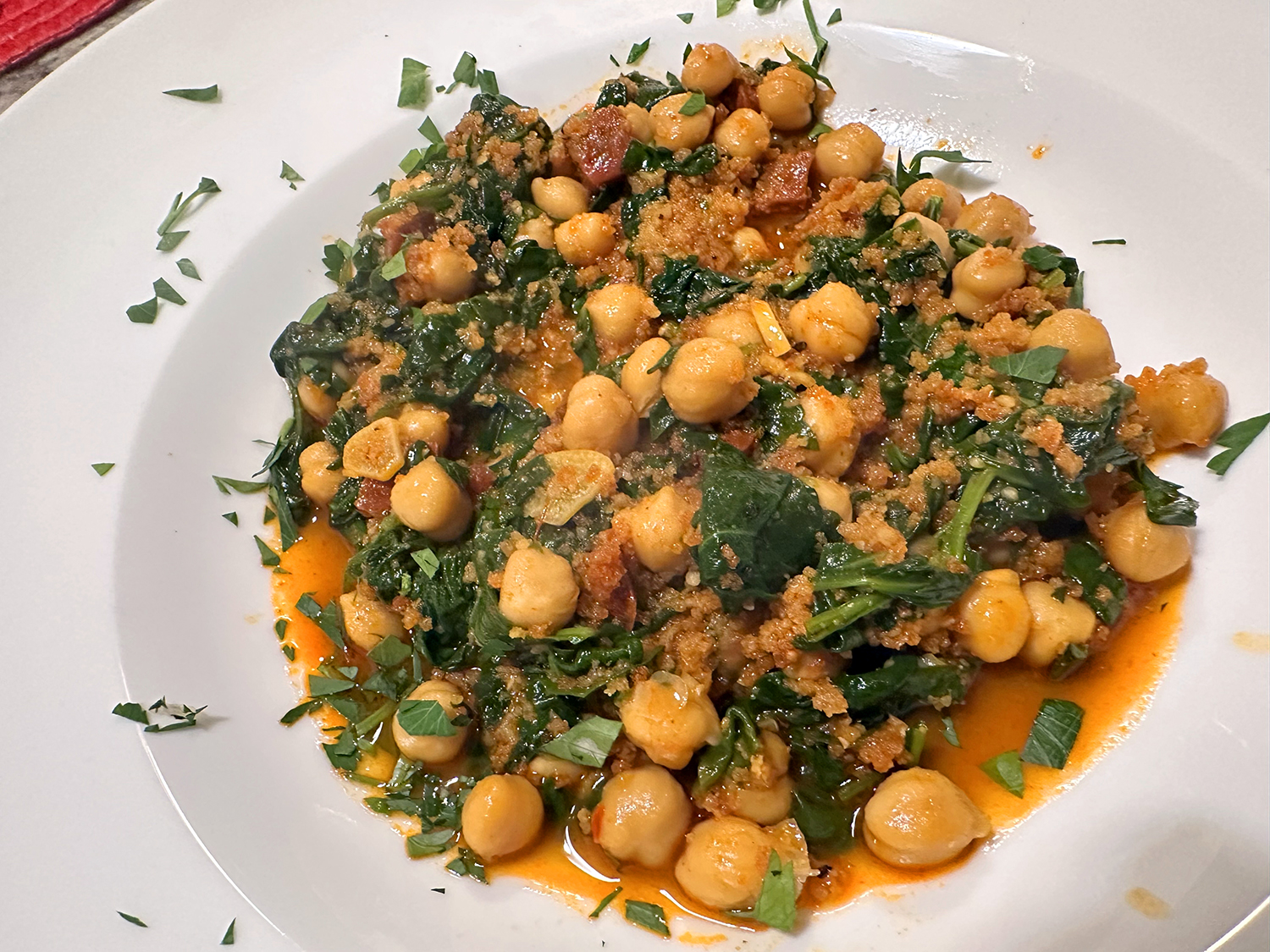
A traditional tapas from the southern Spanish region of Andalucia, this dish consists of tender stewed chickpeas, delicate wilted spinach, and bold North African-influenced spices. For the flavor backbone, the Spanish classics of saffron, garlic, smoked paprika and cumin are utilized.

Traditional addition of chorizo adds meaty richness, while curly-leafed spinach is the best choice for its sturdy texture in this brothy dish. That being said, we were unable to source curly-leafed spinach and had to go with baby spinach—not the best option, but it still worked.

Including the chickpeas’ flavorful, starchy canning liquid helps to give the dish more body. The picada is a traditional cooking thickener in Spain. This bread crumb-based mixture gives the stewed beans and greens just the right velvety texture and flavor boost.

It is good served over rice or with good crusty bread to sop up the flavorful broth. We just served it with a side salad.

Chickpeas with Spinach, Chorizo, and Smoked Paprika

  • Servings: 4
  • Difficulty: easy
  • Print

Ingredients

  • Pinch saffron threads, crumbled
  • 2 tsp. extra-virgin olive oil
  • 8 oz. curly-leaf spinach, stemmed
  • 3 oz. Spanish-style chorizo sausage, chopped fine
  • 5 garlic cloves, sliced thin
  • 1 Tbsp. smoked paprika
  • 1 tsp. ground cumin
  • Salt and pepper
  • 2 (15-oz.) cans chickpeas
  • 1 recipe Picada (recipe follows)
  • 1 Tbsp. sherry vinegar

Directions

  1. Combine 2 Tbsp. boiling water and saffron in small bowl and let steep for 5 minutes.
  2. Heat 1 teaspoon oil in Dutch oven over medium heat until shimmering. Add spinach and 2 tablespoons water, cover, and cook, stirring occasionally, until spinach is wilted but still bright green, about 1 minute. Transfer spinach to colander and gently press to release liquid. Transfer spinach to cutting board and chop coarse. Return to colander and press again.
  3. Heat remaining 1 teaspoon oil in now-empty pot over medium heat until shimmering. Add chorizo and cook until lightly browned, about 5 minutes. Stir in garlic, paprika, cumin, and 1/4 teaspoon pepper and cook until fragrant, about 30 seconds. Stir in chickpeas and their liquid, 1 cup water, and saffron mixture and bring to simmer. Cook, stirring occasionally, until chickpeas are tender and liquid has thickened slightly, 10 to 15 minutes.
  4. Off heat, stir in picada (recipe below), spinach, and vinegar and let sit until heated through, about 2 minutes. Adjust sauce consistency with hot water as needed. Season with salt and pepper to taste and serve.

Picada:

  • 1/4 cup slivered almonds
  • 2 slices hearty white sandwich bread, torn into quarters
  • 2 Tbsp. extra-virgin olive oil
  • 1/8 tsp. salt
  • Pinch pepper

Directions

  1. Adjust oven rack to middle position and heat oven to 375 F. Pulse almonds in food processor to fine crumbs, about 20 pulses.
  2. Add bread, oil, salt, and pepper and pulse bread to coarse crumbs, about 10 pulses.
  3. Spread mixture evenly in rimmed baking sheet and bake, stirring often, until golden brown, about 10 minutes. Set aside to cool. (Picada can be stored in airtight container for up to 2 days.)

http://www.lynnandruss.com

Recipe from The Complete Mediterranean Cookbook by America’s test Kitchen

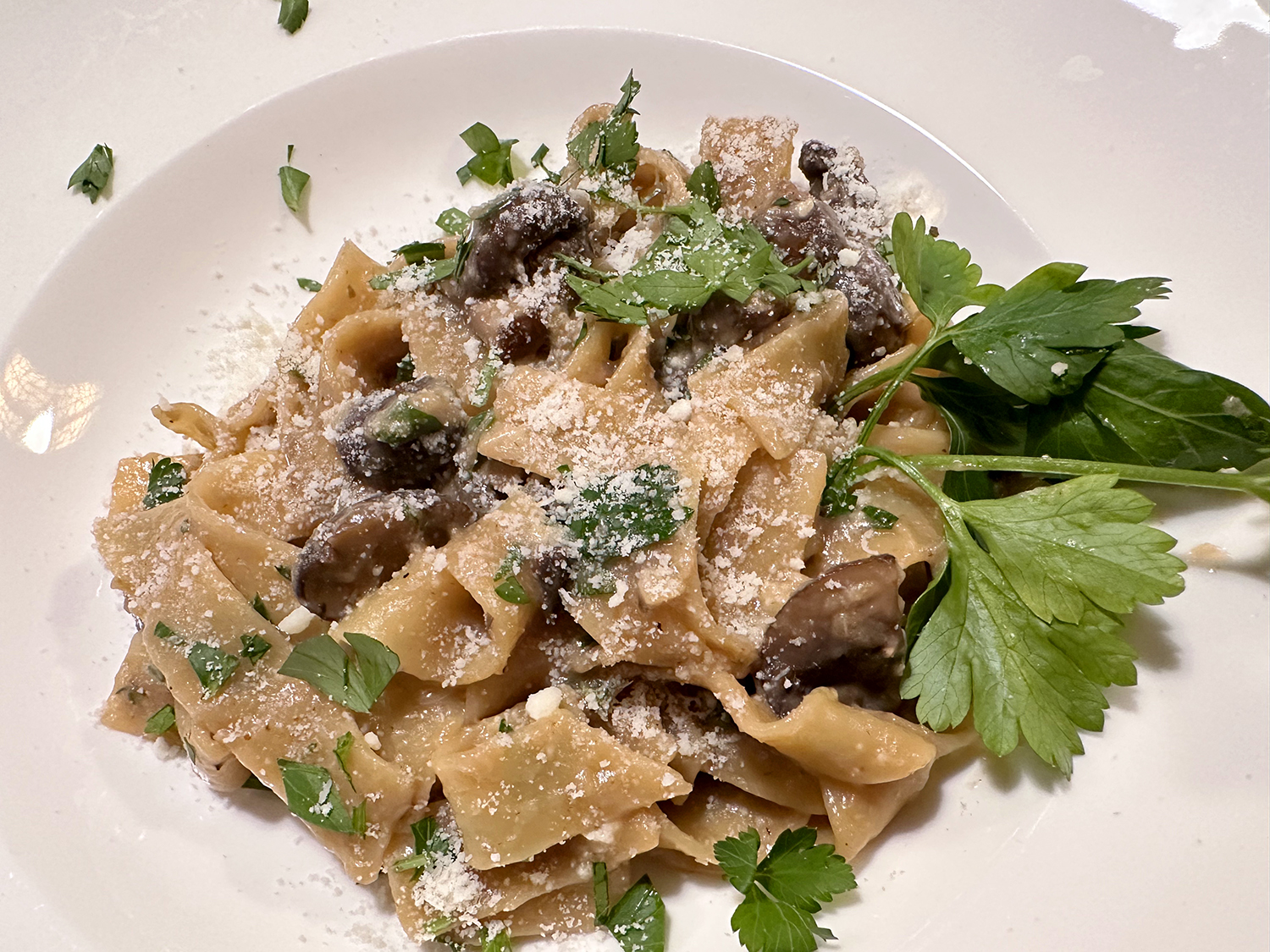
Pasta with Cremini Mushrooms and Miso

For this hearty vegetarian dish, the pasta is cooked directly in the sauce, so there’s no need to boil water in a separate pot. Japanese miso may seem an unlikely ingredient to pair with Italian pasta, but it deepens the mushrooms’ earthiness, and lightly browning the miso as it is done here develops even more flavor intensity so the dish tastes surprisingly meaty and rich.

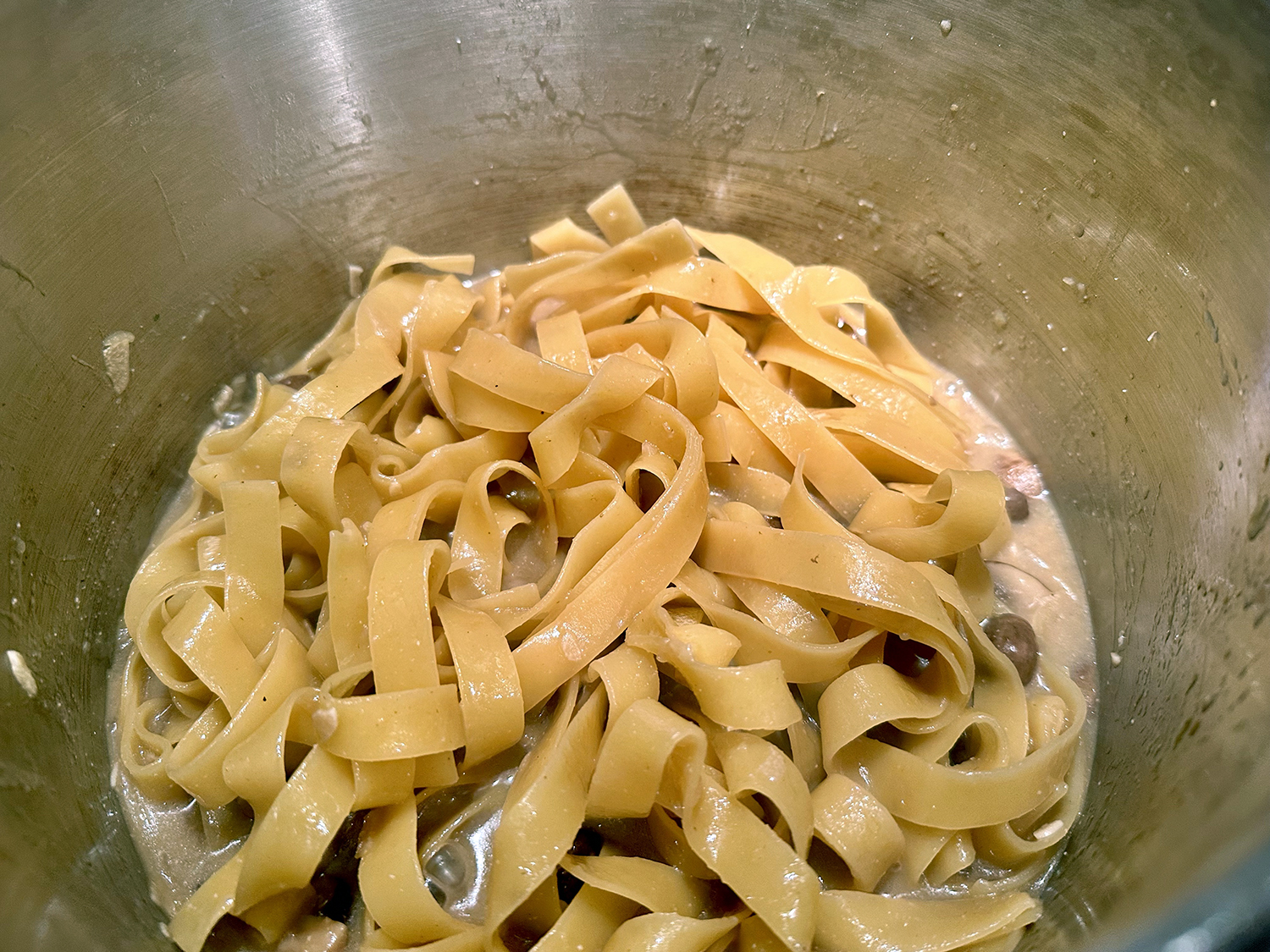
Cavatappi is a good choice because its twisty shape is a good match for the chunky mushrooms, but any short pasta shape, such as penne or fusilli, works well, too. But because we used a larger flat pasta, we needed to add another cup of water to loosen the sauce.

Don’t forget to stir the pasta as it cooks. The pot will be quite full, so frequent stirring will help ensure that the pasta cooks evenly.

Pasta with Cremini Mushrooms and Miso

  • Servings: 4-6
  • Difficulty: easy
  • Print

Ingredients

  • 4 Tbsp. (½ stick) salted butter
  • 1 medium yellow onion, halved and thinly sliced
  • 3 medium garlic cloves, thinly sliced
  • ⅓ cup white miso
  • ½ cup dry white vermouth
  • 2 lbs. cremini mushrooms, trimmed and quartered
  • 1 lb. short pasta (see note)
  • 1 tsp. minced fresh thyme
  • 2 tsp. lemon juice
  • Kosher salt and ground black pepper
  • ¼ cup roughly chopped fresh flat-leaf parsley
  • ½ oz. pecorino Romano cheese, finely grated (¼ cup)

Directions

  • On a 6-quart Instant Pot, select More/High Sauté. (Or use a pressure cooker.) Add the butter and melt. Add the onion and garlic, then cook, stirring occasionally, until the onion begins to soften, about 5 minutes.
  • Stir in the miso and cook until lightly browned, about 2 minutes. Add the vermouth and cook, stirring, until almost fully evaporated, about 5 minutes.
  • Add 3 cups water (or 4 if necessary to loosen) and whisk until the miso dissolves. Stir in the mushrooms and bring to a boil, then distribute in an even layer.
  • Press Cancel, lock the lid in place and move the pressure valve to Sealing. Select Pressure Cook or Manual; make sure the pressure level is set to High. Set the cooking time for 5 minutes. When pressure cooking is complete, quick-release the steam by moving the pressure valve to Venting. Press Cancel, then carefully open the pot.
  • Select More/High Sauté. Bring the mixture to a boil and add the pasta. Cook, stirring often, until the pasta is al dente and and the sauce clings lightly, about 10 minutes. Press Cancel to turn off the pot.
  • Stir in the thyme and lemon juice, then taste and season with salt and pepper. Transfer to a serving dish and sprinkle with the parsley and pecorino.

http://www.lynnandruss.com

Recipe by Phoebe Maglathlin for Milk Street

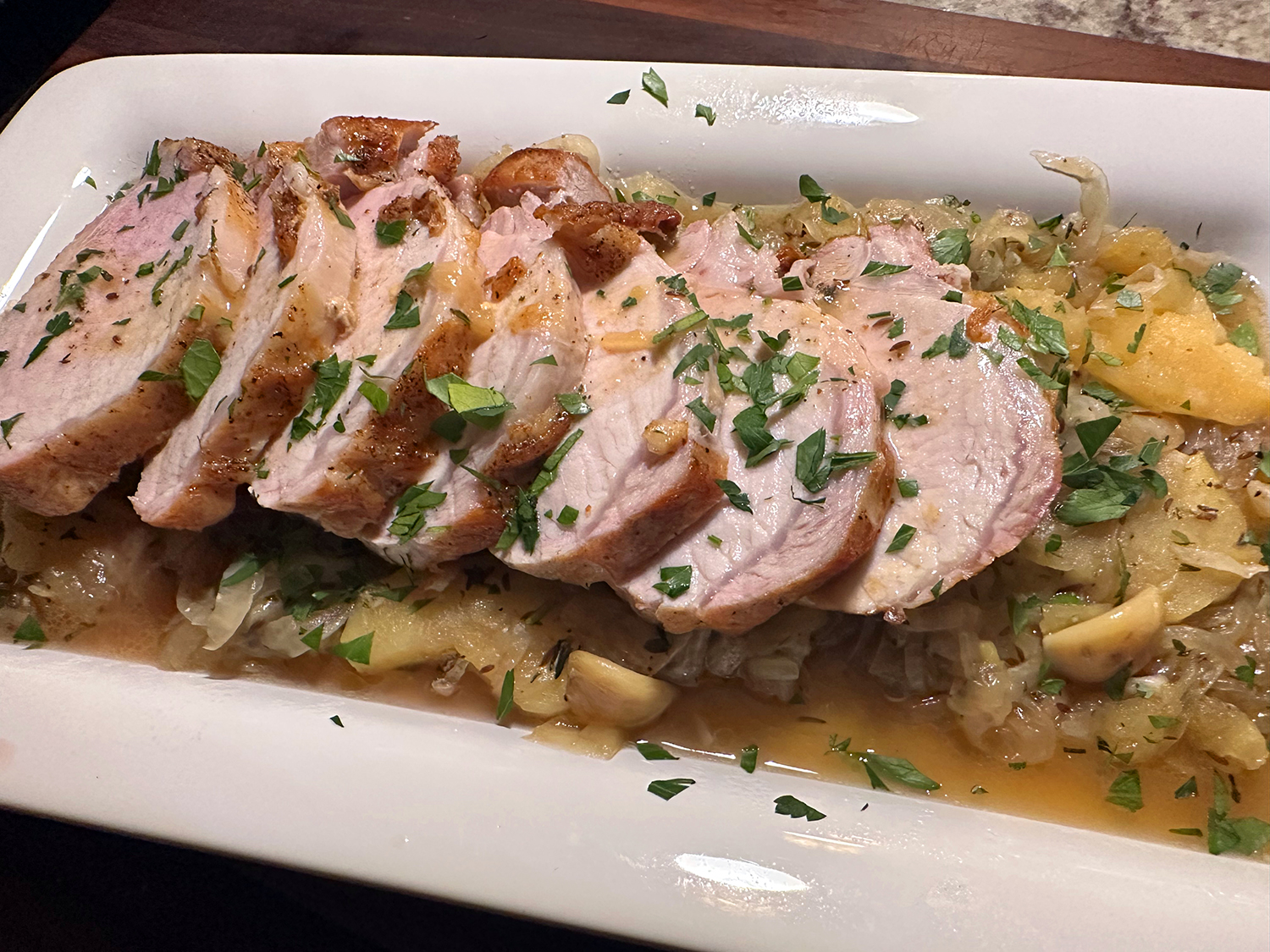
Roasted Sweet Vidalia Pork Loin

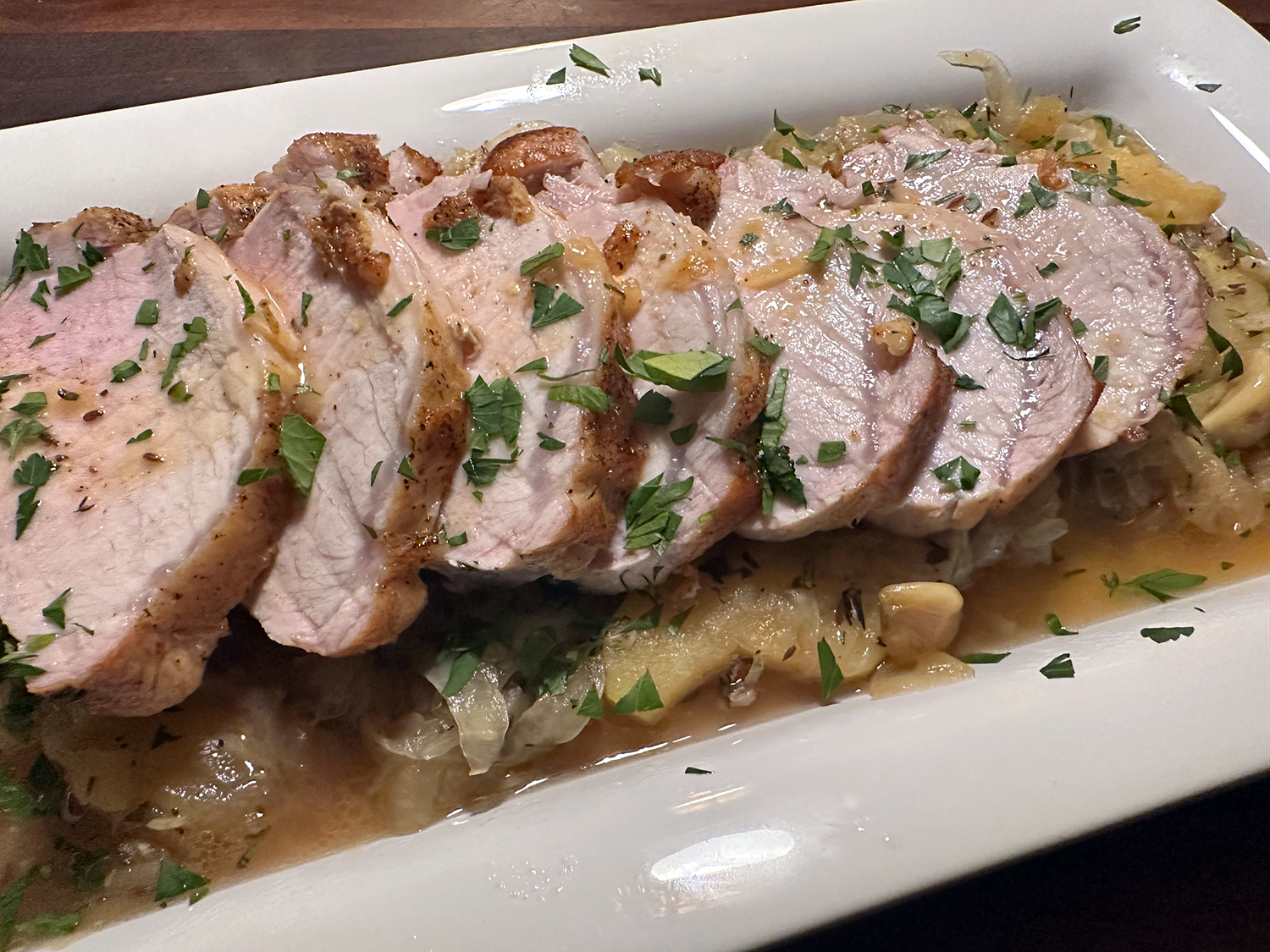
For quite a fancy spread, this elegant dinner comes together in not much more than an hour. The sweet Vidalia onions break down into luxurious softness, while the apple slices (we used Ruby Frost) and garlic render down and provide additional layers of flavor to the onion mixture.

Served with garlicky mashed potatoes and steamed broccoli, it was a complete and satisfying meal. We had plenty leftover so we plan to get two additional meals from it. One, a pork fried rice dish, and the other we’ll just simply reheat the leftovers as they are, and enjoy the meal all over again!
Roasted Sweet Vidalia Pork Loin
  • Servings: 6-8
  • Difficulty: easy
  • Print

Ingredients

  • 1 center-cut pork loin, (3 lbs.)
  • Kosher salt and freshly cracked black pepper
  • 3 Tbsp. olive oil
  • 3 Vidalia onions, sliced into thin half-moons
  • 1 apple, sliced thick
  • 1 tsp. caraway seeds
  • 1 tsp. dried thyme
  • 4 cloves garlic
  • 3/4 cup chicken stock
  • 1/2 cup hard apple cider, or beer
  • 1 Tbsp. Dijon mustard
  • 1 Tbsp. unsalted butter
  • 1/4 cup fresh flat-leaf parsley, chopped

Directions

  1. Preheat the oven to 375 degrees F.
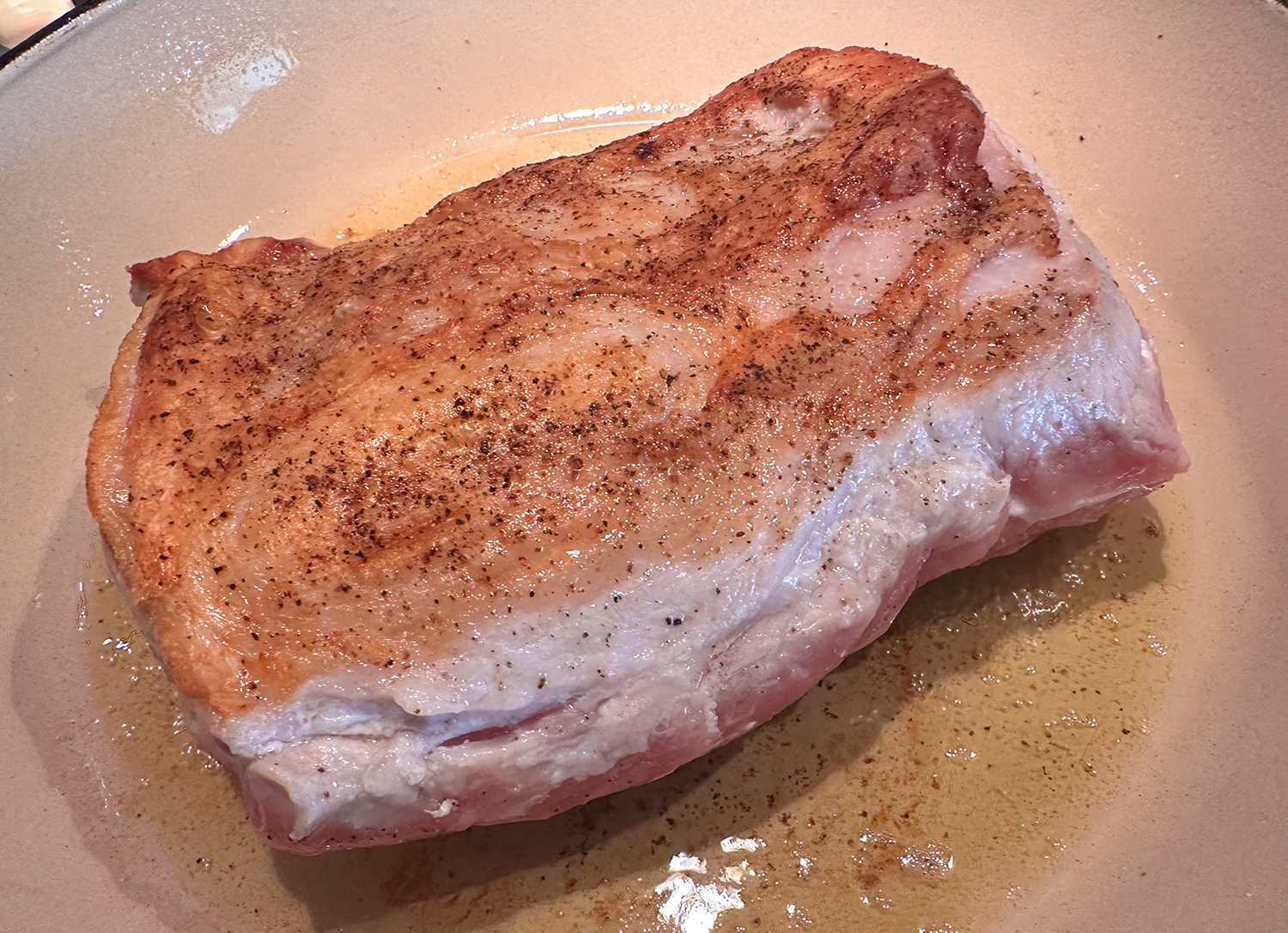
  2. Generously sprinkle all sides of the pork loin with salt and pepper. Place a braiser or shallow Dutch oven over medium-high heat. Add 2 tablespoons of the oil and heat until shimmering. Carefully put the pork in the pan. Sear until deeply golden on all sides, 1 to 2 minutes per side. Remove from the pan.
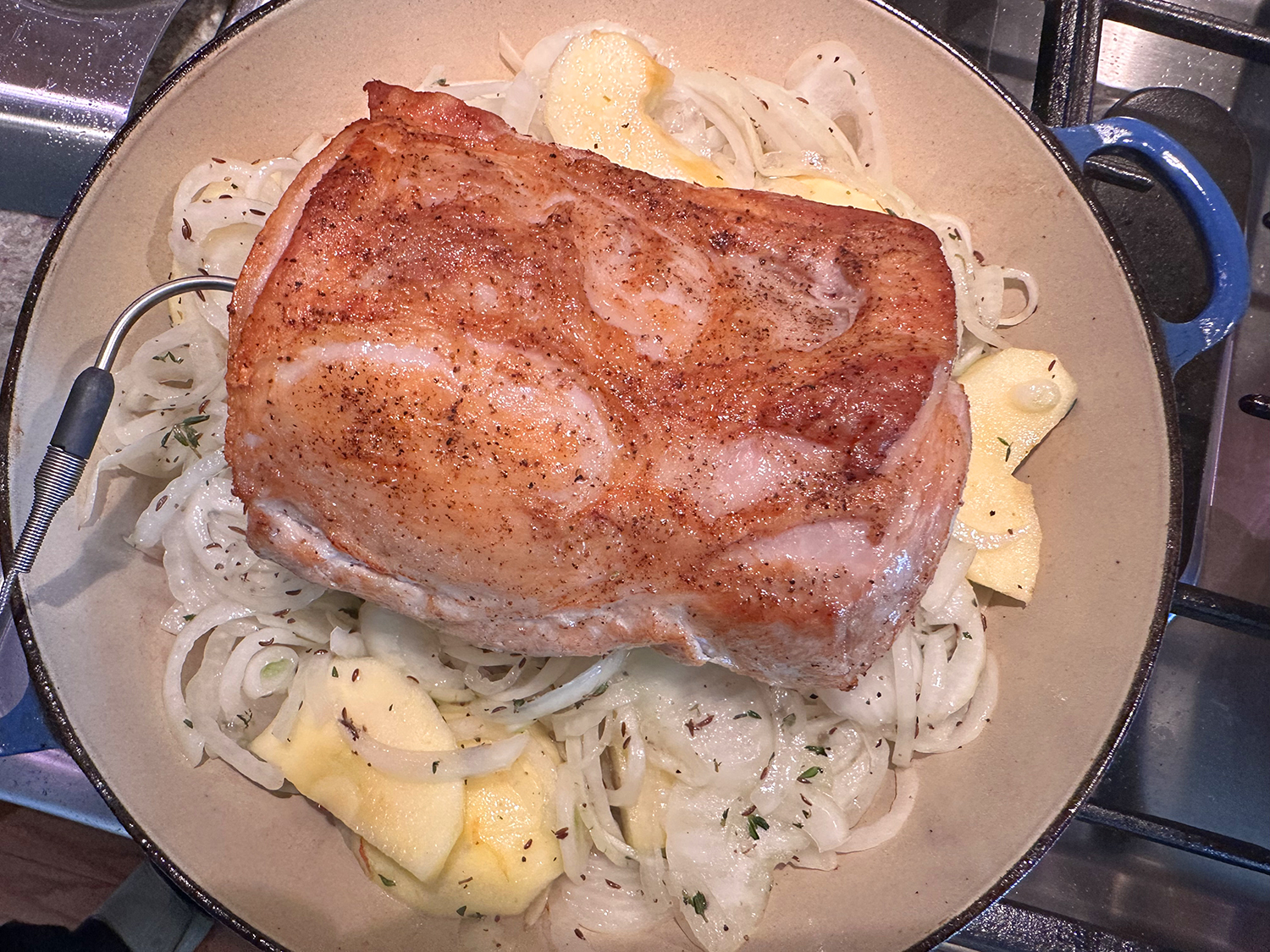
  3. Put the onions and apple in a large mixing bowl. Add the caraway seeds, dried thyme, remaining 1 tablespoon oil, 1 teaspoon salt and 1/2 teaspoon pepper and toss to coat. Transfer the mixture to the bottom of the braiser and nestle in the garlic cloves. Pour in 1/4 cup of the chicken stock and place the pork back on top. Put in the oven.
  4. About 20 minutes into the roasting time, turn the apple and onion mixture, leaving the pork loin alone. Continuing cooking the roast until the pork reaches an internal temperature of 145 degrees F, about 30 minutes. (Ours took 40 minutes to come to temperature.)
  5. Transfer the pork to a cutting board to rest while you make a pan sauce. Remove the apple and onion mixture to a platter
  6. Return the braiser to the stove over medium-high heat. Pour in the hard cider and remaining 1/2 cup chicken stock. Cook, scraping with a spatula to remove any brown bits from the bottom of the pan. Whisk in the mustard. Allow the sauce to simmer until reduced slightly, a couple of minutes. Add the butter, whisking until melted. Cook just until the sauce is shiny and slightly thickened, about 5 minutes. Taste and season with more salt and pepper if needed.
  7. Slice the pork and arrange the slices over the onion and apple mixture. Top with sauce and chopped parsley.

http://www.lynnandruss.com

Adapted from a recipe by Trisha Yearwood

Poulet au Vinaigre

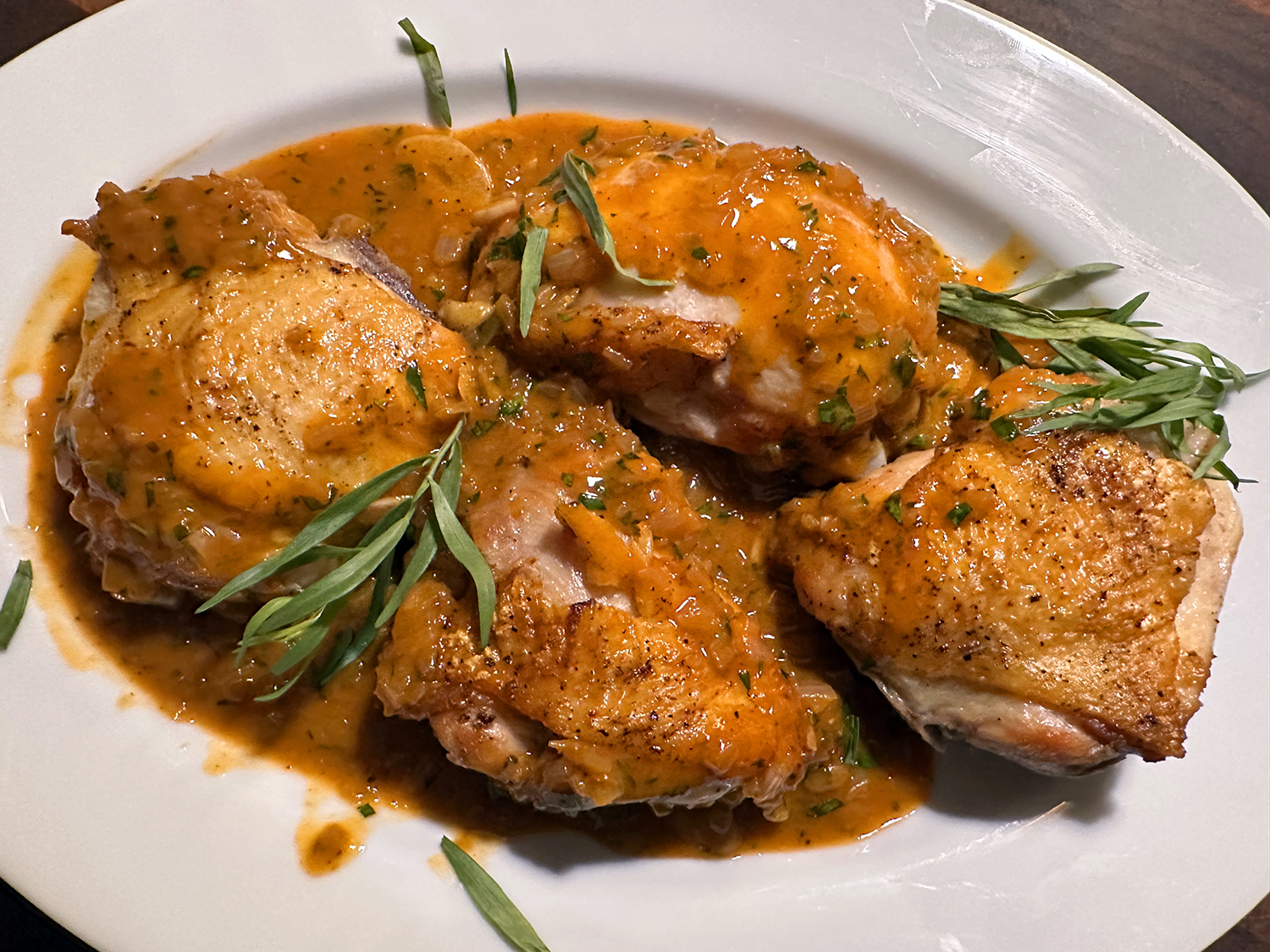
This classic Lyonnaise dish calls for using just chicken thighs rather than the usual combination of light and dark meat to ensure that all the meat cooks at the same rate. It hails from America’s Test Kitchen and we were excited to try the recipe.

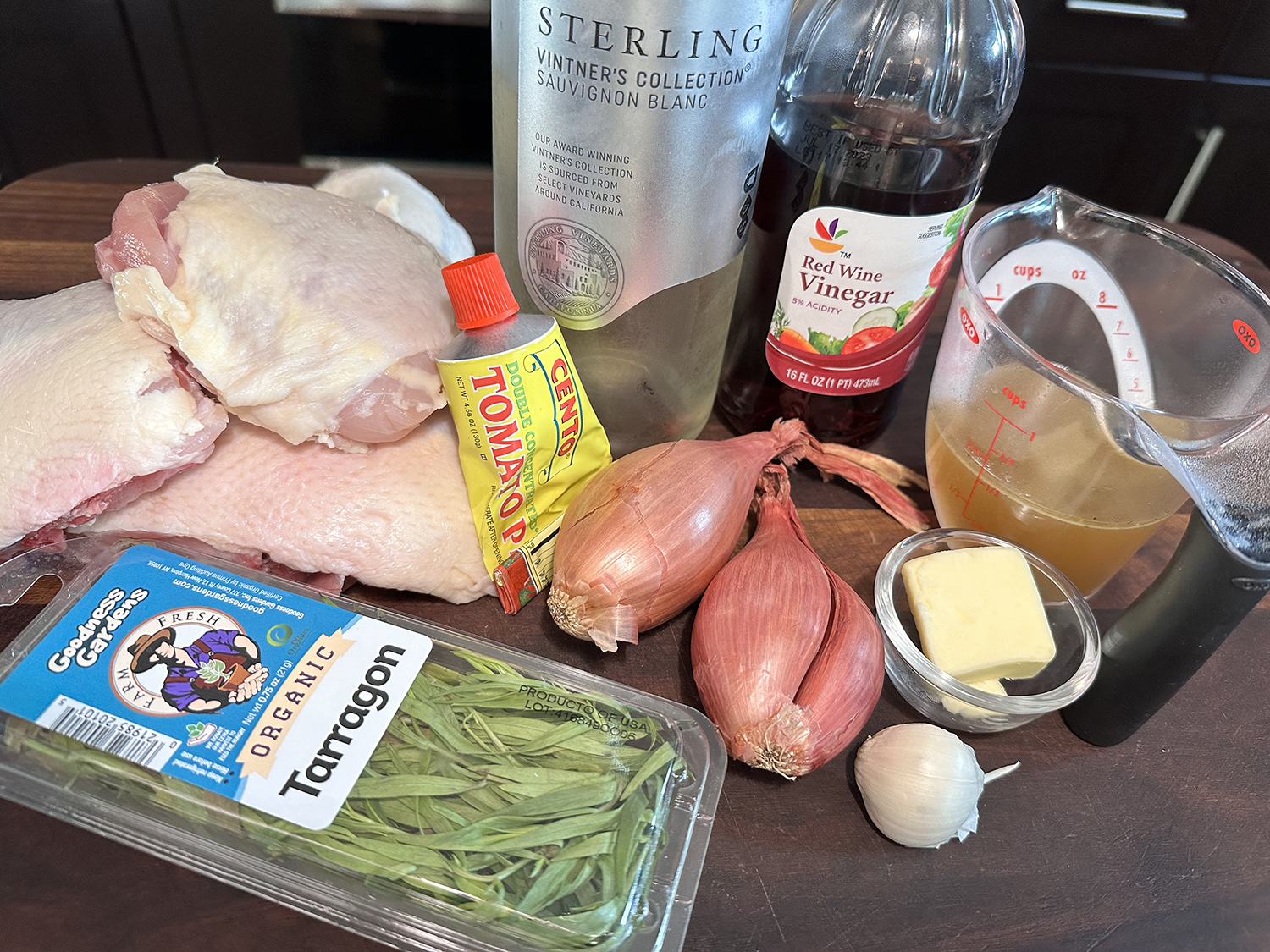
The chicken thighs are browned to develop flavor and then braised in a flavorful mix of chicken broth (preferably homemade), white wine, and red wine vinegar until it reaches 195 degrees and is meltingly tender and juicy.

To finish the sauce, fortify the braising liquid with tomato paste and reduce it to a luxurious, lightly thickened consistency before adding minced fresh tarragon. The sauce is typically finished with heavy cream, but this version whisks in a couple tablespoons of butter instead to help preserve the vibrancy of the luscious sauce. 

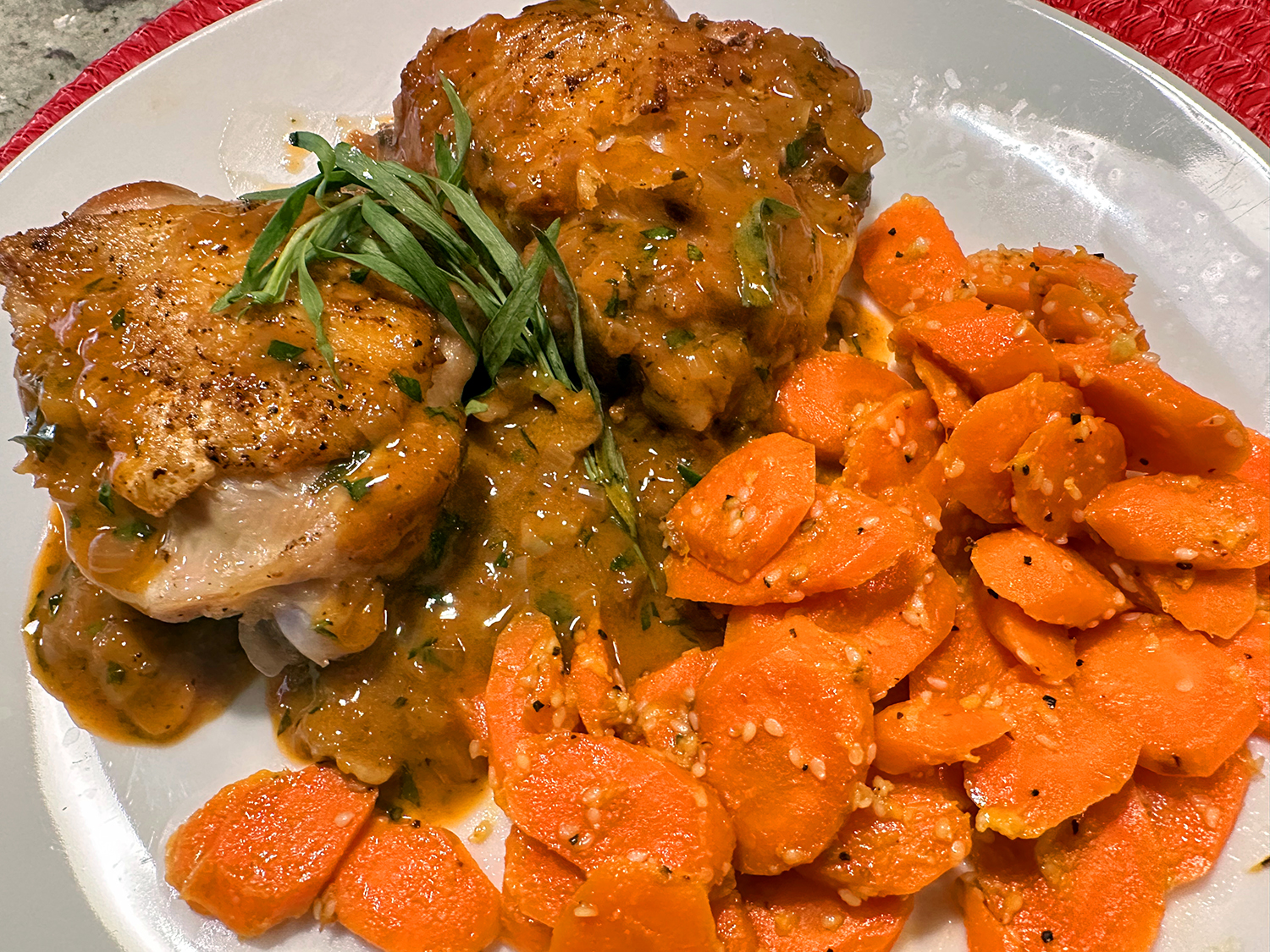
We initially loved the fact that it was a recipe for two. But after dining on the amazing dish, we almost wished we did have leftovers. The sauce alone is so incredibly tasty, you’ll want to lick your plate clean! Our entree was paired with Miso-Orange Glazed Carrots.

NOTE: Use an inexpensive dry white wine here or substitute dry vermouth. Fresh tarragon is traditional for poulet au vinaigre, but parsley can be substituted, if desired.

Poulet au Vinaigre

  • Servings: 2
  • Difficulty: easy
  • Print

Ingredients

  • 4 (5- to 7-oz.) bone-in chicken thighs, trimmed
  • ½ tsp. table salt
  • ¼ tsp. pepper
  • 1 ½ tsp. vegetable oil
  • 2 Tbsp. minced shallot, or more (we doubled it to 1⁄4 cup)
  • 1 garlic clove, sliced thin
  • ½ cup chicken broth, preferably homemade
  • ½ cup dry white wine
  • 2 ½Tbsp. red wine vinegar, plus extra for seasoning
  • 1 ½ tsp. tomato paste
  • 1 Tbsp. unsalted butter, chilled
  • 1 ½ tsp. minced fresh tarragon

Directions

  1. Adjust oven rack to lower-middle position and heat oven to 325 degrees.
  2. Pat chicken dry with paper towels and sprinkle both sides with salt and pepper. Heat oil in 10-inch oven-safe skillet over medium heat until shimmering.
  3. Add chicken, skin side down, and cook, without moving it, until well browned, about 8 minutes. Using tongs, flip chicken and brown on second side, about 3 minutes. Transfer chicken to large plate.
  4.  Pour off all but 1 tablespoon fat from skillet. Add shallot and garlic and cook, stirring frequently, until garlic is golden brown, about 1½ minutes.
  5. Add broth, wine, and vinegar; bring to simmer, scraping up any browned bits. Return chicken to skillet, skin side up (skin will be above surface of liquid).
  6. Transfer skillet to oven and bake, uncovered, until chicken registers 195 degrees, 35 to 40 minutes. Using tongs, transfer chicken to clean serving platter and tent with aluminum foil.
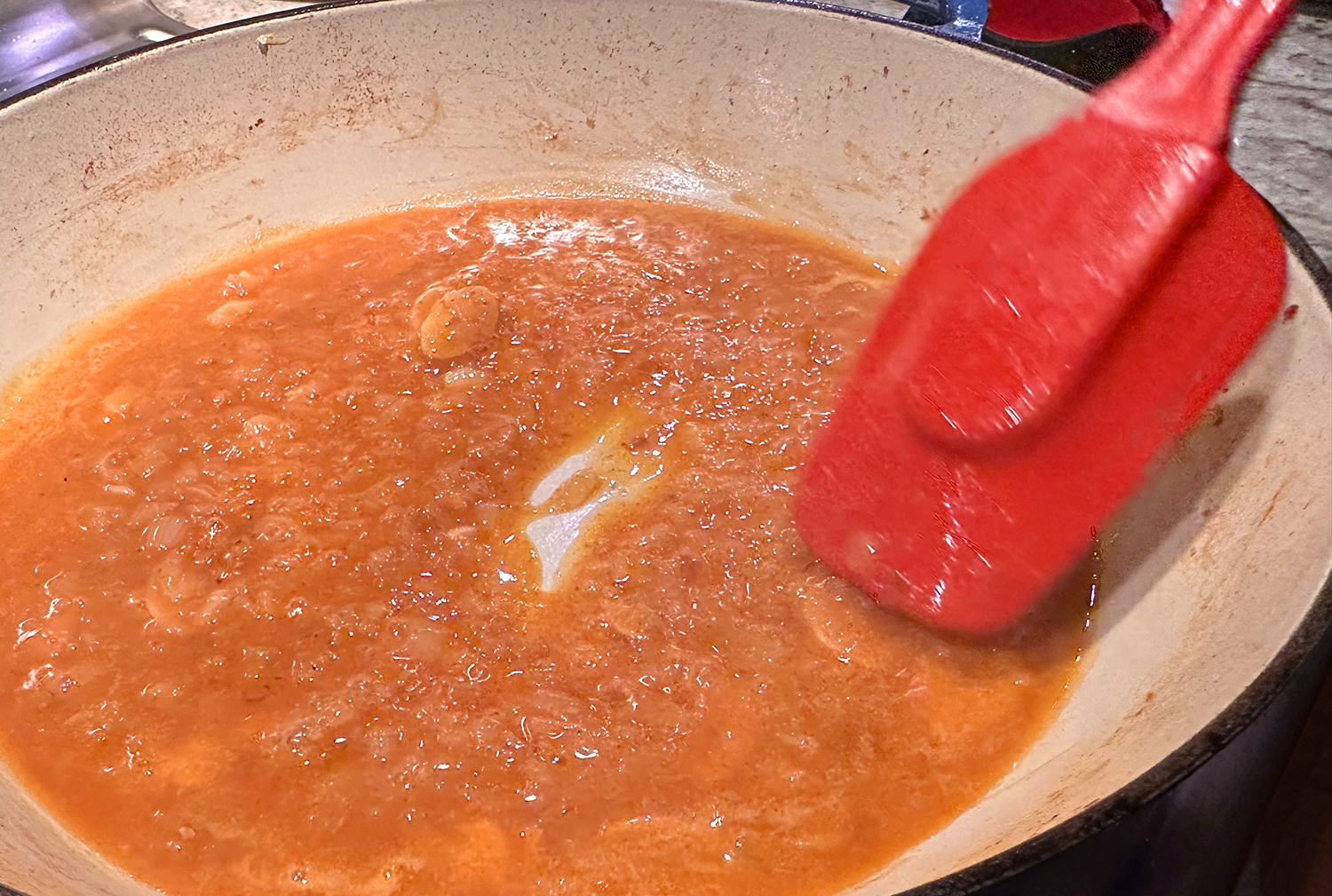
  7. Place skillet over high heat. Whisk tomato paste into liquid and bring to boil. Cook, occasionally scraping side of skillet to incorporate fond, until sauce is thickened and reduced to ⅔ cup, 5 to 7 minutes.
  8. Off heat, whisk in butter and tarragon. Season with salt, pepper, and up to ½ teaspoon extra vinegar (added ⅛ teaspoon at a time) to taste. Pour sauce around chicken and serve.

http://www.lynnandruss.com

Original recipe from America’s test Kitchen

Sichuan Braised Cod

I declared this my favorite cod recipe to date. The flavor profile was spot on for me, although it may be a bit too spicy for some. In that case, cut back on the number of dried chiles.

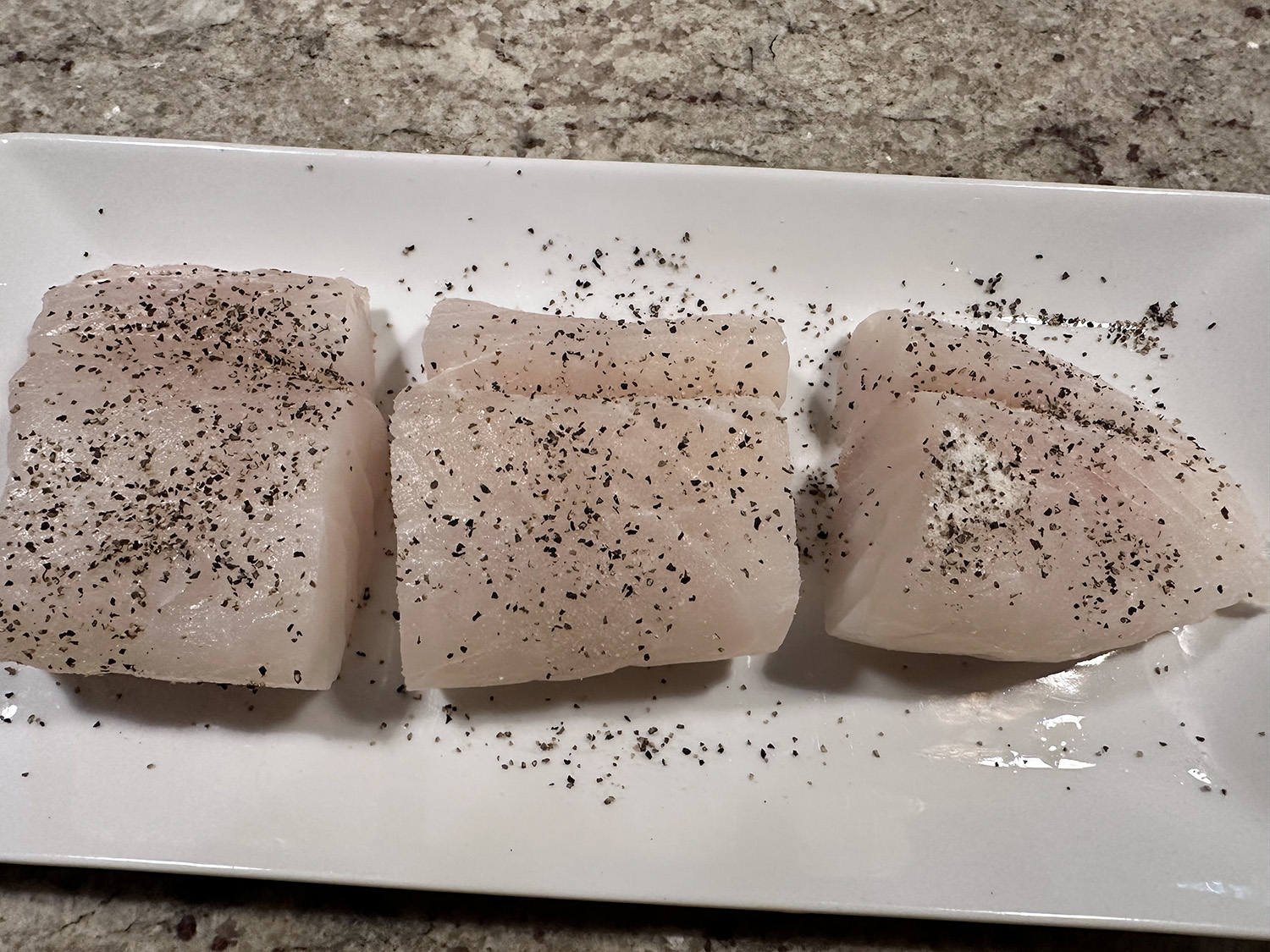
The Sichuan Braised Cod recipe from Fine Cooking makes a for quick and healthy supper, especially when served with a side salad. Only the two of us were sharing the meal so we bought a smaller piece of fish—just over a pound—and cut it into 3 equal sections.

The original recipe instructs you to flip the cooked cod in the sauce a couple of times. Fearing the fish would fall apart as it was flipped, we spooned the sauce over each fillet instead. To keep it pescatarian, we swapped out the chicken broth for homemade shrimp stock. Serve with steamed rice.

Sichuan Braised Cod

  • Servings: 4
  • Difficulty: easy
  • Print

Ingredients

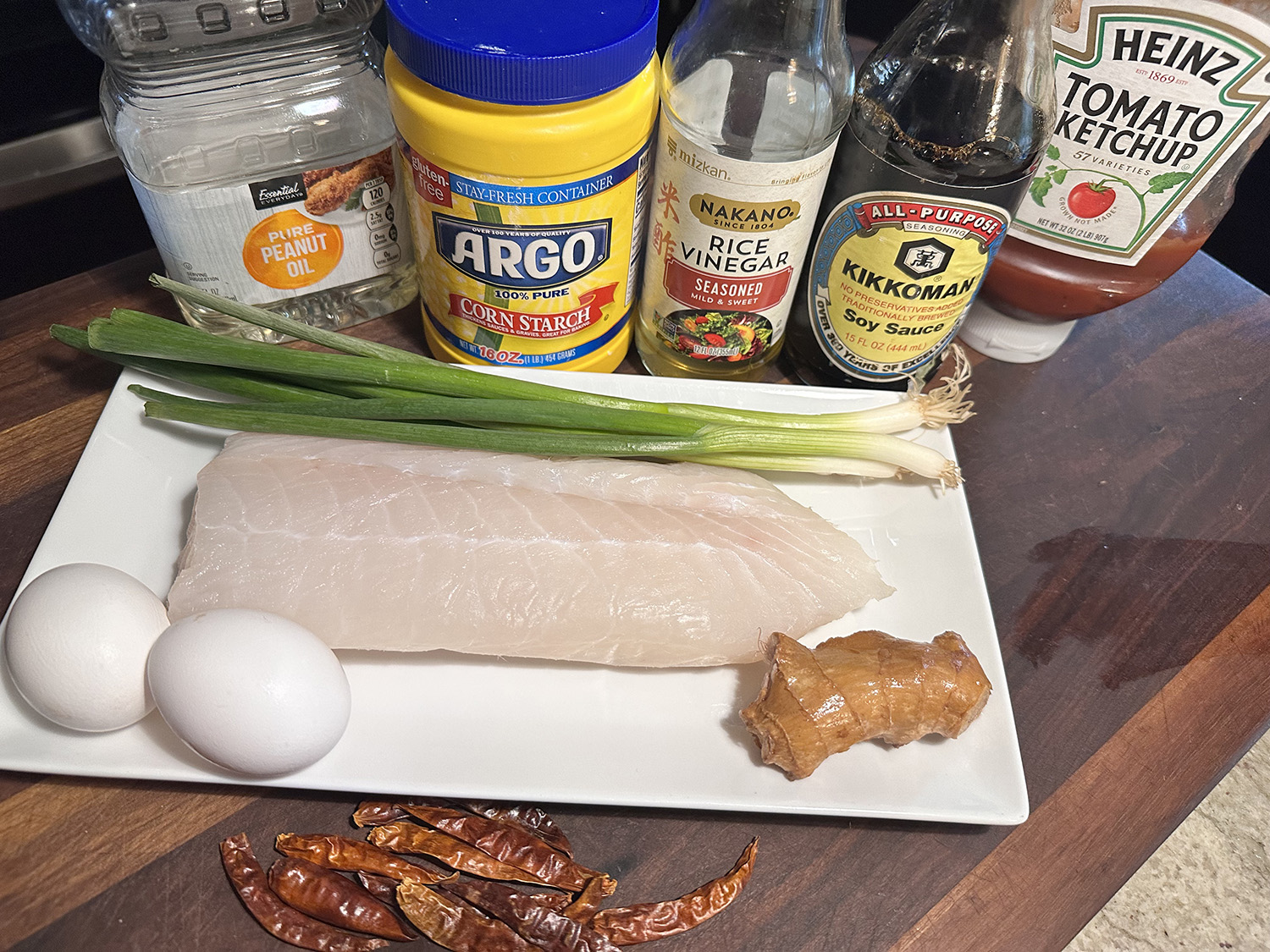
  • 1⁄2 cup, plus 2 tsp. cornstarch
  • 2 Tbsp. rice vinegar, more to taste
  • 3/4 Shrimp broth
  • 1 1⁄2 Tbsp. soy sauce
  • 1 Tbsp. ketchup
  • 1 1⁄2 lbs. cod fillets, cut into 4 uniform pieces
  • Kosher salt and frhly ground black pepper
  • 2 eggs, beaten
  • 3 Tvbsp. canola oil
  • 10 dried Thai chiles or other small whole chiles
  • 4 scallions, thinly sliced, white and green parts separated
  • 1 1⁄2 Tbsp. minced ginger

Directions

  1. in a small bowl, mix the 2 teaspoons cornstarch with 2 tablespoons vinegar. Add the broth, soy sauce and ketchup.
  2. Season the fish with 1/2 teaspoon salt and 1/2 teaspoon pepper.
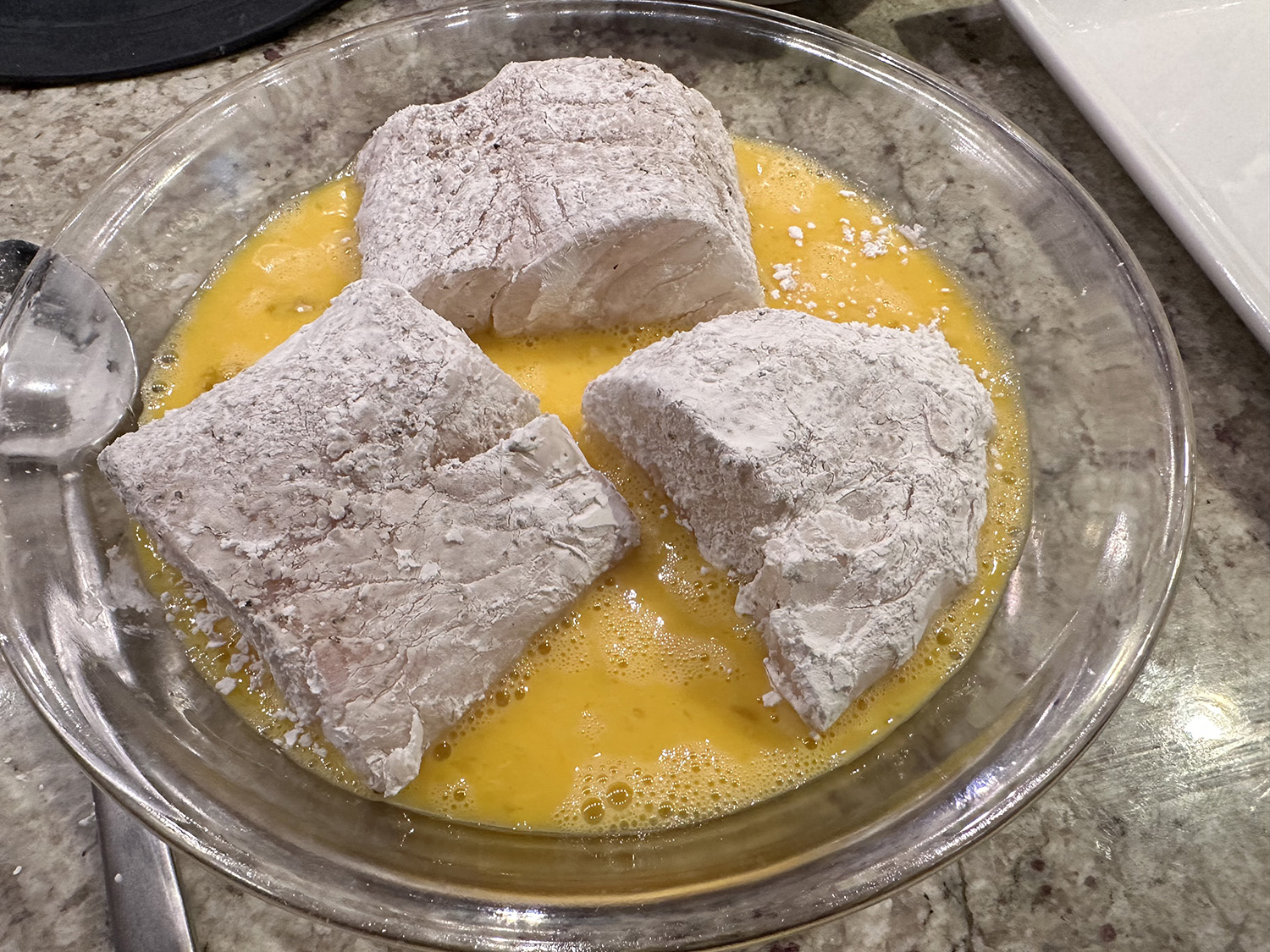
  3. Spread the remaining 1/2 cup cornstarch on a plate, and put the eggs in a wide bowl. Dredge the fish in the cornstarch.
  4. Heat 2 tablespoons oil in a 12-inch non-stick pan over medium-high heat until shimmering hot. Soak the fish in the egg for a couple of seconds, then add to the pan.
  5. Cook, flipping every three minutes, until the cod is browned and a little firm to the touch, about 5 minutes total (it should not be cooked all the way through). Transfer the fish to a large plate.
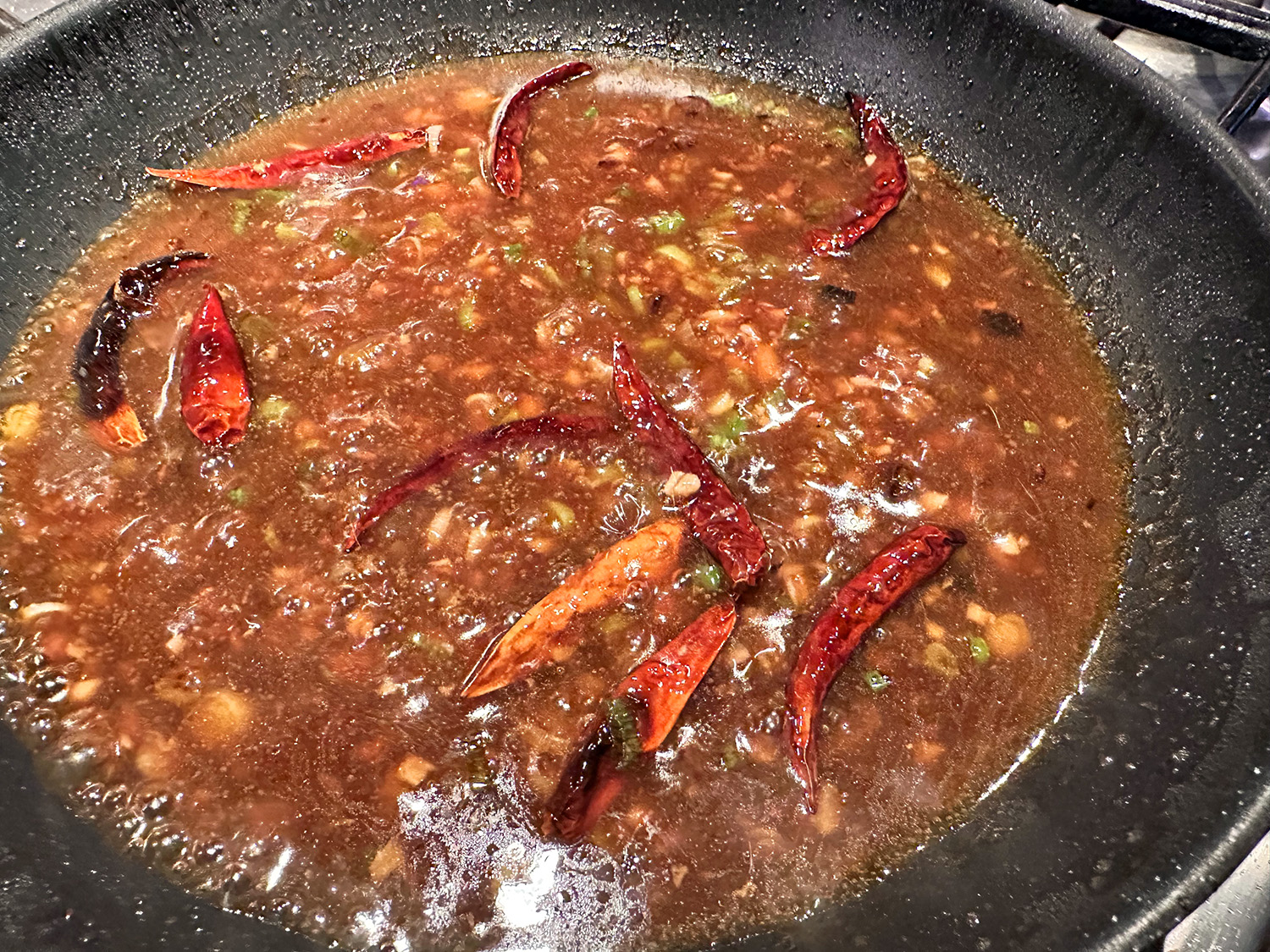
  6. Add the remaining 1 tablespoon oil to the pan, then add the chiles, white parts of the scallions, and ginger. Cook, stirring until the scallions become translucent and browned in a few places, about 2 minutes.
  7. Give the cornstarch mixture a quick stir and then pour it into the pan. It should come to a boil and thicken quickly. Reduce the heat to medium-low, return the fish to the pan, and spoon the sauce over the fillets a couple of times to coat them in the sauce.
  8. Cover the pan, leaving the lid slightly ajar, and cook until the fish is just cooked through and starting to flake, 3 to 5 minutes.
  9. Taste the sauce for salt and vinegar, adding more to taste if needed. Serve immediately with the sauce spooned over the cod and sprinkled with scallion greens.

http://www.lynnandruss.com

Adapted from a recipe from Fine Cooking

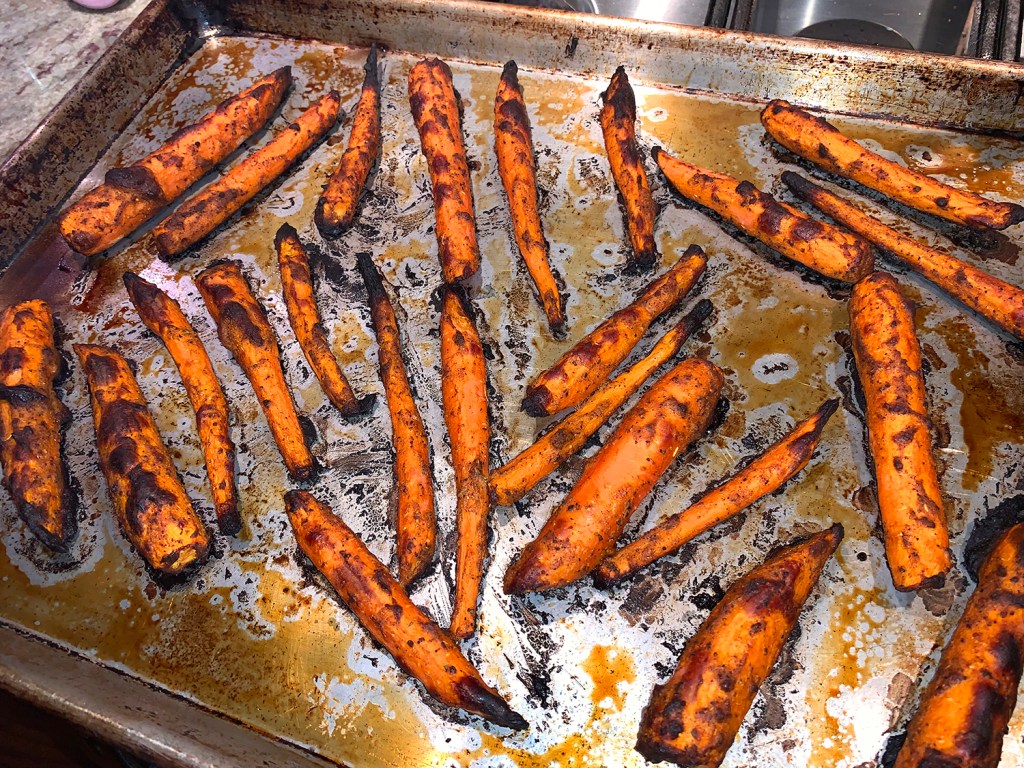
Yogurt-Roasted Carrots with Warm Spices

In this tandoori-inspired recipe from Milk Street, garam masala is combined with crushed fennel seed and turmeric for the carrot seasoning. A shallot-infused melted butter topping includes more of the spice mix with fresh cilantro and mint. Full-fat Greek yogurt better facilitates charring due to its lower moisture content.

It is recommended that you buy carrots with their green tops still attached. Even though you discard the greens, they tend to be fresher and on the slimmer side. The greens are super delicious and loaded with nutrients so if you’re not keen on tossing them, consider using them in a variety of ways such as pesto, chimichurri, fritters, or in your homemade vegetable broth.

Don’t forget to coat the baking sheet with cooking spray. The yogurt-covered carrots otherwise will char and stick to the pan. Don’t use large carrots for this recipe. Bunched carrots with tops are thinner and more tender than bagged carrots.

Yogurt-Roasted Carrots with Warm Spices

  • Servings: 4
  • Difficulty: easy
  • Print

Ingredients

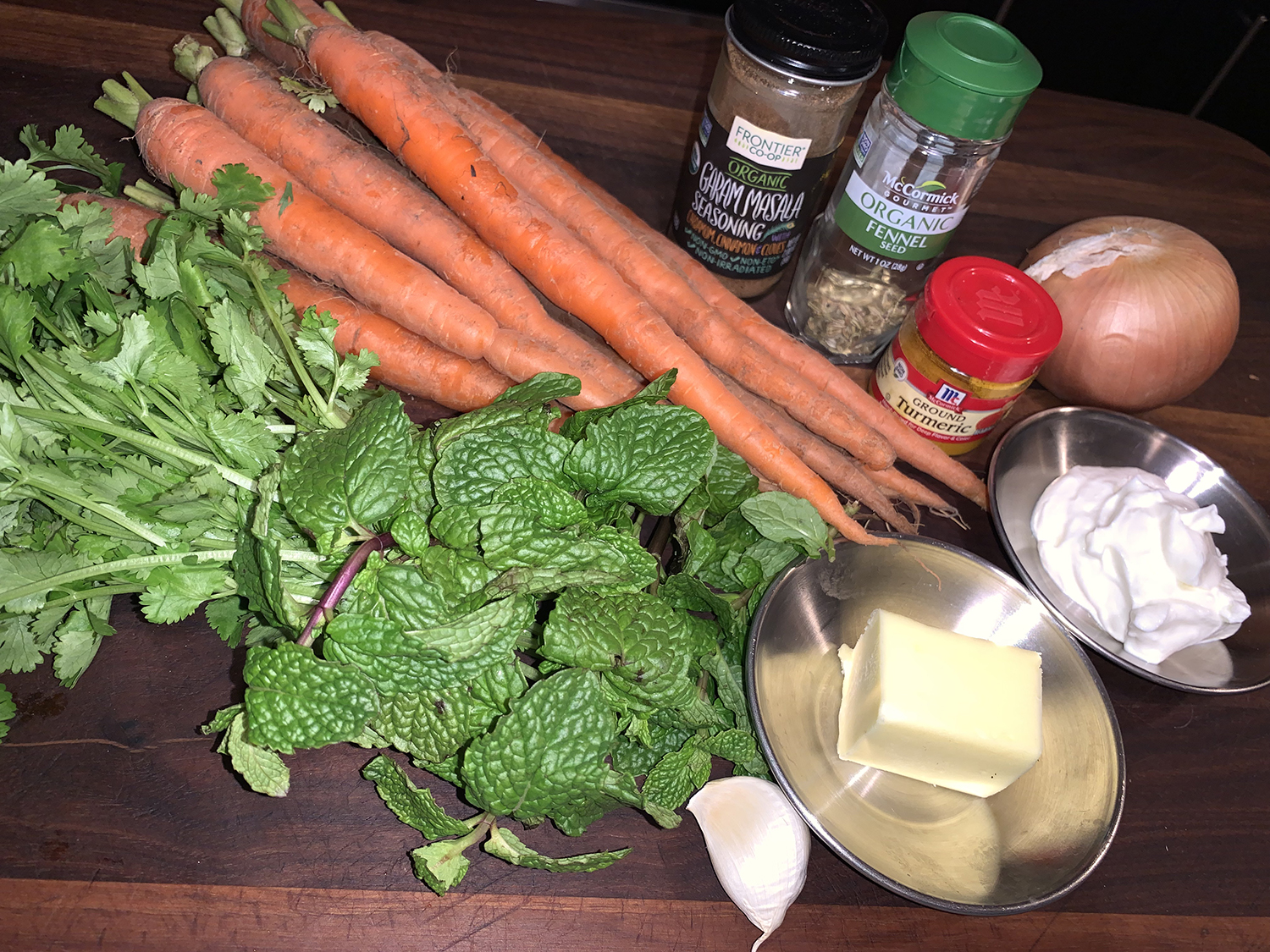
  • 2 tsp. garam masala
  • 1 tsp. fennel seeds, lightly crushed
  • 1/2 tsp. ground turmeric
  • Kosher salt and ground black pepper
  • 1/4 cup whole-milk Greek yogurt
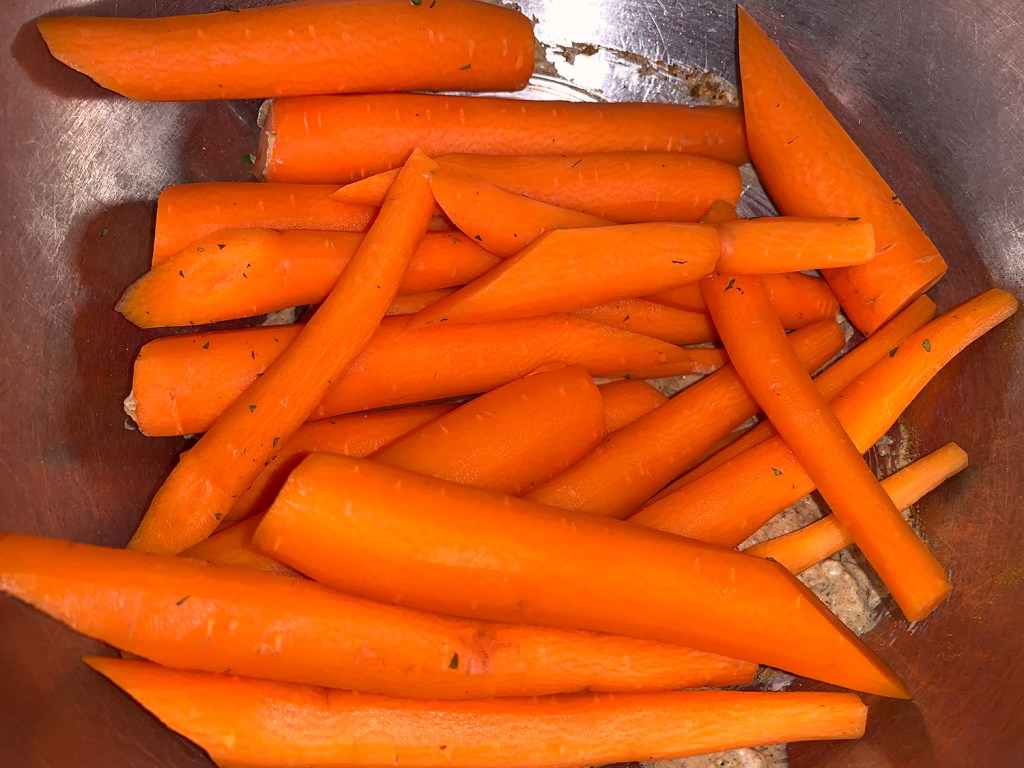
  • 2 bunches carrots with tops (1 lb. total), tops removed and discarded, halved crosswise on a sharp diagonal
  • 4 Tbsp. salted butter
  • 1 small shallot, finely chopped
  • 1 medium garlic clove, finely grated
  • 1/3 cup lightly packed fresh cilantro, chopped
  • 1/3 cup lightly packed fresh mint, chopped

Directions

  1. Heat the oven to 500°F with a rack in the middle position. Mist a rimmed baking sheet with cooking spray.
  2. In a small bowl, mix together the garam masala, fennel, turmeric and ½ teaspoon each salt and pepper. In a large bowl, mix the yogurt with 4 teaspoons of the spice mix. Add the carrots and toss to coat. Distribute the carrots in an even layer on the prepared baking sheet.
  3. Roast until well charred and a skewer inserted into the carrots meets no resistance, 25 to 30 minutes; stir the carrots once about halfway through.
  4. Meanwhile, in an 8-inch skillet over medium, melt the butter. Add the shallot and garlic, then cook, stirring, until beginning to brown and crisp, 3 to 5 minutes.
  5. Add the remaining spice mix and cook, stirring, until fragrant, 30 to 60 seconds. Remove from the heat and set aside.
  6. When the carrots are done, add the spiced shallot mixture, cilantro and mint directly to the baking sheet and toss with tongs. Taste and season with salt and pepper, then transfer immediately to a serving platter.
    NOTE: Don’t let them stay on the baking sheet which will char the tender herbs and onions. Cover with foil if your other dishes are not ready.

http://www.lynnandruss.com

Recipe from Calvin Cox for Milk Street

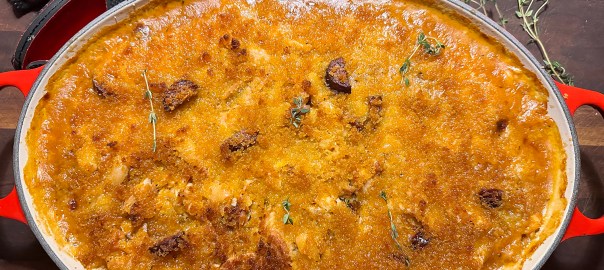
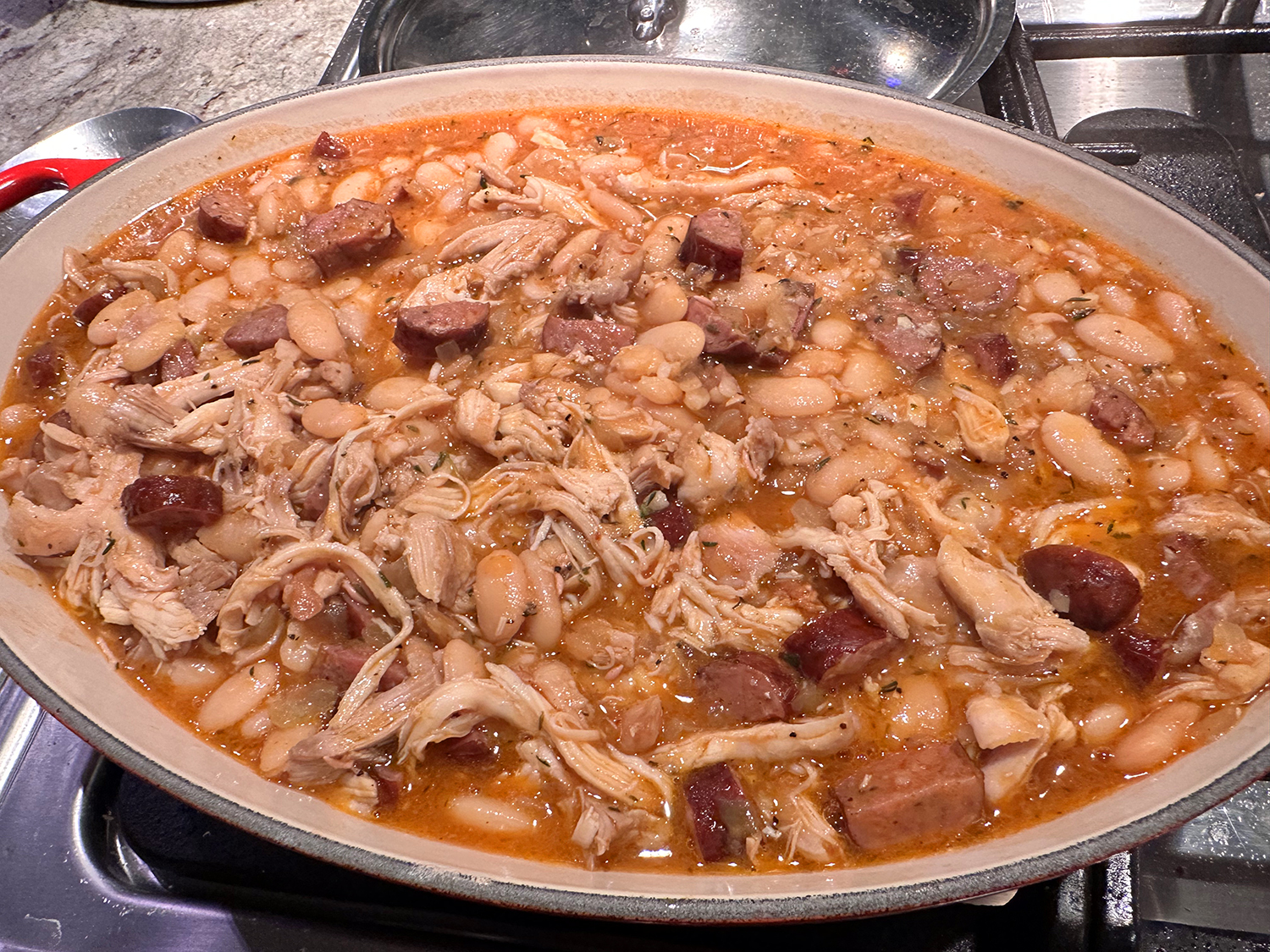
Lazy Chicken-and-Sausage Cassoulet

Cassoulet, a hearty slow-simmered stew of sausage, confit (typically duck), pork, and white beans, is one of the great hallmarks of French country cuisine. The best versions are cooked for hours until the beans and meat meld into a dish of luxuriant, velvety richness. As chef-author Molly Stevens says “There is no single best cassoulet, and, perhaps more importantly, feel free to adapt this rustic dish to suit your own appetite and cooking routines.”

Typically, a traditional French cassoulet should be cooked, then cooled, preferably overnight, then cooked and cooled again — at least three times. Multiple slow simmerings allow the beans to absorb the rich flavors of the sausage and duck confit until they become velvety and plush while still maintaining their shape and integrity. Ideally, it is made over the course of four days, but not here.

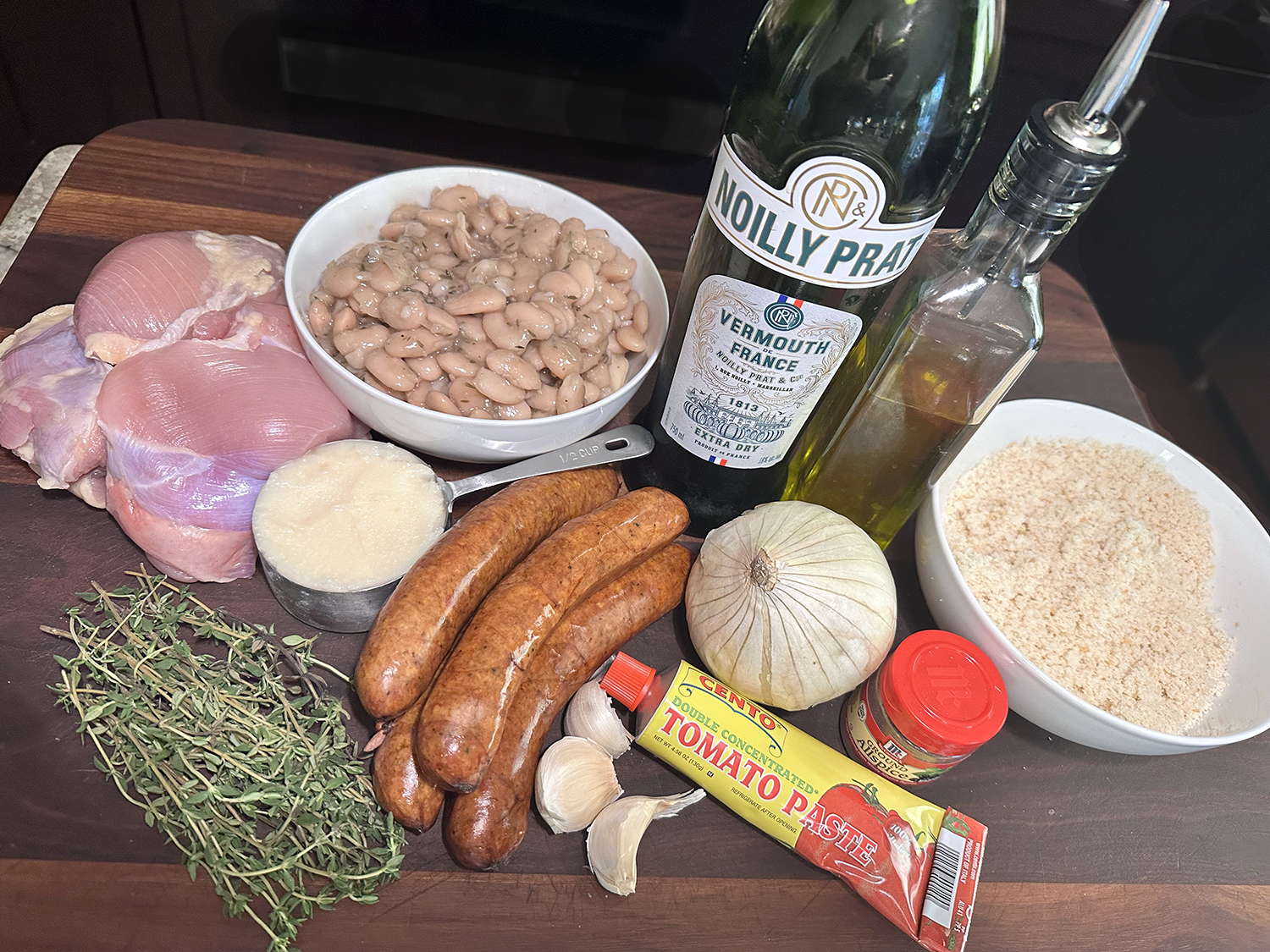
This “lazy” version remains the simplest: one that you can get on the dinner table in about an hour. Start with boneless, skinless chicken thighs (unless you have leftover roast chicken, which works great, too). If you have duck fat on hand, which we did, use it to sauté the chicken for an extra flavor boost (and because that’s the fat most used in southwest France), but any neutral-tasting oil will do. Either way, the chicken should be tender, cooked through, and well-seasoned.

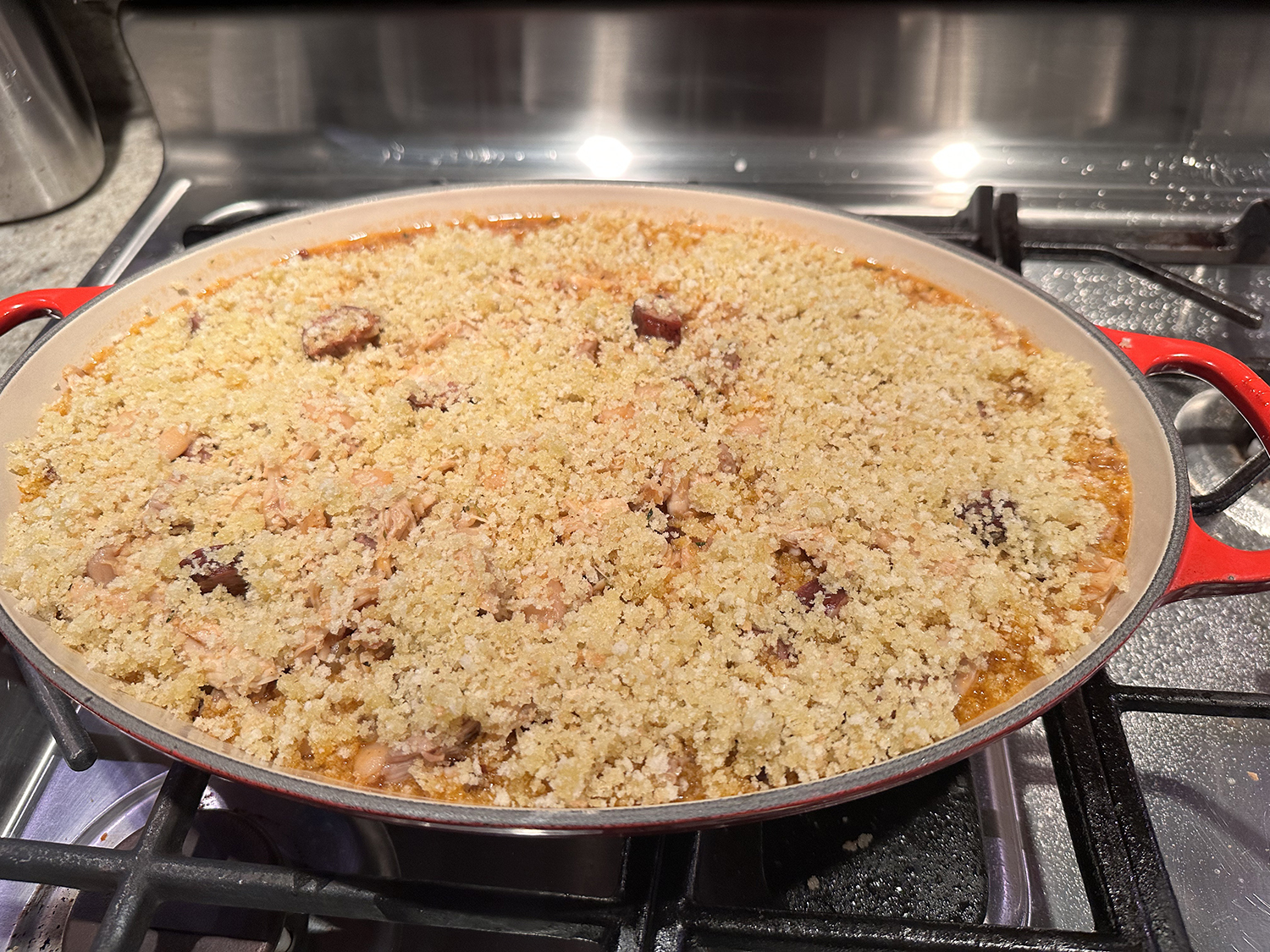
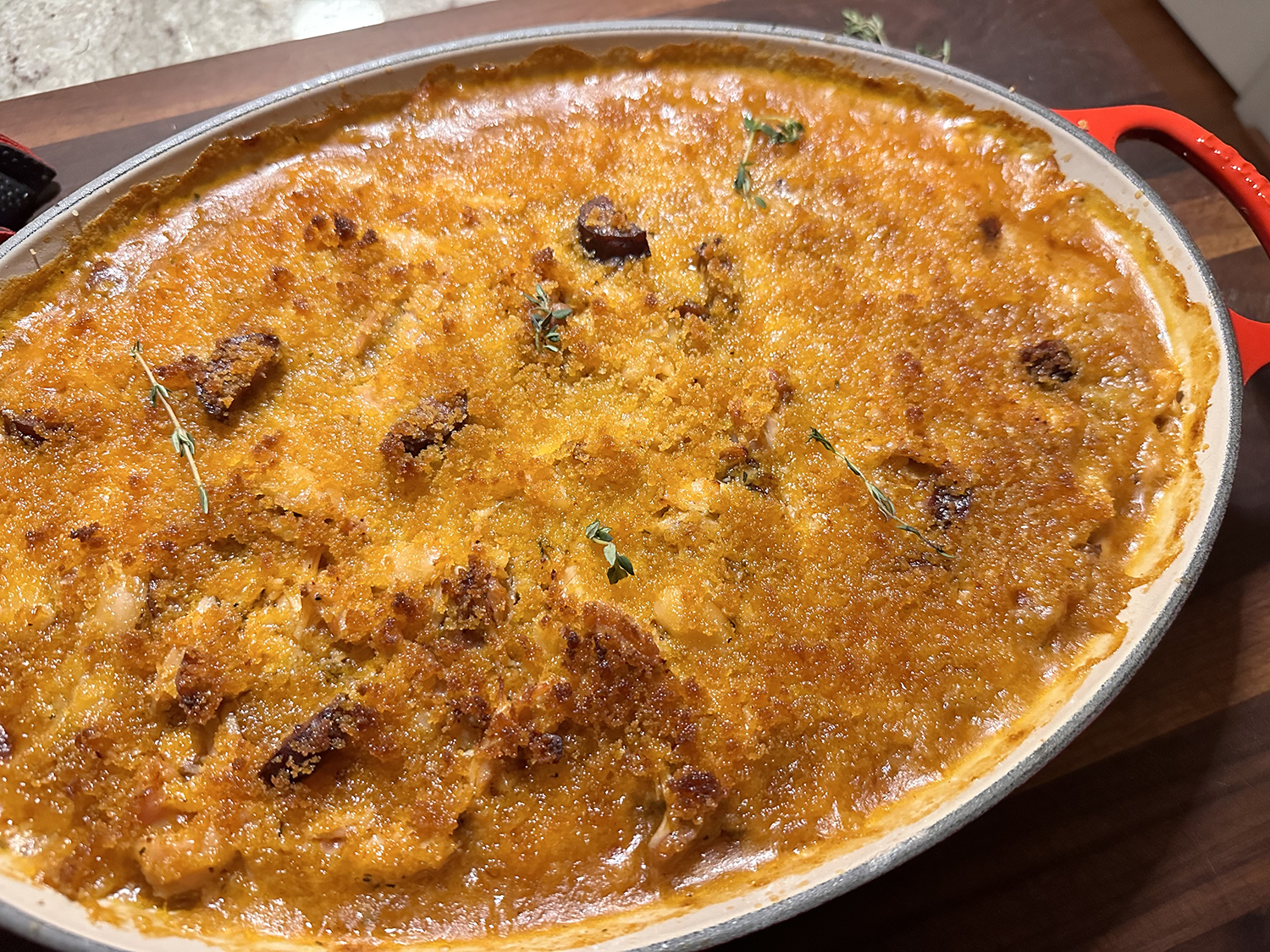
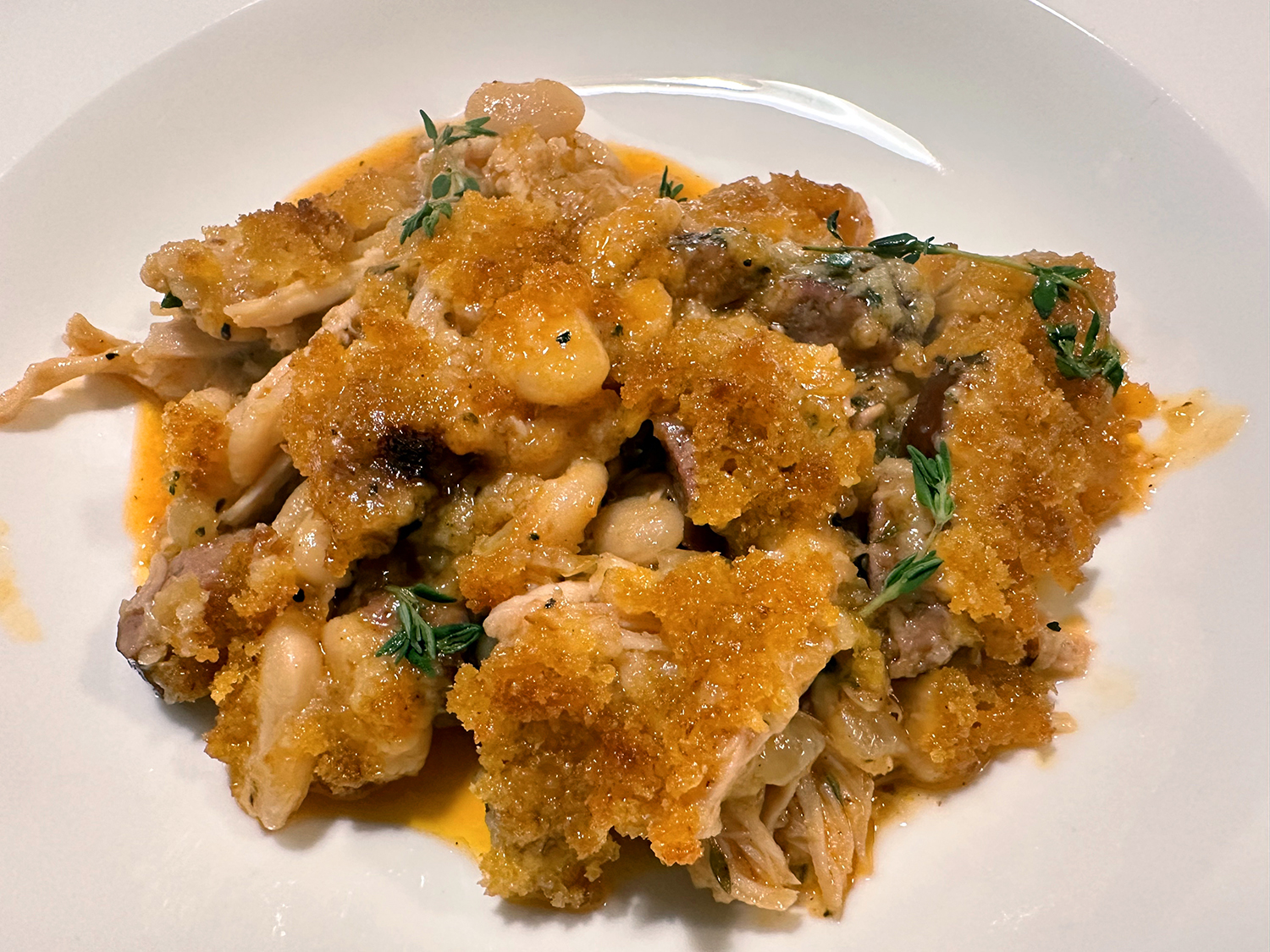
Then it’s a matter of sautéing an onion, a healthy amount of garlic, and a heap of smoked sausage to create a flavor base that will carry through the entire dish. A bit of tomato paste ups the umami quotient, and a splash of white wine contributes just enough acid to balance the richness. From there, everything gets gently folded together with cooked white beans (canned or home-cooked), spread in a shallow dish (either a gratin or a heavy skillet), topped with breadcrumbs, and baked until bubbling hot on the inside and crunchy-golden on top. Unbelievably decadent and delicious!

Make Ahead: The dish may be prepared through step 5, covered, and stored in the refrigerator up to 1 day ahead.

FYI, we doubled the andouille sausage because we only had about half the amount of chicken thighs.

Lazy Chicken-and-Sausage Cassoulet

  • Servings: 4
  • Difficulty: easy
  • Print

Ingredients

  • 2 lbs. boneless, skinless chicken thighs, patted dry
  • 1 3/4 tsp. kosher salt, divided
  • 1 tsp. black pepper, divided
  • 1/2 cup olive oil or canola oil, divided
  • 1 medium-size yellow onion, chopped
  • 6 oz. smoked sausage, such as andouille or kielbasa, halved lengthwise and cut crosswise into 1/2-inch pieces
  • 3 garlic cloves, minced
  • 1 Tbsp. chopped fresh thyme, plus more for garnish
  • 1/8 tsp. ground allspice
  • 1/4 cup dry white wine
  • 2 Tbsp. tomato paste
  • 2 15-oz. cans white beans, such as Great Northern or cannellini, drained and rinsed
  • 1 cup chicken stock, preferably homemade
  • 1 1/2 cups fresh breadcrumbs

Directions

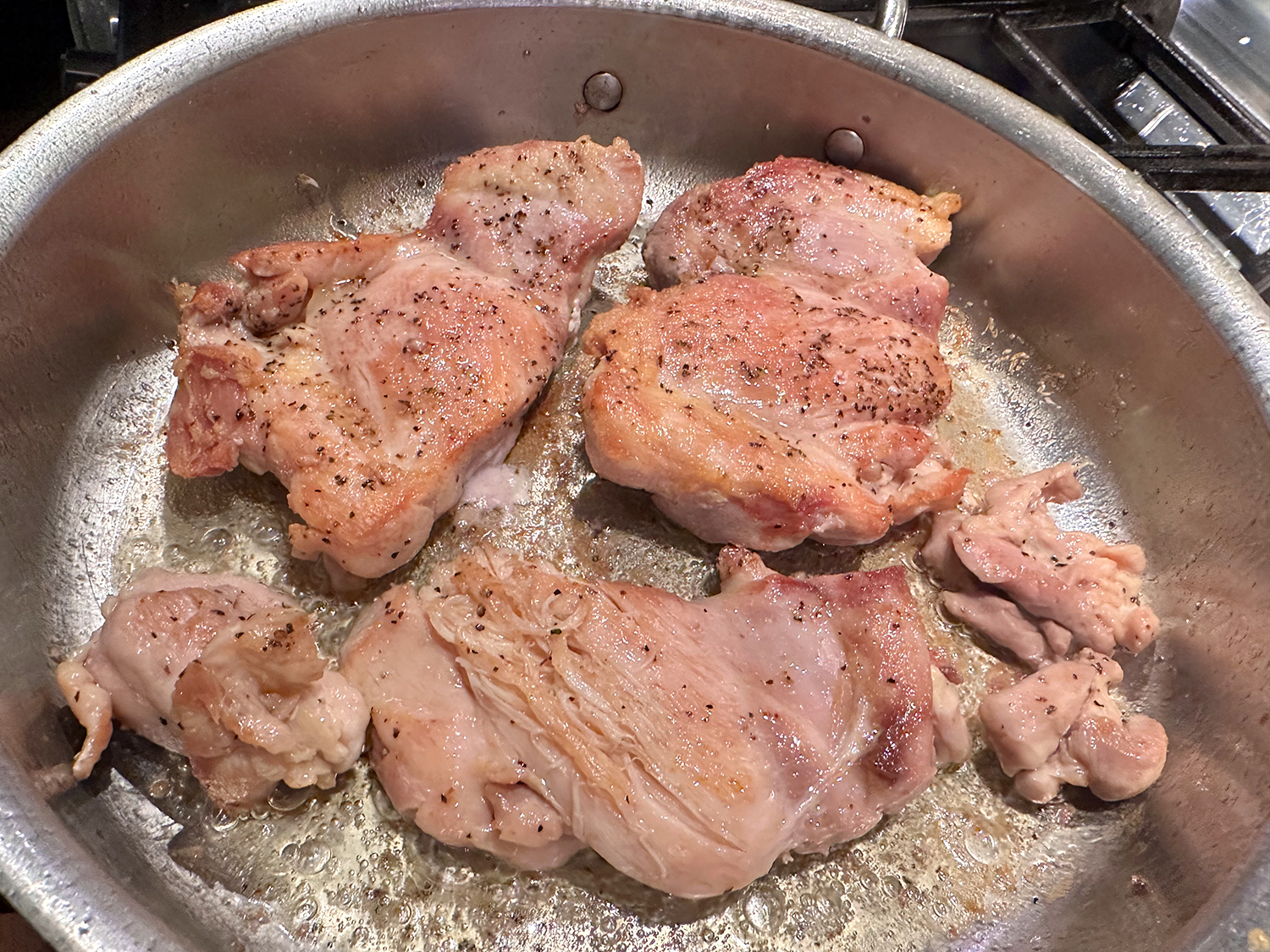
  1. Preheat oven to 375°F. Season chicken thighs with 1 teaspoon salt and 1/2 teaspoon pepper. Heat 2 tablespoons oil in a large skillet over medium-high. Add chicken thighs, smooth side down. Cook, undisturbed, adjusting heat as necessary so thighs cook evenly without scorching, until edges turn opaque and bottoms are nicely browned, about 6 minutes. Flip and cook until internal temperature reaches 165°F, 4 to 5 minutes. Set aside on a plate. Do not wipe skillet clean.
  2. Return skillet and any drippings to medium heat. Add 1 tablespoon oil, onion, and sausage. Cook, stirring often, until onion is tender and light golden, about 6 minutes.
  3. Add garlic, thyme, allspice, remaining 3/4 teaspoon salt, and remaining 1/2 teaspoon pepper. Cook, stirring often, until heated through and fragrant, about 2 minutes.
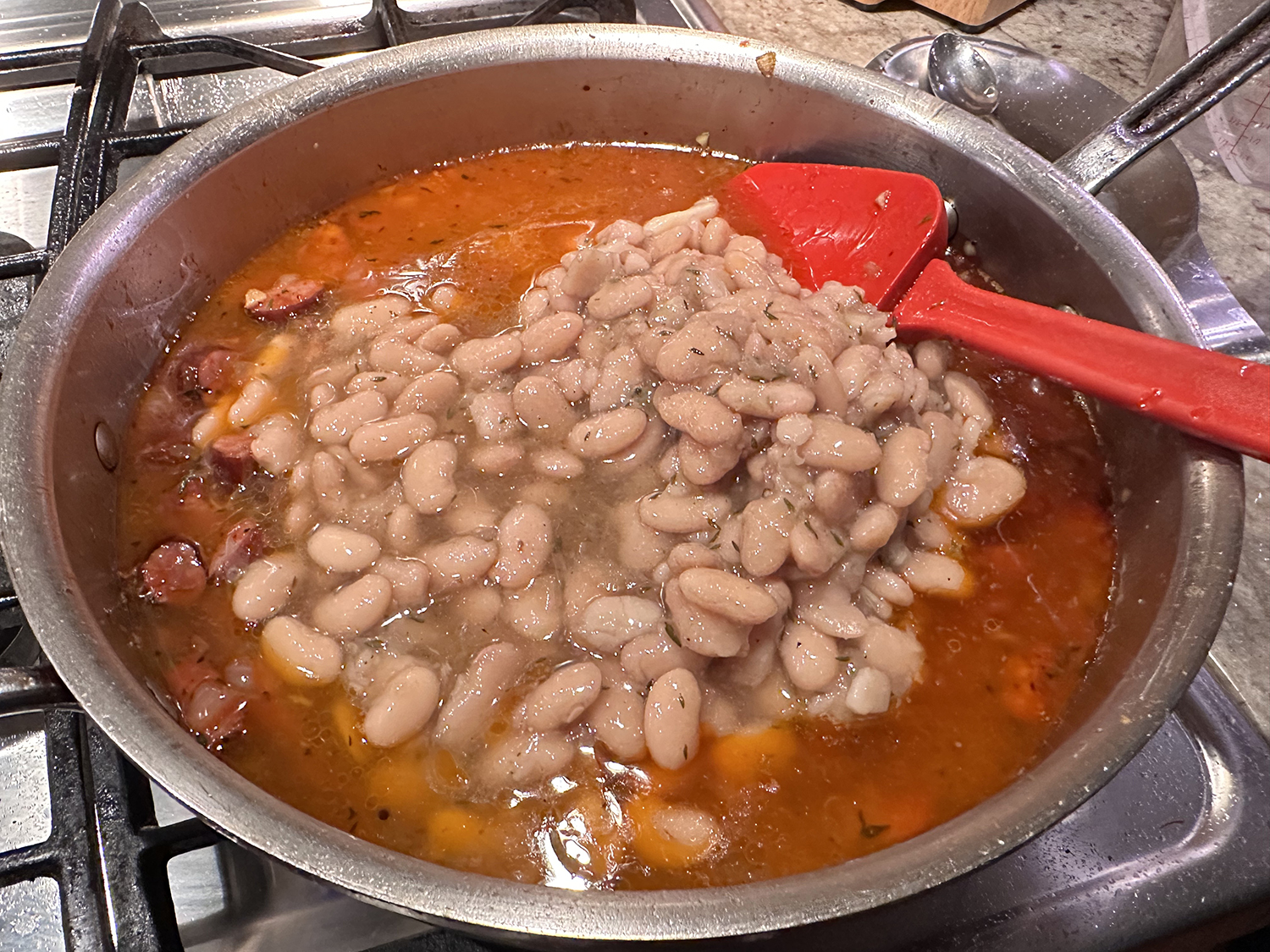
  4. Add wine and tomato paste, and stir to combine. Bring to a simmer; cook, stirring often, 1 to 2 minutes. Add beans, stock, and 2 tablespoons oil; bring to a simmer.
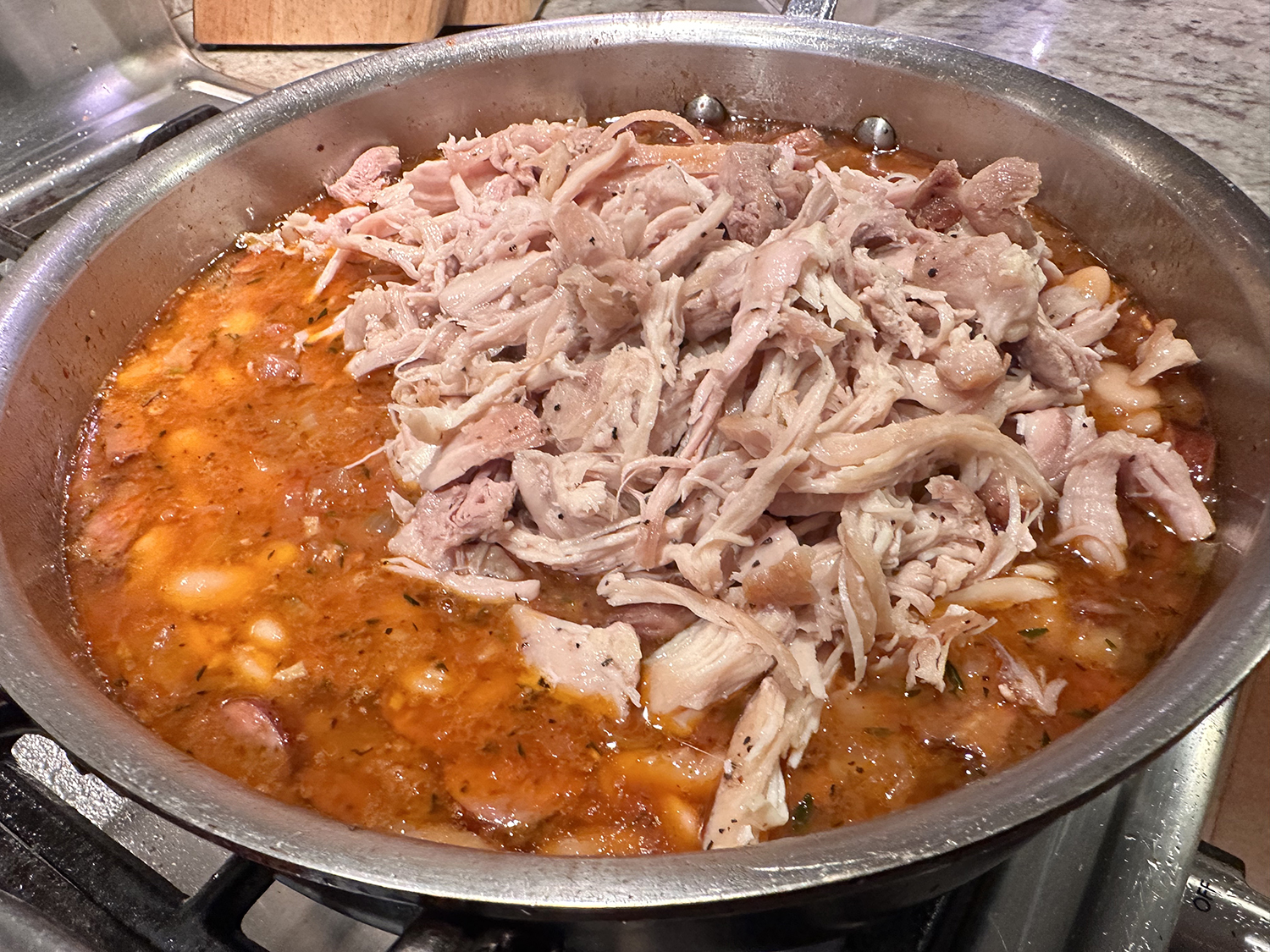
  5. Shred chicken into bite-size pieces; add to onion mixture along with any drippings that have accumulated on the plate. Transfer to an 8- x 11-inch baking dish. Spread into an even layer. (If cooking later, cover the dish with foil and refrigerate until ready to bake.)
  6. Toss breadcrumbs with remaining 3 tablespoons oil in a large bowl. Scatter breadcrumbs over bean mixture.
  7. Bake in preheated oven until heated through, top is browned, and sides are bubbly, about 20 minutes. (If baking from refrigerated, bake an additional 5 to 10 additional minutes.)
  8. Remove from oven and let rest for about 10 minutes. Serve.

http://www.lynnandruss.com

Recipe by Molly Stevens for Food & Wine

Roasted Bell Peppers with Tomato and Garlic

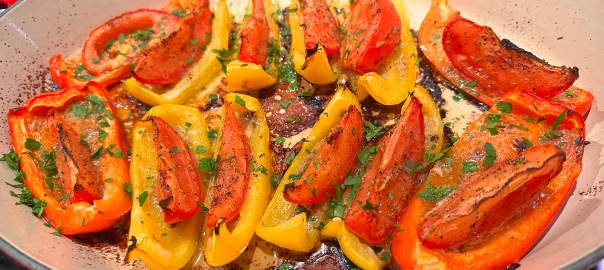
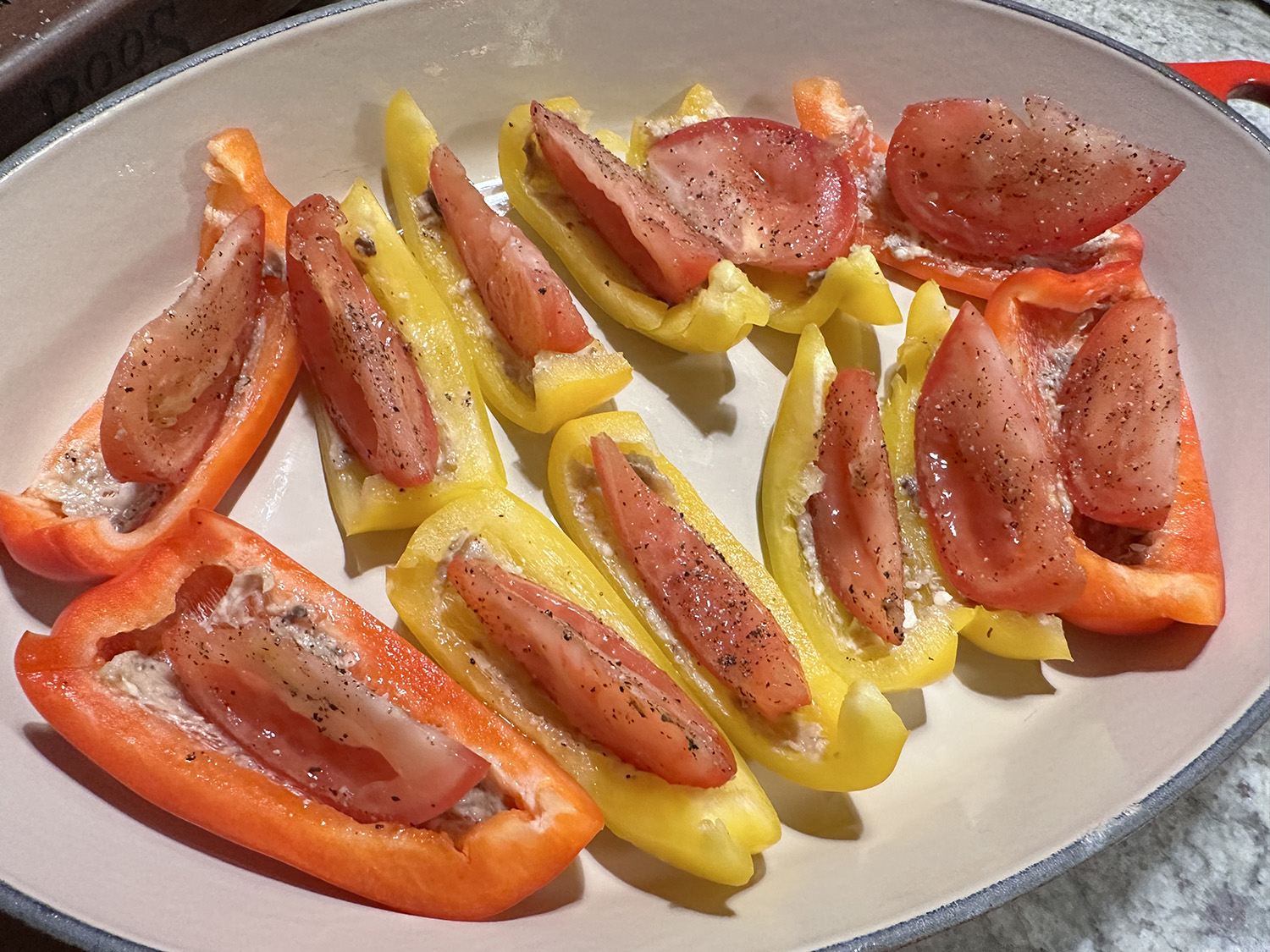
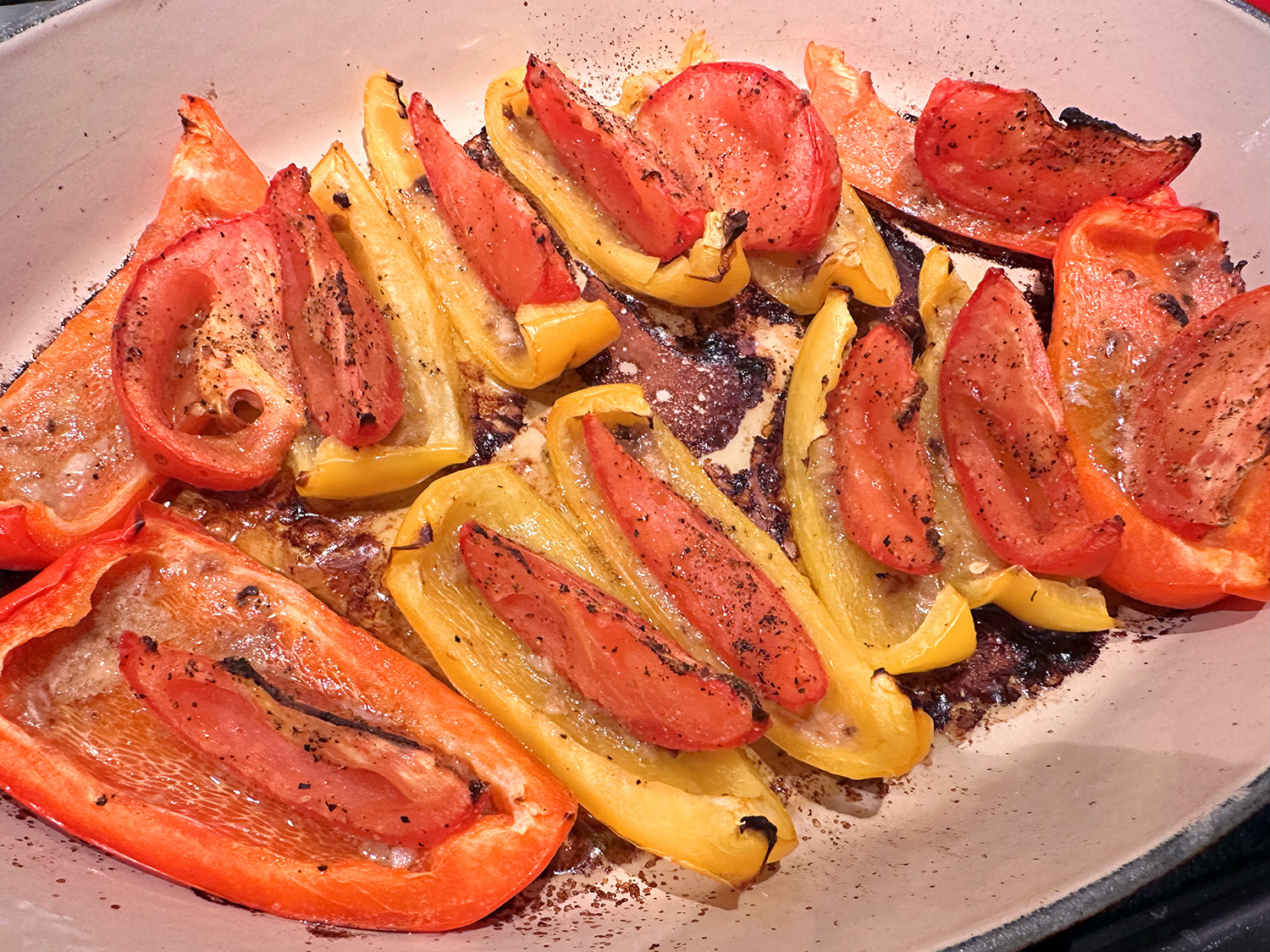
Very versatile, these little gems make splendid hors d’oeuvres eaten out of hand or set atop a crostini, as well as a side dish. A few on a plate make a nice sit-down first course, and they’re great as part of a buffet.

They add a nice pop of color—along with the nutrients—to your plate. The first go-around we served our Roasted Bell Peppers boats with a Parmesan Meatloaf.

Roasted Bell Peppers with Tomato and Garlic

  • Servings: 4-6
  • Difficulty: easy
  • Print

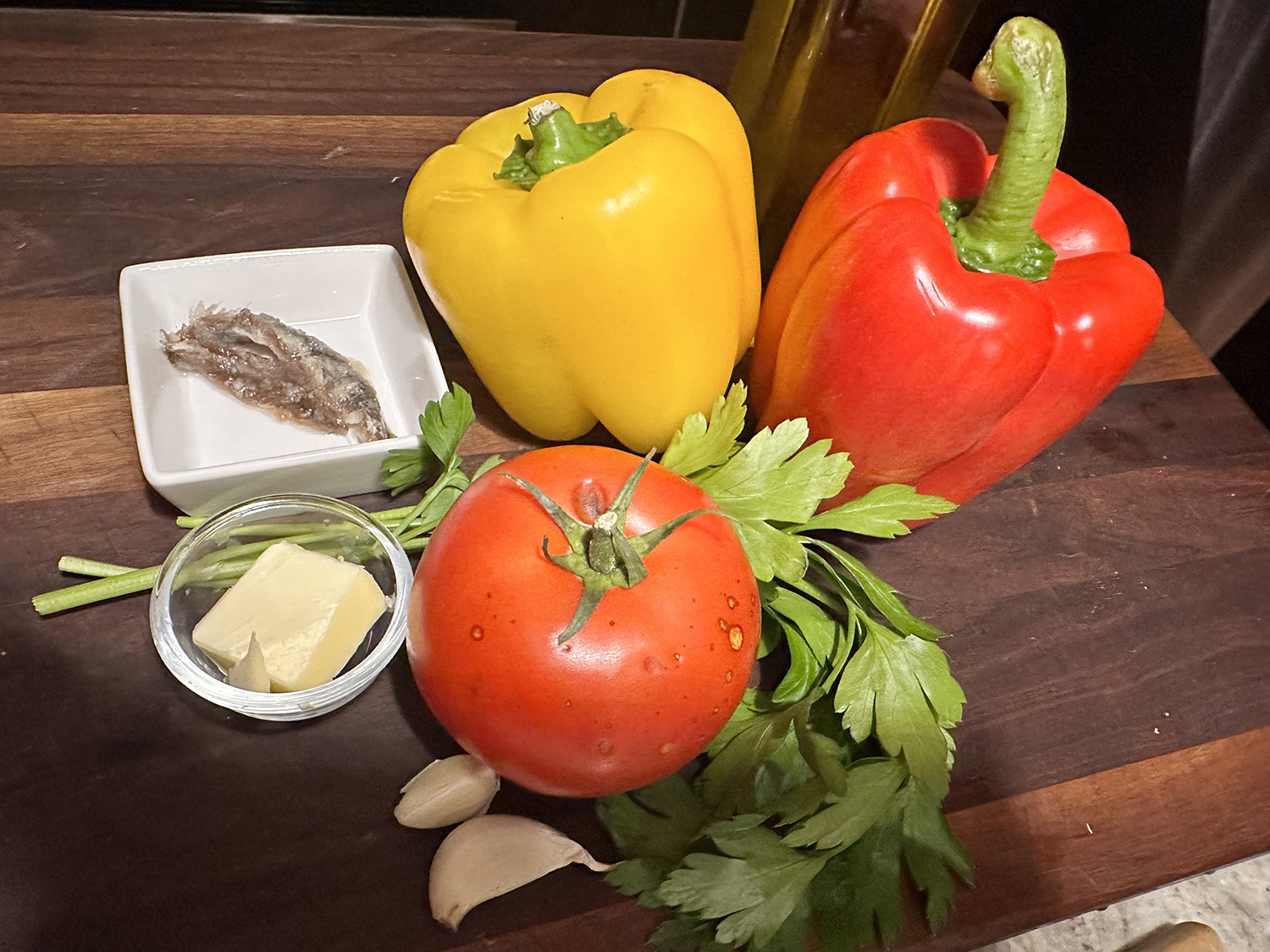
Ingredients

  • 2 garlic cloves, peeled and smashed
  • 2 anchovy filets, chopped
  • Kosher salt
  • 1 Tbsp. unsalted butter, room temperture
  • 2 bell peppers, red and/or yellow
  • 1 med-large tomato
  • Freshly ground blak pepper
  • 2 Tbsp. extra-virgin olive oil
  • 2 Tbsp. chopped fresh flat-leaf parsley

Directions

  1. Position a rack in the center of the oven and preheat to 350°F.
  2. Lightly oil a 13 x 9-inch gratin pan or similar-size baking dish.
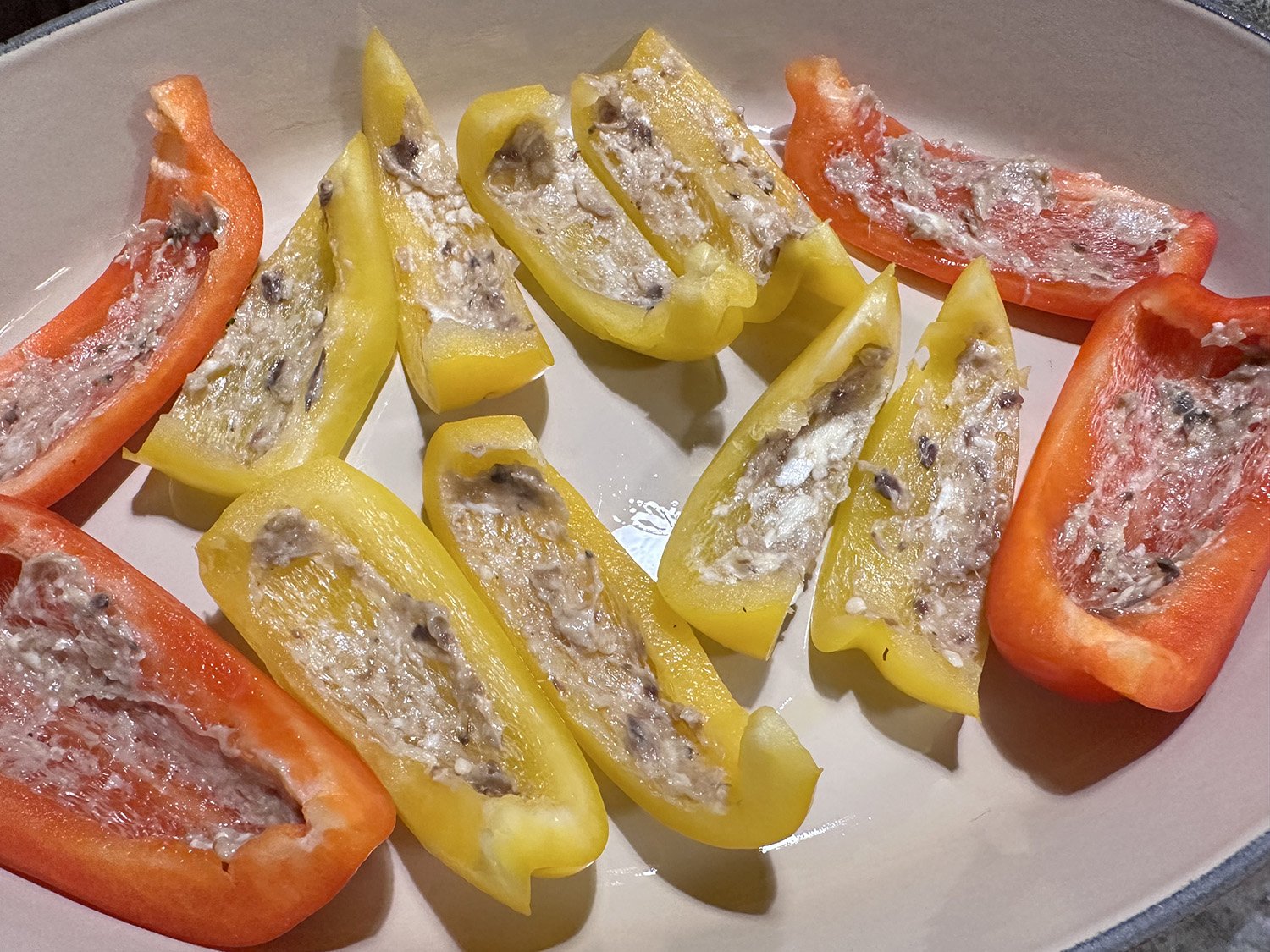
  3. Combine the garlic and anchovies in a small mortar, add a pinch of salt, and smash and grind to form a paste. Add the butter and work together with a wooden spoon until well combined.
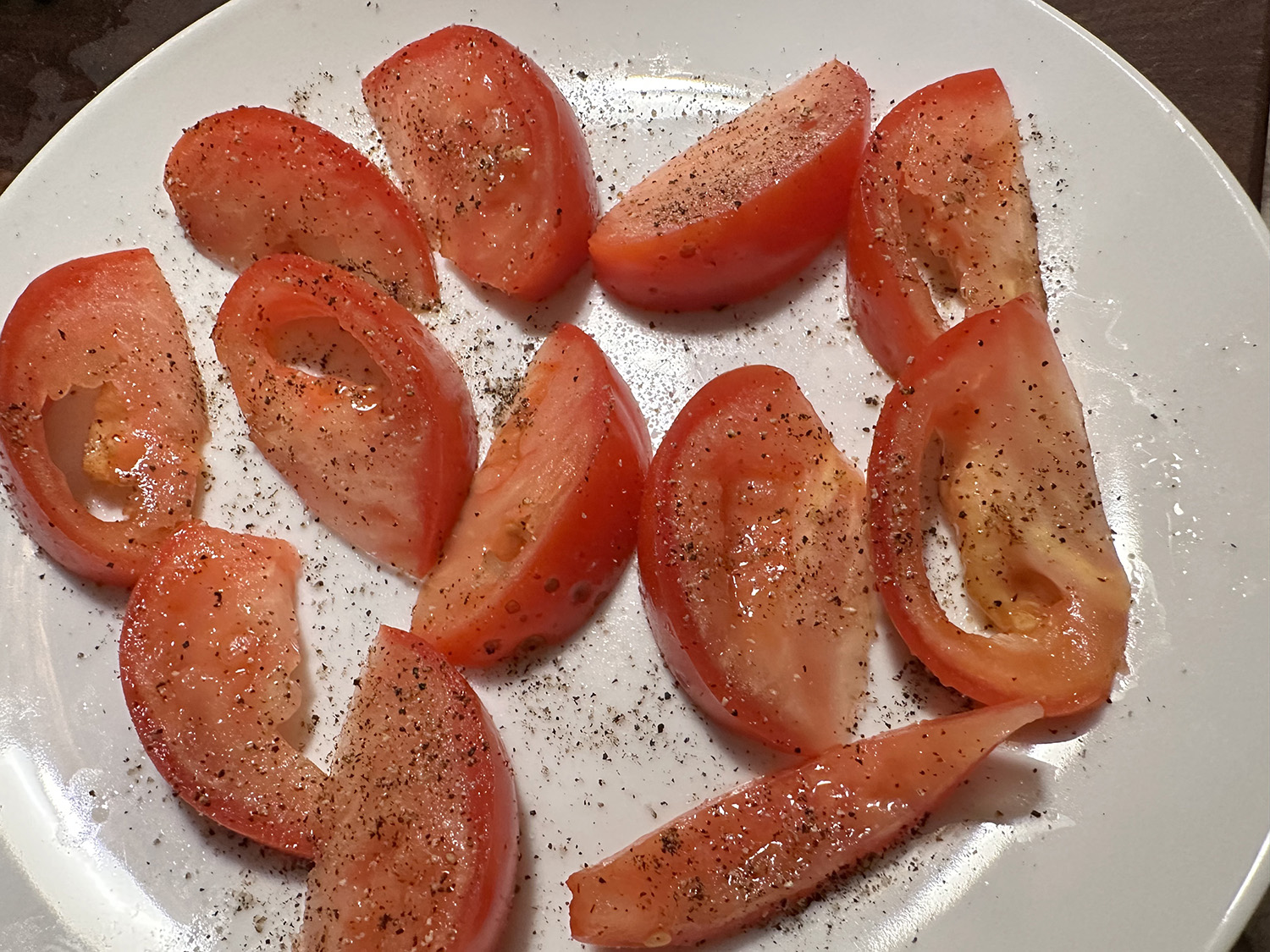
  4. Half the peppers lengthwise and remove the core, seeds, and soft membrane-like ribs. Cut each half lengthwise into 1 1⁄2″ wide strips. Arrange the strips skin side down on the baking dish. Core the tomato and cut it into the same number of wedges as you have pepper strips. Using a sharp paring knife, carve the juicy seed pockets away from each tomato slice and discard. Season tomato strips on all sides with salt and pepper.
  5. Dived the seasoned butter among the pepper boats, spreading a small amount on each one. Top with a piece of tomato. Drizzle with olive oil.
  6. Roast until the peppers and tomato pieces are tipped with brown and the pepper is just barely tender, 30 to 40 minutes.
  7. Sprinkle the peppers and tomato with parsley and serve warm or at room temperature, with the juices pored over the top.

http://www.lynnandruss.com

Recipes from “All About Roasting” by Molly Stevens

Sesame-Ginger Flap Steak

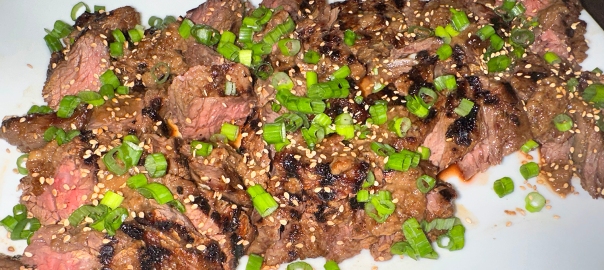
Flap meat’s coarse grain makes it a champ at holding on to the flavors of a marinade, and this teriyaki(ish) one is a guaranteed crowd-pleaser. Serve suggestion was with blackened sugar snap peas and rice with quick-pickled jalapeños.

The snap peas were in poor condition at the grocery store so we opted for green beans. And instead of charring them, we steamed and dressed the beans with a ginger-garlic butter as a compliment to the meat marinade.

Instead of grilling due to inclement weather, the flap steak was cooked on “Grilliam” our copper enameled grill pan, which does just as nice a job of searing the meat and getting those char marks.

Fine cooking indicated to whisk together the marinade ingredients in a bowl. However, we made the combination in a large ziploc bag and added the steaks directly to the bag and into the refrigerator for 6 hours.

Sesame-Ginger Flap Steak

  • Servings: 4-6
  • Difficulty: easy
  • Print

Ingredients

  • 1/4 cup tamari, or soy sauce
  • 3 Tbsp. peanut oil
  • 2 Tbsp. mirin
  • 1 1/2 tsp. toasted sesame oil
  • 2 large cloves garlic, finely grated
  • 1 piece fresh ginger, (2 inch) finely grated
  • 2 lbs. beef flap meat, cut into pieces of even thickness, if necessary
  • 2 scallions, green parts only, thinly sliced
  • 1 Tbsp. toasted sesame seeds

Directions

  1. In a large ziploc bag, combine the tamari (or soy sauce), peanut oil, mirin, sesame oil, garlic, and ginger. Add the meat and turn to coat. Cover and marinate in the refrigerator for 4 to 6 hours.
  2. Prepare a medium-high (400°F to 475°F) gas or charcoal grill fire. Remove the meat from the marinade and pat dry. Grill, turning every 2 minutes, until cooked to your liking, 6 to 8 minutes for medium (140°F).
    As noted above, if you don’t have access to a grill, use a grill pan and cook indoors, turning every 2 minutes until the meat registers 140°.
  3. Transfer to a cutting board, cover loosely with foil, and let rest for 5 to 10 minutes.
  4. Thinly slice across the grain and pour any accumulated juices over the meat. Serve sprinkled with the scallions and sesame seeds.

http://www.lynnandruss.com

Adapted from a recipe for Fine Cooking

Spicy Korean-Style Shrimp with Zucchini and Scallions

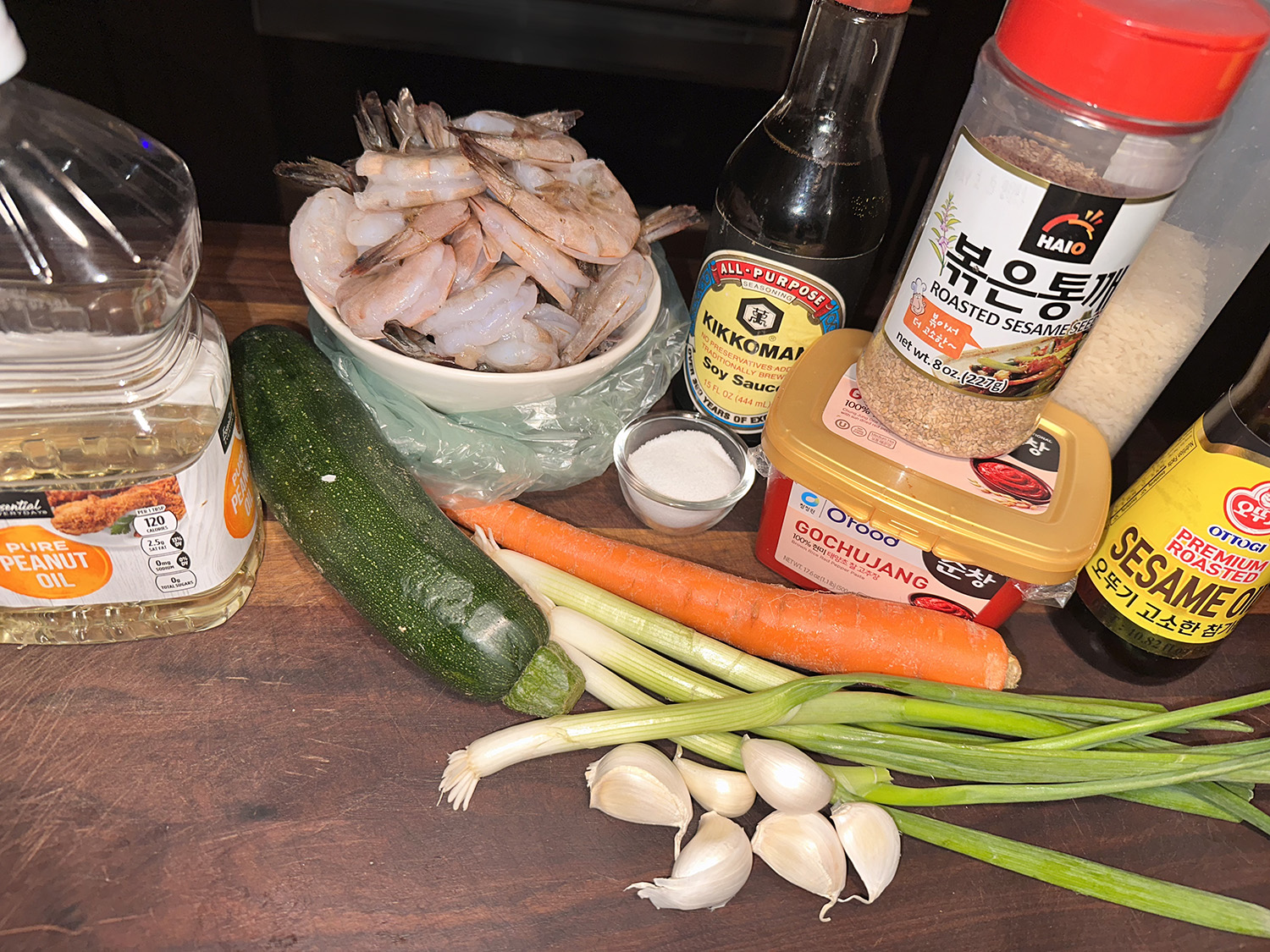
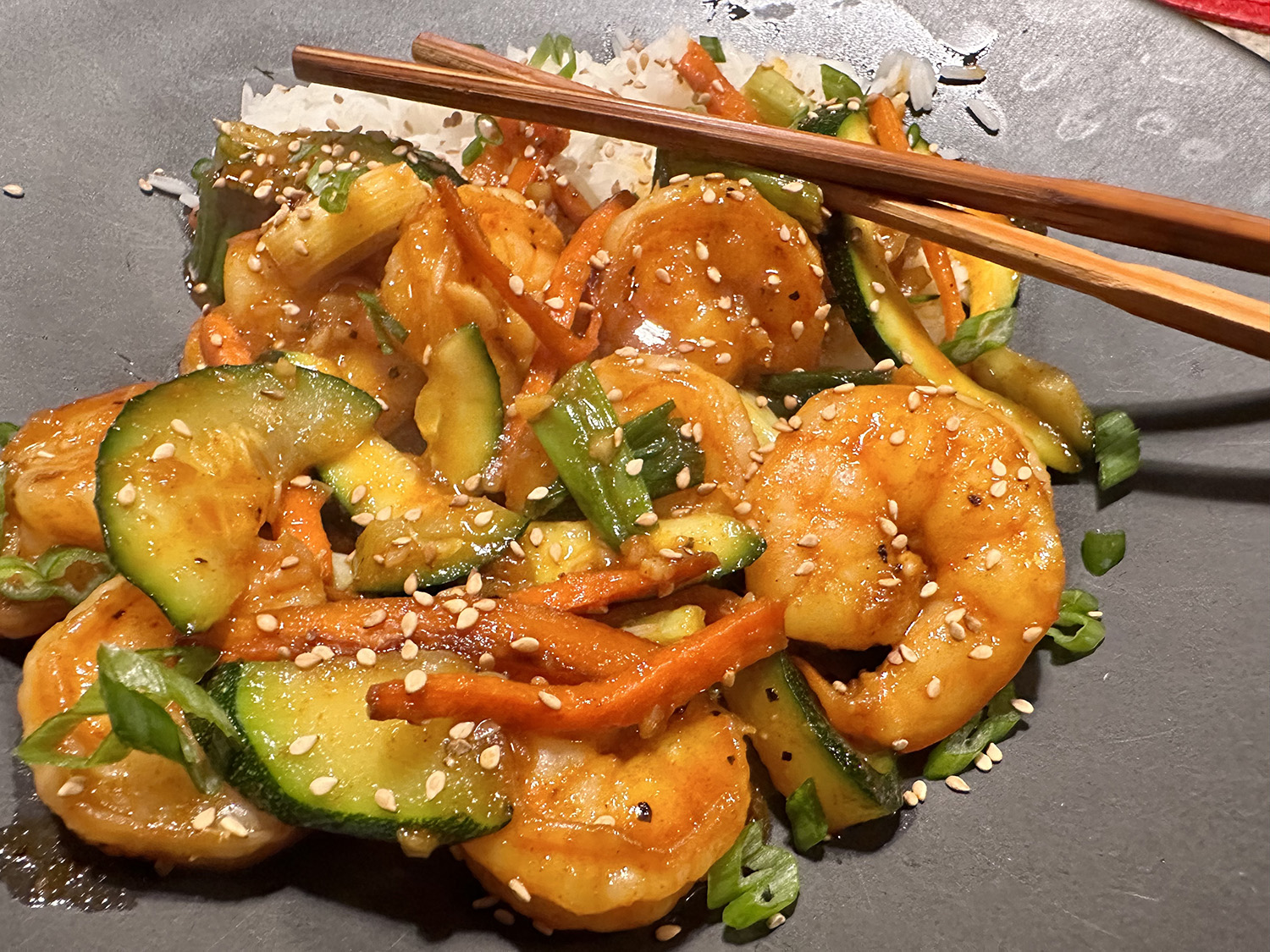
For an adaptation of the Korean stir-fry of squid with a garlicky, umami-loaded, savory-sweet, gochujang-based sauce, the squid here is replaced with plump, briny shrimp. This version includes carrots, scallions and zucchini (or yellow summer squash) for layers of texture and color, as well as to round out the meal.

Look for gochujang, the vivid-red fermented chili paste and workhorse in the Korean kitchen, in the international aisle of the supermarket or in Asian grocery stores. Before cooking, marinate the shrimp for about 10 minutes in a mixture of gochujang, sugar, sesame oil and soy. To be efficient, prep the other ingredients for the stir-fry while the shrimp marinate. Serve with steamed short-grain rice.

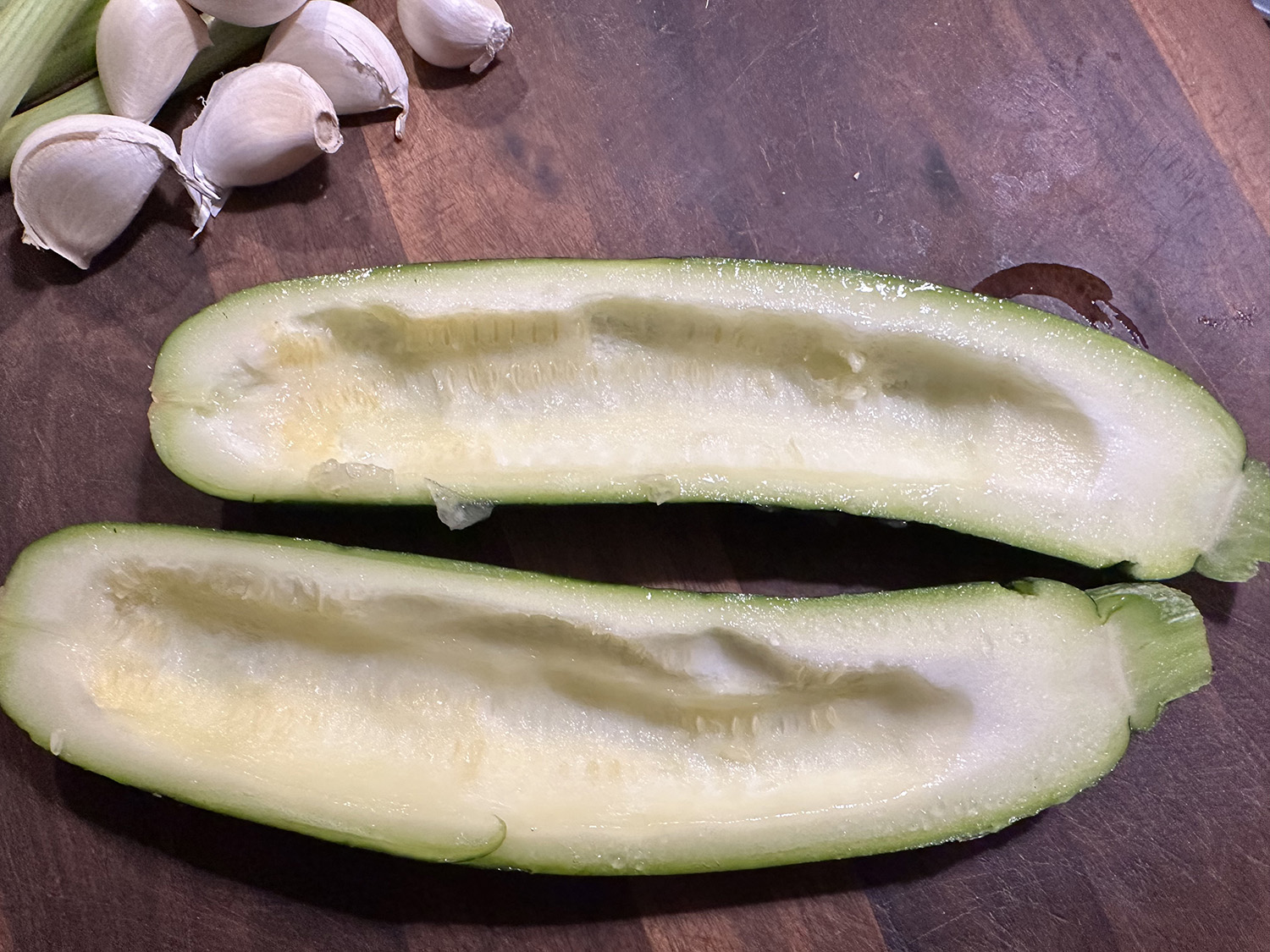
NOTE: The seedy section at the core turns soft and slightly squishy when cooked, so remove the seeds in the zucchini or summer squash. To do so, cut the zucchini in half lengthwise, then use a spoon to scrape out the core.

Buying “easy-peel” shrimp is a great option because they are already deveined, all you have to do is easily peel away the shells. Since we make our own shellfish stock, we appreciate having the shells which we then freeze until it’s time to make another batch of stock.

Spicy Korean-Style Shrimp with Zucchini and Scallions

  • Servings: 4
  • Difficulty: easy
  • Print

Ingredients

  • 2-3 Tbsp. gochujang
  • 2 Tbsp. white sugar
  • 2 Tbsp. toasted sesame oil
  • 1 Tbsp. soy sauce
  • Kosher salt and ground black pepper
  • 1 1/2 lbs. extra-large shrimp, peeled (tails removed), deveined and patted dry
  • 2 Tbsp. grapeseed or other neutral oil
  • 1 large carrot, peeled and cut into matchsticks
  • 6 medium garlic cloves, minced
  • 4 scallions, cut into 1-inch lengths
  • 1 medium zucchini or yellow summer squash (about 8 oz.), halved lengthwise, seeded and thinly sliced on the diagonal
  • 2 tsp. sesame seeds, toasted

Directions

  1. In a medium bowl, stir together the gochujang, sugar, sesame oil, soy sauce, ½ teaspoon salt and ¼ teaspoon pepper. Add the shrimp and toss to coat; let stand at room temperature for about 10 minutes.
  2. In a 12-inch skillet over medium-high, heat the neutral oil until shimmering. Add the carrot and cook, stirring often, until wilted, 3 to 4 minutes. Add the garlic and cook, stirring constantly, until lightly browned, about 1 minute. Push the mixture to one side of the skillet and add the shrimp with its marinade, distributing it in an even layer. Cook without stirring until the shrimp are pink on the bottom, about 2 minutes.
  3. Add the scallions and zucchini, then stir to combine with the shrimp and carrot. Cook, stirring often, until the shrimp are opaque throughout and the scallions and zucchini have softened, about 3 minutes. Off heat, taste and season with salt and pepper. Serve sprinkled with the sesame seeds.

http://www.lynnandruss.com

Recipe by Courtney Hill for Milk Street

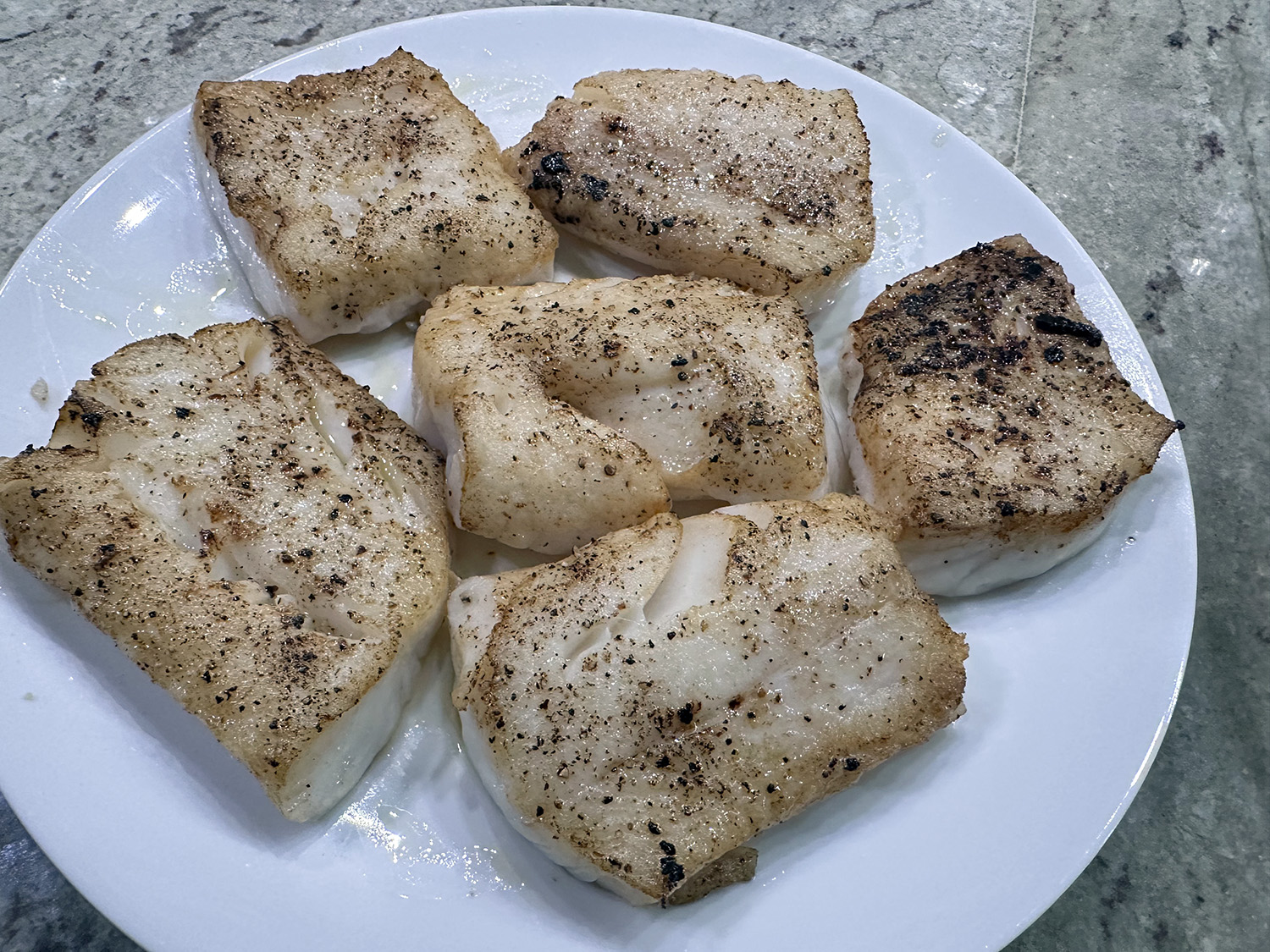
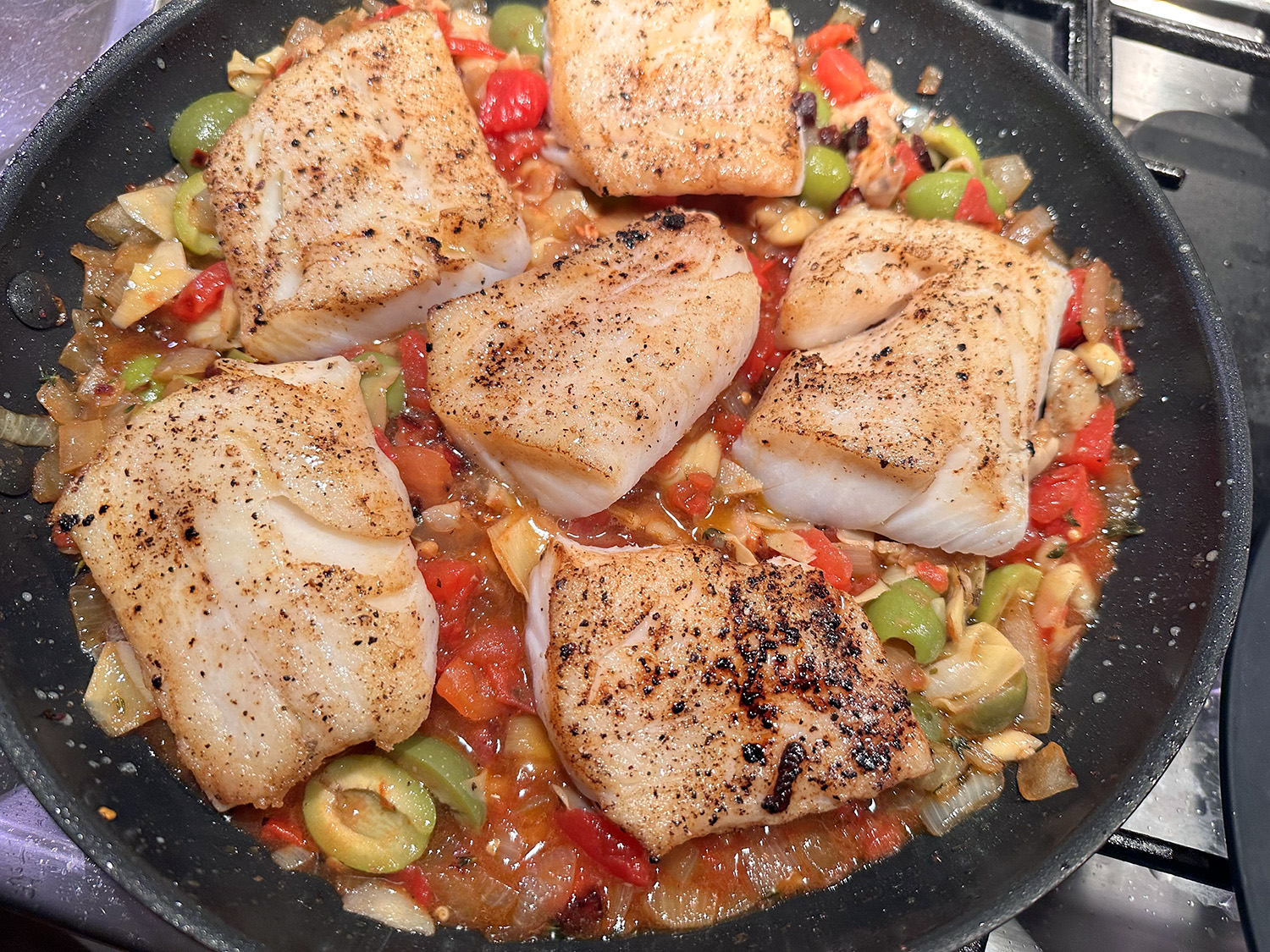
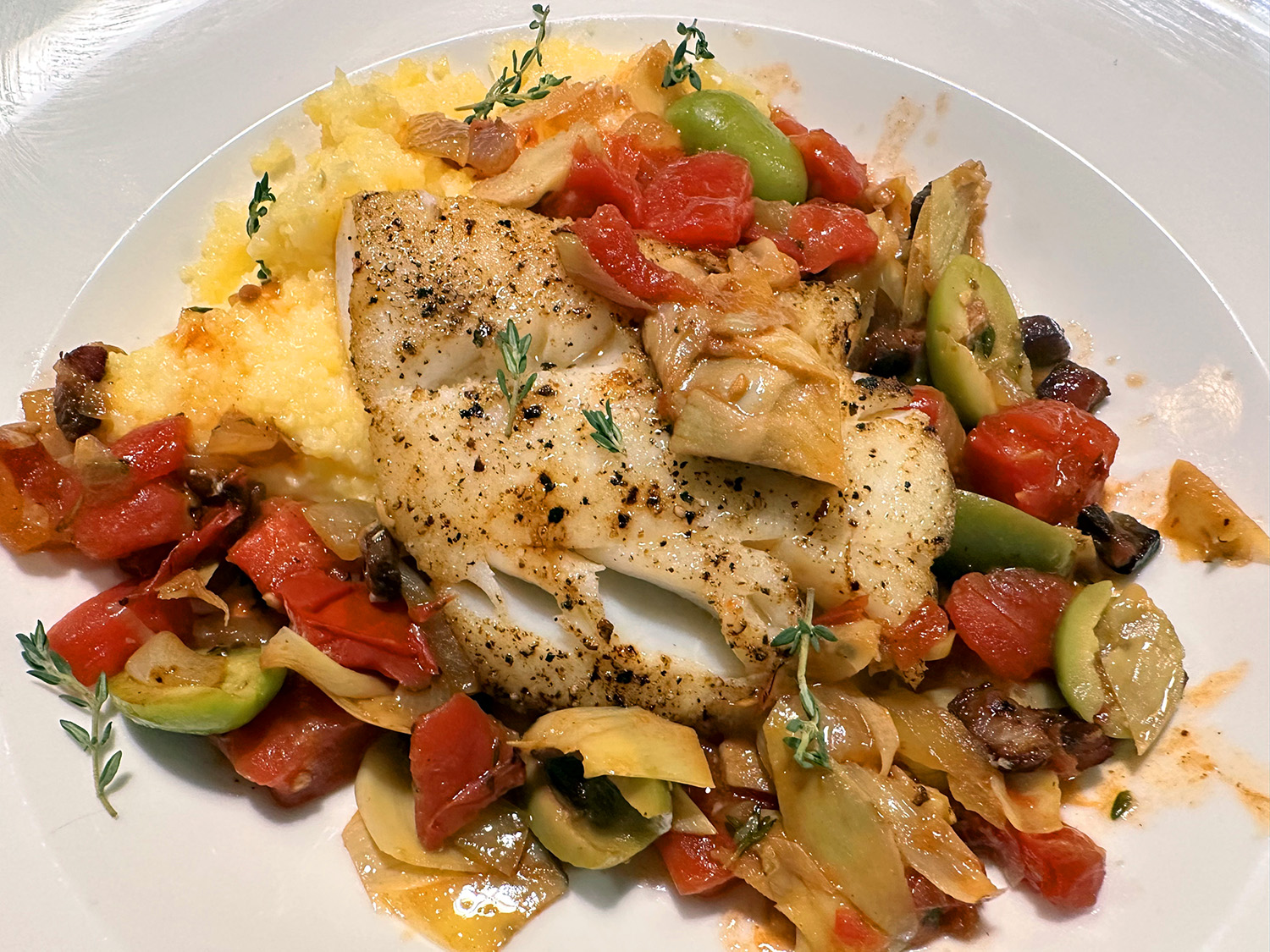
Cod with Pancetta, Artichokes and Olives

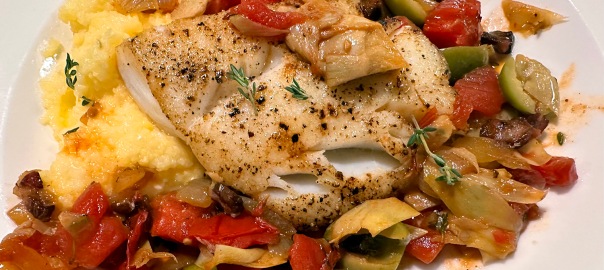
Looking to introduce more seafood dishes into your evening repertoire of family meals? This lovely recipe is easy, is ready in just over a half hour, and contains heart-healthy ingredients.

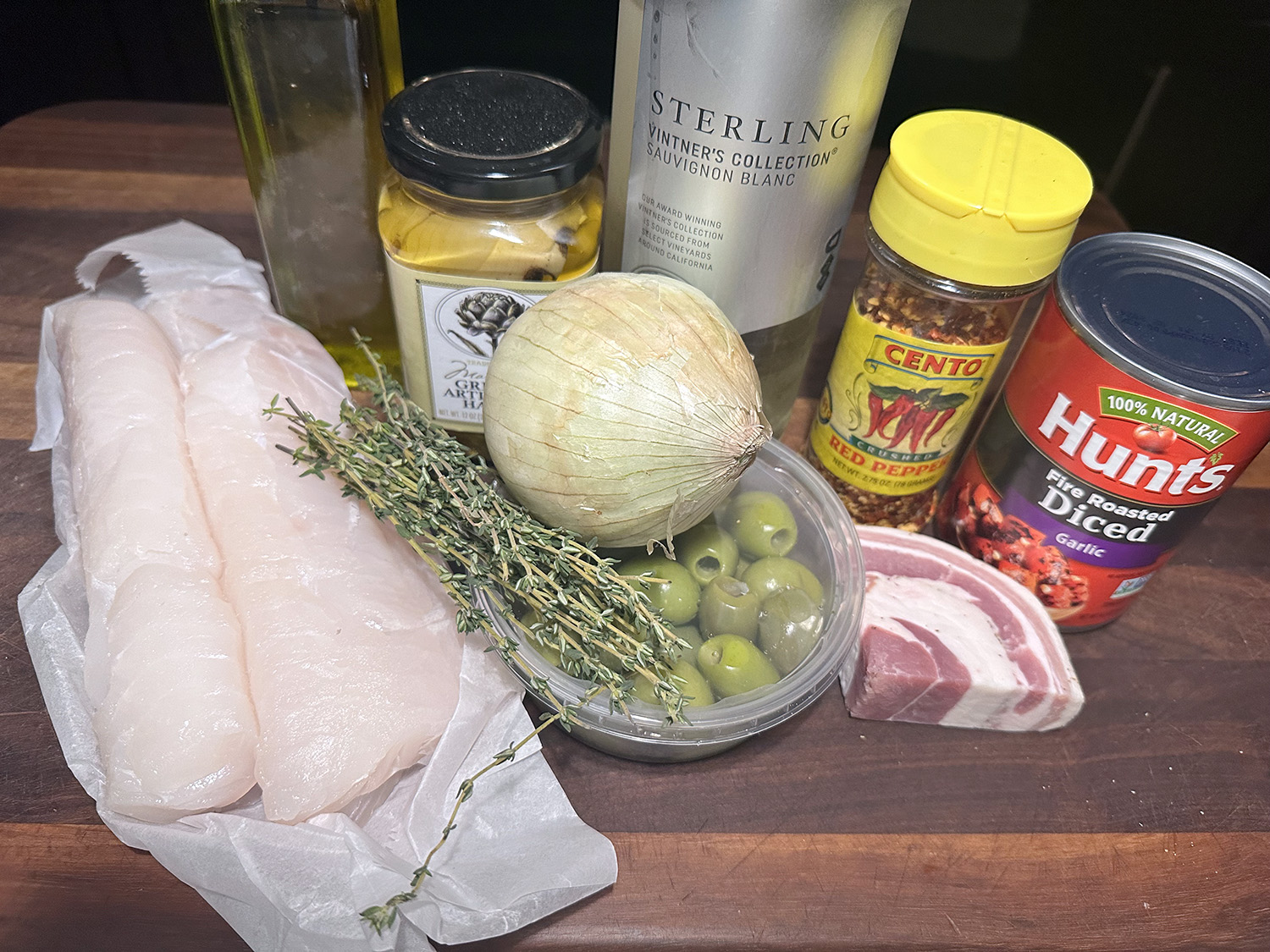
We served ours over polenta and it was delicious! Our pancetta weighed in at closer to 4 ounces, and we used it all. Are there meatless substitutions for pancetta? Yes, you can try marinated tofu, mushrooms, smoked paprika, olives (already in the dish), and parmesan cheese to substitute for pancetta.

Cod with Pancetta, Artichokes and Olives

  • Servings: 4
  • Difficulty: easy
  • Print

Ingredients

  • 4 6-oz. pieces fresh cod loin fillet
  • Kosher salt and freshly ground black pepper
  • 2 Tbsp. extra-virgin olive oil
  • 2 oz. pancetta, cut into 1/4-inch dice (about 1/4 cup)
  • 1 medium yellow onion, cut into 1/4-inch dice
  • 1 tsp. fresh thyme leaves
  • 1/8 to 1/4 tsp. crushed red pepper flakes
  • 1/2 cup dry white wine
  • 1 15-oz. can diced fire-roasted tomatoes in juice
  • 1 cup marinated artichoke hearts, drained and chopped
  • 1/2 cup large pitted green olives, such as Castelvetrano, halved

Directions

  1. Pat the cod dry and season with salt and pepper.
  2. Heat the oil in a 12-inch nonstick skillet over medium-high heat. Add the pancetta and cook, stirring, until crisp and golden, 2 to 4 minutes. Using a slotted spoon, transfer the pancetta to a paper-towel-lined plate, leaving the fat behind in the pan.
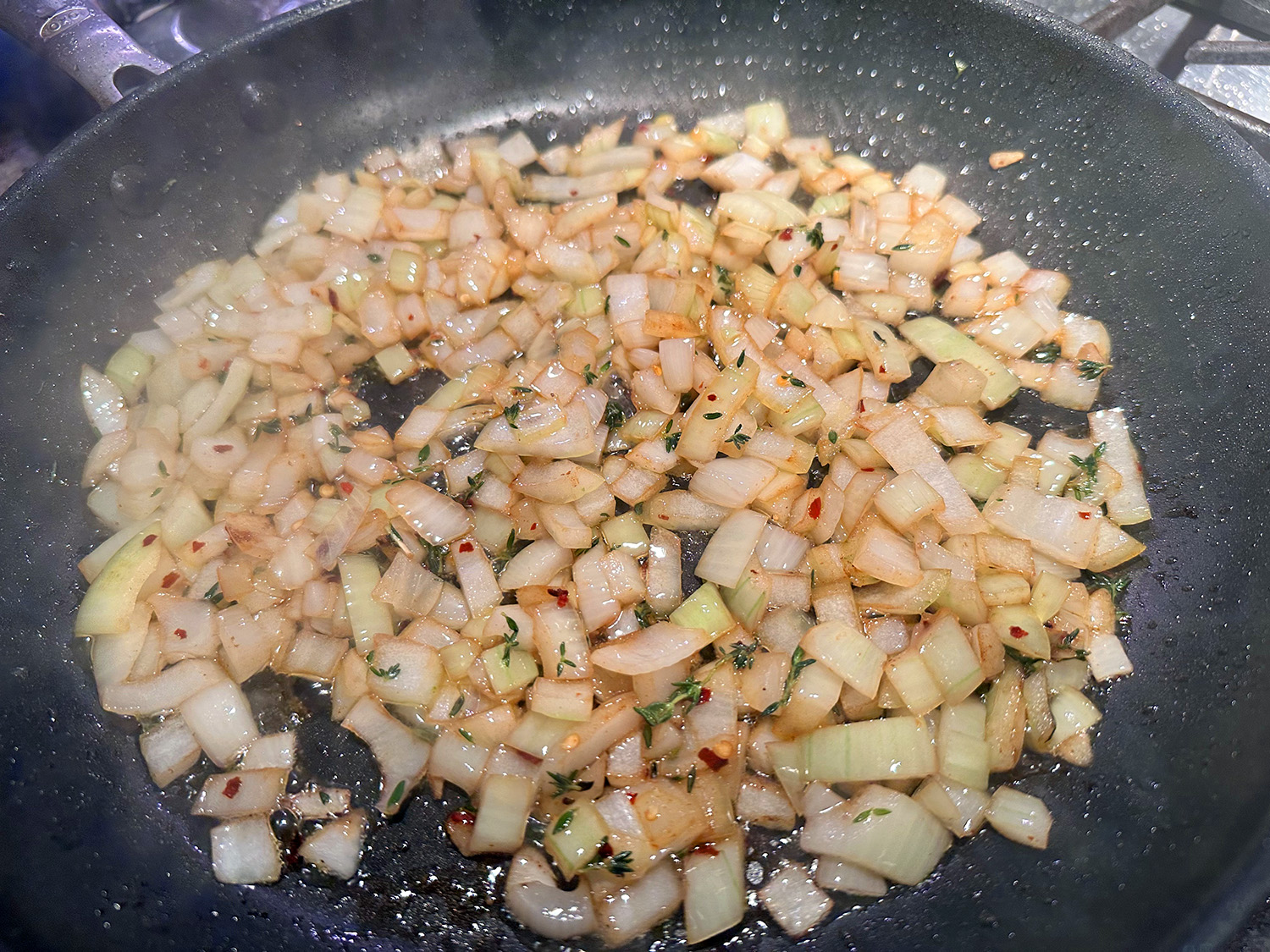
  3. Add the fish to the skillet and cook until slightly golden, about 3 minutes. Flip and transfer to a plate, seared side up. Add the onion, thyme, and pepper flakes to the skillet; cook, stirring, until the onion is soft, about 4 minutes.
  4. Add the wine and cook until the pan is almost dry, about 1 minute. Add the tomatoes and their juice, artichokes, and olives. Simmer, stirring occasionally, to meld the flavors, about 2 minutes.
  5. Lower the heat to medium and nestle the fish into the sauce, keeping the seared side exposed. Cover and cook until the fish is opaque and just cooked through, about 3 minutes.
  6. Sprinkle with the pancetta, divide among rimmed plates or wide, shallow bowls, and serve.

http://www.lynnandruss.com

Original recipe from Fine Cooking

No-Knead Seeded Oat Whole-Wheat Bread

The Hubs and I are recipe testers for America’s Test Kitchen (ATK) and our particular task in this instance was to make the no-knead bread as directed and then fill out a survey. The drawback was, we couldn’t post the recipe until it appeared in their upcoming Everyday Bread book. Well now many months later, it is widely available in a multitude of stores.

ATK’s mission was to take baking all kinds of breads out of the once-in-a-while category and make it easy and accessible for your unique timetable. I’m not so sure I would categorize it as “easy” due to so many steps before you have a finished product. However, the results were fantastic!

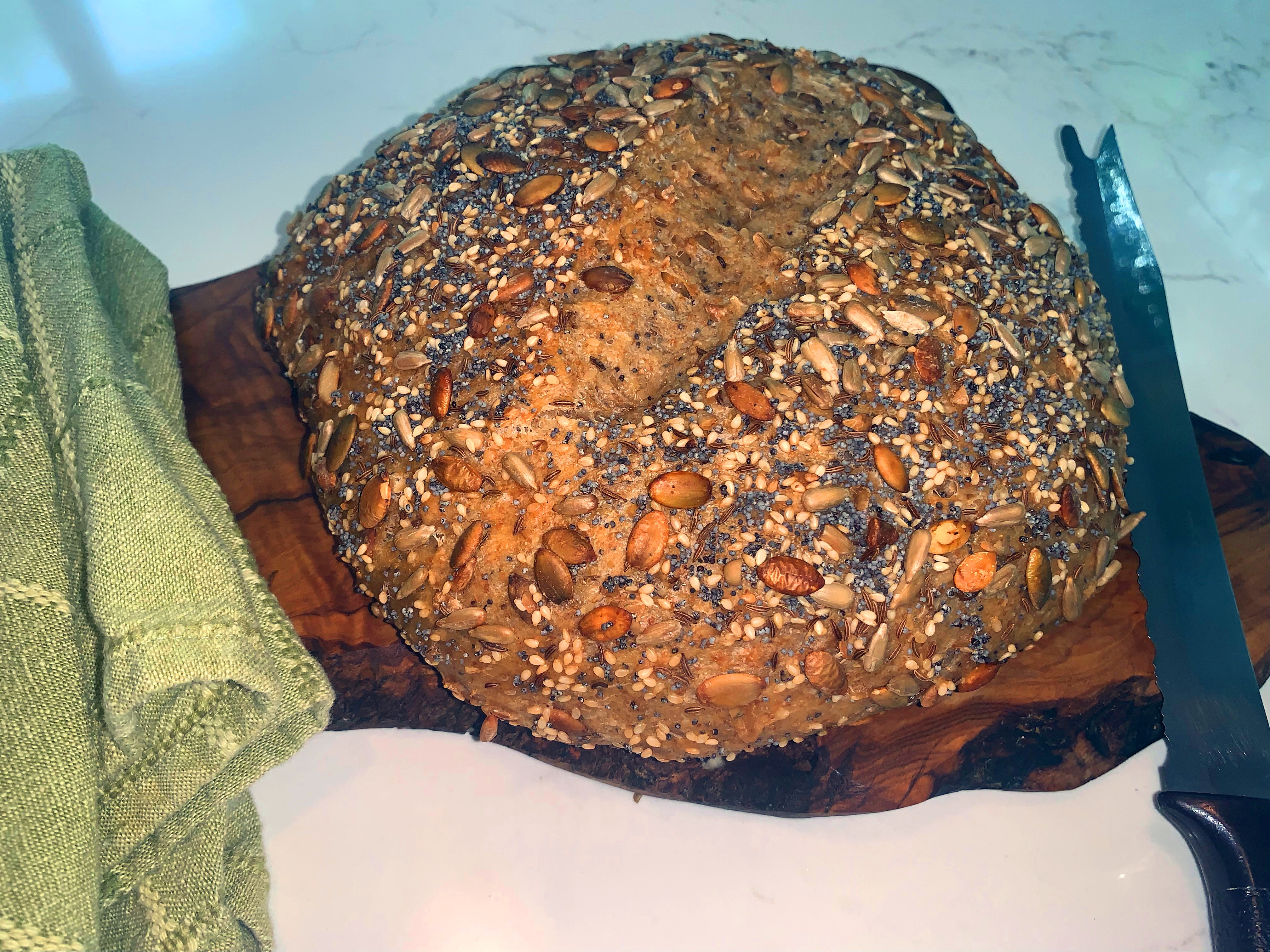
The loaf is so superlatively hearty, yet it still maintains the moist texture and appropriate chew of a proper rustic loaf. I’m not a big bread eater so when I do occasionally indulge, I want it to have some healthy attributes, and this loaf delivers!

The flavor that the beer adds is preferred, but you can substitute an equal amount of water if desired. Be sure to score the dough ½-inch deep in step 9, and don’t be afraid to go back and slash the loaf again if the score isn’t deep enough.

No-Knead Seeded Oat Whole-Wheat Bread

  • Servings: 1 loaf
  • Difficulty: moderate
  • Print

Ingredients

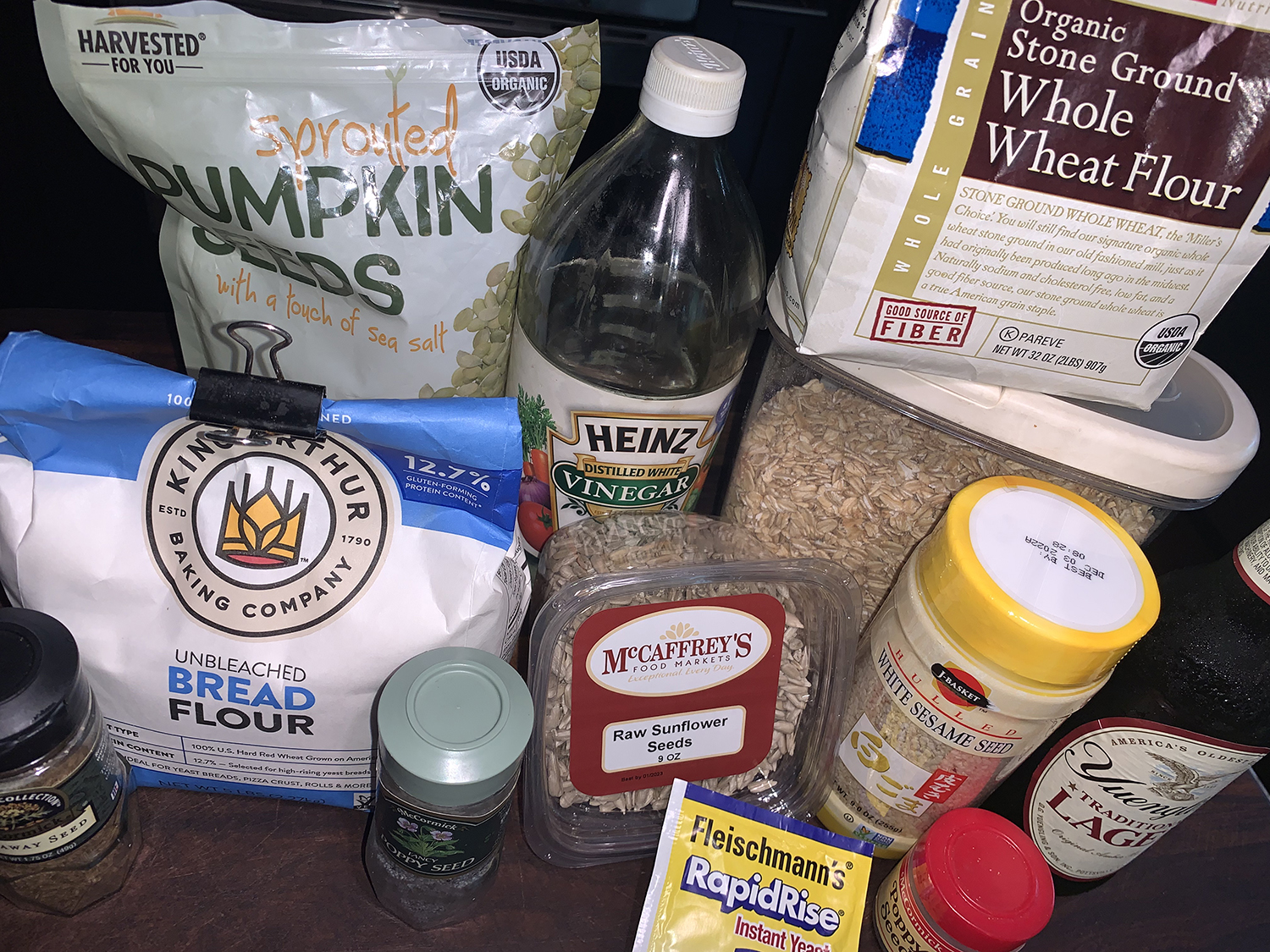
  • 3 Tbsp. raw pepitas
  • 3 Tbsp. raw sunflower seeds
  • 4 tsp. sesame seeds
  • 4 tsp. poppy seeds
  • 2 tsp. caraway seeds
  • ⅔ cup (2 oz.) old-fashioned rolled oats
  • ½ cup (4 oz.) boiling water plus 3/4 cup (6 oz.) room temperature water
  • ½ cup (4 z.) mild lager, room temperature
  • 1 Tbsp. distilled white vinegar
  • 2 cups (11 oz.) bread flour
  • ⅔ cup (3 ⅔ oz.) whole-wheat flour
  • 1½ tsp. table salt
  • ¼ tsp. instant or rapid-rise yeast

Directions

  1. Adjust oven rack to middle position and heat oven to 325 degrees. Combine pepitas, sunflower seeds, sesame seeds, poppy seeds, and caraway seeds in bowl. Measure out 6 tablespoons seed mixture, spreading into even layer on rimmed baking sheet, and roast until seeds are lightly golden and fragrant, about 10 minutes. Transfer to wire rack and set aside to cool for 15 minutes. Reserve remaining untoasted seed mixture.
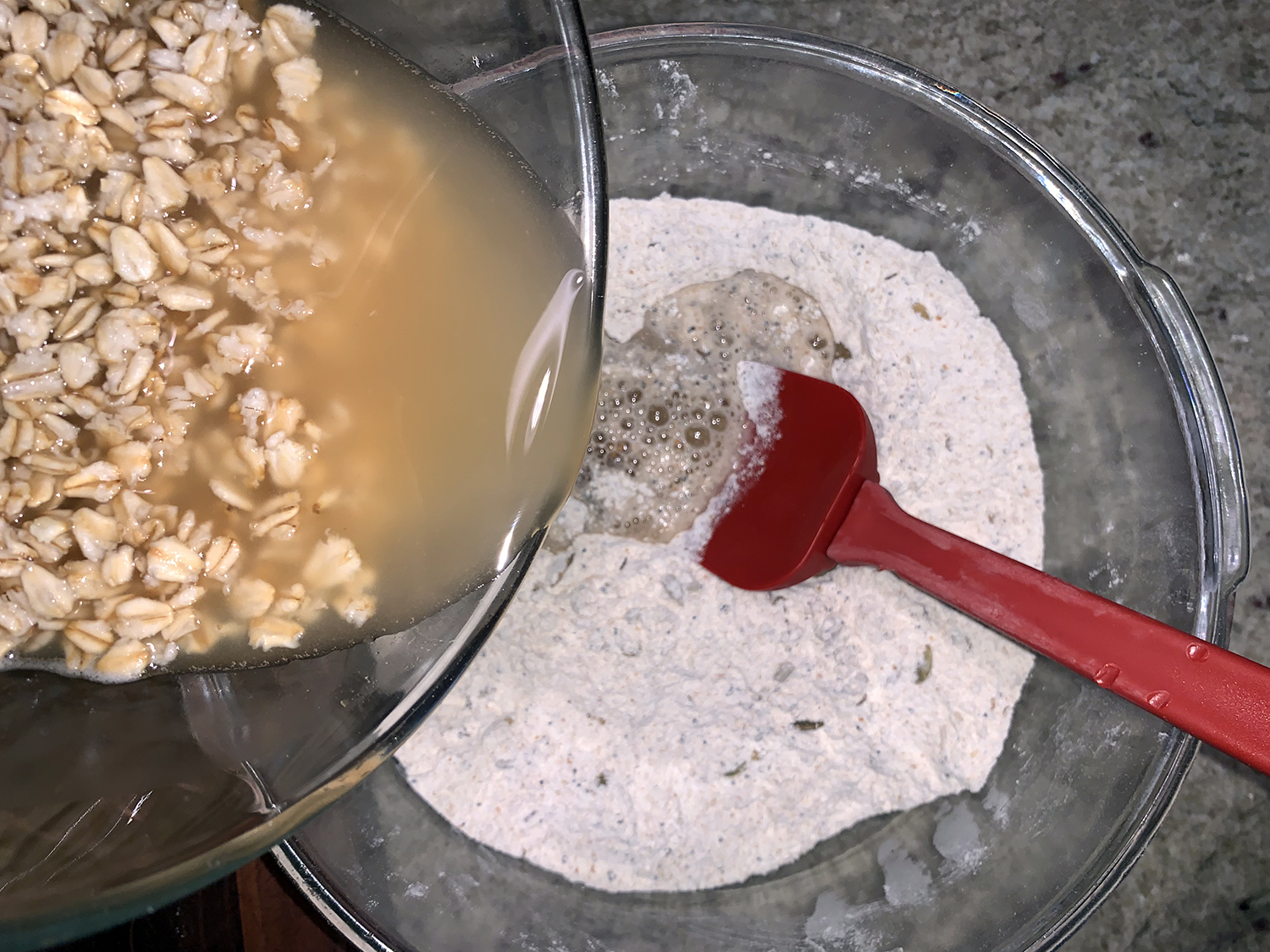
  2. Meanwhile, combine oats and boiling water in medium bowl; let sit until water is absorbed and oats have cooled to room temperature, about 15 minutes. Stir in room temperature water, beer, and vinegar.
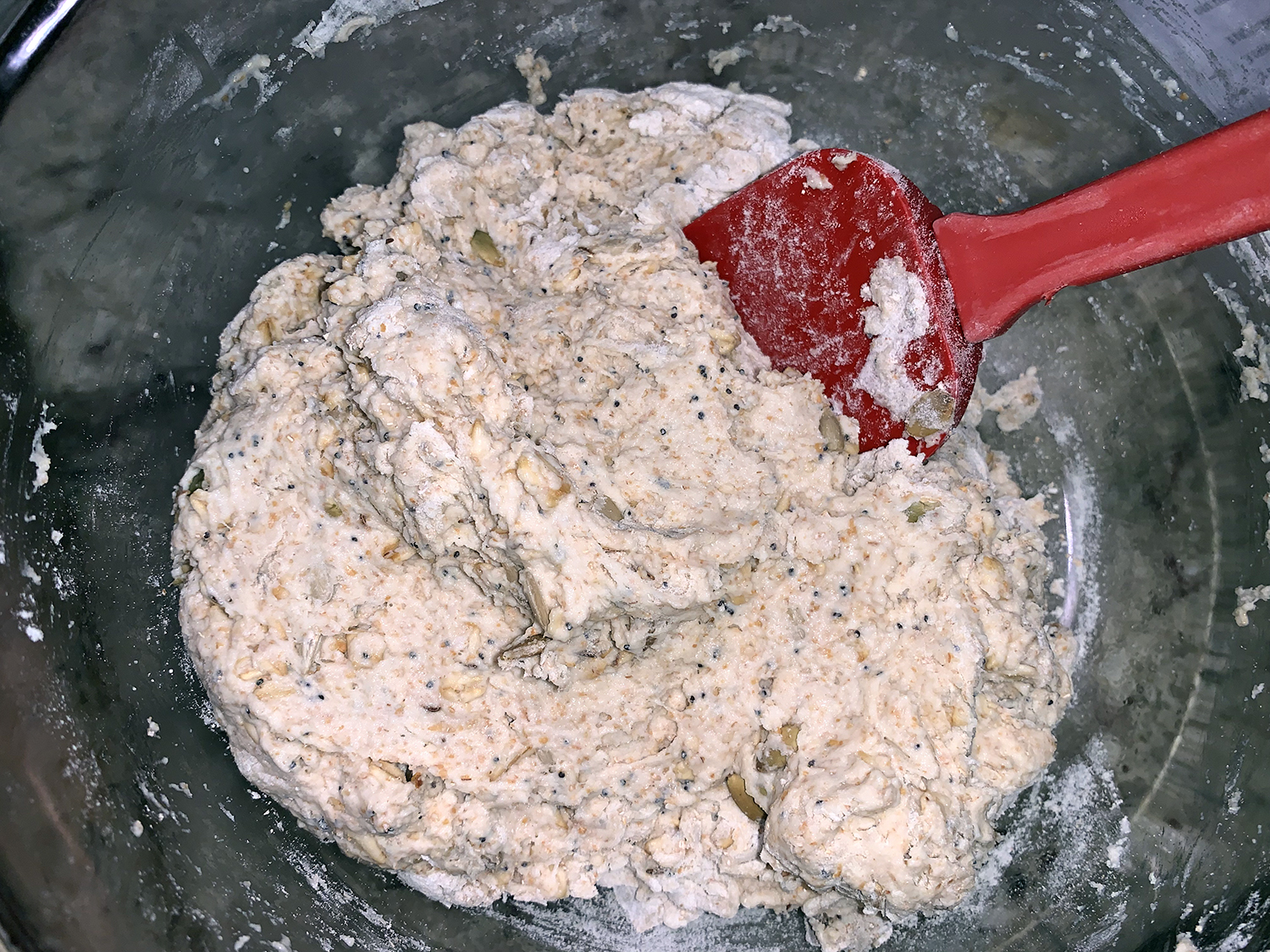
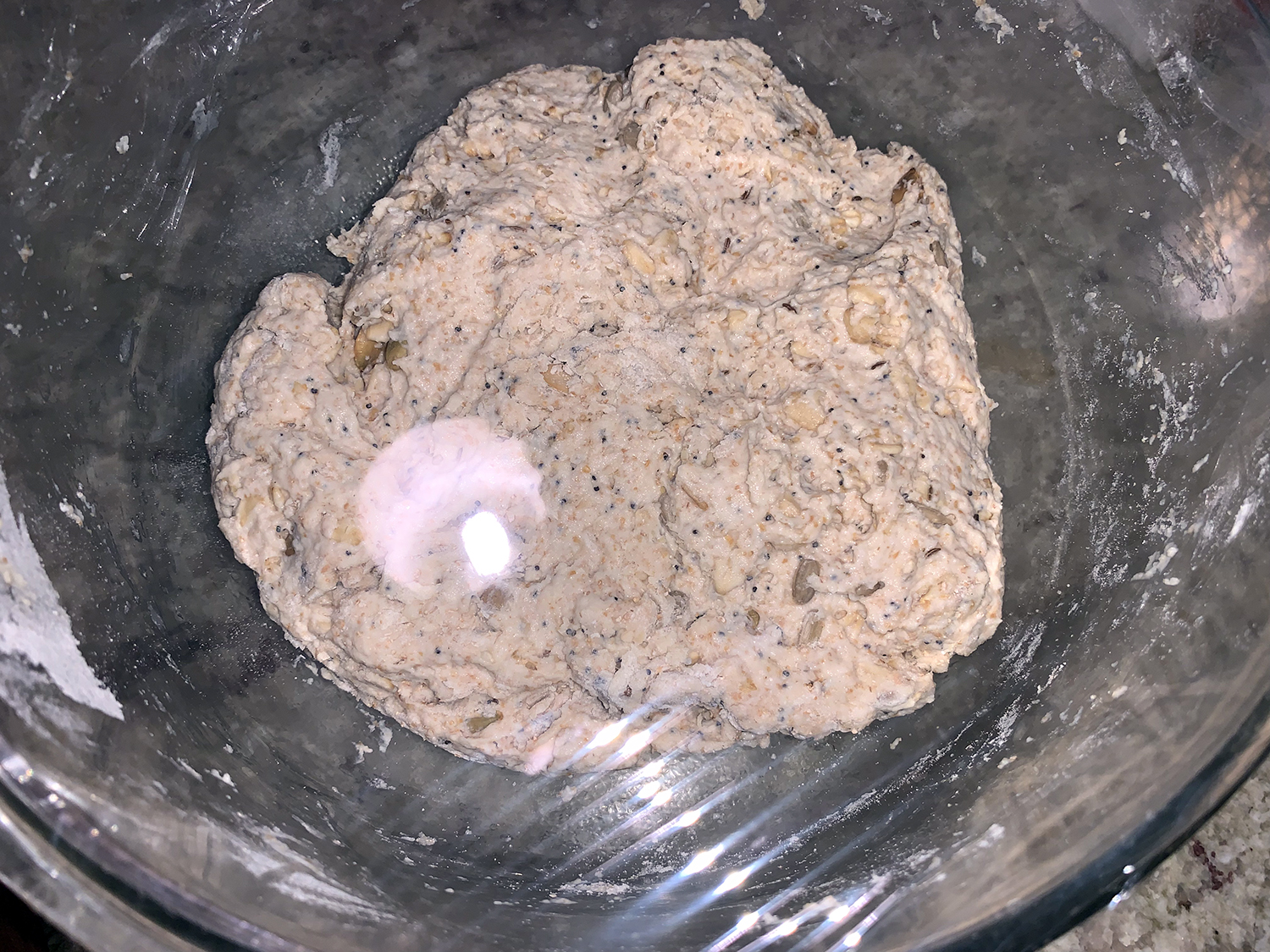
  3. Whisk bread flour, whole wheat flour, salt, yeast, and cooled, toasted seed mixture together in large bowl. Using rubber spatula, fold oat-water mixture into flour mixture, scraping up dry flour from bottom of bowl and pressing dough until cohesive and shaggy and all flour is incorporated. Cover bowl tightly with plastic wrap and let sit at room temperature for at least 8 hours or up to 18 hours.
  4. Using greased bowl scraper or your wet fingertips, fold dough over itself by lifting and folding edge of dough toward middle and pressing to seal. Turn bowl 90 degrees and fold dough again; repeat turning bowl and folding dough 6 more times (total of 8 folds). Flip dough seam side down in bowl, cover with plastic, and let rest for 15 minutes.
  5. Lay 18 by 12-inch sheet of parchment paper on counter and spray lightly with vegetable oil spray. Turn out dough (seam side up) onto lightly floured counter and pat into rough 9-inch circle using lightly floured hands. Using bowl scraper or your floured fingertips, lift and fold edge of dough toward center, pressing to seal. Repeat 6 more times (for a total of 7 folds), evenly spacing folds around circumference of dough. Press down on dough to seal then use bench scraper to gently flip dough seam side down.
  6. Using both hands, cup side of dough furthest away from you and pull dough towards you, keeping pinky fingers and side of palm in contact with counter and applying slight pressure to dough as it drags to create tension. (If dough slides across surface of counter without rolling remove excess flour. If dough sticks to counter or hands, lightly sprinkle counter or hands with flour.) Rotate dough ball 90 degrees, reposition dough ball at top of counter, and repeat pulling dough until taut round ball forms, at least 4 more times.
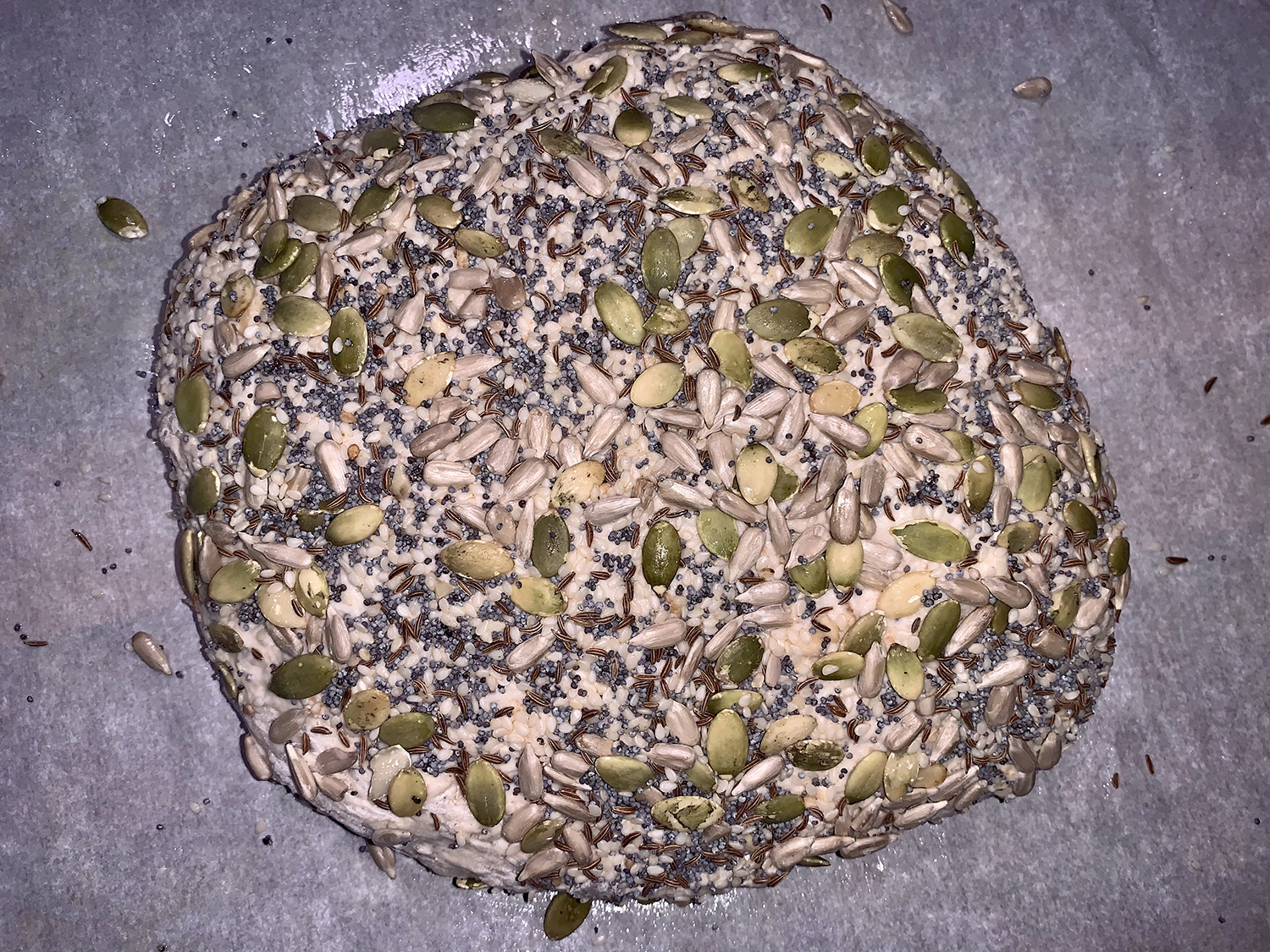
  7. Transfer dough seam side down to center of prepared parchment then spray or gently brush loaf with water. Sprinkle reserved untoasted seed mixture over top and use your hands to gently press seeds onto sides of loaf. Cover with inverted large bowl and let rise until dough has doubled in volume and springs back minimally when poked gently with your finger, 1 to 2 hours.
  8. Thirty minutes before baking, adjust oven rack to middle position, place Dutch oven with lid on rack, and heat oven to 475 degrees.
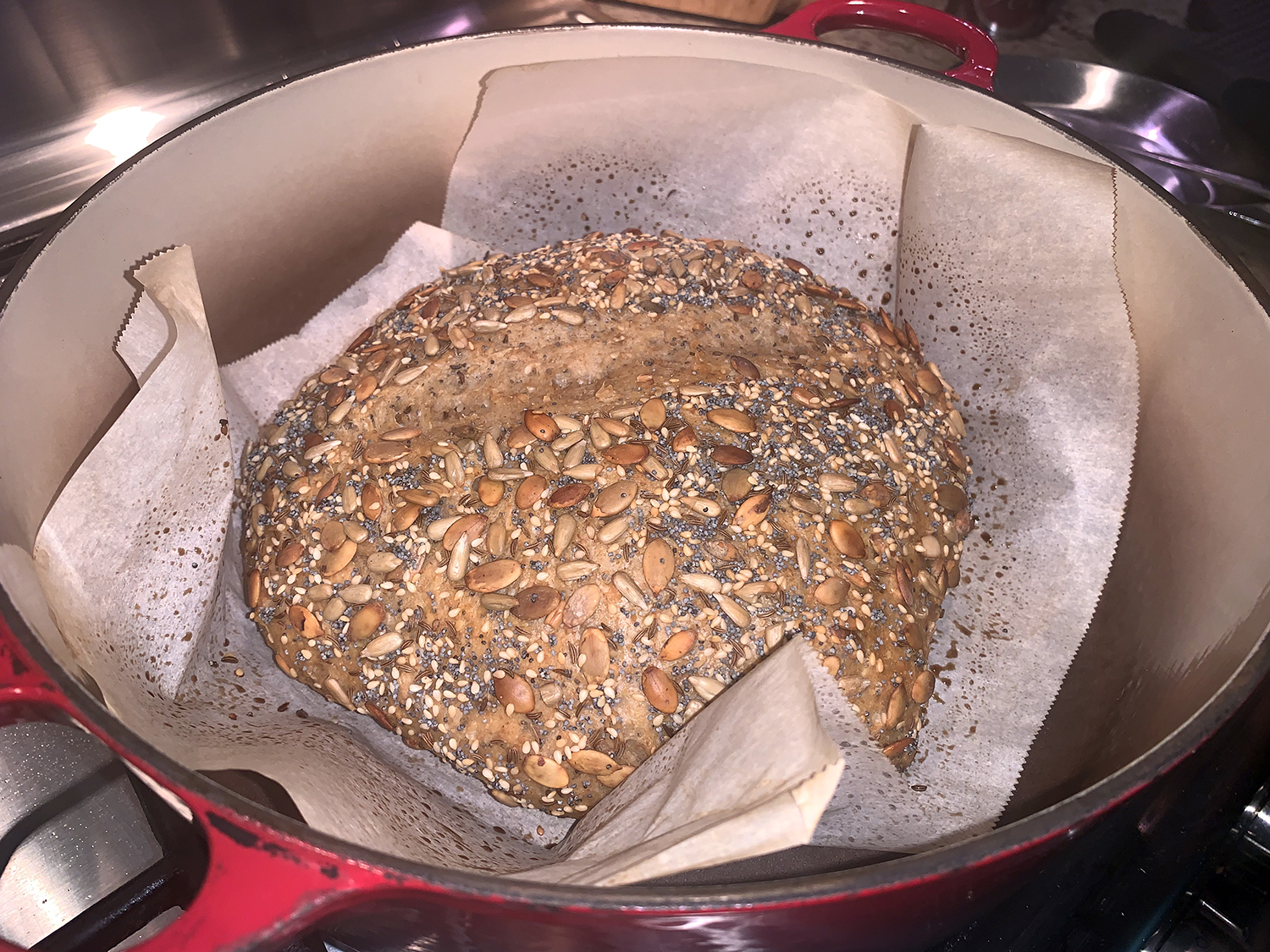
  9. Using sharp knife or single-edge razor blade, make one 6-inch-long, ½-inch-deep slash with swift, fluid motion along top of loaf. Carefully remove hot pot from oven and, using parchment as a sling, gently transfer dough and parchment to hot pot. Working quickly, reinforce scoring in top of loaf if needed, cover pot, and return to oven. Reduce oven temperature to 425 degrees and bake loaf in covered pot for 30 minutes.
  10. Remove lid and continue to bake until loaf is deep golden brown and registers at least 205 degrees, 10 to 15 minutes. Using parchment sling, carefully remove loaf from hot pot and transfer to wire rack; discard parchment. Let cool completely, about 3 hours, before slicing.

http://www.lynnandruss.com

Recipe from America’s Test Kitchen