All posts by LynnHoll

Unknown's avatar

About LynnHoll

I have been an artist and designer all my life incorporating graphic design for websites, gardens, publications, fabrics, interior design and cooking. I am now retired from my professional job, but still create artistic visions in all forms on a daily basis.

Mustardy Cider-Braised Pork Chops

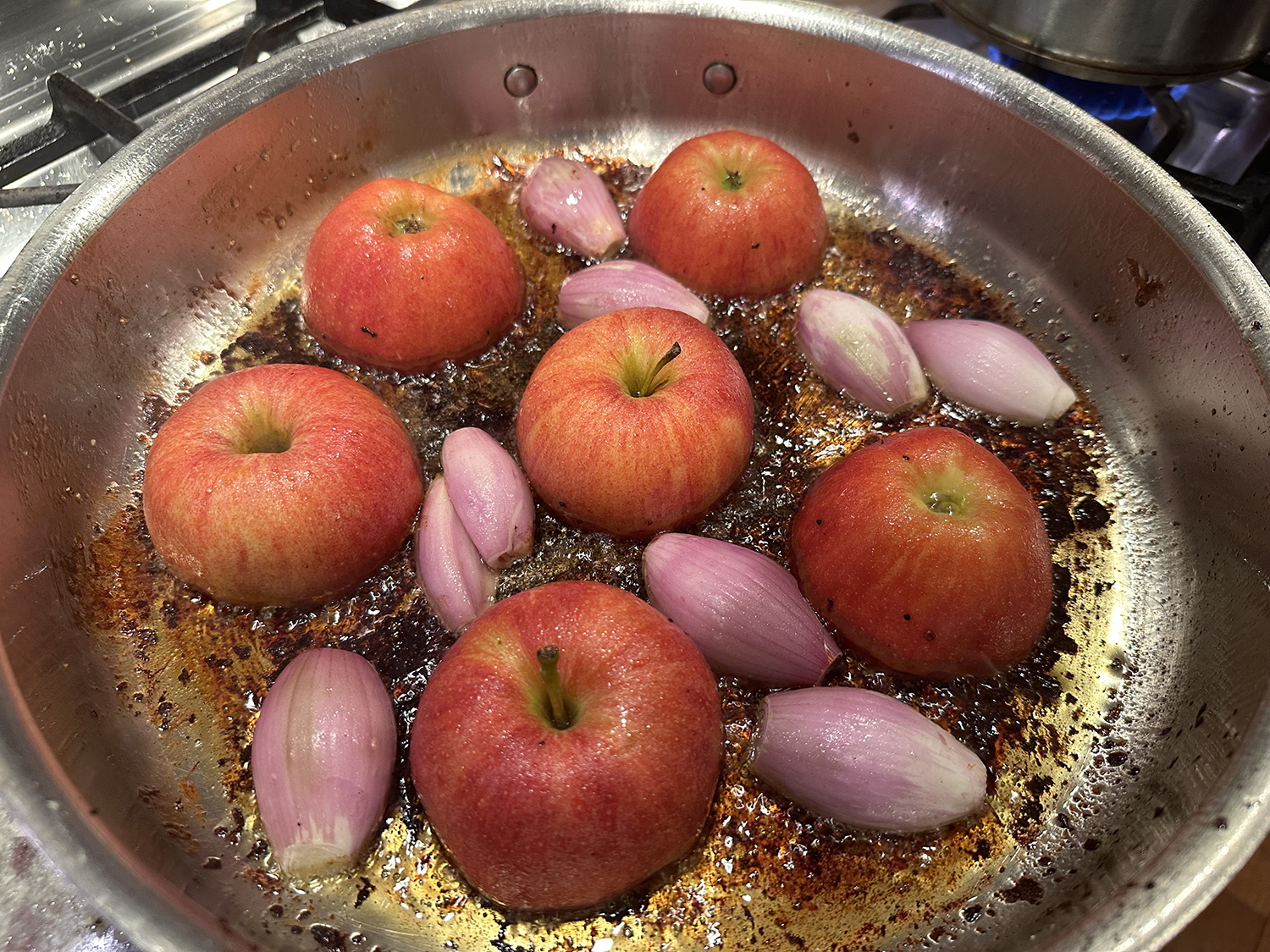
Braising doesn’t always mean long cooking times. For tender cuts like pork chops, the secret to a great braise lies in the method, not in hours on the stove. First, a hard sear on the meat, as well as halved shallots and apples, creates a beautiful fond (the wonderfully delicious caramelized little bits left in the bottom of the pan after cooking).

Deglazing the pan with a tart-savory combination of hard cider, vinegar, and stock loosens up that layer of browned goodness and reduces down to gravy in about 20 minutes. To finish, the chops simmer in the sauce until they’re cooked through. Voilà: cooked-all-day depth in just an hours time.

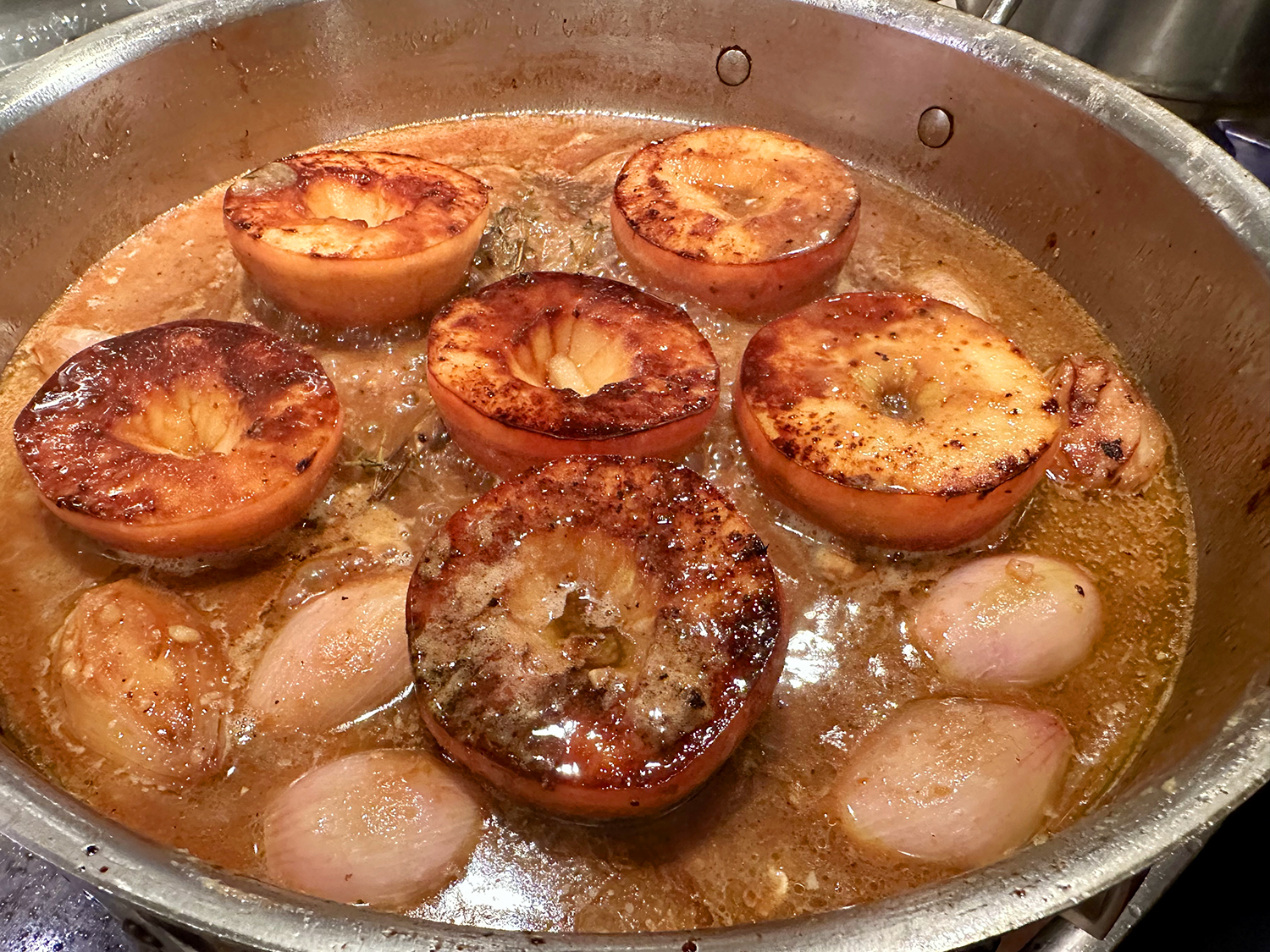
Our changes? If it serves 4, then why only use 3 shallots? We added a fourth one, so each serving received two halves (and next time we may be inclined to add even more). Our intuition took over when thinking about the amount of time the apples actually cooked. The original directions have you put the browned halves back into the pan when the chops get added back. If you want firm apples, then by all means, wait until then to add them to the pan. If like us, you prefer softer bites, then arrange them cut side up when placing the thyme bundle into the sauce.

Otherwise, pretty much everything was spot on. Make sure to use a very large pan to hold all of the ingredients. And that sauce—it was sooo good, you may be tempted to drink any leftovers… Serve with egg noodles, polenta or mashed potatoes.
Mustardy Cider-Braised Pork Chops

  • Servings: 8
  • Difficulty: easy
  • Print

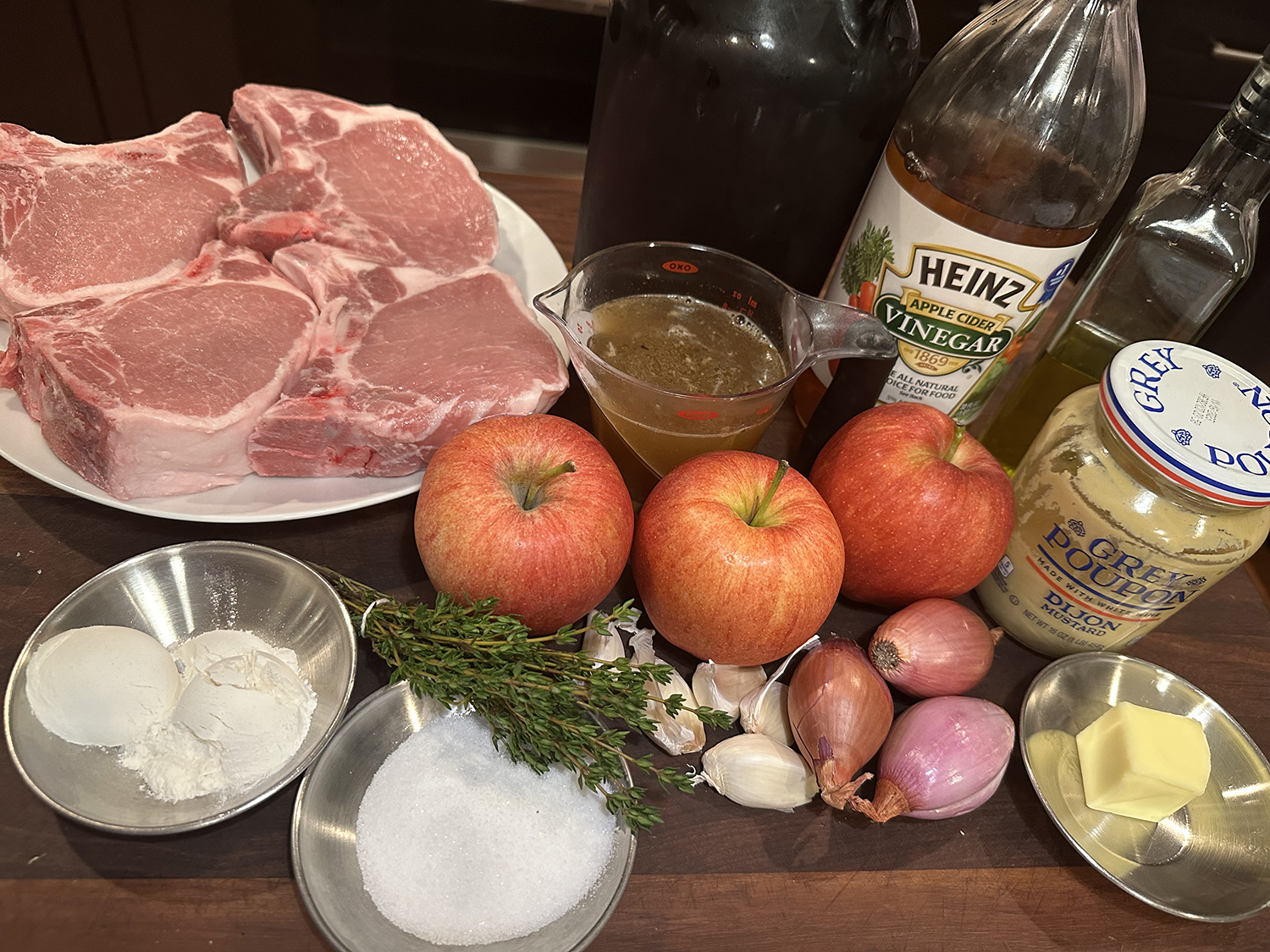
Ingredients

  • 4 1½”-thick bone-in rib pork chops (about 2 lb. total)
  • 3 Tbsp. sugar
  • 1 Tbsp. Diamond Crystal or 1¾ tsp. Morton kosher salt, plus more
  • 1 Tbsp. freshly ground pepper, plus more
  • 2 Tbsp. vegetable oil
  • 3 medium Granny Smith or Gala apples, halved through equators, remove core and seeds
  • 4-8 medium shallots, peeled, halved lengthwise through root ends
  • 4 garlic cloves, finely grated
  • ¼ cup Dijon mustard
  • 3 Tbsp. all-purpose flour
  • 2 Tbsp. unsalted butter
  • 2 cups sweet hard apple cider (such as Angry Orchard)
  • 1 cup chicken broth
  • 1 Tbsp. apple cider vinegar
  • 10–12 sprigs thyme, tied together with kitchen twine
  • Finely chopped chives (for serving)
Directions

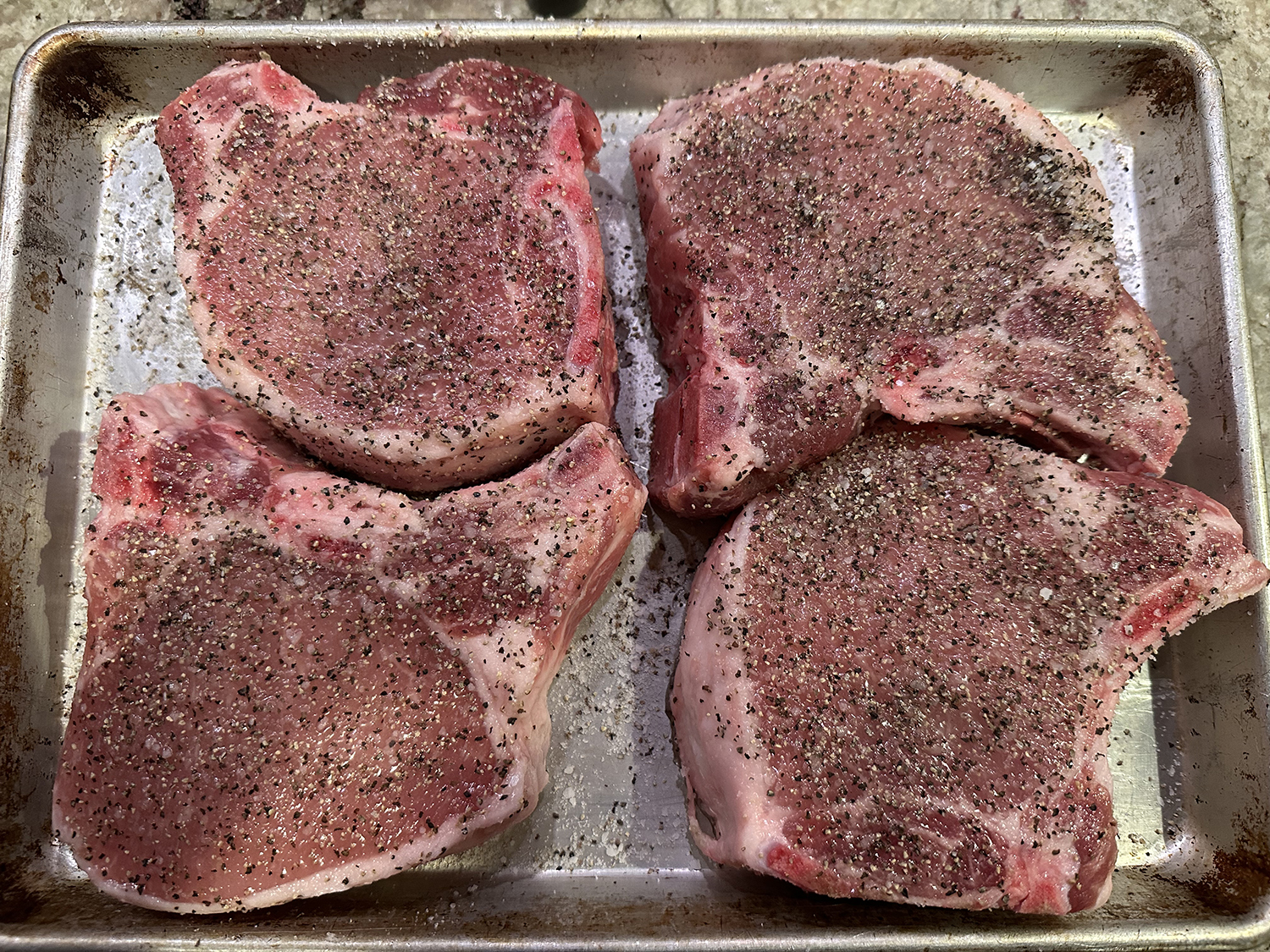
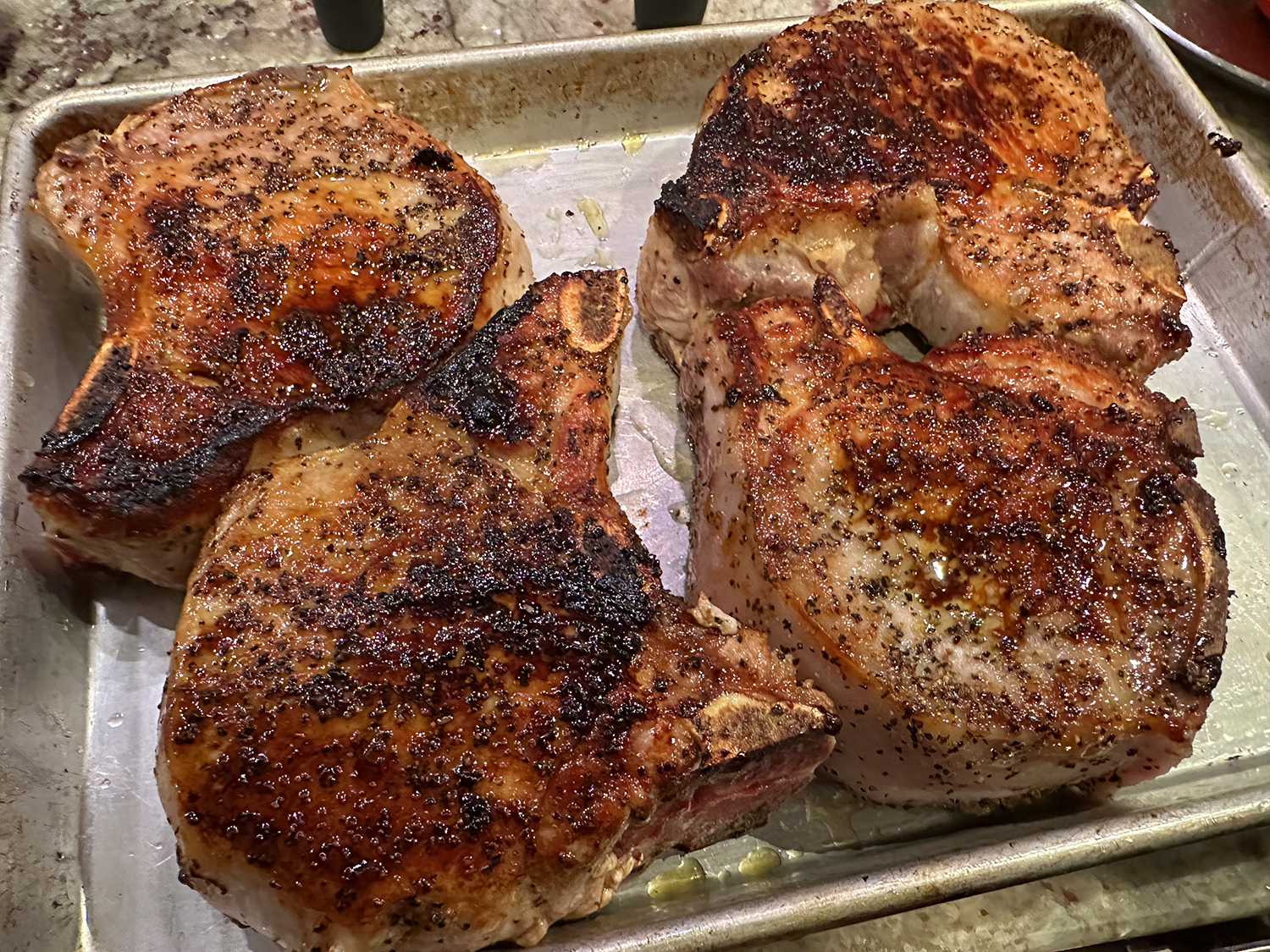
  1. Pat four 1½”-thick bone-in rib pork chops (about 2 pounds total) dry with paper towels. Sprinkle all over with 3 Tbsp. sugar, 1 Tbsp. Diamond Crystal or 1¾ tsp. Morton kosher salt, and 1 tablespoon freshly ground pepper. Heat 2 tablespoon vegetable oil in a large cast-iron skillet over high. Working in batches if needed, cook pork chops, turning halfway through, until deeply browned, about 5 minutes total. Transfer to a large plate.
  2. Working in batches if needed, cook 3 medium Granny Smith or Gala apples, halved through equators, and 3 medium shallots, peeled, halved lengthwise through root ends, cut sides down, in same skillet, gently pressing down on them with a spatula to create contact with pan, until golden brown on cut sides, about 2 minutes (it’s okay if shallots fall apart). Transfer apples to plate with chops.
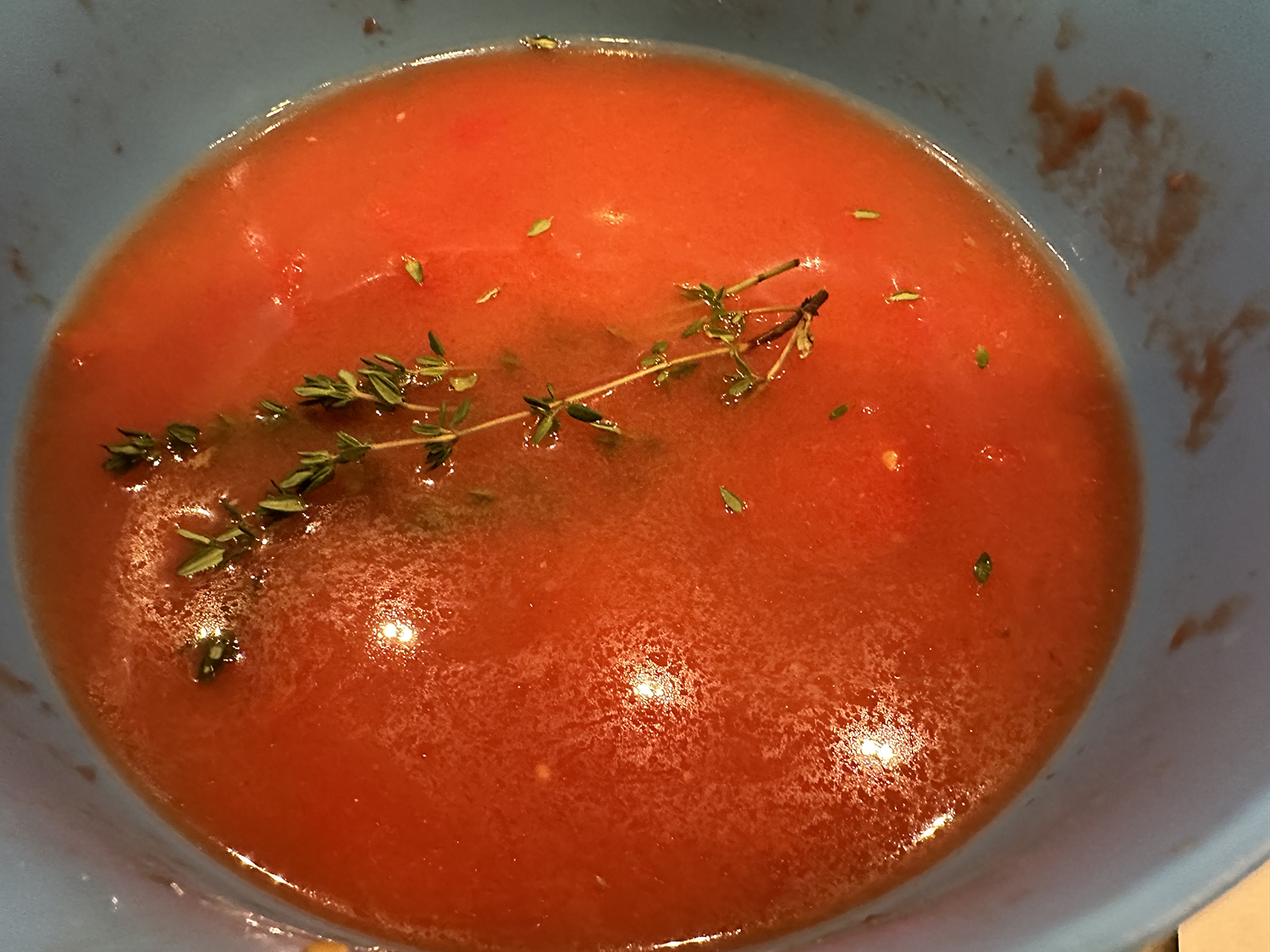
  3. Reduce heat to medium, add 4 garlic cloves, finely grated, to pan, and cook, stirring constantly, just until fragrant, about 30 seconds. Add ¼ cup Dijon mustard, 3 tablespoon all-purpose flour, and 2 tablespoon unsalted butter; stir to coat shallots. Pour in 2 cups sweet hard apple cider, 1 cup low-sodium chicken broth, and 1 tablespoon apple cider vinegar, scraping up browned bits and flour stuck to bottom of pan and incorporating into liquid.
  4. Add thyme bundle and apple halves arranging them cut sides up, and bring mixture to a simmer. Partially cover (use a baking sheet if you don’t have a lid) and simmer until sauce is thick enough to coat a spoon, about 20 minutes. Taste and season with salt and pepper.
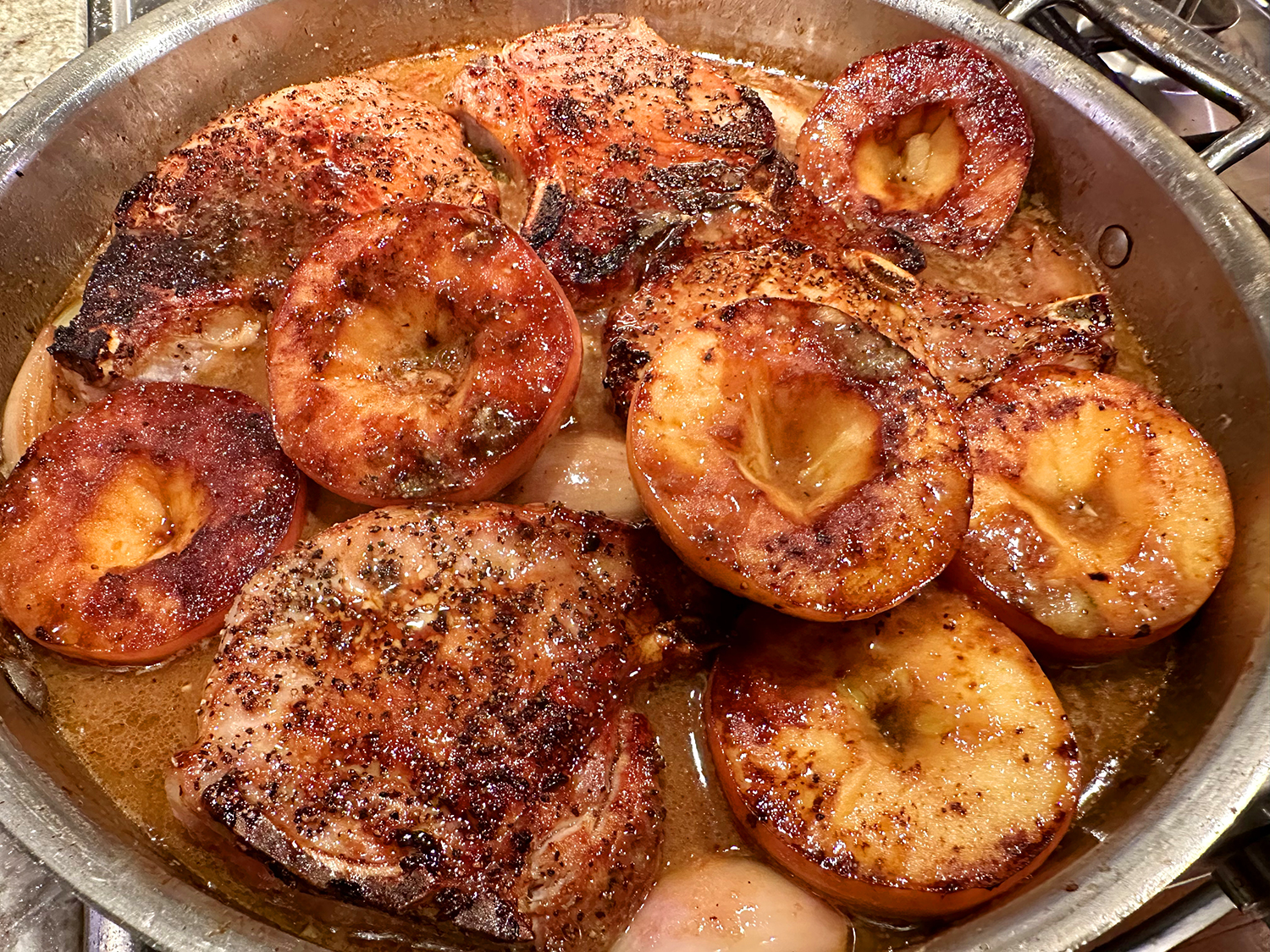
  5. Place pork chops in sauce, and partially cover. Simmer until an instant-read thermometer inserted into the thickest part of a pork chop registers 145°, 7–10 minutes. Remove from heat; sprinkle with finely chopped chives and season with more pepper to serve.

http://www.lynnandruss.com

Recipe by Inés Anguiano for Bon Appétit Magazine

Dark and Stormy–Braised Pot Roast

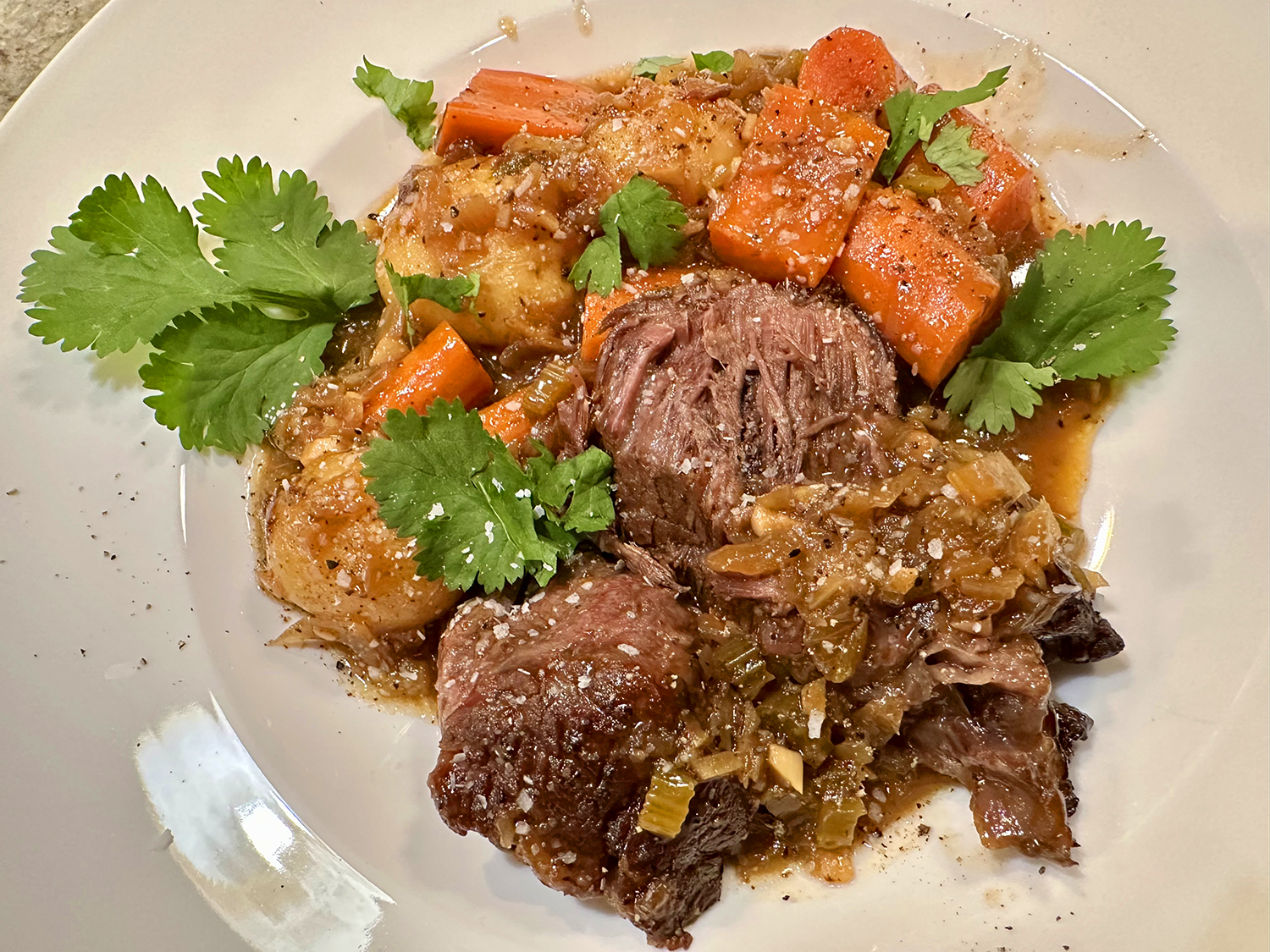
When I laid eyes upon the full-page photo attached to an article for Boozy Braises in a recent issue of Bon Appétit Magazine, I just knew it had to get on our short list. Here, the humble pot roast gets punched up with the familiar flavors of a Dark and Stormy cocktail. Piqued my interest!

Aged rum and ginger beer form the basis of the braise, with a bit of brown sugar and plenty of chopped fresh ginger playing backup. This potent combination reduces as the chuck cooks to tenderness, creating a complex sauce with just enough kick. And what’s a cocktail without a garnish? Mint and cilantro, along with some lime wedges, give this cozy dish a refreshing finishing touch.

As the article informed, pot roast isn’t a specific cut of meat but rather a method of preparation. And it’s a forgiving dish as long as you choose a cut of meat that can stand up to long cooking without drying out. Cheap, tough cuts are what you’re after, the ones that have a lot of connective tissue and little fat. Think chuck roasts, rounds, and briskets.

These cuts would be chewy if cooked like a steak but are ideal for gentle braising, which allows all those firm muscles and tissues to slowly become tender. A chuck roast is preferred, but rounds and briskets can be used to similar result. If unsure, ask your butcher: Tell them you’re making a pot roast and let them guide you.

We never thought of a pot roast dinner as company-worthy, but this recipe changed our viewpoint. It was hands-down delicious! Our pot roast was only 2 3/4 pounds, less than the 4-pound roast indicated under ingredients. It is often impossible to find one over 3 pounds, so if you are feeding more than four people, you may want to get two smaller chuck roasts. (Make sure they’ll fit in your braising pot.)

A perfect recipe to cook on a long, cold, lazy day in the Winter. Perhaps even enjoy a Dark & Stormy cocktail while the pot roast braises?

Do ahead: Roast can be cooked 3 days ahead. Let cool; cover and chill. Skim fat from surface before reheating, covered, in a 350° oven for at least 30 minutes.

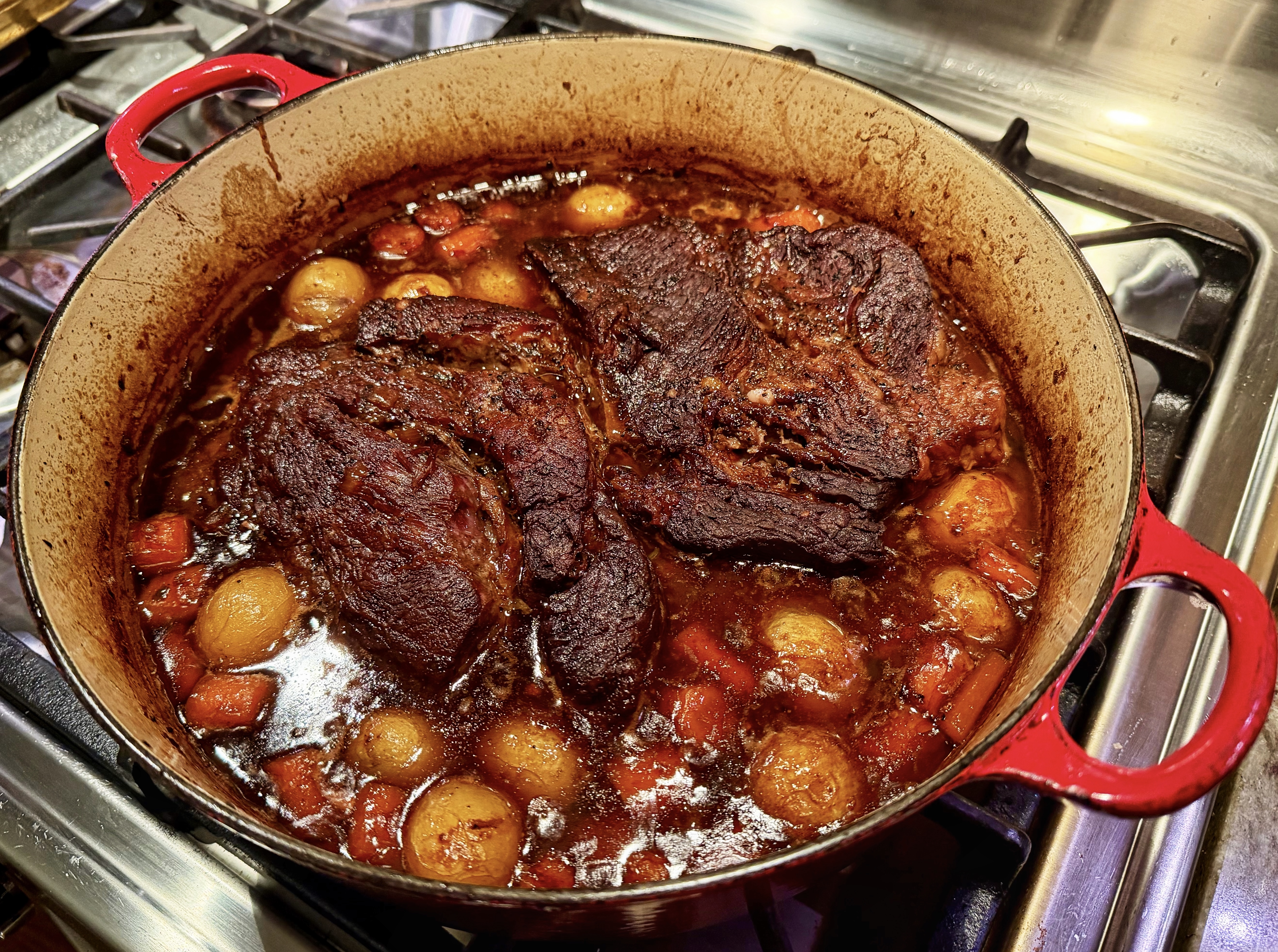
The second time we made this recipe, we had two 2-pound chuck roasts, so we piled them one on top of the other in the braising pot for the first 3 hours of cooking. Then when it was time to remove the cover and brown the meat, we placed them side-by-side (shown above) as the collagen had melted and the size of the roasts had shrunk.

After this second go-around, we changed the amount of the carrots and potatoes from 1 pound to 1 1⁄2 pounds each, which is noted in the Ingredients list below.

Dark and Stormy–Braised Pot Roast

  • Servings: 6-8
  • Difficulty: moderate
  • Print

Ingredients

  • 1 4-lb. boneless beef chuck roast (or 2, 2-lb. roasts)
  • 2 Tbsp. Diamond Crystal or 1 Tbsp. plus ½ tsp. Morton kosher salt, plus more
  • 2 tsp. freshly ground pepper, plus more
  • ¼ cup vegetable oil
  • 2 small onions, finely chopped
  • 2 small celery stalks, finely chopped
  • 10 garlic cloves, finely chopped
  • 1 3″ piece ginger, peeled, finely chopped
  • 2 Tbsp. all-purpose flour
  • ⅔ cup dark rum (such as Goslings)
  • 2½ cups low-sodium beef broth
  • 2 cups ginger beer
  • 3 Tbsp. fresh lime juice
  • 3 Tbsp. Worcestershire sauce
  • 1 Tbsp. light brown sugar
  • 1½ lb. carrots, peeled, cut into 1″ pieces
  • 1½ lb. small yellow potatoes (15–20), scrubbed
  • Mint and/or cilantro leaves with tender stems and/or lime wedges (for serving; optional)

Directions

  1. Place a rack in middle of oven; preheat to 300°. Sprinkle one 4-lb. boneless beef chuck roast all over with 2 tablespoons Diamond Crystal or 1 tablespoon plus ½ teaspoon Morton kosher salt and 2 teaspoons freshly ground pepper. 
  2. Heat ¼ cup vegetable oil in a large ovenproof Dutch oven or other heavy pot over medium-high. Cook roast, turning occasionally, until browned all over, 15–20 minutes. Transfer to a large plate.
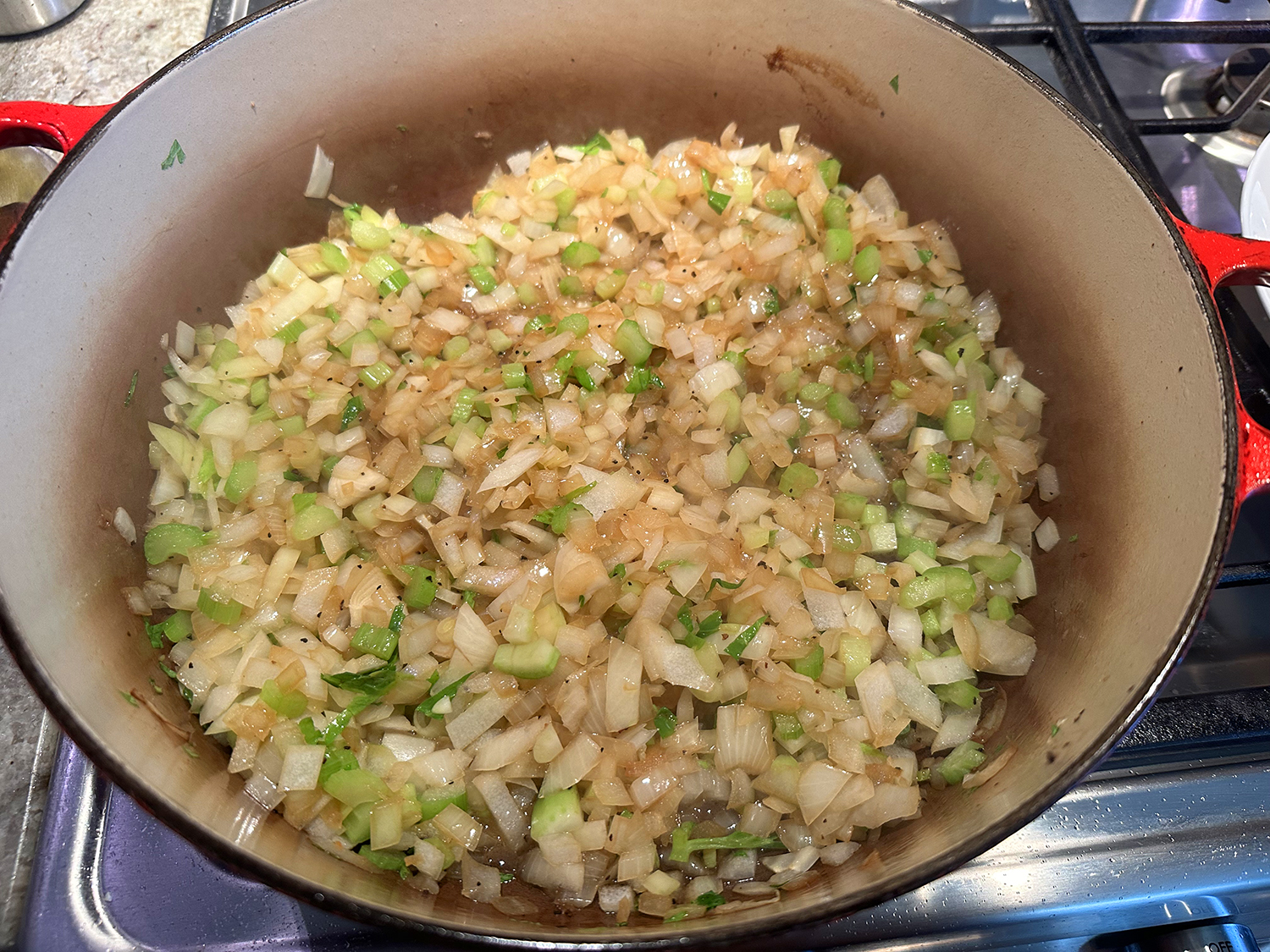
  3. Reduce heat to medium and cook 2 small onions, finely chopped, and 2 small celery stalks, finely chopped, in same pot, stirring often and scraping up browned bits stuck to bottom, until golden brown and softened, 9–13 minutes. 
  4. Add 10 garlic cloves, finely chopped, and one 3” piece ginger, peeled, finely chopped, and cook, stirring often, until fragrant, 2–3 minutes. 
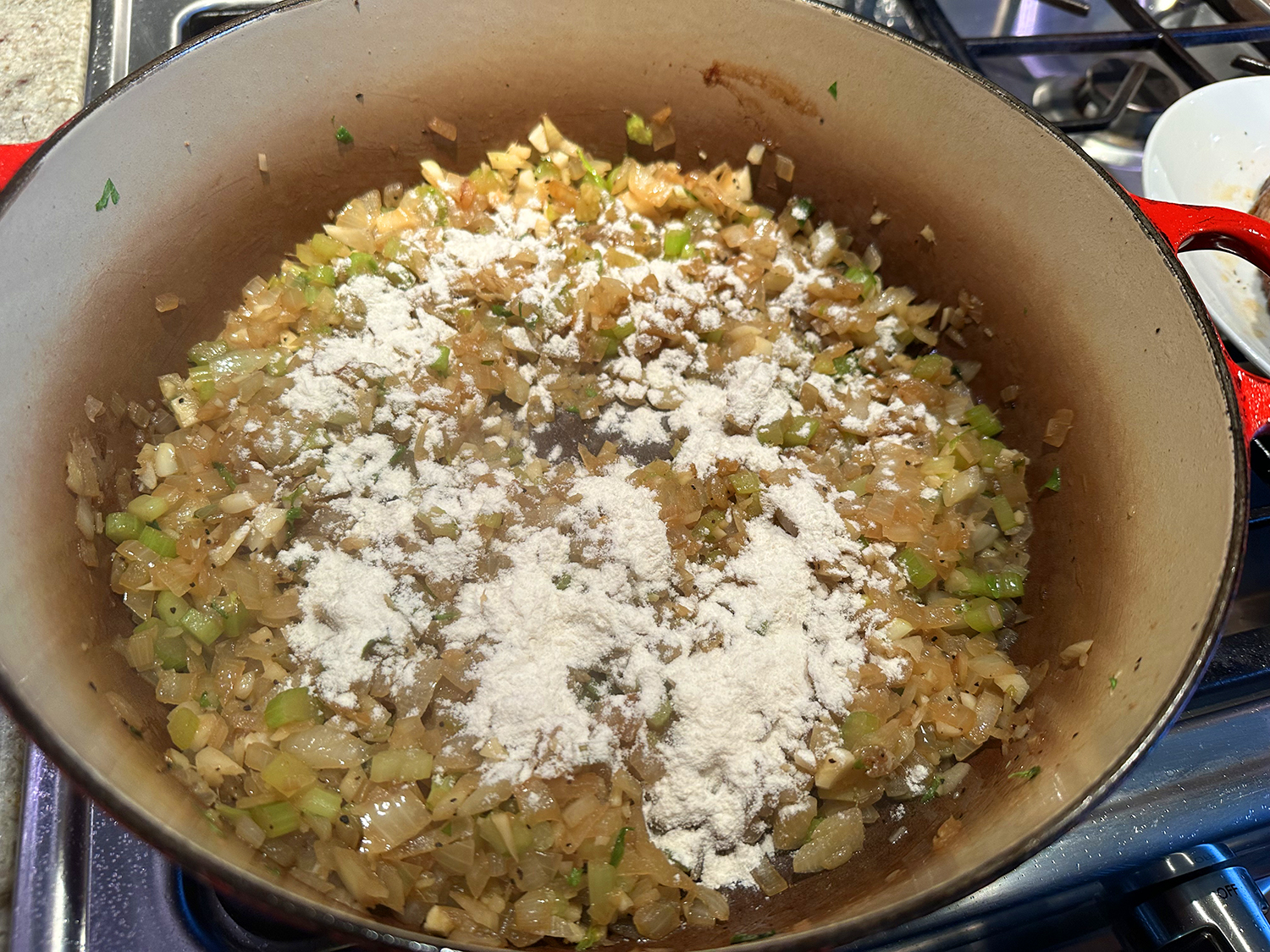
  5. Add 2 tablespoons all-purpose flour and cook, stirring constantly, until combined, about 2 minutes. Gradually pour in ⅔ cup dark rum, stirring constantly to prevent clumping, then add 2½ cups low-sodium beef broth, 2 cups ginger beer, 3 tablespoons fresh lime juice, 3 tablespoons Worcestershire sauce, and 1 tablespoon light brown sugar. Increase heat to high and bring to a boil. Cook, stirring occasionally, until sauce is reduced by about one third and thick enough to lightly coat a spoon (it should be the consistency of heavy cream), 15–20 minutes. Taste sauce and season with more salt and pepper if needed.
  6. Remove pot from heat and place roast in center of pot. Arrange 1 pound carrots, peeled, cut into 1” pieces, and 1 pound small yellow potatoes (15–20), scrubbed, around meat, cover, and braise in oven until meat is tender enough to shred in the center without much resistance, 2 1/2 to 3 hours. 
  7. Uncover and turn meat over. Roast until meat is browned on top and sauce thickens slightly, 30–45 minutes. (If roast is browning too quickly, turn over and continue roasting until sauce thickens.) 
  8. Skim as much fat from surface as possible; discard. Top with mint and/or cilantro leaves with tender stems (if using) and serve with lime wedges for squeezing over if desired.

http://www.lynnandruss.com

Recipe by Jesse Szewczyk for Bon Appétit Magazine

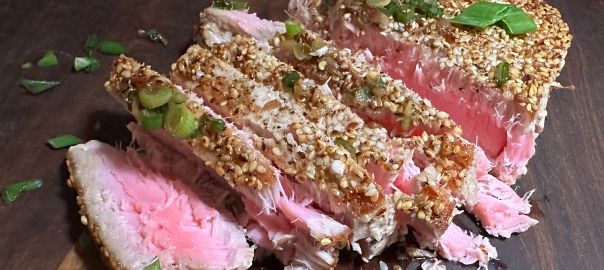
Pan-Seared Sesame-Crusted Tuna Steaks

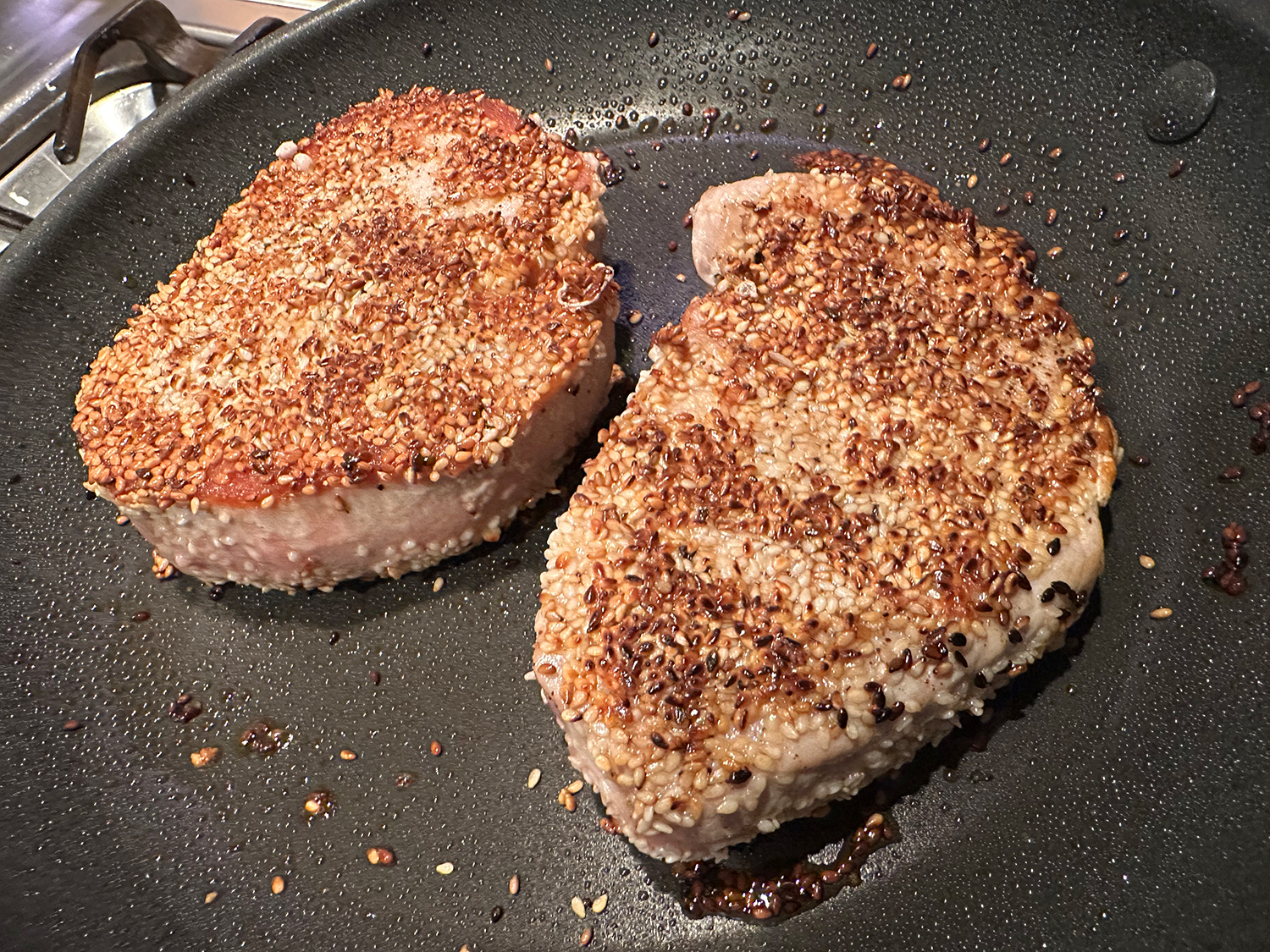
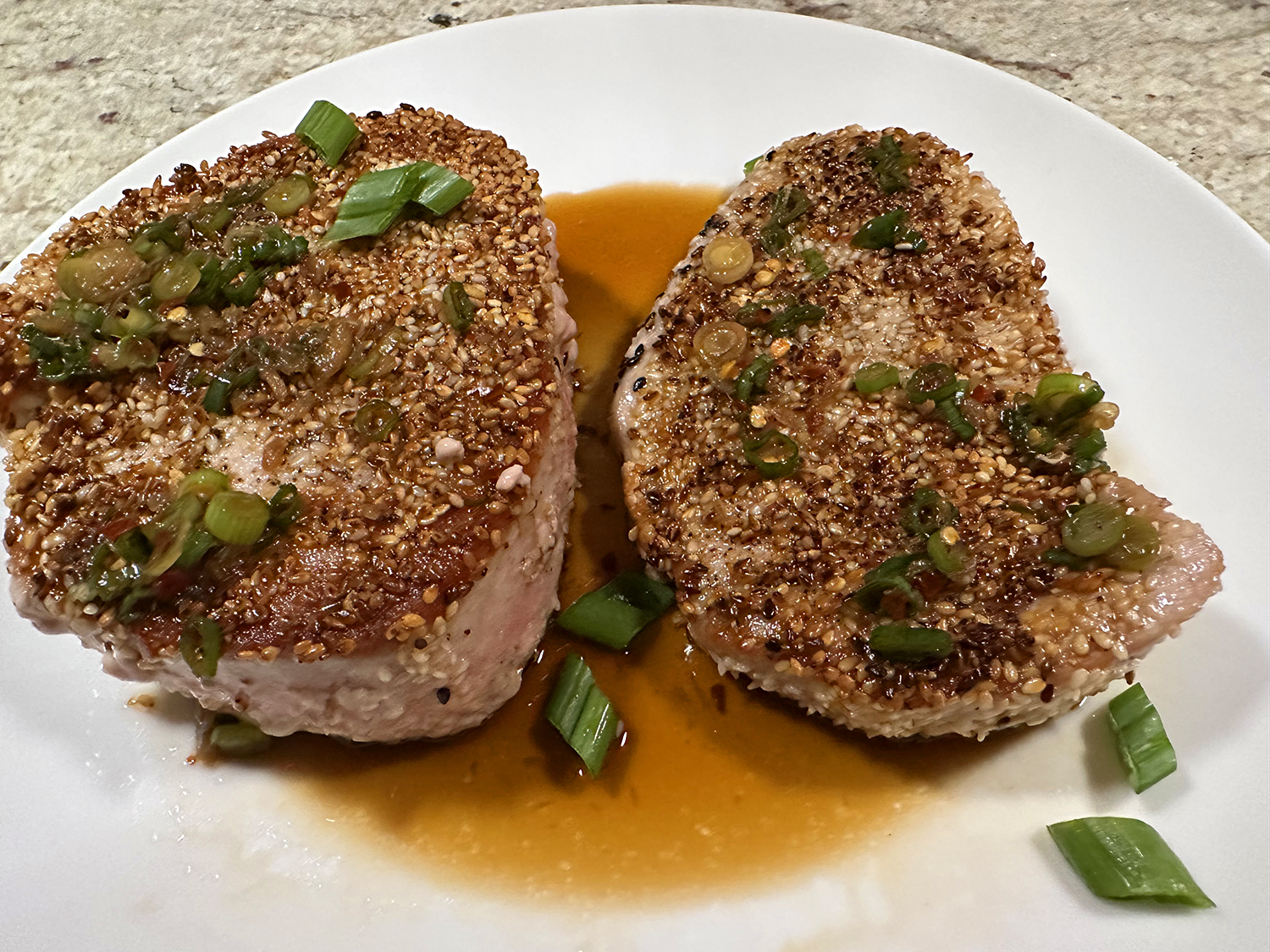
There was a good sale on tuna steaks at our favorite supermarket a few weeks back, even though tuna was not on our short list for the week’s meals. But we repackaged them for future use and placed them in the freezer. A few weeks later we remembered we had the tuna and found a perfect recipe from America’s Test Kitchen.

Problem was, the recipe was for 4 people, which in normal cases, typically is not an issue because we will eat them for lunch the next day. No problem, we just cut the recipe in half, including the ginger soy sauce.

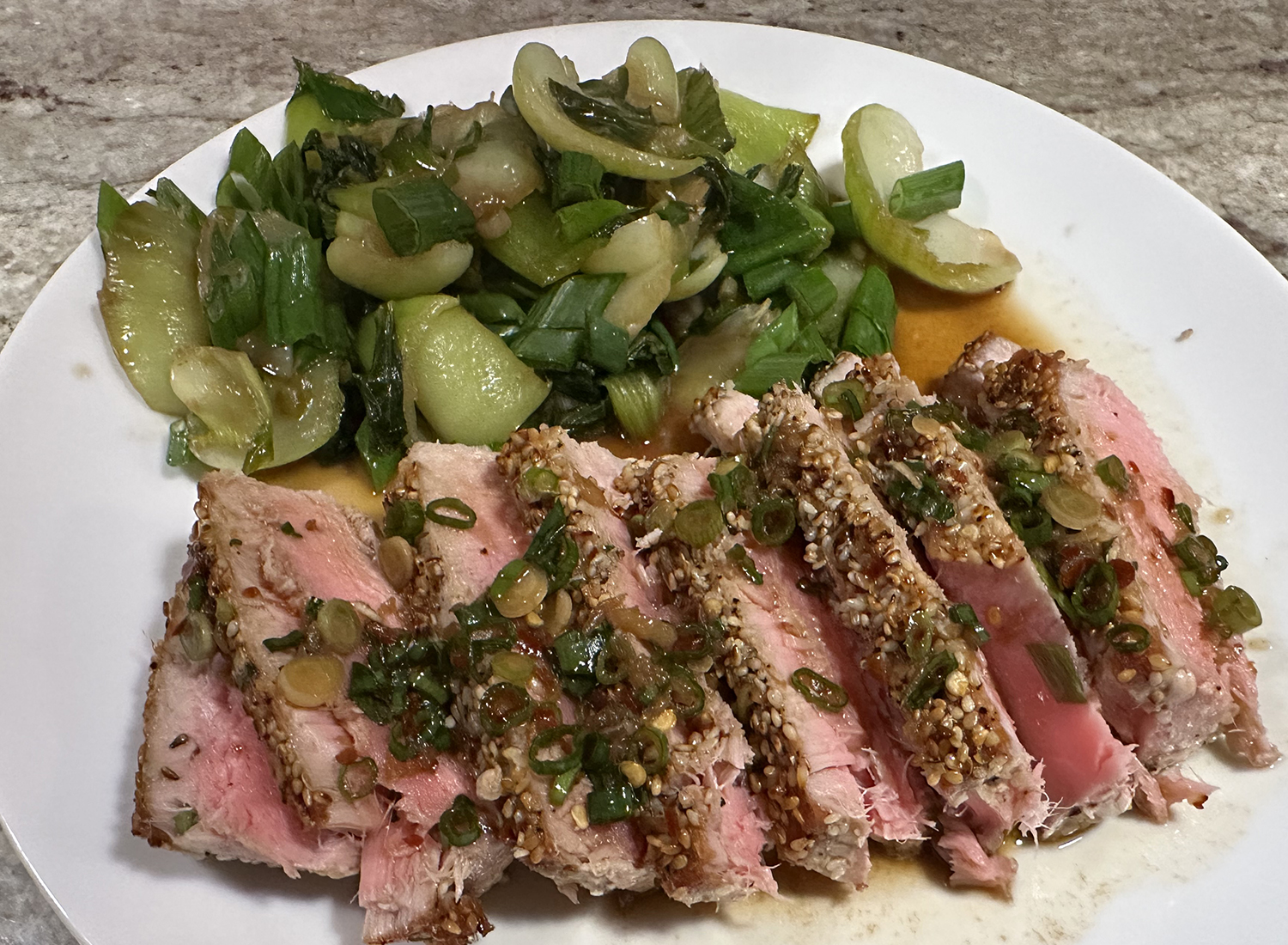
The fact that there are minimal ingredients, and takes very little time for prep and cooking, makes it a winner-dinner for mid-week. Paired with a side dish of Soy-Braised Baby Bok Choy, we enjoyed a tasty, healthy and quick dinner.

Pan-Seared Sesame-Crusted Tuna Steaks

  • Servings: 4
  • Difficulty: easy
  • Print

Ingredients

  • ¾ cup sesame seeds
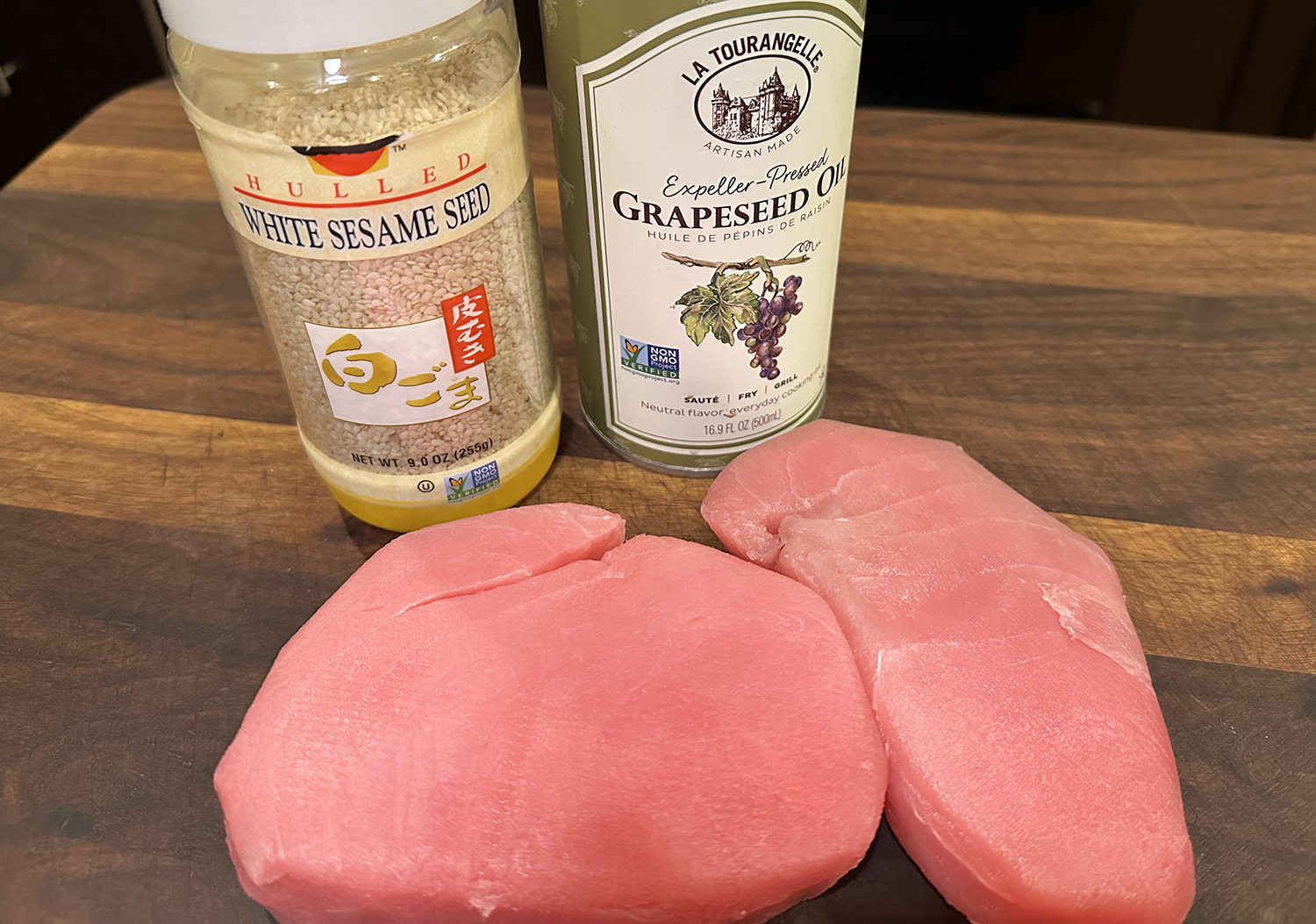
  • 4 tuna steaks, 8 oz. each and about 1 inch thick
  • 2 Tbsp. vegetable oil
  • Salt and ground black pepper

Directions

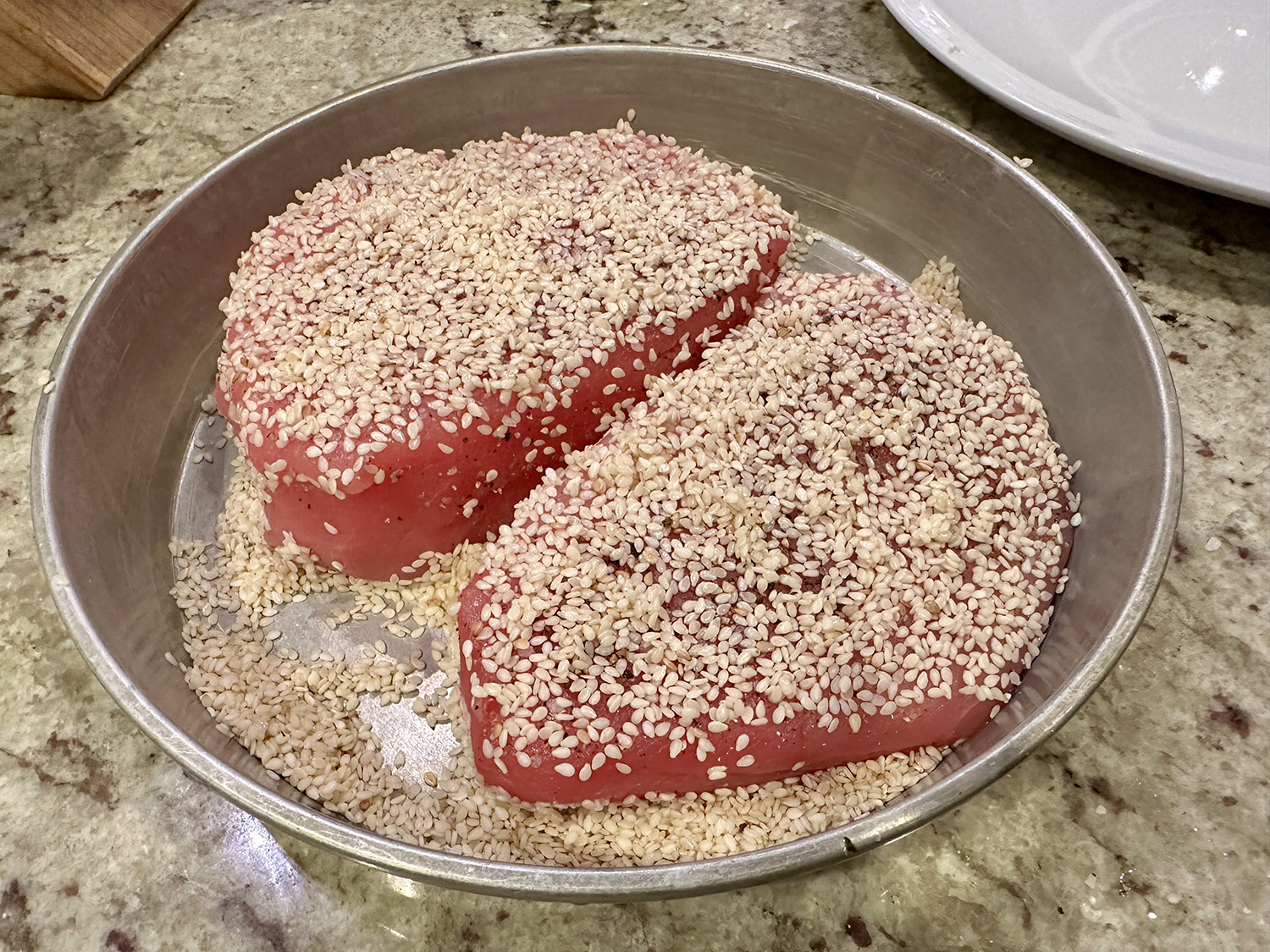
  1. Spread sesame seeds in shallow baking dish or pie plate. Pat tuna steaks dry with paper towel; use 1 tablespoon oil to rub both sides of steaks, then sprinkle with salt and pepper. Press both sides of each steak in sesame seeds to coat.
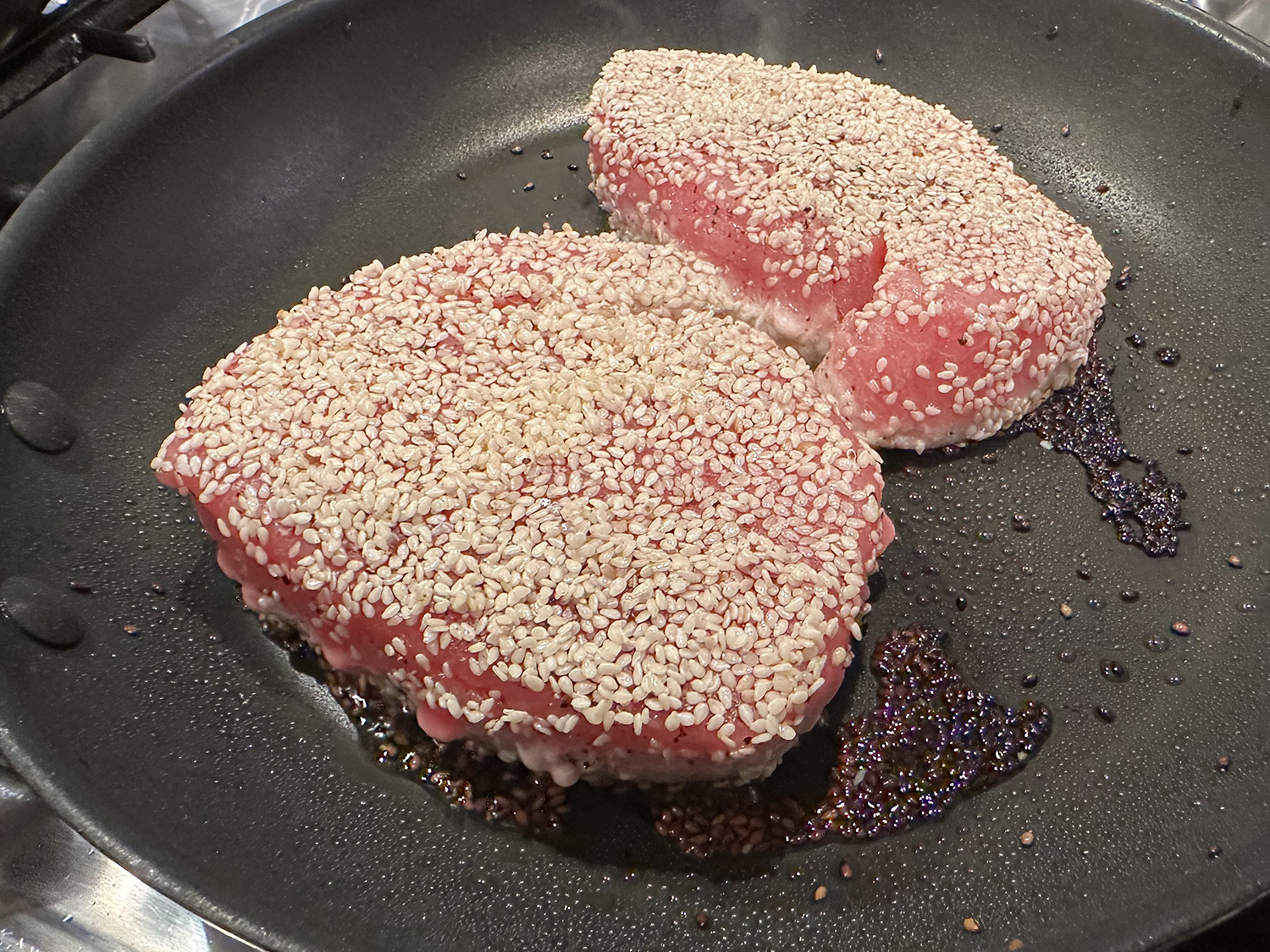
  2. Heat remaining 1 tablespoon oil in 12-inch nonstick skillet over high heat until just beginning to smoke; swirl to coat pan. Add tuna steaks and cook 30 seconds without moving steaks. Reduce heat to medium-high; continue to cook until seeds are golden brown, about 1 1/2 minutes.
  3. Using tongs, carefully flip tuna steaks; cook, without moving steaks, until golden brown on second side, about 1 1/2 minutes for rare (opaque at perimeters and translucent red and cool at center when checked with tip of paring knife) or 3 minutes for medium-rare (opaque at perimeters and reddish pink at center). To serve, cut into 1/4-inch-thick slices.

Ginger Soy Sauce with Scallions

This savory sauce flavored with fresh ginger and scallions is the perfect accompaniment for our Pan-Seared Sesame-Crusted Tuna Steaks.

Ingredients

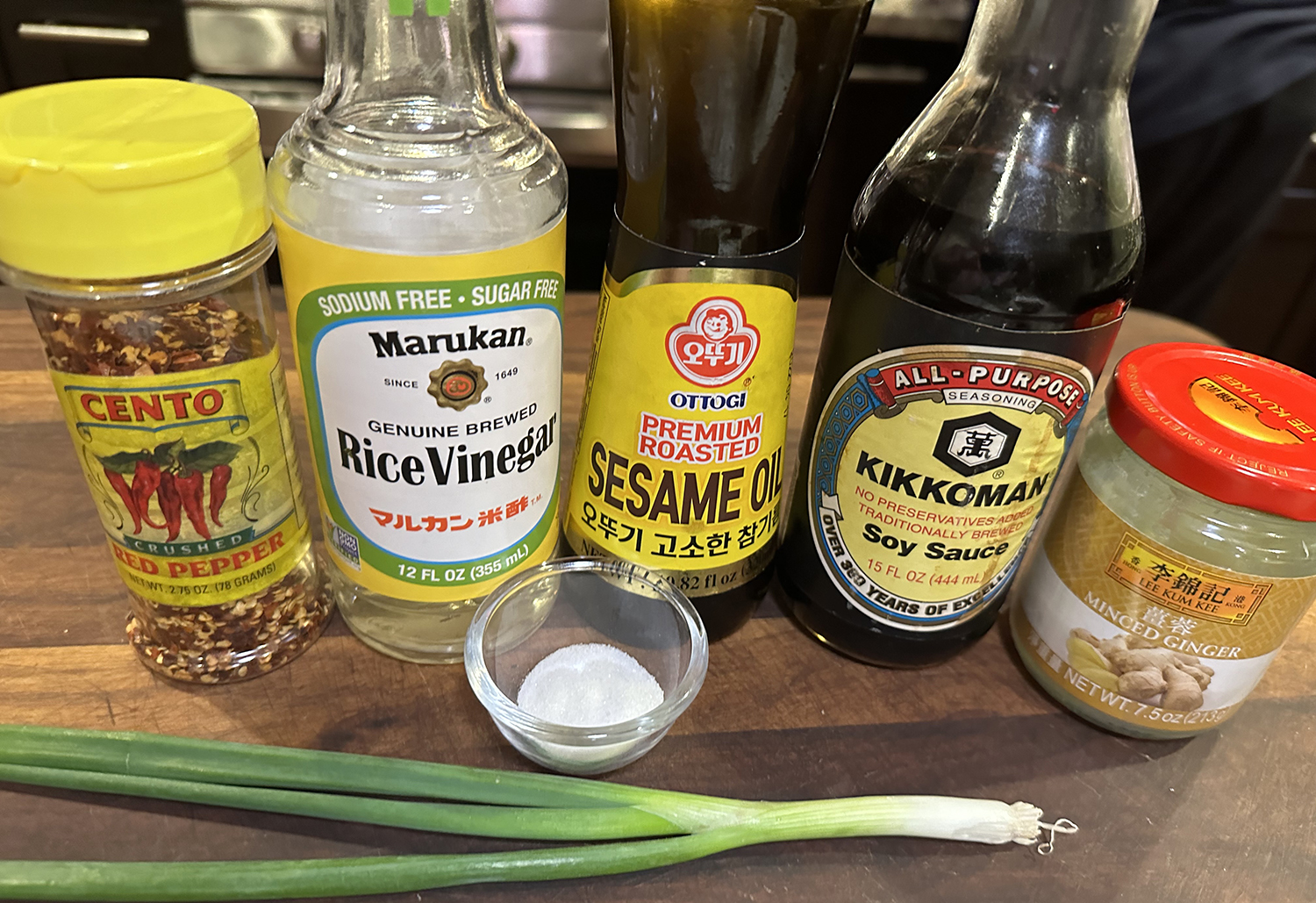
  • ¼ cup soy sauce
  • ¼ cup rice vinegar
  • ¼ cup water
  • 2 ½ tsp. sugar
  • 1 medium scallion, sliced thin
  • 2 tsp. minced fresh ginger
  • 1 ½ tsp. toasted sesame oil
  • ½ tsp. red pepper flakes

Directions

Combine all ingredients in a small bowl, stirring to dissolve sugar.

http://www.lynnandruss.com

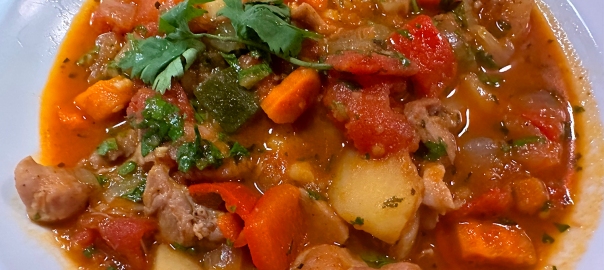
Chicken Stew

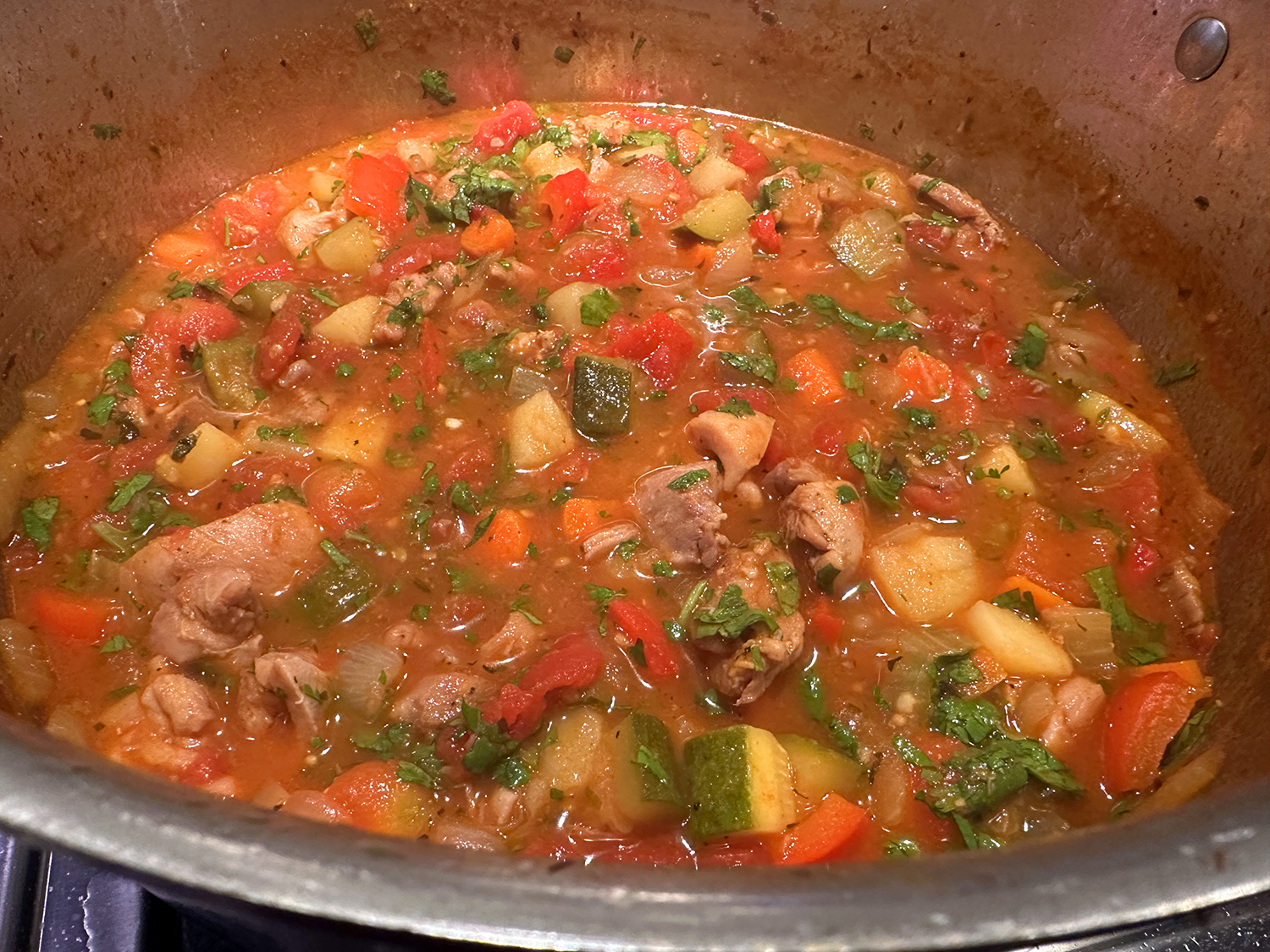
In this hearty chicken stew recipe, chicken thighs and fresh vegetables simmer in a rich tomato broth until the meat is fall-apart tender and the broth is jammy and flavorful. Italian-style seasonings like paprika, oregano, and coriander bring a delicious warming, aromatic quality. Made in just one pot, this easy recipe comes together in under an hour and freezes exceptionally well.

Sautéing the chicken and vegetables until golden, then gently simmering them with aromatic spices is a quick and easy way to build big flavor in under an hour. The original recipe did not cut up the chicken thighs, but rather left them whole. We decided cutting the poultry into about one-inch pieces made more sense.

In addition, we added a bay leaf and two red finger peppers (such as Thai or Fresno, seeded and chopped). This added minimal heat but contributed to the depth of flavor.

In this hearty chicken stew recipe, chicken thighs and fresh vegetables simmer in a rich tomato broth until the meat is fall-apart tender and the broth is jammy and flavorful. Italian-style seasonings bring a delicious warming, aromatic quality. Made in just one pot, this easy recipe comes together in about an hour and freezes exceptionally well.

Chicken Stew

  • Servings: 4
  • Difficulty: easy
  • Print

Ingredients

  • 1 ½ lbs. boneless skinless chicken thighs
  • Kosher salt
  • Black pepper
  • 2 Tbsp. extra virgin olive oil
  • 1 yellow onion, chopped
  • 3 garlic cloves, minced
  • 2 carrots, peeled and chopped
  • 1 red bell pepper, chopped
  • 1 zucchini, chopped
  • 1 potato, chopped
  • 2 red finger peppers such as Thai or Fresno, seeded and chopped
  • 1 tsp. paprika
  • 1 tsp. coriander
  • 1 tsp. dried oregano
  • 1 bay leaf
  • 1 28 oz. can whole tomatoes
  • 2 cups chicken broth, peferrably homemade
  • 2 sprigs fresh thyme
  • 1 Tbsp. white wine vinegar
  • 1 cup chopped parsley leaves

Directions

  1. Pat the chicken dry and cut into about one-inch pieces. Season on one side with a good pinch of salt and pepper.
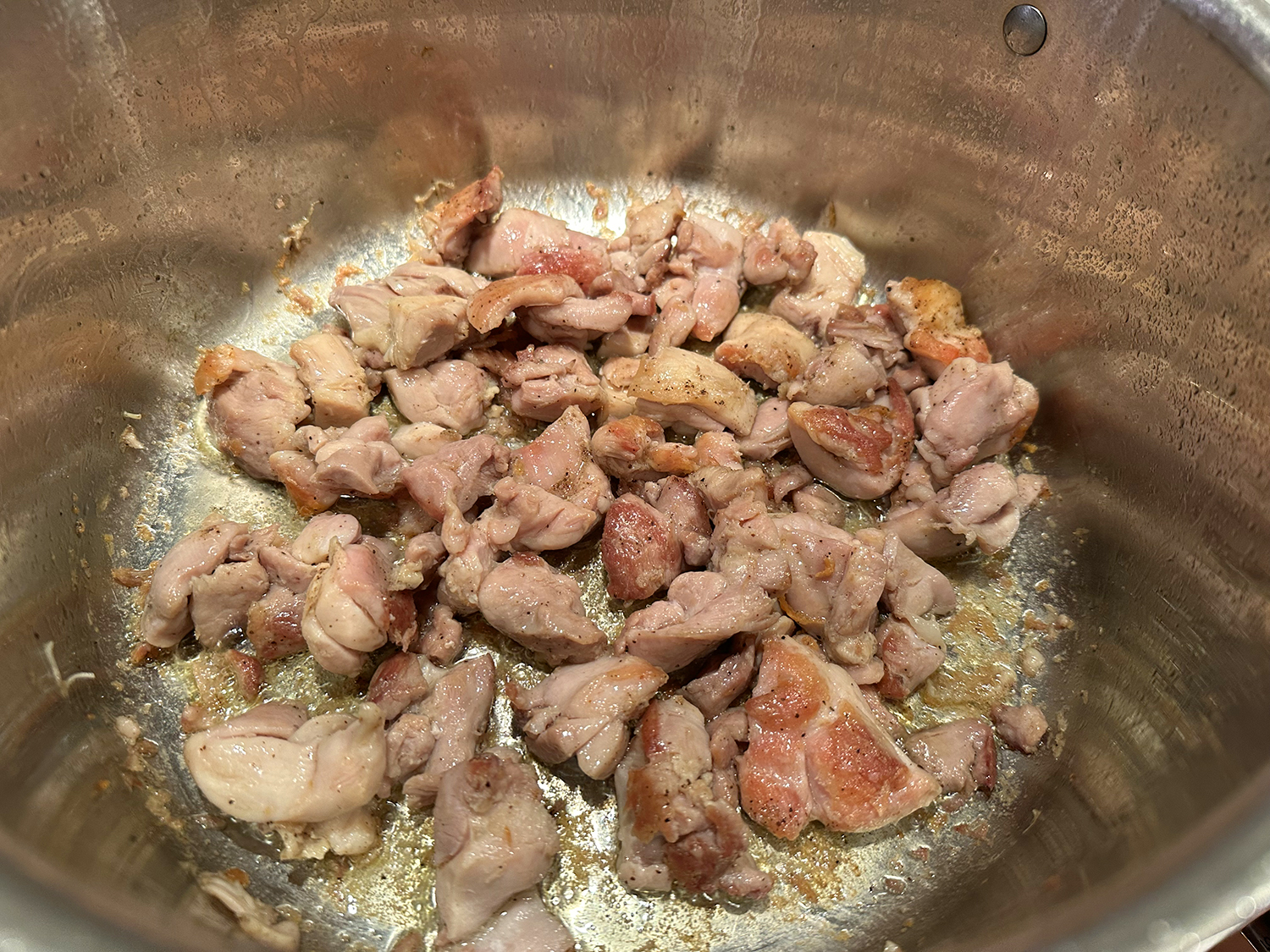
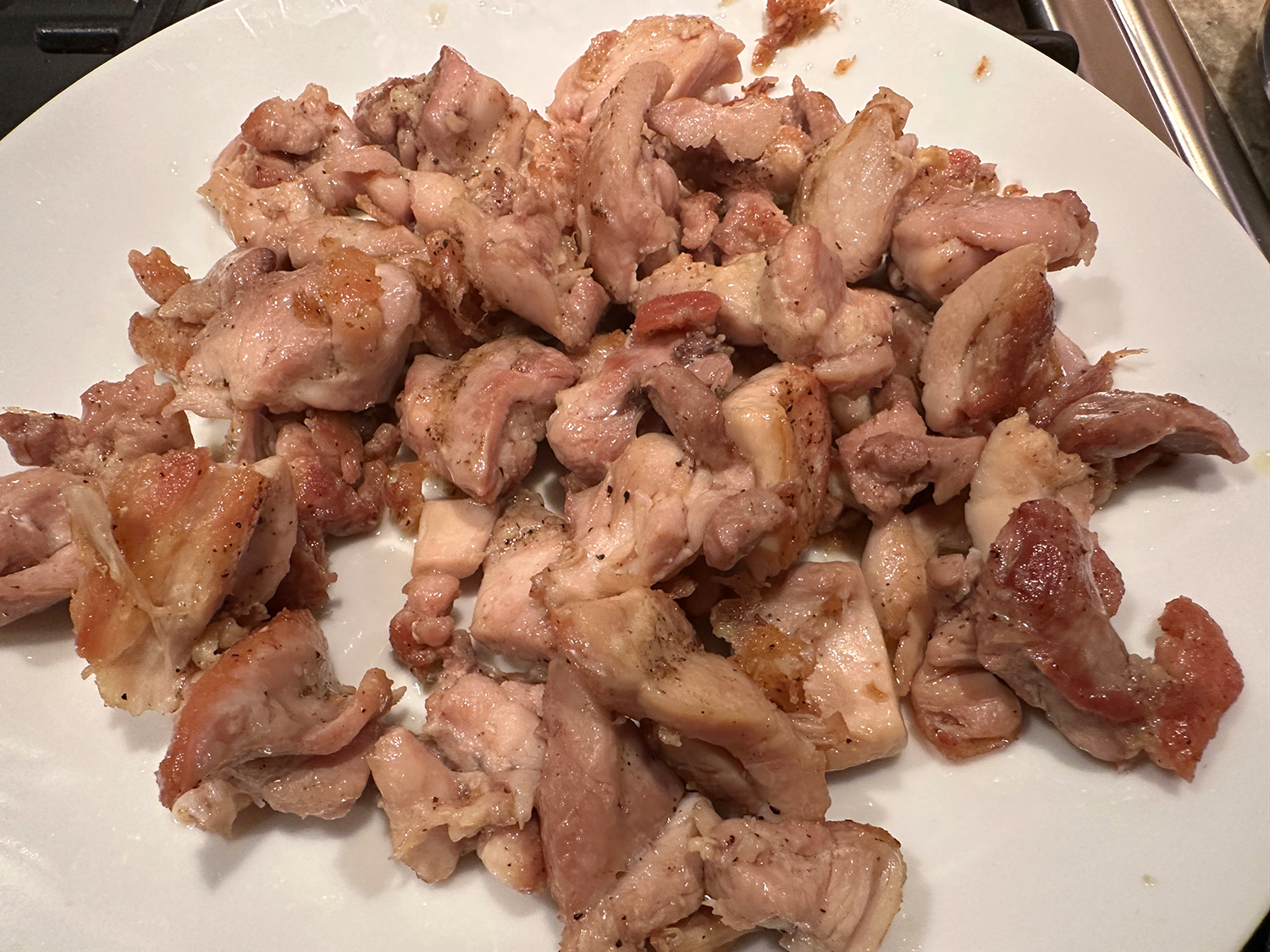
  2. In a Dutch oven or large pot over medium-high heat, heat the olive oil until shimmering. Add the chicken, starting with the seasoned side down. Sprinkle the top with salt and pepper, then cook until browned on the bottom, about 4 minutes. Flip and cook until golden on the second side, about 3 minutes more. Remove the chicken and set aside on a plate for now.
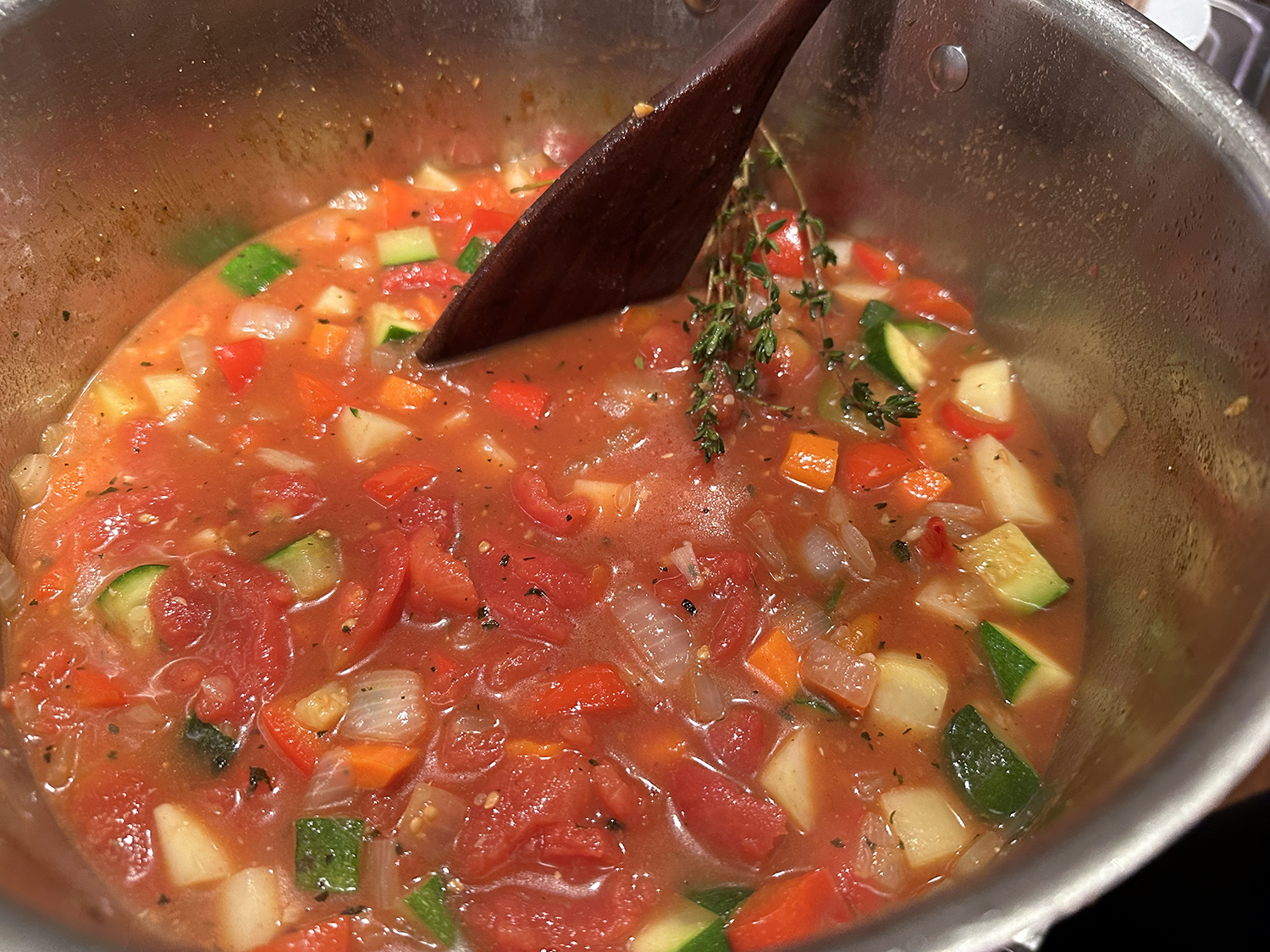
  3. With the heat still on medium-high, add the onion, garlic, carrot, bell pepper, finger peppers, zucchini and potato. Season with the paprika, coriander, oregano, a pinch of salt and pepper and the bay leaf. Cook, stirring occasionally, until the veggies have softened and lightly charred, about 7 to 8 minutes.
  4. Use a wooden spoon to break up the tomatoes, pushing down until they burst into chunks.
  5. Raise the heat to bring to a boil, then add the chicken back to the pot. Cook on high heat, stirring occasionally, for 5 minutes. Lower the heat to medium-low and cover the Dutch oven part-way. Let simmer until the stew has thickened and the chicken is nicely tender, 20 to 30 minutes.
  6. Turn the heat off and remove the thyme sprigs. Stir in the vinegar and fresh parsley and serve.

http://www.lynnandruss.com

Adapted the recipe from Suzy Karadsheh

Limoncello and Whiskey Shrimp

This light healthy meal of crisp-tender celery and sautéed shrimp get a tangy punch from a double hit of lemon—both fresh juice and limoncello. To balance it out, cookbook author Amy Thielen adds a splash of whiskey; the sharp bite of the alcohol is tamed as the sauce simmers, leaving behind a warm earthiness in the glaze.

Since we had 1 1/2 pounds of shrimp—50% more that the recipe called for—we decided to increase all of the other ingredients. In the end, that wasn’t necessary. If using only one pound of shrimp, plan on four first course servings, or 3-4 entrées over a bed of jasmine rice or polenta.

Limoncello and Whiskey Shrimp

  • Servings: 3-4
  • Difficulty: easy
  • Print

Ingredients

  • 1 lb. peeled and deveined raw jumbo shrimp, tails on
  • 4 (3 x 1-inch) lemon peel strips
  • 1 Tbsp. extra-virgin olive oil
  • 2 tsp. limoncello (liqueur)
  • 1/2 tsp. finely chopped fresh rosemary
  • 3/4 tsp. black pepper, divided
  • 1/2 tsp. salt, divided
  • 1 medium bunch celery (about 1 1/2 lbs.)
  • 6 Tbsp. unsalted butter
  • 4 garlic cloves, finely chopped’
  • 3 Tbsp. (1 1/2 oz.) whiskey
  • 2 Tbsp. fresh lemon juice, plus lemon slices for serving
  • Toasted baguette slices for serving

Directions

  1. Pat shrimp dry and place in a medium bowl. Add lemon peel strips, oil, limoncello, rosemary, 1/4 teaspoon pepper and 1/4 teaspoon salt. Toss to coat. Cocer and marinate in refrigerator at least 30 minutes or up to an hour.
  2. Meanwhile remove outer stalks of celery, reserve for another use. Finely chop inner celery stalks and heart to yield one cup; set aside. Pick off pale yellow leaves to yieldabout 1/4 cup; set aside for garnish. Reserve any remaining stalks for another use.
  3. Heat butter over medium until foamy. Add chopped celery, garlic, remaining 1/2 teaspoon pepper, and remaining 1/4 teaspoon salt; cook, stirring often until mixture is fragrant, 30 seconds to 1 minute.
  4. Add shrimp, reserving marinade in bowl (there won’t be much); cook, flipping shrimp occasionally, until shrimp begin to turn pink, about 1 minute.
  5. To skillet, add whiskey, lemon juice, and reserved marinade in bowl; cook, stirring occasionally, until sauce bubbles and shrimp turn opaque, 1 to 2 minutes.
  6. Remove from heat, and sprinkle with celery leaves. Serve immediately with lemon wedges and toasted baguette slices.

http://www.lynnandruss.com

Recipe from Food & Wine Magazine
Pasta with Chard and Italian Sausage

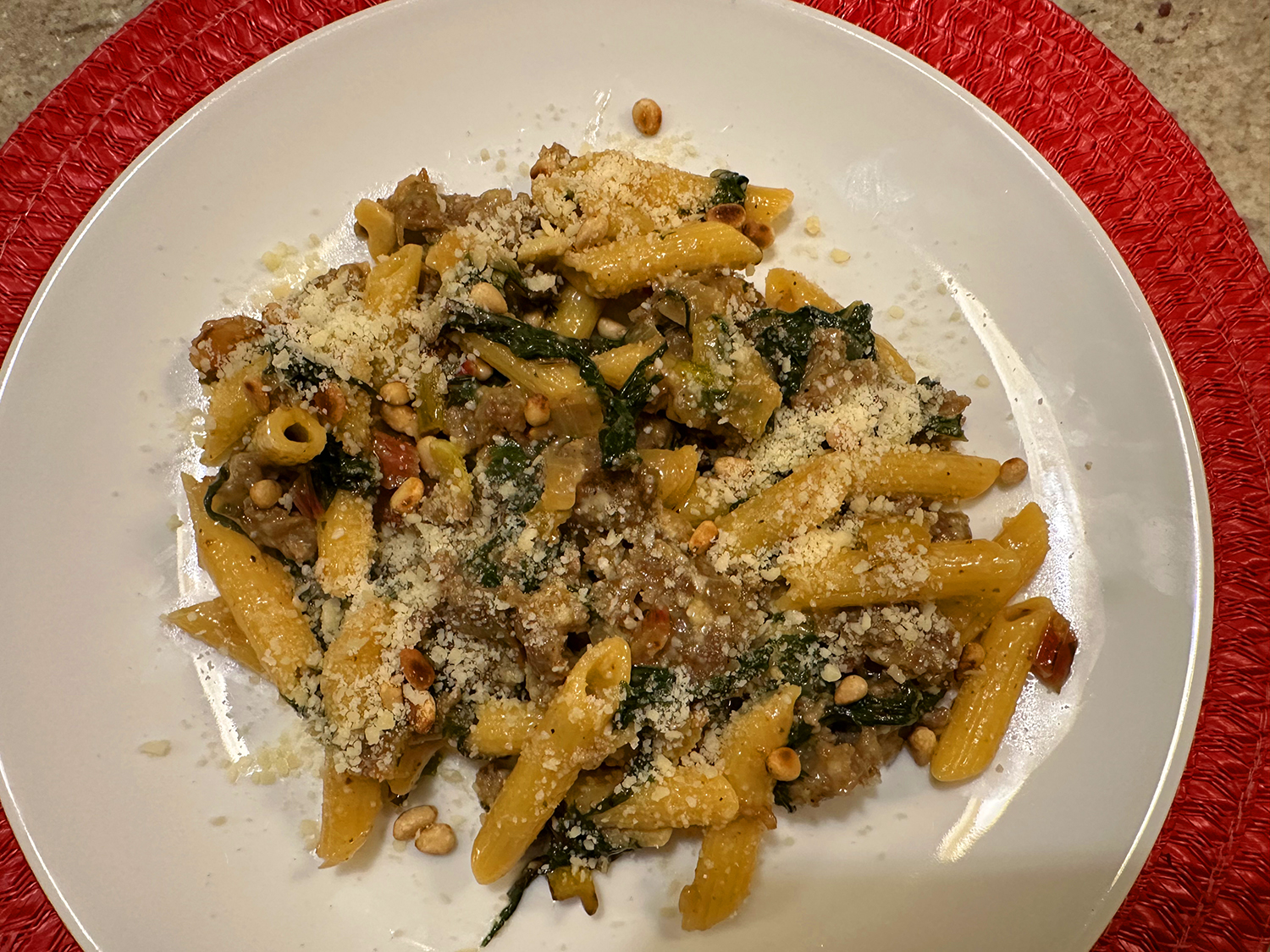
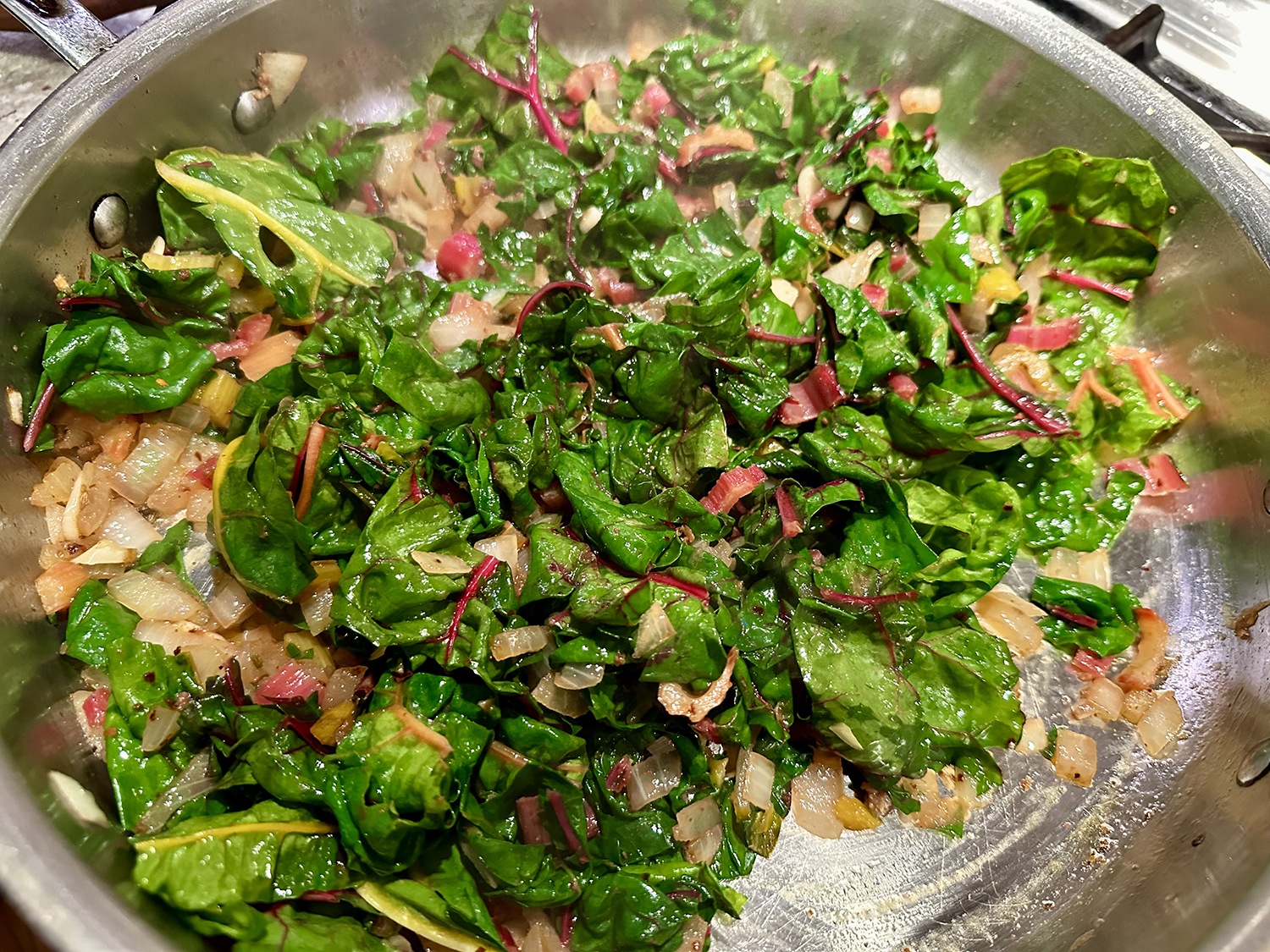
According to a New York Times article, Chard or Swiss Chard, is a vegetable with which many people are barely acquainted. There are those who might be able to recognize it in the market but who have rarely cooked or eaten it. For many shoppers, it’s just another of those mysterious bunches of green. It may look like too much when you start, but just like spinach, it shrinks down considerably.

Although chard is sold yearlong, it is particularly sturdy and in good condition during cooler weather. Hot weather wilts it and it does not look as fresh. But that should not be a problem for a few months yet. It is excellent simply chopped or shredded and braised, and when prepared in this manner the flavor is less bitter than escarole and the color more attractive than cabbage or spinach.

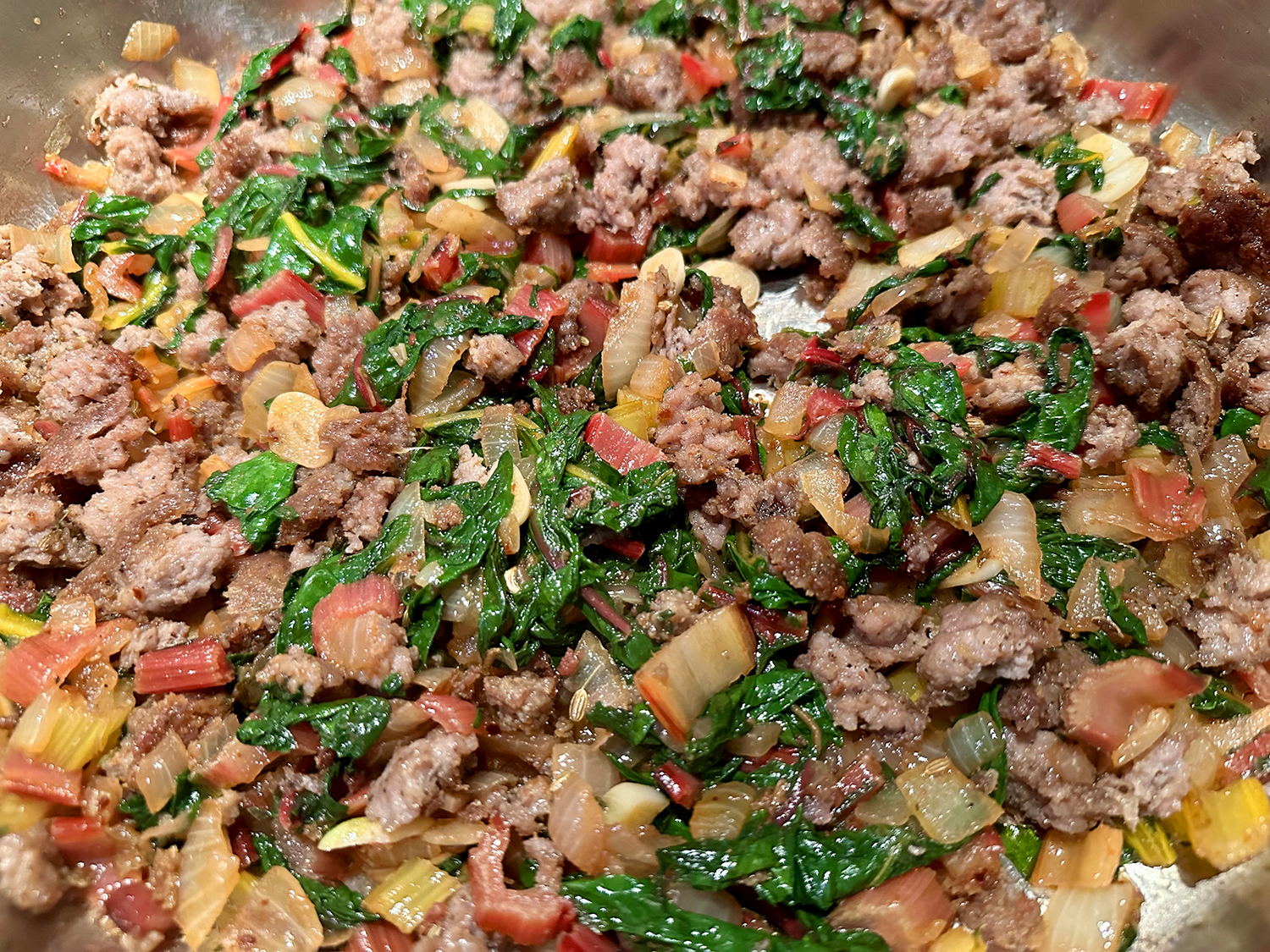
Often folks remove the stems and discard them. Not us, we chop up the stalks and make them part of the recipe, as in this case. If you have leftovers—which were fabulous BTW—drizzle some EVOO over the pasta before you zap it in the microwave. Hard to believe, but it might be even better as leftovers!

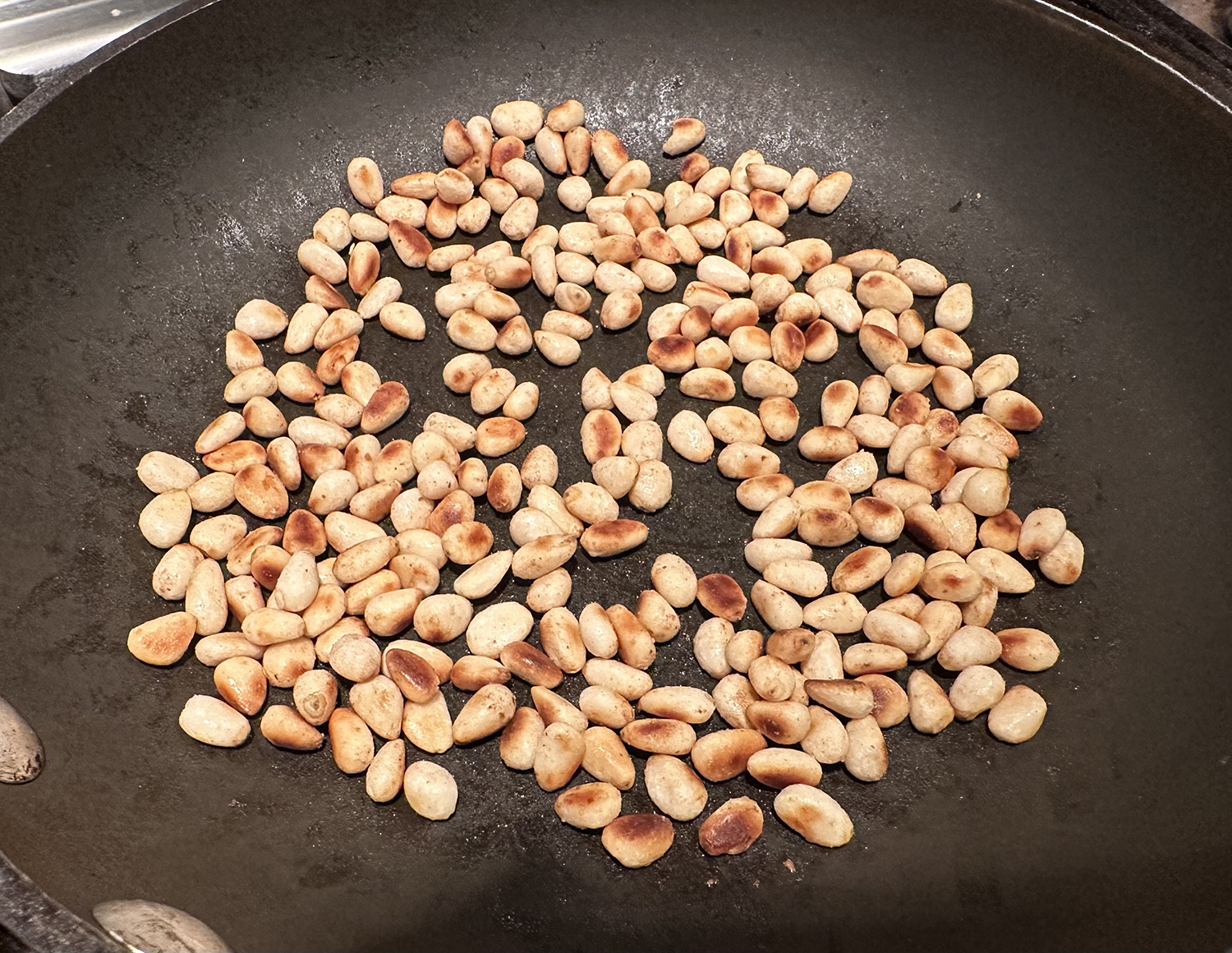
You can customize this recipe somewhat by increasing the sausage to one pound; use only eight ounces of pasta; add canned white beans; and/or switch out chopped walnuts for the pine nuts (which tend to be quite expensive).

Pasta with Chard and Italian Sausage

  • Servings: 4
  • Difficulty: easy
  • Print

Ingredients

  • 1 bunch Swiss chard, about 1 pound, washed, stem ends trimmed
  • 2 Tbsp. olive oil divided
  • 1/2 lb. fresh pork sausage (about 3 links) casings removed
  • 1 medium yellow onion diced
  • 1/2 tsp. salt or more to taste
  • 3 garlic cloves minced
  • 1/2 tsp. Aleppo chile flakes or more to taste
  • 1 cup chicken broth, preferably homemade
  • 12 oz. short dried pasta, such as penne, rigatoni, or gemelli
  • Zest of 1/2 large lemon
  • Freshly ground black pepper
  • 1 Tbsp. butter
  • 1 1/2 oz. grated Parmesan cheese, about 1/2 cup
  • 1/4 cup pine nuts

Directions

  1. Prepare the chard by trimming the stem ends and discarding them. Then trim the leaves from the large center stems. Set the stems aside and pile up the leaves. Slice the stems into 1/2-inch pieces. Pile 4-5 leaves on top of each other, roll tightly, then slice into 1 inch ribbons. Repeat with the remaining leaves. Cut the strips of leaves again sideways so that they are roughly 1- by 3-inch rectangles.
  2. Put a large pot of water on to boil over high heat. This will be for the pasta.
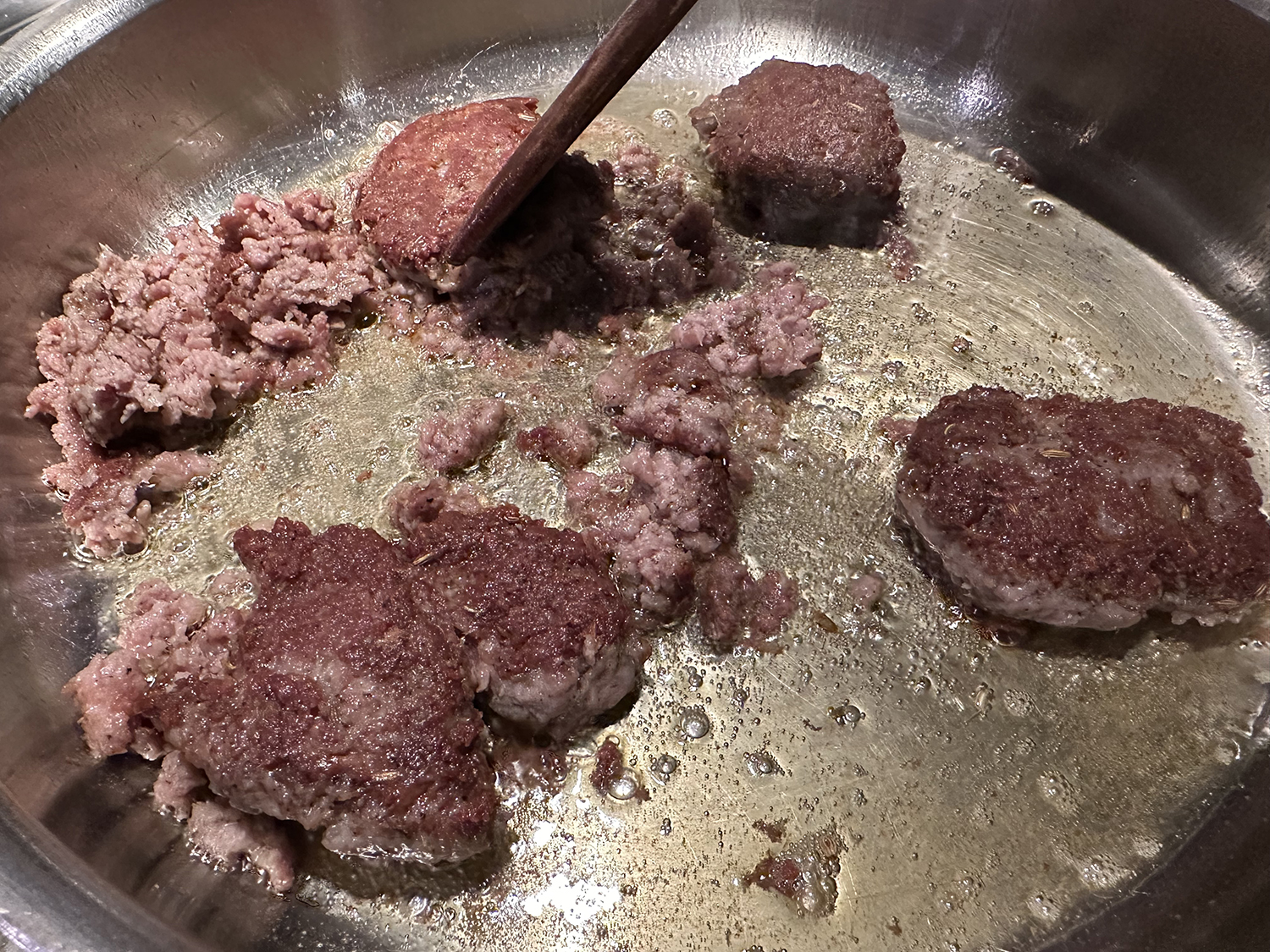
  3. Heat 1 tablespoon of olive oil in a separate large deep, skillet or Dutch oven over medium-high heat. Add the sausage in chunks and flatten each piece with the back of a wooden spatula or spoon. Flip the sausage pieces occasionally until they are golden brown, then remove them to a plate lined with paper towels. Drain the fat from the pan. Once the sausage has cooled a bit, break it up into smaller pieces with the wooden spatula or spoon you’ve been cooking with.
  4. Return the Dutch oven to the stove. Lower the heat to medium and add 1 tablespoon of olive oil to the pan. Put in the chopped onions and sprinkle them with 1/4 teaspoon of salt. Cook for about 5 minutes, stirring frequently, then add the chard stems. Cook another 5 minutes, stirring frequently and scraping up any browned bits from the bottom of the pan.
  5. Add garlic to the onion/chard stem mixture and cook for about 1 minute. Then add the chard leaves, the chile flakes, and about 1/4 teaspoon salt. Cook, using tongs to lift the chard leaves near the bottom of the pan to the top over and over so that they all cook evenly. After about 1 minute, add the broth to the pan. Lower the heat to simmer and cook about 8 minutes. Add the sausage to the pot.
  6. In the meantime, cook the pasta according to the package directions until it is almost al dente. (It will cook further with the chard mixture later on.) Scoop up about 1 cup of pasta water and put it aside before draining the pasta. Drain the pasta in a colander and add it to the chard mixture.
  7. Stir the pasta into the warm chard and sausage mixture. Add 1/4 cup of pasta water along with the lemon zest and toss the pasta mixture over low heat for 2-3 minutes. Add more pasta water in 1/4 cup increments to keep the pasta loose, but not soupy. Stir in 1 tablespoon of butter and allow it to melt and coat the pasta mixture. Add half of the Parmesan cheese and the pine nuts to the mixture, stir again, and dish out into servings bowls.
  8. Offer more Parmesan for each person to add as they like.

http://www.lynnandruss.com

Recipe by Davis Tanis for The NYTimes Cooking

Sea Scallops with Browned Butter, Capers and Lemon

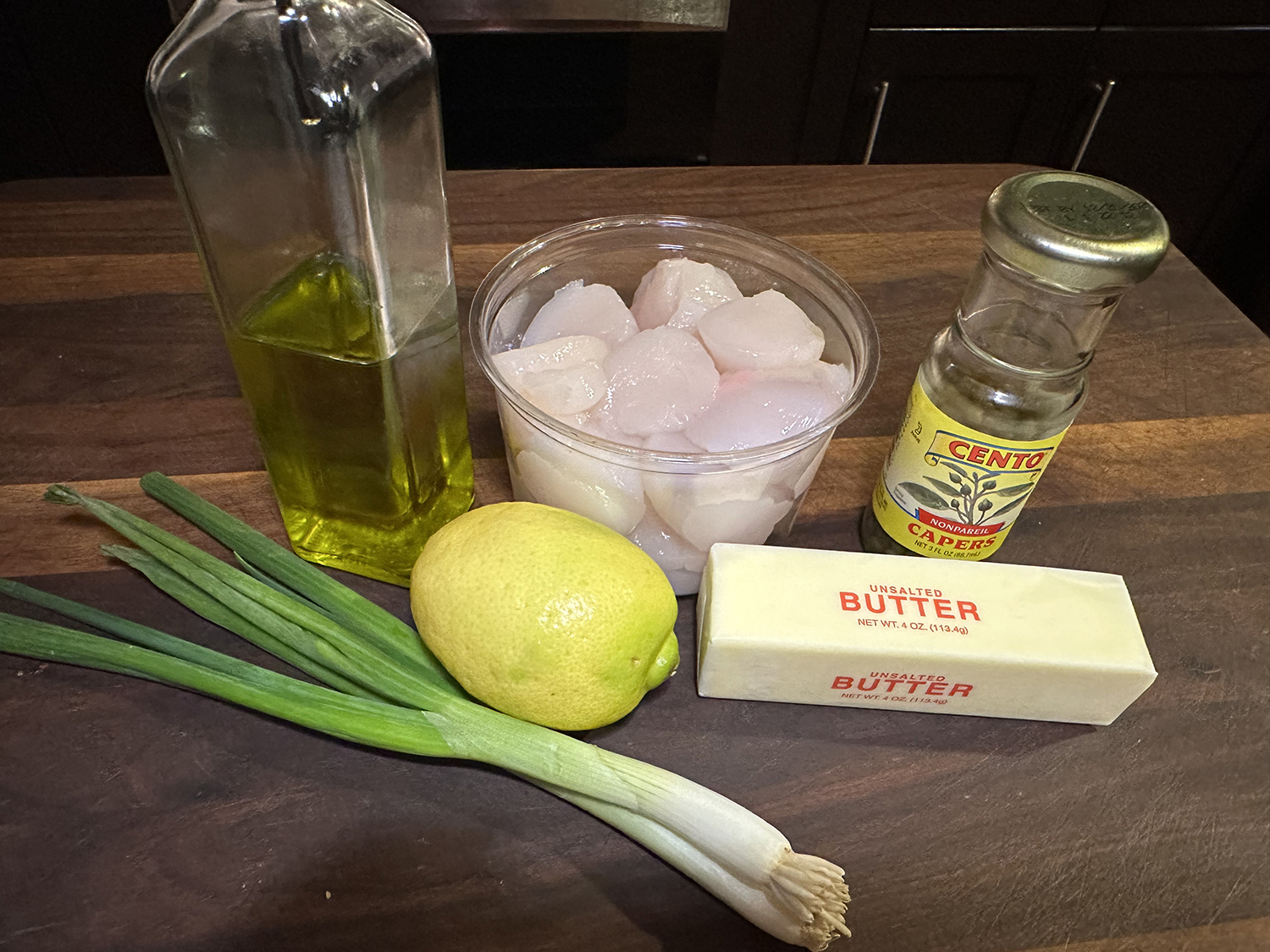
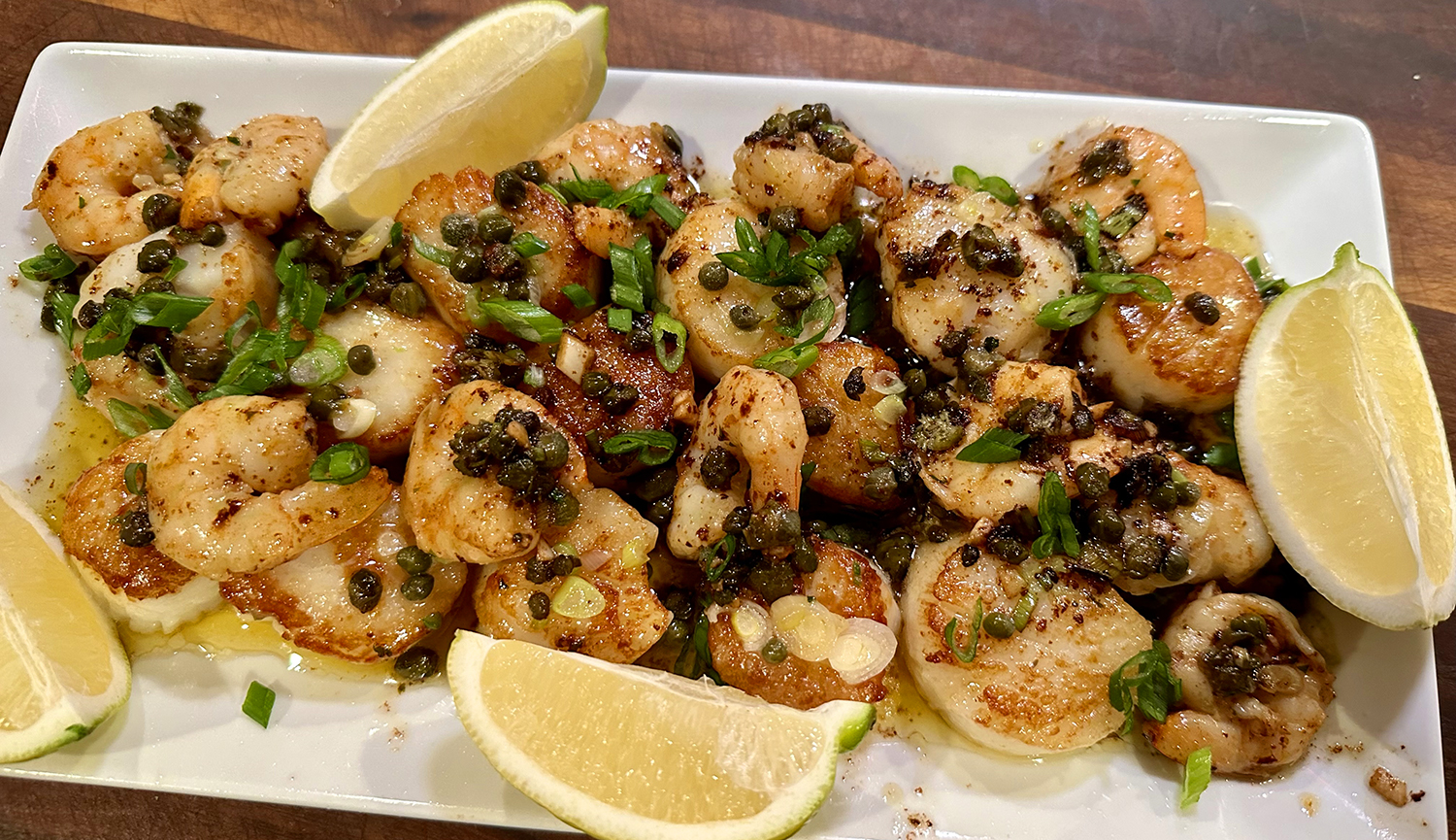
Sea scallops are a rare delicacy due to the high price at restaurants and at the fish market. So in the event of a stay-at-home New Year’s Eve celebration for the two of us, the occasion was the perfect opportunity to “treat” ourselves. Couple that with a few lump meat crab cakes, and our year-end meal was one to remember.

In this recipe, sea scallops get the piccata treatment, and who can resist that? Their sweet, briny flavor is perfectly matched by nutty browned butter, salty capers and puckery lemon. And while not part of the original recipe, we added in 8 pre-cooked shrimp (leftover from another appetizer), reheating them at the end of step four with the addition of the lemon juice.

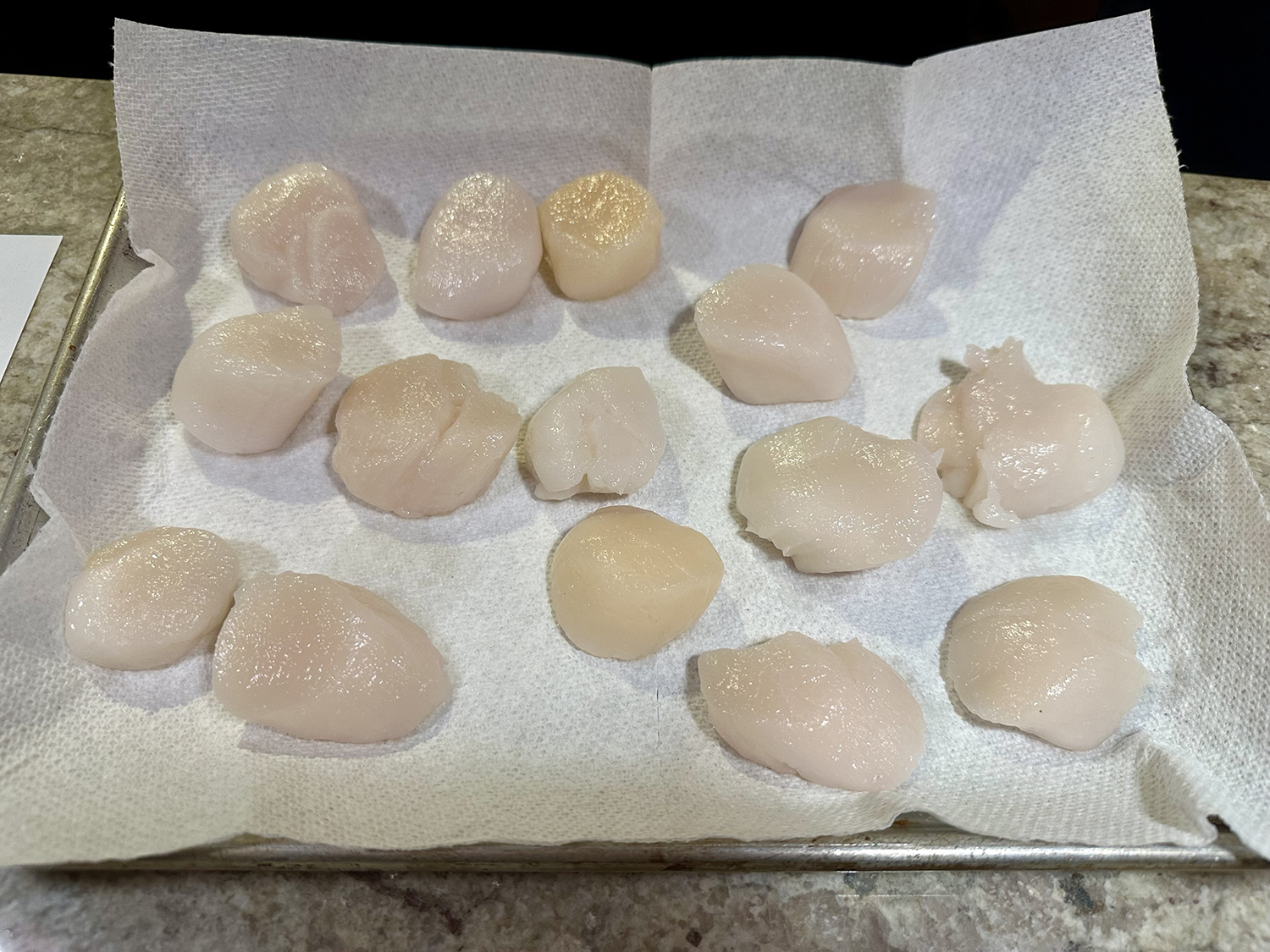
When shopping, look for dry sea scallops—“Dry” indicates that the shellfish has not been treated with sodium tripolyphosphate (STPP), a preservative that forces water retention and that has a bleaching effect. In fact, bright white color is a tell-tale sign of the presence of STPP, as untreated scallops have a pale coral or ivory hue. And at the seafood counter, dry scallops should not be sitting in a pool of milky liquid.

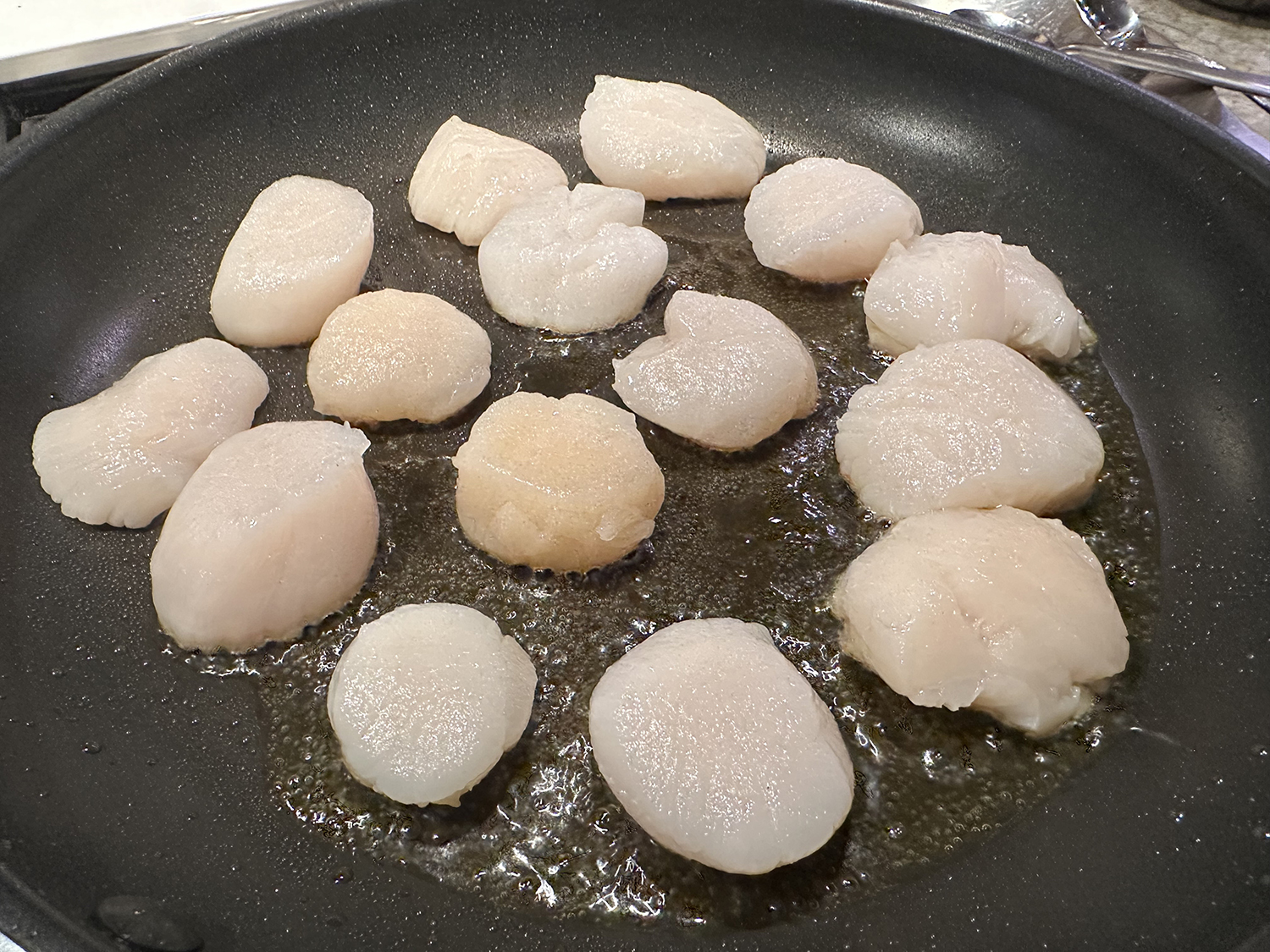
Don’t attempt to move the scallops immediately after placing them in the skillet. They may stick at first but will release after they’ve formed a nicely browned bottom crust. Serve with crusty bread and a leafy salad dressed with a bright vinaigrette.

With a minimum of ingredients and a short cooking time, you can have an elegant meal on the table in under a half hour!

Sea Scallops with Browned Butter, Capers and Lemon

  • Servings: 2-4
  • Difficulty: easy
  • Print

Ingredients

  • 1 1/4 lbs. dry sea scallops, side tendons removed and discarded, patted dry
  • Kosher salt and ground black pepper
  • 2 Tbsp. extra-virgin olive oil
  • 4 Tbsp. salted butter, cut into 4 pieces
  • 1/4 cup drained capers
  • 2 scallions, thinly sliced on the diagonal, whites and greens reserved separately
  • 1 tsp. grated lemon zest
  • 1 Tbsp. lemon juice
  • Lemon wedges to serve

Directions

  1. Place the scallops on a paper towel–lined plate. Season lightly on all sides with salt; set aside. In a 12-inch nonstick skillet over medium-high, heat the oil until barely smoking. Quickly pat the scallops dry once again and place in the pan, a flat side down, spacing them evenly apart. Cook without disturbing until golden brown on the bottoms and they release easily from the pan, 2 to 4 minutes.
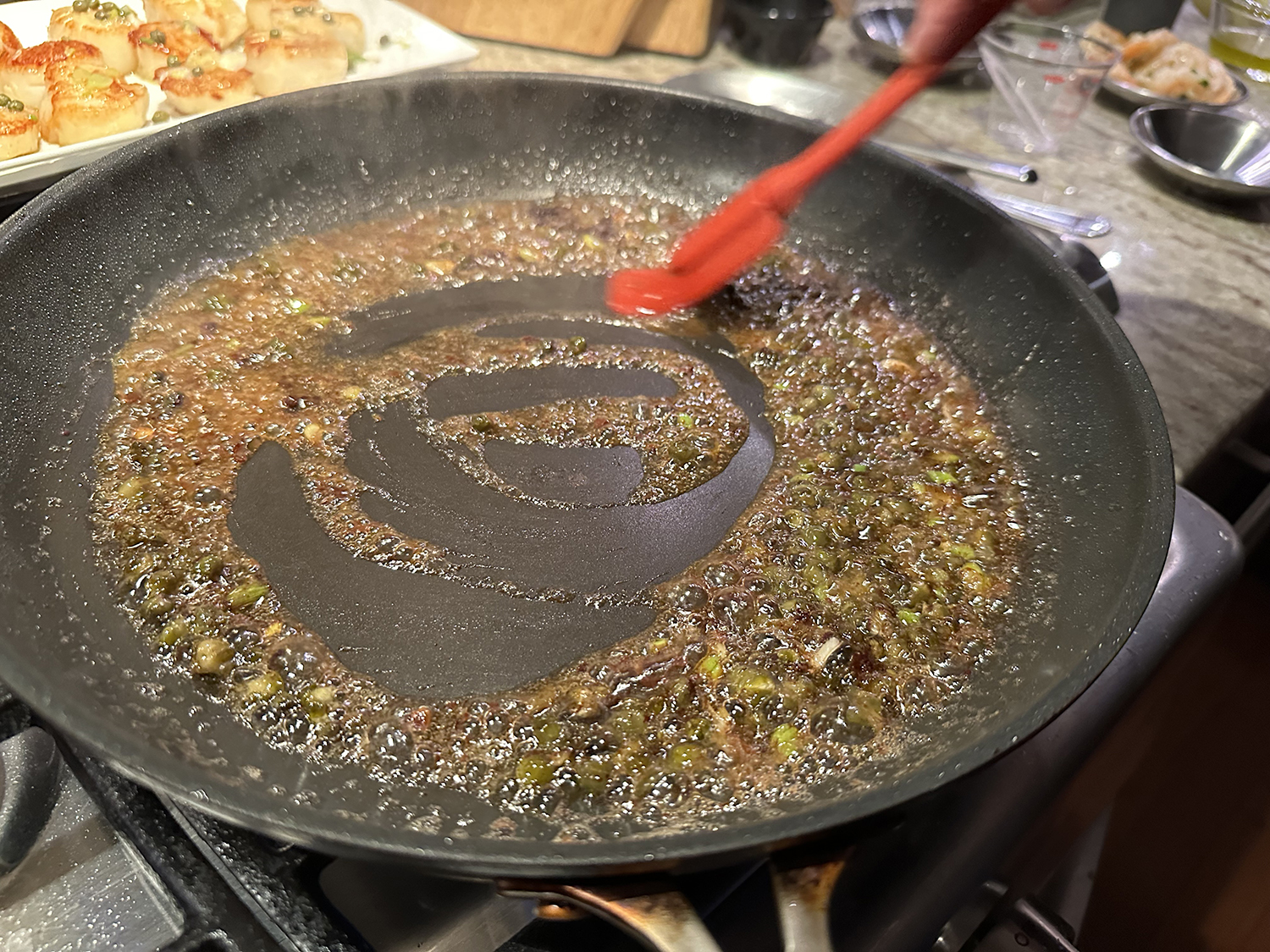
  2. Flip each scallop, then add the butter, capers and scallion whites, swirling the pan to incorporate.
  3. Cook, spooning some of the hot butter over the scallops, until the butter smells nutty and the scallops are opaque throughout, 2 to 3 minutes.
  4. Remove the pan from the heat and, using tongs, transfer the scallops to a serving plate. To the skillet, add the lemon zest and juice; stir to combine.
  5. Taste and season with salt and pepper, then pour the sauce over the scallops. Sprinkle with the scallion greens.

http://www.lynnandruss.com

Recipe from Milk Street

Soy-Braised Baby Bok Choy

In traditional recipes for Chinese soy-braised greens, the greens are likely to be blanched before they’re quickly cooked with ingredients that supply high-impact flavor. In this recipe, however, the baby bok choy is stir-fried with aromatics, then braised in a mixture of Shaoxing rice wine and soy sauce, with sugar for sweetness and sesame oil for nuttiness.

A few minutes of uncovered cooking drives off excess moisture, leaving the greens meltingly tender and coated in a light savory-sweet sauce. Serve with steamed fish or spooned atop a bowl of rice. Ours paired nicely with Pan-Seared Sesame-Crusted Tuna Steaks.

NOTE: Don’t forget to wash the bok choy, as the inner leaves often trap dirt or sand. But make sure to drain and dry so it browns rather than steams when it hits the hot skillet.

Soy-Braised Baby Bok Choy

  • Servings: 4
  • Difficulty: easy
  • Print

Ingredients

  • 2 Tbsp. grapeseed or other neutral oil
  • 2 lbs. baby bok choy, trimmed and cut crosswise into 1-inch pieces
  • 1 bunch scallions, whites thinly sliced, greens thinly sliced on the diagonal, reserved separately
  • 1 Tbsp. minced fresh ginger
  • 2 medium cloves garlic, minced
  • 3 Tbsp. Shaoxing wine OR dry sherry OR sake
  • 3 Tbsp. soy sauce
  • 1 Tbsp. packed light brown sugar OR white sugar
  • 2 tsp. toasted sesame oil

Directions

  1. In a 12-inch skillet over medium-high, heat the neutral oil until shimmering. Add the bok choy and cook, stirring occasionally, until wilted and lightly browned, 3 to 4 minutes.
  2. Add the scallion whites, ginger and garlic, then cook, stirring, until fragrant, 30 to 60 seconds. Reduce to medium and stir in the Shaoxing wine, soy sauce, sugar and sesame oil, then immediately cover. Cook until the bok choy is tender-crisp, 2 to 3 minutes.
  3. Uncover and cook, stirring occasionally, until the liquid is lightly thickened and the bok choy is fully tender, 2 to 3 minutes. Transfer to a serving dish and sprinkle with the scallion greens.

http://www.lynnandruss.com

Recipe from Milk Street

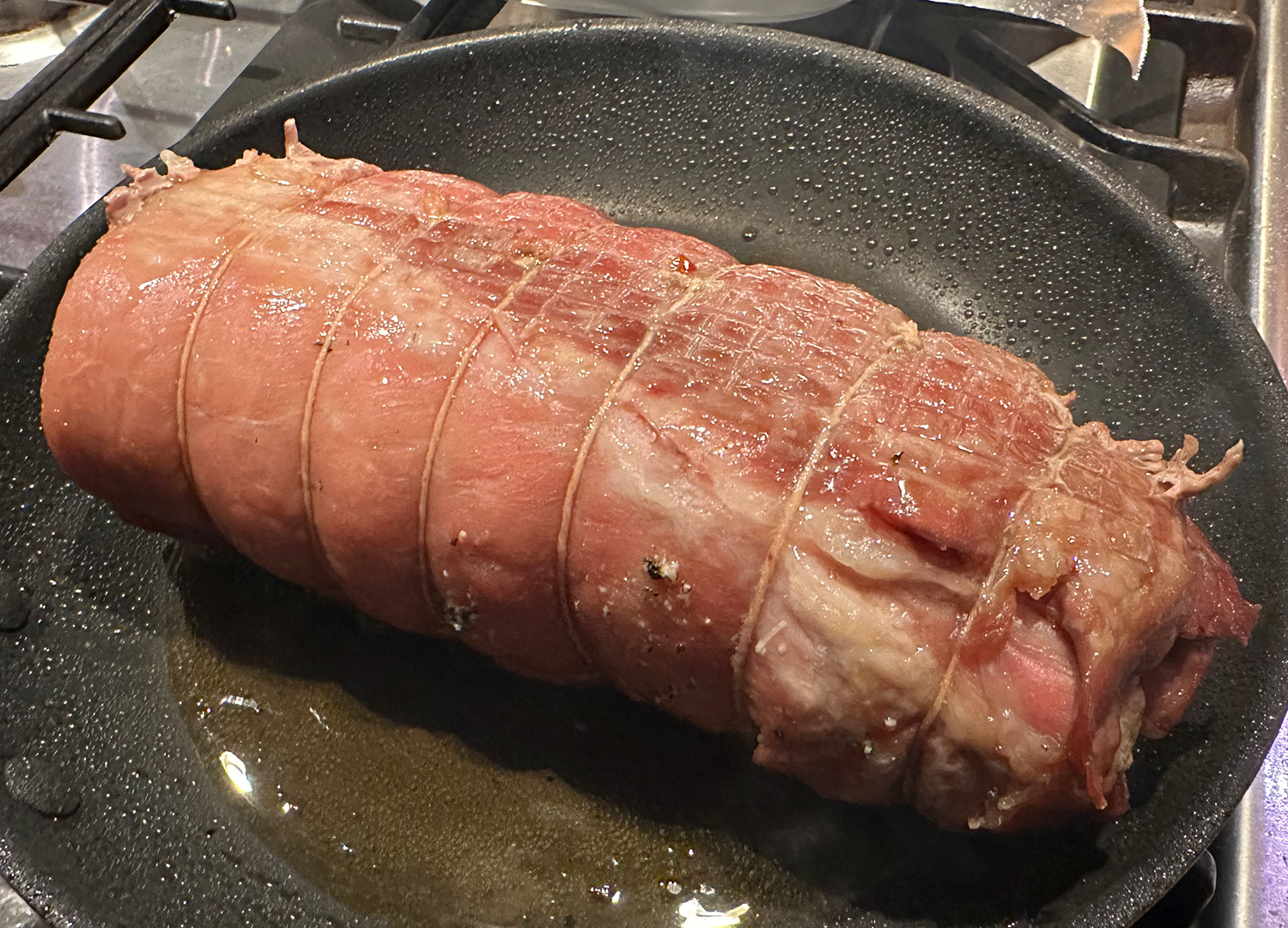
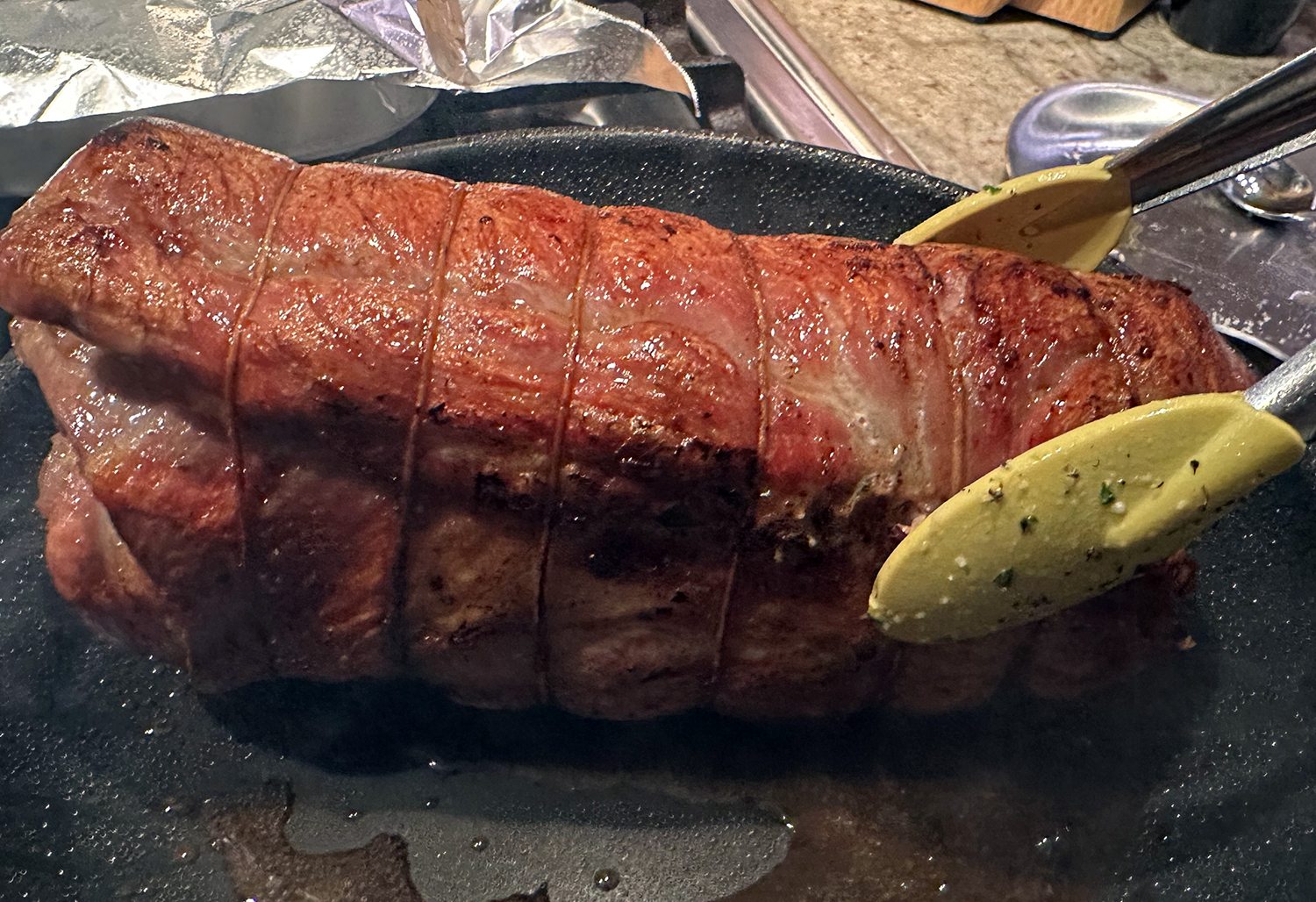
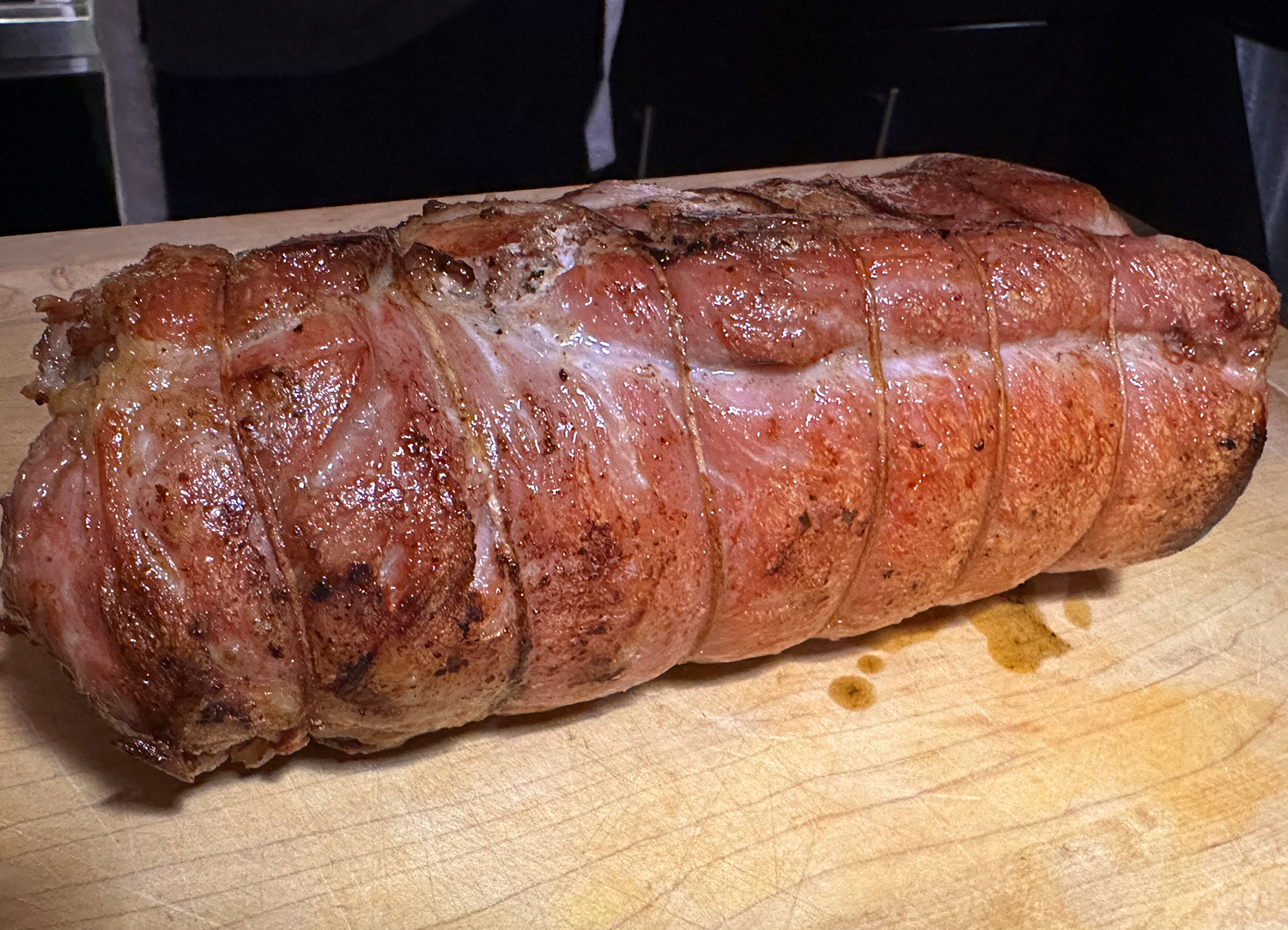
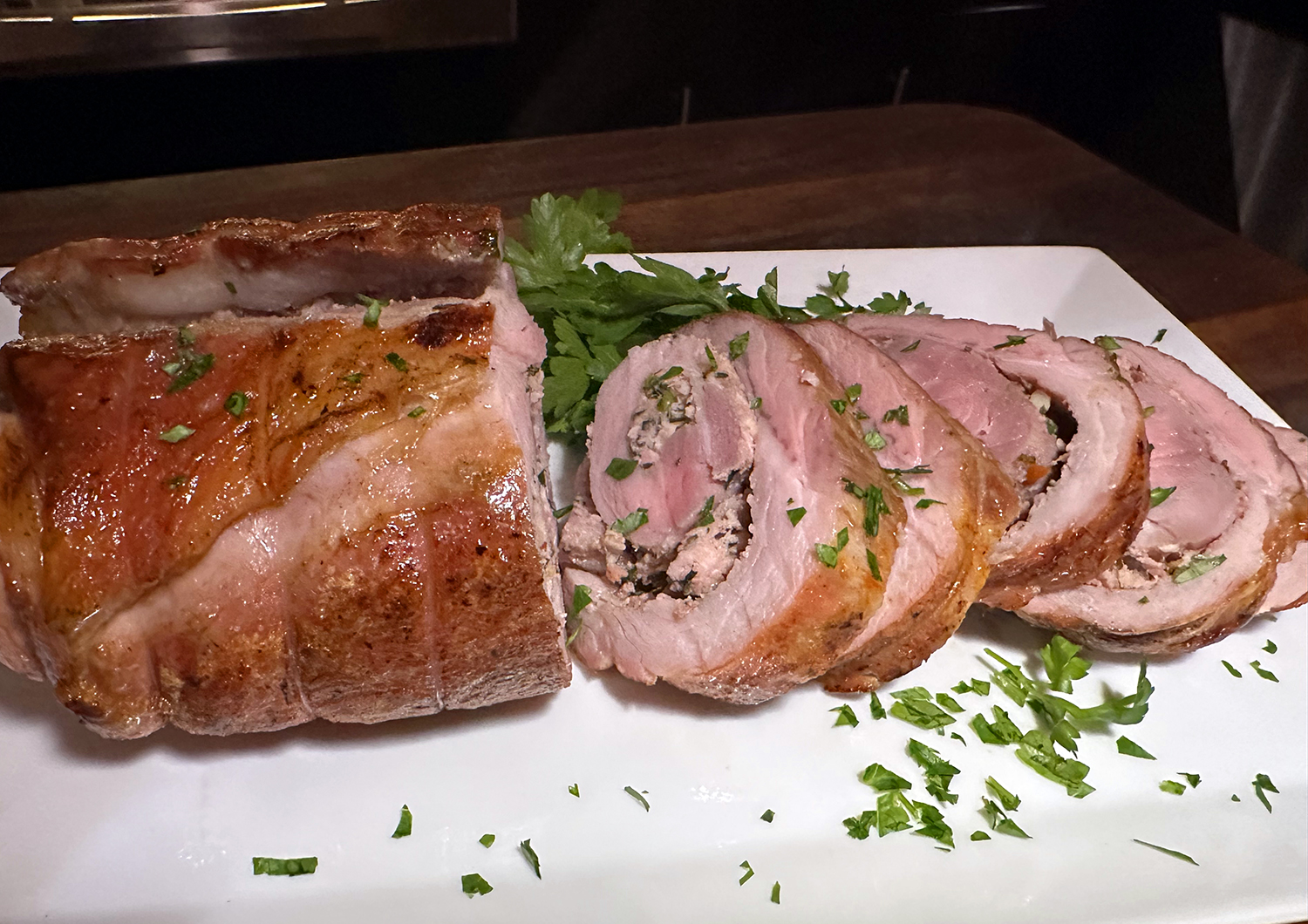
Tuscan-Style Roast Pork with Garlic and Rosemary (Arista)

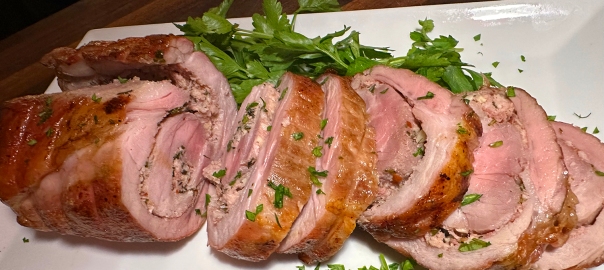
Arista means “the best.” This dish promises a superlative pork loin flavored with garlic, rosemary, and deep browning. Too bad few versions live up to their name. Preparing it this way, the pork is very juicy and full of flavor; plus it makes a nice presentation on a platter. And it is a very economical piece of meat to feed a small dinner party without feeling you need to break the bank to impress.

Note that we doubled the amount of pancetta paste after other reviewers suggested it. Another change: just before adding the cooked lemon to the sauce at the end to make the vinaigrette, The Hubs added the oils first to the pan to lift the fond left after searing the roast, then strained this and added the strained cooked lemon.

Tuscan-Style Roast Pork with Garlic and Rosemary

  • Servings: 4-6
  • Difficulty: moderate
  • Print

ingredients

  • 1 lemon
  • ⅓ cup extra-virgin olive oil
  • 8 garlic cloves, minced
  • ¼ teaspoon red pepper flakes
  • 1 tablespoon chopped fresh rosemary
  • 4 oz. pancetta, diced
  • 1 (2 1/2-lb.) boneless center-cut pork loin roast, trimmed
  • Kosher salt

Directions

  1. Finely grate 1 teaspoon zest from lemon. Cut lemon in half and reserve. Combine lemon zest, oil, garlic, and pepper flakes in 10-inch nonstick skillet. Cook over medium-low heat, stirring frequently, until garlic is sizzling, about 3 minutes. Add rosemary and cook, 30 seconds. Strain mixture through fine-mesh strainer set over bowl, pushing on garlic-rosemary mixture to extract oil. Set oil aside and let garlic-rosemary mixture cool. Using paper towels, wipe out skillet.
  2. Process pancetta in food processor until smooth paste forms, 20 to 30 seconds, scraping down sides of bowl as needed. Add garlic-rosemary mixture and continue to process until mixture is homogeneous, 20 to 30 seconds longer, scraping down sides of bowl as needed.
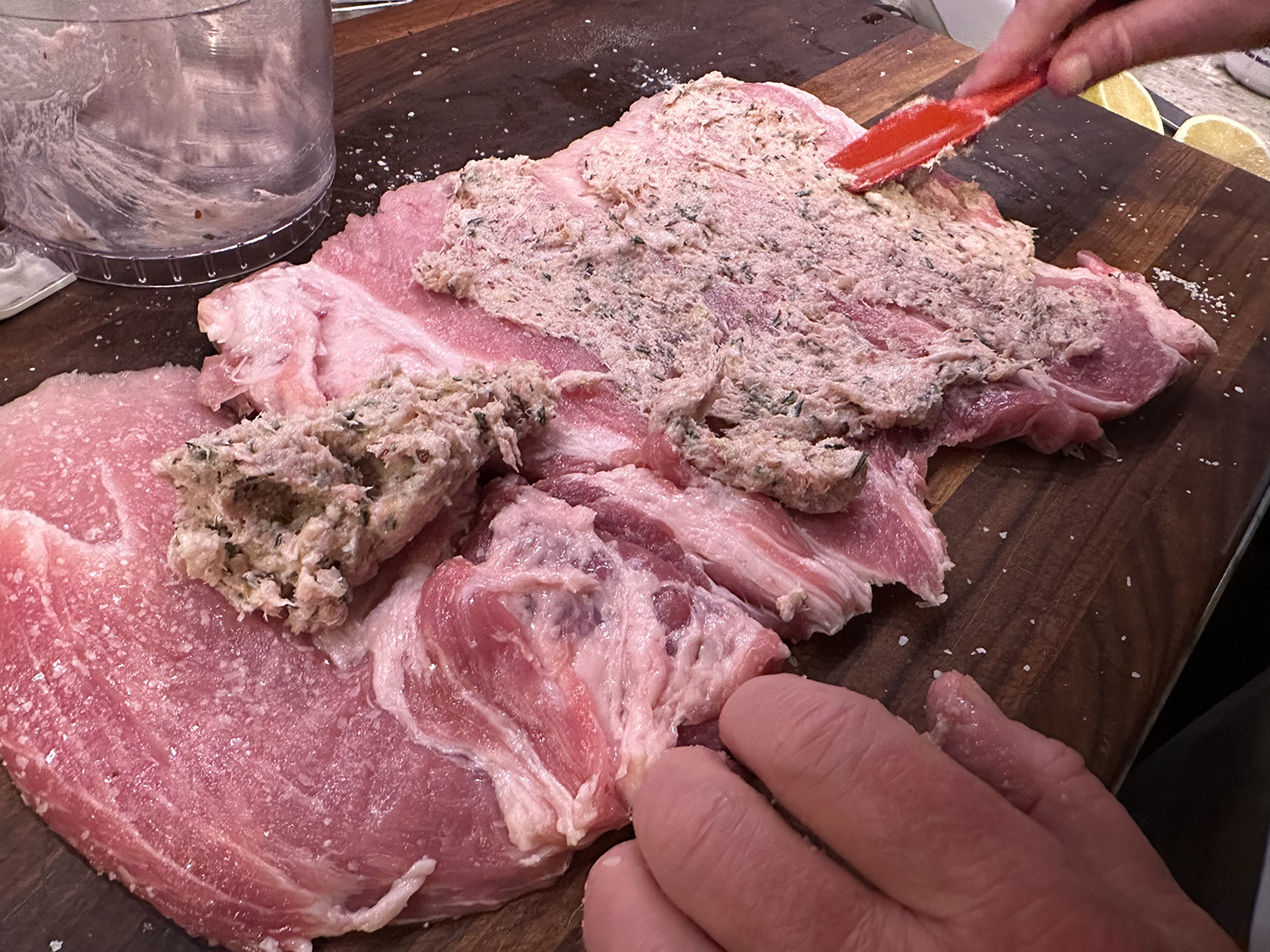
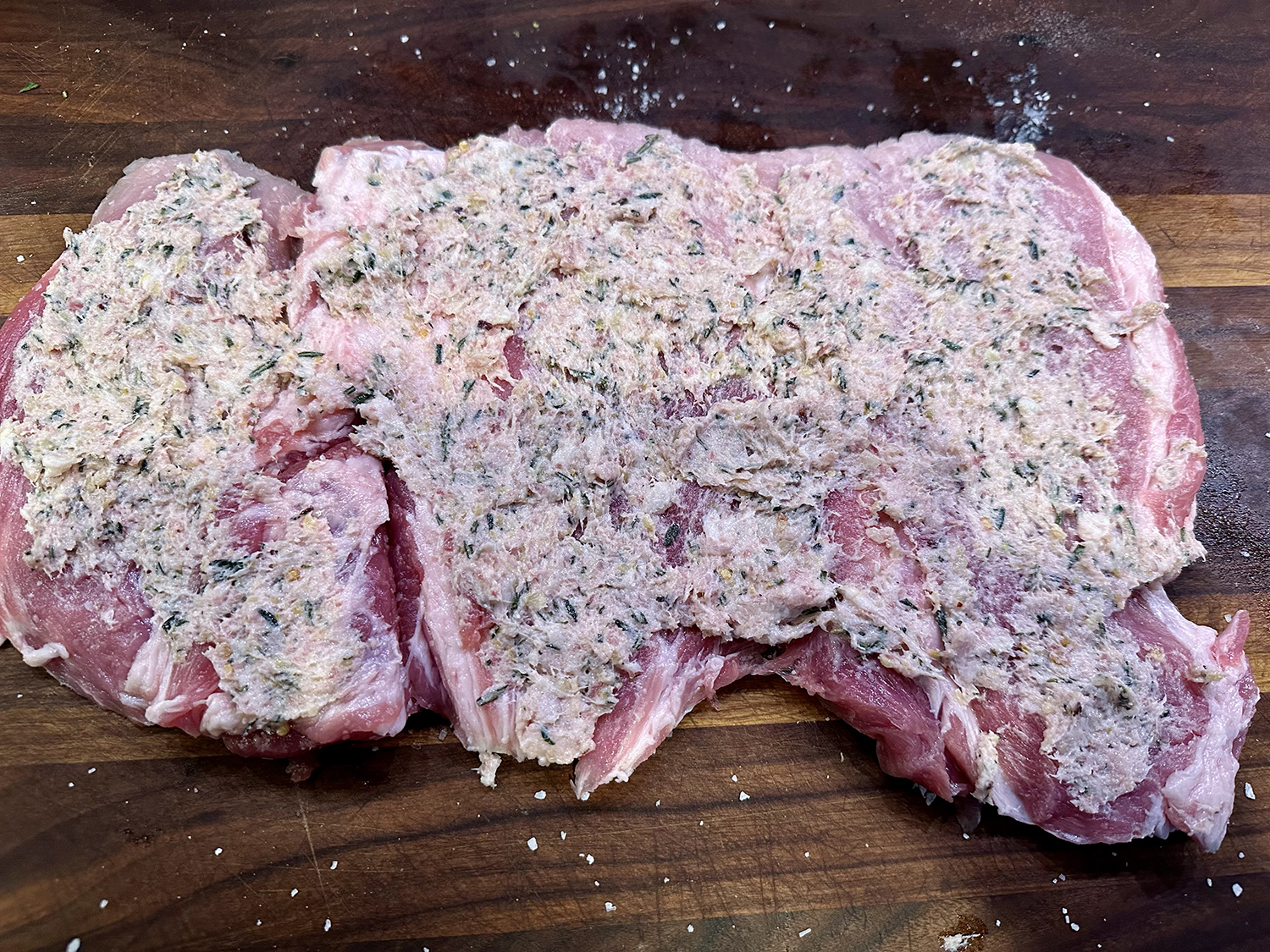
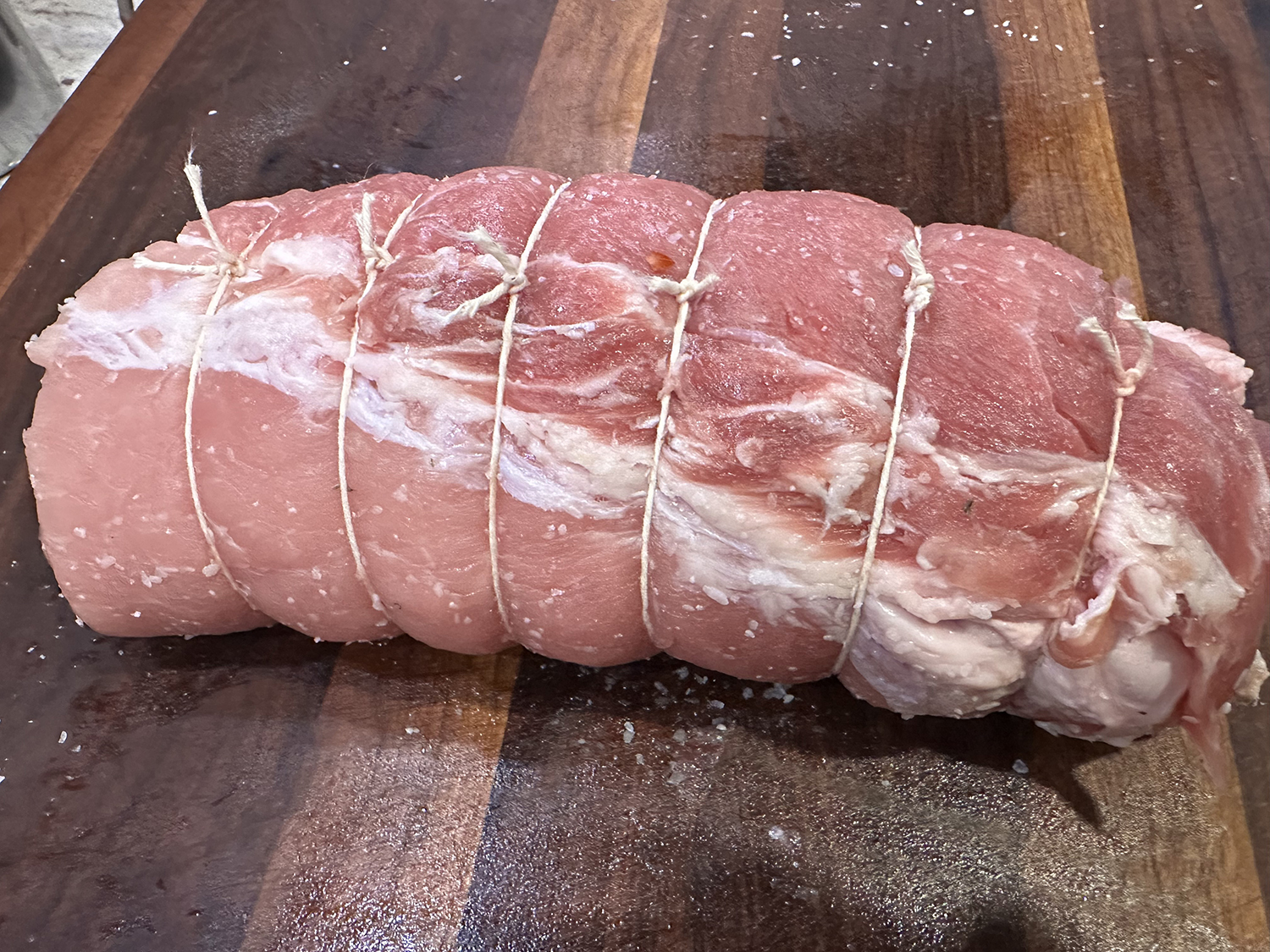
  3. Position roast fat side up. Insert knife one-third of way up from bottom of roast along 1 long side and cut horizontally, stopping 1/2 inch before edge. Open up flap. Keeping knife parallel to cutting board, cut through thicker portion of roast about 1/2 inch from bottom of roast, keeping knife level with first cut and stopping about 1/2 inch before edge. Open up this flap. If uneven, cover with plastic wrap and use meat pounder to even out. Sprinkle 1 tablespoon kosher salt over both sides of roast (1/2 tablespoon per side) and rub into meat to adhere. Spread inside of roast evenly with pancetta-garlic paste, leaving about 1/4-inch border on all sides. Starting from short side, roll roast (keeping fat on outside) and tie with twine at 1-inch intervals. Set wire rack in rimmed baking sheet and spray with vegetable oil spray. Set roast fat side up on prepared rack and refrigerate for 1 hour.
  4. Adjust oven rack to middle position and heat oven to 275 degrees. Transfer roast to oven and cook until meat registers 135 degrees, 1 1/2 to 2 hours. Remove roast from oven, tent with aluminum foil, and let rest for 20 minutes.
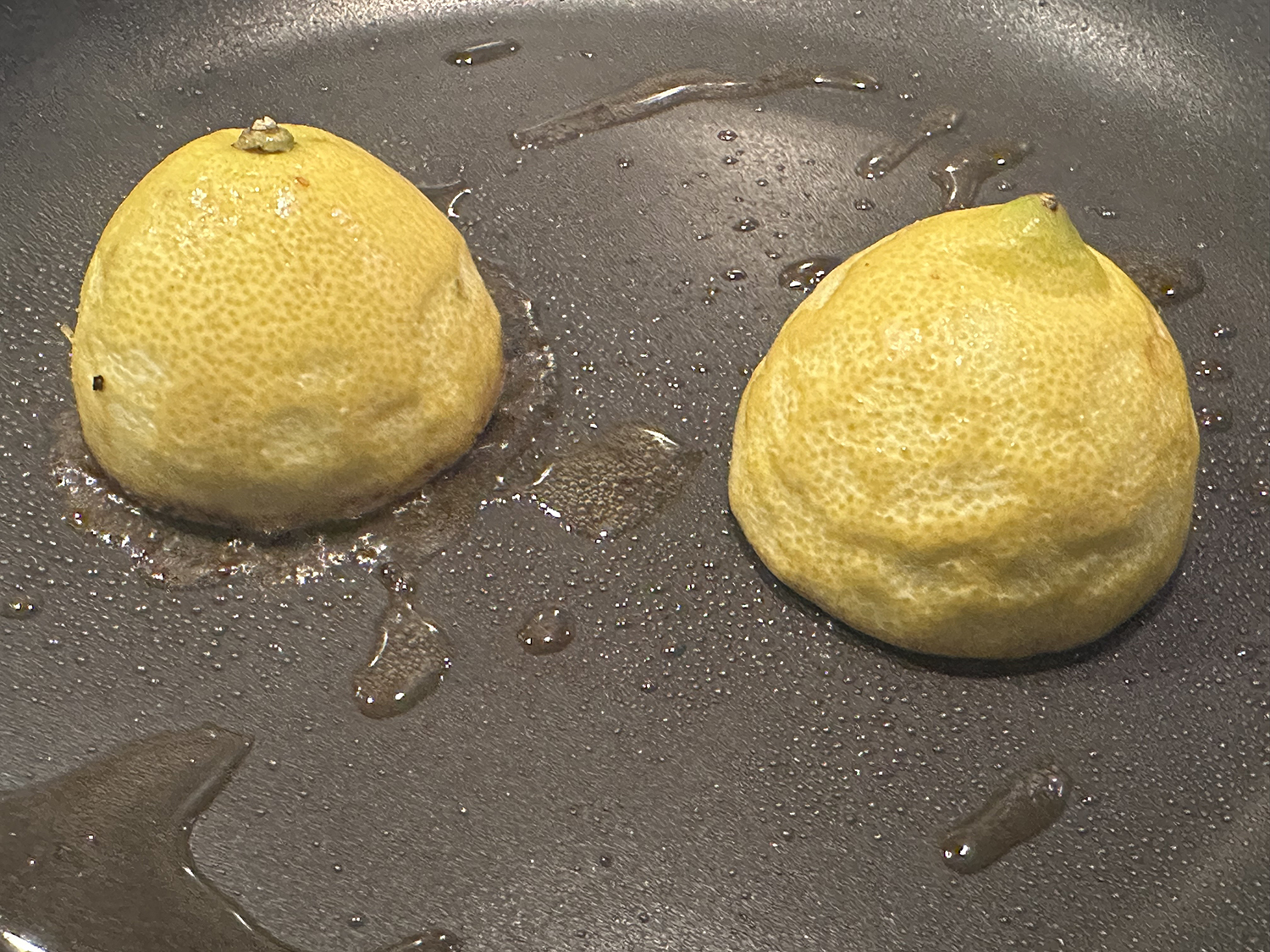
  5. Heat 1 teaspoon reserved oil in now-empty skillet over high heat until just smoking. Add reserved lemon halves, cut side down, and cook until softened and cut surfaces are browned, 3 to 4 minutes. Transfer lemon halves to small plate.
  6. Pat roast dry with paper towels. Heat 2 tablespoons reserved oil in now-empty skillet over high heat until just smoking. Brown roast on fat side and sides (do not brown bottom of roast), 4 to 6 minutes. Transfer roast to carving board and remove twine.
  7. Once lemon halves are cool enough to handle, squeeze into fine-mesh strainer set over bowl. Press on solids to extract all pulp; discard solids. Whisk 2 tablespoons strained lemon juice into bowl with remaining reserved oil. Slice roast into 1/4-inch-thick slices and serve, passing vinaigrette separately.

http://www.lynnandruss.com

Adapted recipe from America’s Test Kitchen

Spanish-Style Butter Beans

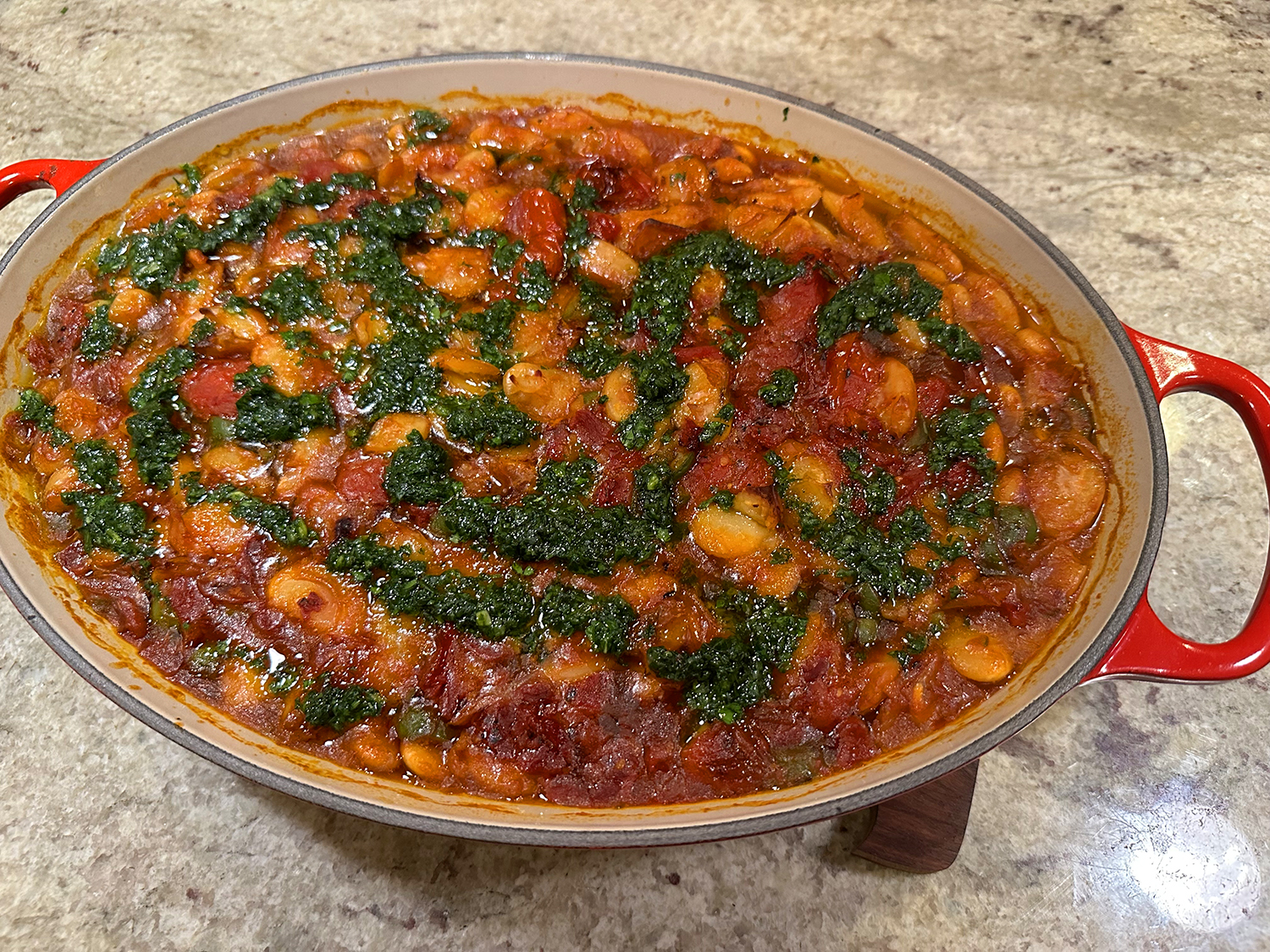
In this scrumptious Spanish recipe, large butter beans and tomatoes take up tons of flavor from saffron, sherry vinegar, olives, smoked paprika, and garlic. Simply serve them as a vegetarian main with toasted crusty garlic bread, or as a side to a meat entrée.

Are you one of those that just hearing the words “lima beans” sends you into a spiral of loathing and revulsion? It doesn’t matter what the rest of the dish is, the cloud has descended and nothing else is getting through to you. I used to be one of “those.” Now change “lima” to the word “butter” however, and what happens? Suddenly, I’m paying attention. But is that all there is to it? Or are butter beans a completely different ingredient?

No, rest assured; the two are actually one in the same. There’s no difference between lima beans and butter beans, though sometimes they’re sold at different stages of maturity. Interestingly, whether you prefer to call them lima beans or butter beans is a result of your own geographical traditions and how your family and friends refer to them.

In the American South and the United Kingdom, they’re butter beans. For the rest of the United States, they’re typically called lima—after the bean’s origin city of Lima, Peru, where they’ve grown for over 9,000 years. I say tomato, you say toemahtoe….

*NOTE: In the end, we thought the dish was a bit too liquidy, in addition to the reserved bean cooking liquid, the tomatoes and red peppers both release juices. Therefore we suggest cutting back the amount from 2 cups to 1 1/2 or less cups.

Spanish-Style Butter Beans

  • Servings: 8
  • Difficulty: easy
  • Print

Ingredients

  • 1/2 cup extra-virgin olive oil, divided
  • 6 cloves garlic; 4 smashed, plus 1 1/2 tsp. minced
  • 2 pints grape tomatoes
  • 1 cup roasted red sweet peppers, drained and chopped
  • 1 Tbsp. smoked paprika
  • ¼ tsp. saffron threads, crushed
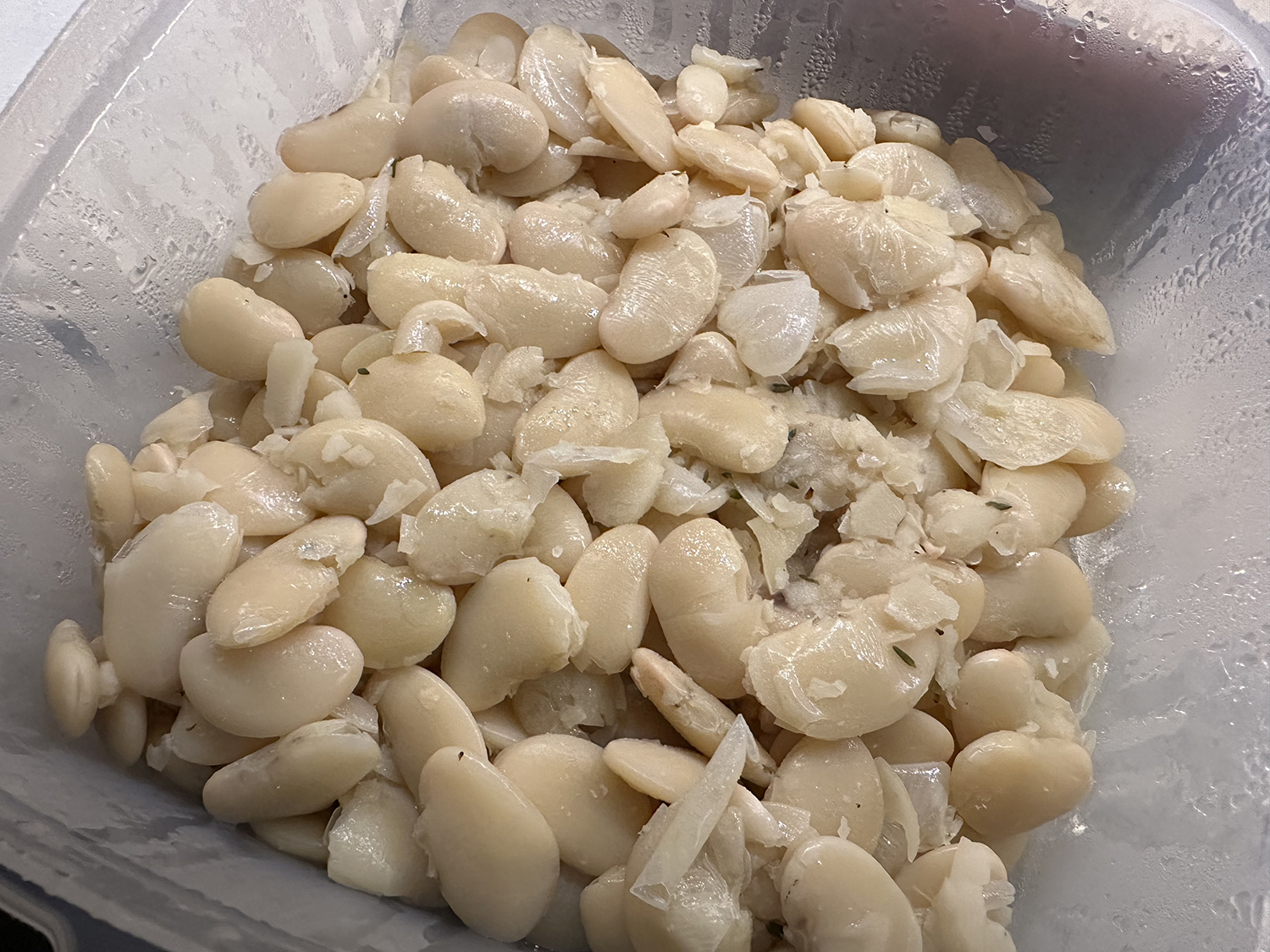
  • 6 cups cooked and drained large lima beans, plus 2 cups* reserved bean cooking liquid
  • 1/2 cup chopped manzanilla olives
  • 1 1/2 tsp. salt, divided
  • 2 Tbsp. sherry vinegar
  • 1 cup fresh parsley leaves, finely chopped

Directions

  1. Soak dry beans overnight and cook as per package directions.
  2. Preheat oven to 350°F.
  3. Heat 2 tablespoons extra-virgin olive oil in a large saucepan over medium heat. Add grape tomatoes, roasted red bell peppers, smoked paprika, saffron threads, and smashed garlic cloves; cook over medium, stirring occasionally, until tomatoes are softened and begin to burst, 10 to 12 minutes.
  4. Stir in cooked butter/lima beans and bean cooking liquid, olives, sherry vinegar, and 1 teaspoon kosher salt.
  5. Spoon into an ungreased 13 x 9 baking dish. Bake in preheated oven until heated through and liquid is slightly reduced, 45 to 55 minutes. (We put the casserole under the broiler for several minutes afterward.)
  6. Let stand 5 minutes before serving.
  7. Stir together parsley, chopped garlic, remaining 6 tablespoons of EVOO, and remaining 1/2 teaspoon Kosher salt. Spoon mixture over warm beans. Serve beans with toasted crusty bread.

http://www.lynnandruss.com

Recipe from Melissa Gray for Food & Wine Magazine
Saucy Pollo Guisado

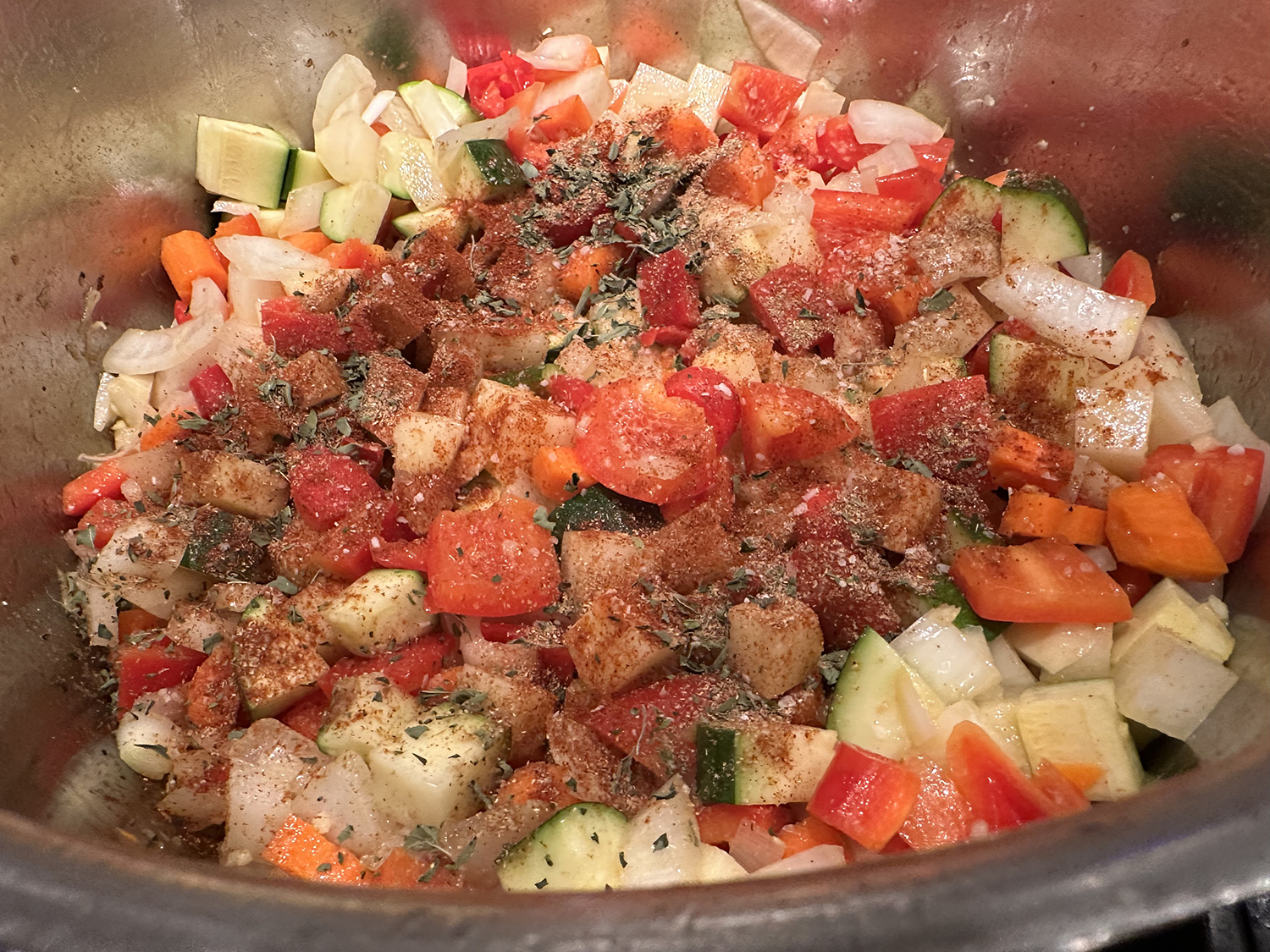
Loaded with tomatoes and green olives, pollo guisado (Spanish for chicken stew) is a hearty, fall-off the bone braised chicken dish popular throughout Latin America and the Caribbean, and particularly in Puerto Rico.

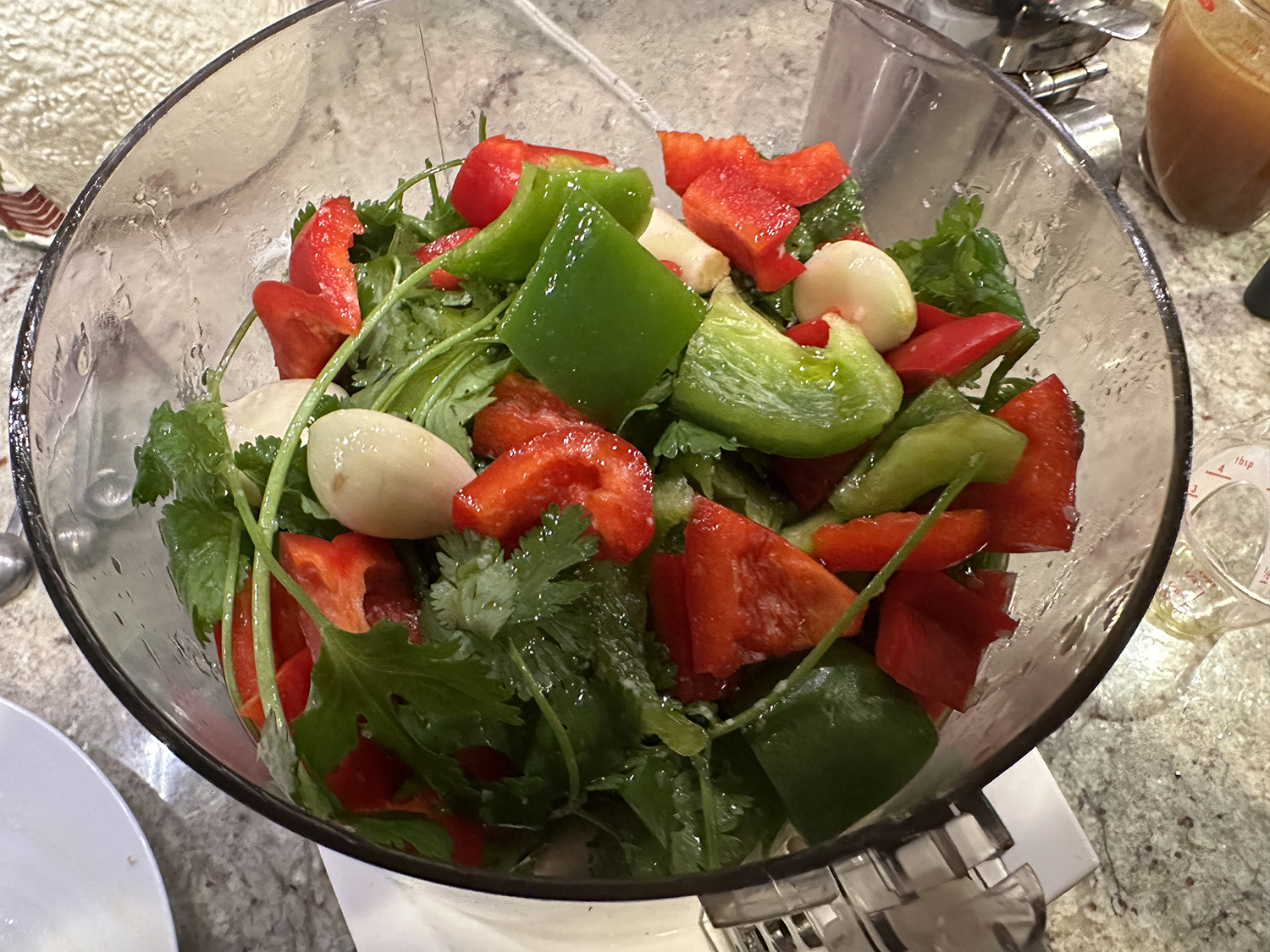
Almost every version starts with sofrito, a fragrant mixture of bell peppers, onions, garlic, and cilantro, finely chopped or blended into a paste. This recipe makes extra sofrito, so you can freeze it to jump-start future soups, stews, and more.

The other powerhouse in this pollo guisado recipe is adobo seasoning, any store-bought or hand-made-mix will work. For the chicken, use skin-on, bone-in chicken thighs, but you could also use drumsticks. Avoid boneless chicken and white meat (skinless chicken breasts just can’t compare to the depth and richness of dark meat).

Often served with white rice or tostones (fried green plantains), pollo guisado tastes even better the next day. Garnish bowls with fresh cilantro and lime wedges.

Saucy Pollo Guisado

  • Servings: 4-6
  • Difficulty: easy
  • Print

Ingredients

SOFRITO

  • 1 medium green bell pepper, ribs and seeds removed, coarsely chopped
  • 1 medium red bell pepper, ribs and seeds removed, coarsely chopped
  • ½ small bunch cilantro, leaves with tender stems picked
  • 6 garlic cloves
  • 2 Tbsp. extra-virgin olive oil
  • 1 Tbsp. Diamond Crystal or 1¾ tsp. Morton kosher salt

STEW AND ASSEMBLY

  • 4 tsp. ground cumin
  • 1 Tbsp. powdered adobo seasoning
  • 1 tsp. ground turmeric
  • 1 tsp. paprika
  • 8 skin-on, bone-in chicken thighs (about 3 lb.)
  • 1 Tbsp. extra-virgin olive oil
  • 1 medium onion, finely chopped
  • 4 garlic cloves, finely chopped
  • 1 Tbsp. tomato paste
  • 1 8-oz. can tomato sauce
  • 2½ cups low-sodium chicken broth
  • 1 cup pitted manzanilla olives
  • Kosher salt
  • Steamed rice, cilantro leaves with tender stems, and lime wedges (for serving)

Directions

SOFRITO

  1. Pulse 1 medium green bell pepper, ribs and seeds removed, coarsely chopped, 1 medium red bell pepper, ribs and seeds removed, coarsely chopped, ½ small bunch cilantro, leaves with tender stems picked, 6 garlic cloves, 2 Tbsp. extra-virgin olive oil, and 1 Tbsp. Diamond Crystal or 1¾ tsp. Morton kosher salt in a food processor until a coarse purée forms. (Makes about 2¼ cups.)
    Do ahead: Sofrito can be made 3 days ahead. Transfer to an airtight container; cover and chill, or freeze up to 1 month.

STEW AND ASSEMBLY

  1. Whisk 4 tsp. ground cumin, 1 Tbsp. powdered adobo seasoning, 1 tsp. ground turmeric, and 1 tsp. paprika in a small bowl. Sprinkle half of spice mixture all over 8 skin-on, bone-in chicken thighs (about 3 lb.).
  2. Heat 1 Tbsp. extra-virgin olive oil in a large Dutch oven or other heavy pot over medium. Working in batches, arrange chicken, skin side down, in pot and cook, undisturbed, until skin is golden brown, 8–10 minutes. Turn over and cook until other side is browned, about 5 minutes. Transfer chicken to a plate.
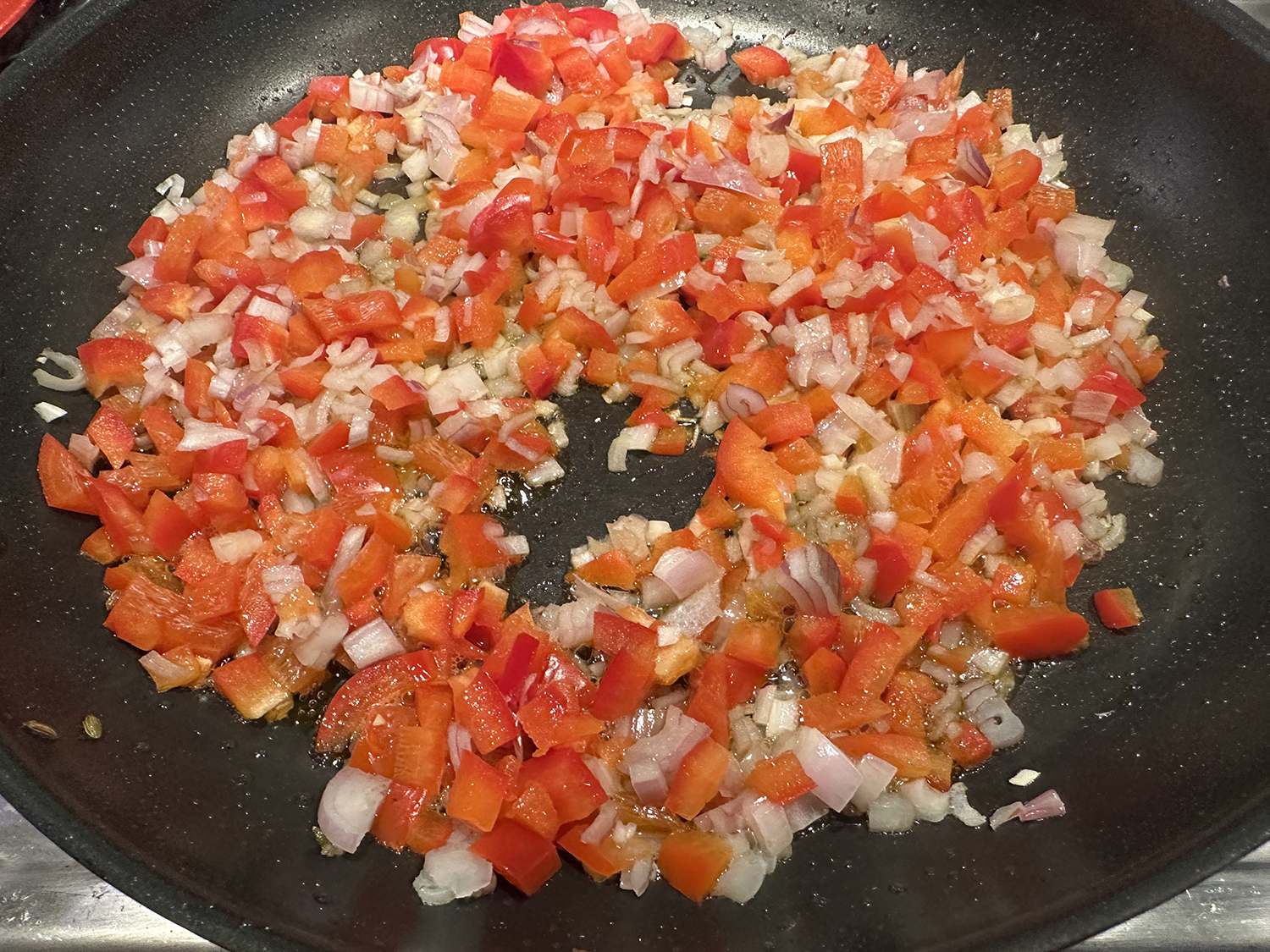
  3. Add 1 medium onion, finely chopped, and 4 garlic cloves, finely chopped, to pot and cook, stirring often, until onion is softened and translucent, about 5 minutes. Add 1 Tbsp. tomato paste and cook, stirring, 1 minute. Stir in ½ cup sofrito and remaining spice mixture and cook, stirring, until fragrant and mixture is slightly darkened, about 3 minutes. Pour in one 8-oz. can tomato sauce and 2½ cups low-sodium chicken broth; stir to combine, scraping up any browned bits stuck to bottom of pot.
  4. Return chicken pieces to pot, arranging skin side up, and bring stew to a simmer. Cover with a lid and cook, adjusting heat as needed to maintain a simmer, until chicken is cooked through, 25–30 minutes.
  5. Uncover pot and stir in 1 cup pitted manzanilla olives. Simmer, stirring occasionally, until stew is slightly reduced, about 5 minutes. Remove from heat. Taste stew and season with kosher salt if needed.
  6. To serve, divide steamed rice among bowls and ladle stew over; top with cilantro leaves with tender stems. Serve with lime wedges.
    Do ahead: Stew (without cilantro) can be made 3 days ahead. Let cool; cover and chill. Add cilantro just before serving.

http://www.lynnandruss.com

Recipe by Jacqueline Woodson for Bon Appétit
Breakfast Casserole

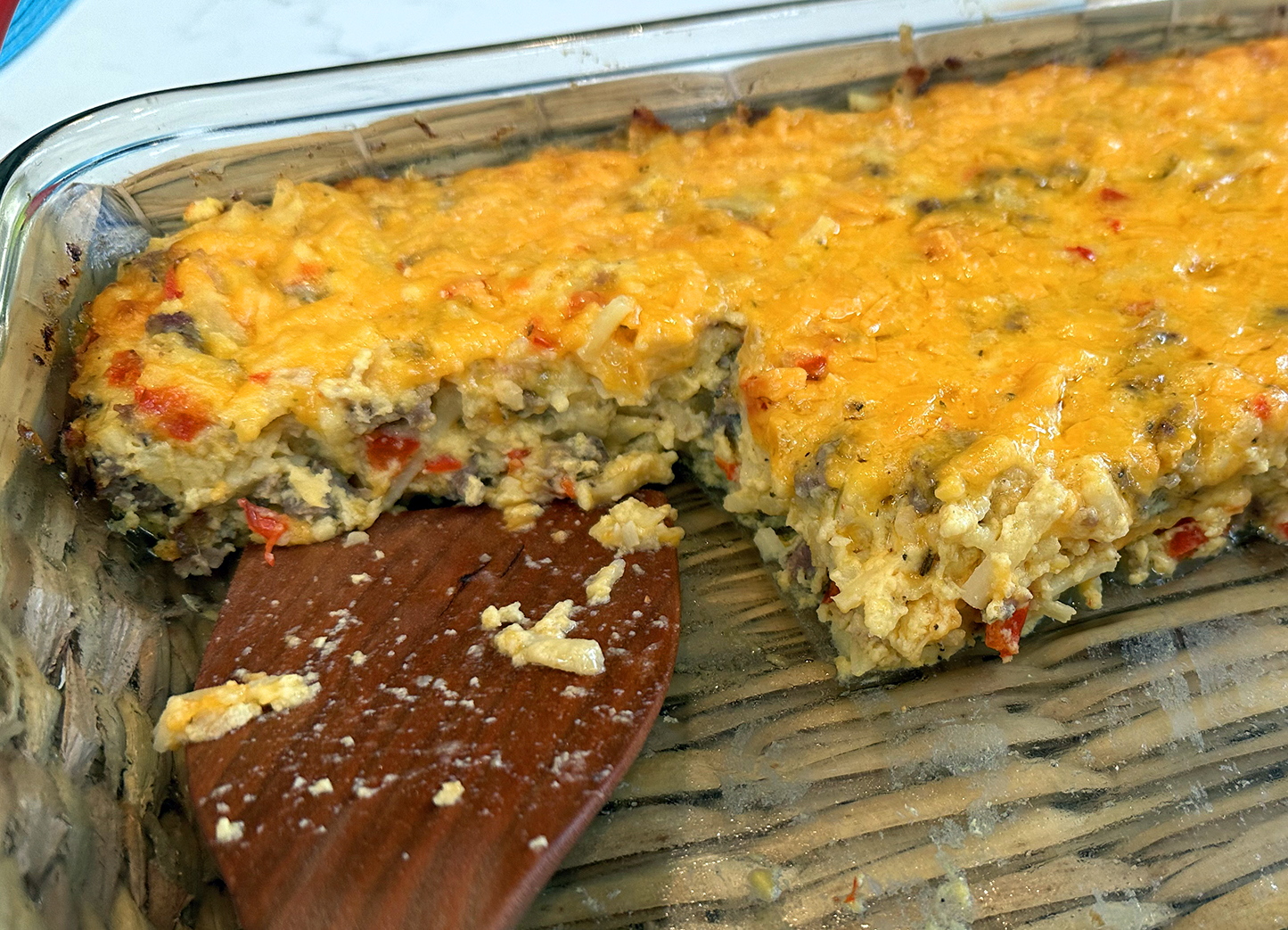
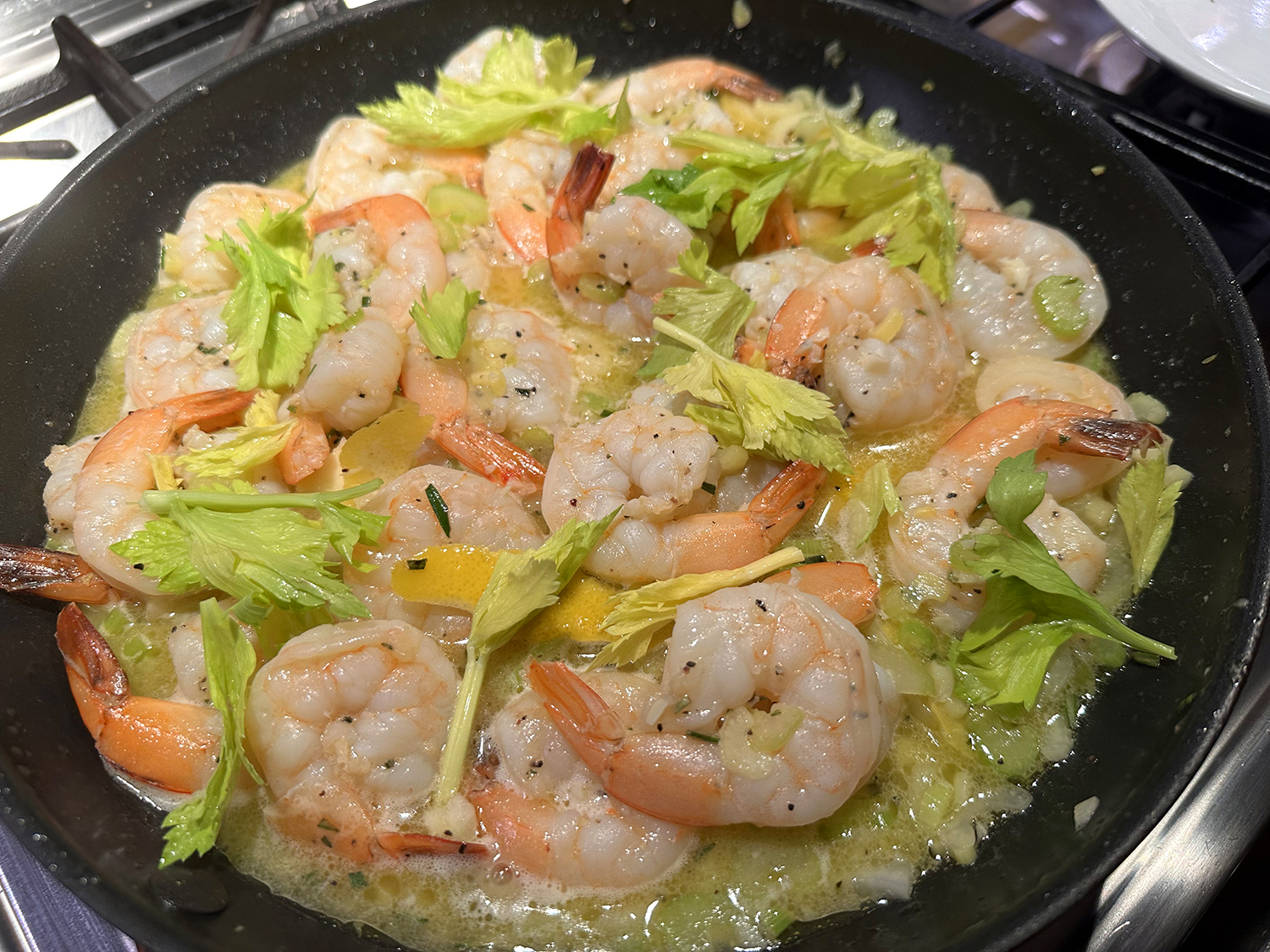
What a wonderful breakfast/brunch item that will please up to 8 people. I got the recipe from a friend, who got it from her friend, who got it from who knows who? Doesn’t really matter the source, the thing is, you can customize it to suit your own preferences. For instance, if you are following a keto-friendly diet, skip the hash browns, but you might want to increase some of the other ingredients that go into the eggs. Instead of 1/4 cup of chopped onion, The Hubs added 3/4 cup of minced shallot.

You can even assemble it the day before, just cover the uncooked dish with foil and refrigerate overnight, then bake it in the oven until cooked, about 45 minutes. Which was EGGSactly what we did, so the morning of the feast, we were basically prep-free!

Store any remaining casserole in tightly wrapped foil, and store in refrigerator for up yo 3 days.

Breakfast Casserole

  • Servings: 8-10
  • Difficulty: easy
  • Print

Ingredients

  • 20 oz. shredded hash browns, thawed
  • 1 lb. sausage cooked, crumbled and drained
  • 1/4 cup onion, finely diced
  • 1 red or green bell pepper, diced
  • 2 cups cheddar cheese, shredded
  • 8 eggs
  • 1 12 oz. can evaporated milk OR 1 1/3 cups milk
  • 1/2 tsp. Italian seasoning
  • 1/2 tsp. Kosher salt
  • 1/4 tsp. black pepper

Directions

  1. Preheat oven to 350°F.
  2. Grease a 9 x 13-inch baking dish.
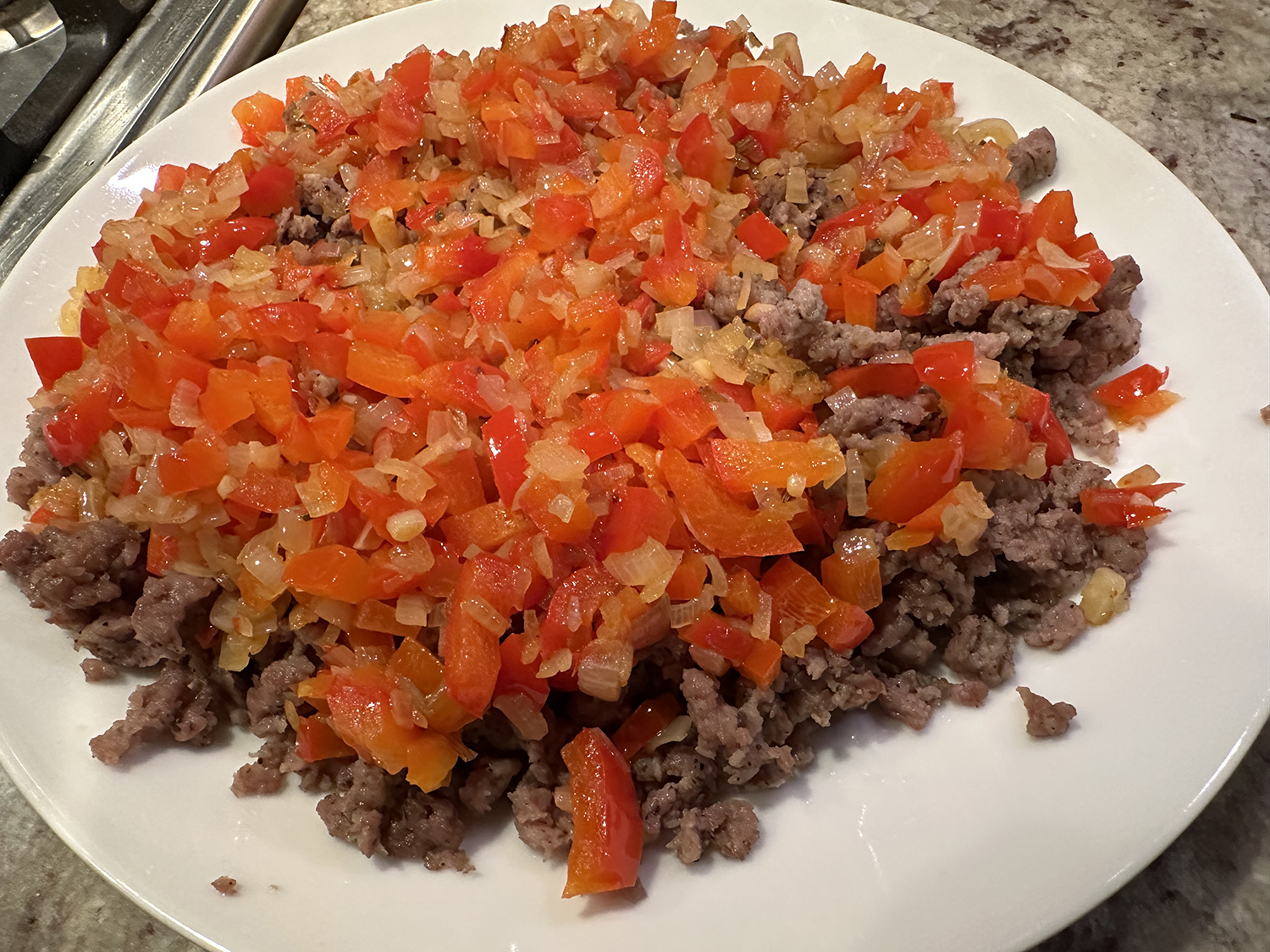
  3. Heat a large skillet over medium-high heat. Brown the sausage, breaking it up with a wooden spoon, until no pink remains. Drain the fat.
  4. In the prepared dish, add hash browns, sausage, onion, bell pepper, and a 1/2 cup cheese. Gently mix and spread evenly.
  5. In a large bowl, add eggs, evaporated milk, salt and pepper, and Italian seasoning. Whisk until combined.
  6. Pour the egg mixture over the pan ingredients, and sprinkle on the remaining cheese.
  7. Cover dish with foil, and refrigerate overnight, or bake immediately, uncovered for 45-55 minutes until cooked through.

http://www.lynnandruss.com

Salmon Traybake with Harissa-Roasted Pepper Sauce

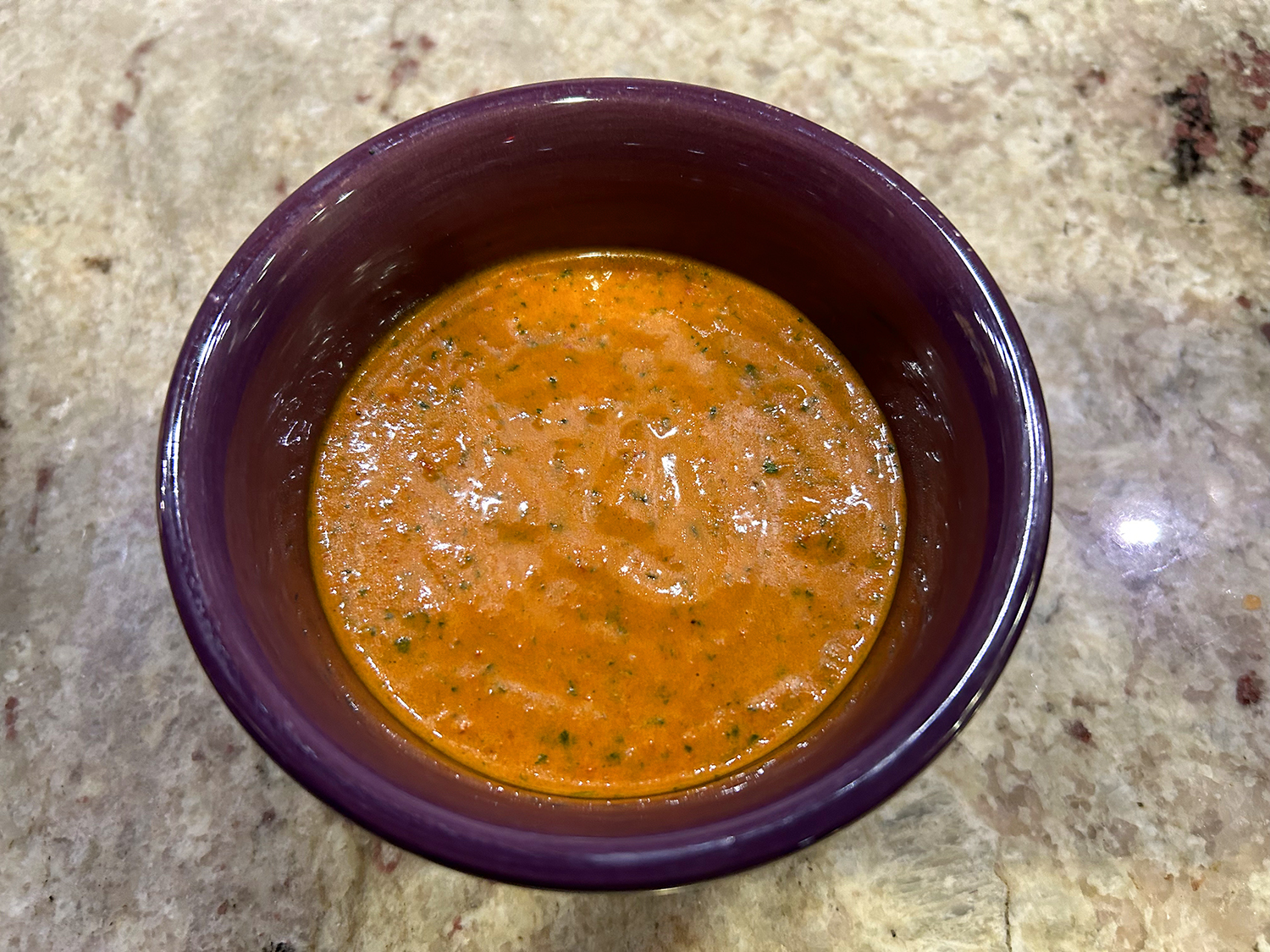
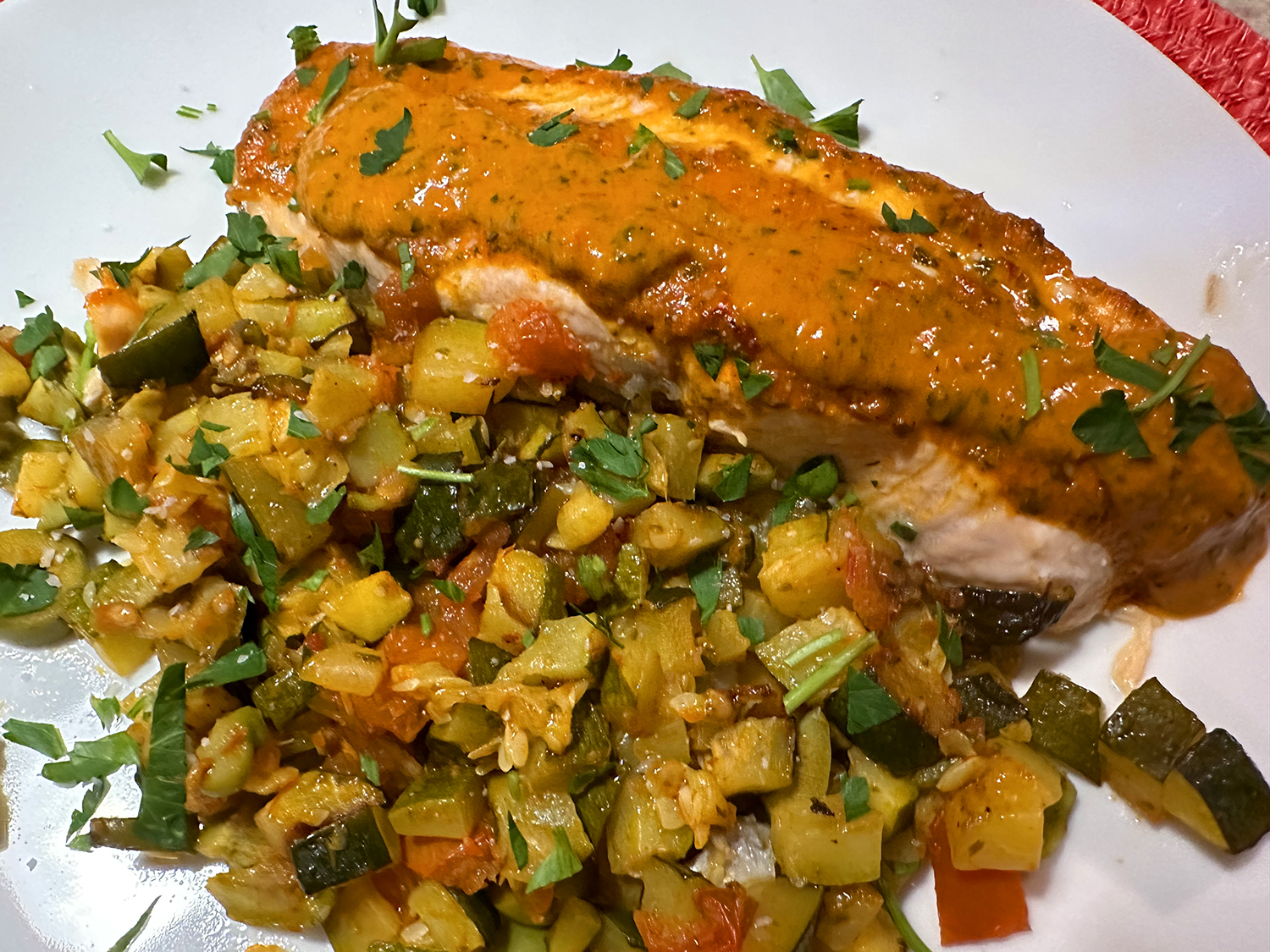
The inspiration for this colorful traybake is Moroccan-style red chermoula: a bold, warmly spiced sauce, often served with fish. This weeknight-friendly version from Milk Street calls on smoky harissa, a North African chili and spice paste, plus sweet roasted peppers, earthy cumin, bright lemon juice and fresh garlic and parsley, all whirred together in the blender.

Harissa spiciness varies by brand, so a range is suggested. To make the most of the mixture, use it three ways: as a salmon marinade, a seasoning for roasted zucchini and as a sauce for the finished dish. Serve with couscous, rice or warmed flatbreads.

The original recipe called for 1 1/2 pounds of salmon, but we purchased a one-pound piece and cut it in half allowing for 2 servings. If using 1 1/2 pounds, cut the filet into 3 or 4 pieces, or buy them already cut down to 6 ounce servings.

Don’t use large zucchini for this. They tend to contain many seeds and will turn soft and mushy with cooking. Instead, look for medium to small zucchini.

Salmon Traybake with Harissa-Roasted Pepper Sauce

  • Servings: 3-4
  • Difficulty: easy
  • Print

Ingredients

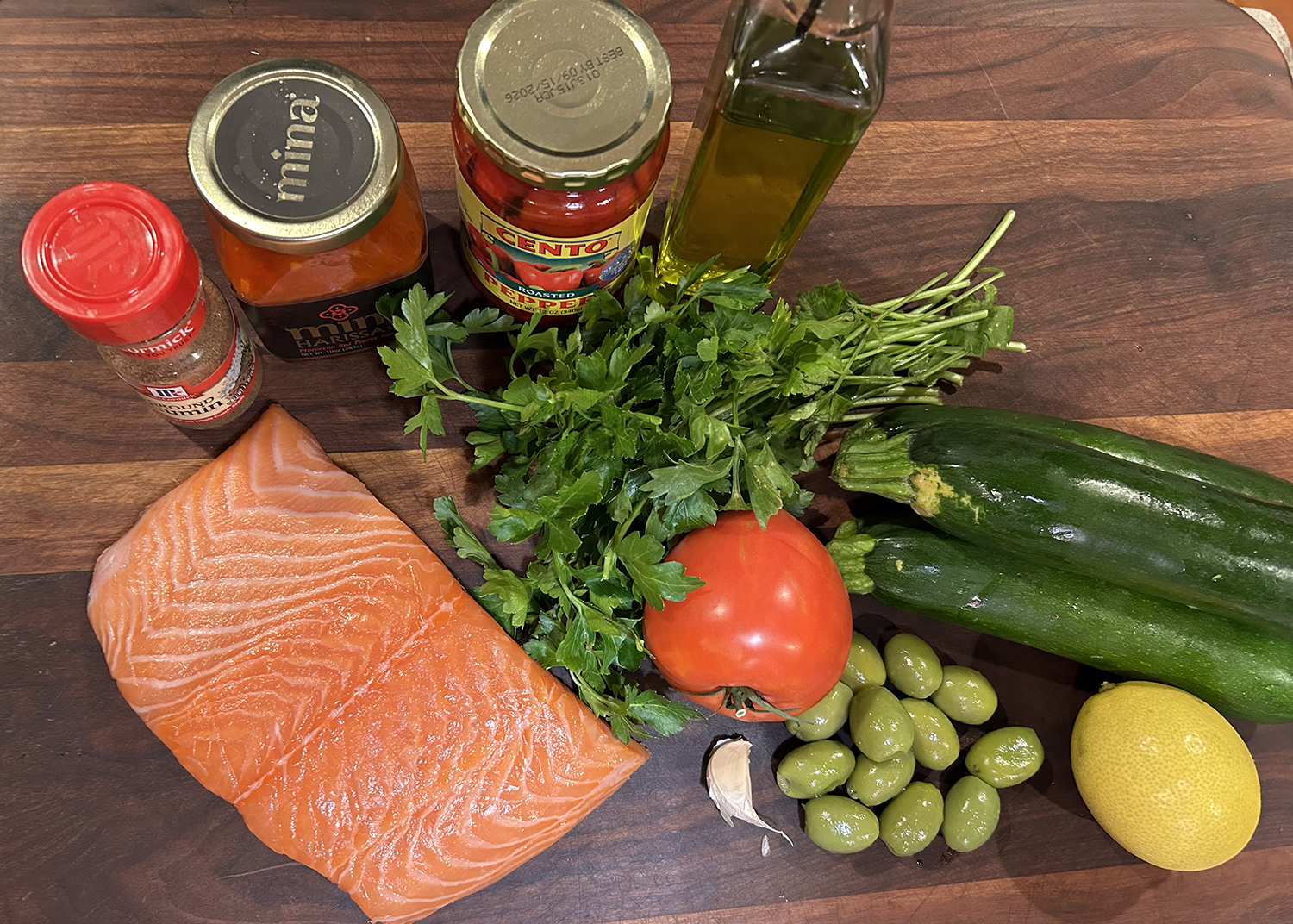
  • 1/2 cup drained roasted red peppers, chopped
  • 1/2 cup lightly packed fresh flat-leaf parsley, plus chopped parsley to serve
  • 1/4 cup extra-virgin olive oil
  • 2 Tbsp. lemon juice, plus lemon wedges to serve
  • 1-2 Tbsp. harissa paste
  • 1 medium garlic clove, smashed and peeled
  • 1/2 tsp. ground cumin
  • Kosher salt
  • 4 6-oz. center-cut salmon fillets, patted dry
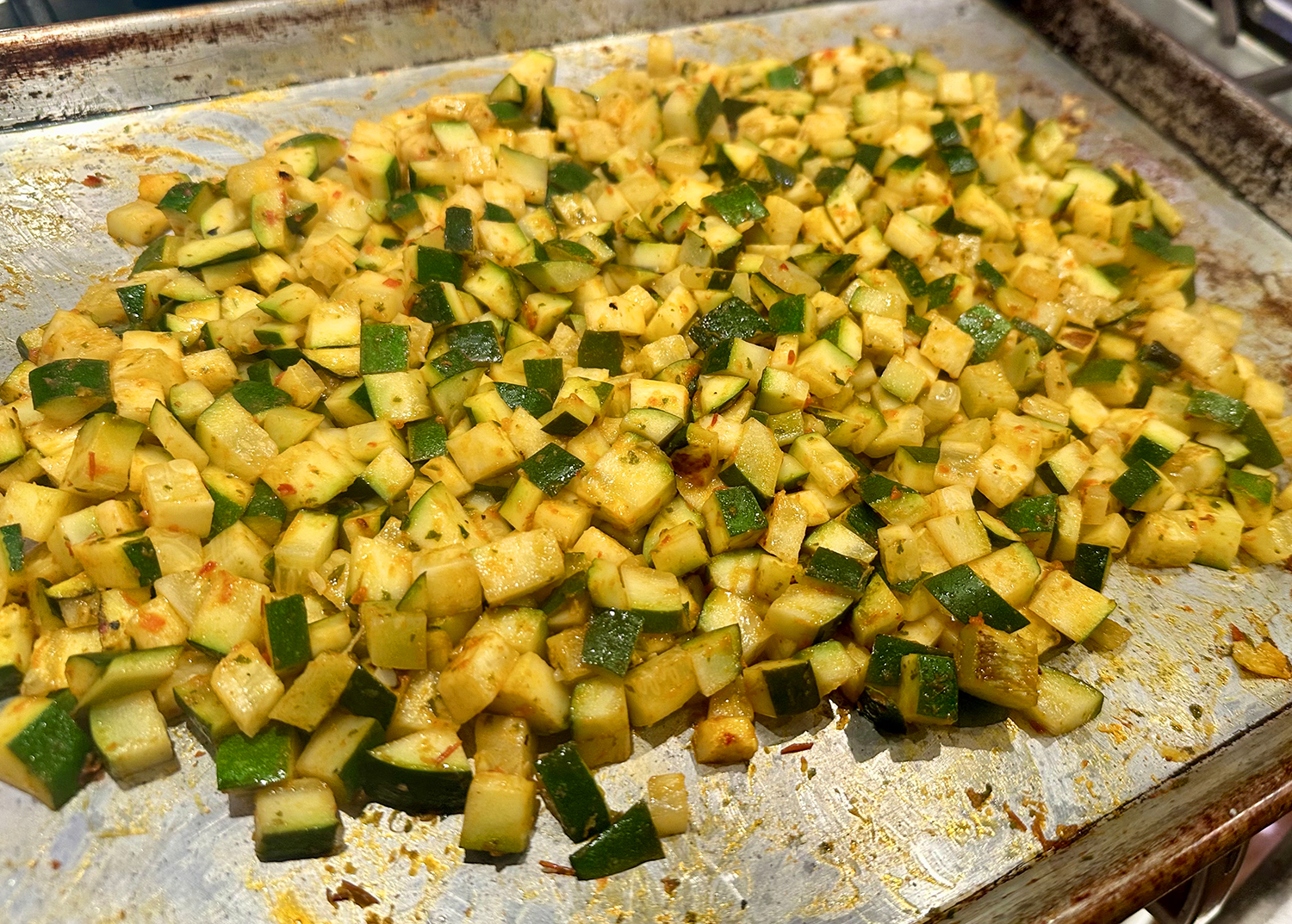
  • 3 medium zucchini (about 1½ lbs. total), cut into ¼-inch cubes
  • 1 ripe medium tomato, cored, seeded and chopped
  • 1/2 cup pitted green olives, chopped

Directions

  1. Heat the oven to 425°F with a rack in the middle position. In a blender, combine the roasted peppers, parsley, oil, lemon juice, harissa, garlic, cumin and ½ teaspoon salt. Puree until smooth, about 30 seconds. Measure out 2 tablespoons, then spread it onto the flesh side of the salmon fillets.
  2. On a rimmed baking sheet, toss the zucchini with ¼ cup of the remaining puree; transfer the rest of the puree to a small bowl for serving. Roast until the zucchini is tender, 20 to 25 minutes, stirring halfway through. Remove the baking sheet from the oven and sprinkle the tomato and olives over the zucchini. Scrape up and stir the zucchini and push it to the edges.
  3. Place the salmon, skin side down, in the center of the baking sheet. Roast until the flesh flakes easily and the zucchini is lightly charred, and registers 135°F, about 10 to 14 minutes. Transfer to a platter and sprinkle with additional parsley. Serve with lemon wedges and the remaining sauce on the side.

http://www.lynnandruss.com

Recipe by Rose Hattabaugh for Milk Street

Fireside Cocktail

Let’s just say, our rendition was essentially a spicy Manhattan. With no high-end brandy or cognac, we substituted Bourbon. And instead of an apple slice, we used an orange peel. However you make it, this cocktail is perfect for a cool evening… by the fireplace perhaps?

According to America’s Test Kitchen, a Fireside is, when you get down to basics, a warmly spiced version of a brandy old-fashioned, a gentler version of the traditional whiskey-based cocktail. Intriguingly, the brandy old-fashioned is the unofficial cocktail of the states of Wisconsin and Minnesota, making those states the two top consumers of brandy in the nation.

To make this Fireside, first replace the bourbon with brandy (for a luxe version, you could even use cognac), which has a flavor profile featuring dried fruit and subtle warm spices. Next, add a conservative amount of Spiced Syrup, which is made with cinnamon, cloves, and allspice. These warm baking spices further emphasize the dried fruit flavors in the bourbon.

Citrus bitters provide the right amount of zingy brightness—think of it as not unlike the lemon juice that’s added to the very best spiced apple pie fillings. The optional Pumpkin Pie Spice Rim Sugar will further bump up the warmly spiced elements, plus add a little sweetness. 

Fireside Cocktail

  • Servings: 2
  • Difficulty: easy
  • Print

Ingredients

  • ¼ cup Pumpkin Pie Spice Rim Sugar (see below)
  • 2 oz. of top-shelf bourbon
  • 1 tsp. spiced syrup (see below)
  • ⅛ tsp. citrus bitters
  • orange peel slice

Directions

  1. Spread sugar, if using, into even layer on small saucer. Moisten about ½ inch of chilled old-fashioned glass rim by running orange wedge around outer edge; dry any excess juice with paper towel. Roll moistened rim in sugar to coat. Remove any excess sugar that falls into glass; set aside.
  2. Add brandy, spiced syrup, and bitters to mixing glass, then fill three-quarters full with ice. Stir until mixture is fully combined and well chilled, about 30 seconds. Fill prepared glass half-full with ice or add 1 large cube. Strain cocktail into glass. Garnish with apple slice and serve.

Spicy Syrup

  • ¾ cup sugar
  • 5 oz. water
  • 1 cinnamon stick
  • 8 allspice berries, lightly crushed
  • 4 whole cloves

Heat sugar, water, cinnamon stick, allspice berries, and cloves in small saucepan over medium heat, whisking often, until sugar has dissolved, about 5 minutes; do not boil. Let cool completely, about 30 minutes. Strain syrup through fine-mesh strainer into airtight container; discard solids.

  • ½ cup sugar
  • 2 tsp. ground cinnamon
  • 1 tsp. ground ginger
  • ½ tsp. ground nutmeg
  • ½ tsp. ground allspice

Whisk all ingredients together in bowl until combined.

http://www.lynnandruss.com

Recipe from America’s Test Kitchen

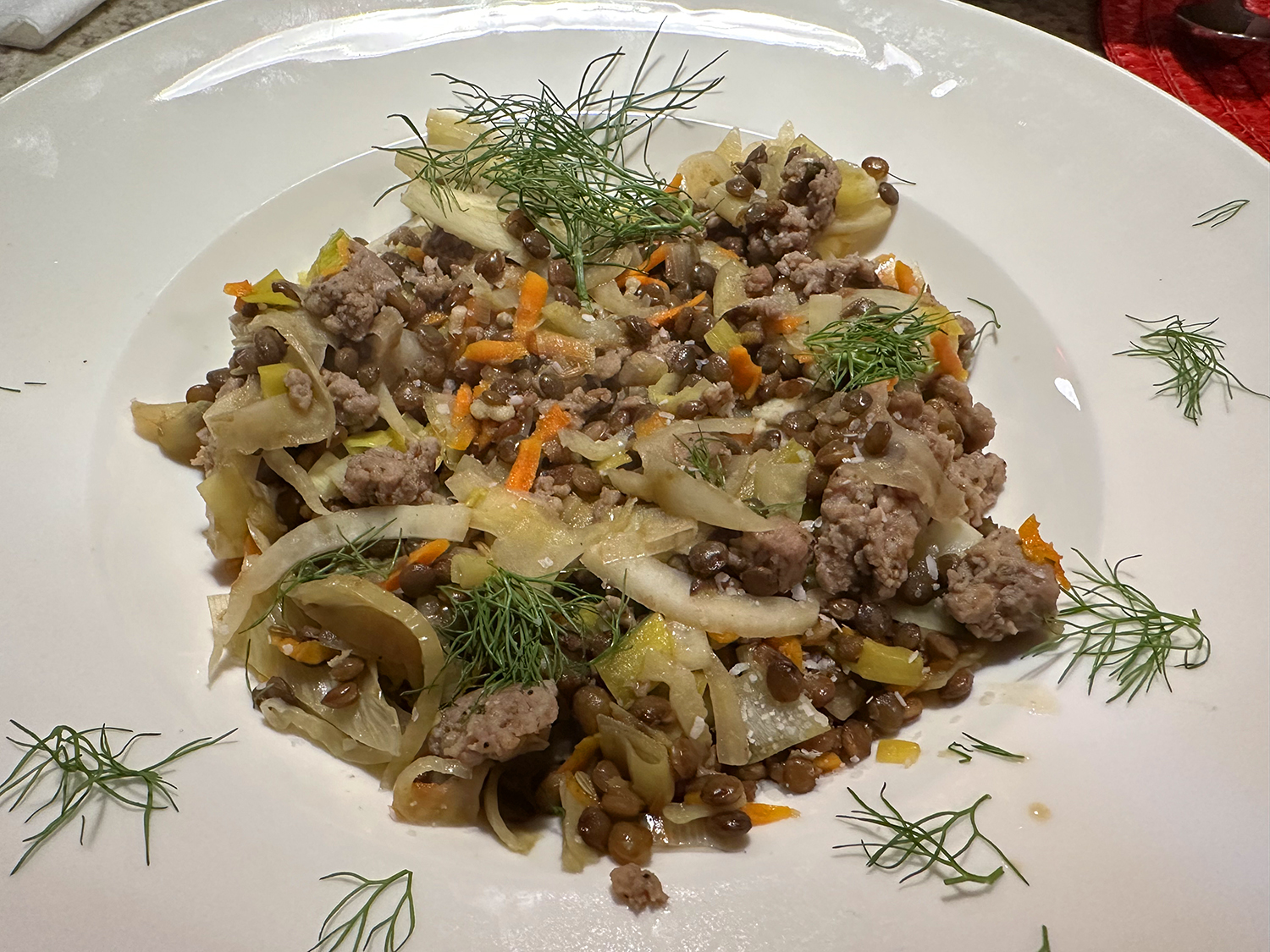
Italian Sausage and Lentils with Fennel

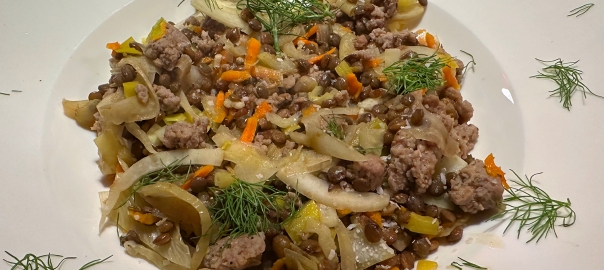
Our pantry is full of different grains and a variety of lentils, which are all part of a healthy diet. Lentils, like beans, soak up whatever flavor they are cooked with. Here, it is Italian chicken sausage and sweet fresh fennel with other aromatics like onions and garlic for a perfectly hearty lentil stew!

If you’re worried about the amount of fennel in the recipe, just know that the licorice-y taste of fresh fennel will mellow quite a bit once cooked, resulting in a slightly sweet flavor that is well balanced with the saltiness of the sausage.

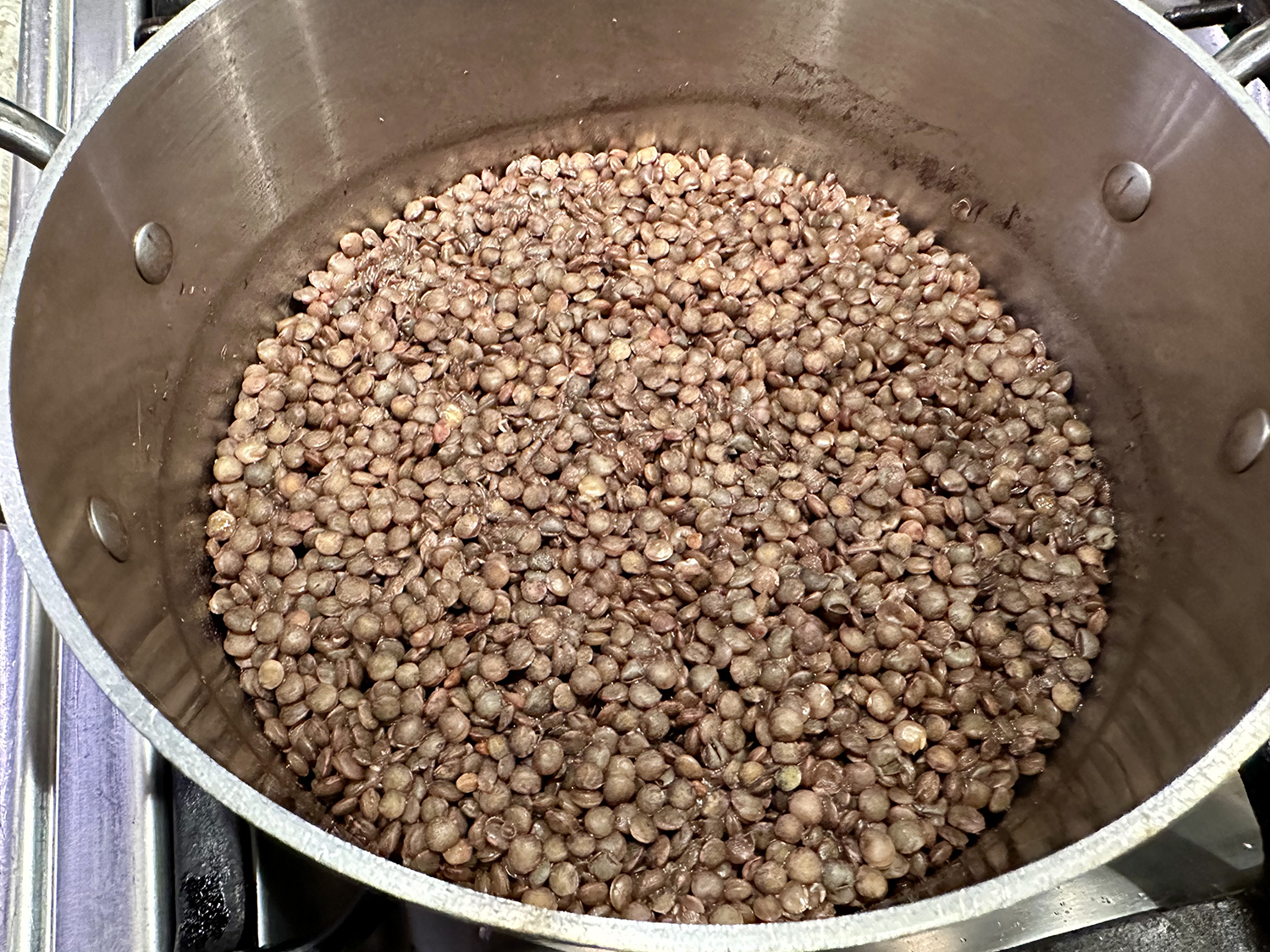
Parboiling basically means partially cooked, so you’ll cook the lentils for about 10 minutes, they will start to become tender but will still have a firm bite (don’t worry, they will finish cooking later with the rest of the ingredients). Do NOT discard the lentil cooking water, you’ll need it for the stew.

The dish is easily customizable. Use whatever type of sausage you prefer and adjust the amount according to your preferences—we used a full pound of sausage. Add in more variety of veggies, such as mushroom and/or peas.

Italian Sausage and Lentils with Fennel

  • Servings: 4+
  • Difficulty: easy
  • Print

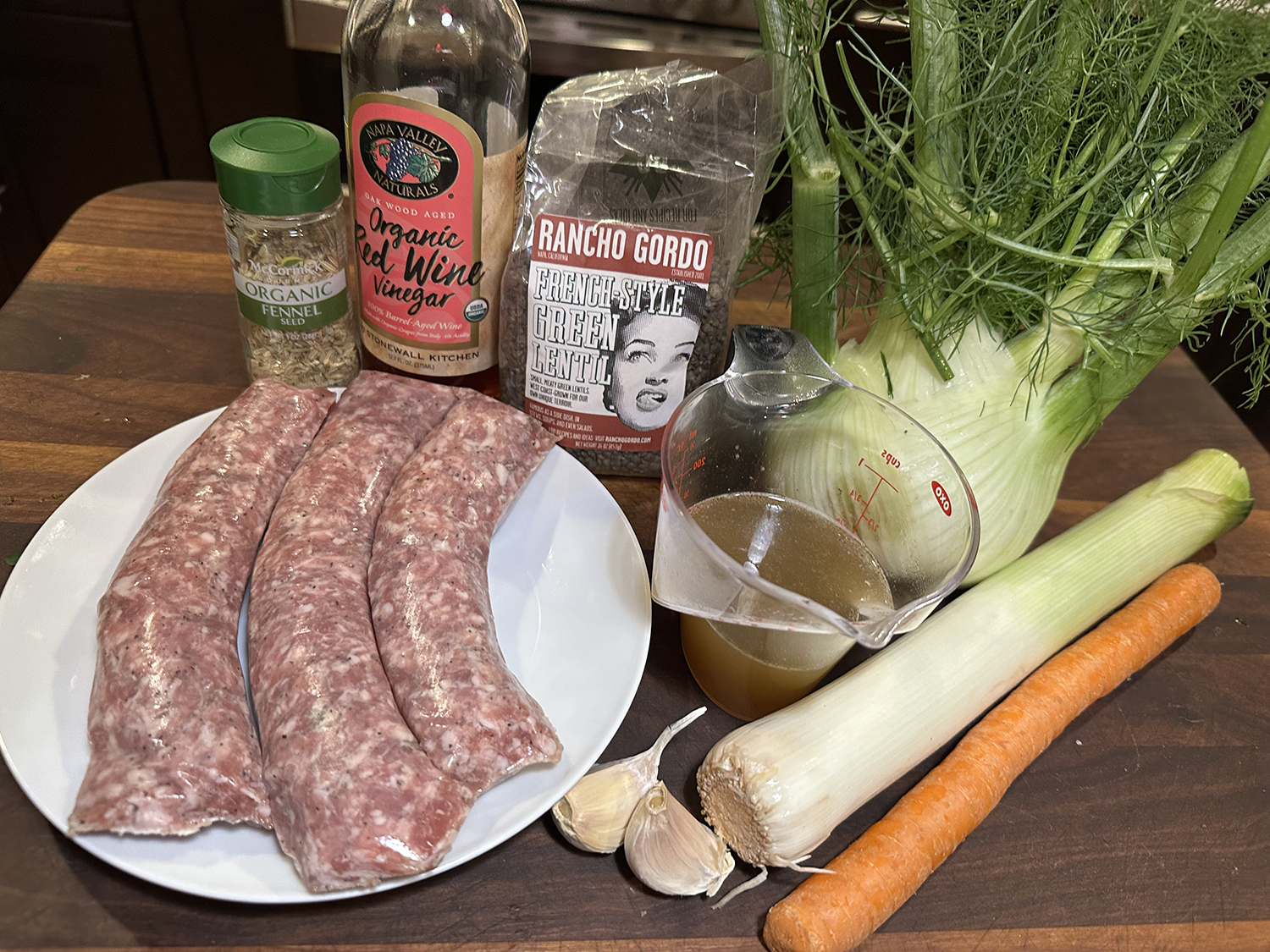
Ingredients

  • 1 cup green lentils, black lentils will work as well
  • Extra virgin olive oil
  • 8 oz. chicken or pork sausage, casings removed (about 2 to 3 sausages)
  • 1 fennel bulb large or 2 small, thinly sliced
  • 1 to 2 large cloves garlic, grated
  • 1 yellow onion, finely chopped
  • 1 carrot, grated
  • ½ tsp. fennel seeds
  • ½ cup chicken broth
  • 2 Tbsp. red wine vinegar

Directions

  1. In a saucepan, combine the lentils with 3 cups of water. Bring to a boil, then lower the heat and cover part-way to simmer for about 10 minutes (the lentils should be cooked just part-way through (there should be some liquid in the pan still).
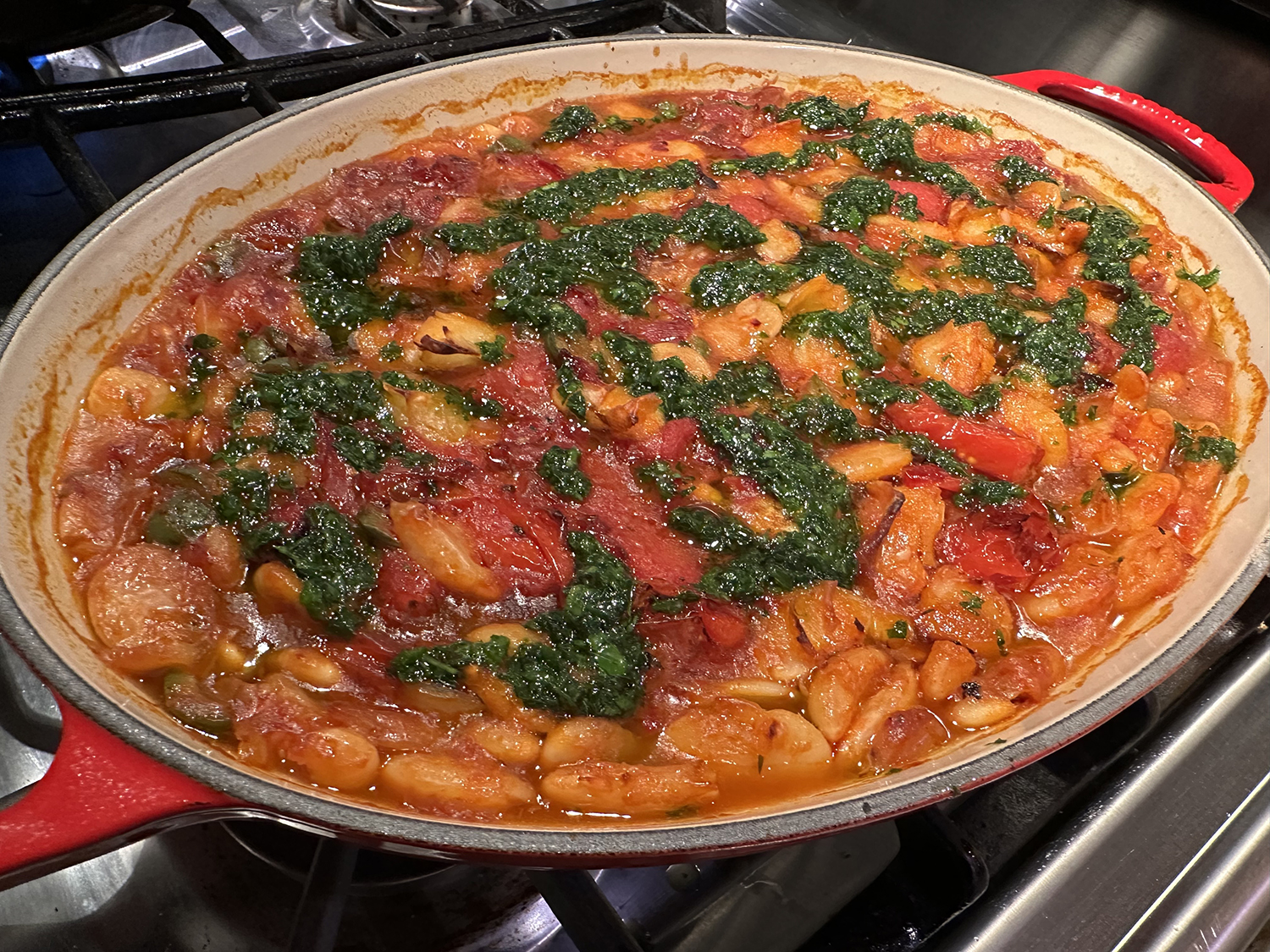
  2. In a large 12″ skillet, heat 1 to 2 tablespoons of extra virgin olive oil. Add the sausage and cook over medium-high heat, tossing regularly and breaking the sausage up with a wooden spoon, until fully cooked and browned.
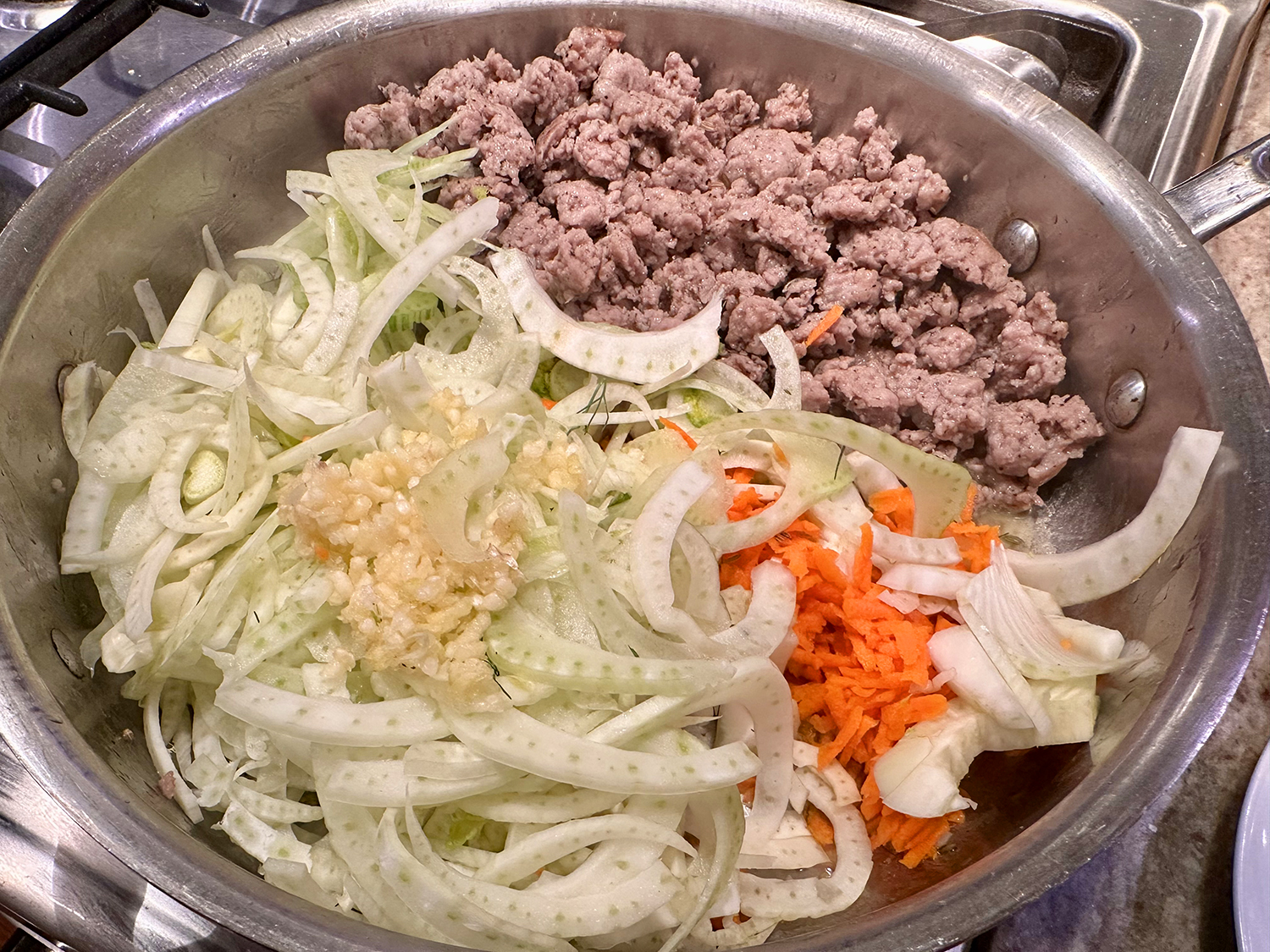
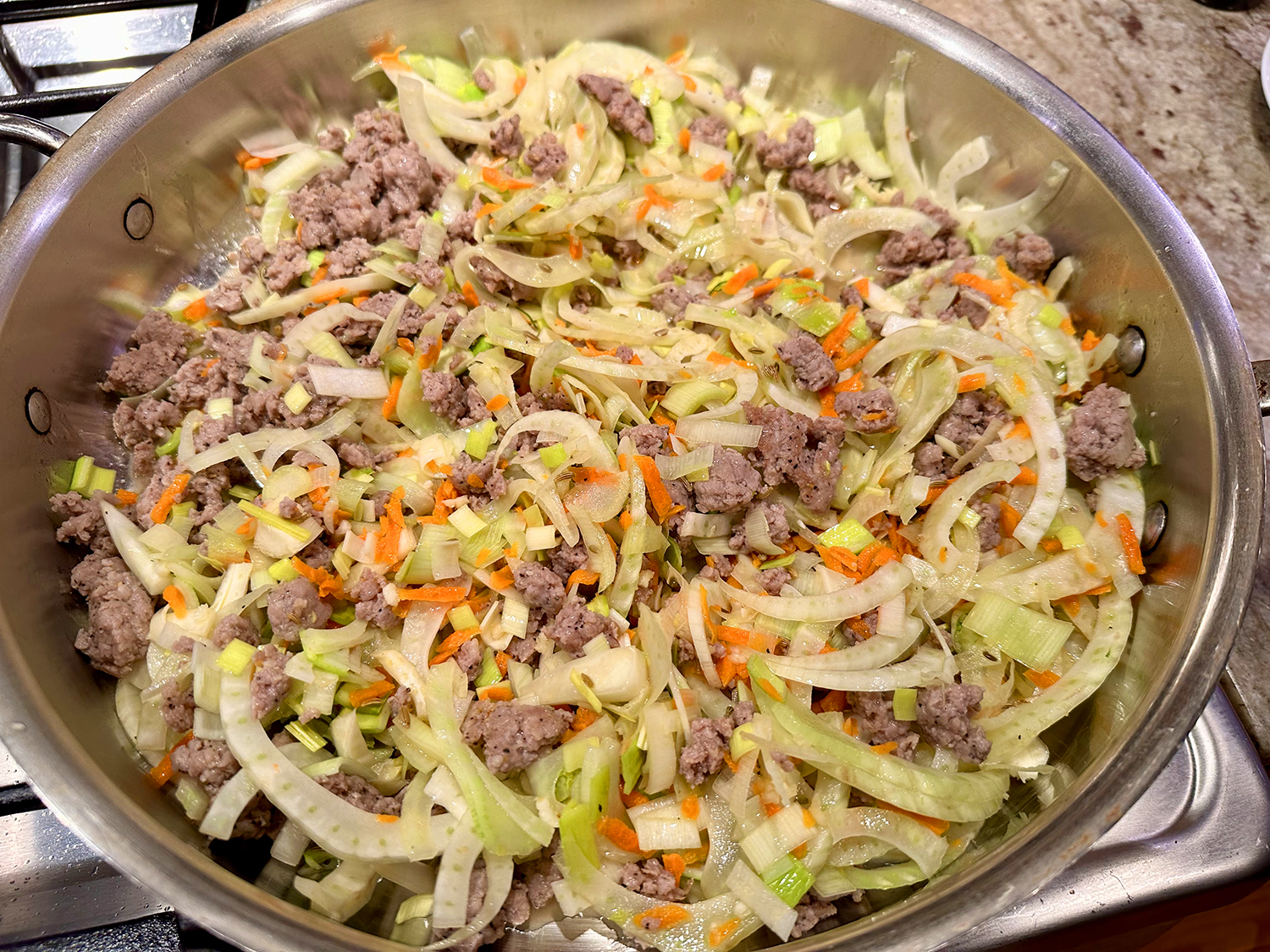
  3. Push the sausage to one side of the skillet and add the fennel, garlic, onion, carrots, and fennel seed. Add broth and red wine vinegar.
    Alternatively, remove the sausage from the pan to a plate and cover, then add the fennel, garlic, onion, carrots, and fennel seed. Add broth and red wine vinegar. Cook until the fennel is soft, about 8-10 minutes.
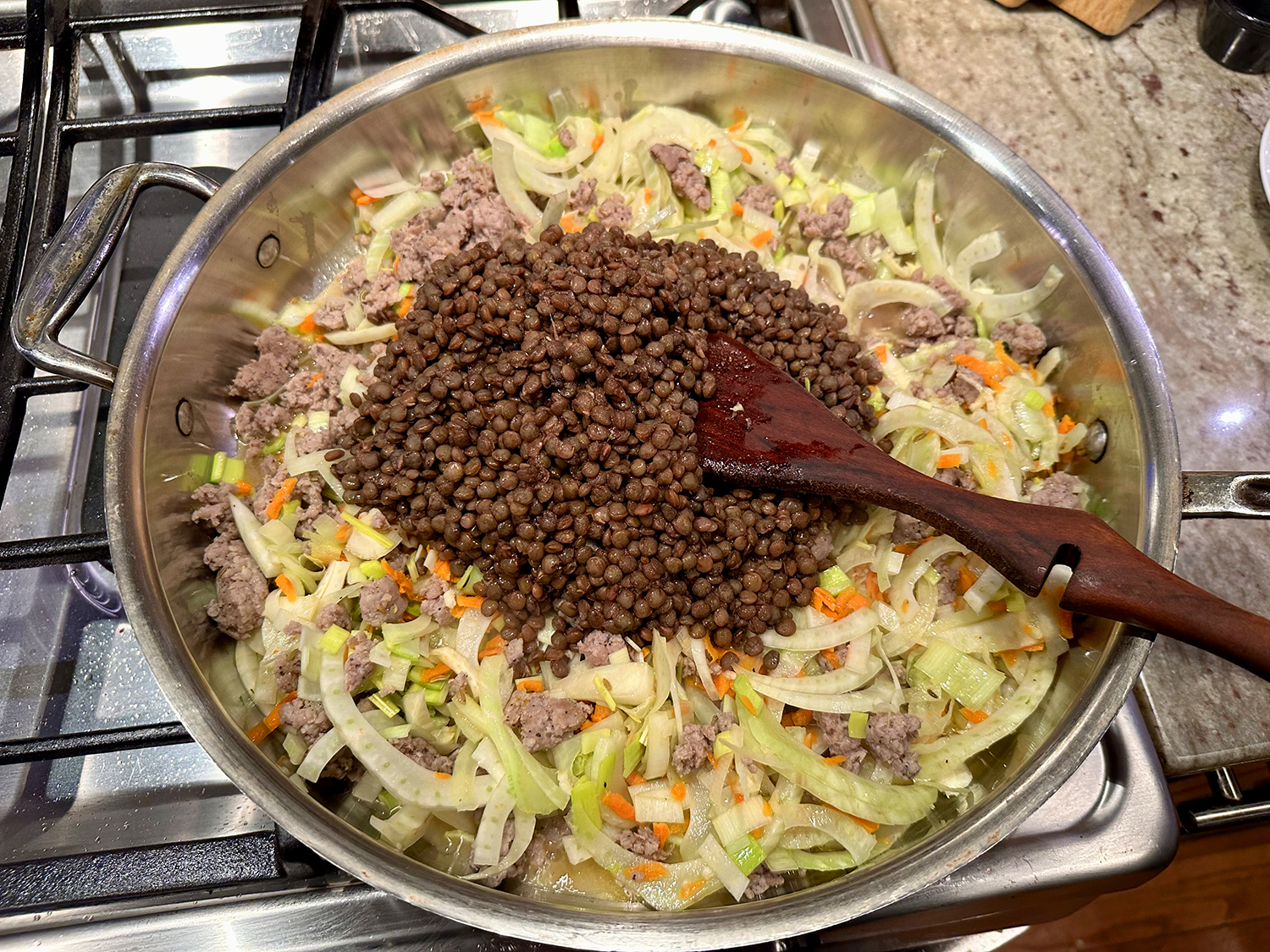
  4. Add the par-boiled lentils and the sausage (If they were removed) to the fennel skillet. Bring to a boil, then lower the heat and let simmer, partially covered, for 15 to 20 minutes.
  5. Taste and adjust seasoning. To serve, drizzle a bit of extra virgin olive oil on top. Serve immediately with your favorite crusty bread.

http://www.lynnandruss.com

Recipe by Suzy Karadsheh