Tag Archives: vegetarian

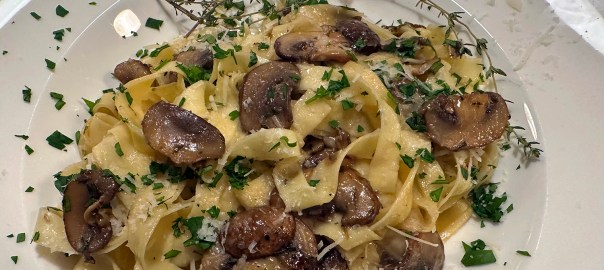
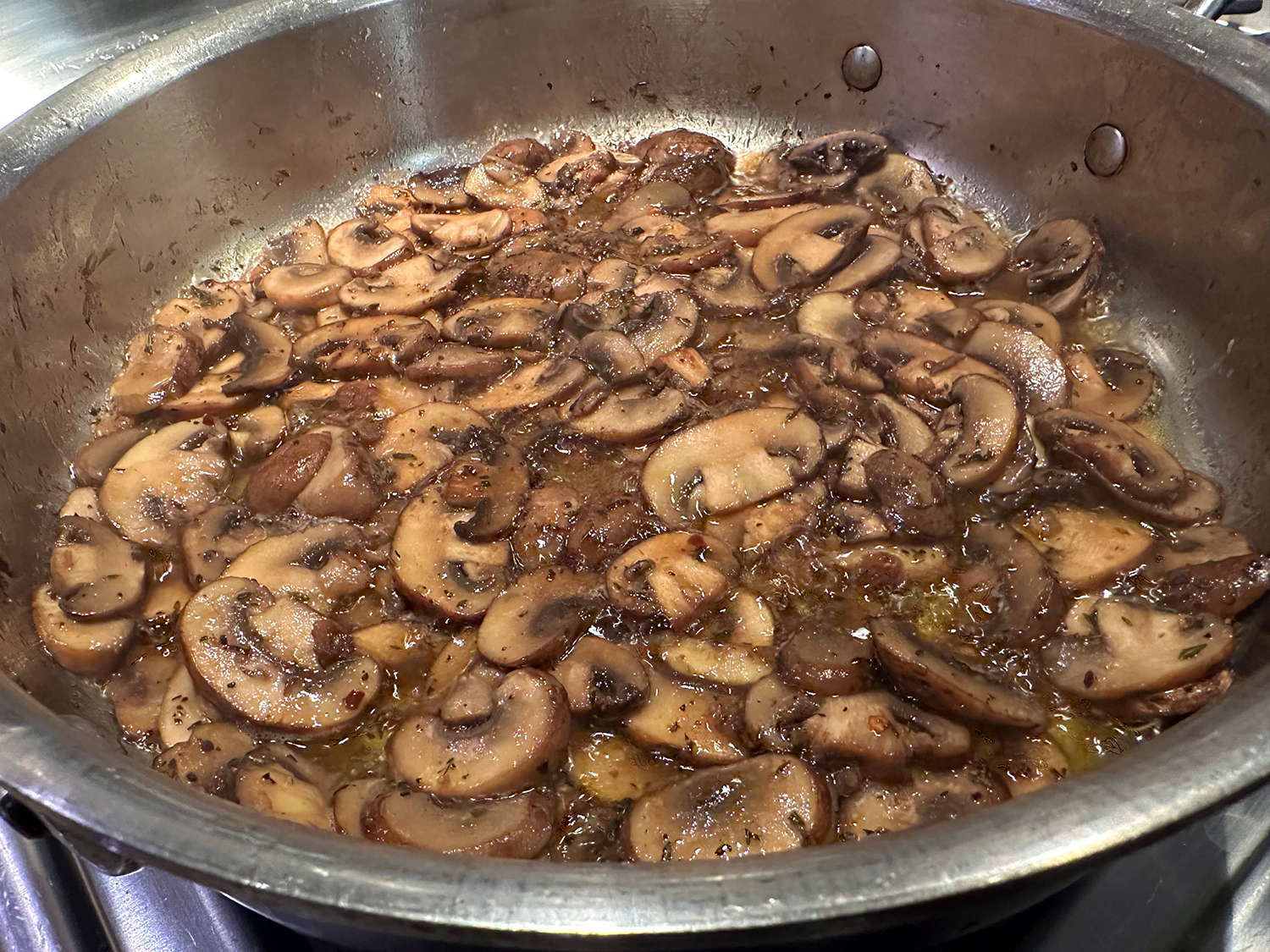
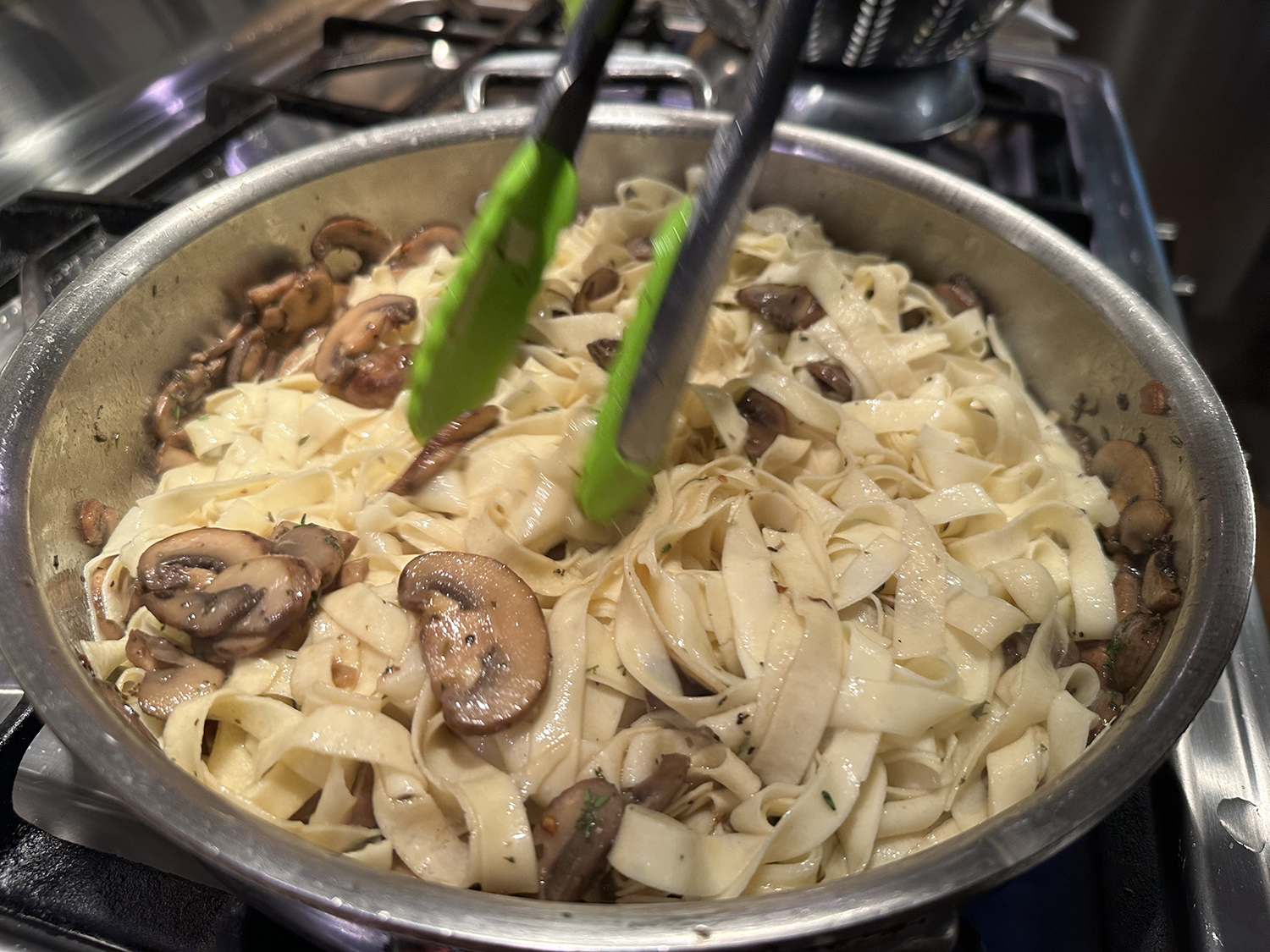
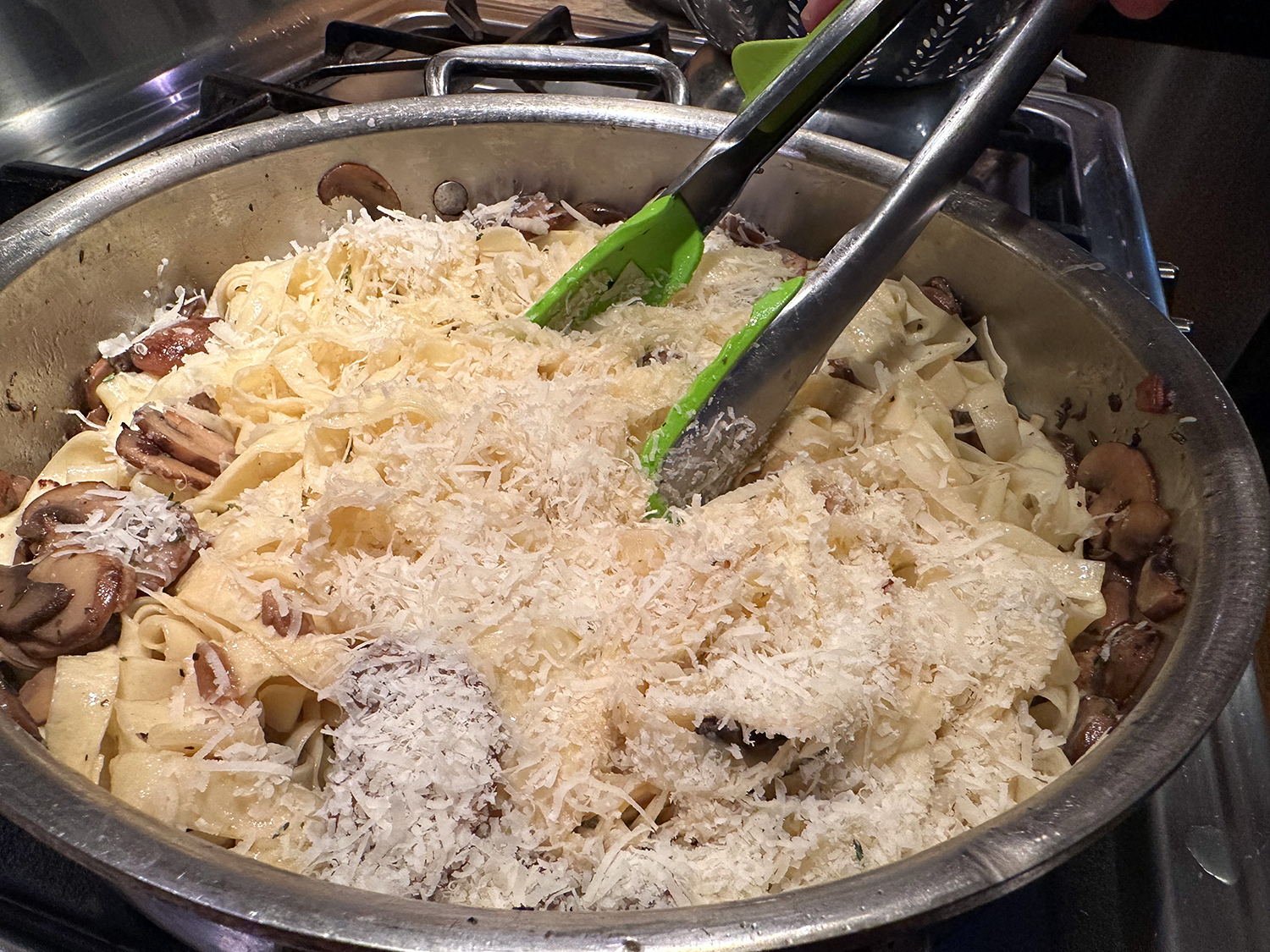
Cheesy Mushroom-Thyme Fettuccine

Inspired by the fettuccine con funghi from Italy, this recipe was developed for creating a quick yet elegant dinner using supermarket ingredients. Be sure to use dried fettuccine or pappardelle made with egg; this type typically is sold coiled into nests in 8.8-ounce packages. We opted for a 8.8 ounce package of quick cooking tagliarelle, a thin durum wheat egg pasta.

The texture of egg pasta is finer and more delicate than all-semolina pasta. Woodsy thyme is the classic herb for pairing with mushrooms; which is added in two stages for layered flavor. The aged, subtly sweet notes of brandy pair beautifully with the earthy creminis; dry sherry also works well.

TIP: Don’t use pre-sliced cremini mushrooms. They tend to be dry and cardboardy, and the mushrooms are counted on to release their own moisture to build flavor into the dish.

If you are funghi lovers like we are, increase the amount of creminis to 1½ pounds—noted in the ingredients list below. Also the original recipe directed you to reserve one cup of the pasta water before draining, but we found that insufficient in making the dish as moisturishly silky as we had hoped. You may not need the entire two cups of the liquid, it will all depend on your choice of pasta, better safe than sorry.

Served with a side salad, it was a perfect weeknight meal.

Cheesy Mushroom-Thyme Fettuccine

  • Servings: 4
  • Difficulty: easy
  • Print

Ingredients

  • ¼ cup extra-virgin olive oil
  • 2 medium garlic cloves, thinly sliced
  • 4 tsp. fresh thyme, chopped, divided
  • Pinch of red pepper flakes (optional, but worth it)
  • 1½ lb. cremini mushrooms, trimmed and thinly sliced
  • Kosher salt and ground black pepper
  • ⅓ cup brandy or dry sherry
  • 8.8 oz. package dried egg fettuccine, pappardelle, or similar pasta
  • 1½ oz. Parmesan cheese, finely grated (¾ cup), plus more to serve
  • 2 Tbsp. salted butter, cut into 2 pieces
  • Chopped fresh flat-leaf parsley, to serve

Directions

  1. In a large pot, boil 3 quarts water. In a 12-inch skillet over medium, combine the oil, garlic, half of the thyme and pepper flakes (if using). Cook, stirring, until the garlic is golden brown, about 2 minutes.
  2. Add the mushrooms, ½ teaspoon salt and ¼ teaspoon black pepper. Cook over medium-high, stirring occasionally, until the mushrooms are browned at the edges, 8 to 10 minutes. Remove the pan from the heat and add the brandy. Return to medium-high and cook, scraping up any browned bits, until the liquid is syrupy, about 1 minute.
  3. When the water reaches a boil, add the pasta and 1 tablespoon salt; cook, stirring, until al dente. Reserve 2 cups of the pasta cooking water, then drain.
  4. To the mushroom mixture, add the pasta, Parmesan, butter, the remaining thyme and ½ cup of the reserved pasta water. Cook over medium-high, tossing constantly, until lightly coated and the cheese is melted, 2 to 3 minutes.
  5. Off heat, taste and season with salt and black pepper. Serve sprinkled with parsley and additional cheese.

http://www.lynnandruss.com

Adapted from a recipe by Courtney Hill for Milk Street

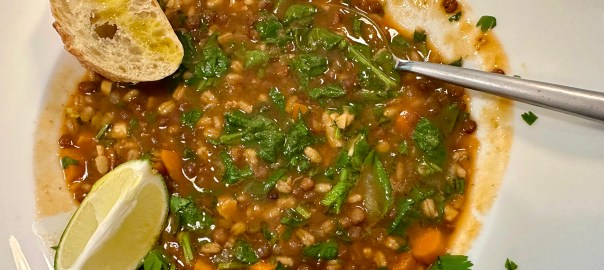
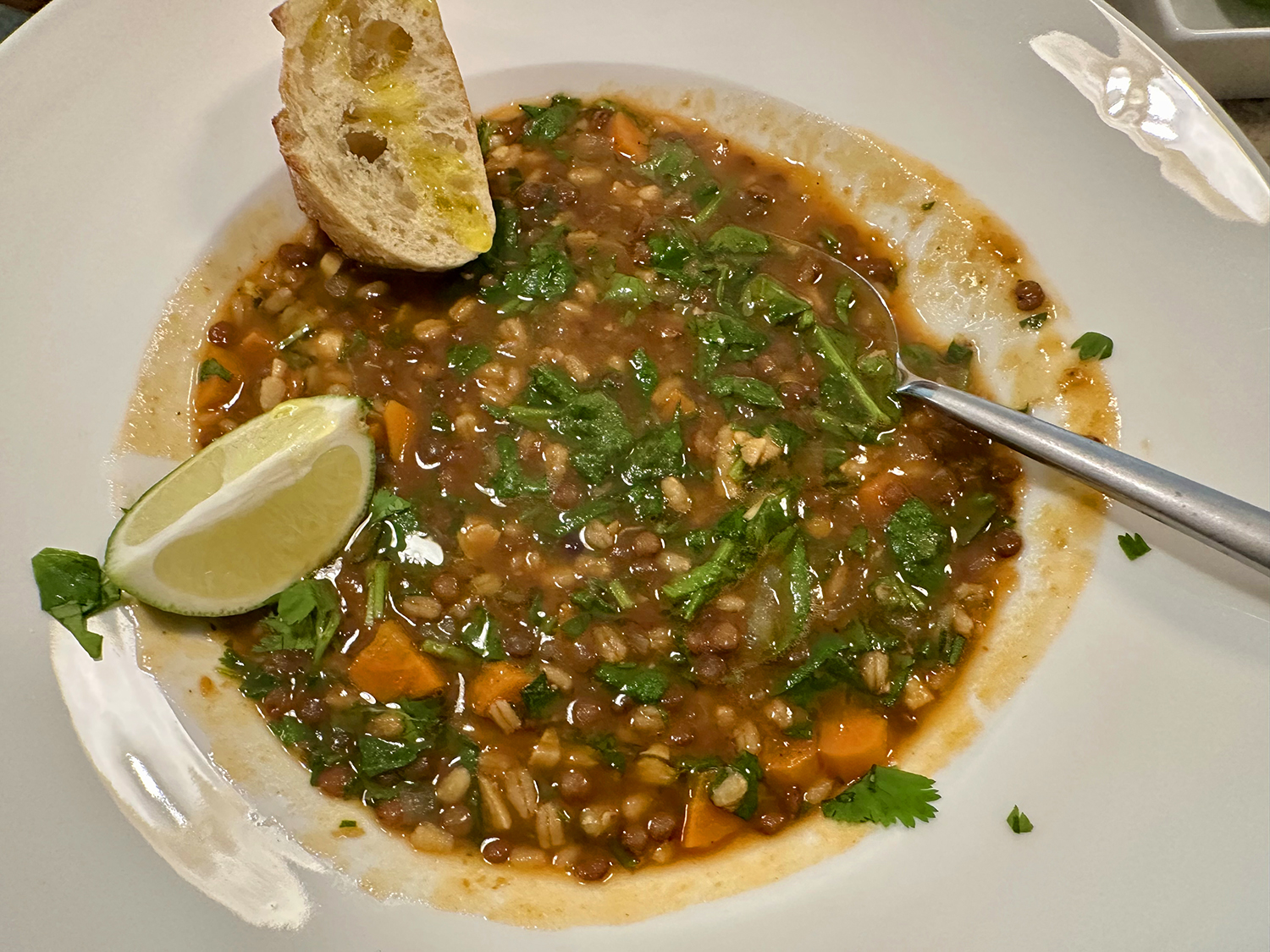
Persian Barley-Lentil Soup with Spinach

This hearty vegetarian soup combines two classic Persian soups: lentil and barley. Instead of dried limes common in Persian cuisine to infuse the broth with unique citrus notes, this recipe opts for easier-to-find fresh limes and uses the zest for fragrance and flavor and the juice to add tanginess.

For efficiency, prep the spinach and cilantro while the barley and lentils cook. And to round out the meal, serve with warmed bread or flatbread and a dollop of plain yogurt for richness. We were thoroughly impressed by this deeply flavored soup.

NOTE: This is the fast method using a pressure cooker or InstaPot and it all comes together in just under and hour. The slow method takes 5 to 6 hours, and we are not posting that recipe here.

Don’t use hulled barley instead of pearled barley. Hulled barley has had its inedible outer hull removed but retains its bran. Pearled barley, on the other hand, has been polished to remove the bran, which makes it quicker to tenderize; in this recipe, it cooks at the same rate as the lentils.

Persian Barley-Lentil Soup with Spinach

  • Servings: 4-5
  • Difficulty: easy
  • Print

Ingredients

  • 2 Tbsp. extra-virgin olive oil, plus more to serve
  • 1 medium yellow onion, chopped
  • 6 medium garlic cloves, chopped
  • 2 medium carrots, peeled, quartered lengthwise and sliced ½-inch thick
  • 2 Tbsp. tomato paste
  • 4 bay leaves
  • Kosher salt and ground black pepper
  • 1 Tbsp. grated lime zest, plus 3 Tbsp. lime juice, plus lime wedges to serve
  • ¾ cup pearled barley
  • ½ cup brown or green lentils
  • 1½ qts. low-sodium vegetable broth
  • 4 cups lightly packed baby spinach, chopped
  • 1 cup lightly packed fresh cilantro, chopped

Directions

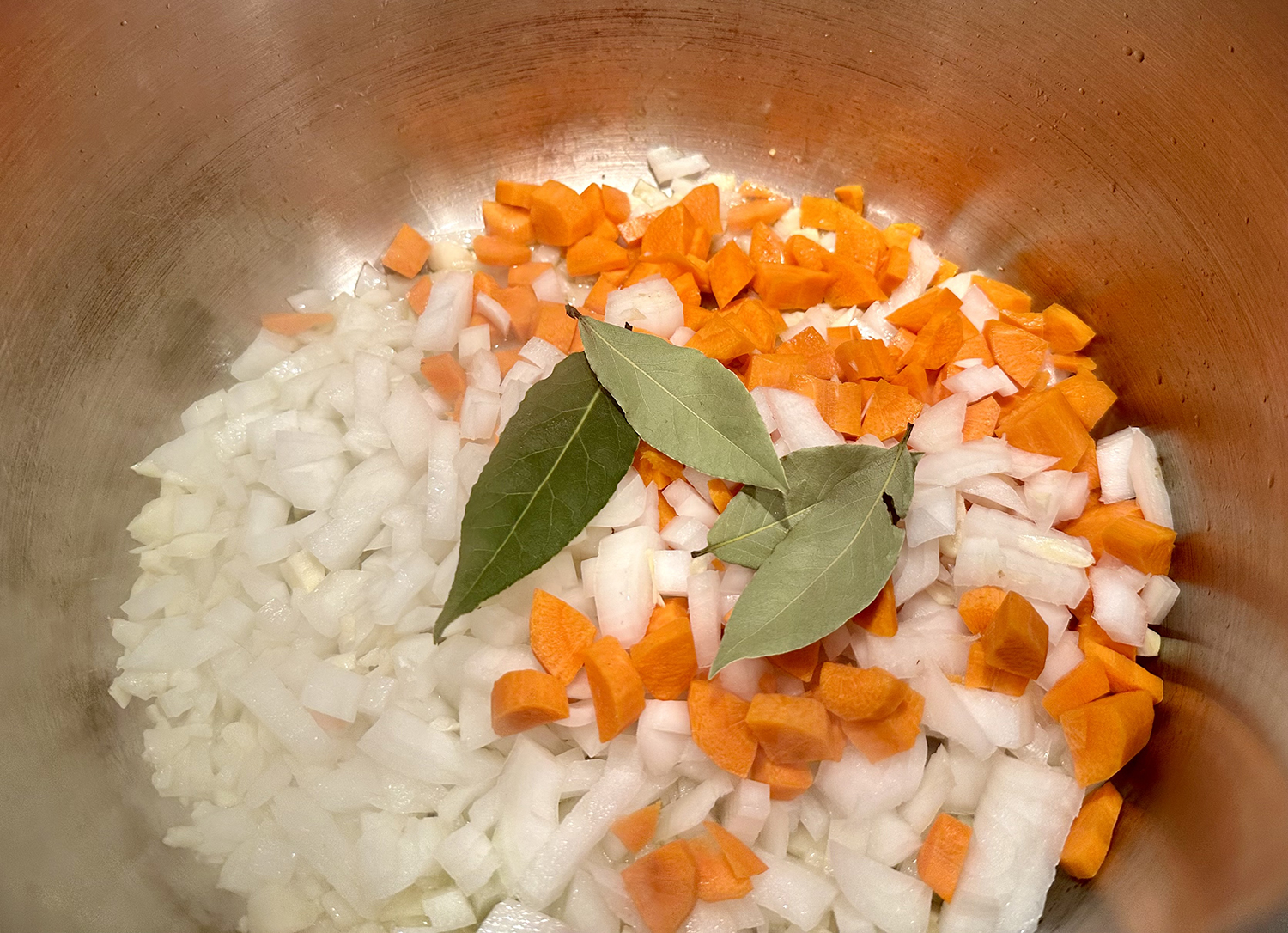
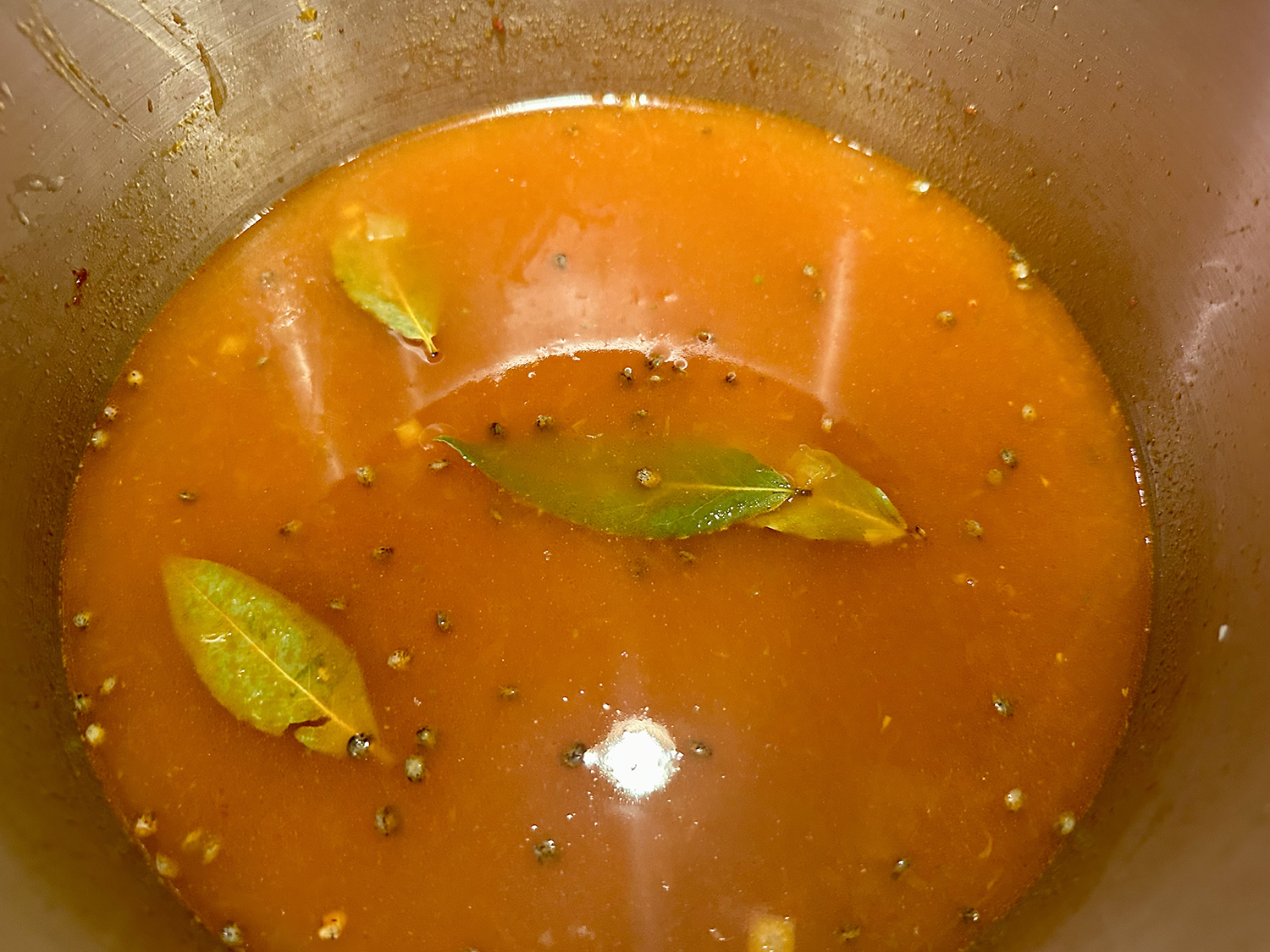
  1. On a 6-quart Instant Pot, select More/High Sauté. Add the oil and heat until shimmering. Add the onion, garlic, carrots, tomato paste, bay and 1 teaspoon salt. Cook, stirring occasionally, until the vegetables begin to brown, about 5 minutes. Stir in the lime zest and juice, barley, lentils and broth, scraping up any browned bits, then distribute in an even layer.
  2. Press Cancel, lock the lid in place and move the pressure valve to Sealing. Select Pressure Cook or Manual; set the pressure level to High. Set the cooking time for 18 minutes. When pressure cooking is complete, quick-release the steam by moving the pressure valve to Venting. Press Cancel, then carefully open the pot.
  3. Remove and discard the bay, then stir in the spinach and cilantro. Taste and season with salt and pepper. Serve drizzled with oil and with lime wedges on the side.

http://www.lynnandruss.com
Recipe by Julia Rackow for Milk Street

Braised Potatoes with Garlic and Bay Leaves

As Chef/author Molly Stevens states “Sharing a meal from one pot, as you often do with a braise, creates a feeling of communality that leads to sharing a congenial meal.”

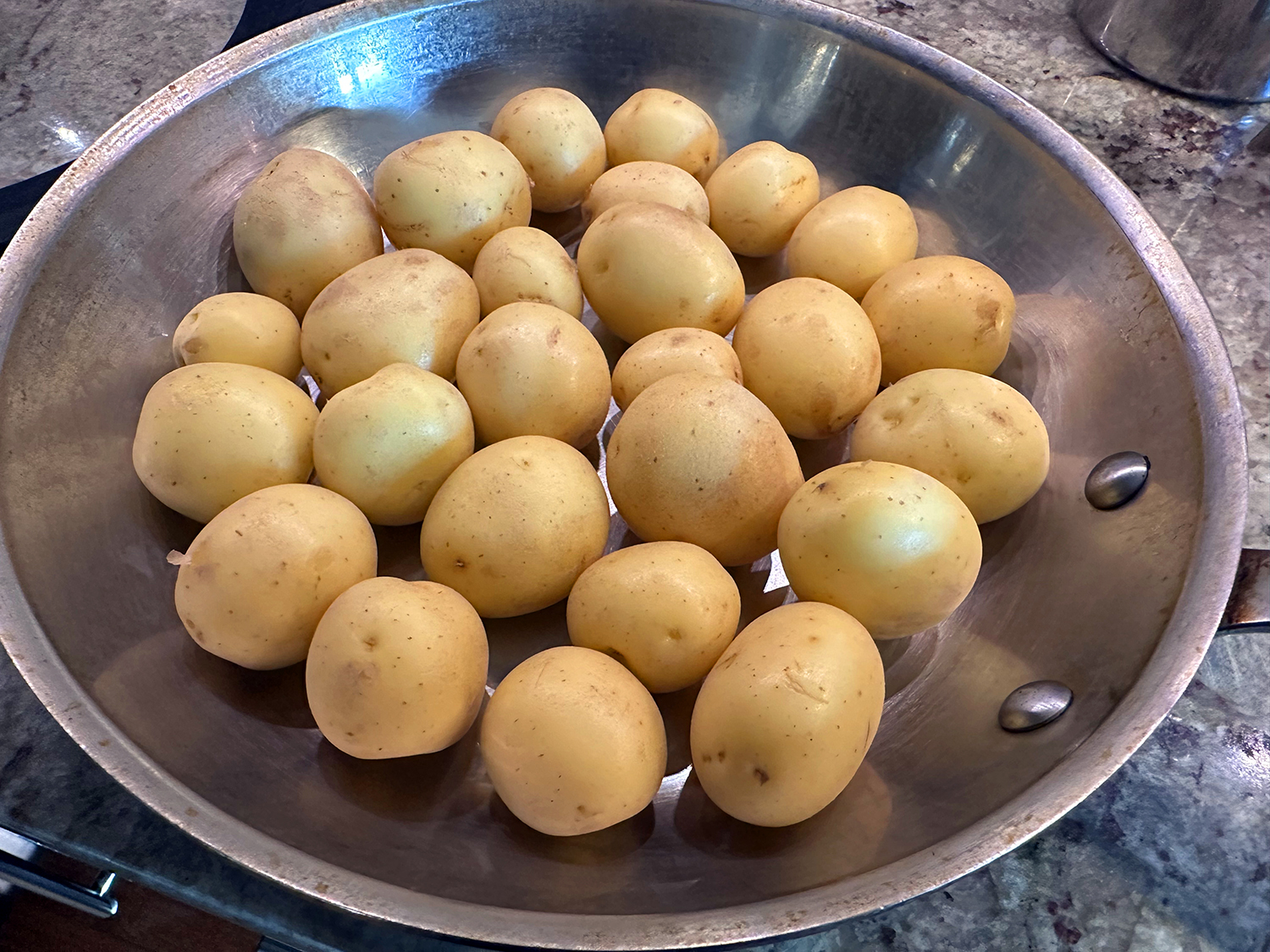
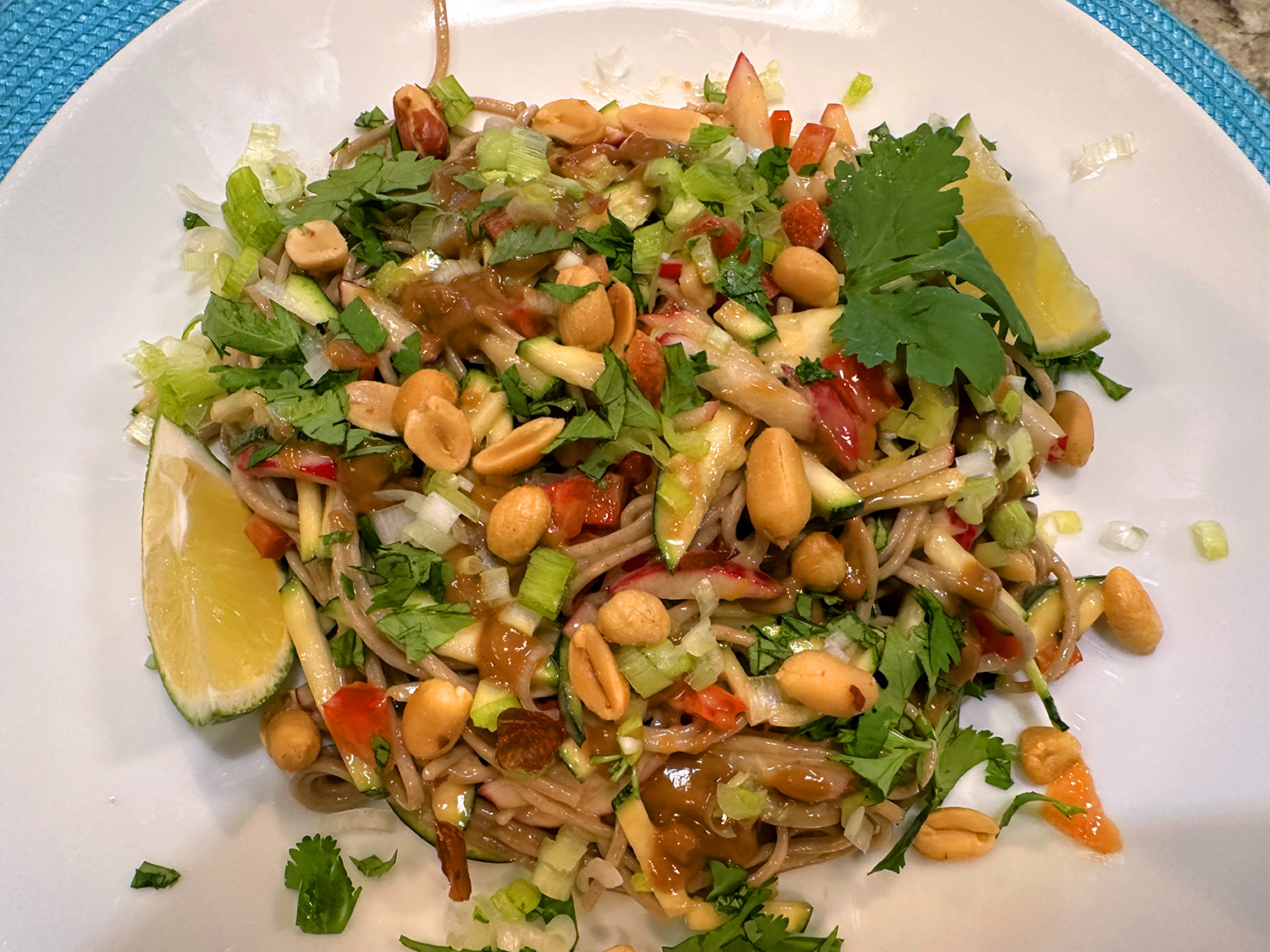
Molly’s side dish is quite simple, and uses only a handful of ingredients. Place the potatoes to fit snuggly in a single layer in your saucepan. Add enough water or stock to come halfway up the potatoes and add a generous drizzle of olive oil, a few whole cloves of garlic, bay leaves, salt and pepper.

The potatoes are covered and braised gently until tender, then the lid is removed. The heat is cranked up to evaporate the liquid. Then shake the pan back and forth so the spuds roll around and get coated in the garlicky-olive oil glaze that’s forming. And voila! a simple yet tasty side dish. These are a keeper for sure.

Feel free to vary the ingredients by changing the herbs (such as rosemary instead of bay leaves), substitute dry white wine for the water or chicken stock, or butter in place of olive oil.

Braised Potatoes with Garlic and Bay Leaves

  • Servings: 4-6
  • Difficulty: easy
  • Print

Ingredients

  • 1 ½ lbs. small red or white potatoes, scrubbed
  • 3 Tbsp. Extra Virgin Olive Oil (or Garlic Olive Oil)
  • 1 cup water or chicken stock
  • 2 bay leaves, fresh if possible
  • 2 to 3 garlic cloves, peeled and bruised
  • Coarse salt and freshly ground pepper

Directions

  1. Evaluate the potatoes: If the potatoes are larger than a golf ball, cut them in half. If you are leaving them whole, check to see if they have thick skins by scraping your thumb nail across the skin. If the skin doesn’t tear, remove a strip of skin around the circumference of each potato with a vegetable peeler – this will allow the flavors of the braising liquid to penetrate the potato better. If the skins are relatively thin, leave them intact.
  2. The braise: Place the potatoes in a saucepan large enough to hold them in a snug single layer without crowding Add the olive oil and pour in enough water or stock to come halfway up the sides of the potatoes. Tear the bay leaves in half and add them along with the garlic. Season with salt and pepper. Cover and bring to a simmer over medium heat. When the water is simmering, lower the heat to medium-low so the liquid simmers gently. Braise, lifting the lid and turning the potatoes with a spoon once halfway through, until the potatoes are just tender when pierced with a thin skewer, about 20 minutes.
  3. The finish: Remove the lid, increase the heat to high, and boil, gently shaking the pan back and forth, until the water evaporates and you can hear the oil sizzle, about 5 minutes. The braised garlic cloves will break down and coat the potatoes as you shake them in the pan. Serve hot.

http://www.lynnandruss.com

Recipe by Molly Stevens

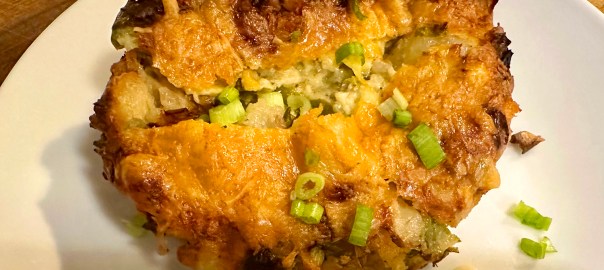
Twice-Baked Potatoes with Roasted Brussels Sprouts and Gouda

My twice-baked potatoes are a requested favorite when hosting family and friends. They consist of russet potatoes, a bit of butter, sour cream, crumbled blue cheese and chives or scallions. I was definitely intrigued when I happened upon this adaptation.

This riff on twice-baked potatoes is inspired by Irish colcannon and French pommes de terre braytoises, which flavors potatoes with Dijon and tangy crème fraîche. This version opts for more readily available sour cream and Brussels sprouts instead of colcannon’s classic cabbage, charring them to deepen their flavor. The dish is great as a side, but it is hearty enough to be served on its own.

We paired our twice-bakeds with aged and grilled sirloin steaks and a medley of freshly picked green beans and cauliflower.

Each stuffed half is considered to be one serving, therefore four potatoes could conceivably feed eight, with an entrée of course. But with only two of us for dinner that day, we decided to individually wrap, put in an airtight freezer bag and freeze 4 of them, which will last up to three months. Twice-baked potatoes take a fair amount of work and time to make, so making them in bulk and freezing makes so much sense.

However, we eliminated the scallions/chives from the potato mixture for the ones earmarked for the freezer. Evidently when frozen, those greens can turn and provide an unwanted taste. Wrap each stuffed potato in a sheet of plastic wrap and then in foil and transfer them to the air-tight freezer bag and label it with the date before freezing. 
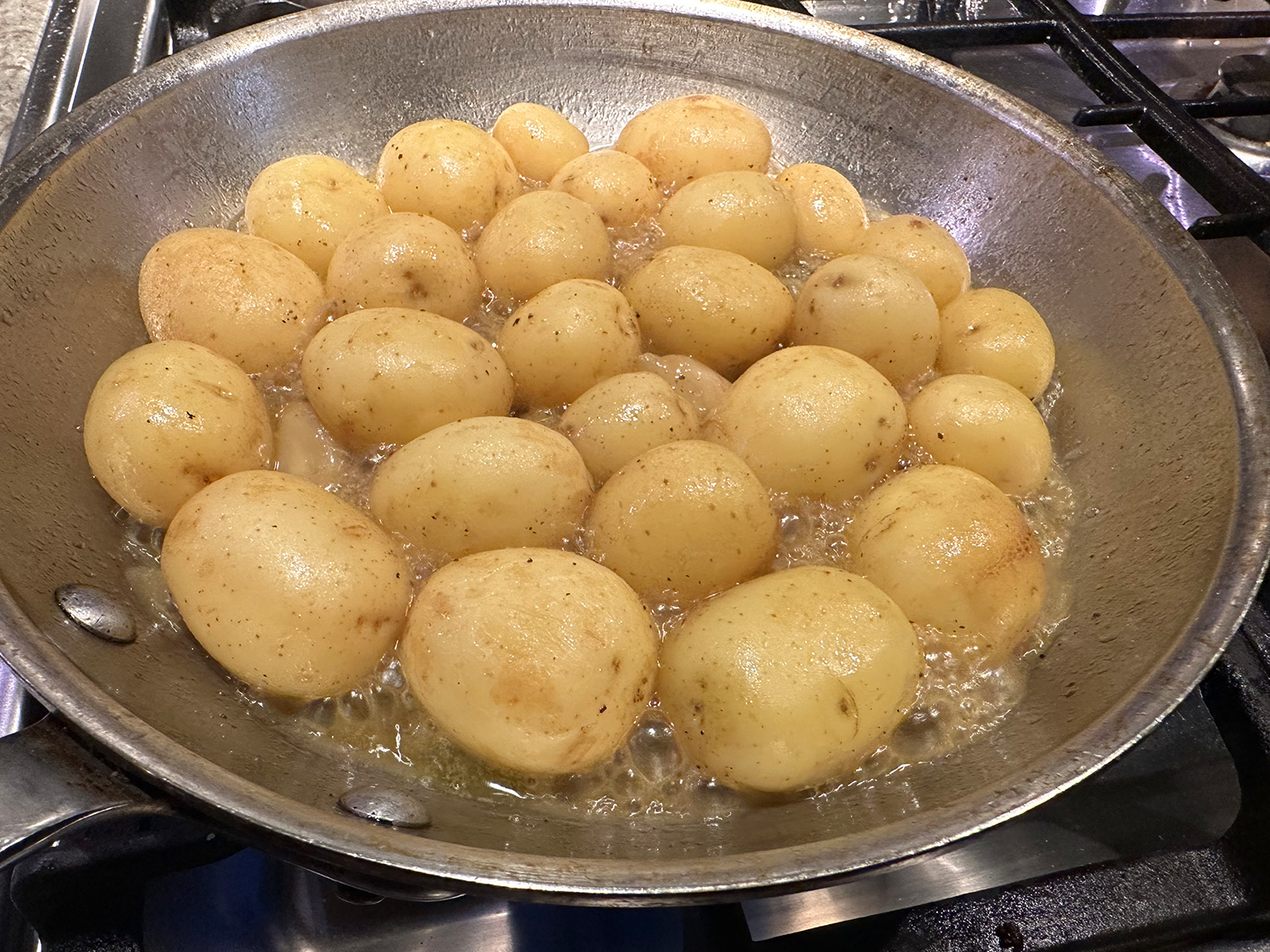
Baking instructions for thawed potatoes: Unwrap the potatoes and place in a baking dish or on a baking sheet. Sprinkle the tops of the potatoes with cheese. Bake potatoes at 425°F for 15 to 20 minutes, until the potatoes are hot and the cheese has melted. Add chopped chives or scallions as a garnish.

Twice-Baked Potatoes with Roasted Brussels Sprouts and Gouda

  • Servings: 4-8
  • Difficulty: easy
  • Print

Ingredients

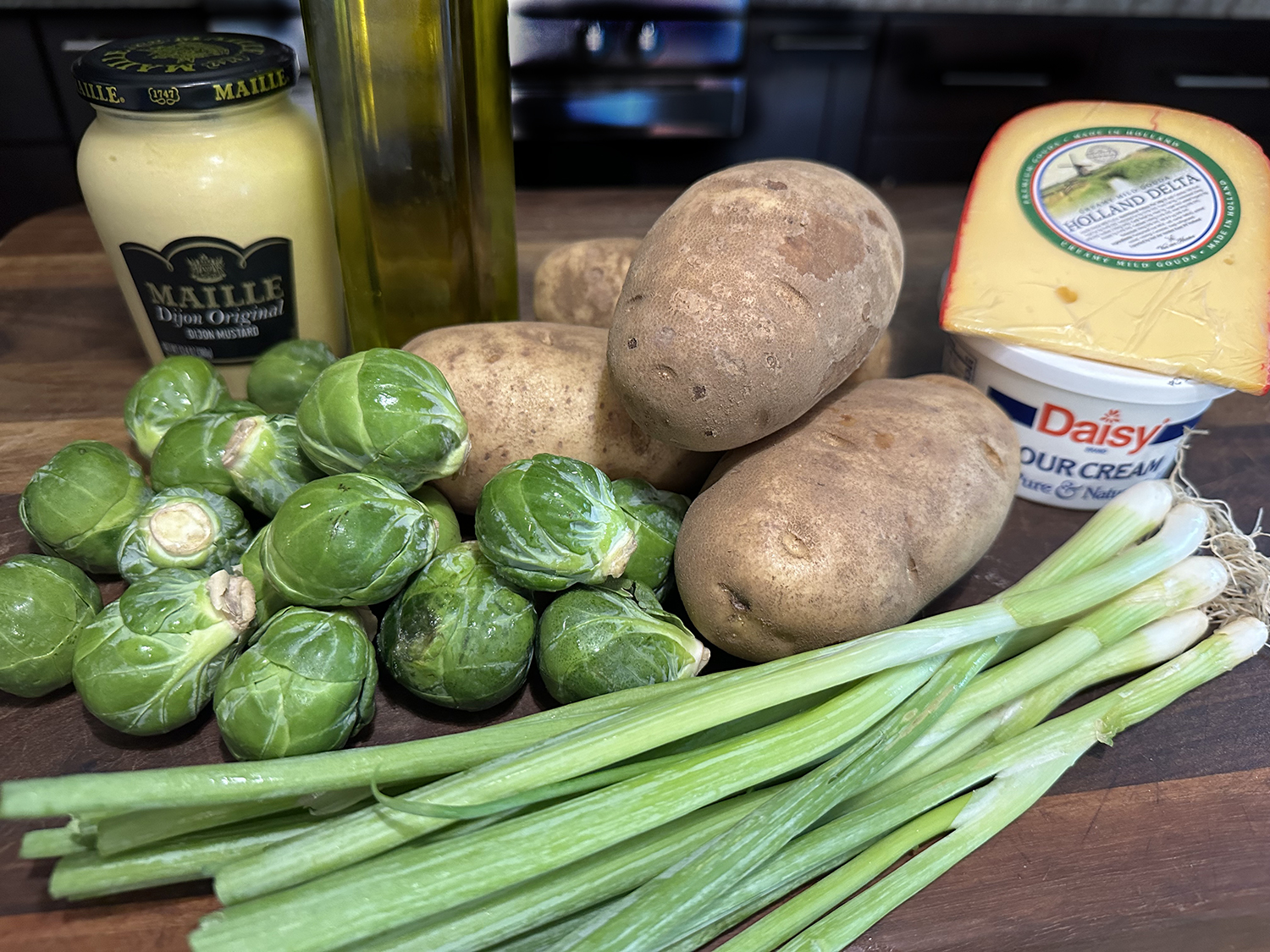
  • 3 lbs. (3 or 4 medium) russet potatoes, scrubbed
  • 2 Tbsp. extra-virgin olive oil, divided
  • Kosher salt and ground black pepper
  • 12 oz. Brussels sprouts, trimmed and halved lengthwise
  • 8 oz. Gouda cheese OR smoked Gouda cheese, shredded (2 cups)
  • 3 Tbsp. Dijon mustard
  • 1/3 cup sour cream
  • 1 bunch scallions, thinly sliced

Directions

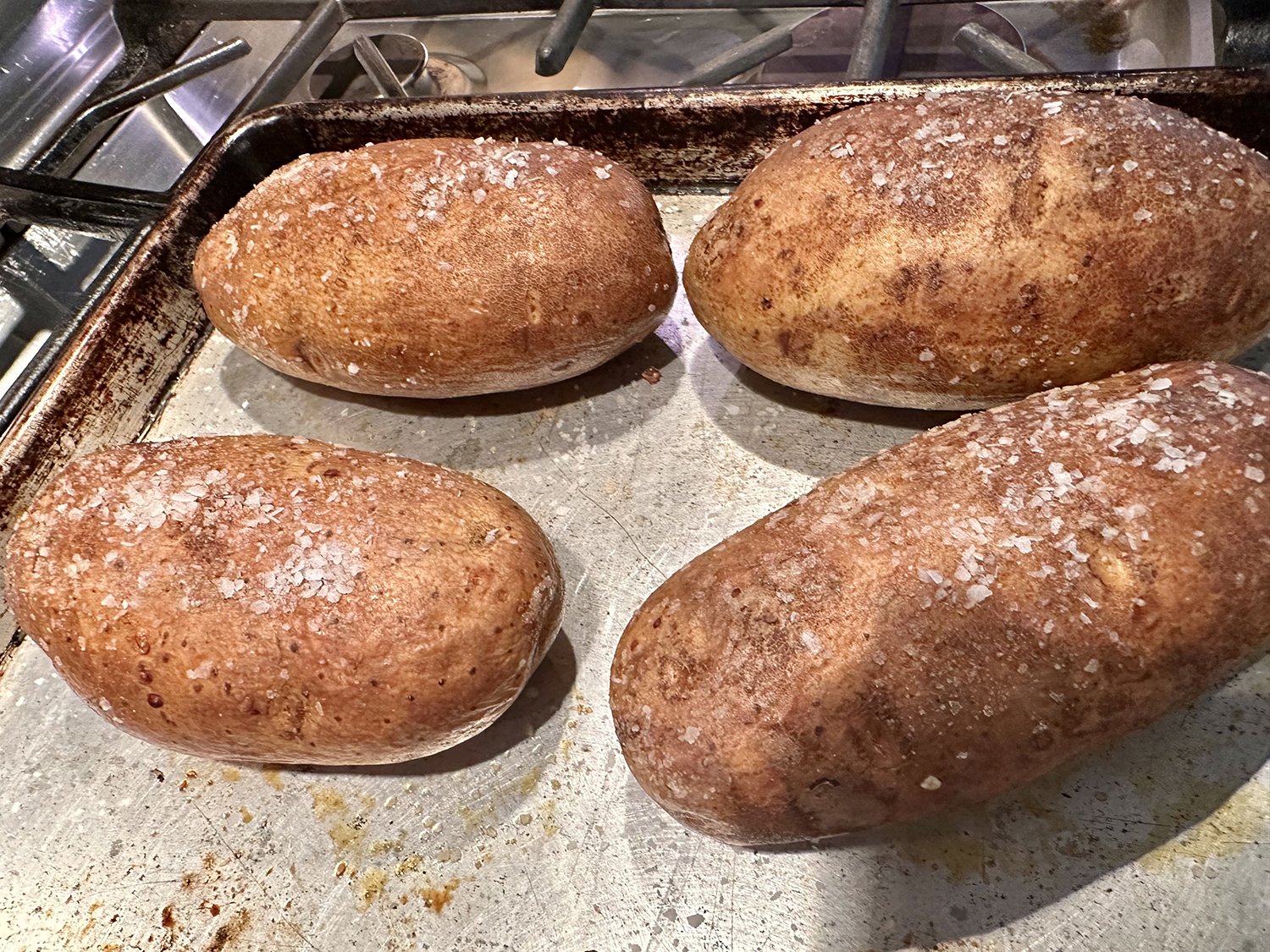
  1. Heat the oven to 400°F with a rack in the middle position. Coat the potatoes on all sides with 1 tablespoon of the oil and sprinkle with 1 teaspoon salt. Place on one side of a rimmed baking sheet.
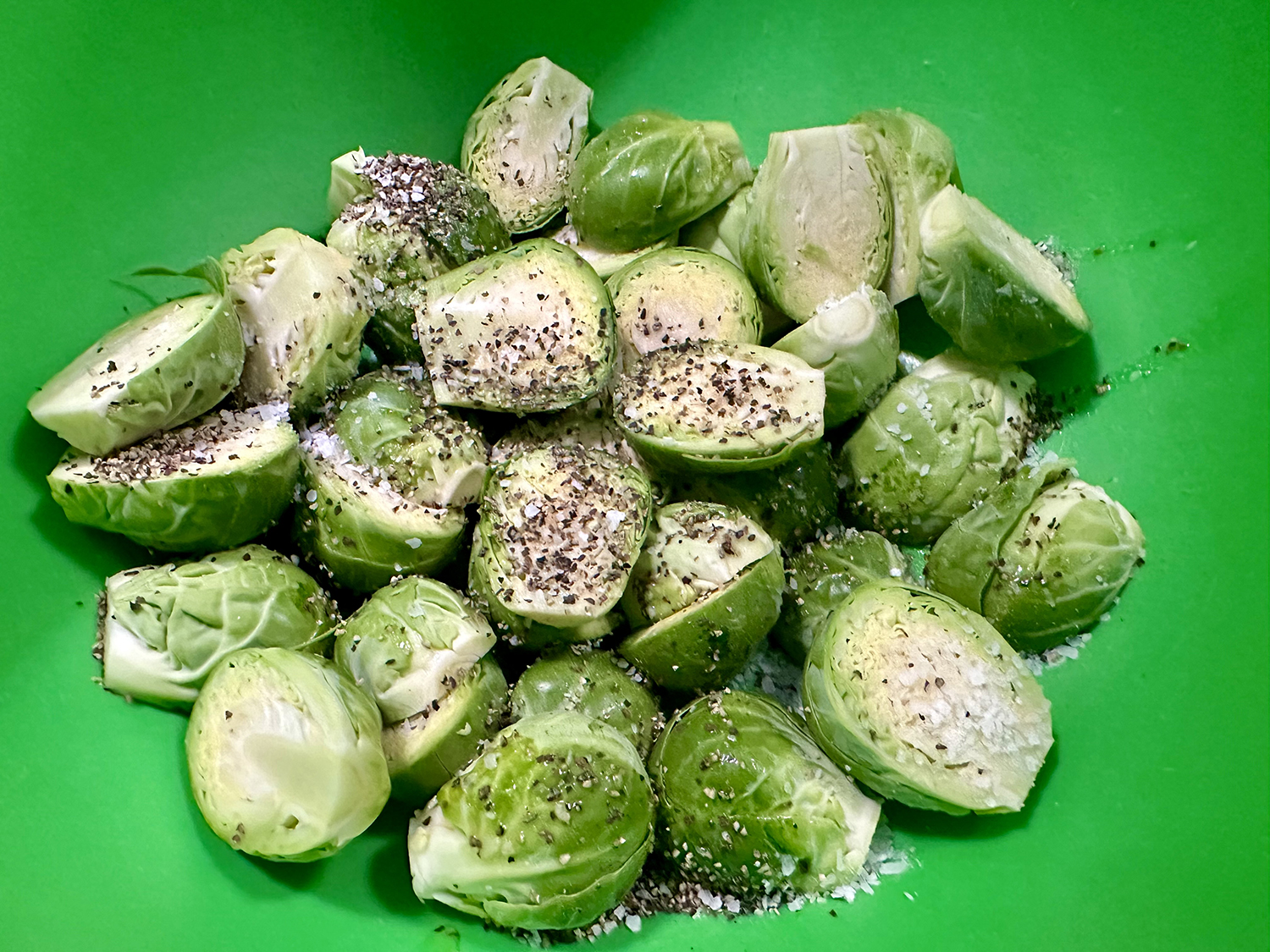
  2. In a medium bowl, toss the sprouts with the remaining 1 tablespoon oil and ½ teaspoon each salt and pepper. Arrange the sprouts cut side down on the other side of the baking sheet; reserve the bowl. Roast the vegetables until the sprouts are charred, about 20 minutes.
  3. Transfer the sprouts to a cutting board. Continue roasting the potatoes until a skewer inserted into the centers meets no resistance, about another 40 minutes. Set aside to cool for 20 to 30 minutes; leave the oven on.
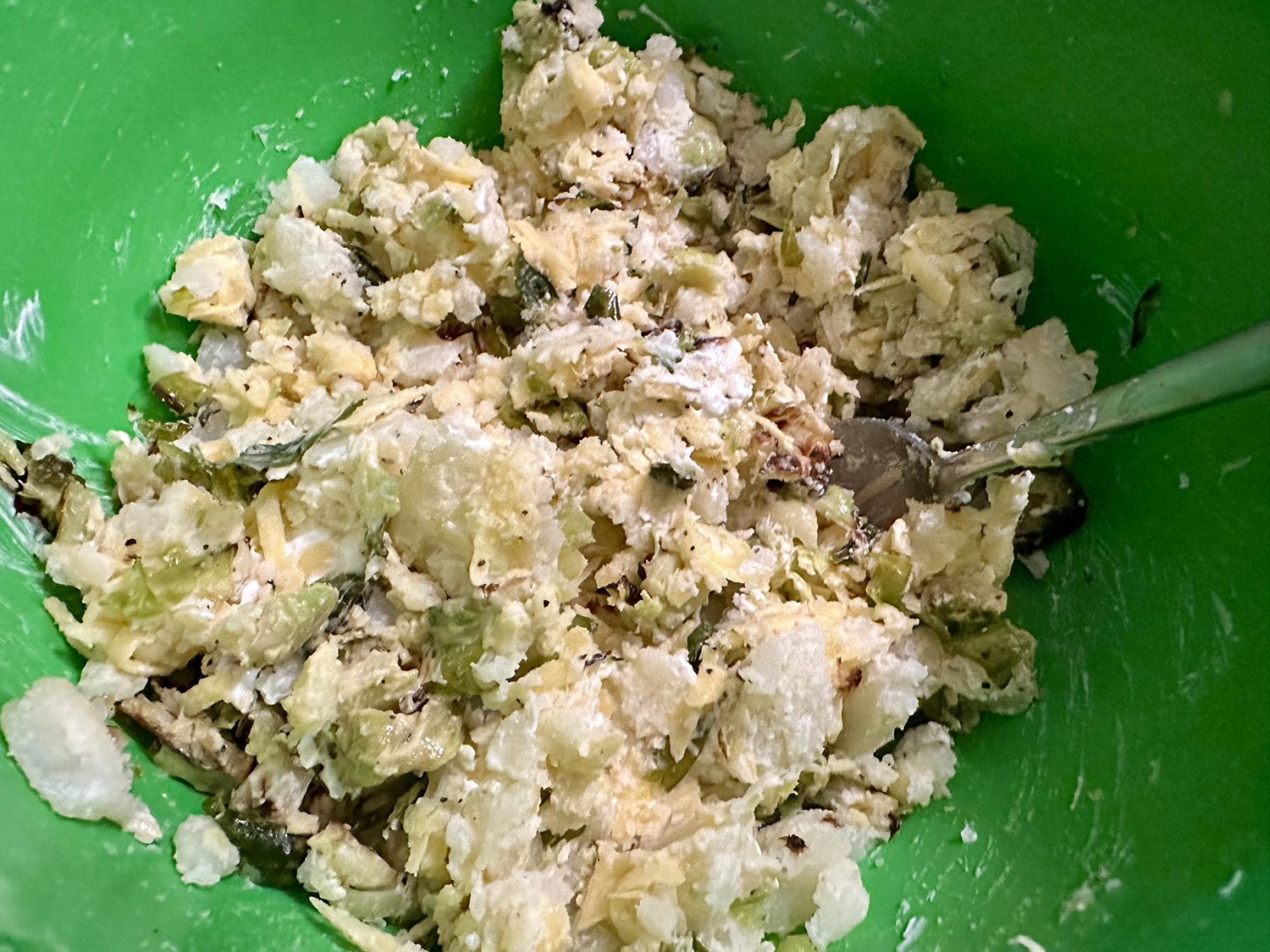
  4. Roughly chop the sprouts and return them to the bowl. Halve the potatoes lengthwise. Scoop the flesh from the halves into the bowl; return the skins, hollowed side up, to the baking sheet.
  5. To the bowl, add the cheese, mustard, sour cream and most of the scallions. Fold to combine, then taste and season with salt and pepper. Use the mixture to fill the skins. Bake until golden brown, about 30 minutes. Serve sprinkled with the remaining scallions.
  6. Any leftover spuds should be cooled completely, individually wrapped, stored in a freezer bag, and frozen for up to 3 months.

http://www.lynnandruss.com

Recipe by Hisham Ali Hassan for Milk Street

Crispy Artichoke Pasta

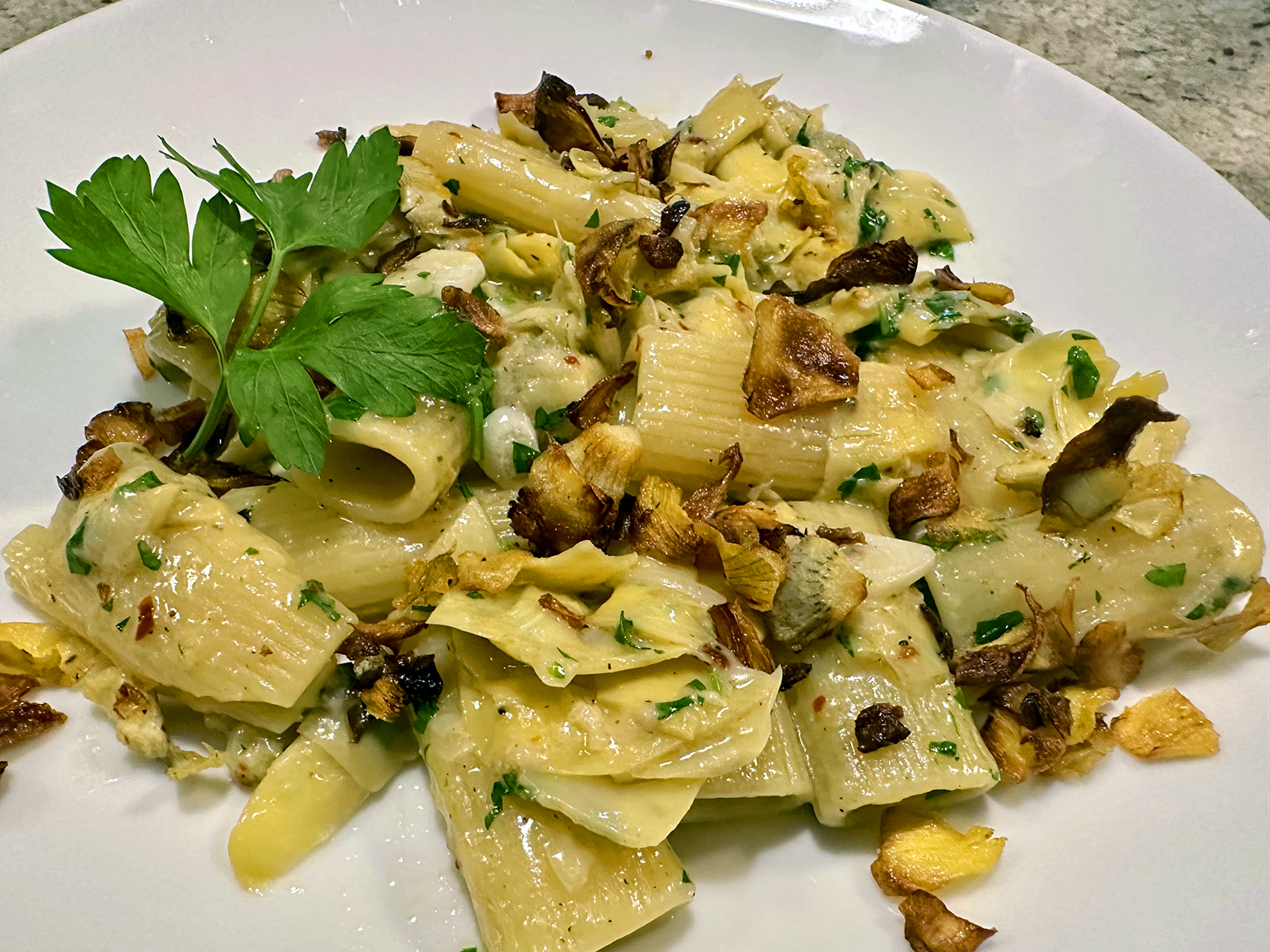
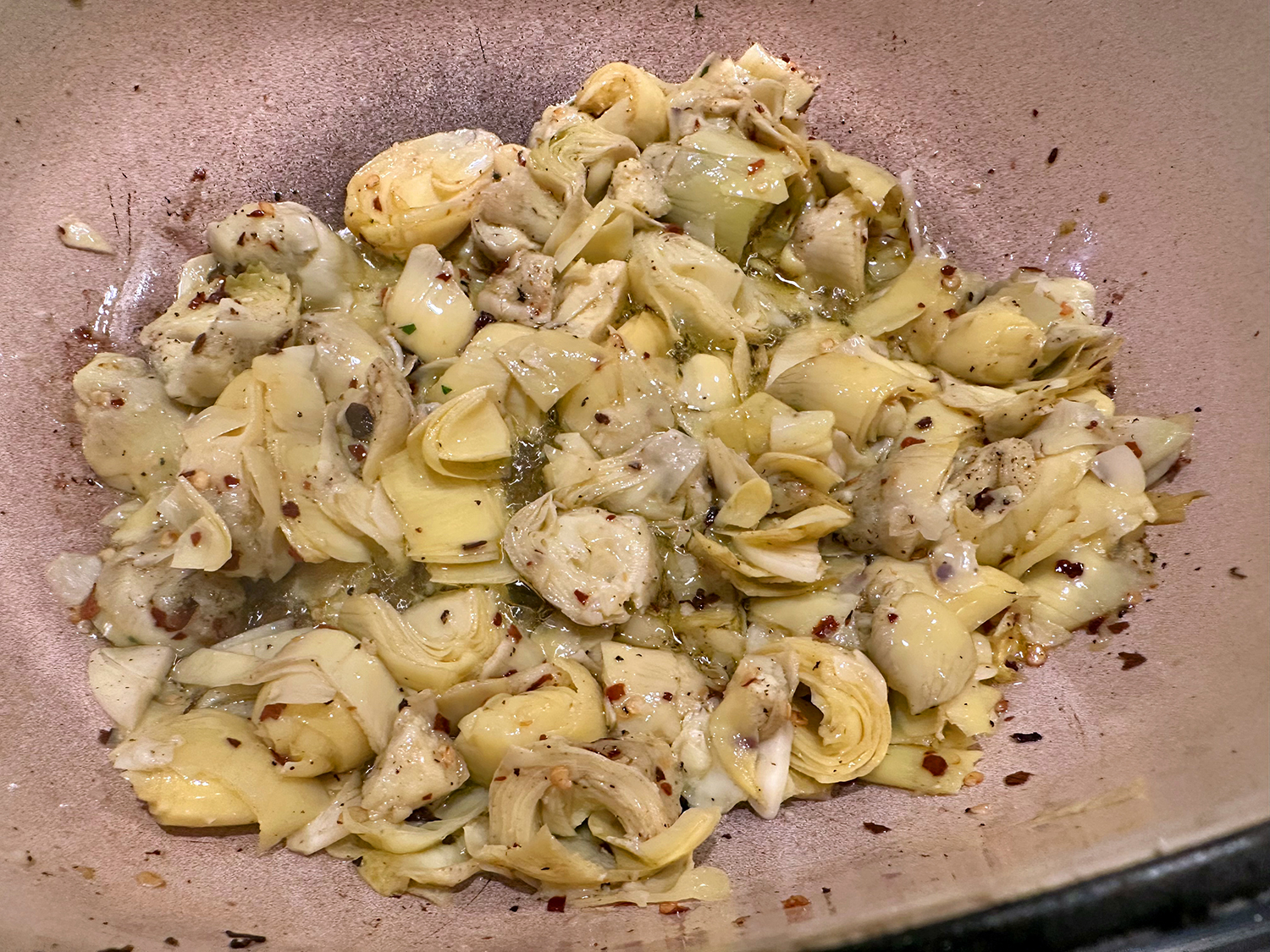
Quick, easy, tasty and filling—what’s not to like about that? Fast enough for a weeknight mad dash to dinner, this pantry pasta tastes more like a restaurant dish with its silky, flavorful sauce. The recipe uses canned artichokes which are brought to the peak of their crispy potential. The key is to remove as much water from the artichokes as possible by pressing them gently with paper towels (as you would tofu).

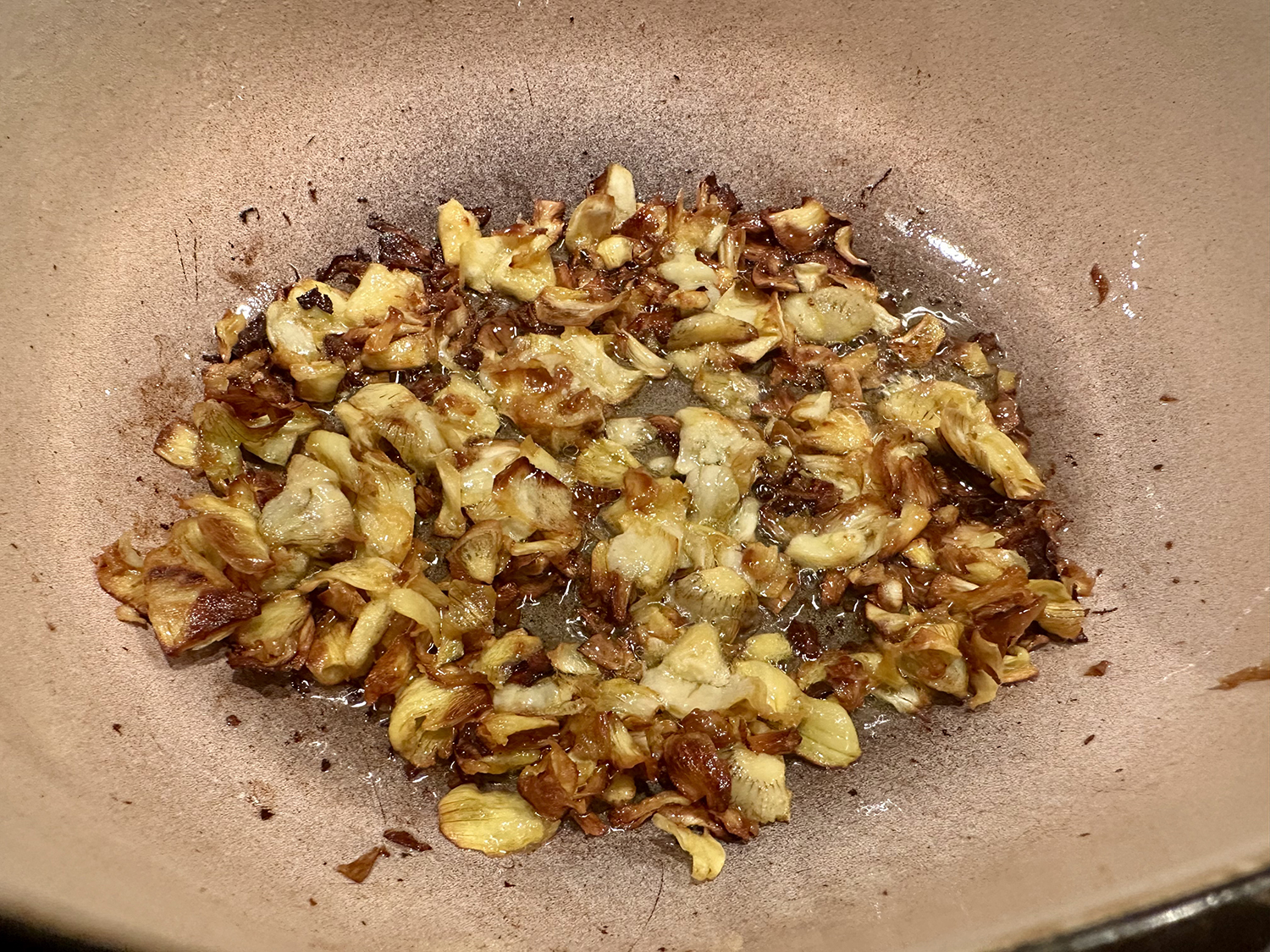
Some of the artichokes are fried in olive oil until shatteringly crisp, then the rest cook gently in more oil, along with garlic and chile flakes, to soften. They’re all mixed with pasta and Parmesan into a stunning weeknight meal. 

While the original recipe calls for one pound* of dried pasta, we cut that in half to 8 ounces, but kept the other ingredients as they were. However, using less rigatoni facilitated an adjustment for the amount of water. Save at least a cup of the pasta water before draining and introduce it bit-by-bit to the entire mixture until you get a silky consistency.

If you want to amp up the dish, you could add in some decent jarred tuna, crispy pancetta, bacon or prosciutto.

Crispy Artichoke Pasta

  • Servings: 4
  • Difficulty: easy
  • Print

Ingredients

  • Salt and black pepper
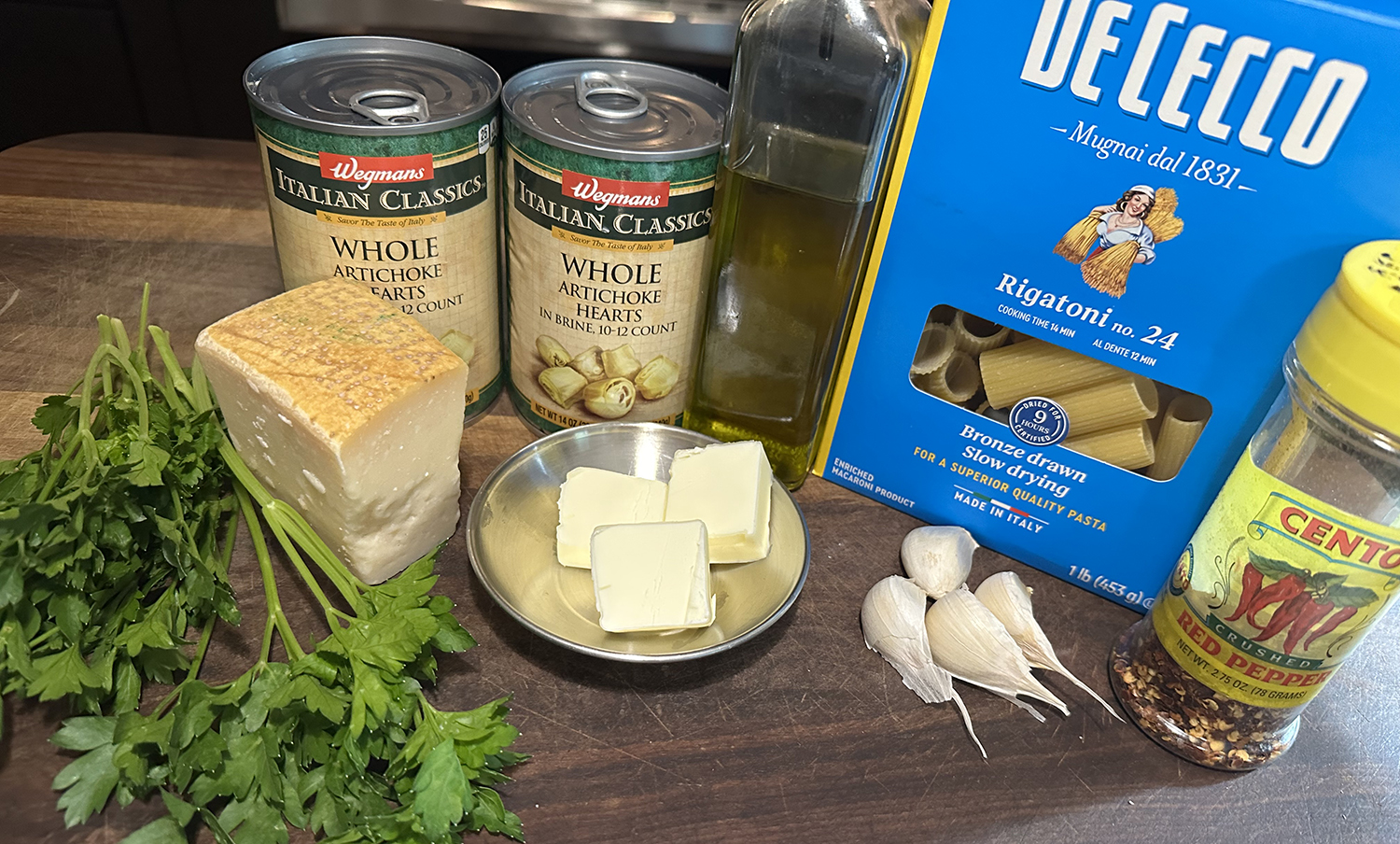
  • 1 lb. short cut pasta*, such as rigatoni or gemelli
  • 2 14-oz. cans whole or quartered artichoke hearts
  • ½ cup extra-virgin olive oil
  • 4 garlic cloves, thinly sliced
  • 1 tsp. crushed red pepper flakes
  • 3 Tbsp. unsalted butter, cut into small pieces
  • ½ cup finely grated Parmesan, plus more for serving
  • ⅓ cup finely chopped parsley

Directions

  1. Bring a large pot of water to a boil, then season generously with salt. Cook the pasta until a bit firmer than al dente, about 2 fewer minutes than listed on the package. (It’ll finish cooking in the sauce.) Reserve 2 cups of pasta water, then drain.
  2. While the water comes to a boil, drain the artichokes and place on a clean kitchen towel (or paper towels). Cover with another kitchen towel (or paper towels), and gently press down to remove the excess water. Give the artichokes a rough chop.
  3. Line a plate with paper towels. Set another large pot over medium-high heat, and pour in ¼ cup oil. When the oil is hot, after 1 to 2 minutes, add one-third of the artichokes and cook, stirring occasionally, until deeply brown and crisp in most spots, 3 to 5 minutes. Using a slotted spoon, scoop out the artichokes, transfer to the lined plate and season with salt.
  4. Adjust heat to medium, add the remaining ¼ cup oil and the remaining artichokes to the pot, along with the garlic and red pepper. Season with salt and pepper and cook, stirring occasionally, until the garlic begins to soften and everything smells very good, 2 to 3 minutes.
  5. Add the drained pasta and 1½ cups of the pasta water and bring to a simmer, still over medium heat. (This may seem like a lot of liquid, but it will thicken when the remaining ingredients are added.) Add the butter and sprinkle in the Parmesan and continue to cook, tossing vigorously, until the cheese is melted and the sauce is creamy and clings to the pasta, 2 to 3 minutes. If the sauce looks too thick, add more pasta water, 1 to 2 tablespoons at a time. Turn off the heat and stir in the parsley. Season to taste with salt and pepper.
  6. Divide among bowls or plates. Sprinkle the reserved crispy artichokes and more Parmesan on top before serving.

http://www.lynnandruss.com

Adapted from a recipe by Andy Baraghani for NYTimes Cooking

Tomato-Summer Squash Tart with Za’atar

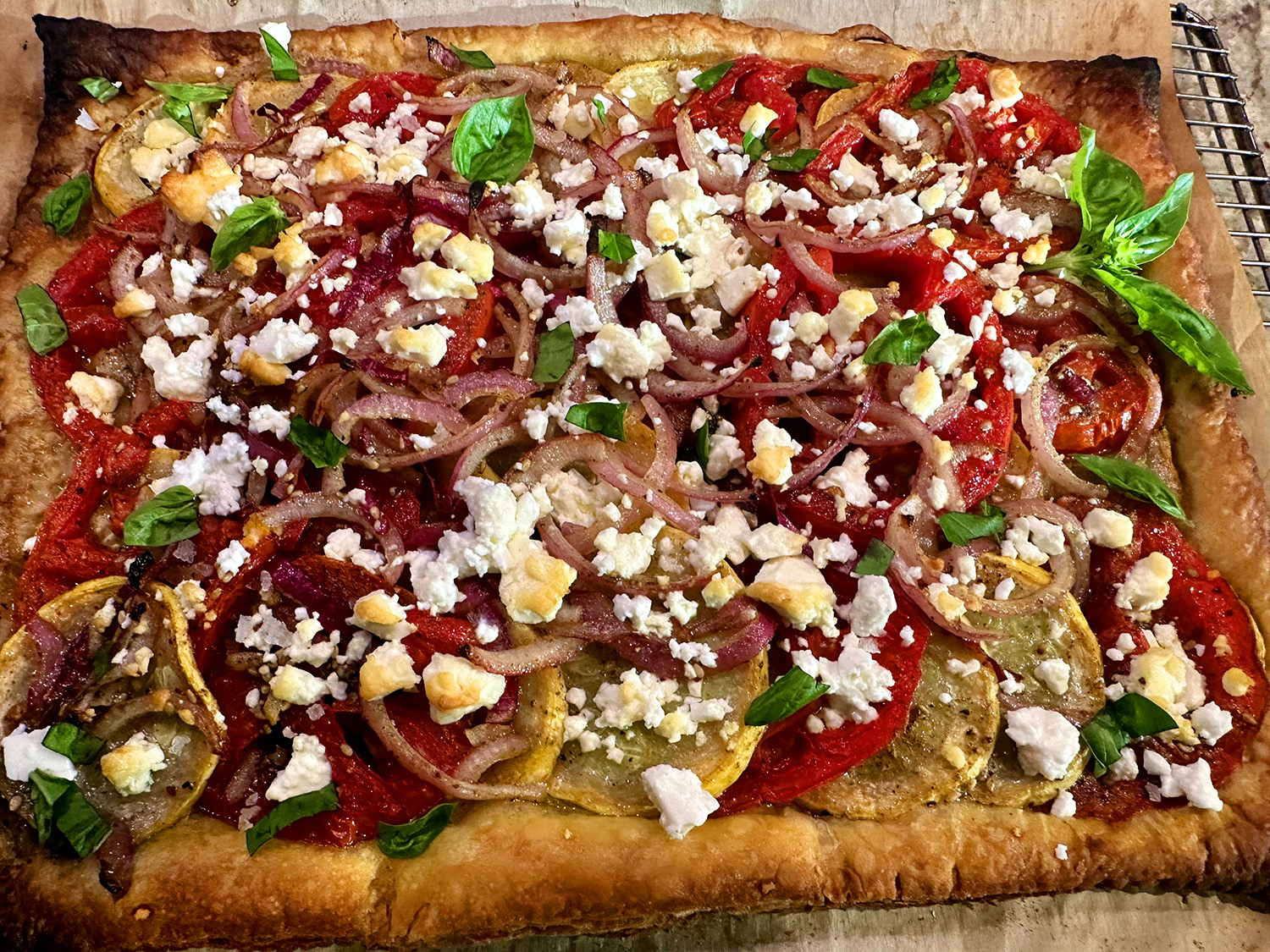
For many of us, August is the time that a lot of our vegetable/herb gardens are abundant with their bounty. For instance, tomatoes, zucchini and basil are three popular homegrown favorites and this tart recipe takes full advantage of their product. No soggy summer tart here!

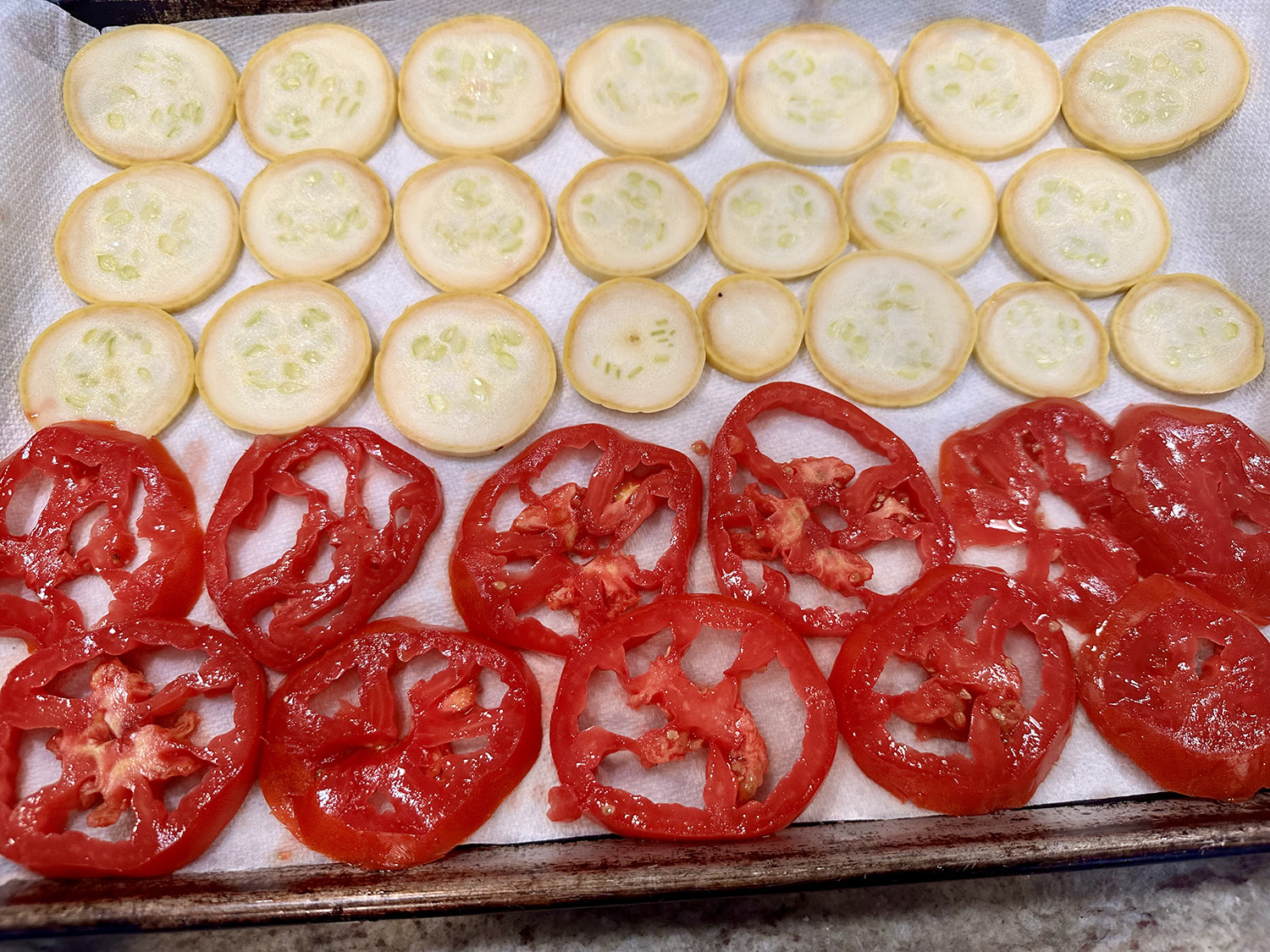
Frozen puff pastry makes this elegant and impressive savory tart easy to pull together. Za’atar, a Middle Eastern herb, seed and spice blend, is used to add a perfect flavor accent to the sweet, summery tomatoes and zucchini. To keep these high-moisture vegetables from releasing water during cooking—and leaving the pastry soggy—salt the slices for 20 minutes or so to draw out excess juices while the oven heats.

The bonus is vegetables with more concentrated flavor that are nicely seasoned. As for the puff pastry, Dufour is preferred because it is made with butter and is of a size that needs only minimal rolling after the sheet is unfolded. Pepperidge Farm puff pastry works, too, though it lacks buttery richness. You will need only one sheet from the 17.3-ounce box (which contains two sheets), and it will need to be rolled out into a rectangle roughly 10 by 14 inches. Serve the tart warm or at room temperature.

Now the original recipe from Milk Street indicates it feeds 6 to 8. No way José! At best you’ll get four 5″ x 7″ slices, and paired with a side salad, makes a complete meal. Yes, if you are serving it as an appetizer, you could cut the tart up into 16 pieces…

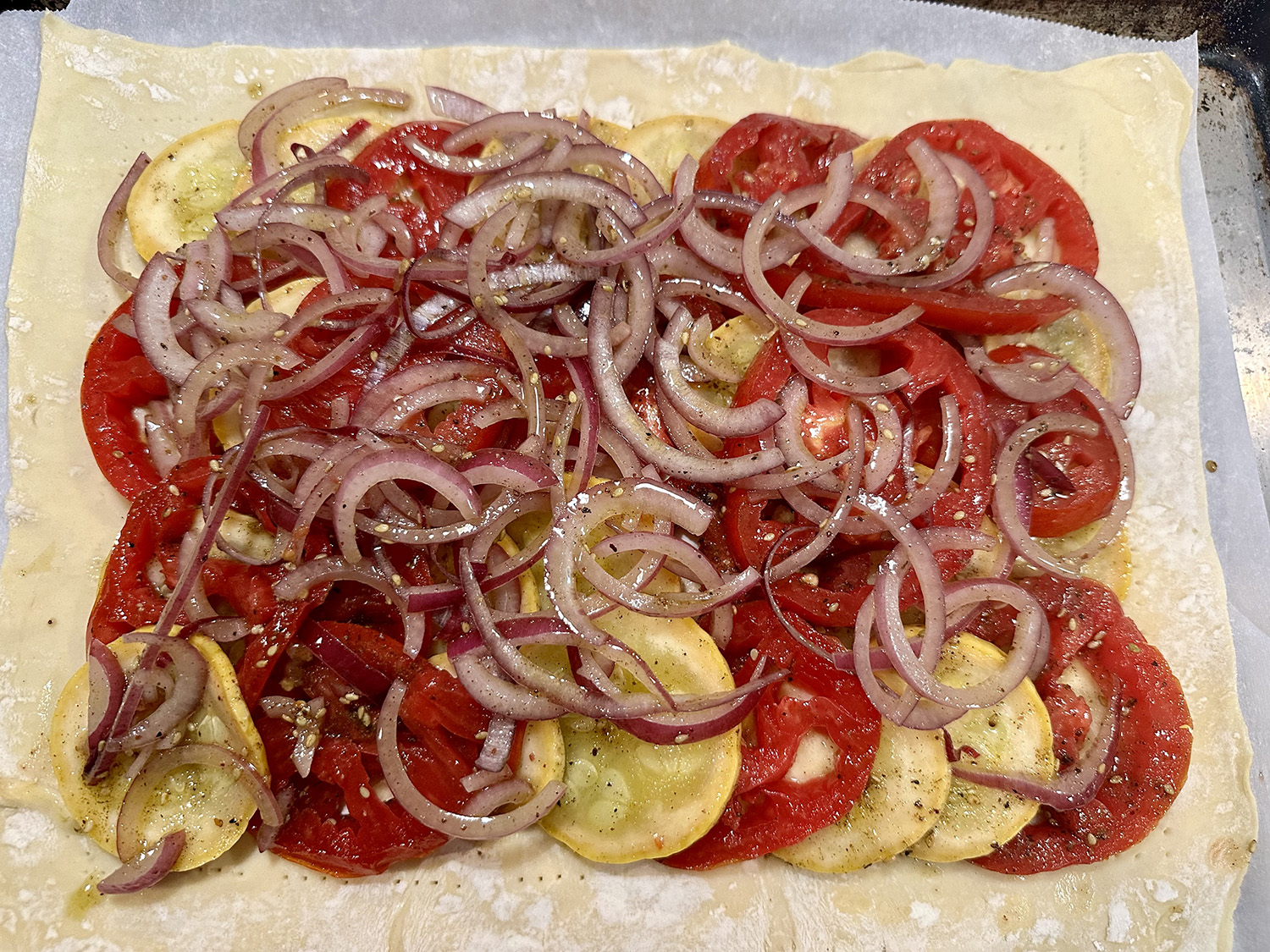
Don’t forget to leave a 1-inch border when poking holes in the rolled-out pastry. The holes help prevent too much lift in the area covered by the veggies while the border bakes up into a light, crisp crust around them.

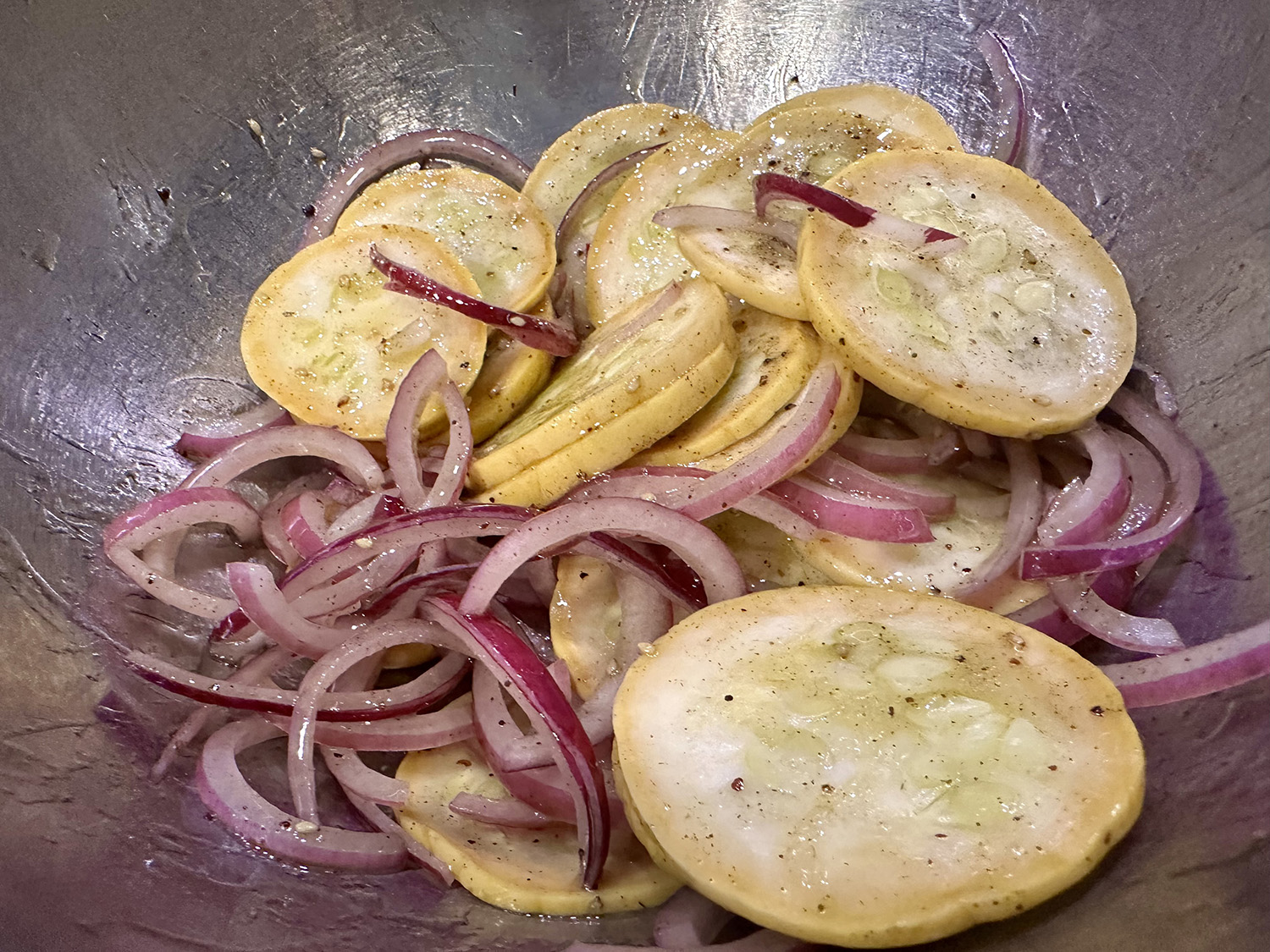
We made one noticeable change in the process. Since we were using large tomatoes, and not plum tomatoes, we seeded them first before salting. In a large bowl, we mixed the summer squash and onion with oil and za’atar before folding in the tomatoes. This helped to prevent the tomato slices from being torn apart.

Tomato-Summer Squash Tart with Za'atar

  • Servings: 4-8
  • Difficulty: easy
  • Print

Ingredients

  • 4 ripe medium plum tomatoes, cored and sliced into ¼-inch rounds
  • 1 medium (8 oz.) yellow summer squash OR zucchini, sliced into ¼-inch rounds
  • Kosher salt and ground black pepper
  • 1/4 cup extra-virgin olive oil, plus more to serve
  • 1 Tbsp. za’atar
  • 1/2 small red onion, thinly sliced
  • 14 oz. package Dufour frozen puff pastry, thawed but still cool, OR 1 sheet Pepperidge Farm puff pastry, thawed but still cool
  • All-purpose flour, for dusting
  • 2 oz. feta cheese, crumbled (½ cup)

Directions

  1. Line a rimmed baking sheet with paper towels. Lay the tomato and squash slices in a single layer on the paper towels and sprinkle with ¼ teaspoon salt. Flip the slices and sprinkle the second sides with another ¼ teaspoon salt. Let stand for 20 minutes. Meanwhile, heat the oven to 450°F with a rack in the lowest position.
  2. Pat the tomatoes and squash dry. In a medium bowl, toss the slices with the oil, za’atar, onion and ¼ teaspoon pepper. (You may want to fold in the tomato slices after mixing the other bowl ingredients.) Remove and discard the paper towels from the baking sheet.
  3. Unfold the puff pastry onto a sheet of kitchen parchment that will fit in the baking sheet. Using a rolling pin, roll the pastry into a 10-by-14-inch rectangle, lightly dusting with flour if needed, then transfer the parchment with the pastry to the baking sheet.
  4. With a fork, poke holes all over the pastry, leaving a 1-inch border around the edges. Arrange the vegetables on the pastry, shingling the tomatoes and squash and avoiding the edges, then sprinkle with half of the feta. Bake until the pastry is golden brown, 15 to 20 minutes.
  5. Using the parchment, slide the tart onto a wire rack. Top with the remaining feta and a drizzle of oil. Cool for about 30 minutes, then cut into portions.
  6. Optional garnish: Chopped fresh mint or basil OR flaky sea salt OR both

http://www.lynnandruss.com
Original recipe by Rose Hattabaugh for Milk Street

Taverna Salad

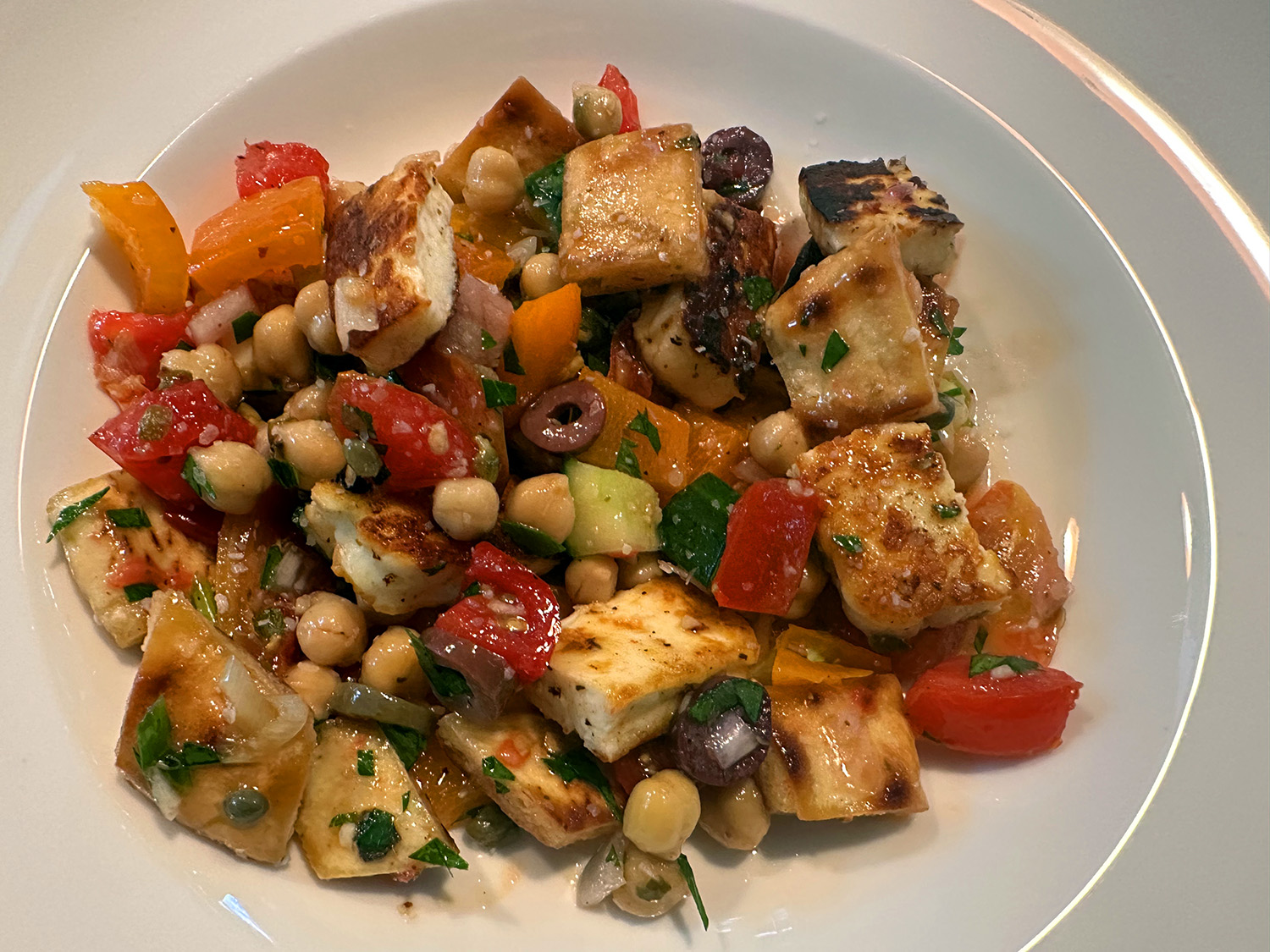
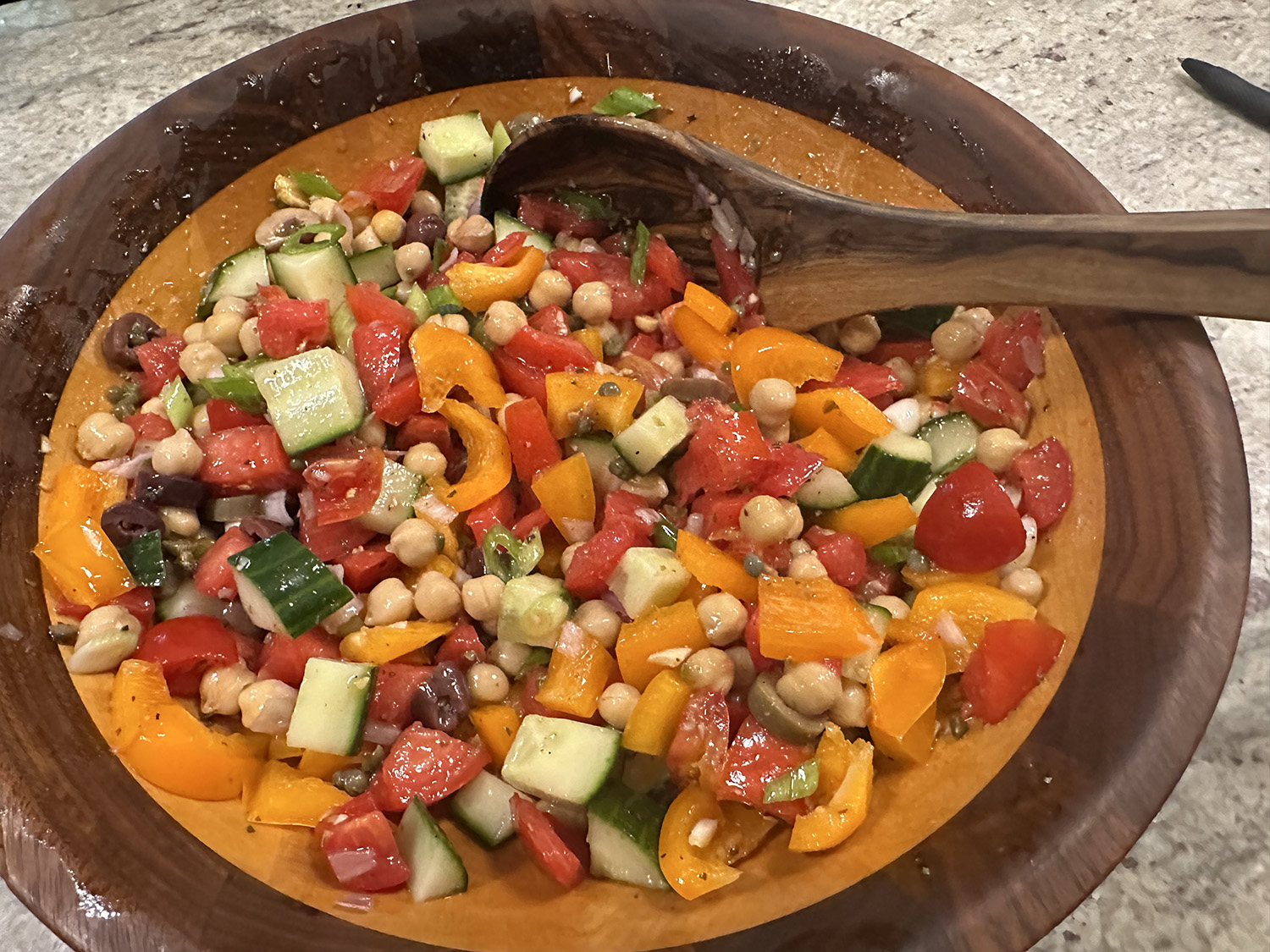
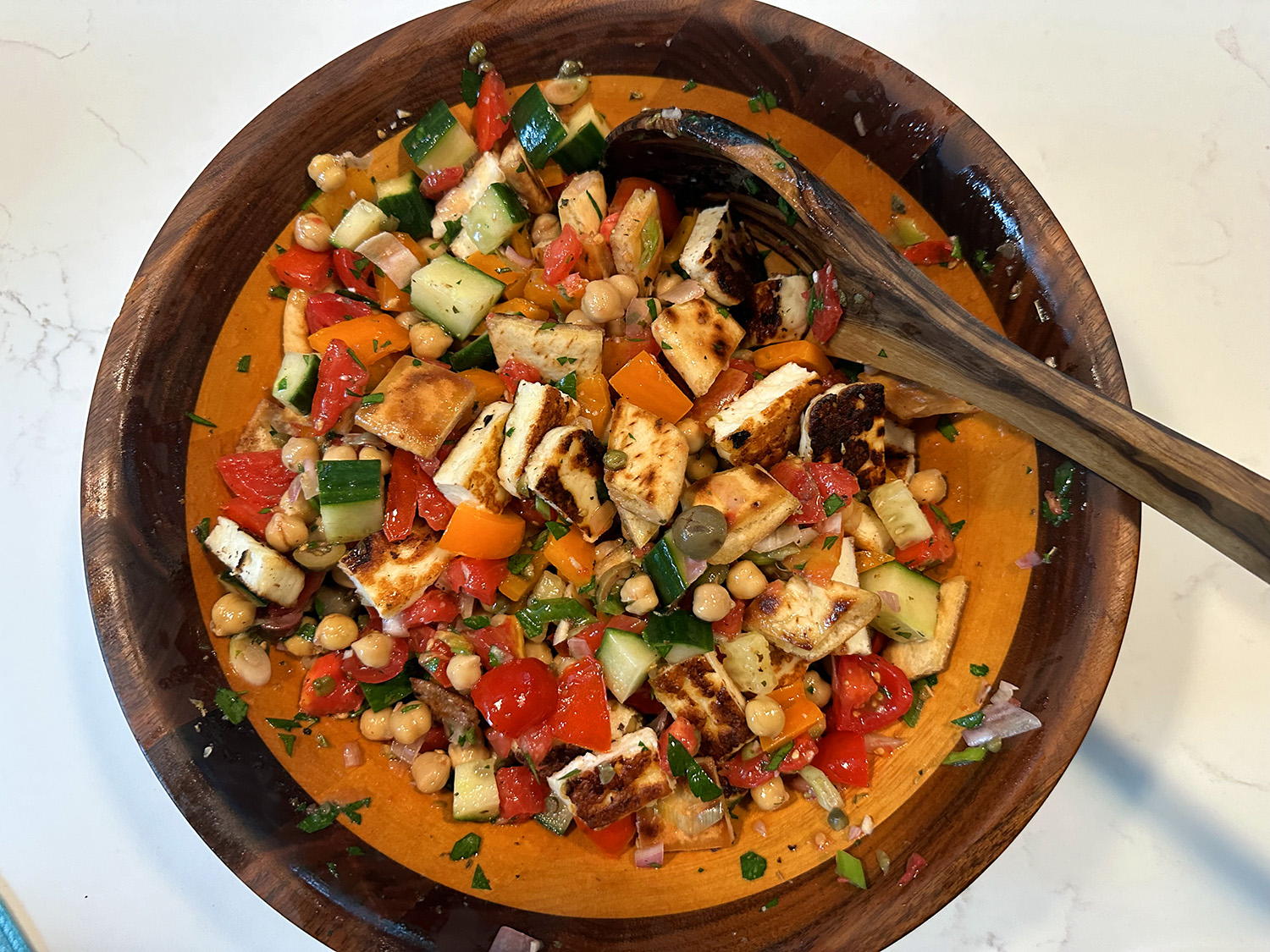
This colorful, meal-of-a-salad is inspired by two dishes creating a mash-up of a classic Greek salad (also known as horiatiki) and fattoush, the Lebanese salad of vegetables and pieces of fried pita. The ingredient list may look long at first, but each ingredient contributes to the harmony of the salad: bell pepper and cucumbers for crunch; shallot, olives and capers for a bit of tang; chopped tomatoes for sweetness.

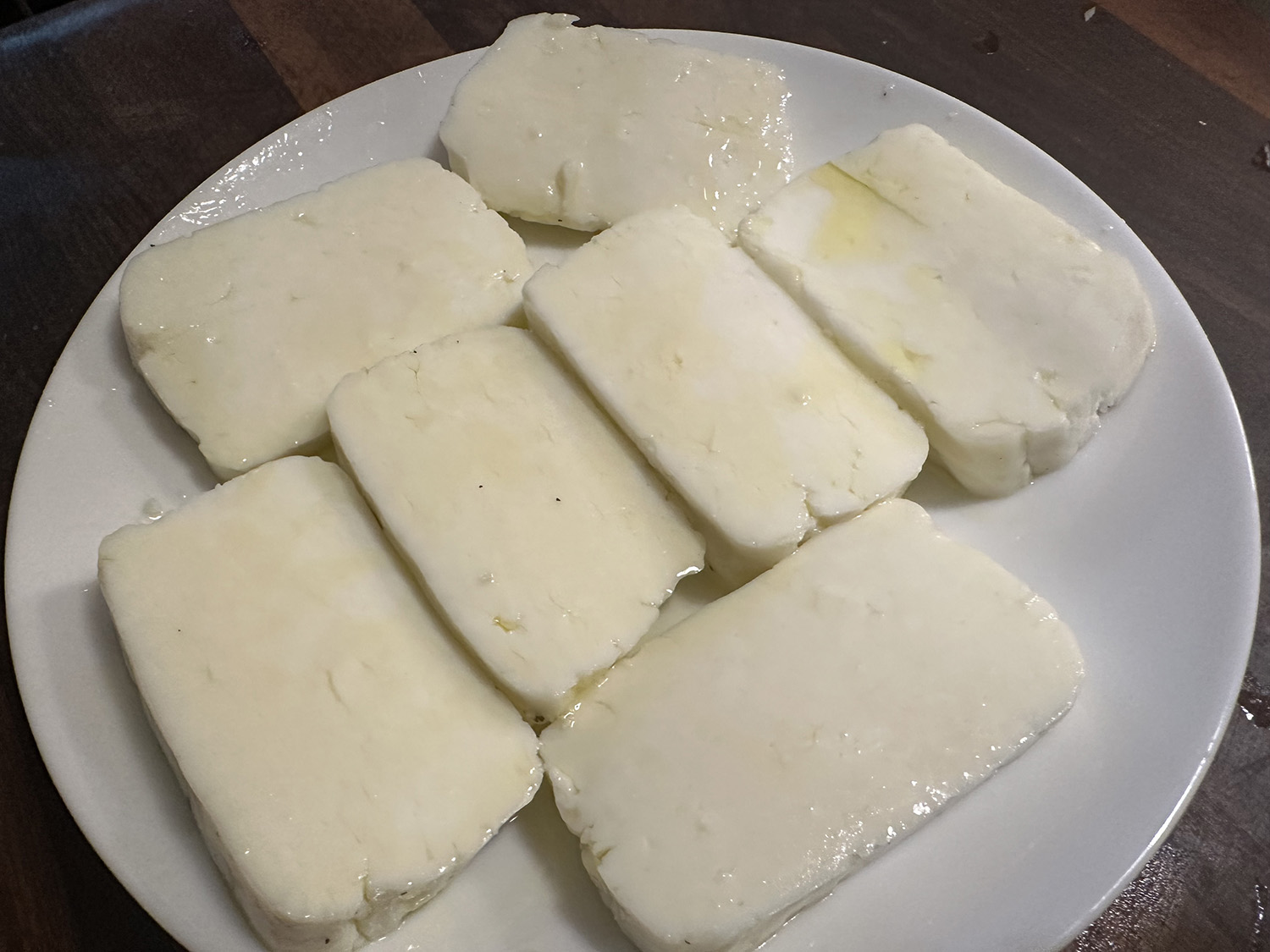
Pan-fried halloumi adds richness and heft, but you can skip the searing process and instead opt for a 6-ounce block of feta, if desired. (Although we recommend going with the seared halloumi.) To save even more time, you can add a large handful of crumbled pita chips instead of making your own.

It was unanimous, all three of us loved it! While the recipe indicates it serves up to six, four is a more realistic estimate unless you are serving with other courses. There is no ingredient that we would have left out. For those who insist on a bit of meat, you could always serve chunks of chicken, beef or pork on the side.

Taverna Salad

  • Servings: 4-6
  • Difficulty: easy
  • Print

Ingredients

  • ⅓ cup plus 2 Tbsp. extra-virgin olive oil
  • 2 Tbsp. red wine vinegar
  • 1 tsp. minced garlic (1 small clove)
  • ½ tsp. dried oregano
  • Salt and pepper
  • 3 medium tomatoes, cored, seeded and diced into ½-inch pieces (or 1 cup halved cherry tomatoes)
  • 1 15-oz. can chickpeas, rinsed
  • 1 orange or yellow bell pepper, halved, seeded and diced into ½-inch pieces
  • ½ large English cucumber, halved, seeded and diced into ½-inch pieces
  • ½ cup pitted Kalamata olives
  • ¼ cup chopped fresh parsley
  • ¼ cup minced red onion or shallot
  • 2 Tbsp. drained capers, coarsely chopped
  • 2 scallions, thinly sliced
  • 1 6-inch pita
  • 1 8-oz. block halloumi cheese, patted dry and cut into ¾-inch-thick slices

Directions

  1. In a small bowl, combine ⅓ cup olive oil with the vinegar, garlic and oregano. Whisk vigorously to combine then season to taste with salt and pepper.
  2. In a large bowl, combine the tomatoes, chickpeas, bell pepper, cucumber, olives, parsley, red onion, capers and scallions. Pour the dressing over the salad and toss well.
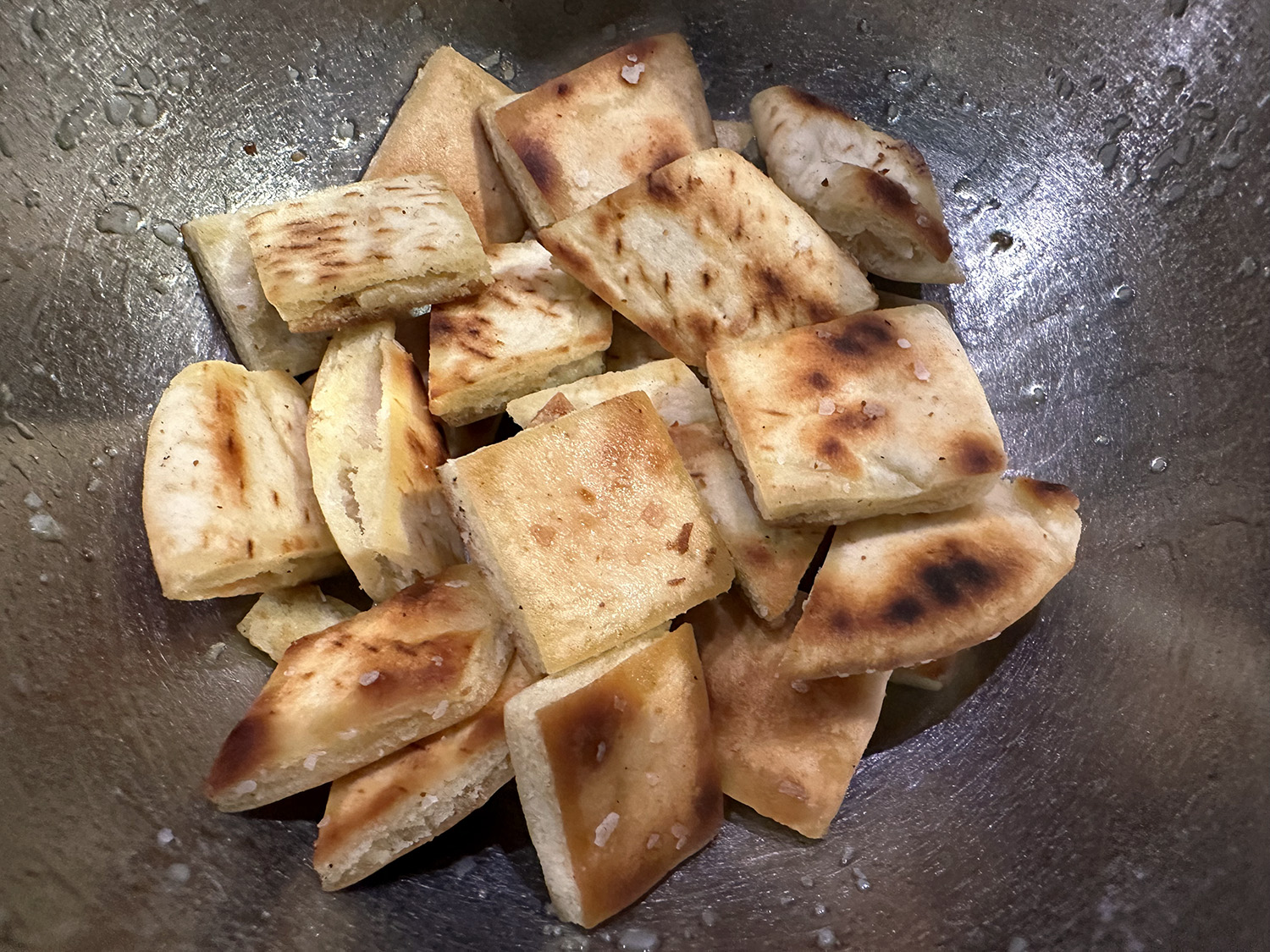
  3. Chop the pita into 1-inch pieces and place them in a small bowl. Drizzle with 1 tablespoon olive oil, sprinkle with salt and toss to coat. Heat an 8-inch skillet over medium. Add the pita pieces and cook, tossing often, until toasted and golden brown, about 5 minutes. Return to the small bowl to cool, reserving the skillet.
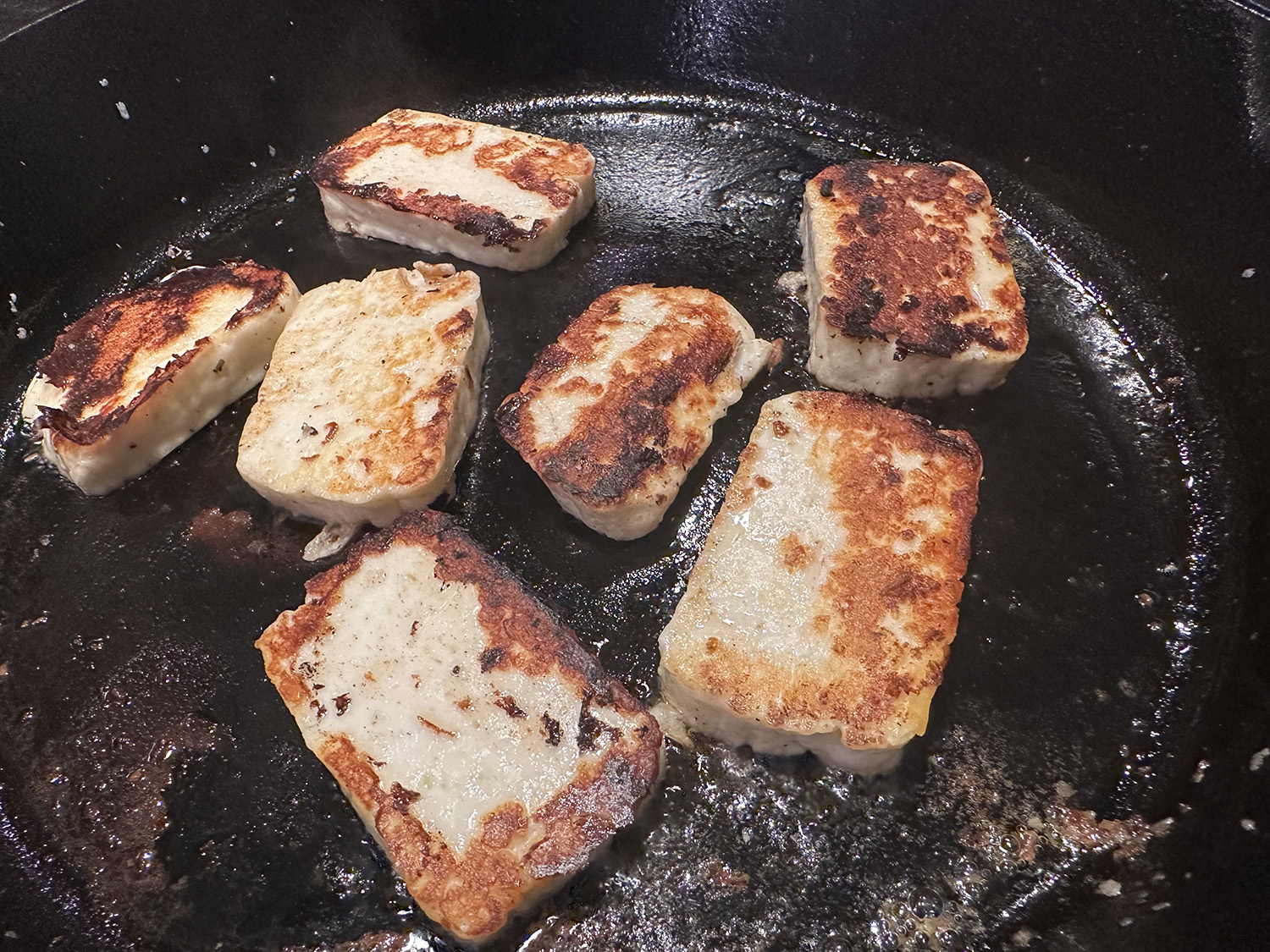
  4. Place the halloumi slices on a small plate and drizzle with 1 tablespoon olive oil. Heat the same skillet over medium-high heat, and cook the halloumi until golden brown, 2 to 3 minutes per side. Transfer to a cutting board and cut the slices into bite-size cubes.
  5. Add the pita and halloumi to the salad, toss well and serve.

http://www.lynnandruss.com

Recipe by Lidey Heuck for NYTimes Cooking

Cold Noodle Salad with Spicy Peanut Sauce

Looking for a recipe that’s healthy, meatless, is ready in less than a half hour, and would transport well for a picnic or potluck? Look no further than this tasty concoction from Betty Lou McKinnon.
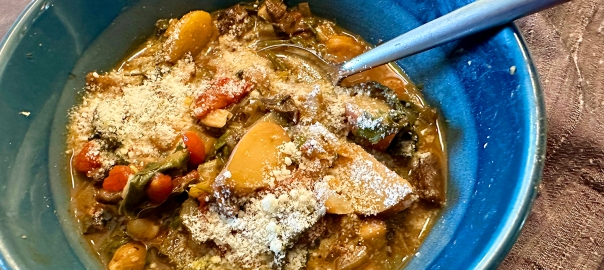
Soba, Japanese buckwheat noodles, are ideal for salads because they taste particularly great when served cold. Crunchy vegetables are highlighted here, adding lots of crisp, fresh texture. Substitute with any raw vegetables you have on hand, such as cabbage, carrot, fennel, asparagus, broccoli or cauliflower.

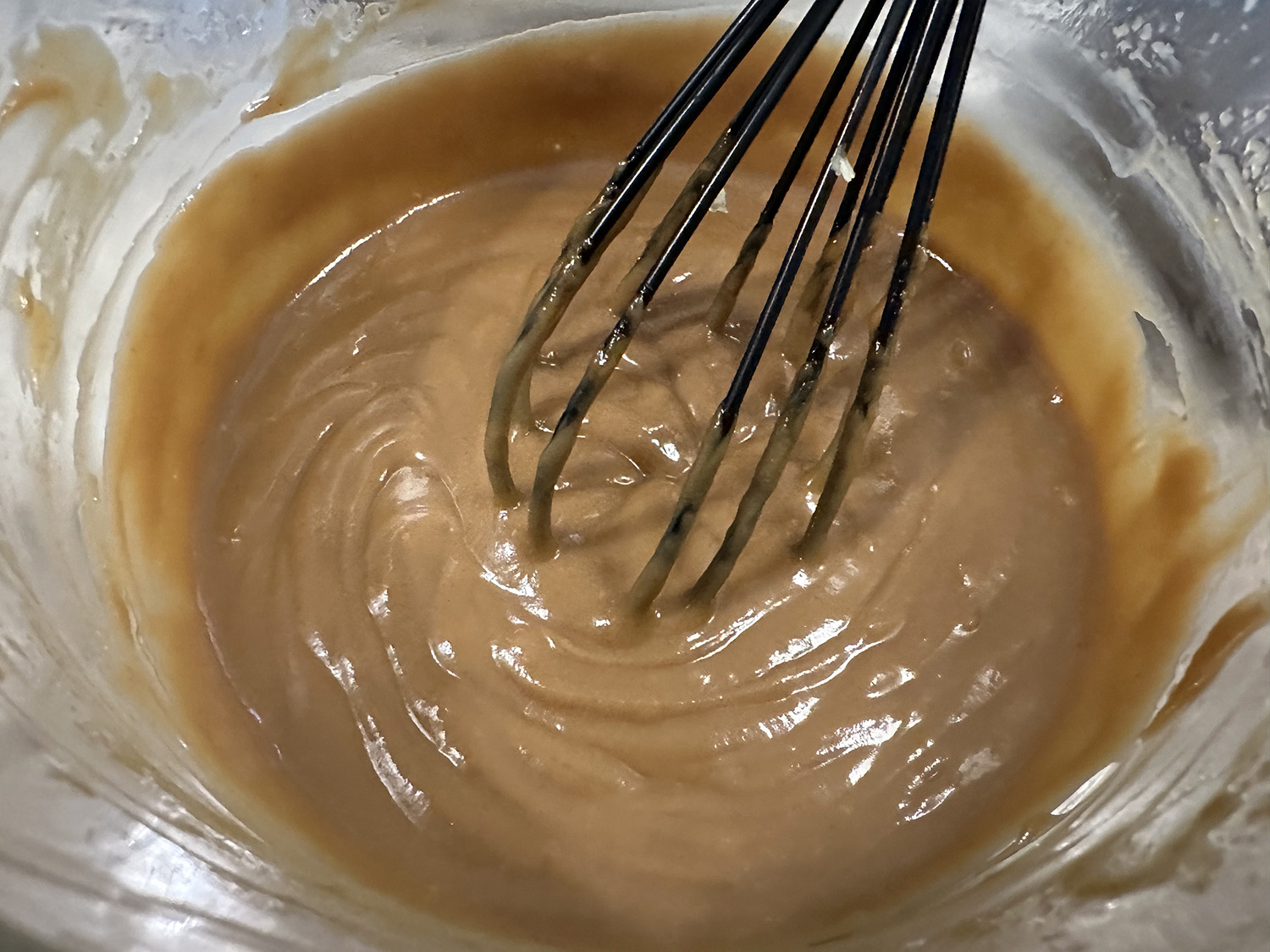
The spicy peanut sauce is very adaptable: If you don’t want to use peanut butter, you can use any nut or seed butter, like cashew, almond, sunflower or even tahini. Both the soba and the peanut sauce can be prepared ahead of time and stored in the fridge overnight, but wait to combine them until you are ready to eat for the best texture and consistency. The peanut sauce thickens as it sits, so add a tablespoon or two of water to loosen it up, if necessary.

Instead of drizzling the peanut sauce on top of the mixed vegetables, we incorporated about 75% of it into the mix, saving the remainder to drizzle on top with the other garnishes.

Cold Noodle Salad with Spicy Peanut Sauce

  • Servings: 4
  • Difficulty: easy
  • Print

Ingredients

For the Salad

  • Kosher salt
  • 10 oz. soba noodles
  • 1 medium zucchini or cucumber (about 6 oz.)
  • 5 radishes
  • 1 bell pepper (any color)
  • 1 Tbsp. sesame oil
  • ½ cup roasted salted peanuts (about 2 oz.), roughly chopped
  • 2 scallions, trimmed and finely chopped
  • Handful of cilantro leaves
  • 1 lime, cut into wedges for serving

For the Spicy Peanut Sauce

  • ½ cup smooth peanut butter (not natural)
  • ¼ cup soy sauce
  • 2 Tbsp. maple syrup
  • 2 Tbsp. lime juice (from 1 lime)
  • 1 Tbsp. sesame oil
  • 2 tsp. chile oil or hot sauce, plus more to taste
  • 1 garlic clove, grated

Directions

  1. Bring a pot of salted water to the boil. Add the soba, stir to prevent sticking, and cook according to package instructions until just tender. Rinse under cold water until the noodles are completely cold.
  2. Meanwhile, make the sauce: In a medium bowl, combine the peanut butter, soy sauce, maple syrup, lime juice, sesame oil, chile oil or hot sauce, and garlic. Add ¼ to ½ cup water, 1 tablespoon at a time, and whisk until the sauce is a pourable consistency. Taste and add more chile oil or hot sauce as desired; set aside.
  3. Cut the zucchini or cucumber and radishes into ⅛-inch thick slices, then cut into thin matchsticks. Slice the peppers into ⅛-inch pieces. Place them all in a large bowl.
  4. Loosen the soba noodles by running them under some water, then allow to drain again. Add them to the vegetables, add the remaining 1 tablespoon sesame oil and toss to combine.
  5. When you are ready to serve, drizzle with spicy peanut sauce and top with peanuts, scallions and cilantro. Serve immediately, with lime wedges alongside.

http://www.lynnandruss.com

Recipe by Betty Lou McKinnon for NYTimes Cooking

Chickpea, Chard and Porcini Soup

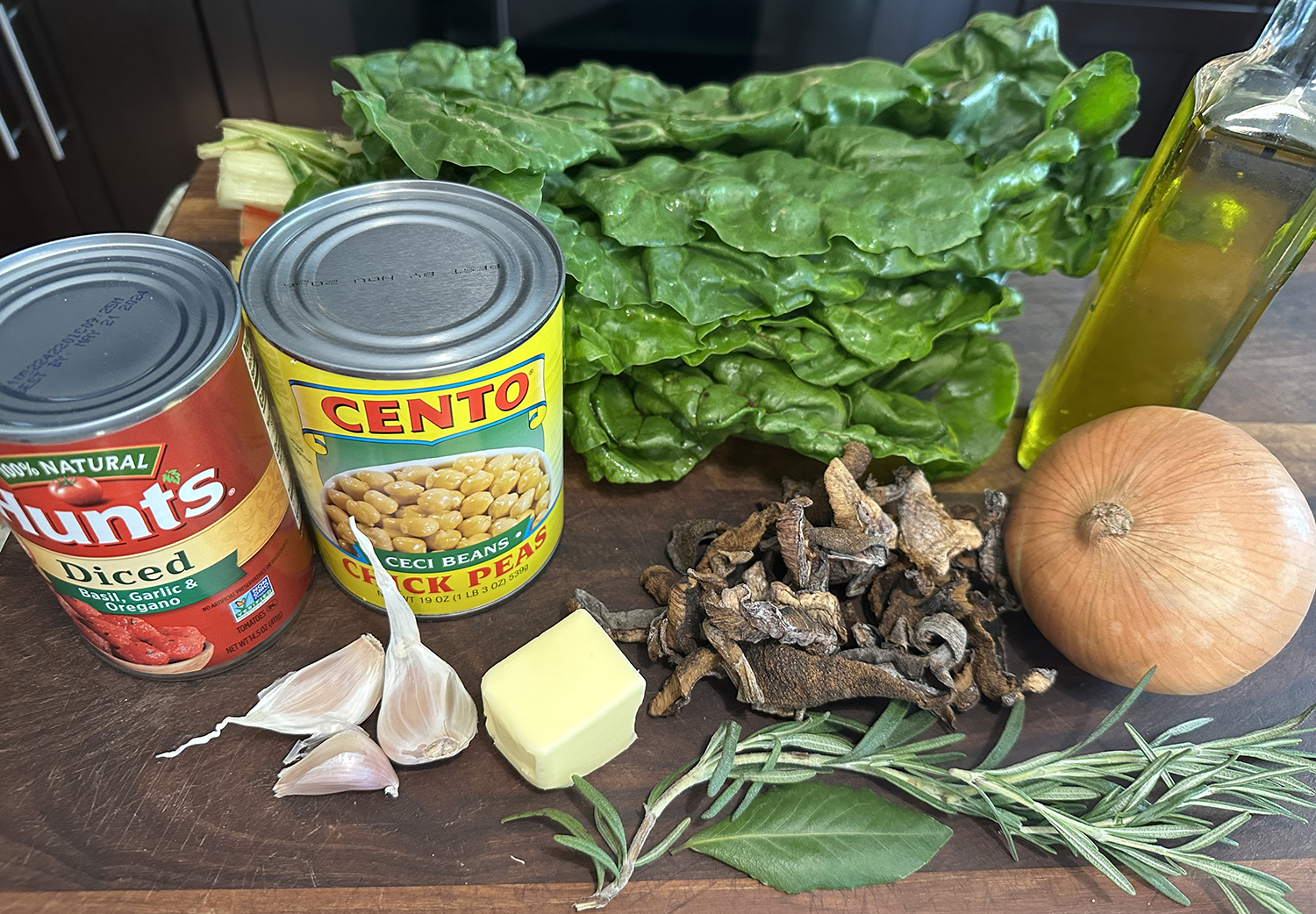
This hearty soup gets its big flavors from the earthiness of porcini mushrooms. If desired, use canned white beans, such as cannellini, instead of the chickpeas, and kale or spinach in place of chard.

Feel free to add in additions of your own. We included a bay leave and about 1/2-pound of small baby potatoes that were quartered. And for some odd reason, those small potato pieces took much longer to get soft, so keep checking on them, if using.

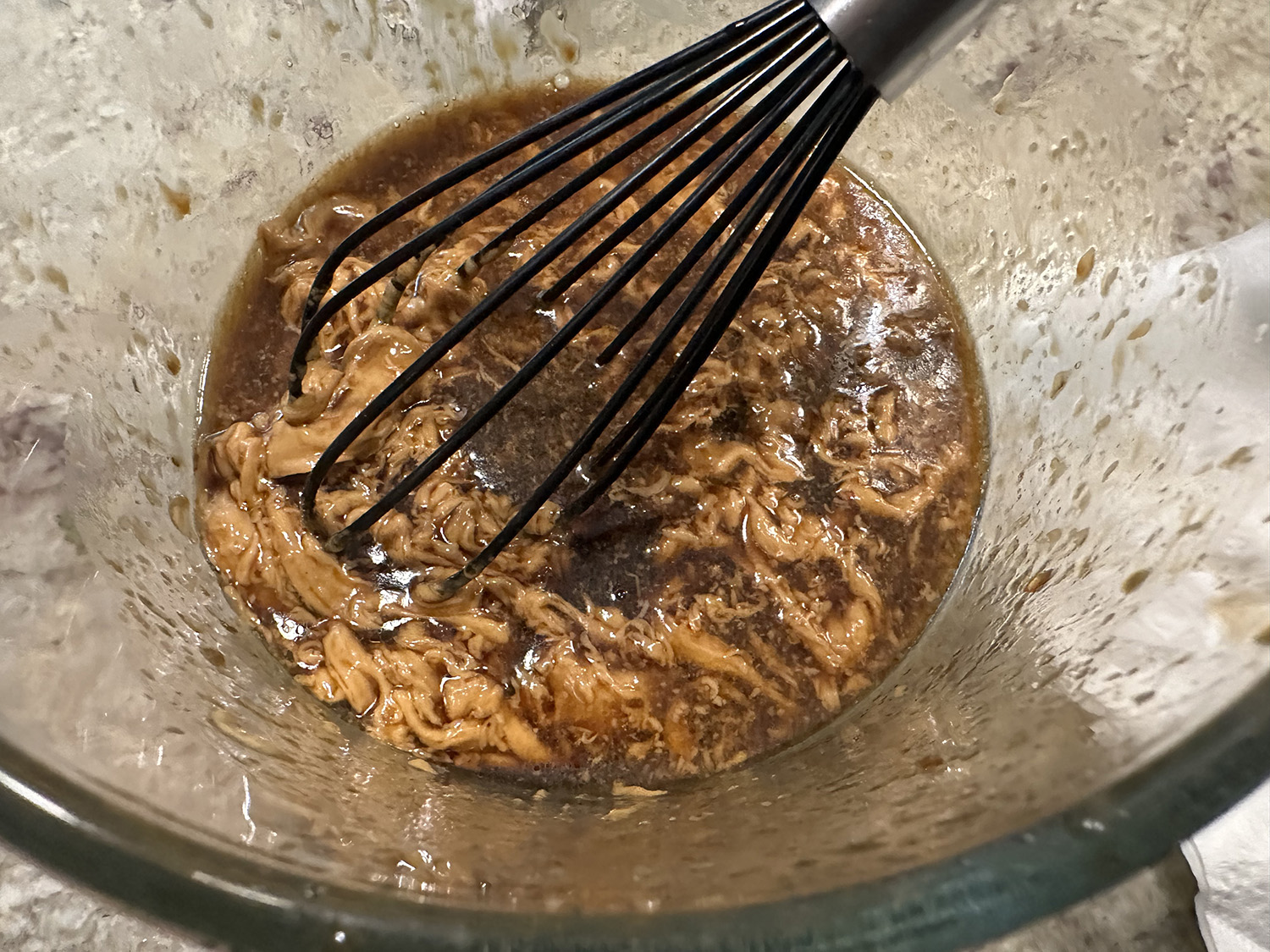
The porcini broth was a bit underwhelming so The Hubs decided to enhance the flavor with some mushroom flavored Better Than Bouillon. When cooled, we covered and refrigerated the soup overnight, then reheated some for lunch the next day, it was delicious!!

Chickpea, Chard and Porcini Soup

  • Servings: 4
  • Difficulty: easy
  • Print

Ingredients

  • 1 oz. dried porcini mushrooms
  • 3 cups hot water
  • 3 Tbsp. extra-virgin olive oil, plus more for drizzling
  • 2 Tbsp. unsalted butter (may substitute vegan butter, such as Earth Balance)
  • 1 small yellow onion, chopped
  • 2 cloves garlic, finely chopped
  • One (14 -oz.) can diced tomatoes, plus their juices
  • One (14 -oz.) can no-salt-added chickpeas, drained and rinsed
  • 1 1/2 cups baby potatoes quartered (optional)
  • 1 sprig rosemary
  • 1 bay leaf, preferably fresh
  • 1/4 tsp. fine sea or table salt
  • Freshly ground black pepper
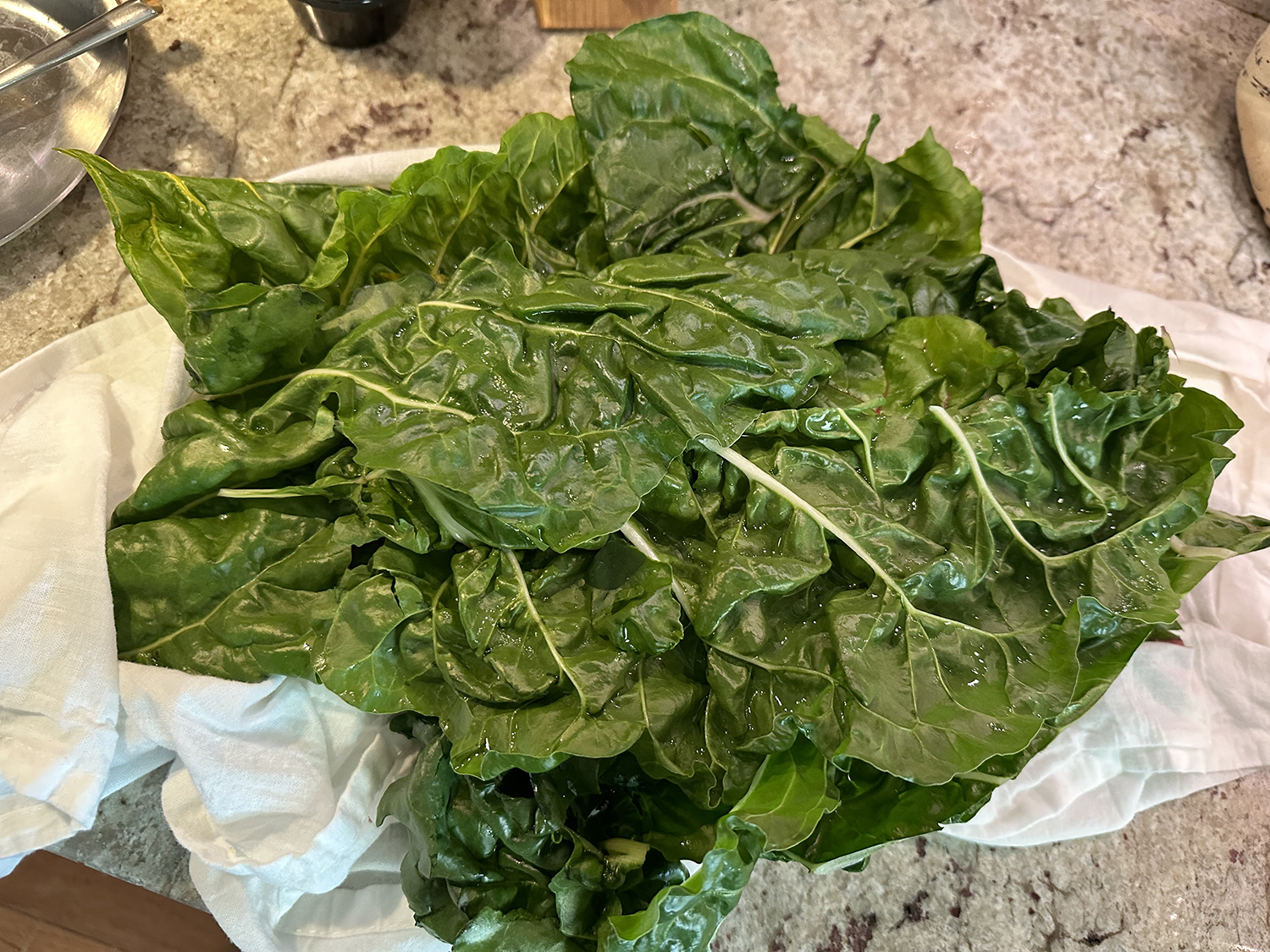
  • 10 oz. (1 bunch) Swiss chard, stemmed and shredded
  • Parmesan, hard goat cheese or other flavorful hard cheese, shaved (optional; may substitute vegan Parmesan)

Directions

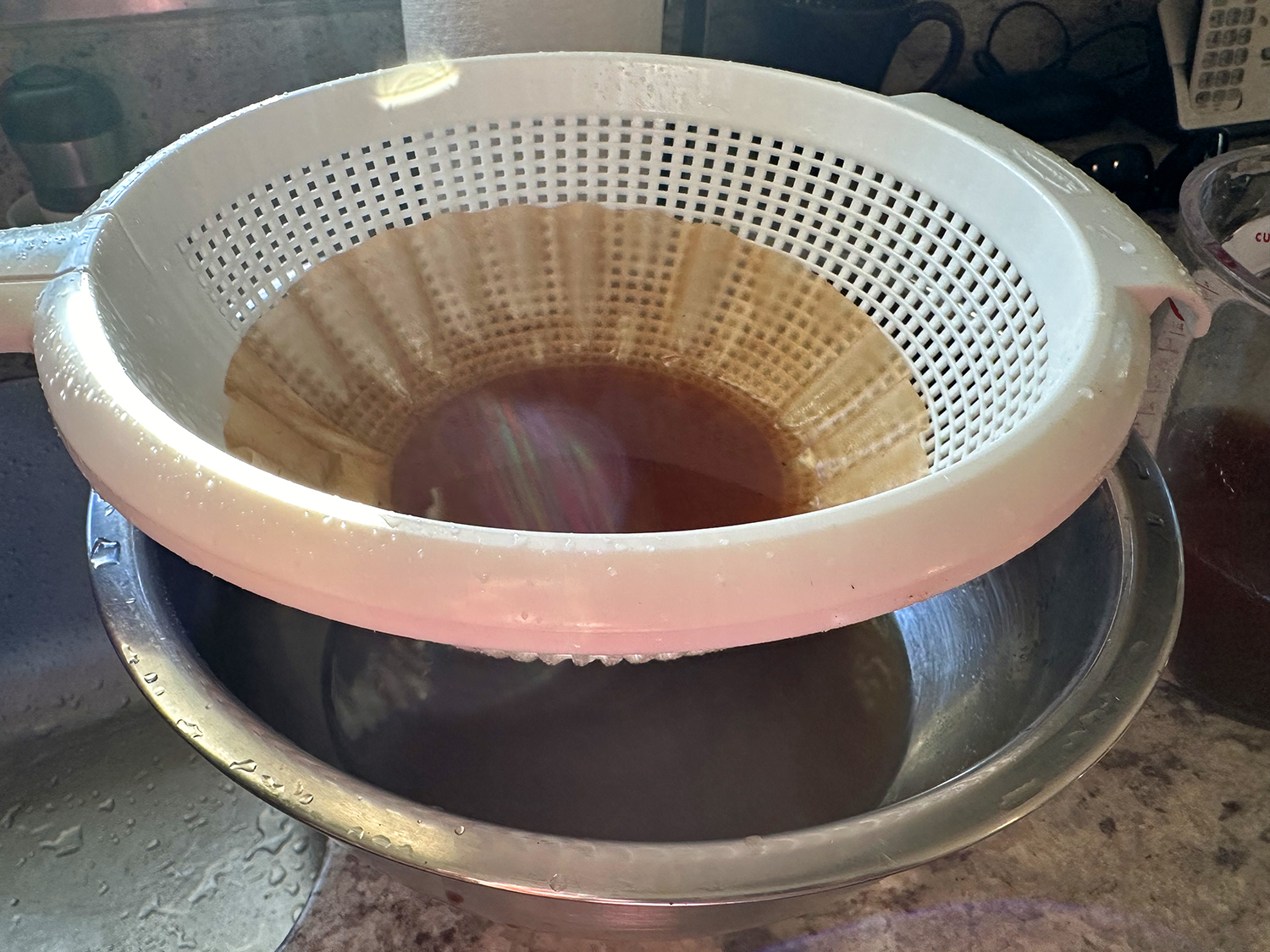
  1. Soak the porcini in the hot water for 30 minutes. Remove the mushrooms with a slotted spoon, reserving the soaking water. Rinse the mushrooms briefly under cold water (they can be gritty), pat dry with a clean dish towel and coarsely chop. Strain the mushroom soaking liquid through a sieve lined with cheesecloth or paper towels into a bowl.
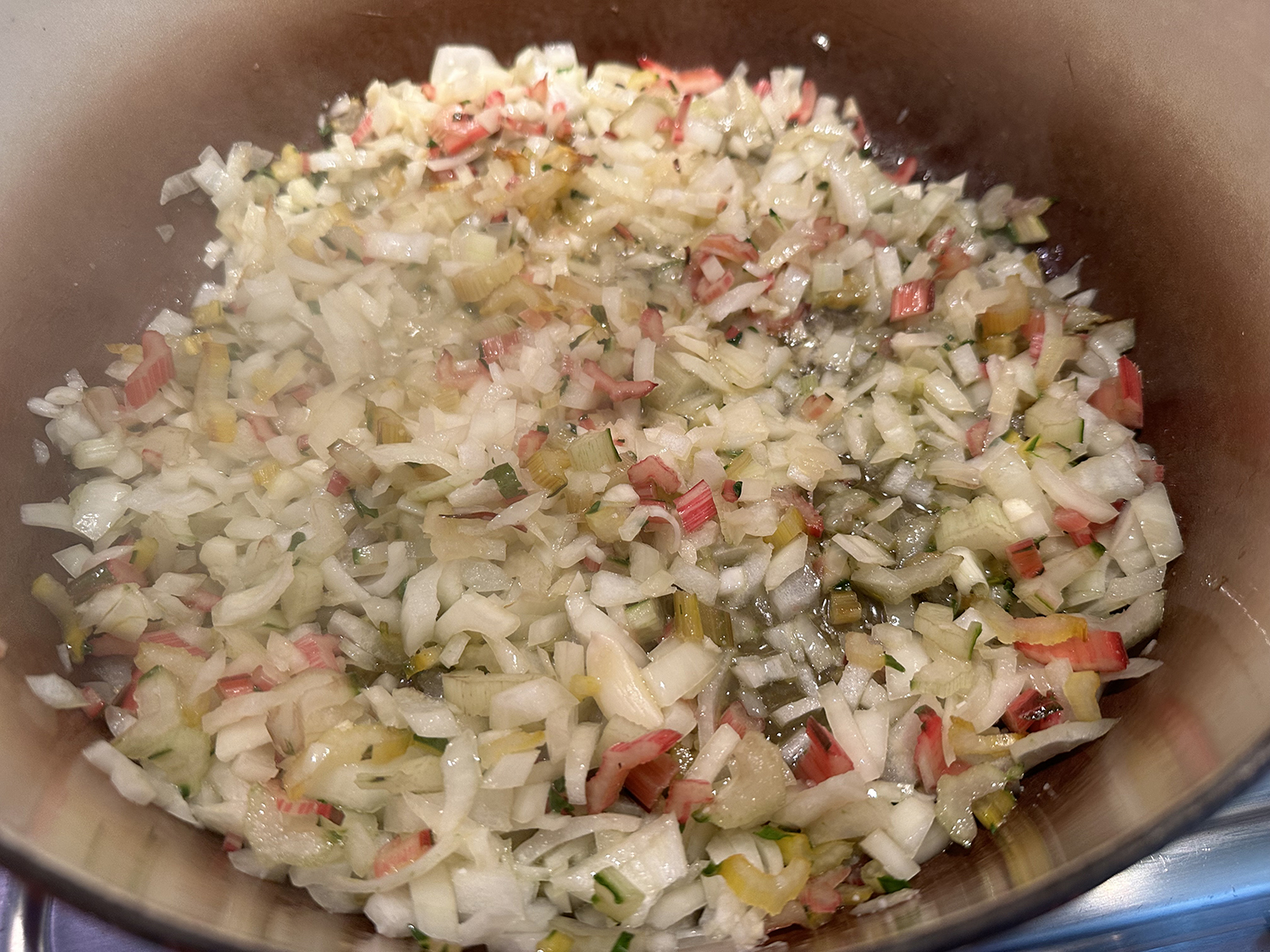
  2. In a saucepan over medium-low heat, melt the olive oil with the butter. When the mixture is hot, add the onion and cook, stirring occasionally, until soft and translucent, about 15 minutes. Add the garlic and stir for 1 minute, then add the mushrooms and cook, stirring, for another 2 minutes.
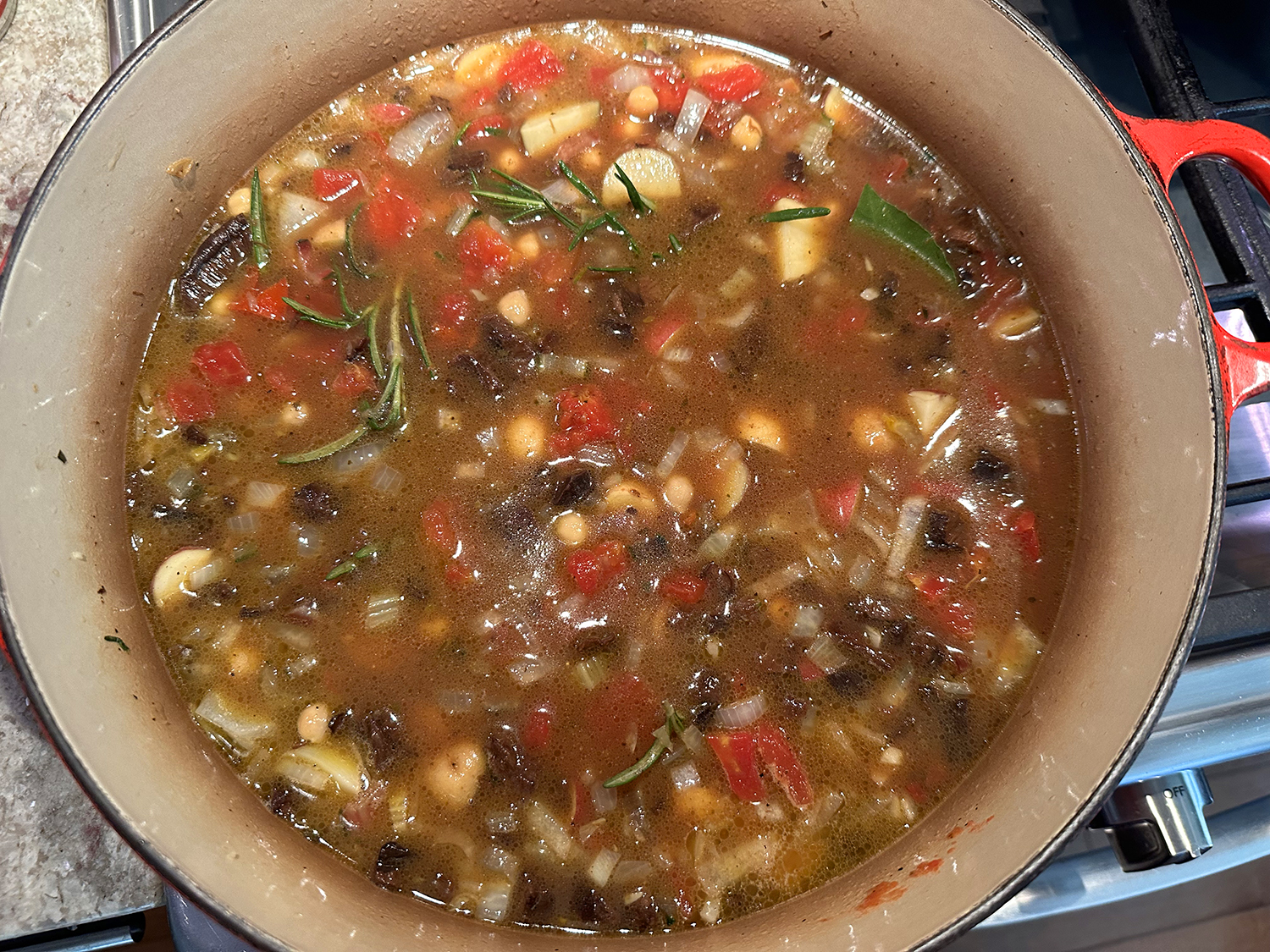
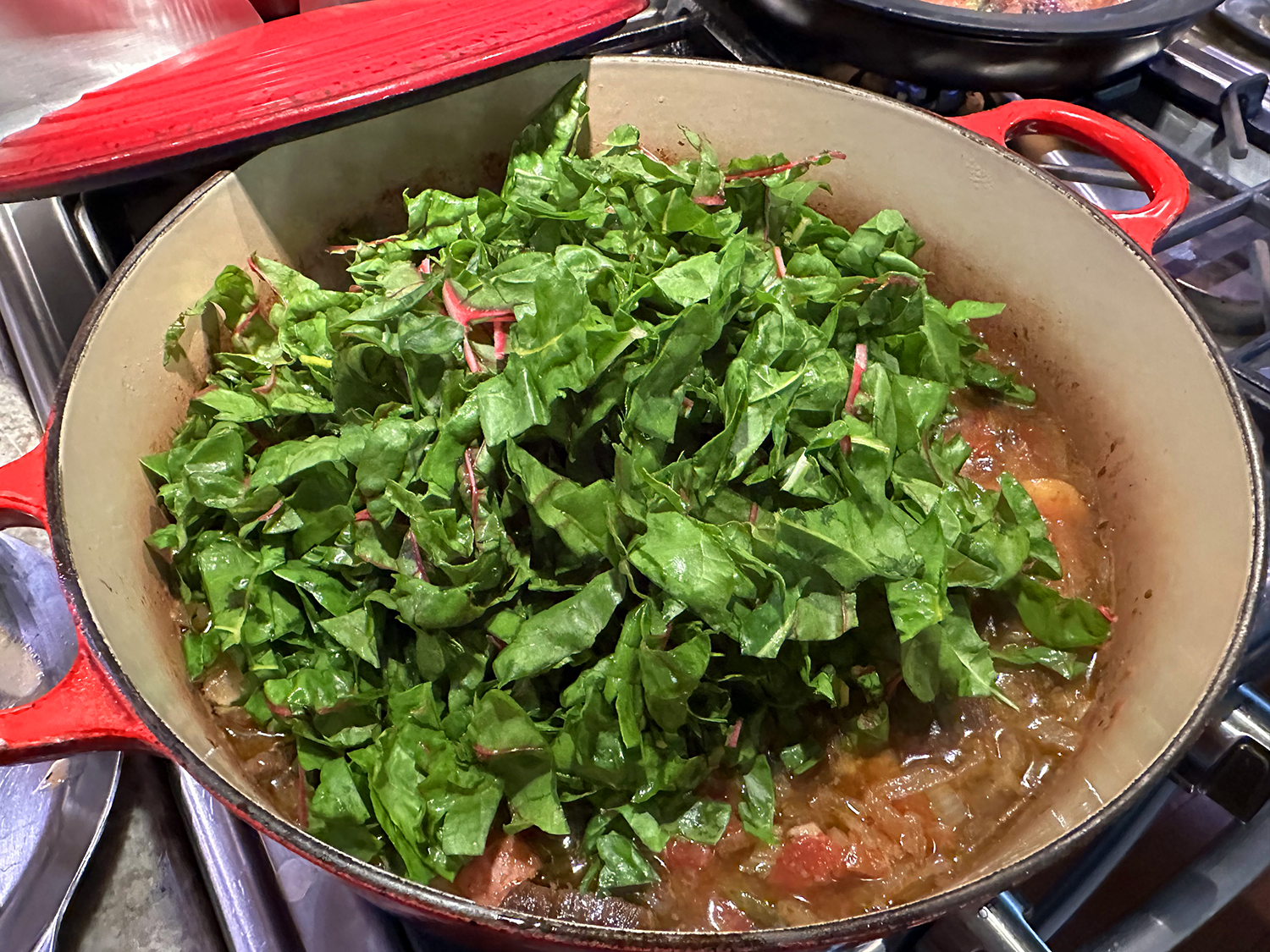
  3. Add the tomatoes, chickpeas, rosemary, reserved mushroom soaking liquid, salt and a few grinds of black pepper. Bring to a boil, then reduce the heat, and simmer gently until the flavors meld, 20 to 30 minutes. Add the chard and cook until it is tender, about 5 minutes.
  4. If the soup seems too thick, thin it out with a little water. Discard the rosemary. Taste and add salt and/or pepper as needed.
  5. Ladle into warmed bowls, drizzle over some olive oil, and top with the cheese shavings, if using. Serve hot.

http://www.lynnandruss.com

Recipe from the Washington Post

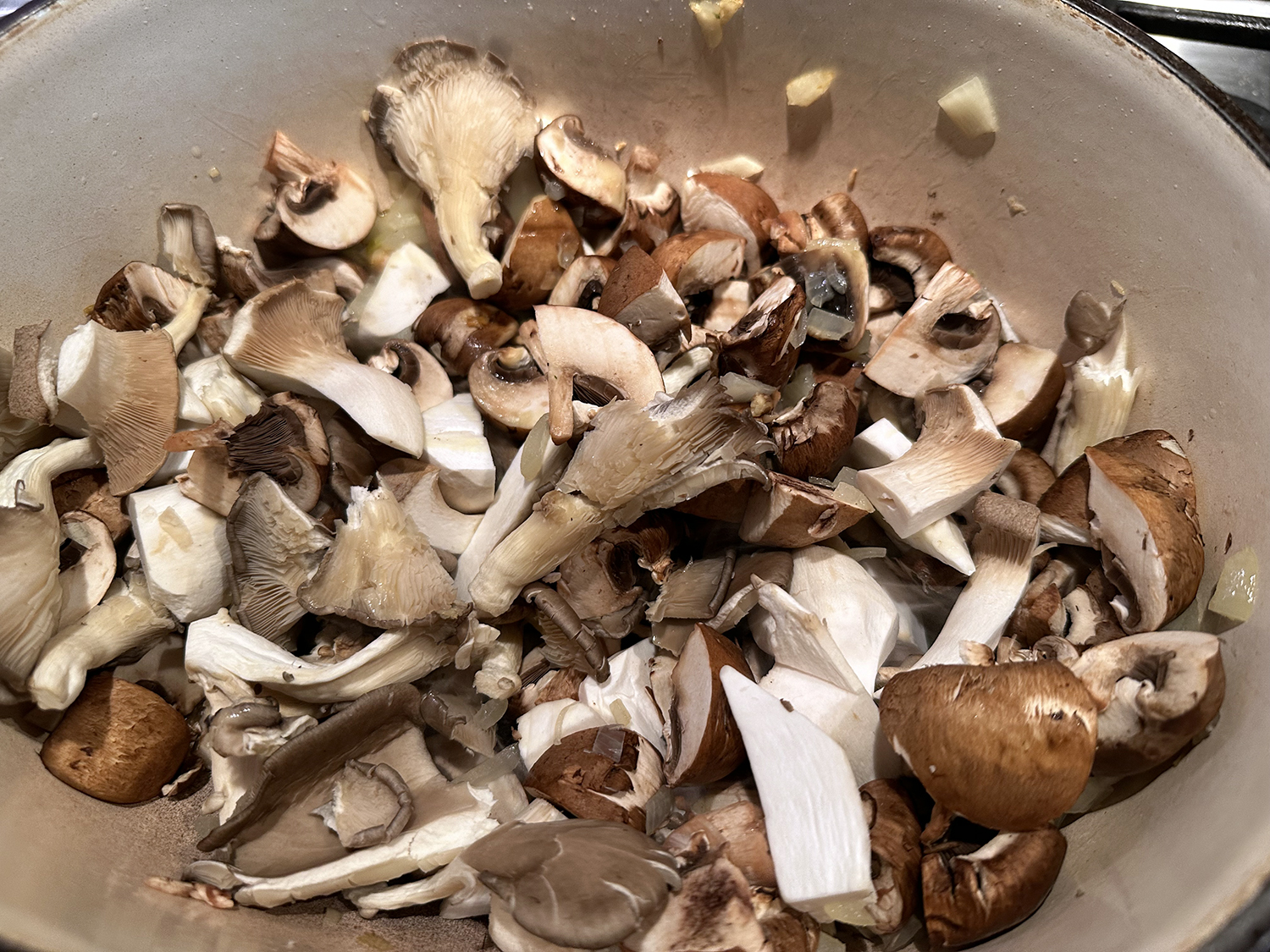
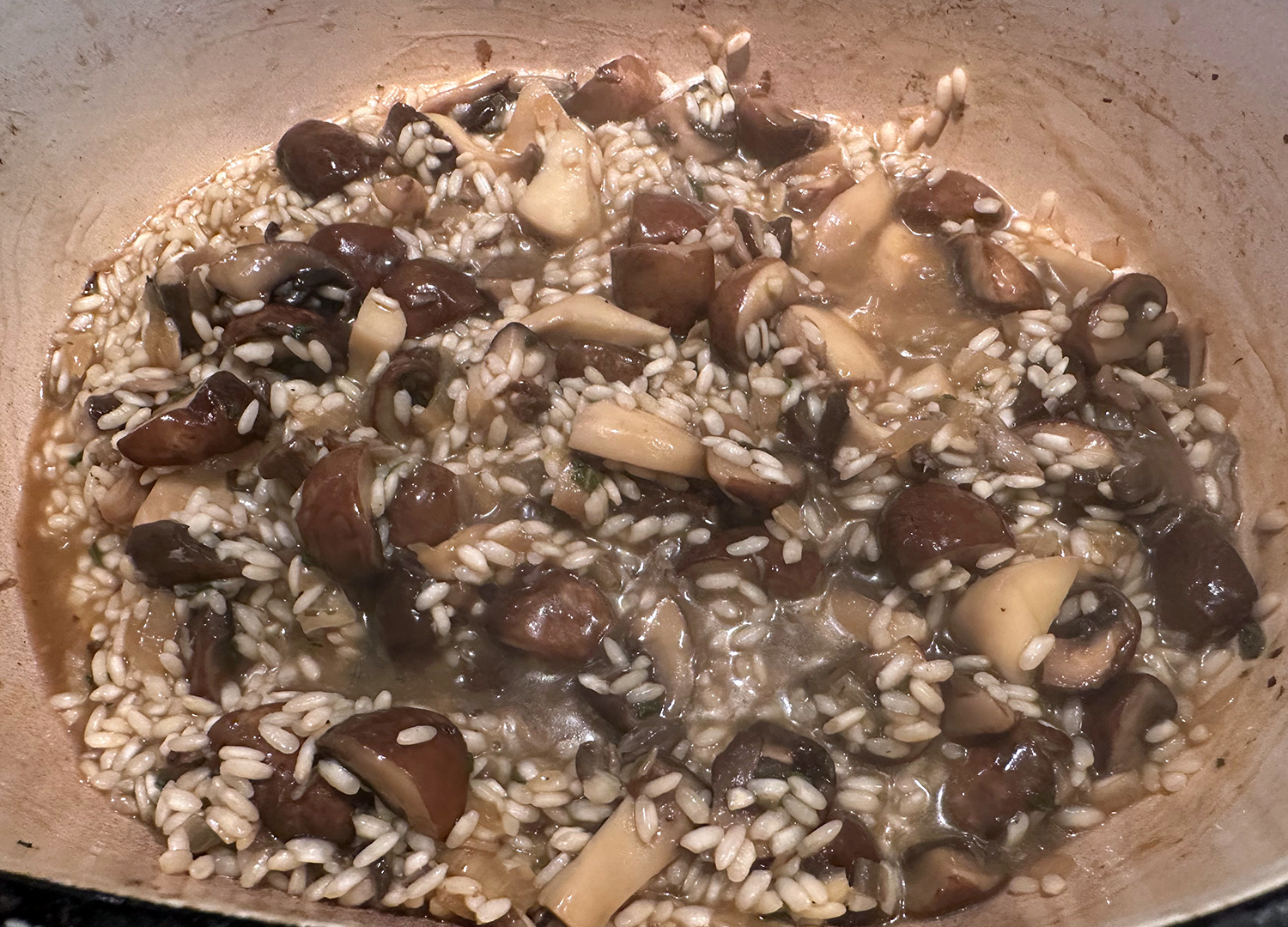
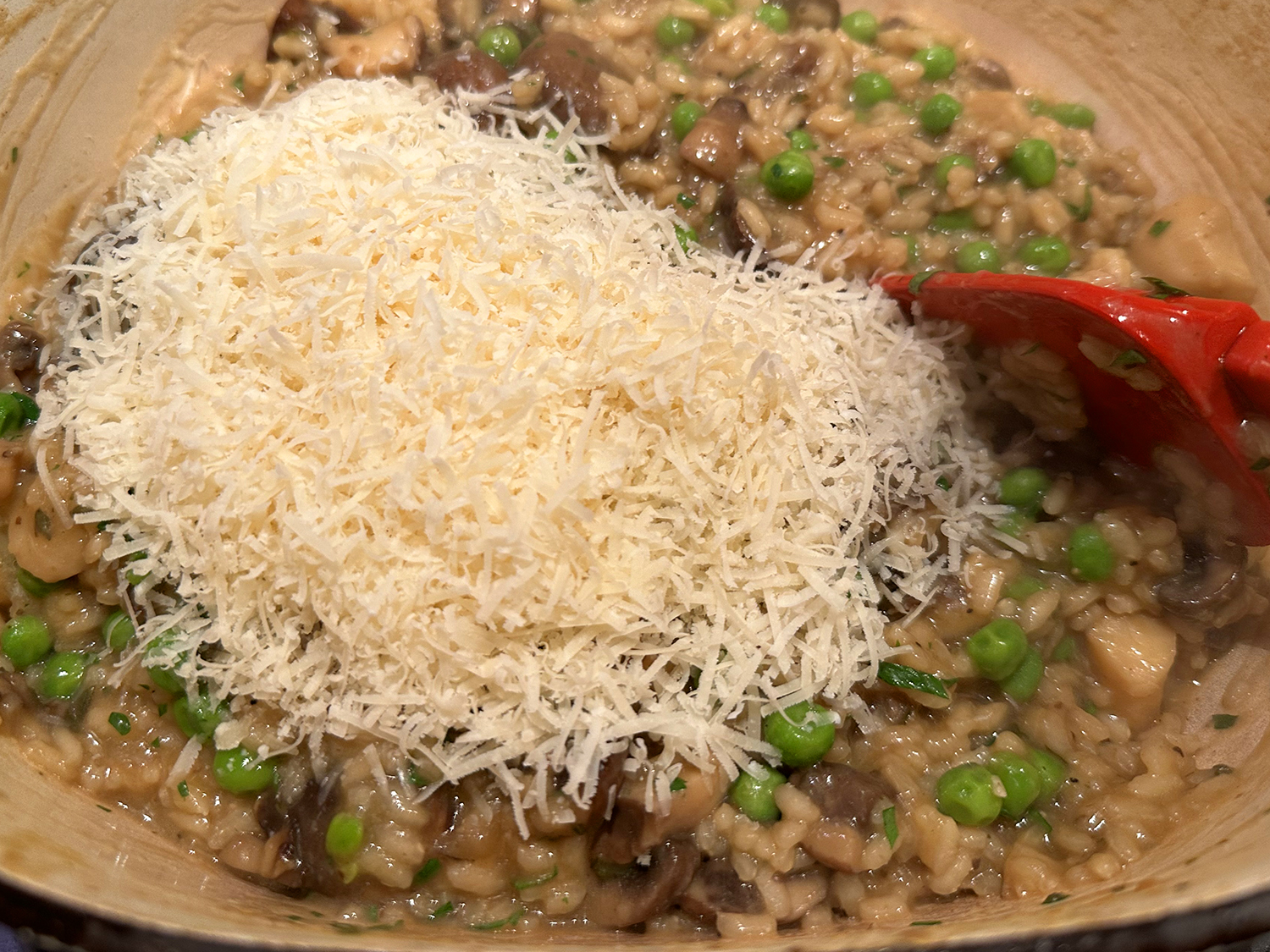
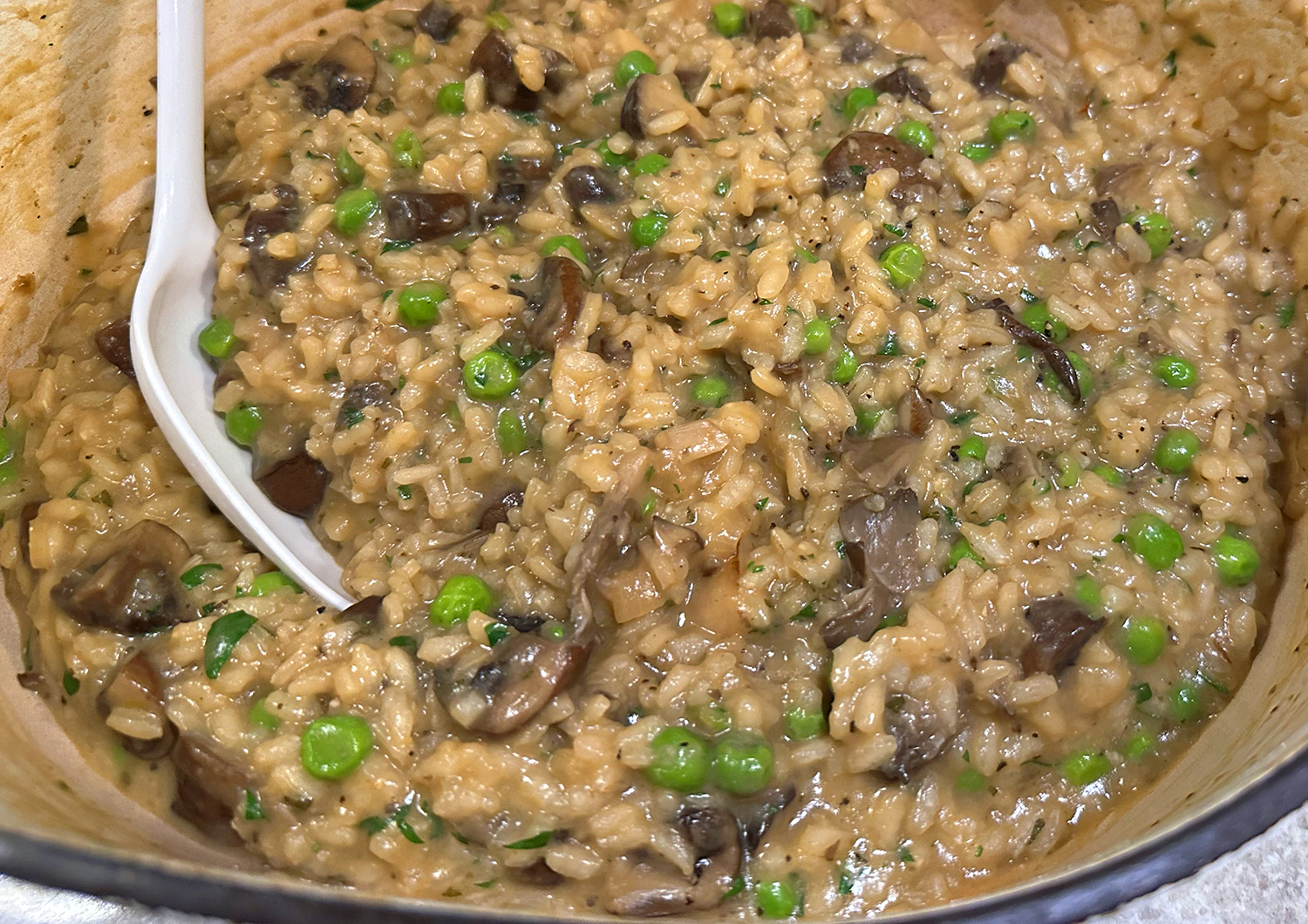
Mushroom Risotto with Peas

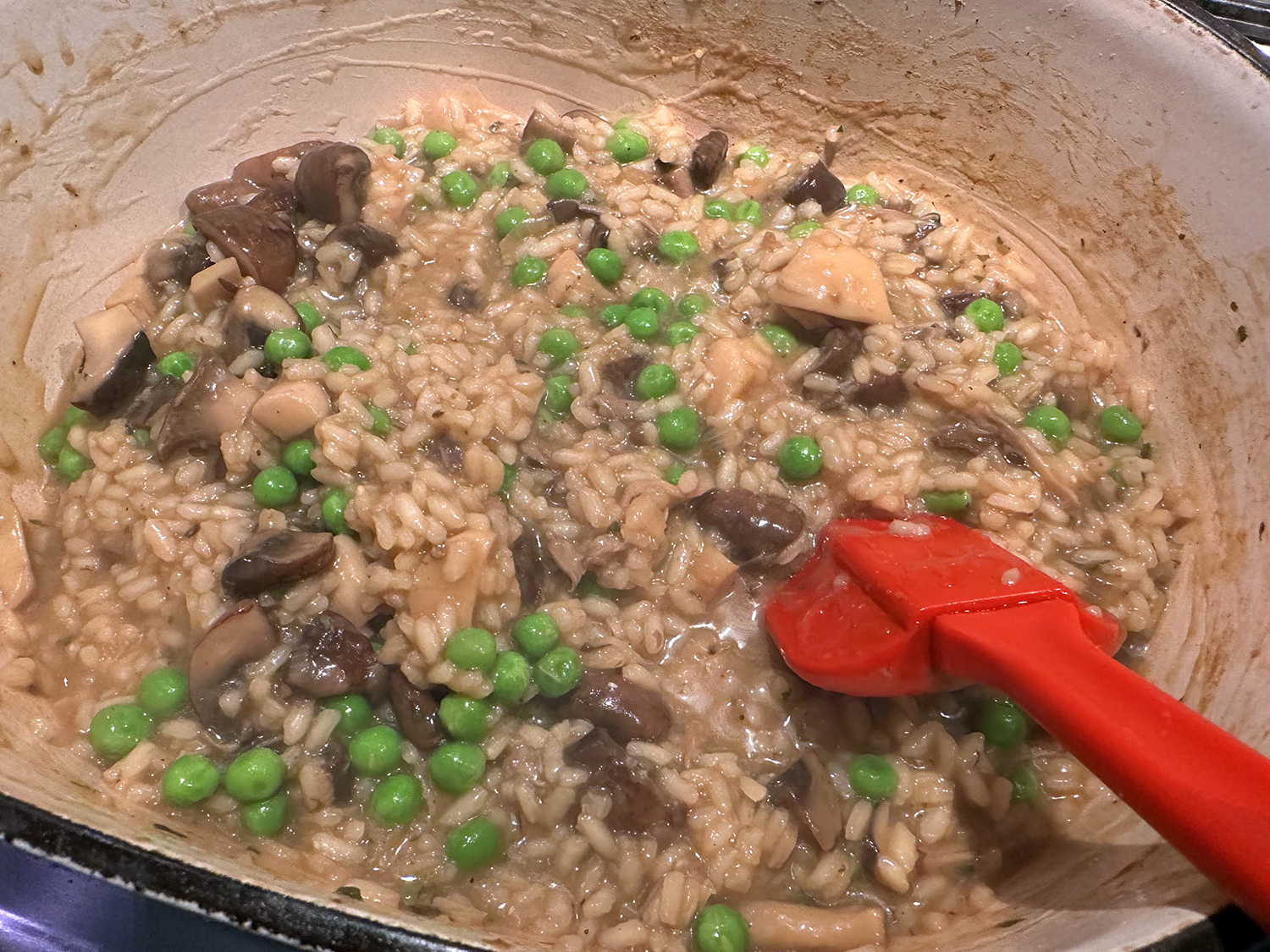
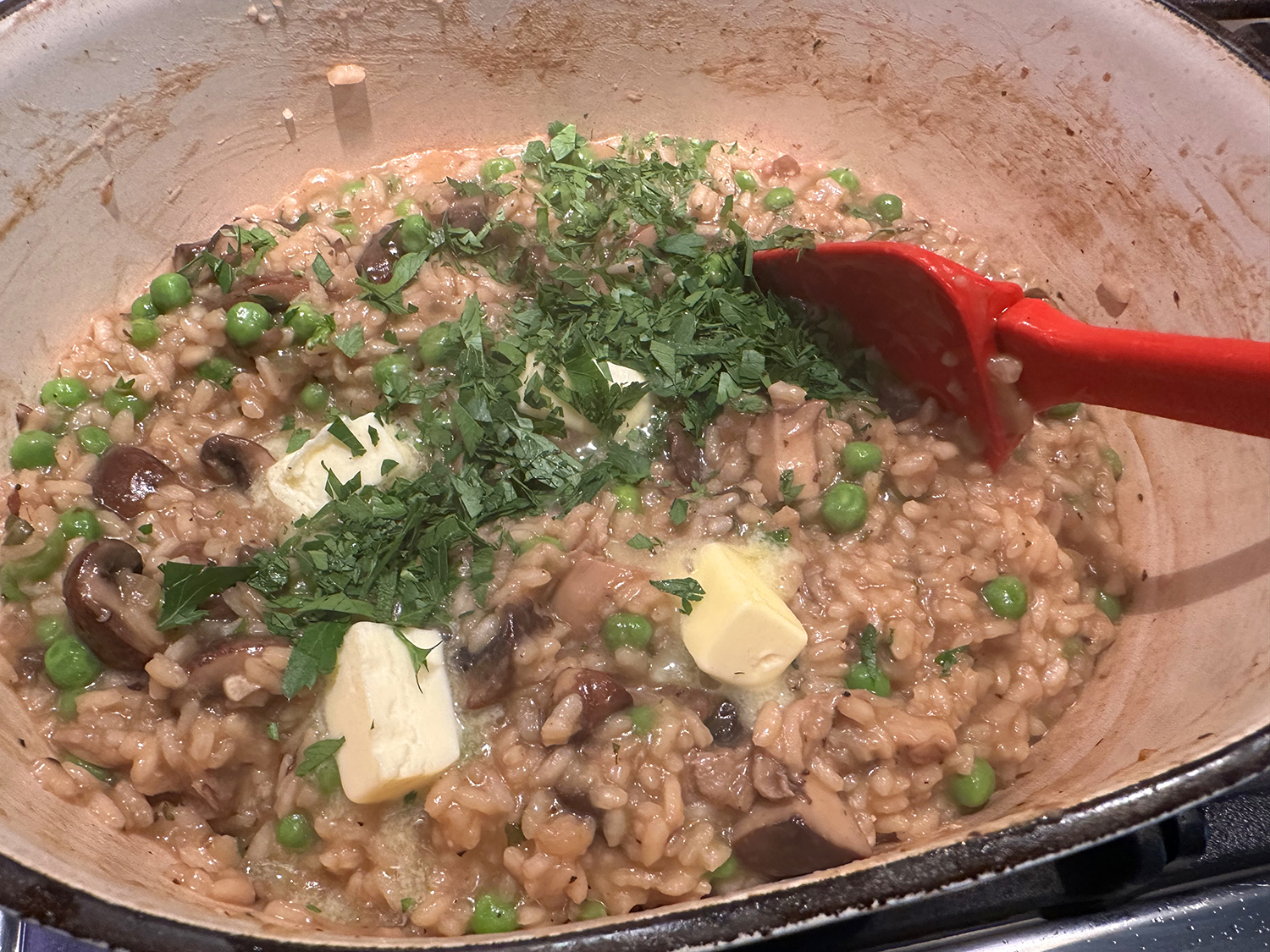
If you are ever at a loss for what to make for an impromptu dinner party, especially if there will be vegetarians at the table, consider this luxurious mushroom risotto. Peas add a welcome pop of color, and the sweetness of the peas fits right in with the flavors of this dish. And you’ll get another vibrant dash of green from the parsley added at the end of cooking.

As far as which stock to use, homemade is always best of course, but The Hubs used a combination of vegetable and mushroom from Better Than Bouillon; keeping it vegetarian. It was the perfect side dish for our Chicken with Artichokes and Lemon entrée.

Advance preparation: You can begin up to several hours before serving: proceed with the recipe and cook halfway through Step 4, for about 10 minutes. The rice should still be hard in the middle when you remove it from the heat, and there should not be any liquid in the pan. Spread it in an even layer in the pan or on a baking sheet and keep it away from the heat until you resume cooking. 15 minutes before serving, resume cooking as instructed.

Mushroom Risotto with Peas

  • Servings: 6
  • Difficulty: easy
  • Print

Ingredients

  • 6 cups chicken, vegetable or garlic broth or stock, or more as needed (preferably homemade)
  • Salt and freshly ground pepper
  • 2 Tbsp. extra-virgin olive oil
  • 1/2 cup finely chopped onion, or 2 shallots, minced
  • 1 lb. wild mushrooms, cleaned if necessary and torn or sliced into smaller pieces if thick (small wild mushrooms should be left whole, mushrooms like maitake can just be separated into small pieces)
  • 2 cloves garlic, minced
  • 2 tsp. chopped fresh thyme or sage leaves
  • 1 1/2 cups arborio or carnaroli rice
  • 1/2 cup dry white wine, such as pinot grigio or sauvignon blanc
  • 1 cup frozen peas, thawed
  • 2 Tbsp. butter
  • 2 Tbsp. chopped fresh parsley
  • 1/2 cup grated Parmesan cheese, or a mixture of Parmesan and Pecorino Romano

Directions

  1. Bring stock or broth to a simmer in a saucepan, with a ladle nearby. Make sure stock is well seasoned, and keep it simmering on the stove.
  2. Heat oil in a wide, heavy nonstick skillet or saucepan over medium heat. Add onions or shallots and cook gently until just tender, 3 to 5 minutes.
  3. Turn up heat and add mushrooms. Cook, stirring, until they begin to sweat, about 3 minutes, then add garlic and thyme or sage. Cook, stirring, until fragrant, about 30 seconds. Season mushrooms with salt and pepper and continue to cook over medium heat until they are soft. Taste and adjust seasoning.
  4. Add rice and stir until grains begin to crackle. Add wine and cook, stirring, until wine is no longer visible in pan. Stir in enough simmering stock to just cover the rice. The stock should bubble slowly. Cook, stirring often and vigorously, until stock is just about absorbed. Add another ladleful or two of stock and continue cooking, not too fast and not too slowly, stirring often and adding more stock when rice is almost dry, for 15 minutes.
  5. Add peas and continue adding stock and stirring for another 10 minutes. Rice should be tender all the way through but still al dente. Taste now and adjust seasoning.
  6. Add another ladleful or two of stock to rice. Stir in the butter until it melts, then stir in the parsley and Parmesan, and remove from heat. Season with black pepper and serve right away in wide soup bowls or on plates.

http://www.lynnandruss.com

Recipe from NYTimes Cooking

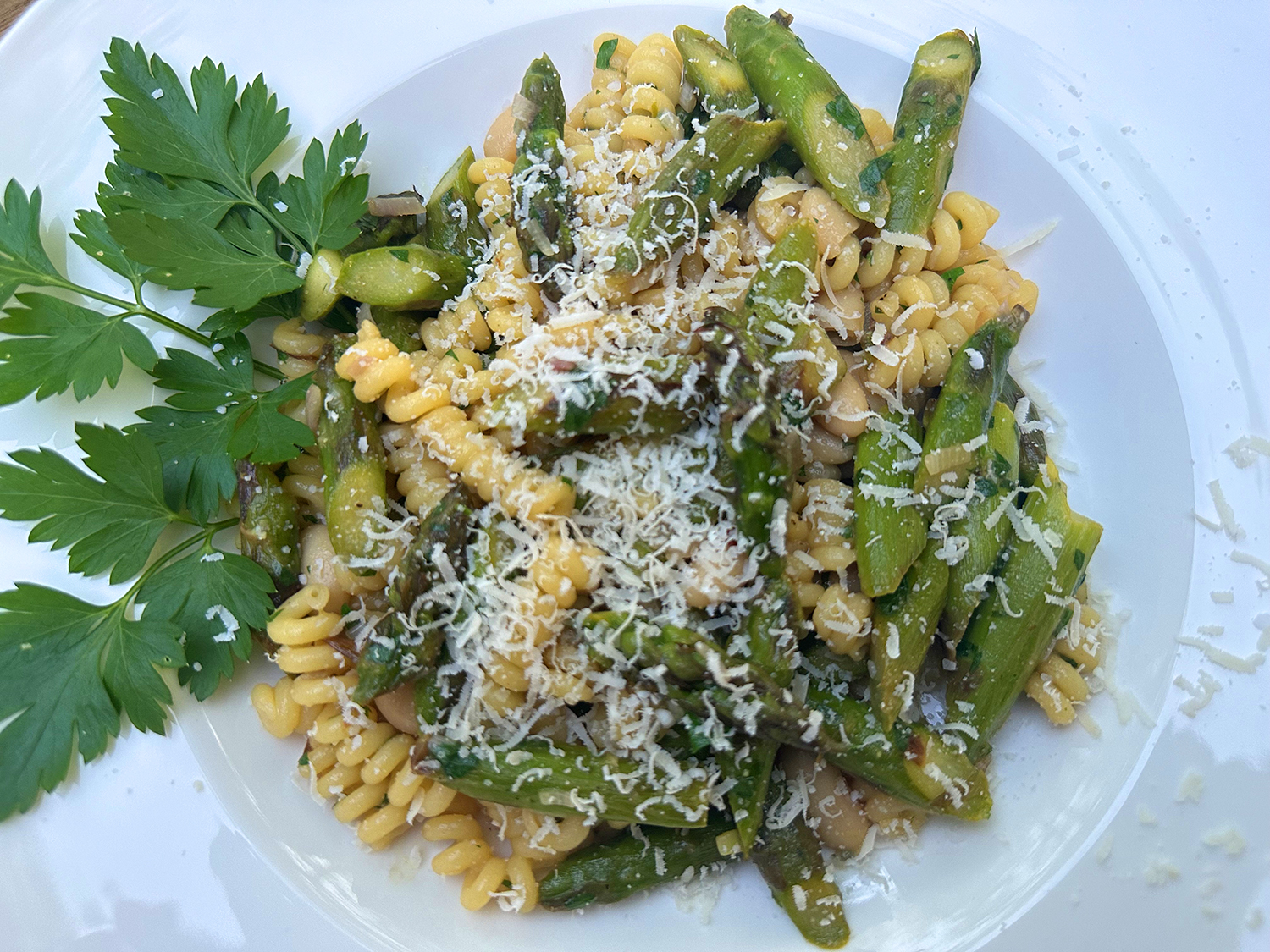
Lemony Pasta with Asparagus and White Beans

This pasta dish is incredibly simple to make: While the pasta cooks and the beans marinate, sauté the asparagus in olive oil, then use that pan to finish the dish. There’s enough asparagus in the mix to make this a one-pan meal, but serving it with a crisp green salad on the side will add a little crunch and freshness.

Marinating canned white beans in lemon juice and zest, along with red-pepper flakes and shallots, imbues them with brightness and a touch of heat, adding so much flavor to this warm-weather pasta. We massaged the ingredients a bit by doubling the white bean mixture that gets set aside while the asparagus and pasta cook.

Many reviewers cut back on the pasta, but with doubling the bean mixture you don’t really need to, plus you could feed another diner or save some for lunch the next day!

Lemony Pasta with Asparagus and White Beans

  • Servings: 4
  • Difficulty: easy
  • Print

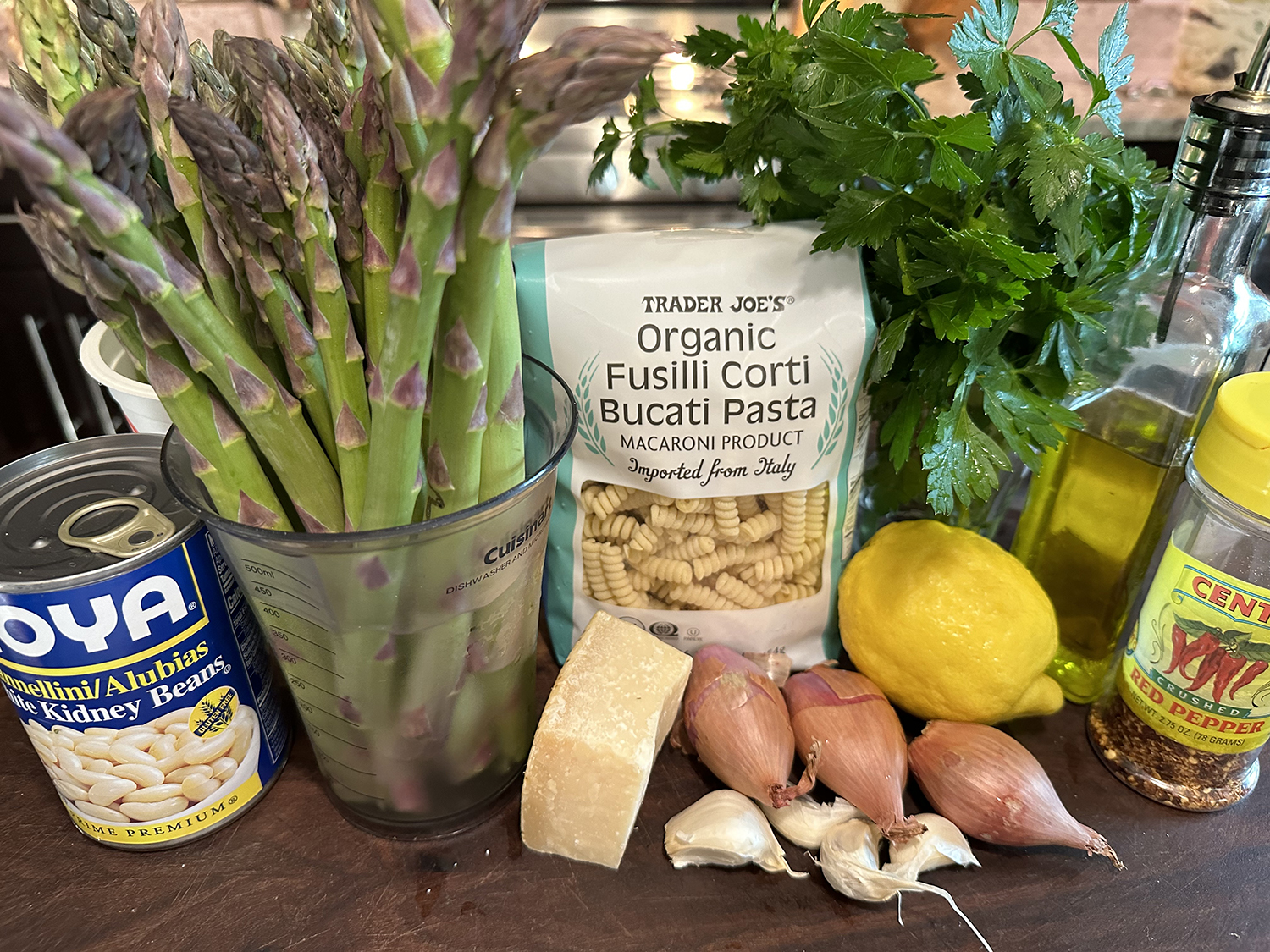
Ingredients

  • 2 large lemon, plus more fresh lemon juice for serving
  • 2 15-oz. can white beans, rinsed
  • 2 shallots, finely diced, or 2 Tbsp. finely diced red onion
  • 6 garlic cloves (4 thinly sliced, 2 finely grated)
  • 1⁄2 tsp. red-pepper flakes, plus more to taste
  • Kosher salt
  • 5 Tbsp. extra-virgin olive oil
  • 1 lb. short pasta, such as campanelle, fusilli or farfalle
  • 2 bunches asparagus (about 2 lbs.), ends trimmed, stalks sliced into ½-inch pieces
  • ⅔ cup coarsely chopped Italian parsley leaves
  • ½ cup grated Parmesan, plus more for serving
  • Black pepper

Directions

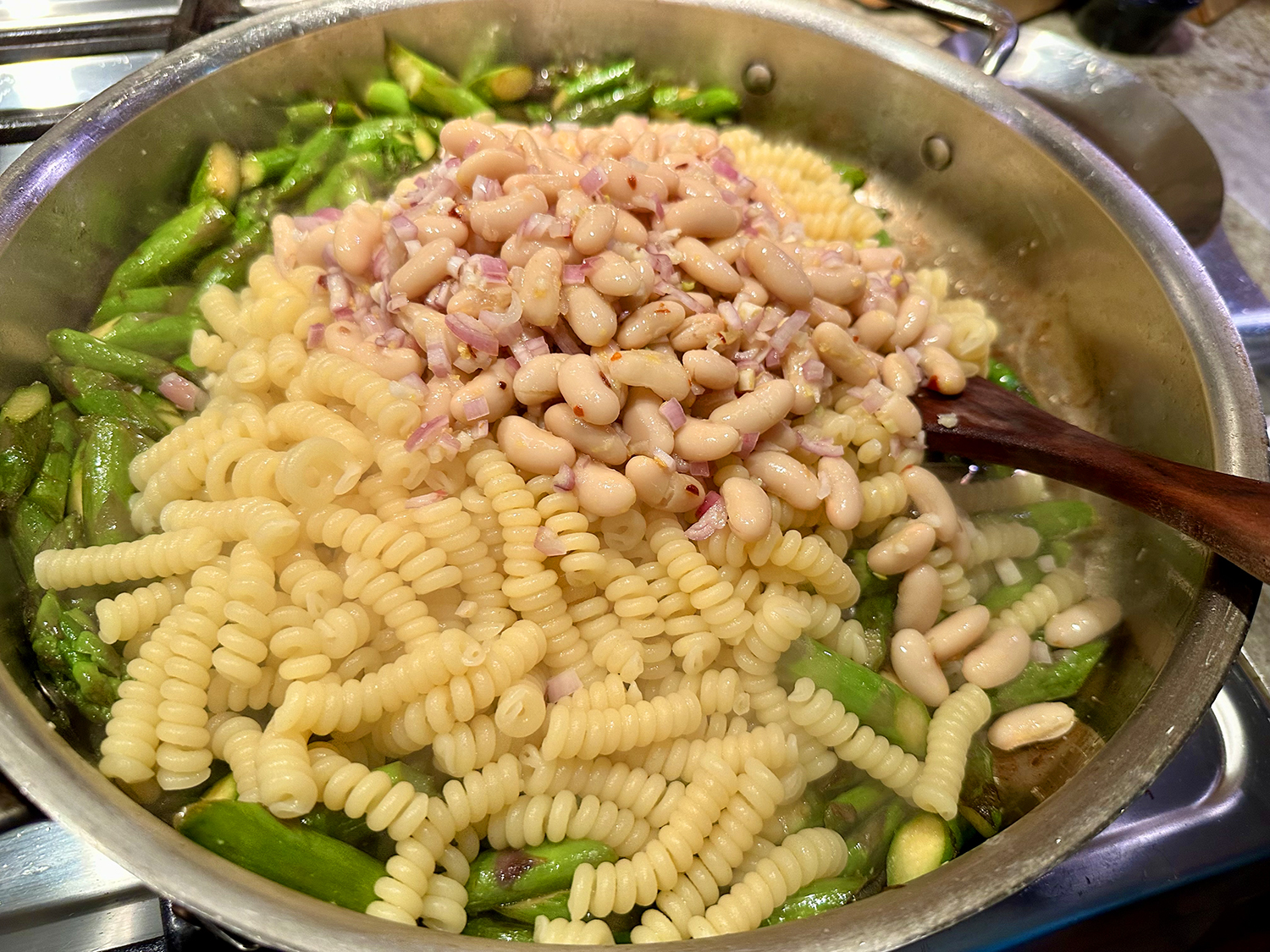
  1. Grate the zest from the lemon into a small bowl. Halve the lemon and squeeze the juice from half of it on top of the zest. Add the white beans, shallot or onion, grated garlic, red-pepper flakes and a large pinch of salt and toss well. Drizzle in 2 tablespoons olive oil and set aside.
  2. Bring a large pot of heavily salted water to a boil. Add pasta and cook until just shy of al dente, usually 2 minutes less than the package directs.
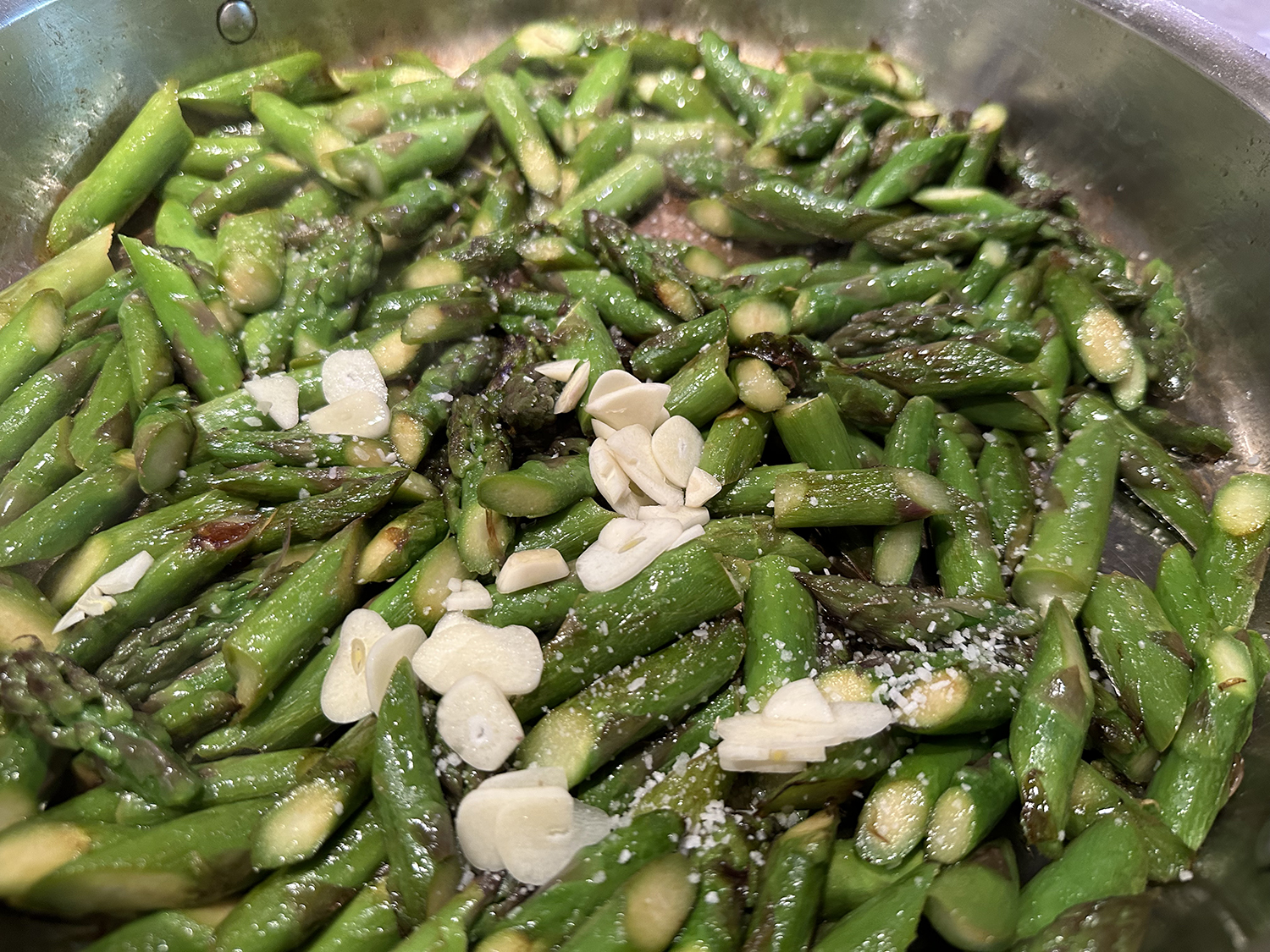
  3. Meanwhile, heat a 12-inch sauté pan over medium-high heat. When hot, add the remaining 3 tablespoons oil, then add the asparagus. Sauté until the asparagus is tender and starting to brown at the edges, 7 to 10 minutes. Add a big pinch of salt and the sliced garlic and sauté until the garlic is lightly golden, 1 to 2 minutes longer.
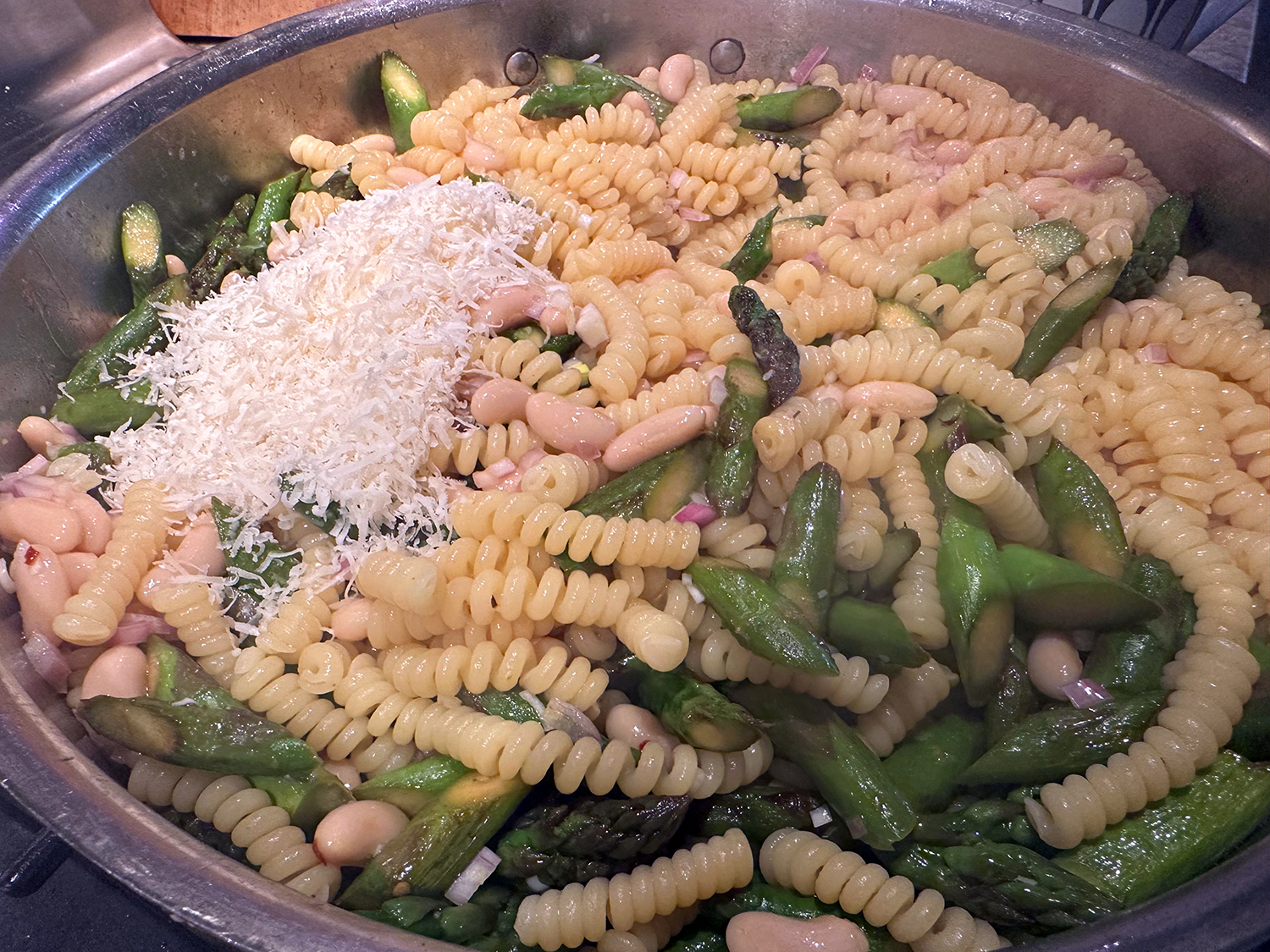
  4. Dip a coffee mug or glass measuring cup into the pasta water and scoop out about ½ cup of it to use for the sauce. Drain pasta, shaking it well. Add pasta, bean mixture, parsley and Parmesan to sauté pan and cook until the beans are hot and the pasta is al dente. If the mixture looks dry, splash in some (or all) of the reserved pasta water. Squeeze remaining lemon half over pasta, toss and taste. Season with pepper; add more salt, red-pepper flakes and lemon juice, if desired.

http://www.lynnandruss.com

Adapted from a recipe by Melissa Clark for NYTimes Cooking

Baked Mushroom Crostini

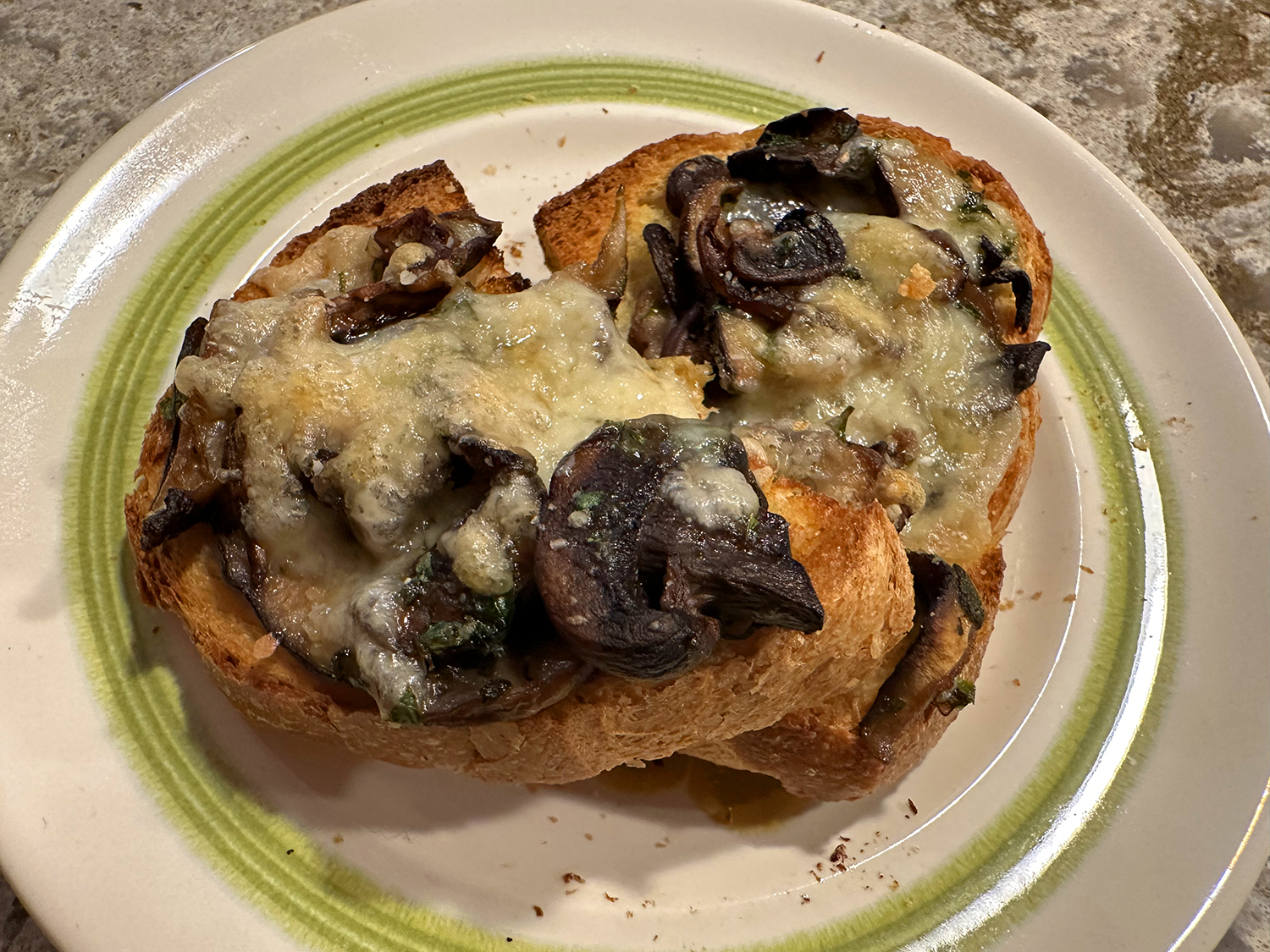
In Italian, this appetizer is known as Crostini di Funghi al Forno. Our first time making this lovely dish was for a small dinner party. Everyone loved it, so a few days later when attending another dinner party, we were tasked with bringing an appetizer and made the same thing. No disappointments.

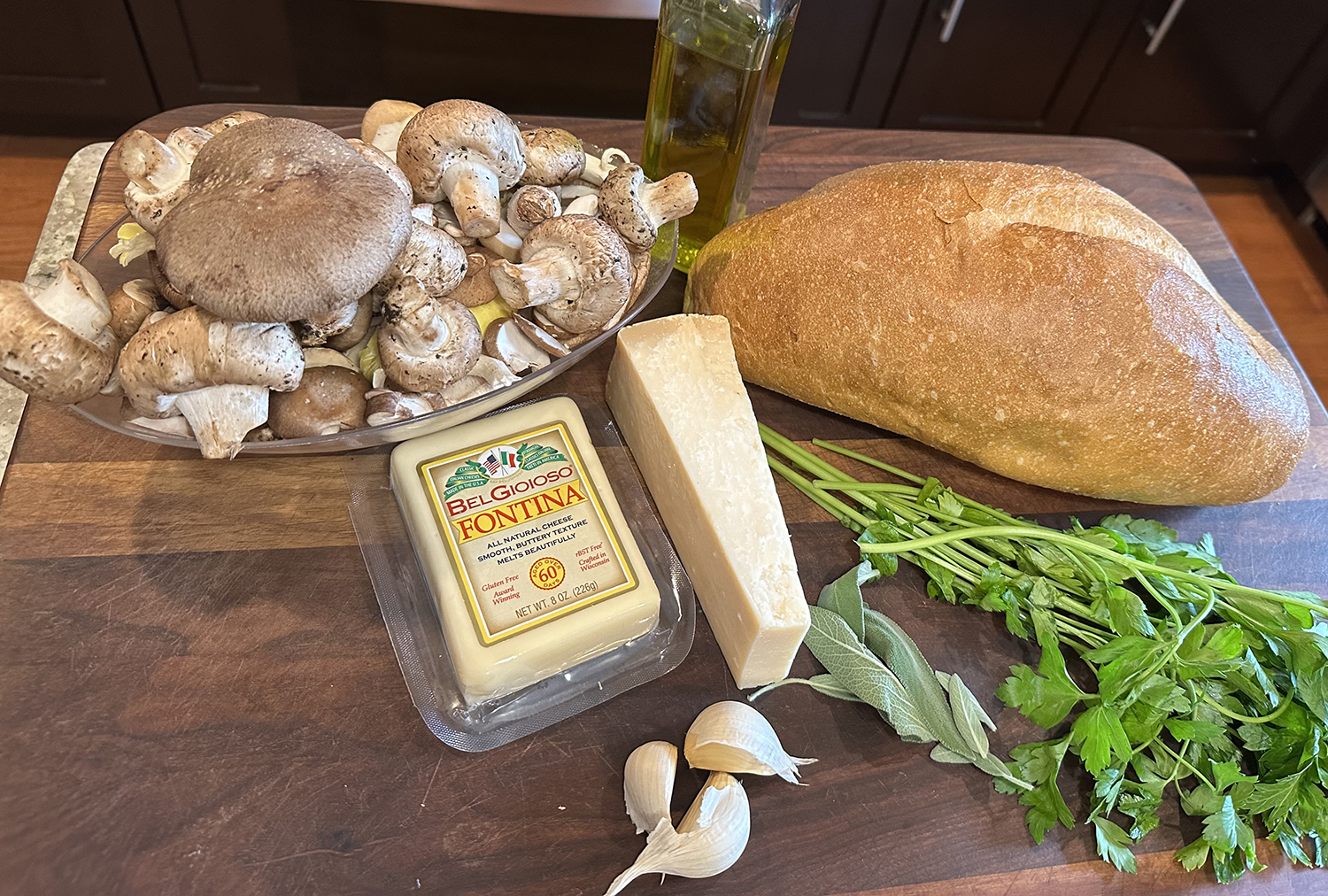
One of my favorite melting cheeses is fontina. Incredibly rich and creamy, the flavors of this cheese are sweet and pungent, unveiling tones of butter and roasted nuts as it lingers on your palate. Traditionally made from unpasteurized milk, the texture is semi-hard, smooth and adorned with small holes in the body.

Fontina is not just limited to Italy, there are versions of Danish and Swedish characterized by their waxed rinds and sweet savory flavor. A suitable substitute is Gruyère which produces a rich and creamy sauce similar to that of Fontina.

Baked Mushroom Crostini

  • Servings: 4
  • Difficulty: easy
  • Print

Ingredients

  • ¼ cup extra-virgin olive oil
  • 3 garlic cloves, crushed and peeled
  • 1 lb. mixed fresh mushrooms, sliced (cremini, button, shiitake, oyster, chanterelle)
  • 4 fresh sage leaves, chopped
  • ½ tsp. kosher salt
  • 2 Tbsp. chopped fresh Italian parsley
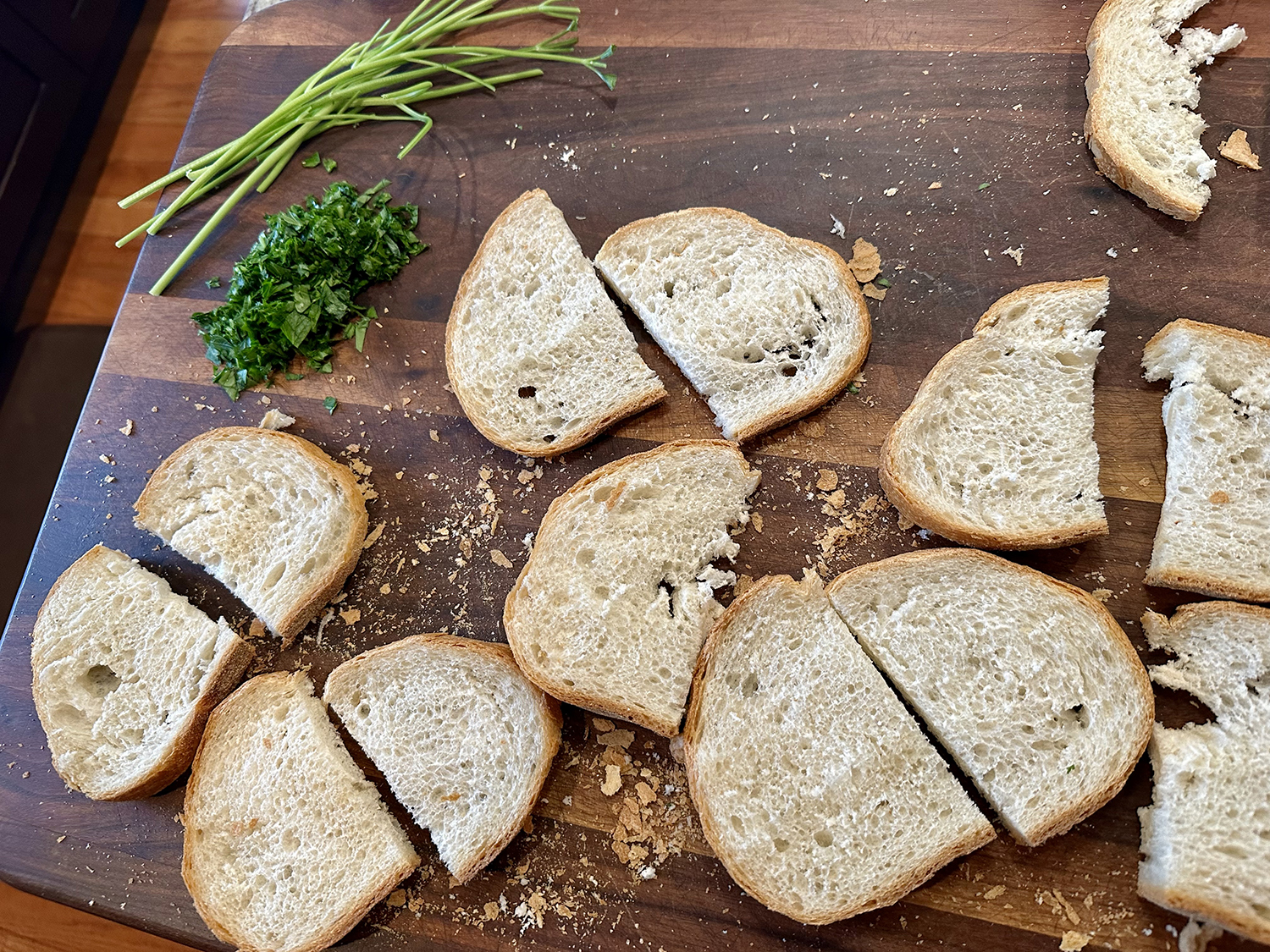
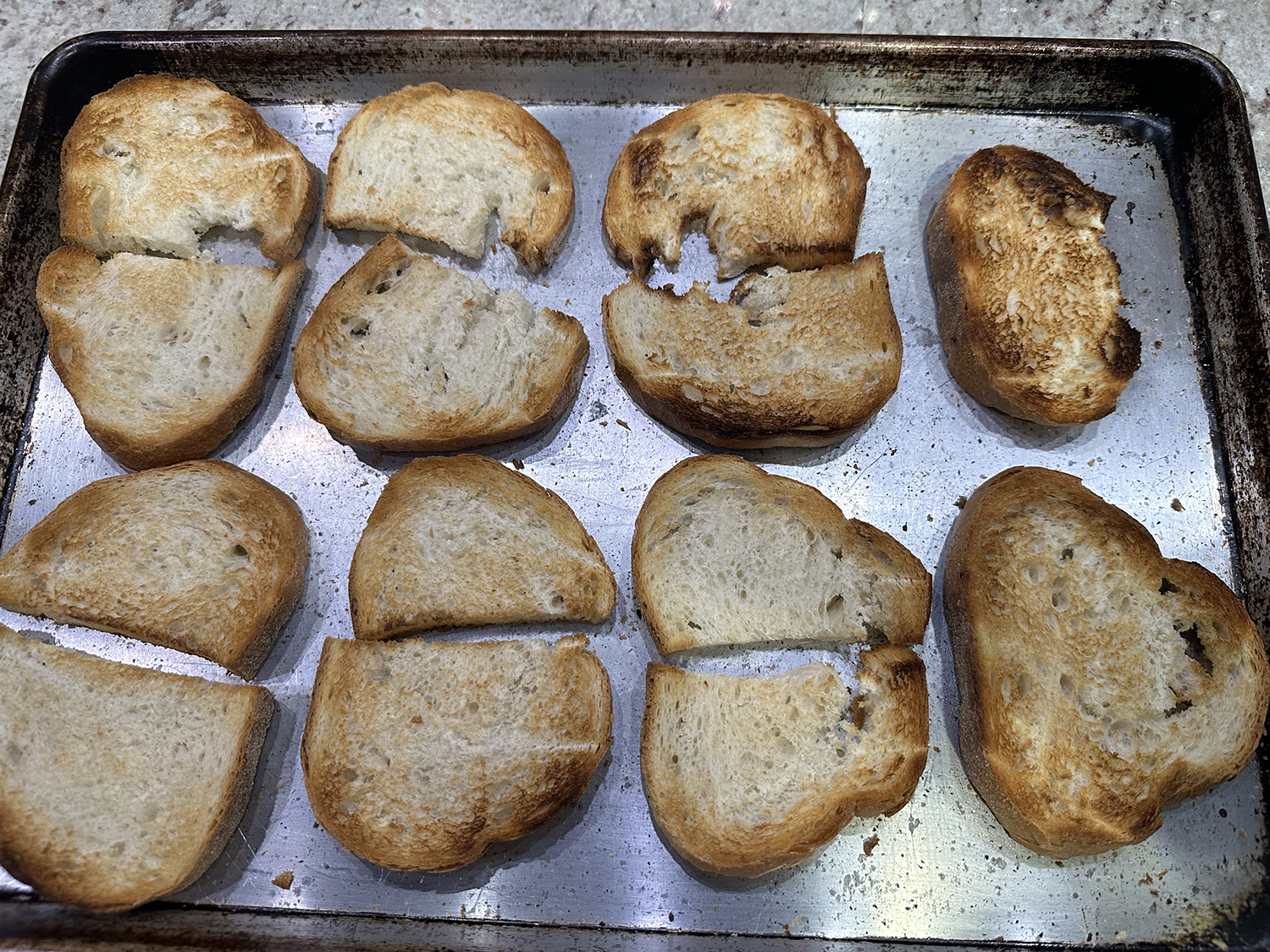
  • 8 slices country bread, very lightly toasted
  • 1 cup grated Italian fontina
  • ½ cup freshly grated Grana Padano

Direction

  1. Preheat the oven to 400 degrees.
  2. To a large skillet over medium-high heat, add 2 tablespoons of the olive oil. When the oil is hot, add the garlic cloves. Once the garlic is sizzling, add the mushrooms and sage, and cook, without stirring, until browned on one side, about 2 to 3 minutes. Stir, and brown the other side. Season with the salt, cover, and cook until tender, about 5 minutes. Uncover, remove the garlic, stir in the parsley, and set aside.
  3. On a baking sheet, brush the lightly toasted bread on both sides with the remaining 2 tablespoons olive oil. In a medium bowl, toss together the grated cheeses. Stir half of the cheese mixture into the mushrooms.
  4. Spread the mushroom mixture on the toasts, and sprinkle with the remaining grated-cheese mixture. Bake until the tops are browned and the cheese is bubbly, about 10 to 12 minutes. Serve hot.

http://www.lynnandruss.com

Recipe from Lidia Bastianich

Artichoke-Parmesan Soup

This sublime soup combines the nutty flavor of artichokes and the richness of Parmesan. Although fresh artichokes are preferred many home cooks may not have the patience for turning artichoke bottoms. Frozen artichokes—usually sold in nine-ounce packages labeled artichoke hearts—are a worthy substitute. The wine here works its magic, adding just enough acid to lighten the soup. 

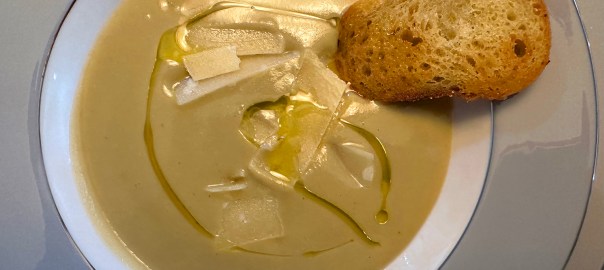
Homemade chicken stock adds oodles of flavor, so if you have some use it instead of the boxed or canned varieties. For a finishing touch, add a shower of shaved Parmesan, a swirl of good extra-virgin olive oil and serve with toasted brioche for dipping.

*If using frozen artichoke hearts, omit lemon and water and start at Step 2. The soup can be refrigerated overnight. Rewarm gently over moderately low heat.

Artichoke-Parmesan Soup

  • Servings: 4
  • Difficulty: easy
  • Print

Ingredients

  • One 2-oz. chunk of Parmigiano-Reggiano cheese, shaved into strips with a vegetable peeler
  • 1 lemon, halved
  • 4 large globe artichokes (about 3 1/2 lbs.); OR 4 cups frozen artichoke hearts*, thawed
  • 1/4 cup extra-virgin olive oil
  • 2 medium shallots, minced
  • Sea salt
  • 1 cup white wine, preferably Chardonnay
  • 3 cups chicken stock or canned low-sodium broth
  • 1 Tbsp. unsalted butter

Directions

  1. If using fresh artichokes: Squeeze the lemon juice into a large bowl of cold water and add the lemon halves. Break off or cut the stem from the base of the artichokes. Using your hands, snap off the tough outer leaves near the base. Continue snapping off leaves until only the central cone of yellow leaves with pale green tips remain. Using a large sharp knife, trim the top cone of leaves to just below the green tips. Trip any tough, dark green areas from the base with a small knife. Cut the artichoke hearts in half. Using a small spoon or a melon baller, scrape out and discard the hairy chokes. Cut each half lengthwise into 4 even slices. Place the artichoke slices in the acidulated water.
  2. In a large nonreactive saucepan, combine 2 tablespoons of the oil with the shallots and a pinch of sea salt and cook over moderate heat, stirring often, until softened but not brown.
  3. Stir in the remaining 2 tablespoons oil. Drain and add the artichoke slices and cook until slightly softened, about 2 minutes. Pour the wine all over the artichokes, increase the heat to moderately high and simmer until almost evaporated, about 7 minutes.
  4. Add the chicken stock and reduce the heat. Cover and simmer gently until the flavors have mingled, about 20 minutes.
  5. Transfer the soup to a food mill with a fine disk and puree. Discard any fibrous artichoke pieces that remain in the food mill. Return the soup to the pan; you should have about 3 cups. If the soup is too thin, return it to the saucepan and boil until reduced and thickened.
  6. Just before serving, whisk the butter into the hot soup over moderate heat until melted and incorporated. Pour the soup into heated soup plates or bowls and scatter the cheese strips on top. Serve immediately.

http://www.lynnandruss.com

Recipe by Patricia Wells for Food & Wine

Spicy Black Bean, Twice-Cooked Potatoes

Admittedly, we have never stir-fried potatoes before. So our first foray was this vegetarian/vegan dish based on a favorite Chinese dish called “Twice-Cooked Pork”. In lieu of meat, this dish features potatoes roasted in the oven and then stir-fried with a spicy black sauce. You can adjust the heat to cater to your own preferences.

When the potatoes come out of the oven after 30 minutes or so, they are fabulous to eat as they are, without the additional ingredients and stir-frying. So if you have a picky eater, push a small portion aside for them (reheat briefly in microwave if necessary).

Spicy Black Bean, Twice-Cooked Potatoes

  • Servings: 4
  • Difficulty: easy
  • Print

Ingredients

  • 4-5 medium Yukon gold potatoes; scrubbed and cut into bite-sized chunks
  • 1 Tbsp. salt
  • 1/4 tsp. white pepper
  • 1/4 tsp. five-spice powder
  • Neutral oil
  • 4 cloves garlic (smashed and coarsely chopped)
  • 1-6 dried red chilies, chopped and de-seeded; depending on your tolerance for heat
  • 2 Tbsp. fermented black beans; soaked in hot water for 15 minutes; do not discard water
  • 1 Tbsp. Shaoxing wine
  • 1 tsp. light soy sauce
  • 1 tsp. dark soy sauce
  • ½ tsp. sesame oil
  • 2 Tbsp. black bean soaking water
  • 1 cup leeks; sliced on the diagonal into thin strips

Directions

  1. Preheat the oven to 375 degrees F, and spread the potatoes on a parchment-lined baking sheet. Toss with salt to taste, white pepper, and five-spice powder. Drizzle with olive oil and roast for about 30 minutes, or until fork tender. (Ours took 10 minutes longer.)
  2. Once the potatoes are done roasting, heat a couple tablespoons of oil in a wok over medium heat. Add the garlic, chili, and black beans. Cook for 30 seconds, and be careful not to burn the ingredients.
  3. Turn heat to high and add the sliced leeks. Stir-fry for 2 minutes.
  4. Add the wine, soy sauces, sesame oil, and water. Stir everything together and add the roasted potatoes. Stir-fry for another 2 minutes. Serve immediately.

http://www.lynnandruss.com

Adapted from a recipe by Judy Leung in The Woks of Life

Mujaddara (Middle Eastern Rice with Lentils, Frizzled Onions, and Lemony Yogurt Sauce)

Just as there are umpteenth recipes for chili, so there are for mujaddara—that vegetarian Middle Eastern rice-and-lentil dish topped with crisp-fried onions and tangy yogurt sauce. It borrows ingredients and techniques from cookbook authors like Yotam Ottolenghi and Paula Wolfert, plus skilled home cooks. If you have time, toast the spices whole, then grind them yourself—it’s worth the extra step, but not necessary.

Never heard of Mujaddara? Mujaddara is a signature Middle Eastern dish of lentils, rice, and deeply caramelized onions. A bold and comforting dish that’s typically served with a topping of crispy onion rings and a side of plain yogurt with a fresh Mediterranean salad such as cucumber and tomato salad, fattoush salad, or shirazi salad.

The secret to an authentic mujadara recipe is in the onions. This dish starts and ends with onions. First, deeply caramelized chopped onions are cooked with the rice and lentils, imparting flavor and the deep, golden hue this dish is known for. And to finish your mujaddara, you’ll top the cooked rice and lentils with thinly sliced, crispy onions. Alas, ours never got super crispy, we think due to the skillet not being wide enough. Instead they steamed more than crisped.

Mujaddara (Middle Eastern Rice with Lentils, Frizzled Onions, and Lemony Yogurt Sauce)

  • Servings: 6
  • Difficulty: moderate
  • Print

Ingredients

FOR THE SAUCE:

  • 1 cup full-fat plain Greek yogurt
  • 1 clove garlic, grated
  • 1 tsp. finely grated lemon zest
  • 2 Tbsp. fresh lemon juice
  • Kosher salt, to taste
  • Ground sumac and extra-virgin olive oil, for garnish (optional)

FOR THE RICE AND LENTILS:

  • 1 1/2 cups olive or vegetable oil, for frying
  • 4 medium onions, (1 1/2 lbs.) halved through the root end then thinly sliced
  • Kosher salt
  • 1 cup basmati rice, rinsed in a strainer until the water runs clear
  • 2 tsp. ground coriander
  • 2 tsp. ground cumin
  • 3/4 tsp. ground cinnamon
  • 1/2 tsp. ground allspice
  • 1/4 tsp. ground turmeric
  • 1 pinch cayenne pepper, or more to taste
  • 4 cloves garlic, finely chopped
  • 1 1/4 cups brown or green lentils, rinsed and checked for any debris
  • Coarsely chopped parsley leaves or cilantro, for garnish
  • 4 scallions, trimmed and thinly sliced (optional)

Directions

  1. In a small serving bowl, stir together the yogurt, garlic, lemon zest, lemon juice, and salt to taste. Cover and refrigerate.
  2. Place the lentils in a small saucepan, cover with plenty of water, bring to a boil, and cook for 12 to 15 minutes, until the lentils have softened but still have a little bite. Drain and set aside.
  3. To a large pot with a lid, such as a Dutch, add 1½ cups of oil and turn the heat to high. When it’s hot and shimmering, reduce the heat to medium-high, add one-third of the onions, and fry, stirring occasionally with a slotted spoon, until crisp and deep golden brown, about 5-7 minutes. Using the slotted spoon, transfer to a paper-towel-lined baking sheet and sprinkle with salt. Repeat with the two remaining batches of onions, adding a little extra oil to the pot if needed. When all of the onions have been fried, strain the oil into a heatproof container and set aside.
  4. To the empty pot, add the coriander, cumin, cinnamon, allspice, turmeric, cayenne, garlic, and 3 tablespoons of the reserved oil and turn the heat to medium. Cook, stirring continuously, until fragrant, about 1-2 minutes. Add the rice and cook, stirring continuously, until translucent, about 2 minutes, then add 1 1/2 cups of water and 1 teaspoon of salt. Stir in the lentils and bring to a boil. Turn the heat to low, cover, and cook until the rice is cooked and has absorbed the water, about 15 minutes. Turn off the heat and remove the pot from the stove, lift off the lid, and quickly cover the pan with a clean tea towel. Seal tightly with the lid and let rest for 10 minutes.
  5. Remove the lid and the dish towel. Stir in half of the reserved onions, fluffing the rice as you go with a fork. Pile the mixture into a serving bowl, then scatter with the remaining onions and garnish with parsley or cilantro and the sliced scallions, if using. Uncover the yogurt sauce, sprinkle with sumac, drizzle with oil, and serve on the side.

http://www.lynnandruss.com

Recipe by Jerusalem: A Cookbook, by Yotam Ottolenghi and Sami Tamimi