Tag Archives: vegetarian

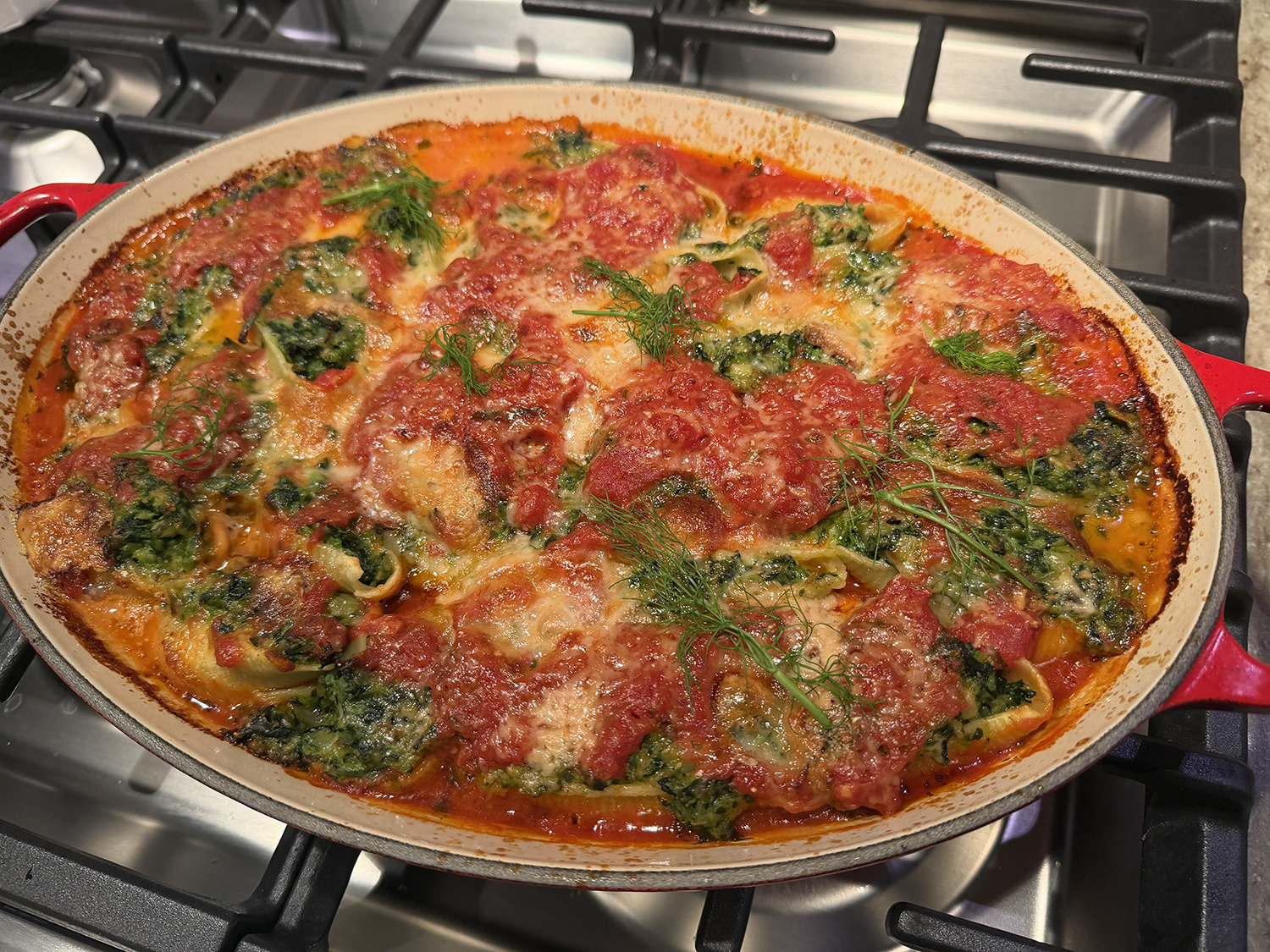
Stuffed Shells with Peas, Spinach and Fennel

“Sauced with a bright-tasting marinara (the key is cutting the canned tomatoes with passata, Italy’s raw, strained tomato purée) and topped with grated Parmesan and more Taleggio, these stuffed shells deliver all the satisfying coziness of the original—but tastes like a welcome refresh.”

While it is a rather labor-intense undertaking, and uses lots of kitchen pots and appliances, it is a very satisfying, and less heavy vegetarian pasta option. Before even starting, make sure you have a broiler-proof casserole dish such as enameled cast iron, or your vessel could crack under the intense heat of the broiler.

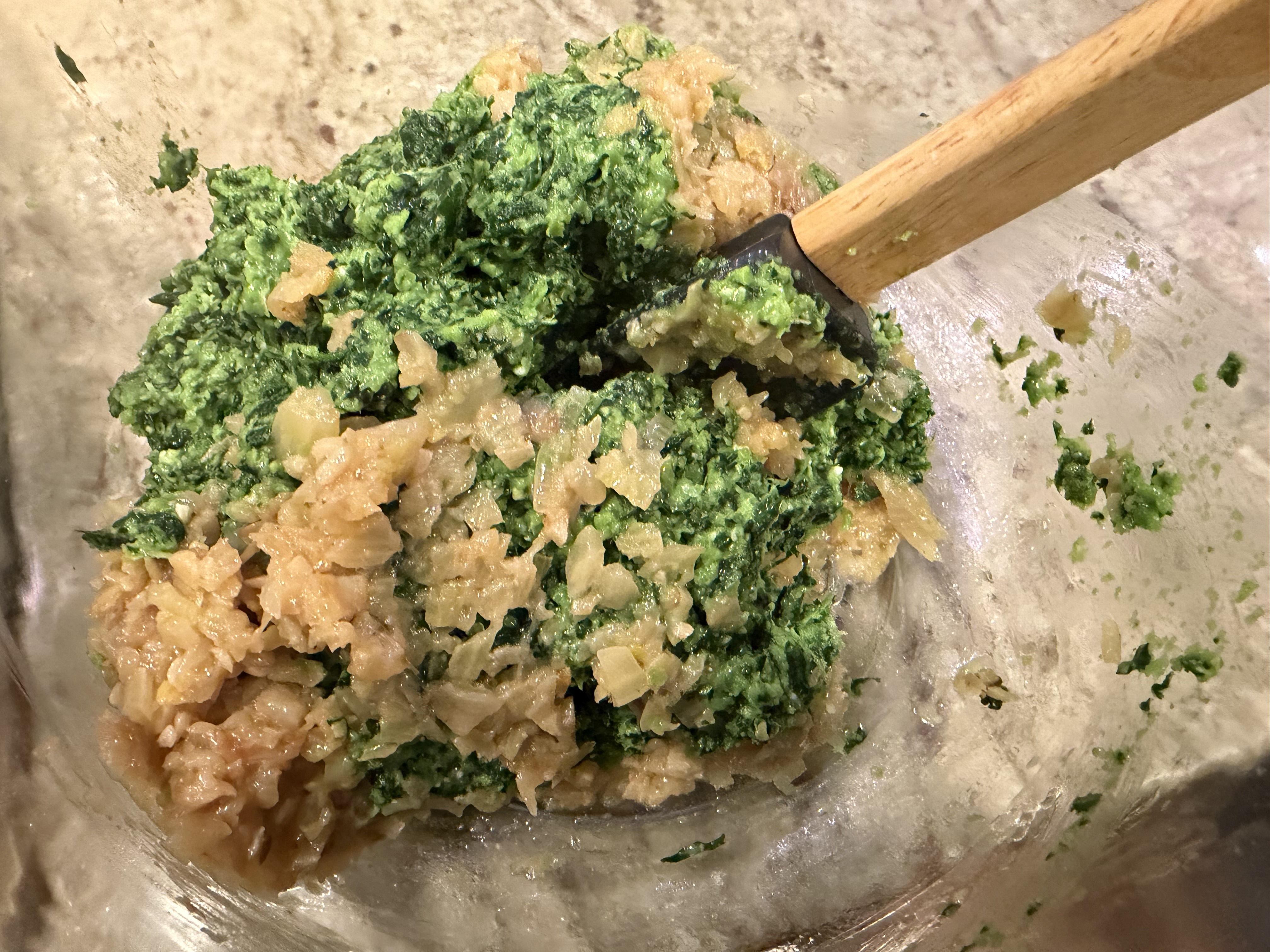
The humble green pea is the star here, thanks to their abundance of water and soluble fiber, which renders them wonderfully smooth when puréed. In addition, a full pound of frozen chopped spinach is added for more green color and freshness. (Freezing breaks open the leaves’ cells, softening them.)

Sautéed fennel, shallot and garlic bring gentle sweetness, and plenty of basil and lemon zest round things out. Taleggio cheese is the binder to give the filling cohesion as well as some richness and adds robust flavor to complement the stuffing. Fontina cheese would make a fine replacement for Taleggio (perhaps even more of it?)

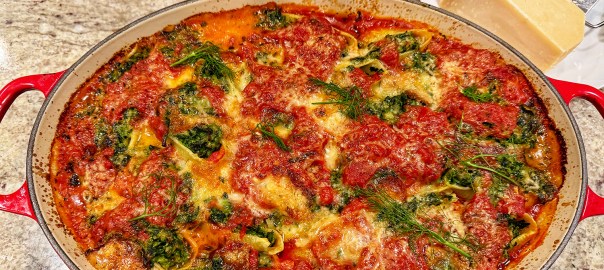
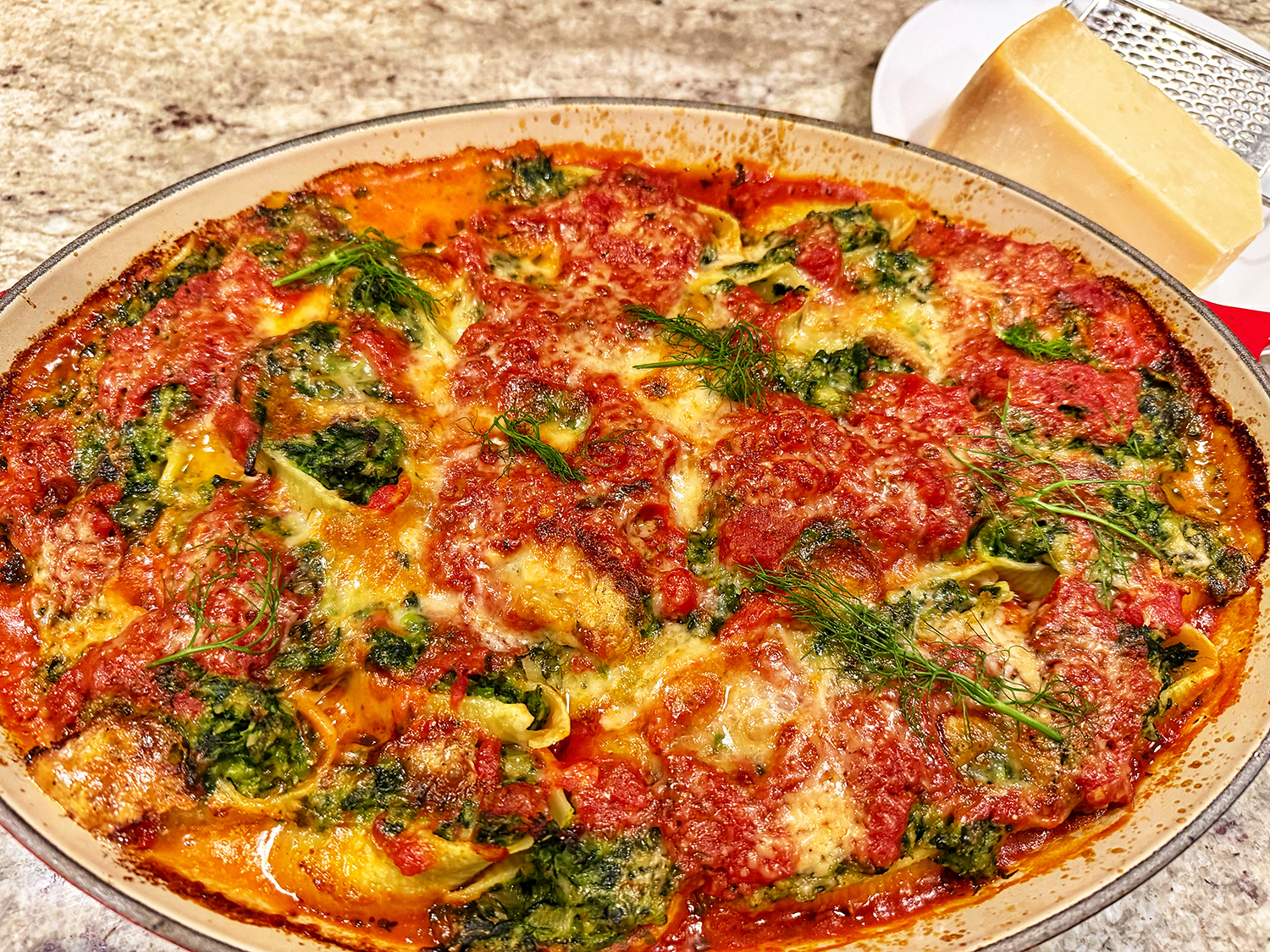
While the recipe calls for a rectangular 9″ x 13″ broiler-proof casserole dish, ours was oval in shape, but still fit exactly 25 jumbo stuffed shells. The unused shells were stored in a seal proof container with a bit of sauce to prevent sticking together, and saved for another use.

TIP: To make the slippery shells easier to fill, hold each lengthwise in your palm and gently squeeze the ends; the center will pop right open!

*BTW, a whole bottle (24 oz.) of passata was inadvertently included in our sauce. But in the end it was a happy mistake, because we liked the additional sauce. We used more in the casserole, and leftovers for passing purposes.

Stuffed Shells with Peas, Spinach and Fennel

  • Servings: 6-8
  • Difficulty: easy
  • Print

Ingredients

Sauce

  • 1⁄4 cup extra-virgin olive oil
  • 2 garlic cloves minced
  • 1 28-oz. can crushed tomatoes
  • 1 cup passata (or more, see above*)
  • 1⁄2 tsp. red pepper flakes
  • 3 Tbsp. chopped fresh basil
  • 3⁄4 tsp. table salt
  • 1⁄4 tsp. sugar

Filling

  • 1 Tbsp. extra-virgin olive oil
  • 1 large fennel bulb, stalks discaded, bulb halved, cored, and chopped fine
  • 1 lage shallot, peeled, halved and sliced thin
  • 2 garlic cloves, minced
  • 2 1⁄4 tsp. table salt, divided
  • 1 lb. frozen peas, thawed
  • 8 oz. Taleggio cheese, rind removed, divided
  • 2 tsp. grated lemon zest
  • 1⁄4 tsp. pepper
  • 1 lb. frozen chopped spinch, thawed and squeezed dry
  • 3 Tbsp. chopped fresh basil

Shells

  • 12 oz. jumbo pasta shells
  • Table salt for cooking pasta
  • 1⁄4 cup grated Parmesan cheese

Directions

  1. For the Sauce: Heat oil and garlic in medium sauce pan, over medium heat, stirring frequently, until garlic is fragrant but not browned, about 2 minutes. Stir in tomatoes, passata and pepper flakes and simmer until slightly thickened, about 10 minutes. Stir in basil, salt and sugar. Cover and set aside.
  2. For the Filling: Heat oil in 12-inch skillet over medium heat until shimmering. Add fennel, shallot, garlic and 1/4 teaspoon salt and cook, stirring frequently, until fennel is translucent and shallot is beginning to brown, about 6 to 8 minutes. Add 1/2 cup of water, cover and cook for 5 minutes. Uncover and continue to cook, stirring frequently, until liquid has evaporated and fennel is crisp-tender and light golden brown, about 5 more minutes.
    Process peas in food processor for 15 seconds. Scrape down sides of bowl. Add half of Taleggio, lemon zest, pepper, and remaining 2 teaspoons salt and continue to process until cheese is incorporated and mixture is smooth, 20-30 seconds, scraping down bowl as needed. Add spinach and pulse to incorporate, 5 to 6 pulses. Transfer pea mixture to bowl with fennel, add basil, stir and set aside.
  3. For the Shells: Bring 4 quarts water to boil in large pot. Add pasta and 1 tablespoon salt and cook, stirring occasionally, until al dente, about 9 minutes.Drain pasta and rinse under cold water until cool to touch. Reserve 25 unbroken shells, save the others for another purpose.
    Adjust oven rack to middle position and heat oven to 350°F. Spread 2 cups sauce over bottom of 13-by-9 broiler-safe baking dish. Using spoon, fill each shell with about 2 tablespoons of filling. Arrange shells open side up in rows of 5 shells over sauce in dish. Pour remaining sauce evenly (will probably not cover shells completely). Sprinkle with Parmesan cheese. Break remaining Taleggio into small pieces and dot evenly over top.
  4. To Finish: Cover dish slightly with aluminum foil and bake for 35 to 40 minutes until heated through. Remove foil and return dish to oven. Turn on broiler. Broil until sauce is bubbling and cheese is lightly browned, about 5 minutes. Transfer dish to wire rackand let cool for 10 minutes. Serve.
    NOTE: Fully assembled shells can be refrigerated for up to 24 hours; increase baking time by 10 minutes.

http://www.lynnandruss.com

Recipe by Steve Dunn for Cook’s Illustrated

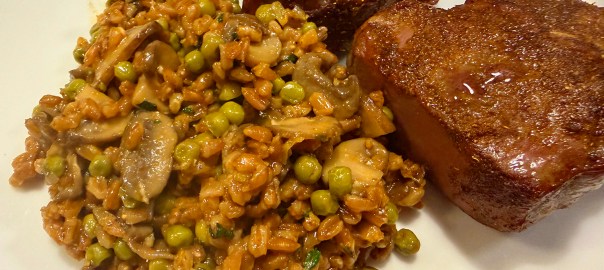
Farro with Mushrooms and Peas

We were pleasantly surprised how much we loved this easy farro recipe with mushrooms and peas. The side dish is creamy and packed with the flavors of fresh thyme, garlic, and a little Parmesan cheese. Think of this as a farro risotto type dish, but with far less TLC than your typical risotto requires! 

It is perfect as a vegetarian main next to some fresh salad, or serve it as a side next to your favorite protein, such as we did with loin lamb chops. You can also prepare it in advance and use as lunch for several days.

Unfamiliar with farro? It is a nutty-flavored Mediterranean grain that has been in use since the time of ancient Egypt. And not only is it chockful of good-for-you nutrition — fiber, protein, vitamins, minerals and antioxidants — it is also hearty, deeply satisfying, and quite versatile.

NOTES: As a vegetarian entree or main course, this recipe will serve 4. If served as a side next to your favorite protein such as salmon, chicken, pork or lamb, it can serve 5 to 6 people.

This farro recipe will keep well for 3 to 4 days, if refrigerated properly in airtight containers. When you need to warm it up, just use a skillet over medium-low heat. It helps to add a little bit of water and stir regularly till warmed through.

Farro with Mushrooms and Peas

  • Servings: 4
  • Difficulty: easy
  • Print

Ingredients

  • Extra virgin olive oil
  • 3 green onions, chopped
  • 8 oz. baby bella mushrooms cleaned, trimmed and sliced
  • 1 cup frozen peas
  • 1 tsp. chopped garlic
  • 1 cup pearled farro
  • 1 tsp. sweet paprika
  • 2 springs fresh thyme, leaves only
  • Salt and pepper
  • 2 1/4 cups vegetable broth or chicken broth
  • 1/2 cup grated Parmesan cheese
  • 1/4 cup fresh mint leaves, chopped

Directions

  1. In a deep skillet with a lid, heat 2 tablespoons of olive oil over medium-high heat. Add green onions, mushrooms, and peas; sauté for 3-4 minutes. Add fresh garlic and stir briefly until fragrant. Now add farro, sweet paprika, thyme, and a little salt and pepper. Cook for 4-5 minutes, stirring regularly.
  2. Meanwhile, in a separate pot over medium-high heat, bring the broth to a boil. Add the boiling broth to the farro mixture. Bring everything to a boil, then lower the heat to medium-low. Cover and cook for 20 minutes (or according to package directions, ours took 30 minutes) until the liquid is absorbed.
  3. Remove from heat and add grated Parmesan and fresh mint leaves. Serve warm.

http://www.lynnandruss.com

Recipe by Suzy Karadsheh

Mushroom and Lentil Ragù

A vegetarian meal with a meaty undertone and a soulful depth of flavor. Here, nutty mushrooms and quick-cooking lentils play nicely together for a flavor-packed, meatless take on classic ragù. Traditionally, ragù gets its signature savory flavor from slow-cooked meat like ground beef or pork.

In this vegetarian version, a mix of sautéed mushrooms, such as oyster and cremini, lends earthy flavor and texture, while black lentils — a quicker-cooking legume than green or red lentils — gives the sauce body.

Lentils are prized in the Mediterranean, and most Italians would agree that the best lentils come from Southern Italy. Although they cook in under half an hour, black (Beluga) lentils remain a bit more sturdy throughout the cooking process than most other lentils. Instead (because we had them on hand), we used Puglia lentils which are celebrated for their earthy taste and numerous health benefits.

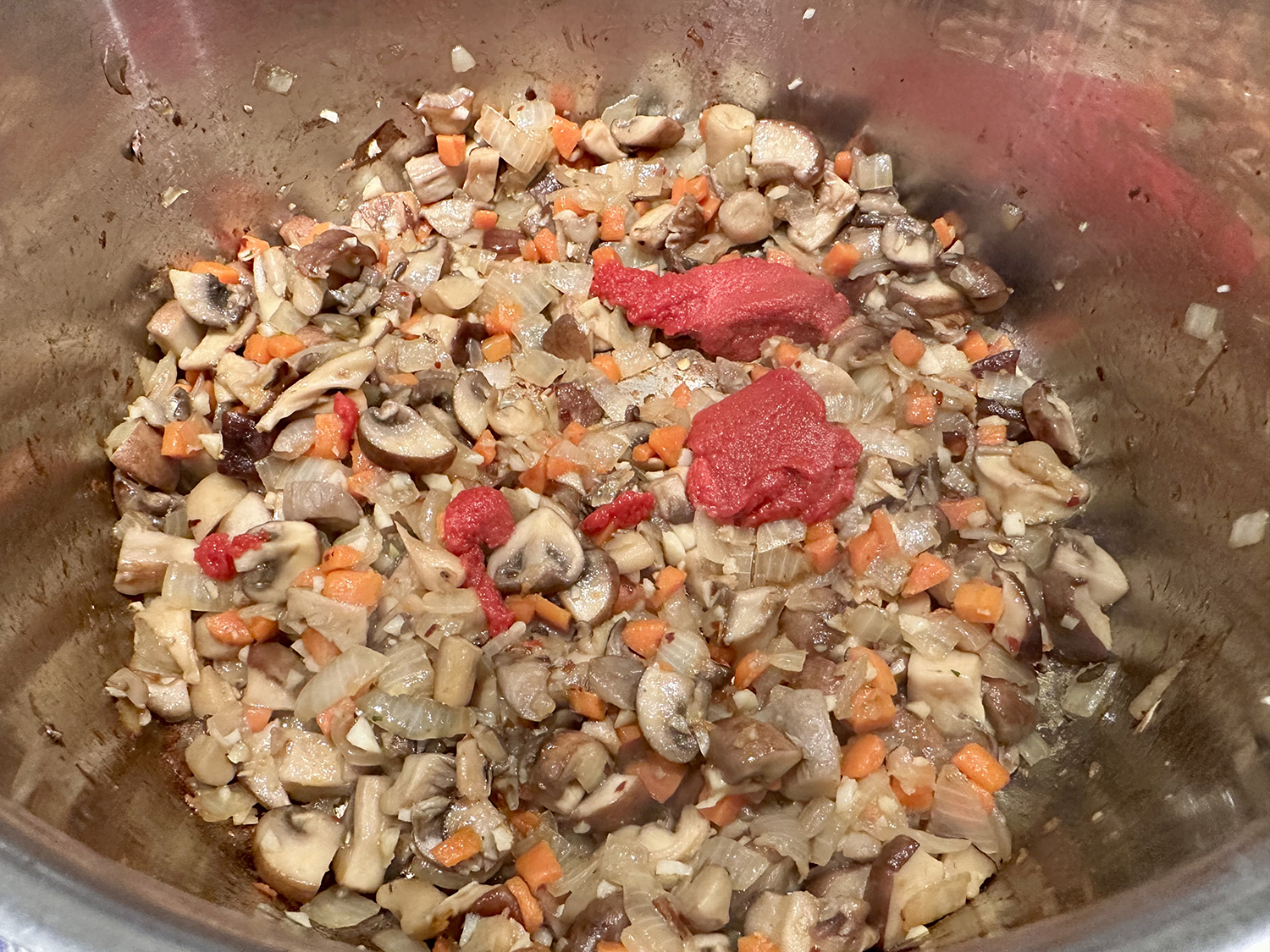
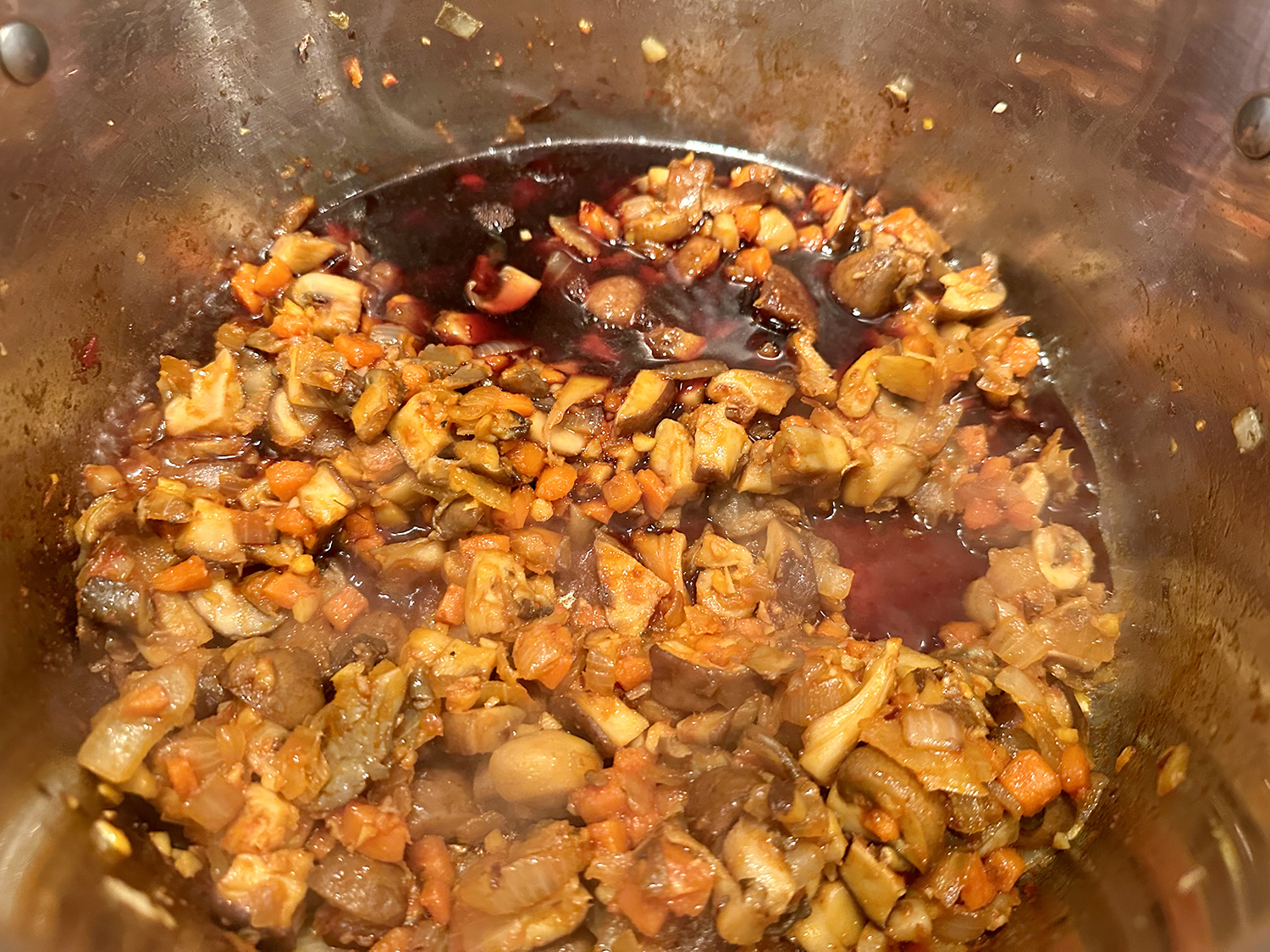
Like any ragù, this dish relies entirely on building layers of flavor. Sautéing the mushrooms, onions, and carrots until browned and toasting the tomato paste creates a deep foundation of umami. Deglazing the brown bits at the bottom of the Dutch oven with wine and stock infuses the lentils and sauce with rich, savory notes.

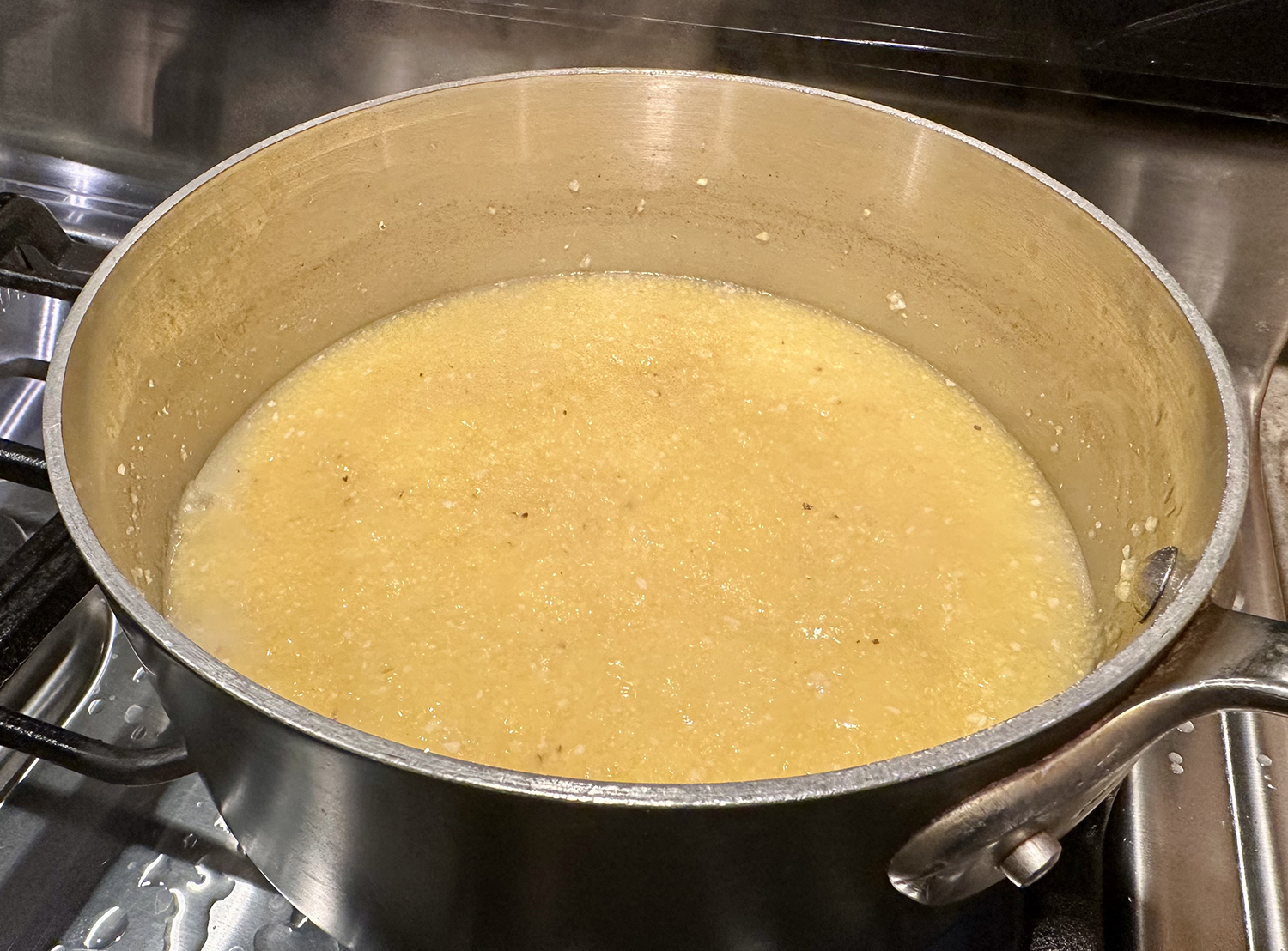
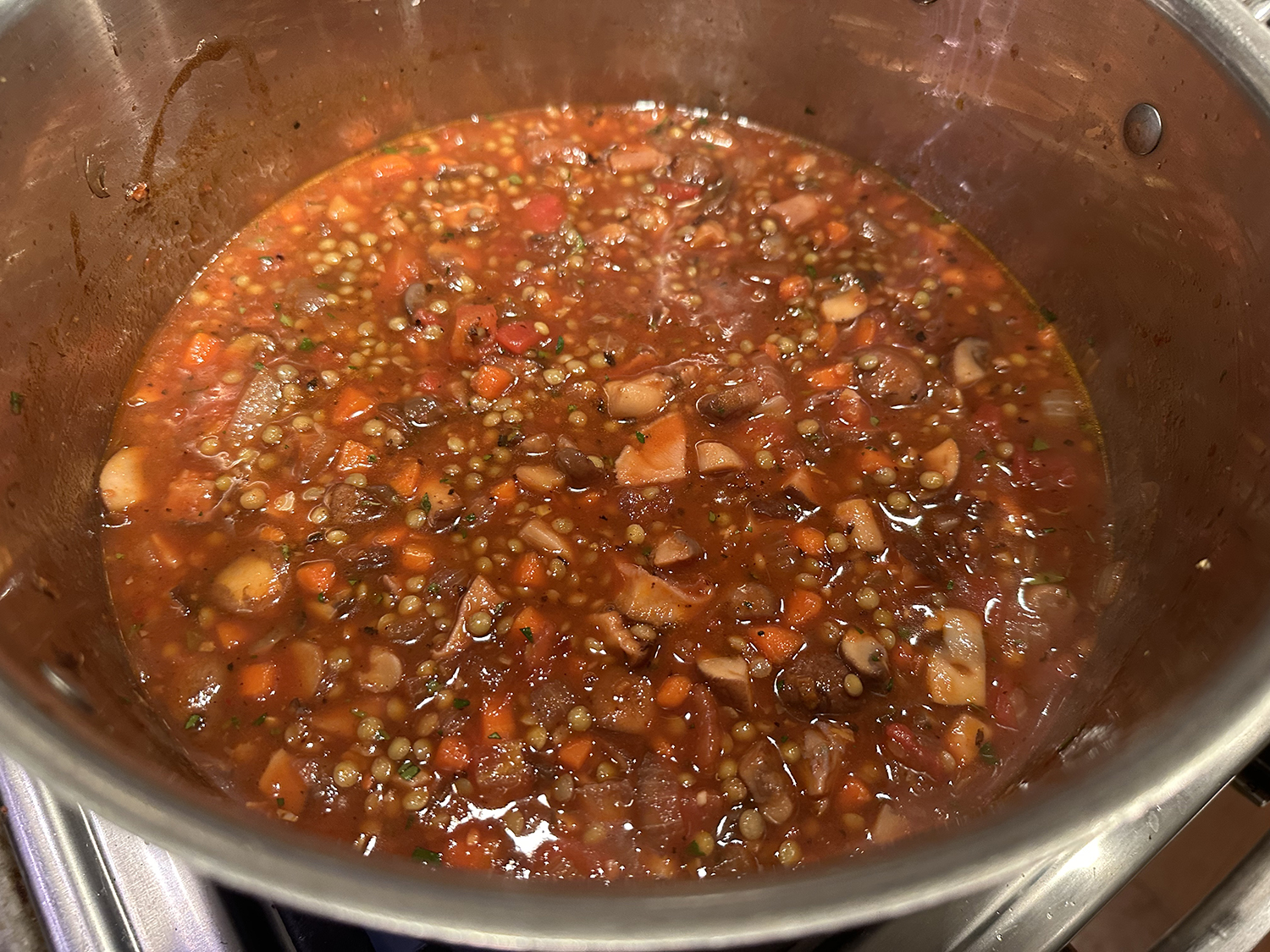
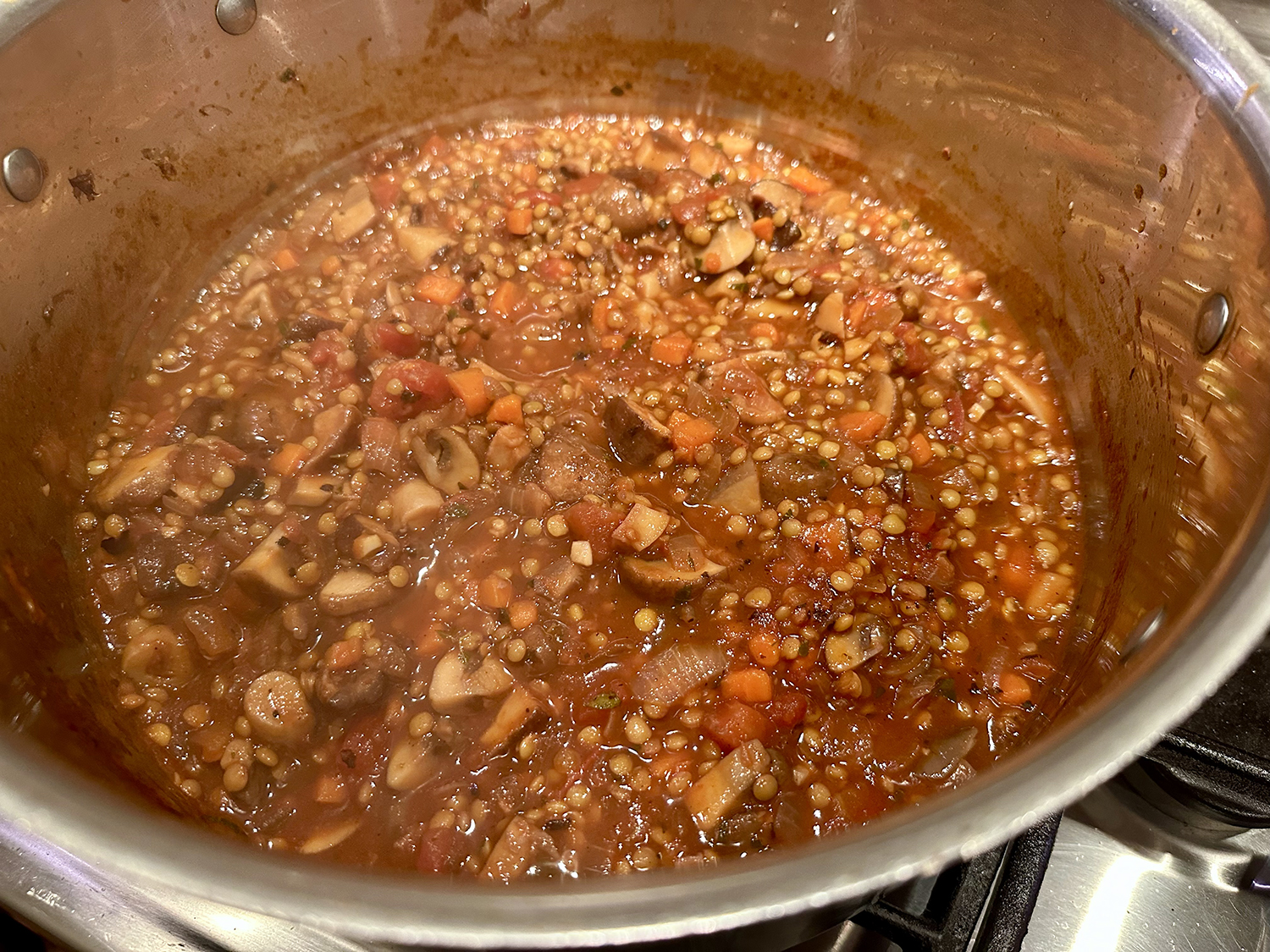
Simmered in a red wine sauce fortified with vegetable broth, the lentils become tender and creamy, resulting in a hearty sauce that comes together in less than an hour and proves to be more than the sum of its parts. Serve over creamy cooked polenta or fresh pappardelle for a filling meal. 

Make Ahead: You can make this ragù up to three days in advance and store it covered in the refrigerator. When reheating, you may find that the lentils have absorbed some of the liquid. Simply thin it back out to your desired consistency with vegetable stock or water. This recipe is also freezer-friendly. Let it cool completely, then ladle it into freezer-safe containers or large resealable plastic bags, and store it in the freezer for up to two months.

Mushroom and Lentil Ragù

  • Servings: 6-8
  • Difficulty: easy
  • Print

Ingredients

  • 1 cup dried black lentils
  • 1/4 cup extra-virgin olive oil, plus more for drizzling
  • 1 lb. mixed fresh mushrooms (such as cremini, oyster, and portobello), stemmed and chopped (about 5 1/2 cups)
  • 1 medium yellow onion, chopped (about 1 1/2 cups)
  • 2 medium carrots, peeled and diced (about 1 cup)
  • 4 tsp. kosher salt, divided
  • 4 large garlic cloves, minced
  • 1/4 tsp. crushed red pepper
  • 2 Tbsp. tomato paste
  • 1 cup (8 oz.) dry red wine
  • 2 cups vegetable broth
  • 1 14.5-oz. can crushed tomatoes
  • 2 Tbsp. chopped fresh oregano, plus more for garnish
  • 1/2 cup heavy cream
  • 2 oz. Parmigiano-Reggiano cheese, finely shredded (about 1/2 cup), plus more for garnish
  • Cooked polenta, for serving

Directions

  1. Bring a medium saucepan of water to a boil over high. Add lentils, and cook, uncovered, until plump and tender, about 10 minutes. Remove from heat, and let stand for 10 minutes; drain and set aside.
  2. Heat oil in a large Dutch oven over medium-high. Add mushrooms, onion, carrots, and 1 teaspoon salt. Cook, stirring occasionally, until mushrooms begin to brown and stick to the bottom of the pot, 12 to 14 minutes. Add garlic and crushed red pepper; cook, stirring often, until fragrant, about 2 minutes. Add tomato paste; cook, stirring constantly, until paste darkens in color, about 2 minutes.
  3. Add wine, and scrape up any browned bits from the bottom of the Dutch oven; cook until wine is almost evaporated, about 2 minutes. Stir in broth, crushed tomatoes, oregano, cooked lentils, and remaining 1 tablespoon salt. Bring to a boil over medium-high; reduce heat to medium-low, and simmer, uncovered, until flavors meld, 15 to 20 minutes.
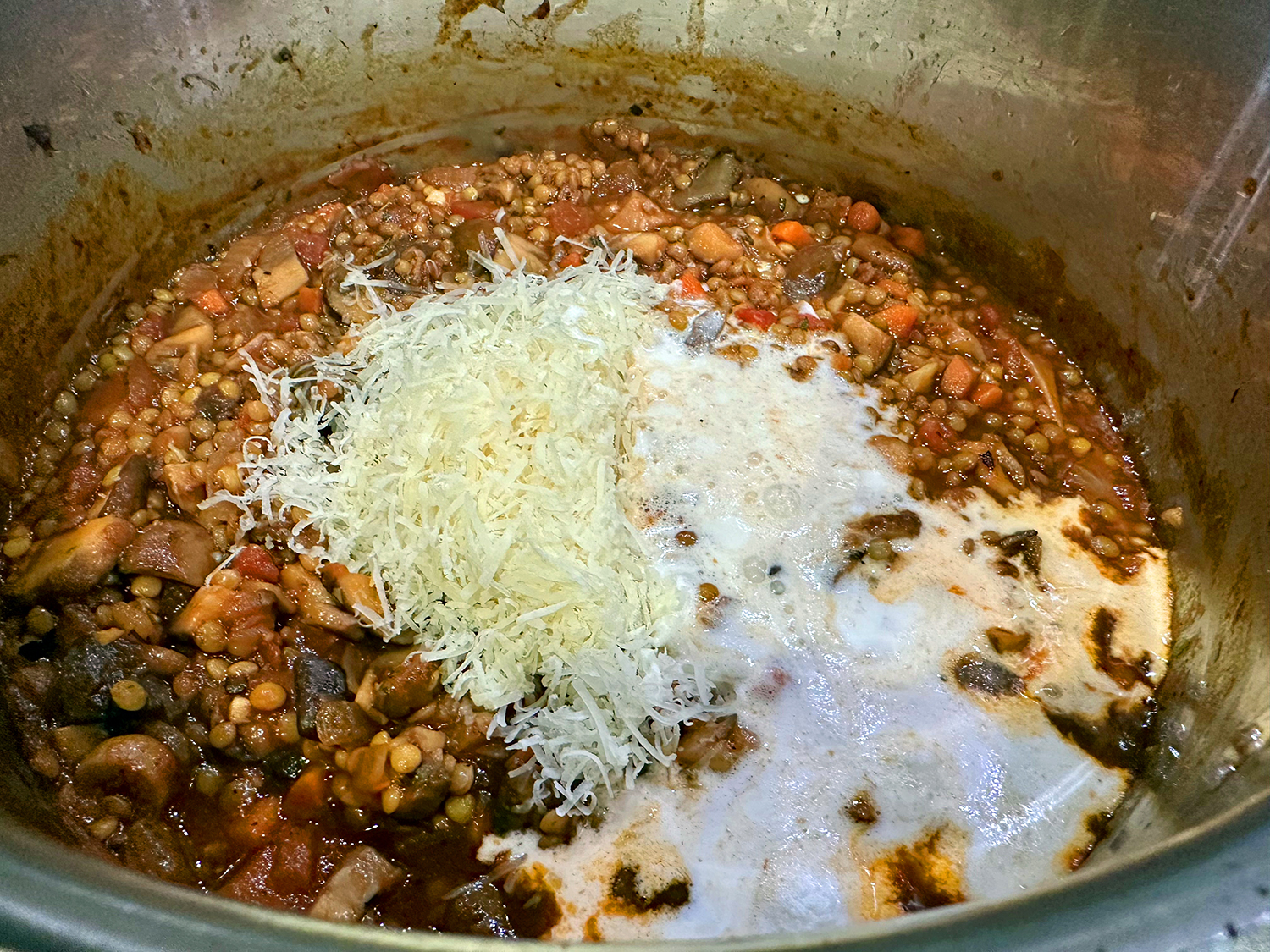
  4. Remove Dutch oven from heat, and stir in cream and cheese. Serve ragù over cooked polenta. Garnish with additional oregano and cheese, and drizzle with olive oil. Serve hot.

http://www.lynnandruss.com

Recipe by Anna Theoktisto for Food & Wine

Italian Green Beans (Fagiolini alla Genovese)

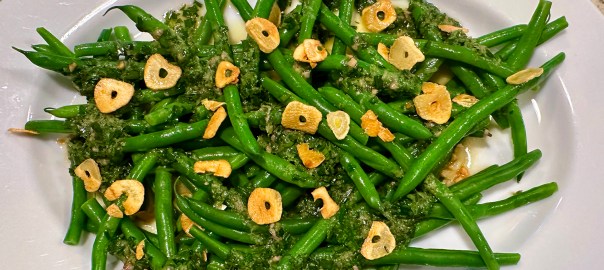
This version on Genoese-style green beans (Fagiolini alla Genovese) creates tender blanched green beans tossed in a bold, zippy dressing made with anchovies, lemon juice, and olive oil. Finished with crispy garlic chips, it’s a quick, flavor-packed vegetable side dish that’s both easy and elegant. Definitely company-worthy.

Italian Green Beans (Fagiolini alla Genovese)

  • Servings: 4
  • Difficulty: easy
  • Print

Ingredients

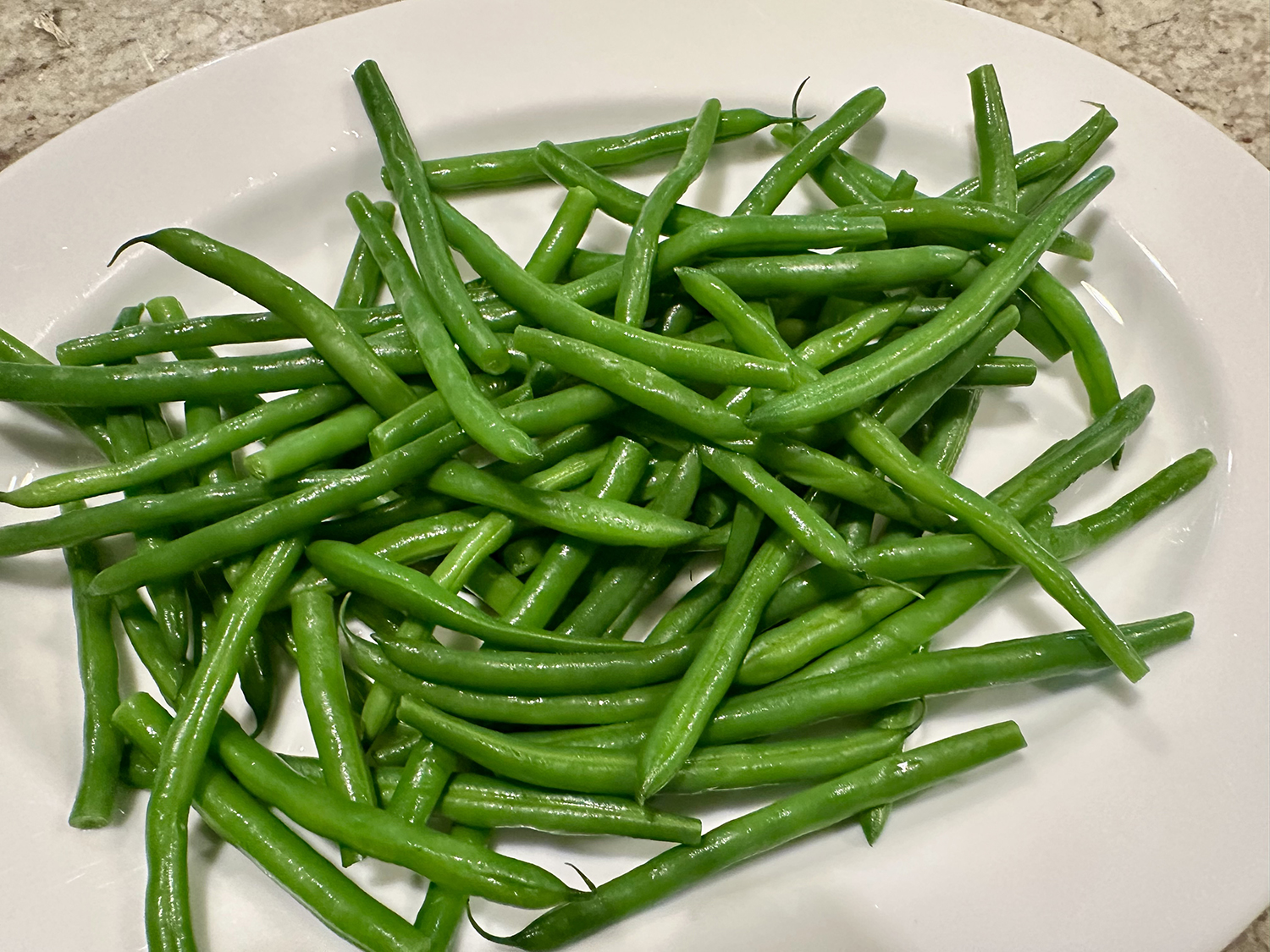
  • 1 lb. fresh green beans, trimmed
  • Kosher salt
  • 3 Tbsp. extra virgin olive oil
  • 2 large cloves garlic, very thinly sliced
  • 1/4 cup finely chopped fresh chives
  • 2 Tbsp. finely chopped fresh parsley
  • 4 cured oil-packed anchovy fillets, finely chopped
  • 1 large lemon, zested and juiced

Directions

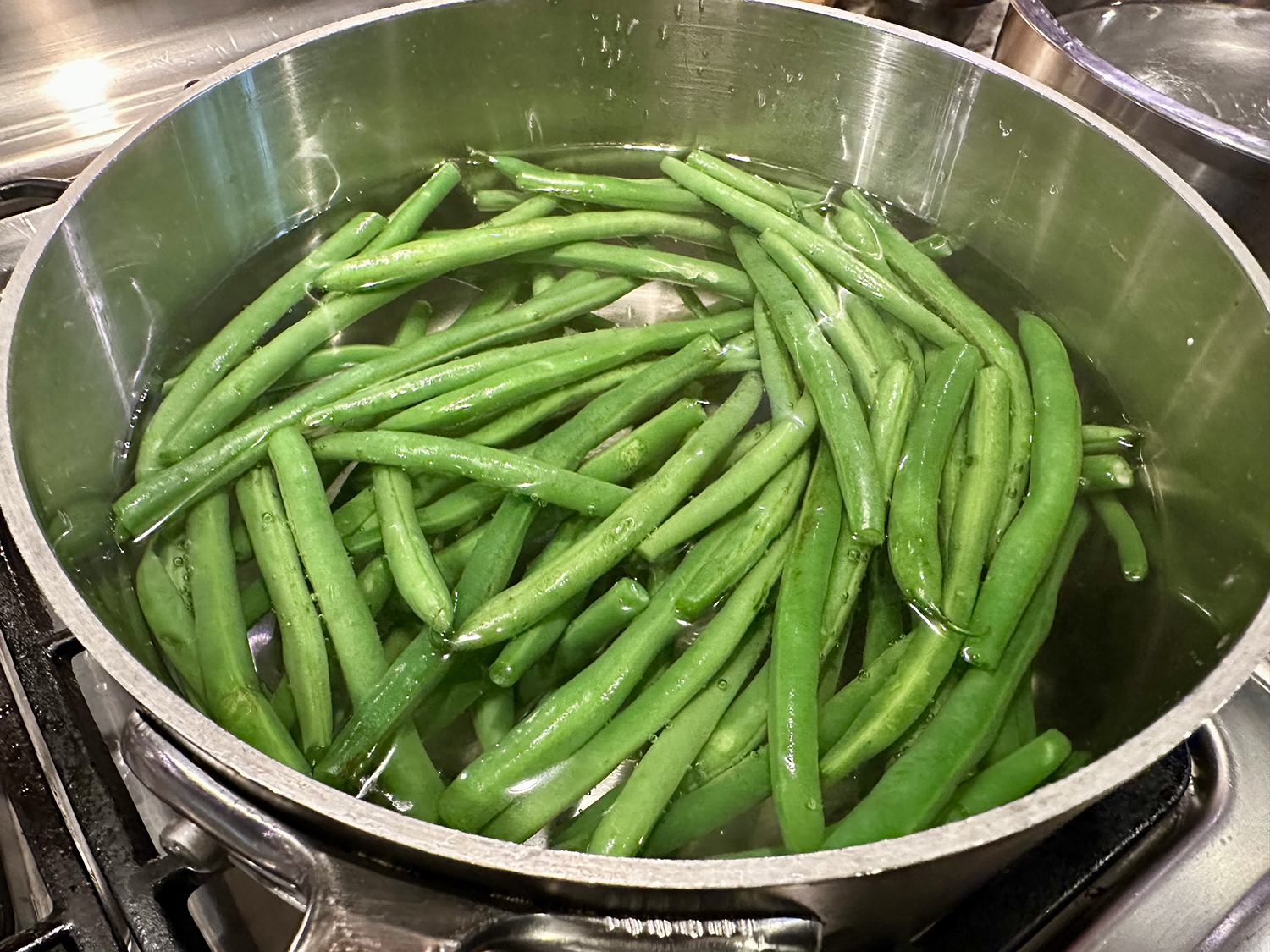
  1. Blanch the green beans. Set a bowl of cold water and ice near the stove. Bring a medium pot of water to a boil and salt the water very well (estimate about 1 tablespoon of kosher salt per quart of boiling water). Drop the green beans into the boiling salted water and cook for 2 to 3 minutes, just until bright green. Then, use tongs to transfer the green beans to the bowl of iced water and let cool (this will stop the cooking process so the beans stay crisp).
  2. Make the garlic chips. In a small saucepan warm the olive oil over medium heat until just shimmering. Drop the sliced garlic in and cook for about 1 minute or until the garlic has turned golden brown and crispy (it should not be burned). Remove the garlic with a slotted spoon and set aside for now.
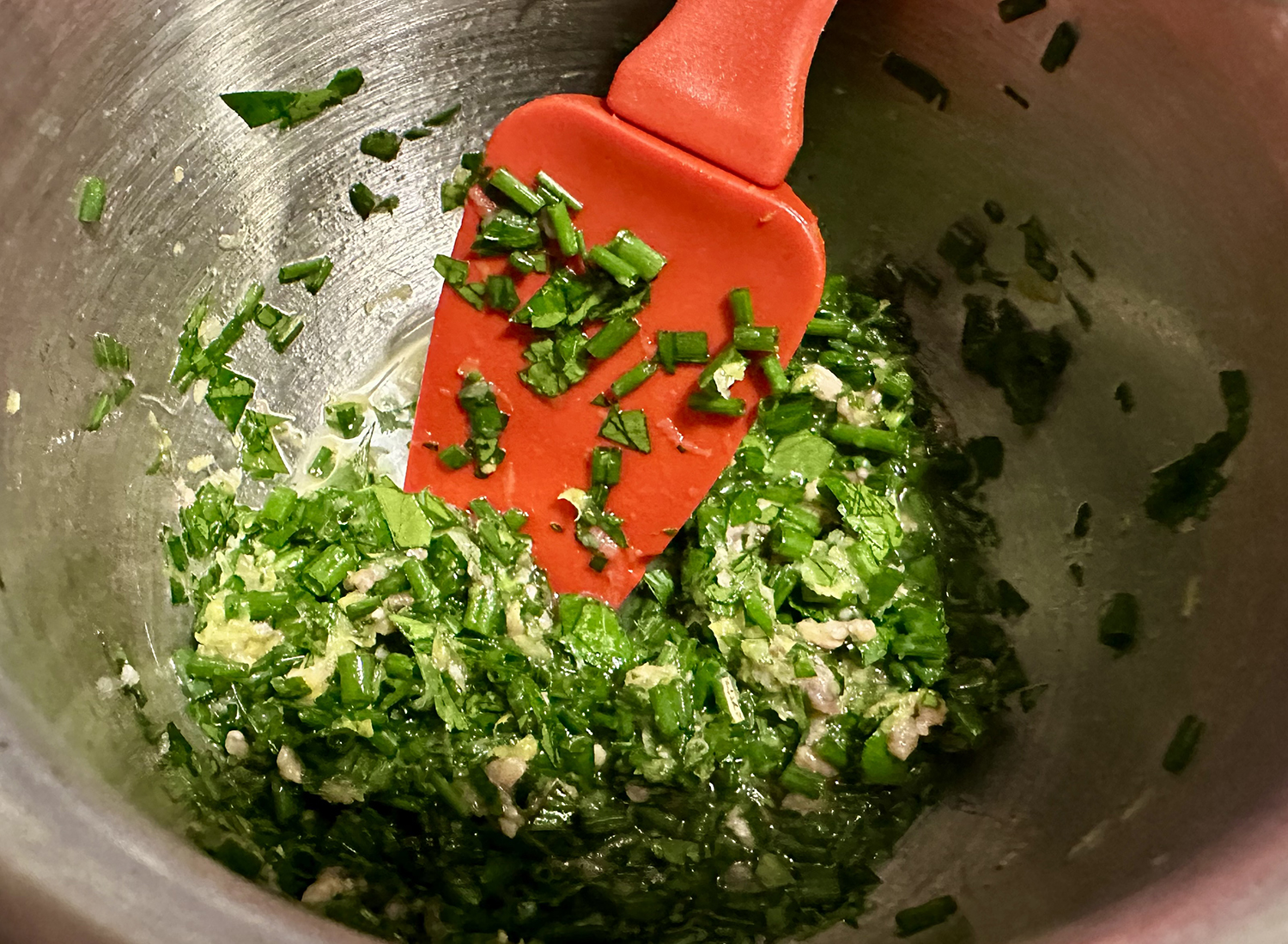
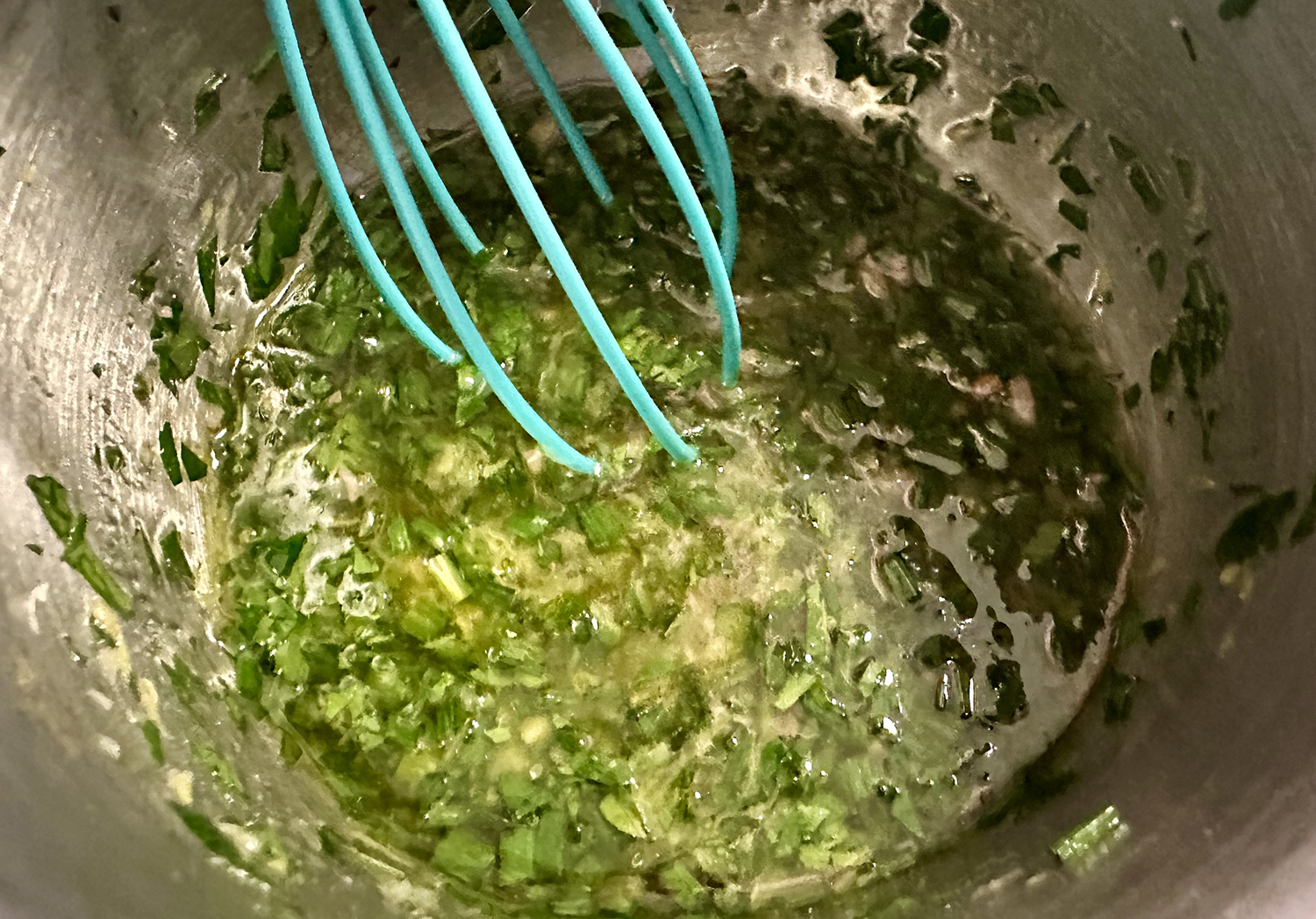
  3. Make the dressing. In a small bowl, combine the chives, parsley, finely chopped anchovies, lemon zest and juice. Pour the olive oil slowly into the bowl while whisking continuously until the dressing has emulsified. Taste and, if needed, add a small pinch of salt and whisk again to combine.
  4. Finish and serve. Drain the green beans well and transfer to a serving platter. Pour the dressing all over the beans and toss gently. Garnish with the crispy garlic and serve.

http://www.lynnandruss.com

Recipe from Suzy Karadsheh

Corn Chowder with Miso and Scallions

With the end of fresh corn season looming, we are hyper-vigilant to try any delicious sounding corn recipe. This corn chowder, inspired by a corn side dish in “The Gaijin Cookbook” by Ivan Orkin and Chris Ying, is unconventional in a couple of ways. Instead of relying on an abundance of dairy for creaminess, a portion of the cooked vegetables is puréed. This gives the soup body without blunting the delicate sweet, grassy notes of the corn, nor the earthiness of the potatoes.

Secondly, white miso lends deep, umami-rich flavor, so there’s no need for the salt pork or bacon typically used in corn chowder, nor even for chicken broth, so this soup is vegetarian-friendly.

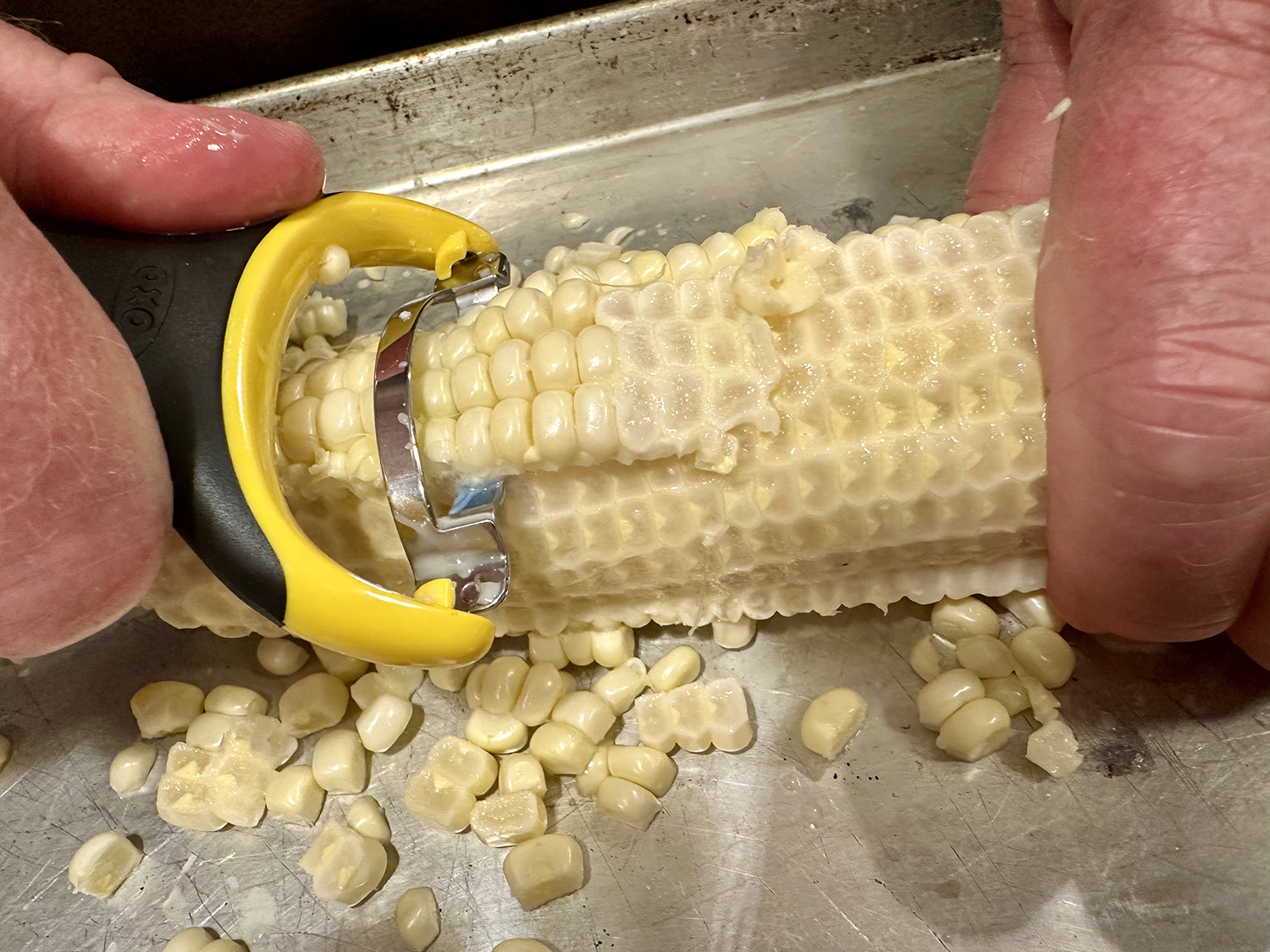
Fresh in-season corn is, of course, best—cut the kernels from the ears and simmer the cobs right in the mix, which infuses the broth with maximum flavor. Out of season, frozen corn kernels are a decent stand-in. You won’t have cobs for simmering, but the chowder still will be good. And if you wish the chowder to have golden hue, stir in a pinch or two of ground turmeric. And we loved the garnish of chili oil!

NOTE: When the corn cobs are removed, cool them off a bit. Then scrape off any residual bits of corn kernels and corn milk and add it to the soup in the pot so that none of that goodness goes to waste.

Corn Chowder with Miso and Scallions

  • Servings: 4-6
  • Difficulty: easy
  • Print

Ingredients

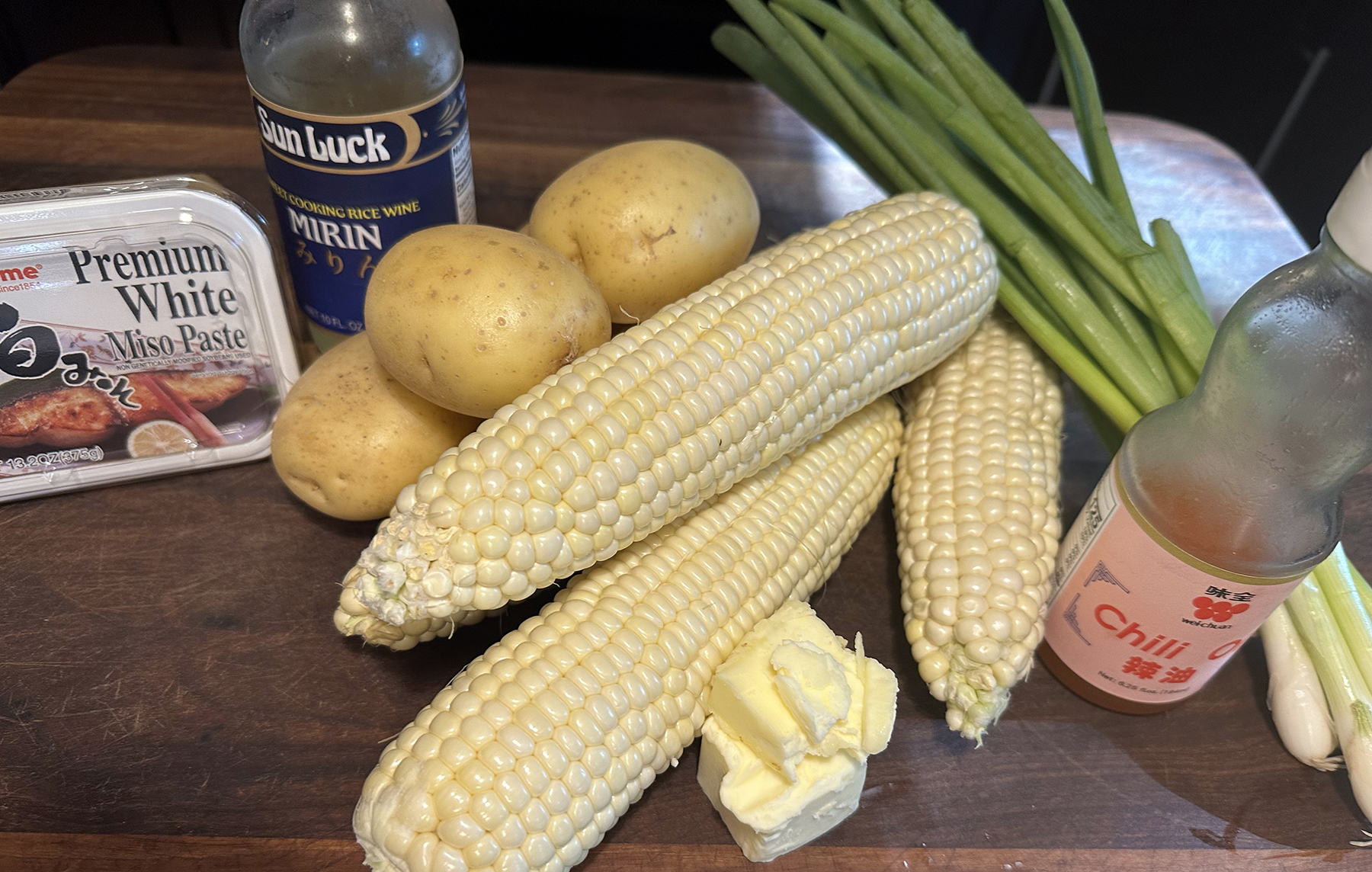
  • 3 Tbsp. salted butter, cut into 2 or 3 pieces
  • 1 bunch scallions, thinly sliced, white and green parts reserved separately
  • Kosher salt and ground black pepper
  • 1/4 cup white miso
  • 1/4 cup mirin
  • 4 ears corn, husked, kernels cut from cobs (about 3 cups), cobs reserved
  • 1 lb. Yukon Gold potatoes, unpeeled, cut into ½-inch cubes
  • 6 cups water
  • Optional garnish: Chili oil

Directions

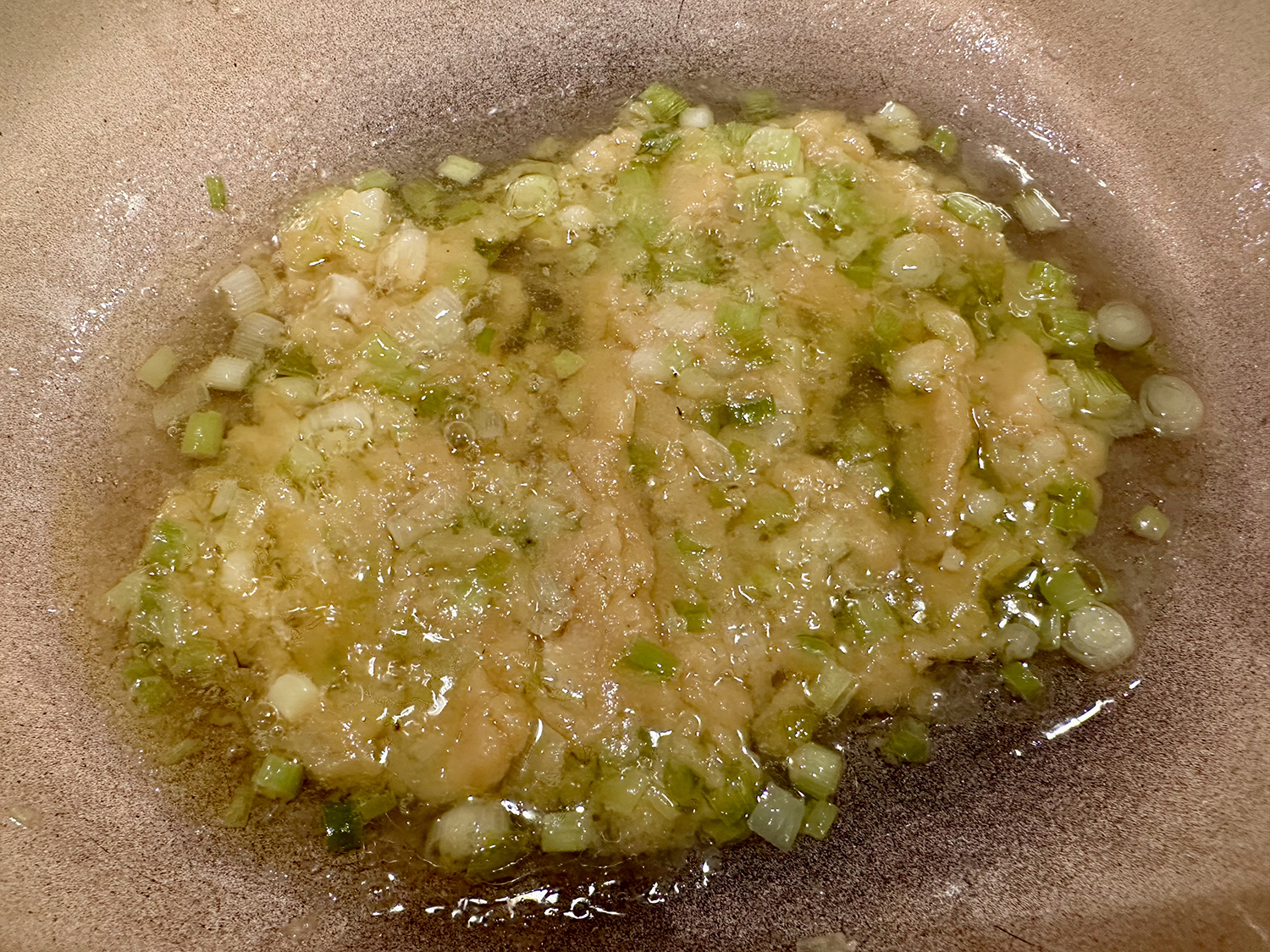
  1. In a large Dutch oven over medium, melt the butter. Add the scallion whites and ½ teaspoon salt; cook, stirring occasionally, until softened but not browned, 3 to 5 minutes. Add the miso and cook, stirring to incorporate it into the scallion, until the miso is lightly browned, about 1 minute.
  2. Add the mirin and cook, stirring, until the liquid has mostly evaporated, about 1 minute. Stir in 6 cups water, then add the reserved corn cobs. Bring to a boil over medium-high, then stir in the corn kernels and potatoes. Return to a boil, then reduce to medium and simmer, uncovered and stirring occasionally, until the potatoes are tender, about 15 minutes.
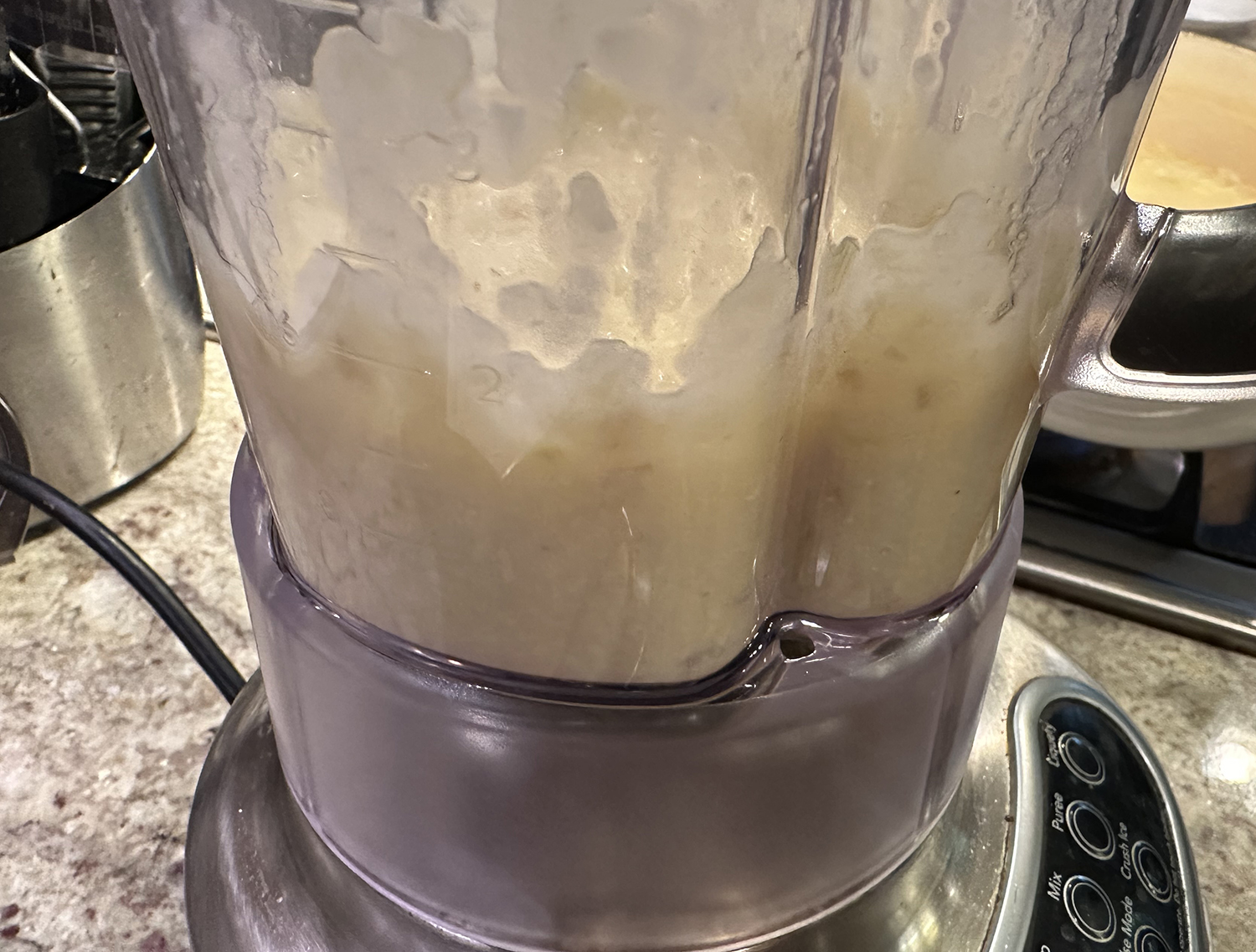
  3. Remove from the heat and cool for 5 to 10 minutes. Remove and discard the corn cobs. Transfer 1½ cups of the solids to a blender along with about ½ cup of the liquid. Puree until the mixture is smooth, about 1 minute.
  4. Return the blended portion to the pot and stir. Bring to a simmer over medium, stirring occasionally. Remove from the heat, then taste and season with salt and pepper. Ladle into bowls and sprinkle with the scallion greens. Top with chili oil, if desired.

http://www.lynnandruss.com

Recipe by Diane Unger for Milk Street

Potato and Zucchini Spanish Tortilla

The beauty of this dish, is not only that it is texturally satisfying, but it can be served at any meal in the day as a side dish OR an entrée. We’ve experienced the Spanish tortillas lining the counters at tapa and pintxo bars all over Spain. They’re one of the most beloved and popular dishes in Spanish cuisine and are eaten at any time of day: breakfast, lunch, dinner, on school field trips, after beach excursions…. or just because you’re hungry…

For purists, a Spanish tortilla should only contain 4 ingredients: olive oil, potatoes, eggs, and salt. Personally, onion is a must but in this recipe zucchini is also added, which ends up melting into the potatoes creating a velvety dish. The trick to creamy tortilla is to use lots of olive oil—more than what you would ever think you need.

According to America’s Test Kitchen (ATK), it is about poaching the potatoes and zucchini in the oil and not really frying to a crisp. The potatoes and zucchini will absorb some of the oil, but a lot of it will get drained after they are cooked (leftover oil can be reused after straining so it doesn’t go to waste). Everything gets mixed with eggs and is given a quick scramble in the pan, then it’s flipped, using a plate, and finished with a quick stint in the pan on the second side.
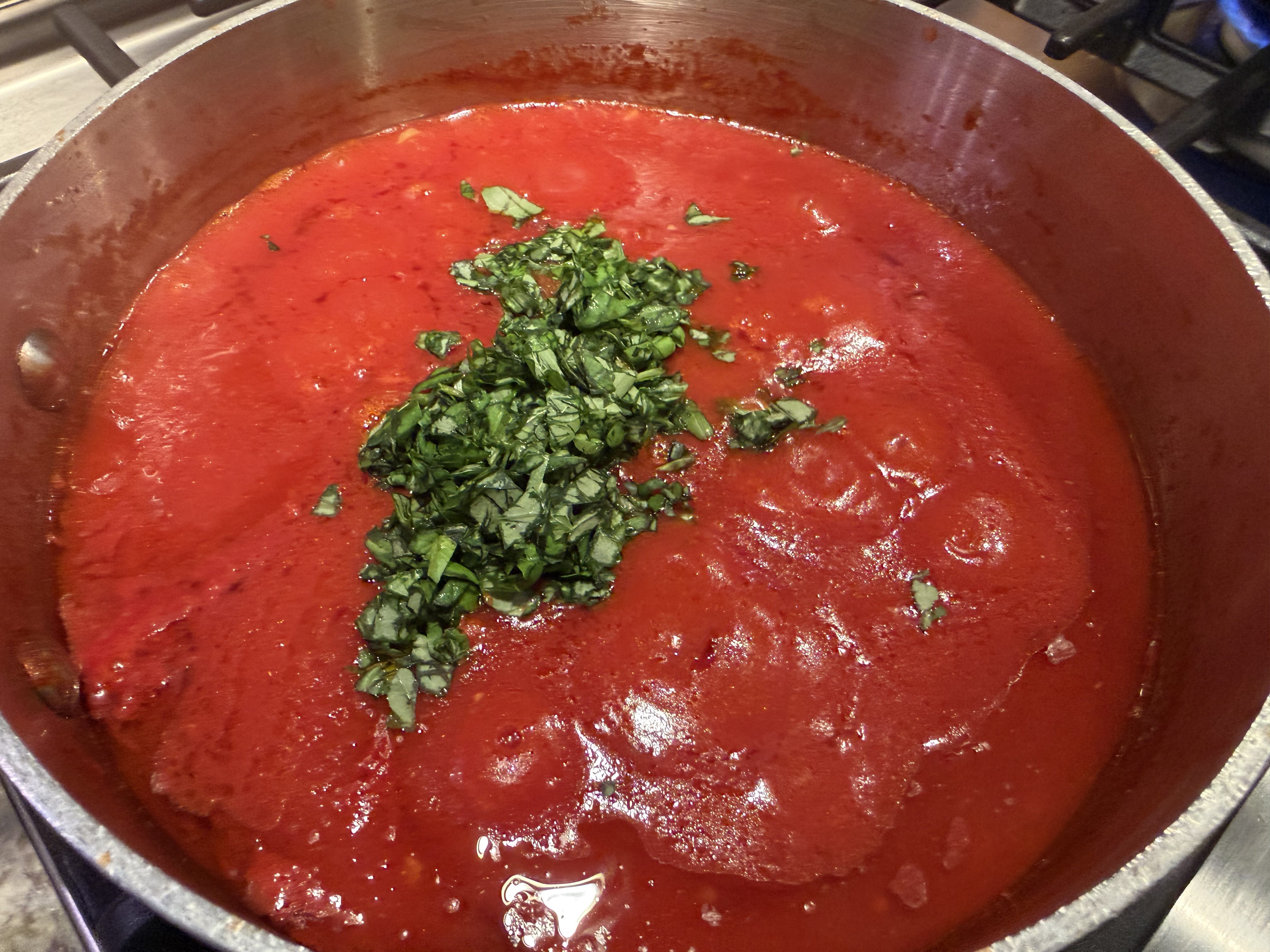
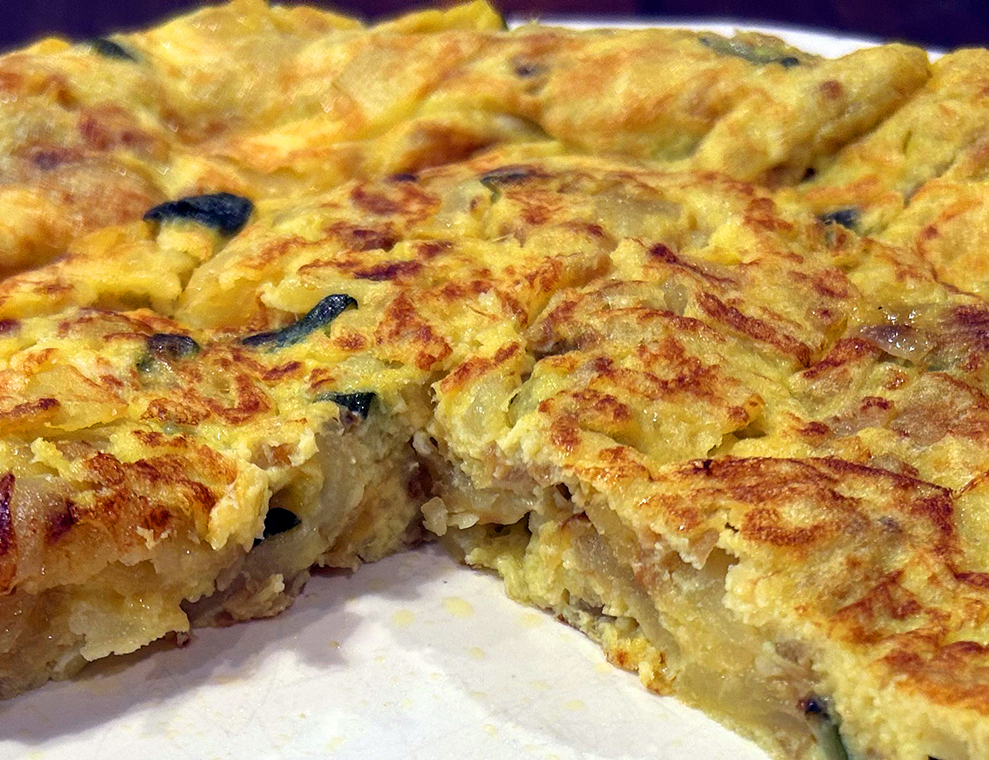
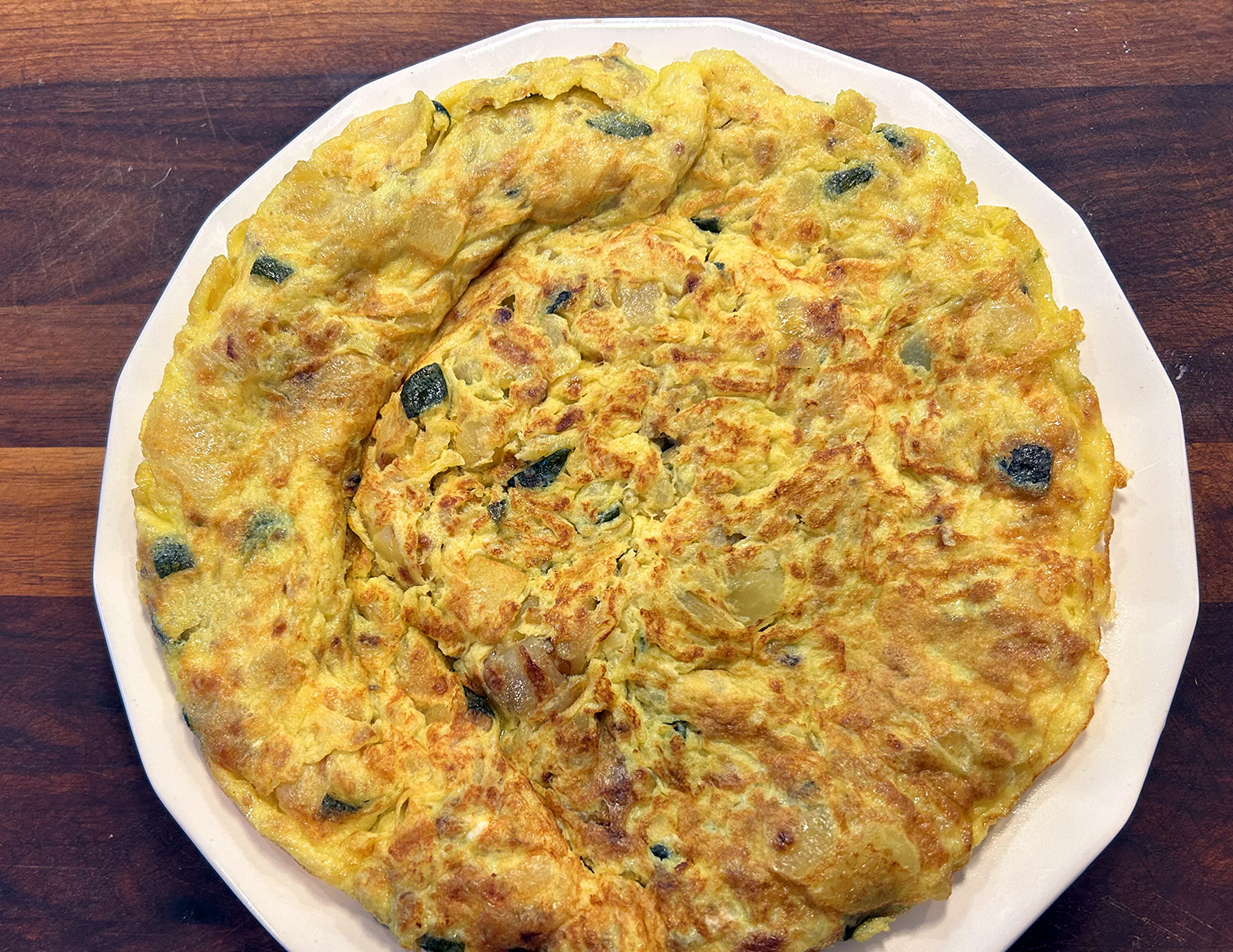
In Spain, a true tortilla should have a soft and creamy interior and exterior that is light in color. It should not be cooked through or deeply caramelized on the outside, but of course, you can cook it a bit longer to your liking. Loved it! As melt-in-your-mouth tender as the ones they serve in Spain.

NOTES: It is best to wait a few minutes before cutting into it as it will set a bit more with carryover cooking. It is important to use a nonstick pan so the tortilla slides easily out of it. 

Potato and Zucchini Spanish Tortilla

  • Servings: 4
  • Difficulty: easy
  • Print

Ingredients

  • 1 cup extra-virgin olive oil
  • 1 small onion, chopped fine
  • 1 lb. Yukon gold potatoes, peeled, halved lengthwise and sliced crosswise 1/8-inch thick
  • 8 oz. zucchini, cut into 1/2-inch pieces
  • 1 1/4 tsp. table salt, divided
  • 5 large eggs

Directions

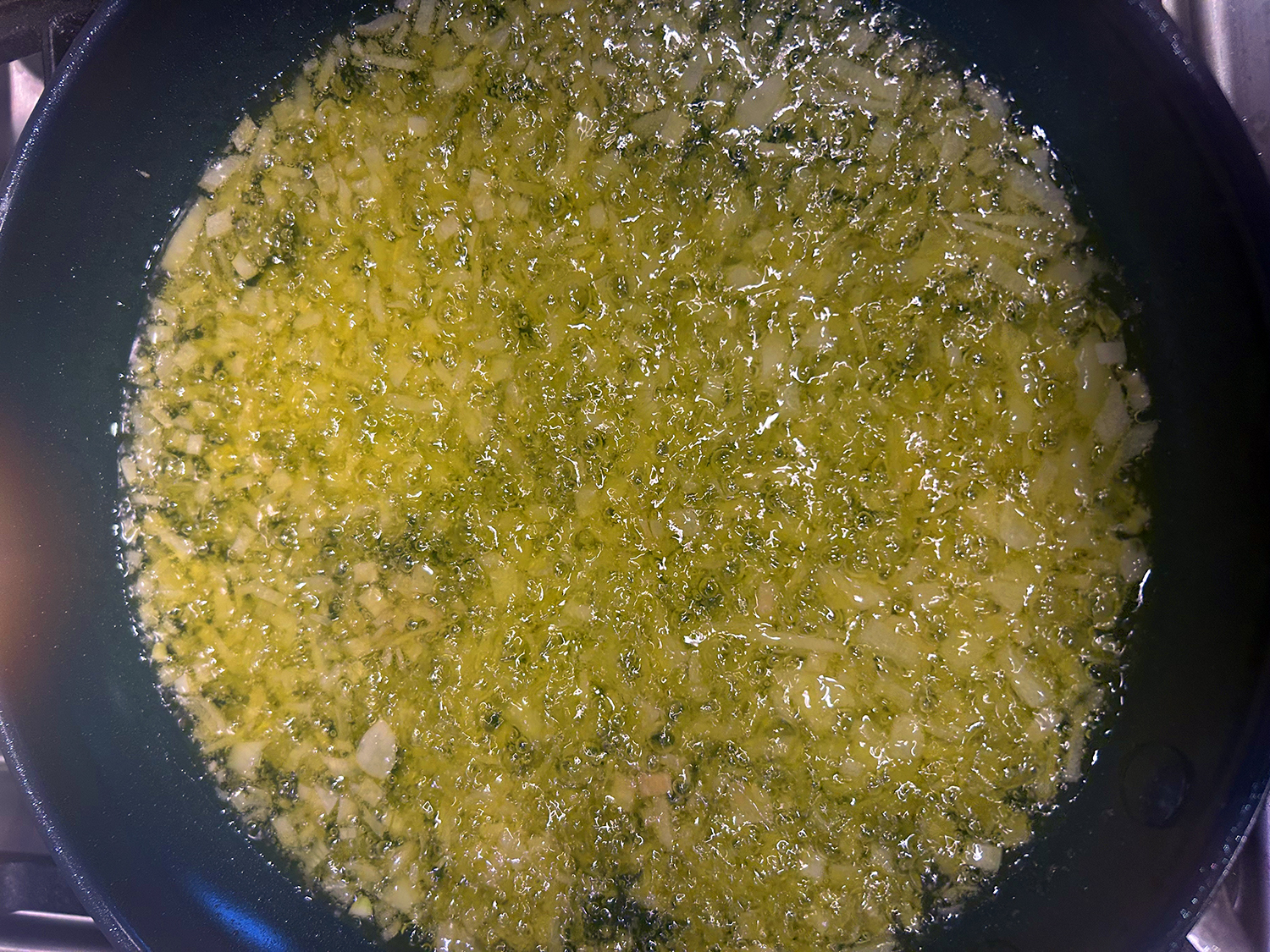
  1. Heat 1 cup extra-virgin olive oil in 10-inch nonstick skillet over medium heat until shimmering. Add 1 small finely chopped onion and cook until just softened but not browned, 3 to 5 minutes.
  2. Stir in 1 pound Yukon gold potatoes (peeled, halved lengthwise, and sliced crosswise into ⅛-inch-thick pieces), 8 ounces chopped zucchini, and ¾ teaspoon table salt. Compress vegetables to submerge in oil as much as possible (it’s OK if vegetables aren’t fully submerged; as they cook they will shrink and become submerged). Cook until potatoes and zucchini are very tender and lightly caramelized, 25 to 30 minutes, stirring occasionally (zucchini should be falling apart). Remove from heat.
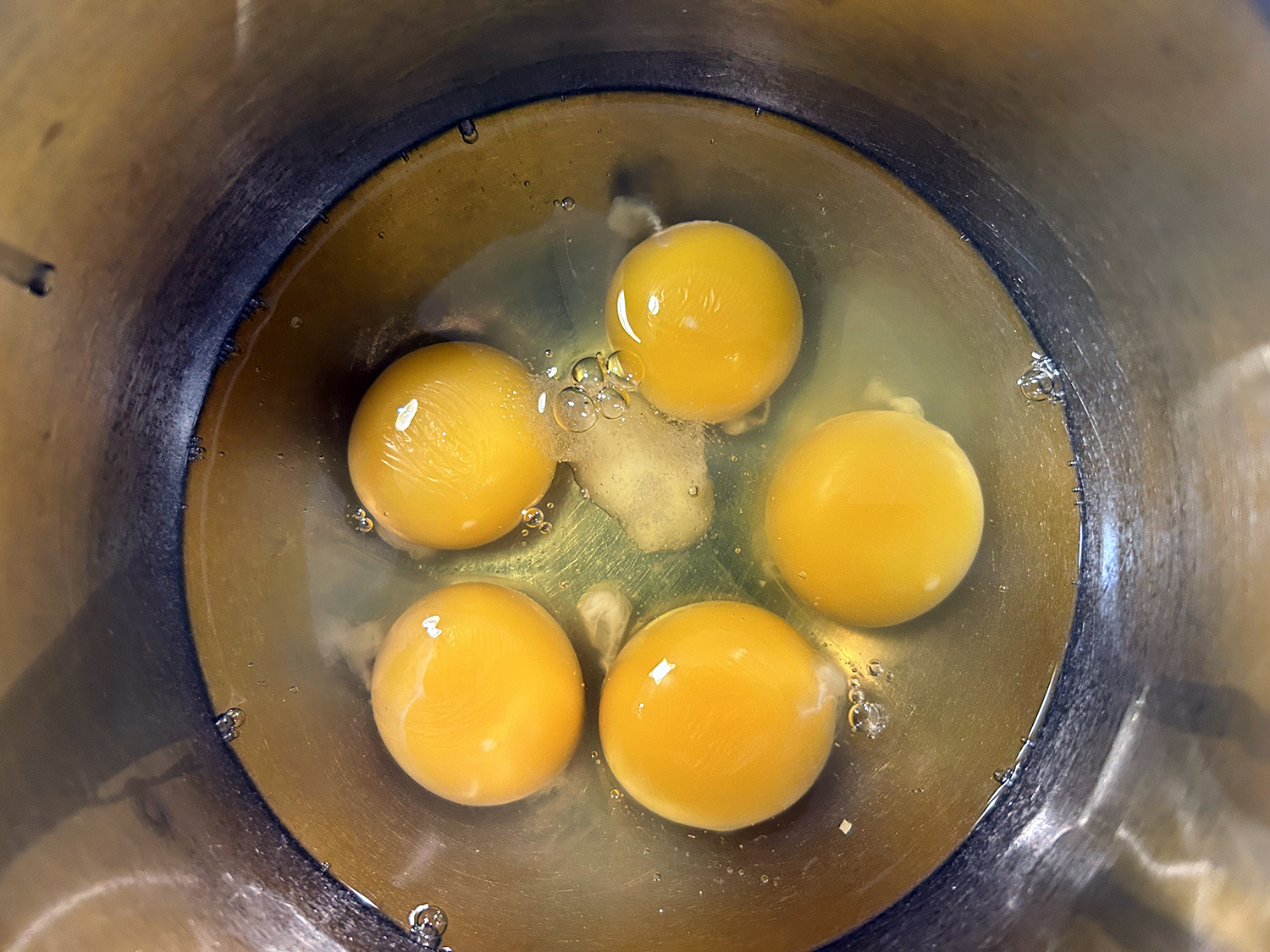
  3. Whisk 5 large eggs and remaining ½ teaspoon table salt together in large bowl. Strain vegetable-oil mixture through fine-mesh strainer set over clean bowl. Transfer vegetables to bowl with eggs, stirring to combine, and set strained oil aside.
  4. Heat 1 tablespoon strained oil in now-empty skillet over medium heat until shimmering. Add egg-vegetable mixture and cook, stirring center to scramble eggs lightly, until edges are set, about 1 minute. Run rubber spatula along edges of pan, then shake skillet gently to loosen tortilla from skillet. Cook for additional 1 to 2 minutes until set but not browned.
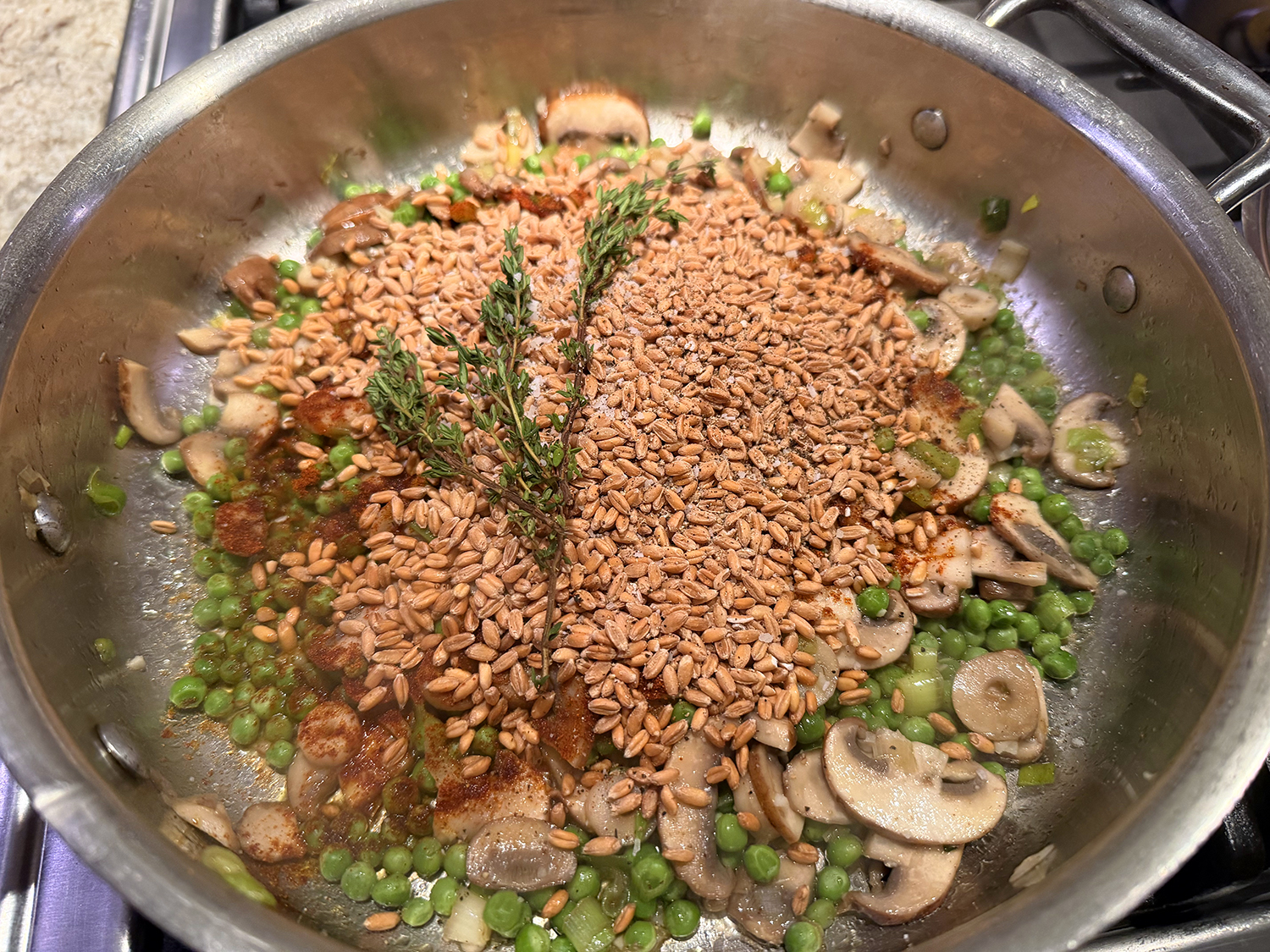
  5. Remove skillet from heat. Run rubber spatula along edges of pan, then shake skillet gently to loosen tortilla from skillet. Place large flat plate over tortilla in skillet and, holding plate with 1 hand and skillet handle with your second hand, invert skillet to transfer tortilla to plate. Slide tortilla back into now-empty skillet, tucking edges of tortilla as needed around perimeter of skillet, and cook over medium-high heat until second side is just set, 1 to 2 minutes.
  6. Gently slide tortilla onto serving plate and let rest for 10 minutes. Serve warm or at room temperature, drizzling with extra strained oil if desired.

http://www.lynnandruss.com

Recipe by Aran Goyoaga for America’s Test Kitchen’s Cooks Country

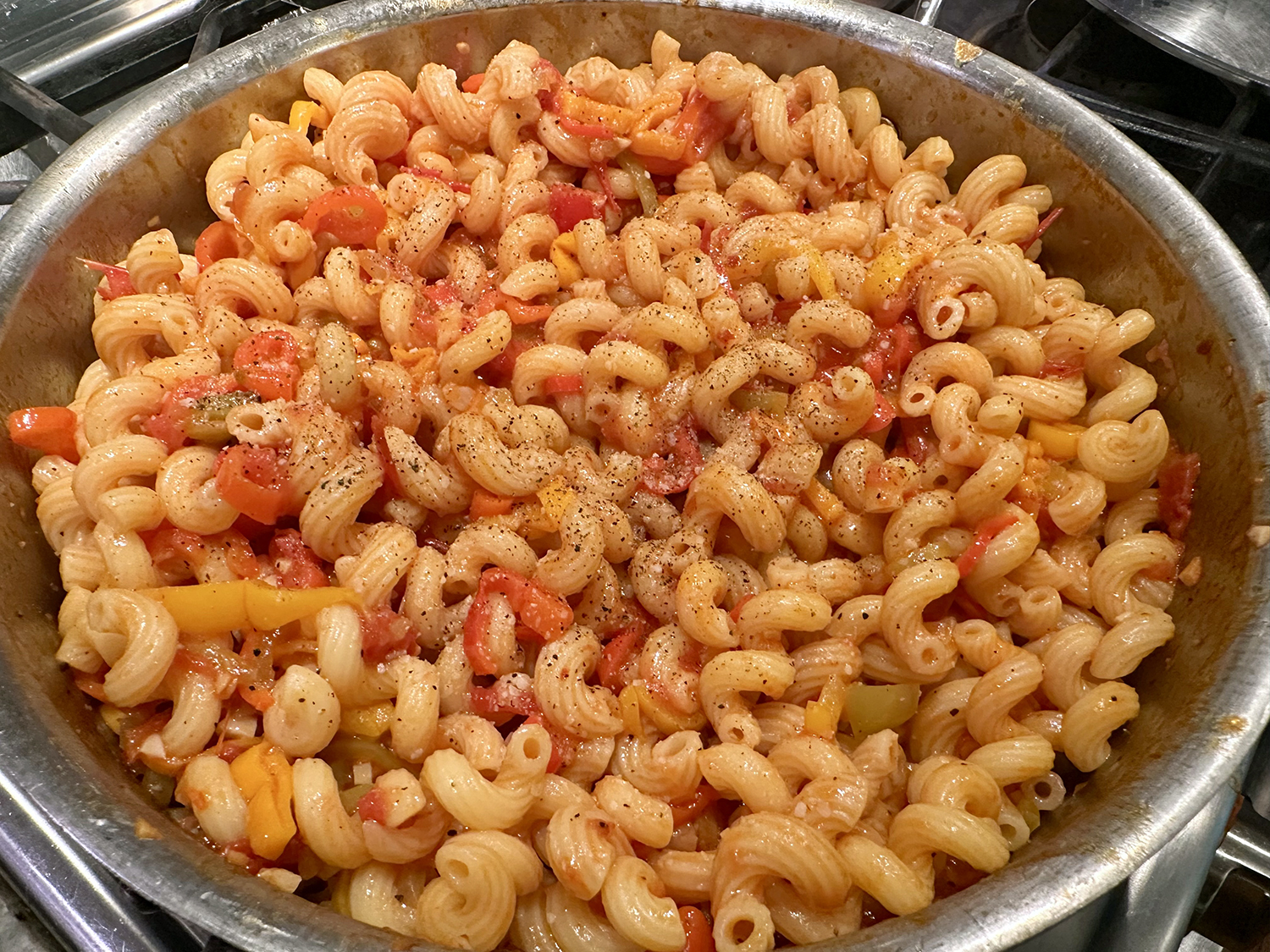
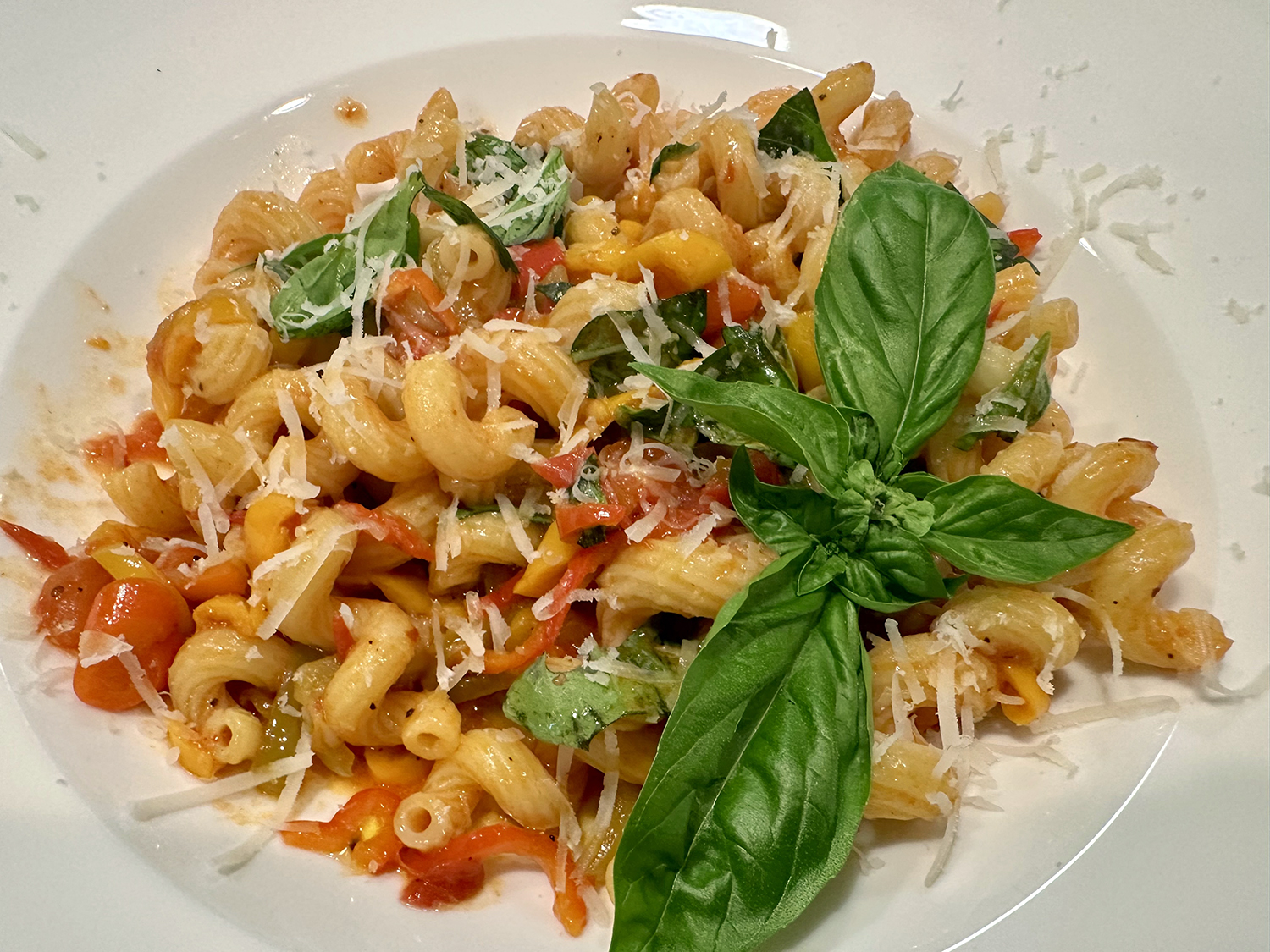
Calabrian-Style Tomato and Sweet Pepper Sauce with Pasta

This Spanish recipe was inspired by a stewy mélange of cherry tomatoes, garlic, sweet-spicy peppers and extra-virgin olive oil that was served with flatbread at Ristorante Barbieri in Calabria.

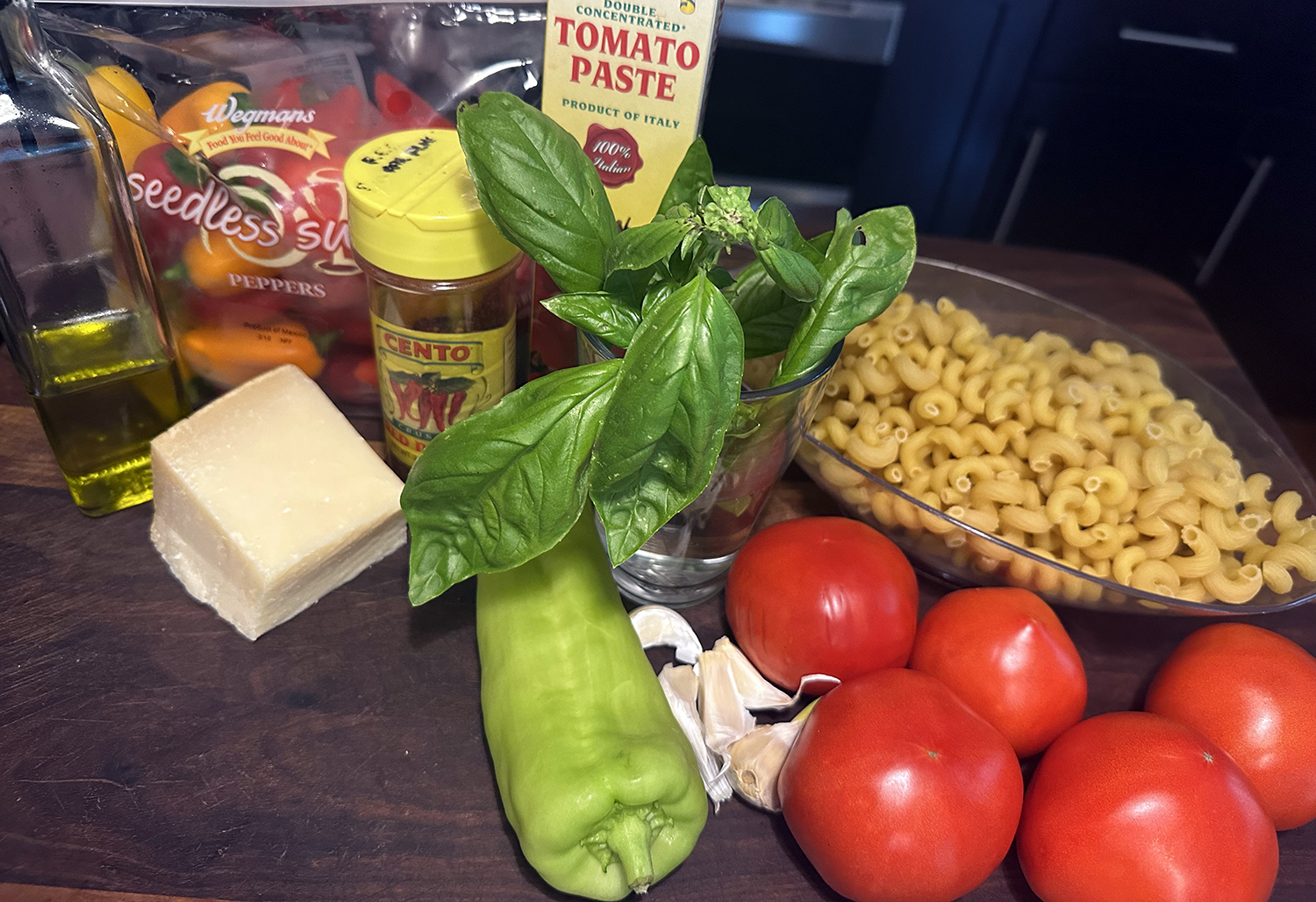
To make a sauce for pasta, combine mini sweet peppers (usually sold in a trio of colors) with an earthy cubanelle pepper and add heat with pepper flakes. Cherry, grape or homegrown slicing tomatoes, plus a couple tablespoons of tomato paste, form the sauce’s backbone.

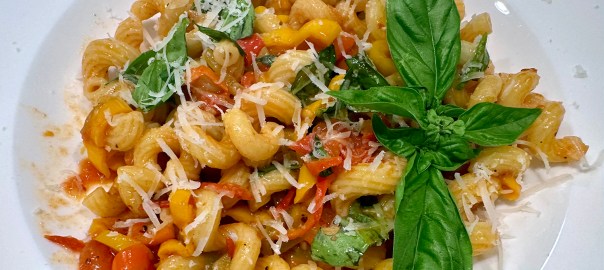
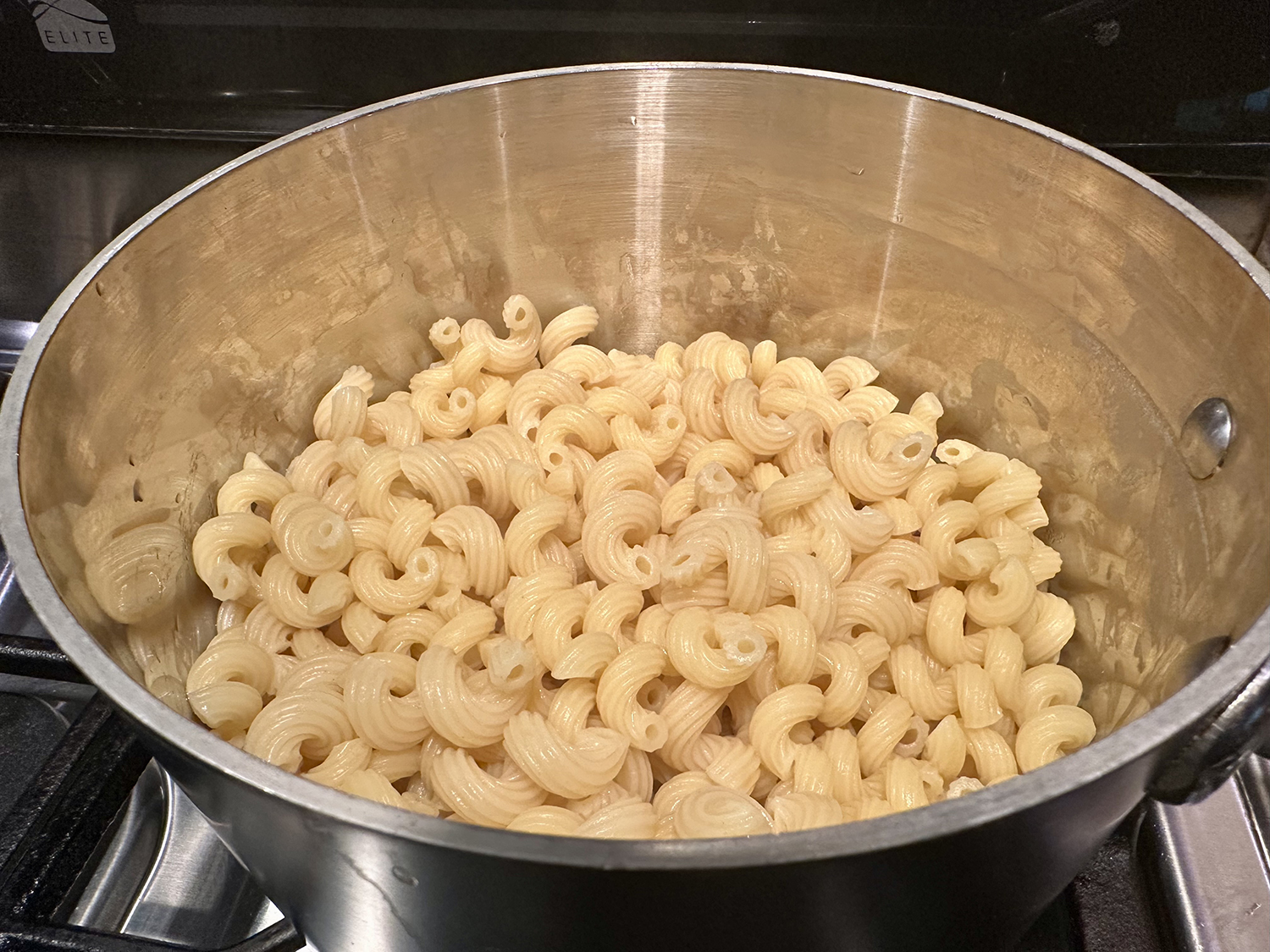
Short pasta with a twisty or curly shape—such as casarecce, gemelli, cavatappi or campanelle—is ideal for ensnaring bits of tomato and peppers. As simple as it is, the end result is delicious!

NOTES: Don’t use regular bell peppers. Mini sweet peppers are more delicate, so they soften more readily, and their skins are more tender.
Also, don’t forget to save 1 cup of the pasta cooking water before draining the noodles. It is necessary to lend some body to the sauce. A good reminder not to toss out all of the water before reserving some, is to put your measuring cup and ladle inside the colander.

Calabrian-Style Tomato and Sweet Pepper Sauce with Pasta

  • Servings: 4-6
  • Difficulty: easy
  • Print

Ingredients

  • 12-16 oz. casarecce, gemelli or cavatappi pasta
  • Kosher salt and ground black pepper
  • 1/4 cup extra-virgin olive oil, plus more to serve
  • 2 pints cherry or grape tomatoes
  • 8 oz. sweet mini peppers in a mix of colors, stemmed and sliced into thin rounds
  • 1 medium cubanelle pepper, stemmed, seeded and thinly sliced
  • 2 medium garlic cloves, minced
  • 2 Tbsp. tomato paste
  • 1/2 tsp. red pepper flakes
  • 1/4 cup lightly packed fresh basil, torn
  • 2 oz. pecorino Romano or ricotta salata, finely grated (1 cup)

Directions

  1. In a large pot, boil 4 quarts water. Add the pasta and 1 tablespoon salt, then cook, stirring occasionally, until just shy of al dente. Reserve 1 cup of the cooking water, then drain. Return the pasta to the pot; set aside off heat.
  2. In a 12-inch skillet over medium, heat the oil until shimmering. Add the tomatoes, sweet peppers, cubanelle pepper, garlic, tomato paste, pepper flakes, ½ teaspoon salt and ¼ teaspoon black pepper. Stir, then cover and cook, stirring occasionally, until the tomatoes burst and the peppers have softened, 8 to 10 minutes.
  3. Stir in ¼ cup reserved pasta water, scraping up the browned bits, then add to the pasta along with another ¼ cup reserved pasta water. Cook over medium, stirring, until the pasta is al dente, about 2 minutes. If needed, adjust the consistency with additional reserved pasta water.
  4. Off heat, taste and season with salt and black pepper. Serve drizzled with additional oil and sprinkled with the basil and cheese.

http://www.lynnandruss.com

Adapted from a recipe by Courtney Hill for Milk Street

Corn on the Cob with Melted Miso-Butter

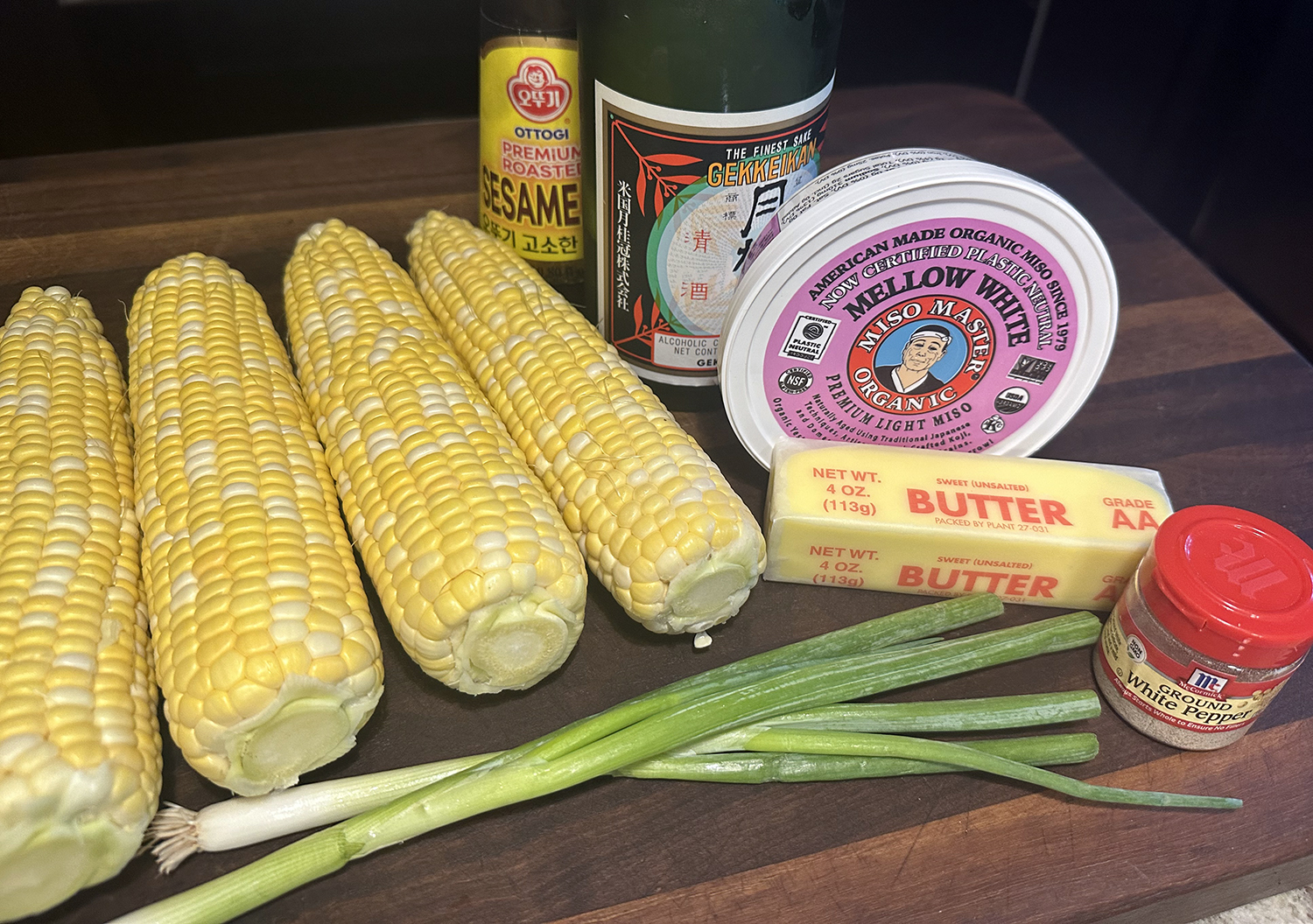
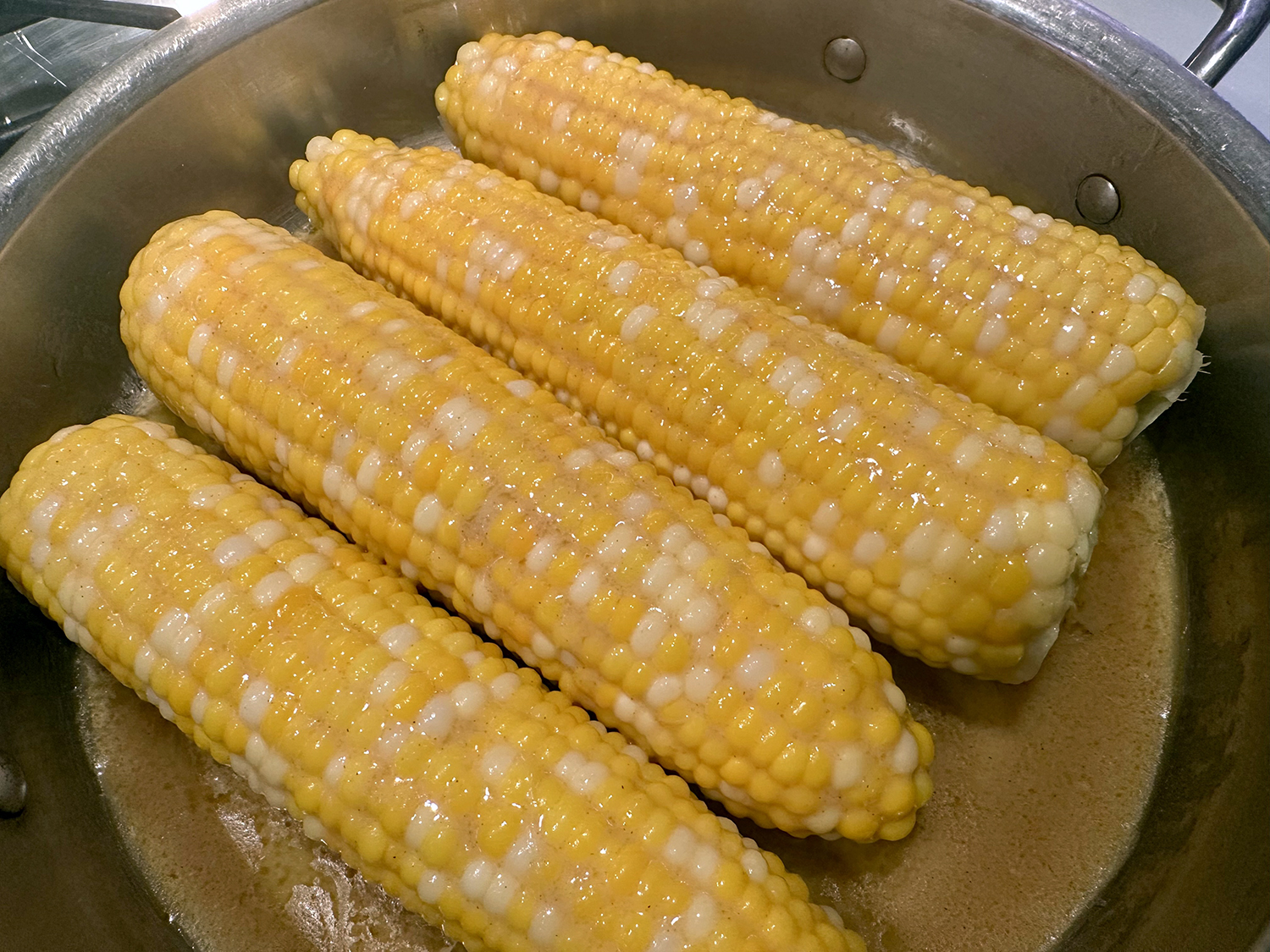
The fresh ears of corn are drenched in a creamy-salty richness of butter, miso, and salt, then topped with sliced scallions. For maximum flavor, sake is used as an added liquid (our version reduces the sake by half), but water works, too. Scallions and flaky salt, are the final flourish.

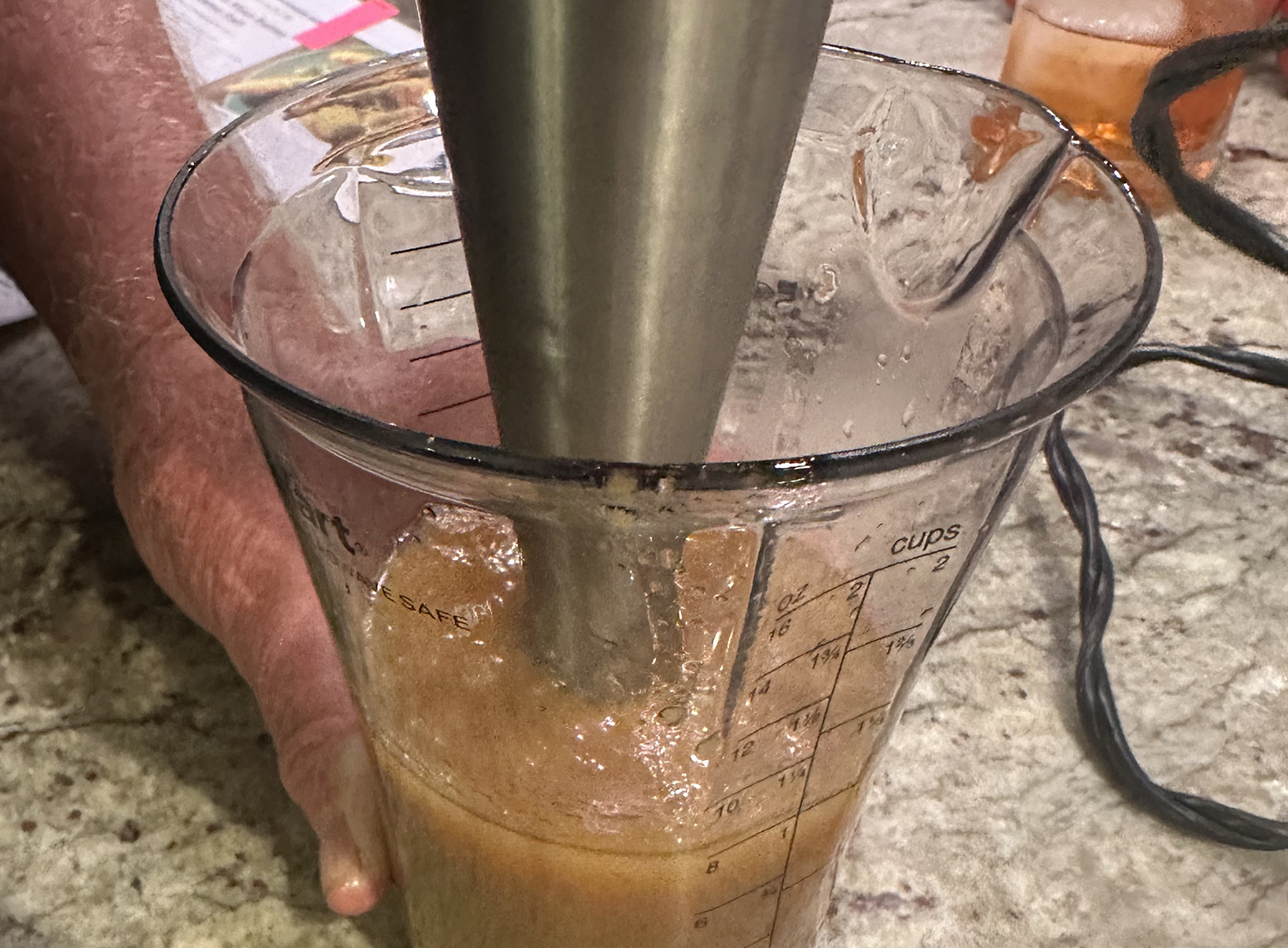
This recipe is loosely based on a grilled corn recipe from Milk Street in which the corn is also topped with toasted sesame seeds (we omitted). We opted to steam the corn and then drench it with a miso-butter mixture combined with an immersion blender.

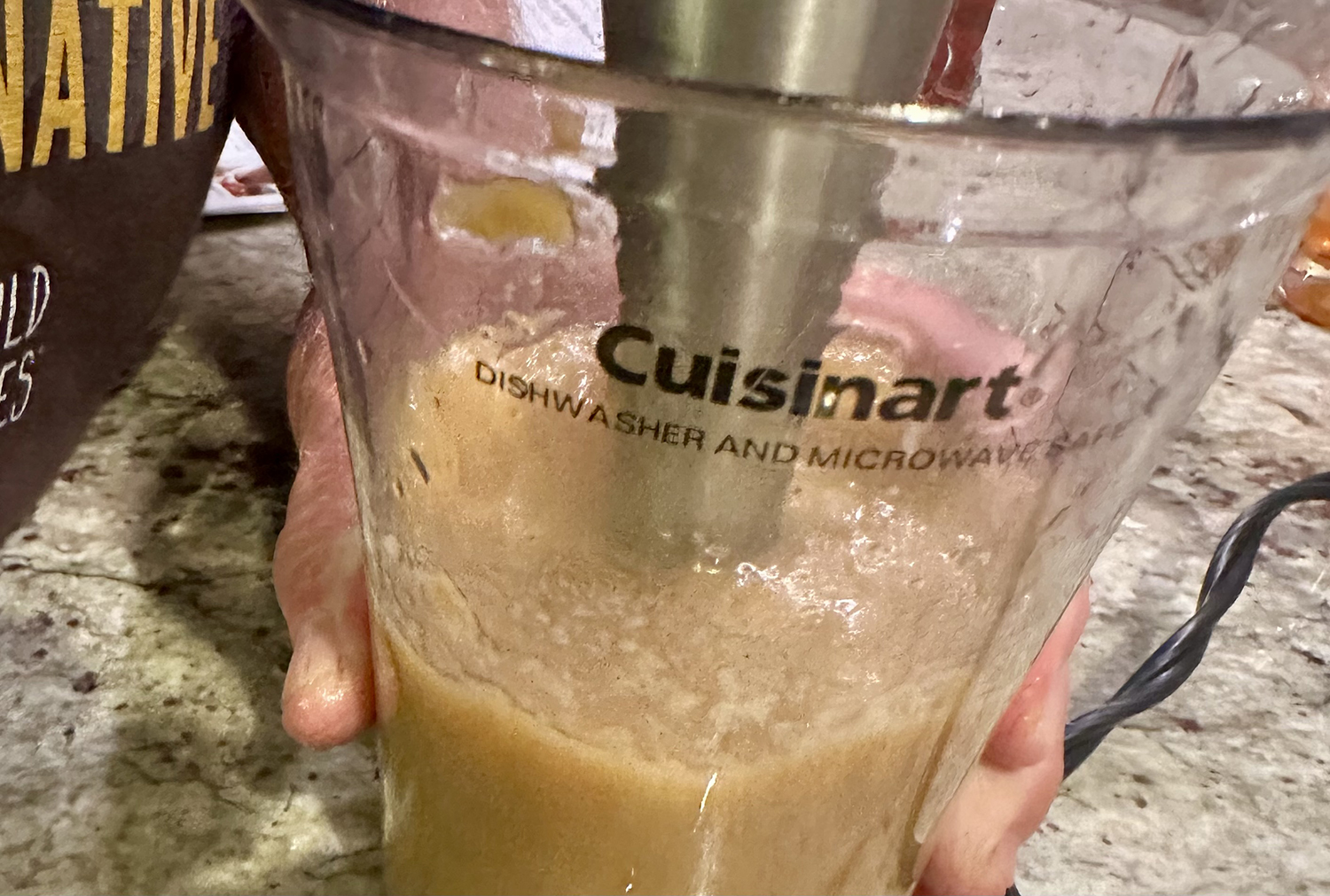
The original recipe calls for the butter and miso to be melted in a skillet and whisked until emulsified. Ours never did emulsify, so we just put all ingredients (except scallions) into the immersion blender cup.

In fact, we doubled the butter mixture because we wanted leftovers for a corn sauté dish for an upcoming party. And we still had some leftover for future dishes! Think baked potatoes, streamed veggies, hot dinner rolls…

Corn on the Cob with Melted Miso-Butter

  • Servings: 4-6
  • Difficulty: easy
  • Print

Ingredients

  • 6 Tbsp. salted butter, melted
  • 2 Tbsp. white miso
  • 1/4 cup sake or water
  • 1 Tbsp. lime juice (missing in above photo)
  • 1 tsp. toasted sesame oil
  • Ground white pepper
  • 6 ears corn, husked
  • 2 scallions, thinly sliced

Directions

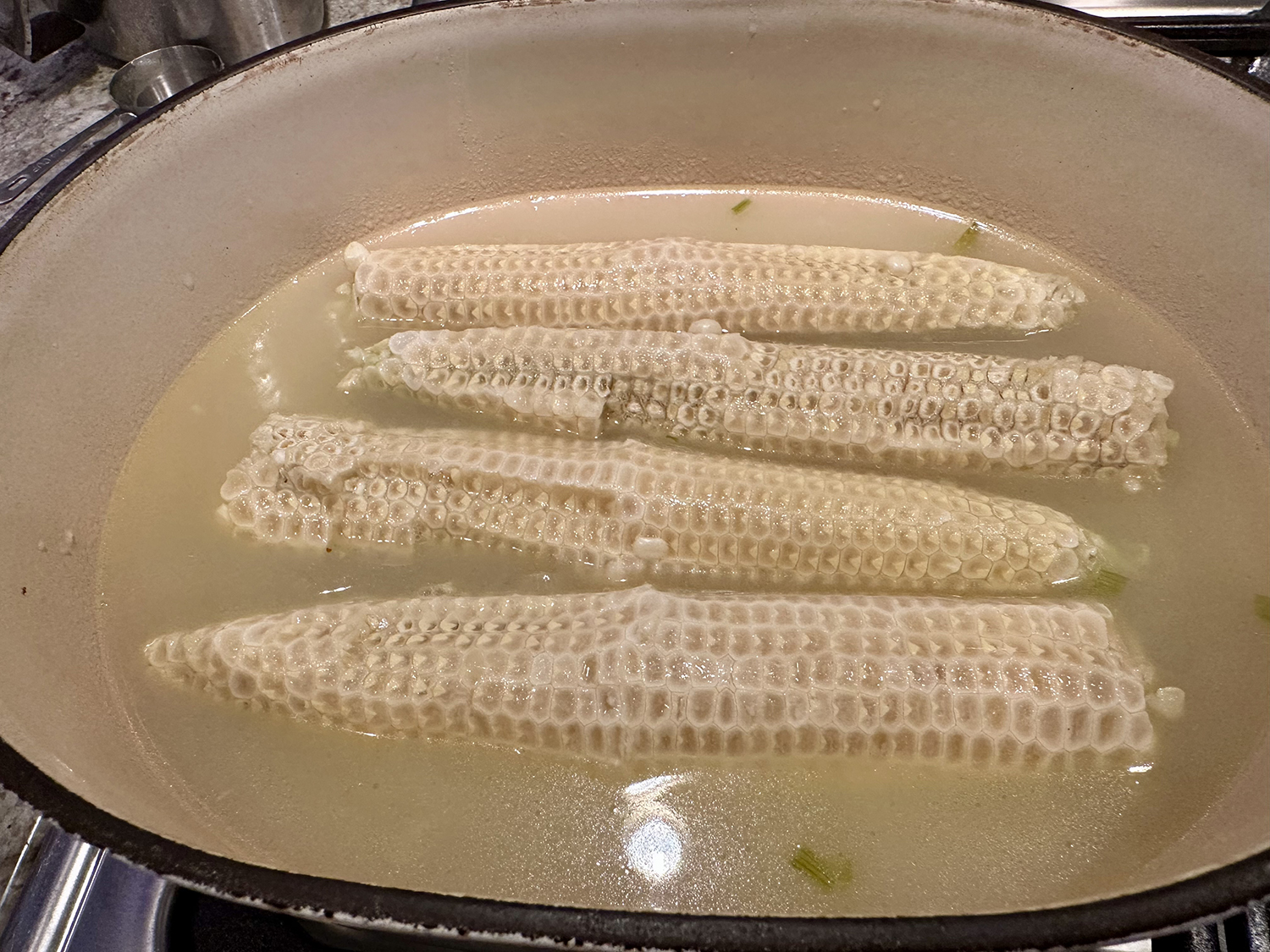
  1. Boil water in a large skillet. Add the ears of corn, turn off the heat and cover for 10 minutes.
  2. Meanwhile, using an immersion blender, emulsify the melted butter and white miso.
  3. Add in the sake, lime juice sesame oil and white pepper and continue blending until you have a smooth consistency.
  4. Remove corn to a platter, drain the water from the pan. Add the ears of corn back to the skillet and pour the miso-butter mixture over the ears, cover and let sit over low heat for a few minutes until warmed through.
  5. With tongs, lift each ear out of the skillet, letting excess mixture drip off, and place all earns on a platter. Sprinkle with scallions slices and serve immediately.
  6. Save remaining miso-butter mixture in a glass container with lid. Refrigerate. Let come to room temperature when ready to use again.

http://www.lynnandruss.com

Spanish Zucchini with Garlic and Sherry Vinegar

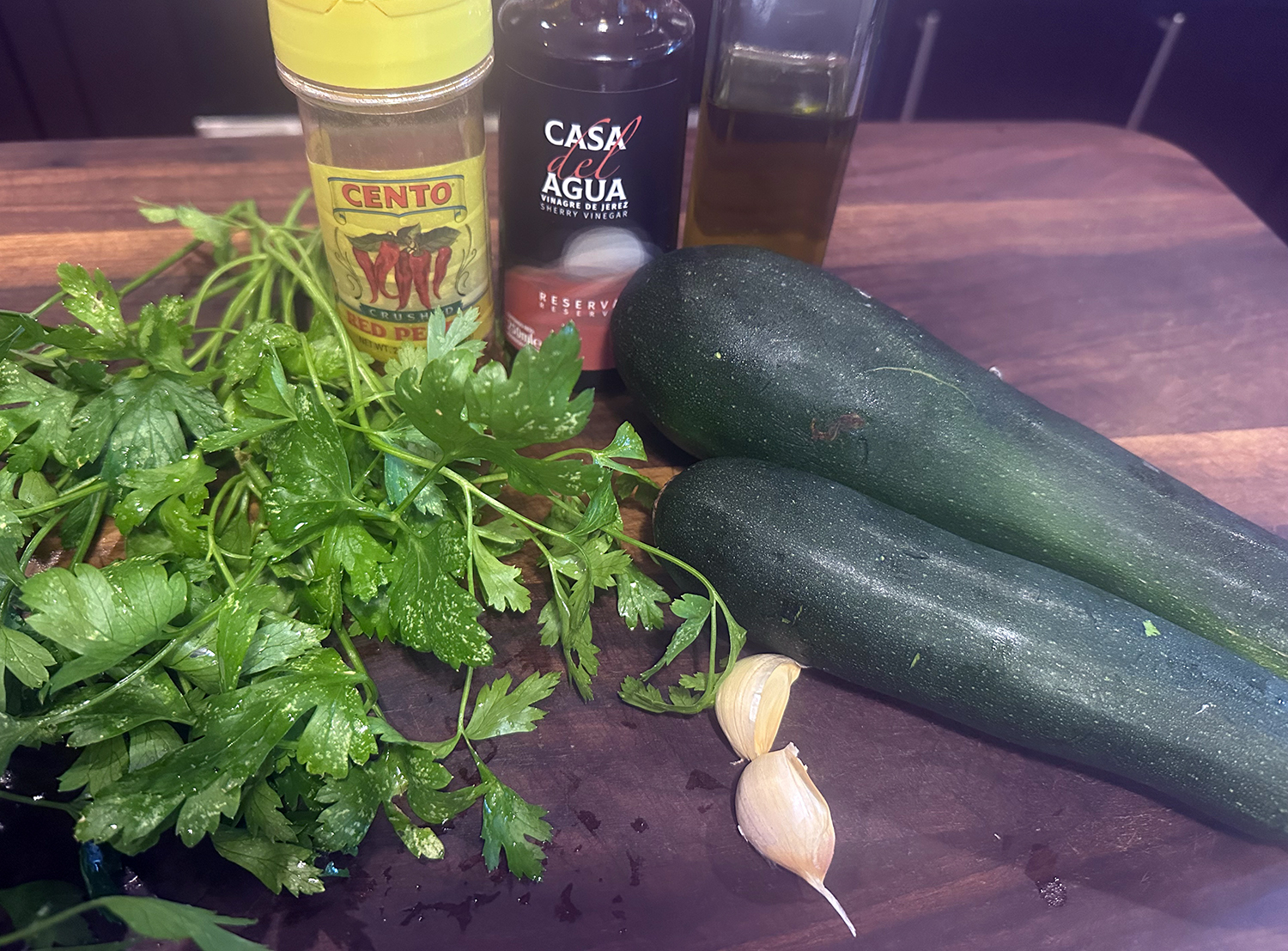
Spanish gambas al ajillo—shrimp cooked with generous amounts of garlic and olive oil—is a popular tapa, but as the recipe from Milk Street explains, the “al ajillo” technique isn’t strictly for shrimp. It can be employed with a number of different ingredients, including vegetables.

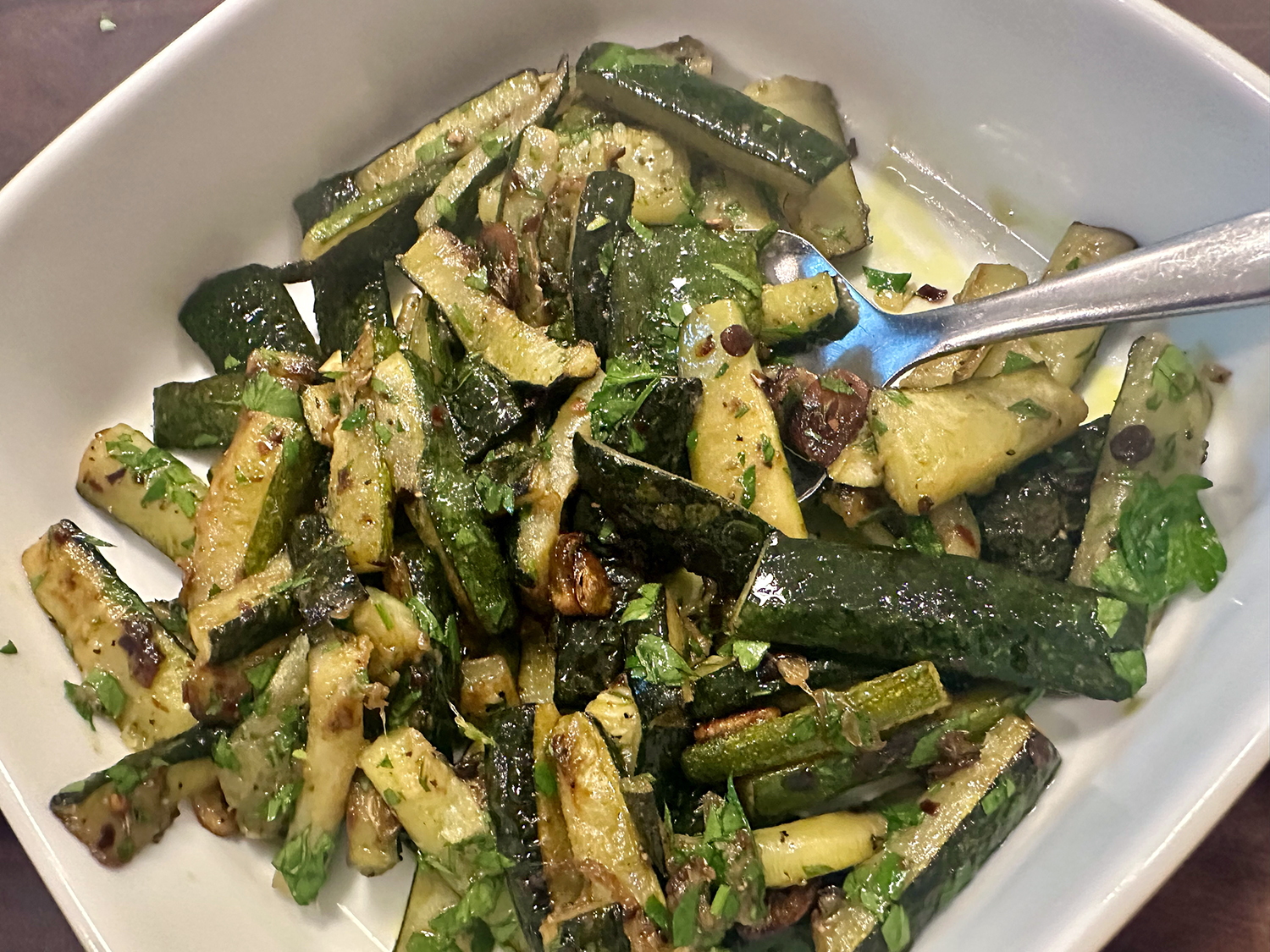
Here, zucchini is used to make calabacines al ajillo, also a Spanish classic. Cut into spears, quickly cooked, then left to stand for a few minutes before serving, the summer squash soaks up the heady notes of toasted garlic and the fruity, peppery olive oil.

Since it was just the two of us for dinner, and we didn’t want leftovers, the recipe was cut in half. You can serve with lots of warm, crusty bread for dipping into the oil or as a side to seared or grilled white fish. Ours was paired with a couple of grilled pork chops and some fresh garden tomatoes and basil. This dish is great served warm or even at room temperature.

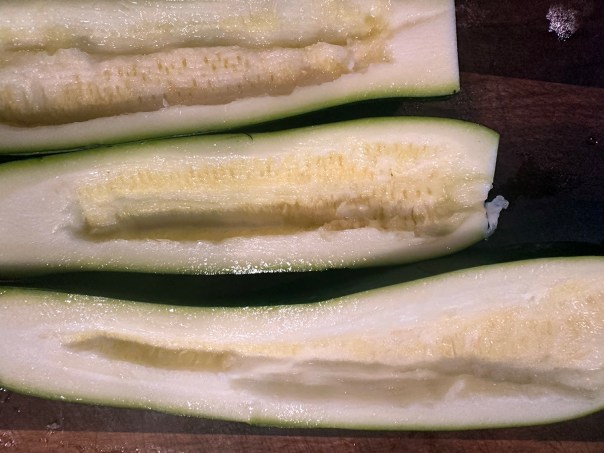
TIP: Don’t leave the seeds in the zucchini. The seedy cores quickly turn soft and spongy with cooking and release moisture that would water down the dish. Be sure to turn up the heat to medium-high after adding the zucchini to the skillet to help maintain the temperature of the pan and oil.

Spanish Zucchini with Garlic and Sherry Vinegar

  • Servings: 4-6
  • Difficulty: easy
  • Print

Ingredients

  • 4 medium zucchini (about 2 lbs. total)
  • 1/3 cup extra-virgin olive oil
  • 4 medium garlic cloves, thinly sliced
  • 2 dried árbol chilies, broken in half, seeds shaken out and discarded, OR ¼ tsp. red pepper flakes
  • 1 Tbsp. sherry vinegar
  • Kosher salt and ground black pepper
  • 1/2 cup lightly packed fresh flat-leaf parsley, chopped
  • Flaky salt (optional)

Directions

  1. Halve the zucchini lengthwise, then use a spoon to scrape out the seeds. Turn each half cut side down and slice it lengthwise about ¼ inch thick, then cut the strips crosswise into 2-inch sections.
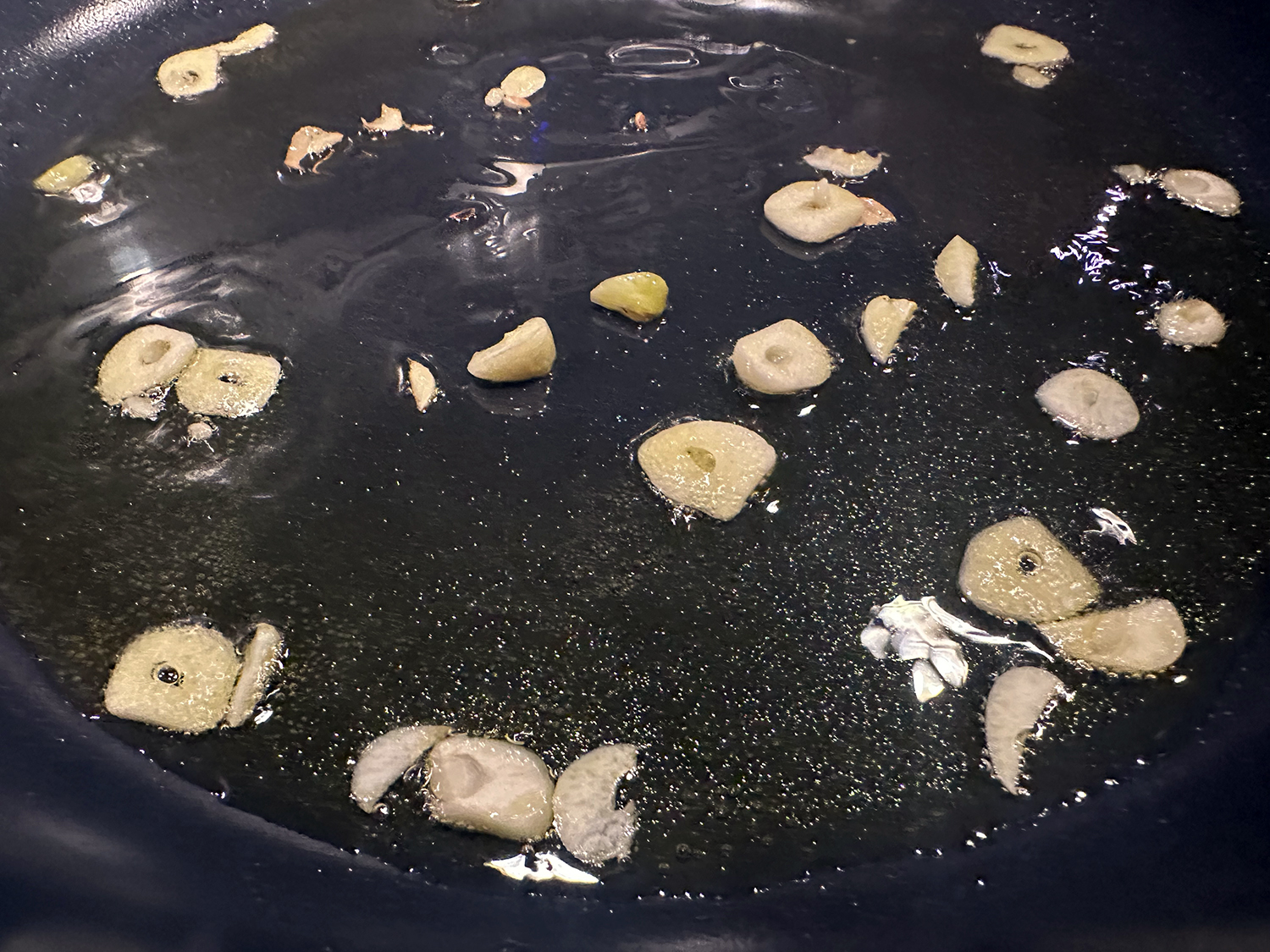
  2. In a 12-inch skillet over medium, combine the oil and garlic, then cook, stirring often, until the garlic is softened and lightly golden around the edges, about 3 minutes. Add the zucchini and chilies; immediately increase to medium-high and cook, stirring occasionally, until the zucchini begins to brown at the edges, about 5 minutes.
  3. Stir in the vinegar, ½ teaspoon salt and ¼ teaspoon black pepper; cook, stirring often, until the zucchini is tender yet holds its shape, 7-8 minutes. Remove the pan from the heat and let stand for about 5 minutes to cool slightly and to allow the zucchini to absorb the flavors.
  4. Stir in the parsley, then taste and season with salt (if not using flaky salt) and with black pepper. If desired, remove and discard the árbol chilies (if used). Transfer to a serving dish and sprinkle with flaky salt (if using).

http://www.lynnandruss.com

Recipe by Courtney Hill for Milk Street

Pan-Seared Zucchini with Spicy Honey and Scallions

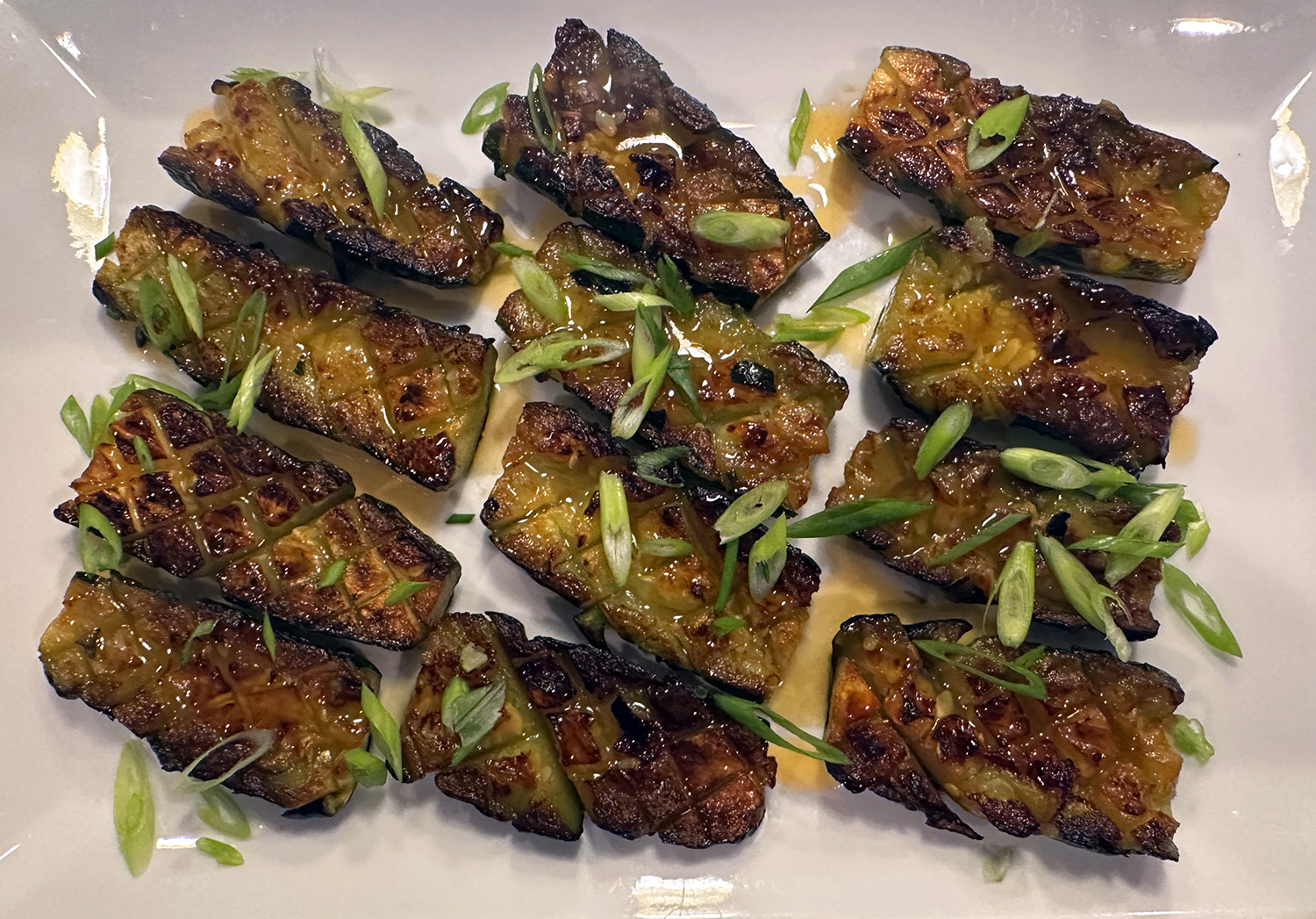
Come summertime, zucchini is everywhere—if not in your own garden, then an abundance can be found at local farm markets, neighbor’s backyards and the nearby grocery store. But let’s forget dull and watery. “If you treat summer’s most ubiquitous squash with intention, it can sear like a steak and turn downright lush”—so claims Cook’s illustrated (CI). So we had to see for ourselves. OMG, the most luscious zucchini dish we’ve ever experienced!

For dense, meltingly soft, and dramatically browned zucchini, CI says to start by halving and scoring the cut surfaces of the squashes, rubbing them with salt, and briefly microwaving them. The salt and heat draws moisture from the flesh, and the slits provided escape routes for the water so that the surfaces are primed for browning.

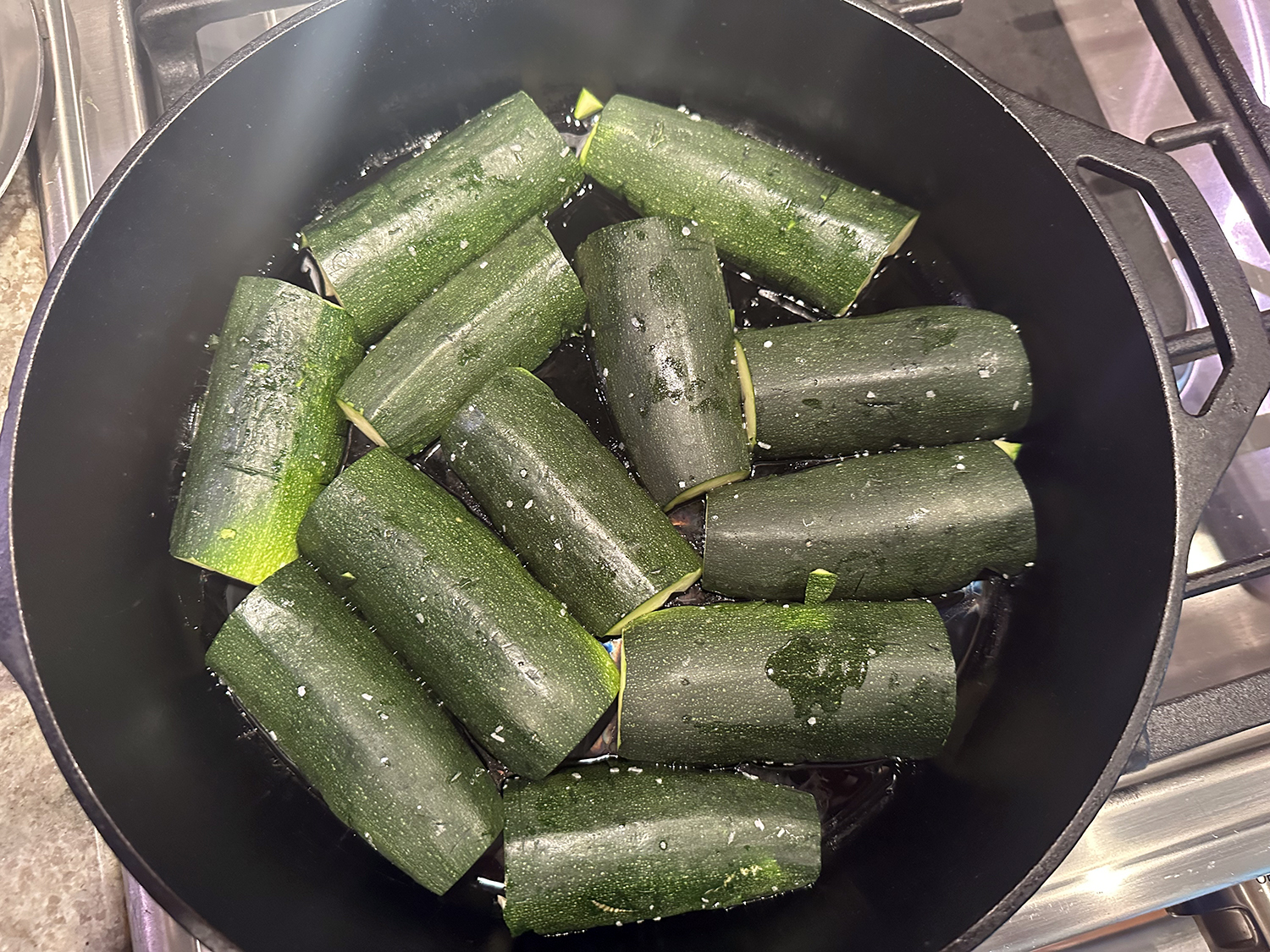
Cooking in a well-oiled cast-iron skillet encourages rich browning; the metal holds the heat really well, and the fat facilitates heat transfer between the pan and the food. Covering the skillet for most of the cooking time traps moist heat that forces air out of the flesh and also dissolves its pectin, rendering the flesh fork-tender.

A mixture of honey and hot sauce, microwaved (or heated in a sauce pan) to a glaze consistency, adds sweetness with a bit of heat; while sliced scallions bring fresh crunch and color. If you taste the sauce by itself, it may seem too spicy. However, once it is spread on the cooked zucchini, it mellows into the perfect blend of sweet and spicy.

Instead of microwave: Reduce the honey mixture in a saucepan on the stovetop. Leave the salted zucchini cut side down on the paper towels for 30 minutes to drain and add a couple of minutes to the cooking time.

*NOTE: After reading other recipe reviewers comments that after you remove the lid from the pan and flip the zucchini, the pieces on the outer edge were not fully browned. This happened to us also. So if needed, rearrange zucchini from middle to outer edges, and cook the scored surfaces another 3 minutes without covering to char all pieces evenly.
Then flip, and cook another 3 minutes uncovered.

Pan-Seared Zucchini with Spicy Honey and Scallions

  • Servings: 4
  • Difficulty: easy
  • Print

Ingredients

  • 2 Tbsp. honey
  • 1 Tbsp. hot sauce
  • 3 zucchini (8 oz. each), halved lengthwise
  • 2 tsp. kosher salt
  • 3 Tbsp. vegetable oil
  • 1 scallion, sliced thin on bias

Directions

  1. Whisk honey and hot sauce together in 1-cup liquid measuring cup. Microwave until mixture comes to boil, 30 to 45 seconds. Continue to microwave, stirring every 30 seconds, until sauce is slightly thickened, about 1 minute (sauce will continue to thicken as it cools).
  2. Using sharp paring knife, score cut sides of zucchini diagonally, about ¼ inch deep, at ½-inch intervals. Turn zucchini 90 degrees and score again in opposite direction. Place scored zucchini halves close to each other, cut side up, on cutting board. Sprinkle salt evenly over halves. Rub salt into cut sides until mostly dissolved.
  3. Line large plate with double layer of paper towels. Place zucchini cut side down on paper towels and press gently. Microwave until zucchini has exuded water and is hot to touch, about 3 minutes. Cut each piece in half crosswise.
  4. Spread oil over surface of cold 12-inch cast-iron skillet. Arrange zucchini cut side down in skillet and press to ensure that cut sides are flush with skillet surface (reserve paper towel–lined plate). Cover skillet. Cook over medium-high heat, rotating skillet one-quarter turn every 2 minutes for even cooking, until cut sides are deeply browned, 8 to 10 minutes.
  5. Slide skillet off heat. Uncover and turn zucchini cut side up. (*See above note regarding evenly browned surfaces.) Return to medium-high heat and continue to cook, uncovered, until paring knife meets little to no resistance when slipped into center of squash, 2 to 3 minutes longer. Transfer zucchini cut side up to reserved paper towel–lined plate to drain for 5 minutes.
  6. Transfer zucchini cut side up to platter. Drizzle with honey mixture, sprinkle with scallion, and serve.

http://www.lynnandruss.com

Adapted from a recipe by Andrea Geary for Cook’s Illustrated

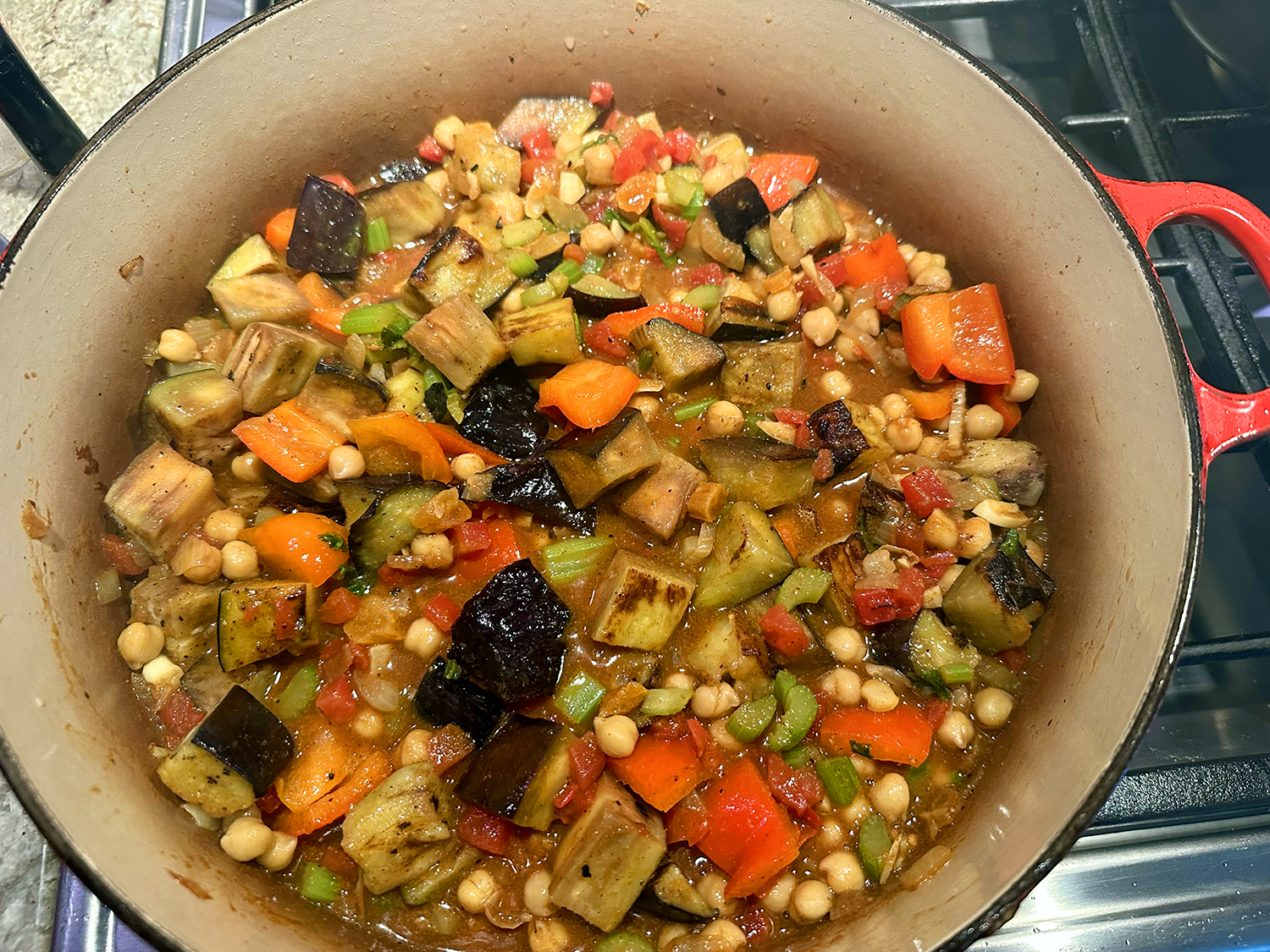
Eggplant Chickpea Tagine

The tantalizing aromas as this dish comes together make your mouth water, your nostrils flare (in a good way), and your stomach growl. There are a lot of spices that contribute to the flavor-packed meal, but don’t let that deter you.

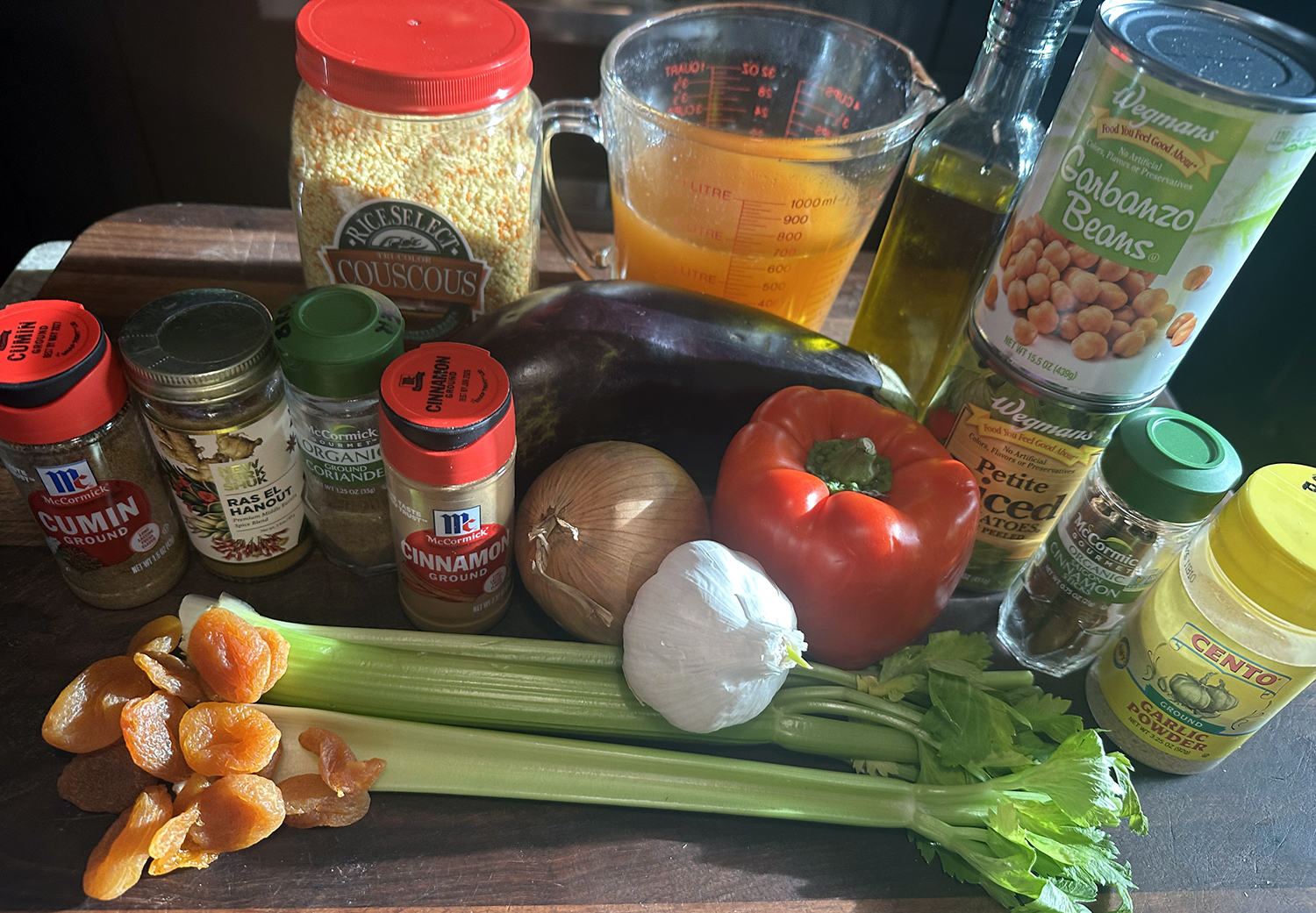
NOTE: One of those spices Ras El Hanout, can be easily purchased at most supermarkets, but if you can’t readily find it, there is a recipe variation below. I suggest you make this a day or two ahead of time and have it on hand when ready to cook.

This amazing recipe addresses several dietary restraints such as gluten-free, vegan, vegetarian, and high-fiber, but does not lack in flavor! It is a simple, delicious tagine recipe with eggplant and chickpeas infused with Moroccan spices served over cinnamon-scented couscous.

It’s luscious and hearty, yet totally plant-based and vegan. Another plus is that it can be made ahead, as leftovers get even more flavorful as the flavors have time to meld. The eggplant is succulent and meaty, a deliciously satisfying way to cook it!

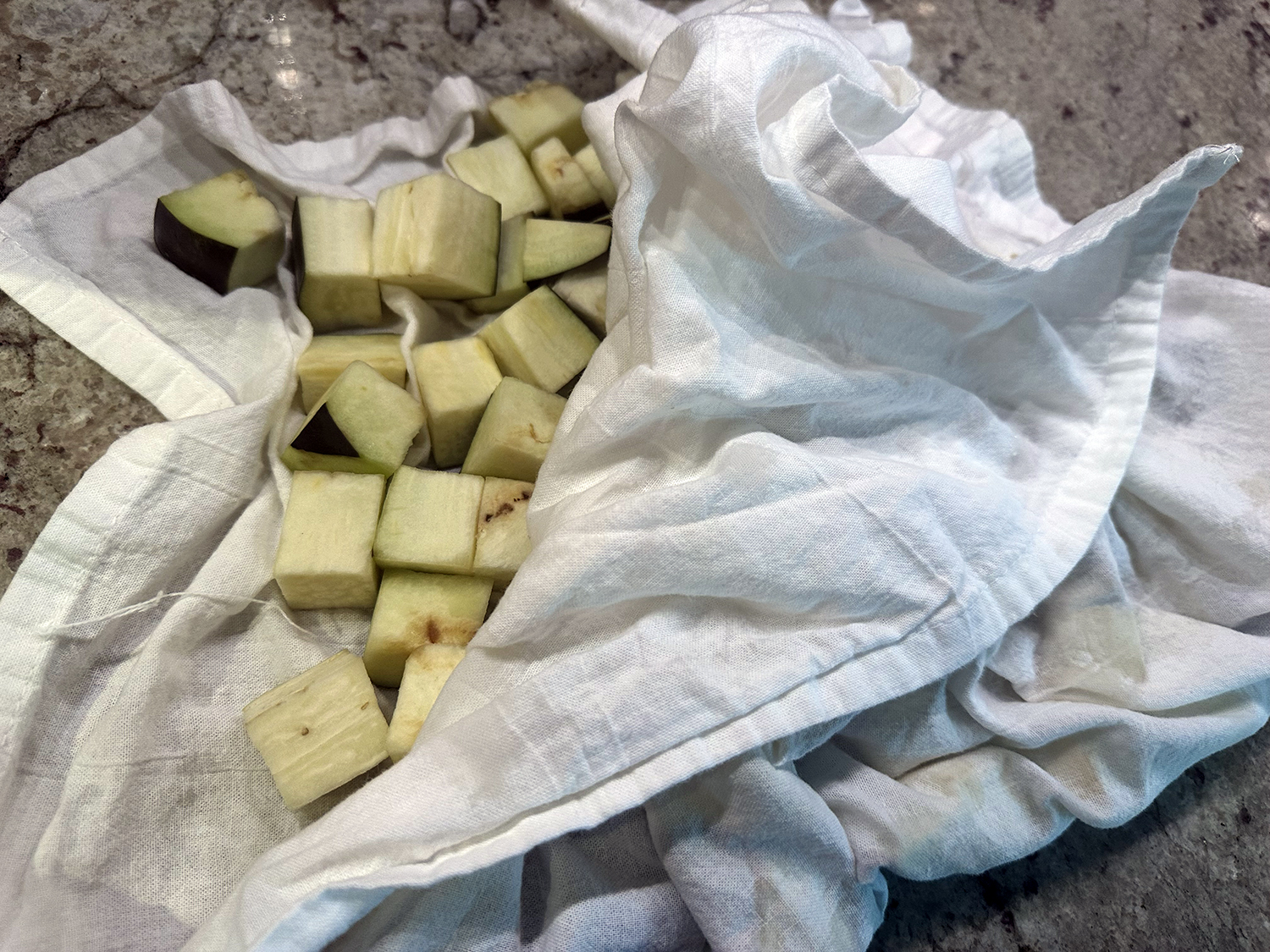
This vegan tagine recipe starts with cutting and salting the eggplant, which is so meaty and filling here, you really won’t miss the meat at all (well some of you may). Salting the eggplant will not only help remove bitterness but will also prevent the it from soaking up too much oil.

TIPS: Soaking the eggplant, not only seasons it, it helps remove some bitterness and helps the eggplant absorb less oil. Don’t skip this step. If leaving the raisins and apricots out, you will need to add a little sweetness, 1-3 teaspoons honey, sugar, something, to taste. Feel free to cook and bake in a tagine – if using a brand new tagine, make doubly sure you soak it first.

Eggplant Chickpea Tagine

  • Servings: 4-6
  • Difficulty: easy
  • Print

Ingredients

  • 1 extra-large eggplant (or two small)
  • 2 tsp. salt
  • Bowl of water
  • 6 Tbsp. olive oil (divided)
  • 1 large onion, diced
  • 6–8 garlic cloves, rough chopped
  • 3 stalks celery, chopped
  • 1 red bell pepper, seeded and chopped (or large carrot)
  • 1 Tbsp., ras el hanout, more taste
  • 1 tsp. cumin
  • 1 tsp. coriander
  • 1/4 tsp. cinnamon
  • 14-oz. can diced or crushed tomatoes
  • 1/3 cup raisins (or chopped dried apricots)
  • 1 tsp. salt, more to taste
  • 1/2 tsp. pepper
  • 14-oz. can chickpeas, drained, rinsed.
  • 2 cups vegetable broth
  • Optional Garnishes: Cinnamon scented couscous, cilantro, olive oil, optional yogurt, optional Aleppo chili flakes

Cinnamon-Scented Couscous (serves 4) 

  • 2 cups vegetable stock
  • 2 Tbsp. olive oil
  • 1 small cinnamon stick (or 1/2 tsp.)
  • 1/2 tsp. cumin
  • 1/2 tsp. granulated garlic (or onion)
  • 1/2 tsp. salt, more to taste
  • 1 1/2 cups dry couscous

Directions

  1. PREP EGGPLANT: Quarter the eggplant, and cut into large chunks (1 1/2 inches at widest part). Place in a big bowl, cover with cool water just to enough to cover,  and stir in the salt. Place a plate over top to keep the eggplant submerged 20 minutes. Drain and pat dry. (Don’t rinse.)
  2. Preheat the oven to 375F 
  3. Pan Sear: In a large dutch oven, or ovenproof skillet, over medium-high heat, heat 1/4 cup oil. Working in 2 batches, brown two sides of the eggplant, until golden, then set these aside. No need to cook through. Add more oil for second batch if pot is dry.
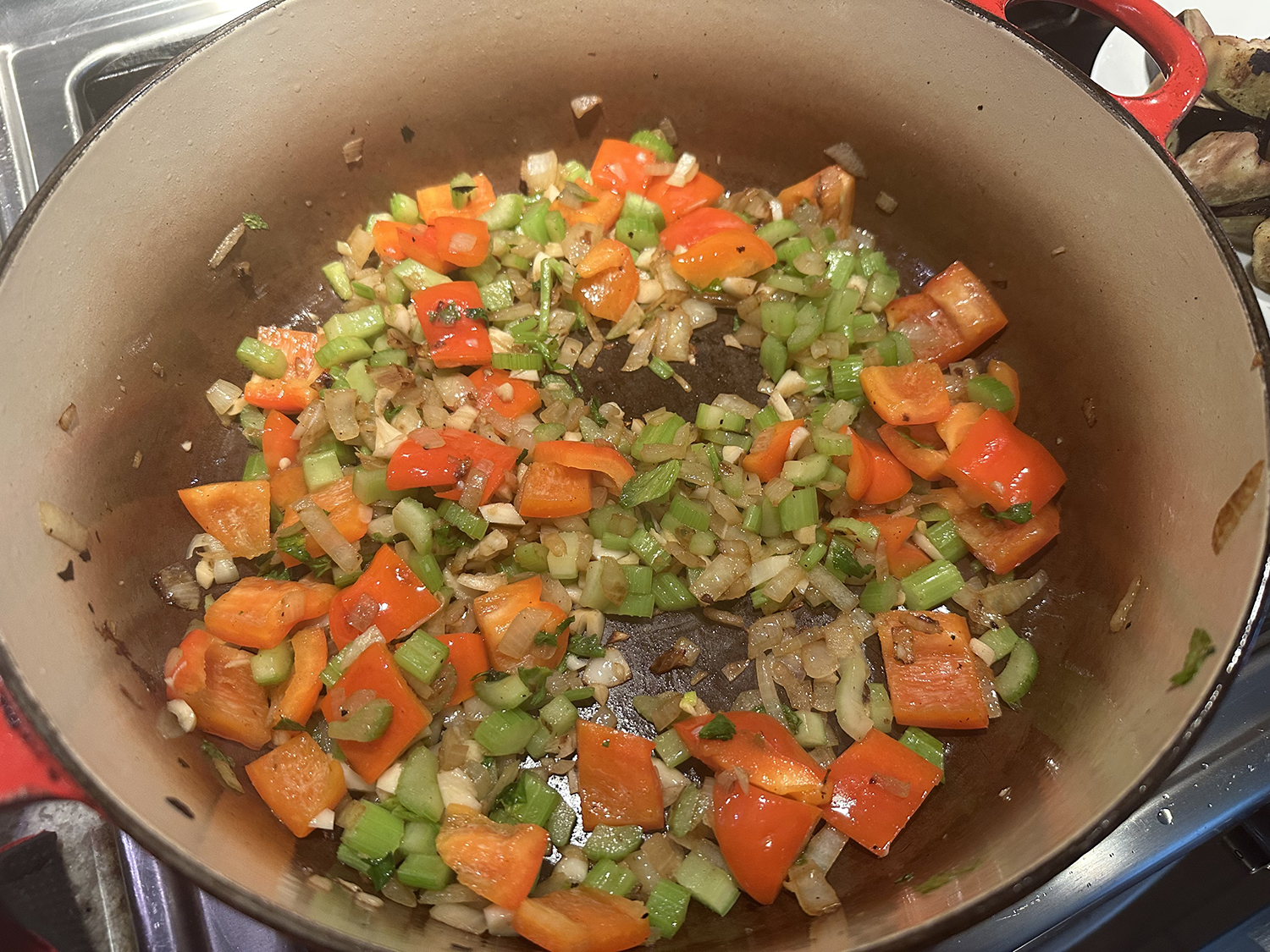
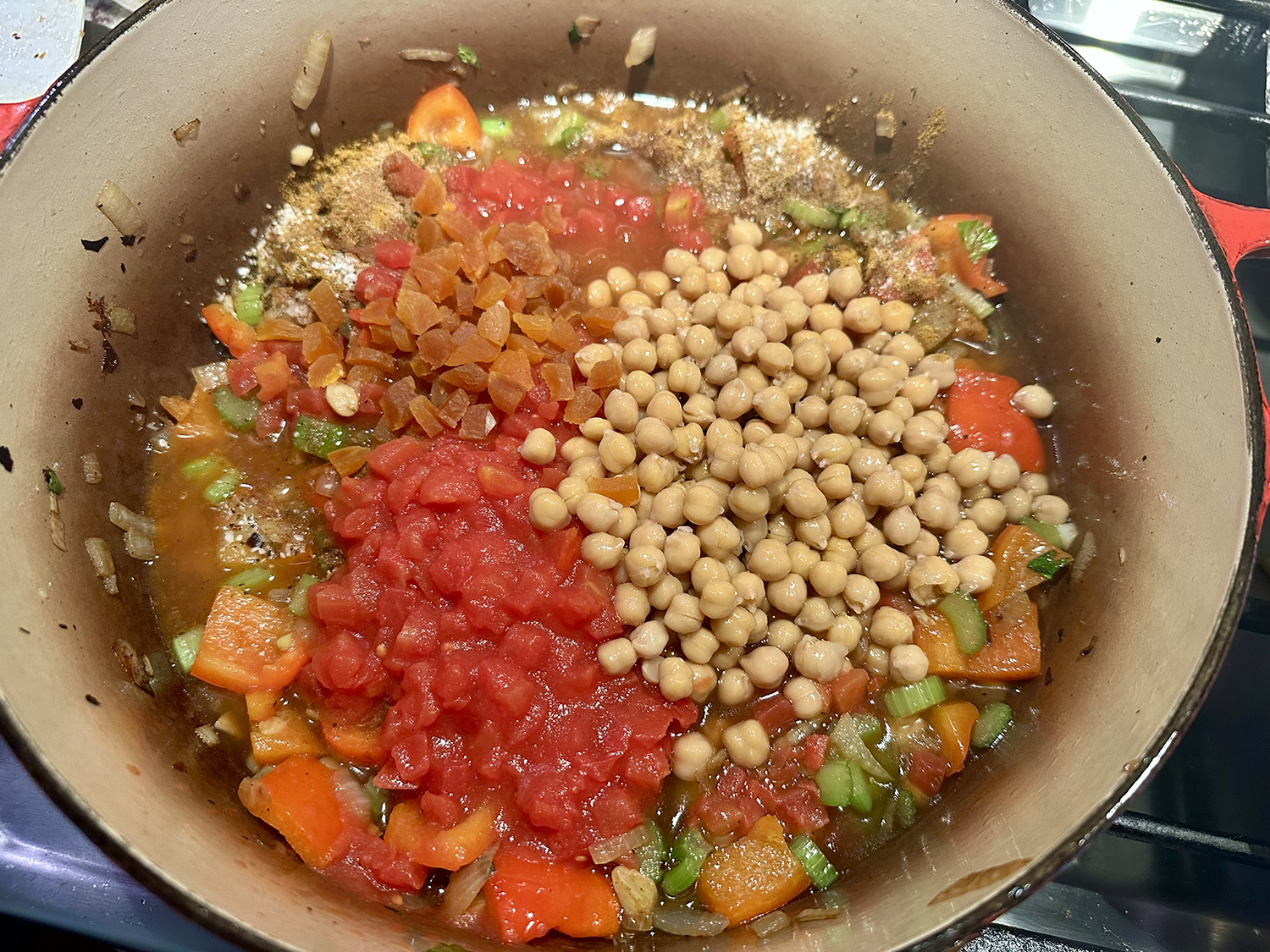
  4. Make the stew: Add 2 more tablespoonsmore oil to the same pan, and the onion and saute 2-3 minutes, stirring. Add the garlic, celery and red pepper, lower heat to medium and cook until tender, about 5 minutes. Add the spices, canned tomatoes (and juices),  raisins, salt, pepper, chickpeas and vegetable broth. Bring to simmer, stirring.
  5. Nestle in the eggplant and give the pan a good shake so the stew levels. It should be like a stew-like. If it seems dry, add a little water. Drizzle with a little olive oil, cover tightly and place in the warm oven.
  6. Bake 20-25 minutes or until eggplant is tender and cooked through. While it’s baking make the couscous.
  7. Remove the lid, taste adding more salt to taste, keeping in mind the couscous will soak up some of the salt. If you feel the stew needs more flavor overall, add a little more ras el hanout, a 1/2 teaspoon at a time, tasting as you go. If it seems watery, bake uncovered for a few minutes. If dry, add a little water. To serve, sprinkle with optional  Aleppo chili flakes and fresh cilantro. Perhaps add an additional drizzle of olive oil, or a dollop of yogurt, if you desire.
  8. Serve with the cinnamon-scented couscous.
  9. To make couscous: Place broth, oil, spices and salt in a medium pot, and bring to boil. Stir in couscous. Cover and remove from heat. Let stand 7 minutes. Uncover and fluff with fork. Adjust salt.

http://www.lynnandruss.com

Adapted from a recipe by Sylvia fountaine

Ras el Hanout Recipe

Makes about 2 1/2 Tablespoons

  • 1 tsp. ground ginger
  • 1 tsp. turmeric
  • 1 tsp. salt
  • 34 tsp. sugar
  • 34 tsp. fresh ground black pepper
  • 12 tsp. cinnamon
  • 12 tsp. ground coriander
  • 12 tsp. cayenne
  • 12 tsp. ground allspice
  • 12 tsp. ground fennel
  • 14 tsp. ground cloves

Thai Vegetable Curry

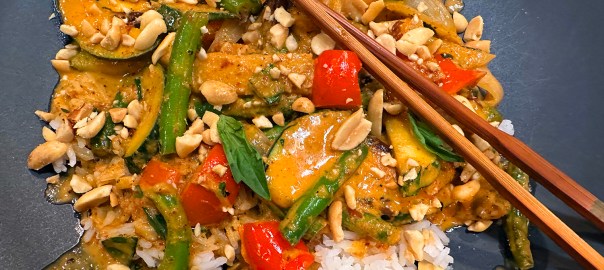
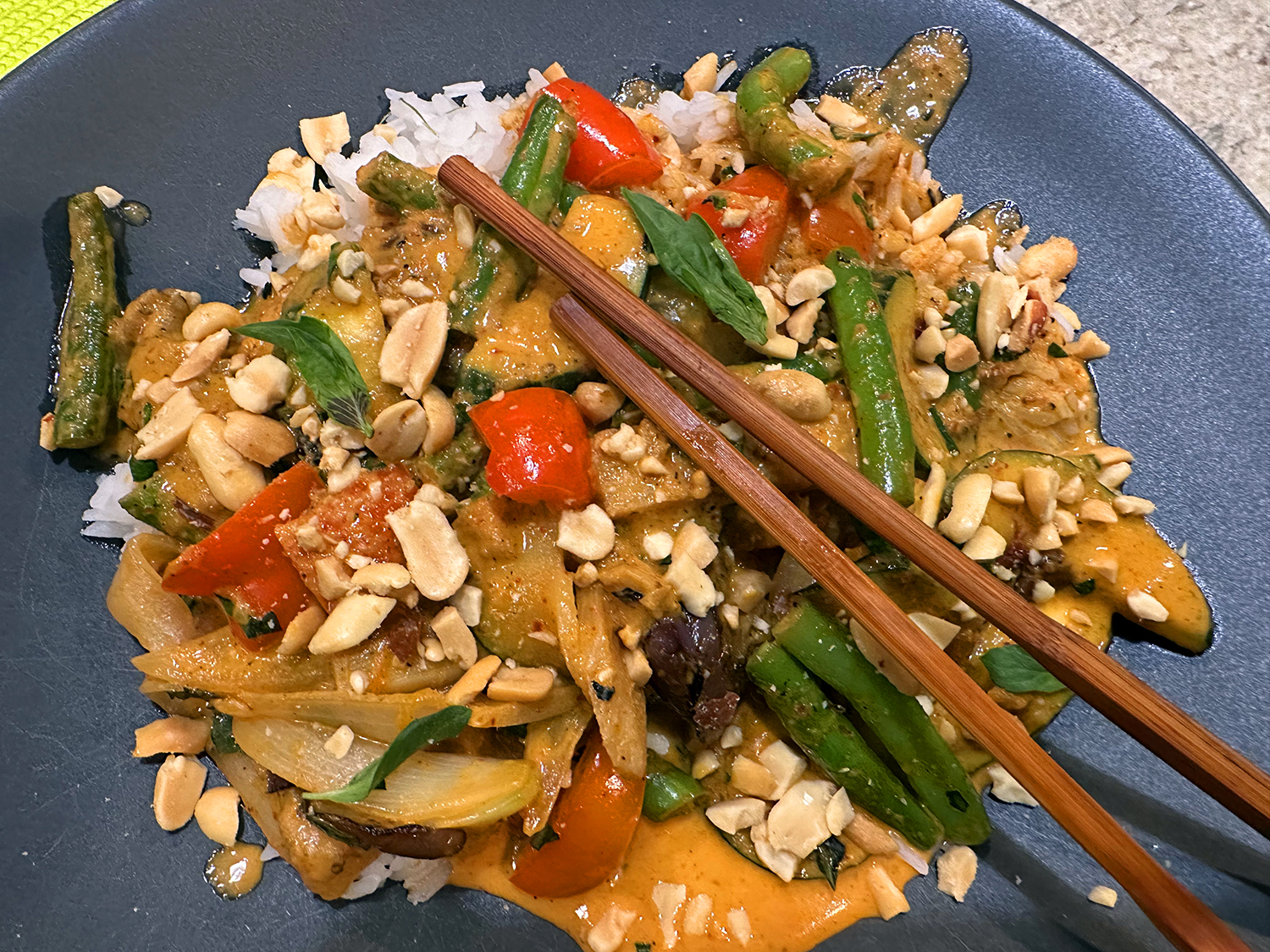
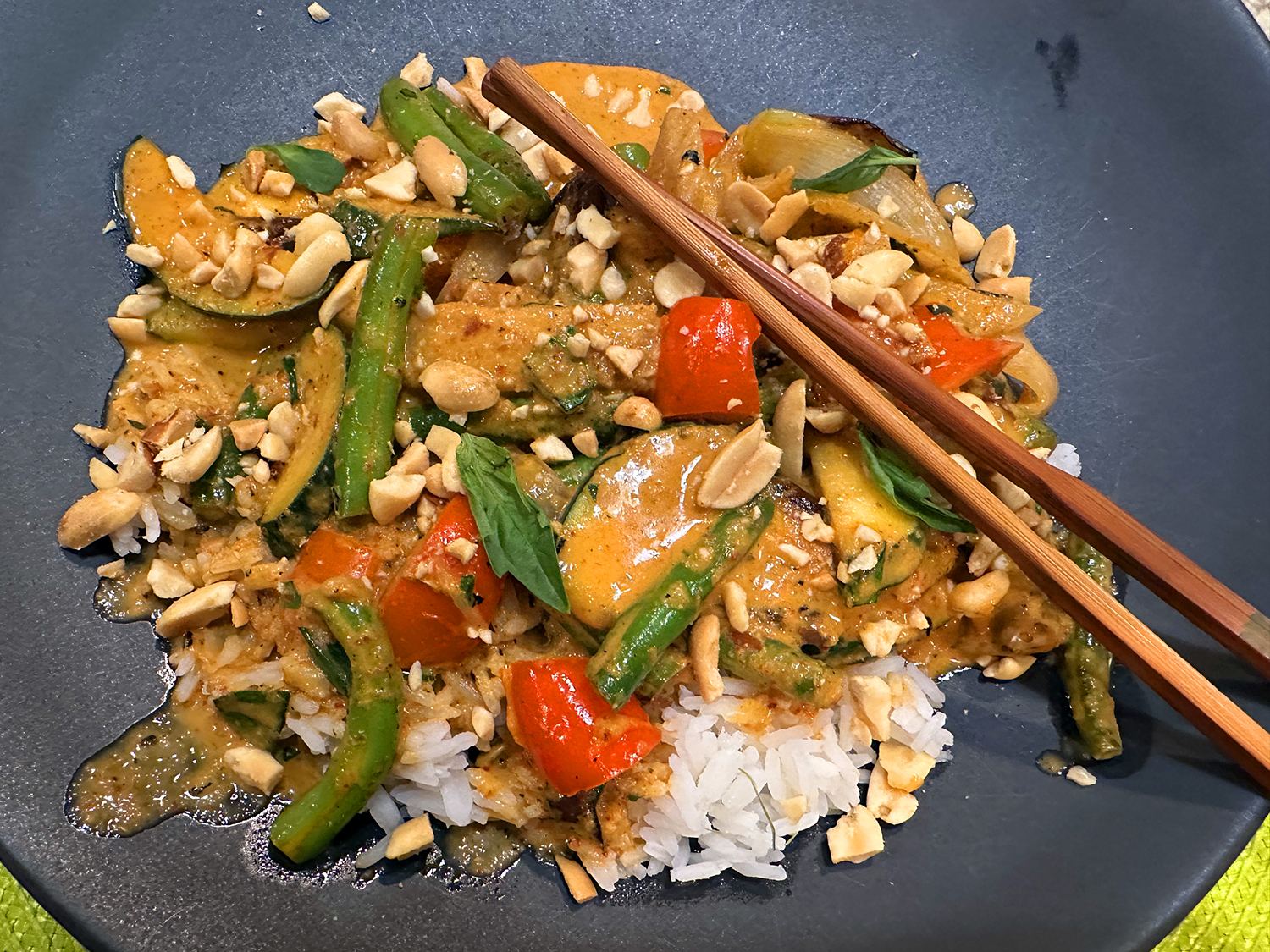
This colorful, aromatic Thai Vegetable Curry recipe may be vegetarian, but it doesn’t skimp on flavor. Creamy coconut milk and Thai red curry paste create the perfect base for tender eggplant, crisp vegetables, and fragrant Thai basil. 

The beauty of this dish is its versatility. You can easily adjust the spice level by using less curry paste, and the vegetables can be swapped based on what you have in your fridge. We made some minor adjustments, but followed the recipe pretty closely otherwise. And it definitely has a kick to it, so cut back on the red curry paste if you have a more “delicate” palate.

Our Asian Mart was carrying Taiwan Basil as opposed to the Thai variety so we used that. And using just half of a red bell pepper? C’mon, that’s just silly, so we incorporated the entire pepper. We loved it!

Thai Vegetable Curry

  • Servings: 4
  • Difficulty: easy
  • Print

Ingredients

  • 3 Tbsp. neutral oil (such as vegetable, canola, or avocado oil)
  • 1 Chinese eggplant, sliced on an angle into ½-inch/1cm thick slices
  • 2 cloves garlic, minced
  • 2 slices ginger, peeled and minced
  • 4 oz. Thai red curry paste
  • 2 tsp. brown sugar (or palm sugar)
  • 1 small onion, cut into small wedges, root end removed
  • 1 red bell pepper, seeded and chopped into 3⁄4″ chunks
  • 1 zucchini, halved lengthwise, and sliced on an angle
  • 6 oz. green beans, ends trimmed, and cut in half crosswise
  • 5 oz. bamboo shoots, drained
  • 2 tsp. vegan fish sauce or soy sauce
  • 13.5 oz. coconut milk
  • ½ cup Thai basil leaves
  • ¼ cup roasted peanuts, chopped, optional

Directions

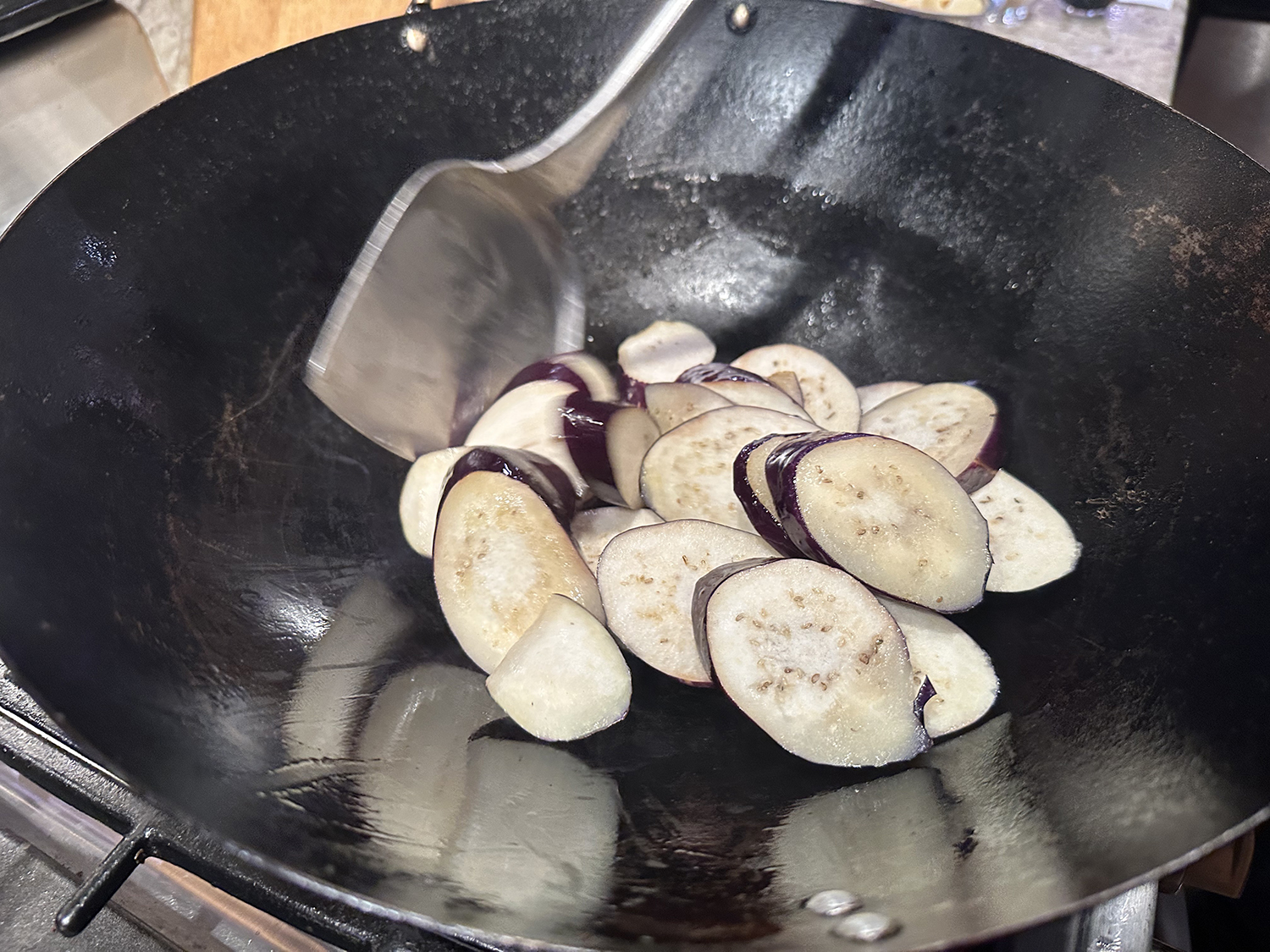
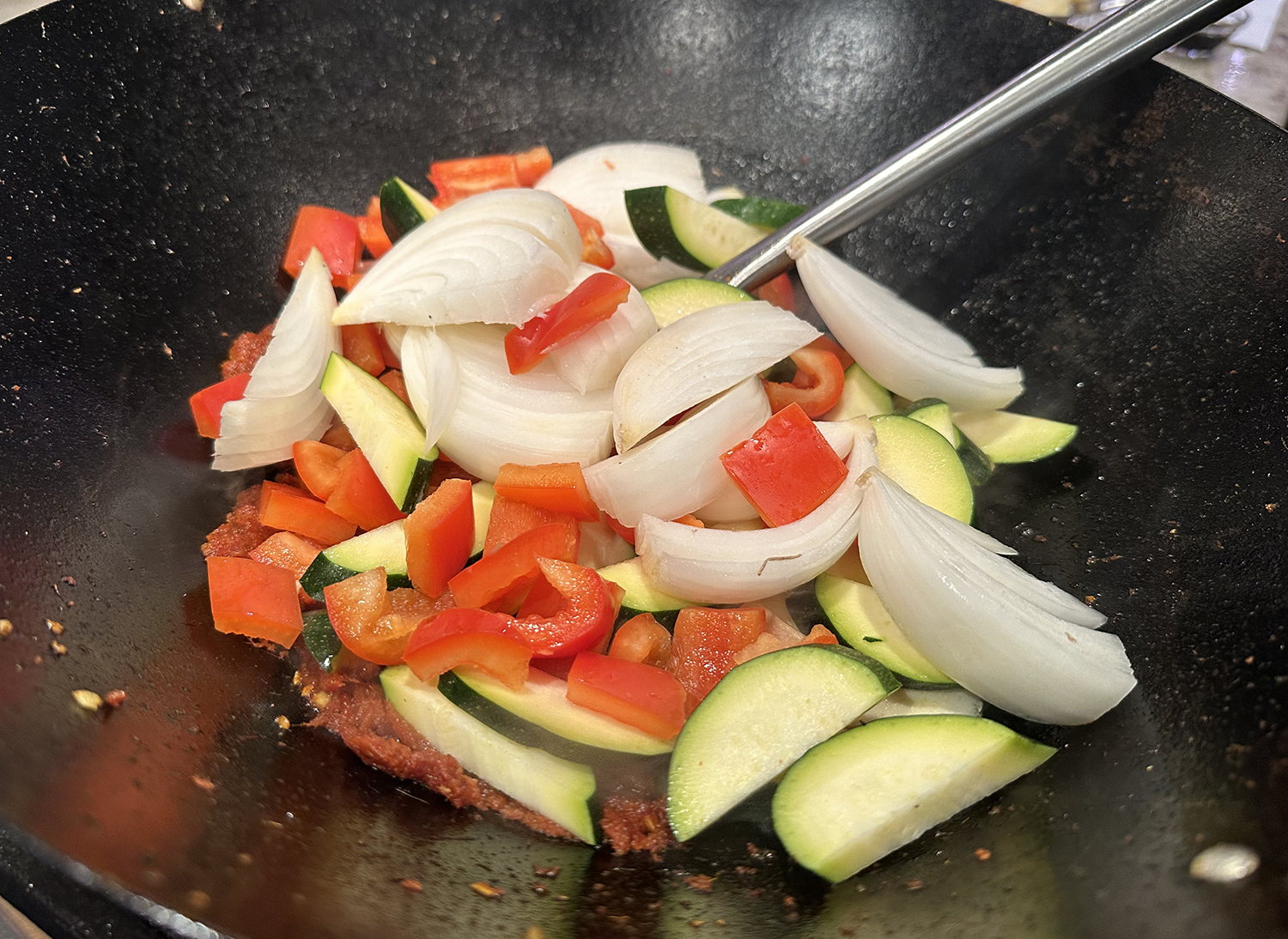
  1. Heat a wok or large cast iron/carbon steel skillet over medium-high heat until it just starts to smoke. Add 2 tablespoons of oil, and spread it around to coat. Add the eggplant, and stir-fry for about 7 minutes, until the eggplant is lightly browned and tender. Drizzle in a little more oil during this process if the eggplant looks dry, and try to keep it in one layer so it sears on all sides. Transfer the eggplant to a dish and set aside.
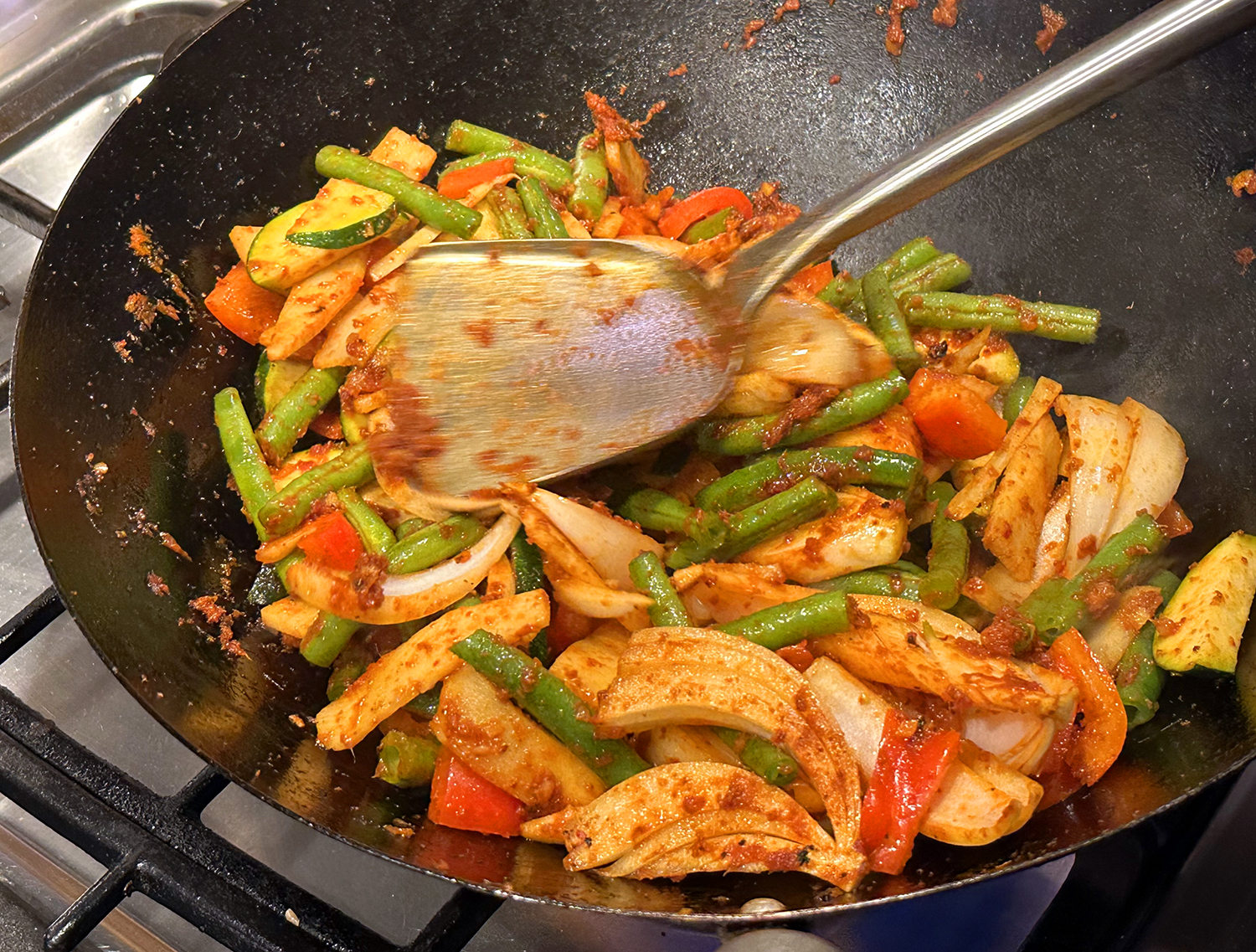
  2. Over medium-low heat, add the remaining 1 tablespoon oil to the pan, along with the garlic and ginger, and fry for 1 minute until fragrant. Increase the heat to medium-high, add the curry paste, and fry for another minute. Stir in the sugar.
  3. Add the onion, bell pepper, zucchini, green beans, bamboo shoots, and vegan fish sauce (or soy sauce/regular fish sauce), and fry for 3 minutes, until the vegetables begin to get tender. Then reduce the heat to medium, and add the coconut milk and eggplant. Bring to a simmer. (From this point on, keep the curry at a simmer. Avoid boiling it too vigorously, or the coconut milk may split.)
  4. Simmer for 4 minutes, or until the vegetables are crisp-tender. Stir in the Thai basil until wilted. Garnish with chopped peanuts if desired, and serve over steamed rice.

http://www.lynnandruss.com

Adapted from a recipe courtesy of The Woks of Life

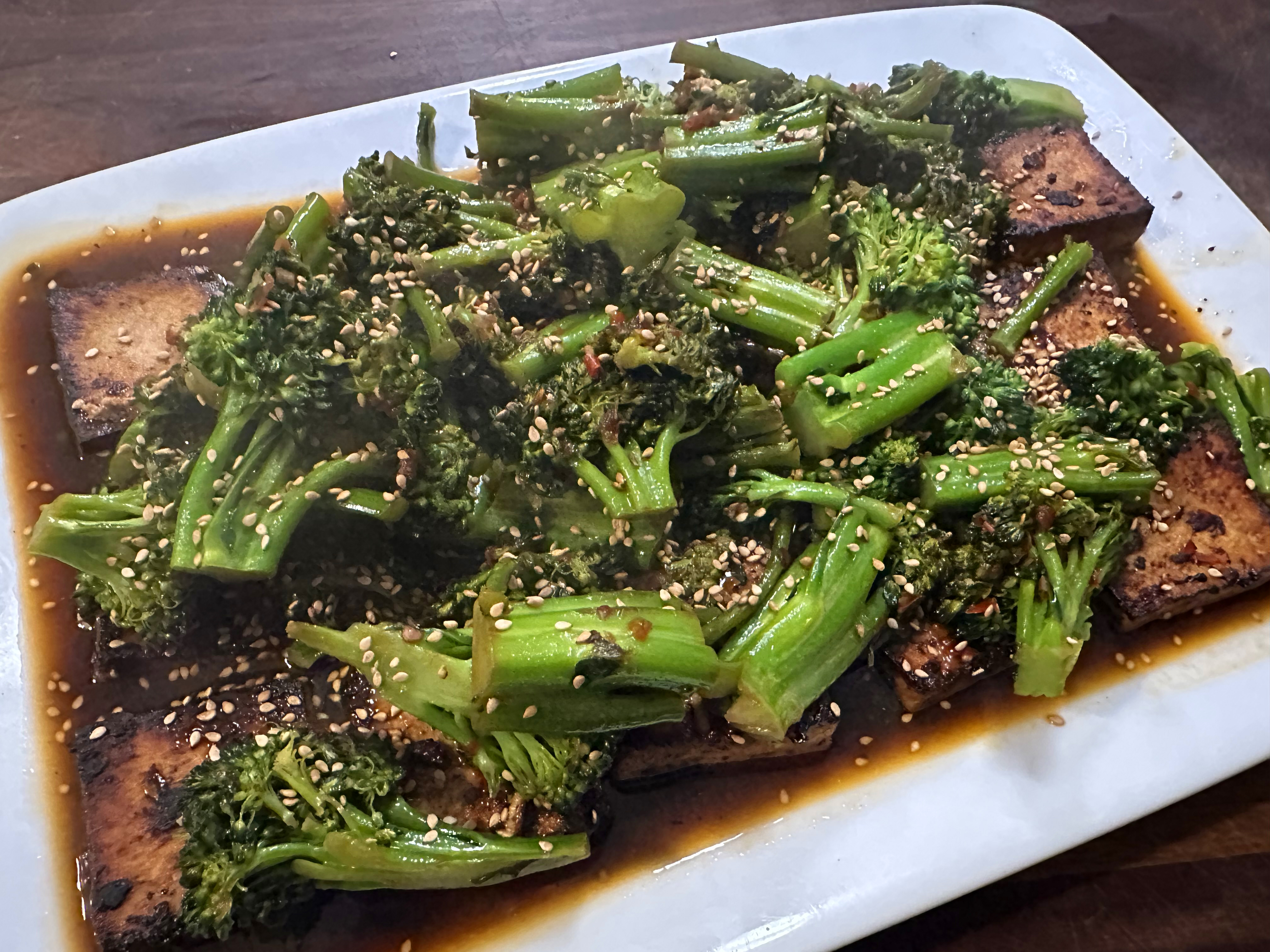
Spicy Broccolini with Seared Tofu and Sesame Oil

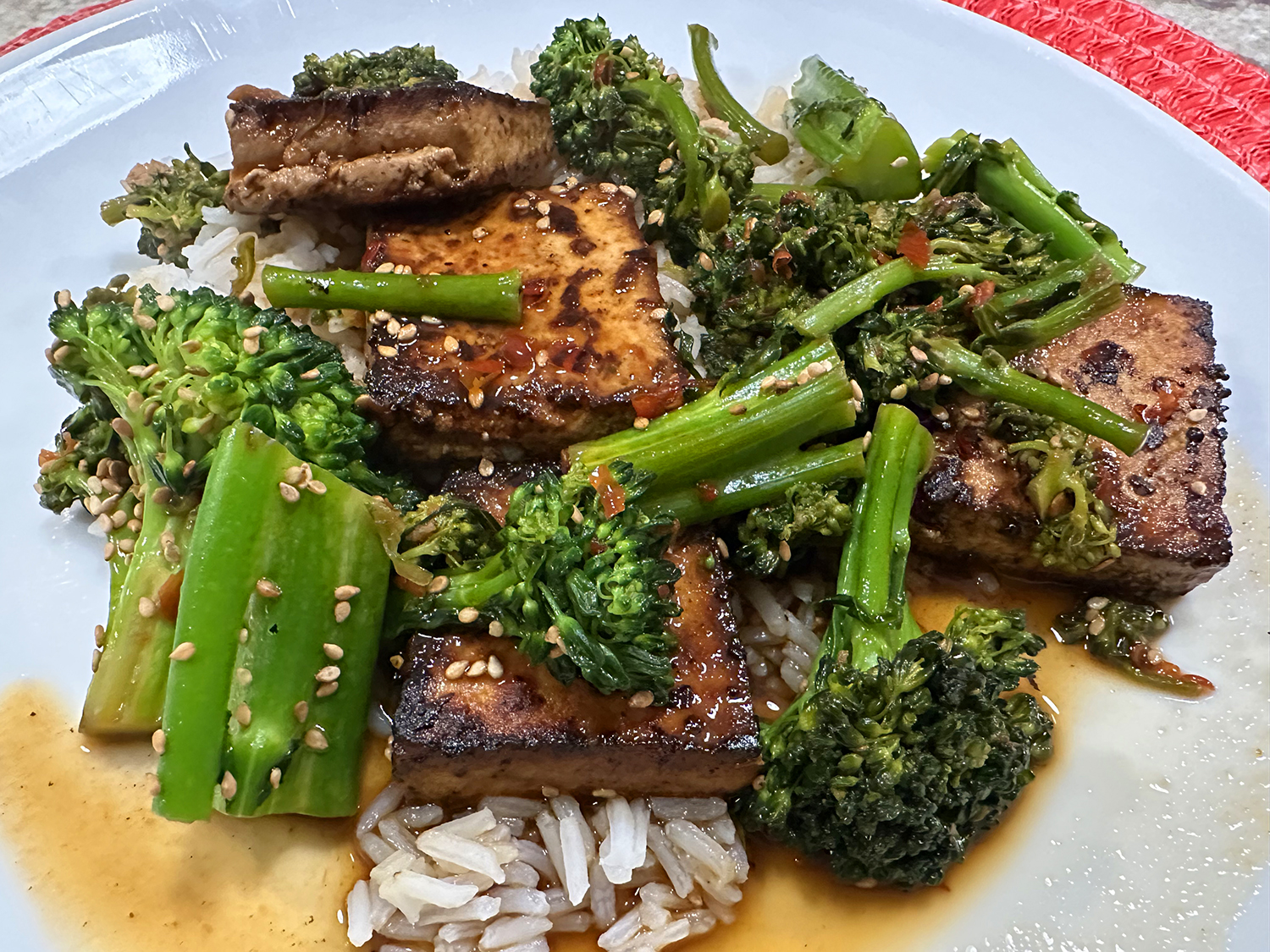
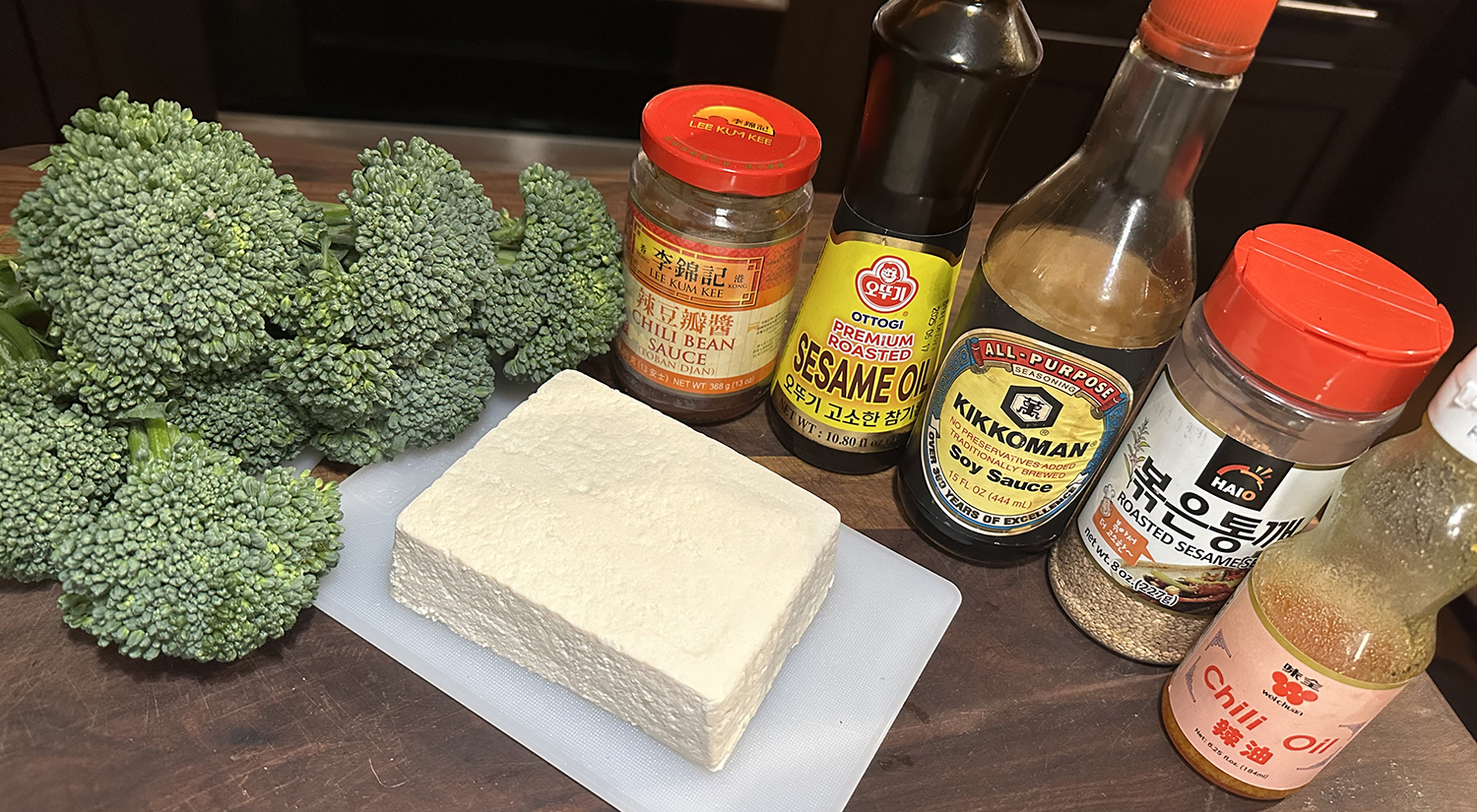
This hearty vegetarian main (recipe courtesy of Milk Street) gets its spicy-salty earthiness from chili-bean sauce, or toban djan, a common ingredient in Sichuan cooking. The brownish red sauce is sold in jars; if it’s not available, approximate the flavor by mixing 2 tablespoons red miso with 1 tablespoon Asian chili-garlic sauce.

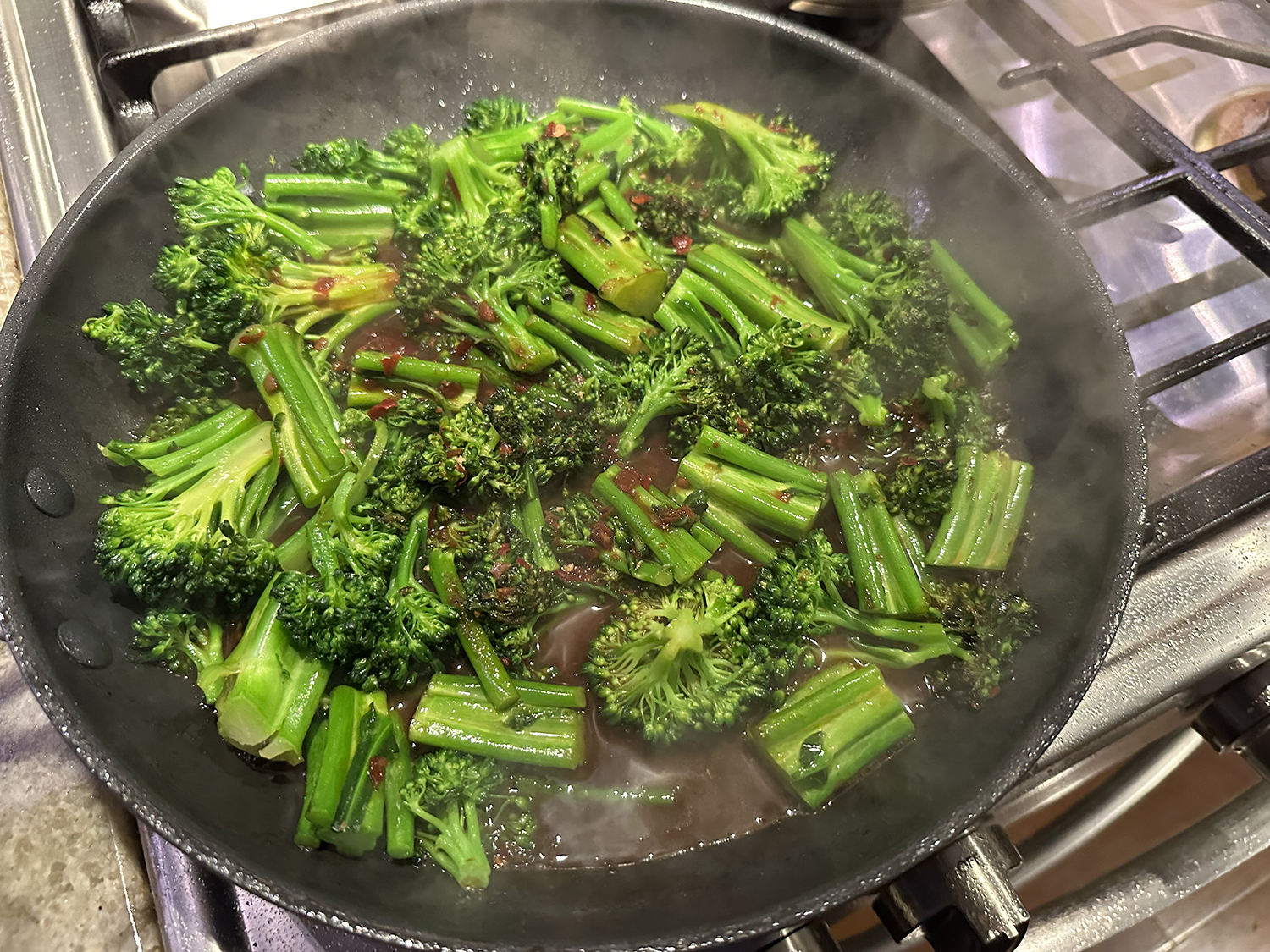
A sear-then-steam skillet technique is used to cook the broccolini; it builds flavor with browning but also allows the vegetable to cook up succulently crisp-tender. Serve with steamed rice and optional garnish of toasted sesame seeds and/or chili oil. So very simple.

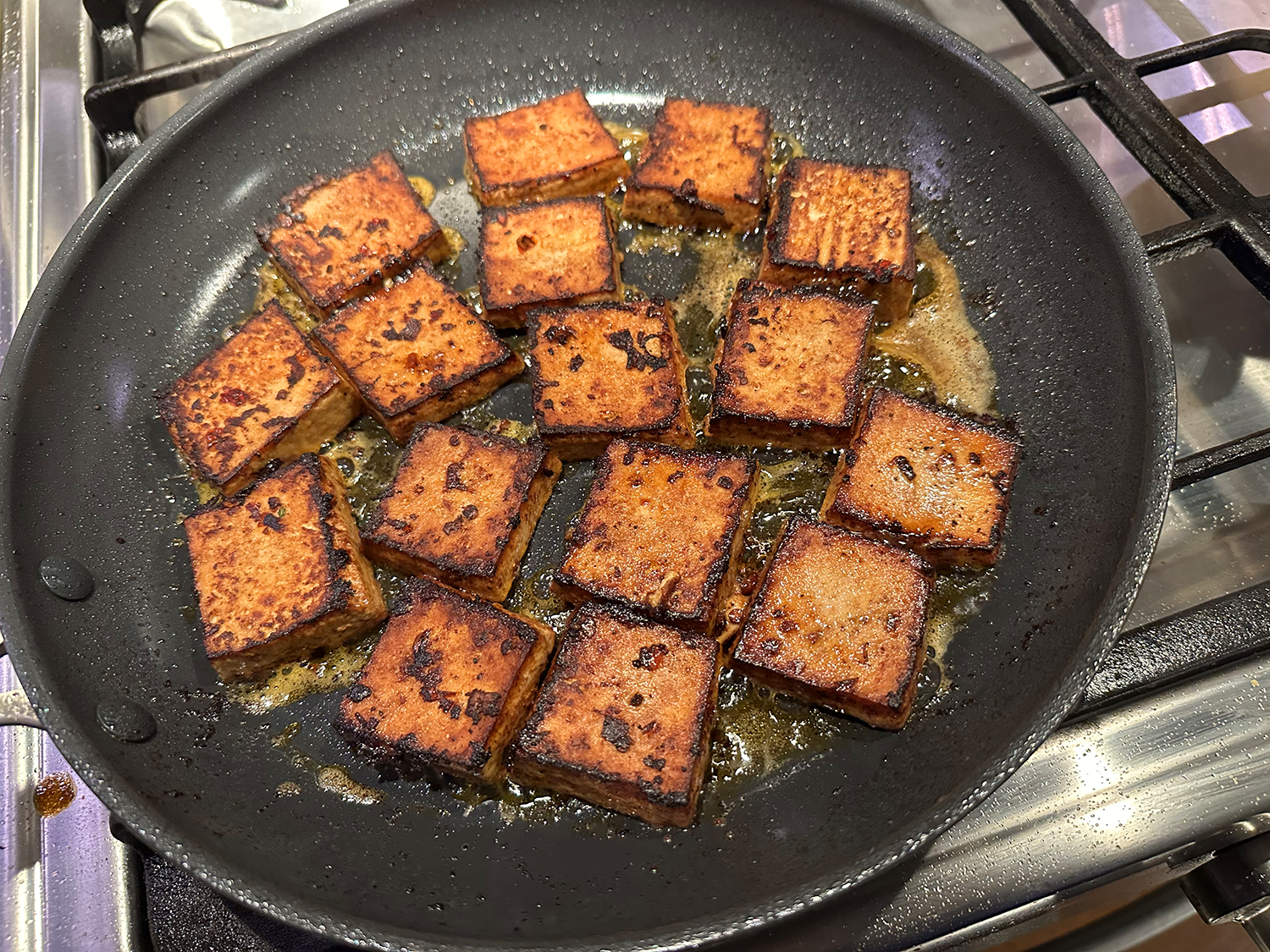
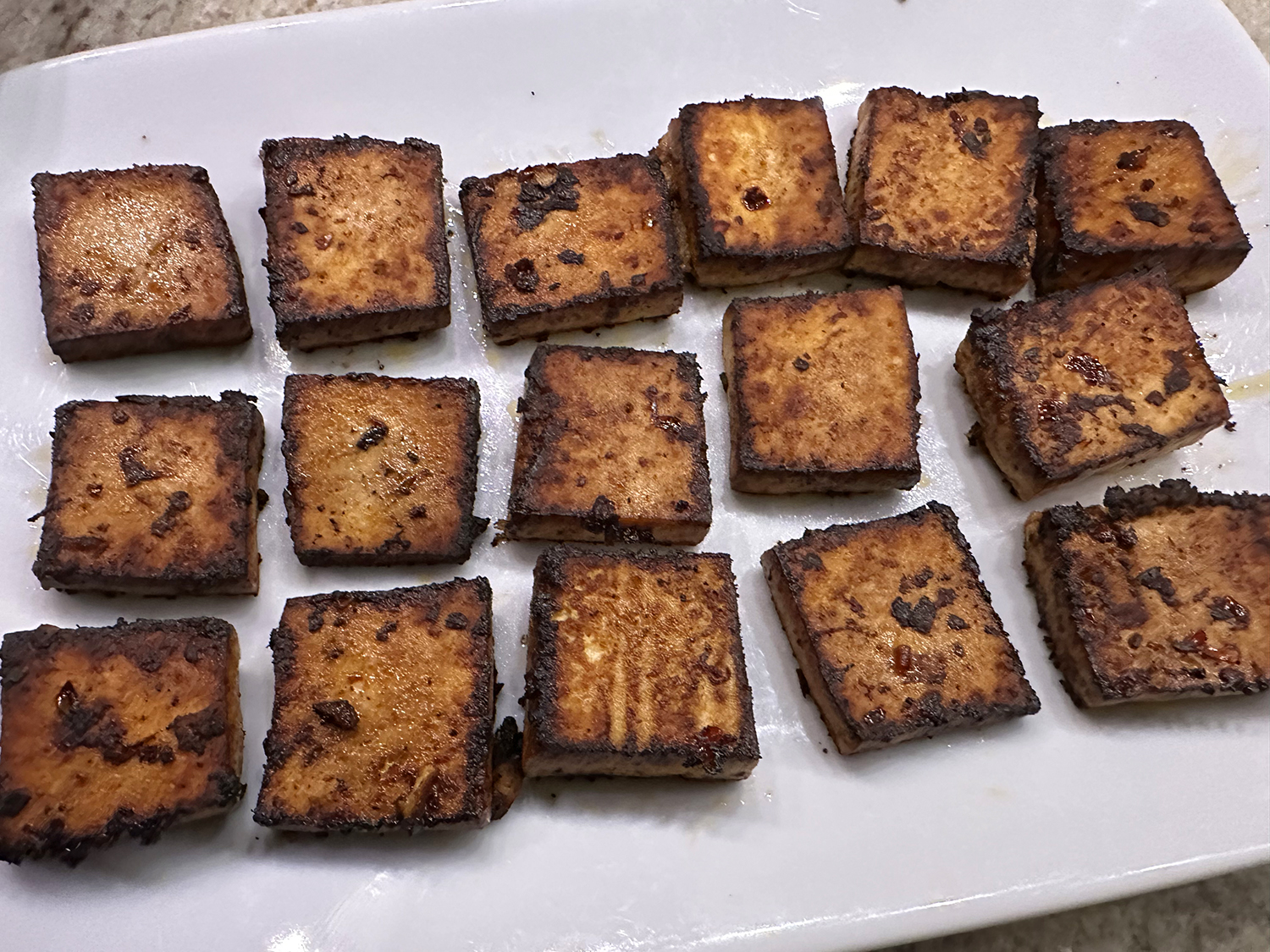
Don’t use medium firm tofu, as it’s too delicate. Firm or extra-firm are the best options. After slicing the tofu, press the slices between paper towels to wick away excess moisture. To maximize moisture removal, we put the block of tofu on a moated cutting board, topped by a smaller cutting board with a large heavy cast-iron skillet resting atop that. The more moisture removal, the crisper the tofu slices will become.

Finally, when adding the tofu to the skillet, don’t simply dump it in with the marinade. Rather, lift out the slices and place them in a single layer in the pan; reserve the marinade for cooking the broccolini.

Spicy Broccolini with Seared Tofu and Sesame Oil

  • Servings: 4
  • Difficulty: easy
  • Print

Ingredients

  • 1/3 cup low-sodium soy sauce
  • 2-3 Tbsp. chili-bean sauce (toban djan, see headnote)
  • 2 Tbsp. toasted sesame oil
  • 14 oz. container firm or extra-firm tofu, drained, halved lengthwise, cut crosswise into ½-inch-thick slices and pressed dry
  • 3 Tbsp. grapeseed or other neutral oil
  • 1 lb. Broccolini, trimmed and cut into 1- to 2-inch pieces
  • 1/3 cup lightly packed fresh cilantro
  • Toasted sesame seeds, to serve
  • chili oil (optional)

Directions

  1. In a large bowl, stir together the soy sauce, chili-bean sauce and sesame oil. Add the tofu and toss to coat. In a 12-inch nonstick skillet over medium-high, heat 1 tablespoon of the neutral oil until barely smoking. Remove the tofu from the bowl and place the slices in the skillet in a single layer; reserve the marinade.
  2. Cook the tofu, turning the pieces once with tongs or a metal spatula, until well browned on both sides, about 3 minute per side. Transfer to a serving platter and wipe out the skillet.
  3. In the same skillet over medium-high, heat the remaining 2 tablespoons neutral oil until shimmering. Add the broccolini and cook, stirring occasionally, until beginning to char, 3 to 4 minutes. Stir in ¼ cup water and the reserved marinade, then immediately cover and reduce to low. Cook, stirring once or twice, until the broccolini is tender-crisp and the sauce is slightly thickened, about 4 minutes.
  4. Transfer the broccolini with sauce onto the tofu and sprinkle with the cilantro.

http://www.lynnandruss.com

Recipe by Calvin Cox for Milk Street

Cream of Celery Root and Apple Soup

This delicious soup was a perfect first course for a Winter braised main dish. Not too heavy, and chock-full of flavor, amped up with texture from some homemade seasoned croutons and a light garnish of thyme leaves, it was instantly a fan favorite.

Celeriac, or celery root, is one of the unsung heroes of the root vegetable world. It can be eaten raw or cooked, is a terrific substitution for potatoes in many applications and is very healthy. If you’ve never used celery root, it is a relative of celery and is a very common ingredient in French or German kitchens.

In this recipe, it is combined with apple and leek to take advantage of the flavor of this ugliest of roots. Don’t be put off by its gnarly exterior. It has a mild celery flavor with a refreshing crunch and a little bitterness when raw, and a subtle undertone of sweetness when cooked. We often make a celery root and potato mash that is heavenly!

To finish, drizzle with extra-virgin olive oil and garnish with croutons and thyme leaves, if desired.

Cream of Celery Root and Apple Soup

  • Servings: 4-6
  • Difficulty: easy
  • Print

Ingredients

  • 8 oz. celery root, peeled and cut into 1/2-inch dice
  • 1 large leek, white and light green part only
  • 2 Golden Delicious apples, peeled, cored, and cut into 1/2-inch dice
  • 2 cups vegetable broth
  • 4 oz. dry vermouth or white wine
  • 1 cups heavy cream
  • 2 Tbsp. butter
  • Table salt, to taste
  • 1 pinch ground nutmeg
  • Freshly ground black pepper, to taste
  • Drizzle with extra-virgin olive oil
  • Garnish with croutons and thyme leaves

Directions

  1. Cut the white and light green part of the leek in half lengthwise, then cut crosswise into 1/2 inch slices. Place in a colander and wash thoroughly to insure removal of any sand.
  2. Add the butter to a large pot and heat it over medium until the butter melts and begins to foam. Add the leek and sauté until it becomes soft and lightly browned, about 5 to 7 minutes. Add the celery root and apple to the pot along with salt and pepper. Cook for 5 minutes longer
  3. Add the wine or hard cider, cover the pot, and cook another 5 minutes. Add the vegetable broth, place the cover on the pot and cook over medium-low heat for 20 minutes or until the celery root and the apple are very tender.
  4. Puree the mixture using an immersion blender or a stand blender.
  5. Add the cream, the nutmeg, and more salt and pepper to taste Cook a few minutes more over medium-low heat until the soup is hot and serve.
  6. Drizzle with extra-virgin olive oil and garnish with croutons and thyme leaves, if desired.

http://www.lynnandruss.com

Recipe from ElPais.com

Vegan Dan Dan Noodles With Eggplant

Sichuan dan dan noodles are traditionally made with ground pork, a spicy sauce and sui mi ya cai, or pickled vegetables, but this vegan version features pan-fried eggplant in place of the meat.

Cutting the eggplant into relatively chunky pieces and covering the pot with a lid while cooking is the key to achieving the right texture: It locks in moisture, ensures that the pieces don’t fall apart, and allows the flesh to become tender and smoky. Once tossed with the noodles and sauce, the eggplant breaks up and becomes creamy. If you don’t have tahini, you can substitute it with smooth peanut butter (our choice) or almond butter.

NOTE: You can also use egg noodles but the dish will no longer be vegan.

Vegan Dan Dan Noodles With Eggplant

  • Servings: 4
  • Difficulty: easy
  • Print

Ingredients

For the Sauce

  • 3 Tbsp. soy sauce
  • 3 Tbsp. black or rice vinegar
  • ¼ cup tahini (or Chinese/Japanese sesame paste)
  • 2 garlic cloves, peeled and finely grated or chopped
  • 1 (1-inch) piece of ginger, peeled and finely grated or chopped (about 1 Tbsp.)
  • 2 to 3 Tbsp. chile oil, chile crisp or doubanjiang
  • 2 tsp. granulated sugar

For the Noodles

  • 1 large eggplant (about 1¼lbs.), trimmed
  • Kosher salt (such as Diamond Crystal)
  • 12 oz. dried thin wheat noodles (see Note)
  • Neutral oil, such as canola or vegetable
  • 1 Tbsp. soy sauce
  • Black pepper
  • ½ tsp. ground Sichuan peppercorns (optional)
  • 2 scallions, white and green parts separated and finely sliced
  • A generous pinch of granulated sugar
  • Handful of cilantro leaves
  • 1 cup dry, unsalted roasted peanuts, roughly chopped
  • Chile oil or chile crisp, for serving

Directions

  1. Make the sauce: Combine the soy sauce, black or rice vinegar, tahini, garlic, ginger, chile oil and granulated sugar in a bowl, and whisk to combine. Set aside.
  2. Slice the eggplant crosswise into ¾-inch-thick circles, then cut each circle into 1½- to 2-inch pieces. (They should be quite chunky.)
  3. Bring a large pot of salted water to boil. Add the noodles and cook according to package instructions until al dente. Reserve ½ cup of the cooking water, then drain the noodles, rinse just for a few seconds to remove some of the starchy water (they should still be hot), and allow them to drain.
  4. Meanwhile, cook the eggplant: Heat a wok or large, deep-sided skillet over medium-high. When hot, add 2 tablespoons of neutral oil along with the eggplant, soy sauce, 1 teaspoon of salt and a pinch of black pepper, and toss well to combine. Cover with a lid and cook for 6 to 7 minutes, tossing every 60 seconds. If it starts to burn, reduce the heat to medium. The eggplant is ready when it is caramelized and cooked all the way through but still intact. (Don’t let it get mushy.) Remove the lid, sprinkle with the ground Sichuan peppercorns (if using), the white parts of the scallions and the sugar, and season with ½ teaspoon of salt and a pinch of black pepper. Toss for 30 seconds and then turn off the heat.
  5. Add the reserved noodle cooking water to the bowl of sauce and whisk to combine. Divide the sauce among four serving bowls.
  6. Divide the noodles among the four bowls, on top of the sauce. Finish each bowl with eggplant, scallion greens, a few cilantro leaves and some peanuts.
  7. To eat, toss everything together so that the noodles and eggplant are well coated in the sauce. Serve topped with chile oil or crisp.

http://www.lynnandruss.com

Recipe by Hetty Lui McKinnon for NYTimes Cooking