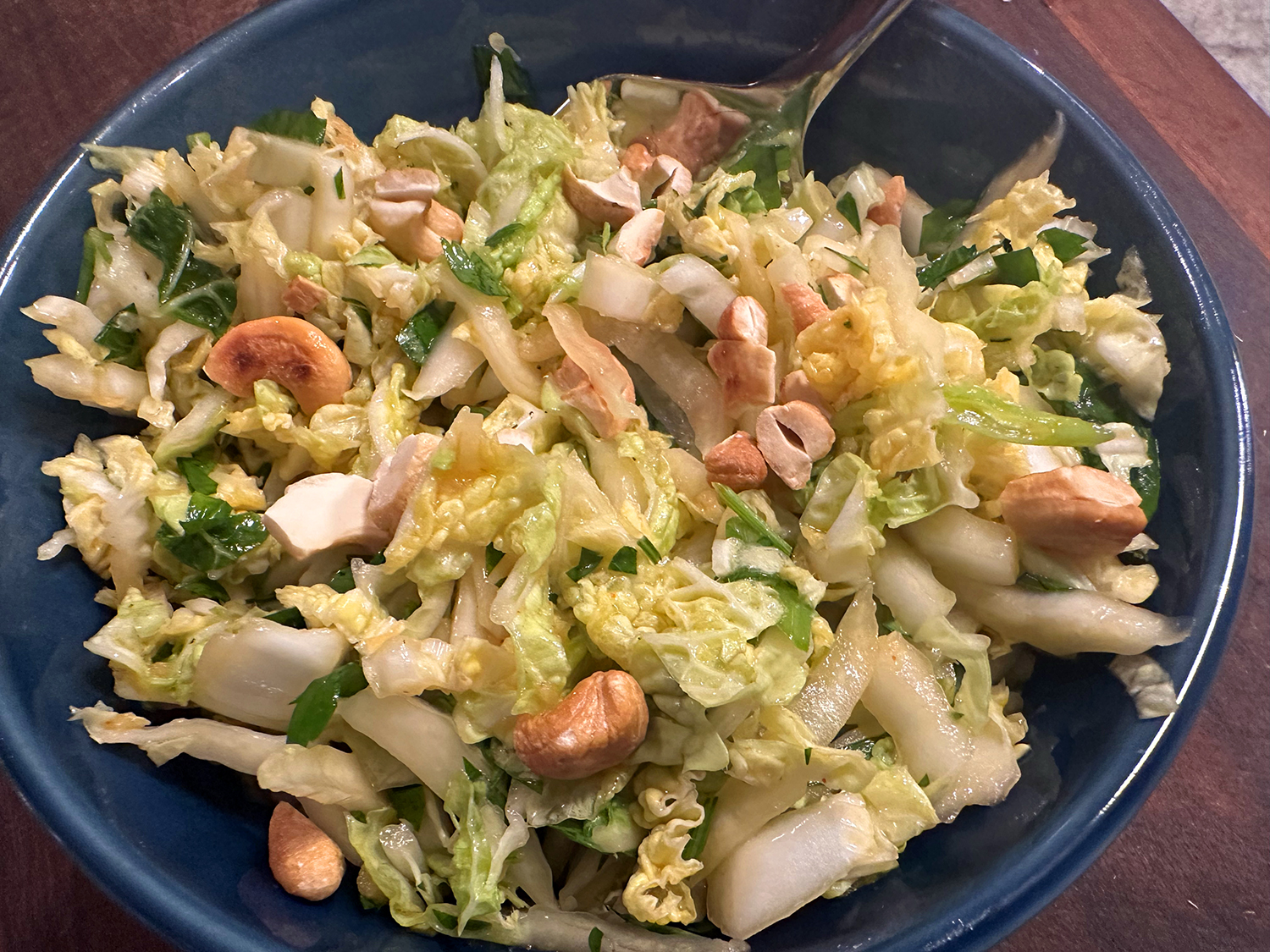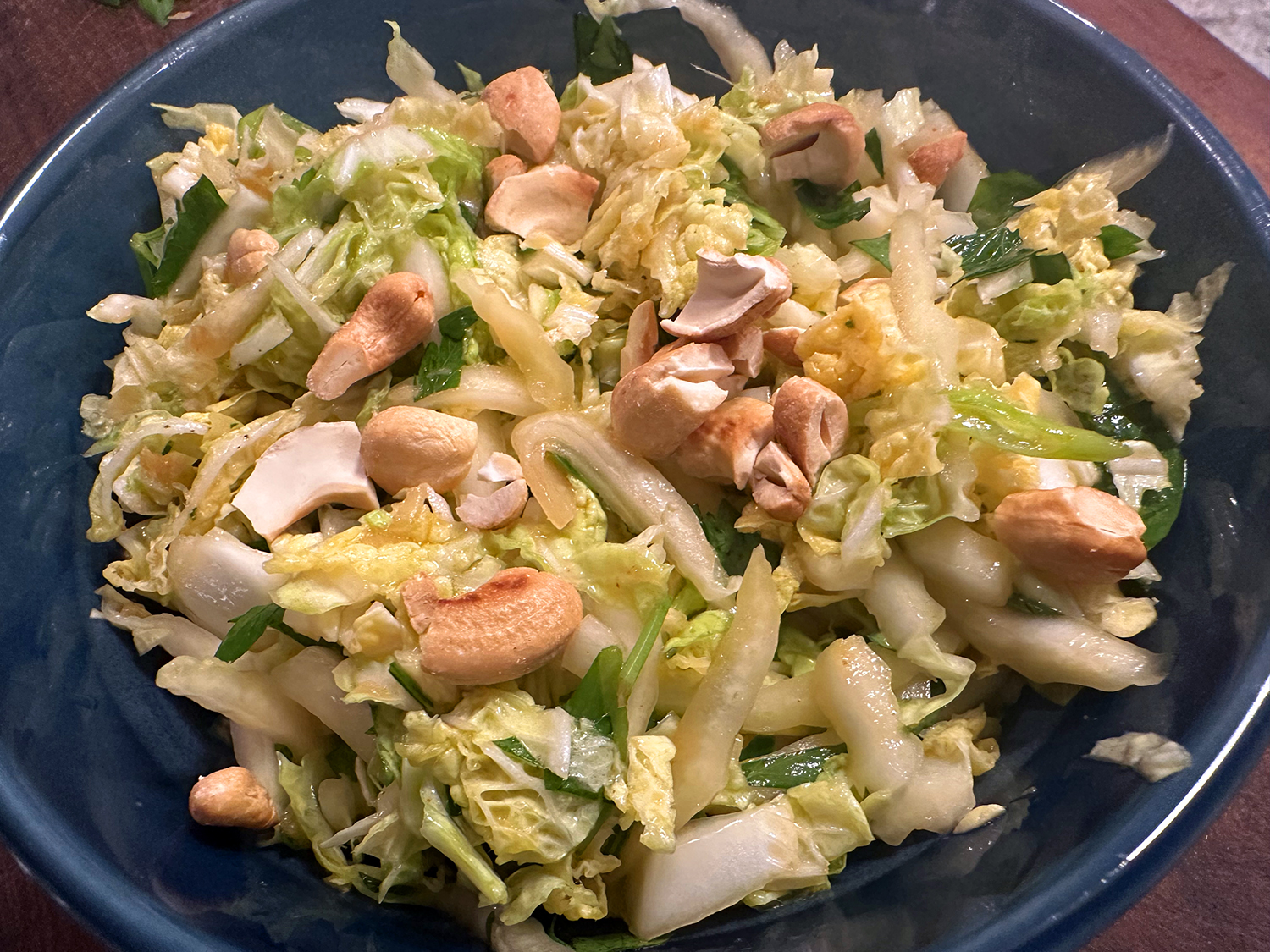
A simple healthy recipe for Asian Slaw – easy and crunchy, this vegan slaw can be made ahead and is packed full of flavor. It’s also a fantastic way to use up some of the stray veggies in the fridge—that remaining half cabbage, the lone carrot or parsnip, or the leftover bell pepper… you get the idea…
The Asian Slaw Dressing is the best! Not only is it made with accessible ingredients you most likely have in your pantry, but it also seems to have the right balance of sweetness, tartness, and depth with just a little heat. And of course, you can personalize it even further to your own tastes.
The slaw recipe will keep up to 4 days in an airtight container in the refrigerator. You can prep the cabbage up to 3 days ahead as well as the dressing and toss before serving—leaving the sesame seeds off until serving.
We served our slaw as a side to stir-fried Ginger Beef.
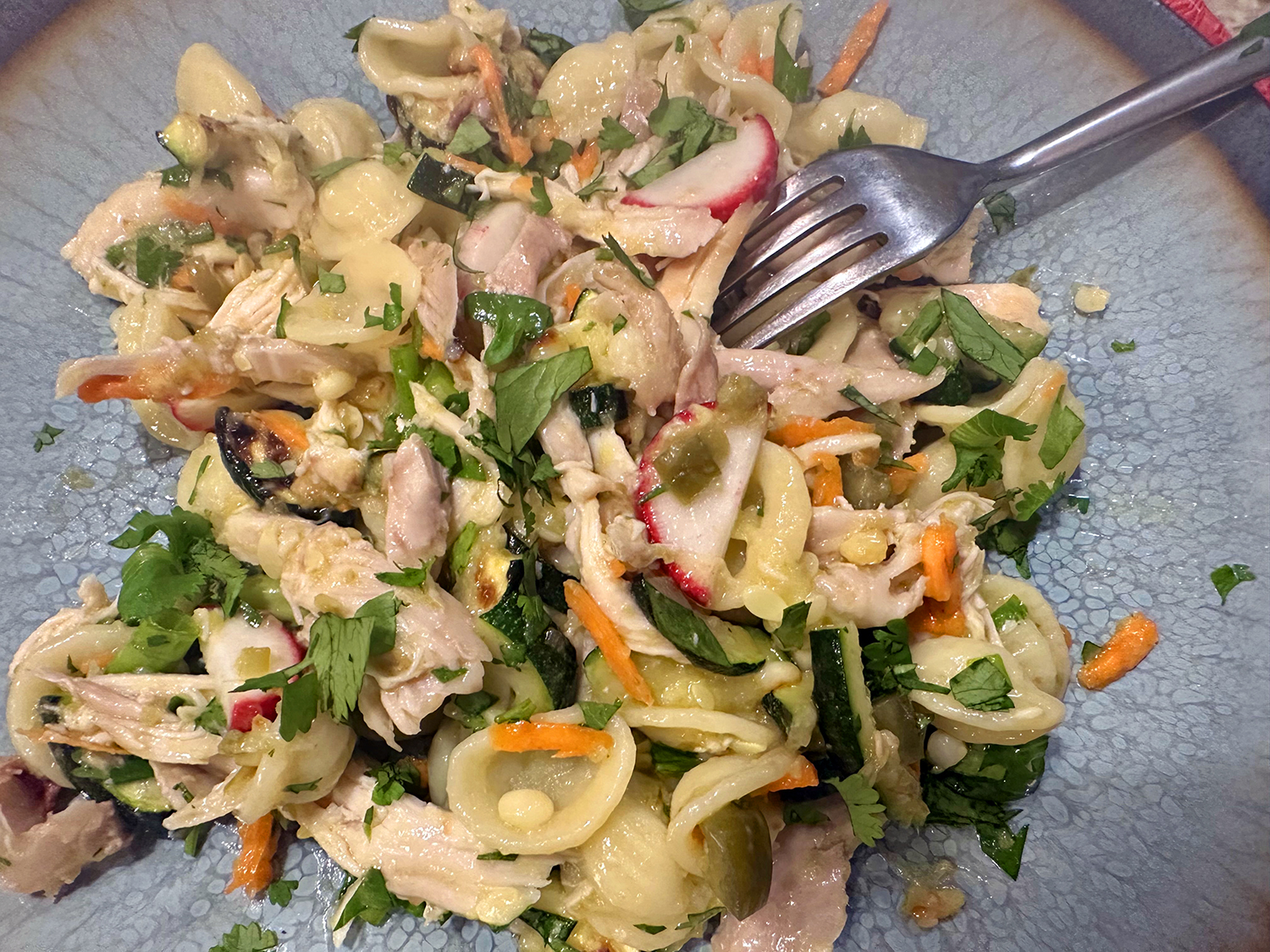
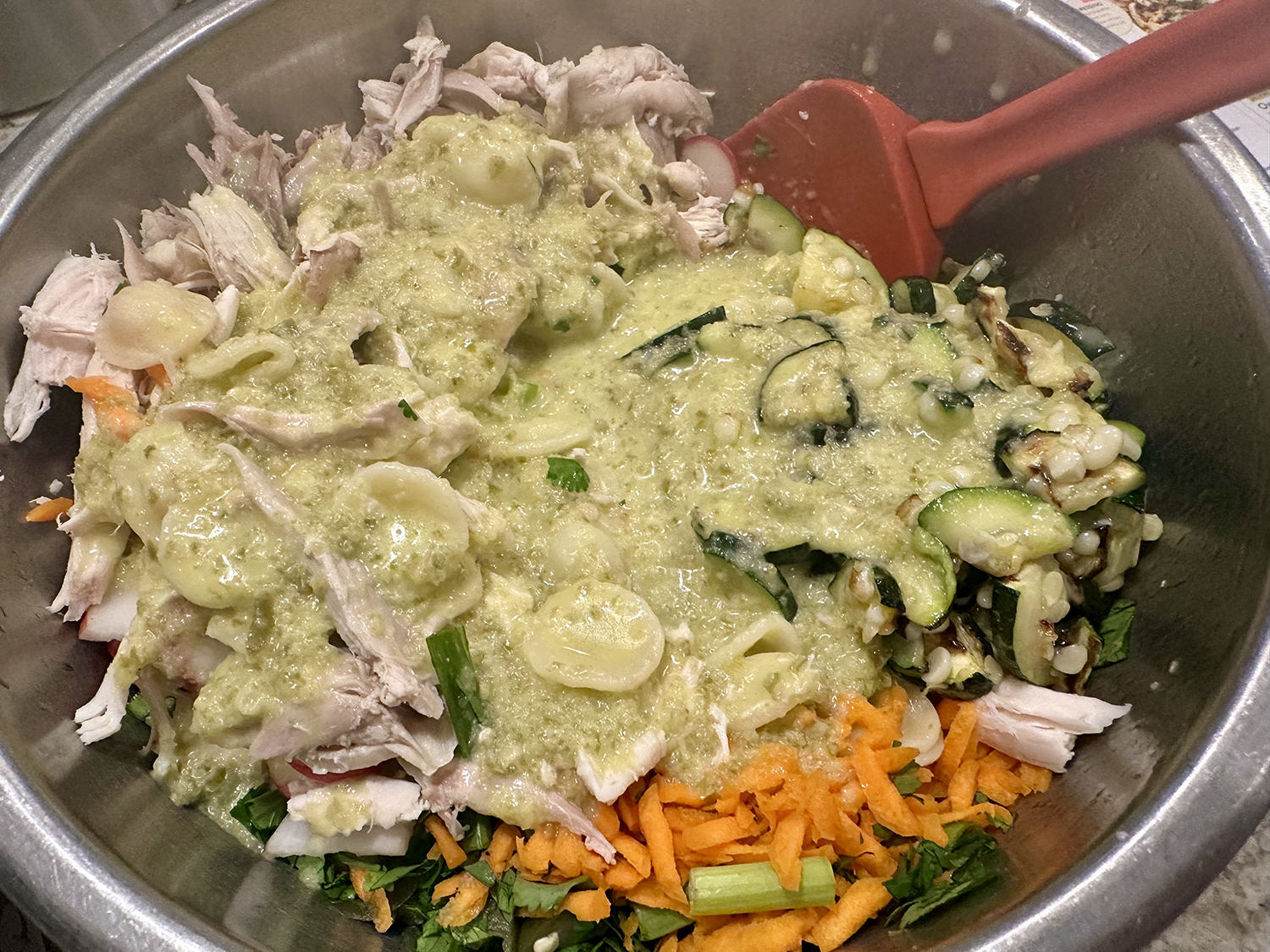
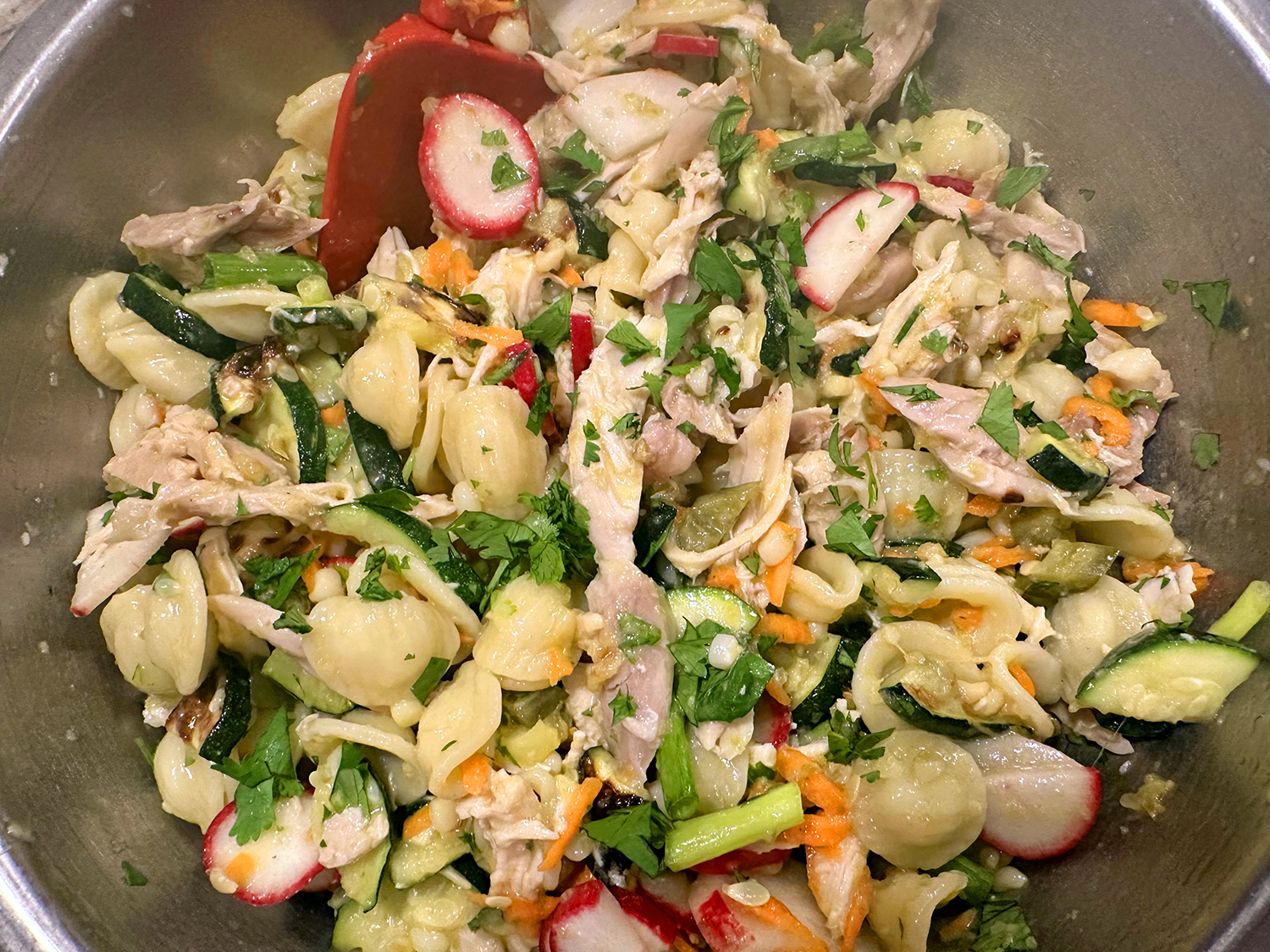
For a pasta salad that could serve as a main course, some of the pasta is swapped out for chicken, roasted corn and zucchini. Orecchiette works great because its little cup shapes are perfect for holding dressing. The pasta is cooked until it is a little too soft so that as it cools and firms up, it has just the right tender texture.
Because a classic thin vinaigrette would slide to the bottom of the bowl, it is thickened by blending it with pickled jalapeños and scallion whites. Add some crunch with bits of carrot and sliced radish, then top with cilantro leaves and scallions to contribute color and fresh herbal notes.
NOTES: For convenience, a store-bought rotisserie is the way to go. And, the pasta is intentionally overcooked in this recipe so that it remains tender, even when served cold. If making this salad ahead, dress the salad and garnish it with the reserved cilantro right before serving.
There is a fair amount of prep, and it easily took closer to an hour than the 45 minutes suggested in the original recipe. Since good fresh corn was available at farm stands, we used that instead of frozen corn. Just slice the kernels off the cob, and mix with the cut zucchini.
It may seem like a lot of jalapeños, but we found it to be just right. The quantity is versatile, so add or subtract the pickled chile to suit your own preferences.
Orecchiette Salad with Roasted vegetables, chicken and Jalapeño-Lime Dressing
1 lb. zucchini, quartered lengthwise and sliced ¼ inch thick
1½ cups fresh or frozen corn kernels
2 Tbsp. plus
½ cup vegetable oil, divided
1½ tsp. table salt, divided, plus salt for cooking pasta
8 oz. (2¼ cups) orecchiette
⅓ cup plus ¼ cup jarred sliced jalapeños, drained, divided
4 scallions, white parts sliced thin, green parts cut into 1-inch pieces
¼ cup lime juice (2 limes)
1 lb. cooked chicken, torn into bite-size pieces (3 cups)
¾ cup fresh cilantro leaves, divided
8 radishes, trimmed, halved, and sliced thin
1 large carrot, peeled and shredded
Directions
Arrange oven rack 4 inches from broiler element and heat broiler. Combine zucchini, corn kernels, 2 tablespoons oil, and ½ teaspoon salt in large bowl and toss to coat. Transfer to rimmed baking sheet (do not wash bowl) and spread into even layer. Broil until spotty brown in places, 8 to 10 minutes, stirring halfway through broiling. Transfer sheet to wire rack to cool.
Meanwhile, bring 2 quarts water to boil in large saucepan. Add pasta and 1½ teaspoons salt and cook until pasta is tender throughout, 2 to 3 minutes past al dente. Drain well and rinse with cold water. Drain well and transfer to now-empty bowl.
Process ⅓ cup jalapeños, scallion whites, lime juice, and remaining 1 teaspoon salt in blender until coarse paste forms, about 30 seconds. With blender running, drizzle in remaining ½ cup oil and continue to process until dressing is emulsified and smooth, about 1 minute.
Chop remaining ¼ cup jalapeños and add to pasta along with chicken, ½ cup cilantro, radishes, carrot, zucchini and corn, and scallion greens. Pour dressing over salad and toss to coat. Transfer to serving bowl. Sprinkle with remaining ¼ cup cilantro and serve.
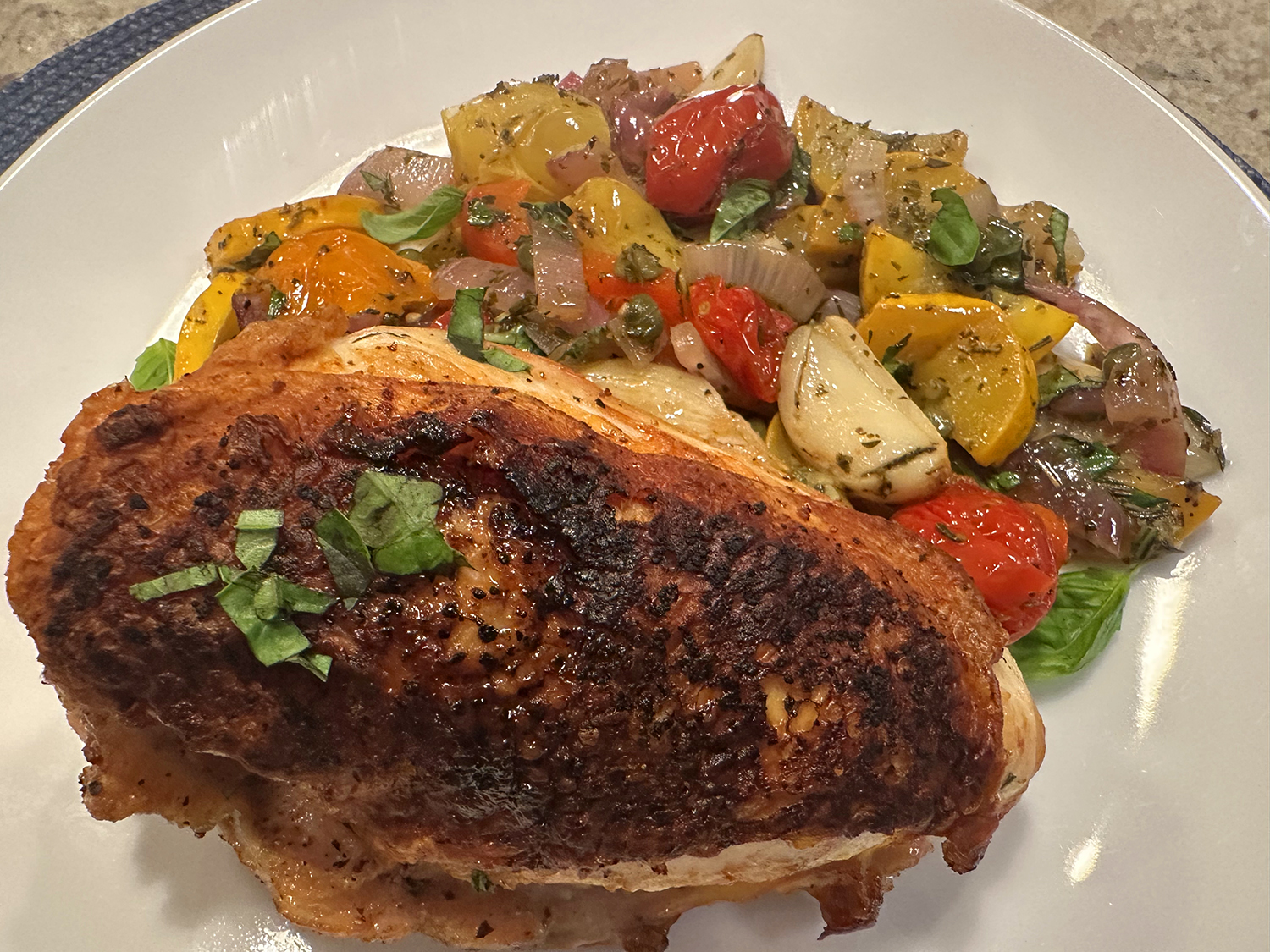
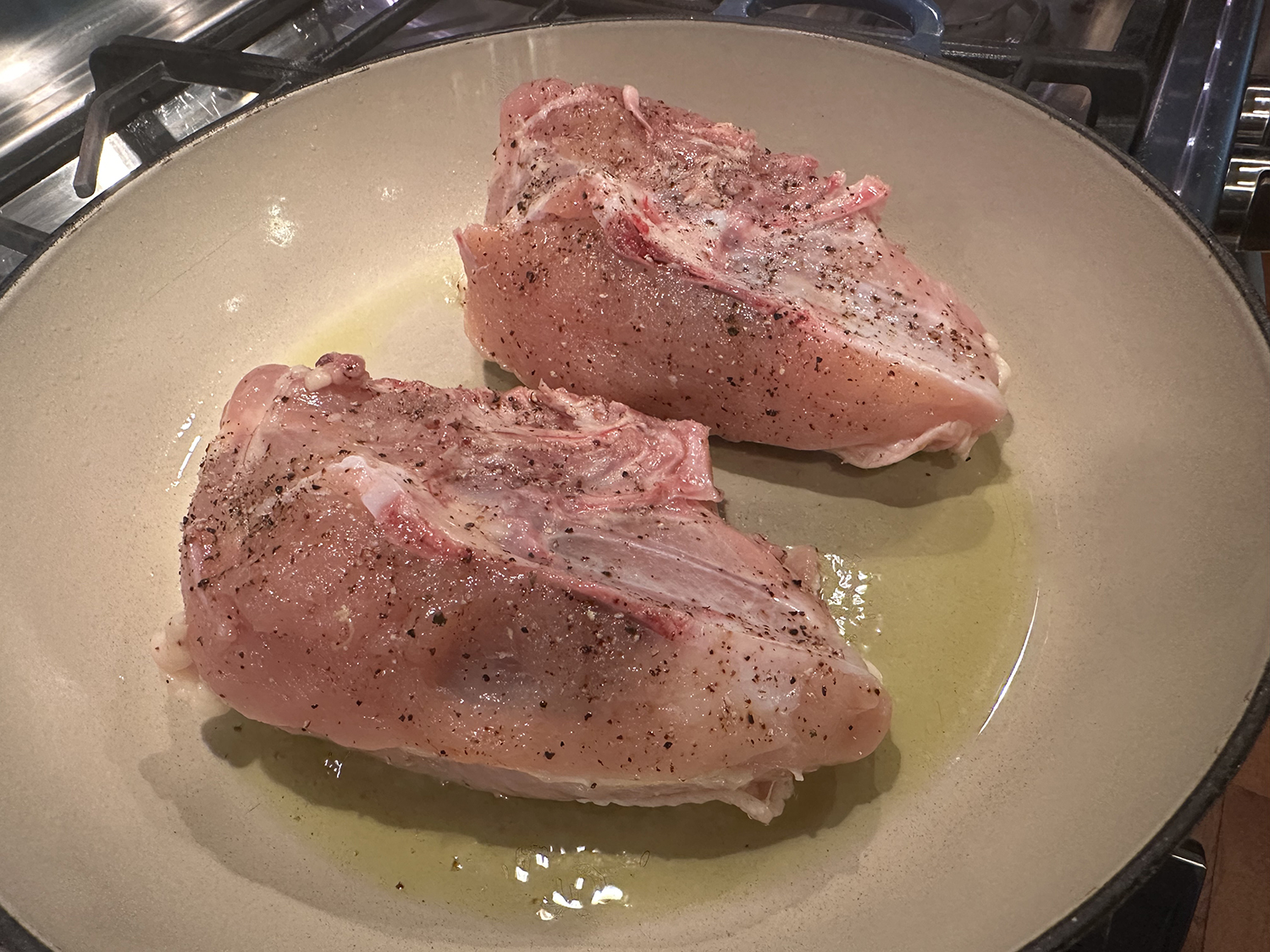
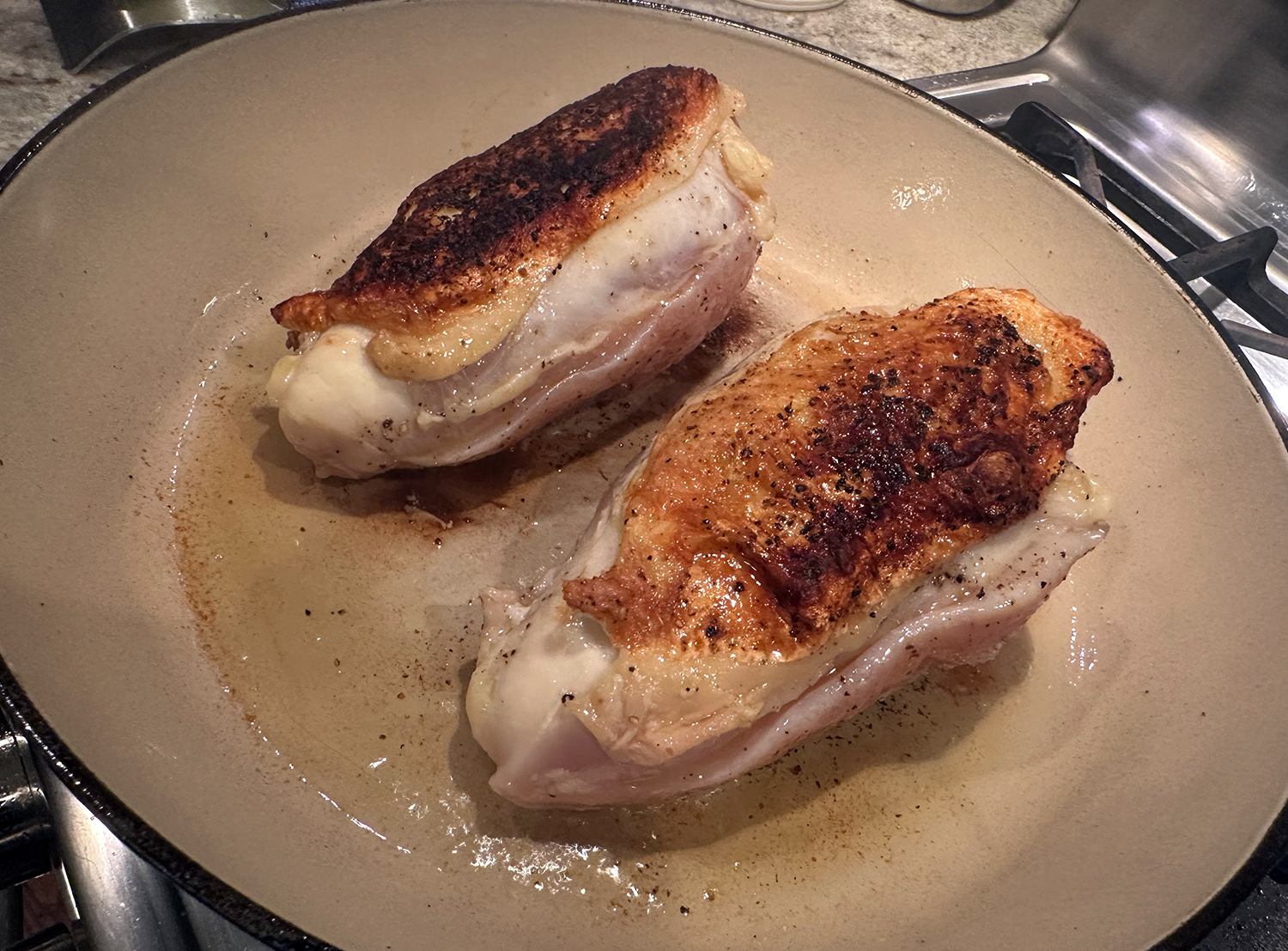
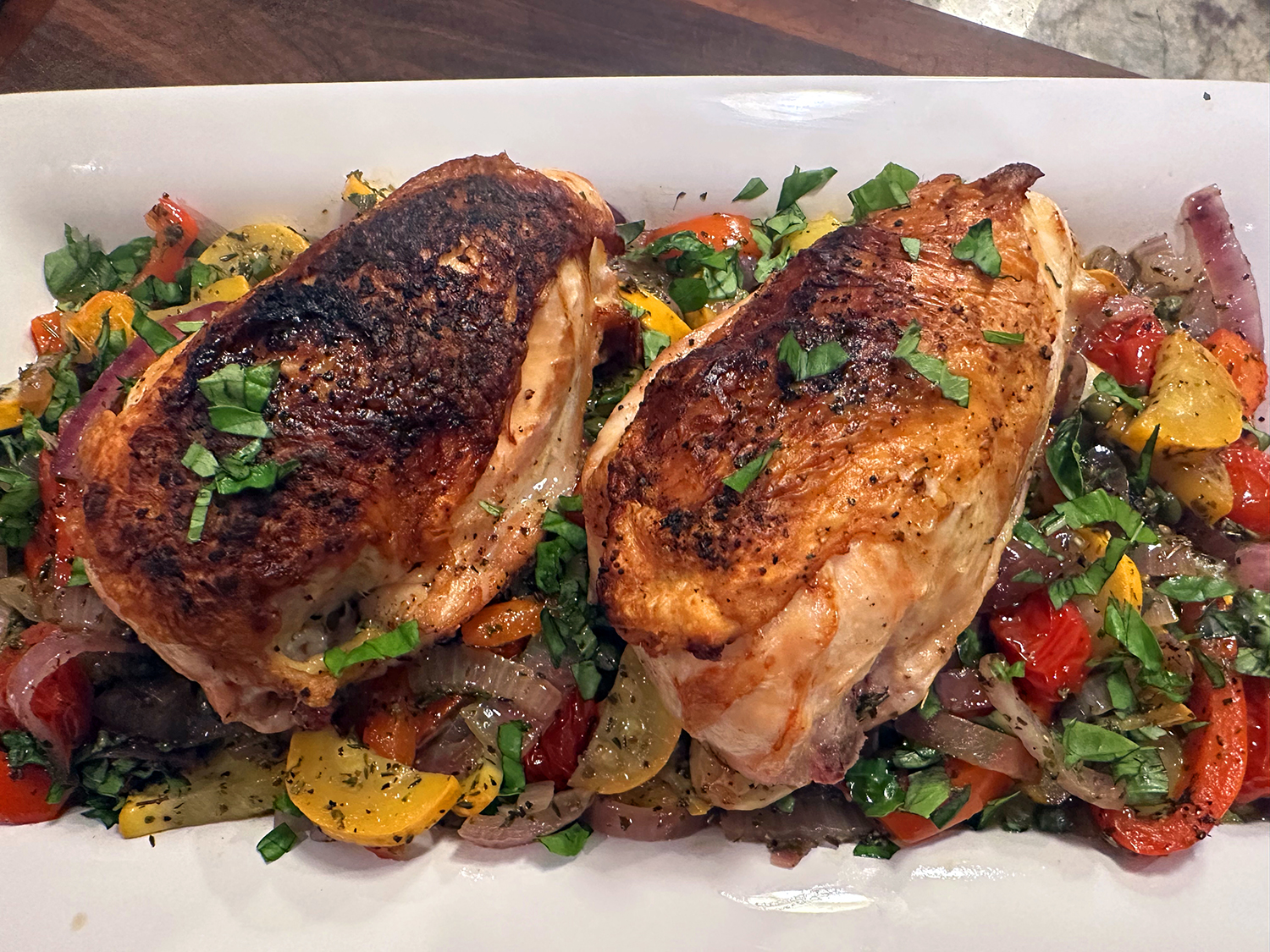
In this simple skillet dinner, the skin side of bone-in chicken breasts are seared, then roasted on top of a bed of sunny Mediterranean vegetables. Keep in mind, the recipe advises the use 12-ounce chicken breasts, using larger ones will require a longer cooking time and thus overcook the veggies. The only pieces available when we shopped weighed in at 18 ounces, 50% larger! (The first grocery store we visited, had no bone-in breasts at all.)
*The Hubs Hack: Because of the larger pieces, after browning the skin, we put the pan with the chicken skin side up in the pre-heated oven for 10 minutes before removing them and adding the vegetables. The breasts were then placed on top of the veggies and the skillet was returned to the oven until the chicken reached an internal temperature of 160°F., about 30 min. (Check temp after 20 minutes.)
Before cooking, the veggies are tossed with herbes de Provence, an aromatic seasoning blend that typically includes rosemary, thyme, savory, marjoram and oregano, and sometimes other spices and herbs such as fennel, sage, lavender and tarragon.
Dry vermouth, with its herbaceousness, is an ideal deglazing liquid for the browned bits left in the pan after searing the chicken, but dry white wine works, too. The vermouth and caper brines are important because they really help take this dish over the top and not just an average chicken and vegetable dish. We usually like thighs over breasts in similar recipes, but these turned out juicy with good crispy skin.
Another food item that the store was completely out of was zucchini, so we just substituted a yellow summer squash. And again, because of the enormous breast size, we roasted only two, which was still enough to feed four people.
Pan-Roasted Chicken and Summer Vegetables with Herbes de Provence
4 12-oz. bone-in, skin-on chicken breasts, trimmed of excess fat
Kosher salt and ground black pepper
3 Tbsp. extra-virgin olive oil, divided
2 Tbsp. herbes de Provence
6 medium garlic cloves, smashed and peeled
1 medium red onion, halved and sliced about ¼ inch thick
1 yellow, orange or red bell pepper, stemmed, seeded, cut into ¼ slices
1 pint grape tomatoes, uncut
1 small zucchini, halved lengthwise and sliced crosswise ¼ inch thick
¼ cup drained capers, plus 1 Tbsp. caper brine
½ cup dry vermouth
1 cup lightly packed fresh basil, torn (optional)
Directions
Heat the oven to 475℉ with a rack in the middle position. Season the chicken on all sides with salt and pepper. In a large bowl, stir together 2 tablespoons of oil, the herbes de Provence, ¼ teaspoon salt and 1 teaspoon pepper. Add the garlic, onion, bell pepper, tomatoes, zucchini and capers, then toss to combine; set aside.
In a 12-inch skillet oven-safe skillet over medium-high, heat the remaining 1 tablespoon oil until shimmering. Add the chicken skin down and cook without disturbing until golden brown, 6 to 8 minutes. Using tongs, transfer the chicken skin up to a large plate. (If your chicken weighs much more than 12 ounces each, see note above.*)
Pour off and discard all but 1 tablespoon fat from the skillet. Add the vermouth, bring to a boil over medium-high and cook, scraping up any browned bits, until reduced to about 2 tablespoons, 1 to 2 minutes. Add the vegetables and cook, stirring, until just warmed through, about 1 minute, then distribute in an even layer. Nestle the chicken skin up in the vegetables and add any accumulated juices. Transfer the skillet to the oven and cook until the thickest part of the breast reaches about 160°F, 20 to 25 minutes.
Remove the pan from the oven (the handle will be hot). Transfer the chicken skin up to a serving platter. Using a slotted spoon, transfer the vegetables the platter, arranging them around the chicken.
Set the skillet over high, bring the liquid to a simmer and cook, stirring, until slightly thickened and reduced, 1 to 2 minutes. Off heat, stir in the caper brine, then taste and season with salt and pepper. Pour the sauce around the chicken and over the vegetables. Sprinkle with basil (if using).
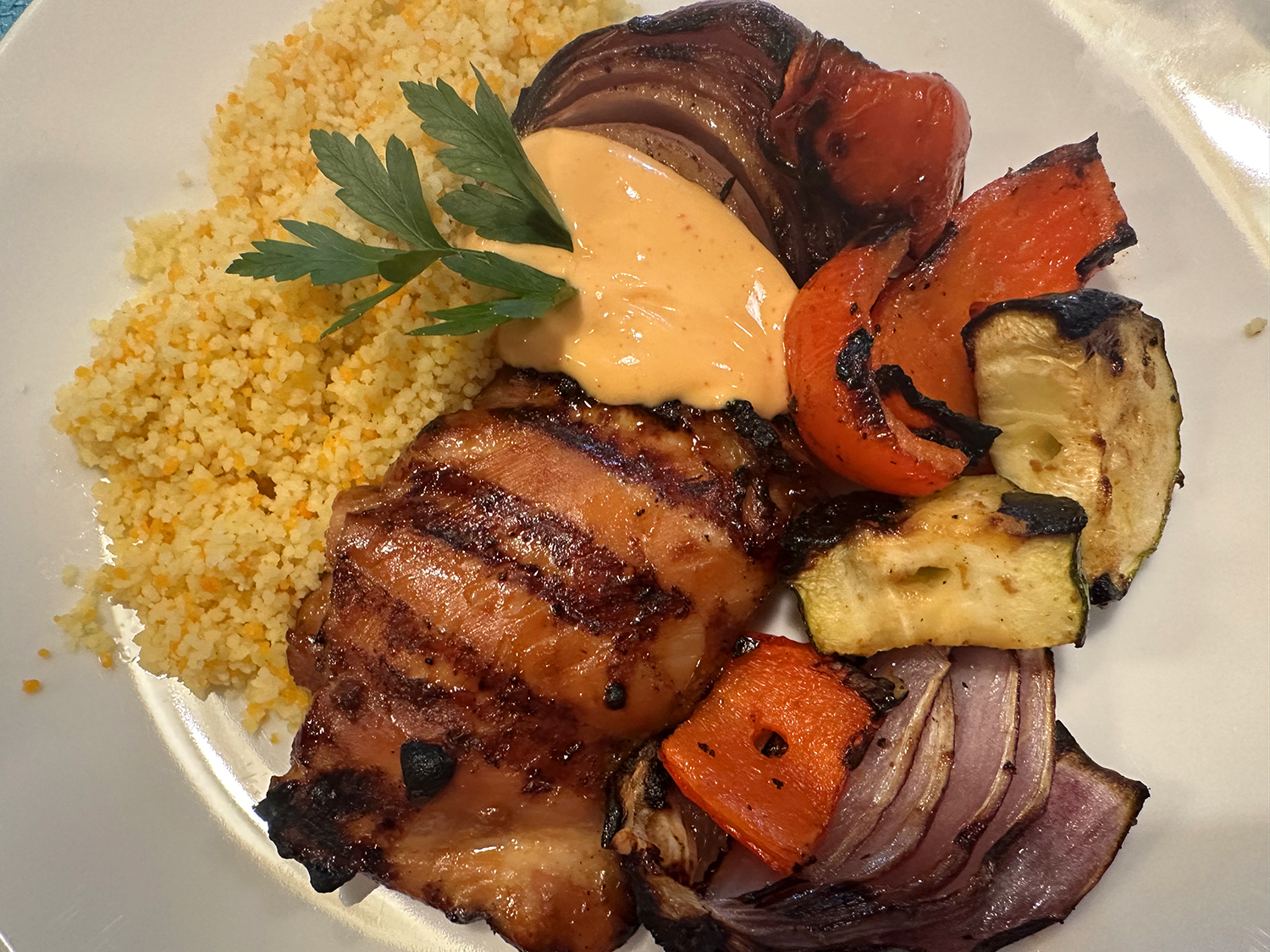
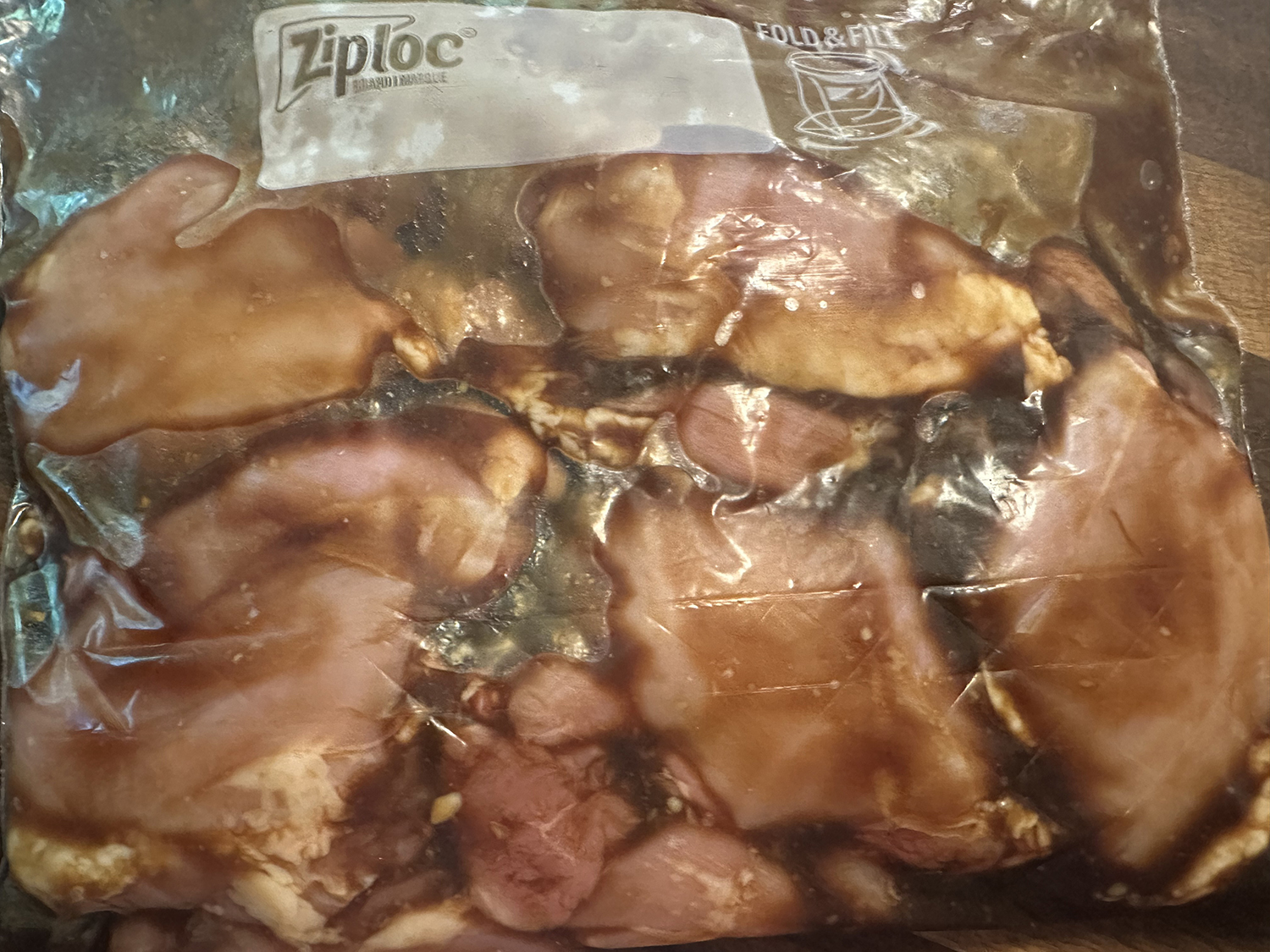
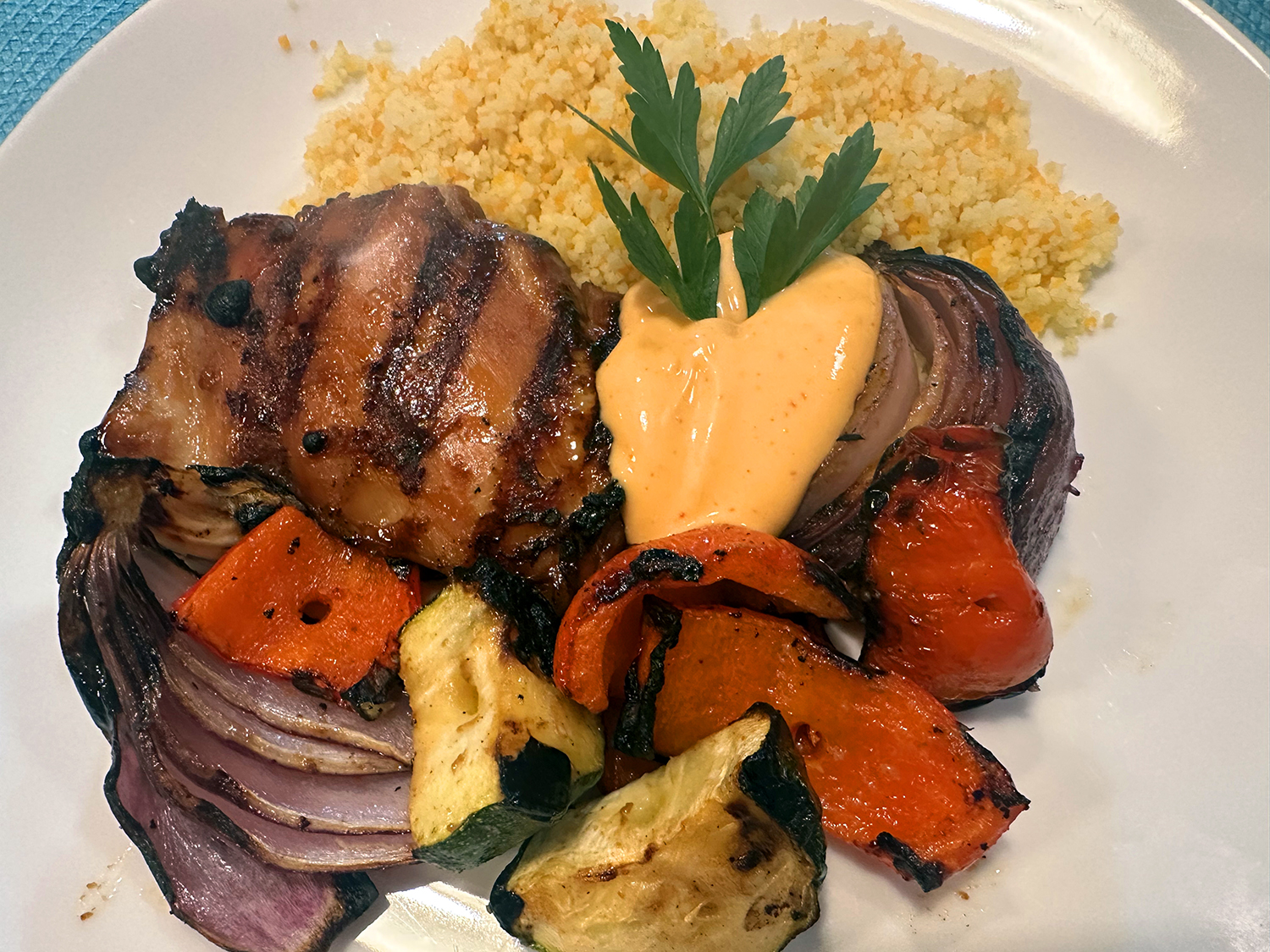
Soy-marinated grilled chicken thighs paired with smoky, charred summer vegetables make this a sensational summer supper. Here, grilled chicken thighs are soaked in a sweet, garlicky, soy-based marinade and grilled alongside skewers with peak-season summer vegetables. Some steamed rice or couscous completes the meal.
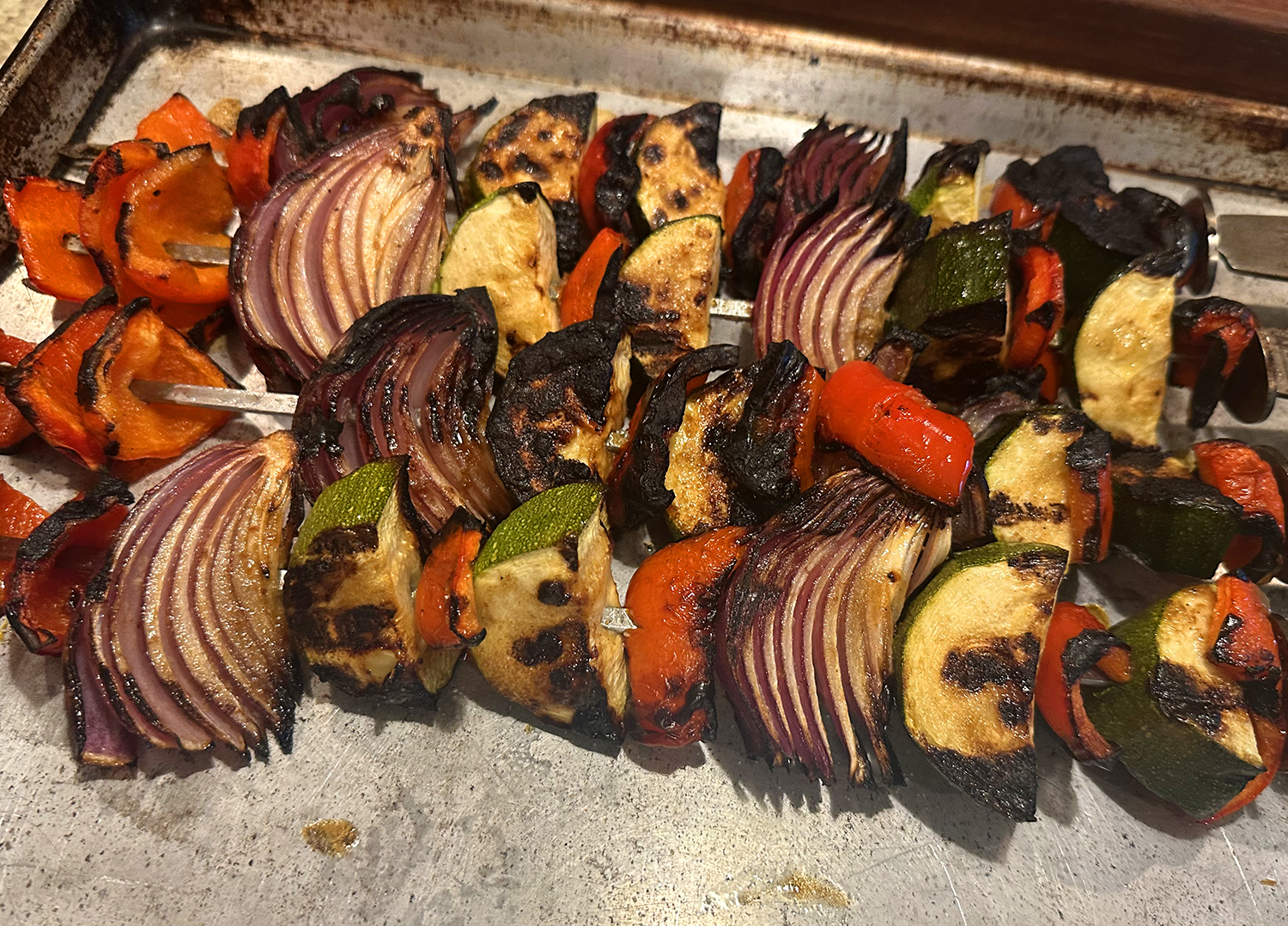
The grill imparts a delicious char, similar to a Japanese hibachi charcoal grill, while basting the vegetables with a mixture of melted butter and reserved marinade enhances the full-bodied smoky flavor signature to hibachi.
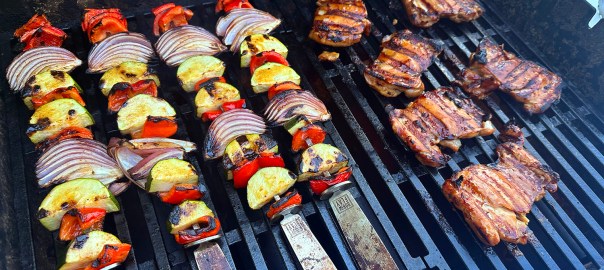
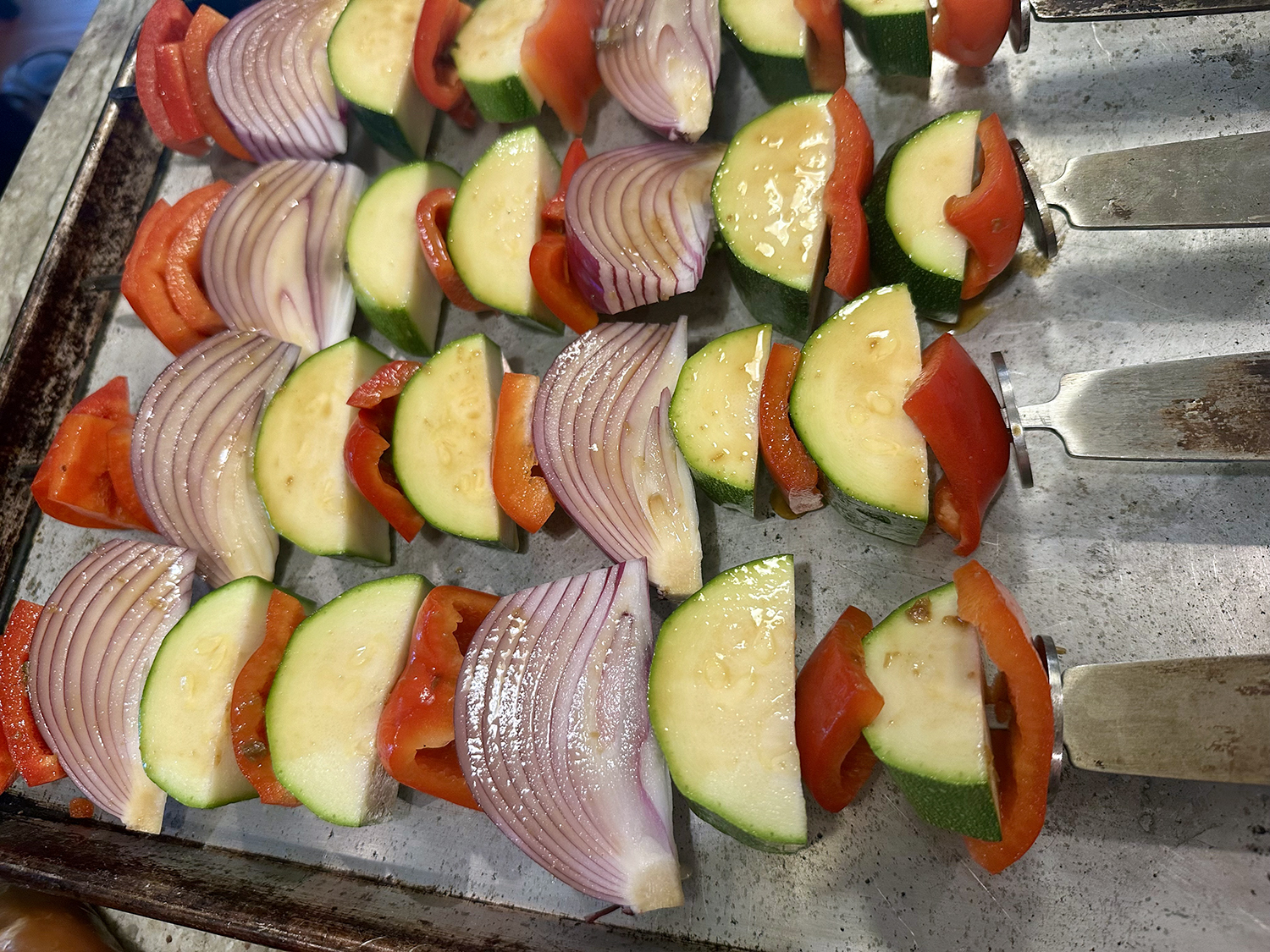
The key to evenly cooked vegetable skewers is cutting the veggies into similarly sized pieces so they fit neatly on the skewers. Drizzled with a creamy chile-mayo sauce and served over rice (or couscous), this dish becomes a hearty, flavor-packed meal that can be easily prepped ahead for the week.
Make Ahead TIPS: Marinate chicken overnight, covered in the refrigerator, for up to 12 hours. Chop and store all vegetables in an airtight container in the refrigerator for up to one day. The mayonnaise sauce can be prepared up to five days in advance and stored in an airtight container in the refrigerator.
BTW, Kewpie mayonnaise is a Japanese brand of mayo made with egg yolks, vinegar, and MSG. Its use of egg yolks (rather than whole eggs) and vinegar makes it richer and tangier than regular mayonnaise. Find it at most grocery stores or online at yamibuy.com.
NOTE: *We knew the skewered vegetables would take longer than the chicken, so we started them about 8-10 minutes prior to adding the thighs to the hot grill. So in total, the veggies grilled for 20 minutes, while the chicken was on for 12 minutes.
While the mayo sauce was indeed tasty, we don’t feel it is absolutely necessary to complete the dish, so if it is not inspiring to you, just omit it. HOWEVER, we feel strongly that the basting marinade and butter sauce need to be doubled, as there was not enough. The new amounts are indicated in the ingredients list below.
2 red bell peppers, cut into 1 1/2-inch pieces (about 2 cups)
1 zucchini, halved lengthwise and cut into 1-inch-thick half-moons (about 2 1/2 cups)
1 medium red onion, cut into 1 1/2-inch-thick wedges (about 1 1/2 cups)
4 (8-inch) metal or wooden skewers
1/2 tsp. kosher salt, divided
Butter and Sauce:
4 Tbsp. unsalted butter, melted
Canola oil, for grilling
1/2 cup Kewpie mayonnaise
2 tsp. sriracha chile sauce
1/2 tsp. Dijon mustard
Cooked white rice, or couscous, for serving
Directions
Whisk together soy sauce, brown sugar, garlic, and 1 tablespoon sesame oil in a small bowl until sugar is dissolved. Pour soy mixture into a large ziplock plastic bag, reserving 6 tablespoons soy mixture in bowl. Add chicken to bag; seal bag, and gently massage soy mixture into chicken. Set aside, and let marinate at room temperature for at least 30 minutes or up to 12 hours.
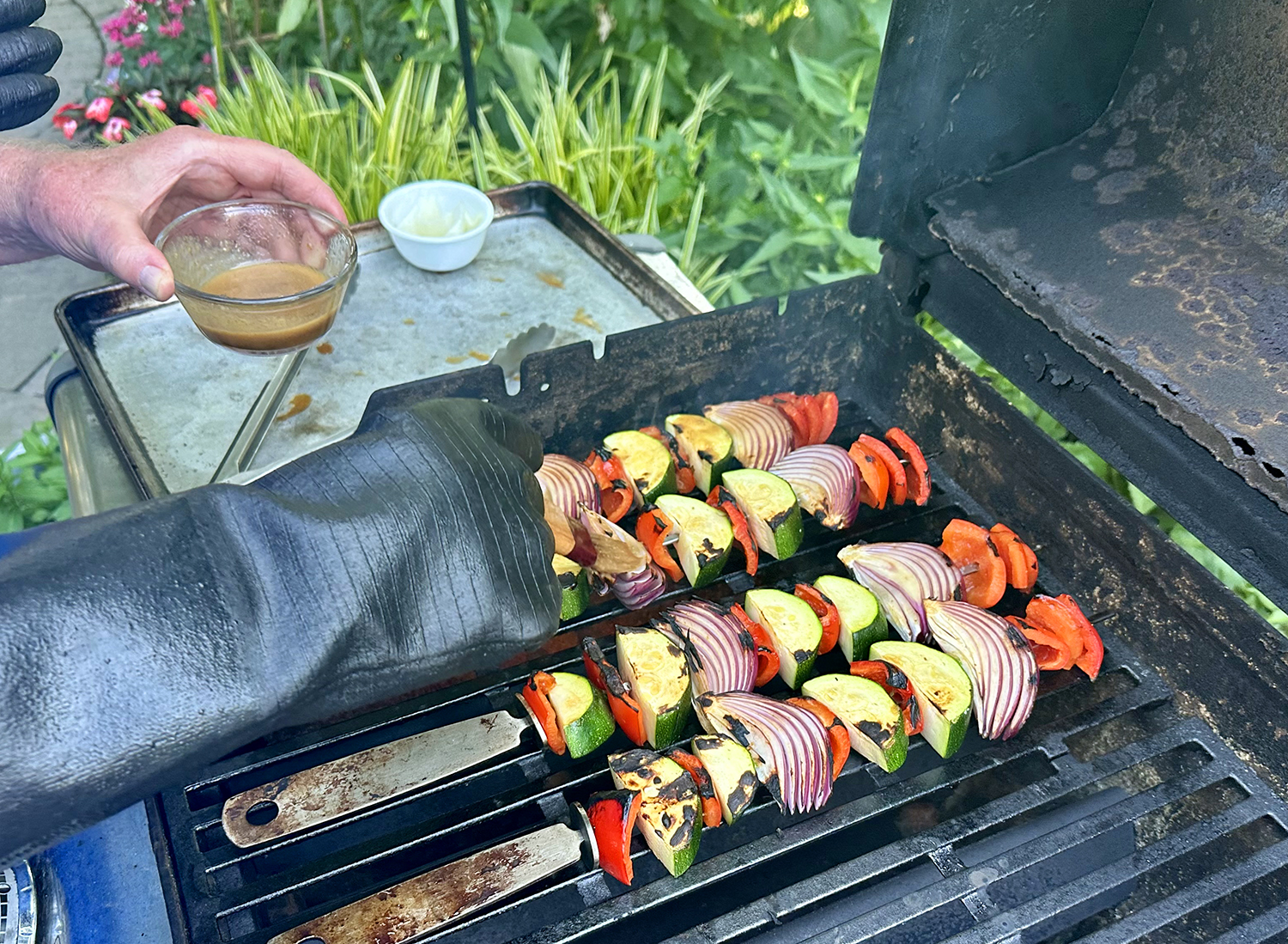
Thread peppers, zucchini, and onion onto skewers. Brush vegetables with 1 tablespoon reserved soy mixture; sprinkle with 1/4 teaspoon salt. Stir melted butter and remaining 1/4 teaspoon salt into remaining 2 tablespoons soy mixture in bowl; set aside.
Preheat grill to medium-high (400°F to 450°F). Remove chicken from marinade, shaking off excess; discard marinade. Lightly grease grill grates with canola oil; place chicken and skewered vegetables on grates. Grill, uncovered, turning skewers and chicken occasionally and basting with soy-butter mixture until a thermometer inserted into thickest portion of chicken registers 170°F, 12 to 15 minutes, and vegetables are tender and charred in spots, about 12 minutes. (*Please see note our cooking times above.) Transfer to a cutting board, and let rest for 5 minutes.
Stir together mayonnaise, sriracha, mustard, and remaining 1/2 teaspoon sesame oil in a small bowl. Chop chicken into bite-size pieces, and remove vegetables from skewers. Serve chicken and vegetables over cooked rice, and drizzle with mayonnaise mixture. Garnish with scallions and shichimi togarashi.
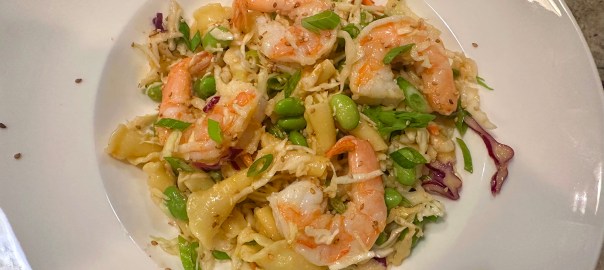
When it’s too hot to cook, a cool salad with little prep is a go-to in our household. So this campanelle salad from Cook’s Illustrated chock-full of crunchy vegetables and succulent shrimp fits the bill.
The pasta is intentionally overcooked here. When cooked pasta is refrigerated, it goes through a process called retrogradation in which the water in the noodles becomes bound up in starch crystals, making the pasta firm and dry. But if you’re making a cold pasta salad, you can make retrogradation work to your advantage by boiling the pasta 2 or 3 minutes beyond al dente. This way the pasta’s starch absorbs more water and becomes extra-soft so that when it firms up with cooling, the final texture is just right.
While numerous reviewers were somewhat disappointed in the dressing—it was too gingery, too vinegary, etc.—we found it to be almost perfect! (The amount of sriracha we used was reduced slightly.) Another change included cooking the edamame with the pasta 1 minute longer.
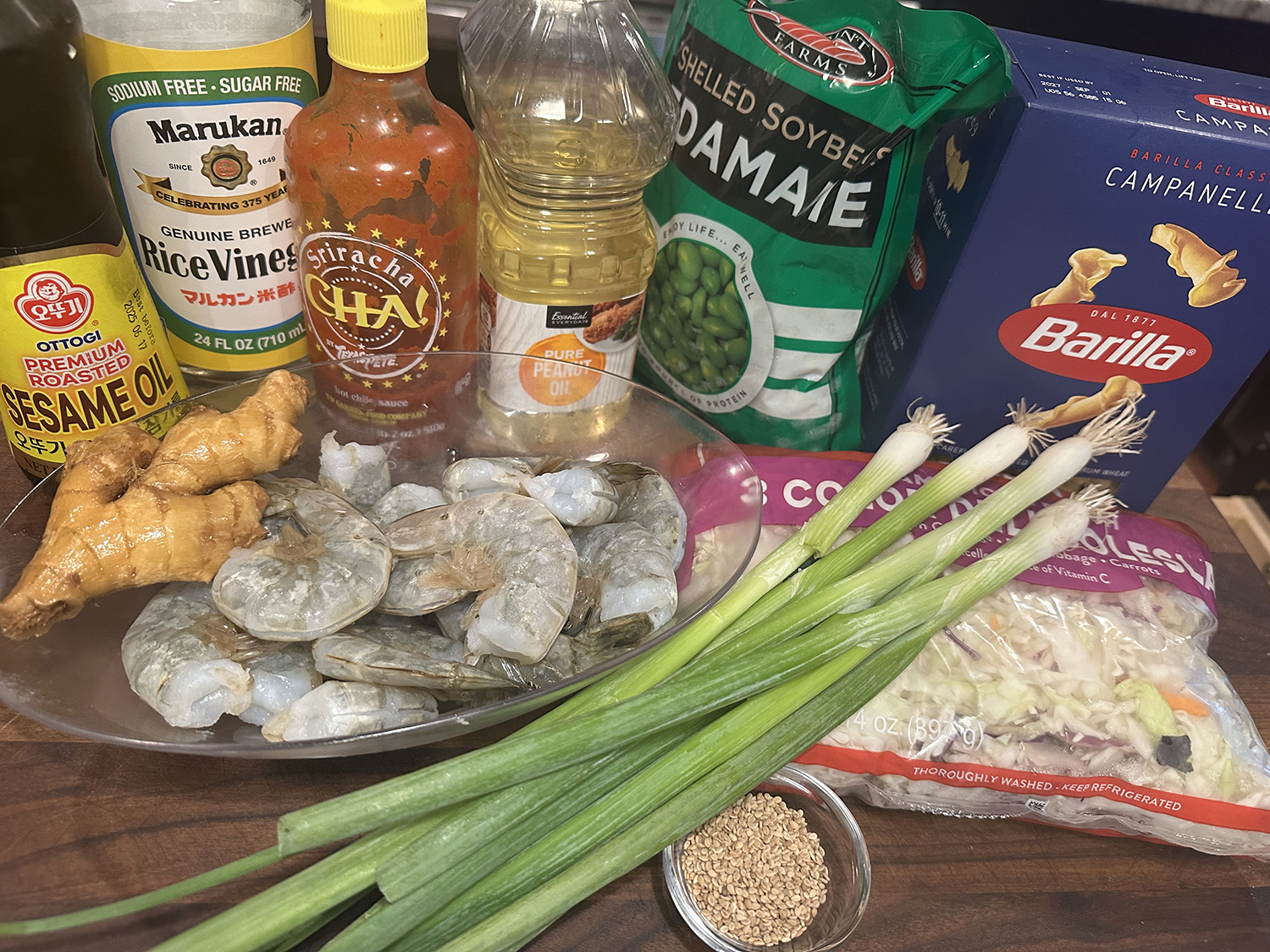
NOTES: If campanelle is unavailable, substitute penne. There’s no need to peel the ginger; just give it a thorough wash. Use the full amount of sriracha if you’re a fan of spice. We intentionally overcook the pasta in this recipe so that it remains tender, even when served cold. If making this salad ahead, dress the salad and then garnish it with the scallion greens and sesame seeds right before serving. A mix of white and black sesame seeds is desired, but it’s fine to use 2 teaspoons of either.
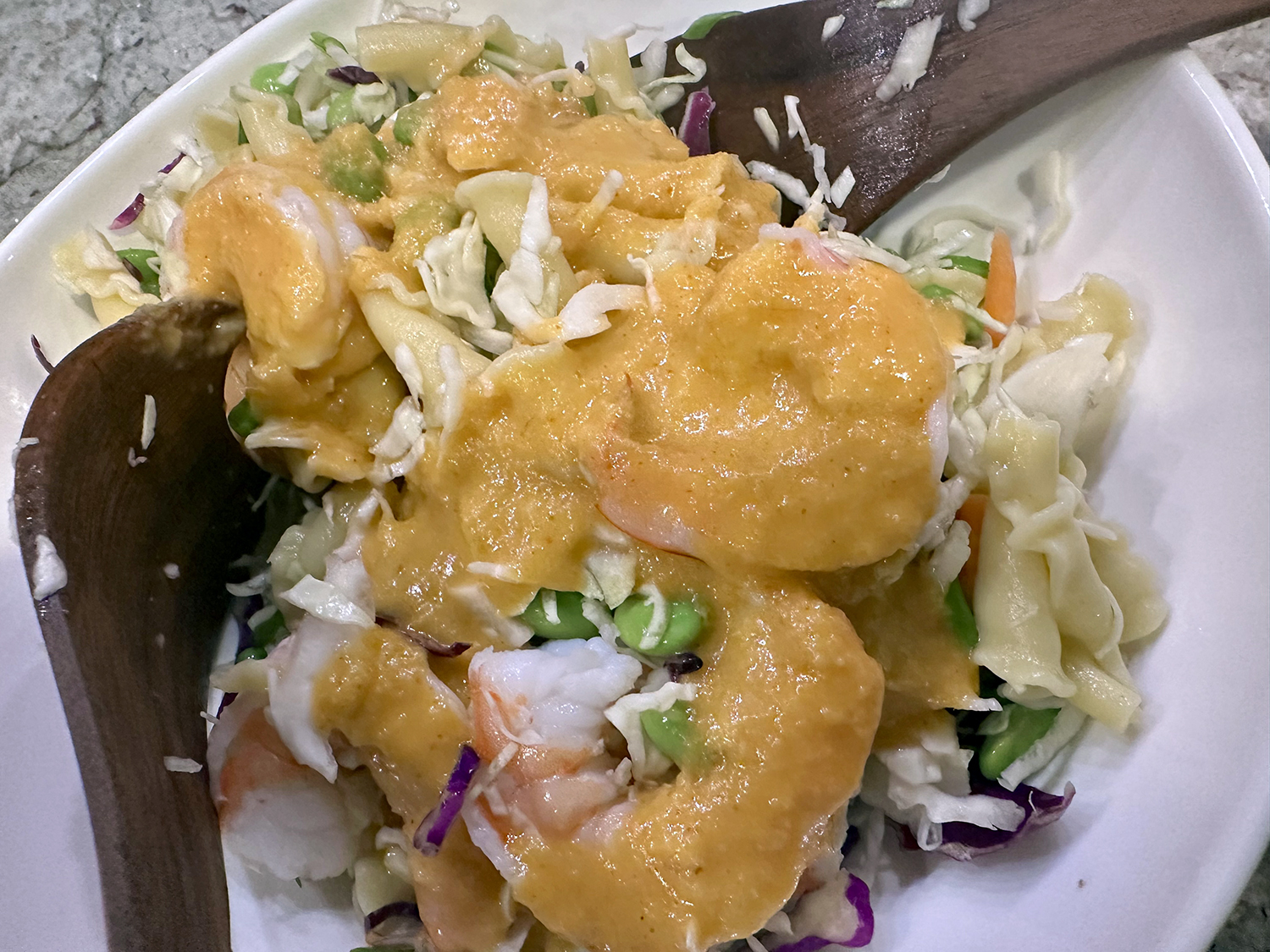
If feeding only two or three, place the desired amount of salad mix in a large bowl then stir in dressing and plate. Reserve any leftover salad and dressing in separate sealed containers for the next day.
Campanelle Salad with Shrimp, Cabbage an Scallion-Ginger Dressing
1 lb. large shrimp (26 to 30 per lb.), peeled, deveined, and tails removed
1¼ tsp. table salt, plus salt for cooking pasta and shrimp
8 oz. (2½ cups) campanelle
8 oz. frozen shelled edamame
4 cups (11 oz.) shredded green coleslaw mix
4 scallions, white parts chopped, green parts sliced thin on bias, divided
⅓ cup chopped fresh ginger
⅓ cup unseasoned rice vinegar
1½ Tbsp. sriracha
2 tsp. toasted sesame oil
½ cup vegetable oil
1 tsp. black sesame seeds, toasted
1 tsp. white sesame seeds, toasted
Directions
Bring 3 cups water to boil in large saucepan over high heat. Stir in shrimp and 1 tablespoon salt. Cover and let stand off heat until shrimp are opaque, about 5 minutes, shaking saucepan halfway through. Using spider skimmer or slotted spoon, transfer shrimp to colander; rinse with cold water until cool. Drain well and transfer to large bowl. Add 1 quart water to water in saucepan and return to boil.
Add pasta and 1½ teaspoons salt to boiling water and cook until pasta is al dente. Add edamame to saucepan with pasta and cook 2 minutes more. Drain and rinse with cold water. Drain well and add to shrimp along with coleslaw mix and two-thirds of scallion greens.
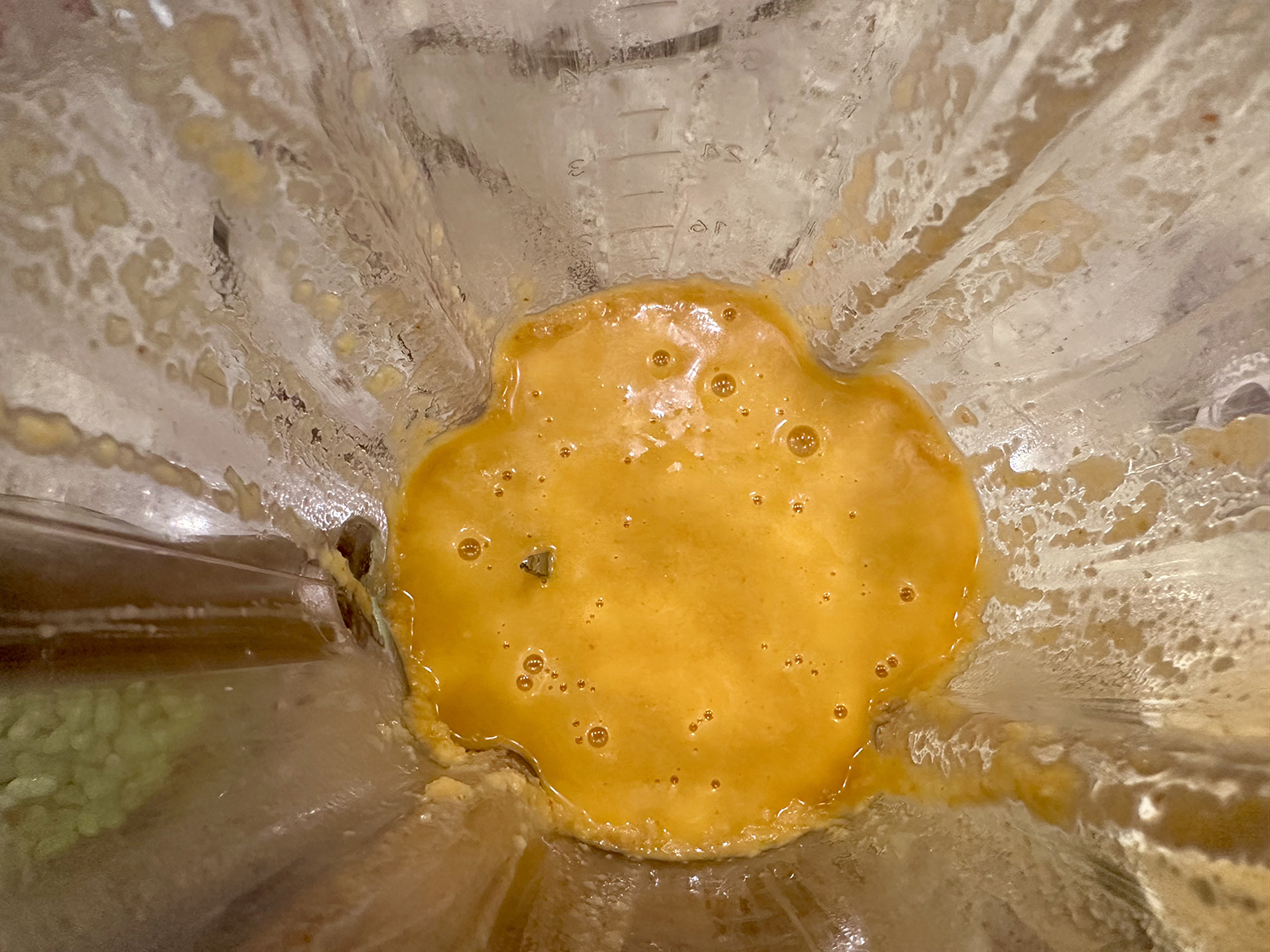
Process scallion whites, ginger, vinegar, sriracha, sesame oil, and salt in blender until coarse paste forms, about 30 seconds. With blender running, slowly drizzle in vegetable oil until dressing is emulsified and smooth, about 1 minute.
Pour dressing over salad and toss to combine. Transfer to serving bowl. Sprinkle with remaining scallion greens and sesame seeds and serve.
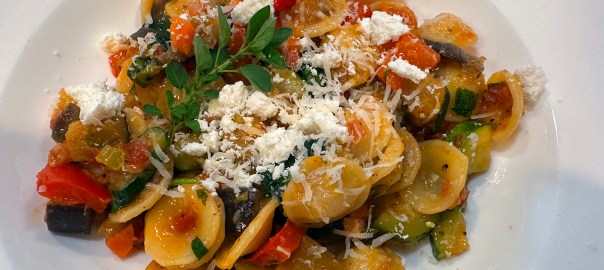
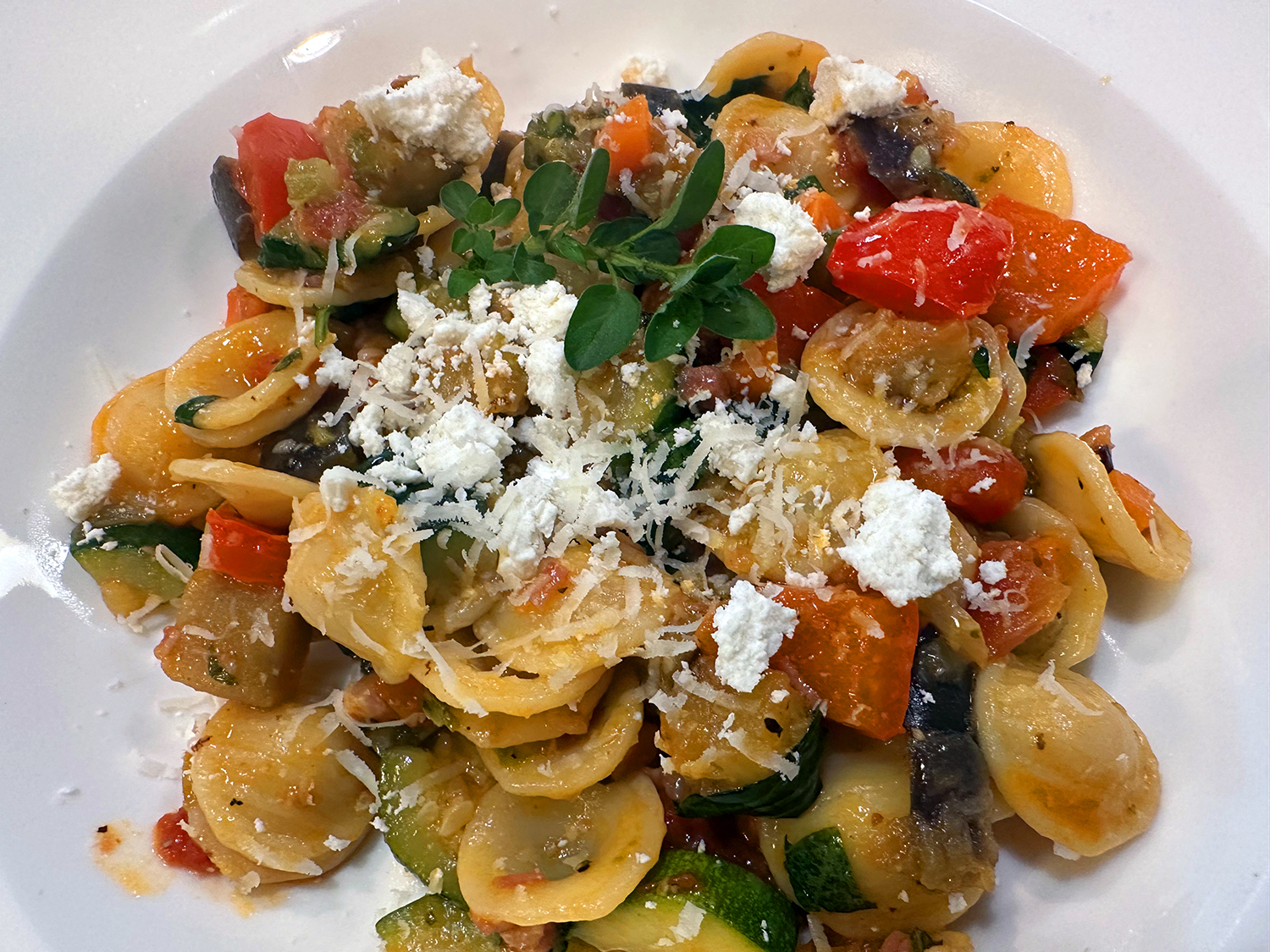
Pasta alla pecorara, known as “shepherd’s style pasta,” gets its name from its use of sheep’s milk cheese and local vegetables. Milk Street was inspired by Abruzzese home cook Luisa Carinci, who enhanced her version with pancetta. The sauce is seasoned with marjoram, which grows abundantly in the region and tastes like a sweeter, more delicate oregano. If you can’t find it, fresh oregano works fine. We used a combo of both fresh from our herb garden.
The sauce traditionally is paired with a handmade ring-shaped pasta called anellini. In its place, store-bought orecchiette is used , which does an excellent job of catching chunks of the rustic sauce.
Don’t rush the cooking of the pancetta and aromatics. Keeping the pot covered and the heat on medium-low will give the pancetta time to render its fat and for the aromatics to relinquish their flavor and become meltingly soft.
1/4 cup plus 1 Tbsp. extra-virgin olive oil, plus more to serve
1 large zucchini (about 12 oz.), cut into ½-inch cubes
1 small Italian eggplant (about 8 oz.), cut into ½-inch cubes
1 medium red bell pepper, stemmed, seeded and cut into ½-inch pieces
Kosher salt and ground black pepper
4 oz. pancetta, chopped
1 small yellow onion, finely chopped
2 medium carrots, peeled and finely chopped
1 medium celery stalk, finely chopped
1 pound orecchiette
14½ oz. can crushed tomatoes
1 Tbsp. finely chopped fresh marjoram or oregano
1 cup lightly packed fresh basil, chopped
1/2 oz. Parmesan cheese, finely grated (¼ cup), plus more to serve
Whole-milk ricotta or crumbled ricotta salata cheese, to serve
Directions
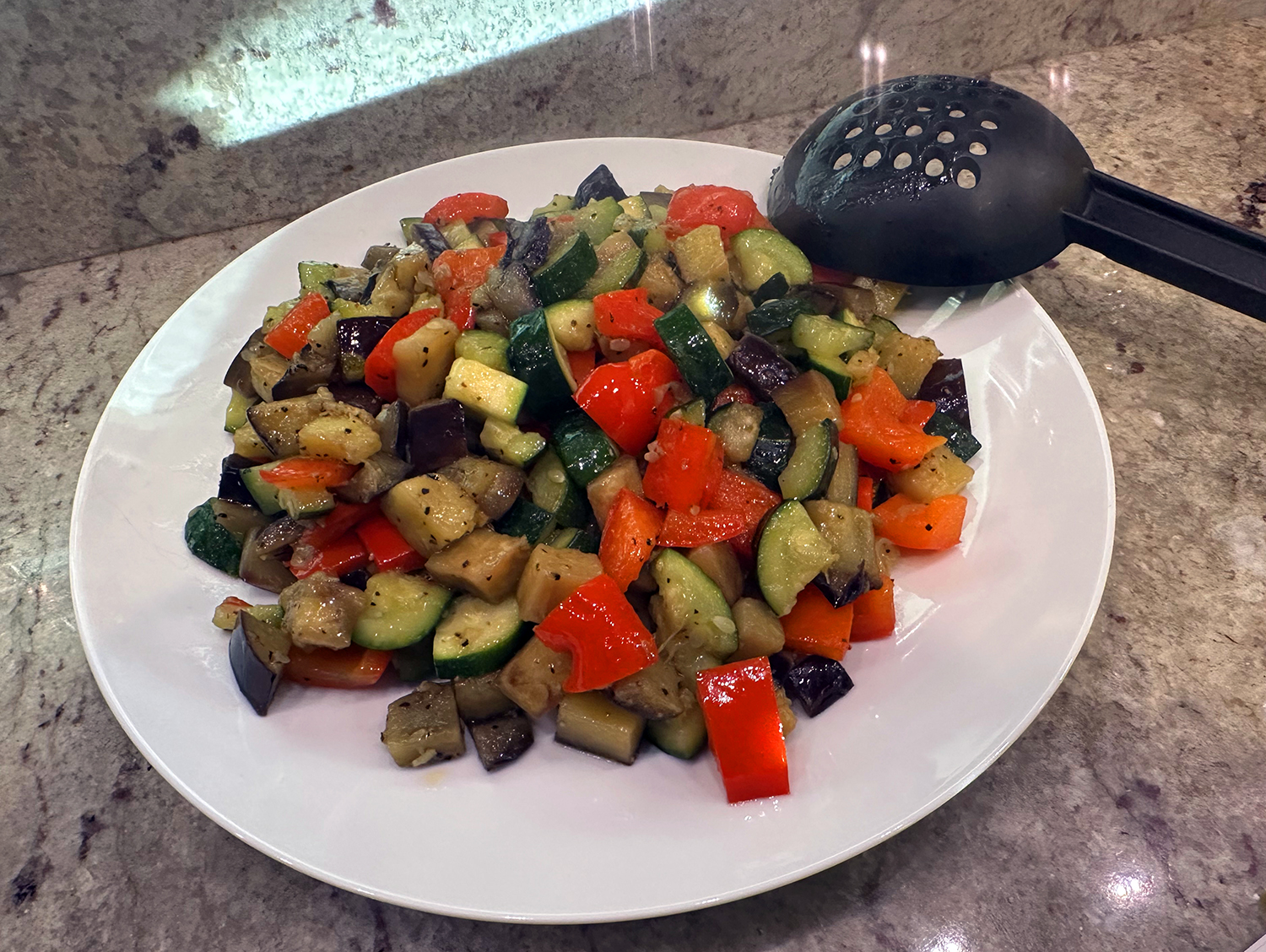
In a Dutch oven over medium, heat ¼ cup oil until shimmering. Add the zucchini, eggplant, bell pepper, 1 teaspoon salt and ½ teaspoon pepper. Cook, stirring, until the vegetables are tender but still hold their shape, 10 to 12 minutes. Transfer to a plate and set aside.
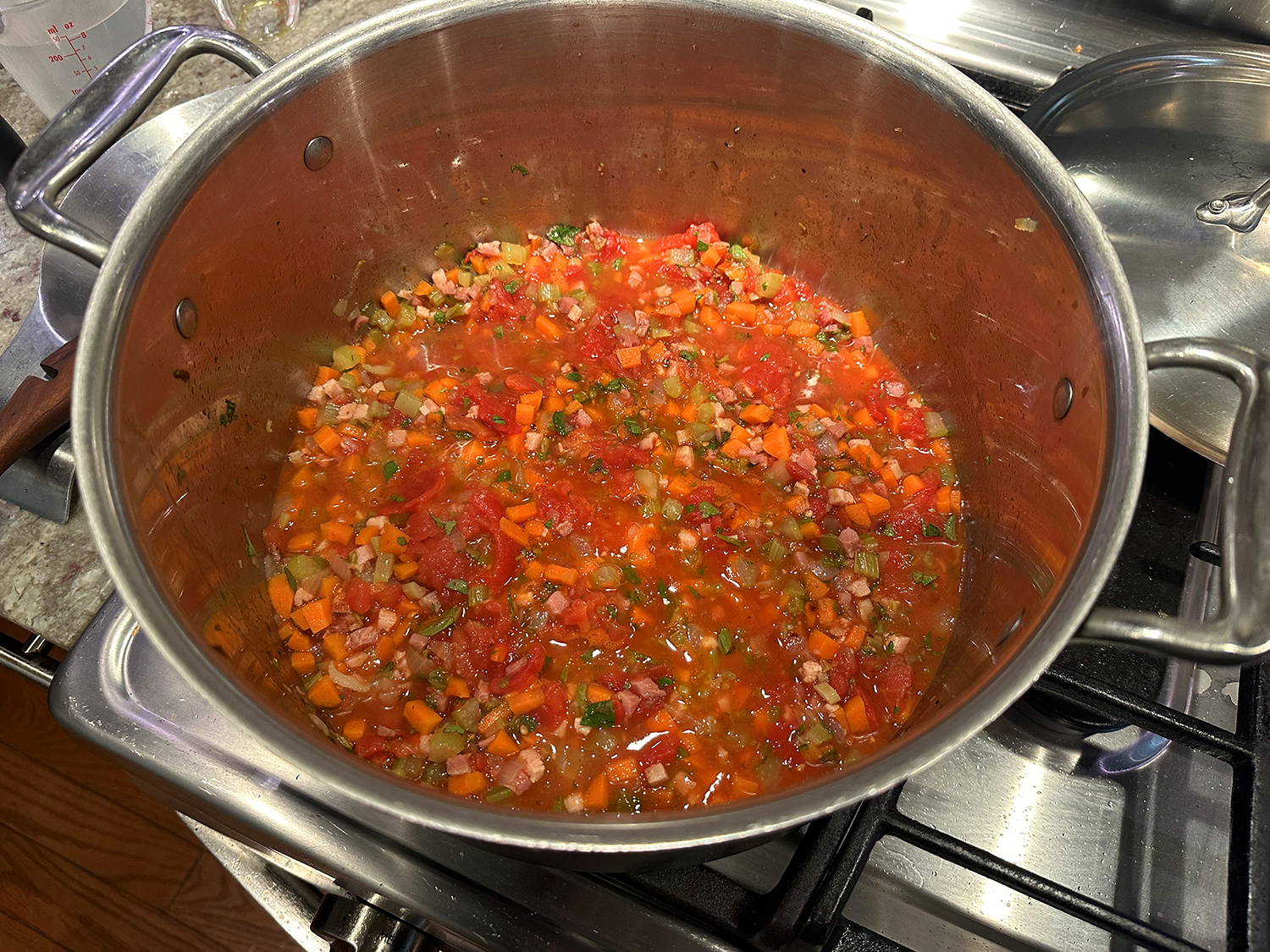
02To the fat remaining in the pot, add the pancetta, onion, carrots and celery. Cover and cook over medium-low, stirring occasionally, until the pancetta is beginning to brown and the vegetables are softened, 18 to 20 minutes.
03Meanwhile, in a large pot, boil 4 quarts water. Add the pasta and 1 tablespoon salt, then cook, stirring occasionally, until al dente. Reserve 1 cup of the cooking water, then drain. Drizzle the pasta with the remaining 1 tablespoon oil and toss.
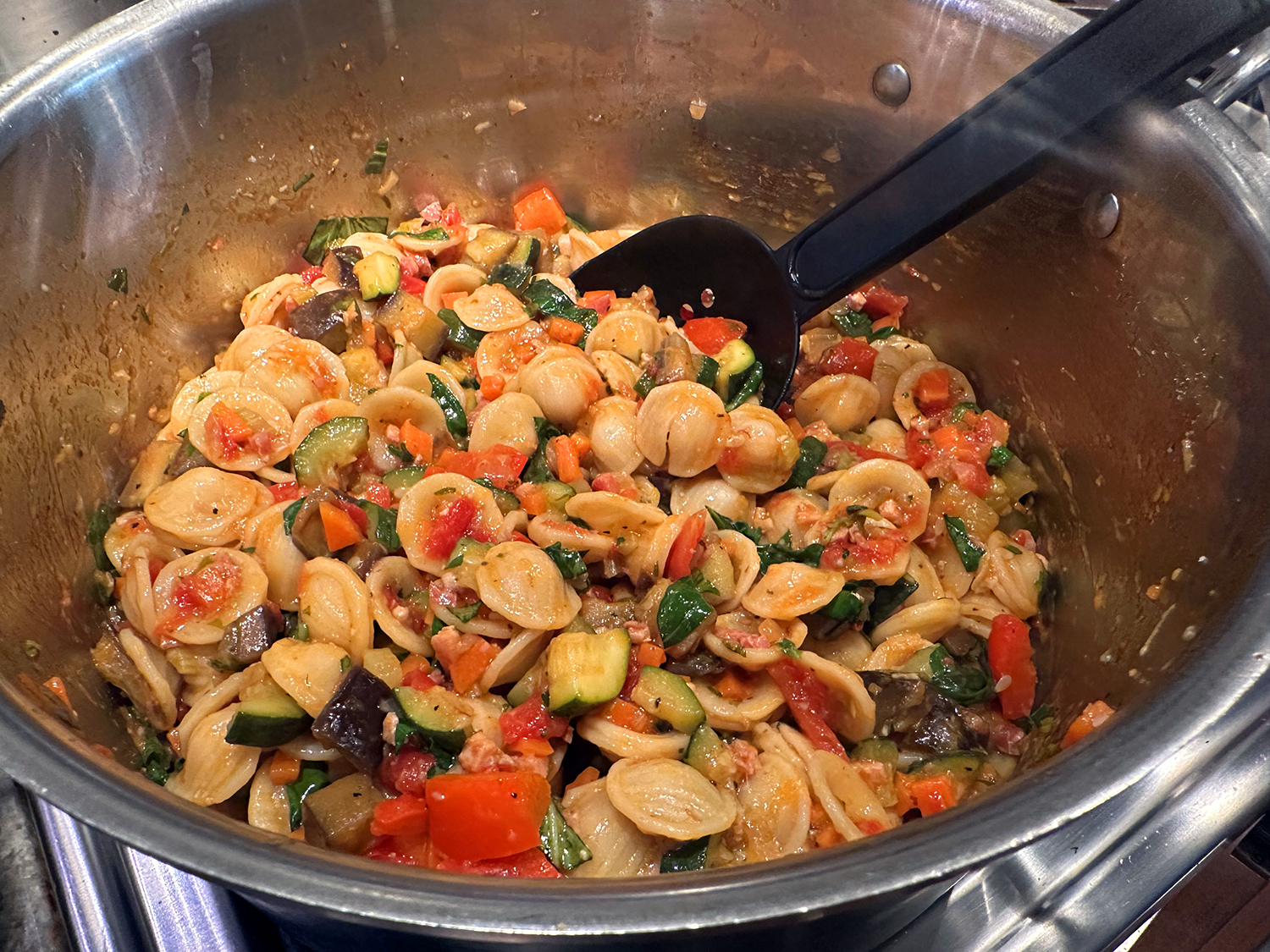
04To the mixture in the Dutch oven, add the tomatoes, marjoram and ½ cup pasta water. Bring to a simmer over medium and cook, uncovered and stirring, until a wooden spoon drawn through leaves a trail, 5 to 6 minutes. Add the pasta and vegetables; cook, stirring, until heated through, 2 to 3 minutes. Stir in the basil and Parmesan; add additional cooking water as needed if the mixture looks dry. Taste and season with salt and pepper. Serve topped with ricotta, additional oil and additional Parmesan.
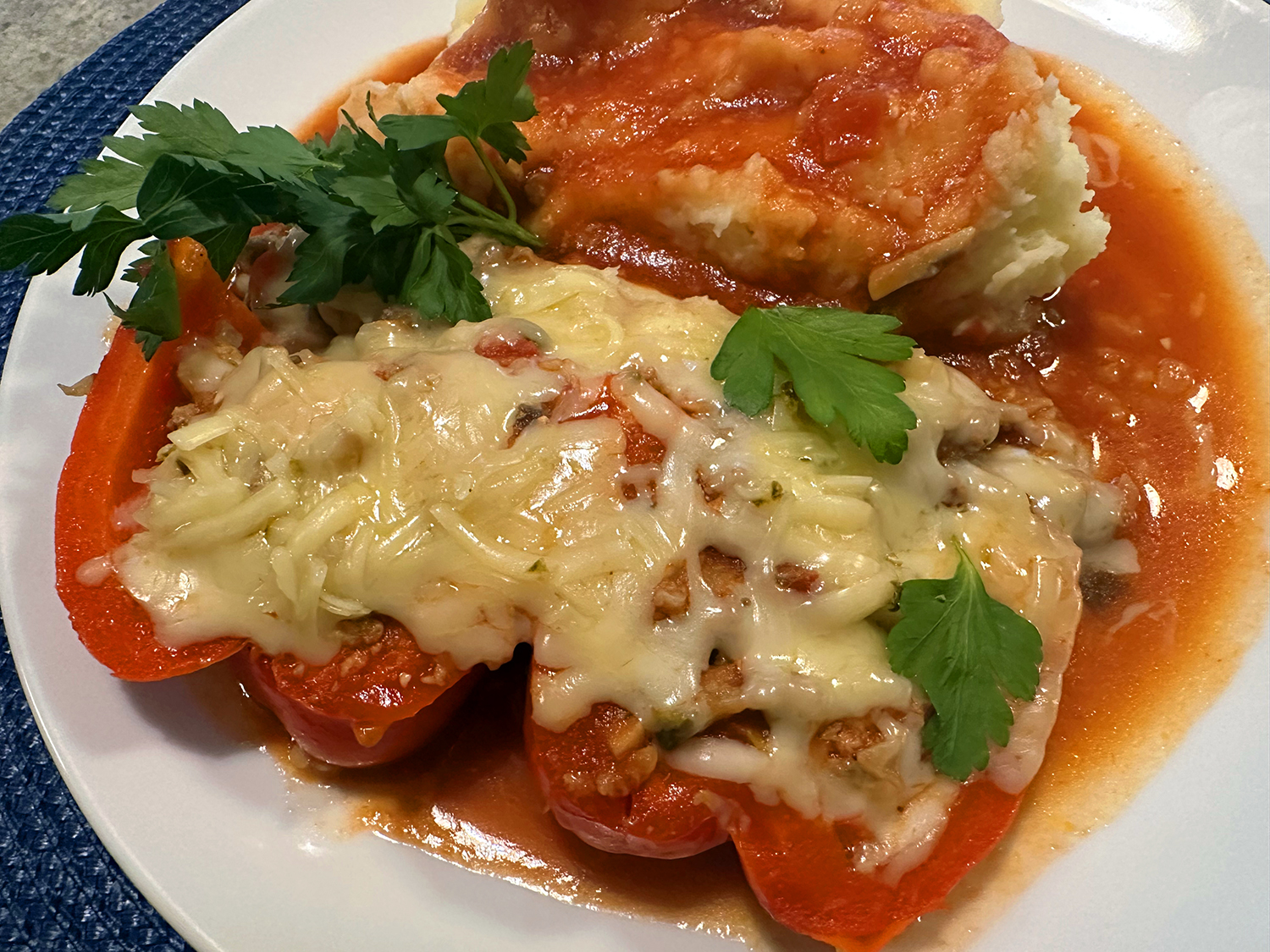
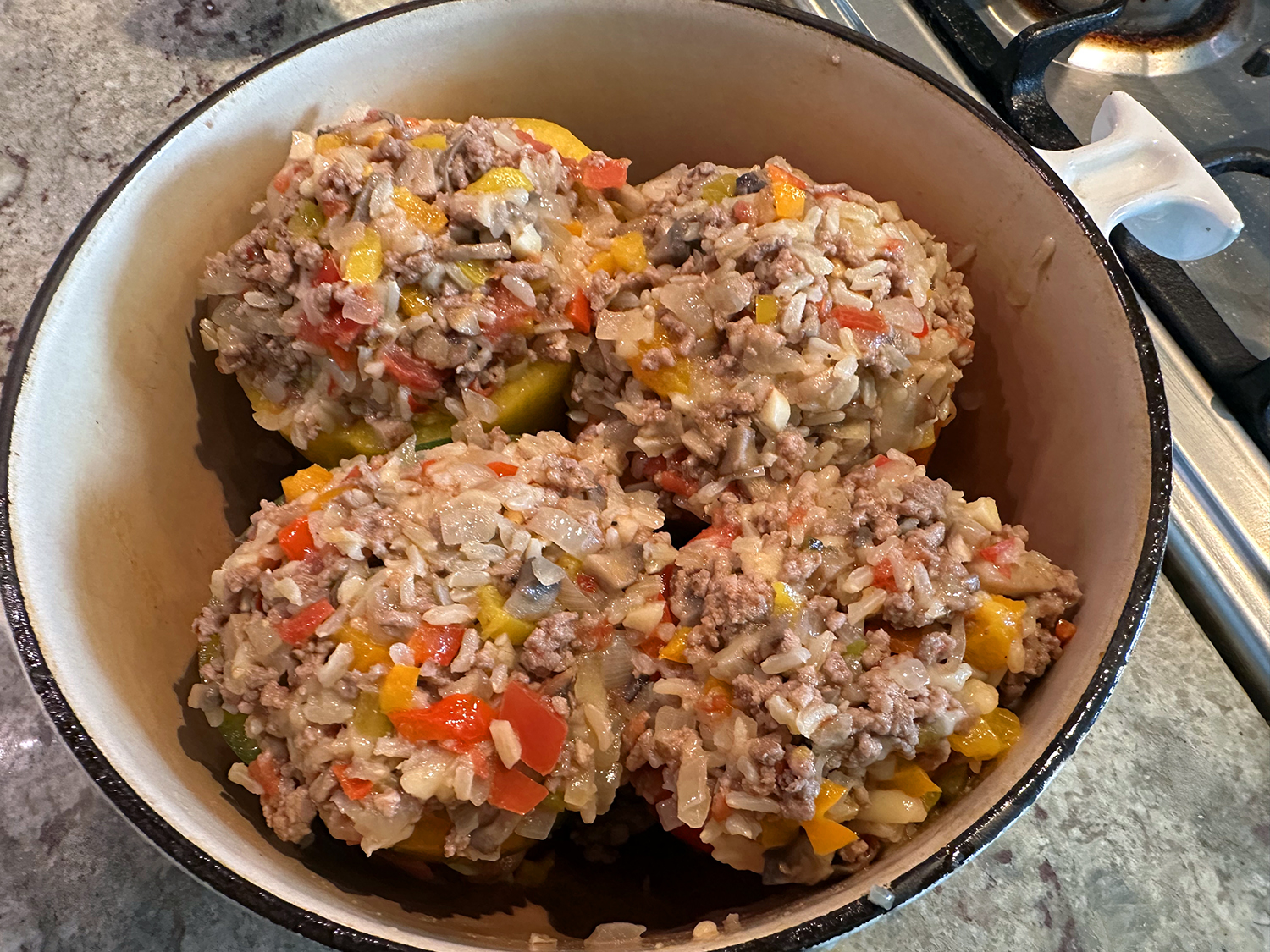
Over eight years ago I posted a very similar stuffed pepper recipe but haven’t made them since, so I thought it was time for a redo. While much of the veggie-forward ingredients and directions remain the same, there are a few differences here. For one, I switched out the zucchini and instead used cremini mushrooms. Another is when I added the tomato sauce…
Since peppers vary in size, you will get anywhere from four to six servings. Using four large (not necessarily tall), I still had enough meat mixture leftover to fill a fifth pepper (which I packaged for another day).
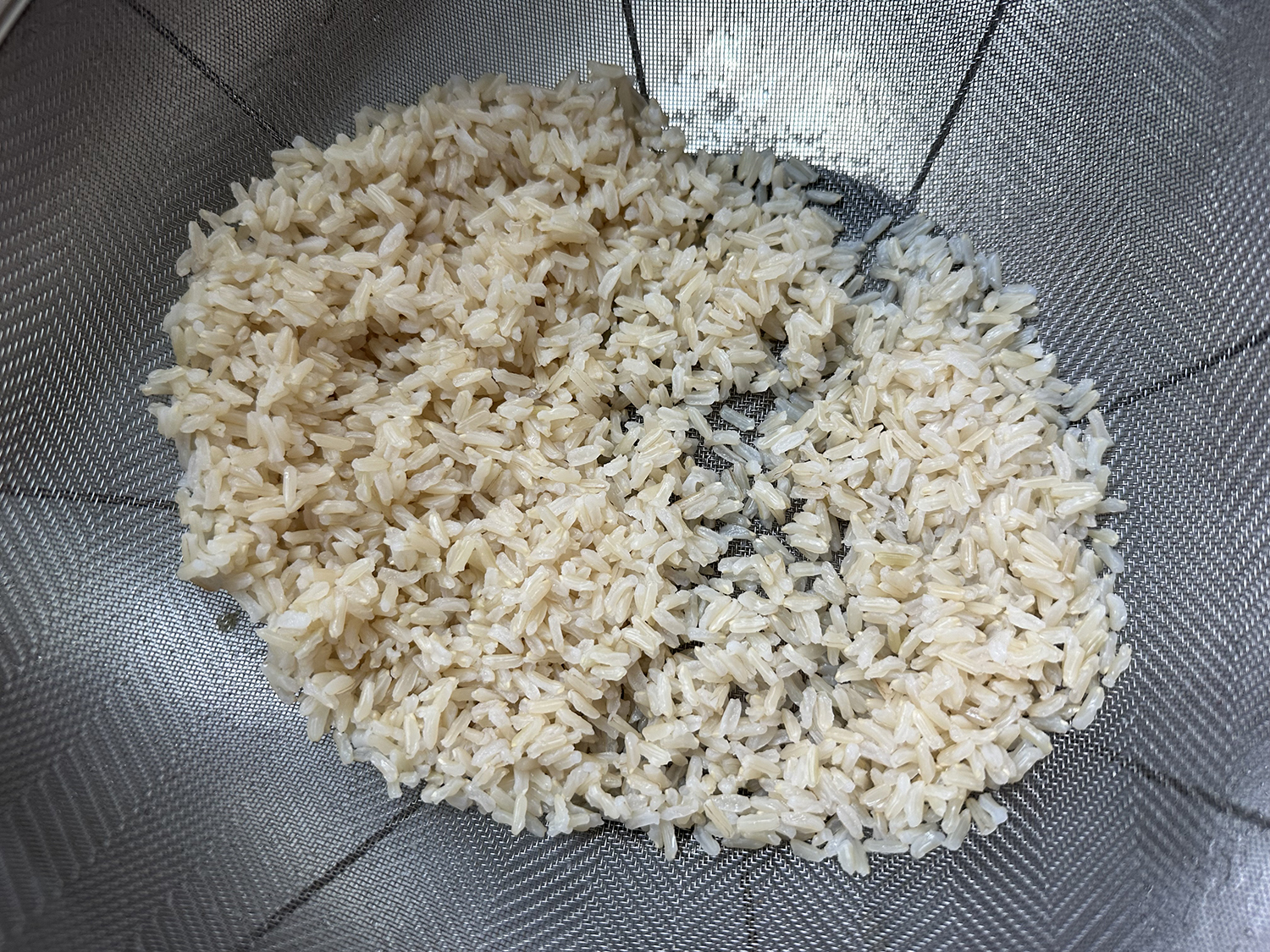
As I noted eight years ago, there’s the debate about which rice to use, white or brown? There are pluses and minuses to each. The upside is, brown rice, unlike white rice, still has the side hull and bran. Other facts:
The Good—
Brown rice has more micronutrients: magnesium, phosphorus, and potassium. It also has a lot of manganese, selenium, and copper.
Brown rice has a lower glycemic index than white rice.
The fiber content of brown rice keeps bowel function at it’s peak since it makes digestion that much easier.
The Bad—
Brown rice has 43 more calories per cup than white rice.
Brown rice has 7g more carbohydrates per cup than white rice.
The Ugly—
That would only pertain to those who have a rice allergy…
Alright, the rice choice is totally up to you and those who will be eating the stuffed peppers. We opted for brown rice. But no matter which choice you make, you have to cook the rice before it is used in the stuffing.
To make the meal more weeknight-friendly, make the recipe on a Sunday afternoon up to the first line of Step 7, and then refrigerate them over night. It sure makes for an easy dinner prep the next day.
Cut the tops off the peppers. Remove and discard the stems, then finely chop the tops; set aside. Scoop out the seeds and as much of the membrane as you can. In a baking dish large enough to hold them upright, place the peppers in cut-side up.
Heat 2 tablespoons of the olive oil in a large skillet over medium-high heat. Add the meat, season with salt and pepper and cook, breaking up the lumps, until it is cooked through and just beginning to brown, 8 to 10 minutes. Remove as much fat from the pan, then transfer the meat to a paper towel-lined plate to get rid of the remaining fat.
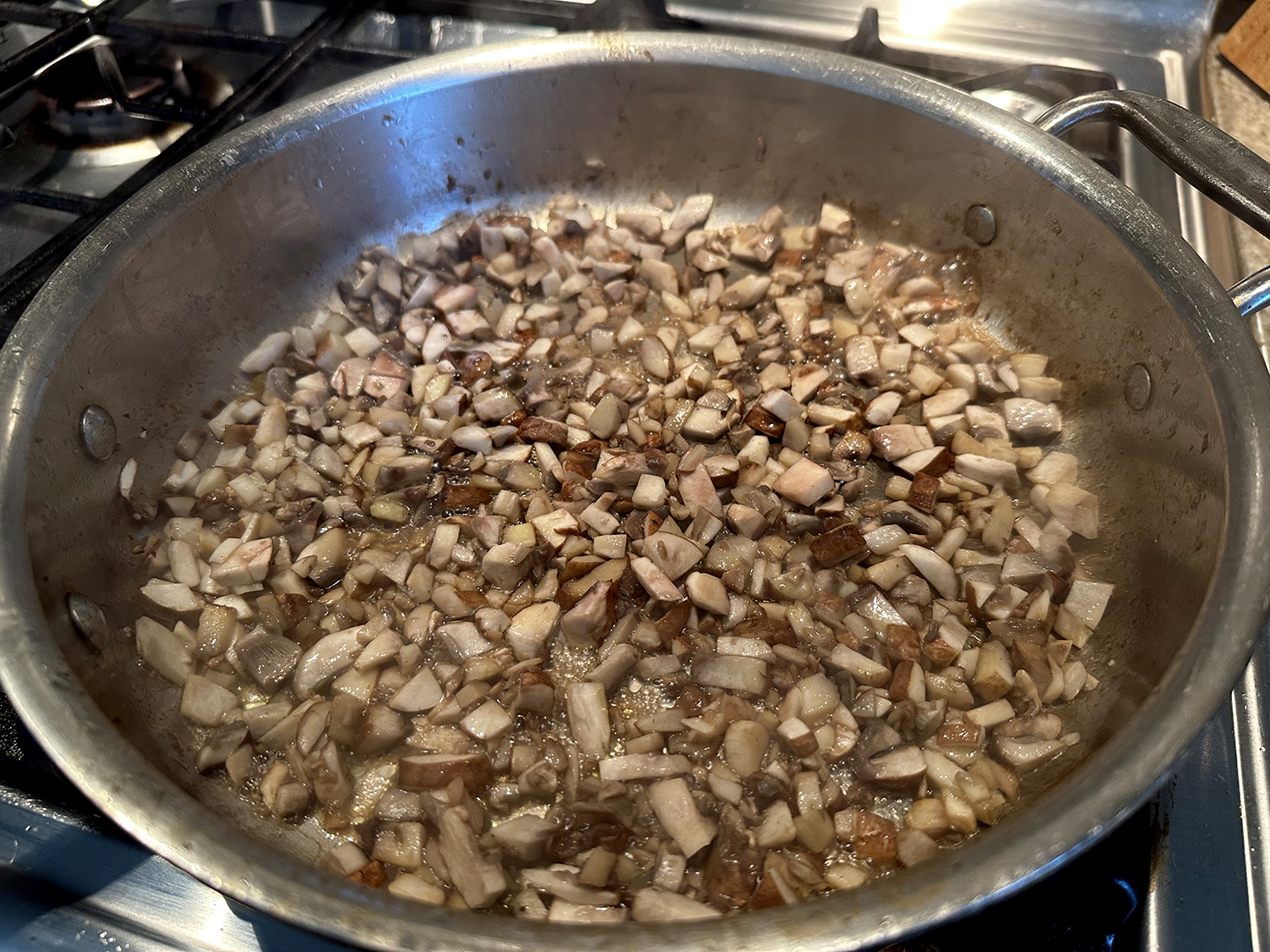
Wipe out the skillet and add one more tablespoon olive oil. When hot, add the chopped mushroom pieces and stir occasionally for about 4 minutes until lightly browned and most of the moisture is evaporated. Transfer to the plate with the ground meat.
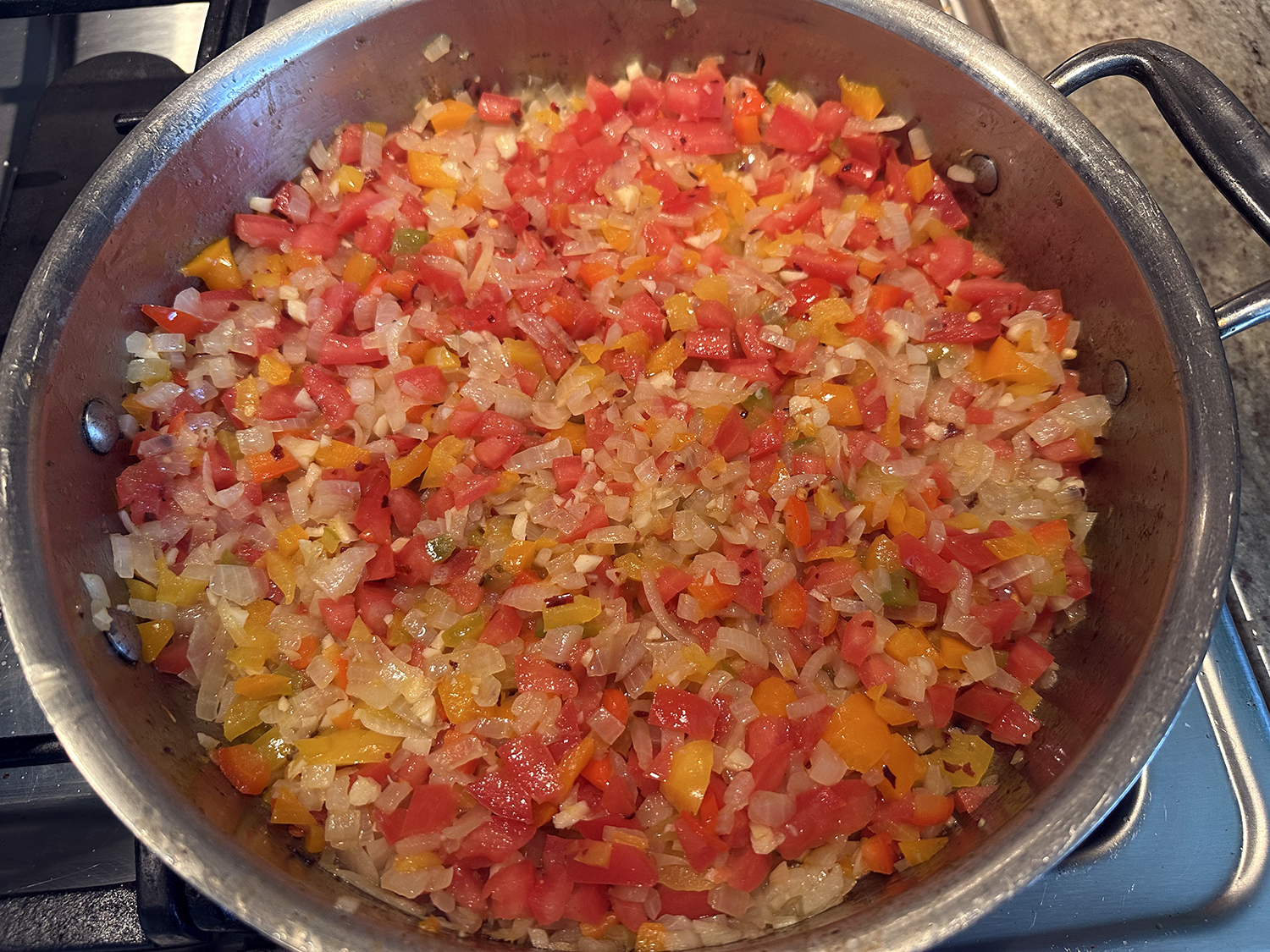
Add the remaining 2 tablespoon oil to the skillet and when hot, add the onions and chopped peppers and cook until beginning to soften, 3 to 4 minutes. Add the garlic and cook for another minute.
Add the diced tomatoes and season with salt and red pepper flakes. Cook until everything is heated through.
In a large mixing bowl, add the cooked veggies, then stir in the meat and rice. Taste and adjust the seasoning. Stir in 1 cup of the cheese.
Fill the peppers with the rice mixture. Pour two cups of tomato sauce over the potted peppers. Cover and bake for 30 minutes. (If you refrigerated overnight, cook for 45-50 minutes.)
Uncover and cook for another 15 minutes, then top each with a sprinkle of the remaining 1/2 cup cheese. Bake until the peppers are soft and the cheese is melted and lightly browned, another 10 minutes or so. Alternatively, plate each pepper, slice in half, then top with more sauce and some cheese. Microwave for 30 seconds to melt cheese.
Serve with mashed potatoes and top with more tomato sauce from the bottom of the pot, if desired.
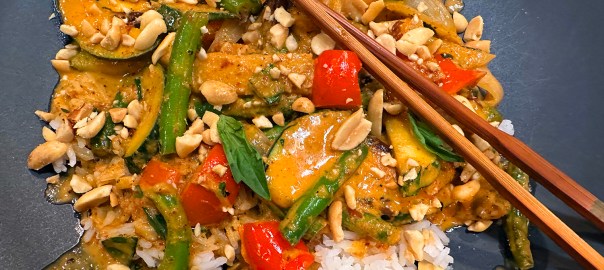
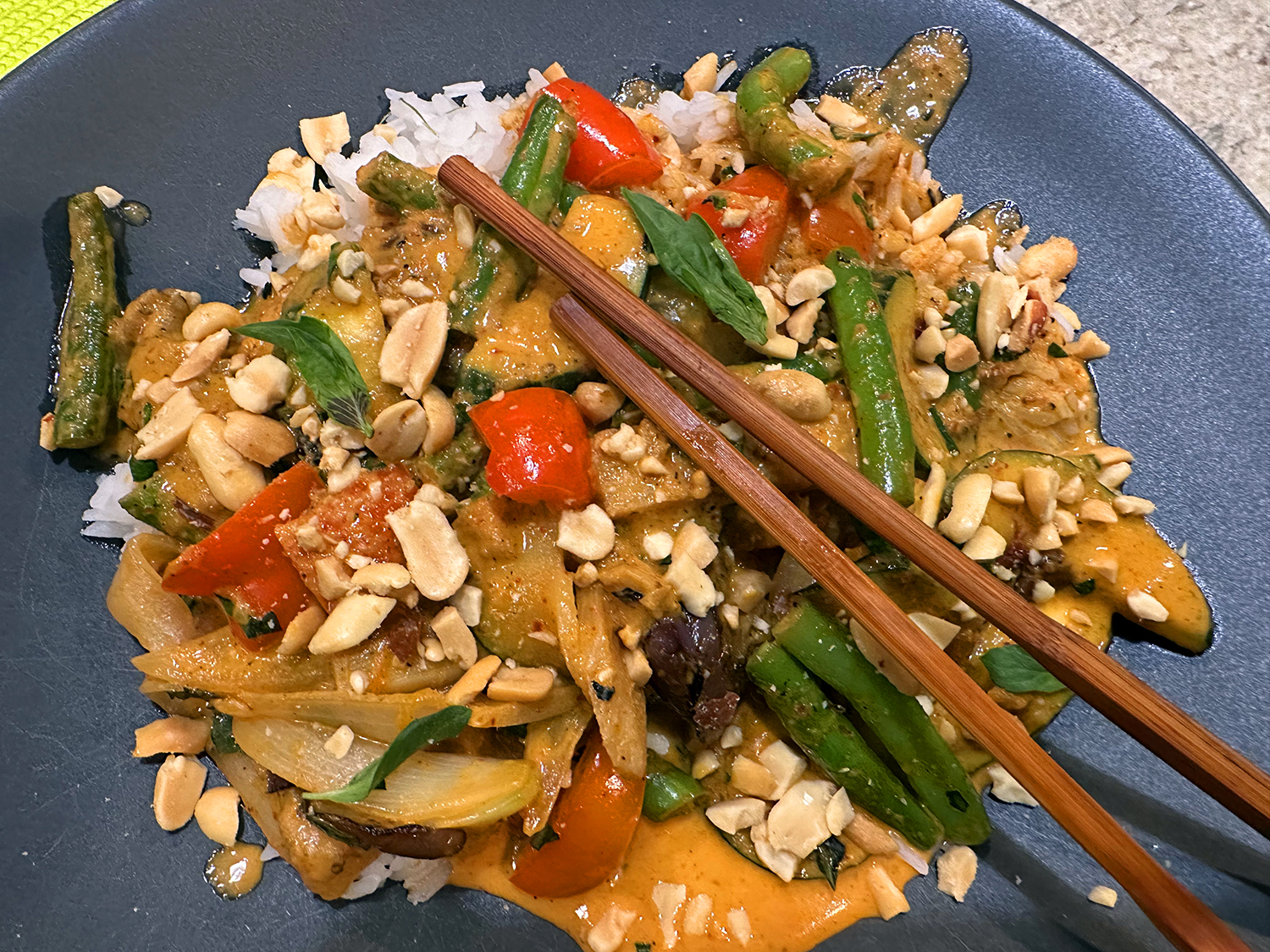
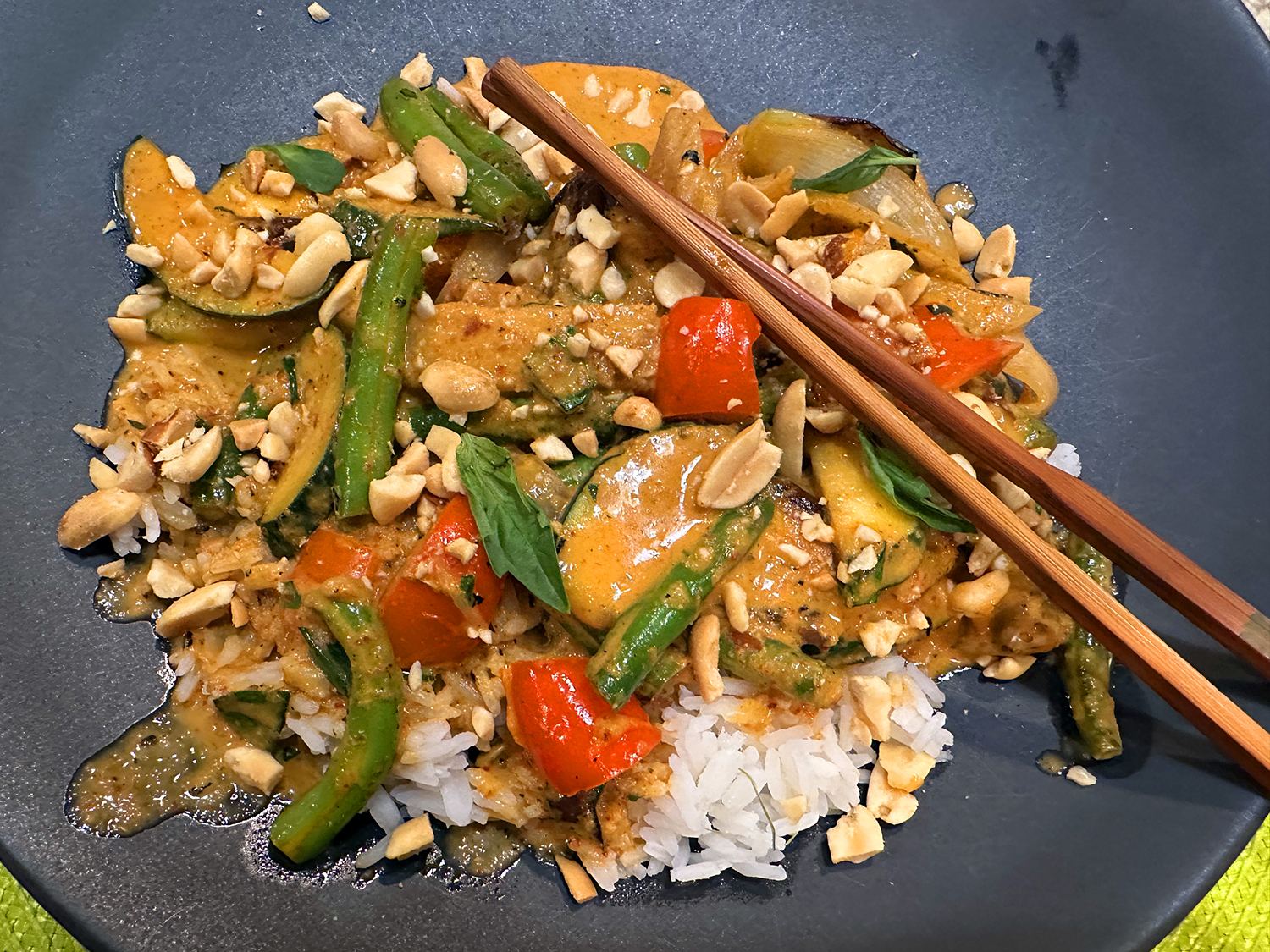
This colorful, aromatic Thai Vegetable Curry recipe may be vegetarian, but it doesn’t skimp on flavor. Creamy coconut milk and Thai red curry paste create the perfect base for tender eggplant, crisp vegetables, and fragrant Thai basil.
The beauty of this dish is its versatility. You can easily adjust the spice level by using less curry paste, and the vegetables can be swapped based on what you have in your fridge. We made some minor adjustments, but followed the recipe pretty closely otherwise. And it definitely has a kick to it, so cut back on the red curry paste if you have a more “delicate” palate.
Our Asian Mart was carrying Taiwan Basil as opposed to the Thai variety so we used that. And using just half of a red bell pepper? C’mon, that’s just silly, so we incorporated the entire pepper. We loved it!
3 Tbsp. neutral oil (such as vegetable, canola, or avocado oil)
1 Chinese eggplant, sliced on an angle into ½-inch/1cm thick slices
2 cloves garlic, minced
2 slices ginger, peeled and minced
4 oz. Thai red curry paste
2 tsp. brown sugar (or palm sugar)
1 small onion, cut into small wedges, root end removed
1 red bell pepper, seeded and chopped into 3⁄4″ chunks
1 zucchini, halved lengthwise, and sliced on an angle
6 oz. green beans, ends trimmed, and cut in half crosswise
5 oz. bamboo shoots, drained
2 tsp. vegan fish sauce or soy sauce
13.5 oz. coconut milk
½ cup Thai basil leaves
¼ cup roasted peanuts, chopped, optional
Directions
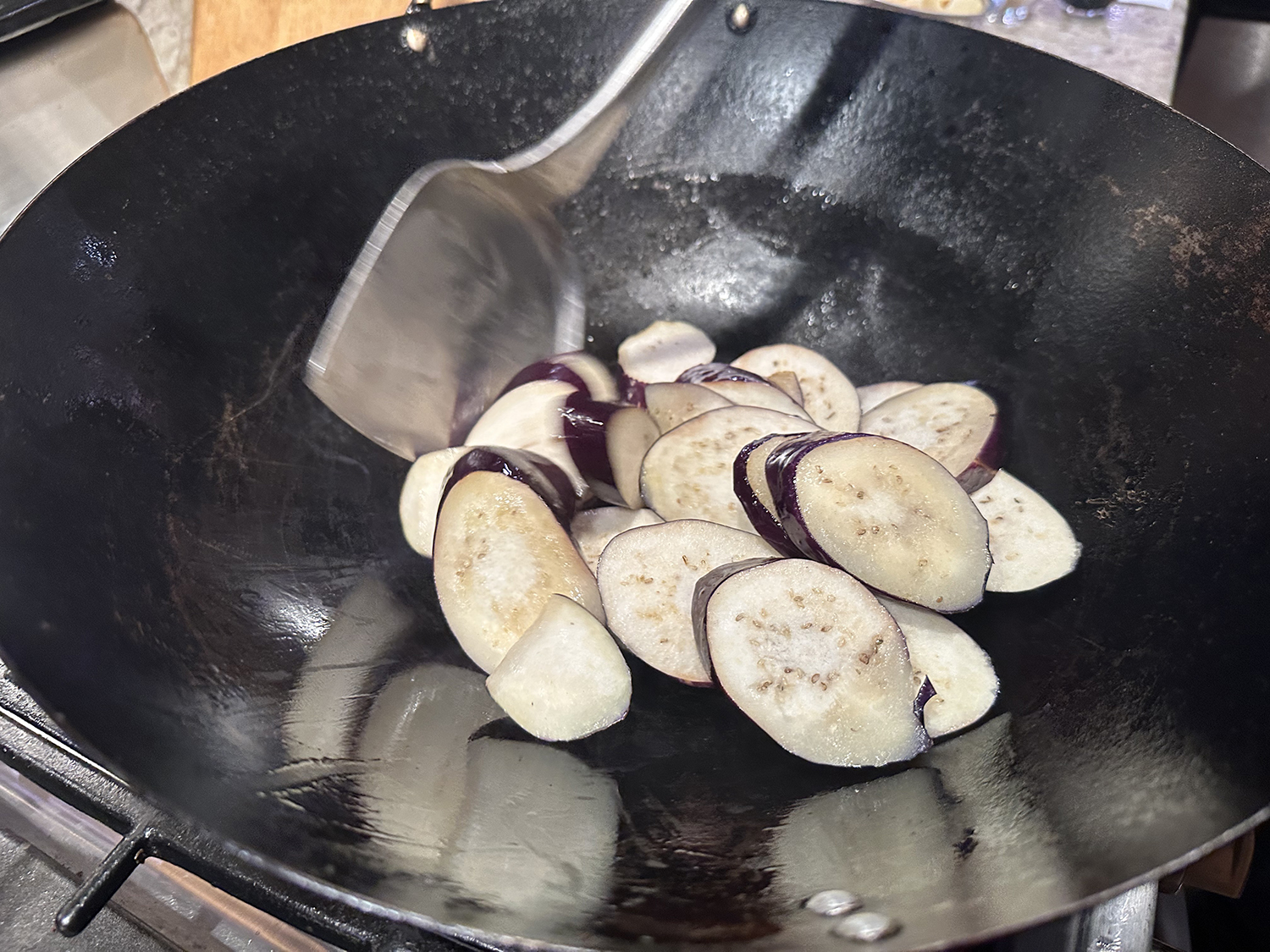
Heat a wok or large cast iron/carbon steel skillet over medium-high heat until it just starts to smoke. Add 2 tablespoons of oil, and spread it around to coat. Add the eggplant, and stir-fry for about 7 minutes, until the eggplant is lightly browned and tender. Drizzle in a little more oil during this process if the eggplant looks dry, and try to keep it in one layer so it sears on all sides. Transfer the eggplant to a dish and set aside.
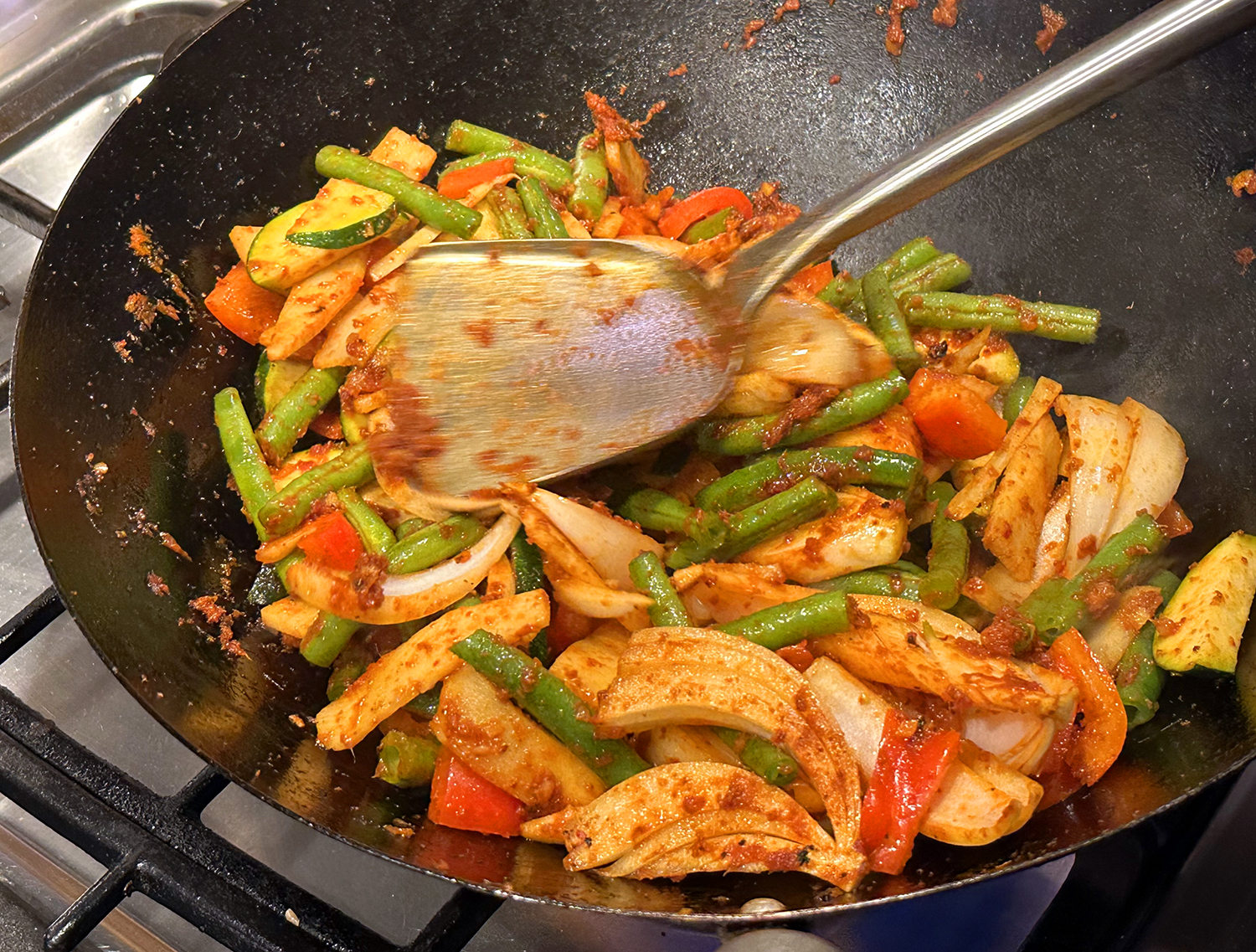
Over medium-low heat, add the remaining 1 tablespoon oil to the pan, along with the garlic and ginger, and fry for 1 minute until fragrant. Increase the heat to medium-high, add the curry paste, and fry for another minute. Stir in the sugar.
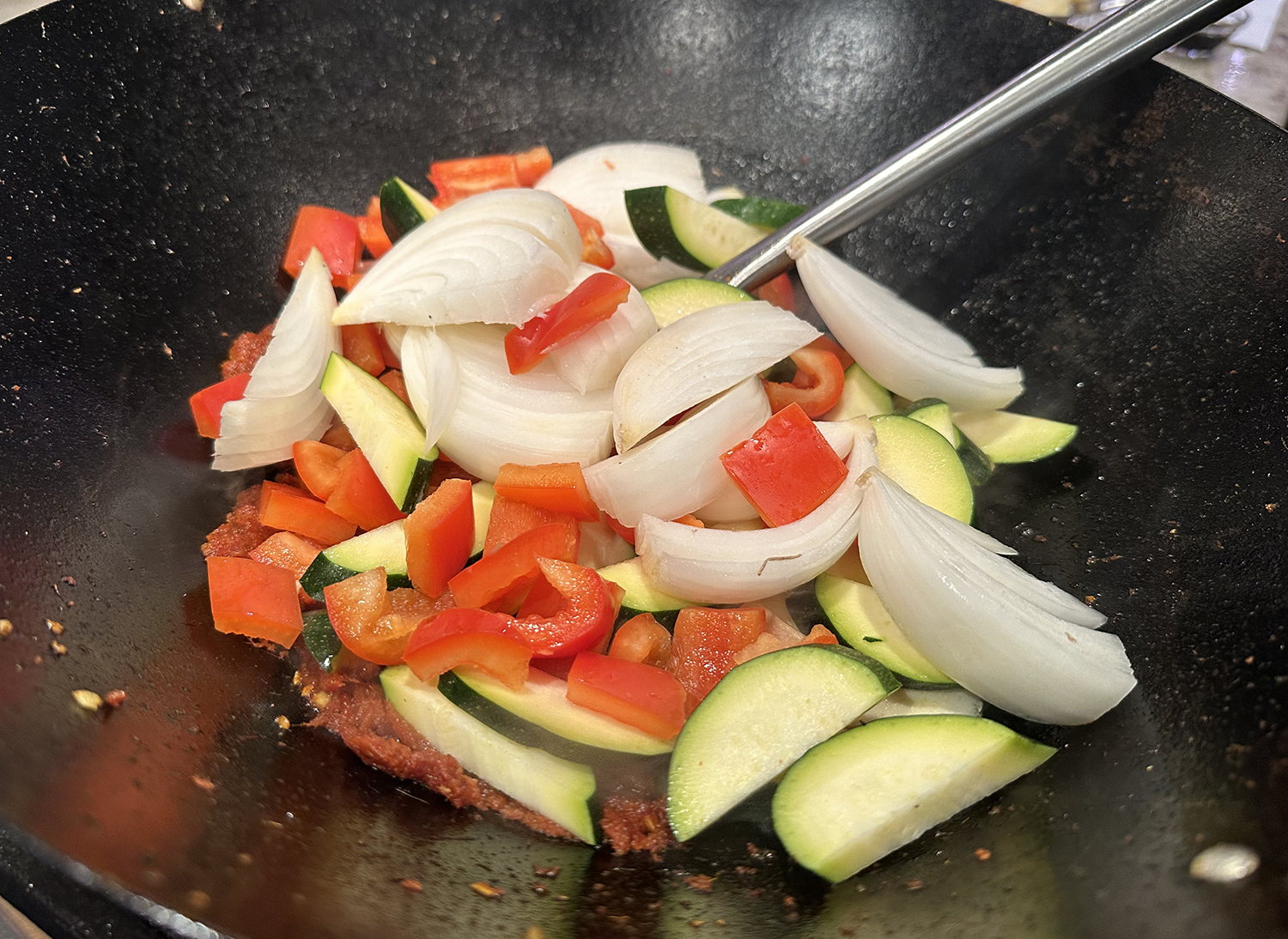
Add the onion, bell pepper, zucchini, green beans, bamboo shoots, and vegan fish sauce (or soy sauce/regular fish sauce), and fry for 3 minutes, until the vegetables begin to get tender. Then reduce the heat to medium, and add the coconut milk and eggplant. Bring to a simmer. (From this point on, keep the curry at a simmer. Avoid boiling it too vigorously, or the coconut milk may split.)
Simmer for 4 minutes, or until the vegetables are crisp-tender. Stir in the Thai basil until wilted. Garnish with chopped peanuts if desired, and serve over steamed rice.
In Tuscany, creamy, flavorful beans transform rustic soups and stews into something special, perfect for hunkering down on a cool weather afternoon/evening. But you want to avoid tough, exploded beans in this Tuscan bean stew recipe. Therefore, soak the beans overnight in salted water, which softens the skins.
Gently cooking the beans in a 250-degree oven produces perfectly cooked beans that stay intact. To complete the bean stew recipe, add tomatoes toward the end of cooking, since their acid keeps the beans from becoming too soft.
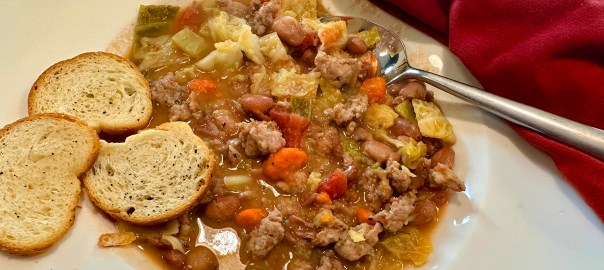
Please note: The creamier texture of beans soaked overnight are preferred for this recipe. If you’re short on time, quick-soak them: Place the rinsed beans in a large heat-resistant bowl. Bring 2 quarts of water and 3 tablespoons of salt to a boil. Pour the water over the beans and let them sit for 1 hour. Drain and rinse the beans well before proceeding with step 2. For a more substantial dish, serve the stew over toasted bread. This variation has much more meat than the Hearty Tuscan Bean Stew and is made with crinkly Savoy cabbage.
1lb. dried cannellini beans (about 2 cups), rinsed and picked over
1Tbsp. extra virgin olive oil, plus extra for drizzling
1 ½lbs. sweet Italian sausage, casings removed
1large onion, chopped medium (about 1 1/2 cups)
2medium celery ribs, cut into 1/2-inch pieces (about 3/4 cup)
2medium carrots, peeled and cut into 1/2-inch pieces (about 1 cup)
8medium garlic cloves, peeled and crushed
4cups chicken broth, preferably homemade
3cups water
2bay leaves
½medium head savoy cabbage, cut into 1-inch pieces
1(14.5-oz.) can diced tomatoes drained and rinsed
1sprig fresh oregano leaves
Ground black pepper
8slices country white bread, each 1 1/4 inches thick, broiled until golden brown on both sides and rubbed with garlic clove, (optional)
Directions
Dissolve 3 tablespoons salt in 4 quarts cold water in large bowl or container. Add beans and soak at room temperature for at least 8 hours and up to 24 hours. Drain and rinse well.
Adjust oven rack to lower-middle position and heat oven to 250 degrees. Heat oil and sausage in large Dutch oven over medium heat. Cook, breaking meat into small pieces with wooden spoon until it loses its raw color, about 8 minutes. Transfer sausage to paper towel-lined plate and place in refrigerator. Add onion, celery, and carrots. Cook, stirring occasionally, until vegetables are softened and lightly browned, 10 to 16 minutes. Stir in garlic and cook until fragrant, about 1 minute. Stir in broth, water, bay leaves, and soaked beans. Increase heat to high and bring to simmer. Cover pot, transfer to oven, and cook until beans are almost tender (very center of beans will still be firm), 45 minutes to 1 hour.
Remove pot from oven and stir in greens, sausage, and tomatoes. Cover pot, return pot to oven and continue to cook until beans and greens are fully tender, 30 to 40 minutes longer.
Remove pot from oven and submerge oregano sprig in stew. Cover and let stand 15 minutes. Discard bay leaves and oregano sprig and season stew with salt and pepper to taste. If desired, use back of spoon to press some beans against side of pot to thicken stew. Serve over toasted bread, if desired, and drizzle with olive oil.
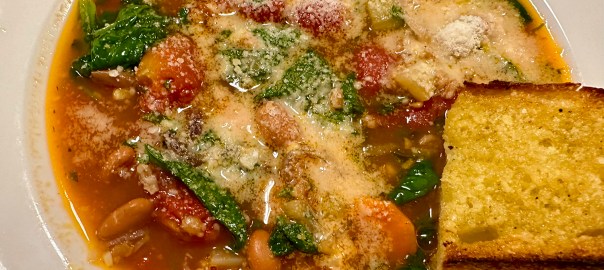
So tasty and so healthy! This warm-your-belly farro soup is quite easy to make; and it’s all done in one-pot which means fewer dishes. On a busy weeknight, this may be your ticket to something healthy, nutritious and pretty hands-off. To keep it vegetarian, use vegetable stock. That was not an issue for us so we used 6 cups of homemade chicken stock.
Farro soup with white beans and vegetables is a rich, hearty, and flavorful meal. Eat it on its own, pair it with crusty garlic bread or a simple salad and dinner is served! It’s like a hug in a bowl to keep you warm on chilly nights! And that is exactly the reaction we got.
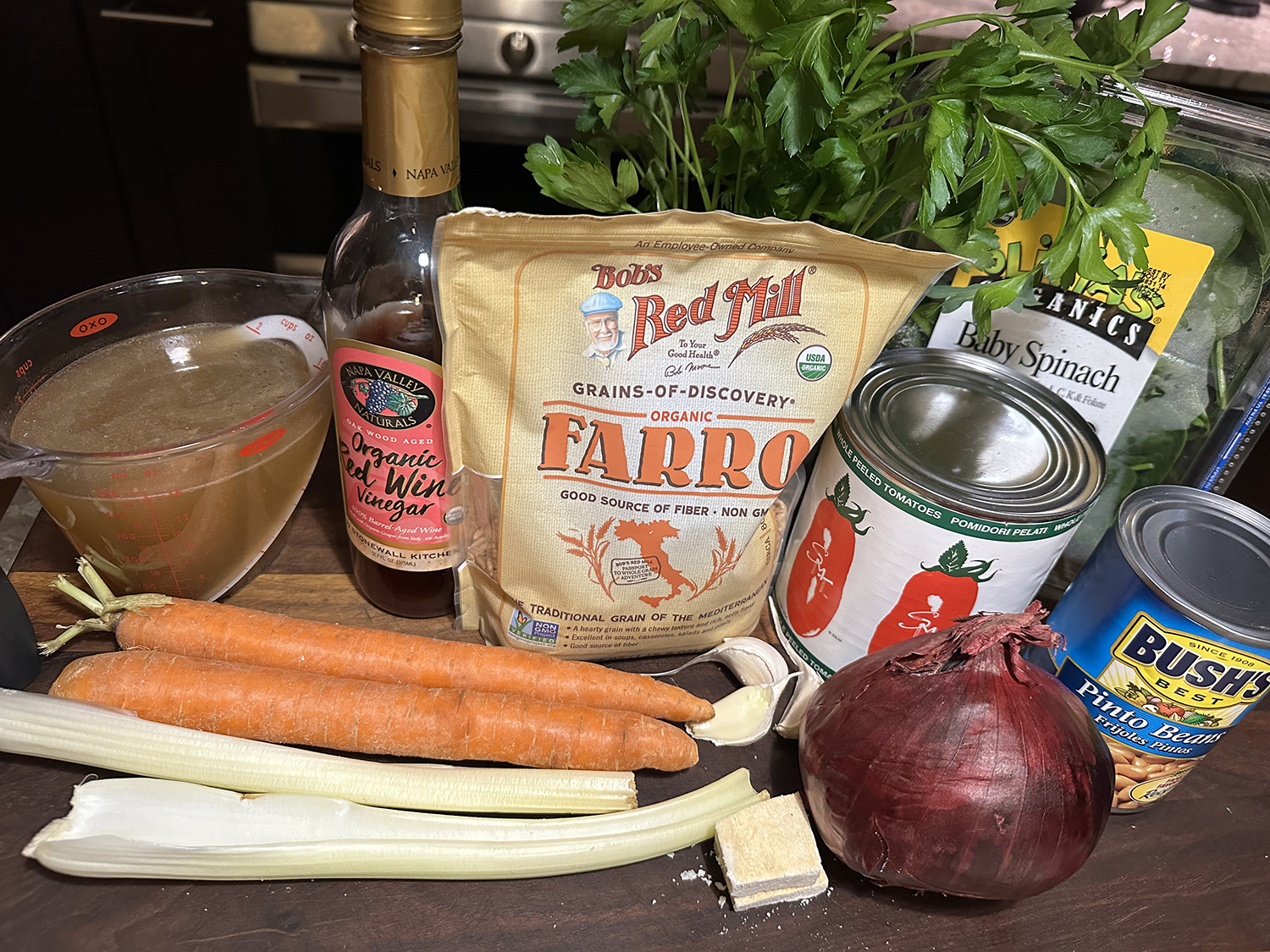
We adapted the recipe slightly by including two cans of white beans instead of one. Since baby spinach is typically packaged in a 5-ounce clamshell, we included the entire thing instead of 2 cups. A nice toasted piece of garlic bread was the perfect companion!
Missing, or not fond of, some of the ingredients? Don’t worry, here are some substitutes:
Farro substitutes: While farro is traditional in this soup, you can use other grains like barley, spelt, freekeh, coarse bulgur, quinoa, or brown rice. Brown rice and quinoa are good ways to turn this soup into a gluten-free-friendly meal.
Add mushrooms: Cut mushrooms of your choosing into bite-sized pieces and saute them along with the carrots, onion, and celery. From there, follow the recipe as written.
Instead of spinach, you can use baby kale. Kale in general is tougher than spinach, and takes more time to wilt down. Baby kale is a bit softer, but will still likely have more body than spinach, even after sitting in the broth for a while.
Vegan option: Use vegetable stock and omit the parmesan rind and cheese for a vegan alternative. Without the parmesan rind, you will lose some of the nutty, rich flavor. If you want to mimic this flavor, use a little nutritional yeast. You can add 2 to 3 teaspoons right after you add the stock. It will dissolve quite quickly.
1 to 2 carrots, peeled and sliced into ¼-inch thick rounds
2 celery sticks, chopped
Kosher salt
2 large garlic cloves, minced
6 cups vegetable or chicken stock
1 28-oz. can whole San Marzano tomatoes, crushed by hand
2 15-oz. cans white beans, drained and rinsed
1 cup farro, rinsed and drained
1-inch Parmesan rind
5 oz. fresh baby spinach
1 cup chopped parsley
2 Tbsp. red wine vinegar
Grated Parmesan for serving
Directions
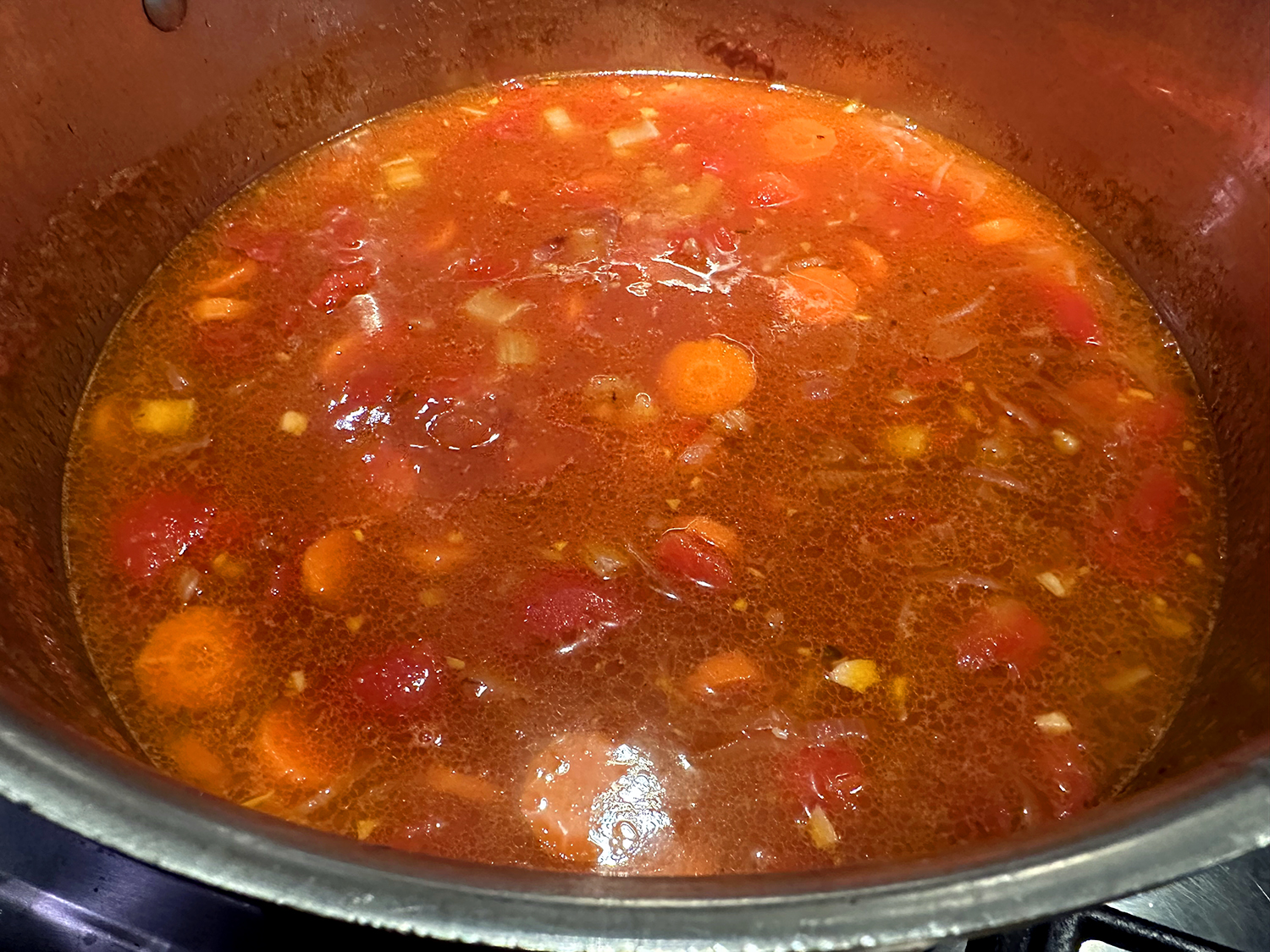
In a large Dutch oven or pot, heat 2 tablespoons extra virgin olive oil over medium heat until shimmering. Add the onions, carrots, and celery. Season with a little kosher salt and cook, tossing occasionally until the vegetables have softened.
Add the garlic and toss for 30 seconds or so, then add the tomatoes, stock, white beans, farro, and parmesan rind.
Bring the liquid to a boil, then lower the heat watching for the steady, gentle simmer. Allow the soup to simmer until the farro is tender, about 30 minutes or so.
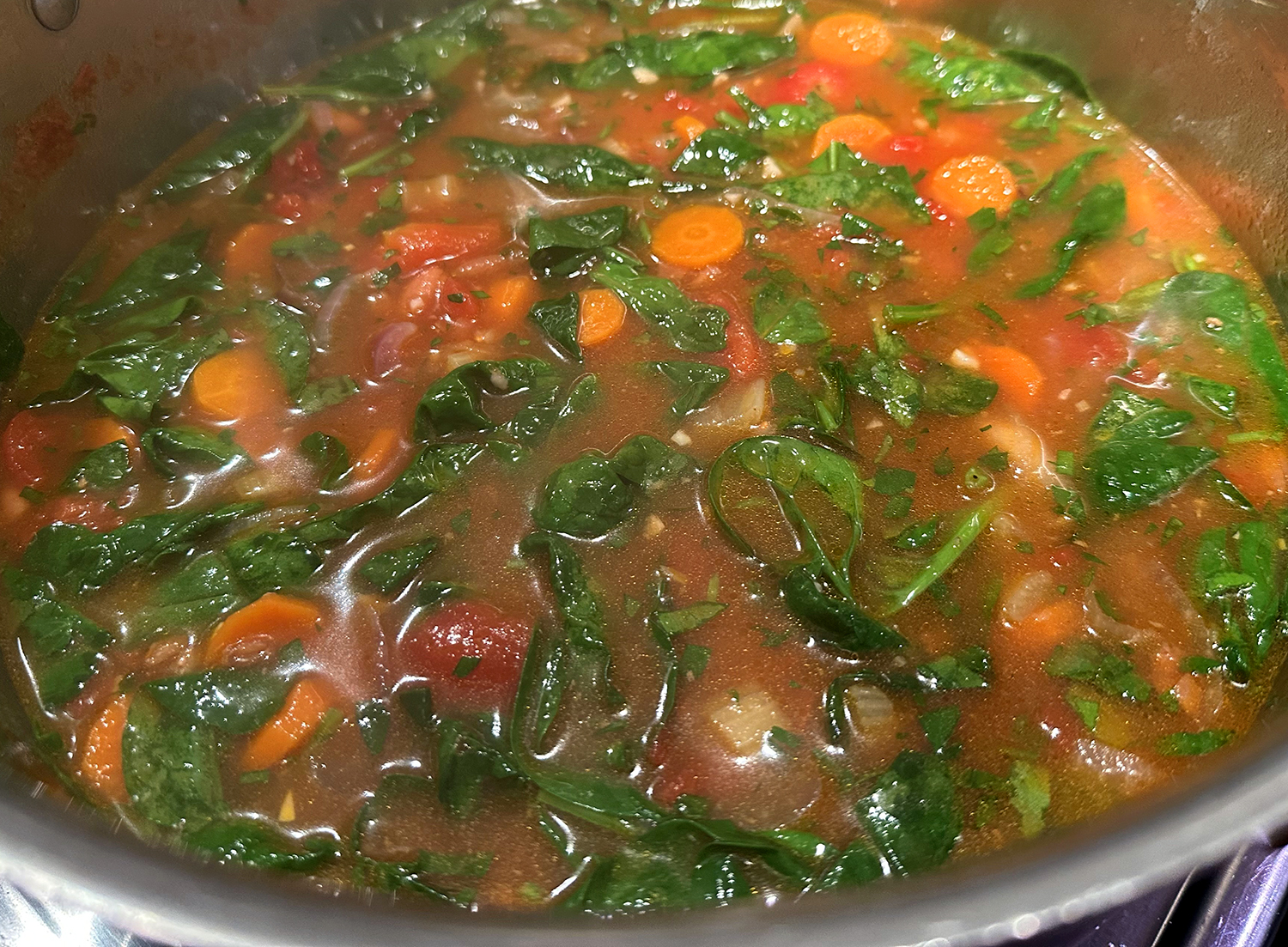
Turn the heat off and remove the Parmesan rind (sometimes the rind will have dissolved into the soup). Stir in the spinach, parsley, and red wine vinegar.
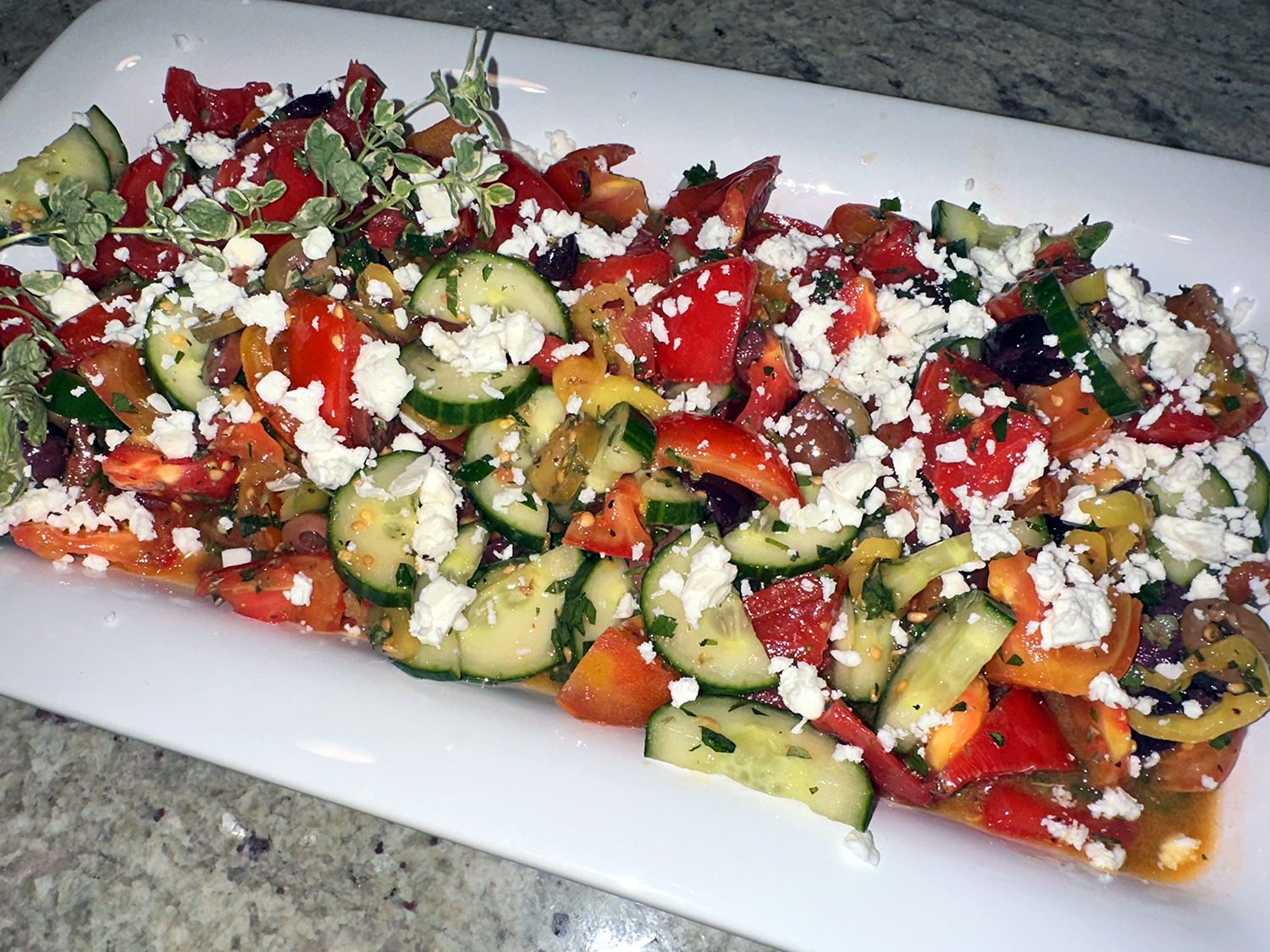
This was a last minute decision after realizing our leaf lettuce had seen better days. Not in the mood to run to the food store, The Hubs did a quick online search to find a salad that would utilize on-hand ingredients. We were after a vibrant salad full of ripe, juicy tomatoes; crisp cucumbers; and lots of herbs. To prevent the cukes and tomatoes from getting soggy, the trick is to salt the vegetables in a colander, which helps draw out excess moisture and seasons them at the same time.
Sliced pepperoncini and shallot were briefly marinated in a pungent vinaigrette before tossing in the seasoned vegetables, torn fresh mint, and chopped fresh oregano. A sprinkling of salty, briny feta is the perfect finishing touch.
Feeling that the finished salad was a bit too mint-forward, we reduced the amount of mint and increased the amount of oregano. Use your own judgement as to how much of each herb to use based on your family’s preferences.
½ English cucumber, halved lengthwise and sliced crosswise ⅛ inch thick
1 ½ tsp. table salt, divided
5 Tbsp. extra-virgin olive oil
2 Tbsp. red wine vinegar
1 Tbsp. lemon juice
½ tsp. pepper
⅓ cup thinly sliced pepperoncini
1 shallot, sliced into thin rings
1 Tbsp. fresh mint leaves, torn
¼ cup chopped fresh oregano
4 oz. feta cheese, crumbled (1 cup)
Directions
Cut tomatoes into ½-inch-thick wedges, then cut wedges in half crosswise. Toss tomatoes, cucumber, and 1 teaspoon salt together in bowl; transfer to colander and let drain for 30 minutes.
While vegetables drain, whisk oil, vinegar, lemon juice, pepper, and remaining ½ teaspoon salt together in large bowl. Add pepperoncini and shallot and let sit until slightly softened, about 15 minutes.
Add mint, oregano, and drained vegetables to bowl with dressing and toss to combine. Season with salt and pepper to taste. Transfer to platter and sprinkle with feta. Serve.
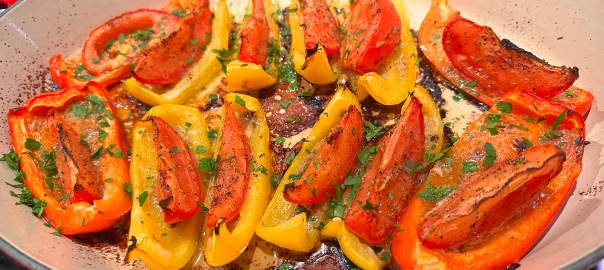
Very versatile, these little gems make splendid hors d’oeuvres eaten out of hand or set atop a crostini, as well as a side dish. A few on a plate make a nice sit-down first course, and they’re great as part of a buffet.
They add a nice pop of color—along with the nutrients—to your plate. The first go-around we served our Roasted Bell Peppers boats with a Parmesan Meatloaf.
Position a rack in the center of the oven and preheat to 350°F.
Lightly oil a 13 x 9-inch gratin pan or similar-size baking dish.
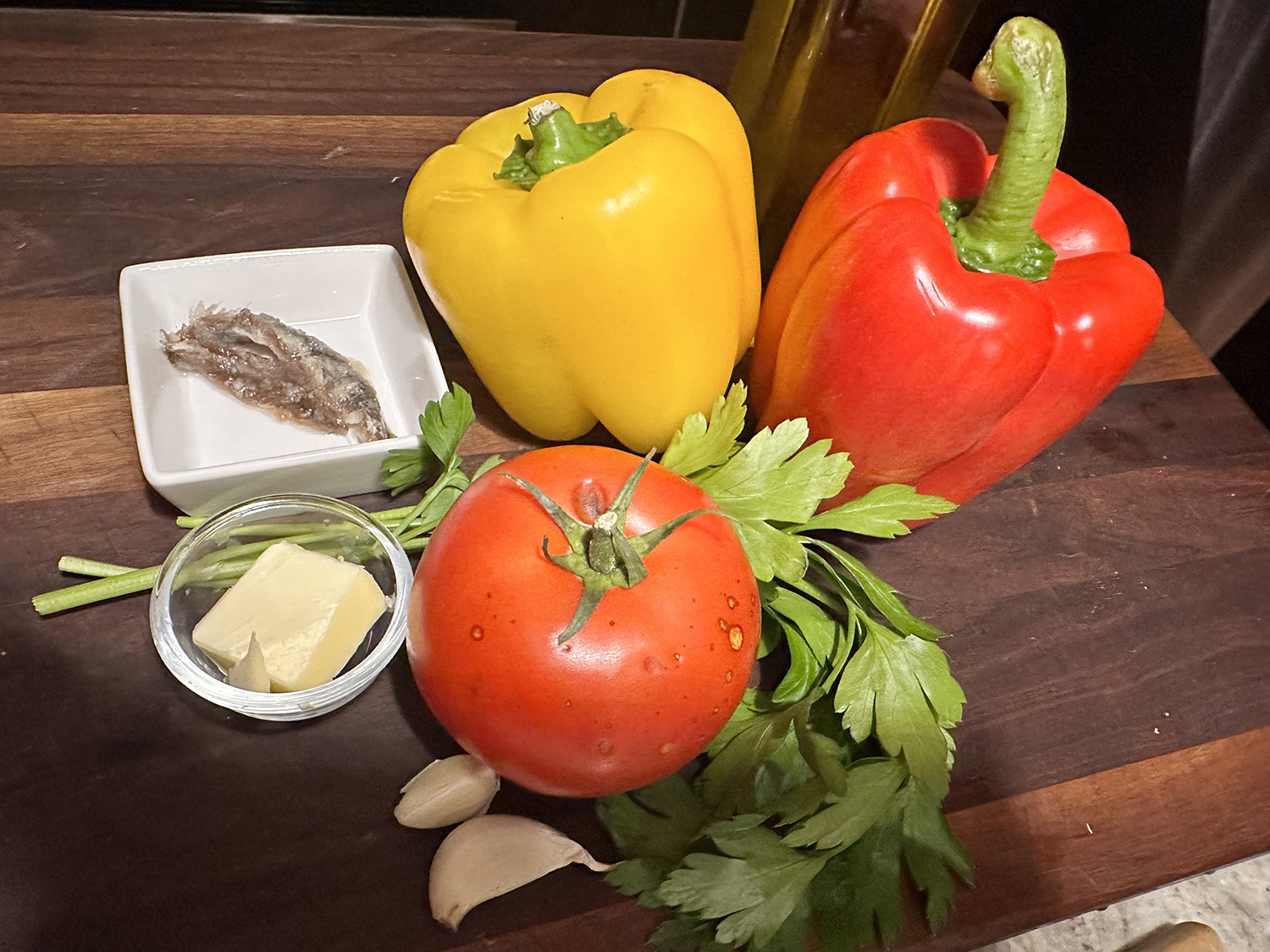
Combine the garlic and anchovies in a small mortar, add a pinch of salt, and smash and grind to form a paste. Add the butter and work together with a wooden spoon until well combined.
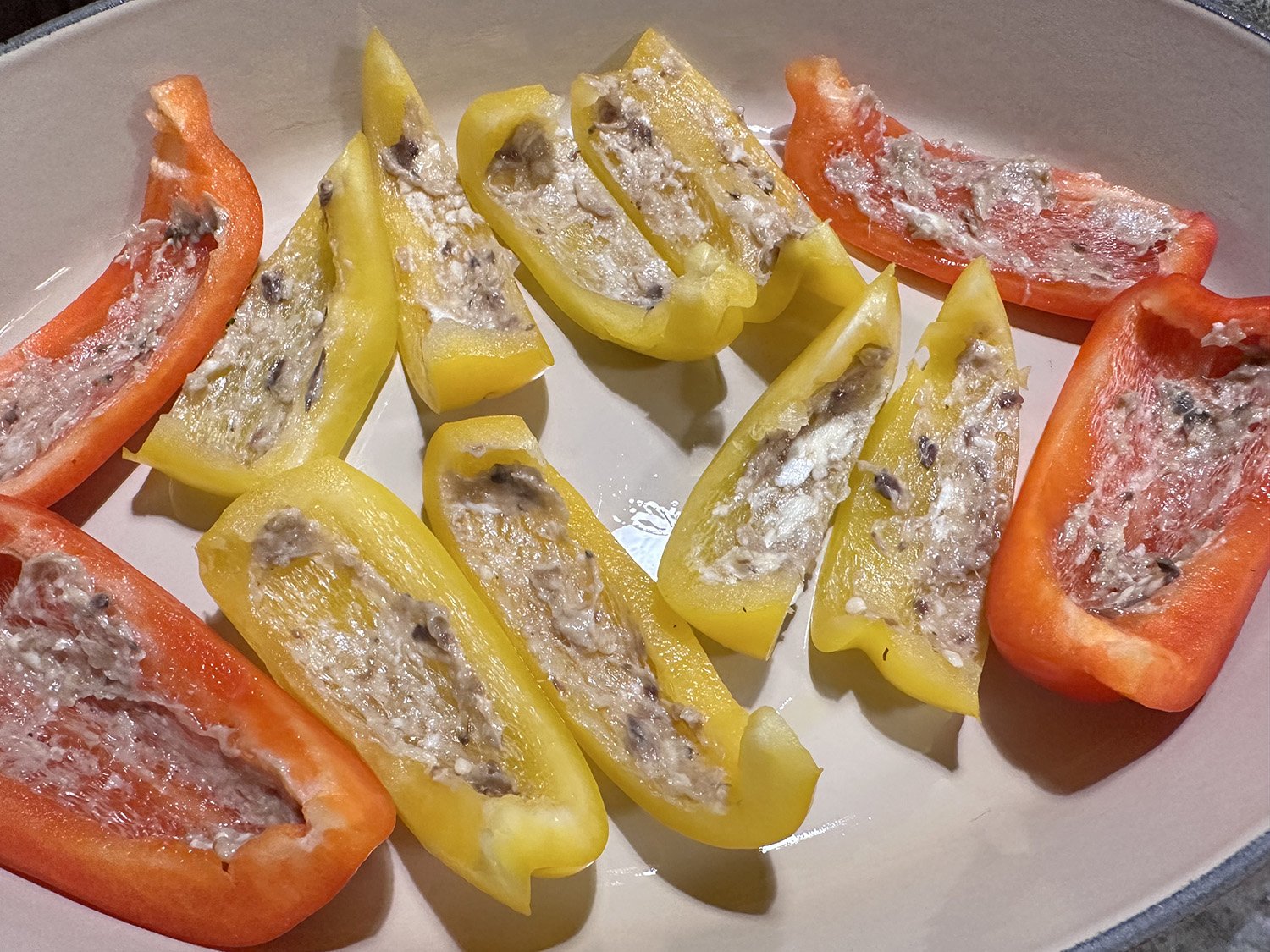
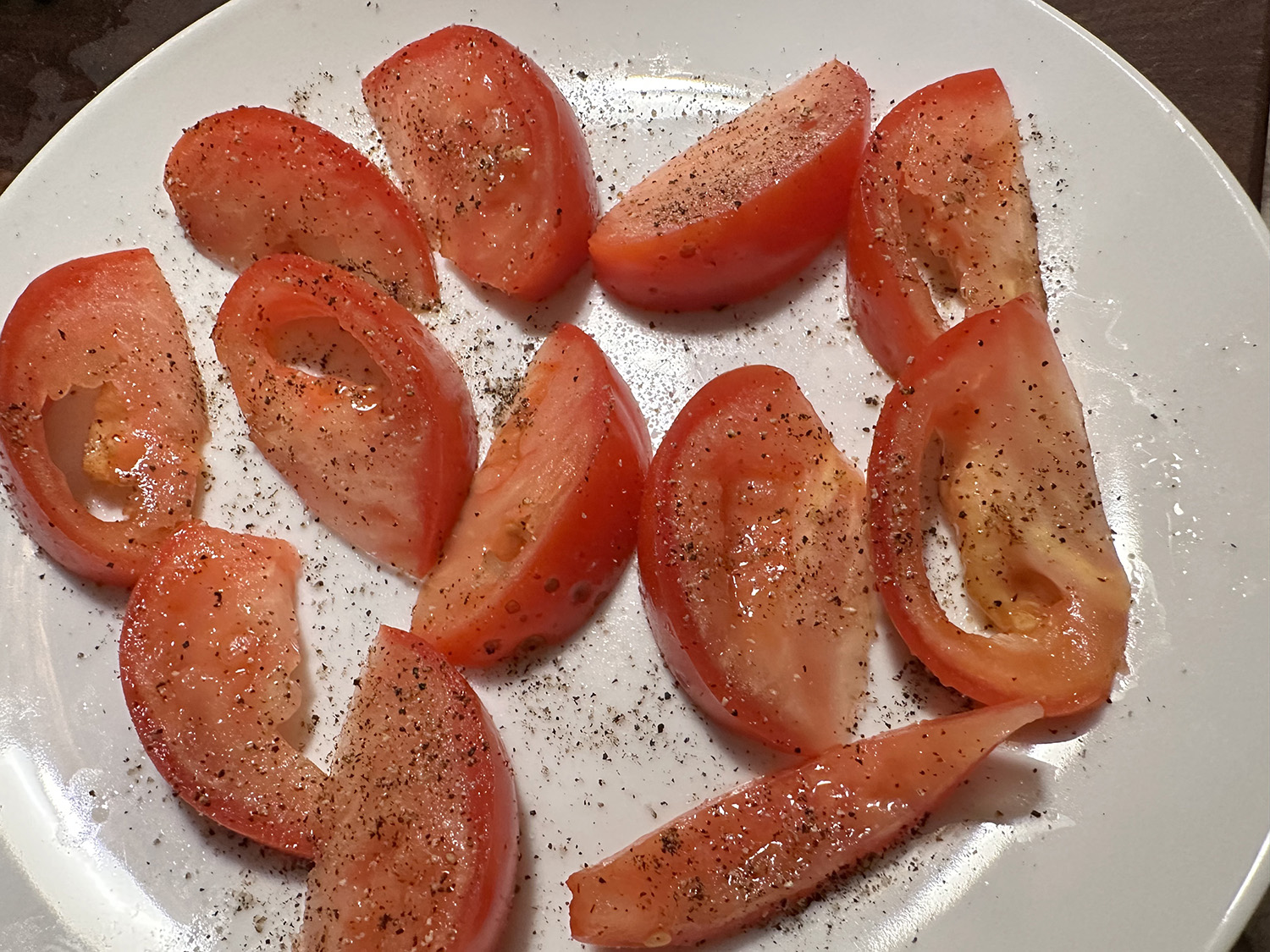
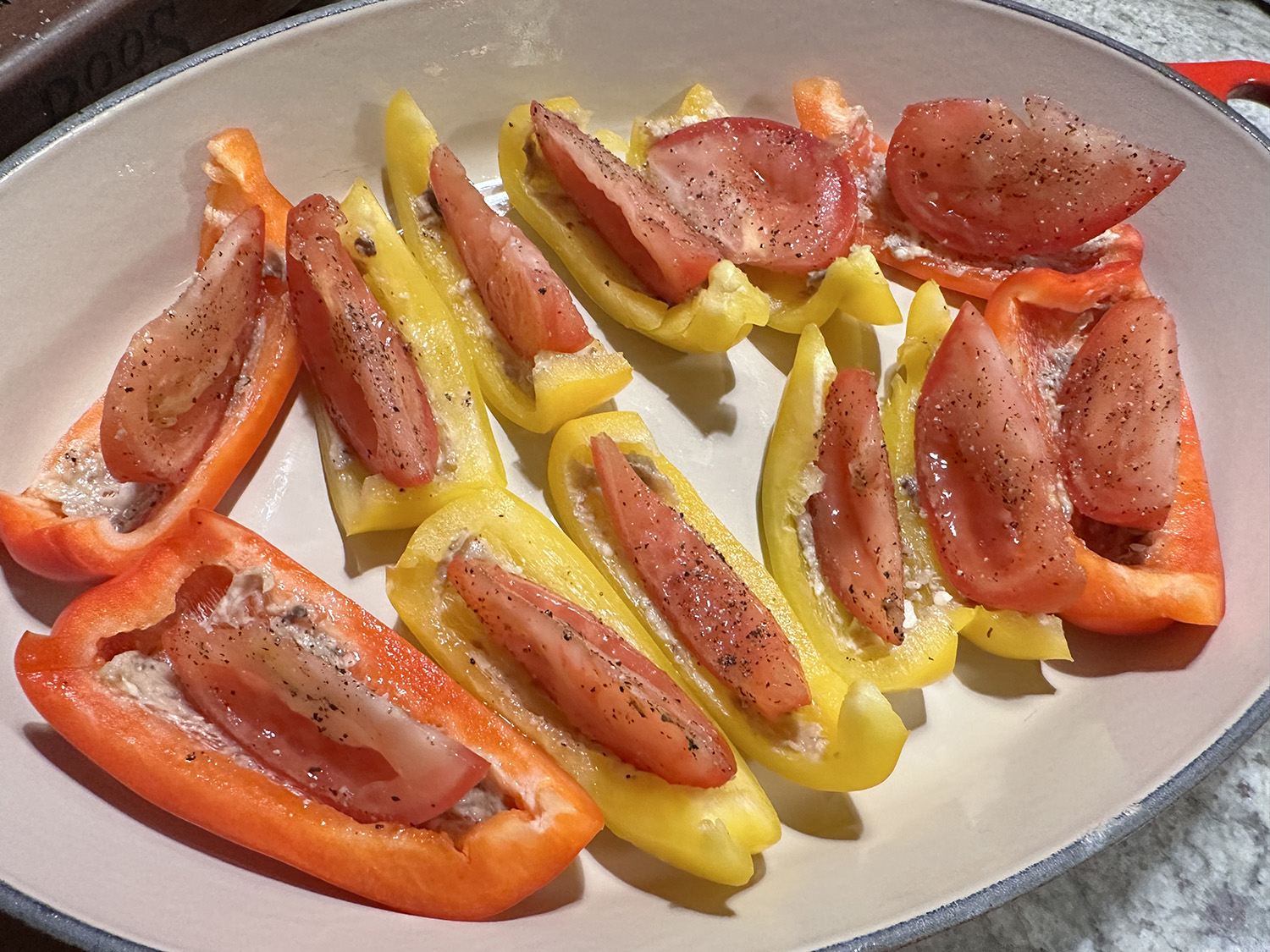
Half the peppers lengthwise and remove the core, seeds, and soft membrane-like ribs. Cut each half lengthwise into 1 1⁄2″ wide strips. Arrange the strips skin side down on the baking dish. Core the tomato and cut it into the same number of wedges as you have pepper strips. Using a sharp paring knife, carve the juicy seed pockets away from each tomato slice and discard. Season tomato strips on all sides with salt and pepper.
Dived the seasoned butter among the pepper boats, spreading a small amount on each one. Top with a piece of tomato. Drizzle with olive oil.
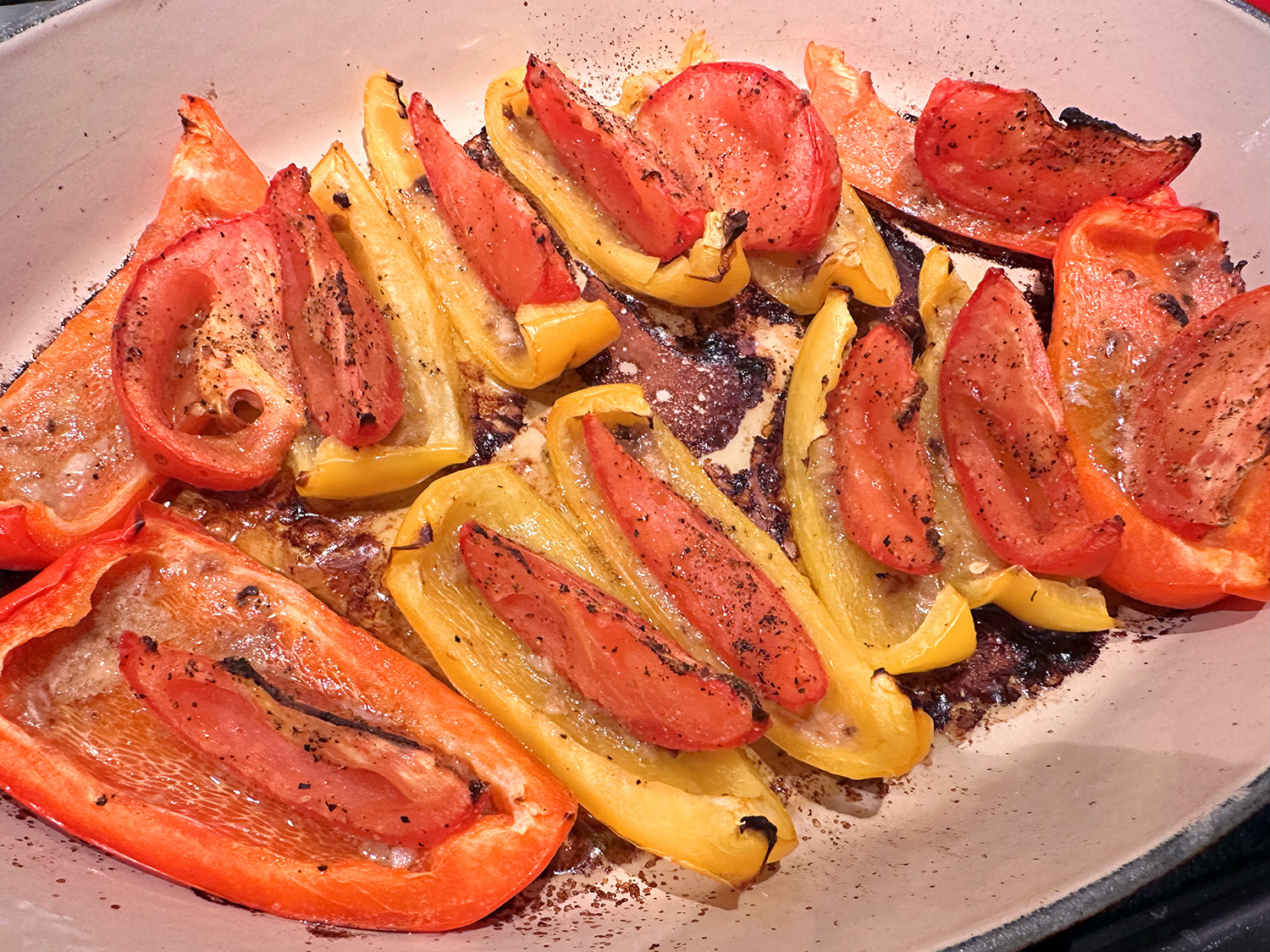
Roast until the peppers and tomato pieces are tipped with brown and the pepper is just barely tender, 30 to 40 minutes.
Sprinkle the peppers and tomato with parsley and serve warm or at room temperature, with the juices pored over the top.
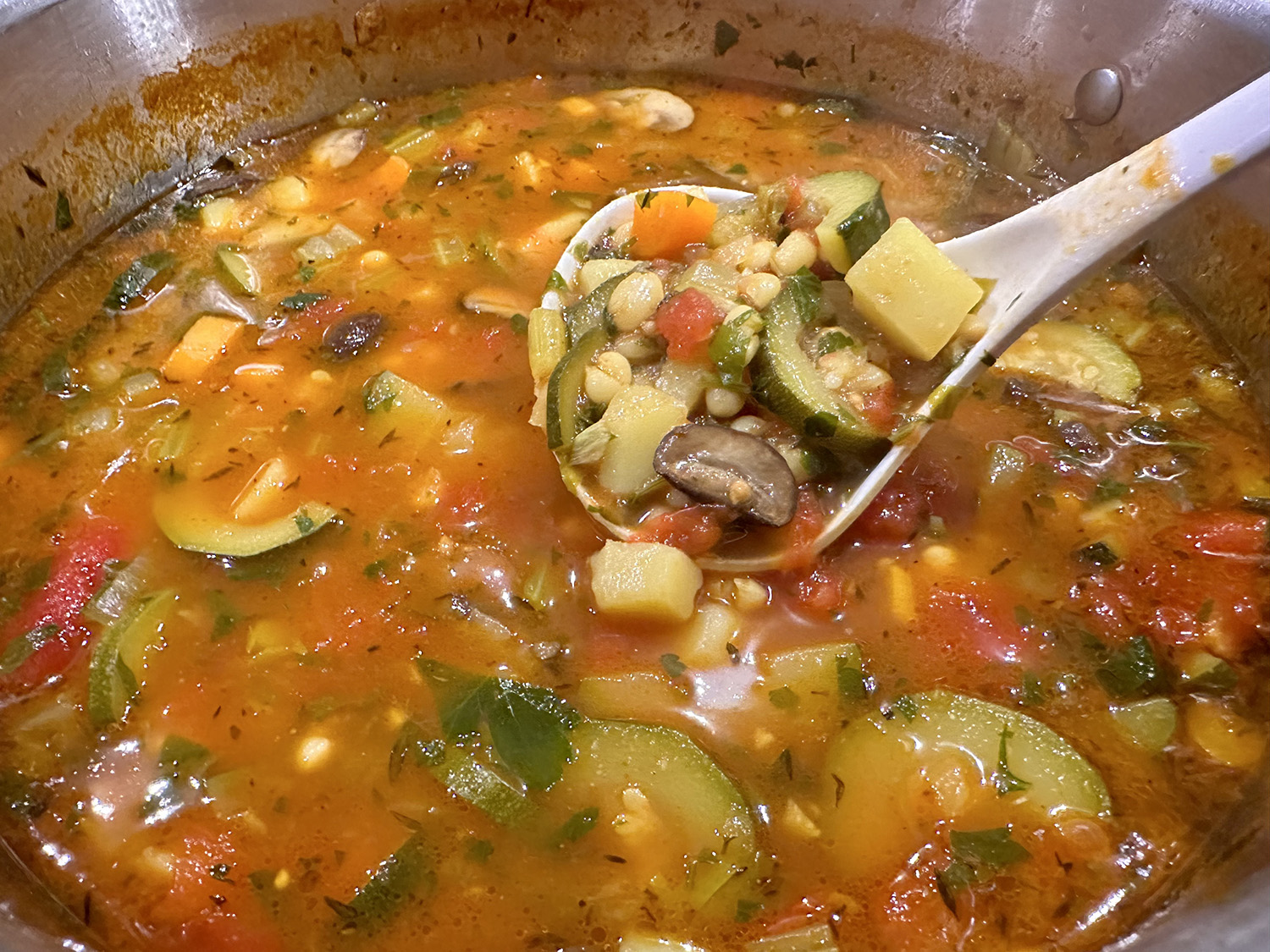
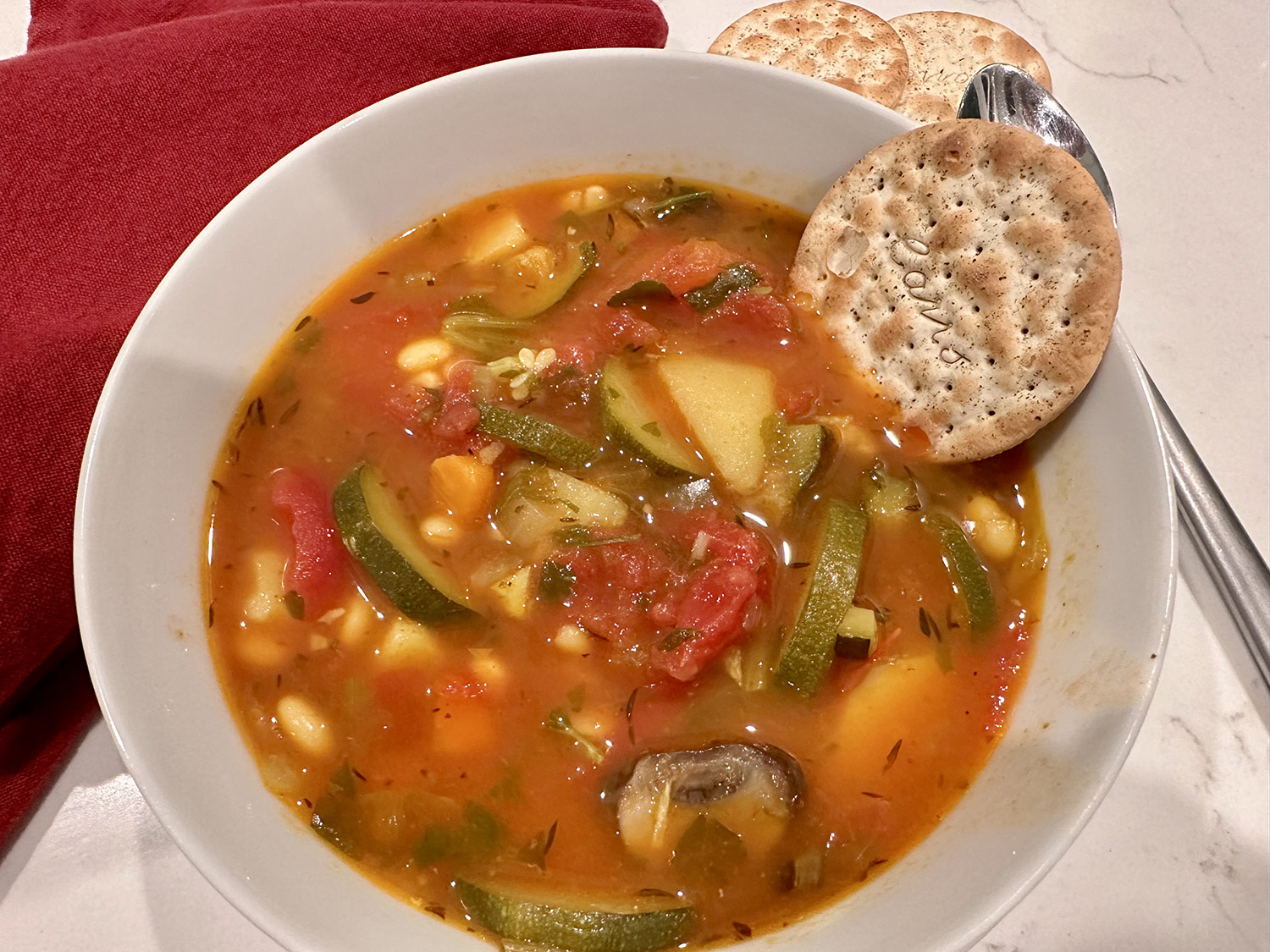
This easy homemade vegetable soup is a textbook Mediterranean diet recipe and a delicious way to amp up your veggie intake. It’s loaded with zucchini, carrots, mushrooms, chickpeas and fresh herbs. It’s cozy, comforting, vegan and gluten-free, but trust me, meat eaters will love this vegetable soup as much as veggie lovers do. Take it from us!
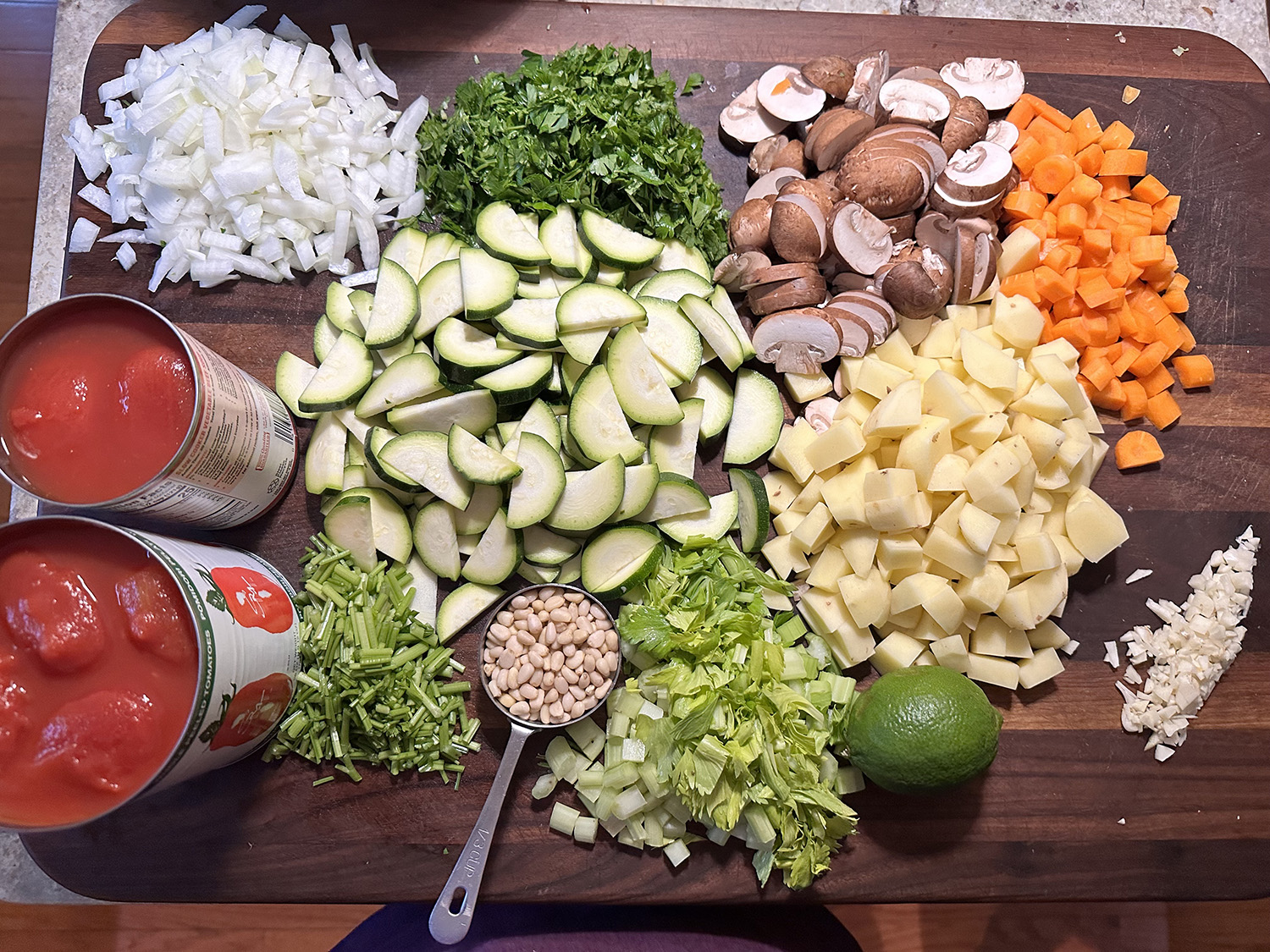
This soup recipe is an amped up version of healthy vegetable soup with a host of nourishing ingredients like garlic, onions, whole tomatoes, zucchini, mushrooms, carrots, potatoes and chickpeas. Fresh herbs, lime juice, and a good dash of warm spices (turmeric, coriander, and paprika) give this soup a Mediterranean twist.
This soup recipe is similar to Italian minestrone soup, minus the pasta. Remember that virtually all vegetables will work in an everyday vegetable soup recipe like this one. Homemade vegetable soup is a great way to use up what veggies you have on hand, so feel free to substitute.
1 bunch flat leaf parsley, washed, dried, stems and leaves separated, then each chopped
1 medium-size yellow or red onion, chopped
2 garlic cloves, chopped
2 celery ribs, chopped
2 carrots, peeled, chopped
2 medium zucchini, tops removed, sliced into rounds or half-moons or diced
2 golden potatoes, peeled, small diced
1 tsp. ground coriander
½ tsp. turmeric powder
½ tsp. sweet paprika
Salt and pepper
1 15-oz can chickpeas, rinsed and drained
1 28-oz. + 1 14-oz. can whole peeled tomatoes, crushed by hand in large bowl
2 bay leaves
½ tsp. dry thyme
6 cups vegetable broth (or chicken broth)
Zest of 1 lime
Juice of 1 lime
⅓ cup toasted pine nuts, optional
Directions
Sauté Mushrooms: In a large pot heat 1 tablespoon olive oil over medium-high until shimmering but not smoking. Add the mushrooms and cook for 3-5 minutes, stirring regularly. Remove from the pot and set aside for now.
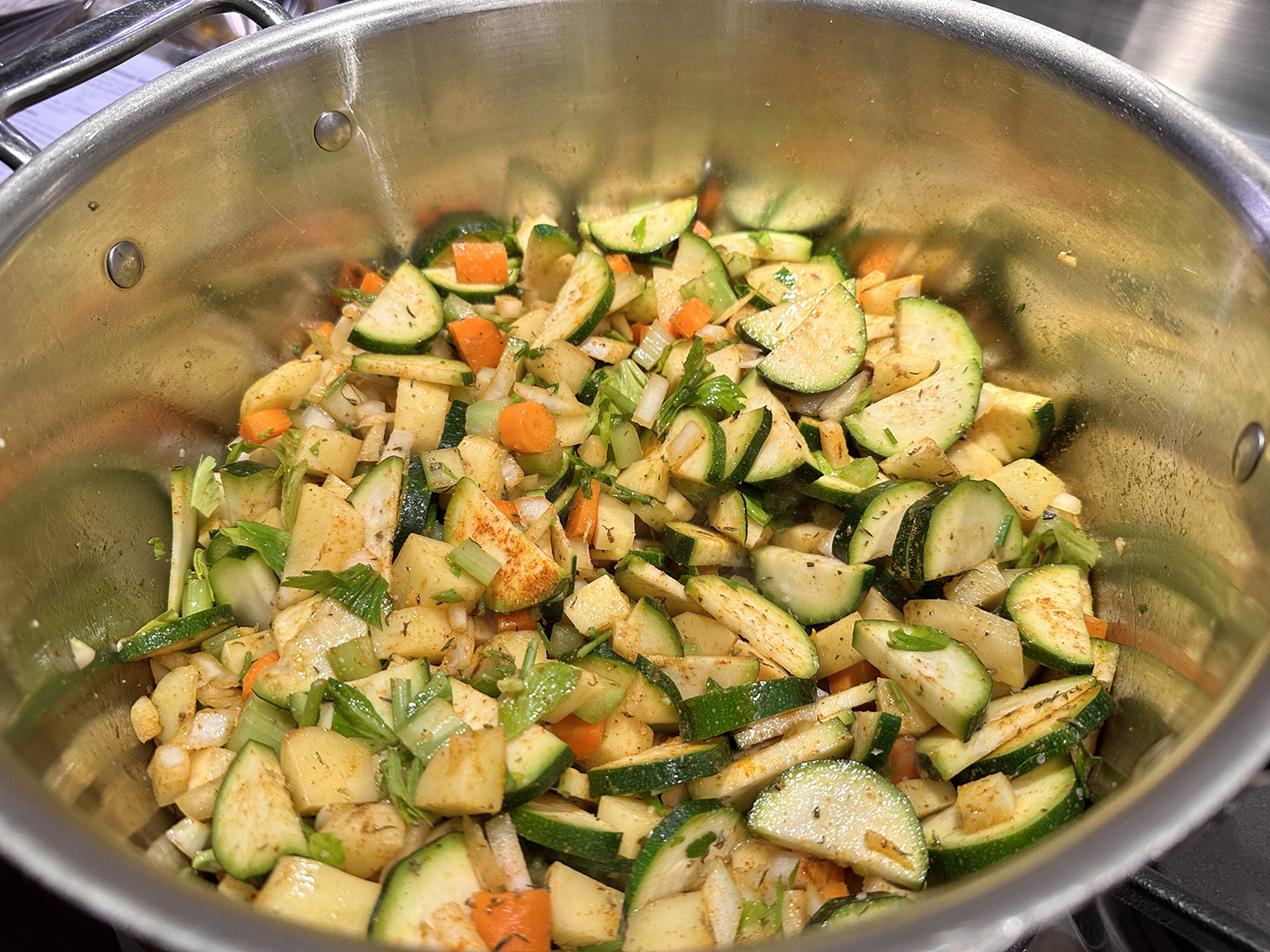
Add fresh veggies and spices: Add more olive oil, if needed and heat. Add the chopped parsley stems, (save the leaves for later), onions, garlic, celery, carrots, zucchini and small diced potatoes. Stir in the spices, and season with salt and pepper. Cook for about 7 minutes, stirring regularly, until the vegetables have softened a bit.
Add the chickpeas and tomatoes: Now add the chickpeas, tomatoes, bay leaves, thyme, and broth. Bring to a boil for 5 minutes, then turn the heat down to medium-low. Cover partially and cook for 15 more minutes.
Return mushrooms to the pot: Uncover and add the sauteed mushrooms. Cook for just a few more minutes until mushrooms are warmed through.
Add finishing touches: Finally, stir in the parsley leaves, lime zest, and lime juice.
The finish: Remove from the heat. Remove bay leaves. Transfer the vegetable soup to serving bowls and top with toasted pine nuts, if you like. Add a side of your favorite crusty bread or pita along with extra lime wedges and crushed red pepper.
Soup isn’t typically a dish that comes to mind during hot weather spells. But I couldn’t help myself when I saw this fiber-rich recipe from America’s Test Kitchen (ATK). So on a rare cool, cloudy day in mid-summer, I spent some afternoon time preparing this Butternut Squash and White Bean Soup with Sage Pesto, with the intentions of having it for dinner on the following night.
Instead of the usual creamy, rich, puréed style of butternut squash soup, this heartier version can stand on its own as a meal. It features chunks of squash paired with creamy cannellini beans to give the soup some heft.
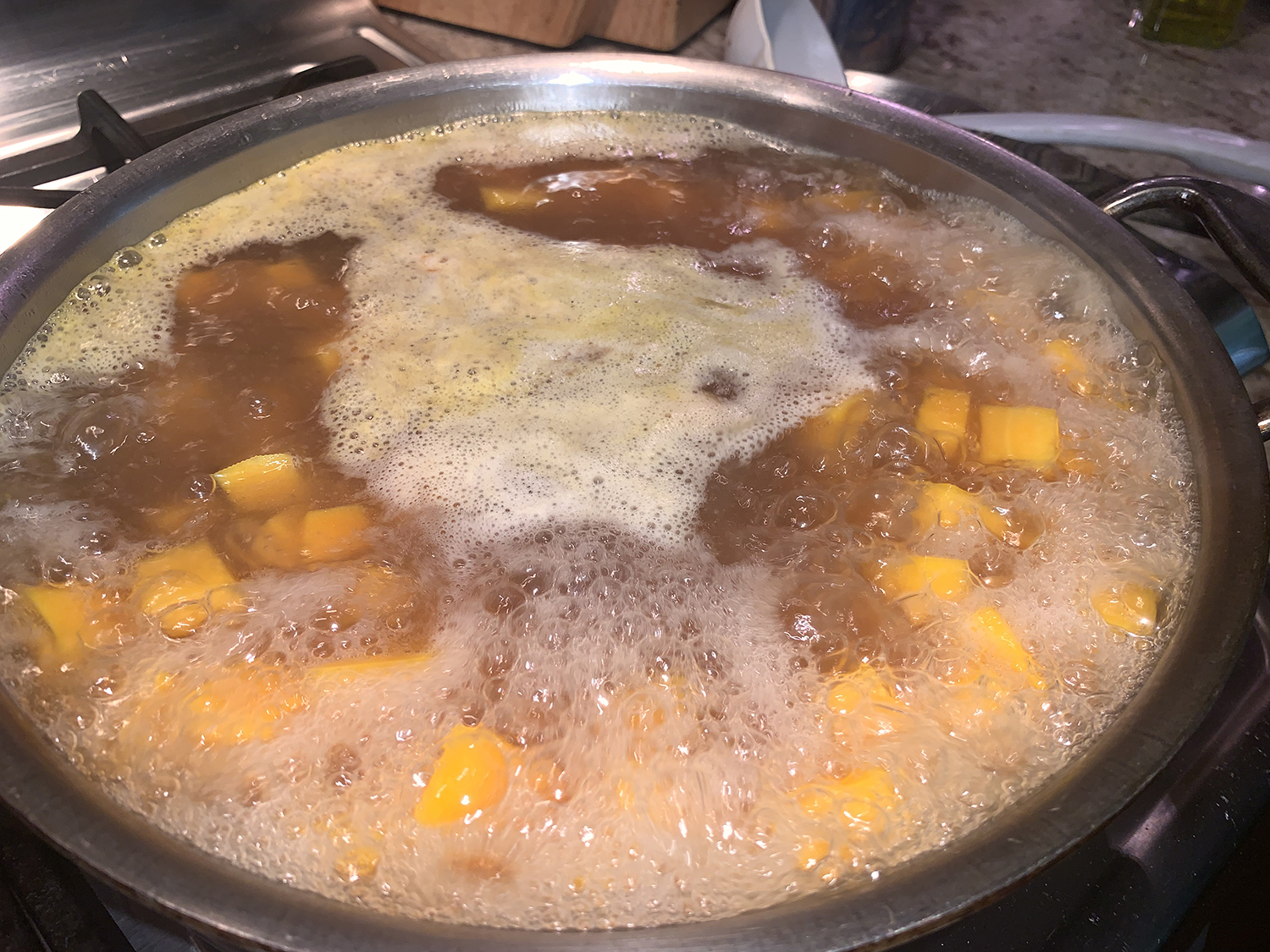
Because the bulb portion of the squash is difficult to cut into cubes that will cook evenly, and because it naturally cooks faster than the dense neck portion, ATK suggests cutting the bulb into wedges, cook them in the broth until soft, and then mash them to make a “squash stock”—giving the soup base body and flavor.
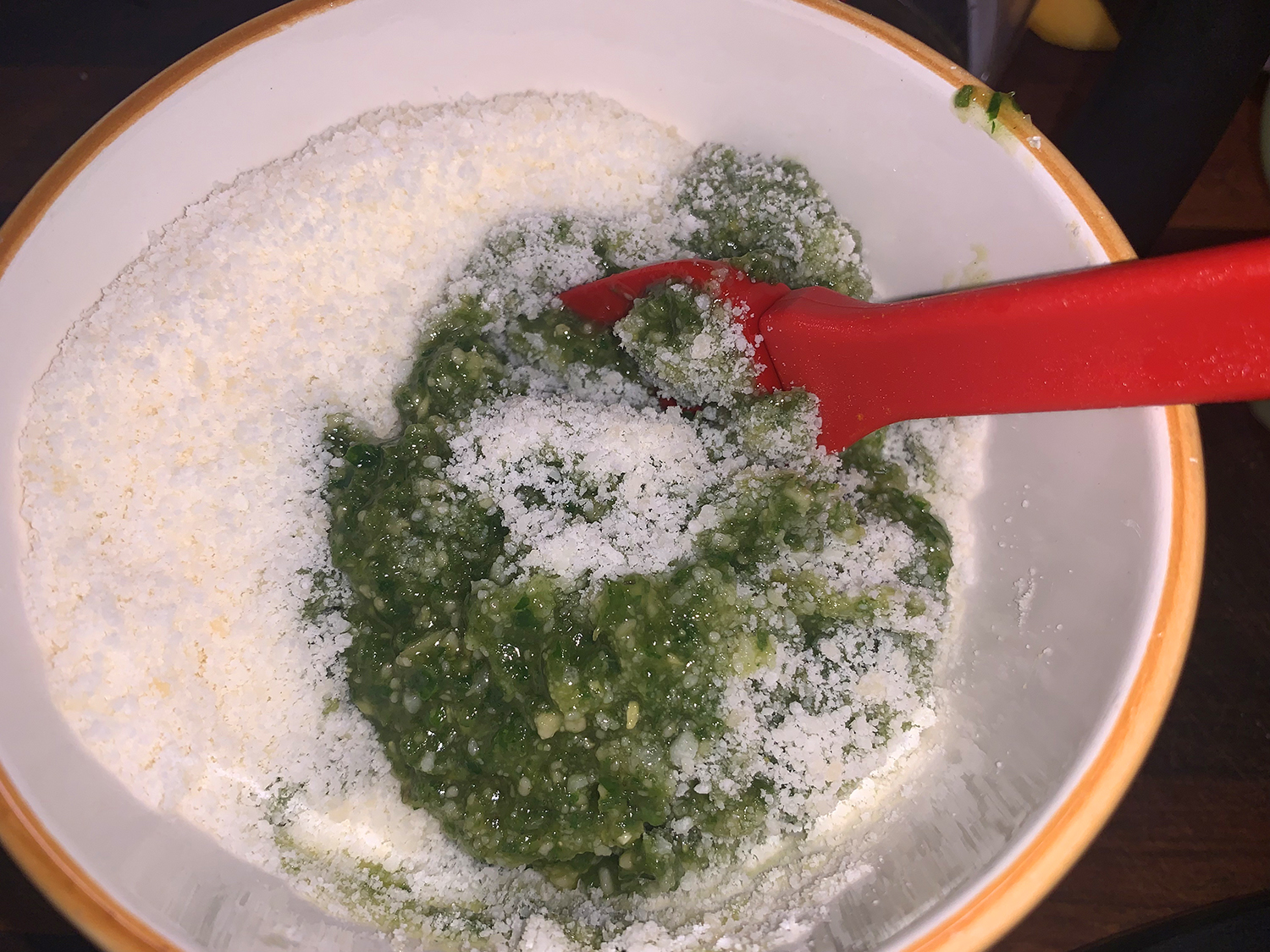
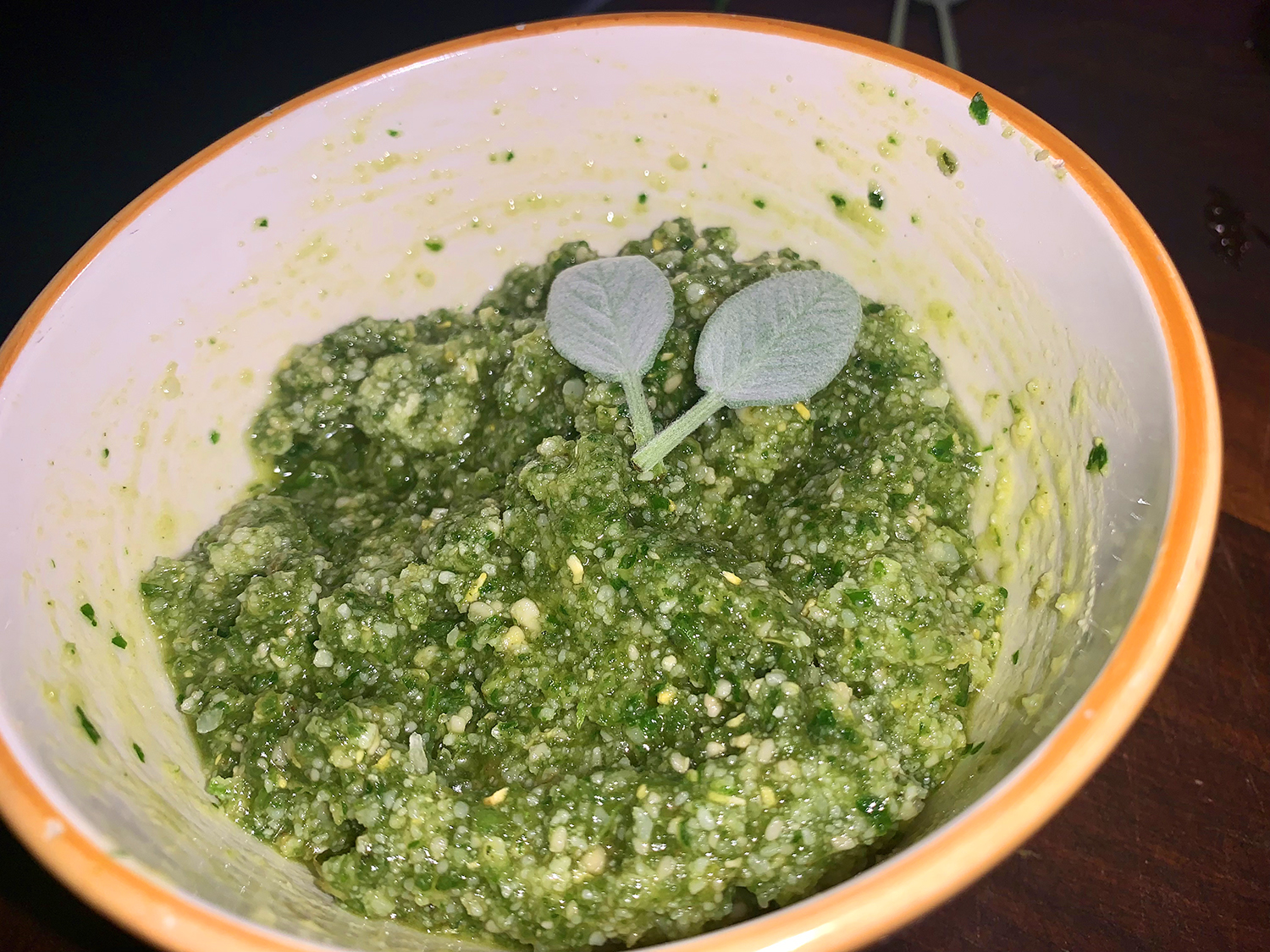
A swirl of freshly-made sage pesto made in a mini food processor, lends the right bright, fresh finish. The pesto is so good, you may be tempted to eat it directly from the bowl. If you have any leftover, use it as a condiment on any number of other edibles; or stir into pasta.
Since The Hubs detests walnuts, I opted to use pine nuts—a common ingredient in pesto. If you are intent on keeping it vegetarian, use vegetable broth. Keep in mind, whatever stock you use, a homemade version is always a better bet because of the depth of flavor it offers.
Purchasing precut chunks of squash allows for ease of preparation although you may have to dice some of those chunks into 1⁄2-inch pieces for Step 5. To bulk up the meal further, serve with a slice of toasted crusty rosemary olive oil loaf.
Butternut Squash and White Bean Soup with Sage Pesto
1 oz. (1/2 cup) Parmesan cheese, grated, plus extra for serving
Salt and pepper
Soup
1 2- to 2 1/2 lb. butternut squash
4 cups chicken broth, preferably homemade; or vegetable stock
3 cups water
4 Tbsp. unsalted butter
1 Tbsp. soy sauce
1 Tbsp. extra-virgin olive oil
1 lb. leeks, white and light green parts only, halved lengthwise, sliced thin, and washed thoroughly
1 Tbsp. tomato paste
2 garlic cloves, minced
Salt and pepper
3 15-oz. cans cannellini beans
1 tsp. white wine vinegar
Grated Parm for serving
Directions
FOR THE PESTO: Pulse pine nuts and garlic in food processor until coarsely chopped, about 5 pulses. Add parsley and sage; with processor running, slowly add oil and process until smooth, about 1 minute. Transfer to bowl, stir in Parmesan, and season with salt and pepper to taste. Set aside.
FOR THE SOUP: Using sharp vegetable peeler or chef’s knife, remove skin and fibrous threads just below skin from squash (peel until squash is completely orange with no white flesh remaining, roughly 1/8 inch deep). Cut round bulb section off squash and cut in half lengthwise. Scoop out and discard seeds; cut each half into 4 wedges.
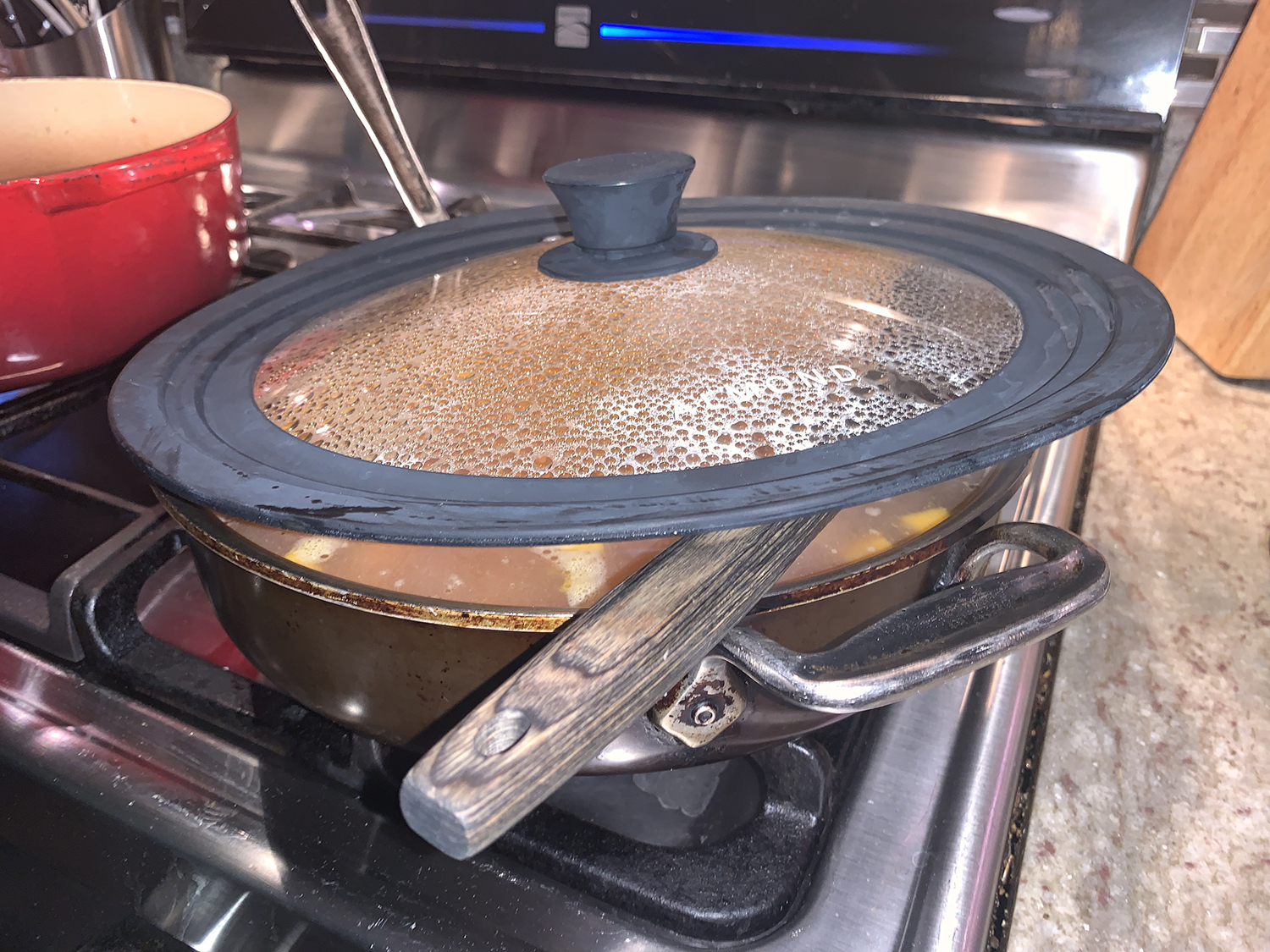
Bring squash wedges, broth, water, and soy sauce to boil in medium saucepan over high heat. Reduce heat to medium, partially cover, and simmer vigorously until squash is very tender and starting to fall apart, about 20 minutes.
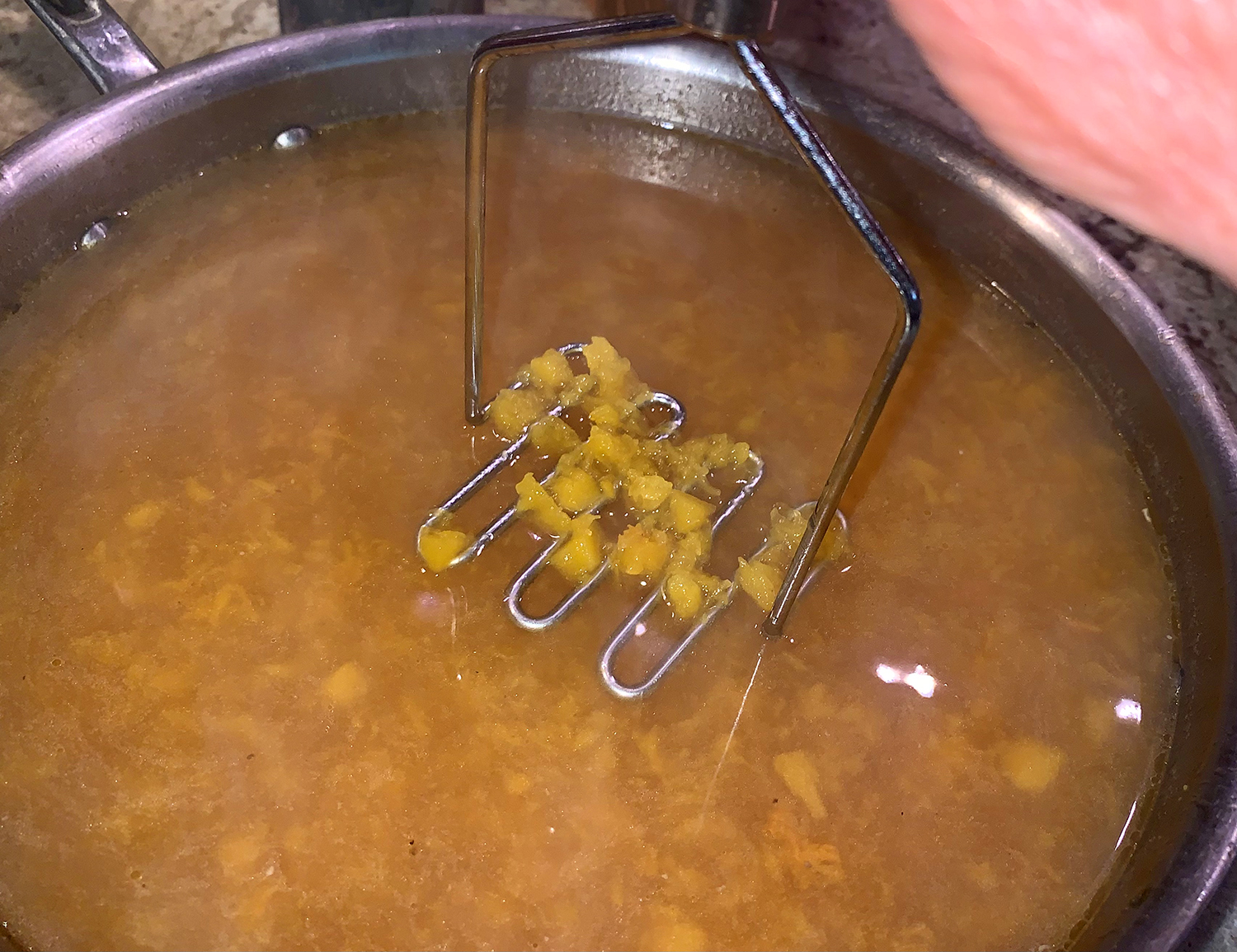
Using potato masher, mash squash, still in broth, until completely broken down. Cover to keep warm; set aside. (For a creamier base, you may want to use an immersion blender.)
While broth cooks, cut neck of squash into 1/2-inch pieces. Heat oil in large Dutch oven over medium heat until shimmering. Add leeks and tomato paste and cook, stirring occasionally, until leeks have softened and tomato paste has darkened, about 5 minutes. Add garlic and cook until fragrant, about 30 seconds.
Add squash pieces, 3/4 teaspoon salt, and 1/4 teaspoon pepper and cook, stirring occasionally, for 5 minutes. Add squash broth and bring to simmer. Partially cover and cook for 10 minutes.
Add beans and their liquid, partially cover, and cook, stirring occasionally, until squash is just tender, 15 to 20 minutes.
Stir in vinegar and season with salt and pepper to taste. Serve, passing pesto and extra Parmesan separately.
This cold-weather salad from chef Carla Hall hits all the notes: sweet, savory, spicy, and salty—with a bit of crunch from the squash seeds. Here, Hall uses her Country Ham Potlikker as an umami-rich base for a spicy vinaigrette that gets its silky texture from blended cannellini beans.
But the thing is, most people are not going to have this potlikker broth on hand. We had some leftover from our Smothered Pork Chops dinner in which you had to pre-make the Country Ham Potlikker. Our suggestion is to use a mix of oil and vinegar instead, you won’t have that smoky ham flavor, but you will be keeping the meal vegetarian.
*We decided to roast our fennel slices since I didn’t shave them thin enough. Basically, place the fennel on a rimmed baking sheet, drizzle olive oil all over, sprinkle with salt and pepper, rub it all together with your hands, then roast for about 30-35 minutes in a 400° oven. This can be done ahead of time, simply cover the roasted fennel with foil until ready to mix in with the other ingredients.
Bean and Vegetable Salad with Potlikker Vinaigrette
2 tsp. Diamond Crystal, or 1 1/4 tsp. Morton kosher salt, plus more
Freshly ground black pepper
2 medium delicata squash, halved, seeds removed and reserved, sliced crosswise 1/2″ thick
3 extra-virgin olive oil, divided
1/4 tsp. cayenne pepper
1 large sweet-tart apple, (such as Honeycrisp), cored, quartered, sliced 1/4″ thick
1 large fennel bulb, quartered, shaved in very thin slices (*See note above for roasting option)
1 15-oz. can kidney beans, rinsed
1/4 cup chopped parsley
Directions
Blend vinegar, potlikker (or substitute), mustard, and ¼ cup cannellini beans in a blender until smooth. With the motor running, stream in vegetable oil; blend until emulsified. Season vinaigrette with salt and pepper.
Place racks in upper and lower thirds of oven; preheat to 400°. Divide sliced squash between 2 rimmed baking sheets; drizzle 2 Tbsp. olive oil over. Sprinkle with 2 tsp. Diamond Crystal or 1¼ tsp. Morton kosher salt; season with pepper. Roast 15 minutes.
Meanwhile, rinse squash seeds and pat dry. Toss seeds with cayenne and remaining 1 Tbsp. olive oil in a small bowl; season with salt.
Sprinkle seeds over squash. Continue to roast until squash is golden brown and tender, 13–15 minutes more.
Combine squash and seeds, apple, fennel, kidney beans, and remaining cannellini beans in a large bowl. Toss with ½ cup vinaigrette. Taste and add more vinaigrette if needed. Add parsley, season with salt, and toss again.
Transfer salad to a platter; serve any remaining vinaigrette alongside.