Tag Archives: stir-fry

Home-Style Tofu Stir-Fry

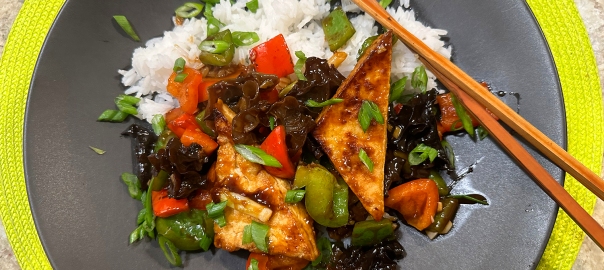
This home-style tofu recipe from “The Woks of Life” is as delicious as it is comforting. With firm tofu slices, some aromatics, crisp veggies and a light sauce, it’s perfect over rice and so easy to make. Just keep in mind, you’ll need to rehydrate the dried mushrooms for two hours prior to cooking.

On some Chinese menus you may notice the word jiā cháng in front of several dishes. It translates to “home-style or family-style.” So the dish can vary greatly depending on what the chef’s interpretation of “home” tastes like.

Now we made a few changes, (all included in recipe below) starting with incorporating a whole red, and a whole green bell pepper, rather than half of each. We also increased the sauce by 50%; cut the tofu into smaller triangles than originally noted; and fried the tofu pieces in two batches, in the same wok instead of an additional cast-iron skillet.

Home-Style Tofu Stir-Fry

  • Servings: 4
  • Difficulty: easy
  • Print

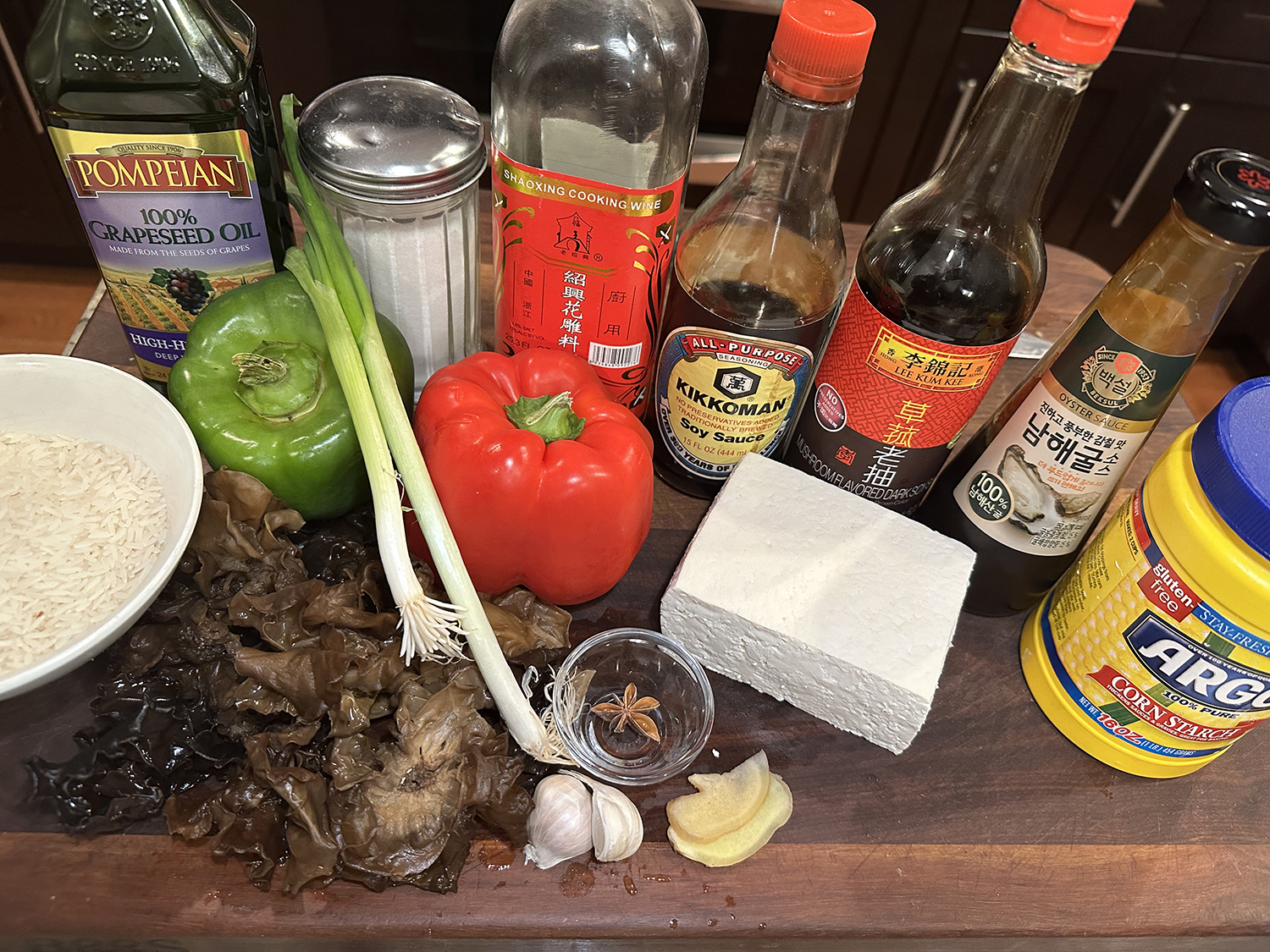
Ingredients

For the Mushrooms and Tofu:

  • 2/3 cup dried wood ear mushrooms
  • 1 lb. firm tofu

For the Sauce:

  • 1 1/2 tsp. dark soy sauce
  • 1 1/2 Tbsp. light soy sauce
  • 1 1/2 Tbsp. oyster sauce, or vegetarian oyster sauce
  • 3/4 tsp. sugar
  • 3/4 tsp. table salt
  • 1/4 cup Shaoxing wine
  • 1/2 cup water
  • 1 1/2 Tbsp. cornstarch

For the Rest of the Dish:

  • 4 Tbsp. neutral oil, divided
  • 2 cloves garlic, minced
  • 2 slices fresh ginger, each 1/8-inch thick
  • 1 star anise
  • 1 red chili pepper, deseeded and thinly sliced, optional
  • 1 red bell pepper, seeded and cut into 1-inch pieces
  • 1 green pepper, seeded and cut into 1-inch pieces, or 2 long hot green peppers or Anaheim peppers
  • 3 scallions, white parts separated from the green parts and cut on the diagonal into 2-inch lengths
  • 1 Tbsp. water
  • 1 Tbsp. Shaoxing wine

Directions

  1. Prepare the Mushrooms and Tofu: In a medium bowl, cover the wood ear mushrooms with enough water to cover by 2 inches and soak for at least 2 hours or until rehydrated. Rinse them to remove any grit or dirt. Drain and cut the mushrooms into bite-size pieces. Drain the tofu and pat it dry. Cut it crosswise into 1/2-thick rectangles, then cut each rectangle into 4 triangles.
  2. Make the Sauce: In a small bowl, combine the water, wine, cornstarch, oyster sauce, light soy sauce, dark soy sauce, sugar, and salt. Mix well and set aside.
  3. Pan-Fry the Tofu: Heat a wok over medium-high heat until lightly smoking. Add 3 tablespoons of the neutral oil and swirl it around the wok to coat the surface. Carefully add half of the tofu pieces in a single layer and fry for 4 minutes on the first side until golden brown. Use a thin spatula to carefully flip the tofu pieces and fry on the other side for another 4 minutes. Transfer the tofu to a plate. Repeat.
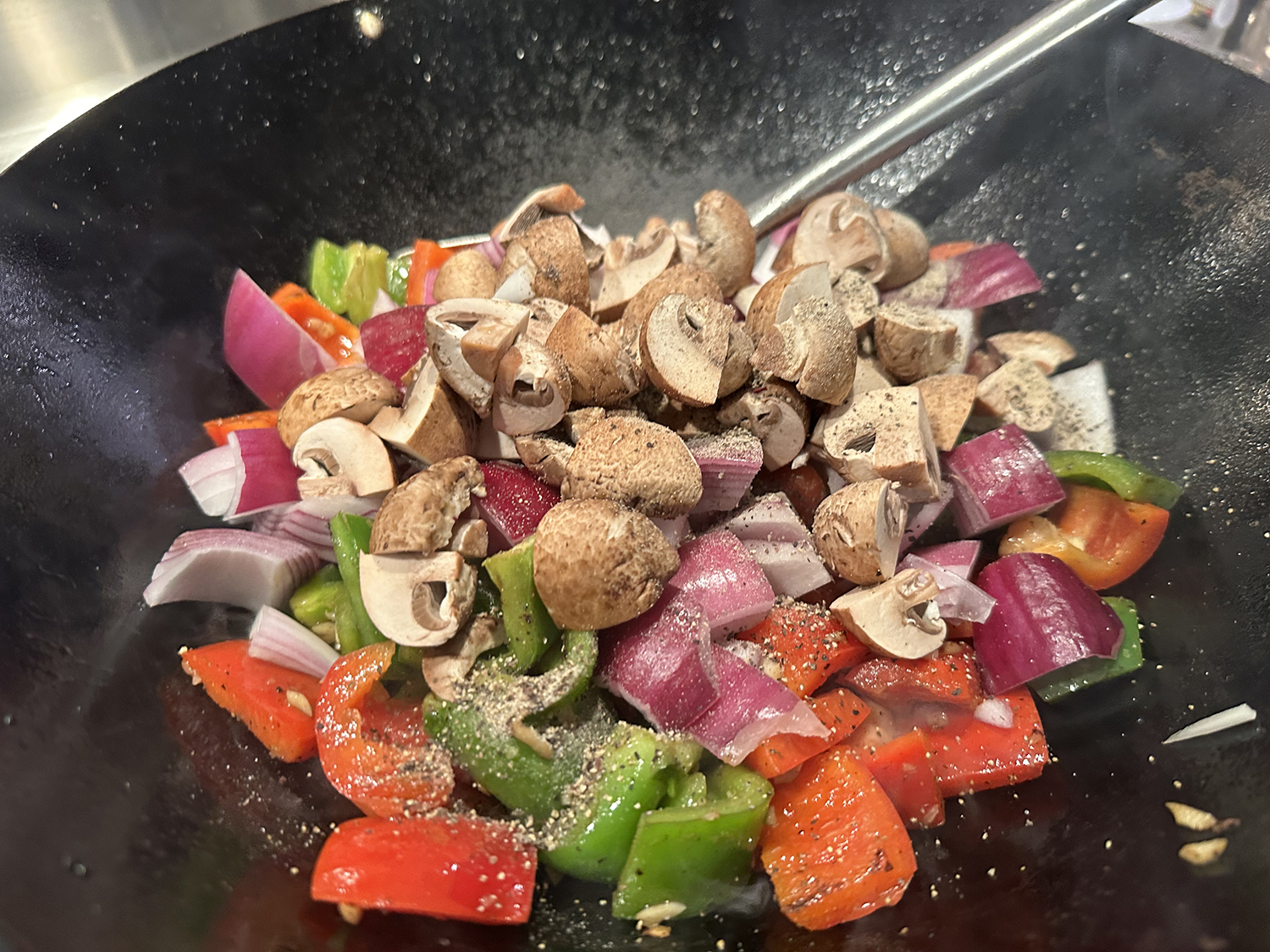
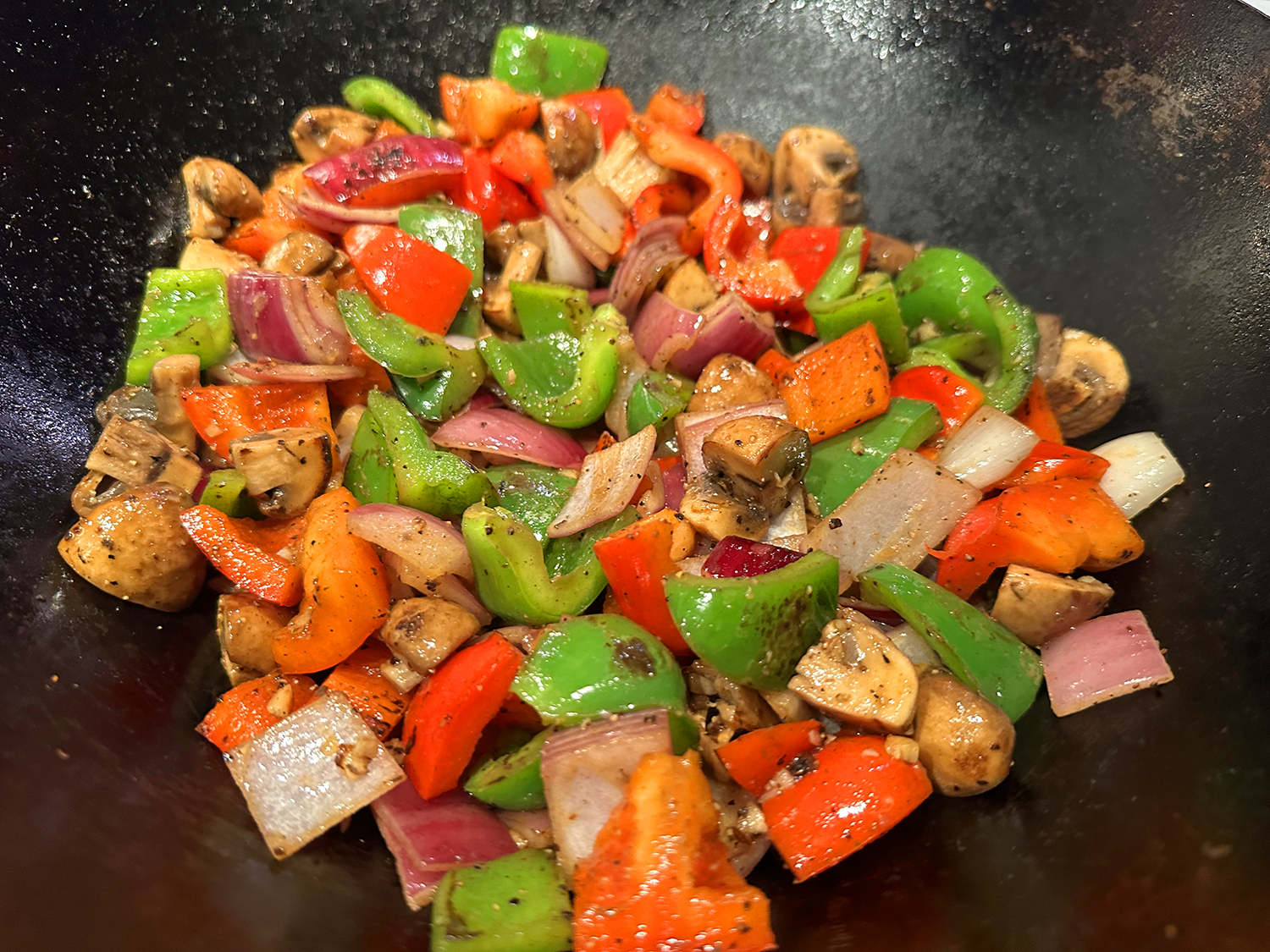
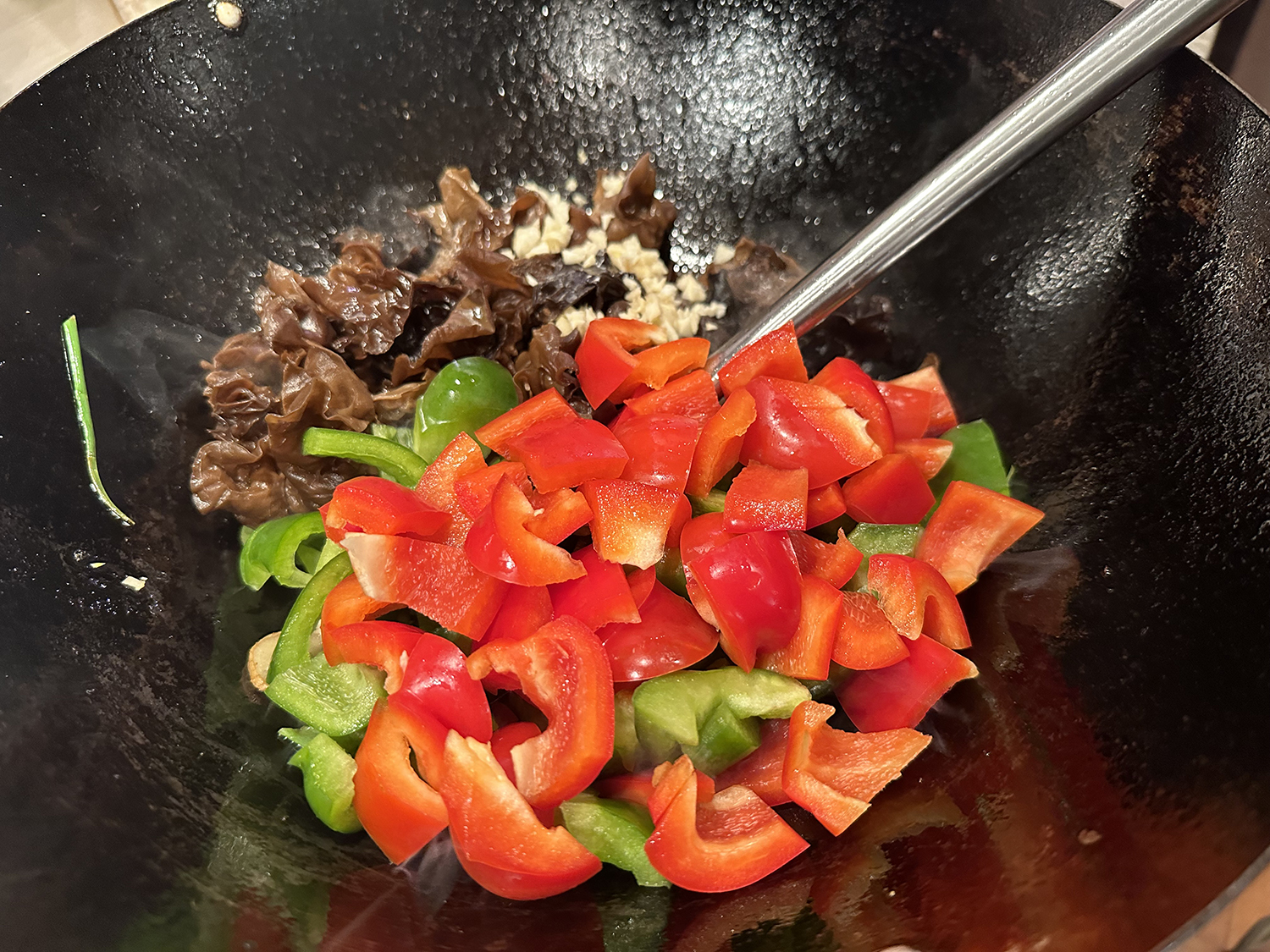
  4. Assemble the Dish: Over medium heat, add the remaining tablespoon of oil along with the ginger slices and star anise. Toss quickly for 20 seconds, then add the white part of the scallions and stir fry for another 30 seconds. Add the wood ears, garlic, peppers, and 1 tablespoon water. Stir fry for 2-3 minutes until the peppers are tender but still have a fresh crunch. Increase the heat to medium-high and add the Shaoxing wine around the perimeter of the wok.
  5. Stir the sauce to make sure the cornstarch is well incorporated into the liquid. Add the sauce to the wok and bring it to a simmer. Let the sauce thicken until coats the back of a spoon. (If it’s too thick, add a splash of water.) Stir in the tofu and add the green parts of the scallions. Mix until the tofu and vegetables are evenly coated in sauce and the scallions are wilted. Serve.

http://www.lynnandruss.com

Adapted from a recipe by Judy Leung for Woks of Life
Sticky Oyster Sauce Chicken

The chicken is infused with intense umami flavor thanks to oyster sauce and a classic trio of Chinese aromatics: scallion (also known as green onions), ginger, and garlic to make for a luxurious, yet simple chicken dish complete with sticky gravy.

While this recipe calls for 4 whole chicken leg quarters—and I am not a fan—we used 8 bone-in chicken thighs. You may notice that the original recipe does not use cornstarch to thicken the sauce here. But if you simmer it for 5 to 10 minutes and it is still thin, add the cornstarch slurry (we needed to).

The skin-on chicken is key to getting that nice texture to the sauce. Turn the heat up to reduce the sauce if you like yours on the thicker side, as we do. 
Sticky Oyster Sauce Chicken

  • Servings: 4
  • Difficulty: easy
  • Print

Ingredients

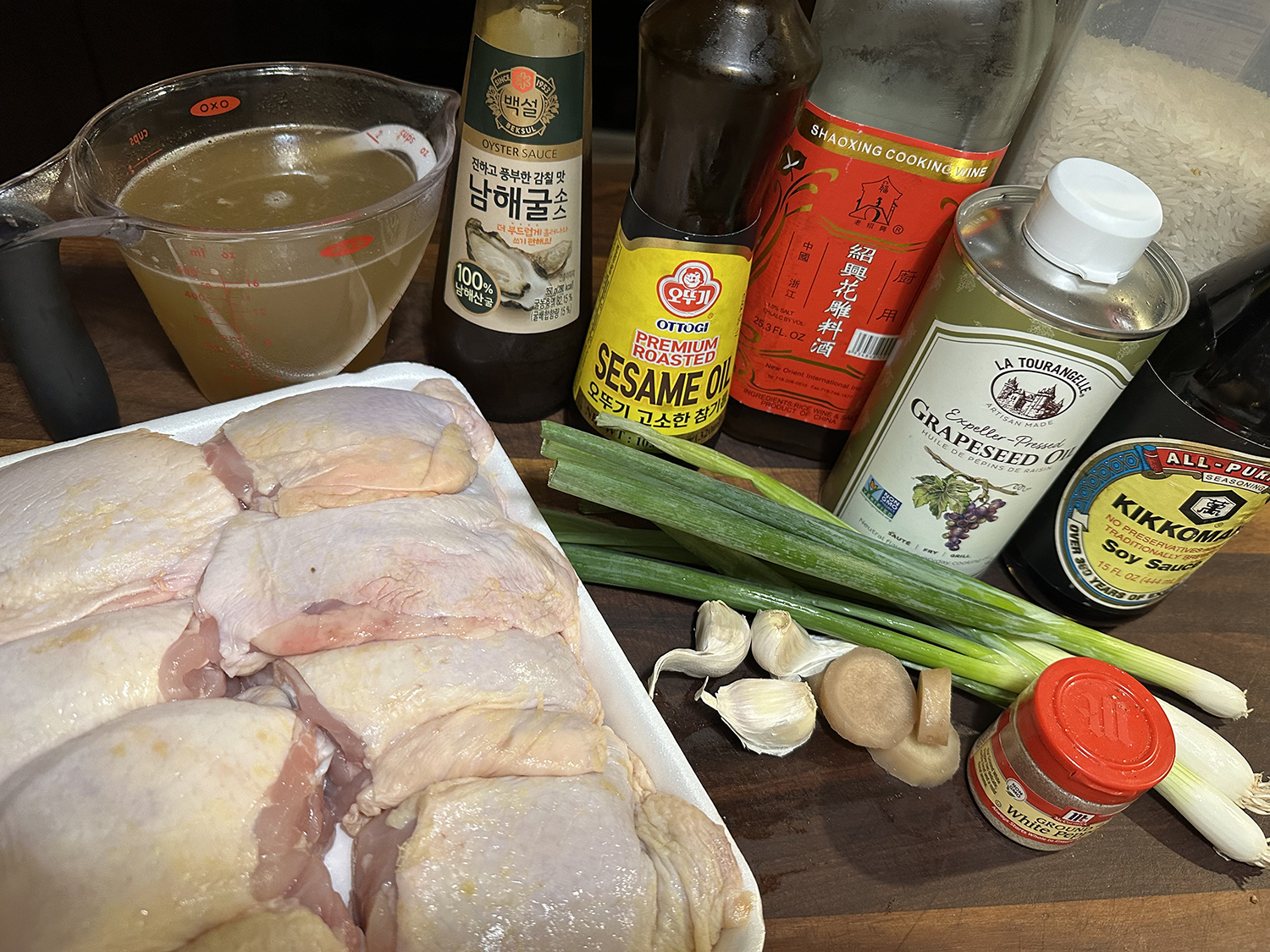
  • 4 chicken leg quarters, or 8 chicken thighs
  • 2 Tbsp. neutral oil, such as vegetable, canola, or avocado oil
  • 4 slices fresh ginger, ¼-inch thick and smashed with the side of your knife
  • 3 cloves garlic, thinly sliced
  • 3 scallions, cut into 2-inch pieces, white and green portions separated
  • ¼ cup Shaoxing wine
  • 2 cups chicken stock, preferably homemade
  • 2 Tbsp. soy sauce
  • 3 Tbsp. oyster sauce
  • ¼ tsp. ground white pepper
  • ½ tsp. sesame oil

Directions

  1. Rinse the chicken and trim off any excess fat. This recipe calls for whole chicken leg quarters, but you can cut them into drumsticks and thighs for easier handling in the wok if desired.
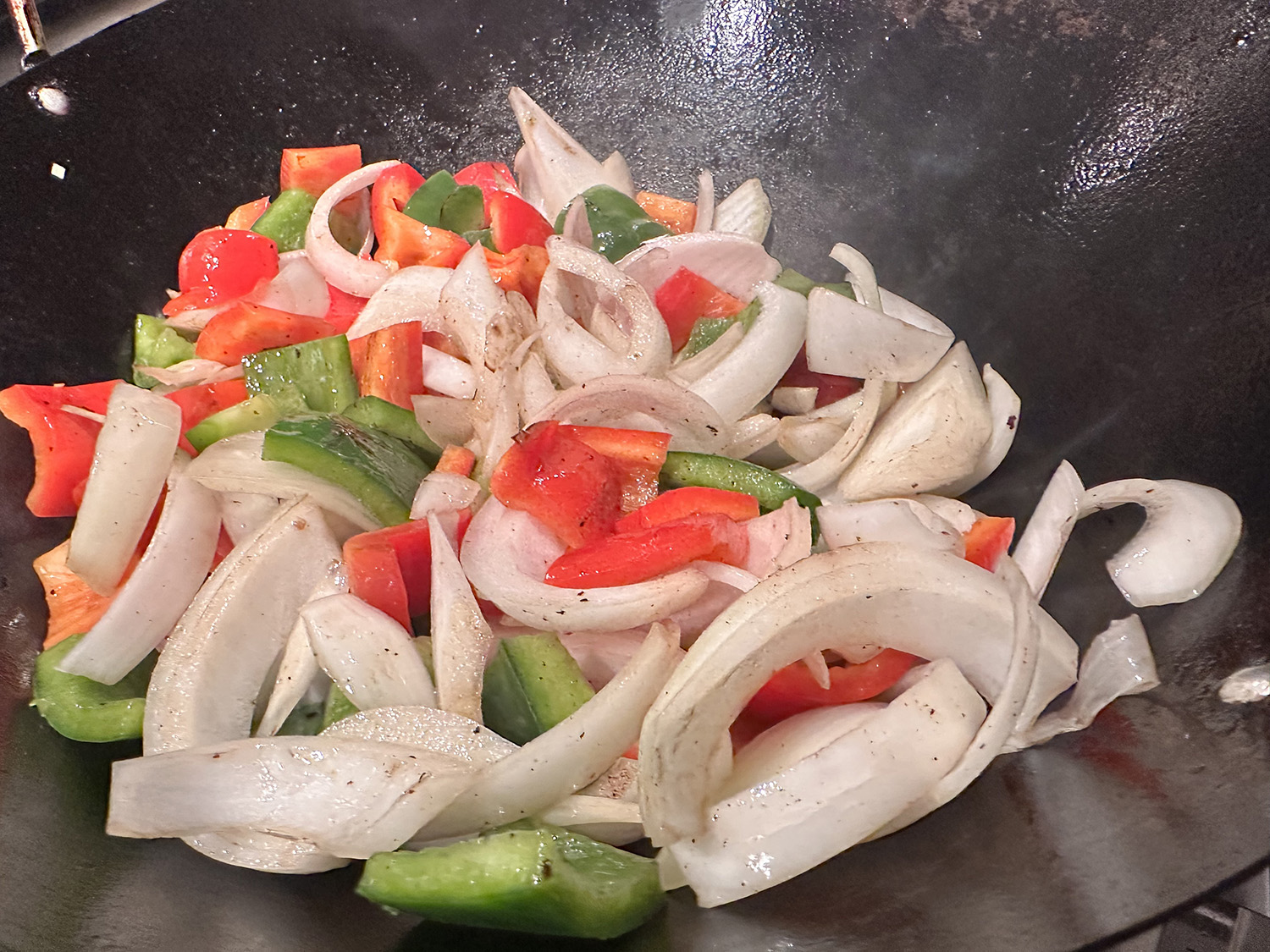
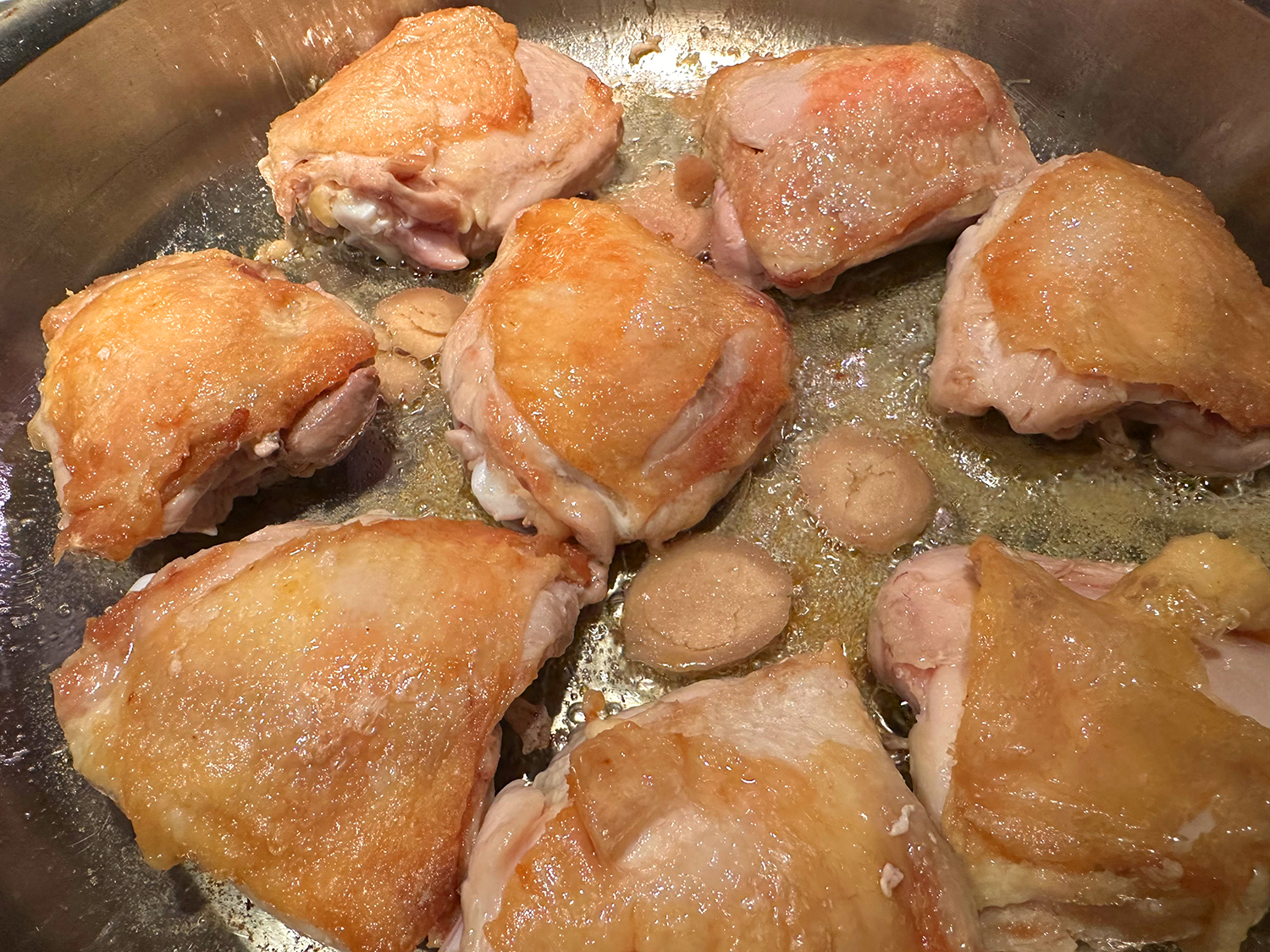
  2. Heat the neutral oil in your wok or a large frying pan over medium high heat, spreading the oil around to coat. Place the chicken skin-side-down in the pan carefully, and sear for about 3 minutes, or until golden brown.
  3. Next, flip the chicken and add the smashed ginger slices to the bottom of the pan. Let both sides of the ginger slices cook and caramelize in the oil for 1 to 2 minutes.
  4. Next, add the garlic slices and white portions of the scallions. Let fry in the oil for a minute. Use a metal spatula to ensure the chicken is not stuck to the wok, but be gentle so as to not break up the chicken skin.
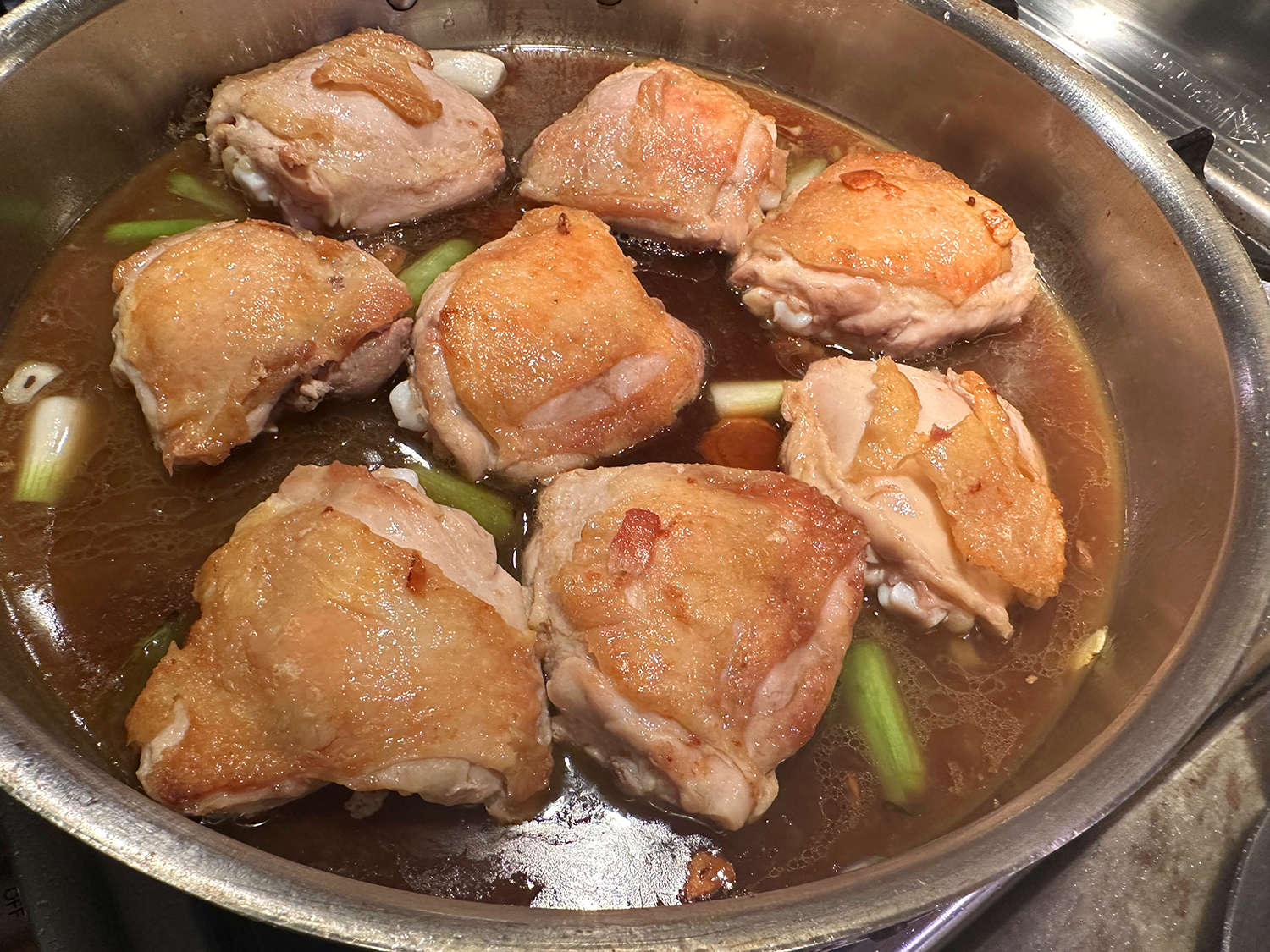
  5. Add the Shaoxing wine to deglaze the pan, and let cook for another 1 to 2 minutes. Add the chicken stock, soy sauce, oyster sauce, white pepper, and sesame oil. Stir until well combined and bring the liquid to a boil. Reduce the heat to a slow simmer. Cover and let cook for 15 minutes.
  6. Use tongs or chopsticks to turn the chicken quarters and let cook for another 15 minutes. There should be quite a bit of sauce in the pan.
  7. Next, uncover the chicken and check the temperature. Use a meat thermometer to check to make sure the internal temperature of the chicken is 165 degrees F. Alternatively, you can just poke the thickest part of the chicken leg quarter with a fork–the juice should run clear. If so, remove the chicken to a plate and cover with tinfoil.
  8. Add the green portions of the scallions to the sauce, and cook uncovered to reduce the liquid until it just begins to coat a spoon. At this point, you can be the judge of how thick or thin you want your sauce to be. Turn the heat up to reduce the sauce if you like yours on the thicker side. If necessary make a cornstarch slurry and add to the sauce to thicken. (It was necessary for us.)
  9. Once the sauce is thickened, add the chicken back to the skillet and cover for about 3-5 minutes.
  10. Serve the chicken, all of that luscious gravy, and the cooked down garlic, ginger, and scallions over a bed of white rice with your favorite veggies. Stir-fried bok choy or garlicky broccoli are great choices.

http://www.lynnandruss.com

Recipe from Bill for the WoksofLife.com

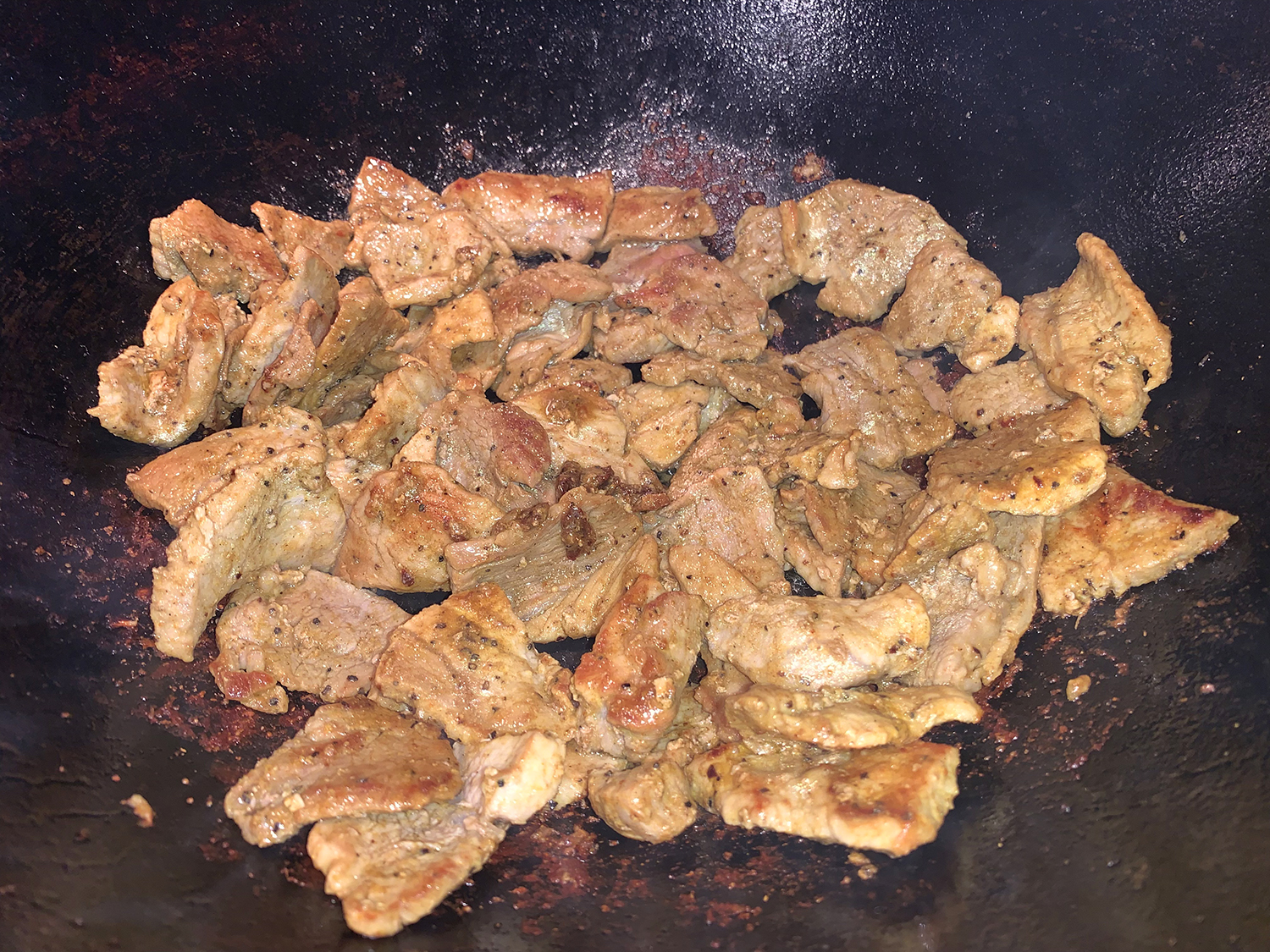
Stir-Fried Masala-Spiced Pork with Peas

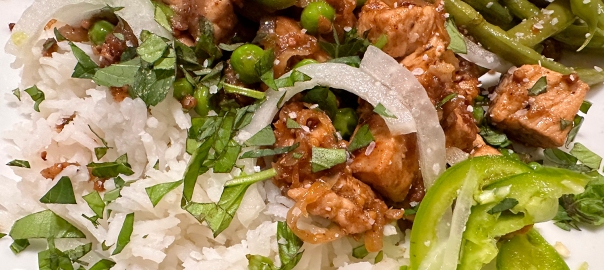
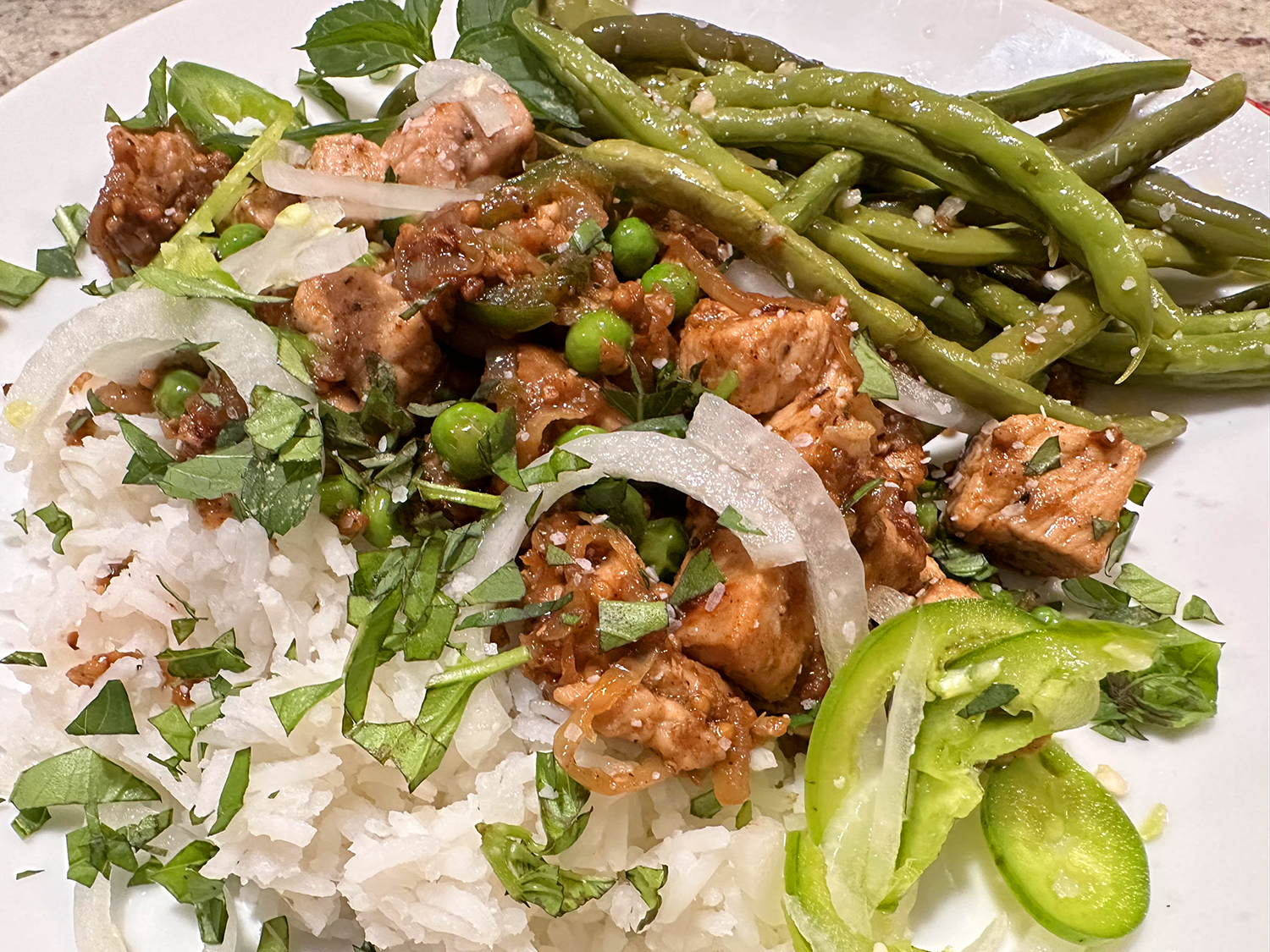
Fast, bold and casual, the perfect description for this weeknight stir-fry. The flavors are bold and bright. If you have a delicate palette, this may not be for you; however you could cut back on the chile peppers (it calls for serrano, we used jalapeños). Not a cilantro fan? A reasonable substitute for the cilantro is fresh basil and mint.

According to Milk Street, this stir-fry was inspired by a dish called pork ularthiyathu from the state of Kerala in southwestern India. Traditional recipes slowly braise the meat, then “dry-fry” it with aromatics until dark, rich and intensely flavored.

This is a weeknight-friendly version by stir-frying chunks of boneless pork loin chops with sliced onion and select spices. Peas add pops of color and sweetness. For balance and contrast in texture, make a tangy onion and fresh chili salad and pile it onto the stir-fry just before plating. Serve steamed basmati rice alongside. We also included a side of just-picked green beans and dressed with a similar spice profile.

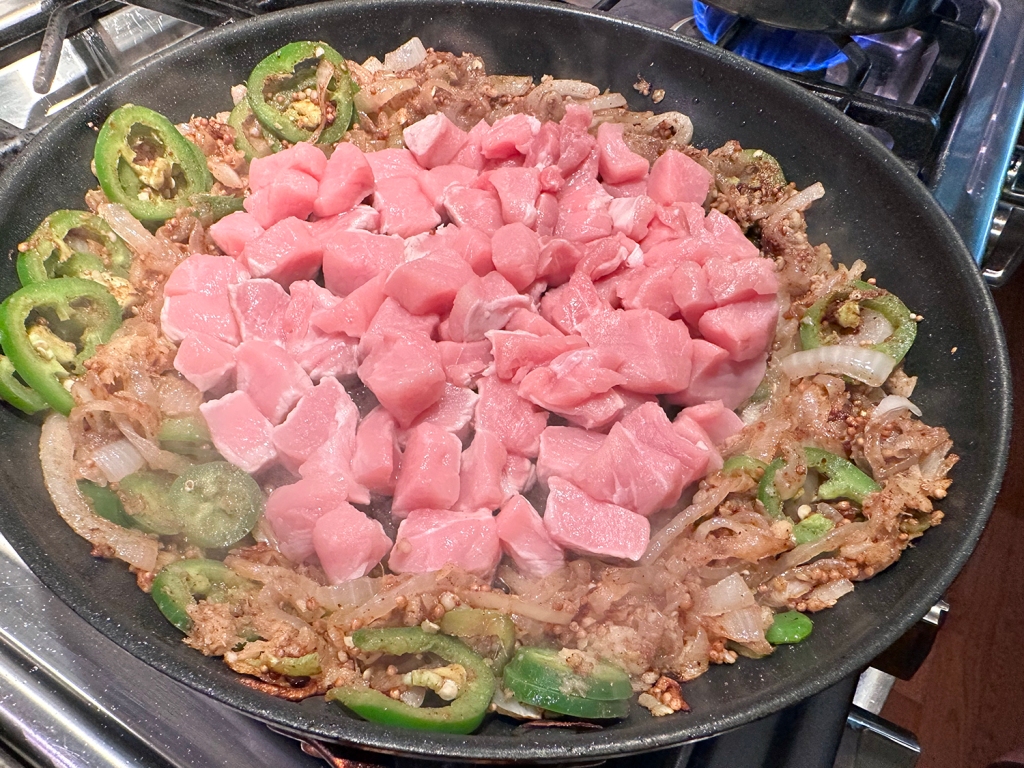
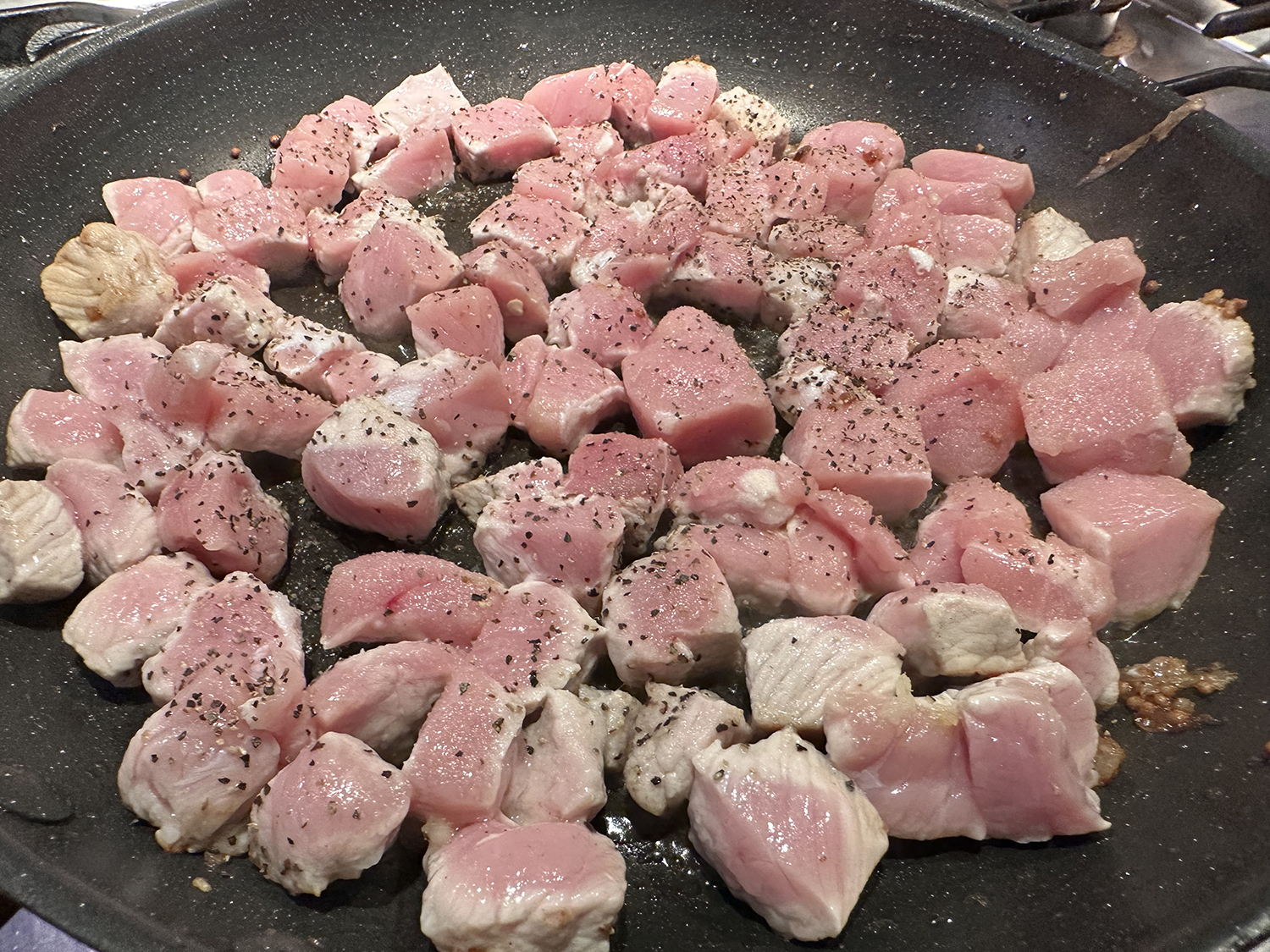
Don’t stir the pork for a couple of minutes after adding it to the skillet. Undisturbed cooking allows the pork to brown deeply, which is key to building flavor in the stir-fry. Once the pork is nicely seared, *stir to combine it with the onion mixture, pour in the first addition of water and scrape up the flavor-rich browned bits clinging to the pan.

*Here’s where the issue came in. With the onion mixture AND pork cubes, the skillet was overcrowded, and the ingredients were steaming instead of browning. To compensate, the Hubs removed the onion medley and cooked just the meat until charred a bit on the bottom; adding the mixture back to the pan after the pork browned. Next time he will use a wok.

Stir-Fried Masala-Spiced Pork with Peas

  • Servings: 3-4
  • Difficulty: easy
  • Print

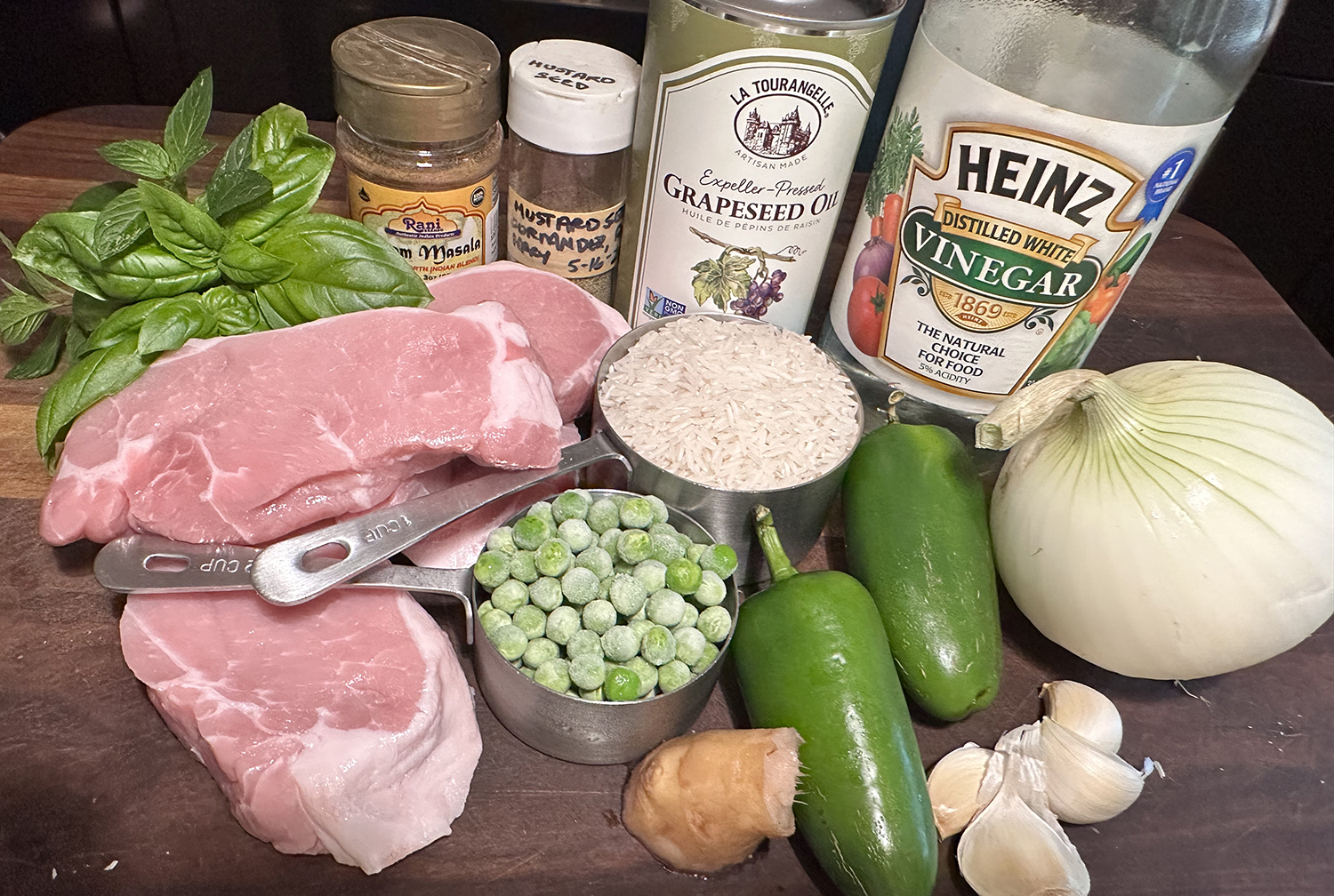
Ingredients

  • 1 large yellow onion, halved and thinly sliced
  • 2 serrano chilies, stemmed and sliced into thin rings
  • 2 Tbsp. white vinegar
  • Kosher salt and ground black pepper
  • 4 Tbsp. grapeseed or other neutral oil, divided
  • 1 Tbsp. yellow mustard seeds
  • 4 medium garlic cloves, finely grated
  • 1 Tbsp. finely grated fresh ginger
  • 2 tsp. garam masala
  • 1 1/2 lbs. boneless pork loin chops, trimmed of fat, cut into ½- to ¾-inch chunks
  • 1/2 cup frozen peas
  • 1/2 cup water
  • 1/4 cup lightly packed fresh cilantro, or a mix of fresh basil and mint

Directions

  1. In a small bowl, stir together a quarter of the onion, half of the chilies, the vinegar and ⅛ teaspoon salt; set aside.
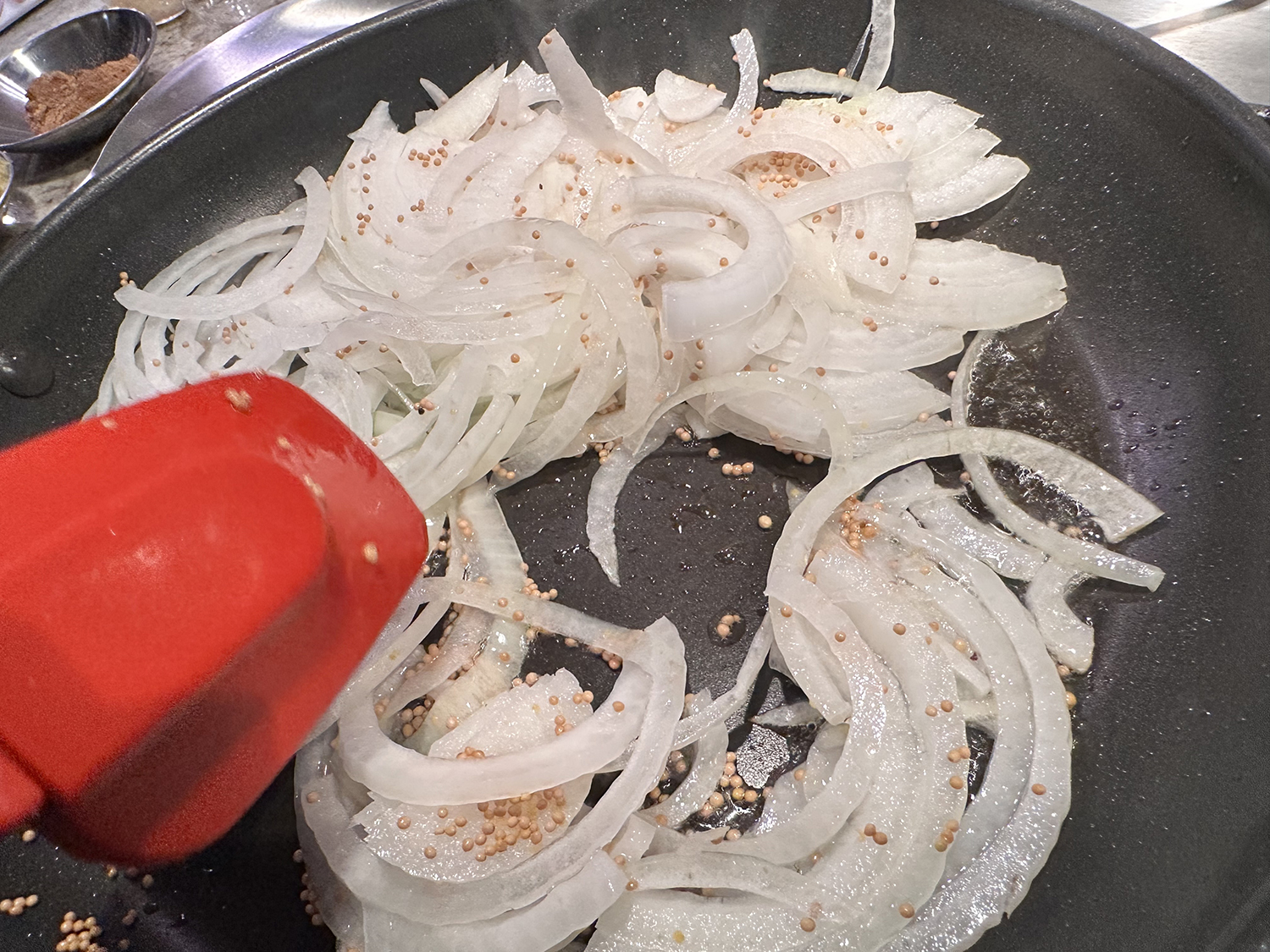
  2. In a 12-inch skillet over medium-high, heat 3 tablespoons of the oil until shimmering. Add the remaining onion, the mustard seeds and ¼ teaspoon salt; cook, stirring, until lightly browned, 4 to 5 minutes.
  3. Add the remaining chilies, the garlic, ginger and garam masala; cook, stirring, until fragrant, about 1 minute.
  4. Push the mixture to the perimeter of the pan*; add the remaining 1 tablespoon oil to the clearing. Add the pork in an even layer and sprinkle with ½ teaspoon each salt and pepper. Cook without stirring until browned on the bottom, about 3 minutes.
  5. Stir the onion mixture into the pork; cook, scraping up any browned bits, until the pork is browned all over, 4 to 5 minutes.
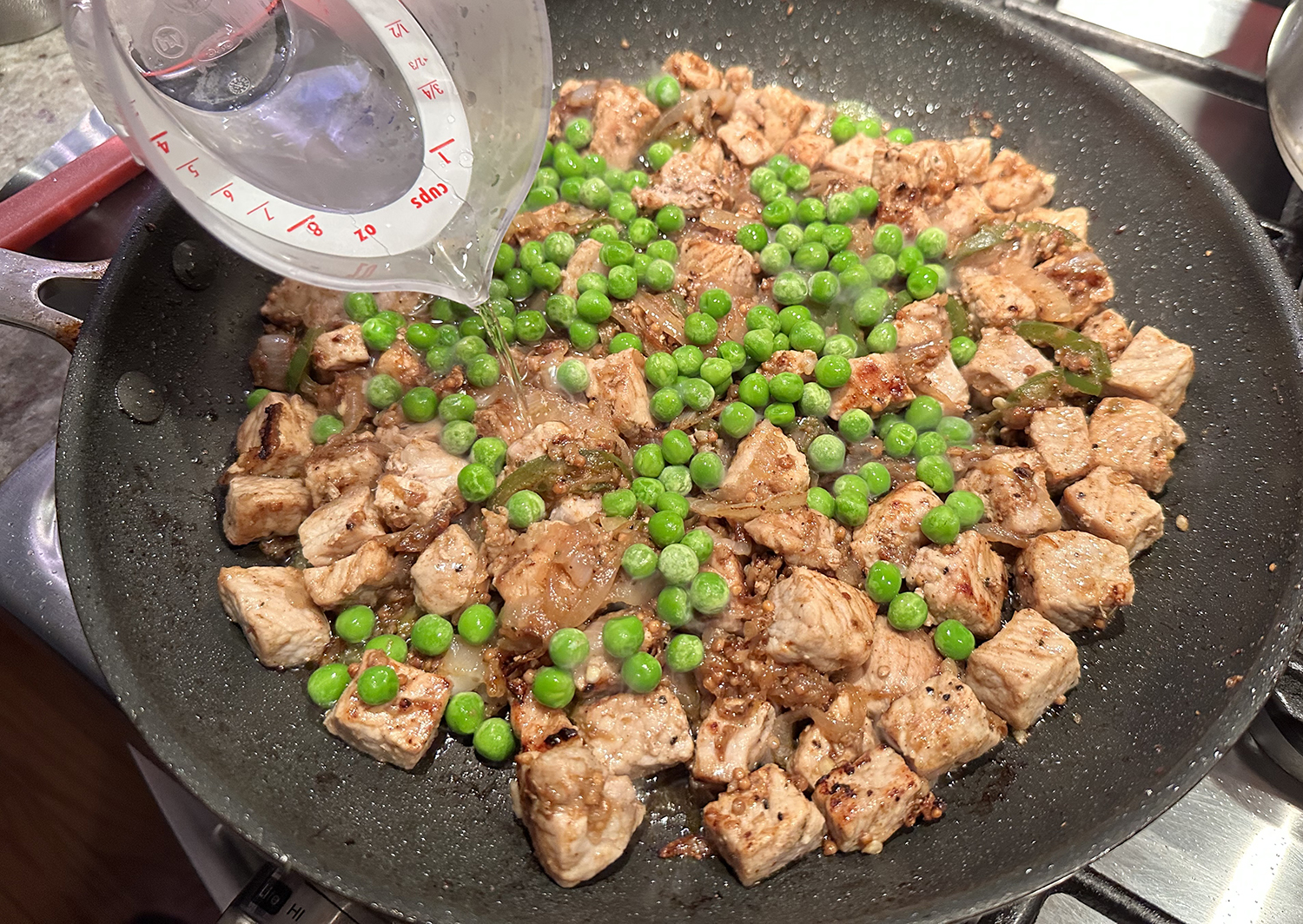
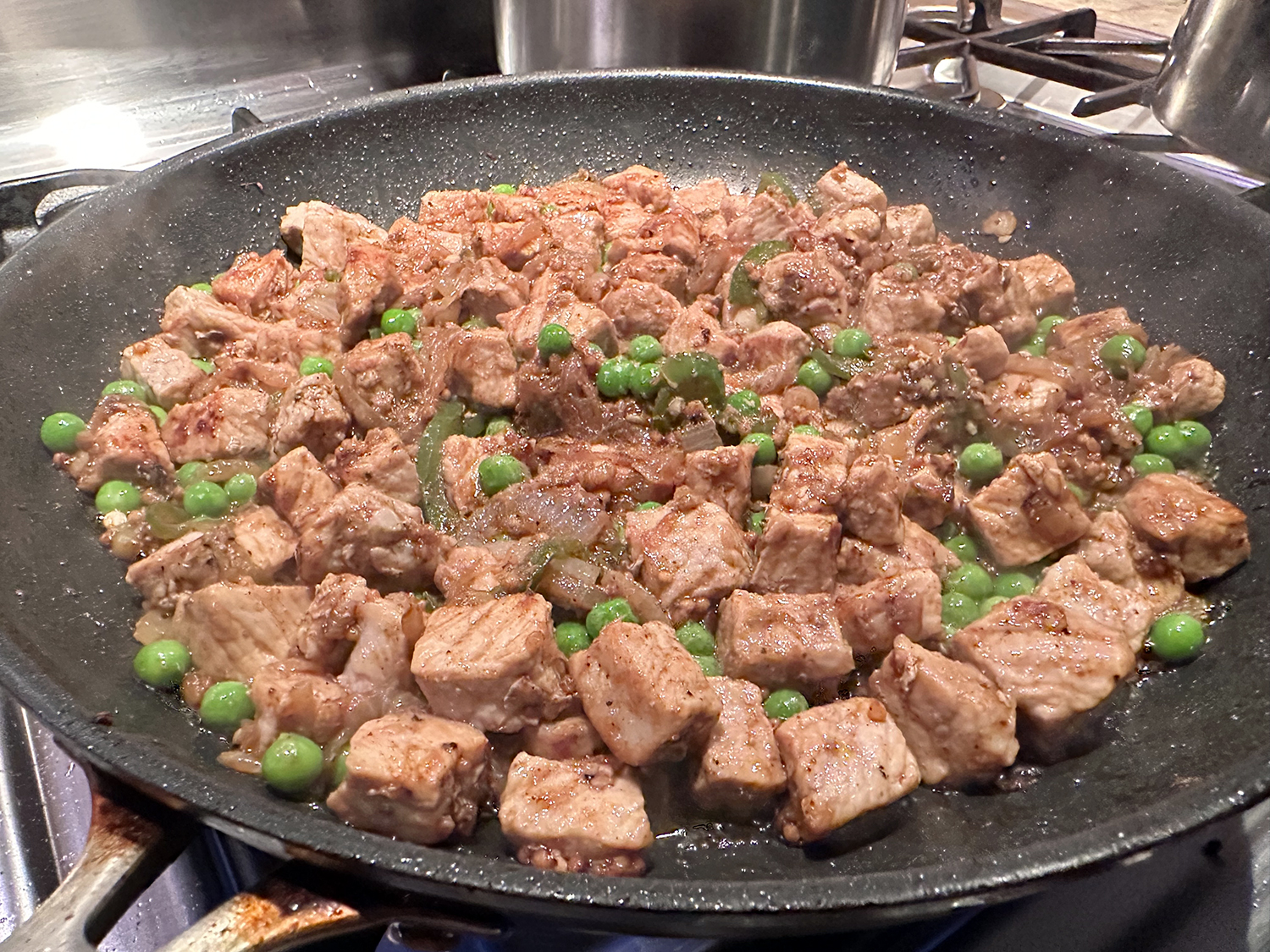
  6. Add the peas and ¼ cup water; cook, stirring, until the pork is lightly glazed, about 1 minute. Taste and season with salt and pepper. Transfer to a serving dish and top with the reserved onion mixture and cilantro or other herbs.

http://www.lynnandruss.com

Adapted from a recipe by Courtney Holl for Milk Street

Stir-Fried Orange Beef with Scallions

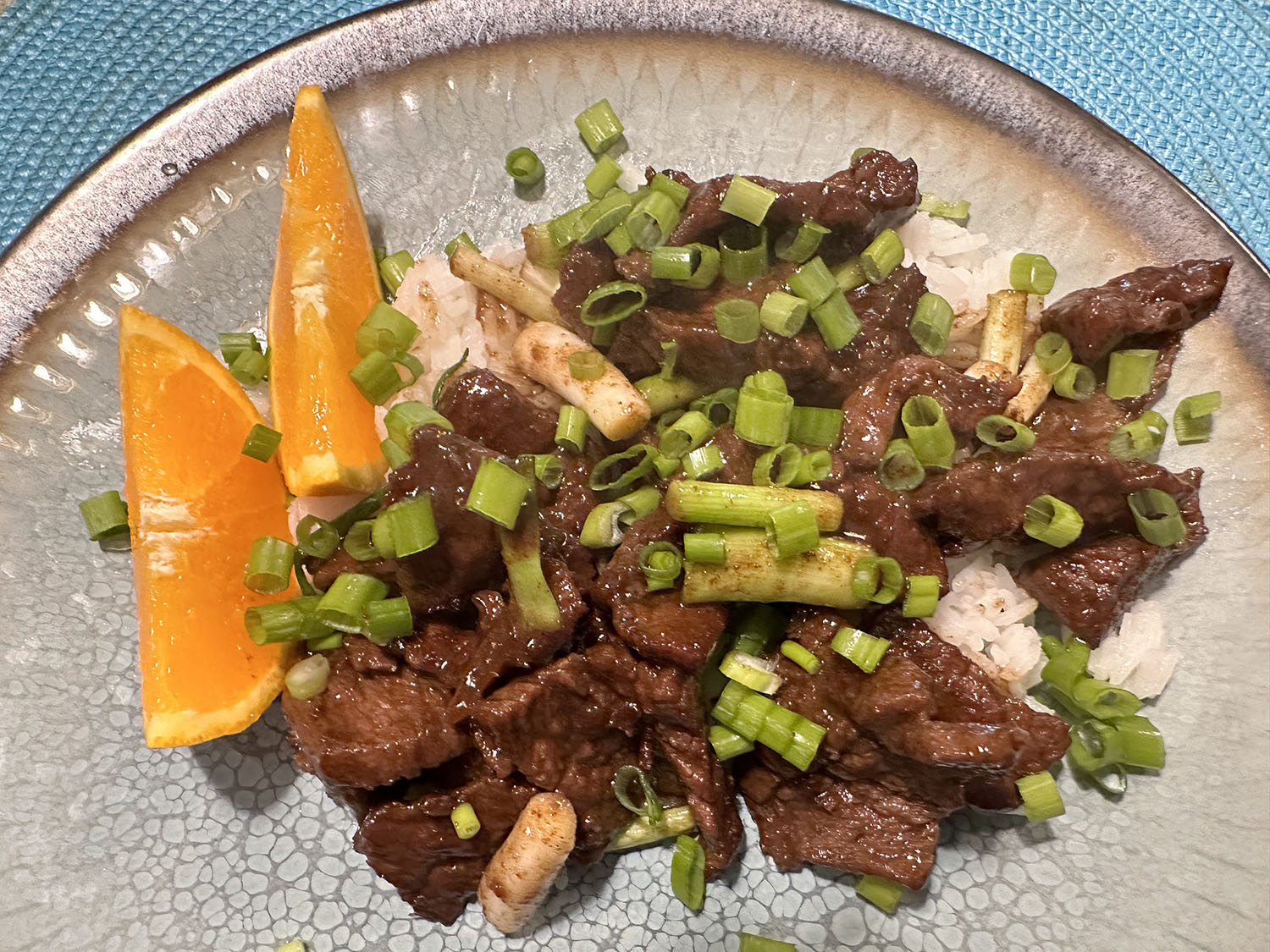
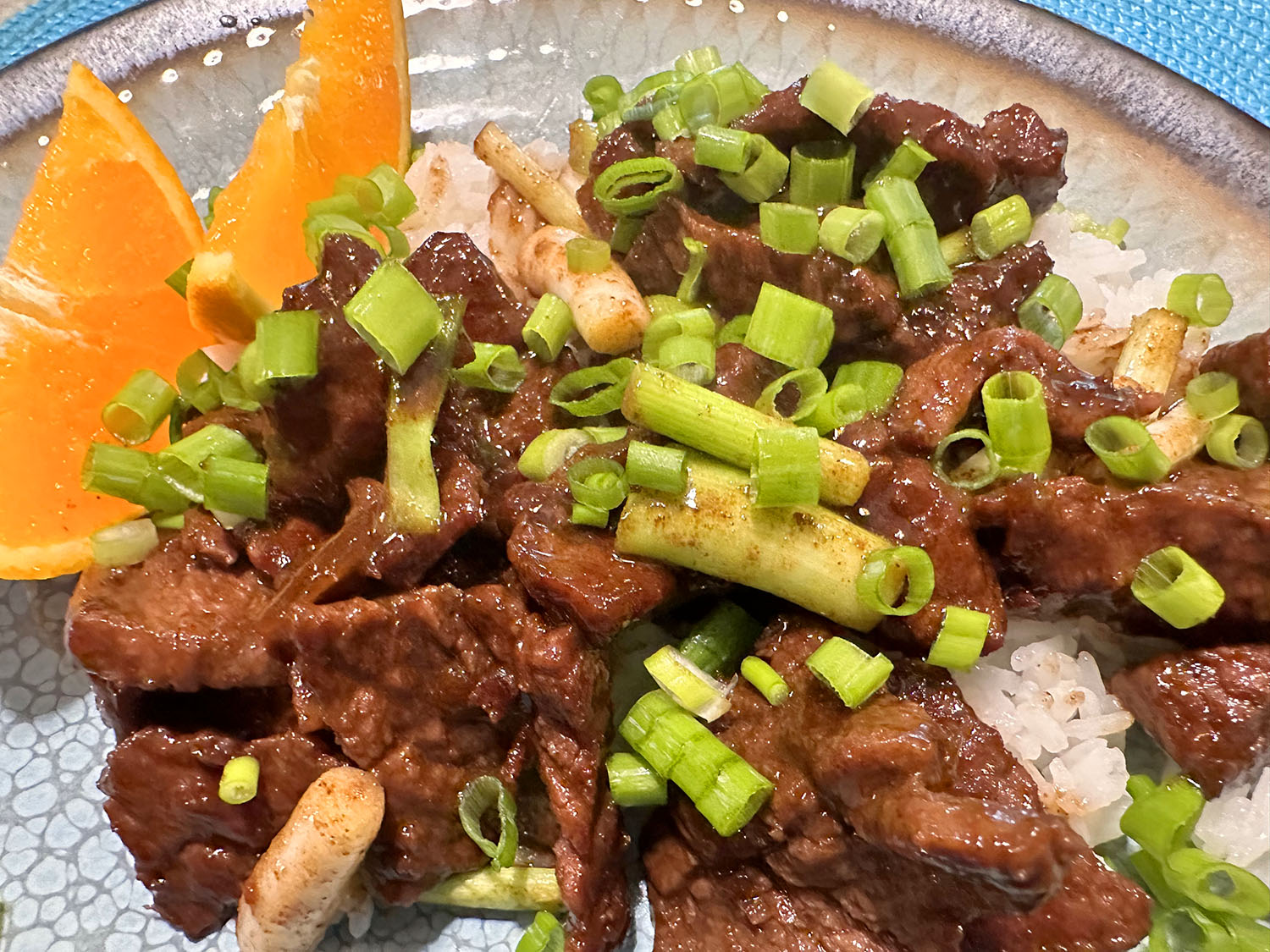
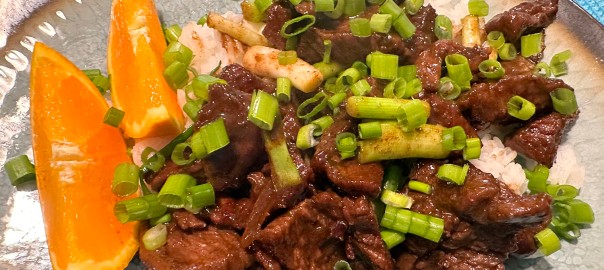
For those home cooks who look forward to a short ingredient list and a quick cooking time, but demand great taste, this recipe is for you. This stir-fried spin on Chinese Orange Beef, a perennial favorite, typically calls for deep-frying the meat; plus using a myriad of spices and techniques. But you don’t have to worry about any of that here.

The recipe uses orange marmalade to add layers of sweetness, bitterness and citrusy brightness. Five-spice powder adds to the complexity with its warm spiciness. Then the stir-fry is finished with scallions or basil to accentuate the anise notes of the five-spice. Serve with steamed white or brown rice; and perhaps a side salad if you crave more veggies.

Stir-Fried Orange Beef with Scallions

  • Servings: 3-4
  • Difficulty: easy
  • Print

Ingredients

  • 1½ lbs. beef flat-iron steak OR boneless beef short ribs OR flap meat, trimmed and sliced ¼ inch thick against the grain
  • 1½ tsp. Chinese five-spice powder
  • Ground black pepper OR ground white pepper
  • 1 Tbsp. neutral oil
  • 3 Tbsp. orange marmalade
  • 2 Tbsp. soy sauce
  • 1 bunch scallions, whites and light greens cut into 1-inch lengths, dark greens chopped for garnish OR 1 cup lightly packed fresh basil, torn if large
  • Juice from 1⁄2 orange, plus extra wedges to serve

Directions

  1. Toss the beef with the five-spice and ½ teaspoon pepper.
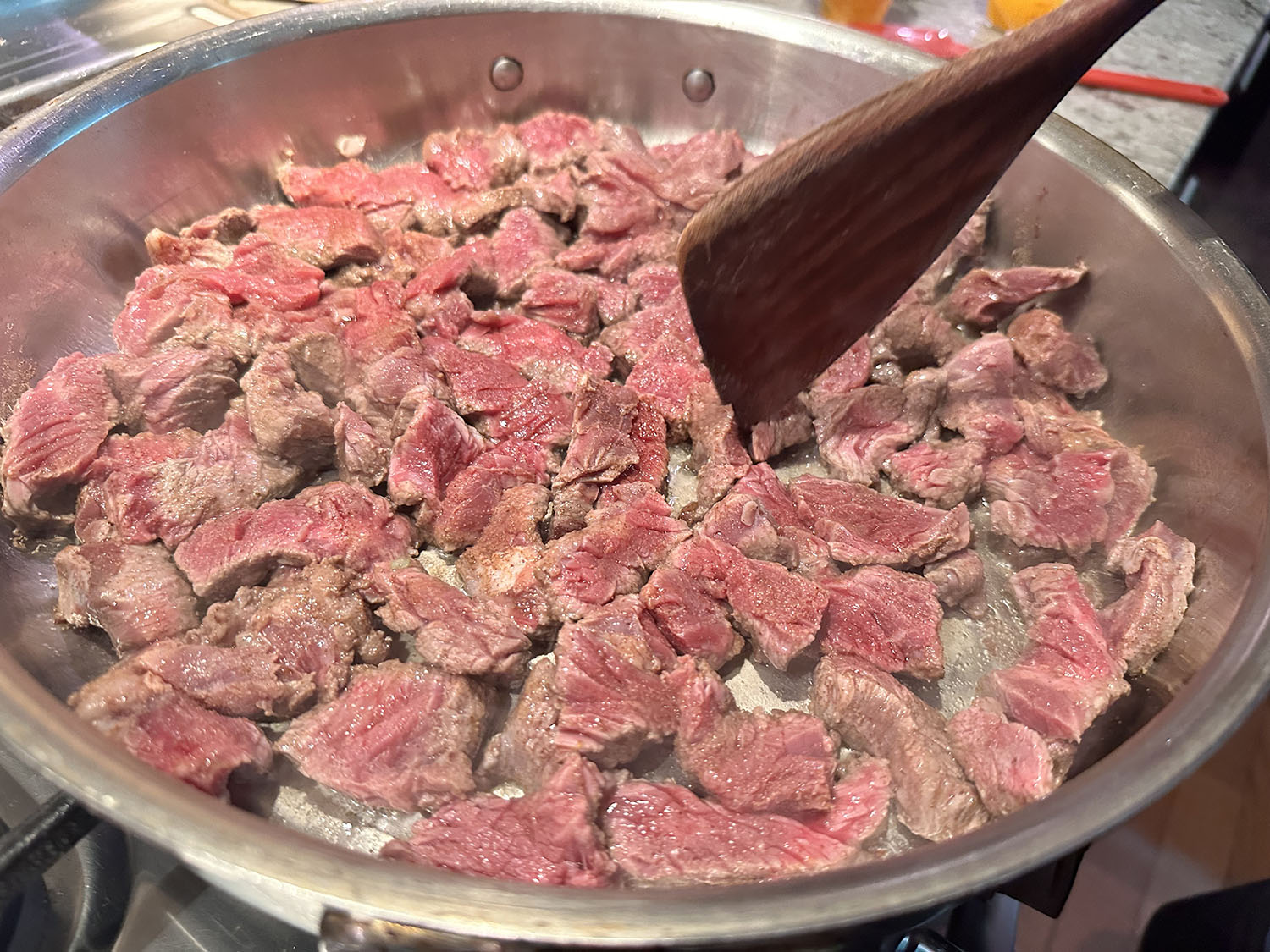
  2. In a 12-inch skillet, heat the oil until barely smoking. Add the beef in an even layer and cook without stirring until browned on the bottom, about 3 minutes.
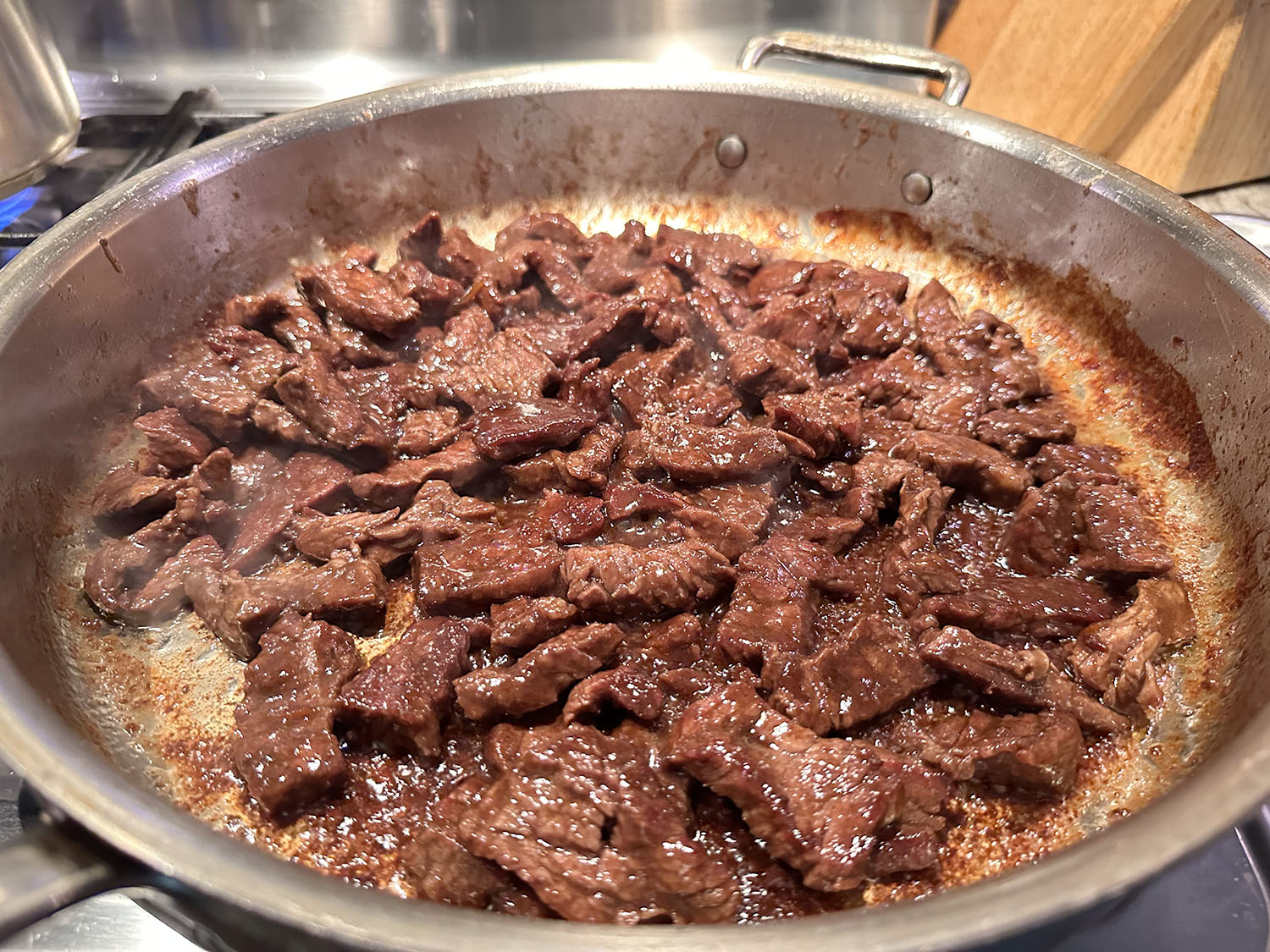
  3. Stir, then add the marmalade and soy sauce. Cook, stirring, until the beef is lightly glazed. Off heat, stir in the scallions and orange juice. Season with pepper and additional orange juice.

http://www.lynnandruss.com

Adapted from a recipe by Courtney Hill for Milk Street

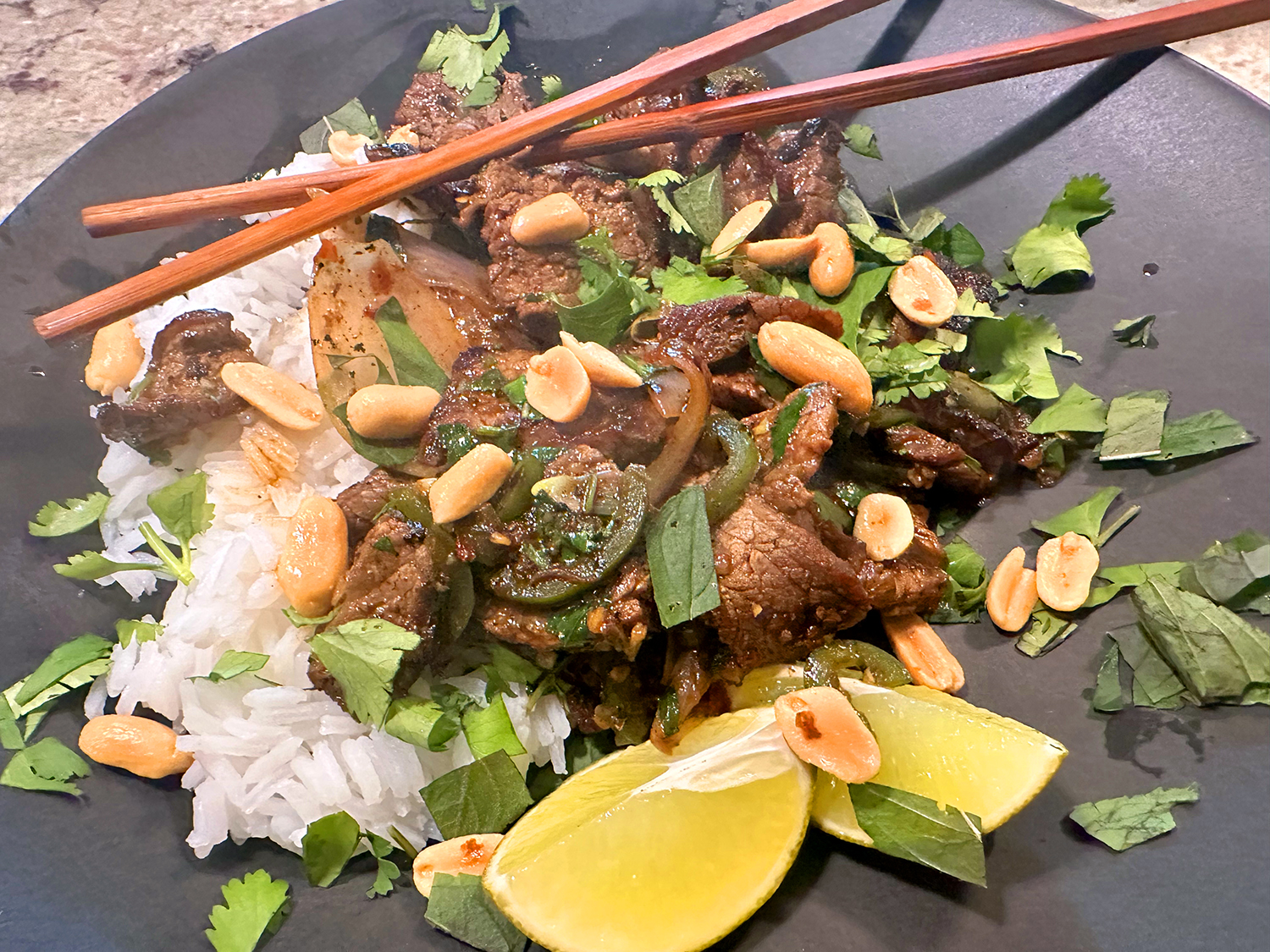
Stir-Fried Thai-Style Beef with Chiles and Shallots

Stir-fried dishes are one of our favorite go-to meals. You can basically add whatever ingredients that suits your fancy—or in an effort to use up some fresh vegetables.

For a sophisticated Thai beef recipe using available ingredients and requiring minimal cooking time, you can use an inexpensive blade steak, which offers both tenderness and robust flavor. With a marinade made of fish sauce, white pepper, citrusy coriander, and a little light brown sugar, the beef needs to marinated for only 15 minutes to develop full flavor.

To add heat to this stir-fried Thai beef recipe, use an easily controlled heat source—Asian chili-garlic paste—that also adds toasty garlicky flavors along with heat.

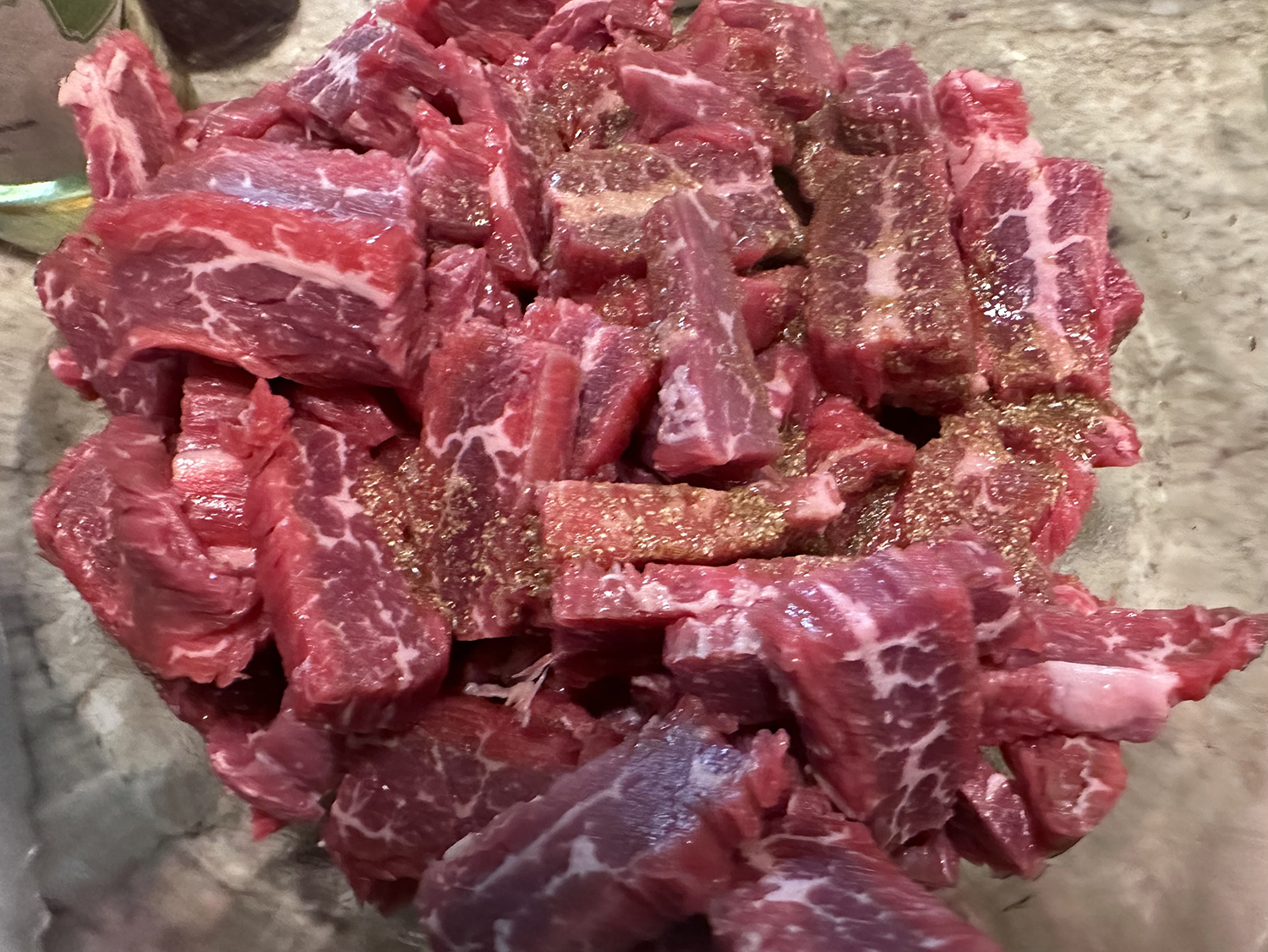
If you cannot find blade steaks, use flank steak (our choice). To cut a flank steak into the proper-sized slices for stir-frying, first cut the steak with the grain into 1 1/2-inch strips, then cut the strips against the grain into 1/4-inch-thick slices (see photo below). White pepper lends this stir-fry a unique flavor (black pepper is not a good substitute). Serve the stir-fry with steamed jasmine rice.

Stir-Fried Thai-Style Beef with Chiles and Shallots

  • Servings: 4
  • Difficulty: easy
  • Print

Ingredients

Beef and Marinade

  • ¾ tsp. ground coriander
  • ⅛ tsp. ground white pepper
  • 1 tsp. light brown sugar
  • 1 Tbsp. fish sauce
  • 2 lbs. blade or flank steak, trimmed and cut into 1/4-inch-thick strips

Stir-Fry

  • 2 Tbsp. fish sauce
  • 2 Tbsp. rice vinegar
  • 2 Tbsp. water
  • 1 Tbsp. light brown sugar
  • 1 Tbsp. Asian chili-garlic paste
  • 3 medium cloves garlic, minced or pressed through garlic press (about 1 Tbsp.)
  • 3 Tbsp. vegetable oil
  • 3 Serrano chiles or jalapeño chiles, halved, seeds and ribs removed, chiles cut crosswise ⅛ inch thick
  • 3 medium shallots, trimmed of ends, peeled, quartered lengthwise, and layers separated
  • ½ cup fresh mint leaves, large leaves torn into bite-sized pieces
  • ½ cup fresh cilantro leaves
  • ⅓ cup chopped unsalted roasted peanuts and lime wedges for serving

Directions

  1. FOR THE BEEF AND MARINADE: Combine coriander, white pepper, brown sugar, and fish sauce in large bowl. Add beef, toss well to combine; marinate 15 minutes.
  2. FOR THE STIR-FRY: In small bowl, stir together fish sauce, vinegar, water, brown sugar, and chili-garlic paste until sugar dissolves; set aside.
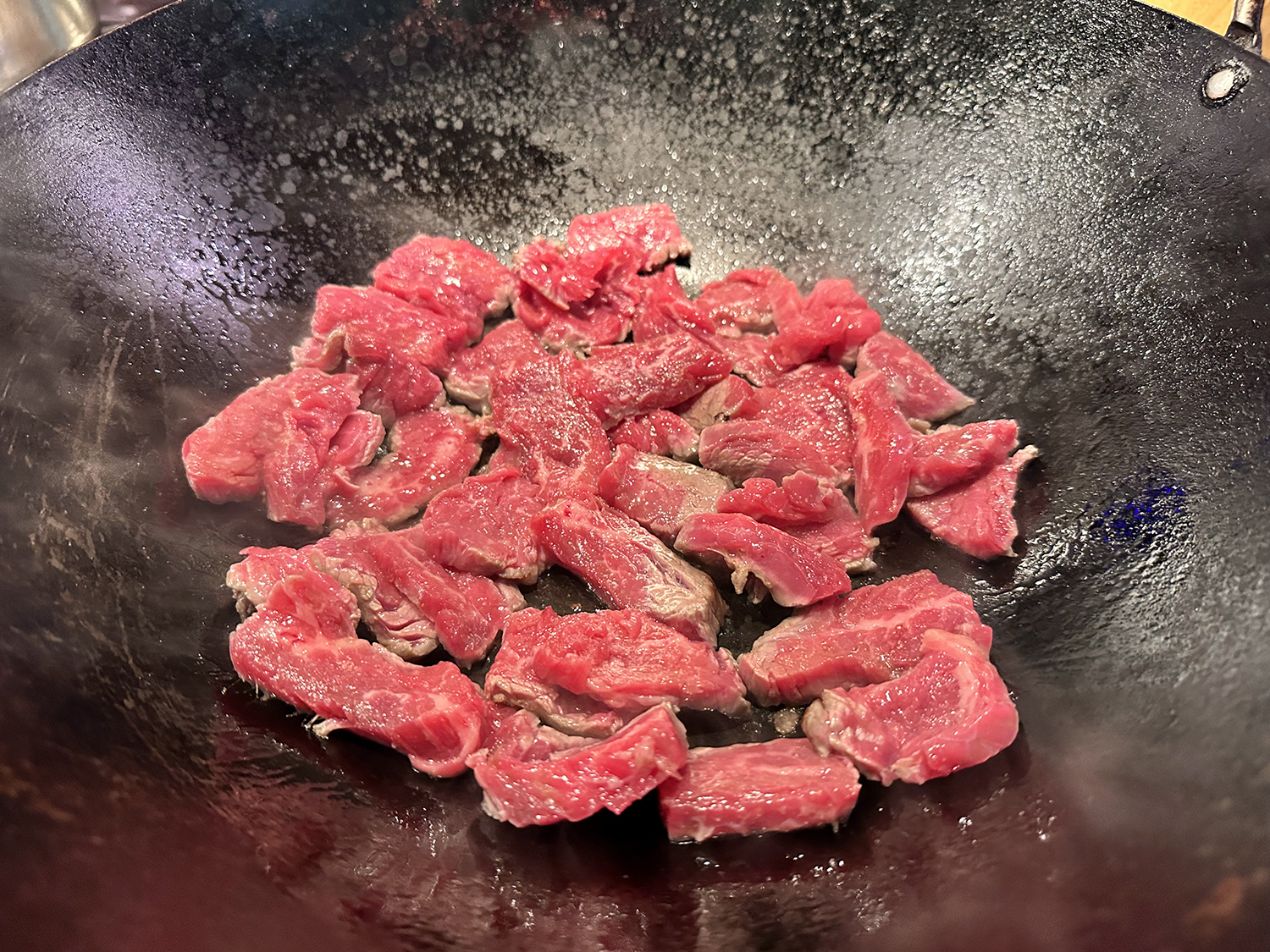
  3. In small bowl, mix garlic with 1 teaspoon oil; set aside. Heat 2 teaspoons oil in 12-inch nonstick skillet (or use a wok like we did) over high heat until smoking; add one-third of beef to skillet in even layer. Cook, without stirring, until well browned, about 2 minutes, then stir and continue cooking until beef is browned around edges and no longer pink in the center, about 30 seconds.
  4. Transfer beef to medium bowl. Repeat with additional oil and remaining meat in 2 more batches.
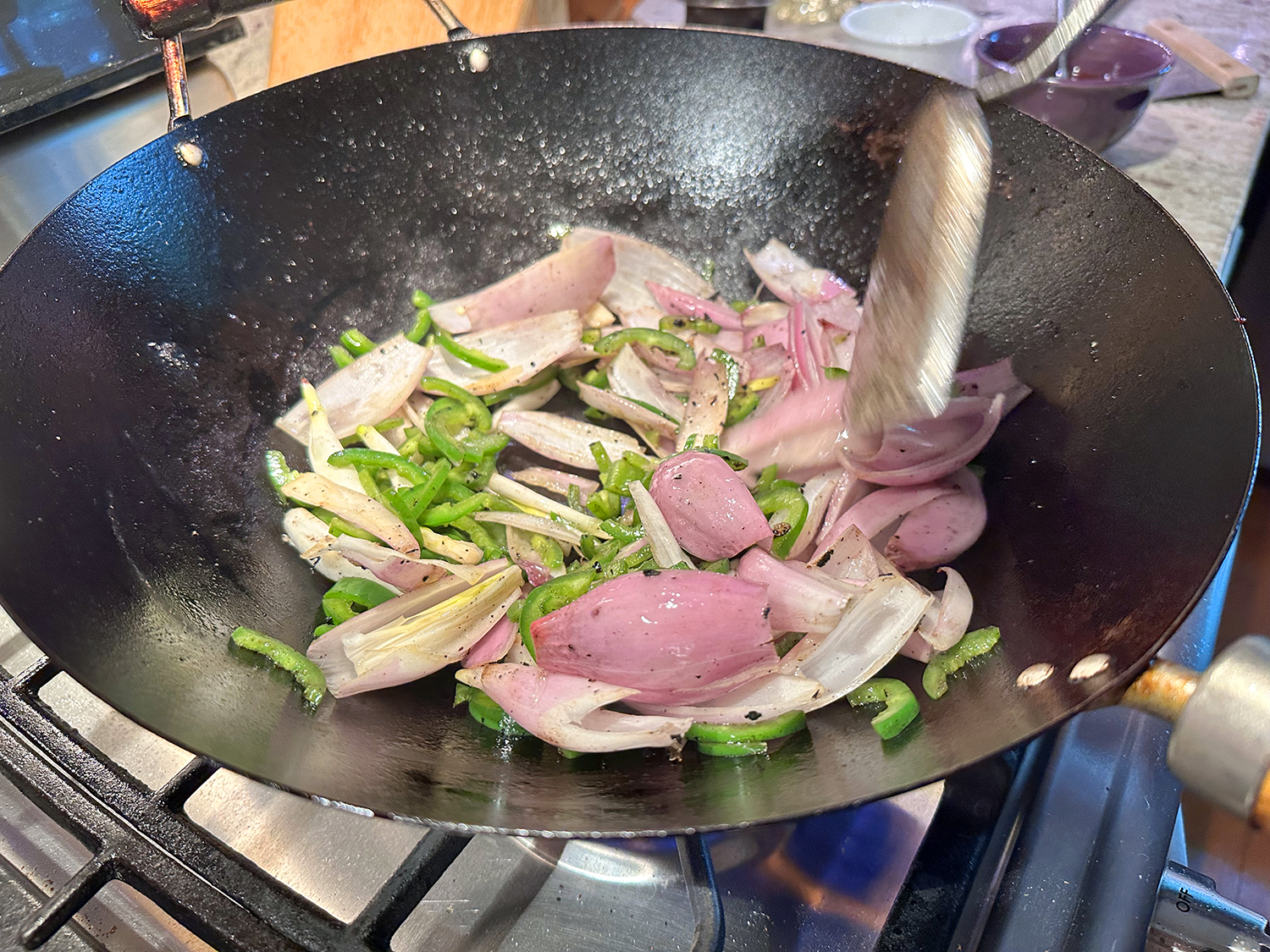
  5. After transferring last batch of beef to bowl, reduce heat to medium; add remaining 2 teaspoons oil to now-empty skillet and swirl to coat. Add chiles and shallots and cook, stirring frequently, until beginning to soften, 3 to 4 minutes.
  6. Push chile-shallot mixture to sides of skillet to clear center; add garlic to clearing and cook, mashing mixture with spoon, until fragrant, about 15 seconds. Stir to combine garlic with chile-shallot mixture.
  7. Add fish sauce mixture to skillet; increase heat to high and cook until slightly reduced and thickened, about 30 seconds.
  8. Return beef and any accumulated juices to skillet, toss well to combine and coat with sauce, stir in half of mint and cilantro; serve immediately, sprinkling individual servings with portion of peanuts and remaining herbs, and passing lime wedges separately.

http://www.lynnandruss.com

Adapted from a recipe in Cook’s Illustrated

Stir-Fried Shrimp and Asparagus in Garlic Sauce

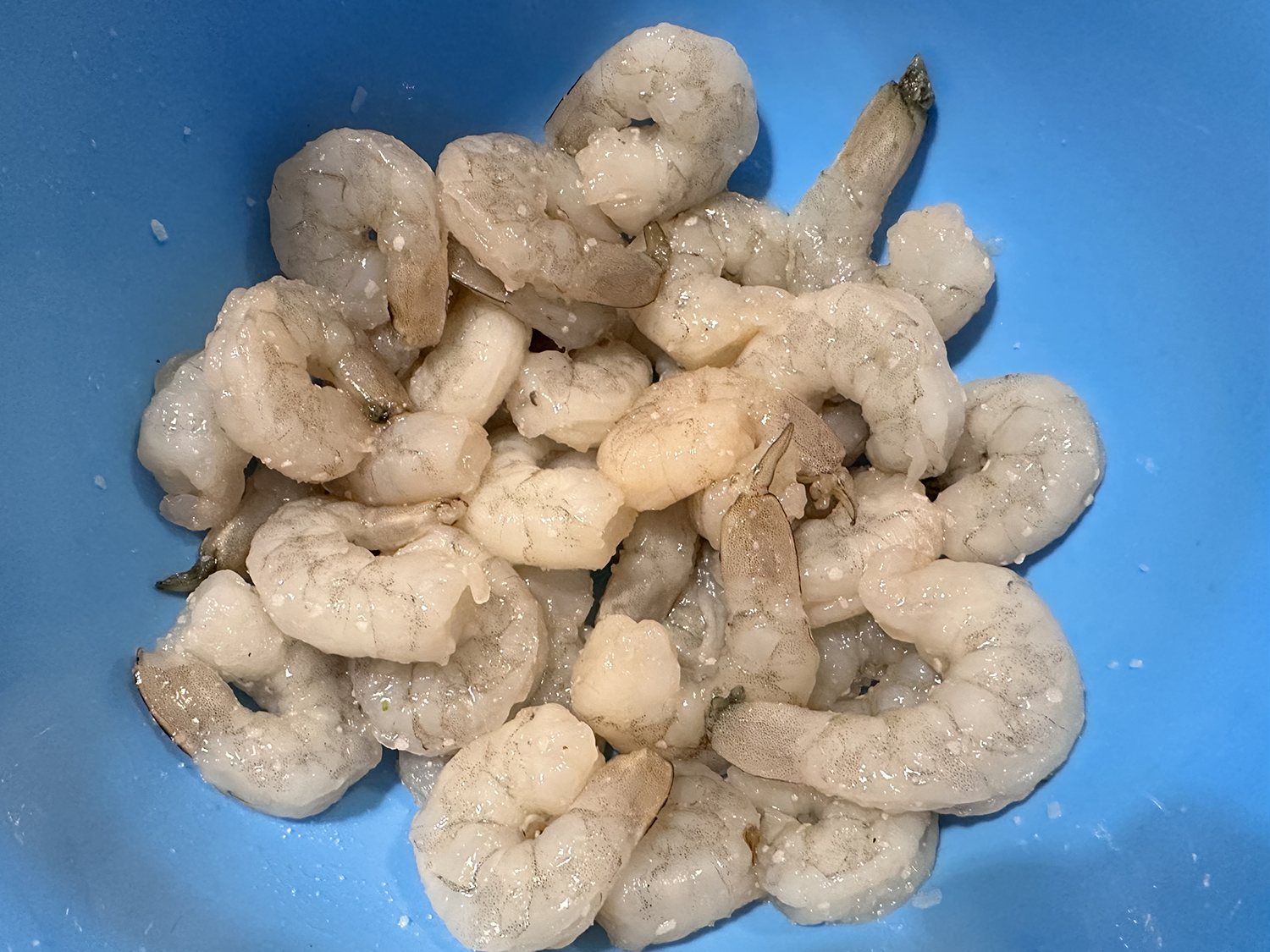
You’ll need to start this dish by tossing the shrimp with a little salt and sugar and letting them sit for 30 minutes. This not only seasons the shrimp but also helps them retain moisture during cooking. When the shrimp are almost ready, quickly cook the vegetable component and set it aside.

Then, rather than stir-fry the shrimp in a hot skillet as most recipes call for, add the sauce to the pan and poach the shrimp gently in the liquid, covered, to ensure that they stay moist. The sauce is a flavorful base of soy sauce, sherry, and sherry vinegar. A little cornstarch ensures that the sauce thickens to just the right shrimp- and vegetable-coating consistency.

If your asparagus stalks are thicker than usual, be sure to cut off any woody bottoms or even peel away the outer portions on the lower part of with a potato peeler.

Stir-Fried Shrimp and Asparagus in Garlic Sauce

  • Servings: 4
  • Difficulty: easy
  • Print

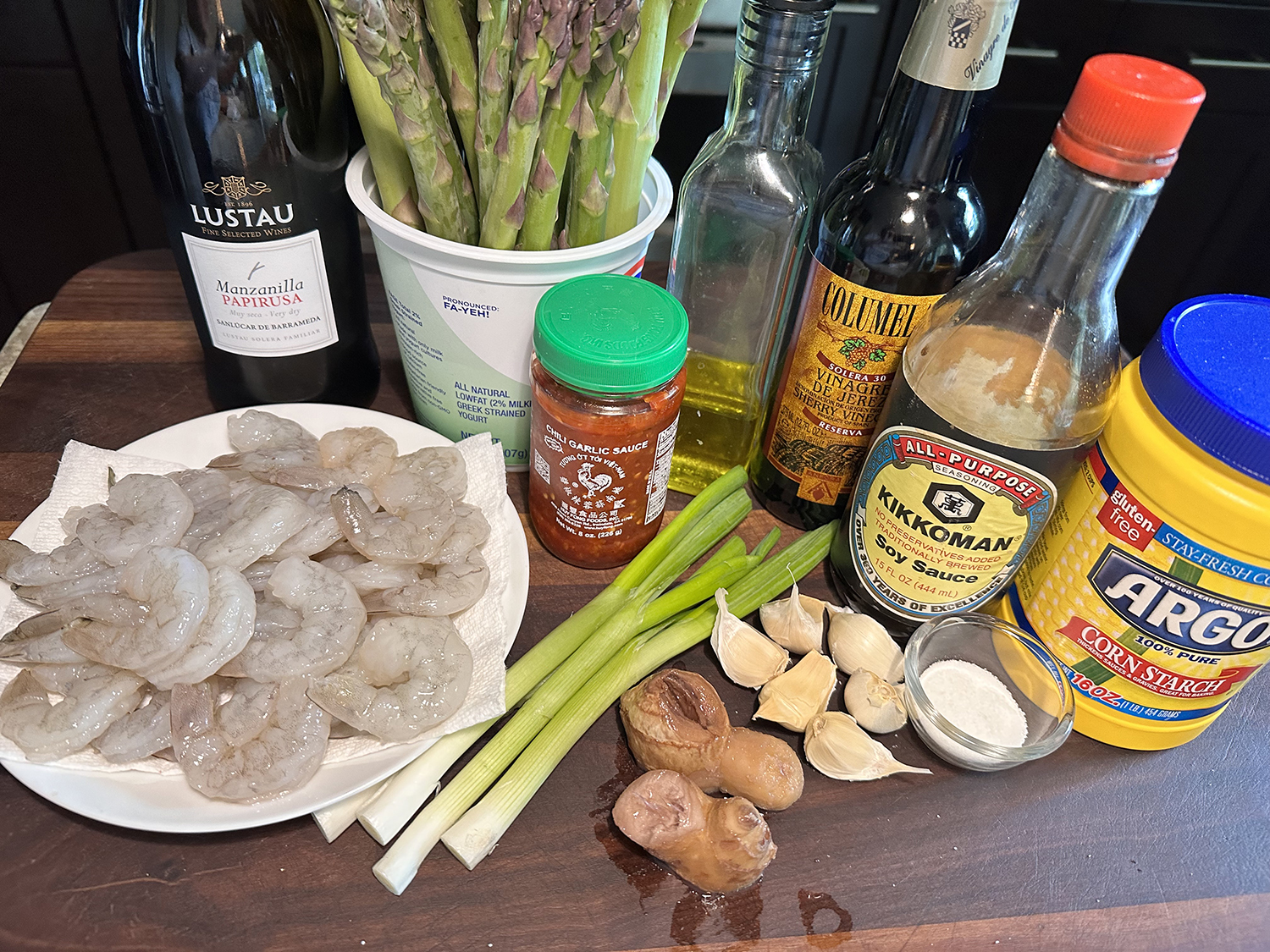
Ingredients

  • 1 lb. extra-large (21-25) shrimp, peeled, deveined, and tails removed
  • 1 tsp. sugar
  • ½ tsp. salt
  • ⅓ cup plus 2 Tbsp. dry sherry
  • 2 Tbsp. soy sauce
  • 1 Tbsp. Asian broad bean chili paste
  • 1 tsp. sherry vinegar
  • 2 tsp. cornstarch
  • 2 Tbsp. vegetable oil
  • 6 garlic cloves, sliced thin
  • 3 large scallions, white parts chopped fine, green parts cut into 1-inch pieces
  • 2 Tbsp. grated fresh ginger
  • 1 ½ lbs. asparagus, trimmed and cut on bias into 2-inch lengths

Directions

  1. Combine shrimp, sugar, and salt in medium bowl. Let stand at room temperature for 30 minutes.
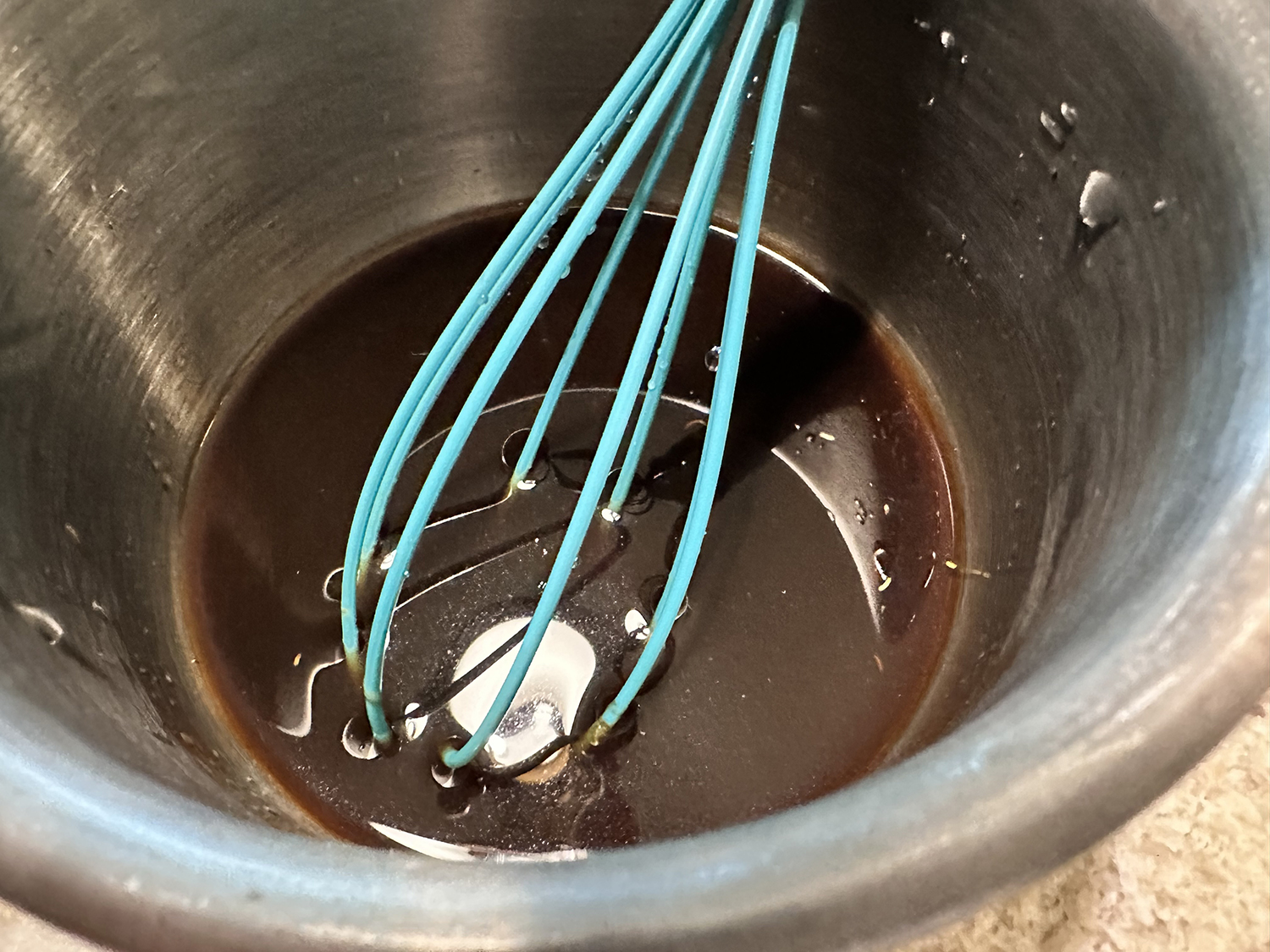
  2. Whisk 1/3 cup sherry, soy sauce, chili paste, and vinegar together in bowl. Whisk cornstarch and remaining 2 tablespoons sherry together in second bowl.
  3. Combine shrimp, sugar, and salt in medium bowl. Let stand at room temperature for 30 minutes.
  4. Whisk 1/3 cup sherry, soy sauce, chili paste, and vinegar together in bowl. Whisk cornstarch and remaining 2 tablespoons sherry together in second bowl.
  5. Heat oil and garlic in 12-inch nonstick skillet over medium heat until garlic is just beginning to brown at edges, 3 to 4 minutes. Increase heat to high, add scallion whites and ginger, and cook until fragrant, about 1 minute.
  6. Add asparagus and scallion greens, cover, and cook, stirring occasionally, until asparagus is crisp-tender, 2 to 5 minutes. Transfer vegetable mixture to bowl.
  7. Add sherry–soy sauce mixture and shrimp to skillet and bring to simmer. Reduce heat to medium-low, cover, and cook, stirring occasionally, until shrimp are just cooked through, 3 to 5 minutes.
  8. Whisk sherry-cornstarch mixture to recombine and add to skillet; increase heat to high and cook, stirring constantly, until sauce is thickened, 1 to 2 minutes. Return vegetable mixture to skillet and toss to combine. Transfer to serving dish and serve.

http://www.lynnandruss.com

Adapted from a recipe by Andrew Janjigian for Cook’s Illustrated

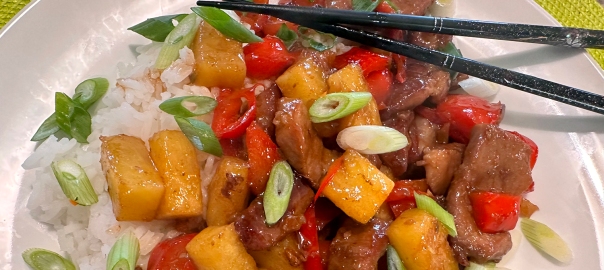
Sweet-and-Sour Pork with Pineapple

This takeout classic has delicious roots in Cantonese cooking. Now, it is tempting to dismiss sweet-and-sour pork as gloppy, Americanized Chinese food. And, let’s face it, it often is. Been there, tasted that.

Looking to harness that enticing sweet-tart profile without the saccharine stickiness, Milk Street was drawn to the dish’s origins. A lighter, earlier variation happens to be preserved in Taiwan, where cooks skip the deep-frying—and the ketchup—to better highlight the other ingredients.

Thinly sliced pork shoulder is marinated in soy sauce, a bit of sugar and cornstarch. The starch creates a protective layer against the high heat of a stir-fry, helping to keep the pork tender by preventing it from overcooking. After briefly stir-frying the meat with ginger, in go red bell pepper, chilies, scallions and pineapple with roughly equal parts rice vinegar, sugar and more soy sauce.

A hefty chunk of ginger is cut into matchsticks for bigger pops of piquant flavor, while thinly sliced serrano chilies add spice to further balance the sweetness. It makes for a savory-sweet dish, a little tart and well-balanced to the last bite. A delicious return to the dish’s roots.

NOTES: Don’t use canned pineapple, as its flavor is dull compared to fresh. But if prepping a whole pineapple is too much work, look for ones sold already cleaned in the produce section of the supermarket. Also, don’t use a conventional (i.e., not nonstick) skillet. Without a nonstick coating, the sugars from the pineapple and sauce are likely to stick to the pan’s surface and scorch.

Sweet-and-Sour Pork with Pineapple

  • Servings: 4
  • Difficulty: easy
  • Print

Ingredients

  • 1 1/2 lbs. boneless pork shoulder, trimmed, cut into 2-inch-wide strips, and thinly sliced
  • 3 Tbsp. soy sauce, divided, plus more if needed
  • 1/2 tsp. plus 1 Tbsp. white sugar, divided
  • 1 Tbsp. cornstarch
  • 3 Tbsp. grapeseed or other neutral oil
  • 1 medium red bell pepper, stemmed, seeded and chopped
  • 1 cup chopped fresh pineapple (½-inch chunks)
  • 2-3 serrano chilies, stemmed, seeded and thinly sliced on the diagonal
  • 1 inch piece fresh ginger, peeled and cut into matchsticks (about 3 Tbsp.)
  • 1/3 cup unseasoned rice vinegar, plus more if needed
  • 3 scallions, thinly sliced on the diagonal

Directions

  1. In a medium bowl, combine the pork, 1 tablespoon soy sauce, the ½ teaspoon sugar and the cornstarch; stir until the pork is evenly coated.
  2. In a 12-inch nonstick skillet over medium-high, heat the oil until barely smoking. Add the pork in an even layer and cook, stirring only once or twice, until the pork is lightly browned, 4 to 5 minutes.
  3. Add the bell pepper and cook, stirring occasionally, until the pepper is lightly browned, 4 to 5 minutes.
  4. Add the pineapple, chilies and ginger, then cook, stirring occasionally, until the pineapple begins to brown, 2 to 3 minutes.
  5. Stir in the vinegar, the remaining 2 tablespoons soy sauce and the remaining 1 tablespoon sugar. Cook, stirring often, until the meat and vegetables are lightly coated with the sauce, 1 to 2 minutes.
  6. Off heat, taste and season with additional soy sauce and vinegar. Transfer to a serving dish and sprinkle with the scallions.

http://www.lynnandruss.com

Original recipe by Albert Stumm for Milk Street

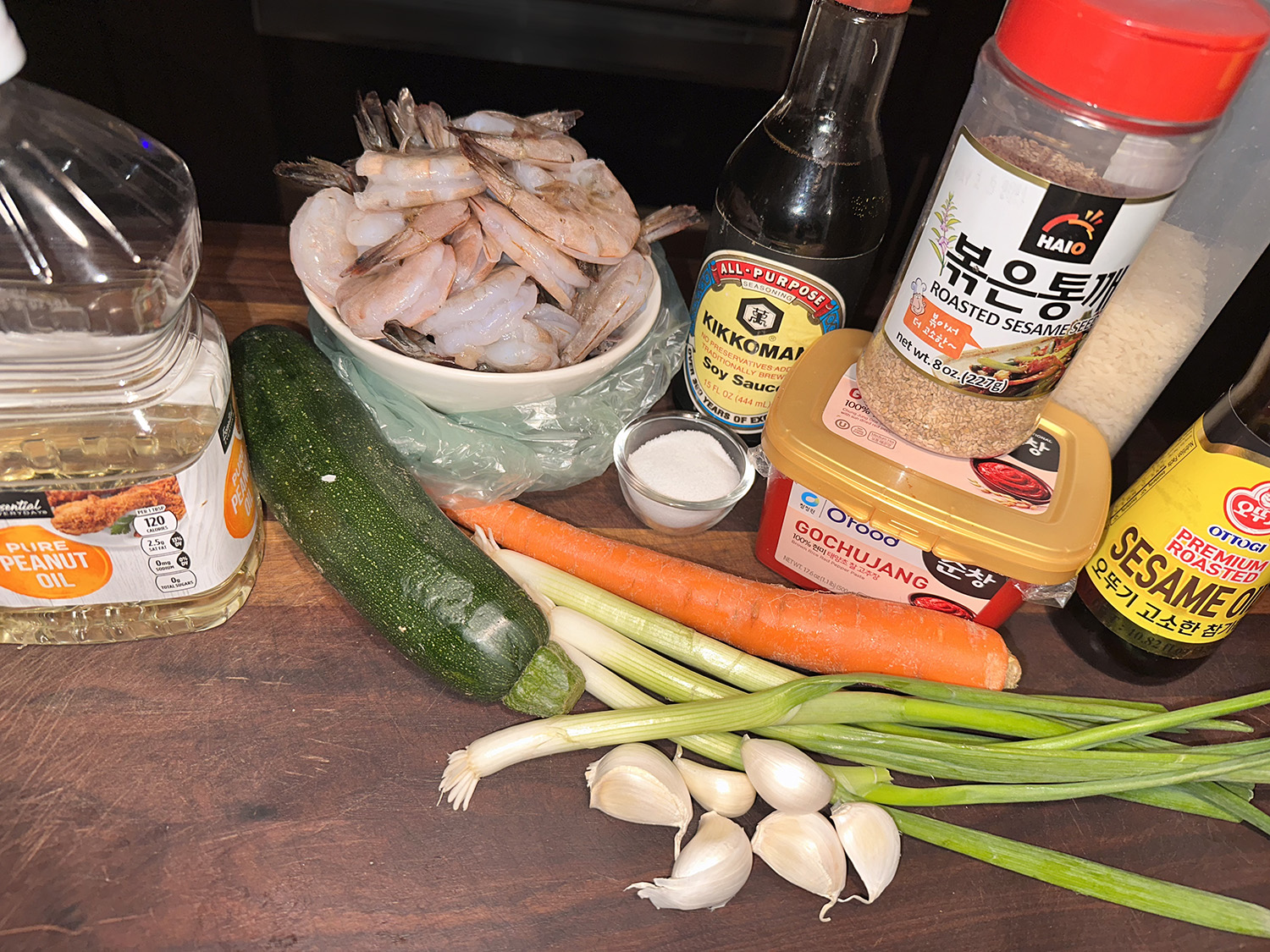
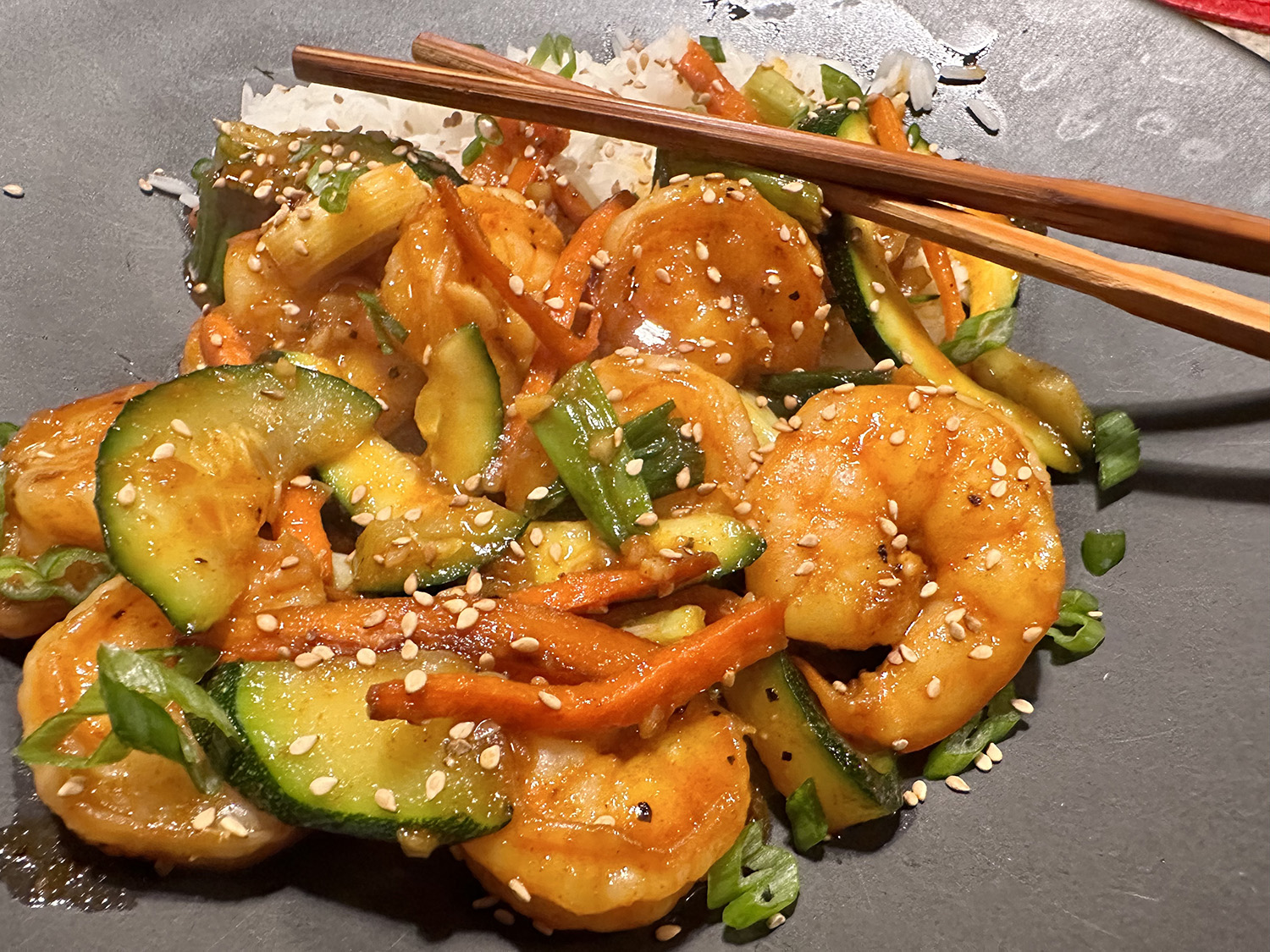
Spicy Korean-Style Shrimp with Zucchini and Scallions

For an adaptation of the Korean stir-fry of squid with a garlicky, umami-loaded, savory-sweet, gochujang-based sauce, the squid here is replaced with plump, briny shrimp. This version includes carrots, scallions and zucchini (or yellow summer squash) for layers of texture and color, as well as to round out the meal.

Look for gochujang, the vivid-red fermented chili paste and workhorse in the Korean kitchen, in the international aisle of the supermarket or in Asian grocery stores. Before cooking, marinate the shrimp for about 10 minutes in a mixture of gochujang, sugar, sesame oil and soy. To be efficient, prep the other ingredients for the stir-fry while the shrimp marinate. Serve with steamed short-grain rice.

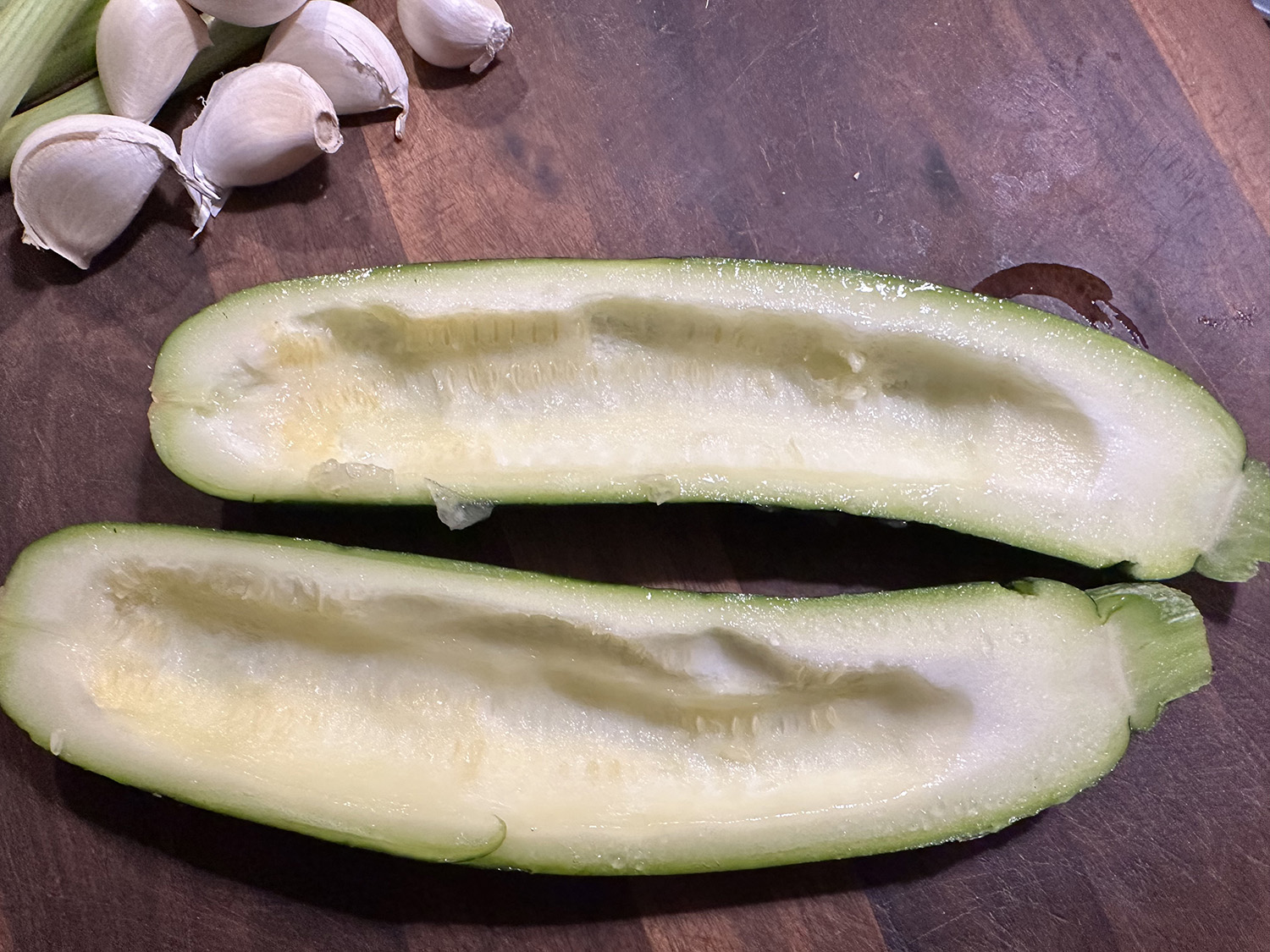
NOTE: The seedy section at the core turns soft and slightly squishy when cooked, so remove the seeds in the zucchini or summer squash. To do so, cut the zucchini in half lengthwise, then use a spoon to scrape out the core.

Buying “easy-peel” shrimp is a great option because they are already deveined, all you have to do is easily peel away the shells. Since we make our own shellfish stock, we appreciate having the shells which we then freeze until it’s time to make another batch of stock.

Spicy Korean-Style Shrimp with Zucchini and Scallions

  • Servings: 4
  • Difficulty: easy
  • Print

Ingredients

  • 2-3 Tbsp. gochujang
  • 2 Tbsp. white sugar
  • 2 Tbsp. toasted sesame oil
  • 1 Tbsp. soy sauce
  • Kosher salt and ground black pepper
  • 1 1/2 lbs. extra-large shrimp, peeled (tails removed), deveined and patted dry
  • 2 Tbsp. grapeseed or other neutral oil
  • 1 large carrot, peeled and cut into matchsticks
  • 6 medium garlic cloves, minced
  • 4 scallions, cut into 1-inch lengths
  • 1 medium zucchini or yellow summer squash (about 8 oz.), halved lengthwise, seeded and thinly sliced on the diagonal
  • 2 tsp. sesame seeds, toasted

Directions

  1. In a medium bowl, stir together the gochujang, sugar, sesame oil, soy sauce, ½ teaspoon salt and ¼ teaspoon pepper. Add the shrimp and toss to coat; let stand at room temperature for about 10 minutes.
  2. In a 12-inch skillet over medium-high, heat the neutral oil until shimmering. Add the carrot and cook, stirring often, until wilted, 3 to 4 minutes. Add the garlic and cook, stirring constantly, until lightly browned, about 1 minute. Push the mixture to one side of the skillet and add the shrimp with its marinade, distributing it in an even layer. Cook without stirring until the shrimp are pink on the bottom, about 2 minutes.
  3. Add the scallions and zucchini, then stir to combine with the shrimp and carrot. Cook, stirring often, until the shrimp are opaque throughout and the scallions and zucchini have softened, about 3 minutes. Off heat, taste and season with salt and pepper. Serve sprinkled with the sesame seeds.

http://www.lynnandruss.com

Recipe by Courtney Hill for Milk Street

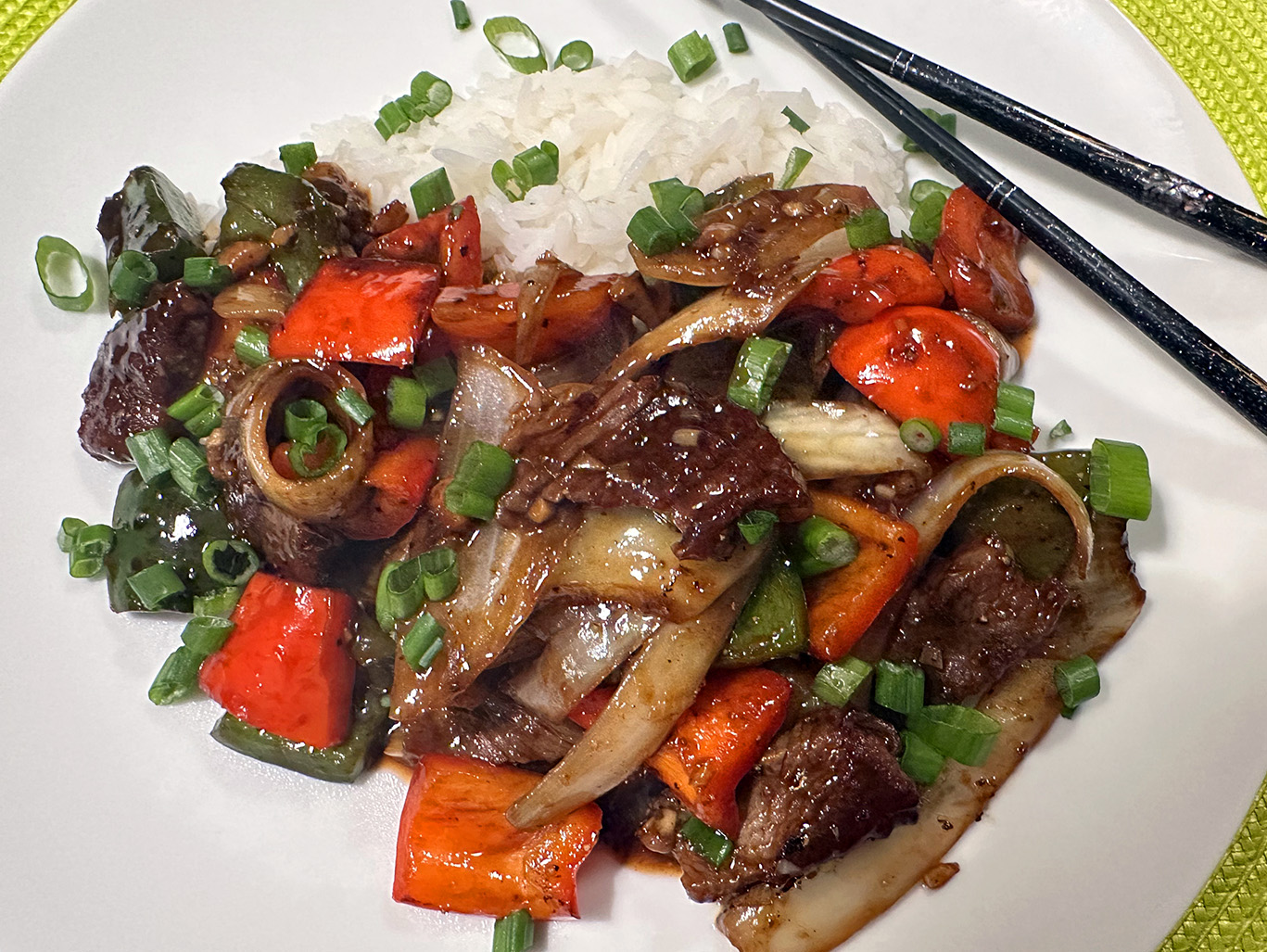
Pepper Steak Stir-Fry

The Hubs was recently gifted the cookbook “The Wok” by J. Kenji Lopez-Alt. Stir-fries are one of our favorite go-to dinners when we crave something quick and healthy, so this was a welcome addition to our culinary library. The Pepper Steak recipe was the first dish we tried and if the rest of them follow suit, they all promise to be winners!

Make sure to to follow the instructions for marinating and massaging the beef—it makes a tremendous difference in the tenderness of the steak. And if you have leftovers, they were just as tasty as the first time!

Pepper Steak Stir-Fry

  • Servings: 4
  • Difficulty: easy
  • Print

Ingredients

  • 1 lb. flank steak, skirt steak, hanger steak, or flap meat, cut into 1/4-inch thick strips
  • 1/4 cup soy sauce (divided)
  • 1/3 cup Shaoxing wine or dry sherry (divided)
  • 2 Tbsp. cornstarch
  • 1/3 cup low-sodium homemade or store-bought chicken stock
  • 1 Tbsp. sesame oil
  • 1 Tbsp. sugar
  • 1 Tbsp. freshly ground black pepper
  • 1 large green bell peppers, cored and cut into 1-inch squares
  • 1 large red bell pepper, cored and cut into 1-inch squares
  • 1 large onion, cut into 1/4 to 1/2-inch strips from pole to pole
  • 2 medium cloves garlic, finely minced
  • 2 tsp. finely minced fresh ginger
  • 3 scallions, whites only, finely minced, green parts for garnish if desired
  • 4 Tbsp. vegetable, peanut, or canola oil
  • Kosher salt to taste
  • Steamed rice, prepared as per package directions

Directions

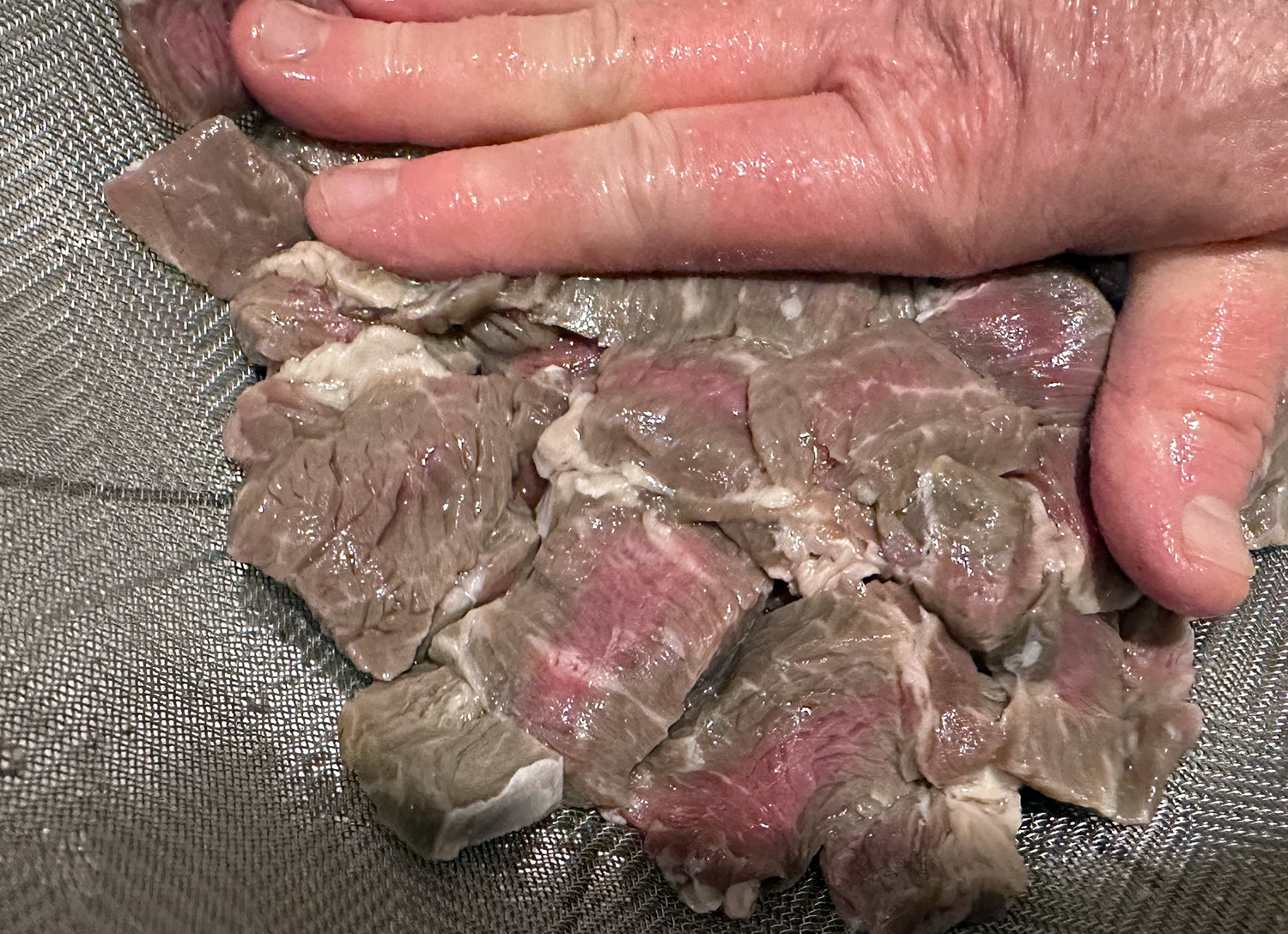
  1. For the Beef: Place the beef in a medium bowl, cover with cold water and vigorously agaitate it. Drain through a fine mesh strainer set in the sink and press on the beef with your hands to remove excess water.
  2. return the beef to the bowl, add the baking soda, and vigorously massage the baking soda into the meat, lifting the meat, throwing it down and squeezing it for 30-60 seconds.
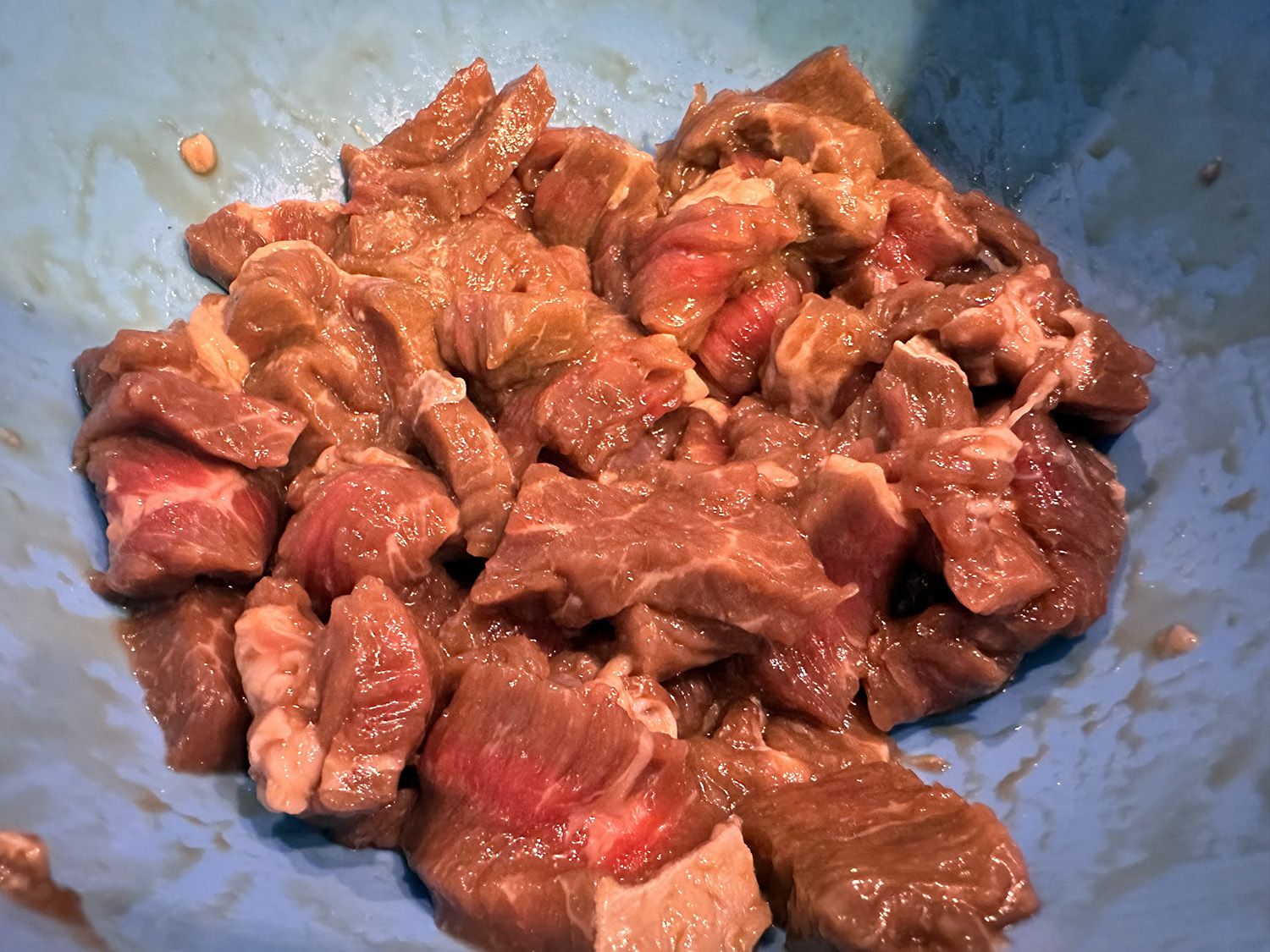
  3. dd the soy sauce , wine, sugar, and cornstarch and roughly work the marinade into the meat for at least 30 seconds. Set aside to marinate for 15-20 minutes.
  4. For the Sauce: Meanwhile, combine remaining soy sauce with corn starch and stir with a fork to form a slurry. Add remaining Shaoxing wine, chicken stock, sesame oil, sugar, and pepper. Set aside. Combine peppers and onions in a bowl and set aside. Combine garlic, ginger, and scallions in a bowl and set aside.
  5. For the Stir-fry: When ready to cook, heat 1 tablespoon oil in a wok over high heat until smoking. Add half of beef and cook without moving until well seared, about 1 minute. Continue cooking while stirring and tossing until lightly cooked but still pink in spots, about 1 minute.
  6. Transfer to a large bowl. Repeat with 1 more tablespoon of oil and remaining beef, adding beef to same bowl. Wipe out wok. Repeat with 1 more tablespoon oil and half of peppers and onions. Transfer to bowl with beef.
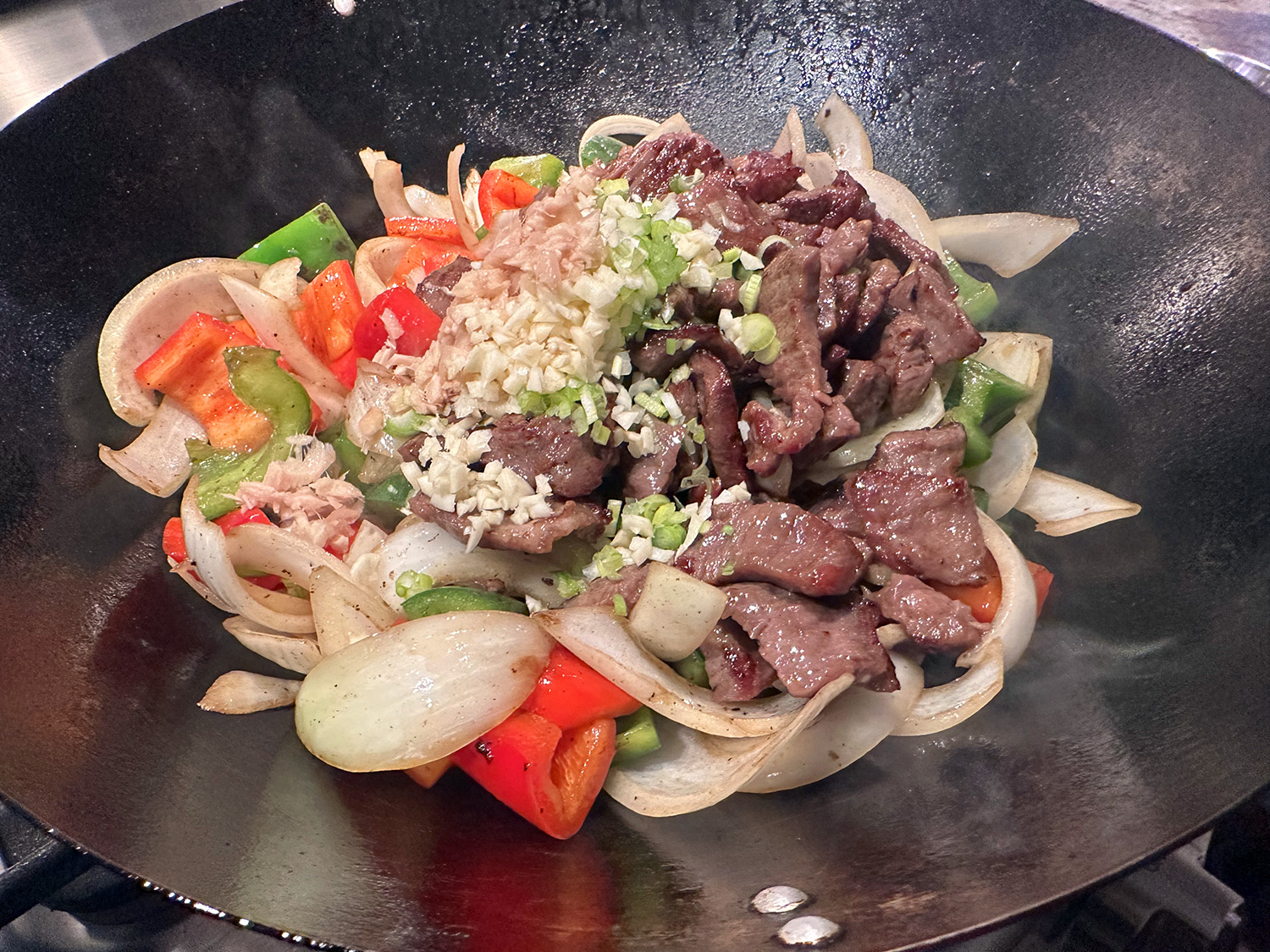
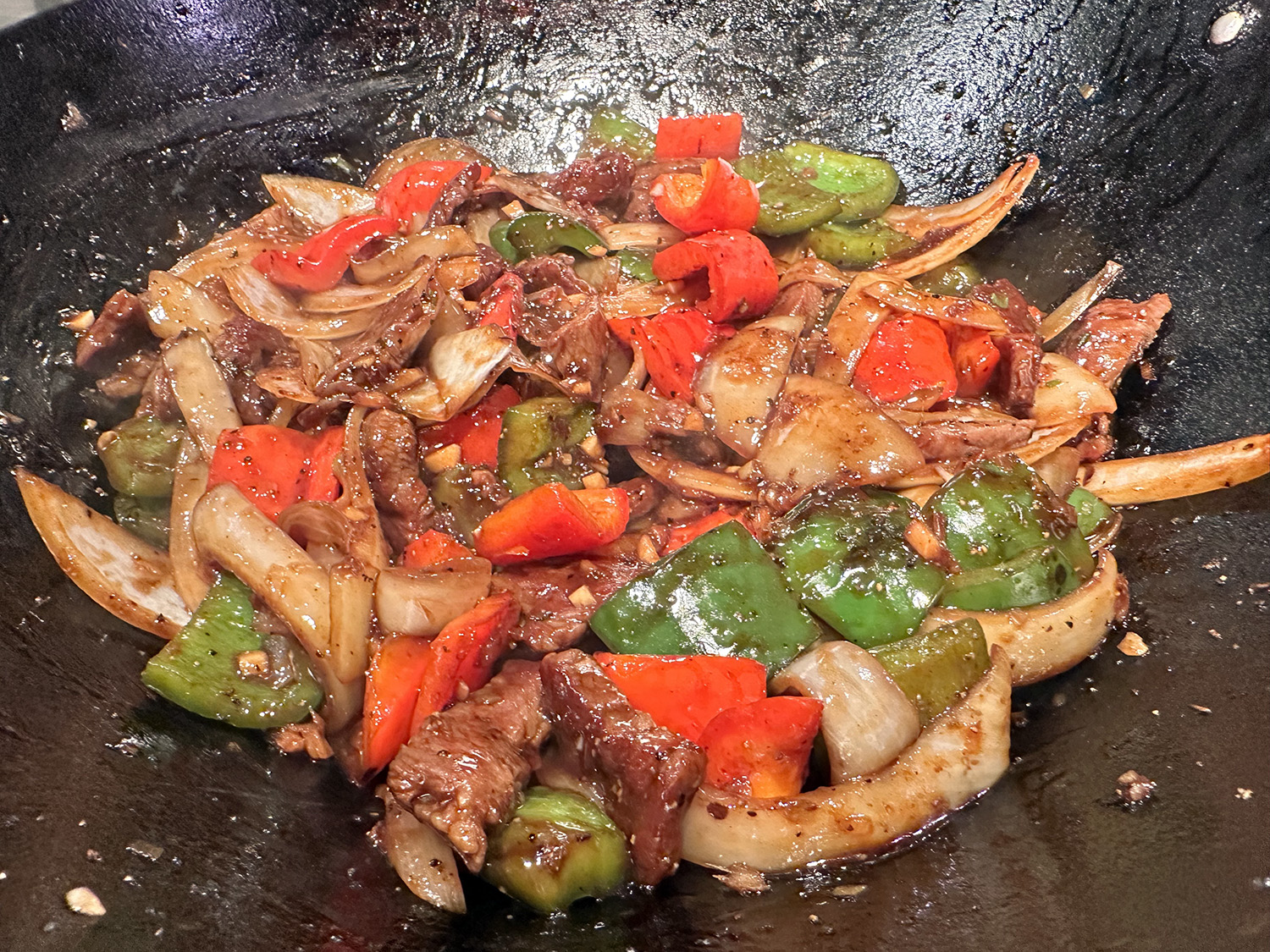
  7. Repeat with remaining oil and remaining peppers/onions. Return wok to high heat until smoking. Return peppers/onions/beef to wok and add garlic/ginger/scallion mixture. Cook, tossing and stirring until fragrant, about 30 seconds. Add sauce and cook, tossing and stirring constantly until lightly thickened, about 45 seconds longer. Carefully transfer to a serving platter and serve over steamed rice.

http://www.lynnandruss.com

Recipe from “The Wok” by J. Kenji Lopez-Alt

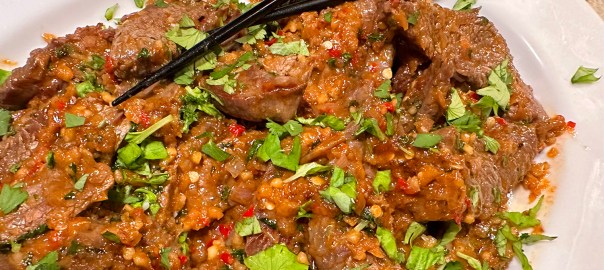
Spicy Beef with Peanuts and Chiles

Not a huge fan of take-out—although it does serve its purpose on occasion—here’s a stir-fry that will taste far better than any from the local Asian restaurant down the street. Yes, it is a bit prep-intensive, and uses several bowls, but well worth your time and effort. You could even do a lot of the prep earlier in the day, and throw it all together when ready to eat.

We paired the Spicy Beef with Peanuts and Chiles with a Rice Noodle Salad, that not only complimented the main dish, but shared many of the wonderful flavors. Even though the original recipe indicated to use a 12-inch skillet, next time we’ll use our wok. Keep in mind, you will probably need to sear the beef in two batches, so as not to steam the meat, but brown the slices.

The supermarket was not carrying either serrano or Thai chili peppers so we opted for Fresnos. As the recipe instructs, we did not discard the seeds, but if you can’t tolerate heat, you may want to scale back some, or omit altogether.

Our slices of flank steak measured about 1/4″-thick. If you prefer thinner slices, freeze the steak whole for about 15-20 minutes, then slice to your preferred width.

Spicy Beef with Peanuts and Chiles

  • Servings: 4-6
  • Difficulty: easy
  • Print

Ingredients

  • 1 lb. flank steak, thinly sliced on the diagonal against the grain
  • 2 Tbsp. soy sauce
  • 2 tsp. fish sauce
  • 1/4 tsp. kosher salt
  • 2 Tbsp. fresh lime juice
  • 1 Tbsp. light brown sugar
  • 1/4 cup salted peanuts
  • 2 large shallots, coarsely chopped
  • 2 Thai or serrano chiles, stemmed and coarsely chopped (don’t seed)
  • 3 Tbsp. canola or peanut oil
  • 1/3 cup coarsely chopped fresh cilantro
  • 3 Tbsp. chopped fresh basil

Directions

  1. Toss the steak with 1 tablespoon of the soy sauce, 1 tsp of the fish sauce, and the salt.
  2. Combine the remaining 1 tablespoon soy sauce and 1 tsp fish sauce with 1 tablespoon of the lime juice and the brown sugar and set aside.
  3. Pulse the peanuts, shallots, and chiles in a food processor until finely chopped. Transfer to a small bowl.
  4. Set a wok or 12-inch skillet over medium-high heat until hot, about 1 minute.
  5. Add 1-1/2 tablespoon of the oil and once it’s shimmering, add the beef.
  6. Cook, stirring, until the beef just loses its raw appearance, about 2 minutes. Transfer to a plate.
  7. Reduce the heat to medium, add the remaining 1-1/2 tablespoon oil and the shallot mixture, sprinkle with salt, and cook, stirring, until the shallots are soft, about 2 minutes.
  8. Return the beef to the pan. Stir the soy mixture and add it, along with half of the cilantro and basil, and cook, stirring to let the flavors meld, 2 minutes.
  9. Serve sprinkled with the remaining lime juice, cilantro, and basil.

http://www.lynnandruss.com

Original recipe from the now defunct Fine Cooking

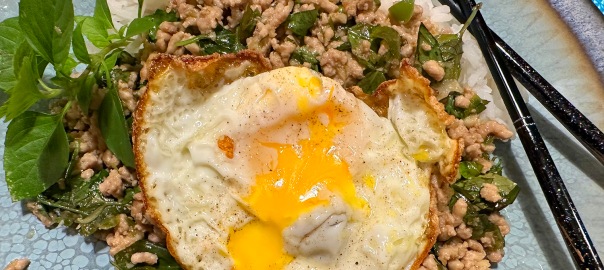
Thai Stir-Fried Pork with Basil, Chilies and Garlic

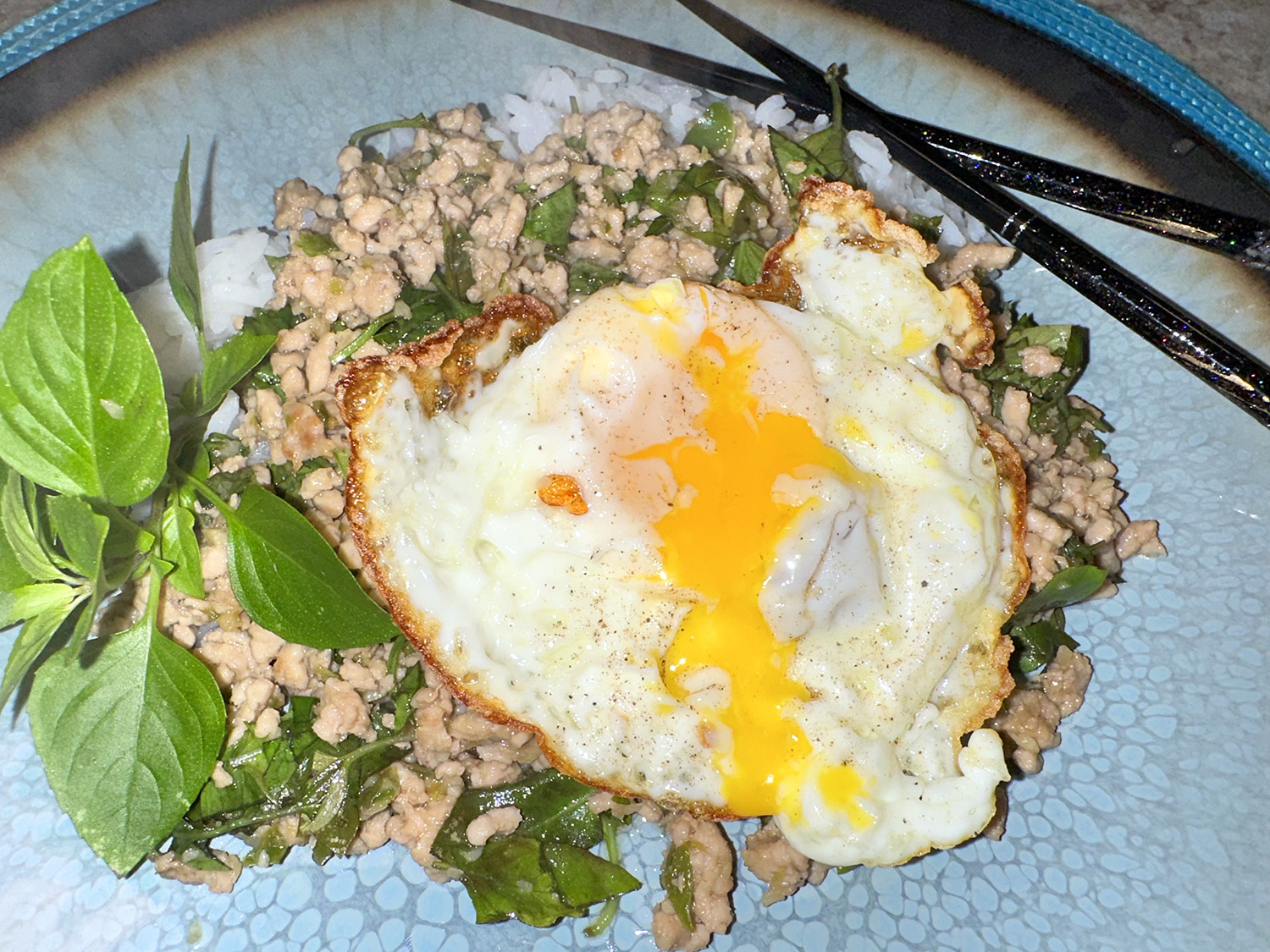
The Thai name for this dish is Pad Krapao meaning “fried holy basil”. It is a fragrant, flavor-packed Thai stir-fry. Despite the dishes name, the basil isn’t actually fried, but wilted into the mix at the very end of cooking.

Our holy basil—which has a peppery, menthol-like bite—was done for the season, so we opted to use our fresh Thai basil, still going strong in the raised herb bed. Sweet Italian basil is a third choice; but if using either of the last two, you’ll need to use 50% more.

To top it all off, a fried egg with a runny yolk is used, adding creaminess while the crisp edges provide crunch. Not typically a fan of runny yolks, I decided to go with it for this recipe. Glad I did because it did add not only to the flavor but also the contrasting textures.

As with most stir-fries, don’t start cooking until all of the ingredients are prepped and near the stove. And don’t cook those eggs in advance because they should still be warm when added to the dish. If you prefer a more fiery kick, don’t discard the chili seeds.

Thai Stir-Fried Pork with Basil, Chilies and Garlic

  • Servings: 3-4
  • Difficulty: easy
  • Print

Ingredients

  • 7 medium garlic cloves, smashed and peeled
  • 4 or 5 Fresno chilies. stemmed, seeded and roughly chopped
  • 1 Tbsp. oyster sauce
  • 1 Tbsp. soy sauce
  • 1 Tbsp. fish sauce
  • 1 Tbsp. packed light brown sugar
  • 6 Tbsp. grapeseed oil, divided
  • 4 large eggs
  • 1 lb. ground pork
  • 2 cups (1oz.) lightly packed holy basil OR 3 cups lightly packed Thai or Italian basil, torn
  • Steamed jasmine rice to serve

Directions

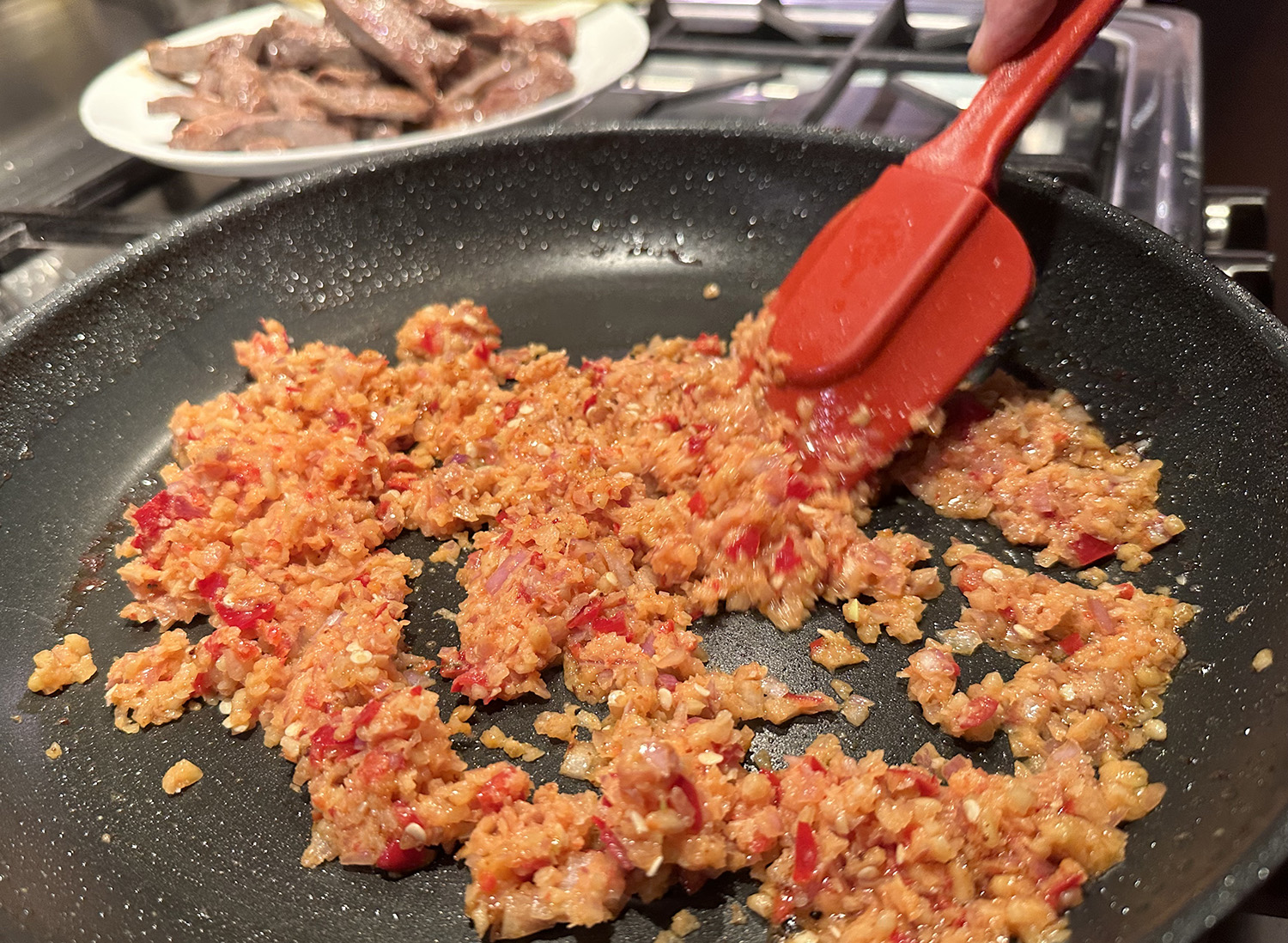
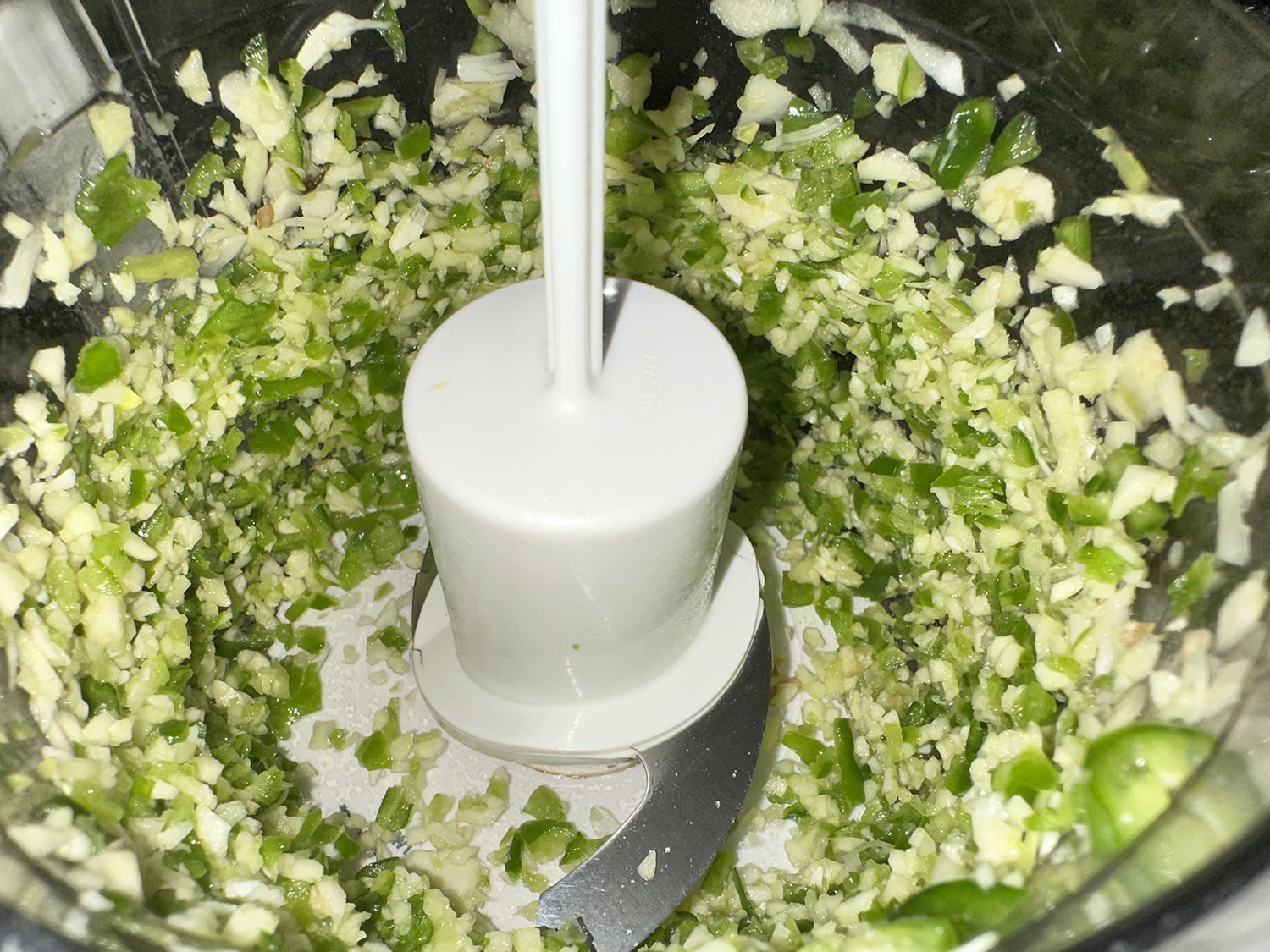
  1. In a food processor, combine the garlic and chilies. Pulse until finely chopped, with some slightly larger pieces remaining, 8 to 10 pulses.
  2. In a small bowl, whisk together the oyster sauce, sou sauce, fish sauce, sugar and a 1⁄2 cup water. Set both the garlic-chili mixture and the sauce mixture near the stove.
  3. In a 12- or 14-inch wok over medium-high, heat 2 tablespoons of the oil until barely smoking. Reduce to medium, the crack 2 eggs into the center of the wok, each in a different spot. Use a silicone spatula to gently push edges of the egg whites toward the yolk to keep the eggs separate.
  4. Cook, occasionally spooning some of the hot oil over the eggs until the whites are crisp and brown on the edges, 3 to 4 minutes. Using a thin metal spatula, transfer the eggs to a paper towel-lined plate. Repeat with remaining to 2 eggs. Wipe out wok.
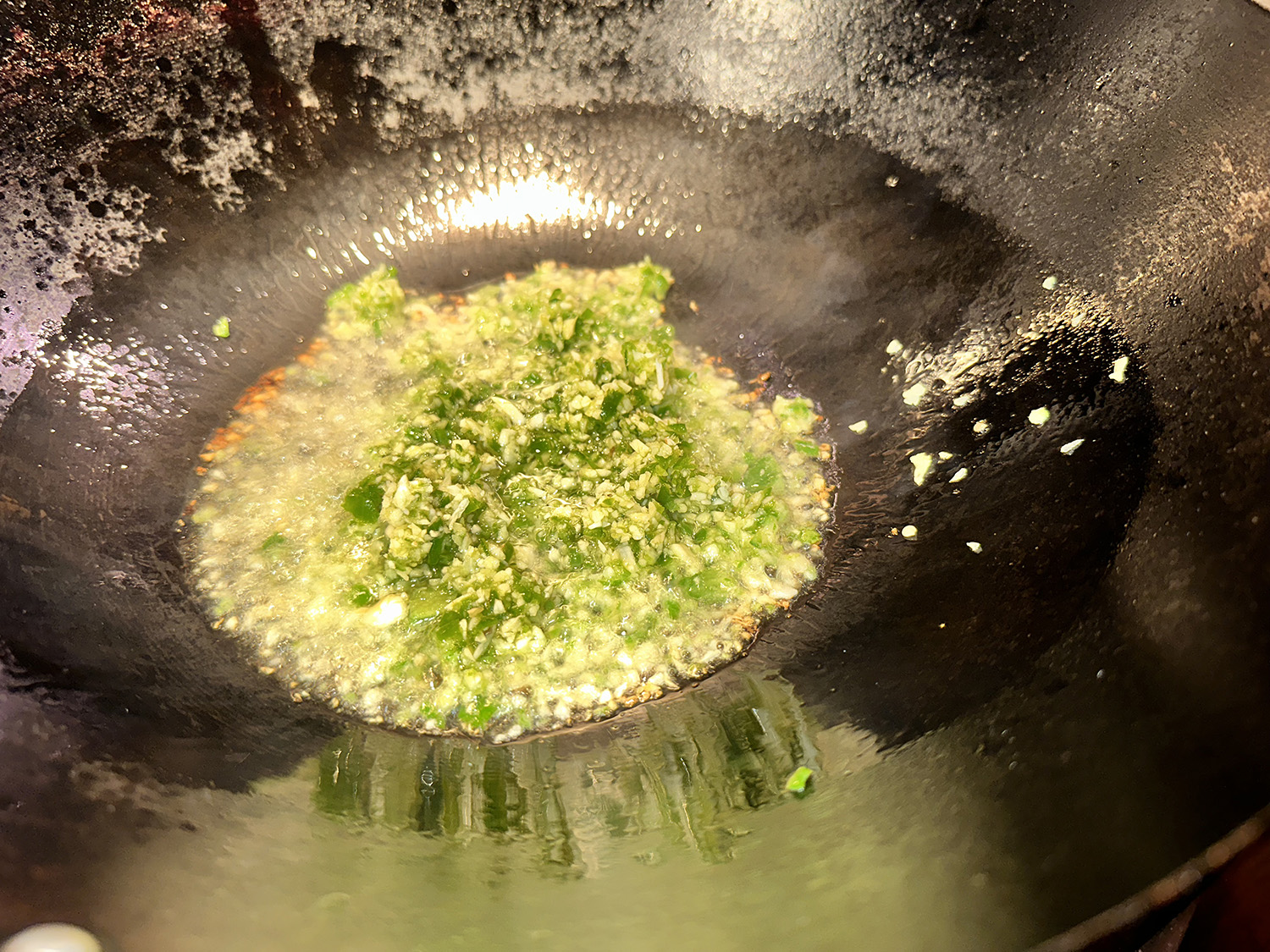
  5. Return the wok to medium-high and heat the remaining 2 tablespoons of oiluntil barely smoking. Add the garic-chili mixture and cook, stirring until fragrant and lightly browned.
  6. Add the pork and cook, stirring, until the meat is broken up into mostly small bits, 1 to 2 minutes.
  7. Add the sauce mixture and cook, stirring, until pork is no longer pink and the liquid thickens slightly but remains saucy, about 3 minutes.
  8. Off heat add the basil and stir until just wilted. Divide the rice and the stir-fry among serving plates and top each with an egg.

http://www.lynnandruss.com

Adapted from a recipe by Courtney Hill for Milk Street

Chinese Stir-Fry with Black Bean Sauce

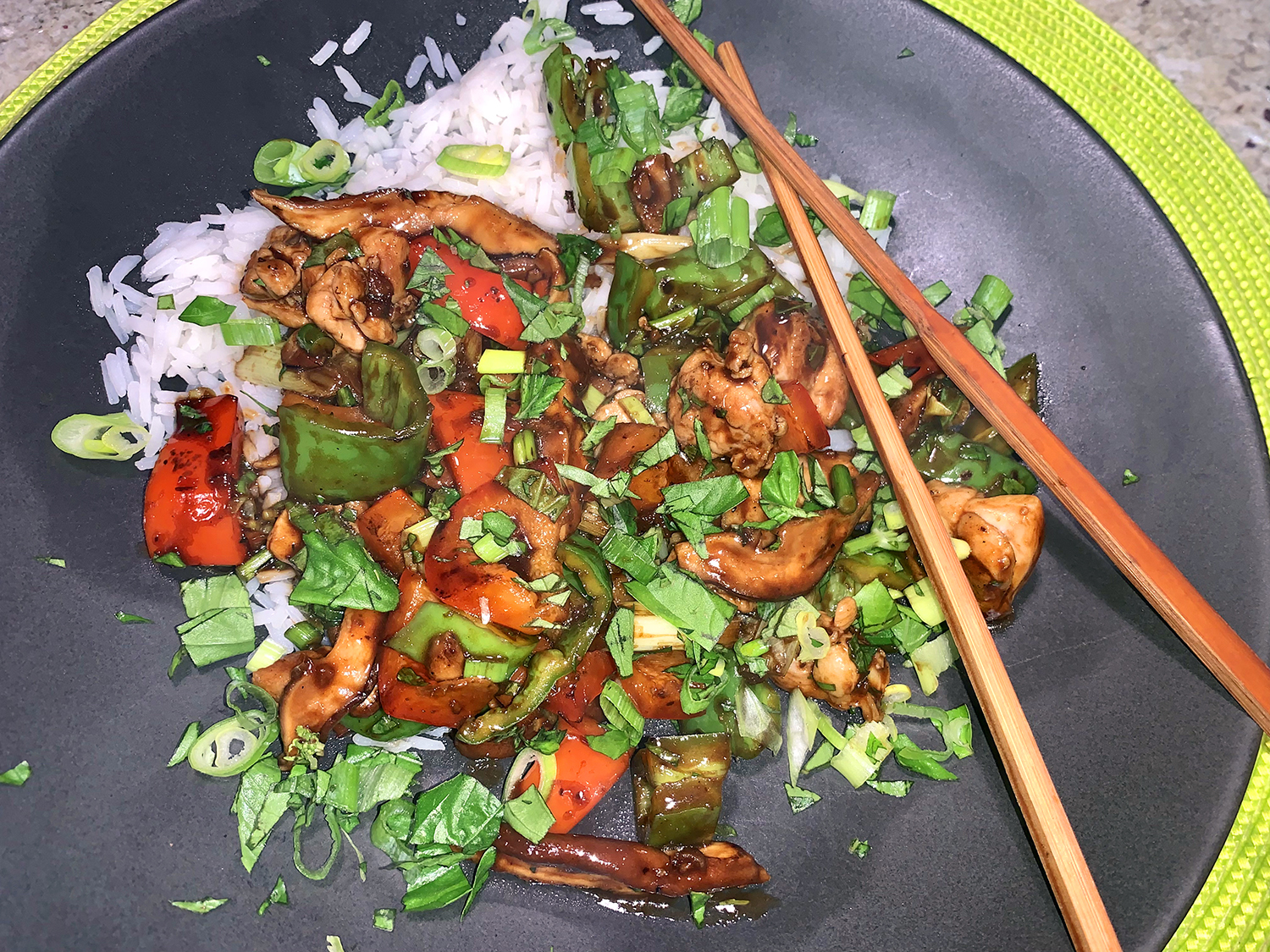
This tasty Asian sauce is quite adaptable to any stir-fry. Go ahead and double it if desired so that you have enough for an additional stir-fry in the future. The choice of vegetables is also a personal preference, but try to keep the total amounts about the same.

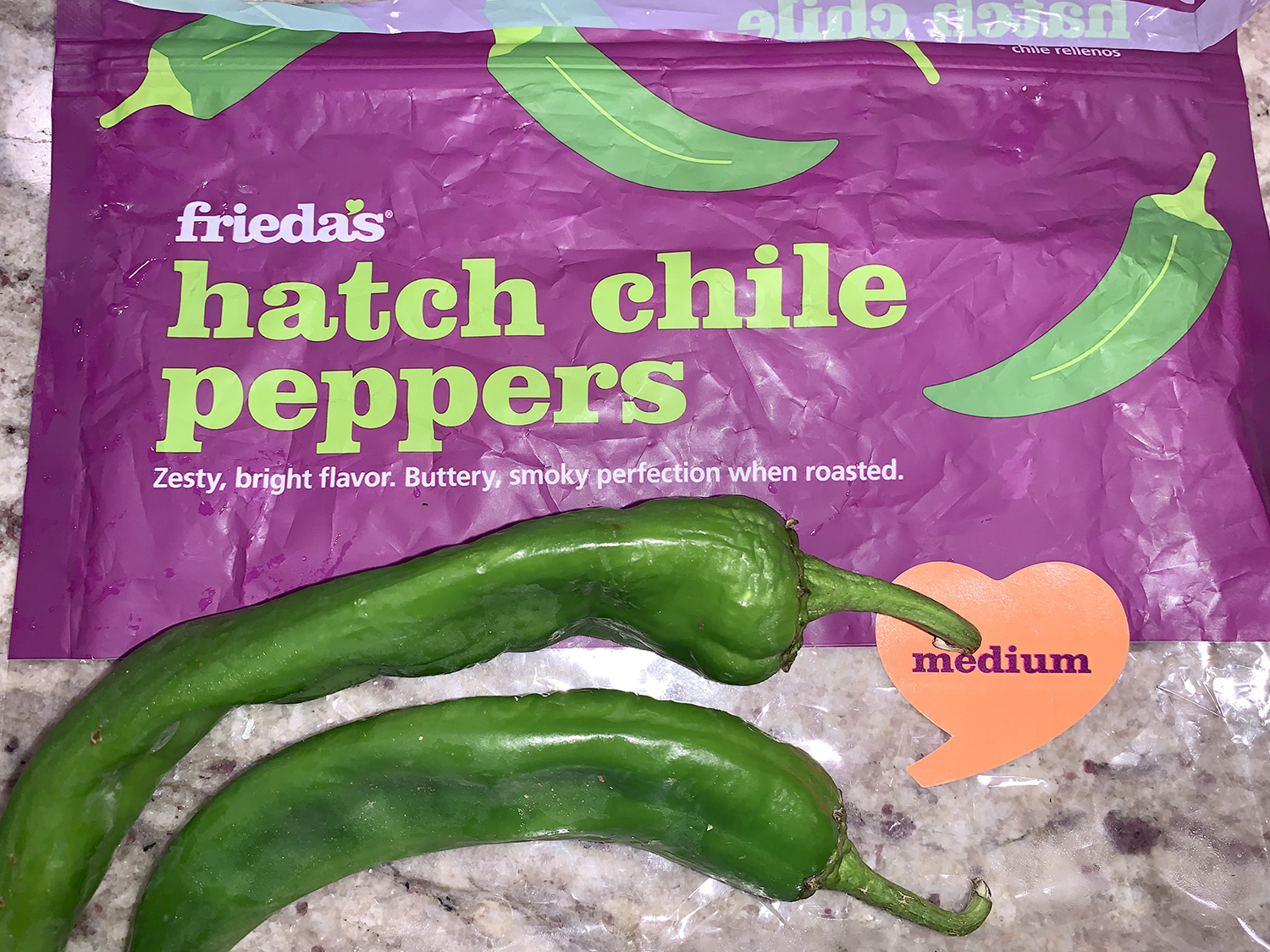
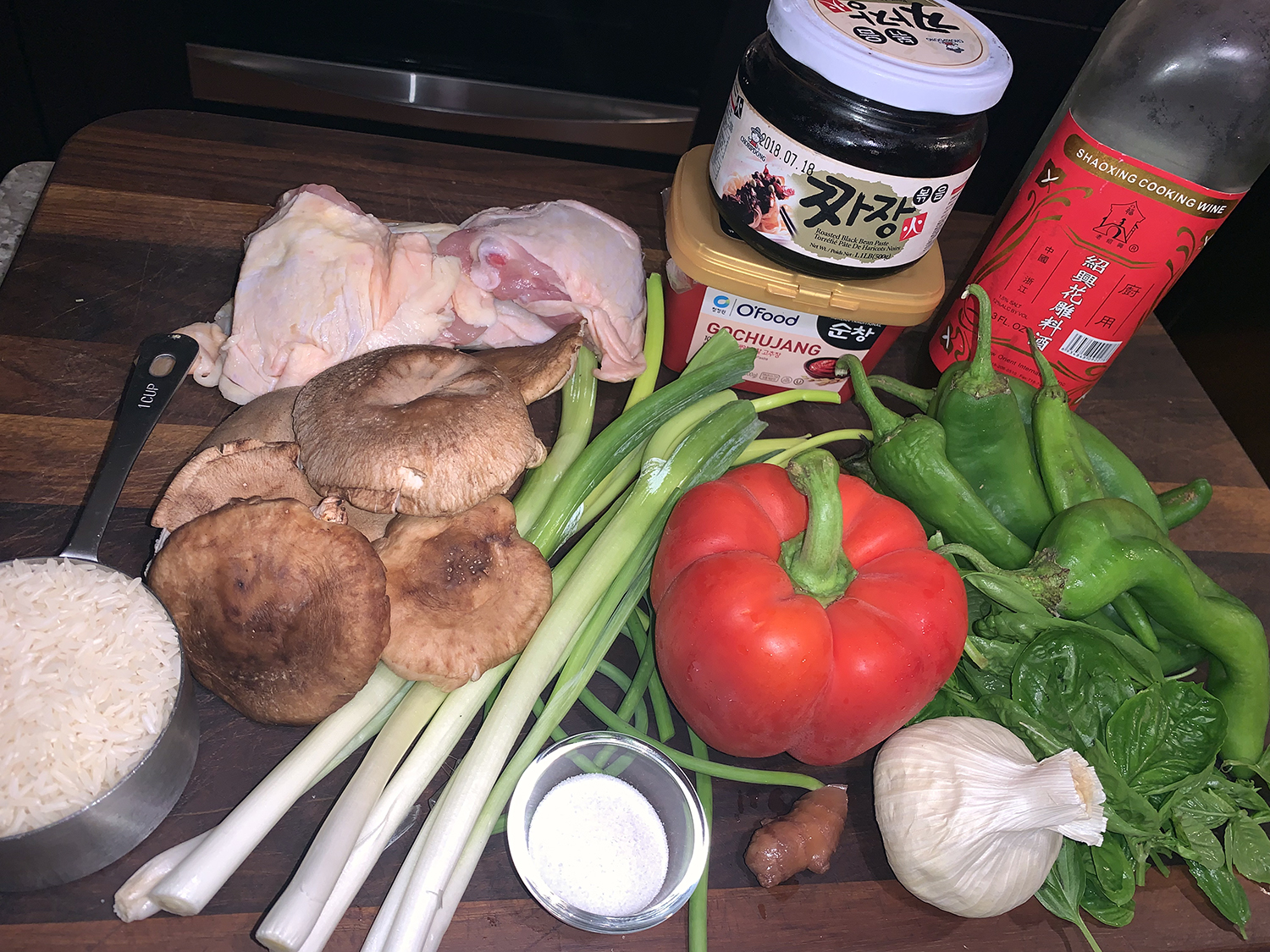
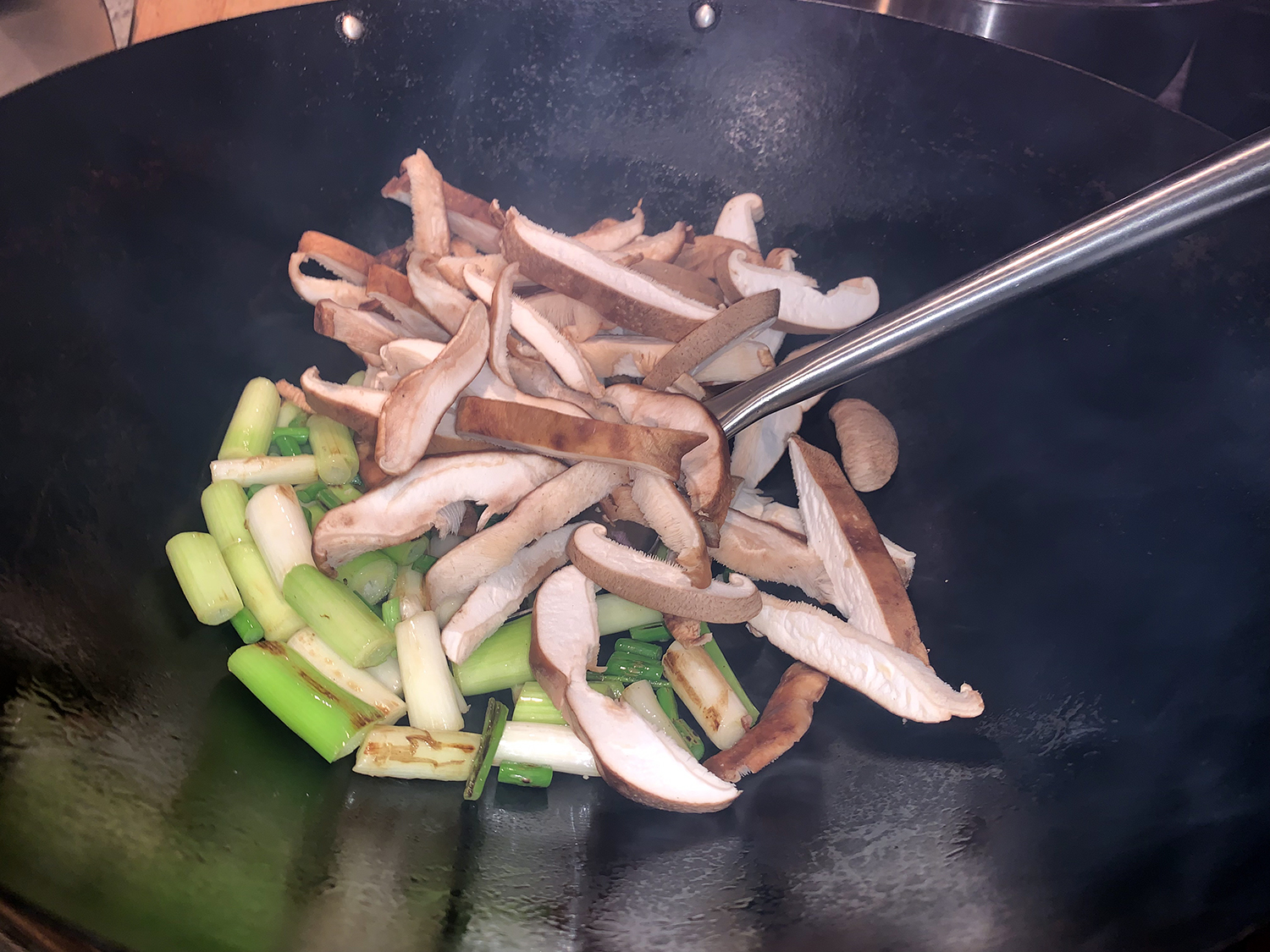
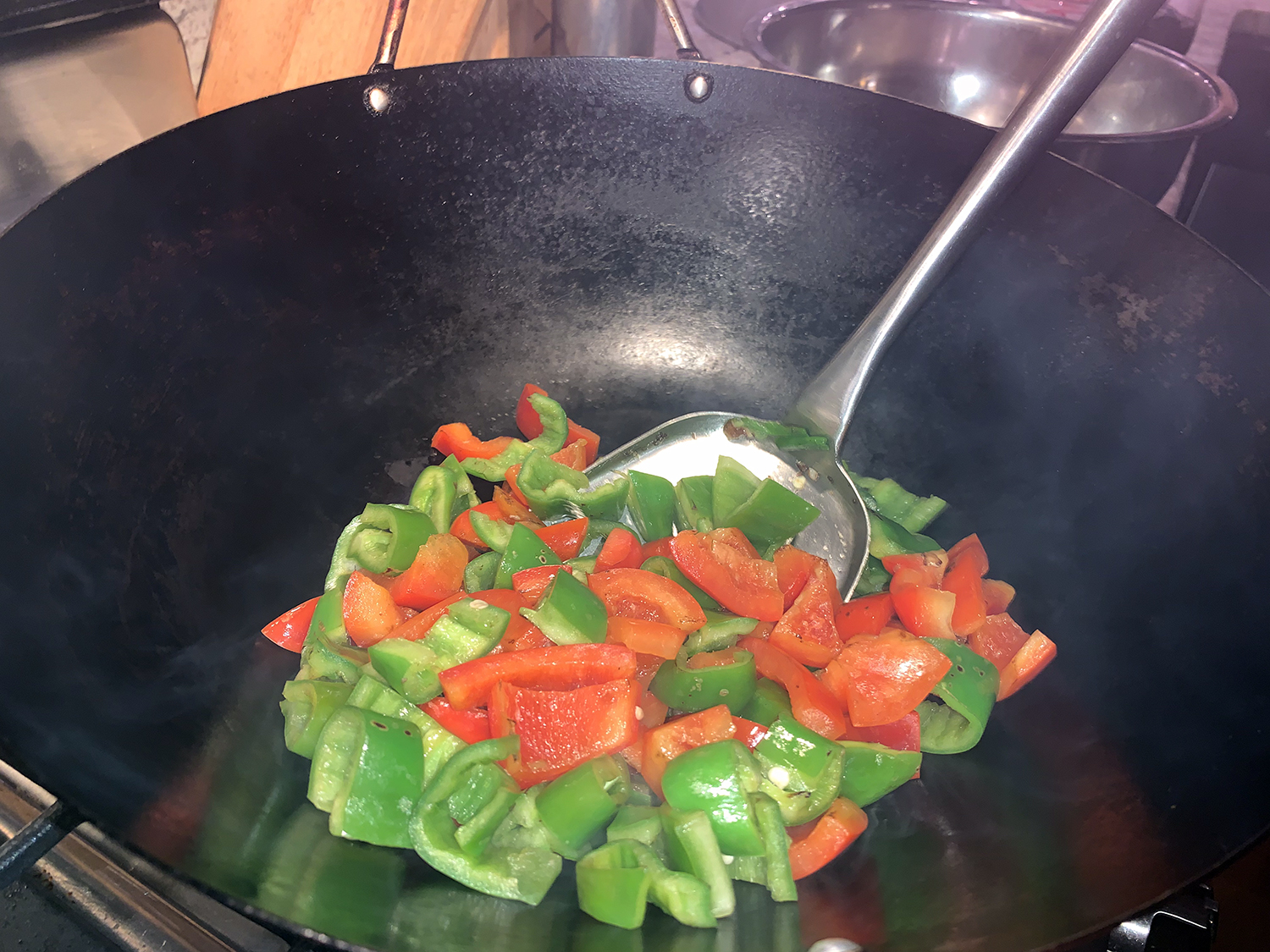
Prep all ingredients before you start the stir-fry. We substituted hatch chile peppers for the green bell because it was a new item that we had never tried before. They look very similar to long hots, which are quite spicy. The package indicated they had a medium heat level—we thought they were milder than that. They also take a bit longer than the red bell pepper to soften in the wok.

Chinese Stir-Fry with Black Bean Sauce

  • Servings: 4
  • Difficulty: easy
  • Print

Ingredients

Bean Sauce

  • 1 1/2 tsp. cornstarch
  • 1 1/2 tsp. dry sherry or Shaoxing
  • 1/2 cup chicken broth
  • 1 1/2 Tbsp. Chinese black bean and garlic sauce
  • 1 Tbsp. granulated sugar
  • 1 tsp. Asian chile paste
  • 1/2 tsp. minced fresh ginger

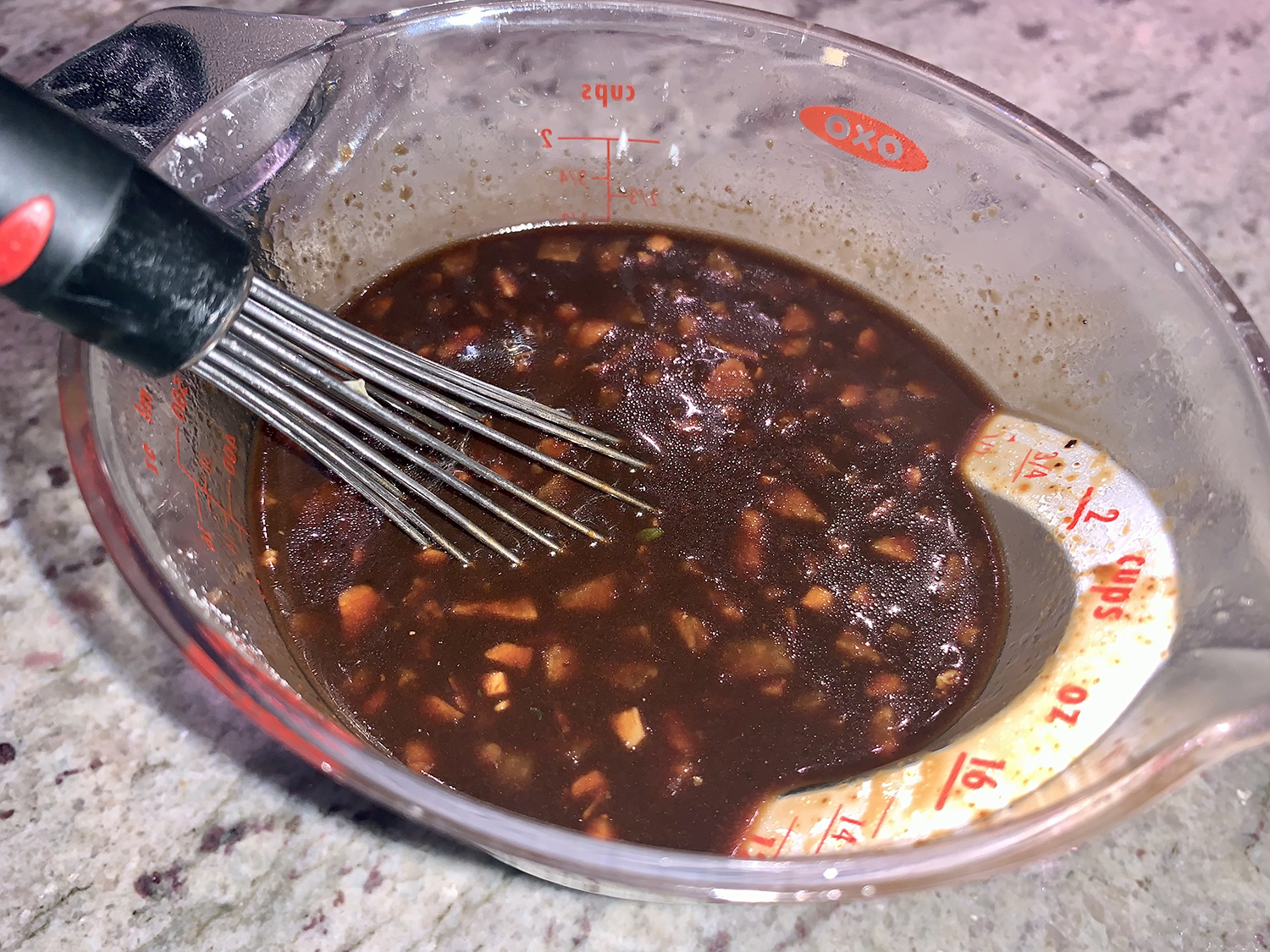
In a measuring cup, combine the cornstarch with the sherry, whisking to blend. Then whisk in the remaining ingredients. Set aside. Can be easily doubled.

Staples

  • 3 Tbsp. peanut oil
  • 1 lb. shiitake mushrooms, stems removed caps cut into 1/4″ slices
  • 6-8 scallions, trimmed with whites cut into 1″ lengths, greens sliced thin for garnish
  • 4 garlic scape stems cut into 1/2″lengths; or 3 garlic cloves sliced thin
  • 1 each red and green bell pepper, stemmed, seeded and cut into 1″ pieces
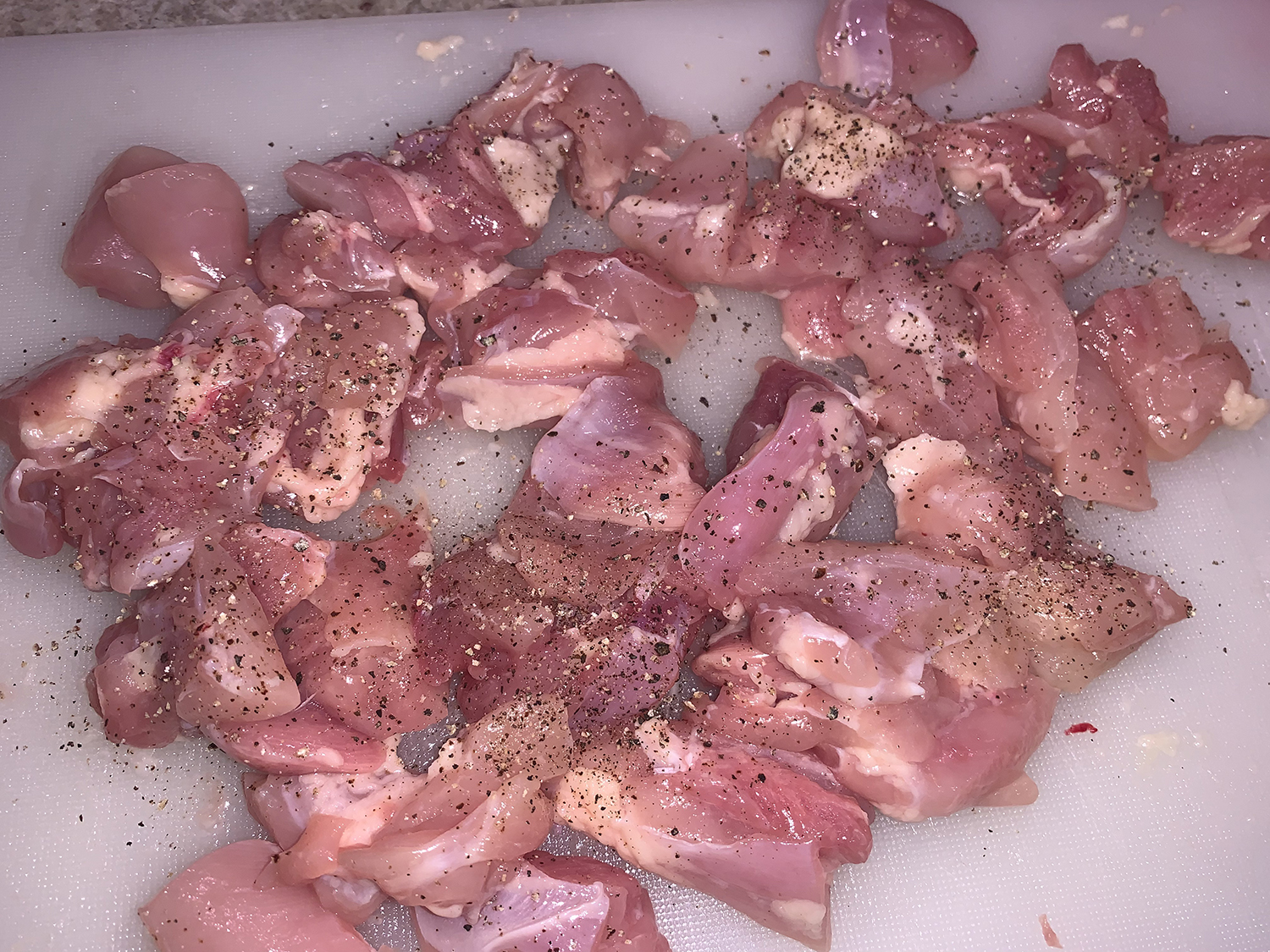
  • I lb. boneless, skinless chicken thighs, cut into 1″ chunks
  • 1/2 cup fresh basil leaves, roughly chopped
  • 1 cup white rice, cooked according to package directions

Directions

  • Heat a large wok on high. Add 1 tablespoon peanut oil. When smoking, add scallions and garlic stirring constantly for 2 minutes, then place into a large bowl.
  • Add 1 more tablespoon to wok and toss in bell pepper pieces, stir continuously for 2-3 minutes until they start to soften. Put in bowl with scallions.
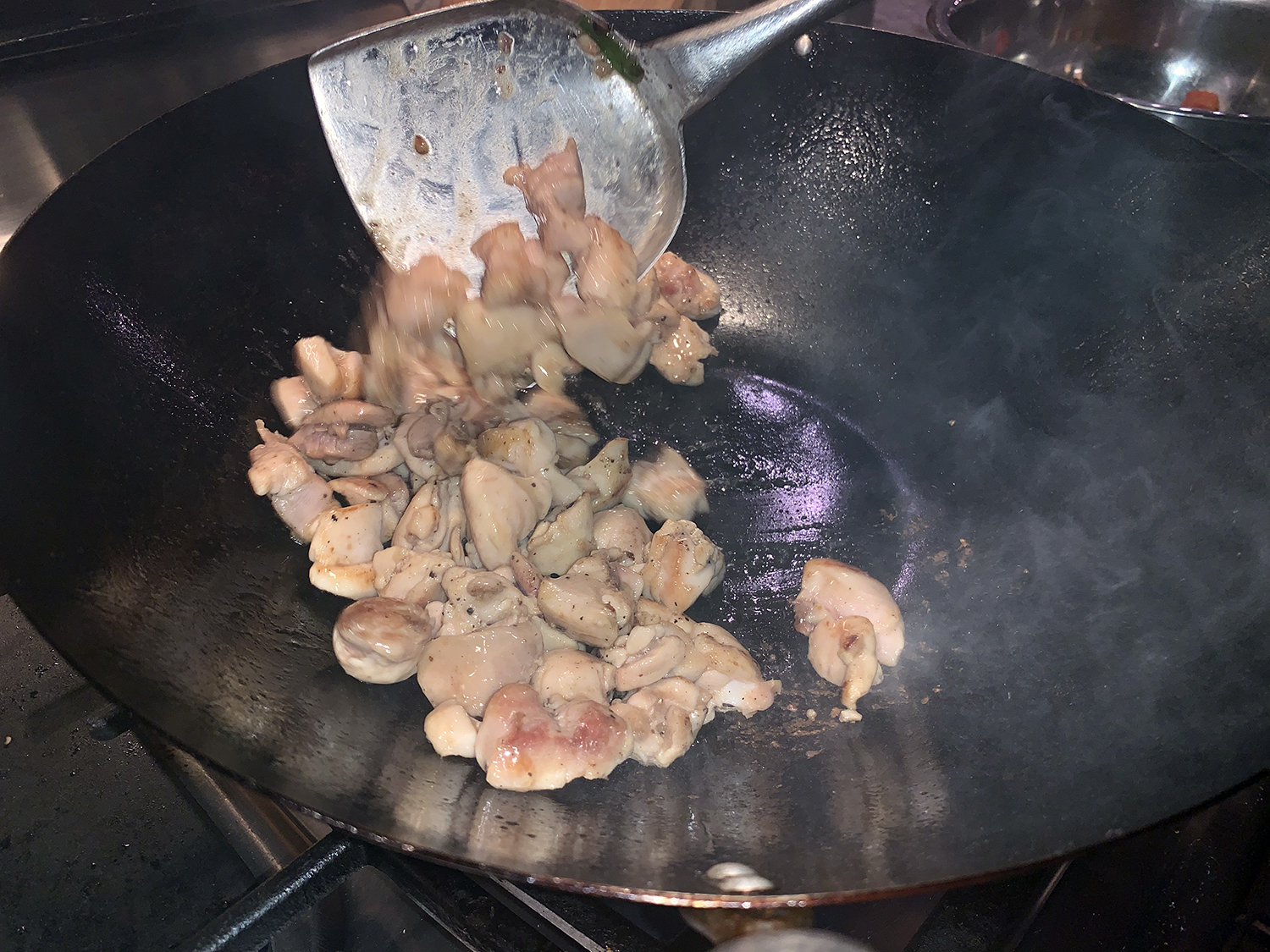
  • Put final tablespoon peanut oil into wok and then add chicken. Let chicken sit in hot wok for one full minute before you start to flip; then stir until the pink disappears. Add chicken to bowl with vegetables.
  • Pour reserved black bean sauce into wok, when hot dump all of the bowl ingredients into wok and stir-fry for 1 minute.
  • Serve steamed rice on each dinner plate topped with stir-fry. Garnish with chopped basil and scallion greens.

http://www.lynnandruss.com

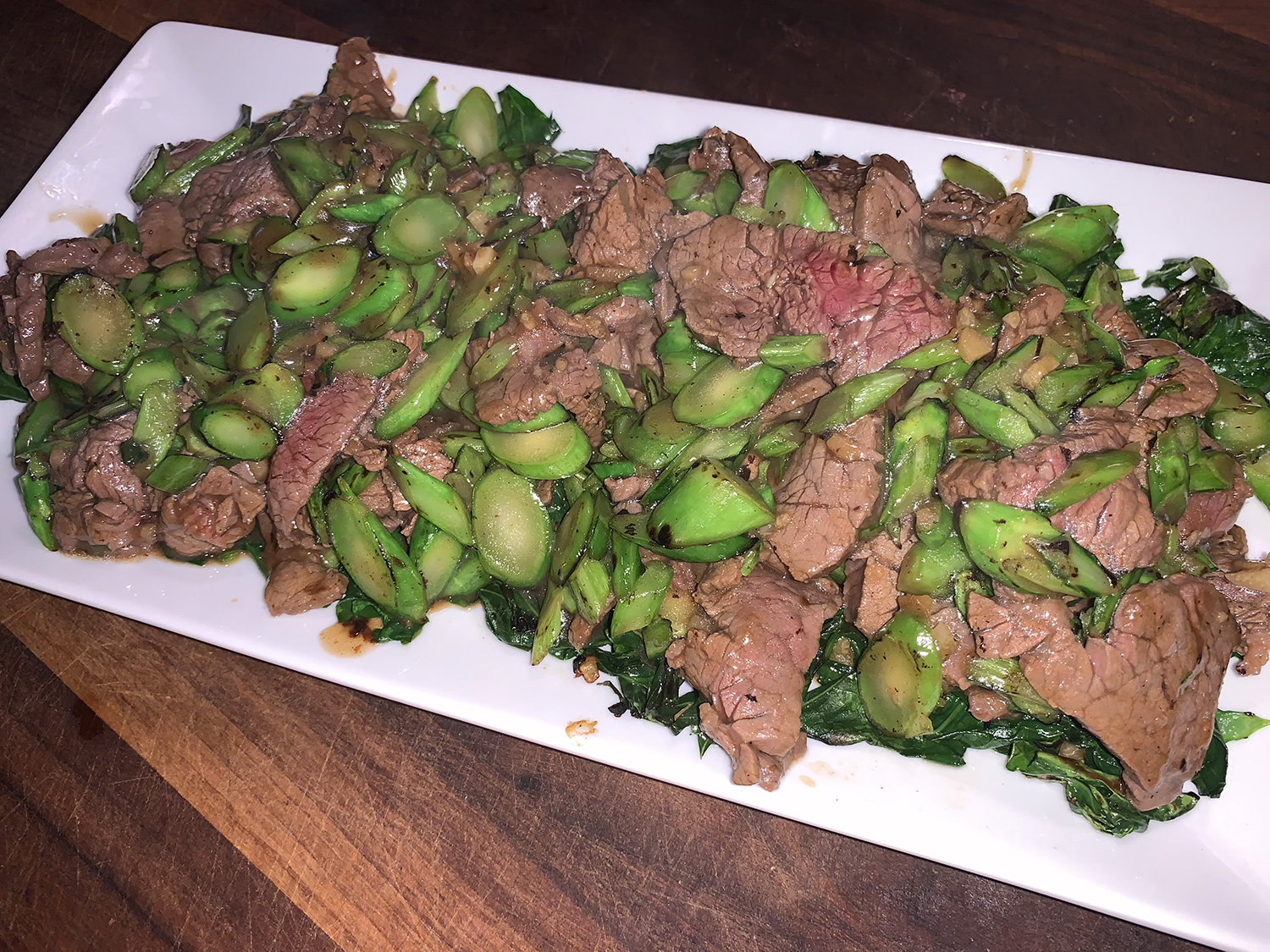
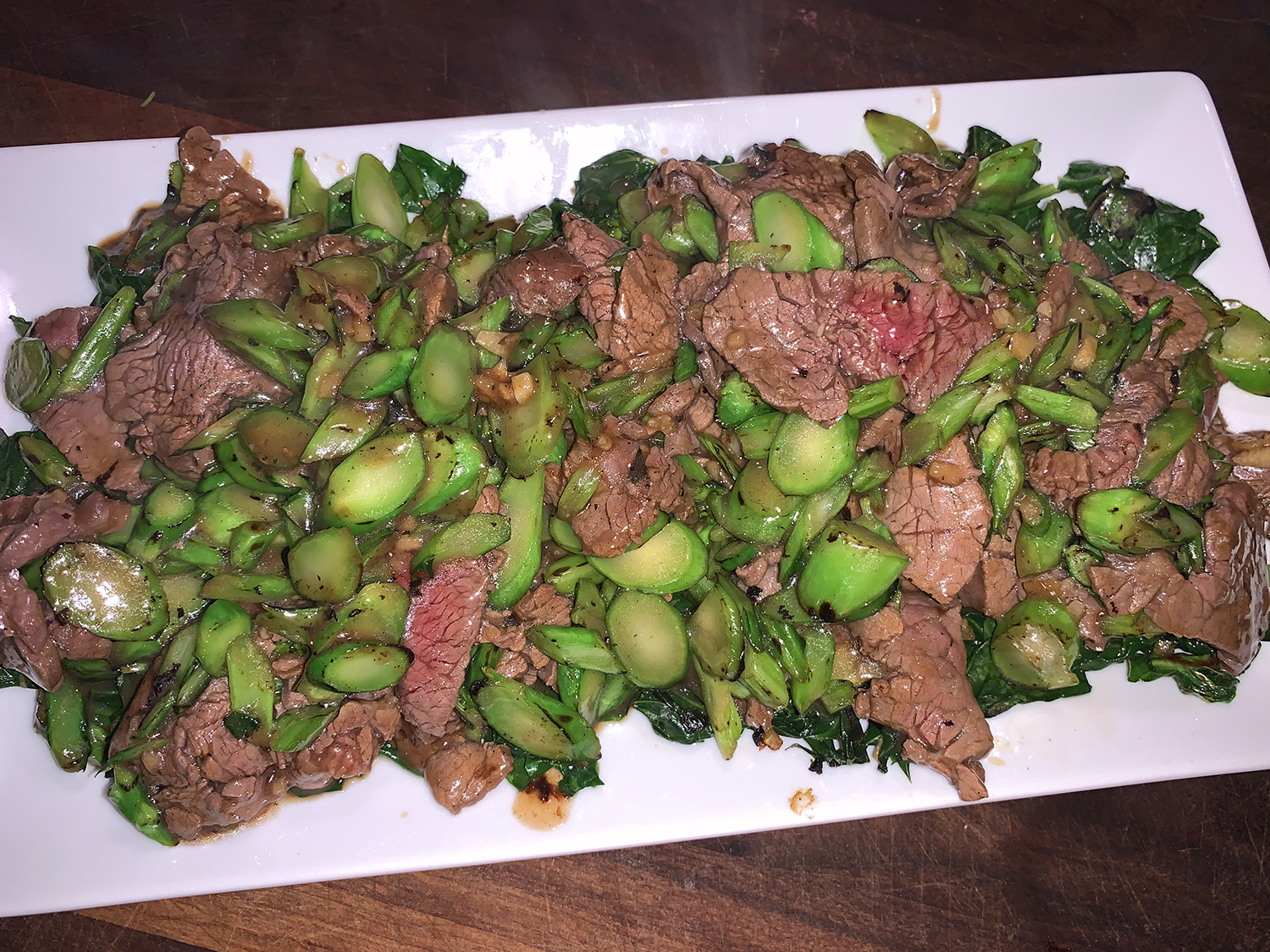
Stir-Fried Beef and Gai Lan

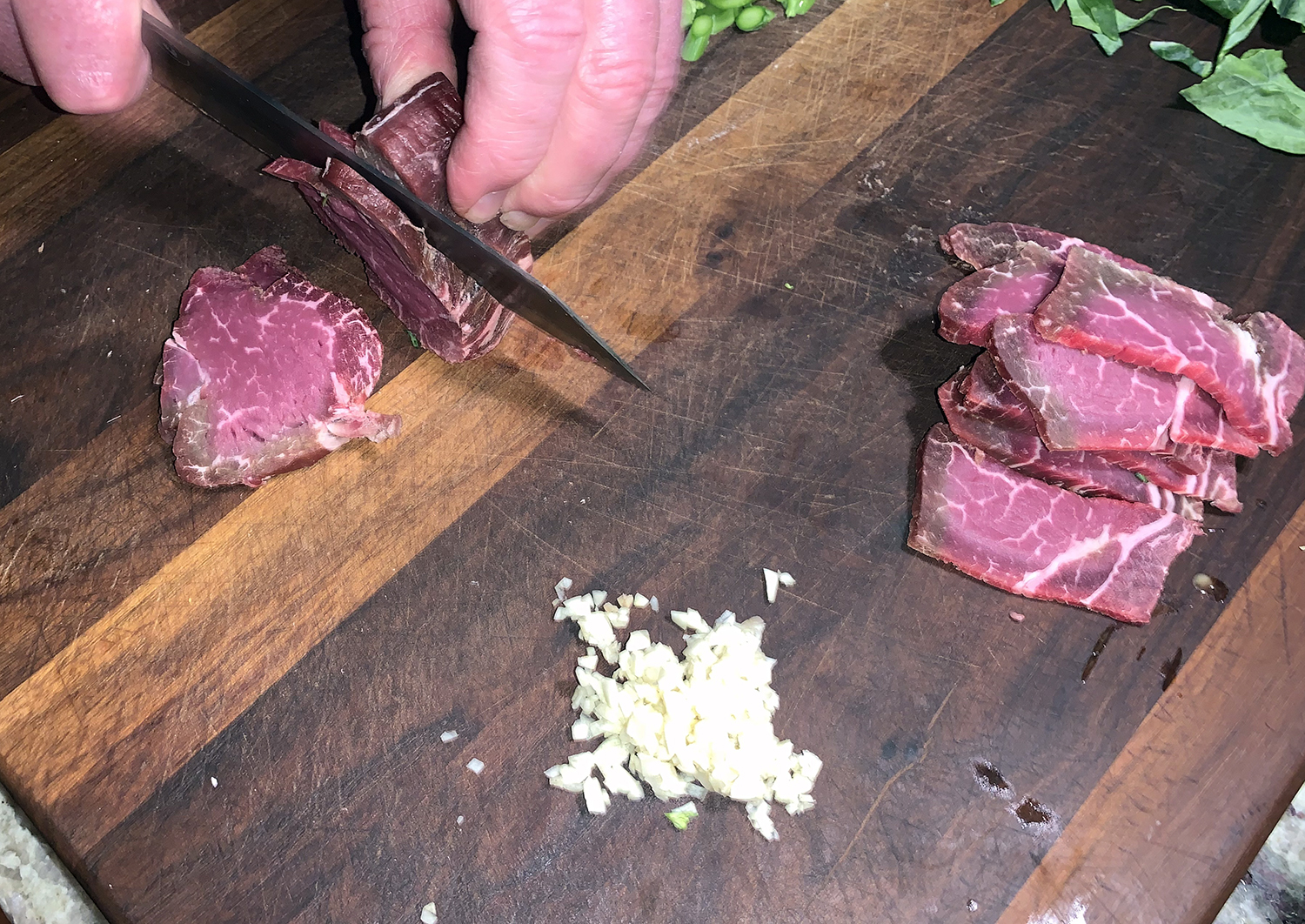
This riff on the ever-evolving Chinese American standard features gai lan (Chinese broccoli) and filet mignon: The luxurious cut is ideal for quick, high-heat cooking; is readily available in small portions; and just needed a brief chill in the freezer to firm up for easy slicing before being coated in a simple mixture of soy sauce, Shaoxing wine, and cornstarch.

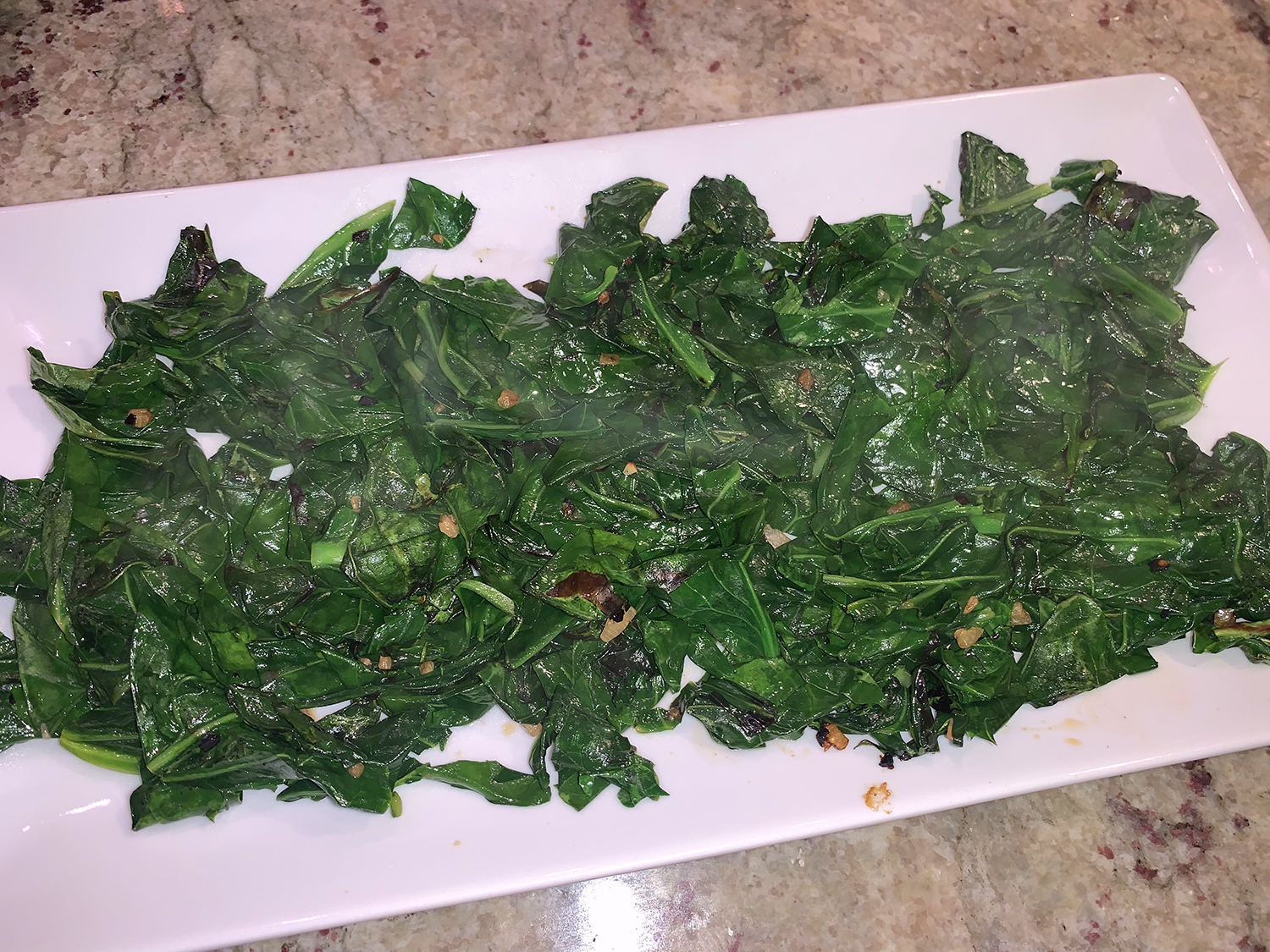
While the meat chills, slice the gai lan stalks thin on the bias and cut the tender leaves into wide ribbons. Start the stir-fry by cooking the stalks in oil in a hot wok. As they sizzle, the oil smolders, infusing the dish with a smoky aroma. Then set the stalks aside and stir-fry the leaves with garlic and toasted sesame oil, speeding their cooking with a small but flavorful addition of chicken broth before arranging them on a serving platter.

Finally, stir-fry the marinated beef; returned the stalks to the wok; and stir in a blend of chicken broth, oyster sauce, soy sauce, Shaoxing wine, toasted sesame oil, and cornstarch. The sauce thickens in less than a minute. Arrange the beef mixture over the leaves, ensuring that each bite is perfectly sauced. If desired, serve with steamed rice.

If gai lan is unavailable, you can use broccolini, substituting the florets for the gai lan leaves. Do not use standard broccoli. In the end, we found it served 3 sufficiently, or 4 “small plates”.

Stir-Fried Beef and Gai Lan

  • Servings: 3-4
  • Difficulty: easy
  • Print

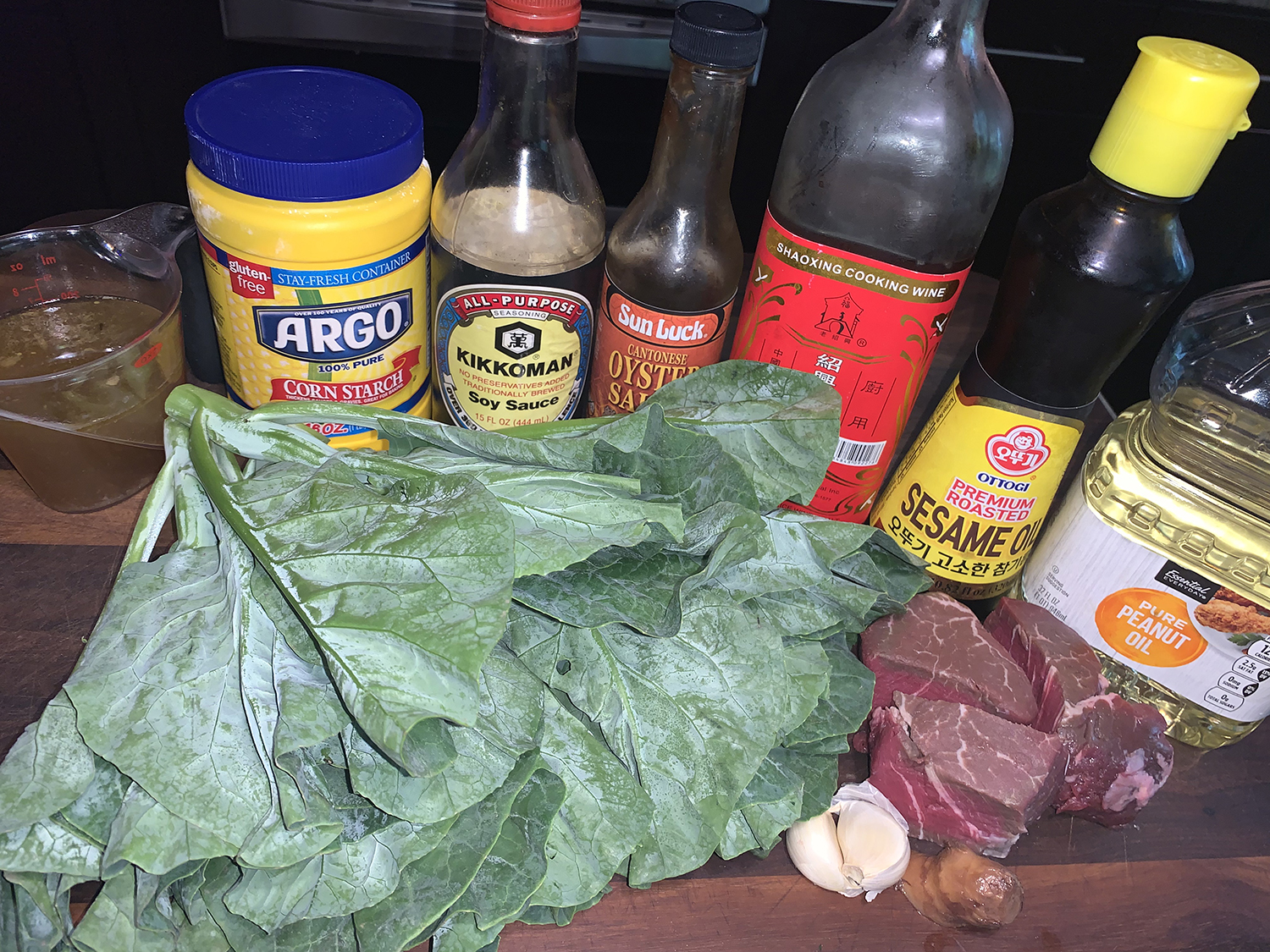
Ingredients

  • 1 (8-oz.) center-cut filet mignon, trimmed
  • 1 lb. gai lan, stalks trimmed
  • 5 tsp. Shaoxing wine or dry sherry, divided
  • 1 Tbsp. soy sauce, divided
  • 2 tsp. cornstarch, divided
  • ¾ cup chicken broth, divided
  • 2 Tbsp. oyster sauce
  • 1½ tsp. toasted sesame oil, divided
  • 2 Tbsp. vegetable oil, divided
  • 1½ tsp. grated fresh ginger
  • 2 cloves garlic, divided

Directions

  1. Prepare white rice as per package directions.
  2. Cut beef into 4 equal wedges. Transfer to plate and freeze until very firm, 20 to 25 minutes. While beef freezes, prepare gai lan. Remove leaves, small stems, and florets from stalks; slice leaves crosswise into 1½-inch strips (any florets and stems can go into pile with leaves); and cut stalks on bias into ¼-inch-thick pieces. Set aside.
  3. When beef is firm, stand 1 piece on its side and slice against grain ¼ inch thick. Repeat with remaining pieces. Transfer to bowl. Add 1 teaspoon Shaoxing wine, 1 teaspoon soy sauce, and 1 teaspoon cornstarch and toss until beef is evenly coated. Set aside.
  4. In second bowl, whisk together ½ cup broth, oyster sauce, ½ teaspoon sesame oil, remaining 4 teaspoons Shaoxing wine, remaining 2 teaspoons soy sauce, and remaining 1 teaspoon cornstarch; set aside.
  5. In third bowl, combine 4 teaspoons vegetable oil, ginger, and ¼ teaspoon garlic.
  6. Heat 1 teaspoon vegetable oil in wok over high heat until just smoking. Add stalks and cook, stirring slowly but constantly, until spotty brown and crisp-tender, 3 to 4 minutes. Transfer to bowl.
  7. Add remaining 1 teaspoon sesame oil, remaining 1 teaspoon vegetable oil, and remaining ½ teaspoon garlic to wok and cook, stirring constantly, until garlic is fragrant, about 15 seconds. Add leaves and cook, stirring frequently, until vibrant green, about 1 minute. Add remaining ¼ cup broth and cook, stirring constantly, until broth evaporates, 2 to 3 minutes. Spread evenly on serving dish.
  8. Add ginger-garlic mixture to wok and cook, stirring constantly, until fragrant, about 30 seconds. Add beef and cook, stirring slowly but constantly, until no longer pink, about 2 minutes. Return stalks to wok and add oyster sauce mixture. Cook, stirring constantly, until sauce thickens, 30 to 60 seconds. Place mixture on top of leaves. Serve.

http://www.lynnandruss.com

Recipe by Lan Lam for Cook’s Illustrated

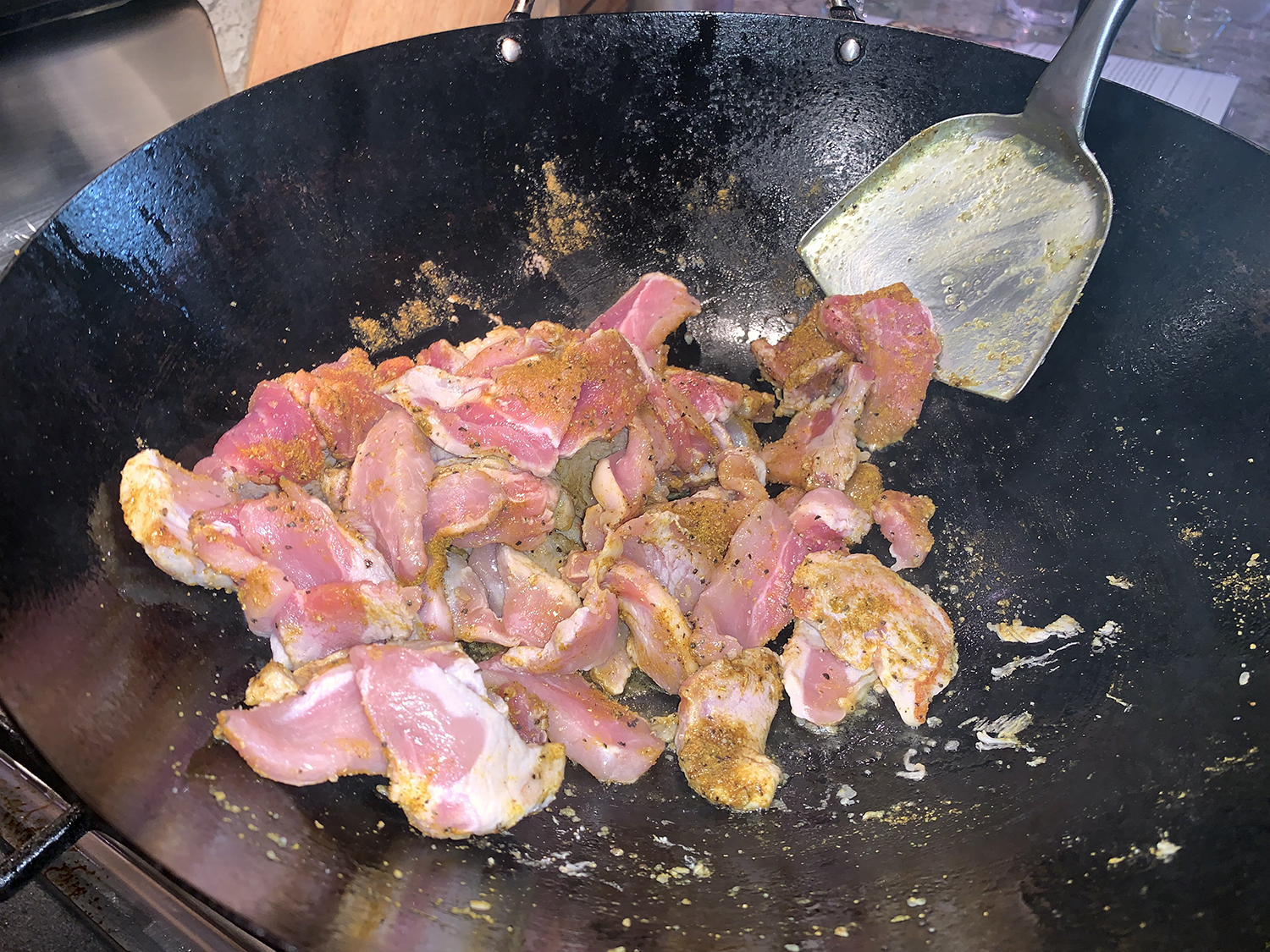
Ginger-Curry Pork and Green Beans

Identity crisis? This quick meat and vegetable curry starts as a stir-fry then finishes as a braise—but a quick braise. Usually pork shoulder takes hours to braise in the oven, but since the meat is cut into thin strips, the time dwindles considerably. Boneless pork shoulder has a rich, full flavor; plus slicing it thin before cooking counters its chewiness.

Green beans cook alongside, absorbing the spiced broth and providing a fresh, vegetal contrast. Curry powder is used as a flavor base, and whole spices amp up the intensity. Just remember to remove the cardamom pods before serving (if you can see them). The Hubs got quite a jolt when he accidentally bit into one!

In some cases you have choices on which spice to use. We incorporated as much of them as possible, i.e. both onion and garlic. And in the case of the noodles, you can always substitute steamed rice instead.

Ginger-Curry Pork and Green Beans

  • Servings: 3-4
  • Difficulty: easy
  • Print

Ingredients

  • 2 Tbsp. neutral oil
  • 1 lb. boneless pork shoulder, trimmed, cut into 2-inch strips and sliced ¼ to ⅛ inch thick
  • 2 tsp. curry powder
  • Kosher salt and ground black pepper
  • 1 medium yellow onion, finely chopped OR 8 medium garlic cloves, chopped OR both
  • 1 Tbsp. minced fresh ginger
  • 3 cardamom pods, crushed OR 1 cinnamon stick OR 8 curry leaves OR a combination
  • 8 oz. green beans, trimmed and halved on the diagonal
  • 1 1⁄2 cups water
  • Rice OR cellophane noodles, cooked according to package directions

Directions

  1. In a 12-inch skillet over medium-high, heat the oil until barely smoking. Add the pork, curry powder, 1½ teaspoons salt and ½ teaspoon pepper. Cook, stirring once or twice, until the pork is well browned, about 4 minutes.
  2. Add the onion, ginger and cardamom; cook, stirring, until the onion is browned, about 2 minutes.
  3. Add the beans and 1½ cups water; bring to a simmer, scraping up any browned bits. Cover partially and cook, stirring occasionally, until the beans are tender and the sauce clings to the meat, about 15 minutes.
  4. Meanwhile, prepare your rice or cellophane noodles according to package directions.
  5. Remove and discard the cardamom from the sir-fry, then taste and season with salt and pepper.
  6. Optional garnish: Chopped fresh cilantro OR toasted sesame seeds OR chopped chilies OR a combination

http://www.lynnandruss.com

Adapted from a recipe by Courtney Hill for Milk Street

Thai Cashew Chicken Stir-Fry with Coconut Rice

Thai stir-fries are one of our favorite go-to’s; and this recipe rachetes it up a notch with the addition of Thai cashews (find them at Trader Joe’s). And if you like bold flavors, then this will end up on your short list.

Originally from Milk Street, we scaled back on the chicken by 25%, but increased the bell pepper quotient by 100%, adding a yellow one along with the red pepper, making it more veggie-forward. Another change was doubling the sauce (except for the garlic). These alterations are noted in the recipe below.

And while you could pair it simply with steamed jasmine rice, you might want to try the Coconut Rice recipe below for even more depth of flavor.

I have to give a shout-out to these fabulous Trader Joe’s Thai cashews. Not only are they a fabulous snack right out of the bag, but they’re perfect for this dish. If you can get your hands on them, by all means do so.

NOTE: Don’t discard the marinade after draining the chicken. It’s mixed with ¼ cup water and becomes a sauce that lightly coats the chicken and vegetables.

Thai Cashew Chicken Stir-Fry with Coconut Rice

  • Servings: 4
  • Difficulty: easy
  • Print

Ingredients

  • 5 medium garlic cloves, finely grated
  • 3 Tbsp. fish sauce
  • 6 Tbsp. soy sauce
  • 4 tsp. white sugar
  • 4 tsp. cornstarch
  • 1 teaspoon red pepper flakes
  • Ground white pepper
  • 1 1⁄2 lbs. boneless, skinless chicken thighs, trimmed and cut into 1-inch pieces
  • 2 Tbsp. peanut oil
  • 1 red bell pepper, stemmed, seeded and sliced into thin strips
  • 1 yellow bell pepper, stemmed, seeded and sliced into thin strips
  • 1 bunch scallions, cut into 1-inch lengths; save some of the dark green cut into smaller pieces for garnish
  • 1/2 cup roasted Thai cashews, roughly chopped

Directions

  1. Start coconut rice, directions below.
  2. For the Stir-fry: In a medium bowl, whisk together the garlic, fish sauce, soy sauce, sugar, cornstarch, pepper flakes and 3/4 teaspoon white pepper. Stir in the chicken, then marinate at room temperature for 15 minutes.
  3. Drain the chicken in a fine mesh strainer set over a medium bowl, pressing the chicken to remove excess marinade. Stir 1/2 cup water into the marinade and set aside.
  4. In a 12-inch skillet or wok over medium-high, heat the oil until barely smoking. Add the chicken in an even layer, then cook, stirring occasionally, until golden brown, 8 to 10 minutes. Remove chicken to a plate.
  5. Heat a bit more oil in the wok, stir in the bell peppers and scallions. Stir-fry for several minutes until just starting to brown. Add chicken back to the veggies.
  6. Stir the marinade mixture to recombine, add to the pan and bring to a simmer, scraping up any browned bits. Toss in the cashew pieces, cook, stirring often, until the liquid thickens and clings to the chicken, about 2 minutes.
  7. Taste and season with white pepper. Spoon over cooked coconut rice and garnish with scallion greens.

http://www.lynnandruss.com

Loosely adapted from a recipe by Courtney Hill for Milk Street

Coconut Rice

Coconut Rice

  • Servings: 8-10
  • Difficulty: easy
  • Print

Ingredients

  • 2 cups jasmine rice
  • 1 13.5 oz. can coconut milk
  • 1 1/2 cups coconut water or water
  • 1 tsp. salt
  • 1 tsp. sugar
  • 2 2-inch strips of lime zest

Directions

  1. Place jasmine rice in a fine mesh sieve and rinse under cold water until water runs clean. Drain well, it works best to tap base of sieve with your hand or against the sink.
  2. Heat coconut milk and coconut water in a medium non-stick saucepan set over medium-high heat. Bring to a boil, season with salt, sugar, lime zest strips add rice and bring to a simmer.
  3. Reduce heat to low, cover and simmer until liquid has been absorbed (you may find there’s a few small pools of liquid at the top and that’s fine), about 20 minutes.
  4. Uncover over low heat for 5 minutes. Fluff with a fork and serve warm.

http://www.lynnandruss.com

Adapted from a recipe by CookingClassy.com