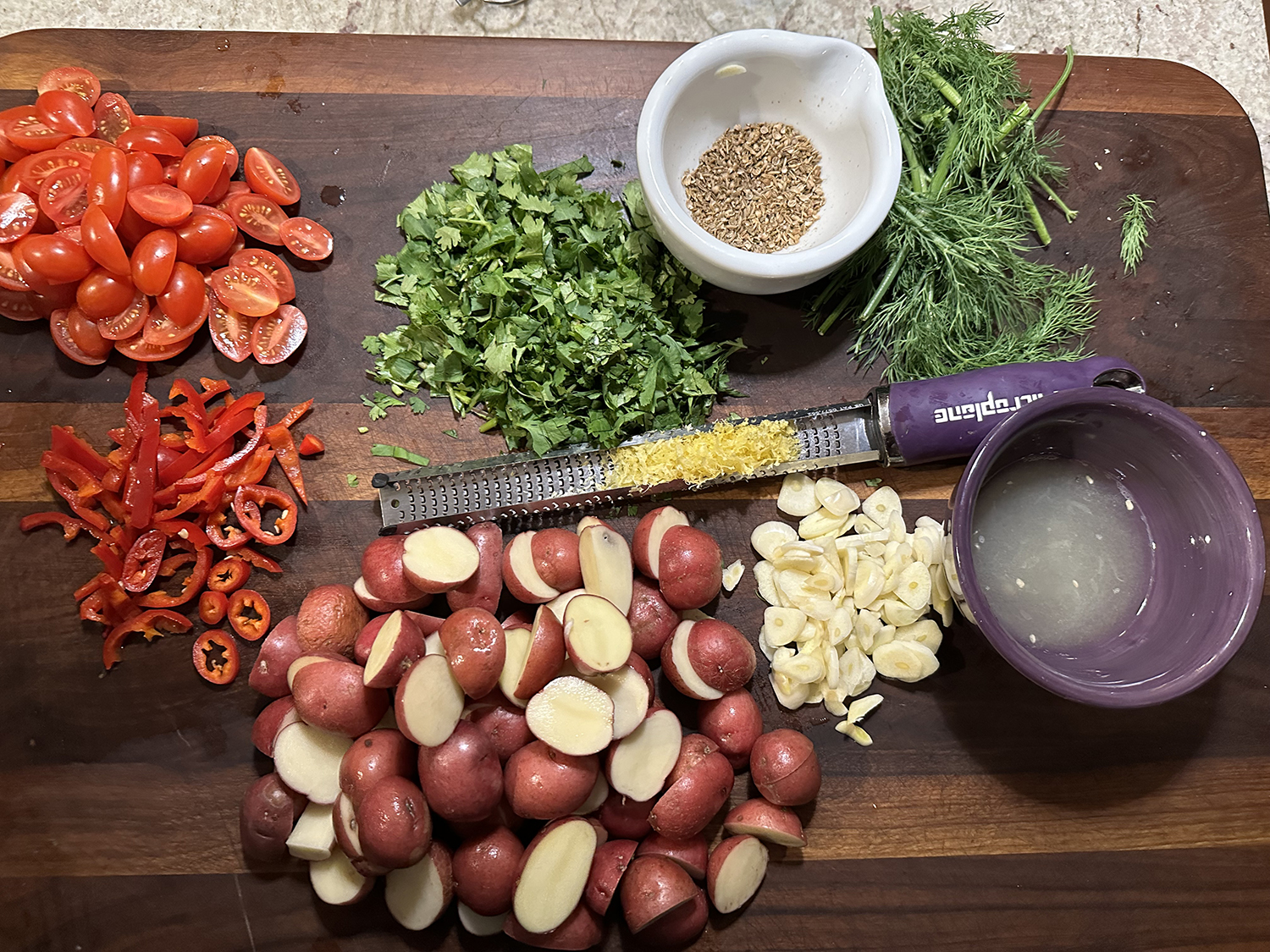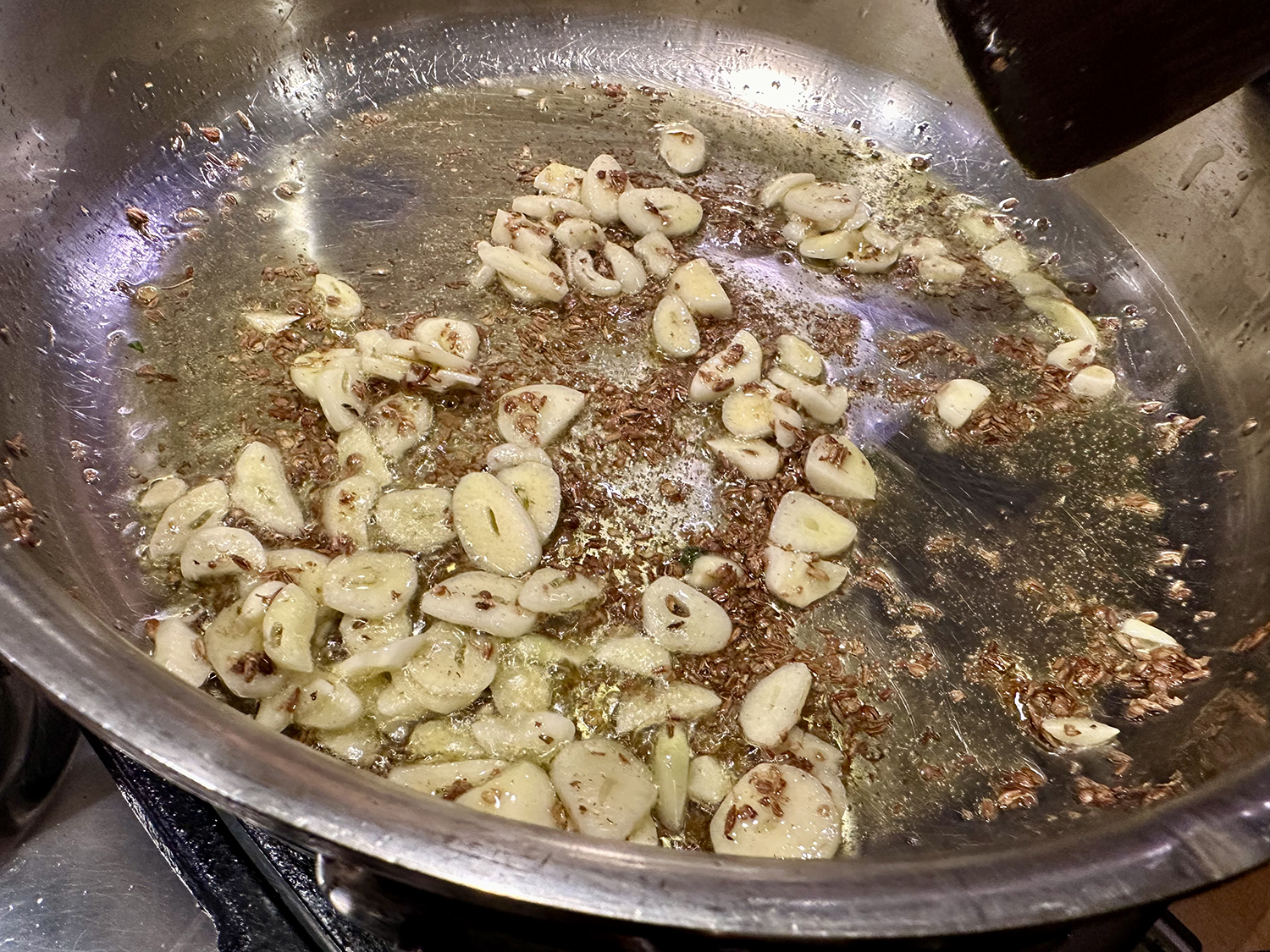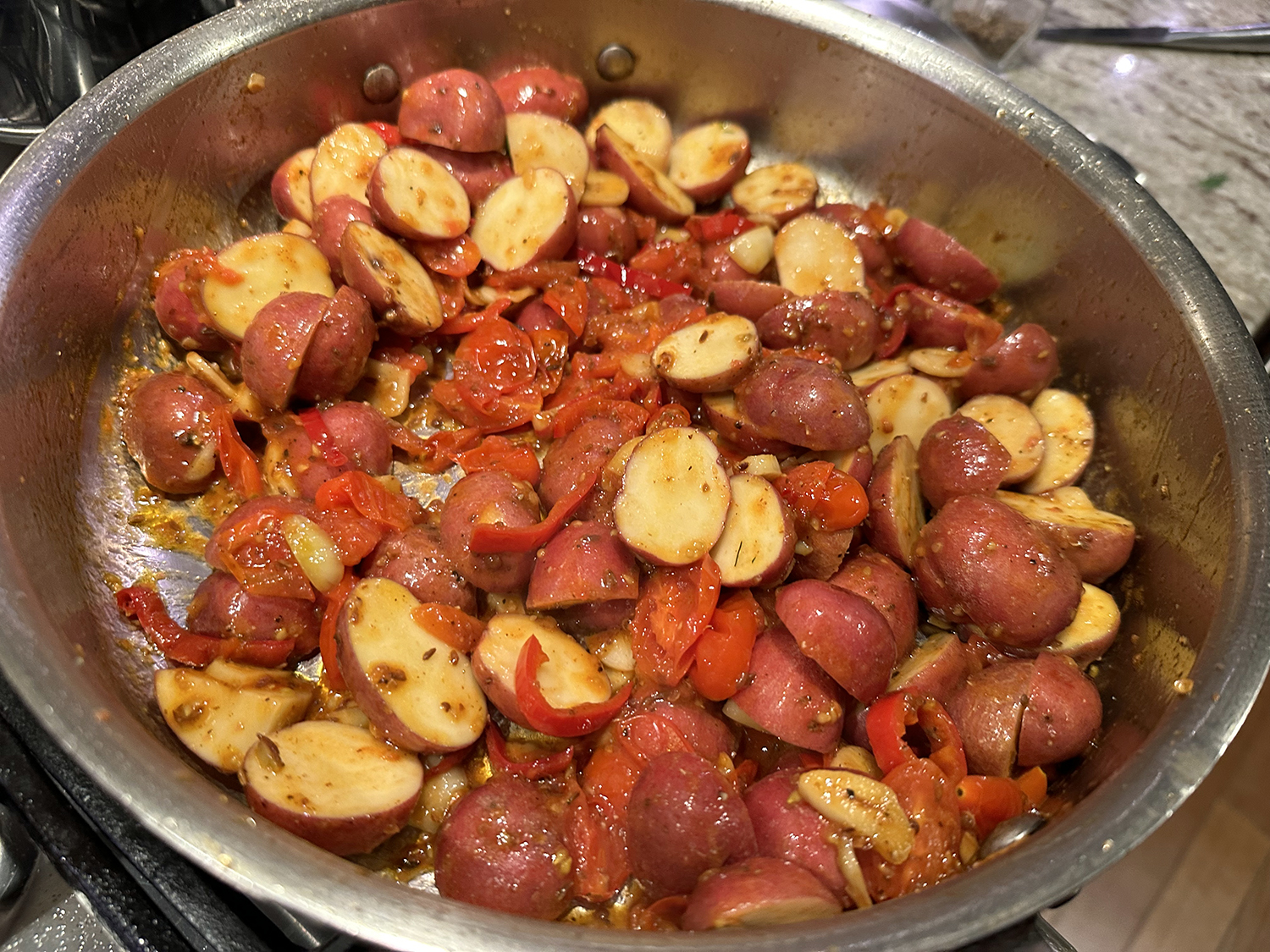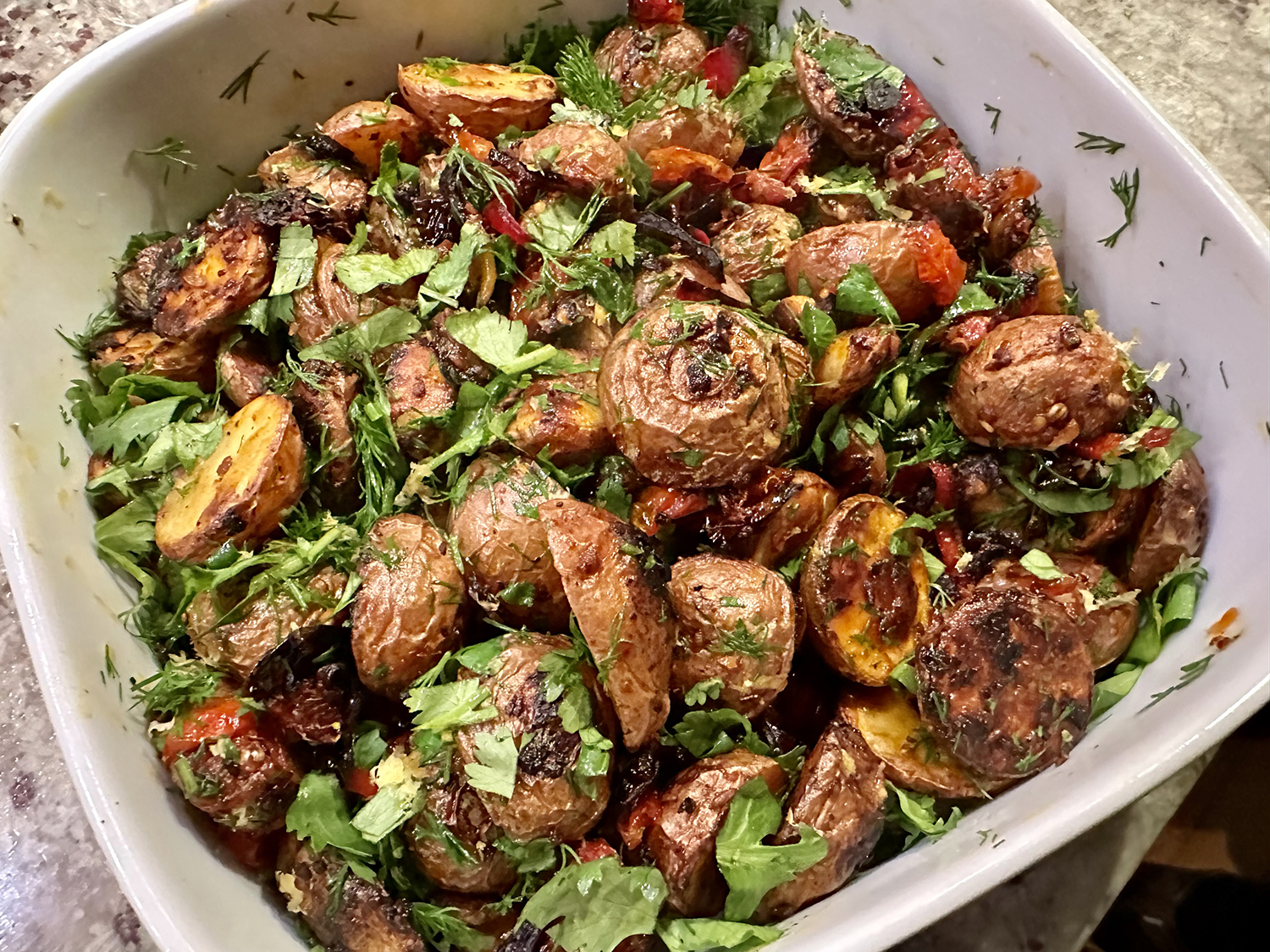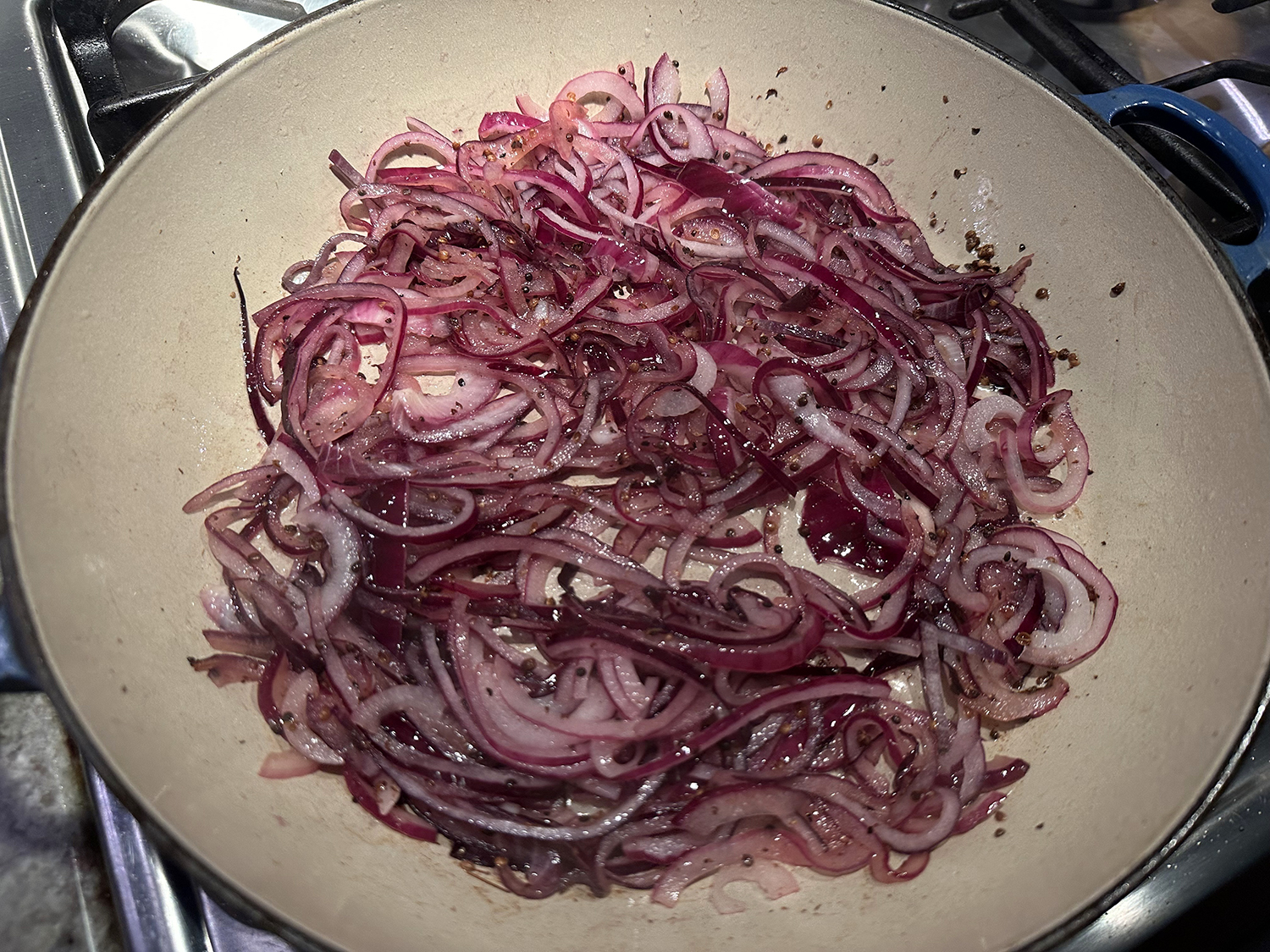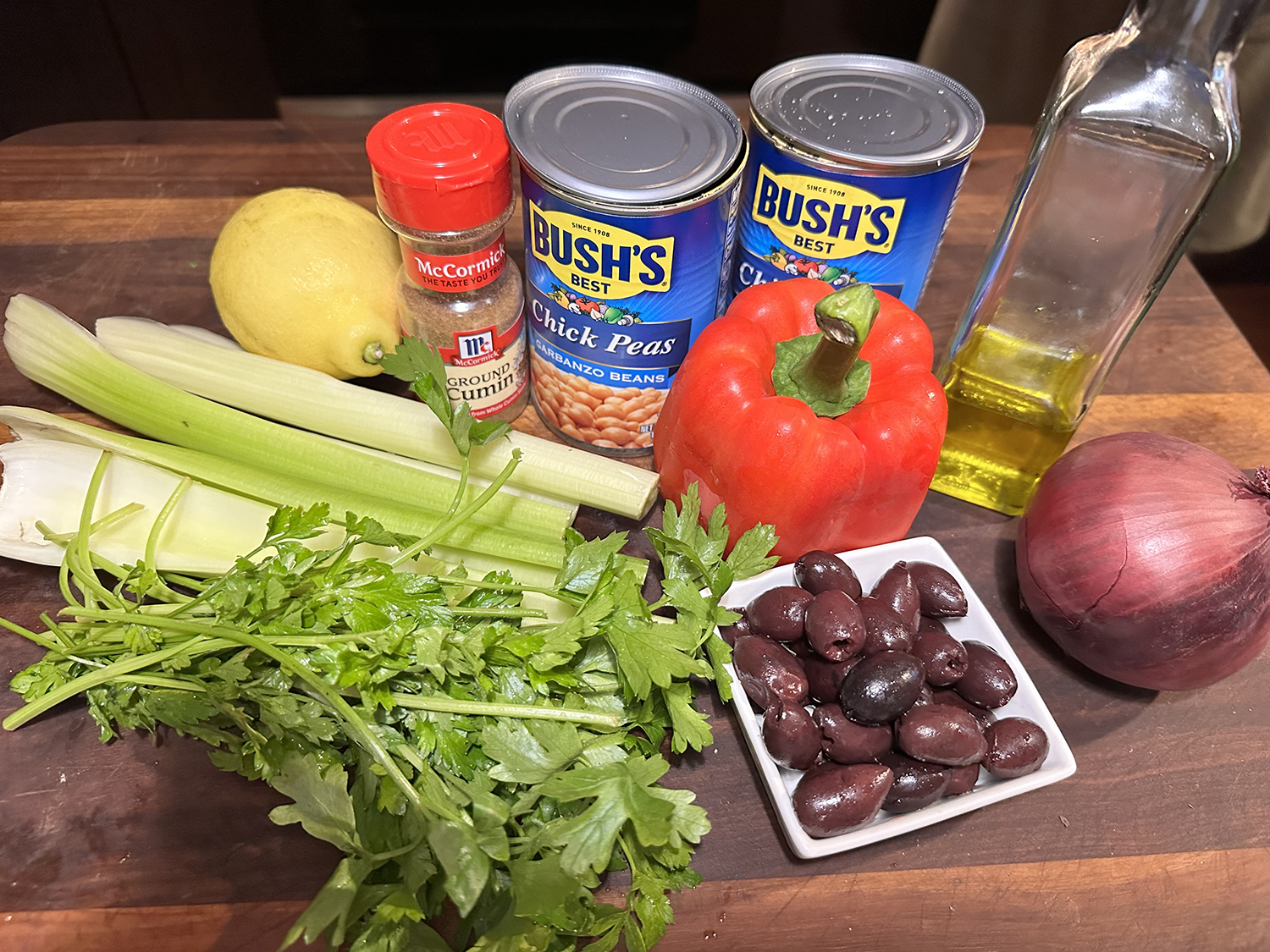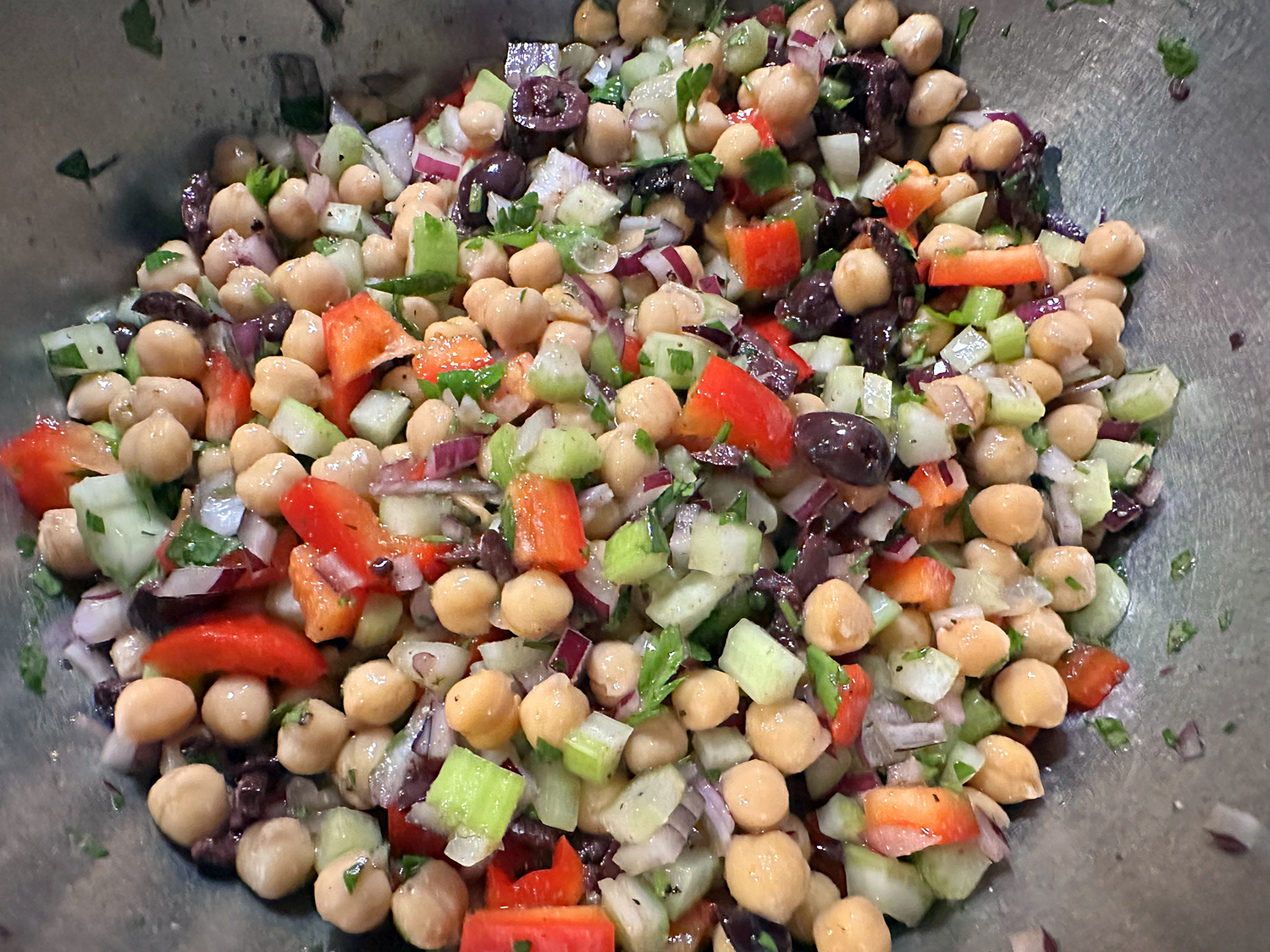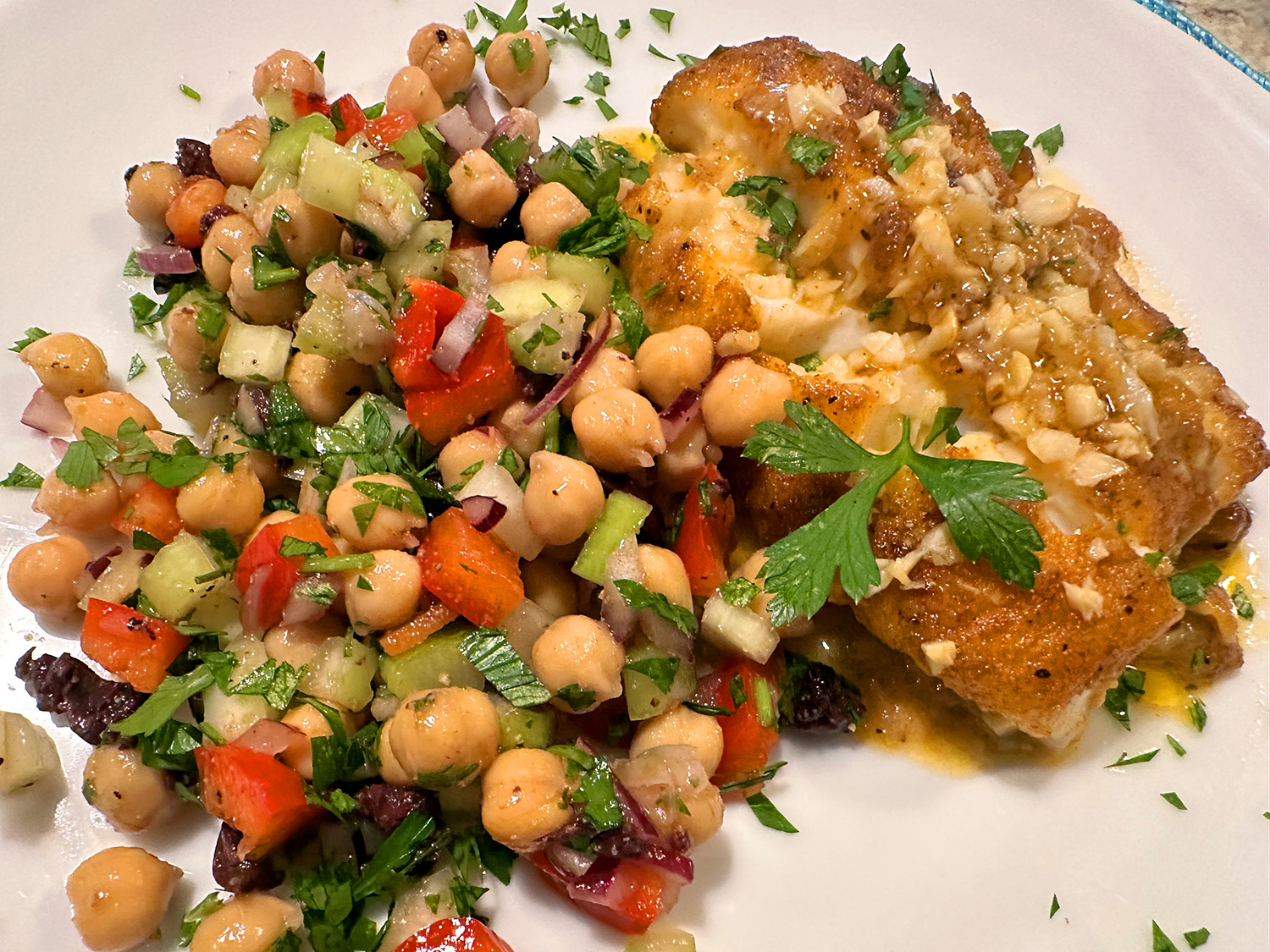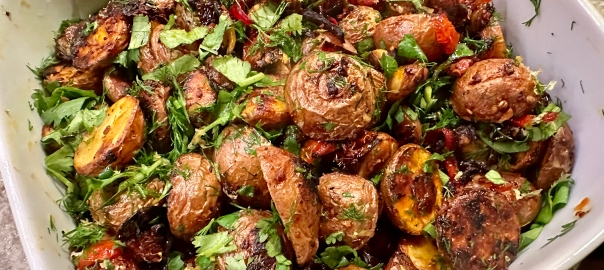
This salad was a suggested side dish for a wonderful Baked Cod with Lemon and Garlic entrée we recently made, and what a perfect pairing it was!
This chickpea salad hits all the right notes—crunchy, briny, salty, tangy, and a little bit sweet from the bell pepper (which we used a whole, as opposed to just a half of). Think of it as a “kitchen sink” type of salad, because you can really throw in a variety of produce that’s hanging out in your fridge—grated carrots, chopped zucchini, different herbs.
And go ahead and roughly chop the celery leaves and toss them into the salad, too; they add a sharper celery flavor and another layer of texture. It makes a great side dish for grilled chicken or fish, but you can indulge straight as a light yet filling meal, too.
In a large bowl, combine the chickpeas, celery, parsley, onion, red pepper, and olives. Combine cumin, olive oil, and lemon juice, mix well, and season to taste with salt and pepper. Toss with salad ingredients and serve.
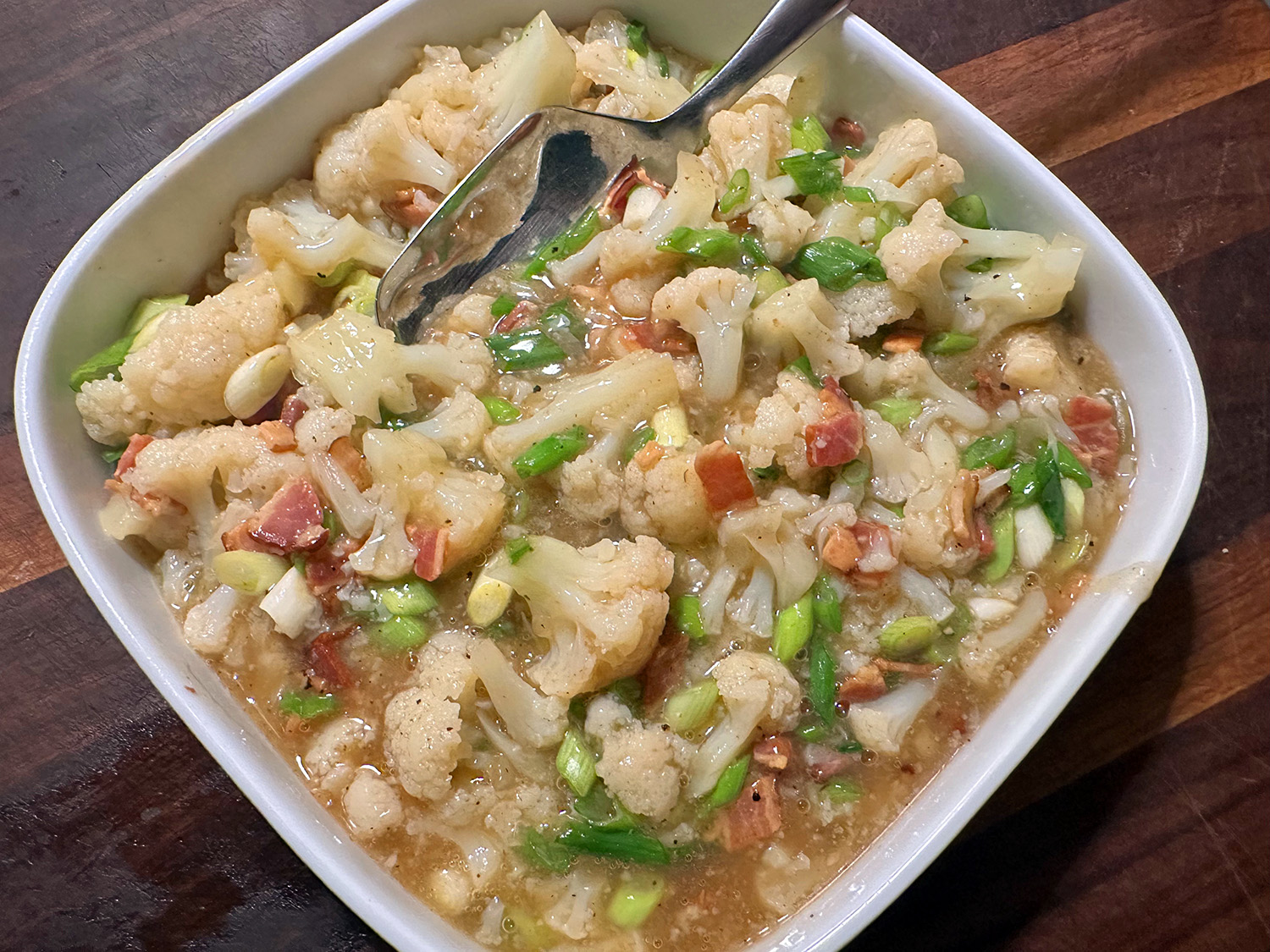
Looking for a unique and tasty side dish? Cauliflower tends to be quite bland on its own, but perks up when seasoned with any number of different flavorings. Known as the chameleon of the culinary world, cauliflower adapts well to everything from “rice” to pizza crusts. But no matter how you use it, the key is pairing it with high impact ingredients.
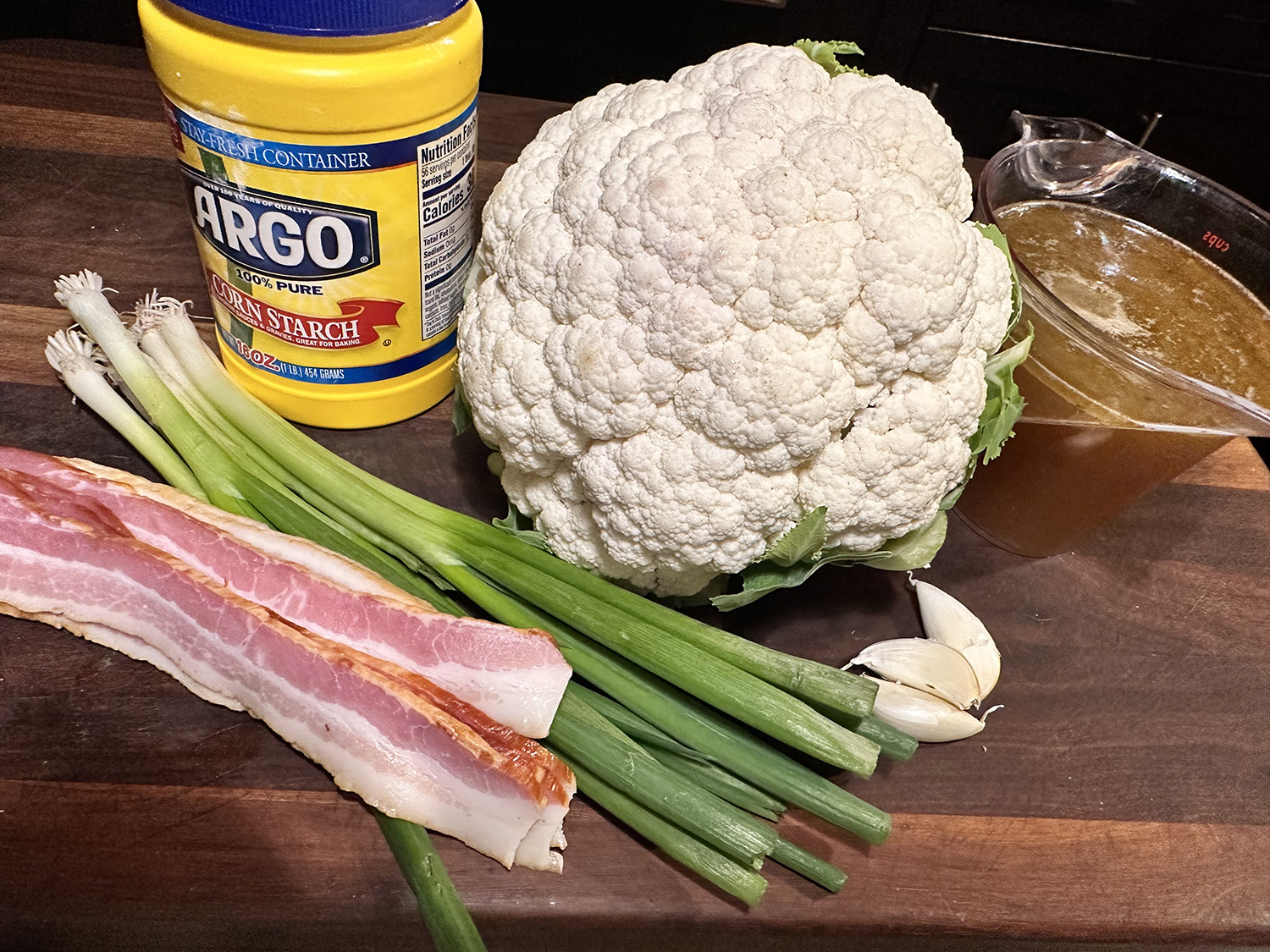
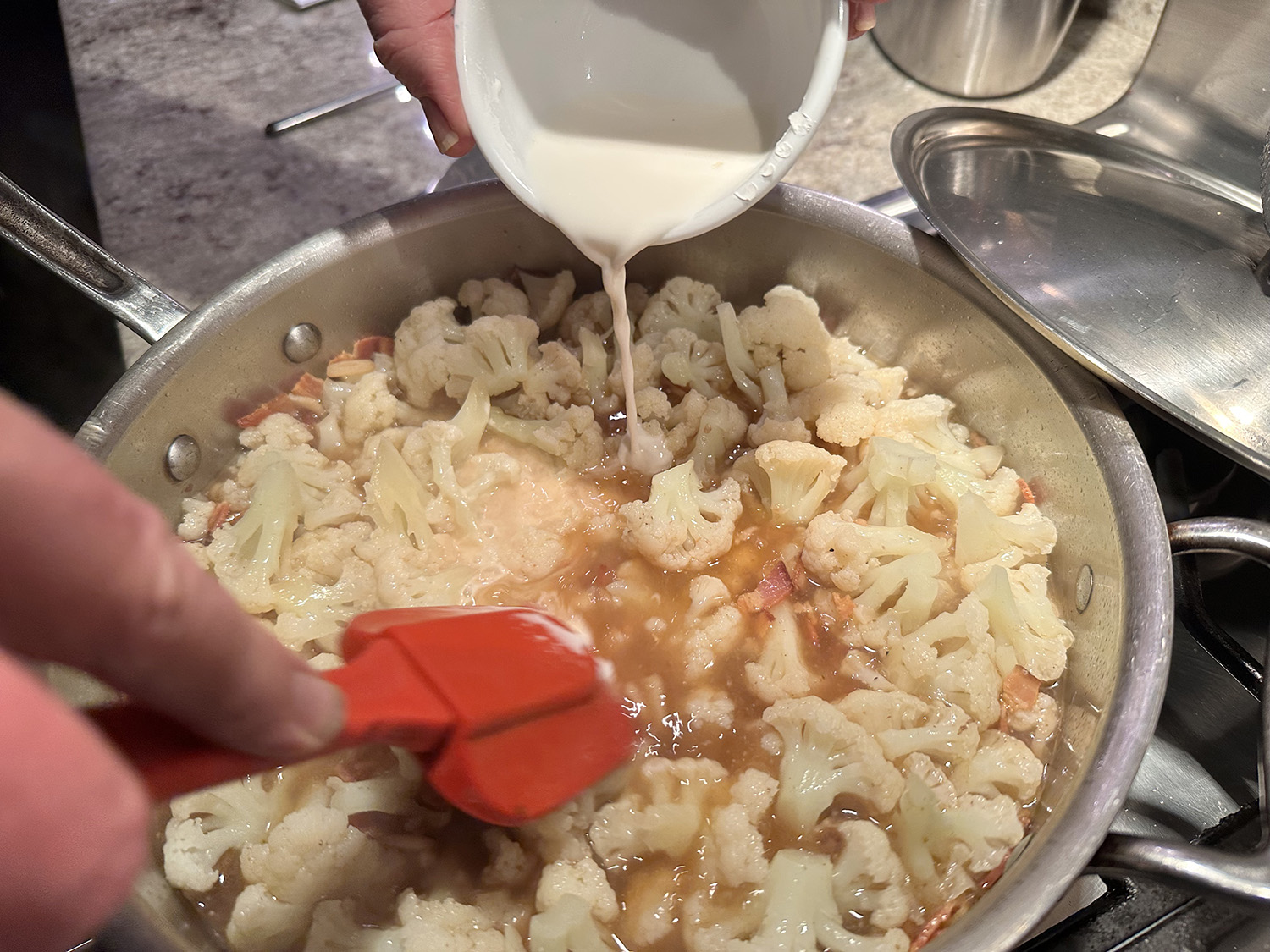
Here, salty, smoky bacon and lightly toasted garlic bring loads of flavor to cauliflower simmered in chicken broth. At the end of cooking, the broth is thickened with a cornstarch slurry to create a velvety sauce. A full bunch of scallions, thinly sliced and stirred in to finish, adds punchy allium flavor.
According to Milk Street, this method gently—and quickly—cooks the chopped veggie, ensuring the pieces are toothsomely tender. As the ingredients mingle, complex layers of savory, sweet and vegetal permeate all the nooks and crannies of the florets. To finish the dish, a smattering of chopped scallions rounds out the flavors, balancing the savory notes with oniony freshness.
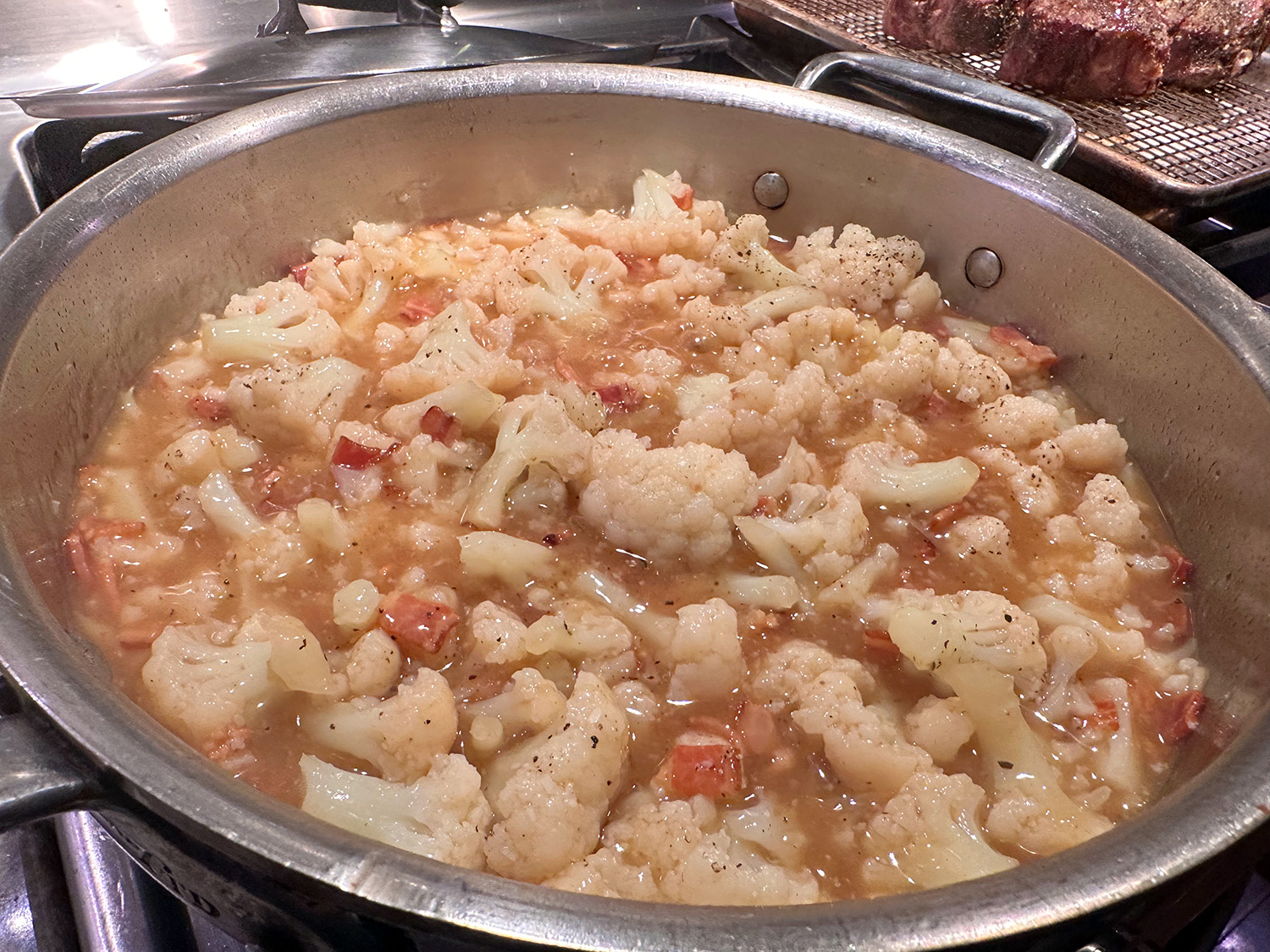
In the end, while the flavor profile was spot on, we both thought that it was too liquidy, more soupy if you will. The ingredients list below is adjusted to reflect cutting back the amount of broth and corn starch by half. This should give the cauliflower more of a glaze than a broth.
4-6 oz. thick-cut bacon, cut crosswise into ½-inch pieces
3 medium garlic cloves, thinly sliced
1 2- to 2½-lb. head cauliflower, trimmed and cut into 1-inch florets
1 cups chicken broth, preferably homemade
1 Tbsp. cornstarch
Kosher salt and ground black pepper
1 bunch scallions, thinly sliced on the diagonal
Optional garnish: Chili oil OR hot sauce
Directions
In a 12-inch skillet, cook the bacon, stirring occasionally, until browned and crisp. Add the garlic and cook, stirring, until lightly browned.
Stir in the cauliflower and broth. Cover, bring to a simmer and cook until the florets are tender.
In a small bowl, whisk together the cornstarch and 1 tablespoon water. Stir the cornstarch slurry into the cauliflower mixture and cook, stirring, until the sauce returns to a simmer and has thickened.
Season with salt and pepper, then stir in the scallions.
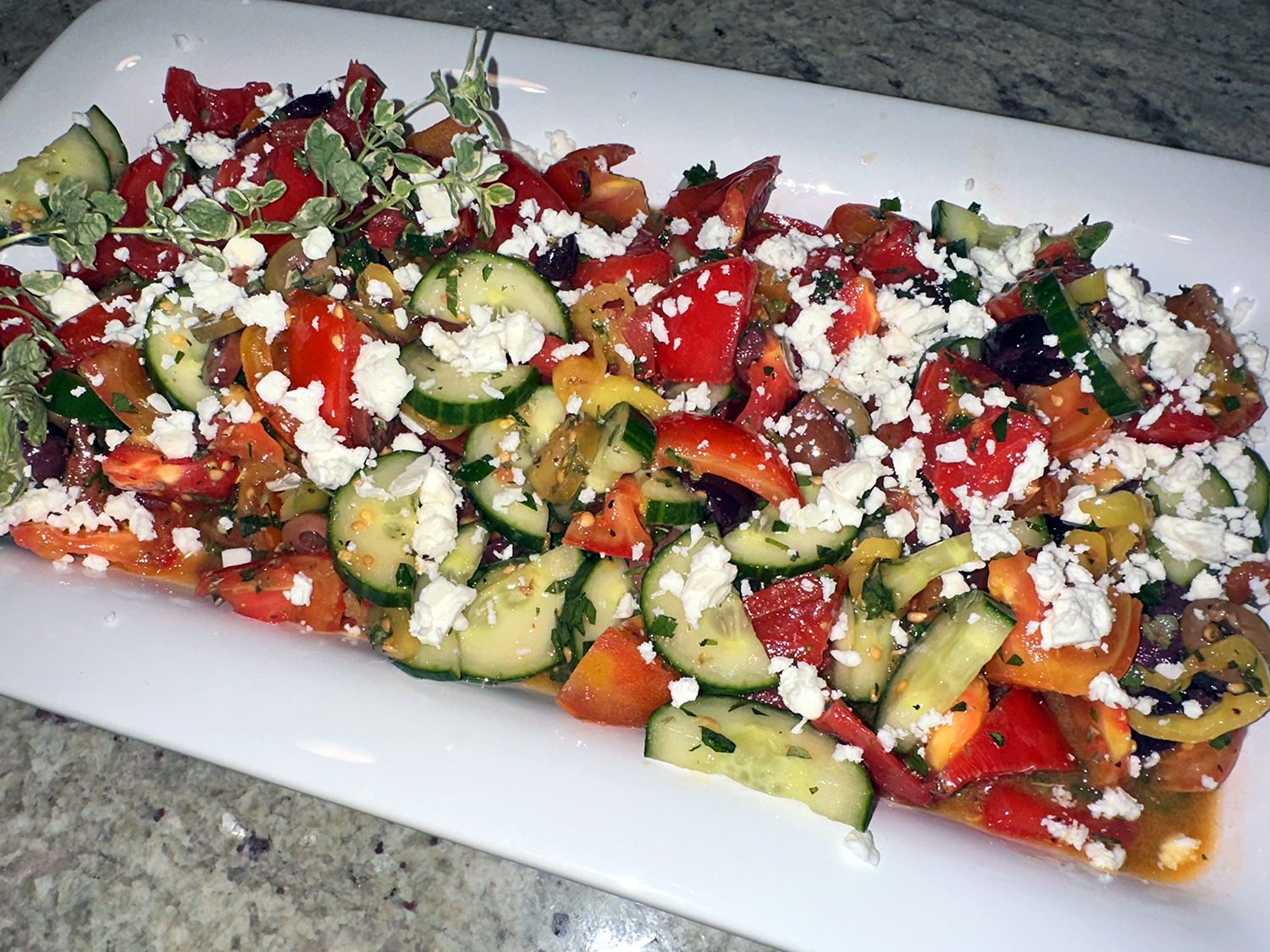
This was a last minute decision after realizing our leaf lettuce had seen better days. Not in the mood to run to the food store, The Hubs did a quick online search to find a salad that would utilize on-hand ingredients. We were after a vibrant salad full of ripe, juicy tomatoes; crisp cucumbers; and lots of herbs. To prevent the cukes and tomatoes from getting soggy, the trick is to salt the vegetables in a colander, which helps draw out excess moisture and seasons them at the same time.
Sliced pepperoncini and shallot were briefly marinated in a pungent vinaigrette before tossing in the seasoned vegetables, torn fresh mint, and chopped fresh oregano. A sprinkling of salty, briny feta is the perfect finishing touch.
Feeling that the finished salad was a bit too mint-forward, we reduced the amount of mint and increased the amount of oregano. Use your own judgement as to how much of each herb to use based on your family’s preferences.
½ English cucumber, halved lengthwise and sliced crosswise ⅛ inch thick
1 ½ tsp. table salt, divided
5 Tbsp. extra-virgin olive oil
2 Tbsp. red wine vinegar
1 Tbsp. lemon juice
½ tsp. pepper
⅓ cup thinly sliced pepperoncini
1 shallot, sliced into thin rings
1 Tbsp. fresh mint leaves, torn
¼ cup chopped fresh oregano
4 oz. feta cheese, crumbled (1 cup)
Directions
Cut tomatoes into ½-inch-thick wedges, then cut wedges in half crosswise. Toss tomatoes, cucumber, and 1 teaspoon salt together in bowl; transfer to colander and let drain for 30 minutes.
While vegetables drain, whisk oil, vinegar, lemon juice, pepper, and remaining ½ teaspoon salt together in large bowl. Add pepperoncini and shallot and let sit until slightly softened, about 15 minutes.
Add mint, oregano, and drained vegetables to bowl with dressing and toss to combine. Season with salt and pepper to taste. Transfer to platter and sprinkle with feta. Serve.
Flank steak, with its deep beefy flavor and standout striations that soak up rubs and marinades, it should be on everybody’s list of favorite grilling cuts. So when you’re craving a little barbecue flavor anytime of year, this recipe does the trick. The beauty of flank steak is that it absorbs the flavors of any rub or marinade easily.
One of the tastiest, and potentially toughest cuts of meat you’ll ever eat, there are two opposite cooking choices with flank. You either cook it hot and fast, or long and slow by braising. The purpose is to break down the connective tissues by cutting thin slices or by heat and moisture. Clearly we are doing the fast method here.
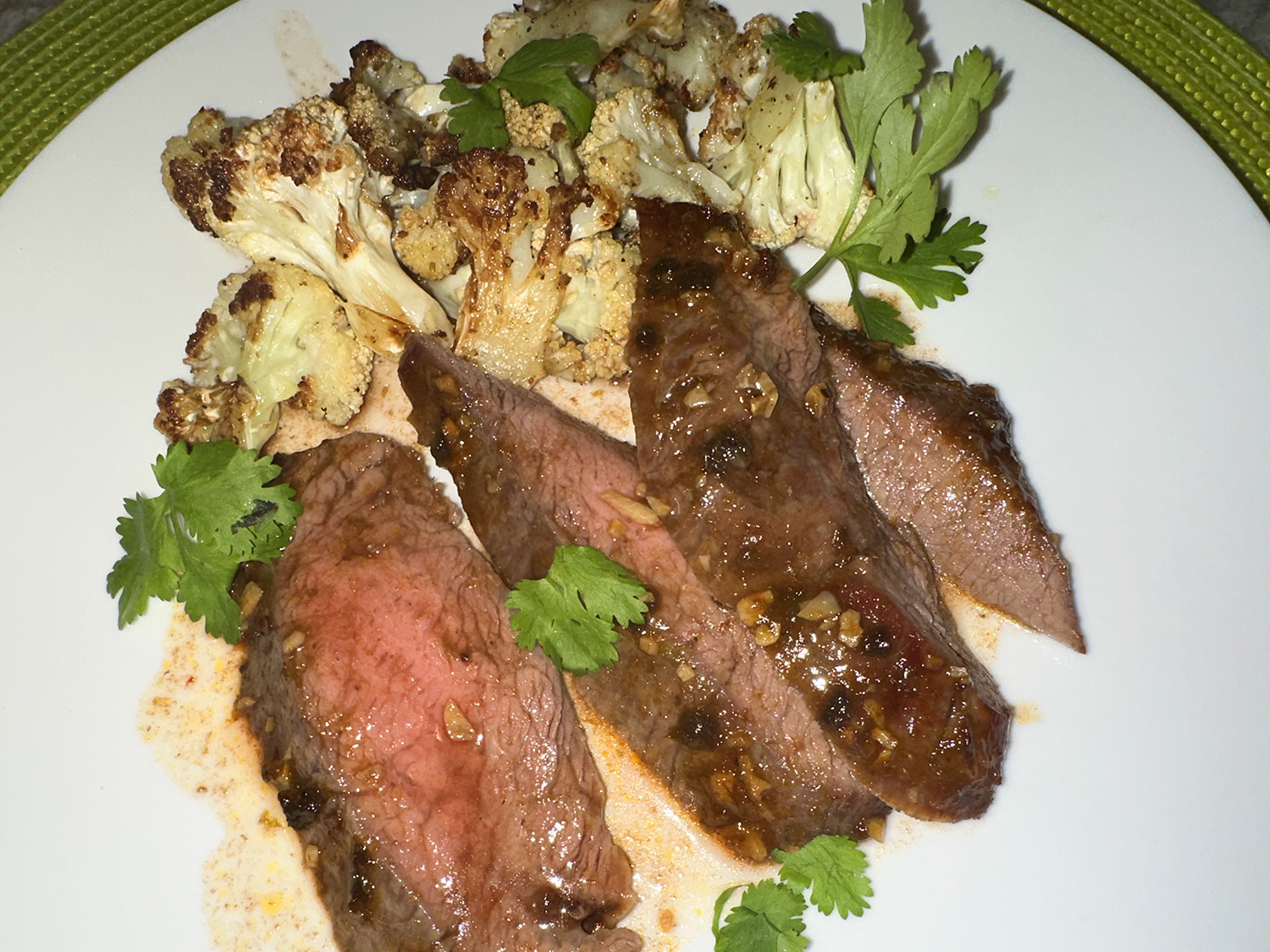
Using cumin as the common seasoning on both the meat and the cauliflower make them pair together well.
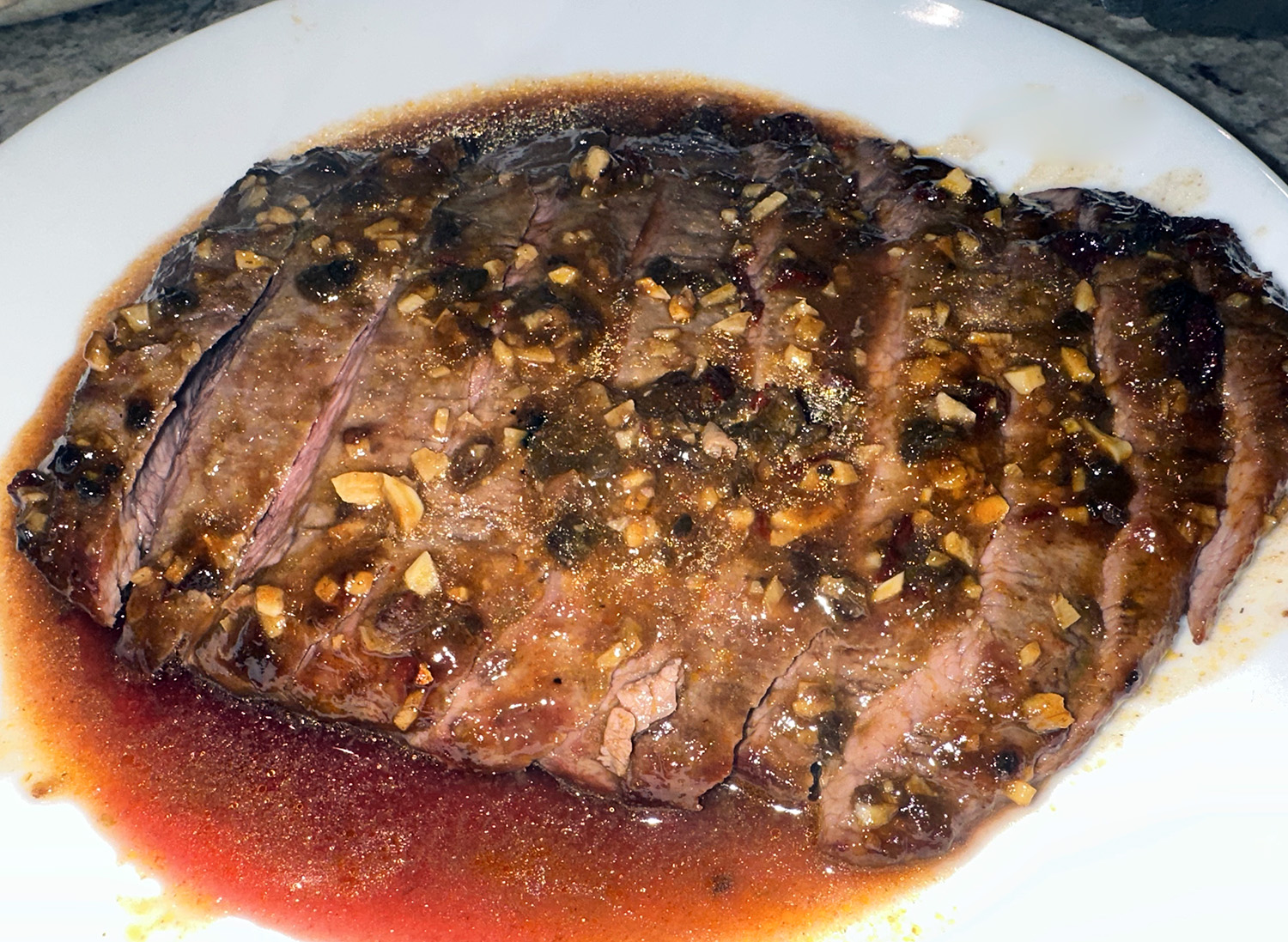
Honey-Chipotle Glazed Flank Steak and Cumin Cauliflower
Position an oven rack 6 inches below the broiler and heat the broiler on high. Line a large-rimmed baking sheet with foil.
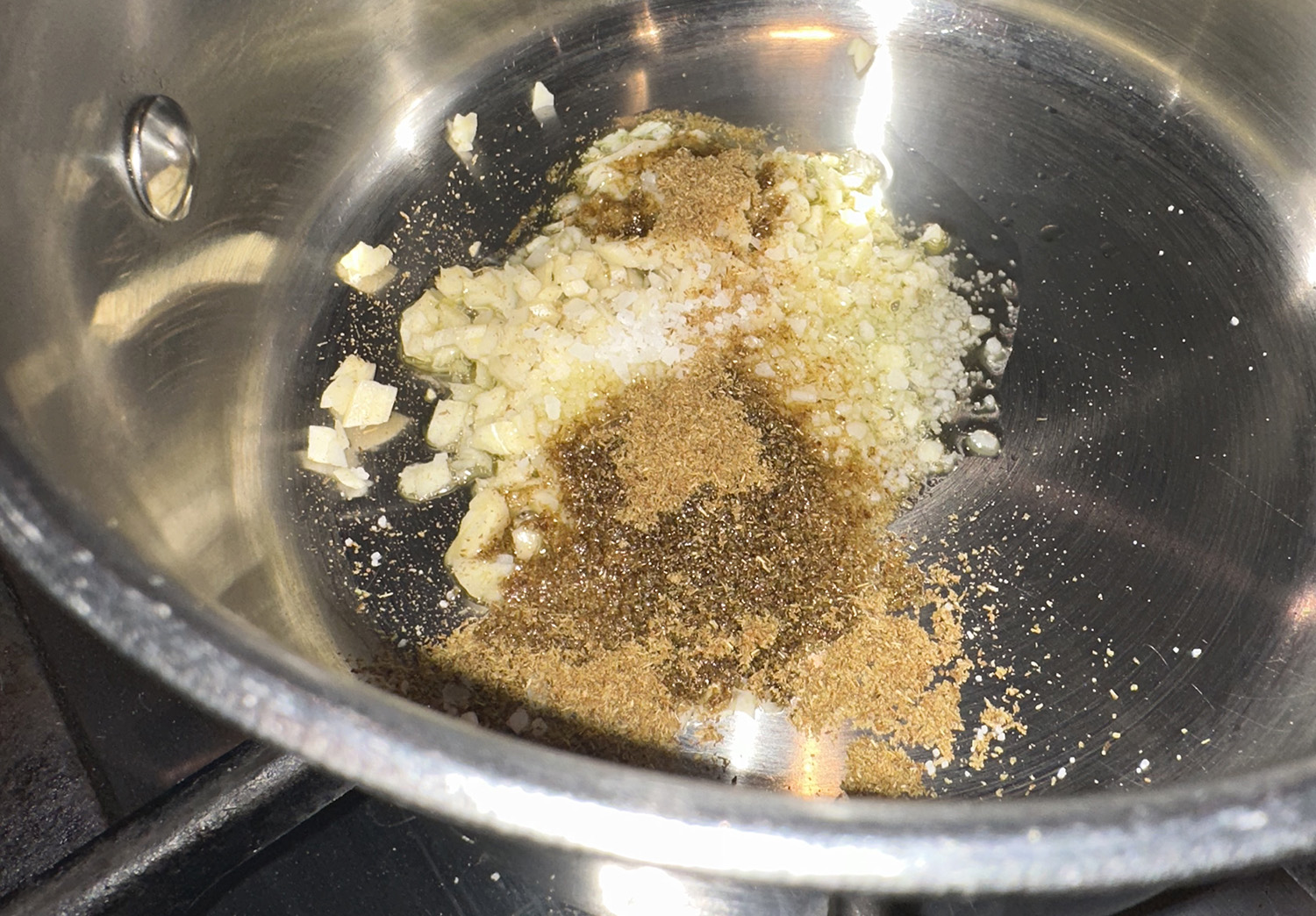
Combine 1 tsp. of the oil, garlic, cumin, and 1/2 tsp. salt in a 1-quart saucepan over medium-low heat; cook, stirring occasionally, until the garlic is golden, about 2 minutes. Add the chipotle and honey and stir until heated through about 1 minute. Remove from the heat and stir in the lime juice and zest.
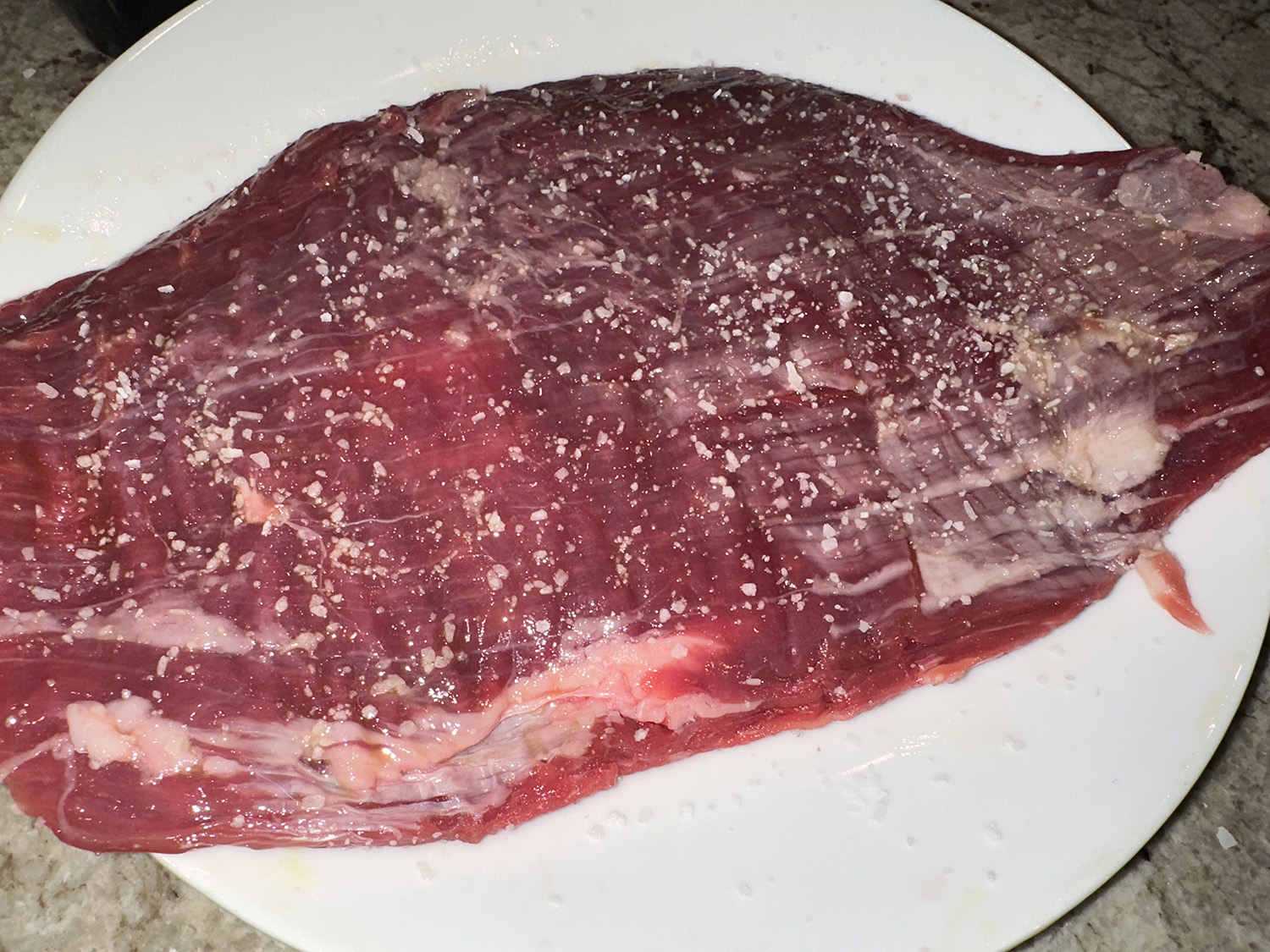
Rub the flank steak with the remaining 1 tsp. oil and season generously with salt. Transfer to the prepared baking sheet and broil, turning once, until slightly browned and cooked to your liking, about 3 minutes per side for an internal temperature of 140°F.
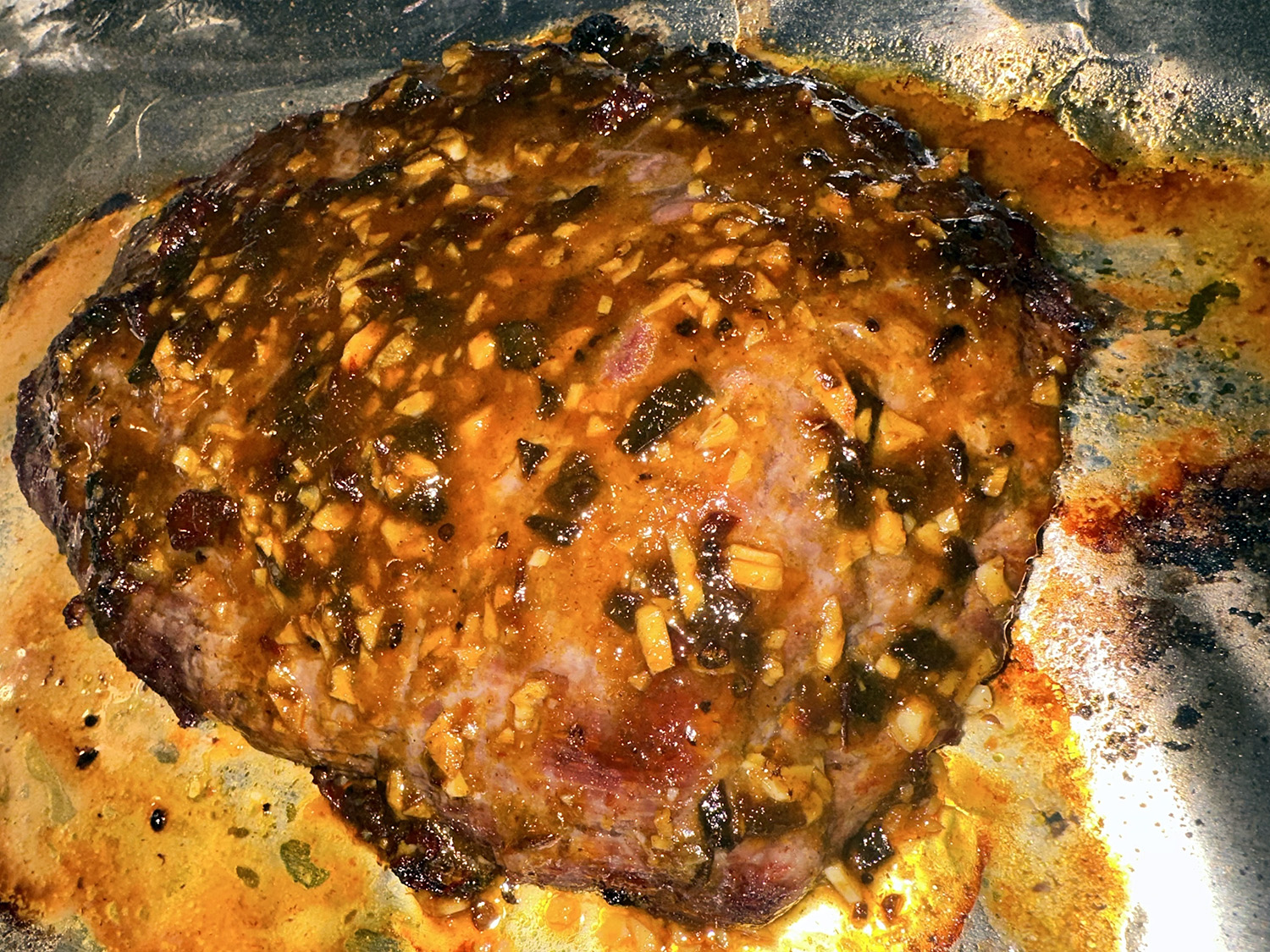
Spread the glaze over the top of the steak and broil until it begins to bubble and darken in places, 1 to 2 minutes. Transfer to a cutting board and let rest for 5 minutes. Slice against the grain and serve.
Cumin Roasted Cauliflower
Ingredients
1 medium cauliflower, broken down into florets
1 tsp. cumin seeds, lightly crushed
2 Tbsp. extra virgin olive oil
Kosher salt and ground black pepper, to taste
Directions
Preheat oven to 450 degrees.
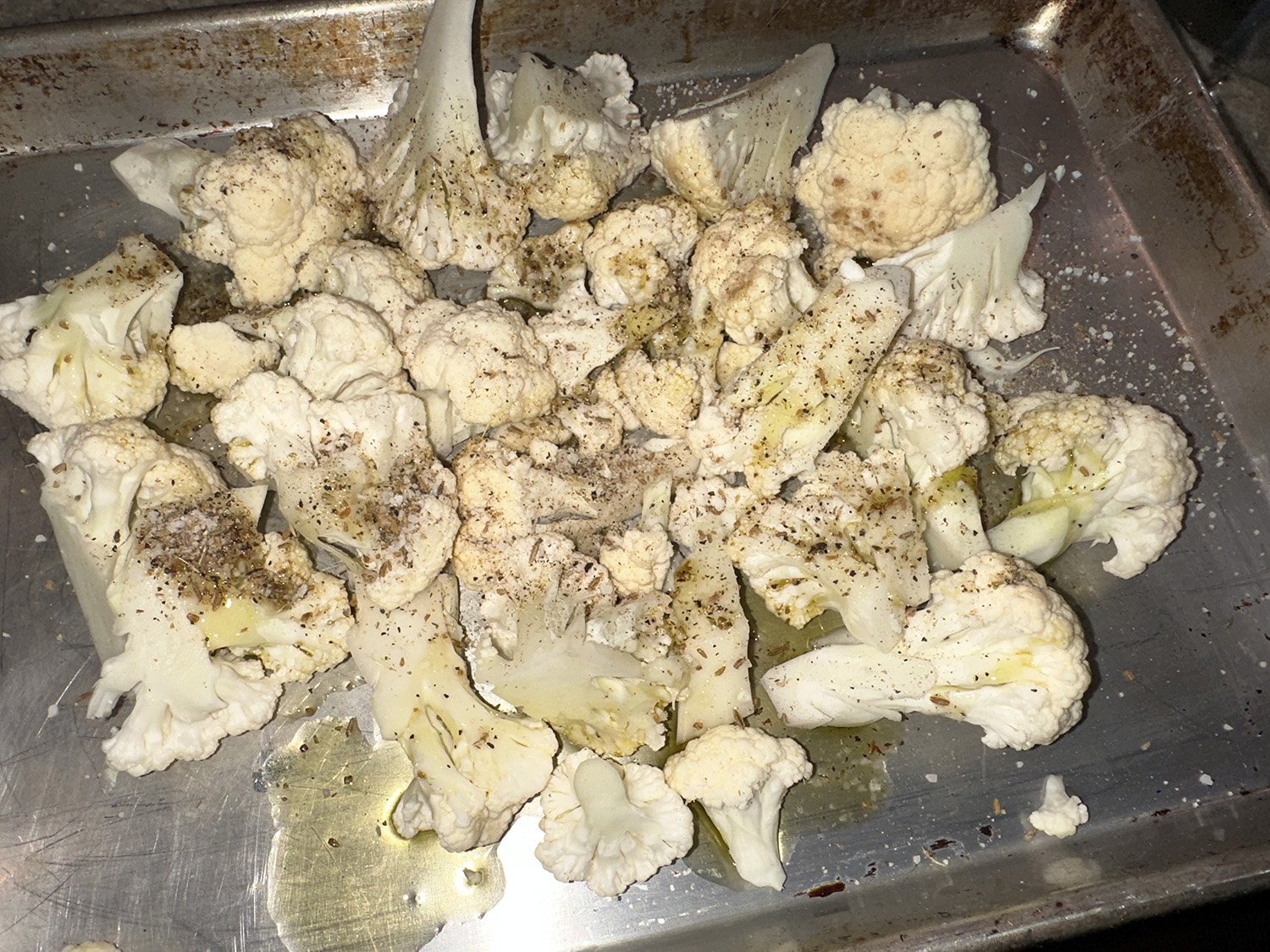
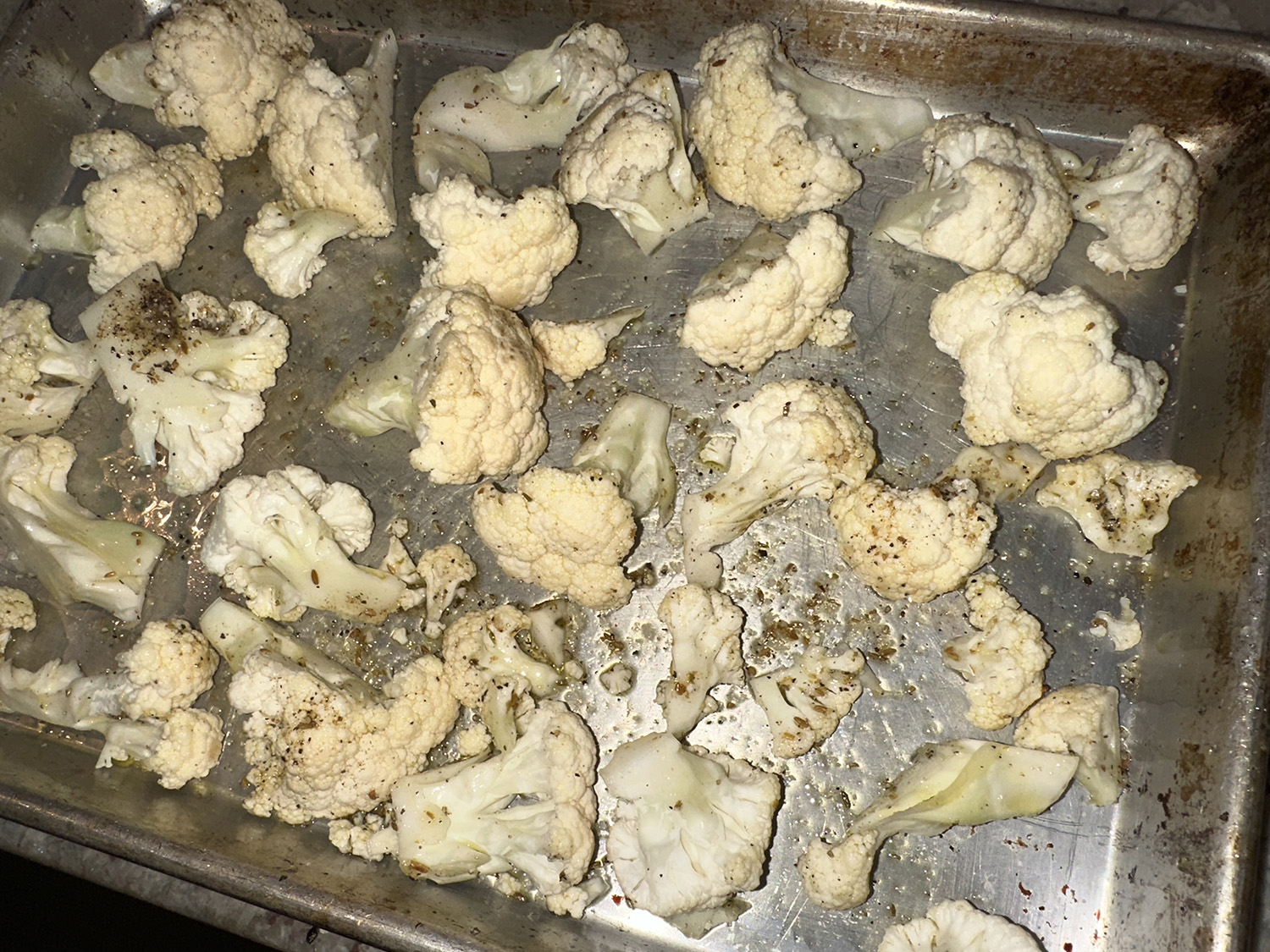
Toss the cauliflower with olive oil, cumin seeds, and salt and pepper in a large bowl.
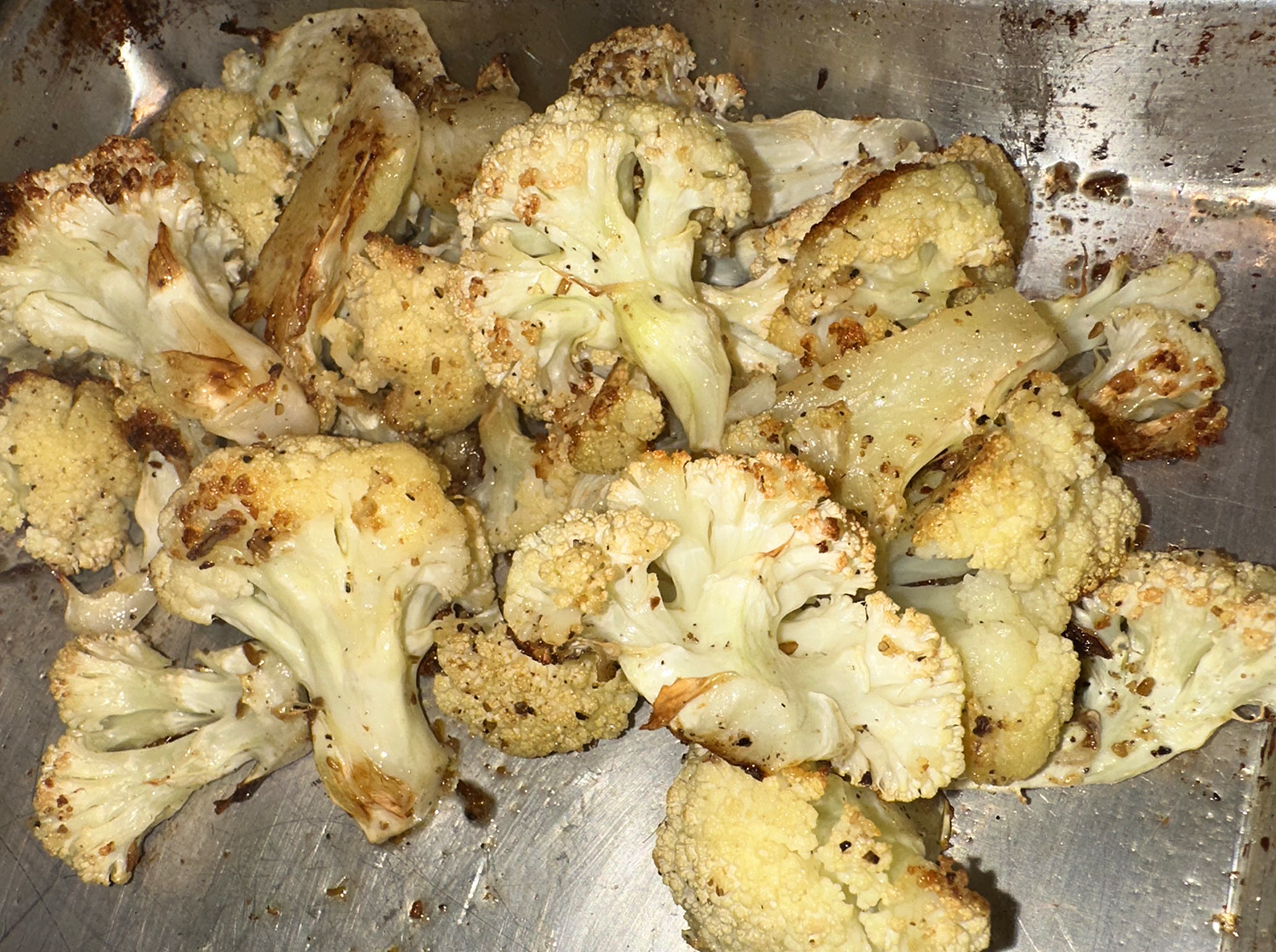
Spread the cauliflower on a large sheet pan and roast in the preheated oven for 15-20 minutes turning halfway through cooking (cauliflower should be browned in spots and tender).
Here, new potatoes are transformed into a culinary powerhouse with toasted spices, butter, cilantro and green chilies. Gunpowder potatoes are the ideal recipe: a bit of crunch, a touch of herbiness, a dash of tang and a pop of heat, all married to a foundation of creamy potatoes. My mouth waters just thinking about them.
The term “gunpowder” refers to a spice mix that has many variations. This version hails from Parsi cuisine and contains coarsely ground toasted cumin, coriander and fennel seeds with a finishing dusting of a “kabab masala,” which is made with fenugreek, chili powder, chaat masala and garam masala. Kind in mind, like much Indian food, the spices are bold.
Start by parcooking new potatoes with their skins on. Next, either grille or broil, then split them open. The potatoes are mixed with the gunpowder spice mixture, along with butter, spring onions, cilantro and green chilies. Finish them with lime juice, flaky salt and a teaspoon or two of the kabab masala, and serve them with a cooling yogurt raita.
For this adaptation, the ingredient list was pared down while maximizing flavor, and focusing on getting deeply browned, crusty potatoes without a grill. The crushed spices are cooked in butter to bloom their flavor and the parcooked potatoes are flattened before roasting them in a 500°F oven. And, in a nod to kabab masala, fenugreek is included, a touch that adds a distinctive maple-like flavor.
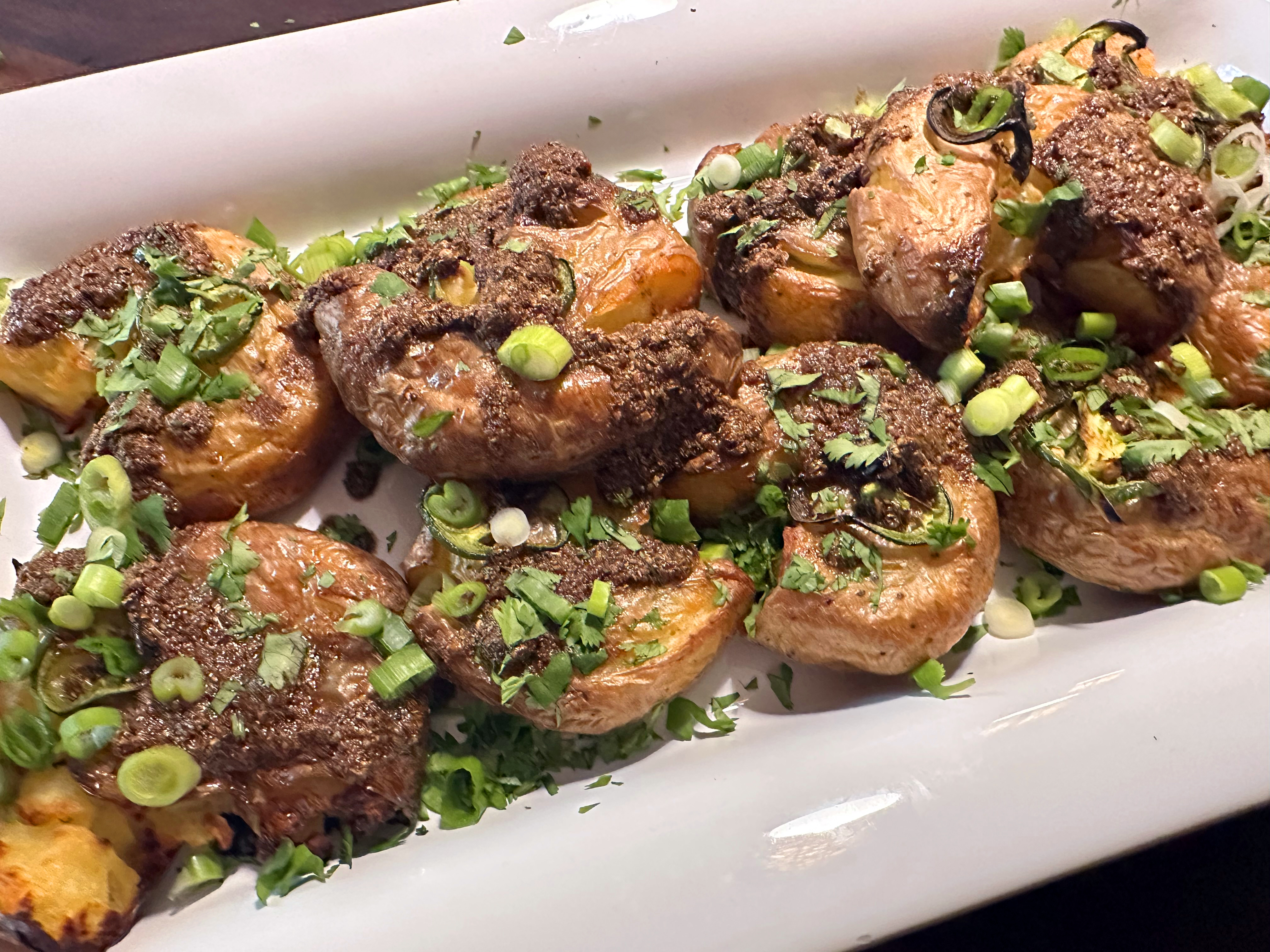
Our potatoes were on the larger size for this recipe (about the size of a lime), so they couldn’t be tossed in a bowl with the butter spice mixture. Instead, the baked potatoes were placed on a platter with the spiced butter poured over the top. Another addition would be to make the Raita as an accompaniment, recipe follows.
2 jalapeños chillies, stemmed and thinly sliced into thin rings
2 tsp. cumin seeds
2 tsp. coriander seeds
2 tsp. fennel seeds
4 Tbsp. butter, cut into 4 pieces
3⁄4 tsp. ground fenugreek
3 scallions, thinly sliced
1⁄4 cup finely chopped fresh cilantro
2 Tbsp. lime juice
Lime wedges and/or raita (recipe below) to serve
Directions
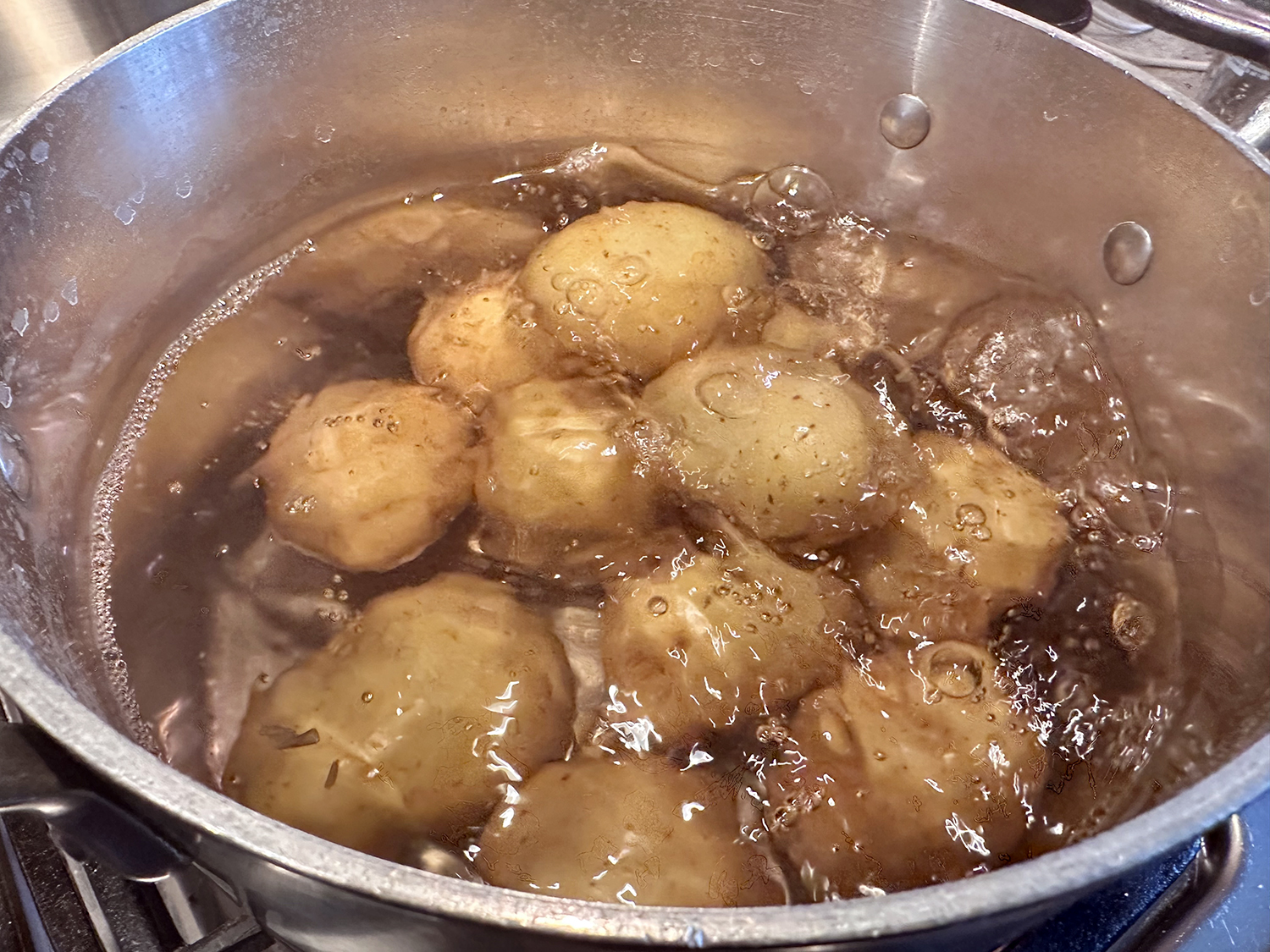
In a large pot,combine the potatoes, 3 tablespoons salt, and 2 quarts water. Bring to a boil and cook, stirring occasionally, until a skewer inserted into the potatoes meets no resistance, about 25 minutes.
Meanwhile, heat the oven to 500°F with a rack in the middle position.
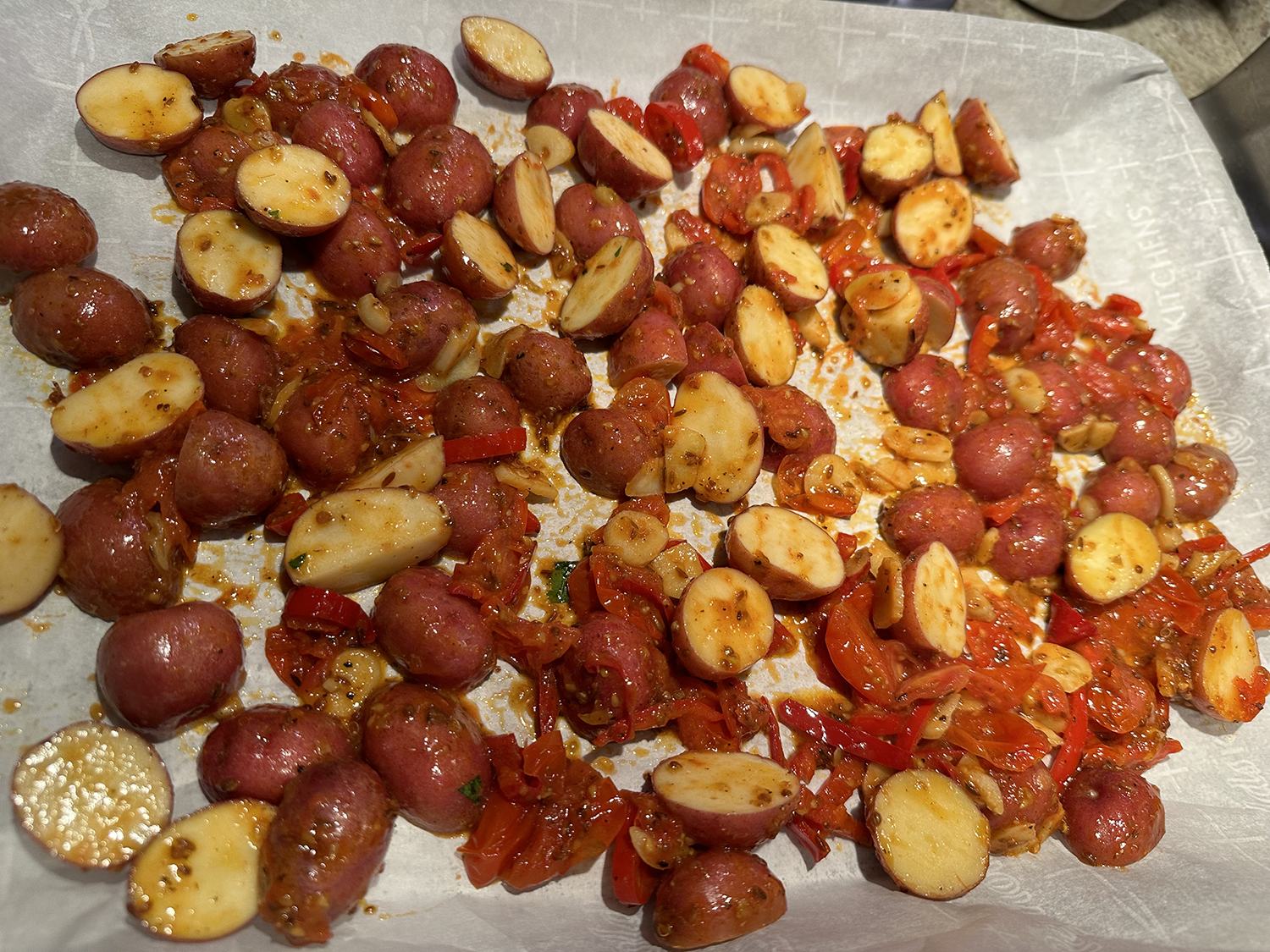
Drain the potatoes in a colander. Transfer to a rimmed baking sheet and toss with oil. Using the bottom of a dry measuring cup or ramekin, press down on each potato so it flattens slightly and splits open but remains intact.
Roast, without stirring for 20 minutes, then sprinkle evenly with chiles. Continue to roast without stirring until the potatoes are crisp and well-browned, another 10 to 15 minutes.
Meanwhile, in a spice grinder, combine the cumin, coriander and fennel seeds; pulse until coarsely ground.
In a small saucepan over medium heat, melt the butter. Add the ground seeds and fenugreek, and cook, swirling the pan, until fragrant, 2 to 3 minutes; set aside off heat.
When the potatoes are done, use a wide metal spatula to transfer them to a large bowl. Add the spiced butter, and toss to coat.
Fold in the scallions and cilantro; taste for salt and pepper; serve with lime wedges and/or raita.
In a small bowl, stir together whole-milk Greek yogurt, finely chopped fresh cilantro, lime juice, water, jalapeño chilis, scallions and kosher salt and ground black pepper, to taste.
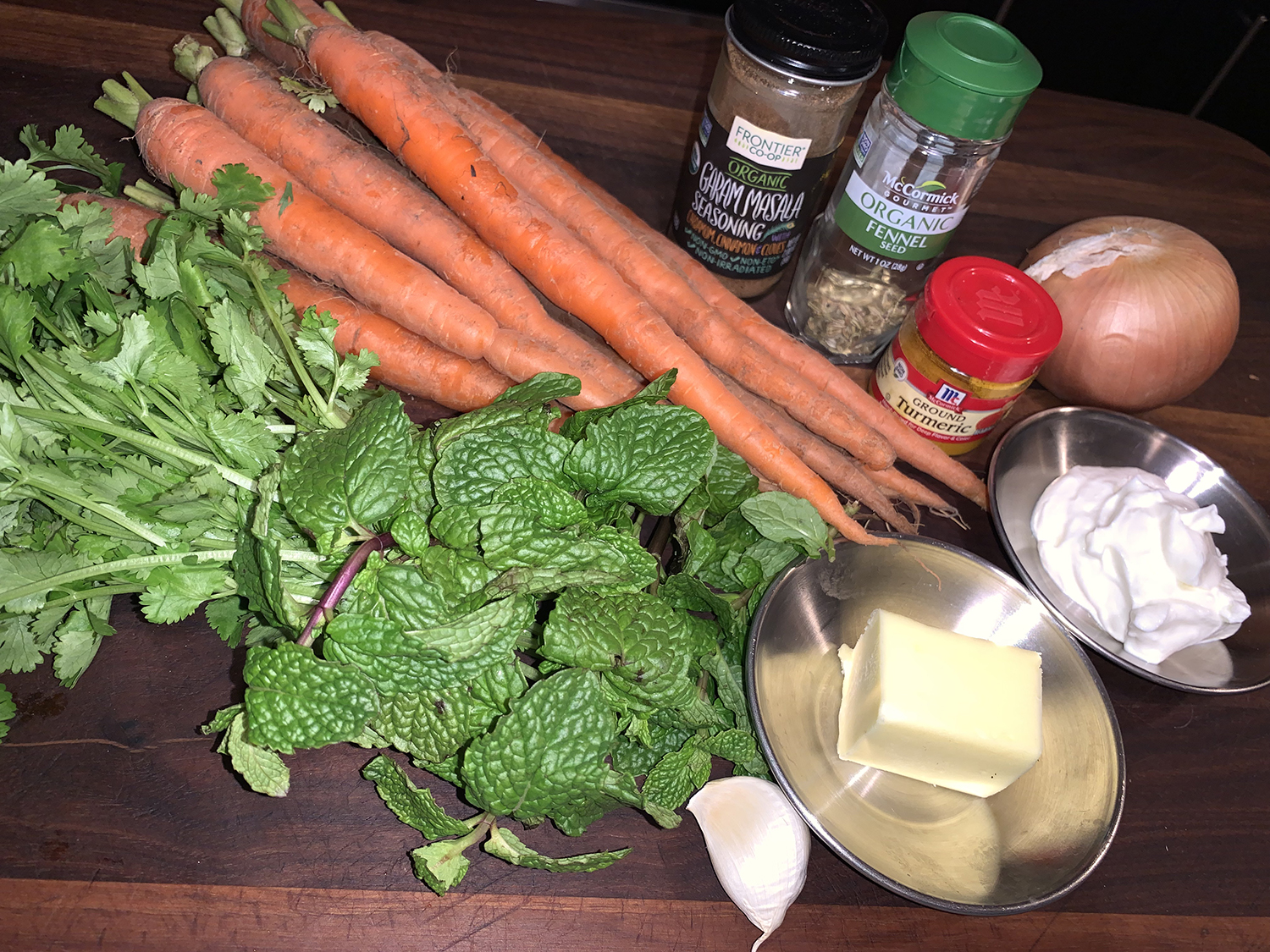
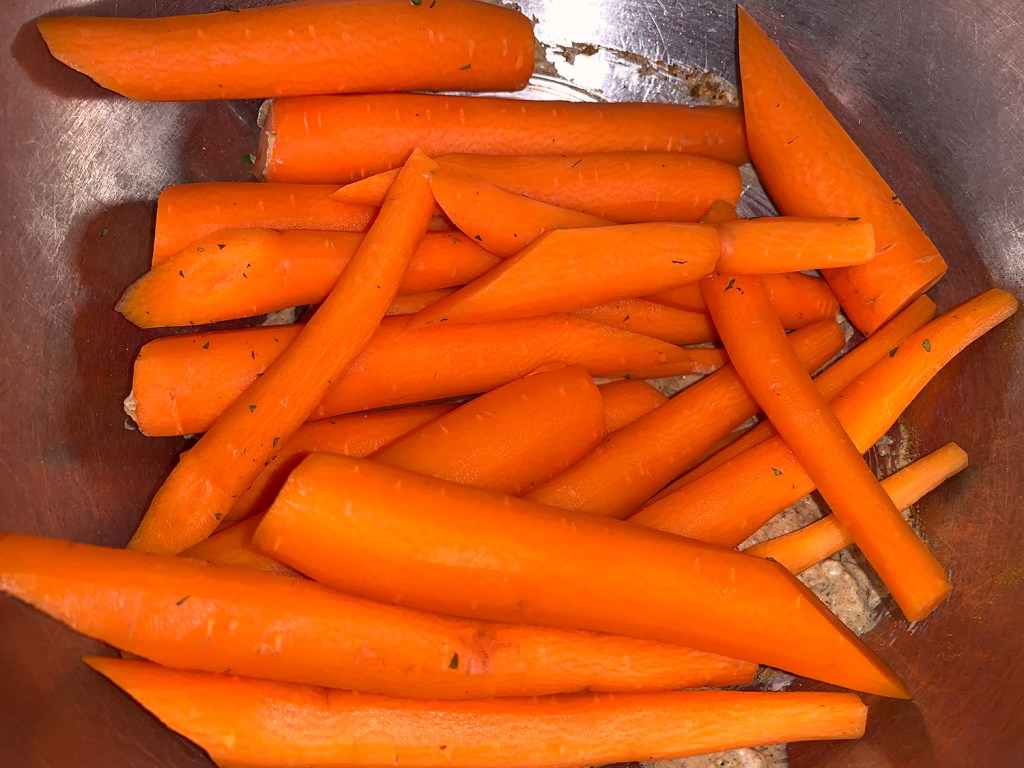
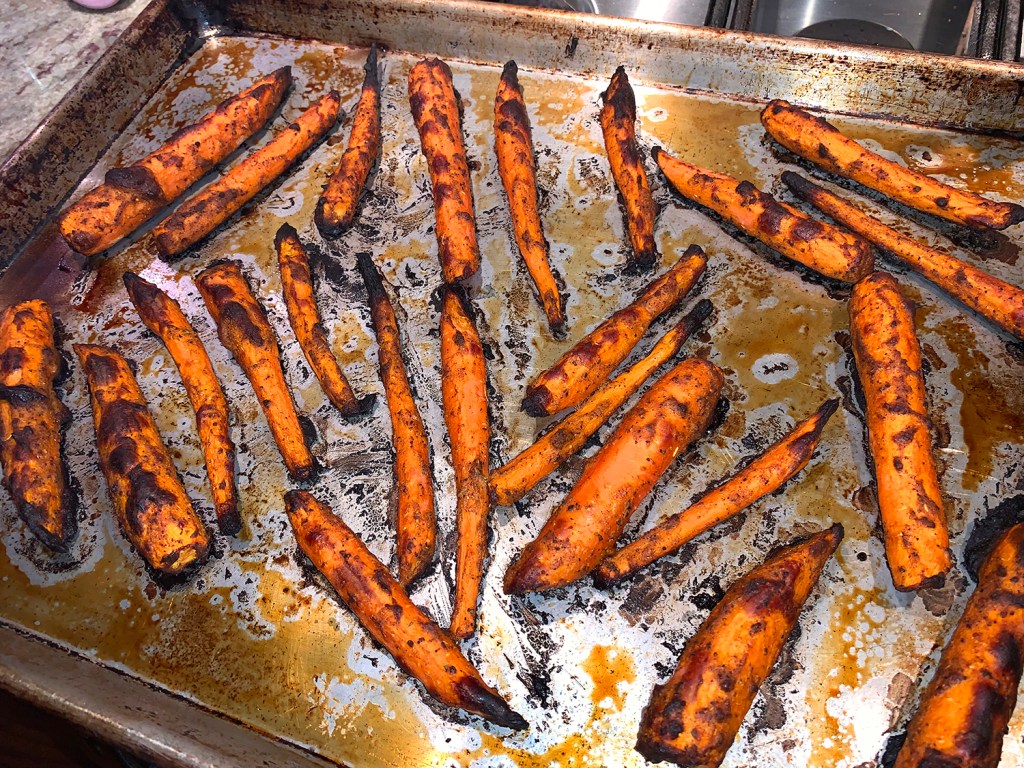
In this tandoori-inspired recipe from Milk Street, garam masala is combined with crushed fennel seed and turmeric for the carrot seasoning. A shallot-infused melted butter topping includes more of the spice mix with fresh cilantro and mint. Full-fat Greek yogurt better facilitates charring due to its lower moisture content.
It is recommended that you buy carrots with their green tops still attached. Even though you discard the greens, they tend to be fresher and on the slimmer side. The greens are super delicious and loaded with nutrients so if you’re not keen on tossing them, consider using them in a variety of ways such as pesto, chimichurri, fritters, or in your homemade vegetable broth.
Don’t forget to coat the baking sheet with cooking spray. The yogurt-covered carrots otherwise will char and stick to the pan. Don’t use large carrots for this recipe. Bunched carrots with tops are thinner and more tender than bagged carrots.
2 bunches carrots with tops (1 lb. total), tops removed and discarded, halved crosswise on a sharp diagonal
4 Tbsp. salted butter
1 small shallot, finely chopped
1 medium garlic clove, finely grated
1/3 cup lightly packed fresh cilantro, chopped
1/3 cup lightly packed fresh mint, chopped
Directions
Heat the oven to 500°F with a rack in the middle position. Mist a rimmed baking sheet with cooking spray.
In a small bowl, mix together the garam masala, fennel, turmeric and ½ teaspoon each salt and pepper. In a large bowl, mix the yogurt with 4 teaspoons of the spice mix. Add the carrots and toss to coat. Distribute the carrots in an even layer on the prepared baking sheet.
Roast until well charred and a skewer inserted into the carrots meets no resistance, 25 to 30 minutes; stir the carrots once about halfway through.
Meanwhile, in an 8-inch skillet over medium, melt the butter. Add the shallot and garlic, then cook, stirring, until beginning to brown and crisp, 3 to 5 minutes.
Add the remaining spice mix and cook, stirring, until fragrant, 30 to 60 seconds. Remove from the heat and set aside.
When the carrots are done, add the spiced shallot mixture, cilantro and mint directly to the baking sheet and toss with tongs. Taste and season with salt and pepper, then transfer immediately to a serving platter. NOTE: Don’t let them stay on the baking sheet which will char the tender herbs and onions. Cover with foil if your other dishes are not ready.
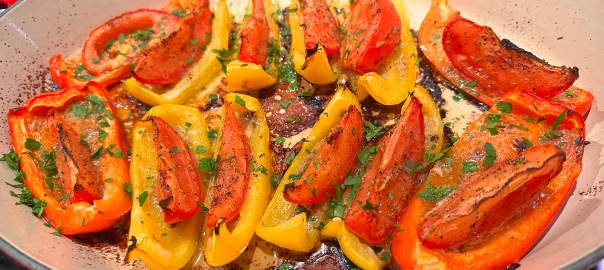
Very versatile, these little gems make splendid hors d’oeuvres eaten out of hand or set atop a crostini, as well as a side dish. A few on a plate make a nice sit-down first course, and they’re great as part of a buffet.
They add a nice pop of color—along with the nutrients—to your plate. The first go-around we served our Roasted Bell Peppers boats with a Parmesan Meatloaf.
Position a rack in the center of the oven and preheat to 350°F.
Lightly oil a 13 x 9-inch gratin pan or similar-size baking dish.
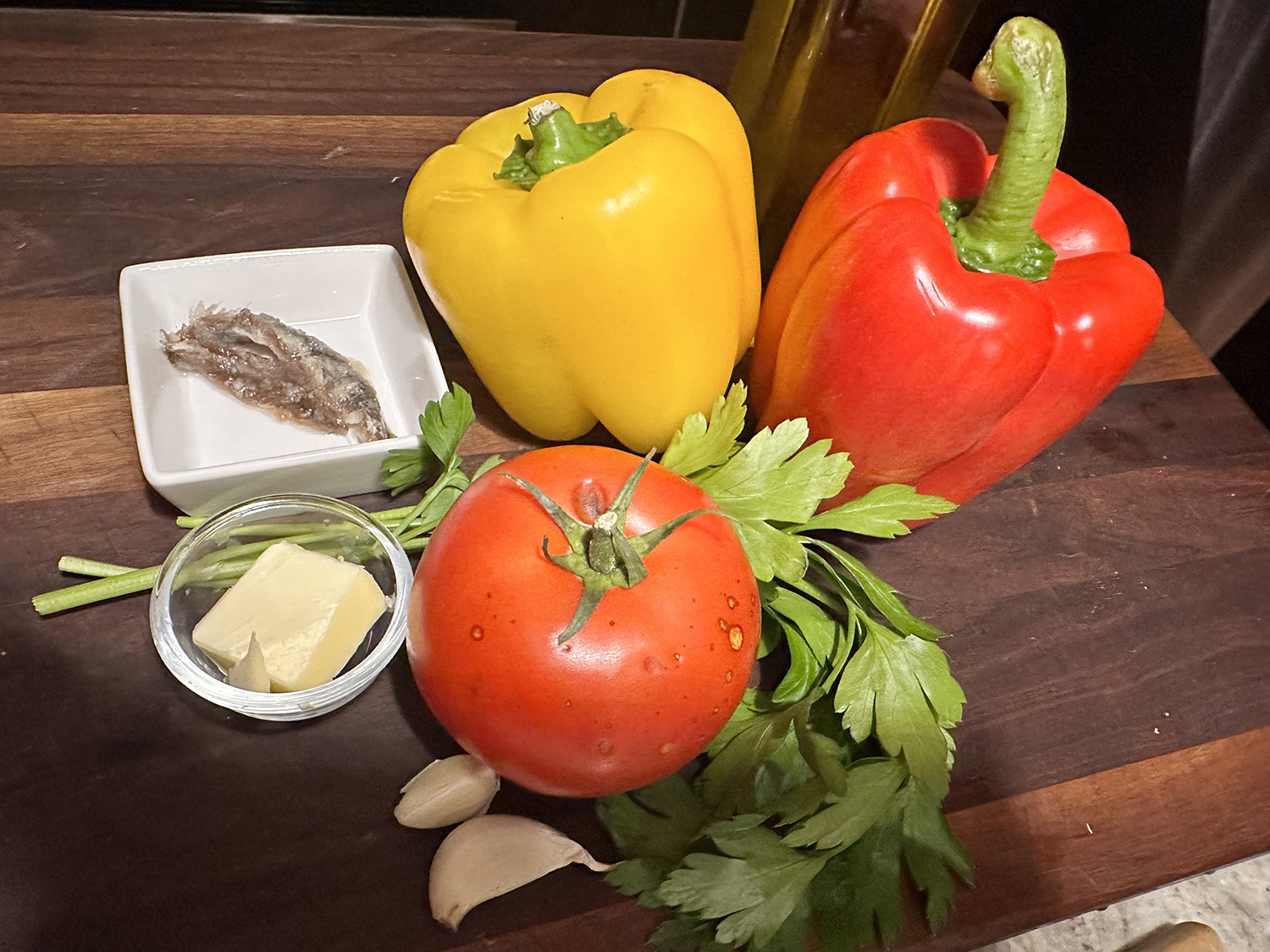
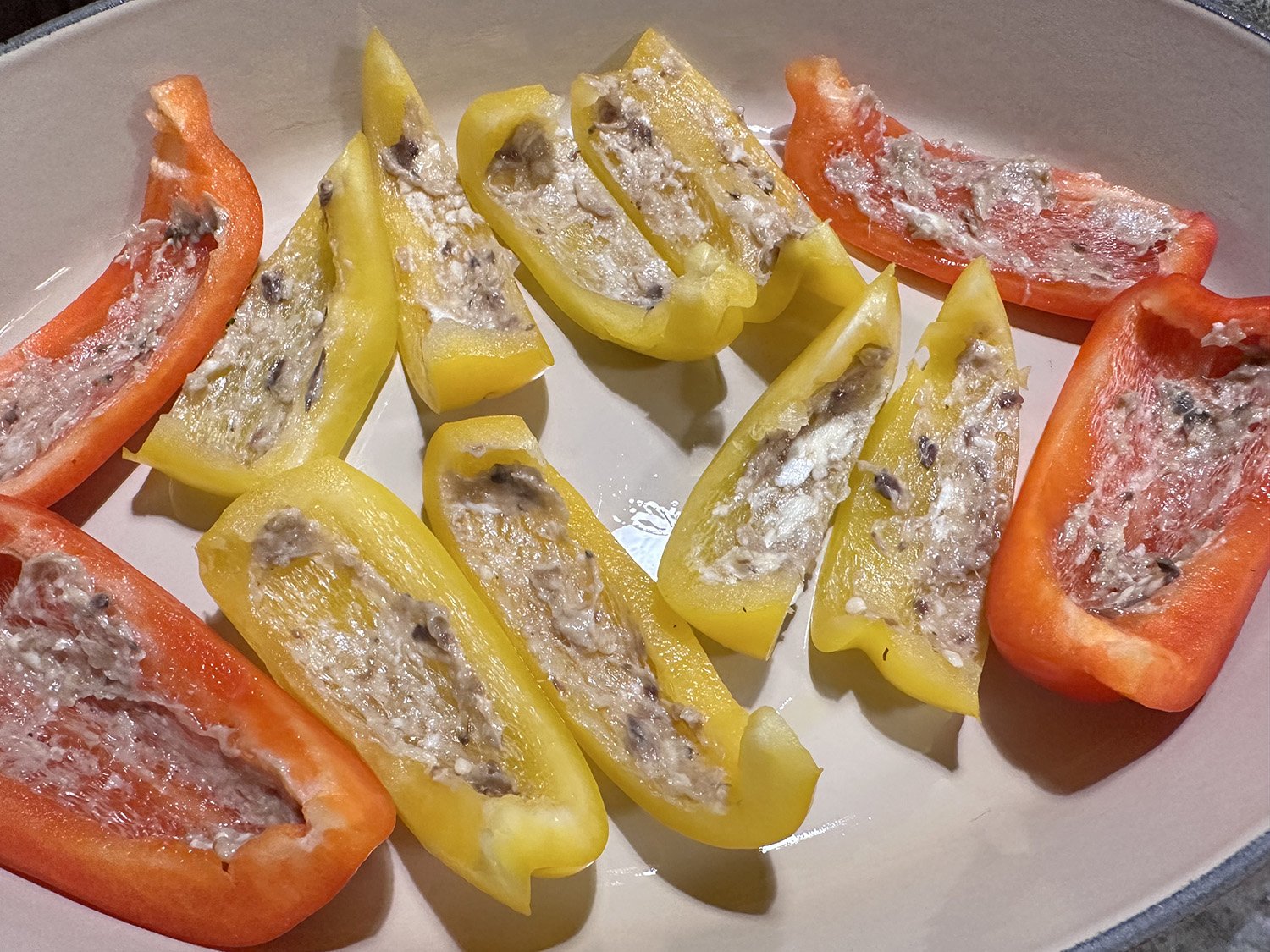
Combine the garlic and anchovies in a small mortar, add a pinch of salt, and smash and grind to form a paste. Add the butter and work together with a wooden spoon until well combined.
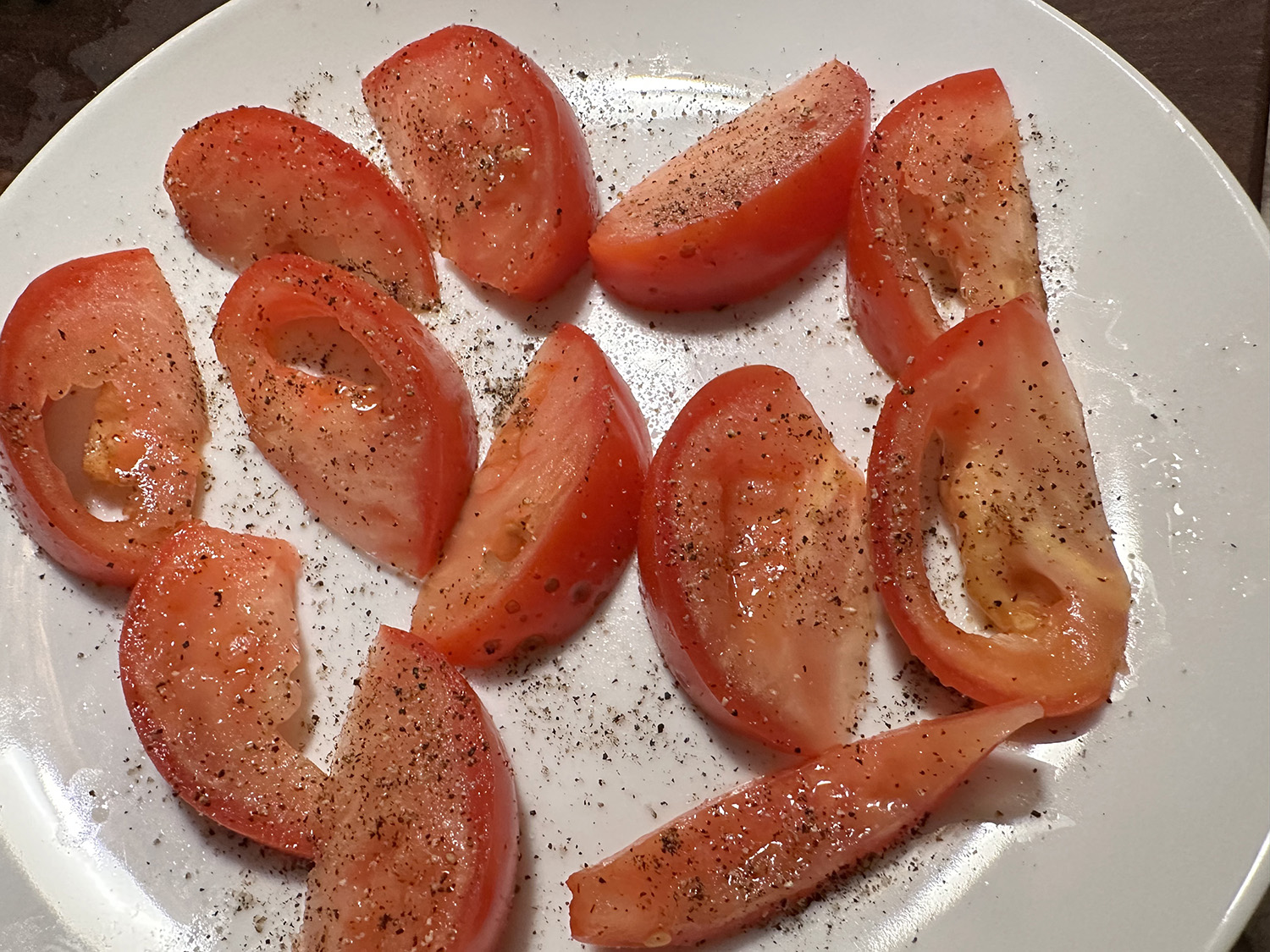
Half the peppers lengthwise and remove the core, seeds, and soft membrane-like ribs. Cut each half lengthwise into 1 1⁄2″ wide strips. Arrange the strips skin side down on the baking dish. Core the tomato and cut it into the same number of wedges as you have pepper strips. Using a sharp paring knife, carve the juicy seed pockets away from each tomato slice and discard. Season tomato strips on all sides with salt and pepper.
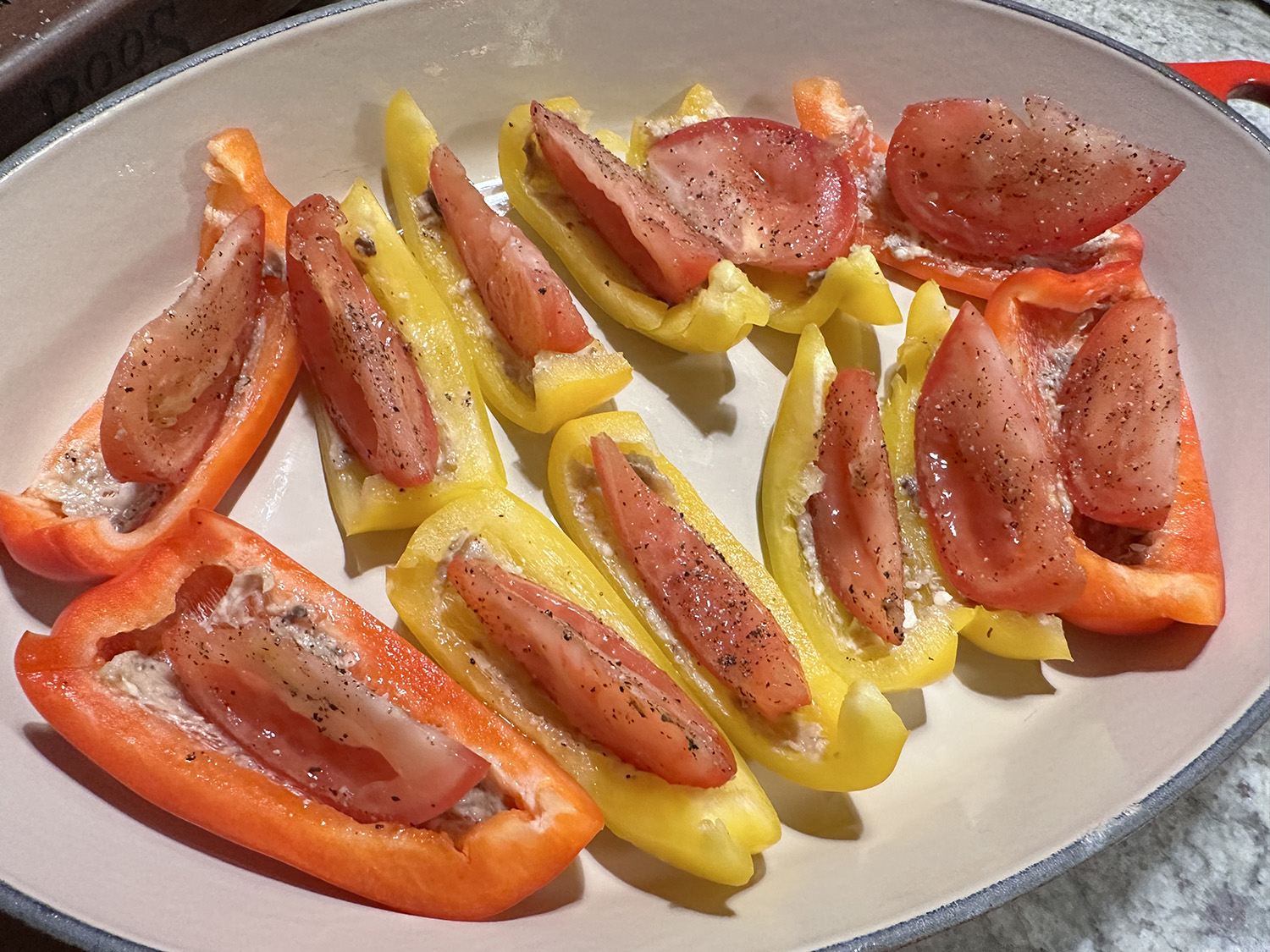
Dived the seasoned butter among the pepper boats, spreading a small amount on each one. Top with a piece of tomato. Drizzle with olive oil.
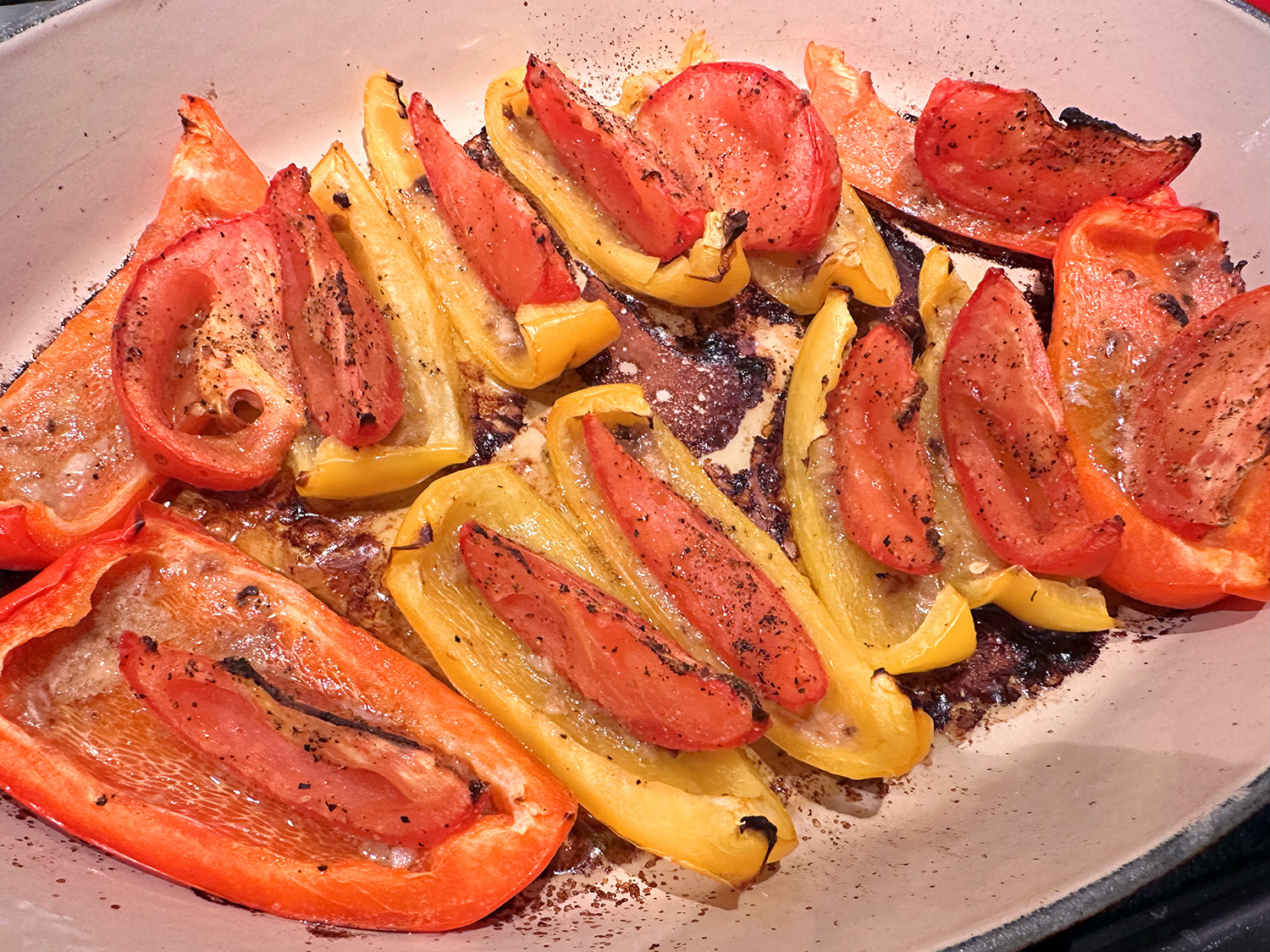
Roast until the peppers and tomato pieces are tipped with brown and the pepper is just barely tender, 30 to 40 minutes.
Sprinkle the peppers and tomato with parsley and serve warm or at room temperature, with the juices pored over the top.
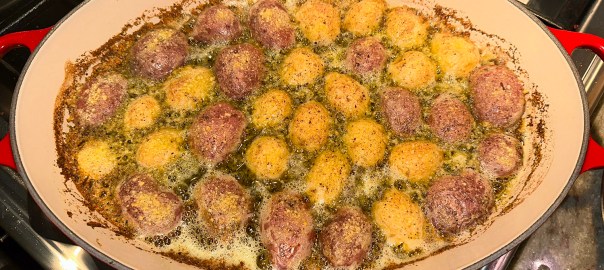
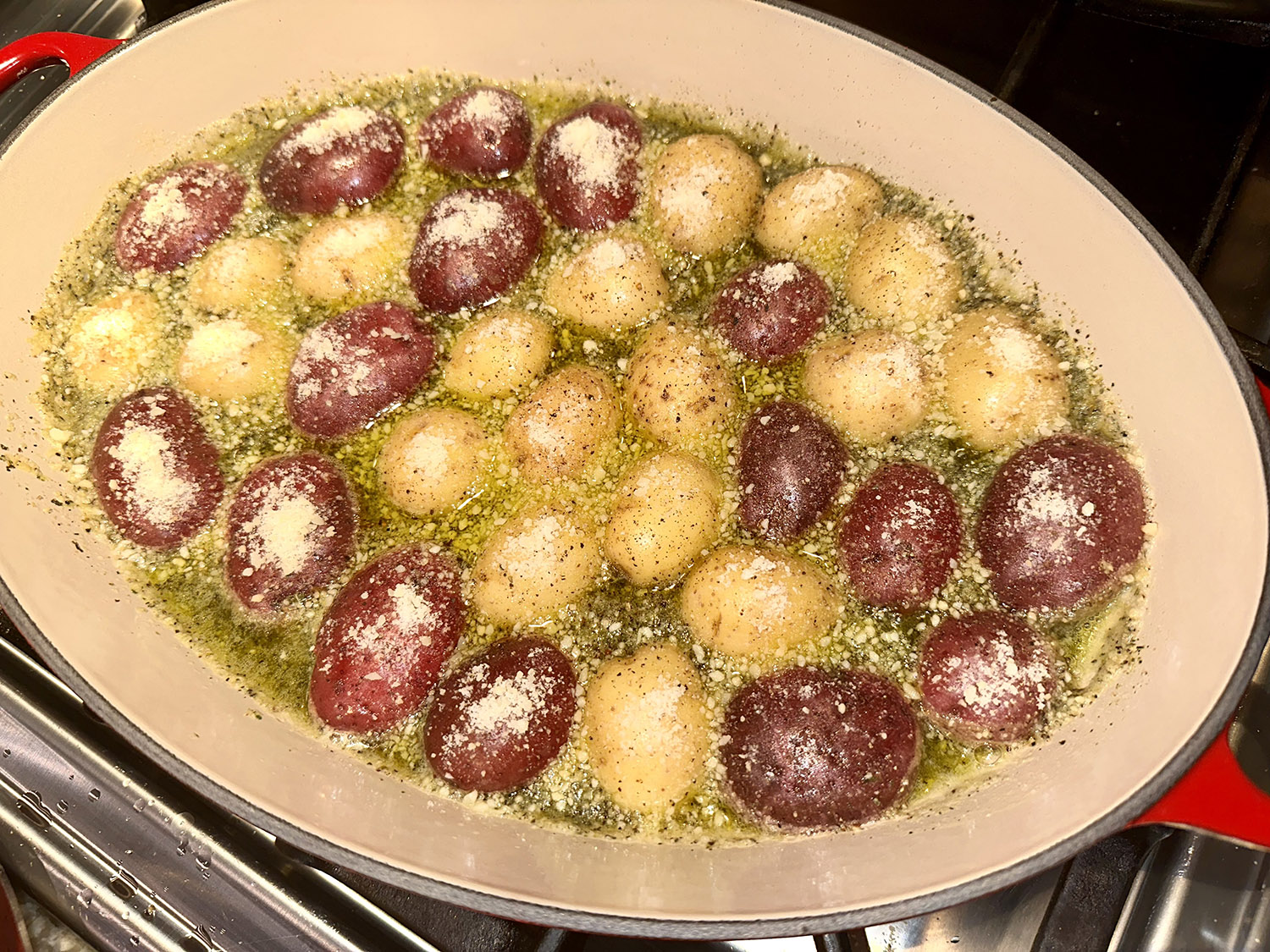
Looking for a swoon-worthy side dish? Crispy on the outside and soft in the center, these tubers are buttery, cheesy, herby and completely addictive. They also require only one pan, less than 10 ingredients, and just about an hour to make. You had me at potato…
According to the chef Robin Miller, Italian seasoning is a good medley of oregano, basil, thyme and rosemary. Add these herbs individually (about 1 teaspoon each) or substitute your favorites from the spice rack. Other options include adding garlic powder, or onion powder instead. Paprika would be a nice addition for folks who put paprika on everything. For a spicy version, add cayenne pepper or your favorite fiery spice blend.
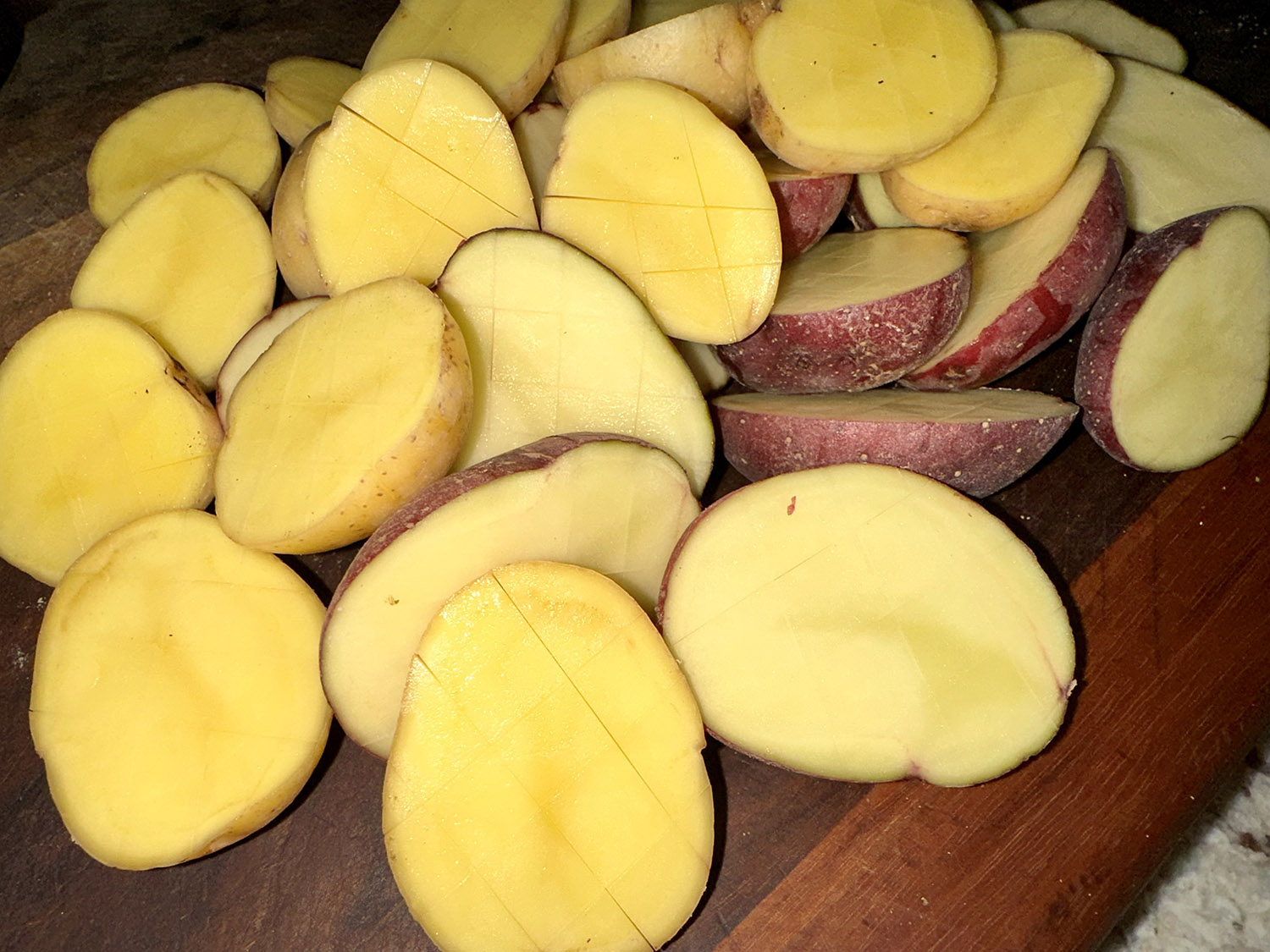
Once your potatoes are halved, use a small, sharp knife to “score” the flesh, which just means to slice vertically and then horizontally, about ⅛-inch into the flesh, making a crosshatch pattern. This simple yet crucial step allows the butter, cheese and herbs to seep into the nooks and crannies, ensuring maximum flavor all the way to the center of the spud.
Since the main flavor of these crispy potatoes is Parmesan, choose a good-quality cheese. That doesn’t mean you need Italian cheese with a pricy label, any grated cheese made with real Parmesan will suffice.
Our only issue had to do with the amount of potatoes. The recipe called for 2 pounds, which would have been way too much for the pan. We found that 1 pound was the perfect quantity to fit our enameled cast iron pan (although we did not cut back on the remaining ingredients). We believe if you use a half-sized rimmed baking sheet, you should fit most of the halved two pound spuds and the other ingredients.
1 ½ to 2 lbs. of small red and/or gold potatoes, washed and patted dry, scored
½ cup plus 1 Tbsp. of grated Parmesan cheese, divided
1 ½ Tbsp. Italian herb seasoning
½ tsp. garlic powder
Salt and freshly ground black pepper
Olive oil, for brushing the potatoes
Chopped fresh parsley or chives, optional for serving
Directions
Place butter in a 13×9-inch baking pan. Place the pan in the oven and turn the oven on to 400 F to preheat. When the butter is bubbly, remove the pan and set aside.
Meanwhile, halve each potato and score the flesh by making a crosshatch pattern about ⅛-inch deep.
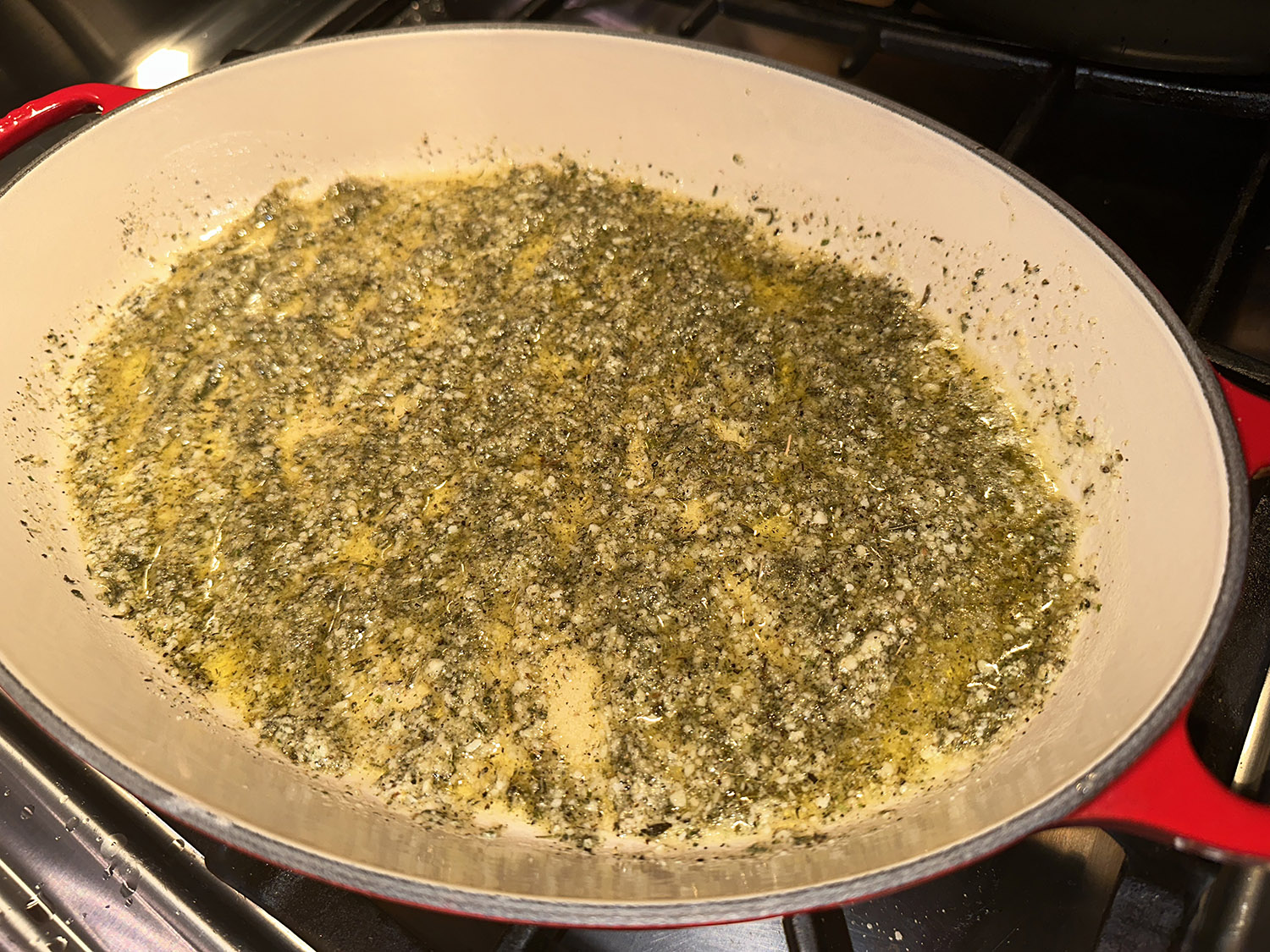
In a small bowl, combine ½ cup Parmesan cheese, Italian seasoning, garlic powder, 1 teaspoon salt and ½ teaspoon black pepper. Mix well and to the pan. Mix with melted butter to form a paste and spread in an even layer on the bottom of the pan.
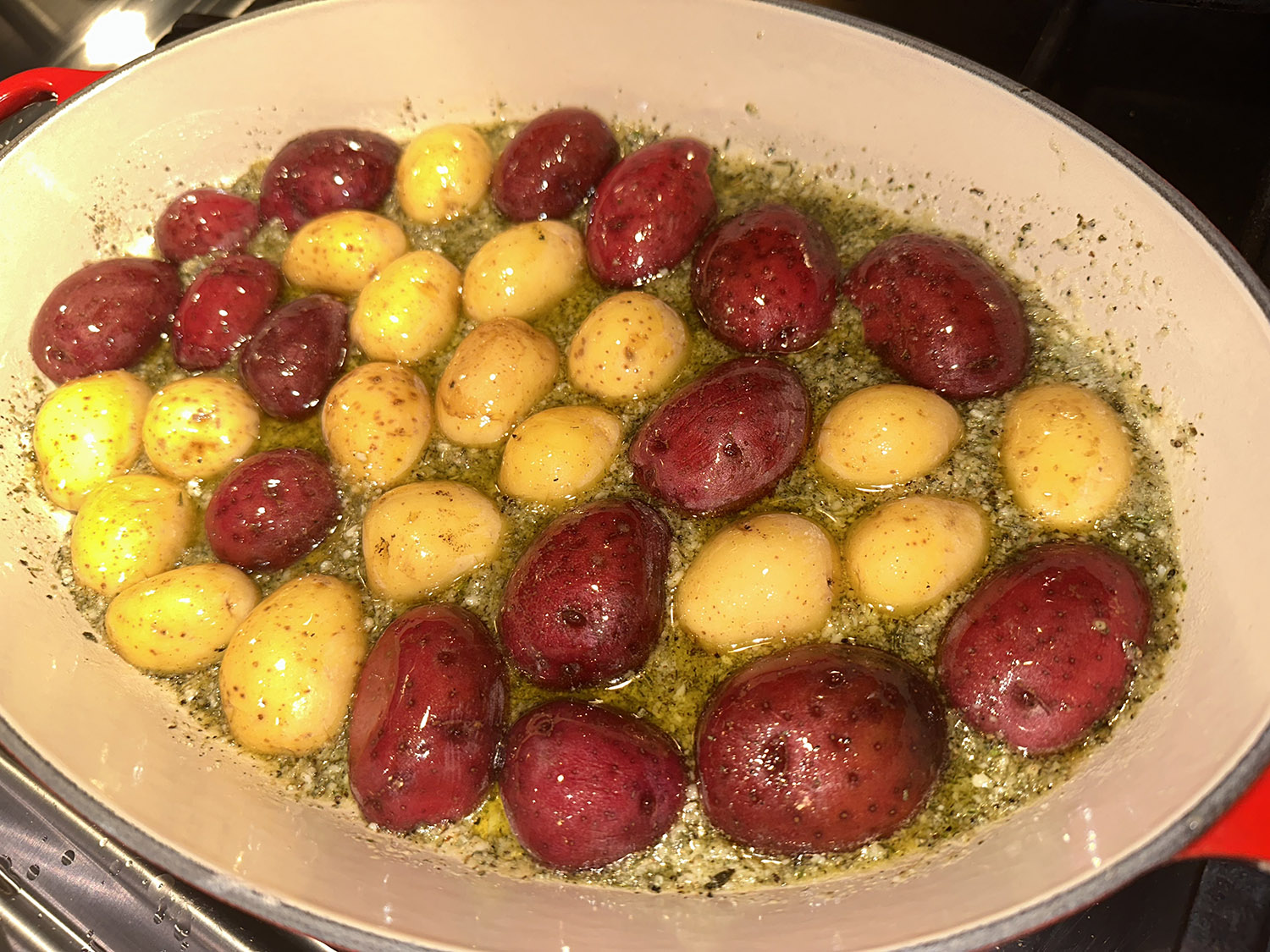
Nestle the potatoes cut side down into the cheese and butter mixture. Brush the skins of the potatoes with olive oil, season with salt and black pepper and sprinkle with the remaining tablespoon of Parmesan cheese.
Place the pan in the oven to bake uncovered for 35 to 40 minutes or until the potatoes are fork tender with a crispy crust.
Remove potatoes from the pan and allow to cool for 5 to 10 minutes to allow the cheese to set. Top with parsley or chives, if you like, and serve.
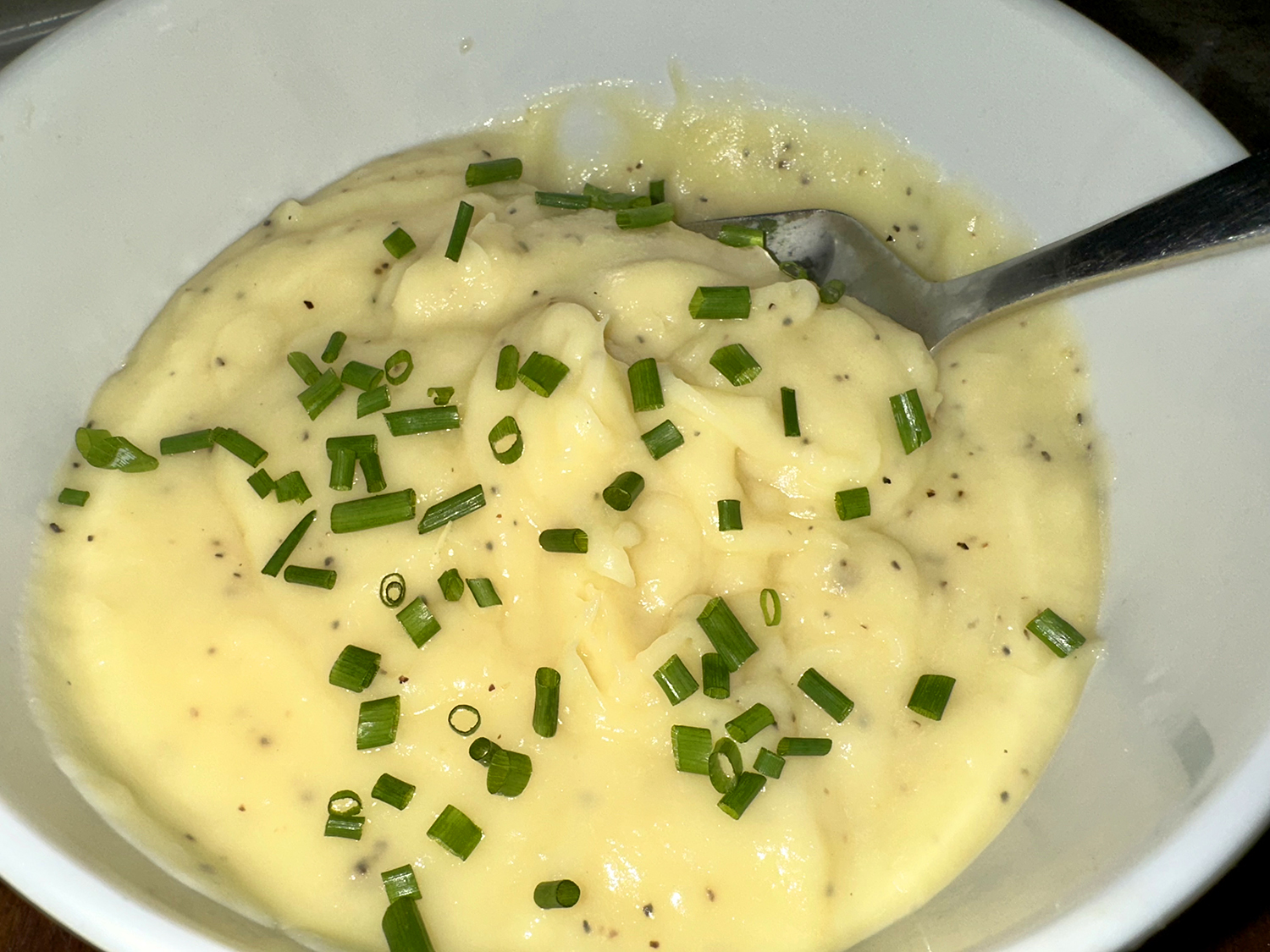
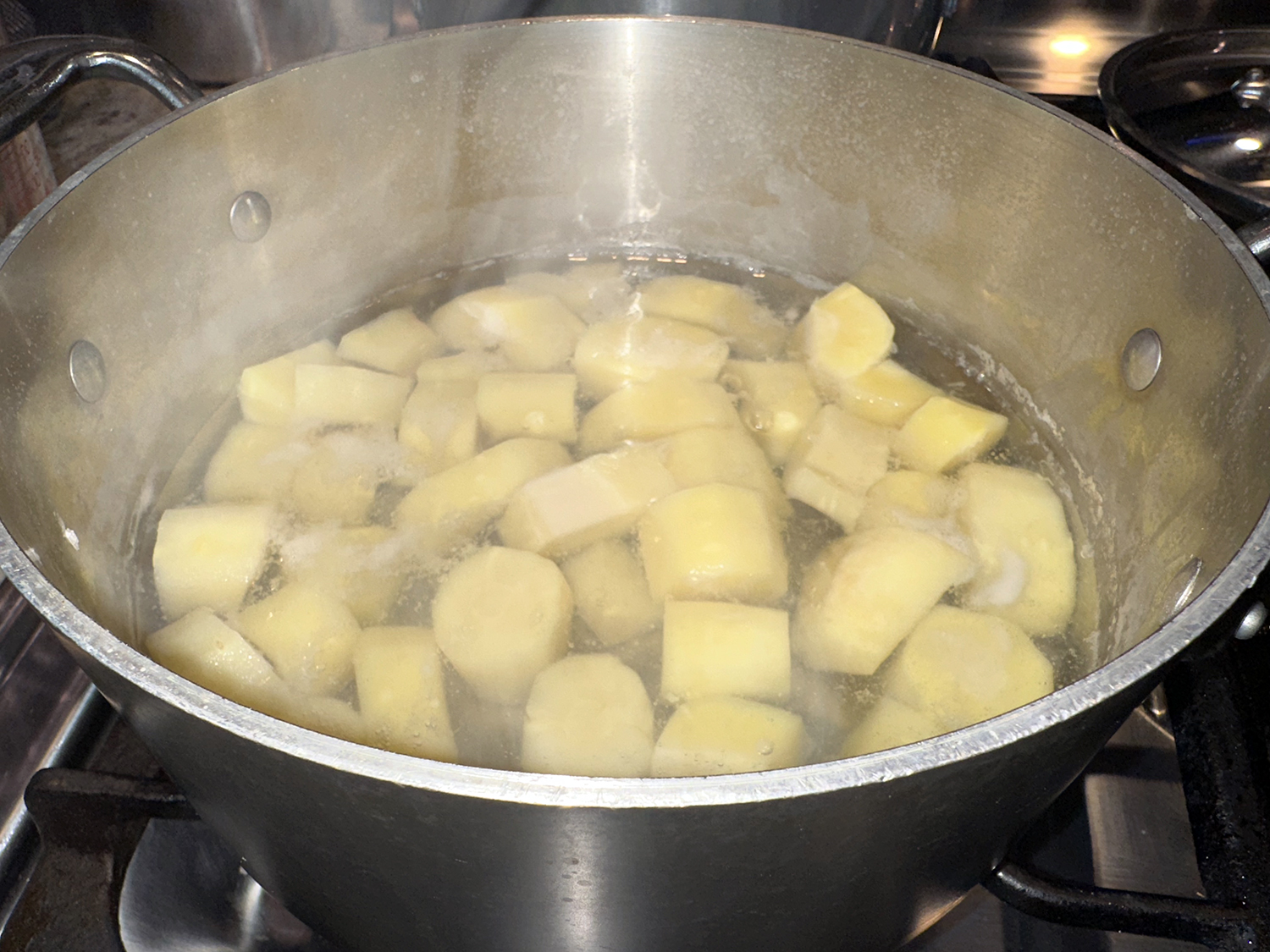
Sometimes we desire something a bit more upscale than plain mashed potatoes (which I dearly love). So when I ran across this Parsnip Purée recipe from Ina Garten, I knew instantly that we had to make this side dish. And it is about as easy as a side dish gets, seriously (just take a look at the abbreviated ingredients list).
Parsnips are really delicious and so under-appreciated. The versatile veggie is the essence of parsnip-ness with just a little butter that generates that sigh of pure satisfaction. A sensational, silky-smooth, slightly assertive side that you’ll be pairing with any number of main dishes. The first time out of the gate, it accompanied a seared sirloin steak, but we are imaging all of the other possibilities such as roast chicken, pork loin, salmon, leg of lamb…
Place 1½ pounds parsnips, scrubbed, sliced ¾” thick, in a medium pot, add 1 tablespoon kosher salt, and add enough water to cover the parsnips. Cover the pot, bring to a boil, then uncover, lower the heat, and simmer for 15–20 minutes, until the parsnips are very soft when tested with a small knife. Don’t drain the pot!
With a slotted spoon or small strainer, transfer the parsnips to the bowl of a food processor fitted with the steel blade and pulse to chop the parsnips. Pour the cooking liquid into a glass measuring cup and pour ½ cup down the feed tube. Purée the parsnips, adding more cooking liquid (about 1 cup total) through the feed tube until the parsnips are creamy and almost smooth but still have some texture.
Add 2 tablespoonsunsalted butter, diced, and ½ teaspoon freshly ground black pepper and purée until combined. Taste for seasonings, sprinkle with fresh chives and serve hot.
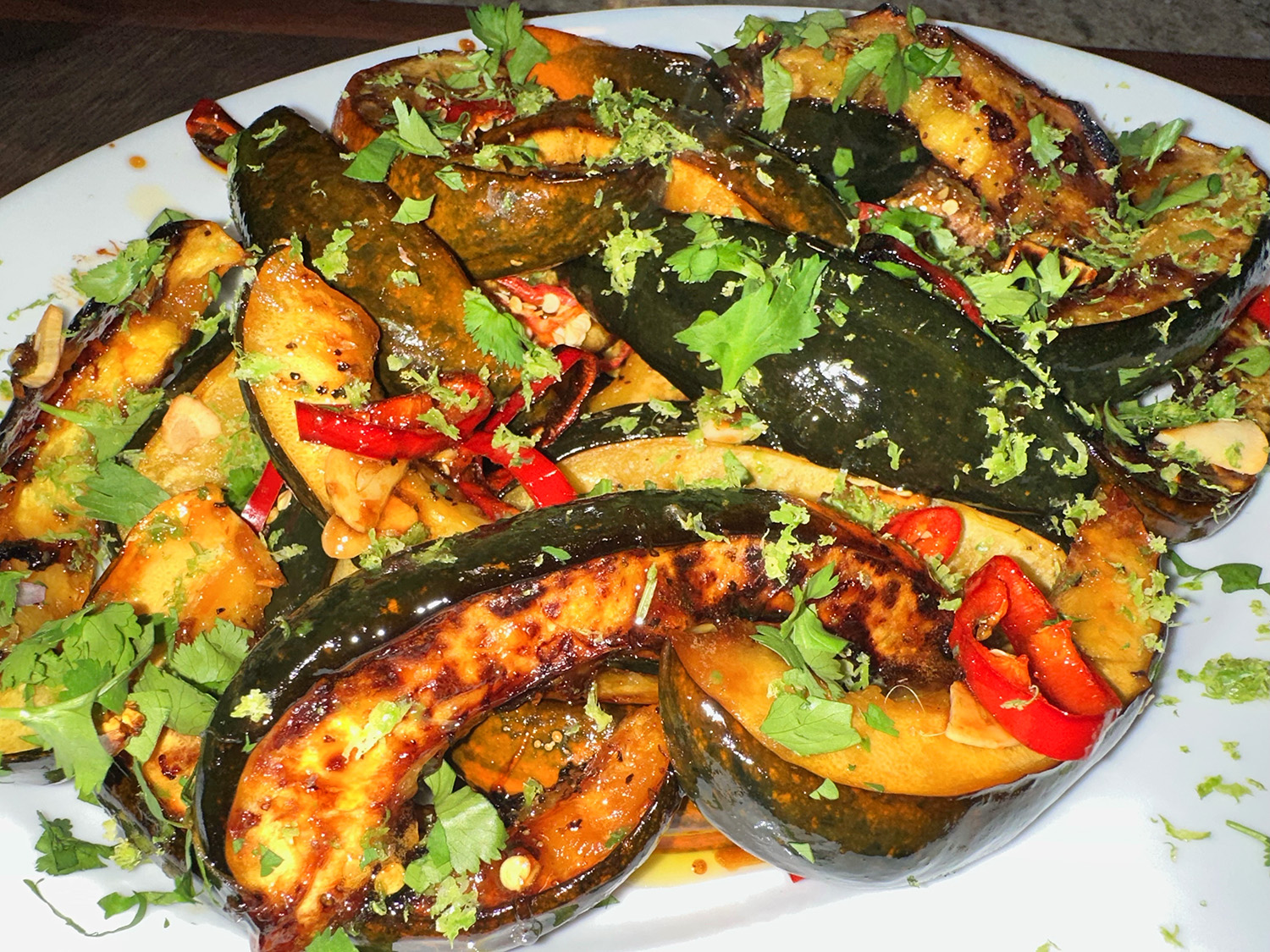
This time of year, squashes have their moment(s) in the sun. Here, the roasted squash shines when using spicy, tangy ingredients to banish one-note flavors. Lime, garlic and chilies add kick; while brown sugar creates a glaze-like coating with molasses notes that enhance the earthy-sweet squash.
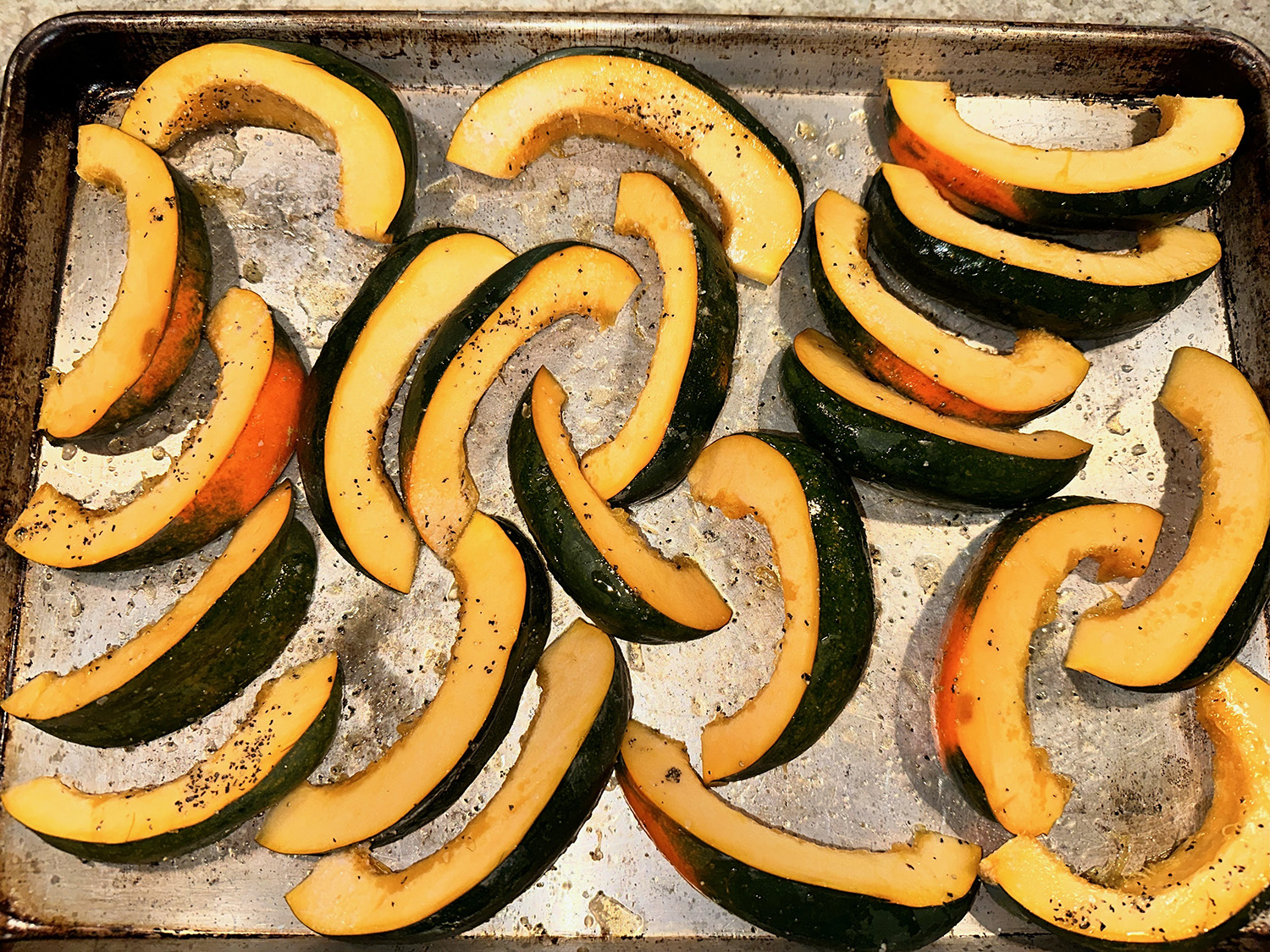
Kabocha is a Japanese pumpkin with mottled green edible skin and dense, slightly starchy orange flesh. Acorn squash, with thin skin that doesn’t require peeling, also is a terrific option. With no kabocha to choose from, we opted for the acorn squash.
This recipe would make for a nice side dish on your Thanksgiving table. Just sayin’… OR, pair it with Pan-Seared Bone-in Pork Chops, a fabulous cool weather meal.
Roasted Winter Squash with Lime, Chili and Cilantro
1 Tbsp. grated lime zest, plus ¼ cup lime juice, plus lime wedges, to serve
1/4 cup packed brown sugar
2 1/2 lb. kabocha squash OR two 1¼-lb. acorn squashes, halved lengthwise, seeded and sliced into 1-inch-thick wedges
Kosher salt and ground black pepper
2 medium garlic cloves, thinly sliced
1 or 2 serrano OR Fresno chilies, stemmed and sliced into thin rings
1/3 cup lightly packed fresh cilantro
Directions
Heat the oven to 400°F with a rack in the upper-middle position. In a small bowl, whisk together the oil, lime juice and sugar until the sugar dissolves.
On a rimmed baking sheet, toss the squash with half of this mixture, 2 teaspoons salt and ½ teaspoon pepper. Arrange the pieces cut side down and roast until browned on the bottom, 25 to 30 minutes.
Using a wide metal spatula, flip each piece, drizzle with the remaining oil mixture and sprinkle with the garlic and chili(es). Roast until the squash is deeply caramelized and a skewer inserted into the largest piece meets no resistance, 10 to 15 minutes.
Transfer to a platter, pouring over any juices. Top with the lime zest and cilantro and serve with lime wedges.
Tangy orange-butter sauce gives Brussels sprouts a wake-up call in this recipe and paired well with our Citrus Rosemary Chicken entrée. The key is using real maple syrup and a good quality balsamic vinegar for the best flavor.
It is easily cut in half if serving 4 or less people. Truly yummy! In fact, all of our guests claimed they were the best Brussels sprouts they have ever eaten!
2 lbs. small Brussels sprouts, trimmed and halved lengthwise
1/4 cup extra-virgin olive oil
1 tsp. coarse salt
1 Tbsp. plus 1 teaspoon balsamic vinegar
2 Tbsp. pure maple syrup
2 Tbsp. freshly squeezed orange juice
1 tsp. finely grated orange zest
4 Tbsp. cold unsalted butter, cut into 16 pieces
Directions
Preheat oven to 475 degrees. Line a large rimmed baking sheet with parchment paper; set aside.
In a large bowl, toss Brussels sprouts with olive oil and salt; arrange in an even layer on prepared baking sheet, cut side down.
Transfer to oven and roast until brown and tender, 15 to 18 minutes, rotating baking sheet halfway through baking; transfer to a large bowl.
In a small saucepan, mix together vinegar, maple syrup, orange juice, and orange zest; heat over medium heat until heated through but not simmering. Remove from heat and whisk in cold butter, a few pieces at a time, until smooth and creamy.
Pour vinegar mixture over Brussels sprouts and gently stir until liquid is absorbed and mixture is well combined; serve immediately.
Prepared Mediterranean-style, this nutty Toasted Orzo Pasta Recipe with Garlic, Parmesan and Sun-dried Tomatoes will steal the show next to your favorite protein. You can even serve it as a quick and easy vegetarian meal on its own; it will feed 4 people as a vegetarian main and about 6 or so as a side dish.
It was a superb complement to our top sirloin and veggie kebabs. In fact, this orzo recipe jumped to the top of the list and one we’ll make time and again!
Leftovers? Lucky you. It will keep in the fridge for up to 4 days in a tightly closed container. Warm over medium heat.
In a large saucepan, heat 2 tablespoons extra virgin olive oil over medium-high. Add the orzo and cook, tossing around, until toasted to a beautiful golden brown.
Add at least 7 cups of boiling water to the saucepan and season well with 1 tablespoon of kosher salt. Cook the pasta in boiling water to al dente according to the package instructions (about 7 to 8 minutes).
Just before the pasta is fully cooked (after about 5 minutes), remove 1 cup of the starchy pasta water and set it aside.
In a large pan, warm 1/2 cup extra virgin olive oil over medium heat. Add the garlic and season with a pinch of kosher salt and red pepper flakes, if using. Cook, tossing regularly, until just fragrant. Add the lemon juice and 1/2 cup of the pasta cooking water. Raise the heat if needed to bring to a boil. Add the parsley and oregano.
When the pasta is ready, drain and add it to the pan and toss to combine. Season with kosher salt and black pepper. Add the sun-dried tomatoes and a 1/4 cup of the grated parmesan. Toss to combine. If needed, add a little more of the pasta cooking water.
Finish with more Parmesan and red pepper flakes, if you like.
I’m a huge fan of potatoes no matter how they are made, be it mashed, smashed, roasted, french fried, twice-baked, scalloped, or au gratin. This Spice-Crusted Oven-Roasted Potatoesrecipe elevates spuds to a new dimension and earns top honors in my plethora of potato recipes.
The mix, known as “suya” in Nigeria has a kick to it, but it’s also got an earthy and nutty taste to it as well, making it a favorite side dish for many entrées. A food processor makes the assembly of the mixture a breeze. Though suya is typically a powder when used on meats, adding a bit of oil produces a paste that adheres better to skin-on potatoes.
It is paired with a refreshing tomato-shallot recipe to spoon over the top, or even used for dipping. While it is not necessary, it adds a bright note to the side dish and complimented our grilled lamb loin chops.
Making them is a bit messy when you try to adhere the spice rub to the potato halves. Some of the mixture on the baking sheet will likely occur and char, but don’t worry because the cooking spray prevents it from sticking to the sheet.
1 serrano chili, stemmed. seeded and finely chopped
1⁄2 cup lightly packed fresh flat-leaf parsley, chopped
2 Tbsp. lime juice
Directions
Heat oven to 475°F with a rack in the middle position.
Mist a rimmed baking sheet with cooking spray.
In a food processor, combine peanuts, paprika, ginger, garlic, sugar, 1⁄2 teaspoon salt and 1 teaspoon black pepper. Process until finely ground.
Add 2 tablespoons of the oil and pulse until evenly combined, scraping the bowl as needed.
In a large bowl, toss the potatoes with the remaining oil and 1⁄4 teaspoon salt. Add the nut-spice mixture and use your hands to toss and press the seasoning onto the potatoes so it sticks.
Scrape the potatoes and any residual seasoning onto the prepared baking sheet, then distribute in an even layer.
Roast until well-browned all around and a skewer inserted in the potatoes meets no resistance, 20 to 25 minutes, turning the potatoes about halfway through.
OPTIONAL: While the potatoes roast, in a small bowl, stir together the tomatoes, shallot, chili, parsley, lime juice and a 1⁄2 teaspoon each of salt and pepper.
When the potatoes are done, transfer to a serving dish and sprinkle with salt. Serve with the tomato relish on the side, if using.
With the last gasps of the unofficial summer calendar closing in on us, let the season’s bounty shine on the plate. And to that end, this lively salad of corn, scallions, jalapeño and avocado tossed with a tangy buttermilk-feta dressing is like summer on a plate. The sweetness of peak-summer corn and the richness of creamy avocado balance out the tartness of the dressing.
While this recipe from NYTimes Cooking could be a side dish or a vegetarian main, we opted to add a protein to give it more heft as an entrée. In that vein, we grilled some chicken breasts with a Japanese 7-spice rub, but grilled shrimp or salmon would work wonderfully also. And to save time on dinner day, we grilled the chicken the day before while barbecuing other items.
The directions below are for the full recipe which allows for 4 to 6 portions. But with just the two of us, we cut most of the recipe in half, while altering quantities of other ingredients as we saw fit. After eating two healthy servings, we still had some leftover for lunch the following day.
Grilled Corn, Avocado and Chicken Salad With Feta Dressing
4 boneless, skinless chicken breast halves, rubbed with spices of your choice (optional)
6 ears corn (about 3 lbs.), shucked and silk removed
1 bunch scallions, trimmed
1 jalapeño, stemmed and halved lengthwise
3 Tbsp.olive oil
Kosher salt and black pepper
4 oz. feta cheese, crumbled (about 3/4 cup)
⅓ cup buttermilk
1 tsp. freshly grated lemon zest plus 1 Tbsp. lemon juice
1 small garlic clove, grated
¼ cup sliced fresh chives
¼ cup finely chopped fresh parsley
1 medium head romaine lettuce, torn into bite-size pieces (about 8 cups)
2 avocados, sliced
Directions
If a protein is desired, grill chicken (or shrimp, salmon) until done. This can be done a day ahead and refrigerated until ready to use.
Heat a grill or grill pan over medium-high. Brush corn, scallions and jalapeño with the oil and season with salt and pepper.
Arrange on the grill and cook, turning occasionally, until corn kernels are browned in spots, 6 to 8 minutes, and the scallions and jalapeño are charred all over and tender, 9 to 10 minutes.
Transfer vegetables to a cutting board and let cool slightly.
In a medium bowl, using a whisk (I used a pestle), mash the feta into a coarse paste. Whisk in buttermilk, lemon zest and juice and garlic, then stir in chives and parsley.
Finely chop the charred jalapeño and stir it into the feta dressing; season with salt and pepper.
In a large bowl, toss lettuce with half the feta dressing and arrange on a platter. Cut corn kernels off the cob and slice scallions into bite-size pieces. Arrange avocado slices, corn and scallions on top of the lettuce.
Large, juicy, ripe heirloom or beefsteak tomatoes and fresh picked corn on the cob are two heavy hitters that shine from mid- to late-summer in our neck of the woods. For those few fleeting months we try to take advantage of the produce preparing them in a myriad of different ways. Often, the simple approach is just as tasty as a more complicated recipe such as a corn sauté or an heirloom tomato tart.
You may have enjoyed Caprese Salad before, but have you ever topped it with some grated lemon zest? This twist on the preparations adds a wonderful bright note that compliments the other flavors. Sun-ripened farmers market tomatoes are layered with creamy mozzarella and topped with aromatic fresh basil, sweet and tangy balsamic vinegar, and that aforementioned floral lemon zest.
To complete the meal, we boiled fresh ears of corn, and grilled a cedar-planked salmon with a North African spice rub—both of which took about the same amount of time to cook. Deliscioso!