Tag Archives: pesto

Pan-Seared Salmon with Citrus Pesto and Pasta

A lovely pescatarian meal utilizing a unique pesto which uses lot of fresh basil, and perhaps some fresh mint from your herb garden, or a local farmer’s market. And the citrus coming from a pink grapefruit is a novel approach, although we added the zest from one lemon also, to emphasize those welcome citrus notes.

Genovese pesto isn’t the only pesto around: There are many regional variations, including a vibrant and light Sicilian version that stars citrus. This naturally vegan version doesn’t need cheese: The citrus provides acidity, and the umami comes from the capers and toasted nuts.

Pistachios and almonds grow abundantly in Sicily, but walnuts or pine nuts also work. Feel free, generally, to adapt this base recipe, as you’ll find Italian citrus pestos made with anchovies, garlic, dried oregano, fennel fronds, dried chile and, yes, cheese, if desired. We did add a bit of grated parmesan on the pasta.
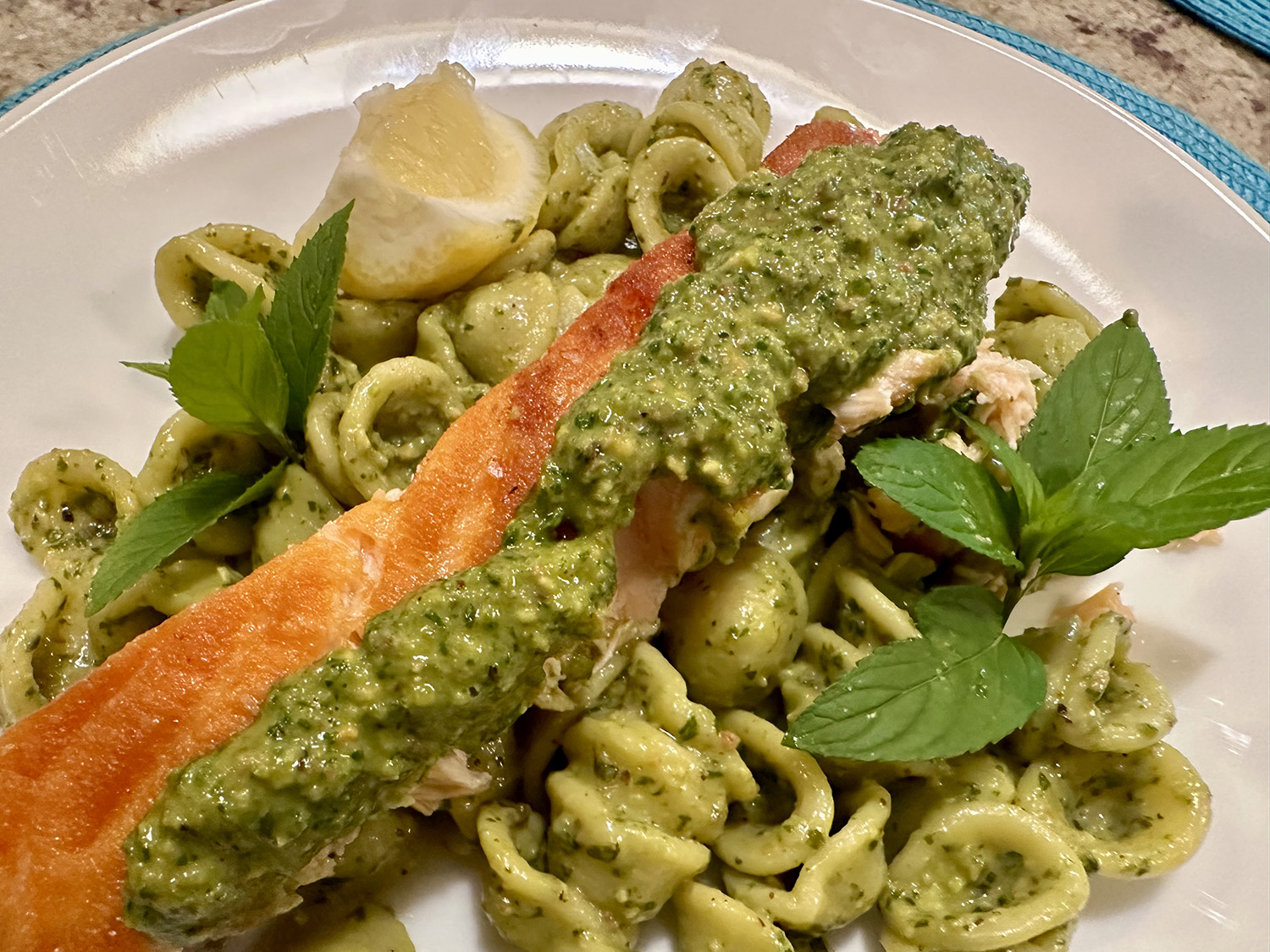
We altered the original recipe to better suit our needs and preferences. For starters, we used a single one-pound salmon filet. The pesto was increased by half to make sure we had enough for our choice of pasta, orecchiette—which the sauce nestles inside of. And while we used both basil and mint, it was about a 75-25% ratio with basil being the dominant herb.

Pan-Seared Salmon with Citrus Pesto and Pasta

  • Servings: 2-4
  • Difficulty: easy
  • Print

Ingredients

For the Pesto

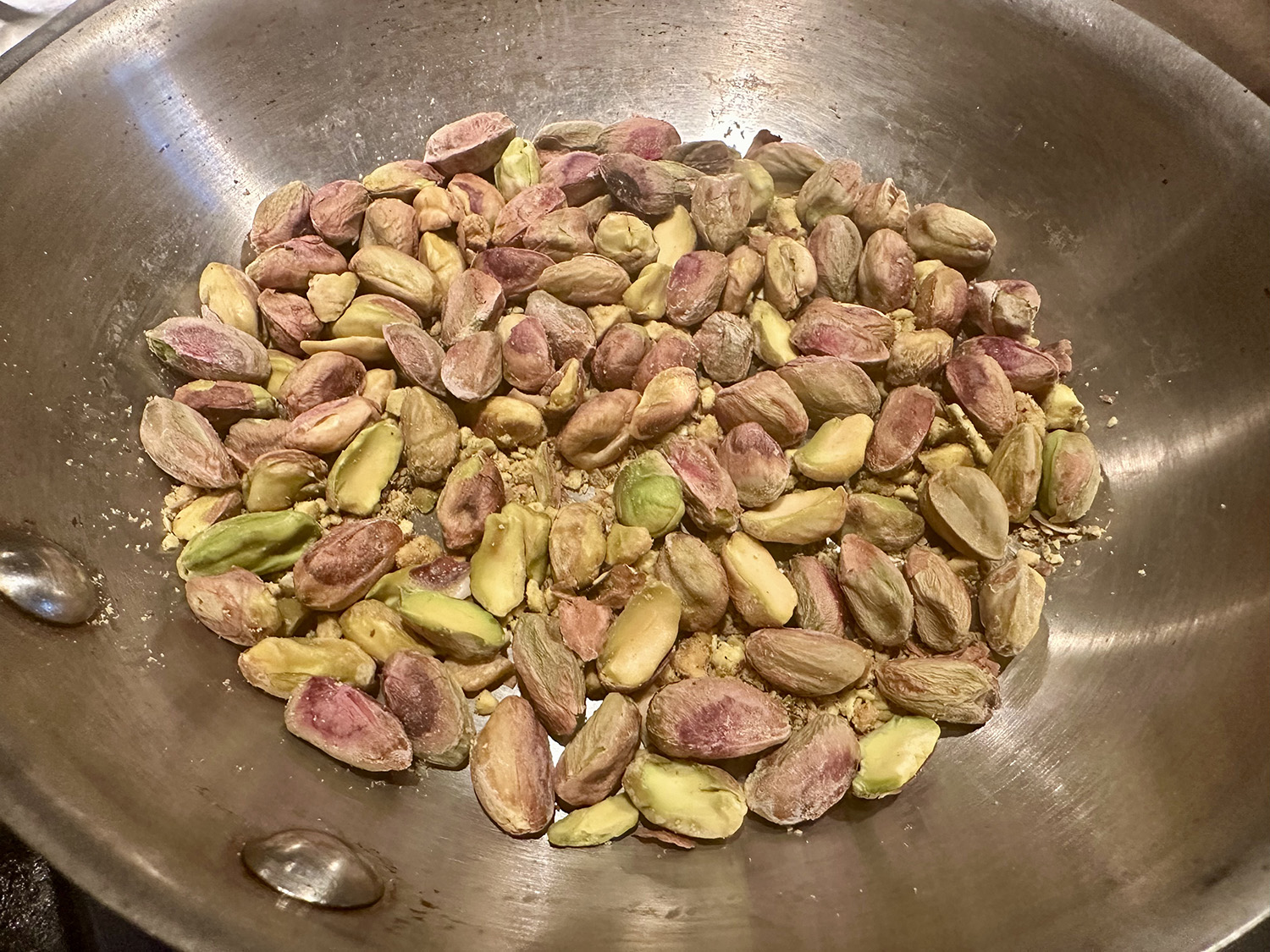
  • ½ cup toasted pistachios
  • 12 oz. orecchiette pasta
  • 1 Tbsp. drained and rinsed capers
  • Kosher salt
  • 3 cups mint or basil leaves (or a combination)
  • 1 ½ Tbsp. grapefruit, and ½ Tbsp.lemon zest; plus 4 ½ Tbsp. grapefruit juice
  • ½ cup extra-virgin olive oil, plus more as needed

For the Fish

  • 1 lb. salmon fish fillet
  • Salt
  • Extra-virgin olive oil, for greasing

Directions

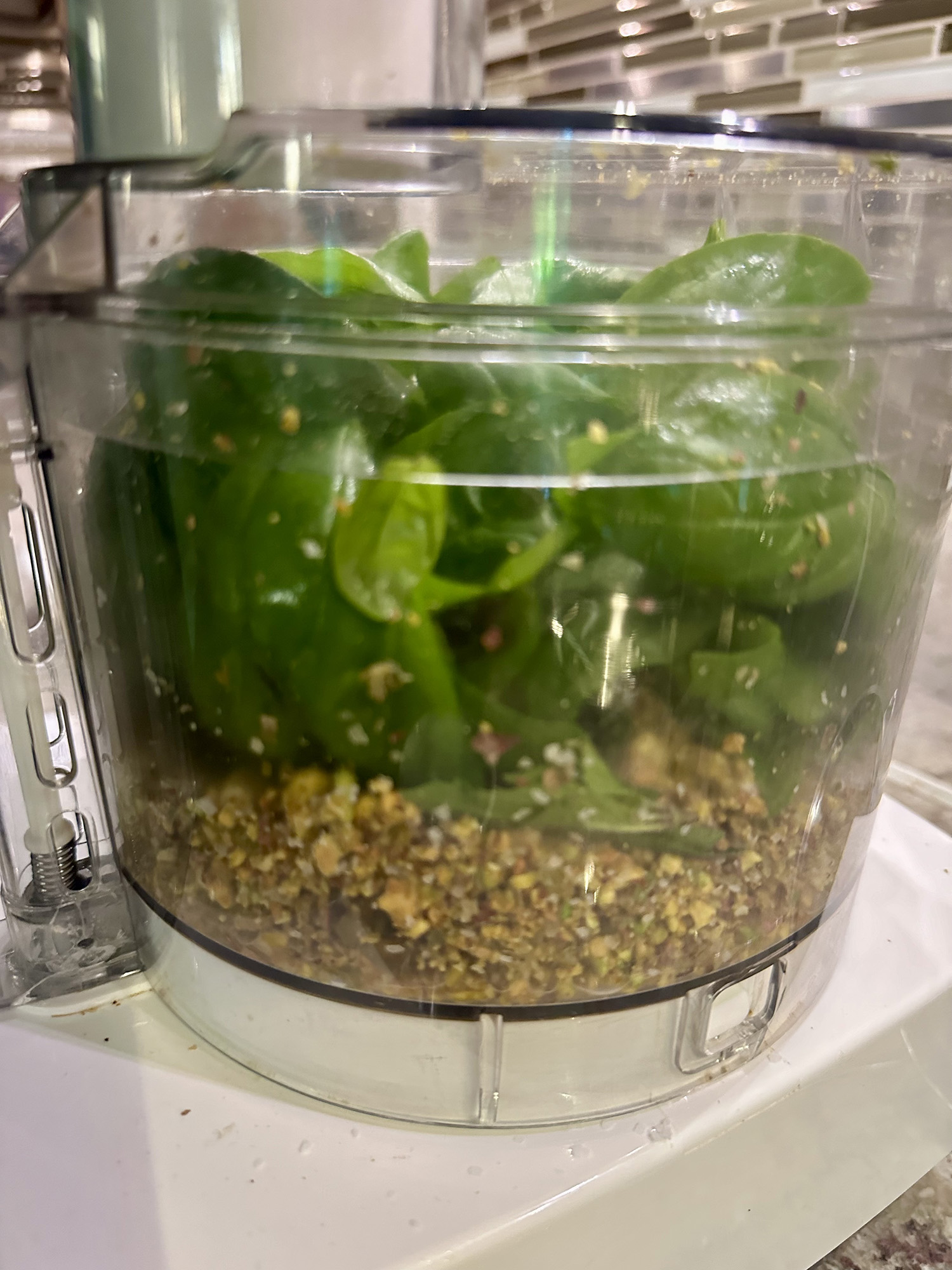
  1. To make the pesto, add the pistachios, capers and 1 teaspoon salt to a food processor and process until coarsely chopped. Add the herbs, citrus juice and a pinch of salt and pulse until the herbs are finely chopped and the nuts are about the size of sesame seeds.
  2. Cook the orecchiette as directed on the package. Reserve about 1 cup of the pasta water.
  3. Add the olive oil and pulse just until combined. Stir in 1 Tbsp. of citrus zest. Taste, then continue to add more zest and salt until the pesto is citrusy and punchy.
  4. Thin with 2 to 3 more tablespoons of olive oil until it’s the consistency of a loose paste. Taste, and adjust seasonings as needed.
  5. To make the fish, season it all over with salt and oil. Add the fish (skin-side down, if your fillets are skin-on) to a large nonstick skillet, then heat over medium. Cook until the flesh is opaque ¾ of the way up the sides, 6 to 12 minutes, depending on the thickness of the fish. If the fish is buckling, press it down with a spatula so it makes contact with the skillet. Flip and cook until cooked through, 1 to 2 minutes.
  6. Divide the pesto roughly in half, adding part of it to the pasta along with some reserved pasta water until a loose consistency.
  7. Divide desired amount of cooked and sauced orecchiette onto plates, lay the salmon fillets and top with a few spoonfuls of pesto.

http://www.lynnandruss.com

Loosely adapted from a recipe by Ali Slagle for NYTimes Cooking

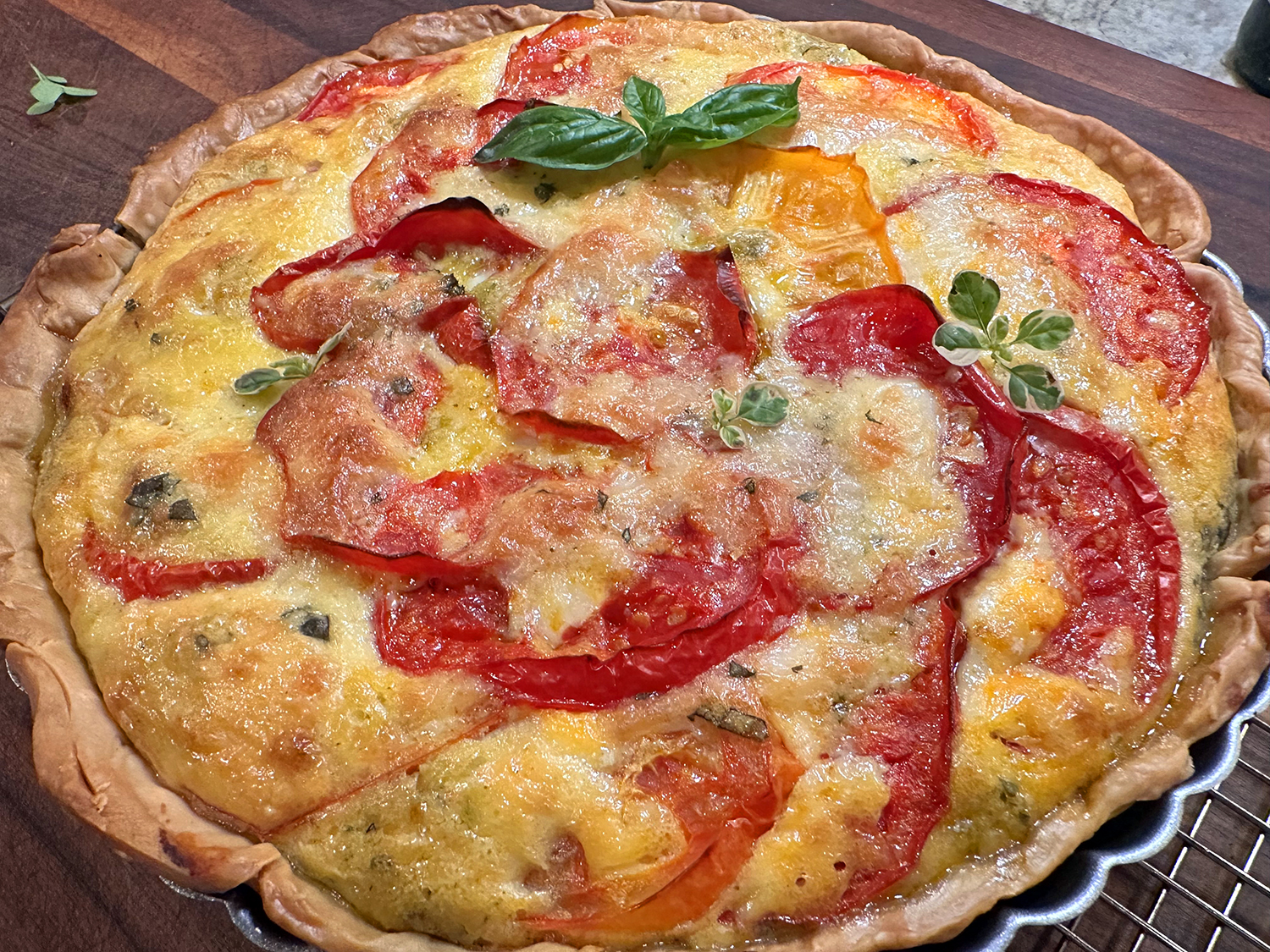
Heirloom Tomato Tart

Got Tomatoes? When it is tomato season, heirlooms are front and center in our household. At first glance, some heirloom tomatoes may seem flawed, but it’s actually their uniformly red counterparts who are the genetic deviants of the tomato family.

According to NY Times Cooking, decades ago, many businesses decided to prioritize cookie-cutter-like hybrid tomatoes, which grow year-round and can survive a long, bumpy journey. It left heirloom tomatoes on the wrong side of the deal. The varieties that remain have a shorter shelf life and are relegated to just a few months of summer, but they’re sweeter with a more robust flavor. This tart celebrates juicy, vibrant tomatoes in a cheesy, herby, custard-filled, flaky crust, with each bite punctuated with pesto.

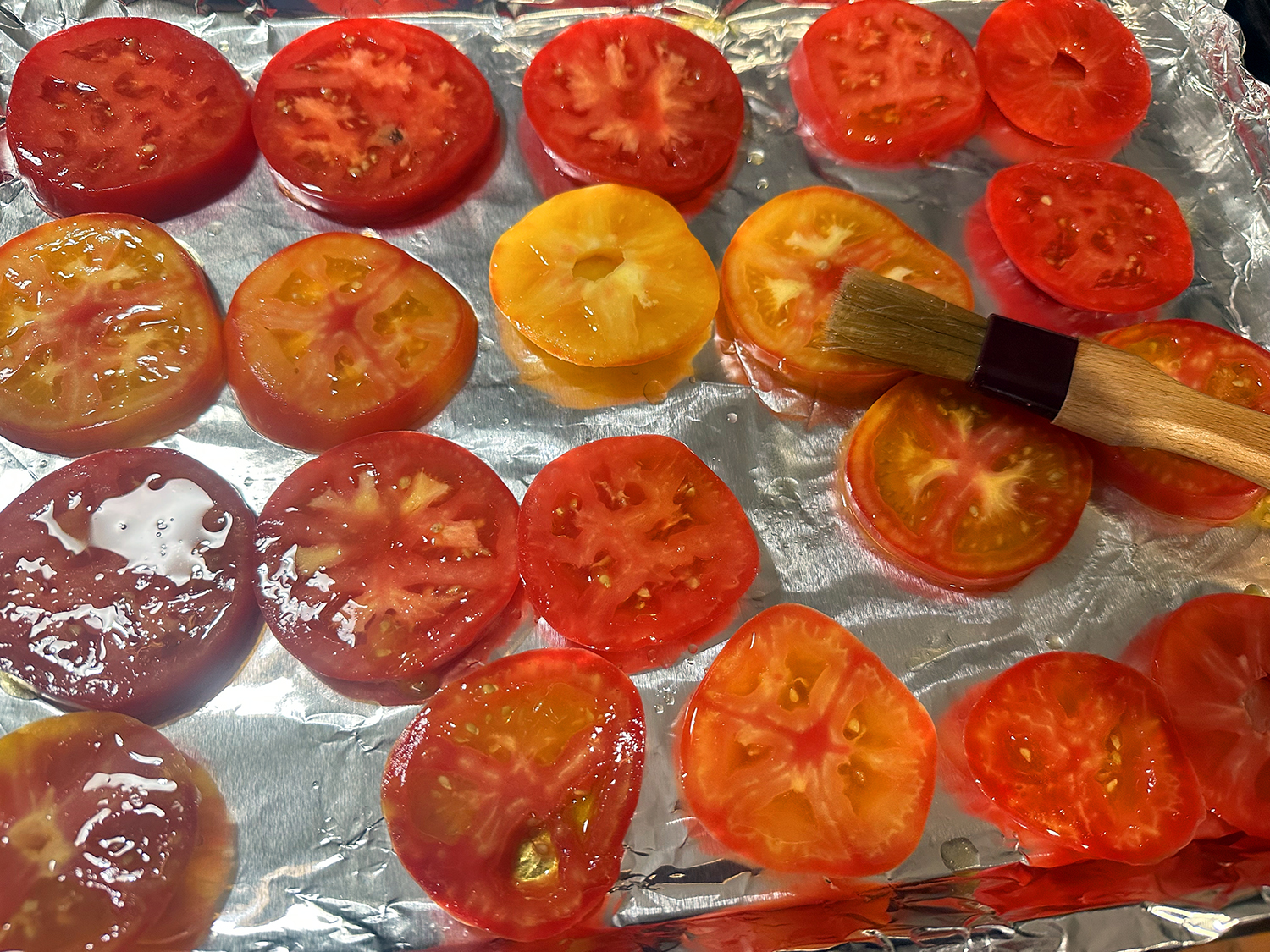
Due to the final results, we made numerous changes and made another tart. By roasting the tomato slices first, much of the moisture evaporates and the tomato flavor is more concentrated. We doubled the amount of shredded mozzarella and added it to the custard, layering the tomatoes on top of that.

The second pie was firmer, and these new instructions are noted below. The tart will feed 4 as a main course with a salad; 6-8 as a starter course.

Heirloom Tomato Tart

  • Servings: 4-8
  • Difficulty: easy
  • Print

Ingredients

  • Dough for a 9-inch single crust pie, or use store-bought, rolled into an 11-inch round
  • 1½ lbs. ripe heirloom tomatoes (about 4 medium), cored and sliced ¼” thick
  • ¼ cup store-bought pesto, such as Classico
  • 1½ cup shredded mozzarella (about 6 oz.)
  • 1 Tbsp. finely chopped fresh basil
  • 1 Tbsp. finely chopped fresh oregano
  • 3 large eggs
  • ⅓ cup heavy cream
  • ½ tsp. kosher salt
  • ½ tsp. freshly ground black pepper

Directions

  1. Heat oven to 375 degrees. Cut the tomatoes into 1/4-thick slices. Salt tomato slices, brush with olive oil, place on sheet pan lined with foil and roast in the oven for 30 minutes, turning pan once halfway through.
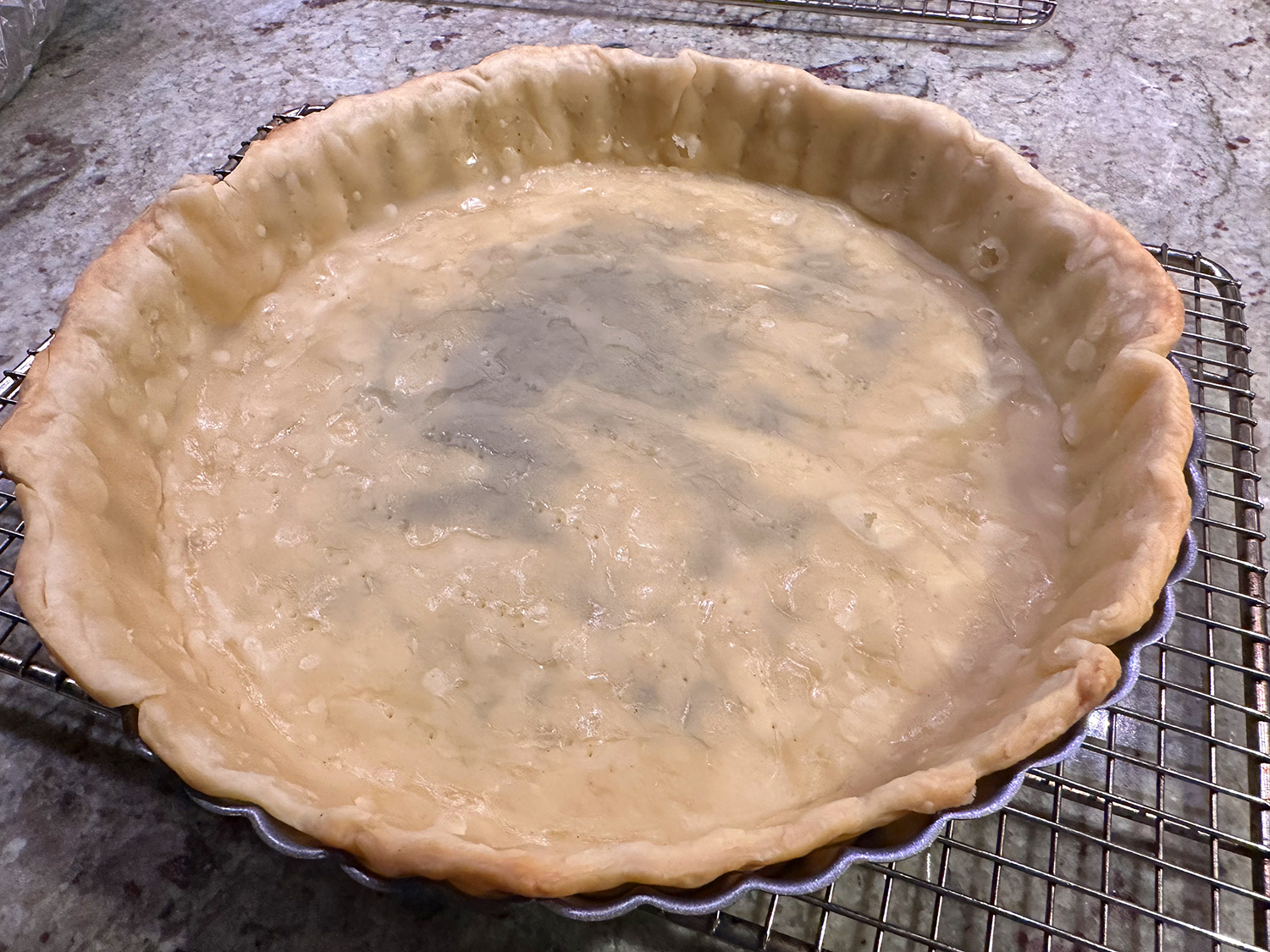
  2. While tomatoes roast, fit the rolled-out dough into a 9-inch tart pan, allowing the edges to rise about ¼ inch above the rim of the pan. Prick the dough all over with a fork.
  3. Line the dough with aluminum foil and fill with pie weights or dried beans. After the tomatoes have been roasting for 15 minutes, place the crust in the oven and bake for 15 minutes until beginning to brown at the edges. Remove from the oven to cool slightly. Remove tomatoes from the oven and allow them to cool slightly. Carefully remove the foil and weights from the crust.
  4. Spread ¼ cup pesto in an even layer over the par-baked tart crust. Sprinkle the fresh basil and oregano over the pesto.
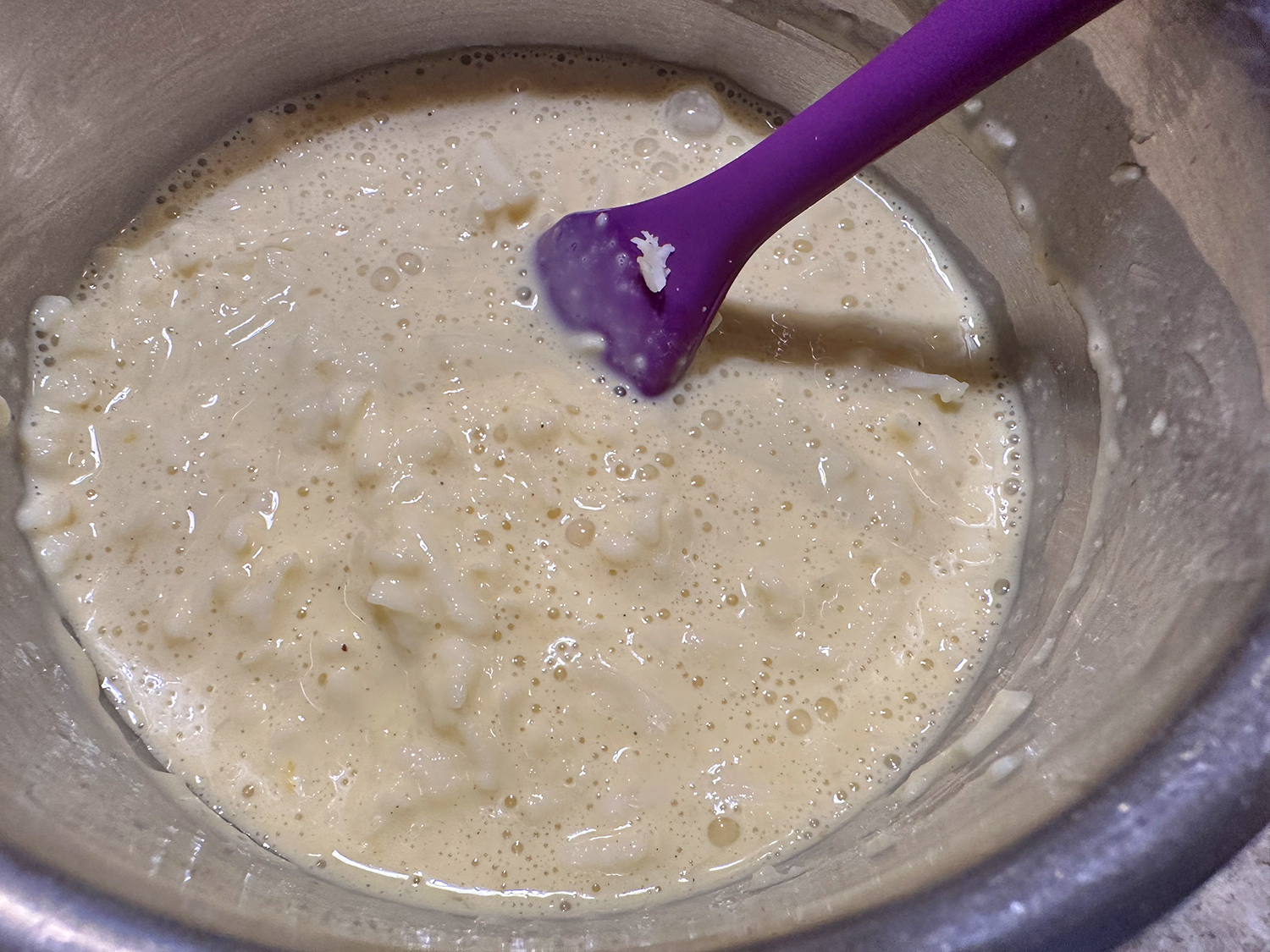
  5. In a medium bowl, prepare the custard: Whisk together the eggs, cream, salt and pepper; add the shredded mozzarella and stir to combine.
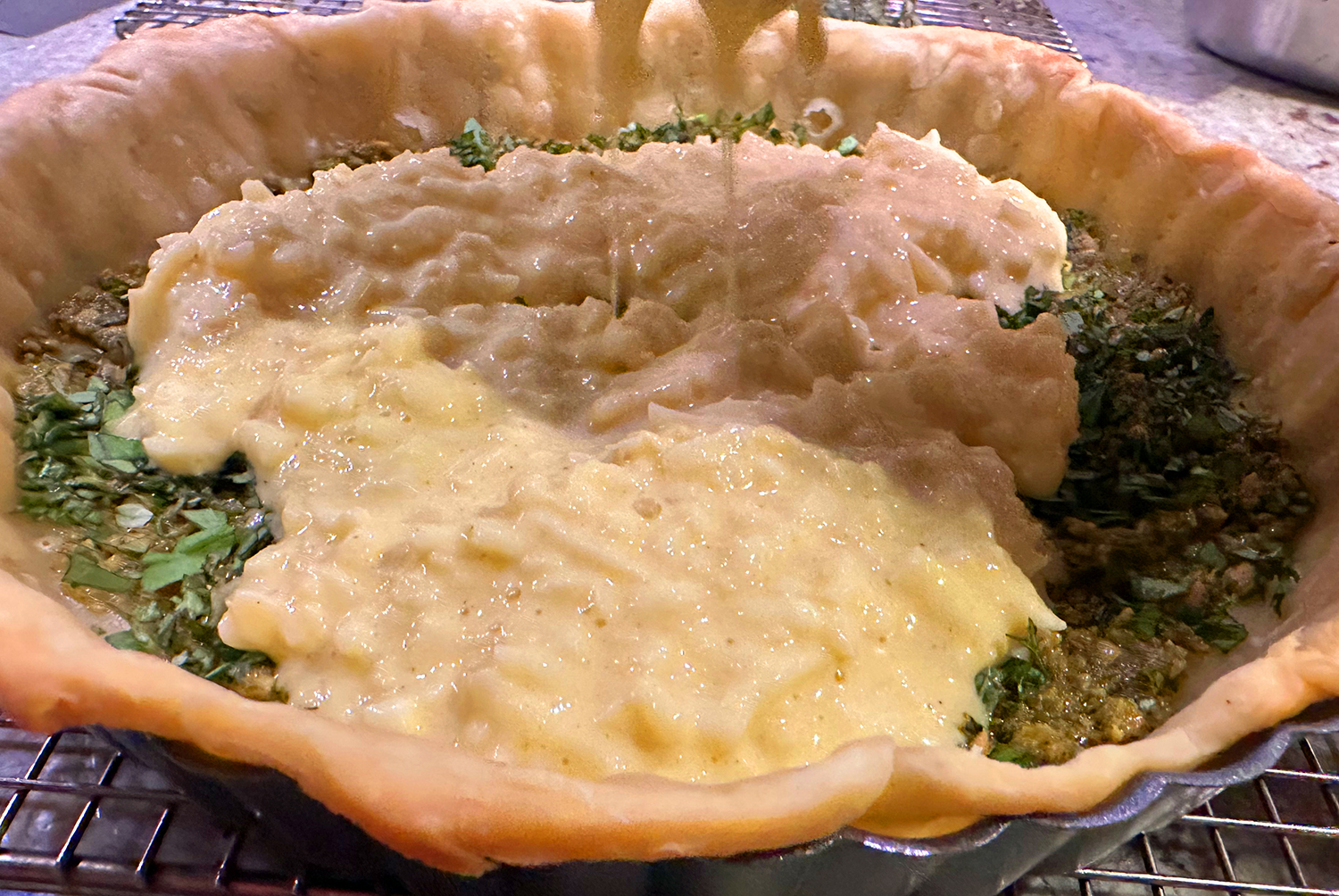
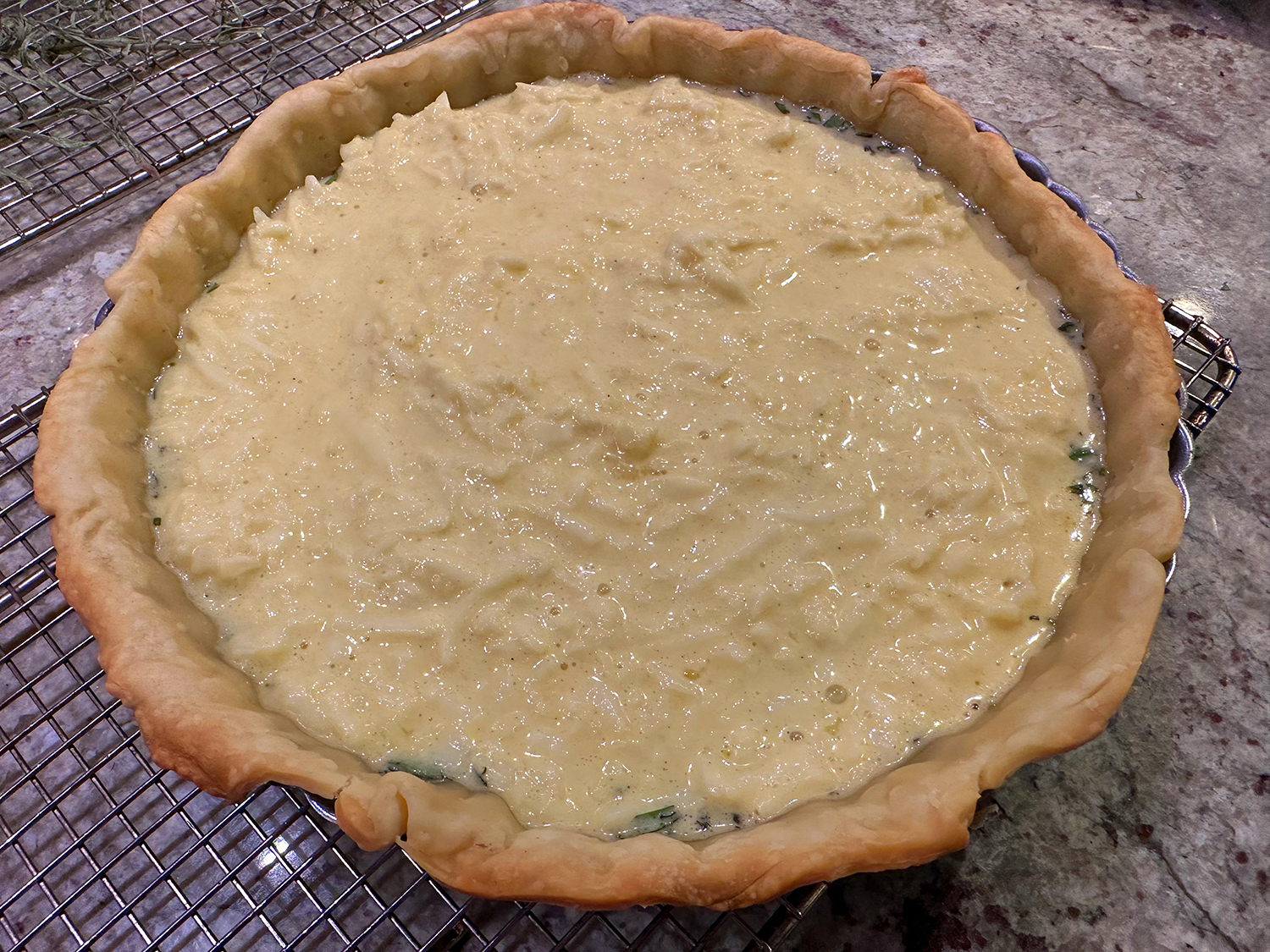
  6. Pour most of the custard over the pesto and herbs then place the sliced tomatoes evenly over the custard in overlapping concentric circles. Spoon on remaining custard in spots on top of tomatoes.
  7. Swirl the pan to evenly distribute the liquid. Bake until the filling is set and won’t jiggle when shaken, about 35 minutes.
  8. Remove from the oven and let cool for 15-20 minutes to solidify. This tart can also be served at room temperature.

http://www.lynnandruss.com

Loosely adapted for a recipe by Vallery Lomas for NYTimes Cooking

Summer Solution Pasta

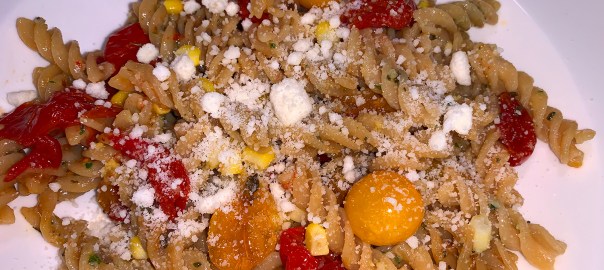
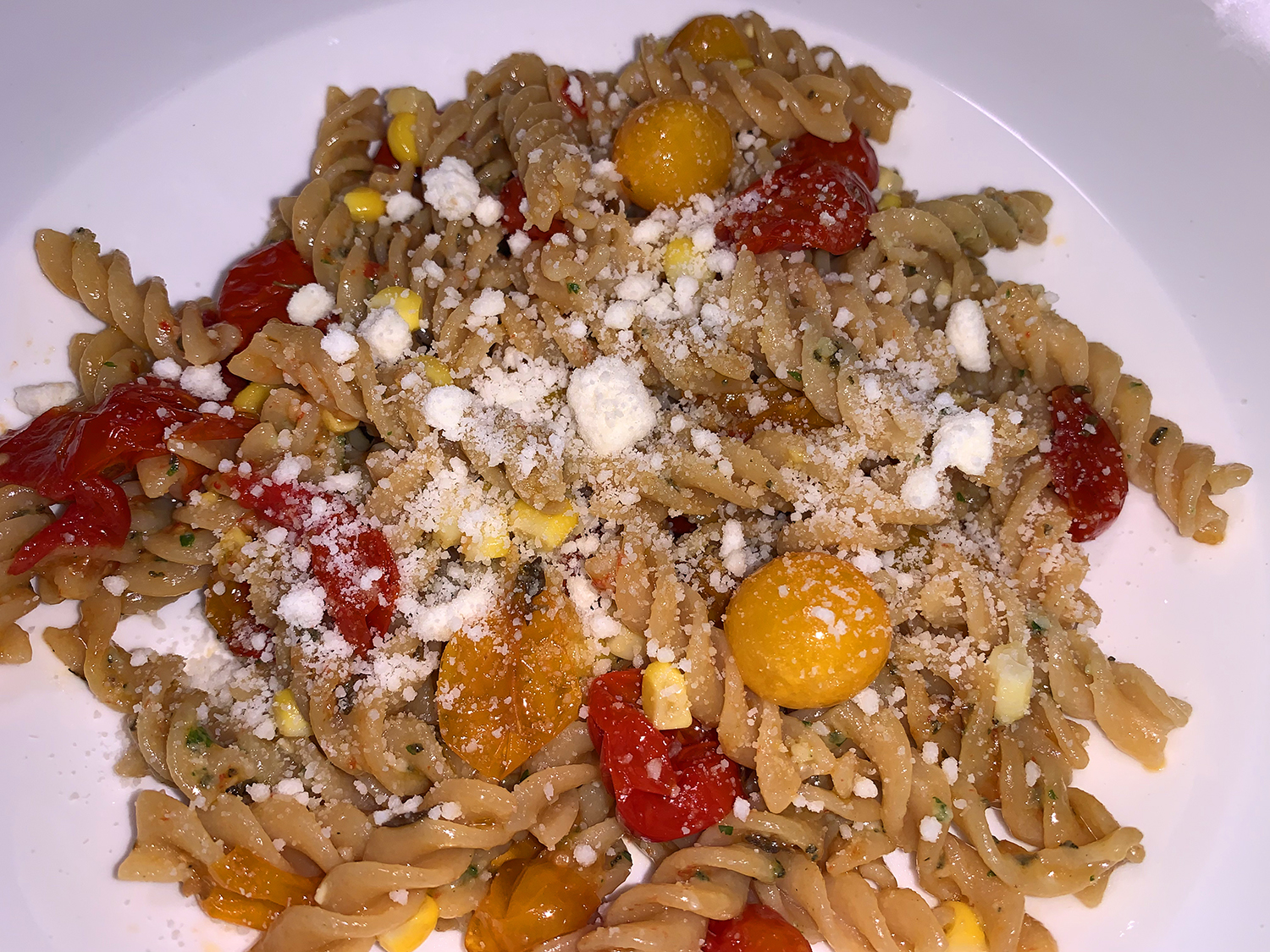
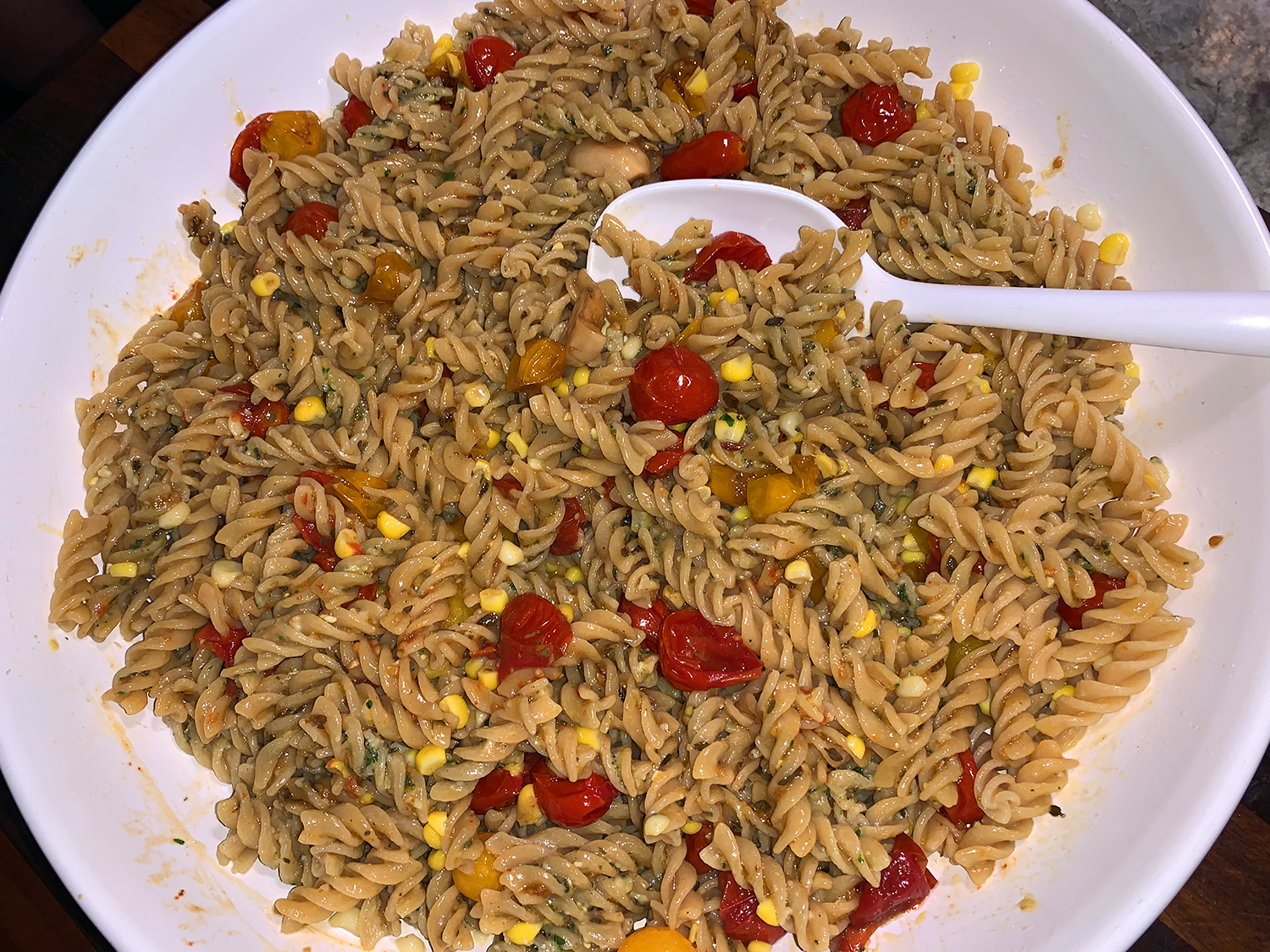
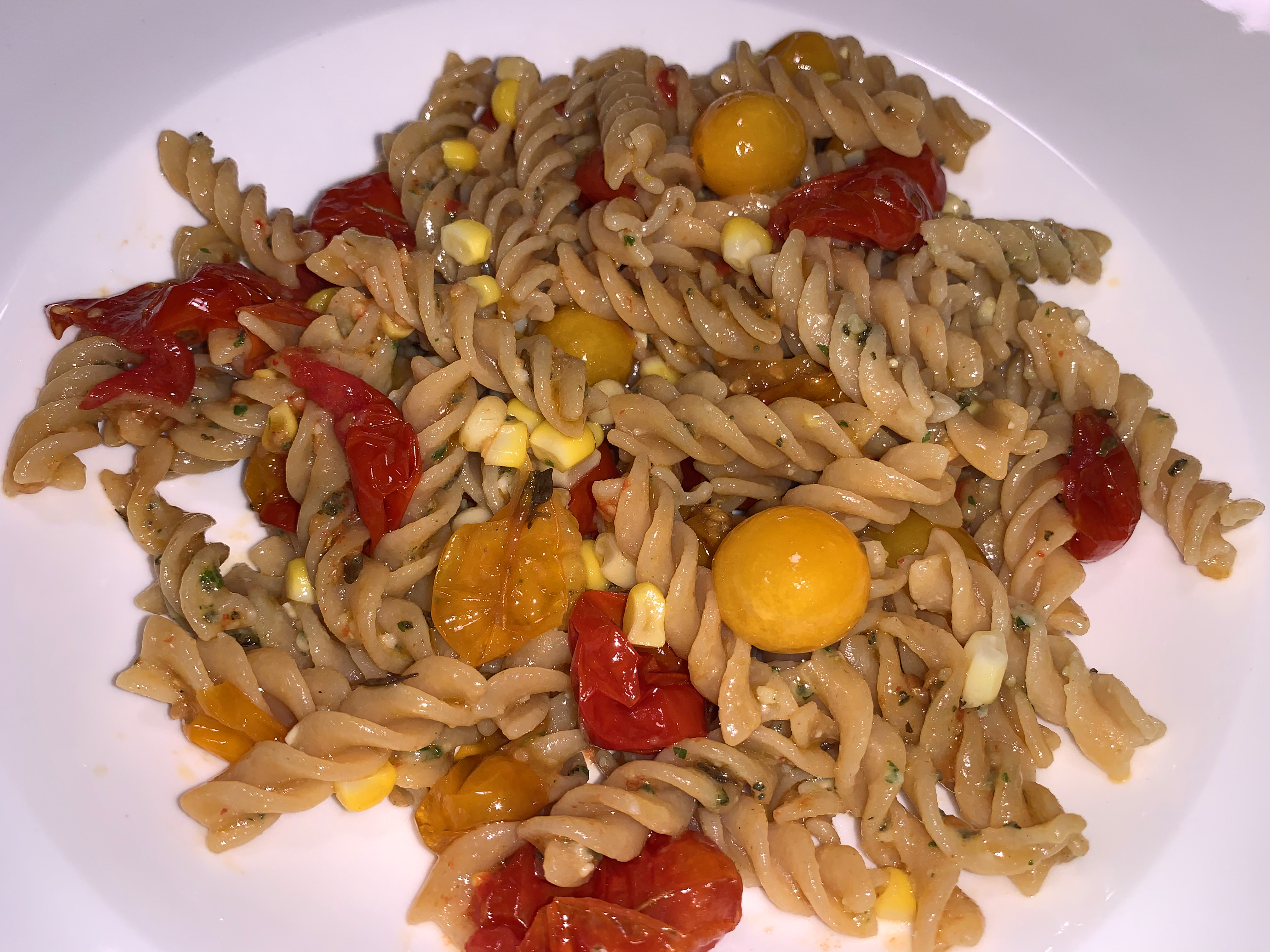
Cherry and grape tomatoes are in abundance by late August, as is fresh corn and herbs. So this “clean-out-the-larder” approach helps you use up some of the excess staples and fresh produce in a tasty way.

It starts with a roasted cherry-tomato sauce that includes garlic, balsamic vinegar and brown sugar to add a slightly sweet note. To scale back on the sweetness, switch the balsamic to red wine vinegar and reduce or omit the brown sugar.

On occasion, we have already cooked ears of corn leftover from a previous meal. Here’s a chance to use them up. Cut the kernels off the cobs and add them to boiling water when you toss in the dried fusilli.

Once the pasta is done, plate into a large serving bowl and stir in the pesto—we used a homemade sage pesto* but one made with basil will work just as well. Next fold in the tomato mixture and let guests scoop out a serving, passing the grated parmesan around for topping. A side salad makes a nice companion to the pasta and uses up more of your produce.

*FOR THE SAGE PESTO:
• ½ cup pine nuts, toasted
• 2 garlic cloves, minced
• 1 cup fresh parsley leaves
• ½ cup fresh sage leaves
• ¾ cup extra-virgin olive oil
• 1 oz. (1/2 cup) Parmesan cheese, grated, plus extra for serving
• Salt and pepper
Pulse pine nuts and garlic in food processor until coarsely chopped, about 5 pulses. Add parsley and sage; with processor running, slowly add oil and process until smooth, about 1 minute. Transfer to bowl, stir in Parmesan, and season with salt and pepper to taste. Set aside.

Summer Solution Pasta

  • Servings: 4-6
  • Difficulty: easy
  • Print

Ingredients

  • 1 1⁄2 lbs. cherry or grape tomatoes
  • 3 garlic cloves, peeled and smashed
  • 1⁄2 cup extra-virgin olive oil
  • 2 Tbsp. balsamic vinegar
  • 2 tsp. light brown sugar
  • 1 tsp. coarse salt
  • 1 Tbsp. fresh thyme (or 1 tsp. dried thyme)
  • 1 or 2 ears of corn, cooked with kernels cut off the cob
  • 1⁄4 cup fresh basil or sage pesto (see recipe above)
  • 1 lb. whole wheat fusilli, cooked according to package directions
  • Grated Parmesan for topping

Directions

  1. Preheat oven to 325°F.
  2. Mix together tomatoes and garlic in a nonreactive 9″ x 13″ baking dish.
  3. Whisk together oil, vinegar, thyme, brown sugar and salt in a bowl. Drizzle over tomato mixture.
  4. Bake until tomatoes are softened and caramelized, about 1 hour to 1 hour and 20 minutes.
  5. Meanwhile cook the fusilli according to package directions, adding the corn kernels in with the pasta when the water starts to boil. Time it so the pasta is done at about the same time as the tomatoes.
  6. Mix the pesto into the fusilli and corn and fold in the tomato mixture.
  7. Serve, passing around the grated parmesan for topping.

http://www.lynnandruss.com

Grilled Pesto Chicken Breasts

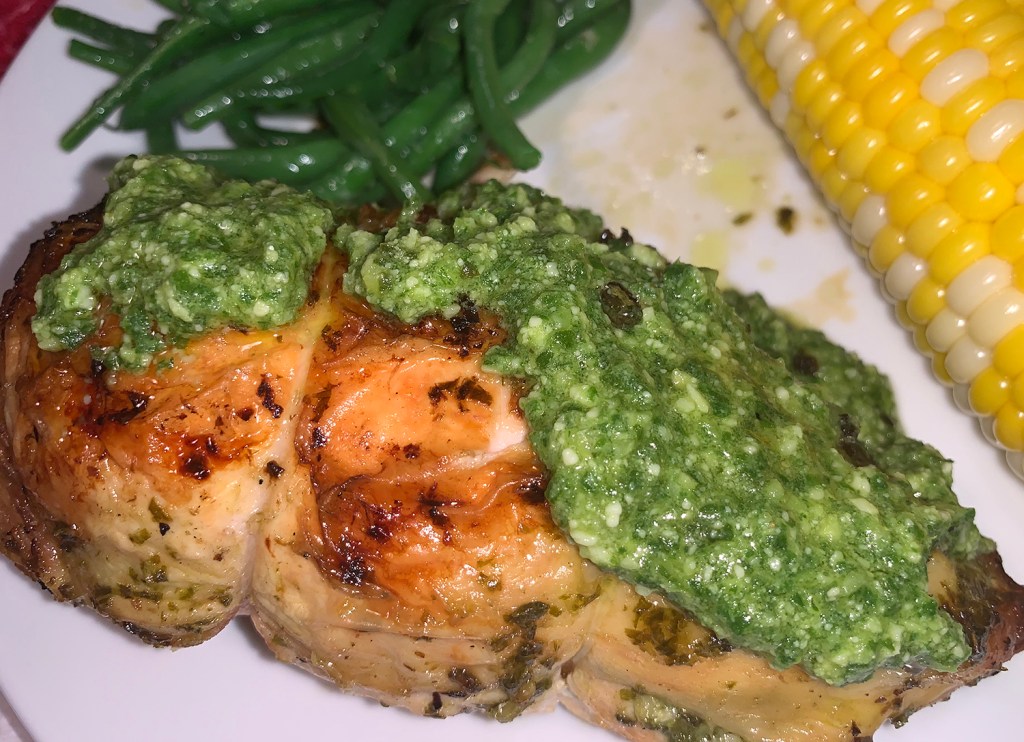
This pesto chicken recipe takes a three-pronged approach, compliments of Cook’s Country. Starting with a batch of homemade pesto, a portion is thickened with extra Parmesan cheese to make a stuffing for the bone-in, skin-on breasts. A cheese-less portion of the pesto functions as a marinade, flavoring the outside of the meat. Finally, cheesy pesto, thinned out to sauce consistency, is served with the chicken for one final hit of fresh basil flavor.

I am a white meat fan when it comes to chicken, while The Hubs prefers the dark meat which he believes to be juicier. While I can’t always argue with that logic, I do know that with the skin and bones of the breast pieces intact, the more succulent the meat will be.

Our poultry breasts weighed in at 15 ounces or so, a bit more than the 12-ounce pieces listed in the ingredients. In fact, one of them was larger than the other three and actually took an additional 7 minutes to come to temperature, so keep a close eyeball on the internal temps with an instant-read thermometer, especially if they are varying sizes.

Brimming with fresh basil, this recipe was a perfect opportunity to cut it back mid-season from our herb garden, encouraging robustness for the remainder of the season. And while the directions indicate to marinate the breasts in the pesto sauce in a bowl for one hour, I let them get happy in a large glass baking dish for three hours in the refrigerator wrapped tightly with saran wrap.

Results? The Hubs LOVED them! That’s big praise coming from a guy who steadfastly prefers the dark meat of the thighs and legs. He couldn’t believe how moist the white meat remained and how flavorful the overall pesto approach was. “Let’s make this for company” he sang, and I thought yes, let’s!

Note: that the pesto base is divided into three separate mixtures for marinating, stuffing, and saucing the grilled chicken.

Grilled Pesto Chicken Breasts

  • Servings: 4
  • Difficulty: easy
  • Print

Ingredients

  • 4 cups fresh basil leaves
  • ¾ cup extra virgin olive oil
  • 5 garlic cloves, peeled
  • 1 ½ Tbsp. lemon juice, about 1/2 large lemon
  • Salt and pepper
  • 2 oz. Parmesan cheese, grated (1 cup)
  • 4 (12-oz.) split bone-in chicken breasts, trimmed

Directions

  1. Process basil, ½ cup oil, garlic, lemon juice, and ¾ teaspoon salt in food processor until smooth, about 1 minute, scraping down bowl as needed. Remove ¼ cup pesto from processor and reserve for marinating chicken.
  2. Add Parmesan to pesto in processor and pulse until incorporated, about 3 pulses. Remove ¼ cup Parmesan pesto from processor and reserve for stuffing chicken.
  3. Add remaining ¼ cup oil to Parmesan pesto in processor and pulse until combined, about 3 pulses; set aside for saucing cooked chicken.
  4. Starting on thick side of breast, closest to breastbone, cut horizontal pocket in each breast, stopping ½ inch from edge so halves remain attached. Season chicken, inside and out, with salt and pepper.
  5. Place 1 tablespoon of Parmesan pesto reserved for stuffing in pocket of each breast. Evenly space 2 pieces of kitchen twine (each 12 inches long) beneath each breast and tie to secure breast, trimming any excess twine.
  6. Place stuffed breasts in bowl and add pesto reserved for marinating. Rub pesto all over chicken, cover, and refrigerate for 1 hour.
  7. FOR A CHARCOAL GRILL: Open bottom vent completely. Light large chimney starter filled with charcoal briquettes (6 quarts). When top coals are partially covered with ash, pour evenly over half of grill. Set cooking grate in place, cover, and open lid vent completely. Heat grill until hot, about 5 minutes.
    FOR A GAS GRILL: Turn all burners to high, cover, and heat grill until hot, about 15 minutes. Turn all burners to medium-low. (Adjust burners as needed to maintain grill temperature of 350 degrees.)
  8. Clean and oil cooking grate. Place chicken, skin side up, on grill (over cool side if using charcoal). Cover and cook until chicken registers 155 degrees, 25 to 35 minutes.
  9. Flip chicken skin side down. If using charcoal, slide chicken to hot part of grill. If using gas, turn all burners to medium-high. (Our grill is very hot, so I only turned up the heat to medium.) Cover and cook until well browned and chicken registers 160 degrees, 5 to 10 minutes.
  10. Transfer chicken to platter, tent loosely with foil, and let rest for 5 minutes. Remove twine from chicken and carve meat from bone. Serve, passing Parmesan pesto sauce separately.

http://www.lynnandruss.com

Adapted from a recipe for Cook’s Country

Leftover chicken salad enjoyed poolside.

BTW, if you are lucky enough to have some leftover breasts, make a chicken pesto salad. When cooled, remove the cooked meat from the skin and bones. Either shred it, or cut it up in small chunks (it will still contain the pesto stuffing).

In a mixing bowl, add the chunked chicken, small diced celery, thinly sliced scallions, mayonnaise and more of the pesto topping. Salt and pepper to taste. Refrigerate until ready to use. We served ours the next day for lunch over Bibb lettuce and topped with sliced yellow and red bell peppers and more sliced scallions.

Pesto Alla Genovese and Italian Marinated Grilled Chicken

Genoa, Italy is the birthplace of this dish. It traditionally is made in a mortar and pestle of nothing more than basil, pine nuts, cheese, garlic, salt and olive oil, emphasis on the basil. And to follow that tradition, we did the same. This was perfect at summer’s end because we had a plethora of fresh basil in our herb garden.

Good quality cheese is essential for a rich, full-flavored pesto. Seek out true Italian Parmesan cheese. In place of pecorino sardo, don’t use pecorino Romano, which is too strong. The best substitute is Manchego, a Spanish sheep’s milk cheese, one we love and typically have on hand.

Pesto Pasta

While you may be tempted, don’t toast the pine nuts. In Italy, the pine nuts for pesto are used raw. And don’t add all the ingredients at once to the food processor (or mortar if using). Adding them in stages ensures the pesto has the correct consistency and texture, and that it won’t end up thin and watery, the result of over-processing.

Orecchiette is the perfect pasta choice because all of that creamy pesto nestles into the cupped areas.

Using a mortar and pestle creates a luxurious sauce with a rich, deep flavor and a beautiful, silky texture that’s superior to what a food processor can do. Yes, it takes a bit longer and gives your arms a workout, but the reward of the best pesto you’ve ever eaten is sooo worth it. (FYI, the cheeses will have to be ground in a small food processor beforehand.)

If for some reason you cannot locate, or happen to dislike pine nuts, you can replace them with macadamias, walnuts, almonds or pecans. To store pesto, press a piece of plastic wrap against its surface and refrigerate for up to three days. After that, leftovers can be frozen in a sealed container.

Pesto Alla Genovese

  • Servings: Yields 1 cup
  • Difficulty: easy
  • Print

Ingredients

  • 1¾ oz. parmesan cheese (without rind), chopped into rough 1-inch pieces
  • 1 oz. pecorino sardo cheese (without rind), chopped into rough 1-inch pieces
  • ¼ cup pine nuts
  • 2 medium garlic cloves, smashed and peeled
  • Kosher salt
  • ⅓ cup extra-virgin olive oil
  • 2½ oz. (about 5 cups lightly packed) fresh basil leaves
  • 12 oz. orecchiette pasta, cooked al dente

Directions

Food Processor

  1. In a food processor, process both cheeses until broken into rough marble-sized pieces, about 10 seconds, then pulse until they have the texture of coarse sand, 5 to 10 pulses, scraping the bowl as needed. Transfer to a small bowl.
  2. In the food processor (or with a mortar and pestle), combine the pine nuts, garlic and ¾ teaspoon salt. Process until a smooth, peanut butter–like paste forms, about 1 minute, scraping the bowl as needed.
  3. Add the cheeses and about ½ of the oil and process until mostly smooth, 10 to 20 seconds, scraping the bowl as needed; the mixture should hold together when pressed against the bowl with a rubber spatula.
  4. Using a chef’s knife, roughly chop the basil, then add to the food processor. Pulse about 10 times, scraping the bowl several times, until the basil is finely chopped and well combined with the cheese mixture.
  5. Add the remaining oil and pulse just until incorporated, about 2 pulses. The pesto should be thick, creamy and spreadable.
  6. Meanwhile cook the pasta as directed on the package for al dente. Reserve 1/2 cup cooking water then drain the pasta.
  7. Add a couple tablespoons of pesto to bottom of serving dish, top with pasta, stir. Continue adding pesto and cooking water, 1 tablespoon at a time, stir until dish is creamy. (You won’t need to use all of the reserved cooking water.)
Mortar and Pestle

  1. In a small food processor, grind the cheeses until the consistency of coarse sand, set aside.
  2. Crush the garlic, salt and pine nuts in a mortar with the pestle, smashing and grinding until a sticky, ever-so-slightly chunky, beige paste forms.
  3. Add basil leaves, a handful at a time, and pound and grind against the walls of the mortar. Continue until all basil leaves have been crushed to fine bits.
  4. Add both cheeses, then slowly drizzle in olive oil (it helps to have another person do this), working it into the pesto with the pestle until a fairly smooth, creamy, emulsified, sauce forms.
  5. Meanwhile cook the pasta as directed on the package for al dente. Reserve 1/2 cup cooking water then drain the pasta.
  6. Add a couple tablespoons of pesto to bottom of serving dish, top with pasta, stir. Continue adding pesto and cooking water, 1 tablespoon at a time, stir until dish is creamy. (You won’t need to use all of the reserved cooking water.)

http://www.lynnandruss.com

Adapted from recipe by Courtney Hill from Milk Street

Italian Marinated Grilled Chicken

In a pinch I have used bottled Italian dressing as the marinade for chicken, but nothing compares to homemade. If you can, use fresh herbs, however dried is also an option. Use a combination of both white and dark meat if you prefer. It’s best to cut your chicken breast halves in half again so that all pieces are similar in size, and will therefore finish cooking at about the same time.

I cut the marinade recipe in half since we were only grilling 4 pieces of chicken for the two of us.

Italian Marinated Grilled Chicken

  • Servings: 4
  • Difficulty: easy
  • Print

Ingredients

  • 1 cup extra-virgin olive oil
  • ¾ cup red wine vinegar
  • ¼ cup freshly squeezed lemon juice (about 2 lemons)
  • 4 cloves garlic, peeled, smashed and roughly chopped
  • 1 bay leaf
  • 1 Tbsp. thyme leaves
  • 1 Tbsp. oregano leaves
  • 2 Tbsp. basil leaves, rolled and chopped into chiffonade
  • 1 tsp. granulated sugar
  • 1 tsp. kosher salt
  • 1 tsp. freshly cracked black pepper
  • 1 tsp. red pepper flakes, or to taste
  • 3 lbs. chicken pieces, white and/or dark meat

Directions

  1. Whisk together all the ingredients in a medium bowl.
  2. Add chicken pieces (white and or dark meat) to a large re-sealable plastic bag. (Cut the breast halves, if using, in half again to be similar in size to the legs and thighs.)
  3. Pour in the marinade, seal and refrigerate for a minimum of 2, and up to 10 hours.
  4. When ready to cook, prepare a hot grill for the indirect method.
  5. Place the chicken on the hot side of the grill, turning them over after 5 minutes to sear the other side, for a total of 10 minutes. Baste occasionally.
  6. Move chicken to cooler side of grill, cover with lid and continue cooking for about another 20 minutes, no need to turn the chicken.
  7. Poultry is ready when the internal temperature reaches 165°-170°.
  8. If desired, serve with an additional drizzle of lemon juice and EVOO.

http://www.lynnandruss.com