Tag Archives: one-pan

Dirty Martini Chicken Thighs

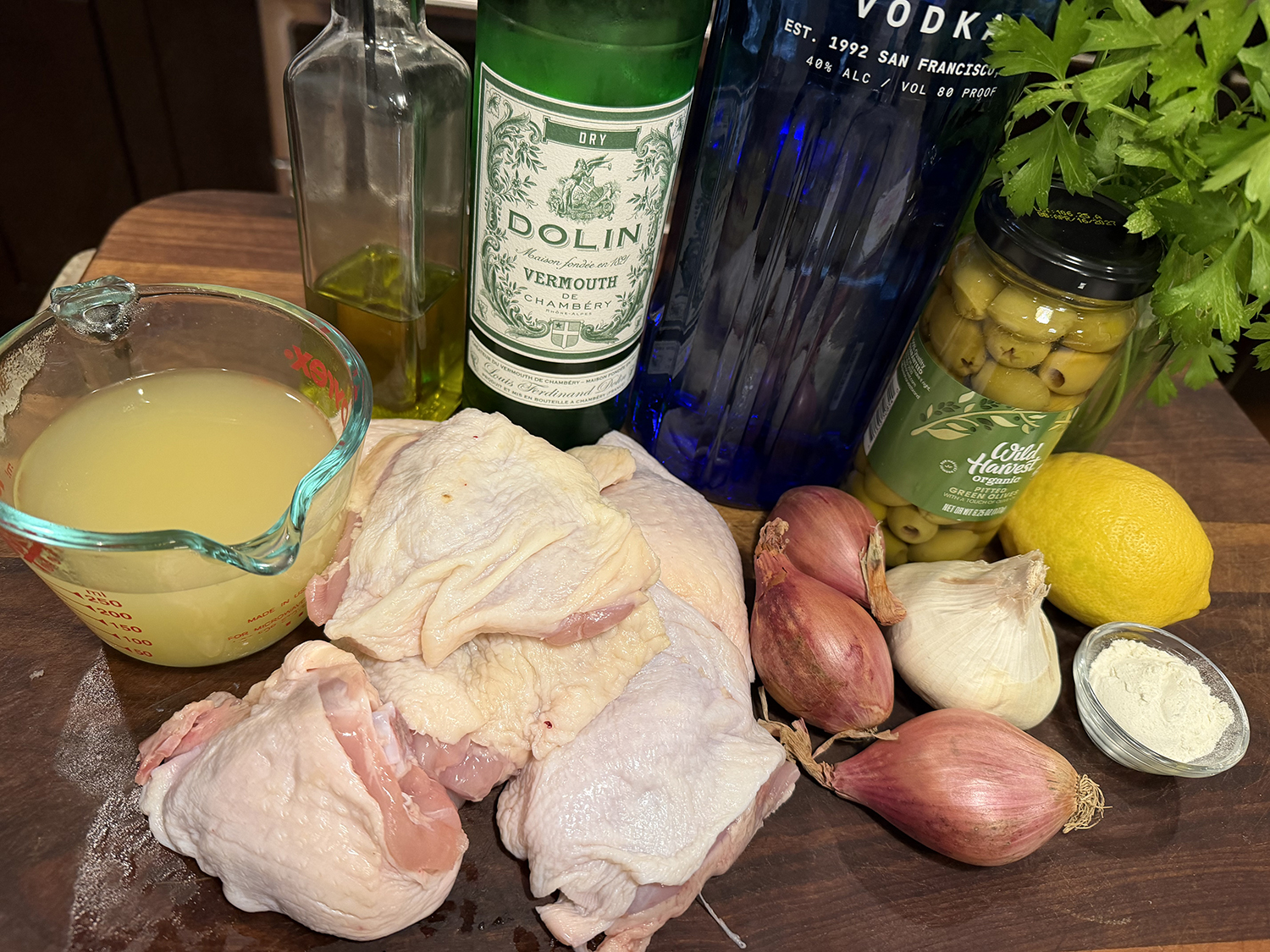
“You only live twice, so live and let die.” Channeling 007! OK, the recipe name alone got our attention! As Bon Appétit puts it “This cheeky chicken dish takes its cues from the king of cocktails: the dirty martini. A healthy pour of vodka stands in for the more typical beer or wine in this braise, lending its distinct piercing brightness and a touch of boozy heat.”

The idea of adding the same notes of the briny beverage to food might sound off-putting at first but don’t knock it until you’ve tried it. Giving your meals a dirty martini twist can actually add so much savoriness to each bite, and if you love the taste of the classic drink, why wouldn’t you want to include the unique umami flavor in your meals, too?

The spirit’s sharp top notes cut through the heaviness of the ultra-savory pan sauce, much like vinegar or lemon juice but with a bit more bite. As is the case in a classic vodka sauce for pasta, the alcohol helps the dish straddle the line between rich and vibrant. As it all simmers, why not mix up a drink for dinner too—just sayin’ you’ve got all the ingredients at the ready!

For the best flavor, Castelvetrano olives are the perfect choice here. Their firm, meaty texture means they hold up well during cooking, and their mild, buttery flavor isn’t as salty as other types. Because you are using both the olives and the brine they are packed in, it’s a small luxury worth investing in. Find them already pitted—jarred, canned, or at an olive bar—our favorite— if your grocery store has one. Unfortunately, the olive bar uses slitted spoons so we couldn’t gather the brine; and the jarred Castelvetrano olives weren’t pitted. The brand we selected worked fine.

A little labor intensive but so worth the time and effort! Now, this took MUCH longer than the stated 45 minutes (and many other reviewers agreed). From start to finish, it took us more than 1 hour and 45 minutes! Reduction of the sauce needs a lot more that 9 to 12 minutes. What to serve it with? How about steamed rice, velvety mashed potatoes, or as we did, wide egg noodles.

OK, now let’s get real. The amount of chicken is considered measly in our minds. Two pounds of bone-in chicken thighs is just not enough to feed 4 adults. Plan on 6 to 8 decent-sized thighs, no matter what the weight ends up being. Regarding the olives, our jar was 6.25 ounces*, and gave us exactly 2/3 brine.

“You only live twice, so live and let die.”
Dirty Martini Chicken Thighs

  • Servings: 3-4
  • Difficulty: easy
  • Print

Ingredients

  • Skin-on, bone-in chicken thighs (6-8), about 3 lbs.
  • 1 tsp. freshly ground pepper
  • 2 tsp. Diamond Crystal or 1¼ tsp. Morton kosher salt, plus more
  • 3 Tbsp. extra-virgin olive oil
  • 3 medium shallots, thinly sliced
  • 12 garlic cloves, thinly sliced
  • 1 Tbsp. all-purpose flour
  • 1¼ cups dry vermouth
  • 1 cup low-sodium chicken broth
  • 1 5.5-oz. jar* pitted Castelvetrano or other green olives, rinsed (about 1 cup), brine reserved (about ⅔ cup)
  • ⅔ cup vodka, divided
  • 1 tsp. finely grated lemon zest
  • Parsley leaves with tender stems and lemon wedges (optional; for serving)
Directions

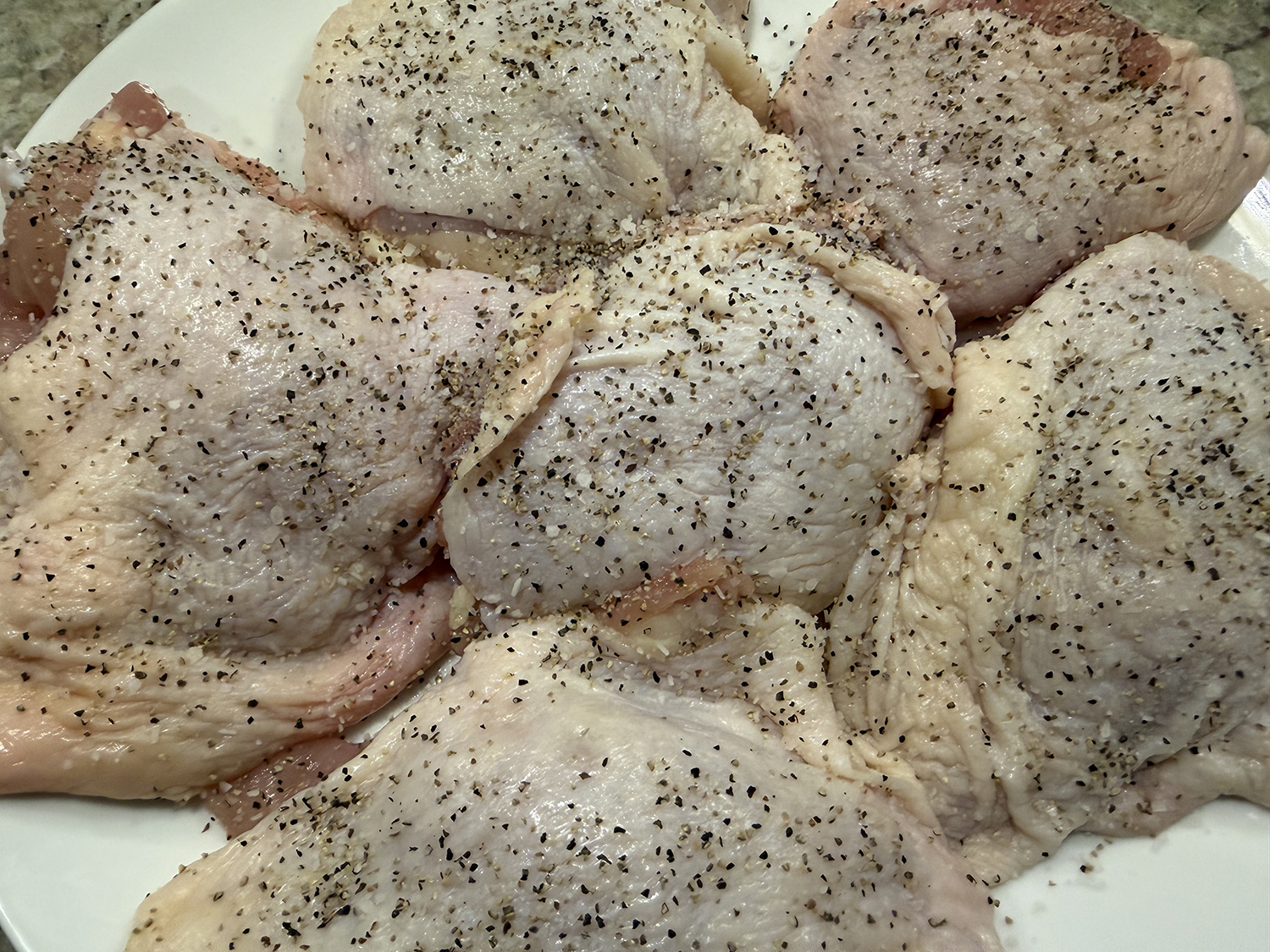
  1. Place a rack in middle of oven; preheat to 350°. Pat 2 lb. skin-on, bone-in chicken thighs (4–6) dry with paper towels and sprinkle all over with 1 tsp. freshly ground pepper and 2 tsp. Diamond Crystal or 1¼ tsp. Morton kosher salt.
  2. Pour 3 Tbsp. extra-virgin olive oil into a cold very large high-sided ovenproof skillet or short-sided pot over medium (you want the vessel to be at least 3½-qt. capacity; if you don’t have any of the preferred options, a large Dutch oven will work). Arrange chicken thighs, skin side down, in pan and set over medium heat. Cook, undisturbed, rotating pan around on burner for even browning, until chicken is deep golden brown and releases easily from pan, 14–17 minutes. Transfer chicken thighs to a plate, arranging skin side up.
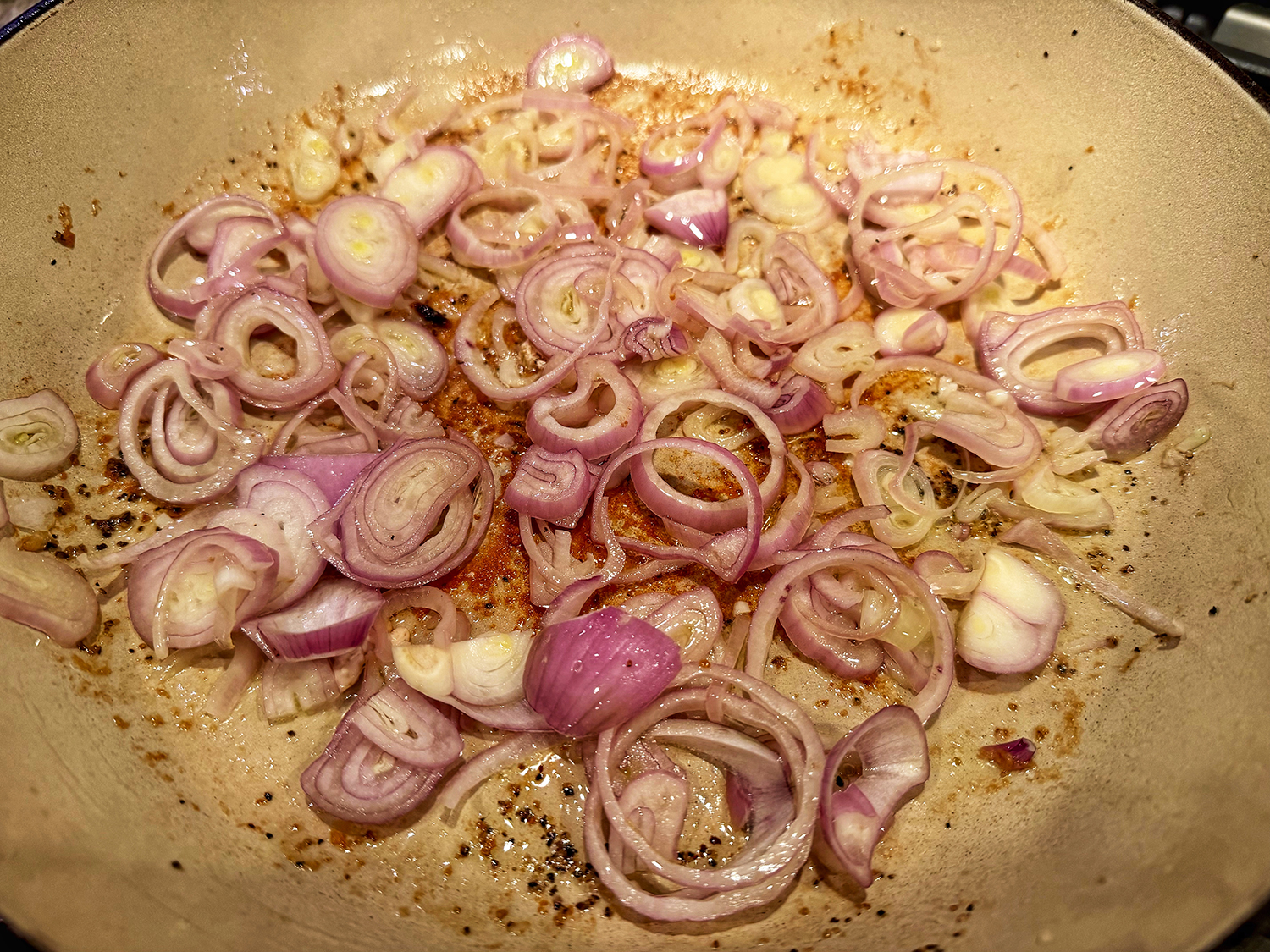
  3. Pour off all but 4 tsp. oil from pan; discard. Return pan to medium heat and cook 3 medium shallots, thinly sliced, stirring often, until just tender, about 4 minutes. Add 12 garlic cloves, thinly sliced, and cook, stirring often, until fragrant, about 3 minutes. Sprinkle in 1 Tbsp. all-purpose flour and stir to coat, then remove from heat (make sure pan is far away from the burner).
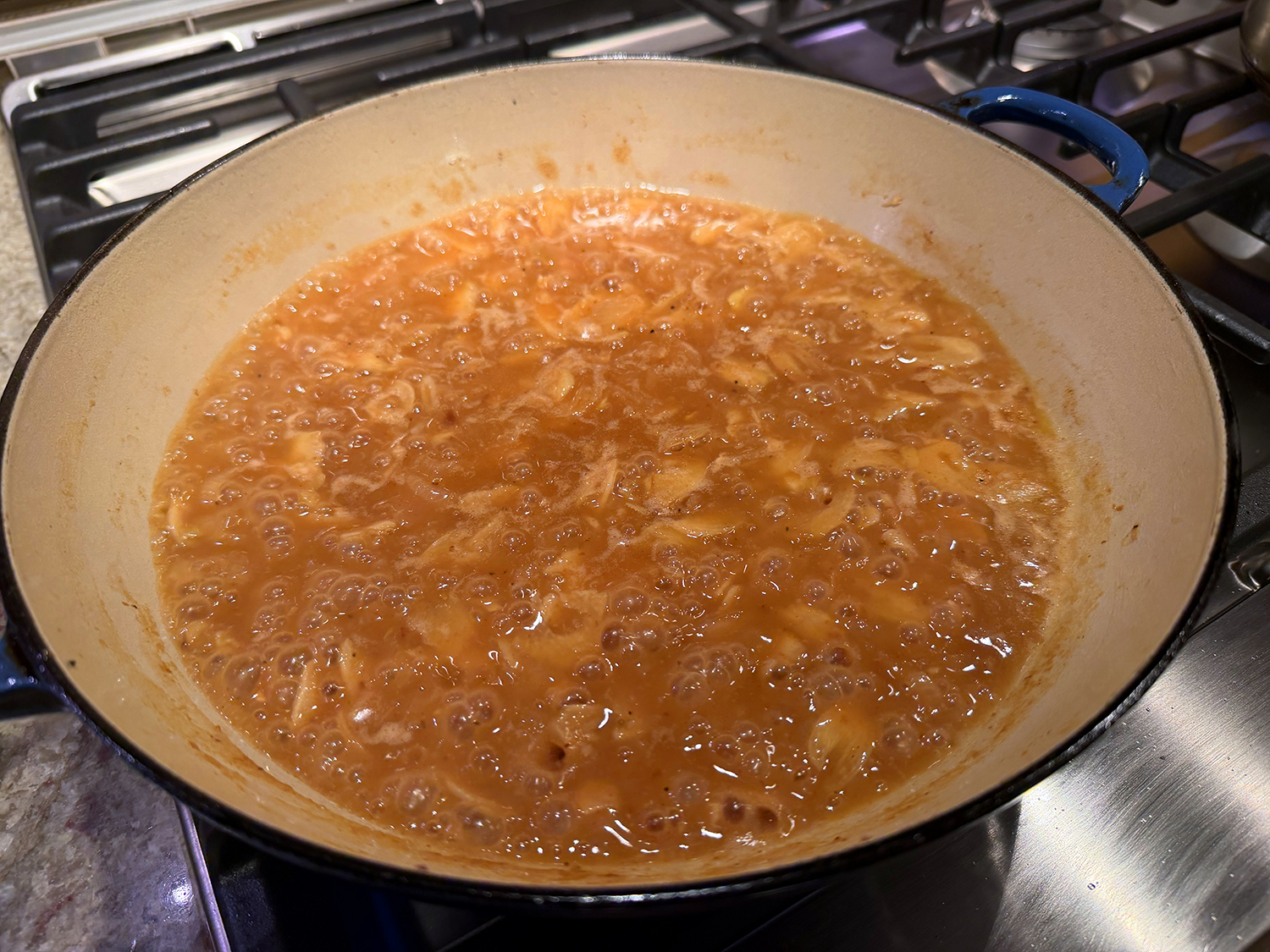
  4. Carefully pour in 1¼ cups dry vermouth, 1 cup low-sodium chicken broth, ⅔ cup olive brine, and ⅓ cup vodka. Place pan over medium-high heat and bring liquid to a simmer. Cook, stirring occasionally, until sauce is reduced by two thirds, 9–12 minutes. (It took us nearly 25 minutes to reduce it down to 2/3 the original amount.) Remove from heat; stir in remaining ⅓ cup vodka. Taste sauce and season with more salt if needed.
  5. Nestle chicken thighs, skin side up, into sauce. Scatter one 5.5-oz. jar pitted Castelvetrano or other green olives, rinsed (about 1 cup), over, allowing most of them to fall into the sauce. Bake, uncovered, until chicken is cooked through and an instant-read thermometer inserted into the thickest part of a thigh registers 165°, 25–35 minutes.
  6. Remove pan from heat, stir in 1 tsp. finely grated lemon zest and and scatter parsley leaves with tender stems over chicken and sauce. Serve with lemon wedges for squeezing over if desired.

http://www.lynnandruss.com

Adapted from a recipe by Jesse Szewczyk for Bon Appétit

Chan Chan Yaki (Miso Butter Salmon)

Salmon is one of our go-to fish choices. And this one from NYTimes Cooking is a fabulous choice. It’s quick, easy, healthy, tasty and uses only one pan! What’s not to like?

According to Mia Leimkuhler, “Chan chan yaki, or miso butter salmon, is a classic dish from Hokkaido, Japan, a place known for its excellent salmon. The fish-and-vegetable dish is frequently made on a teppan (a large grill), with everything chopped and mixed with two metal spatulas that make the onomatopoetic “chan chan” sound.”

This clever version from Marc Matsumoto, the Tokyo-based blogger behind No Recipes, streamlines the dish for home cooking, calling for a lidded skillet and keeping the salmon in one large piece for easier preparation and presentation. You can replicate the chan chan action in your own bowl or plate, composing perfect bites of salmon, veggies and the miso butter sauce.

And the vegetables are flexible, with some delicious options being Shimeji mushrooms, bell peppers, corn or negi (long green onions). Unfortunately, we just totally forgot to purchase the enoki mushrooms. And the smallest head of green cabbage was huge, so we used only a portion of it.

BTW, you can ditch the salmon skin since the fish is just set atop the vegetables and not crisped in any fashion. Or, cut the skin off the filet and crisp it in a separate pan to add strips of the crispy skin as a garnish at the end.
Here’s a hack from The Hubs: Increase the sake to 3/4 cup. Use 1/4 cup in Step 4 to pour over the cooked veggies and deglaze the pan loosening all of those luscious browned bits. Cook, stirring until the sake nearly evaporates. Then use the remaining 1/2 cup in Step 5.

Chan Chan Yaki (Miso Butter Salmon)

  • Servings: 4
  • Difficulty: easy
  • Print

Ingredients

  • 1 (1¼-lb.) piece skin-on salmon fillet
  • ½ small head green cabbage, trimmed and cored
  • 2 large carrots
  • 1 medium yellow onion
  • 3½ oz. enoki mushrooms (optional)
  • ⅓ cup shiro (white) or tanshoku (yellow) miso
  • 3 Tbsp. unsalted butter, at room temperature
  • 1 Tbsp. sugar
  • 1 Tbsp. neutral oil
  • Salt and pepper, to taste
  • 3⁄4 cup dry (junmai) sake, divided
  • 2 scallions, thinly sliced
  • Steamed rice, for serving

Directions

  1. Remove the salmon from the fridge while you prep the vegetables: Chop the cabbage into 2-inch pieces (about 6 cups). Peel and cut the carrots on the diagonal into ½-inch coins (about 2 cups). Halve the onion and slice into ½-inch half moons (about 1½ cups). If using enoki mushrooms, trim the root end and separate them into large clusters.
  2. Make the miso butter: Combine miso, butter and sugar in a small bowl and stir until smooth and homogenous. (Miso butter can be made at least 3 days ahead and kept in the refrigerator; bring to room temperature before using.)
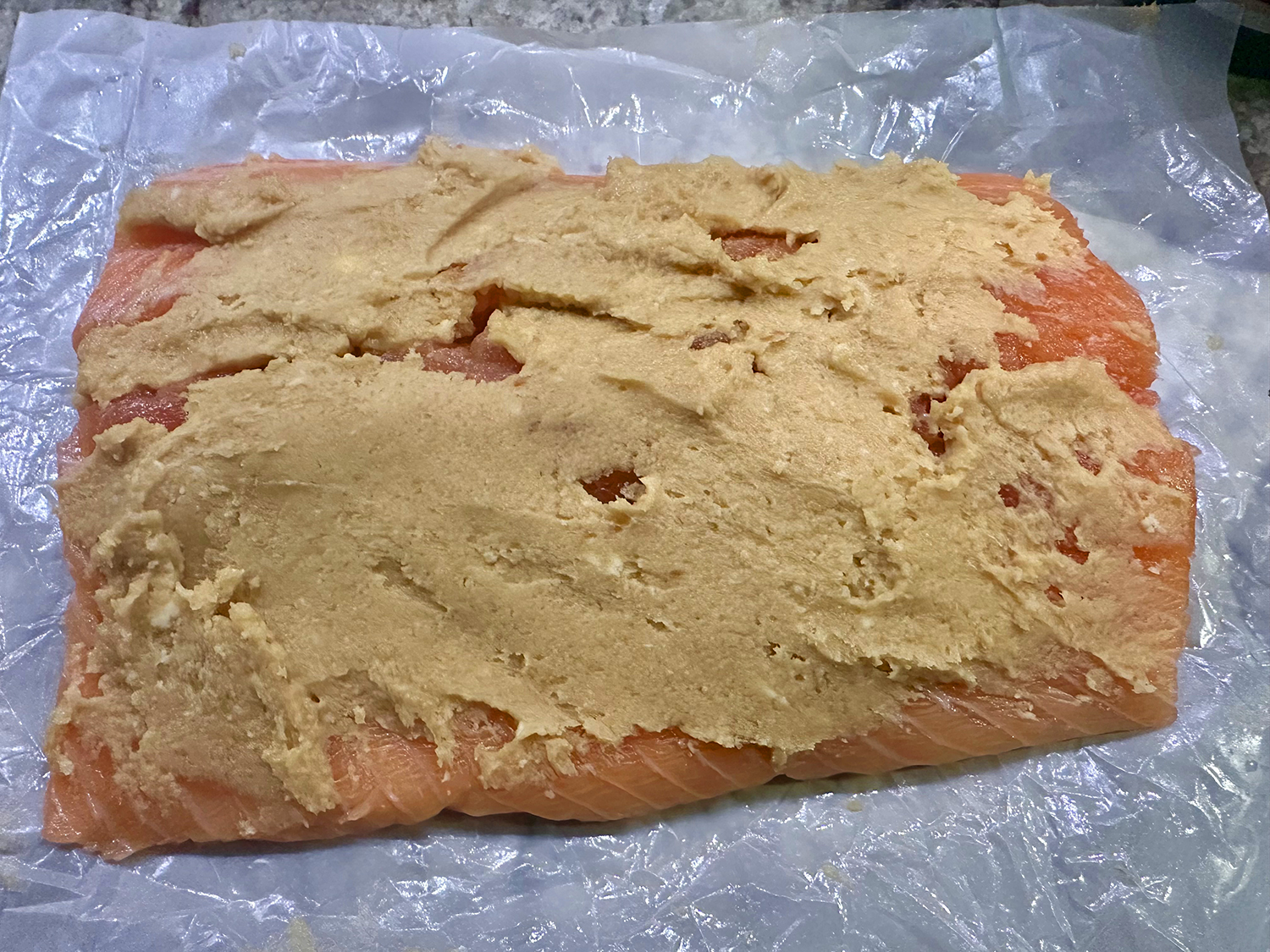
  3. Place the salmon on a plate, skin side down, and spread the miso butter in a thin layer on top, holding back about 2 tablespoons of miso butter for the vegetables.
  4. Heat a large, deep (lidded) skillet over medium-high. Add the oil and the cabbage, carrot, onion and enoki mushrooms (if using). Season the vegetables with salt and pepper (go lightly on the salt, since the miso butter is salty!) and cook, stirring frequently, until they begin to wilt but are still quite crisp, 5 to 8 minutes.
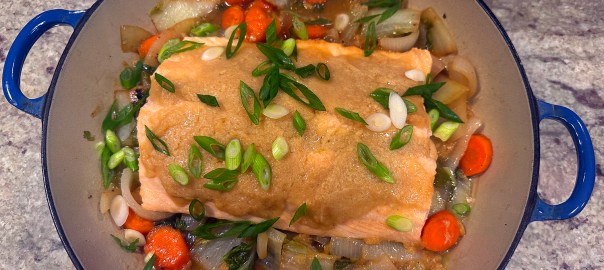
  5. Flatten the vegetables and place the salmon on top of them, miso side up. Dot the reserved miso butter on the vegetables (you may not need all of it) and pour the remaining sake over the vegetables. Place the lid on the pan, lower the heat to medium to maintain a strong simmer and cook for 7 to 10 minutes, until flaky and just cooked through in the center. (Exact time depends on the thickness of the salmon fillet and preferred level of doneness.)
  6. When the salmon has finished cooking, remove the lid and stir the vegetables around the salmon to mix them with the melted miso butter. Scatter the salmon with the chopped scallions and serve with rice.

http://www.lynnandruss.com

Recipe from Marc Matsumoto for NYTimes Cooking

Pan-Roasted Chicken and Summer Vegetables with Herbes de Provence

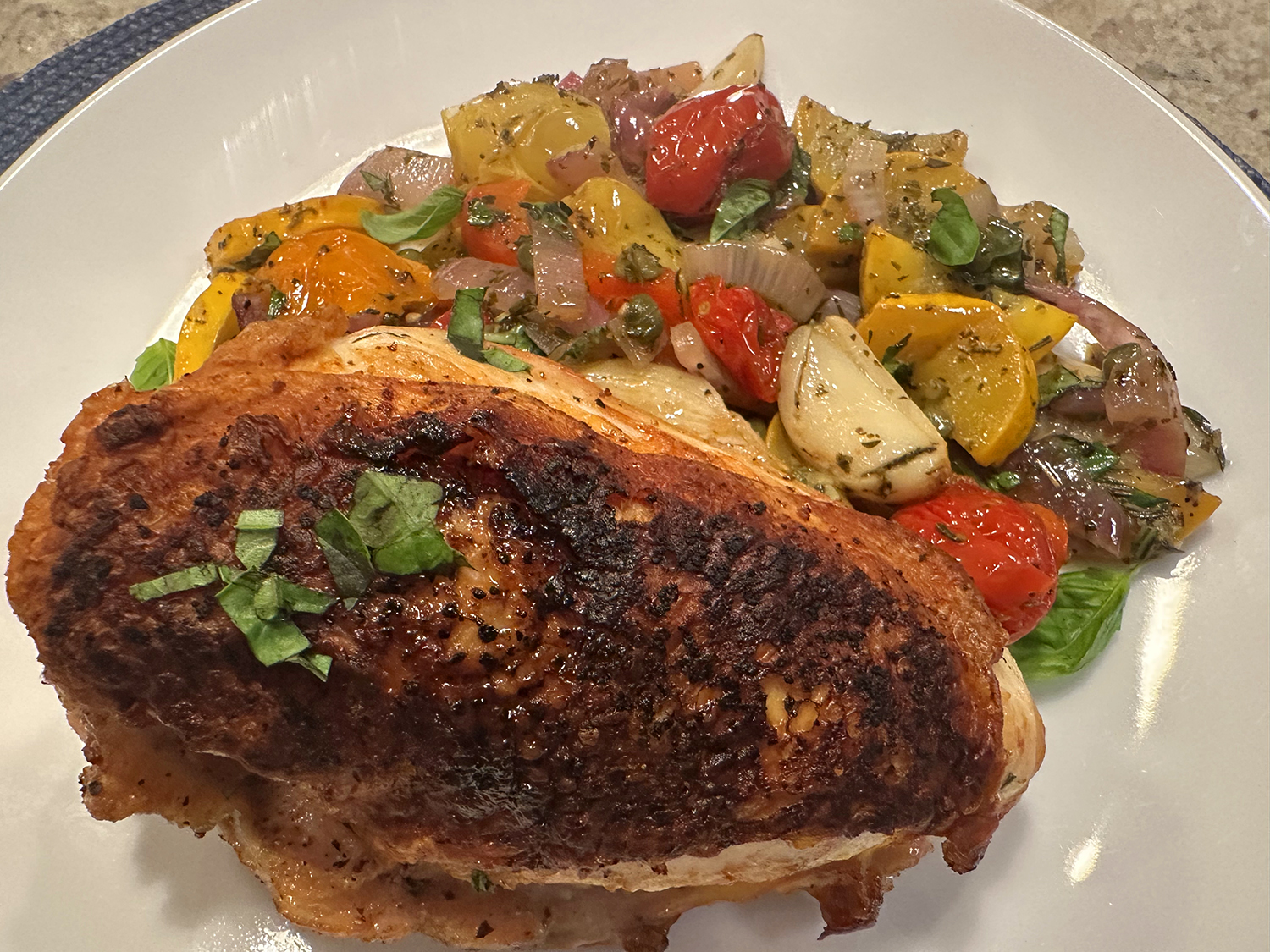
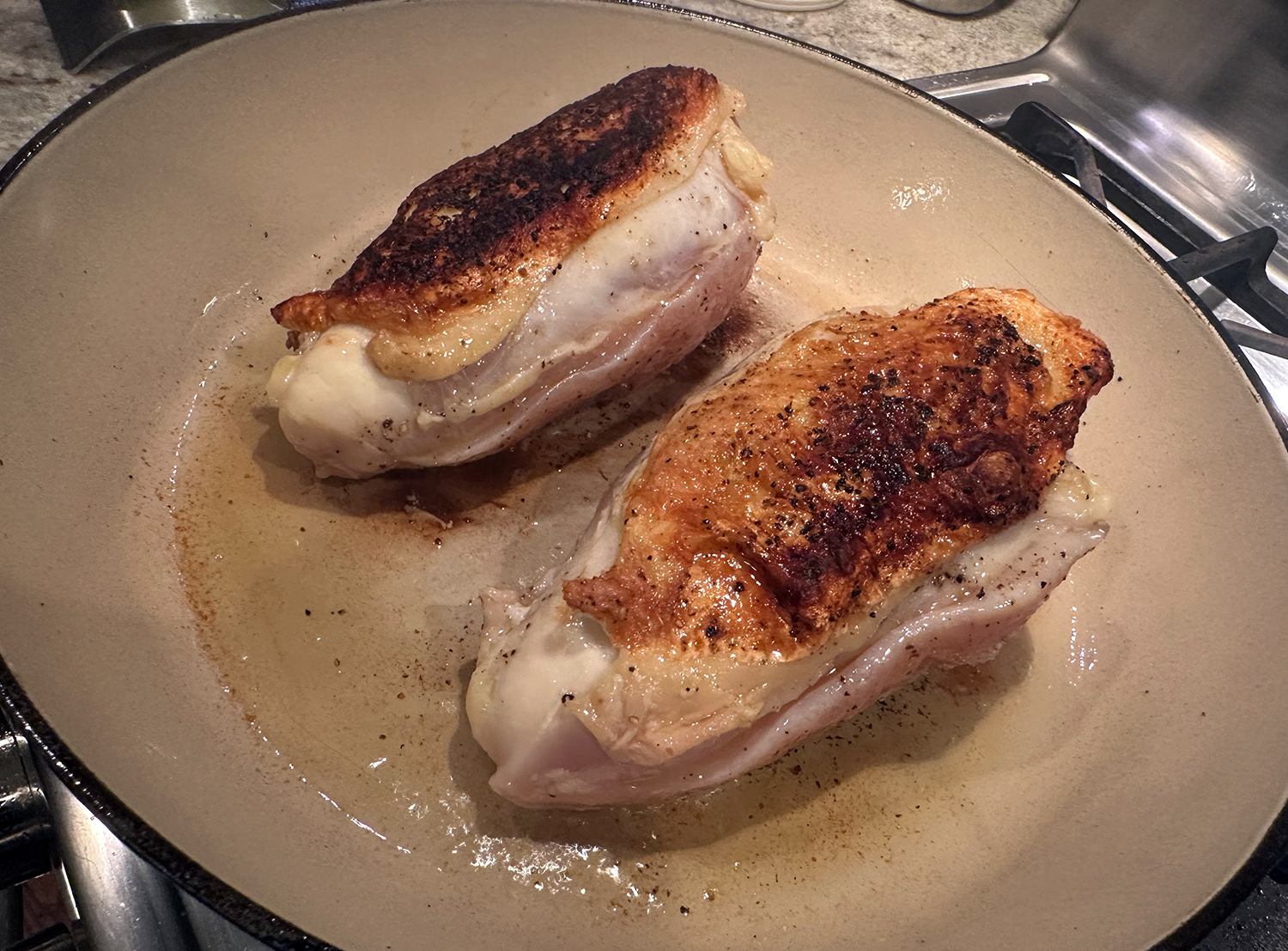
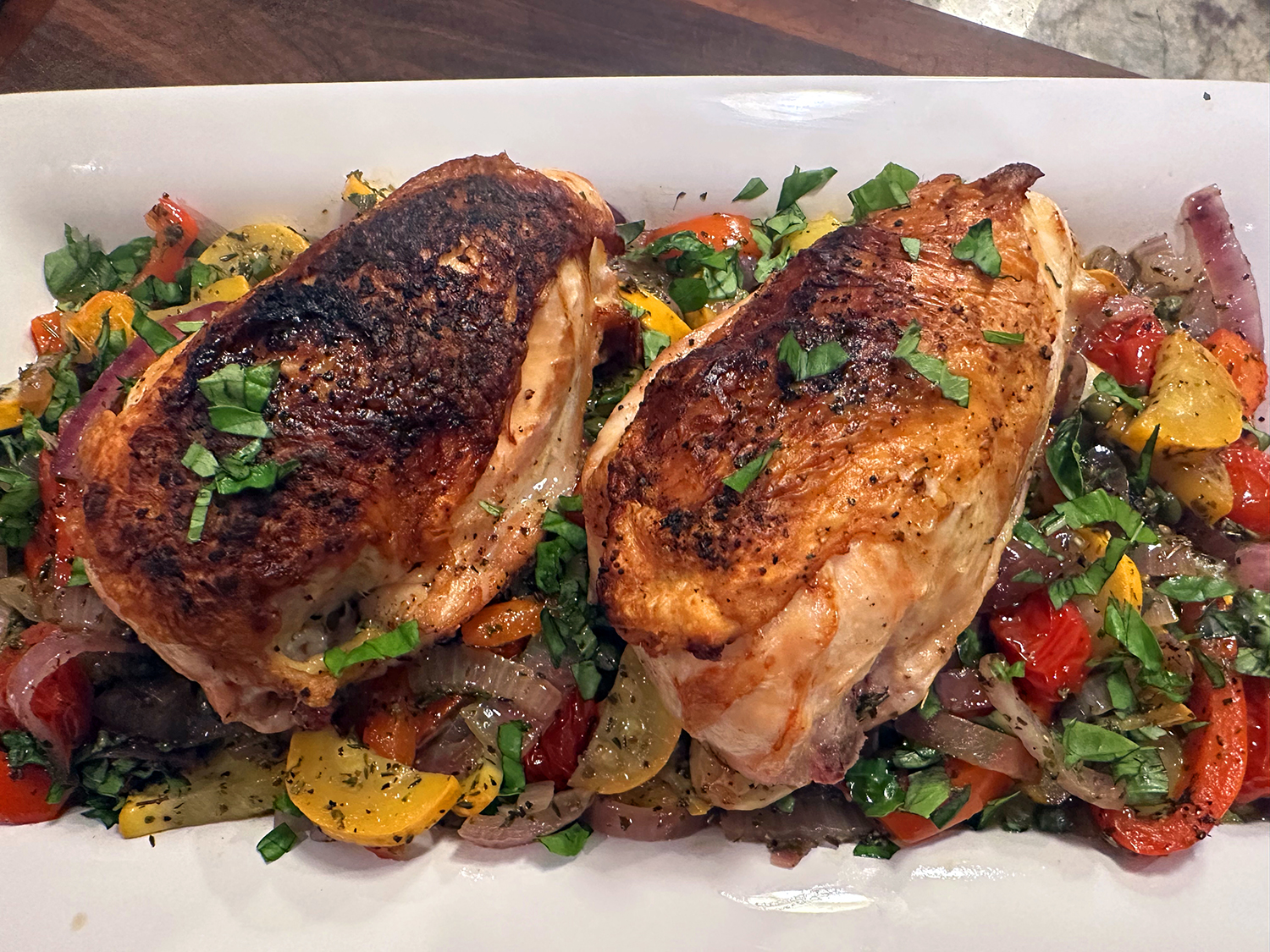
In this simple skillet dinner, the skin side of bone-in chicken breasts are seared, then roasted on top of a bed of sunny Mediterranean vegetables. Keep in mind, the recipe advises the use 12-ounce chicken breasts, using larger ones will require a longer cooking time and thus overcook the veggies. The only pieces available when we shopped weighed in at 18 ounces, 50% larger! (The first grocery store we visited, had no bone-in breasts at all.)

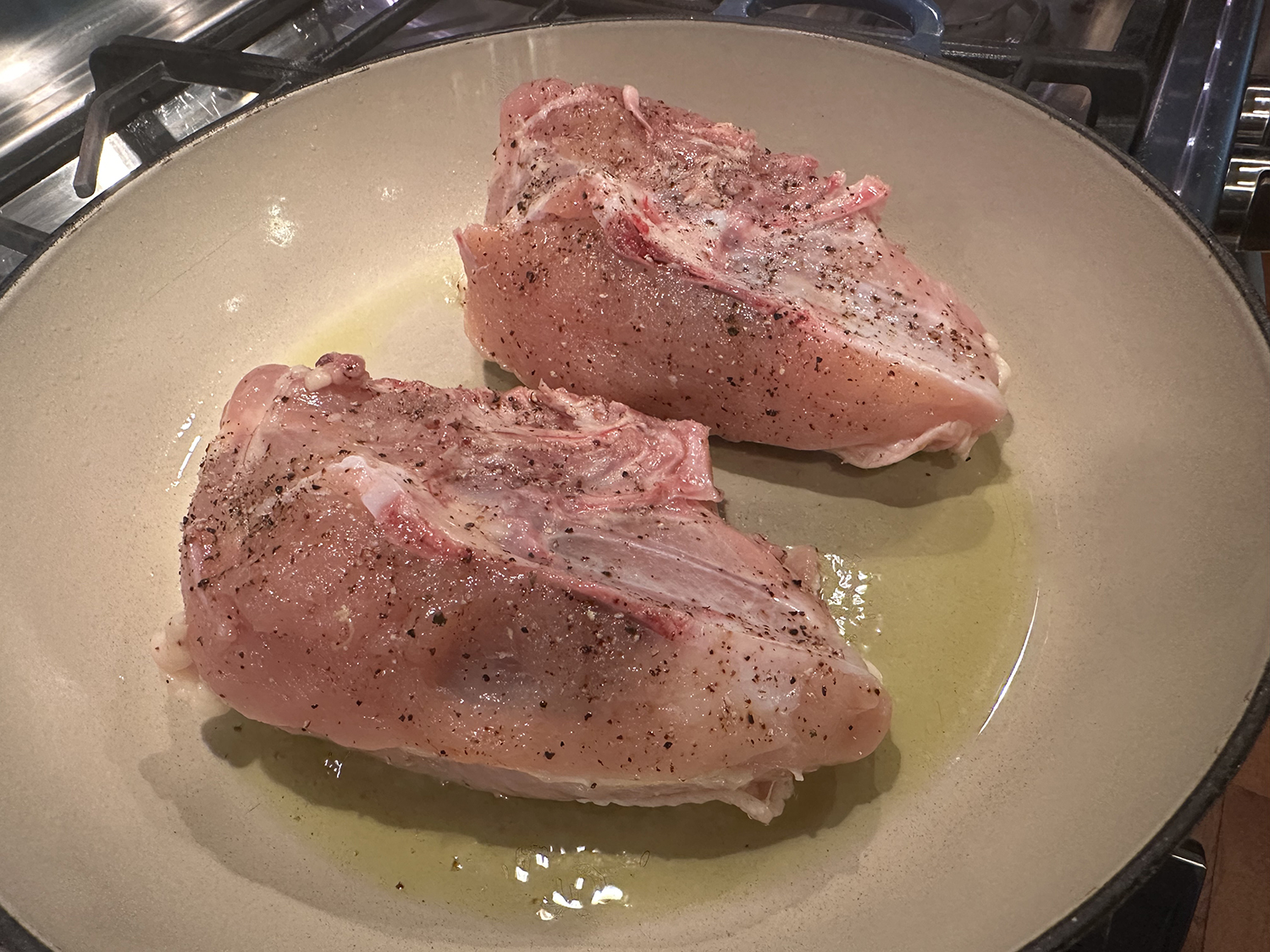
*The Hubs Hack: Because of the larger pieces, after browning the skin, we put the pan with the chicken skin side up in the pre-heated oven for 10 minutes before removing them and adding the vegetables. The breasts were then placed on top of the veggies and the skillet was returned to the oven until the chicken reached an internal temperature of 160°F., about 30 min. (Check temp after 20 minutes.)

Before cooking, the veggies are tossed with herbes de Provence, an aromatic seasoning blend that typically includes rosemary, thyme, savory, marjoram and oregano, and sometimes other spices and herbs such as fennel, sage, lavender and tarragon.

Dry vermouth, with its herbaceousness, is an ideal deglazing liquid for the browned bits left in the pan after searing the chicken, but dry white wine works, too. The vermouth and caper brines are important because they really help take this dish over the top and not just an average chicken and vegetable dish. We usually like thighs over breasts in similar recipes, but these turned out juicy with good crispy skin.

Another food item that the store was completely out of was zucchini, so we just substituted a yellow summer squash. And again, because of the enormous breast size, we roasted only two, which was still enough to feed four people.

Pan-Roasted Chicken and Summer Vegetables with Herbes de Provence

  • Servings: 4
  • Difficulty: easy
  • Print

Ingredients

  • 4 12-oz. bone-in, skin-on chicken breasts, trimmed of excess fat
  • Kosher salt and ground black pepper
  • 3 Tbsp. extra-virgin olive oil, divided
  • 2 Tbsp. herbes de Provence
  • 6 medium garlic cloves, smashed and peeled
  • 1 medium red onion, halved and sliced about ¼ inch thick
  • 1 yellow, orange or red bell pepper, stemmed, seeded, cut into ¼ slices
  • 1 pint grape tomatoes, uncut
  • 1 small zucchini, halved lengthwise and sliced crosswise ¼ inch thick
  • ¼ cup drained capers, plus 1 Tbsp. caper brine
  • ½ cup dry vermouth
  • 1 cup lightly packed fresh basil, torn (optional)

Directions

  1. Heat the oven to 475℉ with a rack in the middle position. Season the chicken on all sides with salt and pepper. In a large bowl, stir together 2 tablespoons of oil, the herbes de Provence, ¼ teaspoon salt and 1 teaspoon pepper. Add the garlic, onion, bell pepper, tomatoes, zucchini and capers, then toss to combine; set aside.
  2. In a 12-inch skillet oven-safe skillet over medium-high, heat the remaining 1 tablespoon oil until shimmering. Add the chicken skin down and cook without disturbing until golden brown, 6 to 8 minutes. Using tongs, transfer the chicken skin up to a large plate. (If your chicken weighs much more than 12 ounces each, see note above.*)
  3. Pour off and discard all but 1 tablespoon fat from the skillet. Add the vermouth, bring to a boil over medium-high and cook, scraping up any browned bits, until reduced to about 2 tablespoons, 1 to 2 minutes. Add the vegetables and cook, stirring, until just warmed through, about 1 minute, then distribute in an even layer. Nestle the chicken skin up in the vegetables and add any accumulated juices. Transfer the skillet to the oven and cook until the thickest part of the breast reaches about 160°F, 20 to 25 minutes.
  4. Remove the pan from the oven (the handle will be hot). Transfer the chicken skin up to a serving platter. Using a slotted spoon, transfer the vegetables the platter, arranging them around the chicken.
  5. Set the skillet over high, bring the liquid to a simmer and cook, stirring, until slightly thickened and reduced, 1 to 2 minutes. Off heat, stir in the caper brine, then taste and season with salt and pepper. Pour the sauce around the chicken and over the vegetables. Sprinkle with basil (if using).

http://www.lynnandruss.com

Adapted from a recipe by Rose Hattabaugh for Milk Street

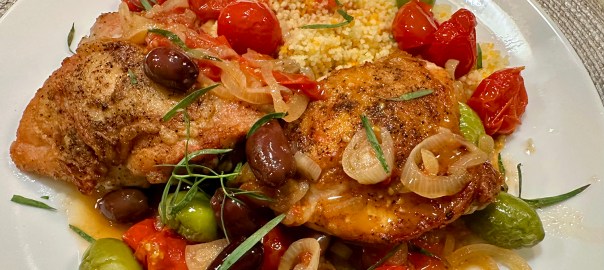
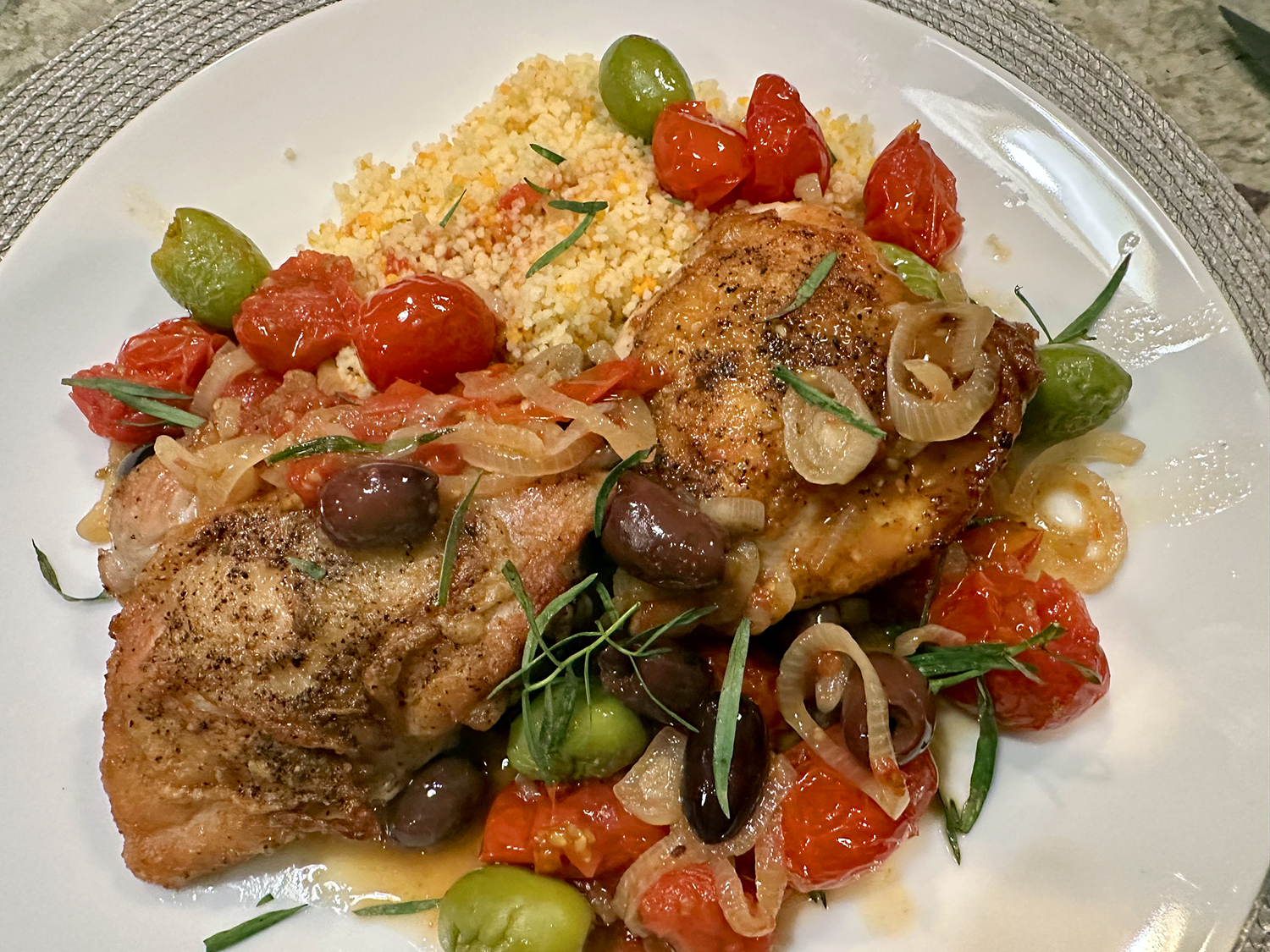
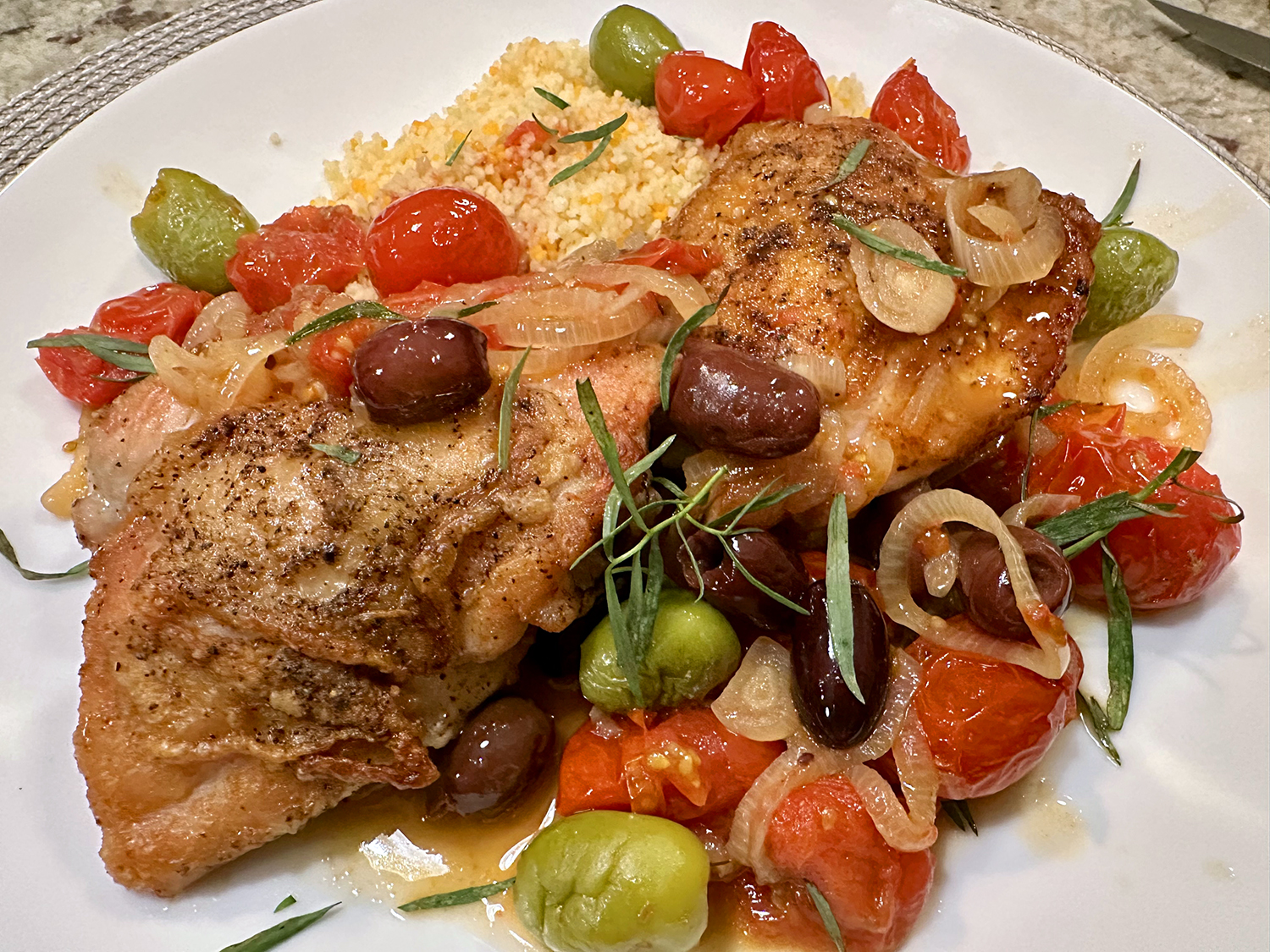
Seared Chicken Thighs with Cherry Tomatoes and Olives

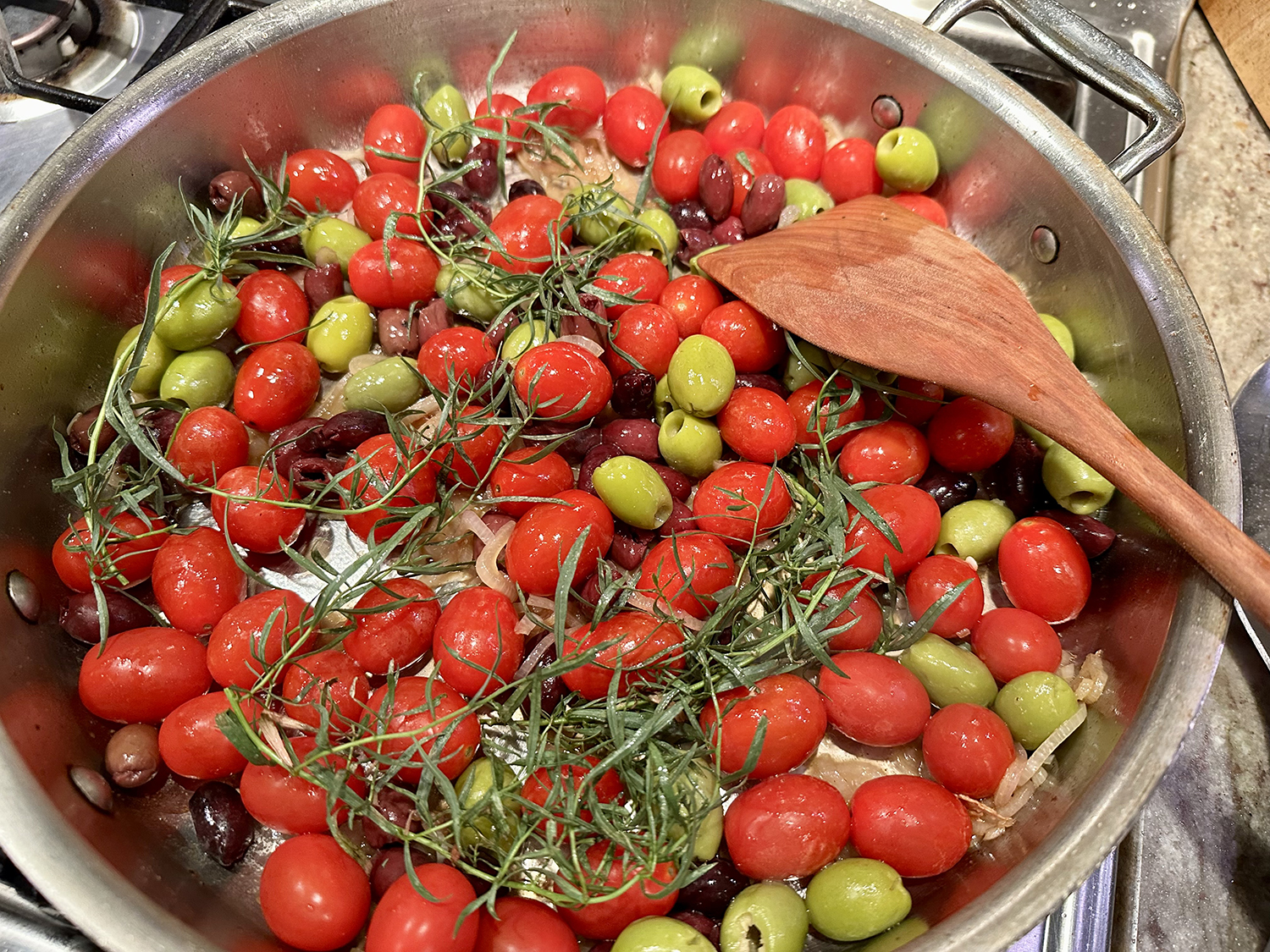
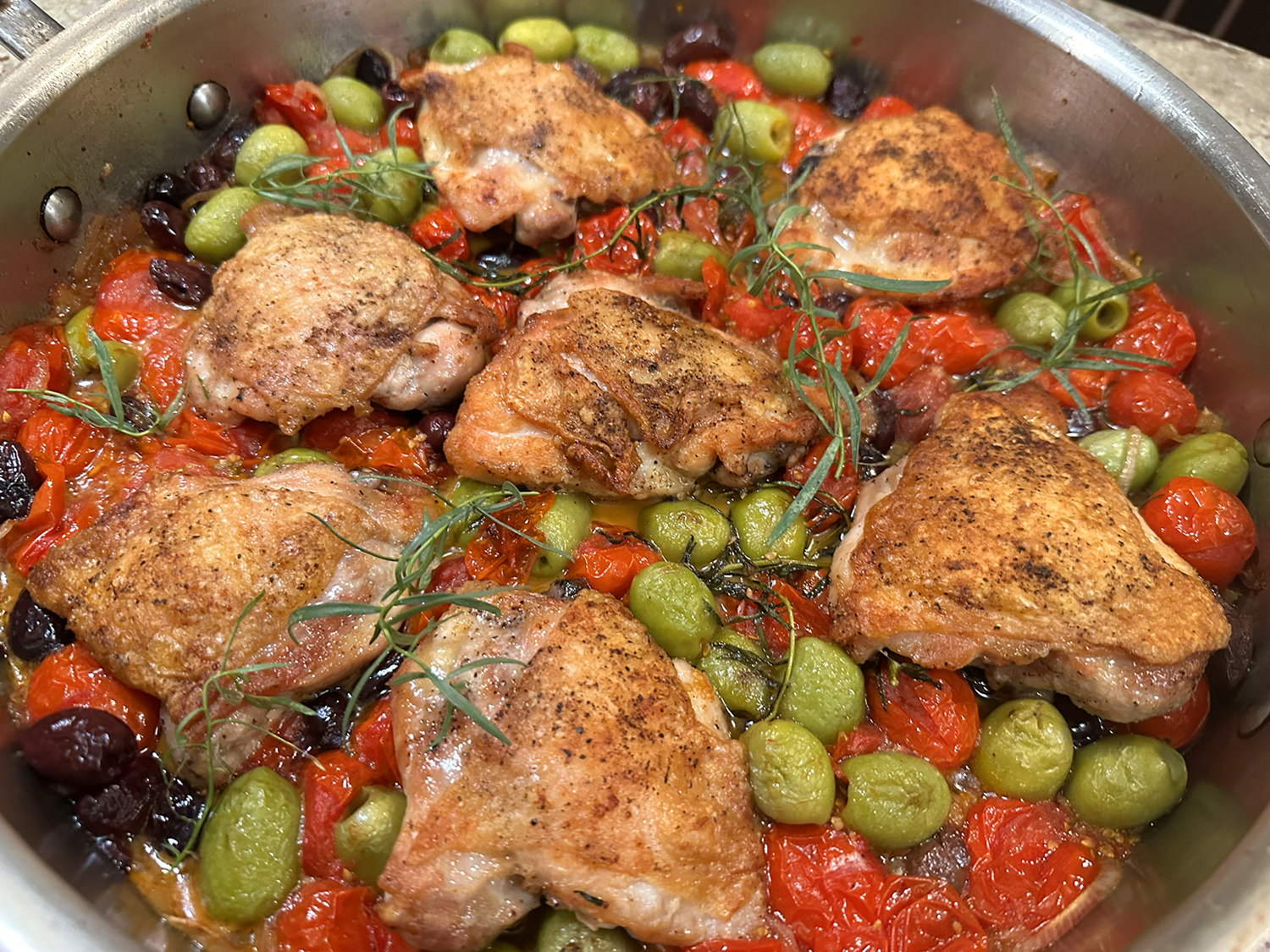
Always game for a weeknight one-pan dinner, here’s another winner to add to your repertoire. In this one-pan meal, freshly seared chicken thighs simmer in their own schmaltz alongside bursting tomatoes and salty olives. Those sweet and bright tomato juices serve as a starting point for a delicate sauce.

To make the most of the leftover olive brine, this recipe uses it in lieu of salt to season the sauce, as well as to deglaze the pan and extract the rich flavors that stick to the bottom when you sear chicken. Tarragon sprigs add their irresistible peppery aroma. If tarragon is impossible to find, fresh rosemary or marjoram make equally tasty alternatives. 
Overall, the recipe couldn’t have been much simpler, there is almost no prep. Other than seasoning the chicken thighs and slicing the shallots (a hand-held mandoline comes in real handy for that), the remaining ingredients just get thrown in the pan without any slicing or dicing.

Of course, if you are not enamored with olives, then this just isn’t for you…

Seared Chicken Thighs with Cherry Tomatoes and Olives

  • Servings: 4-5
  • Difficulty: easy
  • Print

Ingredients

  • 2 1/2 lbs. bone-in, skin-on chicken thighs (5 to 7 thighs)
  • Salt
  • 1 Tbsp. neutral oil, such as avocado or grapeseed oil
  • 2 shallots, thinly sliced
  • 1 6-oz. jar pitted green olives, drained, brine reserved
  • 1 6-oz. jar pitted Kalamata olives, drained
  • 1½ lbs. cherry tomatoes
  • 3 fresh tarragon sprigs
  • Crusty bread, or couscous for serving

Directions

  1. Pat dry the chicken using a paper towel and season with salt on all sides.
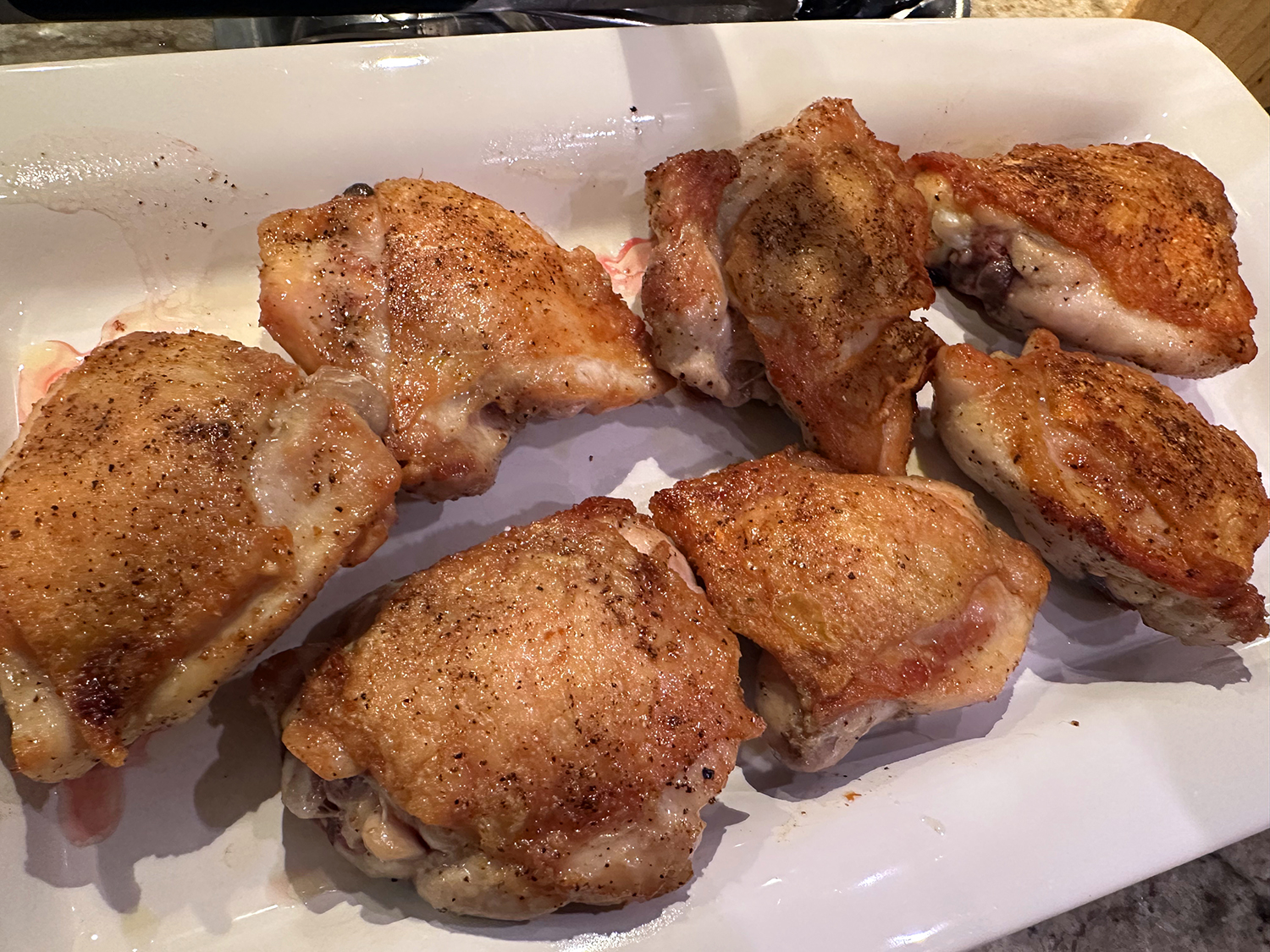
  2. In a large (12-inch) skillet over medium-high, heat the oil. Place the chicken skin-side down in the skillet and sear for 7 to 9 minutes, until crispy, golden and the skin easily releases from the bottom of the skillet. Flip the chicken thighs and continue cooking for 5 minutes, until golden brown. Transfer the seared chicken to a plate.
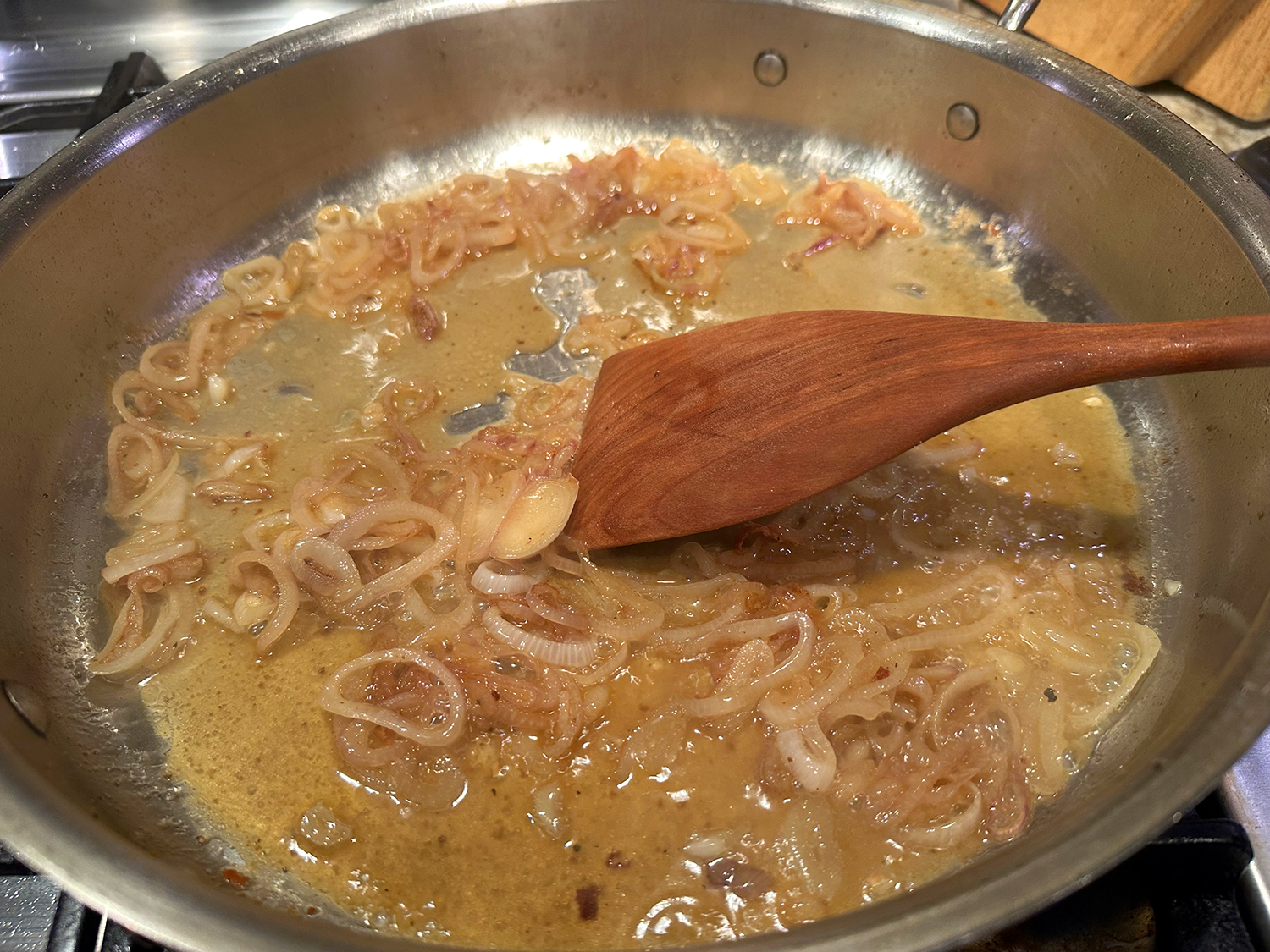
  3. Remove all but about 3 tablespoons of schmaltz from the skillet and add the shallots. Decrease the heat to medium. Cook, stirring frequently, until translucent and soft, about 3 minutes.
  4. Add ⅓ cup of the green olive brine to the skillet and scrape to loosen the brown bits from the bottom of the pan. Add the green olives, Kalamata olives, tomatoes and tarragon. Partly cover with a lid and bring the mixture to a simmer, occasionally stirring and crushing some of the tomatoes with the back of a spoon to release their juices.
  5. When the mixture reaches a simmer, tuck the chicken thighs in between the cherry tomatoes and olives, skin-side up. Partly cover with a lid and simmer over medium for 12 minutes, until the tomatoes have released most of their juices and have burst and softened.
  6. Meanwhile, place an oven rack as close to the broiler as possible and set the oven to broil.
  7. Remove the lid and place the skillet under the broiler for 2 to 3 minutes, until the chicken skin is slightly charred in places and crispy.
  8. Serve right away, with bread on the side.

http://www.lynnandruss.com

Recipe by Carolina Gelen for the NYTimes Cooking

One-Skillet Crispy Salmon with Mustardy Lentils

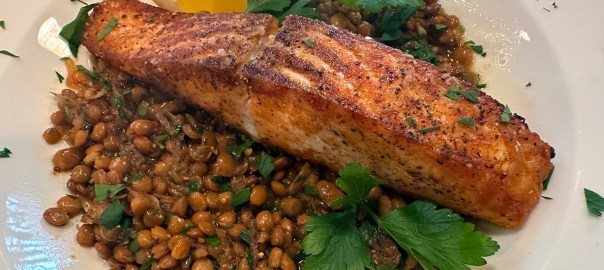
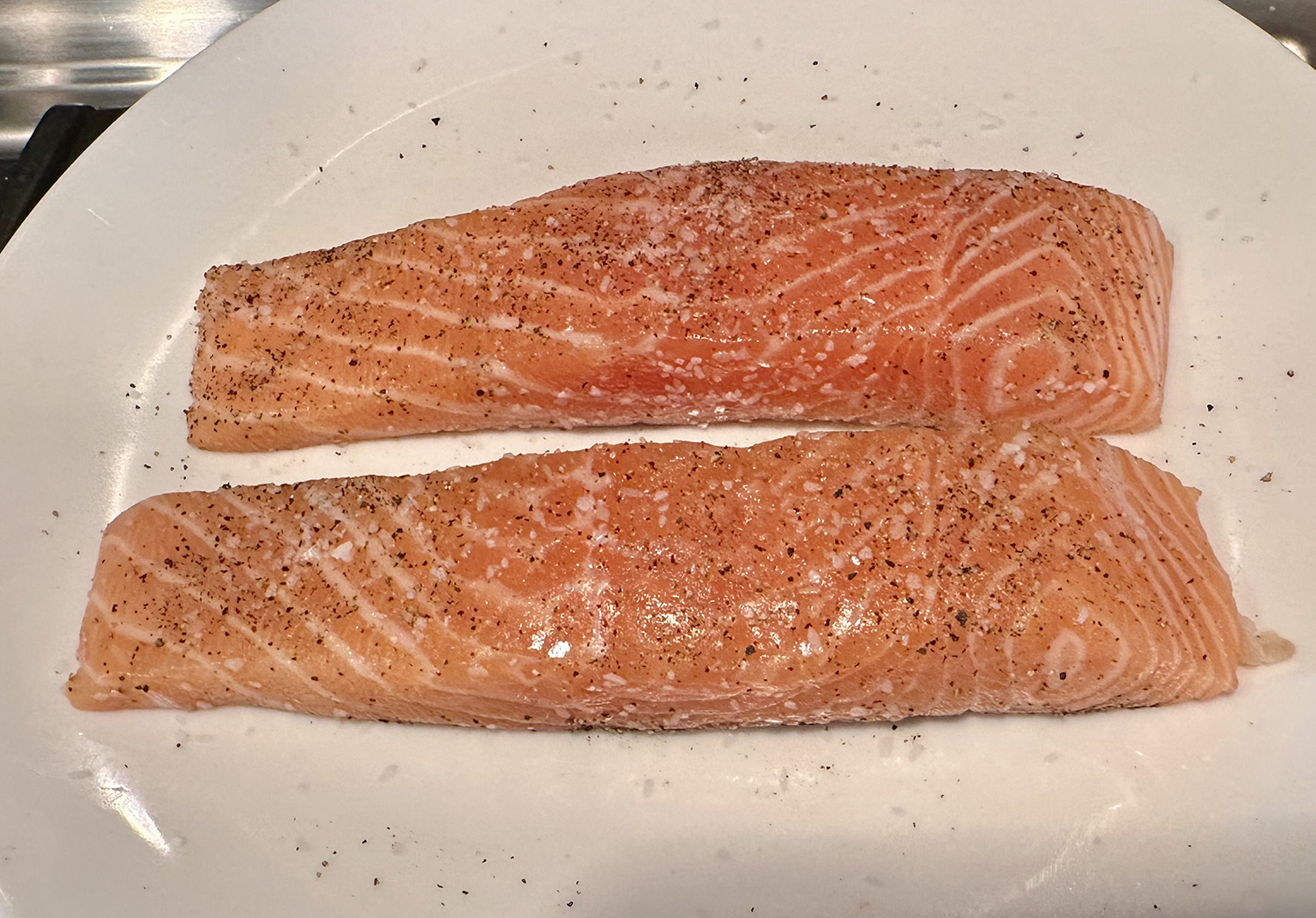
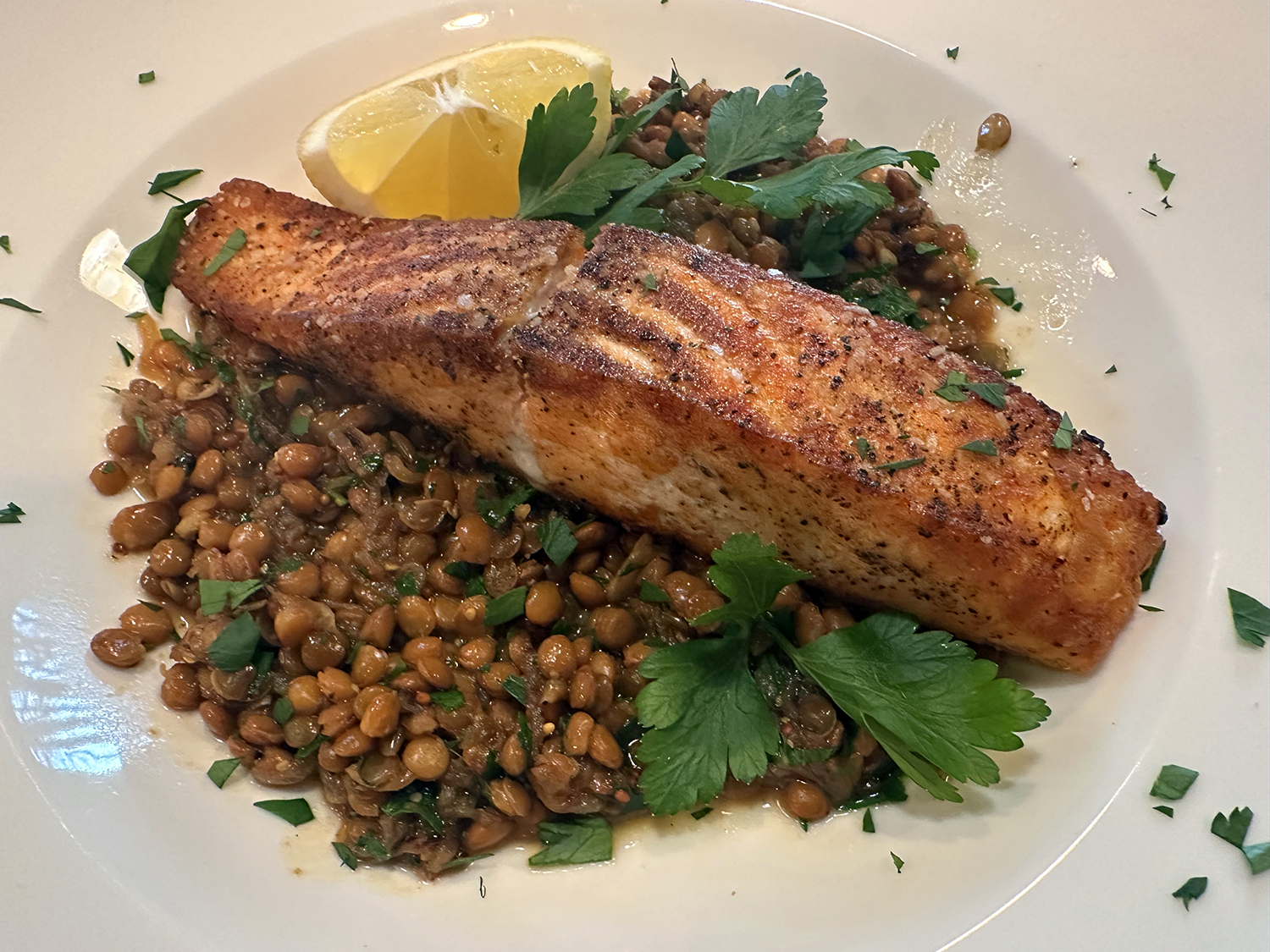
Salmon and lentils is an absolutely classic French pairing. In this simple, satisfying one-pot dinner for two that plays off the famous coupling, crispy salmon is served in a broth of lentils flavored with caramelized shallots and mustard.

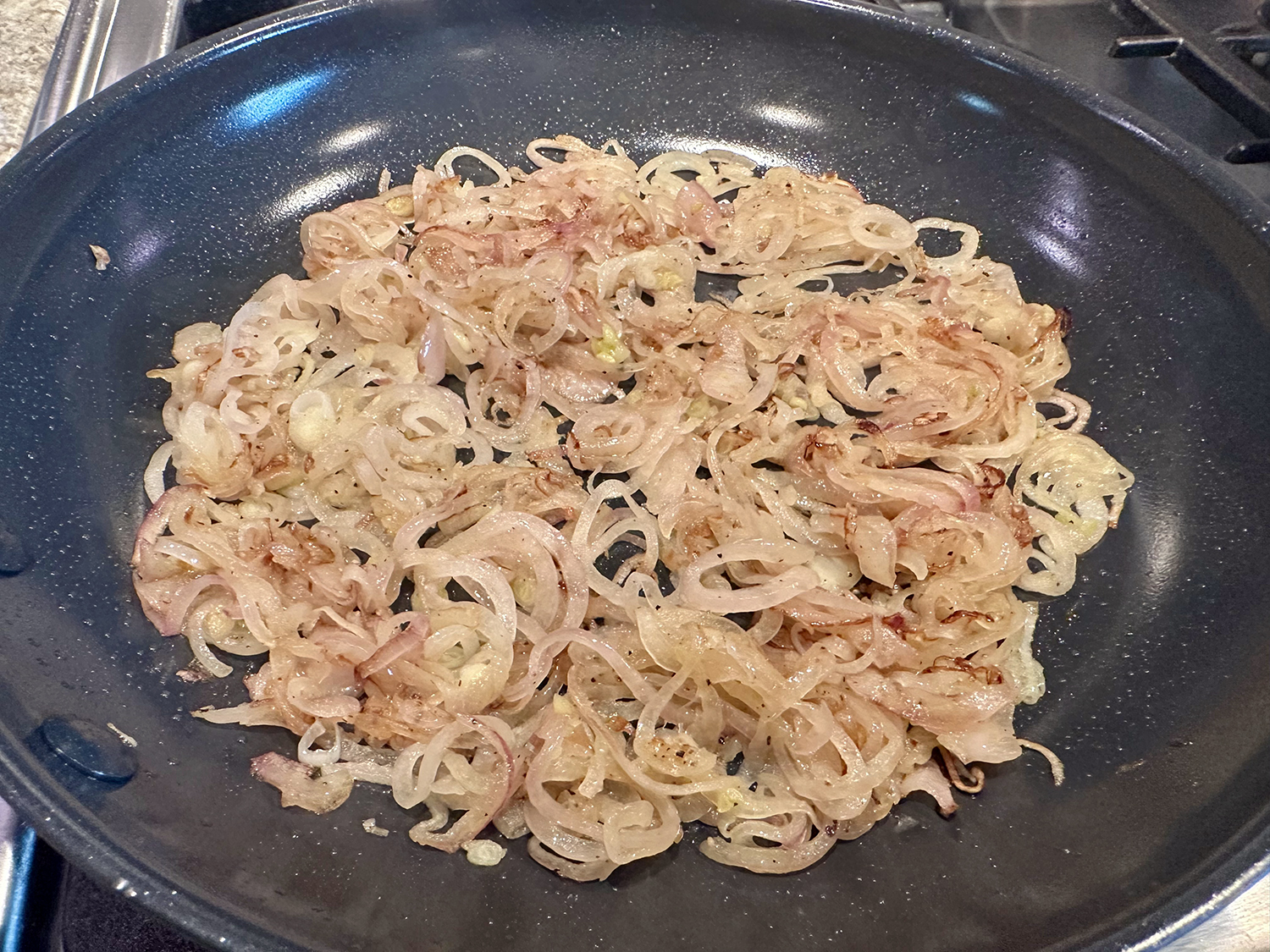
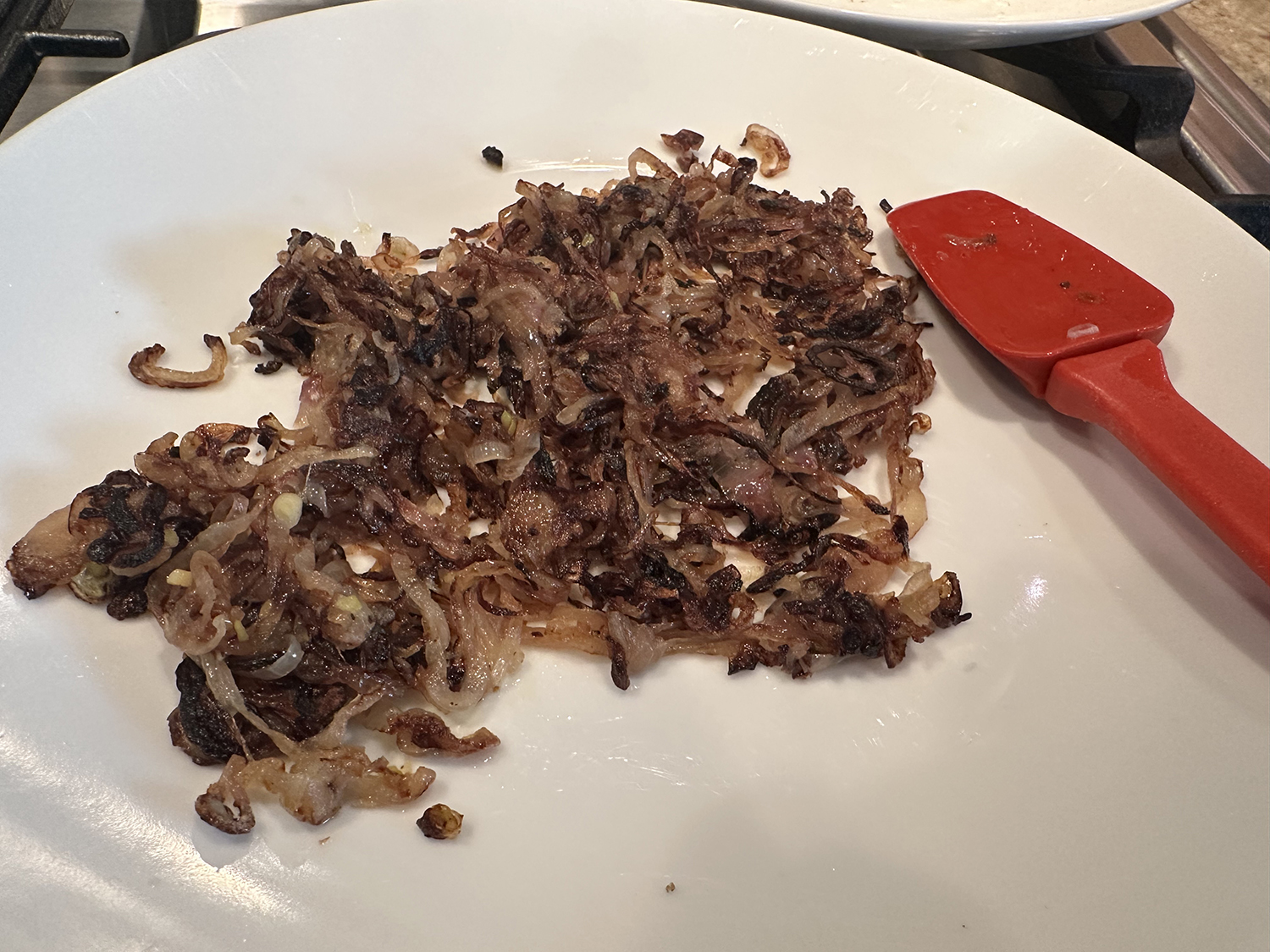
Using one skillet for the entire recipe allows the caramelized shallots to play double duty, imparting their sweet flavor to both the salmon and the lentils. The salmon rests while the canned lentils are quickly cooked with vegetable broth, herbs, and mustard, so that the whole dish is ready without wasting a minute.

Mistakingly, we bought salmon filets without the skin, but it ended up being a positive error. I personally do not like to eat salmon skin and the fish got just as crispy without it. When making this dish again in the future, we will again purchase salmon filets without the skin. That choice is up yo you…

In the end, the meal was super simple and super-tasty!

One-Skillet Crispy Salmon with Mustardy Lentils

  • Servings: 2
  • Difficulty: easy
  • Print

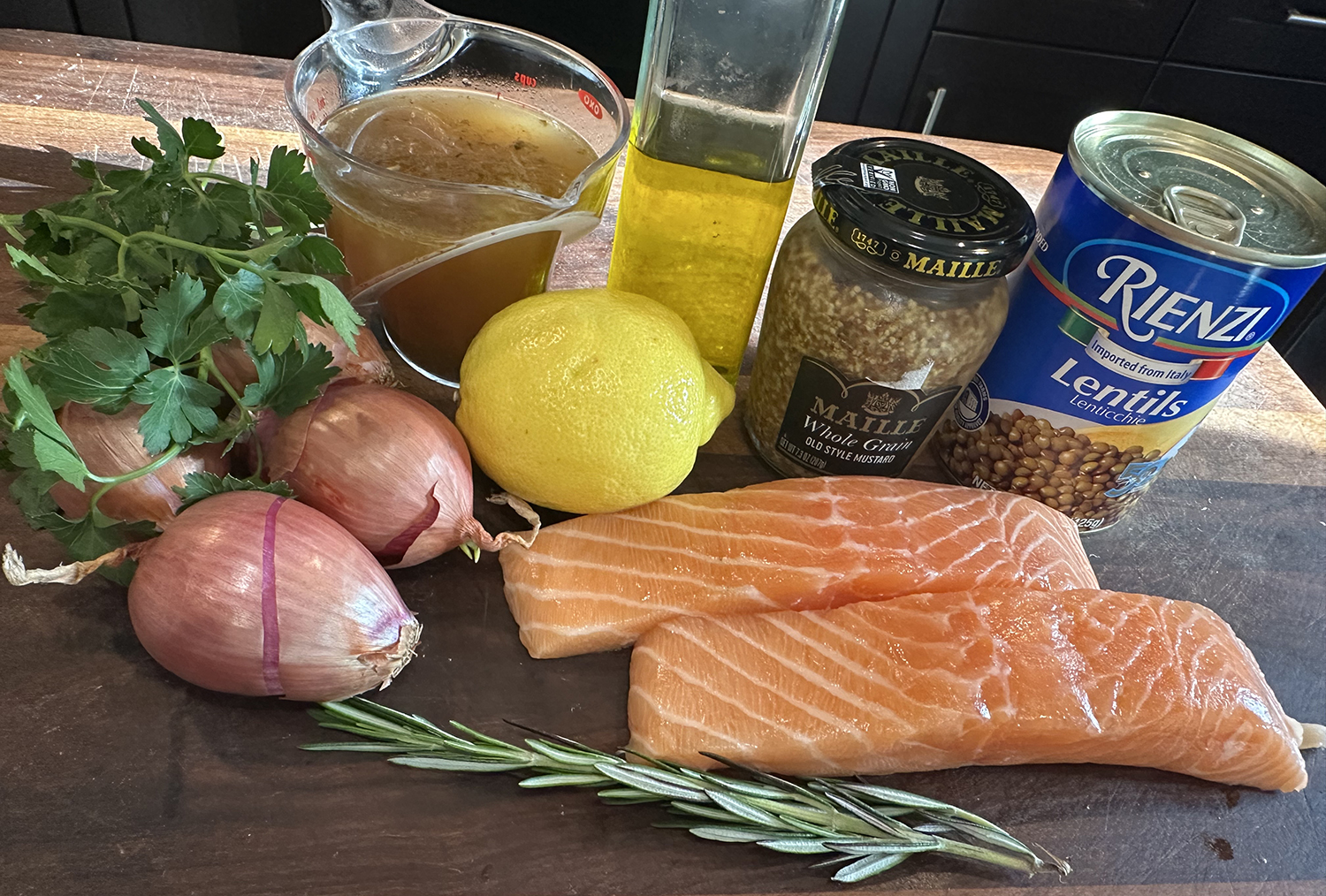
Ingredients

  • 2 Tbsp. extra-virgin olive oil, divided, plus more for serving
  • 4 medium shallots, thinly sliced (about 1/2 cup)
  • Kosher salt and freshly ground black pepper
  • 2 6-oz. salmon filets, skin on (or not, depending on your preference)
  • 1 14.5-oz. can Puy lentils, drained and rinsed
  • 3 sprigs thyme or 1 sprig rosemary
  • 1 cup vegetable or chicken stock, preferably homemade
  • 1 Tbsp. whole-grain mustard
  • 1 Tbsp. chopped flat-leaf parsley
  • 1 tsp. fresh lemon juice

Directions

  1. In a medium nonstick skillet, heat 1 tablespoon of olive oil over medium heat until shimmering. Add shallots and cook, stirring frequently, until very soft and browned, about 15 minutes; lower the heat if necessary to prevent burning. Season to taste with salt and pepper and set caramelized shallots aside. Wipe out skillet.
  2. Press salmon filets between paper towels to dry surfaces thoroughly. Season on all sides with salt and pepper. Heat remaining 1 tablespoon in the skillet over medium-high heat until shimmering. Add salmon filets skin side-down. Immediately reduce heat to medium-low. Cook, pressing gently on back of filets to ensure good contact with skin, until skin is rendered and crisp, about 6 minutes. If skin shows resistance when attempting to lift with a spatula, allow it to continue to cook until it lifts easily. Flip salmon and cook on second side until a thermometer inserted into the thickest part registers 120°F for medium rare or 130°F for medium, about 1 minute longer. Transfer salmon to a paper towel-lined plate and allow to rest.
  3. Add lentils, thyme or rosemary, broth, whole grain mustard, and caramelized shallots to the skillet and bring to a boil. Reduce heat to medium and simmer until the broth has reduced by about half, about 5 minutes. Remove from the heat and stir in parsley and lemon juice. Season to taste with salt and pepper. Spoon the lentils onto plates, set the salmon on top, drizzle with more olive oil, and serve immediately.

http://www.lynnandruss.com

Adapted from a recipe from Serious Eats

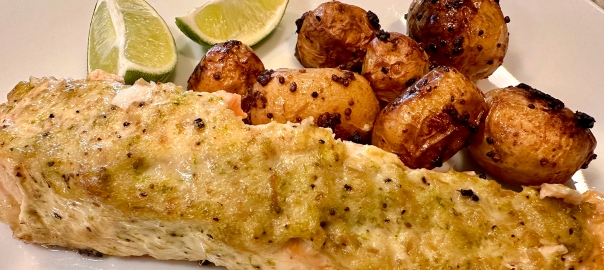
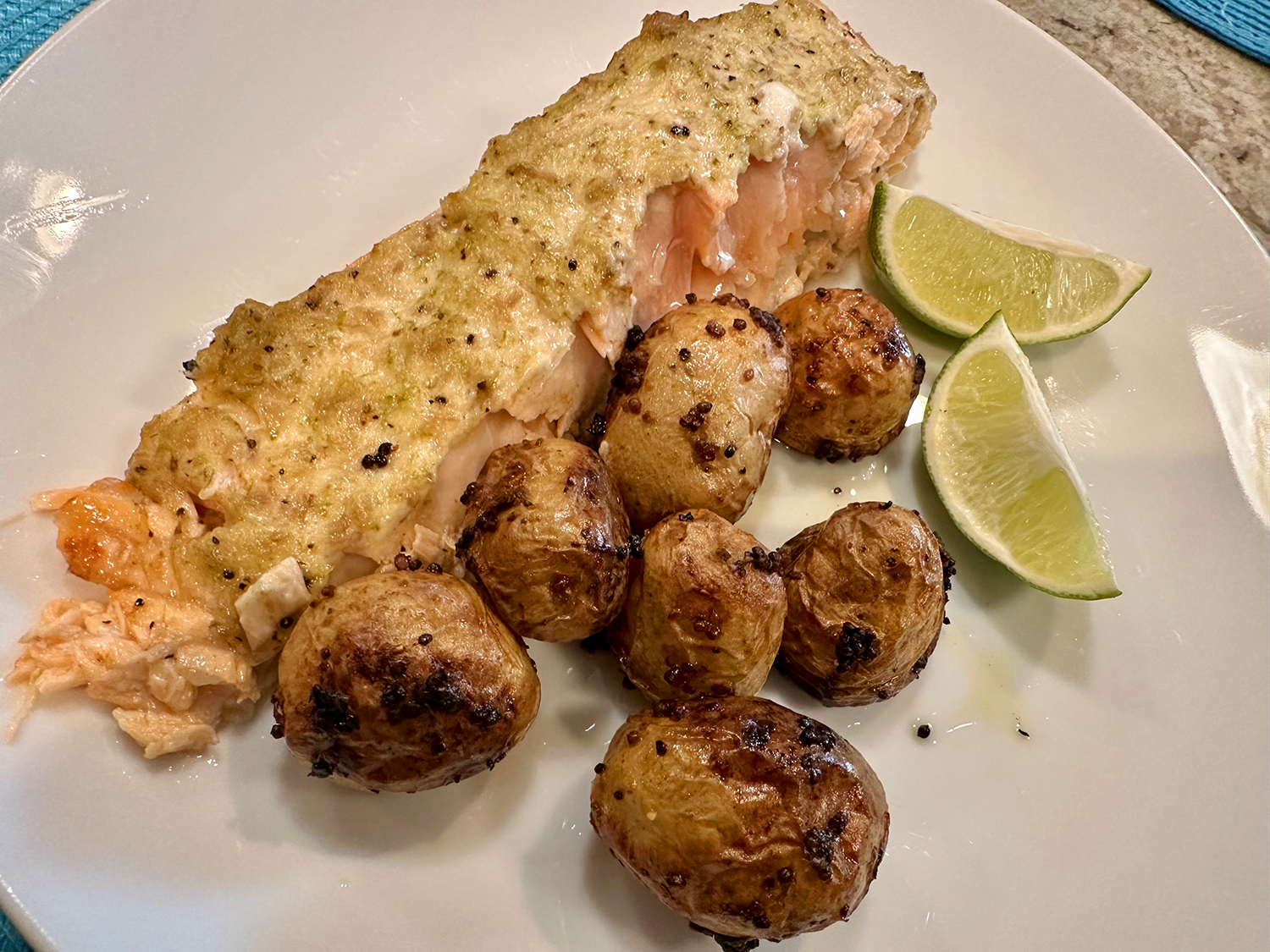
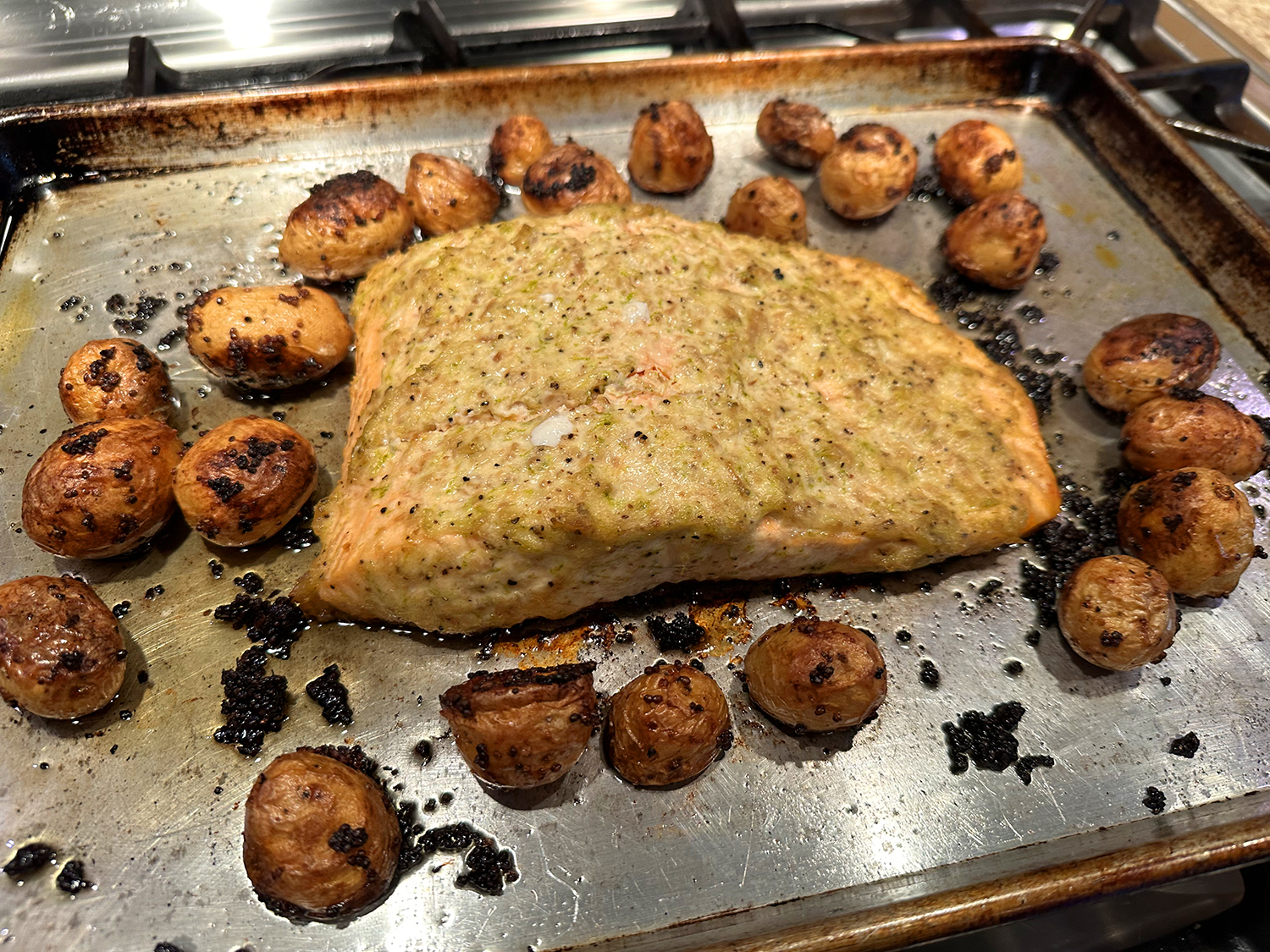
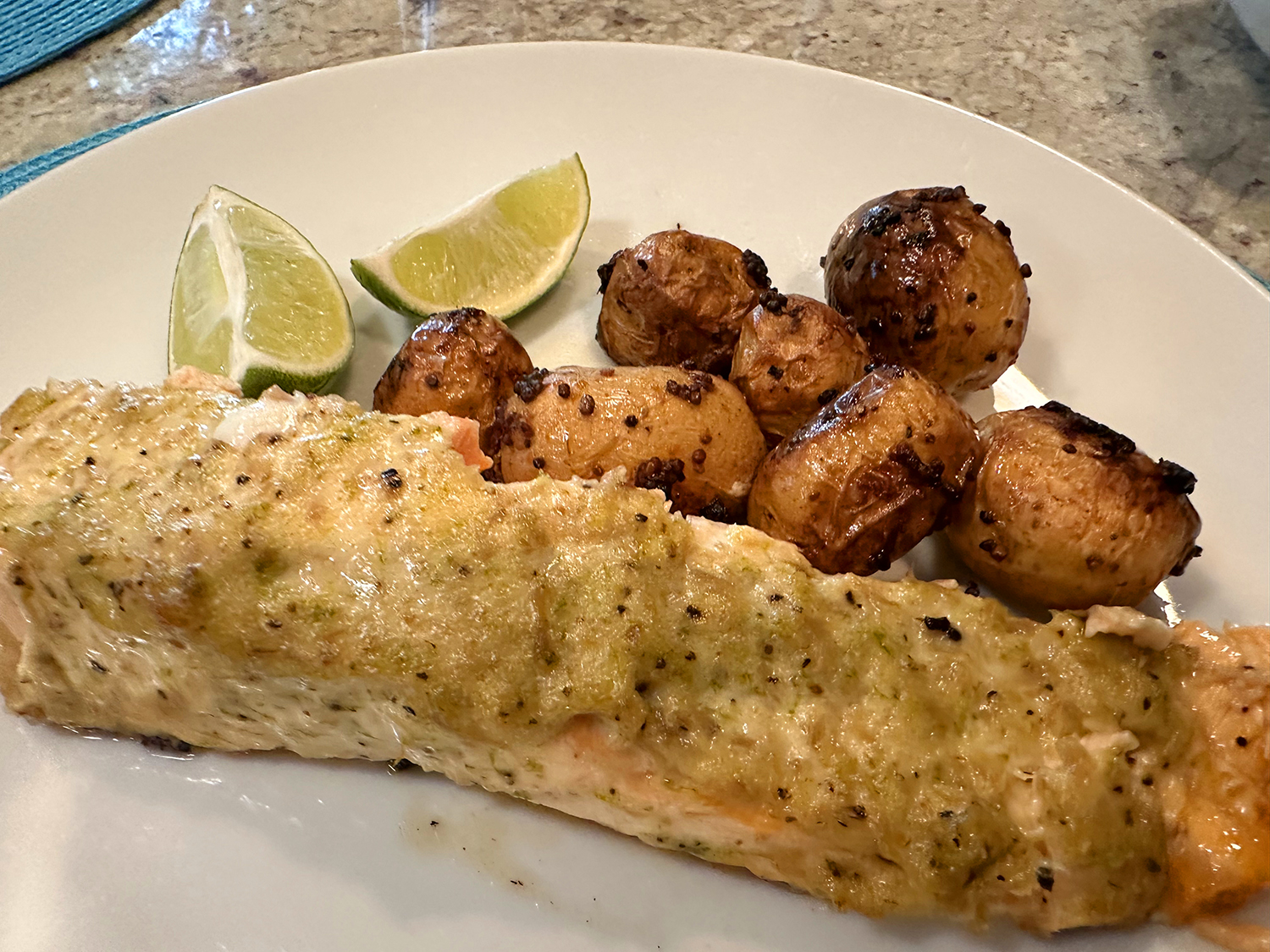
Horseradish Roasted Salmon with Mustard Potatoes

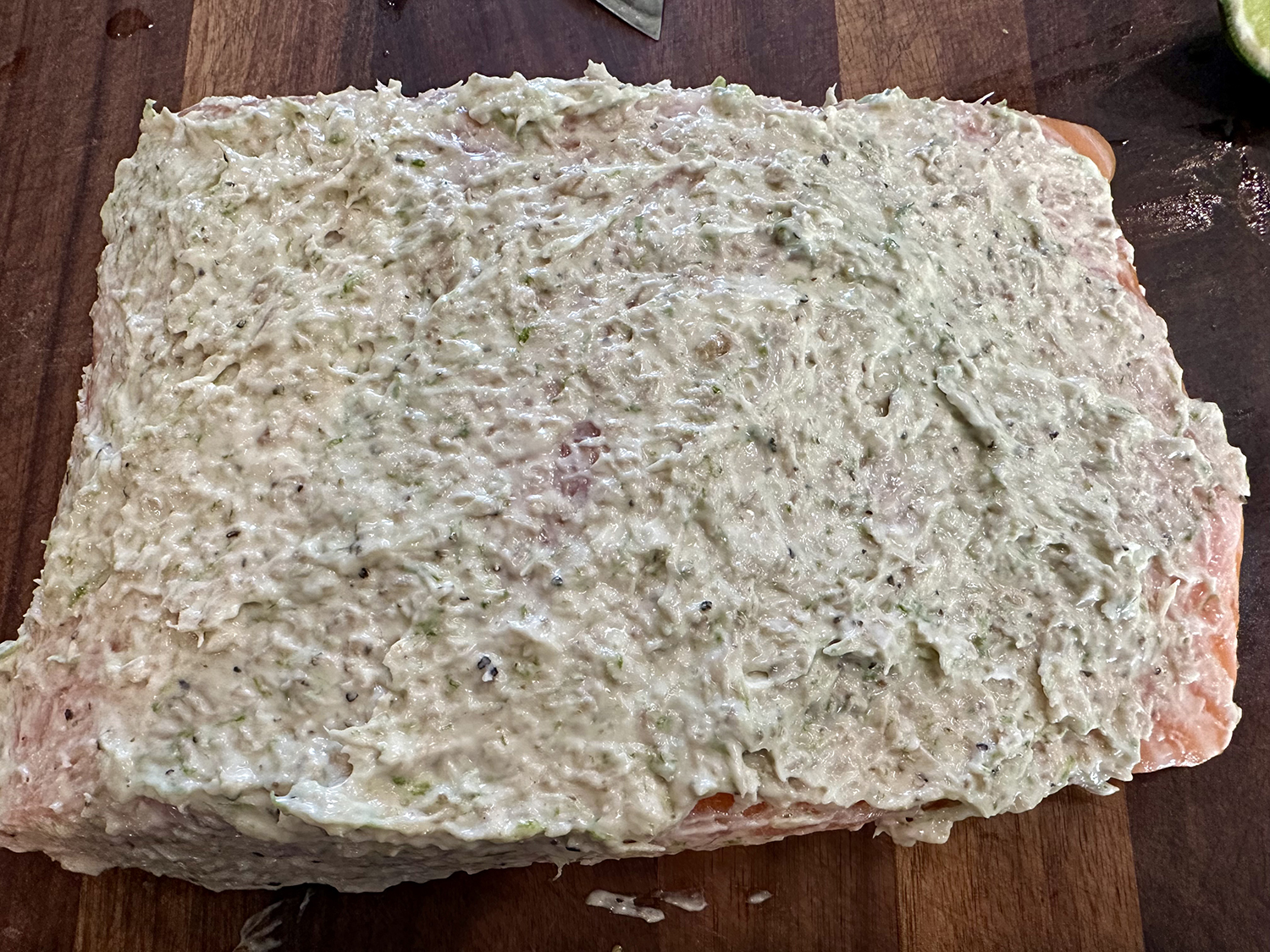
Salmon is one of our go-to fish purchases. Usually it is priced relatively well, and we can source good salmon from one of two places close by. Slathered in a creamy horseradish mayonnaise, salmon fillet is a weeknight winner. (You can cook smaller fillets or one larger center-cut piece, whichever you prefer.)

The key to moist, flavorful salmon is to roast it at a high temperature for a short length of time. Here it’s baked alongside tangy mustard potatoes, but asparagus, broccoli or even green beans would be nice, too. If using less hearty vegetables, just cut the initial bake time down to 5 to 10 minutes.

For future repeat on this recipe, we recommend to add more potatoes; use Dijon instead of whole grain mustard (which didn’t stick to the potatoes). The fix is one tablespoon Dijon, with one tablespoon whole grain mustard.

Horseradish Roasted Salmon with Mustard Potatoes

  • Servings: 4
  • Difficulty: easy
  • Print

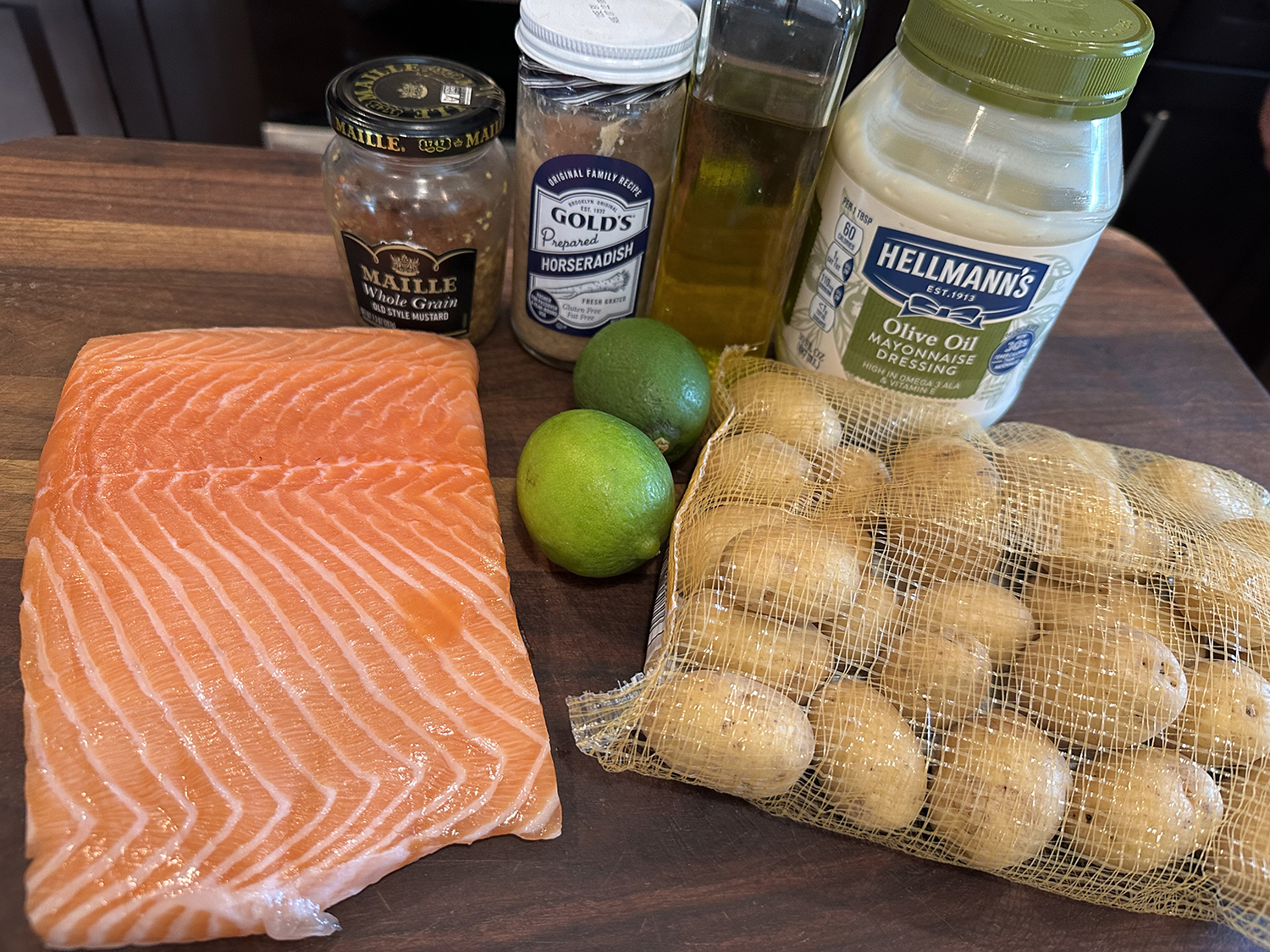
Ingredients

  • 1 lb. baby Yukon Gold potatoes, halved if large
  • 3 Tbsp. olive oil
  • 2 Tbsp. whole-grain mustard
  • Kosher salt and coarsely ground black pepper
  • 3 Tbsp. mayonnaise
  • 2 Tbsp. drained prepared horseradish
  • 2 limes
  • 1½ lbs. skinless salmon fillet (preferably 1 single center-cut piece)

Directions

  1. Heat oven to 400 degrees.
  2. On a rimmed sheet pan, toss together the potatoes, olive oil and mustard. Season with salt and pepper. Roast for 20 minutes, tossing once halfway through.
  3. Meanwhile, combine the mayonnaise and horseradish in a small bowl. Finely grate 2 teaspoons lime zest and then cut the remaining lime into wedges. Add the lime zest to the mayonnaise mixture and season to taste with salt and pepper. Season the salmon with salt and pepper and then slather the sauce all over the top and sides.
  4. Remove the potatoes from the oven and use a spatula to make space in the center of the pan. Add the salmon, skinned side down. Return the pan to the oven and cook until the potatoes are browned and tender and the salmon is cooked through to your liking, 10 to 20 minutes, depending on the thickness of the salmon.
  5. Serve the salmon and potatoes with lime wedges.

http://www.lynnandruss.com

Recipe by Julia Gartland for NYTimes Cooking

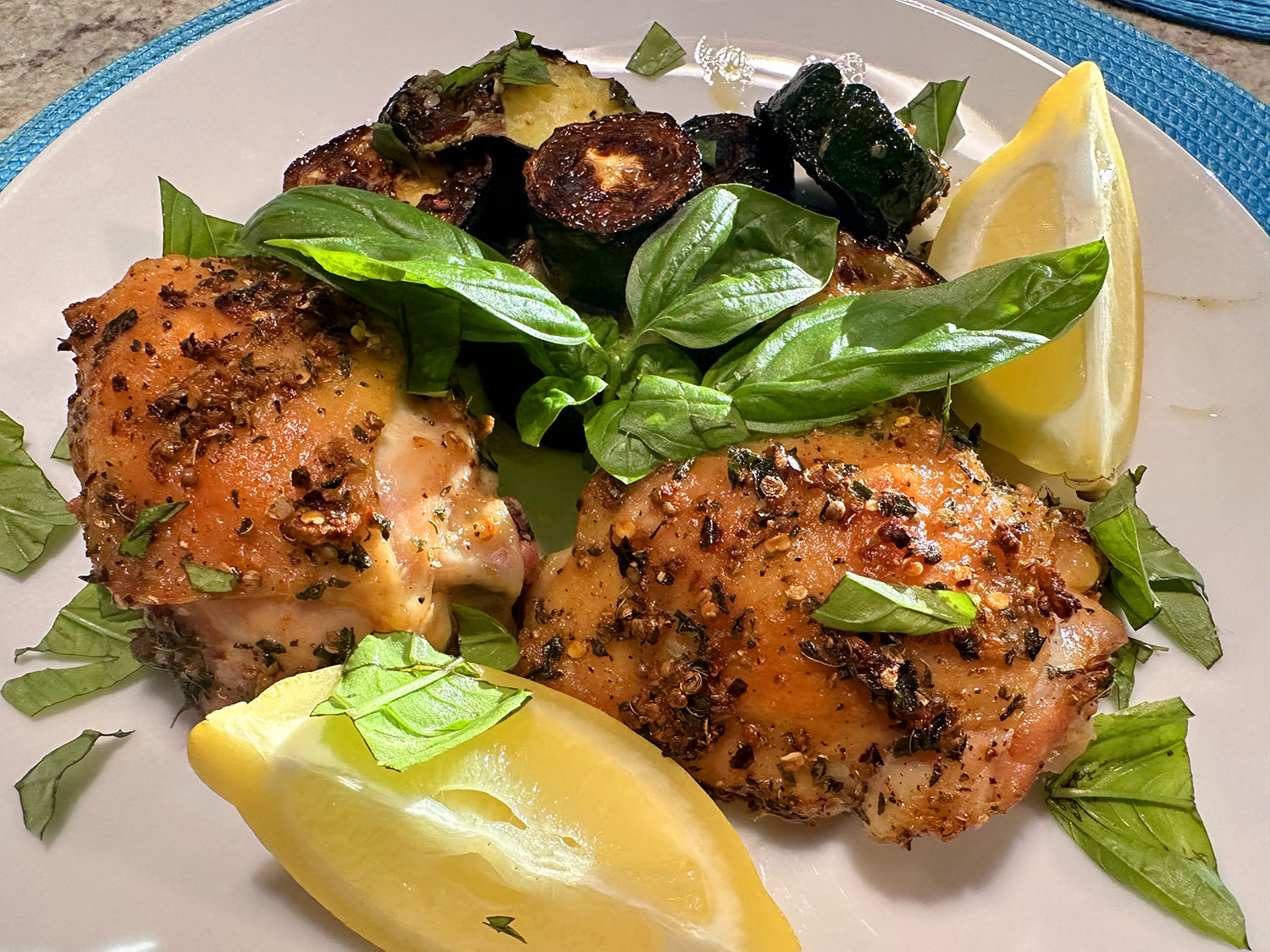
Sheet-Pan Chicken with Zucchini and Basil

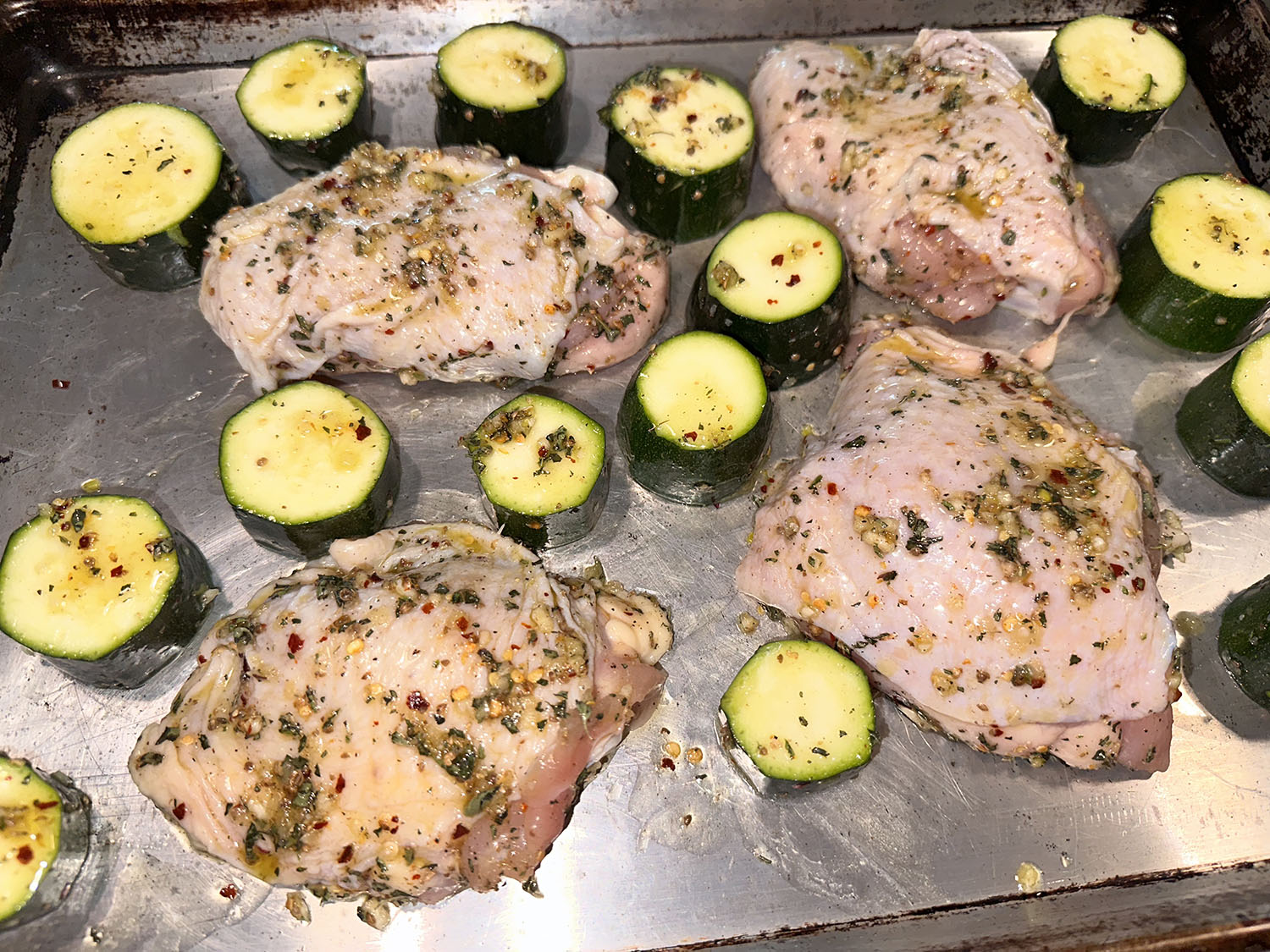
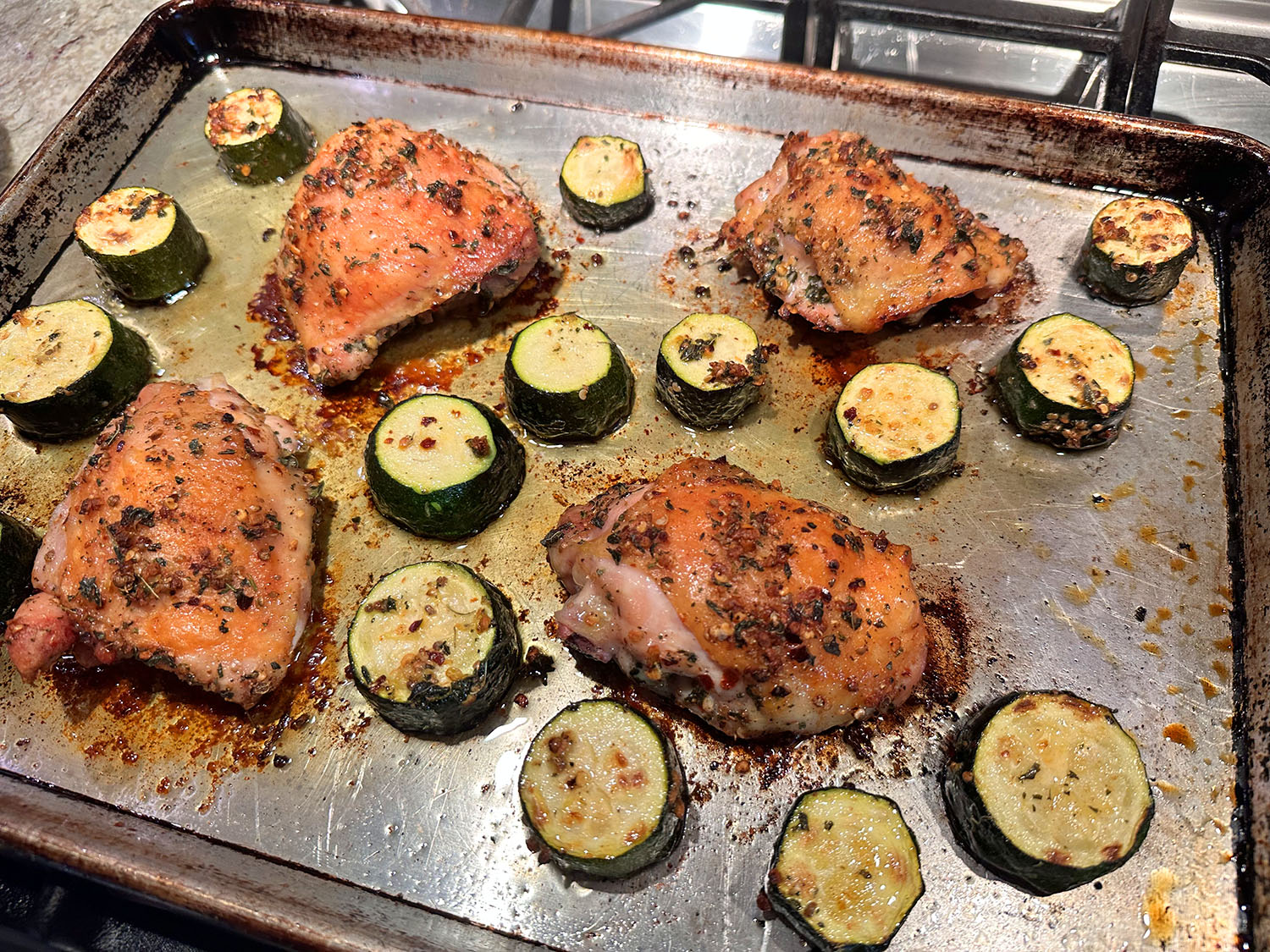
Some nights you just don’t feel like putting a whole lot of effort into a dinner, especially if it is for just 1 or 2 people. That’s where these one-pan wonder meals come in handy. In less than an hour, with a minimum of ingredients, you are enjoying juicy chicken with ultra-crispy skin full of flavor, accompanied by caramelized zucchini.

For this simple weeknight recipe, chicken thighs are seasoned with garlic, herbs and red-pepper flakes, and roasted alongside tender chunks of zucchini that caramelize in the oven’s heat. Torn basil leaves and a squeeze of lemon give the dish sharp and tangy notes just before serving, while the optional coriander seeds tossed into the pan lend depth.

This recipe comfortably serves two, but if you’re feeding more people, feel free to double the ingredients. Divide the ingredients between two sheet-pans, and bear in mind that you might need to add a few minutes to the cooking time. Add some crusty bread or rice to soak up the savory juices, and you’ve got a summery meal that’s fresh, full of flavor and an absolute snap to make.

Our changes included amping up the amount of chicken from 1 3⁄4 to just over 2 pounds (4 bone-in thighs). The original recipe indicates there is no need to turn anything once in the oven. However, we found that the zucchini slices, especially those around the edges, became too charred on the one side, therefore we suggest you turn after 20 minutes. The 1⁄2 cup of fresh basil was overkill, and even though we love the herb, 1⁄4 cup seemed like plenty.

Sheet-Pan Chicken with Zucchini and Basil

  • Servings: 2
  • Difficulty: easy
  • Print

Ingredients

  • 2 lbs. bone-in, skin-on chicken thighs
  • Salt and freshly ground black pepper
  • 1¼ lbs. zucchini, sliced into 1-inch chunks
  • 2 fat garlic cloves, finely grated, passed through a press or minced
  • 2 tsp. dried mint or oregano
  • 1 tsp. coriander seeds, cracked with a mortar and pestle or the flat side of a chef’s knife (optional)
  • ¼ tsp. red-pepper flakes, plus more for serving
  • 3 Tbsp. extra-virgin olive oil, plus more as needed
  • Lemon wedges, for serving
  • ¼-½ cup torn fresh basil leaves, for serving

Directions

  1. Heat oven to 425 degrees. Pat chicken dry with paper towels, and season all over with 1 teaspoon salt and ½ teaspoon black pepper.
  2. In a large bowl, combine garlic, mint or oregano, coriander (if using) and red-pepper flakes. Whisk in oil. Add chicken and zucchini to the same bowl and toss until well coated.
  3. Spread chicken, skin-side up and zucchini in a single layer onto a rimmed baking sheet, and roast until chicken is cooked through and zucchini is browned and caramelized, 35 to 40 minutes. Turn the zucchini slices after 20 minutes.
  4. Once the pan is out of the oven, squeeze a lemon wedge over everything. Garnish with basil and serve with more lemon wedges and red-pepper flakes on the side.

http://www.lynnandruss.com

Adapted from a recipe by Melissa Clark for NYTimes

One-Pan Paprika Chicken with Lentils, Squash and Daqa

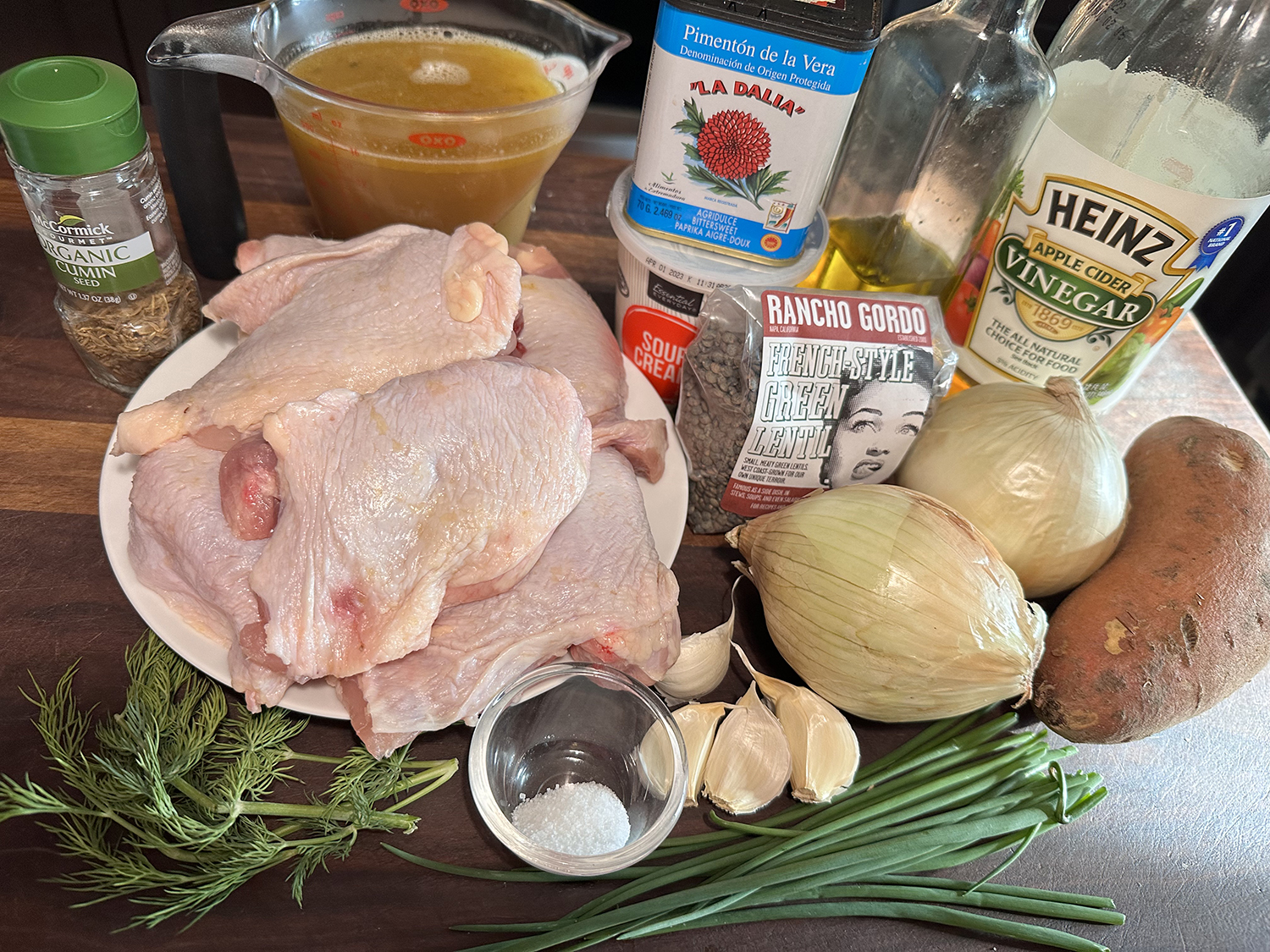
Who doesn’t love a one-pan dinner? (Although you will be using several bowls.) This oven bake requires minimal effort and is very much a meal in itself. Daqa is a vinegar-based condiment, most commonly used when making the much-loved Egyptian koshari, a hearty dish of rice, pasta and lentils.

Daqa is a nifty way to brighten stews, braises and anything that needs an acidic lift. Feel free to swap out the kabocha squash for root vegetables, such as sweet potato (which we used) or celery root, and serve the whole thing with nothing more than a leafy green salad.

This meal was so flavorful, and fantastic as leftovers.

One-Pan Paprika Chicken with Lentils, Squash and Daqa

  • Servings: 4-6
  • Difficulty: easy
  • Print

Ingredients

  • 6 bone-in, skin-on chicken thighs (about 2¼ lbs.)
  • ¾ lb. skin-on kabocha squash, seeds removed, cut into about 6 (1-inch-thick) wedges
  • 1 Tbsp. plus 2 tsp. ground sweet paprika
  • 3 Tbsp. olive oil
  • Fine sea salt
  • 2 small yellow onions, halved and thinly sliced
  • 3 garlic cloves, minced
  • 1 tsp. cumin seeds, lightly toasted
  • 8 oz./1 heaping cup (uncooked) French green lentils, rinsed
  • 2 cups chicken stock
  • ¾ cup sour cream
  • ¼ cup finely chopped chives
  • 3 Tbsp. finely chopped fresh dill, plus 1 tablespoon picked leaves for serving
  • 3 Tbsp. apple cider vinegar
  • ½ tsp. granulated sugar

Directions

  1. Heat the oven to 450 degrees.
  2. In a large bowl, mix together the chicken, squash, 1 tablespoon paprika, 1 tablespoon oil and 1 teaspoon salt; set aside.
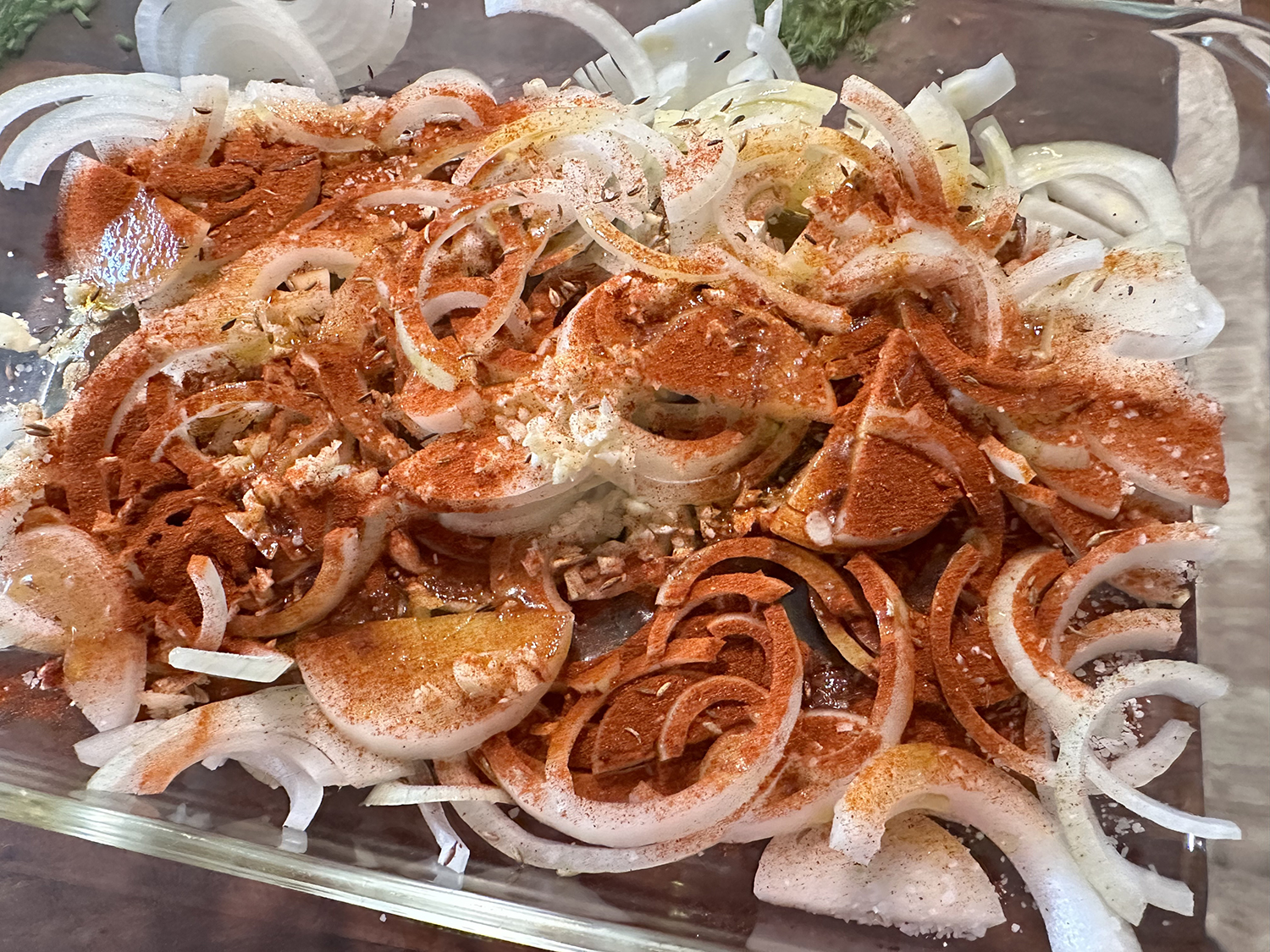
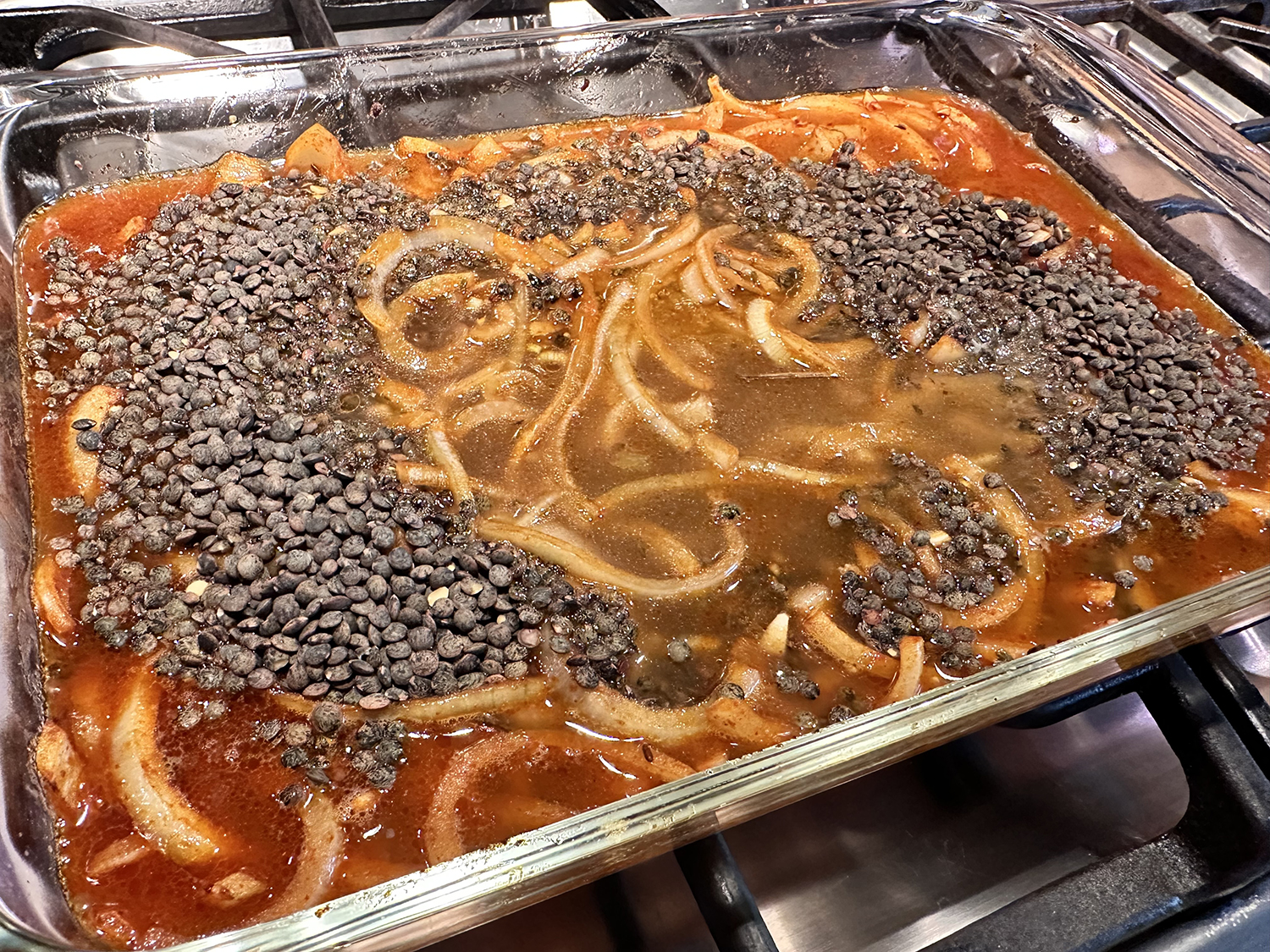
  3. Place the onions, 2 garlic cloves, ½ teaspoon cumin, 1 teaspoon salt and the remaining 2 tablespoons oil and 2 teaspoons paprika in a 9-by-13-inch baking dish and mix to combine. Roast for 10 minutes, stirring halfway, until the onions are lightly colored.
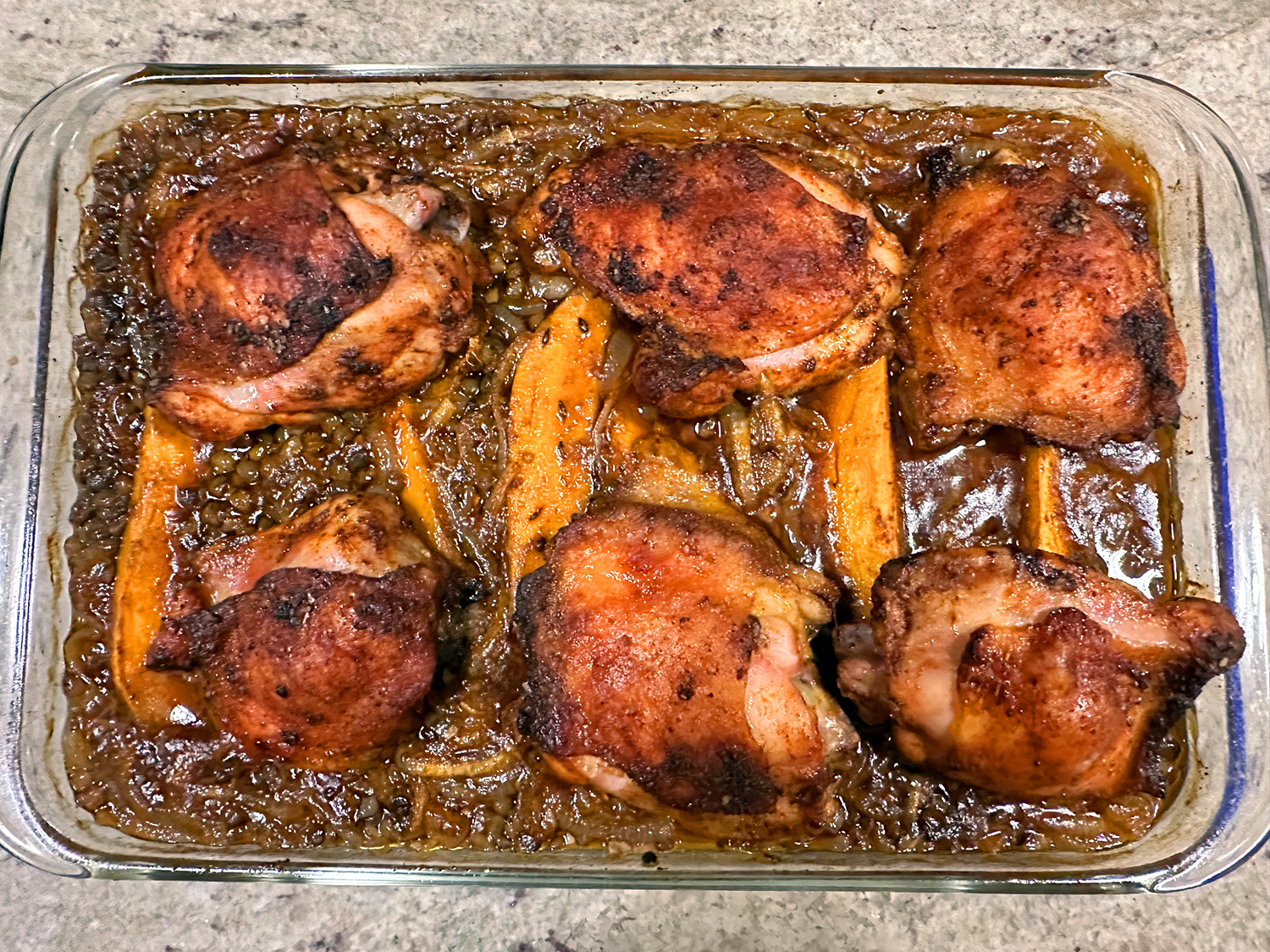
  4. Stir in the lentils and chicken stock. Arrange the squash wedges and the chicken, skin-side up, on top and roast for another 20 minutes, until the chicken skin is deeply golden.
  5. Turn the oven down to 350 degrees and cook for another 40 minutes, until the chicken is cooked through and the squash is nicely softened.
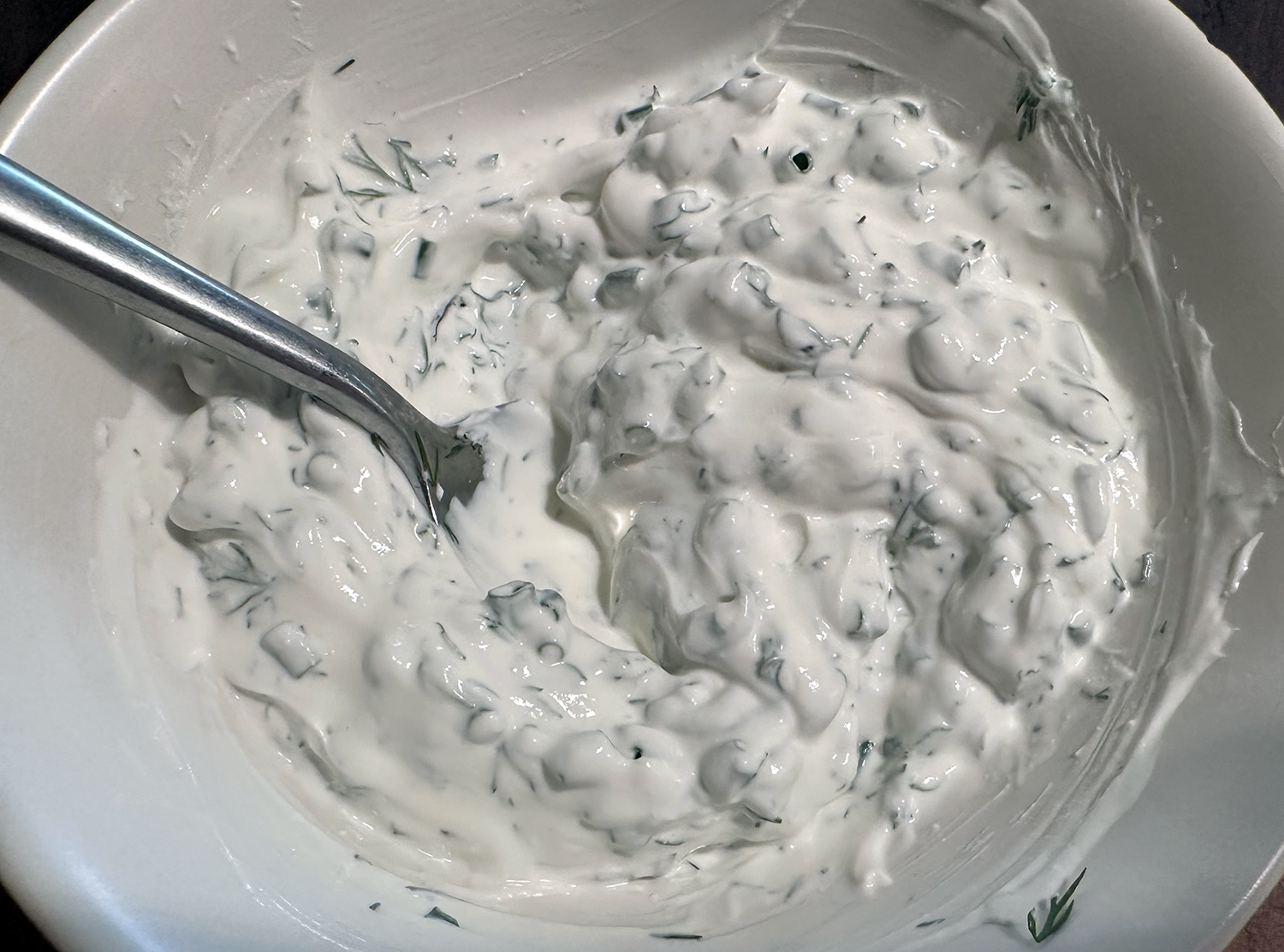
  6. Meanwhile, in a small bowl, combine the sour cream, chives and dill; set aside.
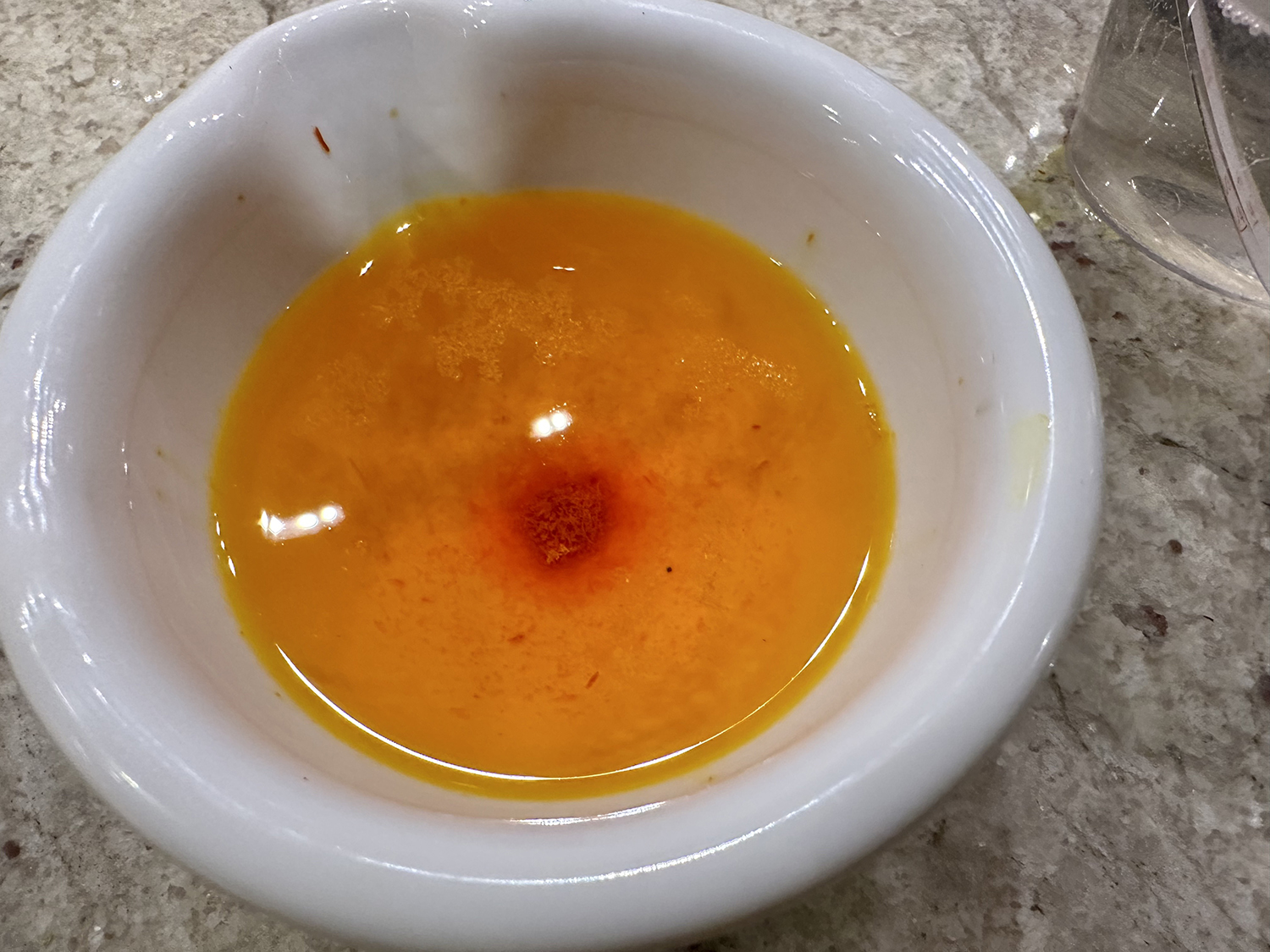
  7. To make the daqa, mix the remaining garlic and cumin with the vinegar, sugar, ¼ teaspoon salt and 2 tablespoons of water.
  8. When ready, remove the bake from the oven and top with spoonfuls of the sour cream mixture. Pour over the daqa and sprinkle with the extra dill. Serve hot, straight out of the baking dish.

http://www.lynnandruss.com

Recipe by Yotam Ottolenghi for NYTimes Cooking

One-Pan Baked Scallops with Couscous, Braised Leeks and Tarragon-Orange Vinaigrette

The fabulous entrée tastes surprisingly complex for the short amount of time it takes to prepare. The scallops and leeks really do release flavor into the couscous, and the vinaigrette definitely completes the dish. It is a great “special occasion” meal that anyone who loves scallops is sure to remember.

Cooking the scallops on a bed of Israeli couscous, leeks, and white wine is easy and allows the pearls of pasta to absorb the scallops’ briny liquid. To ensure the scallops finish cooking at the same time as the rest of the dish, jump-start the leeks and couscous in the microwave, adding garlic and a pinch of saffron* to subtly perfume the dish.

Stir in wine and boiling water (with the blooming saffron, if using), which starts the dish off hot and shortens the cooking time. Using a very hot oven and sealing the pan with foil promises perfectly, and efficiently, cooked scallops that steam atop the couscous. A quick tarragon-orange vinaigrette to drizzle over the finished dish provides an appealing accent that complements the scallops and leeks without overpowering them.

It is recommend that you buy “dry” scallops, which don’t have chemical additives and taste better than “wet.” Dry scallops will look ivory or pinkish; wet scallops are bright white.

TIPS: For an accurate measurement of boiling water, bring a full kettle of water to a boil and then measure out the desired amount. *If using saffron threads, pulverize them in a mortar with pestle and then put them in the hot water to bloom.

One-Pan Baked Scallops with Couscous, Braised Leeks and Tarragon-Orange Vinaigrette

  • Servings: 4
  • Difficulty: easy
  • Print

Ingredients

  • 1 lb. leeks, white and light green parts only, halved lengthwise, sliced thin, and washed thoroughly
  • 1 cup Israeli couscous
  • 5 Tbsp. extra-virgin olive oil, plus extra for serving
  • 4 garlic cloves, minced
  • Salt and pepper
  • Pinch saffron threads (optional, *see above tip)
  • ¾ cup boiling water
  • ¼ cup dry white wine
  • 1½ lbs. large sea scallops, tendons removed
  • 2 Tbsp. minced fresh tarragon
  • 1 Tbsp. white wine vinegar
  • ½ Tbsp. Dijon mustard
  • ½ tsp. grated orange zest plus 1 Tbsp. juice

Directions

  1. Adjust oven rack to middle position and heat oven to 450 degrees. Combine leeks, couscous, 2 tablespoons oil, garlic, ½ teaspoon salt, ¼ teaspoon pepper, and saffron (if using), in a bowl. Cover, and microwave, stirring occasionally, until leeks are softened, about 6 minutes. Stir in boiling water and wine, then transfer mixture to 13 by 9-inch baking dish.
  2. Pat scallops dry with paper towels and season with salt and pepper. Nestle scallops into couscous mixture and cover dish tightly with aluminum foil. Bake until couscous is tender, sides of scallops are firm, and centers are opaque, 20 to 25 minutes.
  3. Meanwhile, whisk remaining 3 tablespoons oil, tarragon, vinegar, mustard, orange zest and juice, and ⅛ teaspoon salt together in bowl.
  4. Remove dish from oven. Drizzle vinaigrette over scallops and serve, passing extra oil separately.

http://www.lynnandruss.com

Adapted from a recipe by America’s Test Kitchen

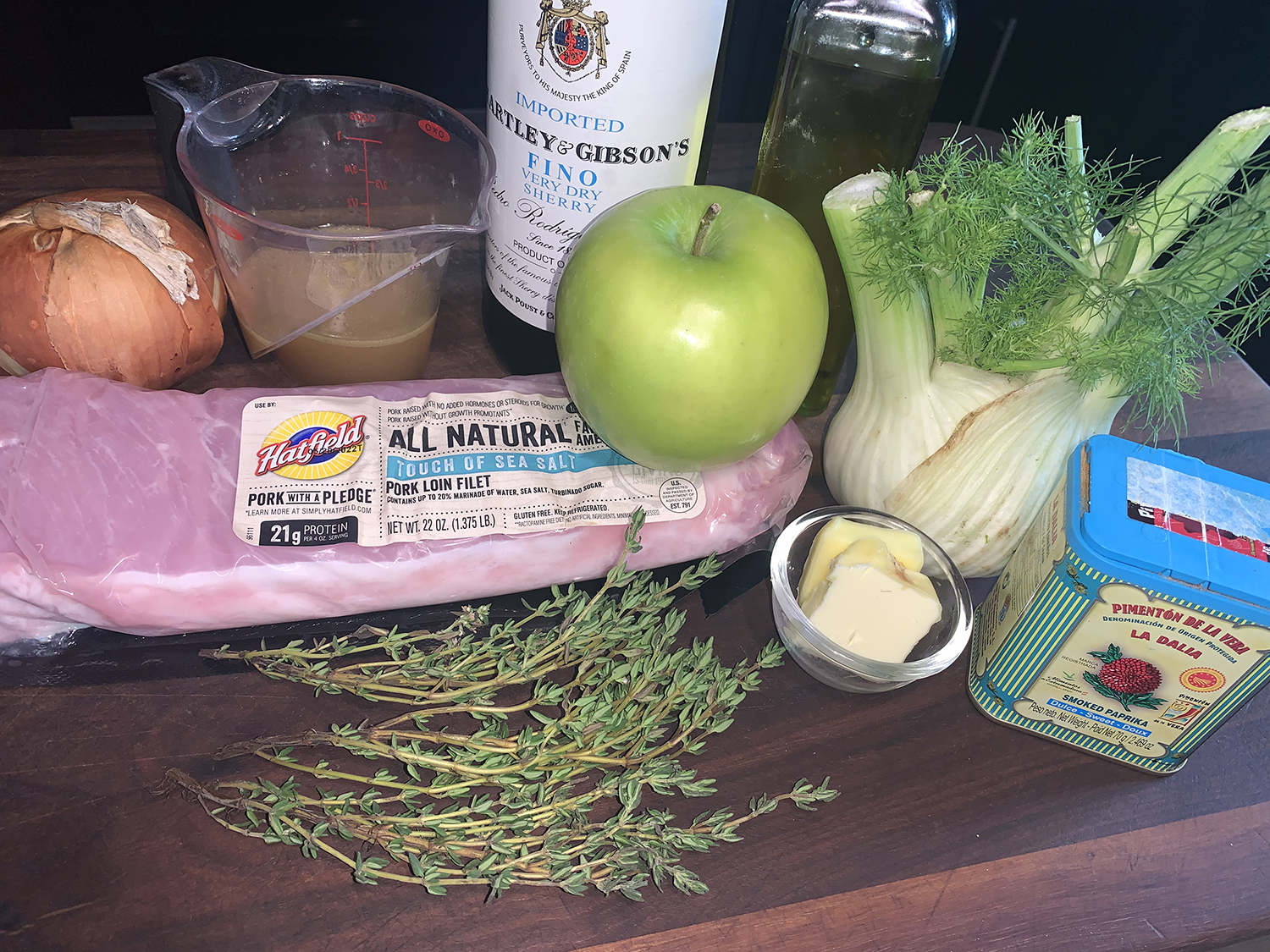
Pan-Roasted Pork Tenderloins with Apple, Sherry and Smoked Paprika

The inspiration for this Spanish spin on pork and apples comes from “Tapas: A Taste of Spain in America” by José Andrés. This version from Milk Street uses pork tenderloins that get a stovetop sear and finish in the oven on a bed of lightly sautéed onion and Granny Smith apple. The onion-apple mixture softens to a jammy relish-like accompaniment that is accented with smoked paprika and dry sherry. It’s a rich, woodsy complement to slices of the mild, meaty tenderloin.

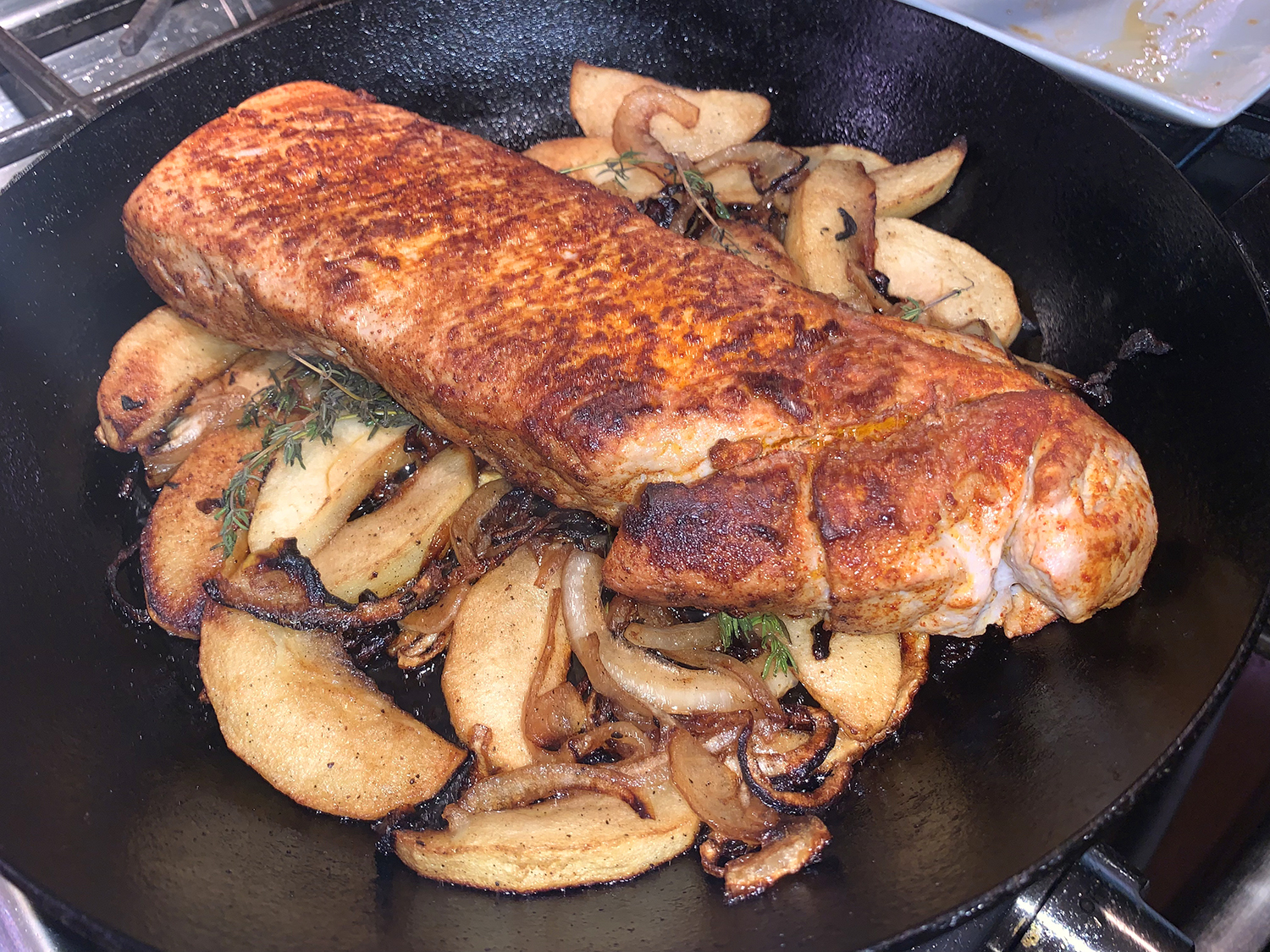
We cooked only one tenderloin for the two of us which provided three servings of meat. The amount of ingredients for the sauce was kept the same because we prefer things saucy. Our accompaniments were roasted butternut squash cubes and a simple side salad. The flavors of the meal were outstanding!

Here it is again (above) a few years later served with a slivered almond couscous and steamed vegetables.

Pan-Roasted Pork Tenderloins with Apple, Sherry and Smoked Paprika

  • Servings: 4-6
  • Difficulty: easy
  • Print

Ingredients

  • 2 tsp. smoked paprika, divided
  • Kosher salt and ground black pepper
  • 2 1¼-lb. pork tenderloins, trimmed of silver skin and halved crosswise
  • 2 Tbsp. extra-virgin olive oil
  • 2 Tbsp. salted butter, divided
  • 1 medium yellow onion, halved and thinly sliced
  • 1 Granny Smith apple, peeled, halved, cored and cut into ½-inch-thick wedges
  • 5 sprigs thyme
  • ½ cup dry sherry
  • ¼ cup low-sodium chicken broth
  • 1 Tbsp. finely chopped fresh chives

Directions

  1. Heat the oven to 450°F with a rack in the middle position. In a small bowl, mix together 1 teaspoon of paprika and 1½ teaspoons salt. Rub the mixture onto all sides of the pork.
  2. In an oven-safe 12-inch skillet over medium-high, heat the oil until shimmering. Place the pork in the skillet. Cook, turning occasionally, until lightly browned on all sides, about 4 minutes total. Transfer to a large plate.
  3. Add 1 tablespoon of butter, the onion and apple to the skillet. Cook over medium-high, stirring occasionally, until softened and golden brown, about 8 minutes. Distribute the mixture in an even layer, then scatter on the thyme. Place the pork on top, add any accumulated juices and transfer to the oven. Roast until the center of the thickest piece of tenderloin reaches 135°F or is just slightly pink when cut into, 9 to 12 minutes.
  4. Remove the skillet from the oven; the handle will be hot. Using tongs, transfer the pork to a cutting board and tent with foil. Add the sherry, broth and the remaining 1 teaspoon paprika to the pan, then cook over medium-high, stirring occasionally, until the liquid is slightly reduced and thickened, about 4 minutes.
  5. Remove the pan from the heat, then remove and discard the thyme. Add the remaining 1 tablespoon butter and stir until melted. Taste and season with salt and pepper. Using a slotted spoon, transfer the onion-apple mixture to a serving platter, leaving the liquid in the pan. Thinly slice the pork and arrange over the onion-apple mixture. Drizzle the pan liquid over the meat and sprinkle with the chives.

http://www.lynnandruss.com

Low-Carb Spinach Artichoke Chicken

Spinach artichoke chicken is an easy and delicious keto skillet recipe. It features crispy chicken thighs in a rich cream sauce with spinach, artichokes, garlic, and parmesan. However, the original recipe only called for half (which we deemed too paltry) of the spinach and artichokes so we doubled that, as noted in the list below. Also, we added two more thighs to total eight, allowing two per person for a dinner feeding four.

This AMAZING recipe takes all the rich flavors of a great spinach artichoke dip and turns it into a full meal. And it’s an easy one pan recipe that’s ready in about an hour. Truly delicious! Typically, I am more of a white meat fan, while The Hubs prefers dark meat. Next time I may include a mix of thighs and chicken breast quarters, but again, maybe not…

Instead of frozen, fresh spinach works in this recipe as well. You obviously won’t need to thaw and squeeze it; simply chop it up and stir it into the sauce before transferring the dish to the oven.

Low-Carb Spinach Artichoke Chicken

  • Servings: 4
  • Difficulty: easy
  • Print

Ingredients

  • 8 chicken thighs, bone in, skin on
  • 2 tsp. Italian seasoning
  • Salt and pepper
  • 3 Tbsp. olive oil or avocado oil
  • 4 cloves garlic, minced
  • ⅓ cup chicken broth
  • ⅔ cup heavy whipping cream
  • 1 oz. Parmesan cheese, finely grated
  • 12 oz. artichoke hearts, drained and chopped
  • 10 oz. frozen spinach, thawed and squeezed dry

Directions

  1. Preheat the oven to 350F. Pat the chicken thighs dry and sprinkle all over with the Italian seasoning, salt, and pepper.
  2. Heat the oil over medium heat in a large (at least 12″) ovenproof skillet. Add the chicken thighs, skin side down, and cook undisturbed for 3 to 4 minutes, until golden brown. (Our chicken skin took 8 minutes to get a nice golden brown.)
  3. Flip the thighs over and cook another 4 minutes, then transfer to a plate. Drain most of the fat from the pan and discard.
  4. Add the garlic to the pan and sauté until fragrant, about 1 minute.
  5. Stir in the broth to deglaze the pan, scraping up any browned bits. Bring to a simmer. Add the cream and Parmesan and continue to cook until slightly thickened, another minute or two.
  6. Stir in the chopped artichokes and the spinach until well combined. Place the chicken thighs on top of the cream sauce and bake 20 to 25 minutes, until the chicken is cooked through to a temp of 170° to 175°, and the sauce is bubbling.

http://www.lynnandruss.com

Roughly adapted from an online recipe from All Day I Dream About Food

Spice-Rubbed Pork Tenderloin with Fennel, Tomatoes, Artichokes, and Olives

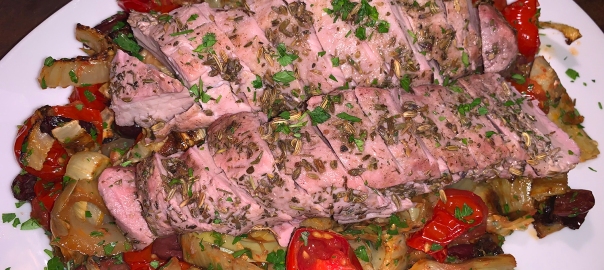
Another one-pan wonder, and who doesn’t like that for ease of clean-up and prep? It works as well for company as it does for a weeknight dinner. According to ATK’s “Complete Mediterranean Cookbook”, cooking the tenderloins until buttery-smooth is key, and roasting them atop a bed of vegetables buffers the heat to ensure juicy meat all the way through, which is rubbed with herbes de Provence, salt, and pepper.

The Mediterranean seasoning inspired the selection of vegetables: sweet, delicately flavored fennel, earthy artichoke hearts (frozen, to keep things easy), and briny olives (which I doubled the quantity). After softening the fennel in the microwave, it was tossed with the other vegetables and olive oil, and the mixture was spread into the roasting pan (or rimmed baking sheet), placing the tenderloins on top.

The vegetables are nearly cooked when the pork is done, so remove the meat to a moated cutting board and tent with foil. To the cooked veggies, add in juicy halved cherry tomatoes and lemon zest, and let them finish in the oven. After 10 minutes, the fennel should be tender, the tomatoes softened and releasing their juices.

NOTE: If using frozen artichoke hearts, be sure to thoroughly thaw and pat them dry; otherwise their moisture will inhibit the browning of the roasted vegetables.

Spice-Rubbed Pork Tenderloin with Fennel, Tomatoes, Artichokes, and Olives

  • Servings: 4-6
  • Difficulty: easy
  • Print

Ingredients

  • (12- to 16-oz.) pork tenderloins, trimmed
  • 2 tsp. herbes de Provence
  • Salt and pepper
  • 2 large fennel bulbs, stalks discarded, bulbs halved, cored, and cut into ½-inch-thick strips
  • 12 oz. frozen artichoke hearts, thawed and patted dry
  • ½ cup pitted kalamata olives, halved
  • 3 Tbsp. extra-virgin olive oil
  • 18 oz. cherry tomatoes, halved
  • 1 Tbsp. grated lemon zest
  • 2 Tbsp. minced fresh parsley

Directions

  1. Adjust oven rack to lower-middle position and heat oven to 450 degrees. Pat pork dry with paper towels and season with herbes de Provence, ½ teaspoon salt, and ¼ teaspoon pepper.
  2. Combine fennel and 2 tablespoons water in bowl, cover, and microwave until softened, about 5 minutes; drain well. Toss drained fennel, artichokes, olives, and oil together in bowl and season with salt and pepper.
  3. Spread vegetables into 16 by 12-inch roasting pan and lay pork on top, tucking under the thin part of the tail. Roast until pork registers 140 to 145 degrees, 25 to 30 minutes, turning tenderloins over halfway through roasting.
  4. Remove pan from oven. Transfer pork to cutting board, tent loosely with aluminum foil, and let rest for 10 minutes. Meanwhile, stir cherry tomatoes and lemon zest into vegetables and continue to roast until fennel is tender and tomatoes have softened, about 10 minutes.
  5. Remove pan from oven. Stir parsley into roasted vegetables. Slice pork into ½-inch-thick slices, and arrange vegetables and sliced pork on a platter, pouring any accumulated meat juices back over the plated pork and vegetables.

http://www.lynnandruss.com

Recipe from America’s Test Kitchen

Pan-Roasted Chicken and Summer Vegetables with Herbes de Provence

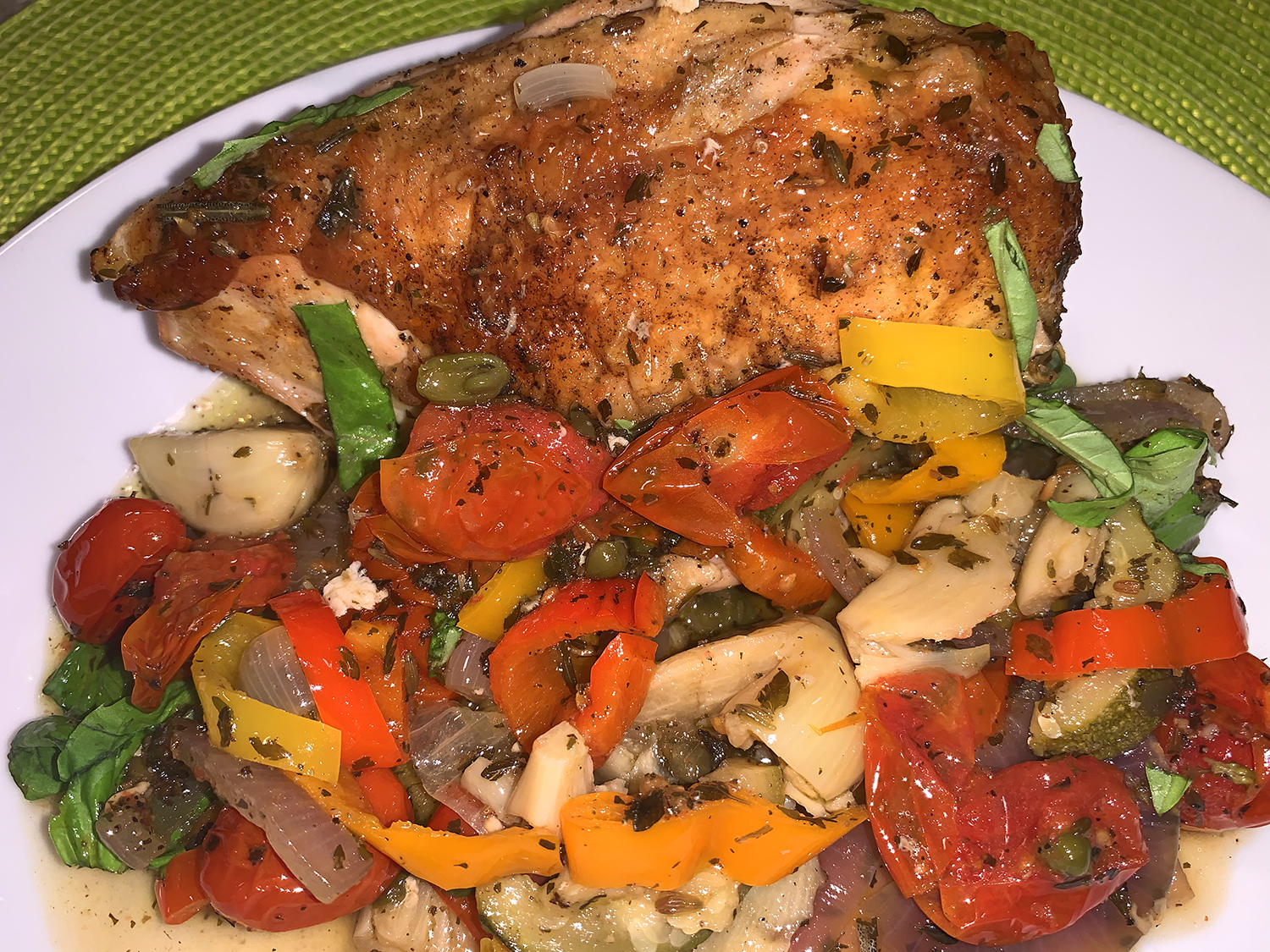
When your dining partner exclaims at least a half dozen times during the course of the meal “This is sooo good, I want to drink the sauce from my plate.” Not surprisingly, after every morsel of food was eaten, that’s exactly what he did. (After leftovers the next day, he did the same thing!) It’s no wonder because in this simple skillet dinner, seared bone-in chicken breasts are roasted on top of a bed of sunny Mediterranean vegetables and topped with a pan sauce that marry the ingredients into a unified delight.

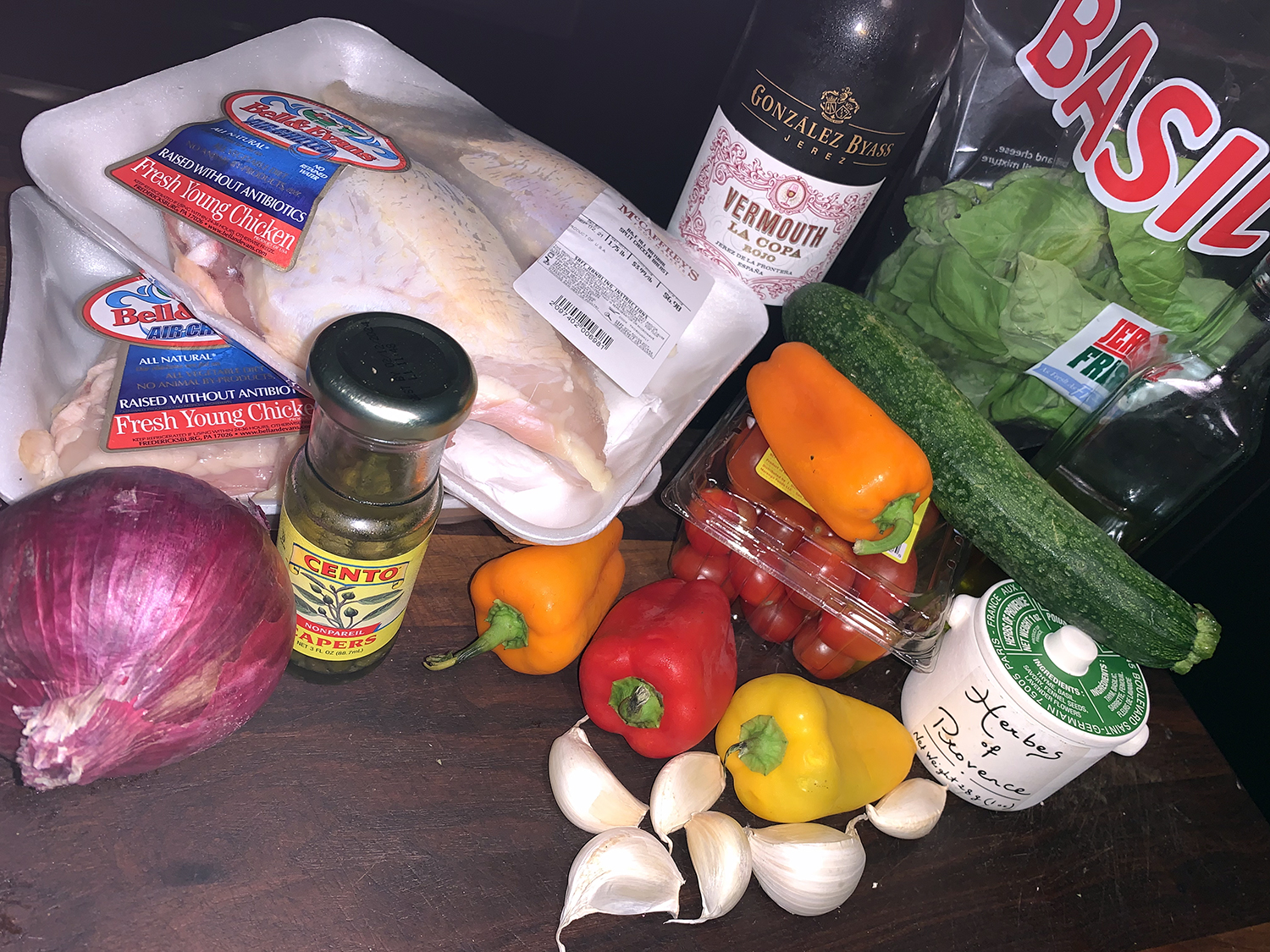
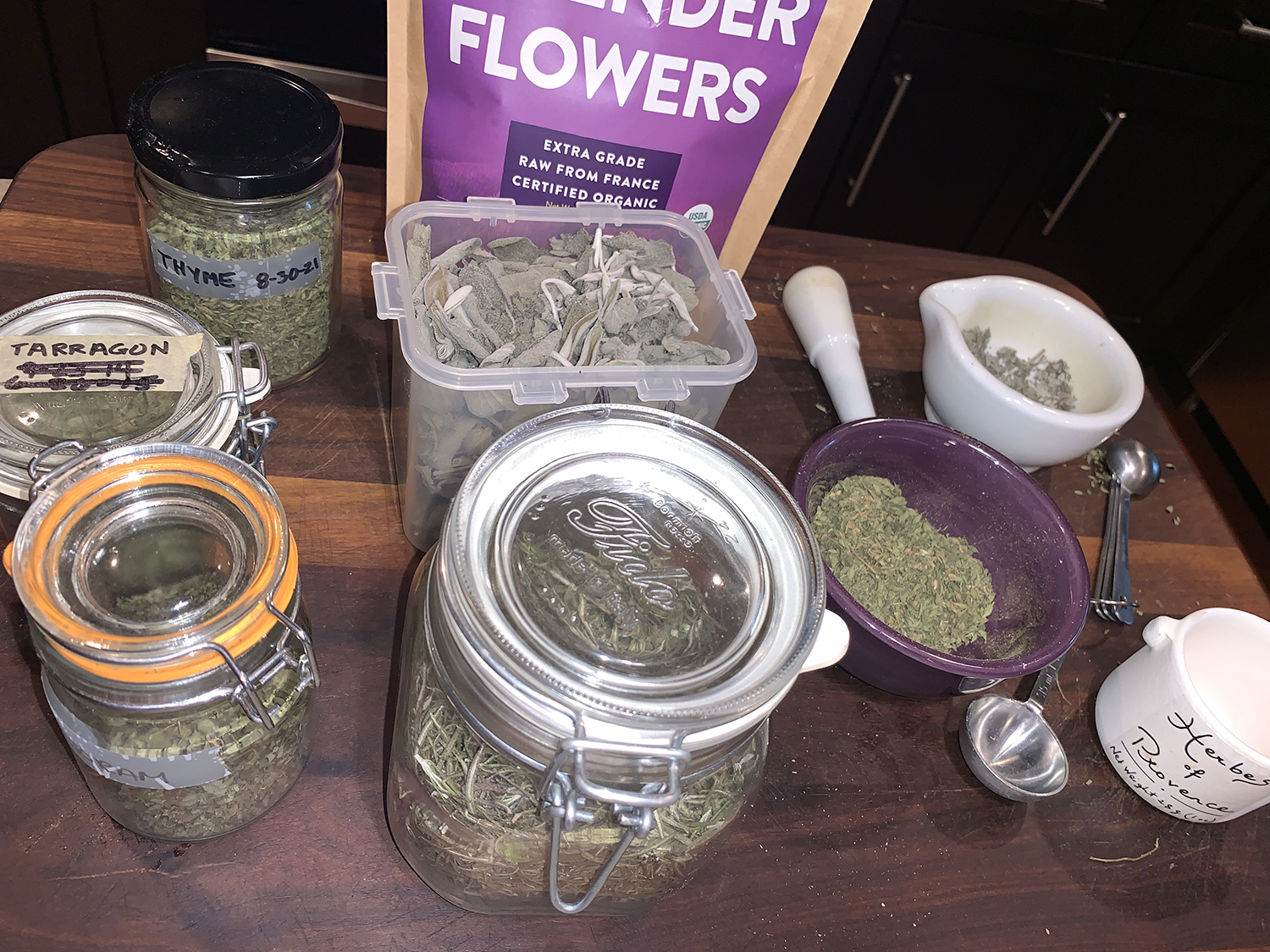
Part of the charm happens before cooking, when the veggies are tossed with herbes de Provence—an aromatic seasoning blend that typically includes rosemary, thyme, savory, marjoram and oregano, and sometimes other spices and herbs such as fennel, sage, lavender and tarragon. Our concoction is listed below, but you can also simplify it, or buy it if you don’t have a lot of the ingredients.

Herbaceous dry white vermouth is an ideal deglazing liquid for the browned bits left in the pan after searing the chicken. It is critical in elevating the dish and adds subtle but unmistakable herbal notes to the final meal. Dry white wine would work in a pinch, but the results won’t be quite the same.

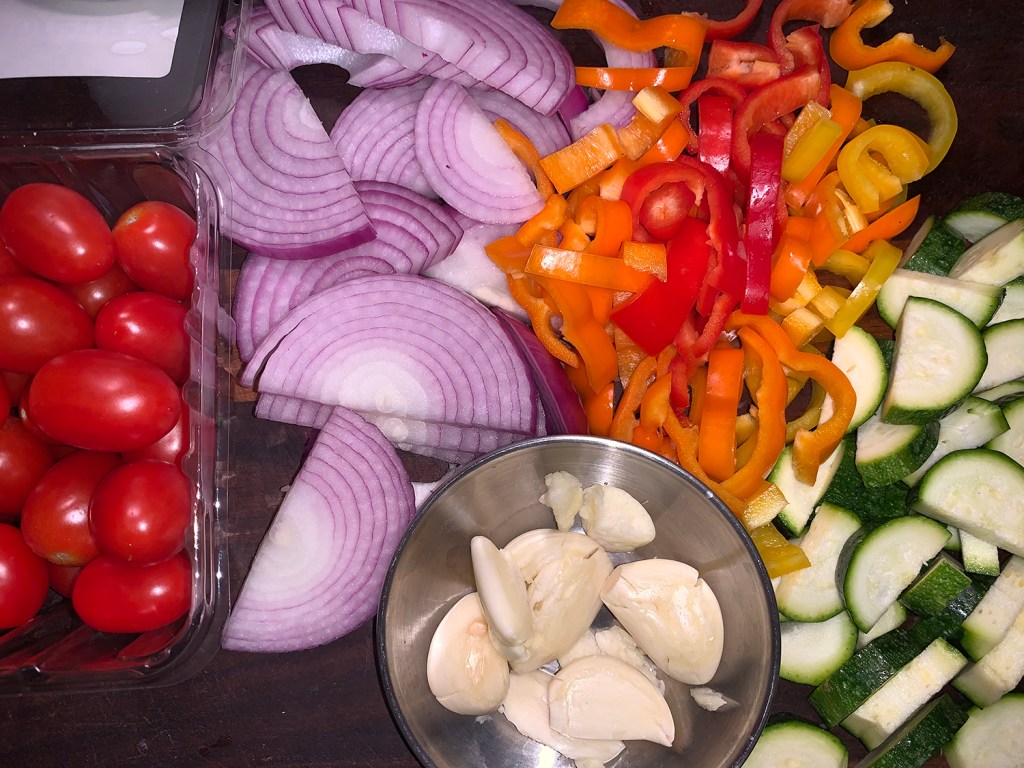
Instead of one bell pepper, we used 4 or 5 small ones in varying colors because that’s what we had on hand. Plus, it lends more pops of color in the overall veggie scheme. Our Le Creuset “Baby Blue” enameled cast-iron braising pot was the perfect vehicle in which to cook the meal.

NOTE: Don’t use oversized chicken breasts; 12-ounce pieces work best. Larger ones require longer cooking, which will result in overdone vegetables. However, if unable to find 12 oz. chicken breasts, and have to use larger (16 oz.), compensate by frying skin-side-down for a full 8 minutes, and then fry an additional 5 minutes skin-side-up before proceeding with the rest of the recipe. When you remove the skillet from the oven, don’t forget that the handle will be hot.

Pan-Roasted Chicken and Summer Vegetables with Herbes de Provence

  • Servings: 4
  • Difficulty: easy
  • Print

Ingredients

  • 4 12-oz. bone-in, skin-on chicken breasts, trimmed
  • Kosher salt and ground black pepper
  • 3 Tbsp. extra-virgin olive oil, divided
  • 2 Tbsp. herbes de Provence
  • 6 medium garlic cloves, smashed and peeled
  • 1 medium red onion, halved and sliced about ¼ inch thick
  • 1 yellow, orange or red bell pepper, stemmed, seeded and thinly sliced
  • 1 pint grape tomatoes
  • 1 small zucchini, halved lengthwise and sliced crosswise ¼ inch thick
  • ¼ cup drained capers, plus 1 Tbsp. caper brine
  • ½ cup dry vermouth
  • 1 cup lightly packed fresh basil, torn

Directions

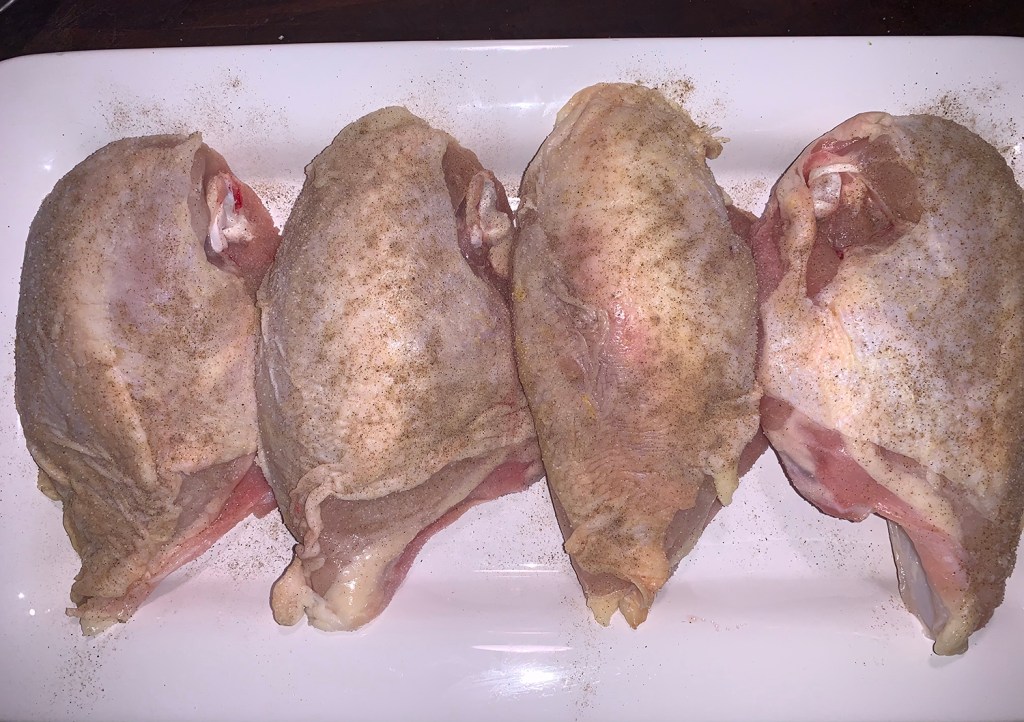
  1. Heat the oven to 475℉ with a rack in the middle position. Season the chicken on all sides with salt and pepper.
  2. In a large bowl, stir together 2 tablespoons of oil, the herbes de Provence, ¼ teaspoon salt and 1 teaspoon pepper. Add the garlic, onion, bell pepper, tomatoes, zucchini and capers, then toss to combine; set aside.
  3. In a 12-inch skillet over medium-high, heat the remaining 1 tablespoon oil until shimmering. Add the chicken skin down and cook without disturbing until golden brown, 5 to 8 minutes. Using tongs, transfer the chicken skin up to a large plate.
  4. Pour off and discard all but 1 tablespoon fat from the skillet. Add the vermouth, bring to a boil over medium-high and cook, scraping up any browned bits, until reduced to about 2 tablespoons, 1 to 2 minutes.
  5. Add the vegetables and cook, stirring, until just warmed through, about 1 minute, then distribute in an even layer. Nestle the chicken skin up in the vegetables and add any accumulated juices. Transfer the skillet to the oven and cook until the thickest part of the breast reaches about 160°F, 20 to 25 minutes.
  6. Remove the pan from the oven (the handle will be hot). Transfer the chicken skin up to a serving platter. Using a slotted spoon, transfer the vegetables the platter, arranging them around the chicken.
  7. Set the skillet over high, bring the liquid to a simmer and cook, stirring, until slightly thickened and reduced, 1 to 2 minutes. Off heat, stir in the caper brine, then taste and season with salt and pepper. Pour the sauce around the chicken and over the vegetables. Sprinkle with basil.

Herbes de Provence

Ground spices and dried herbs last about a year if kept away from heat and light.

Ingredients

  • 4 Tbsp. dried thyme
  • 1 Tbsp. dried sage
  • 1 Tbsp. dried oregano
  • 1 Tbsp. dried marjoram
  • 1 Tbsp. dried rosemary
  • 1 Tbsp. dried lavender flowers
  • 2 tsp. dried tarragon
  • 2 tsp. fennel seeds, toasted

Directions

  1. Mix all ingredients in a large mortar and finely crush with a pestle.
  2. Store unused mixture in an airtight container away from heat and light.

http://www.lynnandruss.com

Adapted from a recipe by Rose Hattabaugh for Milk Street