Tag Archives: main dish

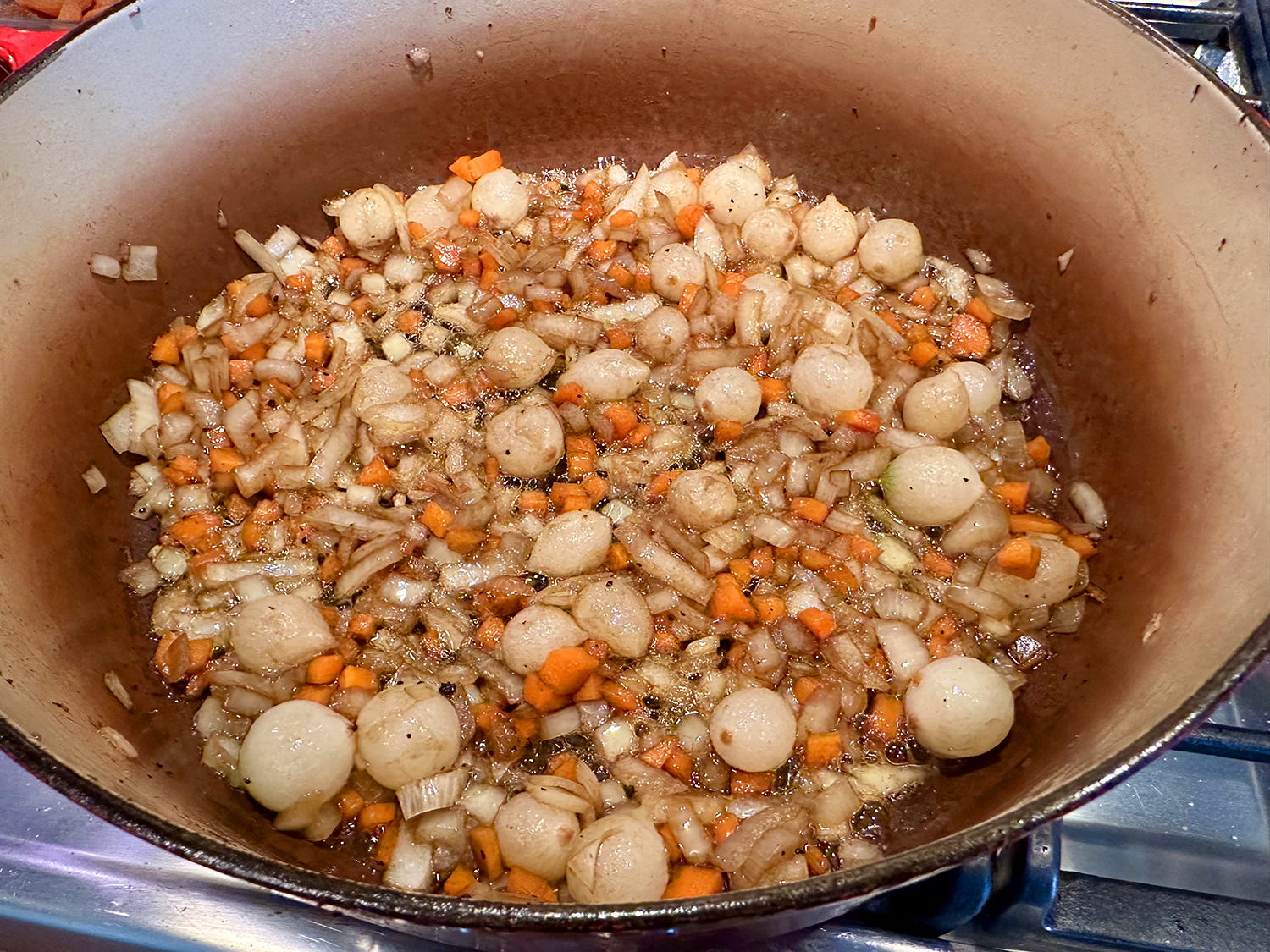
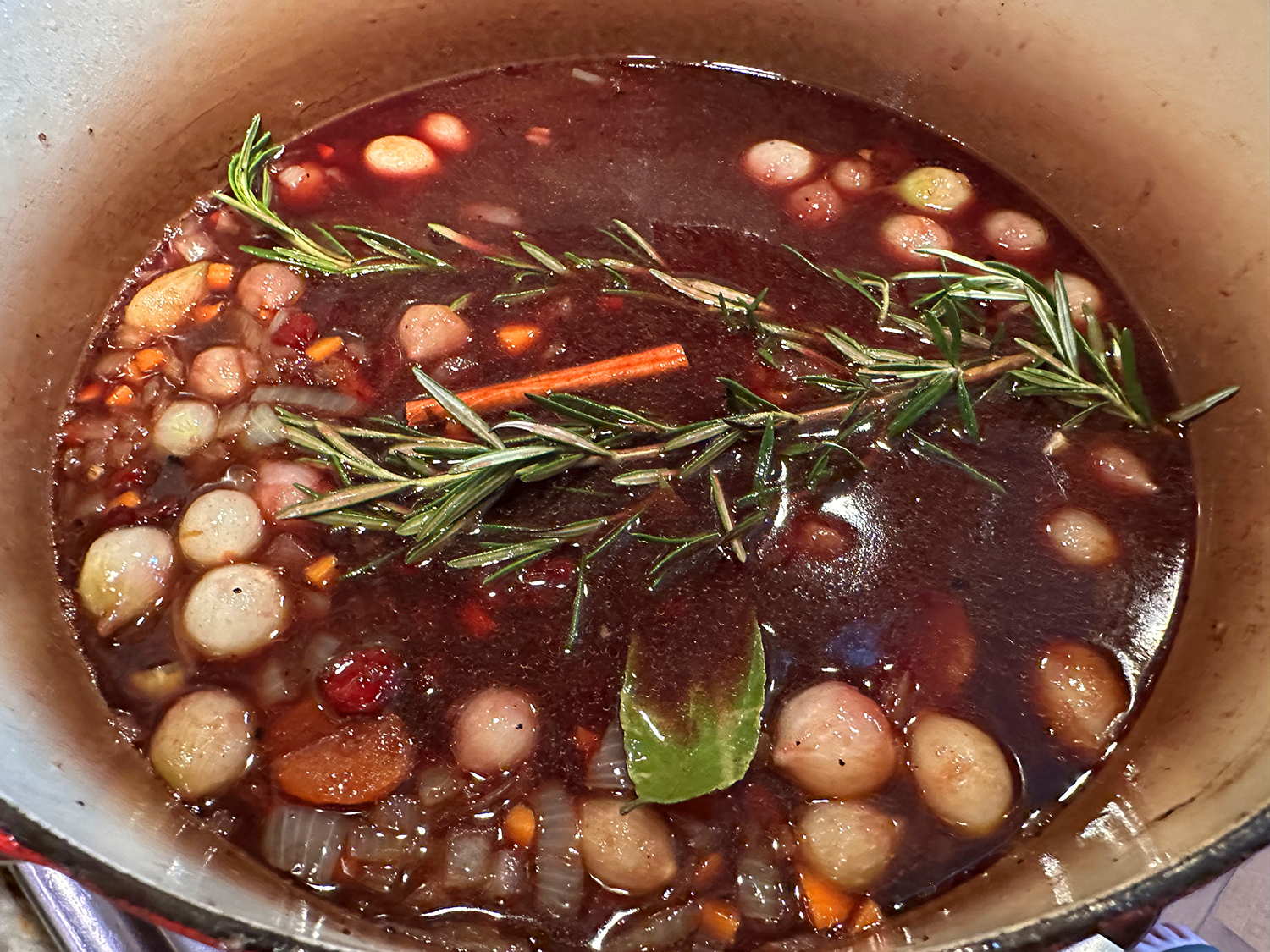
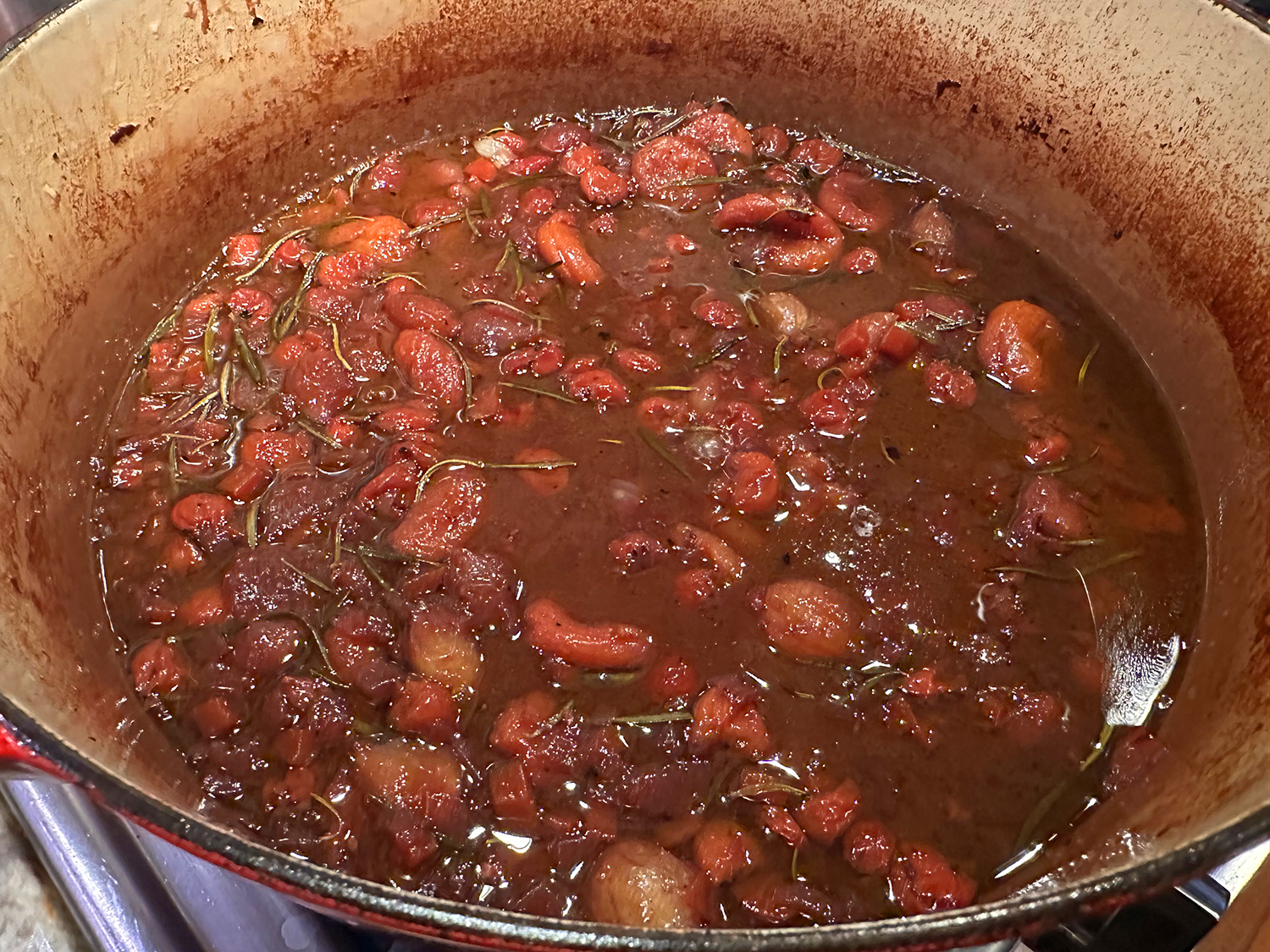
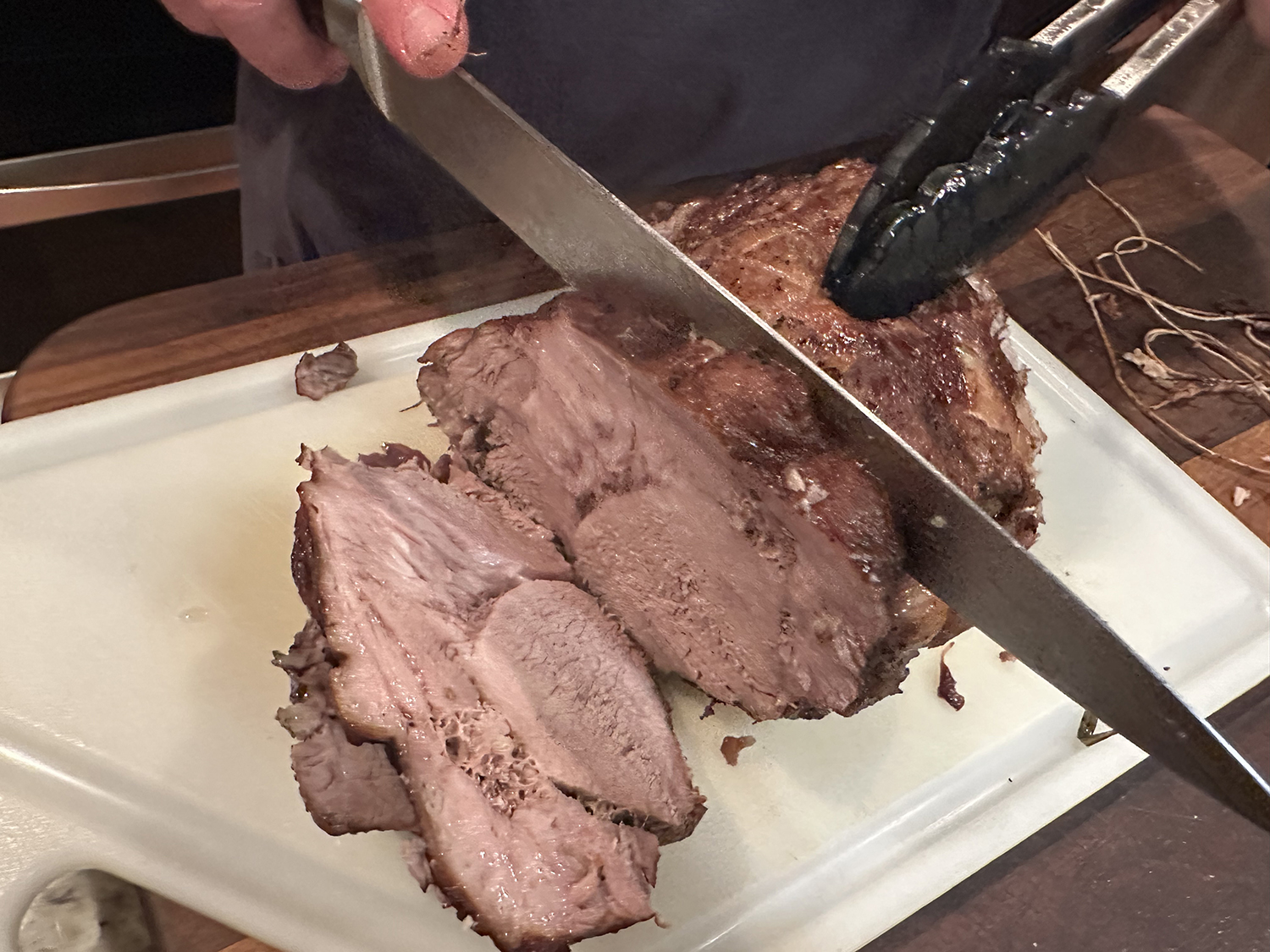
Veal Shanks Braised with Honey and Rosemary

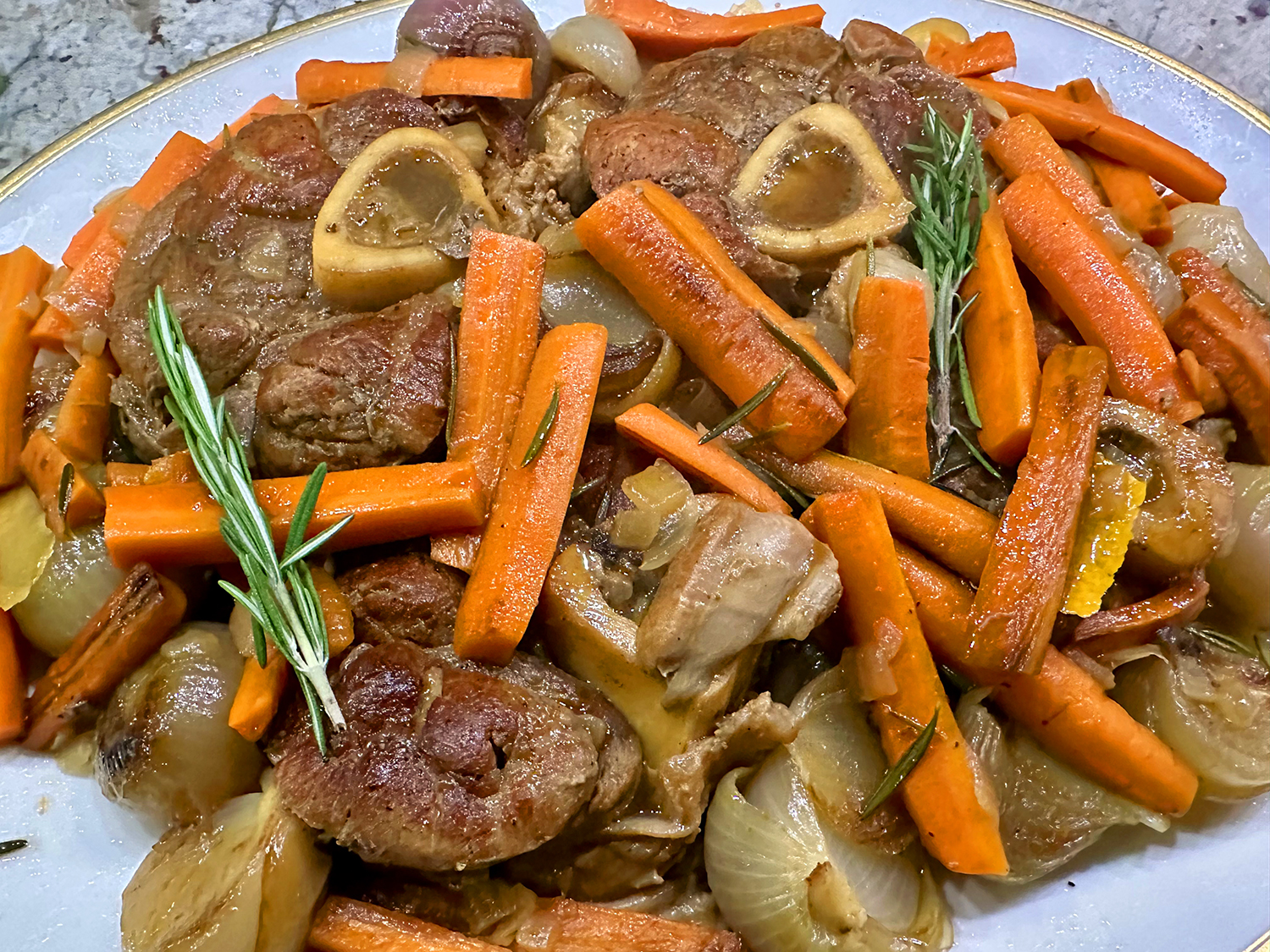
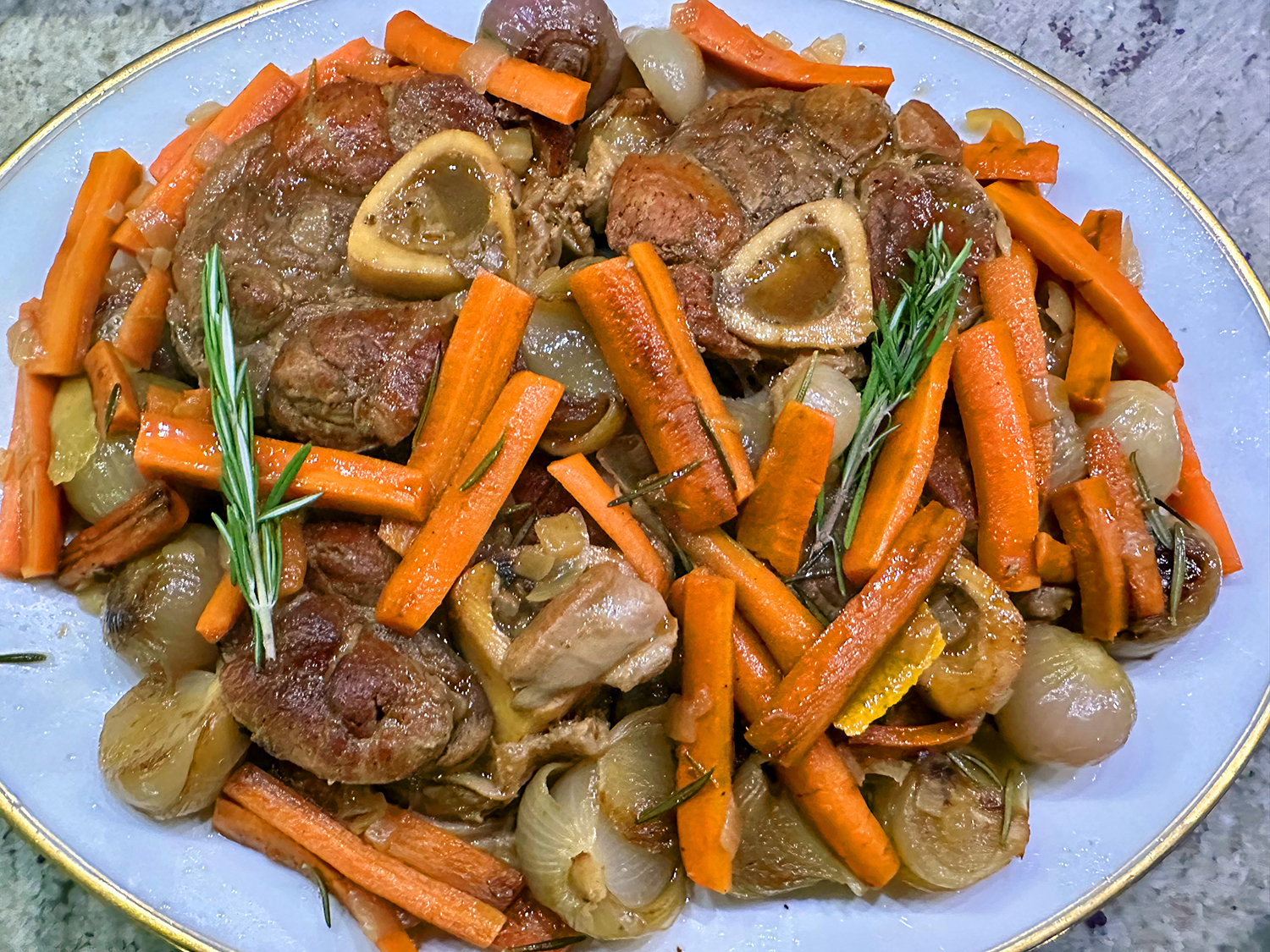
According to chef/author Molly Stevens‘ cookbook “All About Braising” where this fabulous recipe hails from, veal has an inherent sweetness that really comes to the fore when it is braised with a bit of honey. Not too sweet, just a hint.

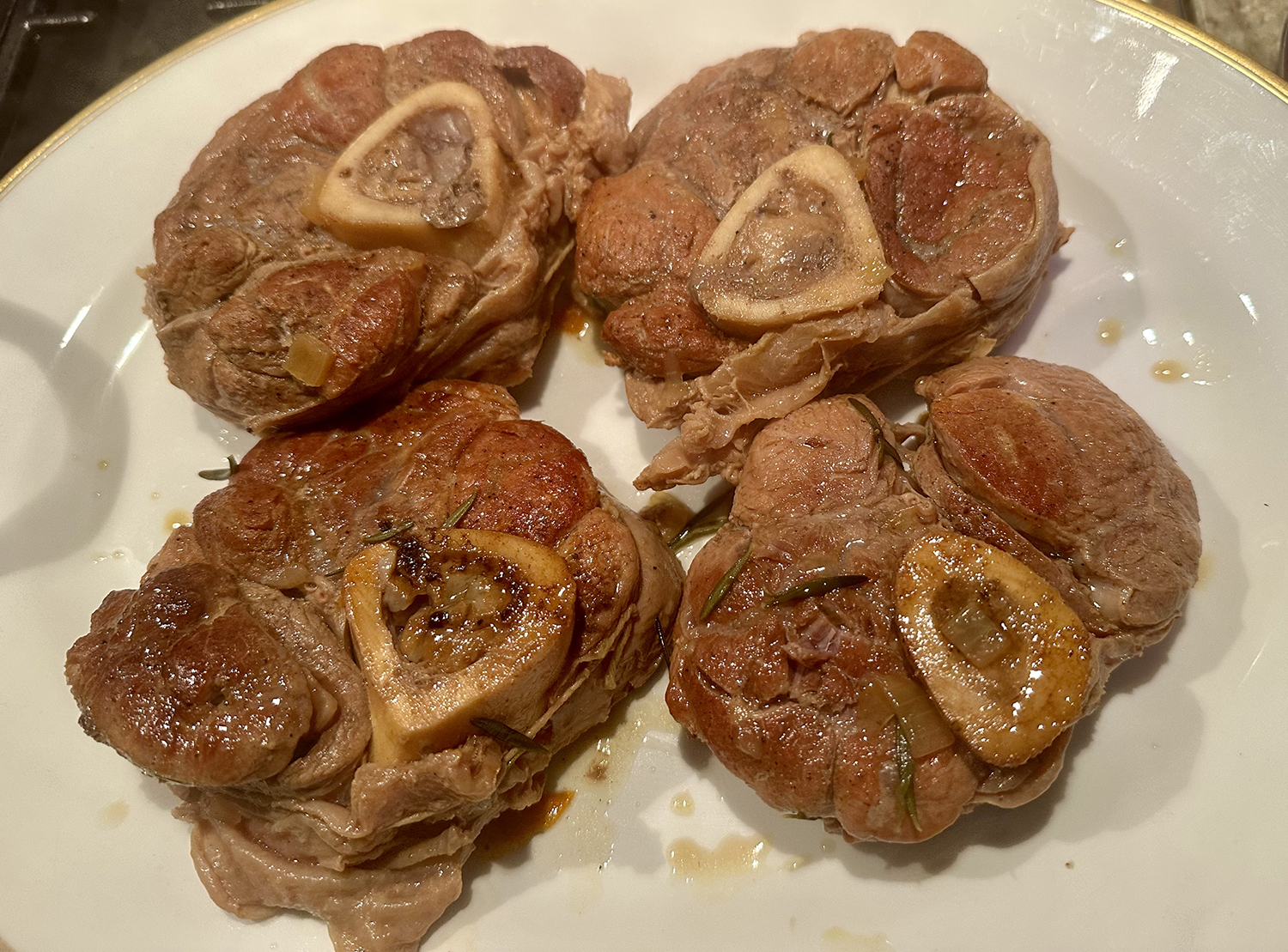
To ensure the veal shanks didn’t fall apart during braising, The Hubs tied each one around the outer diameter with kitchen twine. Once plated on a platter, the twine was removed before the carrots and shallots were added.

Along with the braised shallots and carrots, we served a side of velvety Manchego Mashed Potatoes, a perfect vehicle to corral some of the wonderful silky sauce. It was the perfect dinner to celebrate a close friend’s upcoming birthday.

Veal Shanks Braised with Honey and Rosemary

  • Servings: 4
  • Difficulty: easy
  • Print

Ingredients

The Braise

  • 4 meaty veal shanks, each 2 to 2 1/2 inches thick (3 to 3 1/2 lbs. total)
  • Coarse salt and freshly ground black pepper
  • 2 Tbsp. extra-virgin olive oil
  • 1 large onion, coarsely chopped
  • 1 cup dry white wine or vermouth
  • 2 cups veal or chicken stock, preferably homemade
  • 2 Tbsp. honey (rosemary or lavender if possible); we had lilac honey
  • Zest and juice of 1 orange, zest removed in strips with a vegetable peeler
  • Zest and juice of 1 lemon, zest removed in strips with a vegetable peeler
  • 2 6-inch leafy fresh rosemary branches
  • 2 Tbsp. balsamic vinegar

The Carrot and Shallot Garnish

  • 1 Tbsp. unsalted butter, plus more to finish
  • 1 Tbsp. extra-virgin olive oil
  • 12 to 18 medium shallots, peeled, larger ones cut in half
  • 12 to 18 small carrots, peeled; OR 4 larger carrots, cut into 3-by-3/4 inch sticks
  • Coarse salt and freshly ground black pepper
  • 2 6-inch leafy fresh rosemary branches

Directions

  1. Heat the oven to 300 degrees.
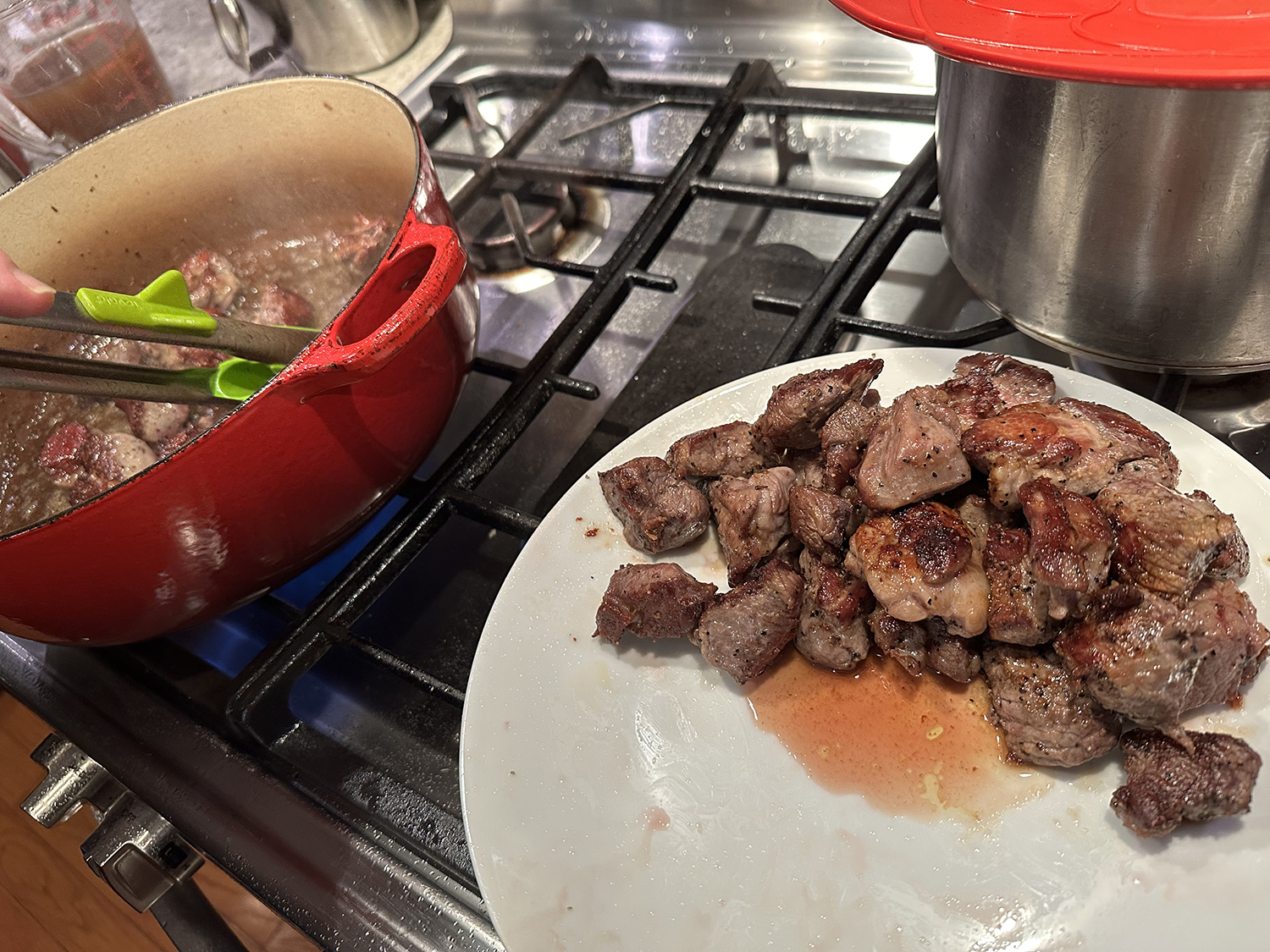
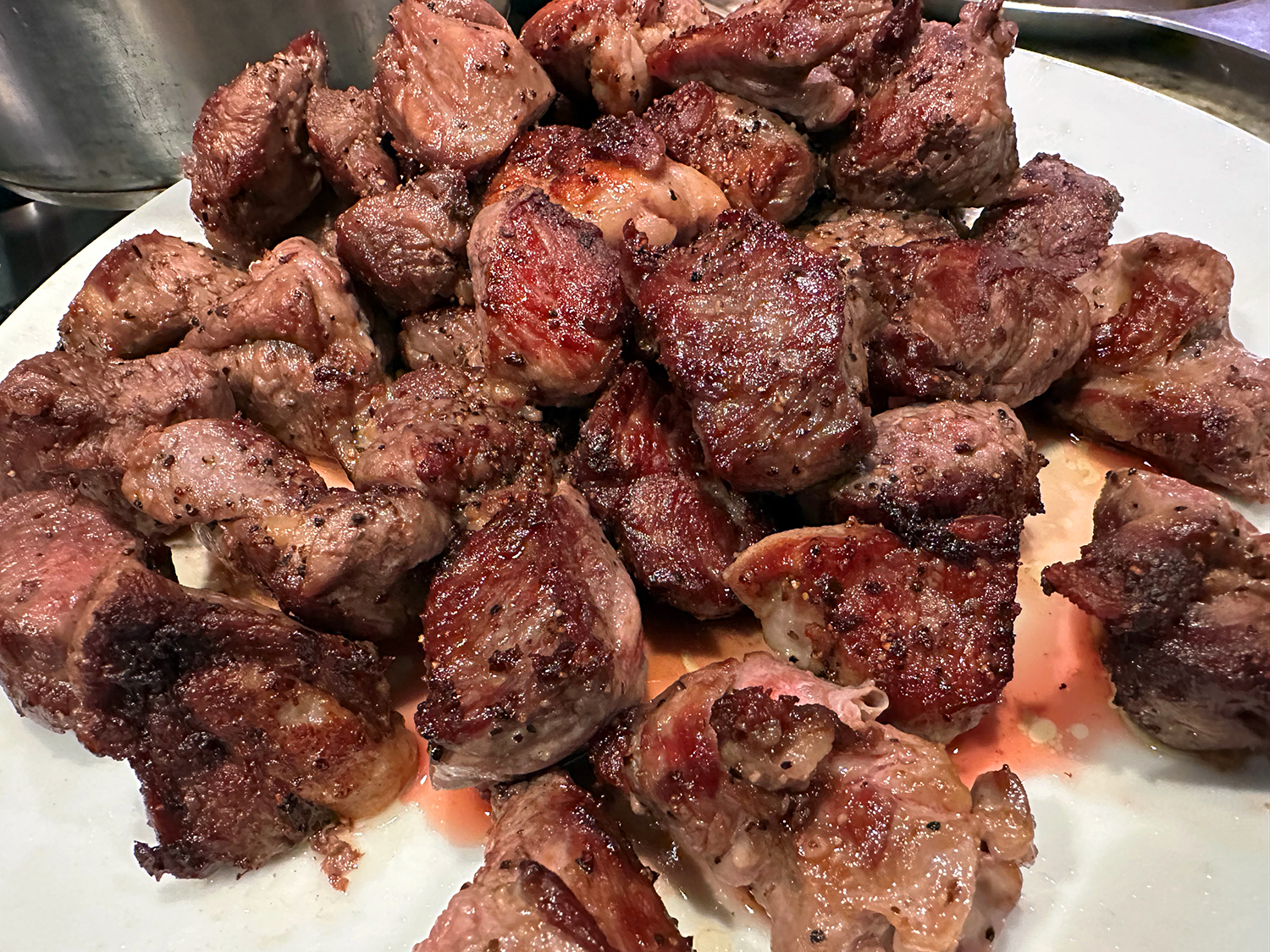
  2. Browning the shanks: Season the veal shanks on all sides with salt and pepper. Heat the oil in a wide Dutch oven or heavy braising pot (6- to7-quart) over medium-high heat. When the oil is quite hot, add as many shanks as will fit without crowding. (If necessary, sear the shanks in batches.) Sear the shanks, turning once withe tongs, until both flat sides have an attractive bronze color, about 5 minutes per side. transfer to a large plate or tray, without stacking.
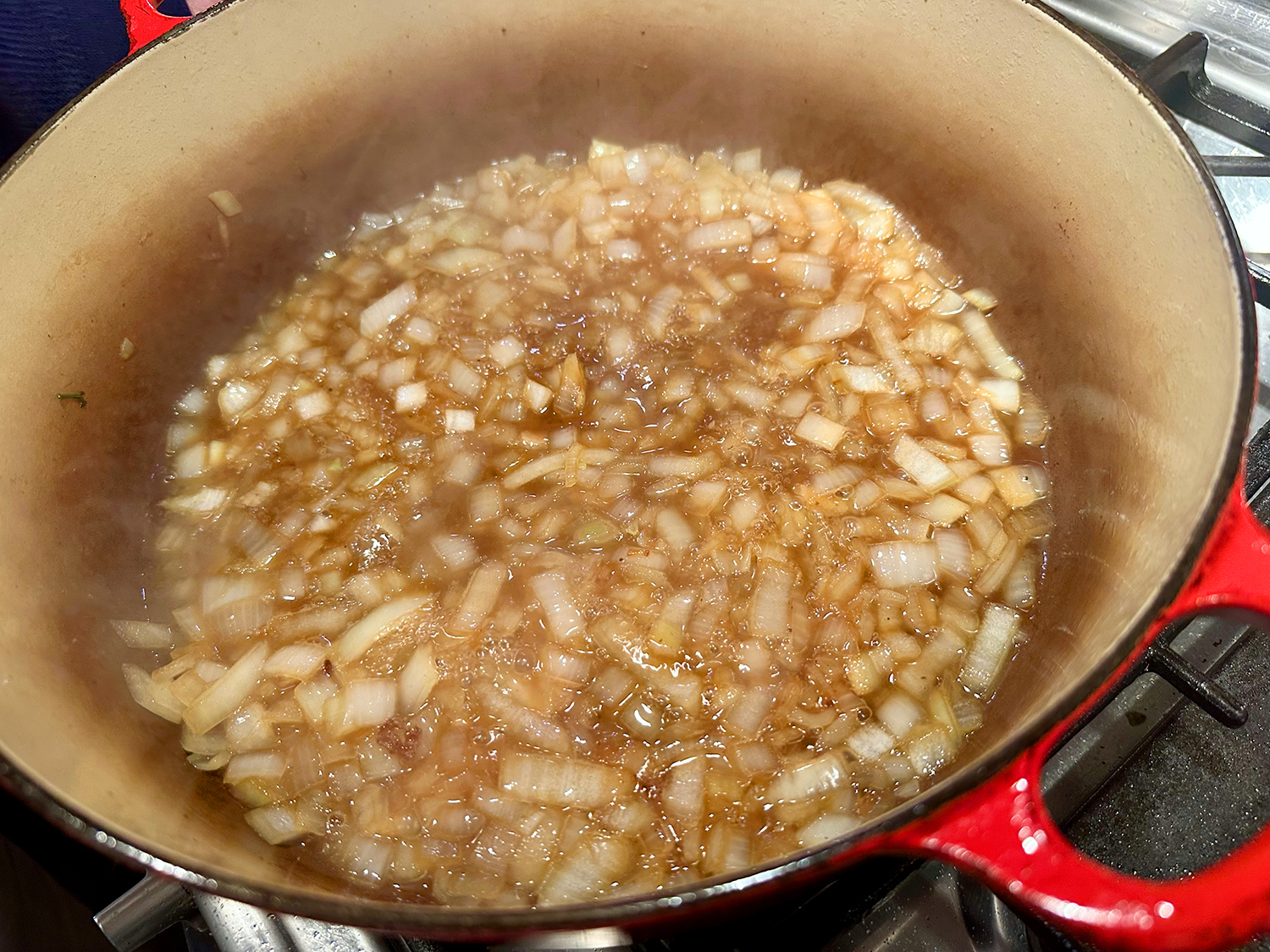
  3. The aromatics and braising liquid: Add the onion to the pot, stir and sauté, still over medium-high heat, until they soften and begin to brown, 3 to 4 minutes. The bottom of the pot should be developing a caramelized crust. Pour in the wine, stir to dissolve the brown crust on the bottom of the pot, and boil until the wine is reduced by half, about 10 minutes.
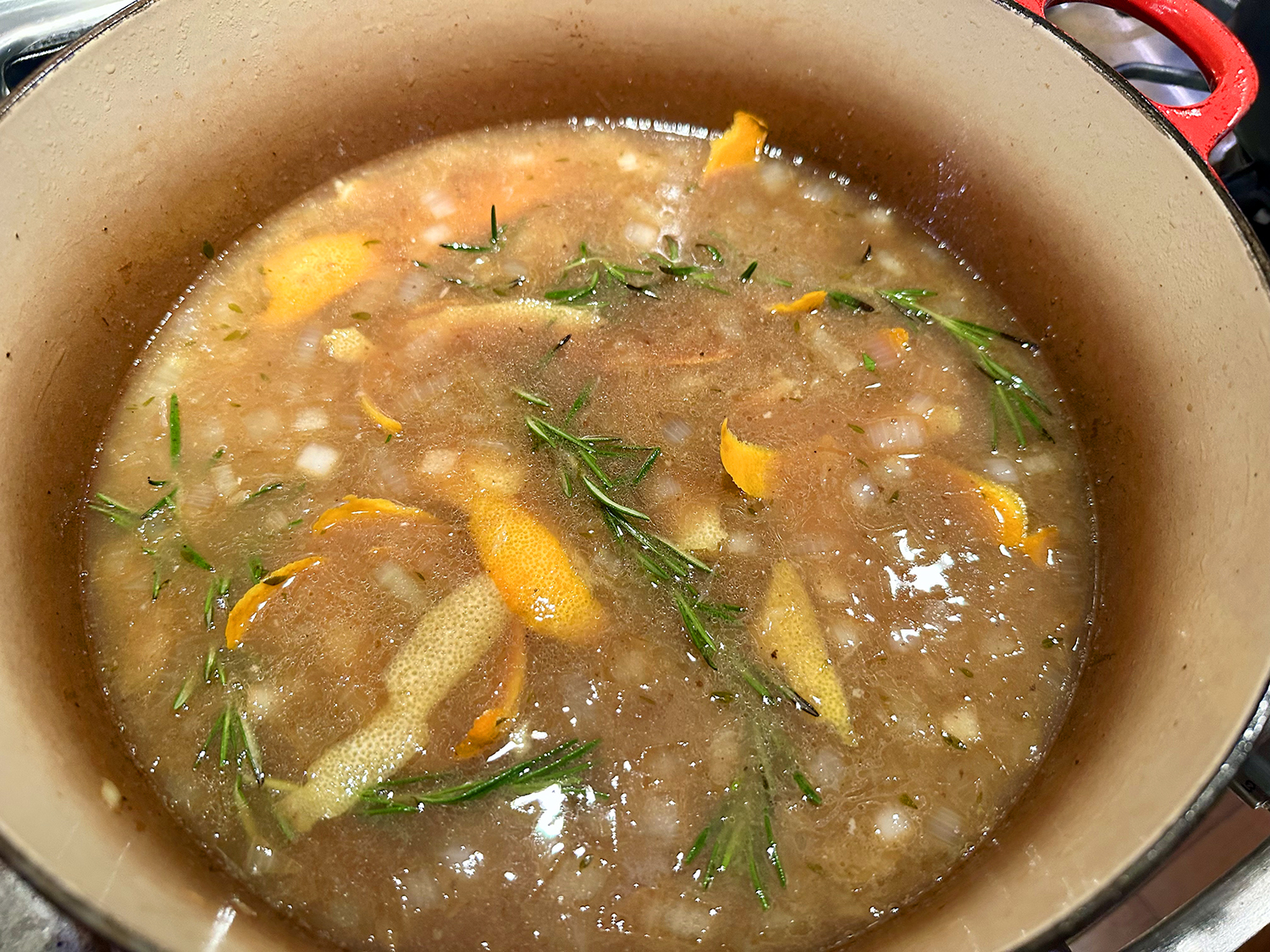
  4. The braise: Add the stock, honey orange zest and juice, lemon zest, rosemary, and balsamic vinegar to the pot. Return the shanks to the pot, arranging them in a snug single layer, and pour over any juices that accumulated while they sat. Bring to a simmer and cover with parchment paper, pressing down so the paper nearly touches the shanks and the edges hang over the sides of the pot by about an inch. Then secure the lid in place and slide the pot into the lower third of the oven to braise at a gentle simmer for 1 hour. After the first 10 to 15 minutes, check that the liquid is not boiling too energetically; if i is lower the oven heat by 10 to 15 degrees and continue to braise.
  5. Prepare the garnish: heat the butter and oil in a large 12-inch skillet over medium-high heat. when the butter has melted and the oil is quite hot, add the shallots and carrots, season with salt and pepper, and sauté, stirring and shaking the pan frequently, until tinged with brown all over, about 8 minutes. Add the rosemary branches and sauté for another minute.
  6. Finishing the sauce: With a slotted spoon, lift the shanks along with the shallots and carrots, onto a platter, without stacking. Handle the veal carefully at this point, as it will tend to fall apart. Cover loosely with foil to keep warm. Strain the braising liquid into a saucepan, pushing down on the vegetables, zest, and spent herbs to extract all the juices, and discard the solids. Skim the surface fat from the strained liquid, and bring to a simmer over medium-high heat. Simmer, skimming a few more times, until reduced enough to lightly coat the back of a spoon, about 15 minutes. Season with salt and pepper, and keep at a low simmer.
  7. Portioning the veal shanks: If the shanks are reasonably sized, serve one shank per person. If the shanks are enormous, pull apart the larger shanks, separating them at their natural seams, and serve smaller amounts. be sure to offer the marrow bones as well.
  8. Serving: For a luxurious sauce, whisk a walnut-sized knob of butter into the barely simmering sauce.Once you’ve added the butter, avoid prolonged boiling. Serve the shanks accompanied by the carrots and shallots, and spoon the sauce over the top.

http://www.lynnandruss.com

Recipe by Molly Stevens from All About Braising

Spicy Broccolini with Seared Tofu and Sesame Oil

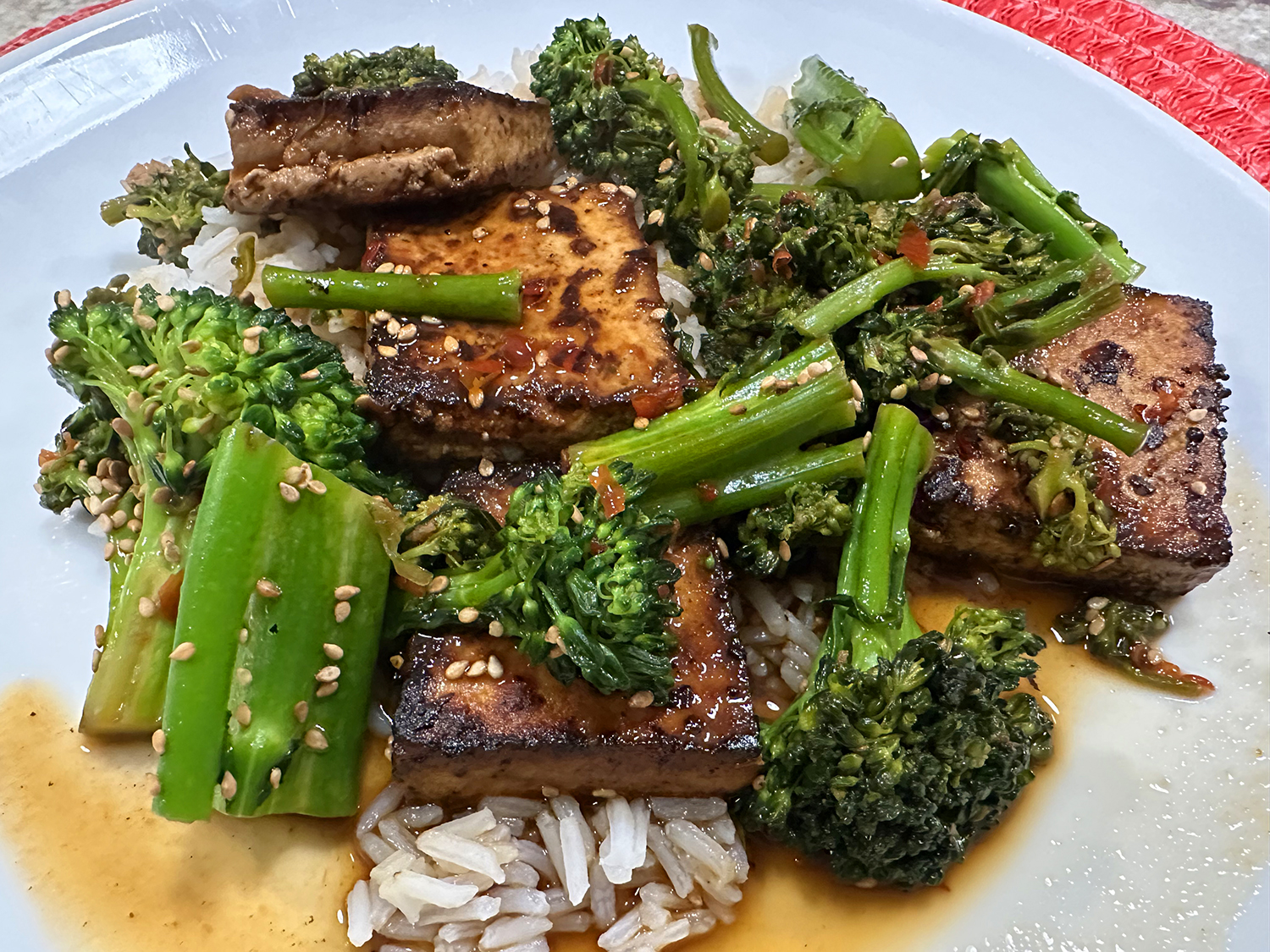
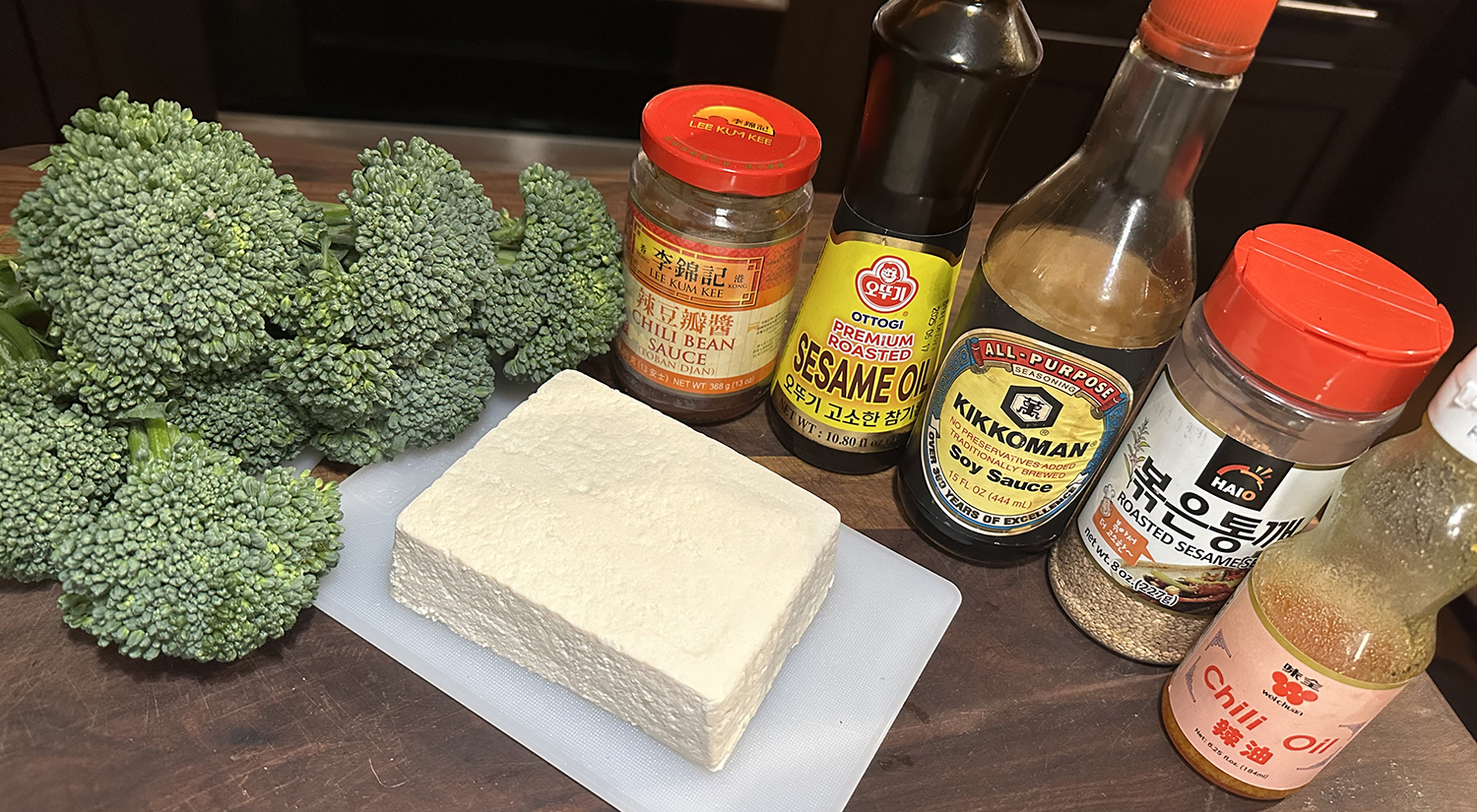
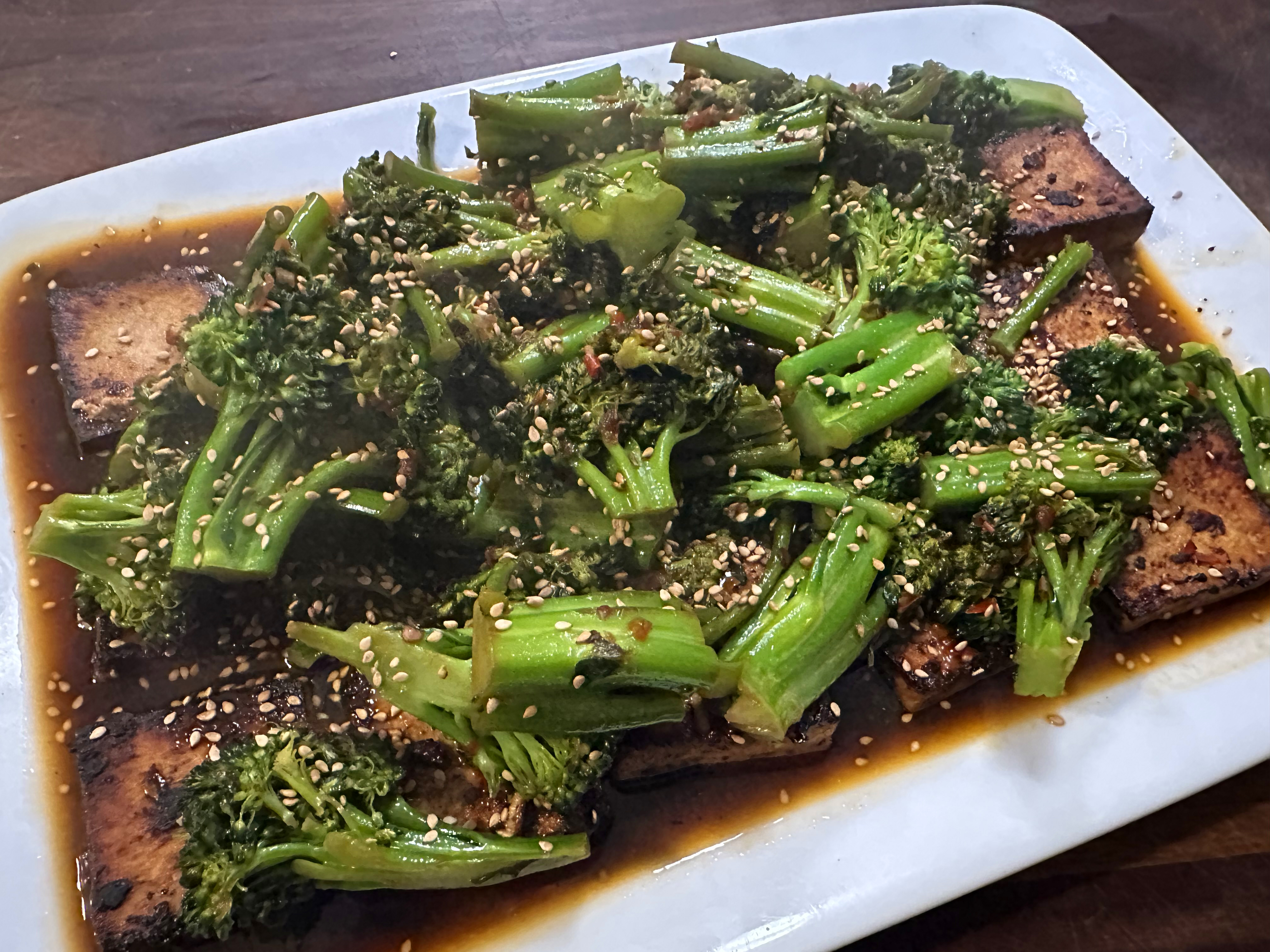
This hearty vegetarian main (recipe courtesy of Milk Street) gets its spicy-salty earthiness from chili-bean sauce, or toban djan, a common ingredient in Sichuan cooking. The brownish red sauce is sold in jars; if it’s not available, approximate the flavor by mixing 2 tablespoons red miso with 1 tablespoon Asian chili-garlic sauce.

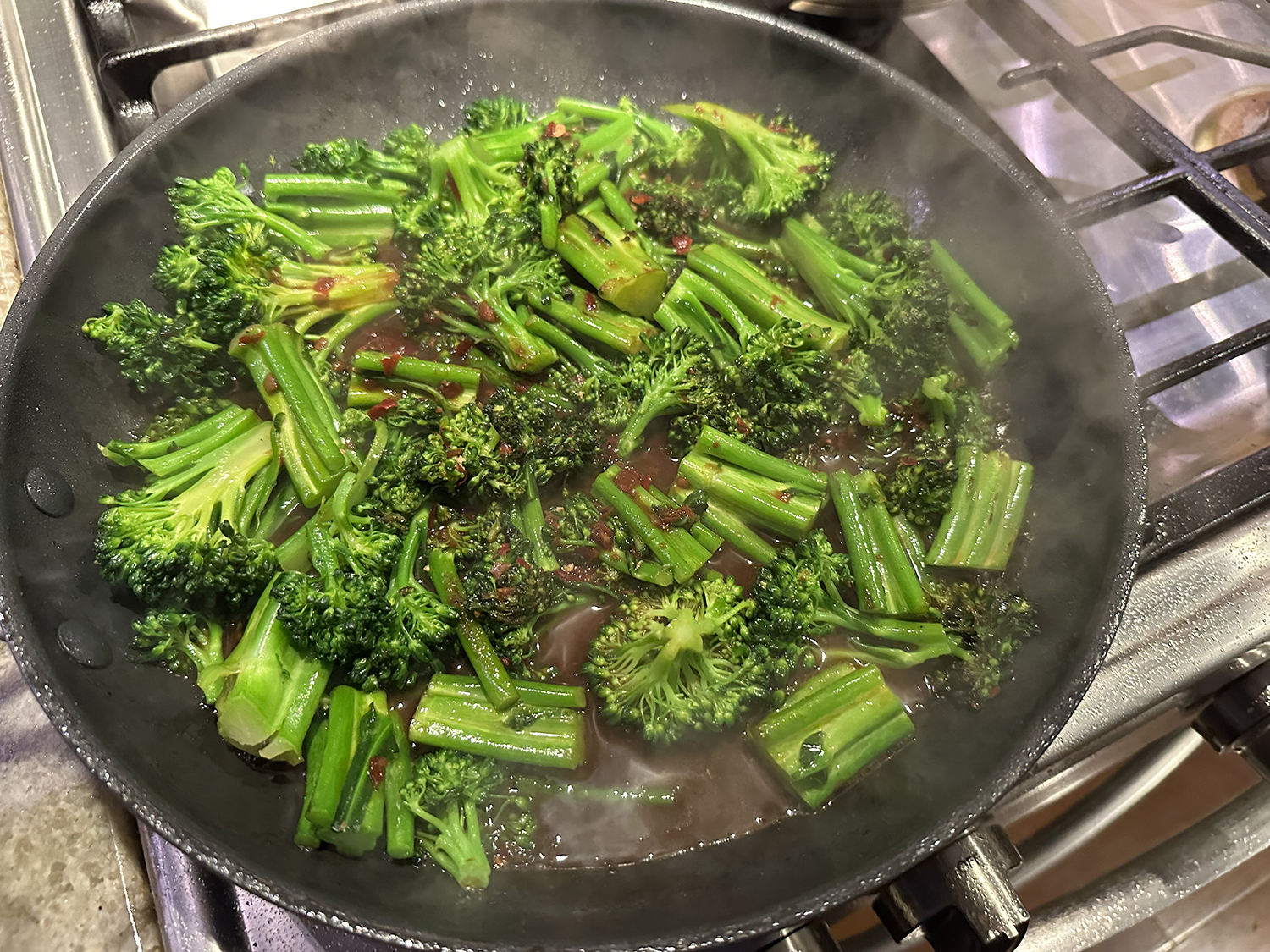
A sear-then-steam skillet technique is used to cook the broccolini; it builds flavor with browning but also allows the vegetable to cook up succulently crisp-tender. Serve with steamed rice and optional garnish of toasted sesame seeds and/or chili oil. So very simple.

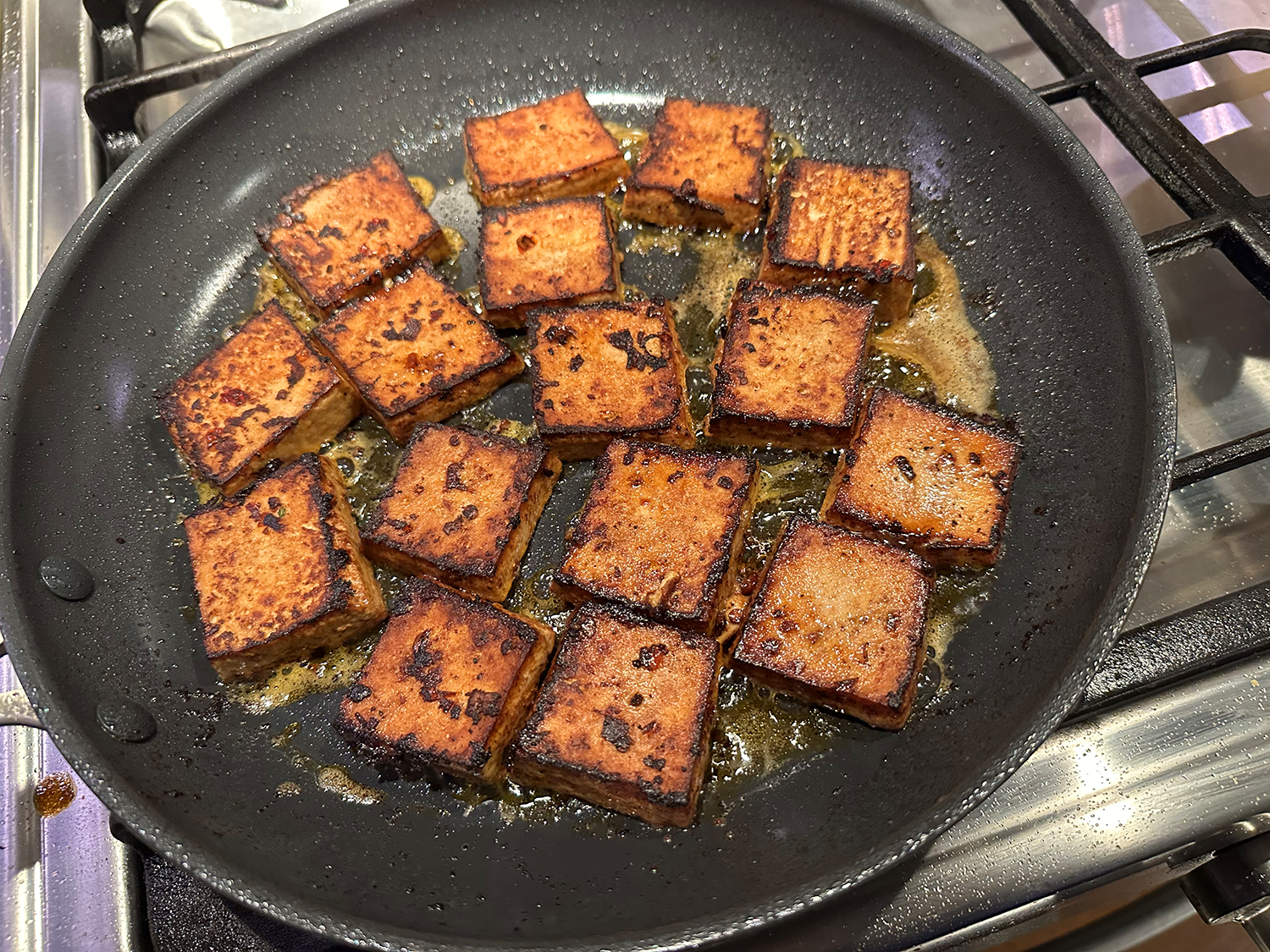
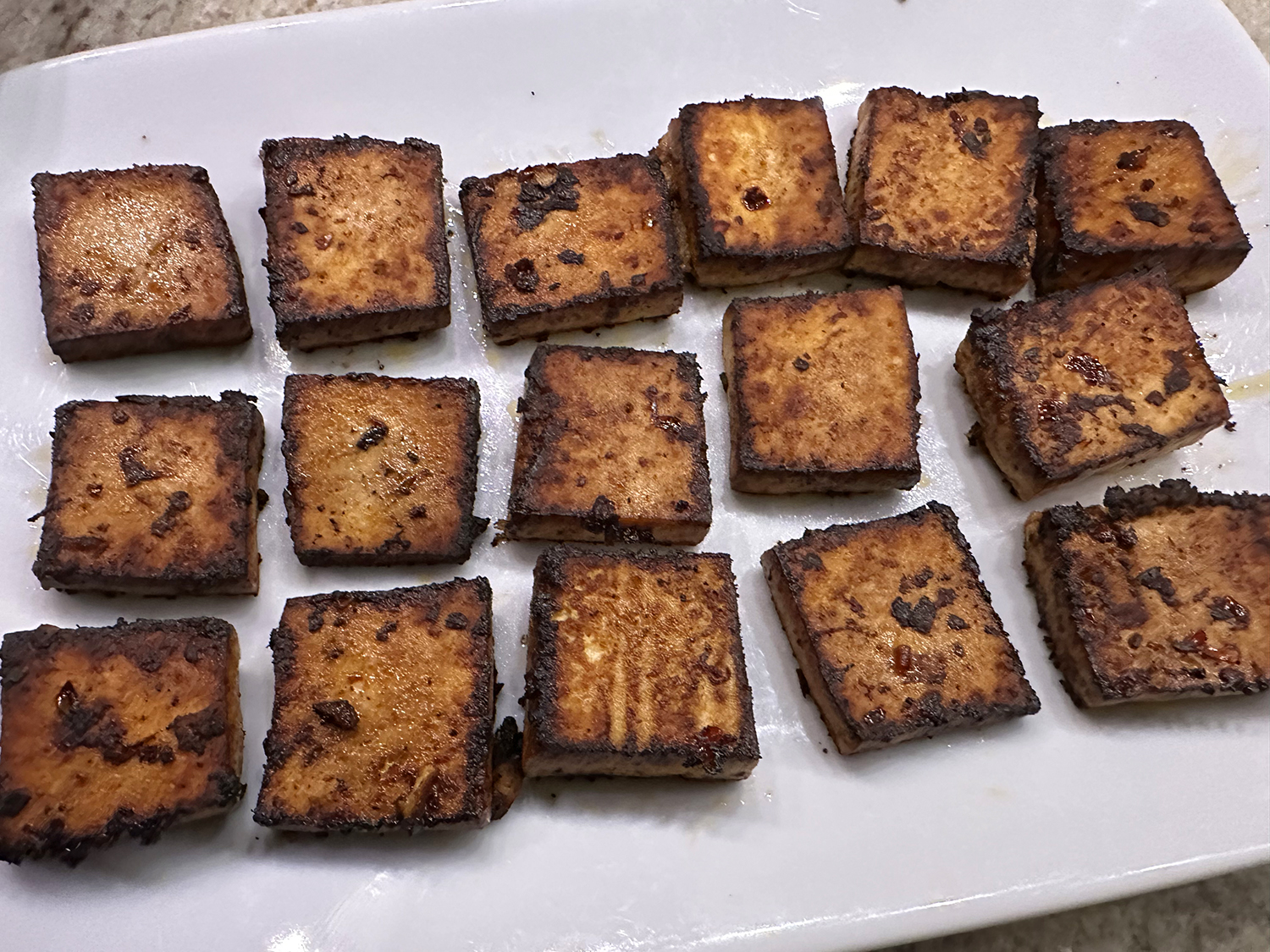
Don’t use medium firm tofu, as it’s too delicate. Firm or extra-firm are the best options. After slicing the tofu, press the slices between paper towels to wick away excess moisture. To maximize moisture removal, we put the block of tofu on a moated cutting board, topped by a smaller cutting board with a large heavy cast-iron skillet resting atop that. The more moisture removal, the crisper the tofu slices will become.

Finally, when adding the tofu to the skillet, don’t simply dump it in with the marinade. Rather, lift out the slices and place them in a single layer in the pan; reserve the marinade for cooking the broccolini.

Spicy Broccolini with Seared Tofu and Sesame Oil

  • Servings: 4
  • Difficulty: easy
  • Print

Ingredients

  • 1/3 cup low-sodium soy sauce
  • 2-3 Tbsp. chili-bean sauce (toban djan, see headnote)
  • 2 Tbsp. toasted sesame oil
  • 14 oz. container firm or extra-firm tofu, drained, halved lengthwise, cut crosswise into ½-inch-thick slices and pressed dry
  • 3 Tbsp. grapeseed or other neutral oil
  • 1 lb. Broccolini, trimmed and cut into 1- to 2-inch pieces
  • 1/3 cup lightly packed fresh cilantro
  • Toasted sesame seeds, to serve
  • chili oil (optional)

Directions

  1. In a large bowl, stir together the soy sauce, chili-bean sauce and sesame oil. Add the tofu and toss to coat. In a 12-inch nonstick skillet over medium-high, heat 1 tablespoon of the neutral oil until barely smoking. Remove the tofu from the bowl and place the slices in the skillet in a single layer; reserve the marinade.
  2. Cook the tofu, turning the pieces once with tongs or a metal spatula, until well browned on both sides, about 3 minute per side. Transfer to a serving platter and wipe out the skillet.
  3. In the same skillet over medium-high, heat the remaining 2 tablespoons neutral oil until shimmering. Add the broccolini and cook, stirring occasionally, until beginning to char, 3 to 4 minutes. Stir in ¼ cup water and the reserved marinade, then immediately cover and reduce to low. Cook, stirring once or twice, until the broccolini is tender-crisp and the sauce is slightly thickened, about 4 minutes.
  4. Transfer the broccolini with sauce onto the tofu and sprinkle with the cilantro.

http://www.lynnandruss.com

Recipe by Calvin Cox for Milk Street

Frite de Cordero (Lamb Stew)

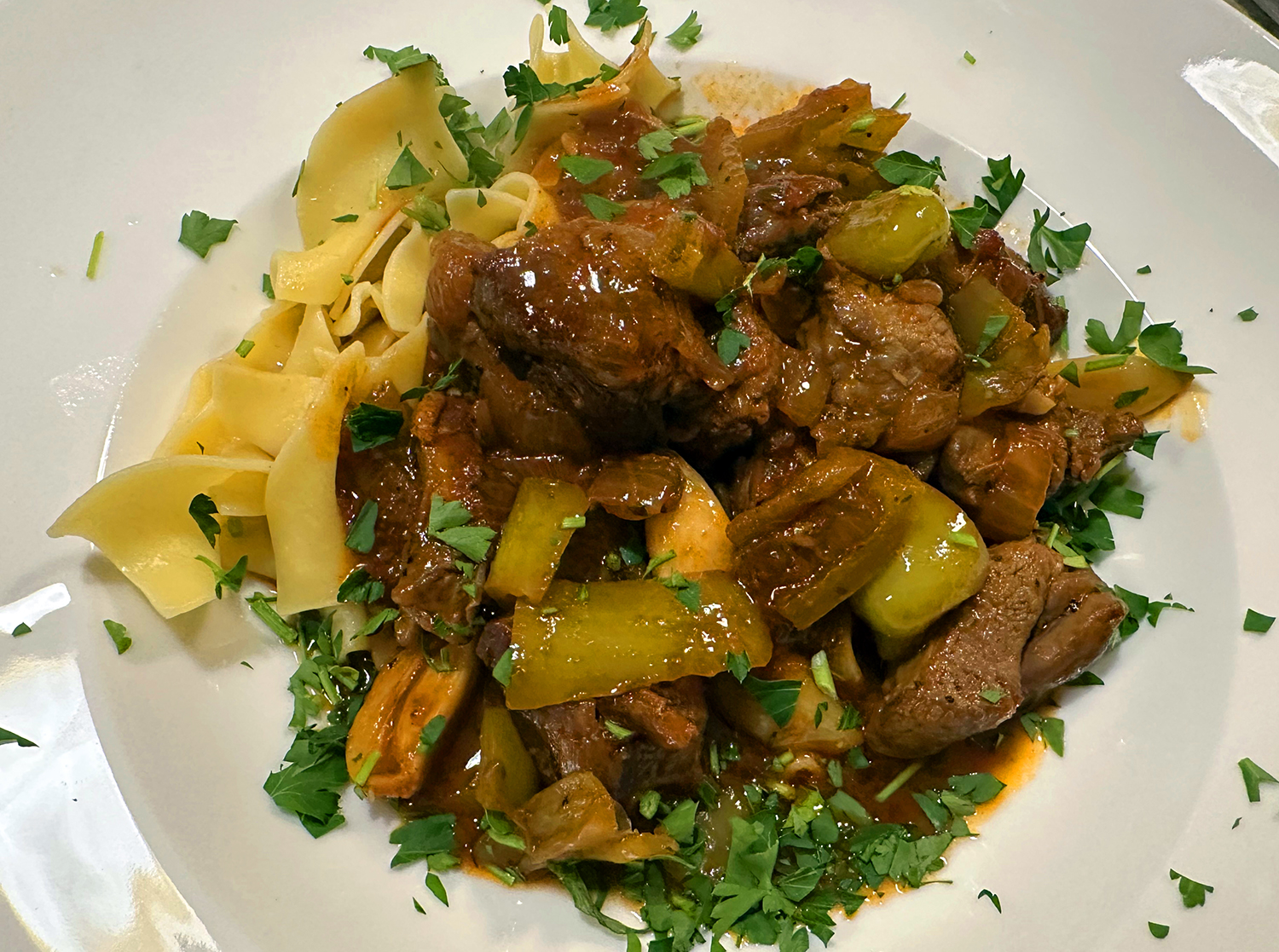
Like all traditional recipes that pre-date cookbooks, it’s difficult to trace this recipe’s origins, but like many of its kind, it has a legend that goes with it. In this case, the legend says that King Alfonso XIII first tasted it in a hunting lodge in Extremadura and liked it so much that he sent his chef there to learn how to make it so he could prepare it at the palace. Lends a little intrigue to the recipe, right?

Another typical aspect of such traditional recipes is that each family prepares them with whatever variations they like. In this case, the different schools appear to be “tomato and peppers, yes or no”, whole cloves of garlic versus mashed with or without almonds, or with or without the lamb liver depending on which household you consult (not in my house).

The only non-negotiable thing is having a good quality loaf of crusty bread to avoid leaving a drop of the delicious sauce, although one can add some “snapped” potatoes to the pot about 25 minutes before the stew is ready. Or, alternatively, serve it over noodles or mashed potatoes.

As with most stews and braises, it tastes even better the second time around.

Frite de Cordero (Lamb Stew)

  • Servings: 6
  • Difficulty: easy
  • Print

Ingredients

  • 2 1/2 lbs. boneless lamb leg or shoulder, cut into 1 1/2 to 2-inch pieces
  • 1 lamb liver, (optional)
  • 1 head garlic, all cloves peeled and left whole
  • 2 Spanish onions, peeled and chopped
  • 3 Italian-style green peppers, seeded and roughly chopped
  • 3/4 cup canned crushed tomatoes, or passata
  • 1 bay leaf
  • 1 1/2 heaping tsp. smoked paprika, sweet, hot, or a mix
  • 1 tsp. dried oregano, or 1 tablespoon fresh oregano leaves, finely chopped
  • 1 tsp. dried thyme, or 1 tablespoon fresh thyme leaves
  • 3 Tbsp. olive oil
  • Kosher salt, to taste
  • 1 cup dry white wine
  • 1 cup beef, veal, or lamb broth
  • Finely chopped fresh parsley, for garnish (optional)

Directions

  1. Heat the olive oil in a Dutch oven over medium heat.
  2. Pat the lamb pieces and liver (if using) dry with paper towels, then salt and pepper generously. Brown them well on all sides, then remove them from the pot and set aside.
  3. Add more oil to the pot if necessary, then add the onion and saute until it becomes transparent about 7 minutes. Add the peeled garlic cloves, the green pepper, and a bit of salt, and saute the mixture a few minutes more until the peppers are tender. (If using the lamb liver, remove 4 of the whole cloves of garlic from the pot and mash them along with the liver in a mortar or grind them in a blender or food processor until smooth. Set aside.)
  4. Add the crushed tomatoes or passata to the pot and cook for about 10 minutes, stirring from time to time. Remove the pot from the heat, add the smoked paprika, oregano, thyme, and bay leaf, and mix well. Return the pot to the stove over medium heat. Return the lamb pieces and any juices to the pot. Add the wine and broth and bring the mixture to a boil, then reduce the heat to low and cover.
  5. Cook the stew until the lamb is tender, about 1 1/2 hours. After 45 minutes of cooking, check the pot from time to time. If the mixture is becoming dry, add more broth or water. If the stew is too watery, remove the lid and allow the stew to continue cooking uncovered until the mixture thickens to your liking.
  6. When the stew is about 10 minutes from being ready, add the mixture of garlic and liver and stir well.
  7. Serve the stew hot, garnished with the chopped parsley.

http://www.lynnandruss.com

Recipe by Mónica Escudero of El País, 17 Nov 2024

Skillet-Braised Chicken With Greens and Olives

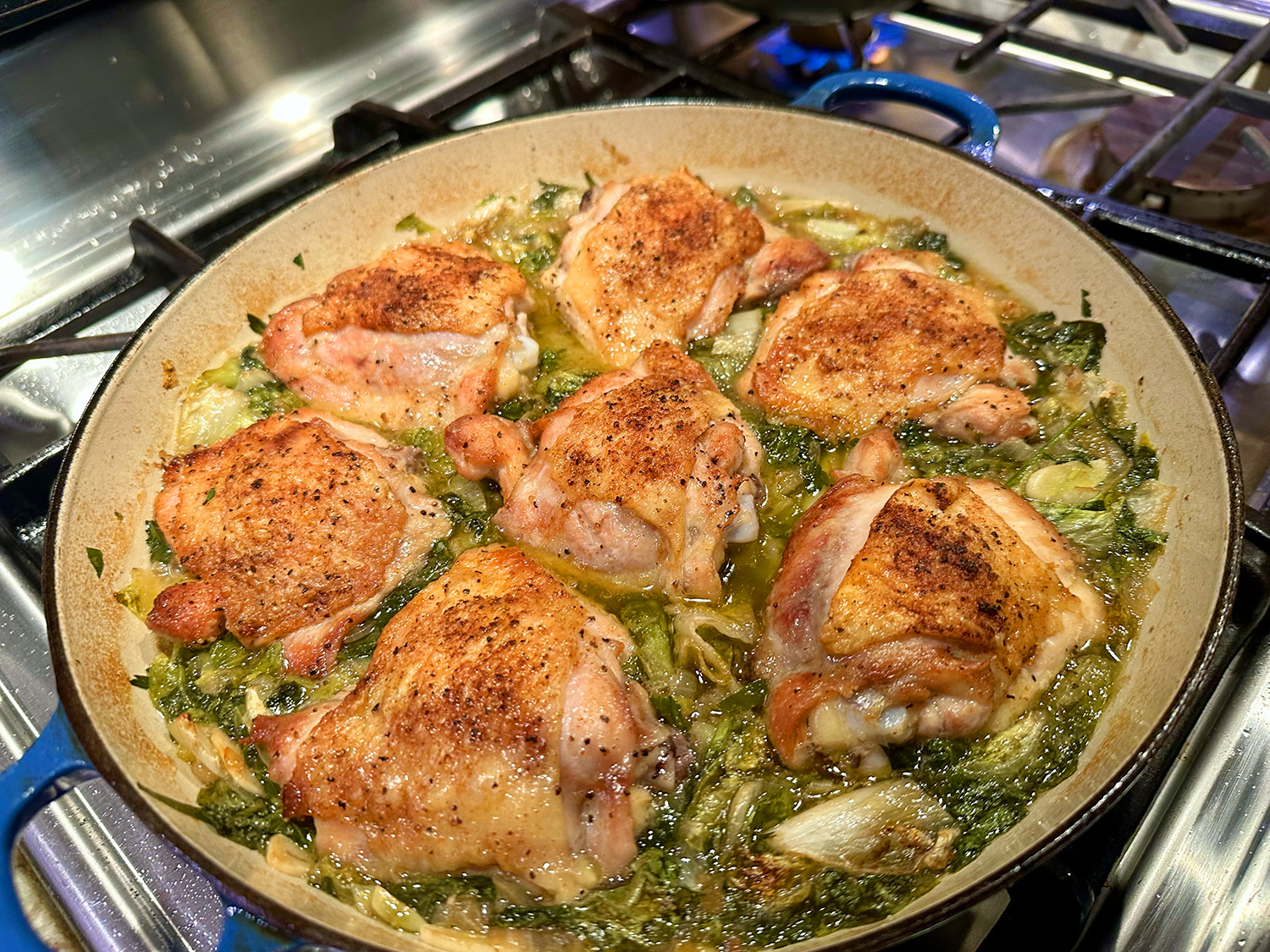
Braising chicken and greens together in a skillet does wonderful things to both bird and vegetables. As the chicken cooks, the skin browns, crisps, and renders savory fat, which suffuses the greens with flavor. The greens, in turn, make a soft, moist bed on which to cook the chicken, keeping the meat supremely tender.

In the end, the silky greens make a rich, mineral contrast to the juicy meat, while lemon juice and olives add brightness and acidity to the mix, giving it a pleasant jolt. Serve this with crusty bread, mashed potatoes, or a bed of couscous to catch all the juices.

Using homemade chicken stock will add oodles of flavor, plus some preserved lemon (about 1 1/2 tablespoons of chopped rind) adds an additional depth of flavor.

Skillet-Braised Chicken With Greens and Olives

  • Servings: 4
  • Difficulty: easy
  • Print

Ingredients

  • 2 ¼ to 2½ lbs. bone-in chicken thighs and drumsticks
  • Fine sea salt or table salt and freshly ground black pepper
  • 1/4 tsp. hot smoked paprika, plus more for serving (or use red-pepper flakes)
  • 3 Tbsp. extra-virgin olive oil, more for serving
  • 1 cup sliced shallots, about 2 to 3 (or use red onion)
  • 3 garlic cloves, thinly sliced
  • 1 pound sturdy greens, such as escarole, Swiss chard or kale, coarsely chopped
  • 1 cup coarsely chopped cilantro or parsley
  • 1¼ cups chicken stock, preferably homemade, plus more as needed
  • ½ cup pitted coarsely chopped Castelvetrano olives
  • 1 lemon, halved
  • Flaky salt, for serving (optional)

Directions

  1. In a small bowl, blend 1 teaspoon of salt, 1/2 teaspoon of black pepper, and the paprika. Pat the chicken pieces dry with paper towels and then sprinkle all over with the seasoning mix.
  2. Preheat oven to 400F (375F convection).
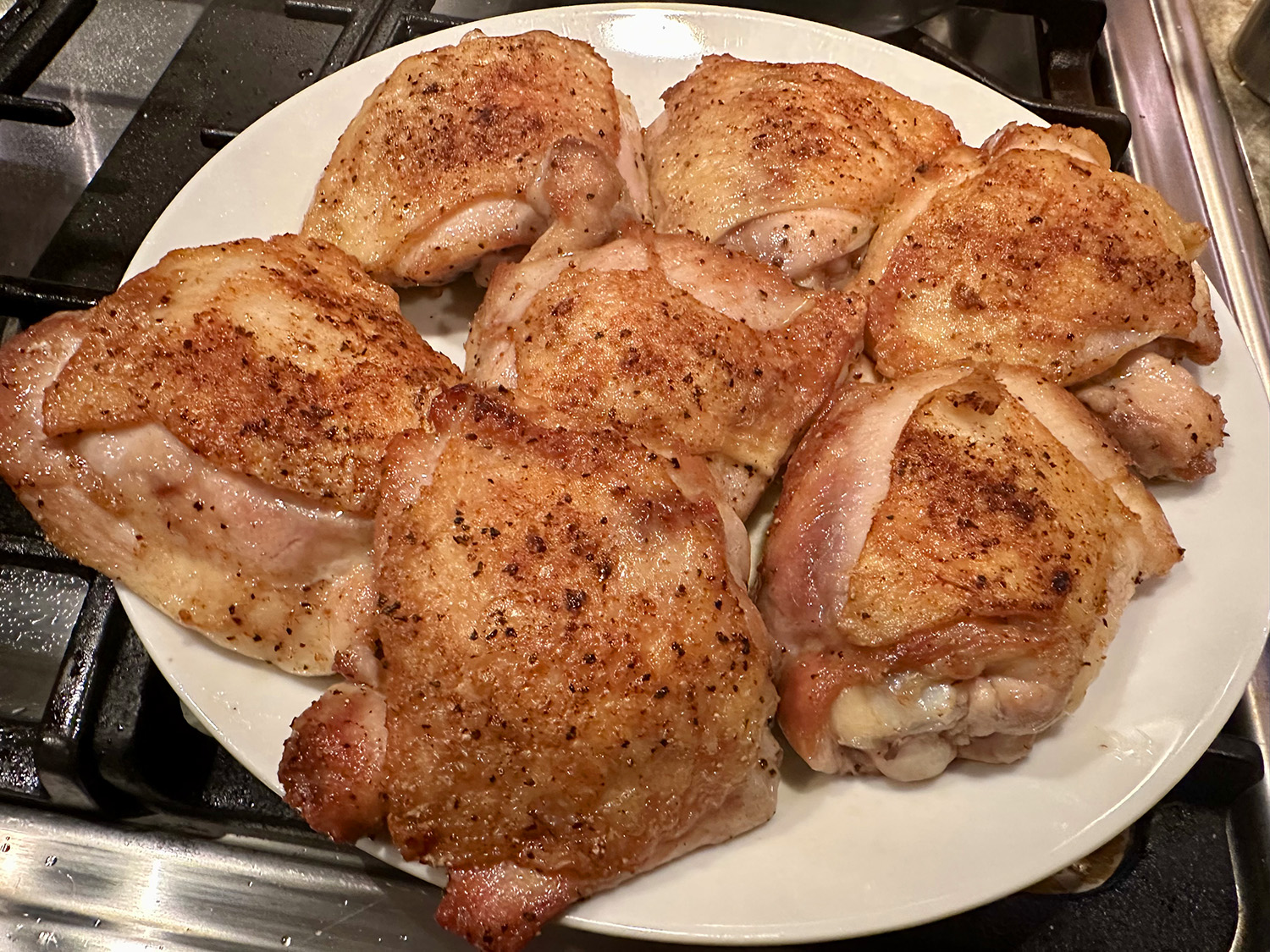
  3. In a large (12-inch), heavy-bottomed skillet heat the oil over medium-high. Add chicken to the skillet and let sear until it browns lightly on both sides, removing it to a plate when finished browning.
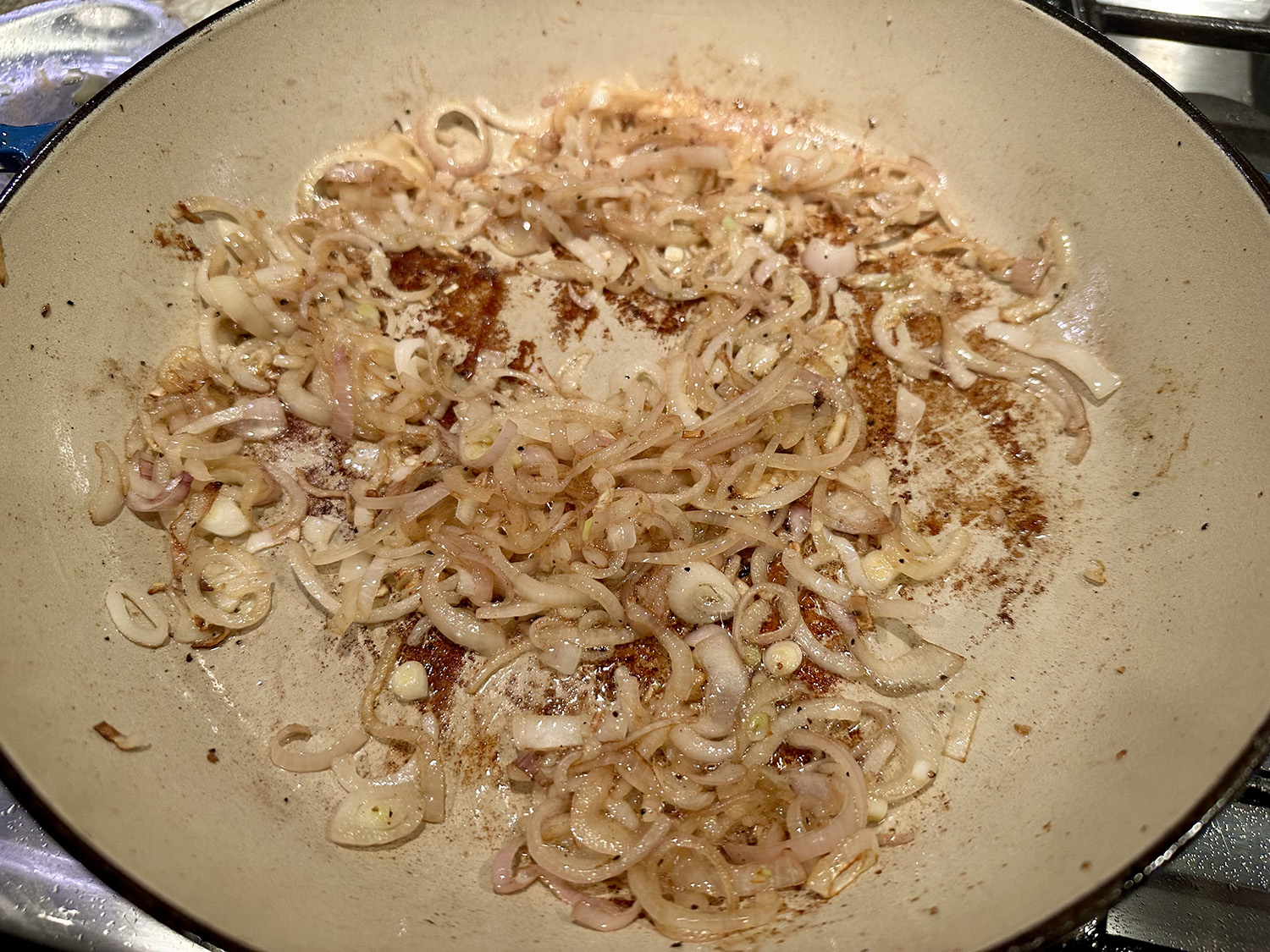
  4. Add shallots and a pinch of salt, and cook until pale golden brown all over, 5 to 7 minutes.
  5. Add garlic to the pan and cook until fragrant, 1 minute more. Add chopped greens, cilantro, and another ¼ teaspoon salt to the pan, and stir, tossing to coat in the residual chicken fat. It may seem like a lot of greens, but they will cook down. Cook until they have just started to wilt, about 2 minutes.
  6. Add the chicken and any juices on the plate to the skillet with the greens. Pour in enough of the chicken stock to come halfway up the chicken. Bring liquid to a gentle simmer. Place the skillet in the oven and bake until the internal temperature of the chicken reaches 165 degrees, about 25 to 35 minutes. Add more stock as needed to keep the greens tender and moist.
  7. Remove the skillet from the oven. Stir in olives and cook uncovered over medium heat until they are warmed through, about 1 minute more. Squeeze one lemon half over everything, then taste greens, and add more salt or lemon juice if needed. Serve topped with flaky salt, a drizzle of extra-virgin olive oil, and more smoked paprika.

http://www.lynnandruss.com

Adapted from a recipe by Melissa Clark for NYTimes Cooking

Hungarian-Style Sheperd’s Stew with Potatoes and Sausage

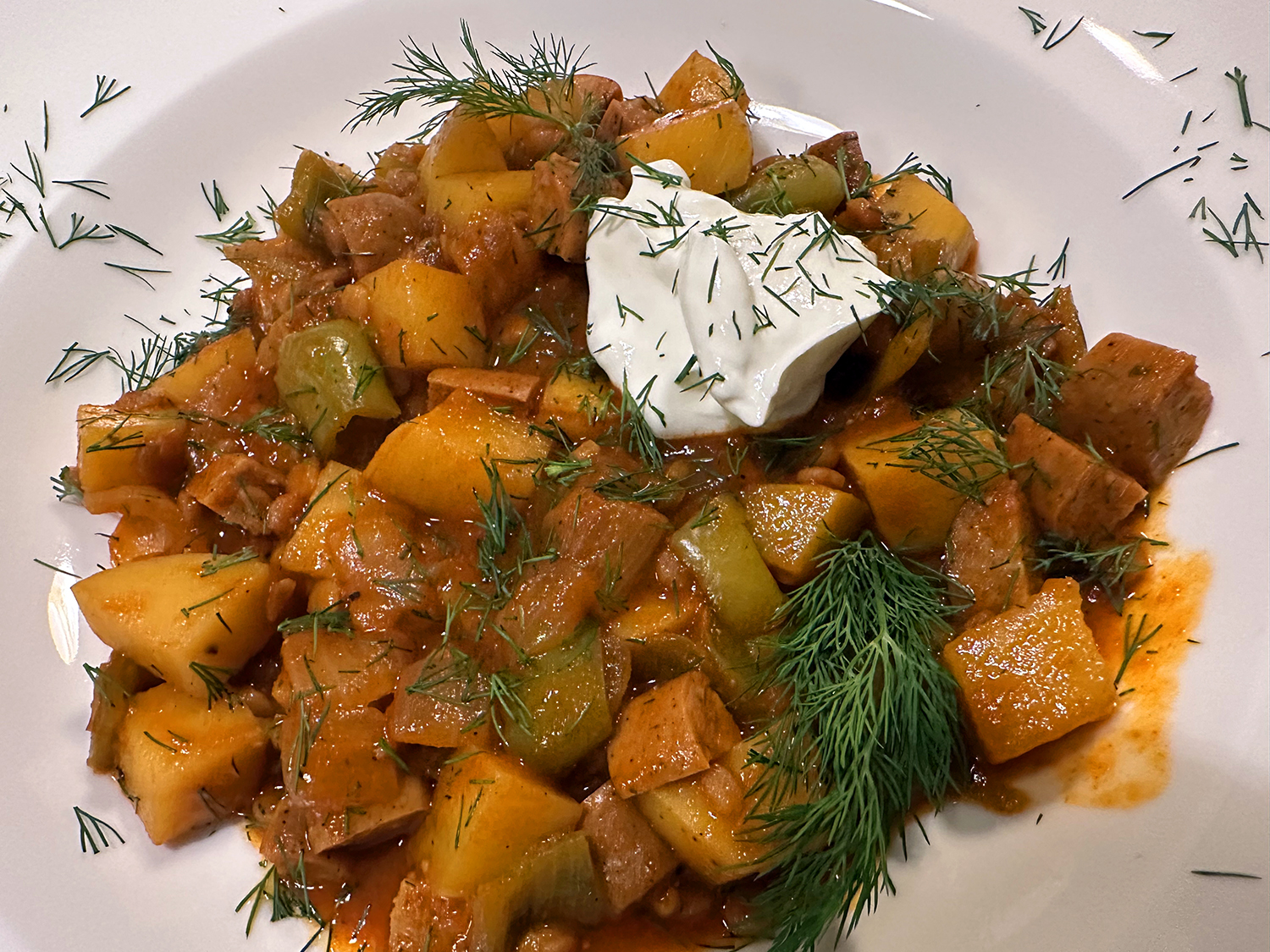
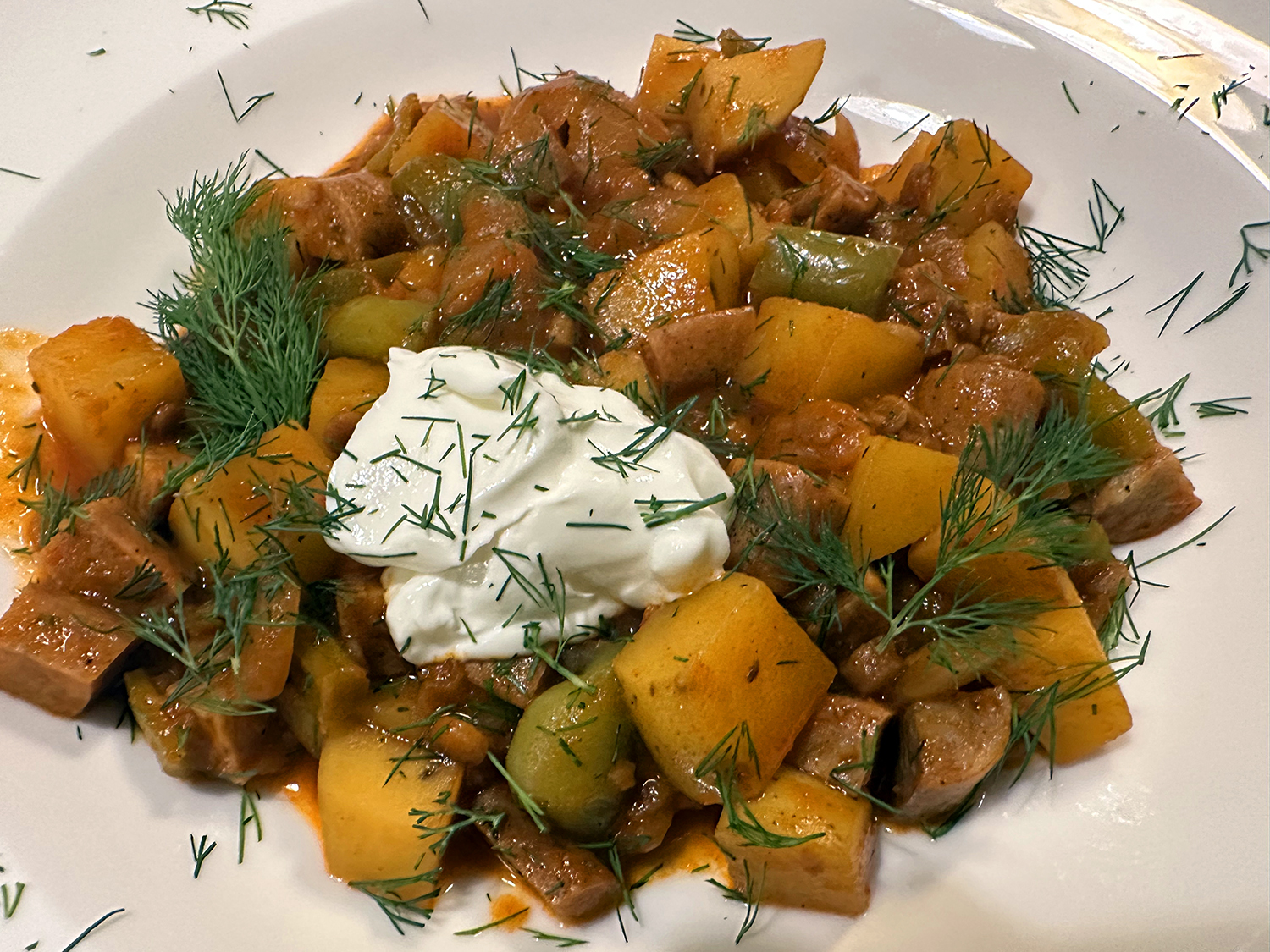
This rich Hungarian stew recipe hails from a recent Milk Street Magazine. With the temps below freezing, and the winds howling, it was a perfect evening to make this dish and warm our insides.

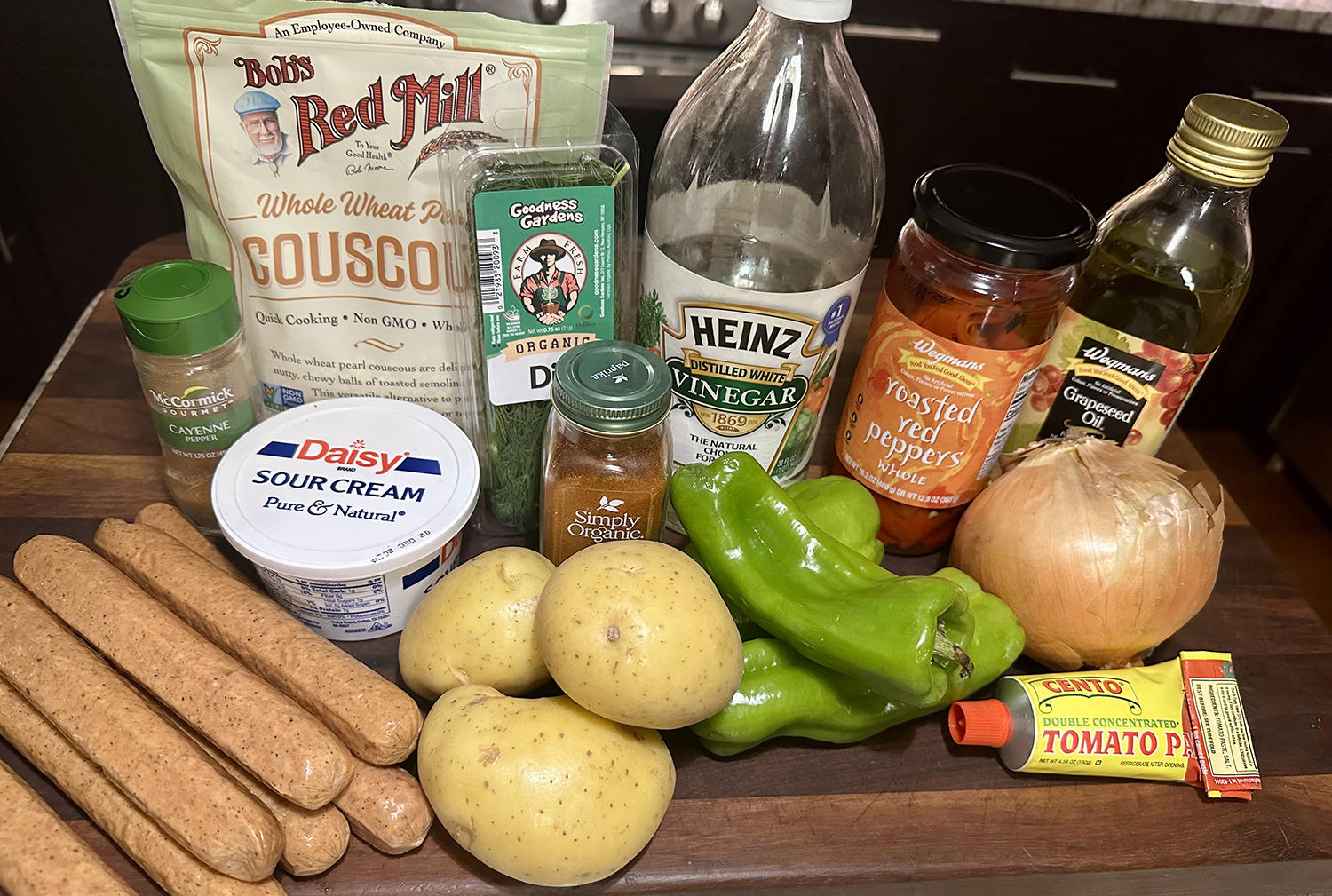
Without easy-to-source options for Hungarian sausage, Cajun andouille is used for its spiciness and smokiness that pair well with the other flavors in the stew. Don’t forget to cover the pot when cooking the pasta. If too much liquid evaporates, the stew will be overly thick and starchy—not an appealing result.

For a bit more fiber and flavor, we used whole wheat pearl couscous, and some chicken broth in place of the two cups of water. The cubanelle peppers weren’t large at time of purchase so we included three smaller ones.

Surprisingly, the potatoes were not tender after the 20 minute allotment time, so we added an additional 10 minutes. Believe it or not, many of those small spud pieces were still not totally tender! But the dish had a lot of depth of flavor—we gave it two thumbs up!

Hungarian-Style Sheperd's Stew with Potatoes and Sausage

  • Servings: 4-6
  • Difficulty: easy
  • Print

Ingredients

  • 1/2 cup drained roasted red peppers, patted dry
  • 2 Tbsp. tomato paste
  • 1 Tbsp. white vinegar
  • 1 1/2 Tbsp. sweet paprika
  • 1/8 to 1/4 tsp. cayenne pepper
  • Kosher salt and ground black pepper
  • 2 Tbsp. grapeseed or other neutral oil, divided
  • 1/2 cup fregola or pearl couscous
  • 1 large yellow onion, cut into 1/2-inch pieces
  • 1 large banana pepper or cubanelle pepper, stemmed, seeded and cut into 1/2-inch pieces
  • 8 to 12 oz. Yukon Gold potatoes, unpeeled, cut into 1/2-inch chunks
  • 8 oz. andouille sausage, quartered lengthwise and cut into 1/2-inch chunks
  • Chopped fresh dill, to serve
  • Sour cream, to serve

Directions

  1. In a blender, combine the roasted peppers, tomato paste, vinegar, paprika, cayenne, and 1/2 teaspoon salt. Purée, scraping the blender jar as needed, until smooth, about 30 seconds. (Alternatively, combine the ingredients in a 2-cup liquid measuring cup and blend with an immersion blender until smooth.)
  2. In a Dutch oven over medium-high, combine 1 tablespoon of the oil and the fregola/pearl couscous. Cook, stirring until golden brown, 2 to 3 minutes. Transfer to a small bowl and set aside.
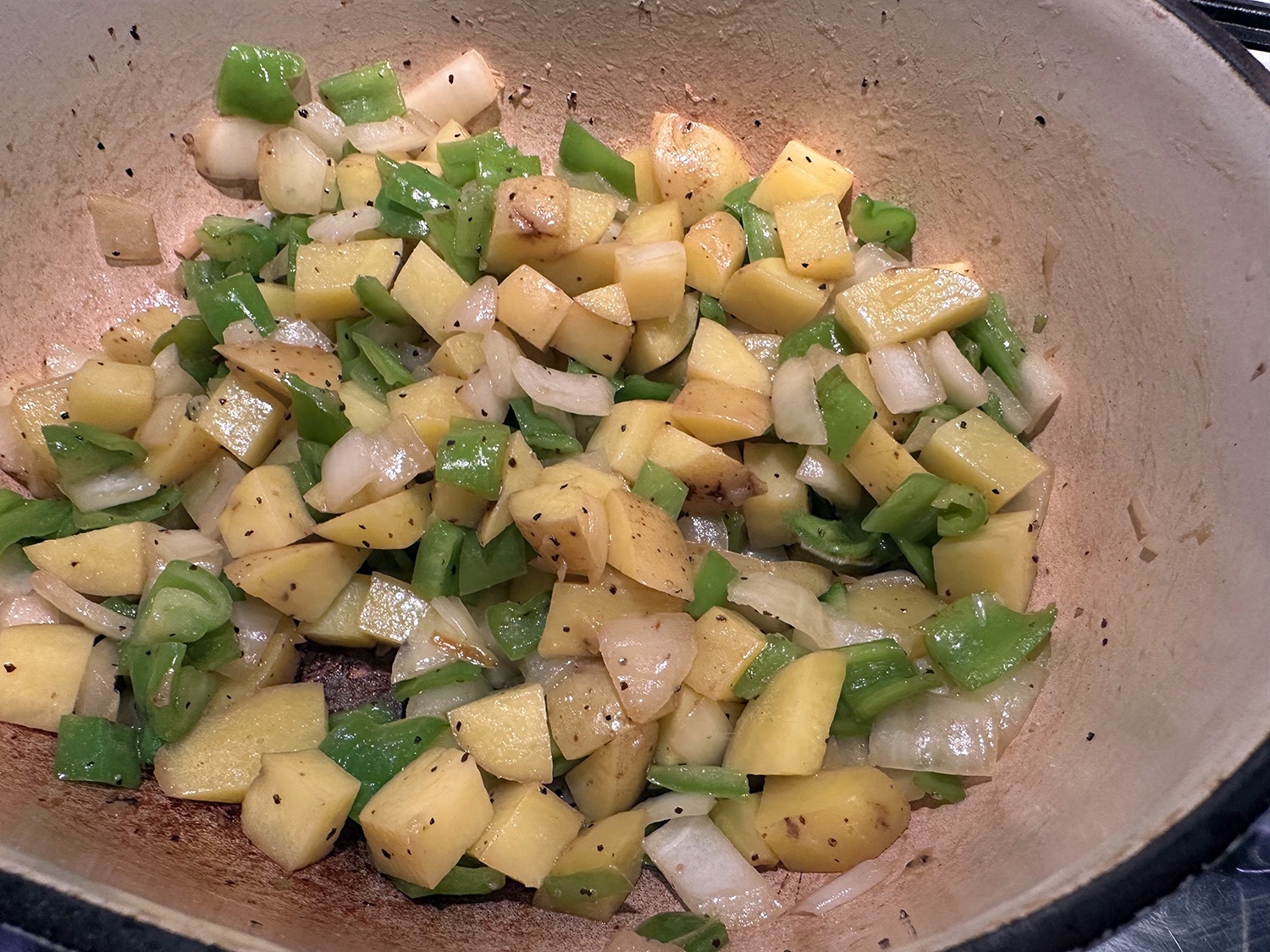
  3. In the same pot over medium-high, heat the remaining 1 tablespoon of oil until shimmering. Add the onion, banana/cubanelle pepper, potatoes and a 1/2 teaspoon each salt and black pepper. Cook, stirring until the vegetables are browned at the edges, 4 to 5 minutes.
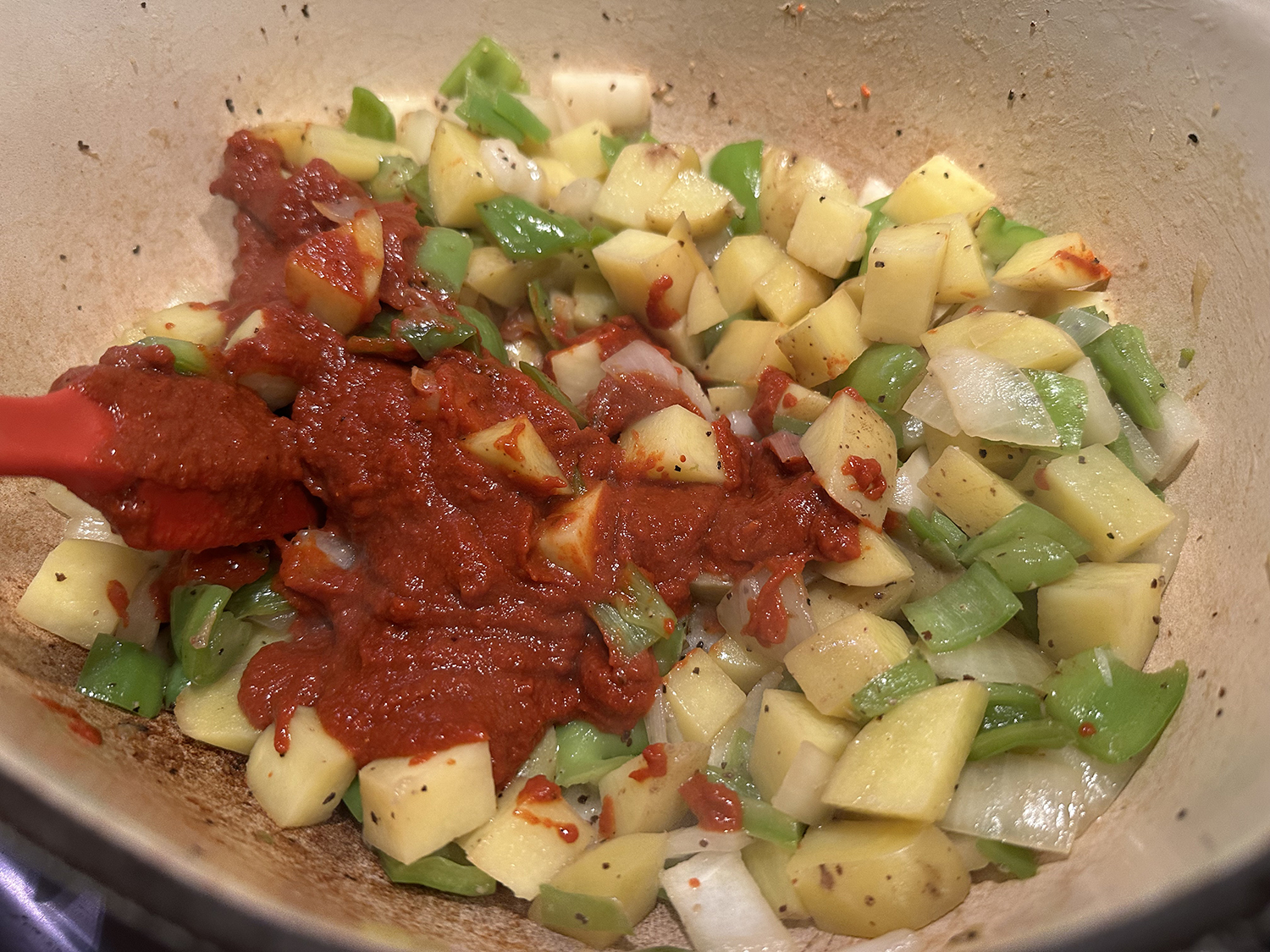
  4. Add the pepper purée and cook, scraping up any browned bits, until the mixture begins to stick to the bottom of the pot, 1 to 2 minutes. Stir in 2 cups water and simmer.
  5. Stir in the fregola/pearl couscous, then cover, reduce to medium-low and cook, stirring occasionally until a pairing knife inserted into the potatoes meets no resistance, 15 to 20 minutes.
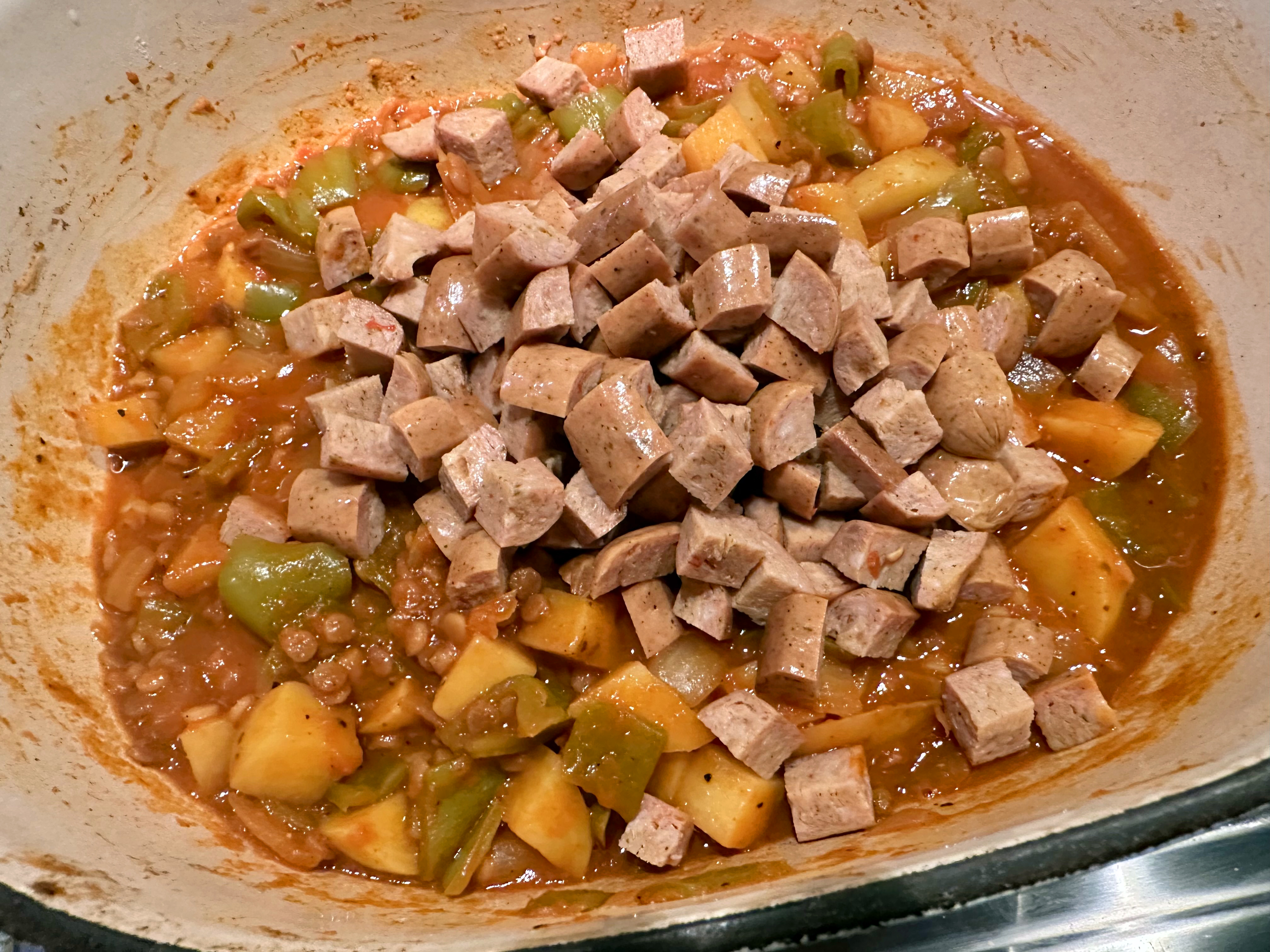
  6. Stir in the sausage. Cook uncovered, stirring until heated through and thickened, 3 to 5 minutes. Taste and season with salt and pepper. Serve sprinkled with dill and with sour cream on the side.

http://www.lynnandruss.com

Recipe by Rose Hattabaugh for Milk Street

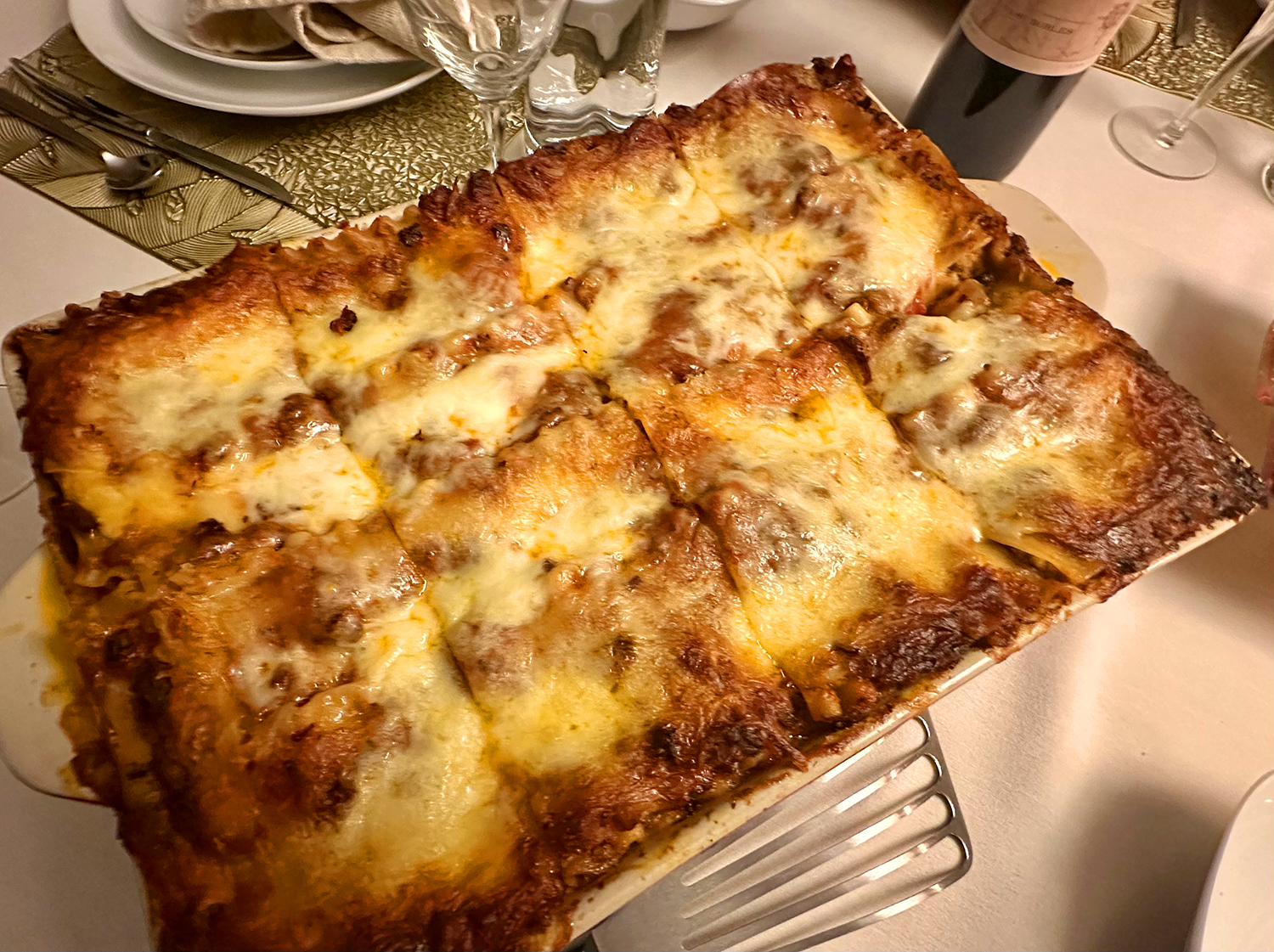
Amazing (But Prep-Intense) Lasagna

If you are of the ilk who actually likes a labor-intensive recipe challenge that brings out the masochist in you, then go ahead and double this lasagna recipe like we did. The original author claims the entire process takes a total of 4 hours. Well that depends…

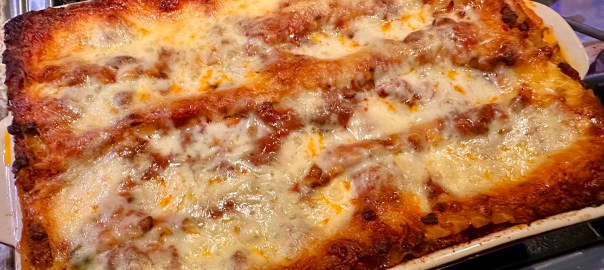
We were hosting a potluck party of 10, and since this recipe feeds 8-10 servings (and we definitely wanted leftovers after all of that work), then two lasagnas it was! Because we made two casseroles, it took us 5 hours just to prep and assemble. They were refrigerated overnight, brought to room temperature before baking, and took nearly an hour to come to temperature of 165°F due to the cool ingredients.

All negatives aside, the lasagna was AMAZING! Our guests gushed over how yummy it was. This version produces an intensely flavored sauce, cheeses that melt into creaminess as if they were béchamel, meat that’s just chunky enough, and noodles that (hopefully) put up no resistance to the fork.

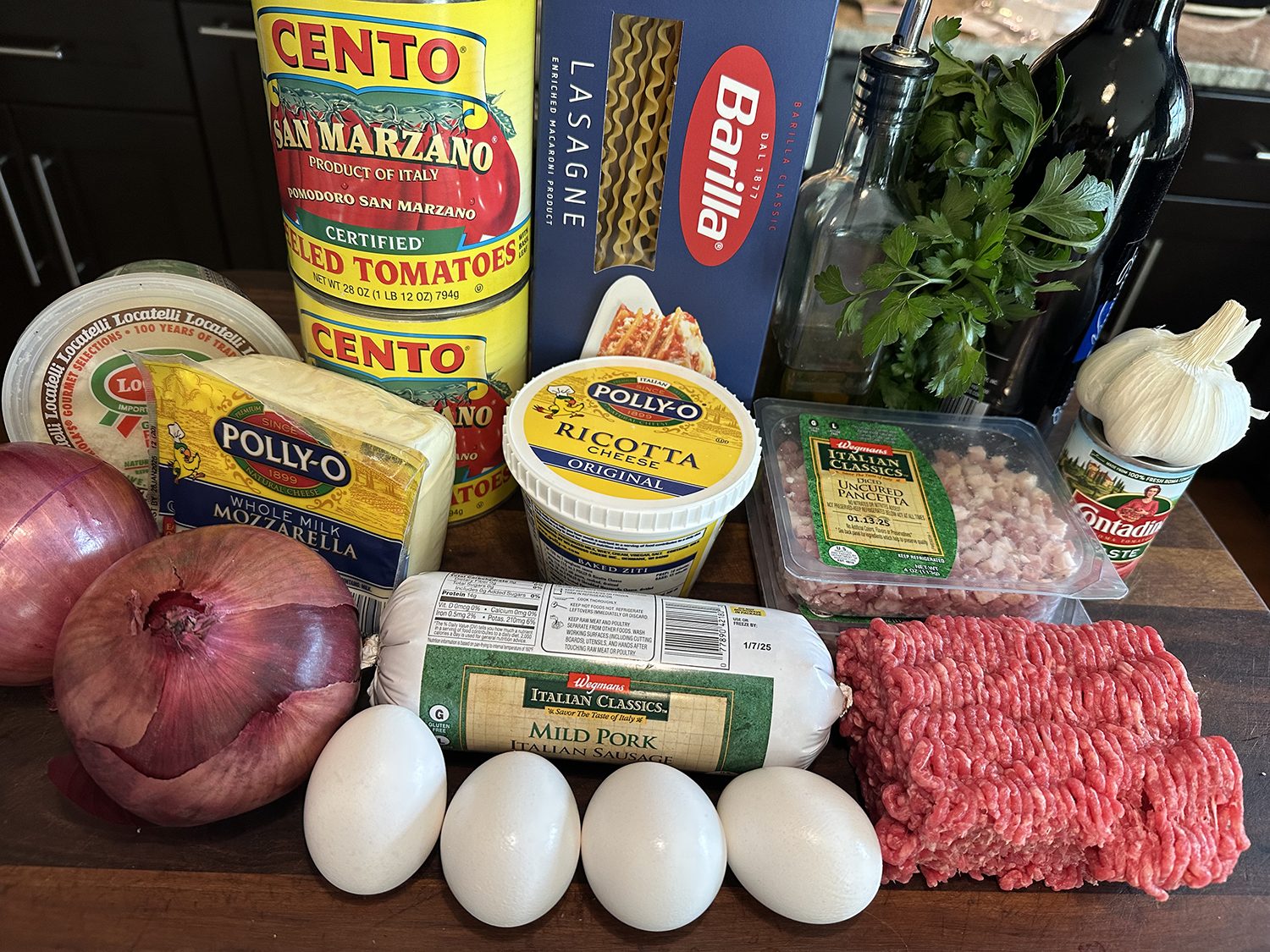
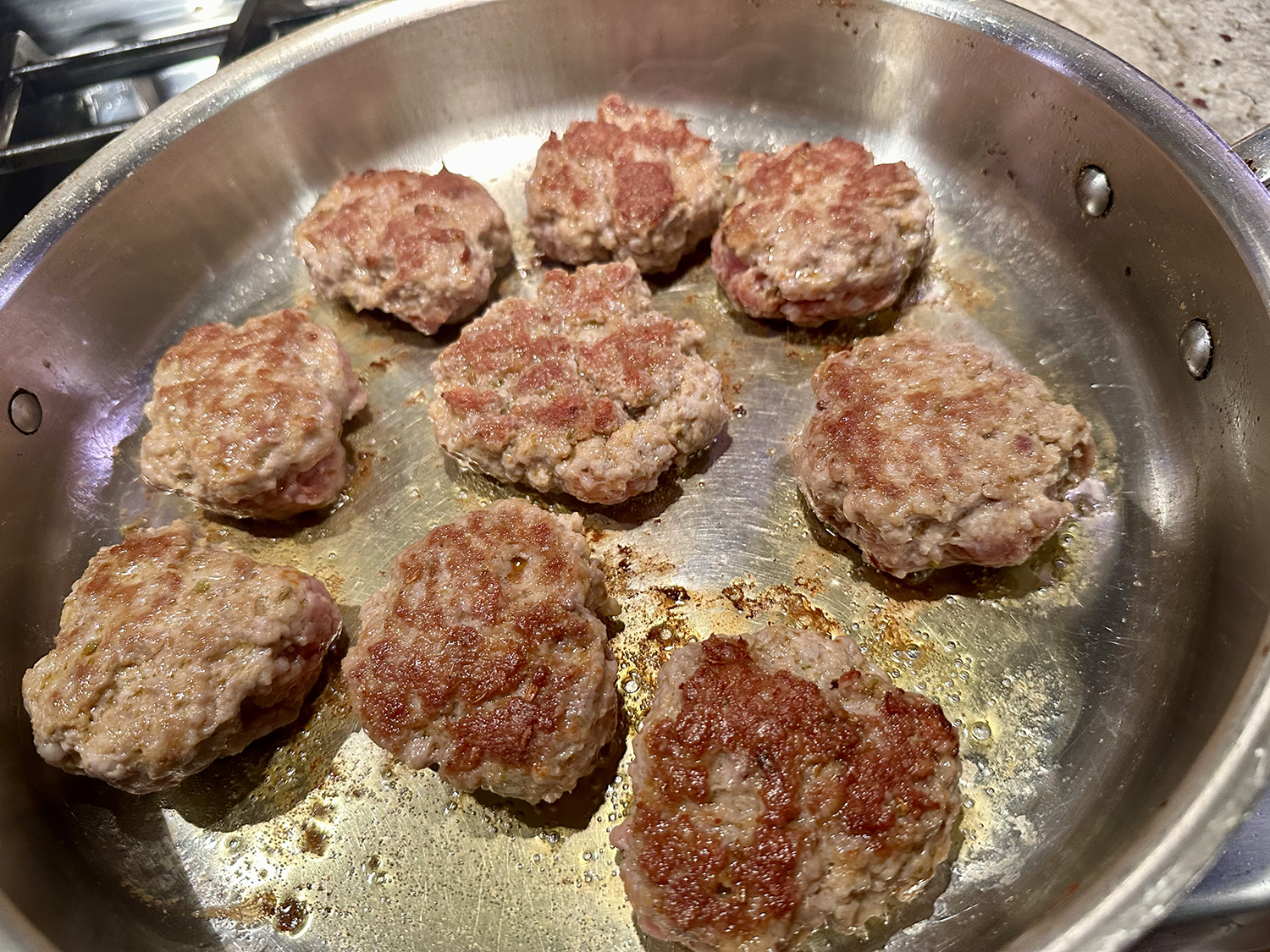
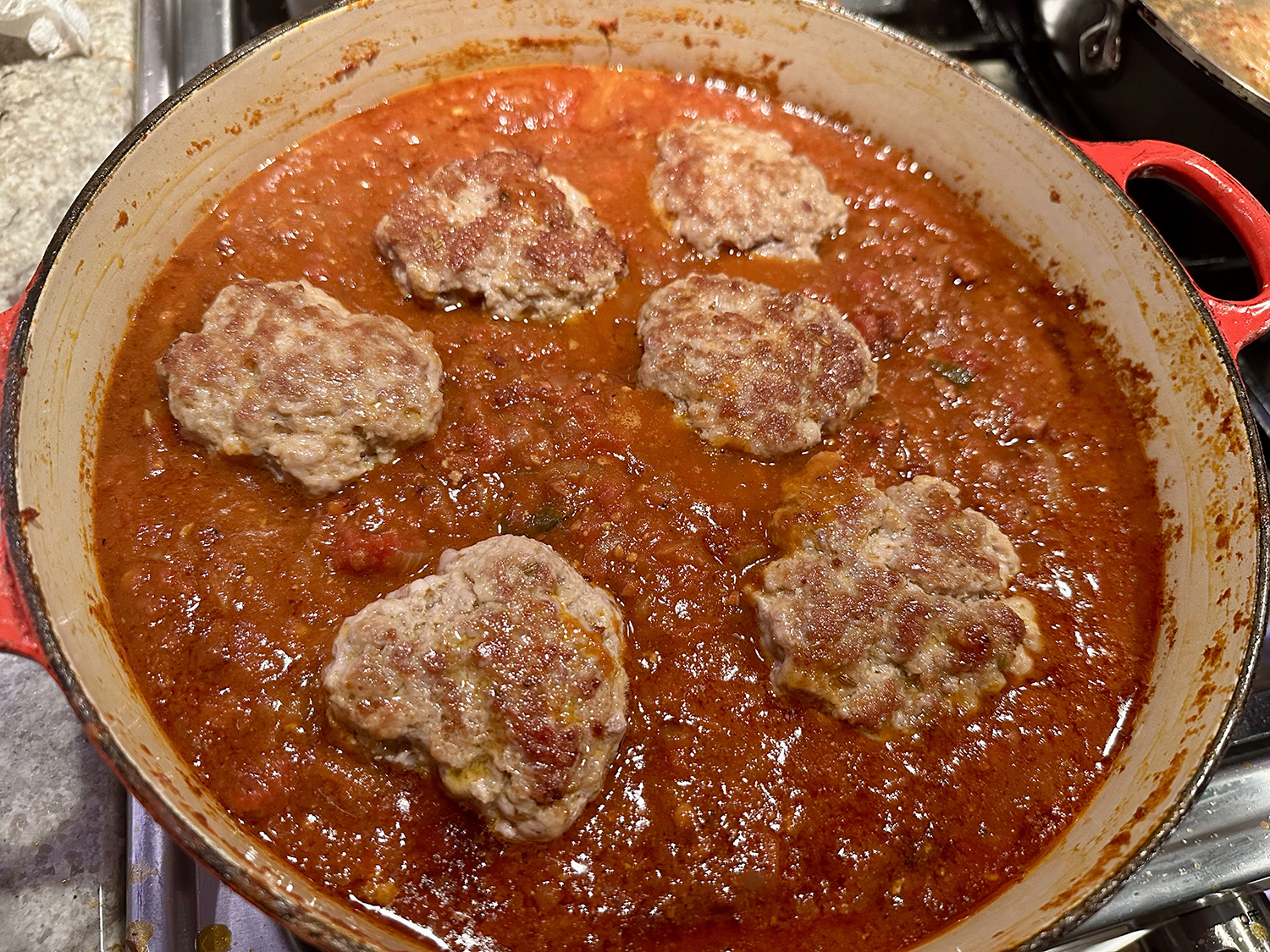
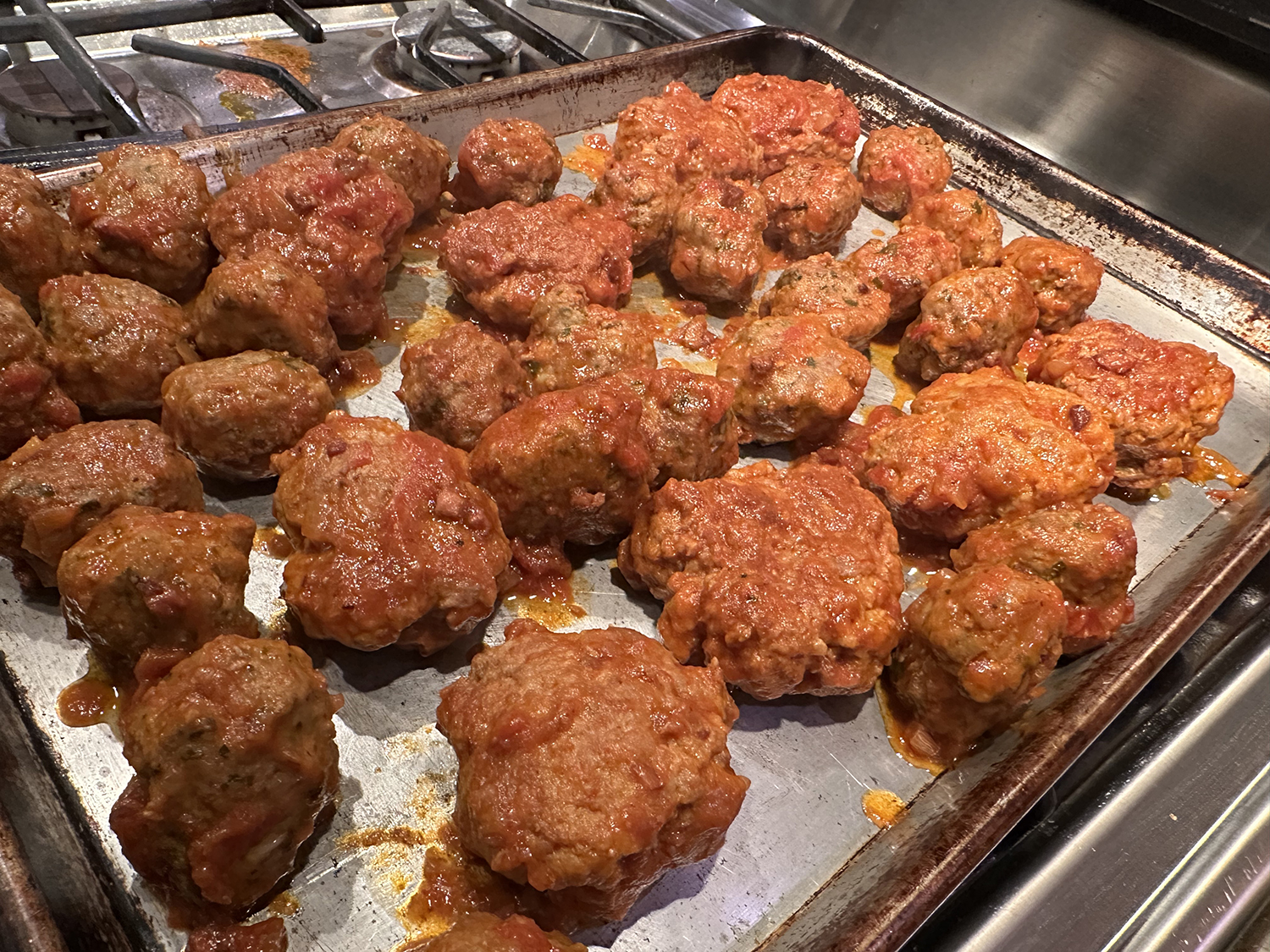
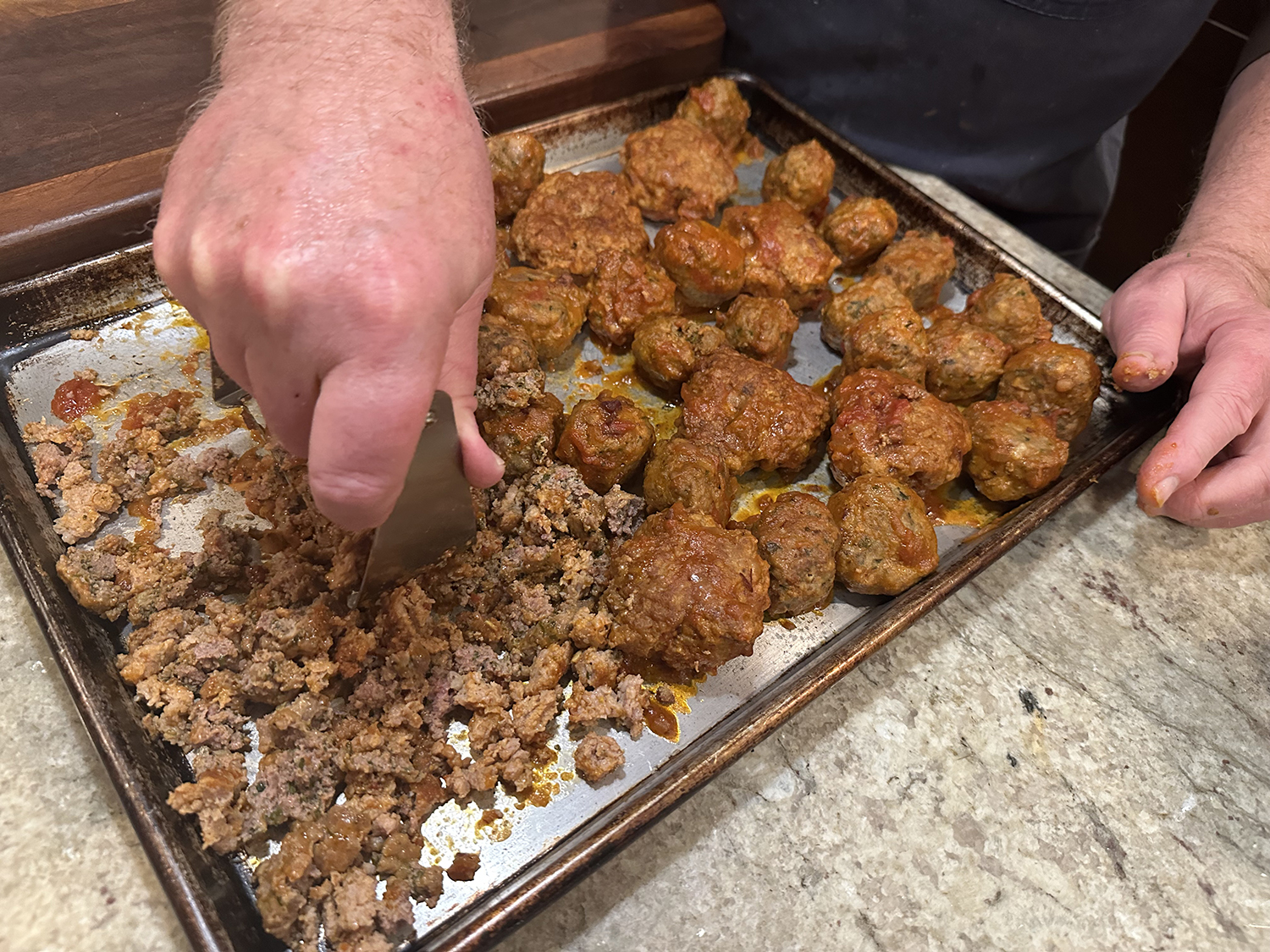
The ingredients and directions that follow are the original from Regina Schrambling for one lasagna. Instead of Italian sausage links, we used bulk and made them into patties for ease of searing and chopping. Many of our photos may show ingredients for two lasagnas, so keep that in mind when making yours.

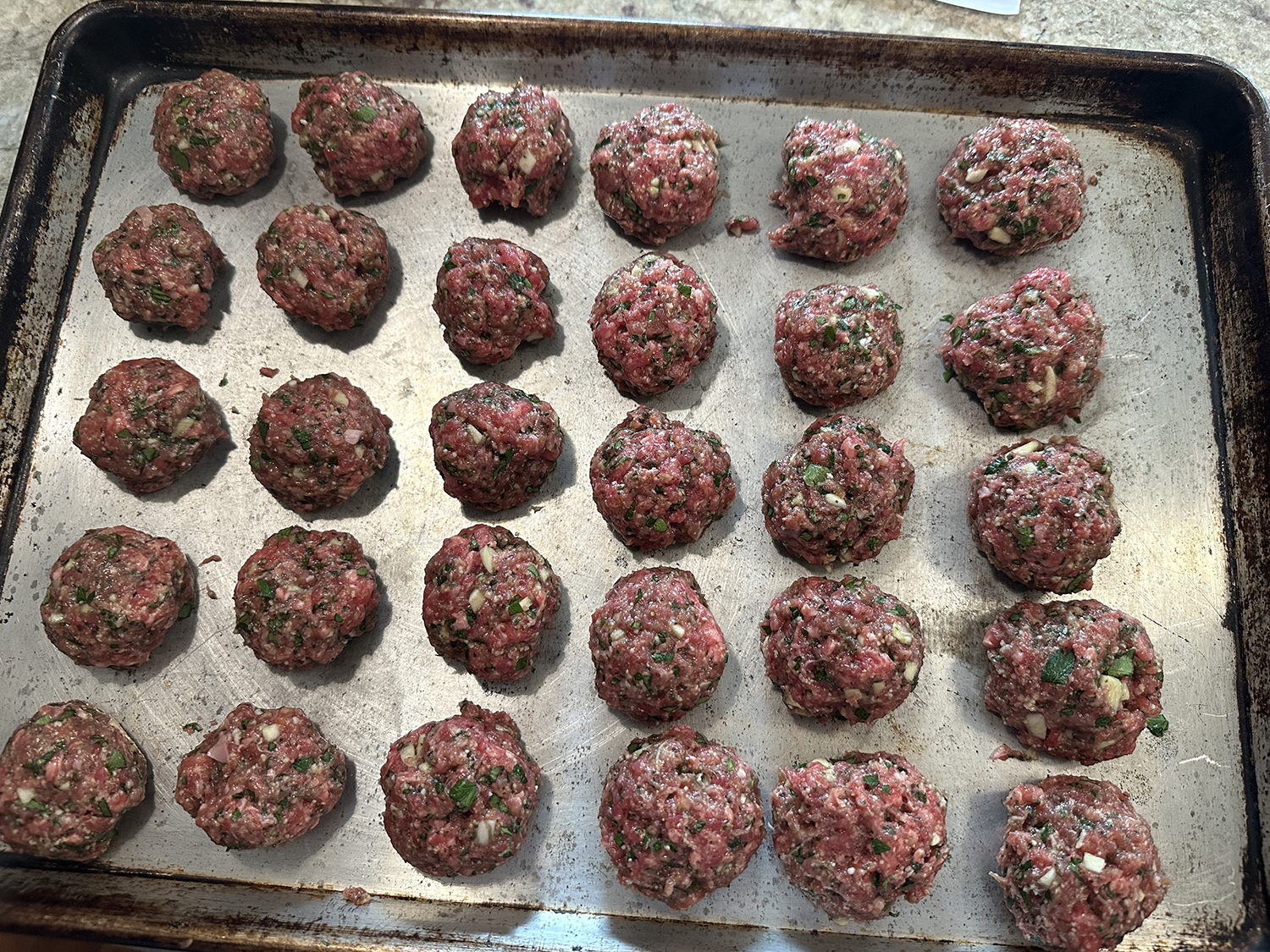
In case you are wondering why make the ground meat into meatballs, only to chop them up later? It certainly gave us pause. One reviewer wrote “I believe the point of cooking the meat in ball shape is to end up with more tender and flavorful meat involving fewer advanced glycation end products. When you “scramble” ground beef, the fat drains out by the time it is fully cooked, and it’s all a bit crispy, grey and tough. The ball shape holds in a lot of the fat and moisture.”

*(If not using fresh noodles, cook them according to package directions for al dente, rinse under cool water and let cool on dry towels until ready to use.)

Amazing (But Prep-Intense) Lasagna

  • Servings: 8-10
  • Difficulty: moderate
  • Print

Ingredients

For the Sauce:

  • 1 cup extra virgin olive oil
  • 2 medium red onions, finely diced
  • 2 large cloves minced garlic
  • 8 oz. pancetta, diced
  • Salt and freshly ground black pepper
  • 1½ cups good red wine, preferably Italian
  • 2 28-oz. cans Italian plum tomatoes
  • 3 Tbsp. tomato paste
  • ¾ lb. ground sirloin
  • ¼ cup freshly grated Pecorino Romano
  • 2 eggs
  • 10 sprigs fresh parsley, leaves only, washed and dried
  • 2 large whole cloves garlic
  • ½ cup flour
  • 1 lb. Italian sausage, hot or sweet, or a mix

For the Lasagna:

  • 1 15-oz. container ricotta cheese
  • 2 eggs
  • 2 cups freshly grated Pecorino Romano
  • ½ cup chopped parsley
  • 1 lb. mozzarella, grated
  • 16 sheets fresh lasagna noodles*

Directions

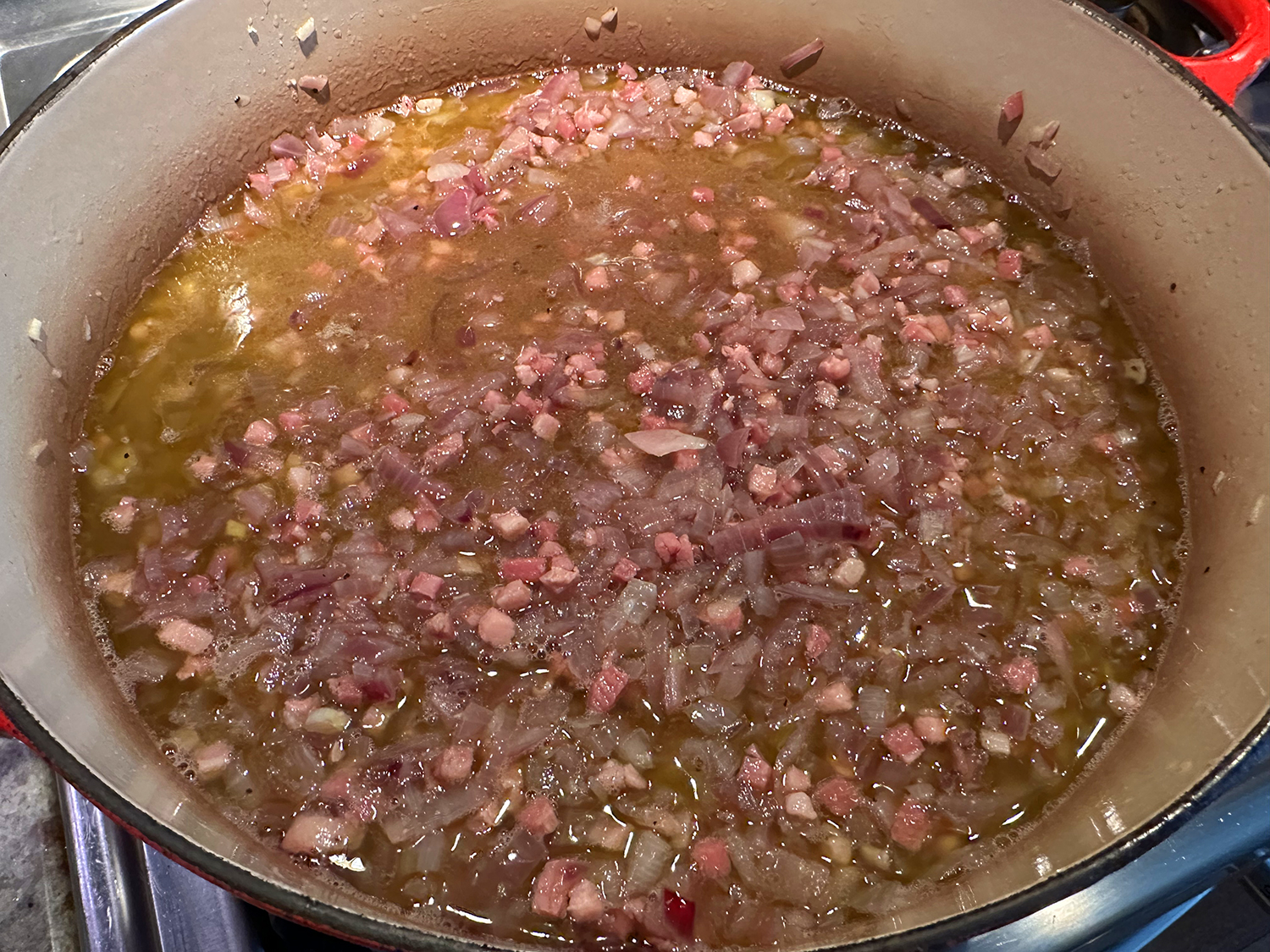
  1. For the sauce, heat ½ cup oil in a large heavy Dutch oven or kettle over low heat. Add the onions, minced garlic and pancetta, and cook, stirring, for 10 minutes, until the onions are wilted. Season liberally with salt and pepper. Raise heat slightly, add the wine and cook until it is mostly reduced, about 20 minutes. Crush the tomatoes into the pan, and add their juice. Add the tomato paste and 2 cups lukewarm water. Simmer for 1 hour.
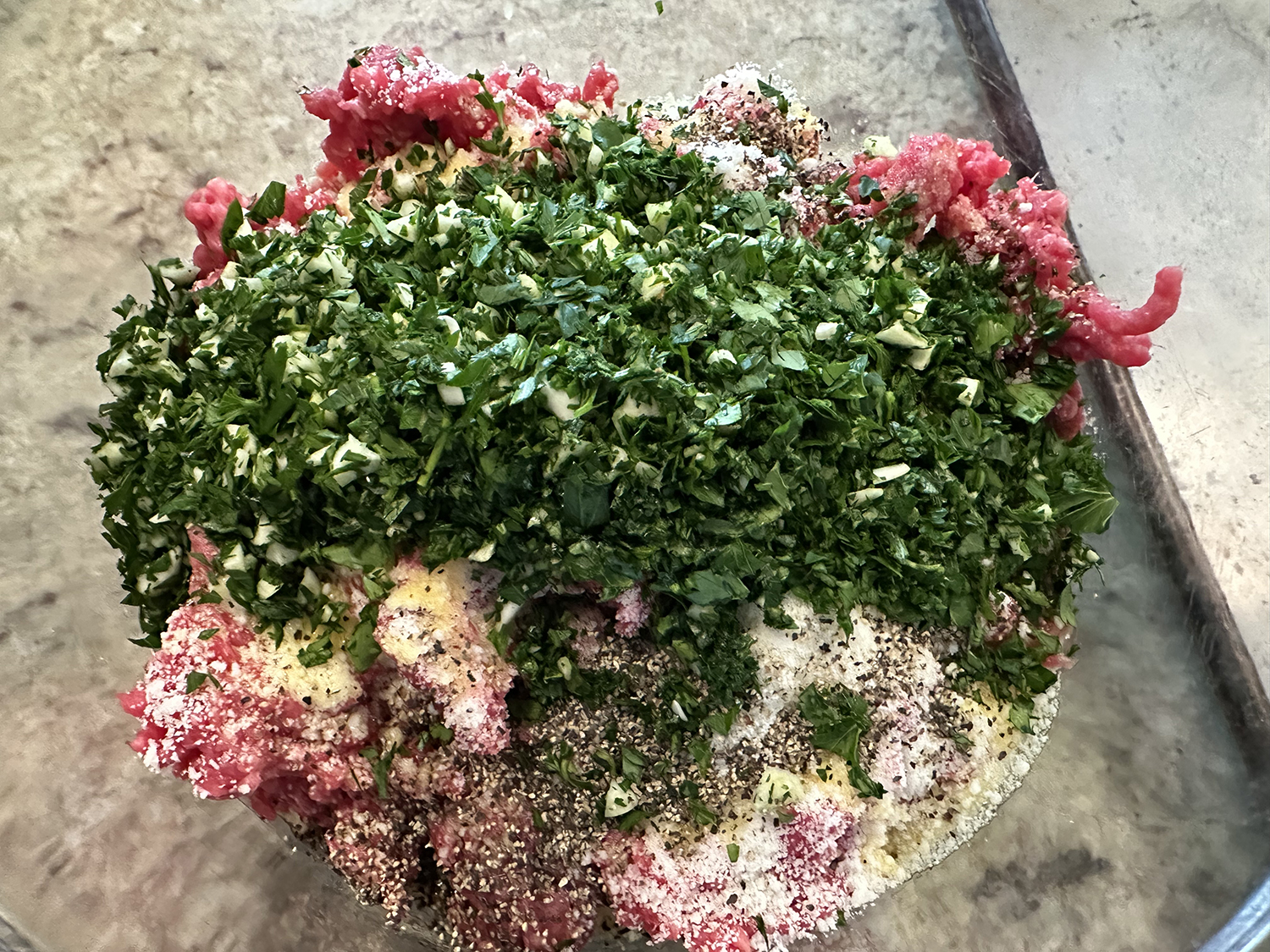
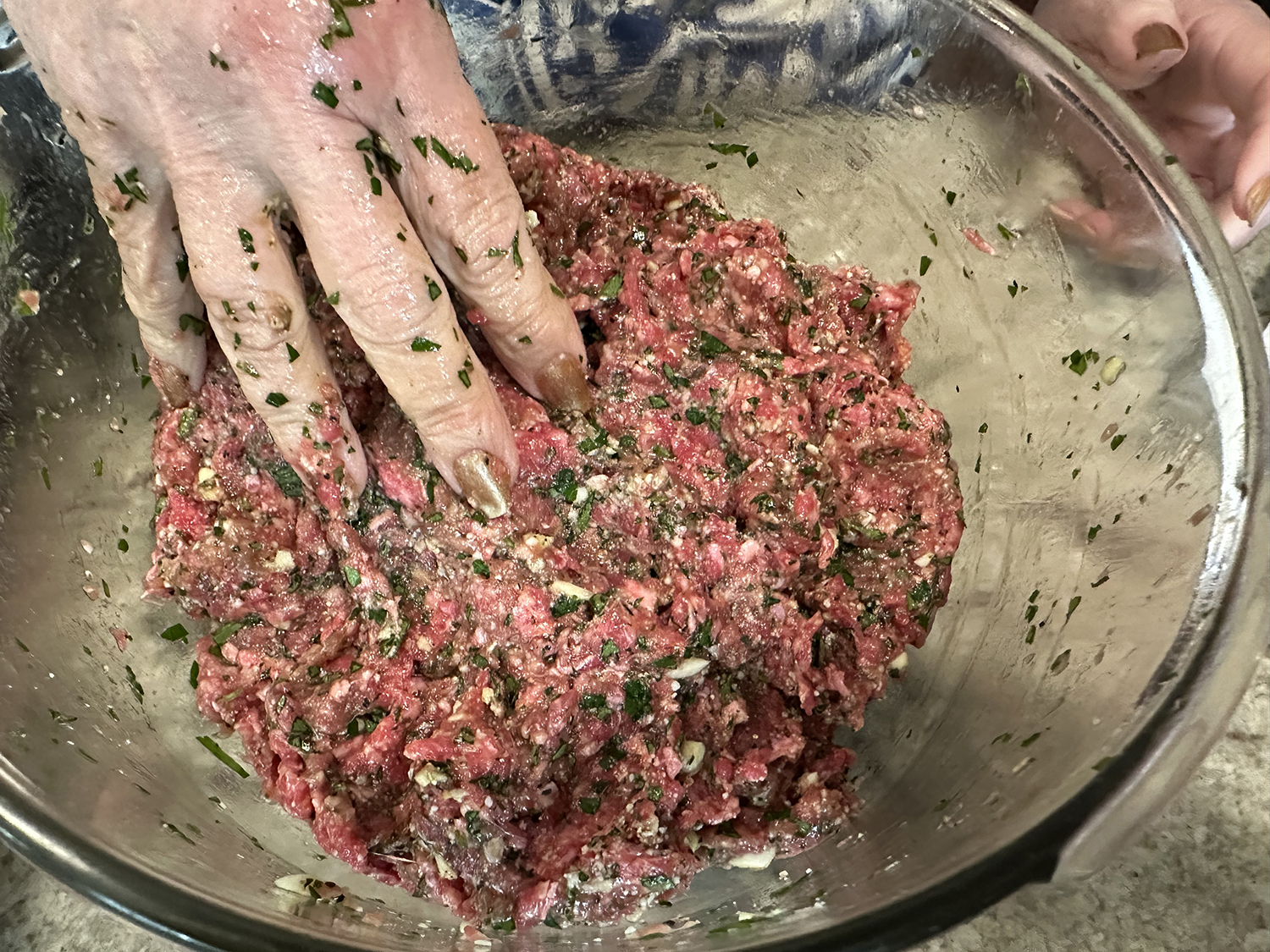
  2. Combine the sirloin, cheese and eggs in a large bowl. Chop the parsley with the whole garlic until fine, then stir into the beef mixture. Season lavishly with salt and pepper. Using your hands, mix until all the ingredients are well blended. Shape into meatballs and set aside.
  3. Heat the remaining oil in a large skillet over medium-high heat. Dust the meatballs lightly with flour, shaking off excess, and lay into the hot oil. Brown the meatballs on all sides (do not cook through) and transfer to the sauce.
  4. In a clean skillet, brown the sausages over medium-high heat. Transfer to the sauce. Simmer 1½ hours.
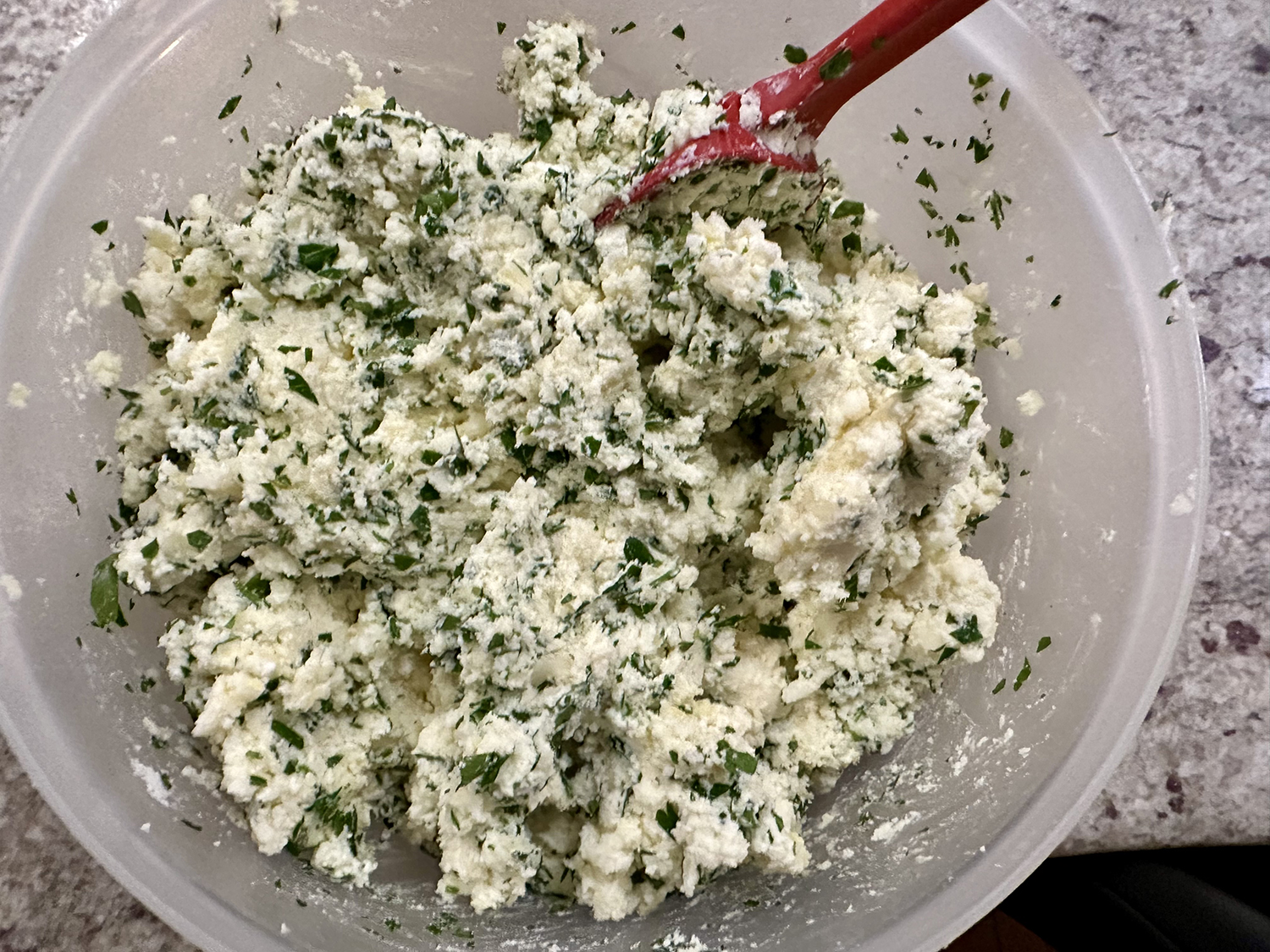
  5. Heat the oven to 350°F. In a large bowl, combine the ricotta, eggs, Pecorino Romano, parsley and all but 1 cup of the mozzarella. Season well with salt and pepper. Mix thoroughly.
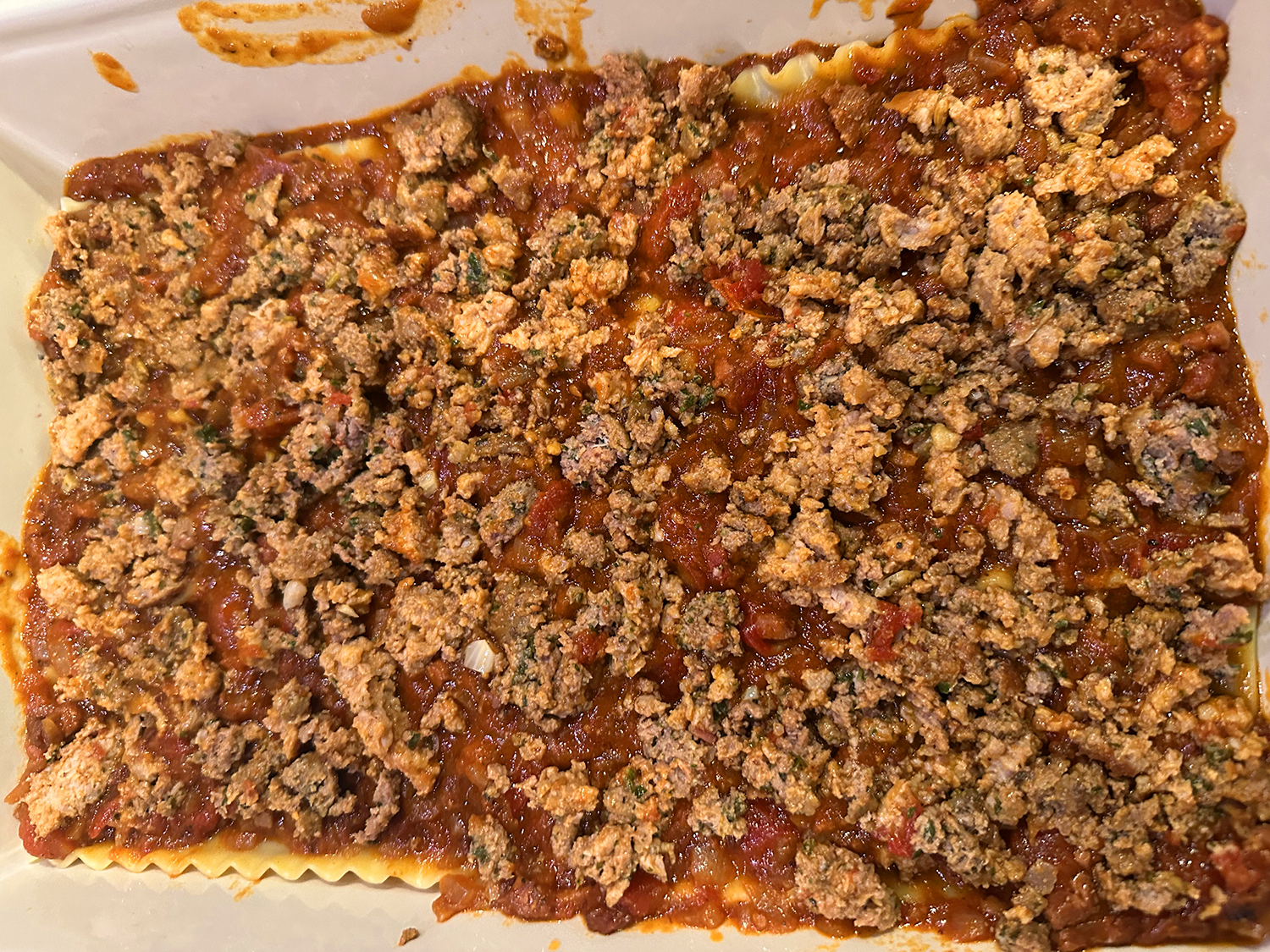
  6. Remove the meatballs and sausage from the sauce, and set aside to cool slightly, then chop coarsely. Spoon a thick layer of sauce into the bottom of a 9-by-12-inch lasagna pan. Cover with a layer of overlapping noodles (usually 4 per layer).
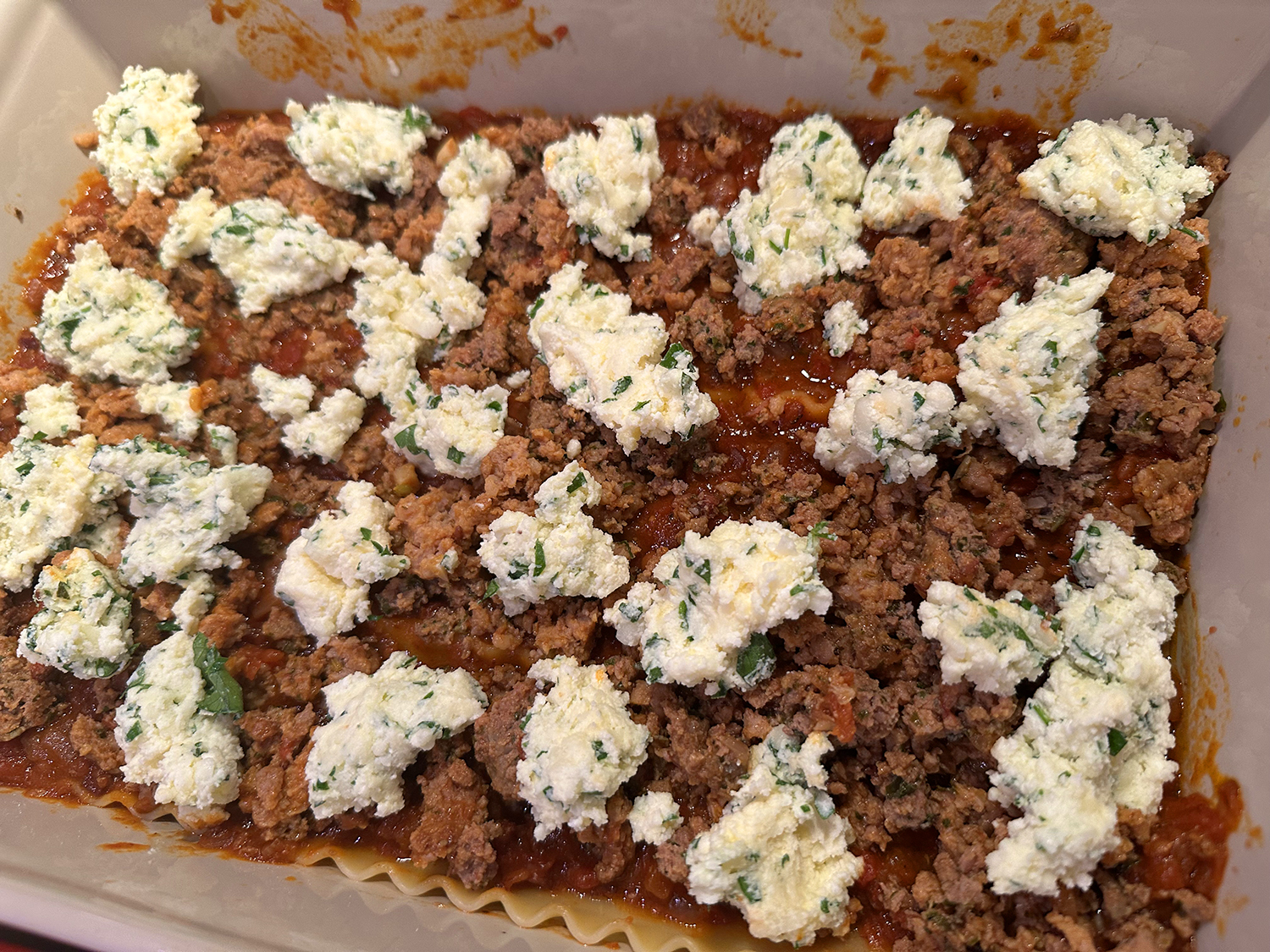
  7. Spoon more sauce on top, then add a third of the meat and a third of the cheese mixture. Repeat for 2 more layers, using all the meat and cheese. Top with a layer of noodles, and cover with the remaining sauce. Sprinkle reserved mozzarella evenly over the top.
  8. Bake 30* minutes. (If the lasagna was refrigerated overnight, take it out one hour before you bake. The baking time will be increased by almost double. Check with an internal thermometer and if the temp reads 165°F, it is done.) Let stand 10 minutes before serving.

http://www.lynnandruss.com

Adapted from a recipe by Regina Schrambling for NYTimes Cooking

The Ultimate Beef Wellington with Green Peppercorn Sauce

It’s the holidays, so not only do you dress to impress, but you dazzle with the ultimate in decadence when it comes to the star of the show, your entrée. This Beef Wellington recipe is not for culinary novices, so perhaps engage a more knowledgeable foodie to assist in the preparation.

That being said, it’s definitely a special-occasion meal, so plan on giving it your all, and neither you, nor your guests, will be disappointed. In fact it was exclaimed the “BEST Christmas dinner ever” by a few at the table, and we couldn’t disagree.

We decided to prep much of the work ahead, so we made the duxelles and the green peppercorn sauce the day before. The beef tenderloin had dry-aged overnight in the refrigerator the day before and got the wrap treatment after we finished making the duxelles, then again went into the fridge overnight. The puff pastry exterior was accomplished slightly before it made it’s way into the oven to roast.

And of course being a designer/artist, I couldn’t just wrap the beef in puff pastry without adding some sort of embellishment, in this case, various sized stars.

The Ultimate Beef Wellington with Green Peppercorn Sauce

  • Servings: 6-8
  • Difficulty: moderate
  • Print

Ingredients

For the Duxelles:

  • 3 pints (1 1/2 lbs.) white button mushrooms
  • 2 shallots, peeled and roughly chopped
  • 4 cloves garlic, peeled and roughly chopped
  • 2 sprigs fresh thyme, leaves only
  • 2 Tbsp. unsalted butter
  • 2 Tbsp. extra-virgin olive oil
  • Kosher salt and freshly ground black pepper

For the Beef:

  • One 3-lb. center cut beef tenderloin (filet mignon), trimmed
  • Extra-virgin olive oil
  • Kosher salt and freshly ground black pepper
  • 12 thin slices prosciutto
  • 6 sprigs of fresh thyme, leaves only
  • 2 Tbsp. Dijon mustard
  • Flour, for rolling out puff pastry
  • 1 lb. puff pastry, thawed if using frozen
  • 2 large eggs, lightly beaten
  • 1/2 tsp. coarse sea salt
  • Minced chives, for garnish
  • Green Peppercorn Sauce, recipe follows
  • Roasted Fingerling Potatoes with Fresh Herbs and Garlic, recipe follows

Green Peppercorn Sauce:

  • 2 Tbsp. olive oil
  • 2 shallots, sliced
  • 2 cloves garlic, peeled and smashed
  • 3 sprigs fresh thyme, leaves only
  • 1 cup brandy
  • 1 box beef stock
  • 2 cups cream
  • 2 Tbsp. grainy mustard
  • 1/2 cup green peppercorns in brine, drained, brine reserved

Roasted Fingerling Potatoes with Fresh Herbs and Garlic: 4-6 servings, 25 minutes.

  • 2 lbs. fingerling potatoes, cut in half horizontally
  • 2 sprigs fresh rosemary, leaves removed and coarsely chopped
  • 3 sprigs fresh sage, leaves removed and chopped
  • 3 sprigs fresh thyme, leaves removed and chopped
  • 6 cloves garlic, left unpeeled
  • 2 tsp. whole-grain mustard, (optional)
  • 3 Tbsp. extra-virgin olive oil, plus more for sheet pan
  • Salt and pepper, to taste

Directions

  1. To make the Duxelles: Add mushrooms, shallots, garlic, and thyme to a food processor and pulse until finely chopped. Add butter and olive oil to a large saute pan and set over medium heat. Add the shallot and mushroom mixture and saute for 8 to 10 minutes until most of the liquid has evaporated. Season with salt and pepper and set aside to cool.
  2. To prepare the beef: Tie the tenderloin in 4 or more places so it holds its cylindrical shape while cooking. Drizzle with olive oil, then season with salt and pepper and sear all over, including the ends, in a hot, heavy-based skillet lightly coated with olive oil – about 2 to 3 minutes. Meanwhile set out your prosciutto on a sheet of plastic wrap (plastic needs to be about a foot and a half in length so you can wrap and tie the roast up in it) on top of your cutting board. Shingle the prosciutto so it forms a rectangle that is big enough to encompass the entire filet of beef. Using a rubber spatula cover evenly with a thin layer of duxelles. Season the surface of the duxelles with salt and pepper and sprinkle with fresh thyme leaves. When the beef is seared, remove from heat, cut off twine and smear lightly all over with Dijon mustard. Allow to cool slightly, then roll up in the duxelles covered prosciutto using the plastic wrap to tie it up nice and tight. Tuck in the ends of the prosciutto as you roll to completely encompass the beef. Roll it up tightly in plastic wrap and twist the ends to seal it completely and hold it in a nice log shape. Set in the refrigerator for 30 minutes, up to overnight, to ensure it maintains its shape.
  3. Preheat oven to 425 degrees F.
  4. On a lightly floured surface, roll the puff pastry out to about a 1/4-inch thickness. Depending on the size of your sheets you may have to overlap 2 sheets and press them together. Remove beef from refrigerator and cut off plastic. Set the beef in the center of the pastry and fold over the longer sides, brushing with egg wash to seal. Trim ends if necessary then brush with egg wash and fold over to completely seal the beef – saving ends to use as a decoration on top if desired. Top with coarse sea salt. Place the beef seam side down on a baking sheet.
  5. Brush the top of the pastry with egg wash then make a couple of slits in the top of the pastry using the tip of a paring knife—this creates vents that will allow the steam to escape when cooking. Bake for 40 to 45 minutes until pastry is golden brown and beef registers 125 degrees F on an instant-read thermometer. Remove from oven and rest before cutting into thick slices. Garnish with minced chives, and serve with Green Peppercorn Sauce and Roasted Fingerling Potatoes with Fresh Herbs and Garlic.
  6. For the Green Peppercorn Sauce: Add olive oil to pan after removing beef. Add shallots, garlic, and thyme; sauté for 1 to 2 minutes, then, off heat, add brandy and flambé using a long kitchen match. After flame dies down, return to the heat, add stock and reduce by about half. Strain out solids, then add 2 cups cream and mustard. Reduce by half again, then shut off heat and add green peppercorns. Can be made ahead, covered and put into the refrigerator. Reheat slowly in a saucepan when ready to eat.
  7. Roasted Fingerling Potatoes with Fresh Herbs and Garlic: Preheat oven to 500 degrees F and place a baking sheet inside to heat. Add potatoes, rosemary, sage, thyme, garlic, and mustard (if using) to a medium bowl. Drizzle with the olive oil, season to taste with salt and pepper, and toss well.
  8. Remove sheet pan from oven, lightly coat it with olive oil, and pour potatoes onto pan, reserving the bowl. Place potatoes in oven and reduce heat to 425 degrees F. Roast for 20 minutes, or until crispy on outside and tender on inside.
  9. Place roasted potatoes in the bowl. Remove the garlic cloves from their peels and place in a small bowl. Mash the garlic, then return it to the bowl and blend it well with the potatoes. Serve.

http://www.lynnandruss.com

Adapted from recipes by Tyler Florence

Orange Beef

Many years ago when we were first dating, there was this local Chinese restaurant that had a wonderful Orange Beef on their menu. Once they closed down, we never found another satisfactory restaurant nearby with a version that quite measured up. Recently we saw this home cook’s recipe in the NYTimes Cooking by Sam Sifton that certainly looked fantastic, and tasted phenomenal.

This recipe for takeout-style orange beef, has a more intense orange-flavored sauce than many. It is important to use very good steak, and cook it fast, so that below the lovely crust of its egg-white-and-cornstarch batter, the meat remains rare and luscious.

And make it a few times because what appears difficult, and a lot of prep, the first time through — the coating of the beef, the making of the sauce, the stir-frying of the aromatics, the stir-frying of the beef — is in fact, fast and easy work, and much, much better than takeout.

As suggested, we served with steamed broccoli and white rice. But there is no way that you get 4 decent servings* out of it—between 2 and 3 is more realistic. Based on some reviewer’s comments on the longish prep time, go ahead and make the sauce the night before while cooking something else, then throw it in the fridge. This will certainly expedite the prep time.

One suggestion: *Throw in some veggies and cook them for 3-5 min in a hot wok/sauté pan. Some examples are snap peas, red and yellow peppers and some mushrooms. It would be a more balanced and substantial meal.

Orange Beef

  • Servings: 2-3
  • Difficulty: moderately easy
  • Print

Ingredients

For the Sauce

  • 1 Tbsp. neutral oil
  • 1 1½-inch piece fresh ginger, peeled and minced
  • 1 jalapeño pepper, seeded and minced
  • 2 Tbsp. orange zest, plus the juice of one orange
  • 3 garlic cloves, peeled and minced
  • ¼ cup light brown sugar
  • ¼ cup rice vinegar (do not use seasoned rice vinegar)
  • ¼ cup soy sauce
  • 1 Tbsp. fish sauce

For the Beef

  • 1 large egg white
  • 1 Tbsp. cornstarch
  • 1 pinch kosher salt
  • 1 boneless rib-eye steak, approximately 1 to 1½ lbs, cut into 1-inch pieces
  • ¼ cup neutral oil
  • 6 scallions, white and green parts cut into inchlong pieces and separated
  • 2 to 4 dried red chiles, or to taste

Directions

  1. Make the sauce: Heat oil in a small sauce pan set over medium-high heat. When it begins to shimmer, add ginger, jalapeño and orange zest and stir to combine. Sauté mixture until ingredients soften, approximately 2 to 3 minutes, then add garlic and continue cooking until it softens, approximately 1 to 2 minutes longer.
  2. Add orange juice, brown sugar, rice vinegar, soy sauce and fish sauce to pan and stir to combine. Allow mixture to come to a boil, then lower the heat and cook, stirring occasionally, until it thickens and reduces by half, approximately 10 to 15 minutes.
  3. Meanwhile, prepare the meat: Combine egg white, cornstarch and salt in a bowl. Add steak, tossing to coat the meat with the batter.
  4. In a large skillet or wok set over high heat, heat oil until it shimmers and is about to smoke. Add beef to the pan or wok in a single layer and cook without stirring until the bottoms of the pieces are crisp and golden, approximately 60 to 90 seconds. Add white pieces of scallion and chiles to the pan, then turn the beef pieces over and cook the other sides, stirring occasionally, about 3 minutes more for medium-rare. Transfer to a platter.
  5. Pour orange sauce into the hot pan or wok, let it boil and stir it as it thickens. Add meat and white scallions and stir to coat with the sauce. Return meat and sauce to the platter and scatter green scallions over the top. Serve with steamed broccoli and white rice.

http://www.lynnandruss.com

Recipe by Sam Sifton for the NYTimes Cooking

Double Mushroom and Sherry Meatloaf

Way back in the Winter of 2011, Fine Cooking Magazine ran an article on their favorite meatloaf recipes. I made a copy of the 6-page story and it came in handy when we recently had a hankering for a different flavor profile meatloaf.

The beauty of the composed piece was that it not only gave you 8 different meatloaf recipes, but also how and what to throw together if you wanted to make your own combination. We chose the Double Mushroom and Sherry Meatloaf option this time, and pretty much followed it to a tee.

The end result was so moist and loose, not tight and densely packed. While it did take a good 15 minutes longer to come to temperature in the oven, it was well worth the wait. If you’d prefer the topping a little less sweet, switch out the ketchup for tomato sauce.

Double Mushroom and Sherry Meatloaf

  • Servings: 6-8
  • Difficulty: easy
  • Print

Ingredients

  • 2 Tbsp. olive oil
  • 1 medium onion, chopped
  • 2 large garlic cloves, finely chopped
  • 1 cup fresh cremini mushrooms, chopped
  • 1/4 cup dried porcini mushrooms, rehydrated and chopped
  • 3/4 cup dry sherry
  • 4 oz. sliced white bread
  • 1 cup whole milk
  • 1 lb. ground veal
  • 1 lb. ground pork
  • 2 large eggs, slightly beaten
  • 1 Tbsp. Worcestershire sauce
  • 2 1/2 tsp. salt
  • 1/2 tsp.pepper
  • 1 Tbsp. mix of chopped thyme and sage
  • 3 Tbsp. ketchup

Directions

  1. Position a rack in the center of the oven and preheat to 375°F.
  2. Heat oil in a 12″ skillet over medium-low heat.Cook the aromatics (onion, garlic, mushrooms), stirring frequently until softened and just beginning too brown, 6 to 8 minutes.
  3. Add the sherry and simmer briskly until almost dry, 4 to 5 minutes. Transfer to a large bowl and let cool until warm.
  4. In a shallow dish that holds it in a single layer, soak the bread in the milk, flipping once, until soggy but not falling apart, 5 to 10 minutes. Lightly squeeze a handful of bread a a time to remove some of the milk. Finely chop and add to the bowl with the cooked aromatics.
  5. Add the ground meats, 2 beaten eggs, chopped fresh herbs, 1 tablespoon of Worcestershire, 2 1/2 teaspoons salt and 1/2 teaspoon ground pepper. Use your hands to gently combine the meat mixture without overworking it.
  6. Line the bottom of a 9 x 13-inch loaf pan with parchment. Transfer the meatloaf mixture to the pan and level out the meat to fill the rectangular block. Top with the ketchup.
  7. Bake until an instant-read thermometer in the middle of the loaf registers 160°F, 45 to 60 minutes.
  8. When done, pull from oven and let rest for 10 minutes. With a large spatula, transfer to a cutting board or serving platter and cut into 3/4- to 1-inch slices. Serve with more ketchup on the side, if desired.

http://www.lynnandruss.com

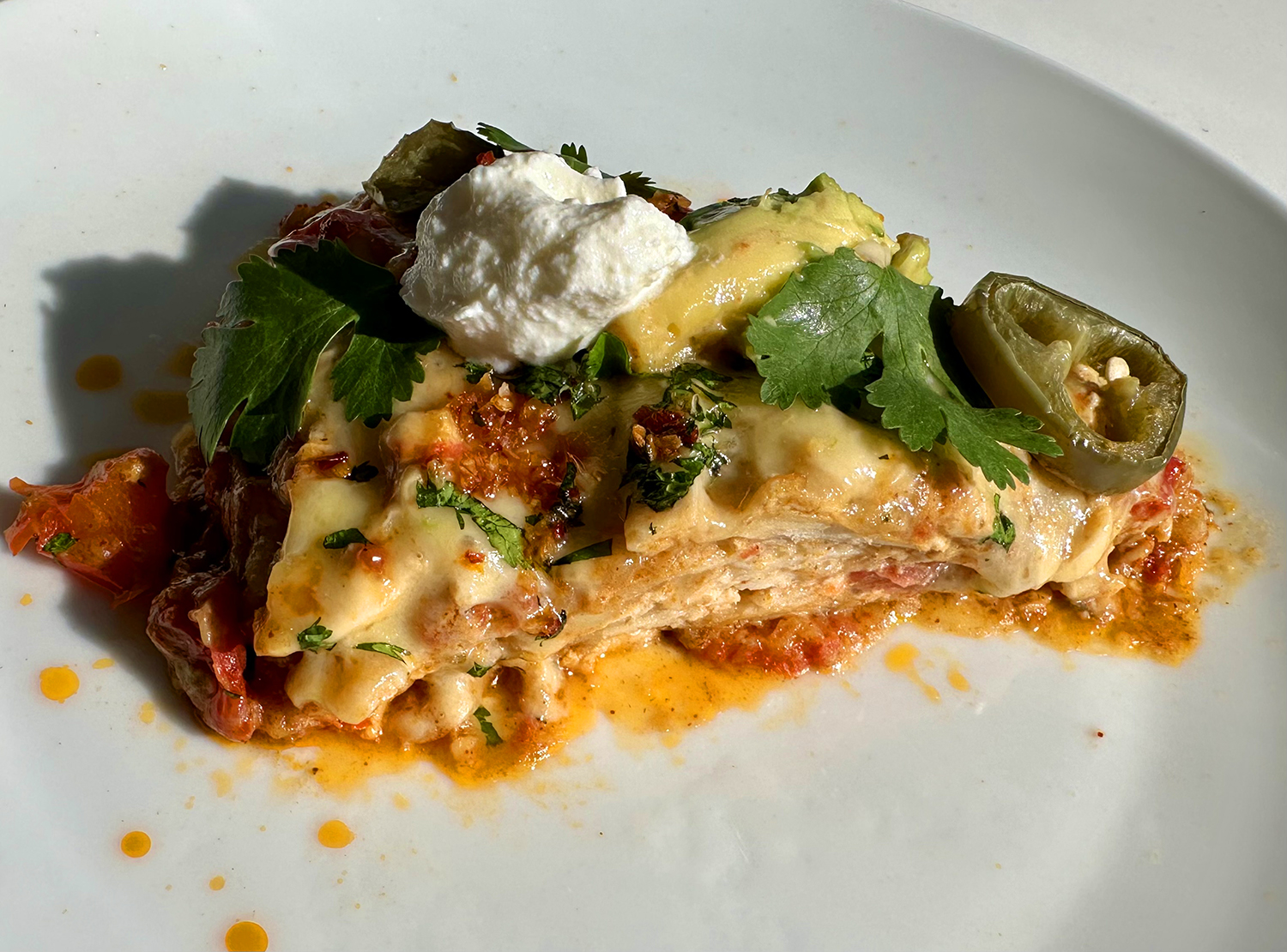
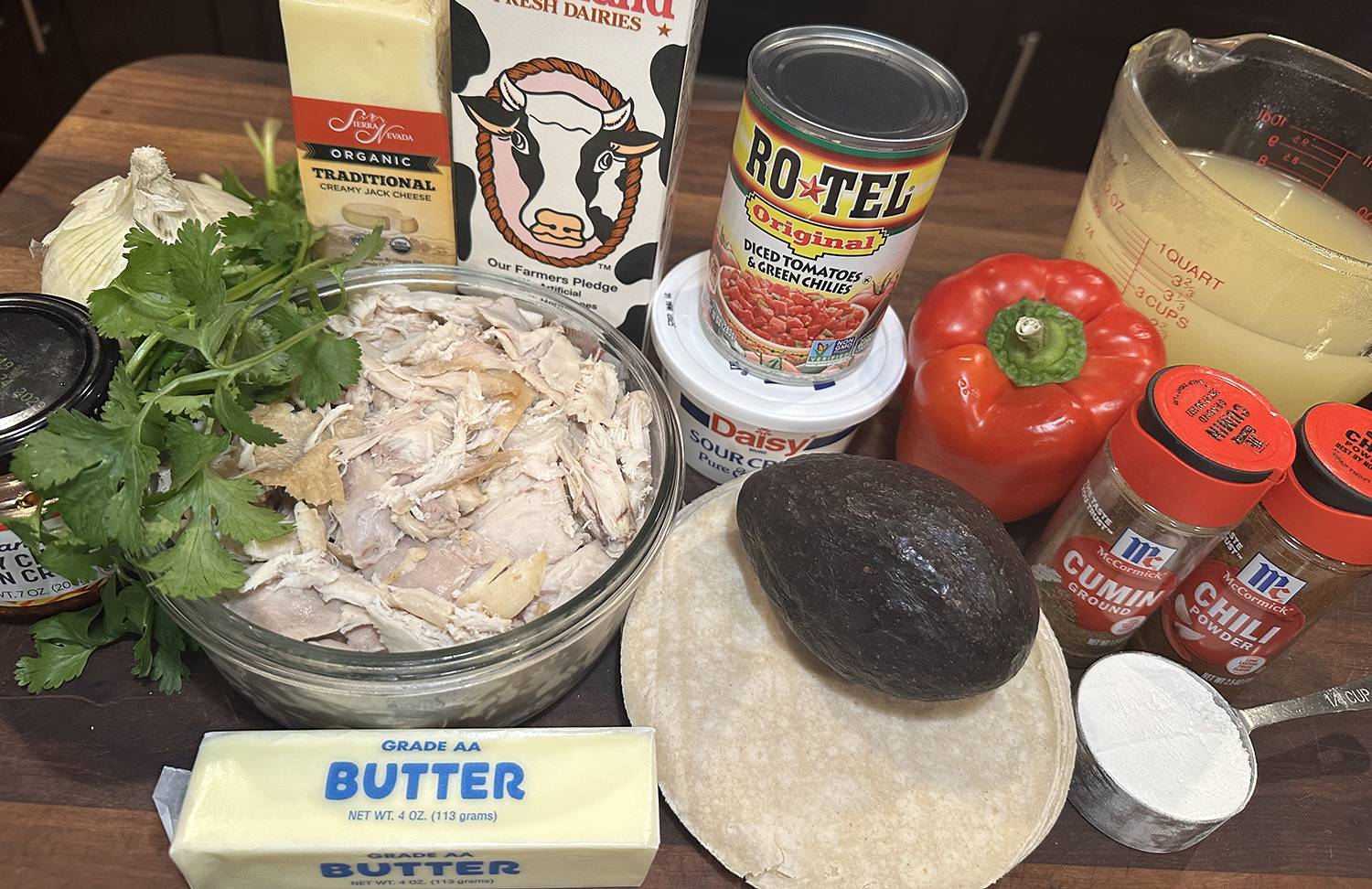
Cheese Enchiladas

According to the NYTimes Cooking article where we found this recipe, enchiladas are an essential component of Houston’s ebullient, dynamic foodways. Mexican in origin, while distinctly Tex-Mex at the same time, the dish adapts to its surroundings. Each enchilada recipe is deeply local: The style ubiquitous in Monterrey, Mexico, will be different from those found in San Antonio or El Paso or Mexico City.

But from enchilada to enchilada, the common denominator is deliciousness. In “The Enchilada Queen Cookbook,” Sylvia Casares notes, “for Tex-Mex-style cheese enchiladas, yellow cheese, such as Cheddar, is the traditional choice” yielding “the quintessential Tex-Mex enchilada.” 

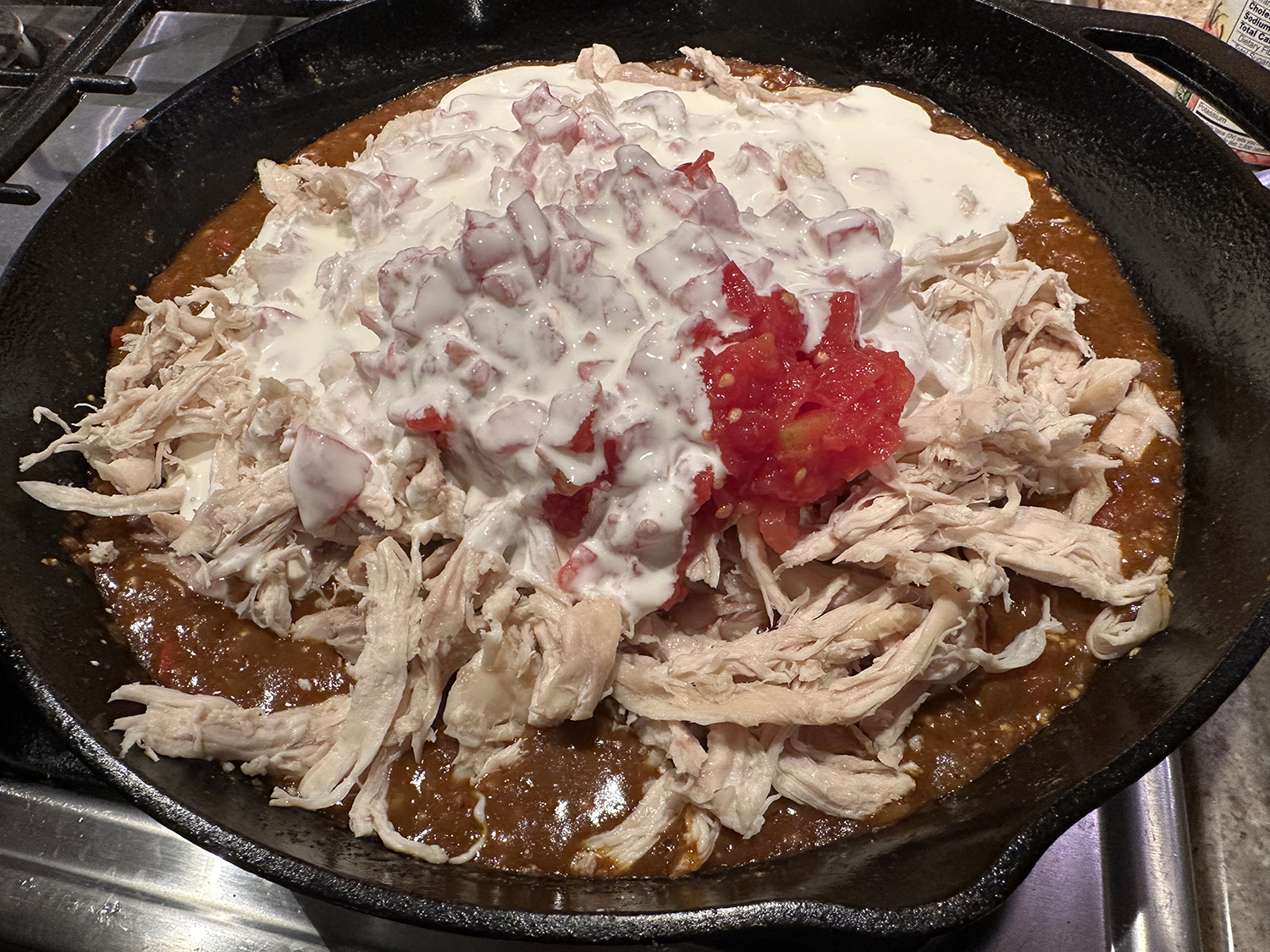
Options: Buy a rotisserie chicken, shred it and add a quarter cup meat to each tortilla along with the cheese. To make it vegetarian, swap out the beef broth for vegetable broth, Better Than Bullion is a good brand. As an extra topping, add pickled jalapeños.

Puritans implore you NOT to use flour tortillas. Well, that was our only option at the supermarket (surprisingly), so instead of the listed corn tortillas, we went with the flour ones. They don’t crack like the corn versions, and turned out fine. Just saying, use what you feel comfortable doing. Ours was only a package of 8 instead of 10, but they fit the casserole dish just fine, and we had extra cheese to top them with.

NOTE: You want ground dried chiles, not chili powder, which includes other spices and salt. The choice of mild, medium or hot chile powder is up to you, but avoid using chipotle chile powder, which can end up bitter.

Cheese Enchiladas

  • Servings: 4-5
  • Difficulty: easy
  • Print

Ingredients

  • 3 Tbsp. neutral oil, such as canola, plus more for greasing
  • 3 Tbsp. all-purpose flour
  • 4 garlic cloves, minced
  • 2 Tbsp. ground red chile powder (see Tip)
  • 2 tsp. ground cumin
  • 1 tsp. dried oregano
  • ½ tsp. ground black pepper, plus more for sprinkling
  • 2 cups beef broth
  • Salt
  • 10 corn tortillas
  • 1 lb. shredded cheddar (5 cups)
  • ½ cup finely diced white onion
  • Fresh parsley or cilantro, for garnish (optional)

Directions

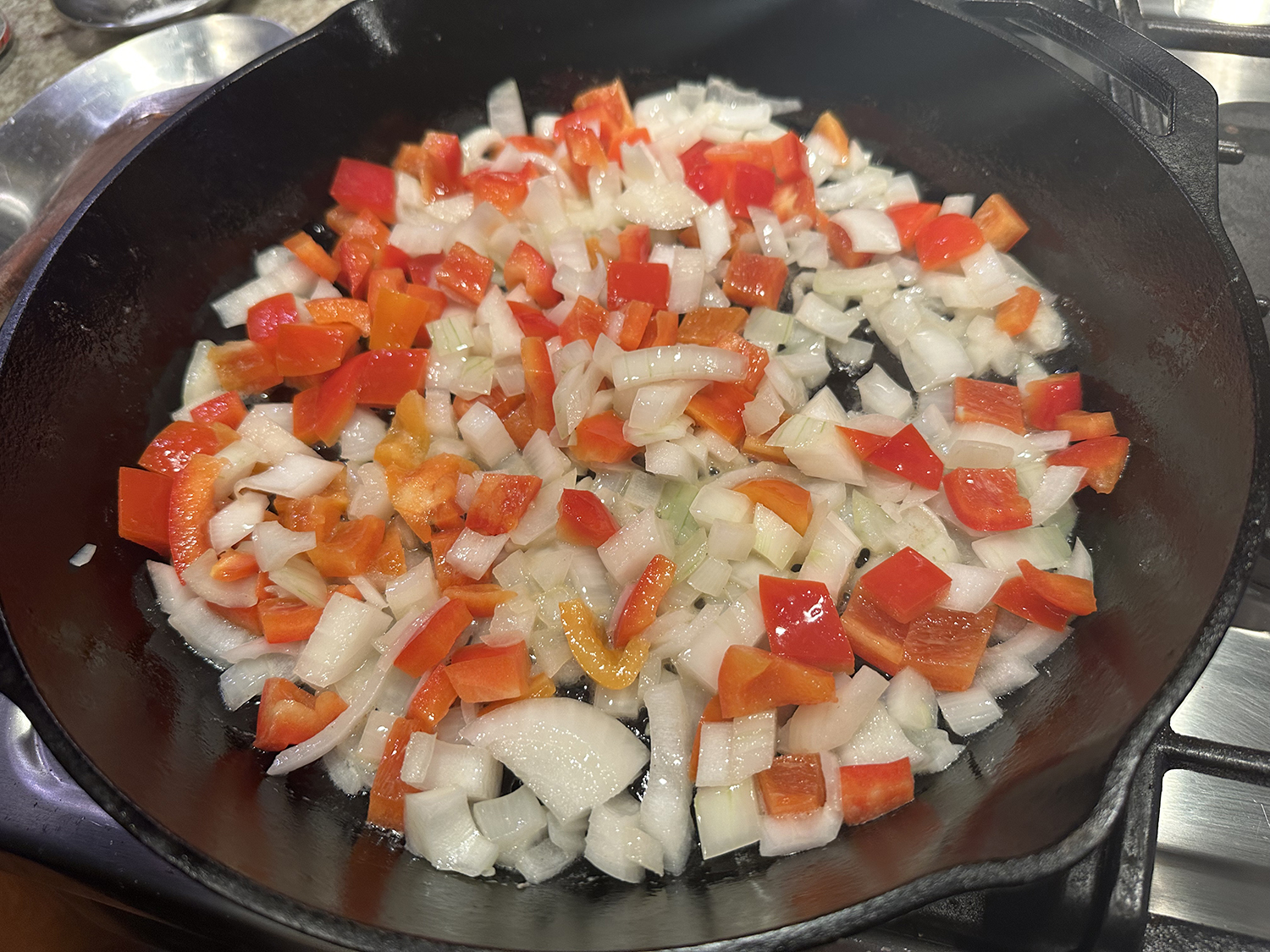
  1.  Heat oven to 350 degrees. Lightly grease a 9-by-13-inch shallow baking dish or pan or a very large cast-iron skillet.
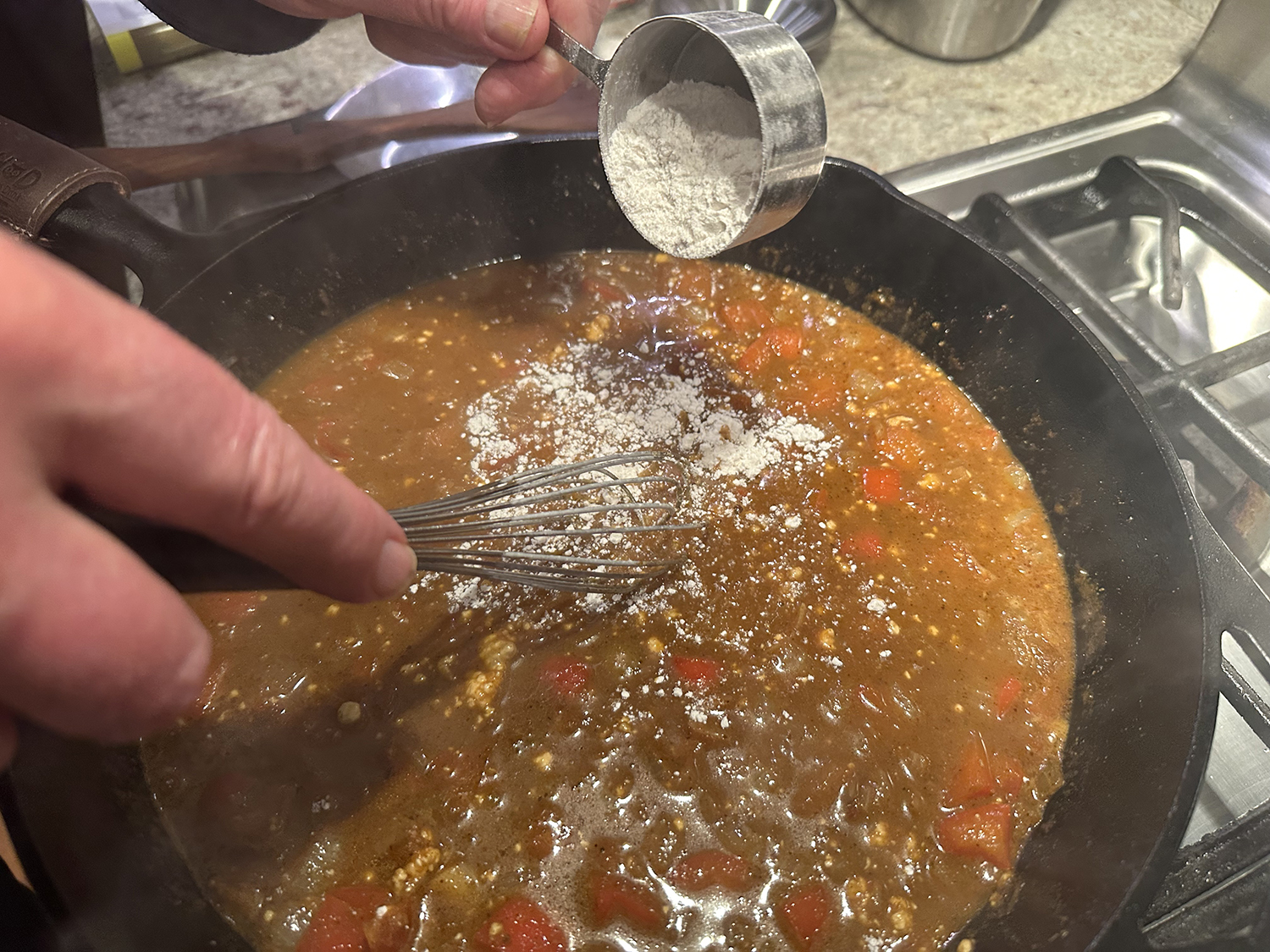
  2. Add the oil and flour to a medium skillet. Set over medium-low heat and cook, whisking constantly, until the mixture (known as roux) turns a golden color, smells nutty and thickens, 5 to 7 minutes.
  3. Add garlic, chile powder, cumin, oregano and black pepper to the roux. Whisk until smooth (some clumping from the garlic is fine), being careful to not let the spices burn, about 30 seconds.
  4. While whisking constantly, add beef broth ¼ cup at a time, whisking after each addition, until smooth. Reduce heat to low and simmer gently, whisking occasionally, for 10 minutes. Then remove from heat, and allow the gravy to rest for another 10 minutes. Taste the gravy and season with salt as needed for a savory sauce.
  5. Meanwhile, in another pan, lightly heat a tortilla over medium just until softened, about 30 seconds per side. Transfer to a clean kitchen towel or sheet of foil and wrap. Repeat with the remaining tortillas, stacking them in the towel or foil. Be careful of overcooking: You’re softening each tortilla to prevent them from cracking as they’re filled and folded.
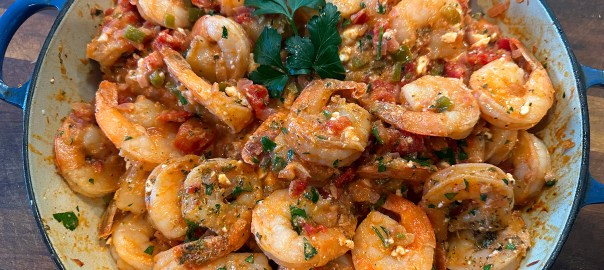
  6. Fill a softened tortilla with about ⅓ cup of cheese. Roll shut and, with the seam side facing downward, place in the greased baking dish or skillet. Repeat until you’ve filled all of the tortillas, setting the rolls next to each other.
  7. Slowly pour the gravy over all of the tortillas to coat. Afterward, sprinkle the dish with the rest of the cheese and the diced onion.
  8. Bake until the gravy is bubbling and the cheese melted, 20 to 25 minutes.
  9. Garnish with parsley, if desired, alongside a sprinkle of salt and black pepper. Serve immediately.

http://www.lynnandruss.com

Recipe from Bryan Washington for NYTimes Cooking

Cantonese Sweet-and-Sour Pork

Hands down. THE. BEST. Sweet-and-Sour Pork ever! As The Hubs said “Finally a grown-up version that’s not all gloppy sweet.” In Hong Kong, a true Cantonese sweet-and-sour pork was the predecessor of the overly sweet versions served today in many Chinese-American restaurants (I’m sure you’ve had one or two?). Milk Street created this recipe by combining the attributes of the best ones.

Though the pork typically is deep-fried, it is kept lighter by pan-frying it in just ¼ cup of oil to crisp a thin cornstarch coating. Traditional versions are flavored with hawthorn berries, a crabapple-like fruit. To approximate the flavor of hawthorn berries, use apple jelly—it provides fruitiness, sweetness and a little body to the glaze-like sauce.

Finally, a little MSG amplifies the savoriness, but it’s optional. A 12- to 14-inch wok is the best pan to use, but a 12-inch skillet works, too. If using a skillet, cook the pork in a single batch instead of two.

Don’t use canned pineapple. Milk Street tasted versions in Hong Kong made with canned fruit and they claim the flavor and texture fell flat. Also, be sure the sauce is adequately reduced and thickened before returning the pork to the pan. If it is too thin, its flavor will be diluted and it won’t cling properly to the pork and vegetables.

We were definitely a little skeptical of the level of sweetness with ketchup, sugar and pineapple, but while there was a hint of sweetness, it was by no means cloying. A few changes that we made? Instead of a small red onion, we used a large one; and the amount of fresh pineapple chunks* was more like 3 cups worth.

We both love stir-fries because they are usually quick and contain a lot of vegetables. This recipe has now earned a well-deserved spot in the top ten best of all stir-fries!

Cantonese Sweet-and-Sour Pork

  • Servings: 4
  • Difficulty: easy
  • Print

Ingredients

  • 1 – 1¼ lbs. boneless country-style pork spareribs, cut into ¾- to 1-inch pieces
  • 4 Tbsp. white sugar, divided
  • 3 Tbsp. soy sauce, divided
  • 3/4 tsp. MSG, divided (optional)
  • Kosher salt and ground black pepper
  • 1/2 cup unseasoned rice vinegar
  • 1/4 cup apple jelly
  • 2 Tbsp. ketchup
  • 1/4 cup cornstarch
  • 1/4 cup grapeseed or other neutral oil
  • 1½ cups fresh pineapple chunks* (¾- to 1-inch pieces)
  • 1 small red onion, cut into 1-inch pieces
  • 1 medium red, orange, yellow or green bell pepper, stemmed, seeded and cut into 1-inch pieces

Directions

  1. In a medium bowl, combine the pork, 1 tablespoon of the sugar, 1 tablespoon of the soy sauce, ½ teaspoon of the MSG (if using), ¼ teaspoon salt and ¾ teaspoon pepper. Mix until the pork is thoroughly coated; set aside at room temperature for 30 minutes (for longer storage, cover and refrigerate for up to 2 hours).
  2. Meanwhile, in a small bowl, whisk together the remaining 3 tablespoons sugar, remaining 2 tablespoons soy sauce, remaining ¼ teaspoon MSG (if using), vinegar, apple jelly, ketchup, ¼ teaspoon salt and ½ teaspoon pepper; set aside until ready to use.
  3. When you are ready to cook, sprinkle the cornstarch over the pork and mix until evenly coated. In a 12- to 14-inch wok over high, heat the oil until barely smoking. Add half of the pork, separating the pieces and distributing them in an even layer. Cook, undisturbed, for 1 minute. Stir, then cook, stirring occasionally, until crisp and deeply browned on all sides, 5 to 7 minutes. Using a slotted spoon, transfer to a large plate and set aside. Using the oil remaining in the wok, cook the remaining pork in the same way and transfer to the plate. Pour off and discard all but 1 tablespoon of the oil.
  4. Return the wok to high and heat the oil until barely smoking. Add the pineapple, onion and bell pepper; cook, stirring once or twice, until spottily charred but still crisp, about 2 minutes. Transfer to another plate and set aside.
  5. Pour the sauce mixture into the wok and bring to a boil over medium-high. Cook, whisking to combine and to scrape up any browned bits, until the sauce is thick and syrupy and forms large bubbles across the entire surface, 5 to 7 minutes.
  6. Return the pork to the pan and cook, stirring and tossing, until well glazed, 2 to 3 minutes. Return the vegetable mixture and cook, tossing, until well coated, 1 to 2 minutes. Off heat, taste and season with salt and pepper.

http://www.lynnandruss.com

Recipe adapted by Courtney Hill for Milk Street

Haitian Chicken in Sauce (Poul Nan Sos)

For this ultra-flavorful dish, the chicken is marinated overnight with onions, garlic, thyme, chiles, and citrus before it’s stewed with loads of bell peppers. The meltingly tender puddle of bell peppers collapses into a nest of lusciousness as they simmer under the chicken pieces.

According to Chef/Author Gregory Gourdet “The meat is marinated overnight with onions, garlic, thyme, and chiles along with citrus, which is rubbed forcefully onto the chicken to access the fragrant oils. After the meat takes on all that flavor, it’s stewed with the marinade and loads of bell peppers for a satisfying, thrilling stew.”

About the hot pepper choice: The heat level of any given pepper can vary widely, but Scotch bonnet and habanero peppers both generally register between 100,000 and 350,000 Scoville units. Scotch bonnets, which tend to be sweeter and have distinct citrus notes, are the traditional choice for Haitian chicken stew, but the closely related habanero makes a fine substitution. In the end, there was barely any heat from these peppers, but they added a nice subtle nuance of flavor.

While this dish isn’t particularly difficult or time-consuming to prepare, the chicken does require a long marination, so you’ll need to plan ahead. Allow anywhere from 12 to 48 hours for the chicken to absorb all those flavors in the fridge. When it comes time to cook the meat, be sure to reserve both the marinade’s liquid and solids, which will be incorporated back in later.

You definitely need a bed of rice or something to help soak up all of the liquid (we served with a side of rice and beans). In fact, it may be wise to reduce the amount of chicken broth from 2 cups down to 1 cup, which is indicated below*. After all, more liquid comes from the marinade, and moisture that comes from the peppers and chicken.

So unbelievably good!!

Haitian Chicken in Sauce (Poul Nan Sos)

  • Servings: 4-6
  • Difficulty: easy
  • Print

Ingredients

Marinade

  • 3 lbs. bone-in chicken thighs (drumsticks optional), patted dry (we used all thighs)
  • 3 Tbsp. kosher salt
  • 1 juicy orange, halved
  • 1 juicy lime, halved
  • 1 juicy lemon, halved
  • 2 medium yellow onions, halved and thinly sliced
  • 8 garlic cloves, sliced
  • 2 Scotch bonnet or habanero chiles, cut in half and sliced thin
  • 1/4 cup fresh thyme leaves

Stew

  • 1/3 cup extra-virgin olive oil
  • 1/2 cup tomato paste
  • 1 Tbsp kosher salt
  • 2 red bell peppers, seeded and deveined, cut into long, thin slices
  • 2 yellow bell peppers, seeded and deveined, cut into long, thin slices
  • 1 cup chicken stock*, salted homemade or store-bought
  • Small handful roughly chopped parsley sprigs, for serving

Directions

  1. Put the chicken pieces in a large bowl and season with the salt. Squeeze the citrus halves over the chicken, then spend a minute or so rubbing the cut sides of the citrus against the chicken. Add the onions, garlic, chile, and thyme and toss well, rubbing the chicken as you do. Cover and marinate in the fridge for at least 12 hours or up to 48 hours. (We marinated 27 hours.)
  2. Preheat the oven to 375°F. Remove the chicken from the marinade, guiding any stuck-on aromatics back into the bowl. Set a strainer over a small mixing bowl. Pour the marinade through the strainer, reserving the solids and liquid. Pat the chicken very dry with paper towels.
  3. Heat the oil in a wide, heavy ovenproof pot (such as a 3 1/2-quart braiser) over medium-high heat just until shimmery. Cook the chicken, skin-side down, occasionally turning the drumsticks but not the thighs, until the skin is deep brown, about 8 minutes. (It may take two batches so that the chicken browns instead of steams.) Transfer the chicken pieces to a plate.
  4. Reduce the heat to medium-low, add the tomato paste and salt, and cook, stirring often, until it turns several shades darker, about 3 minutes. Add the bell peppers and the reserved solids from the marinade; cook, stirring occasionally, until the peppers soften slightly and take on a little color, about 8 to 10 minutes.
  5. Return the chicken to the pan, skin side up and in a single layer nestled into the peppers, arranging the pile of peppers, onions, and other aromatics around the chicken. Then evenly pour in the reserved liquid from the marinade along with the stock. Cook in the oven, basting every 15 minutes to coat the chicken with the peppers and sauce, until the sauce has thickened slightly and the meat pulls off the bone with a gentle tug from a fork, about 1 hour. Garnish with the parsley and serve over rice and beans.

http://www.lynnandruss.com

Adapted fro a recipe by Gregory Gourdet for Food & Wine

Beef Tagine with Green Beans and Olives

Even though it is labeled a tagine, it’s not cooked in one. This hearty tagine is a staple family meal in many Moroccan homes, cooked in the traditional m’qualli style with garlic, ground ginger and ground turmeric. The comforting, earthy flavors of the meat, spices and green beans create a satisfying dinner perfect for sharing or meal prepping.

The cozy, fragrant stew is packed with pops of flavor from tangy preserved lemon and briny olives. The green beans are added towards the end when the meat is almost cooked. For a variation, consider substituting or adding peas and/or chopped carrots (see Tip). We added both peas and carrots.
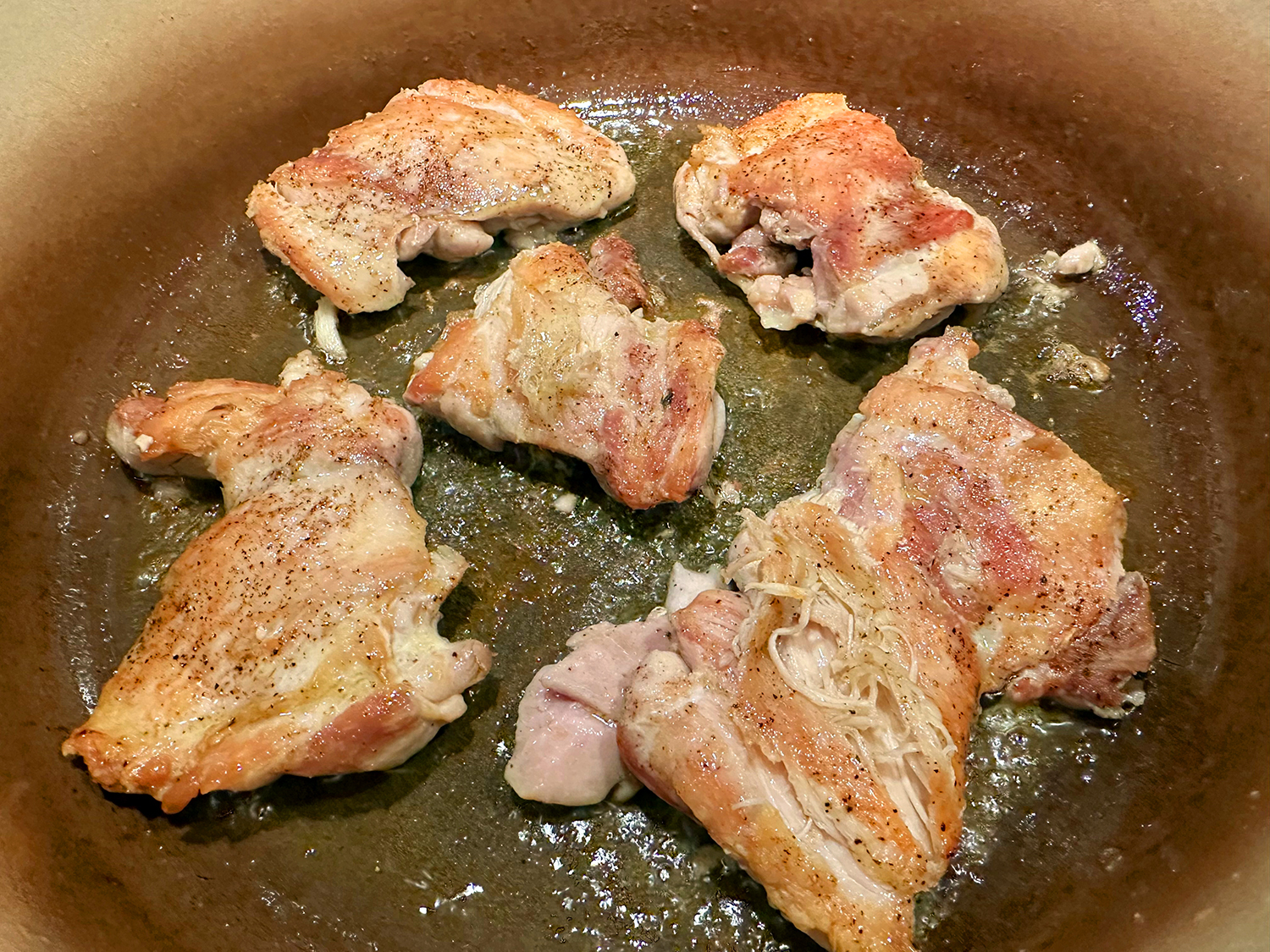
This dish is supposed to take 2 1/4 hours from start to finish. *We decided to use our pressure cooker and therefore cut the total time down to one hour. What we neglected to do was reduce the amount of liquid, because when you use a pressure cooker, none of the moisture evaporates. Next time we will add less liquid to start with, then remove the ingredients with a slotted spoon to another bowl. Add a cornstarch slurry to thicken the sauce and pour it over the meat and vegetables in the bowl.

In addition, we would brown the seasoned (salt and pepper) meat chunks on all sides in shimmering oil in the Dutch oven first; in batches so as not to steam the beef. Remove the beef to a side plate, turn the heat to medium-low and add the onions, garlic and seasoning…

TIP: If making a variation on this recipe using peas and carrots, add the carrots about the same time as the green beans, and add the peas when the other vegetables are tender, cooking them for a few minutes.

To enhance the Moroccan profile, serve over couscous, We decided on garlicky mashed potatoes, because we needed to use up our spud supply. All of our changes are noted in the recipe below.

Beef Tagine with Green Beans and Olives

  • Servings: 6-8
  • Difficulty: easy
  • Print

Ingredients

  • 3 Tbsp. olive oil
  • 2 medium onions, diced (about 3 cups)
  • 3 garlic cloves, minced or pressed
  • 1 tsp. ground turmeric
  • 1 tsp. ground ginger
  • 1 small pinch saffron (optional)
  • Fine sea salt and black pepper
  • 2½ lbs. boneless beef chuck or other stewing beef, trimmed of excess fat and cut into 2-inch pieces
  • ¾ cup vegetable or beef stock, or water, plus more if needed
  • 1 cup cilantro leaves and tender stems, finely chopped, plus more for serving
  • 1½ lbs. green beans, trimmed
  • 2 carrots peeled and cut into 1/2-inch rounds
  • 2 to 3 Tbsp. seeded and finely chopped preserved lemon (about ½ lemon), plus more to taste
  • ½ cup pitted Castelvetrano or Kalamata olives, and peas (if using)
  • Bread, for serving

Directions

  1. Heat oil in a large Dutch oven over medium. Add the beef, cook, stirring occasionally, until the meat is lightly browned on all sides, about 7-8 minutes. Remove to a plate.
  2. Add onions, garlic, turmeric, ginger, saffron (if using), ¾ teaspoon salt and ¼ teaspoon pepper. Cook, stirring frequently, until the onions begin to soften, 5 to 7 minutes.
  3. Return meat to pot, add stock (or water) and cilantro, and bring to a boil over high heat.
  4. Cover the pot, adjust heat to low and simmer for about 1½ hours, until the beef has partially softened (when pressed with a fork it should feel soft but not fall apart).
  5. Stir in the green beans, carrots and preserved lemon, adjust heat to high and bring to a boil. The green beans should be partially submerged in the liquid; add stock or water as needed. Turn down to low, cover and simmer until the green beans and carrots are tender, 15 to 20 minutes. Stir occasionally to make sure the beans cook evenly.
  6. Taste and add more preserved lemon or salt as necessary. Garnish with olives and more cilantro, and serve with bread.

http://www.lynnandruss.com

Recipe by Nargisse Benkabbou for NYTimes Cooking

Vegan Dan Dan Noodles With Eggplant

Sichuan dan dan noodles are traditionally made with ground pork, a spicy sauce and sui mi ya cai, or pickled vegetables, but this vegan version features pan-fried eggplant in place of the meat.

Cutting the eggplant into relatively chunky pieces and covering the pot with a lid while cooking is the key to achieving the right texture: It locks in moisture, ensures that the pieces don’t fall apart, and allows the flesh to become tender and smoky. Once tossed with the noodles and sauce, the eggplant breaks up and becomes creamy. If you don’t have tahini, you can substitute it with smooth peanut butter (our choice) or almond butter.

NOTE: You can also use egg noodles but the dish will no longer be vegan.

Vegan Dan Dan Noodles With Eggplant

  • Servings: 4
  • Difficulty: easy
  • Print

Ingredients

For the Sauce

  • 3 Tbsp. soy sauce
  • 3 Tbsp. black or rice vinegar
  • ¼ cup tahini (or Chinese/Japanese sesame paste)
  • 2 garlic cloves, peeled and finely grated or chopped
  • 1 (1-inch) piece of ginger, peeled and finely grated or chopped (about 1 Tbsp.)
  • 2 to 3 Tbsp. chile oil, chile crisp or doubanjiang
  • 2 tsp. granulated sugar

For the Noodles

  • 1 large eggplant (about 1¼lbs.), trimmed
  • Kosher salt (such as Diamond Crystal)
  • 12 oz. dried thin wheat noodles (see Note)
  • Neutral oil, such as canola or vegetable
  • 1 Tbsp. soy sauce
  • Black pepper
  • ½ tsp. ground Sichuan peppercorns (optional)
  • 2 scallions, white and green parts separated and finely sliced
  • A generous pinch of granulated sugar
  • Handful of cilantro leaves
  • 1 cup dry, unsalted roasted peanuts, roughly chopped
  • Chile oil or chile crisp, for serving

Directions

  1. Make the sauce: Combine the soy sauce, black or rice vinegar, tahini, garlic, ginger, chile oil and granulated sugar in a bowl, and whisk to combine. Set aside.
  2. Slice the eggplant crosswise into ¾-inch-thick circles, then cut each circle into 1½- to 2-inch pieces. (They should be quite chunky.)
  3. Bring a large pot of salted water to boil. Add the noodles and cook according to package instructions until al dente. Reserve ½ cup of the cooking water, then drain the noodles, rinse just for a few seconds to remove some of the starchy water (they should still be hot), and allow them to drain.
  4. Meanwhile, cook the eggplant: Heat a wok or large, deep-sided skillet over medium-high. When hot, add 2 tablespoons of neutral oil along with the eggplant, soy sauce, 1 teaspoon of salt and a pinch of black pepper, and toss well to combine. Cover with a lid and cook for 6 to 7 minutes, tossing every 60 seconds. If it starts to burn, reduce the heat to medium. The eggplant is ready when it is caramelized and cooked all the way through but still intact. (Don’t let it get mushy.) Remove the lid, sprinkle with the ground Sichuan peppercorns (if using), the white parts of the scallions and the sugar, and season with ½ teaspoon of salt and a pinch of black pepper. Toss for 30 seconds and then turn off the heat.
  5. Add the reserved noodle cooking water to the bowl of sauce and whisk to combine. Divide the sauce among four serving bowls.
  6. Divide the noodles among the four bowls, on top of the sauce. Finish each bowl with eggplant, scallion greens, a few cilantro leaves and some peanuts.
  7. To eat, toss everything together so that the noodles and eggplant are well coated in the sauce. Serve topped with chile oil or crisp.

http://www.lynnandruss.com

Recipe by Hetty Lui McKinnon for NYTimes Cooking

Colima-Style Shredded Braised Pork

OK, this is definitely a keeper! If shredded pork is your thing, than this recipe needs to get on your short list ASAP. Milk Street Magazine cites: “The state of Colima on the western coast of Mexico is home to the pork dish called tatemado de Colima. Dried chilies, spices and aromatics, all blended to a smooth puree, are key flavorings, but a defining ingredient, other than the pork itself, is vinegar. In chef Paola Briseño-González’s version, her recipe uses a generous amount of smooth-tasting, subtly sweet coconut vinegar, a common ingredient in the coconut-producing region of Colima, and after slow-cooking the pork, she shreds the meat and mixes it with the braising liquid.”

The flavors are rich and porky but deliciously balanced by the tangy vinegar and fresh ginger, whose sharpness disappears into the mix. Milk Street adapts González’s recipe, and in doing so, found widely available rice vinegar to be a decent alternative to coconut vinegar. Braise in the oven, where the heat is steady and all-encompassing; the meat will do a fine job of soaking up the seasonings after it is shredded. The pork is briefly broiled after braising to develop deep browning, so you will need a broiler-safe Dutch oven for this recipe.

Pungent, flavorful, enticing, and delicious—this “tatemado de Colima” makes for a huge batch of succulent, juicy meat perfect on its own with a fork—or on top of some tortillas, tostada style. Now you have a dish that blows past everyday barbecue. Serve the shredded pork with rice and beans, or make tacos with it, offering shredded cabbage, chopped onion and lime wedges alongside. It’s low-carb if eaten without tortillas.

Word to the Wise: Don’t use an uncoated cast-iron Dutch oven, even if it is well seasoned. The acidity of the vinegar may react with the metal, resulting in a tinny, “off” flavor. However, an enamel-coated Dutch oven is fine.

Colima-Style Shredded Braised Pork

  • Servings: 8-10
  • Difficulty: easy
  • Print

Ingredients

  • 4 large (1¼ oz.) guajillo chilies, stemmed and seeded
  • 5-7 lb. bone-in pork butt or pork shoulder roast
  • 2 cups coconut vinegar or unseasoned rice vinegar
  • 1 cup coconut milk
  • 1/3 cup roughly chopped peeled fresh ginger
  • 9 medium garlic cloves, smashed and peeled
  • 3 bay leaves
  • 1 Tbsp. tomato paste
  • 1/2 tsp. coriander seeds
  • 1/2 tsp. cumin seeds
  • 1/2 tsp. white sugar
  • Kosher salt and ground black pepper

Directions

  1. In a small saucepan, combine the chilies and enough water to cover by about 1 inch. Bring to a boil over medium-high, pressing on the chilies to submerge them. Remove from the heat, cover and let stand until the chilies are fully softened, 15 to 20 minutes. Meanwhile, using a sharp knife, score the fat side of the pork roast with a 1-inch crosshatch pattern. Set the pork scored side up in a large enamel-coated Dutch oven.
  2. Using a slotted spoon, transfer the chilies to a blender; discard the soaking water. Add the vinegar, coconut milk, ginger, garlic, bay, tomato paste, coriander, cumin, sugar, 1 tablespoon salt and 1 teaspoon pepper. Blend until smooth, about 1 minute. Pour the puree over the pork and rub it into the meat, then cover the pot.
  3. Heat the oven to 325°F with a rack in the lower-middle position. When the oven comes up to temperature, place the pot in the oven and cook until a skewer inserted into the center of the pork meets no resistance, 4½ to 5½ hours.
  4. Remove the pot from the oven and heat the broiler. Return the pot, uncovered, to the oven and broil until the surface of the pork is deeply browned, 2 to 4 minutes. Transfer the pork to a large bowl and set aside. Tilt the pot to pool the braising liquid to one side, then use a wide spoon to skim off and discard fat from the surface, leaving just a couple tablespoons for flavor. You should have between 2 and 4 cups defatted braising liquid; if you have more than 2 cups, set the pot over medium-high, bring the liquid to a rapid simmer and cook, stirring occasionally, until reduced to about 2 cups. Meanwhile, shred the pork into large bite-size pieces, discarding the bone and excess fat.
  5. Return the shredded pork to the pot and stir to combine with the braising liquid. Cover and cook over medium-low, stirring occasionally, just until heated through, 5 to 8 minutes, then taste and season with salt and pepper.

http://www.lynnandruss.com

Recipe adapted by Courtney Hill for Milk Street