Tag Archives: main dish

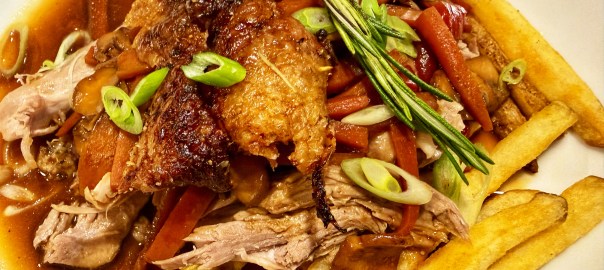
Slow Roasted Duck with Orange-Sherry Sauce

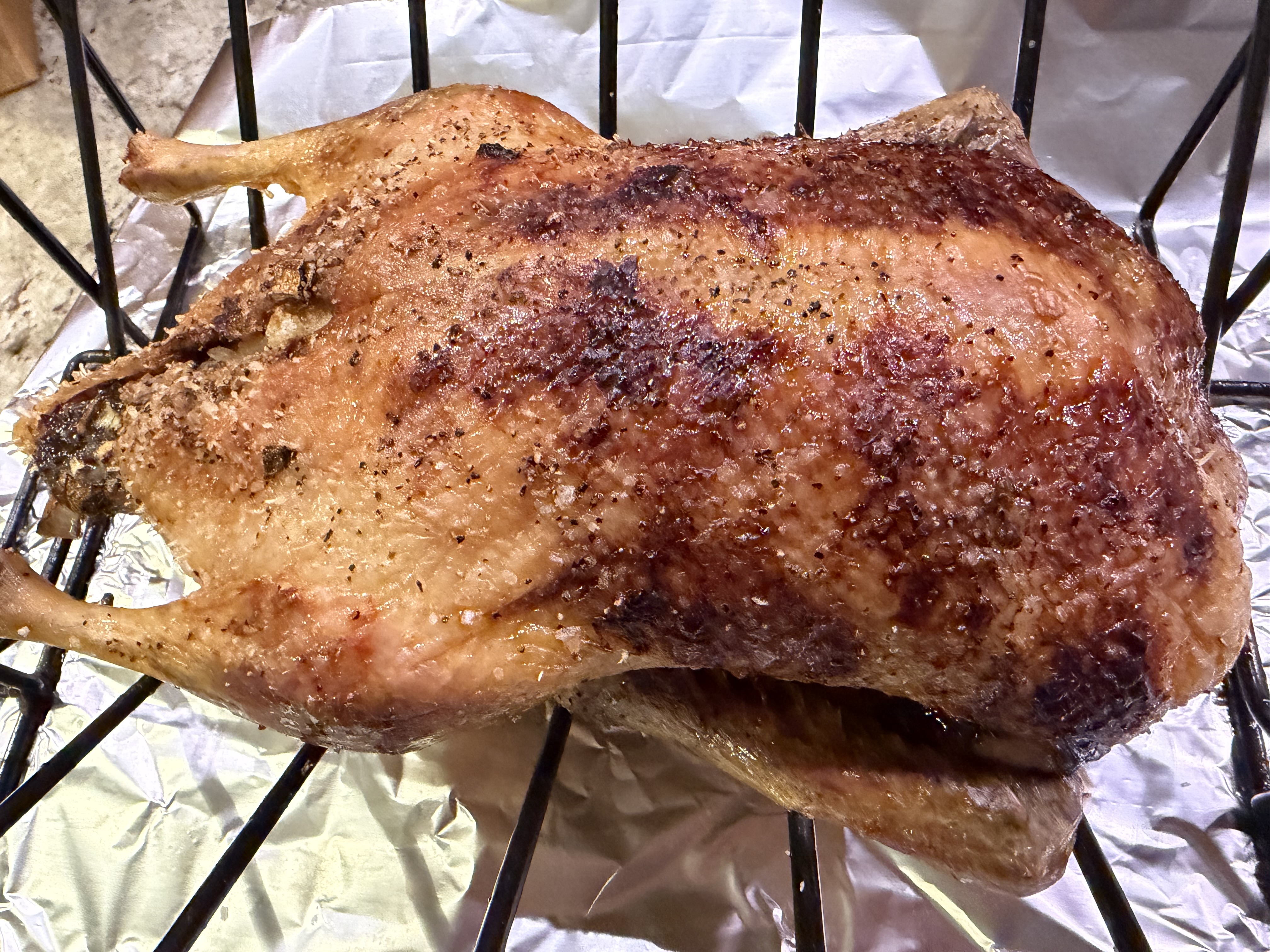
A very interesting combination, with amazing results! Now you might say this takes a lot of time and effort to only get two to three servings—and we would have to agree. But sometimes when we have a long non-scheduled afternoon ahead of us, we find a culinary challenge fits our MO. Plus, we love duck! OK, maybe “masochist” might be an appropriate adjective?

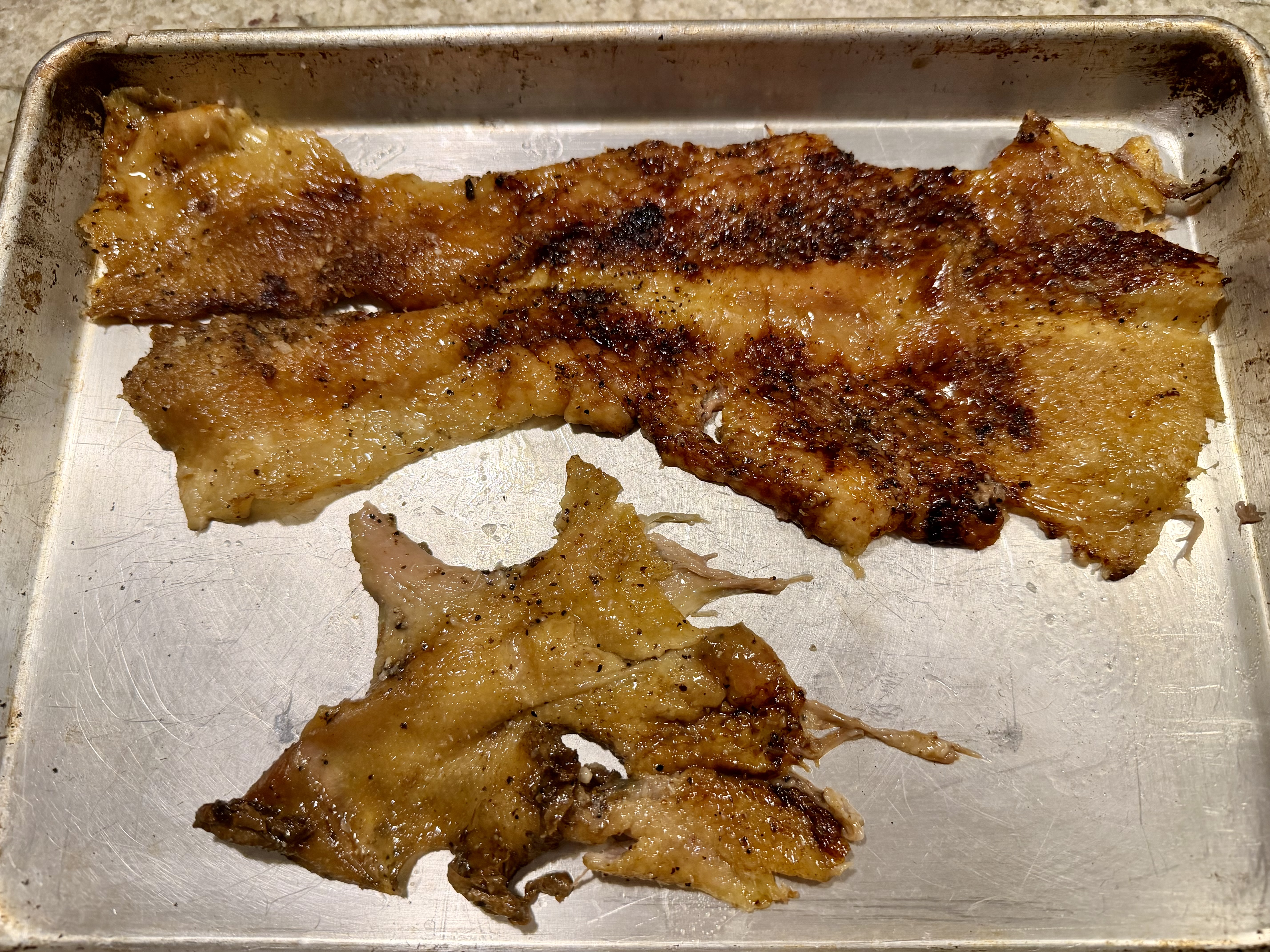
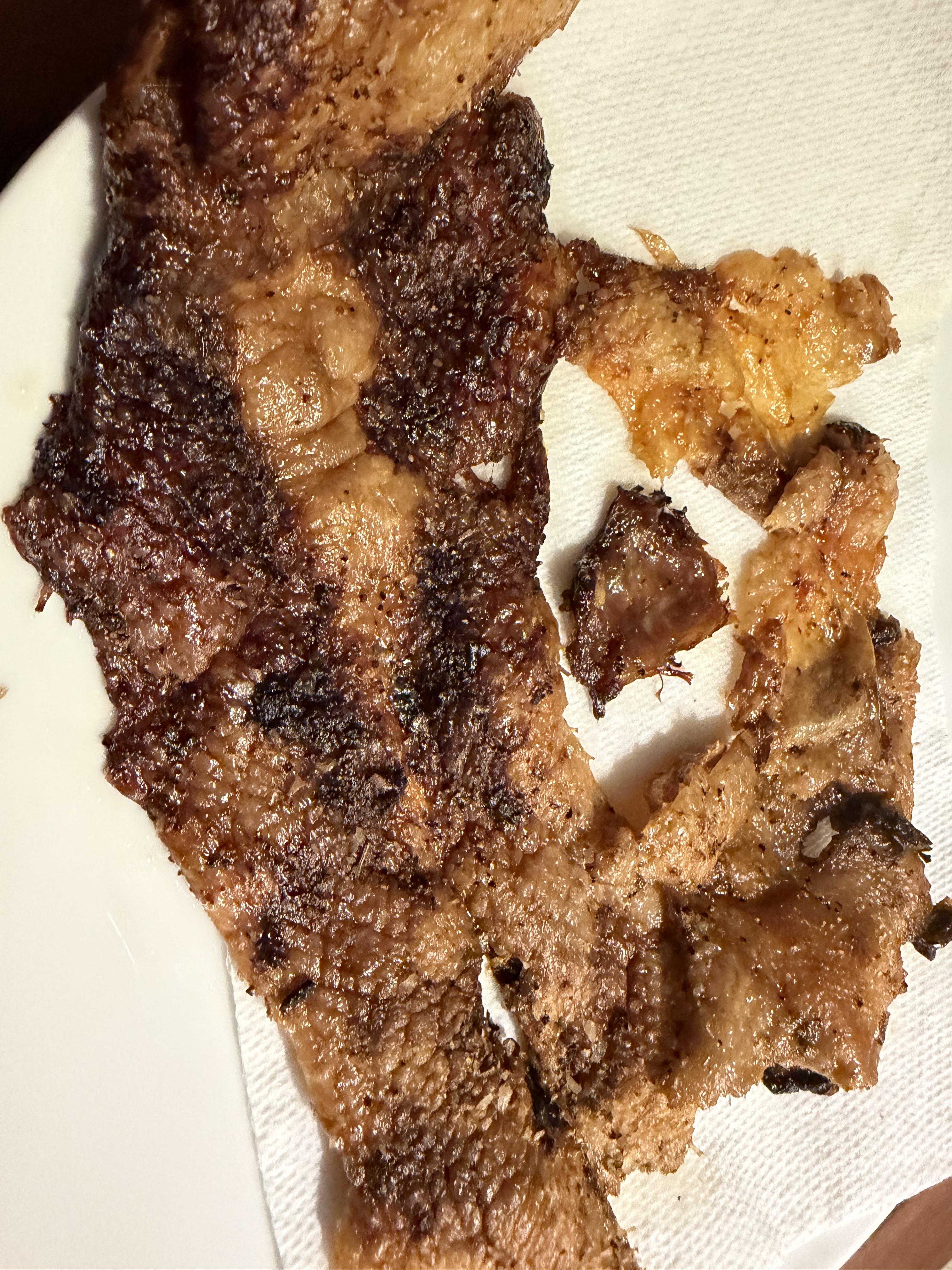
Typically a duck is scored in order to render the fat properly. However, in this recipe, there is no need to prick the skin beforehand due to the long cooking time. Plus, après roasting, the skin of the breast is removed from the meat and is fully crisped at a higher temperature just prior to serving.

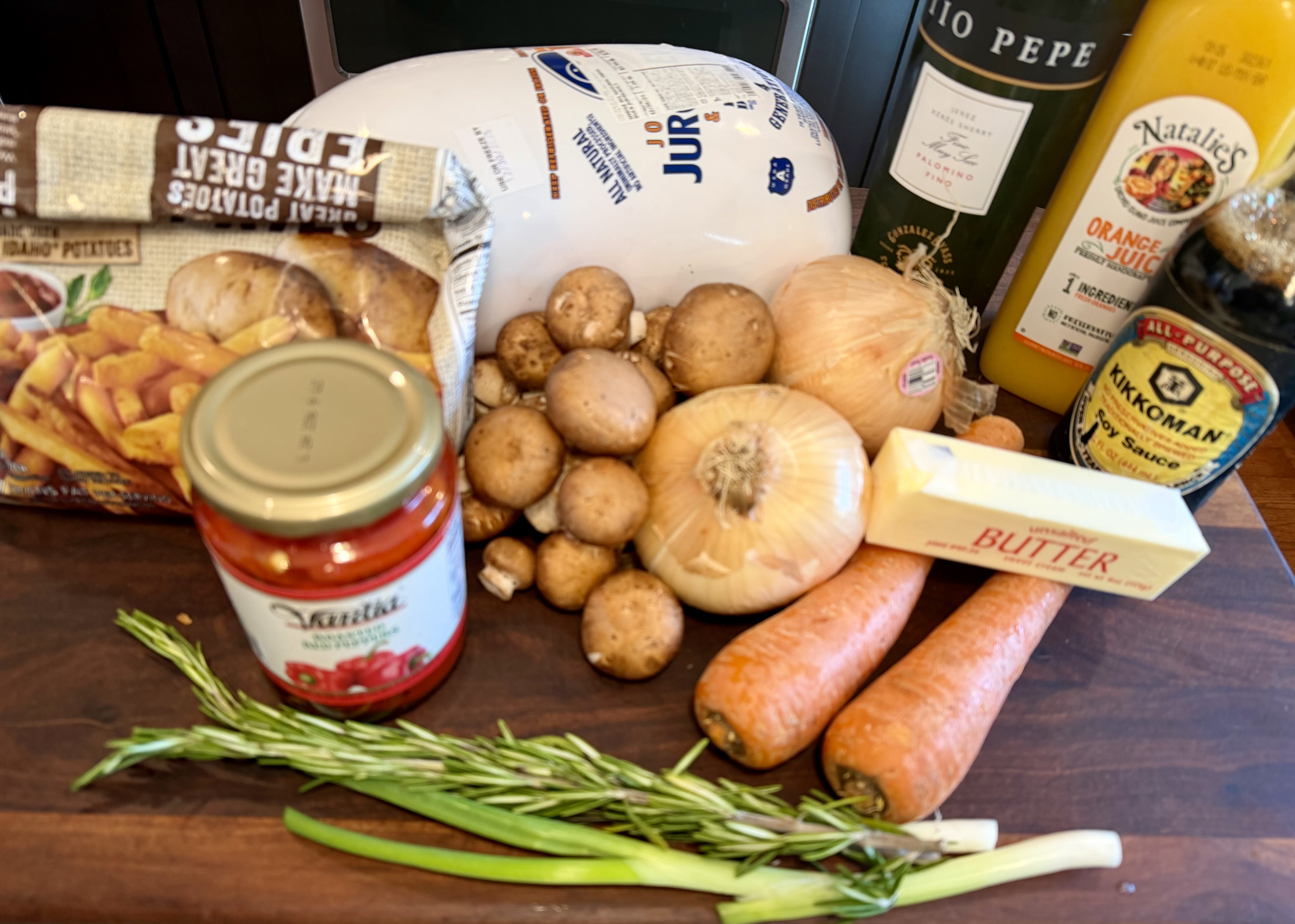
Under the Ingredients category, we made a few changes, starting with the fact that our bird was 7 pounds instead of 5 — providing 3 full servings. Also, unable to buy 4 ounces of loose creminis, we had to purchase an 8-ounce package and decided to use them all. Finally, we garnished our dish with diagonal slices of scallion (already had on hand) as opposed to 1-inch pieces of chives.

The original Directions were a bit wonky and unclear in places, so we altered them for clarification. For instance, instead of draining the fat every hour (the duck roasts for 4 1/2 hours), just place the bird on a rack in the roasting pan, then at the end of cooking you can remove the fat all at once. (Of course it is liquid gold, so save for future culinary endeavors. We ended up with about 3 1/2 cups worth!)

Ducks and chickens belong to the avian family, yet their anatomical structures exhibit some significant differences. The texture also differs; duck tends to be denser and more succulent, while chicken can be more delicate and prone to shredding.

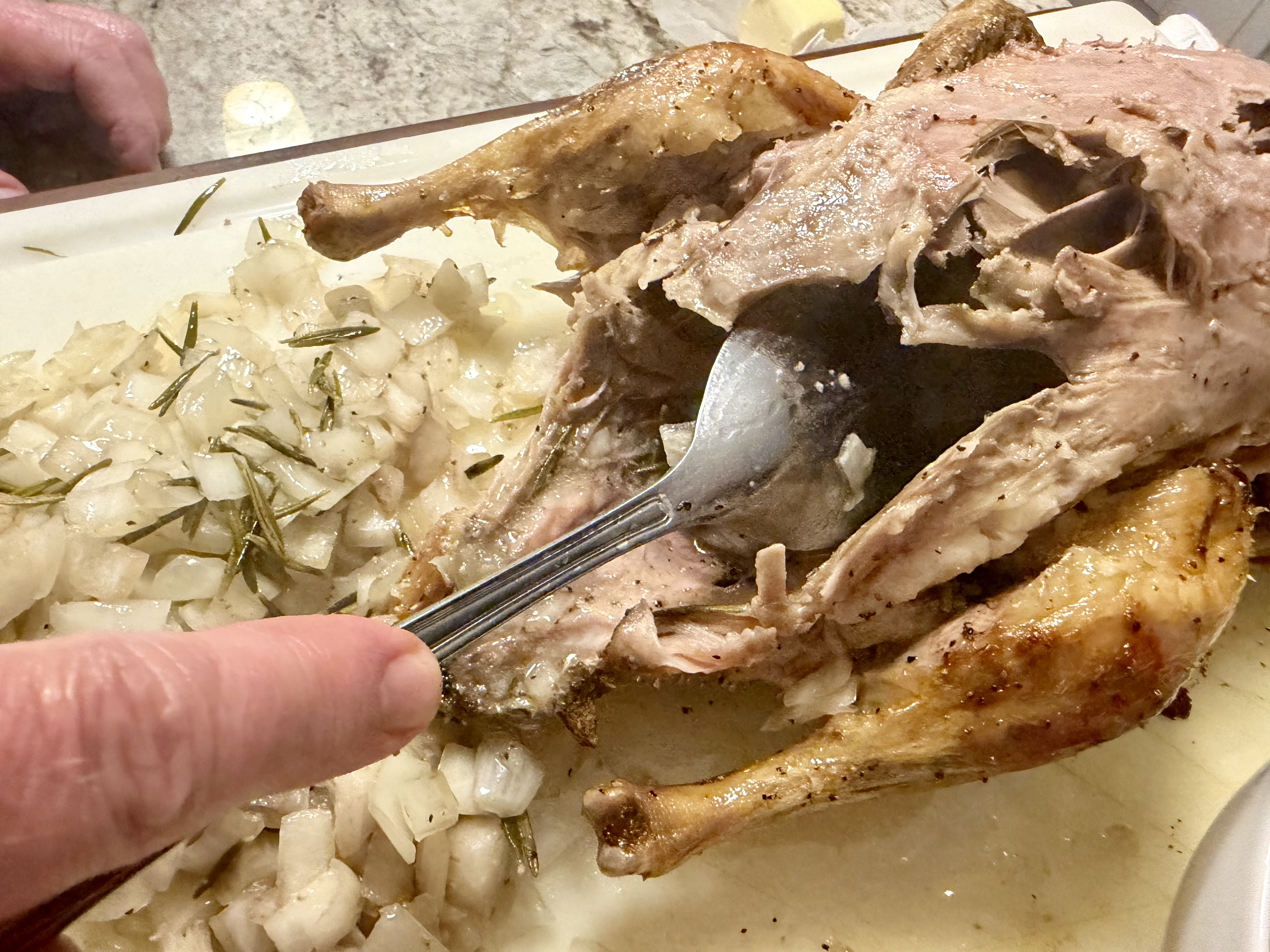
Ducks possess dark meat, which has a higher fat content and a more robust flavor. This fat contributes to the bird’s juiciness and tenderness. However once you pick it from the carcass, make sure to wrap the meat tightly in tinfoil and keep warm while you finish making the dinner, so that it won’t dry out.

This dish gives a huge nod toward the New Orleans’s legendary street food tradition of gravy-soaked po’ boys laden with French fries; usually NOT my go-to option. Home cooks can substitute shoestring potatoes, mock frites or hash browns. Either way, it’s told, the interplay between the moist meat, luscious sauce and crisp potatoes is nonpareil.

Slow Roasted Duck with Orange-Sherry Sauce

  • Servings: 2-3
  • Difficulty: moderate
  • Print

Ingredients

  • 1 lb. yellow onions, peeled and coarsely chopped
  • ½ stick unsalted butter, melted
  • 1 5-lb duck, rinsed and patted dry
  • Salt
  • Freshly ground pepper
  • 2 large rosemary sprigs
  • 2 cups fresh orange juice
  • 1 cup dry sherry
  • ½ cup soy sauce
  • 2 medium carrots, peeled and julienned
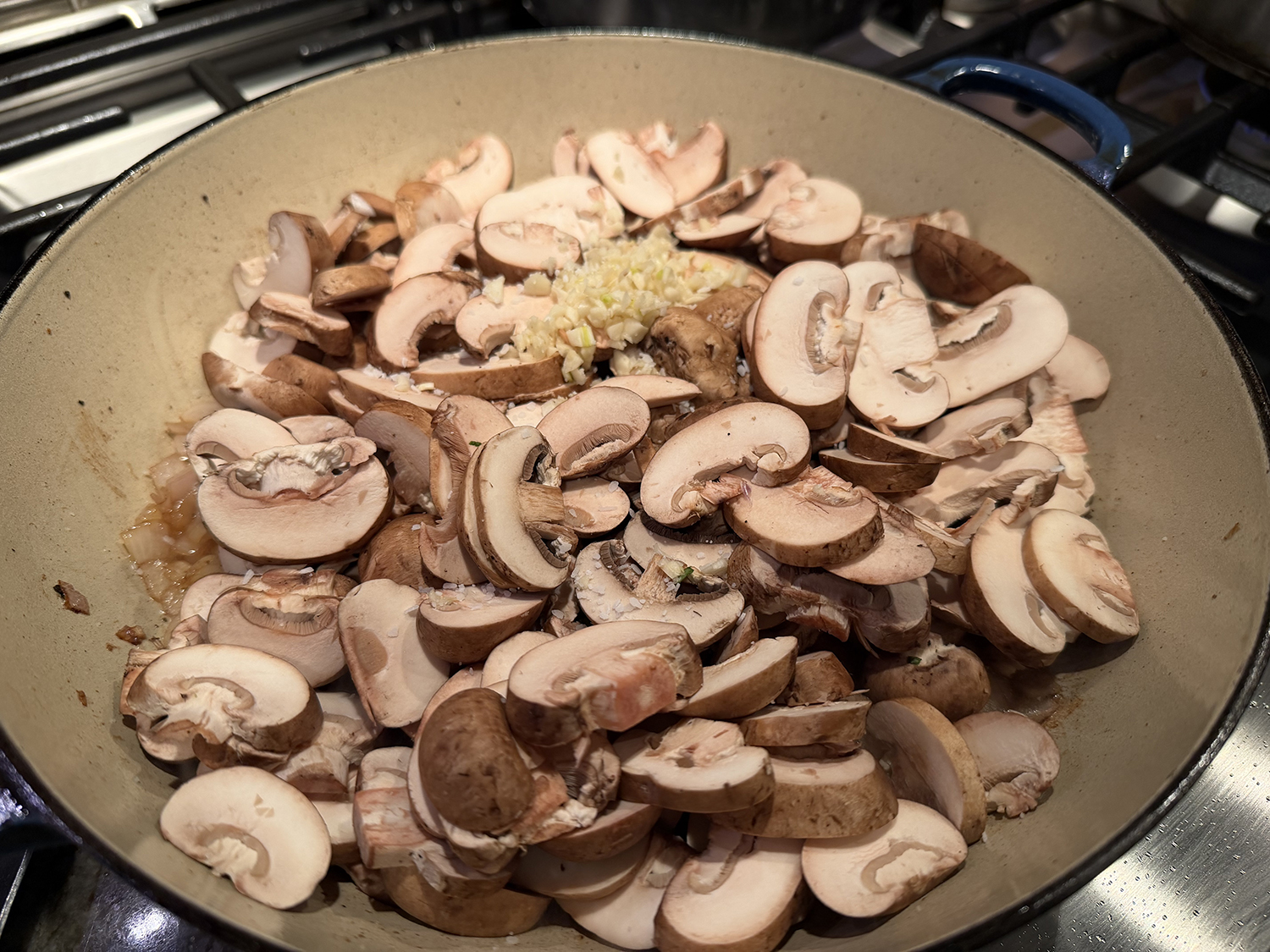
  • 4 oz. cremini or white button mushrooms, trimmed and sliced thin
  • 2 Tbsp. unsalted butter
  • 17-oz. jar roasted red peppers, rinsed, drained and cut into strips
  • 2 fresh chives, cut into 1-inch lengths
  • Hash browns, OR French fries

Directions

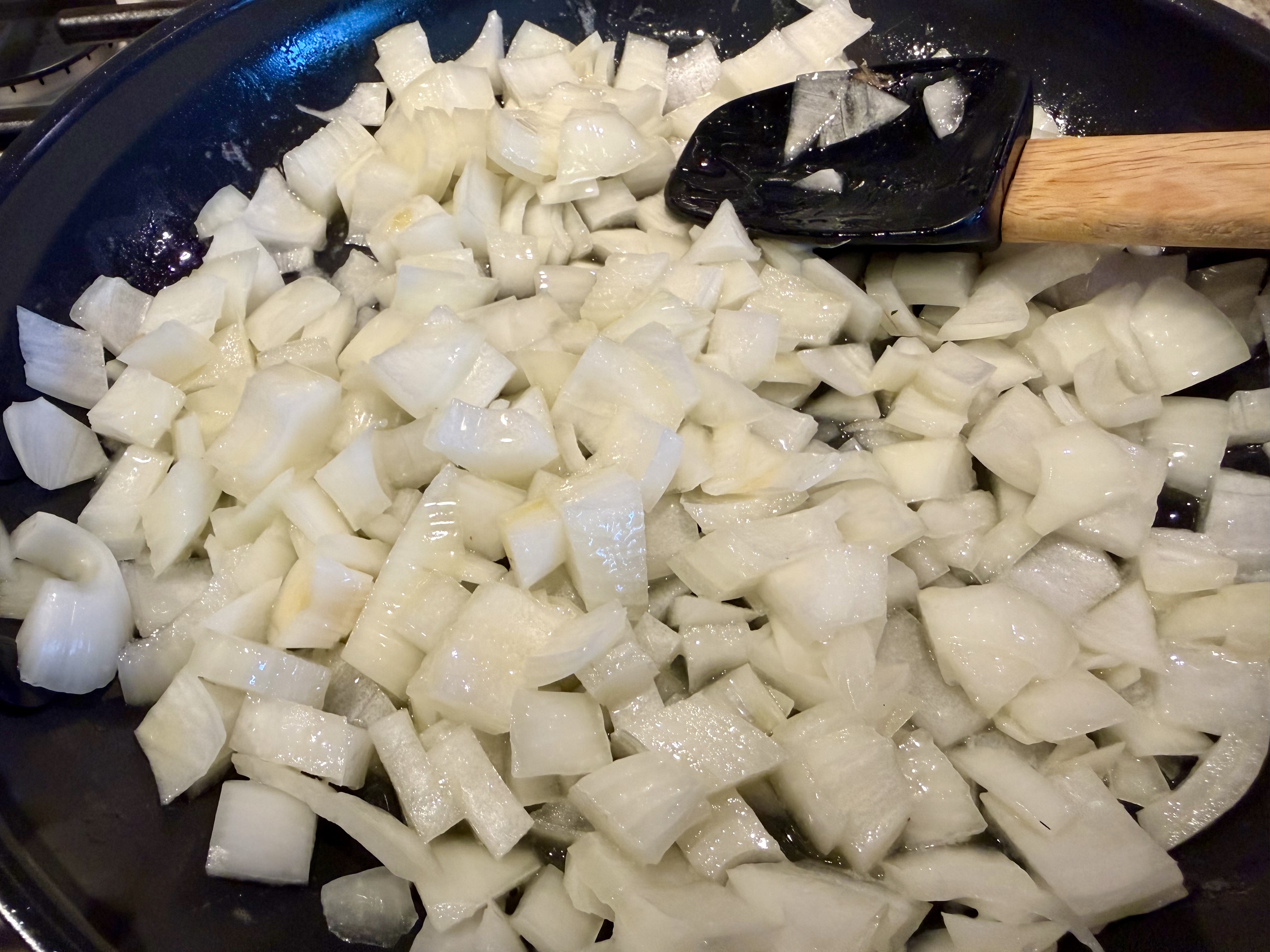
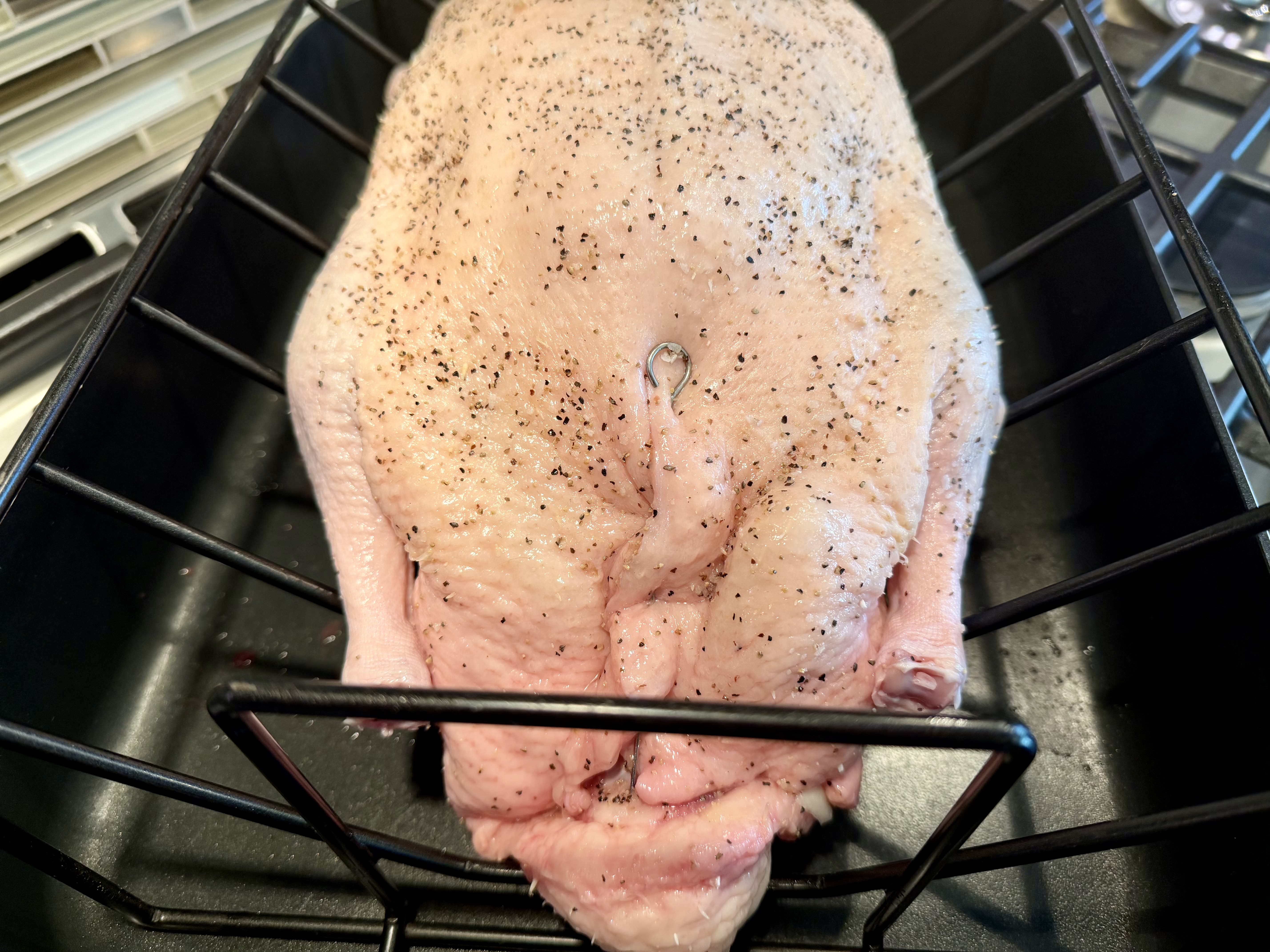
  1. Heat oven to 500 degrees. In a large bowl, toss onions with melted butter. Season duck inside and out with salt and pepper. Place rosemary sprigs inside duck’s cavity and then tightly pack with buttered onion mixture.
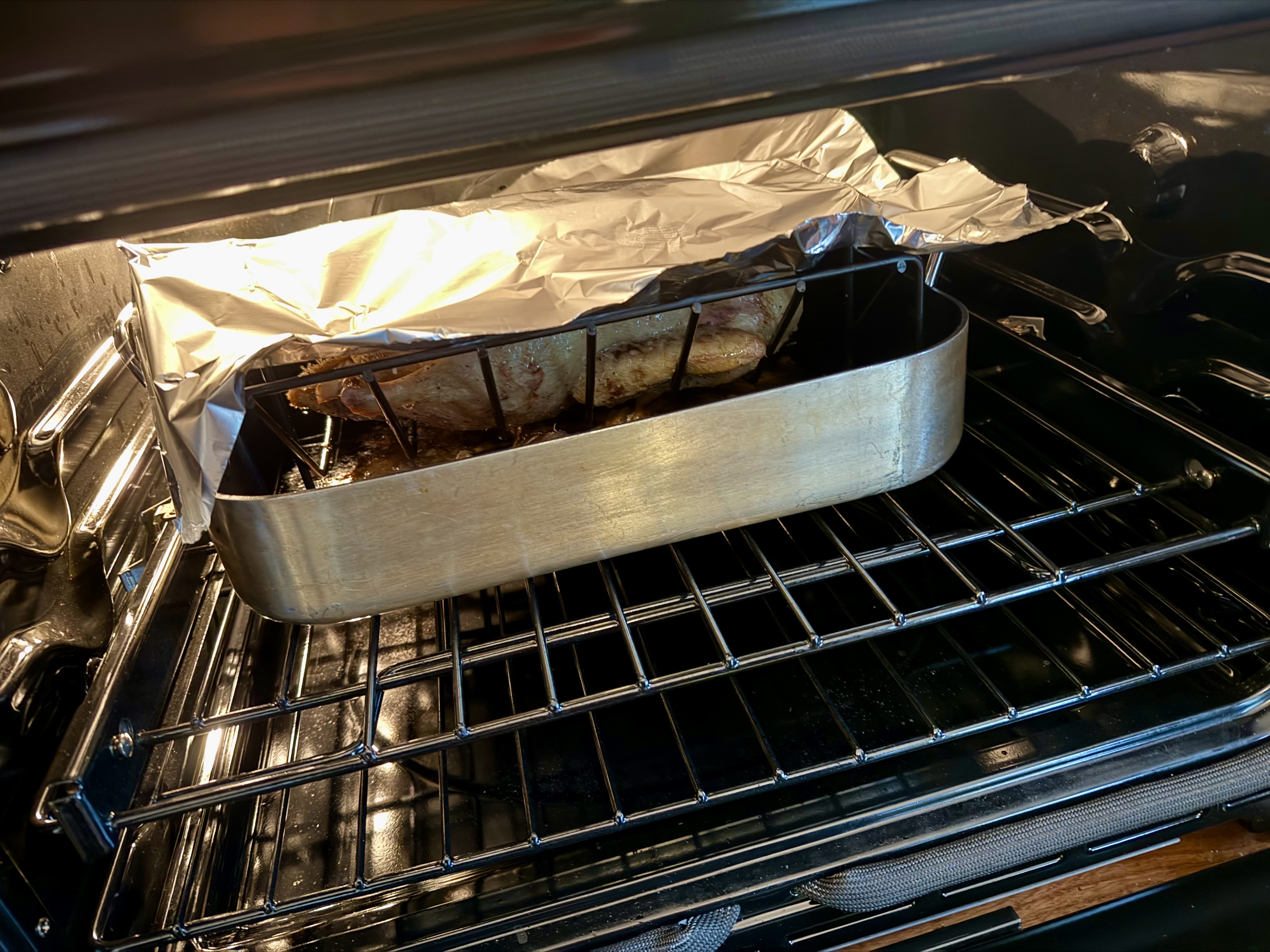
  2. Place duck in medium-size roasting pan, and roast for 10 minutes. Reduce oven temperature to 300 degrees and cover pan loosely with foil. Roast for about 4½ hours, draining fat every hour.
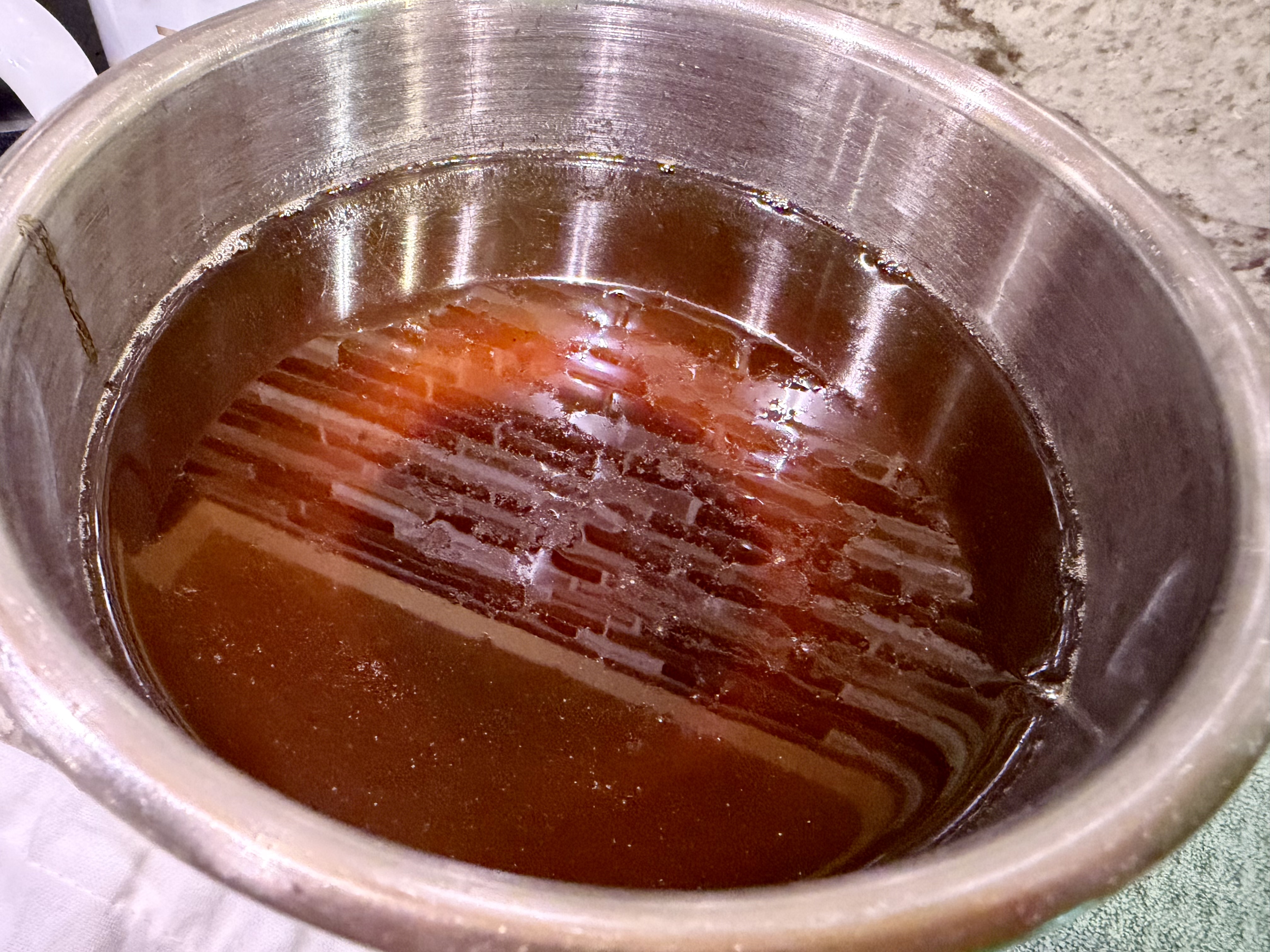
  3. Remove pan from oven and carefully discard as much fat as possible with a ladle. Add orange juice, sherry and soy sauce. Return pan to oven and roast uncovered for 30 minutes. Transfer duck to a platter and let cool slightly. Pour pan juices (about 4 cups) into a saucepan, discarding any pieces of skin. Skim off fat and bring to a boil over medium-high heat.
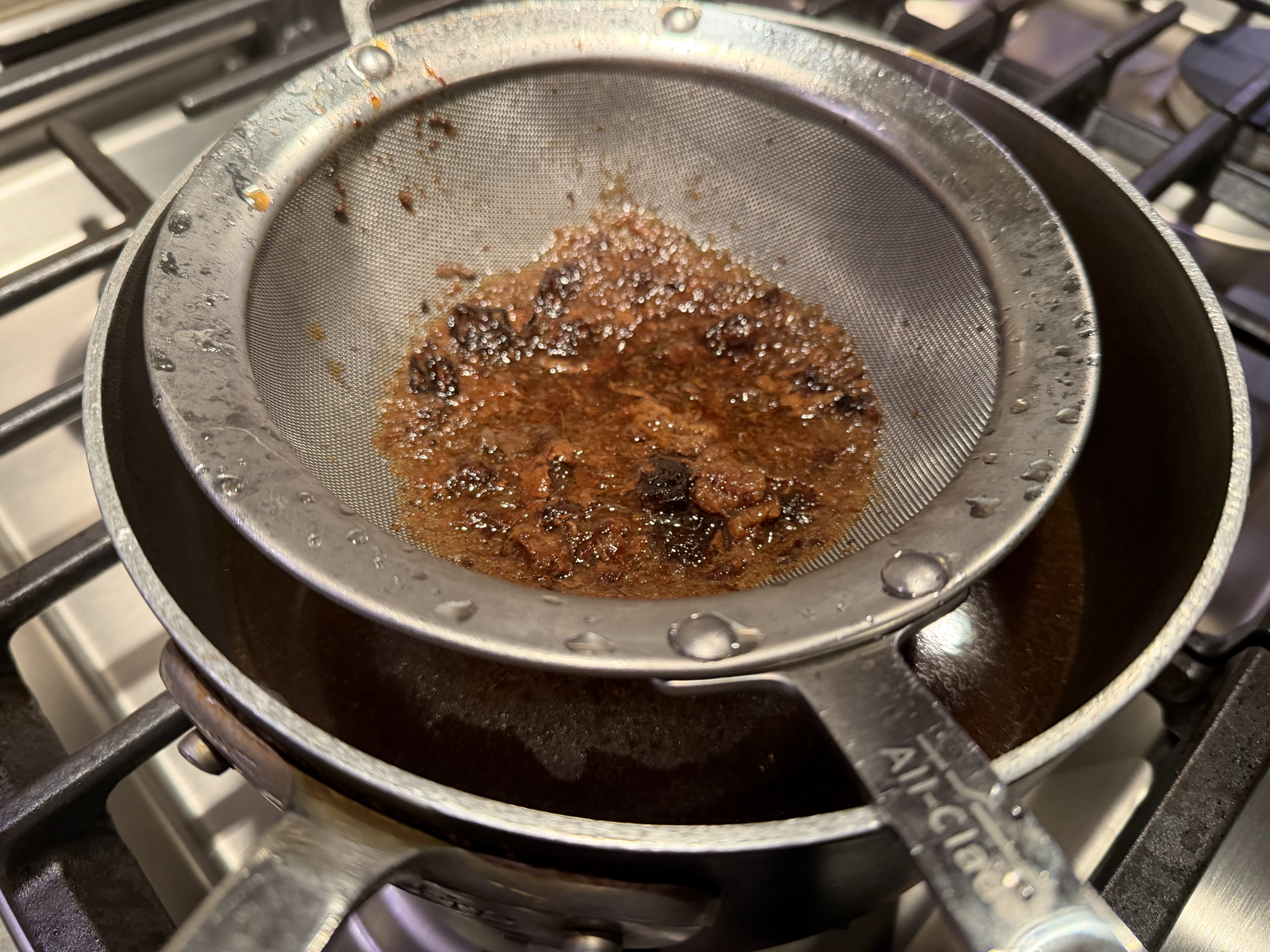
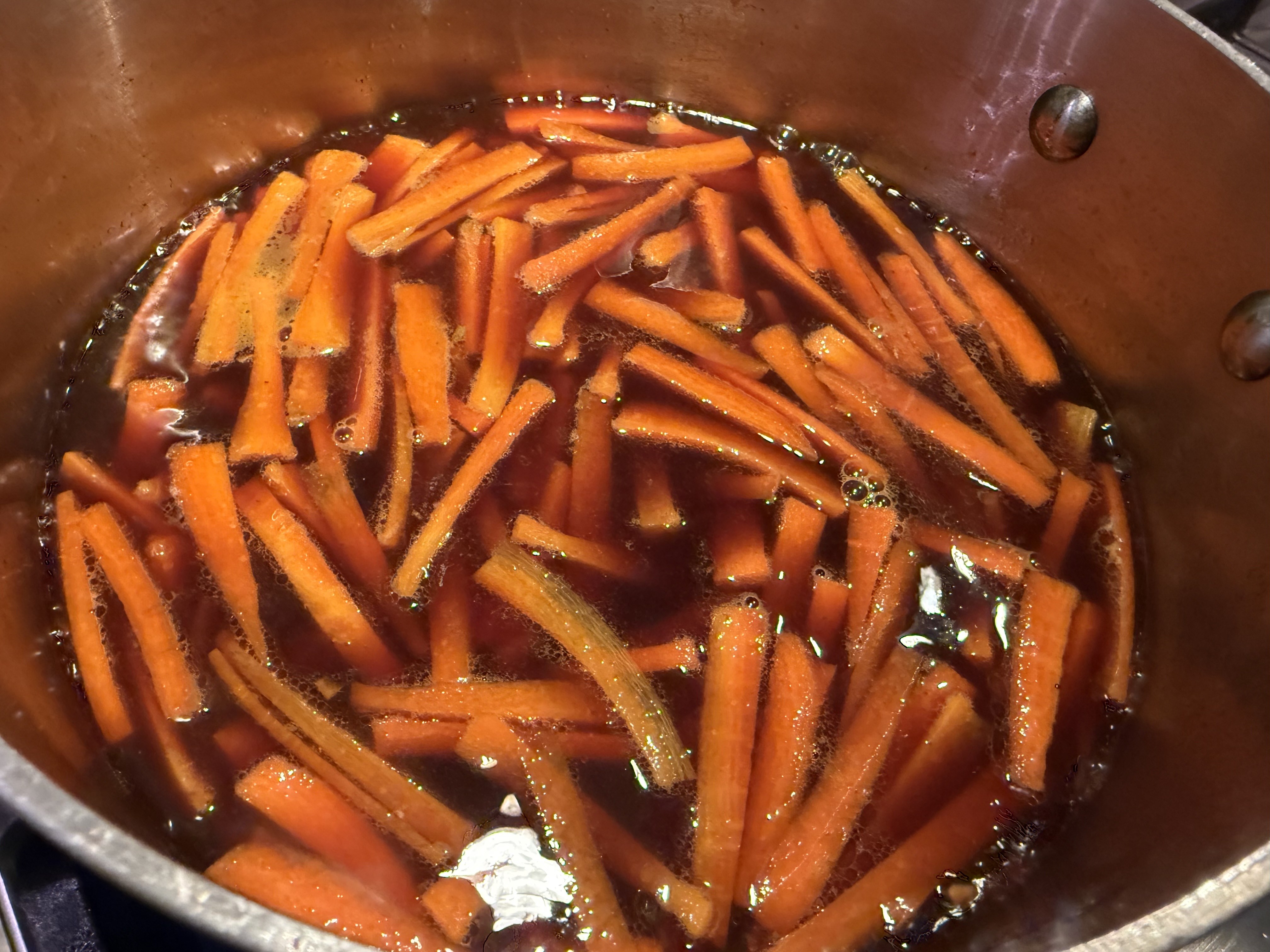
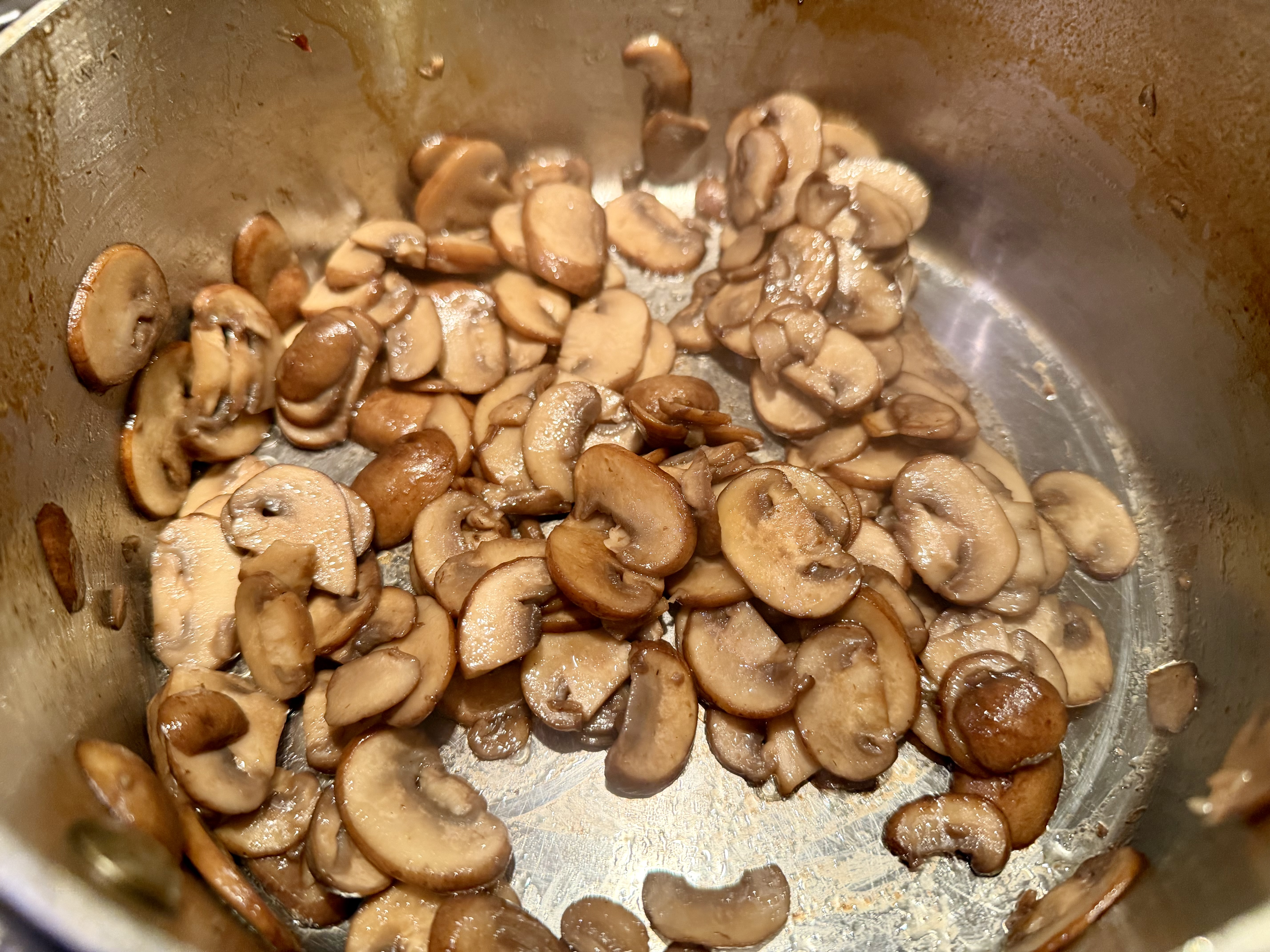
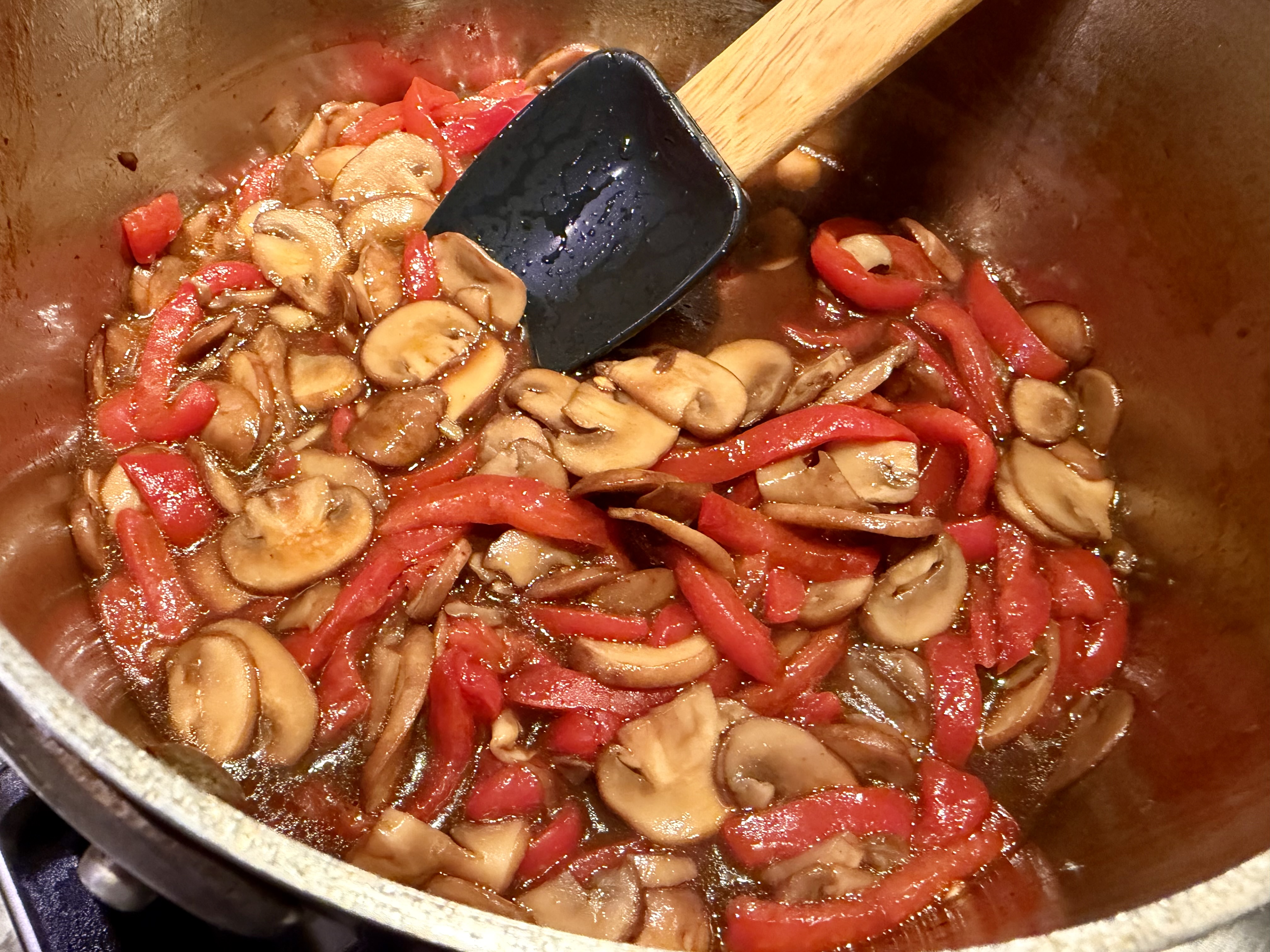
  4. Add carrots and reduce to 1½ cups, strain and keep on the side. In same pan, sauté mushrooms with 2 tablespoons butter until brown. Add red peppers and briefly sauté, then add reduced sauce. Season to taste with salt and pepper. Keep warm over low heat.
  5. Remove onions and rosemary from duck’s cavity and discard. Remove meat from bones. Place skin from duck breasts onto rimmed baking sheet and bake at 400 degrees until skin starts to foam, about 5 to 10 minutes. (Ours took 13 minutes to crisp up.)
  6. Cover bottoms of individual plates with sauce and top with either pasta, shoestring fries, hash browns or unsalted potato chips. Place a generous amount of duck meat on top, then garnish with crispy skin, vegetables and chives or scallions.

http://www.lynnandruss.com

Adapted by a recipe from Greg Sonnier; originally by Pableaux Johnson

Lamb Shanks Braised in Red Wine with Herbes de Provence

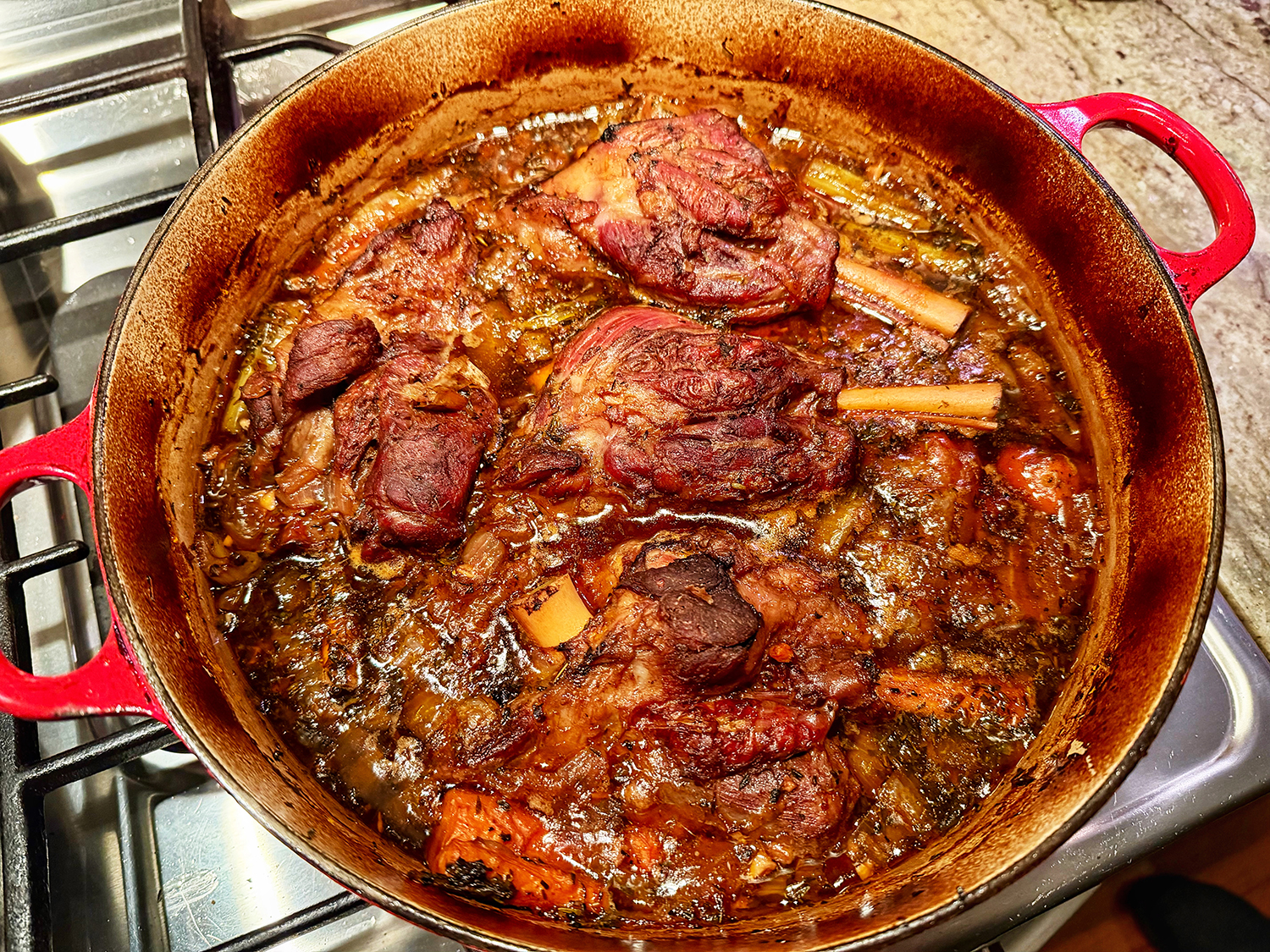
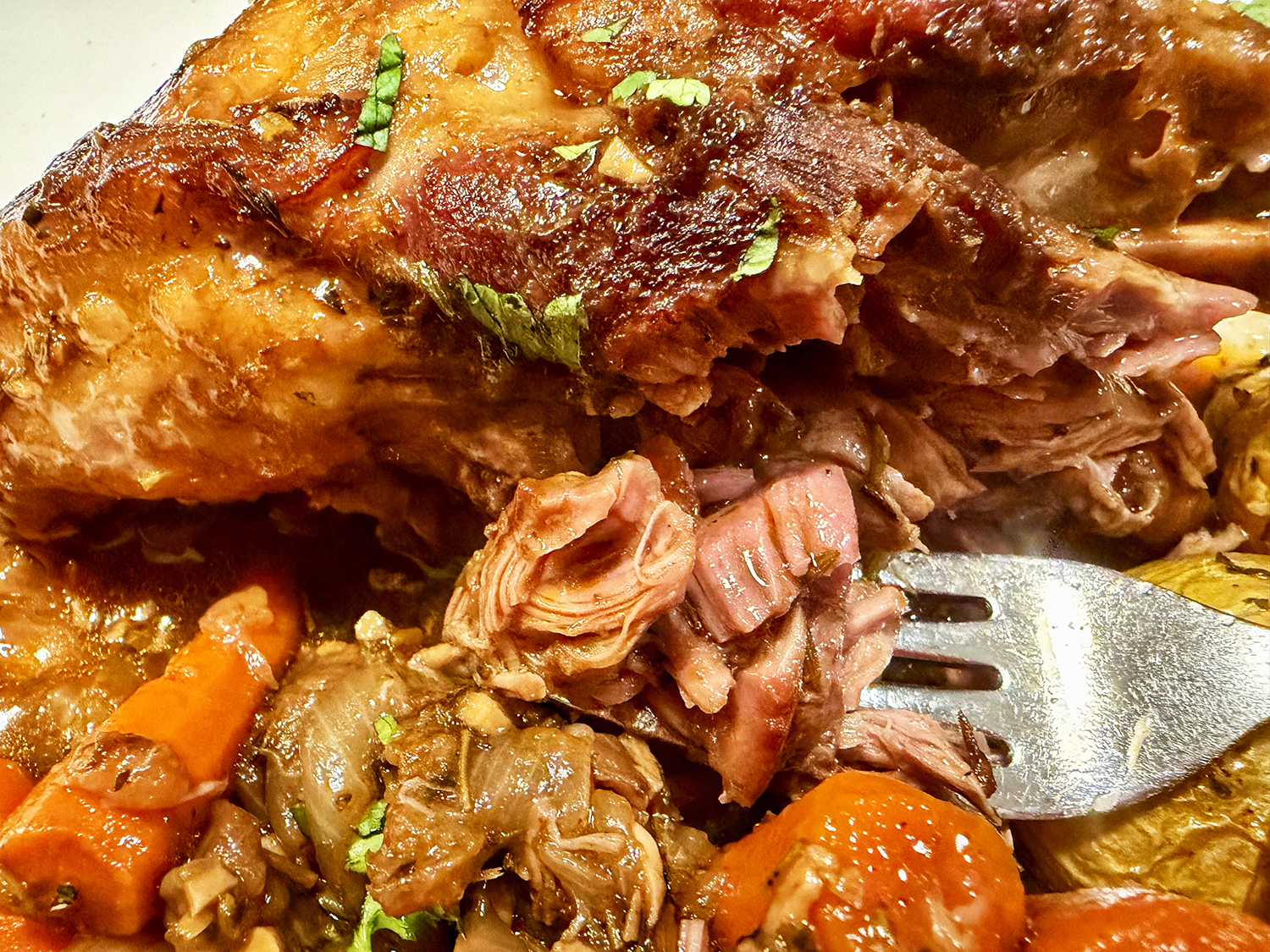
This uncomplicated America’s Test Kitchen recipe is truly a company-worthy, memorable main dish. Braising lamb shanks turns a richly flavored but tough cut of meat meltingly tender. However, the high fat content of lamb can all too often lead to a greasy sauce—not a pleasant memory.

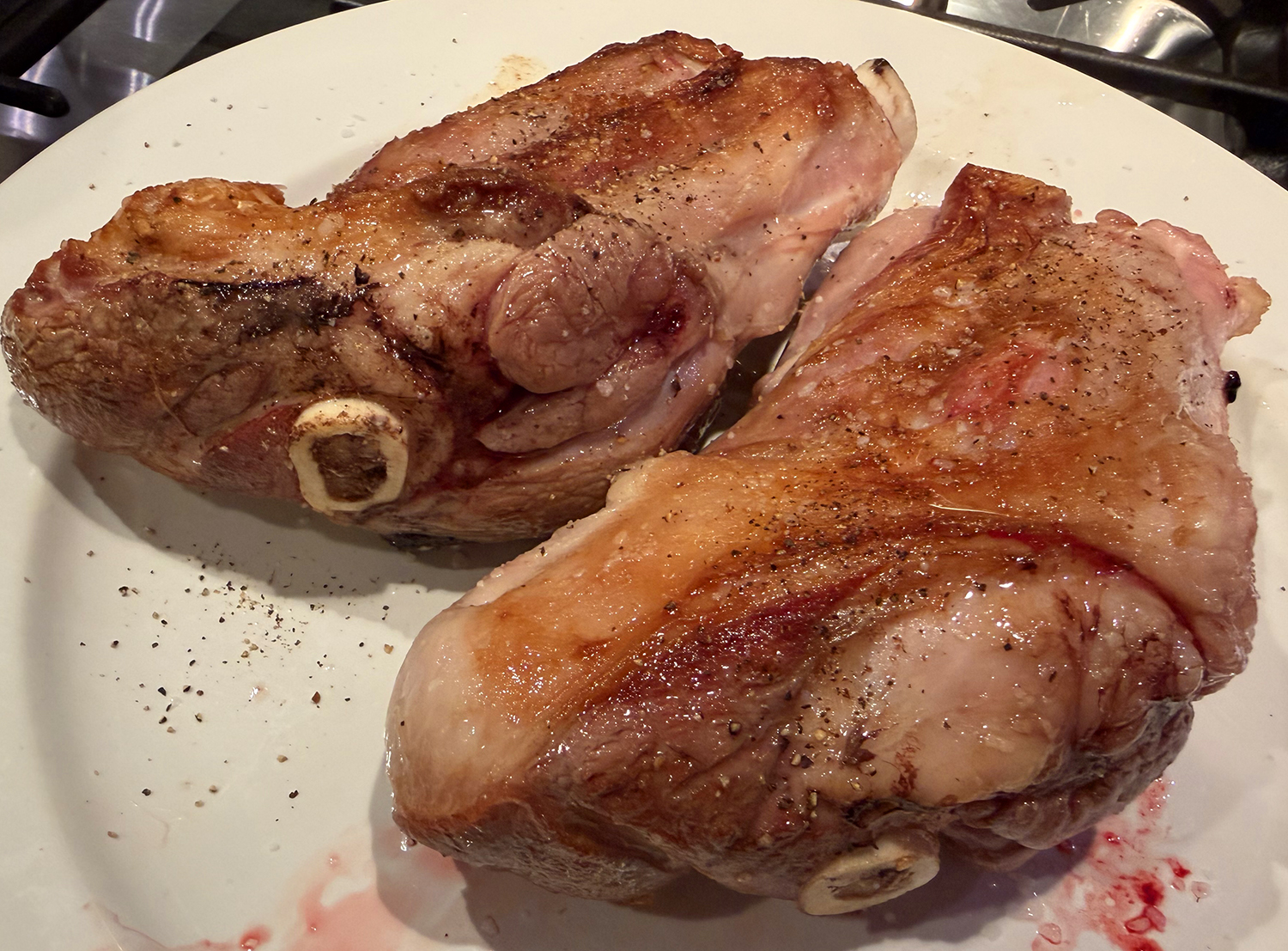
To avoid this pitfall, trim the shanks well and then brown them before adding liquid to get a head start on rendering their fat. Also, defat the braising liquid after the shanks have cooked. There is more liquid than is called for in many braises to guarantee that plenty remains in the pot despite about an hour of uncovered cooking.

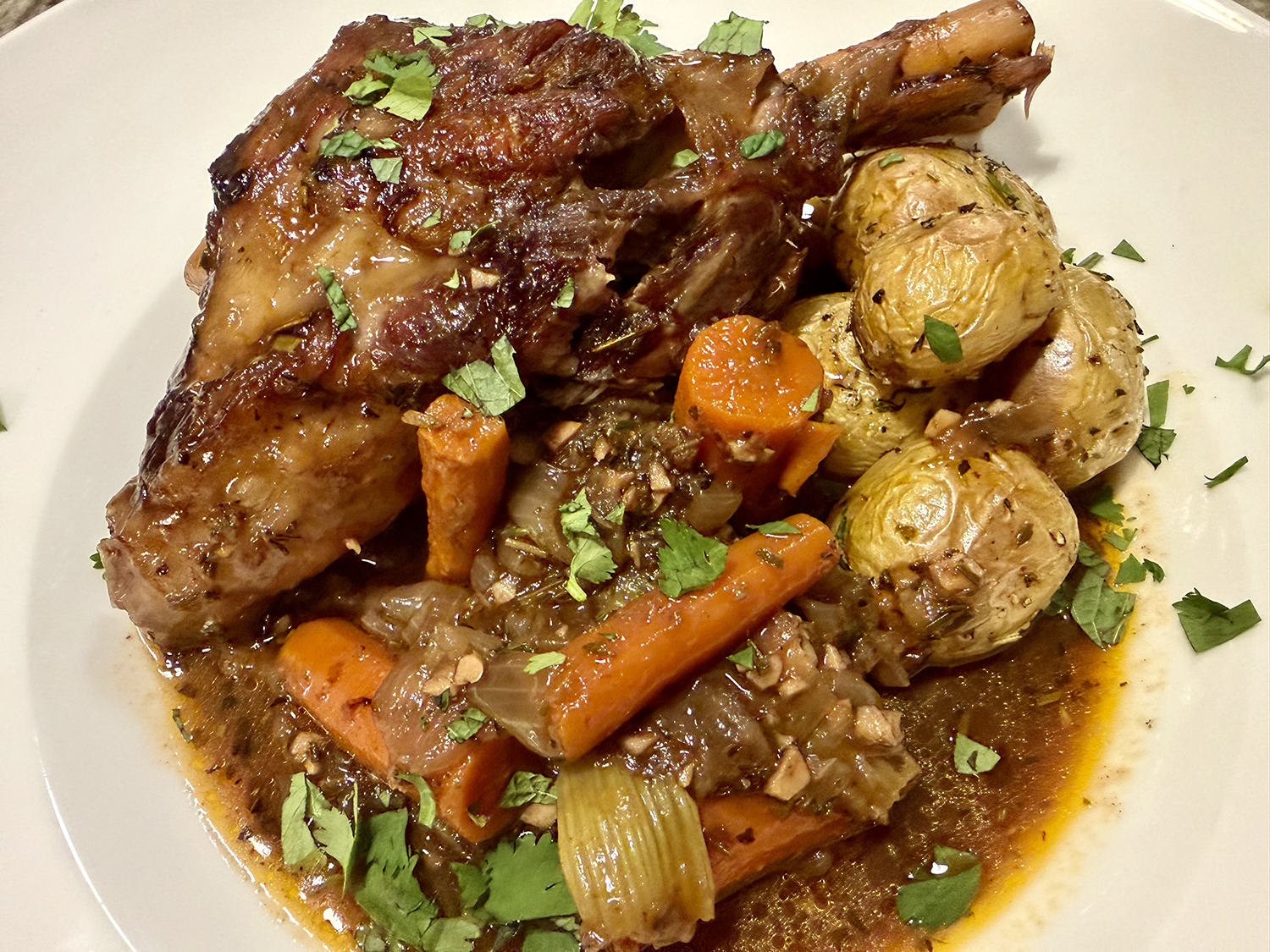
For starters, we only purchased 4 lamb shanks since it was going to be just the two of us, keeping the quantity of most everything at the same amount — except the carrots, which doubled. And we roasted some baby potatoes seasoned with herbes de Provence separately. We were thrilled to get another meal out of the braise because it was beyond delicious!

NOTES: Côtes du Rhône works particularly well here. If you can’t locate herbes de Provence, substitute a mixture of one teaspoon each of dried thyme, rosemary, and marjoram. If you’re using smaller shanks than the ones called for in this recipe, reduce the braising time.

Lamb Shanks Braised in Red Wine with Herbes de Provence

  • Servings: 6
  • Difficulty: easy
  • Print

Ingredients

  • 6 (12- to 16-oz.) lamb shanks, trimmed
  • 1 tsp. plus a pinch table salt
  • 2 Tbsp. vegetable oil, divided
  • 3 carrots, peeled and cut crosswise into 2-inch pieces
  • 2 onions, sliced thick
  • 2 celery ribs, cut into 2-inch pieces
  • 2 Tbsp. tomato paste
  • 4 garlic cloves, minced
  • 2 Tbsp. herbes de Provence
  • 2 cups dry red wine
  • 3 cups chicken broth
  • Ground black pepper

Directions

  1. Adjust oven rack to middle position and heat oven to 350 degrees. Pat lamb shanks dry with paper towels and sprinkle with 1 teaspoon salt. Heat 1 tablespoon oil in Dutch oven over medium- high heat until just smoking. Brown 3 shanks on all sides, 7 to 10 minutes. Transfer shanks to large plate and repeat with remaining 1 tablespoon oil and remaining 3 shanks.
  2. Pour off all but 2 tablespoons fat from pot. Add carrots, onions, celery, tomato paste, garlic, herbes de Provence, and remaining pinch salt and cook until vegetables just begin to soften, 3 to 4 minutes. Stir in wine, then broth, scraping up any browned bits; bring to simmer. Nestle shanks, along with any accumulated juices, into pot.
  3. Return to simmer and cover; transfer pot to oven. Cook for 1½ hours. Uncover and continue to cook until tops of shanks are browned, about 30 minutes. Flip shanks and continue to cook until remaining sides are browned and fork slips easily in and out of shanks, 15 to 30 minutes longer.
  4. Remove pot from oven and let rest for 15 minutes. Using tongs, transfer shanks and vegetables to large plate and tent with aluminum foil. Skim fat from braising liquid and season liquid with salt and pepper to taste. Return shanks to braising liquid to warm through before serving.

http://www.lynnandruss.com

Recipe from America’s Test Kitchen

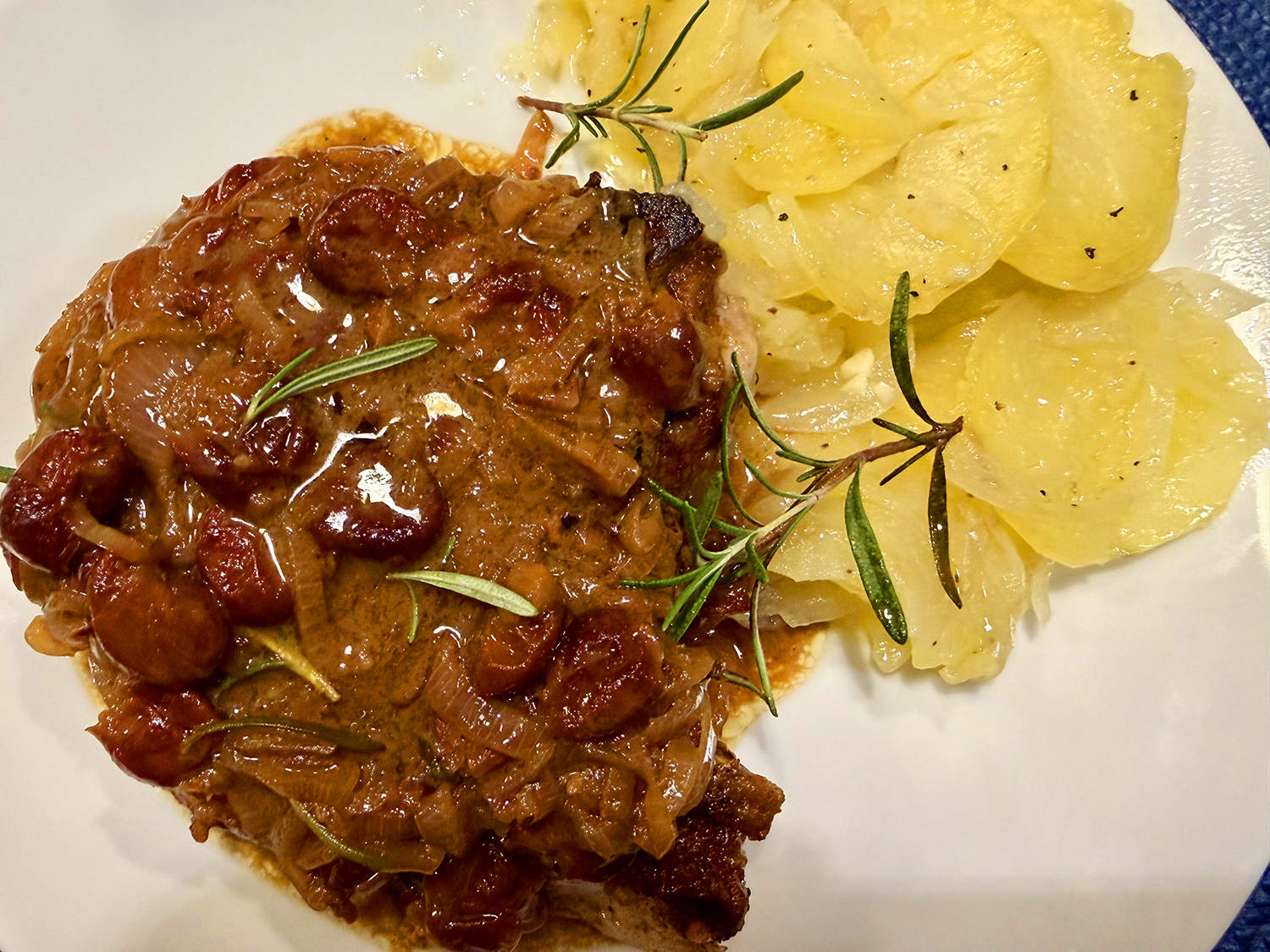
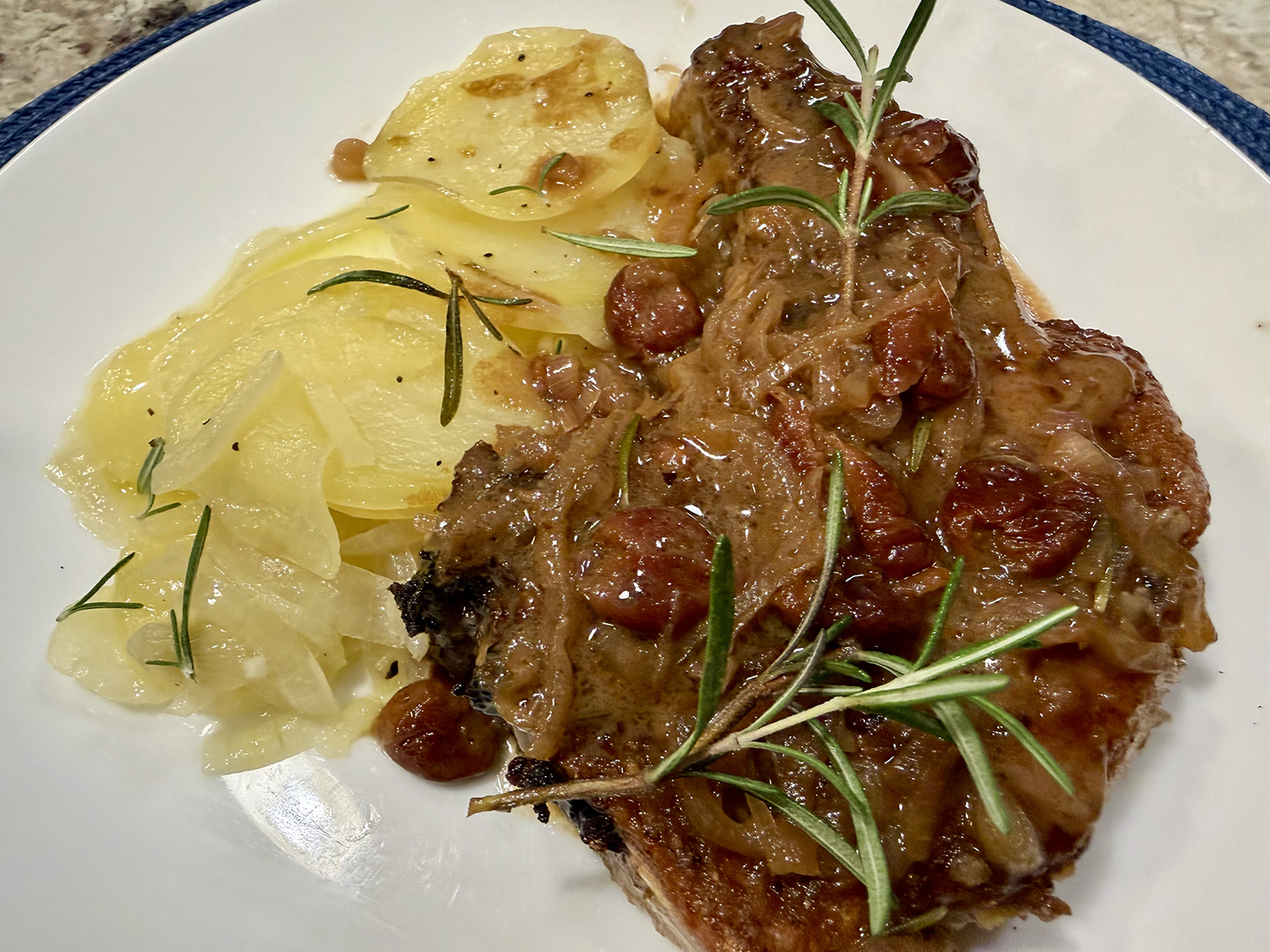
Rosemary and Dried Cherry Pork Chops

How about a to-die-for date night dinner for two? Pork and fruit are a classic partnership, and in this recipe from Bon Appétit, the marriage has lasting potential! It was a memorable dinner date for us… no future divorce attorneys on speed dial…

Rehydrating dried cherries in hot water turns them plump and juicy—exactly what you want scattered throughout a rosemary-scented pan sauce for thick-cut pork chops. Don’t be tempted to go for boneless chops; a dish this simple and flavorful calls for a heavy-hitting bone-in situation.

Our sides consisted of Patatas Panaderas and a side salad. Dinner Done!

Rosemary and Dried Cherry Pork Chops

  • Servings: 2
  • Difficulty: easy
  • Print

Ingredients

  • ⅓ cup dried tart cherries
  • 2 1″–1¼”-thick bone-in pork chops (10–12 oz. each)
  • Kosher salt, freshly ground pepper
  • 3 Tbsp. all-purpose flour
  • 2 Tbsp. extra-virgin olive oil
  • 1 large shallot, thinly sliced
  • 4 Tbsp. unsalted butter, divided
  • 2 cups low-sodium chicken broth
  • 2 Tbsp. Dijon mustard
  • 1 Tbsp. balsamic vinegar
  • 2 sprigs rosemary

Directions

  1. Combine ⅓ cup dried tart cherries and ½ cup hot water in a small bowl. Let sit to rehydrate while you cook the pork.
  2. Pat two 1”–1¼”-thick bone-in pork chops (10–12 oz. each) dry with paper towels. Season generously on both sides with kosher salt and freshly ground pepper. Sprinkle 3 tablespoon all-purpose flour evenly over both sides of each chop; press in gently to coat lightly.
  3. Heat 2 tablespoon extra-virgin olive oil in a large cast-iron skillet over medium-high. Shake off any excess flour and cook pork chops until deep golden brown underneath, about 5 minutes. Turn and cook until deep golden brown on other side and an instant-read thermometer inserted into the thickest part registers 135°, about 2 minutes, depending on thickness of chops. Transfer to a plate. Let pan cool slightly.
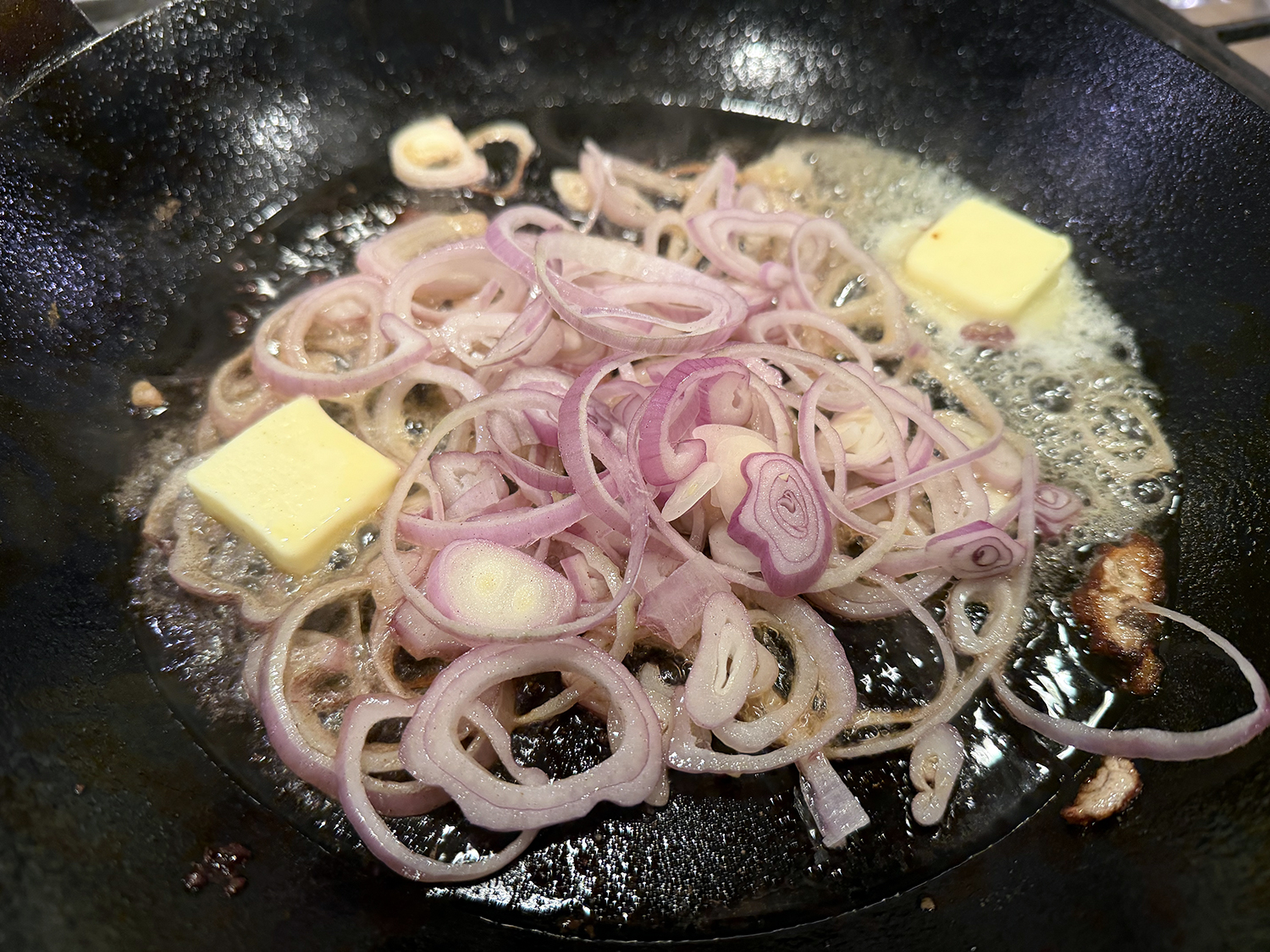
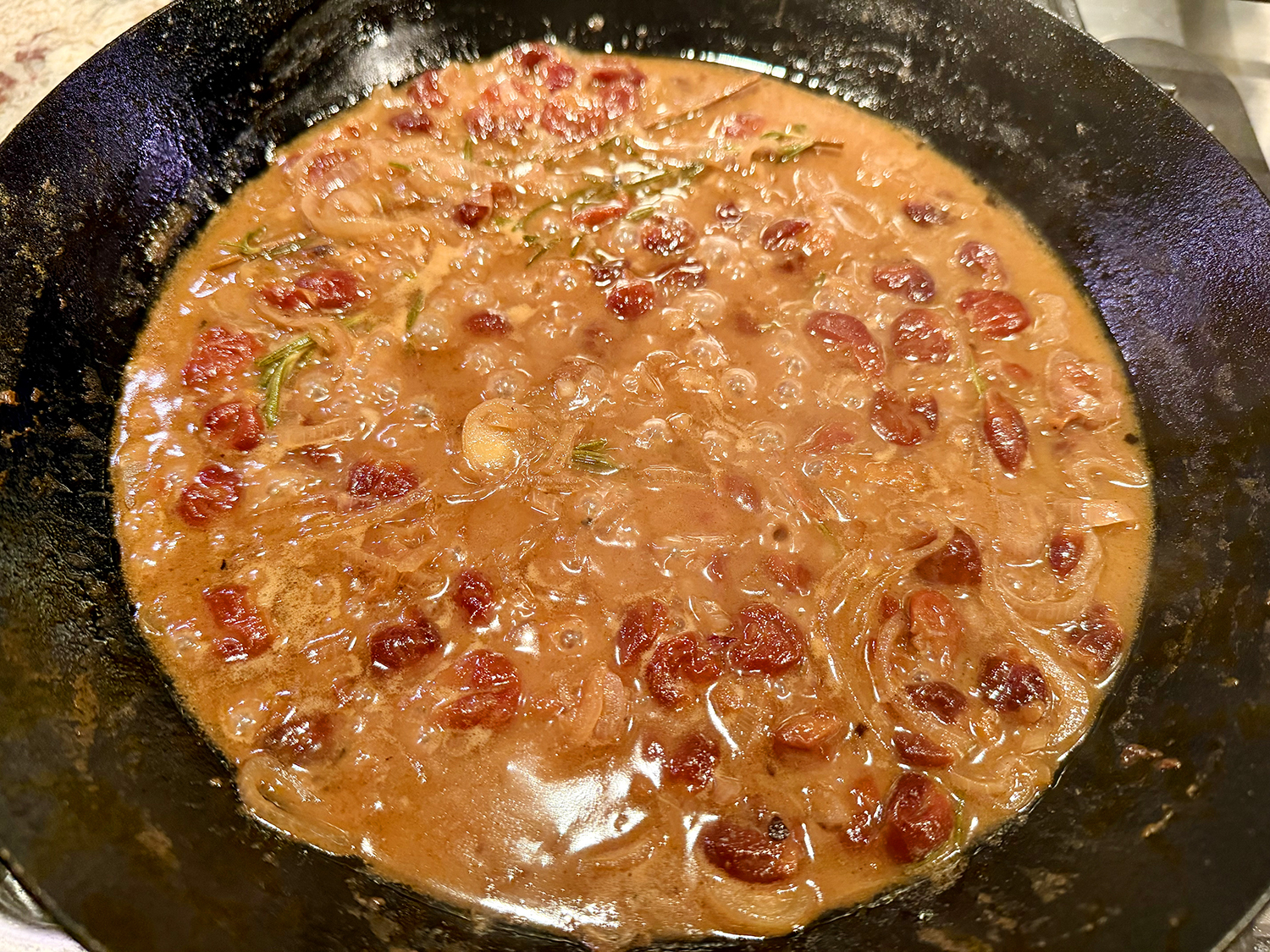
  4. Combine 1 large shallot, thinly sliced, and 2 tablespoon unsalted butter in same pan and cook over medium heat, stirring often, until shallot is softened, about 2 minutes. Add 2 cups low-sodium chicken broth, 2 tablespoon Dijon mustard, 1 tablespoon balsamic vinegar, and reserved cherries with their liquid. Cook, stirring constantly, until slightly reduced, about 5 minutes.
  5. Add 2 sprigs rosemary (OK maybe a bit more) and cook, stirring often, until sauce thickens further and is homogeneous, about 5 minutes. Remove from heat, add remaining 2 tablespoon unsalted butter, and vigorously stir to combine. Taste sauce and season with salt and pepper.
  6. To serve, nestle pork chops back into sauce in pan and spoon some sauce over.

http://www.lynnandruss.com

Recipe by Kendra Vaculin for Bon Appétit

Salmon and Green Beans in Red Pepper Sauce

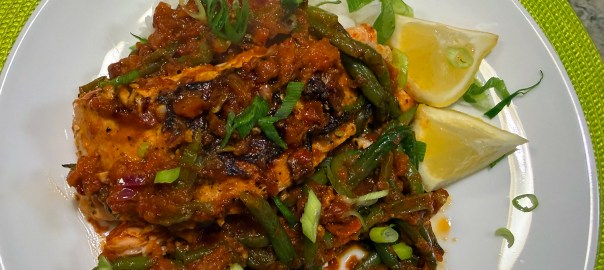
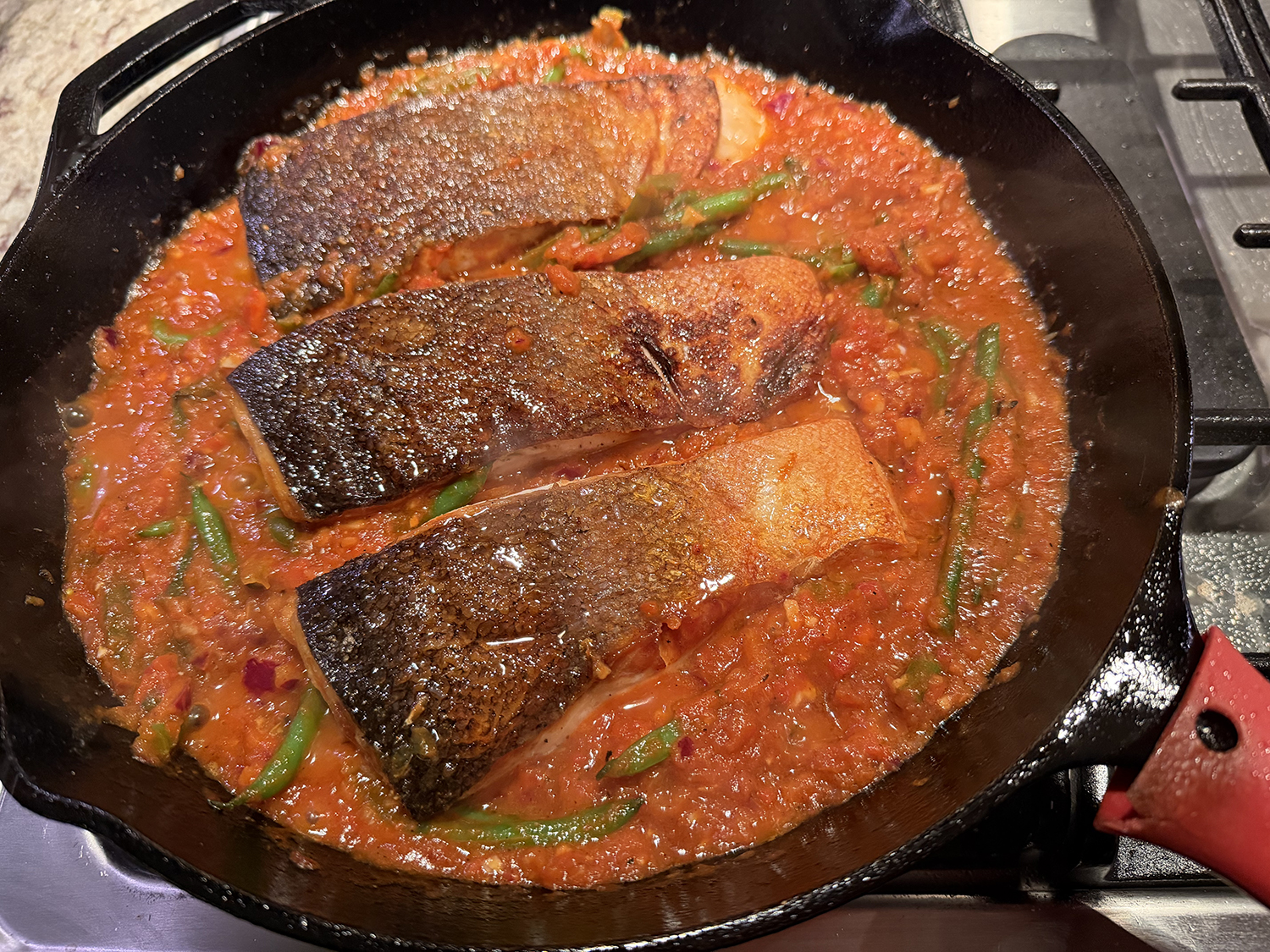
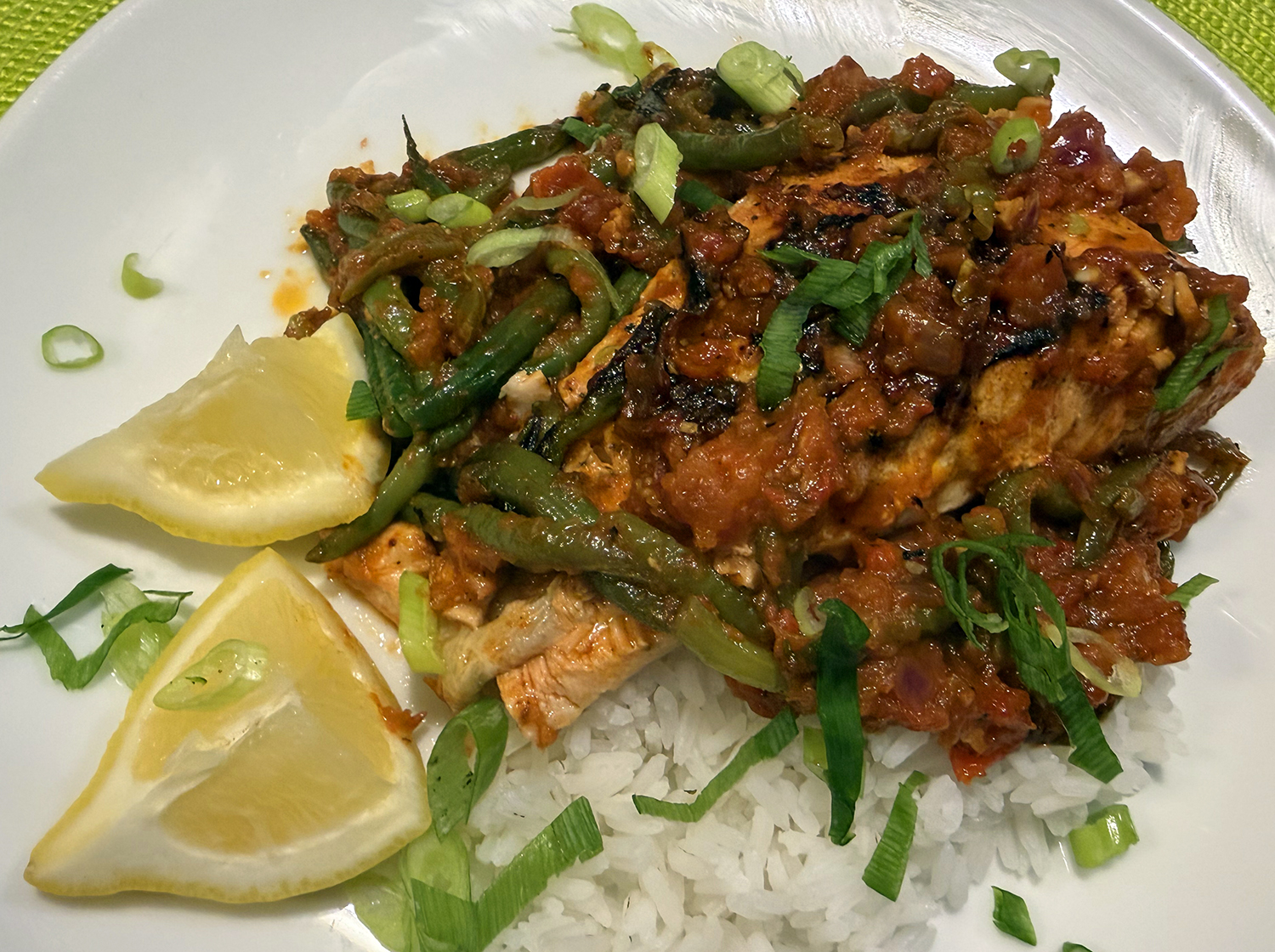
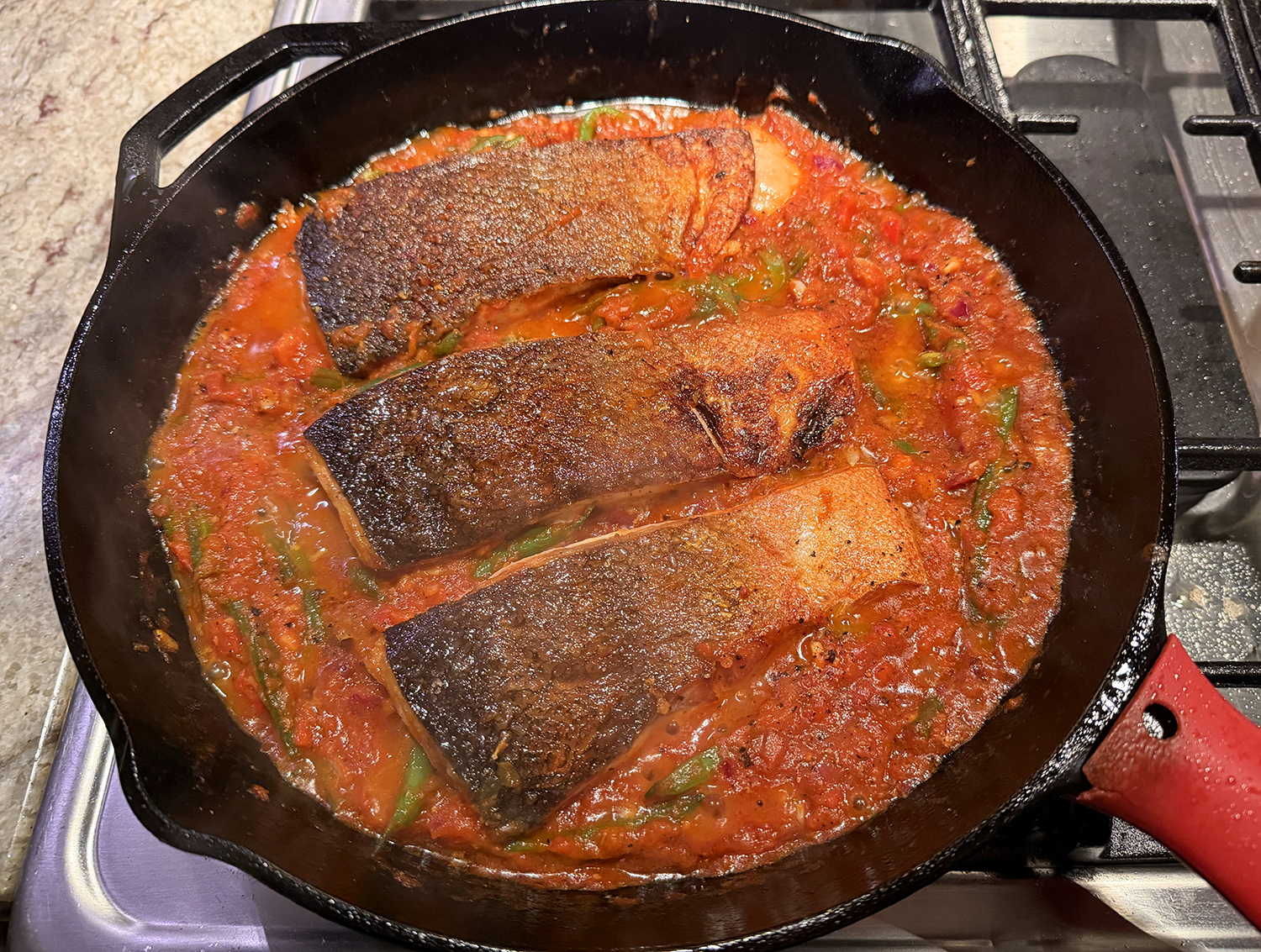
Crisp-skinned salmon is the star protein here and simmers alongside green beans in the sauce, which is balanced, rich and tasty with anchovies and miso. According to NY Times Cooking, a sauce this good works with any protein that benefits from a gentle simmer. It was spot-on with the salmon!

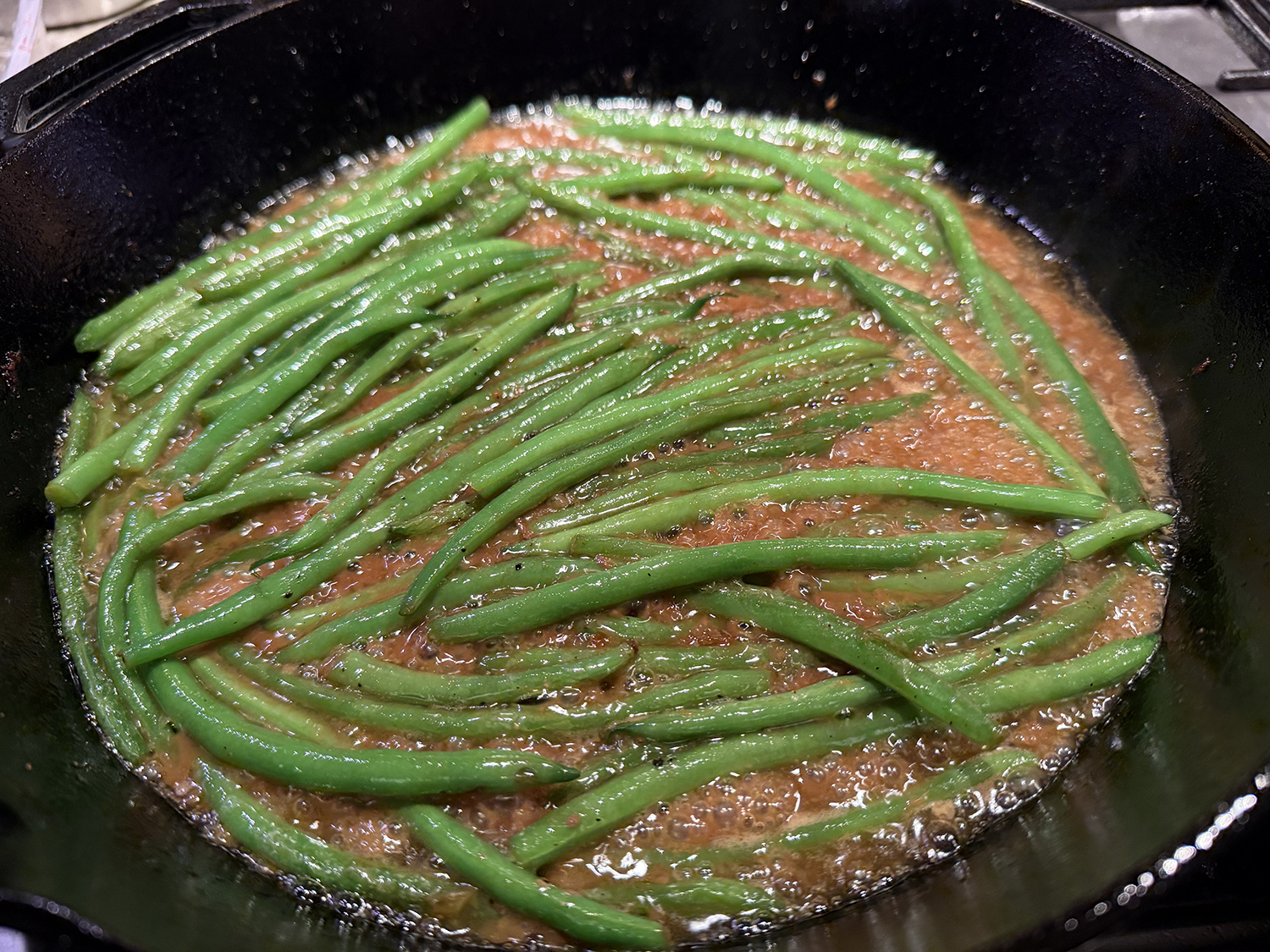
Resist the notion that fish should be paired with vegetables that keep their crunch in the cooking process. Rather, here these green beans—which hold their shape while they gently and endearingly collapse—contribute a generous texture to a roasted red pepper sauce.

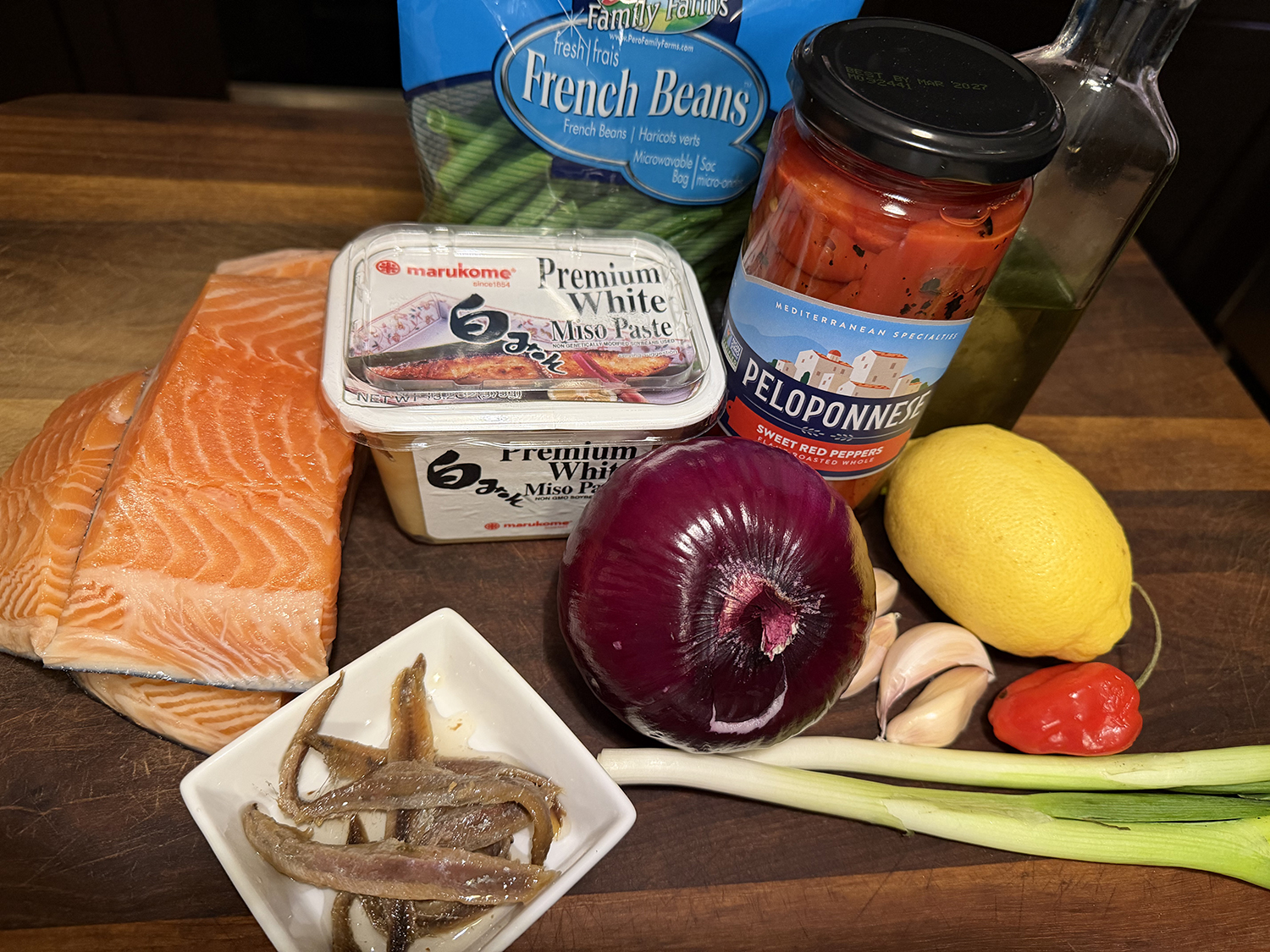
We are quite fond of salmon and enjoy the fish often, both at home and while dining out. The Hubs adores anchovies (in any form), yet I tend to be a bit more timid about them. In this dish, they literally dissolve into the sauce. If there is an anti-anchovy militant in your household, don’t even mention they are part of the recipe.

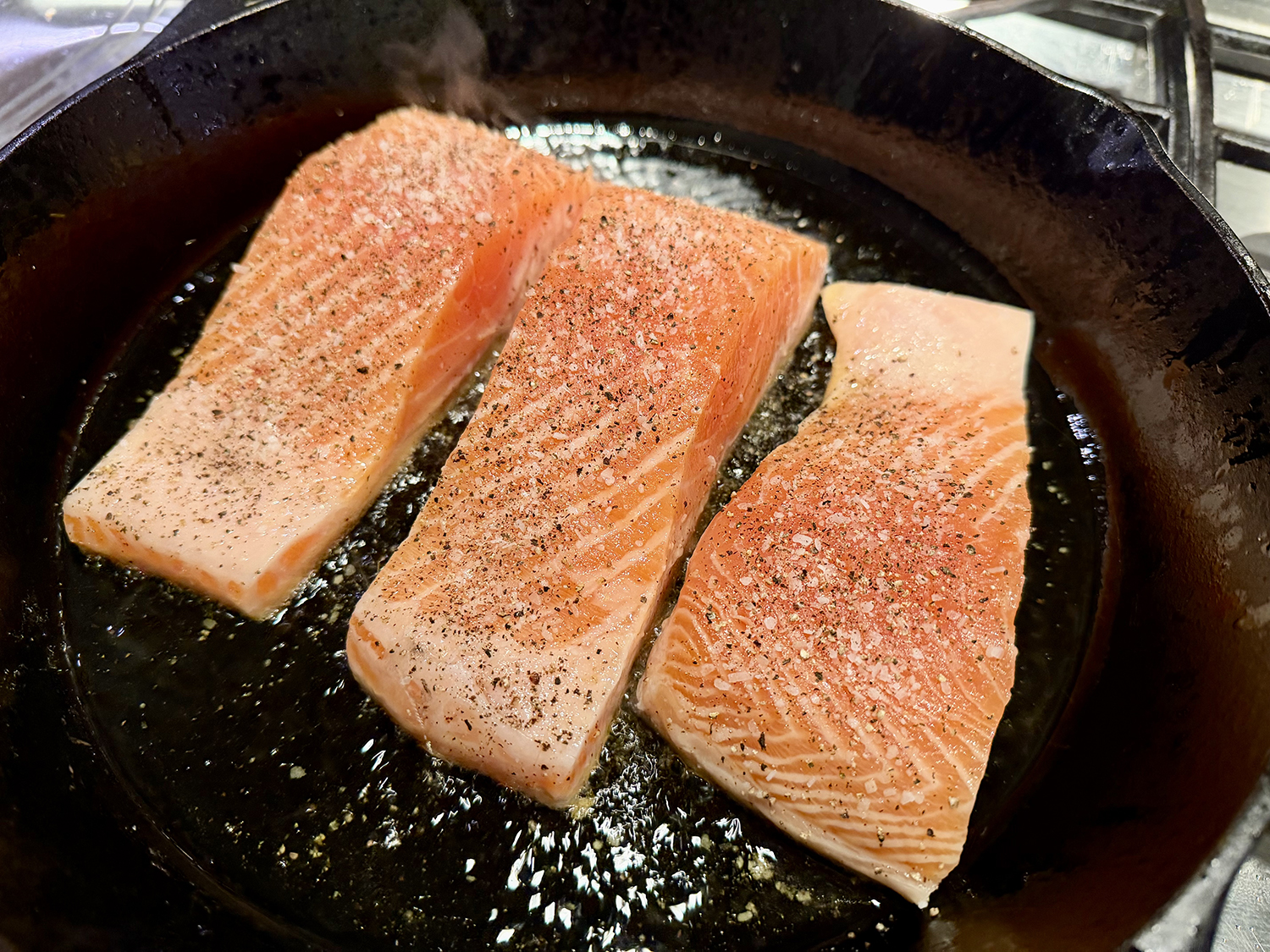
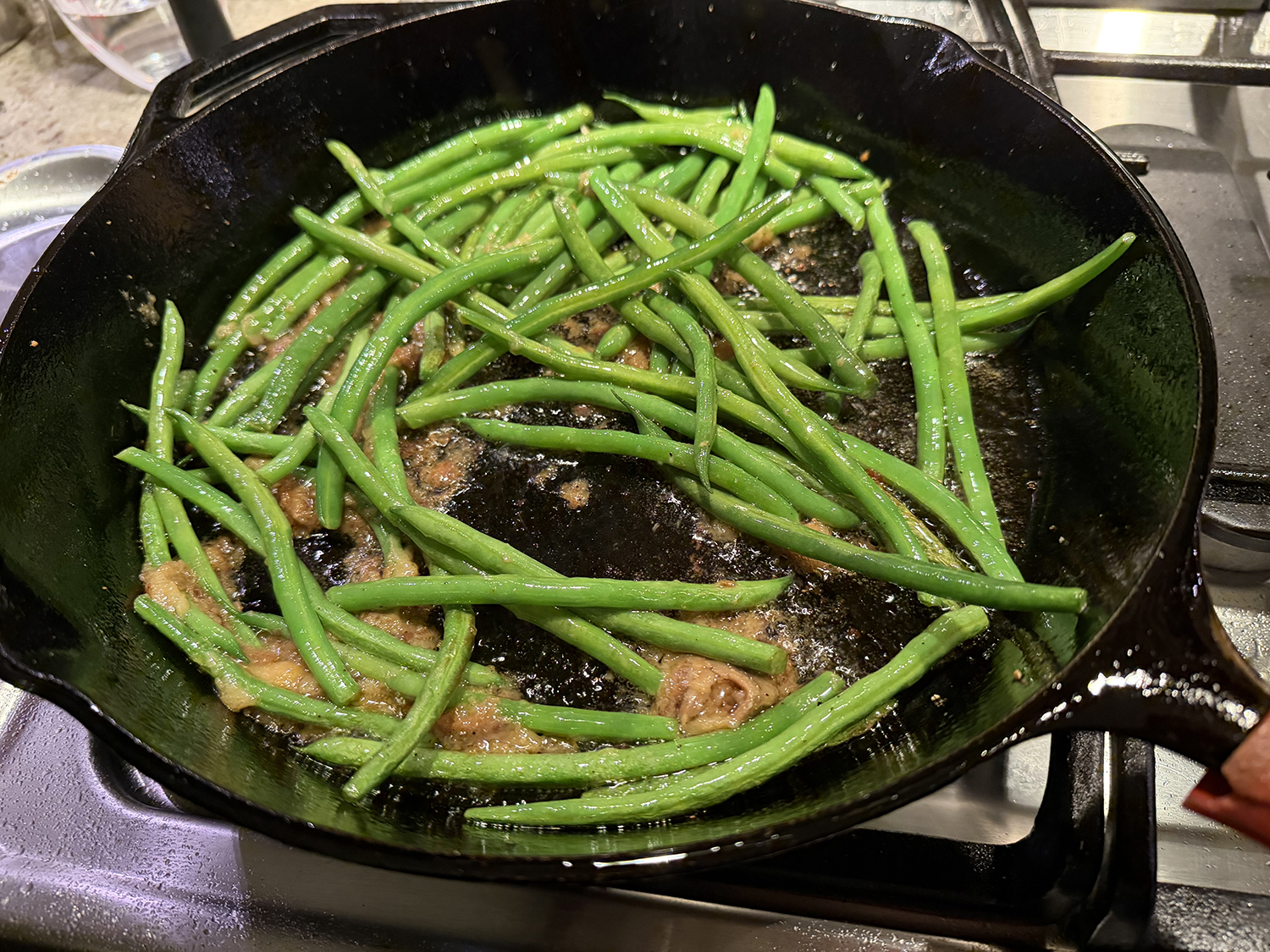
Our changes included slicing a 24-ounce slab of salmon into three 8-ounce portions. We also increased the amount of green beans from 8 ounces to 12 ounces (but then forgot to slice them into 2-inch pieces 😏).

Salmon and Green Beans in Red Pepper Sauce

  • Servings: 4
  • Difficulty: easy
  • Print

Ingredients

  • 1 small red onion, peeled and chopped (about 1 cup)
  • 1 (16-oz.) jar roasted red bell peppers, drained and chopped (about 1 ½ cups)
  • 1 Scotch bonnet or habanero chile, seeds in or out
  • 4 garlic cloves, peeled
  • 5 Tbsp. olive oil, divided
  • 4 salmon fillets (about 6 oz. each), skin on or off
  • Salt and black pepper
  • 8 oz. green beans, trimmed and cut into 2-inch pieces (about 2 cups)
  • 6 to 8 oil-packed anchovies
  • 1 Tbsp. white or red miso
  • ½ cup thinly sliced fresh scallions
  • Rice, for serving
  • 1 lemon, cut in wedges

Directions

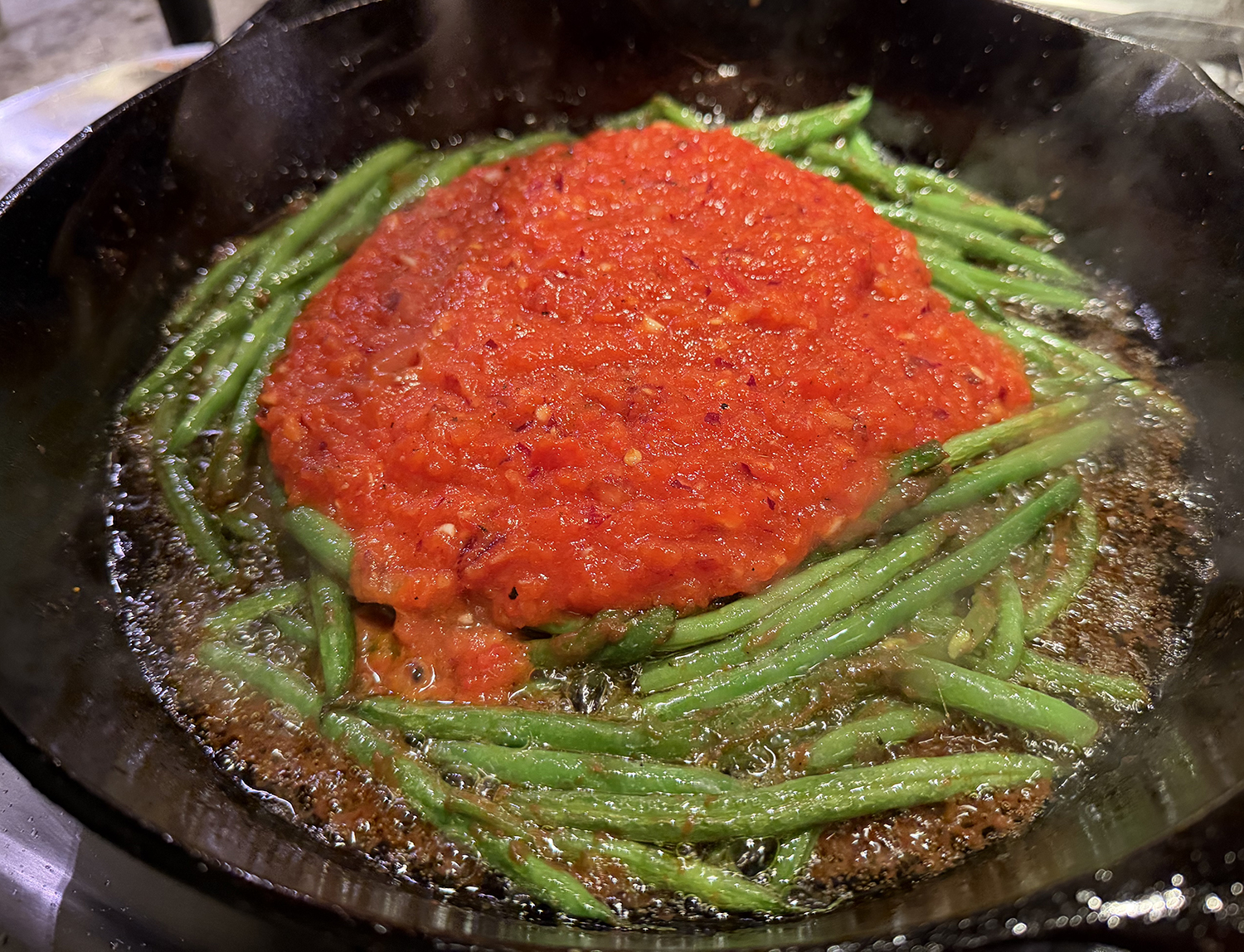
  1. Prepare the red pepper sauce: Using a food processor or blender, coarsely chop the onion, roasted red peppers, Scotch bonnet and garlic by pulsing them together.
  2. Heat a large (10-inch) cast iron or nonstick skillet over high and add 2 tablespoons oil.
  3. Place the salmon fillets in the hot oil, skin side down, season lightly with salt and pepper and cook without moving until the contact side is gently browned, about 5 minutes. Move the salmon to a plate, setting it skin side up, and set aside.
  4. Turn the heat down to medium-high, add 1 tablespoon oil to the skillet, the green beans, anchovies and miso. Cook, stirring frequently, mashing the anchovies with the spatula until miso is broken up and anchovies are dissolved. Add ½ cup water to the skillet and bring to a simmer. Cook until green beans are just wrinkly, 4 to 6 minutes.
  5. Reduce heat to medium, pour the red pepper sauce into the skillet. Stir in ½ cup water and the remaining 2 tablespoons oil. Simmer the sauce, stirring frequently until slightly reduced and the liquid and oil collect toward the center of the skillet, 5 to 6 minutes. Taste for seasoning and adjust with additional salt and pepper if necessary.
  6. Using a wooden spoon, create divots in the sauce and green beans. Nestle the fillets in the divots, skin side up. Cook until the fish is fork-tender, the sauce reduced and the green beans are softened, 6 to 8 minutes.
  7. Garnish with scallions and serve fish, green beans and sauce immediately over rice, with lemon wedges for squeezing.

http://www.lynnandruss.com

Recipe by Yewande Komolafe for NYTimes Cooking

Spicy Pork Stew with Peppers and Potatoes

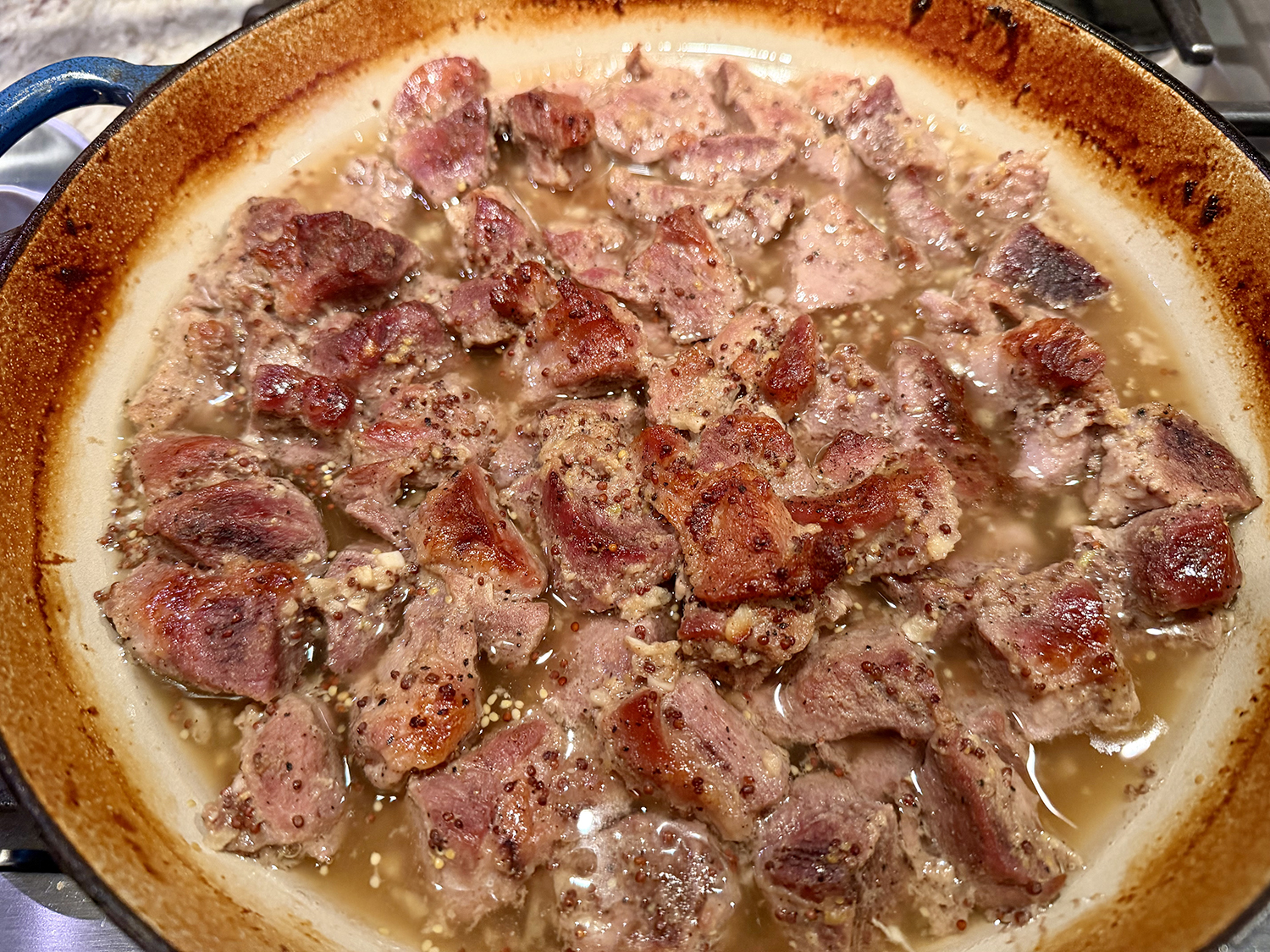
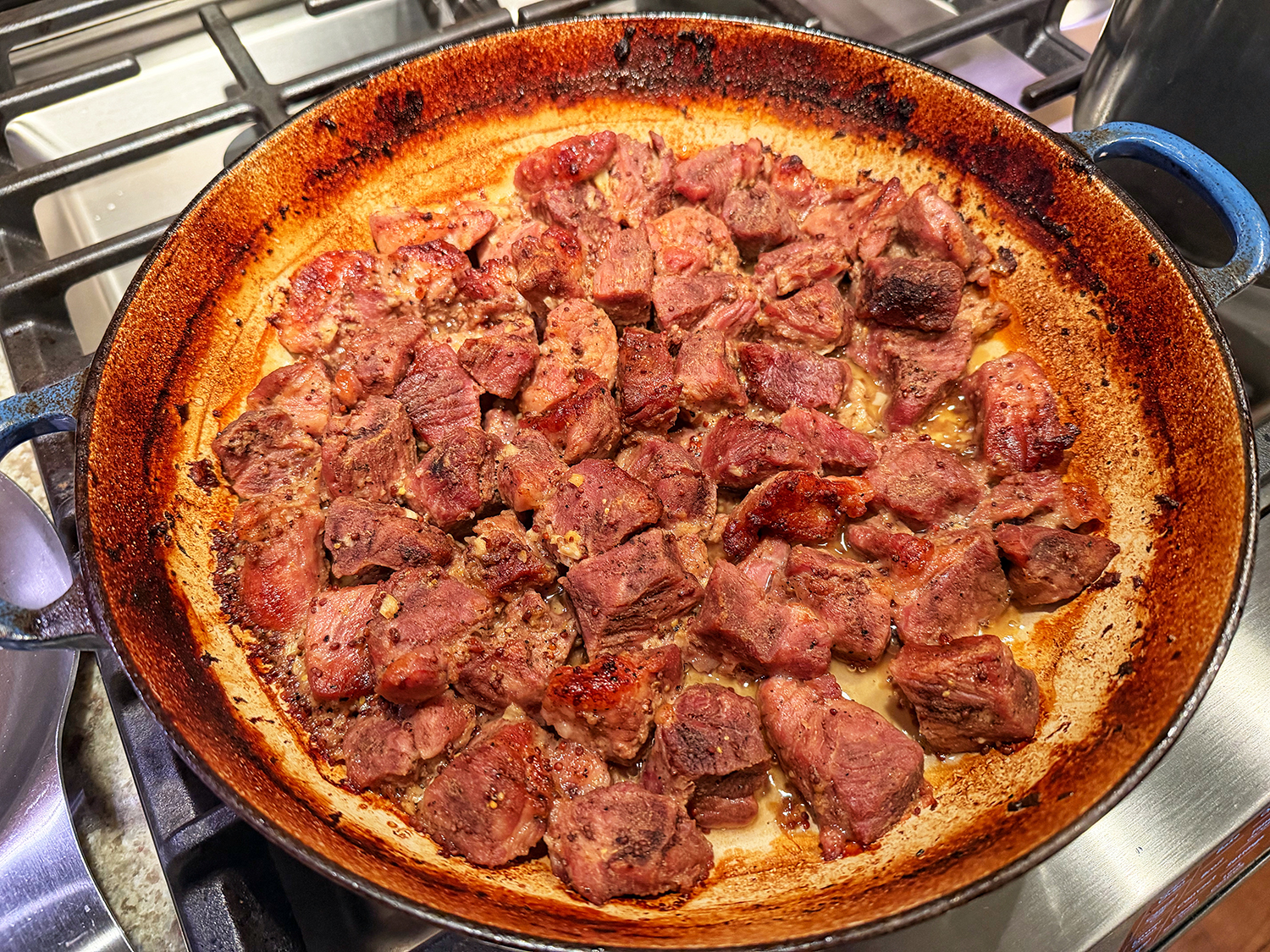
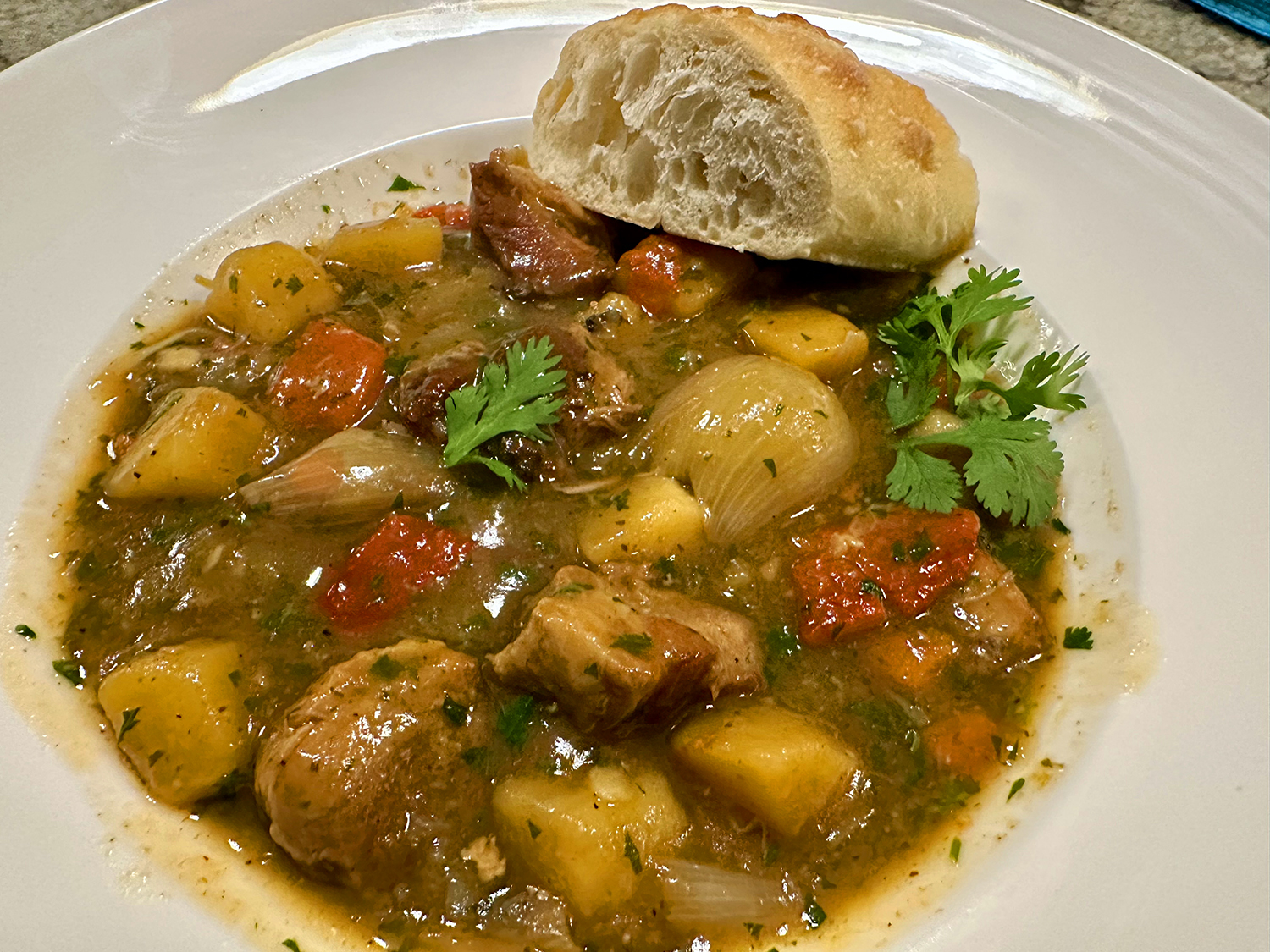
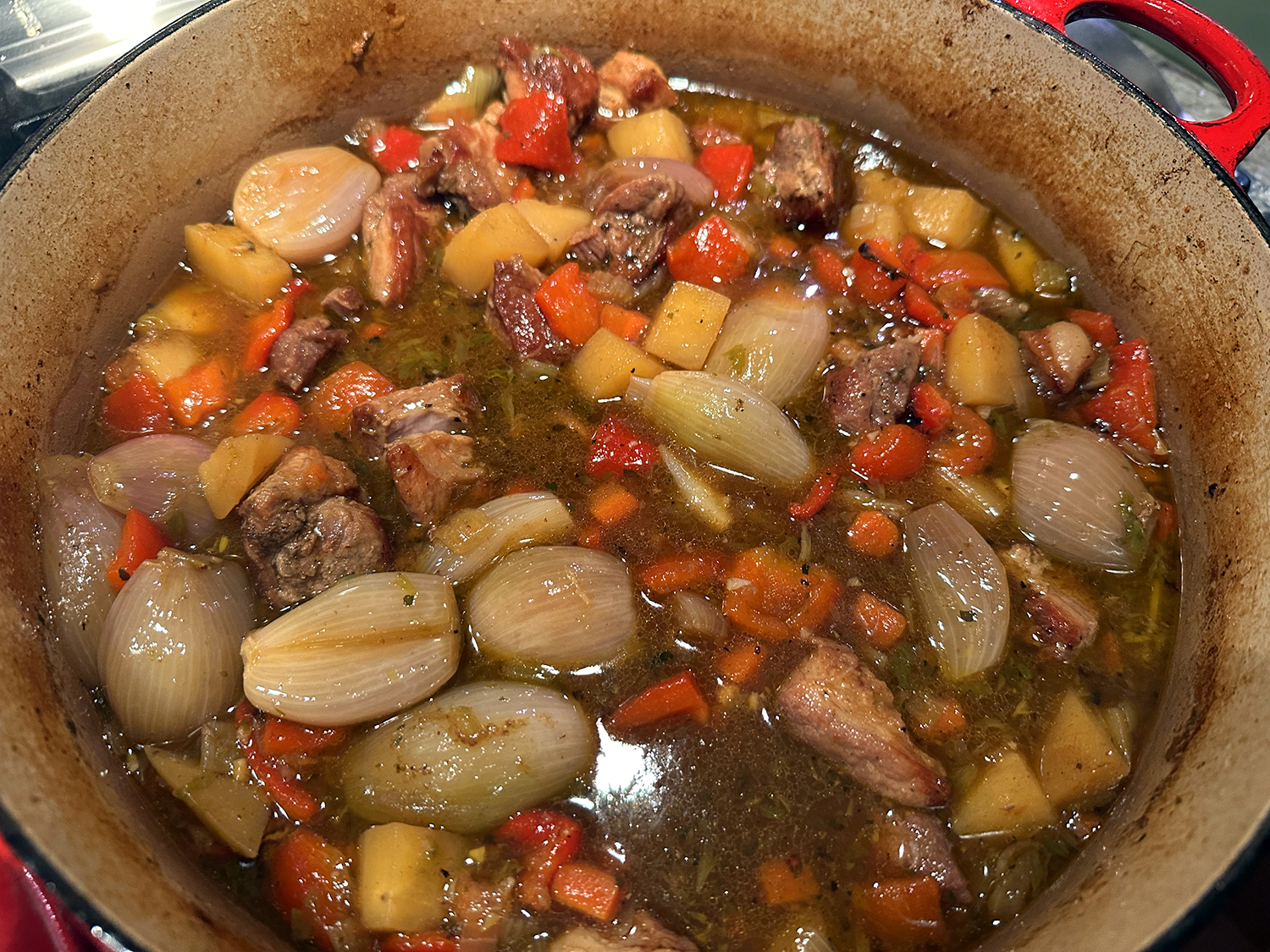
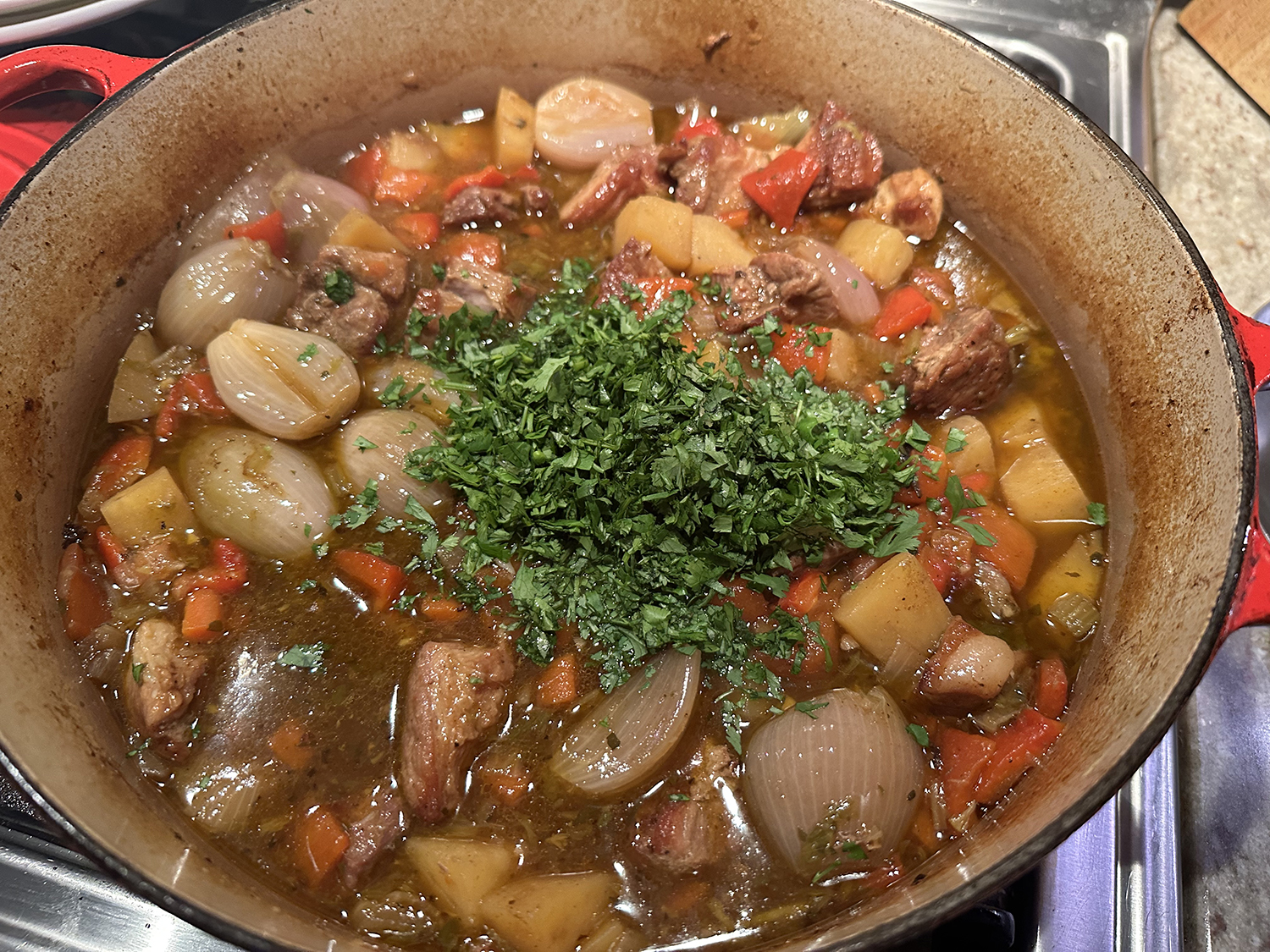
If you have a long, lazy afternoon ahead of you in the coming days, consider making this hearty stew by one of our favorite chef/authors, Molly Stevens. The inclusion of chipotles and roasted sweet peppers give this zesty pork stew a Southwestern flavor.

The original recipe produces a thin, watery liquid as the base while we prefer a thicker sauce. To accomplish this, you can either dredge the meat chunks in seasoned flour before browning them, and/or add a cornstarch slurry at the end, after degreasing (if necessary), but before adding cilantro.

The stew can be made up to 2 days ahead: Skip the degreasing step, cool to room temperature, cover, and refrigerate. Once the stew is chilled, lift the solidified fat off the top with a slotted spoon. Reheat the stew over medium-low heat to serve.

Spicy Pork Stew with Peppers and Potatoes

  • Servings: 4-5
  • Difficulty: easy
  • Print

Ingredients

  • 3 lbs. boneless pork shoulder, trimmed of excess fat and cut into 1-1/2- to 2-inch pieces
  • 3 Tbsp. grapeseed oil or vegetable oil, more as needed
  • Kosher salt and freshly ground pepper
  • 1 medium yellow onion, coarsely chopped (about 1 cup)
  • 2 medium celery stalks, coarsely chopped (about 1/2 cup)
  • 1 medium carrot, coarsely chopped (about 1/3 cup)
  • 2 cloves garlic, minced
  • 1 Tbsp. chipotles in adobo, minced
  • 1 tsp. cumin
  • 1/2 tsp. dried oregano
  • 1 cup beer (any kind)
  • 2 1/2 cups homemade or lower-salt store-bought chicken broth
  • 2 cups peeled diced white potatoes (1-inch dice)
  • 2 cups halved or quartered shallots (leave whole if small)
  • 2 cups chopped roasted, peeled red peppers (1-inch pieces)
  • 1/4 cup chopped fresh cilantro

Directions

  1. Position a rack in the bottom third of the oven and heat the oven to 325°F.
  2. Spread the pork on paper towels to dry for 10 to 20 minutes before browning. (You can use this time to chop the onion, celery, and carrot). If the meat is very wet, pat it dry.
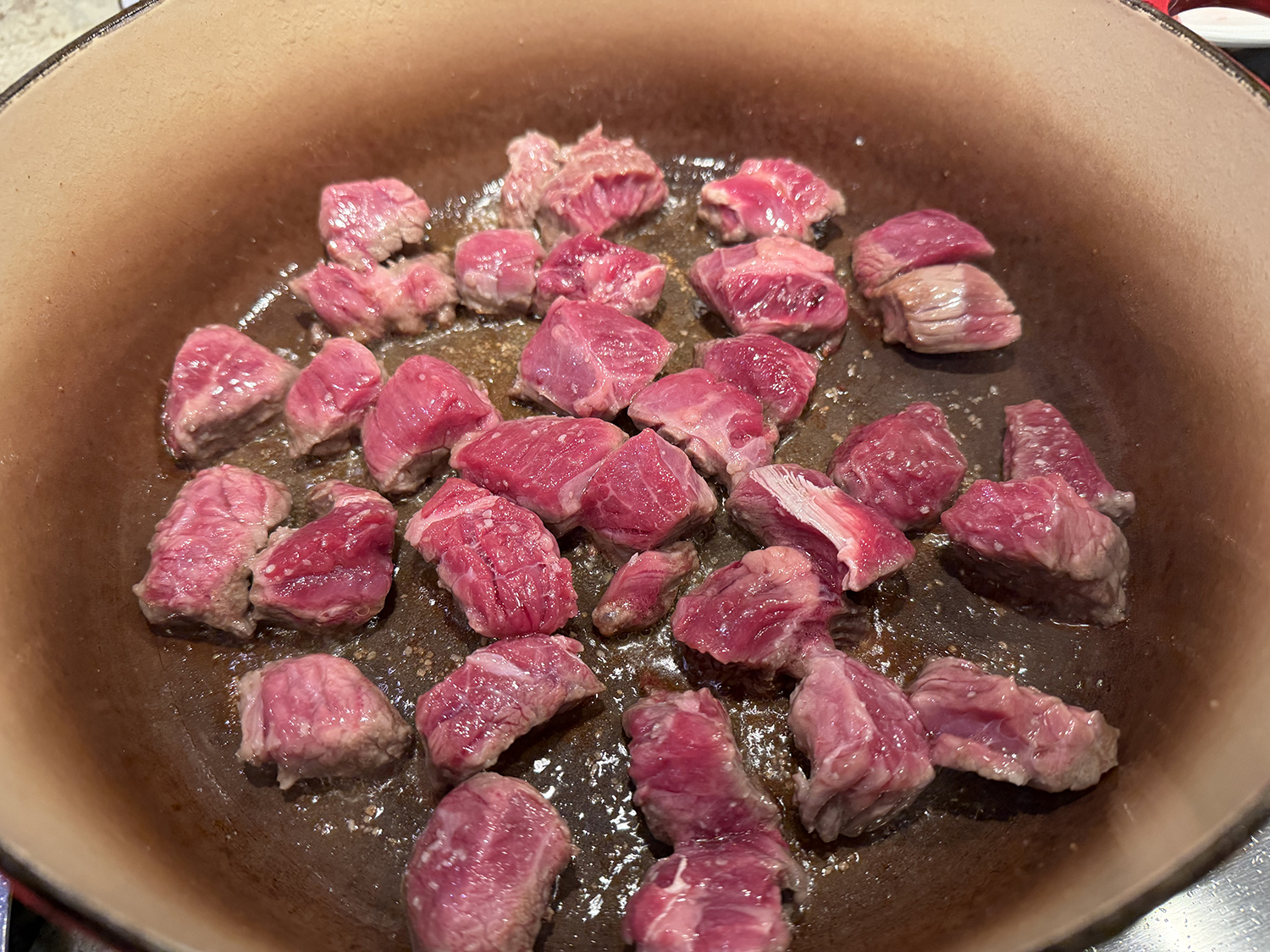
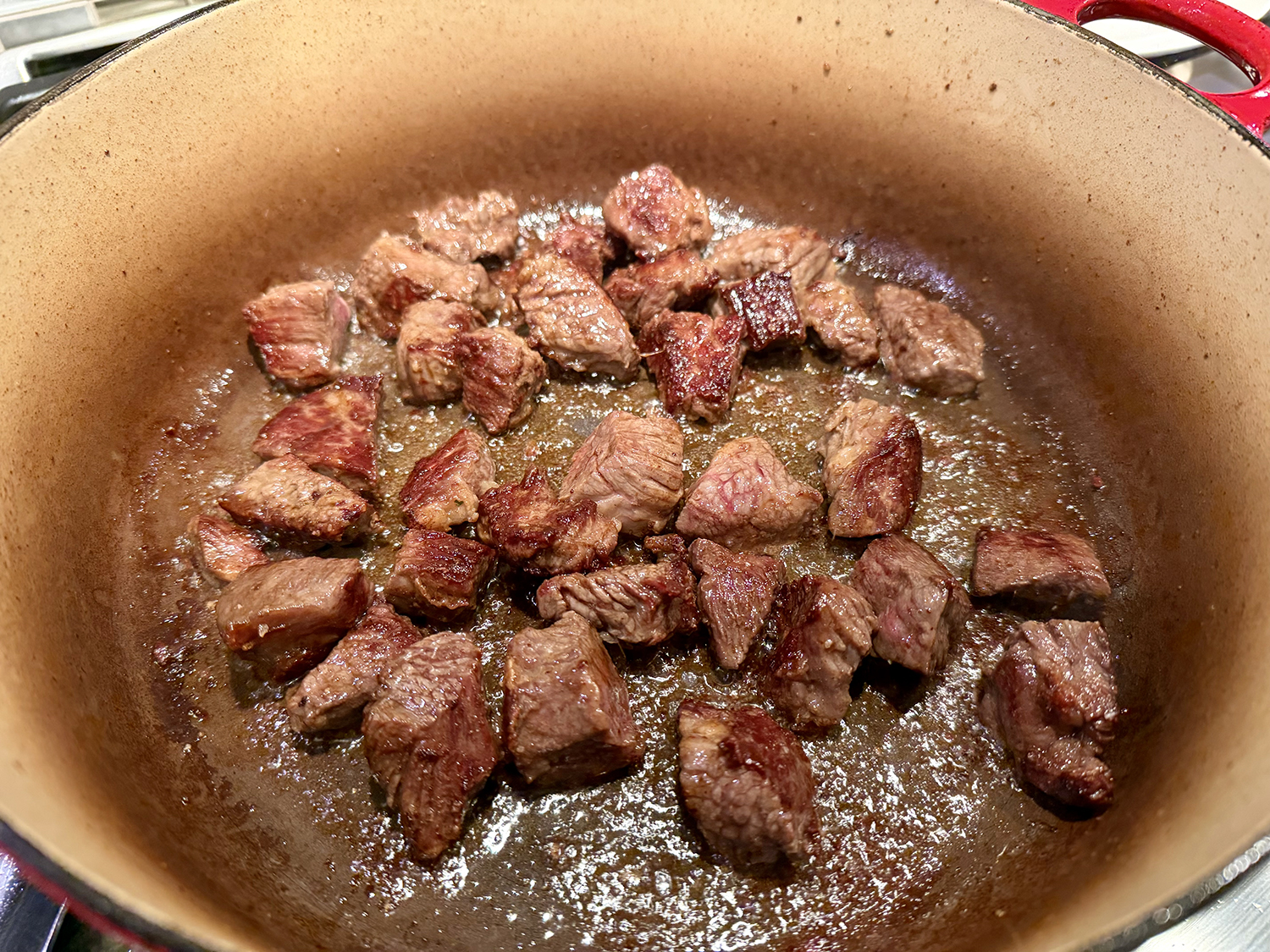
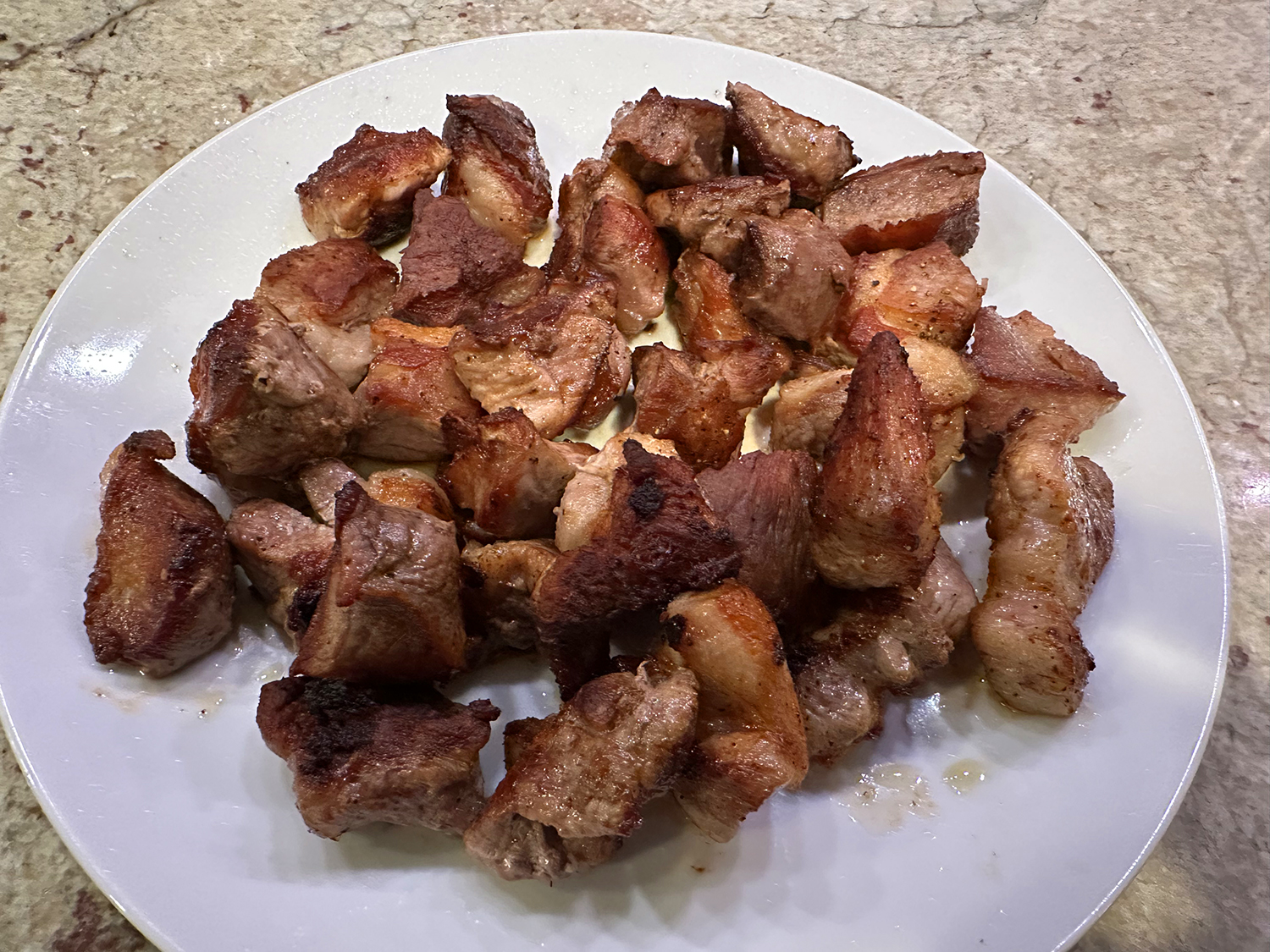
  3. In a 6-quart Dutch oven or other heavy-duty pot, heat the oil over medium to medium-high heat until shimmering hot. Season about one-third of pork with salt and pepper and arrange it in a single layer in the pot (there should be at least 1/2 inch of space between the pieces). Brown well on at least 4 sides, adjusting the heat as necessary; each batch should take about 10 minutes to brown. Transfer the pork to a large bowl or rimmed baking sheet as it browns and repeat with the rest of the pork, seasoning with salt and pepper before browning. Once all of the pork is browned, remove the pot from the heat to let it cool for a few minutes.
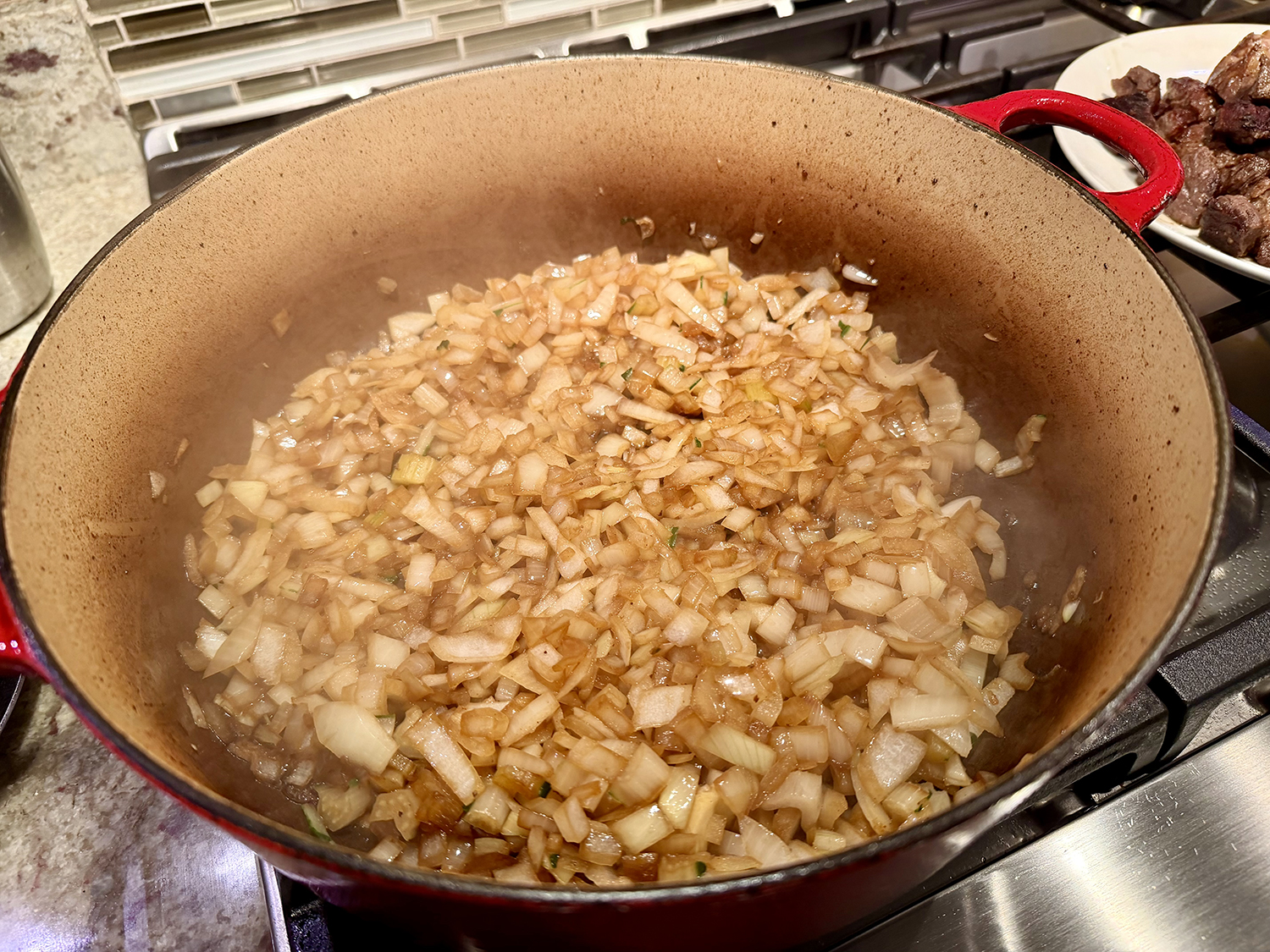
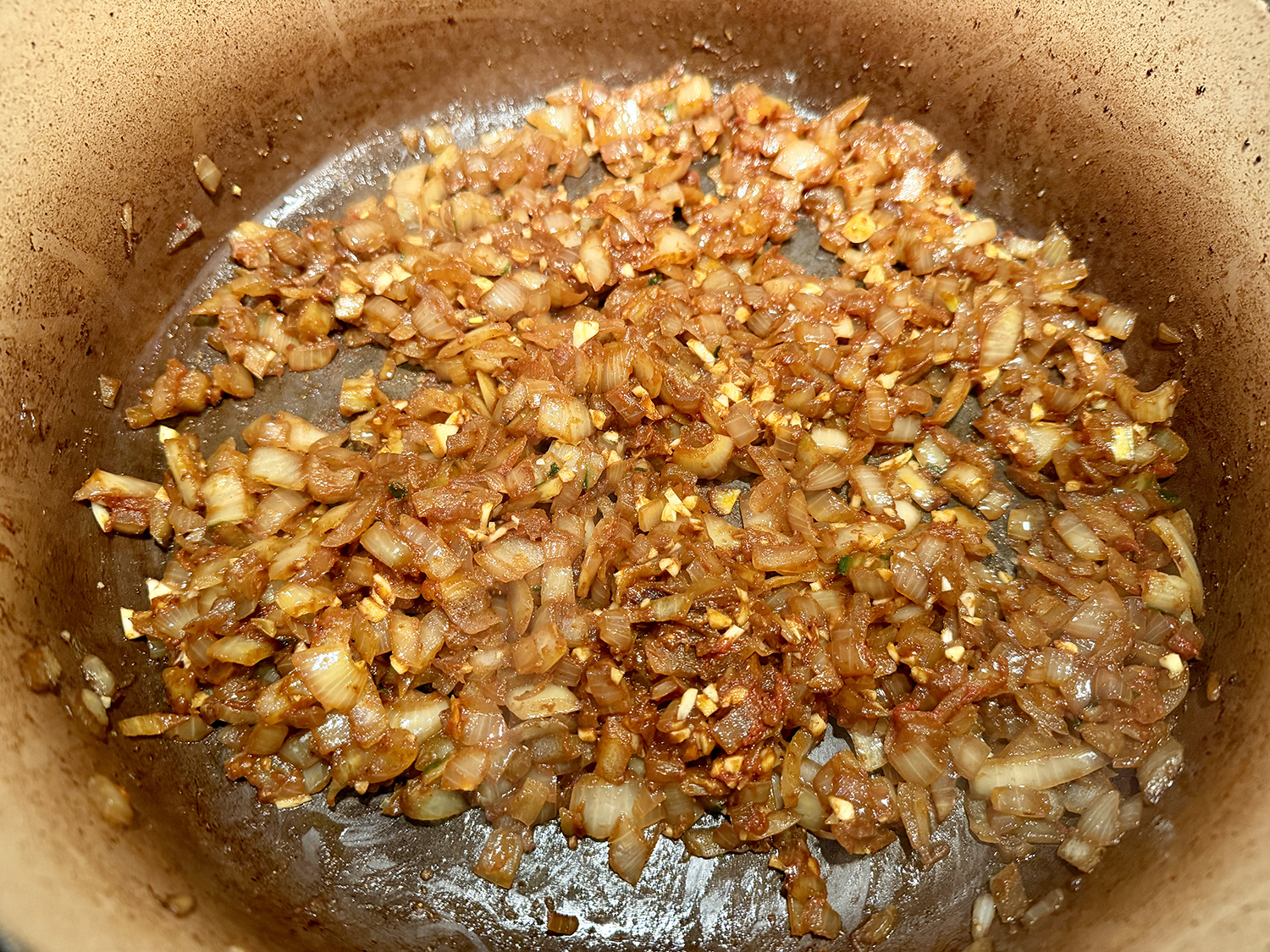
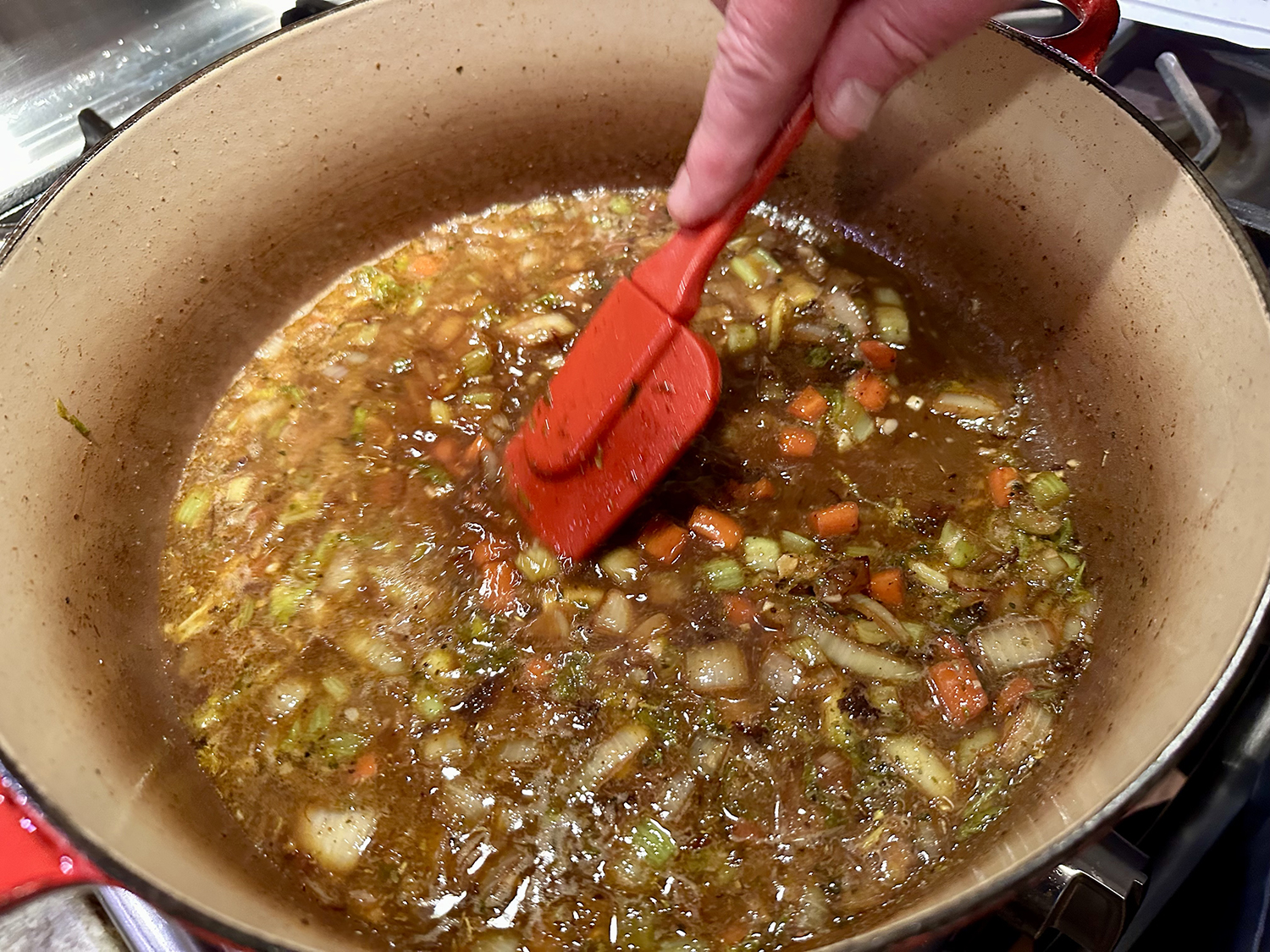
  4. Pour all but 2 tablespoons of the fat from the pot. (If there is not enough, add oil to equal 2 tablespoons) Return the pot to medium heat, then add the onion, celery, and carrot. Season with a pinch of salt and pepper, and cook, stirring often and scraping the bottom of the pot with a wooden spatula, until the vegetables begin to soften, 5 to 6 minutes. Stir in the garlic, chipotles, cumin, and oregano and cook, stirring occasionally, until fragrant, 1 to 2 minutes.
  5. Add the beer, stirring with the wooden spatula to dissolve any browned bits on the bottom of the pot. Raise the heat to medium high and boil to reduce by about half, 5 to 8 minutes. Add the chicken broth and 1-1/2 cups water. Bring to a boil.
  6. Return the pork to the pot along with any accumulated juice. Lower the heat to maintain a simmer.
  7. Crumple a 12×16-inch piece of parchment, then flatten it out. (Crumpling makes for easy handling.) Place the parchment directly on the surface of the stew, allowing the ends to come up the sides of the pot. Cover and put in the oven.
  8. After 30 minutes of stewing, add the potatoes and shallots to the pot. Cover with the parchment and lid, return to the oven. After another 30 minutes, add the peppers. Cover with the parchment and lid, return the pot to the oven, and cook until the pork is fork-tender, 1/2 to 1 hour more.
  9. Degrease the stew by laying a clean paper towel over the surface of the stew and gently pushing it into all the bumps and dips, then quickly peeling it off. Repeat as necessary with more paper towels.
  10. Thicken with a cornstarch slurry if desired. Stir in the cilantro. Season to taste with salt and pepper and serve.

http://www.lynnandruss.com

Original recipe by Molly Stevens

Spicy Korean Braised Chicken and Vegetables

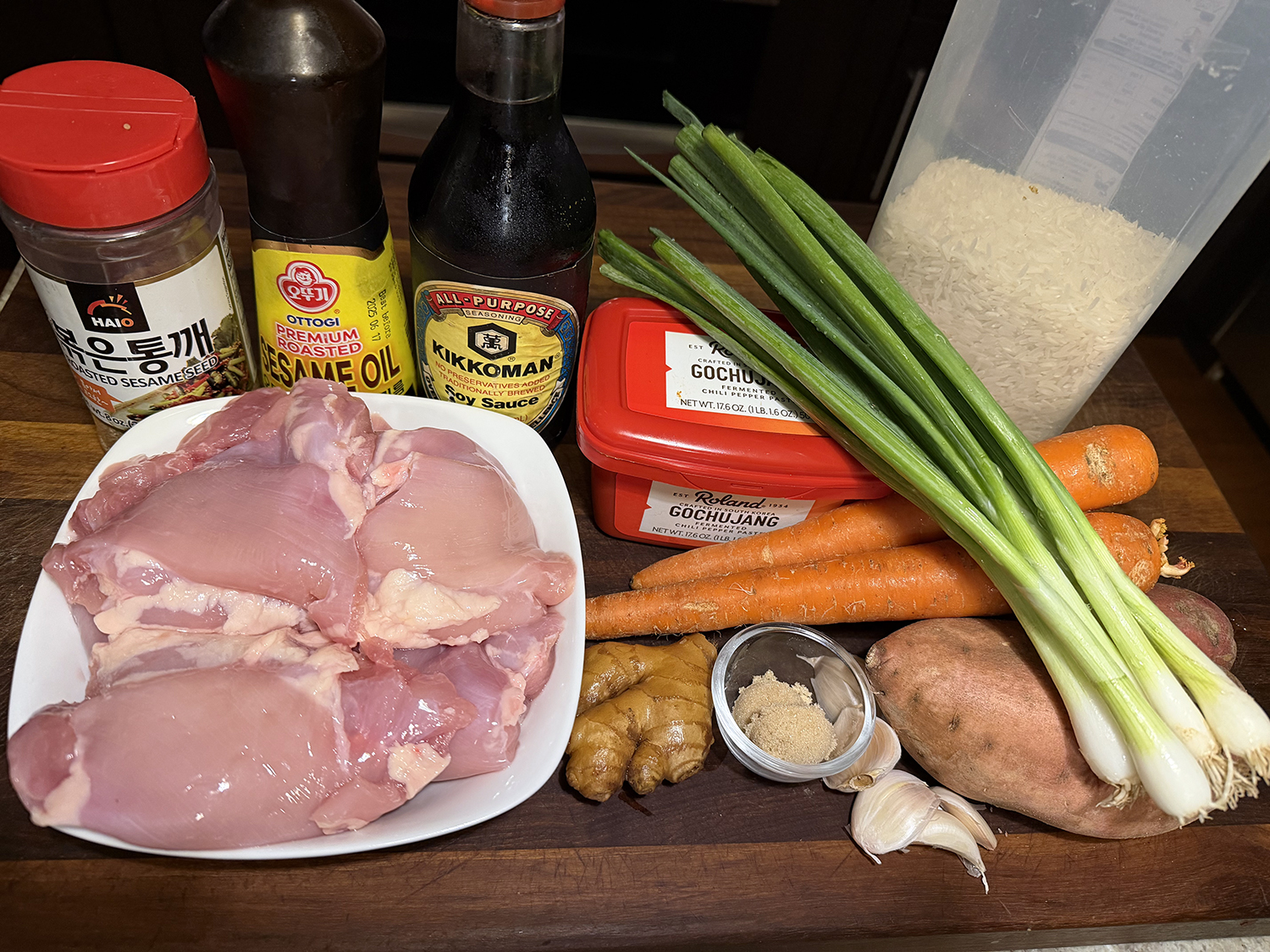
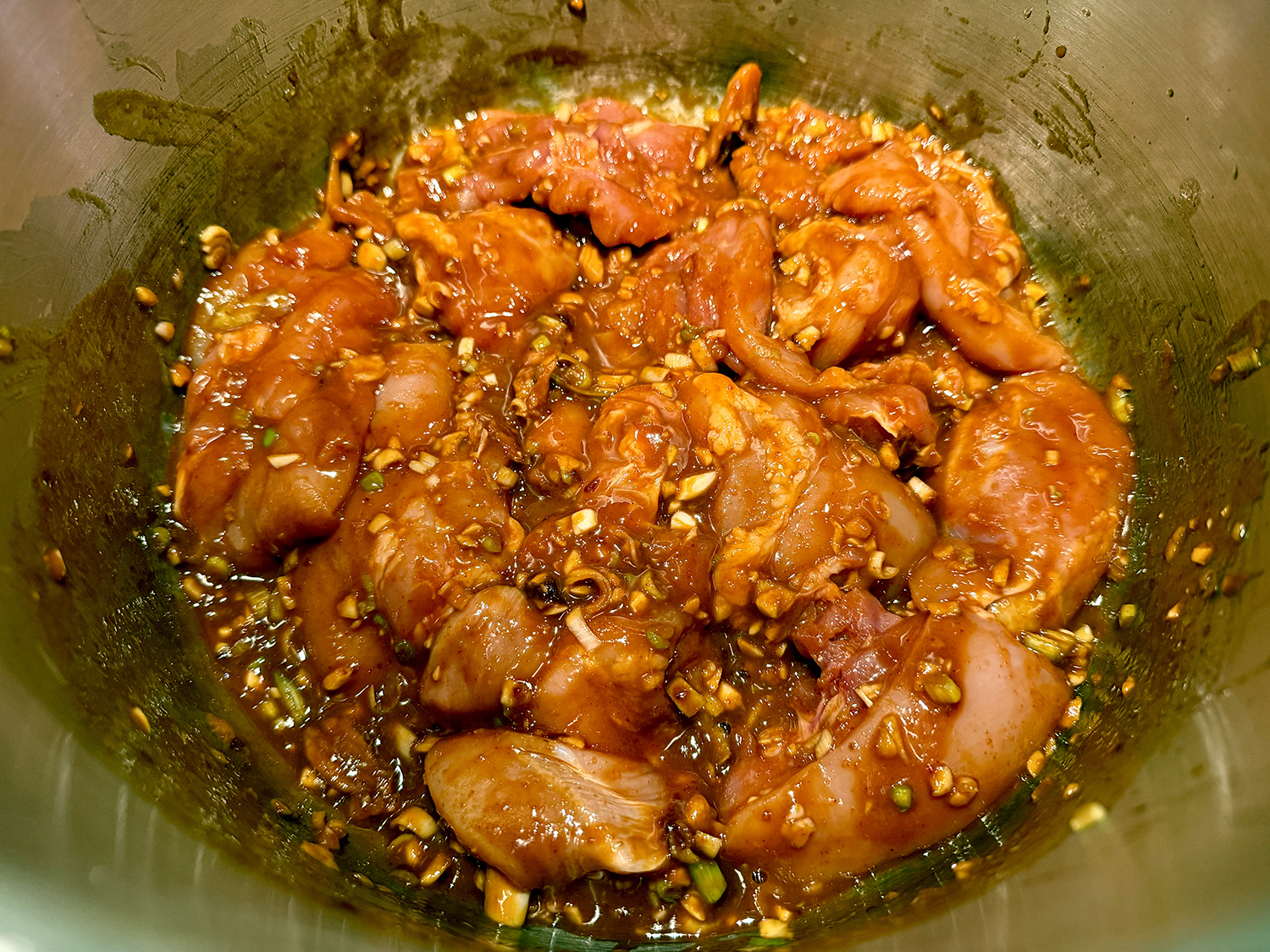
This flavor-packed stew from Milk Street, called dakbokkeumtang, counts gochujang—or Korean fermented chili paste—as one of its primary seasonings. The thick, bright-red paste usually is sold in plastic tubs or bottles in Asian markets or in the international aisle of regular supermarkets. It’s pretty much a staple in our house.

On the other hand, soy sauce and a dose of brown sugar add salty-sweet flavor to balance to the dish, while sesame oil and seeds add nutty notes. The potatoes and carrots absorb the seasonings so the pieces are flavored throughout. Therefore make sure to cut the vegetables into pieces about 1 inch in size, not smaller, so they don’t wind up overdone. Serve the stew with steamed rice.

NOTE: Don’t use chicken breasts instead of thighs. Sturdy dark meat does well when braised, but more delicate white meat dries out and turns tough. Dark meat also lends the finished dish a richer, meatier flavor.

There is a conflict in the quantity of potatoes to use. In the Milk Street Magazine Sept./Oct. issue, it notes 12 ounces (as listed below), while online, their recipe indicates the amount as 10 ounces. We decided on an even greater amount and switched out the Yukons for sweet potatoes. Because of this flip, we used a third less brown sugar. And the amount of ginger was increased because that’s how we roll!

After only 8 minutes in the pressure cooker (and 10 minutes more for pressure reduction), we had a scrumptiously incredible flavorful dinner! Every morsel was fork-tender, no knife needed.

Spicy Korean Braised Chicken and Vegetables

  • Servings: 4
  • Difficulty: easy
  • Print

Ingredients

  • 3 Tbsp. gochujang
  • 2 Tbsp. unseasoned rice vinegar
  • 2 Tbsp. soy sauce
  • 1 Tbsp. packed brown sugar
  • 1 Tbsp. toasted sesame oil, plus more to serve
  • 2 inch piece fresh ginger (about 1½ oz.), peeled, cut into 3 pieces and smashed
  • 5 medium garlic cloves, finely chopped
  • 1 bunch scallions, whites chopped, greens cut into 1-inch lengths, reserved separately
  • 2 lbs. boneless, skinless chicken thighs, trimmed and halved
  • 12 oz. Yukon Gold potatoes, peeled and cut into 1-inch chunks
  • 2 medium carrots, peeled and cut into 1-inch pieces
  • Sesame seeds, toasted, to serve

Directions

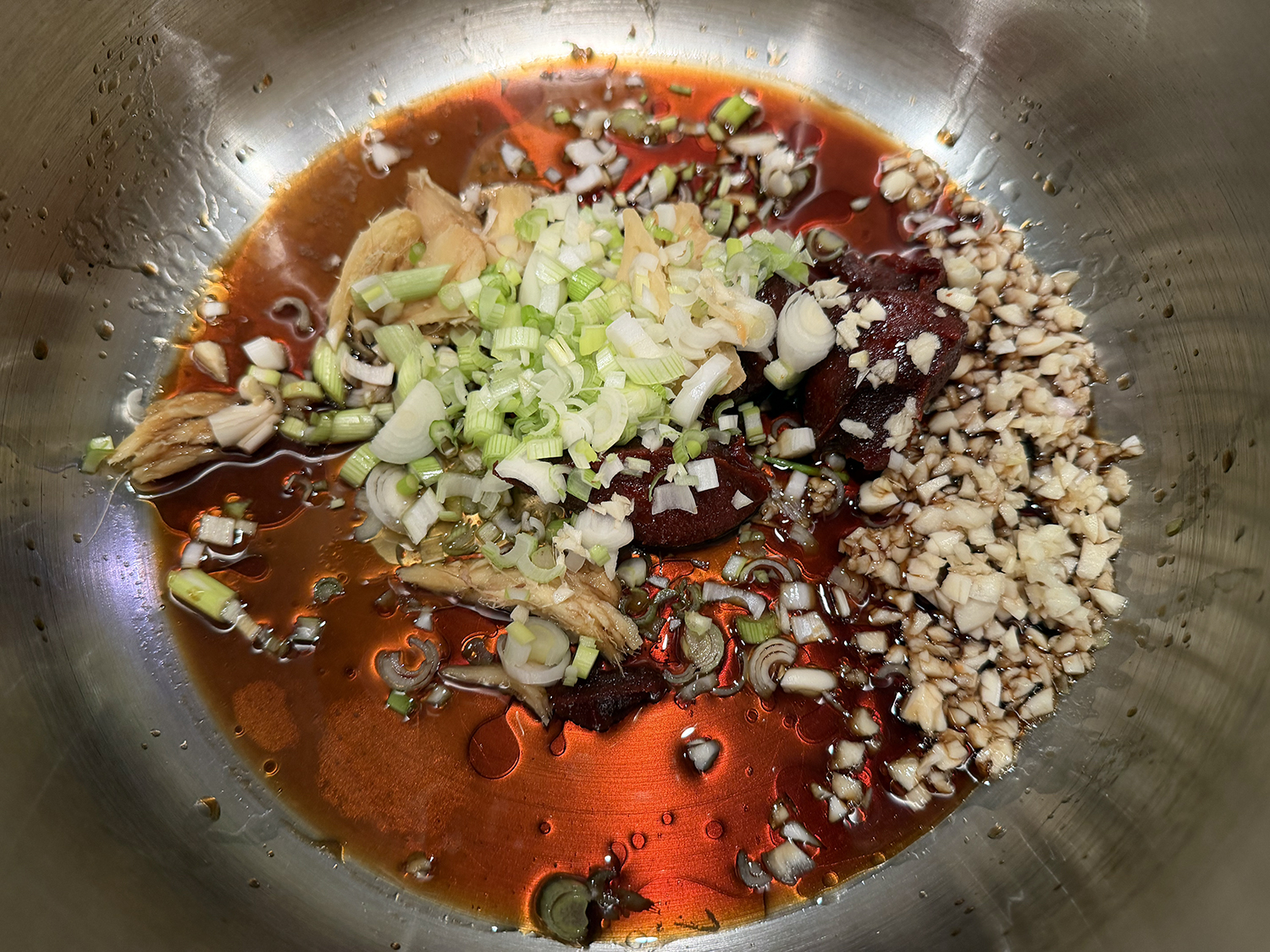
  1. In a 6-quart Instant Pot (or pressure cooker), whisk together the gochujang, vinegar, soy sauce, sugar, sesame oil, ginger, garlic and scallion whites. Add the chicken and toss to coat. Let stand for 15 minutes. Stir in the potatoes, carrots and ½ cup water, then distribute in an even layer.
  2. Add the chicken and toss to coat. Let stand for 15 minutes. Stir in the potatoes, carrots and ½ cup water, then distribute in an even layer.
  3. Lock the lid in place and move the pressure valve to Sealing. Select Pressure Cook or Manual; make sure the pressure level is set to High. Set the cooking time for 8 minutes. When pressure cooking is complete, let the pressure reduce naturally for 10 minutes, then quick-release the remaining steam by moving the pressure valve to Venting. Press Cancel, then carefully open the pot.
  4. Remove and discard the ginger (this may be a bit impossible), then stir in the scallion greens. Transfer to a serving bowl, drizzle with additional sesame oil and sprinkle with sesame seeds.

http://www.lynnandruss.com

Adapted from a recipe by Courtney Hill for Milk Street
Roast Leg of Lamb with Anchovy, Rosemary, Garlic and Piment d’Espelette

This lovely leg of lamb recipe hails from Molly Stevens’ cookbook All About Roasting, one of our go-to’s when it comes to roasting meat. Here, the lamb’s flavor is boosted with a combination of fresh rosemary, garlic and anchovies. But don’t get all squeamish, tucked into the meat, the anchovies dissolve during roasting, enriching the lamb a delicious, though elusive flavor that’s far less assertive than you might think.

Instead of black pepper, the roast is seasoned with piment d’Espelette, in which the light heat complements the lamb, but hot paprika (which we used) makes a good substitute. If you keep lard or have good bacon drippings, rub a little over the meat before roasting. It adds a wonderful richness to the drippings and helps deepen the caramelization of the surface.

NOTES: For the best flavor and texture, season the meat 1 to 2 days ahead of cooking and refrigerate, uncovered. Then the lamb needs to sit at room temperature for about two hours before roasting.

Our 5-pound semi bone-in leg of lamb was a few pounds less than the recipe called for, and therefore took slightly less time. With no lard on hand, or any available that day at the store, we chose the olive oil option.

The Tomato-Fennel Vinaigrette is a surprising and delicious way to brighten up roast lamb. Combine the ingredients, and when the meat comes out of the pan to rest, pour the contents into the pan with the drippings.

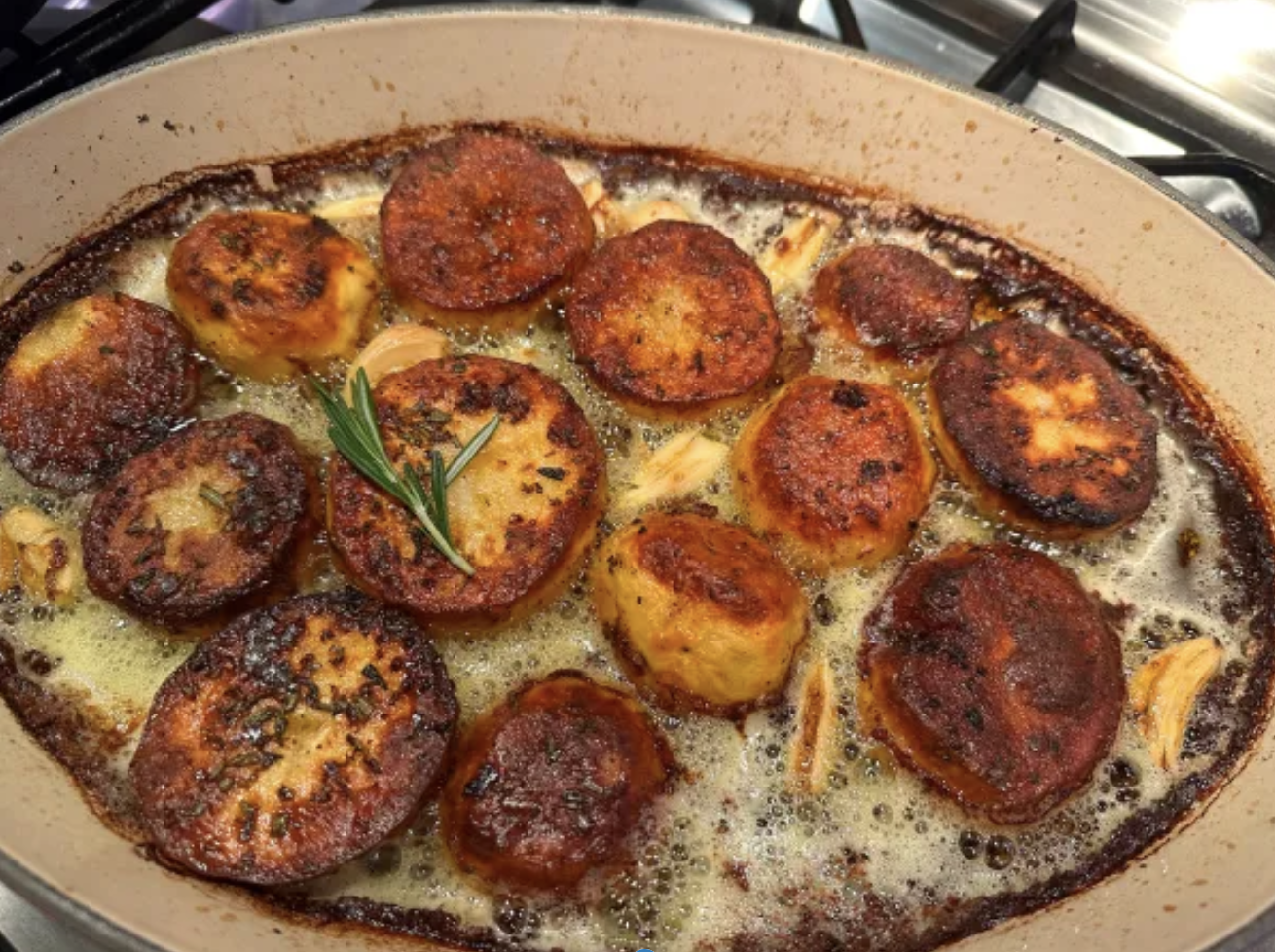
Our meal was completed with Lemon-Rosemary Melting Potatoes and Roasted Brussels Sprouts with Garlic.

Roast Leg of Lamb with Anchovy, Rosemary , Garlic and Piment d'Espelette

  • Servings: 8-10
  • Difficulty: moderately easy
  • Print

Ingredients

  • 1 whole bone-in leg of lamb, 7 to 8 lbs., preferably with hip bone removed
  • 5 garlic cloves cut into 20 thin slivers
  • 4 anchovy fillets, rinsed, patted dry, and cut into 20 little pieces
  • 4 leafy sprigs rosemary, cut into 20 1-inch pieces
  • 2 tsp. kosher salt
  • 2 tsp. piment d’Espelette (or hot paprika)
  • 1 to 2 Tbsp.lard, or extra-virgin olive oil
  • 3/4 dry white wine or dry white vermouth

Directions

  1. Trim the Lamb. Examine the leg of lamb to determine what kind of trimming and perhaps tying you need to do before seasoning. If the pelvic bone has been removed, you may find a loose flap of meat at the wide end of the roast. if so, secure this with skewers or sew it shut with a trussing needle and kitchen string.Using a thin bladed sharp knife, trim any leathery membrane or excess fat from the exterior of the lamb. Leave a thin layer (1/8 inch) of fat to protect the meat from drying.
  2. Season the Lamb. Using the tip of a paring knife, make 20 small holes on all sides of the lamb. Stuff each hole with a sliver of garlic. a bit of anchovy, and a sprig of rosemary, leaving the tips of rosemary sticking out. After you’ve studded the entire roast, season the surface with the salt and the piment d’Espelette. Set in a large baking dish (or on a rimmed backing sheet with a rack) and refrigerate uncovered, for 1 to 2 days. Let the lamb sit at room temperature for 2 hours before roasting.
  3. Heat the Oven. Arrange a rack in the lower third of the oven and heat to 450 degrees.
  4. Roast the Lamb. Rub the surface of the meat with lard or olive oil. Place the lamb with the rounder, meatier side up in a roasting pan just large enough to accommodate it. (It’s fine if the tip of the shank rests of the edge of the pan.) Roast for 25 minutes then pour the wine or vermouth over the lamb. Immediately lower the oven temperature to 325 degrees, and continue roasting until a meat thermometer inserted into the meatiest part of the leg reaches 120° to 125° degrees for rare, about 1 hour from the time you lowered the heat; or 130° to 135° degrees for medium-rare, about 1 1⁄4 hours.
  5. Rest. Remove the lamb to a carving board, preferably one with a trough, to rest for 20 to 35 minutes. Tilt the roasting pan and spoon off as much of the clear fat as you can. Using a wooden spoon, scrape up the pan drippings (if they are too stuck to the pan, add 1⁄4 cup water to dissolve them). Set aside the pan drippings to drizzle over the carved lamb.
  6. Carve and Serve. Carve the leg of lamb and serve drizzled with the pan drippings, or layer the slices in the roasting pan so they soak up the pan juices and serve family-style from the pan.
    If making the optional vinaigrette (recipe below), see Step 3 for carving and serving.

Ingredients

  • 1 lb. rip tomatoes, seeded and finely chopped (about 2 cups)
  • 1⁄2 cup black olives, pitted and finely chopped
  • 3Tbsp. red wine vinegar
  • 1 1⁄2 tsp. fennel seeds, lightly toasted in a dry skillet and coarsely ground
  • freshly ground black pepper
  • 1⁄3 cup extra virgin olive oil
  • 1⁄3 thinly sliced, lightly packed fresh basil leaves

Directions

  1. Make the Vinaigrette. In a medium bowl, combine the tomatoes olives, vinegar and fennel seeds. Season with pepper (salt gets added later). Whisk in the olive oil and set aside.
  2. Roast the as Directed Above. After transferring the lamb to the carving board in Step 5, spoon and pour off as much fat excess fat form the roasting pan as you can. (We used a fat separator to assist.) Using a wooden spoon, scrape up the pan drippings (if they are too stuck to the pan, add 2 to 3 tablespoons water to dissolve them). Add the vinaigrette to the pan, stir to combine with the drippings. Stir in the basil. Taste for salt and pepper. The vinaigrette should be warm, but not hot.
  3. Carve and Serve. Carve the leg of lamb. Add any juices from the carving board to the vinaigrette. Spoon some of the vinaigrette over the slices of meat and serve along with extra vinaigrette in a bowl.

http://www.lynnandruss.com

Recipe by Molly Stevens in her All About Roasting cookbook

Pan-Seared Flounder with Lemon-Caper Sauce

Flatfish such as flounder and sole are quick-cooking, ultraconvenient—and finicky. Because they lie in camouflage on the seabed waiting for prey, the flesh of these fish is unbeatably tender, flaky, and delicate. But their flesh is quick to tighten up and dry out over fierce heat, yet if you go too easy on the sear, the fragile fillets can tear or break when you attempt a flip. 

Once you nail the process, you are handsomely rewarded: Done right, flounder and sole are buttery, flaky, mild, and sweet, the perfect canvas for a variety of punchy sauces and toppings.

According to chef David Yu, when fish releases moisture in the skillet, that moisture impedes the fillet’s contact with the pan and oil and also lowers the temperature of everything, resulting in a longer browning time. So it’s key not only to thoroughly dry the fish with paper towels but also to dredge it in flour, which absorbs any moisture left on the fish’s surface.

Flour presents a couple of other perks as well: It helps hold the delicate flesh together by forming gluten, and its protein and sugar also help the fish to brown. Here, the fish is floured on only one side.

TIP: Using a well-oiled stainless-steel skillet rather than nonstick allows you to cook the fish at a higher temperature, quickly altering the proteins in the fish to keep them from bonding to the pan.

Our fillets were larger than noted in the original recipe, so we used a 13″ stainless steel skillet and a bit more oil in the pan. Because of their length, the fillets were a bit tricky to turn over. Pairing with steamed broccoli and a side salad, we enjoyed a fast, healthy and tasty dinner!

Pan-Seared Flounder with Lemon-Caper Sauce

  • Servings: 4
  • Difficulty: easy
  • Print

Ingredients

  • 2 Tbsp. all-purpose flour
  • ¾ tsp. table salt, divided
  • ¼ tsp. pepper
  • 6 (4- to 6-oz.) skinless flounder fillets, ¼ to ½ inch thick
  • 4 tsp. vegetable oil, divided
  • 3 garlic cloves, minced
  • ⅓ cup dry white wine
  • ⅓ cup water
  • 1½ tsp. grated lemon zest, plus 1½ Tbsp. juice
  • 3 Tbsp. unsalted butter, cut into 6 pieces and chilled
  • 2 Tbsp. capers, rinsed
  • 1 Tbsp. minced fresh parsley

Directions

  1. Whisk 2 tablespoons all-purpose flour, ½ teaspoon table salt, and ¼ teaspoon pepper together in small bowl. Reserve 1 teaspoon flour mixture, then spread remaining mixture in even layer on large plate. 
  2. Dry 6 skinless flounder fillets thoroughly with paper towels. Place 3 fillets, skinned side down, into flour mixture on plate to coat 1 side. Shake off excess and transfer to rimmed baking sheet, floured side up. 
  3. Heat 1½ teaspoons vegetable oil in 12-inch skillet over medium-high heat until just smoking. Carefully place fillets, floured side down, in pan and cook until bottom is golden brown, about 2 minutes. Remove skillet from heat. Using 2 thin spatulas, gently flip fillets and let stand until second side is opaque, 15 to 30 seconds. Transfer fillets, browned side up, to platter. Wipe out skillet with paper towels and repeat steps 2 and 3 with remaining fillets and 1½ teaspoons oil.
  4. Wipe out skillet with paper towels. Add remaining 1 teaspoon oil and 3 minced garlic cloves and cook over medium heat until fragrant, about 30 seconds. Stir in reserved 1 teaspoon flour mixture and cook for 15 seconds.
  5. Whisk in ⅓ cup white wine, ⅓ cup water, 1½ teaspoons grated lemon zest and 1½ tablespoons juice, and remaining ¼ teaspoon salt. Bring to simmer and cook until sauce has thickened slightly, about 2 minutes. 
  6. Off heat, whisk in 3 tablespoons chilled unsalted butter, cut into 6 pieces. Stir in 2 tablespoons rinsed capers and 1 tablespoon minced parsley. Spoon sauce over fish and serve.

http://www.lynnandruss.com

Recipe by David Yu for Cook’s Illustrated

Mushroom and Lentil Ragù

A vegetarian meal with a meaty undertone and a soulful depth of flavor. Here, nutty mushrooms and quick-cooking lentils play nicely together for a flavor-packed, meatless take on classic ragù. Traditionally, ragù gets its signature savory flavor from slow-cooked meat like ground beef or pork.

In this vegetarian version, a mix of sautéed mushrooms, such as oyster and cremini, lends earthy flavor and texture, while black lentils — a quicker-cooking legume than green or red lentils — gives the sauce body.

Lentils are prized in the Mediterranean, and most Italians would agree that the best lentils come from Southern Italy. Although they cook in under half an hour, black (Beluga) lentils remain a bit more sturdy throughout the cooking process than most other lentils. Instead (because we had them on hand), we used Puglia lentils which are celebrated for their earthy taste and numerous health benefits.

Like any ragù, this dish relies entirely on building layers of flavor. Sautéing the mushrooms, onions, and carrots until browned and toasting the tomato paste creates a deep foundation of umami. Deglazing the brown bits at the bottom of the Dutch oven with wine and stock infuses the lentils and sauce with rich, savory notes.

Simmered in a red wine sauce fortified with vegetable broth, the lentils become tender and creamy, resulting in a hearty sauce that comes together in less than an hour and proves to be more than the sum of its parts. Serve over creamy cooked polenta or fresh pappardelle for a filling meal. 

Make Ahead: You can make this ragù up to three days in advance and store it covered in the refrigerator. When reheating, you may find that the lentils have absorbed some of the liquid. Simply thin it back out to your desired consistency with vegetable stock or water. This recipe is also freezer-friendly. Let it cool completely, then ladle it into freezer-safe containers or large resealable plastic bags, and store it in the freezer for up to two months.

Mushroom and Lentil Ragù

  • Servings: 6-8
  • Difficulty: easy
  • Print

Ingredients

  • 1 cup dried black lentils
  • 1/4 cup extra-virgin olive oil, plus more for drizzling
  • 1 lb. mixed fresh mushrooms (such as cremini, oyster, and portobello), stemmed and chopped (about 5 1/2 cups)
  • 1 medium yellow onion, chopped (about 1 1/2 cups)
  • 2 medium carrots, peeled and diced (about 1 cup)
  • 4 tsp. kosher salt, divided
  • 4 large garlic cloves, minced
  • 1/4 tsp. crushed red pepper
  • 2 Tbsp. tomato paste
  • 1 cup (8 oz.) dry red wine
  • 2 cups vegetable broth
  • 1 14.5-oz. can crushed tomatoes
  • 2 Tbsp. chopped fresh oregano, plus more for garnish
  • 1/2 cup heavy cream
  • 2 oz. Parmigiano-Reggiano cheese, finely shredded (about 1/2 cup), plus more for garnish
  • Cooked polenta, for serving

Directions

  1. Bring a medium saucepan of water to a boil over high. Add lentils, and cook, uncovered, until plump and tender, about 10 minutes. Remove from heat, and let stand for 10 minutes; drain and set aside.
  2. Heat oil in a large Dutch oven over medium-high. Add mushrooms, onion, carrots, and 1 teaspoon salt. Cook, stirring occasionally, until mushrooms begin to brown and stick to the bottom of the pot, 12 to 14 minutes. Add garlic and crushed red pepper; cook, stirring often, until fragrant, about 2 minutes. Add tomato paste; cook, stirring constantly, until paste darkens in color, about 2 minutes.
  3. Add wine, and scrape up any browned bits from the bottom of the Dutch oven; cook until wine is almost evaporated, about 2 minutes. Stir in broth, crushed tomatoes, oregano, cooked lentils, and remaining 1 tablespoon salt. Bring to a boil over medium-high; reduce heat to medium-low, and simmer, uncovered, until flavors meld, 15 to 20 minutes.
  4. Remove Dutch oven from heat, and stir in cream and cheese. Serve ragù over cooked polenta. Garnish with additional oregano and cheese, and drizzle with olive oil. Serve hot.

http://www.lynnandruss.com

Recipe by Anna Theoktisto for Food & Wine

Creamy Spinach-Artichoke Stew

This creamy chicken stew is spinach-artichoke dip reimagined as a simple stovetop braise. It comes together quickly, thanks to frozen spinach and jarred artichoke hearts, though if you have time, NYTimes Cooking also has a slow-cooker version of this recipe.

Fresh dill and scallions are added just before serving, and provide bright, herbal flavor that offsets the richness of the finished dish. Delicious and packed with flavor, that is even better the next day!

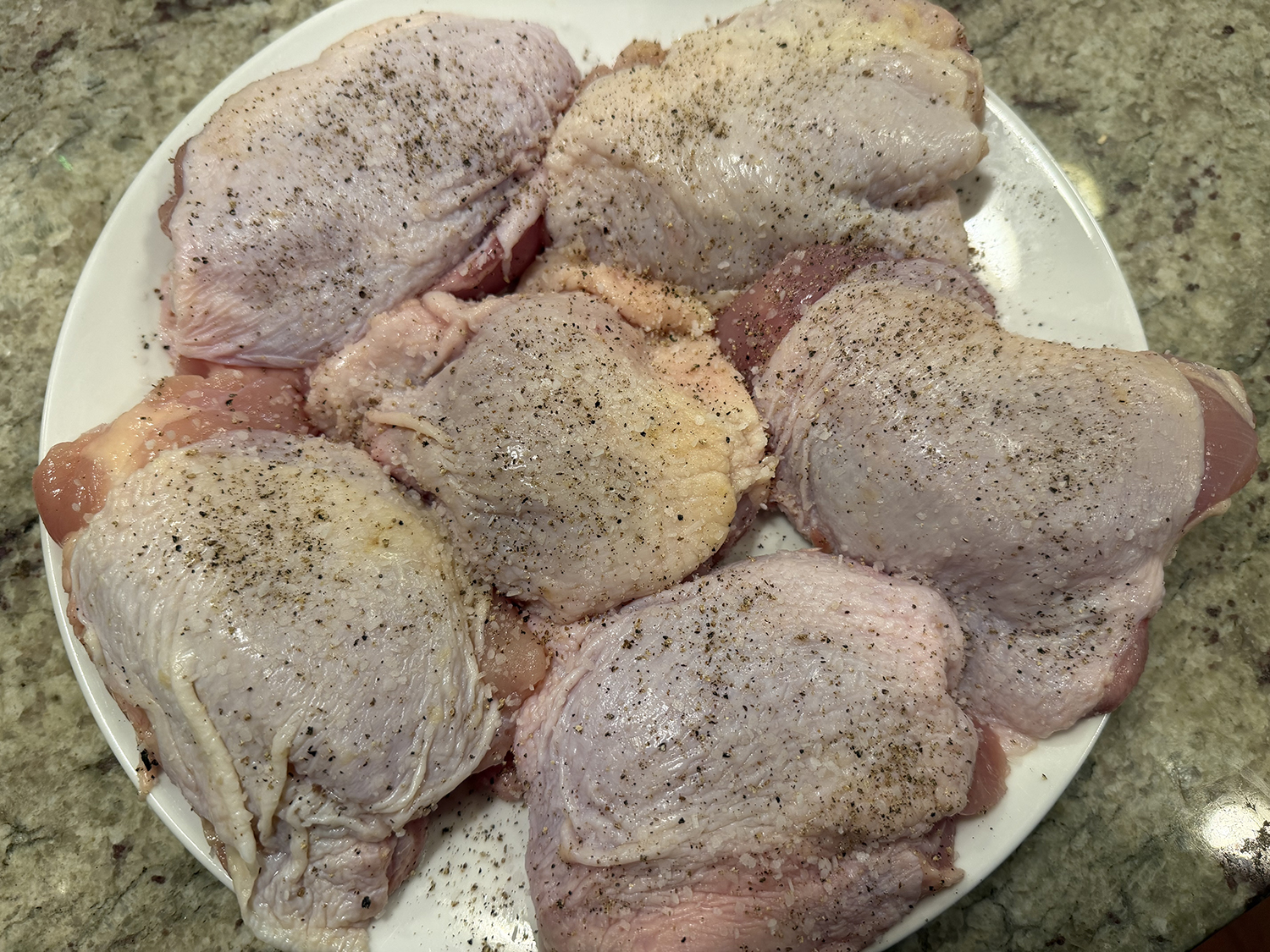
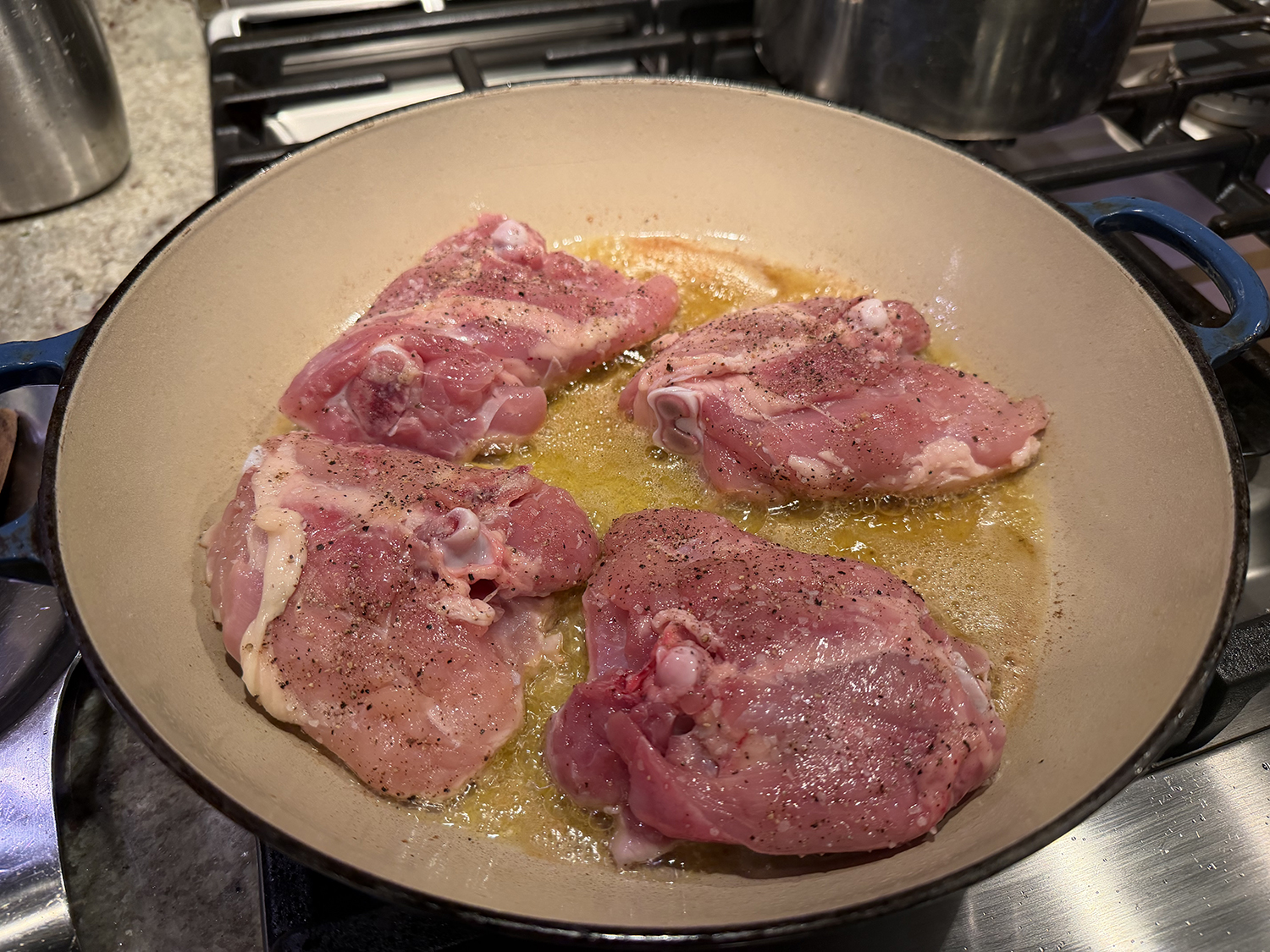
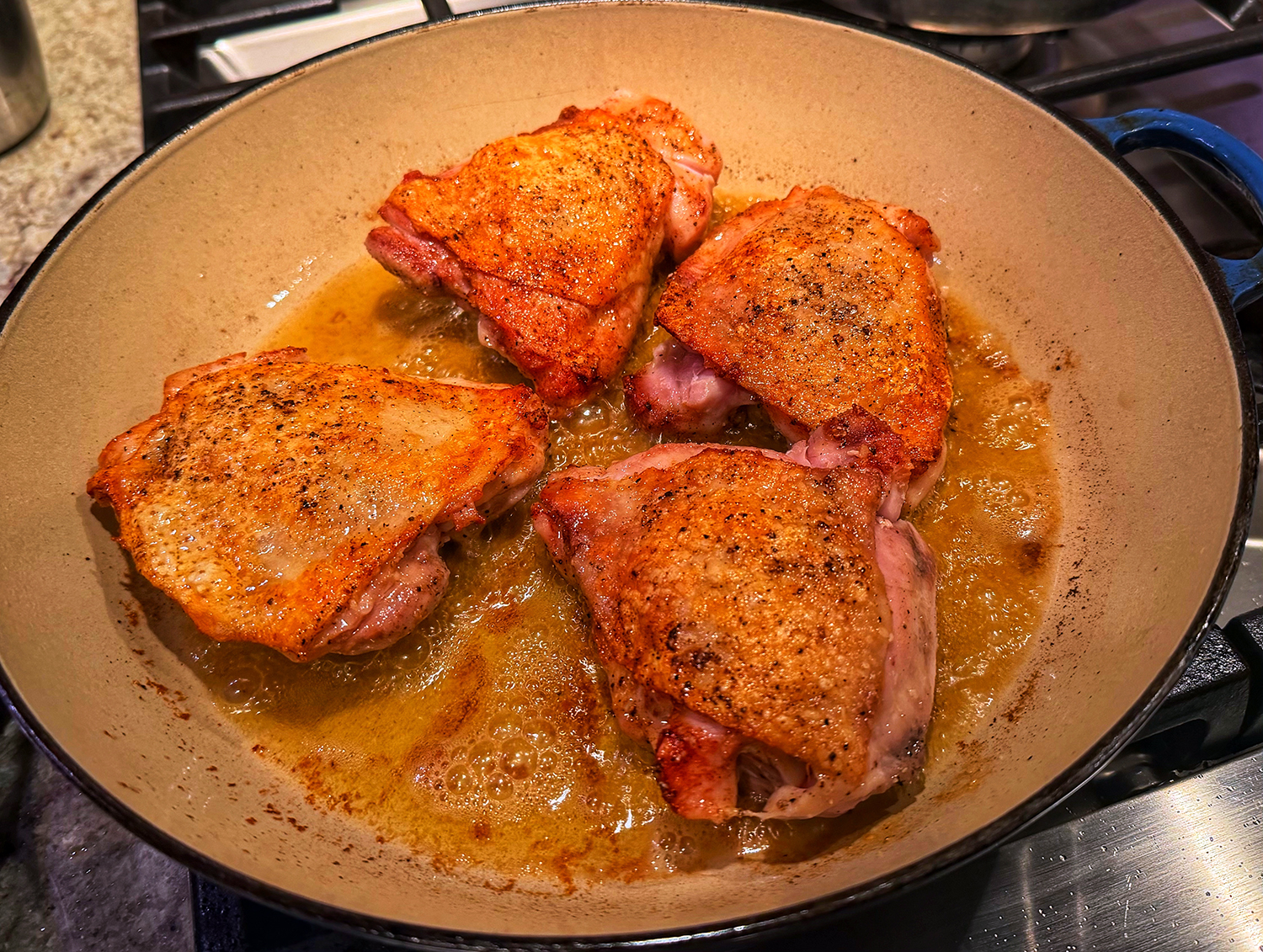
Some changes we made included adding olive oil with the butter and browning the chicken thighs on both sides to render some of the fat and add that extra layer of flavorful fond for the base. A parm rind was incorporated at the time the wine and stock are added to the pot. The original amount of 1/2 cup of fresh dill just seemed overpowering, so we cut by half, to a quarter cup, plus more for garnish.

Creamy Spinach-Artichoke Stew

  • Servings: 4
  • Difficulty: easy
  • Print

Ingredients

  • 2 Tbsp. unsalted butter
  • 3 Tbsp. olive oil
  • 2 to 2¼ lbs. boneless, skinless chicken thighs
  • 1 large yellow or red onion, finely chopped
  • Kosher salt and black pepper
  • 3 celery stalks, chopped
  • 8 garlic cloves, smashed and chopped
  • 2 cups chicken stock, preferably homemade
  • ¾ cup white wine
  • Parm rind
  • ½ lemon, juiced (about 1½ Tbsp.)
  • 1 tsp. red-pepper flakes
  • 1 10-oz. package frozen cut spinach
  • 1 12-oz. jar marinated artichoke hearts, drained (about 1 heaping cup artichoke hearts)
  • ½ cup cream cheese (about 4 oz.)
  • 1⁄4 cup finely chopped fresh dill, more for garnish
  • 4 to 6 scallions, thinly sliced, for topping
  • Grated Parmesan cheese, for topping

Directions

  1. In a large Dutch oven over medium-high heat, add the olive oil and melt the butter. Add the seasoned chicken thighs, and brown for a few minutes on both sides. Remove to a platter and cut in half.
  2. Add the onion, season lightly with salt, and cook, stirring occasionally, until softened and translucent, about 5 minutes. Add the celery and cook, stirring, until softened, about 5 minutes, adjusting the heat as necessary to avoid scorching. Stir in the garlic.
  3. Pour in the stock and wine and add the parm rind, and bring to a bubble. Add the chicken thighs, lemon juice and red-pepper flakes; season with 1 teaspoon salt and a generous amount of pepper. Mix well to combine all the ingredients and bring to a boil.
  4. Reduce the heat to maintain a low simmer and simmer, uncovered, for 20 minutes.
  5. Add the frozen spinach and the artichoke hearts to the pot. Increase the heat to medium-high and cook, stirring to help the spinach defrost and wilt into the stew. When the spinach is warm and evenly distributed, reduce the heat and simmer until the chicken is tender and the flavors are blended, another 10 to 15 minutes.
  6. Add the cream cheese in dollops, stirring to melt it into the soup. Add the dill. Using two forks, coarsely break or shred the chicken into large chunks. Taste and add more salt and black pepper if necessary. Remove the parm rind.
  7. Divide the stew among bowls, and top with scallions and Parmesan.

http://www.lynnandruss.com

Adapted from a recipe by Sarah DiGregorio for NYTimes Cooking.

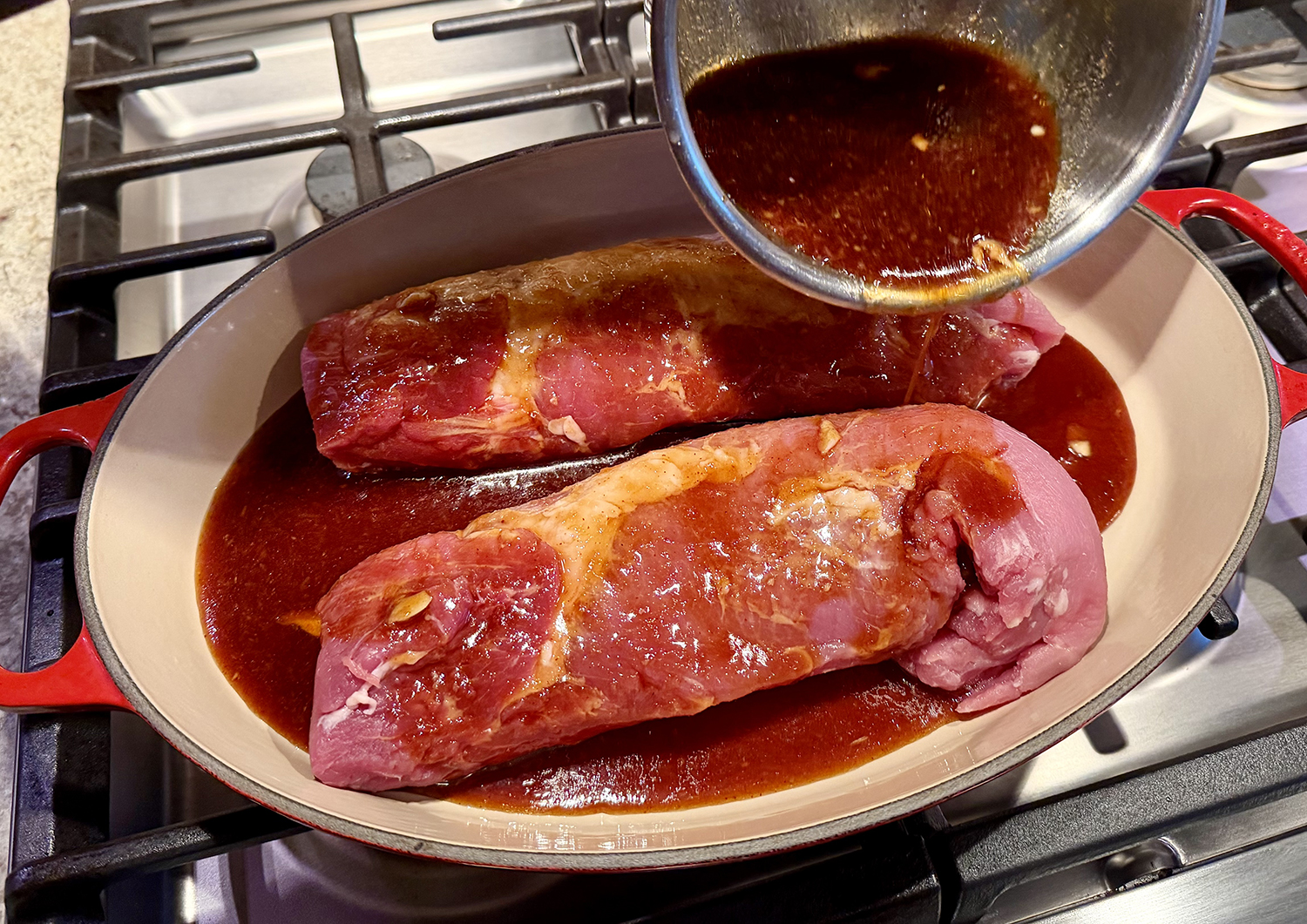
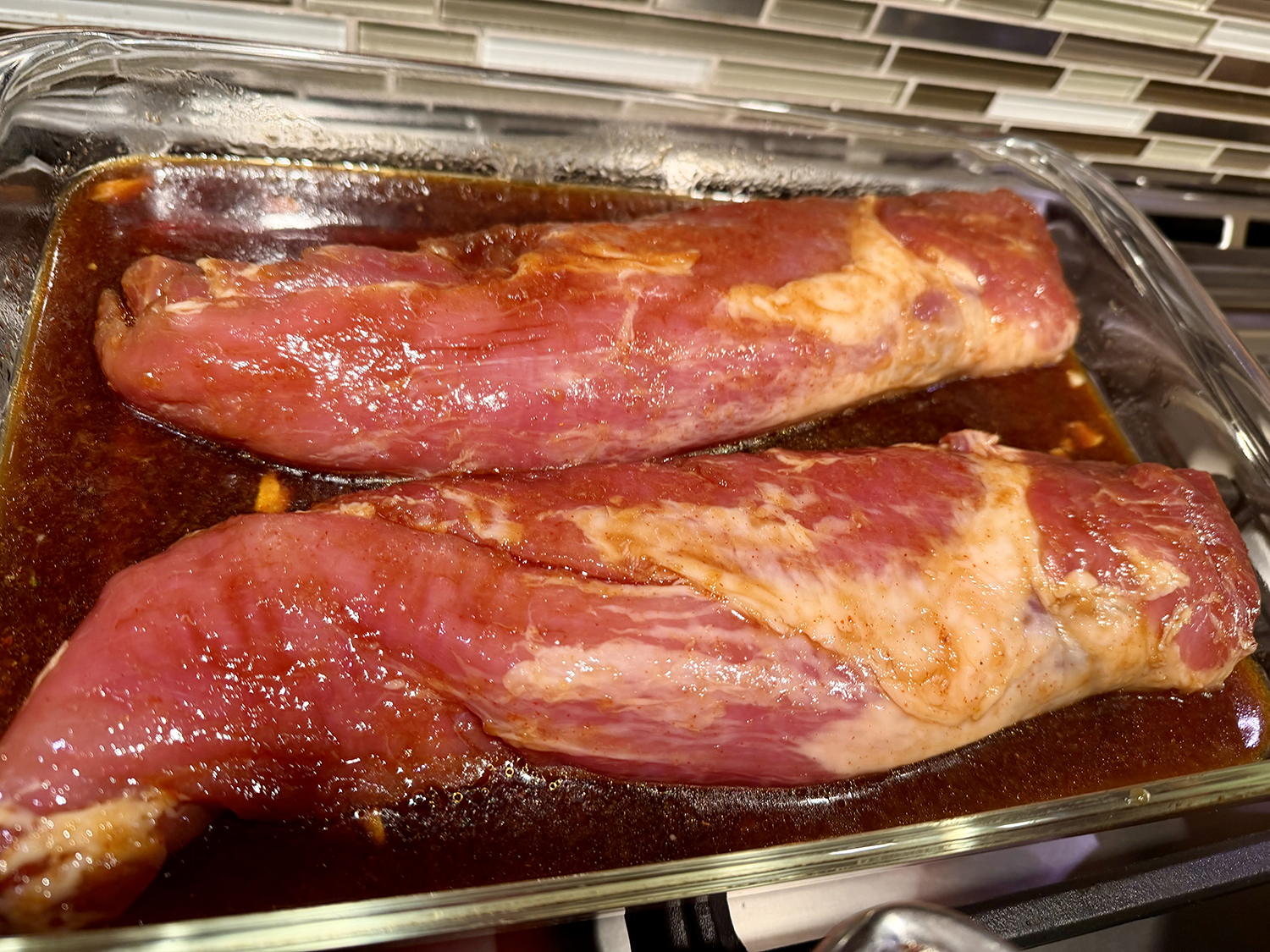
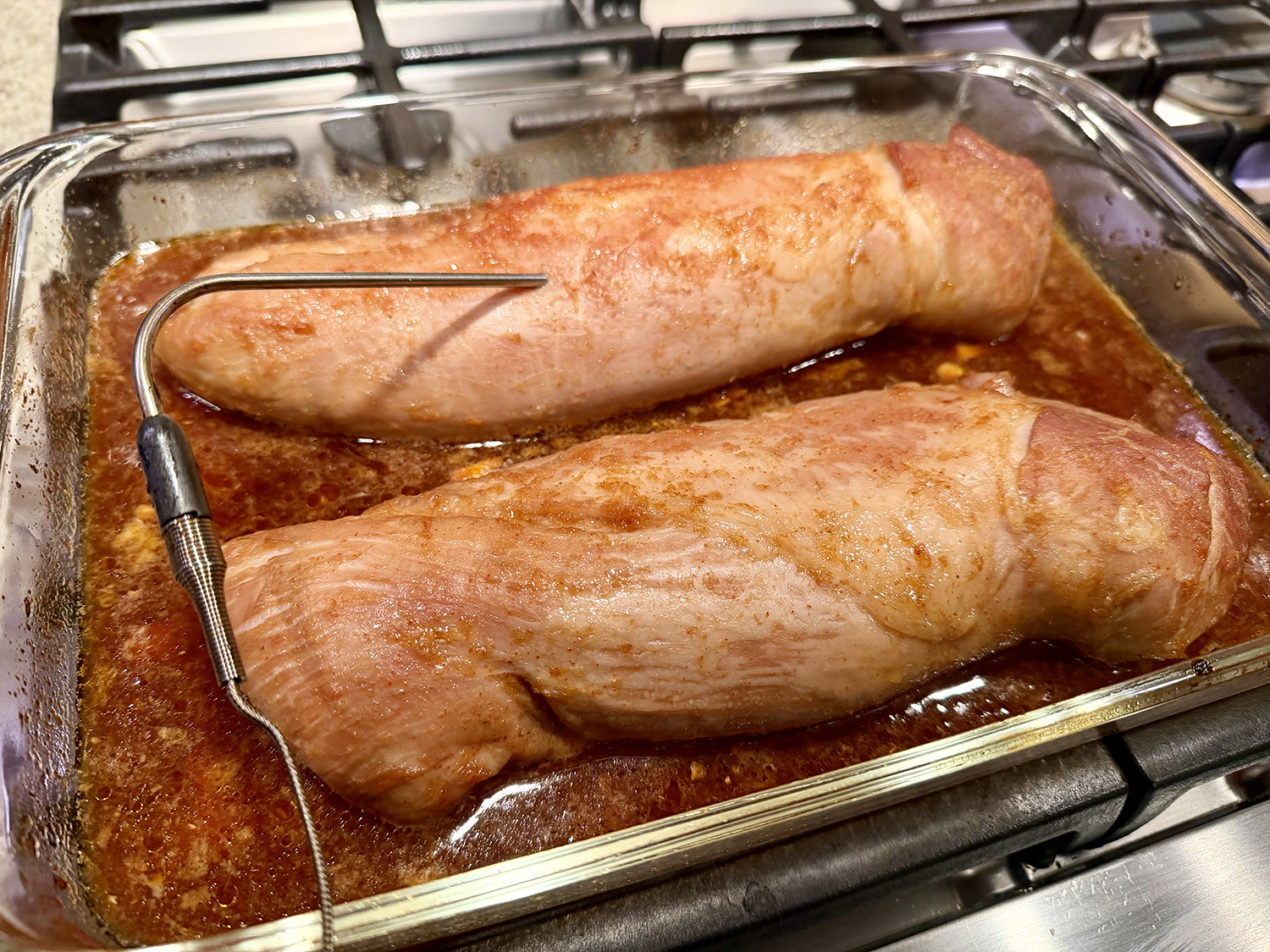
Thyme-and-Dijon-Seared Pork Tenderloin with Cider Pan Sauce

Yummy-to-my-tummy! A fragrant thyme-and-Dijon crust locks in the tenderloin’s juiciness, while a quick cider deglaze turns pan drippings into a bright, tangy-sweet sauce for an elegant weeknight or holiday main. Welcome to Autumn cooking!
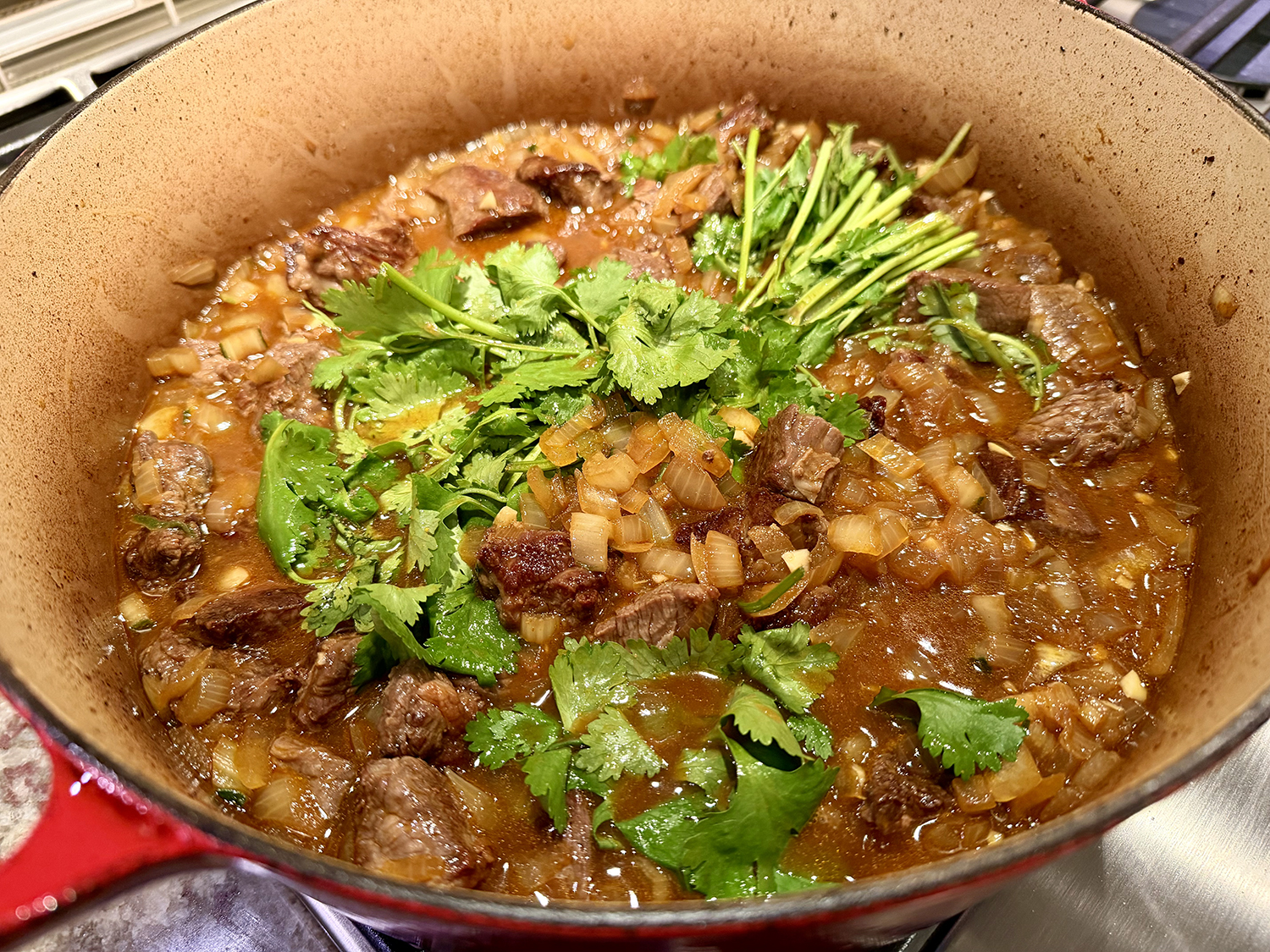
This show-stopping, juicy pork tenderloin recipe is fantastic! A quick sear in a hot pan seals in the moisture before being brushed with a simple dijon, Worcestershire sauce and thyme glaze and roasted until perfectly cooked through.

Meanwhile, an easy pan sauce with shallots, clove, juniper, and allspice are simmered with fresh apple cider until reduced and thickened. A touch of butter finishes the sauce to give it a rich and luscious mouthfeel.

BTW, apple cider and apple juice both contain apples that have been pressed for their juice, but they differ in how they are processed. Generally, apple cider is unfiltered and unpasteurized, resulting in a drink that needs to be refrigerated and has a richer apple flavor. Apple juice is the opposite and is typically filtered and pasteurized, allowing for it to be more shelf-stable and giving it a sweeter taste and paler color. 

Serve the pork with mashed potatoes or rice, and your favorite roasted vegetables. We chose to pair it with Apple Cider Risotto with Bacon and Butternut Squash, which utilized many of the same flavors.

NOTE: This recipe doesn’t yield a ton of sauce, but if you want things saucier, you could easily double the sauce (which we did), though it’ll need more time to reduce. However, in the end, we did not feel it was absolutely necessary to do so.

In the end the meal was delicious — thank goodness because the process was long and excruciating, and the number of pans and bowls mounted up. For those who love a challenge, it’s a perfect endeavor!

Thyme-and-Dijon-Seared Pork Tenderloin with Cider Pan Sauce

  • Servings: 4-6
  • Difficulty: moderate
  • Print

Ingredients

  • 2 (about 1 1/4-lb.) pork tenderloins, silver skin trimmed
  • 2 1/2 tsp. kosher salt, divided
  • 1 1/4 tsp. black pepper, divided
  • 1 Tbsp. Worcestershire sauce
  • 1/2 tsp. grated garlic
  • 3 Tbsp. neutral cooking oil (such as avocado oil), divided
  • 2 Tbsp. coarse-ground Dijon mustard, divided
  • 1 Tbsp. finely chopped fresh thyme, divided
  • 3 Tbsp. cold unsalted butter, divided
  • 2 Tbsp. finely chopped shallot
  • 2 whole allspice
  • 2 whole cloves
  • 2 juniper berries (optional)
  • 3 Tbsp. apple cider vinegar
  • 1 cup fresh apple cider
  • 1 Tbsp. finely chopped fresh chives, plus more for garnish

Directions

  1. Preheat oven to 350°F. Line a large rimmed baking sheet with aluminum foil; set aside.
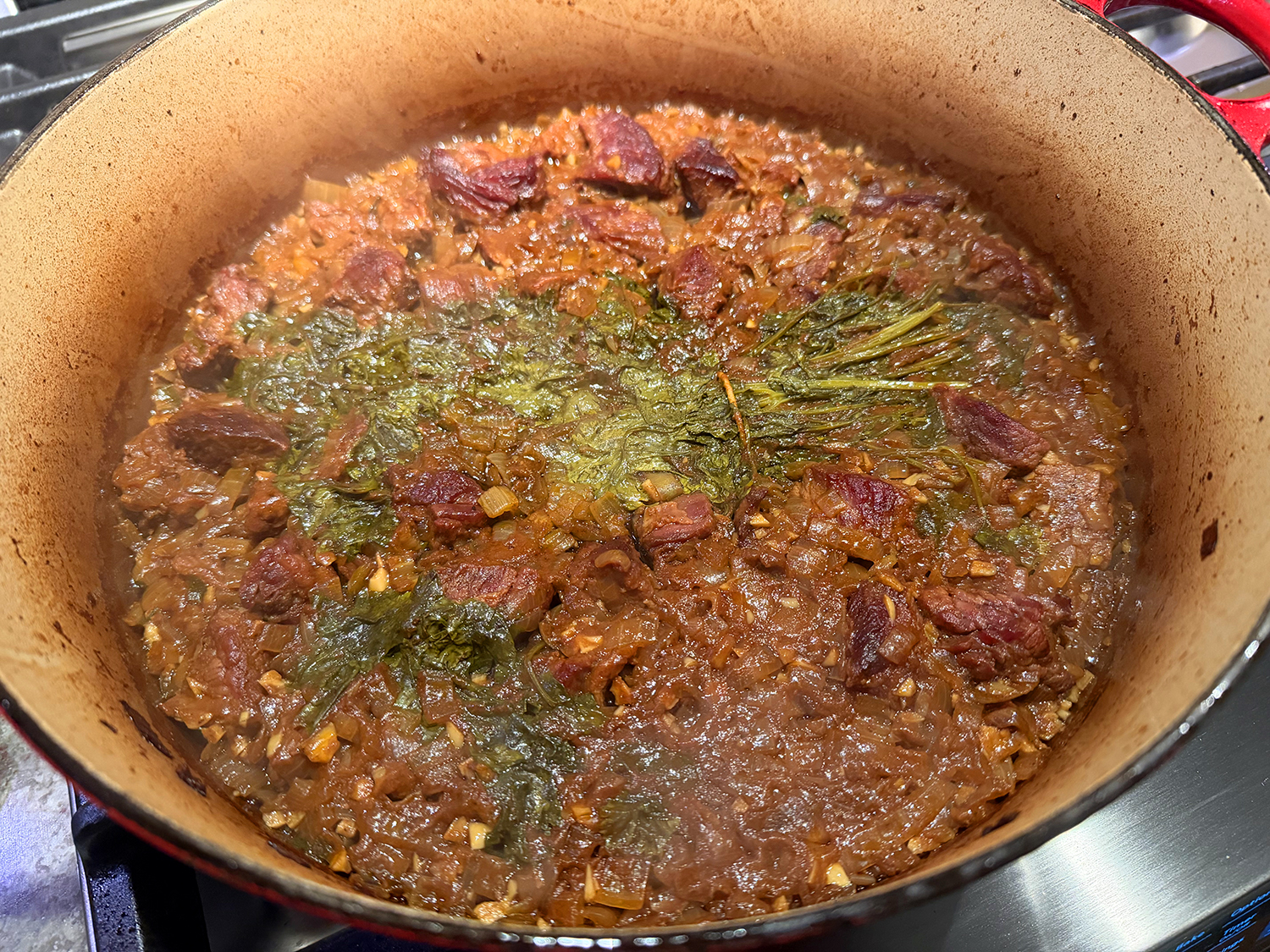
  2. Pat pork dry with paper towels, and season with 2 teaspoons salt and 1/2 teaspoon pepper; set aside. Whisk together Worcestershire sauce, grated garlic, 1 tablespoon oil, 1 tablespoon mustard, 2 teaspoons thyme, and 1/2 teaspoon pepper in a small bowl until smooth; set aside.
  3. Heat remaining 2 tablespoons oil in a large stainless steel skillet over high until shimmering, about 3 minutes. Add pork; cook, turning occasionally, until well browned on all sides, 6 to 8 minutes total. Remove from heat, and transfer pork to prepared baking sheet. Brush reserved Worcestershire mixture evenly over pork. Do not wipe skillet clean.
  4. Bake pork until an instant-read thermometer inserted into the thickest portion of pork registers 140°F (for medium), 15 to 18 minutes, or until desired degree of doneness. Remove from the oven, and let rest for 5 to 10 minutes.
  5. While pork is baking, melt 1 tablespoon butter in reserved skillet over medium-low. Add shallot, allspice, cloves, juniper berries (if using), remaining 1 teaspoon thyme, and remaining 1/4 teaspoon pepper. Cook, stirring constantly, until shallot is softened, about 1 minute. Add vinegar; cook, scraping bottom of skillet to release any browned bits, until vinegar is nearly evaporated, about 2 minutes. Add apple cider, remaining 1 tablespoon mustard, and remaining 1/2 teaspoon salt.
  6. Bring to a simmer over medium-high, and cook, stirring occasionally, until sauce thickens and is reduced to about 1/3 cup, about 8 minutes. Remove from heat.
  7. Strain sauce through fine-mesh sieve; pressing down on solids. Return velvety silken sauce to pan. Vigorously stir in chives and remaining 2 tablespoons butter until sauce is glossy and emulsified, about 1 minute.
  8. Transfer pork to a cutting board, and cut into 1/2-inch-thick slices. Transfer to a platter, and spoon cider sauce over top. Garnish with additional chives.

http://www.lynnandruss.com

Recipe by Breana Lai Killeen for Food & Wine

White Beans and Chorizo with Quick Marinated Tomatoes and Onions

If you are looking for a flavorful, casual meal that puts creamy white beans at the fore, and gets to the table as quickly as possible, then this Mediterranean-inspired recipe from America’s Test Kitchen is for you. To pull it off, pair the beans with sweet cherry tomatoes or homegrown (or local) slicing tomatoes, sharp red onion, and meaty Spanish chorizo.

Quickly marinating the tomatoes and onion in sherry vinegar (don’t substitute any other vinegar) while the chorizo cooks helps bring out the tomatoes’ sweetness and softens the onion. Cooking the beans in the same oil used to crisp the chorizo imbues the dish with bold, meaty flavor, and adding smoked paprika amps up the smokiness of the dish.

A whole cup of coarsely chopped parsley, usually relegated to a garnish, elevates it to key ingredient status; it contributed freshness and color. We just cut it fresh from our herb garden. Adding water to the skillet before serving loosens everything up, and a final addition of extra-virgin olive oil adds glossiness.

There are many types of “Spanish style chorizo.” It can be both cured (hard like salami) and uncured (soft). Each is of a different texture, flavor and used in different ways. The recipe doesn’t specify cured or uncured chorizo, so we made it with uncured, fully-cooked chorizo which is what we had on hand. And we doubled the amount from 6 to 12 ounces.

Instead of purchasing grape tomatoes, we used our homegrown slicing tomatoes.

NOTE: *If using cured chorizo, reduce the smoked paprika to ¼ teaspoon.

White Beans and Chorizo with Quick Marinated Tomatoes and Onions

  • Servings: 4
  • Difficulty: easy
  • Print

Ingredients

  • 3 Tbsp. sherry vinegar
  • 3 Tbsp. extra-virgin olive oil plus ¼ cup extra-virgin olive oil, divided
  •  tsp. plus ½ tsp. table salt, divided
  • ¼ tsp. pepper
  • 12 oz. cherry tomatoes, quartered; OR slicing tomatoes chopped
  • 1 small red onion, quartered and sliced thin
  • 12 oz. uncured* Spanish-style chorizo sausage, links quartered, cut into ½-inch pieces
  • 2 (15-oz.) cans cannellini beans, rinsed
  • 3 garlic cloves, minced
  • 1⁄2 tsp. smoked paprika
  • ¼ cup water
  • 1 cup coarsely chopped fresh parsley

Directions

  1. Whisk 3 tablespoons sherry vinegar, 1 tablespoon extra-virgin olive oil, ⅛ teaspoon table salt, and ¼ teaspoon pepper together in medium bowl. Add 12 ounces quartered cherry tomatoes and ½ thinly sliced red onion, tossing to coat; set aside to marinate while cooking chorizo and beans.
  2. Heat 2 tablespoons extra-virgin olive oil in 12-inch skillet over medium-high heat until shimmering. Add 6 ounces Spanish-style chorizo (cut into ½-inch pieces) and cook until evenly browned and crisp, 4 to 6 minutes, stirring often. Using slotted spoon, transfer chorizo to paper towel–lined plate and set aside.
  3. Add 2 (15-ounce) cans rinsed cannellini beans, 3 minced garlic cloves, ¼ teaspoon smoked paprika, and remaining ½ teaspoon table salt to fat left in skillet, reduce heat to medium, and cook until beans are warmed through, 2 to 4 minutes, stirring occasionally. Off heat, add ¼ cup water to skillet, scraping up any browned bits. Add chorizo, tomato-onion mixture, 1 cup coarsely chopped parsley, and remaining ¼ cup extra-virgin olive oil, stirring to combine. Serve with crusty bread.

http://www.lynnandruss.com

Adapted from a recipe for America’s Test Kitchen

Chicken Paillard with Lemon Butter Sauce

Not only is this French-inspired chicken paillard delicious, but the entire dish comes together in about a half hour with one pan and a handful of ingredients. It’s quick enough for any night of the week, but special enough to serve whenever you want something that feels a bit elevated. Don’t know of any home cook that doesn’t appreciate that!

Thin, golden, and covered in a bright lemon-butter sauce, this chicken paillard turns boneless, skinless chicken breasts into a dish that’s quick, elegant, and unexpectedly luxurious—-not necessarily an easy thing to accomplish.

By pounding the meat into thin, even cutlets, the chicken cooks quickly, develops a golden exterior, and stays juicy—a far cry from the dry, tasteless results that often afflict boneless, skinless chicken breasts.

While paillard is a French culinary term for pounding meat thin for quick and even cooking, in the US, chicken paillard often refers to seared chicken breasts with a lemony herb-butter sauce. It’s become a weeknight staple thanks to its ease and speed, offering a meal that feels far more refined than its quick cooking time might suggest.

The fond in the pan becomes the base for a quick pan sauce after the chicken is seared. Wine and stock deglaze the browned bits, and cold butter melts gradually as it is swirled in at the end. This allows the fat to emulsify evenly into the sauce creating a rich, glossy consistency. Lemon zest and juice brighten the flavors, and fresh parsley, chives, and tarragon add a burst of herbal freshness.

We find it is easier to pound the chicken inside a large ziploc as opposed to covering with plastic wrap because the bag is thicker and is easier to handle.

NOTE: You can use 4 store-bought chicken breast cutlets instead of whole chicken breasts, but pounding your own ensures even thickness and more reliable cooking.

Chicken Paillard with Lemon Butter Sauce

  • Servings: 3-4
  • Difficulty: easy
  • Print

Ingredients

  • 1/2 cup all-purpose flour
  • 2 tsp. Diamond Crystal kosher salt, divided; for table salt, use half as much by volume
  • 1 tsp. freshly ground black pepper, divided
  • 2 medium boneless, skinless chicken breasts (about 6 to 8 oz. each)
  • 1/4 cup extra-virgin olive oil, divided
  • 3/4 cup dry white wine
  • 1/2 cup homemade chicken stock (preferable) or store-bought chicken broth
  • 1 medium garlic clove, grated
  • 5 Tbsp. unsalted butter, cut into ½-inch pieces and chilled
  • 1 tsp. grated lemon zest, plus 1 Tbsp.  fresh juice, divided
  • 2 Tbsp. finely chopped fresh flat-leaf parsley, divided
  • 2 Tbsp. thinly sliced chives, divided
  • 2 tsp. finely chopped tarragon leaves, optional, plus more for garnish
  • Flaky sea salt, such as Maldon, for sprinkling

Directions

  1. Preheat oven to 200°F. Place a wire rack inside a baking sheet; set aside.
  2. In a shallow dish or plate, stir together flour, 1 1/2 teaspoons kosher salt, and 3/4 teaspoon pepper; set aside. Set aside a large plate to transfer chicken to after breading.
  3. Working with one chicken breast at a time, place chicken breast on a cutting board. Hold it in place with the palm of your non-cutting hand, and use a sharp knife to slice chicken horizontally into two even cutlets. Repeat process with remaining chicken breast. Cover each breast half with plastic wrap, and use a meat mallet or rolling pin to pound to 1/3-inch thickness.
  4. Place 2 chicken halves in prepared flour mixture, and turn to coat; tap off excess flour mixture, and transfer chicken to the large plate. Repeat process with remaining chicken halves.
  5. In a large stainless steel, cast iron, or carbon steel skillet, heat oil over medium-high until shimmering. Working in batches, add two chicken pieces to hot oil; cook, undisturbed, until golden brown on both sides, 4 to 5 minutes total. Repeat process with remaining 2 chicken pieces. Place browned chicken halves on prepared baking sheet, and place in warm oven (do not wipe out skillet).
  6. While chicken is resting in oven, heat the same skillet over medium-high. Add wine; cook, stirring occasionally and scraping up browned bits from bottom of skillet, until reduced to about 1/4 cup, 3 to 4 minutes. Add stock and cook, stirring constantly, until mixture has reduced to about 1/3 cup, 3 to 4 minutes. Reduce heat to medium-low. Add garlic, butter, lemon juice, 1 tablespoon of parsley, 1 tablespoon of chives, 2 teaspoons tarragon (if using), remaining 1/2 teaspoon salt, and remaining 1/4 teaspoon pepper; cook, swirling and stirring constantly, until butter is completely melted, about 1 minute.
  7. Spoon sauce over chicken, and garnish with remaining chives, parsley, and additional tarragon (if using), lemon zest, and flaky salt. Serve immediately.

http://www.lynnandruss.com

From a recipe developed by Marianne Williams for Serious Eats

Chan Chan Yaki (Miso Butter Salmon)

Salmon is one of our go-to fish choices. And this one from NYTimes Cooking is a fabulous choice. It’s quick, easy, healthy, tasty and uses only one pan! What’s not to like?

According to Mia Leimkuhler, “Chan chan yaki, or miso butter salmon, is a classic dish from Hokkaido, Japan, a place known for its excellent salmon. The fish-and-vegetable dish is frequently made on a teppan (a large grill), with everything chopped and mixed with two metal spatulas that make the onomatopoetic “chan chan” sound.”

This clever version from Marc Matsumoto, the Tokyo-based blogger behind No Recipes, streamlines the dish for home cooking, calling for a lidded skillet and keeping the salmon in one large piece for easier preparation and presentation. You can replicate the chan chan action in your own bowl or plate, composing perfect bites of salmon, veggies and the miso butter sauce.

And the vegetables are flexible, with some delicious options being Shimeji mushrooms, bell peppers, corn or negi (long green onions). Unfortunately, we just totally forgot to purchase the enoki mushrooms. And the smallest head of green cabbage was huge, so we used only a portion of it.

BTW, you can ditch the salmon skin since the fish is just set atop the vegetables and not crisped in any fashion. Or, cut the skin off the filet and crisp it in a separate pan to add strips of the crispy skin as a garnish at the end.

Here’s a hack from The Hubs: Increase the sake to 3/4 cup. Use 1/4 cup in Step 4 to pour over the cooked veggies and deglaze the pan loosening all of those luscious browned bits. Cook, stirring until the sake nearly evaporates. Then use the remaining 1/2 cup in Step 5.

Chan Chan Yaki (Miso Butter Salmon)

  • Servings: 4
  • Difficulty: easy
  • Print

Ingredients

  • 1 (1¼-lb.) piece skin-on salmon fillet
  • ½ small head green cabbage, trimmed and cored
  • 2 large carrots
  • 1 medium yellow onion
  • 3½ oz. enoki mushrooms (optional)
  • ⅓ cup shiro (white) or tanshoku (yellow) miso
  • 3 Tbsp. unsalted butter, at room temperature
  • 1 Tbsp. sugar
  • 1 Tbsp. neutral oil
  • Salt and pepper, to taste
  • 3⁄4 cup dry (junmai) sake, divided
  • 2 scallions, thinly sliced
  • Steamed rice, for serving

Directions

  1. Remove the salmon from the fridge while you prep the vegetables: Chop the cabbage into 2-inch pieces (about 6 cups). Peel and cut the carrots on the diagonal into ½-inch coins (about 2 cups). Halve the onion and slice into ½-inch half moons (about 1½ cups). If using enoki mushrooms, trim the root end and separate them into large clusters.
  2. Make the miso butter: Combine miso, butter and sugar in a small bowl and stir until smooth and homogenous. (Miso butter can be made at least 3 days ahead and kept in the refrigerator; bring to room temperature before using.)
  3. Place the salmon on a plate, skin side down, and spread the miso butter in a thin layer on top, holding back about 2 tablespoons of miso butter for the vegetables.
  4. Heat a large, deep (lidded) skillet over medium-high. Add the oil and the cabbage, carrot, onion and enoki mushrooms (if using). Season the vegetables with salt and pepper (go lightly on the salt, since the miso butter is salty!) and cook, stirring frequently, until they begin to wilt but are still quite crisp, 5 to 8 minutes.
  5. Flatten the vegetables and place the salmon on top of them, miso side up. Dot the reserved miso butter on the vegetables (you may not need all of it) and pour the remaining sake over the vegetables. Place the lid on the pan, lower the heat to medium to maintain a strong simmer and cook for 7 to 10 minutes, until flaky and just cooked through in the center. (Exact time depends on the thickness of the salmon fillet and preferred level of doneness.)
  6. When the salmon has finished cooking, remove the lid and stir the vegetables around the salmon to mix them with the melted miso butter. Scatter the salmon with the chopped scallions and serve with rice.

http://www.lynnandruss.com

Recipe from Marc Matsumoto for NYTimes Cooking

Hibachi-Style Chicken with Charred Vegetables

Soy-marinated grilled chicken thighs paired with smoky, charred summer vegetables make this a sensational summer supper. Here, grilled chicken thighs are soaked in a sweet, garlicky, soy-based marinade and grilled alongside skewers with peak-season summer vegetables. Some steamed rice or couscous completes the meal.

The grill imparts a delicious char, similar to a Japanese hibachi charcoal grill, while basting the vegetables with a mixture of melted butter and reserved marinade enhances the full-bodied smoky flavor signature to hibachi.

The key to evenly cooked vegetable skewers is cutting the veggies into similarly sized pieces so they fit neatly on the skewers. Drizzled with a creamy chile-mayo sauce and served over rice (or couscous), this dish becomes a hearty, flavor-packed meal that can be easily prepped ahead for the week.

Make Ahead TIPS: Marinate chicken overnight, covered in the refrigerator, for up to 12 hours. Chop and store all vegetables in an airtight container in the refrigerator for up to one day. The mayonnaise sauce can be prepared up to five days in advance and stored in an airtight container in the refrigerator.

BTW, Kewpie mayonnaise is a Japanese brand of mayo made with egg yolks, vinegar, and MSG. Its use of egg yolks (rather than whole eggs) and vinegar makes it richer and tangier than regular mayonnaise. Find it at most grocery stores or online at yamibuy.com.

NOTE: *We knew the skewered vegetables would take longer than the chicken, so we started them about 8-10 minutes prior to adding the thighs to the hot grill. So in total, the veggies grilled for 20 minutes, while the chicken was on for 12 minutes.

While the mayo sauce was indeed tasty, we don’t feel it is absolutely necessary to complete the dish, so if it is not inspiring to you, just omit it. HOWEVER, we feel strongly that the basting marinade and butter sauce need to be doubled, as there was not enough. The new amounts are indicated in the ingredients list below.

Hibachi-Style Chicken with Charred Vegetables

  • Servings: 4
  • Difficulty: easy
  • Print

Ingredients

Chicken Marinade:

  • 1 1/4 cup soy sauce
  • 1/4 cup light brown sugar
  • 1/4 cup finely chopped garlic (about 5 large garlic cloves) 
  • 2 Tbsp. plus 1/2 tsp. toasted sesame oil, divided
  • 2 lb. boneless, skinless chicken thighs (about 6 thighs), patted dry

Vegetables:

  • 2 red bell peppers, cut into 1 1/2-inch pieces (about 2 cups)
  • 1 zucchini, halved lengthwise and cut into 1-inch-thick half-moons (about 2 1/2 cups) 
  • 1 medium red onion, cut into 1 1/2-inch-thick wedges (about 1 1/2 cups)
  • 4 (8-inch) metal or wooden skewers
  • 1/2 tsp. kosher salt, divided

Butter and Sauce:

  • 4 Tbsp. unsalted butter, melted 
  • Canola oil, for grilling
  • 1/2 cup Kewpie mayonnaise
  • 2 tsp. sriracha chile sauce
  • 1/2 tsp. Dijon mustard
  • Cooked white rice, or couscous, for serving

Directions

  1. Whisk together soy sauce, brown sugar, garlic, and 1 tablespoon sesame oil in a small bowl until sugar is dissolved. Pour soy mixture into a large ziplock plastic bag, reserving 6 tablespoons soy mixture in bowl. Add chicken to bag; seal bag, and gently massage soy mixture into chicken. Set aside, and let marinate at room temperature for at least 30 minutes or up to 12 hours.
  2. Thread peppers, zucchini, and onion onto skewers. Brush vegetables with 1 tablespoon reserved soy mixture; sprinkle with 1/4 teaspoon salt. Stir melted butter and remaining 1/4 teaspoon salt into remaining 2 tablespoons soy mixture in bowl; set aside.
  3. Preheat grill to medium-high (400°F to 450°F). Remove chicken from marinade, shaking off excess; discard marinade. Lightly grease grill grates with canola oil; place chicken and skewered vegetables on grates. Grill, uncovered, turning skewers and chicken occasionally and basting with soy-butter mixture until a thermometer inserted into thickest portion of chicken registers 170°F, 12 to 15 minutes, and vegetables are tender and charred in spots, about 12 minutes. (*Please see note our cooking times above.) Transfer to a cutting board, and let rest for 5 minutes.
  4. Stir together mayonnaise, sriracha, mustard, and remaining 1/2 teaspoon sesame oil in a small bowl. Chop chicken into bite-size pieces, and remove vegetables from skewers. Serve chicken and vegetables over cooked rice, and drizzle with mayonnaise mixture. Garnish with scallions and shichimi togarashi.

http://www.lynnandruss.com

Adapted from a recipe by Andee Gosnell for Food & Wine