Tag Archives: gluten-free

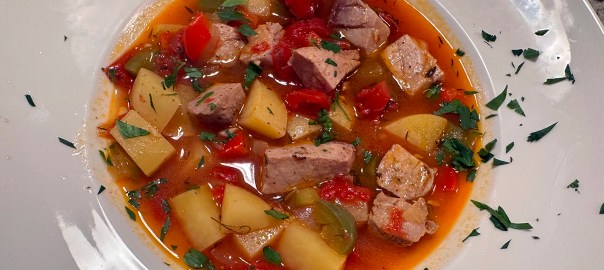
Marmitako—Basque Tuna Stew

There is nothing better than a warm and comforting stew on a cold day, it takes all the chills out of your body and fills you with nothing but comfort. However, this tuna stew is equally welcome on a bright Spring Day. And since The Hubs loves all-things Spanish, making the dish was a no-brainer.

Marmitako is really quite simple to make and you don’t need any special equipment, just a standard stock/braising pot, and most importantly, fresh ingredients. With a recipe this simple, it is always important to use the freshest and highest of quality ingredients, it truly does make a difference in the overall flavor.
We made numerous changes to the original recipe, which included doubling most of the vegetable ingredients. Some of the timing was altered also to cook the potatoes 5 minutes longer, and the tuna cubes 5 minutes less. All of the changes are noted below.

Marmitako - Basque Tuna Stew

  • Servings: 4
  • Difficulty: easy
  • Print

Ingredients

  • 2 fillets fresh tuna
  • 1/4 cup extra virgin Spanish olive oil
  • 4 cloves of garlic
  • 1 onion
  • 1 red bell pepper
  • 1 green bell pepper
  • 2 medium Yukon gold potatoes
  • 1 can fire-roasted diced tomatoes
  • 1/2 tsp. dried thyme
  • 1/2 tsp. smoked paprika
  • 1/2 cup white wine
  • 2 1/2 cups fish broth, preferably homemade
  • Sea salt
  • Freshly cracked black pepper
  • Fresh parsley

Directions

  1. Begin by cutting all the vegetables first, 4 minced cloves of garlic, diced onion, diced red bell pepper, dice green bell pepper and cut 2 medium Yukon gold potato into 1/2-inch cubes.
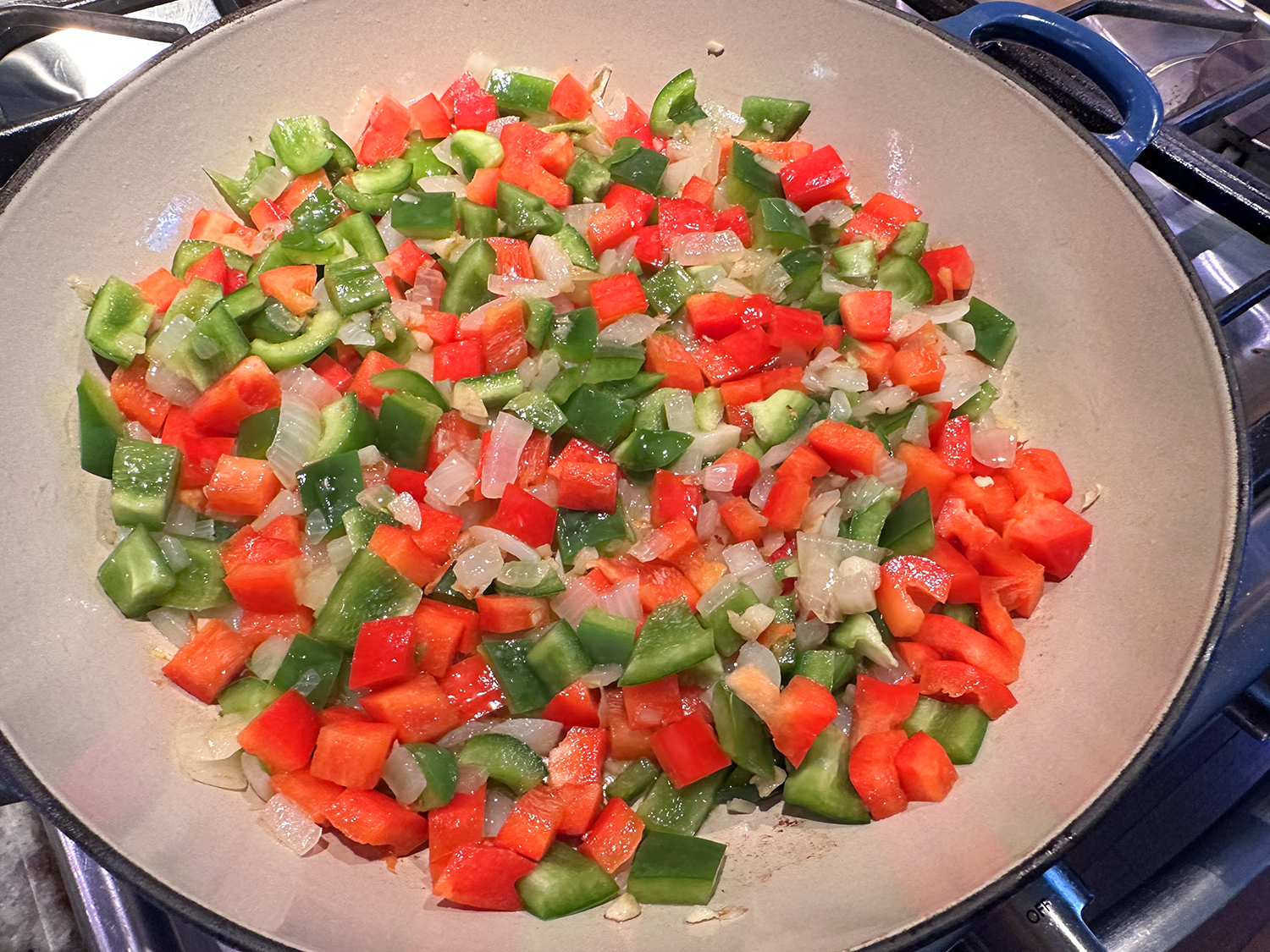
  2. Heat a large stock pot with a medium heat and add a 1/4 cup of extra virgin Spanish olive oil, once the oil gets hot add the diced onions and minced garlic, mix with the oil and cook for about 4 minutes, then add the diced bell peppers, mix and cook for another 5 minutes, then add the cubed potatoes, mix and cook for another 2 minutes, then add 1 cup of diced tomatoes, season everything with a generous pinch of sea salt, freshly cracked black pepper, 1/2 teaspoon of dried thyme and 1/2 teaspoon of smoked paprika, mix everything together and cook for 2 minutes.
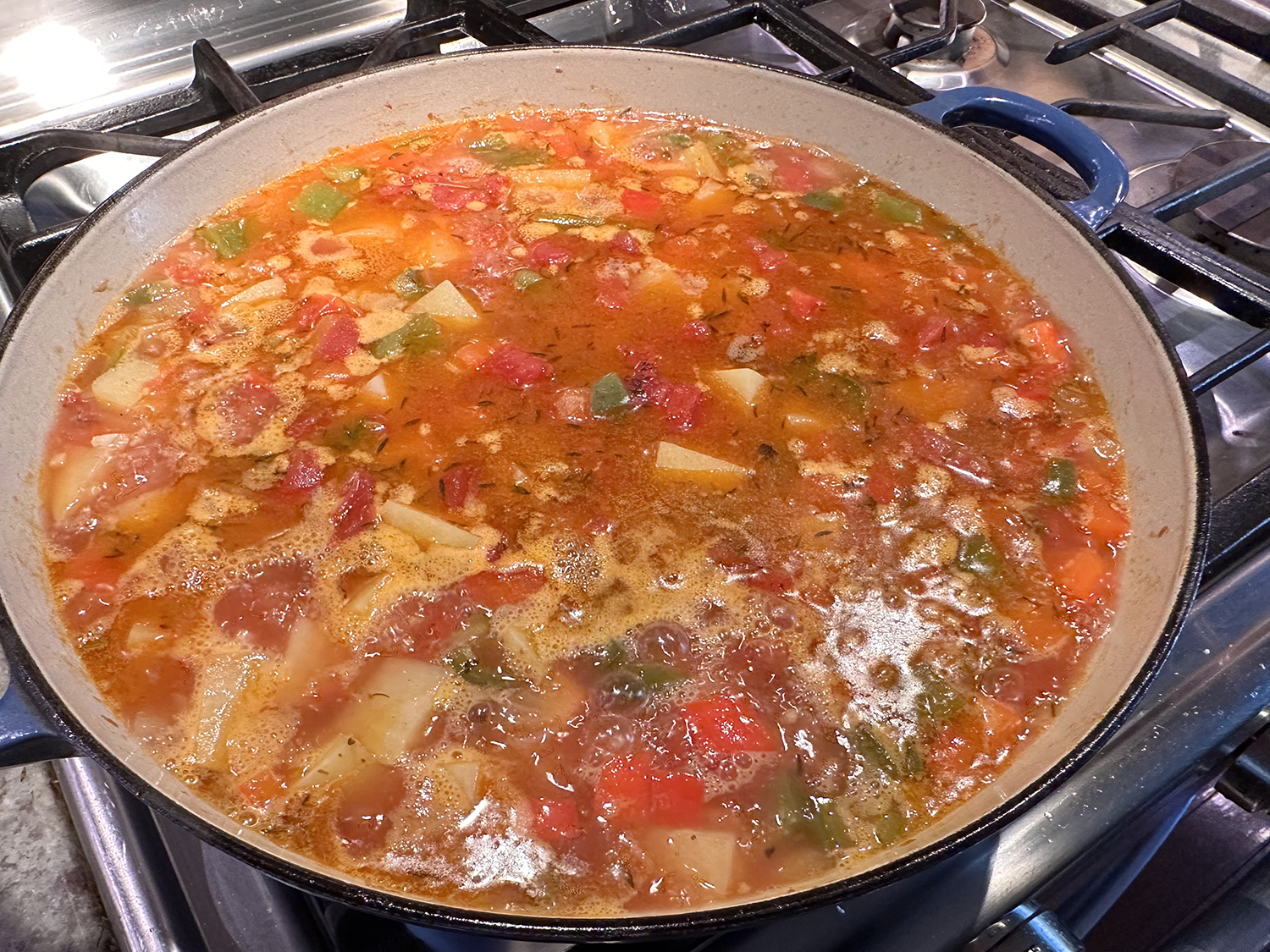
  3. Turn the fire up to a HIGH heat and add 1/2 cup of white wine, about 4 minutes after adding the white wine add 2 1/2 cups of fish broth, once it comes to a boil, place a lid on top and lower the fire to a LOW heat.
  4. While the stew is simmering, season 2 fresh tuna fillets with sea salt and freshly cracked black pepper on both sides, then cut each one into 1/2 inch cubes.
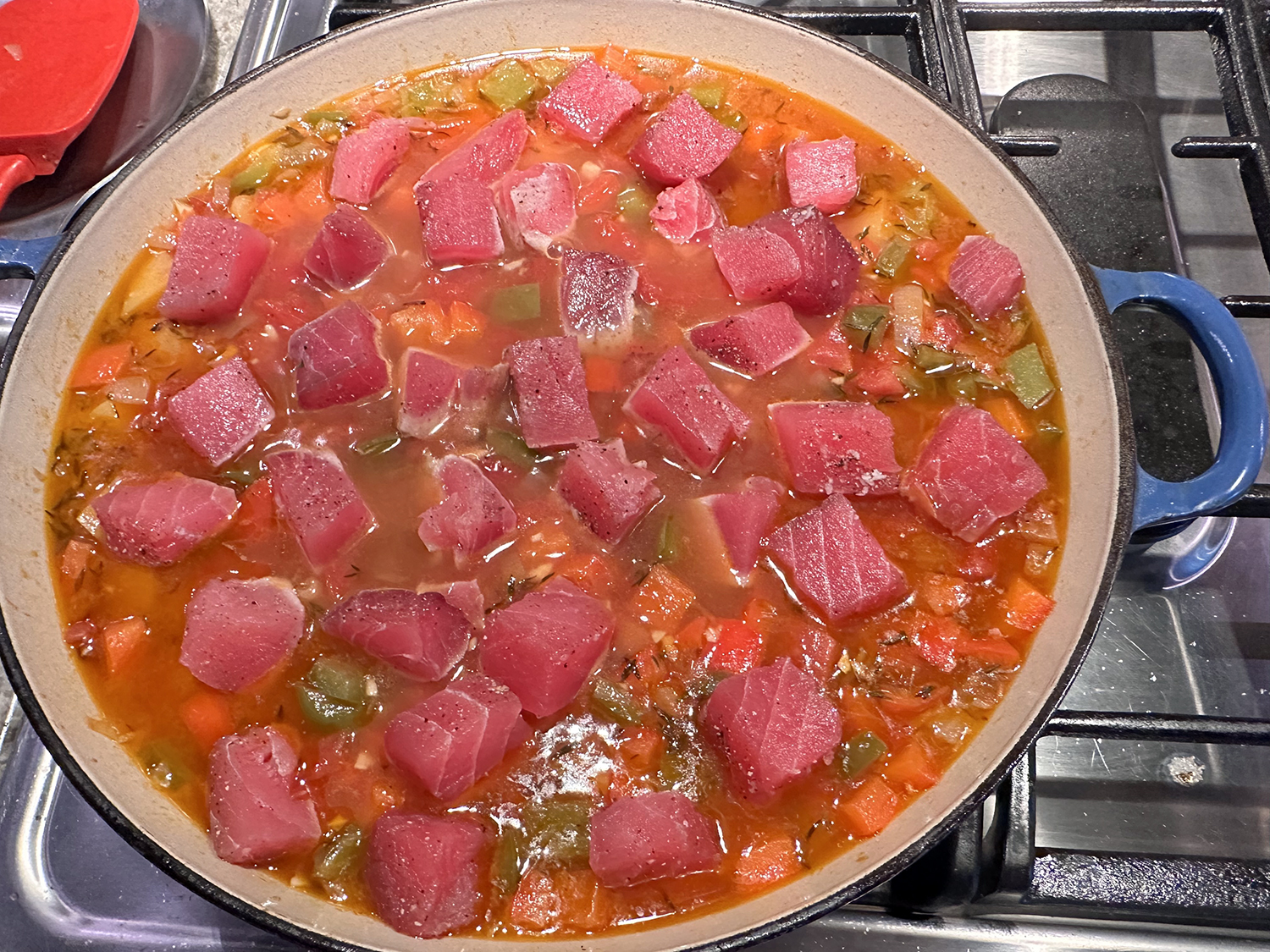
  5. After leaving the stew to simmer for 25 minutes, add the cubed tuna to the stock pot, mix it with the rest of the ingredients, place the lid back on top and cook for another 5 minutes.
  6. Transfer the tuna stew into shallow bowls and garnish each one with fresh parsley

http://www.lynnandruss.com

Adapted from a recipe from Spain on a Fork

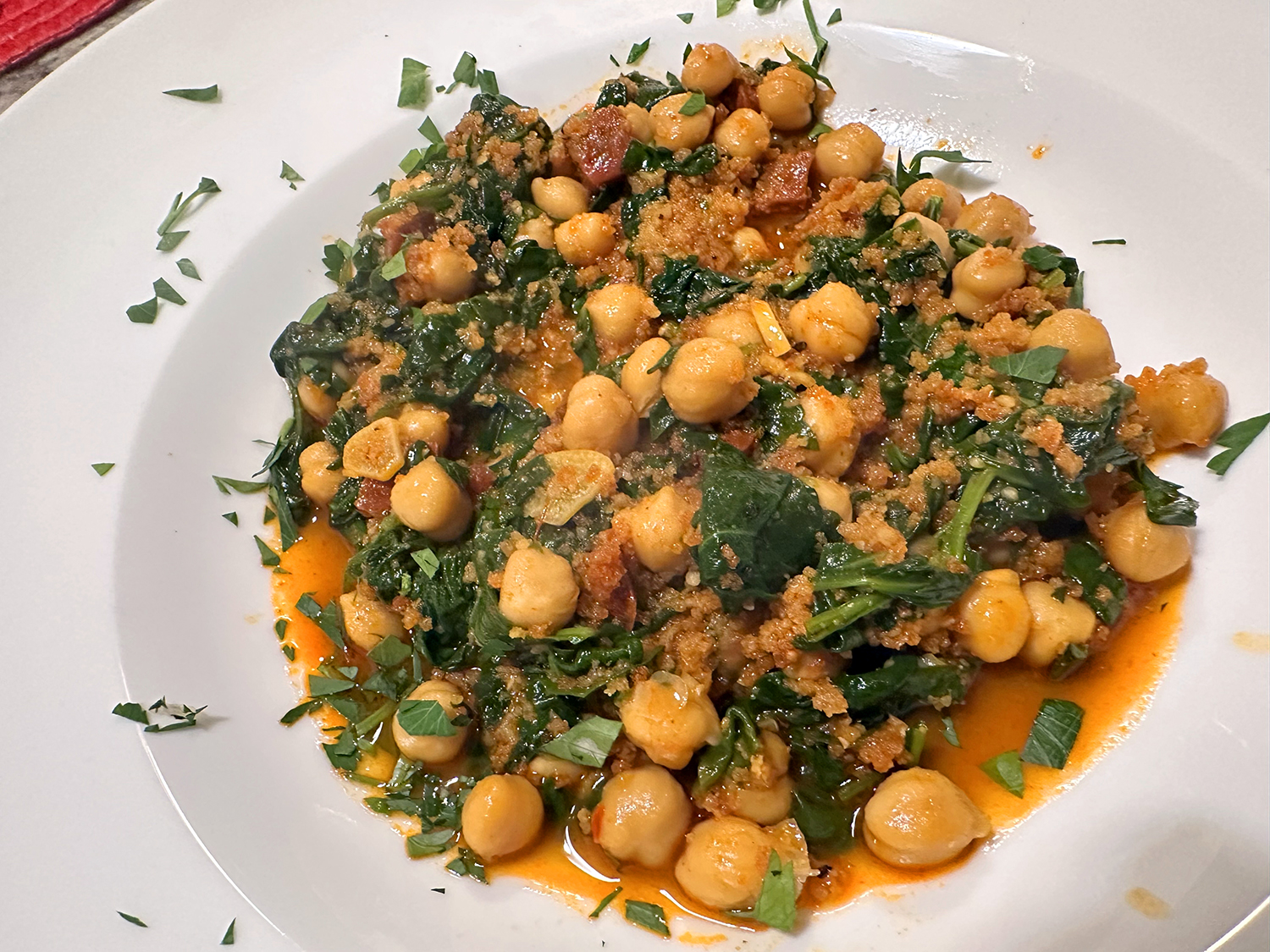
Chickpeas with Spinach, Chorizo, and Smoked Paprika

A traditional tapas from the southern Spanish region of Andalucia, this dish consists of tender stewed chickpeas, delicate wilted spinach, and bold North African-influenced spices. For the flavor backbone, the Spanish classics of saffron, garlic, smoked paprika and cumin are utilized.

Traditional addition of chorizo adds meaty richness, while curly-leafed spinach is the best choice for its sturdy texture in this brothy dish. That being said, we were unable to source curly-leafed spinach and had to go with baby spinach—not the best option, but it still worked.

Including the chickpeas’ flavorful, starchy canning liquid helps to give the dish more body. The picada is a traditional cooking thickener in Spain. This bread crumb-based mixture gives the stewed beans and greens just the right velvety texture and flavor boost.

It is good served over rice or with good crusty bread to sop up the flavorful broth. We just served it with a side salad.

Chickpeas with Spinach, Chorizo, and Smoked Paprika

  • Servings: 4
  • Difficulty: easy
  • Print

Ingredients

  • Pinch saffron threads, crumbled
  • 2 tsp. extra-virgin olive oil
  • 8 oz. curly-leaf spinach, stemmed
  • 3 oz. Spanish-style chorizo sausage, chopped fine
  • 5 garlic cloves, sliced thin
  • 1 Tbsp. smoked paprika
  • 1 tsp. ground cumin
  • Salt and pepper
  • 2 (15-oz.) cans chickpeas
  • 1 recipe Picada (recipe follows)
  • 1 Tbsp. sherry vinegar

Directions

  1. Combine 2 Tbsp. boiling water and saffron in small bowl and let steep for 5 minutes.
  2. Heat 1 teaspoon oil in Dutch oven over medium heat until shimmering. Add spinach and 2 tablespoons water, cover, and cook, stirring occasionally, until spinach is wilted but still bright green, about 1 minute. Transfer spinach to colander and gently press to release liquid. Transfer spinach to cutting board and chop coarse. Return to colander and press again.
  3. Heat remaining 1 teaspoon oil in now-empty pot over medium heat until shimmering. Add chorizo and cook until lightly browned, about 5 minutes. Stir in garlic, paprika, cumin, and 1/4 teaspoon pepper and cook until fragrant, about 30 seconds. Stir in chickpeas and their liquid, 1 cup water, and saffron mixture and bring to simmer. Cook, stirring occasionally, until chickpeas are tender and liquid has thickened slightly, 10 to 15 minutes.
  4. Off heat, stir in picada (recipe below), spinach, and vinegar and let sit until heated through, about 2 minutes. Adjust sauce consistency with hot water as needed. Season with salt and pepper to taste and serve.

Picada:

  • 1/4 cup slivered almonds
  • 2 slices hearty white sandwich bread, torn into quarters
  • 2 Tbsp. extra-virgin olive oil
  • 1/8 tsp. salt
  • Pinch pepper

Directions

  1. Adjust oven rack to middle position and heat oven to 375 F. Pulse almonds in food processor to fine crumbs, about 20 pulses.
  2. Add bread, oil, salt, and pepper and pulse bread to coarse crumbs, about 10 pulses.
  3. Spread mixture evenly in rimmed baking sheet and bake, stirring often, until golden brown, about 10 minutes. Set aside to cool. (Picada can be stored in airtight container for up to 2 days.)

http://www.lynnandruss.com

Recipe from The Complete Mediterranean Cookbook by America’s test Kitchen

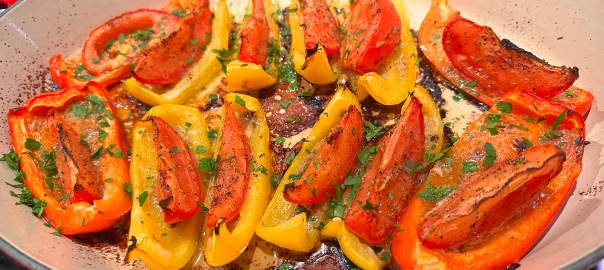
Roasted Bell Peppers with Tomato and Garlic

Very versatile, these little gems make splendid hors d’oeuvres eaten out of hand or set atop a crostini, as well as a side dish. A few on a plate make a nice sit-down first course, and they’re great as part of a buffet.

They add a nice pop of color—along with the nutrients—to your plate. The first go-around we served our Roasted Bell Peppers boats with a Parmesan Meatloaf.

Roasted Bell Peppers with Tomato and Garlic

  • Servings: 4-6
  • Difficulty: easy
  • Print

Ingredients

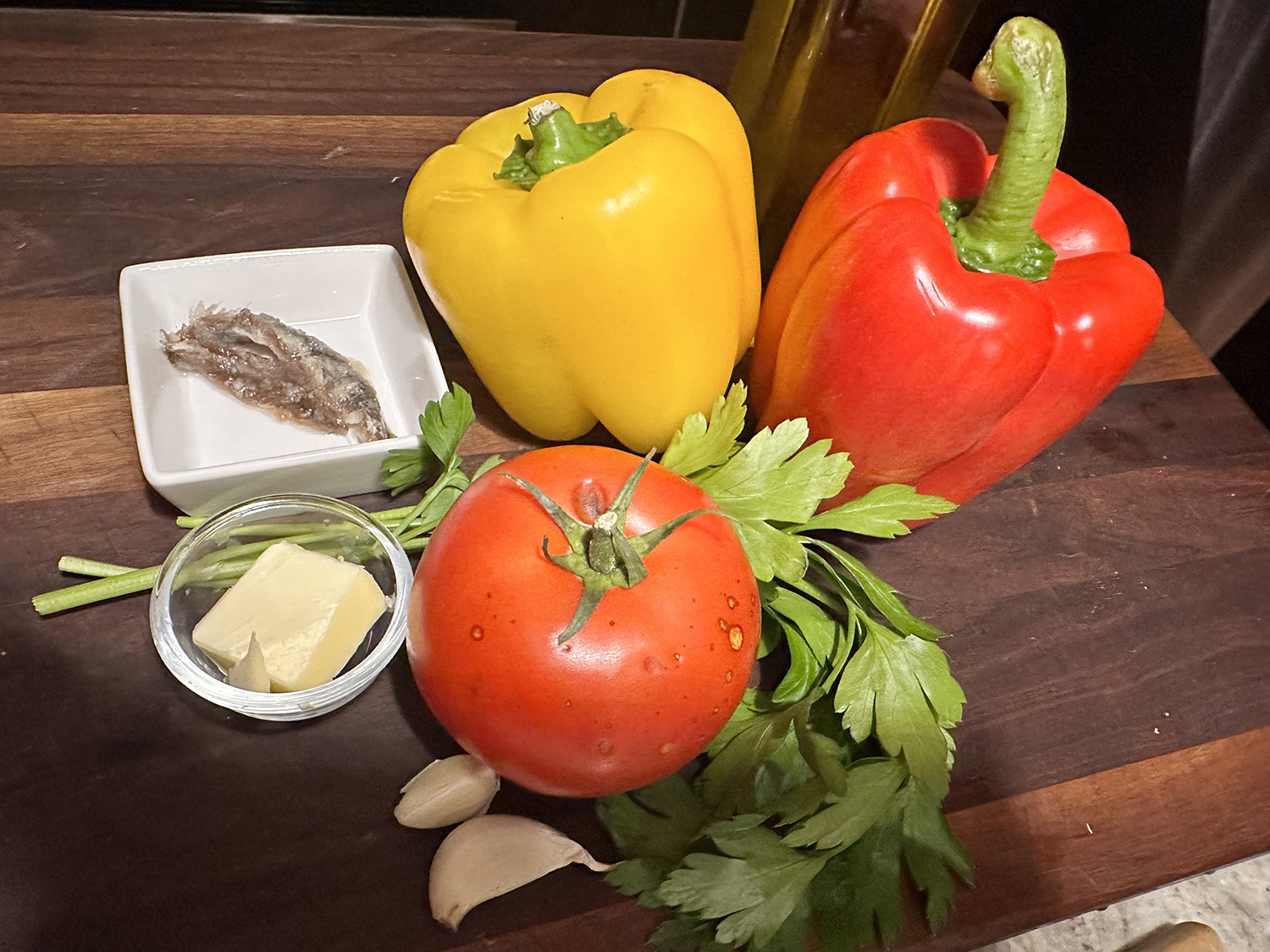
  • 2 garlic cloves, peeled and smashed
  • 2 anchovy filets, chopped
  • Kosher salt
  • 1 Tbsp. unsalted butter, room temperture
  • 2 bell peppers, red and/or yellow
  • 1 med-large tomato
  • Freshly ground blak pepper
  • 2 Tbsp. extra-virgin olive oil
  • 2 Tbsp. chopped fresh flat-leaf parsley

Directions

  1. Position a rack in the center of the oven and preheat to 350°F.
  2. Lightly oil a 13 x 9-inch gratin pan or similar-size baking dish.
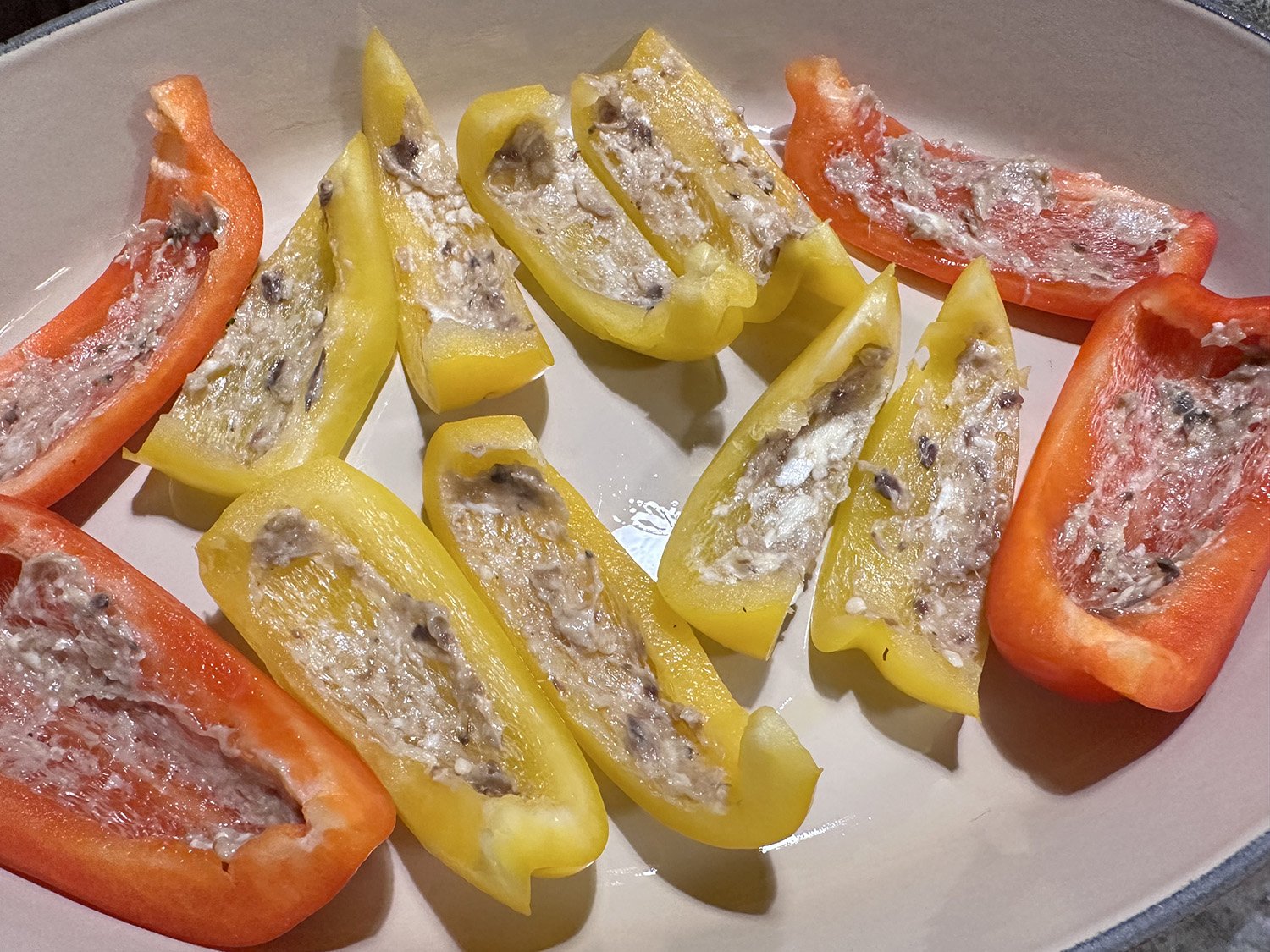
  3. Combine the garlic and anchovies in a small mortar, add a pinch of salt, and smash and grind to form a paste. Add the butter and work together with a wooden spoon until well combined.
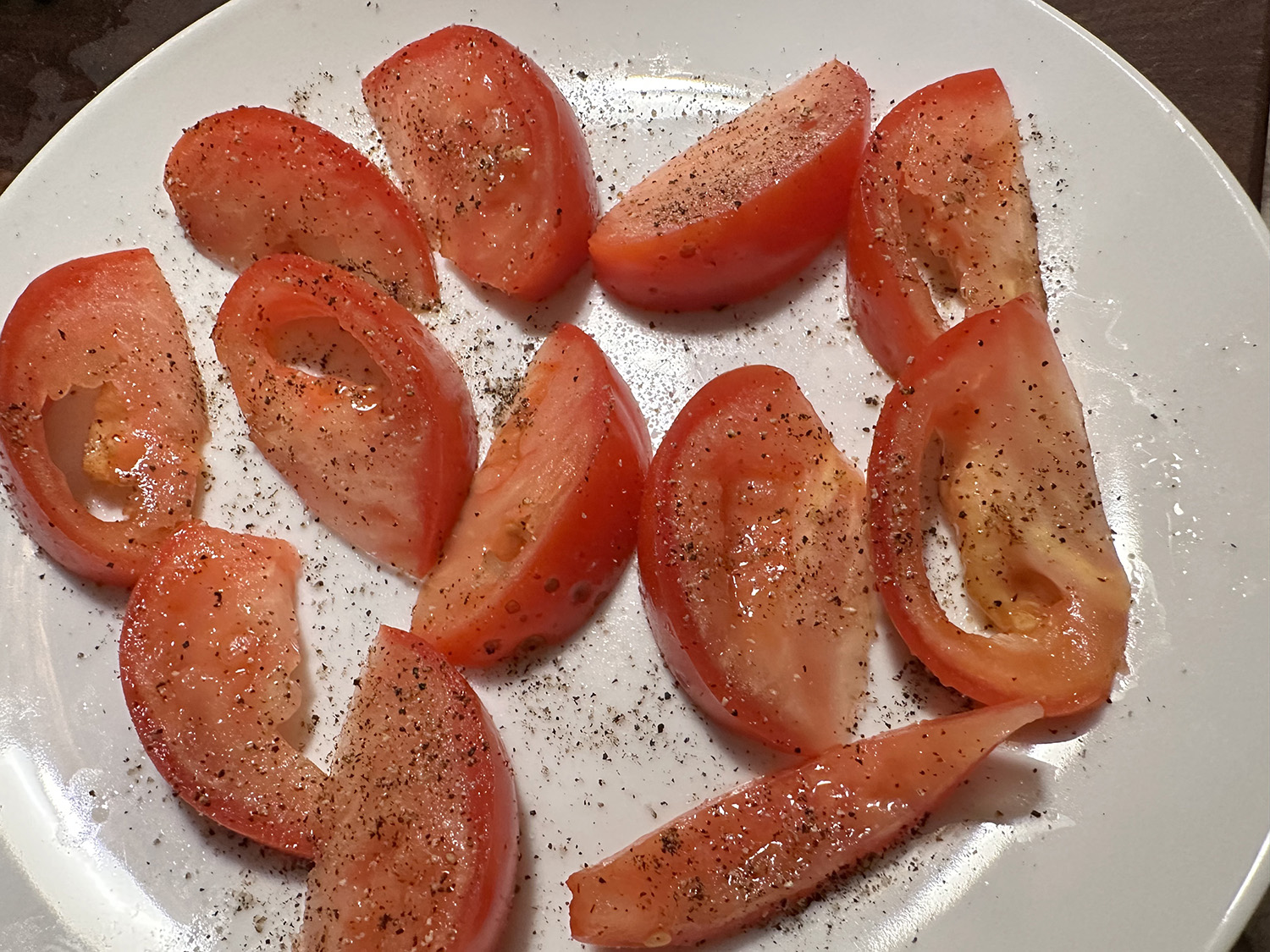
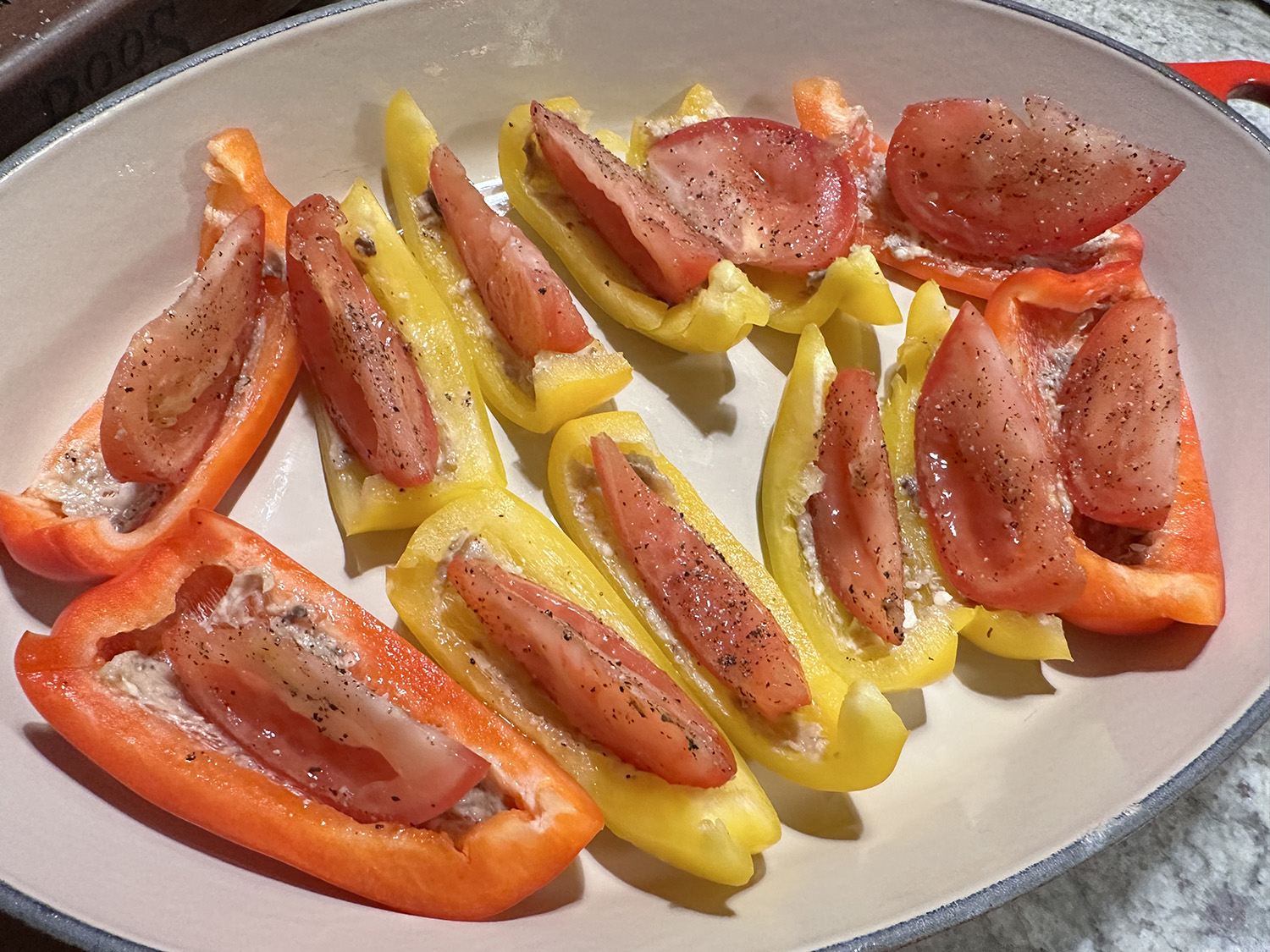
  4. Half the peppers lengthwise and remove the core, seeds, and soft membrane-like ribs. Cut each half lengthwise into 1 1⁄2″ wide strips. Arrange the strips skin side down on the baking dish. Core the tomato and cut it into the same number of wedges as you have pepper strips. Using a sharp paring knife, carve the juicy seed pockets away from each tomato slice and discard. Season tomato strips on all sides with salt and pepper.
  5. Dived the seasoned butter among the pepper boats, spreading a small amount on each one. Top with a piece of tomato. Drizzle with olive oil.
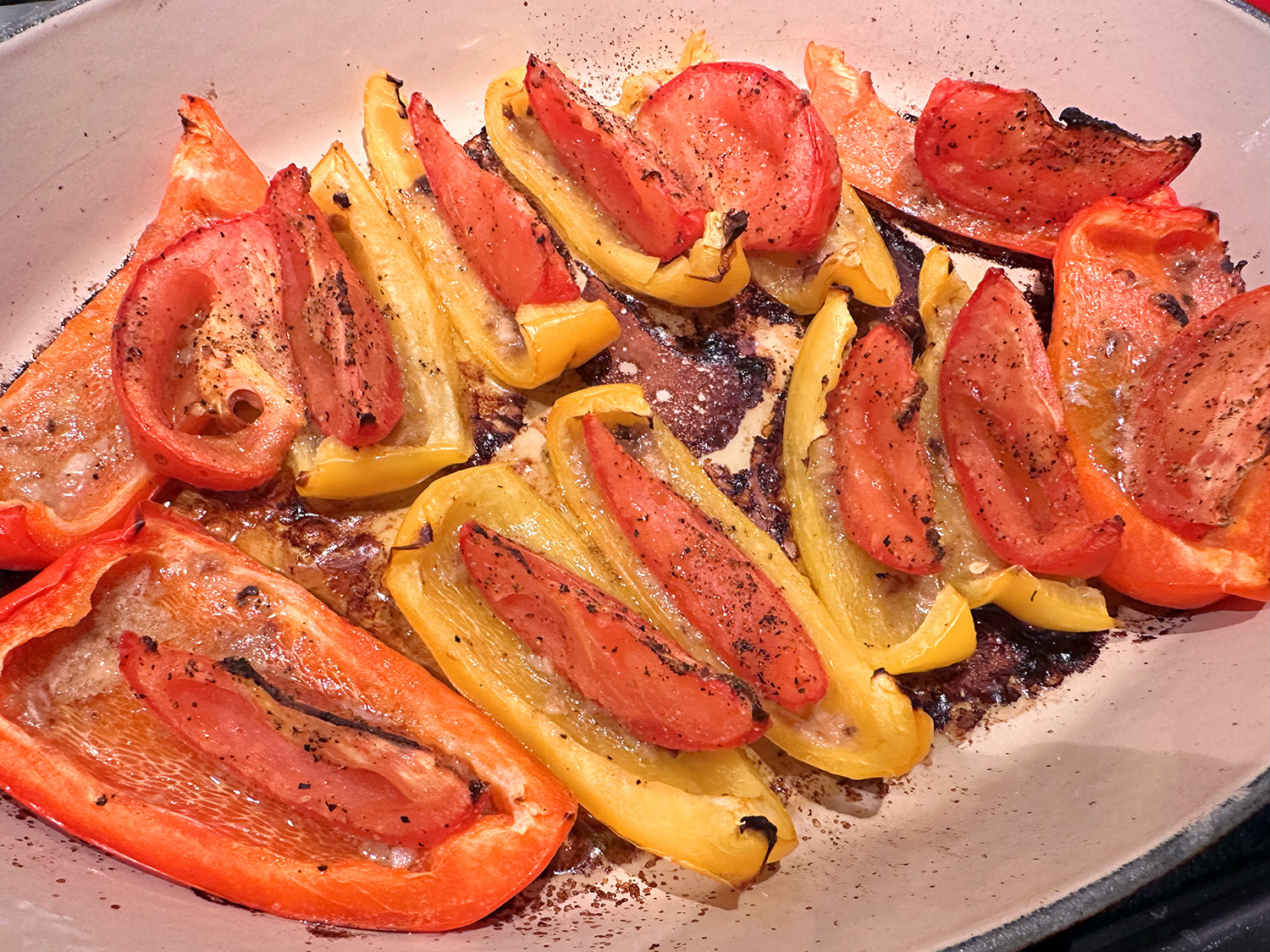
  6. Roast until the peppers and tomato pieces are tipped with brown and the pepper is just barely tender, 30 to 40 minutes.
  7. Sprinkle the peppers and tomato with parsley and serve warm or at room temperature, with the juices pored over the top.

http://www.lynnandruss.com

Recipes from “All About Roasting” by Molly Stevens

Sesame-Ginger Flap Steak

Flap meat’s coarse grain makes it a champ at holding on to the flavors of a marinade, and this teriyaki(ish) one is a guaranteed crowd-pleaser. Serve suggestion was with blackened sugar snap peas and rice with quick-pickled jalapeños.

The snap peas were in poor condition at the grocery store so we opted for green beans. And instead of charring them, we steamed and dressed the beans with a ginger-garlic butter as a compliment to the meat marinade.

Instead of grilling due to inclement weather, the flap steak was cooked on “Grilliam” our copper enameled grill pan, which does just as nice a job of searing the meat and getting those char marks.

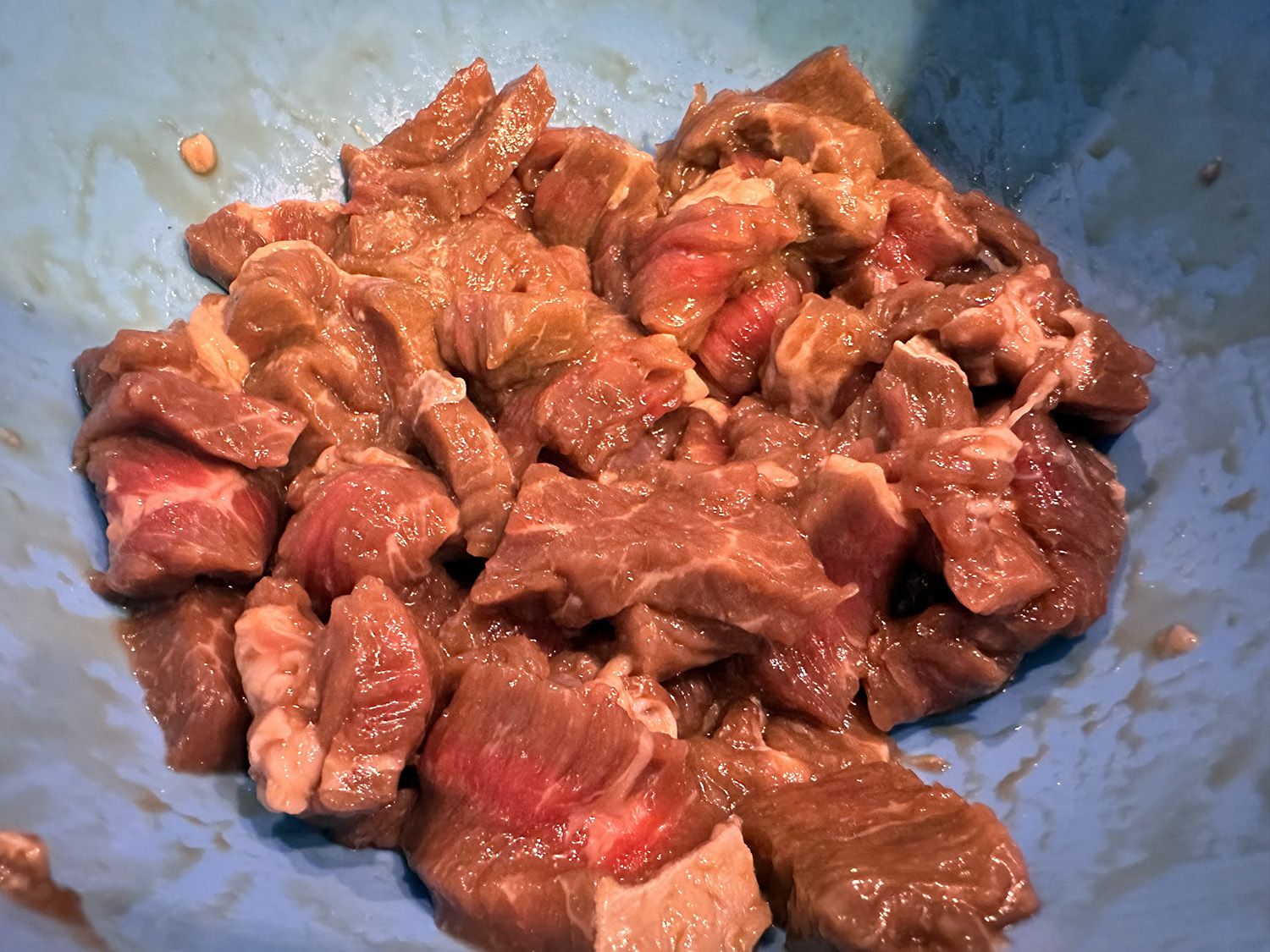
Fine cooking indicated to whisk together the marinade ingredients in a bowl. However, we made the combination in a large ziploc bag and added the steaks directly to the bag and into the refrigerator for 6 hours.

Sesame-Ginger Flap Steak

  • Servings: 4-6
  • Difficulty: easy
  • Print

Ingredients

  • 1/4 cup tamari, or soy sauce
  • 3 Tbsp. peanut oil
  • 2 Tbsp. mirin
  • 1 1/2 tsp. toasted sesame oil
  • 2 large cloves garlic, finely grated
  • 1 piece fresh ginger, (2 inch) finely grated
  • 2 lbs. beef flap meat, cut into pieces of even thickness, if necessary
  • 2 scallions, green parts only, thinly sliced
  • 1 Tbsp. toasted sesame seeds

Directions

  1. In a large ziploc bag, combine the tamari (or soy sauce), peanut oil, mirin, sesame oil, garlic, and ginger. Add the meat and turn to coat. Cover and marinate in the refrigerator for 4 to 6 hours.
  2. Prepare a medium-high (400°F to 475°F) gas or charcoal grill fire. Remove the meat from the marinade and pat dry. Grill, turning every 2 minutes, until cooked to your liking, 6 to 8 minutes for medium (140°F).
    As noted above, if you don’t have access to a grill, use a grill pan and cook indoors, turning every 2 minutes until the meat registers 140°.
  3. Transfer to a cutting board, cover loosely with foil, and let rest for 5 to 10 minutes.
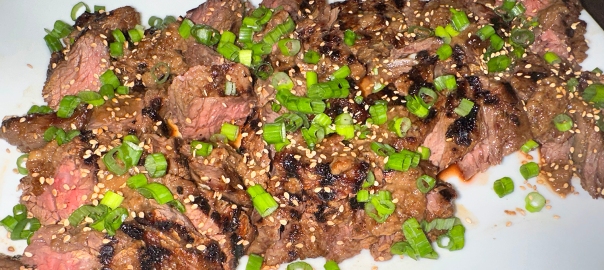
  4. Thinly slice across the grain and pour any accumulated juices over the meat. Serve sprinkled with the scallions and sesame seeds.

http://www.lynnandruss.com

Adapted from a recipe for Fine Cooking

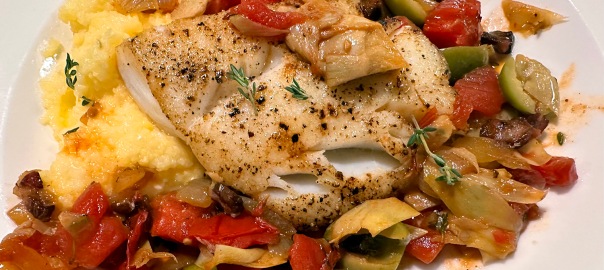
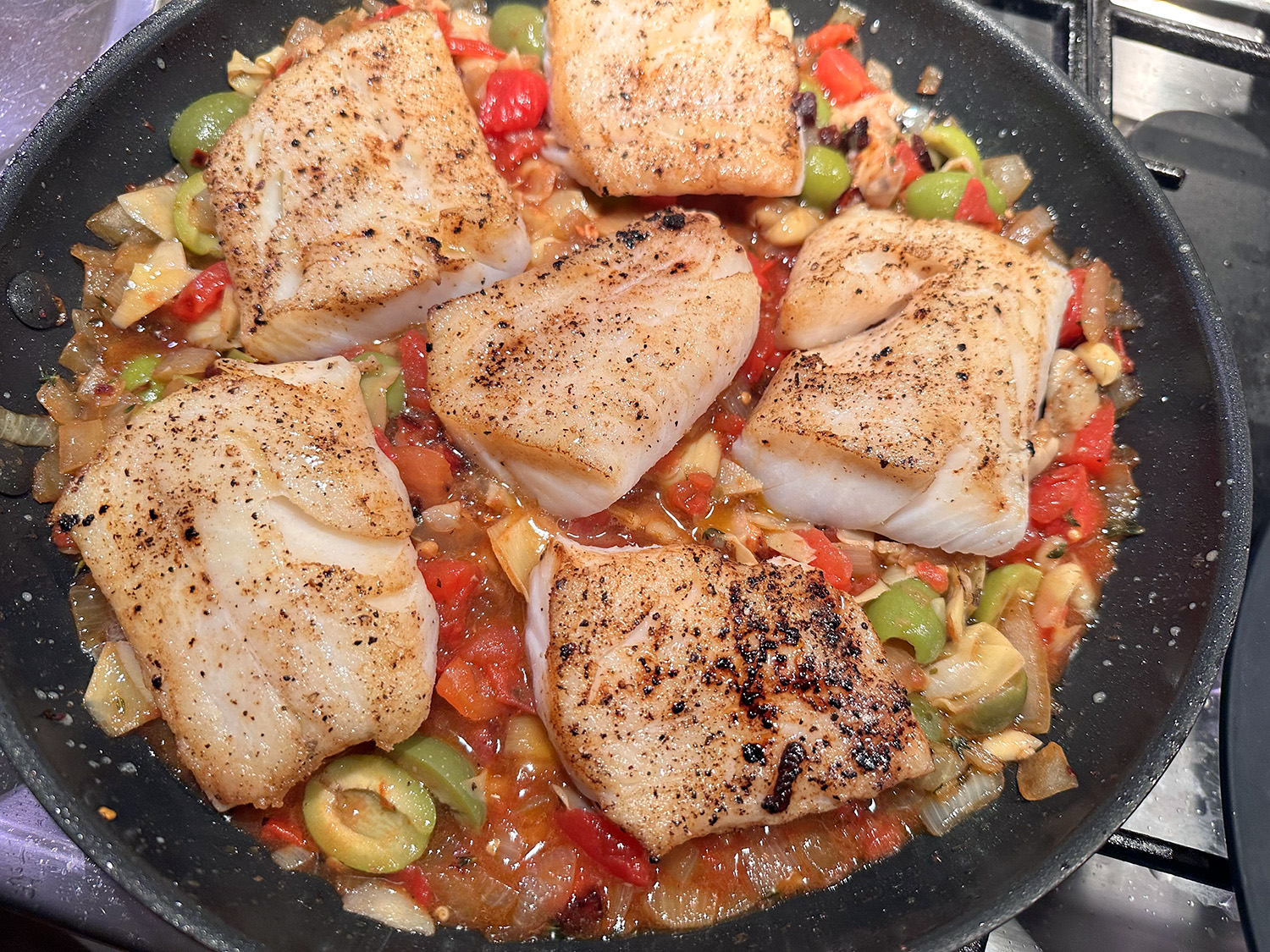
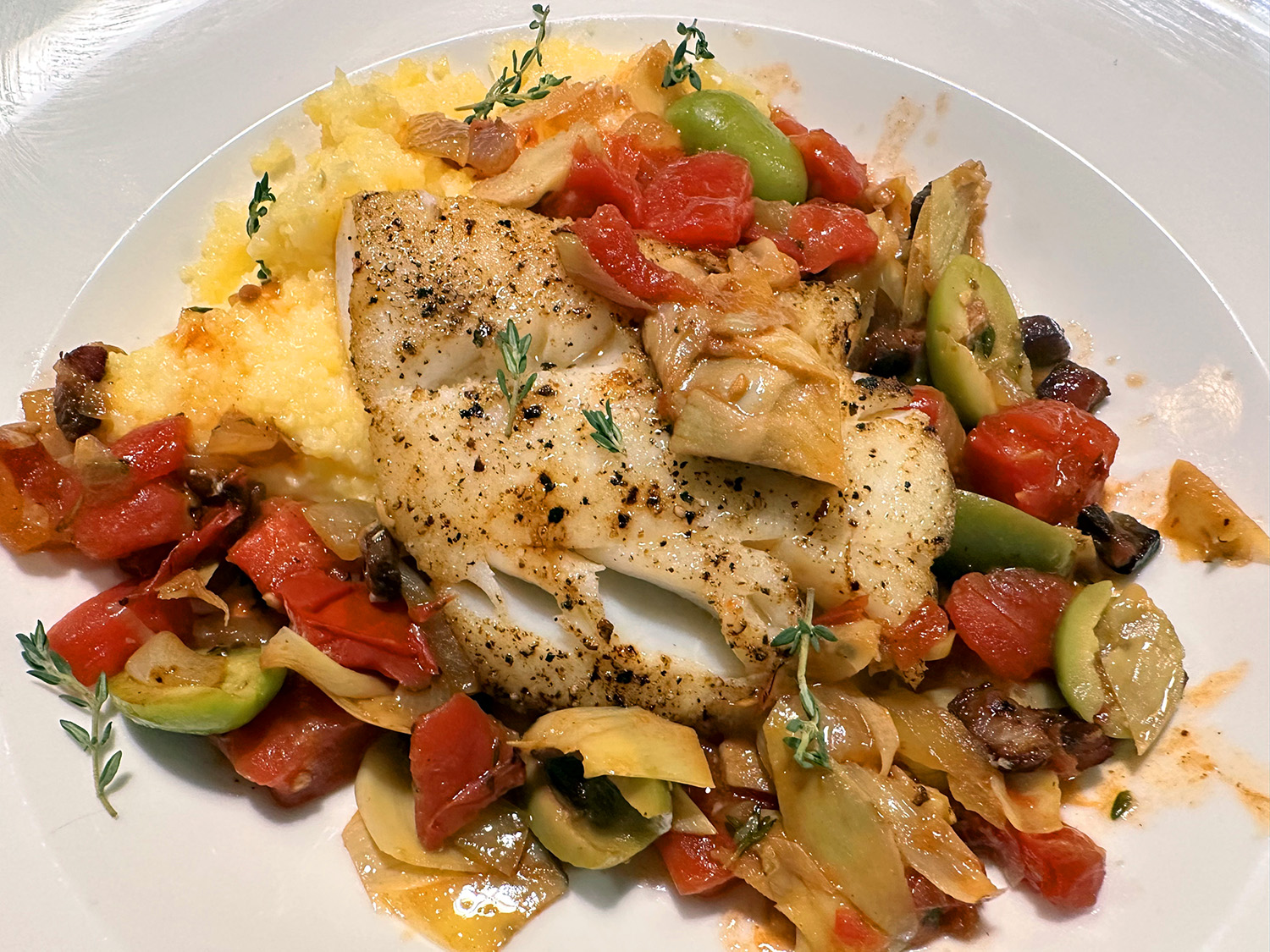
Cod with Pancetta, Artichokes and Olives

Looking to introduce more seafood dishes into your evening repertoire of family meals? This lovely recipe is easy, is ready in just over a half hour, and contains heart-healthy ingredients.

We served ours over polenta and it was delicious! Our pancetta weighed in at closer to 4 ounces, and we used it all. Are there meatless substitutions for pancetta? Yes, you can try marinated tofu, mushrooms, smoked paprika, olives (already in the dish), and parmesan cheese to substitute for pancetta.

Cod with Pancetta, Artichokes and Olives

  • Servings: 4
  • Difficulty: easy
  • Print

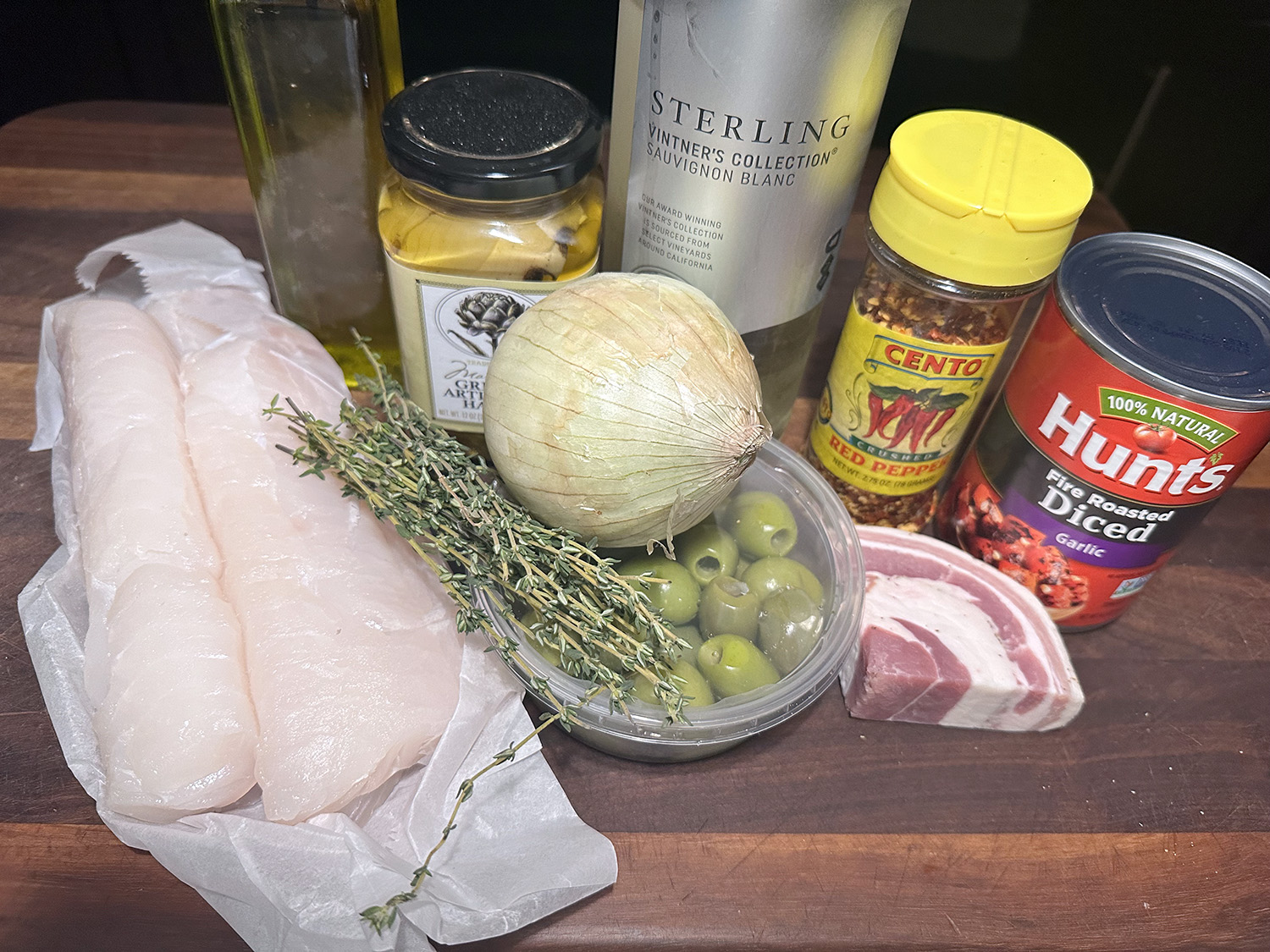
Ingredients

  • 4 6-oz. pieces fresh cod loin fillet
  • Kosher salt and freshly ground black pepper
  • 2 Tbsp. extra-virgin olive oil
  • 2 oz. pancetta, cut into 1/4-inch dice (about 1/4 cup)
  • 1 medium yellow onion, cut into 1/4-inch dice
  • 1 tsp. fresh thyme leaves
  • 1/8 to 1/4 tsp. crushed red pepper flakes
  • 1/2 cup dry white wine
  • 1 15-oz. can diced fire-roasted tomatoes in juice
  • 1 cup marinated artichoke hearts, drained and chopped
  • 1/2 cup large pitted green olives, such as Castelvetrano, halved

Directions

  1. Pat the cod dry and season with salt and pepper.
  2. Heat the oil in a 12-inch nonstick skillet over medium-high heat. Add the pancetta and cook, stirring, until crisp and golden, 2 to 4 minutes. Using a slotted spoon, transfer the pancetta to a paper-towel-lined plate, leaving the fat behind in the pan.
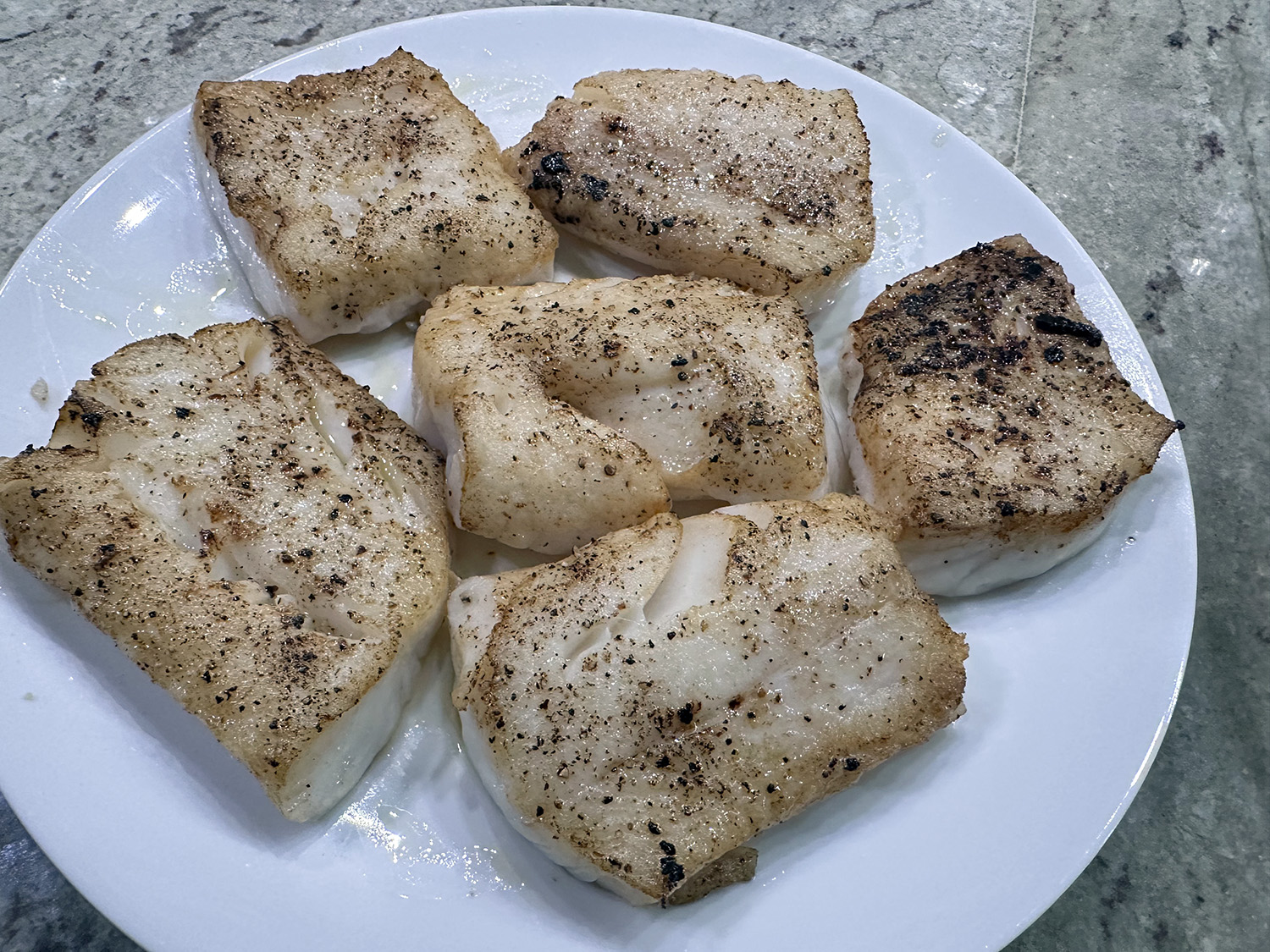
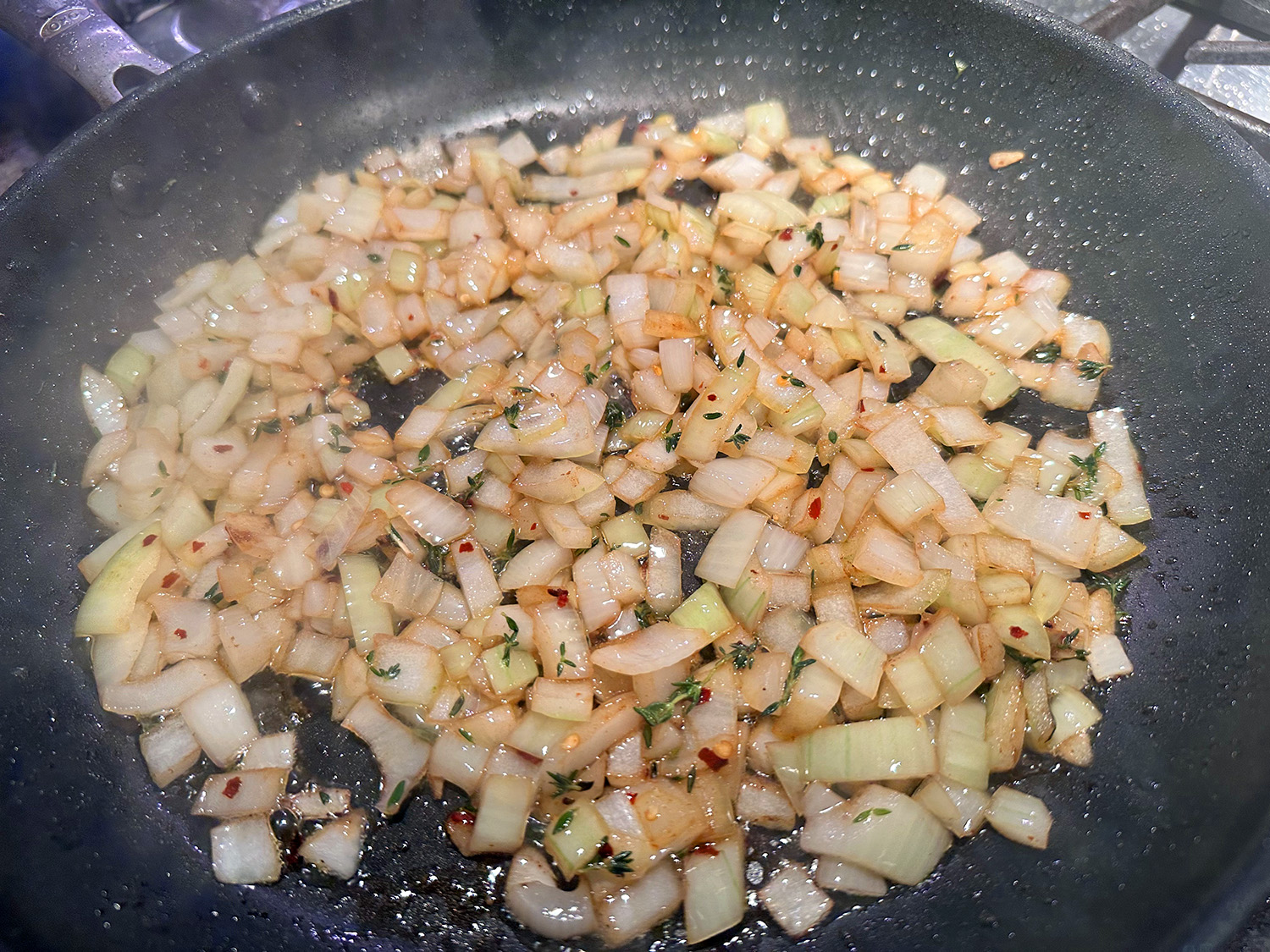
  3. Add the fish to the skillet and cook until slightly golden, about 3 minutes. Flip and transfer to a plate, seared side up. Add the onion, thyme, and pepper flakes to the skillet; cook, stirring, until the onion is soft, about 4 minutes.
  4. Add the wine and cook until the pan is almost dry, about 1 minute. Add the tomatoes and their juice, artichokes, and olives. Simmer, stirring occasionally, to meld the flavors, about 2 minutes.
  5. Lower the heat to medium and nestle the fish into the sauce, keeping the seared side exposed. Cover and cook until the fish is opaque and just cooked through, about 3 minutes.
  6. Sprinkle with the pancetta, divide among rimmed plates or wide, shallow bowls, and serve.

http://www.lynnandruss.com

Original recipe from Fine Cooking

Braised Tuna Puttanesca with Lemon-Garlic Rice

Did you know that Puttanesca sauce originated in Naples Italy? The name derives from the Italian word puttana which translates roughly to “lady of the night,” or “in the style of the whore.” Puttana in turn arises from the Latin word putida which means stinking. It’s a wonder how this tasty dish became associated with such sordid content, but I’ll leave you to research that aspect… There is a lot of disagreement about the origins, and the authorities on Italian food seem to be wary of making a definitive statement about it.

OK, so let’s get to the delicious recipe. Puttanesca is made from tomatoes, black olives, capers, anchovies, onions, garlic, and herbs, usually oregano and parsley but sometimes also basil; we used cilantro for a change of pace. This particular version leaves out the anchovies, but you could easily add some in if desired.

It is an easy sauce, briefly cooked, and is very fragrant and spicy. We paired it here with a Lemon-Garlic Rice, but fell free to use a simple steamed rice.

Braised Tuna Puttanesca

  • Servings: 4
  • Difficulty: easy
  • Print

Ingredients

  • 1/4 cup extra virgin olive oil
  • 1 1/2 cups onion, thinly sliced
  • 2 Tbsp. garlic, minced
  • 28-oz. can whole tomatoes, crushed with hands
  • 1/4 cup capers, rinsed
  • 1/3 cup pitted olives, black or green, or a mix, sliced
  • Pinch red pepper flakes
  • 1 1/2 cups dry white wine
  • 4 tuna steaks, about 6 oz. each
  • 1/4 cup cilantro, chopped
  • 1/4 cup slivered almonds, toasted
  • Lemon Garlic Rice (see recipe below)

Directions

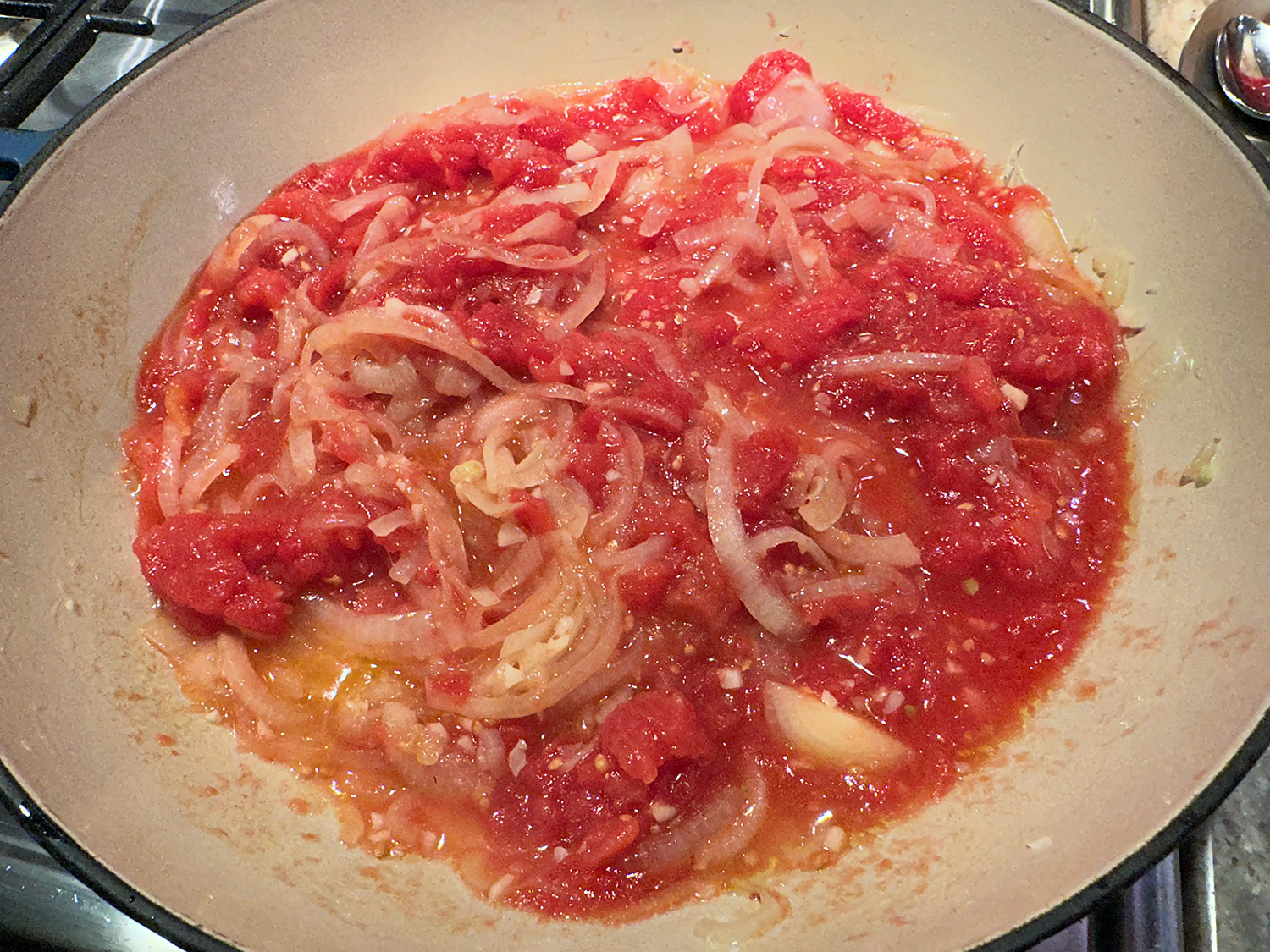
  1. Heat oil in large saute pan. Add onions and cook for about 4 minutes.
  2. Add garlic and cook 1 minute. Add tomatoes; saute until softened, about 3 minutes.
  3. Add capers, olives, pepper flakes and wine. Bring to simmer. Add tuna steaks. Reduce heat to low. Cover and simmer for 10-15 minutes. Remove tuna and keep warm.
  4. Reduce sauce to desired consistency. Stir in cilantro. Serve tuna with warm sauce and sprinkle with slivered almonds.
  5. Serve with Lemon Garlic Rice, (see recipe below).

http://www.lynnandruss.com

Lemon-Garlic Rice

Lemon-Garlic Rice

  • Servings: 4
  • Difficulty: easy
  • Print

Ingredients

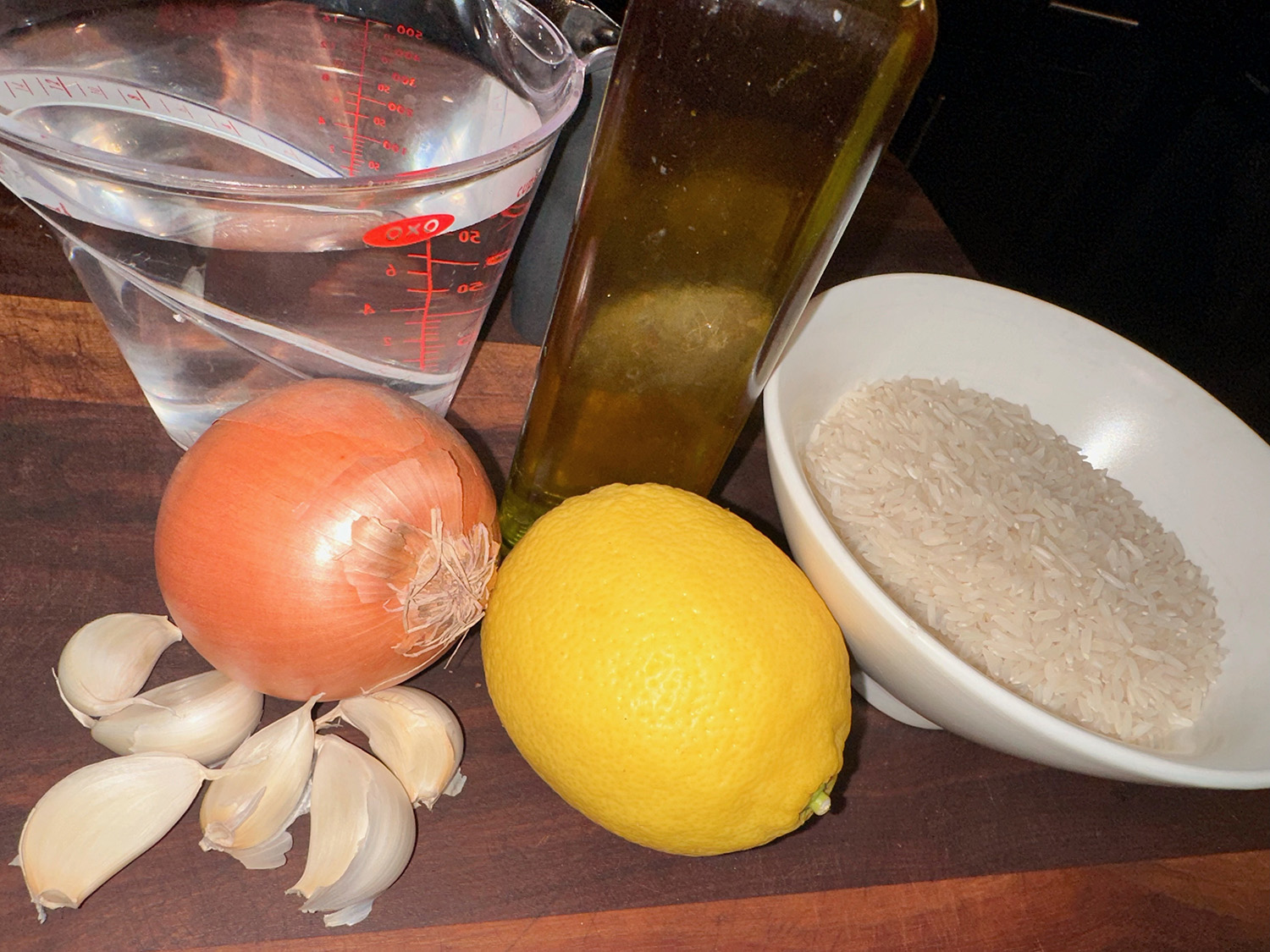
  • 2 Tbsp. olive oil
  • 1/2 cup onion, minced
  • 2 Tbsp. garlic, minced
  • 1 cup long-grain white rice, uncooked
  • 2 cups water
  • Pinch salt
  • 1/2 lemon, juiced
  • 2 Tbsp. chopped cilantro
  • 1 lemon, zested
  • Black pepper

Directions

  1. Heat oil in saucepan over medium high heat. Add onion and cook until soft.
  2. Add garlic and cook one minute.
  3. Add rice and toss to coat with oil. Add water, a pinch of salt and lemon juice. Bring to a boil. Cover and reduce heat to low. Simmer until all liquid is absorbed.
  4. Remove from heat, fluff with fork, toss with lemon zest and chopped cilantro. Season to taste with salt and pepper.

http://www.lynnandruss.com

Minestra Maritata

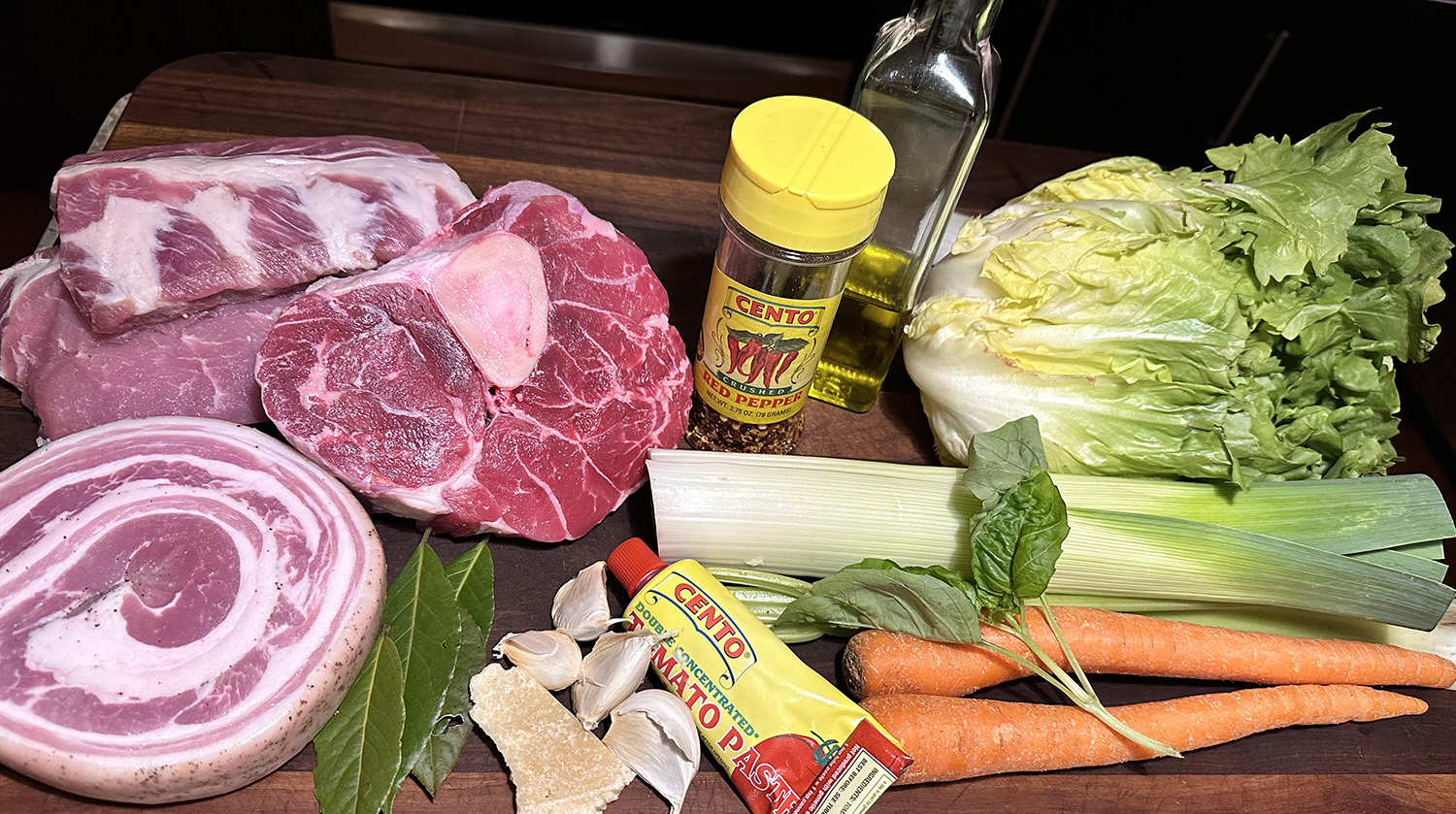
Not the Italian wedding soup of meatballs, greens and pasta that’s popular in the U.S., the name of the dish on which this recipe is based is Minestra Maritata, which translates from the Italian as “married soup.” Although the two do share similarities.

As in Naples, the meats in this recipe are bone-in cuts of beef and pork that give the broth richness and body. But for easier eating, after cooking shred the meat and discard the bones. Pancetta also simmers in the mix along with a piece of Parmesan rind, each lending even more savoriness to the broth. Although at the end, we did NOT discard the pieces of pancetta–what a waste!

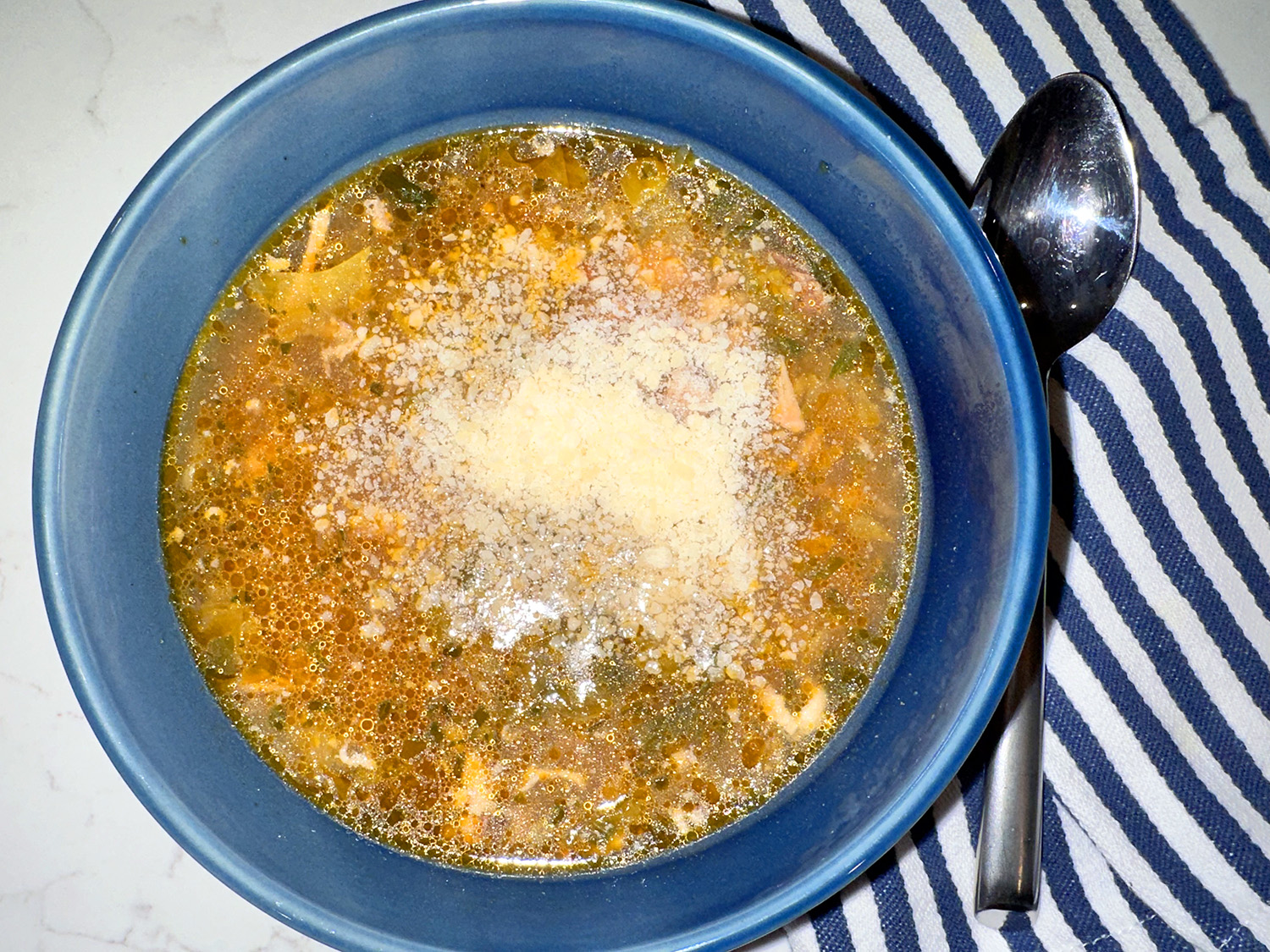
The “marriage” of cooked greens and broth is what gives the dish its name. The vegetables are directly simmered in the broth. Rabe offers an assertive bitterness that nicely balances the richness of the soup; escarole (our choice) is milder and cooks down to a silky, supple texture. Warm, crusty toasted garlic bread is the perfect accompaniment.

Don’t bother with precision when prepping the onion, carrots and celery. The aromatics are simmered in the broth for flavor, but later are scooped out and discarded. If using escarole, be sure to wash it thoroughly as the frilly leaves tend to trap a good amount of grit.

Minestra Maritata

  • Servings: 6
  • Difficulty: easy
  • Print

Ingredients

  • 8 oz. pancetta, chopped
  • 2 Tbsp. extra-virgin olive oil
  • 1 large yellow onion, roughly chopped
  • 2 medium carrots, peeled and roughly chopped
  • 1 medium celery stalk, roughly chopped
  • 4 medium garlic cloves, smashed and peeled
  • 3 Tbsp. tomato paste
  • ½-¾ tsp. red pepper flakes
  •   Kosher salt and ground black pepper
  • 4 bay leaves
  •   2½-1b. rack pork baby back ribs, cut into 3 sections between the ribs
  •   1-lb. bone-in beef shank (1 to 1½ inches thick)
  • 1 2-inch piece Parmesan cheese rind, plus finely grated Parmesan, to serve
  • 1 bunch broccoli rabe, trimmed and roughly chopped, or 1 large head escarole, chopped, or a combination
  • ½ cup lightly packed fresh basil, chopped

Directions

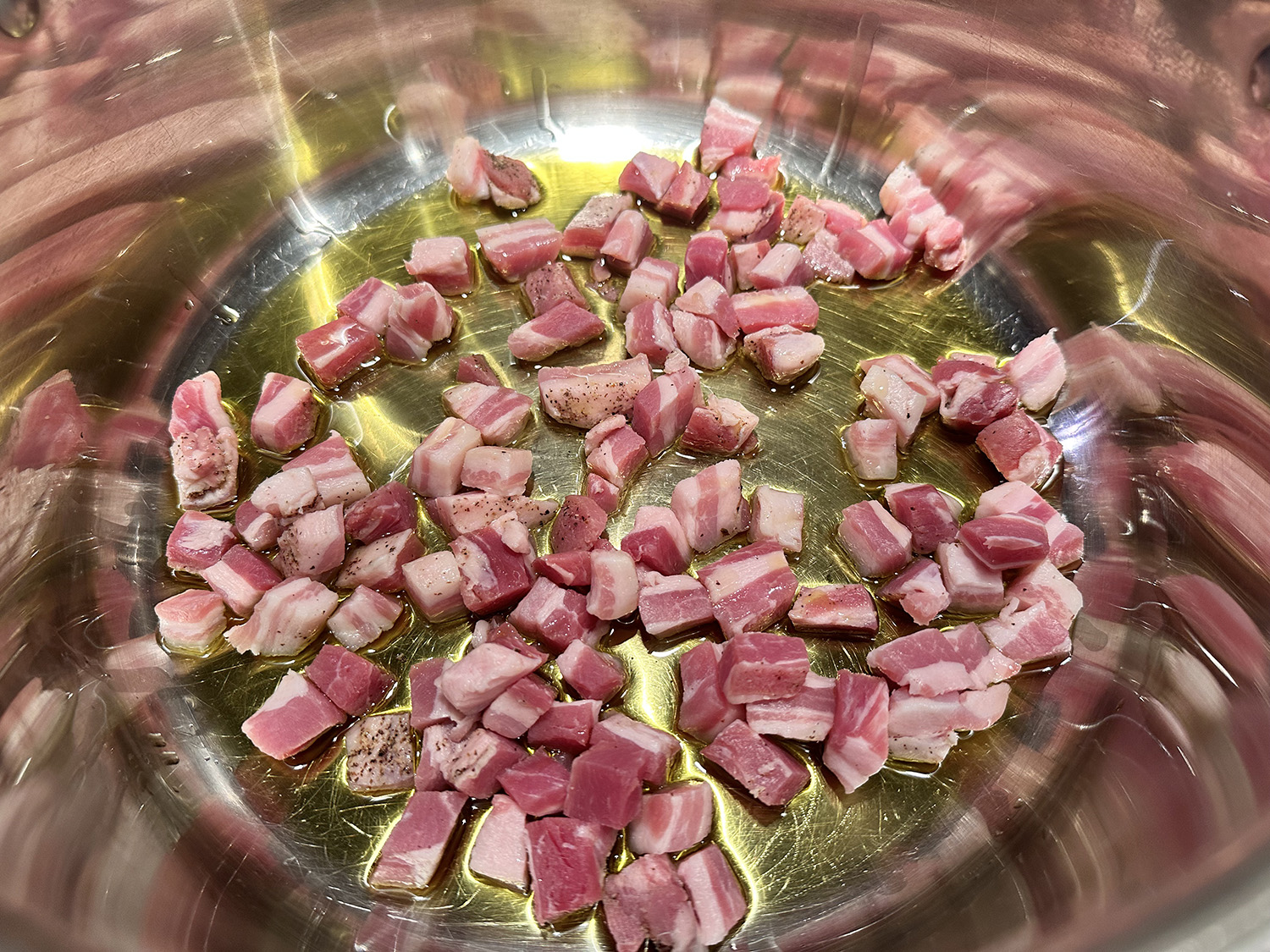
  1. In a large Dutch oven, combine the pancetta and oil. Cook over medium-low, stirring occasionally, until the pancetta begins to brown, about 10 minutes. Increase to medium, stir in the onion, carrots and celery, then cook, stirring occasionally, until the vegetables begin to soften, about 10 minutes.
  2. Add the garlic, tomato paste, pepper flakes and 1 teaspoon salt; cook, stirring, until the tomato paste begins to stick to the pot and brown, 1 to 2 minutes. Add 10 cups water (or a mixture of broth and water) and the bay, then bring to a boil over medium-high, scraping up any browned bits.
  3. Add the ribs, beef shank and Parmesan rind. Return to a simmer, then cover, reduce to medium-­low and cook, stirring occasionally, until a skewer inserted between the pork ribs and into the meat on the shank meets no resistance, about 2 hours. Remove from the heat.
  4. Using tongs, transfer the ribs and shank to a large bowl; set aside to cool. Meanwhile, using a slotted spoon, remove and discard the solids from the broth (keeping the larger chunks of pancetta, if desired). Tilt the pan to pool the liquid to one side, then use a wide spoon to remove and discard as much fat as possible from the surface of the liquid.
  5. When the meats are cool enough to handle, shred the beef into bite-size pieces, discarding the fat, bone and gristle. Using a paring knife, cut the pork ribs between the bones to separate into individual ribs. Remove the meat from the bones and shred into bite-size pieces; discard the fat, bones and gristle. Set both meats aside.
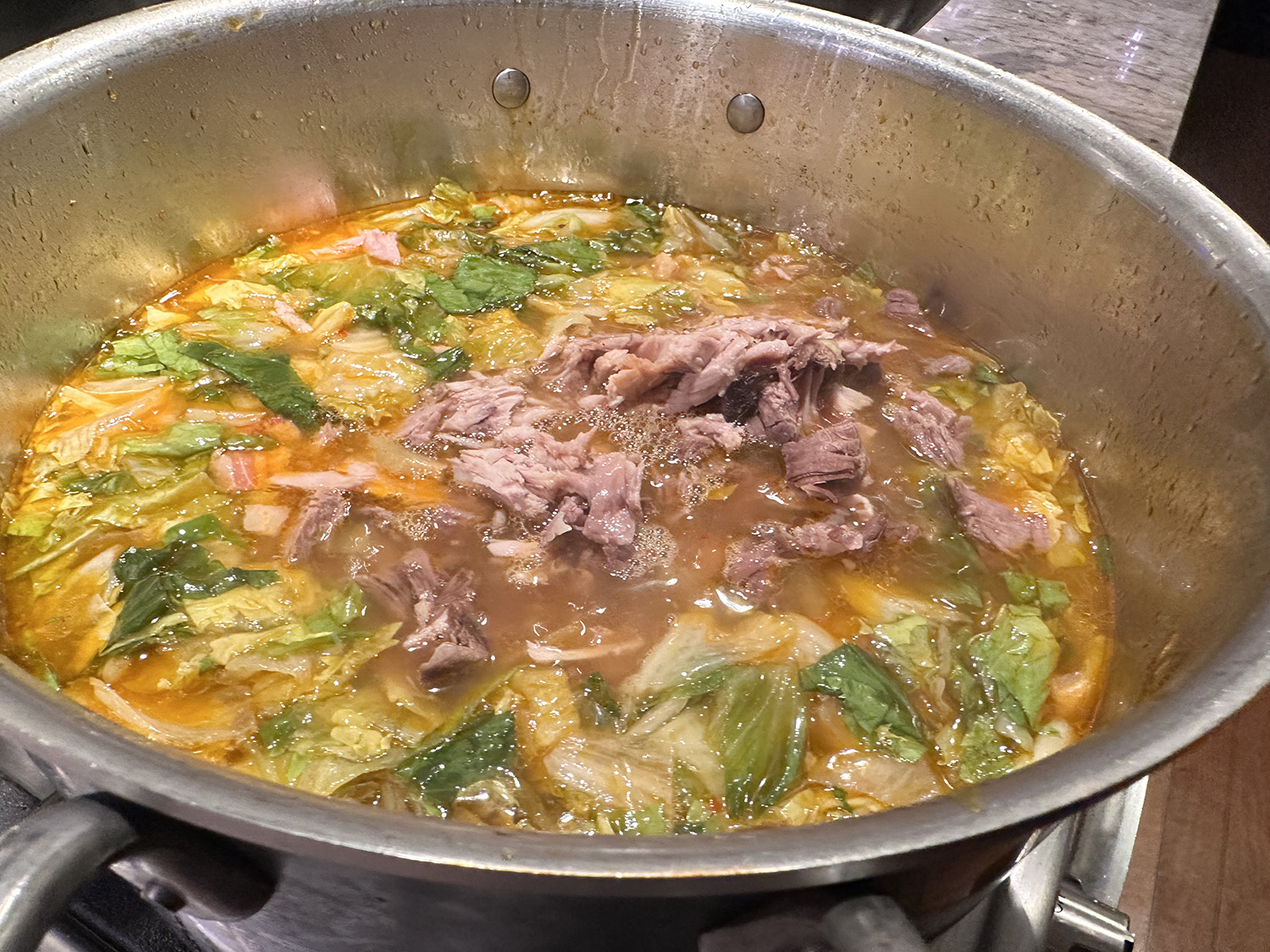
  6. Bring the broth to a simmer over medium-high. Add the rabe (or escarole) to the pot and cook, stirring often, until tender, 5 to 7 minutes. Stir in the shredded meats and cook, stirring, until heated through, about 2 minutes.
  7. Off heat, stir in the basil, then taste and season with salt and black pepper. Serve with grated Parmesan on the side.

http://www.lynnandruss.com

Original recipe by Diane Unger for Milk Street

Pepper Steak Stir-Fry

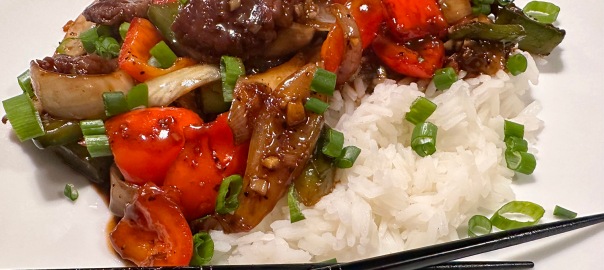
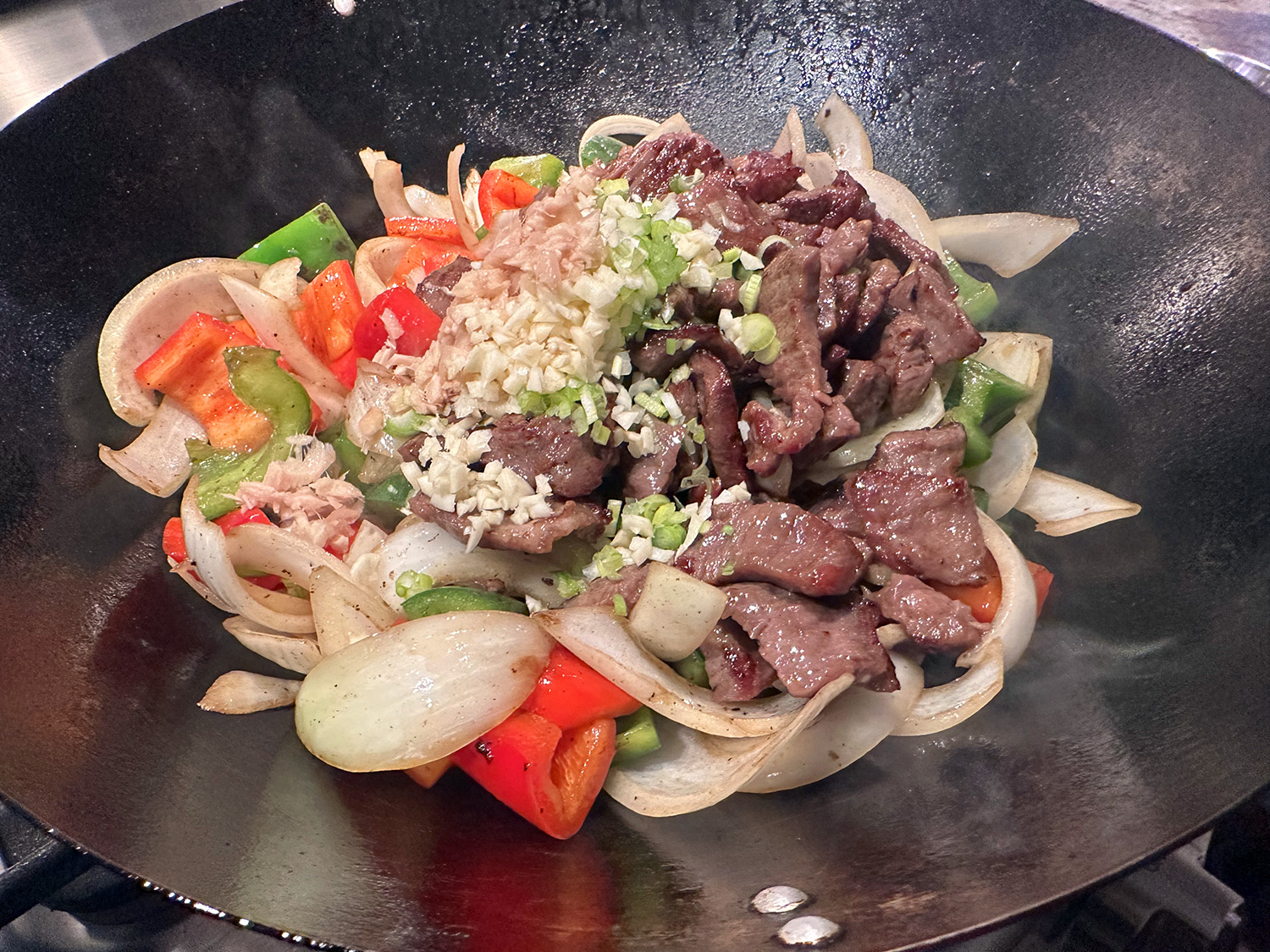
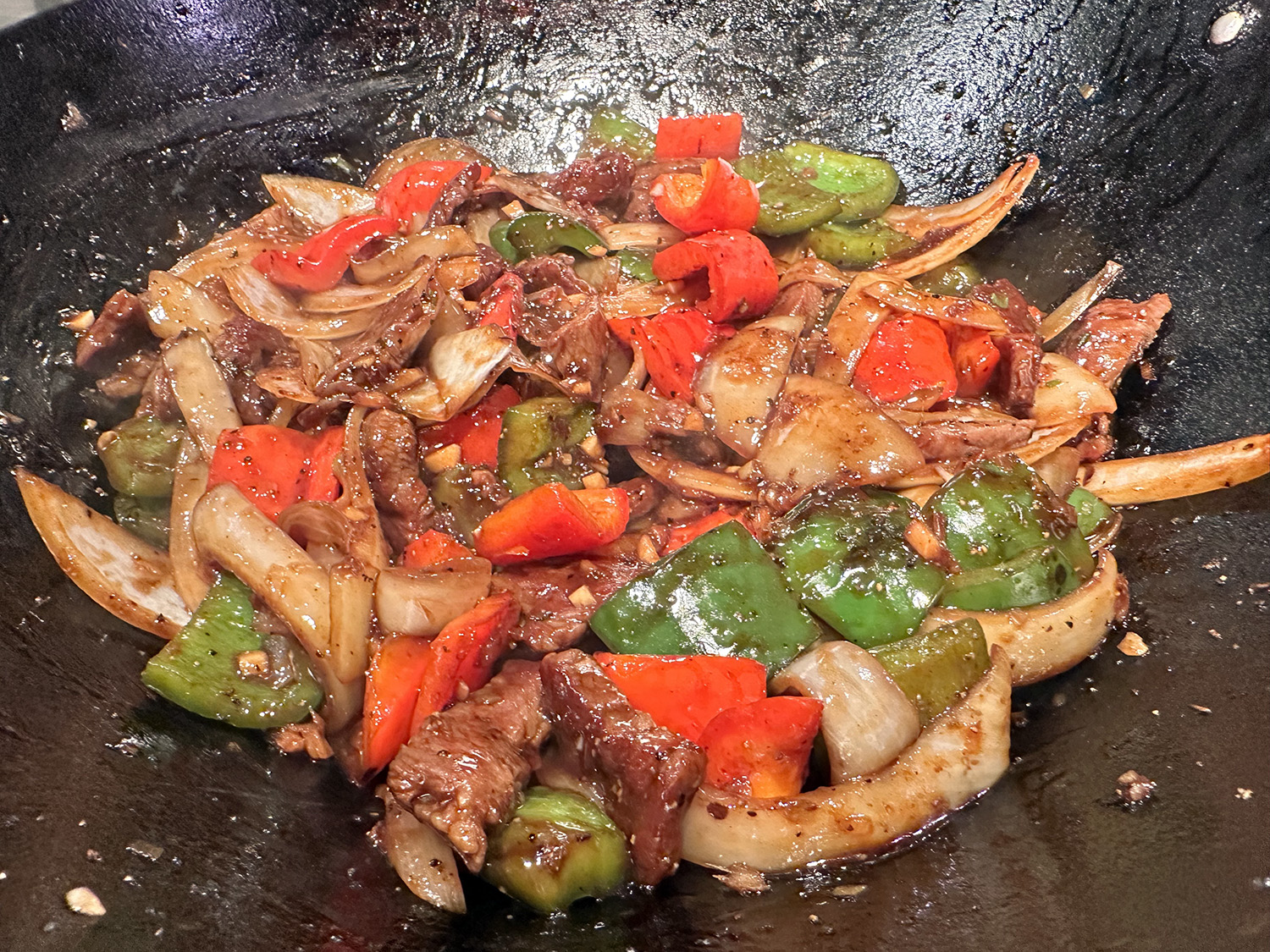
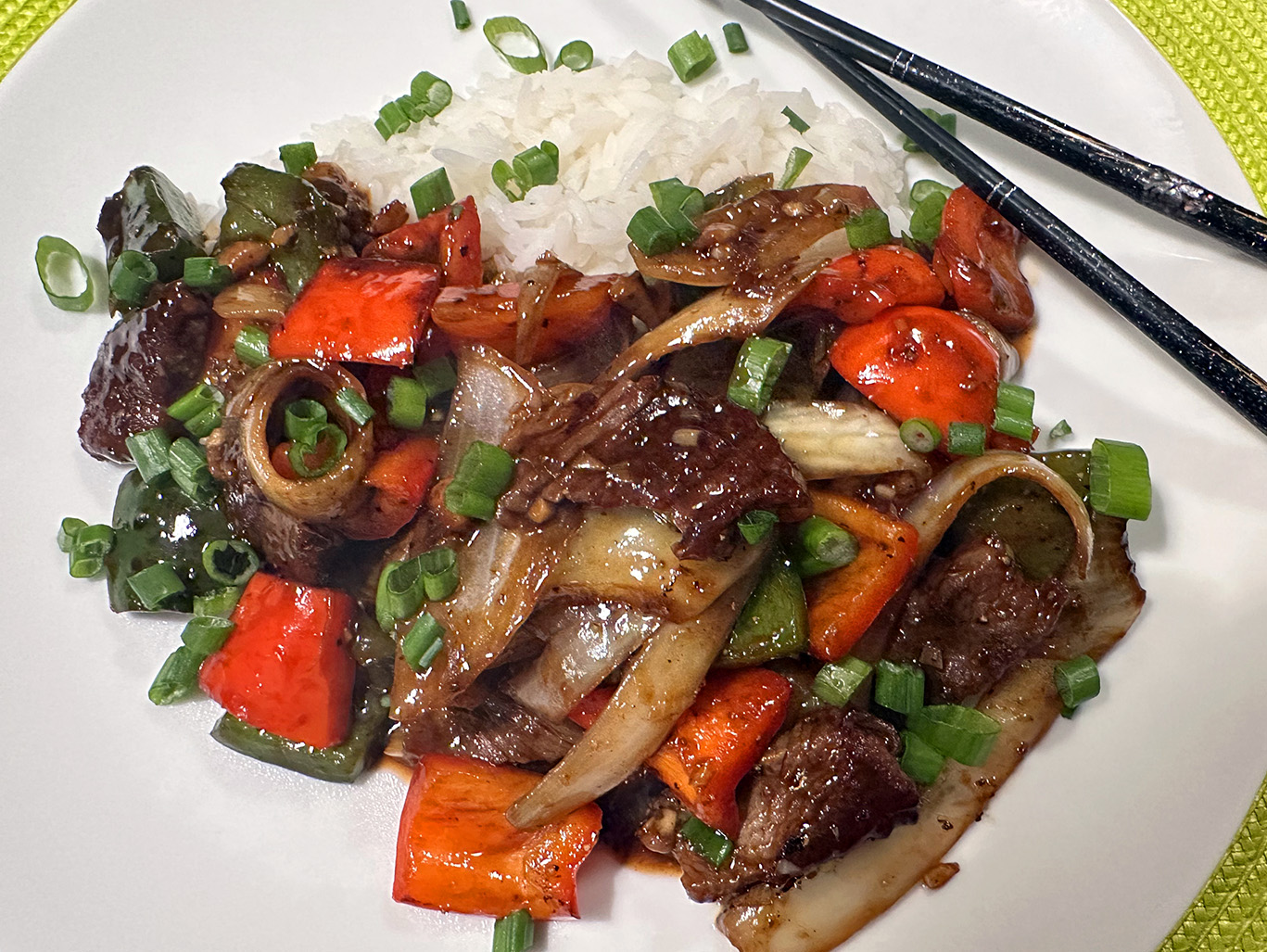
The Hubs was recently gifted the cookbook “The Wok” by J. Kenji Lopez-Alt. Stir-fries are one of our favorite go-to dinners when we crave something quick and healthy, so this was a welcome addition to our culinary library. The Pepper Steak recipe was the first dish we tried and if the rest of them follow suit, they all promise to be winners!

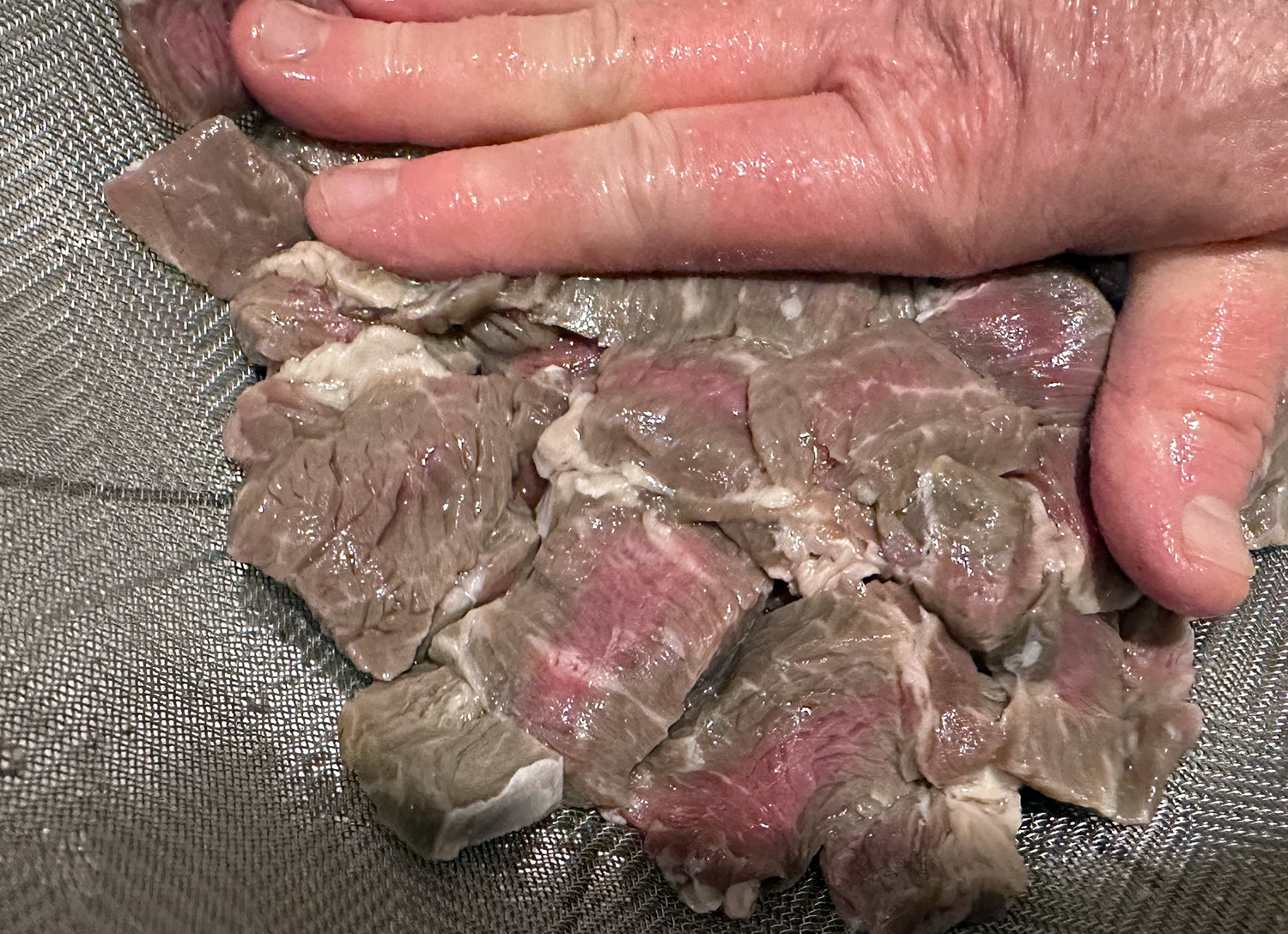
Make sure to to follow the instructions for marinating and massaging the beef—it makes a tremendous difference in the tenderness of the steak. And if you have leftovers, they were just as tasty as the first time!

Pepper Steak Stir-Fry

  • Servings: 4
  • Difficulty: easy
  • Print

Ingredients

  • 1 lb. flank steak, skirt steak, hanger steak, or flap meat, cut into 1/4-inch thick strips
  • 1/4 cup soy sauce (divided)
  • 1/3 cup Shaoxing wine or dry sherry (divided)
  • 2 Tbsp. cornstarch
  • 1/3 cup low-sodium homemade or store-bought chicken stock
  • 1 Tbsp. sesame oil
  • 1 Tbsp. sugar
  • 1 Tbsp. freshly ground black pepper
  • 1 large green bell peppers, cored and cut into 1-inch squares
  • 1 large red bell pepper, cored and cut into 1-inch squares
  • 1 large onion, cut into 1/4 to 1/2-inch strips from pole to pole
  • 2 medium cloves garlic, finely minced
  • 2 tsp. finely minced fresh ginger
  • 3 scallions, whites only, finely minced, green parts for garnish if desired
  • 4 Tbsp. vegetable, peanut, or canola oil
  • Kosher salt to taste
  • Steamed rice, prepared as per package directions

Directions

  1. For the Beef: Place the beef in a medium bowl, cover with cold water and vigorously agaitate it. Drain through a fine mesh strainer set in the sink and press on the beef with your hands to remove excess water.
  2. return the beef to the bowl, add the baking soda, and vigorously massage the baking soda into the meat, lifting the meat, throwing it down and squeezing it for 30-60 seconds.
  3. dd the soy sauce , wine, sugar, and cornstarch and roughly work the marinade into the meat for at least 30 seconds. Set aside to marinate for 15-20 minutes.
  4. For the Sauce: Meanwhile, combine remaining soy sauce with corn starch and stir with a fork to form a slurry. Add remaining Shaoxing wine, chicken stock, sesame oil, sugar, and pepper. Set aside. Combine peppers and onions in a bowl and set aside. Combine garlic, ginger, and scallions in a bowl and set aside.
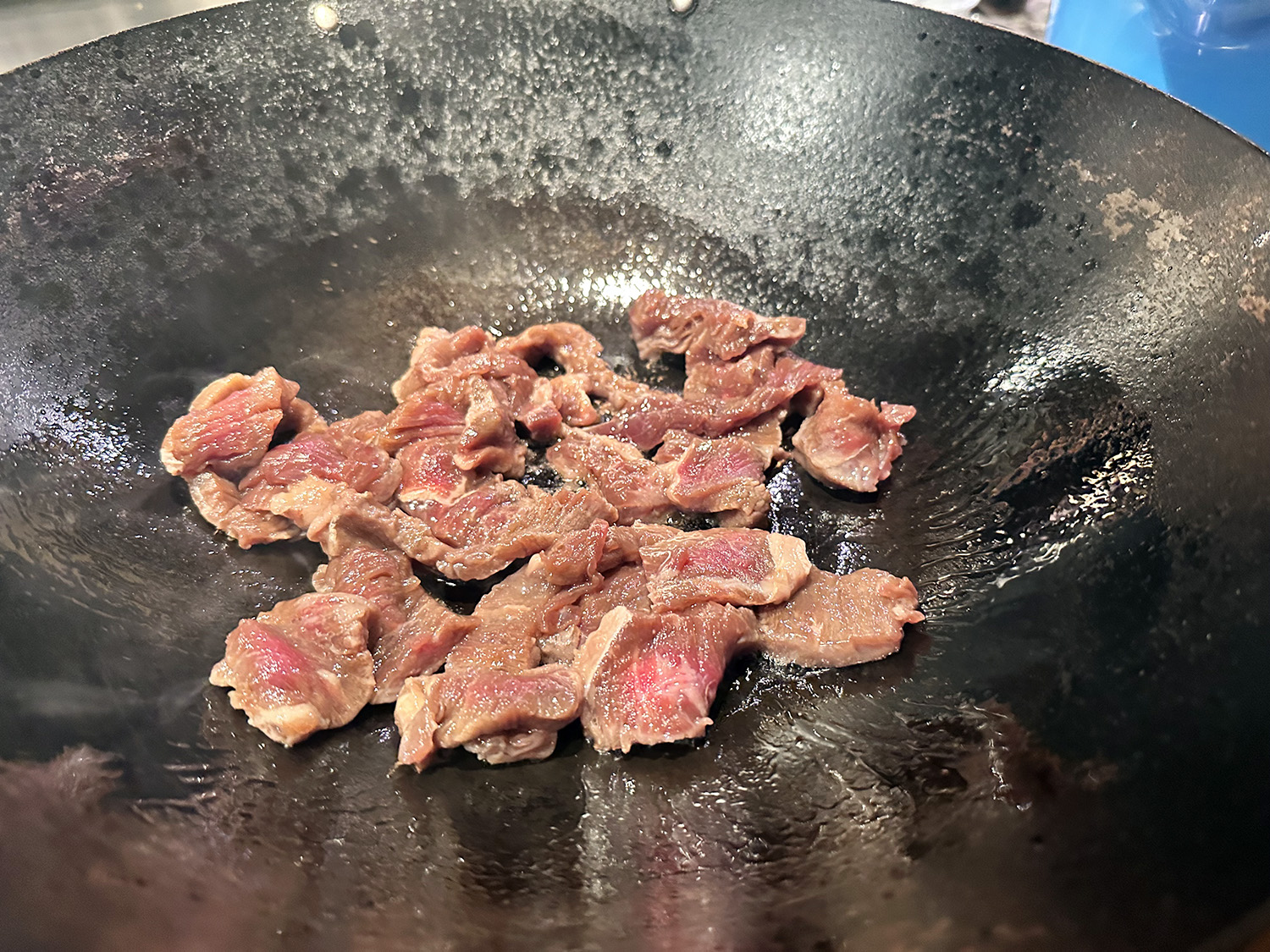
  5. For the Stir-fry: When ready to cook, heat 1 tablespoon oil in a wok over high heat until smoking. Add half of beef and cook without moving until well seared, about 1 minute. Continue cooking while stirring and tossing until lightly cooked but still pink in spots, about 1 minute.
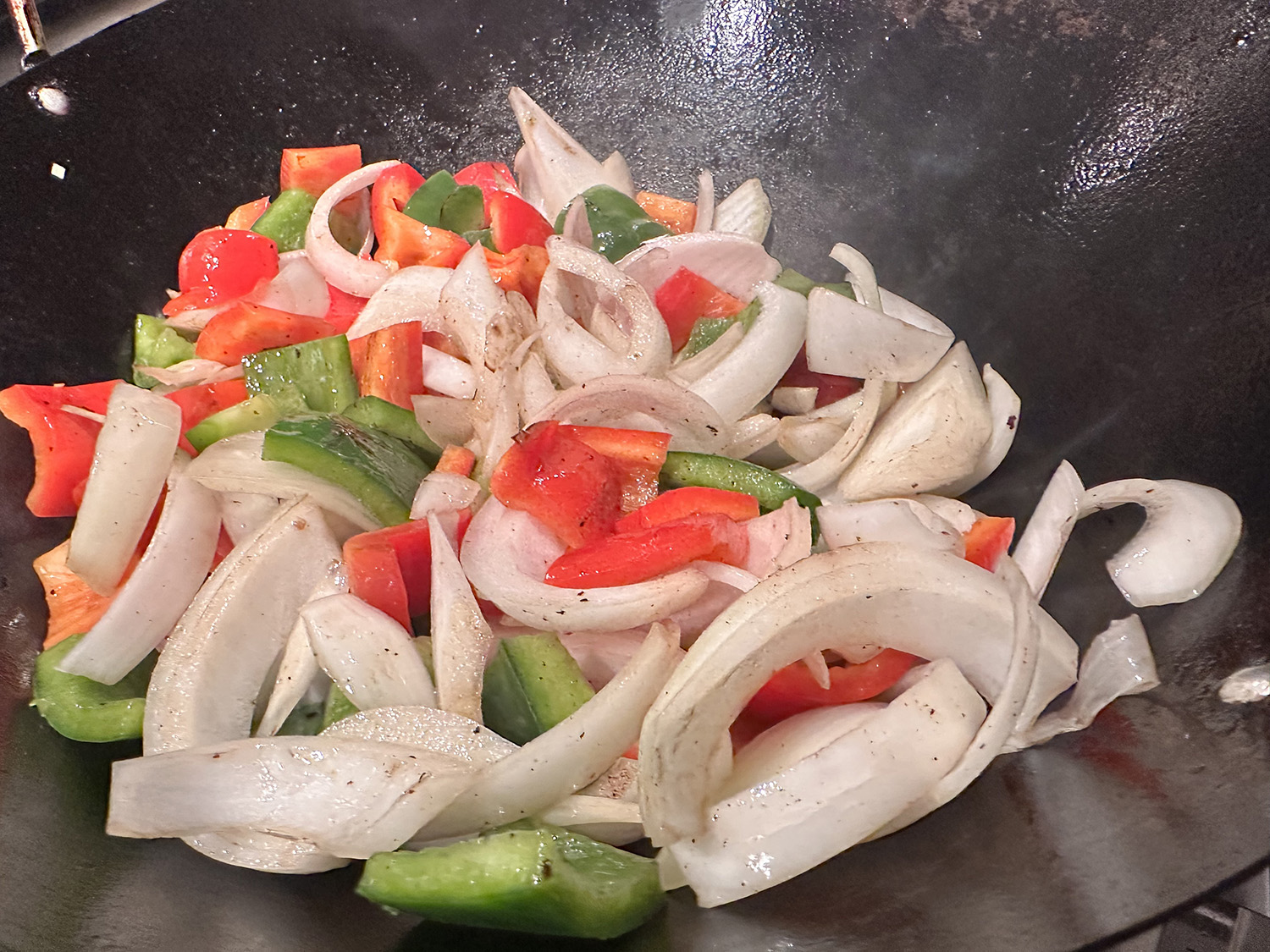
  6. Transfer to a large bowl. Repeat with 1 more tablespoon of oil and remaining beef, adding beef to same bowl. Wipe out wok. Repeat with 1 more tablespoon oil and half of peppers and onions. Transfer to bowl with beef.
  7. Repeat with remaining oil and remaining peppers/onions. Return wok to high heat until smoking. Return peppers/onions/beef to wok and add garlic/ginger/scallion mixture. Cook, tossing and stirring until fragrant, about 30 seconds. Add sauce and cook, tossing and stirring constantly until lightly thickened, about 45 seconds longer. Carefully transfer to a serving platter and serve over steamed rice.

http://www.lynnandruss.com

Recipe from “The Wok” by J. Kenji Lopez-Alt

Spicy Beef with Peanuts and Chiles

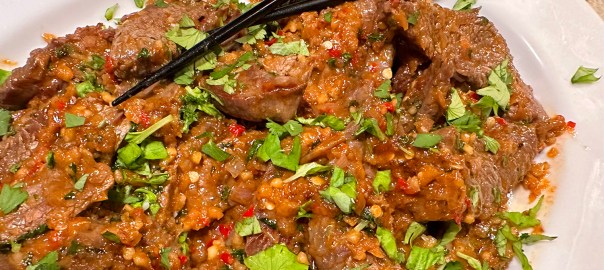
Not a huge fan of take-out—although it does serve its purpose on occasion—here’s a stir-fry that will taste far better than any from the local Asian restaurant down the street. Yes, it is a bit prep-intensive, and uses several bowls, but well worth your time and effort. You could even do a lot of the prep earlier in the day, and throw it all together when ready to eat.

We paired the Spicy Beef with Peanuts and Chiles with a Rice Noodle Salad, that not only complimented the main dish, but shared many of the wonderful flavors. Even though the original recipe indicated to use a 12-inch skillet, next time we’ll use our wok. Keep in mind, you will probably need to sear the beef in two batches, so as not to steam the meat, but brown the slices.

The supermarket was not carrying either serrano or Thai chili peppers so we opted for Fresnos. As the recipe instructs, we did not discard the seeds, but if you can’t tolerate heat, you may want to scale back some, or omit altogether.

Our slices of flank steak measured about 1/4″-thick. If you prefer thinner slices, freeze the steak whole for about 15-20 minutes, then slice to your preferred width.

Spicy Beef with Peanuts and Chiles

  • Servings: 4-6
  • Difficulty: easy
  • Print

Ingredients

  • 1 lb. flank steak, thinly sliced on the diagonal against the grain
  • 2 Tbsp. soy sauce
  • 2 tsp. fish sauce
  • 1/4 tsp. kosher salt
  • 2 Tbsp. fresh lime juice
  • 1 Tbsp. light brown sugar
  • 1/4 cup salted peanuts
  • 2 large shallots, coarsely chopped
  • 2 Thai or serrano chiles, stemmed and coarsely chopped (don’t seed)
  • 3 Tbsp. canola or peanut oil
  • 1/3 cup coarsely chopped fresh cilantro
  • 3 Tbsp. chopped fresh basil

Directions

  1. Toss the steak with 1 tablespoon of the soy sauce, 1 tsp of the fish sauce, and the salt.
  2. Combine the remaining 1 tablespoon soy sauce and 1 tsp fish sauce with 1 tablespoon of the lime juice and the brown sugar and set aside.
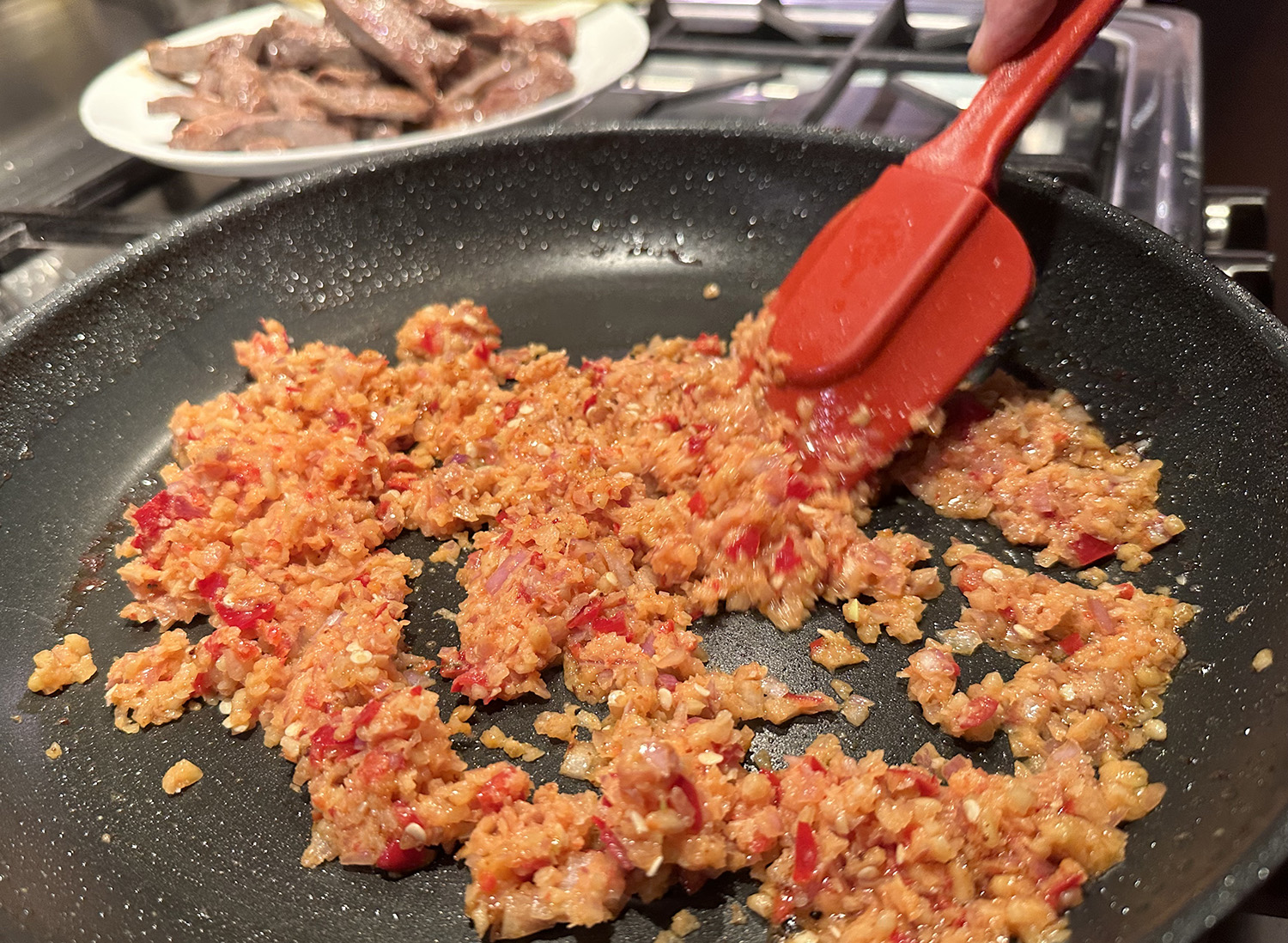
  3. Pulse the peanuts, shallots, and chiles in a food processor until finely chopped. Transfer to a small bowl.
  4. Set a wok or 12-inch skillet over medium-high heat until hot, about 1 minute.
  5. Add 1-1/2 tablespoon of the oil and once it’s shimmering, add the beef.
  6. Cook, stirring, until the beef just loses its raw appearance, about 2 minutes. Transfer to a plate.
  7. Reduce the heat to medium, add the remaining 1-1/2 tablespoon oil and the shallot mixture, sprinkle with salt, and cook, stirring, until the shallots are soft, about 2 minutes.
  8. Return the beef to the pan. Stir the soy mixture and add it, along with half of the cilantro and basil, and cook, stirring to let the flavors meld, 2 minutes.
  9. Serve sprinkled with the remaining lime juice, cilantro, and basil.

http://www.lynnandruss.com

Original recipe from the now defunct Fine Cooking

Rice Noodle Salad

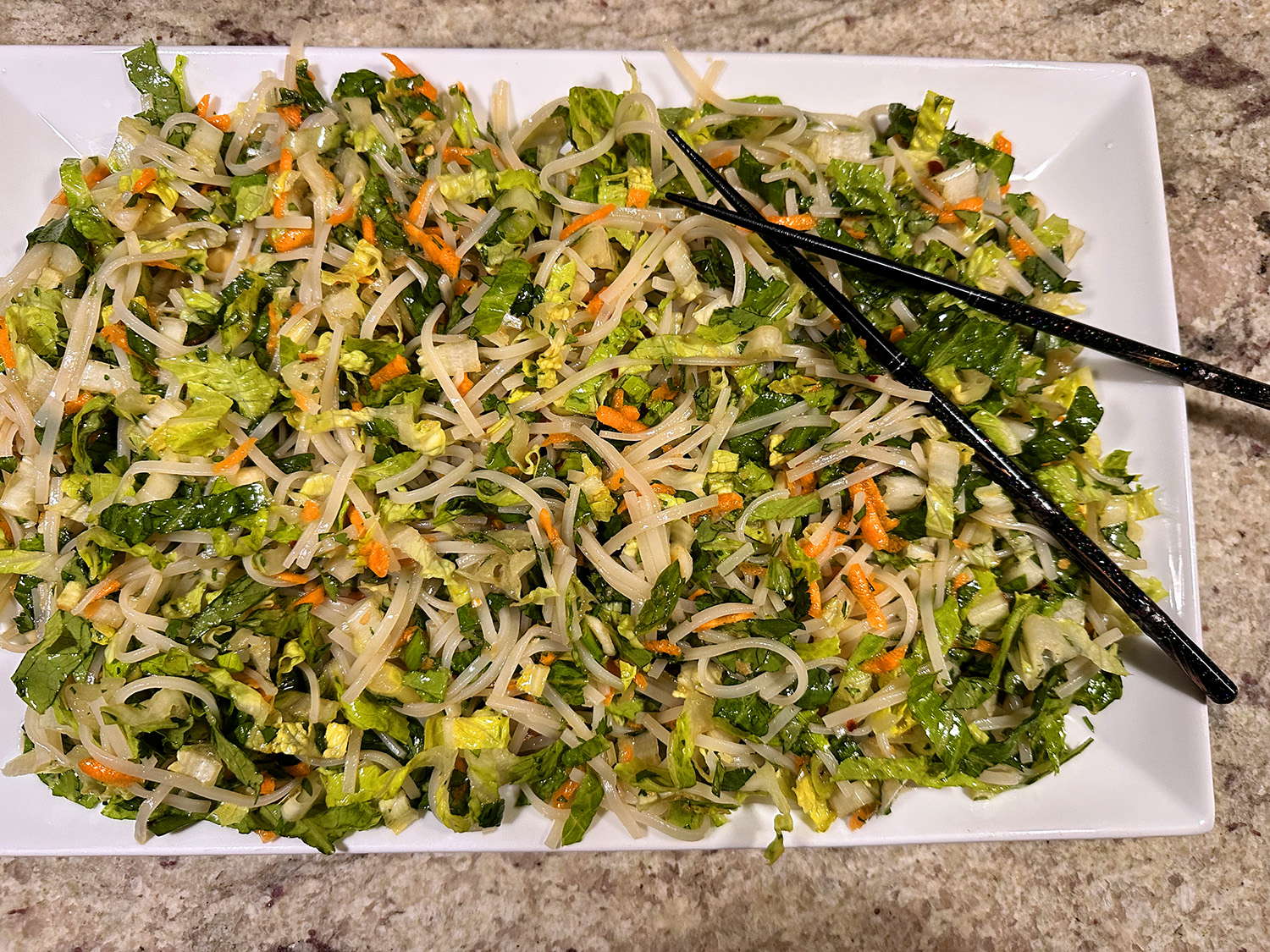
This Asian salad can stand on it’s own, perhaps with a smattering of chopped peanuts, or as a compliment to a heftier stir-fry such as the Spicy Beef with Peanuts and Chiles that we paired it with. To amp up the flavor, we increased the amount of grated ginger to 1 tablespoon, added 1 tablespoon of rice wine vinegar, and lots of chopped fresh basil.

You can use Southeast Asian rice sticks or Chinese cellophane noodles (made from bean starch) for this Thai salad. It makes a satisfying lunch, or serve it as a starter or side dish (it will serve up to 6 as a side).

Rice Noodle Salad

  • Servings: 4-6
  • Difficulty: easy
  • Print

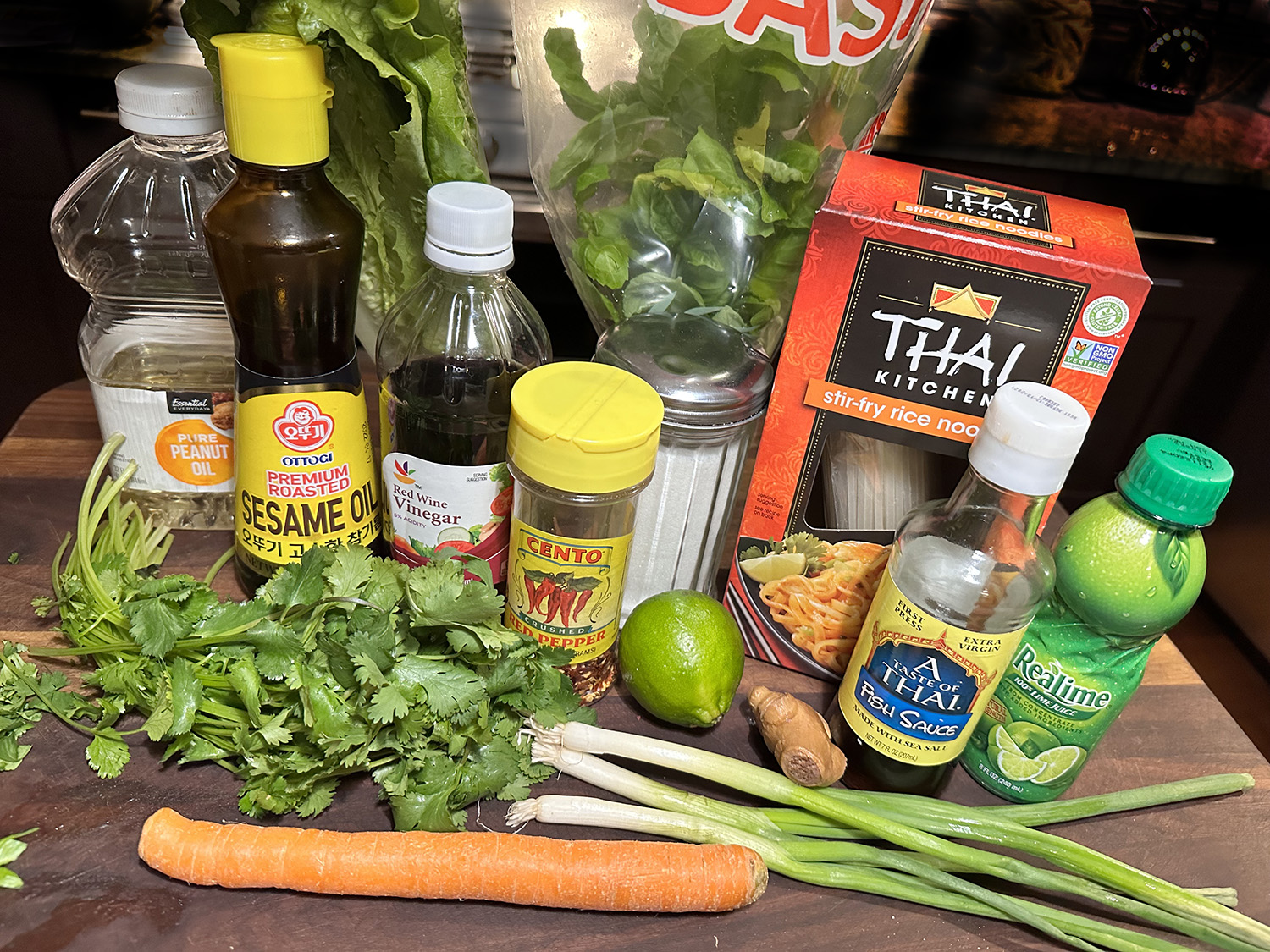
Ingredients

For the dressing

  • ¼ cup fresh lime juice
  • 2 Tbsp. Thai fish sauce or 1 Tbsp. soy sauce
  • 1 tsp. sugar
  • 1 Tbsp. finely minced ginger (more or less to taste)
  • ½ tsp. red pepper flakes, or a pinch of cayenne
  • 2 Tbsp. Asian sesame oil
  • 1 Tbsp. rice wine vinegar
  • 2 Tbsp. canola oil

For the Salad

  • 3 oz. dried rice noodles (rice sticks) or cellophane noodles
  • ½ small Napa cabbage or 1 romaine heart
  • 3 scallions, cleaned and thinly sliced on the diagonal
  • 1 cup coarsely chopped cilantro
  • 1 cup coarsely chopped basil
  • 1 medium carrot, grated or cut in fine julienne
  • Lettuce leaves for the bowl or platter (if not plating with the Rice Noodle Salad)

Directions

  1. Mix together the dressing ingredients. Taste and adjust seasonings. Place the rice or cellophane noodles in a bowl and cover with warm water. Soak for 20 minutes, and drain.
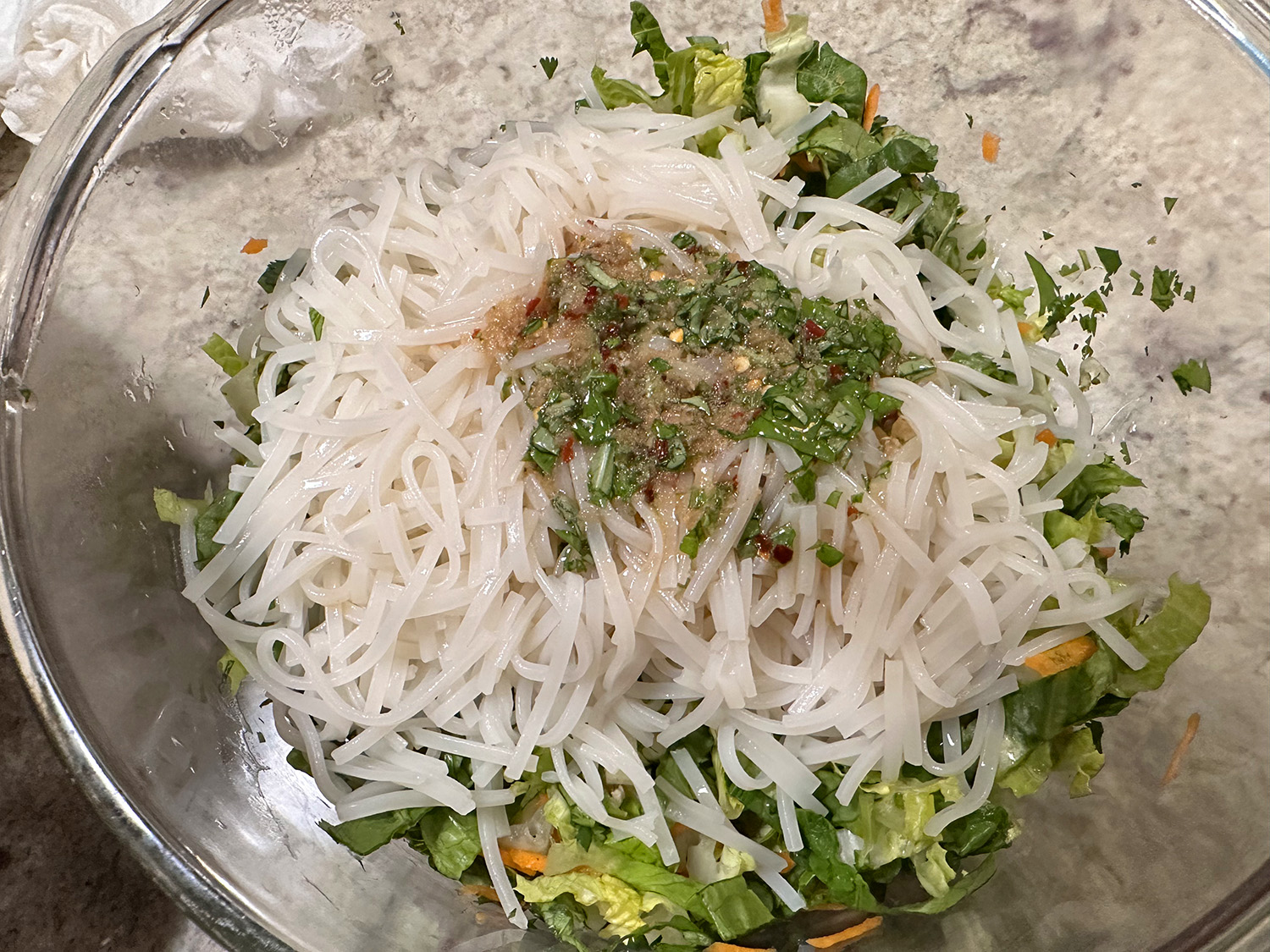
  2. Bring a large pot of water to a boil and add the noodles. Cook about 1 minute, or until tender (ours took about 3 minutes). Drain well and coarsely chop using scissors or knife. Toss with all but 2 tablespoons of the dressing.
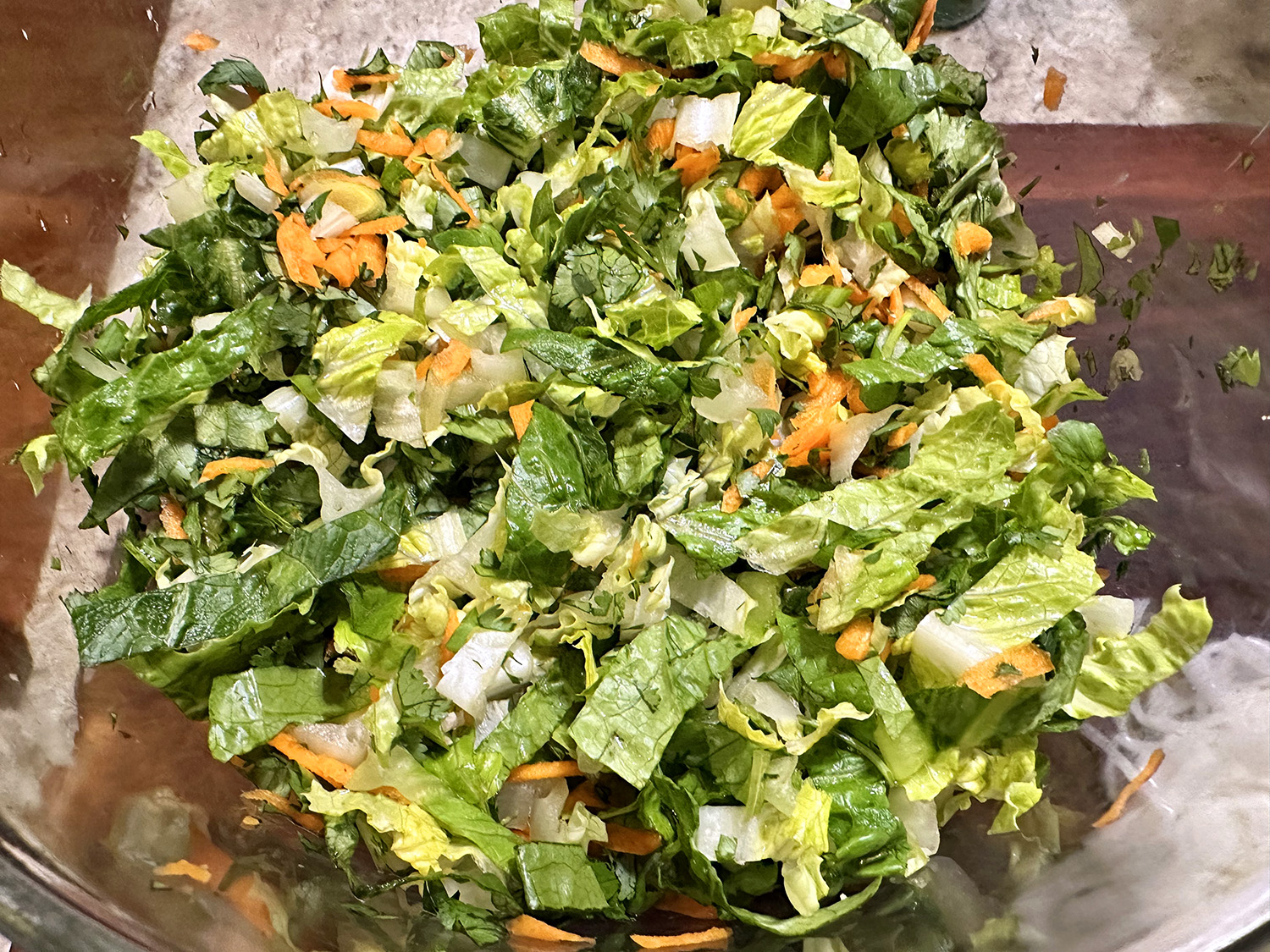
  3. Cut the halved Napa cabbage in half again, cut out the core, then slice crosswise into thin strips. If using romaine, cut in half, then slice crosswise into thin strips. Toss with the noodles, along with the scallions, cilantro, and carrot.
  4. Pile the salad on a serving platter. Spoon on the remaining dressing, if any. Sprinkle with more basil and/or cilantro and serve.

http://www.lynnandruss.com

Adapted from a recipe by Martha Rose Shulman for NYTimes Cooking

Skillet-Roasted Peruvian-Style Chicken

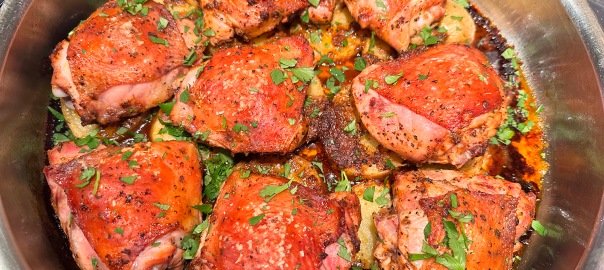
Peruvian pollo a la brasa is a whole chicken that is marinated, then cooked slowly on a rotisserie until the meat is ultra-tender; fried potatoes are a common accompaniment. Here, chicken leg quarters are used and roasted directly on top of sliced Yukon Golds that have first been lightly browned in the skillet on the stovetop.

We have both fallen hard in love with this recipe, and even though I don’t show a photo with the aji verde sauce on my plate, (I dove right into the meal before adding the sauce), it’s a wonderful condiment that enhances the meal enormously!

Marinate the chicken for 24 hours, if you can; if that’s not an option, give it at least an hour to soak in the seasonings. Ají panca paste is made from a Peruvian variety of chili of the same name; the paste is red with fruity, lightly smoky undertones and little heat. Look for it, sold in jars, in well-stocked supermarkets or Latin American grocery stores. If you cannot find it, don’t hesitate to use the sweet paprika plus smoked paprika substitute.

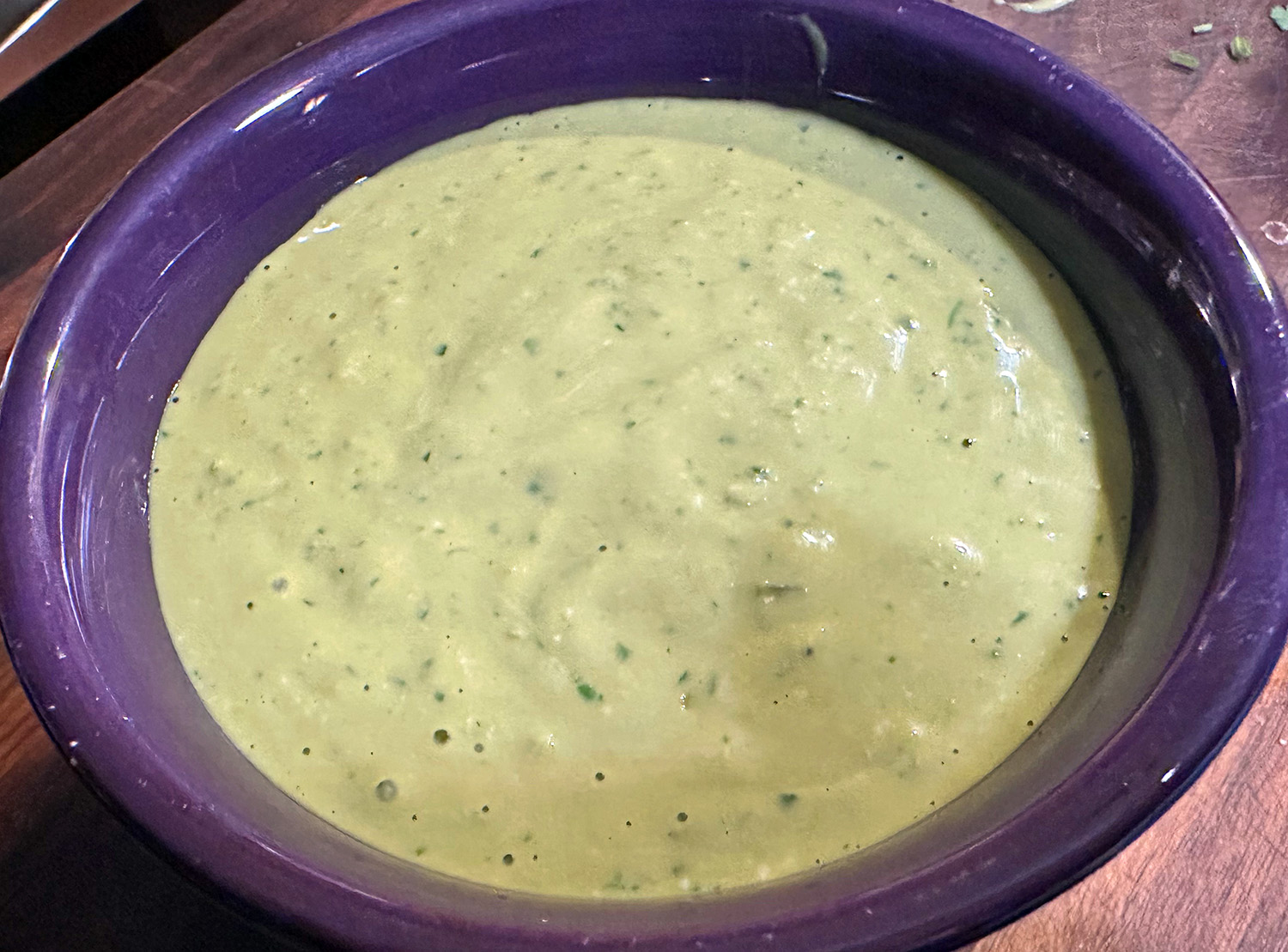
Beer is a common marinade ingredient for pollo a la brasa; Cusqueña, a Peruvian lager, is a good choice, but any quaffable variety will do. We highly recommend serving the chicken and potatoes with ají verde (recipe below), a Peruvian goes-with-everything condiment that’s deliciously creamy, tangy, herbal and spicy.

TIP: Don’t forget to pat the chicken dry after removing it from the marinade, and before sprinkling it with salt and placing the pieces in the skillet. The drier the skin, the better the browning and crisping.

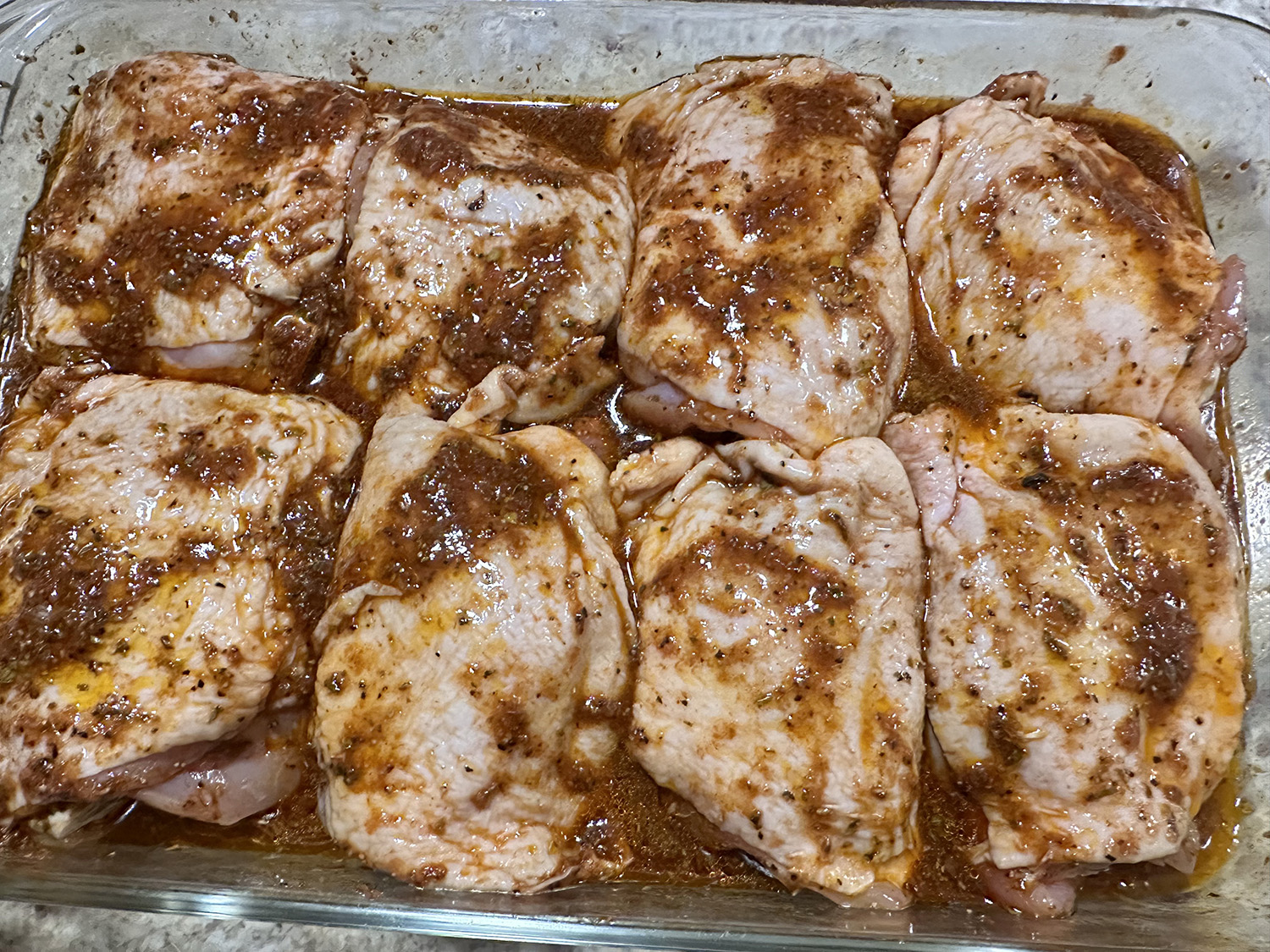
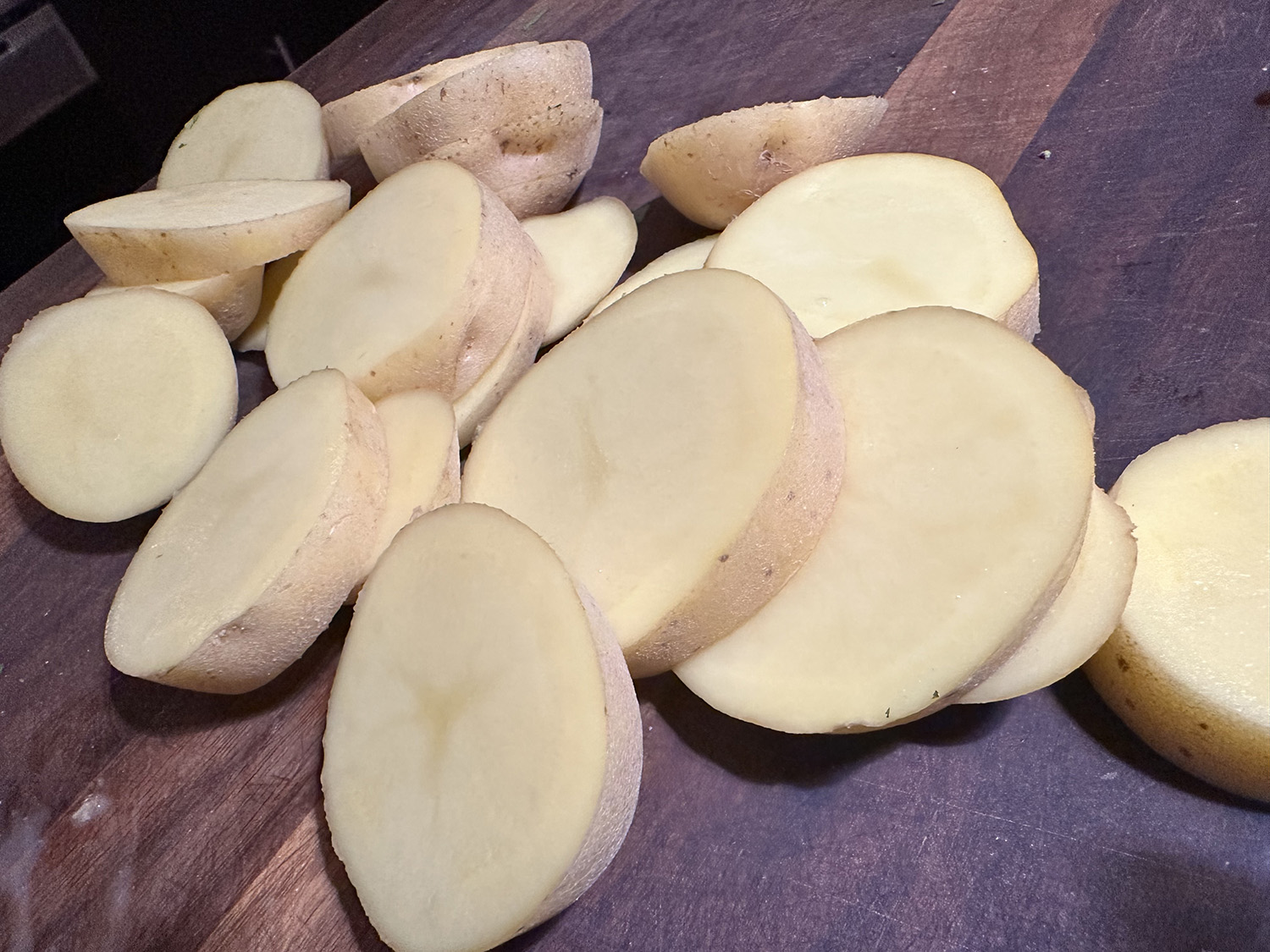
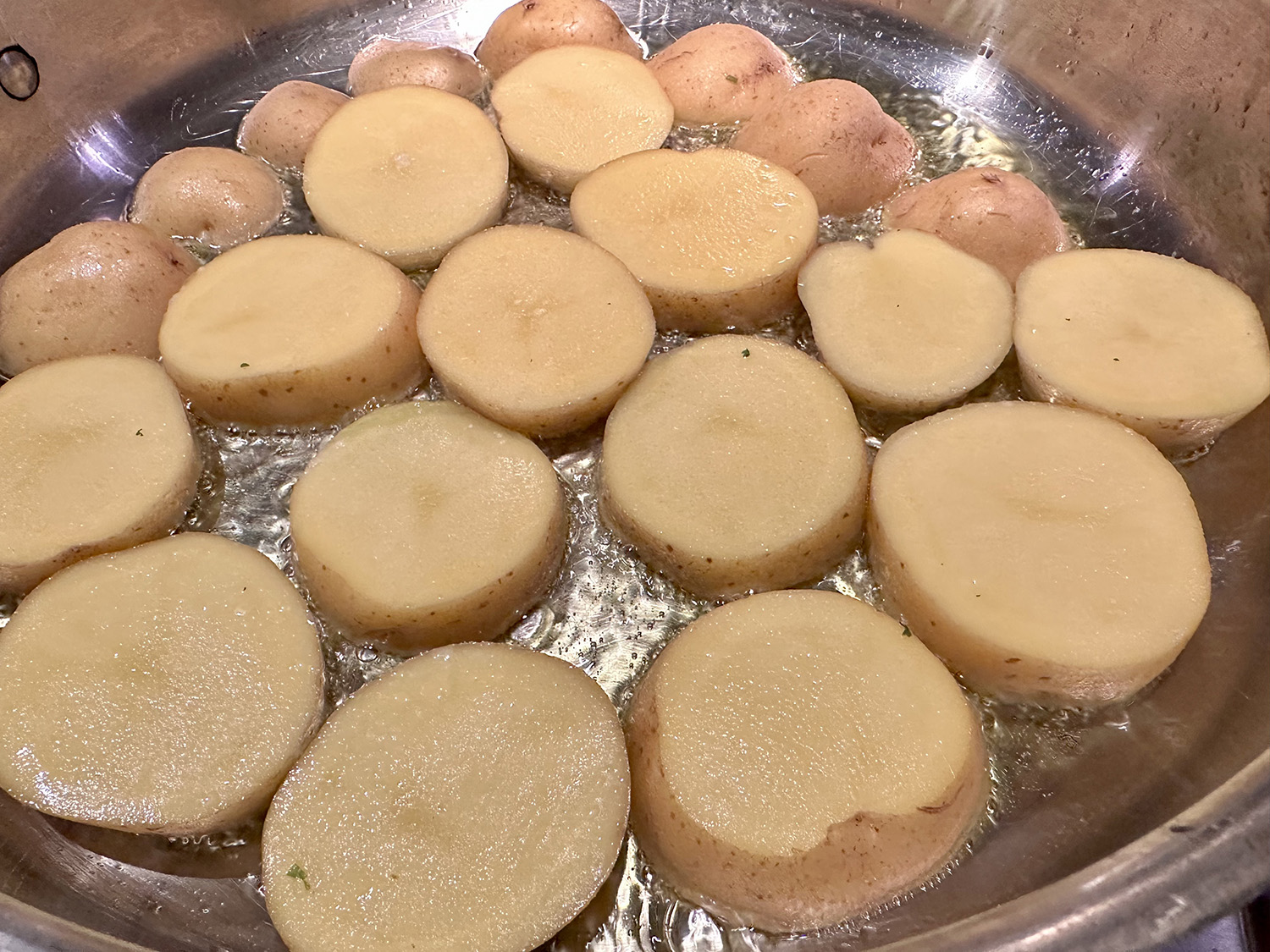
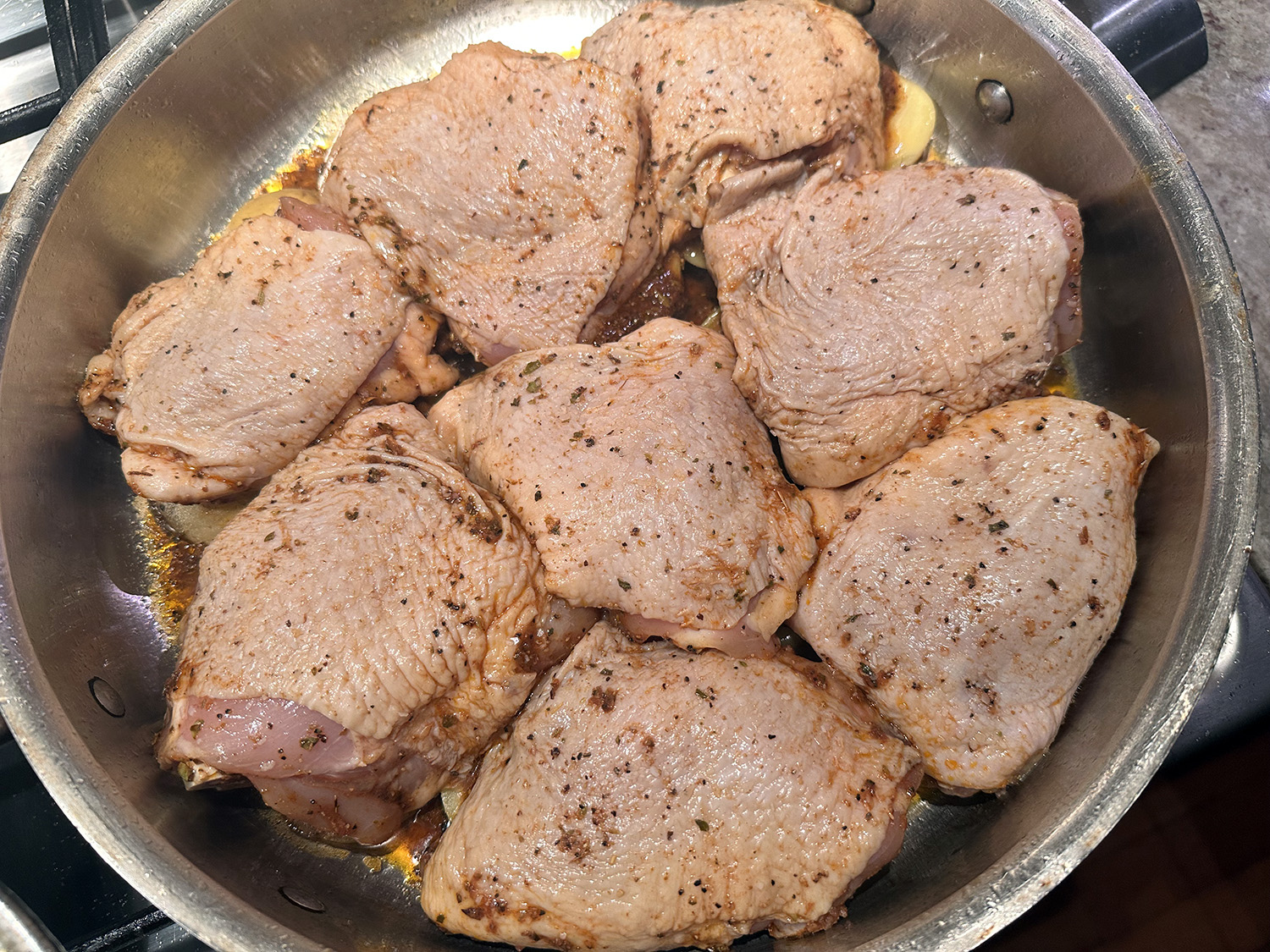
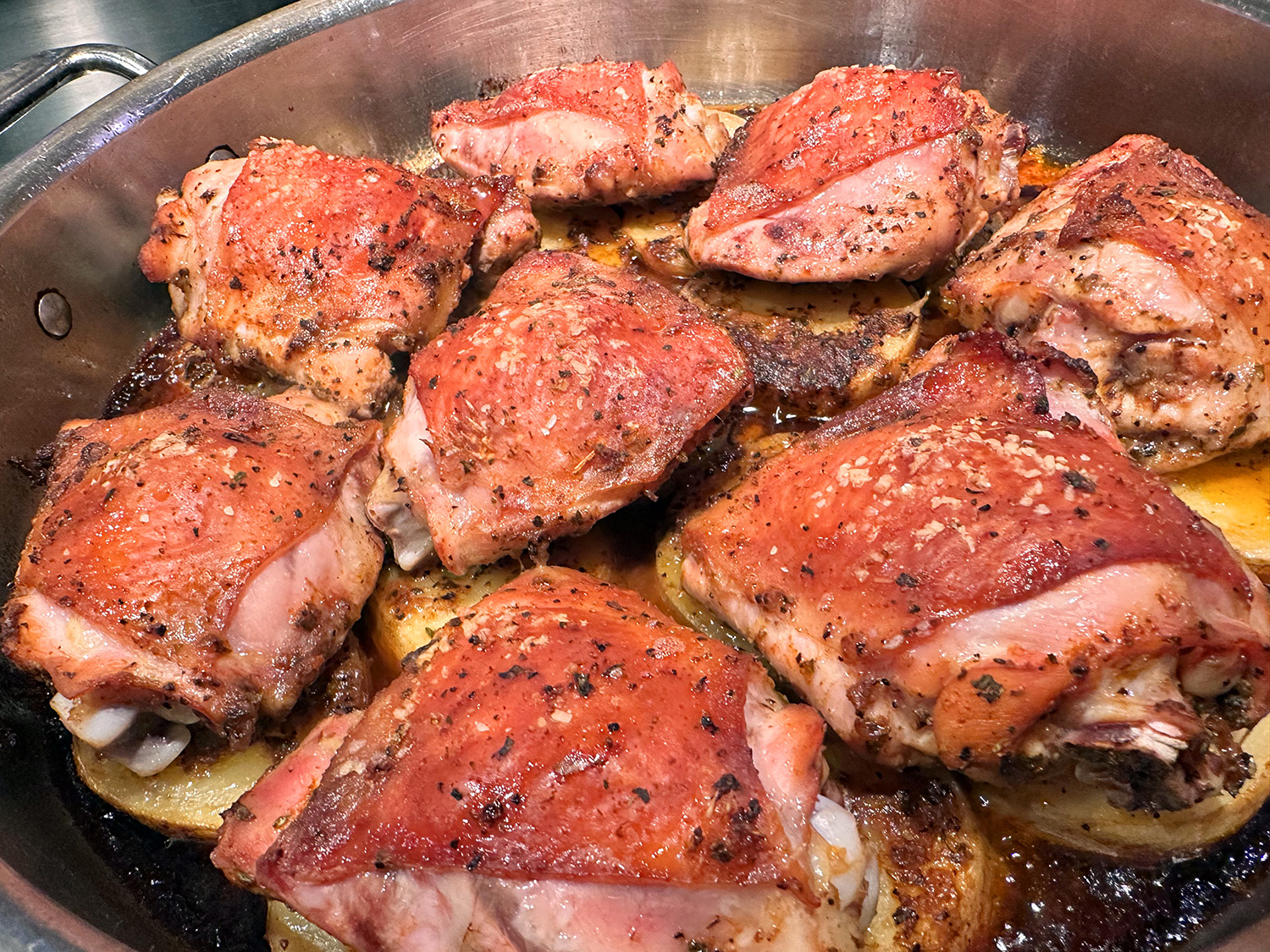
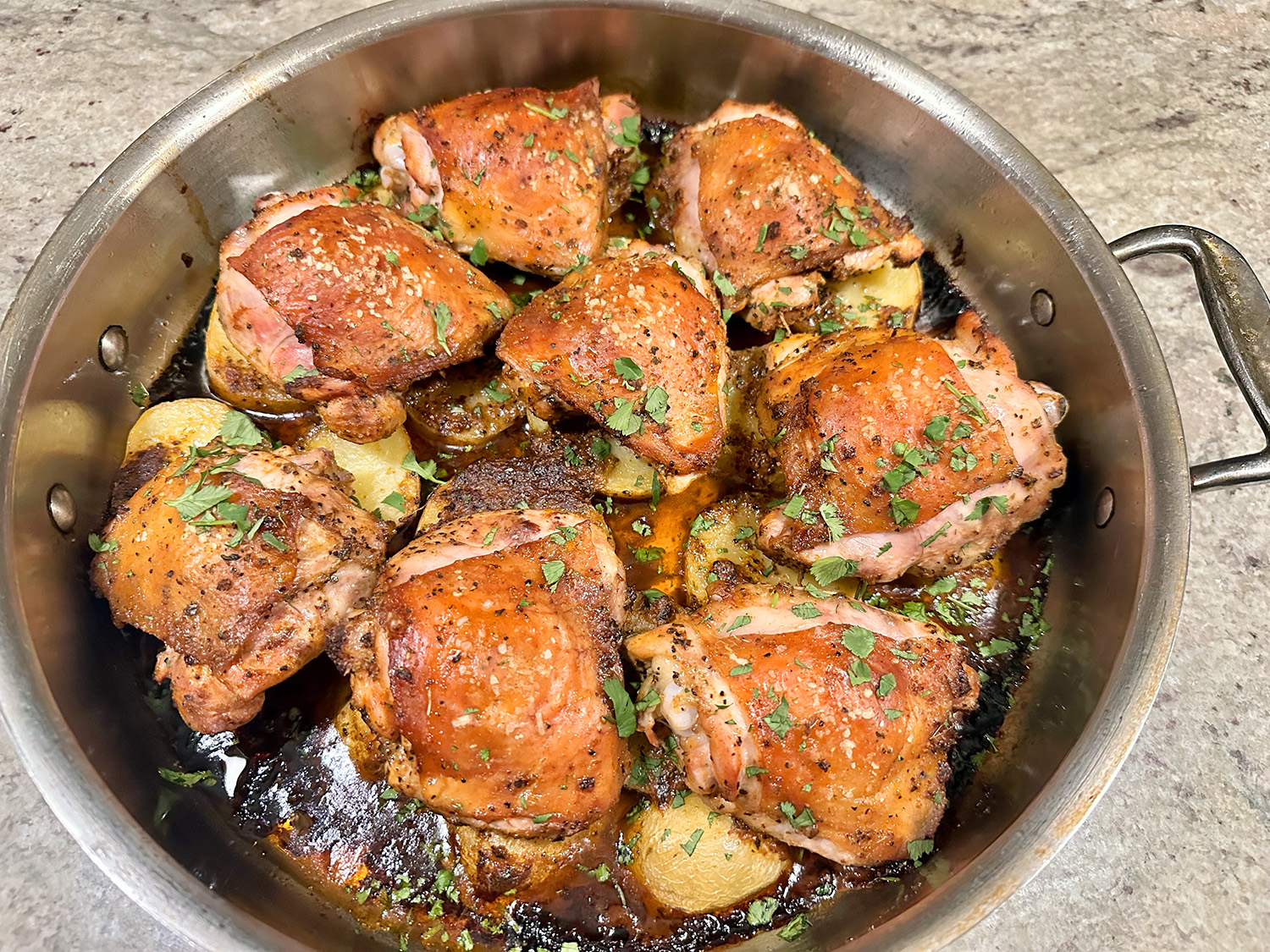
We could not bear to eliminate the flavorful marinade altogether, yet we wanted the skin to be very crispy. So we wiped off the marinade from the chicken into the baking dish and patted them dry. The leftover marinade was then spread over the hot potato slices, and then the chicken pieces placed on top before going into the hot oven.

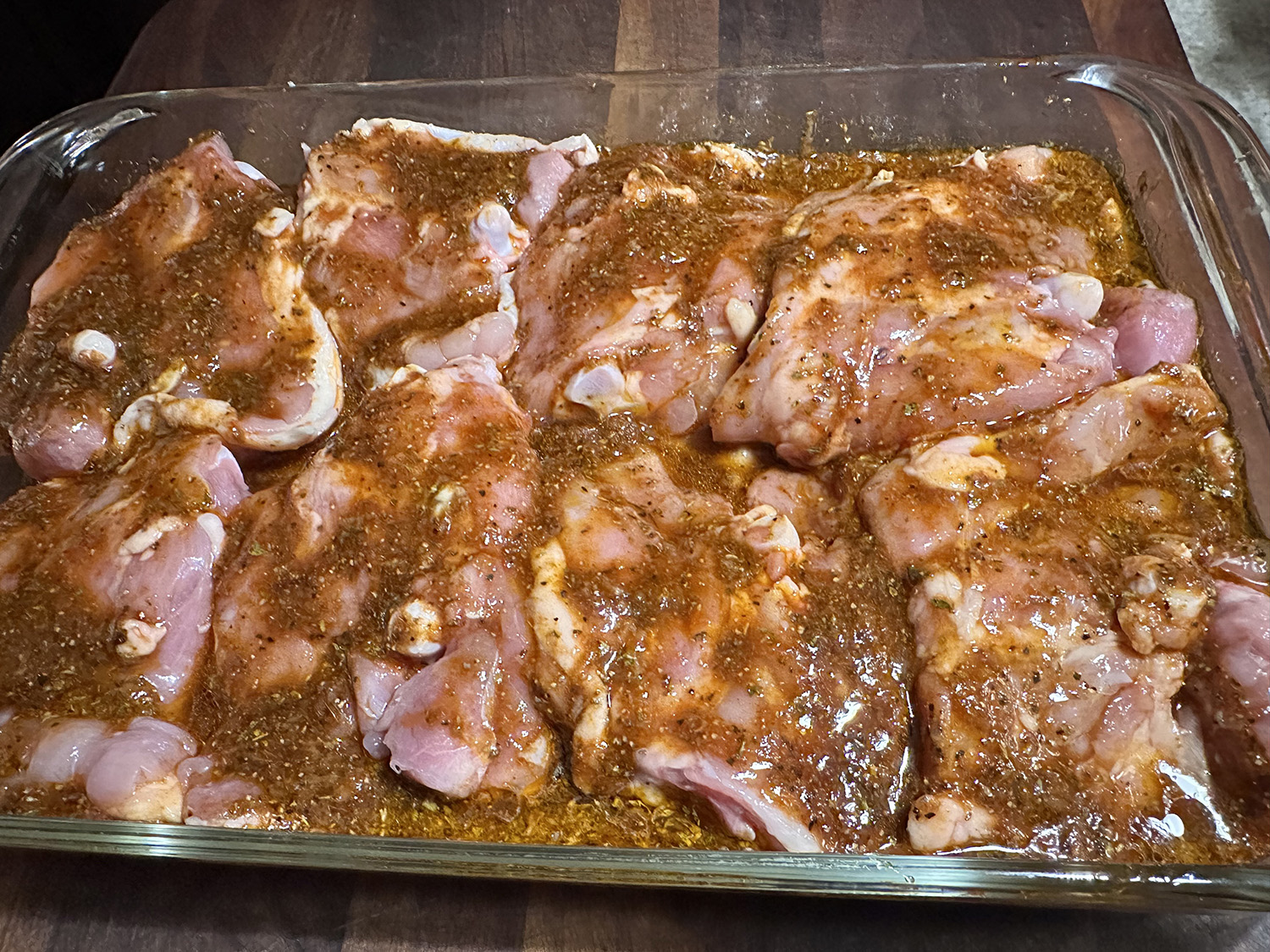
Not a fan of poultry legs, we used 8 bone-in chicken thighs, which required a larger oven-safe skillet. They went into the baking dish skin-side down, but we ladled the marinate onto the undersides to make sure all parts of the chicken got some flavoring going on. After 30 minutes, we turned the thighs to skin side up and brushed with more marinade.

Skillet-Roasted Peruvian-Style Chicken

  • Servings: 4
  • Difficulty: easy
  • Print

Ingredients

  • 3 Tbsp. extra-virgin olive oil, divided
  • 1/2 cup beer
  • 4 medium garlic cloves, finely grated
  • 2 Tbsp. soy sauce
  • 2 Tbsp. red wine vinegar
  • 2 Tbsp. ají panca paste OR 1 Tbsp. sweet paprika, plus 1 Tbsp. smoked paprika
  • 2 tsp. dried oregano
  • 2 tsp. ground cumin
  • Kosher salt and ground black pepper
  • 4 bone-in, skin-on chicken leg quarters, OR 6-8 chicken thighs (about 3 lbs.), trimmed
  • 1 1/2 lbs. Yukon Gold potatoes, unpeeled, sliced into ½-inch rounds
  • 1/2 cup lightly packed fresh cilantro, chopped
  • Ají verde, to serve (optional, see recipe below)

Directions

  1. In a 9-by-13-inch glass or ceramic baking dish, stir together 2 tablespoons oil, the beer, garlic, soy sauce, vinegar, ají panca, oregano, cumin, 1 teaspoon salt and 2 teaspoons pepper. Add the chicken and turn to coat. Cover and refrigerate for at least 1 hour or up to 24 hours, turning the chicken once about halfway through marinating.
  2. Heat the oven to 450°F with a rack in the lowest position. Remove the chicken from the marinade; discard the marinade. Pat the chicken dry and season lightly with salt.
  3. In a 12-inch oven-safe skillet over medium-high, heat the remaining 1 tablespoon oil until shimmering. Add the potatoes in an even layer and cook, uncovered and without stirring, until lightly browned at the edges, 2 to 3 minutes. Place the chicken skin side up on top of the potatoes. Transfer the skillet to the oven and roast until the chicken is deeply browned and the thickest part of the leg quarters reach 175°F, about 45 minutes.
  4. Remove the pan from the oven (the handle will be hot). Let rest for about 10 minutes, then transfer the chicken and potatoes to a serving platter. Sprinkle with the cilantro and serve with ají verde (if using).

Aji Verde Sauce

Ají verde is a popular Peruvian condiment. Creamy and spicy, with fruity acidity from lime juice, it’s the perfect accompaniment to pollo a la brasa. Ají amarillo is a spicy yellow Peruvian chili. Look for ají amarillo paste in Latin American markets, but if not available, simply omit it. The sauce still will taste great.

Ingredients

  • ½ cup  mayonnaise
  • 1 jalapeño, stemmed and seeded, coarsely chopped
  • 1 garlic clove. minced
  • 2 Tbsp. grated cotija cheese
  • 3 Tbsp. fresh minced cilantro
  • 1 Tbsp. jarred huacatay paste
  • 2 Tbsp. fresh lime juice

Directions

Combine all ingredients in a blender or small food processor until smooth, about 1 minute.

http://www.lynnandruss.com

Recipes by Courtney Hill & Elizabeth Mindreau for Milk Street

Braised Chicken and Lentils

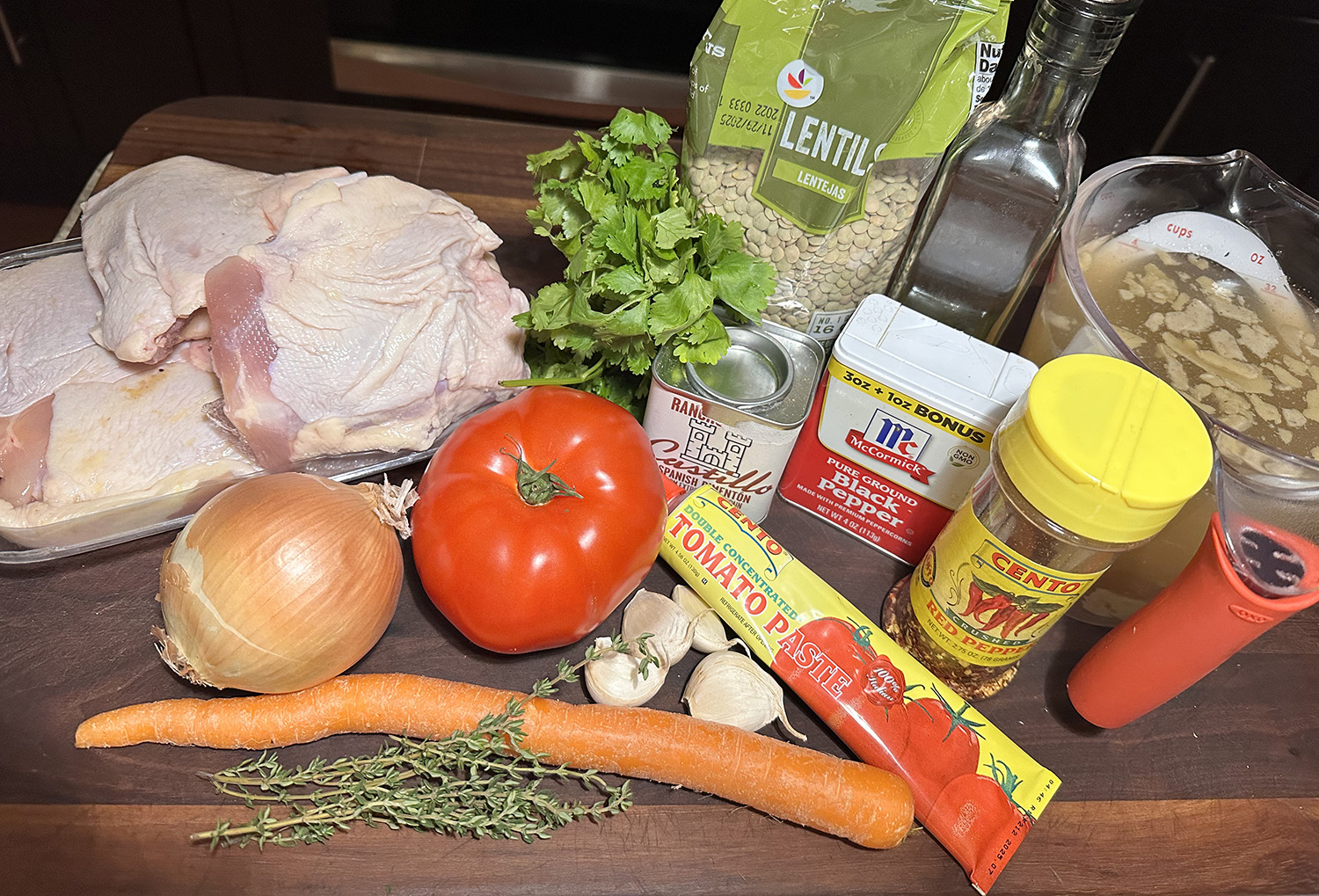
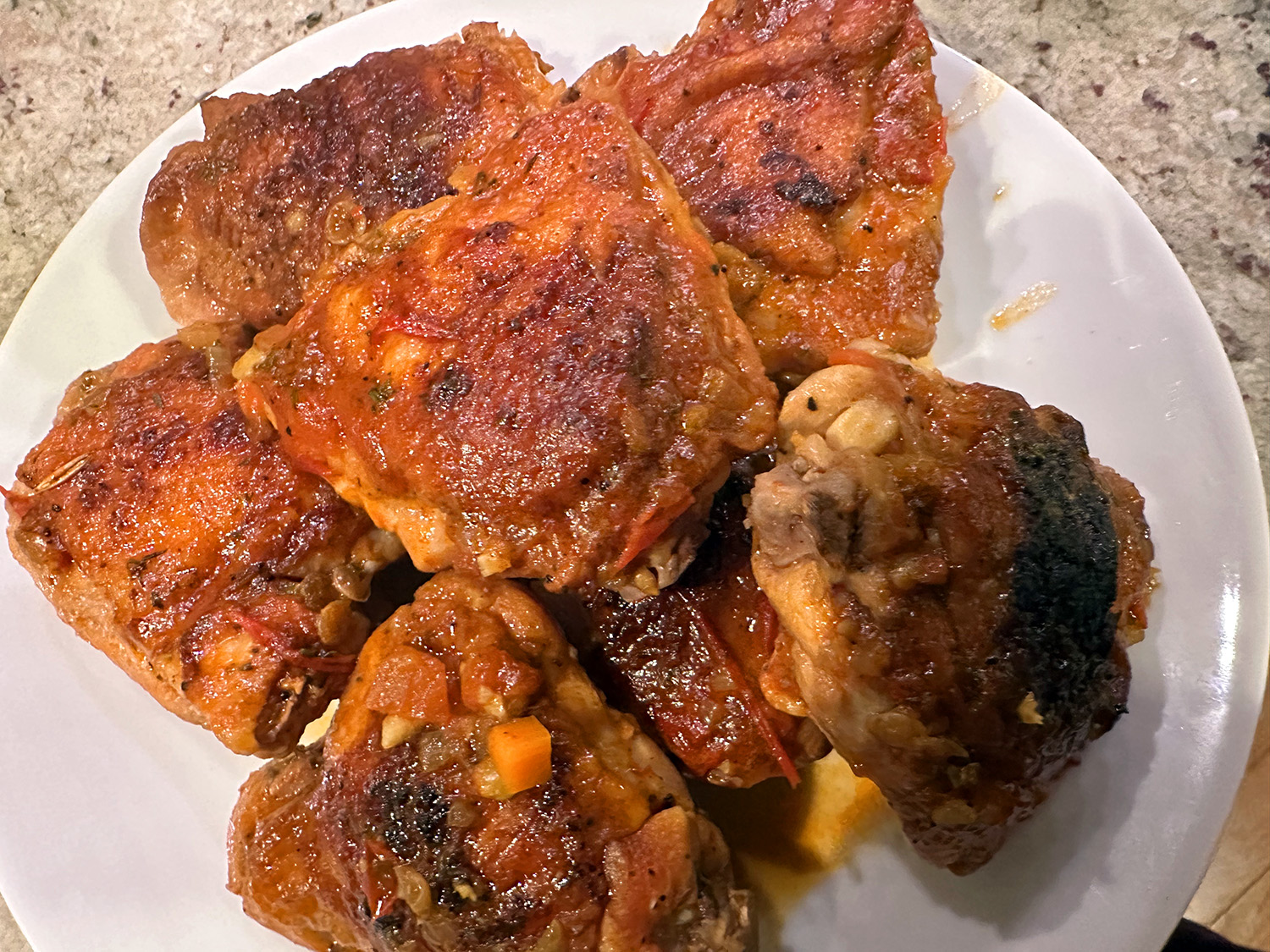
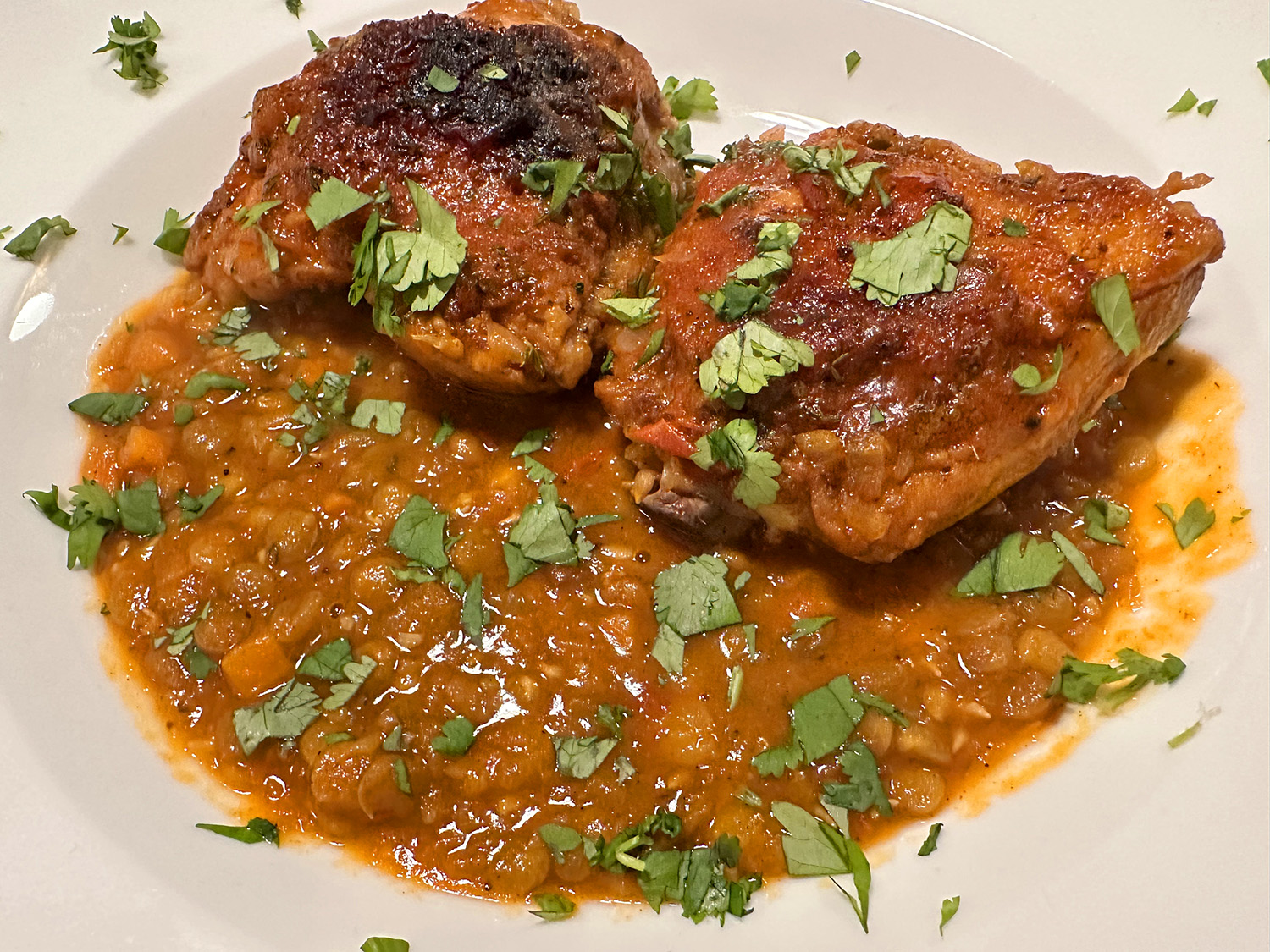
For this “stew” if you will, meaty bone-in chicken thighs are seasoned with smoked paprika, salt, and pepper and then browned to build a base of flavor with a subtle, smoky depth of braised chicken with hearty stewed lentils. Next, the onions, tomatoes, and carrot are sautéed and layered in garlic, tomato paste, and earthy fresh thyme to keep the flavor rich and complex.

Tomato paste plays double-duty, adding savoriness while helping to thicken the lentils. The browned chicken thighs are nestled into the lentils, fortifying them with chicken stock and some extra smoked paprika, and braises the mixture uncovered in the oven.

Keeping the Dutch oven uncovered thickens the stewed lentils as the chicken braises. Whisking a splash of sherry vinegar in at the end brightens the dish and helps break down some of the lentils, adding body and creaminess.

Preferably use a large, 6-quart Dutch oven; if your Dutch oven is smaller, you will need to sear the chicken in batches and allow the chicken to overlap slightly in the lentil mixture in step 4. Whisking the lentils vigorously in step 5 helps create a rich, creamy sauce.

Braised Chicken and Lentils

  • Servings: 4
  • Difficulty: easy
  • Print

Ingredients

  • 2½ tsp. table salt, divided
  • 2 tsp. smoked paprika, divided
  • ¾ tsp. pepper, divided
  • 8 (5- to 7-oz.) bone-in chicken thighs, trimmed
  • 2 tsp. extra-virgin olive oil
  • 2 large plum tomatoes, cored and chopped1 onion, chopped fine
  • 1 carrot, peeled and chopped fine
  • 6 garlic cloves, minced
  • 2 Tbsp. tomato paste
  • 1 tsp. chopped fresh thyme
  • ½ tsp. red pepper flakes
  • 4 cups chicken broth
  • 1 cup green lentils, picked over and rinsed
  • 1 Tbsp. sherry vinegar
  • ½ cup chopped fresh cilantro

Directions

  1. Adjust oven rack to middle position and heat oven to 375 degrees. Combine 2 teaspoons salt, 1 teaspoon paprika, and ½ teaspoon pepper in small bowl. Pat chicken dry with paper towels and sprinkle all over with salt mixture.
  2. Heat oil in Dutch oven over medium-high heat until just smoking. Add chicken, skin side down, and cook until skin is well browned, 12 to 16 minutes; transfer chicken to plate.
  3. Add tomatoes, onion, carrot, remaining ½ teaspoon salt, and remaining ¼ teaspoon pepper to fat remaining in pot and reduce heat to medium. Cook, stirring often, until tomatoes begin to break down, 3 to 5 minutes.
  4. Stir in garlic, tomato paste, thyme, and pepper flakes and cook, stirring constantly, until fond begins to form on bottom of pot, 3 to 4 minutes.
  5. Stir in broth, scraping up browned bits. Stir in lentils and remaining 1 teaspoon paprika. Nestle chicken into lentil mixture, skin side up, and bring to simmer over high heat.
  6. Transfer pot to oven and cook, uncovered, until chicken registers at least 185 degrees, 35 to 40 minutes.
  7. Transfer chicken to clean plate. Return pot (handles will be very hot) to stovetop and continue to cook lentil mixture over medium heat, stirring often, until liquid is thickened and lentils are fully tender, 5 to 7 minutes longer.
  8. Add vinegar and whisk vigorously until liquid is creamy, about 30 seconds (lentil mixture will thicken as it cools). Season with salt and pepper to taste.
  9. Transfer lentils to shallow serving bowls and top each portion with 2 chicken thighs. Sprinkle with cilantro and serve.

http://www.lynnandruss.com

Recipe by Amanda Luchtel for Cook’s Country

Spicy Sheet Pan Pork Chops and Broccoli

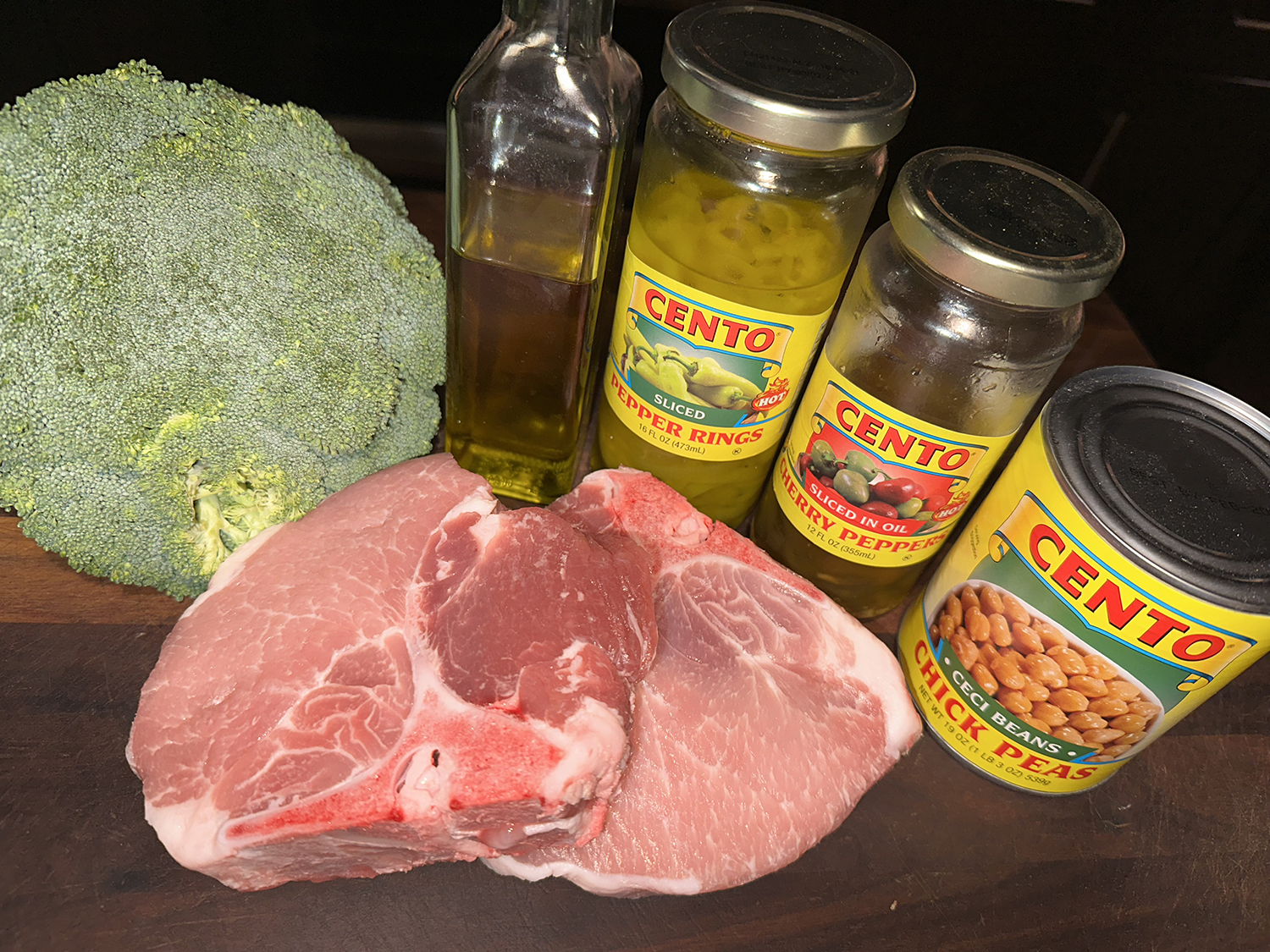
Try this super-simple meal full of flavor due to the pickled peperoncini which adds spice and tanginess in the form of brine. They are also known as Tuscan peppers, which are a sweet, mild variety of chili pepper. That being said, we decided to use our cherry pepper and banana pepper rings which were already sliced down.

Our other substitutions included thick pork chops as opposed to the rib-chops, and incorporating a 19-ounce can of chickpeas instead of the suggested 15-ounce amount.

Preheating the empty sheet pan in the oven is a great way to brown ingredients without having to take the time to sear them on the stove. We were a little disappointed at the outcome because the broccoli was still too firm and the pork was a bit overdone. To counter that issue, we suggest you *microwave the broccoli with water for a few minutes before adding the florets to the preheated sheet pan; and check the chops temperature after 10 minutes on the second side. If they are done, remove them to a plate and cover with foil until the broccoli is tender.

On another note, The Hubs decided to increase the seasoning on the chops with more than just salt, so he also sprinkled them with a half teaspoon each of garlic powder and black pepper. We also think tossing in 6 to 8 peeled garlic cloves would enhance the dish.

Spicy Sheet Pan Pork Chops and Broccoli

  • Servings: 4
  • Difficulty: easy
  • Print

Ingredients

  • Four 10-to-12-oz. pork chops (about 1 1/2 inches thick)
  • 1/4 cup extra-virgin olive oil
  • Kosher salt
  • 1 head broccoli, cut into florets*
  • 1 15-oz. can chickpeas, rinsed, drained, and patted dry
  • 8 whole pickled peperoncini, halved lengthwise, plus 1/4 cup brine
  • Our additions: 8 peeled garlic cloves, 1/2 tsp. garlic powder, and 1/2 tsp. ground black pepper

Directions

  1. Preheat the oven to 425 degrees with a rimmed sheet pan on the bottom rack. Rub the pork chops with 2 tablespoons of the olive oil, and season with 1/2 teaspoon salt. Set the pork chops on the preheated baking sheet, and roast until they’re browned on the underside, about 10 minutes.
  2. Meanwhile, toss the broccoli, chickpeas and peperoncini with the remaining 2 tablespoons olive oil in a large bowl. Season with salt. Flip the pork chops, and set them to one side of the pan.
  3. Add the broccoli mixture, peperoncini brine, and 1/2 cup water. Continue to roast, stirring once halfway through, until the broccoli is charred and tender and the pork chops are cooked through, 25 to 30 minutes, and serve.

http://www.lynnandruss.com

Recipe from Lidia Bastianich

Braised Lamb Shanks with White Beans, Swiss Chard and Marjoram

For this lamb shanks recipe, Cook’s Illustrated preferred to braise them in the oven rather than on the stovetop, as the oven provided more even heat. Browning the shanks over high heat in a skillet first added a great deal of flavor to the dish. The shanks are braised in chicken stock (which complements, rather than overpowers, the lamb, as beef or veal stock might have), white wine, and herbs.

We made numerous changes to this recipe, starting with the lamb shanks. Instead of six small (which equates to more bone and less meat), we braised two meaty shanks that weighed close to two pounds each. When it is time to brown the shanks, you may have to do it in two batches if cooking more than two of them.

*As for the white beans, we did soak ours overnight as per the instructions below, but you could use 2 cans of cannellinis, drained and rinsed to save time. Instead of using several different skillets and pans, we did everything in one large braising pot. Finally, although we didn’t do it this time, we highly suggest that you reduce the liquids from 3 cups of broth to 2, and 2 cups of white wine down to 1 cup. These changes are note in the recipe below.

Braised Lamb Shanks with White Beans, Swiss Chard and Marjoram

  • Servings: 4
  • Difficulty: easy
  • Print

Ingredients

Cannellini Beans*

  • 1 bay leaf
  • 1 lb. small white beans (such as Cannellini), soaked until rehydrated, overnight or at least 4 hours
  • 4 cloves garlic (peeled, left whole)
  • 7 cups water
  • 1 ½ tsp. table salt

Lamb Shanks and Braising Liquid

  • 4 lamb shanks, 1 1⁄4 to 1 1⁄2 lb. each, trimmed of excess fat and fell (thin, white papery covering)
  • Table salt
  • 2 Tbsp. olive oil
  • 2 medium onions, sliced thick
  • 3 medium carrots, peeled and cut crosswise into 2-inch pieces
  • 2 medium ribs celery, cut crosswise into 2-inch pieces
  • 4 medium cloves garlic, minced
  • 2 Tbsp. tomato paste
  • 3 tsp. fresh marjoram leaves, minced, or 1 1/2 tsp. dried marjoram
  • 2 cups chicken broth, preferably homemade
  • 1 cup dry white wine
  • 1 bunch Swiss chard, cleaned, stemmed, and chopped coarsely
  • Ground black pepper

Directions

  1. FOR BEANS: Bring dried beans, bay leaf, garlic, and water to simmer in large saucepan. Simmer, partially covered, until beans are just tender, 30 to 40 minutes.
  2. Remove from heat, stir in salt, cover, and let beans stand until completely tender, about 15 minutes. Drain, reserve cooking liquid, and discard bay leaf and garlic. (Beans in liquid can be cooled, covered, and refrigerated up to 5 days.)
  3. FOR SHANKS: Heat oven to 350 degrees. Sprinkle shanks with salt. Heat oil in a large, nonreactive sauté pan over medium-high heat. Add shanks to pan in batches if necessary to avoid overcrowding. Sauté until browned on all sides, 5-7 minutes. Using tongs, transfer shanks to a plate as they brown.
  4. Drain all but 2 tablespoons fat from the sauté pan; add onions, carrots, celery, garlic, tomato paste, a light sprinkling of salt and 2 teaspoons of the fresh marjoram (less if using dried); sauté to soften vegetables slightly, 3 to 4 minutes.
  5. Add wine, then chicken stock to the skillet, stirring with a wooden spoons to loosen browned bits from skillet bottom. Bring liquid to simmer; transfer vegetables and liquid into a deep braising pan, large enough to hold the shanks in a single layer. Add shanks and season with salt and pepper.
  6. Cover pan (with foil if pan has no lid) and transfer it to the oven; braise shanks for 1 1/2 hours. Uncover and continue braising until shank tops are browned, about 30 minutes. Turn shanks and continue braising until remaining side has browned and shanks are fall-off-the-bone tender, about another 20 minutes.
  7. Remove pan from oven; let shanks rest for at least 15 minutes. Carefully transfer shanks with tongs to each plate.
  8. Arrange a portion of vegetables around each shank. Skim excess fat from braising liquid. Add beans and chard and remaining 1 teaspoon marjoram; cook over medium heat until greens wilt, about 5 minutes. Adjust seasoning. Spoon a portion of braising liquid over each shank and serve.

http://www.lynnandruss.com

Adapted from a recipe by Cook’s Illustrated

Crab Stuffed Portobello Mushrooms

We recently had these gems as part of our New Year’s Eve dinner. Any festive occasion such as anniversary, graduation, Valentine’s Day, Christmas, or you just feel a little decadent one day, they are an easy, healthy and festive main or first course for any special celebration.

Try to pick four equally-sized large portobello mushrooms. Check the gills to see if they’re fresh by looking for a paper-thin layer of white cap. The perfect mushrooms will be damp and springy but not overly moist, mushy, or dried out.

Break the stems off of the portobello mushrooms and scrape the gills out of them with a spoon. Wipe the caps with a damp paper towel, and then lay them gilled side up in the dish before setting them aside.

Once prepped and filled, bake the mushrooms until they are soft, the filling is heated through, and the topping is browned, which should take around 30 to 32 minutes. Let the mushrooms cool for 5 to 10 minutes, and then top them with additional scallions before serving (if desired).

Unbelievably delicious, we paired ours with Baked Scallops with Couscous and Leeks for a romantic New Year’s Eve dinner at home. We will be making them again as an hors d’oeuvre for an upcoming dinner party, but will use smaller cremini mushrooms. However, be prepared for sticker-shock over the price of lump crab meat… but special occasions call for treating yourself, right?

A few weeks later we made the appetizer size for the house party. Using the same amount of ingredients for the stuffing, it filled about 30 button mushrooms and took approximately 25 minutes to cook.

Crab Stuffed Portobello Mushrooms

  • Servings: 4
  • Difficulty: easy
  • Print

Ingredients

  • 4 large Portobello mushrooms
  • 4 oz. reduced-fat cream cheese (Neufchatel), softened
  • 1 1/2 tsp. seafood seasoning blend such as Old Bay
  • ¼ tsp. salt, optional
  • Freshly ground pepper to taste
  • 5 to 10 dashes of Tabasco hot sauce
  • 1 egg white
  • 2 scallions, finely sliced, plus more for garnish
  • ½ cup Panko breadcrumbs, plus 3 Tbsp., divided (gluten-free if desired)
  • ½ cup grated Parmesan cheese, plus 1 Tbsp., divided
  • 2 Tbsp. finely chopped jarred and drained roasted red pepper or pimento
  • 8 oz. lump or jumbo crab meat
  • 1 Tbsp. melted salted butter
  • 1/8 tsp. paprika

Directions

  1. Preheat oven to 425 degrees F. Coat a 9 by 13 baking dish with cooking spray. Break stems off portobello mushrooms. Scrape gills out of them with a spoon. Wipe caps with a damp paper towel. Lay gilled side up in the dish. Set aside.
  2. Beat cream cheese, Old Bay, salt and Tabasco with an electric mixer on medium-low until creamy and the seasonings are fully incorporated into the cream cheese. Add egg white and beat again to combine.
  3. Add scallions, ½ cup breadcrumbs, ½ Parmesan and red pepper and mix on low until combined. 
  4. Stir crab, gently by hand into the cream cheese mixture until just incorporated.
  5. Scoop the filling into the mushrooms, dividing evenly.
  6. Stir the remaining 3 tablespoons panko with butter and paprika until the breadcrumbs are evenly moistened and reddish orange. Sprinkle over the mushrooms. Sprinkle with the remaining 1 tablespoon Parmesan.
  7. Bake the mushrooms until they are soft, the filling is heated through and the topping is browned, 30 to 32 minutes. Let cool 5 to 10 minutes. Top with additional scallions before serving, if desired.

http://www.lynnandruss.com

Original recipe by Katie Webster