Tag Archives: fish

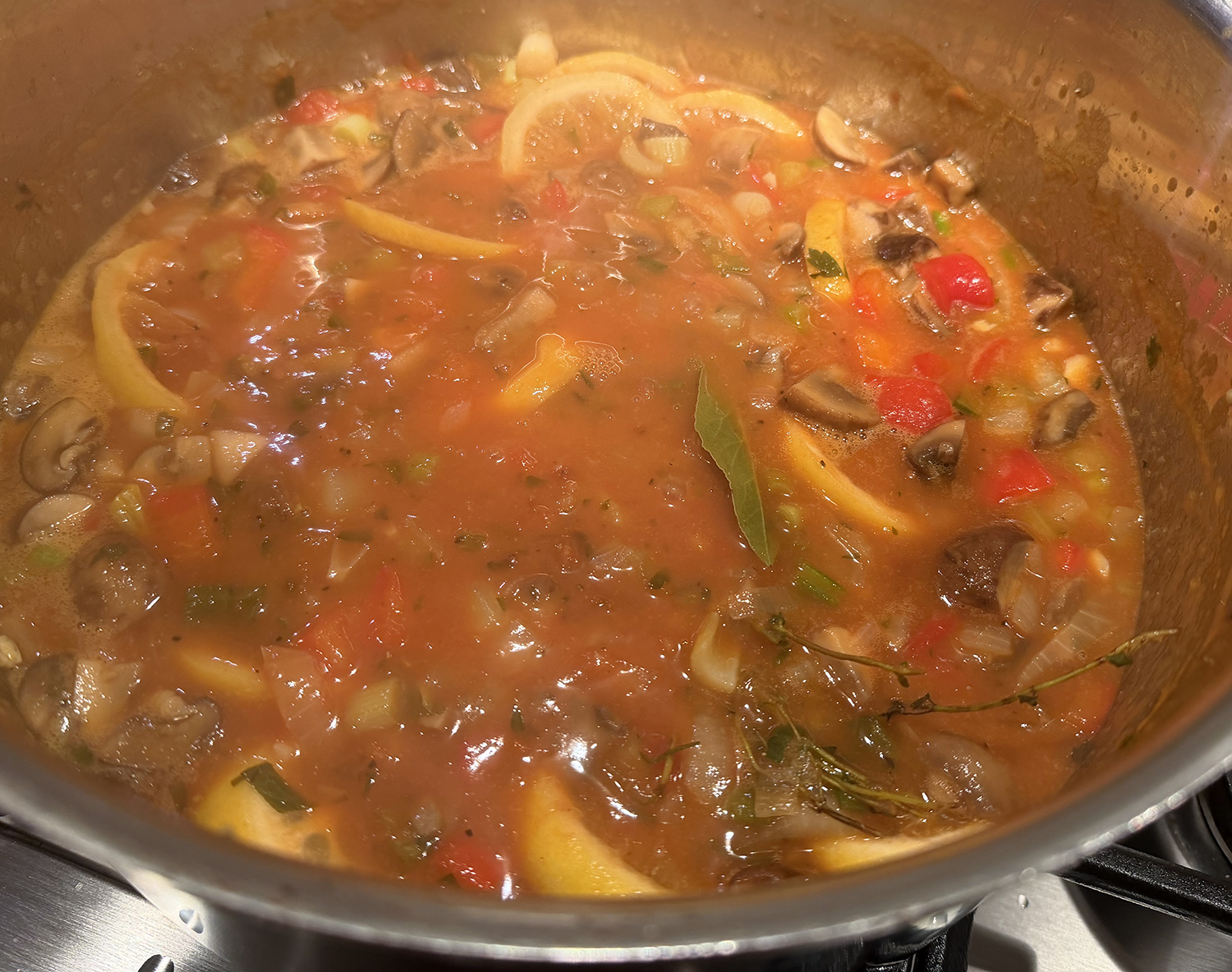
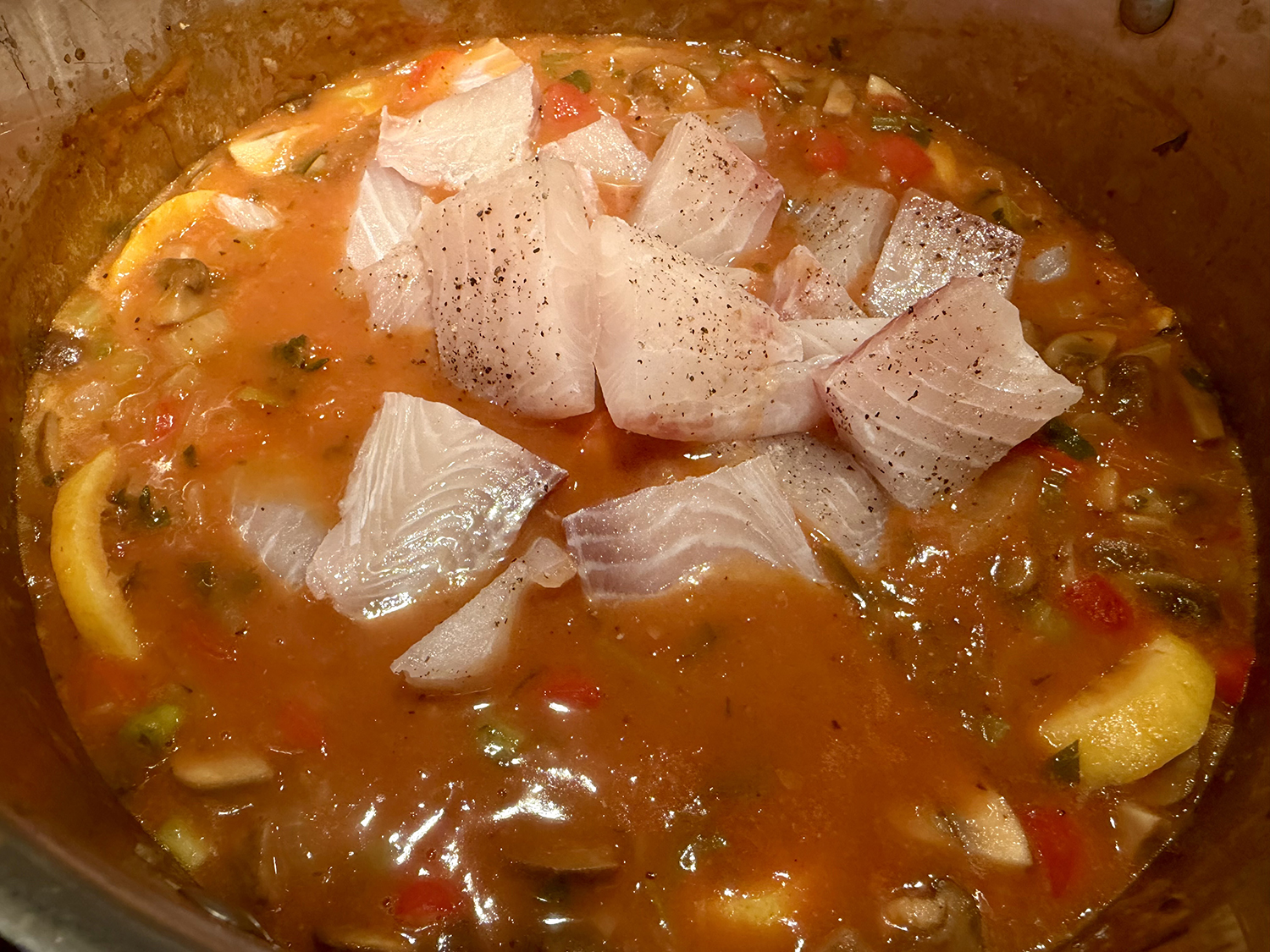
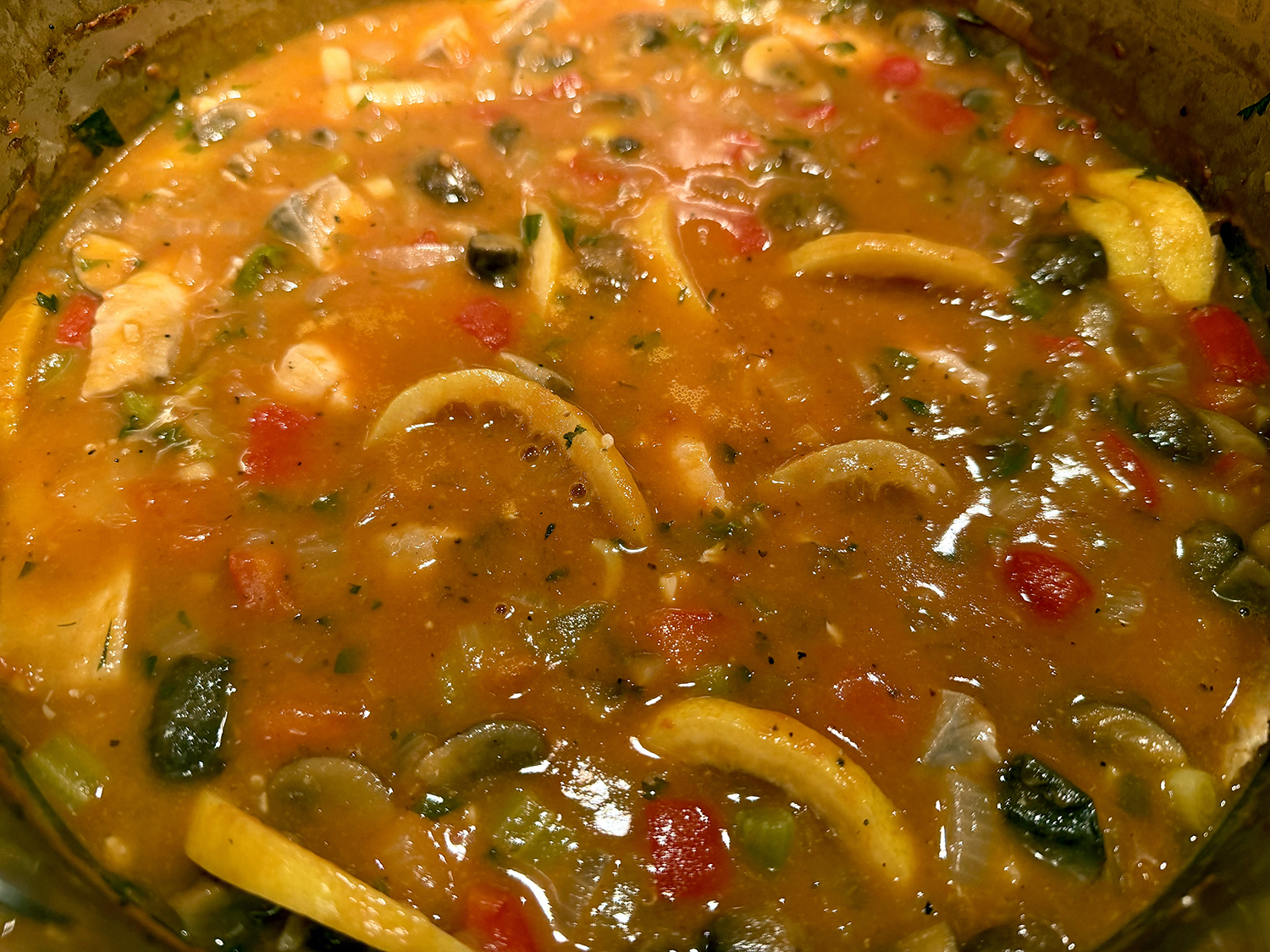
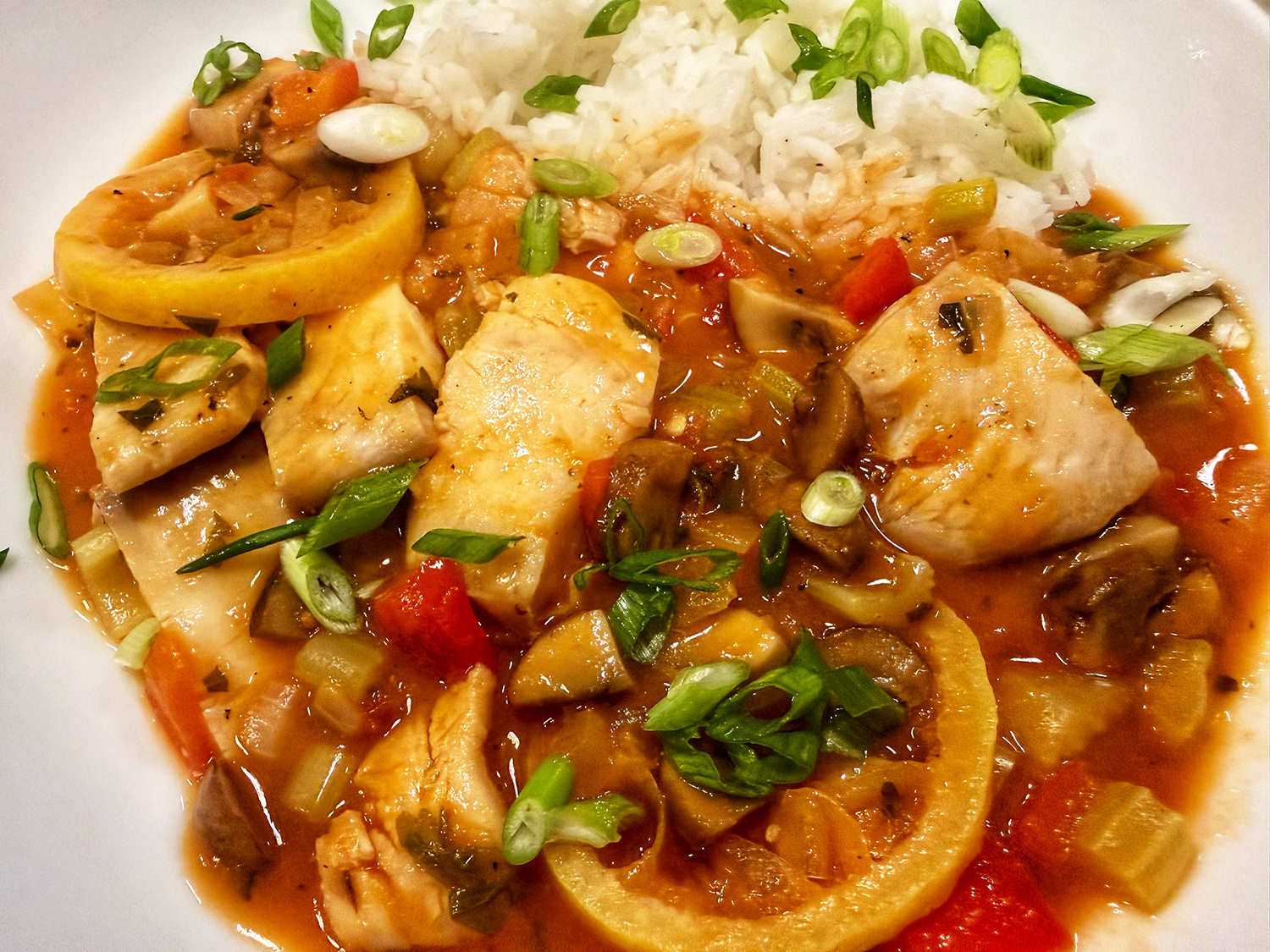
Jamaican-Style Chili-Lime Fish Stew

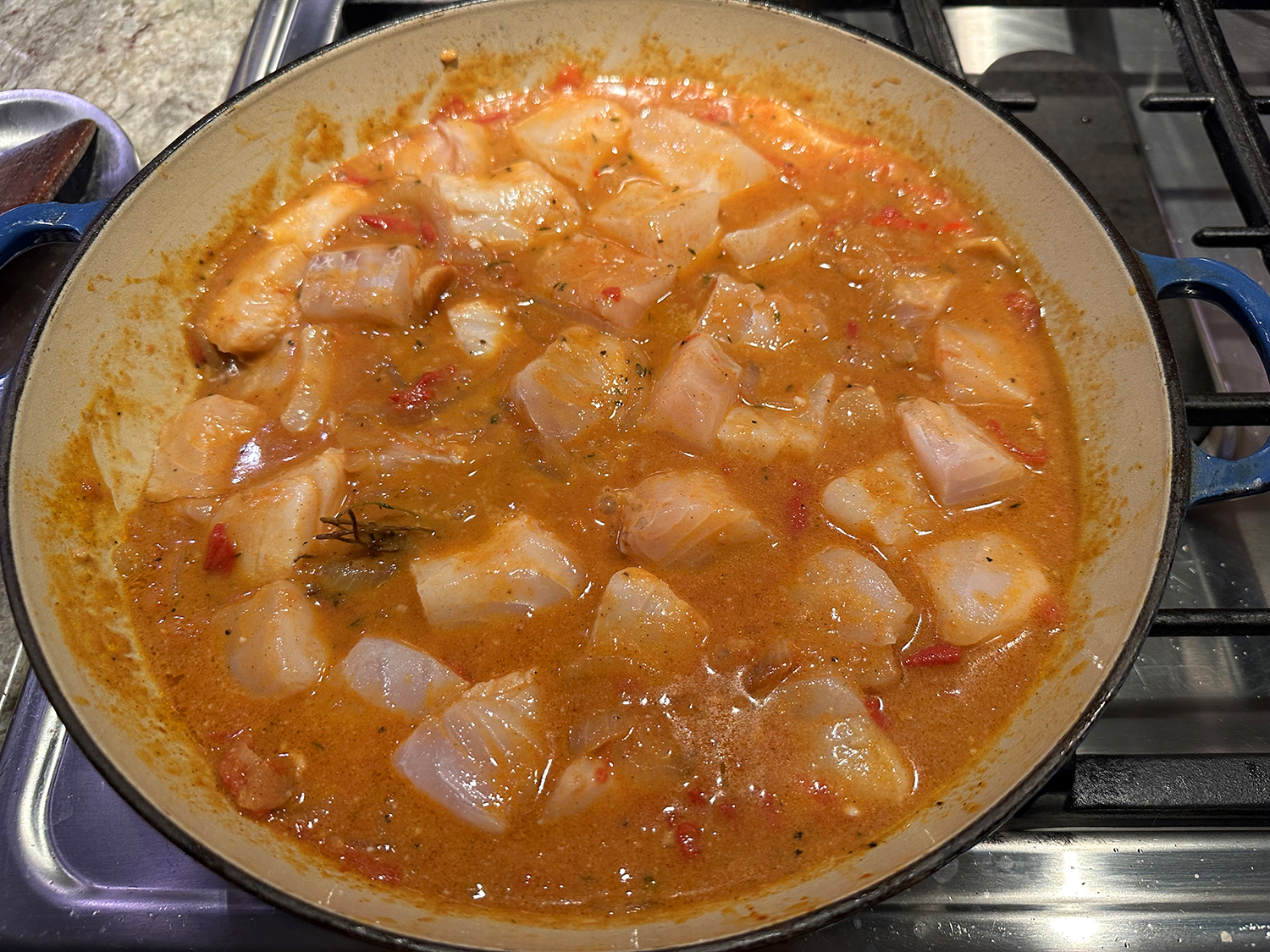
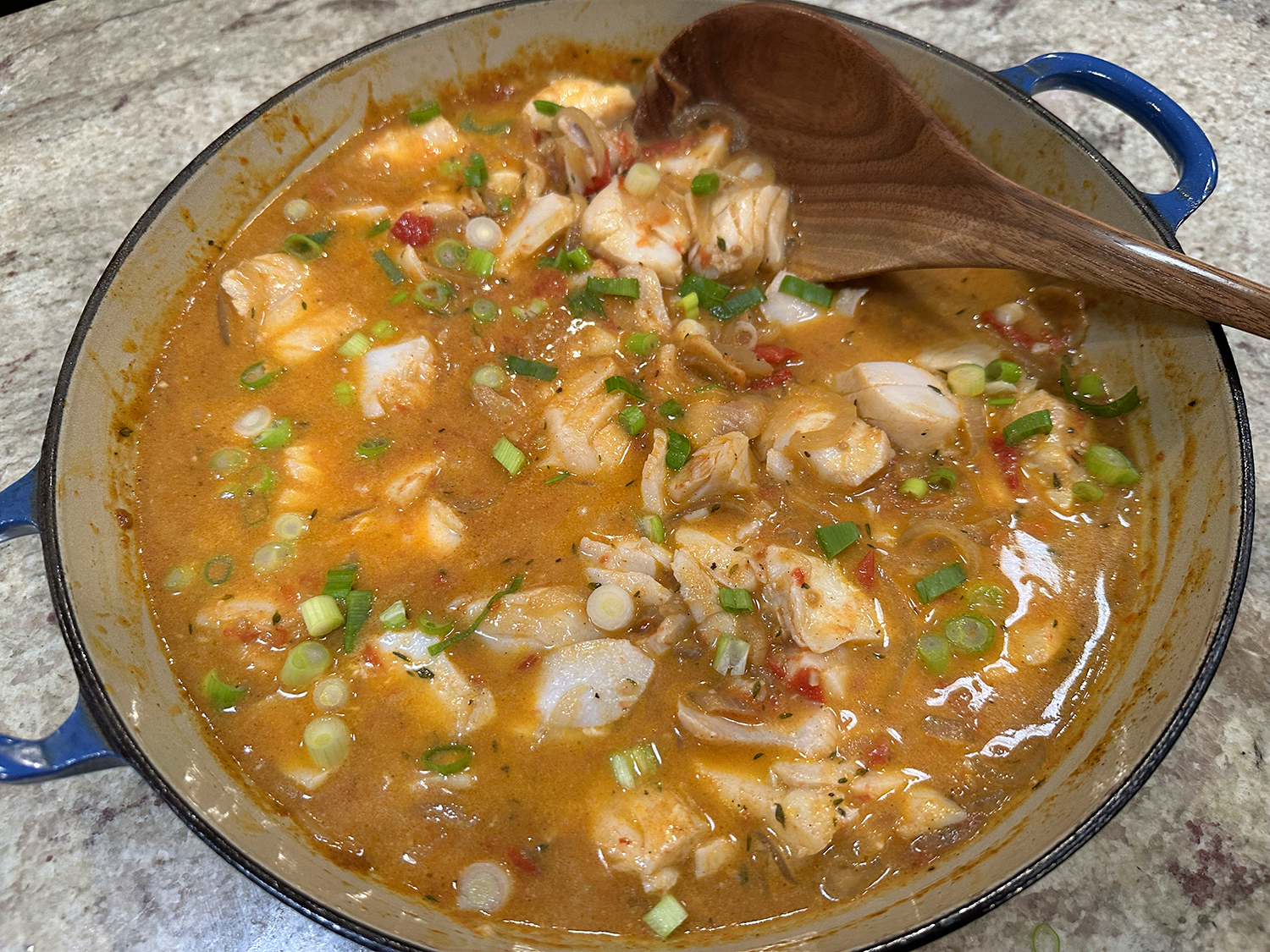
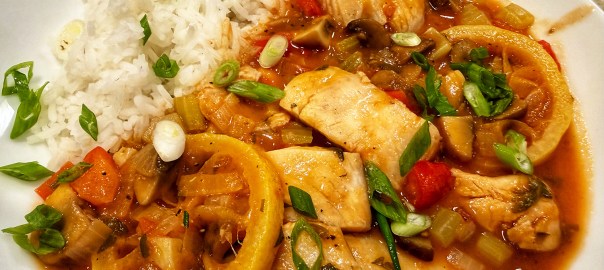
This dish truly showcases the wonderful fruitiness of habanero and the heat* is a lovely combination with the rest of the ingredients. This simple skillet stew is rich with Caribbean flavors. It’s inspired by a dish called Jamaican run-down, which simmers mackerel in coconut milk, along with tomatoes, thyme and aromatics.

The cooking liquid reduces to a luxurious sauce with spiciness and fruity notes from the habanero chili, tropical flavor from the coconut and brightness from the lime juice. Instead of mackerel, which can be difficult to source and also has an assertiveness that’s polarizing, (and we just flat out don’t like it) mild, firm sea bass or cod fillets are used. Serve with steamed jasmine rice, fried plantains or rice and beans.

TIP: Don’t touch your face if you’ve handled the habanero with bare hands, as there will be residual capsaicin on your fingers. If you have food-safe gloves, consider slipping them on before prepping the chili. And don’t use light coconut milk, as its flavor and consistency are too lean and watery.

*Word to the wise: Do not substitute a Carolina Reaper chili for the Habanero (a Serrano would be an OK choice). The supermarket didn’t have habaneros at the time so we just grabbed a reaper chili and didn’t bother looking at how they compared with the habanero heat-wise on the Scoville Heat Unit Scale. As we ate dinner, while The Hubs was sweating, had teary eyes and a flushed face, I quickly Googled only to find out while habaneros rate between 100,000 and 350,000, the Carolina Reaper clocks in at 2.5 million!! (Luckily when I was prepping the ingredients, I wore food-safe rubber gloves.)

A few changes that we made included adding a 1 1/2-inch piece of ginger cut into fine slices, increasing the coconut milk to one cup and reduced the water to a 1/2 cup.

Jamaican-Style Chili-Lime Fish Stew

  • Servings: 4
  • Difficulty: easy
  • Print

Ingredients

  • 2 Tbsp. grapeseed or other neutral oil
  • 1 medium yellow onion, halved and thinly sliced
  • 1 1/2 inch piece of fresh ginger sliced into thin circles
  • 2 medium garlic cloves, minced
  • 1 habanero chili, stemmed and sliced into thin rings
  • 1/4 tsp. ground allspice
  • 12 oz. ripe tomatoes, cored and chopped
  • 3/4 cup coconut milk
  • 2 large thyme sprigs
  • Kosher salt and ground black pepper
  • 1 1/2 lbs. skinless sea bass or snapper fillets, about 1 inch thick, cut into 1½-inch chunks (we used cod, much more economical)
  • 2 Tbsp. lime juice, plus lime wedges to serve
  • 3 scallions, thinly sliced

Directions

  1. In a 12-inch skillet over medium-high, heat the oil until shimmering. Add the onion and ginger slices and cook, stirring occasionally, until softened and beginning to brown, 4 to 5 minutes. Add the garlic, habanero and allspice; cook, stirring, until fragrant, 30 to 60 seconds. Stir in the tomatoes and cook, stirring occasionally, until they begin to break down and release their liquid, 3 to 4 minutes.
  2. Add the coconut milk and 1⁄2 cup water; scrape up any browned bits. Add the thyme, ½ teaspoon salt and ¼ teaspoon pepper, then bring to a simmer. Cover and simmer, stirring occasionally, until the tomatoes have fully broken down and the sauce is slightly thickened, about 10 minutes.
  3. Nestle the fish into the sauce. Bring to a gentle simmer and cook, stirring gently and occasionally, until the fish is opaque throughout, 4 to 5 minutes. Off heat, remove and discard the thyme, then stir in the lime juice. Taste and season with salt and pepper. Serve with lime wedges.

http://www.lynnandruss.com

Recipe by Calvin Cox for Milk Street

Pan-Seared Salmon with Citrus Pesto and Pasta

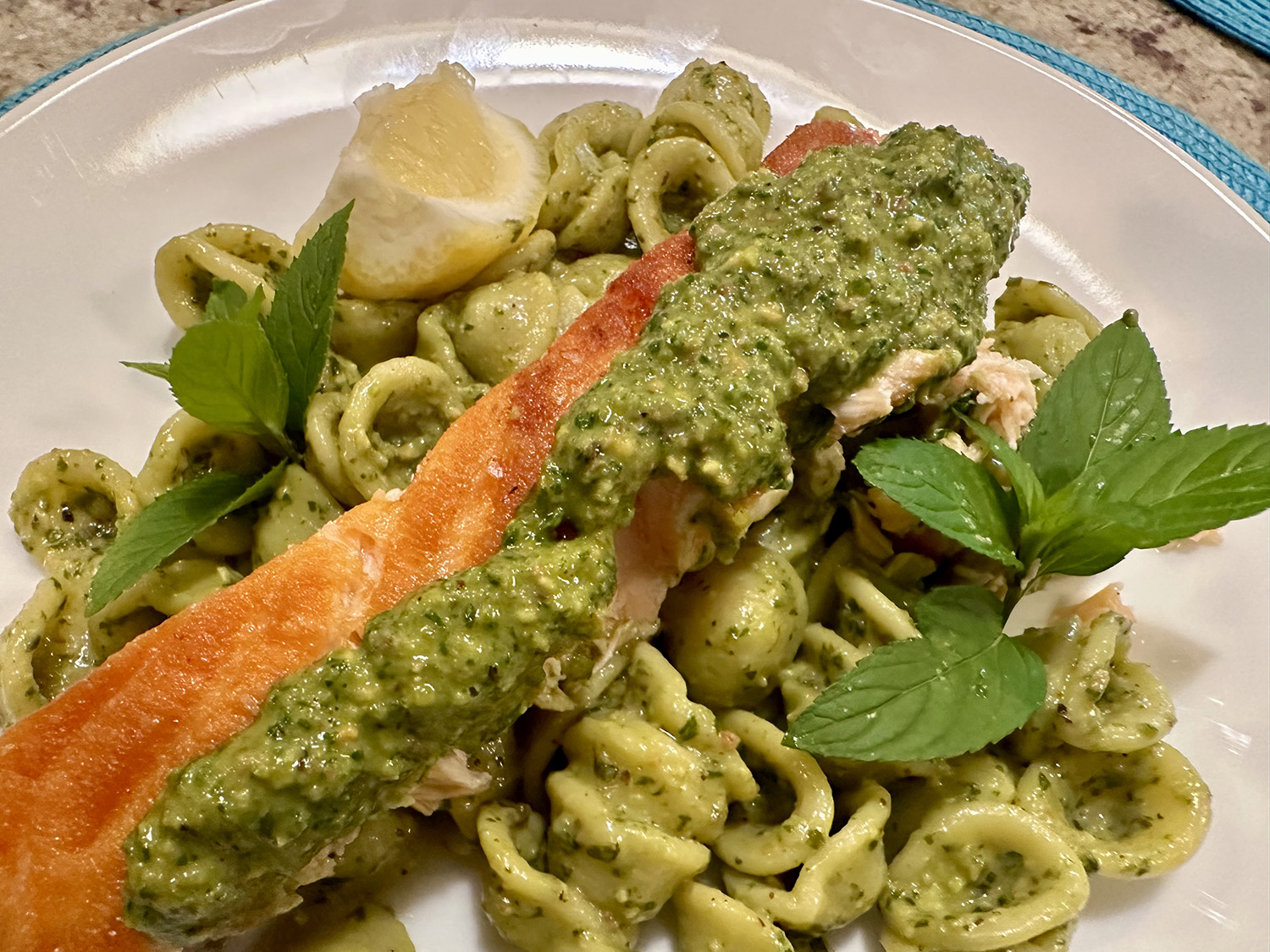
A lovely pescatarian meal utilizing a unique pesto which uses lot of fresh basil, and perhaps some fresh mint from your herb garden, or a local farmer’s market. And the citrus coming from a pink grapefruit is a novel approach, although we added the zest from one lemon also, to emphasize those welcome citrus notes.

Genovese pesto isn’t the only pesto around: There are many regional variations, including a vibrant and light Sicilian version that stars citrus. This naturally vegan version doesn’t need cheese: The citrus provides acidity, and the umami comes from the capers and toasted nuts.

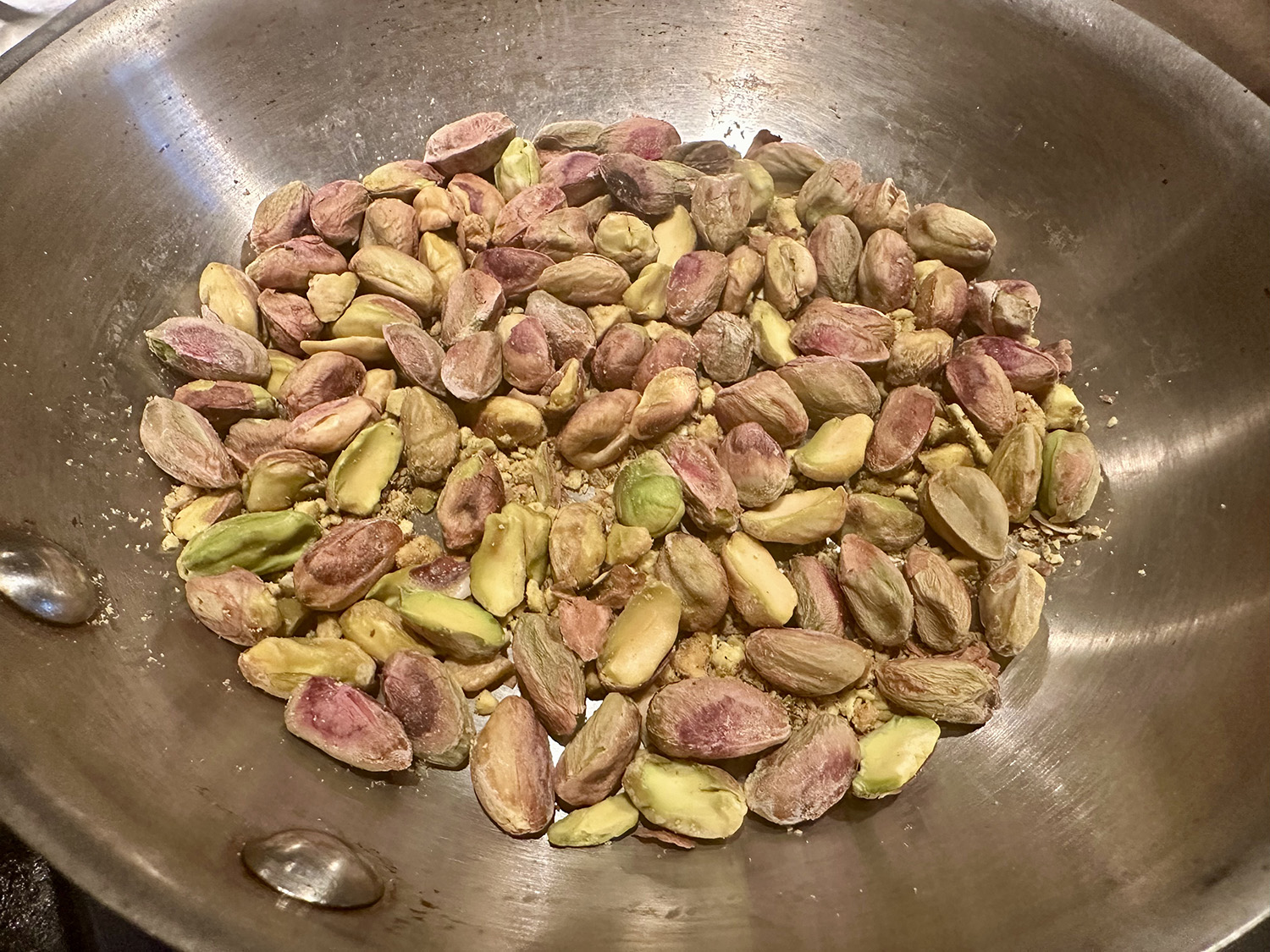
Pistachios and almonds grow abundantly in Sicily, but walnuts or pine nuts also work. Feel free, generally, to adapt this base recipe, as you’ll find Italian citrus pestos made with anchovies, garlic, dried oregano, fennel fronds, dried chile and, yes, cheese, if desired. We did add a bit of grated parmesan on the pasta.

We altered the original recipe to better suit our needs and preferences. For starters, we used a single one-pound salmon filet. The pesto was increased by half to make sure we had enough for our choice of pasta, orecchiette—which the sauce nestles inside of. And while we used both basil and mint, it was about a 75-25% ratio with basil being the dominant herb.

Pan-Seared Salmon with Citrus Pesto and Pasta

  • Servings: 2-4
  • Difficulty: easy
  • Print

Ingredients

For the Pesto

  • ½ cup toasted pistachios
  • 12 oz. orecchiette pasta
  • 1 Tbsp. drained and rinsed capers
  • Kosher salt
  • 3 cups mint or basil leaves (or a combination)
  • 1 ½ Tbsp. grapefruit, and ½ Tbsp.lemon zest; plus 4 ½ Tbsp. grapefruit juice
  • ½ cup extra-virgin olive oil, plus more as needed

For the Fish

  • 1 lb. salmon fish fillet
  • Salt
  • Extra-virgin olive oil, for greasing

Directions

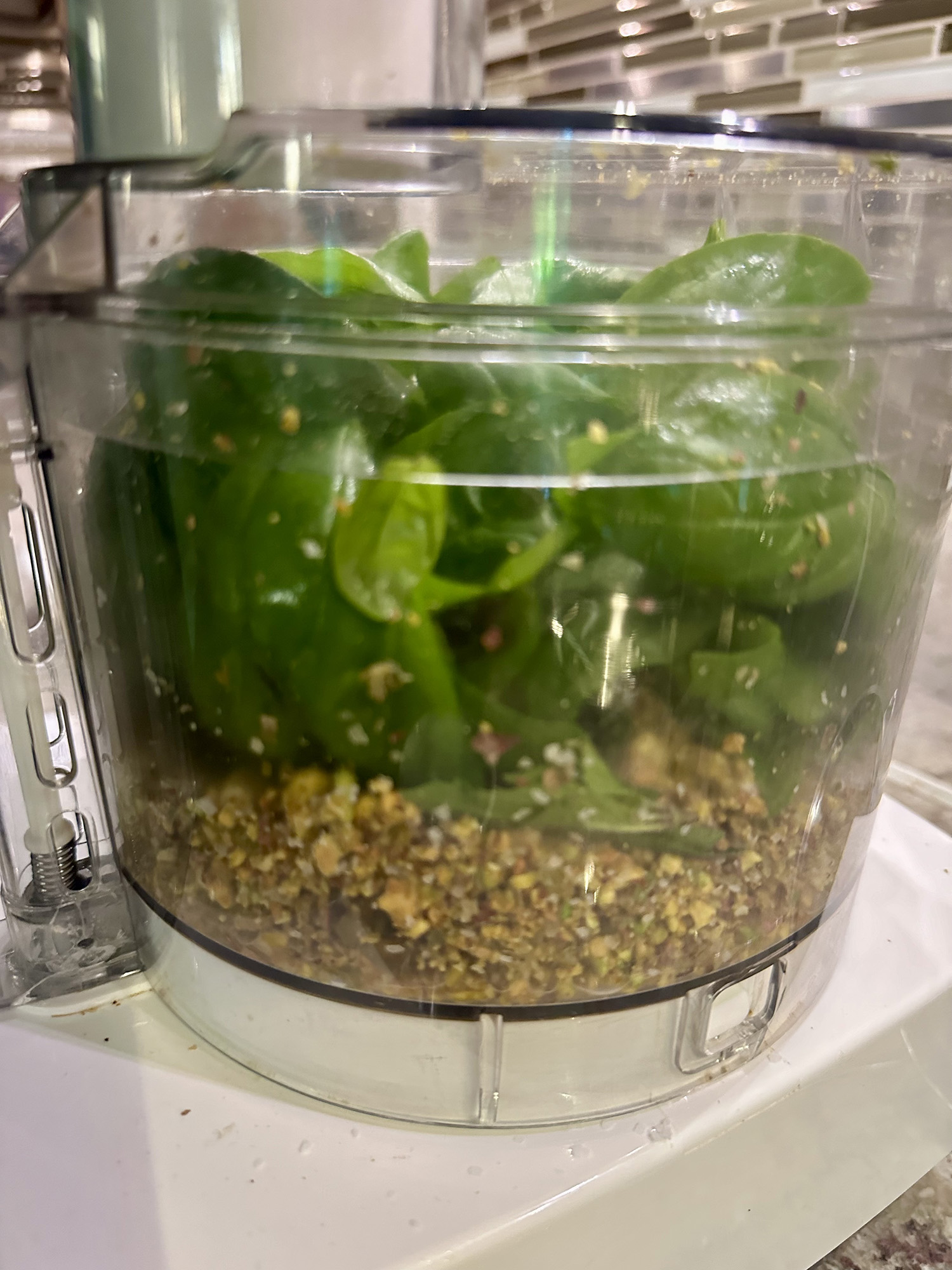
  1. To make the pesto, add the pistachios, capers and 1 teaspoon salt to a food processor and process until coarsely chopped. Add the herbs, citrus juice and a pinch of salt and pulse until the herbs are finely chopped and the nuts are about the size of sesame seeds.
  2. Cook the orecchiette as directed on the package. Reserve about 1 cup of the pasta water.
  3. Add the olive oil and pulse just until combined. Stir in 1 Tbsp. of citrus zest. Taste, then continue to add more zest and salt until the pesto is citrusy and punchy.
  4. Thin with 2 to 3 more tablespoons of olive oil until it’s the consistency of a loose paste. Taste, and adjust seasonings as needed.
  5. To make the fish, season it all over with salt and oil. Add the fish (skin-side down, if your fillets are skin-on) to a large nonstick skillet, then heat over medium. Cook until the flesh is opaque ¾ of the way up the sides, 6 to 12 minutes, depending on the thickness of the fish. If the fish is buckling, press it down with a spatula so it makes contact with the skillet. Flip and cook until cooked through, 1 to 2 minutes.
  6. Divide the pesto roughly in half, adding part of it to the pasta along with some reserved pasta water until a loose consistency.
  7. Divide desired amount of cooked and sauced orecchiette onto plates, lay the salmon fillets and top with a few spoonfuls of pesto.

http://www.lynnandruss.com

Loosely adapted from a recipe by Ali Slagle for NYTimes Cooking

Creamy Fish With Mushrooms and Bacon

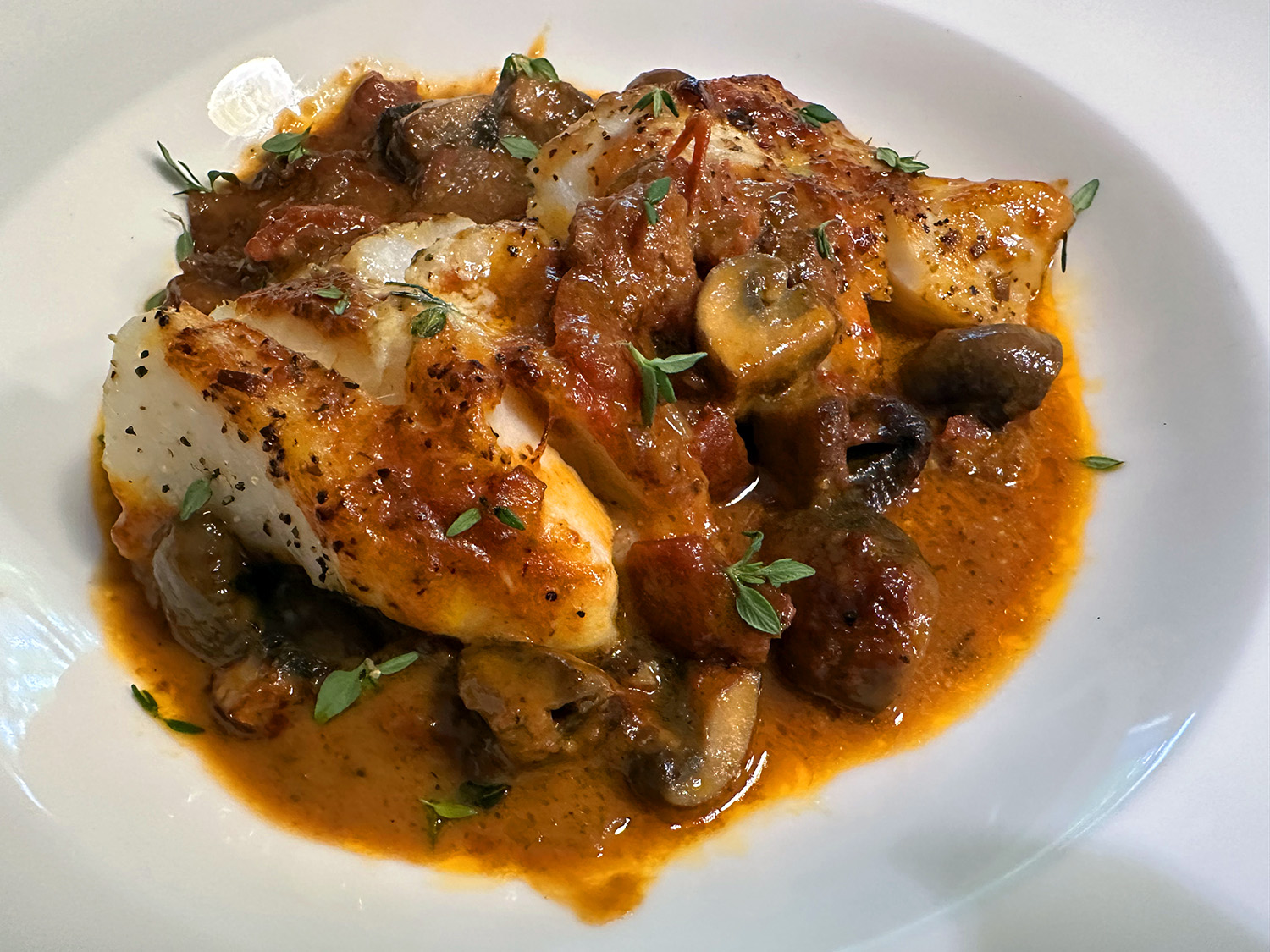
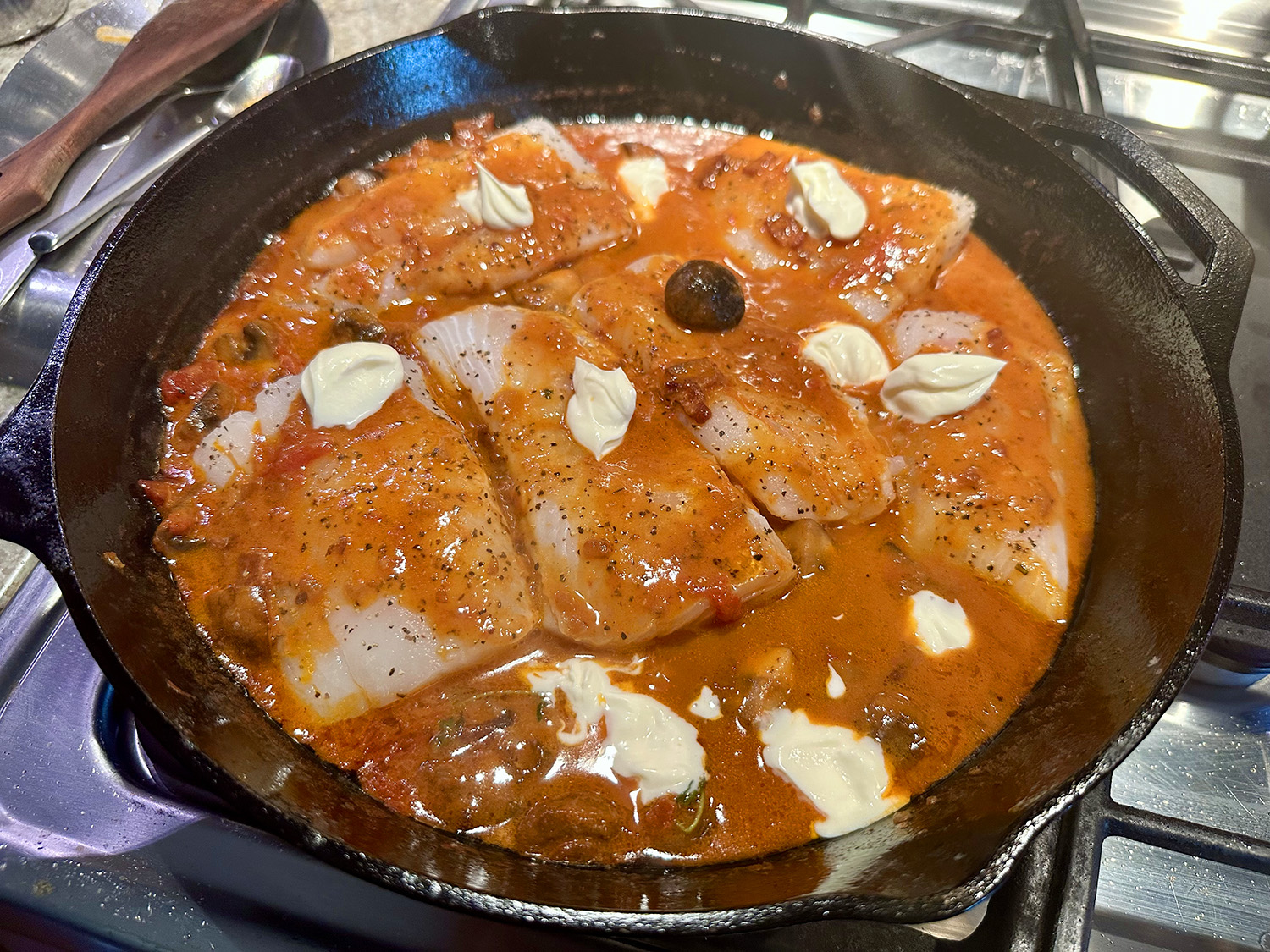
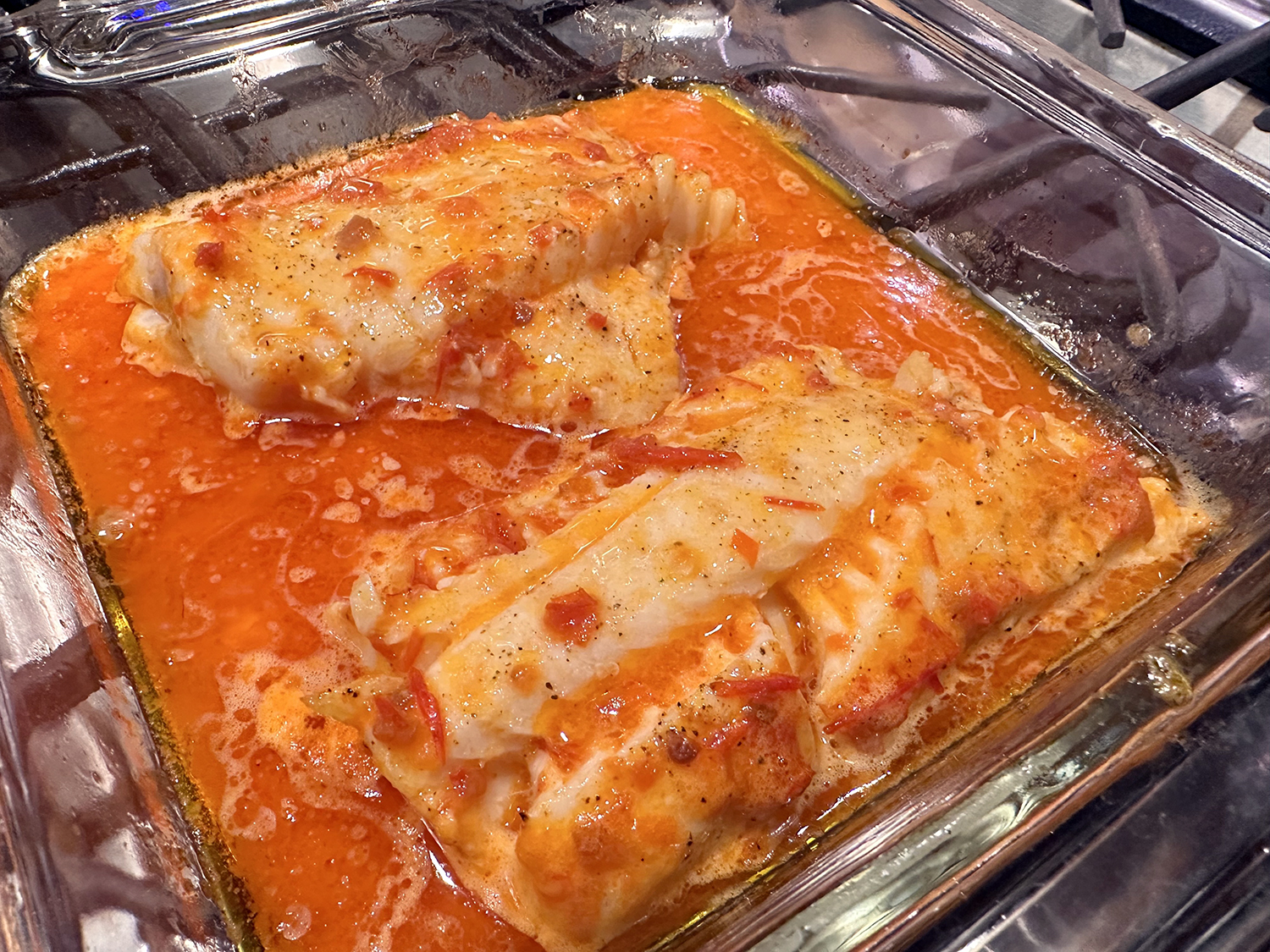
OMG, we were astounded by how delicious this turned out! The delightful fish recipe was inspired by one from the chef Hugue Dufour of M. Wells restaurant in Long Island City, Queens. It’s based on the classic French preparation called bonne femme, which refers to simple, homey dishes often containing wine, mushrooms and cream… which this was.

Here, bacon and tomatoes are added to the sauce, giving it brawny depth and brightness. You can use any kind of mild, white-fleshed fish you like. Just watch it carefully so the fillets don’t overcook under the broiler. While there are many good choices of flaky white fish, cod seems to be the most economical, so that is what we used.

I’ve often wondered what the difference in terminology for “filet” versus “fillet” in recipes really means. Basically they are interchangeable. Filet is predominantly used in American (US) English (en-US), while fillet is predominantly used in British English. Fillet can be used as a noun or a verb. As a noun, fillet is a boneless piece of meat/fish. Many people eat fish fillets, for instance. As a verb, fillet means to remove meat/fish from the bone. Today, fillet is used much more frequently than filet. Don’t get too hung up on which version to use.

Creamy Fish With Mushrooms and Bacon

  • Servings: 4-6
  • Difficulty: easy
  • Print

Ingredients

  • 4 oz. bacon (4 to 8 slices, depending on thickness), diced
  • 8 oz. cremini or white mushrooms, stems discarded and caps halved or quartered
  • 1 large shallot, diced
  • 1 cup canned peeled whole tomatoes
  • ¼ cup white wine
  • 1 cup vegetable or chicken stock
  • ¼ tsp. fine sea salt, plus more for fish and to taste
  • ¼ tsp. finely ground black pepper, plus more for fish
  • 5 Tbsp. crème fraîche or heavy cream
  • 5 thyme sprigs, plus ½ tsp. thyme leaves, more for garnish
  • 4 to 6 fillets black sea bass, fluke, tilefish, hake or other white fish (1¼ to 1½ lbs.), skin removed
  • Baguette slices or buttered toast, for serving

Directions

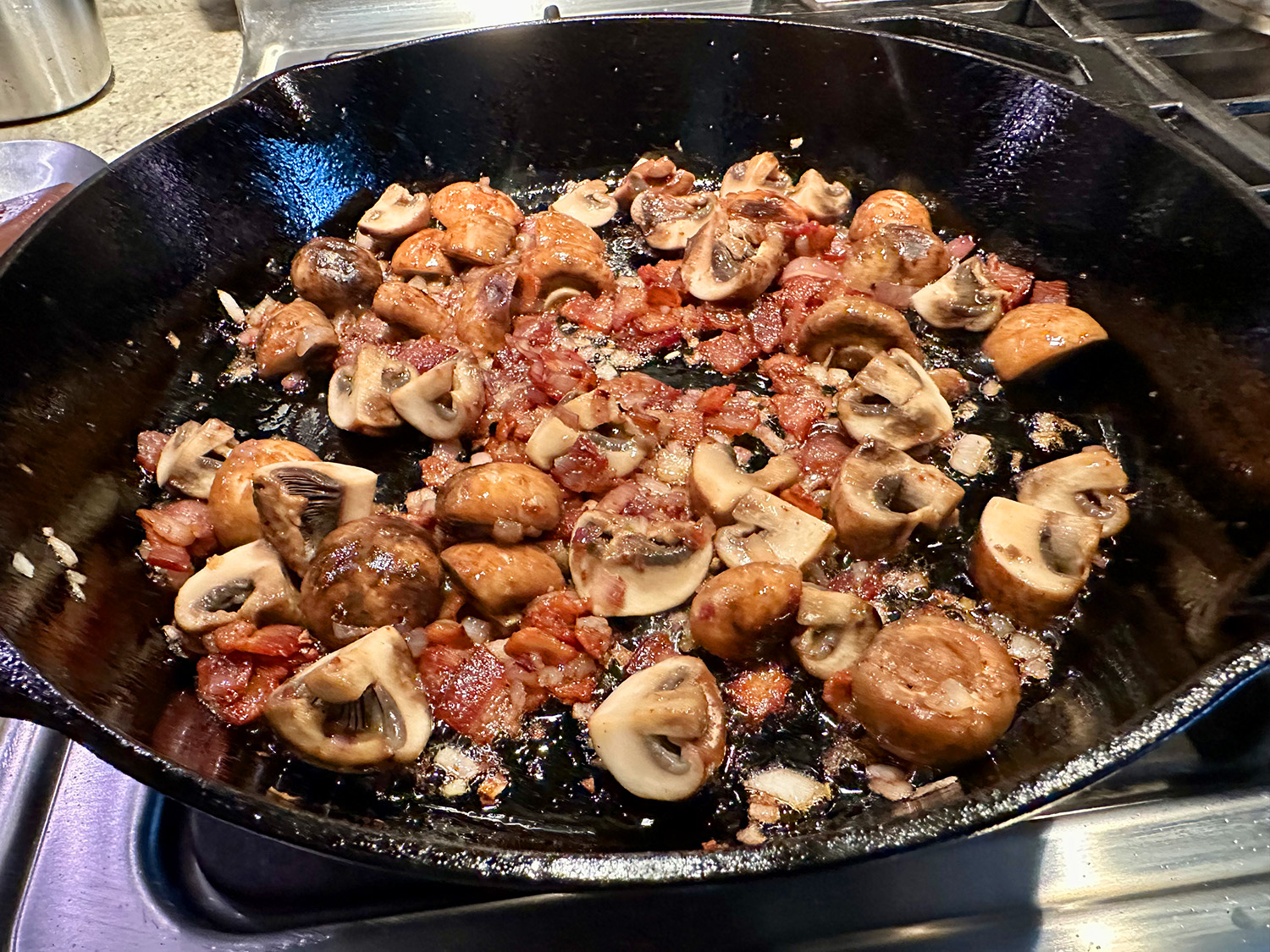
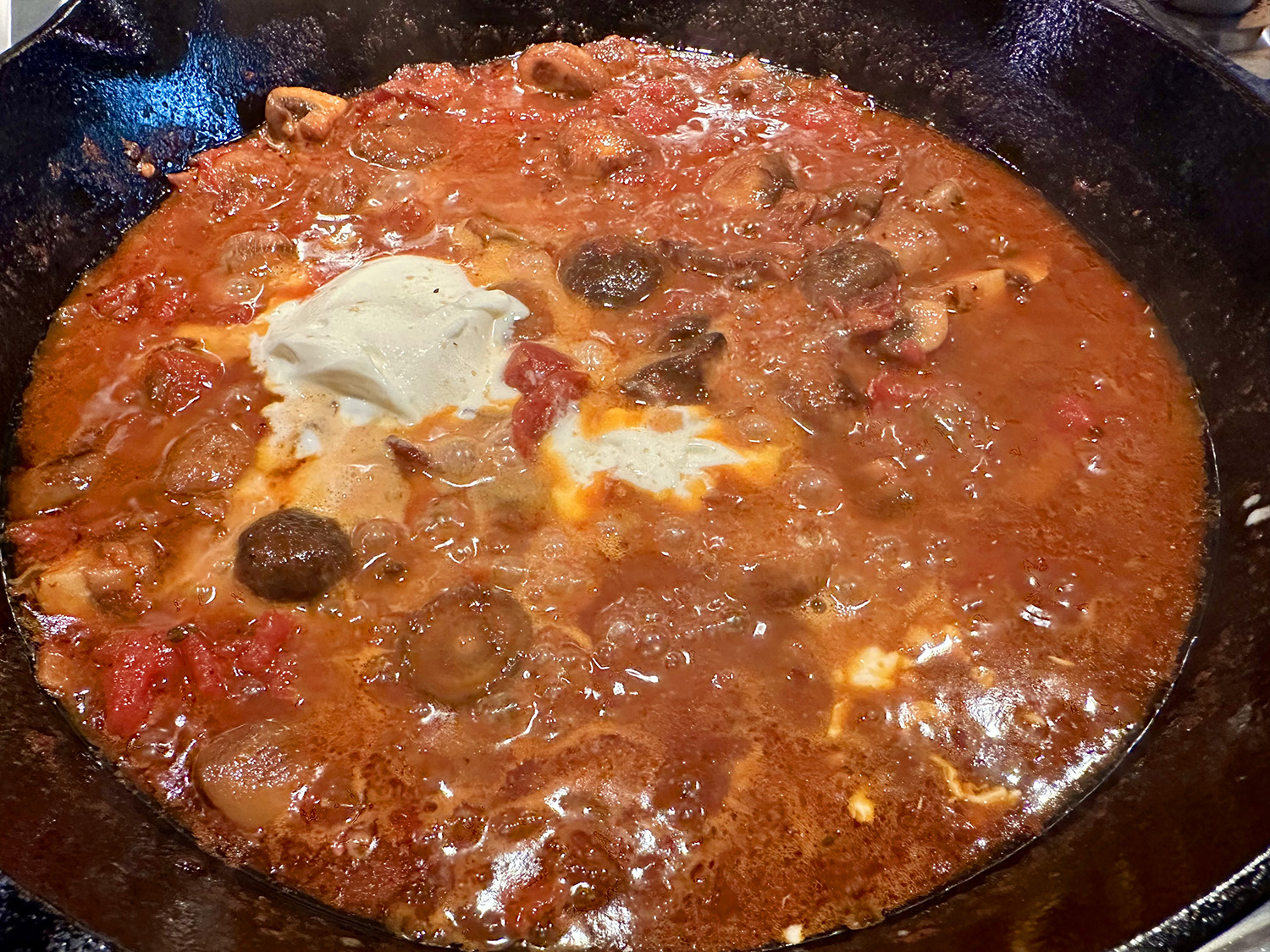
  1. In a large oven-safe skillet over medium-high heat, cook the bacon until crisp and brown, about 5 minutes. Add mushrooms and shallot, and cook until tender and deeply golden, 5 to 8 minutes.
  2. Use your hands to crush the tomatoes or a knife to roughly chop them. Deglaze the skillet with the crushed tomatoes and their liquid, along with the wine and vegetable stock. Add the salt and pepper. Bring to a strong simmer and cook until the sauce has thickened, about 10 minutes. Taste and add more salt if needed.
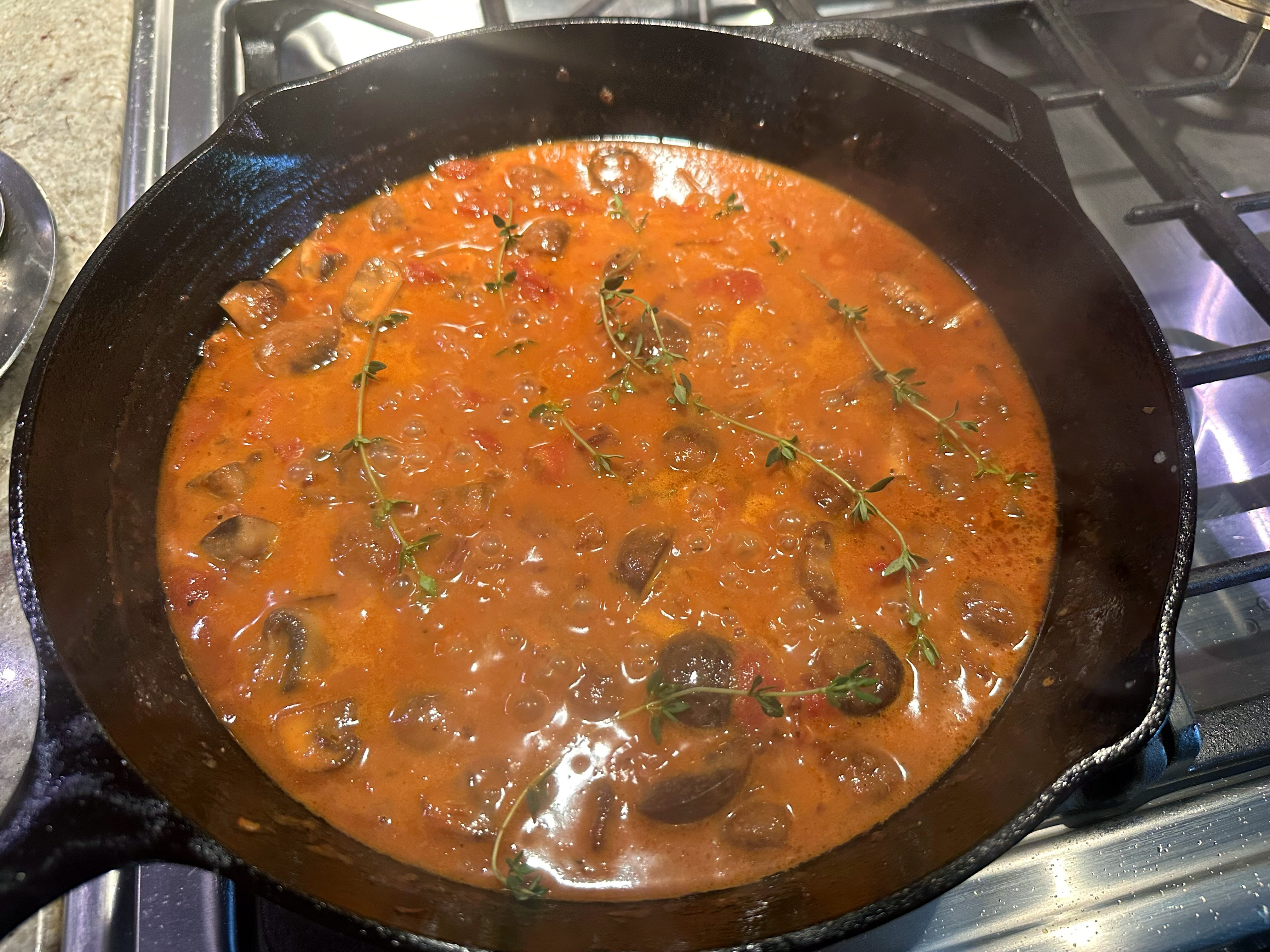
  3. Whisk in 4 tablespoons crème fraîche or cream, then add thyme sprigs. Simmer for 2 to 3 more minutes or until the sauce has reduced slightly.
  4. While the sauce reduces, generously season the fillets on both sides with salt and pepper. Heat broiler on high with a rack placed 6 inches from the heat source.
  5. Place the thicker fillets toward the edge of the skillet on top of the sauce and place the thinner fillets toward the center. Some overlapping is fine. Use a spoon to scoop some of the mushroom mixture over the fillets and dollop the remaining 1 tablespoon of crème fraîche evenly over the skillet. Sprinkle with thyme leaves.
  6. Broil for 2 to 5 minutes for thin fillets and 6 to 10 for thick ones, or until the sauce is bubbling and the fillets are just cooked through. Serve garnished with thyme leaves in shallow bowls with baguette slices or buttered toast for dipping.

http://www.lynnandruss.com

Recipe by Melissa Clark for NYTimes Cooking

Braised Cod with Peperonata

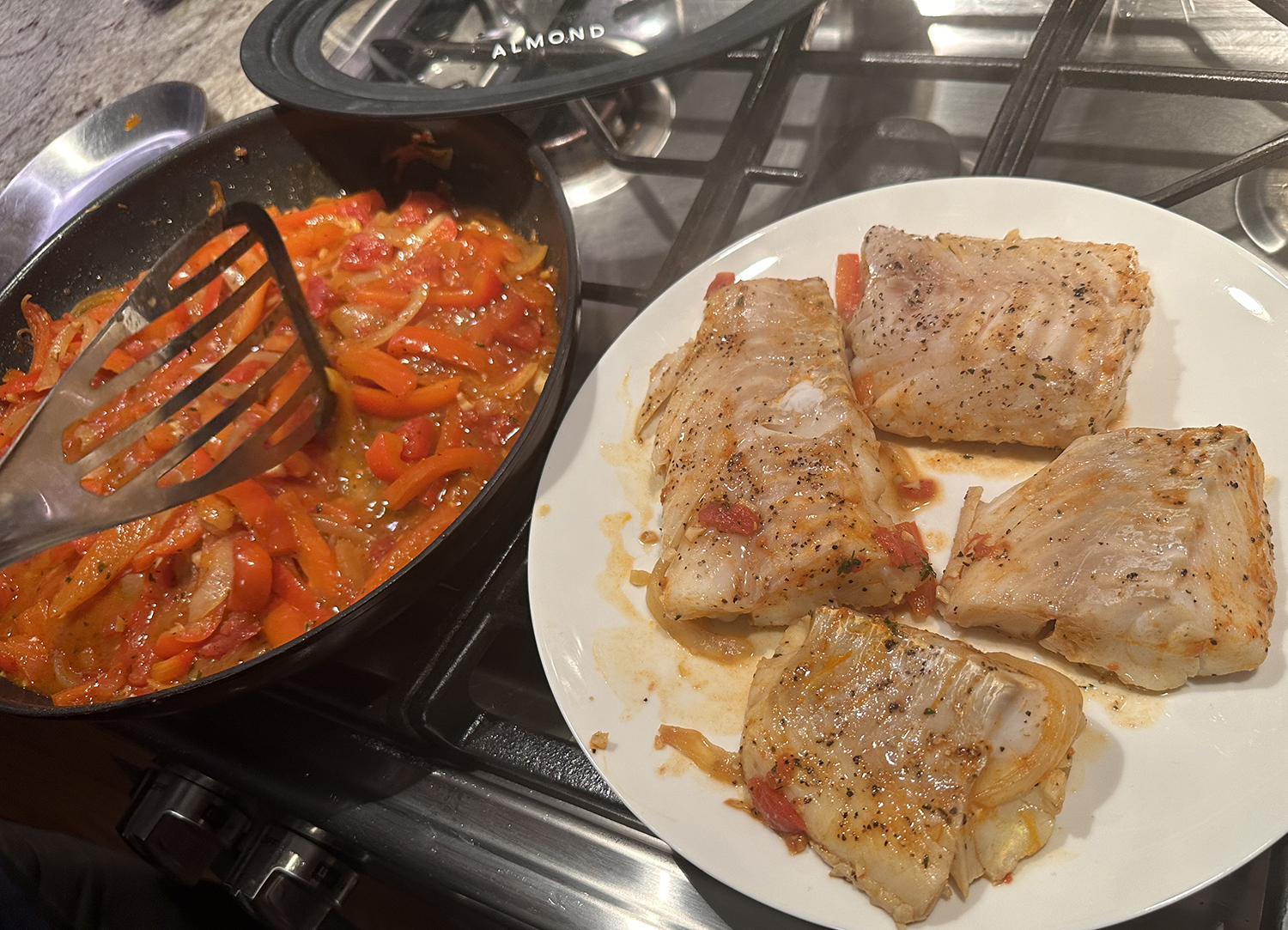
What home cook doesn’t want a quick dinner without too much prep, is healthy, and is ready to eat in under an hour? This lovely recipe fits the bill. Nice bright flavors, delicate flaky fish and a bit of punch from the paprika (we used smoked paprika).

Flaky white cod is one of the more widely distributed and moderately priced fish available. Its mild flavor can be used in countless different dishes, but we think it’s at its best when braised with assertive flavorings, like the sweet peppers, thyme, garlic, and paprika of peperonata, a classic Spanish dish.

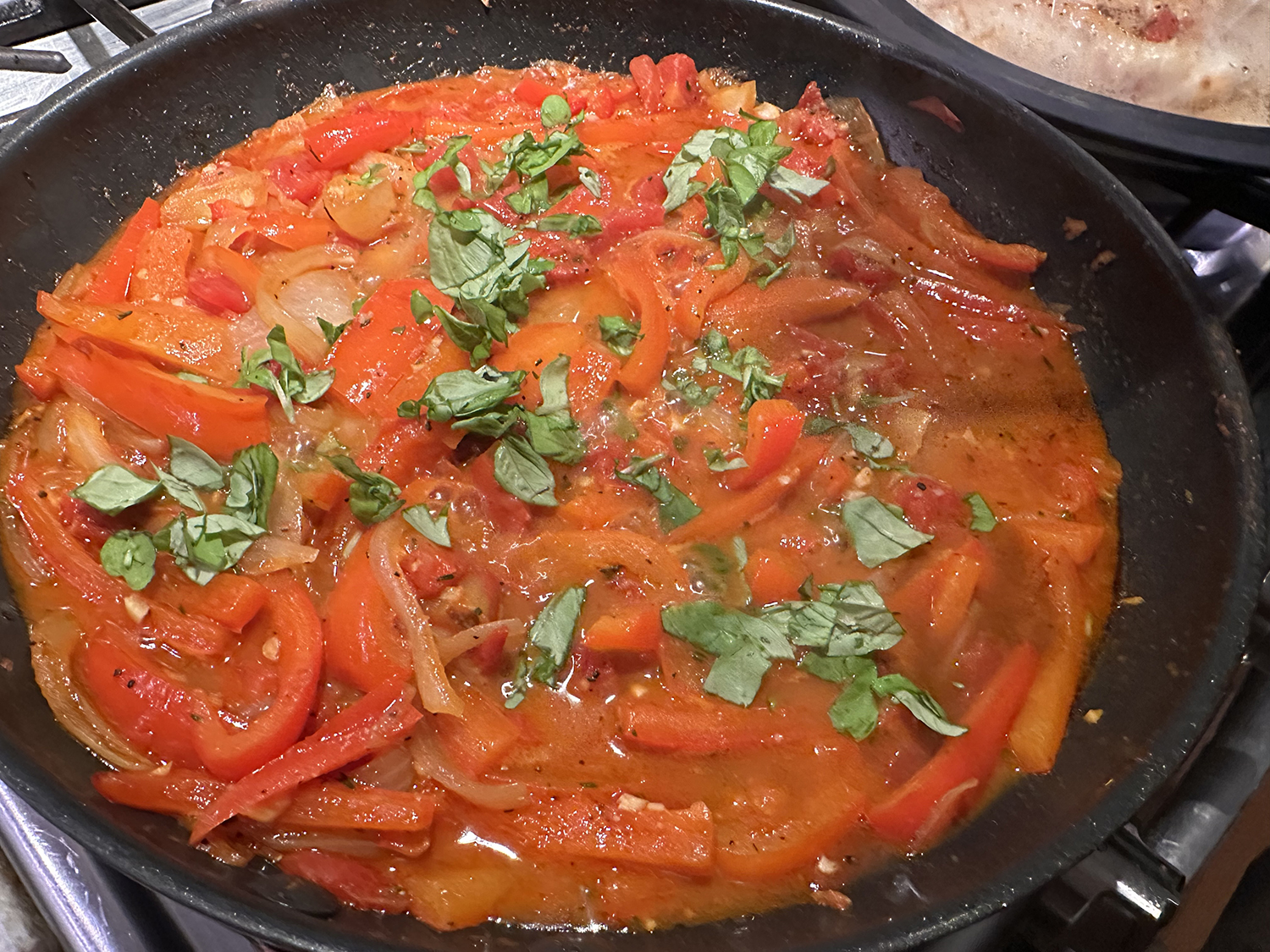
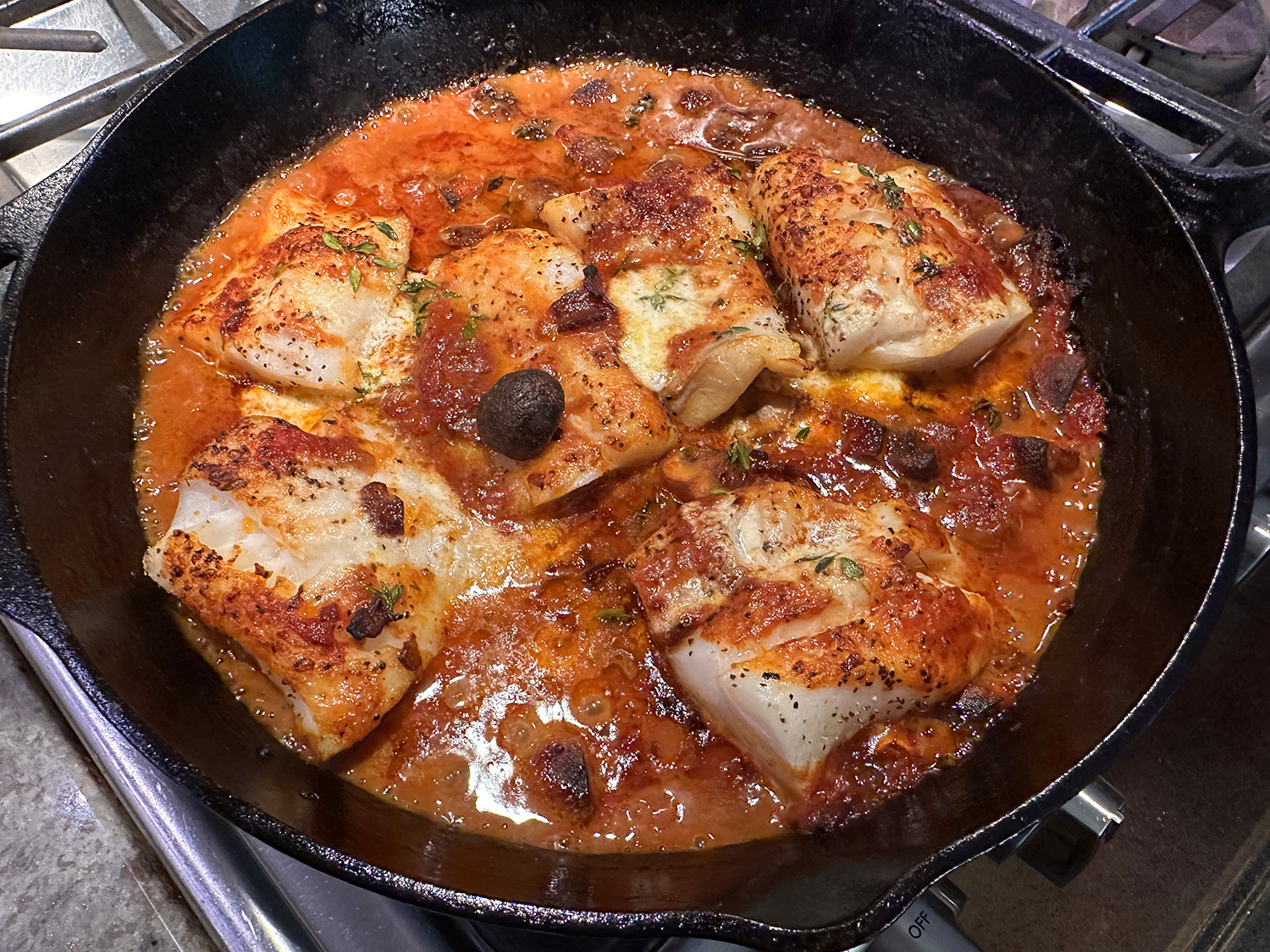
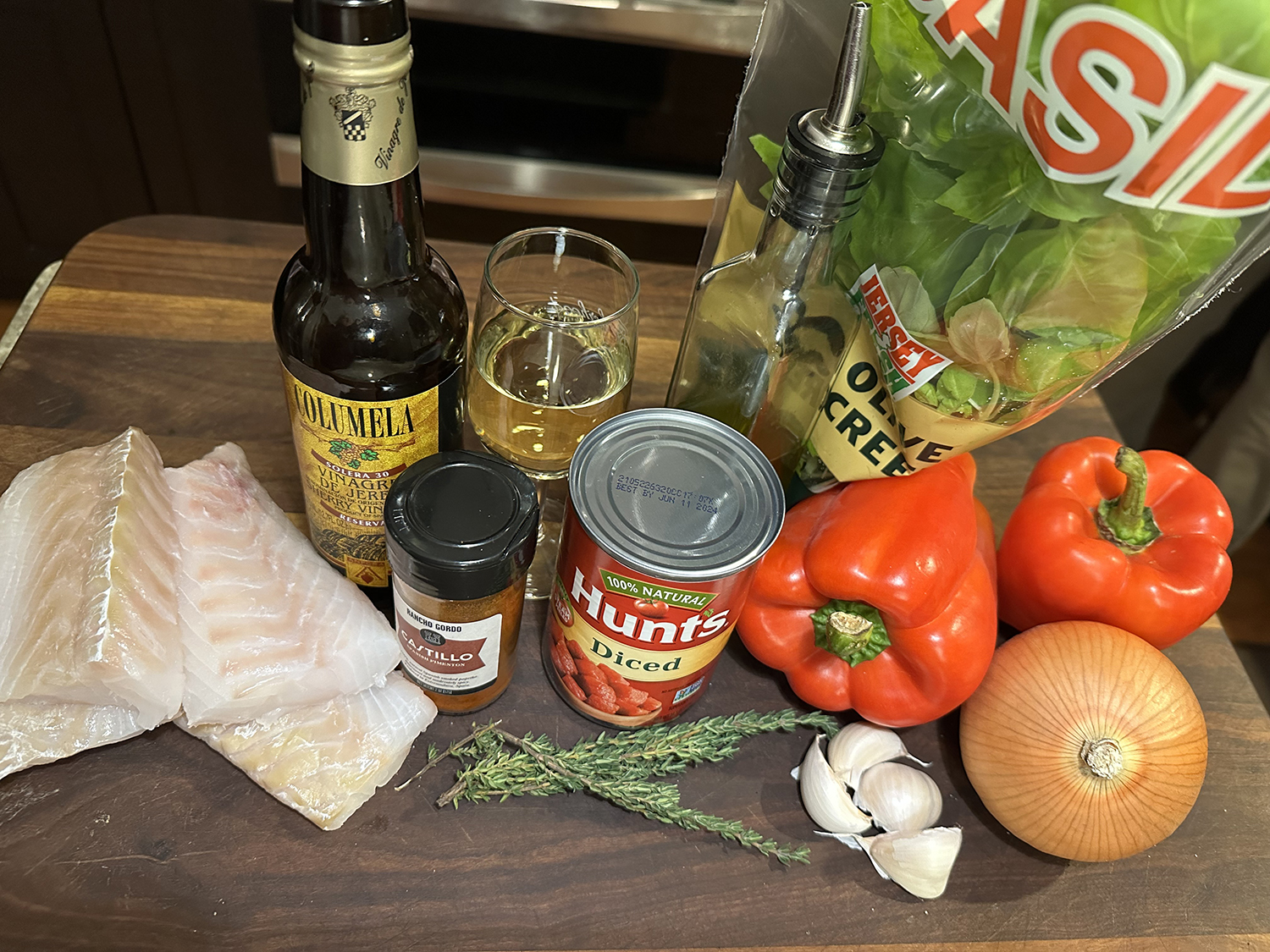
For this Spanish-style braised cod recipe, we laid down a base of sautéed onion, bell pepper, garlic, and paprika, to which we added tomatoes, fresh thyme, and wine. Once the broth was prepared, we simply nestled the pieces of fish down into the sauce, dropped the heat to low, covered the skillet, and let the fish cook in the moist environment. Within about 10-15 minutes, the fish was cooked through—the result being a tender, moist, and very well seasoned braised cod recipe.

Halibut, snapper, tilapia, bluefish, monkfish, or sea bass fillets are all good substitutions for the cod. If desired, drizzle with extra-virgin olive oil before serving. Smoked paprika (often found in specialty spice markets) is a nice substitution for the paprika here. Serve with soft polenta or crusty bread. Or go low-carb as we did, and just serve the fish and sauce.

Braised Cod with Peperonata

  • Servings: 4
  • Difficulty: easy
  • Print

Ingredients

  • 2 Tbsp. olive oil
  • 2 red bell peppers, cored and sliced thin
  • 1 onion, halved and sliced thin
  • 2 tsp. paprika
  • Salt and ground black pepper
  • 4 garlic cloves, minced
  • 1 (14.5-oz.) can diced tomatoes, drained
  • ½ cup dry white wine
  • 1 tsp. minced fresh thyme
  • 4 skinless cod fillets, 1 inch thick
  • 2 Tbsp. coarsely chopped fresh basil leaves
  • 2 tsp. balsamic vinegar or sherry vinegar

Directions

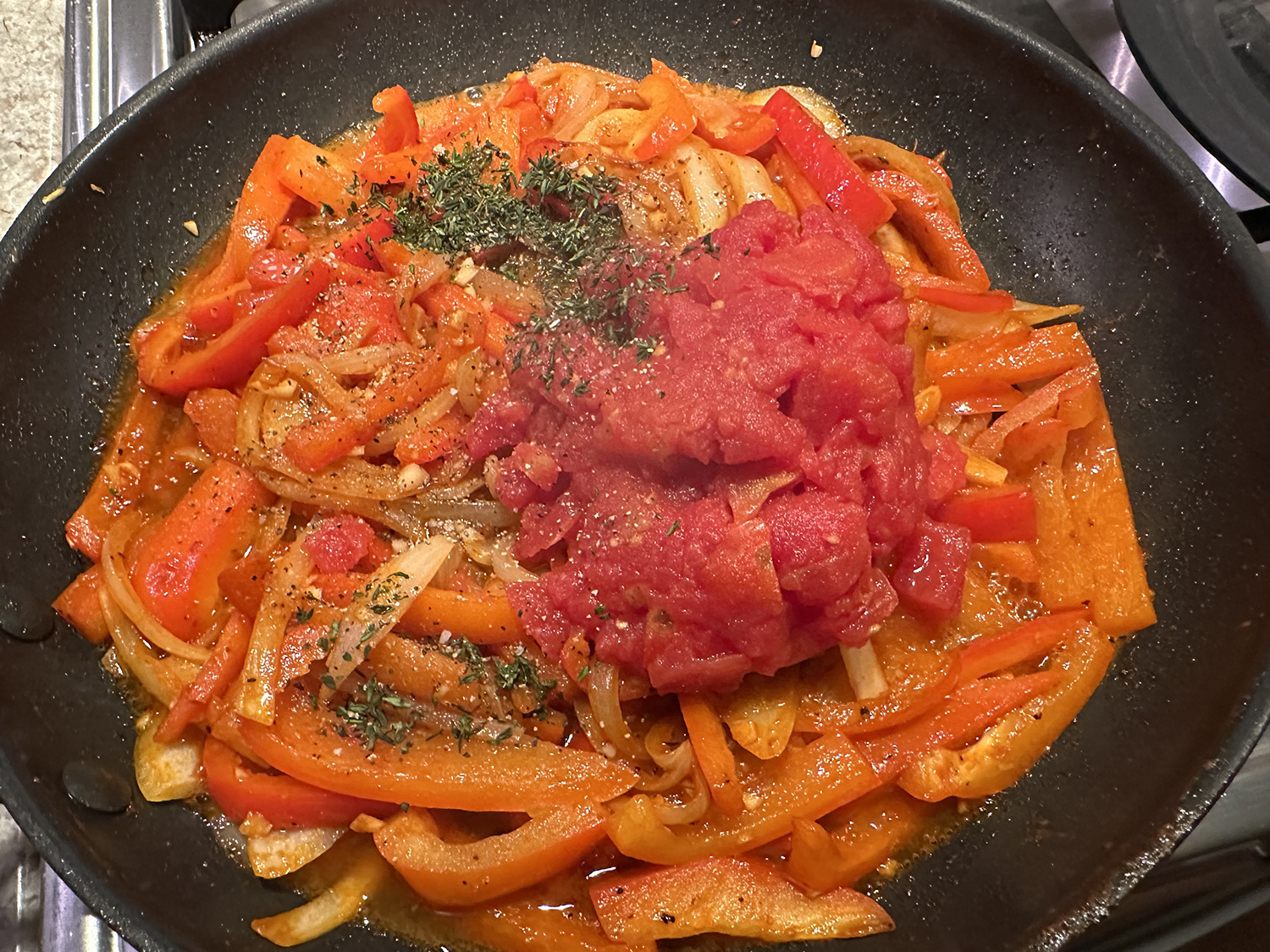
  1. Heat oil in 12-inch nonstick skillet over medium heat until shimmering. Add bell peppers, onion, paprika, and 1/2 teaspoon salt and cook until softened, about 7 minutes. Stir in garlic and cook until fragrant, about 30 seconds.
  2. Stir in tomatoes, wine, thyme, and 1/4 teaspoon pepper, and bring to simmer.
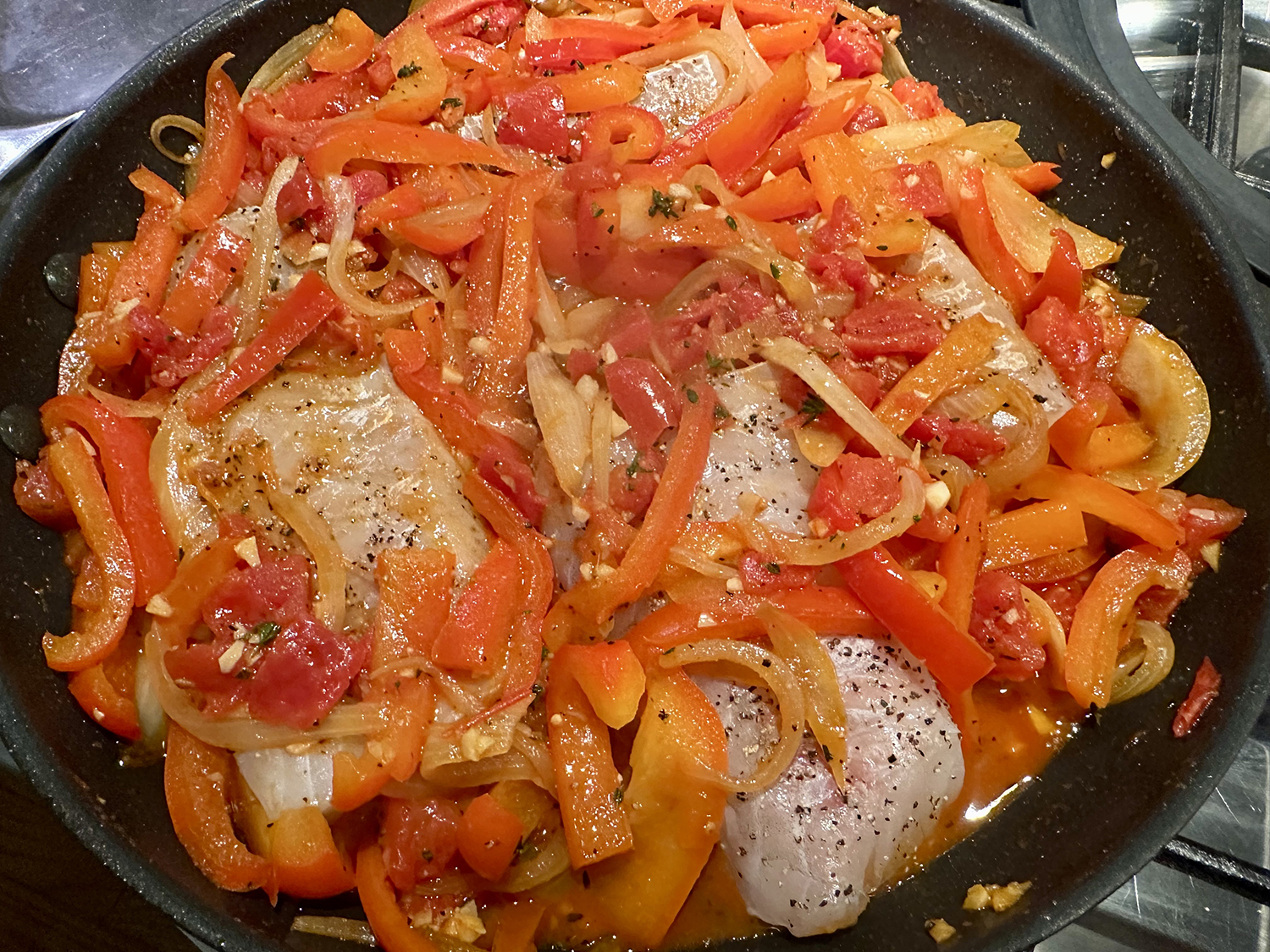
  3. Pat cod dry with paper towels and season with salt and pepper. Nestle cod into pan and spoon sauce over fish. Cover and cook over low heat until fish flakes apart when gently prodded with paring knife, about 10 minutes. (Ours took 15 minutes before it was flaky.)
  4. Transfer fish to individual plates. Stir basil and vinegar into sauce and season with salt and pepper to taste. Spoon sauce over fish and serve.

http://www.lynnandruss.com

Recipe from America’s Test Kitchen

Salmon Traybake with Harissa-Roasted Pepper Sauce

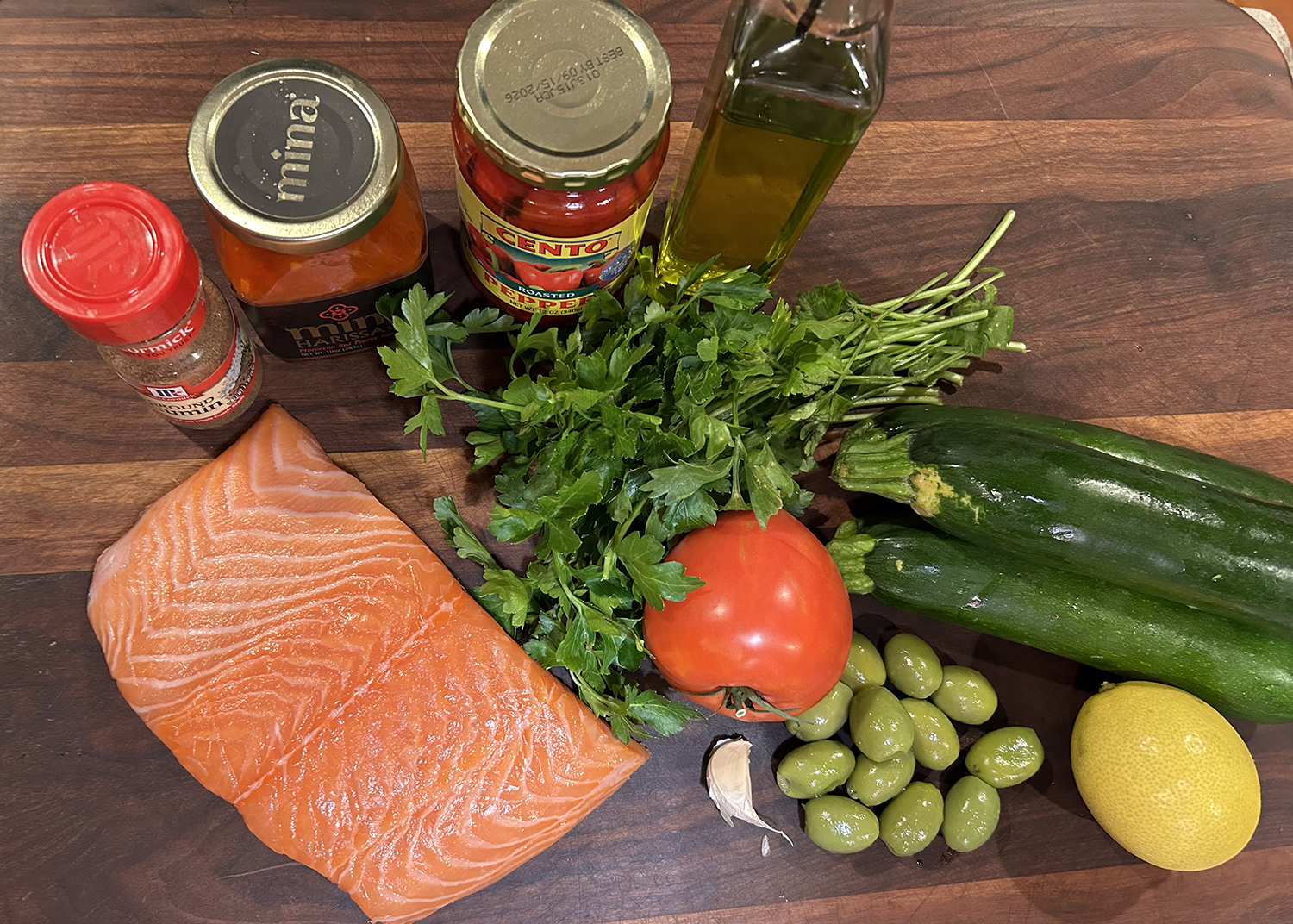
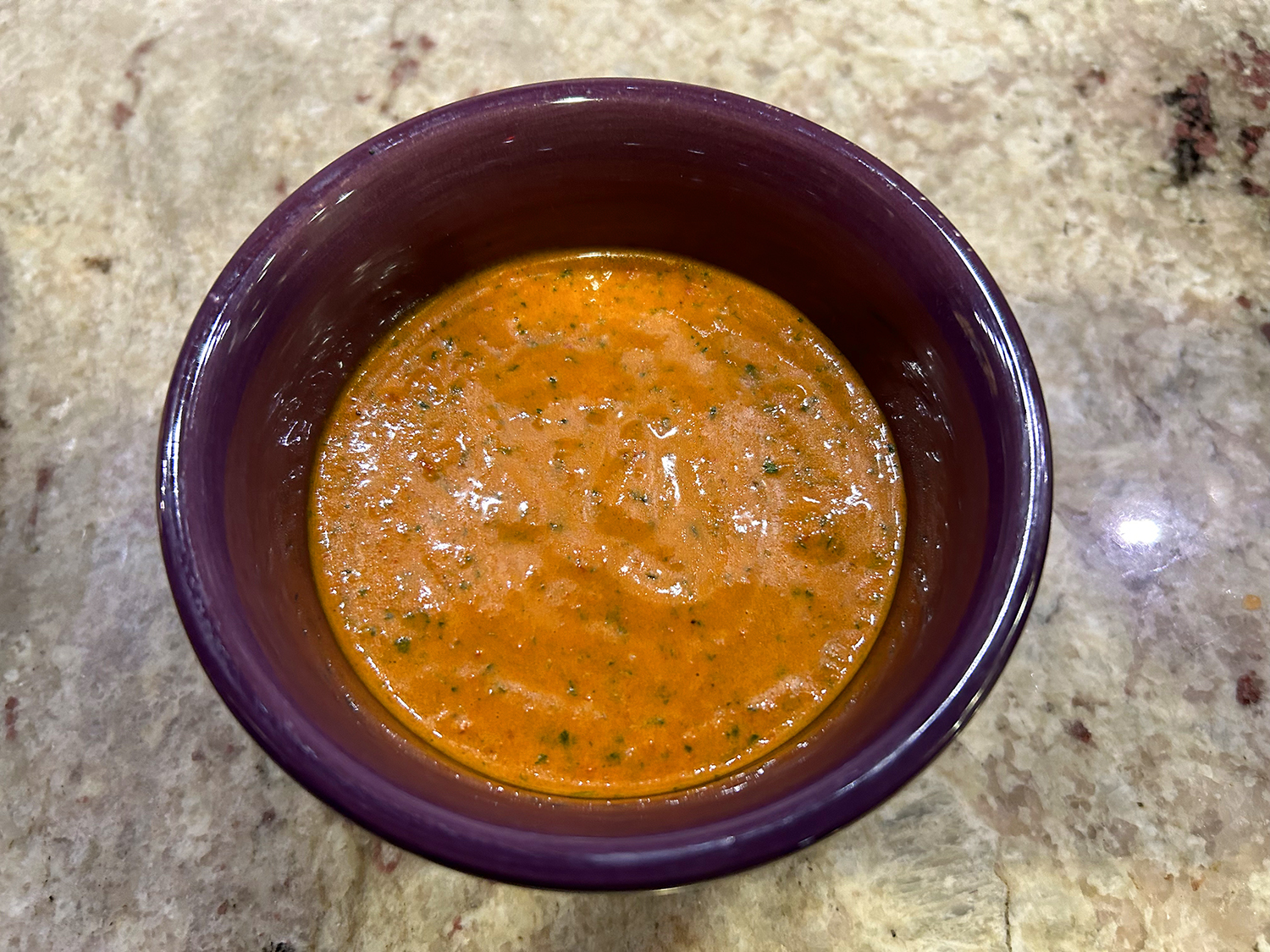
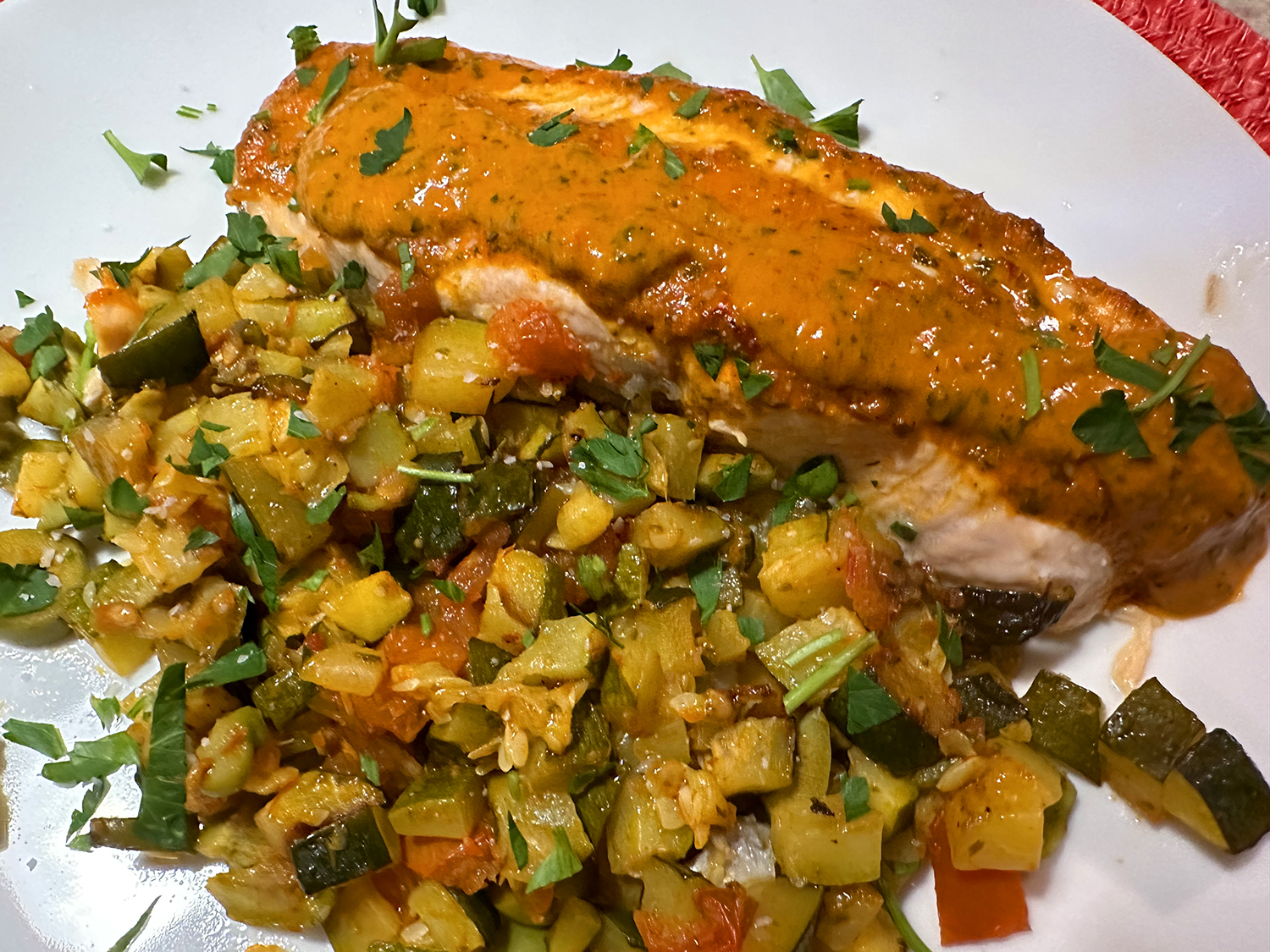
The inspiration for this colorful traybake is Moroccan-style red chermoula: a bold, warmly spiced sauce, often served with fish. This weeknight-friendly version from Milk Street calls on smoky harissa, a North African chili and spice paste, plus sweet roasted peppers, earthy cumin, bright lemon juice and fresh garlic and parsley, all whirred together in the blender.

Harissa spiciness varies by brand, so a range is suggested. To make the most of the mixture, use it three ways: as a salmon marinade, a seasoning for roasted zucchini and as a sauce for the finished dish. Serve with couscous, rice or warmed flatbreads.

The original recipe called for 1 1/2 pounds of salmon, but we purchased a one-pound piece and cut it in half allowing for 2 servings. If using 1 1/2 pounds, cut the filet into 3 or 4 pieces, or buy them already cut down to 6 ounce servings.

Don’t use large zucchini for this. They tend to contain many seeds and will turn soft and mushy with cooking. Instead, look for medium to small zucchini.

Salmon Traybake with Harissa-Roasted Pepper Sauce

  • Servings: 3-4
  • Difficulty: easy
  • Print

Ingredients

  • 1/2 cup drained roasted red peppers, chopped
  • 1/2 cup lightly packed fresh flat-leaf parsley, plus chopped parsley to serve
  • 1/4 cup extra-virgin olive oil
  • 2 Tbsp. lemon juice, plus lemon wedges to serve
  • 1-2 Tbsp. harissa paste
  • 1 medium garlic clove, smashed and peeled
  • 1/2 tsp. ground cumin
  • Kosher salt
  • 4 6-oz. center-cut salmon fillets, patted dry
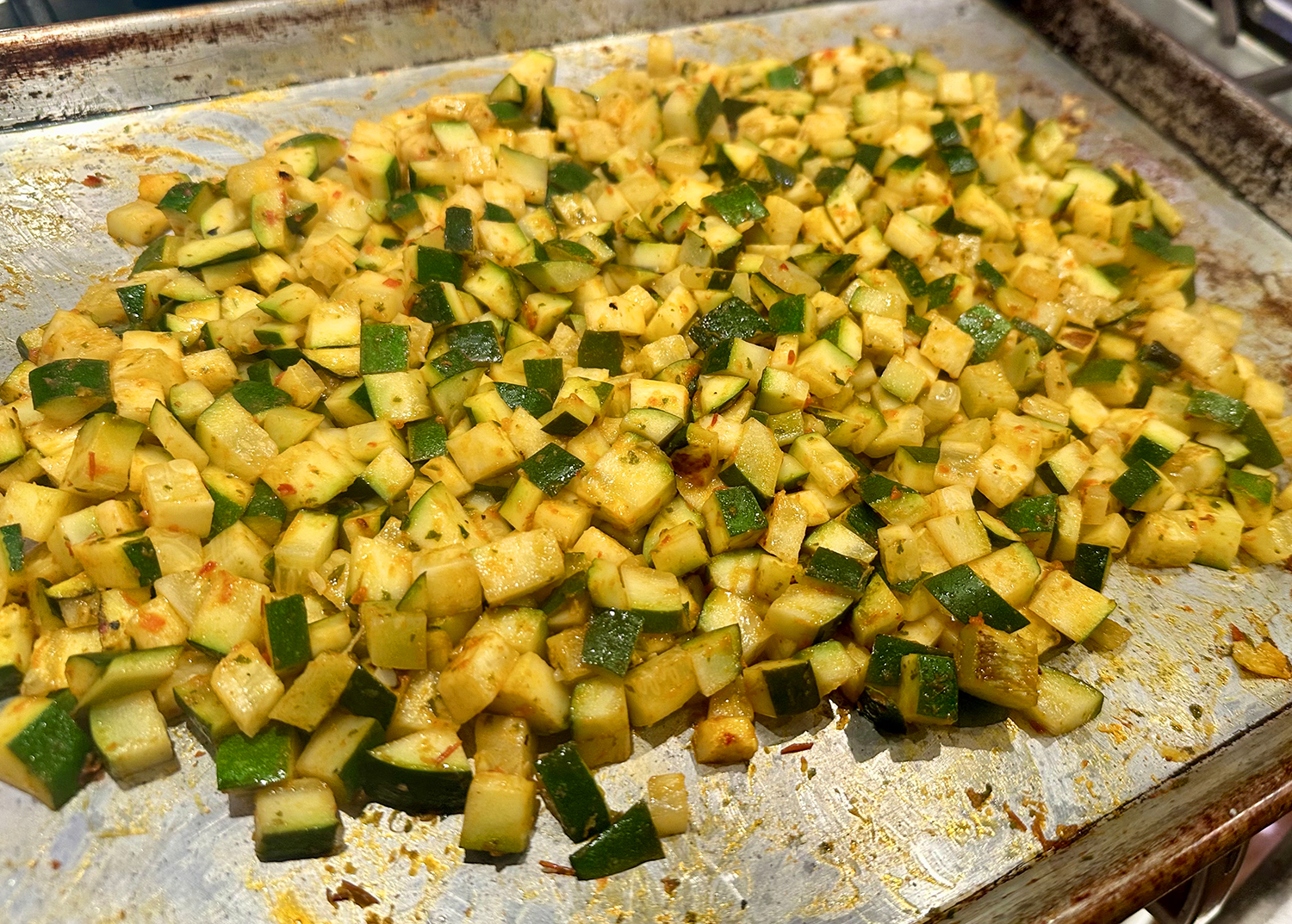
  • 3 medium zucchini (about 1½ lbs. total), cut into ¼-inch cubes
  • 1 ripe medium tomato, cored, seeded and chopped
  • 1/2 cup pitted green olives, chopped

Directions

  1. Heat the oven to 425°F with a rack in the middle position. In a blender, combine the roasted peppers, parsley, oil, lemon juice, harissa, garlic, cumin and ½ teaspoon salt. Puree until smooth, about 30 seconds. Measure out 2 tablespoons, then spread it onto the flesh side of the salmon fillets.
  2. On a rimmed baking sheet, toss the zucchini with ¼ cup of the remaining puree; transfer the rest of the puree to a small bowl for serving. Roast until the zucchini is tender, 20 to 25 minutes, stirring halfway through. Remove the baking sheet from the oven and sprinkle the tomato and olives over the zucchini. Scrape up and stir the zucchini and push it to the edges.
  3. Place the salmon, skin side down, in the center of the baking sheet. Roast until the flesh flakes easily and the zucchini is lightly charred, and registers 135°F, about 10 to 14 minutes. Transfer to a platter and sprinkle with additional parsley. Serve with lemon wedges and the remaining sauce on the side.

http://www.lynnandruss.com

Recipe by Rose Hattabaugh for Milk Street

Baked Cod with Lemon and Garlic

Not only is this one of the best fish recipes, you can make it in no time. Prepared Mediterranean-style with a few spices and a mixture of lemon juice, olive oil and lots of garlic, it bakes in only 15 minutes!

We paired our cod with another dish from Suzy Karadsheh, Mediterranean Chickpea Salad, a union made in heaven. You bet we’ll be making both of these real soon….

Baked Cod with Lemon and Garlic

  • Servings: 4
  • Difficulty: easy
  • Print

Ingredients
  • 1 1/2 lbs. cod fillet, cut into 4 pieces
  • 1/4 cup chopped fresh parsley leaves

Lemon Sauce:

  • 5 Tbsp. fresh lemon juice
  • 5 Tbsp. extra virgin olive oil
  • 2 Tbsp. melted butter
  • 5 cloves garlic, minced

For Coating:

  • 1/3 cup all-purpose flour
  • 1 tsp. ground coriander
  • 3/4 tsp. sweet Spanish smoked paprika
  • 3/4 tsp. ground cumin
  • 3/4 tsp. salt
  • 1/2 tsp. black pepper
Instructions
  1. Preheat oven to 400 degrees F.
  2. Mix together the lemon juice, olive oil, and melted butter in a shallow bowl (do not add the garlic yet). Set aside.
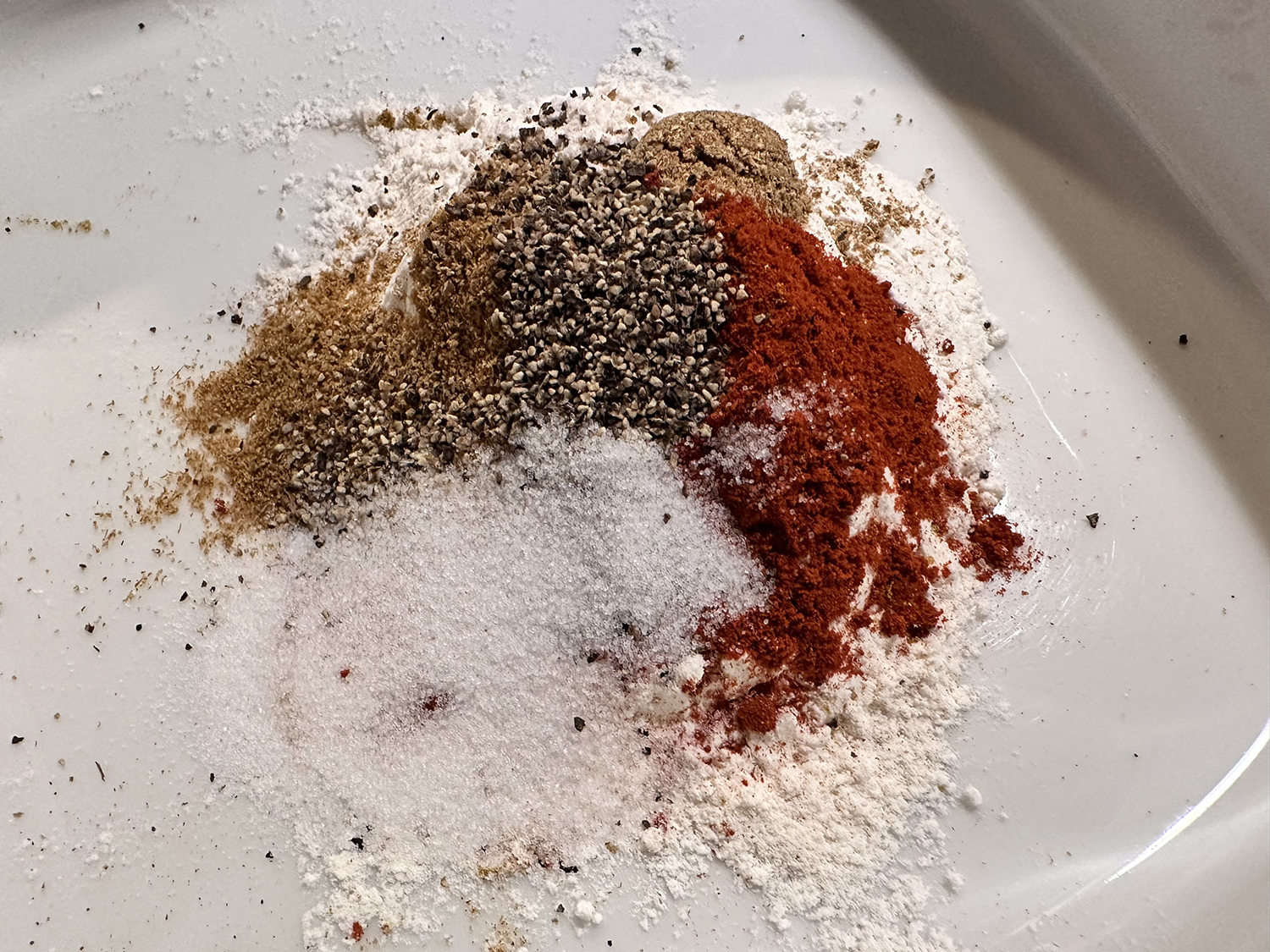
  3. In another shallow bowl, mix the all-purpose flour, spices, salt and pepper. Set next to the lemon sauce.
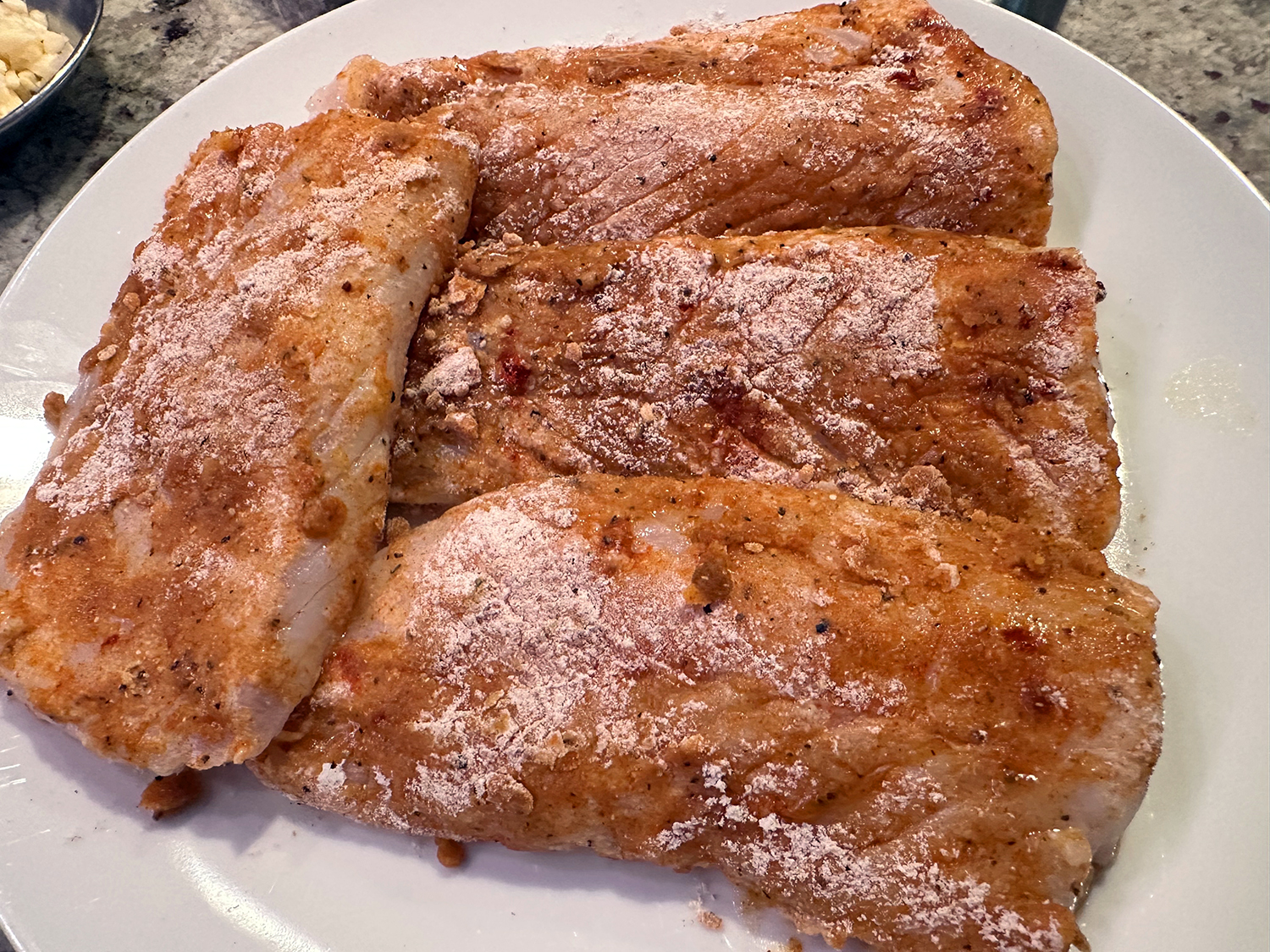
  4. Pat the fish dry. Dip the fish in the lemon sauce then dip it in the flour mixture. Shake off excess flour. Reserve the lemon sauce for later.
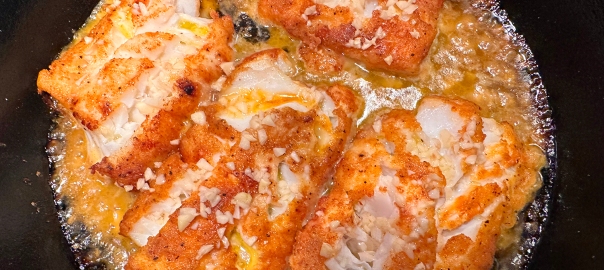
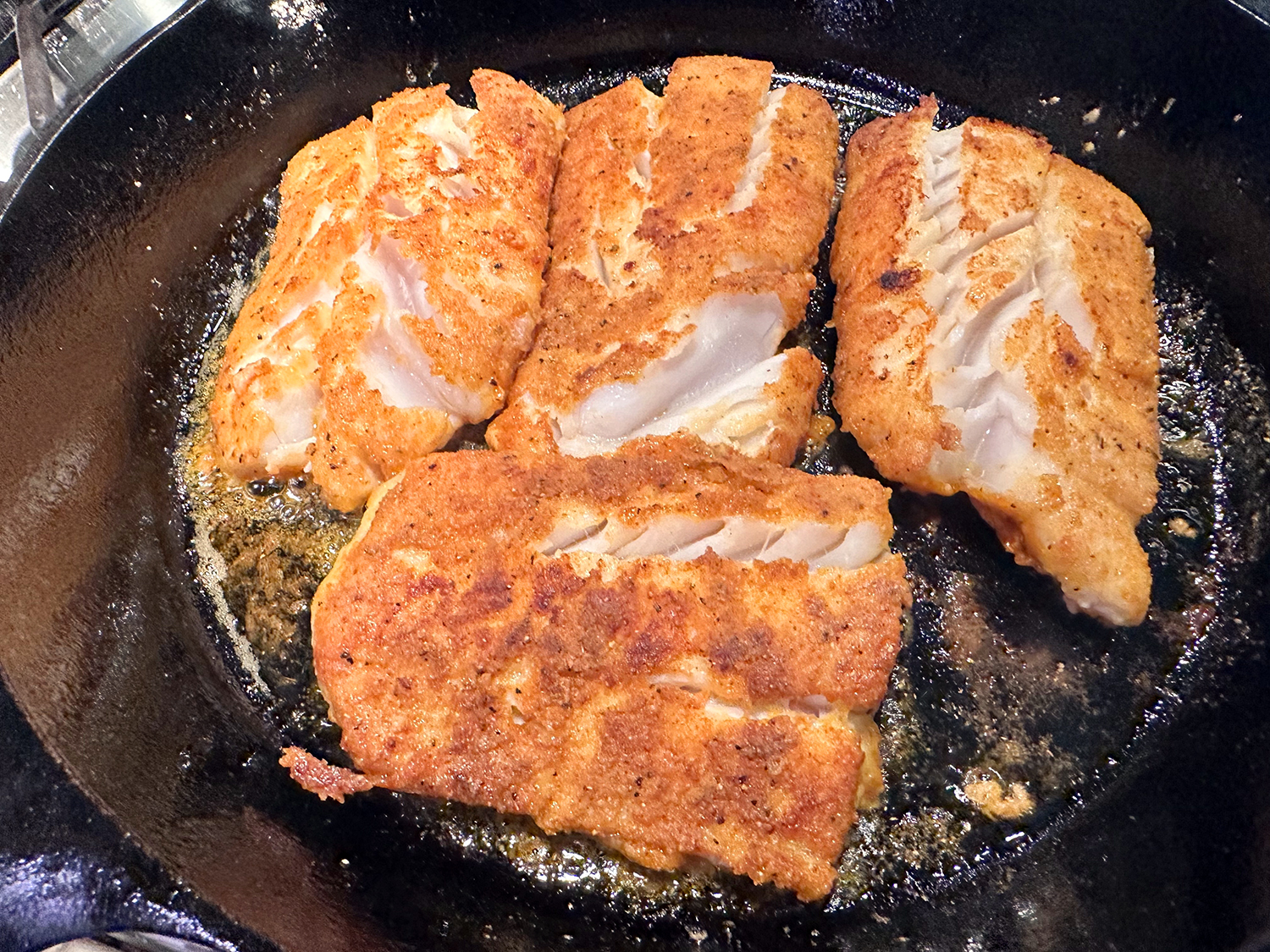
  5. Heat 2 tablespoon olive oil in a cast iron skillet (or an oven-safe pan) over medium-high heat (watch the oil to be sure it is shimmering but not smoking). Add the fish and sear on each side to give it some color, but do not fully cook (about 2 minutes on each side). Remove the skillet from heat.
  6. To the remaining lemon sauce, add the minced garlic and mix. Drizzle all over the fish fillets.
  7. Bake in the heated oven until the fish flakes easily with a fork (10 minutes should do it, but begin checking earlier). Remove from the heat and sprinkle chopped parsley. Serve immediately.

http://www.lynnandruss.com

Recipe by Suzy Karadsheh

Salmon with Avocado Sauce and Tomato-Cilantro Salsa

Milk Street borrows from Colombia’s take on guacamole—spiked with both lime juice and vinegar as well as fresh chilies—to create an easy, no-cook sauce for salmon fillets. A fresh tomato-cilantro salsa finishes the dish, adding a bright, acidic note to balance the rich, savory fish.

Don’t shy away from using the habañero chili. Its fruity flavor pairs perfectly with the avocado. It does give bold spiciness to the sauce, but the richness of the salmon keeps the heat in check. The recipe makes enough avocado salsa, so you could easily by 2-pounds* of salmon or more to feed more dinner guests.

For just the two of us, we purchased a one-pound piece of organic salmon and split it into two filets. Fresh corn on the cob and a hefty side salad rounded out the healthy, flavorful meal.

Seared Salmon with Avocado Sauce and Tomato-Cilantro Salsa

  • Servings: 4
  • Difficulty: easy
  • Print

Ingredients

  • 1 1/2 cups cherry or grape tomatoes, roughly chopped
  • 5 Tbsp. lime juice, divided, plus lime wedges, to serve
  • Kosher salt
  • 2 scallions, cut into 1-inch lengths
  • 1 Anaheim chili, stemmed, seeded, cut into rough 1-inch pieces
  • 1 habañero chili, stemmed and seeded
  • 2 Tbsp. white vinegar
  • 1 1/2 cups fresh cilantro leaves and tender stems, divided
  • 1 ripe avocado, halved, pitted, peeled and chopped
  • 4 6-oz. center-cut salmon fillets (each 1 to 1¼ inches thick), patted dry
  • 1 Tbsp. grapeseed or other neutral oil
  • 2 Tbsp. salted butter

Directions

  1. In a medium bowl, toss the tomatoes with 1 tablespoon of the lime juice and a pinch of salt. Set aside.
  2. In a blender, combine the scallions, both chilies, vinegar, 2 tablespoons of the remaining lime juice and ½ teaspoon salt. Blend until smooth, about 30 seconds. Add ¾ cup of the cilantro and the peeled avocado.
  3. With the blender running, stream in 3 tablespoons water and blend until smooth and creamy, about 1 minute, scraping the blender jar as needed; if needed, add up to 1 tablespoon more water to achieve the correct consistency. Set aside.
  4. Season the salmon on both sides with salt. In a 12-inch nonstick skillet over medium-high, heat the oil until shimmering. Add the fillets flesh side down, reduce to medium and cook until golden, about 4 minutes.
  5. Using a wide metal spatula, flip the fillets, add the butter and increase to medium-high. Once the butter stops foaming, spoon it over the fillets, adjusting the heat to prevent the butter from burning.
  6. Cook and baste the fish until the thickest parts reach 115°F to 120°F, or are nearly opaque when cut into, 2 to 3 minutes. Pour the remaining 2 tablespoons lime juice into the pan and baste the fillets once or twice more.
  7. With a wide metal spatula, transfer the fillets to individual plates. Spoon about 2 tablespoons avocado sauce over each fillet.
  8. Add the remaining ¾ cup cilantro to the tomatoes and toss, then spoon over the salmon. Serve the remaining avocado sauce on the side, along with lime wedges.

http://www.lynnandruss.com

Recipe from Milk Street

Salmon with Miso, Mirin and Sake

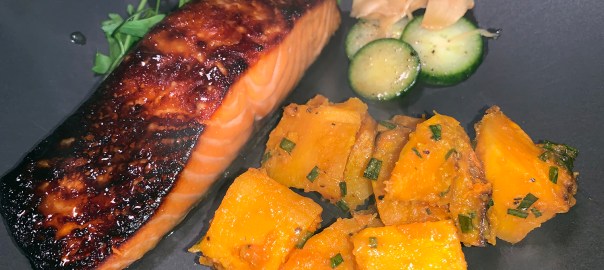
Here’s a quick, healthy weeknight meal bursting with flavor. You just have to be mindful of marinating the salmon the night before, or the morning of.

Instead of buying 4, 6-ounce fish filets, we bought one large piece and cut it down into 3 filets measuring 8 ounces each. We paired ours with a side salad and Roasted Butternut Squash with Hoisin and Chives, which also had an Asian profile.

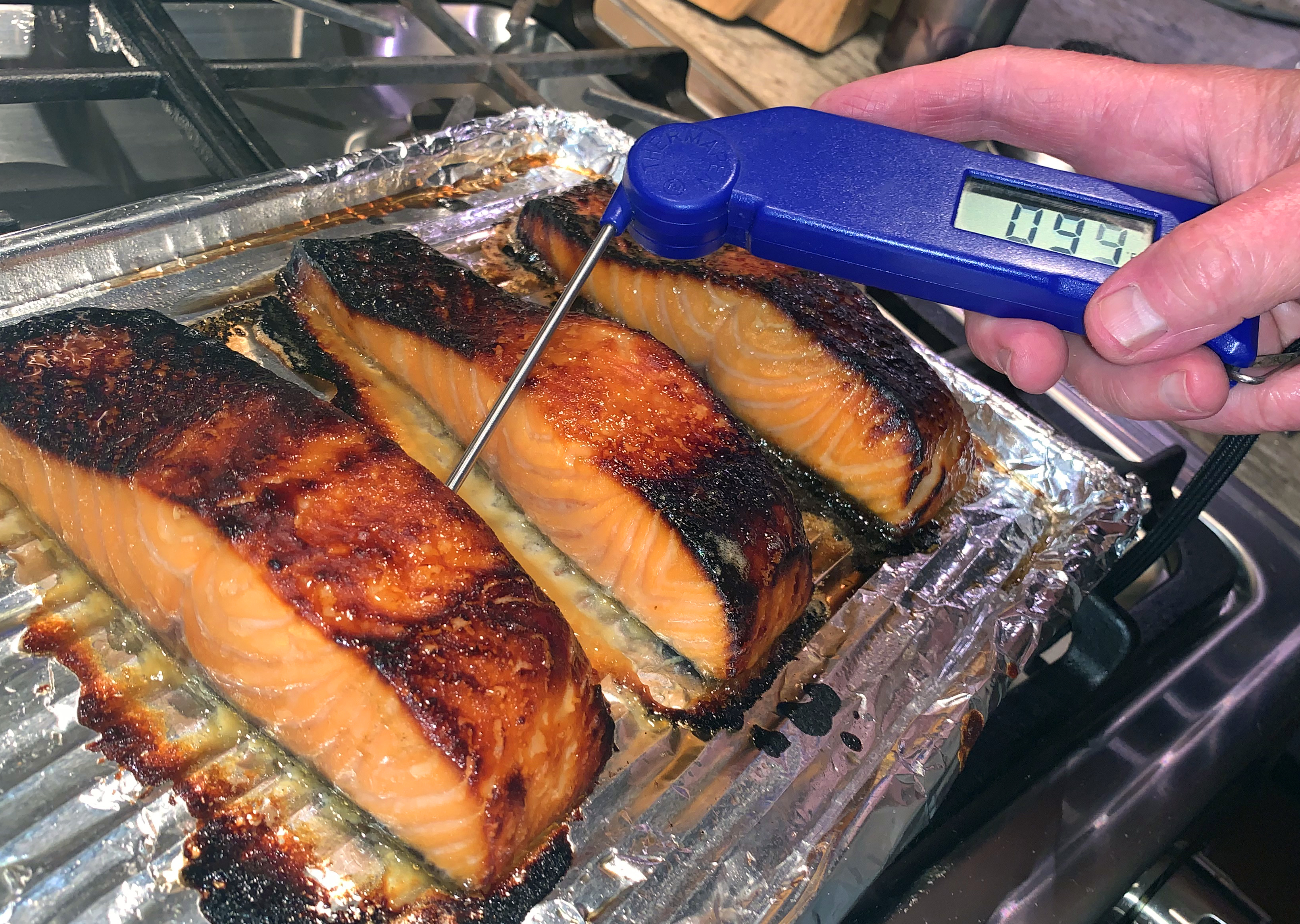
During the broiling process, the internal temperature was too low while the outsides were getting scorched. To continue cooking the fish, drape a piece of aluminum foil over the fish, and cook for a few minutes more.

What is the difference between white and red miso? White miso, also known as “sweet” or “mellow” miso, is fermented for a shorter time and lower in salt than darker varieties. It has a milder, more delicate flavor. A longer-fermented miso that encompasses any darker red and brown varieties, red miso is generally saltier than light yellow and white miso and has a more assertive, pungent flavor.

FYI: Miso paste should be stored in a tightly sealed container in the refrigerator. Lighter varieties will keep for about 9 months and darker ones up to a year.

Salmon with Miso, Mirin and Sake

  • Servings: 3-4
  • Difficulty: easy
  • Print

Ingredients

  • 1⁄2 cup white (or red) miso
  • 1⁄3 cup granulated white sugar
  • 3 Tbsp. mirin
  • 2 Tbsp. sake
  • 1 1⁄2 Tbsp. soy sauce
  • 1 Tbsp. toasted sesame oil
  • 1 1⁄2 lbs. skin-on salmon fillet, cut into 3 or 4 filets
  • Pickled ginger

Directions

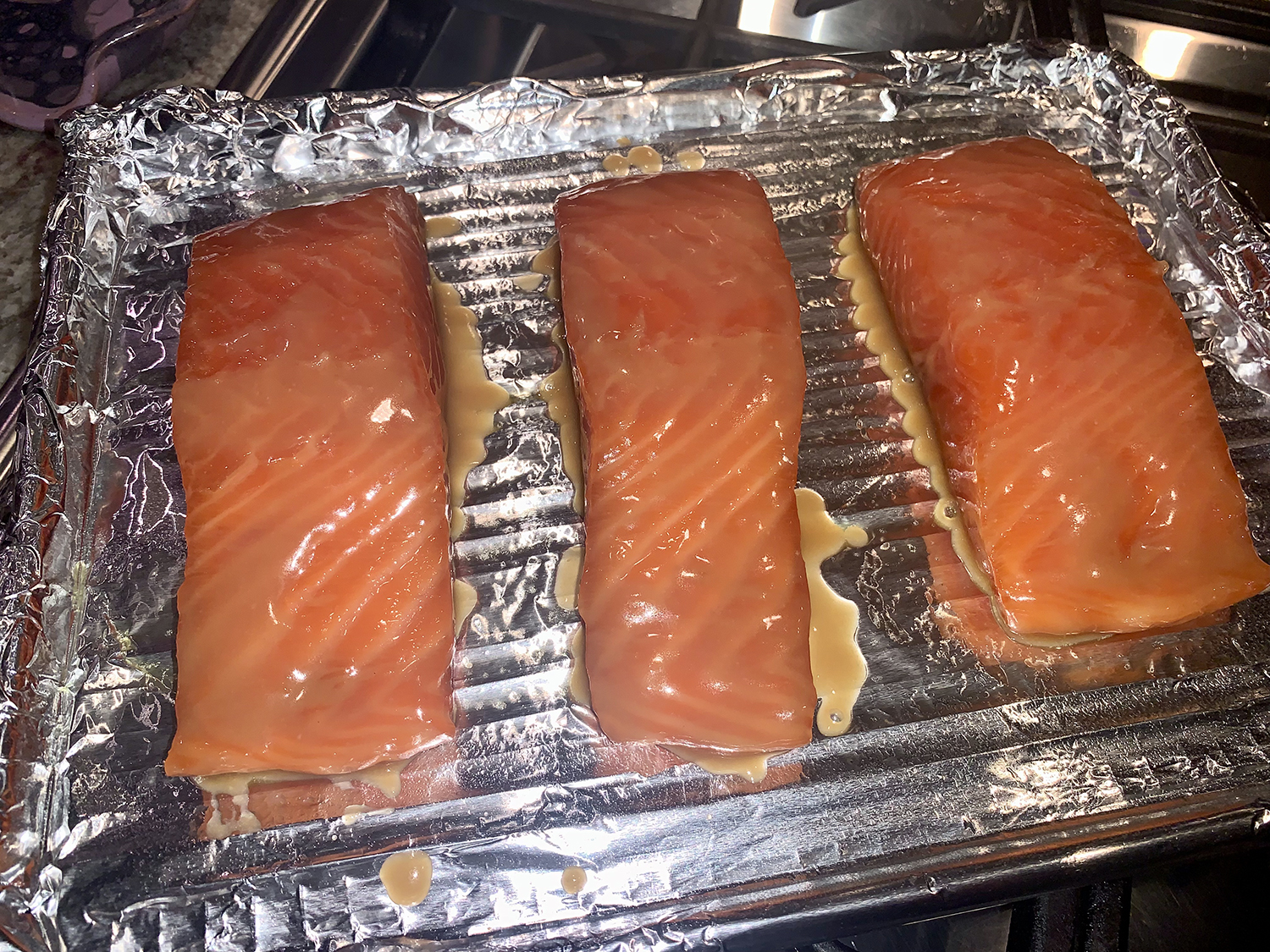
  1. Whisk together miso, sugar, mirin, sake, soy sauce, and sesame oil in medium bowl. Pat salmon dry with paper towels and place in 1-gallon zipper-lock bag. Pour miso mixture over fish. Press out air, seal bag, and turn to coat fish in marinade. Refrigerate for at least 8 hours or up to 24 hours, turning occasionally.
  2. Adjust oven rack 8 inches from broiler and heat broiler. Set wire rack in rimmed baking sheet and cover with aluminum foil. Lightly grease foil with nonstick cooking spray. Wipe excess marinade from salmon with fingers, leaving thin layer on fish, and transfer to prepared pan, skin side down.
  3. Broil until salmon is deeply browned and registers 125 degrees, 10 to 14 minutes, rotating sheet halfway through cooking and shielding filets with foil if they begin to get too dark. Serve with slices of pickled ginger.

http://www.lynnandruss.com

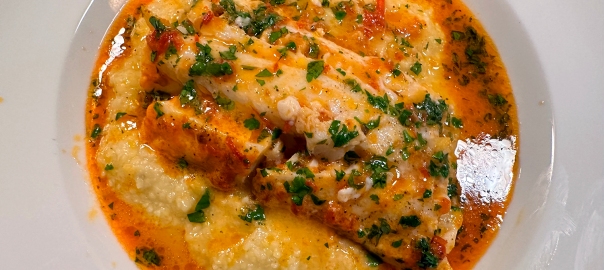
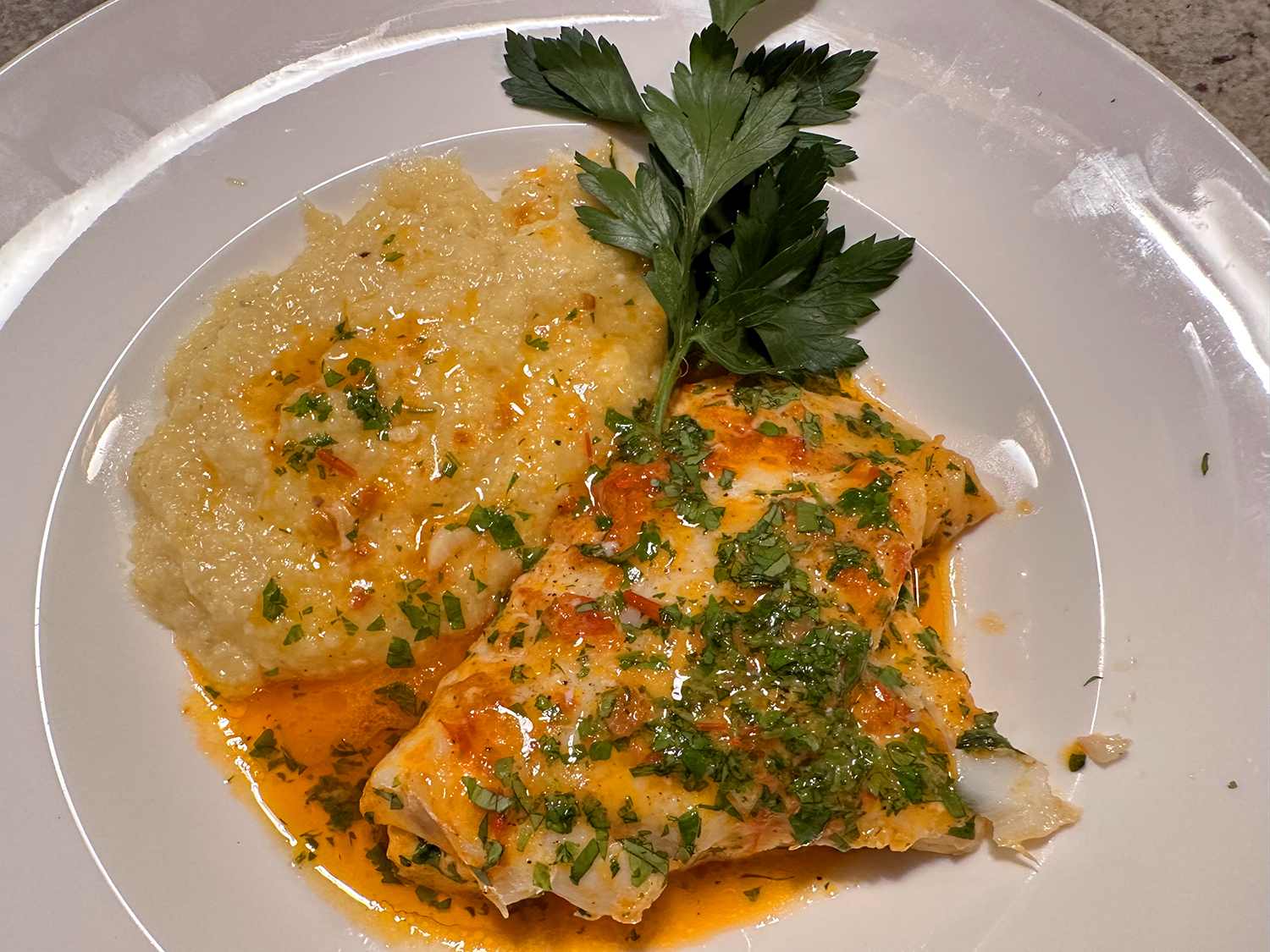
Butter-Basted Spiced Cod with Polenta

Our Monday dinner menu often includes a fish dish or something vegetarian. So Fine Cooking’s “Make It Tonight” Series came through again with this Butter-Basted Spiced Cod with Polenta by Ronne Day. Yes, we’ve made it before, but that was years ago and we were ready for a rehash.

As mentioned in an earlier post, baking cod in melted butter adds a richness to the fish that nicely balances the heat from the harissa, a yummy North African paste made of ground dried chile peppers, garlic, olive oil, and spices. Harissa comes in mild or spicy. Other uses for the condiment include stirring into couscous, stews, soups and pastas. You’ll find it packaged in cans, tubes and jars at well-stocked grocery stores and specialty markets.

We cut back on the amount of cod to one pound, enough for two 6-ounce fillets; although we used the full amounts of the remaining ingredients. A refreshing orange, fennel and red pepper salad with mint and lemon completed our meal.

Butter-Basted Spiced Cod with Polenta

  • Servings: 4
  • Difficulty: easy
  • Print

Ingredients

  • 1-1/2 tsp. crushed whole coriander seeds or ground coriander
  • 2 medium lemons, 1 finely grated to yield 1/2 tsp. zest and squeezed for 2 Tbsp. juice, the other cut into wedges
  • Kosher salt
  • 1 cup cornmeal
  • 3 oz. (6 Tbs.) unsalted butter
  • 4 6-oz. pieces cod loin
  • Freshly ground black pepper
  • 2 Tbsp. harissa paste
  • 2 tsp. coarsely chopped cilantro or parsley

Directions

  1. Position a rack in the center of the oven and heat the oven to 400°F.
  2. Heat a 3-quart saucepan over medium heat. Add the coriander and stir until fragrant, about 30 seconds.
  3. Add 3 cups of water, the lemon zest, and 1 tsp. salt; turn the heat up to medium high.
  4. Whisk in the cornmeal and cook, stirring often, until thick and creamy, about 20 minutes. (If the polenta gets too thick, loosen with a little hot water.)
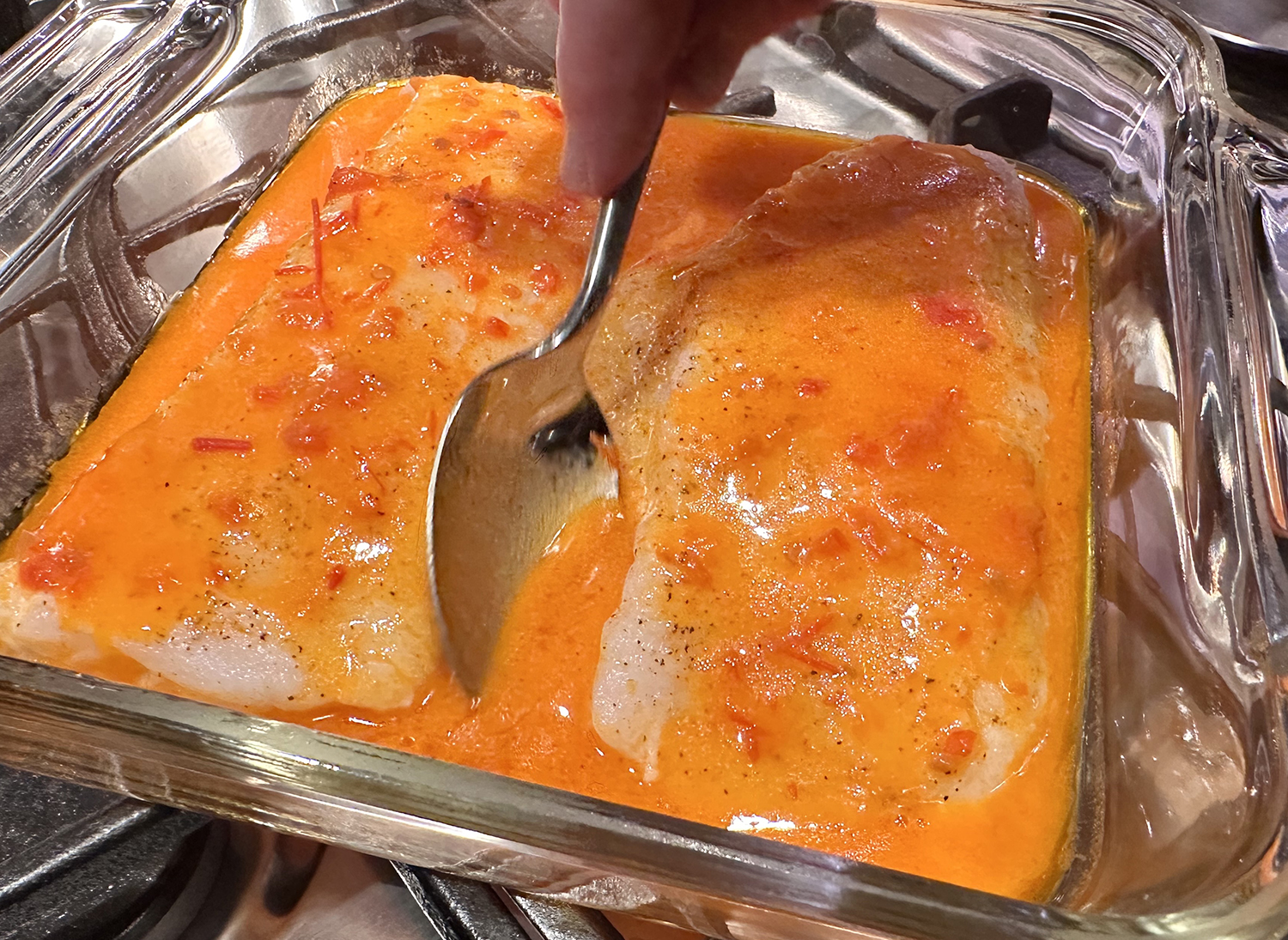
  5. Meanwhile, melt the butter in a small saucepan. Season the fish lightly with salt and pepper and arrange in a 9×13 baking dish with space between each piece.
  6. Remove the butter from the heat, stir in the harissa and lemon juice, and pour it over the fish.
  7. Bake, basting every 5 minutes or so, until cooked through (the fish will flake easily), about 15 minutes. If necessary, cover with foil to keep warm.
  8. Divide the polenta among 4 shallow bowls or plates. Top with the fish and spoon the butter over the fish.
  9. Top with the cilantro or parsley and serve with the lemon wedges.

http://www.lynnandruss.com

Original recipe from Fine Cooking
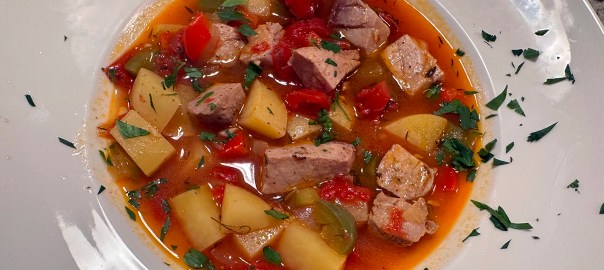
Marmitako—Basque Tuna Stew

There is nothing better than a warm and comforting stew on a cold day, it takes all the chills out of your body and fills you with nothing but comfort. However, this tuna stew is equally welcome on a bright Spring Day. And since The Hubs loves all-things Spanish, making the dish was a no-brainer.

Marmitako is really quite simple to make and you don’t need any special equipment, just a standard stock/braising pot, and most importantly, fresh ingredients. With a recipe this simple, it is always important to use the freshest and highest of quality ingredients, it truly does make a difference in the overall flavor.

We made numerous changes to the original recipe, which included doubling most of the vegetable ingredients. Some of the timing was altered also to cook the potatoes 5 minutes longer, and the tuna cubes 5 minutes less. All of the changes are noted below.

Marmitako - Basque Tuna Stew

  • Servings: 4
  • Difficulty: easy
  • Print

Ingredients

  • 2 fillets fresh tuna
  • 1/4 cup extra virgin Spanish olive oil
  • 4 cloves of garlic
  • 1 onion
  • 1 red bell pepper
  • 1 green bell pepper
  • 2 medium Yukon gold potatoes
  • 1 can fire-roasted diced tomatoes
  • 1/2 tsp. dried thyme
  • 1/2 tsp. smoked paprika
  • 1/2 cup white wine
  • 2 1/2 cups fish broth, preferably homemade
  • Sea salt
  • Freshly cracked black pepper
  • Fresh parsley

Directions

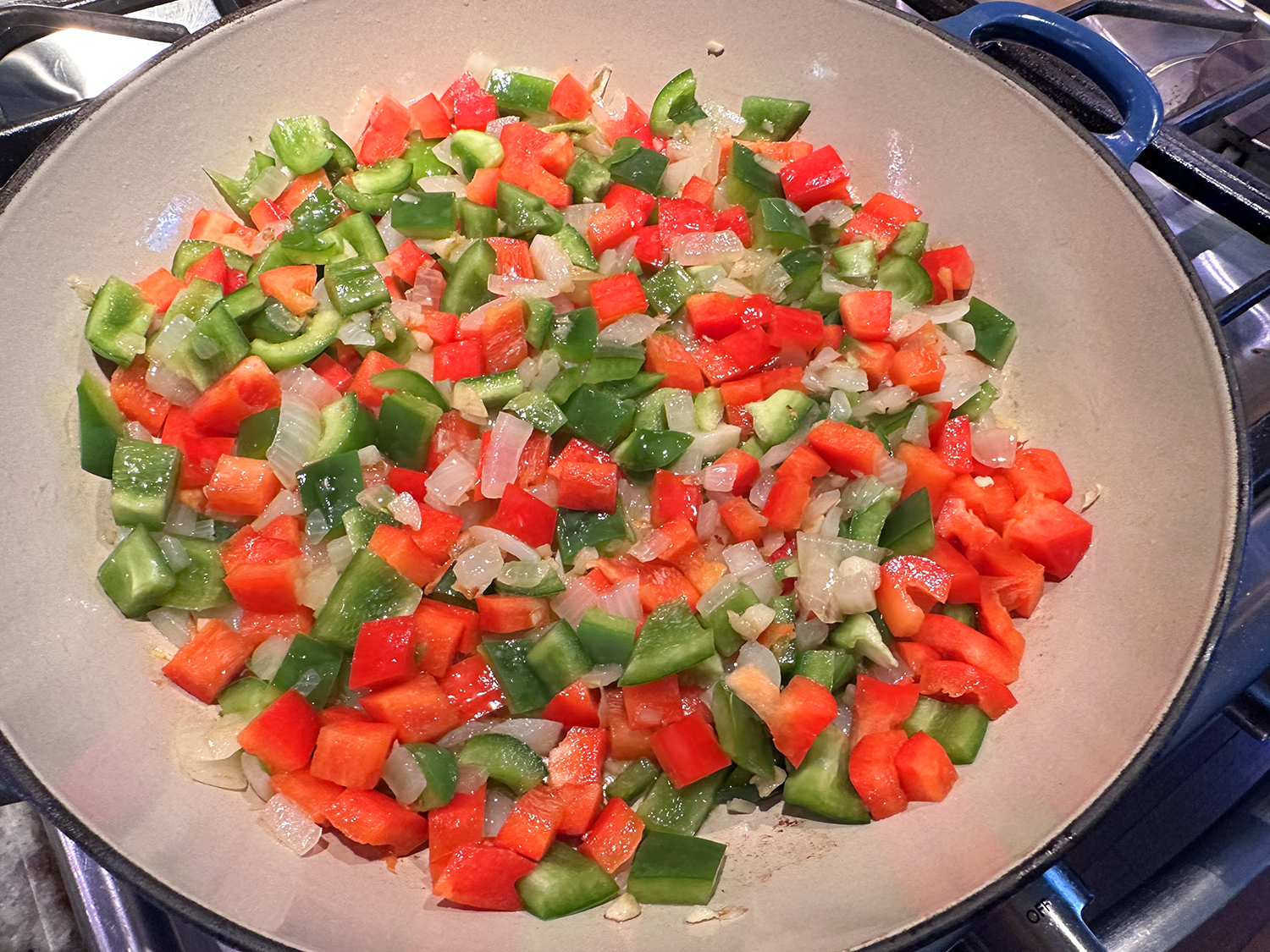
  1. Begin by cutting all the vegetables first, 4 minced cloves of garlic, diced onion, diced red bell pepper, dice green bell pepper and cut 2 medium Yukon gold potato into 1/2-inch cubes.
  2. Heat a large stock pot with a medium heat and add a 1/4 cup of extra virgin Spanish olive oil, once the oil gets hot add the diced onions and minced garlic, mix with the oil and cook for about 4 minutes, then add the diced bell peppers, mix and cook for another 5 minutes, then add the cubed potatoes, mix and cook for another 2 minutes, then add 1 cup of diced tomatoes, season everything with a generous pinch of sea salt, freshly cracked black pepper, 1/2 teaspoon of dried thyme and 1/2 teaspoon of smoked paprika, mix everything together and cook for 2 minutes.
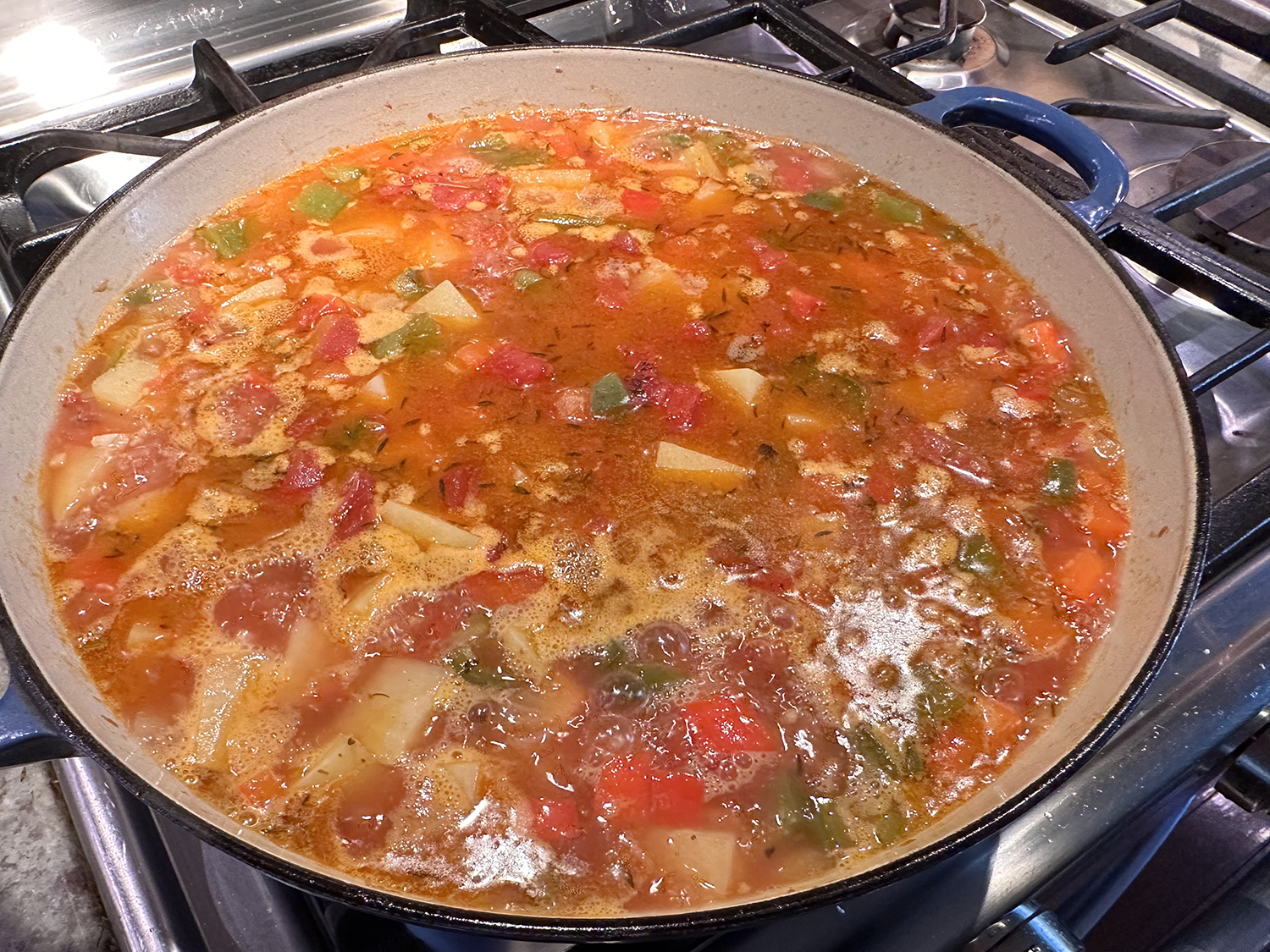
  3. Turn the fire up to a HIGH heat and add 1/2 cup of white wine, about 4 minutes after adding the white wine add 2 1/2 cups of fish broth, once it comes to a boil, place a lid on top and lower the fire to a LOW heat.
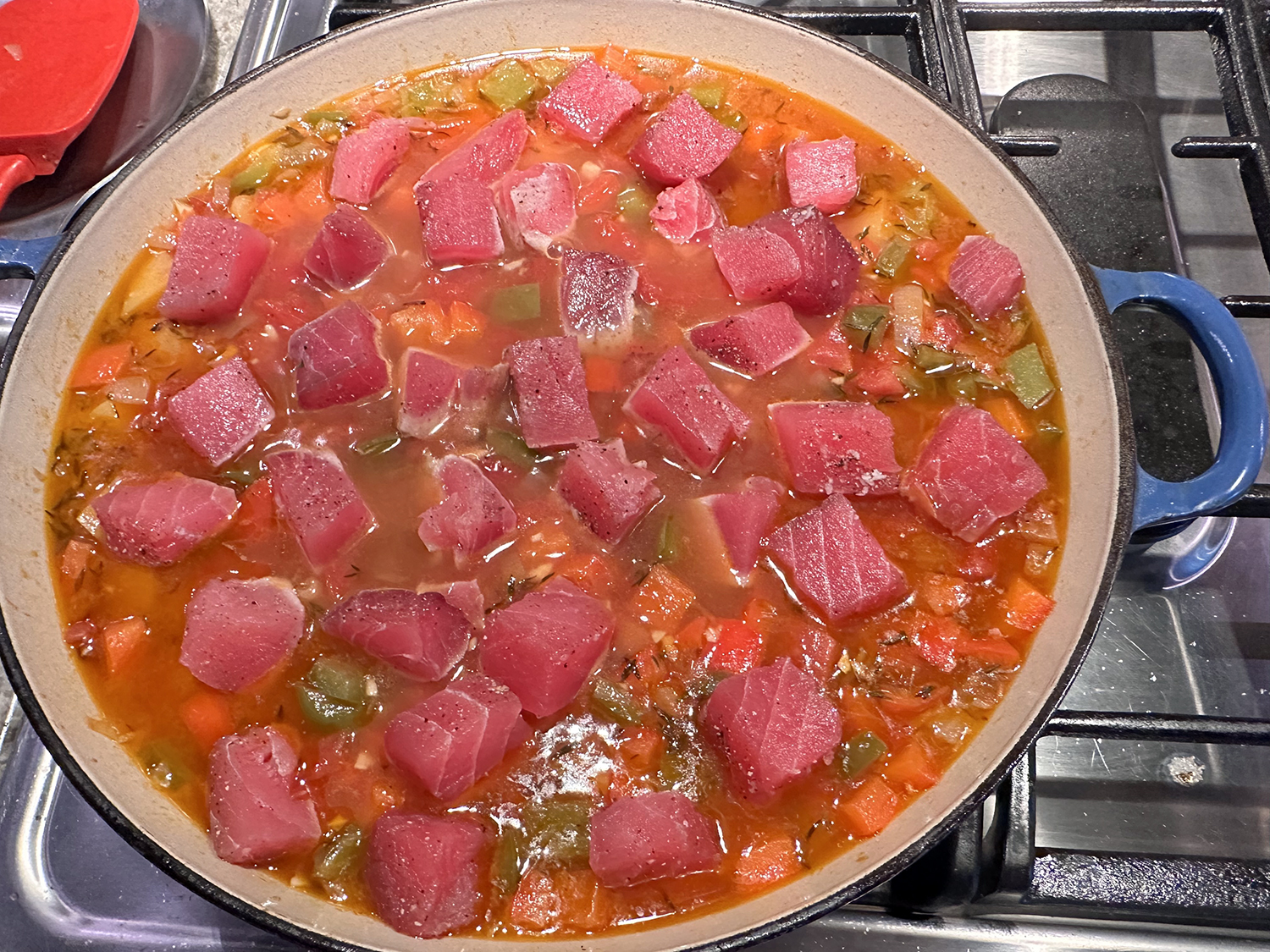
  4. While the stew is simmering, season 2 fresh tuna fillets with sea salt and freshly cracked black pepper on both sides, then cut each one into 1/2 inch cubes.
  5. After leaving the stew to simmer for 25 minutes, add the cubed tuna to the stock pot, mix it with the rest of the ingredients, place the lid back on top and cook for another 5 minutes.
  6. Transfer the tuna stew into shallow bowls and garnish each one with fresh parsley

http://www.lynnandruss.com

Adapted from a recipe from Spain on a Fork

Sichuan Braised Cod

I declared this my favorite cod recipe to date. The flavor profile was spot on for me, although it may be a bit too spicy for some. In that case, cut back on the number of dried chiles.

The Sichuan Braised Cod recipe from Fine Cooking makes a for quick and healthy supper, especially when served with a side salad. Only the two of us were sharing the meal so we bought a smaller piece of fish—just over a pound—and cut it into 3 equal sections.
The original recipe instructs you to flip the cooked cod in the sauce a couple of times. Fearing the fish would fall apart as it was flipped, we spooned the sauce over each fillet instead. To keep it pescatarian, we swapped out the chicken broth for homemade shrimp stock. Serve with steamed rice.

Sichuan Braised Cod

  • Servings: 4
  • Difficulty: easy
  • Print

Ingredients

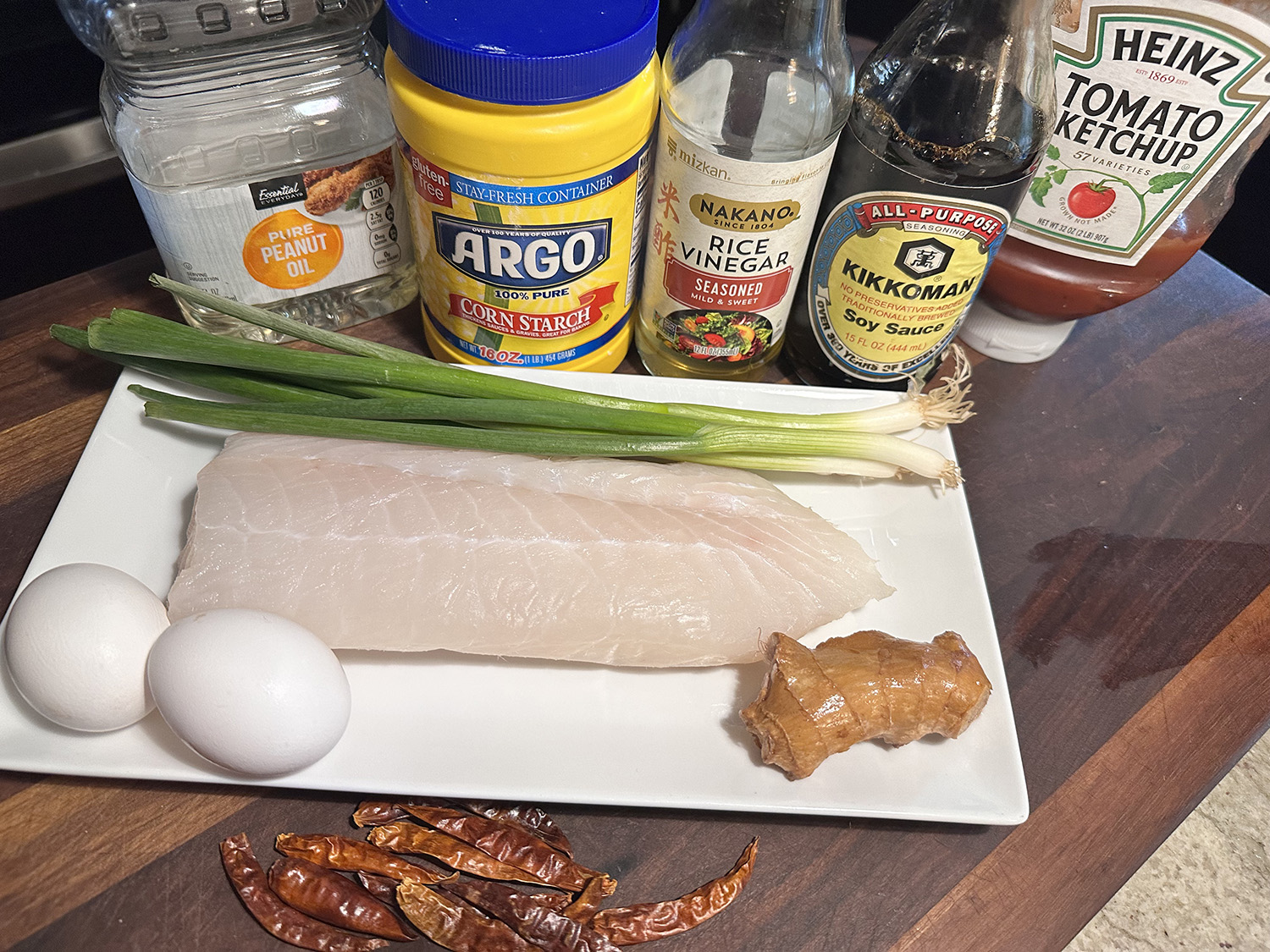
  • 1⁄2 cup, plus 2 tsp. cornstarch
  • 2 Tbsp. rice vinegar, more to taste
  • 3/4 Shrimp broth
  • 1 1⁄2 Tbsp. soy sauce
  • 1 Tbsp. ketchup
  • 1 1⁄2 lbs. cod fillets, cut into 4 uniform pieces
  • Kosher salt and frhly ground black pepper
  • 2 eggs, beaten
  • 3 Tvbsp. canola oil
  • 10 dried Thai chiles or other small whole chiles
  • 4 scallions, thinly sliced, white and green parts separated
  • 1 1⁄2 Tbsp. minced ginger

Directions

  1. in a small bowl, mix the 2 teaspoons cornstarch with 2 tablespoons vinegar. Add the broth, soy sauce and ketchup.
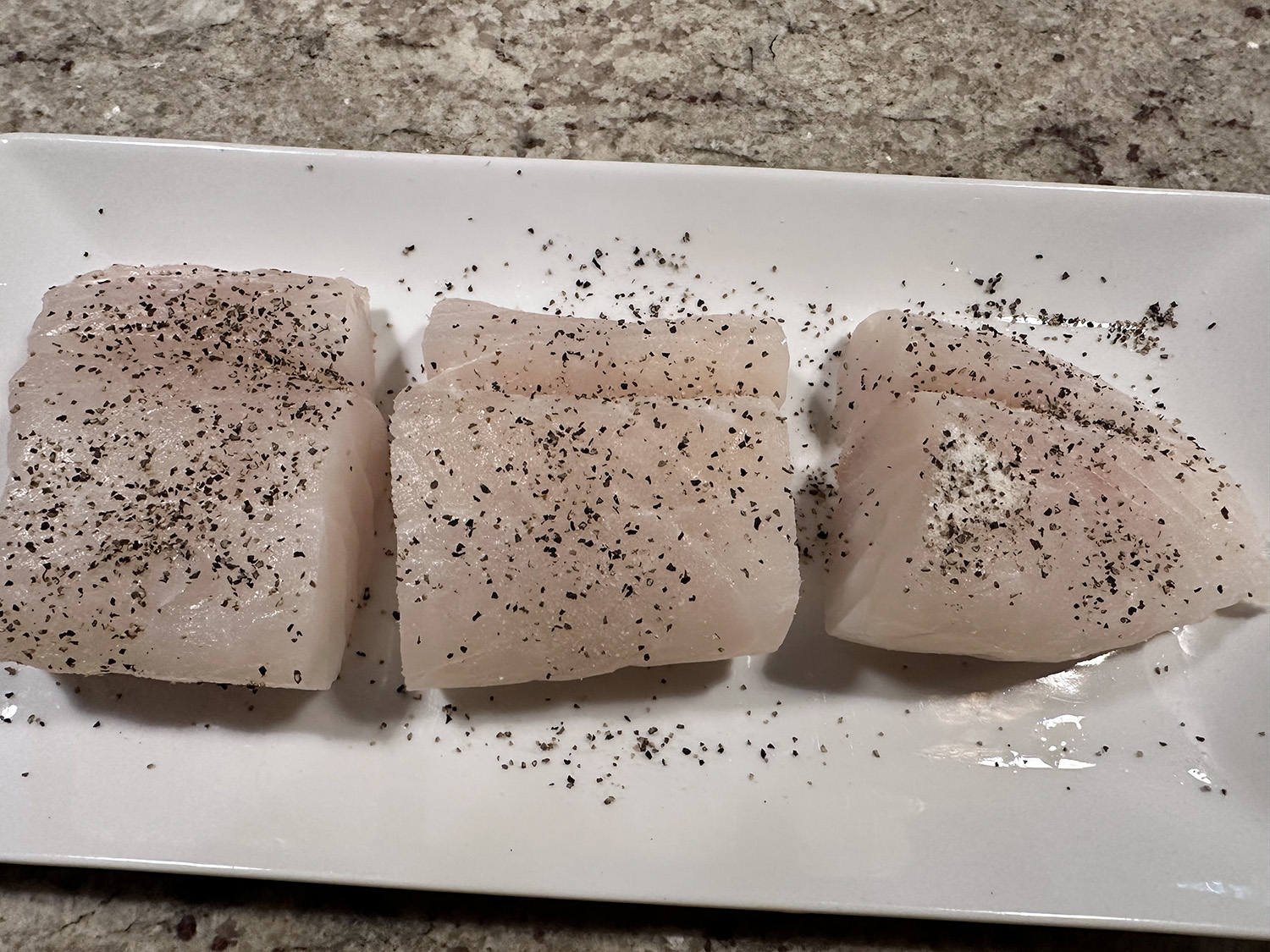
  2. Season the fish with 1/2 teaspoon salt and 1/2 teaspoon pepper.
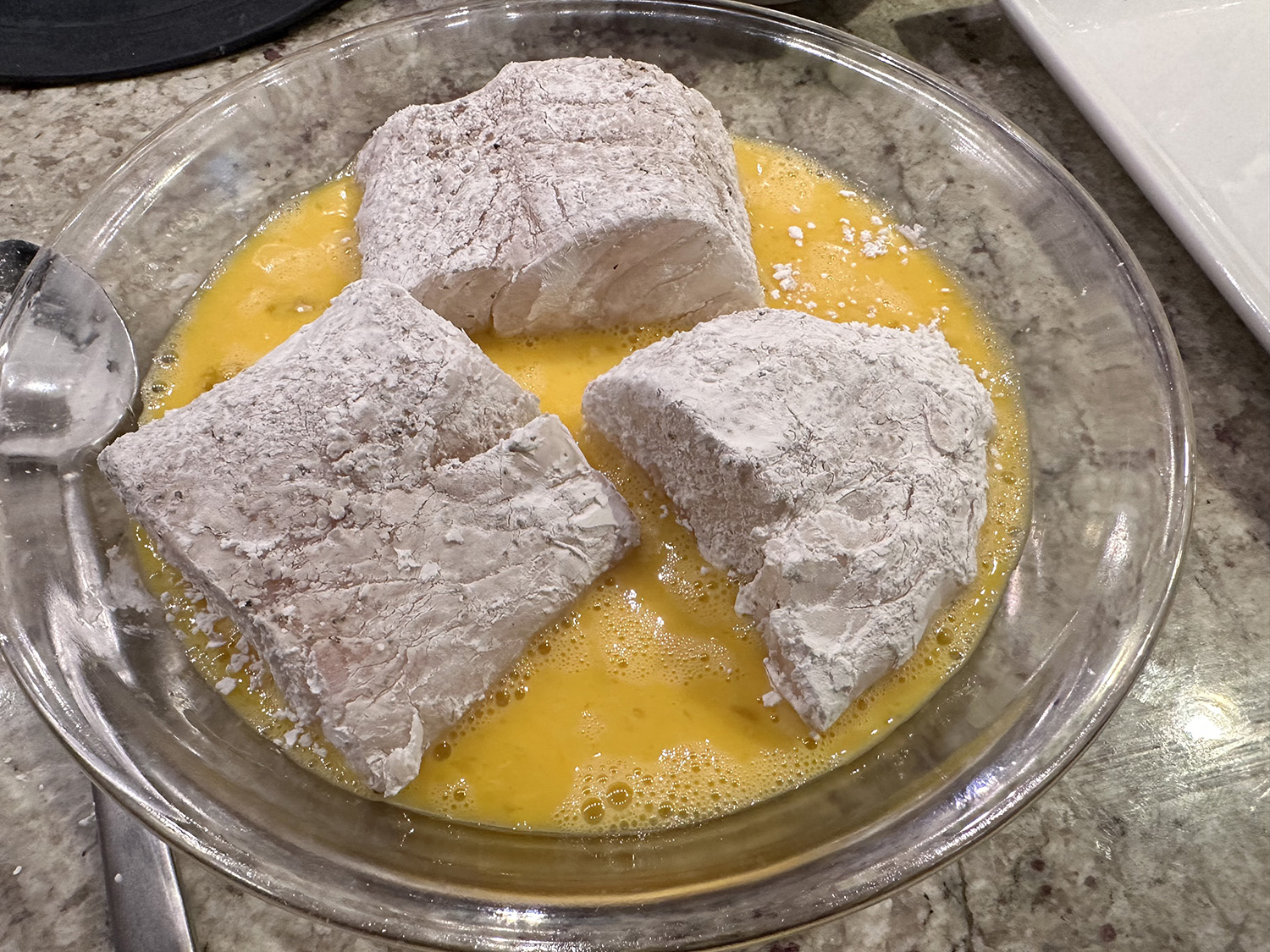
  3. Spread the remaining 1/2 cup cornstarch on a plate, and put the eggs in a wide bowl. Dredge the fish in the cornstarch.
  4. Heat 2 tablespoons oil in a 12-inch non-stick pan over medium-high heat until shimmering hot. Soak the fish in the egg for a couple of seconds, then add to the pan.
  5. Cook, flipping every three minutes, until the cod is browned and a little firm to the touch, about 5 minutes total (it should not be cooked all the way through). Transfer the fish to a large plate.
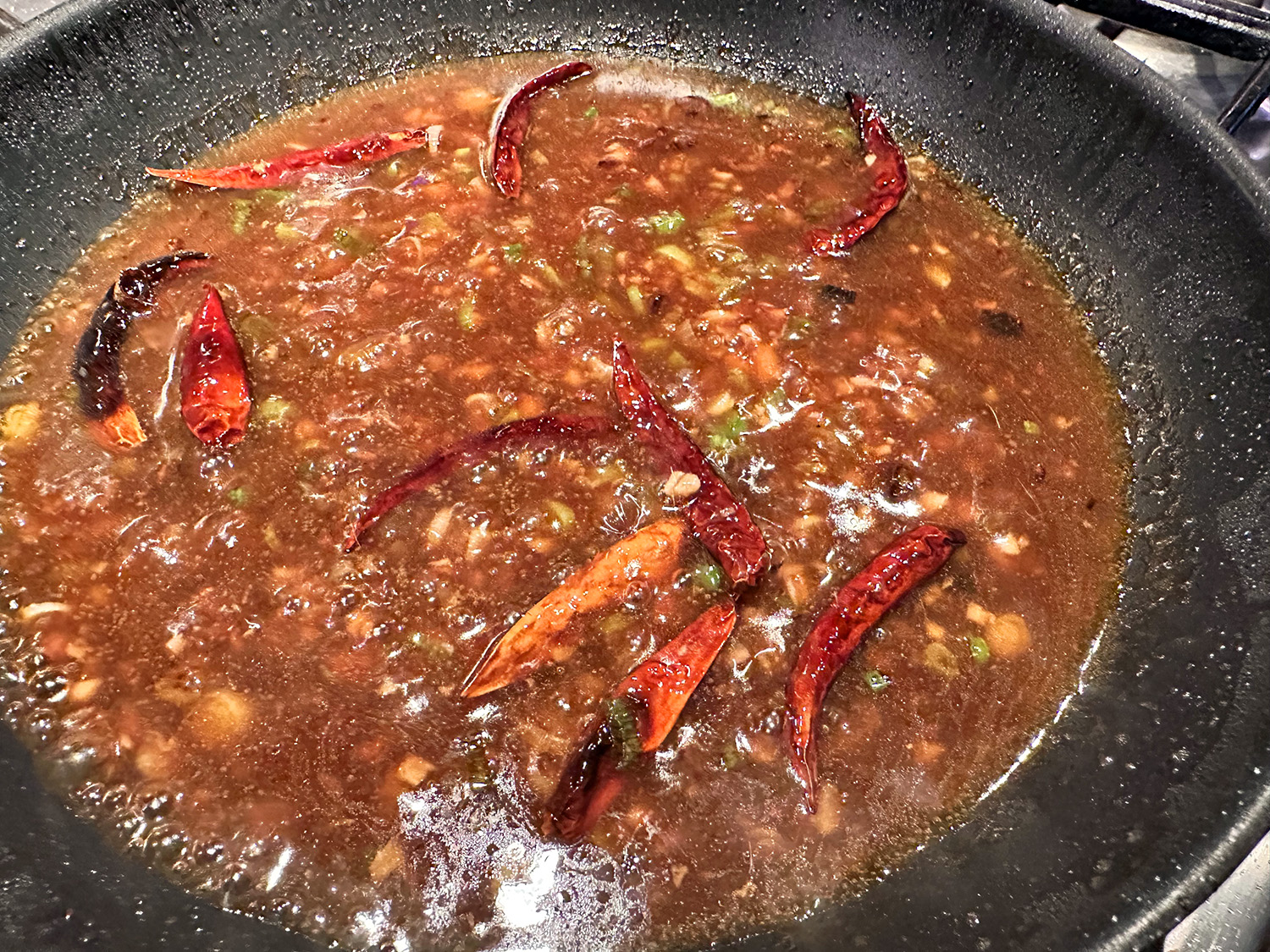
  6. Add the remaining 1 tablespoon oil to the pan, then add the chiles, white parts of the scallions, and ginger. Cook, stirring until the scallions become translucent and browned in a few places, about 2 minutes.
  7. Give the cornstarch mixture a quick stir and then pour it into the pan. It should come to a boil and thicken quickly. Reduce the heat to medium-low, return the fish to the pan, and spoon the sauce over the fillets a couple of times to coat them in the sauce.
  8. Cover the pan, leaving the lid slightly ajar, and cook until the fish is just cooked through and starting to flake, 3 to 5 minutes.
  9. Taste the sauce for salt and vinegar, adding more to taste if needed. Serve immediately with the sauce spooned over the cod and sprinkled with scallion greens.

http://www.lynnandruss.com

Adapted from a recipe from Fine Cooking

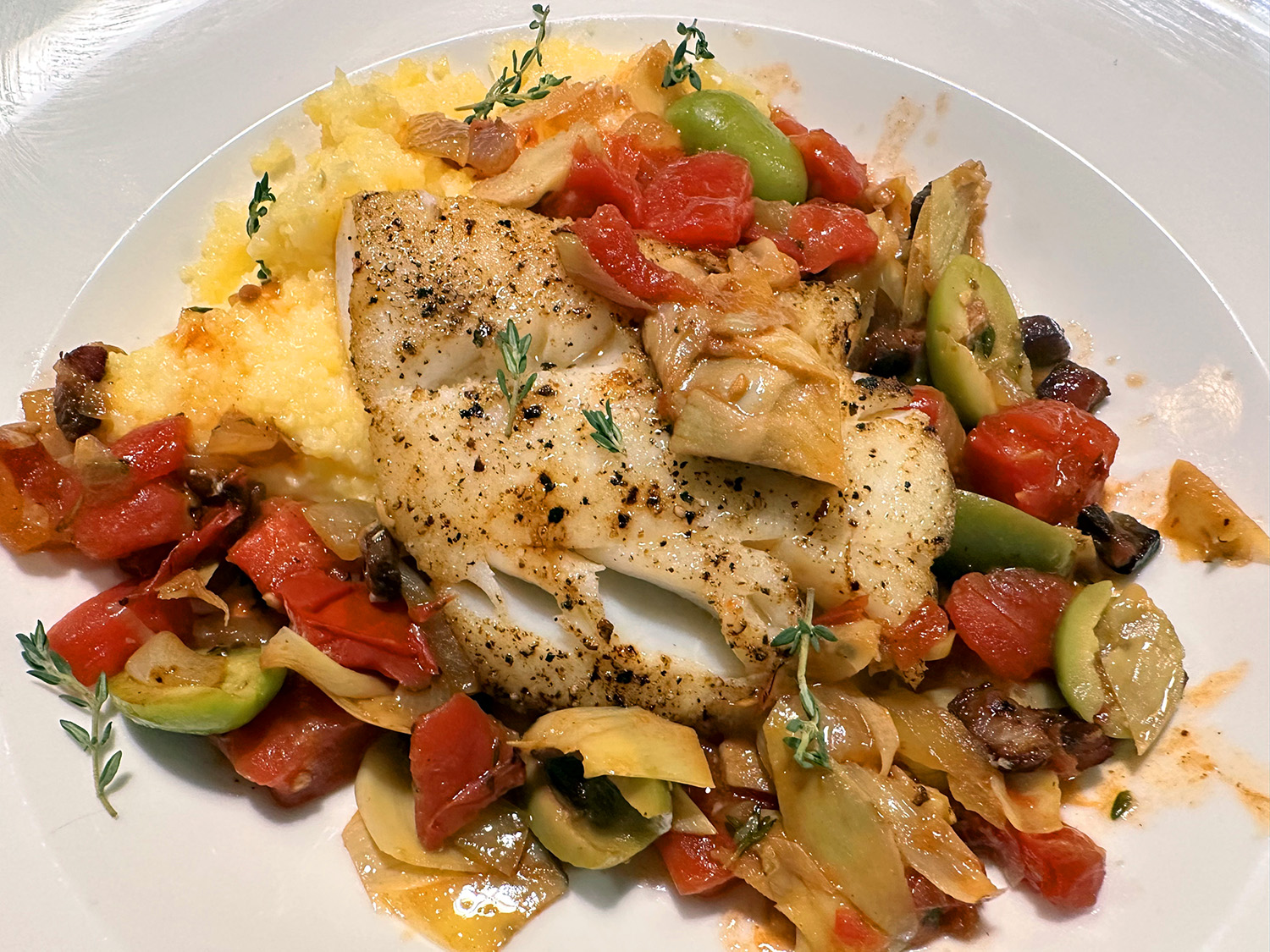
Cod with Pancetta, Artichokes and Olives

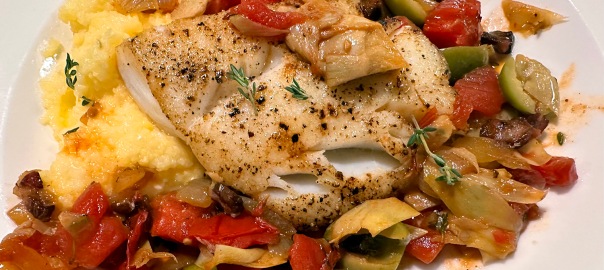
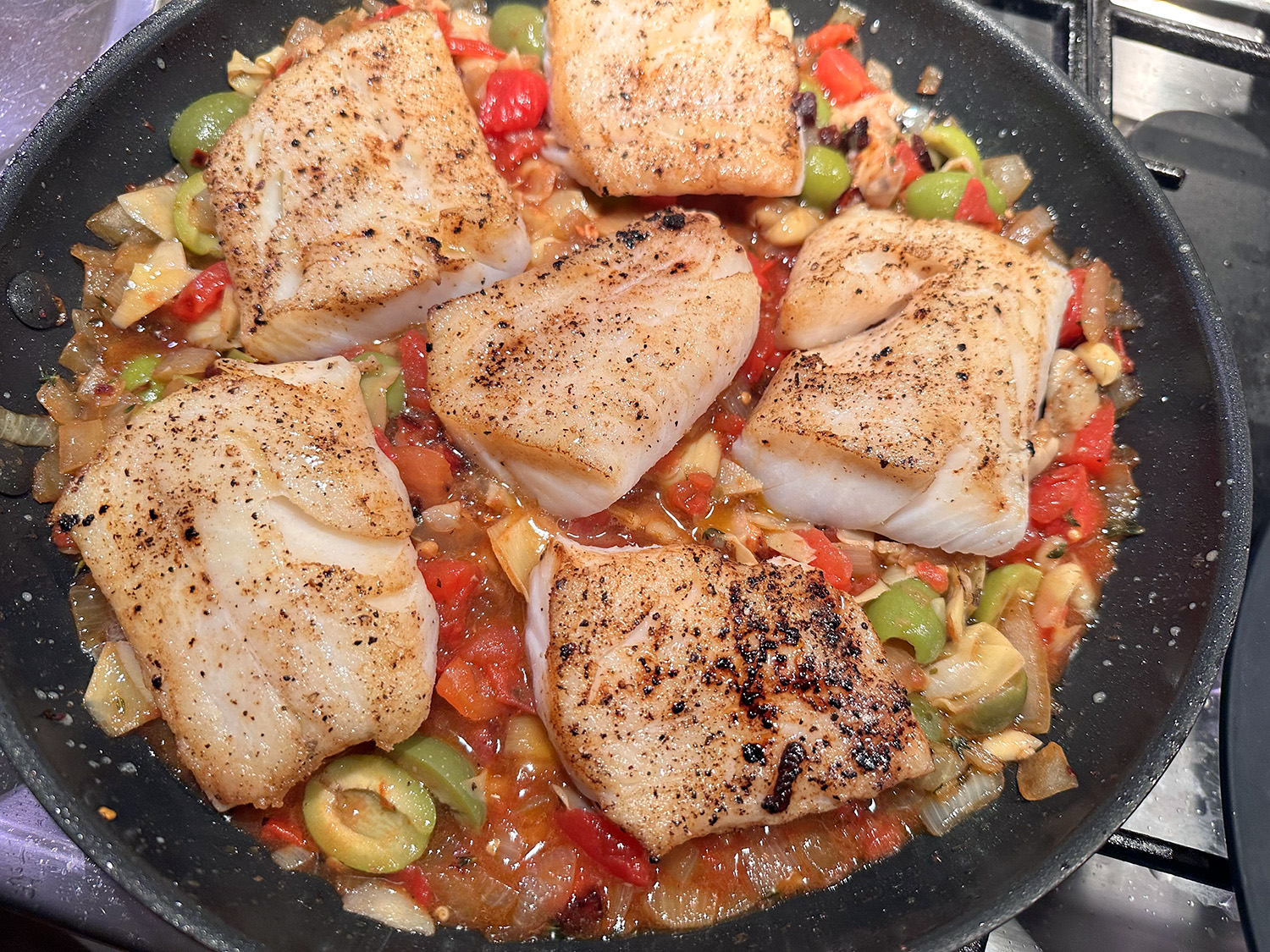
Looking to introduce more seafood dishes into your evening repertoire of family meals? This lovely recipe is easy, is ready in just over a half hour, and contains heart-healthy ingredients.

We served ours over polenta and it was delicious! Our pancetta weighed in at closer to 4 ounces, and we used it all. Are there meatless substitutions for pancetta? Yes, you can try marinated tofu, mushrooms, smoked paprika, olives (already in the dish), and parmesan cheese to substitute for pancetta.

Cod with Pancetta, Artichokes and Olives

  • Servings: 4
  • Difficulty: easy
  • Print

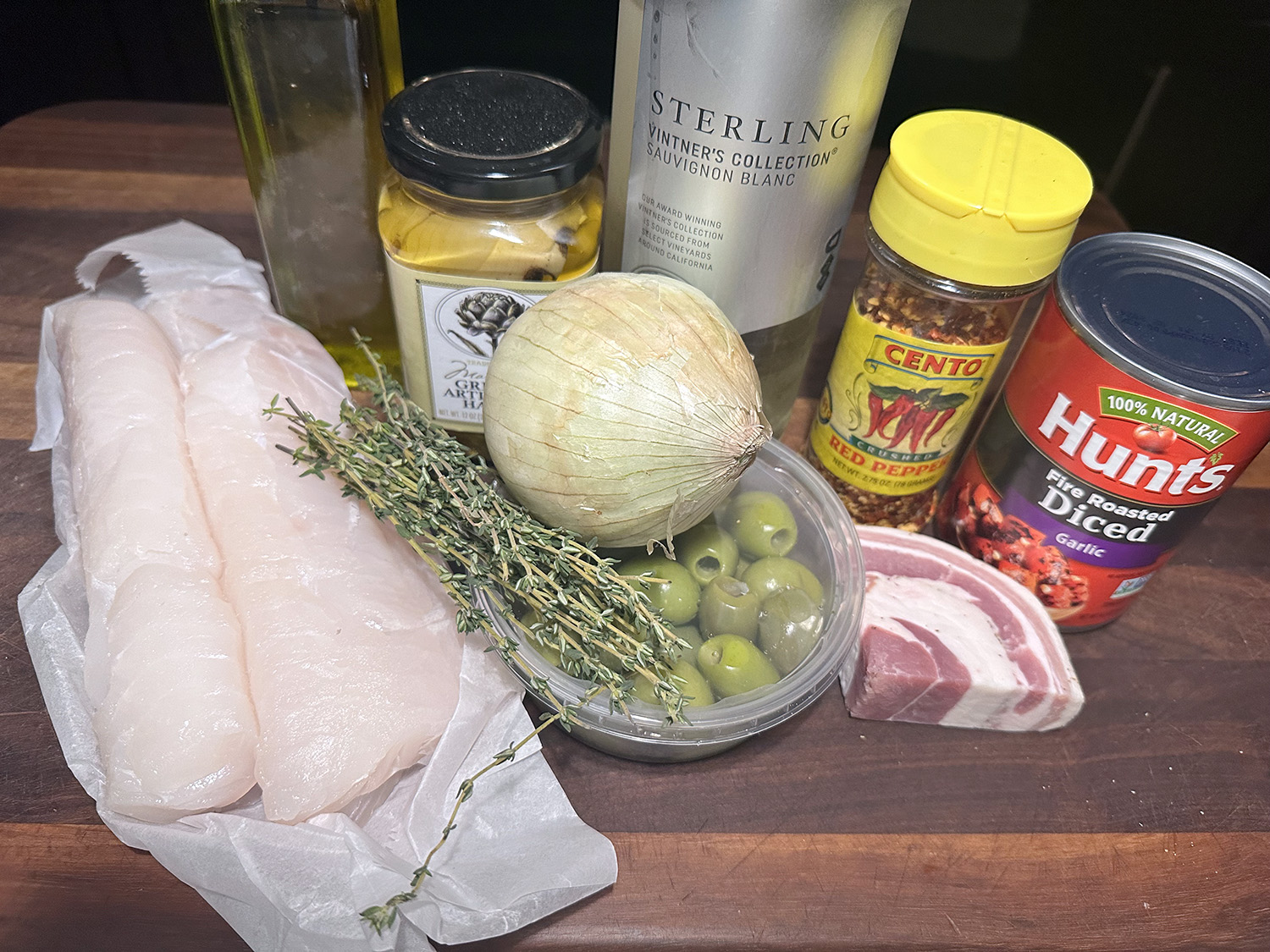
Ingredients

  • 4 6-oz. pieces fresh cod loin fillet
  • Kosher salt and freshly ground black pepper
  • 2 Tbsp. extra-virgin olive oil
  • 2 oz. pancetta, cut into 1/4-inch dice (about 1/4 cup)
  • 1 medium yellow onion, cut into 1/4-inch dice
  • 1 tsp. fresh thyme leaves
  • 1/8 to 1/4 tsp. crushed red pepper flakes
  • 1/2 cup dry white wine
  • 1 15-oz. can diced fire-roasted tomatoes in juice
  • 1 cup marinated artichoke hearts, drained and chopped
  • 1/2 cup large pitted green olives, such as Castelvetrano, halved

Directions

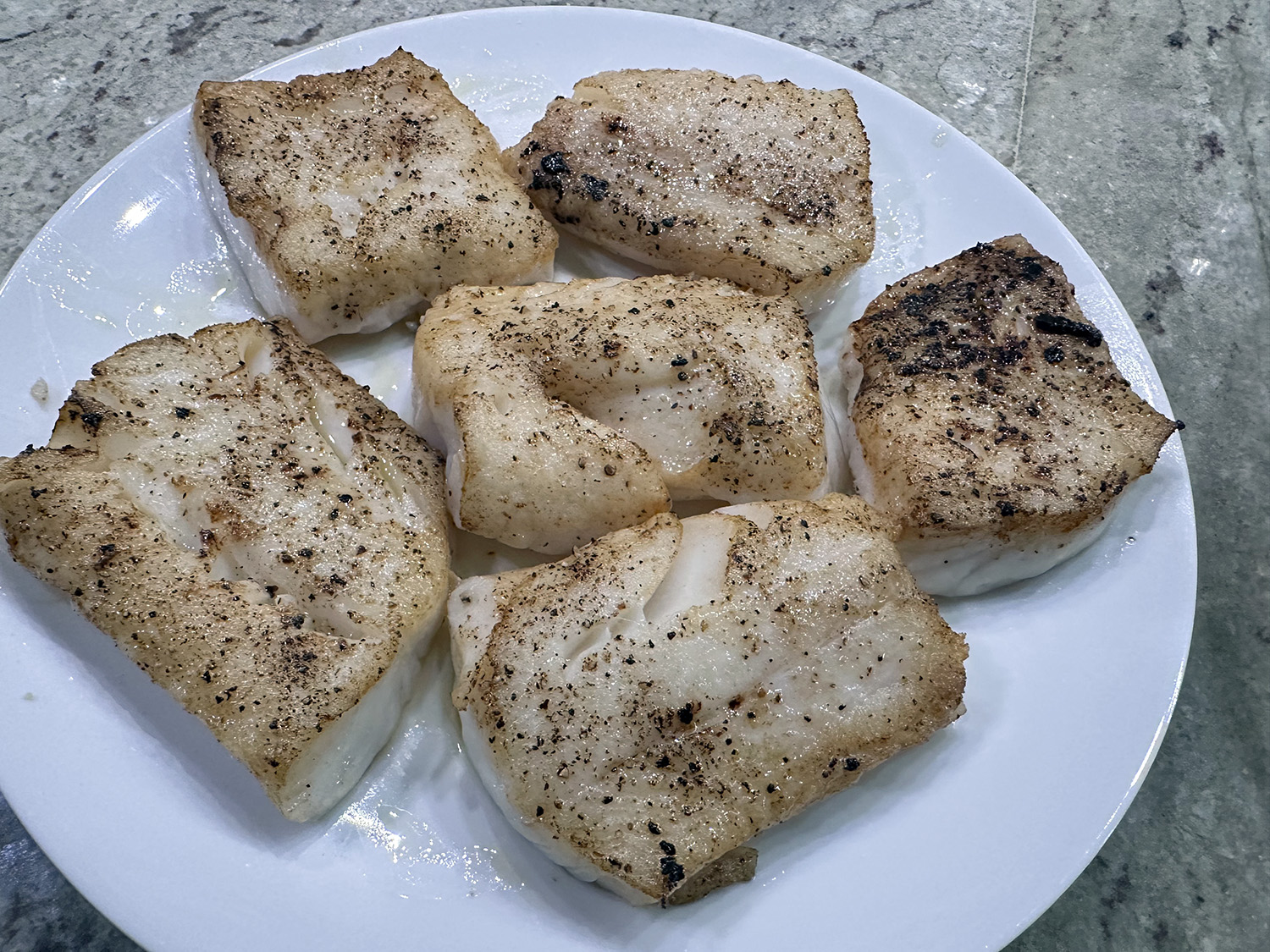
  1. Pat the cod dry and season with salt and pepper.
  2. Heat the oil in a 12-inch nonstick skillet over medium-high heat. Add the pancetta and cook, stirring, until crisp and golden, 2 to 4 minutes. Using a slotted spoon, transfer the pancetta to a paper-towel-lined plate, leaving the fat behind in the pan.
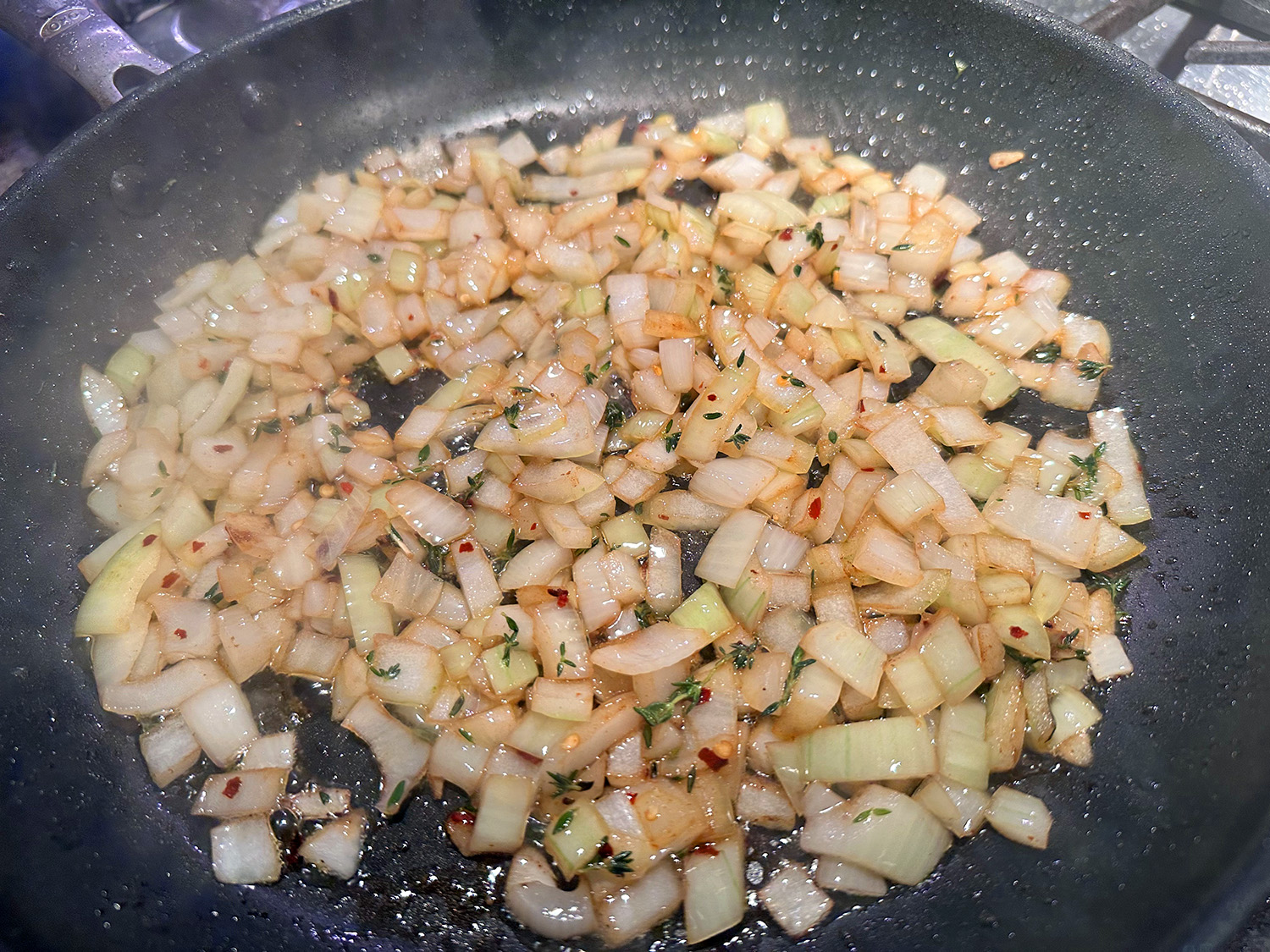
  3. Add the fish to the skillet and cook until slightly golden, about 3 minutes. Flip and transfer to a plate, seared side up. Add the onion, thyme, and pepper flakes to the skillet; cook, stirring, until the onion is soft, about 4 minutes.
  4. Add the wine and cook until the pan is almost dry, about 1 minute. Add the tomatoes and their juice, artichokes, and olives. Simmer, stirring occasionally, to meld the flavors, about 2 minutes.
  5. Lower the heat to medium and nestle the fish into the sauce, keeping the seared side exposed. Cover and cook until the fish is opaque and just cooked through, about 3 minutes.
  6. Sprinkle with the pancetta, divide among rimmed plates or wide, shallow bowls, and serve.

http://www.lynnandruss.com

Original recipe from Fine Cooking

Braised Tuna Puttanesca with Lemon-Garlic Rice

Did you know that Puttanesca sauce originated in Naples Italy? The name derives from the Italian word puttana which translates roughly to “lady of the night,” or “in the style of the whore.” Puttana in turn arises from the Latin word putida which means stinking. It’s a wonder how this tasty dish became associated with such sordid content, but I’ll leave you to research that aspect… There is a lot of disagreement about the origins, and the authorities on Italian food seem to be wary of making a definitive statement about it.

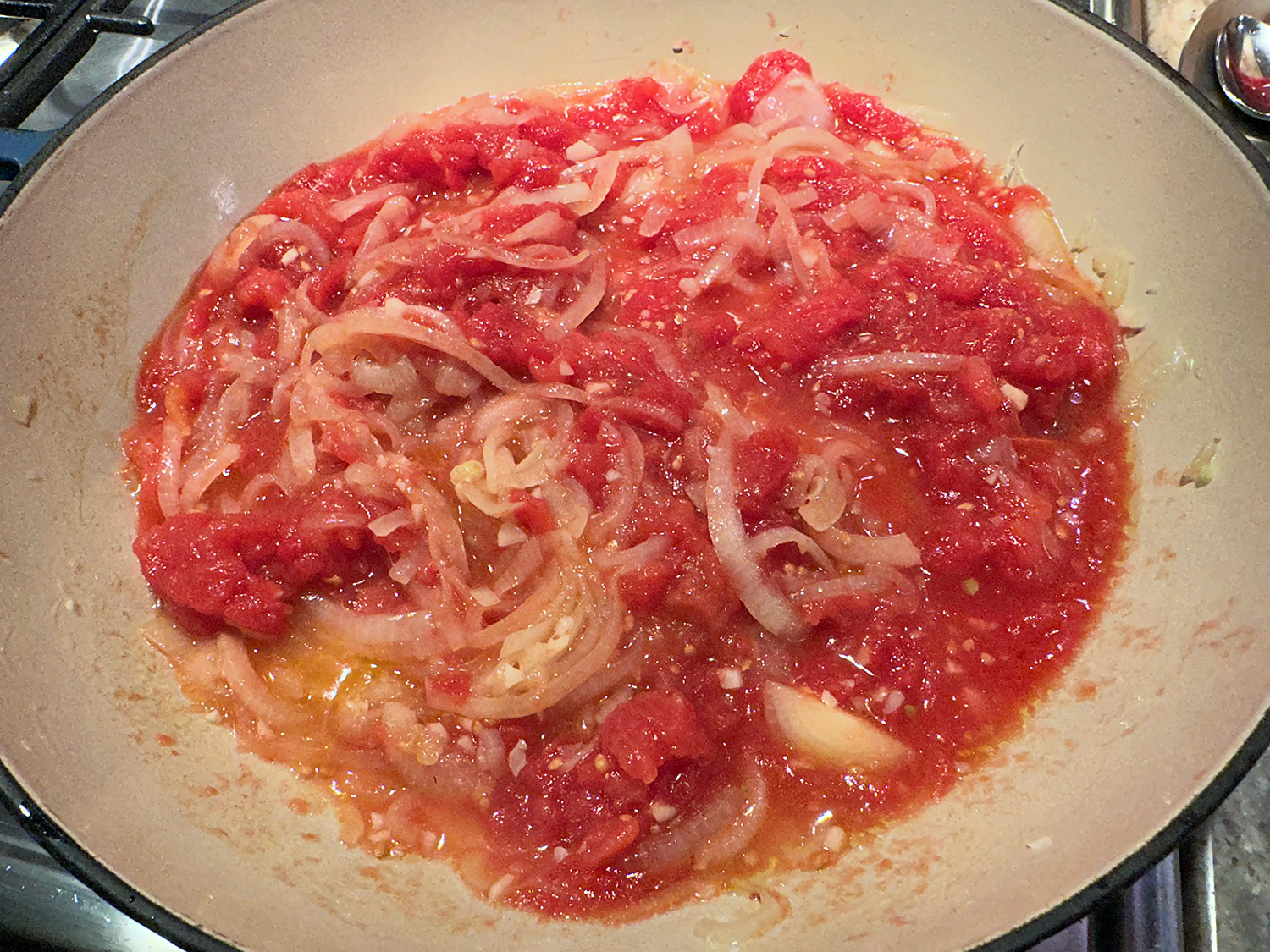
OK, so let’s get to the delicious recipe. Puttanesca is made from tomatoes, black olives, capers, anchovies, onions, garlic, and herbs, usually oregano and parsley but sometimes also basil; we used cilantro for a change of pace. This particular version leaves out the anchovies, but you could easily add some in if desired.

It is an easy sauce, briefly cooked, and is very fragrant and spicy. We paired it here with a Lemon-Garlic Rice, but fell free to use a simple steamed rice.

Braised Tuna Puttanesca

  • Servings: 4
  • Difficulty: easy
  • Print

Ingredients

  • 1/4 cup extra virgin olive oil
  • 1 1/2 cups onion, thinly sliced
  • 2 Tbsp. garlic, minced
  • 28-oz. can whole tomatoes, crushed with hands
  • 1/4 cup capers, rinsed
  • 1/3 cup pitted olives, black or green, or a mix, sliced
  • Pinch red pepper flakes
  • 1 1/2 cups dry white wine
  • 4 tuna steaks, about 6 oz. each
  • 1/4 cup cilantro, chopped
  • 1/4 cup slivered almonds, toasted
  • Lemon Garlic Rice (see recipe below)

Directions

  1. Heat oil in large saute pan. Add onions and cook for about 4 minutes.
  2. Add garlic and cook 1 minute. Add tomatoes; saute until softened, about 3 minutes.
  3. Add capers, olives, pepper flakes and wine. Bring to simmer. Add tuna steaks. Reduce heat to low. Cover and simmer for 10-15 minutes. Remove tuna and keep warm.
  4. Reduce sauce to desired consistency. Stir in cilantro. Serve tuna with warm sauce and sprinkle with slivered almonds.
  5. Serve with Lemon Garlic Rice, (see recipe below).

http://www.lynnandruss.com

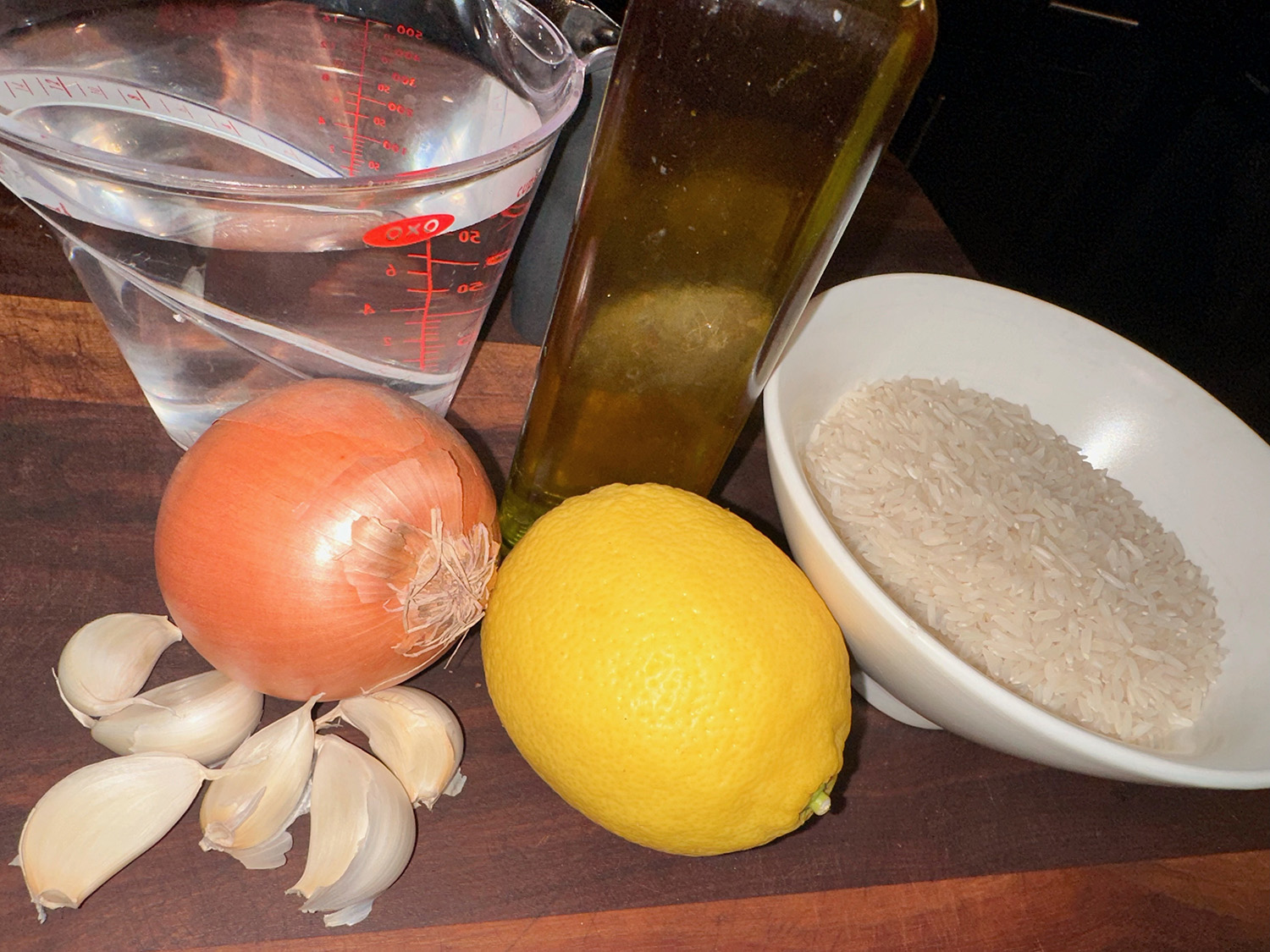
Lemon-Garlic Rice

Lemon-Garlic Rice

  • Servings: 4
  • Difficulty: easy
  • Print

Ingredients

  • 2 Tbsp. olive oil
  • 1/2 cup onion, minced
  • 2 Tbsp. garlic, minced
  • 1 cup long-grain white rice, uncooked
  • 2 cups water
  • Pinch salt
  • 1/2 lemon, juiced
  • 2 Tbsp. chopped cilantro
  • 1 lemon, zested
  • Black pepper

Directions

  1. Heat oil in saucepan over medium high heat. Add onion and cook until soft.
  2. Add garlic and cook one minute.
  3. Add rice and toss to coat with oil. Add water, a pinch of salt and lemon juice. Bring to a boil. Cover and reduce heat to low. Simmer until all liquid is absorbed.
  4. Remove from heat, fluff with fork, toss with lemon zest and chopped cilantro. Season to taste with salt and pepper.

http://www.lynnandruss.com

Salmon with Barigoule

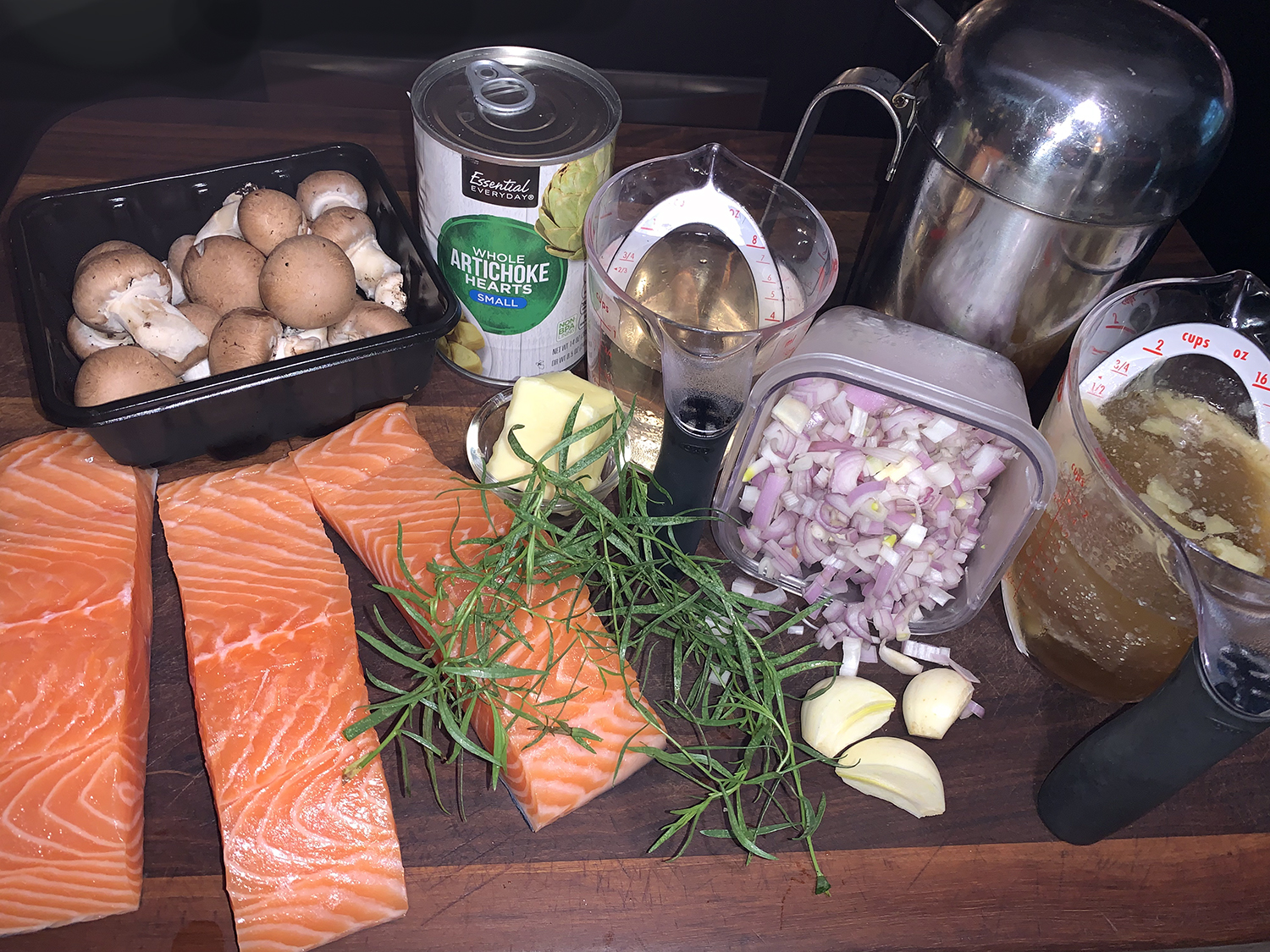
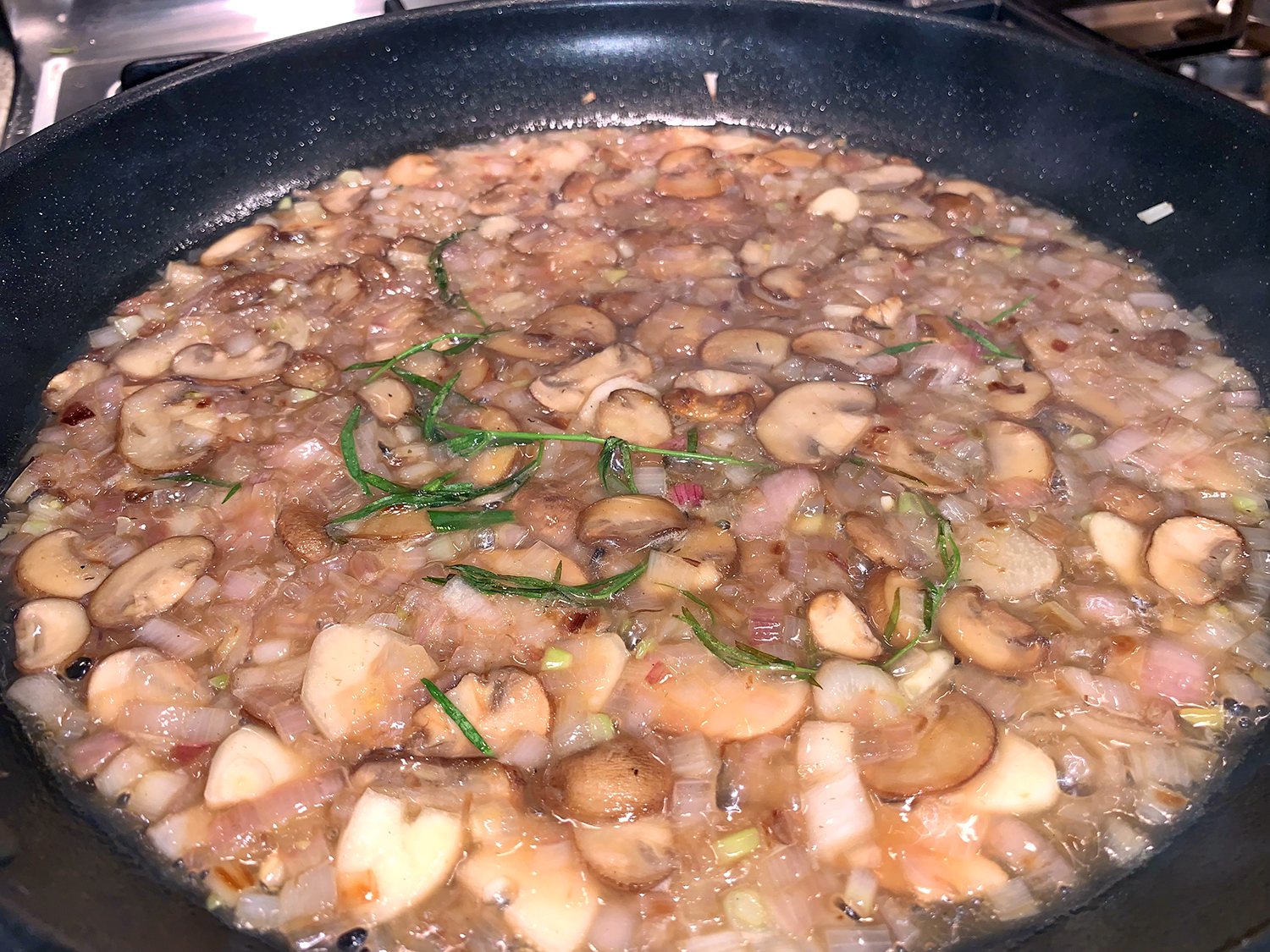
As a Milk Street article informed us, barigoule is a Provençal braise of fresh artichokes in white wine, with aromatics such as garlic and thyme. The name “barigoule” comes from a type of mushroom once said to be a part of the dish; the moniker stuck even though the fungi no longer are added to modern versions.

Here, cremini mushrooms are added for their earthy depth and meaty texture that balance the acidity of the wine and complement the mildness of the artichokes. To make this doable on a weeknight, use canned artichokes rather than fresh, but to keep their flavor as bright as possible, cook them in the broth only for as long as it takes to heat them through.

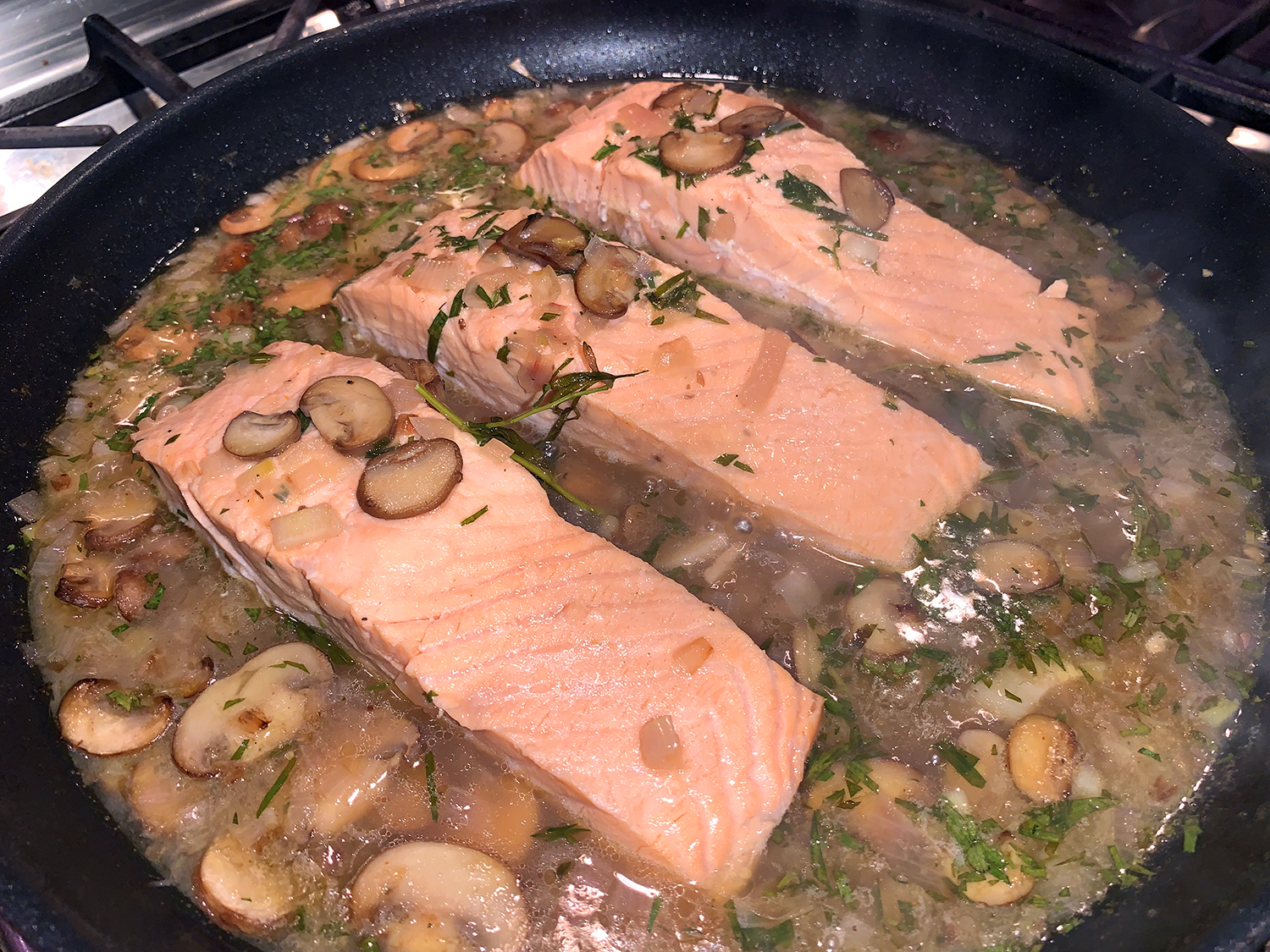
Our changes? Instead of four, 6-ounce filets, we bought a 1 1⁄2-pound single filet and cut it into 3 strips, which gave each of us an 8-ounce portion. Similarly, 4 ounces of mushrooms just didn’t float our boat, so we doubled that amount to 8 ounces.

Another alteration was cutting the artichoke hearts in half instead of quartered, because they were on the small side to begin with. Finally, because our salmon filets were a bit larger, and the fact that prefer ours less translucent, we simmered them until they reached an internal temperature of 130°. All changes are noted below.

Don’t forget to turn down the heat after adding the salmon to the skillet. Gentle poaching ensures the fillets cook evenly and stay moist. Don’t cover the skillet while cooking the salmon; too much heat will be trapped inside, resulting in overcooked fillets.
Salmon with Barigoule

  • Servings: 4
  • Difficulty: easy
  • Print

Ingredients

  • 4 6-oz. salmon fillets, each about 1 inch thick
  • Kosher salt
  • 2 Tbsp. extra-virgin olive oil
  • 8 oz. cremini mushrooms, trimmed and thinly sliced
  • 3 medium garlic cloves, thinly sliced
  • 2 medium shallots, chopped
  • 1 sprig tarragon, plus 2 Tbsp. chopped fresh tarragon
  • 1 cup dry white wine
  • 1 1/2 cups chicken broth or vegetable broth
  • 14 oz. can artichoke hearts, drained, cut into halves or quarters if whole
  • 2 Tbsp. salted butter, cut into 4 pieces

Directions

  1. Season the salmon all over with salt. In a 12-inch nonstick skillet over medium-high, heat the oil until shimmering. Add the mushrooms and cook, stirring occasionally, until the moisture released by the mushrooms has evaporated and the mushrooms are browned, 4 to 6 minutes.
  2. Add the garlic, shallots, tarragon sprig and ½ teaspoon salt; cook, stirring often, until the garlic is golden brown, 1 to 2 minutes.
  3. Add the wine and cook, stirring occasionally, until reduced by about half, 3 to 5 minutes.
  4. Add the broth and bring to a simmer. Place the salmon boned side down in the pan, reduce to low and cook at a very gentle simmer, uncovered, for 5 minutes. Flip the fillets and cook until the thickest parts reach 130°F or are slightly translucent when cut into, about 5 minutes.
  5. Remove the pan from the heat. Using a wide metal spatula, transfer the salmon to wide, shallow serving bowls.
  6. Bring the broth to a simmer over medium-high, then add the artichokes and butter; cook, stirring, until the artichokes are heated through and the butter is emulsified into the sauce, about 1 minute.
  7. Off heat, taste and season with salt. Remove and discard the tarragon sprig, then spoon the mixture over and around the salmon and sprinkle with the chopped tarragon.

http://www.lynnandruss.com

Recipe by Courtney Hill for Milk Street

Sautéed Cod with Zhoug

Zhoug, a spicy pesto-like condiment with a base of cilantro and often parsley, is popular throughout the Levant and Middle East regions. Its zip and pungency comes from fresh chilies, a small handful of spices and fresh garlic. Olive oil supplies fruity richness.

Milk Street claims zhoug is just the thing to add bold, bracing flavor to mild-tasting fillets of white fish. Readily available cod works well in this recipe, but snapper and tilapia are also good substitutes. Whichever you choose, for quick, even cooking, look for fillets no thicker than about 1 inch. Be sure to dry the fish well by patting it with paper towels, especially if it was previously frozen; removing excess moisture helps ensure they brown well in the pan.

Unable to source Serrano chiles, a jalapeño and a Fresno were substituted. Cod was the fish of choice because it was the most economical of the options—and we like it. To complete the meal, we made sides of steamed green beans lightly dressed in a flavored olive oil, salt and pepper; and whole wheat pearled couscous in homemade seafood stock (instead of water), then finished with sautéed shallot and minced parsley.

NOTE: Don’t leave the cilantro wet after rinsing. Be sure to dry it well so there’s no residual water to cause sogginess during processing. Also, don’t move the fish around once it’s in the skillet, and don’t worry if it releases a little a liquid during cooking. The skinless fillets are delicate, so minimal maneuvering is best to keep them intact, as well as for best browning.

Sautéed Cod with Zhoug

  • Servings: 4
  • Difficulty: easy
  • Print

Ingredients

  • 4 cups lightly packed fresh cilantro leaves and tender stems (about 1 large bunch), roughly chopped
  • 2 medium garlic cloves, smashed and peeled
  • 2 serrano chilies, stemmed, halved and seeded
  • 1½ tsp. ground coriander
  • ½ tsp. ground cumin
  • ¼ tsp. ground cardamom
  • Kosher salt and ground black pepper
  • ¼ cup plus 2 Tbsp. extra-virgin olive oil, divided
  • 4 6-oz. skinless cod, snapper or tilapia fillets, each about 1 inch thick, patted dry
  • Lemon wedges, to serve

Directions

  1. In a food processor, combine the cilantro, garlic, chilies, coriander, cumin, cardamom, ½ teaspoon each salt and pepper. Process until roughly chopped, about 20 seconds.
  2. Add the ¼ cup oil and process until smooth, about another 30 seconds. Transfer ¼ cup zhoug to a small bowl; set aside for serving.
  3. Season the fish all over with salt and pepper, then brush the one side with half of the remaining zhoug. In a 12-inch nonstick skillet over medium-high, heat the remaining 2 tablespoons oil until shimmering.
  4. Add the fillets zhoug-side down, brush the tops with the remaining zhoug and cook, undisturbed, until golden brown on the bottoms, 3 to 5 minutes.
  5. Using a wide metal spatula, carefully flip the fillets. Cook until golden brown on the second sides and the fillets are opaque throughout, about 3 minutes. Using the spatula, transfer the fillets to a platter. Serve with the reserved zhoug and lemon wedges.

http://www.lynnandruss.com

Adapted from a recipe by Courtney Hill for Milk Street