Tag Archives: entrée

Ragù Cilentano: Slow-Cooked Short Ribs with Pasta

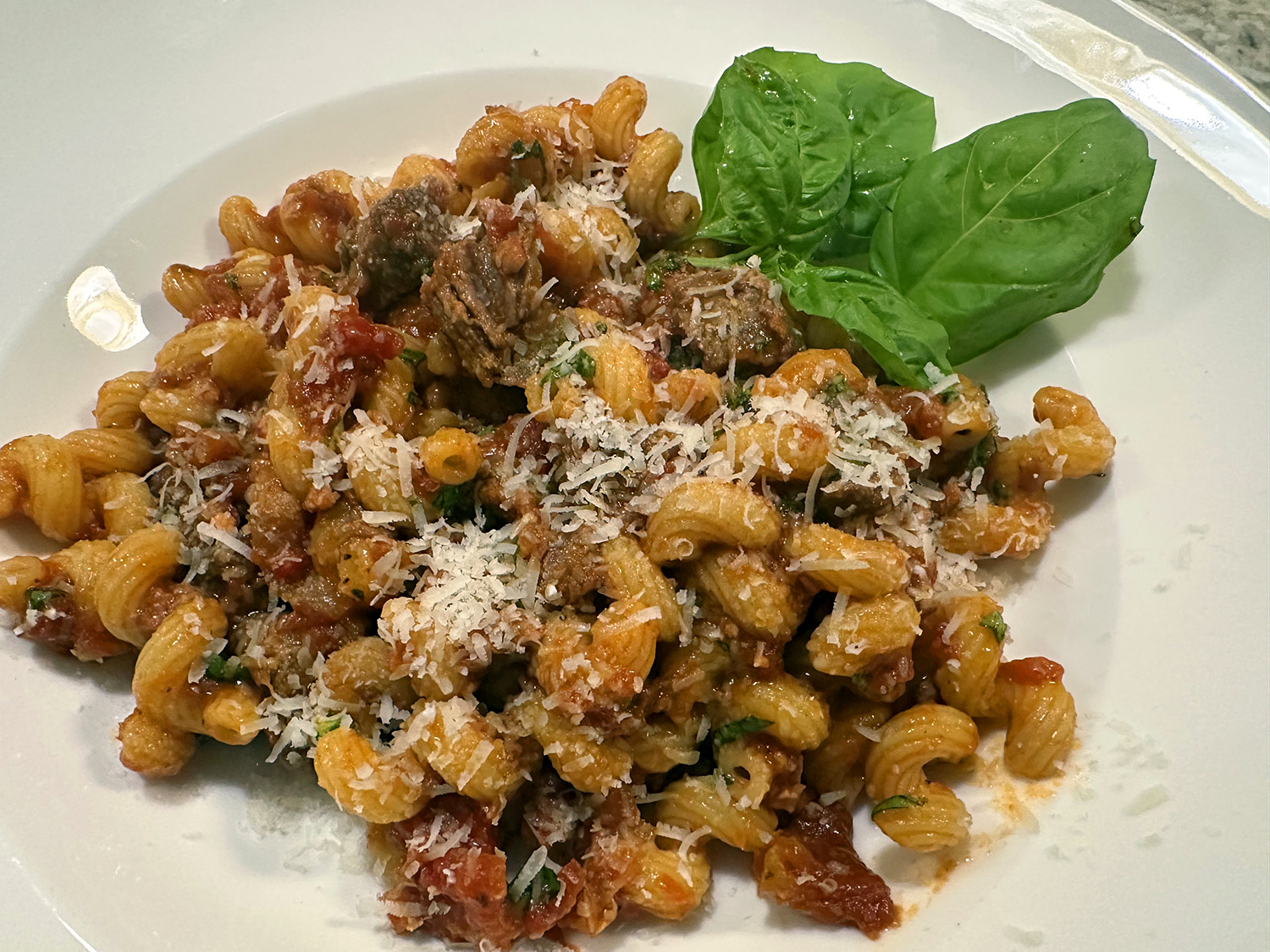
Ragù cilentano is a unique dish not well known outside of Italy’s Campania region. The tomato-centric sauce gets its intense flavor and thick, lush consistency from multi-hour cooking with various types of meat—traditionally only small amounts of scraps that melt into and merge with the tomatoes as the ingredients slowly concentrate.

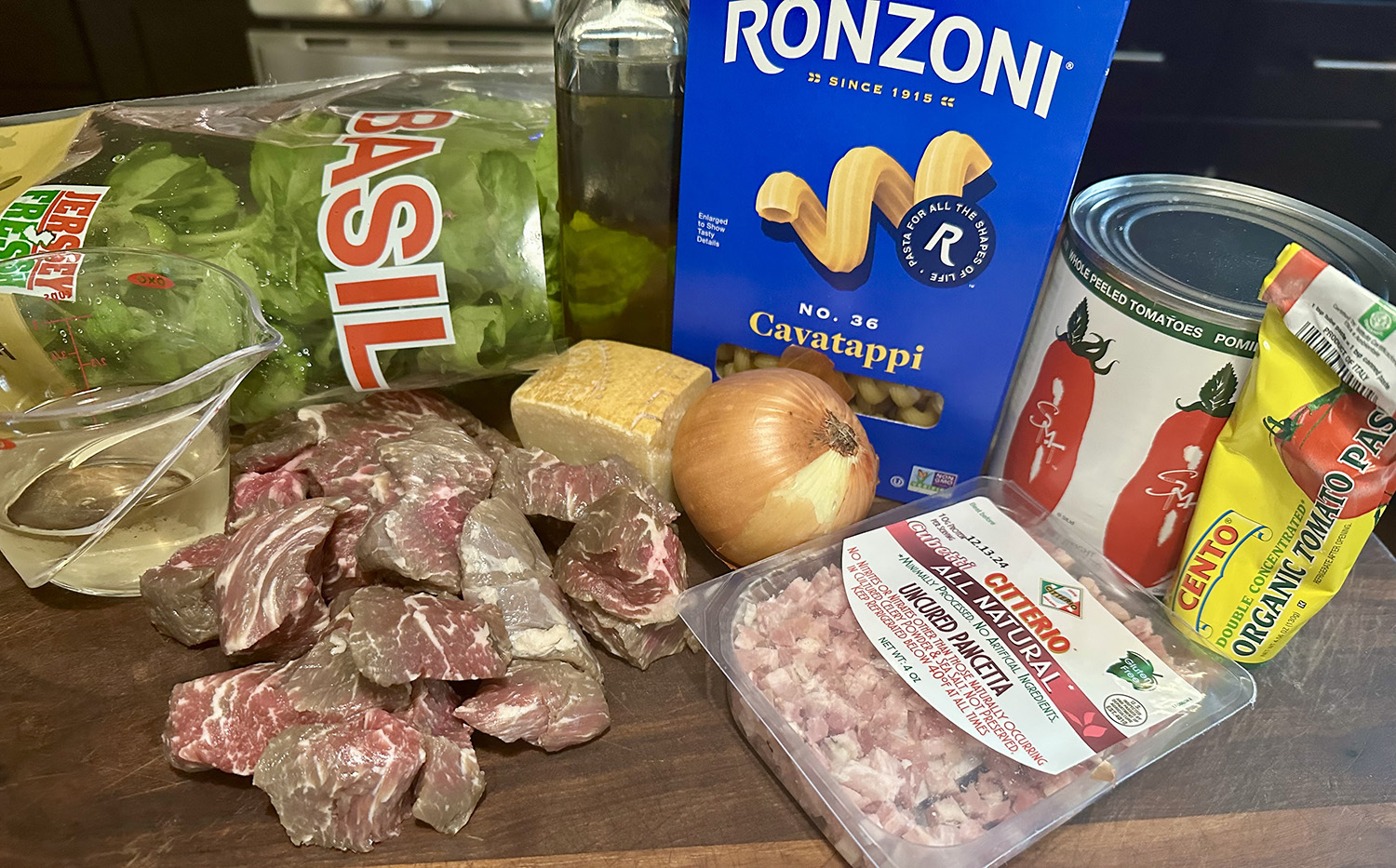
Here, the meats are limited to two: pancetta for its salty, porky flavor and short ribs that lend deep, beefy richness. Tomatoes are also used in two forms: sweet-tart canned whole tomatoes and tomato paste for depth and umami. For convenience as well as steady, even cooking, the sauce is simmered in the oven so no careful monitoring is needed.

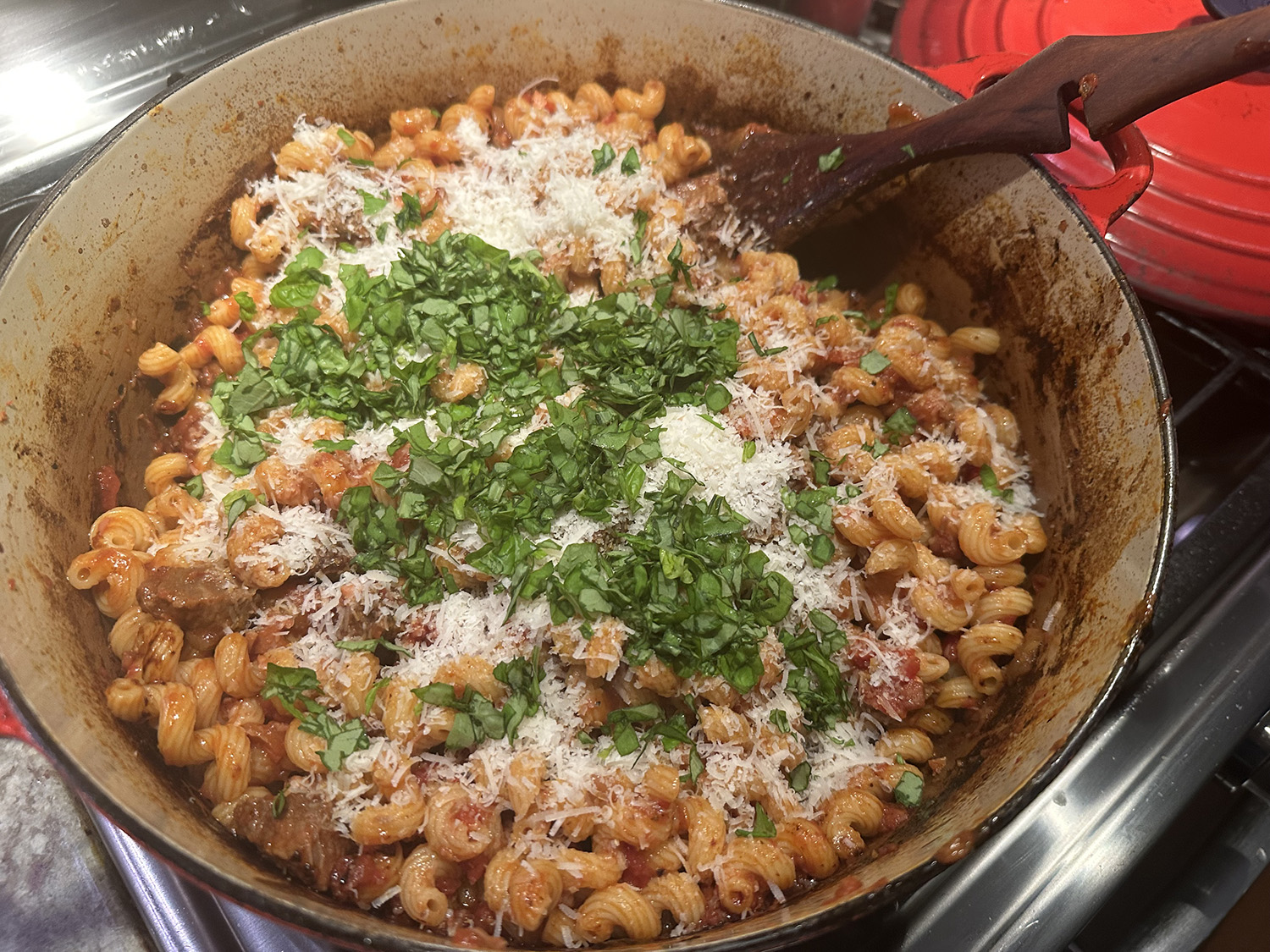
The ragù pairs especially well with sturdy, thick, chewy pasta shapes such as cavatelli or orecchiette (we used cavatappi). The finished sauce can be cooled and stored in an airtight container in the refrigerator for up to five days; rewarm it in a covered saucepan over medium before tossing it with just-cooked pasta.

The store was not carrying boneless short ribs on the day we went, so we chose chuck steak (stew meat) and it worked perfectly fine—and we saved a boat load of money with the cheaper cut!

Don’t add more salt and pepper at the start of cooking than the recipe calls for. As the ingredients reduce, the flavors become concentrated. It’s best to adjust seasoning at the very end, after the ragù has been tossed with the pasta. When the sauce is done, don’t skim off all of the fat that rises to the surface; a little fat delivers flavor and pasta-coating silkiness.

Ragù Cilentano: Slow-Cooked Short Ribs with Pasta

  • Servings: 6
  • Difficulty: moderate
  • Print

Ingredients

  • 1 Tbsp. extra-virgin olive oil
  • 4 oz. pancetta, chopped
  • 1 medium yellow onion, chopped
  • 3 Tbsp. tomato paste
  • 1/2 cup dry white wine
  • 1 lb. boneless beef short ribs, cut into 1-inch chunks
  • 1 28-oz. can whole peeled tomatoes, crushed by hand
  • Kosher salt and ground black pepper
  • 1 lb. cavatelli, cavatappi or orecchiette pasta
  • 1 oz. Parmesan cheese, finely grated (½ cup), plus more to serve
  • 1/2 cup chopped fresh basil

Directions

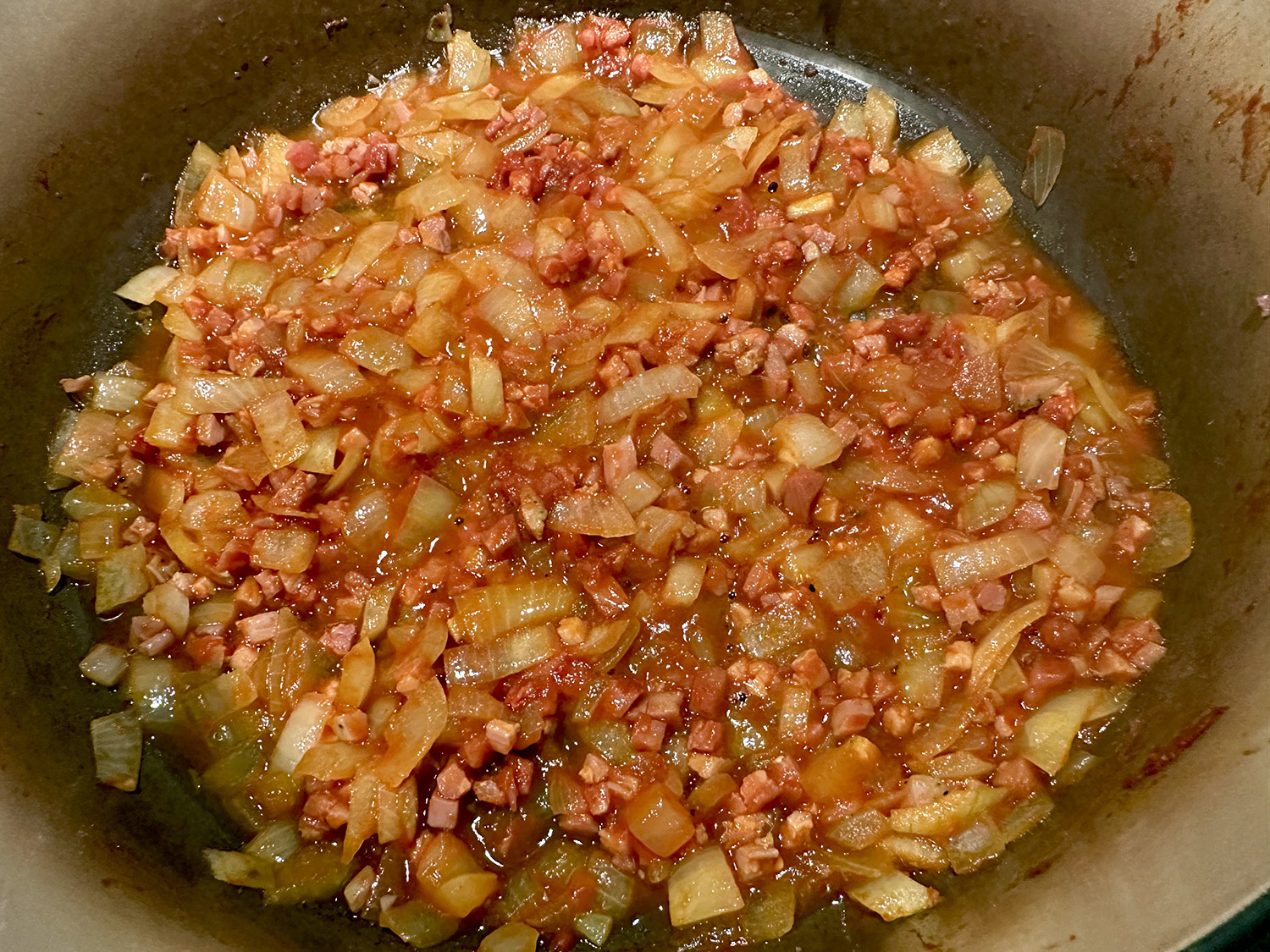
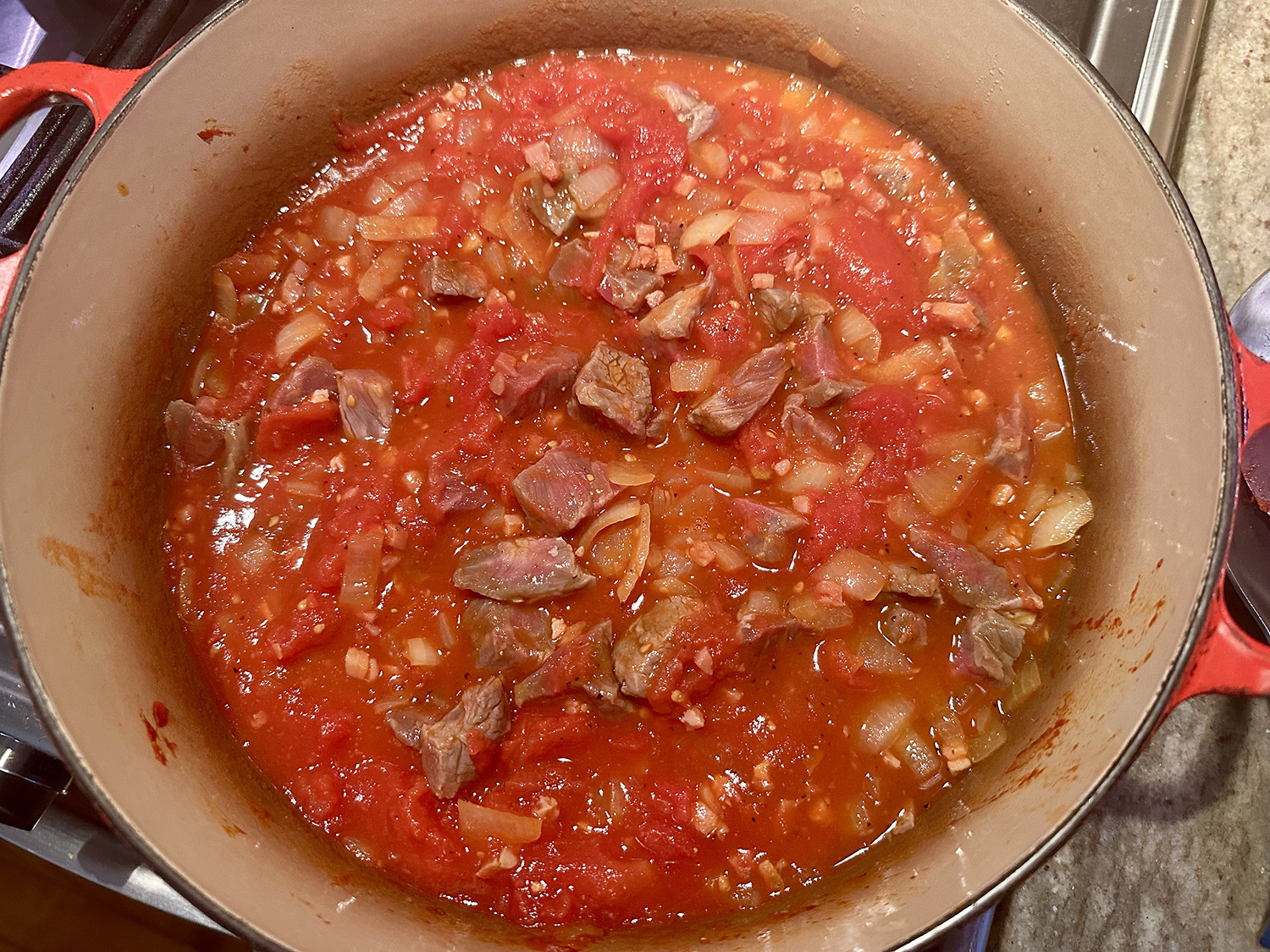
  1. Heat the oven to 350°F with a rack in the lower-middle position. In a Dutch oven over medium, combine the oil, pancetta and onion. Cook over medium, stirring occasionally, until the onion is lightly browned, 4 to 5 minutes. Add the tomato paste and cook, stirring, until it starts to darken and stick to the bottom of the pot, 1 to 2 minutes. Add the wine and cook, scraping up any browned bits, until reduced by half, about 1 minute. Stir in the beef, tomatoes with juices, ½ cup water, ½ teaspoon each salt and pepper. Bring to a simmer over medium-high, cover, transfer to the oven and cook for 2 hours.
  2. Remove the pot from the oven, uncover and stir, scraping the sides of the pot. Return to the oven uncovered and cook until a skewer inserted into a piece of beef meets no resistance, about 30 minutes. Remove from the oven. If desired, skim off and discard some of the fat from the surface, but leave some for flavor. Cover to keep warm while you cook the pasta.
  3. In a large pot, bring 4 quarts water to boil. Add the pasta and 1 tablespoon salt; cook, stirring occasionally, until al dente. Reserve ½ cup of the cooking water, then drain the pasta.
  4. Add the pasta to the ragù and cook over medium, stirring, until the pasta is well coated in sauce and everything is heated through; if it looks dry, stir in reserved cooking water as needed. Off heat, stir in the basil and cheese, then taste and season with salt and pepper. Serve with additional cheese.

http://www.lynnandruss.com

Adapted from a recipe by Rose Hattabaugh for Milk Street
Marsala Chicken Meatballs

If you are fond of Chicken Marsala, then this dish may be one for you. It keeps the same flavor profile, but presents it in a different fashion. And it tends toward more of a slight sweet than savory finish.

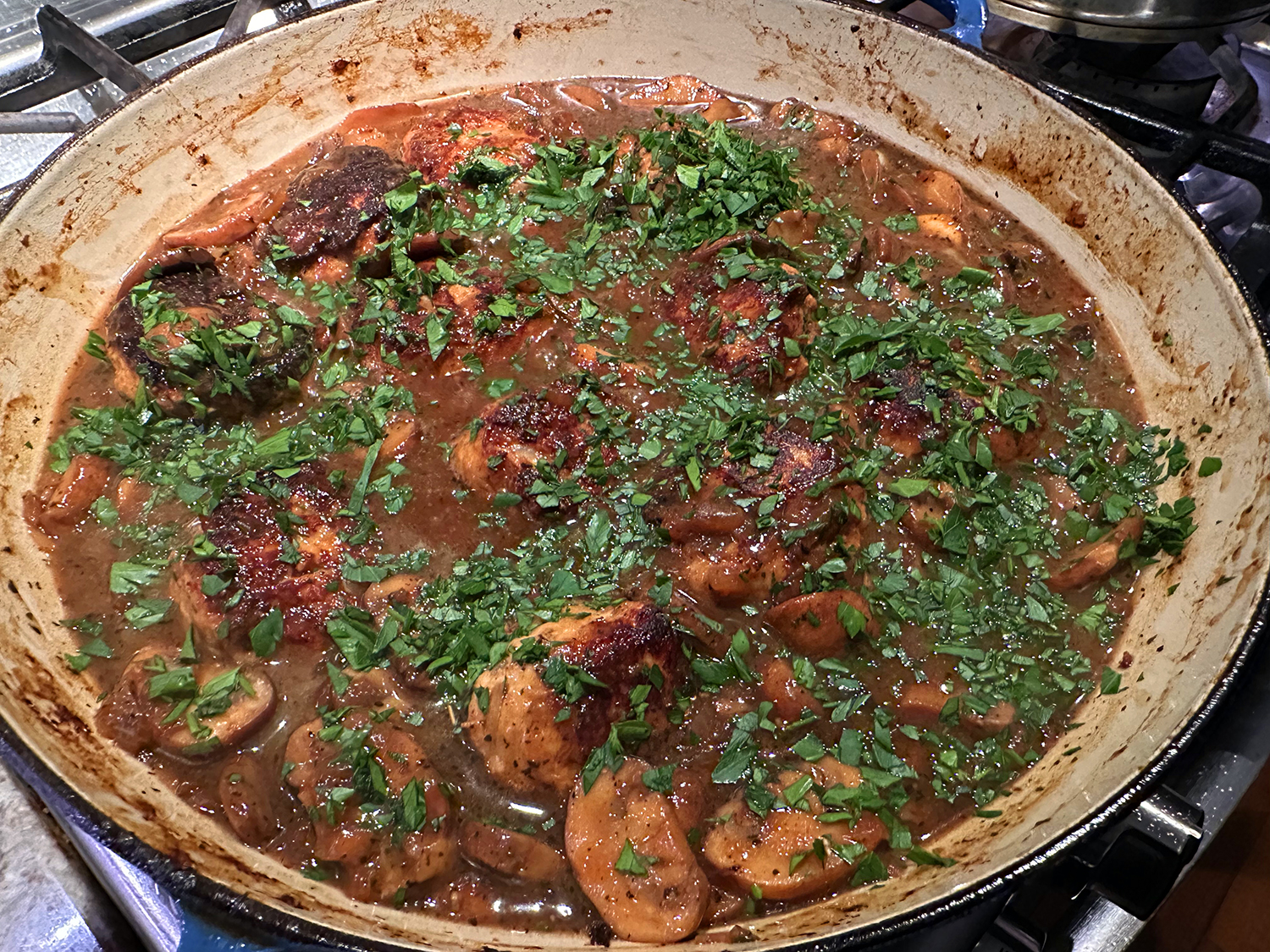
Chicken Marsala is an Italian American classic consisting of seared pounded chicken that’s smothered in a sweet-savory Marsala wine mushroom sauce. For more spoon-ability, this crowd-pleasing dinner replaces the thin cutlets with tender chicken meatballs, simmered in a similarly indulgent Marsala sauce.

Ground chicken is very lean, so to ensure a perfectly moist bite, Marsala-soaked bread crumbs and extra-virgin olive oil are added to the meatball mixture. For a flavor-packed fond, take the time to brown the onions and mushrooms; the time spent will pay off.

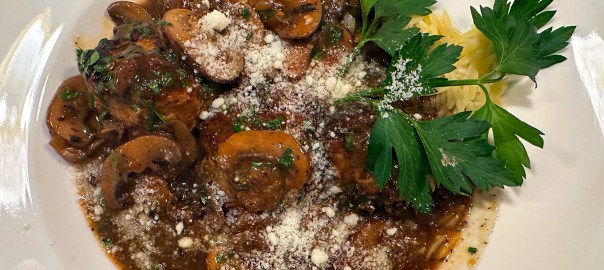
This recipe is dairy-free as written, but if you’d like to finish the dish with a few pads of butter or a splash of heavy cream, the sauce will certainly accommodate the additional richness. Serve plain as is, or over a bed of mashed potatoes, polenta, orzo, or other pasta of choice.

*NOTE: Chop onions for the meatballs finely in a food processor and squeeze out most of the water using a kitchen towel before adding to chicken.

Marsala Chicken Meatballs

  • Servings: 4
  • Difficulty: easy
  • Print

Ingredients

  • 2 large yellow onions (about 10 oz. each), finely chopped
  • ⅓ cup bread crumbs
  • 1¼ cups dry Marsala wine
  • 1¾ cups of chicken stock
  • 5 Tbsp. extra-virgin olive oil
  • Salt and pepper
  • 1 lb. ground chicken
  • 1 lb. sliced button or cremini mushrooms
  • 2 Tbsp. all-purpose flour
  • 1 tsp. dried Italian herb seasoning
  • 3 Tbsp. butter
  • Chopped flat-leaf parsley, for serving

Directions

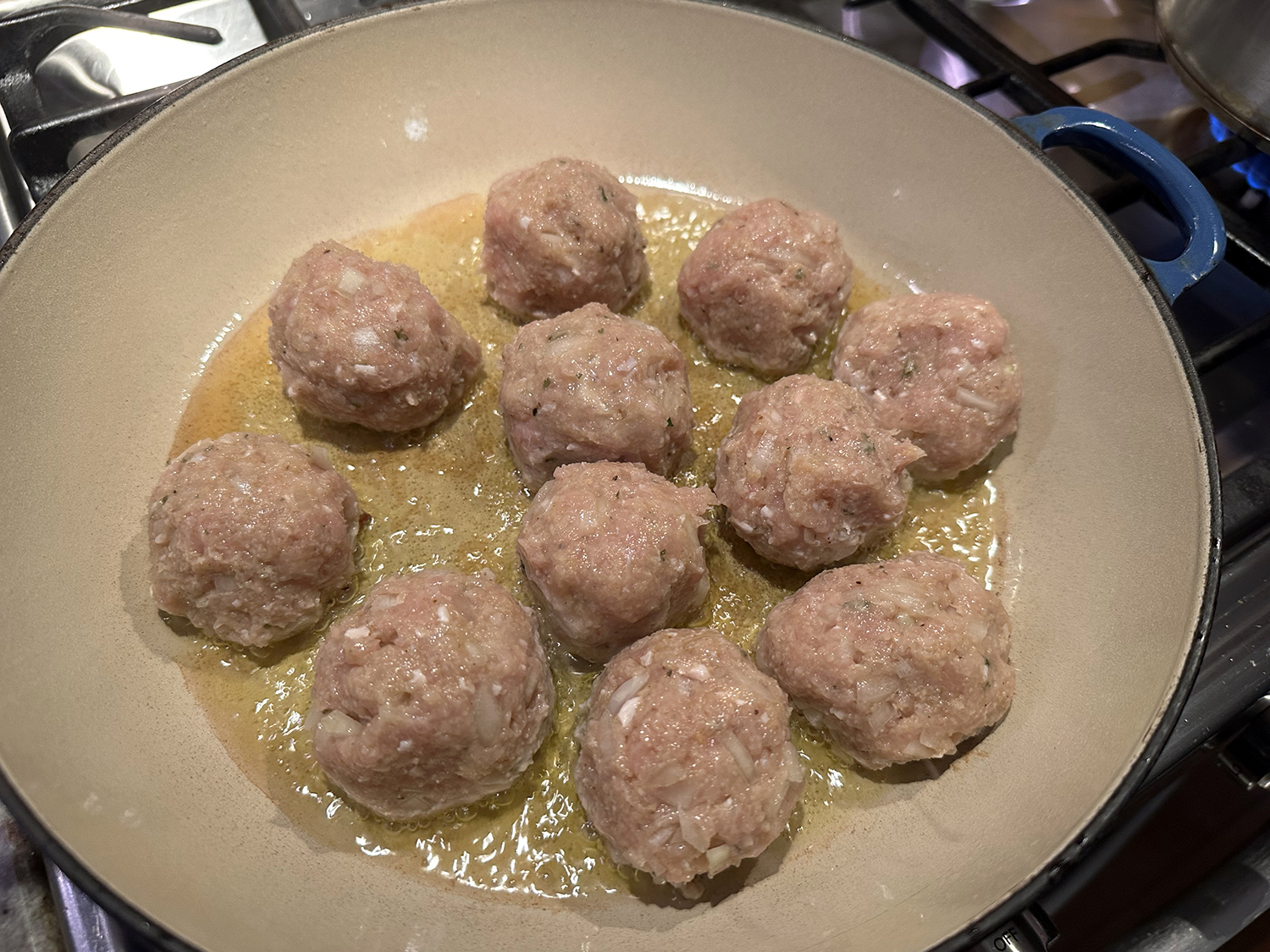
  1. To a medium bowl, add 1 cup of chopped onion, plus the bread crumbs, ¼ cup wine, 2 tablespoons olive oil, a hefty pinch of salt and a few grinds of pepper; mix until combined. Add the chicken and mix until combined. Form the meat mixture into 14 balls (about 3 tablespoons each), setting them on a sheet pan or plate.
  2. Heat a large (12-inch) heavy skillet or braiser over medium-high, and add the remaining 3 tablespoons of olive oil.
  3. Sear the meatballs for 2 to 3 minutes, until a dark brown crust forms on the bottoms, then flip, and continue searing for 2 minutes on the other sides. Return the meatballs to the sheet pan or plate.
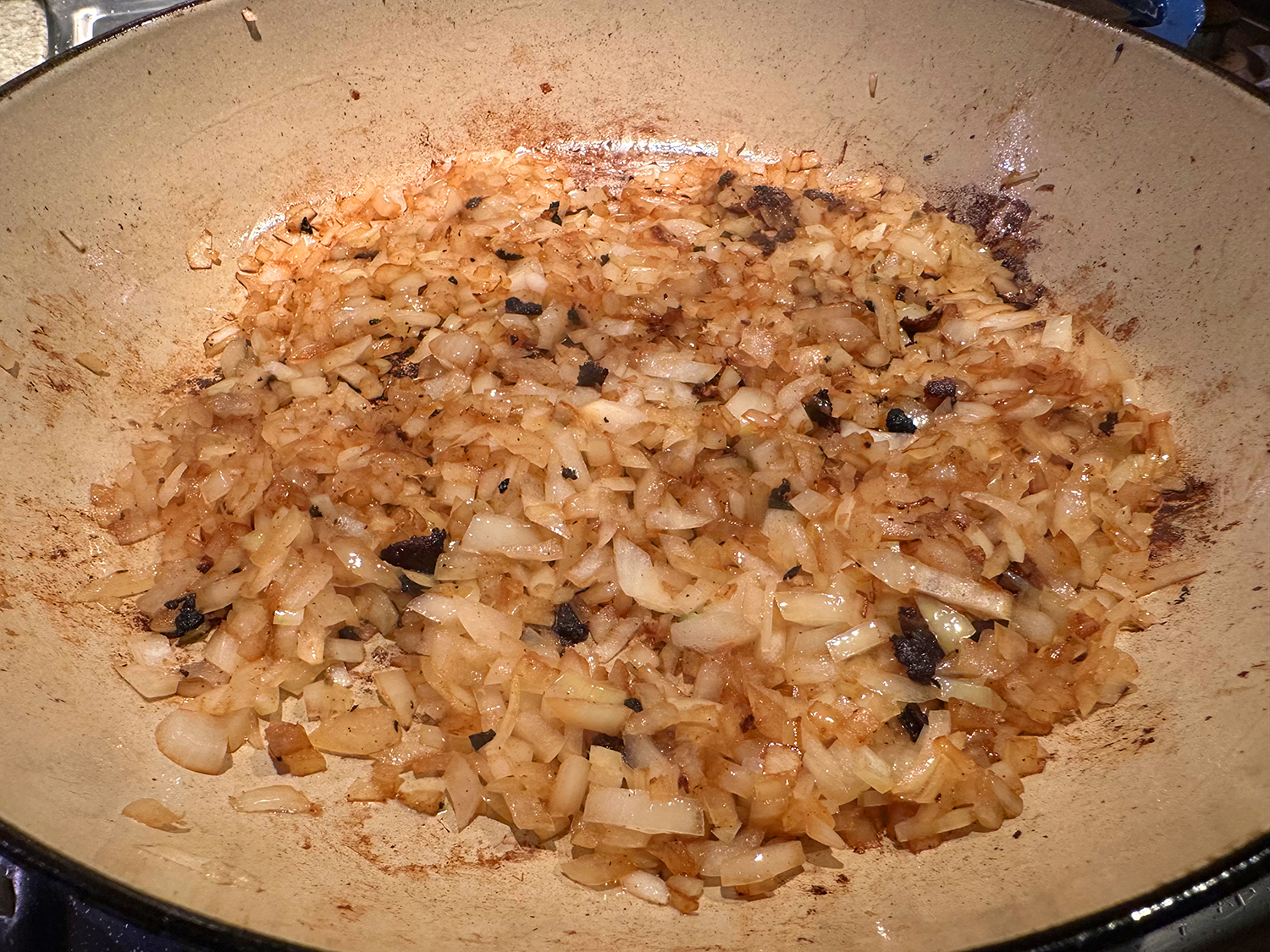
  4. Adjust heat to high. Add the remaining onions to the skillet and cook, stirring every 2 minutes, until golden, translucent and slightly darker on the edges, about 6 minutes, turning the heat down as necessary.
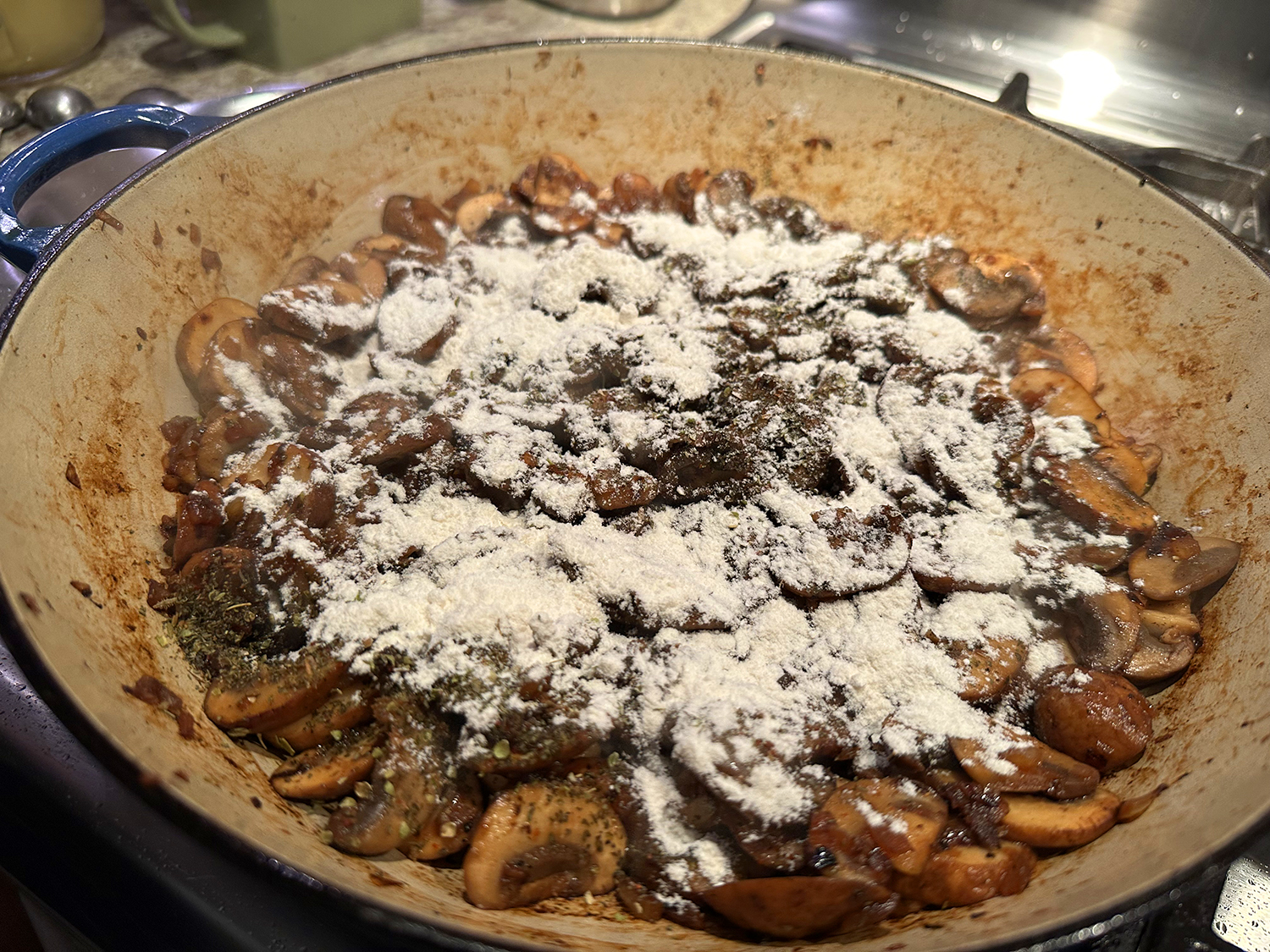
  5. Add the mushrooms and cook for 6 minutes, stirring occasionally, until reduced in volume and slightly darker in color. Sprinkle the flour on top, mix to coat the mushrooms and onion and continue cooking for 1 minute, lowering the heat as needed.
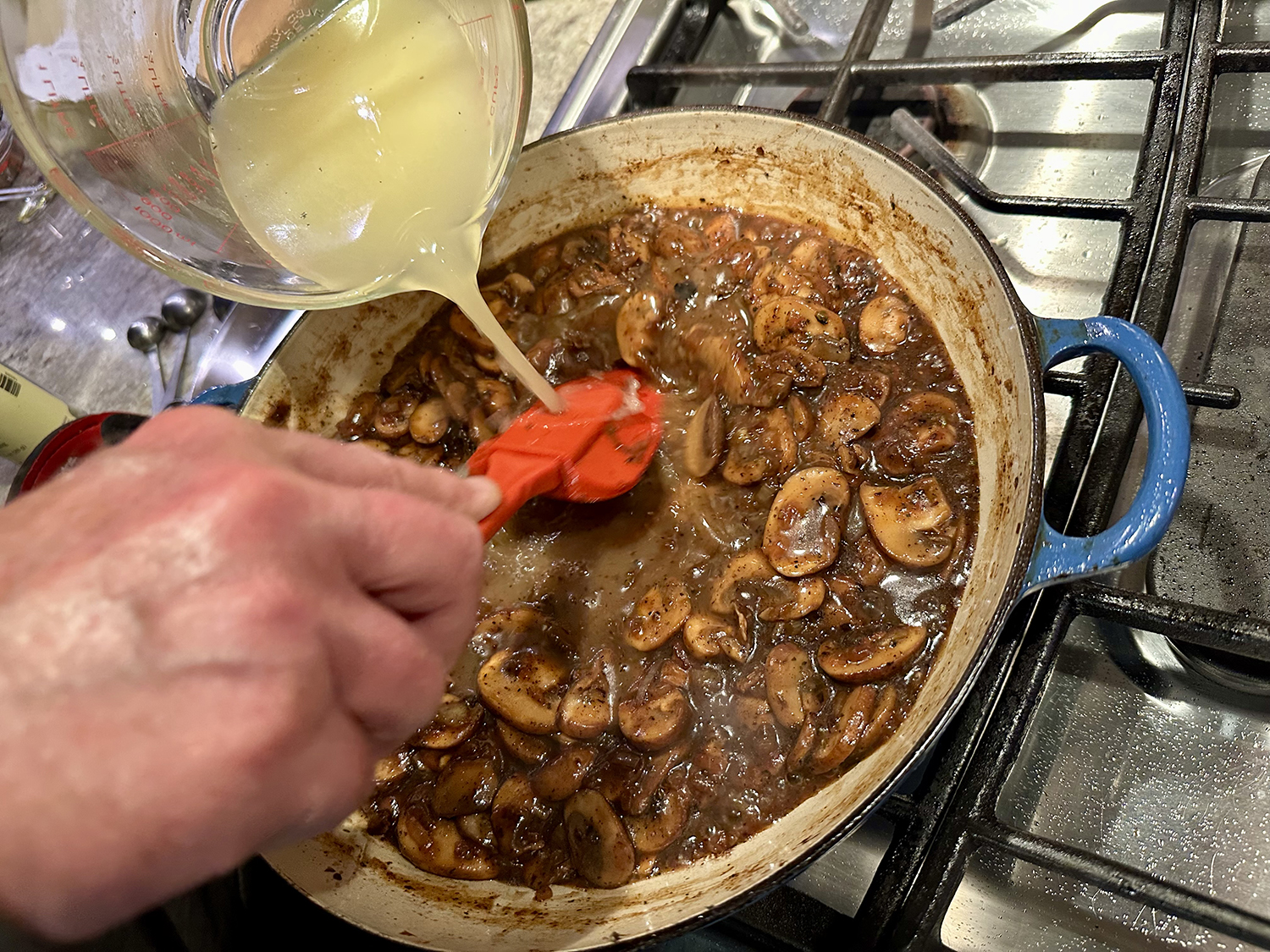
  6. Carefully pour the remaining 1 cup of wine into the skillet while constantly stirring. Using a wooden spoon, scrape the caramelized bits off the bottom of the pan and cook for 2 minutes, until the wine reaches a thicker, honey-like consistency. Add 1¾ cups of chicken stock and bring to a vigorous simmer. Season with a hefty pinch of salt.
  7. Return the meatballs to the skillet. Adjust heat to medium, partially cover and simmer for 12 minutes, until the sauce has thickened slightly and the meatballs are cooked through.
  8. Add the butter, stirring in until all melted. Taste and season with salt. Sprinkle parsley on top and serve.

http://www.lynnandruss.com

Adapted from a recipe by Carolina Gelen for NYTimes Cooking

Colima-Style Shredded Braised Pork

OK, this is definitely a keeper! If shredded pork is your thing, than this recipe needs to get on your short list ASAP. Milk Street Magazine cites: “The state of Colima on the western coast of Mexico is home to the pork dish called tatemado de Colima. Dried chilies, spices and aromatics, all blended to a smooth puree, are key flavorings, but a defining ingredient, other than the pork itself, is vinegar. In chef Paola Briseño-González’s version, her recipe uses a generous amount of smooth-tasting, subtly sweet coconut vinegar, a common ingredient in the coconut-producing region of Colima, and after slow-cooking the pork, she shreds the meat and mixes it with the braising liquid.”

The flavors are rich and porky but deliciously balanced by the tangy vinegar and fresh ginger, whose sharpness disappears into the mix. Milk Street adapts González’s recipe, and in doing so, found widely available rice vinegar to be a decent alternative to coconut vinegar. Braise in the oven, where the heat is steady and all-encompassing; the meat will do a fine job of soaking up the seasonings after it is shredded. The pork is briefly broiled after braising to develop deep browning, so you will need a broiler-safe Dutch oven for this recipe.

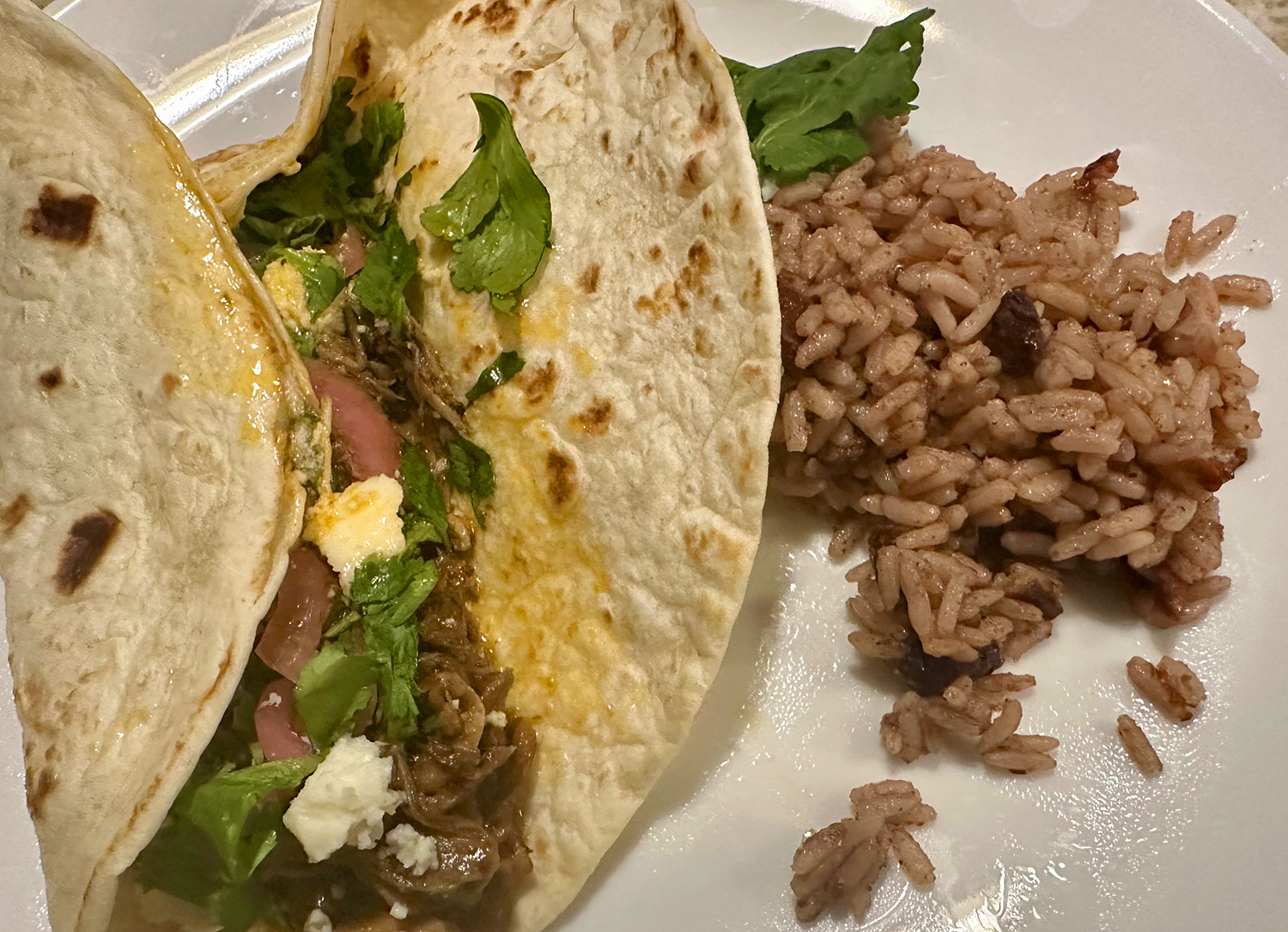
Pungent, flavorful, enticing, and delicious—this “tatemado de Colima” makes for a huge batch of succulent, juicy meat perfect on its own with a fork—or on top of some tortillas, tostada style. Now you have a dish that blows past everyday barbecue. Serve the shredded pork with rice and beans, or make tacos with it, offering shredded cabbage, chopped onion and lime wedges alongside. It’s low-carb if eaten without tortillas.

Word to the Wise: Don’t use an uncoated cast-iron Dutch oven, even if it is well seasoned. The acidity of the vinegar may react with the metal, resulting in a tinny, “off” flavor. However, an enamel-coated Dutch oven is fine.

Colima-Style Shredded Braised Pork

  • Servings: 8-10
  • Difficulty: easy
  • Print

Ingredients

  • 4 large (1¼ oz.) guajillo chilies, stemmed and seeded
  • 5-7 lb. bone-in pork butt or pork shoulder roast
  • 2 cups coconut vinegar or unseasoned rice vinegar
  • 1 cup coconut milk
  • 1/3 cup roughly chopped peeled fresh ginger
  • 9 medium garlic cloves, smashed and peeled
  • 3 bay leaves
  • 1 Tbsp. tomato paste
  • 1/2 tsp. coriander seeds
  • 1/2 tsp. cumin seeds
  • 1/2 tsp. white sugar
  • Kosher salt and ground black pepper

Directions

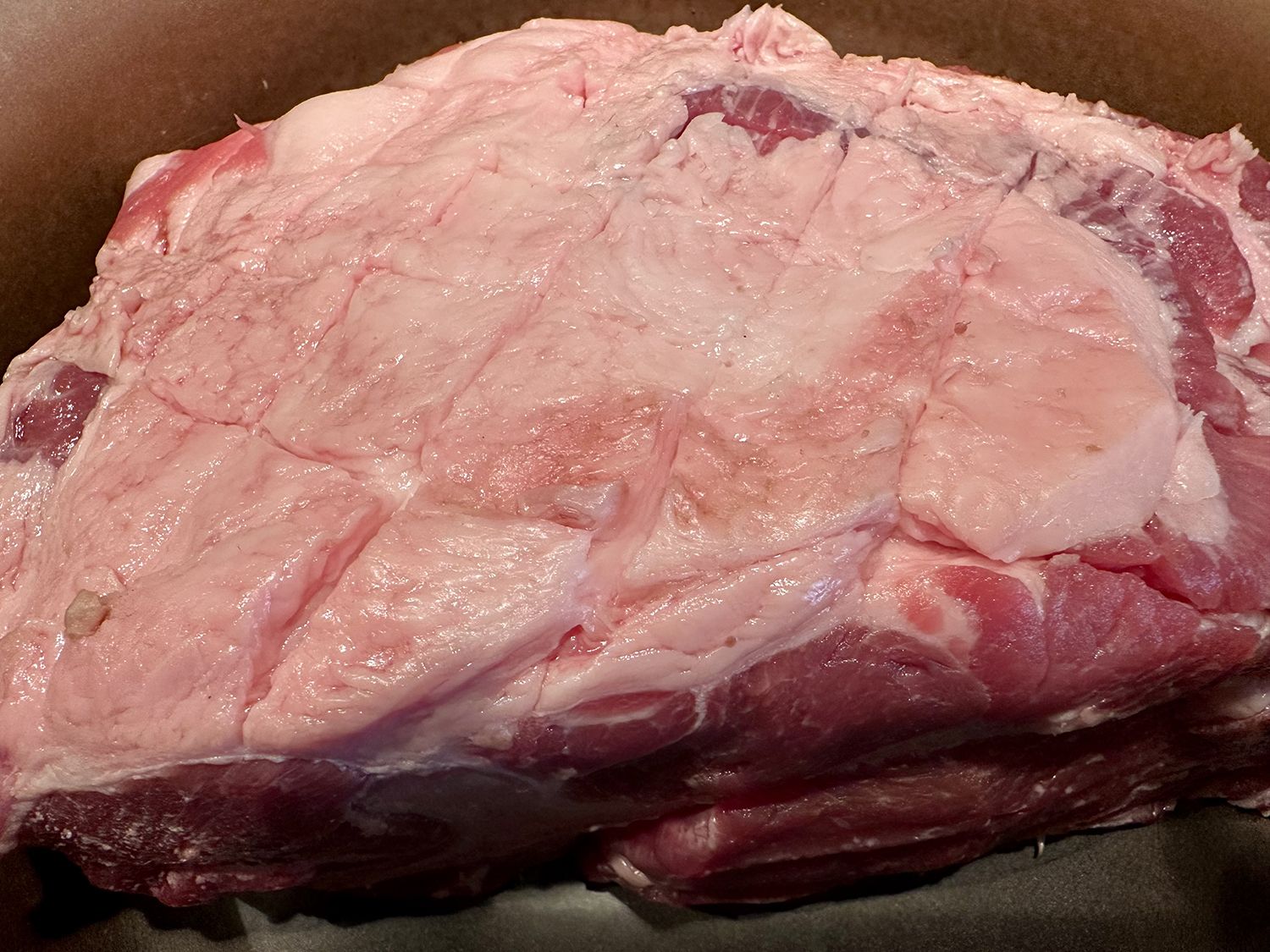
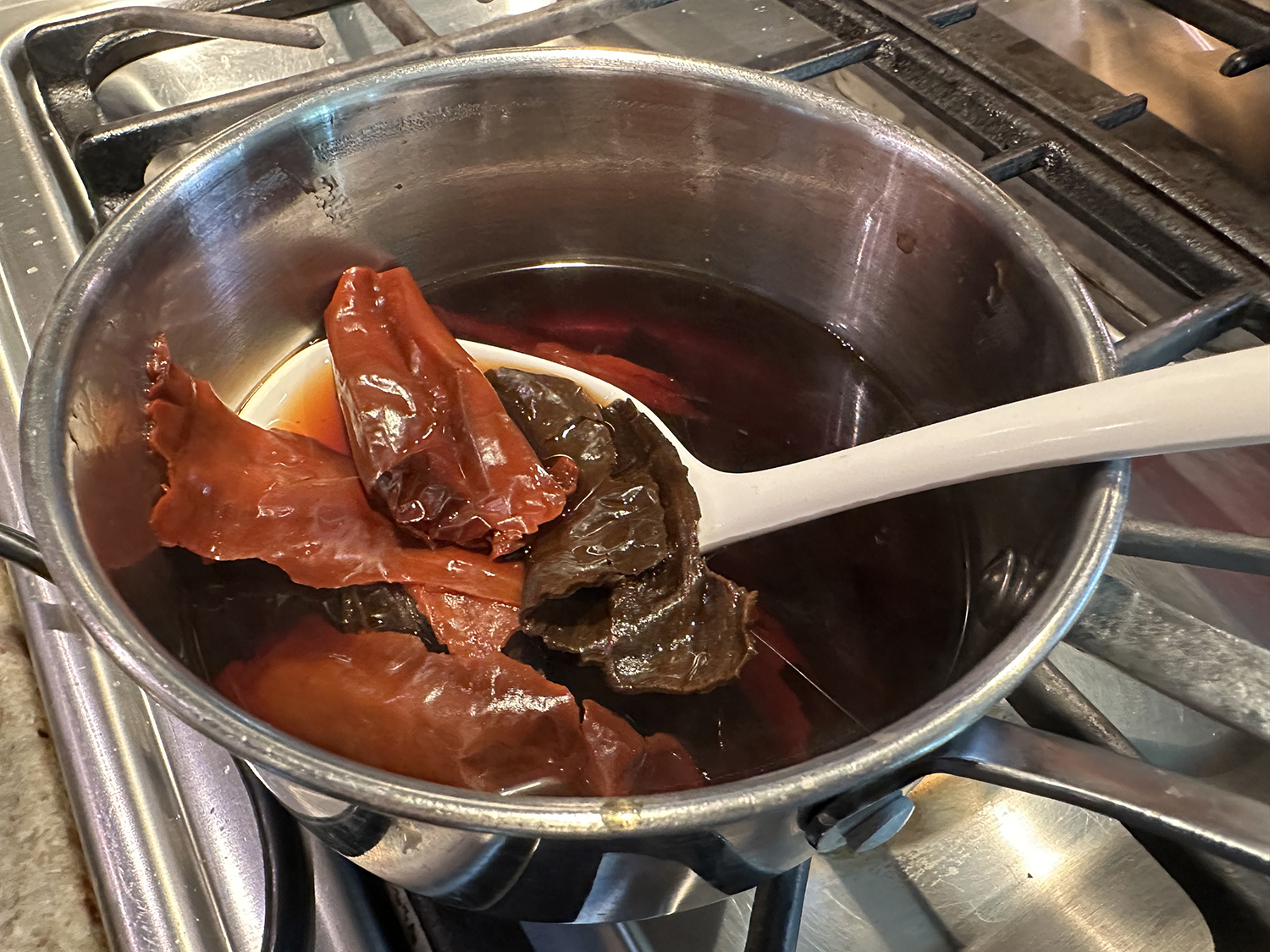
  1. In a small saucepan, combine the chilies and enough water to cover by about 1 inch. Bring to a boil over medium-high, pressing on the chilies to submerge them. Remove from the heat, cover and let stand until the chilies are fully softened, 15 to 20 minutes. Meanwhile, using a sharp knife, score the fat side of the pork roast with a 1-inch crosshatch pattern. Set the pork scored side up in a large enamel-coated Dutch oven.
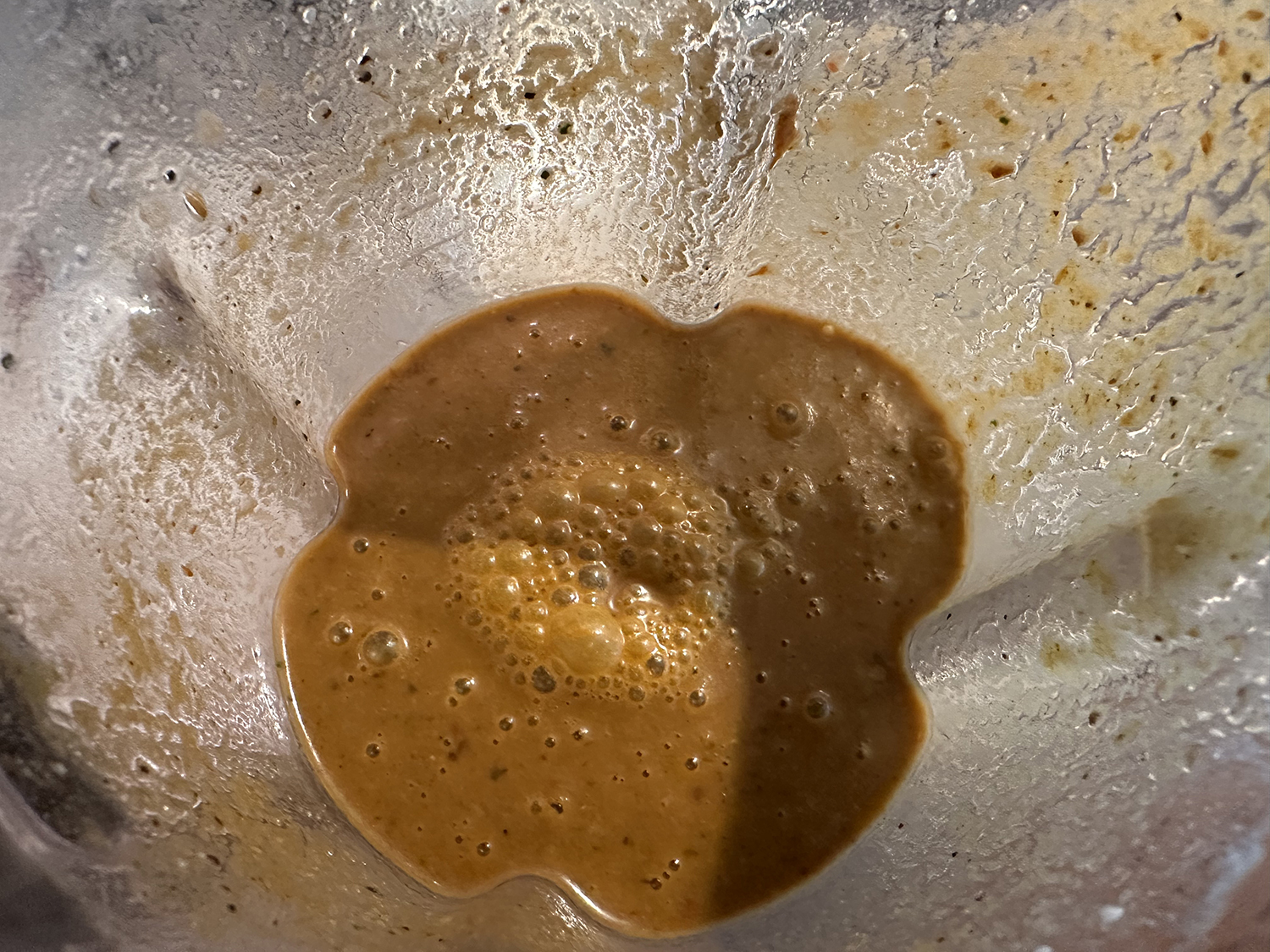
  2. Using a slotted spoon, transfer the chilies to a blender; discard the soaking water. Add the vinegar, coconut milk, ginger, garlic, bay, tomato paste, coriander, cumin, sugar, 1 tablespoon salt and 1 teaspoon pepper. Blend until smooth, about 1 minute. Pour the puree over the pork and rub it into the meat, then cover the pot.
  3. Heat the oven to 325°F with a rack in the lower-middle position. When the oven comes up to temperature, place the pot in the oven and cook until a skewer inserted into the center of the pork meets no resistance, 4½ to 5½ hours.
  4. Remove the pot from the oven and heat the broiler. Return the pot, uncovered, to the oven and broil until the surface of the pork is deeply browned, 2 to 4 minutes. Transfer the pork to a large bowl and set aside. Tilt the pot to pool the braising liquid to one side, then use a wide spoon to skim off and discard fat from the surface, leaving just a couple tablespoons for flavor. You should have between 2 and 4 cups defatted braising liquid; if you have more than 2 cups, set the pot over medium-high, bring the liquid to a rapid simmer and cook, stirring occasionally, until reduced to about 2 cups. Meanwhile, shred the pork into large bite-size pieces, discarding the bone and excess fat.
  5. Return the shredded pork to the pot and stir to combine with the braising liquid. Cover and cook over medium-low, stirring occasionally, just until heated through, 5 to 8 minutes, then taste and season with salt and pepper.

http://www.lynnandruss.com

Recipe adapted by Courtney Hill for Milk Street

Crispy Artichoke Pasta

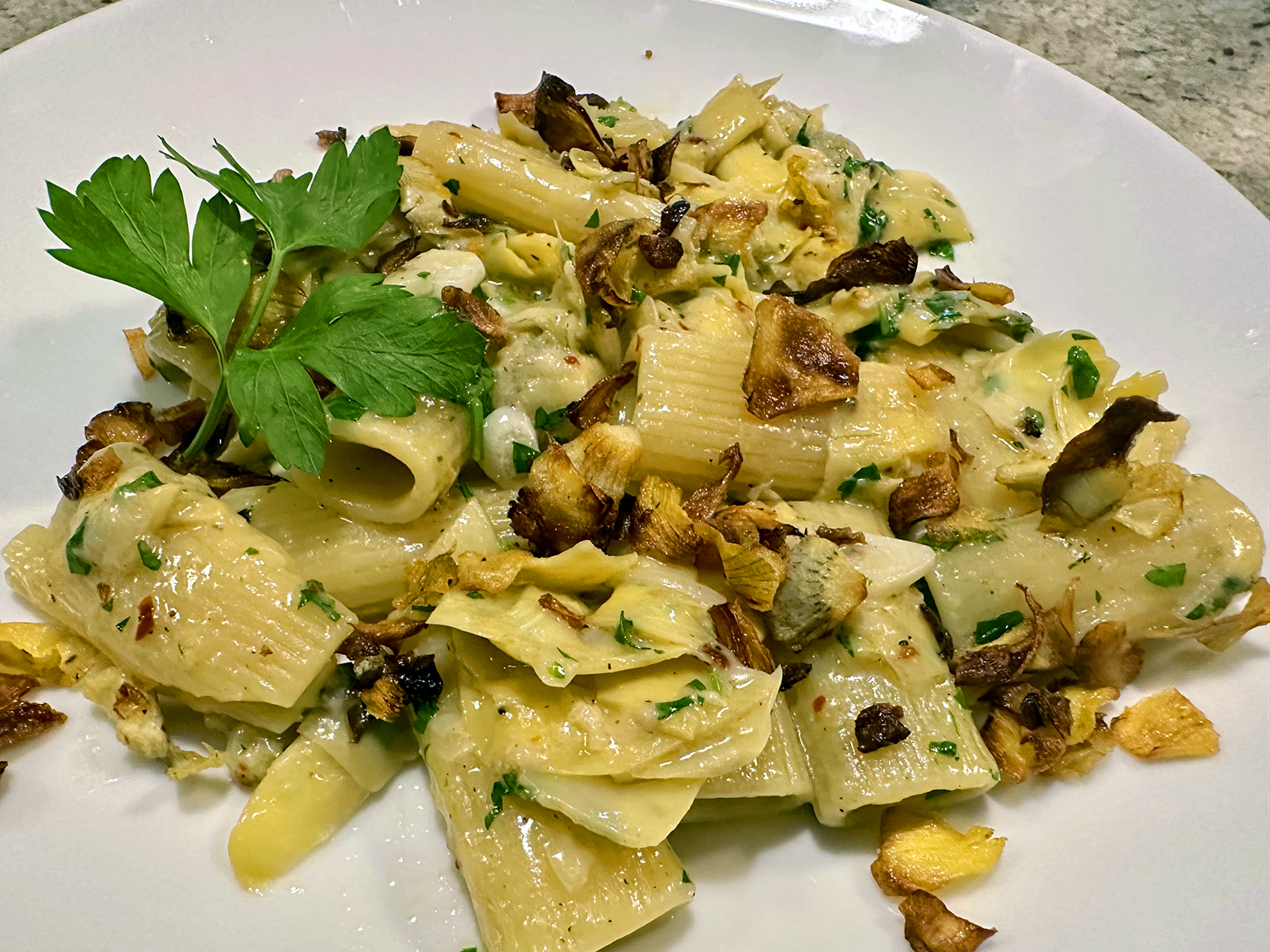
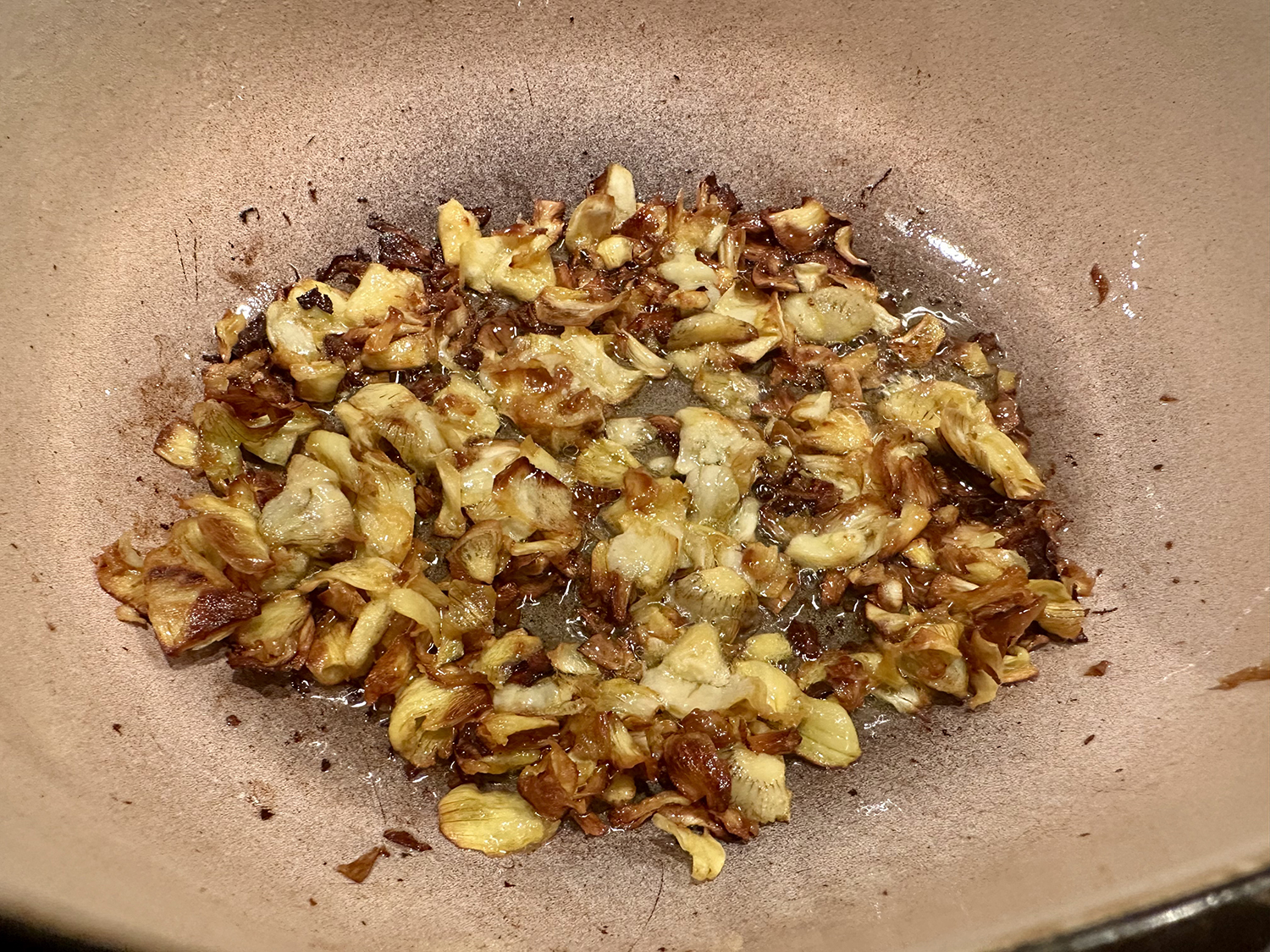
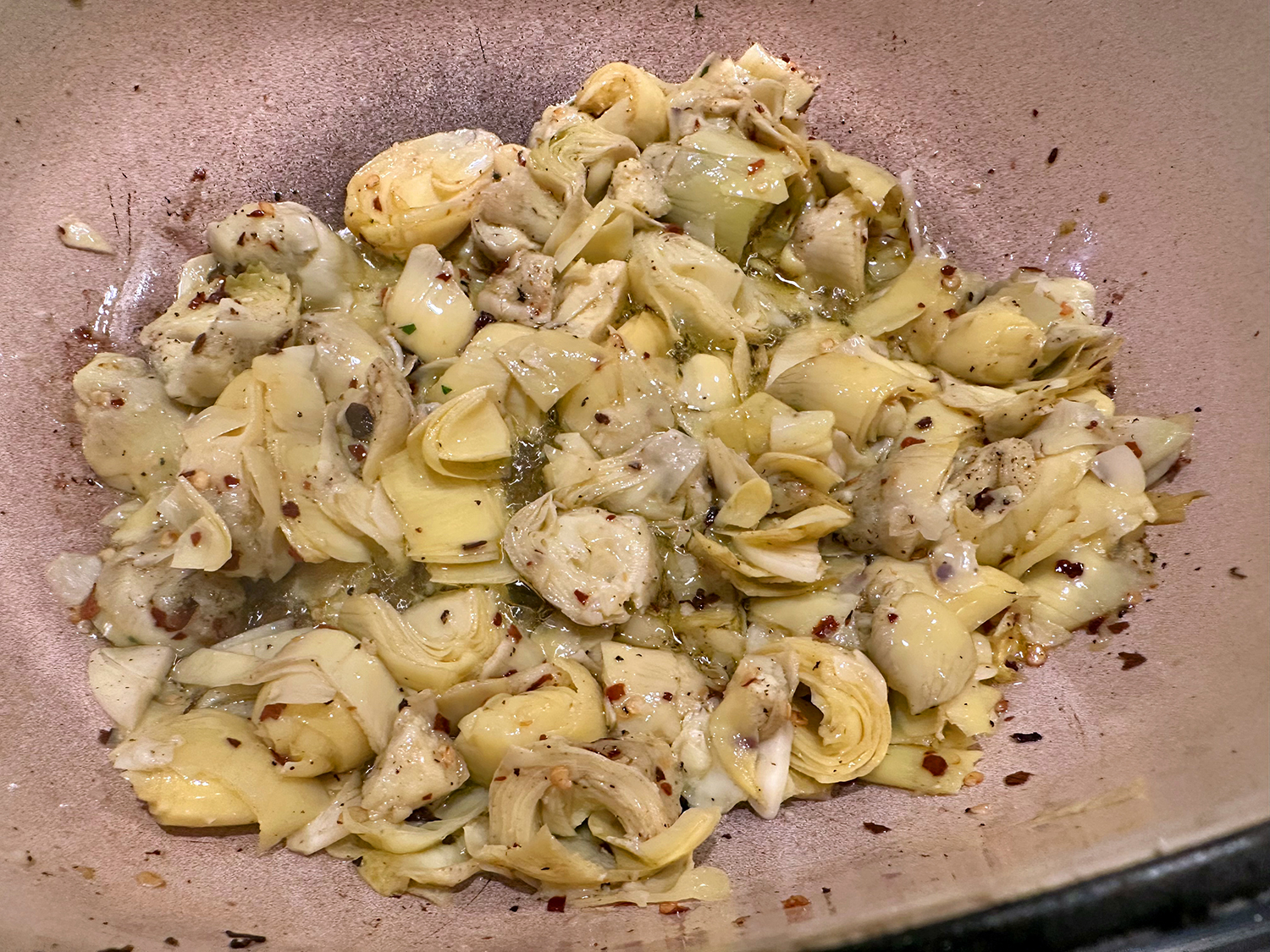
Quick, easy, tasty and filling—what’s not to like about that? Fast enough for a weeknight mad dash to dinner, this pantry pasta tastes more like a restaurant dish with its silky, flavorful sauce. The recipe uses canned artichokes which are brought to the peak of their crispy potential. The key is to remove as much water from the artichokes as possible by pressing them gently with paper towels (as you would tofu).

Some of the artichokes are fried in olive oil until shatteringly crisp, then the rest cook gently in more oil, along with garlic and chile flakes, to soften. They’re all mixed with pasta and Parmesan into a stunning weeknight meal. 

While the original recipe calls for one pound* of dried pasta, we cut that in half to 8 ounces, but kept the other ingredients as they were. However, using less rigatoni facilitated an adjustment for the amount of water. Save at least a cup of the pasta water before draining and introduce it bit-by-bit to the entire mixture until you get a silky consistency.

If you want to amp up the dish, you could add in some decent jarred tuna, crispy pancetta, bacon or prosciutto.

Crispy Artichoke Pasta

  • Servings: 4
  • Difficulty: easy
  • Print

Ingredients

  • Salt and black pepper
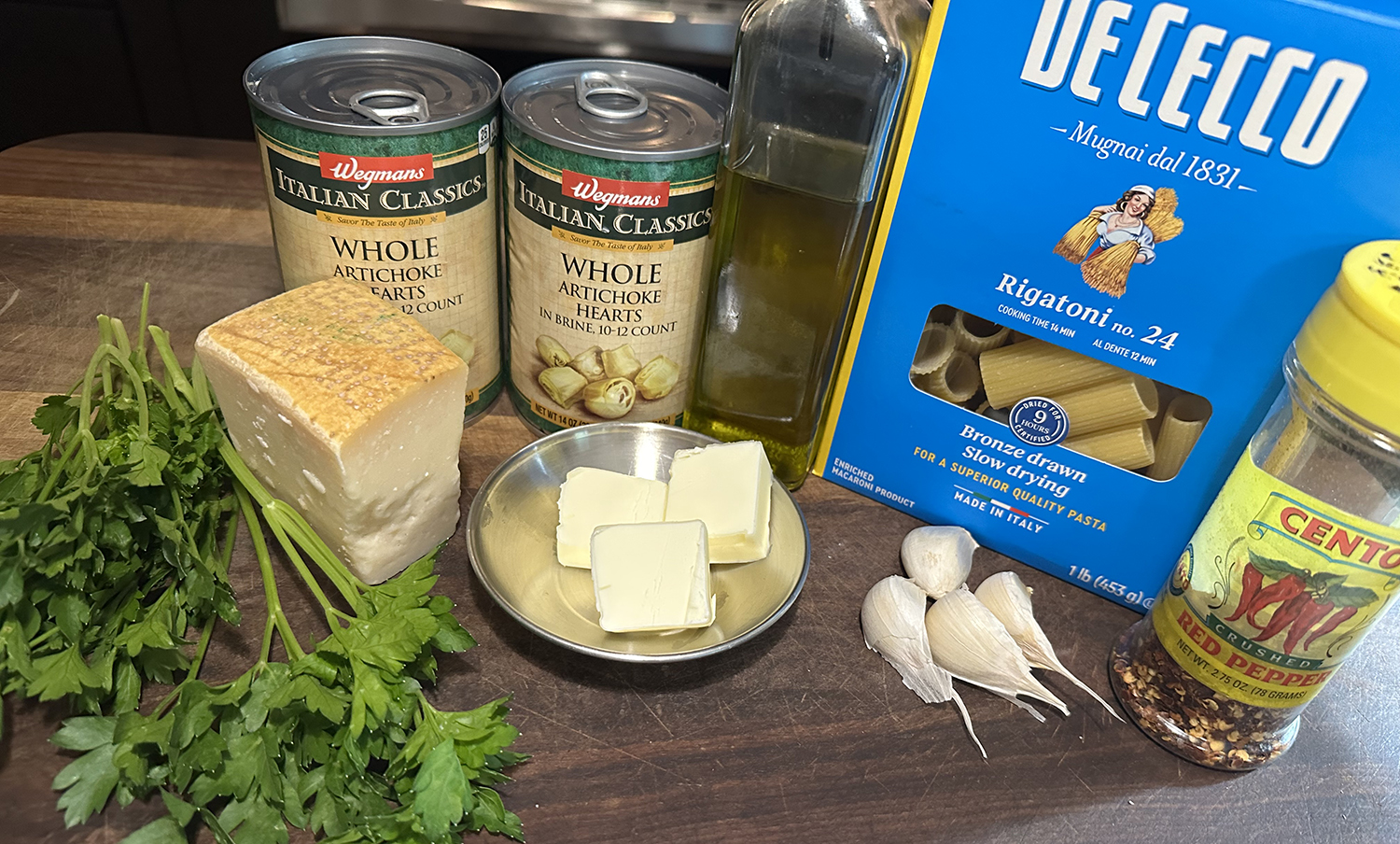
  • 1 lb. short cut pasta*, such as rigatoni or gemelli
  • 2 14-oz. cans whole or quartered artichoke hearts
  • ½ cup extra-virgin olive oil
  • 4 garlic cloves, thinly sliced
  • 1 tsp. crushed red pepper flakes
  • 3 Tbsp. unsalted butter, cut into small pieces
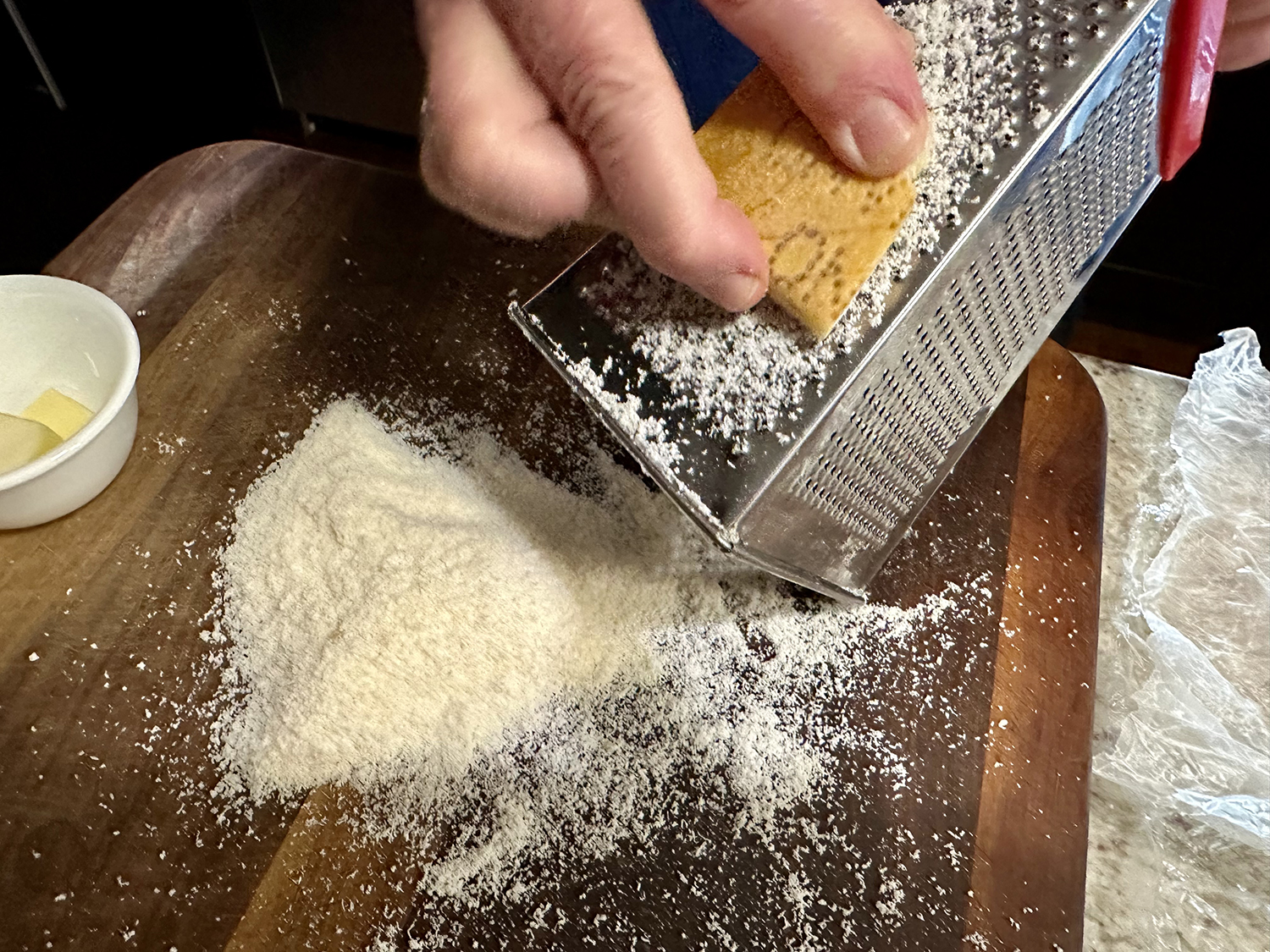
  • ½ cup finely grated Parmesan, plus more for serving
  • ⅓ cup finely chopped parsley

Directions

  1. Bring a large pot of water to a boil, then season generously with salt. Cook the pasta until a bit firmer than al dente, about 2 fewer minutes than listed on the package. (It’ll finish cooking in the sauce.) Reserve 2 cups of pasta water, then drain.
  2. While the water comes to a boil, drain the artichokes and place on a clean kitchen towel (or paper towels). Cover with another kitchen towel (or paper towels), and gently press down to remove the excess water. Give the artichokes a rough chop.
  3. Line a plate with paper towels. Set another large pot over medium-high heat, and pour in ¼ cup oil. When the oil is hot, after 1 to 2 minutes, add one-third of the artichokes and cook, stirring occasionally, until deeply brown and crisp in most spots, 3 to 5 minutes. Using a slotted spoon, scoop out the artichokes, transfer to the lined plate and season with salt.
  4. Adjust heat to medium, add the remaining ¼ cup oil and the remaining artichokes to the pot, along with the garlic and red pepper. Season with salt and pepper and cook, stirring occasionally, until the garlic begins to soften and everything smells very good, 2 to 3 minutes.
  5. Add the drained pasta and 1½ cups of the pasta water and bring to a simmer, still over medium heat. (This may seem like a lot of liquid, but it will thicken when the remaining ingredients are added.) Add the butter and sprinkle in the Parmesan and continue to cook, tossing vigorously, until the cheese is melted and the sauce is creamy and clings to the pasta, 2 to 3 minutes. If the sauce looks too thick, add more pasta water, 1 to 2 tablespoons at a time. Turn off the heat and stir in the parsley. Season to taste with salt and pepper.
  6. Divide among bowls or plates. Sprinkle the reserved crispy artichokes and more Parmesan on top before serving.

http://www.lynnandruss.com

Adapted from a recipe by Andy Baraghani for NYTimes Cooking

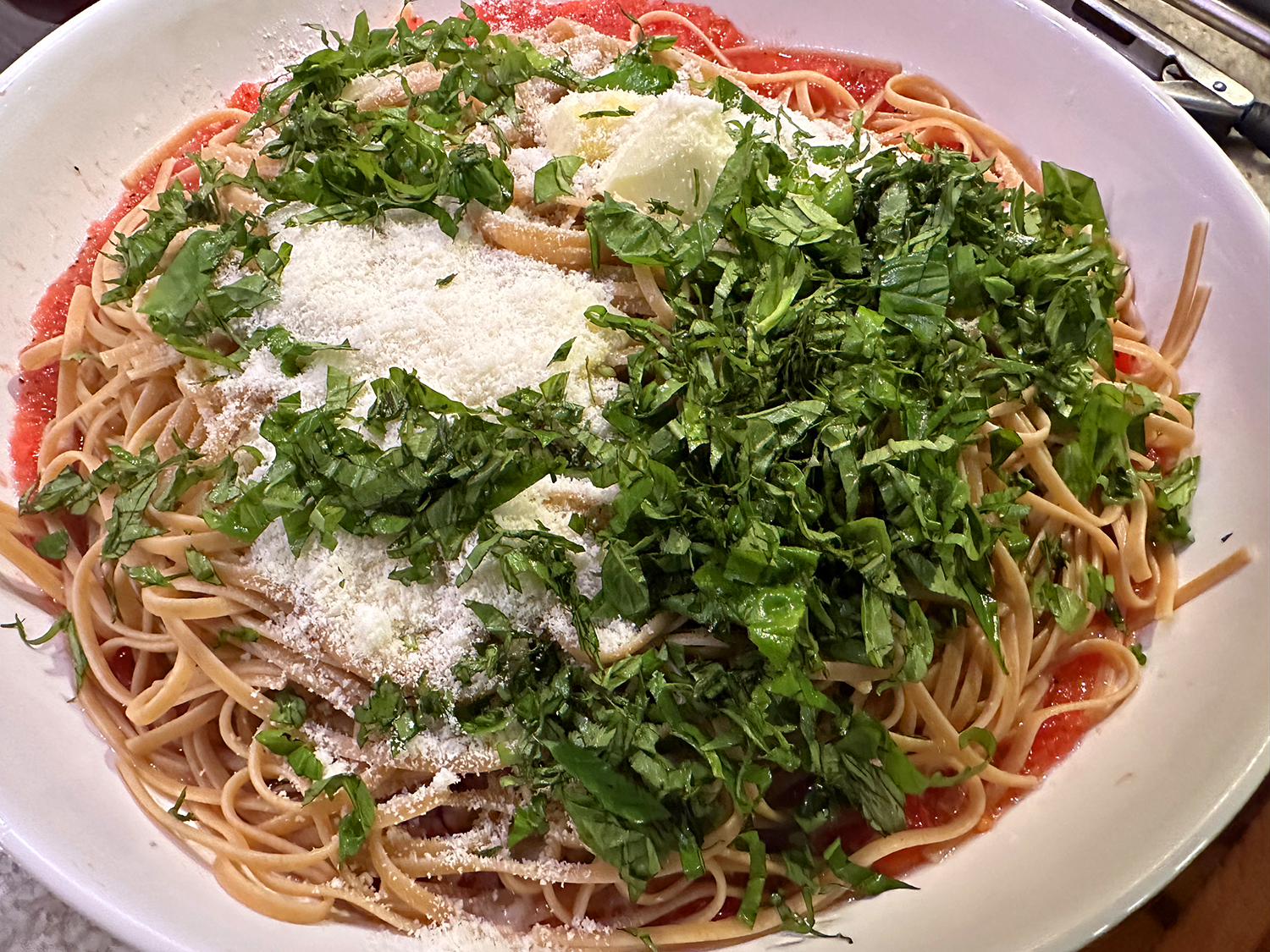
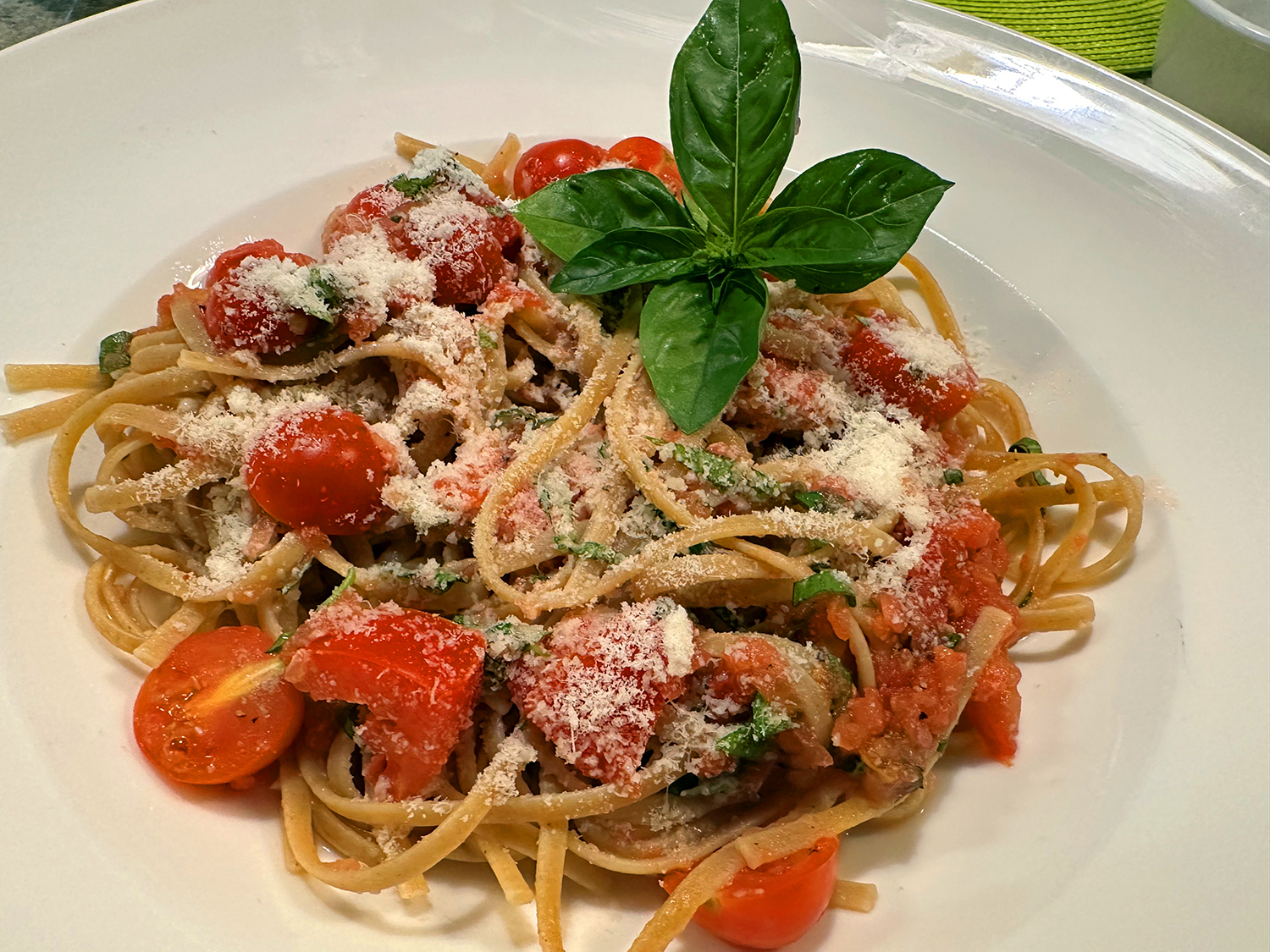
Pasta with No-Cook Tomato Sauce

This pasta is perfect for late summer, when you want to enjoy the flavor of tomatoes at the peak of their season in a meal that is simple, yet utterly delicious. It goes without saying, you want the ripest, freshest tomatoes for this dish; their flavor makes all the difference.

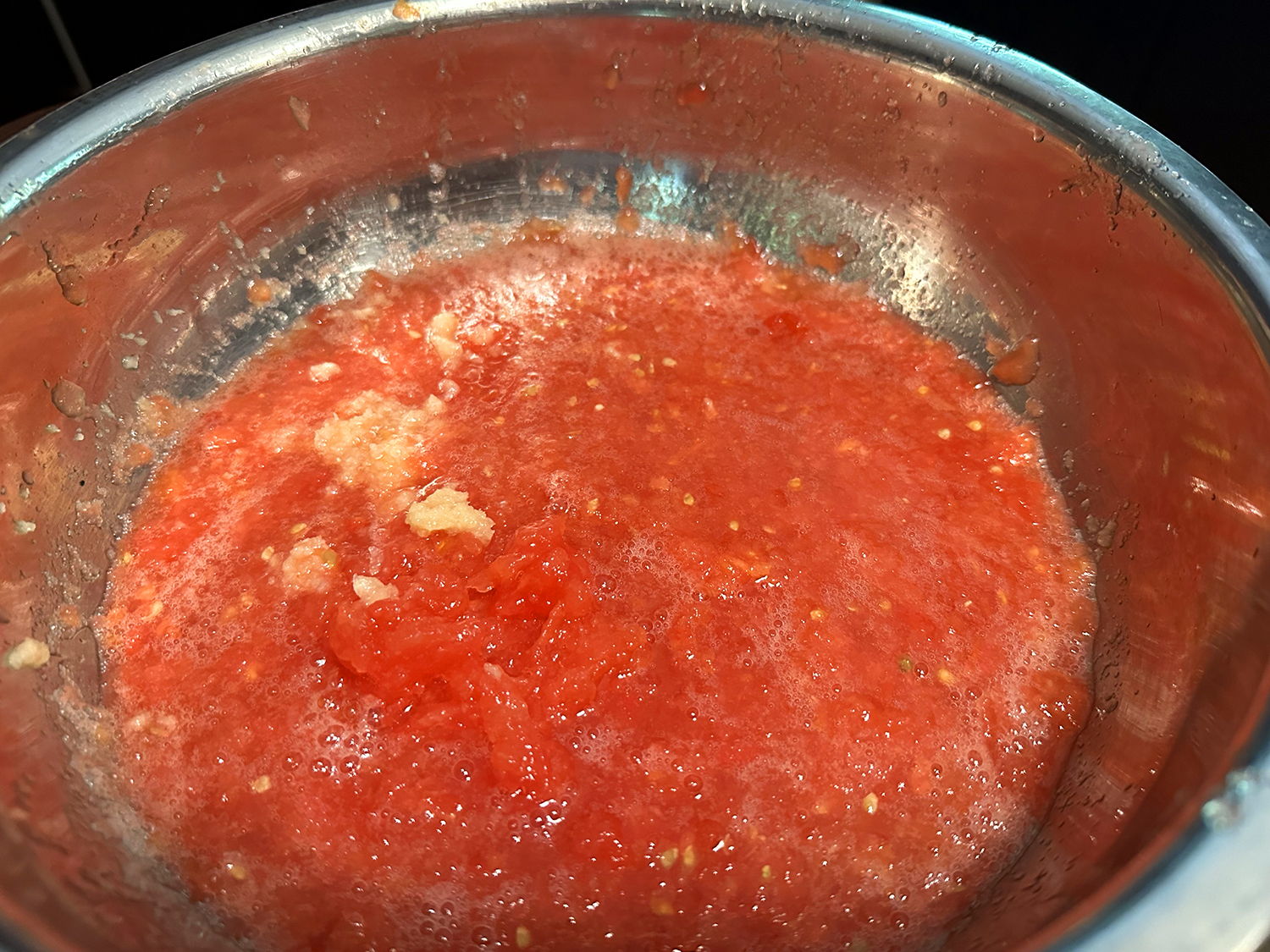
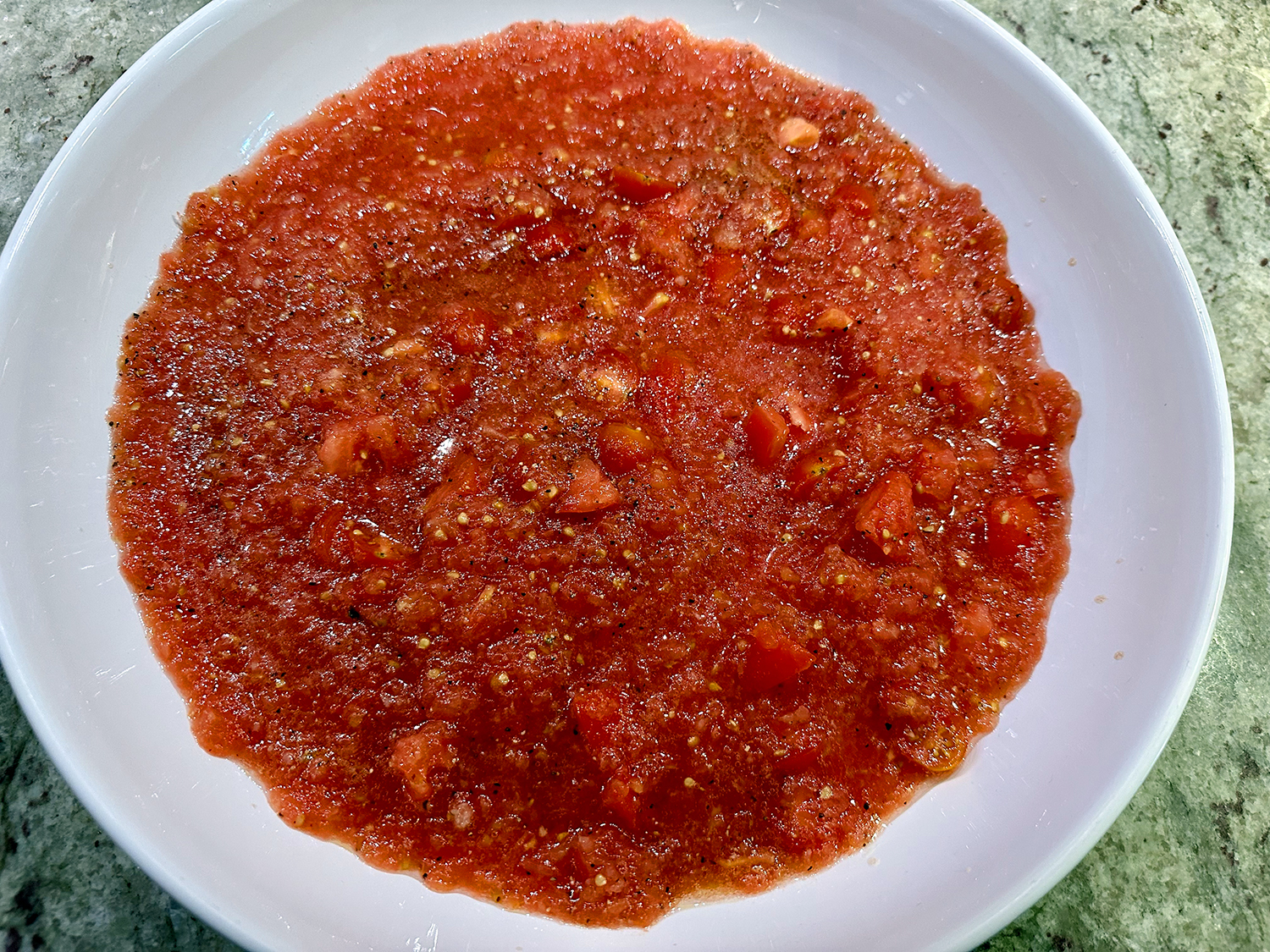
A no-cook tomato sauce is the ultimate way to show off the beauty of sweet summer tomatoes when they are at the peak of their season. In this version, use two types of tomatoes — large beefsteak tomatoes grated to make up the base of the sauce and cherry tomatoes to give the sauce a toothy texture. A box grater is key for grating the tomatoes, garlic, and Parmesan but you can also use a food processor with the grater attachment if necessary. 

Grated fresh garlic is far more pungent than cooked garlic, so one clove of garlic is all that is needed for this recipe. If you are a true garlic lover, as we are, add another grated clove to the tomatoes as they marinate. 

The original recipe indicates to use tongs to transfer the cooked pasta to the bowl with the tomatoes. We found that to be too watery, and suggest draining the pasta first before adding it to the tomato sauce.

Pasta with No-Cook Tomato Sauce

  • Servings: 4
  • Difficulty: easy
  • Print

Ingredients

  • 2 1/2 lbs. ripe beefsteak tomatoes, halved crosswise
  • 1 garlic clove
  • 1 pint (10 oz.) cherry tomatoes, cut in half
  • 1 Tbsp. extra-virgin olive oil, plus more for serving
  • 1 Tbsp. red wine vinegar, plus more as needed
  • 1 Tbsp. kosher salt, plus more to taste
  • 1 tsp. cracked black pepper
  • 1 lb. angel hair pasta (we used whole wheat linguine)
  • 3 Tbsp. unsalted butter, room temperature 
  • 1/2 cup grated Parmesan, plus more for serving
  • 1 cup thinly sliced basil, plus more for serving
  • Pinch crushed red pepper flakes

Directions

  1. Grate the cut sides of the beefsteak tomato halves on the large holes of a box grater set in a large bowl until only the skins remain; discard the skins. Grate the garlic clove against the smallest holes into the same bowl.
  2. Add the halved cherry tomatoes, olive oil, vinegar, salt, and pepper. Stir to combine, cover, and let tomato mixture sit at room temperature for at least 30 minutes and up to 4 hours. Taste the tomato sauce, and add more salt and red wine vinegar to boost the flavor as needed.
  3. Bring a large pot of salted water to a boil. Add the pasta and cook to al dente according to package instructions, 4 to 5 minutes.
  4. Drain the cooked pasta and add it the to the bowl with the tomatoes; add the butter, Parmesan, basil, and crushed red pepper flakes and toss until the pasta and sauce are combined. Divide the pasta into four bowls, and top each with a drizzle of olive oil, plus grated Parmesan and sliced basil.

http://www.lynnandruss.com

Adapted by a recipe by Chandra Ram for Food & Wine

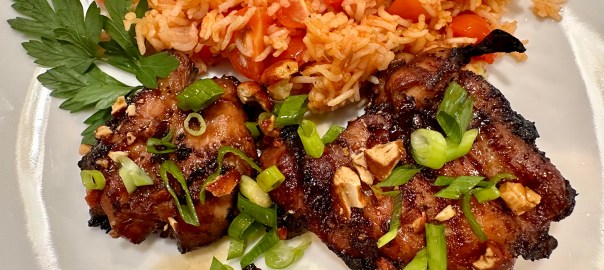
Grilled Soy-Basted Chicken Thighs with Spicy Cashews

The skinless chicken browns nicely over a medium flame, and the sugary soy basting sauce lacquers it beautifully in the final few minutes of cooking. It’s terrific with rice, or as a topping for a salad of sturdy greens. You may wish to double the recipe for Sriracha-roasted cashews (we are glad that we did!). They are addictive, and for them you will find many delicious uses.

This dish was so packed with flavor, we couldn’t stop moaning with each bite we took. And we were thrilled to have leftovers for lunch the next day.

Grilled Soy-Basted Chicken Thighs with Spicy Cashews

  • Servings: 4-6
  • Difficulty: easy
  • Print

Ingredients

  • ½ cup unsalted cashews
  • 2 Tbsp. Sriracha sauce
  • 3 Tbsp. toasted sesame oil
  • ½ cup plus 3 Tbsp. soy sauce
  • 2 Tbsp. hoisin sauce
  • 1 Tbsp. cracked black pepper
  • Hot sauce, to taste
  • 2½ lbs. skinless, boneless chicken thighs
  • ¼ cup brown sugar (light or dark) or molasses
  • 2 Tbsp. peeled and minced ginger
  • 4 scallions, sliced thin
  • 5 or 6 springs cilantro, tough stems removed and roughly chopped (approximately 2 Tbsp.)

Directions

  1. Heat oven to 300 degrees. Combine cashews and Sriracha sauce in a small bowl and stir until nuts are coated. Line a small baking pan with foil and spread the coated cashews out on it, then place in the oven and bake until nuts are dry, approximately 20 minutes. Carefully remove the nuts from the foil and let cool, then chop roughly and set aside in a small bowl.
  2. Meanwhile, in a large bowl, whisk together sesame oil, ½ cup soy sauce, the hoisin sauce and the black pepper, and hot sauce if using. Add chicken thighs and stir to coat. Refrigerate until ready to cook.
  3. For the basting sauce, combine the remaining 3 tablespoons soy sauce, the brown sugar and the ginger in a small bowl, and whisk until the sugar has dissolved.
  4. When you are ready to cook the chicken, build a fire in a charcoal grill, leaving about ⅓ of the cooking space free of coals. When coals are covered with gray ash and the temperature is medium (you can hold your hand 5 inches above the coals for 5 to 7 seconds), you are ready to cook. (For a gas grill, turn one burner to high, leaving the others off, then lower cover and heat for 15 minutes.)
  5. Using tongs, remove chicken thighs from marinade and cook, directly over the coals, turning every few minutes, until they are well-browned but not crusty, approximately 8 to 10 minutes. Then, using a pastry brush, begin to baste them with the soy, ginger and sugar mixture, until they develop a lacquer, an additional 8 to 10 minutes, again turning every few minutes. (If chicken threatens to burn, place it over the part of the grill without coals.)
  6. Transfer chicken to a warmed platter, sprinkle with the chopped cashews, the scallions and the cilantro, and serve.

http://www.lynnandruss.com

Recipe from Sam Sifton for NYTimes Cooking

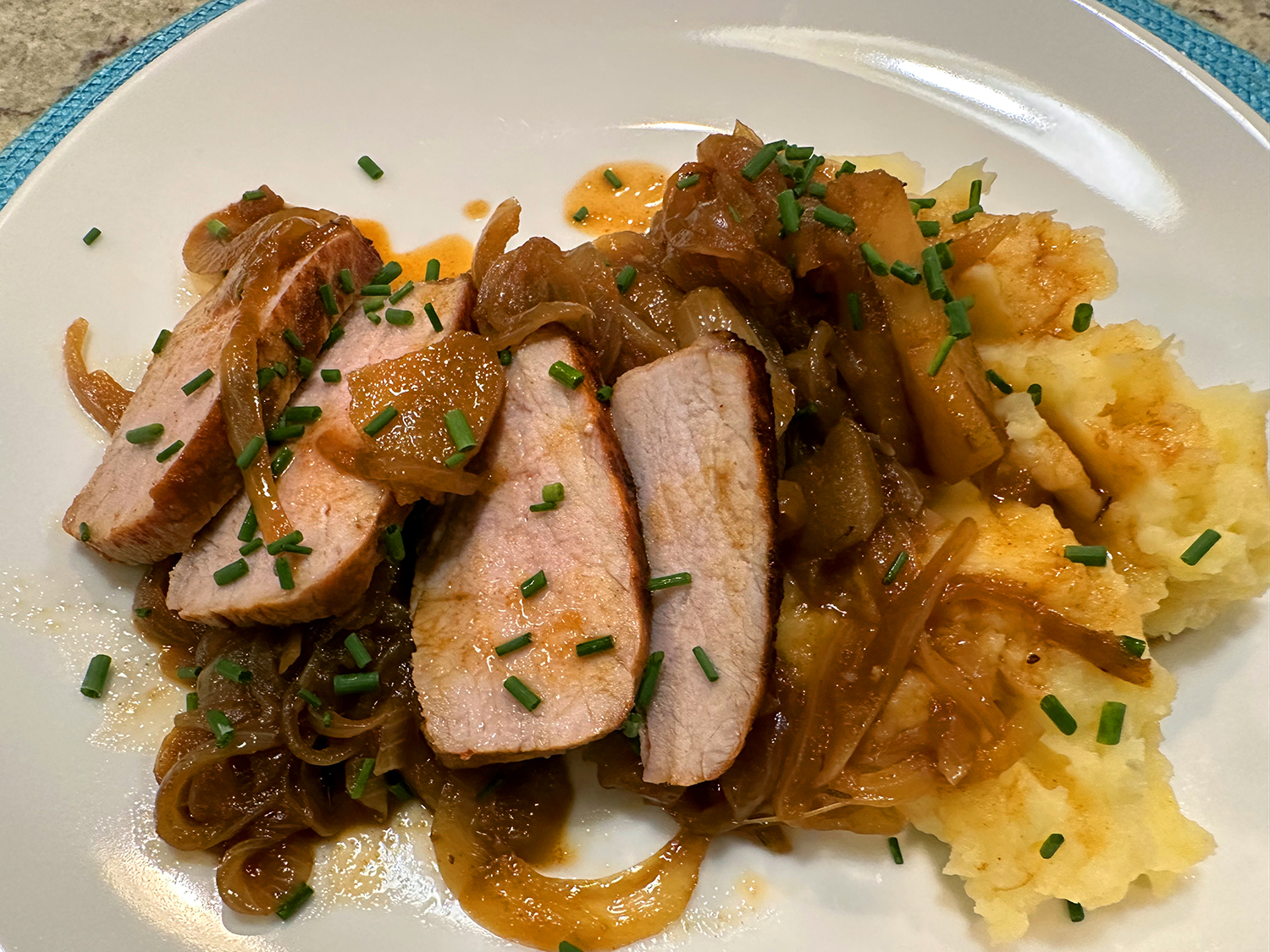
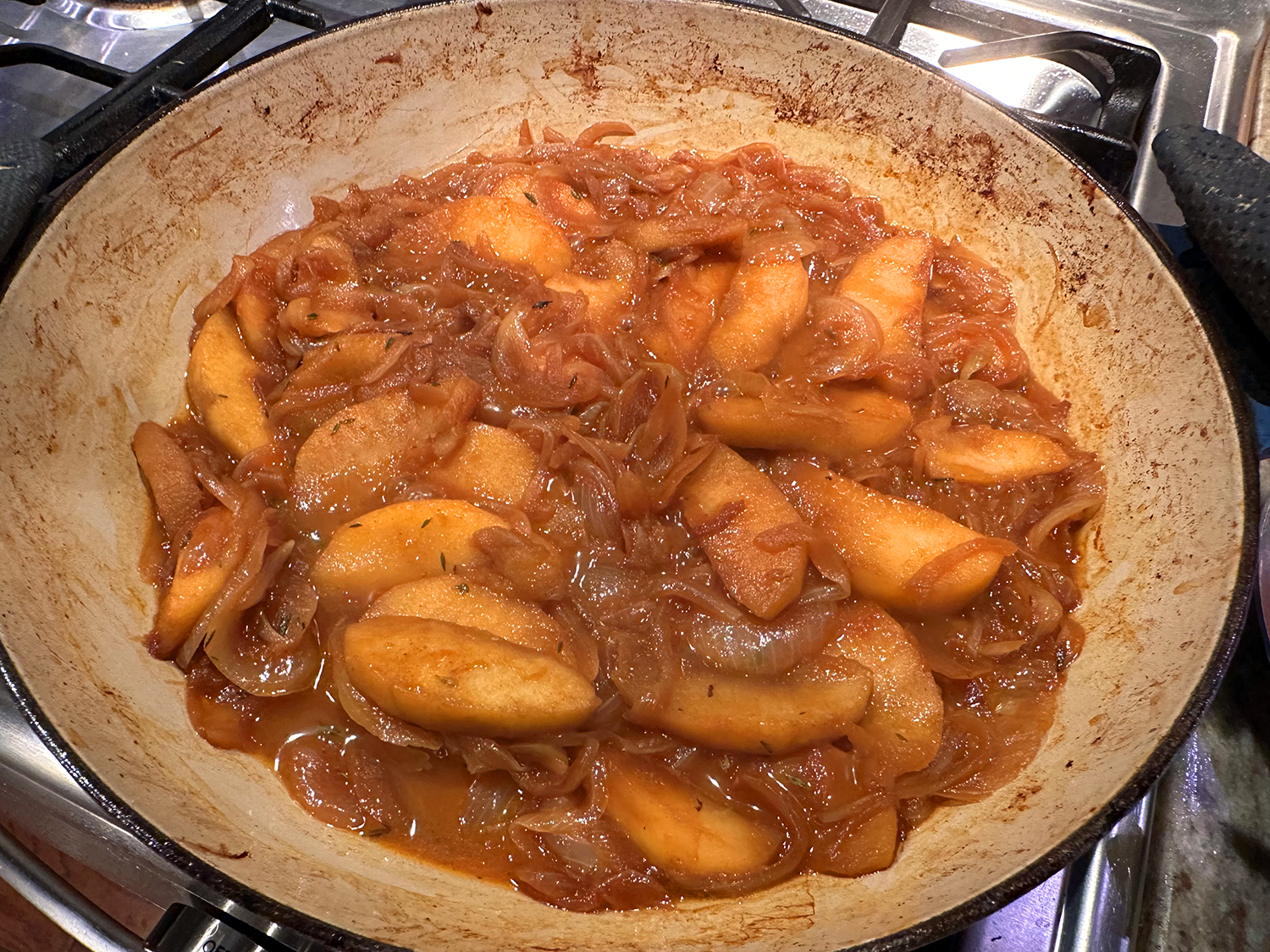
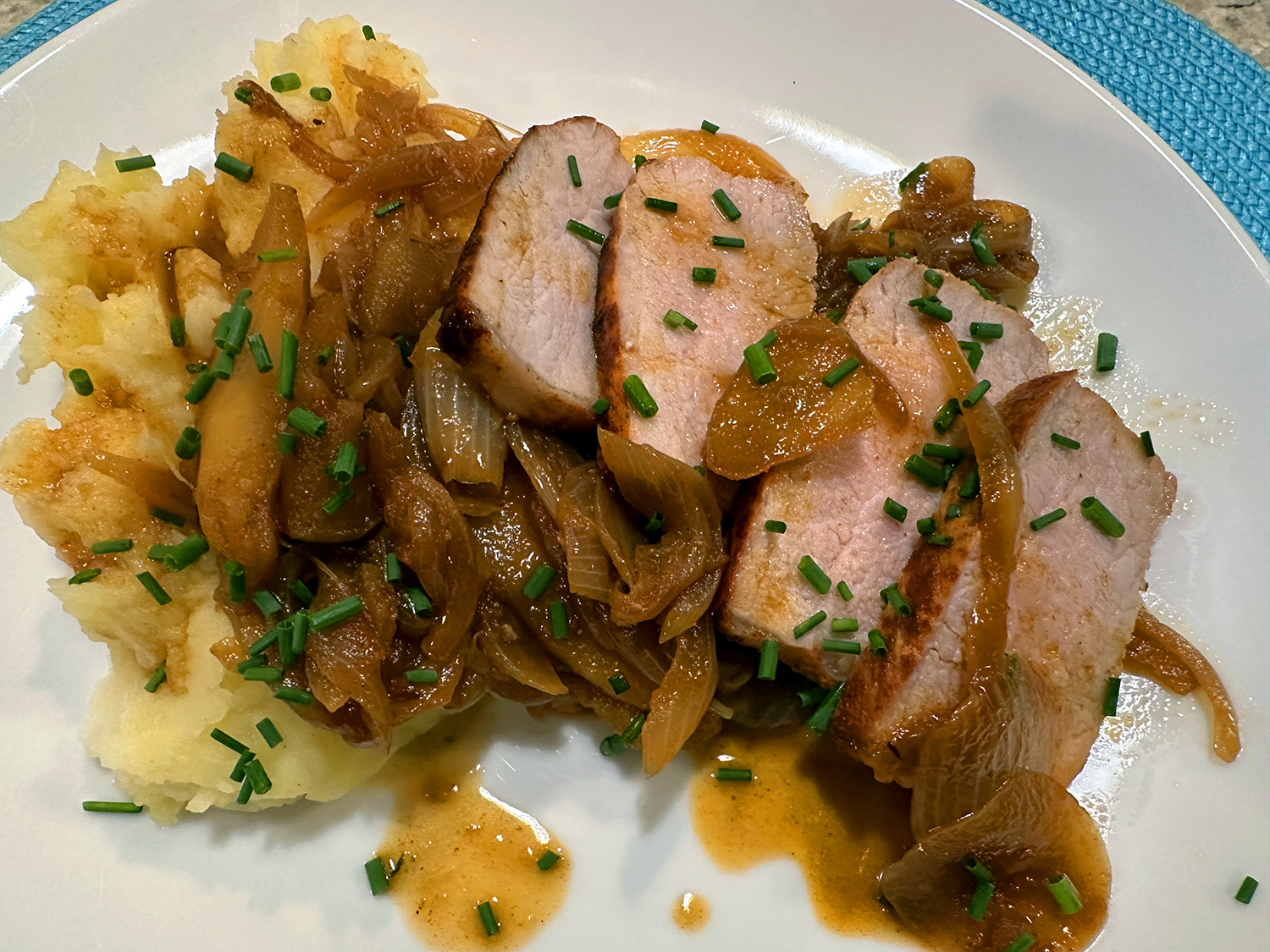
Pan-Roasted Pork Tenderloins with Apple, Sherry and Smoked Paprika

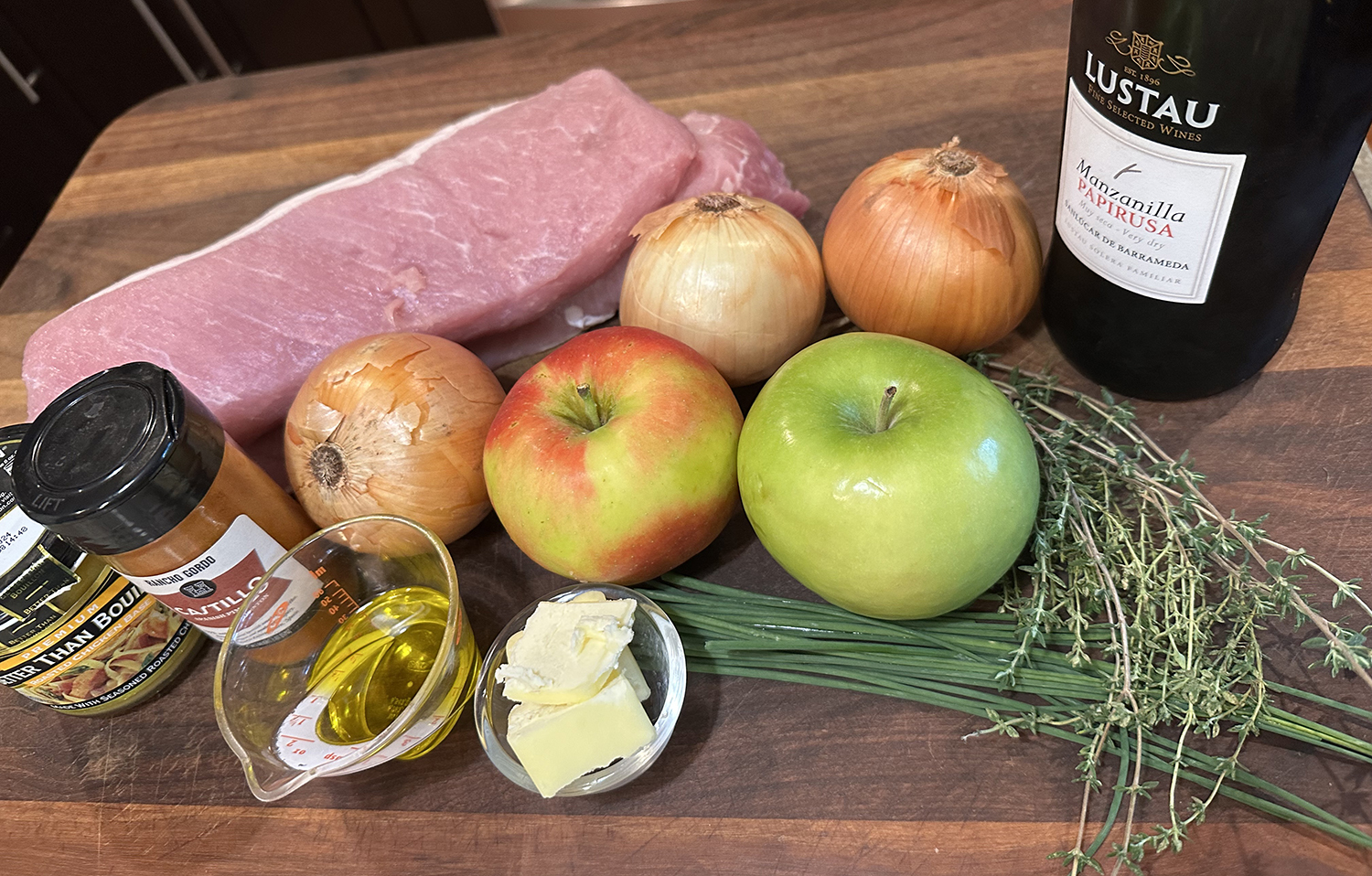
The inspiration for a Spanish spin on pork and apples comes from “Tapas: A Taste of Spain in America” by José Andrés. Milk Street’s version uses pork tenderloins that get a stovetop sear and finish in the oven on a bed of lightly sautéed onion and Granny Smith apple.

The onion-apple mixture softens to a relish-like accompaniment that is accented with smoked paprika and dry sherry. It’s a rich, woodsy complement to slices of the mild, meaty tenderloin. You will need a 12-inch oven-safe skillet for this recipe. And don’t forget to use an oven mitt or potholder when handling the skillet after removing it from the oven; the handle will be hot.

Nearly all previous reviewers of this recipe said they had, or will next time, double the apple/onion mixture (perhaps even triple it?). That made culinary sense to us, so we went ahead and doubled the sauce from the get-go. And the increased amounts are list under ingredients below.

As to doubling the ingredients for the apple/onion mixture, the recipe indicates to “Add the remaining 2 tablespoons butter and stir until melted” in Step 5. We completely forgot to do so, and that sauce was still divine; although the additional butter would lend more silkiness to the bottom line. Your call…

Serving suggestion: Spoon over mashed garlicky potatoes, parsnip and potato purée or wide egg noodles. We agree it is a company-worthy dish!

Pan-Roasted Pork Tenderloins with Apple, Sherry and Smoked Paprika

  • Servings: 6
  • Difficulty: easy
  • Print

Ingredients

  • 2 tsp. smoked paprika, divided
  • Kosher salt and ground black pepper
  • 2 1¼-lb. pork tenderloins, trimmed of silver skin and halved crosswise
  • 2 Tbsp. extra-virgin olive oil
  • 4 Tbsp. salted butter, divided
  • 2 large, or 3 small yellow onions, halved and thinly sliced
  • 2 Granny Smith apples, peeled, halved, cored and cut into ½-inch-thick wedges
  • 5-7 sprigs thyme
  • 1 cup dry sherry
  • 1/2 cup chicken broth
  • 1 Tbsp. finely chopped fresh chives

Directions

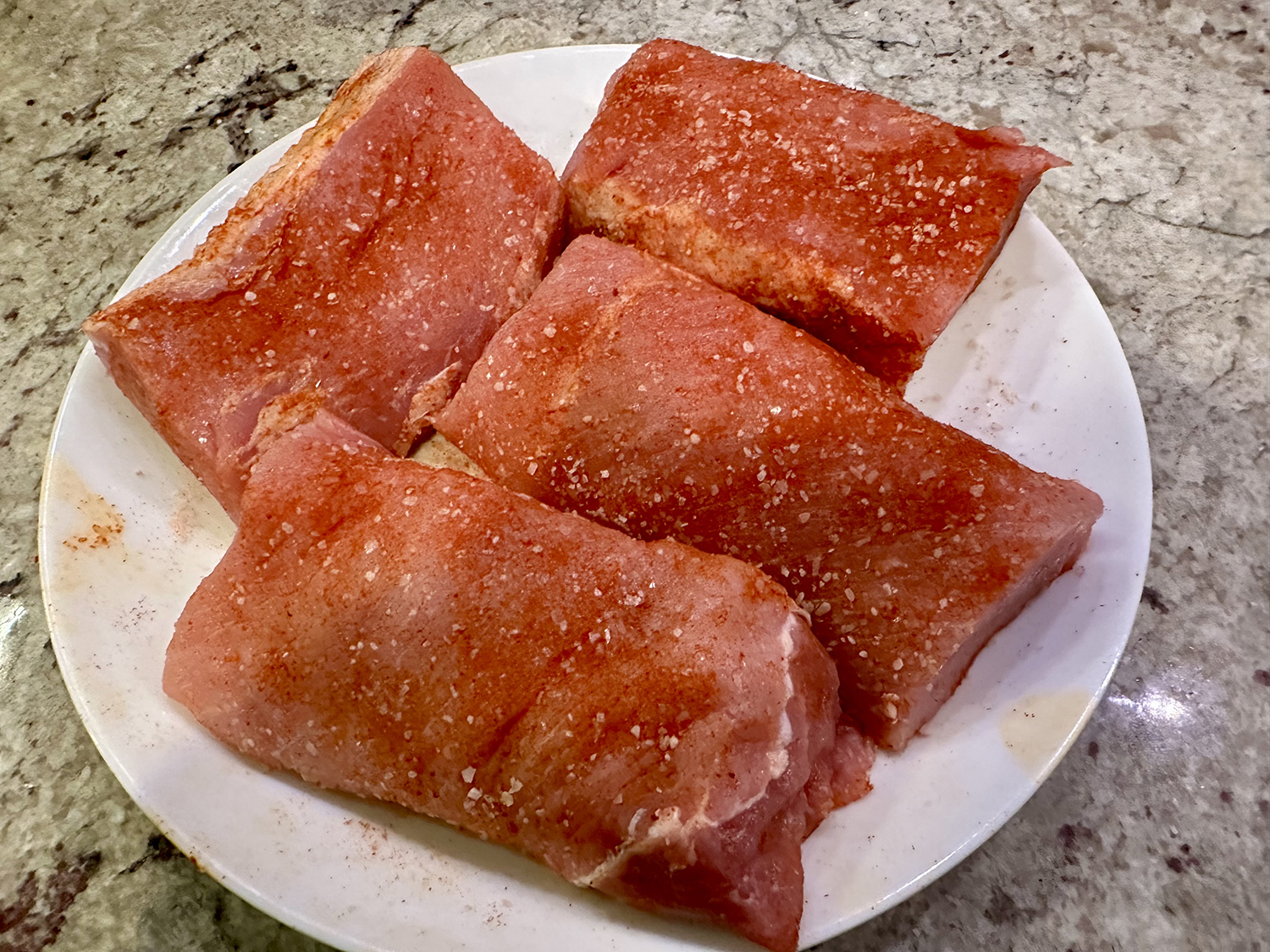
  1. Heat the oven to 450°F with a rack in the middle position. In a small bowl, mix together 1 teaspoon of paprika and 1½ teaspoons salt. Rub the mixture onto all sides of the pork.
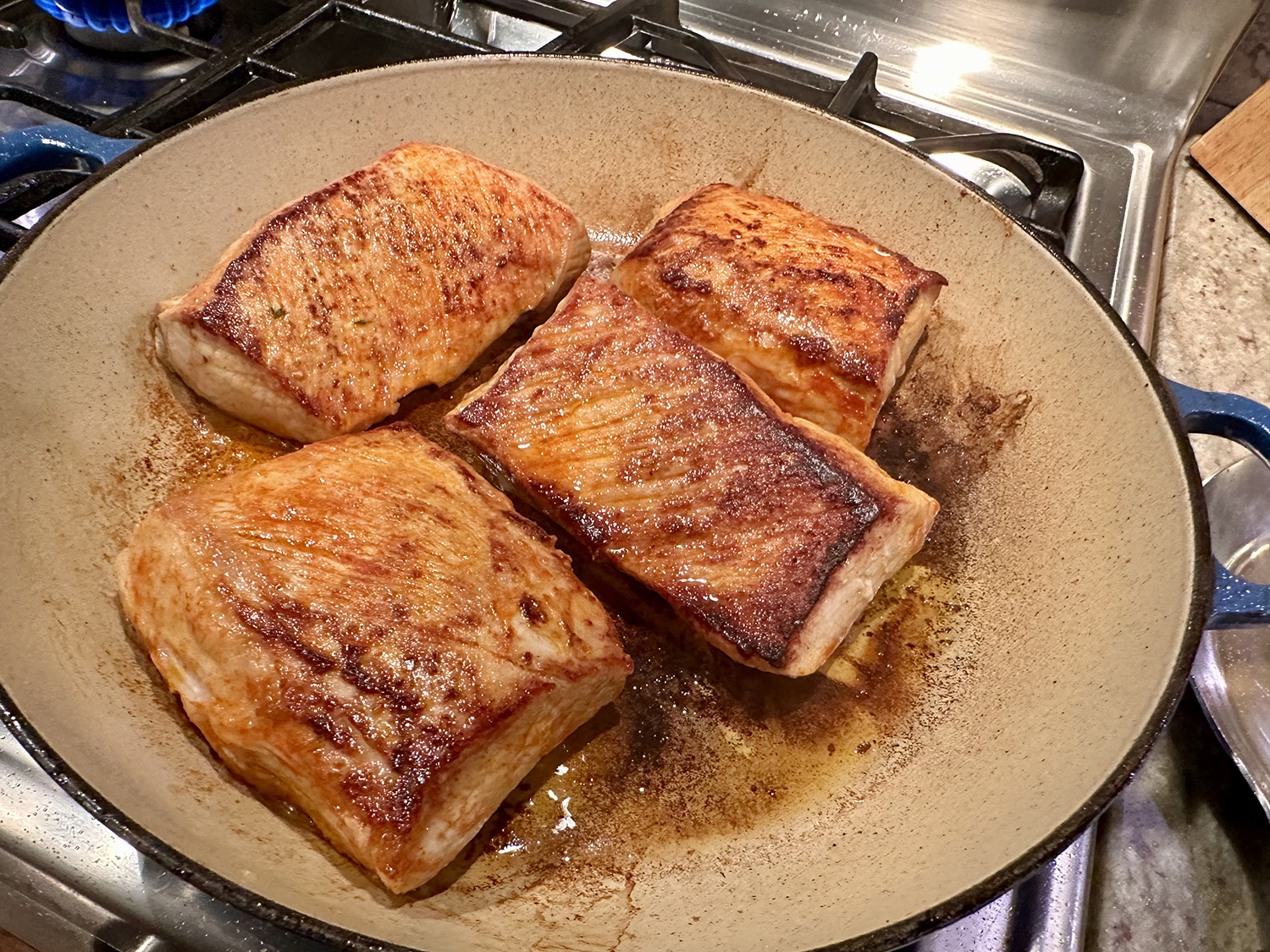
  2. In an oven-safe 12-inch skillet over medium-high, heat the oil until shimmering. Place the pork in the skillet. Cook, turning occasionally, until lightly browned on all sides, about 4 minutes total. Transfer to a large plate.
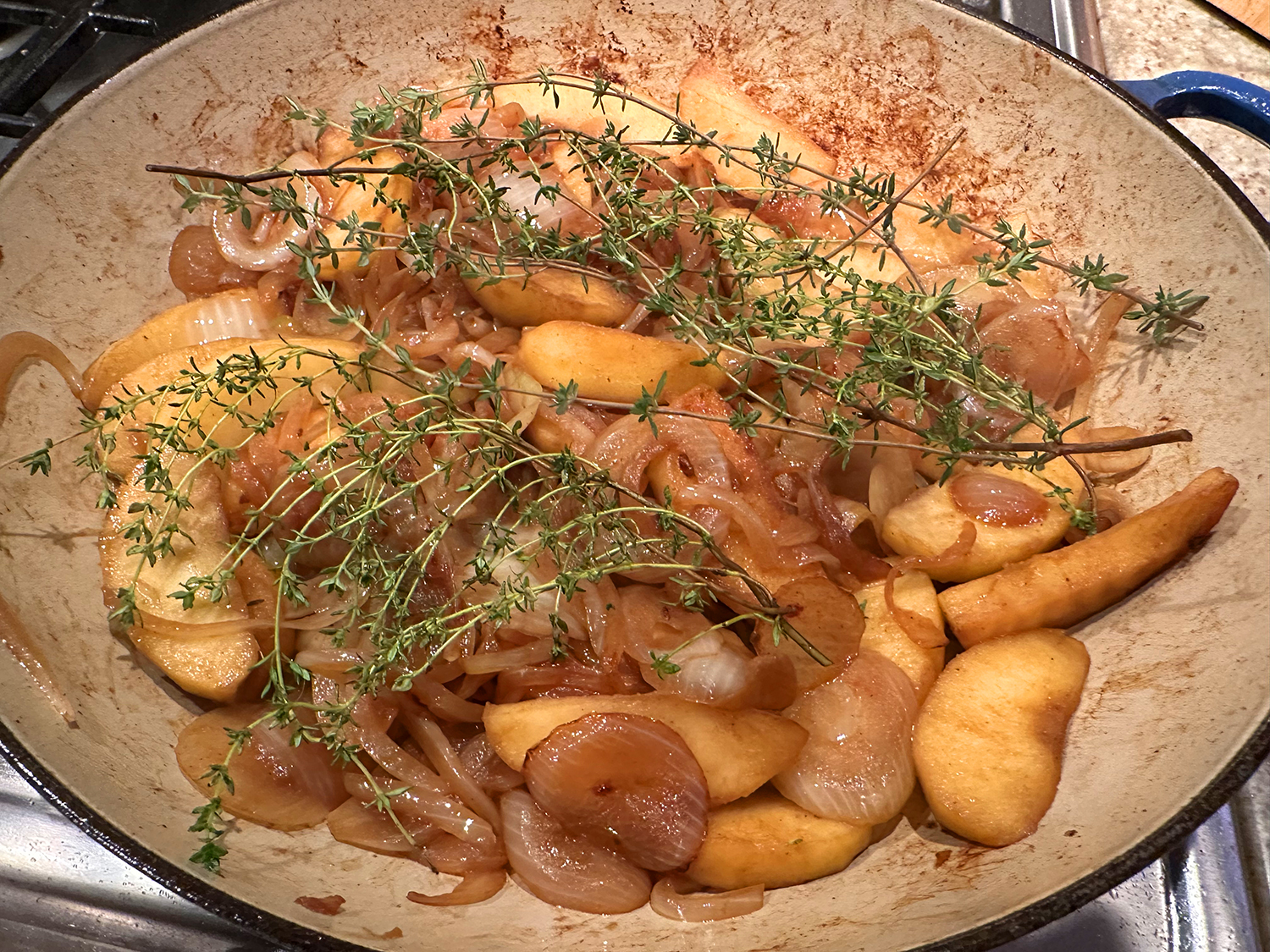
  3. Add 2 tablespoons of butter, the onion and apple to the skillet. Cook over medium-high, stirring occasionally, until softened and golden brown, about 8 minutes. Distribute the mixture in an even layer, then scatter on the thyme. Place the pork on top, add any accumulated juices and transfer to the oven. Roast until the center of the thickest piece of tenderloin reaches 135°F or is just slightly pink when cut into, 9 to 12 minutes.
  4. Remove the skillet from the oven; the handle will be hot. Using tongs, transfer the pork to a cutting board and tent with foil. Add the sherry, broth and the remaining 1 teaspoon paprika to the pan, then cook over medium-high, stirring occasionally, until the liquid is slightly reduced and thickened, about 4 minutes.
  5. Remove the pan from the heat, then remove and discard the thyme. Add the remaining 2 tablespoons butter and stir until melted. Taste and season with salt and pepper. Using a slotted spoon, transfer the onion-apple mixture to a serving platter, leaving the liquid in the pan. Thinly slice the pork and arrange over the onion-apple mixture. Drizzle the pan liquid over the meat and sprinkle with the chives.

http://www.lynnandruss.com

Recipe from Milk Street

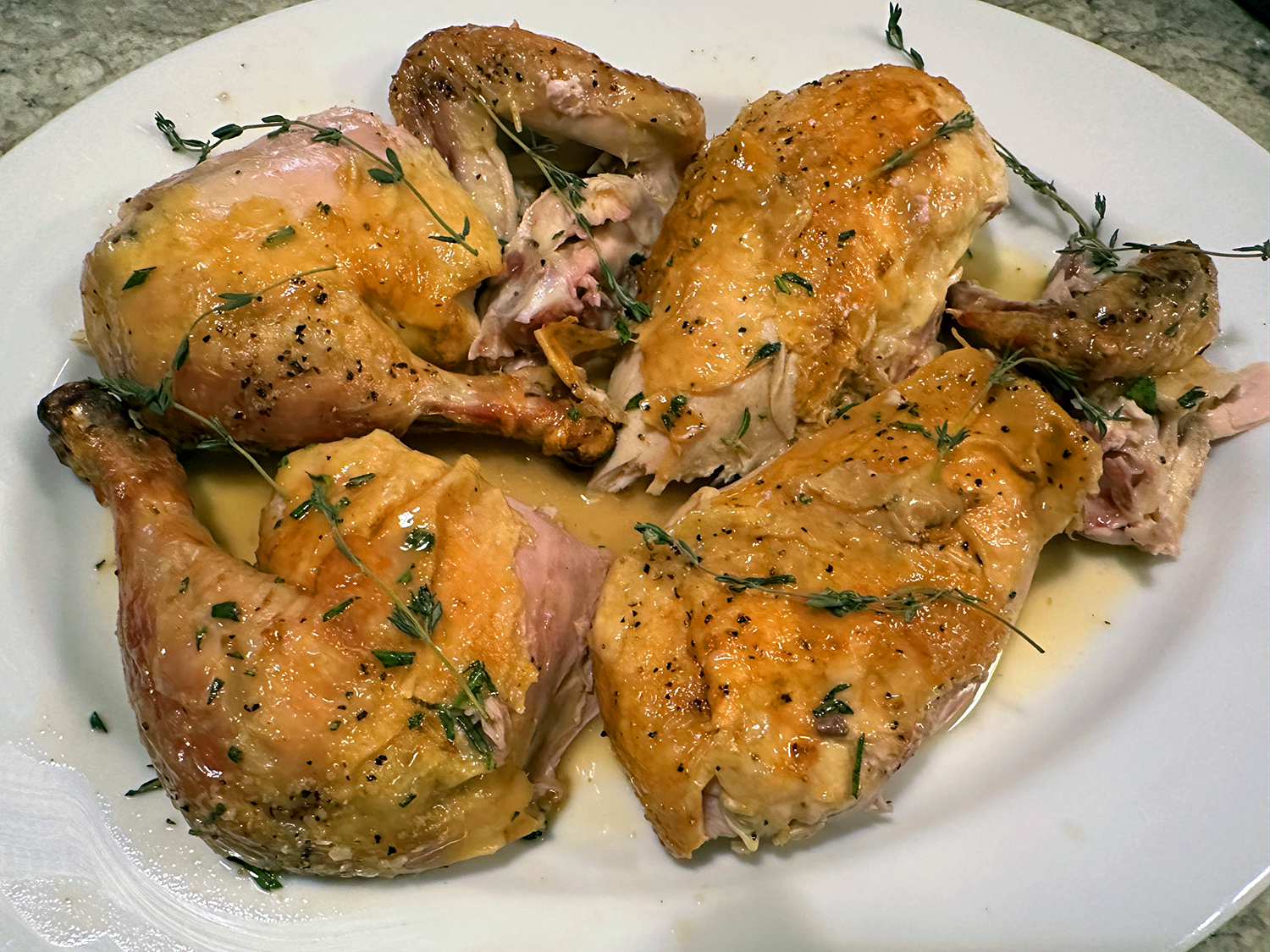
Butter-Lemon Roasted Chicken with Herbs

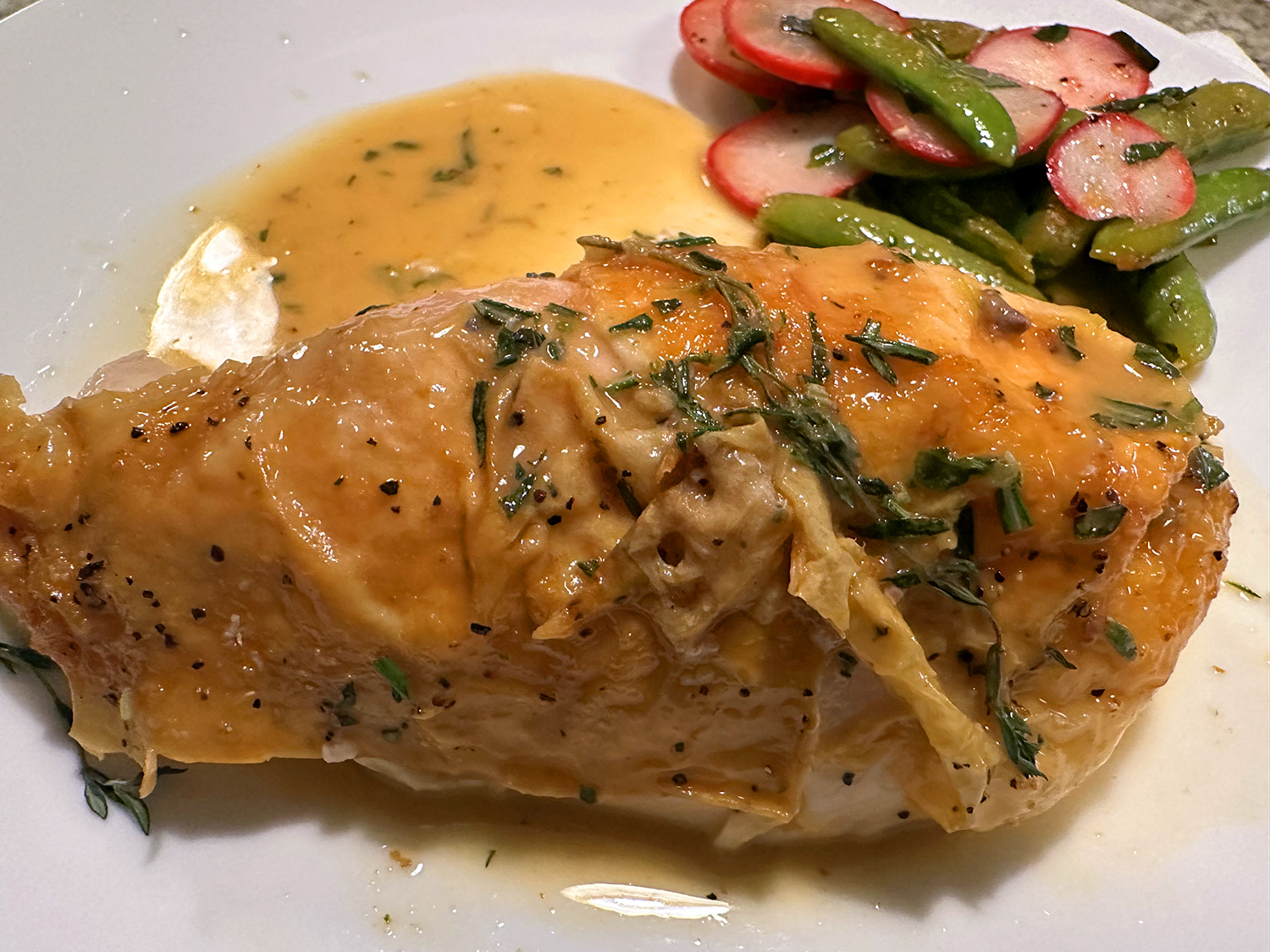
A whole roasted chicken with citrus and fresh herbs always brings me back to my childhood when Mom would make Sunday dinner and serve her Orange Juice Chicken/Turkey. To this day, whenever The Hubs and I cook a similar recipe, those warm memories come flooding back.

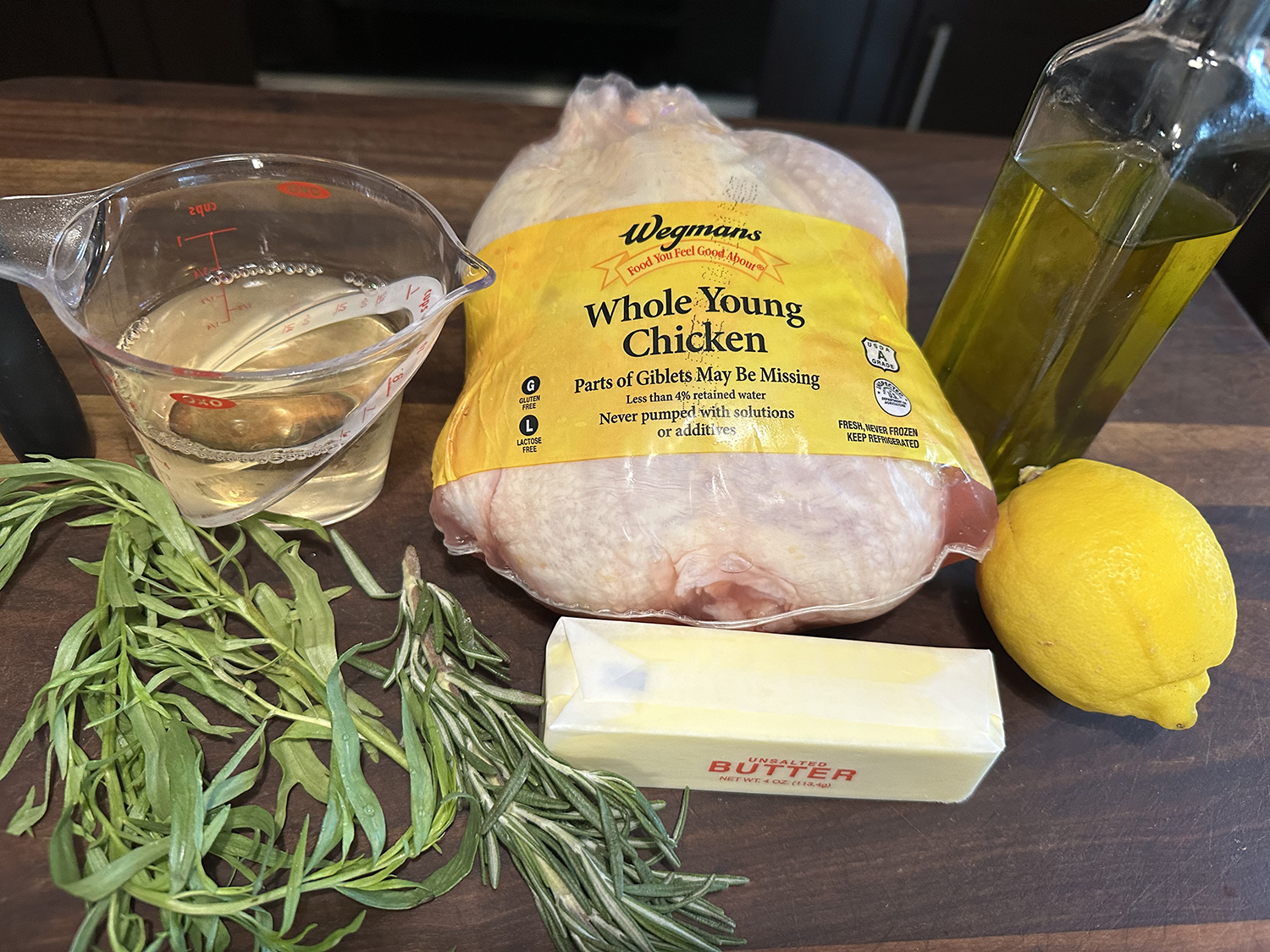
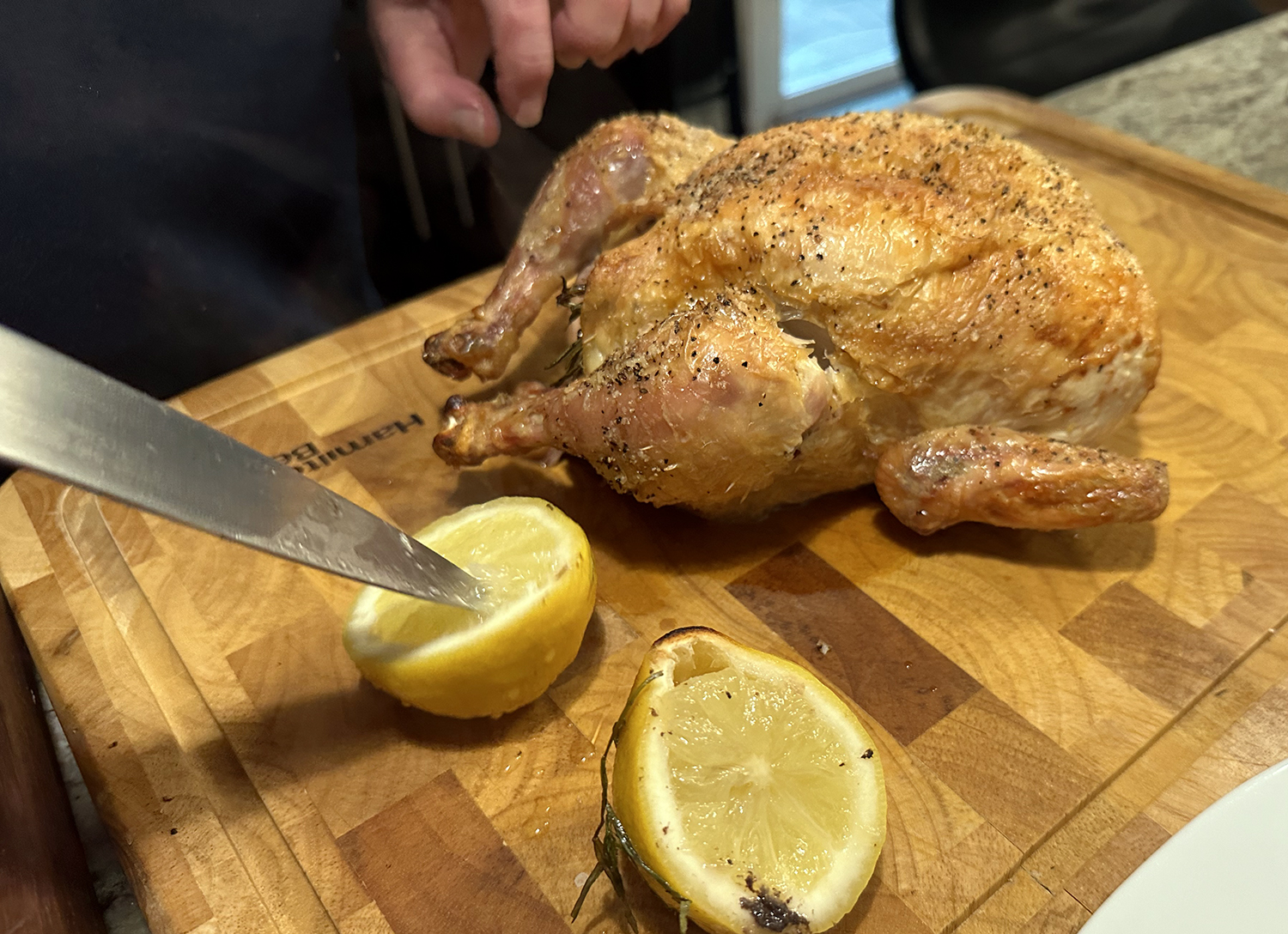
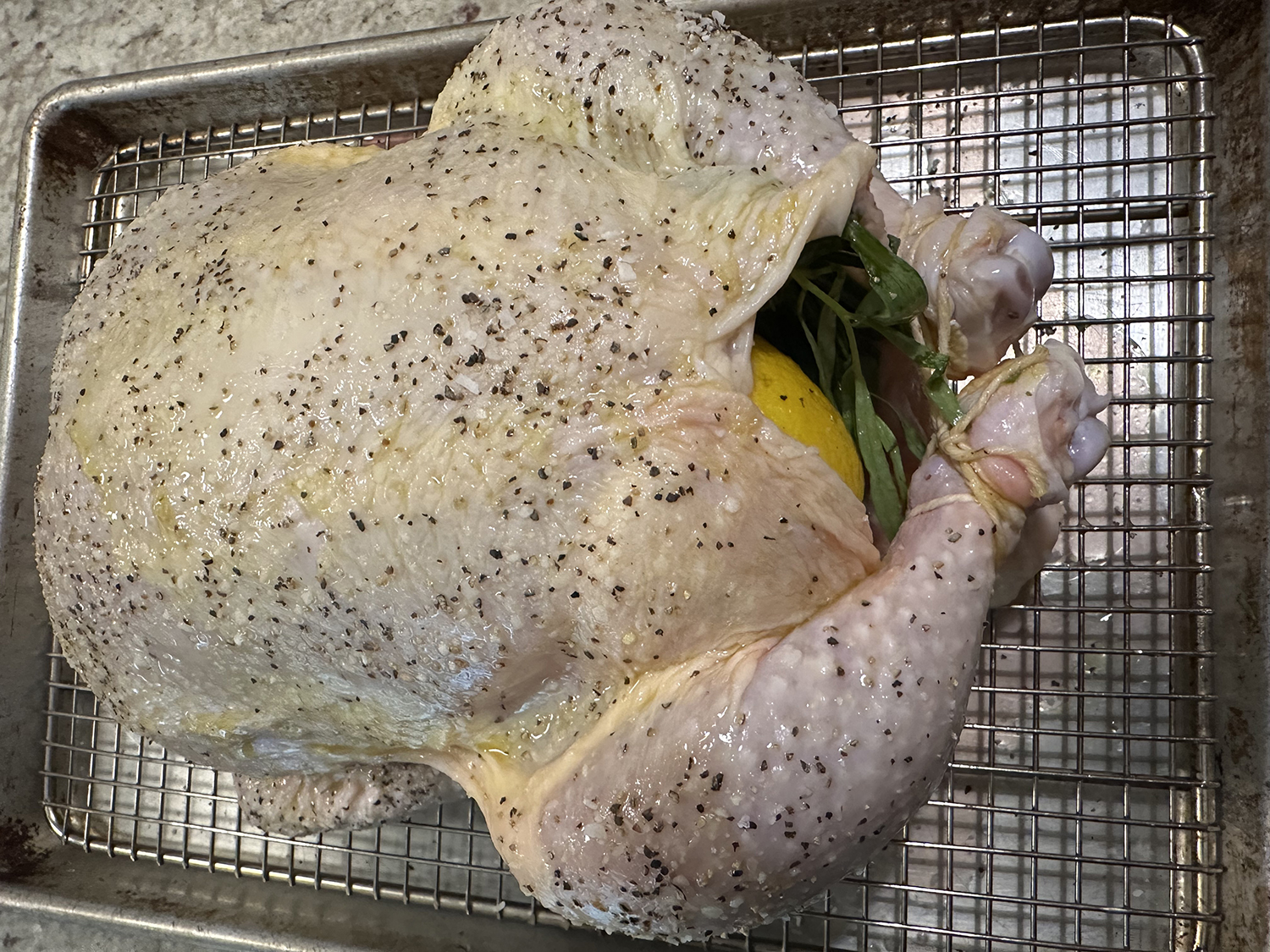
This simple roasted chicken recipe from Milk Street makes a buttery yet bright sauce. Tucking fresh herbs and lemon halves in the cavity flavors the juices for the incredible sauce; cooking mellows the lemon’s acidity. We used a mix of rosemary and tarragon sprigs for the cavity, and chopped for a garnish.

Roasting on a flat wire rack in a rimmed baking sheet allows for improved circulation, resulting in better browning and even cooking. Resulting in a super-juicy chicken with crispy skin.

With just a handful of ingredients, and a mostly hands-off approach, this dish comes together quickly. While the bird roasts in the oven, you can attend to your guests, and/or prepare any sides you wish to serve.

Butter-Lemon Roasted Chicken with Herbs

  • Servings: 4
  • Difficulty: easy
  • Print

Ingredients

  • 4-lb. whole chicken, patted ry, fat near the cavity removed and discarded
  • 6 tarragon OR rosemary OR thyme OR flat-leaf parsley sprigs, plus 1 Tbsp. chopped
  • 1 lemon, halved crosswise
  • 1 Tbsp.extra-virgin olive oil
  • Kosher salt and ground pepper
  • 3/4 cup dry wine
  • 4 Tbsp. salted butter, cut into 4 pieces

Directions

  1. Heat the oven to 425°F. Place the chicken on a wire rack set in a rimmed baking sheet.
  2. Place the lemon halves and the herb sprigs in the cavity, tie the legs together with kitchen twine, and tuck the wings back.
  3. Brush the bird with olive oil and season with salt and pepper. Roast until the thighs reach 175°F, about 1 hour, 15 minutes. tilt the chicken so the juices run out of the cavity into the pan, transfer to a cutting board; let rest.
  4. Meanwhile remove the rack and pour half of the wine onto the baking sheet. Scrape up any browned bits, then pour the mixture into a medium suace pan; add the remaining wine. Simmer over medium until reduced by half, about 10 minutes.
  5. Remove from the heat, untie the chicken, remove and reserve the lemon halves. Carve the chicken, transfer to a platter and pour on any accumulated juices. Return the sauce to simmer, then remove from the heat and whisk in the butter until melted.
  6. Add chopped herbs, then squeeze in 2 tablespoon juice from the lemon halves. Season to taste. Serve the sauce with the chicken.

http://www.lynnandruss.com

Recipe from Milk Street

Spicy Black Bean, Twice-Cooked Potatoes

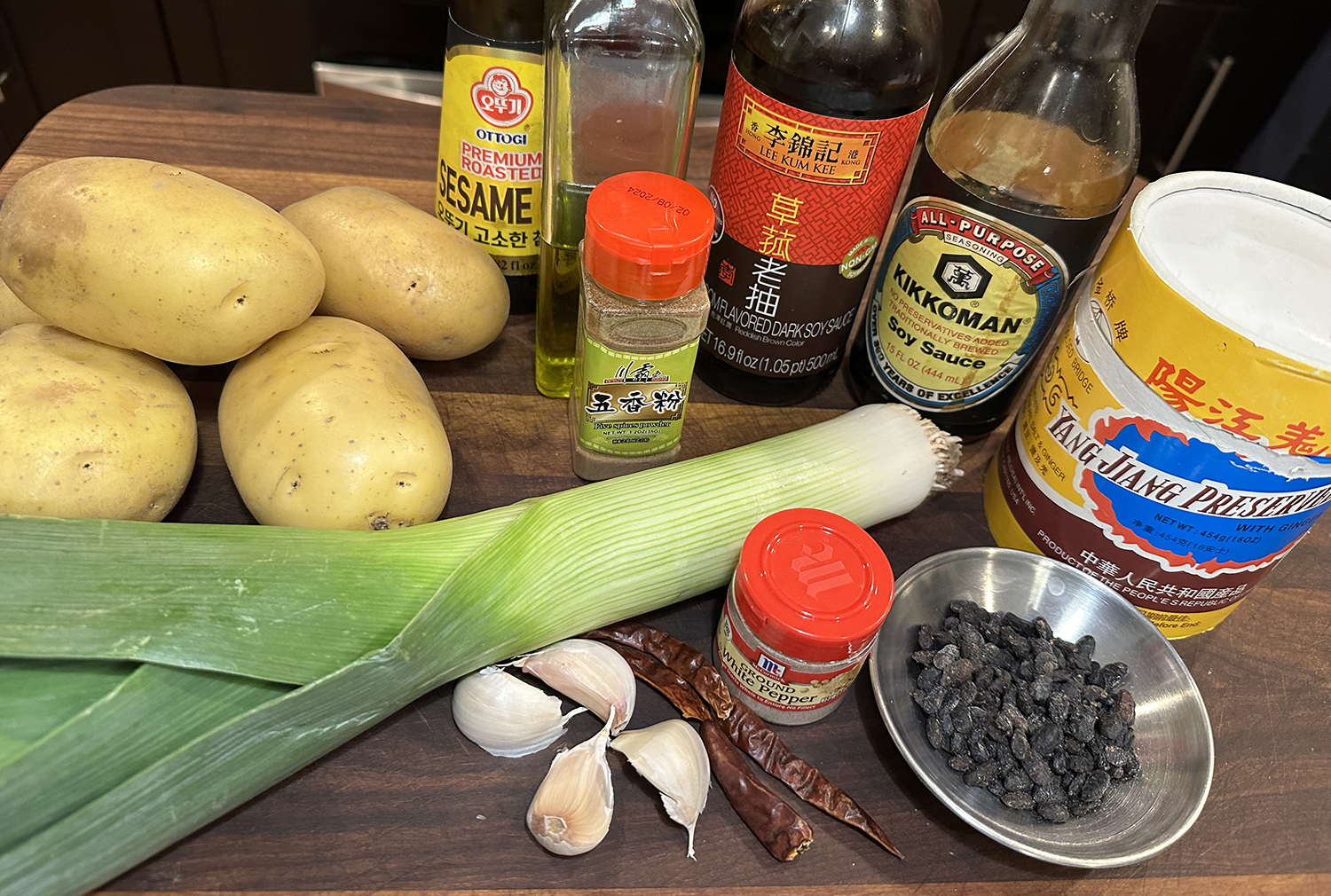
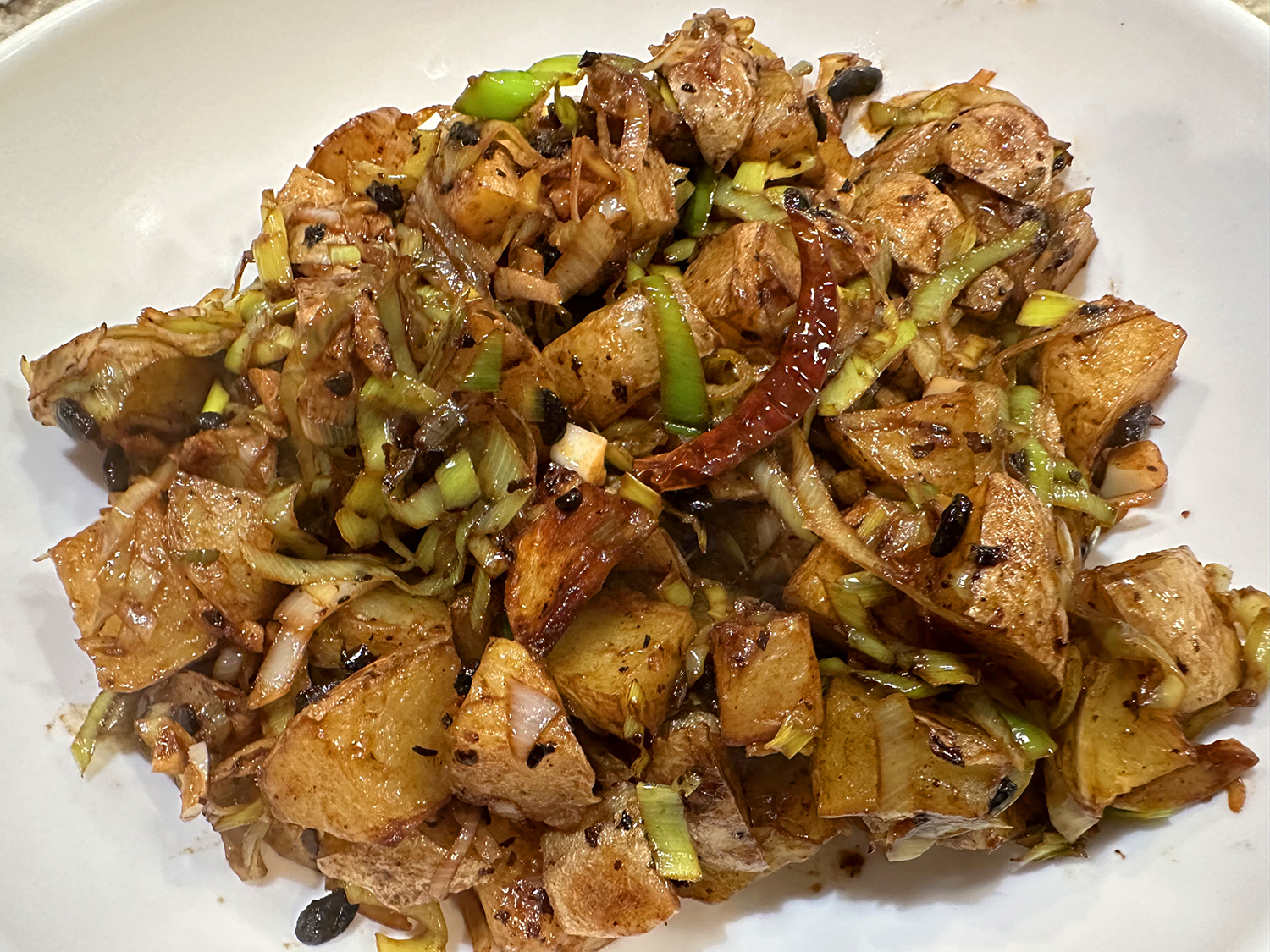
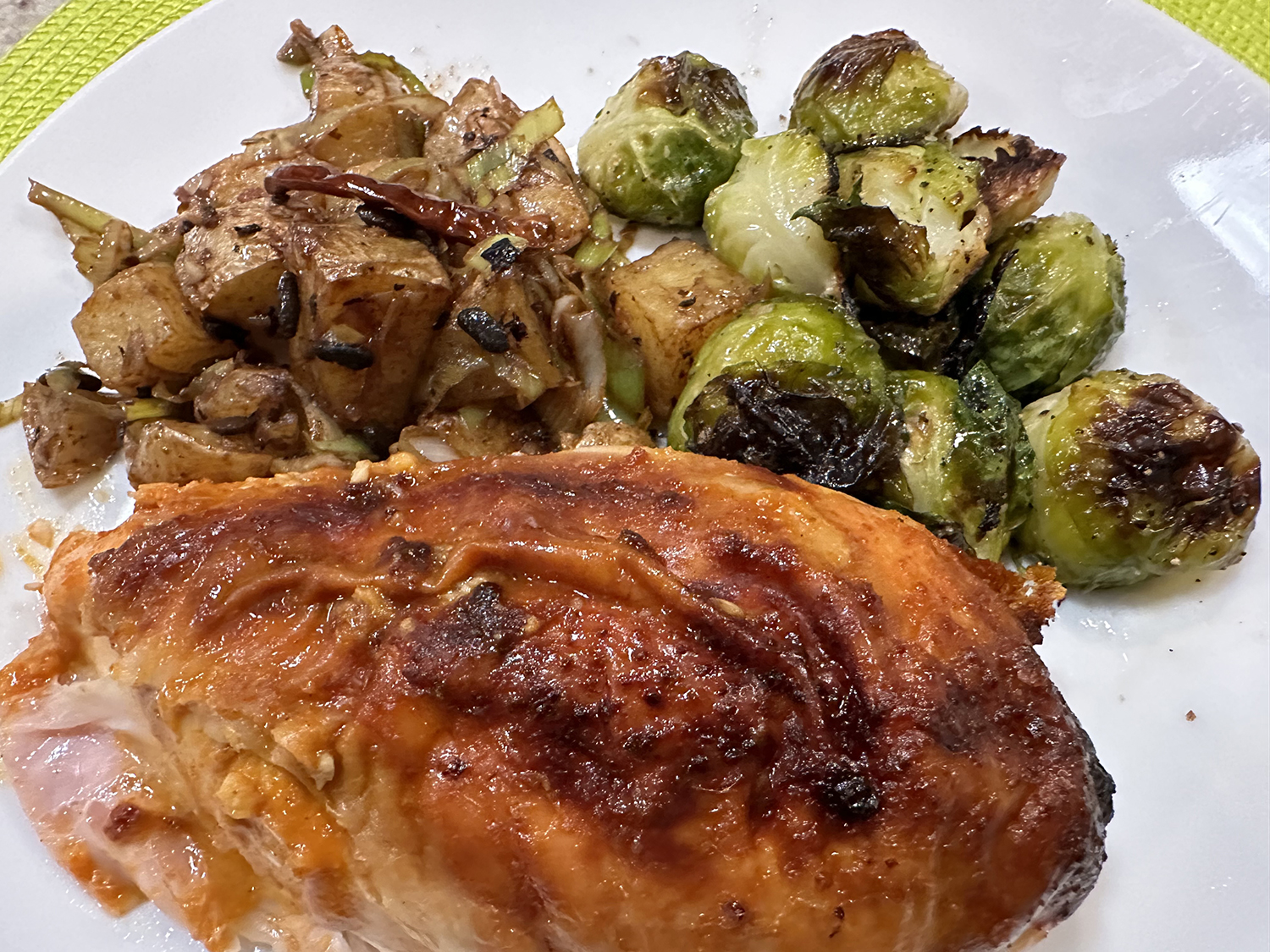
Admittedly, we have never stir-fried potatoes before. So our first foray was this vegetarian/vegan dish based on a favorite Chinese dish called “Twice-Cooked Pork”. In lieu of meat, this dish features potatoes roasted in the oven and then stir-fried with a spicy black sauce. You can adjust the heat to cater to your own preferences.

When the potatoes come out of the oven after 30 minutes or so, they are fabulous to eat as they are, without the additional ingredients and stir-frying. So if you have a picky eater, push a small portion aside for them (reheat briefly in microwave if necessary).

Spicy Black Bean, Twice-Cooked Potatoes

  • Servings: 4
  • Difficulty: easy
  • Print

Ingredients

  • 4-5 medium Yukon gold potatoes; scrubbed and cut into bite-sized chunks
  • 1 Tbsp. salt
  • 1/4 tsp. white pepper
  • 1/4 tsp. five-spice powder
  • Neutral oil
  • 4 cloves garlic (smashed and coarsely chopped)
  • 1-6 dried red chilies, chopped and de-seeded; depending on your tolerance for heat
  • 2 Tbsp. fermented black beans; soaked in hot water for 15 minutes; do not discard water
  • 1 Tbsp. Shaoxing wine
  • 1 tsp. light soy sauce
  • 1 tsp. dark soy sauce
  • ½ tsp. sesame oil
  • 2 Tbsp. black bean soaking water
  • 1 cup leeks; sliced on the diagonal into thin strips

Directions

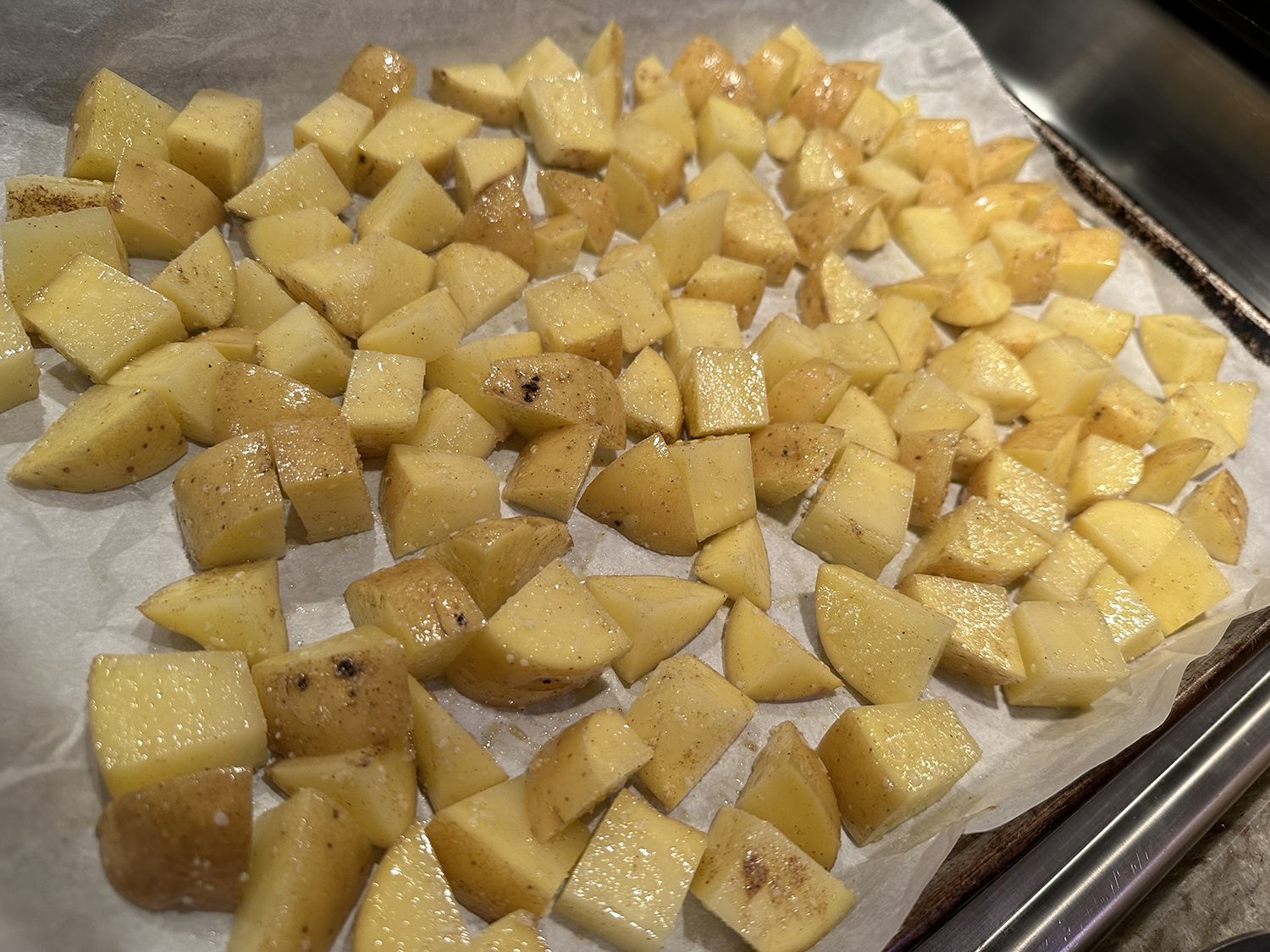
  1. Preheat the oven to 375 degrees F, and spread the potatoes on a parchment-lined baking sheet. Toss with salt to taste, white pepper, and five-spice powder. Drizzle with olive oil and roast for about 30 minutes, or until fork tender. (Ours took 10 minutes longer.)
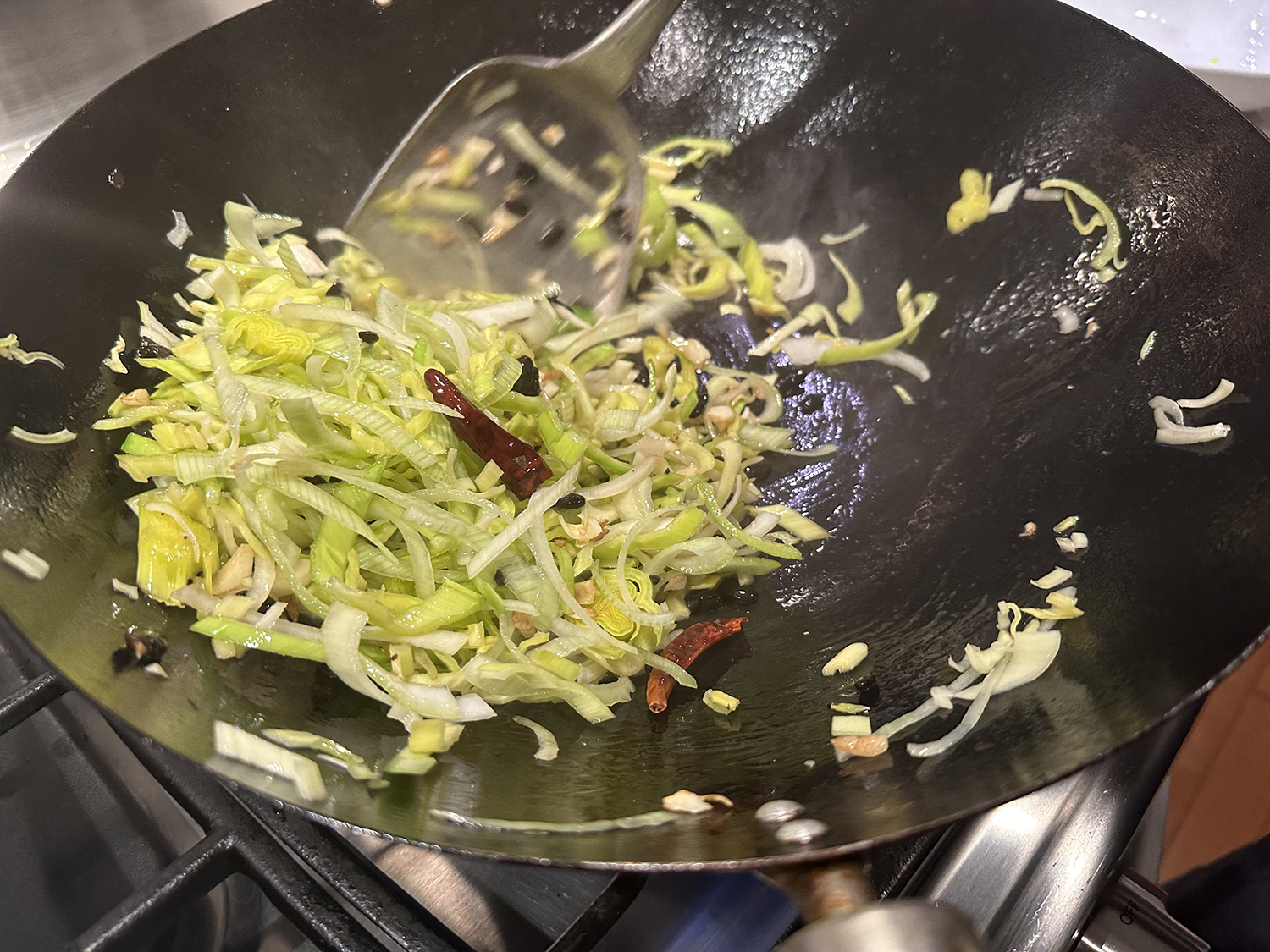
  2. Once the potatoes are done roasting, heat a couple tablespoons of oil in a wok over medium heat. Add the garlic, chili, and black beans. Cook for 30 seconds, and be careful not to burn the ingredients.
  3. Turn heat to high and add the sliced leeks. Stir-fry for 2 minutes.
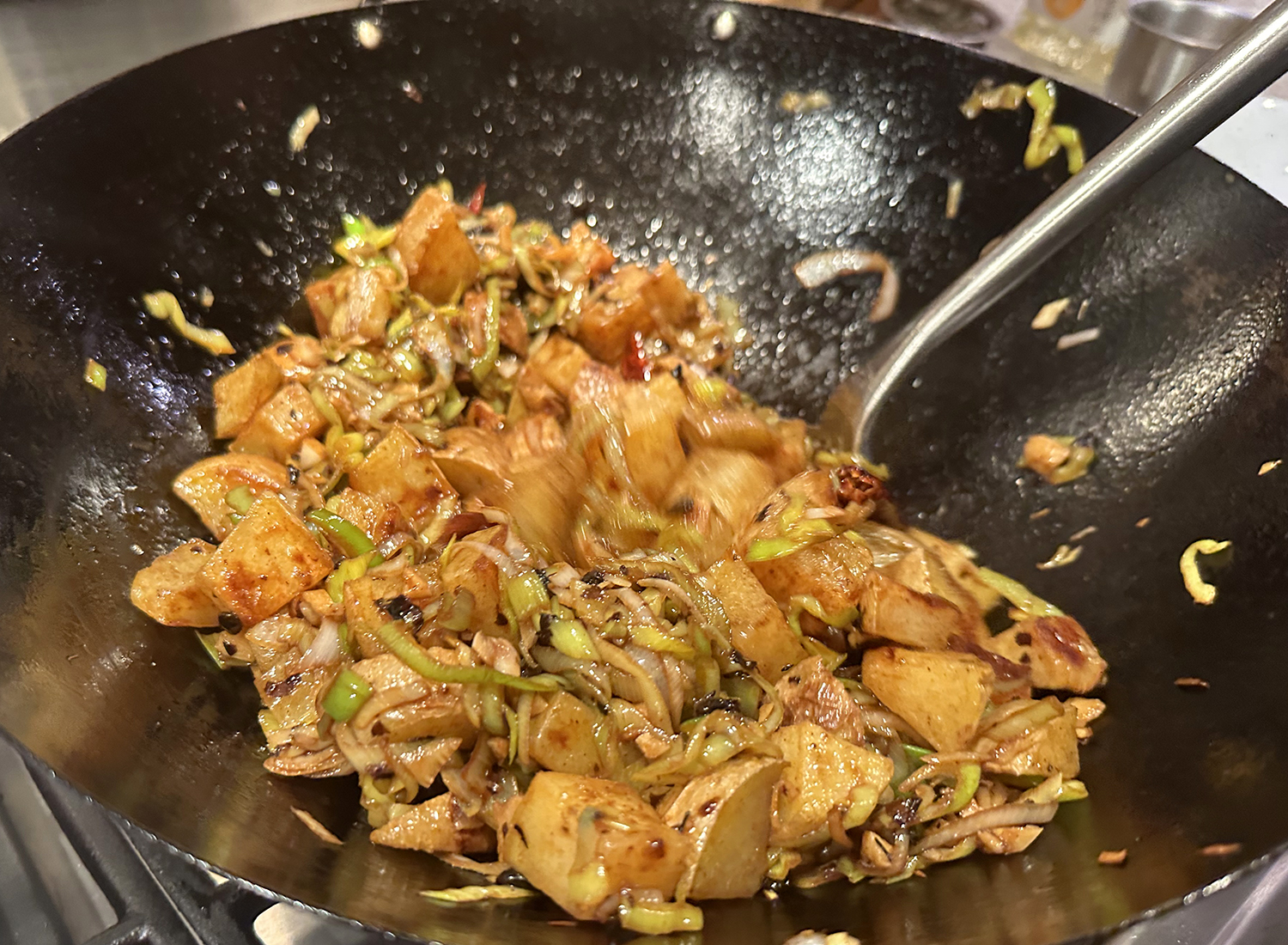
  4. Add the wine, soy sauces, sesame oil, and water. Stir everything together and add the roasted potatoes. Stir-fry for another 2 minutes. Serve immediately.

http://www.lynnandruss.com

Adapted from a recipe by Judy Leung in The Woks of Life

Peruvian Arroz con Pollo (Rice with Chicken)

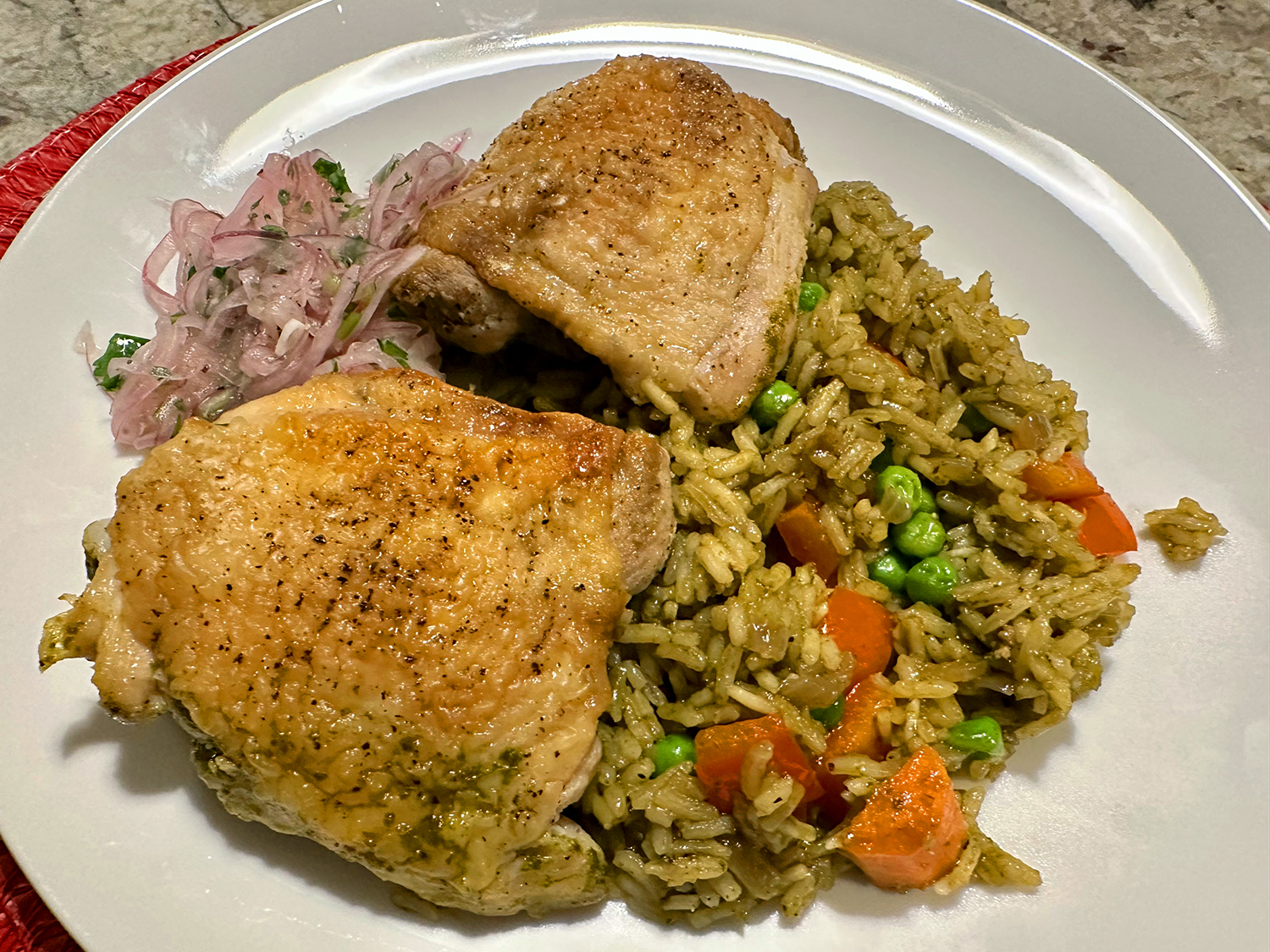
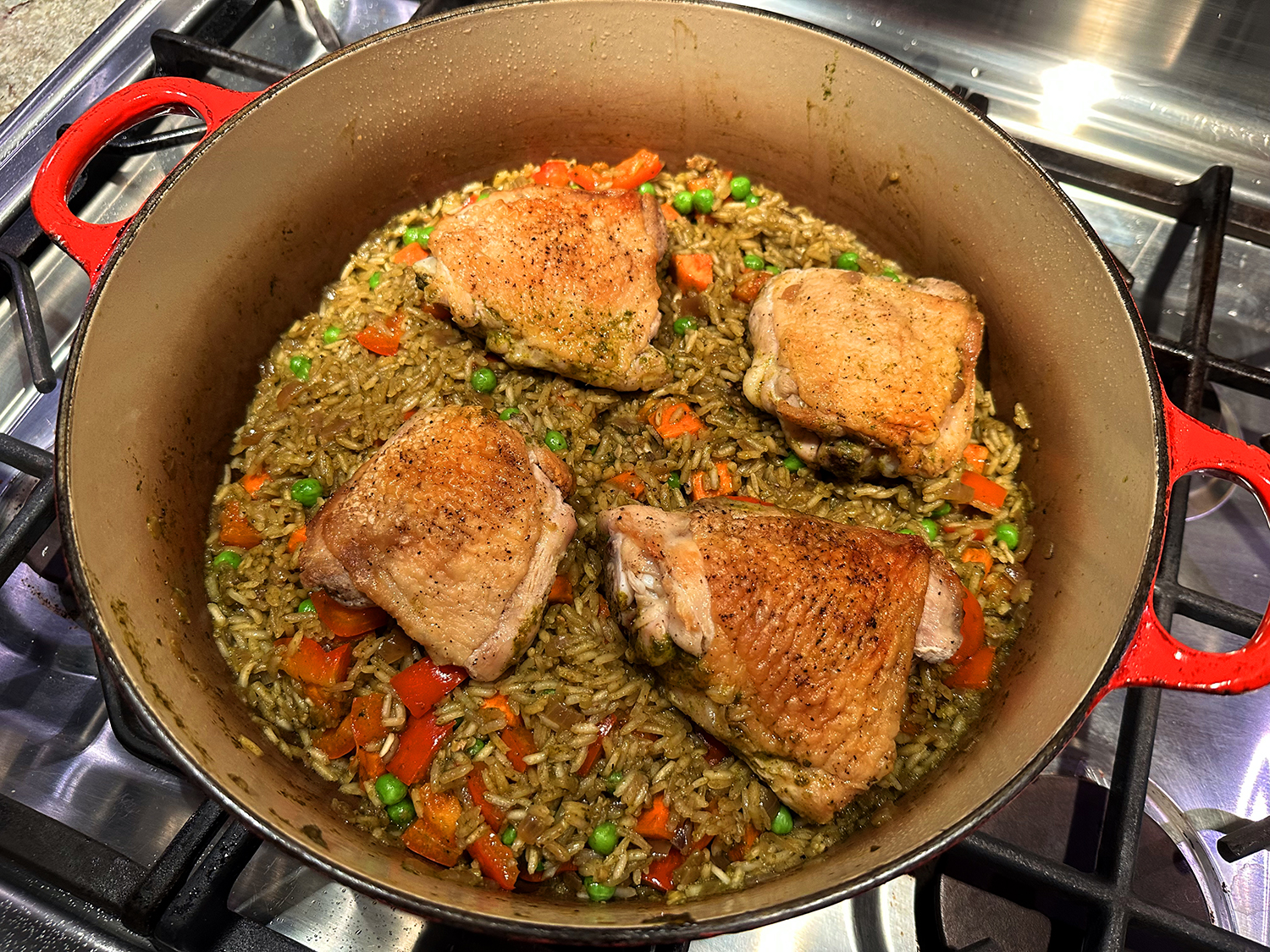
Arroz con pollo is classic comfort food throughout Latin America. A staple in many Latin American kitchens, arroz con pollo combines inexpensive ingredients—chicken, rice, and spices—in a filling one-pot meal.

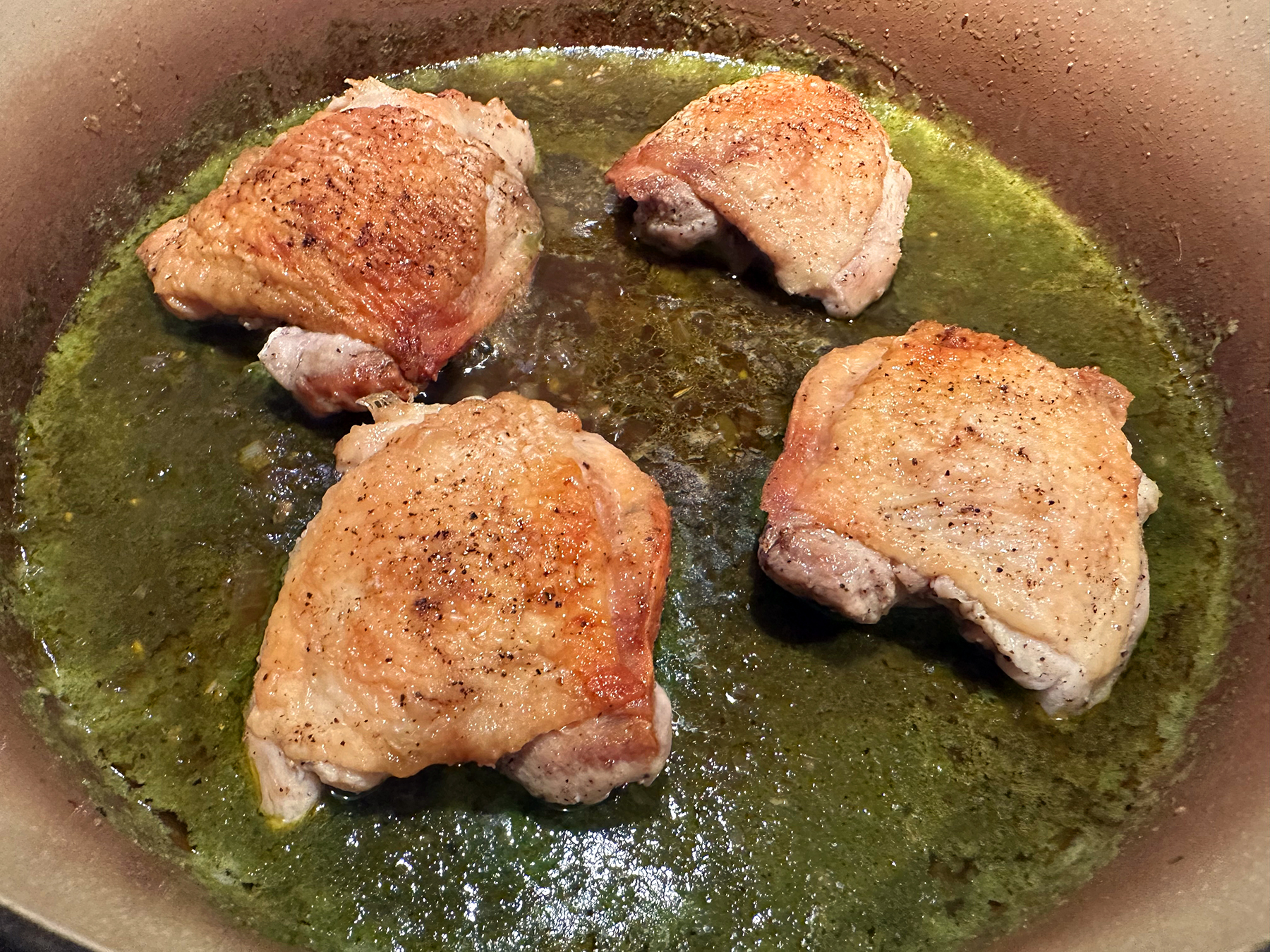
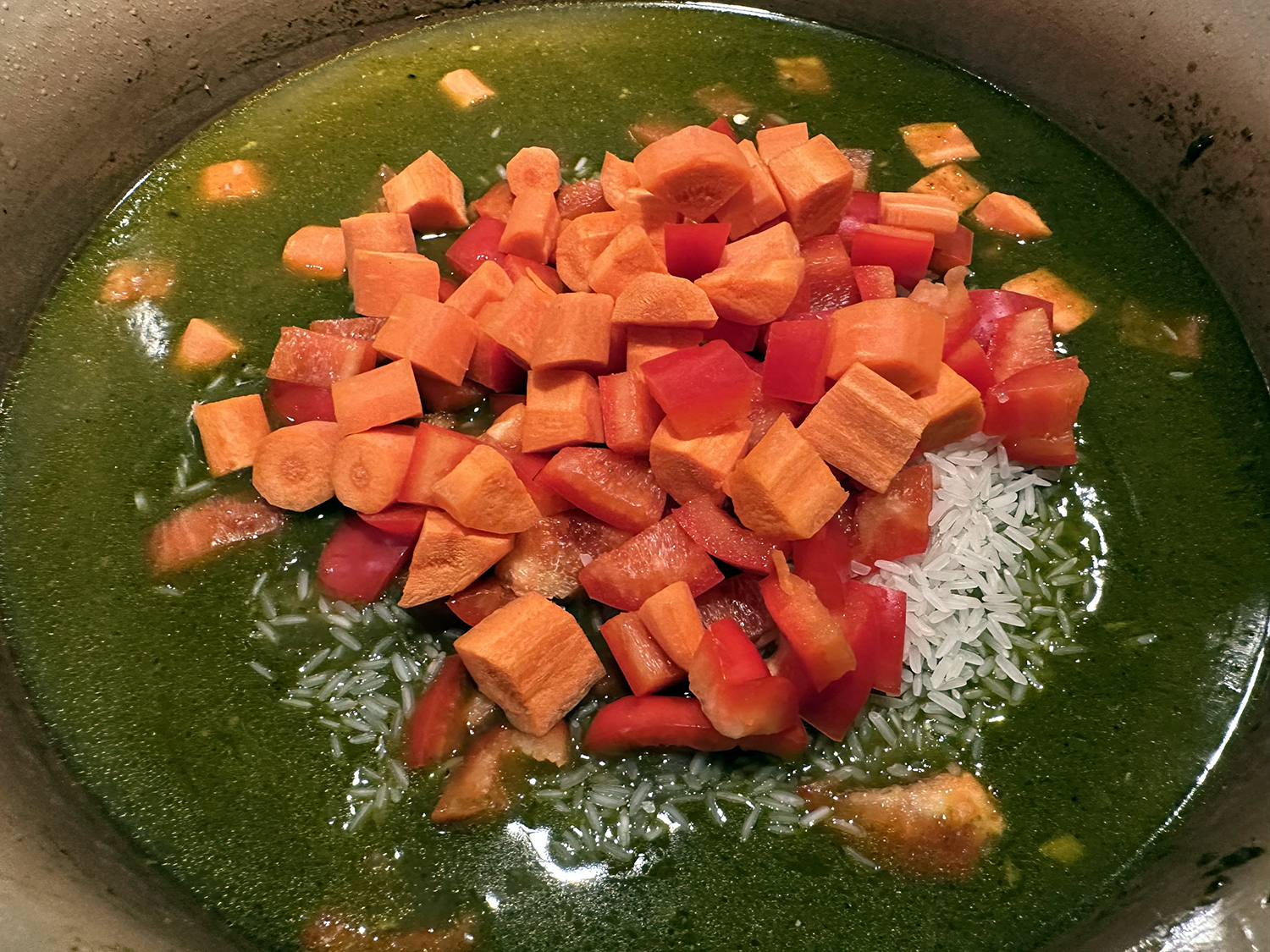
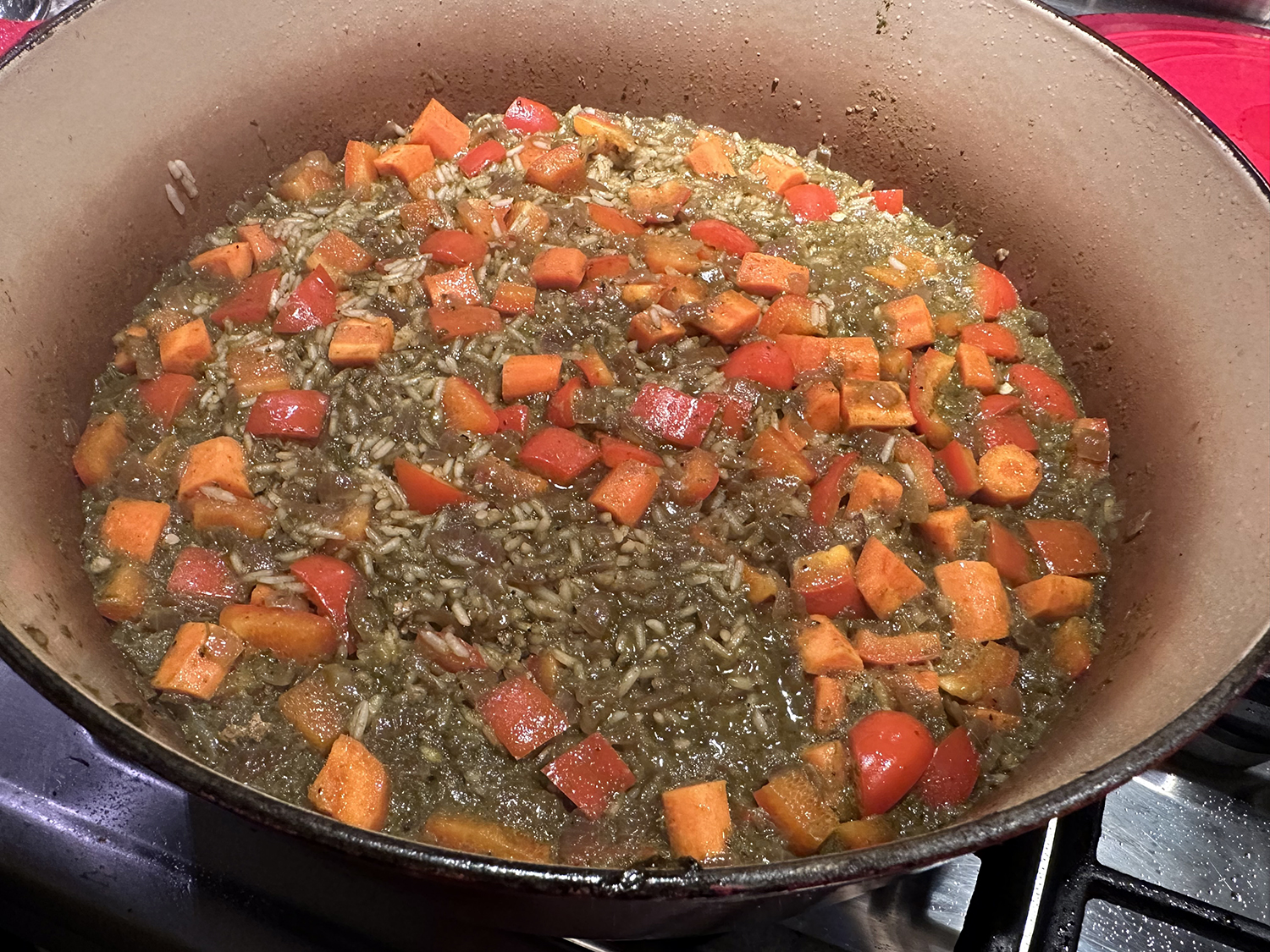
To make this Cook’s Illustrated version, choose moist chicken thighs, which are browned in a Dutch oven to build flavor and render fat. Use a food processor to transform onion, cilantro, Cubanelle pepper, garlic, and cumin into a flavorful sofrito that serves as the backbone for the dish. Medium-grain rice to long- and short-grain varieties are preferred because it gives the dish a creamy, cohesive texture. Sazón seasoning does double duty here, adding both savory flavor and vibrant color.

A staple of many cuisines, including Puerto Rican, Dominican and Mexican cooking, sazón is a blend of spices, and when translated from Spanish, it means simply “seasoning.” It can be found with the other Latin American foods in most supermarkets. It was easily sourced at our local supermarket, but if you can’t find sazón, a decent substitute would be smoked paprika.

All of the ingredients in sazón will add a warm, earthy taste to your dish, but the main reason you use sazón is to give your dish a pop of orange color. You can use sazón in a myriad of applications since it plays well with acidic foods and dishes such as in a vibrant tomato dish, as a seasoning on French fries and popcorn, and as a dry rub for pork belly.

If necessary, substitute 3/4 cup of chopped green bell pepper for the Cubanelle pepper. Allow the rice to rest for the full 15 minutes before lifting the lid to check it. Long-grain rice may be substituted for medium-grain, but the rice will be slightly less creamy. 

These photos were taken when beta testing the recipe for America’s Test Kitchen. Once revised and published six months later, the ingredients and instructions were altered and those revisions are reflected in the recipe below.

  • Servings: 4-6
  • Difficulty: easy
  • Print

Ingredients

  • 1 cup fresh cilantro leaves, and stems, chopped
  • 1 onion, chopped (1 cup)
  • 1 Cubanelle pepper, stemmed, seeded, and chopped (3/4 cup)
  • 5 garlic cloves, chopped coarse
  • 1 tsp. ground cumin
  • ½ cup mayonnaise
  • 3 ½ Tbsp. lemon juice, (2 lemons), plus lemon wedges for serving
  • Salt and pepper
  • 6 (5- to 7-oz.) bone in chicken thighs, trimmed
  • 1 Tbsp. vegetable oil
  • 2 cups medium-grain rice, rinsed
  • 1 Tbsp. Goya Sazón with Coriander and Annatto; OR smoked paprika
  • 2 ½ cups chicken broth
  • ¼ cup pimento-stuffed green olives, halved
  • 2 Tbsp. capers, rinsed
  • 2 bay leaves
  • ½ cup frozen peas, thawed (optional)

Directions

  1. Adjust oven rack to middle position and heat oven to 350 degrees. Process cilantro, 1/2 cup onion, Cubanelle, garlic, and cumin in food processor until finely chopped, about 20 seconds, scraping down bowl as needed. Transfer sofrito to bowl.
  2. Process mayonnaise, 1 1/2 tablespoons lemon juice, 1/8 teaspoon salt, and 2 tablespoons sofrito in now-empty processor until almost smooth, about 30 seconds. Transfer mayonnaise-herb sauce to small bowl, cover, and refrigerate until ready to serve.
  3. Pat chicken dry with paper towels and sprinkle with 1 teaspoon salt and 1/4 teaspoon pepper. Heat oil in Dutch oven over medium heat until shimmering. Add chicken to pot skin side down and cook without moving it until skin is crispy and golden, 7 to 9 minutes. Flip chicken and continue to cook until golden on second side, 7 to 9 minutes longer. Transfer chicken to plate; discard skin.
  4. Pour off all but 2 tablespoons fat from pot and heat over medium heat until shimmering. Add remaining 1/2 cup onion and cook until softened, 3 to 5 minutes. Stir in rice and Sazón and cook until edges of rice begin to turn translucent, about 2 minutes.
  5. Stir in broth, olives, capers, bay leaves, remaining sofrito, remaining 2 tablespoons lemon juice, 1 teaspoon salt, and 1/2 teaspoon pepper, scraping up any browned bits. Nestle chicken into pot along with any accumulated juices and bring to vigorous simmer. Cover, transfer to oven, and bake for 20 minutes.
  6. Transfer pot to wire rack and let stand, covered, for 15 minutes. Fluff rice with fork and stir in peas, if using. Discard bay leaves. Serve with mayonnaise-herb sauce and lemon wedges.

http://www.lynnandruss.com

Recipe from Cook’s Illustrated

Cumin-Seared Flank Steak with Lime

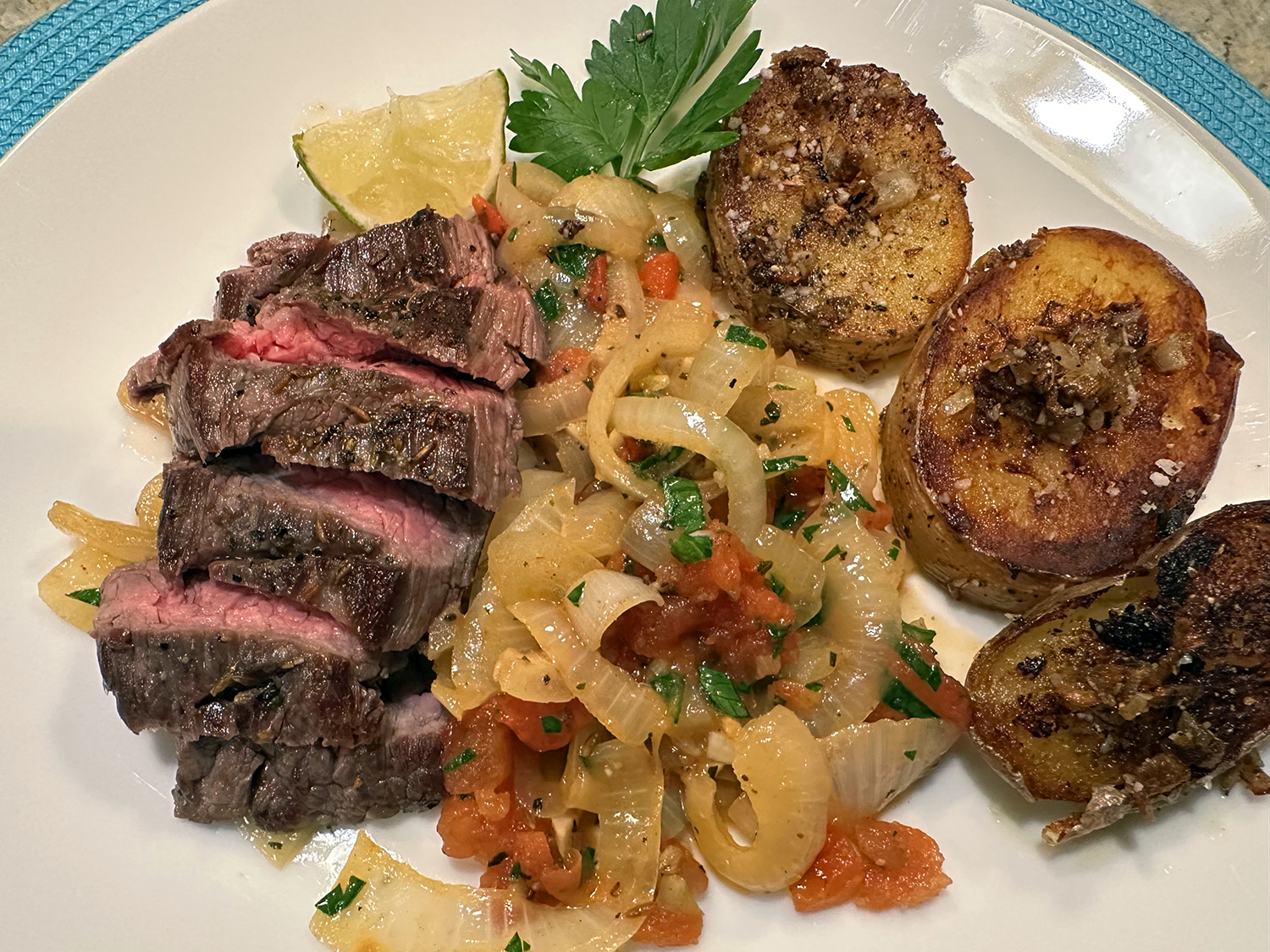
WOW, what a weeknight treat! This Cumin-Seared Flank Steak dish was fantastic, with so much flavor, and a minimal amount of ingredients in under 45 minutes!

To make the Cuban classic bistec de palomilla, thin-cut steak is marinated in garlic and lime juice before it is pan-fried, and it is served under a pile of sautéed onions. Though sirloin or top round is commonly the choice of meat, here, flank steak is used instead and the process allows to skip any marination.

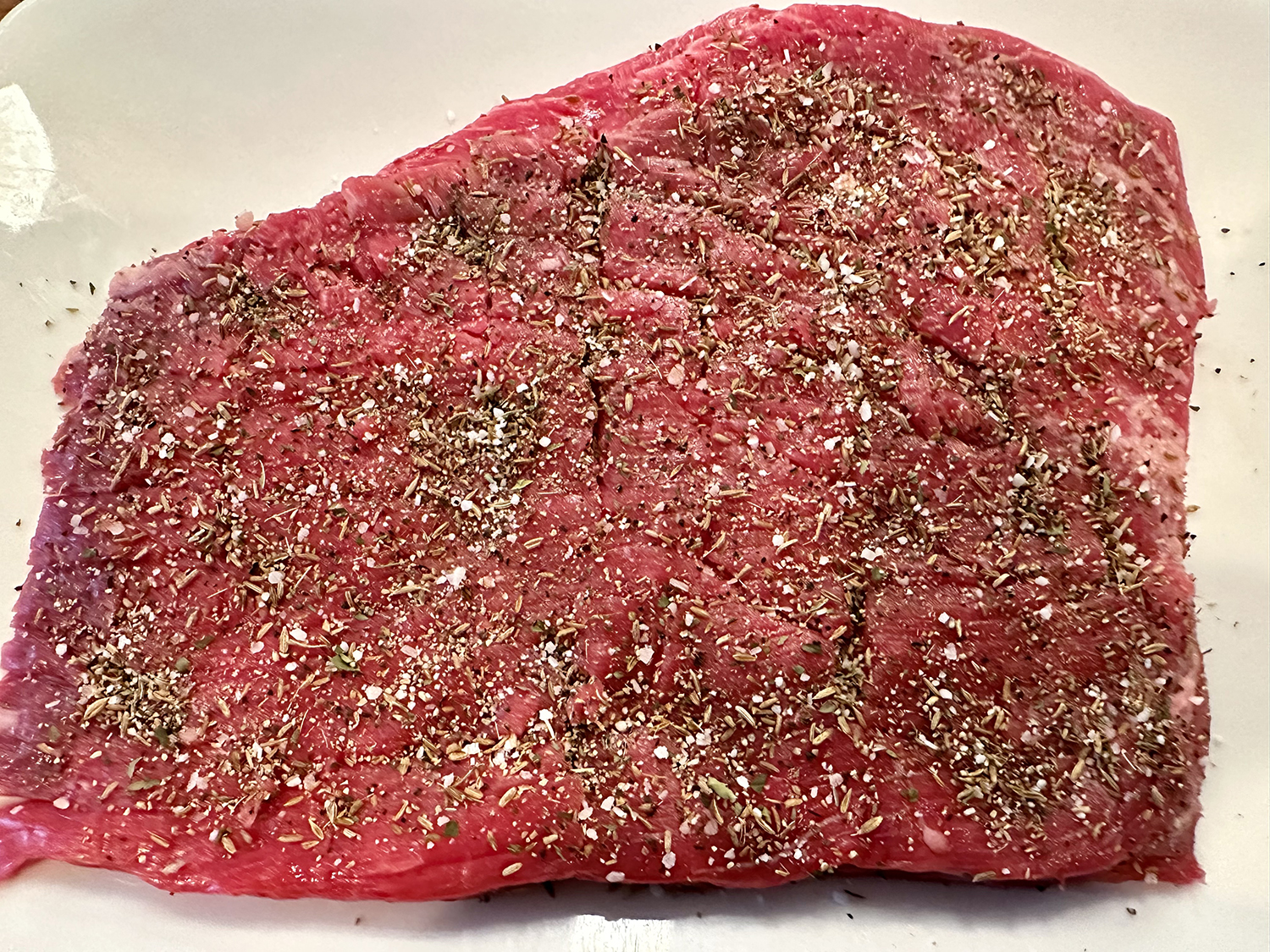
Instead, the surface of the meat is scored with shallow crosshatched cuts before cooking. The grooves not only grip the seasoning mix of crushed cumin, dried oregano, salt and pepper so they stay on the meat instead of winding up in the pan, they also help produce better flavor-boosting caramelization.

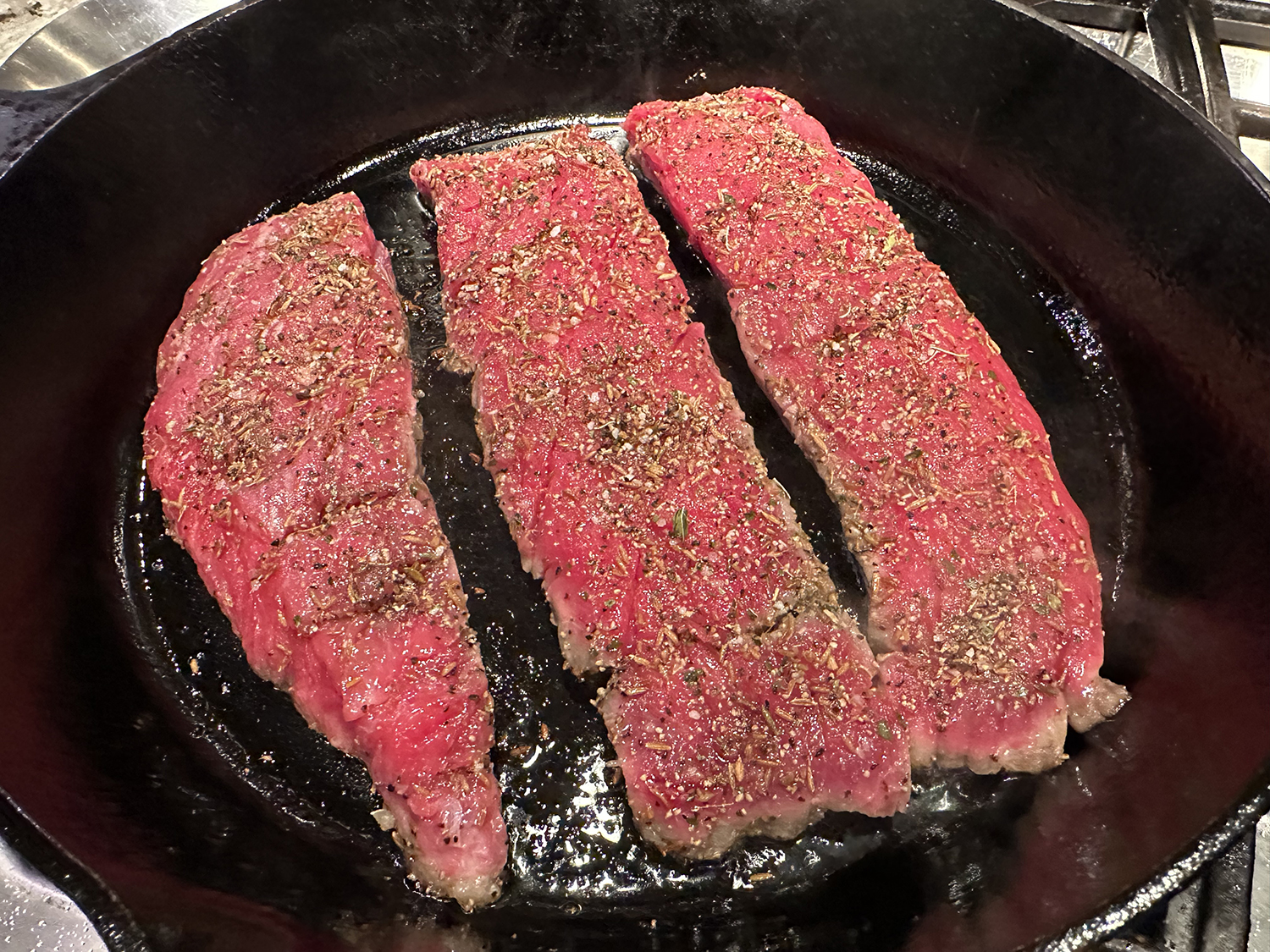
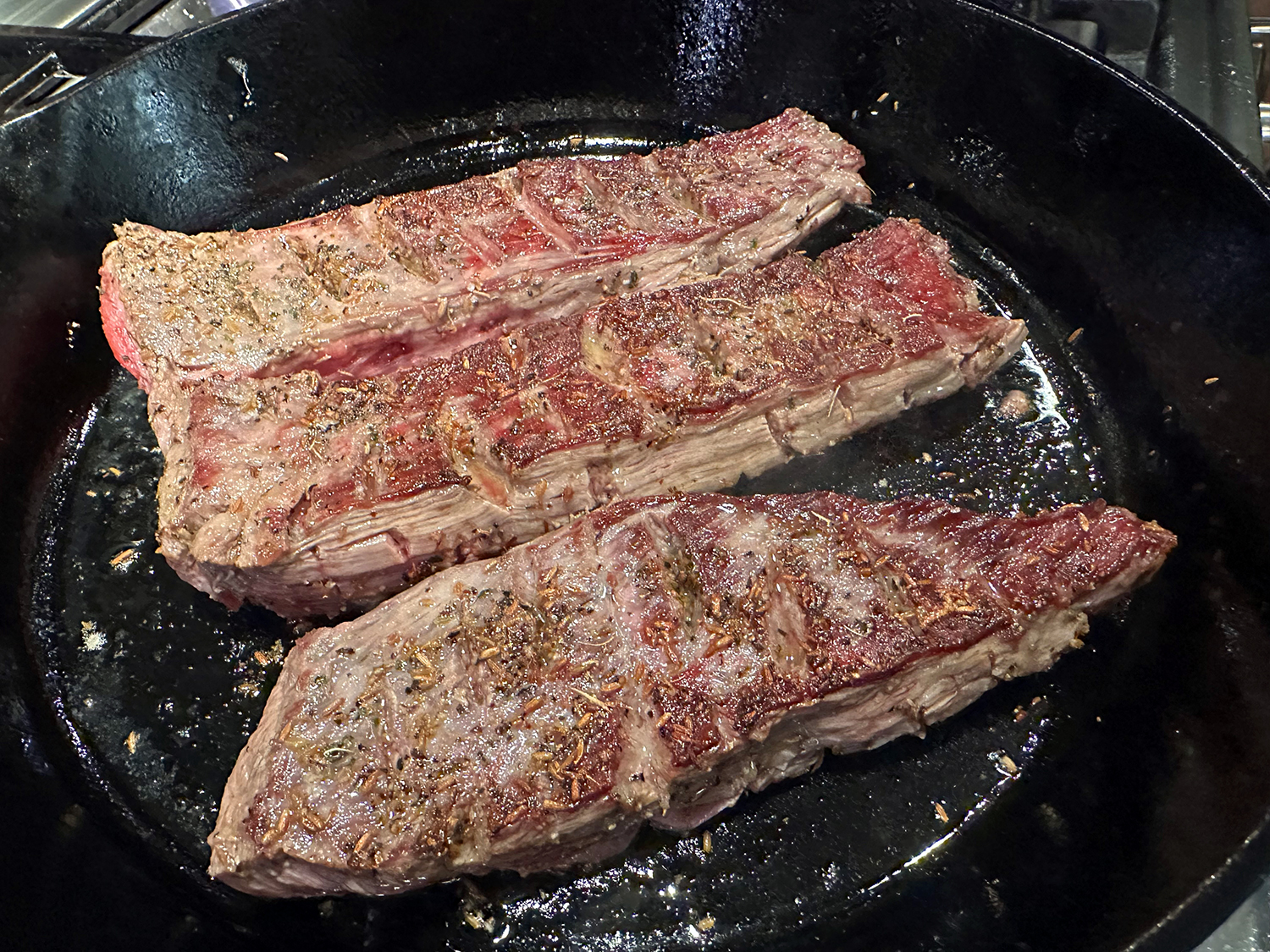
In just eight minutes, the steak was perfectly medium rare, removed to a platter so that the remaining ingredients can be cooked along with browned bits left in the skillet.

Typical side dishes might be rice or beans. We decided on a simple skillet potato dish. The Yukon Golds were first microwaved until just barely fork tender. Once they cooled slightly they were cut into 1/2″ slices; browned in olive oil and butter with some minced shallots, salt and pepper.

Cumin-Seared Flank Steak with Lime

  • Servings: 4
  • Difficulty: easy
  • Print

Ingredients

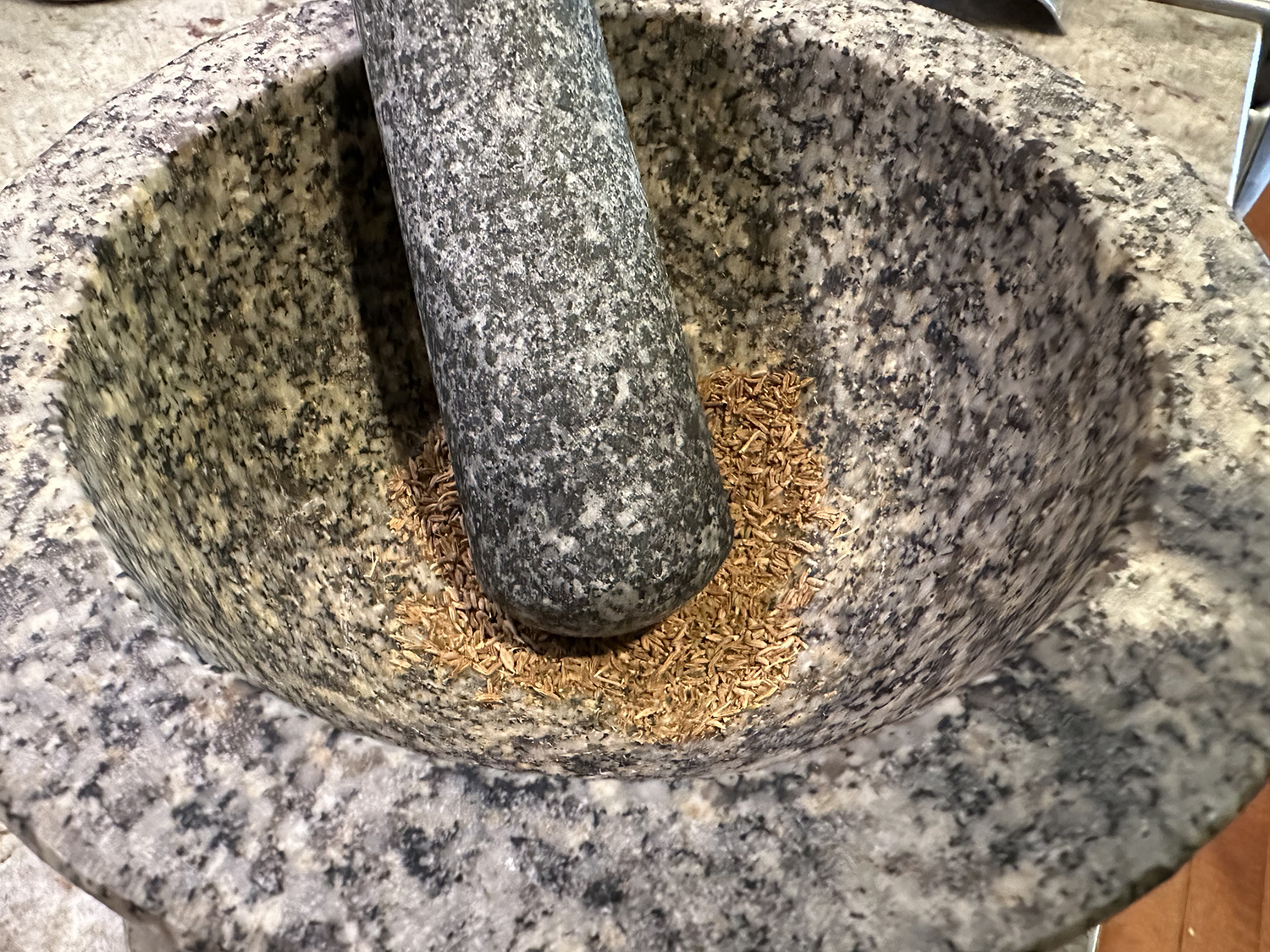
  • 2 tsp. cumin seeds, lightly crushed
  • 3/4 tsp. dried oregano, divided
  • Kosher salt and ground black pepper
  • 1½ lbs. flank steak
  • 1 Tbsp. grapeseed or other neutral oil
  • 3 Tbsp. salted butter, cut into 3 pieces
  • 1 large yellow onion, halved and thinly sliced
  • 1 ripe medium tomato, cored and chopped
  • 4 medium garlic cloves, minced
  • 1/4 cup lime juice, plus lime wedges to serve
  • 2 Tbsp. chopped fresh flat-leaf parsley

Directions

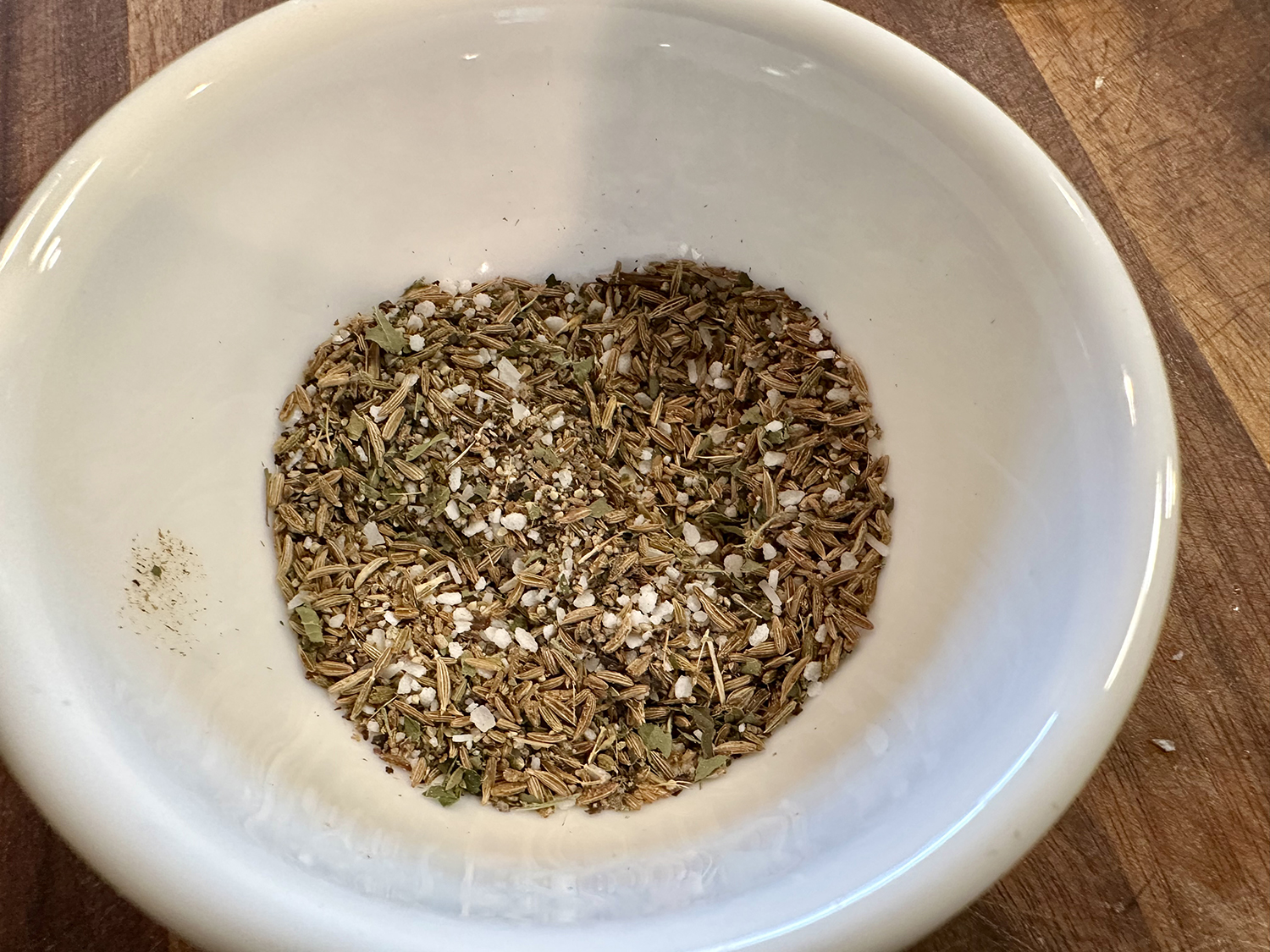
  1. In a small bowl, stir together the cumin, ¼ teaspoon of the oregano and 1 teaspoon each salt and pepper. Using a sharp knife, score shallow cuts into the steak, perpendicular to the grain and spaced ½ inch apart. Now crosshatch at a 45-degree angle to the first cuts. Flip the steak and crosshatch the second side.
  2. Rub the cumin mixture into the cuts on both sides, then cut the steak into 2 or 3 pieces with the grain. In a 12-inch skillet over medium-high, heat the oil until barely smoking. Add the steak and cook, flipping once, until well browned and the center reaches 125°F (for medium-rare), 6 to 8 minutes. Transfer to a plate and tent with foil.
  3. In the same skillet over medium, melt the butter. Add the onion, tomato, garlic, remaining ½ teaspoon oregano and ½ teaspoon salt; cook, stirring, until the onion is wilted, 6 to 8 minutes.
  4. Add the lime juice and accumulated steak juices; cook, stirring, until slightly reduced, about 1 minute.
  5. Off heat, stir in the parsley. Taste and season with salt and pepper. Transfer the onion mixture to a platter. Thinly slice the steak against the grain and place on the platter. Serve with lime wedges.

http://www.lynnandruss.com

Recipe by Courtney Hill for Milk Street

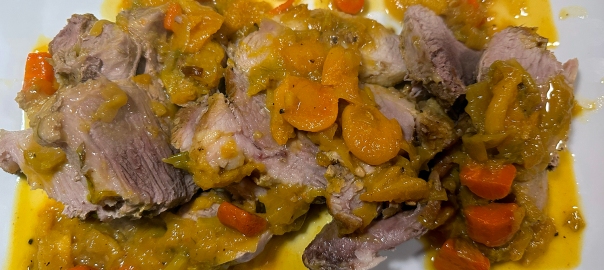
Pork Pot Roast with Apricots, Cardamom and Ginger

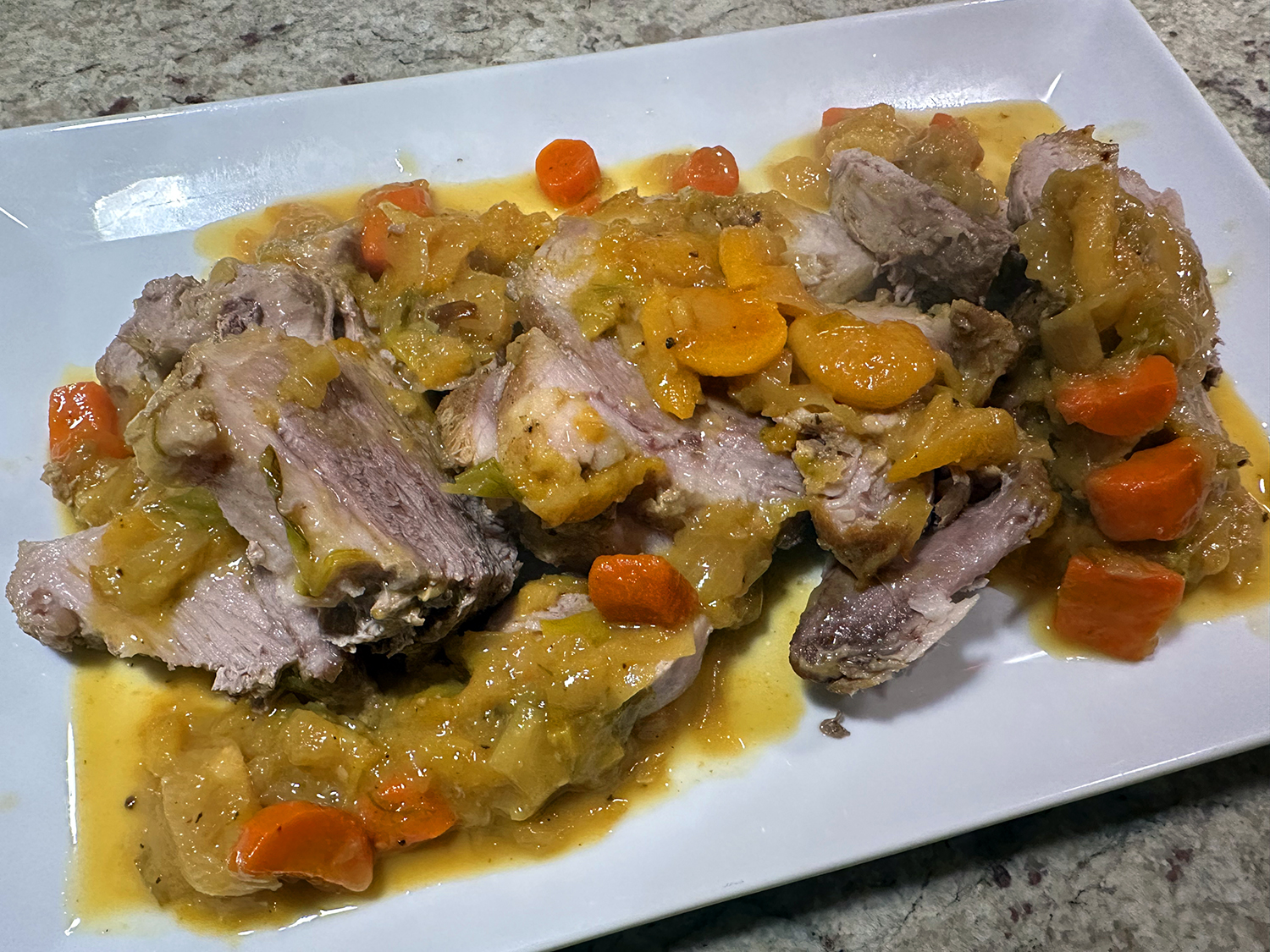
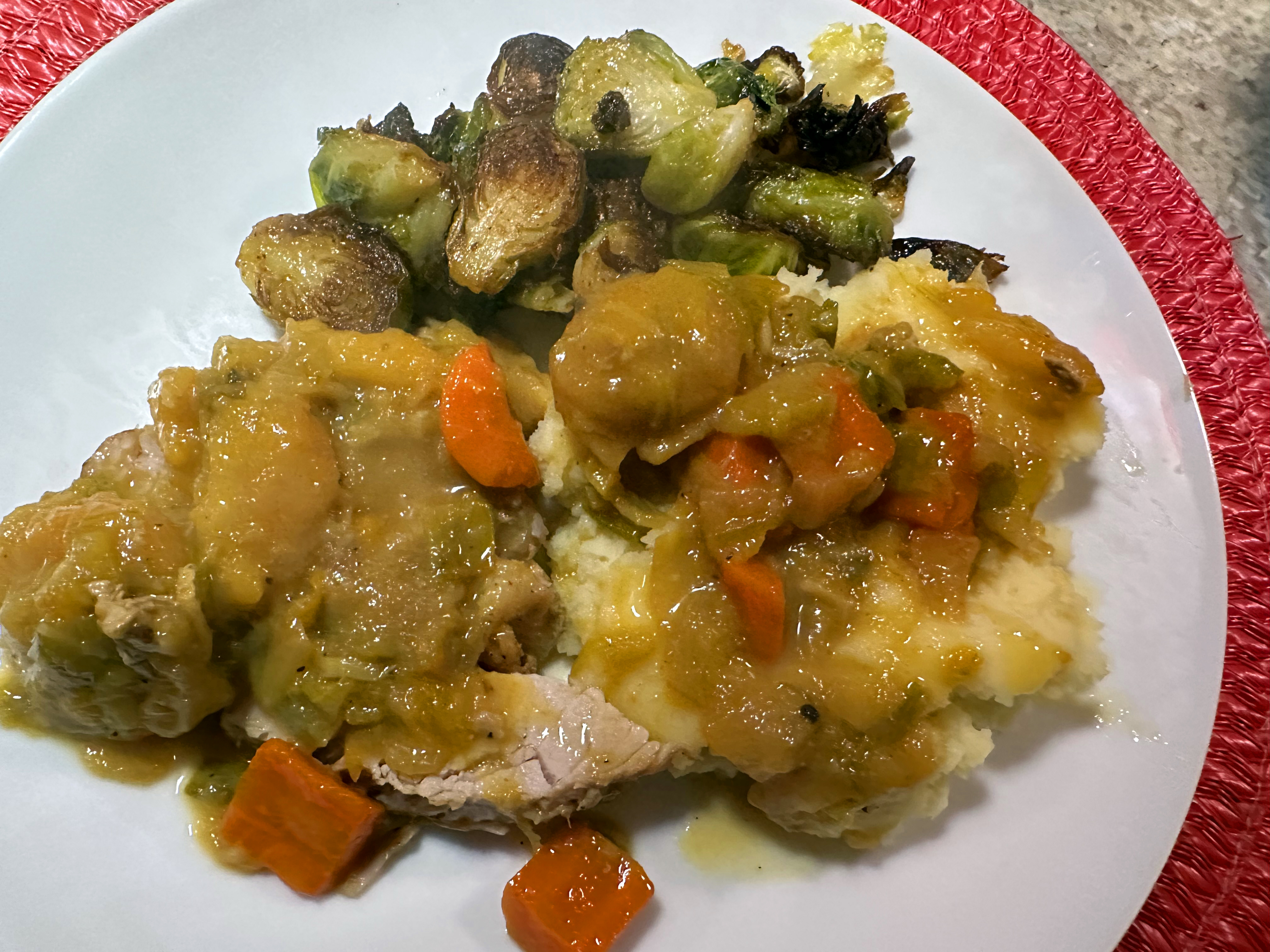
In a word, ASTOUNDING! Also, elegant, classic and simple. It’s a one-pot meal that’s perfect for Sunday night. Yes it takes a while to make, but most of it will be the time spent in the oven. Pork and fruit are the perfect pairing, as we’ve seen time and again with recipes like holiday ham with pineapple rings, or applesauce spooned over pork chops. It’s that pleasure of sweet-tart-savory combinations.

In this version, chef-author Molly Stevens uses dried apricots because their pale orange flesh collapses into the sauce, which comes out every bit as pretty as it is tasty. The cardamom lends the whole dish its exotic perfume, while being backed up by a gang of other compatible flavors—ginger, turmeric, cayenne, garlic and orange.

This company-worthy dinner can be served over couscous, wild rice, or as in our case, garlicky mashed potatoes which became the perfect vehicle to hold that lovely sauce! If you care to pair the meal with wine, off-dry Riesling or Pinot Gris make good companions.

Pork Pot Roast with Apricots, Cardamom and Ginger

  • Servings: 6-8
  • Difficulty: easy
  • Print

Ingredients

  • One 4 1/2 to 5-lb. boneless pork shoulder roast, preferably Boston butt
  • Coarse salt and freshly ground black pepper
  • 2 Tbsp. extra-virgin olive oil
  • 1 medium leek, white and pale green part only, coarsely chopped (about 1 cup)
  • 2 carrots, coarsely chopped
  • 1 medium yellow onion (about 6 oz.), coarsely chopped
  • 6 cardamom pods, husks split and discarded, seeds lightly crushed
  • 1/2 tsp. ground turmeric
  • 1/4 tsp. cayenne
  • 1 Tbsp. minced or grated fresh ginger
  • 2 large garlic cloves, peeled and bruised
  • 3 strips orange zest, removed with a vegetable peeler (each about 3 inches by 3/4 inch)
  • 1 bay leaf
  • 1/2 cup dry white wine
  • 2 cups chicken stock
  • 1 cup dried apricots (about 6 1/2 oz.)

Directions

  1. Heat the oven to 325 degrees
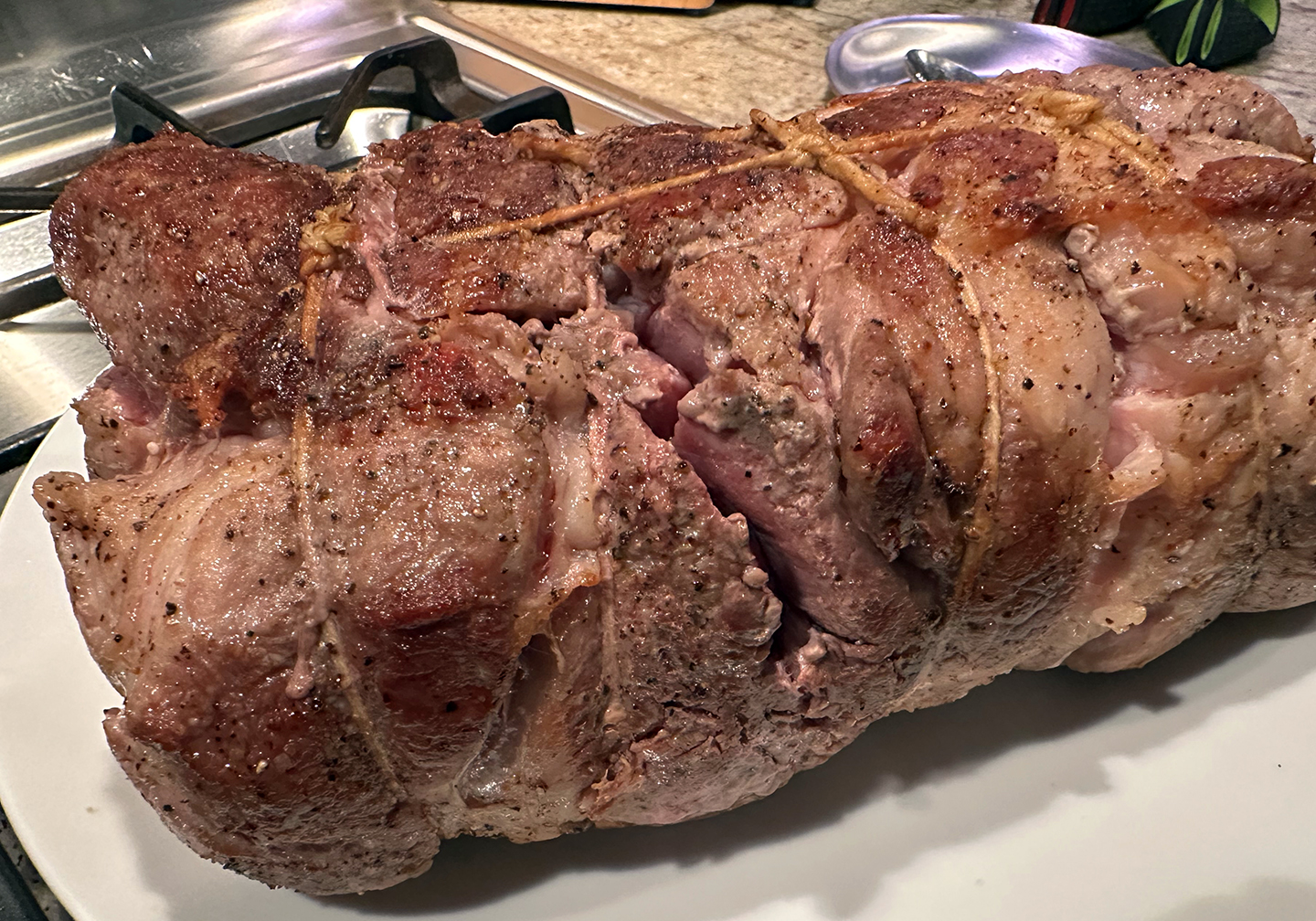
  2. Trim any especially thick bits of fat from the pork, but do be sure to leave some. Roll and tie the pork (or have your butcher do it for you).
  3. Pat the pork dry with paper towels. Season all over with salt and pepper. Pour the oil into a Dutch oven that will hold the pork snugly (4 to 5 quart works well), and heat over medium heat. Sear the pork on all sides, until deeply browned but not at all burnt, 15 to 20 minutes total. Transfer the pork to a plate.
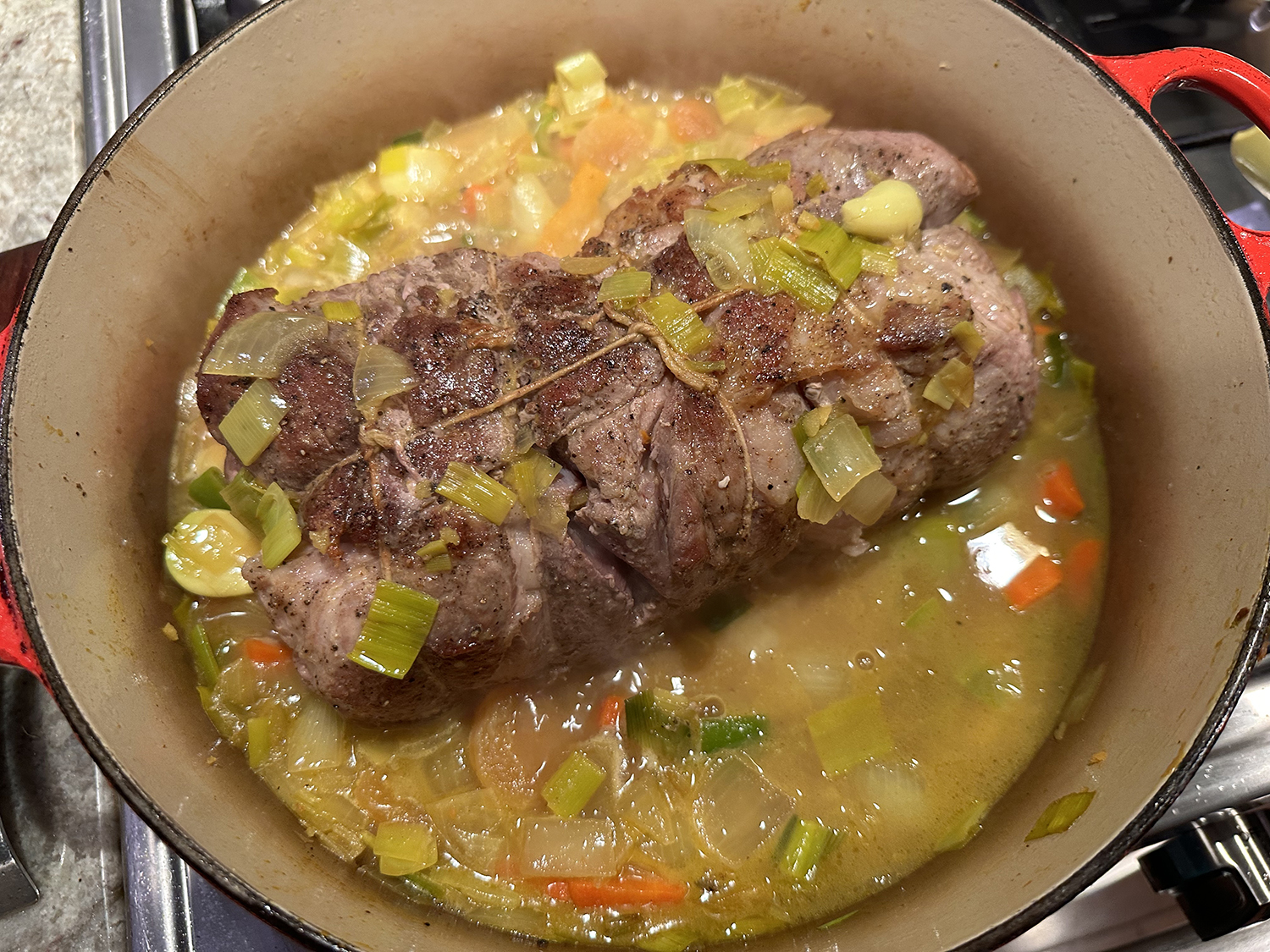
  4. Discard all but 1 tablespoon of the fat, and return the pot to medium heat. Add the leek, carrots, and onions, stir in the crushed cardamom, turmeric, and cayenne, and cook, stirring once or twice, until the vegetables begin to soften but do not take on much color, about 5 minutes. Add the ginger, garlic, orange zest, and bay leaf and cook until the spices are quite fragrant, another 2 minutes.
  5. Add the wine and let it boil for 4 minutes, scraping the sides and bottom of the pot. Pour in the stock and bring to a boil. Add the apricots and boil for another 2 minutes.
  6. Place the pork on top of the vegetables and fruit. Add any accumulated juices from the plate. bring the liquid to a simmer and spoon some over the pork. Cover the meat with sheet of parchment paper, pressing down so that it almost touches the meat and the edges extend over the sides of the pot about an inch. Cover and slide the pot onto a shelf in the lower third of the oven to braise. Check that the liquid is simmering gently, every 30 minutes and give the pork a turn. If the liquid is simmering too aggressively, lower the oven heat 10 or 15 degrees. Continue to braise gently until the pork is fork-tender, about 2 hours in all.
  7. Remove the pork from the pot and set it on a carving board or platter to catch the juices. Cover loosely with foil, and let rest for 10 minutes.
  8. Return the pot to the top of the stove and skim off as much surface fat as you can with a wide spoon. If the sauce is very thin reduce it by boiling over medium-high heat for about 5 minutes. It should be the consistency of a thick vinaigrette. Taste for salt and pepper. Pour any juices that have accumulated under the pork into the sauce, and stir.
  9. Remove the strings from the pork, and carve into 1/2-inch-thick slices. Serve with sauce and apricots.

http://www.lynnandruss.com

Recipe from Molly Stevens book “All About Braising”

Roast Duck with Orange and Ginger

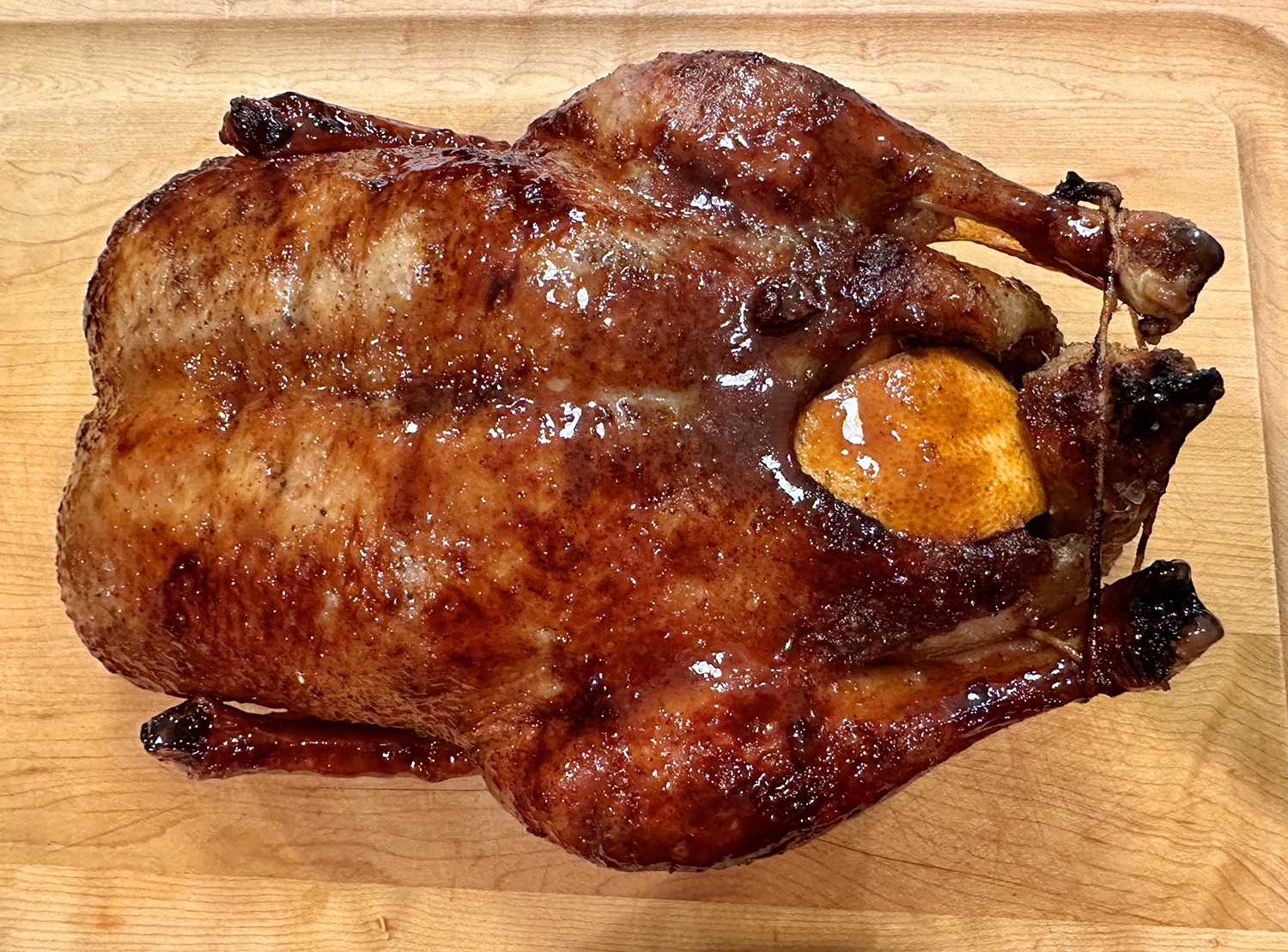
For a festive occasion, a burnished whole duck makes quite an impression — fancier than chicken and more elegant than turkey. When I was growing up, Mom roasted duck a few times a year, a favorite for most of the family.

I remember as a young teen going out to eat at a Chinese restaurant for the first time because it was my sister’s birthday and that was her venue of choice. Picky as I was, I was not a happy camper as I walked in, but was a convert when I walked out because I had ordered Wor Shu Opp (pressed almond duck).

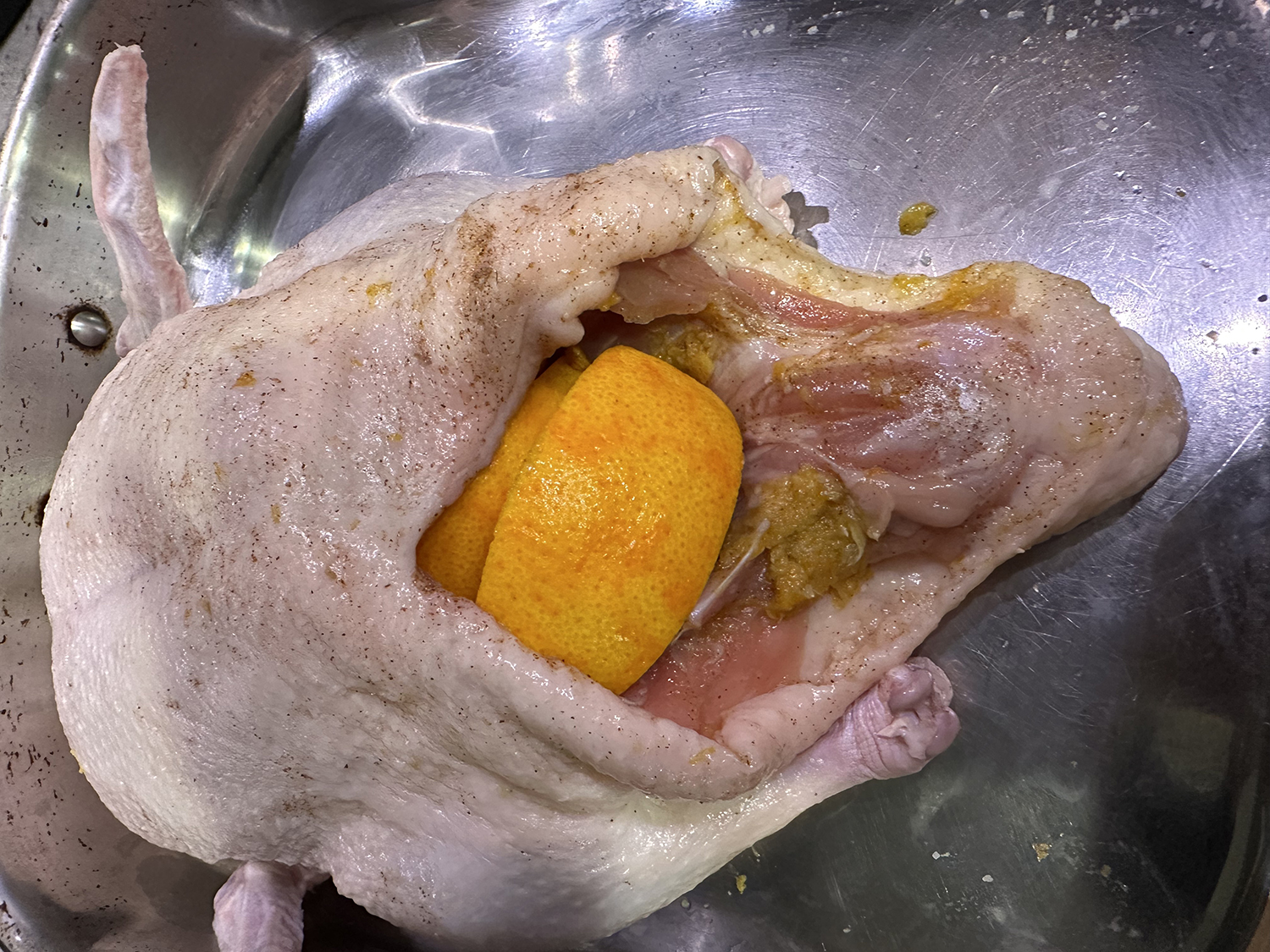
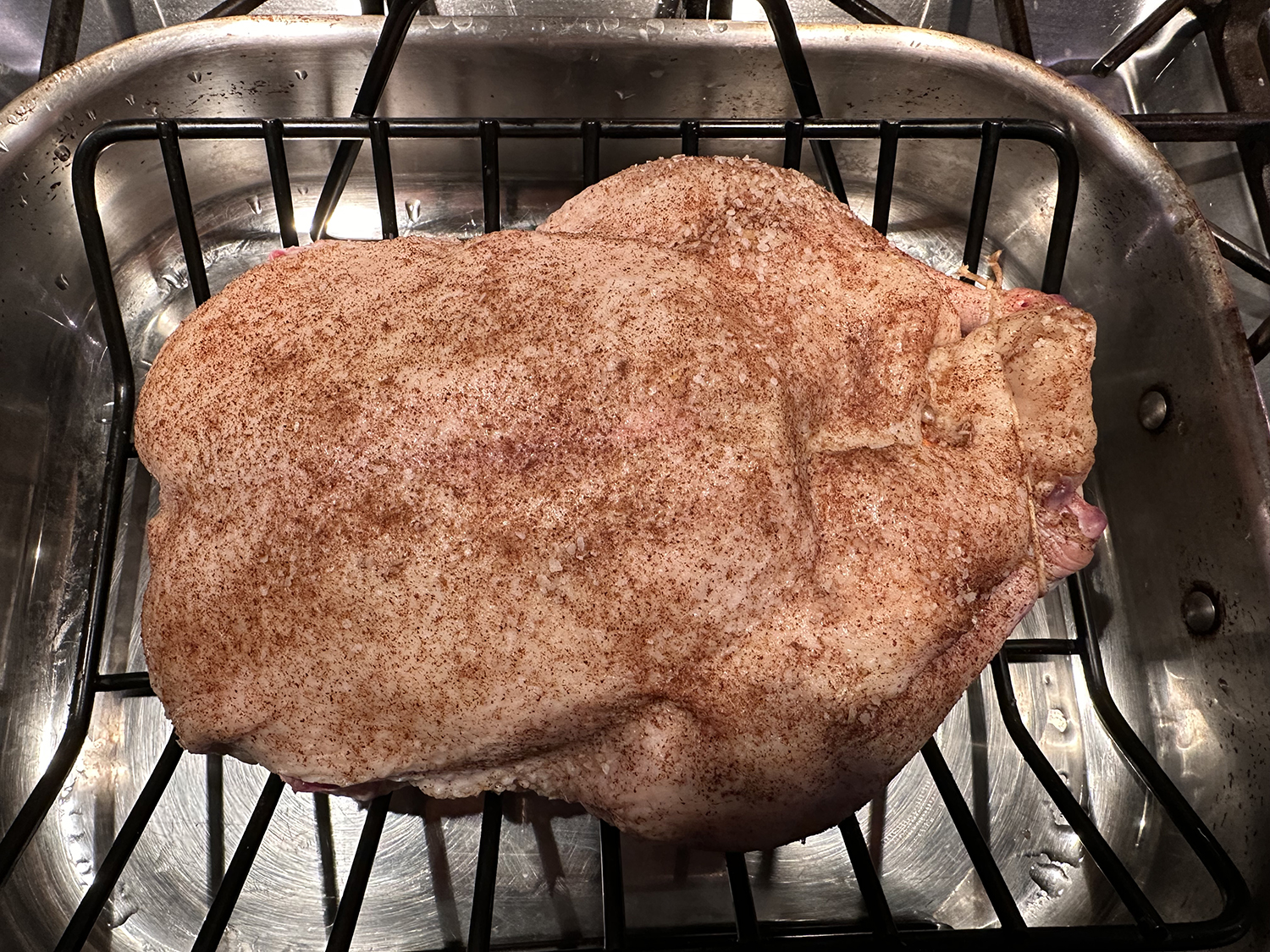
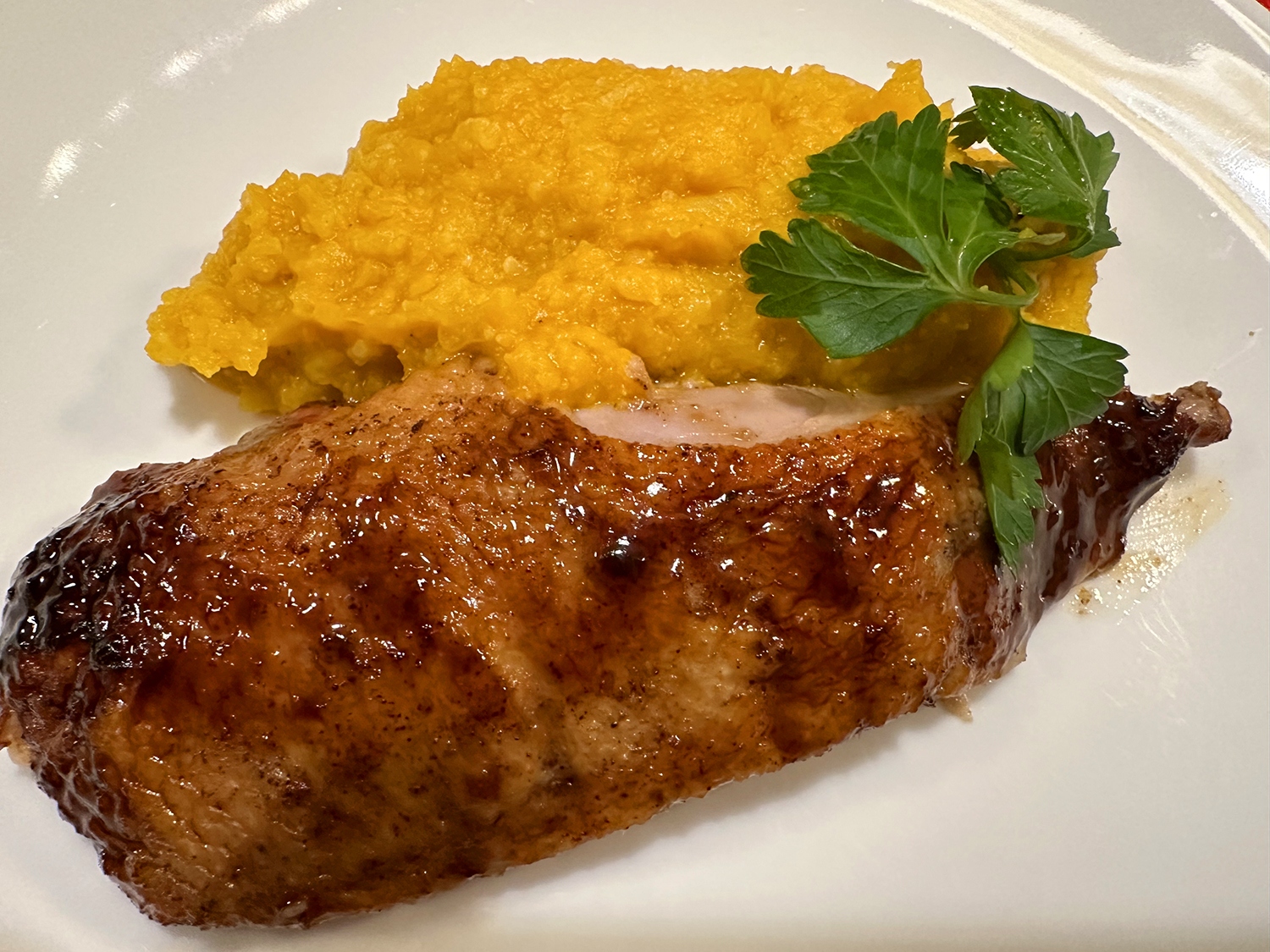
Roasting the duck is not so difficult to do. Seasoning the duck ahead and leaving it in the fridge overnight helps to deepen the flavor and keeps work to a minimum the following day. This one is seasoned with orange zest, along with fair amount of ginger and five-spice powder, which gives it a marvelous perfume. We paired ours with a Kobocha-Cauliflower Mash.

The ingredient list is minimal, and the hands-on prep doesn’t take long—most of the time the duck is either in the refrigerator or the oven. Because the bird gets glazed often, the skin will be a gorgeous burnished tawny color, but the skin won’t be extra crispy.

Keep in mind when serving more than 4 people, you will need two ducks. Of course there is no need to wait until a special occasion…

Roast Duck with Orange and Ginger

  • Servings: 4
  • Difficulty: easy
  • Print

Ingredients

For the Duck:

  • 1 Pekin (Long Island) duck, 5- to 6-lb.
  • 3 Tbsp. kosher salt
  • 1 Tbsp. five-spice powder
  • 1 large orange, zested and cut into 6 wedges
  • 1 Tbsp. grated ginger
  • 1 Tbsp. grated garlic

For the Glaze:

  • 2 cups orange juice
  • 1 Tbsp. honey
  • 2 Tbsp. Demerara sugar
  • 2 Tbsp. soy sauce
  • 1 piece ginger, (2-inch) thickly sliced
  • 3 star anise

Directions

  1. Rinse duck and pat dry. Remove neck and giblets and save for another purpose. Remove excess fat from cavity and tail area and trim off a bit of flappy neck skin. Prick duck skin all over with tip of sharp paring knife, making sure not to penetrate meat.
  2. Mix together salt and 5-spice powder. Season interior of duck with 1 tablespoon salt mixture; use remainder to generously season exterior (you may have a little left over).
  3. Combine orange zest with grated ginger and garlic, then smear mixture inside cavity. Place orange wedges in cavity. Tie legs together. Secure neck flap with wooden skewer or toothpicks. Place duck on rack in roasting pan breast-side-up and refrigerate overnight, uncovered.
  4. Heat oven to 350 degrees. Meanwhile, bring duck to room temperature and make the glaze: Bring orange juice, honey, sugar and soy sauce to a simmer. Add sliced ginger and star anise, then reduce mixture until you have a medium-thick syrup, about 10 minutes. Remove from heat and set aside.
  5. Roast duck for 2 hours, carefully pouring off fat and turning duck over every 30 minutes. Paint with glaze and roast for another 30 minutes (2 1/2 hours in all). Tent with foil if the glaze begins to get too dark. Duck is done when the temperature at the thickest part of the leg reads 165 degrees.
  6. Paint the duck once more, keep it warm and let rest for 20 minutes. Use poultry shears to cut into quarters (remove backbone first) or carve in the traditional way, removing legs from carcass and slicing breast.

http://www.lynnandruss.com

Recipe by Dave Tanis for NYTimes Cooking

Salmon Traybake with Harissa-Roasted Pepper Sauce

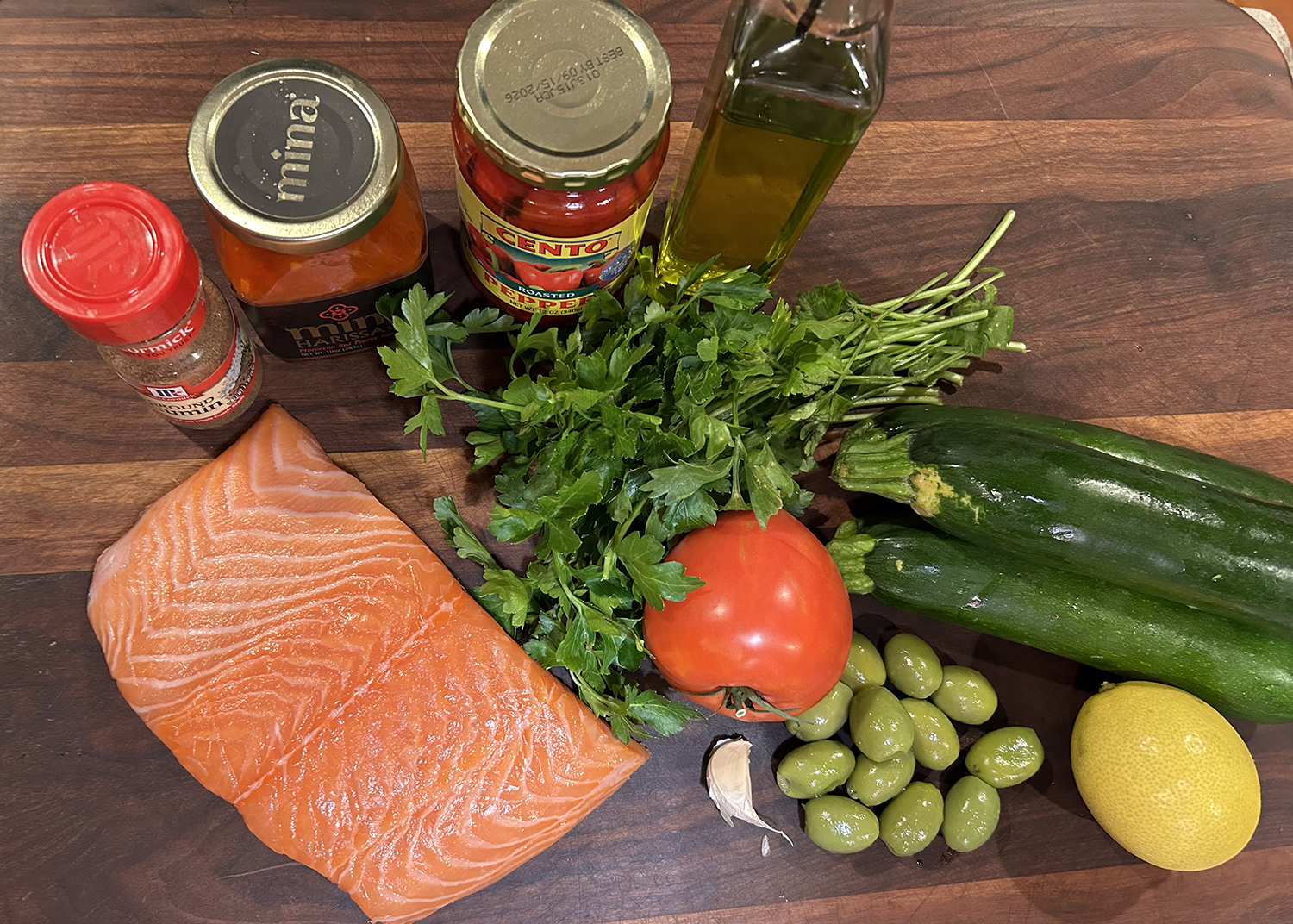
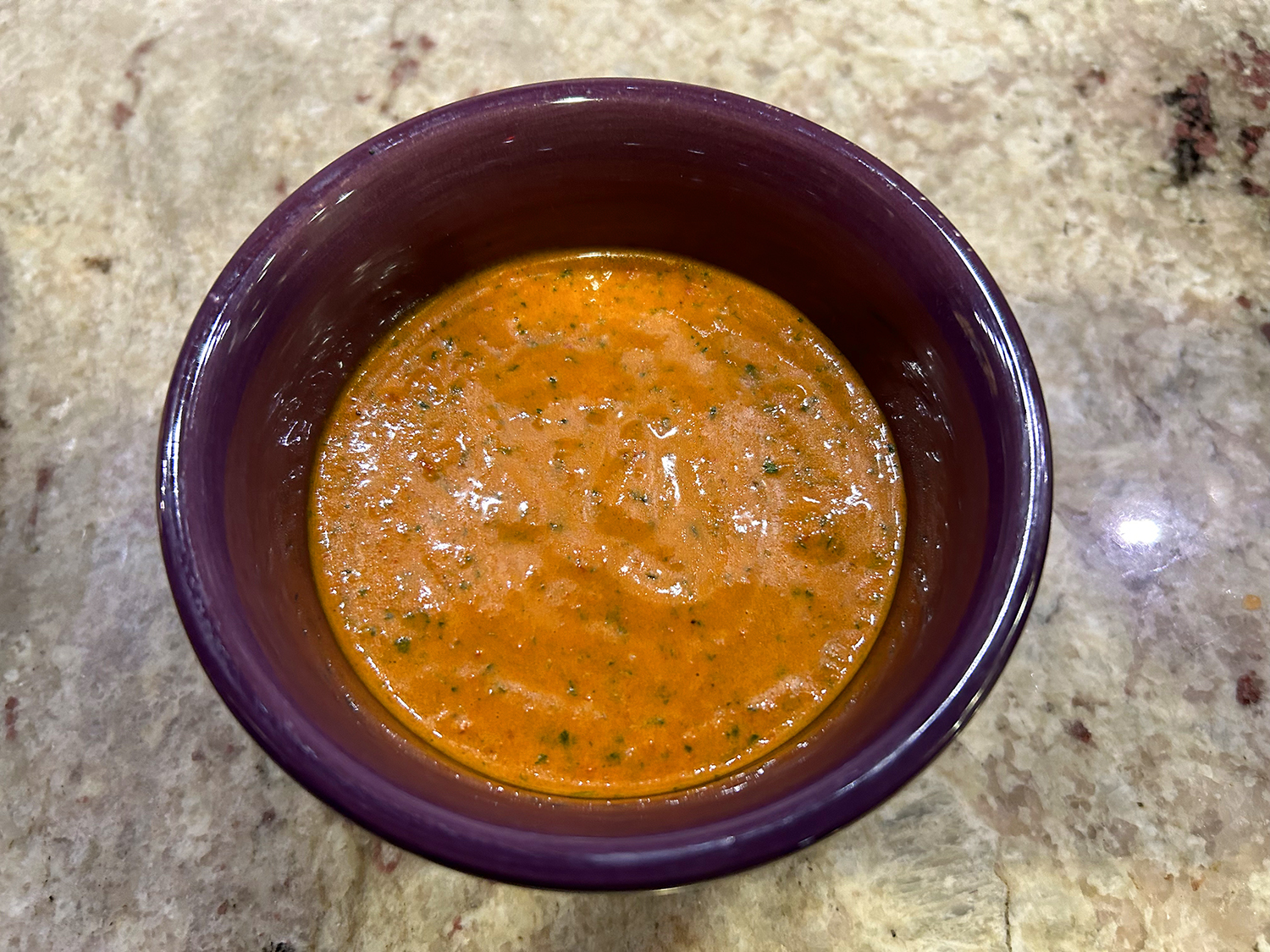
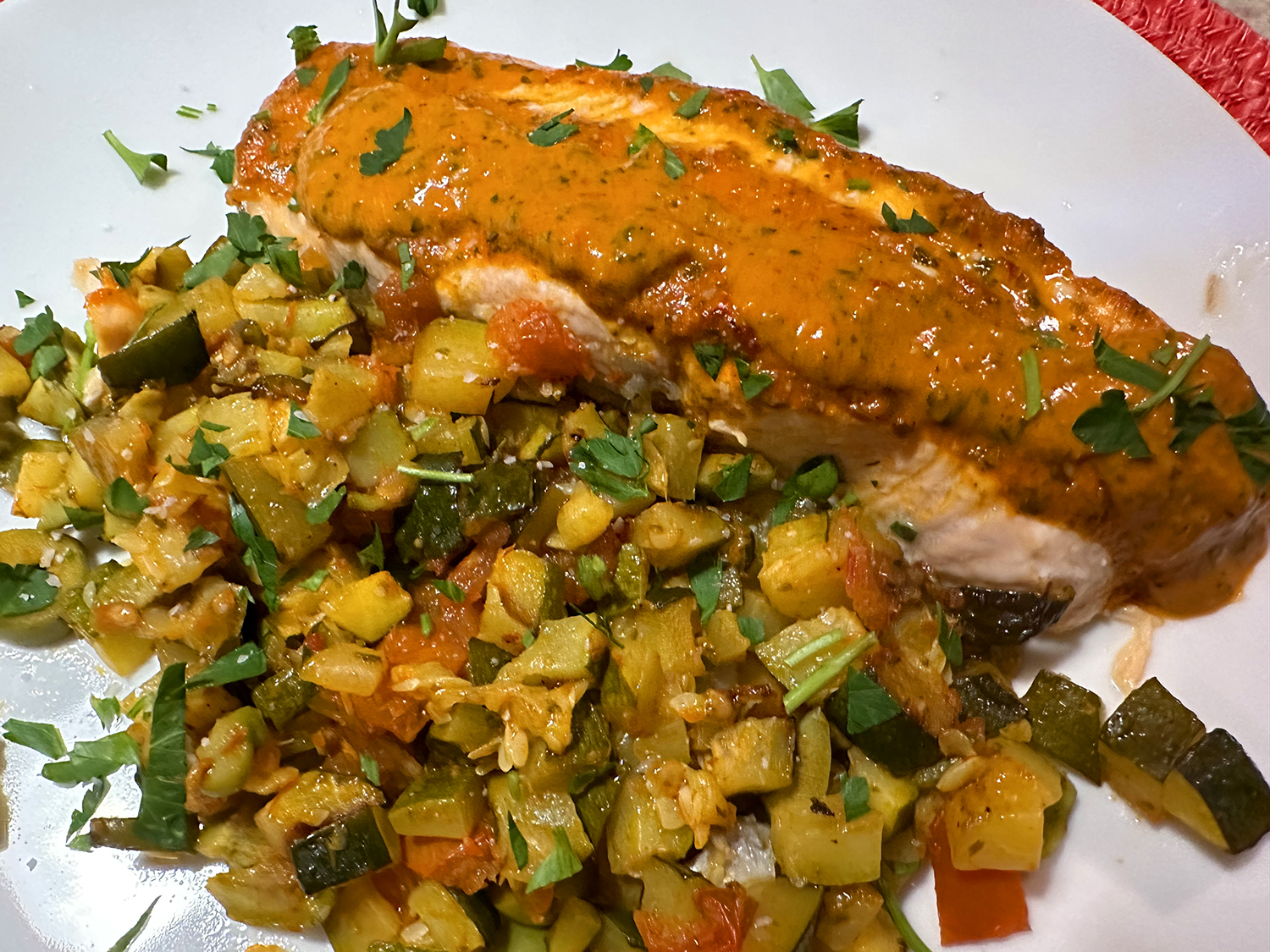
The inspiration for this colorful traybake is Moroccan-style red chermoula: a bold, warmly spiced sauce, often served with fish. This weeknight-friendly version from Milk Street calls on smoky harissa, a North African chili and spice paste, plus sweet roasted peppers, earthy cumin, bright lemon juice and fresh garlic and parsley, all whirred together in the blender.

Harissa spiciness varies by brand, so a range is suggested. To make the most of the mixture, use it three ways: as a salmon marinade, a seasoning for roasted zucchini and as a sauce for the finished dish. Serve with couscous, rice or warmed flatbreads.

The original recipe called for 1 1/2 pounds of salmon, but we purchased a one-pound piece and cut it in half allowing for 2 servings. If using 1 1/2 pounds, cut the filet into 3 or 4 pieces, or buy them already cut down to 6 ounce servings.

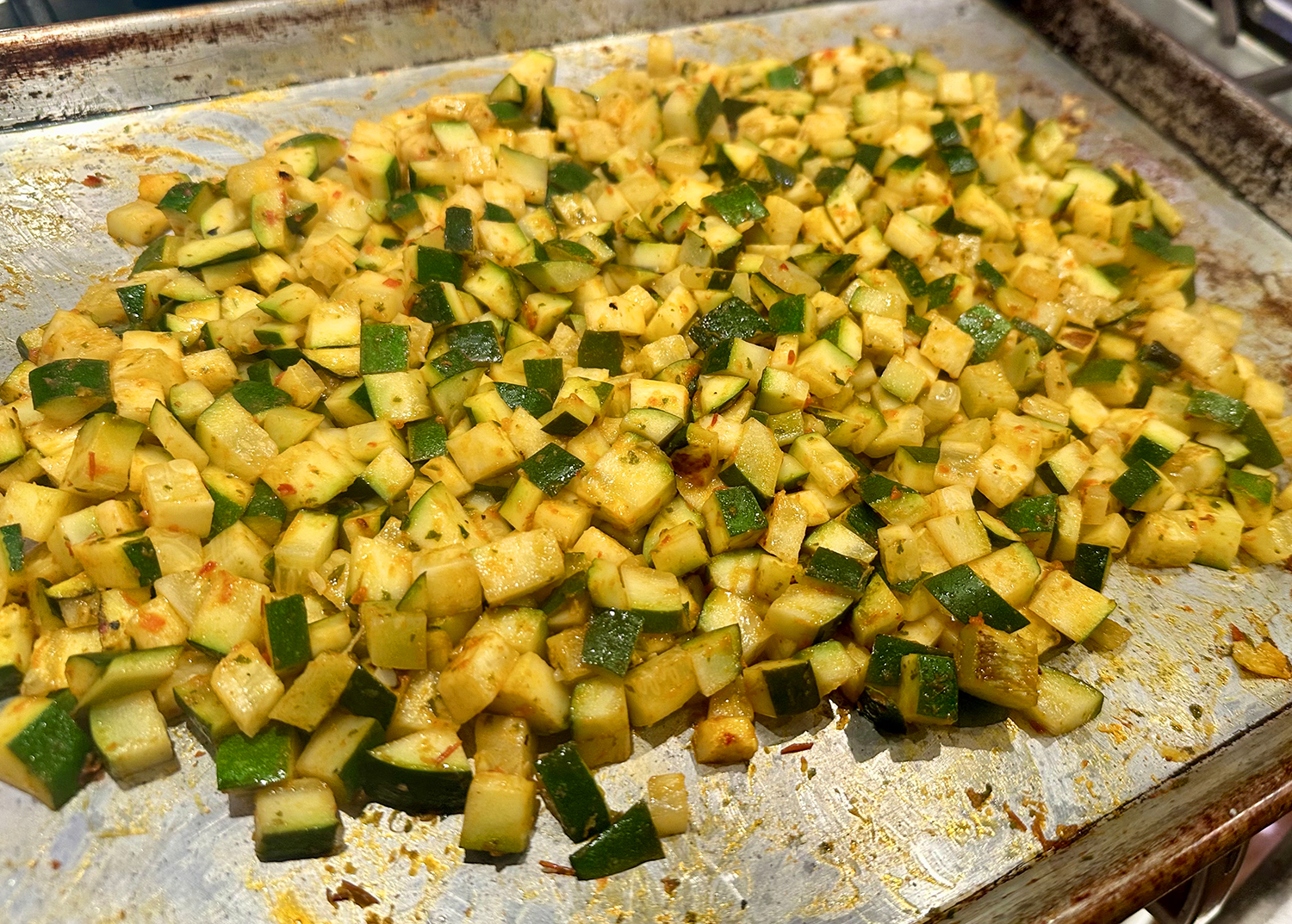
Don’t use large zucchini for this. They tend to contain many seeds and will turn soft and mushy with cooking. Instead, look for medium to small zucchini.

Salmon Traybake with Harissa-Roasted Pepper Sauce

  • Servings: 3-4
  • Difficulty: easy
  • Print

Ingredients

  • 1/2 cup drained roasted red peppers, chopped
  • 1/2 cup lightly packed fresh flat-leaf parsley, plus chopped parsley to serve
  • 1/4 cup extra-virgin olive oil
  • 2 Tbsp. lemon juice, plus lemon wedges to serve
  • 1-2 Tbsp. harissa paste
  • 1 medium garlic clove, smashed and peeled
  • 1/2 tsp. ground cumin
  • Kosher salt
  • 4 6-oz. center-cut salmon fillets, patted dry
  • 3 medium zucchini (about 1½ lbs. total), cut into ¼-inch cubes
  • 1 ripe medium tomato, cored, seeded and chopped
  • 1/2 cup pitted green olives, chopped

Directions

  1. Heat the oven to 425°F with a rack in the middle position. In a blender, combine the roasted peppers, parsley, oil, lemon juice, harissa, garlic, cumin and ½ teaspoon salt. Puree until smooth, about 30 seconds. Measure out 2 tablespoons, then spread it onto the flesh side of the salmon fillets.
  2. On a rimmed baking sheet, toss the zucchini with ¼ cup of the remaining puree; transfer the rest of the puree to a small bowl for serving. Roast until the zucchini is tender, 20 to 25 minutes, stirring halfway through. Remove the baking sheet from the oven and sprinkle the tomato and olives over the zucchini. Scrape up and stir the zucchini and push it to the edges.
  3. Place the salmon, skin side down, in the center of the baking sheet. Roast until the flesh flakes easily and the zucchini is lightly charred, and registers 135°F, about 10 to 14 minutes. Transfer to a platter and sprinkle with additional parsley. Serve with lemon wedges and the remaining sauce on the side.

http://www.lynnandruss.com

Recipe by Rose Hattabaugh for Milk Street
Oven-Braised Pork Chops with Red Onion and Pears

Oh, what a wonderful cool-weather meal. Here’s where you want to get thick, bone-in chops, and take the temperature starting after they’ve been roasting in the oven for 10 minutes. The chops will be ready at 135 F. If they have not reached that temperature, return the skillet to the oven and check the chops’ internal temperature every 5 minutes until they reach the desired temperature. You definitely don’t want them to dry out.

Once the chops are done, remove them to a platter and cover them with aluminum foil. Give the pears and onions a stir, return them to the oven, and cook them until they are tender and the juices are syrupy and dark brown, this could be anywhere from 10-20 minutes depending on how long it took the pork to reach temperature.

The sugar in the honey helps to caramelize the pork, onion, and pears as they oven-braise. It is a technique that works well with other roasted meats and birds as well. Just mix a little honey with the pan juices and baste or brush the roast with that during the last 10 minutes or so of roasting.

For some dishes, you want the onions cut fine, so they almost disappear. Here, cut the onions large—and the pears, too—so they keep their shape and don’t fall apart. Even when ripe, Bosc pears stay firmer than most, making them just right for this dish.

To ensure juicy results with today’s very lean pork products, use a dry brine before cooking them. For this recipe, pat the pork chops dry with a paper towel. Season the pork chops generously on all sides with sugar, a total of one tablespoon divided between all four. Then season them generously with salt to taste. Place them on a wire rack set in a rimmed baking sheet and refrigerate them, uncovered, for at least 8 hours and up to 24.
Oven-Braised Pork Chops with Red Onion and Pears

  • Servings: 4
  • Difficulty: easy
  • Print

Ingredients

  • 2 cups balsamic vinegar
  • 4 Tbsp. extra virgin olive oil
  • 6 garlic cloves, peeled
  • 4 center-cut pork rib chops, each about 12 oz. and 1 1/4″ inch” thick
  • 1 large red onion (about 12 oz.), cut into 8 wedges
  • Salt
  • Freshly ground pepper
  • 2 ripe but firm bosc pears, peeled, cored and cut into 8 wedges
  • 1/4 cup red wine vinegar
  • 2 Tbsp. honey

Directions

  1. In a small saucepan, bring the balsamic vinegar to a boil over high heat. Adjust the heat to a gentle boil and boil until the vinegar is syrupy and reduced to about 1/2 cup. Set aside.
  2. Preheat oven to 425 degrees F. Season the chops well with salt and pepper on both sides. Heat the oil in a large, heavy skillet with a flameproof handle over medium-high heat. Whack the garlic cloves with the flat side of a knife and scatter them over the oil. Cook, shaking the skillet, until brown, about 2 minutes. Remove the garlic cloves and reserve.
  3. Lay the pork chops in and cook until the undersides are browned, about 5 minutes. Turn the chops and continue cooking them until the second side of the chops has browned, about 5 minutes. Remove the chops to a platter.
  4. Place the onion and pear wedges in the skillet with the cut side down. Once they are lightly browned, turn them over and brown the other side. Stir the red wine vinegar and honey together in a small bowl until the honey is dissolved. Pour the vinegar/honey mixture into the skillet and bring to a vigorous boil. Return the garlic cloves to the skillet.
  5. Return the chops to the skillet, placing them on top of the pears and onions. Place the skillet in the oven and roast for 10 minutes, then check the internal temperature of the pork chops. The chops will be ready at 135 F. If they have not reached that temperature, return the skillet to the oven and check the chops’ internal temperature every 5 minutes until they reach the desired temperature. Once the chops are done, remove them to a platter and cover them with aluminum foil. Give the pears and onions a stir, return them to the oven, and cook them until they are tender and the juices are syrupy and dark brown, this could be anywhere from 10-20 minutes depending on how long it took the pork to reach temperature.
  6. Remove the skillet from the oven. Return the chops to the skillet and turn to cover them in the pan juices. Place a chop in the center of each warmed serving plate. Check the seasoning of the onion-pear mixture, adding salt and pepper if necessary. Spoon the pears, onion, and pan juices around the chops. Drizzle the balsamic vinegar reduction around the edge of the plate.

http://www.lynnandruss.com

Recipe courtesy of Lidia Bastianich