Tag Archives: dairy-free

Classic Marinara Sauce with Fresh Tomatoes

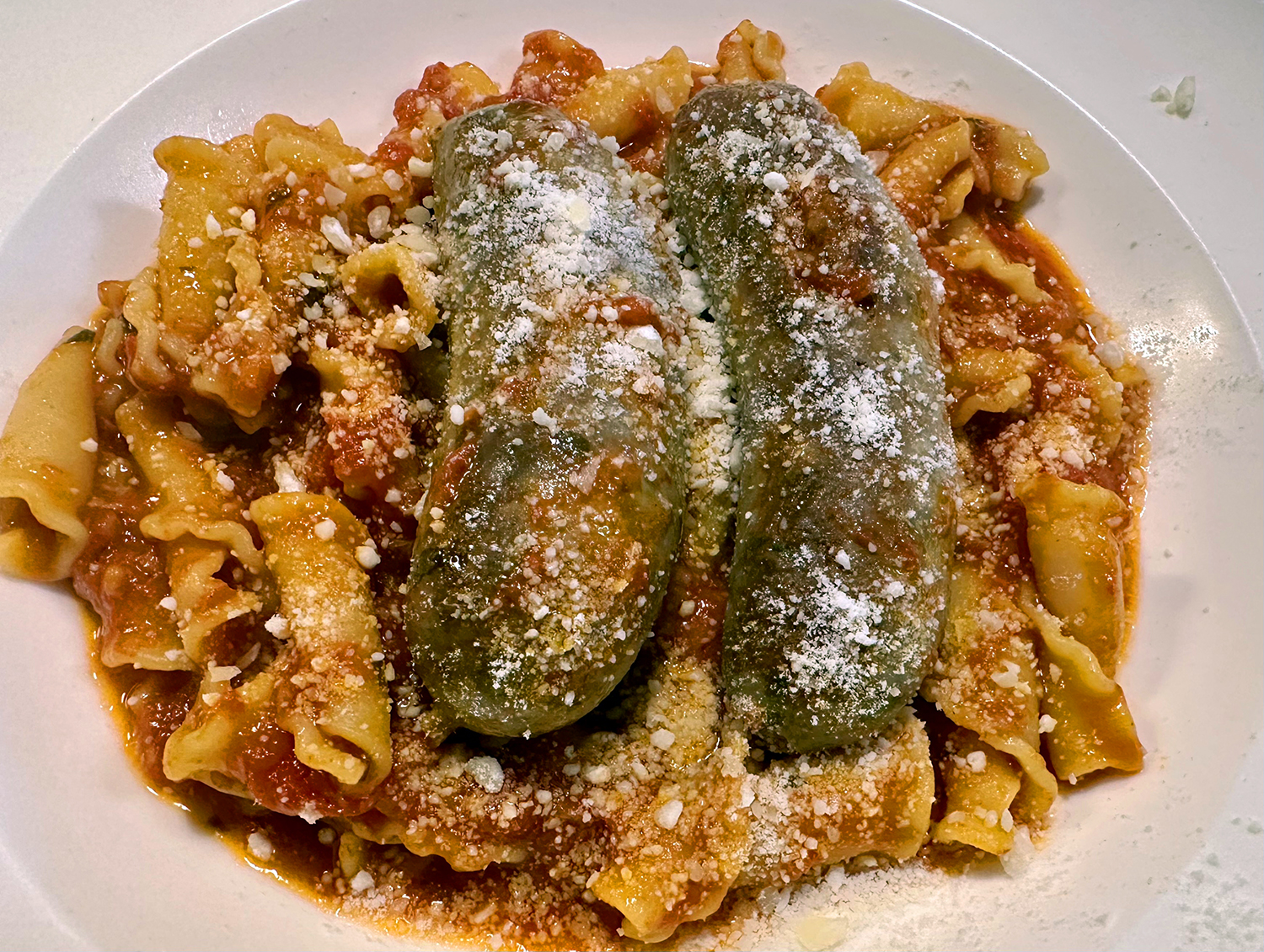
When ripe tomatoes from your garden or the local farm market are in season, why not make a large batch of marinara sauce? The ingredients and techniques often vary wildly. If you can get all roma style tomatoes, that is best, but we made the sauce here with a mix of the roma and slicing fruits due to what we harvested from our gardens.

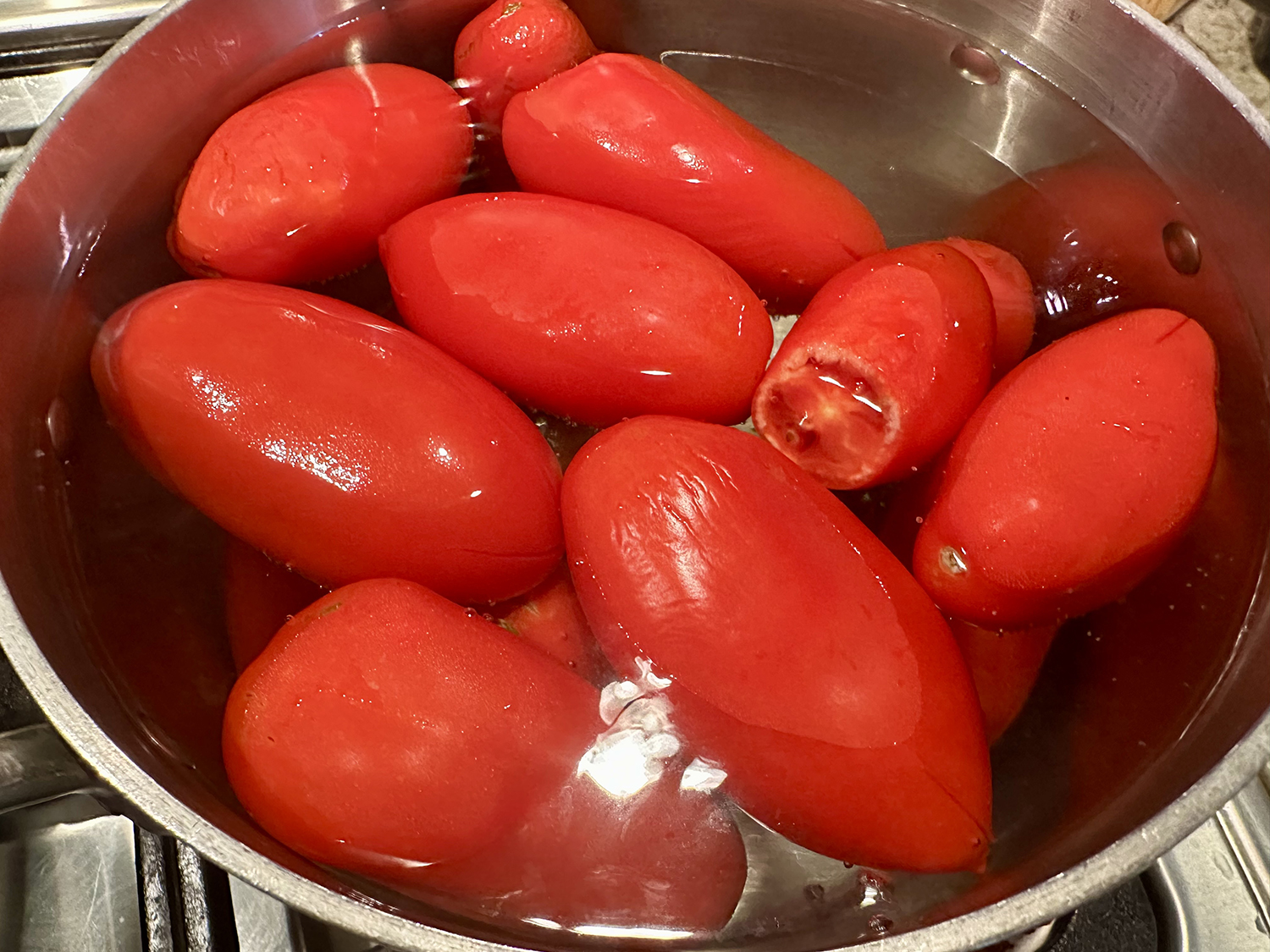
To core or not to core? We did some both ways and it seems the uncored ones kept more of their tomato juices intact. So we suggest blanche in boiling water, plunge in ice bath, peel from the X, then core.

The beauty of homemade marinara lies in its simplicity and the ability to customize the ingredients to suit personal taste preferences. However, this simplicity also means that the sauce lacks the preservatives found in commercial products, which can affect its shelf life. More acidic sauces tend to have a longer shelf life.

Generally, homemade marinara sauce can last for up to 5 to 7 days when stored properly in the refrigerator. It’s also worth noting that the quality of the sauce may degrade over time, even if it remains safe to eat. This means that the sauce might not taste as fresh or have the same vibrant color after a few days.

Consider freezing the sauce for longer storage. Frozen marinara sauce can last for several months and helps preserve the flavor and texture.

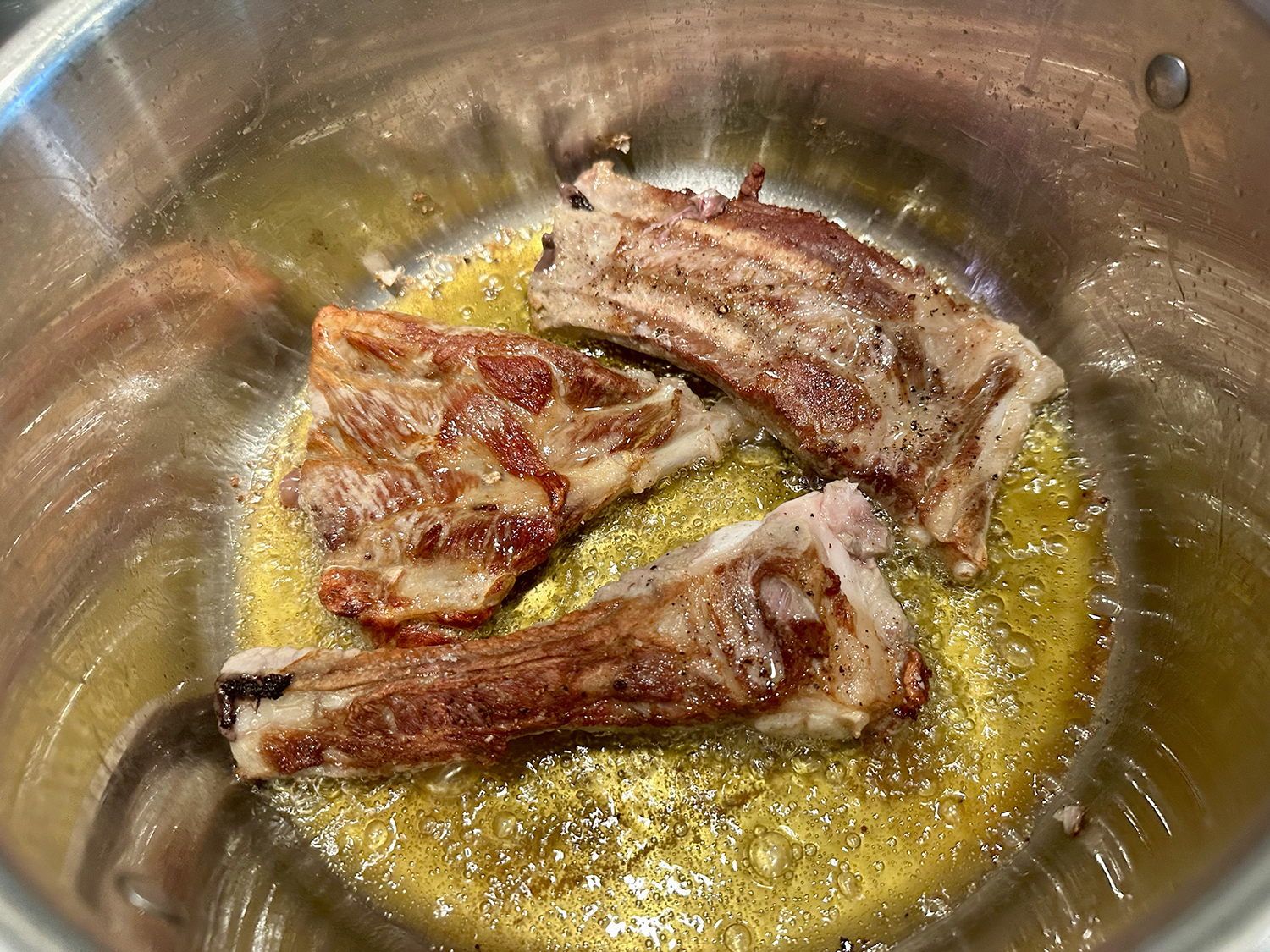
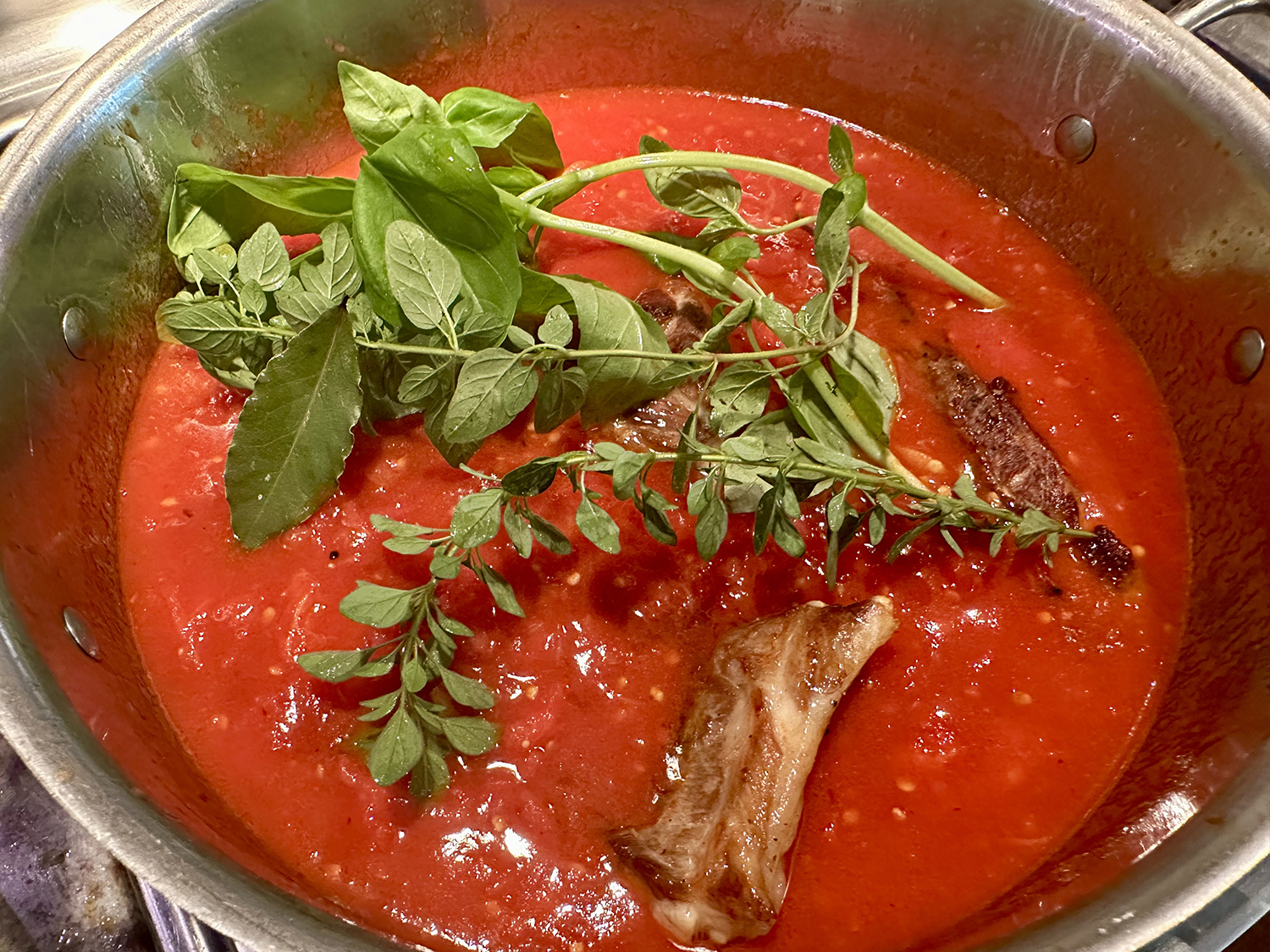
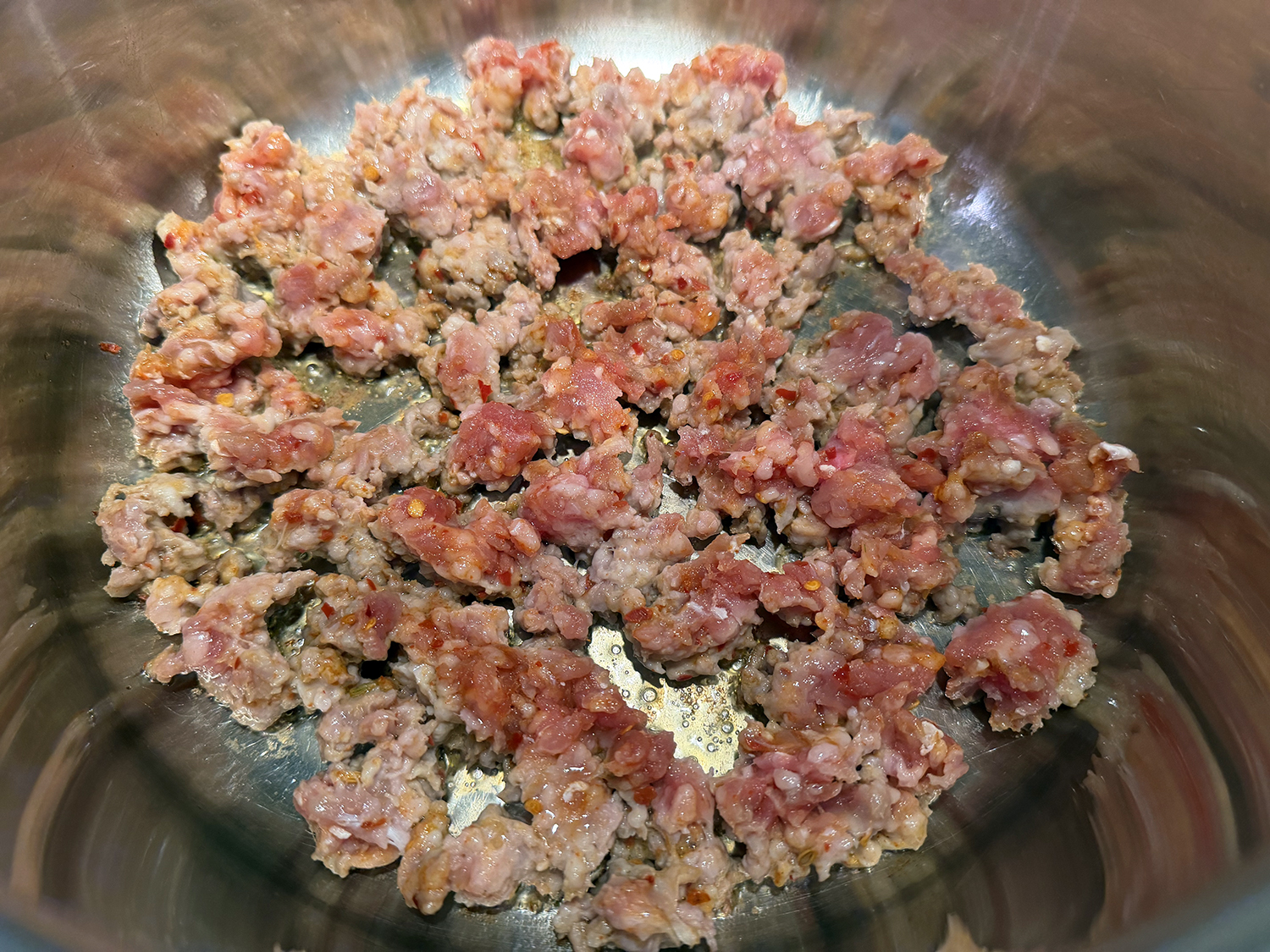
NOTE: While we usually make vegetarian marinara sauce, in this batch we decided to brown some leftover pork spare ribs for meaty flavor (then they were removed before storing the sauce), but just omit them if you want a straight-up marinara sauce.

Classic Marinara Sauce with Fresh Tomatoes

  • Servings: about 3 quarts
  • Difficulty: easy
  • Print

Ingredients

  • 20 cloves garlic, peeled and thinly sliced
  • 8 lbs. fresh tomatoes, preferably roma, bad spots removed
  • 3/4 cup olive oil
  • 1/2 tsp. red pepper flakes, (optional)
  • 6 oz. can double-concentrated tomato paste, (from a tube)
  • 2 sprigs fresh basil; more to stir in at end, torn
  • 1 sprig fresh oregano; more to stir in at end, chopped
  • 1 bay leaf
  • 1 tsp. kosher salt, plus more to taste
  • 1 lb. pork spare ribs (optional)

Directions

  1. Wash, and core (or not) the tomatoes. Slice and X on their bottoms then drop into boiling water and blanche for 1 minute. (You will need to do this in two or three batches, depending on size of pot.) Immediately plunge tomatoes into an ice water bath. When cool enough to touch, peel skin off starting with corners on the bottom X. If not cored beforehand, core them after peeling.
  2. Squeeze and crush the tomatoes with your hands until a chunky sauce forms with pieces no bigger than 1 1/2 inch.
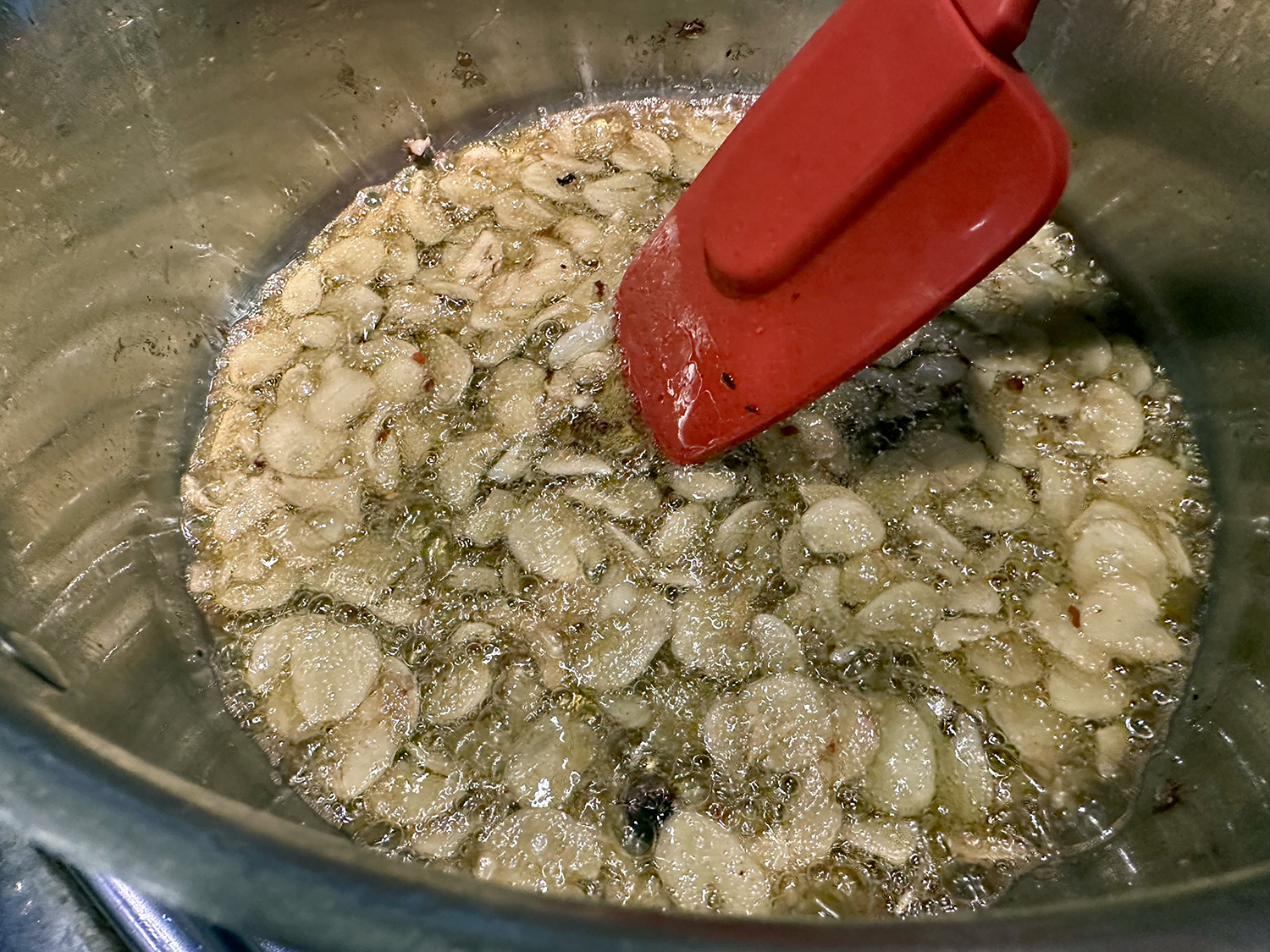
  3. Heat olive oil in a large Dutch oven over medium-low heat until shimmering. (If using ribs, brown them in oil first, a few minutes on each side, remove to a plate.) Add the garlic and cook for 1 minute. Add 1/2 teaspoon red pepper flakes if desired and cook, stirring occasionally, until the garlic is lightly golden and fragrant, 1 to 2 minutes.
  4. Add 6-ounce can of double-concentrated tomato paste. Cook, stirring often, until the paste is darker in color and fragrant, 2 to 3 minutes. Add the tomatoes, 2 fresh basil sprigs, oregano sprig, bay leaf and 1 teaspoon kosher salt. (Add spare ribs back in if using.) Increase the heat to medium-high and bring to a simmer.
  5. Reduce the heat to medium and simmer, stirring occasionally, until the tomatoes no longer taste acidic, the flavors meld, and the sauce has reduced by at least one inch, 60 to 80 minutes. (If you added ribs, remove them and discard or save the meat for another use.)
  6. Stir in remaining chopped basil and oregano. Taste and season with more kosher salt as needed. Let cool completely and fill quart-sized containers.
  7. If freezing, when ready to use, simply thaw the sauce in the refrigerator or reheat it from frozen.

http://www.lynnandruss.com

Pork-and-Mushroom Stuffed Zucchini Boats

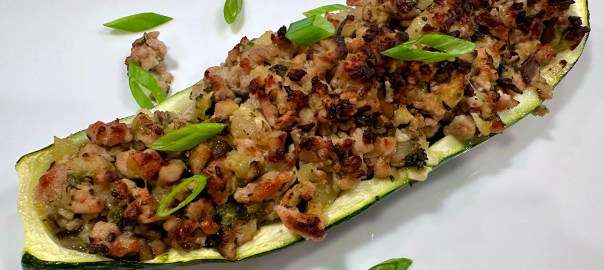
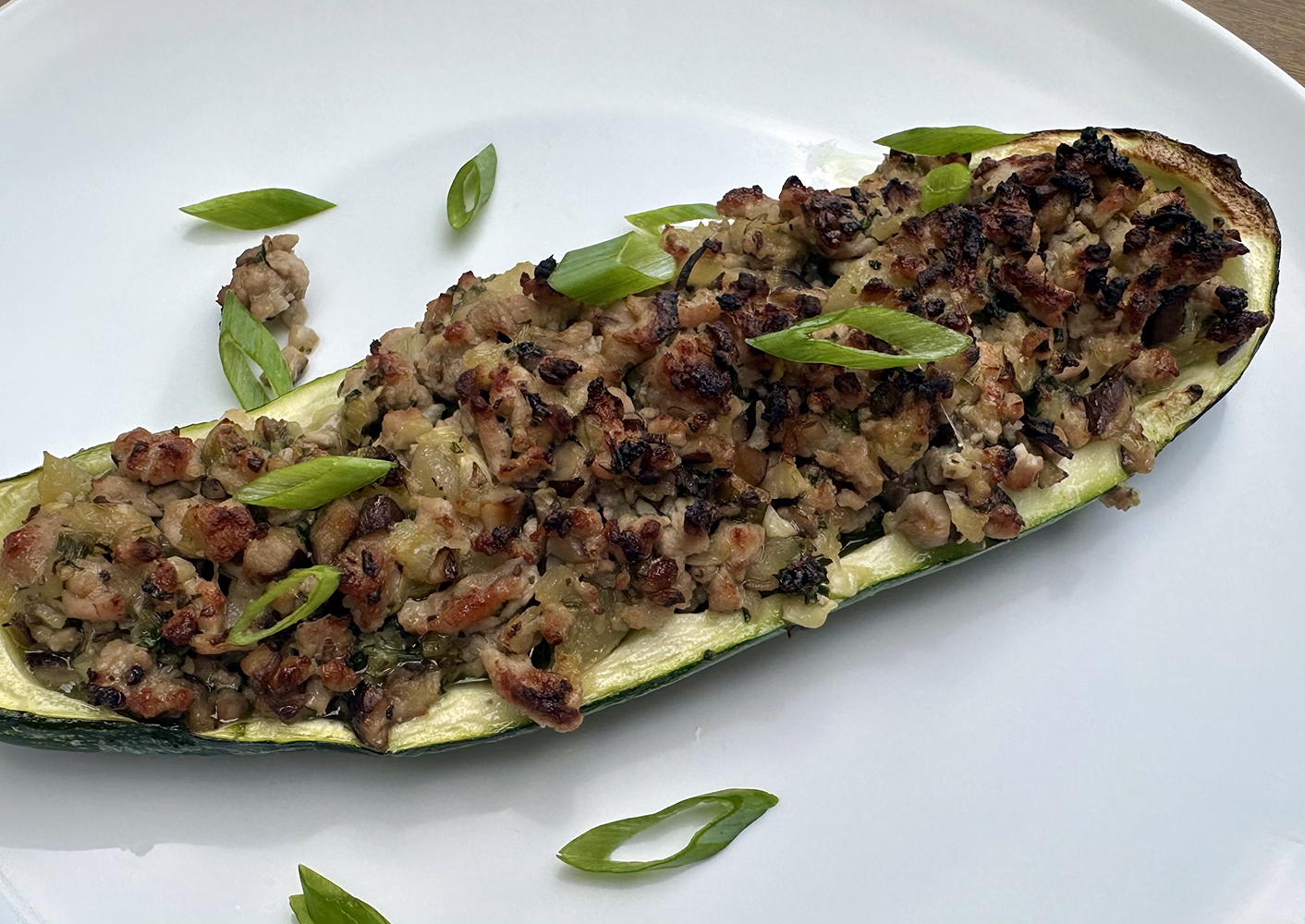
A great keto-friendly, low-carb meal option from Food & Wine, these aromatic with garlic, scallions, and fish sauce, these zucchini boats are stuffed with juicy pork and mushrooms for a dish that’s light, satisfying, and packed with Vietnamese flavor. You can even make most of it a day ahead (which came in real handy when we went to make them).

It’s a fun and easy vegetable-and-meat dish that makes the most out of the bounty of farmers market squash. Reminiscent of a dumpling filling, the pork-and-mushroom stuffing has notes of ginger, garlic, and scallions.

Bouillon powder (although we used bullion paste) and fish sauce bring umami to the forefront. Salting and baking the scooped-out cavities of the zucchini help release excess moisture, creating a perfectly textured final dish.

If looking to amp up the meal, serve these stuffed zucchini boats with rice, and/or a side salad for a quick and delicious dinner. 

NOTE: If you don’t eat pork, you can easily swap it for an equal amount of ground beef or ground turkey in this recipe.

Pork-and-Mushroom Stuffed Zucchini Boats

  • Servings: 4
  • Difficulty: easy
  • Print

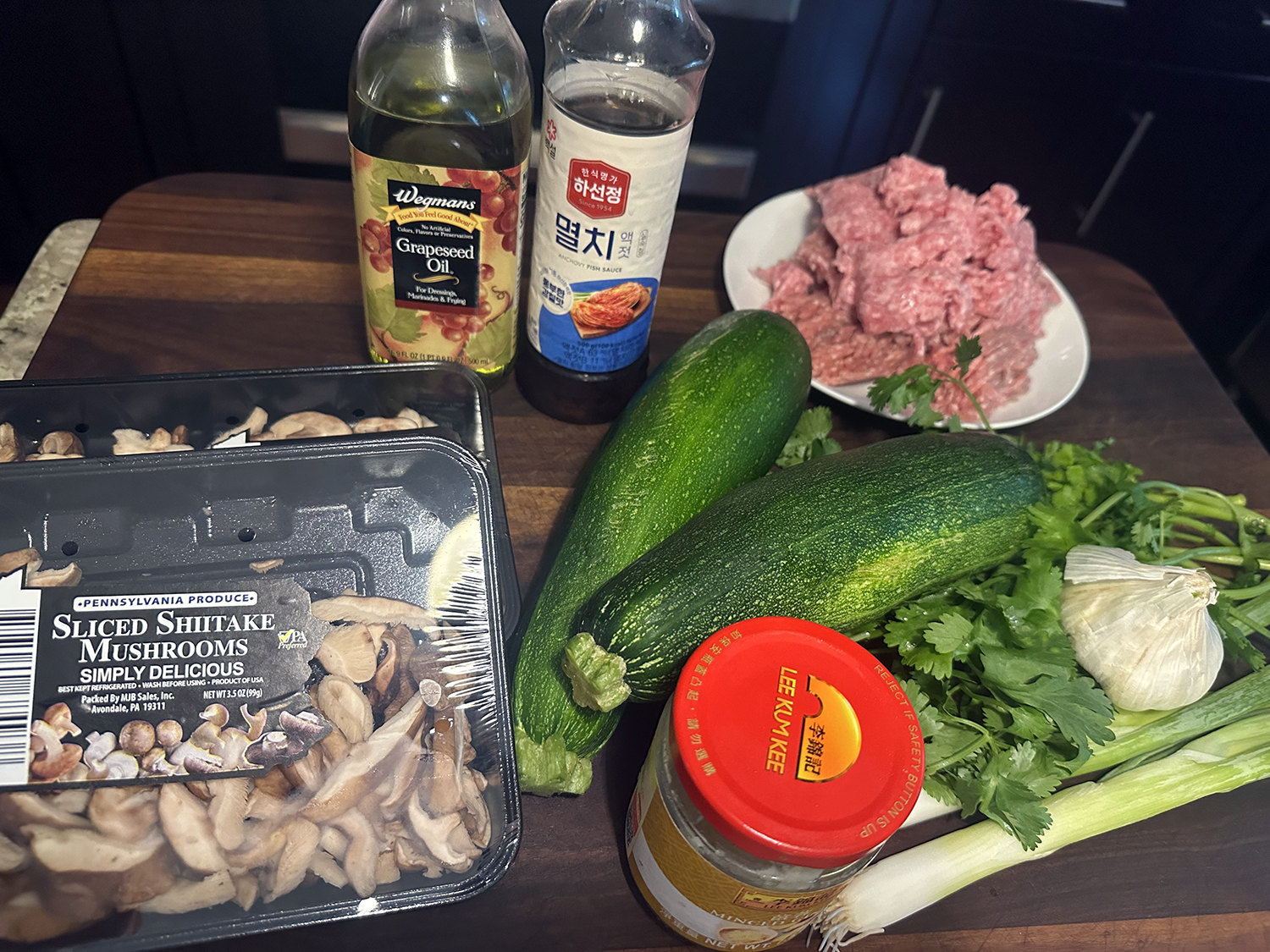
Ingredients

  • 2 12-oz. zucchini
  • 1/2 tsp. kosher salt
  • 2 Tbsp. neutral cooking oil, plus more for brushing
  • 1 (5-oz.) package sliced shiitake mushrooms, finely chopped
  • 1/4 cup thinly sliced scallion 
  • 1 Tbsp. finely chopped garlic (about 3 cloves)
  • 2 tsp. finely chopped fresh ginger, from 1-inch piece
  • 1 lb. ground pork
  • 1/4 cup chopped fresh cilantro, plus more for garnish
  • 2 Tbsp. fish sauce
  • 1 tsp. chicken bouillon granules
  • 1/2 tsp. black pepper

Directions

  1. Preheat oven to 425°F. Halve zucchini lengthwise; scoop the flesh from each half using a spoon or melon baller, leaving a 1/4- to 1/2-inch wall on the sides and base. Set scooped flesh aside. Sprinkle cut sides with salt, and place zucchini, cut side down, on a paper towel–lined plate. Let stand for 20 minutes.
  2. Meanwhile, heat oil in a large skillet over medium-high. Add mushrooms, and cook, stirring occasionally, until tender and browned, 4 to 5 minutes. Add scallion, garlic, ginger, and reserved zucchini flesh; cook, stirring often, until softened and the released liquids evaporate, 3 to 5 minutes. Add pork; cook, stirring occasionally to break meat into fine crumbles, until browned, 6 to 8 minutes. Remove from heat, and let cool for 5 minutes.
  3. Pat zucchini halves dry, and lightly brush with oil. Arrange zucchini, cut sides down, on an aluminum foil–lined baking sheet. Bake until the zucchini begins to soften, 8 to 10 minutes; remove from oven. Increase oven temperature to broil.
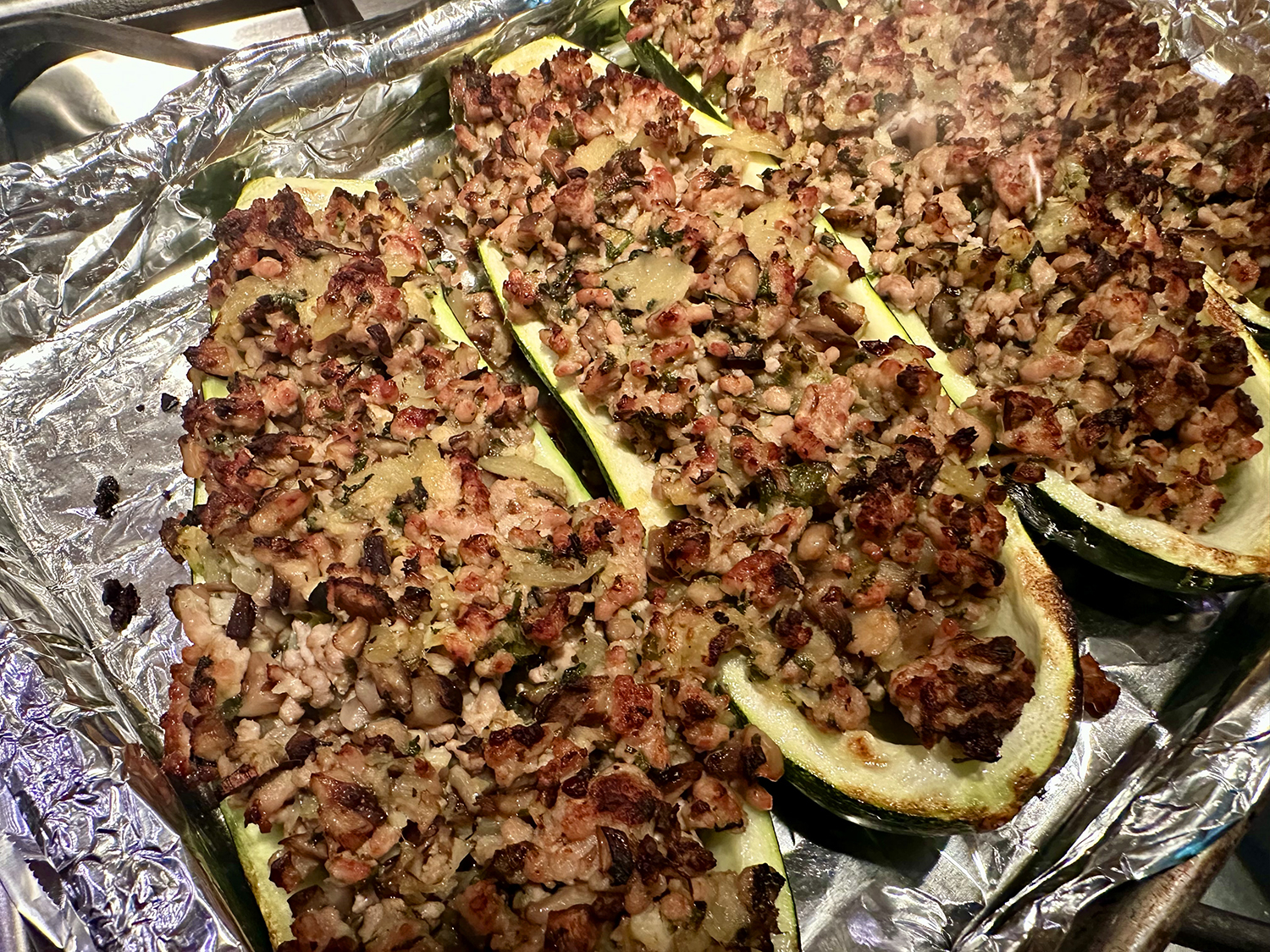
  4. Stir cilantro, fish sauce, bouillon, and pepper into pork mixture. Fill each zucchini cavity with pork mixture (about 2/3 cup per half); firmly press mixture into zucchini. Place on an aluminum foil–lined baking sheet, and broil until browned on top, 2 to 3 minutes. Let cool slightly, about 3 minutes. (With an electric oven, in order to get a little brown crisp on top, it took several minutes longer under the broiler.) Serve zucchini hot, garnished with additional cilantro and/oror scallion slices.

http://www.lynnandruss.com

Adapted from a recipe by Cường Phạm for Food & Wine

Kabocha-Cauliflower Mash

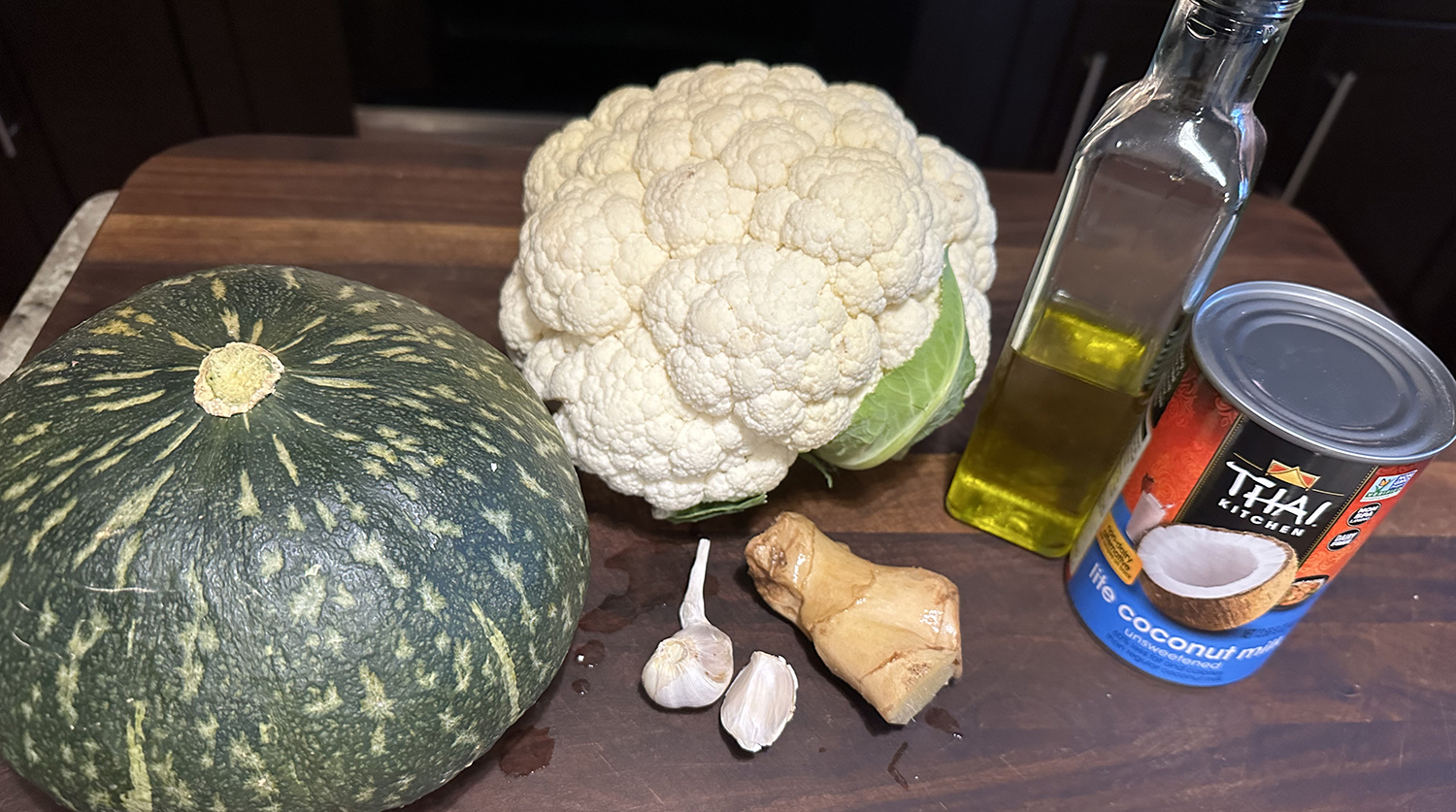
This dairy-free mash allows for everyone at the table to take a scoop no matter what the dinner may be. Kabocha squash and cauliflower blend seamlessly with creamy coconut milk and minced ginger. The resulting dish is a luscious, Asian-inspired alternative to mashed potatoes—without a speck of cream or butter in sight.

While it suggests to use a ricer, and we did, it’s probably easier to just use a hand mixer. Can’t find, or not a fan of Kabocha squash? Acorn or butternut squash would work just as well.

Kabocha-Cauliflower Mash

  • Servings: 8
  • Difficulty: easy
  • Print

Ingredients

  • 2 ½ lbs. kabocha squash (from 1 medium), halved, peeled, seeded, and cut into 2-inch pieces
  • Kosher salt and freshly ground pepper
  • 2 lbs. cauliflower (from 1 medium), cored and cut into large florets
  • ¼ cup extra-virgin olive oil
  • 2 tsp. minced fresh ginger (from a 1-inch piece)
  • 2 tsp. minced garlic (from 2 cloves)
  • ¾ cup light coconut milk
  • Chicken or vegetable broth, or water, if needed

Directions

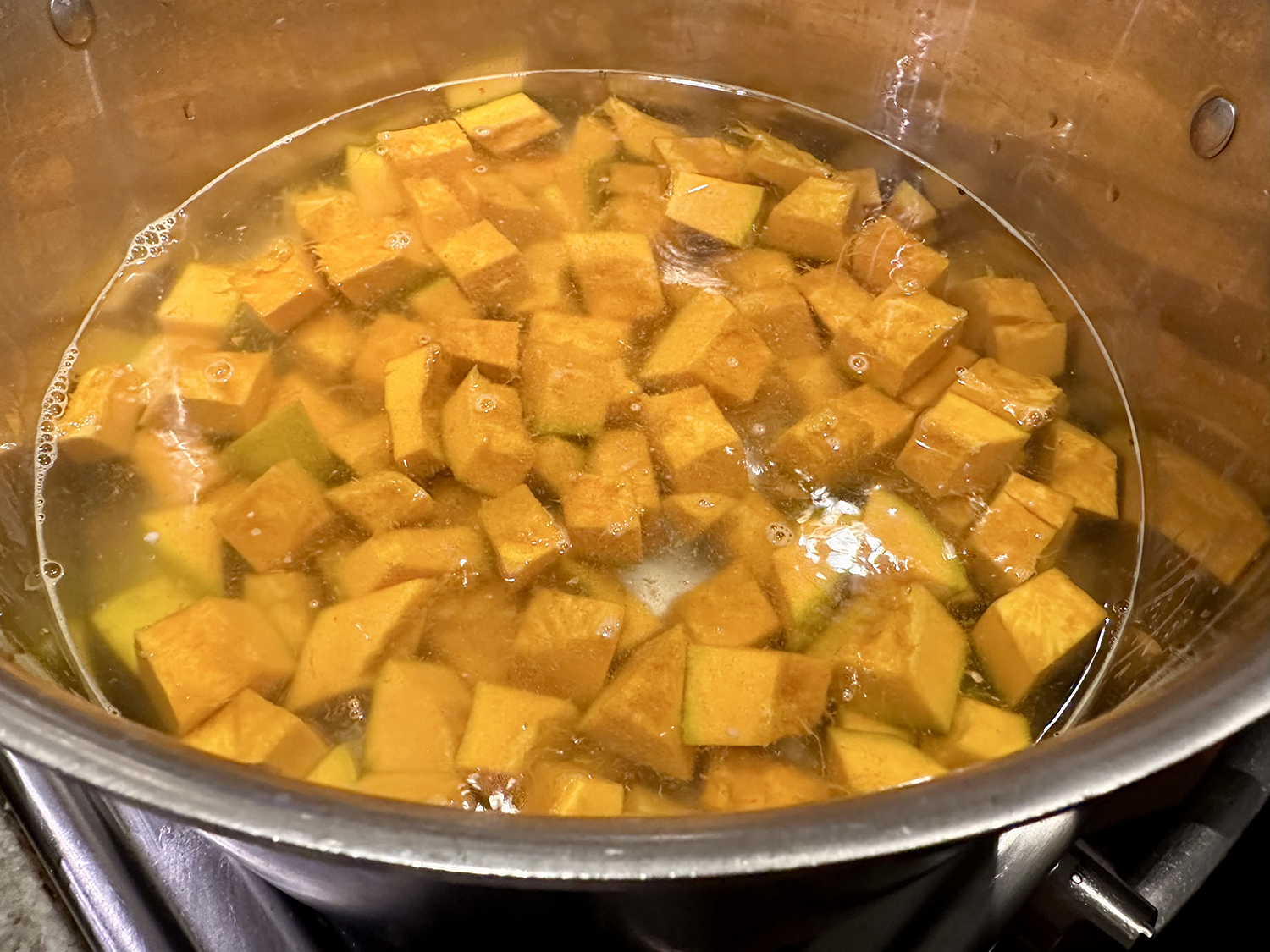
  1. Cook squash in a large pot of simmering (not boiling) salted water 6 minutes. Add cauliflower; continue simmering until vegetables are very tender, 10 to 12 minutes more.
  2. Drain, then return vegetables to pot. Cook over medium heat, stirring frequently, until vegetables appear dry and a film forms on bottom of pot, 3 to 4 minutes.
  3. Pass vegetables through a ricer, food mill, or chinois strainer; cover to keep warm.
  4. Heat oil in a saucepan over medium. When it shimmers, add ginger and garlic; cook until fragrant and sizzling, about 30 seconds. Add coconut milk; season with salt and pepper. Bring to a simmer, then remove from heat and stir into vegetable mixture until smooth.
  5. If mash is too stiff, add broth, coconut milk, or water, a few tablespoons at a time. Season with salt and pepper and serve warm.

http://www.lynnandruss.com

Recipe by Greg Lofts for Martha Stewart

Roasted Brussels Sprouts with Garlic

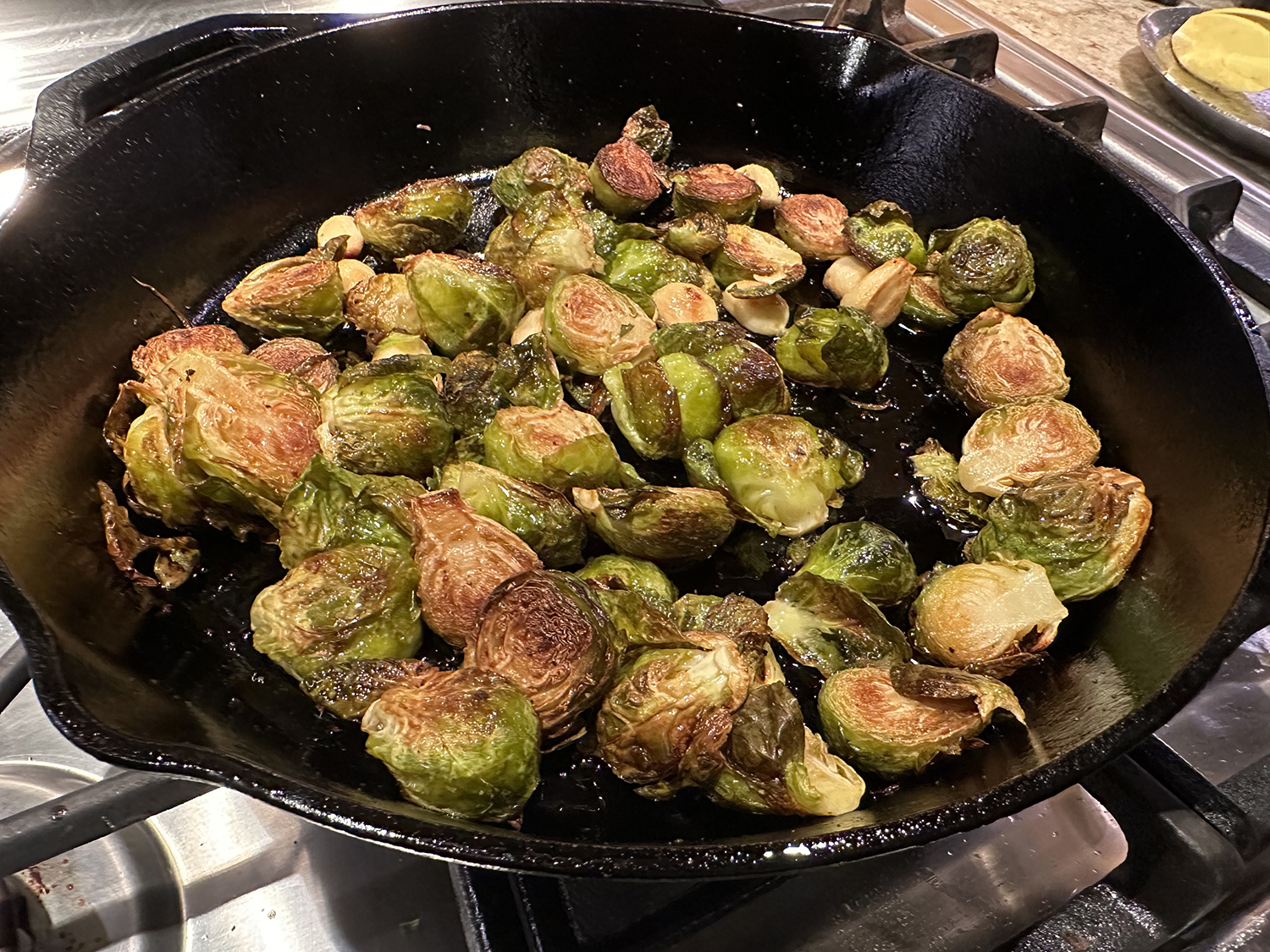
So easy, yet so elegant. This recipe for roasted Brussels sprouts from Mark Bittman is an ATK popular version and is perfect as a holiday side dish. If you haven’t yet figured out a go-to recipe, this simple preparation is the answer. It results in sweet caramelized Brussels sprouts which is sure to satisfy just about anyone.
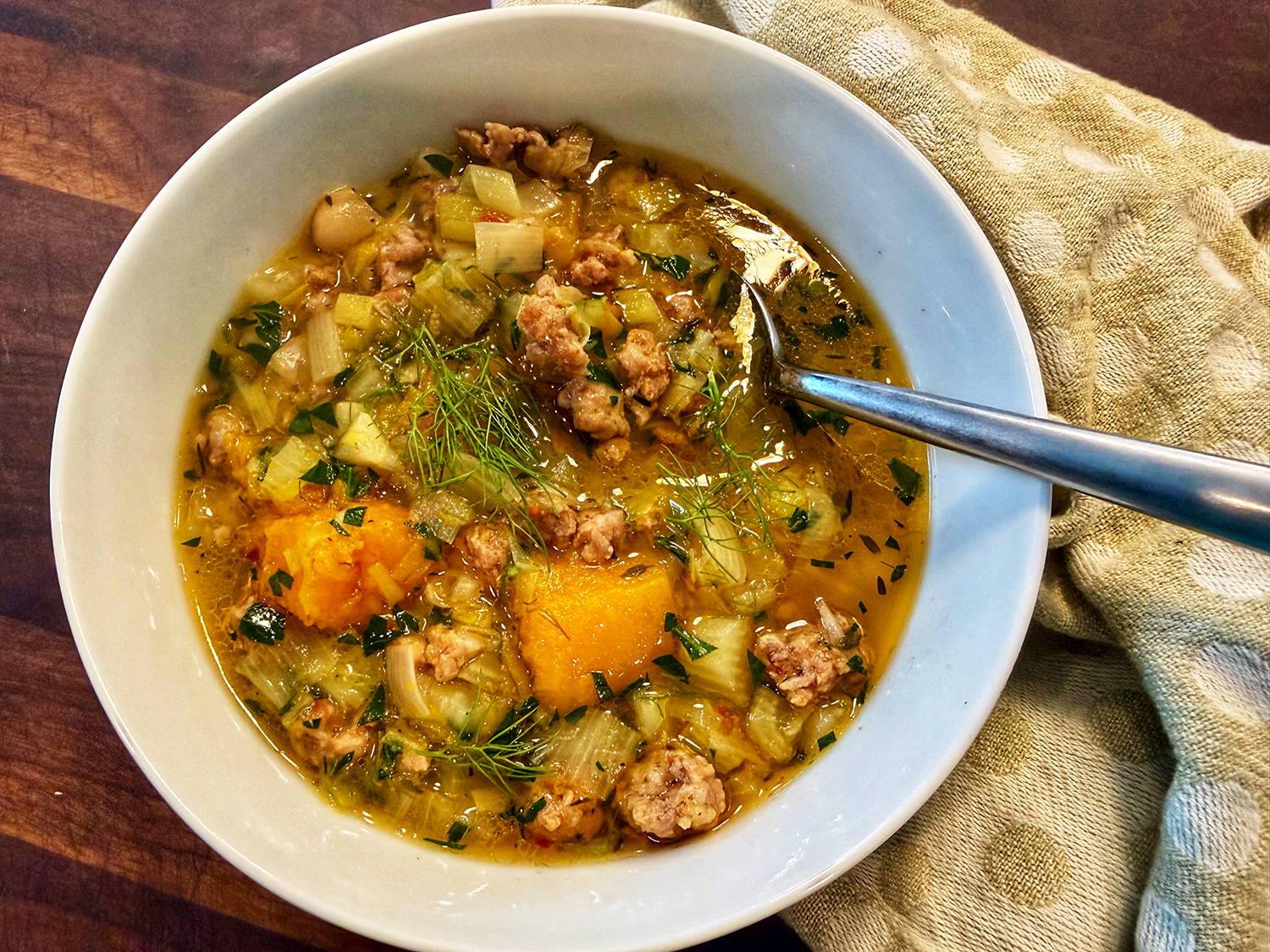
  • Use oven-safe cast-iron pan, as noted above.
  • Getting sprouts brown is important to avoid bitter taste.
  • Smaller quantity of large, hand-selected sprouts is better than big bag of assorted sprouts.
  • Don’t cook more than can fit in pan with cut side down.

Roasted Brussels Sprouts with Garlic

  • Servings: 4-6
  • Difficulty: easy
  • Print

Ingredients

  • 1 lb. Brussels sprouts, trimmed
  • 4-6 Tbsp extra virgin olive oil, to coat bottom of pan
  • 5 cloves garlic, peeled salt and pepper to taste
  • 1 Tbsp. balsamic vinegar (maybe less, to taste)

Directions

  1. Heat oven to 400°F. Trim bottom of Brussels sprouts, and slice each in half top to bottom. Heat oil in cast-iron pan over medium-high heat until it shimmers; put sprouts cut side down in one layer in pan. Put in garlic, and sprinkle with salt and pepper.
  2. Cook, undisturbed, until sprouts begin to brown on bottom, and transfer to oven. roast for 10-20 minutes at 400°F with a few shakes of the pan in between..
  3. Taste, and add more salt and pepper if necessary. Stir in (CAREFUL, NOT TOO MUCH) balsamic vinegar, and serve hot or warm.

http://www.lynnandruss.com

Recipe by Mark Bittman for NYTimes Cooking

Seared Salmon Paka

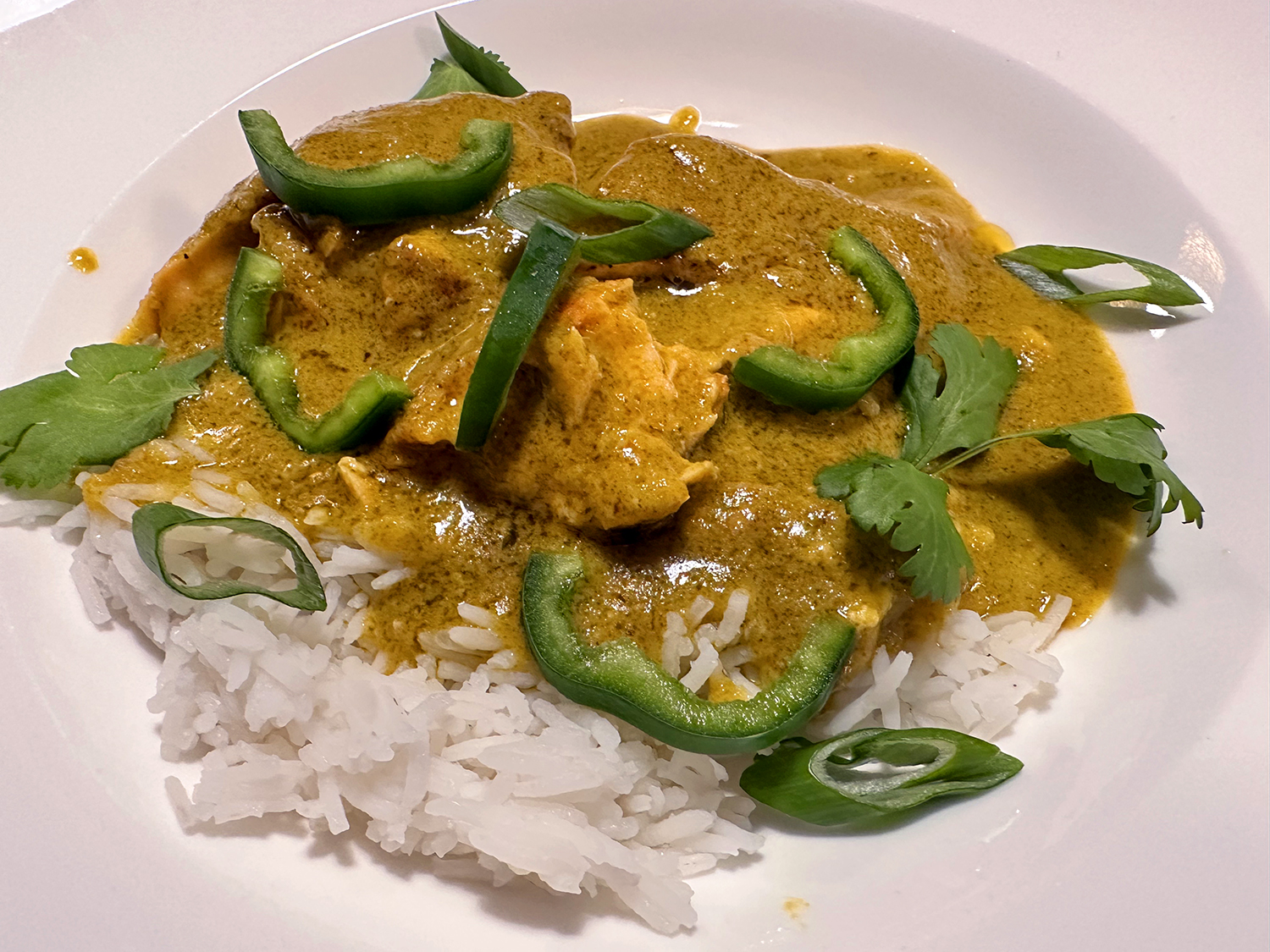
Paka refers to a silky coconut-milk-based sauce popular in East African cuisine. In this take from Bon Apétit on machi paka—a classic fish curry—quickly seared salmon takes the place of the traditional charred, grilled white fish. Cooking the blended curry base down until the coconut milk breaks and the aromatics toast in its rich fat is key to developing deep flavor—don’t rush this part.

The curry base is wonderfully versatile; if fish isn’t your thing, sub in chicken or your favorite canned beans (adjust cooking times accordingly). Having a lot of rice and curry sauce left over, we browned some boneless chicken thigh pieces and added them to the sauce for another dinner a few days later.

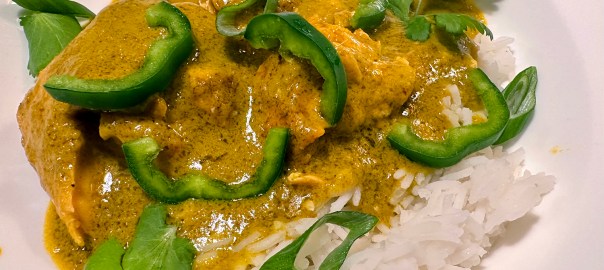
Since no Thai chiles were available at the grocery store, we opted to incorporate jalapeños instead. The color of the paka may be a bit off-putting as it gives the appearance of pea soup, but don’t be fooled by that, the sauce is amazing!

Seared Salmon Paka

  • Servings: 4
  • Difficulty: easy
  • Print

Ingredients

  • 1 Tbsp. vegetable oil
  • 4 6-oz. boneless salmon fillets, preferably skin-on
  • 2 tsp. Diamond Crystal or 1¼ tsp. Morton kosher salt
  • 1 medium onion
  • 2–3 green Thai chiles
  • 3 garlic cloves 
  • 1 1½” piece ginger, peeled 
  • 1 Tbsp. double-concentrated tomato paste,
  • ½ tsp. ground turmeric 
  • ¼ cup cilantro leaves with tender stems 
  • 2 13.5-oz. can unsweetened coconut milk
  • 1 Tbsp. fresh lime
  • Cooked basmati rice

Directions

  1. Heat 1 Tbsp. vegetable oil in a large nonstick skillet over medium-high. Season four 6-oz. boneless salmon fillets, preferably skin-on, with kosher salt and cook (skin side down if it has skin), pressing fillets gently with a spatula, until golden brown, about 4 minutes. Turn fillets over and cook until golden brown and just cooked through, about 3 minutes. Transfer to a plate. Wipe out skillet and reserve.
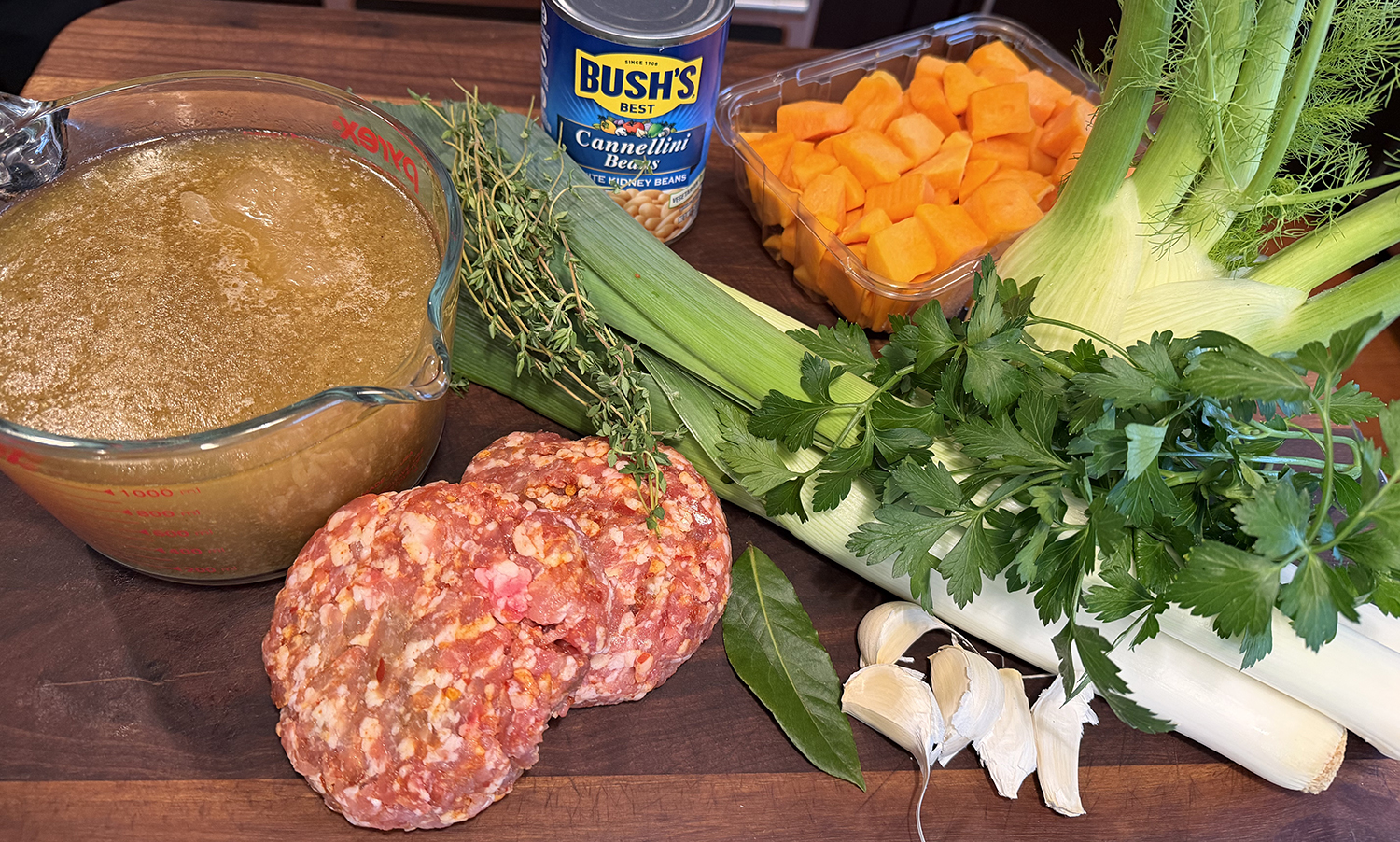
  2. Purée 1 medium onion, coarsely chopped, 2–3 green Thai chiles, depending on heat preference, 3 garlic cloves, one 1½” piece ginger, peeled, 1 Tbsp. double-concentrated tomato paste, ½ tsp. ground turmeric, ¼ cup cilantro leaves with tender stems, and one 13.5-oz. can unsweetened coconut milk in a blender on high speed until smooth. Pour onion mixture into reserved skillet and sprinkle with 2 tsp. Diamond Crystal or 1¼ tsp. Morton kosher salt. Bring to a brisk simmer over medium-high heat, then reduce heat to medium and cook, stirring often with a wooden spoon, until mixture is reduced to a thick paste, fat separates from coconut milk (it will look broken), and aromatics are golden brown, 30–35 minutes.
  3. Pour in remaining one 13.5-oz. can unsweetened coconut milk and ¼ cup water and bring to a simmer, scraping up any browned bits.
  4. Gently break salmon fillets into 3″ pieces and return to skillet. Cook just until salmon is heated through, about 3 minutes. Stir 1 Tbsp. fresh lime juice into curry and remove from heat.
  5. Divide curry among shallow bowls and top with cilantro leaves with tender stems and halved green Thai chiles. Serve with cooked basmati rice or country-style bread and lime wedges alongside.

Do ahead: Curry base can be made 1 day ahead. Let cool; cover and chill. Reheat over medium-low, adding water to thin as needed.

http://www.lynnandruss.com

Recipe from Bon Appétit

Braised Lamb Shoulder Chops with Capers, Balsamic Vinegar, and Red Peppers

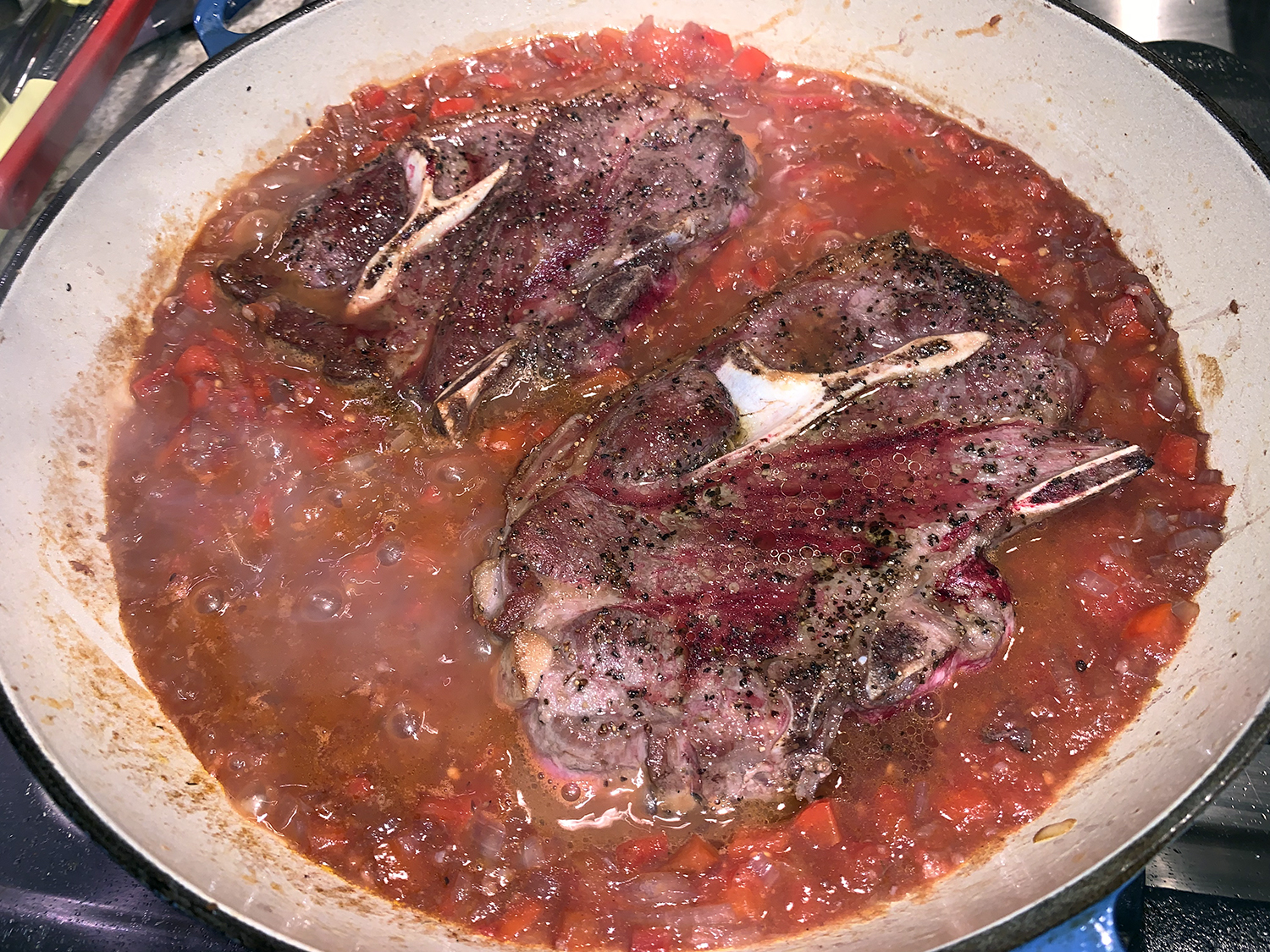
Typically, we find lamb shoulder chops to be a tough cut of meat and benefit from a longer braise. However, Cook’s Illustrated tried a much shorter braise than usual for this lamb chop recipe—just enough to cook the meat. After only 15 to 20 minutes, they claimed the lamb was tender, but we beg to differ.  

Our initial concerns at the short amount of time (15 to 20 minutes originally) the lamb chops cooked were well-founded. After 20 minutes, they were still tough and we added another 10 minutes to the braise. In fact, they could have used even more time to tenderize. In the past, we’ve always braised them, covered over low heat for 2 hours, until they were fall-apart tender.

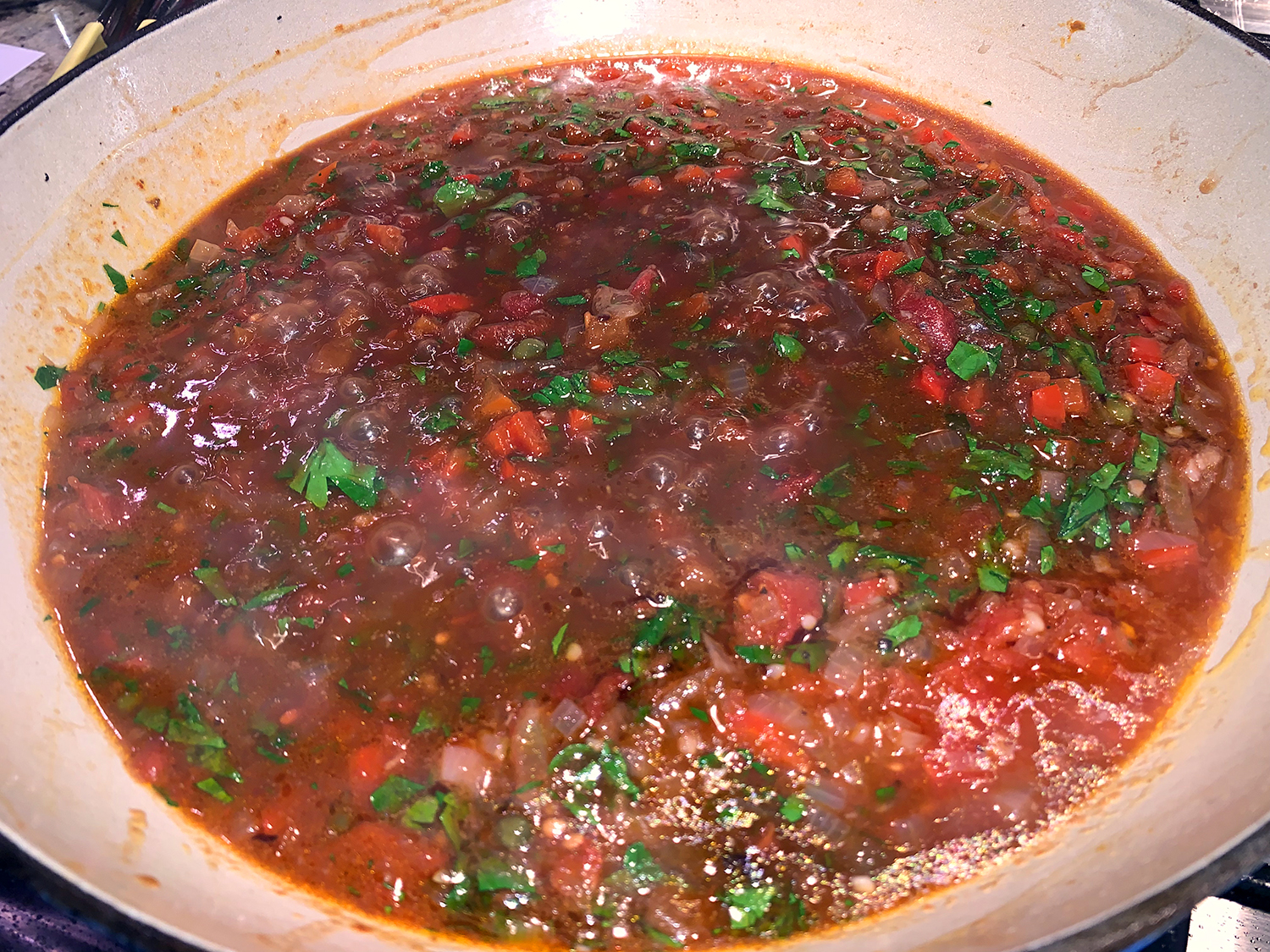
The much-anticipated caper and red pepper sauce with the deglazing liquid was delicious! Because we only cooked two chops, there was some sauce leftover which we made good use of on some pork chops the following day. Our pairings for the lamb included a side salad and a recent new potato fave, Crispy Parmesan Potatoes.

included

  • Servings: 4
  • Difficulty: easy
  • Print

Ingredients

  • 4 lamb shoulder chops, about 3/4 inch thick, trimmed of external fat
  • Salt and ground black pepper
  • 2 Tbsp. olive oil
  • 1 small onion, chopped fine
  • 1 red bell pepper, seeded and diced small
  • 2 small cloves garlic, minced
  • ⅓ cup dry red wine
  • 1 cup canned tomatoes packed in puree, chopped
  • 2 Tbsp. minced fresh parsley leaves
  • 2 Tbsp. capers, drained
  • 2 Tbsp. balsamic vinegar

Directions

  1. Sprinkle chops with salt and pepper to taste.
  2. Heat 1 tablespoon of the oil in 12-inch heavy-bottomed nonreactive skillet over medium-high heat. Cooking in 2 batches to avoid overcrowding, add 2 chops; sauté until brown on both sides, 4 to 5 minutes. Remove from pan; set aside. Repeat.
  3. Pour fat from pan; return pan to medium heat, adding remaining tablespoon of oil. Add onion and pepper; sauté until softened, about 4 minutes.
  4. Add garlic; cook until fragrant, about 1 minute longer.
  5. Add wine; simmer until reduced by half, scraping browned bits from pan bottom with wooden spoon, 2 to 3 minutes.
  6. Stir in tomatoes, then return chops to pan. Reduce heat to low; cover and simmer until chops are cooked through but tender, at least 30 minutes.
  7. Transfer chops to each of four plates. Stir parsley, capers, and balsamic vinegar into braising liquid; simmer until sauce thickens, 2 to 3 minutes. Adjust seasonings, spoon portion of sauce over each chop, and serve.

http://www.lynnandruss.com

Adapted from a recipe by Cook’s Illustrated