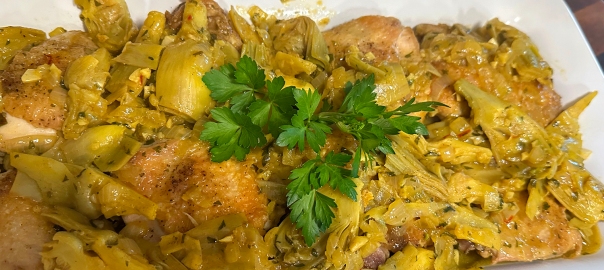
The original recipe called for using fresh artichokes, which adds a lot more time and effort to this tasty dish. And since we had a 12-ounce bag of frozen artichokes at the ready, we opted to make this recipe in a more time-sensitive manner. And it didn’t disappoint.
This chicken dish partnered well with our side of Mushroom Risotto with Peas. The meal was absolutely delicious!
1 tablespoon chopped fresh parsley, plus more to garnish
½ tsp. saffron
½ tsp. ground cinnamon
1½ cups chicken broth, plus more if needed
Directions
Pat chicken dry, then season all over with salt and pepper. In a large skillet, warm the olive oil over medium-high heat, then add the chicken, skin-side down. Cook, undisturbed until well browned, 7 to 8 minutes. Flip and brown the other side, about 5 minutes. Transfer chicken thighs to a plate and spoon out about 3 tablespoons of fat from the pan, if desired. (You can discard the excess fat or save for another use.)
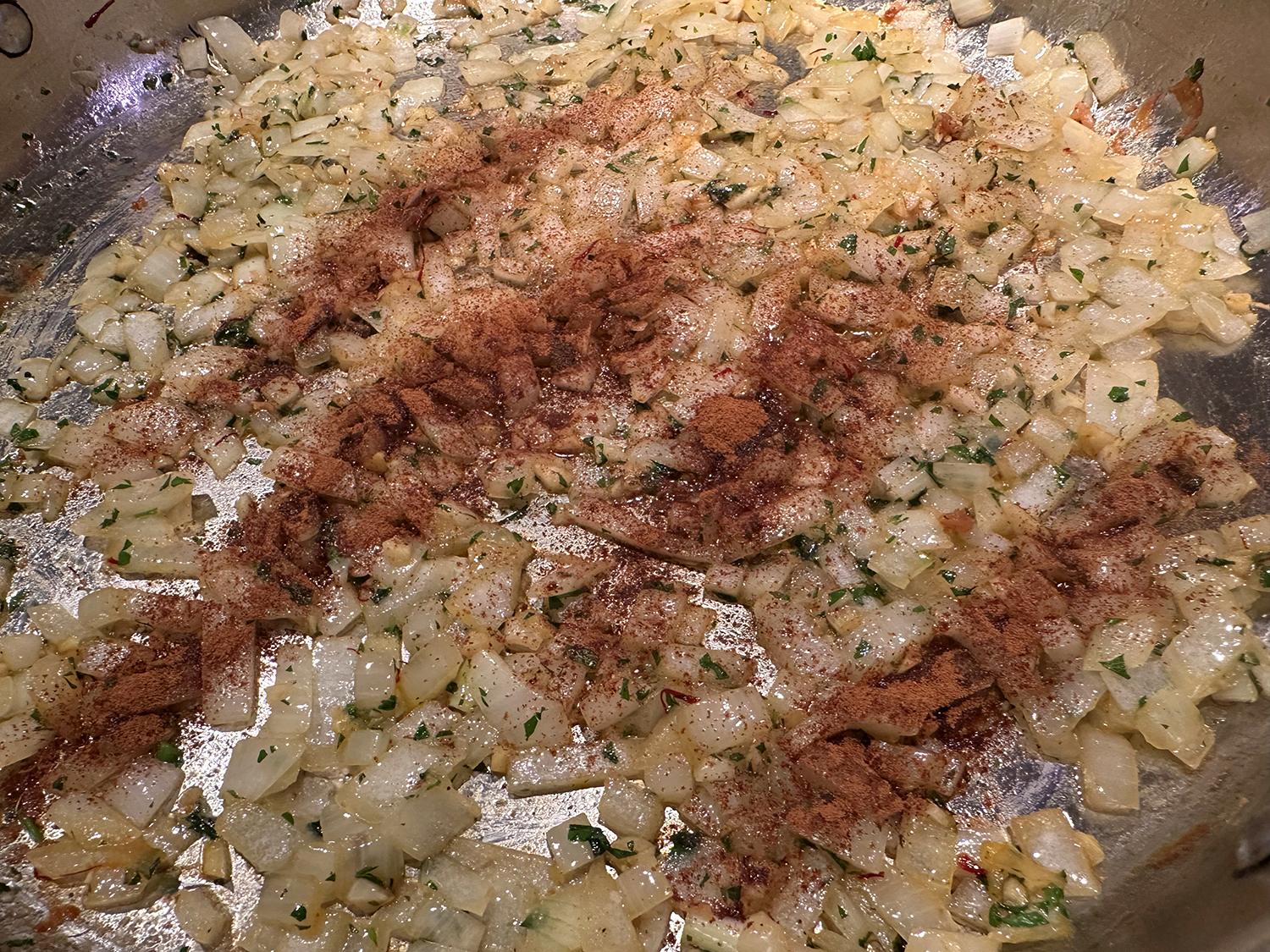
Return the skillet to medium heat and add the onion, garlic, parsley and saffron. Season with salt and pepper, and cook, stirring occasionally, until onion is translucent, about 5 minutes. Sprinkle the cinnamon over the onion, then stir to combine.
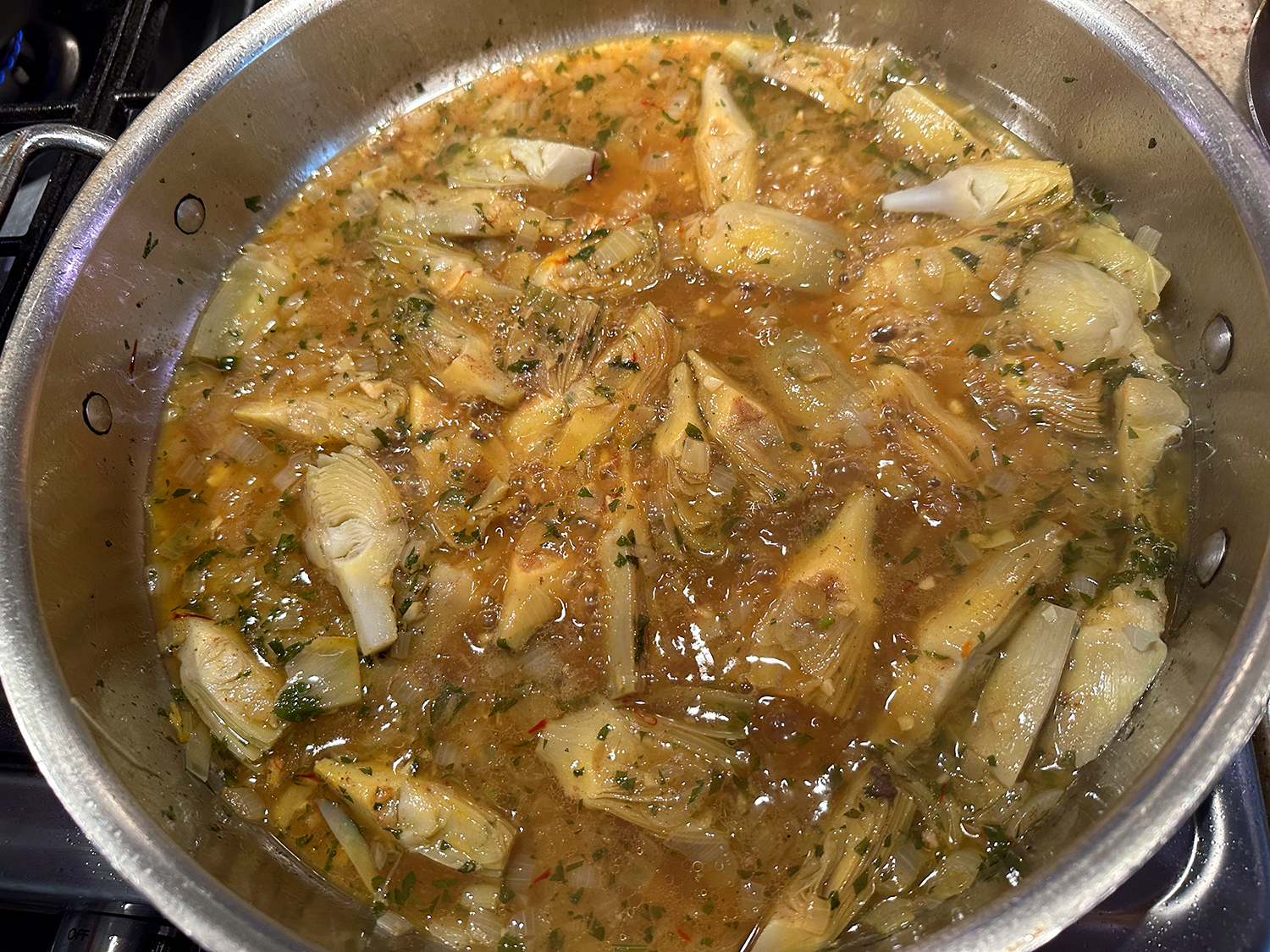
Add the broth to deglaze, scraping the bottom of the pan, and bring to a simmer over medium-high. Return the chicken to the pan, nestling it into the pan skin-side up. Arrange the artichokes between the chicken pieces, cover, and simmer over medium-low until the chicken is cooked through, 20 to 25 minutes. Remove the chicken with a slotted spoon and transfer to a plate.
Raise the heat to medium-high and cook until the sauce is thickened and the artichokes slightly browned, about 5 minutes. Stir in the juice from half the remaining lemon, taste, and adjust with salt and more lemon juice if needed. Spoon artichokes and pan sauces over the chicken, sprinkle with parsley to garnish, and serve.
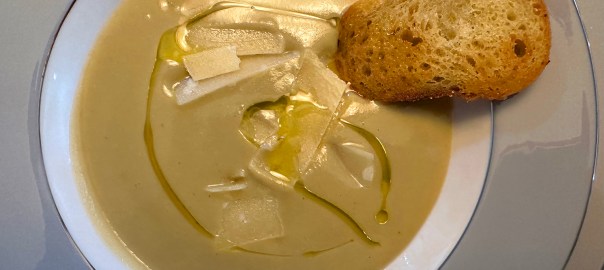
This sublime soup combines the nutty flavor of artichokes and the richness of Parmesan. Although fresh artichokes are preferred many home cooks may not have the patience for turning artichoke bottoms. Frozen artichokes—usually sold in nine-ounce packages labeled artichoke hearts—are a worthy substitute. The wine here works its magic, adding just enough acid to lighten the soup.
Homemade chicken stock adds oodles of flavor, so if you have some use it instead of the boxed or canned varieties. For a finishing touch, add a shower of shaved Parmesan, a swirl of good extra-virgin olive oil and serve with toasted brioche for dipping.
*If using frozen artichoke hearts, omit lemon and water and start at Step 2. The soup can be refrigerated overnight. Rewarm gently over moderately low heat.
One 2-oz. chunk of Parmigiano-Reggiano cheese, shaved into strips with a vegetable peeler
1 lemon, halved
4 large globe artichokes (about 3 1/2 lbs.); OR 4 cups frozen artichoke hearts*, thawed
1/4 cup extra-virgin olive oil
2 medium shallots, minced
Sea salt
1 cup white wine, preferably Chardonnay
3 cups chicken stock or canned low-sodium broth
1 Tbsp. unsalted butter
Directions
If using fresh artichokes: Squeeze the lemon juice into a large bowl of cold water and add the lemon halves. Break off or cut the stem from the base of the artichokes. Using your hands, snap off the tough outer leaves near the base. Continue snapping off leaves until only the central cone of yellow leaves with pale green tips remain. Using a large sharp knife, trim the top cone of leaves to just below the green tips. Trip any tough, dark green areas from the base with a small knife. Cut the artichoke hearts in half. Using a small spoon or a melon baller, scrape out and discard the hairy chokes. Cut each half lengthwise into 4 even slices. Place the artichoke slices in the acidulated water.
In a large nonreactive saucepan, combine 2 tablespoons of the oil with the shallots and a pinch of sea salt and cook over moderate heat, stirring often, until softened but not brown.
Stir in the remaining 2 tablespoons oil. Drain and add the artichoke slices and cook until slightly softened, about 2 minutes. Pour the wine all over the artichokes, increase the heat to moderately high and simmer until almost evaporated, about 7 minutes.
Add the chicken stock and reduce the heat. Cover and simmer gently until the flavors have mingled, about 20 minutes.
Transfer the soup to a food mill with a fine disk and puree. Discard any fibrous artichoke pieces that remain in the food mill. Return the soup to the pan; you should have about 3 cups. If the soup is too thin, return it to the saucepan and boil until reduced and thickened.
Just before serving, whisk the butter into the hot soup over moderate heat until melted and incorporated. Pour the soup into heated soup plates or bowls and scatter the cheese strips on top. Serve immediately.
Akin to the dish of pasta fresca con carciofi e pecorino from Bari, Italy, Milk Street formulated this easy adaptation. It is a great weeknight meal with flavors that are bright and fresh, and the prep is a breeze (chopping the basil is as arduous as it gets here).
Be sure to purchase jarred marinated artichoke hearts—they offer much more flavor than canned or frozen. You will need three 12-ounce jars to get the 3 cups drained artichokes called for. The hearts usually are halved or quartered; there’s no need to chop them after draining, as they will break apart during cooking.
When draining the artichoke hearts, you may want to use the delicious seasoned oil from the jar in place of at least some of the olive oil.
Served with a side salad, it is a quick, healthy-ish weeknight meal.
2 oz. pecorino Romano cheese, finely grated (1 cup)
1 Tbsp. grated lemon zest, plus 2 Tbsp. lemon juice
1 cup lightly packed fresh basil, chopped
3 Tbsp. salted butter, cut into 3 pieces
Directions
In a large Dutch oven, bring 4 quarts water to a boil. Stir in the pasta and 1 tablespoon salt, then cook, stirring occasionally, until just shy of al dente. Reserve about 2 cups of the cooking water, then drain the pasta.
Wipe out the pot, add the oil and heat over medium-high until shimmering. Add the artichokes and cook, stirring, until well browned, 5 to 7 minutes.
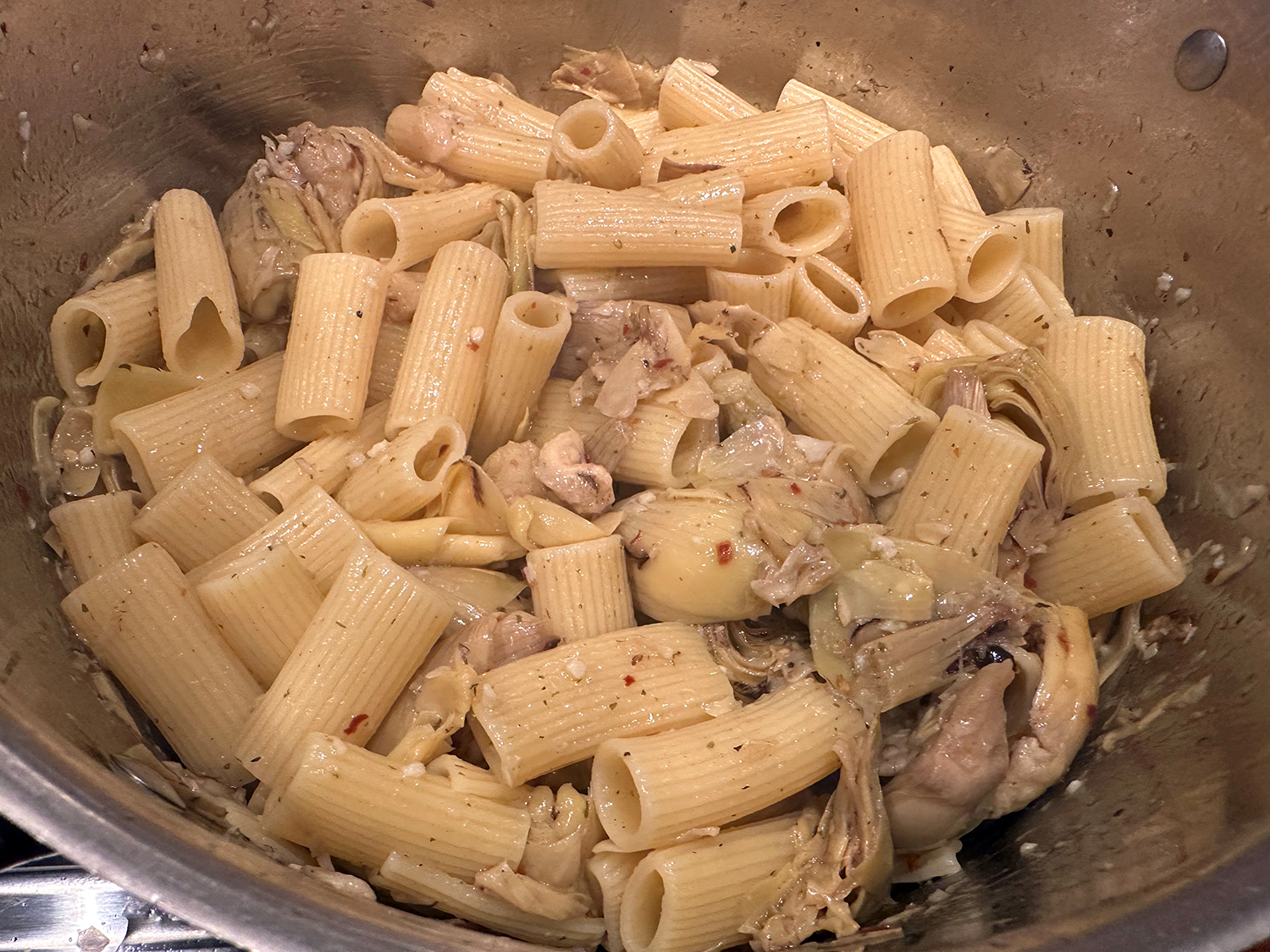
Add the garlic and pepper flakes, then cook, stirring, until fragrant, about 30 seconds. Return the pasta to the pot, along with 1½ cups of the reserved pasta water. Cook, uncovered and stirring often, until the pasta is al dente and little liquid remains, 3 to 5 minutes.
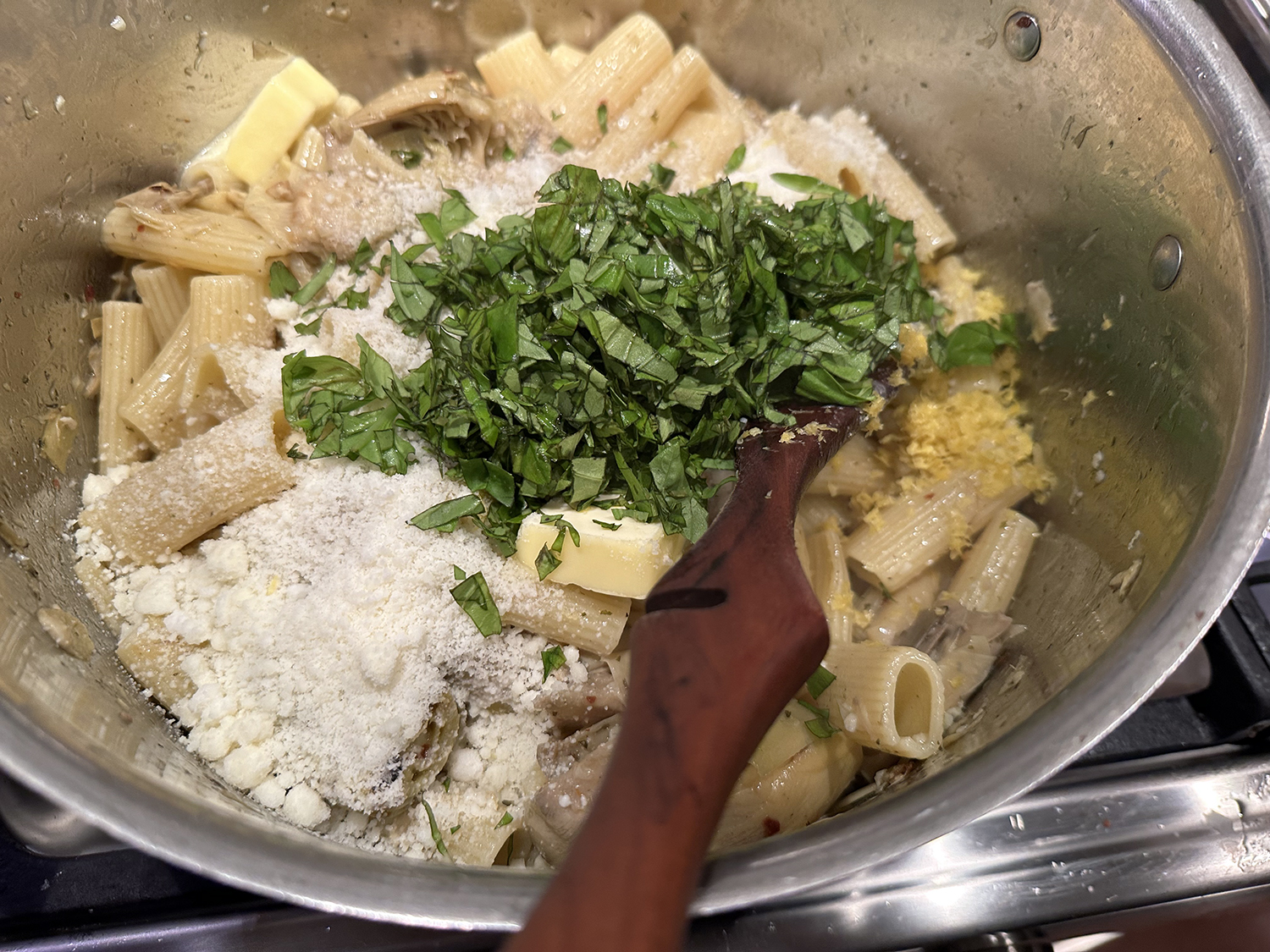
Remove from the heat. Add the pecorino, lemon zest and juice, basil and butter, then stir until the butter is melted. Stir in additional pasta water 1 tablespoon at a time until slightly saucy. Taste and season with salt and pepper.
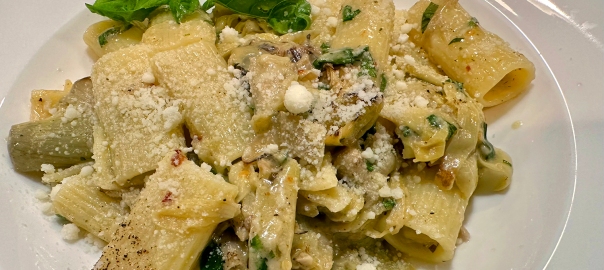
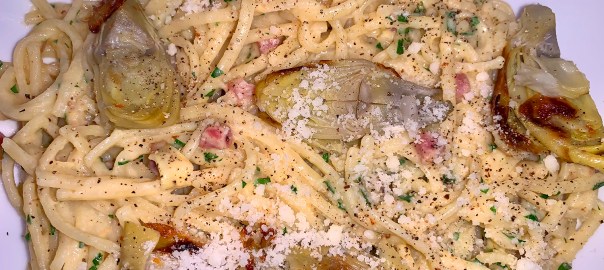
Milk Street got the idea for this pasta dish from “Pasta Grannies” by Vicky Bennison. The unusual sauce is made by blitzing artichokes in a blender. Canned artichokes are used instead of fresh for ease, but first they are browned in a mixture of olive oil and rendered in pancetta fat to build flavor in the sauce. The crisp bits of pancetta lend texture and saltiness, lemon adds brightness and balance, and a generous amount of Parmesan ties all the elements together. Voila!
With a minimum of ingredients, this lovely pasta dish can be served as a first course or as the main entrée. Instead of canned, we used frozen artichokes—just make sure to really dry those chokes, otherwise they won’t brown. Using a wider pan would accelerate the browning process. In fact, you may want more of them for the topping!
Don’t use marinated artichokes for this recipe, as their flavor is too sharp and tangy. After draining the artichokes, make sure to pat them dry so they caramelize when added to the pot. Don’t forget to reserve about 2 cups of the pasta water before draining the noodles. You will need it for pureeing the artichokes and building the sauce. And we used every drop of those 2 cups, so perhaps save a bit more…
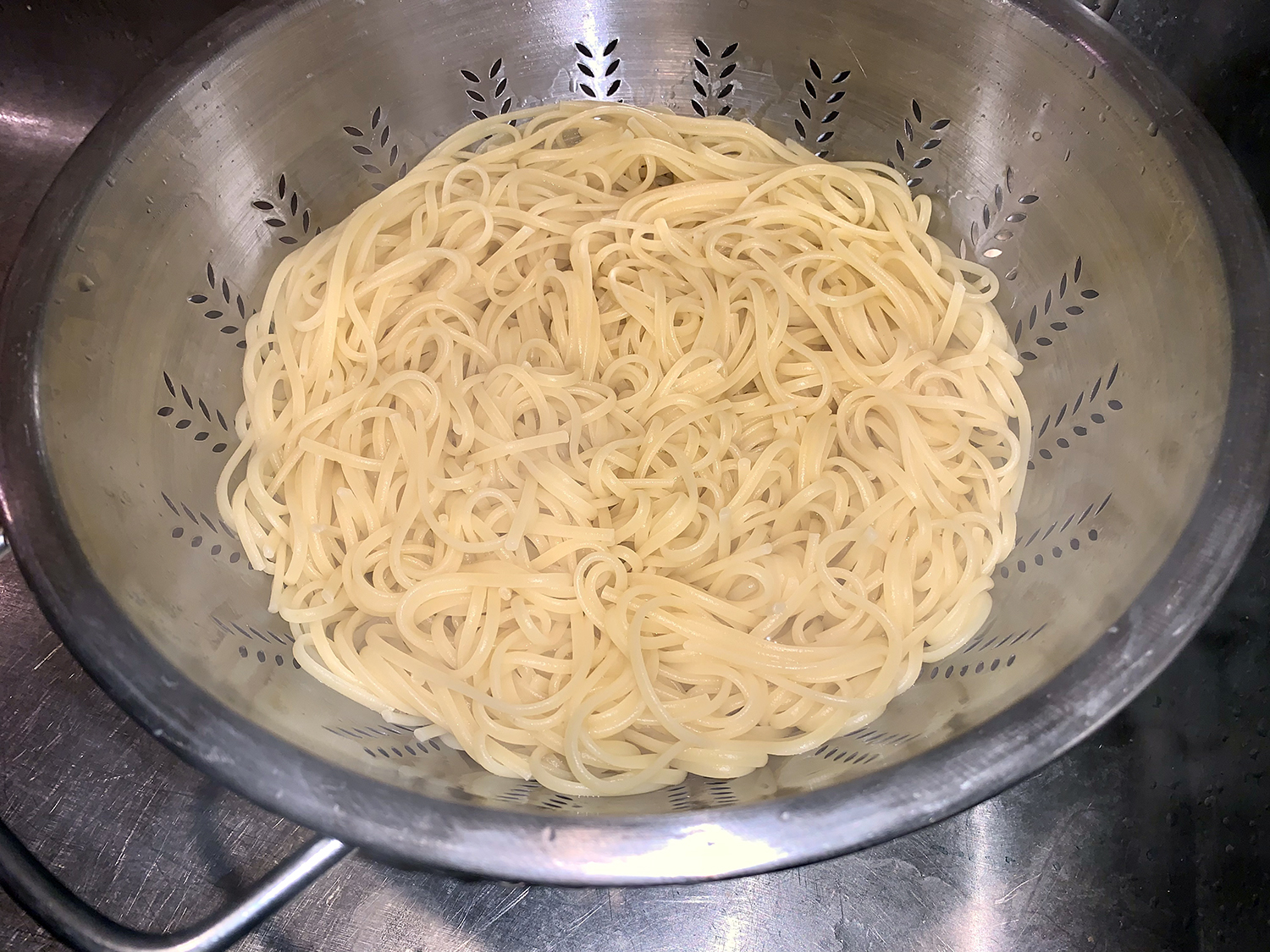
One other note. Instead of letting the cooked pasta sit in a colander while you make the rest of the dish, use two pots. As the linguine boils, cook the pancetta and then the artichokes in another. This way, everything comes together at one time and is guaranteed to be piping hot.
1 Tbsp. extra-virgin olive oil, plus more to serve
4 oz. pancetta, chopped
14 oz. can artichoke hearts, drained, patted dry and quartered if whole
1 Tbsp. grated lemon zest, plus 3 tablespoons lemon juice
2 oz. Parmesan cheese, finely grated (1 cup), plus more to serve
½ cup finely chopped fresh flat-leaf parsley OR chives OR basil
Directions
In a large pot, bring 4 quarts water to a boil. Stir in the pasta and 1 tablespoon salt, then cook, stirring occasionally, until al dente. Reserve about 2 cups of the cooking water, then drain.
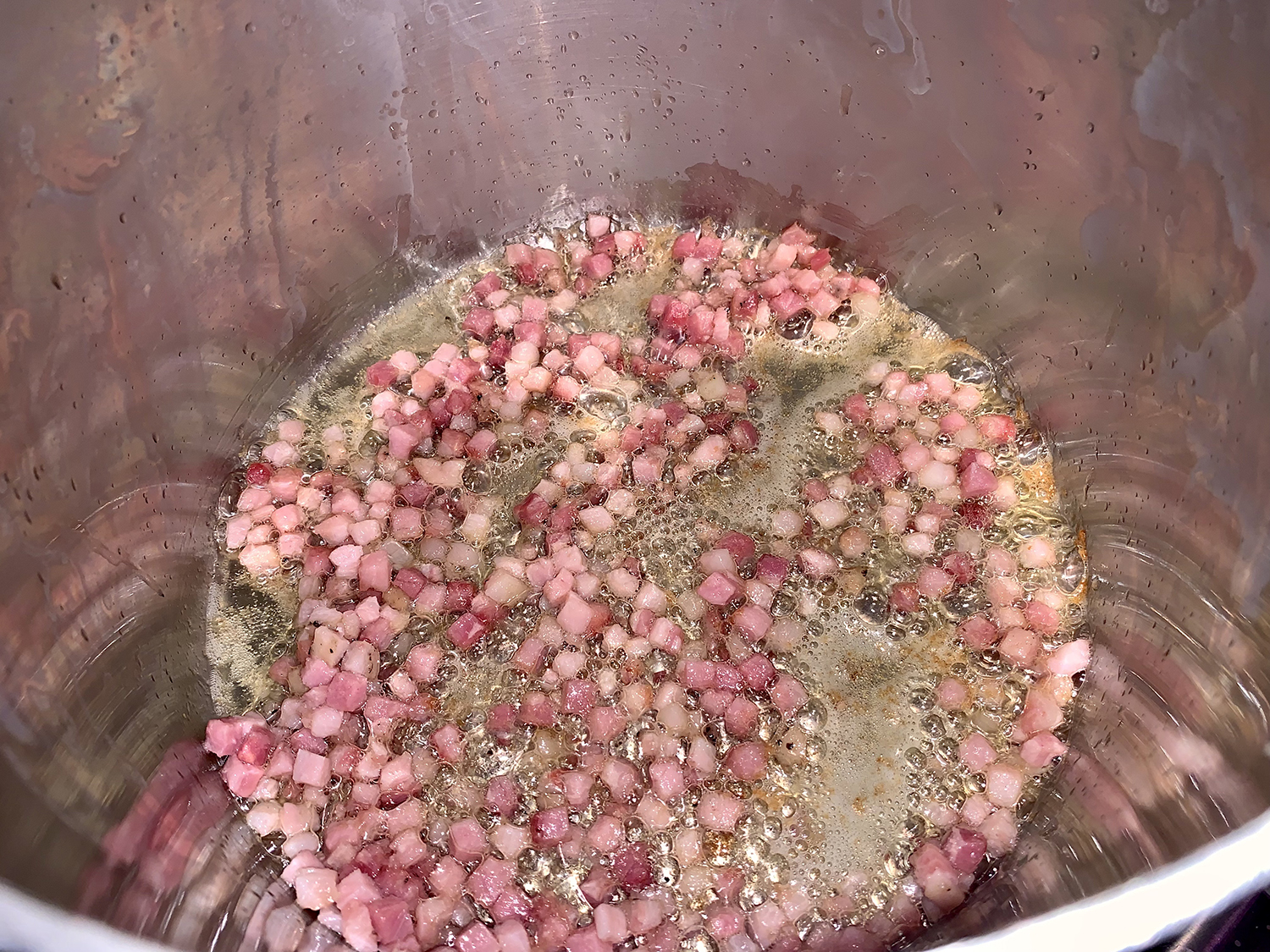
In the same pot over medium, heat the oil until shimmering. Add the pancetta and cook, stirring, until crisp, 3 to 4 minutes. Using a slotted spoon, transfer to a small plate; set aside.
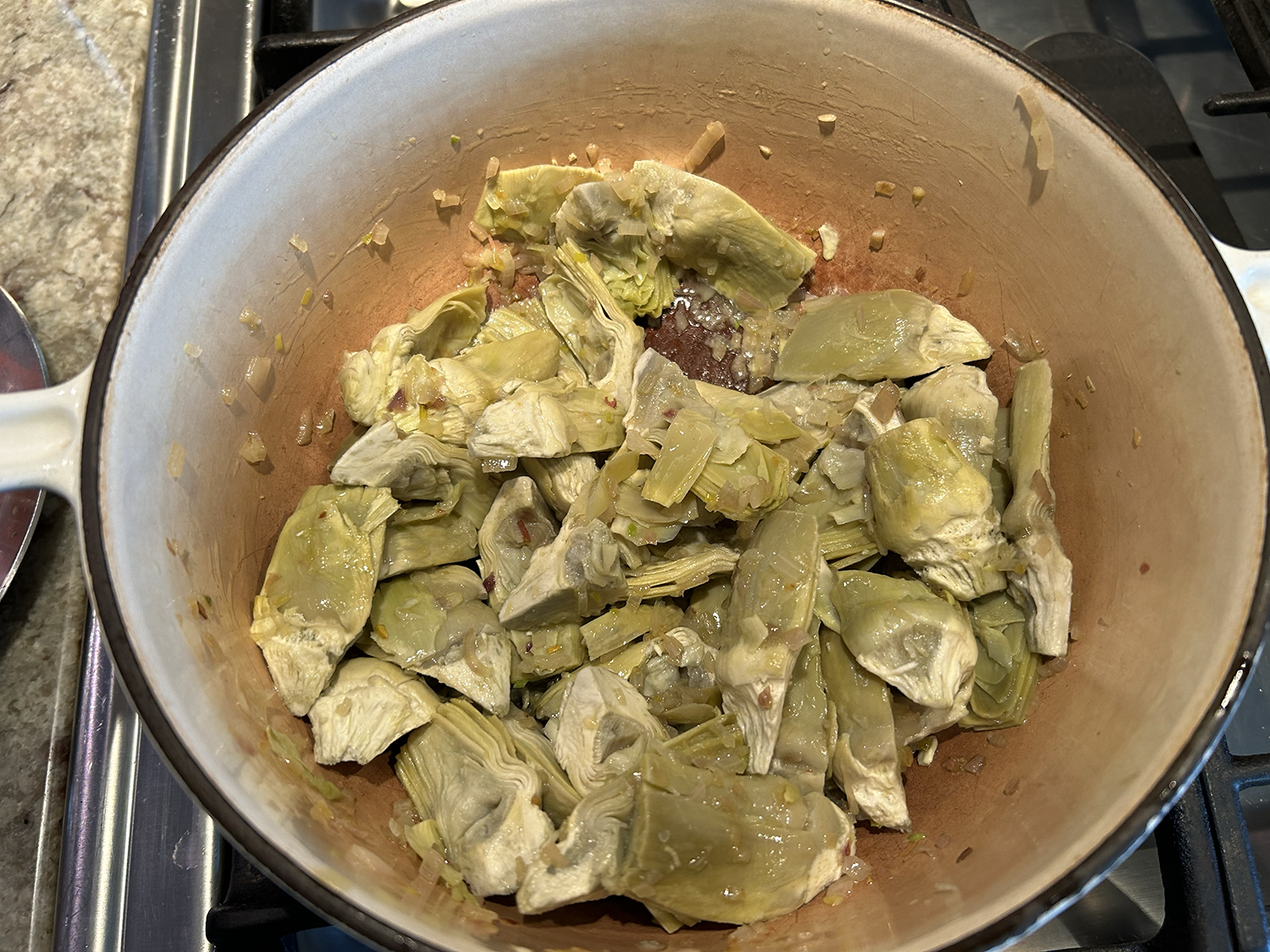
Add the artichokes to the pot and cook, stirring, until beginning to brown at the edges, 3 to 4 minutes. Remove the pot from the heat. Transfer half the artichokes to a small bowl; add the remainder to a blender. Reserve the pot.
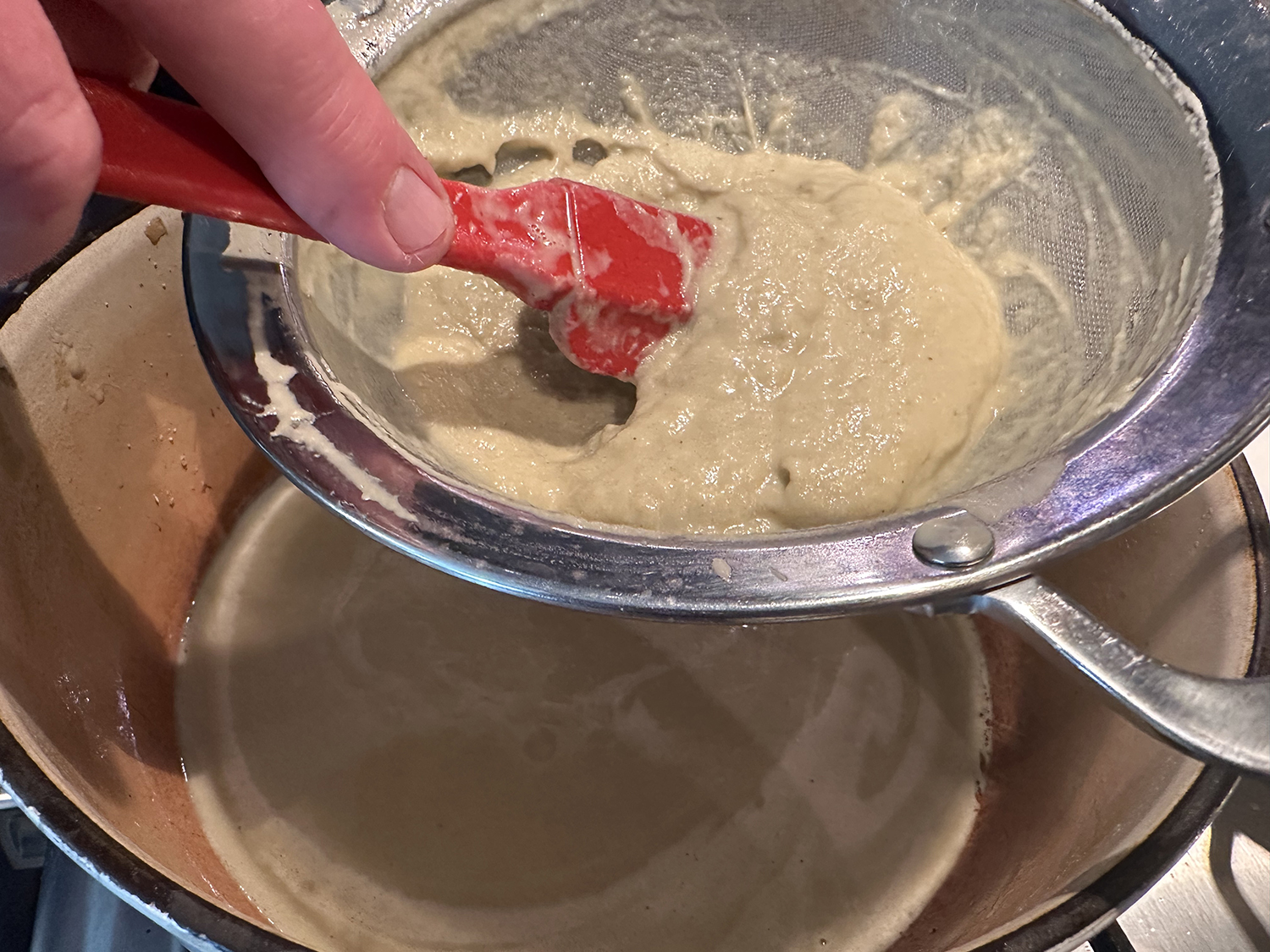
To the artichokes in the blender, add ½ cup cooking water, the lemon juice and ¼ teaspoon each salt and pepper; puree until smooth. In the same pot over medium, bring 1 cup of the remaining cooking water to a simmer, scraping up any browned bits.
Add the artichoke puree, the pasta, lemon zest, pancetta, Parmesan and parsley. Cook, tossing to combine, just until the noodles are heated through, 1 to 2 minutes; add more reserved water as needed to make a silky sauce. Taste and season with salt and pepper.
Transfer to a serving bowl and top with the reserved artichokes, along with additional oil and Parmesan.
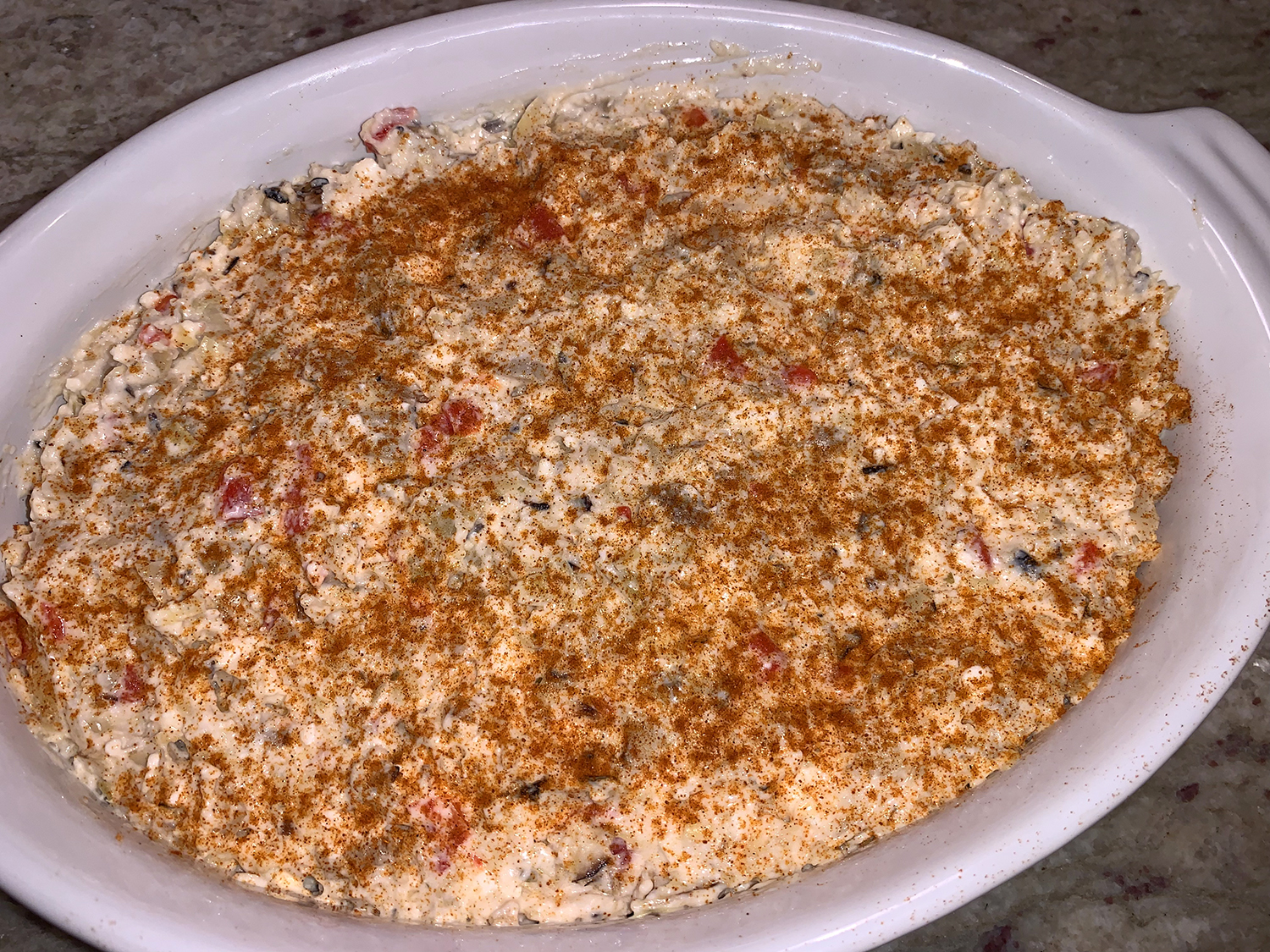
This is one of the easiest appetizers to make, thanks Trisha Yearwood! Instead of canned artichokes, we used the marinated jarred version, and we sprinkled some paprika on top for a touch of color and even more depth of flavor.
To lighten our load on the day of the party, the dish was made and put in a small casserole dish covered with foil, then refrigerated overnight. About an hour before it went into a 350° oven, it sat on the countertop to warm up. Make sure to uncover the dish before popping it in the oven.
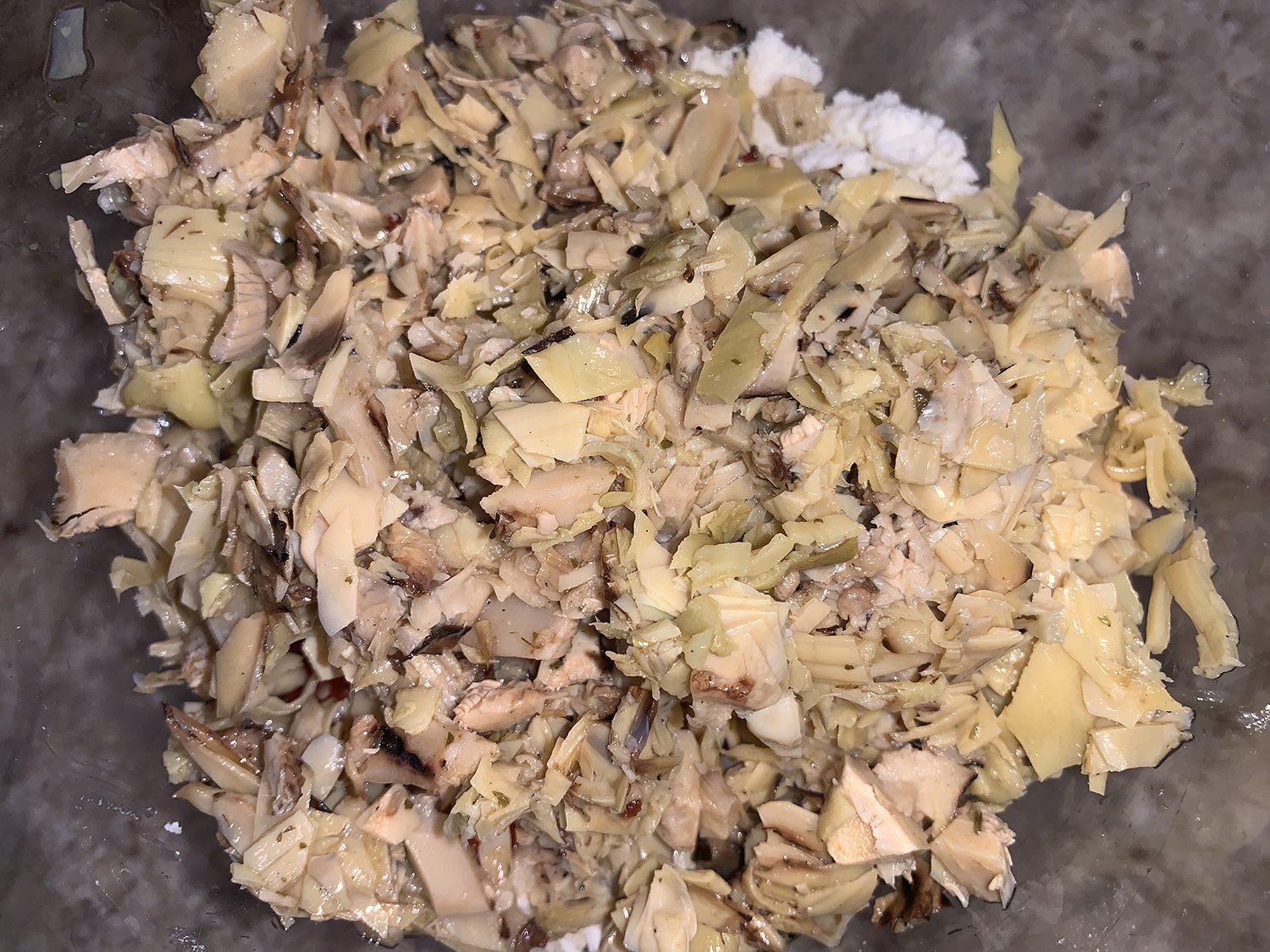
One 14-oz. can artichoke hearts, drained and finely chopped
5 oz. feta cheese, crumbled
3/4 cup mayonnaise
1/2 cup grated Parmesan
2-oz. jarred roasted red peppers, drained and diced
2 cloves garlic, minced
Paprika for topping, optional
Sea salt pita chips, for dipping
Directions
Preheat the oven to 350 degrees F.
In a medium bowl, stir together the artichoke hearts, feta, mayonnaise, Parmesan, red pepper and garlic until thoroughly combined. Sprinkle paprika on top, if desired.
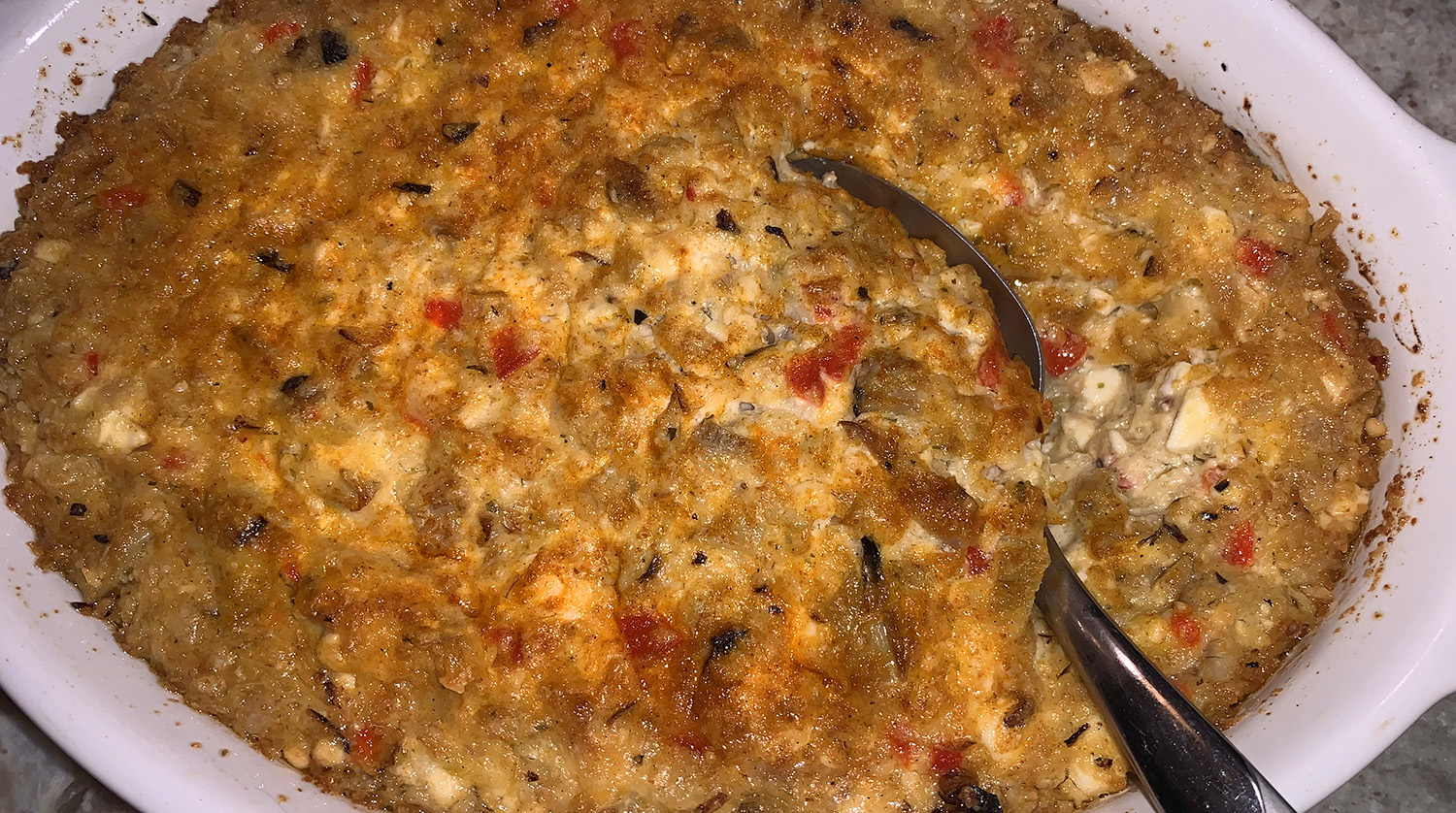
Transfer the mixture to a small casserole or glass pie plate and bake, uncovered, for 20 to 25 minutes, or until lightly browned.
To serve, place the dish on a larger platter and surround with pita chips.
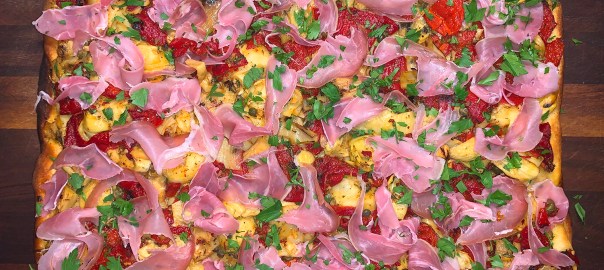
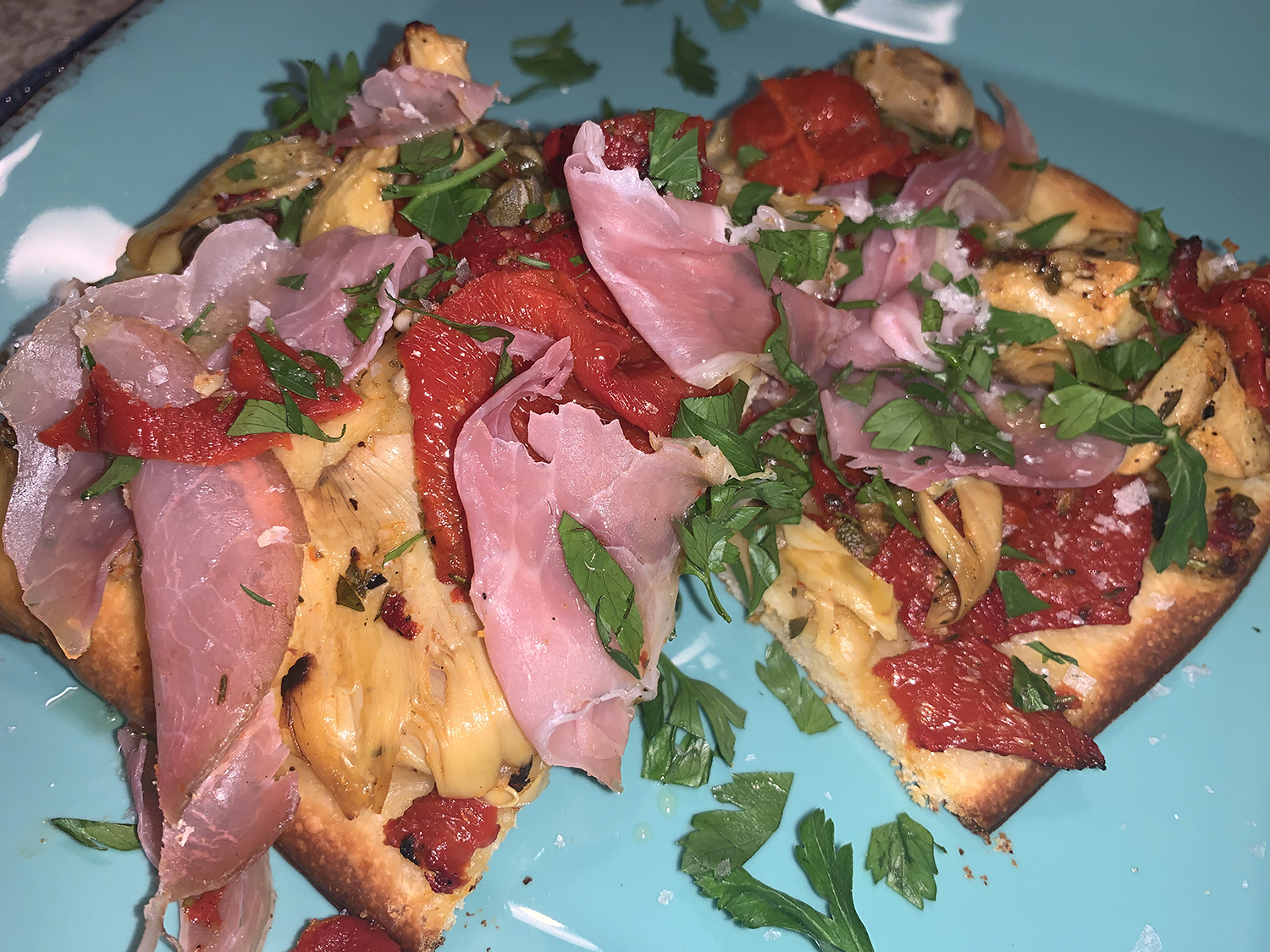
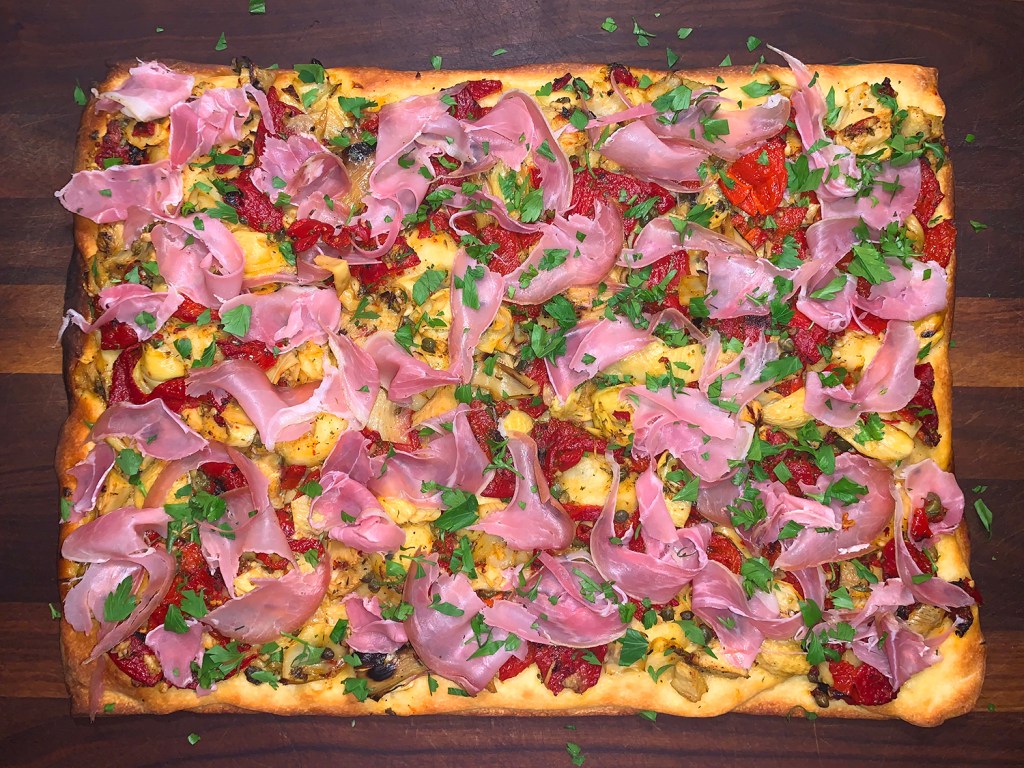
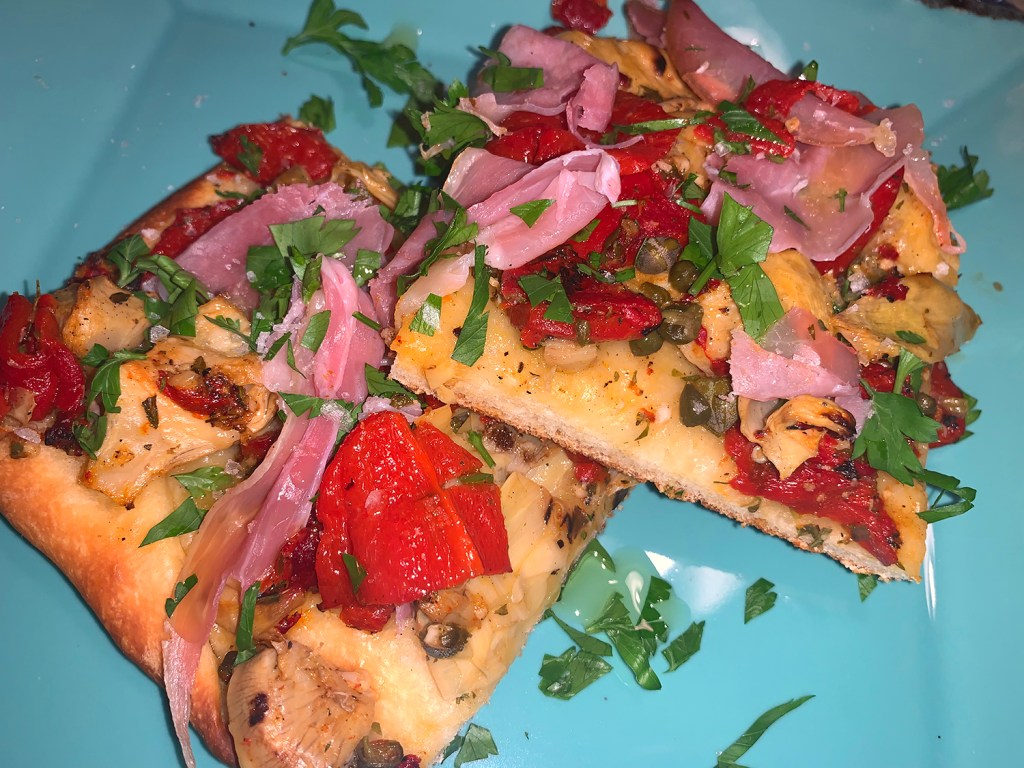
Kick your weeknight dinner up a notch with this simple version of coca, a type of Spanish flatbread. Coca is open-faced like pizza (without cheese) and can be savory, sweet or plain. In Catalan, its place of origin, a coca is a gathering of leftovers or whatever vegetables might be in season (coca derives from the Dutch word kok, for cake). For that reason, this dish isn’t so much a recipe as it is a broad template.
For ease, use store-bought refrigerated pizza dough, put it into a rimmed baking sheet and top it with roasted peppers, marinated artichokes and capers before sliding it into the oven. As the crowning touch, slices of prosciutto are draped on after the flatbread comes out of the oven. If you’re able to find Spanish dry-cured ham, such as serrano or Ibérico, feel free to use it instead. Voila, a fun dinner in no time!
A pizza wheel cutter makes it a cinch to slice up!
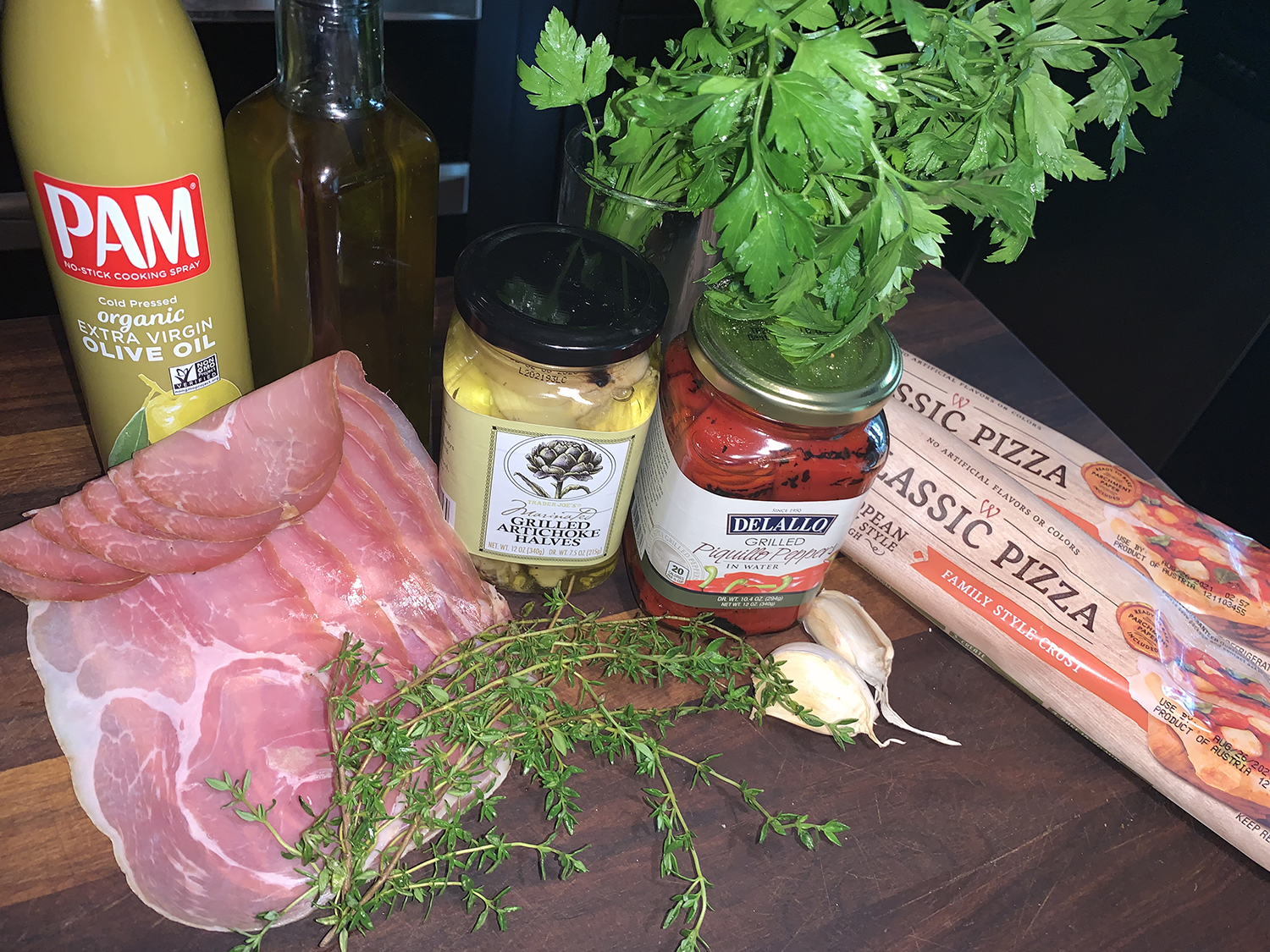
A few notes about the ingredients. Our crust was a European-style pizza dough that was already rectangular in shape making it a cinch to spread onto the rimmed baking sheet. Each package was 14.1 ounces, so I used two, one on top of the other, which ended up being over 4 ounces more than called for.
FYI—Don’t use cold dough, as it will be more resistant to stretching and shaping than room-temperature dough; it also bakes up denser. Remove it from the refrigerator 30 to 60 minutes in advance, depending on the ambient temperature of your kitchen. Also, to prevent sticking, make sure to coat the baking sheet with cooking spray before placing the dough on top.
If you have the chance, get the Trader Joe’s brand of marinated artichoke hearts, they’re the best! For the roasted red peppers, we used a jar of Spanish-style grilled Piquillo peppers. And the amount of prosciutto was increased to four ounces. (I would have chosen Serrano ham if the store had been carrying it at the time.) The sweetness of roasted peppers is balanced by the brininess of jarred artichokes and capers. A sprinkling of fresh thyme offers herbal notes, while sliced prosciutto adds depth and savoriness.
Spanish-Style Flatbread with Roasted Peppers, Artichokes and Prosciutto
1 12-oz. jar roasted red peppers, drained, patted dry and roughly chopped (about 1 cup)
1 cup drained marinated artichoke hearts, roughly chopped
2 medium garlic cloves, finely grated
1/4 cup drained capers, roughly chopped
1 Tbsp. fresh thyme, chopped
2 Tbsp. extra-virgin olive oil, divided, plus more to serve
Kosher salt and ground black pepper
1 1/2 lbs. store-bought refrigerated pizza dough, room temperature
5 thin slices prosciutto (about 2½ oz.)
1/3 cup lightly packed fresh flat-leaf parsley, roughly chopped
Directions
Heat the oven to 500°F with a rack in the lower-middle position. Mist a rimmed baking sheet with cooking spray.
In a medium bowl, toss together the red peppers, artichokes, garlic, capers, thyme, 1 tablespoon of oil, ½ teaspoon each salt and pepper; set aside.
Set the dough in the center of the prepared baking sheet, then press and stretch it until it covers the pan and is of an even thickness. Press from the center outward and lift and stretch the edges as needed; it’s fine if the dough doesn’t completely fill the corners. If the dough is resistant or shrinks after stretching, wait 5 to 10 minutes before trying again; if it is very elastic, you may need to give it 2 or 3 rests.
When the dough fills the baking sheet, brush it with the remaining 1 tablespoon oil. Evenly distribute the red pepper mixture over the top, leaving a narrow border around the edge, then gently press the toppings into the dough. Bake until the edges of the dough are well-browned, 12 to 15 minutes.
Remove from the oven and slide the flatbread out of the baking sheet and onto a wire rack. Tear the prosciutto into narrow ribbons and drape over the top. Cool for 5 minutes.
Transfer to a cutting board. Sprinkle with the parsley, then cut into pieces. Serve drizzled with additional oil.
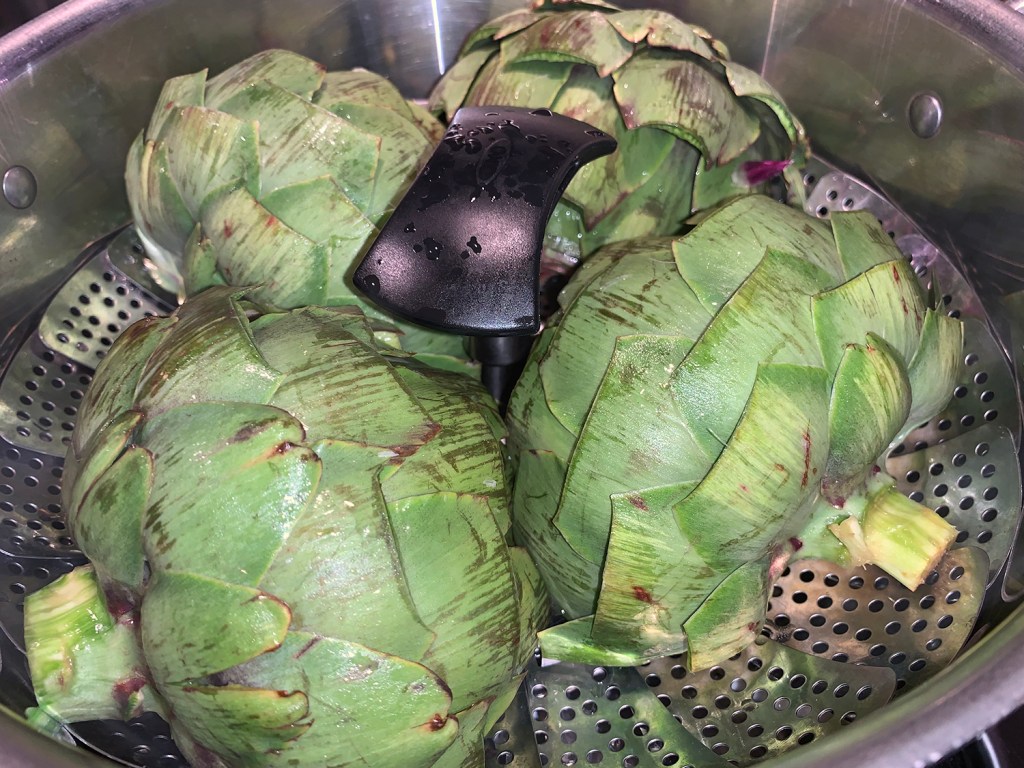
It’s odd, that even though we love artichokes, neither of us have ever cooked thistles. So this was our first foray, and we decided to grill them. After a bit of online research, we happened upon this approach from Simply Recipes. Apparently, the trick is to steam them first.
Artichokes take a long time to cook, and like moist heat, so it’s best to just grill them at the end for the grill marks and smoky flavor—which it did in spades! Steaming, instead of boiling, assures the artichokes don’t get too soggy from the water and they stay dry enough to get good browning on the grill.
After we brought them home from the grocery store I had to read up on how to store them for a few days. Well let me tell you, everybody seems to have their own opinion. But my first mistake was cutting a good portion of the stems off so that the large globes would fit into a plastic ziploc. That is a no-no, BTW.
According to Williams Sonoma, sprinkle artichokes with a few drops of water and store in a perforated plastic bag in the coldest part of the refrigerator for up to 1 week. If cooking them on the day you buy them, leave them at cool room temperature. Once opened, marinated artichoke hearts will keep refrigerated for up to 2 weeks.
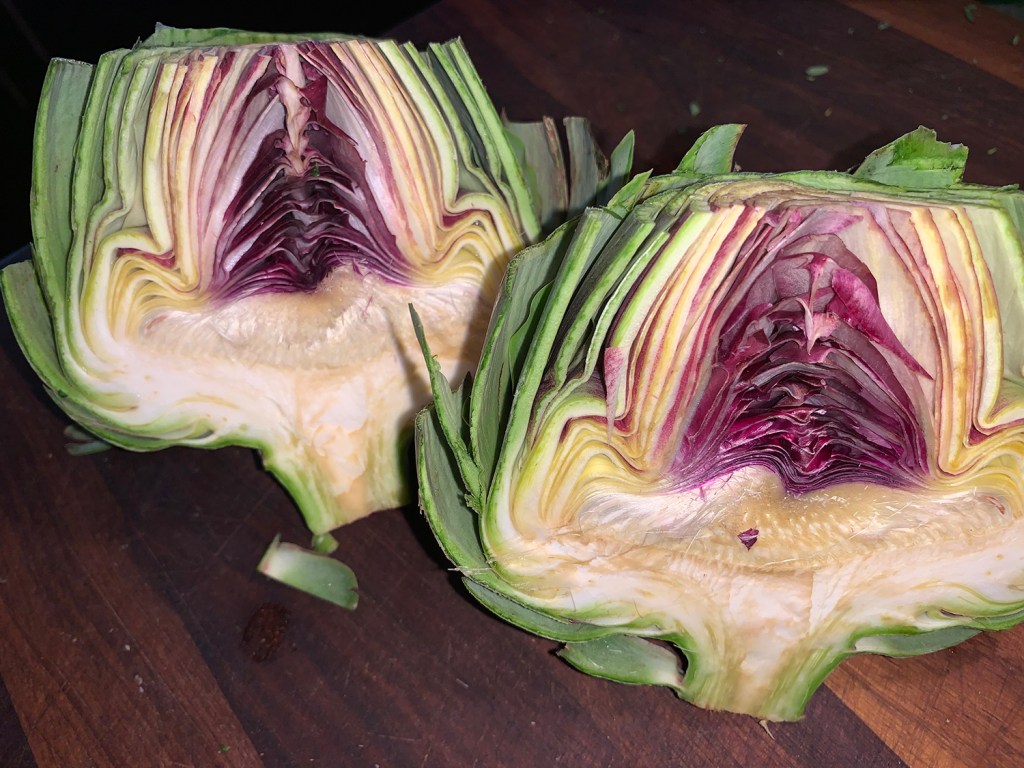
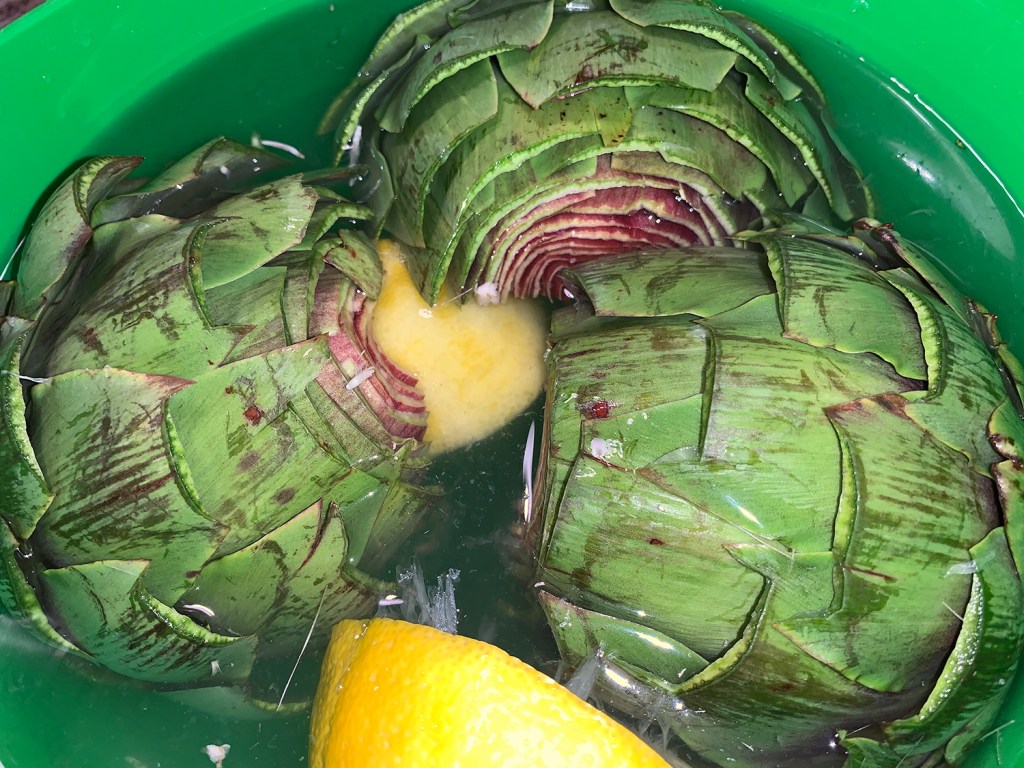
Let’s just say prepping these puppies was a little labor intensive, especially scooping out the fuzzy chokes. Instead of rubbing all of the cut areas, including each leaf to prevent the artichokes from turning brown, we acidulated them. This is done by filling a large bowl with 2 quarts of water, slicing a lemon in half, and squeezing the juice into the water, leaving the rinds submersed in the liquid.
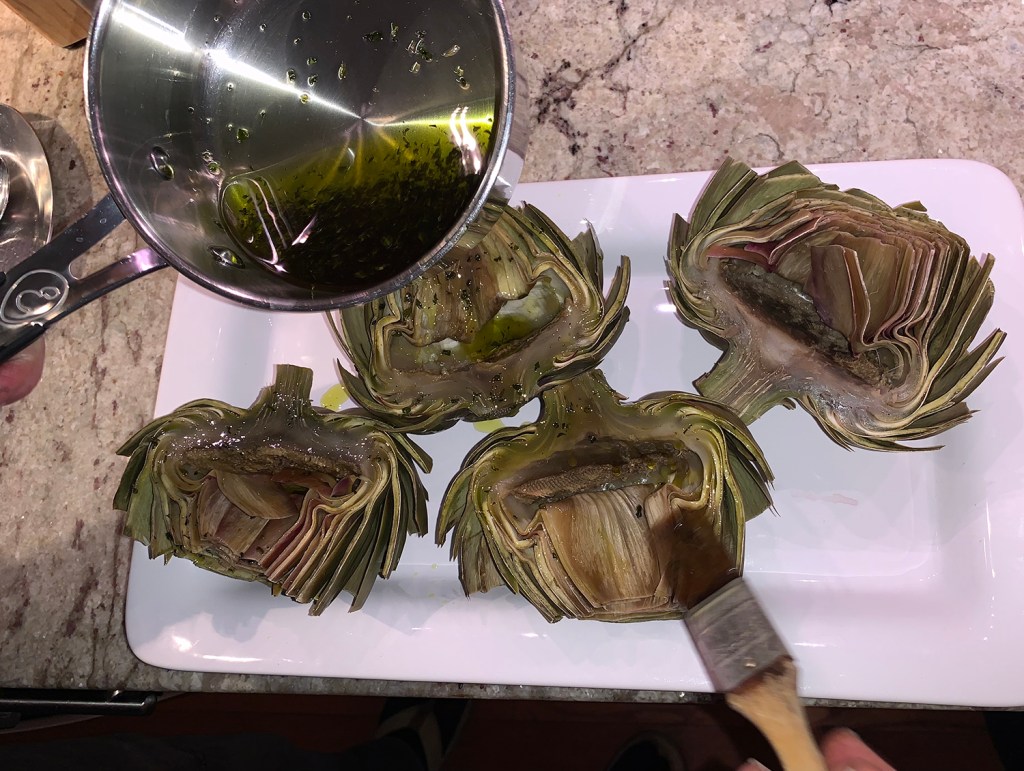
The grilling aspect is easy-peasy. Just prepare your grill for direct, high heat. Use a pastry brush to brush the artichoke all over with the herb infused oil, then sprinkle all over with salt. Place the artichoke halves cut-side-down on the grill grates, cover, and grill for 5 to 10 minutes, until you have nice grill mark on the cut sides of the artichokes. If desired, serve with mayonnaise, remoulade, or aioli.
1 Tbsp. chopped fresh herbs such as rosemary, oregano, thyme
1/3 cup extra virgin olive oil
2 cloves garlic, cut in half (no need to peel)
1 bay leaf
1 lemon, cut into wedges
2 to 4 large globe artichokes
Salt
Directions
Steep herbs in warm olive oil: Place chopped fresh herbs in a small bowl (not the bay leaf), cover with olive oil. Microwave on high heat for 30 seconds (or heat oil and herbs on the stovetop until warm). Let the herbs steep in the warm olive oil while you prepare the artichokes.
Prep the artichokes: Prepare a large pot with an inch of water at the bottom. Add the cut cloves of garlic and the bay leaf, and place a steamer rack in the pot.
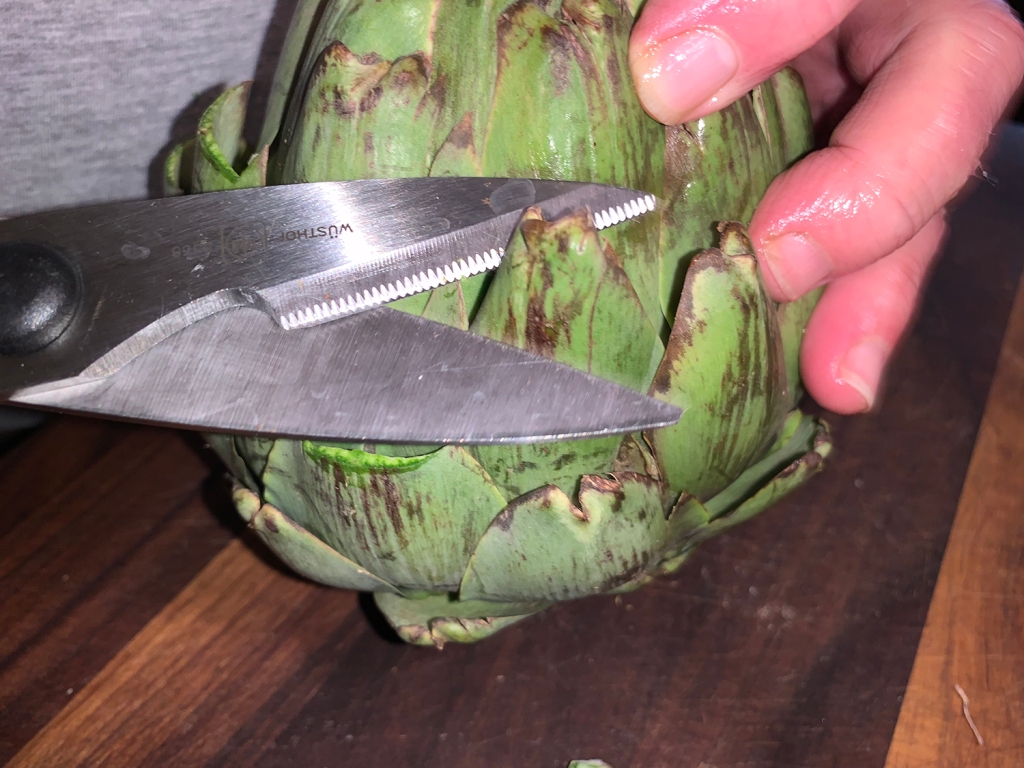
To prepare the artichokes, have lemon wedges ready. If you want a nice presentation, use scissors to snip away the pointy tips of the artichoke leaves. As you trim the artichokes, rub the cut areas with juice from the lemon wedges to prevent the artichokes from turning brown from oxidation.
Use a vegetable peeler to cut away the thick outer layer of the artichoke stems. Trim the stems to 2 inches from the base of the artichoke. Cut off and discard the top 1/2 inch of the artichokes. Cut the artichokes in half.
Scoop out the chokes and inner leaves: Use a strong metal spoon to scoop out the fuzzy chokes and the small inner artichoke leaves. Rub lemon juice all over the inside and exposed cut areas of the artichokes.
Steam the artichokes: Heat the water in the large pot with a steamer rack on high. When it comes to a boil, reduce the heat to medium high and place the artichoke halves, cut side down on the steam rack.
Cover. Steam for 20 minutes (less or more, depending on the size of the artichokes), until you can easily pull off the outer leaves, and you can pierce the heart easily with a knife.
The artichokes can be just a tiny bit less cooked than would be typically perfect for steamed artichokes, as you will be cooking them further on the grill.
Grill the artichokes: Prepare your grill for direct, high heat. Use a pastry brush to brush the artichoke all over with the herb infused oil. Sprinkle all over with salt.
Place the artichoke halves cut-side-down on the grill grates. Cover, and grill for 5 to 10 minutes, until you have nice grill mark on the cut sides of the artichokes.
Serve: Sprinkle the cut sides with more lemon juice. Serve alone or with mayonnaise, remoulade, or aioli.
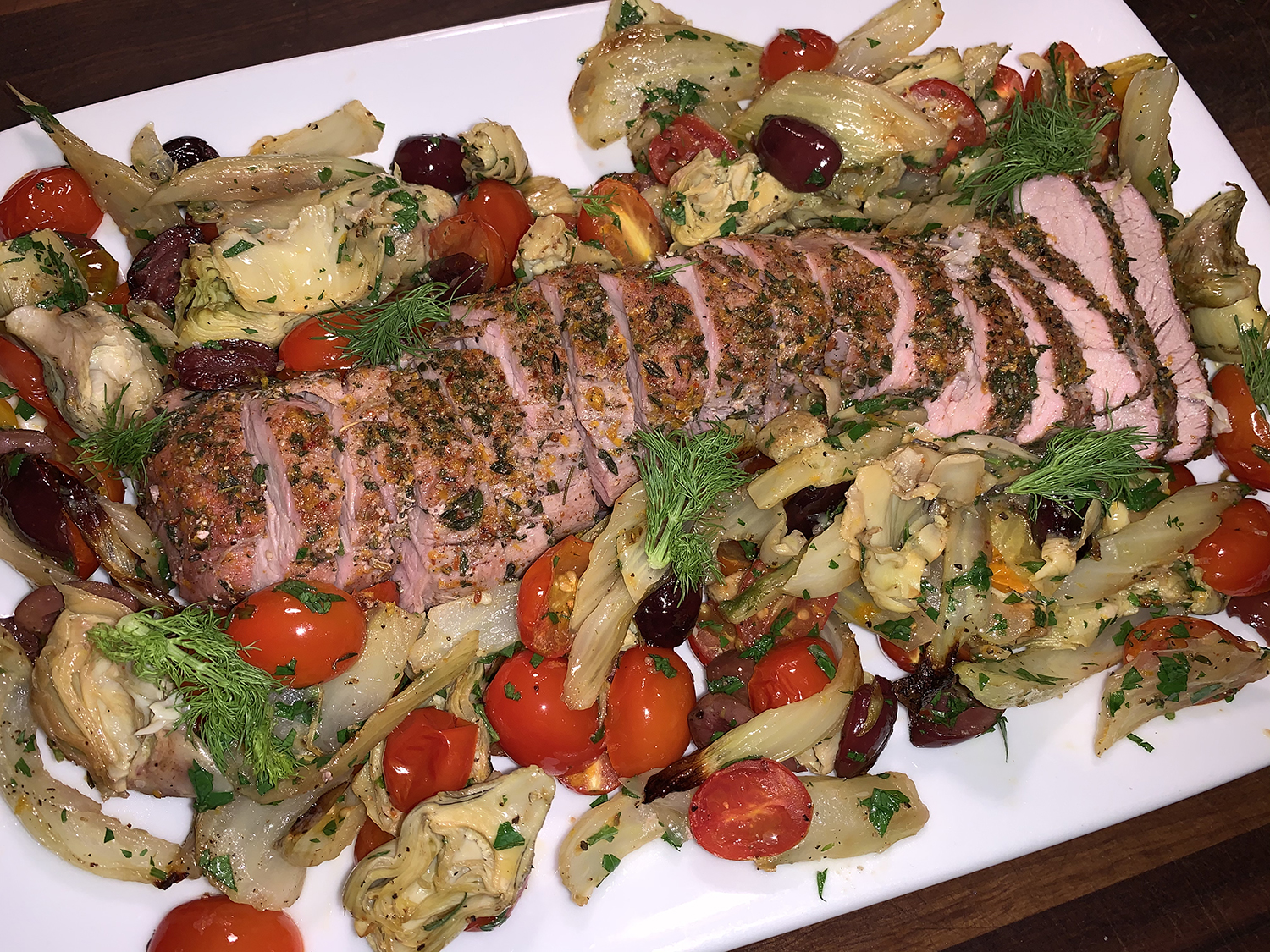
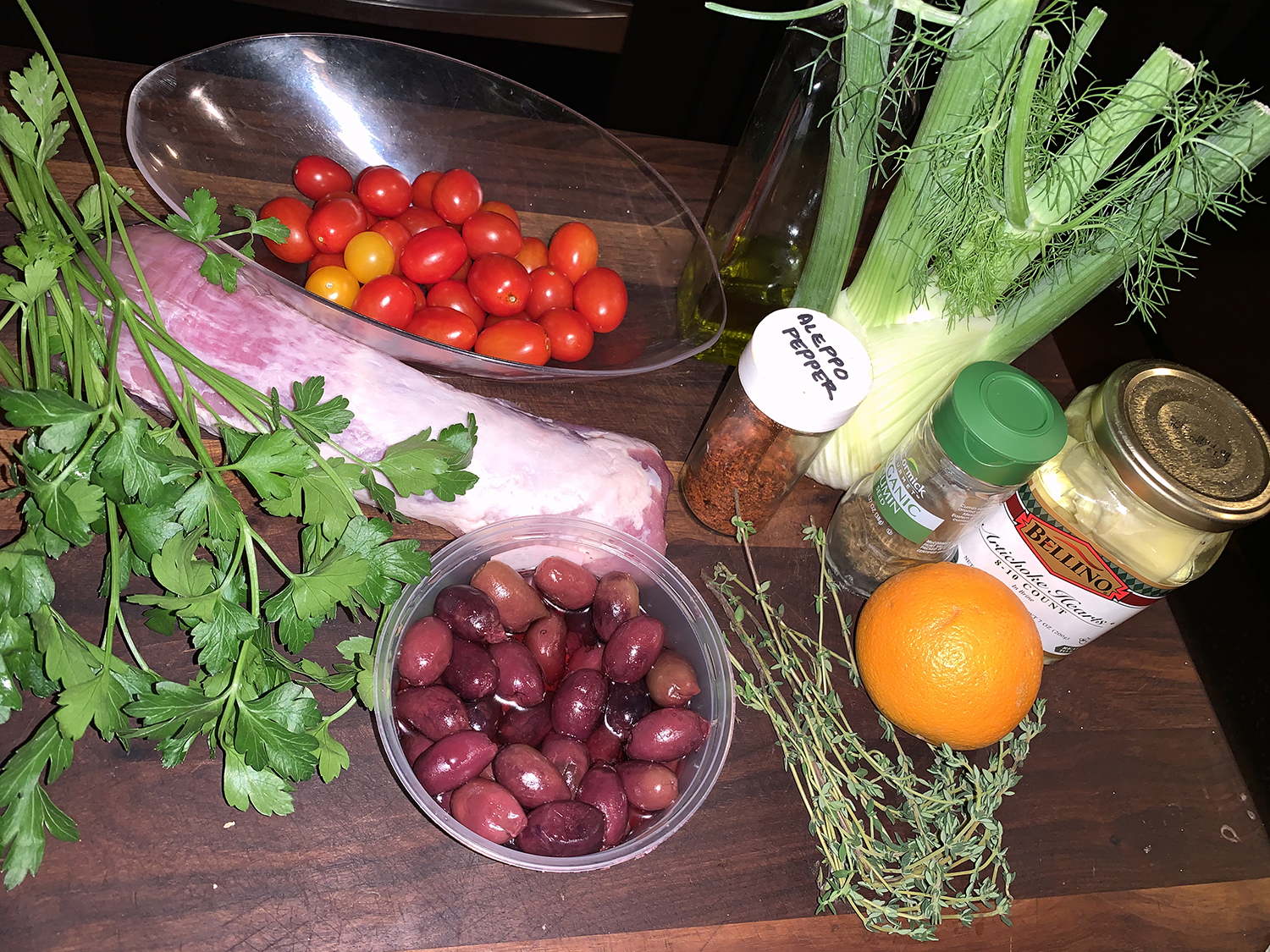
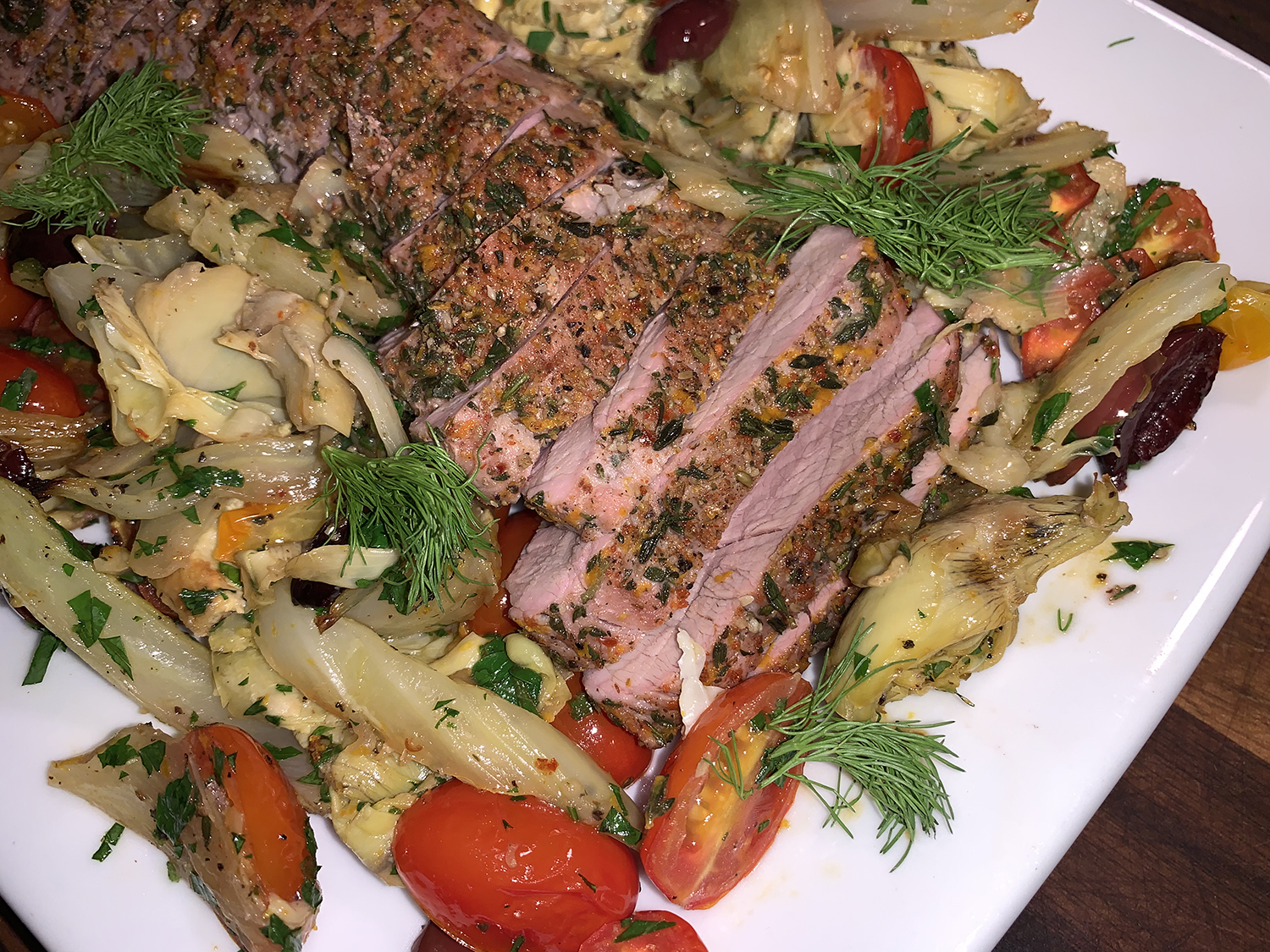
Treat yourself like company with this Mediterranean-inspired Spice-Rubbed Pork Tenderloin with Fennel, Tomatoes, Artichokes and Olives recipe. In less than an hour, this one pan wonder works well for a weeknight dinner. It’s a mash-up from America’s Test Kitchen and Molly Stevens cookbooks. The revised recipe noted below serves six, but we halved it for just the two of us.
Cooking the tenderloins until buttery-smooth is key, and roasting them atop a bed of vegetables buffers the heat to ensure juicy meat all the way through. Rather than searing the meat, it is rubbed with a spice mixture. The Mediterranean seasoning inspires the selection of vegetables: sweet, delicately flavored fennel, earthy artichoke hearts, and briny olives.
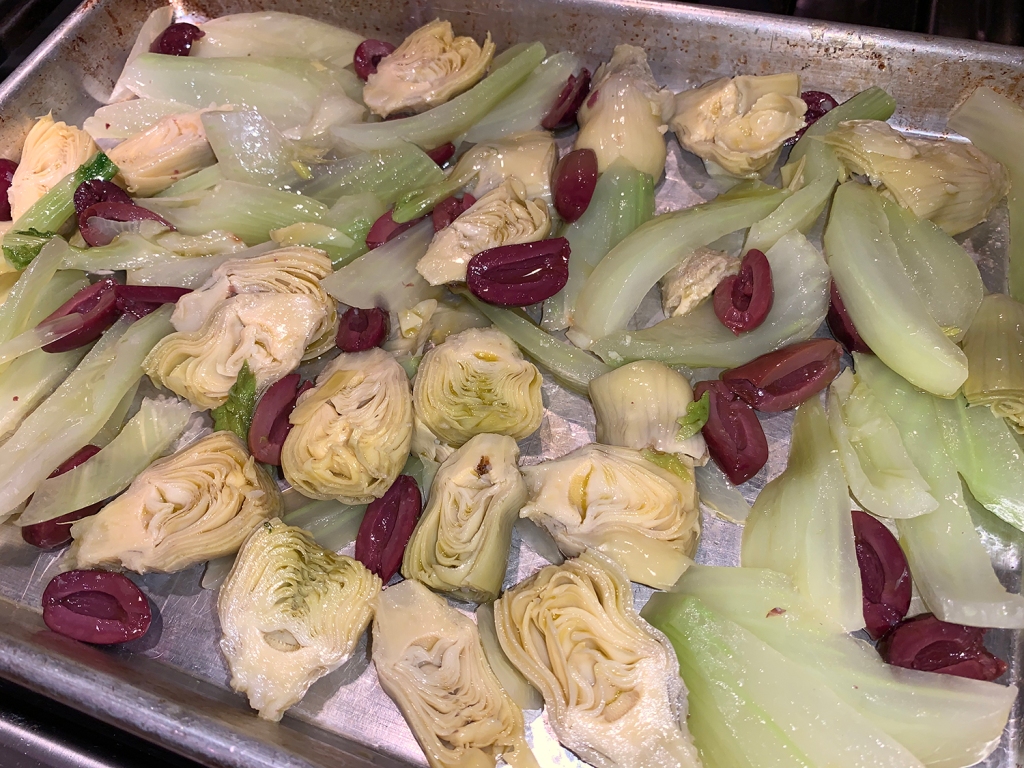
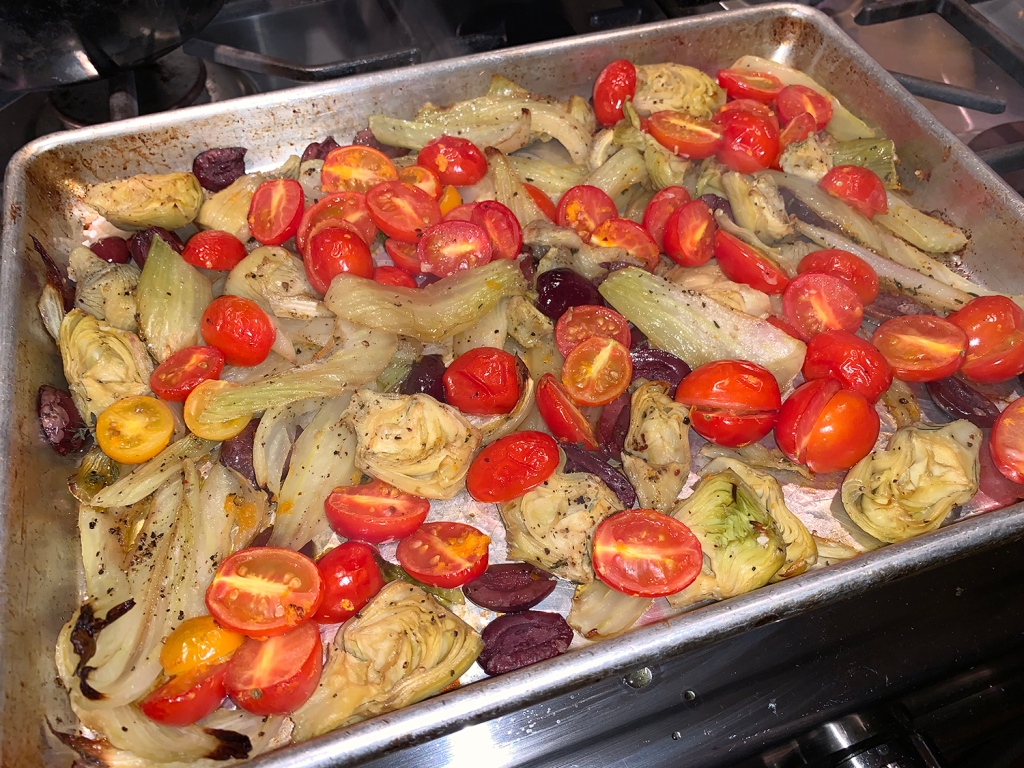
After softening the fennel in the microwave, toss it with the other vegetables and olive oil, and spread the mixture into the roasting pan, placing the tenderloins on top. The vegetables are nearly cooked when the pork was done, so remove the meat, add in juicy halved cherry tomatoes and orange zest, and let the vegetables finish in the oven while the meat rests.
Spice-Rubbed Pork Tenderloin with Fennel, Tomatoes, Artichokes and Olives
2 large fennel bulbs, stalks discarded, bulbs halved, cored, and cut into ½-inch-thick strips
12 oz. frozen artichoke hearts, thawed and patted dry; or 6 oz. jarred packed in brine
½ cup pitted kalamata olives, halved
3 Tbsp. extra-virgin olive oil
18 oz. cherry tomatoes, halved
2 Tbsp. minced fresh parsley
Directions
Adjust oven rack to lower-middle position and heat oven to 450°. Pat pork dry with paper towels.
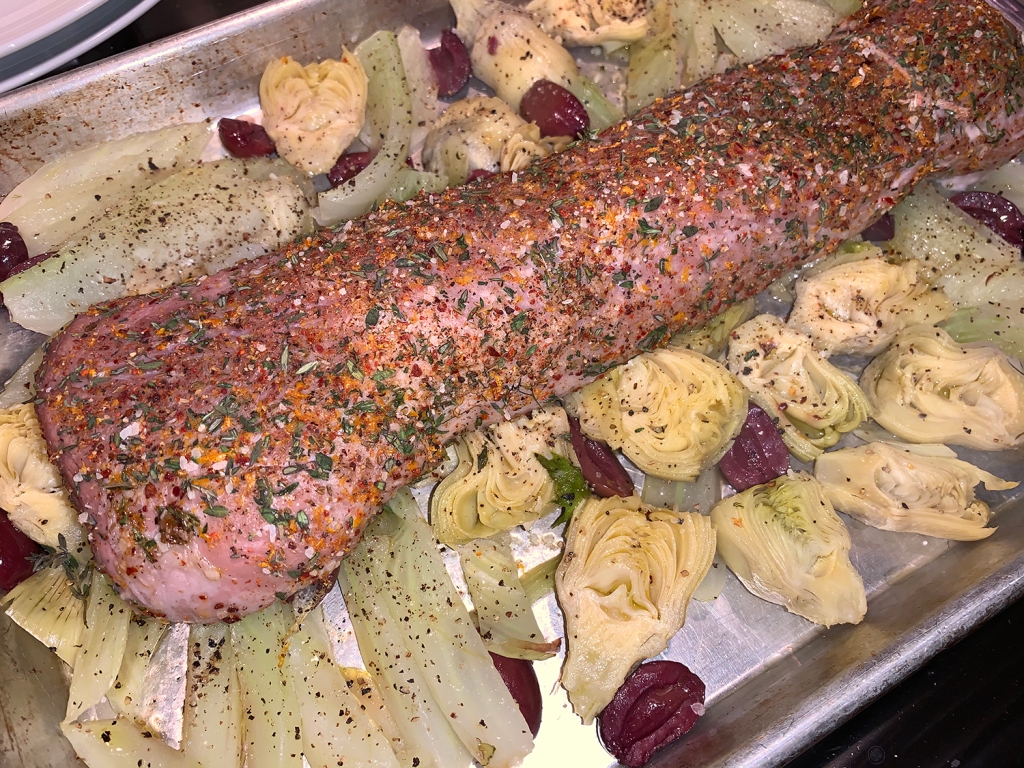
In a small bowl, combine thyme, 2 teaspoons of the orange zest, cumin, pepper flakes, 3/4 teaspoon salt, and several grinds of black pepper. Combine thoroughly and rub all over both tenderloins.
Combine fennel and 2 tablespoons water in bowl, cover, and microwave until softened, about 5 minutes; drain well. Toss drained fennel, artichokes, olives, and oil together in bowl and season with salt and pepper.
Spread vegetables into 16 by 12-inch roasting pan and lay pork on top. Roast until pork registers 140 to 145 degrees, 25 to 30 minutes, turning tenderloins over halfway through roasting.
Remove pan from oven. Transfer pork to cutting board, tent loosely with aluminum foil, and let rest for 10 minutes.
Meanwhile, stir cherry tomatoes and remaining teaspoon orange zest into vegetables and continue to roast until fennel is tender and tomatoes have softened, about 10 minutes more.
Remove pan from oven. Stir parsley into roasted vegetables. Slice pork into ½-inch-thick slices and serve with vegetables.






























 Accounting for Taste