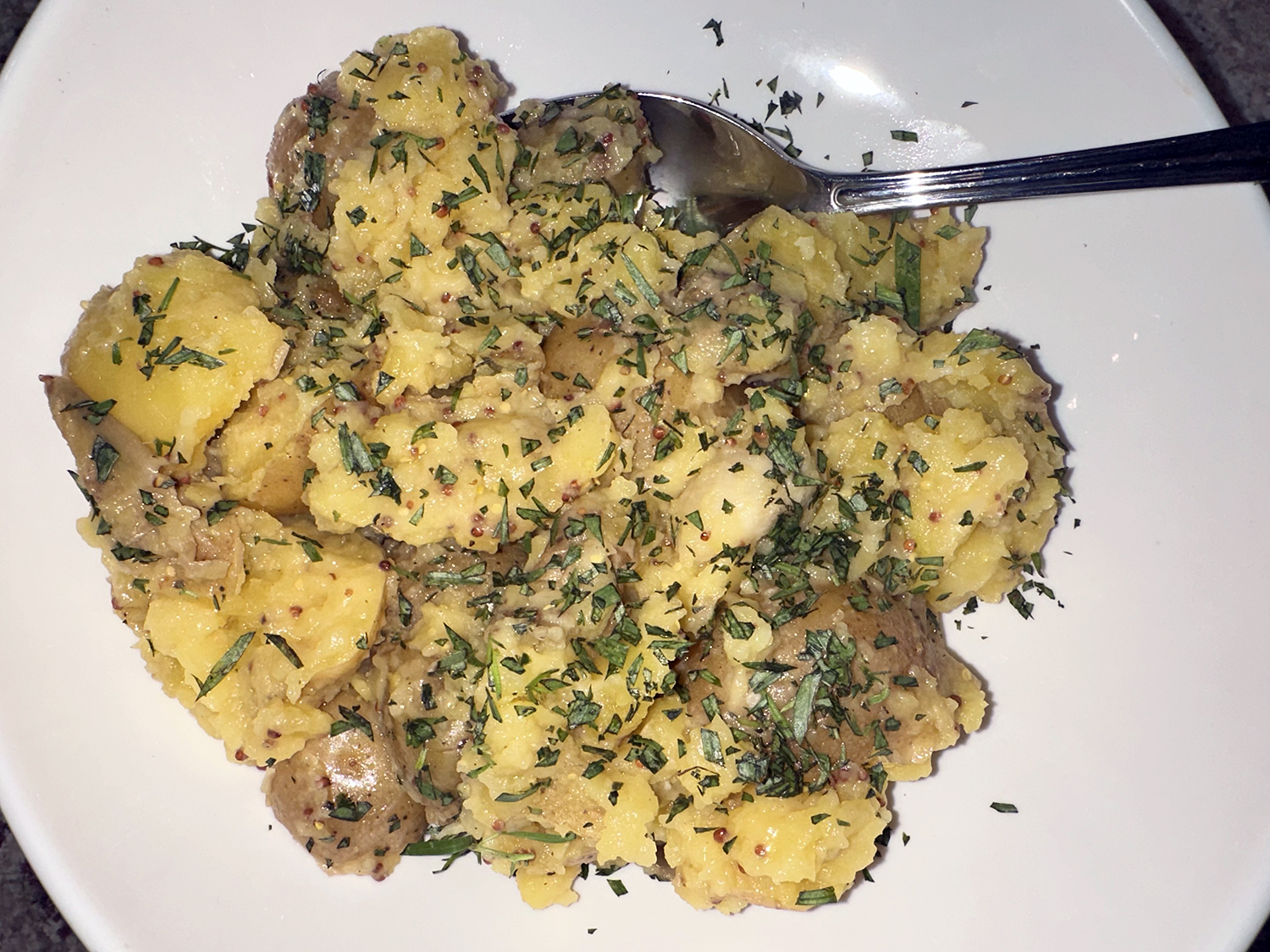
What if you could get the creamy interiors produced by steaming baby potatoes and the browned exteriors produced by roasting—without doing either of those things? Well, we just had to find out…
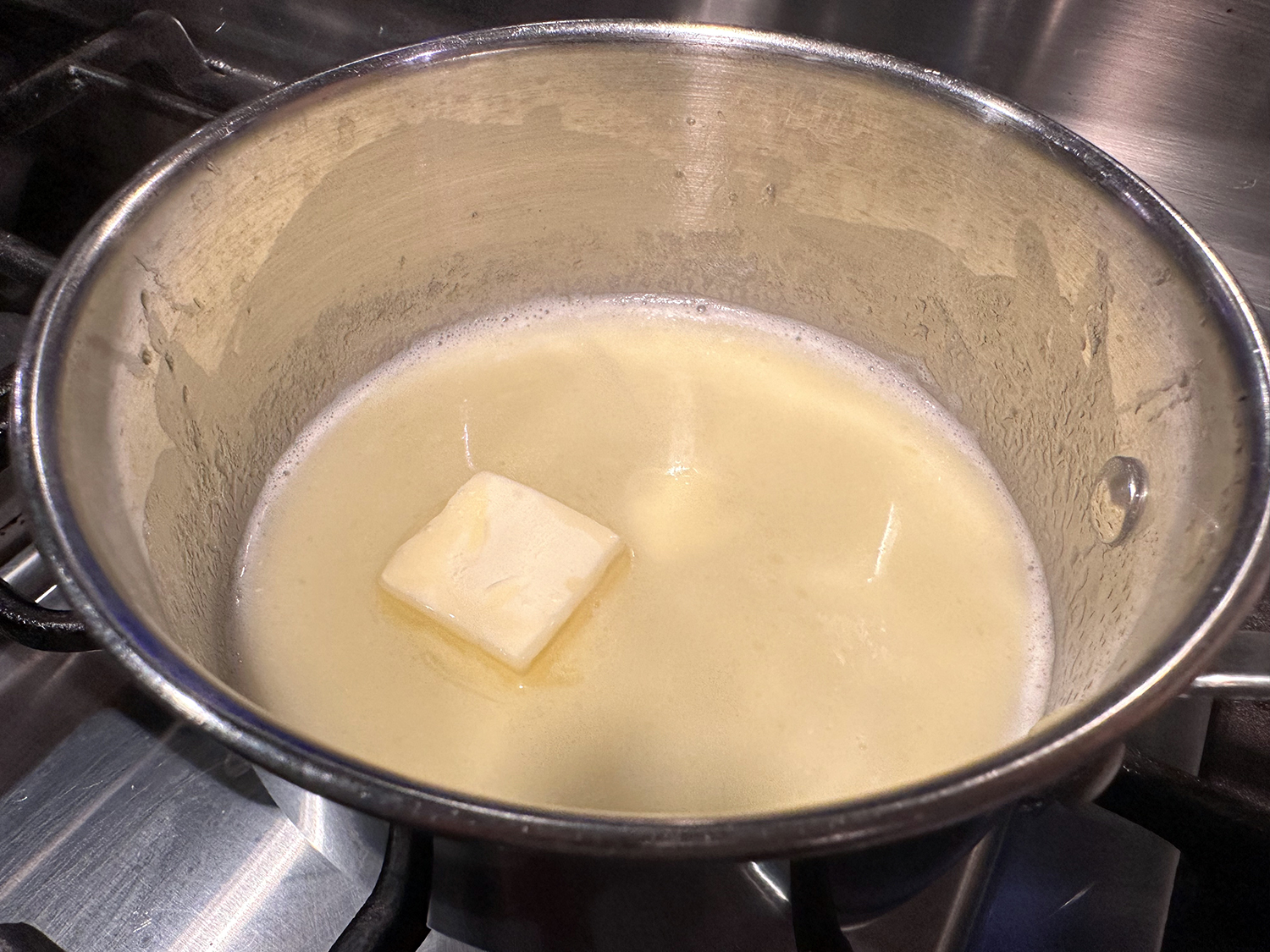
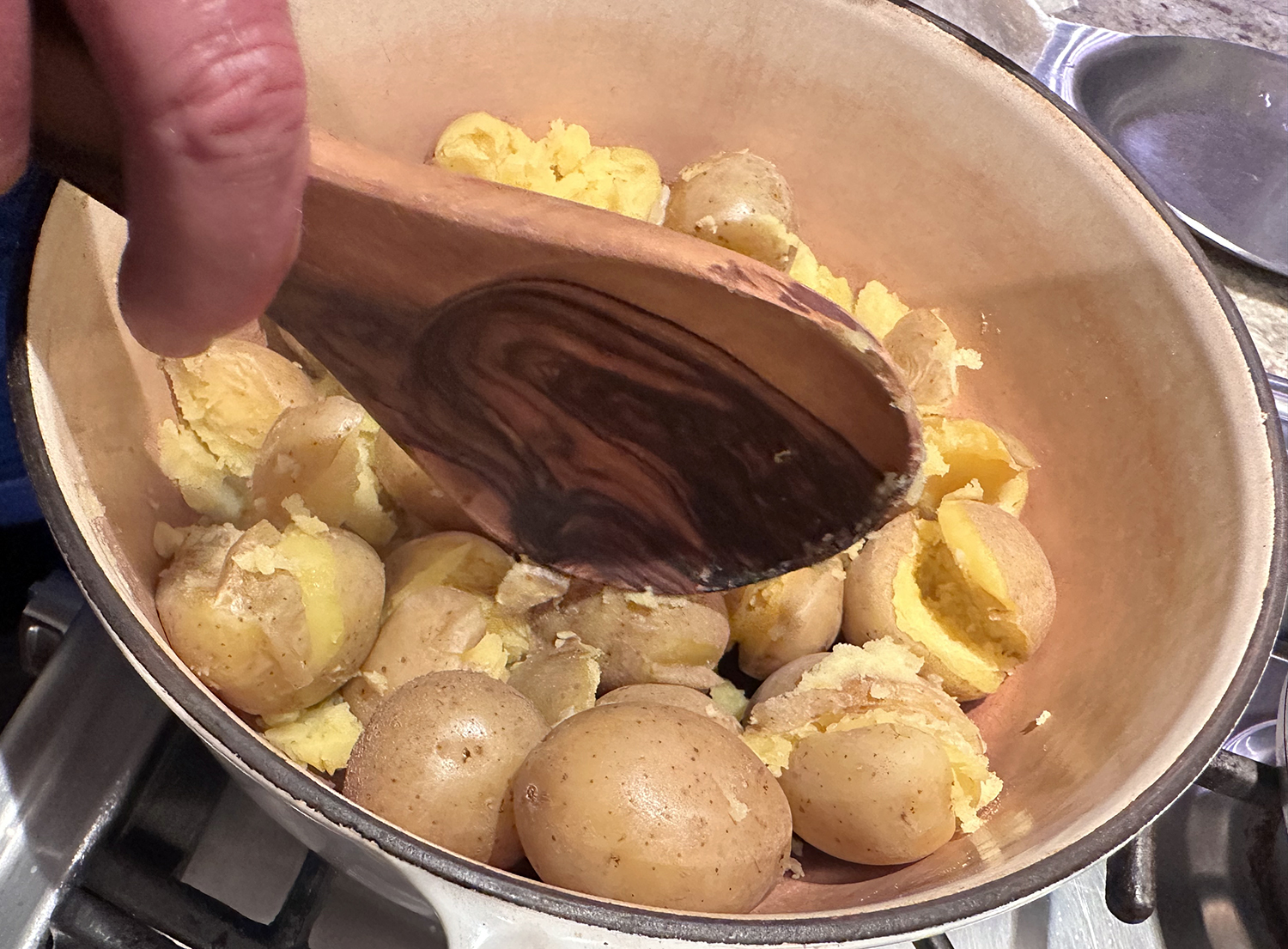
This is a creative recipe for a simple, one-pot potato side dish that features the benefits of both boiling and roasting. Halved small potatoes (about 1 1/2 inches in diameter) are combined with butter, and salted water in a 12-inch skillet. Then they are simmered until the potatoes turn creamy and the water fully evaporates.
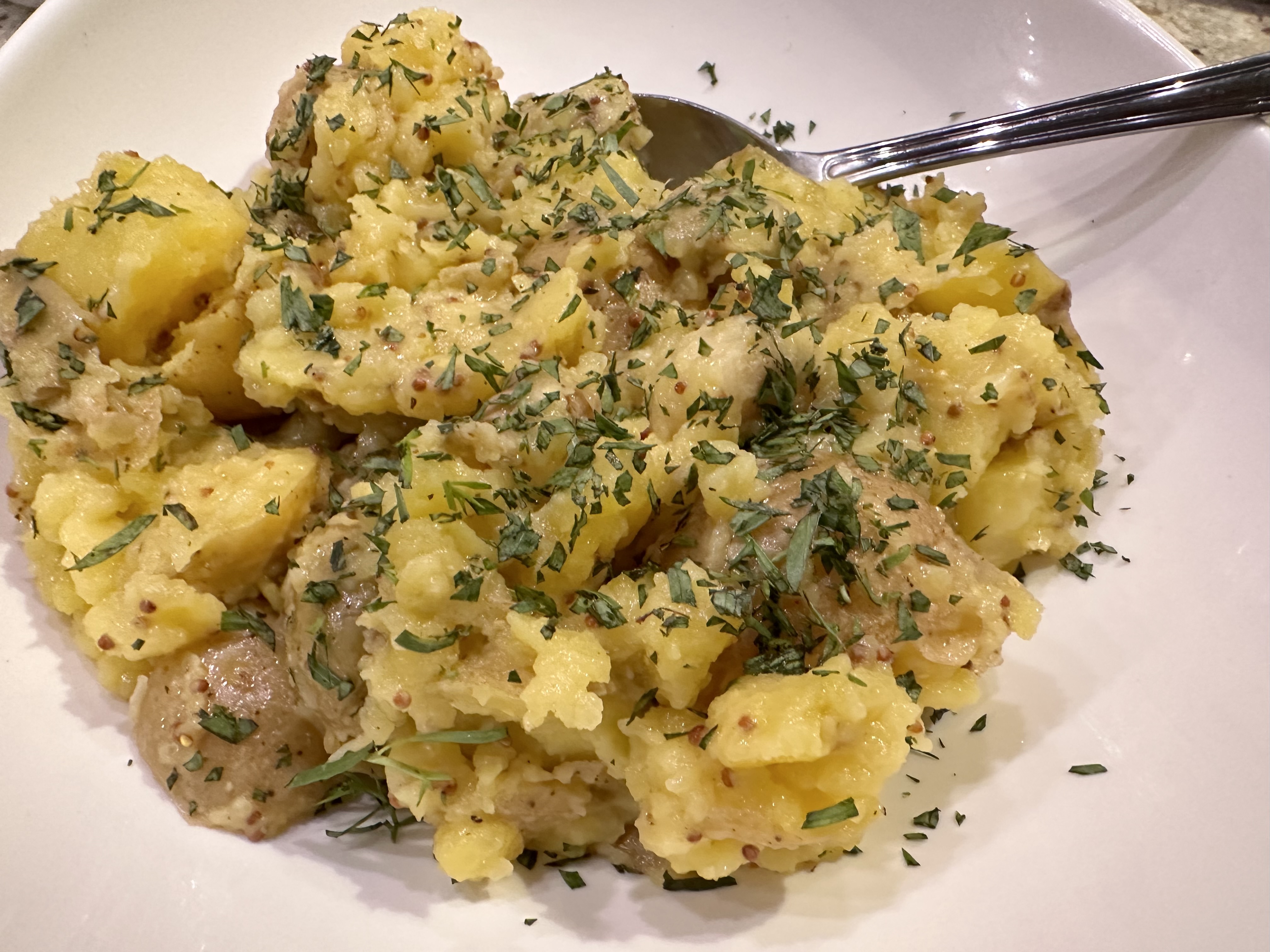
In the then-dry skillet, the potatoes and butter are left alone to fry and develop great flavor and color. Subtle aromatics like thyme and garlic balance well with last-minute additions like Dijon mustard. Potatoes turn nicely browned and the dressing is just enough to give them good flavor.
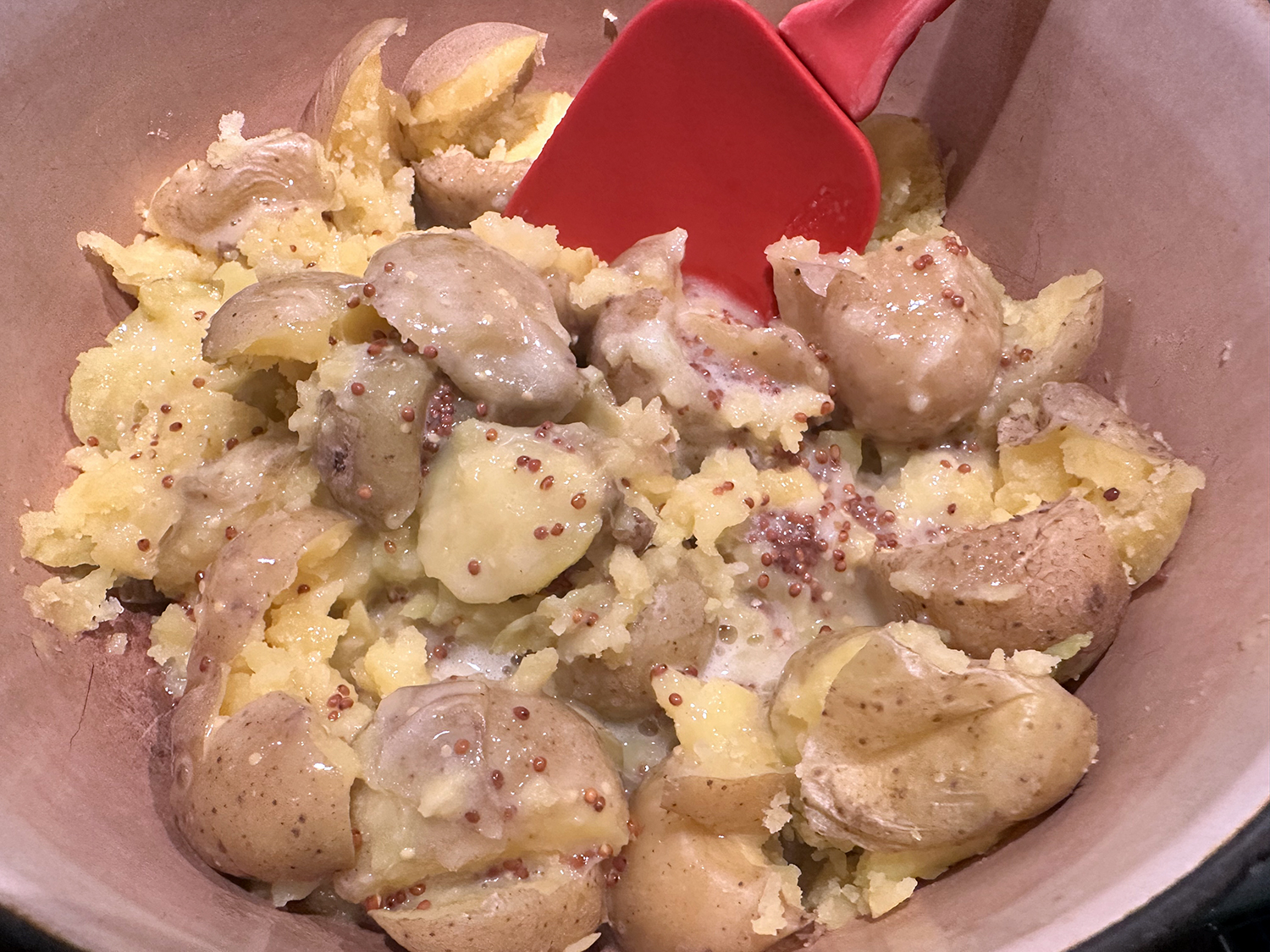
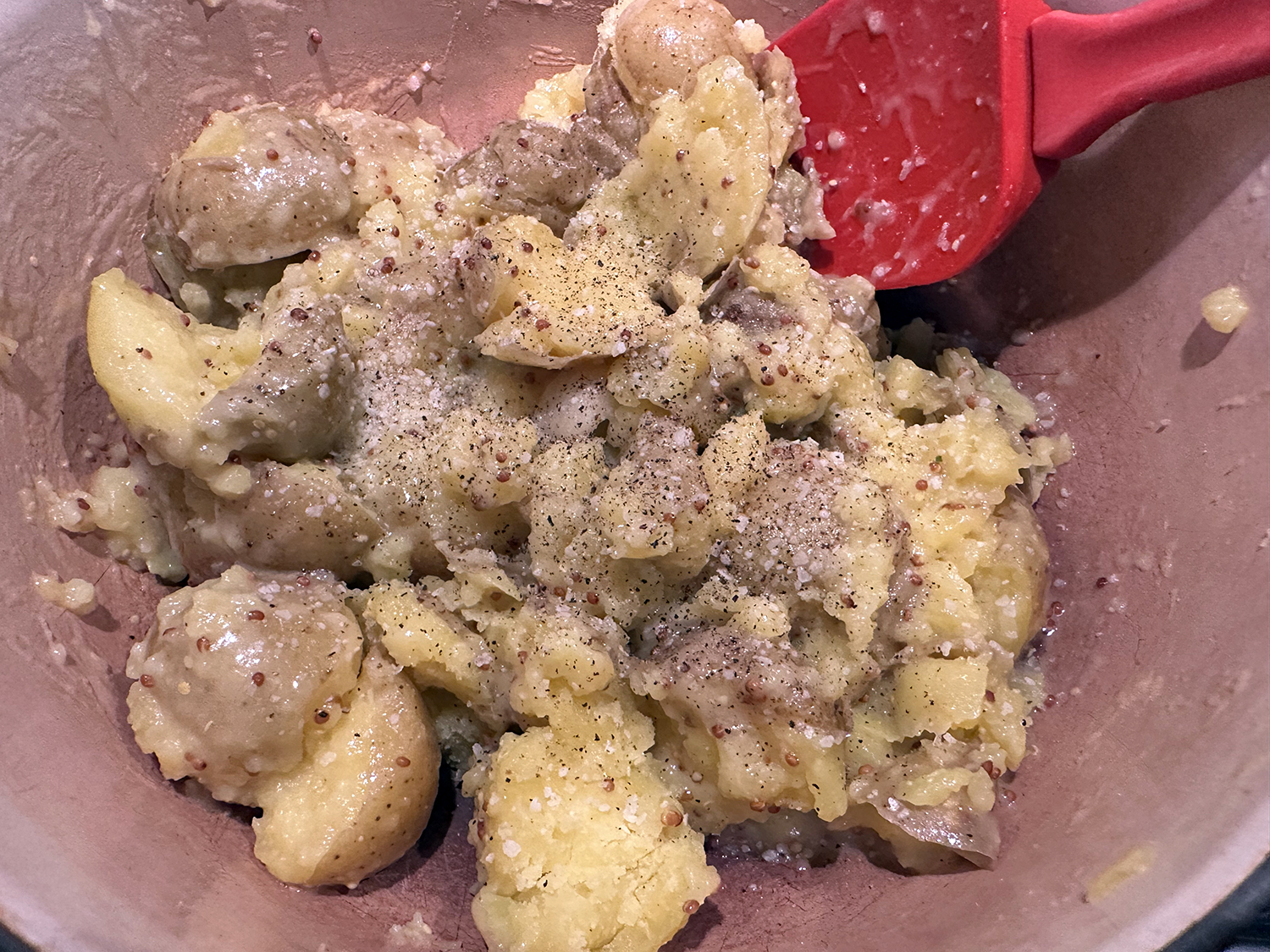
As you may have noticed, we did not use red potatoes due to the fact that the supermarket was only carrying large red spuds. Therefore, we opted for small yellow potatoes. In another twist, whole grain mustard was substituted for the Dijon.
1 ½ lbs. small red potatoes, unpeeled, halved; about 1 1/2 inches in diameter
2 cups water
3 Tbsp. unsalted butter
3 garlic cloves, peeled
3 sprigs fresh thyme
¾ tsp. salt
2 tsp. Dijon mustard
¼ tsp. pepper
1 Tbsp. minced fresh tarragon
Directions
Arrange potatoes in single layer, cut side down, in 12-inch nonstick skillet. Add water, butter, garlic, thyme, and salt and bring to simmer over medium-high heat. Reduce heat to medium, cover, and simmer until potatoes are just tender, about 15 minutes.
Remove lid and use slotted spoon to transfer garlic to cutting board; discard thyme. Increase heat to medium-high and vigorously simmer, swirling pan occasionally, until water evaporates and butter starts to sizzle, 15 to 20 minutes. When cool enough to handle, mince garlic to paste. Transfer paste to bowl and stir in mustard and pepper.
Continue to cook potatoes, swirling pan frequently, until butter browns and cut sides of potatoes turn spotty brown, 4 to 6 minutes longer. Off heat, add garlic mixture and tarragon and toss to thoroughly coat. Serve immediately.
For this recipe, we were beta testers for America’s Test Kitchen (ATK). As part of the rules, we were unable to post anything until it was published in their magazine and online; which was six months after the fact.
In the same vein as French Onion Soup, the buttery, sweet savoriness of carabaccia, Tuscany’s centuries-old red onion soup, introduces you to an entirely different side of allium complexity.
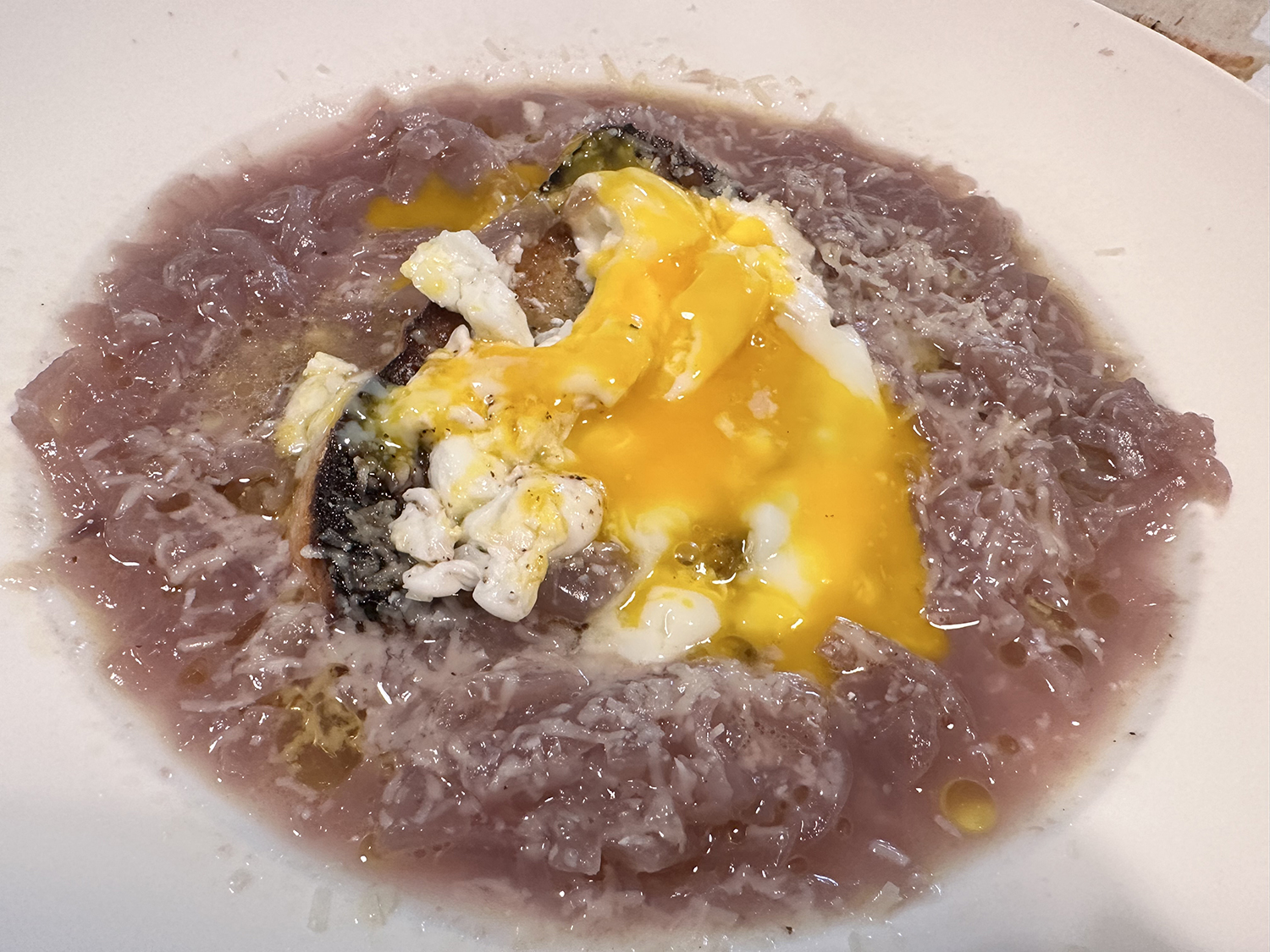
As ATK explains, Carabaccia is a simple, centuries-old Tuscan onion soup made by softening (but not browning) and then simmering loads of onions in water until the liquid is gently savory-sweet; the soup is served with toasted bread, grated Parmesan or Pecorino, and perhaps a poached egg.
For this take, 2 pounds of thin-sliced red onions are softened by first simmering them covered, with a little water, salt, and olive oil, so that the moist heat would encourage them to quickly collapse. Then they are briefly cooked uncovered to evaporate the liquid and concentrate their flavor; finally they are simmered with water, sage, and bay leaf to infuse the broth with the onions’ sweet savor.
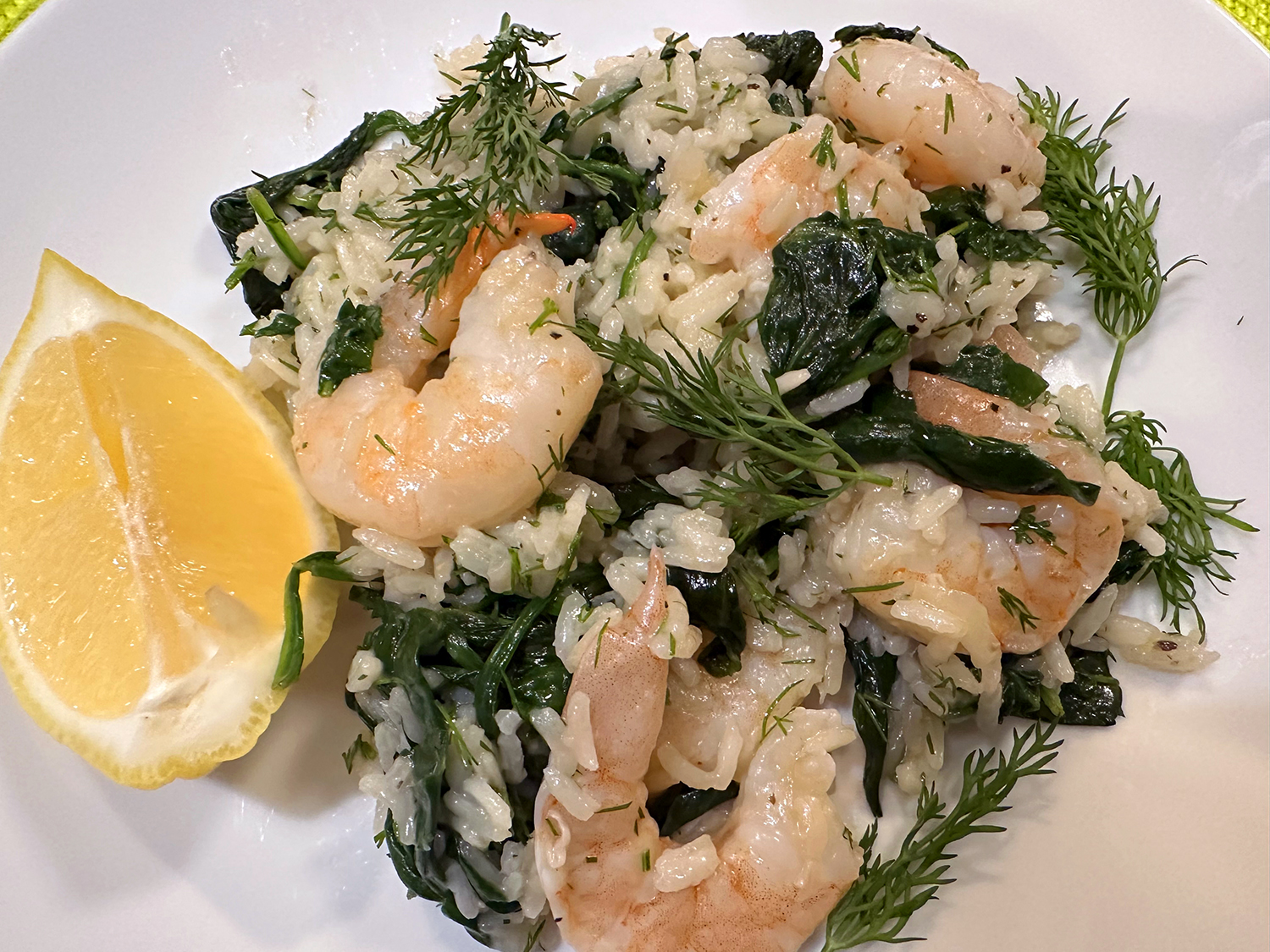
Stirring grated Parmesan into the soup enhances its flavor. While the soup simmers, you broil slices of crusty bread and poach the eggs. To serve, placed a slice of toast in each bowl and top with a poached egg; then ladle the soup around the bowl.
Carabaccia is traditionally made with water but feel free to use your favorite chicken or vegetable broth in Step 2. A rasp grater works well for grating the Parmesan. Serve this soup with a poached egg spooned on top of the toast before the soup is ladled into the bowl.
2 lbs. red onions, halved and sliced through root end ¼ inch thick
5 cups water, divided; OR chicken or vegetable broth
3 Tbsp. extra-virgin olive oil, divided
¾ tsp. table salt, divided
2 sprigs fresh sage
1 bay leaf
½ cup (1 oz.) finely grated Parmesan cheese, plus extra for serving
4 poached eggs
4 (½-inch-thick) slices thick-crusted country bread
Directions
Bring onions, 1 cup water, 2 tablespoons oil, and ½ teaspoon salt to boil in Dutch oven over high heat. Adjust heat to medium, cover, and cook at rapid simmer, stirring occasionally, until onions have fully softened and collapsed, 18 to 20 minutes. Uncover and continue to cook, stirring occasionally, until liquid evaporates (onions should not brown), 6 to 8 minutes. (Onions can be refrigerated for up to 3 days or frozen for up to 1 month.)
Add sage sprigs, bay leaf, remaining 4 cups water, and remaining ¼ teaspoon salt. Bring to boil, adjust heat to gentle simmer and cook, covered, for 30 minutes. Remove sage sprigs and bay leaf. Stir in Parmesan. Season with salt and pepper to taste.
Meanwhile, adjust oven rack about 6 inches from broiler element and heat broiler. Place bread on aluminum foil-lined rimmed baking sheet, drizzle with remaining 1 tablespoon oil and season with salt and pepper. Broil until browned, crisp, and starting to char at edges, 2 to 4 minutes. Flip bread and continue to broil until bottom is starting to char, 2 to 4 minutes longer.
Place 1 slice bread in bottom of each individual bowl. Top bread with poached egg. Ladle soup into bowl. Serve, passing Parmesan separately.
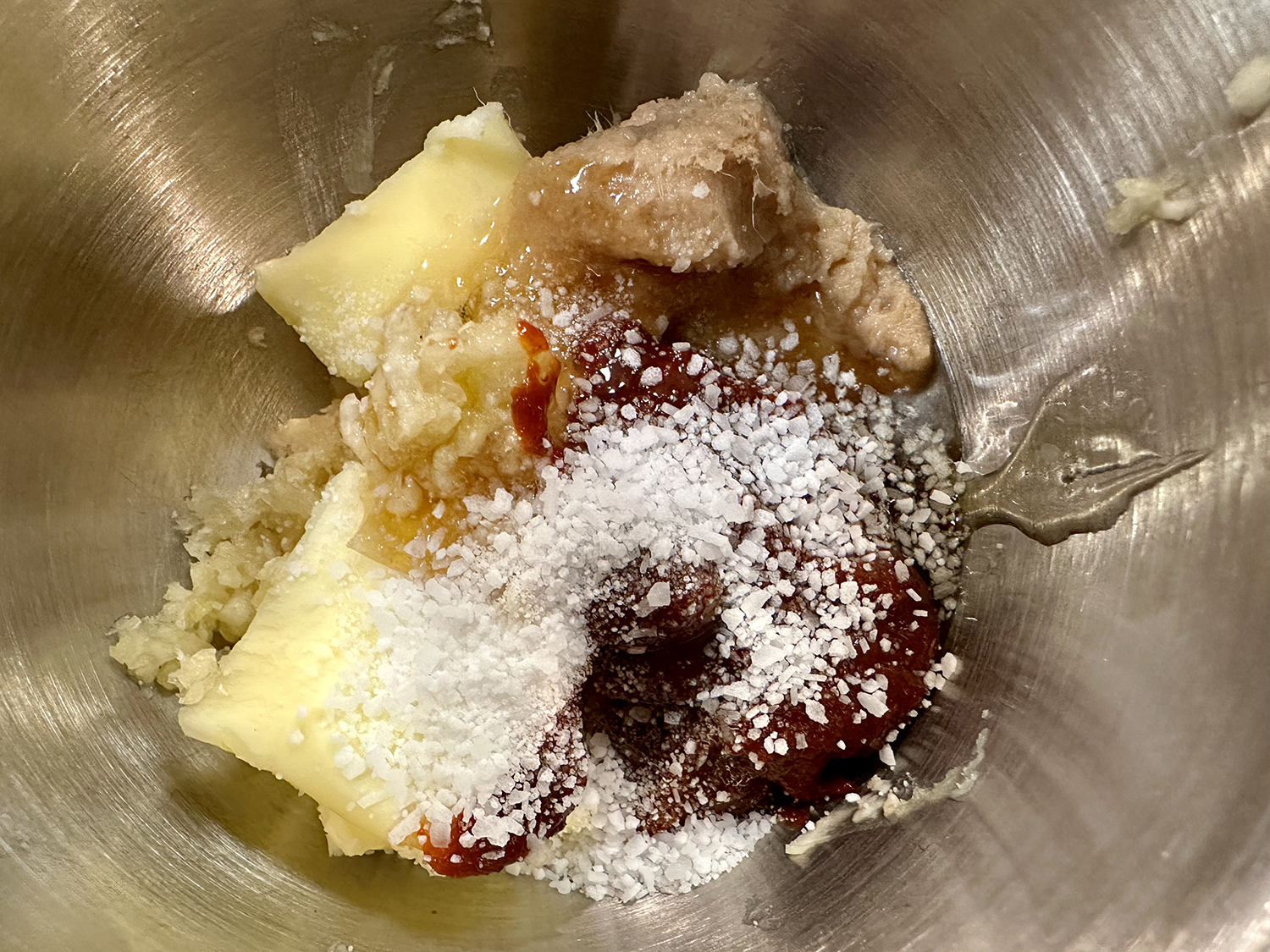
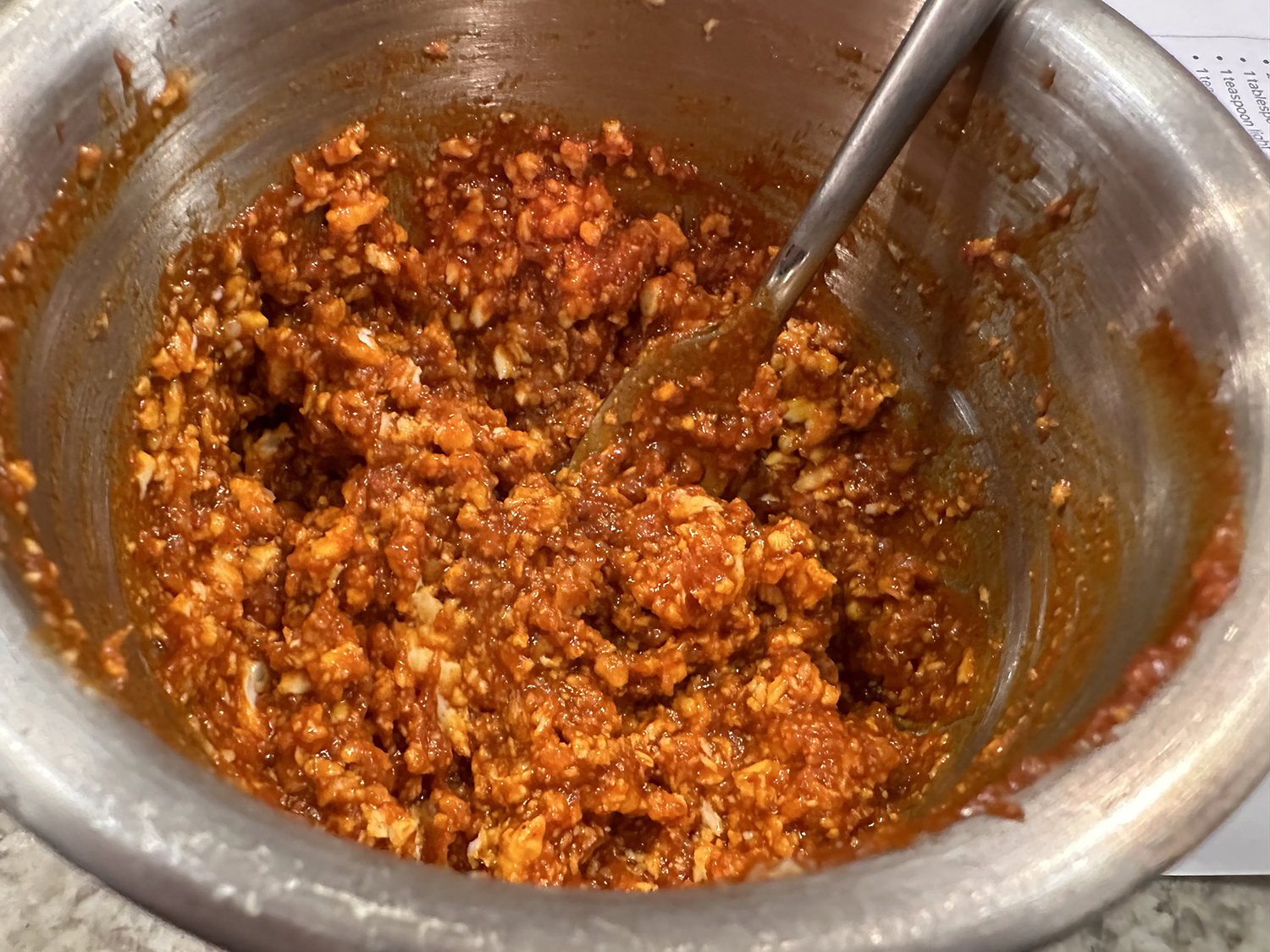
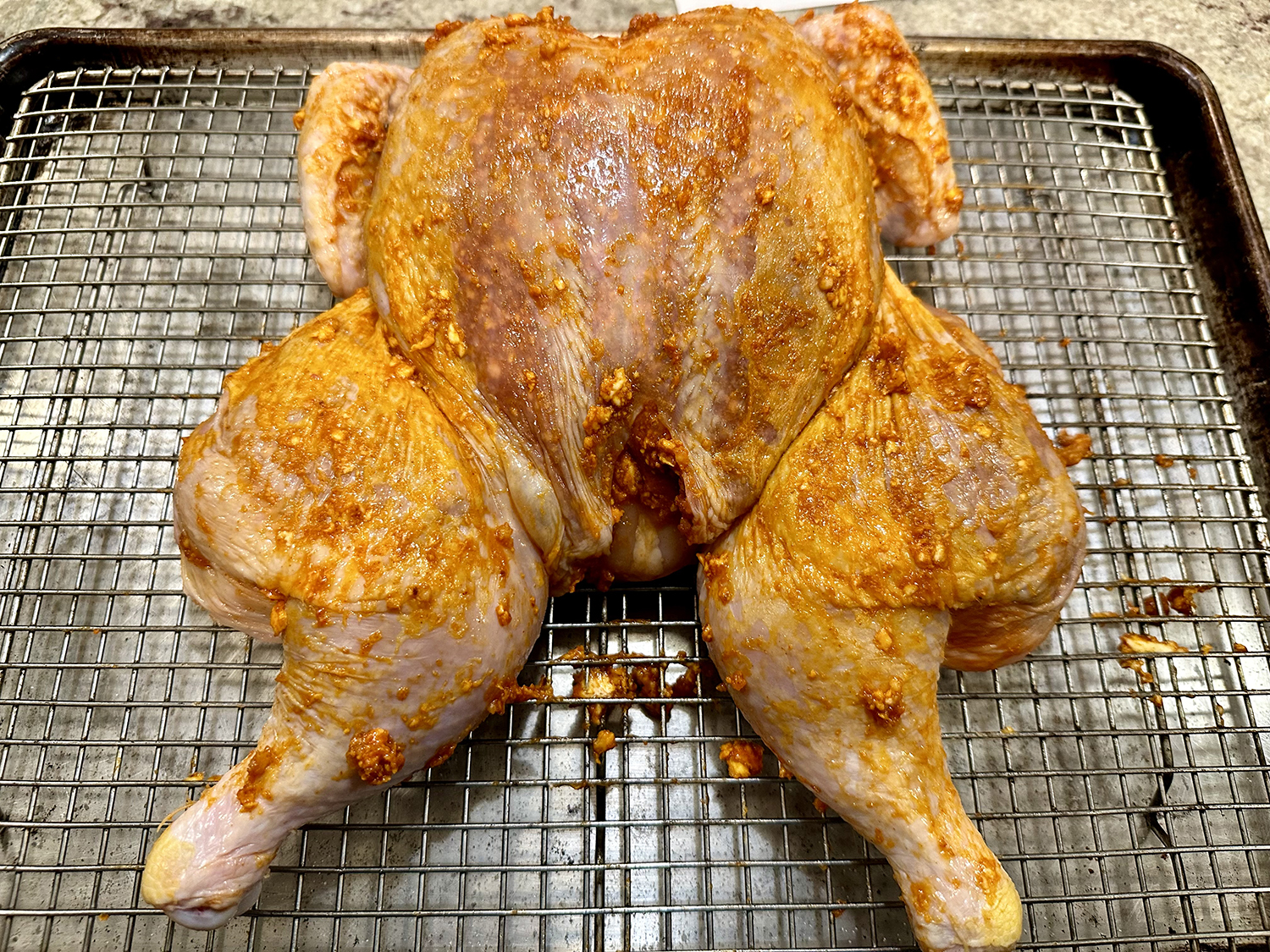
Yet another juicy roasted chicken recipe to add to your growing list. In my humble opinion, there is always room for one more fabulous juicy, flavorful chicken recipe. For this, a Korean-inspired seasoning paste elevates a simple roast chicken with spicy-sweet flavor. The blend includes softened butter, gochujang and honey, plus fresh ginger and garlic, which mellow and sweeten as they cook.
The paste is smeared under the bird’s skin, directly on the meat, so it takes on the bold flavors. Gochujang, one of our pantry staples, is a fermented chili paste commonly used in Korean cooking; it is loaded with spiciness, a hint of sweetness and lots of umami. You’ll find it in the international section of the supermarket or in Asian grocery stores.
Serve with steamed rice. Or, as in our case, with sides of roasted Brussels Sprouts and Spicy Black Bean, Twice-Cooked Potatoes that have an Asian bent.
Spatchcocked Roasted Chicken with Gochujang Butter
Heat the oven to 425°F with a rack in the middle position. Set a wire rack in a rimmed baking sheet. In a small bowl, stir together the butter, gochujang, ginger, garlic, honey and ½ teaspoon salt; set aside.
Place the chicken breast down on a cutting board. Using sturdy kitchen shears, cut along both sides of the backbone, end to end; remove the backbone and discard. Spread open the chicken, then turn it breast up. Using the heel of your hand, press down firmly on the thickest part of the breast until the wishbone snaps.
Season the underside of the chicken with salt, then place it breast up on the wire rack. With your fingers, carefully loosen the skin from the meat on the breast and thighs. Using a spoon, distribute the butter mixture under the skin in those areas, then massage the skin to evenly spread the mixture and rub it into the flesh. Rub any remaining gochujang paste on the outside of the bird and season the skin side with salt, then tuck the wing tips to the back.
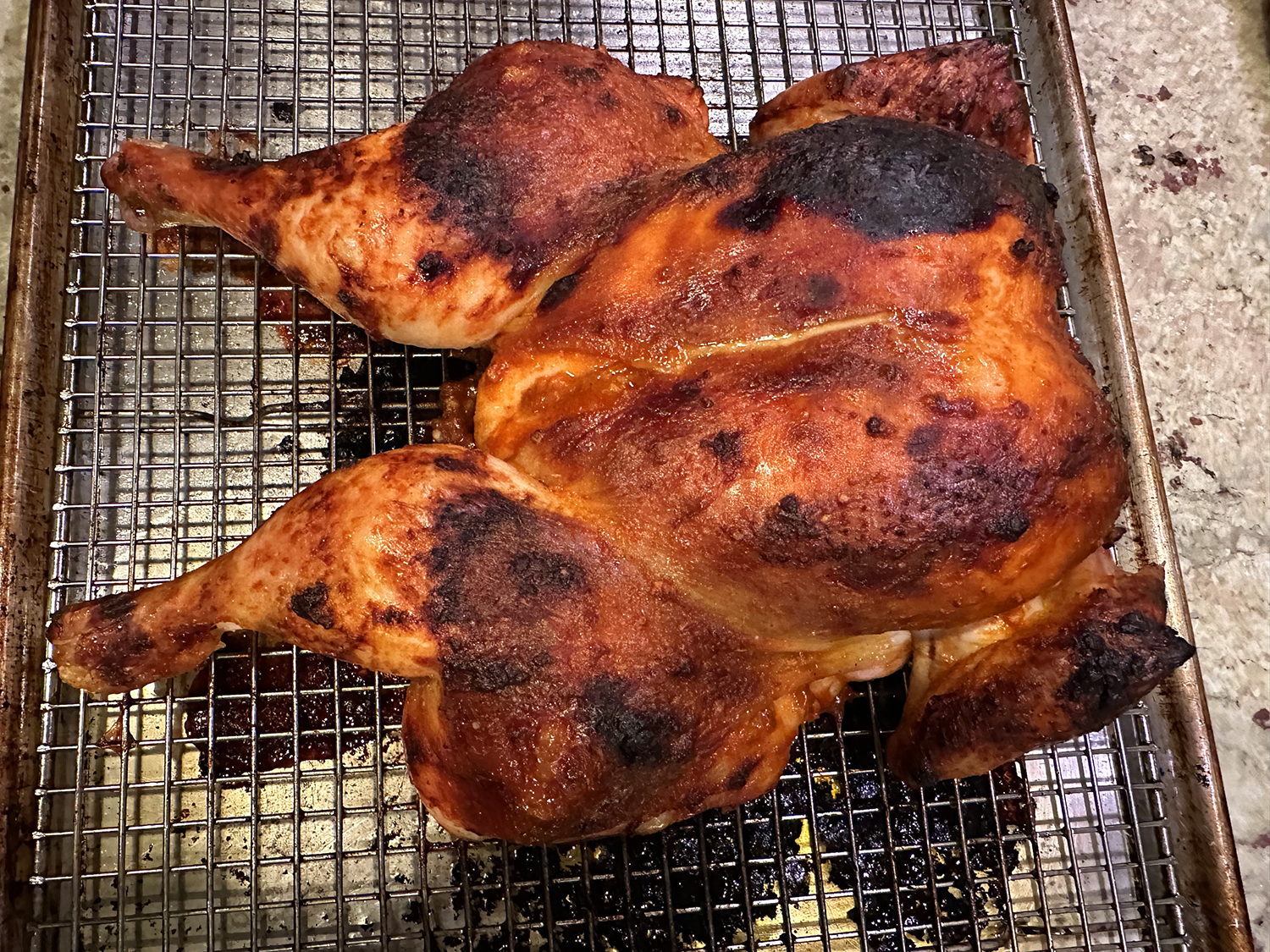
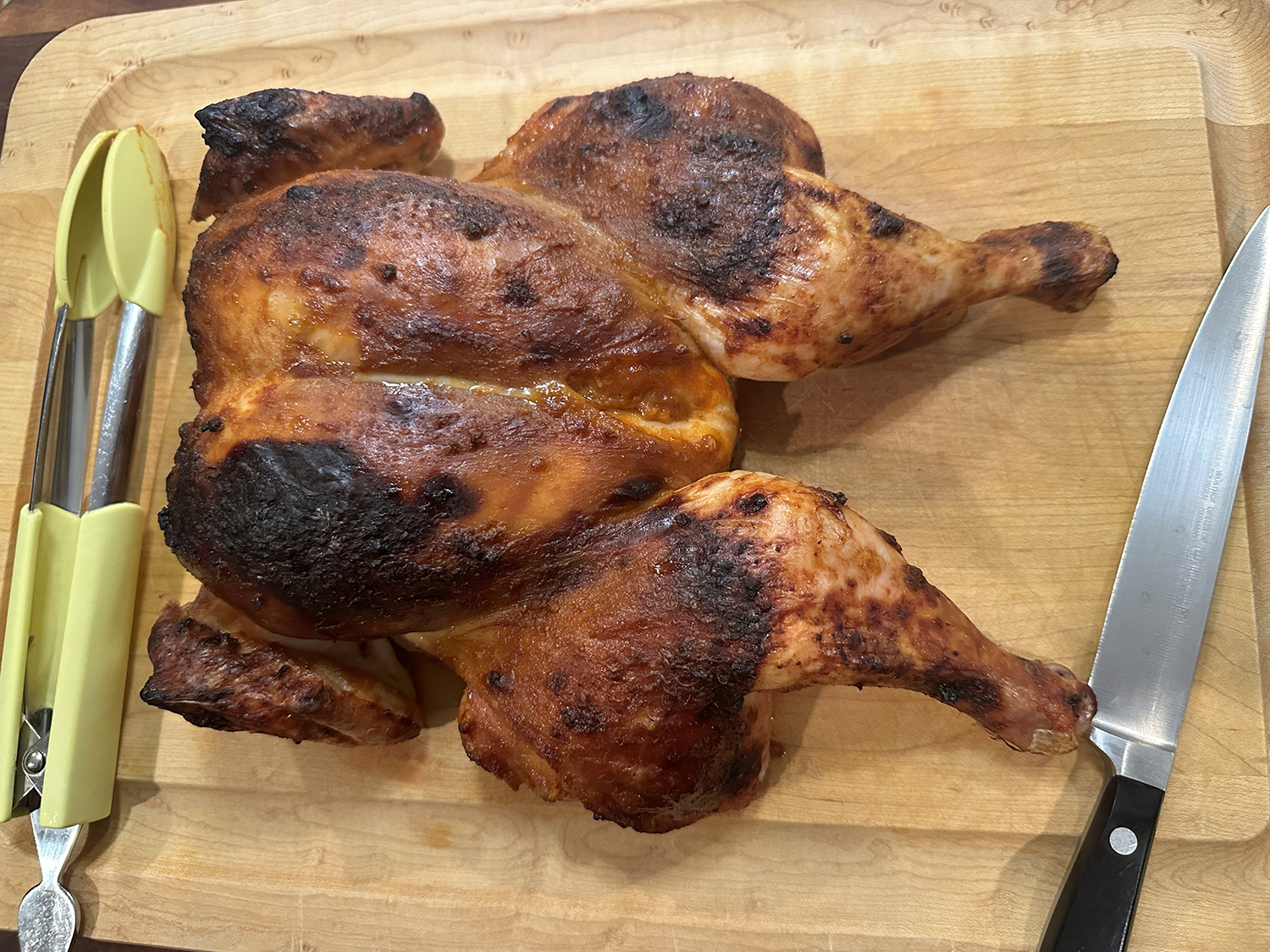
Roast until well browned and the thighs reach 175°F, check at about 40 minutes. If it has not reached temperature, continue cooking for 10-15 minutes more. Let the chicken rest for about 10 minutes, then carve.
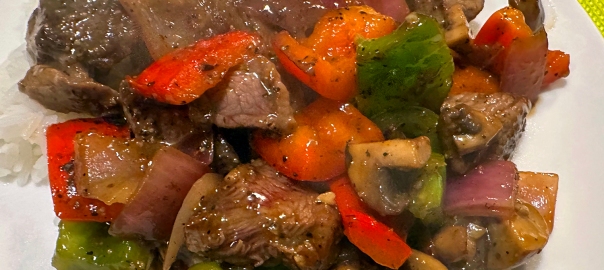
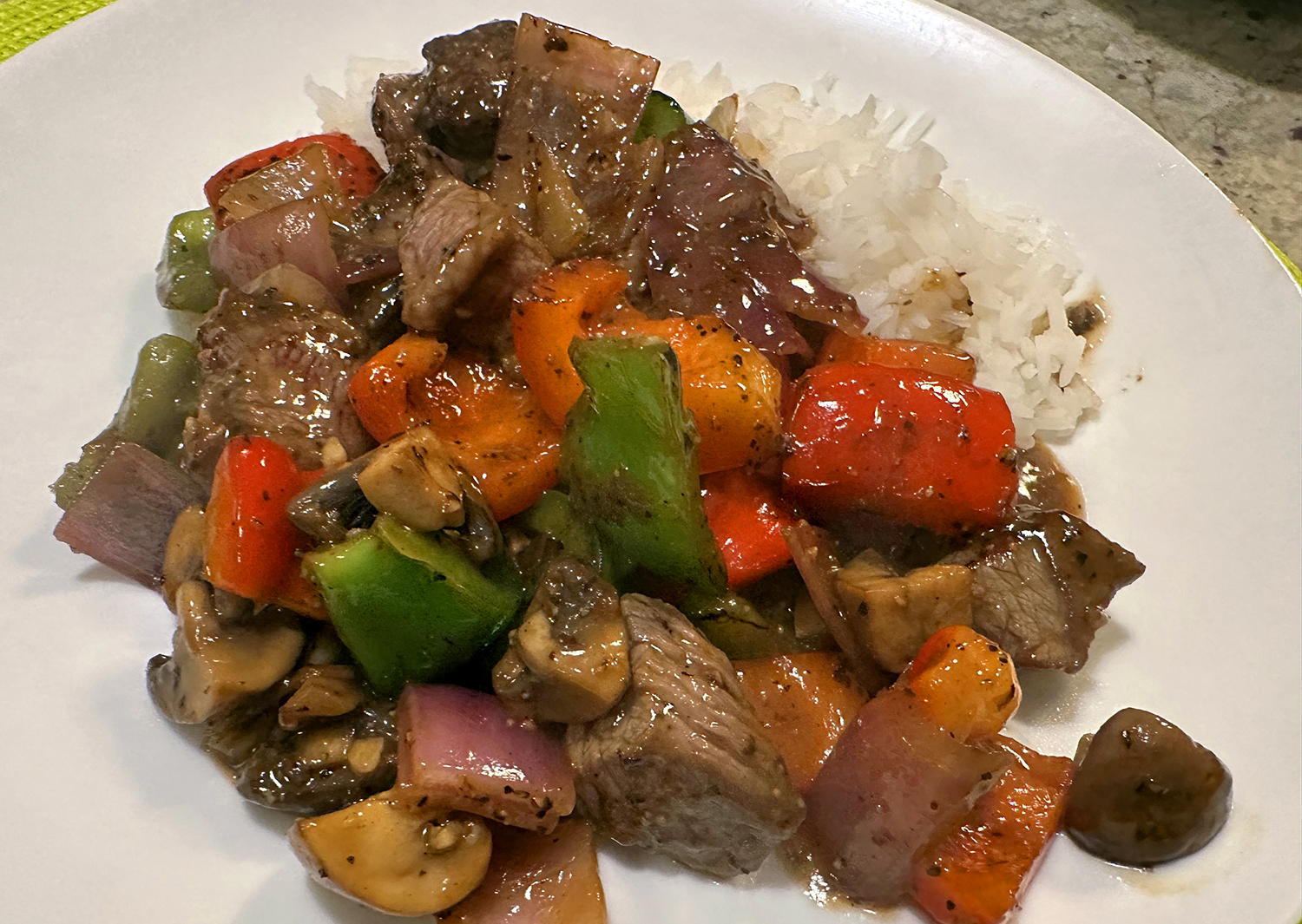
Hands-down better than your local Chinese take-out, this Chinese pepper steak recipe is a quick and easy stir-fry loaded with tender beef, peppers and onions in a luscious brown sauce. It hails from “The Woks of Life” by the Leung family.
Most of the time required for this recipe is in the preparation, but it’s not actually difficult to pull off. So long as you have everything prepared and within reach, things will go smoothly at the wok. The active cooking time in your wok or pan is less than 15 minutes before it’s ready to be served with steamed white rice.
Avoid any “pre-cut beef for stir-fry” that your grocery store sells. It usually looks like long rectangular beef sticks, cut from lean beef. These are too thick and chunky, and generally turn out tough. So what IS the best cut of beef for stir-fry?
The original recipe called for beef tenderloin. At nearly $35 per pound, we decided to go for something more reasonably priced and chose sirloin. Another option is flank steak, but we don’t advise using chuck roast which was listed as a substitute.
With several different pepper spices, we opted to use the lower amount, 1 1/2 tablespoons of ground black pepper. Using a full 2 tablespoons will likely be too much. While black pepper is a constant companion for salt in American kitchens, you don’t see it very often in Chinese cooking (it’s almost always white pepper.)
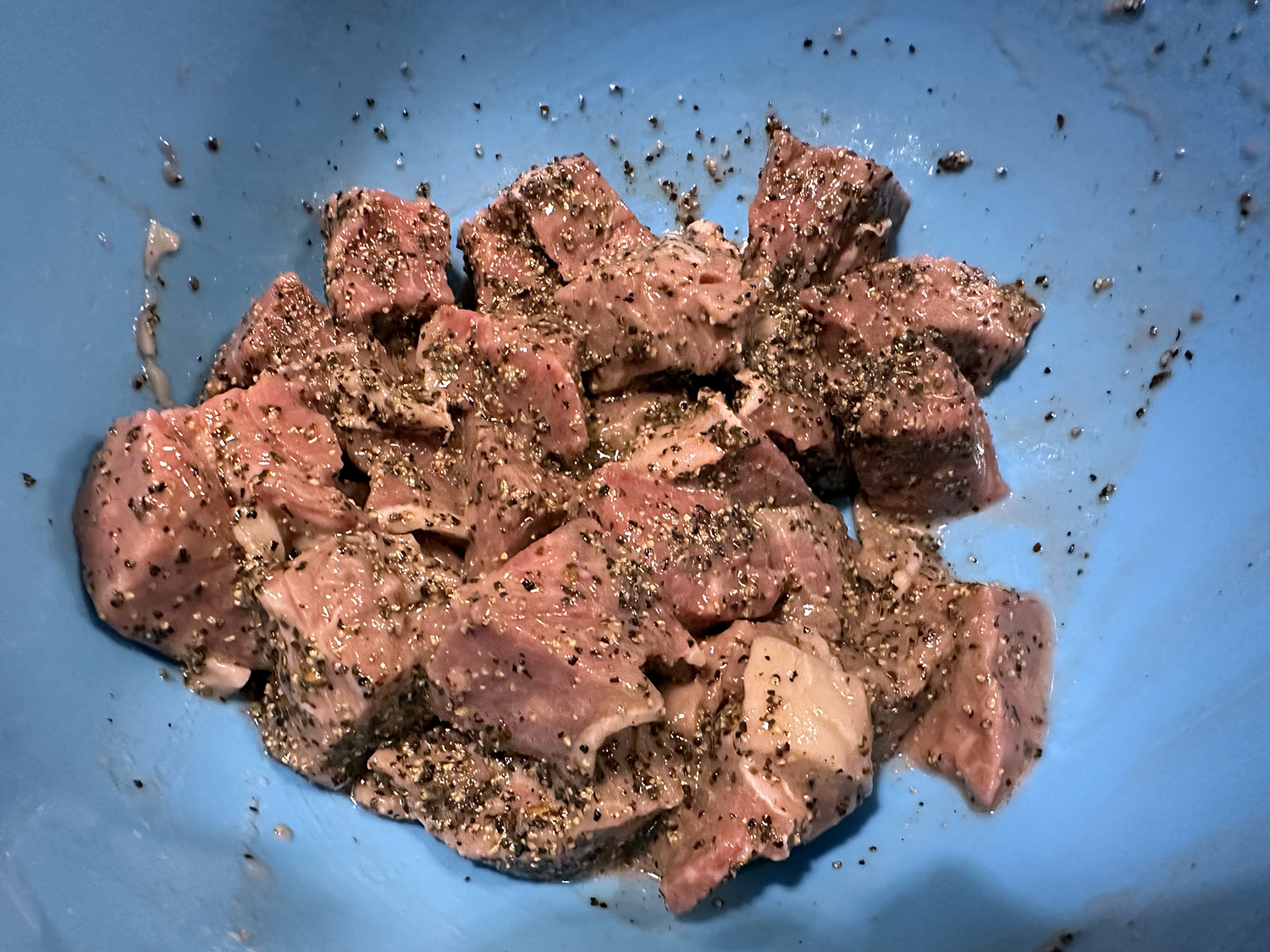
Slice the beef into 1 1/4-inch cubes. Then velvet the beef: in a medium bowl, mix the beef with 2 Tbsp. water, 1 tsp. cornstarch, 1 Tbsp. neutral oil, and 1/4 tsp. table salt. Toss to coat, then set aside for at least 30 minutes.
Make the sauce by mixing together the beef stock, cornstarch, oyster sauce, Shaoxing wine, soy sauce, ketchup, sugar, and sesame oil. Set aside.
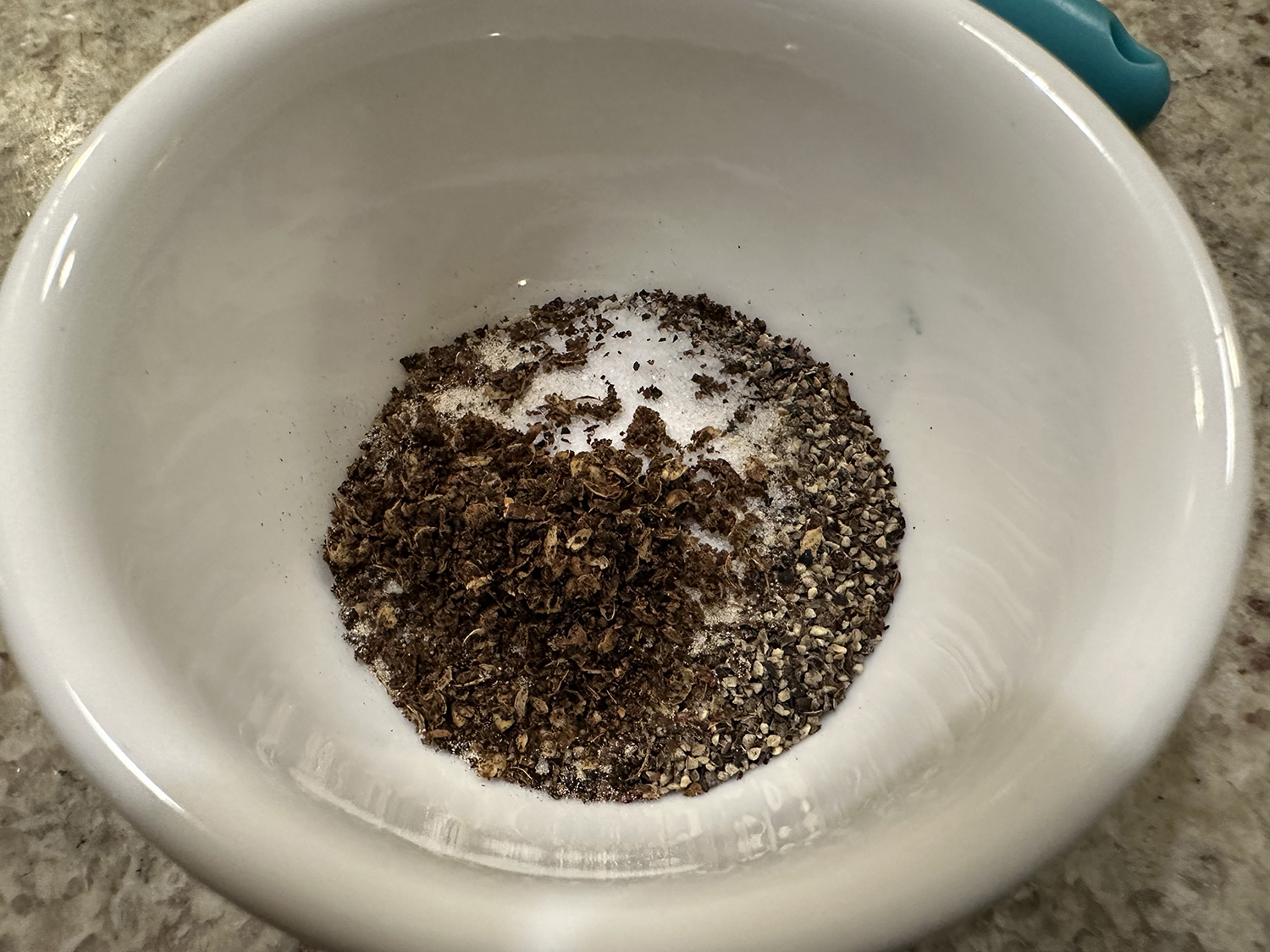
Make the pepper seasoning in a small bowl by combining black pepper, white pepper, ground Sichuan peppercorns, and salt. Season the beef cubes with 2/3 of the pepper mix, pressing the spices into the beef. Reserve the rest for later.
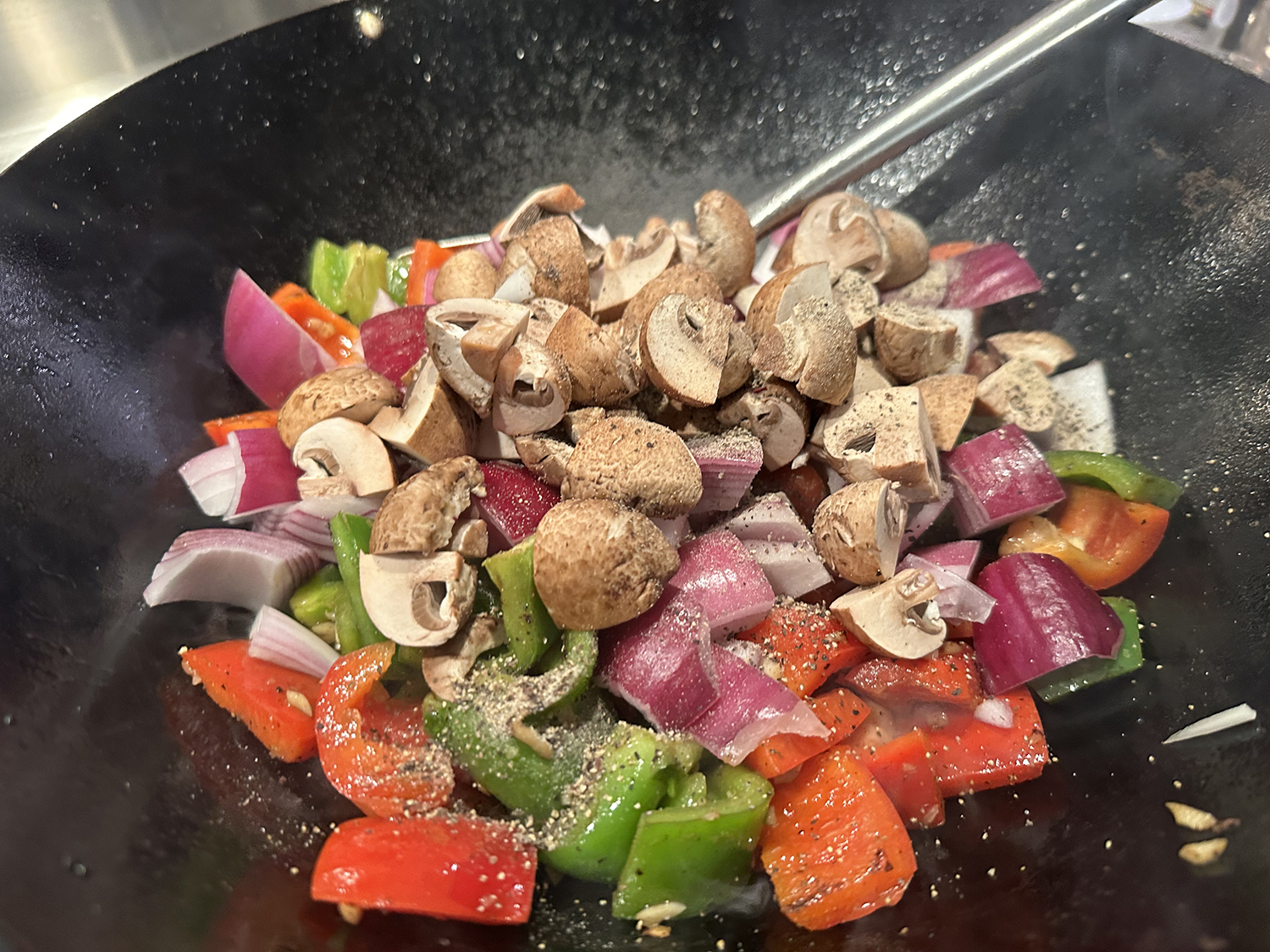
Cut the bell peppers and onion into 1-inch pieces. You can also cut them into thin strips if you like. Just make sure that the pepper and onion pieces are all about the same size, so they cook evenly.
Heat the wok over high heat until smoking. Add 1 tablespoon of oil to coat the wok. Sear the beef on both sides, about 30 seconds per side. Give everything a final stir, transfer it to a plate, and set aside. The beef should be about 80% cooked.
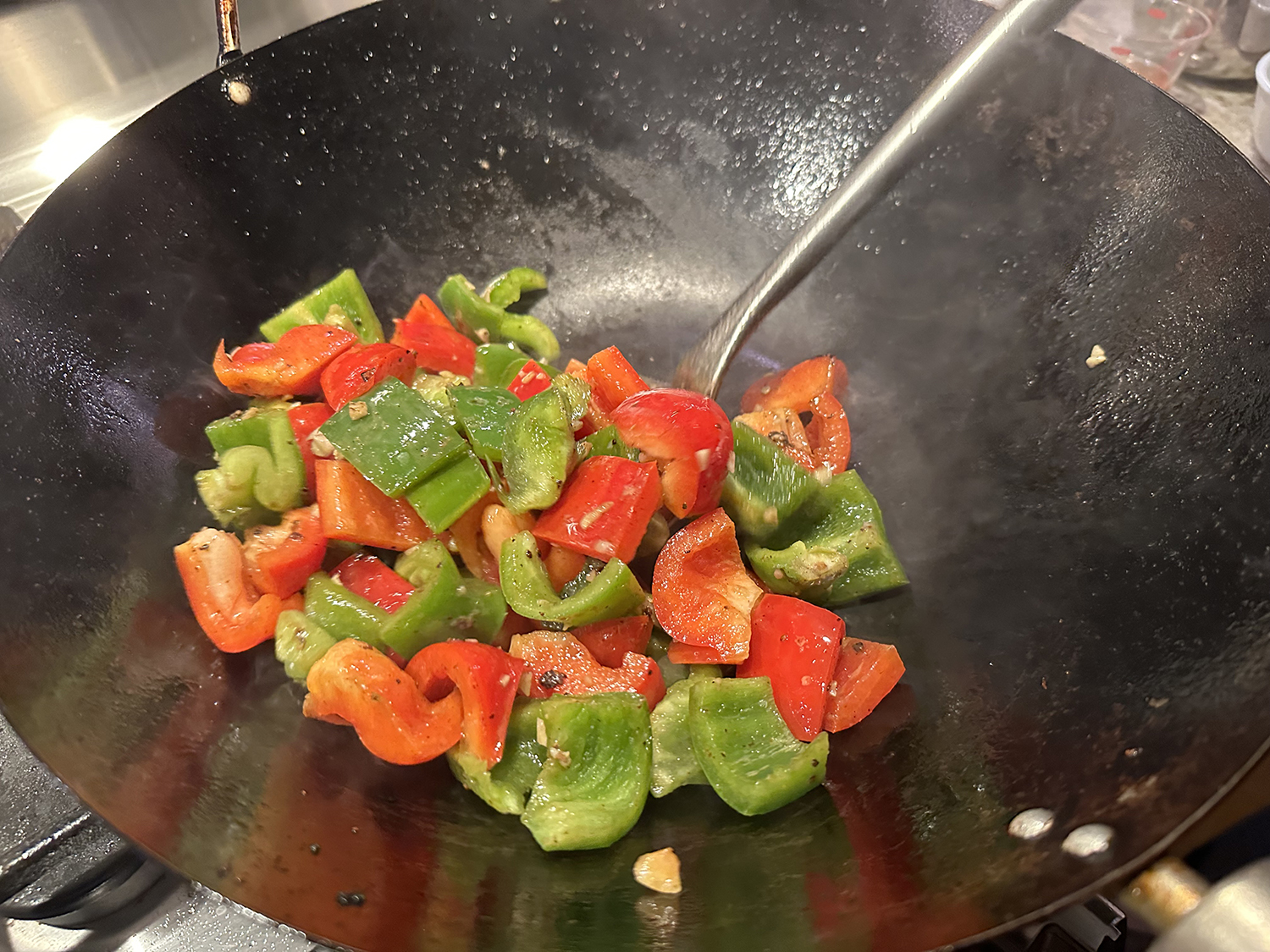
Reduce the heat to medium-high. Add the remaining tablespoon of oil. Toss in the ginger, and caramelize for about 10 seconds. Then add the garlic, bell peppers, and onions. Stir-fry for 1 minute. Pour the Shaoxing wine around the perimeter of the wok, then stir-fry for 1 minute.
Add the sauce mixture, and stir it around to deglaze, loosening any browned bits in the wok. Combine 2 tsp. cornstarch and 1 Tbsp. water in a small bowl to make a slurry. Drizzle half the slurry into the wok, stirring constantly until it is thick enough to coat a spoon.
Add the beef along with any juices. Gently toss with the sauce and vegetables until combined.
At this point, if the sauce is not thick enough, add the remaining cornstarch slurry and stir-fry for another 10 to 15 seconds to thicken. Once the sauce is simmering and thickened to your liking, transfer it to a serving plate, and serve it with steamed rice!
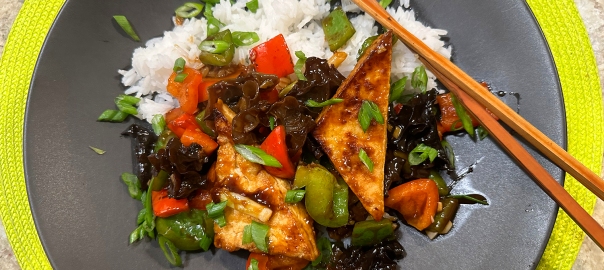
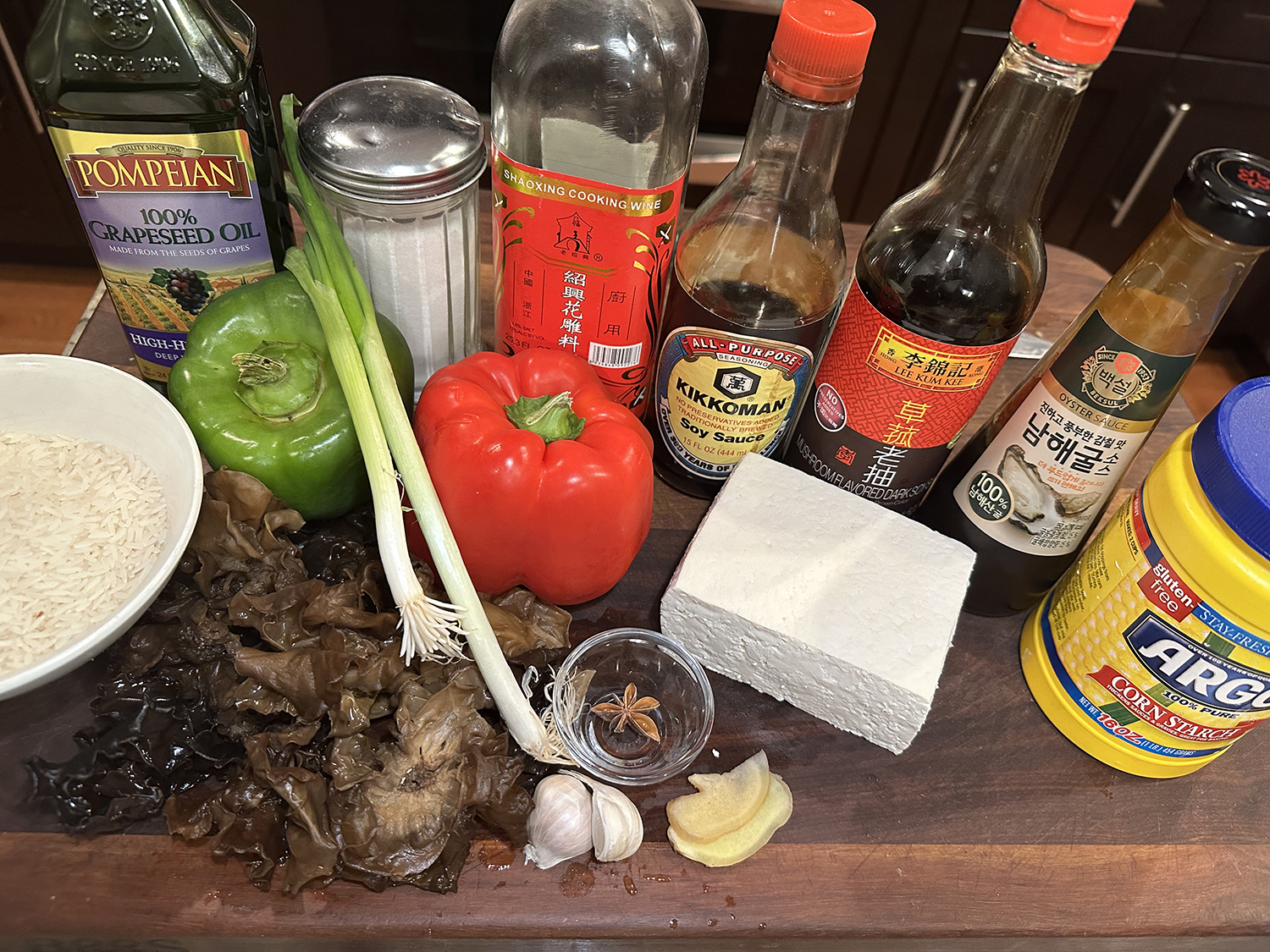
This home-style tofu recipe from “The Woks of Life” is as delicious as it is comforting. With firm tofu slices, some aromatics, crisp veggies and a light sauce, it’s perfect over rice and so easy to make. Just keep in mind, you’ll need to rehydrate the dried mushrooms for two hours prior to cooking.
On some Chinese menus you may notice the word jiā cháng in front of several dishes. It translates to “home-style or family-style.” So the dish can vary greatly depending on what the chef’s interpretation of “home” tastes like.
Now we made a few changes, (all included in recipe below) starting with incorporating a whole red, and a whole green bell pepper, rather than half of each. We also increased the sauce by 50%; cut the tofu into smaller triangles than originally noted; and fried the tofu pieces in two batches, in the same wok instead of an additional cast-iron skillet.
1 1/2 Tbsp. oyster sauce, or vegetarian oyster sauce
3/4 tsp. sugar
3/4 tsp. table salt
1/4 cup Shaoxing wine
1/2 cup water
1 1/2 Tbsp. cornstarch
For the Rest of the Dish:
4 Tbsp. neutral oil, divided
2 cloves garlic, minced
2 slices fresh ginger, each 1/8-inch thick
1 star anise
1 red chili pepper, deseeded and thinly sliced, optional
1 red bell pepper, seeded and cut into 1-inch pieces
1 green pepper, seeded and cut into 1-inch pieces, or 2 long hot green peppers or Anaheim peppers
3 scallions, white parts separated from the green parts and cut on the diagonal into 2-inch lengths
1 Tbsp. water
1 Tbsp. Shaoxing wine
Directions
Prepare the Mushrooms and Tofu: In a medium bowl, cover the wood ear mushrooms with enough water to cover by 2 inches and soak for at least 2 hours or until rehydrated. Rinse them to remove any grit or dirt. Drain and cut the mushrooms into bite-size pieces. Drain the tofu and pat it dry. Cut it crosswise into 1/2-thick rectangles, then cut each rectangle into 4 triangles.
Make the Sauce: In a small bowl, combine the water, wine, cornstarch, oyster sauce, light soy sauce, dark soy sauce, sugar, and salt. Mix well and set aside.
Pan-Fry the Tofu: Heat a wok over medium-high heat until lightly smoking. Add 3 tablespoons of the neutral oil and swirl it around the wok to coat the surface. Carefully add half of the tofu pieces in a single layer and fry for 4 minutes on the first side until golden brown. Use a thin spatula to carefully flip the tofu pieces and fry on the other side for another 4 minutes. Transfer the tofu to a plate. Repeat.
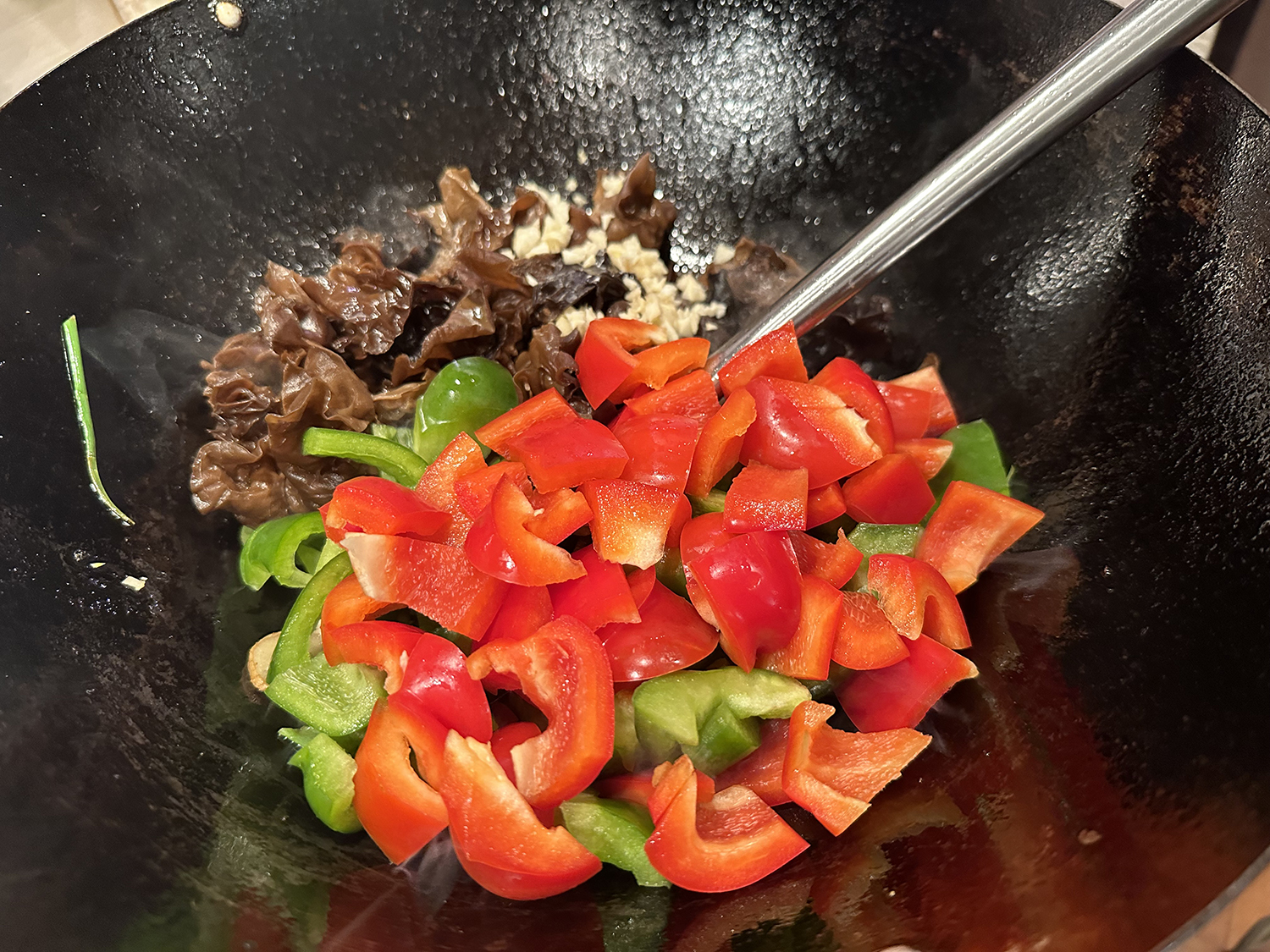
Assemble the Dish: Over medium heat, add the remaining tablespoon of oil along with the ginger slices and star anise. Toss quickly for 20 seconds, then add the white part of the scallions and stir fry for another 30 seconds. Add the wood ears, garlic, peppers, and 1 tablespoon water. Stir fry for 2-3 minutes until the peppers are tender but still have a fresh crunch. Increase the heat to medium-high and add the Shaoxing wine around the perimeter of the wok.
Stir the sauce to make sure the cornstarch is well incorporated into the liquid. Add the sauce to the wok and bring it to a simmer. Let the sauce thicken until coats the back of a spoon. (If it’s too thick, add a splash of water.) Stir in the tofu and add the green parts of the scallions. Mix until the tofu and vegetables are evenly coated in sauce and the scallions are wilted. Serve.
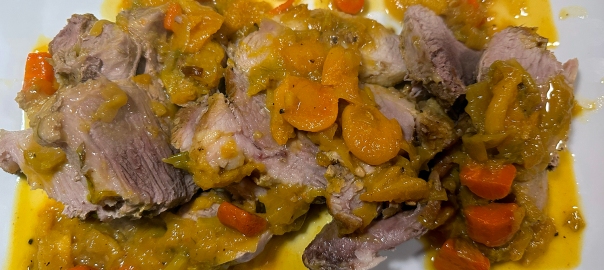
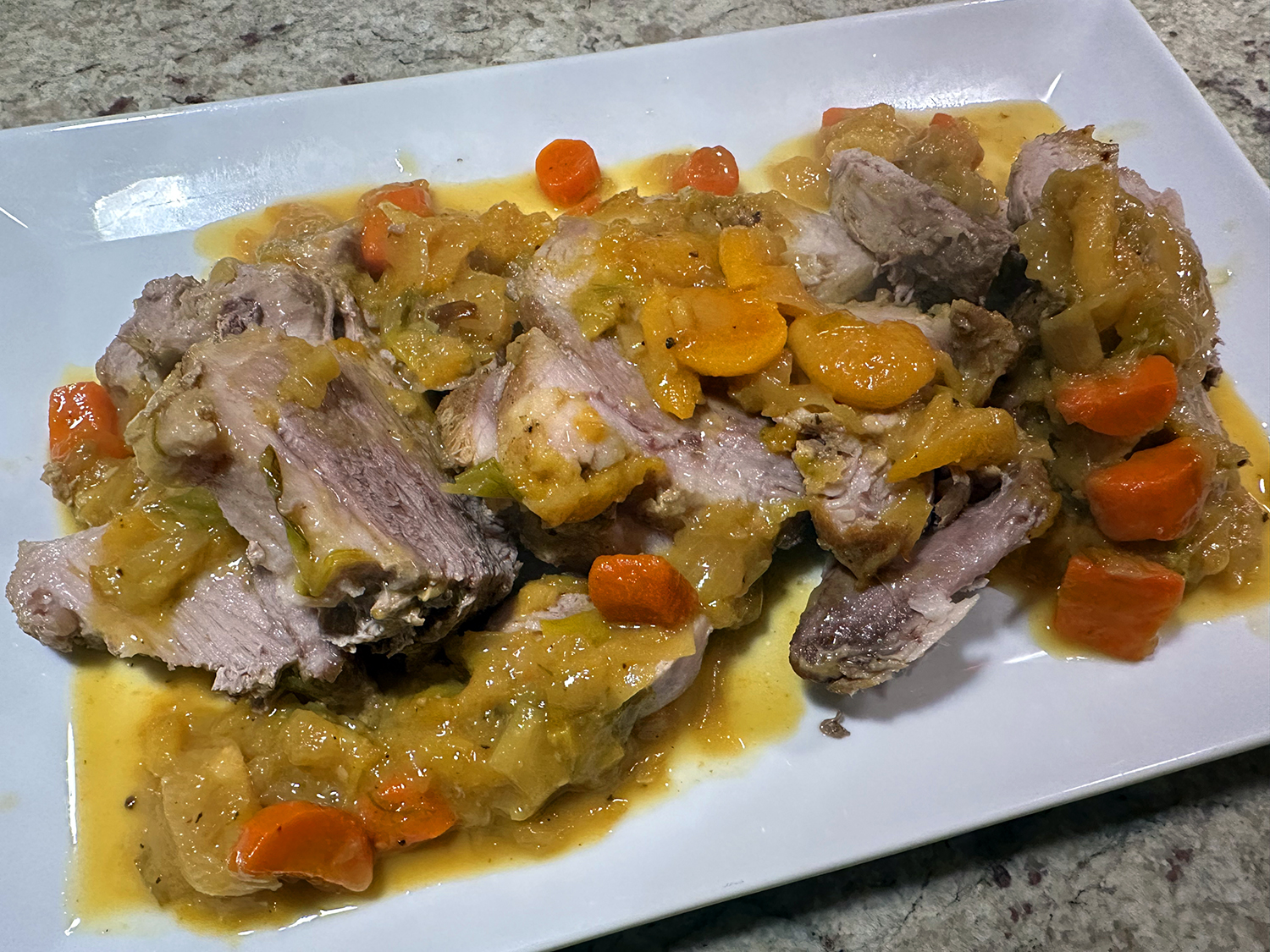
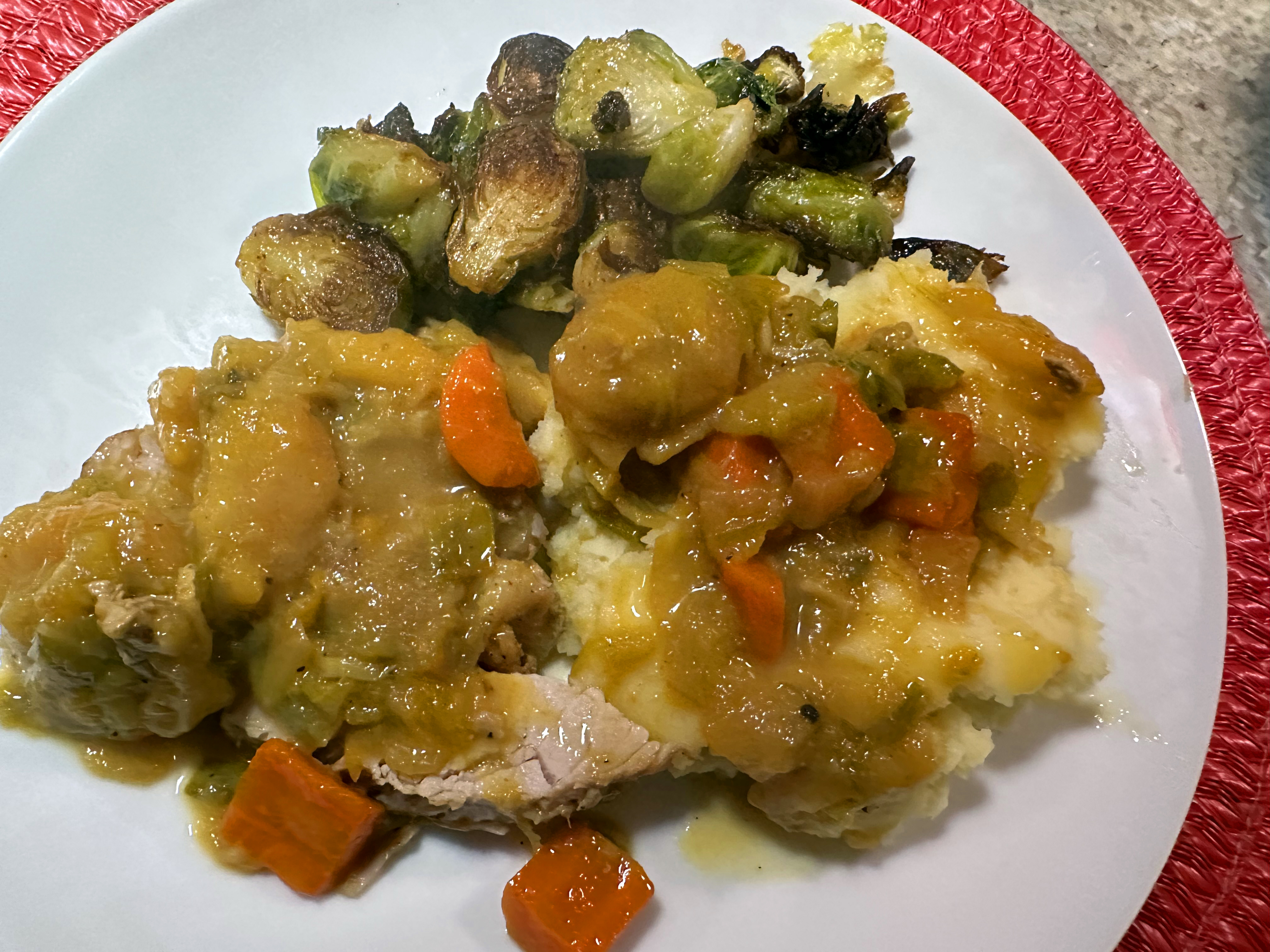
In a word, ASTOUNDING! Also, elegant, classic and simple. It’s a one-pot meal that’s perfect for Sunday night. Yes it takes a while to make, but most of it will be the time spent in the oven. Pork and fruit are the perfect pairing, as we’ve seen time and again with recipes like holiday ham with pineapple rings, or applesauce spooned over pork chops. It’s that pleasure of sweet-tart-savory combinations.
In this version, chef-author Molly Stevens uses dried apricots because their pale orange flesh collapses into the sauce, which comes out every bit as pretty as it is tasty. The cardamom lends the whole dish its exotic perfume, while being backed up by a gang of other compatible flavors—ginger, turmeric, cayenne, garlic and orange.
This company-worthy dinner can be served over couscous, wild rice, or as in our case, garlicky mashed potatoes which became the perfect vehicle to hold that lovely sauce! If you care to pair the meal with wine, off-dry Riesling or Pinot Gris make good companions.
One 4 1/2 to 5-lb. boneless pork shoulder roast, preferably Boston butt
Coarse salt and freshly ground black pepper
2 Tbsp. extra-virgin olive oil
1 medium leek, white and pale green part only, coarsely chopped (about 1 cup)
2 carrots, coarsely chopped
1 medium yellow onion (about 6 oz.), coarsely chopped
6 cardamom pods, husks split and discarded, seeds lightly crushed
1/2 tsp. ground turmeric
1/4 tsp. cayenne
1 Tbsp. minced or grated fresh ginger
2 large garlic cloves, peeled and bruised
3 strips orange zest, removed with a vegetable peeler (each about 3 inches by 3/4 inch)
1 bay leaf
1/2 cup dry white wine
2 cups chicken stock
1 cup dried apricots (about 6 1/2 oz.)
Directions
Heat the oven to 325 degrees
Trim any especially thick bits of fat from the pork, but do be sure to leave some. Roll and tie the pork (or have your butcher do it for you).
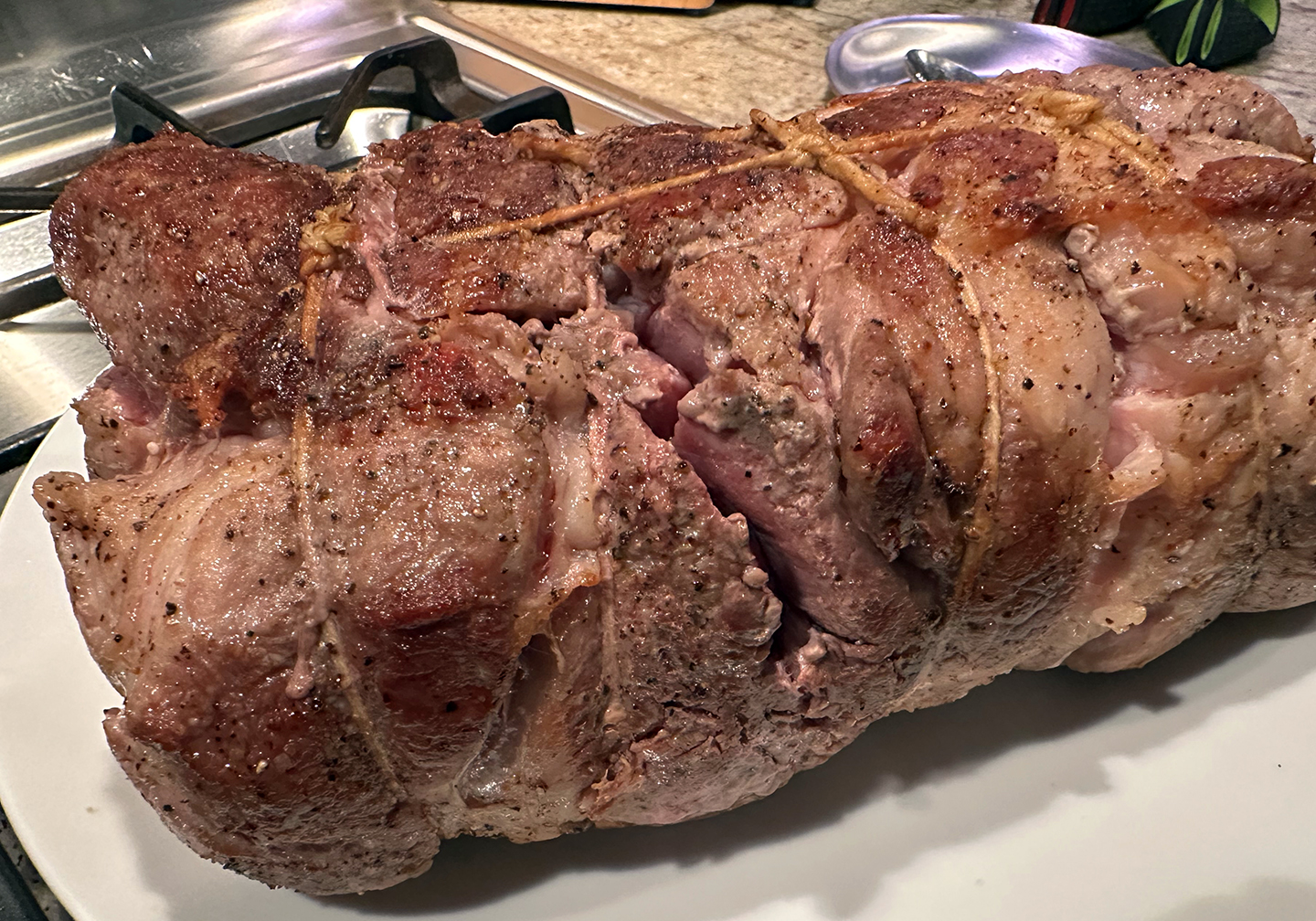
Pat the pork dry with paper towels. Season all over with salt and pepper. Pour the oil into a Dutch oven that will hold the pork snugly (4 to 5 quart works well), and heat over medium heat. Sear the pork on all sides, until deeply browned but not at all burnt, 15 to 20 minutes total. Transfer the pork to a plate.
Discard all but 1 tablespoon of the fat, and return the pot to medium heat. Add the leek, carrots, and onions, stir in the crushed cardamom, turmeric, and cayenne, and cook, stirring once or twice, until the vegetables begin to soften but do not take on much color, about 5 minutes. Add the ginger, garlic, orange zest, and bay leaf and cook until the spices are quite fragrant, another 2 minutes.
Add the wine and let it boil for 4 minutes, scraping the sides and bottom of the pot. Pour in the stock and bring to a boil. Add the apricots and boil for another 2 minutes.
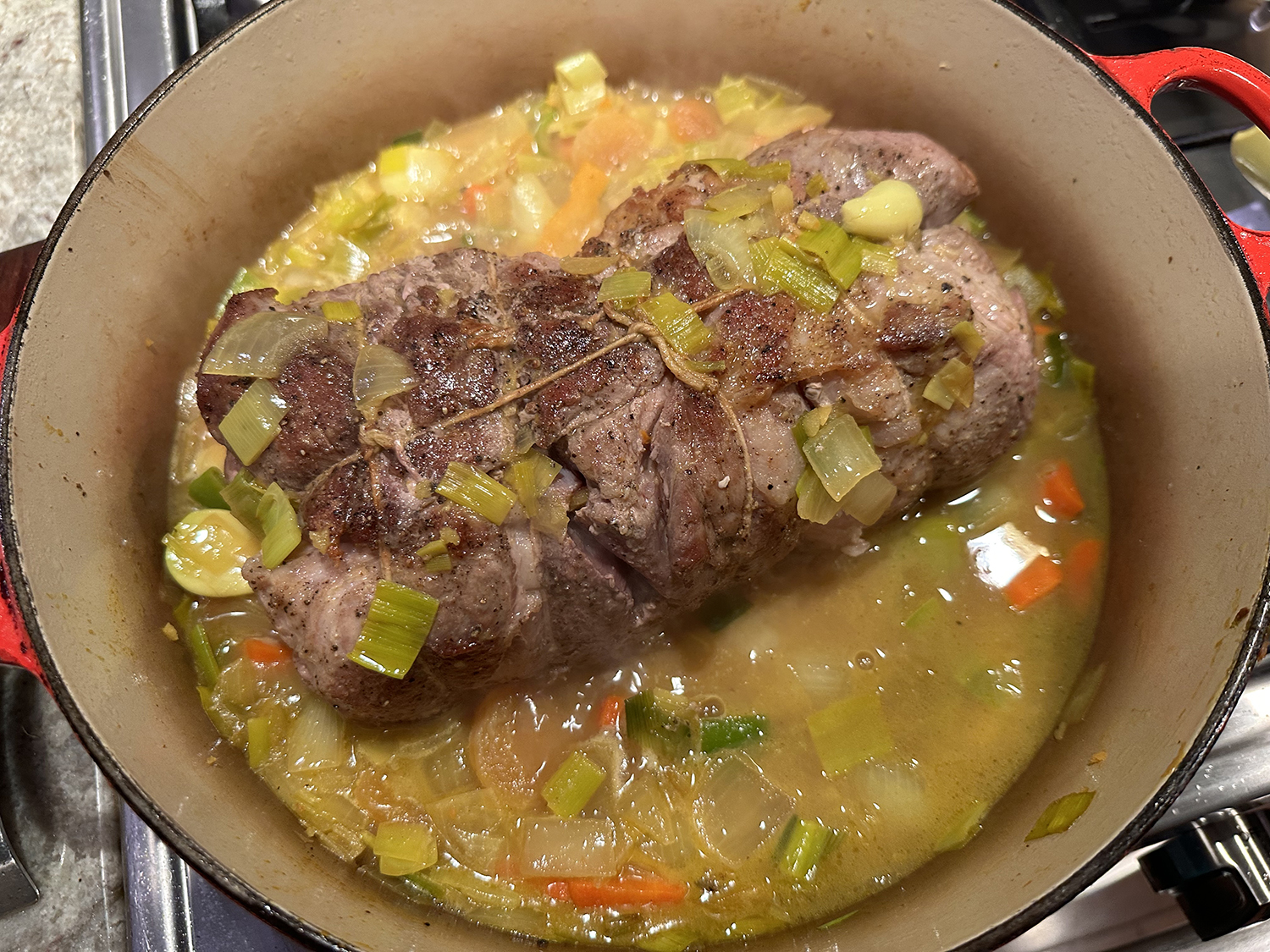
Place the pork on top of the vegetables and fruit. Add any accumulated juices from the plate. bring the liquid to a simmer and spoon some over the pork. Cover the meat with sheet of parchment paper, pressing down so that it almost touches the meat and the edges extend over the sides of the pot about an inch. Cover and slide the pot onto a shelf in the lower third of the oven to braise. Check that the liquid is simmering gently, every 30 minutes and give the pork a turn. If the liquid is simmering too aggressively, lower the oven heat 10 or 15 degrees. Continue to braise gently until the pork is fork-tender, about 2 hours in all.
Remove the pork from the pot and set it on a carving board or platter to catch the juices. Cover loosely with foil, and let rest for 10 minutes.
Return the pot to the top of the stove and skim off as much surface fat as you can with a wide spoon. If the sauce is very thin reduce it by boiling over medium-high heat for about 5 minutes. It should be the consistency of a thick vinaigrette. Taste for salt and pepper. Pour any juices that have accumulated under the pork into the sauce, and stir.
Remove the strings from the pork, and carve into 1/2-inch-thick slices. Serve with sauce and apricots.
Chicken is the basis for at least one of our meals most weeks. It is so versatile and pretty much all meat eaters love the bird. But if it is bland and dry, then nobody is happy. And this recipe is anything but.
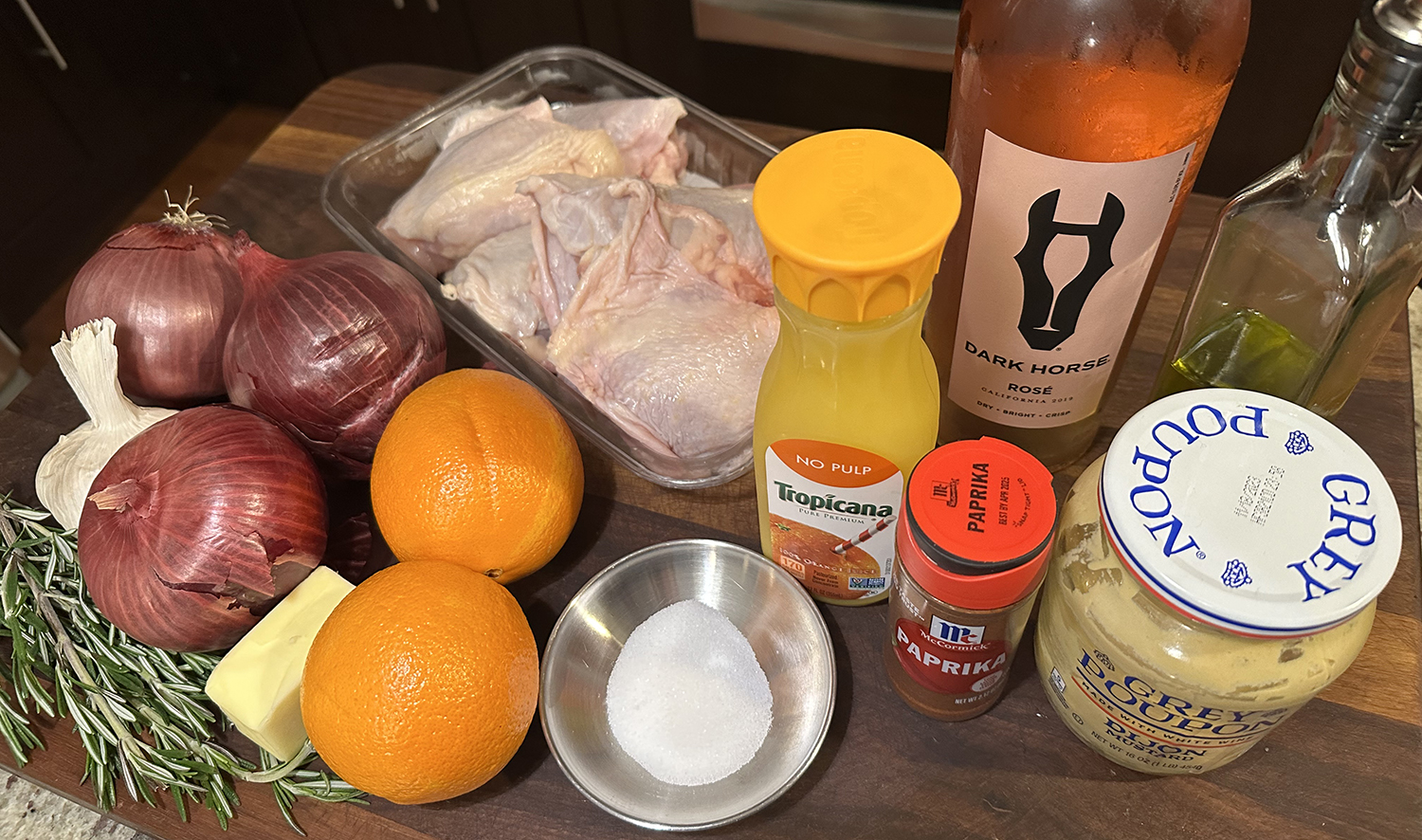
For a brighter winter braise, this recipe turns to floral, sweet-tart oranges and zippy, tannic orange wine. (We did not have orange wine so we used a rosé.) The result: falling-off-the-bone tender chicken and a spoon-coating sauce that keeps you going back for bite after bite. The duo offers a just-right balance of acid and sugar and a hit of fermented complexity that mellows out in the sauce while giving it structure.
Orange wine, simply put, is made from white grapes that have been fermented with their skins (like red wine). The result is a complex drink with deep flavor. It’s a broad category, and flavors can range drastically from bottle to bottle. For this recipe, it is recommended to use something dry to balance out the citrus. Taste before using: If your bottle skews sweet, you can still use it; just omit the sugar from the recipe.
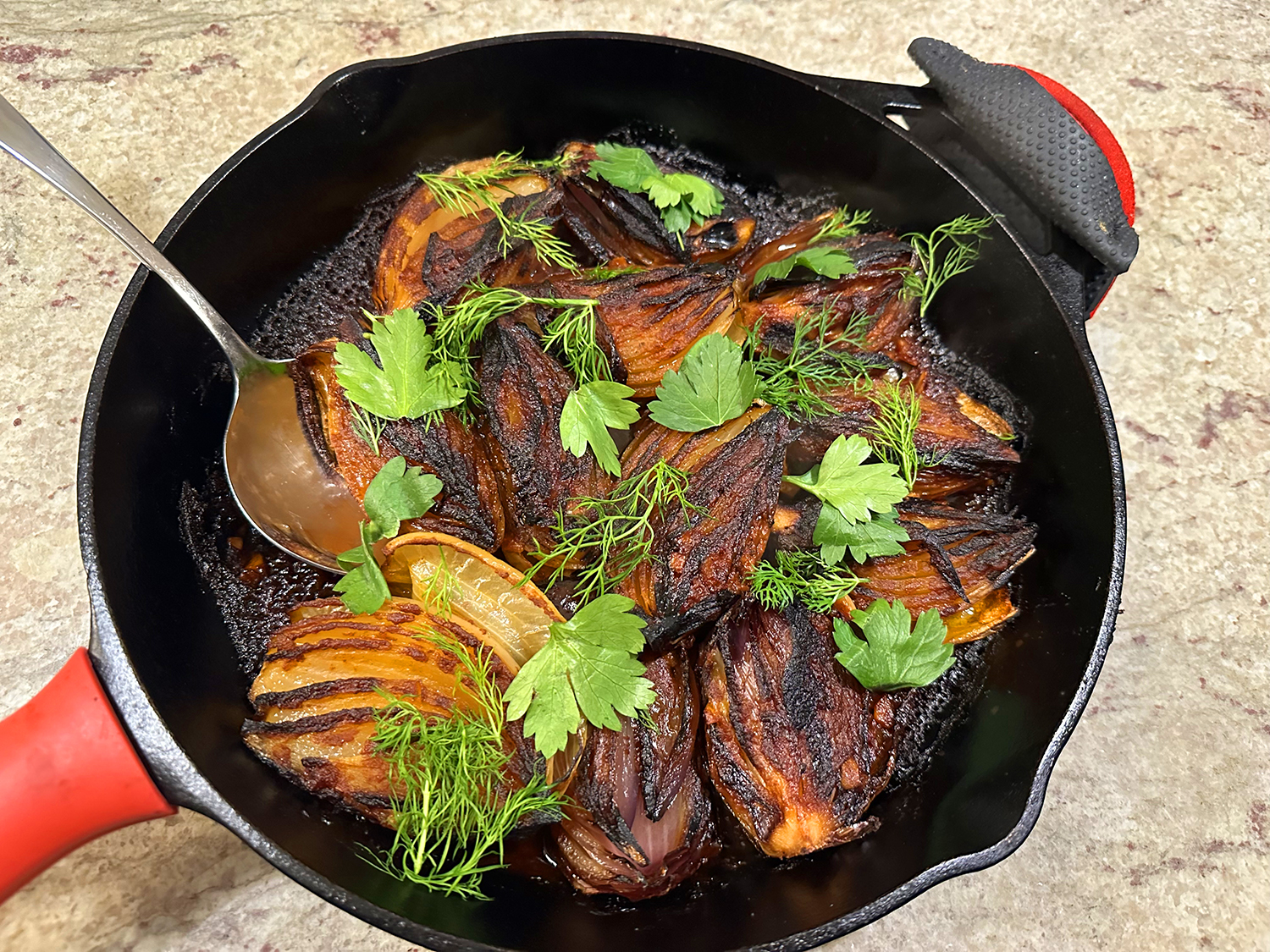
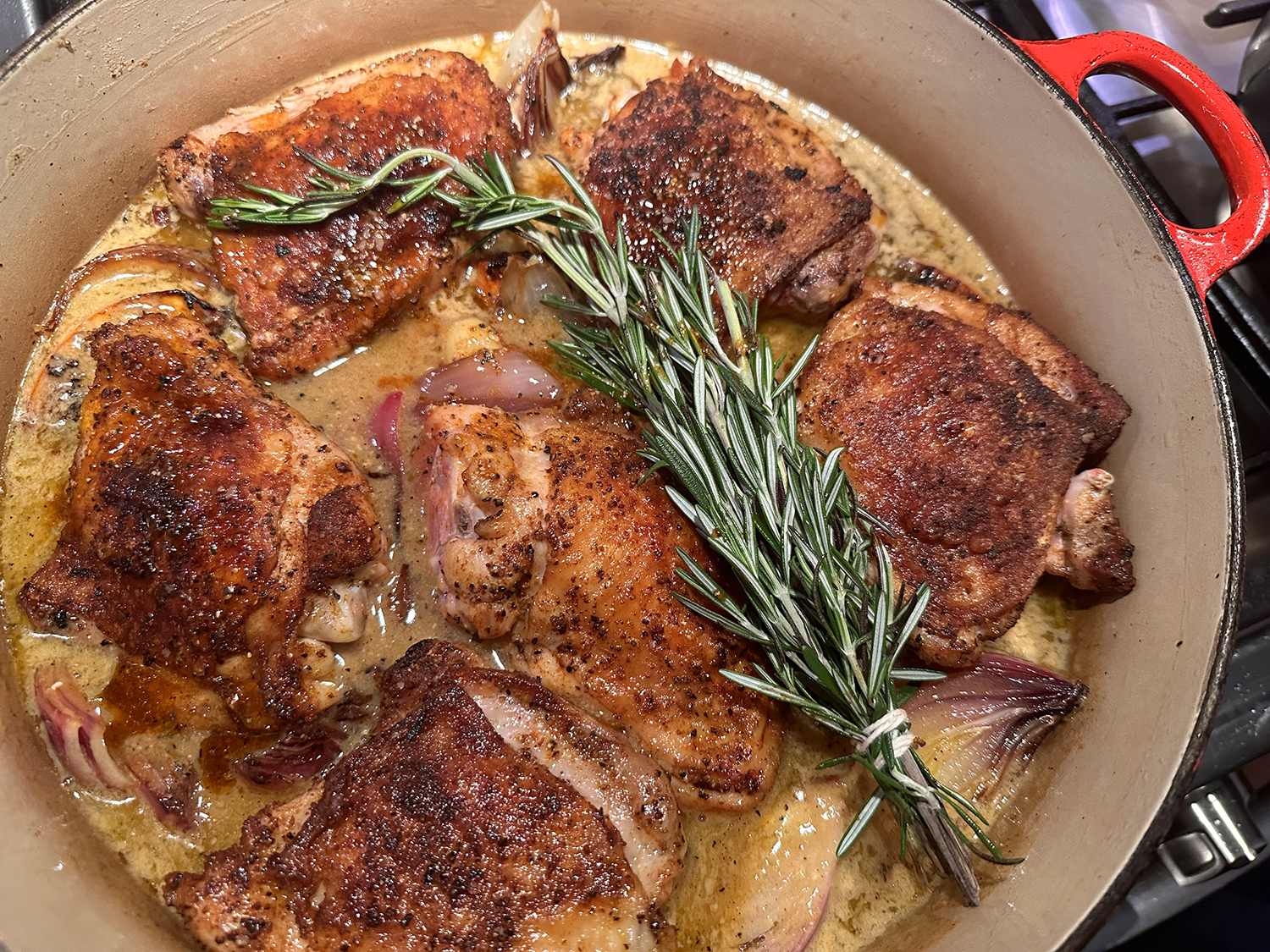
The skin was crispy, the meat juicy, and the sauce was beyond measure!!
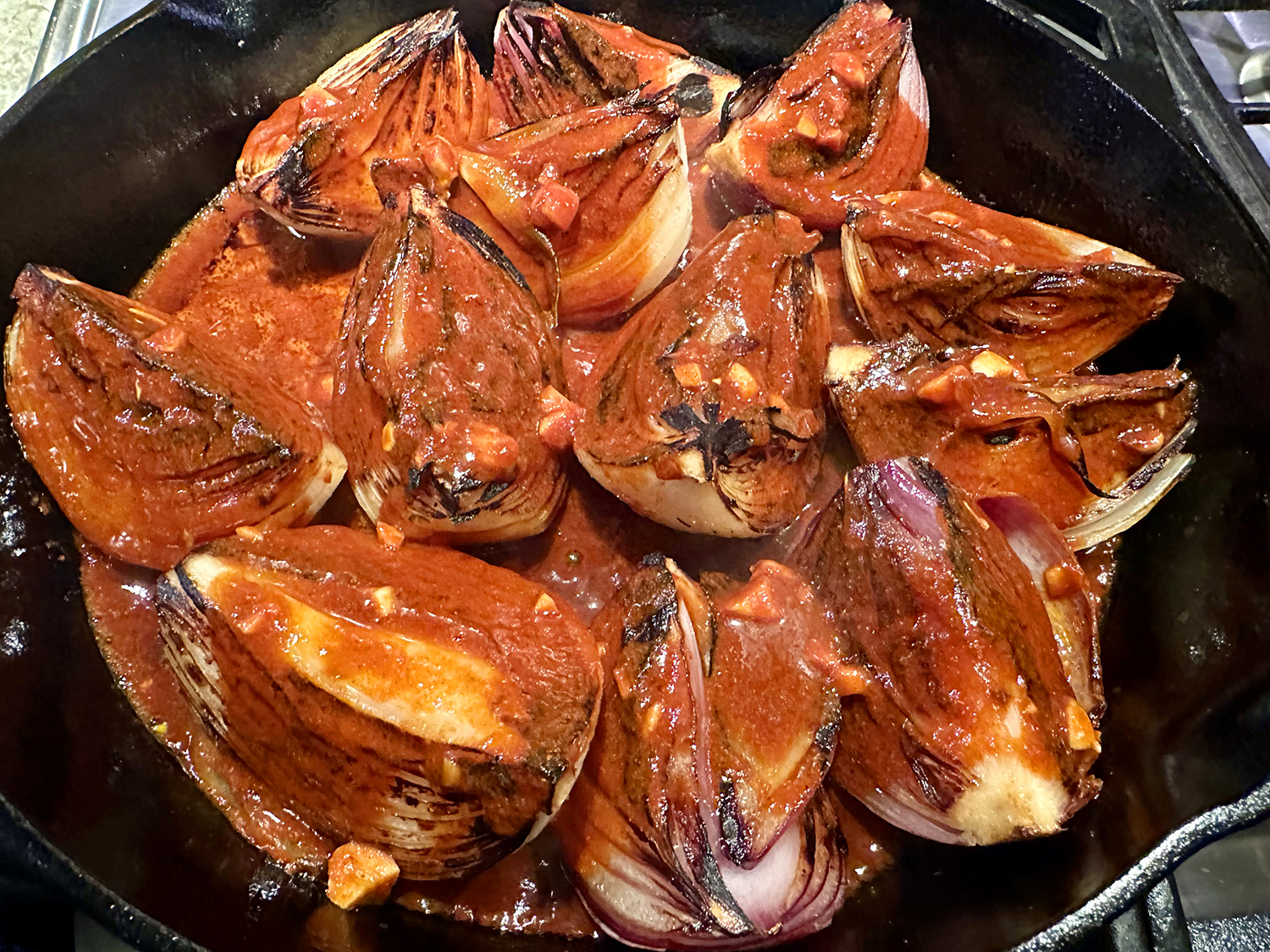
3 small red onions, roots trimmed, with ends left intact, peeled, quartered through root ends
12 garlic cloves, peeled
2 Tbsp. all-purpose flour
2 cups orange wine, dry rosé, or tart, high-acid white wine (such as Sauvignon Blanc or Riesling)
1 cup fresh orange juice
1 cup low-sodium chicken broth
⅓ cup Dijon mustard
4 Tbsp. unsalted butter
1 Tbsp. granulated sugar
4 sprigs rosemary, tied together with kitchen twine
Directions
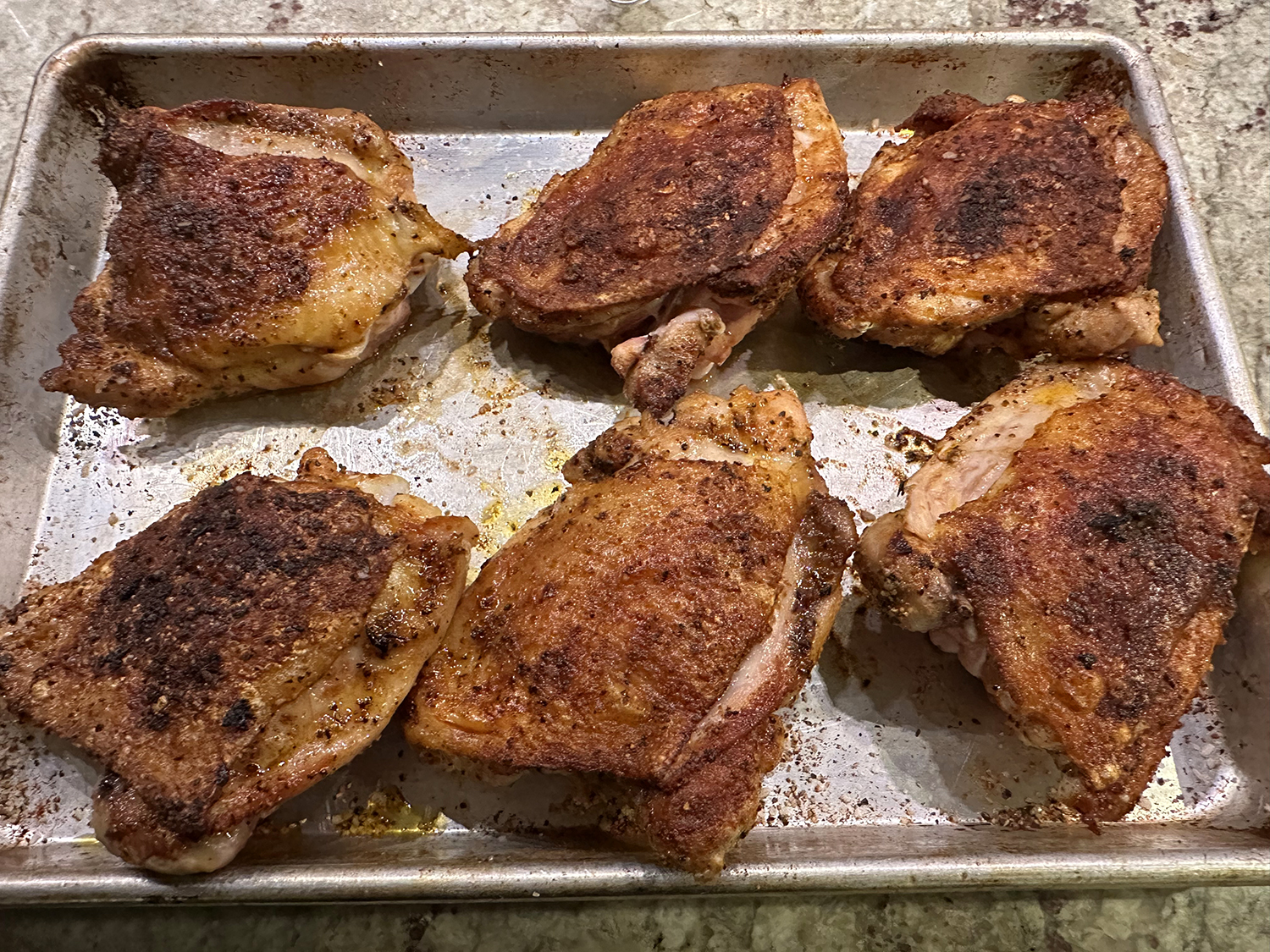
Place a rack in middle of oven; preheat to 350°. Mix 1½ teaspoons paprika, 1 tablespoon Diamond Crystal or 1¾ teaspoons Morton kosher salt, and 1½ teaspoons freshly ground pepper in a small bowl. Pat 2½ pounds skin-on, bone-in chicken thighs (about 6 medium) dry and sprinkle all over with spice mixture. Set aside.
Heat ¼ cup extra-virgin olive oil in an ovenproof Dutch oven or other heavy pot over medium. Cook 2 small oranges, cut into quarters, on cut sides until browned and blackened in spots, about 2 minutes per side. (Oil might spatter, so have a lid nearby to place on top if needed.) Transfer oranges to a large plate.
Add more oil to same pot if dry and cook 3 small red onions, roots trimmed, with ends left intact, peeled, quartered through root ends, on cut sides until browned, about 2 minutes per side. Transfer to plate with oranges. Add 12 garlic cloves, peeled, to pot and cook, stirring often, until browned, 2–3 minutes. Transfer to plate with oranges and onions.
Working in batches if needed, cook reserved chicken thighs, skin side down, in pot, undisturbed, until deep golden brown underneath and they release easily from pan, 7–9 minutes. Turn skin side up and transfer to a separate plate.
Cook 2 Tbsp. all-purpose flour in pot, stirring constantly, until no dry pockets remain, 30–60 seconds. Gradually pour in 2 cups orange wine, dry rosé, or tart, high-acid white wine, whisking constantly to prevent clumping, then stir in 1 cup fresh orange juice, 1 cup low-sodium chicken broth, ⅓ cup Dijon mustard, 4 Tbsp. unsalted butter, 1 tablespoon granulated sugar, remaining 1 teaspoon Diamond Crystal or ½ teaspoon Morton kosher salt, and remaining 1 teaspoon freshly ground pepper. Bring to a boil and cook until sauce is reduced by half and thinly coats a spoon, 8–10 minutes. Taste sauce and season with more salt and pepper if needed.
Remove pot from heat and scatter oranges, onions, and garlic around. Nestle chicken thighs in, skin side up, so they’re about halfway in sauce; (we left ours sitting atop the oranges and onions to insure crispy skin) add 4 sprigs rosemary, tied together with kitchen twine. Roast in oven, uncovered, until chicken is very tender and easily pulls away from bones, about 1 hour.
This hearty stew is made for cool weather. It is an investment in time, but will be at the ready to eat anytime of day or night with a quick warm up on the stove top or in a microwave. To bulk it up even more, serve with a slice of nice toasted garlic bread.
Think of all the healthy veggies that add nutrients and fiber. Take cabbage for example. Cabbage’s impressive advantages stem from its nutritional composition, which includes a diverse range of antioxidants and phytochemicals. The high levels of folate, antioxidants, fiber, and anti-inflammatory properties aid in the battle against cancer and that’s just to get started!
Your beans will have a creamier texture if soaked overnight for this recipe. If you’re short on time, quick-soak them: Place the rinsed beans in a large heat-resistant bowl. Bring 2 quarts of water and 3 tablespoons of salt to a boil. Pour the water over the beans and let them sit for 1 hour. Drain and rinse the beans well before proceeding with step 2.
Don’t forget to add the last two items, apple cider vinegar to brighten the dish, and the thyme bundle for an added depth of flavor.
1 lb. dried cannellini or other white beans, rinsed and picked over
1 Tbsp. extra-virgin olive oil, plus extra for drizzling
1 1/2 lbs. pork shoulder, trimmed of excess fat and cut into 1-inch pieces
1 large onion, chopped medium (about 1 1/2 cups)
2 medium celery ribs, cut into 1/2-inch pieces (about 3/4 cup)
2 medium carrots, peeled and cut into 1/2-inch pieces (about 1 cup)
8 medium garlic cloves, peeled and crushed
4 cups chicken broth
4 cups water
2 bay leaves
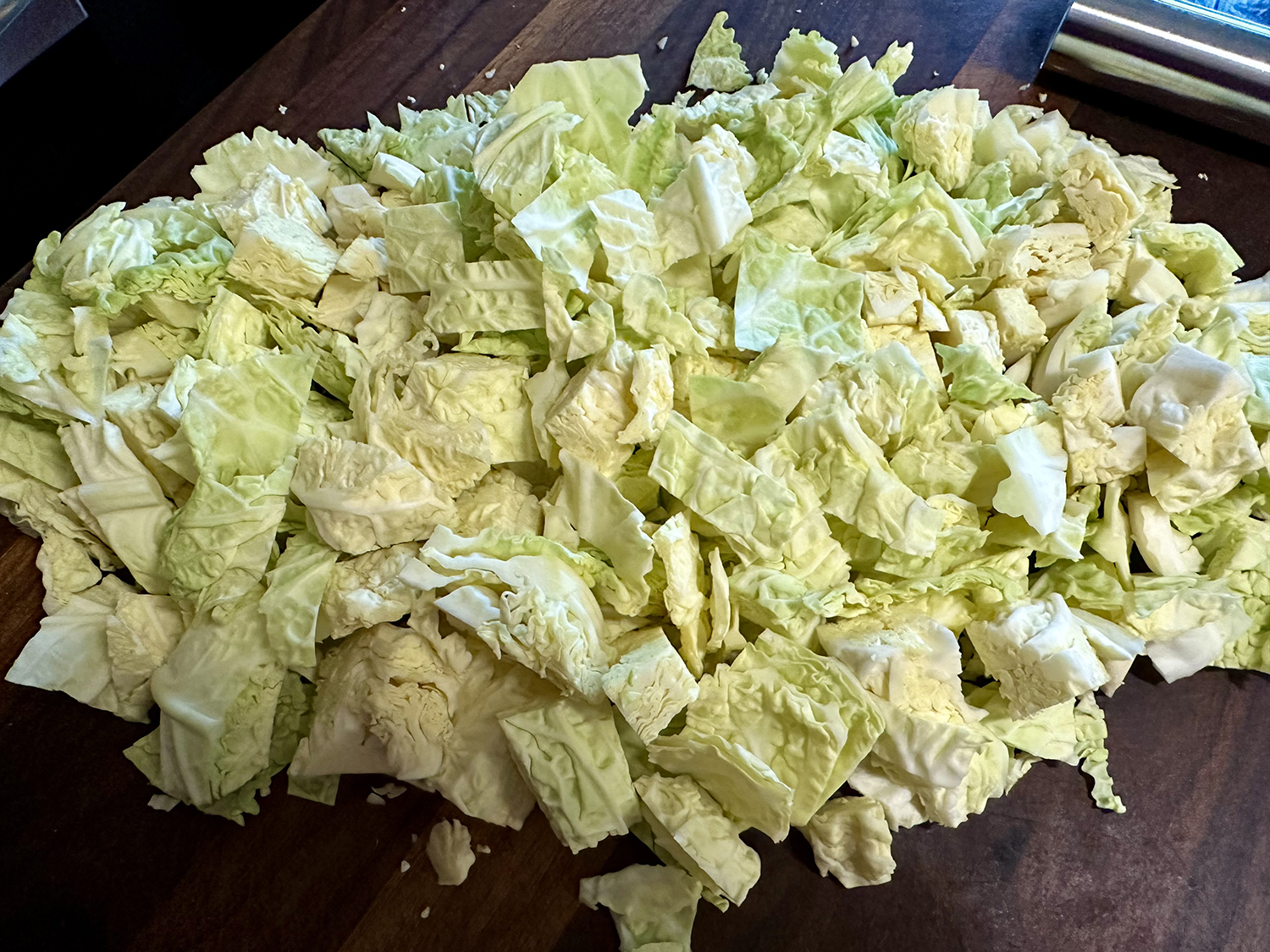
1/2 medium head savoy cabbage, cut into 1-inch pieces
1 can diced tomatoes, (14.5-oz.)
1 tsp. hot Hungarian paprika
2 Tbsp. sweet Hungarian paprika, or more to taste
2 tsp. dried marjoram
1 tsp. dried dill
5 sprigs fresh thyme, tied into a bundle
2 Tbsp. apple cider vinegar
Ground black pepper, to taste
Directions
Dissolve 3 tablespoons salt in 4 quarts cold water in large bowl or container. Add beans and soak at room temperature for at least 8 hours and up to 24 hours. Drain and rinse well.
Adjust oven rack to lower-middle position and heat oven to 250 degrees. Heat oil in large Dutch oven over medium-high heat. Add pork shoulder and brown on all sides, about 8 minutes. Transfer pork to a plate and place in set aside.
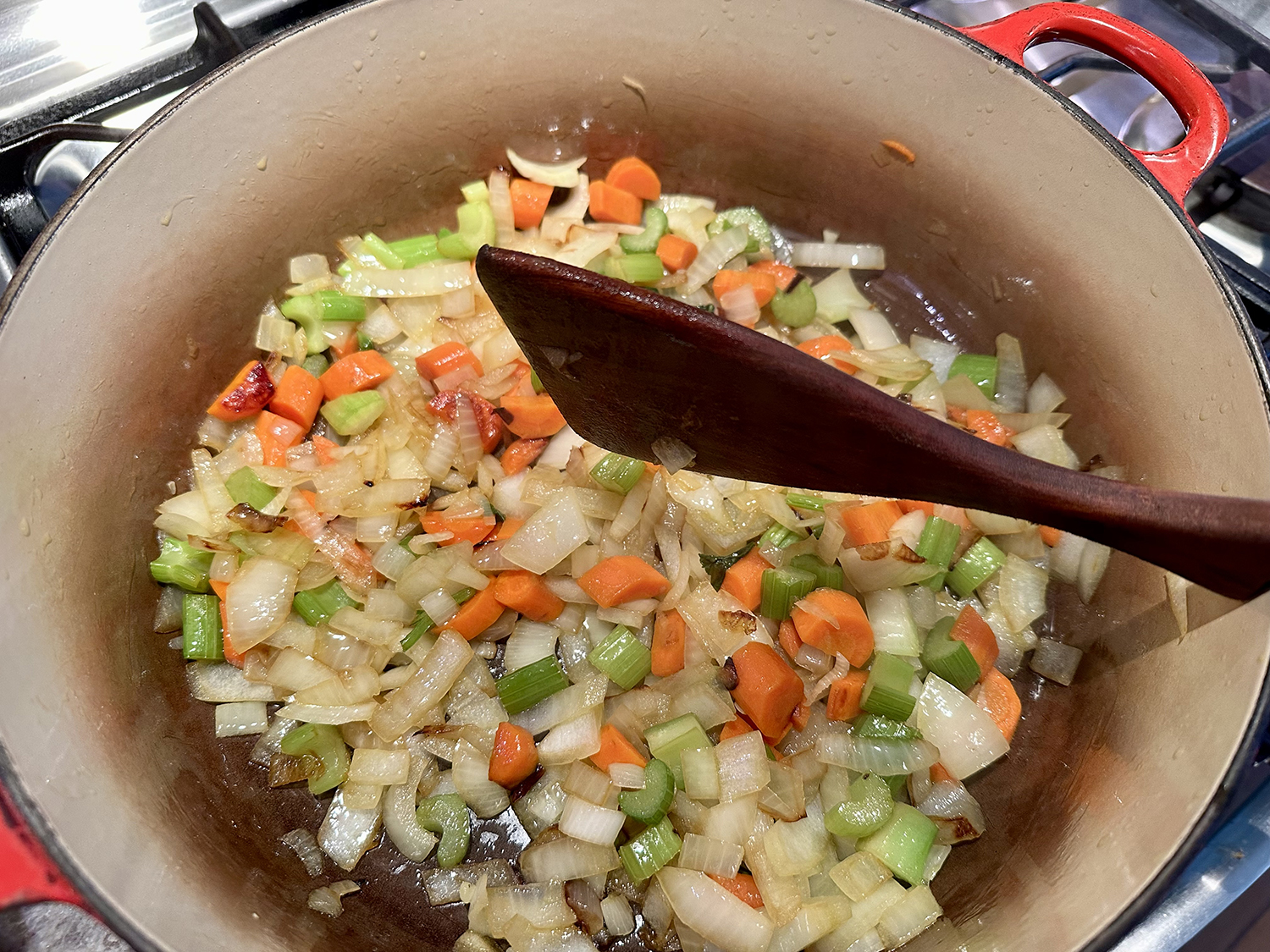
Reduce heat to medium. Add onion, celery, and carrots. Cook, stirring occasionally, until vegetables are softened and lightly browned, 10 to 16 minutes.
Stir in garlic and cook until fragrant, about 1 minute. Stir in broth, water, bay leaves, pork (along with any juices on the plate), and soaked beans. Increase heat to high and bring to simmer. Cover pot, transfer to oven, and cook until beans are almost tender (very center of beans will still be firm), about 1 hour.
Remove pot from oven and stir in cabbage, tomatoes with their juices, hot and sweet paprika, marjoram, and dill. Cover pot, return pot to oven and continue to cook until beans and greens are fully tender, 45 minutes to one hour longer.
Remove pot from oven and stir in the apple cider vinegar, and submerge thyme bundle in stew. Cover and let stand 15 minutes. Discard bay leaves and thyme bundle and season stew with salt and pepper to taste. If desired, use back of spoon to press some beans against side of pot to thicken stew.
For a festive occasion, a burnished whole duck makes quite an impression — fancier than chicken and more elegant than turkey. When I was growing up, Mom roasted duck a few times a year, a favorite for most of the family.
I remember as a young teen going out to eat at a Chinese restaurant for the first time because it was my sister’s birthday and that was her venue of choice. Picky as I was, I was not a happy camper as I walked in, but was a convert when I walked out because I had ordered Wor Shu Opp (pressed almond duck).
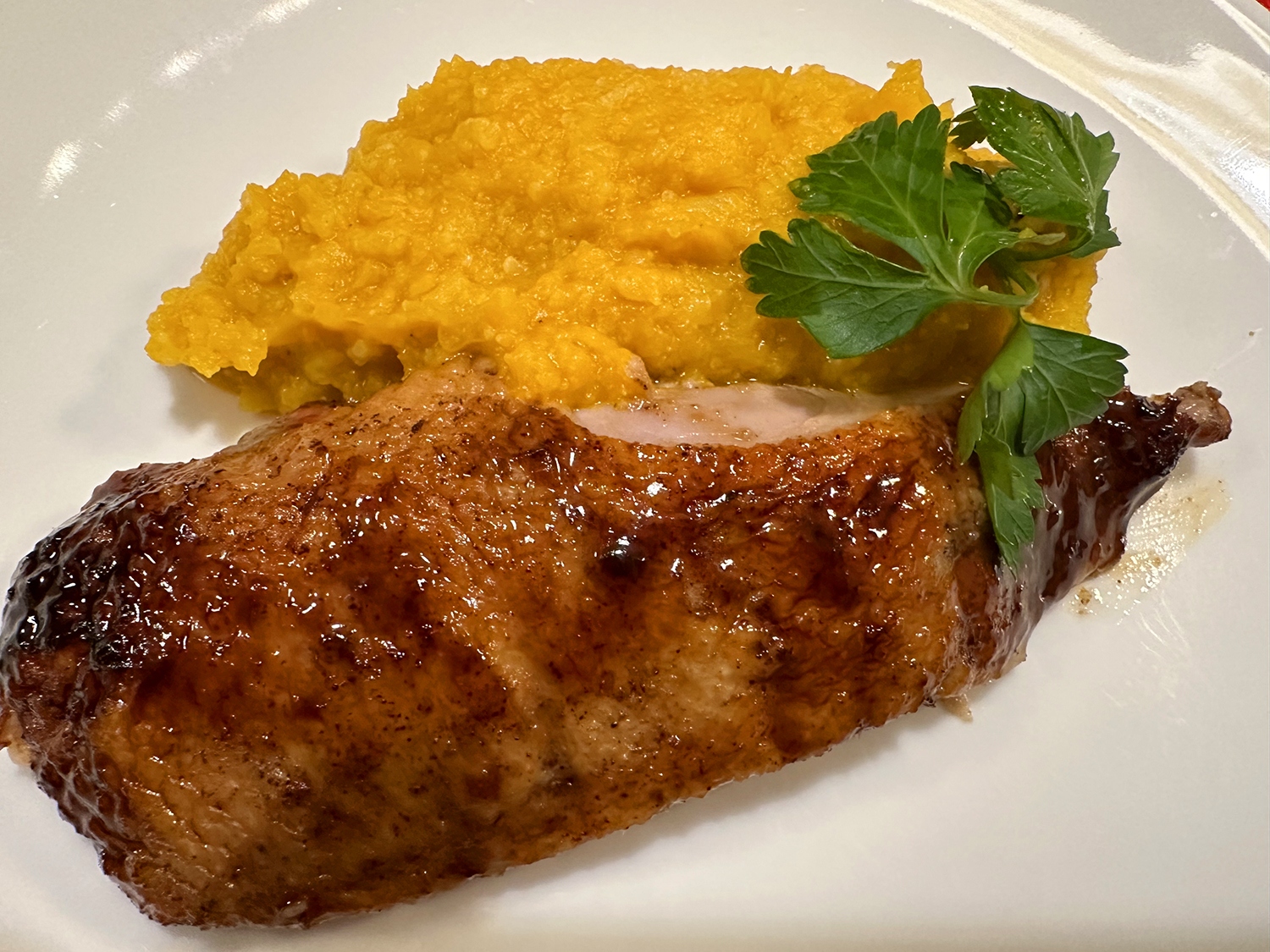
Roasting the duck is not so difficult to do. Seasoning the duck ahead and leaving it in the fridge overnight helps to deepen the flavor and keeps work to a minimum the following day. This one is seasoned with orange zest, along with fair amount of ginger and five-spice powder, which gives it a marvelous perfume. We paired ours with a Kobocha-Cauliflower Mash.
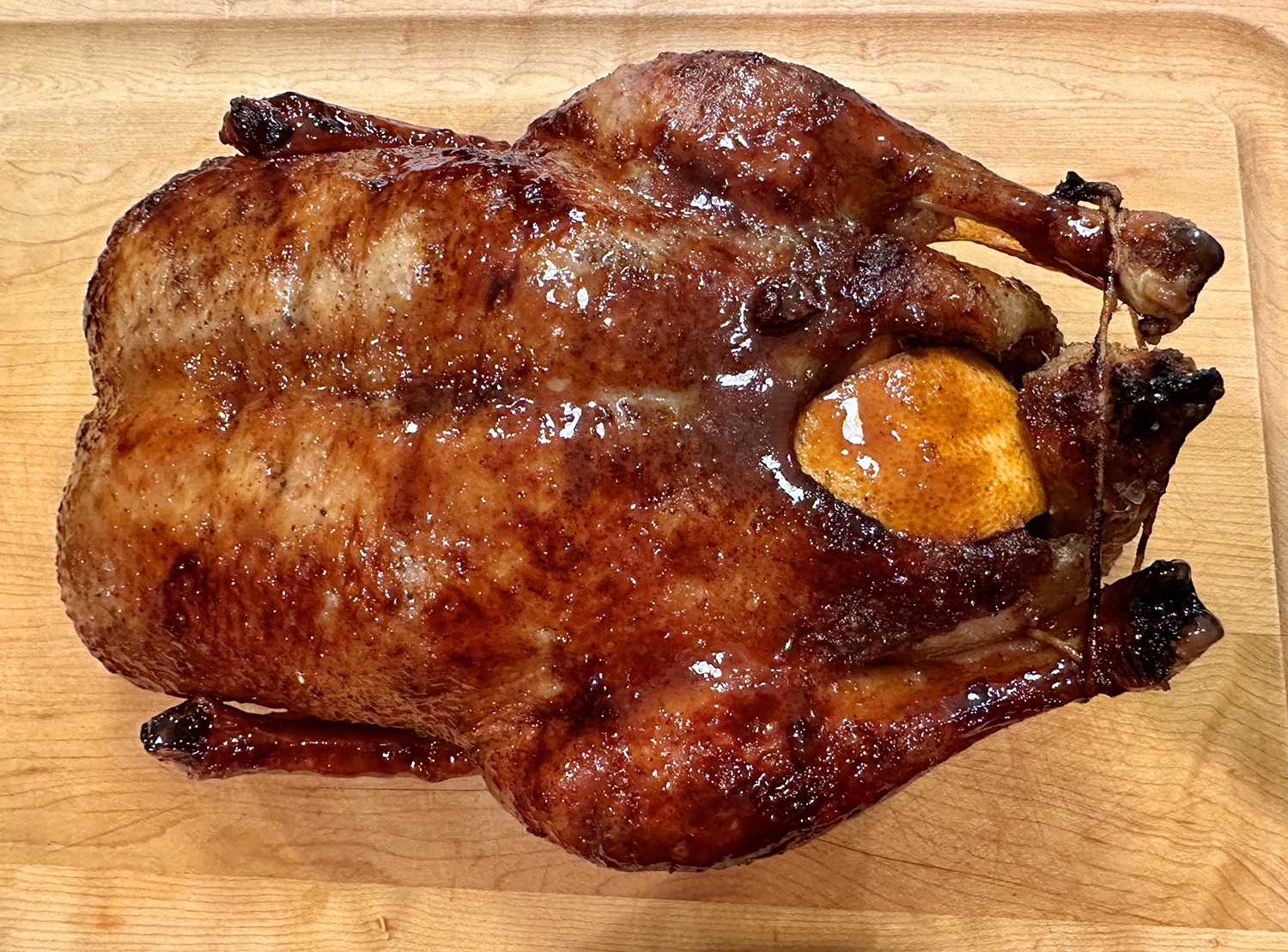
The ingredient list is minimal, and the hands-on prep doesn’t take long—most of the time the duck is either in the refrigerator or the oven. Because the bird gets glazed often, the skin will be a gorgeous burnished tawny color, but the skin won’t be extra crispy.
Keep in mind when serving more than 4 people, you will need two ducks. Of course there is no need to wait until a special occasion…
Rinse duck and pat dry. Remove neck and giblets and save for another purpose. Remove excess fat from cavity and tail area and trim off a bit of flappy neck skin. Prick duck skin all over with tip of sharp paring knife, making sure not to penetrate meat.
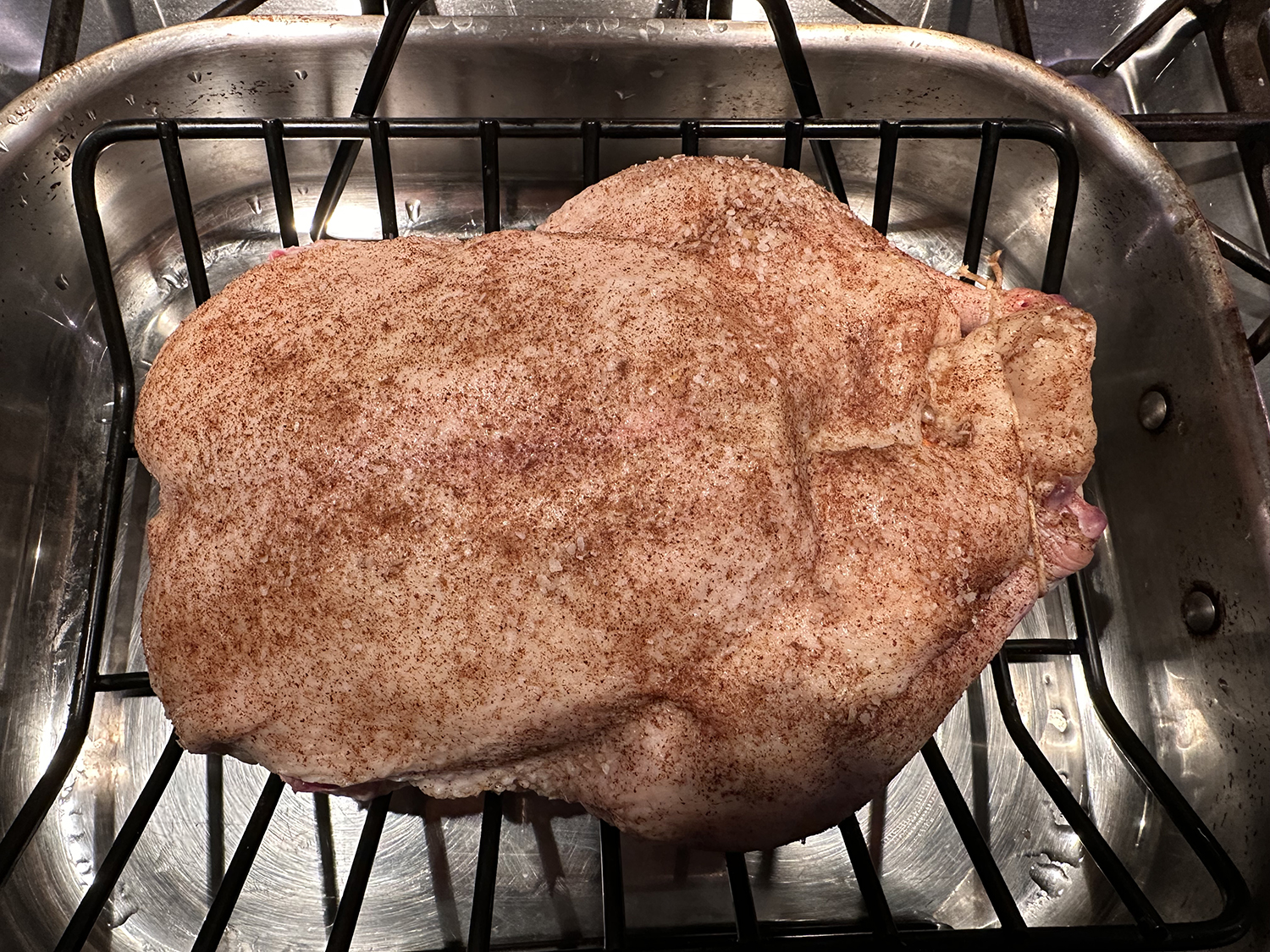
Mix together salt and 5-spice powder. Season interior of duck with 1 tablespoon salt mixture; use remainder to generously season exterior (you may have a little left over).
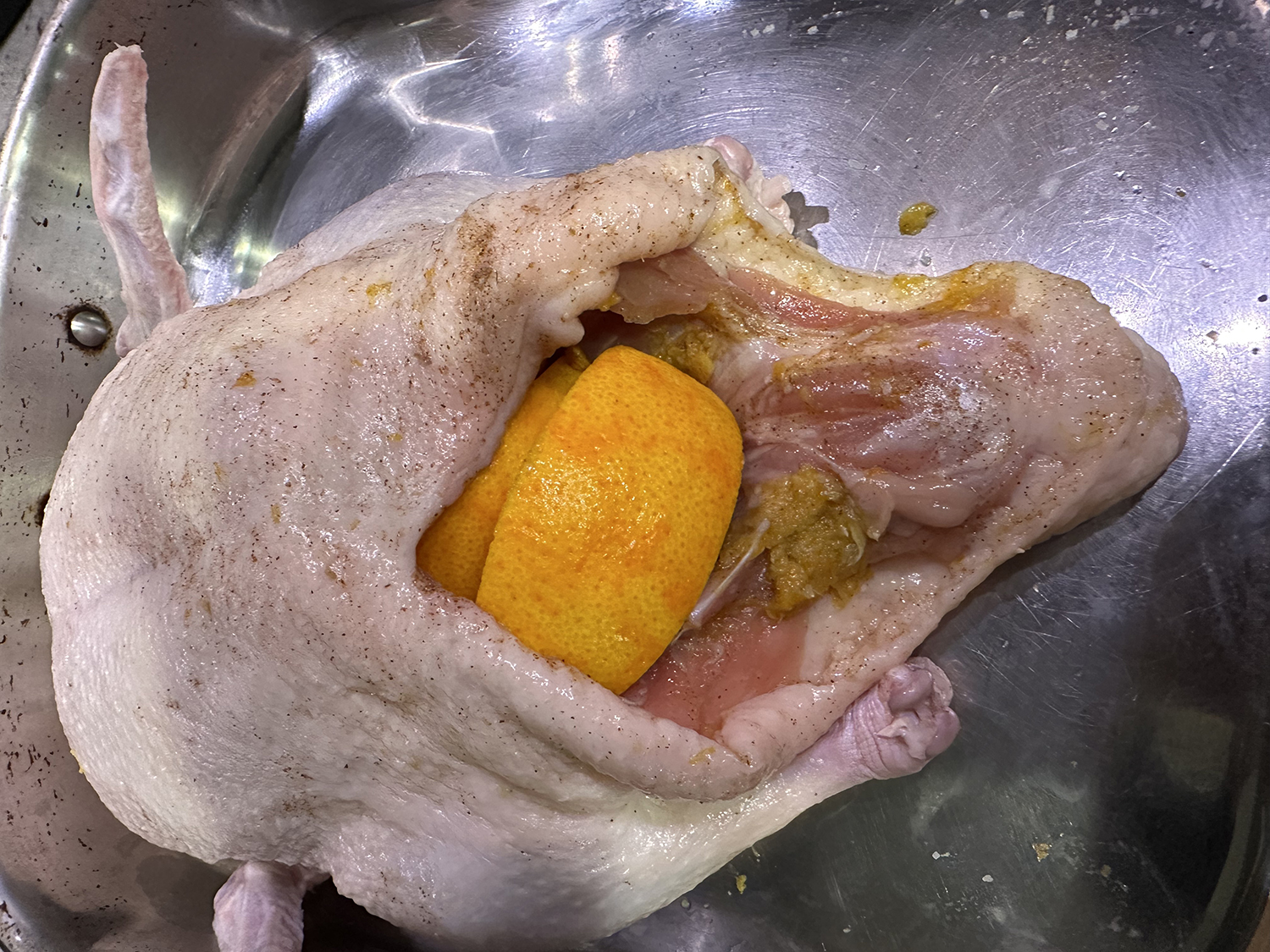
Combine orange zest with grated ginger and garlic, then smear mixture inside cavity. Place orange wedges in cavity. Tie legs together. Secure neck flap with wooden skewer or toothpicks. Place duck on rack in roasting pan breast-side-up and refrigerate overnight, uncovered.
Heat oven to 350 degrees. Meanwhile, bring duck to room temperature and make the glaze: Bring orange juice, honey, sugar and soy sauce to a simmer. Add sliced ginger and star anise, then reduce mixture until you have a medium-thick syrup, about 10 minutes. Remove from heat and set aside.
Roast duck for 2 hours, carefully pouring off fat and turning duck over every 30 minutes. Paint with glaze and roast for another 30 minutes (2 1/2 hours in all). Tent with foil if the glaze begins to get too dark. Duck is done when the temperature at the thickest part of the leg reads 165 degrees.
Paint the duck once more, keep it warm and let rest for 20 minutes. Use poultry shears to cut into quarters (remove backbone first) or carve in the traditional way, removing legs from carcass and slicing breast.
This dairy-free mash allows for everyone at the table to take a scoop no matter what the dinner may be. Kabocha squash and cauliflower blend seamlessly with creamy coconut milk and minced ginger. The resulting dish is a luscious, Asian-inspired alternative to mashed potatoes—without a speck of cream or butter in sight.
While it suggests to use a ricer, and we did, it’s probably easier to just use a hand mixer. Can’t find, or not a fan of Kabocha squash? Acorn or butternut squash would work just as well.
2 ½ lbs. kabocha squash (from 1 medium), halved, peeled, seeded, and cut into 2-inch pieces
Kosher salt and freshly ground pepper
2 lbs. cauliflower (from 1 medium), cored and cut into large florets
¼ cup extra-virgin olive oil
2 tsp. minced fresh ginger (from a 1-inch piece)
2 tsp. minced garlic (from 2 cloves)
¾ cup light coconut milk
Chicken or vegetable broth, or water, if needed
Directions
Cook squash in a large pot of simmering (not boiling) salted water 6 minutes. Add cauliflower; continue simmering until vegetables are very tender, 10 to 12 minutes more.
Drain, then return vegetables to pot. Cook over medium heat, stirring frequently, until vegetables appear dry and a film forms on bottom of pot, 3 to 4 minutes.
Pass vegetables through a ricer, food mill, or chinois strainer; cover to keep warm.
Heat oil in a saucepan over medium. When it shimmers, add ginger and garlic; cook until fragrant and sizzling, about 30 seconds. Add coconut milk; season with salt and pepper. Bring to a simmer, then remove from heat and stir into vegetable mixture until smooth.
If mash is too stiff, add broth, coconut milk, or water, a few tablespoons at a time. Season with salt and pepper and serve warm.
Another weeknight meal done in under an hour. And who doesn’t like meatballs? This is not a typical meatball and sauce combination, but rather exudes an Indian profile. We paired ours with a side of baby spinach and sliced garlic stir-fried in a wok.
Taken from an article in Bon Appétit Magazine, it informs us that puréeing onions allow you to harness all of that punchy allium flavor with none of the chopping and tears. Here, they’re blended up with yogurt and aromatics to create a mixture inspired by onion-and-yogurt pastes used in Mughal-style cooking.
Added to both the base of the curry and the meatball mixture; the purée thickens and seasons the sauce while keeping the meatballs tender and sweet. Take care to cook out the paste for the curry until drops of fat bead on the surface, which ensures that the final product will taste rich and rounded.
This coconut curry sauce is incredibly versatile. Not a red meat fan? Try cooking canned chickpeas, cubes of seared tofu, or browned 1″ pieces of skinless, boneless chicken thighs in it instead of the meatballs. Just make sure to cook the full amount of purée in the pan before adding the coconut milk and water; it will take a minute or two longer.
1 tsp. plus 1 Tbsp. Diamond Crystal or 2¼ tsp. Morton kosher salt, divided
1 lb. ground lamb or ground beef chuck (20% fat)
¼ cup panko
1 tsp. freshly ground pepper
¼ tsp. baking soda
2 Tbsp. vegetable oil, divided
1 13.5-oz. can unsweetened coconut milk
6 scallions, dark green parts only, thinly sliced
Cooked rice or flatbread and lime wedges (for serving)
Directions
Purée 1 small onion, peeled, quartered through root end, 6 garlic cloves, one 1” piece ginger, peeled, 1 serrano chile, halved lengthwise, and ½ cup plain whole-milk Greek yogurt in a blender until smooth. Transfer ¼ cup onion purée to a large bowl. Add 2 tablespoons mild curry powder, 1 tsp. sugar, and 1 tsp. Diamond Crystal or ½ teaspoon Morton kosher salt to remaining purée in blender and blend briefly to combine; set aside.
Add 1 pound ground lamb or ground beef chuck (20% fat), ¼ cup panko, 1 teaspoon freshly ground pepper, ¼ teaspoon baking soda, remaining 1 tablespoon Diamond Crystal or 1¾ teaspoon Morton kosher salt, and ¼ cup water to ¼ cup purée in bowl; mix vigorously with your hands until smooth and meat is beginning to stick to sides of bowl. Wet your hands and roll lamb mixture into 1½”-diameter balls (you should have about 16).
Heat 1 tablespoon vegetable oil in a large nonstick skillet over medium-high. Cook half of meatballs, turning occasionally, until browned on all sides, about 5 minutes total (meatballs will still be raw in the center); transfer to a plate with a slotted spoon. Repeat with remaining meatballs and 1 tablespoon vegetable oil.
Reduce heat to medium; add reserved onion purée to same skillet (stand back; mixture will spatter) and cook, stirring often, until purée thickens significantly and beads of oil form on the surface, 6–8 minutes. Add one 13.5-ounce can unsweetened coconut milk and ½ cup water, stirring to combine. Return meatballs to skillet, cover, and cook, stirring occasionally and reducing heat as needed to maintain a simmer, until meatballs are cooked through, 8–10 minutes.
Transfer meatball curry to a large shallow bowl; top with 6 scallions, dark green parts only, thinly sliced. Serve with cooked rice or flatbread and lime wedges alongside.
This decadent casserole features tender chicken thighs, leeks and turnips that are bathed in a creamy gratin sauce and topped with garlic breadcrumbs. Turnips are a root vegetable that are often overlooked in the produce section. You may have seen them at the grocery store or farmers market, but are unsure of what they taste like. So, what do turnips taste like?
The answer is not straightforward, as turnips have a unique taste that can vary depending on the cooking method and variety. Here they mellow into a soft creamy texture. If you still are not on board with turnips, substitute potatoes. Compared to potatoes, turnips have a slightly sweeter and nuttier taste, and are lower in calories and carbohydrates.
As far as the cheese goes, for a more funky and pungent flavor, try Gruyère cheese. For a more mild, buttery, and nutty flavor, opt for aged Gouda, which was our choice this time around. And the topping of breadcrumbs helps to provide a pleasantly crunchy contrast to the soft, creamy chicken gratin. Tossing the breadcrumbs with olive oil, garlic, salt, and pepper before baking infuses them with extra flavor.
To make ahead, make recipe through Step 4, cover and refrigerate overnight. When ready to cook, remove from fridge, add the cheese and then the breadcrumb mixture. Since the pan is cold, you may want to bake the casserole and extra 5 minutes.
8 small boneless, skinless chicken thighs (about 2 1/4 lbs.)
1 3/4 tsp. kosher salt, plus more to taste
1 1/4 tsp. black pepper, divided
5 Tbsp. unsalted butter, divided
2 medium (about 12-oz.) leeks, dark green ends cut off and discarded, light green and whites sliced in half lengthwise and sliced diagonally into 1 1/2-inch pieces
5 garlic cloves, 4 finely chopped, 1 grated
1 1/4 lbs. turnips (about 3 medium turnips), peeled and cut into 1/2-inch pieces
2 Tbsp. all-purpose flour
1 cup chicken stock
3 Tbsp. (1 1/2 oz.) Cognac
2 Tbsp. (1 oz.) dry sherry
3/4 cup heavy cream
1 Tbsp. Dijon mustard
1 1/2 tsp. finely chopped fresh thyme, plus thyme sprigs for garnish
1/2 tsp. ground nutmeg
5 oz. Gruyère or aged Gouda cheese, grated (about 1 1/4 cups)
3 Tbsp. olive oil
1 1/2 cups fresh breadcrumbs (from 1 small French bread loaf)
Directions
Pat chicken dry with paper towels. Sprinkle evenly with 1 teaspoon salt and 1/2 teaspoon pepper. Heat 3 tablespoons butter in a large skillet over medium until foamy. Working in batches if needed, cook chicken, undisturbed, until well browned, about 10 minutes, adjusting heat as needed to prevent browned bits in skillet from burning. Flip chicken; cook until no longer pink on the outside, about 1 minute. Transfer chicken to a plate, and set aside. Remove skillet from heat; do not wipe clean. Preheat oven to 375°F.
Add turnips to skillet, and sprinkle with 1/4 teaspoon salt and 1/4 teaspoon pepper. Cook over medium, stirring occasionally, until turnip edges are browned, 4 to 5 minutes. Transfer turnips to a large (2 1/2- to 3-quart) baking dish; set aside. Add leeks to skillet, and sprinkle with 1/4 teaspoon salt and 1/4 teaspoon pepper. Cook over medium, stirring often, until softened, about 3 minutes. Transfer leeks to baking dish with turnips. Do not wipe skillet clean.
Add remaining 2 tablespoons butter to skillet, and melt over medium. Add finely chopped garlic; cook, stirring constantly, until fragrant, about 30 seconds. Add flour; cook, stirring constantly, 1 minute. Stir in chicken stock, Cognac, and sherry. Bring to a simmer over medium, and stir using a wooden spoon to scrape up browned bits from bottom of skillet. Stir in cream, mustard, chopped thyme, and nutmeg; simmer over medium, stirring occasionally, until sauce is slightly thickened, 2 to 3 minutes. Remove from heat. Season with additional salt to taste.
Arrange chicken thighs over turnip-and-leek mixture in baking dish. Pour sauce evenly over mixture; sprinkle with cheese.
Put breadcrumbs into a medium bowl. Stir in oil, grated garlic, remaining 1/4 teaspoon salt, and remaining 1/4 teaspoon pepper; toss to combine. Sprinkle evenly over chicken mixture.
Bake in preheated oven, uncovered, until breadcrumbs turn dark amber brown, sauce bubbles in the center, and a thermometer inserted in thickest portion of chicken registers at least 165°F, 30 to 40 minutes. (If you refrigerated over night, you may need to add an extra 5 minutes in the oven.)
Remove from oven, and let cool 5 minutes. Garnish with thyme sprigs, and serve.
What home cook doesn’t want a quick dinner without too much prep, is healthy, and is ready to eat in under an hour? This lovely recipe fits the bill. Nice bright flavors, delicate flaky fish and a bit of punch from the paprika (we used smoked paprika).
Flaky white cod is one of the more widely distributed and moderately priced fish available. Its mild flavor can be used in countless different dishes, but we think it’s at its best when braised with assertive flavorings, like the sweet peppers, thyme, garlic, and paprika of peperonata, a classic Spanish dish.
For this Spanish-style braised cod recipe, we laid down a base of sautéed onion, bell pepper, garlic, and paprika, to which we added tomatoes, fresh thyme, and wine. Once the broth was prepared, we simply nestled the pieces of fish down into the sauce, dropped the heat to low, covered the skillet, and let the fish cook in the moist environment. Within about 10-15 minutes, the fish was cooked through—the result being a tender, moist, and very well seasoned braised cod recipe.
Halibut, snapper, tilapia, bluefish, monkfish, or sea bass fillets are all good substitutions for the cod. If desired, drizzle with extra-virgin olive oil before serving. Smoked paprika (often found in specialty spice markets) is a nice substitution for the paprika here. Serve with soft polenta or crusty bread. Or go low-carb as we did, and just serve the fish and sauce.
Heat oil in 12-inch nonstick skillet over medium heat until shimmering. Add bell peppers, onion, paprika, and 1/2 teaspoon salt and cook until softened, about 7 minutes. Stir in garlic and cook until fragrant, about 30 seconds.
Stir in tomatoes, wine, thyme, and 1/4 teaspoon pepper, and bring to simmer.
Pat cod dry with paper towels and season with salt and pepper. Nestle cod into pan and spoon sauce over fish. Cover and cook over low heat until fish flakes apart when gently prodded with paring knife, about 10 minutes. (Ours took 15 minutes before it was flaky.)
Transfer fish to individual plates. Stir basil and vinegar into sauce and season with salt and pepper to taste. Spoon sauce over fish and serve.
Braising doesn’t always mean long cooking times. For tender cuts like pork chops, the secret to a great braise lies in the method, not in hours on the stove. First, a hard sear on the meat, as well as halved shallots and apples, creates a beautiful fond (the wonderfully delicious caramelized little bits left in the bottom of the pan after cooking).
Deglazing the pan with a tart-savory combination of hard cider, vinegar, and stock loosens up that layer of browned goodness and reduces down to gravy in about 20 minutes. To finish, the chops simmer in the sauce until they’re cooked through. Voilà: cooked-all-day depth in just an hours time.
Our changes? If it serves 4, then why only use 3 shallots? We added a fourth one, so each serving received two halves (and next time we may be inclined to add even more). Our intuition took over when thinking about the amount of time the apples actually cooked. The original directions have you put the browned halves back into the pan when the chops get added back. If you want firm apples, then by all means, wait until then to add them to the pan. If like us, you prefer softer bites, then arrange them cut side up when placing the thyme bundle into the sauce.
Otherwise, pretty much everything was spot on. Make sure to use a very large pan to hold all of the ingredients. And that sauce—it was sooo good, you may be tempted to drink any leftovers… Serve with egg noodles, polenta or mashed potatoes.
1 Tbsp. Diamond Crystal or 1¾ tsp. Morton kosher salt, plus more
1 Tbsp. freshly ground pepper, plus more
2 Tbsp. vegetable oil
3 medium Granny Smith or Gala apples, halved through equators, remove core and seeds
4-8 medium shallots, peeled, halved lengthwise through root ends
4 garlic cloves, finely grated
¼ cup Dijon mustard
3 Tbsp. all-purpose flour
2 Tbsp. unsalted butter
2 cups sweet hard apple cider (such as Angry Orchard)
1 cup chicken broth
1 Tbsp. apple cider vinegar
10–12 sprigs thyme, tied together with kitchen twine
Finely chopped chives (for serving)
Directions
Pat four 1½”-thick bone-in rib pork chops (about 2 pounds total) dry with paper towels. Sprinkle all over with 3 Tbsp. sugar, 1 Tbsp. Diamond Crystal or 1¾ tsp. Morton kosher salt, and 1 tablespoon freshly ground pepper. Heat 2 tablespoon vegetable oil in a large cast-iron skillet over high. Working in batches if needed, cook pork chops, turning halfway through, until deeply browned, about 5 minutes total. Transfer to a large plate.
Working in batches if needed, cook 3 medium Granny Smith or Gala apples, halved through equators, and 3 medium shallots, peeled, halved lengthwise through root ends, cut sides down, in same skillet, gently pressing down on them with a spatula to create contact with pan, until golden brown on cut sides, about 2 minutes (it’s okay if shallots fall apart). Transfer apples to plate with chops.
Reduce heat to medium, add 4 garlic cloves, finely grated, to pan, and cook, stirring constantly, just until fragrant, about 30 seconds. Add ¼ cup Dijon mustard, 3 tablespoon all-purpose flour, and 2 tablespoon unsalted butter; stir to coat shallots. Pour in 2 cups sweet hard apple cider, 1 cup low-sodium chicken broth, and 1 tablespoon apple cider vinegar, scraping up browned bits and flour stuck to bottom of pan and incorporating into liquid.
Add thyme bundle and apple halves arranging them cut sides up, and bring mixture to a simmer. Partially cover (use a baking sheet if you don’t have a lid) and simmer until sauce is thick enough to coat a spoon, about 20 minutes. Taste and season with salt and pepper.
Place pork chops in sauce, and partially cover. Simmer until an instant-read thermometer inserted into the thickest part of a pork chop registers 145°, 7–10 minutes. Remove from heat; sprinkle with finely chopped chives and season with more pepper to serve.
When I laid eyes upon the full-page photo attached to an article for Boozy Braises in a recent issue of Bon Appétit Magazine, I just knew it had to get on our short list. Here, the humble pot roast gets punched up with the familiar flavors of a Dark and Stormy cocktail. Piqued my interest!
Aged rum and ginger beer form the basis of the braise, with a bit of brown sugar and plenty of chopped fresh ginger playing backup. This potent combination reduces as the chuck cooks to tenderness, creating a complex sauce with just enough kick. And what’s a cocktail without a garnish? Mint and cilantro, along with some lime wedges, give this cozy dish a refreshing finishing touch.
As the article informed, pot roast isn’t a specific cut of meat but rather a method of preparation. And it’s a forgiving dish as long as you choose a cut of meat that can stand up to long cooking without drying out. Cheap, tough cuts are what you’re after, the ones that have a lot of connective tissue and little fat. Think chuck roasts, rounds, and briskets.
These cuts would be chewy if cooked like a steak but are ideal for gentle braising, which allows all those firm muscles and tissues to slowly become tender. A chuck roast is preferred, but rounds and briskets can be used to similar result. If unsure, ask your butcher: Tell them you’re making a pot roast and let them guide you.
We never thought of a pot roast dinner as company-worthy, but this recipe changed our viewpoint. It was hands-down delicious! Our pot roast was only 2 3/4 pounds, less than the 4-pound roast indicated under ingredients. It is often impossible to find one over 3 pounds, so if you are feeding more than four people, you may want to get two smaller chuck roasts. (Make sure they’ll fit in your braising pot.)
A perfect recipe to cook on a long, cold, lazy day in the Winter. Perhaps even enjoy a Dark & Stormy cocktail while the pot roast braises?
Do ahead: Roast can be cooked 3 days ahead. Let cool; cover and chill. Skim fat from surface before reheating, covered, in a 350° oven for at least 30 minutes.
The second time we made this recipe, we had two 2-pound chuck roasts, so we piled them one on top of the other in the braising pot for the first 3 hours of cooking. Then when it was time to remove the cover and brown the meat, we placed them side-by-side (shown above) as the collagen had melted and the size of the roasts had shrunk.
After this second go-around, we changed the amount of the carrots and potatoes from 1 pound to 1 1⁄2 pounds each, which is noted in the Ingredients list below.
2 Tbsp. Diamond Crystal or 1 Tbsp. plus ½ tsp. Morton kosher salt, plus more
2 tsp. freshly ground pepper, plus more
¼ cup vegetable oil
2 small onions, finely chopped
2 small celery stalks, finely chopped
10 garlic cloves, finely chopped
1 3″ piece ginger, peeled, finely chopped
2 Tbsp. all-purpose flour
⅔ cup dark rum (such as Goslings)
2½ cups low-sodium beef broth
2 cups ginger beer
3 Tbsp. fresh lime juice
3 Tbsp. Worcestershire sauce
1 Tbsp. light brown sugar
1½ lb. carrots, peeled, cut into 1″ pieces
1½ lb. small yellow potatoes (15–20), scrubbed
Mint and/or cilantro leaves with tender stems and/or lime wedges (for serving; optional)
Directions
Place a rack in middle of oven; preheat to 300°. Sprinkle one 4-lb. boneless beef chuck roast all over with 2 tablespoons Diamond Crystal or 1 tablespoon plus ½ teaspoon Morton kosher salt and 2 teaspoons freshly ground pepper.
Heat ¼ cup vegetable oil in a large ovenproof Dutch oven or other heavy pot over medium-high. Cook roast, turning occasionally, until browned all over, 15–20 minutes. Transfer to a large plate.
Reduce heat to medium and cook 2 small onions, finely chopped, and 2 small celery stalks, finely chopped, in same pot, stirring often and scraping up browned bits stuck to bottom, until golden brown and softened, 9–13 minutes.
Add 10 garlic cloves, finely chopped, and one 3” piece ginger, peeled, finely chopped, and cook, stirring often, until fragrant, 2–3 minutes.
Add 2 tablespoons all-purpose flour and cook, stirring constantly, until combined, about 2 minutes. Gradually pour in ⅔ cup dark rum, stirring constantly to prevent clumping, then add 2½ cups low-sodium beef broth, 2 cups ginger beer, 3 tablespoons fresh lime juice, 3 tablespoons Worcestershire sauce, and 1 tablespoon light brown sugar. Increase heat to high and bring to a boil. Cook, stirring occasionally, until sauce is reduced by about one third and thick enough to lightly coat a spoon (it should be the consistency of heavy cream), 15–20 minutes. Taste sauce and season with more salt and pepper if needed.
Remove pot from heat and place roast in center of pot. Arrange 1 pound carrots, peeled, cut into 1” pieces, and 1 pound small yellow potatoes (15–20), scrubbed, around meat, cover, and braise in oven until meat is tender enough to shred in the center without much resistance, 2 1/2 to 3 hours.
Uncover and turn meat over. Roast until meat is browned on top and sauce thickens slightly, 30–45 minutes. (If roast is browning too quickly, turn over and continue roasting until sauce thickens.)
Skim as much fat from surface as possible; discard. Top with mint and/or cilantro leaves with tender stems (if using) and serve with lime wedges for squeezing over if desired.