I have been an artist and designer all my life incorporating graphic design for websites, gardens, publications, fabrics, interior design and cooking. I am now retired from my professional job, but still create artistic visions in all forms on a daily basis.
View all posts by LynnHoll →
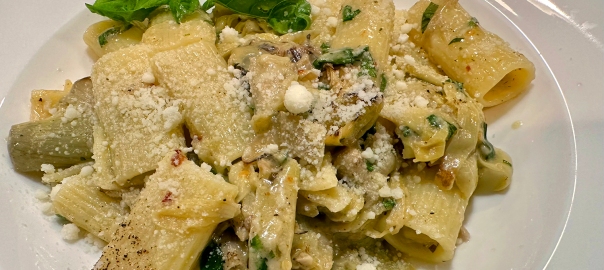
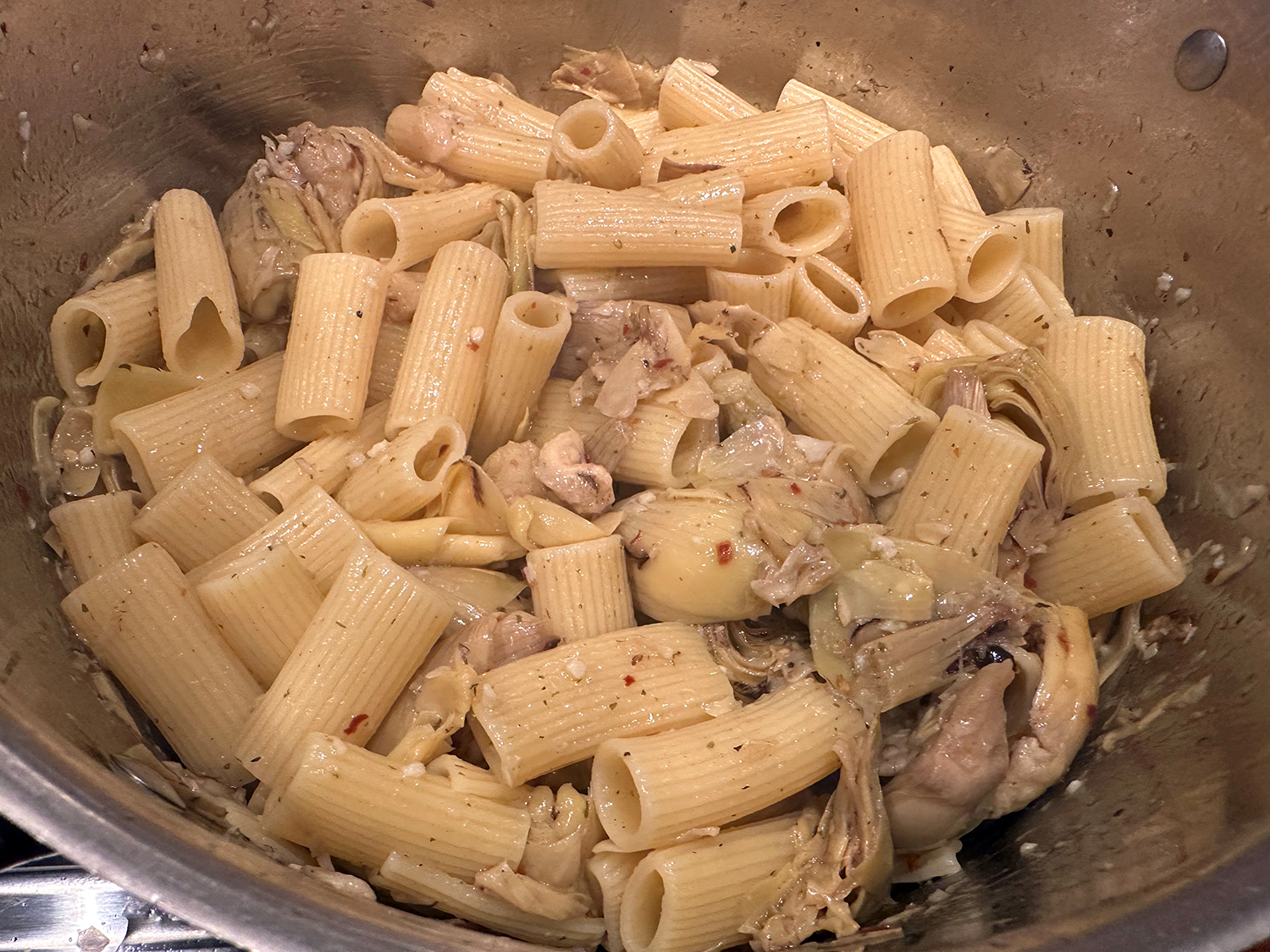
Akin to the dish of pasta fresca con carciofi e pecorino from Bari, Italy, Milk Street formulated this easy adaptation. It is a great weeknight meal with flavors that are bright and fresh, and the prep is a breeze (chopping the basil is as arduous as it gets here).
Be sure to purchase jarred marinated artichoke hearts—they offer much more flavor than canned or frozen. You will need three 12-ounce jars to get the 3 cups drained artichokes called for. The hearts usually are halved or quartered; there’s no need to chop them after draining, as they will break apart during cooking.
When draining the artichoke hearts, you may want to use the delicious seasoned oil from the jar in place of at least some of the olive oil.
Served with a side salad, it is a quick, healthy-ish weeknight meal.
2 oz. pecorino Romano cheese, finely grated (1 cup)
1 Tbsp. grated lemon zest, plus 2 Tbsp. lemon juice
1 cup lightly packed fresh basil, chopped
3 Tbsp. salted butter, cut into 3 pieces
Directions
In a large Dutch oven, bring 4 quarts water to a boil. Stir in the pasta and 1 tablespoon salt, then cook, stirring occasionally, until just shy of al dente. Reserve about 2 cups of the cooking water, then drain the pasta.
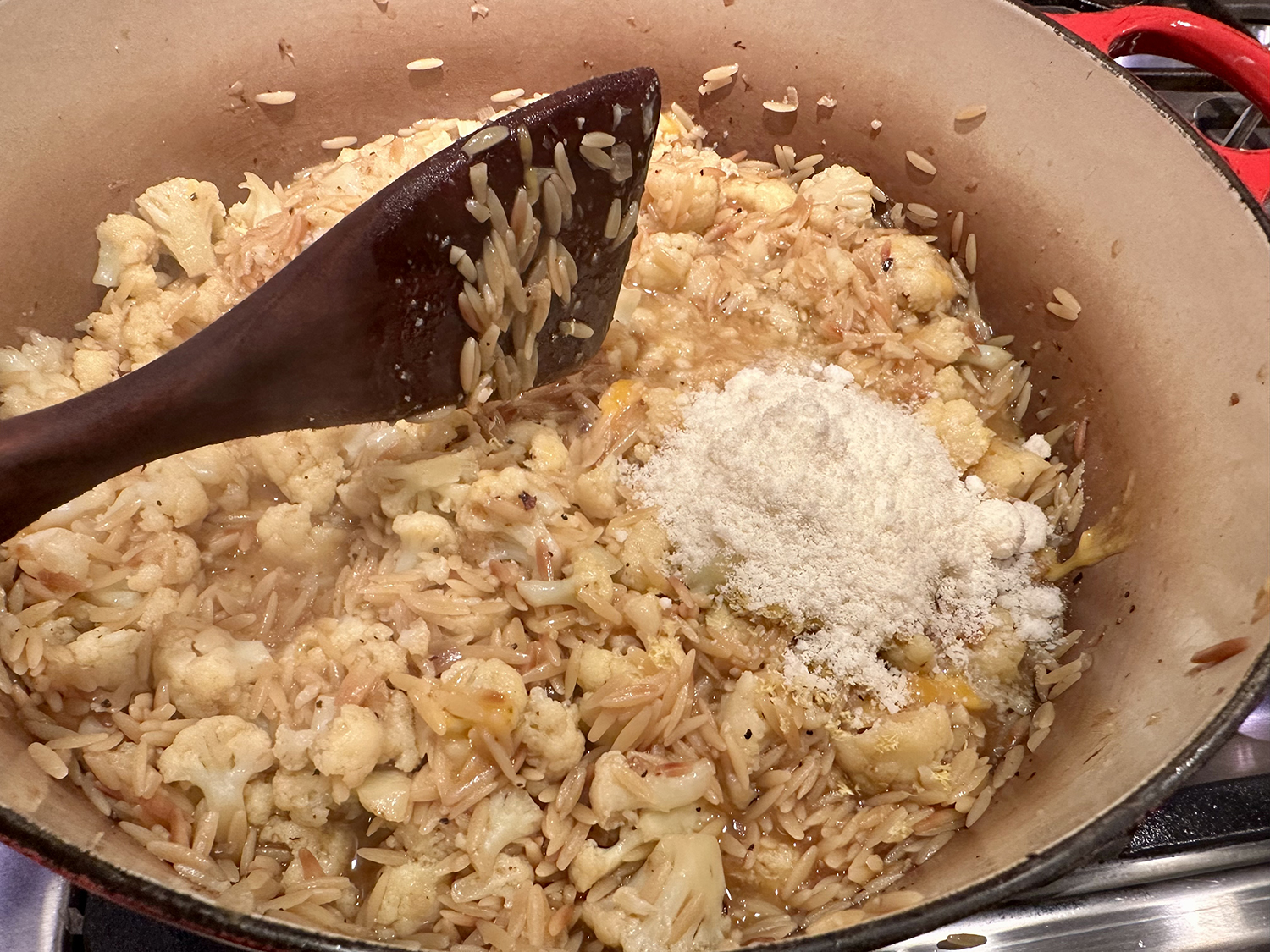
Wipe out the pot, add the oil and heat over medium-high until shimmering. Add the artichokes and cook, stirring, until well browned, 5 to 7 minutes.
Add the garlic and pepper flakes, then cook, stirring, until fragrant, about 30 seconds. Return the pasta to the pot, along with 1½ cups of the reserved pasta water. Cook, uncovered and stirring often, until the pasta is al dente and little liquid remains, 3 to 5 minutes.
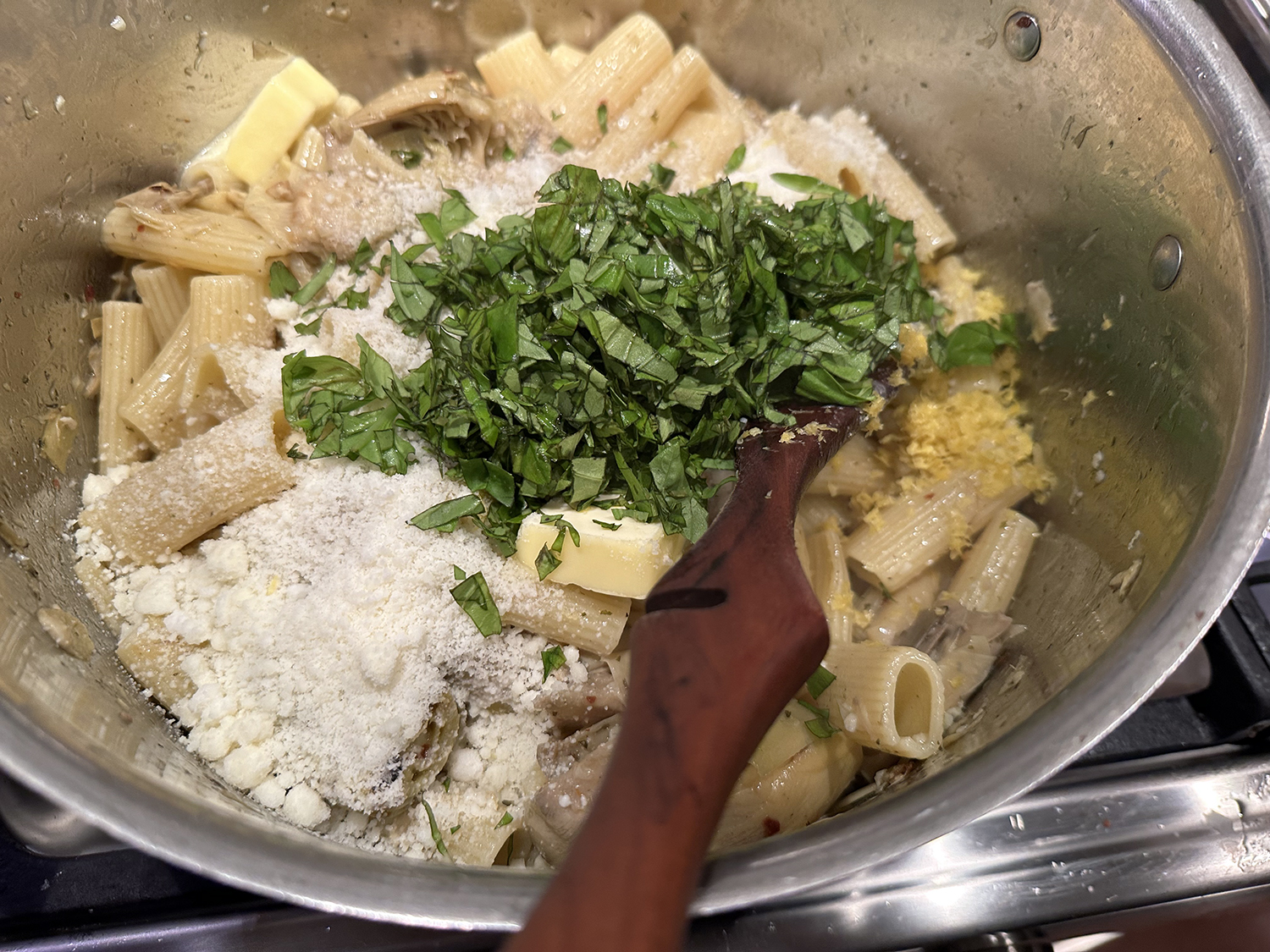
Remove from the heat. Add the pecorino, lemon zest and juice, basil and butter, then stir until the butter is melted. Stir in additional pasta water 1 tablespoon at a time until slightly saucy. Taste and season with salt and pepper.
Feeling a little decadent? Or need to create something out-of-the-ordinary for an open house or bake sale? Or just for you? In the Fall, pumpkin reigns king, so why not add a surprise companion with some dark chocolate?
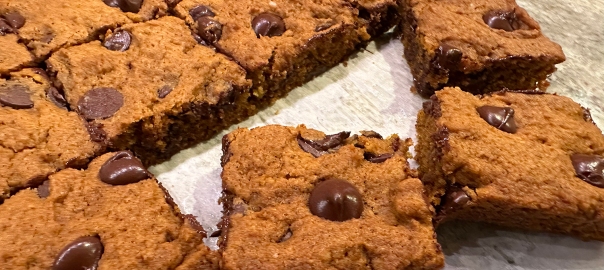
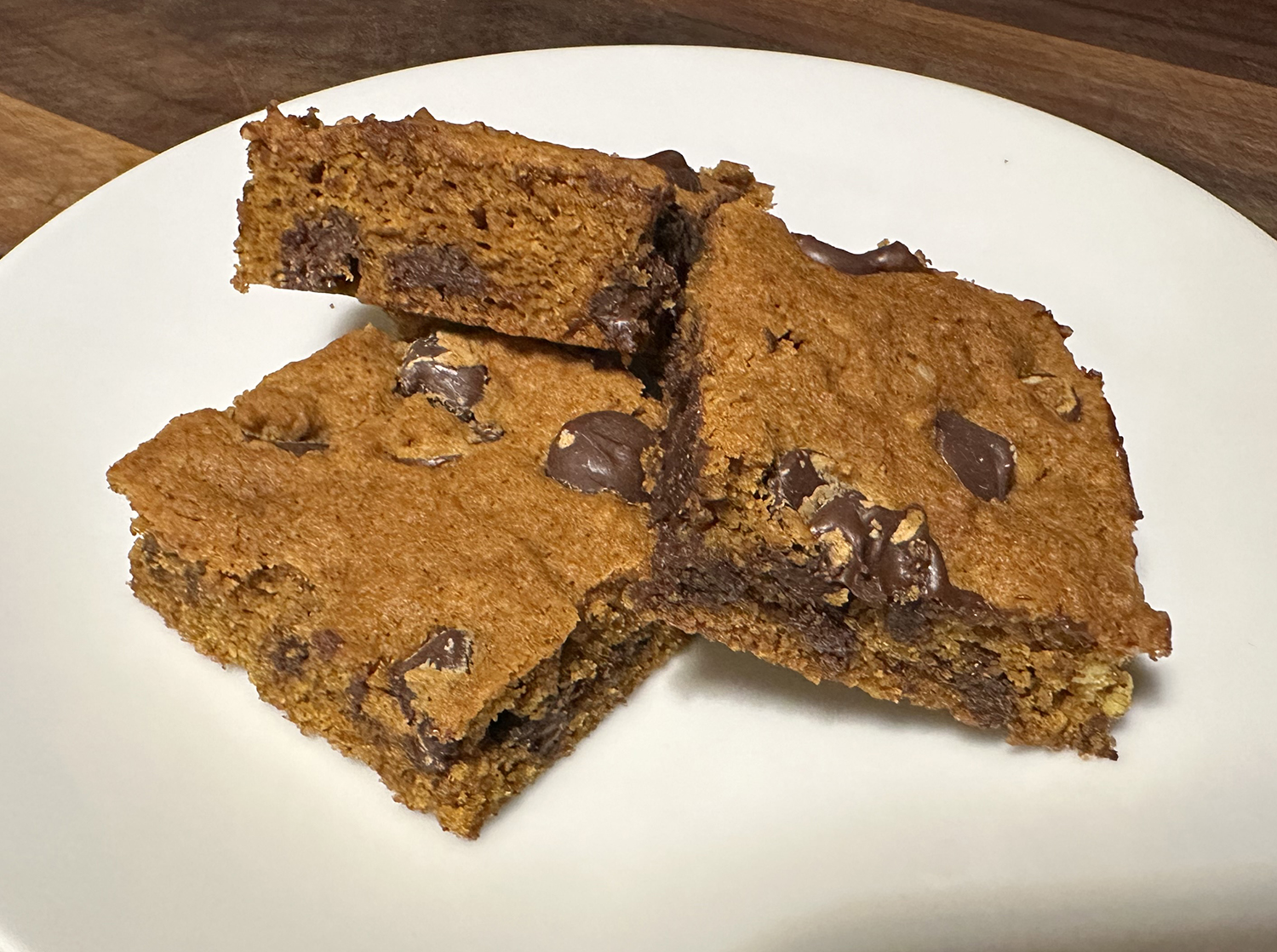
While most pumpkin cookies skew cakey, these bars are as rich and chewy as the center of a chocolate chip cookie. And who doesn’t love those? To counteract the added moisture from the pumpkin purée, this recipe has a few tricks up its sleeve: For starters, it completely ditches the eggs.
Browning the butter does double duty, removing water while also giving the dough a deeper flavor with nutty notes. Baking the bars at a low temperature keeps the edges soft, resulting in an impossibly chewy cookie texture with a warm pumpkin spice flavor and pockets of molten chocolate.
The chocolate pieces take several hours to harden, so you may not want to package them until several hours go by, But in the meantime, go ahead and nosh on a few while they are still warm and gooey.
¾ cup canned pumpkin purée (not pumpkin pie filling)
2 tsp. vanilla extract
2½ cups all-purpose flour
2 tsp. ground cinnamon
1 tsp. baking powder
1 tsp. baking soda
1 tsp. kosher salt
1 tsp. ground ginger
¼ tsp. ground cloves
¼ tsp. ground nutmeg
10 oz. bag of dark chocolate chips, save about a 1/2 cup for the topping
Directions
In a small (preferably light-colored) saucepan, melt the butter over medium heat. Continue cooking, stirring constantly to prevent the milk solids from burning, until the butter foams, darkens into a light amber color and becomes fragrant and nutty, about 3 to 4 minutes more. (Watch closely to make sure the butter doesn’t burn.) Immediately pour the butter along with any of the browned milk solids into a large heatproof mixing bowl. Let cool for 20 minutes until warm but no longer hot.
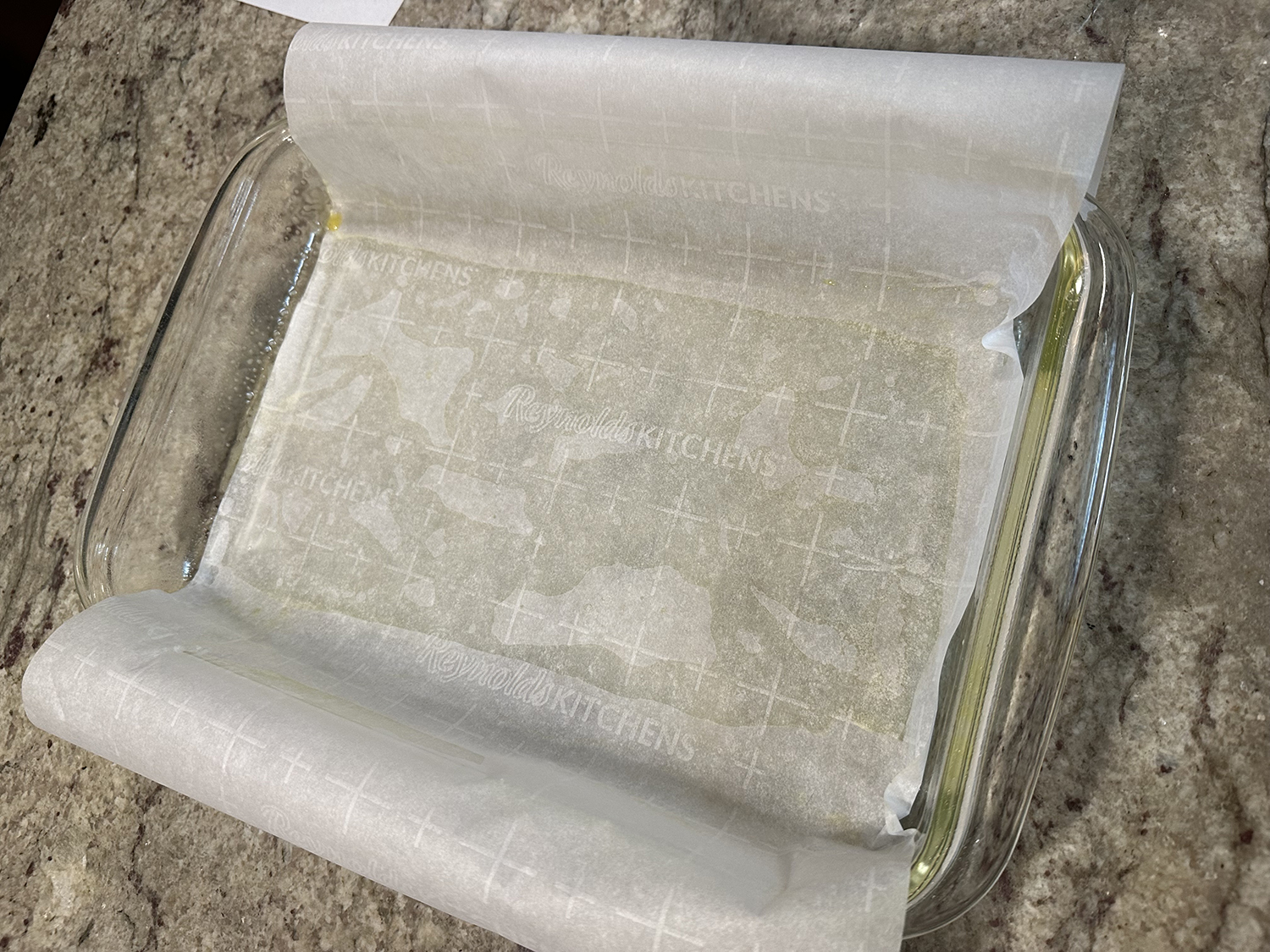
While the butter cools, heat the oven to 325°F. Grease a 9-by-13-inch metal or glass baking pan with cooking spray or oil and line with a strip of parchment paper that hangs over the two long sides to create a sling.
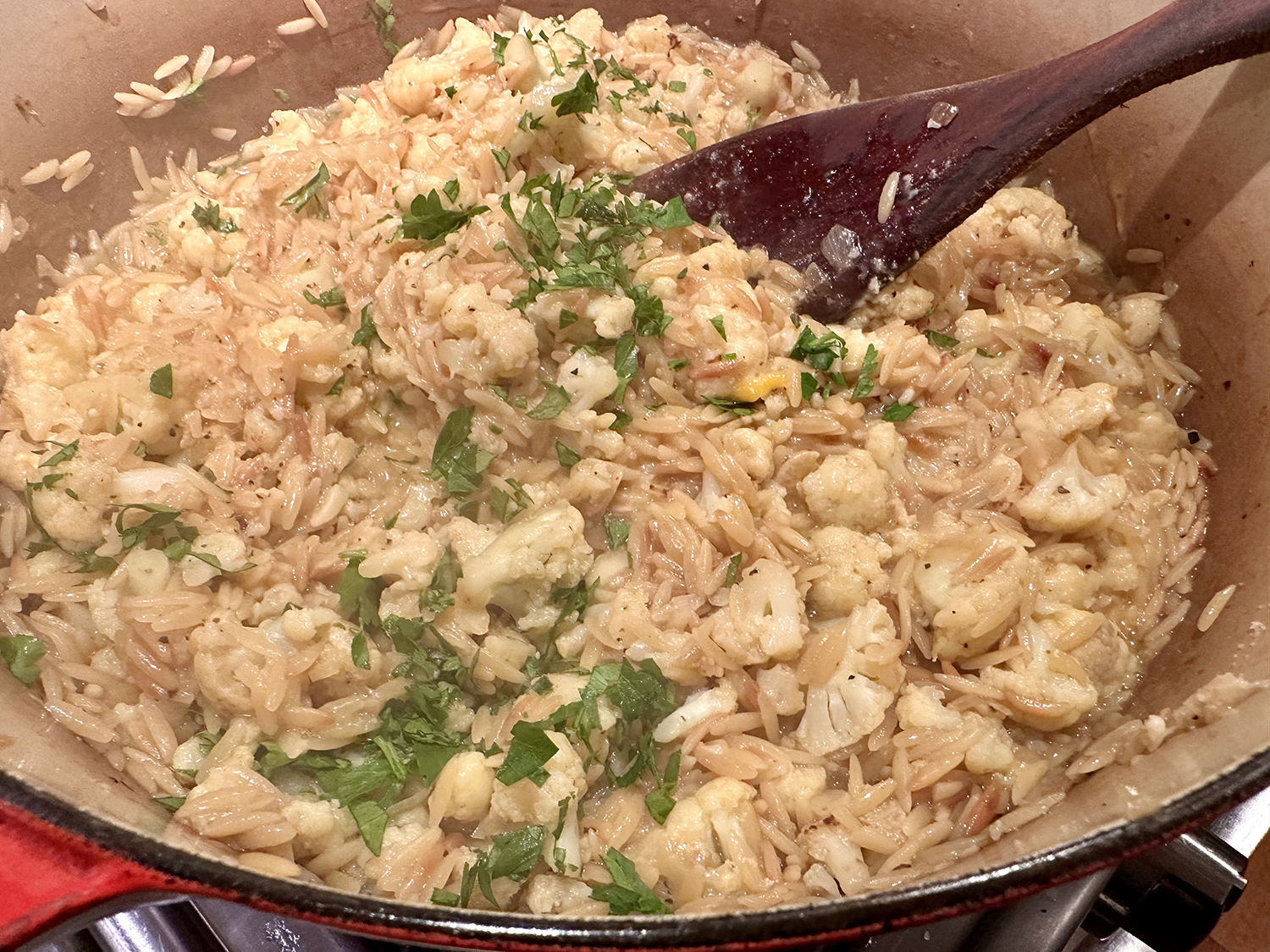
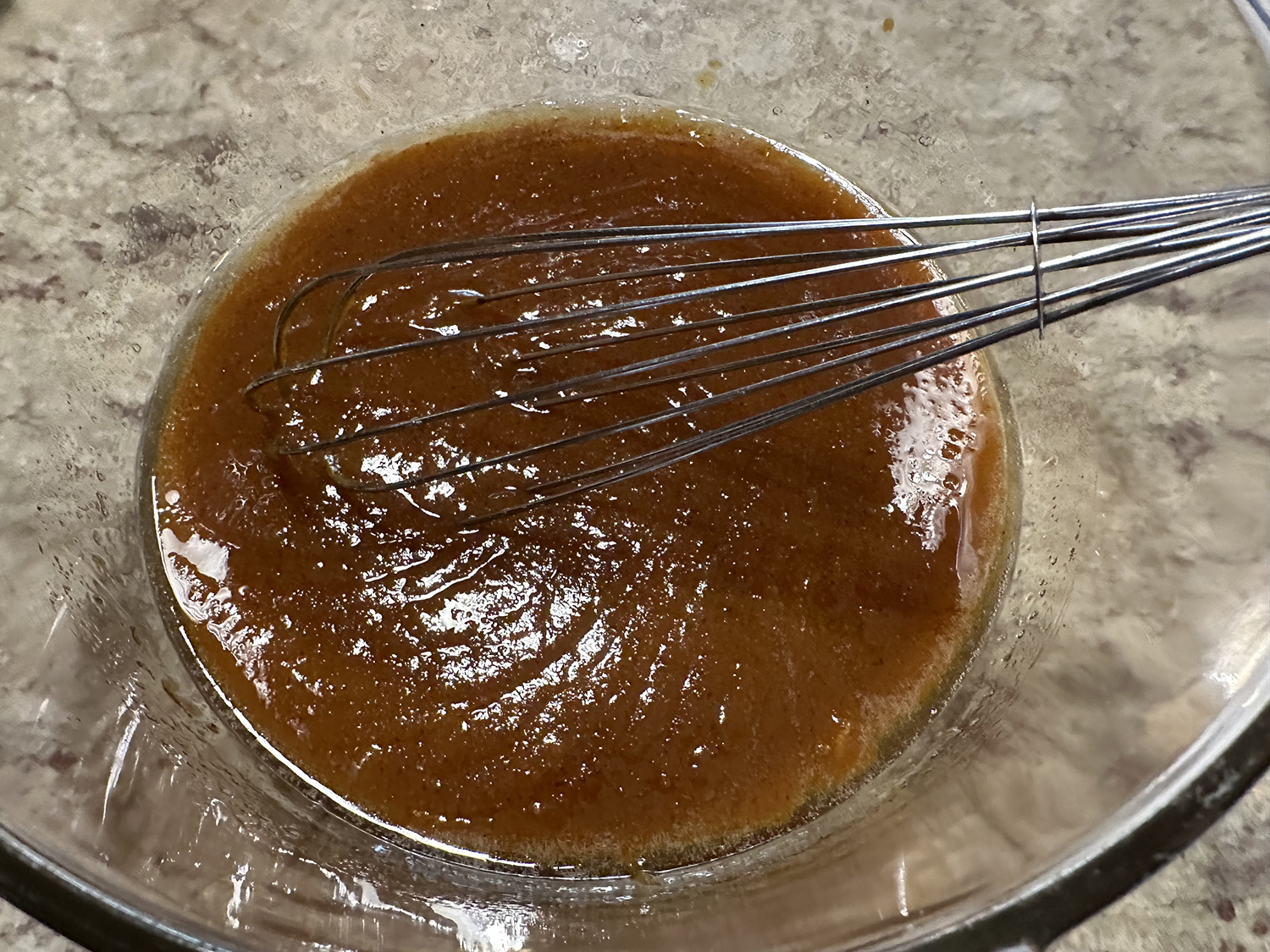
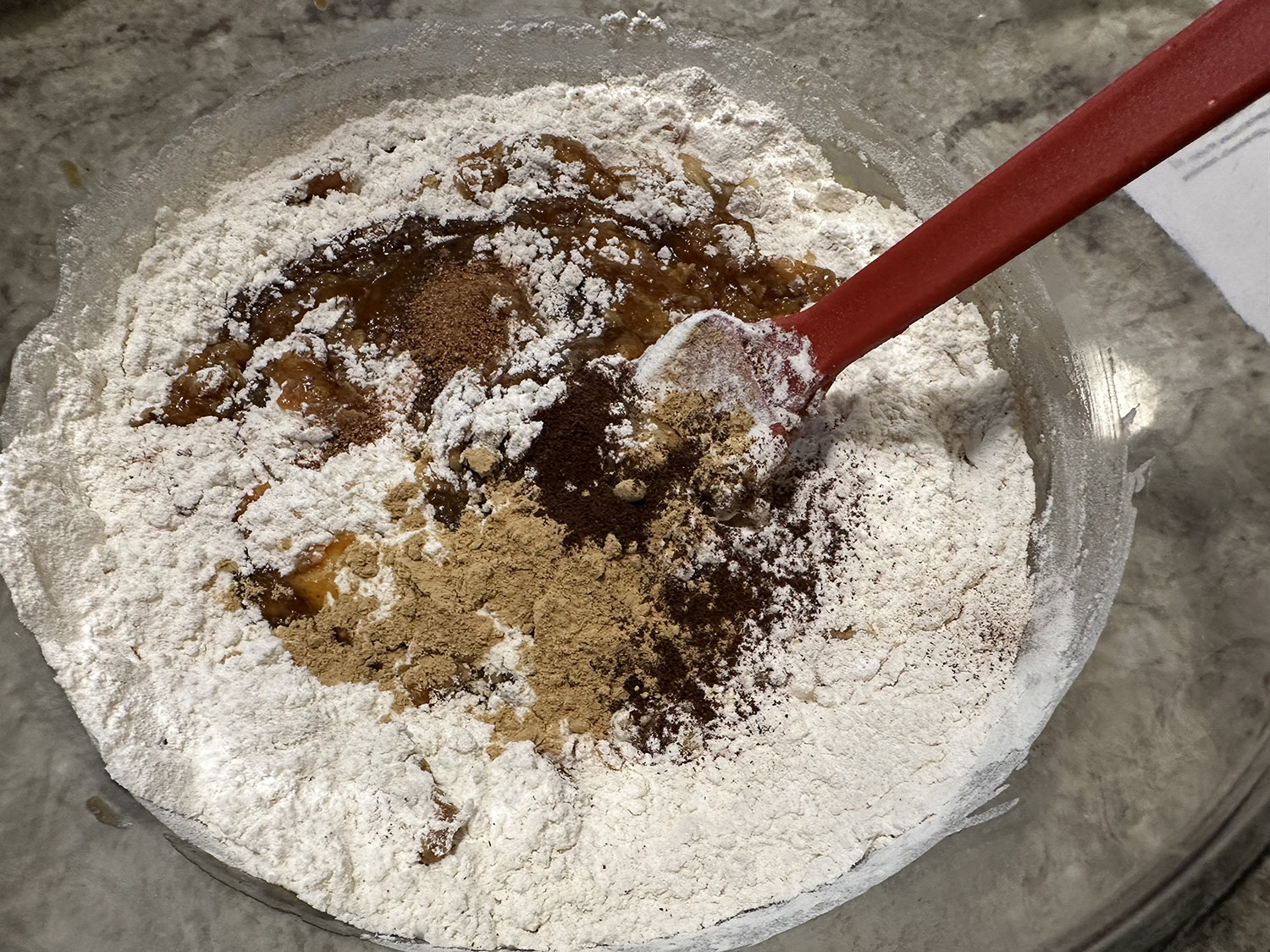
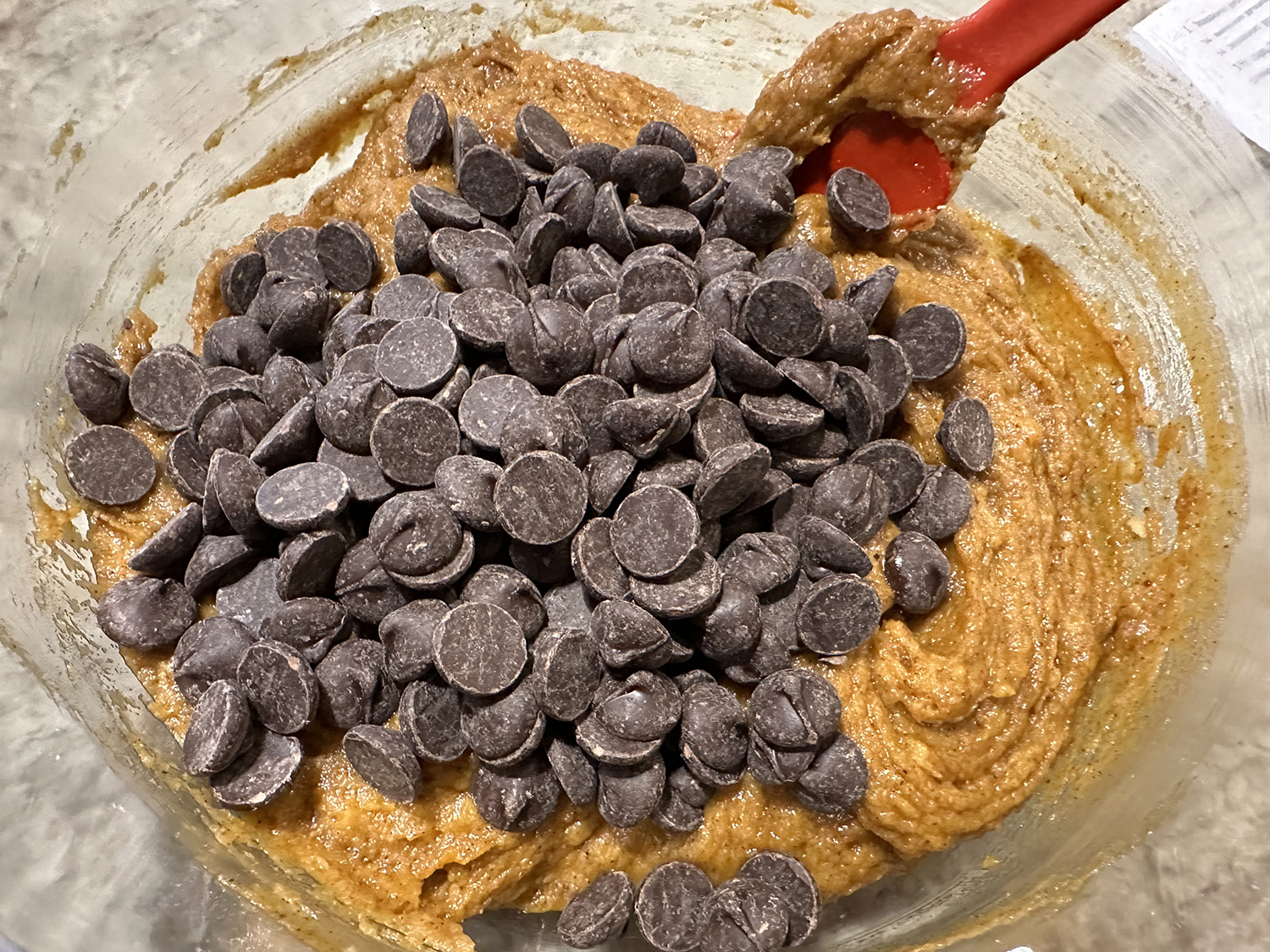
Add the brown sugar, pumpkin purée and vanilla extract to the cooled butter and whisk until smooth and glossy. Add the flour, cinnamon, baking powder, baking soda, salt, ginger, cloves and nutmeg and stir with a spatula just until a soft dough forms with no pockets of unincorporated flour. (Try not to overmix.) Add most of the chocolate chips and stir to evenly distribute throughout the dough.
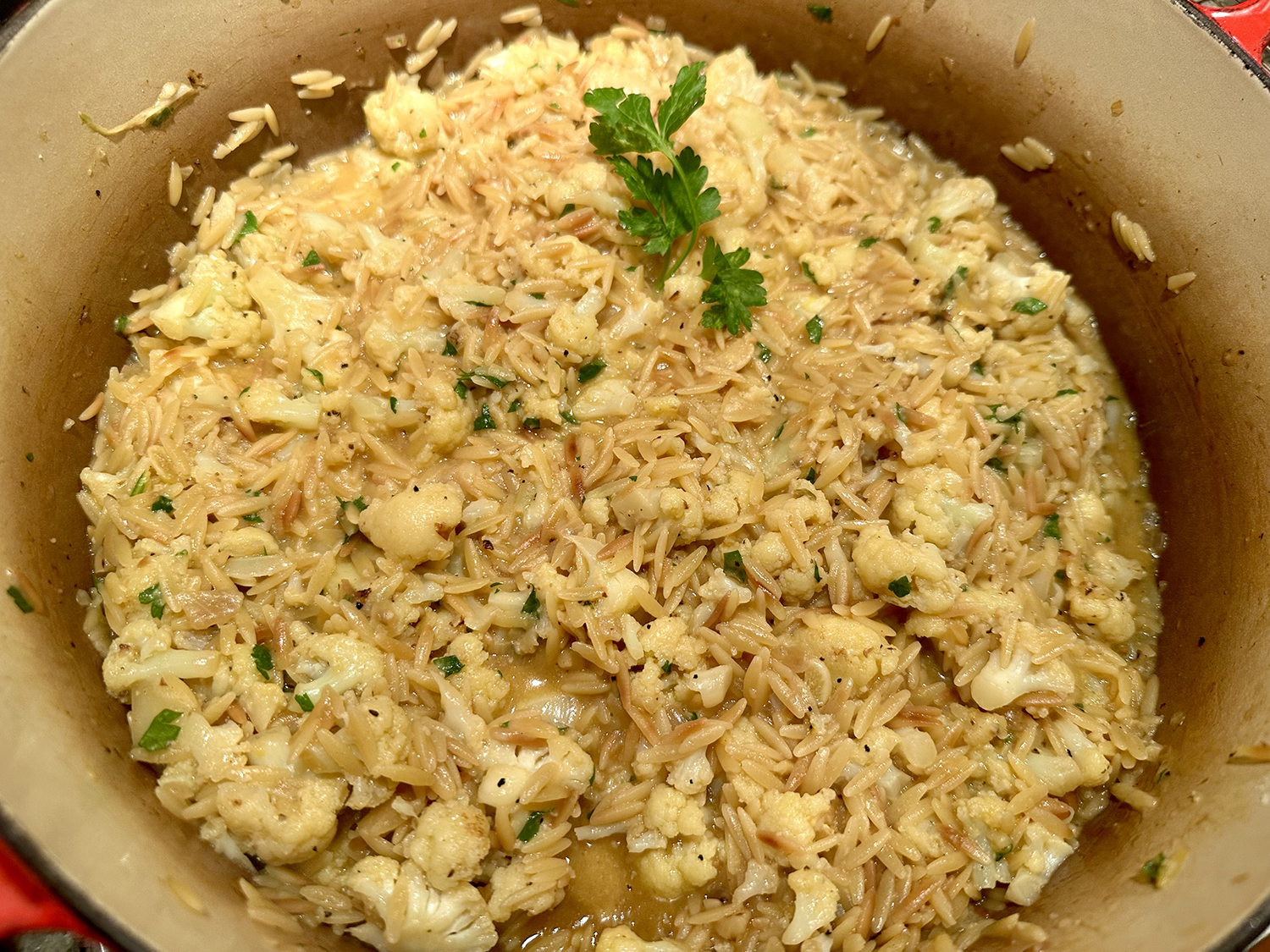
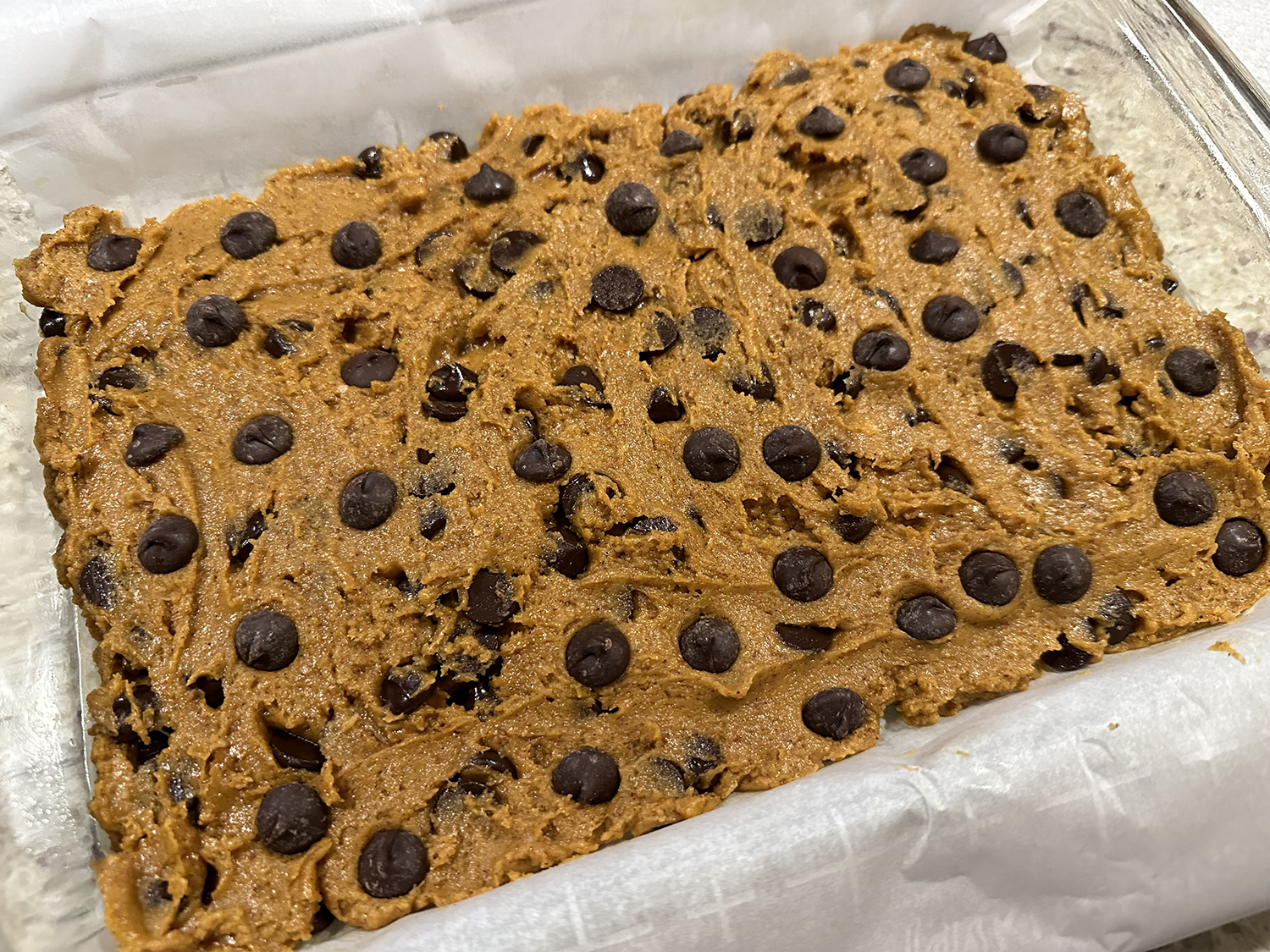
Transfer the dough to the prepared baking pan and press into an even layer using a spatula. Sprinkle the top with the remaining chocolate chips, pressing them in slightly so they stick.
Bake until the bars are puffed, the top is lightly browned and a skewer or knife inserted into the center comes out clean with just a few moist crumbs attached or with smudges of melted chocolate, 30 to 45 minutes. (Mine took the full 45 minutes.)
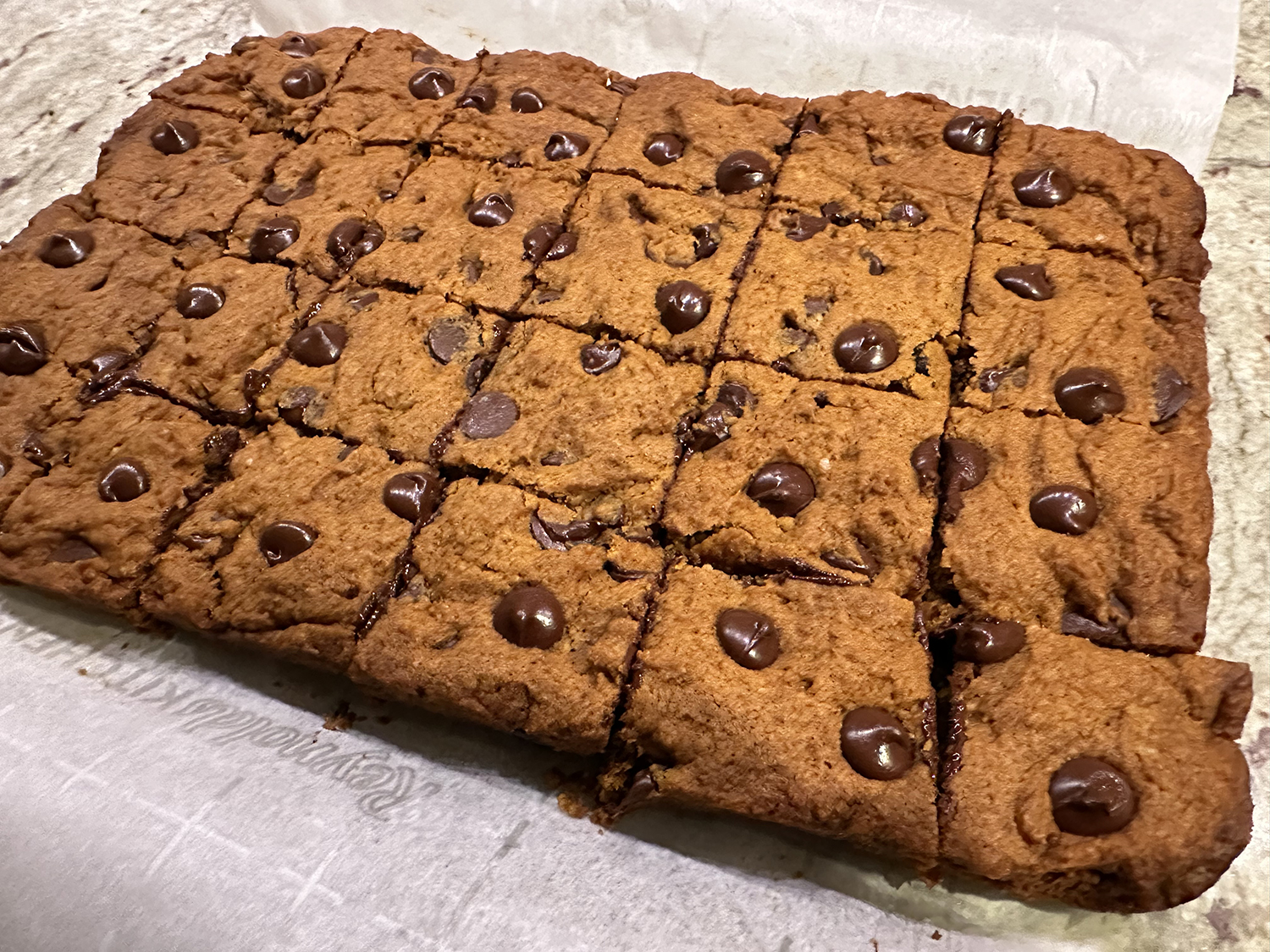
Let the bars cool in the pan on a wire rack for at least 1 hour. (Even after cooling for over 2 hours, the chocolate pieces were still too soft to package.) Using the parchment paper, lift the bars out of the pan and cut into 24 squares. The cookie bars will keep in an airtight container at room temperature for up to 5 days.
This braised chicken dish was off-the-charts DELICIOUS! I must admit, the dried prunes and apricots gave us pause, but after their brandy bath, and combined with the sliced shallots, it all melded together with the other ingredients into this pool of yummy jamminess.
Pollo a la catalana, or chicken simmered with wine and dried fruits, is a classic cool weather dish in the Catalonia region of Spain. A contrast of savory flavors and sweet accents characterizes the elegant braise, but there are no hard and fast rules to preparing it. But before you go tweaking it, I suggest you try the recipe as written below.
Barcelona home cook Cali Caparrós Sanchez shared her version with Milk Street, which is studded with apricots and prunes and spiked with a good measure of brandy. Picada (not to be confused with the Italian piccata)—is a blended or pounded pesto-like mix of olive oil, herbs, nuts, garlic and a starchy element such as bread or crackers to act as a binder—is customarily stirred into the dish at the finish. We used a large mortar and pestle to make the picada.
Milk Street adapted her recipe in this version. A mix of olive oil, grated garlic, chopped parsley and chopped smoked almonds (roasted or Marcona almonds are good, too) to spoon onto the braise just before serving.
The sauce wasn’t as thick as we would have liked it when the chicken pieces were ready, so we removed the thighs to a platter, covered with tinfoil, and continued reducing the sauce until it was the consistency we wanted. A portion of the picada was stirred into the sauce, the chicken uncovered, the sauce placed around the thighs, and the picada spooned on. It made a gorgeous presentation!
The smoked almonds may be unconventional, but their smokiness adds depth similar to pimentón. This simpler approach allows the flavors of the braise to be clearer and brighter. Serve with crusty bread and a simple salad; or as we did, with polenta.
NOTE:Don’t cover the pot when simmering the chicken. Allowing evaporation concentrates the braising liquid for richer flavor and consistency in the finished sauce. That said, don’t simmer too vigorously or the liquid may over-reduce and the dish will be left with too little sauce. Adjust the heat as needed to keep the liquid bubbling steadily but not approaching a boil.
Braised chicken and Tomatoes with Garlic and Dried Fruits
3 lbs. bone-in, skin-on chicken leg quarters, thighs or drumsticks, trimmed
Kosher salt and ground black pepper
1 Tbsp. plus ¼ cup extra-virgin olive oil, divided
1 head garlic, outer papery skins removed, top third cut off and discarded, plus 1 medium garlic clove, finely grated
3 bay leaves
2 medium shallots, halved and thinly sliced
1 cup dry white wine
1 14½-oz. can diced tomatoes
1 cup lightly packed fresh flat-leaf parsley, finely chopped
3 Tbsp. smoked almonds (see headnote), finely chopped
Directions
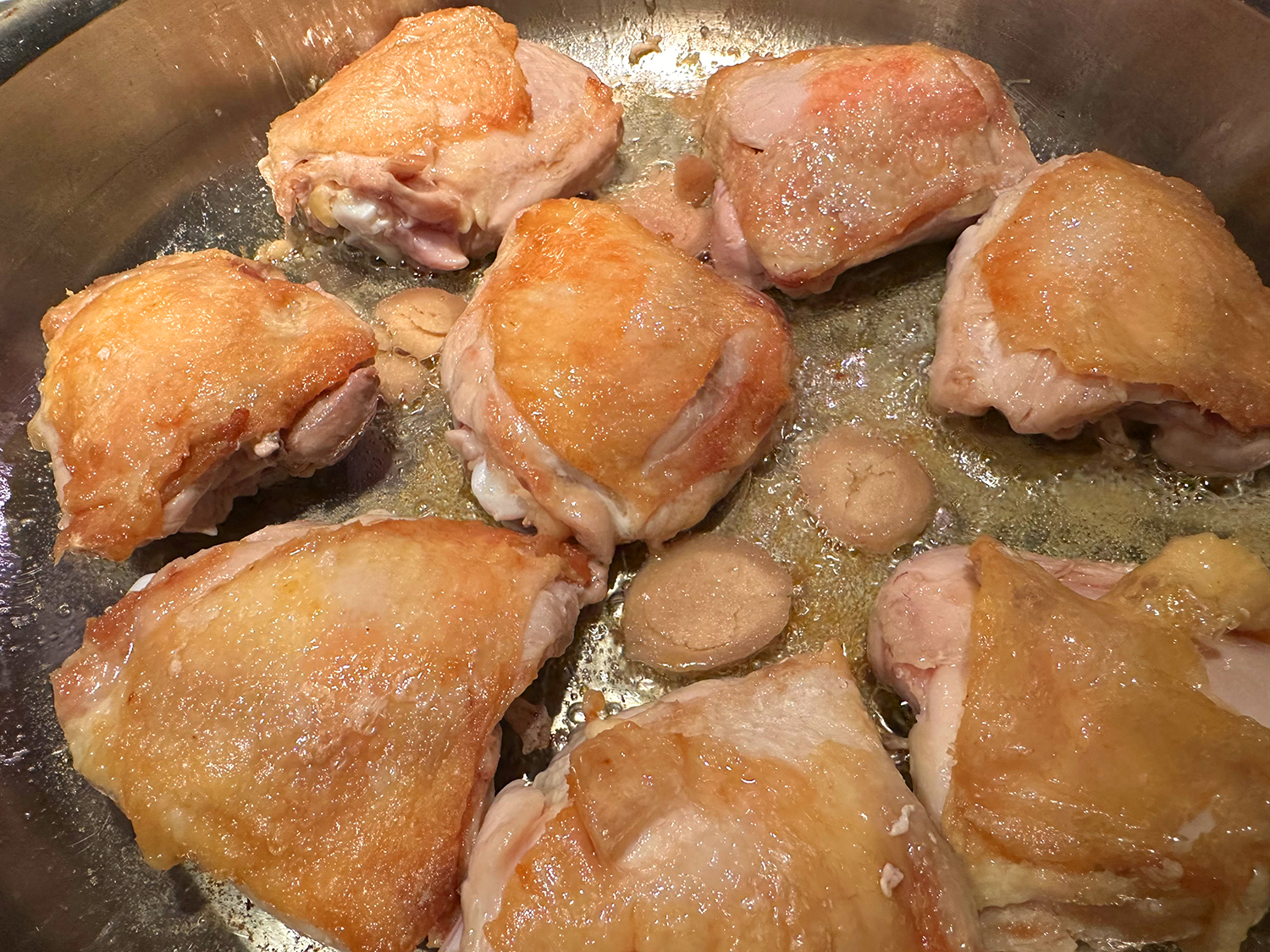
In a small bowl, combine the brandy, prunes and apricots; set aside. Season the chicken on all sides with salt and pepper. In a large Dutch oven, combine 1 tablespoon of the oil and the garlic head, cut side down. Cook over medium-high until the cut side of the garlic is golden brown, about 3 minutes. Using tongs, transfer the garlic to a small plate or bowl.
Place the chicken skin side down in the pot and cook without disturbing until well browned on the bottom, 5 to 8 minutes. Flip the chicken and cook until the second sides are lightly browned, 3 to 5 minutes. Remove the pot from the heat and transfer the chicken to a large plate, keeping the pieces skin side up.
Return the garlic head, cut side down, to the pot and set the pot over medium. Add the bay and shallots; cook, stirring but leaving the garlic cut side down, until the shallots are lightly browned, 30 to 60 seconds. Add the wine and ¼ teaspoon each salt and pepper; bring to a simmer, scraping up any browned bits. Cook until reduced by about two-thirds, 5 to 7 minutes.
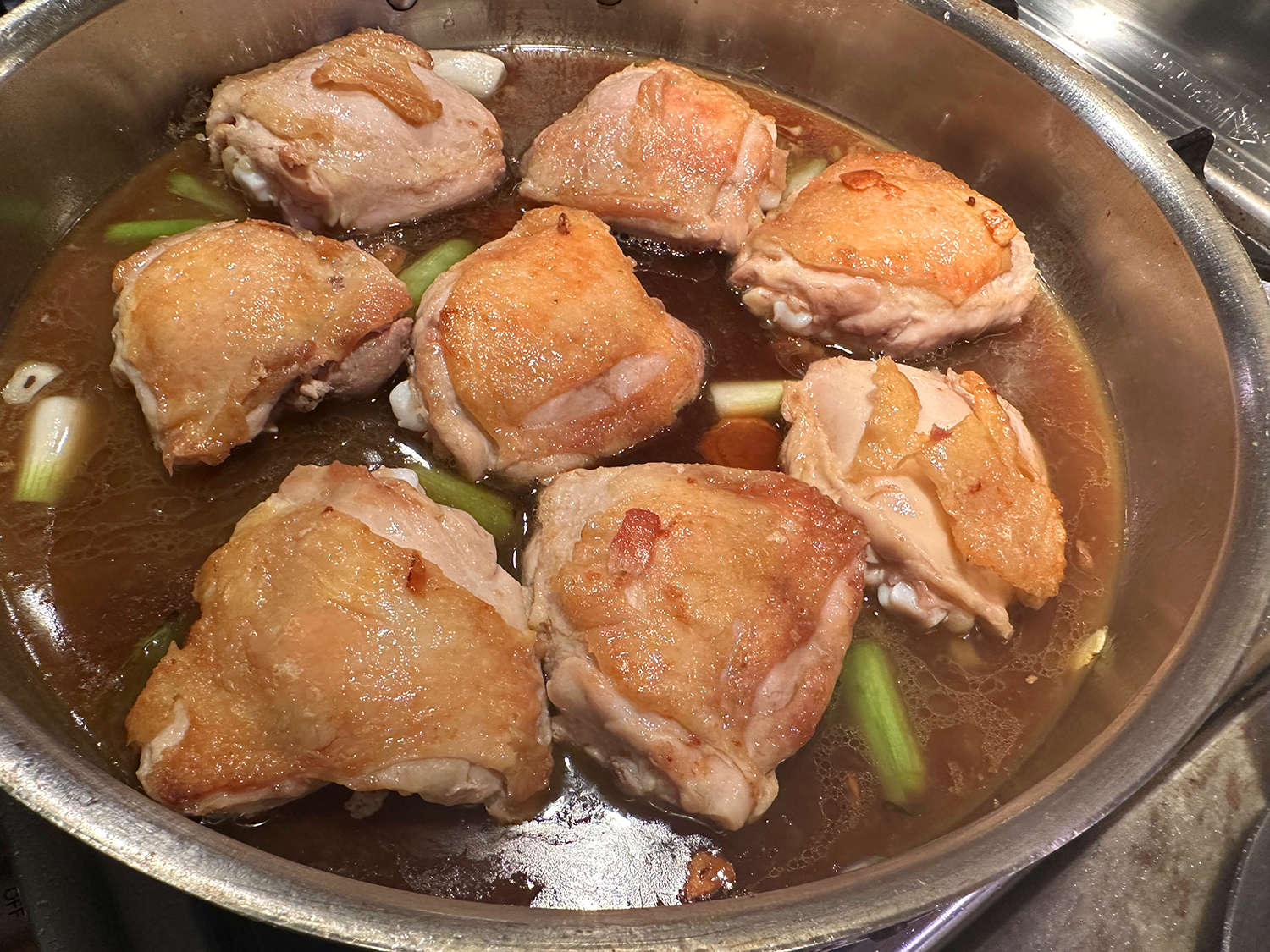
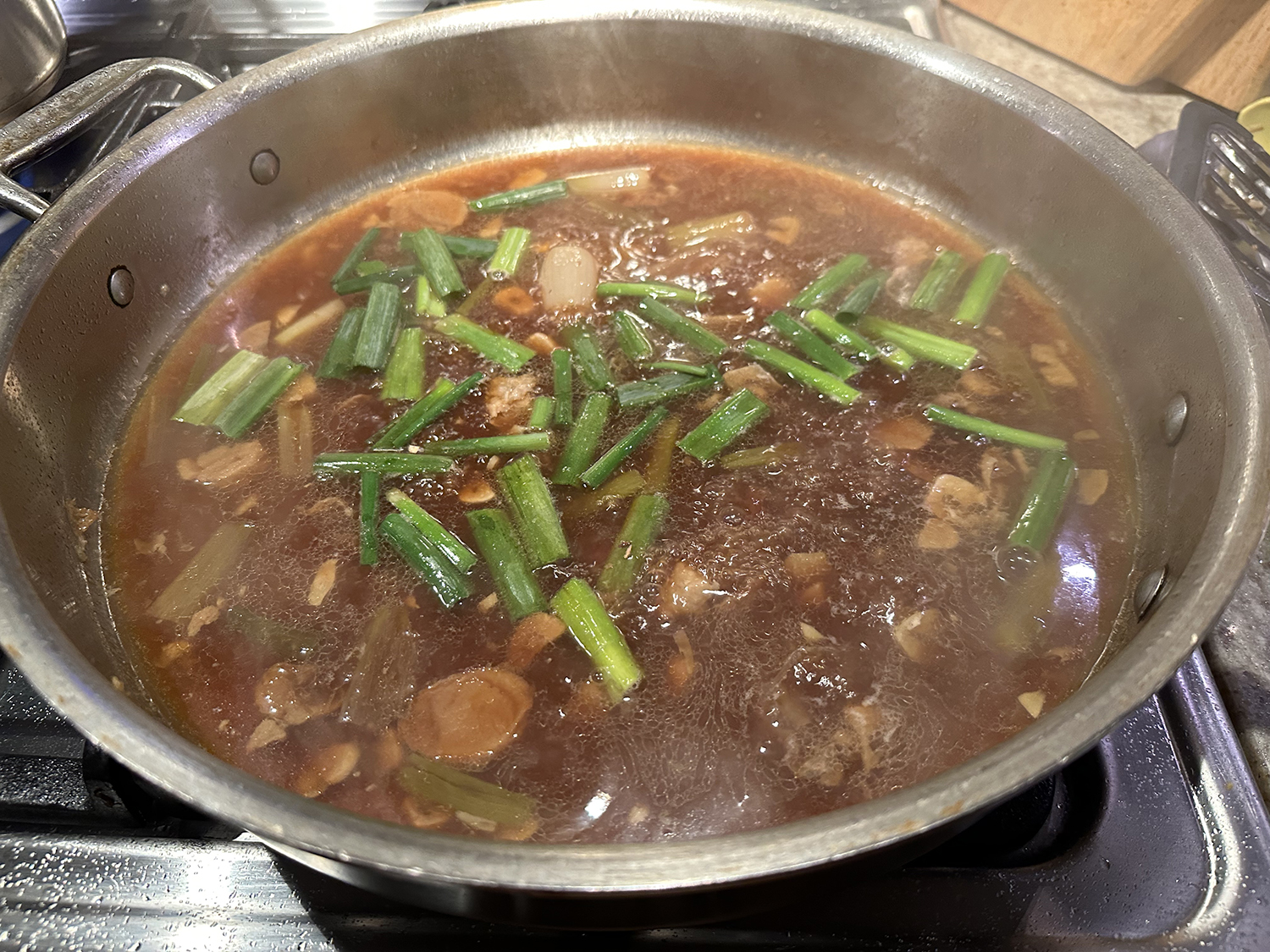
Stir in the tomatoes with juices, dried fruit-brandy mixture and 1¼ cups water, then bring to a simmer. Nestle the chicken skin-side up in the pot and pour in any accumulated juices; the pieces should not be fully submerged. Simmer, uncovered, until a skewer inserted into the largest piece meets no resistance, 30 to 35 minutes. Meanwhile, in a small bowl, stir together the remaining ¼ cup oil, the parsley, almonds and grated garlic; set aside.
Transfer the chicken to a platter. Remove and discard the bay. Using tongs, remove the garlic head and squeeze the cloves into the pot; discard the skins. Stir the garlic into the sauce, then taste and season with salt and pepper. Spoon the sauce over and around the chicken and garnish with the parsley-almond mixture.
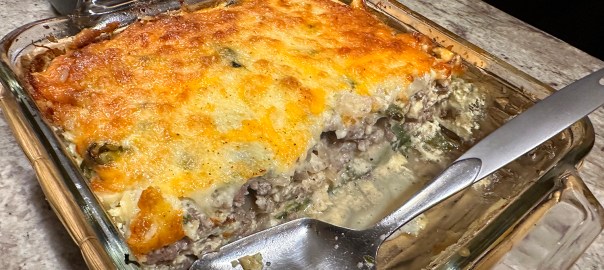
Here is a homey chile relleno casserole with layers of cumin-spiced beef, cheddar, eggs and canned poblano peppers. However, in our area, canned poblanos are impossible to source locally, but they are available online at a few places such as MexGrocer.com. You can use fresh poblanos (see NOTE below), it just will add about 30 more minutes to the prep.
The dish, while very flavorful, is not really spicy at all. If you choose to raise the level of heat, a couple of options would be to add a can of diced green chiles, and/or a few chopped chipotle chiles in adobo sauce stirred into the cooked meat mixture.
Once it comes out of the oven, let it stand for 10 minutes before cutting into it. We paired ours with a side of boxed rice and beans, and a side salad.
NOTE: To use fresh rather than canned poblanos, position an oven rack 4 to 6 inches from the oven’s broiler element; preheat to broil. Place the poblanos on a large, rimmed baking sheet and broil until they brown in spots and blister without charring, watching them carefully and turning them with tongs until they are blistered all over. Transfer them to a heatproof bowl and cover with a plate or pan lid to let them steam and cool enough to be handled, at least 10 minutes, probably longer. When the poblanos are cool enough to handle, use your fingers to carefully remove and discard their skins. Make a vertical slit from the stem end to the tip of each pepper. Gently remove the seeds and stems and open the peppers so the flesh lies flat.
1 (27 1/2-oz.) can whole poblano peppers, drained (may substitute 6 large fresh poblanos; see Note)
2 cups (8 oz.) shredded cheddar cheese
1/4 cup all-purpose flour
1 1/2 cups whole milk
4 large eggs, beaten
Directions
Position a rack in the middle of the oven and preheat to 375 degrees.
In a large skillet over medium-high heat, cook the beef and onions, breaking up the meat with a wooden spoon and browning the beef until it just starts to turn crispy, about 10 minutes. Using a slotted spoon, transfer the mixture to a medium bowl, leaving behind as much fat as possible in the pan. Season the mixture with the cumin, 3/4 teaspoon of the salt and the black pepper.
Grease a 9-inch square baking dish with the butter or the fat rendered from the beef. Gently remove the stems and seeds from the poblanos and open the peppers so the flesh lies flat. Line the bottom of the pan with the poblanos, skin side down, overlapping them some to cover completely. Chop any remaining poblanos and set aside. Layer the meat-onion mixture over the whole poblanos and top with the shredded cheese and the reserved chopped peppers.
In a medium bowl, whisk together the flour and the remaining 1/4 teaspoon of salt. While whisking, gradually pour in the milk, breaking up any clumps of flour. Whisk in the eggs and pour the mixture evenly into the baking dish.
Bake the casserole for 45 minutes, or until it has puffed and browned. Remove from the oven and let stand at room temperature before cutting into it.
Make ahead: The unbaked casserole can be assembled, covered tightly and refrigerated for up to 2 days. Rest it on a countertop for about 30 minutes; then bake as directed.
FYI, bratkartoffeln is a comforting German side dish of pan-fried potatoes, bacon, onions, and fresh herbs. For tender, golden-brown potatoes with slightly crisp edges, infuse them with smoky flavor from the bacon and slight oniony sweetness.
While the dish is typically made with leftover boiled potatoes, this recipe starts with raw, so the potatoes are cooked in a covered skillet, allowing them to steam and absorb flavor. When the lid is removed, the potatoes are allowed to brown and crisp around the edges.
Due to the fact that the potato slices did not fit in one layer in the skillet, they had to be jockeyed around several times (instead of just twice) while covered. And again with the lid off.
We left the potato skins on, even though the recipe instructs to peel them. The skins have additional nutritional value, plus it adds some texture to the dish. To peel, or not to peel, that is the question. That decision is up to you. Ours were served as a side dish, along with glazed carrots, for a sliced steak entrée.
Note from America’s Test Kitchen: For the most traditional flavor use a hickory-smoked bacon. If the bacon is difficult to chop, place it in the freezer for 10 to 15 minutes to firm it up. These rich, hearty potatoes pair nicely with bratwurst, schnitzel, or scrambled eggs.
2 lbs. Yukon gold potatoes, peeled and sliced crosswise ½ inch thick
½ tsp. table salt
1 Tbsp. chopped fresh parsley
Directions
Cook bacon in 12-inch nonstick or carbon-steel skillet over medium-high heat until golden brown at edges and just starting to render, 3 to 5 minutes. Add onion and continue to cook until onion is soft and golden brown, 3 to 5 minutes. Using slotted spoon, transfer bacon and onion to bowl, leaving fat in skillet (you should have about 1 teaspoon).
Add butter to bacon fat and melt over medium heat. Add potatoes and salt and stir to coat potatoes evenly with fat. Cover and cook, shaking pan occasionally, for 9 minutes. After 9 minutes, potatoes should be bubbling at edges; if there is no moisture around potatoes, lower heat slightly; if there is no or little sizzling around potatoes, increase heat slightly. Cover and continue to cook until potatoes can be easily pierced with tip of paring knife, 6 to 9 minutes.
Remove lid and gently stir potatoes (it is OK if some potatoes break). Continue to cook, uncovered, gently stirring every 2 to 3 minutes until potatoes are golden brown (not all surfaces will be brown), about 10 minutes.
Gently stir in bacon, onion, and parsley. Season to taste with salt and pepper, transfer to platter, and serve.
So tasty and so healthy! This warm-your-belly farro soup is quite easy to make; and it’s all done in one-pot which means fewer dishes. On a busy weeknight, this may be your ticket to something healthy, nutritious and pretty hands-off. To keep it vegetarian, use vegetable stock. That was not an issue for us so we used 6 cups of homemade chicken stock.
Farro soup with white beans and vegetables is a rich, hearty, and flavorful meal. Eat it on its own, pair it with crusty garlic bread or a simple salad and dinner is served! It’s like a hug in a bowl to keep you warm on chilly nights! And that is exactly the reaction we got.
We adapted the recipe slightly by including two cans of white beans instead of one. Since baby spinach is typically packaged in a 5-ounce clamshell, we included the entire thing instead of 2 cups. A nice toasted piece of garlic bread was the perfect companion!
Missing, or not fond of, some of the ingredients? Don’t worry, here are some substitutes:
Farro substitutes: While farro is traditional in this soup, you can use other grains like barley, spelt, freekeh, coarse bulgur, quinoa, or brown rice. Brown rice and quinoa are good ways to turn this soup into a gluten-free-friendly meal.
Add mushrooms: Cut mushrooms of your choosing into bite-sized pieces and saute them along with the carrots, onion, and celery. From there, follow the recipe as written.
Instead of spinach, you can use baby kale. Kale in general is tougher than spinach, and takes more time to wilt down. Baby kale is a bit softer, but will still likely have more body than spinach, even after sitting in the broth for a while.
Vegan option: Use vegetable stock and omit the parmesan rind and cheese for a vegan alternative. Without the parmesan rind, you will lose some of the nutty, rich flavor. If you want to mimic this flavor, use a little nutritional yeast. You can add 2 to 3 teaspoons right after you add the stock. It will dissolve quite quickly.
1 to 2 carrots, peeled and sliced into ¼-inch thick rounds
2 celery sticks, chopped
Kosher salt
2 large garlic cloves, minced
6 cups vegetable or chicken stock
1 28-oz. can whole San Marzano tomatoes, crushed by hand
2 15-oz. cans white beans, drained and rinsed
1 cup farro, rinsed and drained
1-inch Parmesan rind
5 oz. fresh baby spinach
1 cup chopped parsley
2 Tbsp. red wine vinegar
Grated Parmesan for serving
Directions
In a large Dutch oven or pot, heat 2 tablespoons extra virgin olive oil over medium heat until shimmering. Add the onions, carrots, and celery. Season with a little kosher salt and cook, tossing occasionally until the vegetables have softened.
Add the garlic and toss for 30 seconds or so, then add the tomatoes, stock, white beans, farro, and parmesan rind.
Bring the liquid to a boil, then lower the heat watching for the steady, gentle simmer. Allow the soup to simmer until the farro is tender, about 30 minutes or so.
Turn the heat off and remove the Parmesan rind (sometimes the rind will have dissolved into the soup). Stir in the spinach, parsley, and red wine vinegar.
Cool weather, football season, toasty fireplaces, altogether signal chili season for us. So upgrade that vintage package of chili powder seasoning lurking in the back of your cabinet with something that takes a little more effort, but provides a welcome depth of flavor. Let this hearty turkey chili recipe guide you. To make it, you’ll blend a robust purée of dried chiles and canned chipotles to serve as the soup’s base.
Building a custom chile blend allows you to create the chili of your dreams, which is to say: don’t worry too much if you can’t find the exact chiles that are recommend. Dark ancho chiles are smoky and have a raisiny sweetness; skinny, wrinkly pasillas a rich jamminess; and smooth-skinned guajillos bring bright red color and acidity. If you need to swap one out, aim for something around the same heat level. Feel free to make a double batch and stick half in the freezer (for up to 6 months) to make satisfying your next weeknight chili craving even easier. Of course, you’d need two large pots to pull that off.
Dark meat turkey is preferred for its richer flavor and fat content, but if all you have in the fridge is lean ground turkey or ground chicken, it’ll work. Brown it in batches to get a really good sear—the crusty fond that forms on the bottom of the pot is big-time flavor. When you sauté the onion, use a wooden spoon to scrape up all those bits (the steam from the veggies will help release them) and stir them into the mix. The flavor a bottle of hard cider or beer added to chili is preferred, but if you’d rather cook without alcohol, substitute fresh apple cider, a can of crushed tomatoes or tomato juice, or add a cup more water instead.
Round out the soup with creamy white beans, but any canned bean will be a good substitute such as red kidney beans, pinto beans, or black beans. Like many comfort foods, chili is personal: put out bowls of shredded cheddar cheese, thinly sliced green onion, or pickled jalapeños, if you like. Serve with broken tostadas or tortilla chips for scooping or cornbread for dunking.
With any leftovers, create another meal by filling sweet baked potatoes topped with shredded cheese of your choice, or how about a platter of nachos to go with that football game? While we’ve made (and posted) many a chili recipe, this one has now taken the top spot overall!
2 15-oz. cans of fire roasted diced tomatoes, undrained
3 Tbsp. pure maple syrup
2 Tbsp. fresh lime juice (from 1–2 limes), optional
Handful of cilantro leaves and stems, finely chopped
Freshly ground black pepper
Tostadas (for serving)
Directions
Bring 4 cups low-sodium chicken broth to a simmer on stovetop in a large Dutch oven or other heavy large pot. Meanwhile, remove and discard stems from 3 large or 6 medium ancho chiles, 2 dried guajillo chiles, and 2 dried pasilla chiles. Tear flesh into a few pieces, letting seeds fall out. Transfer to a blender. Add hot broth and cover blender; let sit until chiles are softened, 25–30 minutes. Add 2 canned chipotle chiles in adobo and blend on high speed until smooth, about 1 minute; set aside.
Warm 2 tablespoons oil in same pot over medium-high heat. Season turkey all over with salt. Add half of turkey to pot and smash down with a wooden spoon to flatten against surface of pot and break into smaller clumps. Cook, undisturbed, until underside is browned, top side is no longer pink, and most of the liquid is cooked off, 8–10 minutes. Using a slotted spoon, transfer to a plate. Repeat with remaining turkey, another 8-10 minutes.
Heat remaining 2 tablespoons vegetable oil in same pot over medium. Add 2 white or yellow onions, finely chopped and 5 garlic cloves, smashed; season with kosher salt and stir to combine. Cover pot and cook, stirring occasionally, until onions are translucent, very soft, and starting to brown around the edges, 10–12 minutes. Add 1 tablespoon ground cumin and 2 tsp. dried oregano and cook, stirring frequently, until fragrant and sizzling, about 1 minute.
Add 2 tablespoons tomato paste and cook, stirring to coat vegetables, until paste darkens slightly, about 1 minute. Add one 12-oz. bottle hard cider or lager-style beer, one 3” cinnamon stick, and 2 bay leaves and scrape up any brown bits stuck to bottom of pot. Bring to a lively simmer and cook, stirring occasionally, until liquid is mostly reduced, about 5 minutes.
Add reserved chile purée, two 15.5-oz. cans cannellini beans, drained, rinsed, cans of diced tomatoes with their juices, and 3 tablespoons pure maple syrup to pot. Add 1 cup water to blender, swish around to loosen any remaining purée, then pour into pot; season with salt. Bring to a boil, reduce heat to medium-low, and gently simmer, partially covered and stirring occasionally, until liquid is thickened and very flavorful, about 1 hour. Add turkey and simmer until flavors have melded, about 30 minutes longer.
If desired, add 2 tablespoons fresh lime juice (from 1–2 limes), and a handful of cilantro leaves and stems, finely chopped as a garnish. Season to taste with salt.
Taste chili and season with kosher salt and freshly ground black pepper if needed. Remove from heat and fish out cinnamon stick and bay leaves. Divide chili among bowls. Top with cilantro and lime juice, and some broken tostadas.
Do ahead: Chili (without toppings) can be made 3 days ahead and tastes even better the next day. Transfer to an airtight container and chill. Reheat over medium-low.
Seems like we are in unison with Chef Mark Bittman when it comes to good crab cakes, use this less-is-more approach. That being a ‘minimalist’ recipe which is heavy on the crab, and low on filler. The simplicity let’s the crab sing. And with the cost of crab meat in the stratosphere these days, you want to make sure the crustacean shines!
As Mark state, “Getting the most out of crab cakes often means putting the least into them. Since crab has the best texture and subtlest flavor of all crustaceans, the best crab cakes are those that showcase the crab, not another ingredient.”
The loose mix is best chilled before shaping, but it is essential to chill it again for a half-hour or so (longer is better) before cooking. When cold, the cakes will hold together, and once the egg, the binding agent, does its work, they will retain their shape until attacked with a fork.
Some reviewers substituted panko bread crumbs for the flour. Whatever appeals to you most, go ahead. The cakes are fancy enough that you can serve them with a luxurious dinner, or low-key with coleslaw and french fries like we did. One patty per person is a normal size portion.
2 Tbsp. extra-virgin olive oil or neutral oil, like canola or grape-seed
4 Tbsp. butter (or use a total of 4 Tbsp. oil)
Lemon wedges
Directions
Gently combine crab, egg, mustard, salt, pepper and 2 tablespoons flour. Cover mixture, and put in freezer for 5 minutes. Shape mixture into 4 hamburger-shaped patties. Line plate with plastic wrap, and put crab cakes on it. Cover crab cakes with more plastic wrap, and refrigerate them for about 30 minutes (or as long as 1 day), or freeze for 15 minutes.
Put flour for dredging in a bowl. Combine oil and butter in 12-inch skillet, and turn heat to medium. When butter melts and its foam subsides, gently dredge a crab cake in the flour. Gently tap off excess flour, and add crab cake to pan; repeat with remaining crab cakes, and then turn heat to medium-high.
Cook, rotating cakes in pan as necessary to brown the first side, 5 to 8 minutes. Turn, and brown the other side (it will take slightly less time). Serve cakes hot, with lemon wedges.
Often a pork roast can be dried out when it’s done cooking. But this lovely recipe from Milk Street is extremely simple to make and uses just over a handful of ingredients. The lefotovers were still juicy and full of flavor.
This recipe takes inspiration from porchetta, a Tuscan-style pork roast seasoned with garlic, herbs and spices. A simple fragrant seasoning paste rub is made and the mixture is massaged into shallow cuts in the meat’s fat cap so it clings to the roast.
Roasting meat on a baking sheet, rather than in a roasting pan, promotes better air circulation, accelerating cooking and boosting browning. Use the time while the meat rests to throw together a zingy-fresh parsley-caper sauce that’s a perfect foil to the richness of the meat.
One noted difference that we made was to tie the pork with kitchen twine 3 or 4 times around the girth of the roast. And as ours didn’t have much of a fat cap, we made the cuts directly into the top of the meat. Butter-Roasted Carrots with Za’atar and Pomegranate Molasses, and garlicky mashed potatoes with gravy rounded out the meal.
Slow-Roasted Pork Shoulder with Fennel, Garlic and Rosemary
Heat the oven to 300°F with a rack in the middle position. In a food processor, process the fennel seeds to a mixture of finely ground and coarsely cracked seeds, about 2 minutes. Add ¼ cup of the oil, the rosemary, smashed garlic cloves, 1 tablespoon salt and 2 teaspoons pepper. Process to form a paste, about 30 seconds, scraping the bowl as needed.
With a knife, score a crosshatch pattern into the surface fat on top of the roast. Using your hands, rub the paste onto all sides of the roast and into the cuts. Place the pork fat side up on a rimmed baking sheet and roast until the center reaches 195°F, about 4 hours. (Ours took 4 1/2 hours to come to temp.)
When the roast is done, tent with foil and let rest for about 15 minutes. Meanwhile, in a small bowl, stir together the remaining ¼ cup oil, grated garlic, parsley, capers and brine and ¼ teaspoon pepper. Transfer the roast to a cutting board. Cut into slices, then transfer to a platter. Serve with the sauce.
This is a wonderful cool weather soup recipe that warms you like a soft blanket. The Hubs made the “shortened” version using a pressure cooker which condensed the overall time down to 34 minutes (24 minutes on high pressure; + 10 minutes natural release).
This creamy vegetarian soup is built on humble winter staples, but the addition of sour cream and chives make it feel special. If feeling decadent, you may want to crumble a few sour-cream-and-onion chips on top to take the theme all of the way.
It takes just a few minutes to throw the ingredients into the slow cooker, and the rest of the recipe almost entirely hands-off, making it very doable on a weekday. Use an immersion blender, if you have one, to purée it to a silky smooth consistency, but a potato masher works well for a textured, chunky soup. Ours was somewhere in between, with a slightly textured finish.
Slow-Cooker Cauliflower, potato and White Bean Soup
1 lb. Yukon gold potatoes, scrubbed, peeled and cut into 1- to 2-inch chunks
1 lb. cauliflower, chopped into large bite-sized florets and stems
2 15-oz. cans cannellini beans, drained
½ yellow onion, minced
3 garlic cloves, smashed and minced
3½ cups vegetable stock
3 Tbsp. unsalted butter
2 Tbsp. dry white wine
1 sprig fresh thyme or ½ tsp. dried thyme
½ tsp. garlic powder
Coarse kosher salt and black pepper
1 tsp. lemon juice (about ¼ lemon)
8 oz. sour cream (1 cup), at room temperature
½ cup chopped chives (about 1 small bunch)
Potato chips, preferably sour cream and onion, for topping; optional
Shredded cheddar, for serving
Directions
In a 6- to 8-quart slow cooker, combine the potatoes, cauliflower, beans, onion, garlic, vegetable stock, butter, wine, thyme, garlic powder and 1½ teaspoons kosher salt. Cover and cook until the vegetables are very tender, about 8 hours on low. (InstaPot: 24 minutes on high pressure; + 10 minutes natural release.)
Remove and discard the thyme sprig, and turn off the slow cooker. Add the lemon juice. To make a completely smooth and creamy soup, purée the ingredients using an immersion blender. (Or, purée the soup in a blender in two batches, transferring the puréed soup to a different pot.) To make a textured, chunky soup, smash the ingredients using a potato masher in the slow cooker.
Stir in the sour cream and chives. Taste and add additional salt if necessary. Serve in bowls topped with black pepper, crushed potato chips and shredded Cheddar.
For leftovers, gently reheat the soup on the stovetop or in the microwave until it just barely bubbles around the edges; don’t let it boil or the sour cream will break.
This lovely side dish is definitely company-worthy. Not only do they look and smell delicious, they taste phenomenal. Carrots roast in a moderately hot oven for almost an hour and become super-sweet and almost meltingly tender. Start them coated with olive oil, but drizzle them with melted butter partway through roasting.
The milk solids in the butter caramelize in the oven, adding a rich, nutty fragrance and flavor. Za’atar, a Middle Eastern seed and spice blend, and orange zest and juice bring complexity to the dish. Pistachios and sweet-tart pomegranate molasses are finishing touches that make this dish special.
Bunch carrots—the type sold with their greens attached—are especially good here because they’re slender and fresh. If using carrots with especially thick upper portions, after halving them lengthwise, halve them again to create more uniform pieces.
Even though we have Za’atar seasoning, we decided to do a mixx of one teaspoon each of ground coriander and Aleppo pepper. You can use any of the three spices or a mix of them.
Butter-Roasted Carrots with Za'atar and Pomegranate Molasses
2½ lbs. slender carrots, peeled and halved lengthwise (see headnote)
1 Tbsp. extra-virgin olive oil
Kosher salt and ground black pepper
1 orange
4 Tbsp. salted butter, melted
2 tsp. za’atar OR ground coriander OR Aleppo pepper
2 Tbsp. raw OR roasted pistachios, finely chopped
2 tsp. pomegranate molasses
Directions
Heat the oven to 350°F with a rack in the middle position. On a rimmed baking sheet, toss the carrots with the oil, ¾ teaspoon salt and ¼ teaspoon pepper, then distribute evenly. Roast for 30 minutes. Meanwhile, grate 1 teaspoon zest from the orange, then cut the orange into quarters.
Drizzle the carrots with the butter and sprinkle with the za’atar and zest. Toss, then redistribute evenly. Place the orange quarters cut sides up on the baking sheet. Roast until a skewer inserted into the largest carrot meets no resistance, another 15 to 20 minutes, stirring once about halfway through.
Squeeze the juice from 1 orange quarter over the carrots. Using a wide metal spatula, transfer to a platter, scraping up any browned bits. Taste the carrots and season with salt and pepper. Sprinkle with the pistachios and drizzle with the pomegranate molasses. Serve the remaining orange quarters on the side.
Another weeknight recipe that transports you out of the ordinary doldrums of your usual meal rotation. Nigerian fried rice, seasoned with curry powder, dried thyme and a handful of aromatics, inspired this meal-in-a-skillet. While beef liver and an assortment of vegetables are classic ingredients, here it is comprised of chicken thighs and green beans.
Instead of using just-cooked rice, which results in a softer, moisture texture in the finished dish, plain cooked rice that’s been chilled is used so the grains “fry” up light and fluffy. Fragrant basmati is especially good, but any type of long-grain white rice works.
Don’t be afraid to really scrape up the browned bits from the surface of the skillet after you’ve added the broth. The caramelization lends the fried rice great depth of flavor.
3 Tbsp. neutral oil or refined coconut oil, divided
1 lb. boneless, skinless chicken thighs, trimmed and cut into 1-inch pieces
2 tsp. curry powder, divided
Kosher salt and ground black pepper
4 scallions, thinly sliced, whites and greens reserved separately
2 Tbsp. minced fresh ginger
4 oz. green beans, trimmed and cut into 1-inch pieces
1 tsp. dried thyme
1 Fresno or jalapeño chili, stemmed, seeded and thinly sliced
4 cups cooked and chilled long-grain white rice, preferably basmati
1 cup chicken broth, preferably homemade
Directions
In a 12-inch skillet over medium-high, heat 2 tablespoons of the oil until barely smoking. Add the chicken and sprinkle with ½ teaspoon of the curry powder, ½ teaspoon salt and ¼ teaspoon pepper. Cook, stirring occasionally, until evenly browned, 4 to 6 minutes.
Push the chicken to the perimeter of the pan. To the center, add the remaining 1 tablespoon oil, scallion whites and ginger; cook, stirring, until lightly browned, about 1½ minutes. Into the scallion mixture, stir the beans, thyme, half of the chili, the remaining 1½ teaspoons curry powder and ¼ teaspoon each salt and pepper. Stir the chicken into the bean mixture; cook, stirring occasionally, until the beans are bright green, about 2 minutes. Stir in the rice, then add the broth and scrape up any browned bits. Cook, stirring, until the liquid is absorbed, 3 to 5 minutes.
Off heat, taste and season with salt and pepper. Serve sprinkled with the scallion greens and remaining chili.
Sausage Stuffed Butternut Squash is a Fall comfort food that features Italian sausage, pecans, cranberries, and spinach. This flavorful family-friendly dinner is packed with veggies, fiber, and protein, and is gluten-free. It’s simple enough to make on a weeknight (although it takes a bit more than an hour), and perfect to serve as a side dish or main course.
This flavorful comfort food dinner will keep you full and you don’t really need anything else to serve with it, although we paired ours with a side salad. It is suggested that you use spicy Italian sausage. We happened to have the sweet variety, so we added red pepper flakes to the mixture. Another change we made was adding a tablespoon of grated parmesan on top after the squash has cooked, then popping back into the over for another 10 minutes.
Storage and reheating Tips:Refrigerate. Store the leftovers in an airtight container in the refrigerator for up to 4 days. Freeze. You can easily freeze this dish in an airtight container for up to 2 months. Reheat. Reheat the squash in the preheated oven at 350 F for about 30 minutes or until all the ingredients are heated through.
Slice the the butternut squash in half lengthwise. Use a spoon to scoop out the seeds and fleshy strands tangled with the seeds.
Place butternut squash cut sides up on a baking sheet. Drizzle the cut sides of the butternut squash halves with olive oil and rub the oil into the squash. Season generously with salt and pepper.
Turn the squash halves over, and place it cut sides down on a baking sheet. Tip: you can line the baking sheet with parchment paper for easy clean-up.
Roast in the preheated oven at 400 F for about 40 minutes.
Make sausage filling
Make the sausage filling while the squash is being roasted in the oven.
In a large skillet, heat olive oil, add diced onion, and cook it on medium-high heat for about 4-5 minutes until cooked and a bit charred.
Add crumbled sausage, minced garlic, and Italian seasoning and cook for about 5 minutes or more on medium heat until the sausage is completely cooked through.
Add fresh spinach and cook for another 5 minutes on medium heat until the spinach wilts.
Add dried cranberries and chopped pecans and mix everything.
Season with salt and pepper, if needed.
Assembly
By this time, you have roasted the butternut squash for 40 minutes. Remove them from the oven and turn the cooked squash halves cut sides up.
Let it cool slightly. Using a spoon, scoop out the flesh leaving about a 1-inch border along the sides. Add the scooped up flesh to the meat mixture, and stir in well.
Divide the sausage filling among the 4 halves and stuff the squash until the mixture is a little bit higher than level.
Top top each with one tablespoon grated parmesan, and pop back into the oven for 10 minutes. Serve immediately.
Fast, bold and casual, the perfect description for this weeknight stir-fry. The flavors are bold and bright. If you have a delicate palette, this may not be for you; however you could cut back on the chile peppers (it calls for serrano, we used jalapeños). Not a cilantro fan? A reasonable substitute for the cilantro is fresh basil and mint.
According to Milk Street, this stir-fry was inspired by a dish called pork ularthiyathu from the state of Kerala in southwestern India. Traditional recipes slowly braise the meat, then “dry-fry” it with aromatics until dark, rich and intensely flavored.
This is a weeknight-friendly version by stir-frying chunks of boneless pork loin chops with sliced onion and select spices. Peas add pops of color and sweetness. For balance and contrast in texture, make a tangy onion and fresh chili salad and pile it onto the stir-fry just before plating. Serve steamed basmati rice alongside. We also included a side of just-picked green beans and dressed with a similar spice profile.
Don’t stir the pork for a couple of minutes after adding it to the skillet. Undisturbed cooking allows the pork to brown deeply, which is key to building flavor in the stir-fry. Once the pork is nicely seared, *stir to combine it with the onion mixture, pour in the first addition of water and scrape up the flavor-rich browned bits clinging to the pan.
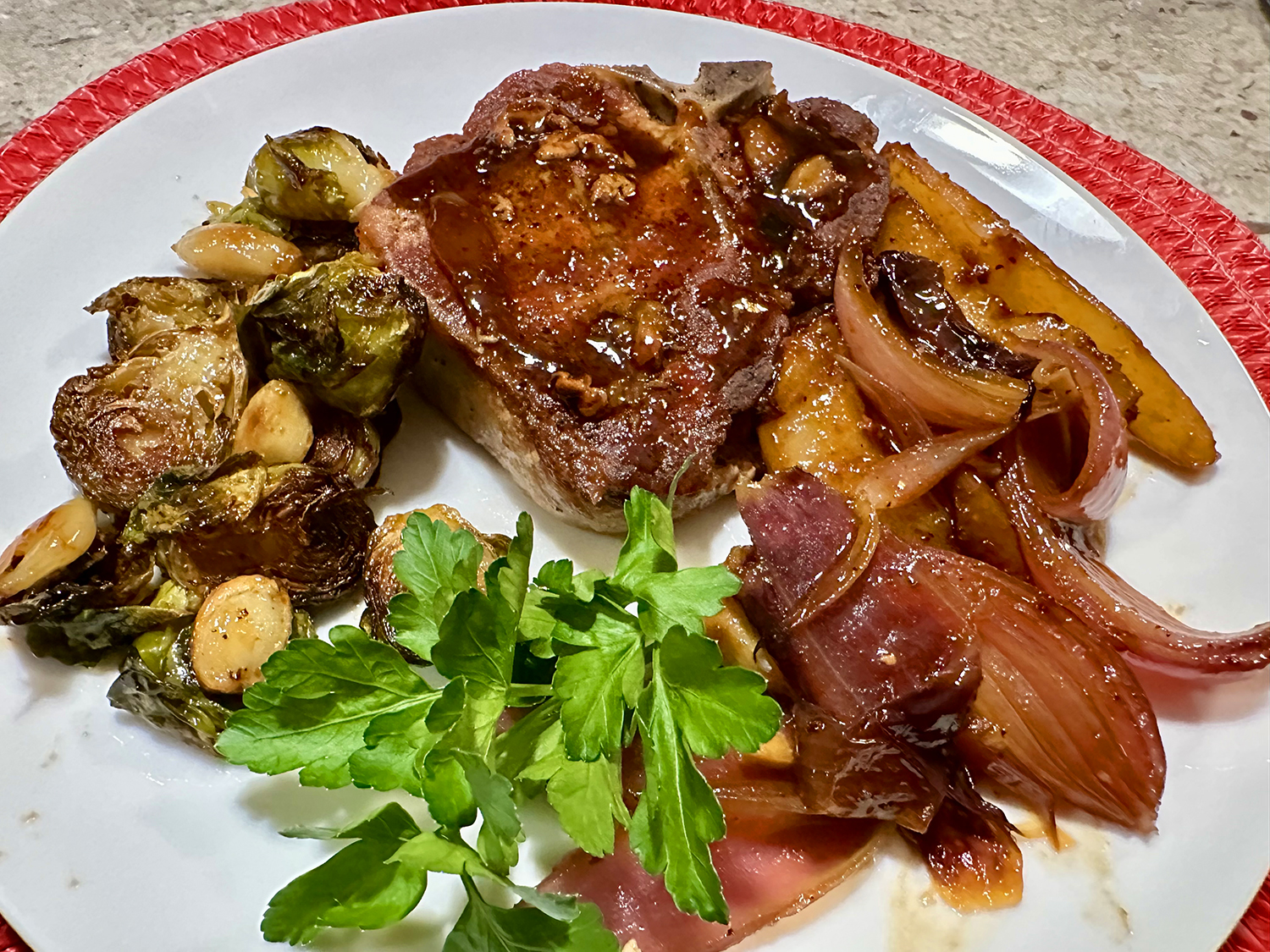
*Here’s where the issue came in. With the onion mixture AND pork cubes, the skillet was overcrowded, and the ingredients were steaming instead of browning. To compensate, the Hubs removed the onion medley and cooked just the meat until charred a bit on the bottom; adding the mixture back to the pan after the pork browned. Next time he will use a wok.
2 serrano chilies, stemmed and sliced into thin rings
2 Tbsp. white vinegar
Kosher salt and ground black pepper
4 Tbsp. grapeseed or other neutral oil, divided
1 Tbsp. yellow mustard seeds
4 medium garlic cloves, finely grated
1 Tbsp. finely grated fresh ginger
2 tsp. garam masala
1 1/2 lbs. boneless pork loin chops, trimmed of fat, cut into ½- to ¾-inch chunks
1/2 cup frozen peas
1/2 cup water
1/4 cup lightly packed fresh cilantro, or a mix of fresh basil and mint
Directions
In a small bowl, stir together a quarter of the onion, half of the chilies, the vinegar and ⅛ teaspoon salt; set aside.
In a 12-inch skillet over medium-high, heat 3 tablespoons of the oil until shimmering. Add the remaining onion, the mustard seeds and ¼ teaspoon salt; cook, stirring, until lightly browned, 4 to 5 minutes.
Add the remaining chilies, the garlic, ginger and garam masala; cook, stirring, until fragrant, about 1 minute.
Push the mixture to the perimeter of the pan*; add the remaining 1 tablespoon oil to the clearing. Add the pork in an even layer and sprinkle with ½ teaspoon each salt and pepper. Cook without stirring until browned on the bottom, about 3 minutes.
Stir the onion mixture into the pork; cook, scraping up any browned bits, until the pork is browned all over, 4 to 5 minutes.
Add the peas and ¼ cup water; cook, stirring, until the pork is lightly glazed, about 1 minute. Taste and season with salt and pepper. Transfer to a serving dish and top with the reserved onion mixture and cilantro or other herbs.
With a flavor profile inspired by pasta e fagioli, this weeknight pasta recipe coaxes rich flavor out of simple ingredients while enlisting the oven to create a luscious sauce from roasted tomatoes and white beans.
Essentially, the dish requires just three steps: Boil pasta, roast your sauce ingredients, then stir together until the pasta is glossy. When roasted in the oven, the beans become crispy, like croutons, and break down in a way that helps thicken the sauce.
Though a flurry of freshly grated cheese would be welcome on top, this otherwise-vegan dish doesn’t need it; although we used it. The roasted tomato sauce is rich and luscious, fortified by starchy pasta water, roasted beans and a good glug of extra-virgin olive oil.
Our changes included omitting the sugar, using only 8 ounces of pasta, and cutting the olive oil in half, but keeping the other ingredients at the original amounts. To summarize, the meal exuded complex textures that came from roasting the shallot, garlic and tomatoes; with a little crunch, a little creamy, a hint of smokiness, and a little glossy finish.
½ tsp. finely chopped fresh rosemary (or ¼ teaspoon dried)
½ tsp. red-pepper flakes
½ tsp. granulated sugar
16 oz. cherry tomatoes, halved
1 15-oz. can small white beans (preferably navy or cannellini beans), rinsed (or 1⅓ cups cooked white beans)
1 lb. orecchiette (or other shaped pasta that will cup or grasp the sauce)
Freshly grated Parmesan or pecorino (optional), for serving
Directions
Heat the oven to 375 degrees. Bring a large pot of salted water to a boil over high.
In a small bowl, stir together ¼ cup olive oil with the shallot, tomato paste, garlic, rosemary, red-pepper flakes and sugar. On a large baking sheet, toss the tomatoes with the dressing; season generously with salt and pepper, then spread in an even layer.
On a second baking sheet, toss the beans with 2 tablespoons olive oil; season generously with salt and pepper.
Roast the tomatoes and beans, stirring halfway through, until tomatoes slump and beans crisp, about 25 minutes.
While the tomatoes and beans roast, cook the pasta until al dente. Reserve 1 cup pasta cooking water then drain pasta.
Transfer the beans and tomatoes to the pot. Add ¼ cup pasta cooking water to the sheet pan from the tomatoes and use a flexible spatula to scrape the browned bits from the bottom of the sheet pan; transfer to the pot, then repeat with another ¼ cup pasta cooking water. (One thing they’ll teach you in French culinary school: Never, ever discard the sucs, those browned bits at the bottom of the pan that carry deep flavor.)
Add the pasta and the remaining ½ cup olive oil to the pot; stir vigorously until saucy. Season generously with salt and pepper, then add extra pasta water as needed to moisten until glossy. Divide among wide, shallow bowls and top with grated cheese, if desired.