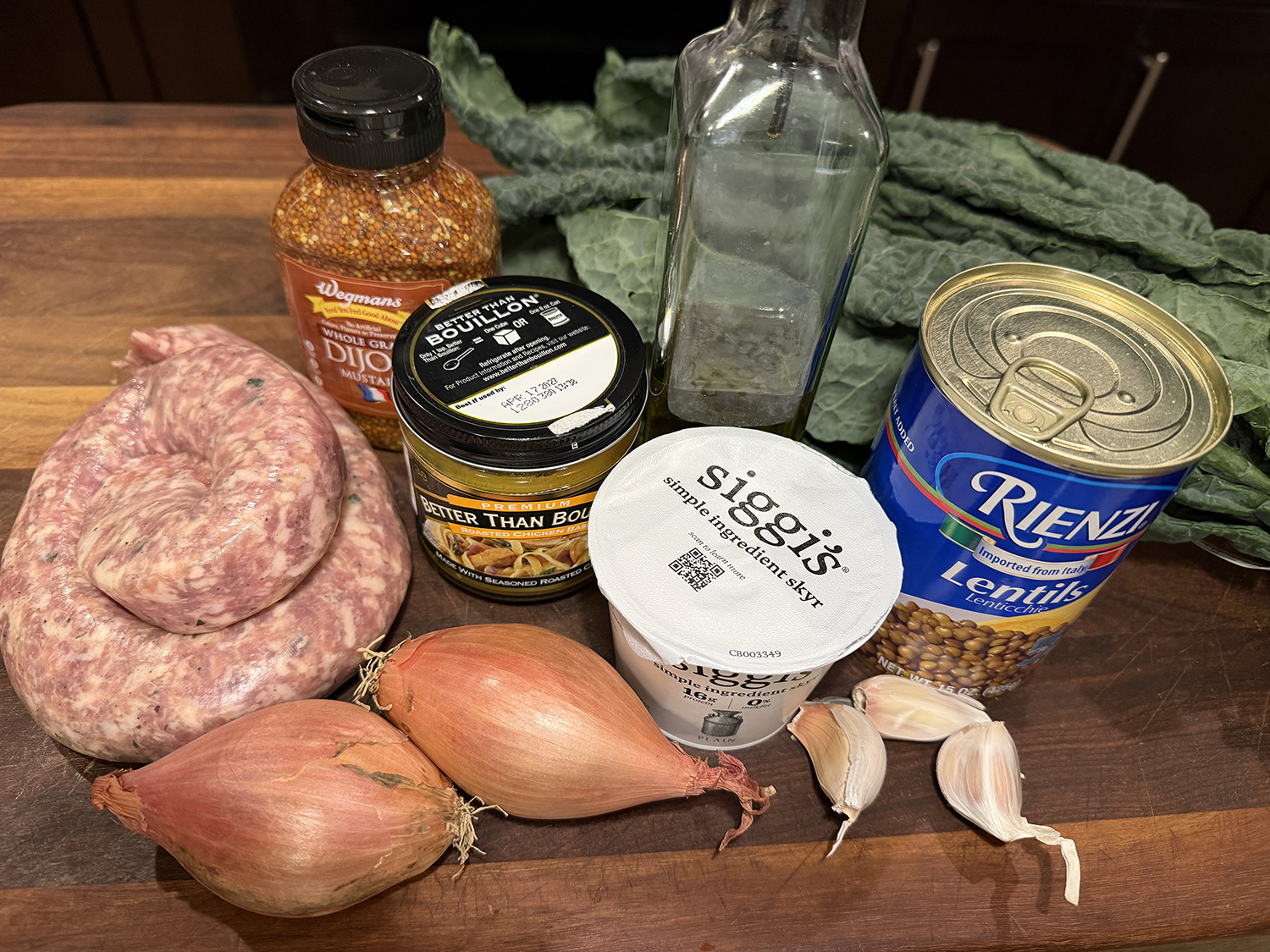
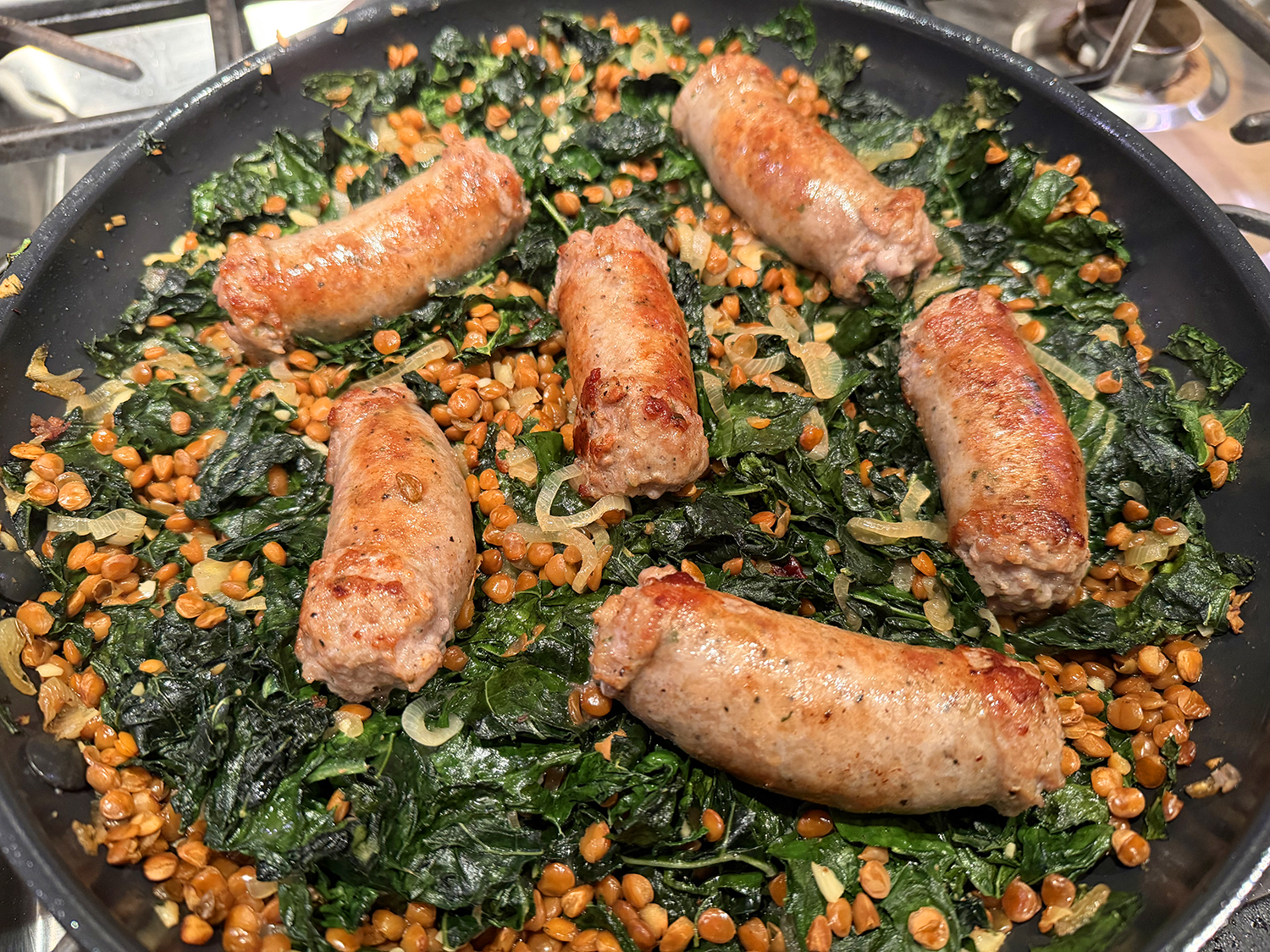
Here’s a one-skillet weeknight main dish that’s versatile, uncomplicated and sure to satisfy. Cooking sausages on top of the lentil mixture infuses this meal with rich, meaty flavor.
In lieu of Italian sausage, we used what we had on hand, one pound of homemade Garlic-Wine-Romano sausage from a local meat market. While the meat was 50% shy of the total amount in the original recipe, it suited the two of us just fine. All-in-all, an easy, quick weeknight recipe with a lot of flexibility.
The bonus here is, other than a skillet and a chef’s knife, there’s not a lot of clean up!
Adjust oven rack to middle position and heat oven to 375 degrees. Heat oil in 12-inch skillet over medium-high heat until just smoking. Add sausage and cook until browned all over, about 5 minutes; transfer to plate.
Reduce heat to medium, add shallots and garlic to now-empty skillet, and cook until vegetables start to brown, about 3 minutes. Add kale, broth, 1/4 teaspoon salt, and 1/4 teaspoon pepper; cover and cook until wilted, about 5 minutes.
Stir in lentils. Arrange browned sausage on top of lentil mixture and transfer skillet to oven. Cook, uncovered, until sausage registers 160 degrees, about 12 minutes. Whisk yogurt, mustard, and water together in bowl; drizzle over top. Serve.
Not familiar with biryani? It is a world-renowned Indian dish that takes time and practice to make but is worth every bit of the effort. It consists of long-grained rice (like basmati) flavored with fragrant spices such as saffron and layered with lamb, chicken, fish, or vegetables and a thick gravy. The dish is then covered, its lid secured, and then the biryani is cooked over a low flame. This is definitely a special occasion dish.
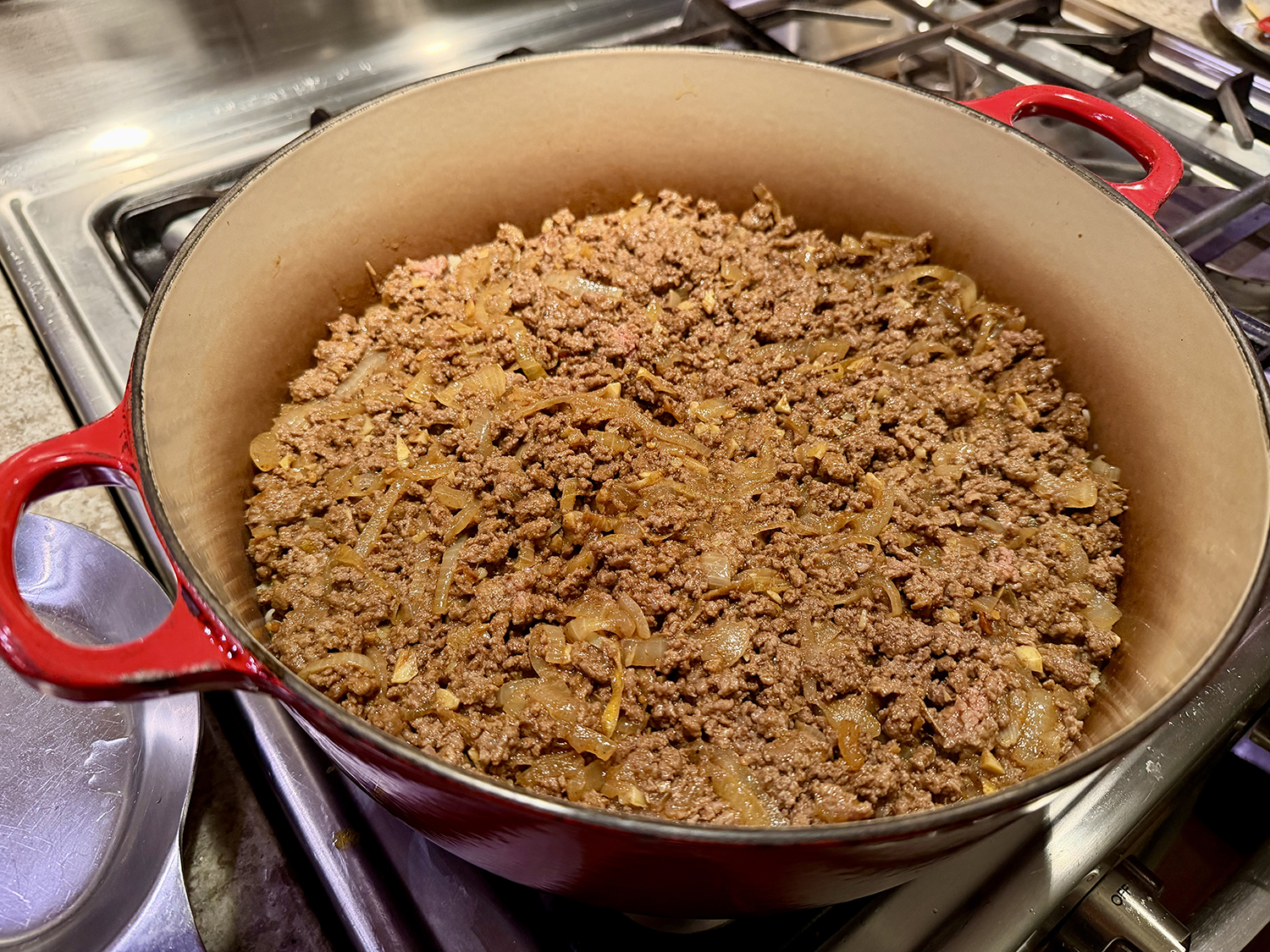
However, this “cheater” version of biryani allows you to enjoy the wonderfully fragrant and complex dish on a busy weeknight. The shortcut method here gives the rice a head start in a Dutch oven, while a ground beef mixture comes together quickly in a skillet.
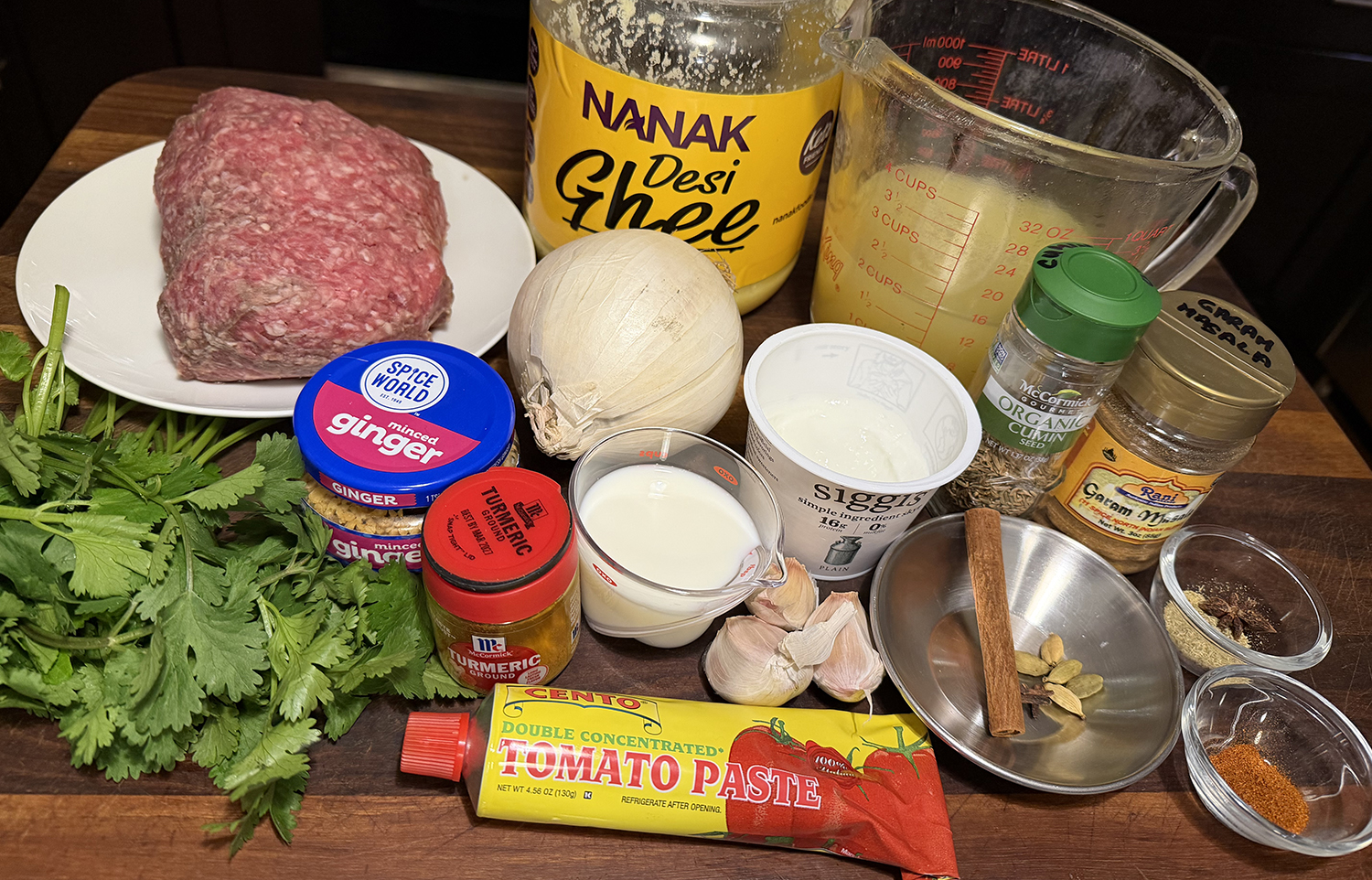
Don’t be deterred by the long ingredient list, as most of the ingredients are dried spices that don’t require any prep work. Aromatic garlic, ginger and spices are bloomed in ghee to extract as much flavor as possible, and there’s a slight hit of heat from the chile powder (more to taste). A tangy cumin raita is a lovely finishing drizzle that brightens the meal.
NOTES: Our alterations included using the entire onion, and increasing the ground beef to 1 1/2 pounds. With these additional amounts, you could get up to six servings. And next time we’ll increase the Kashmiri chile powder or cayenne because we could barely detect it. The original recipe indicates it is a total time of 30 minutes, but it took us at least 45 minutes to prep and cook.
½ tsp. ground Kashmiri chile powder or ¼ teaspoon cayenne (more to taste)
¼ tsp. ground fennel
¼ tsp. ground turmeric
1 star anise
½ tsp. cumin seeds, divided
1½ lbs. ground beef (preferably 20 percent fat)
¾ cup Greek-style plain yogurt, divided
¼ cup whole milk
½ cup coarsely chopped cilantro leaves and tender stems, divided
Directions
In a large Dutch oven, combine rice, cardamom, cinnamon, cloves, broth and ½ teaspoon of salt over medium-high heat; cover and bring to a boil. Once it boils, reduce heat to low and cook for 10 minutes.
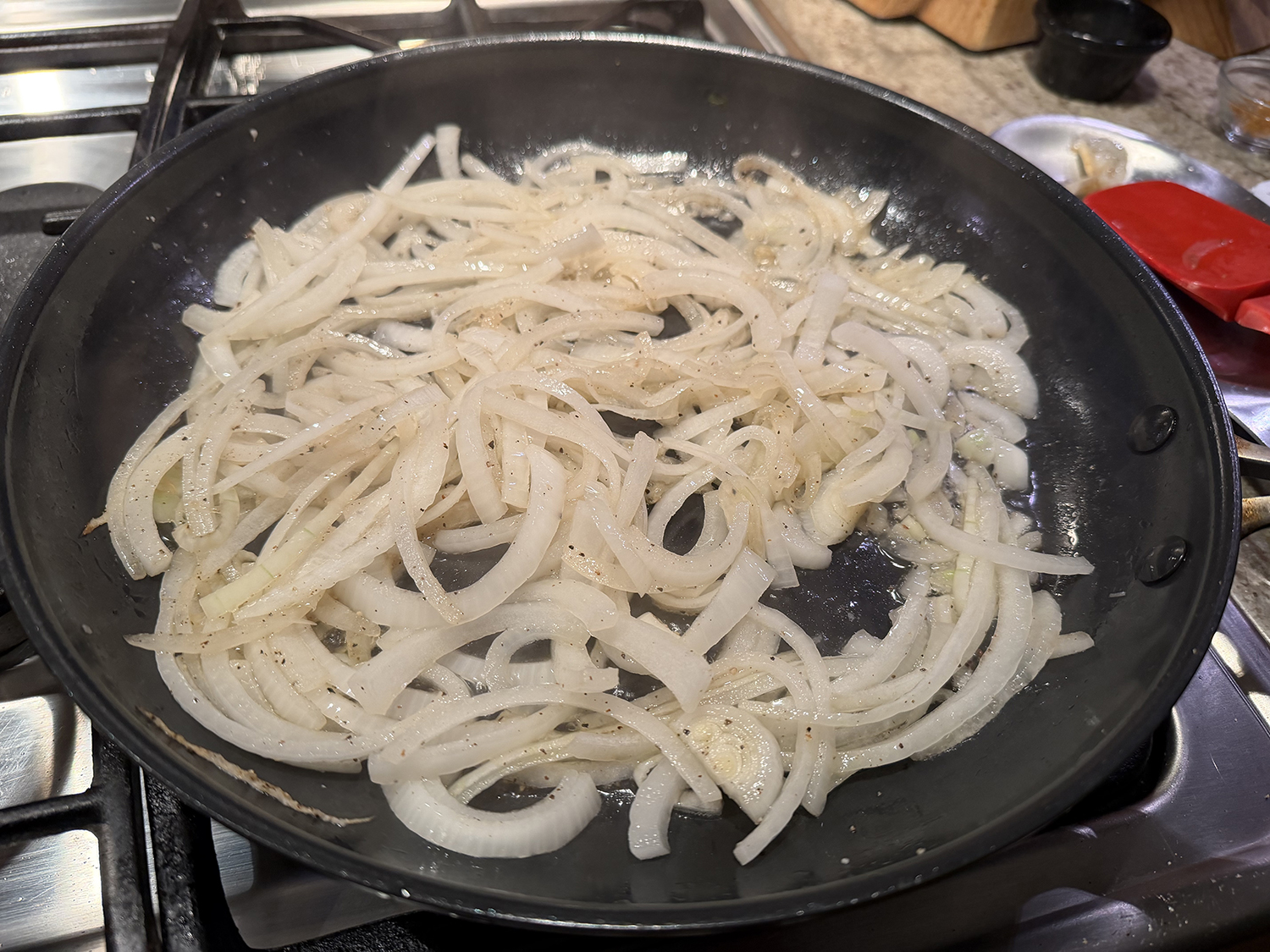
Meanwhile, heat 2 tablespoons of the ghee in a 12-inch nonstick skillet over medium. Add onion, season with salt and pepper and cook, stirring occasionally, until softened, 2 minutes. Add tomato paste and cook, stirring, until fragrant and well blended, 2 minutes.
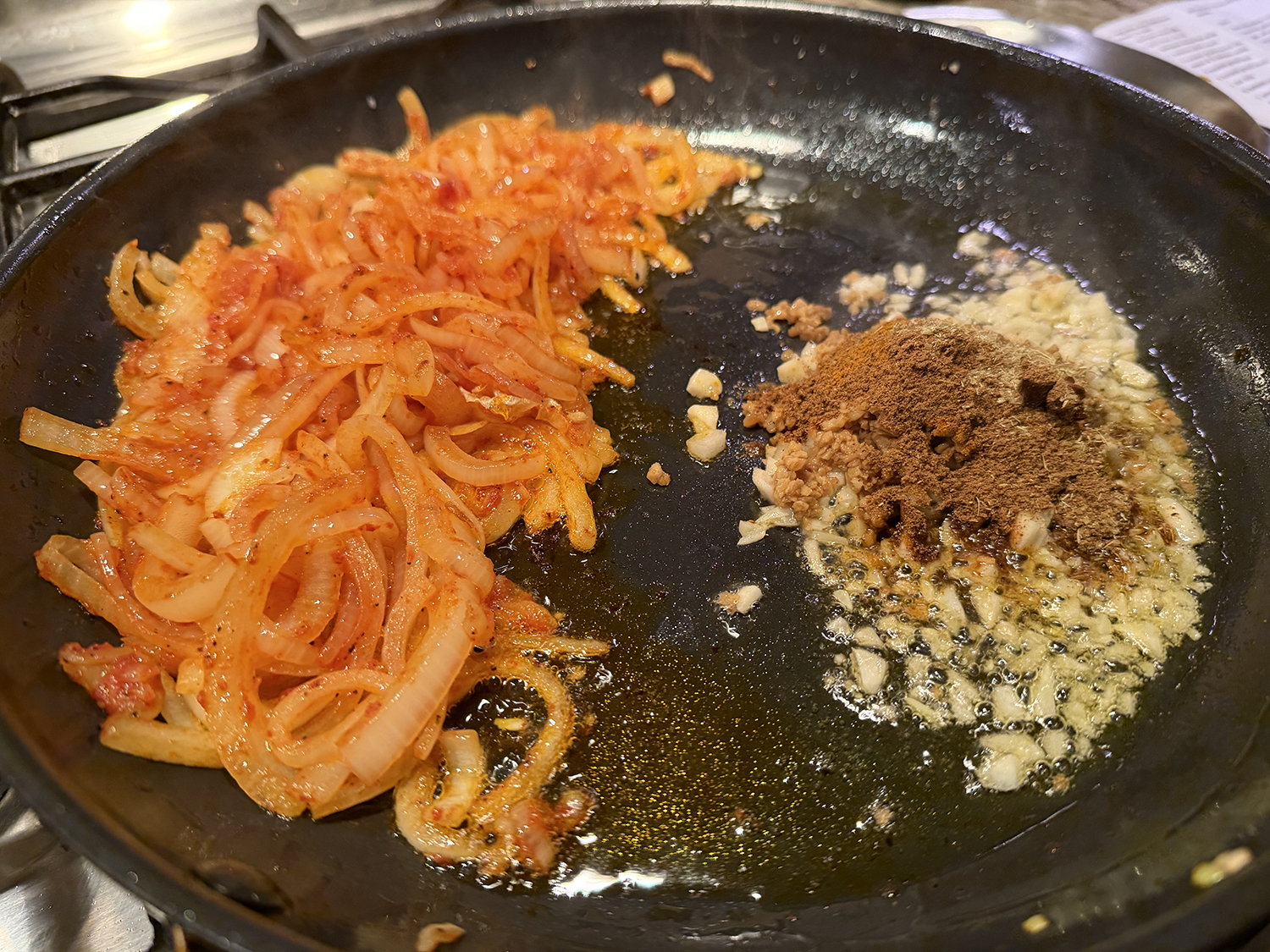
Push onion mixture to one side of the skillet and melt the remaining 1 tablespoon ghee in the empty side. To the melted ghee, add garlic, ginger, garam masala, chile powder, fennel, turmeric, star anise and ¼ teaspoon of the cumin; stir until well blended, 30 seconds.
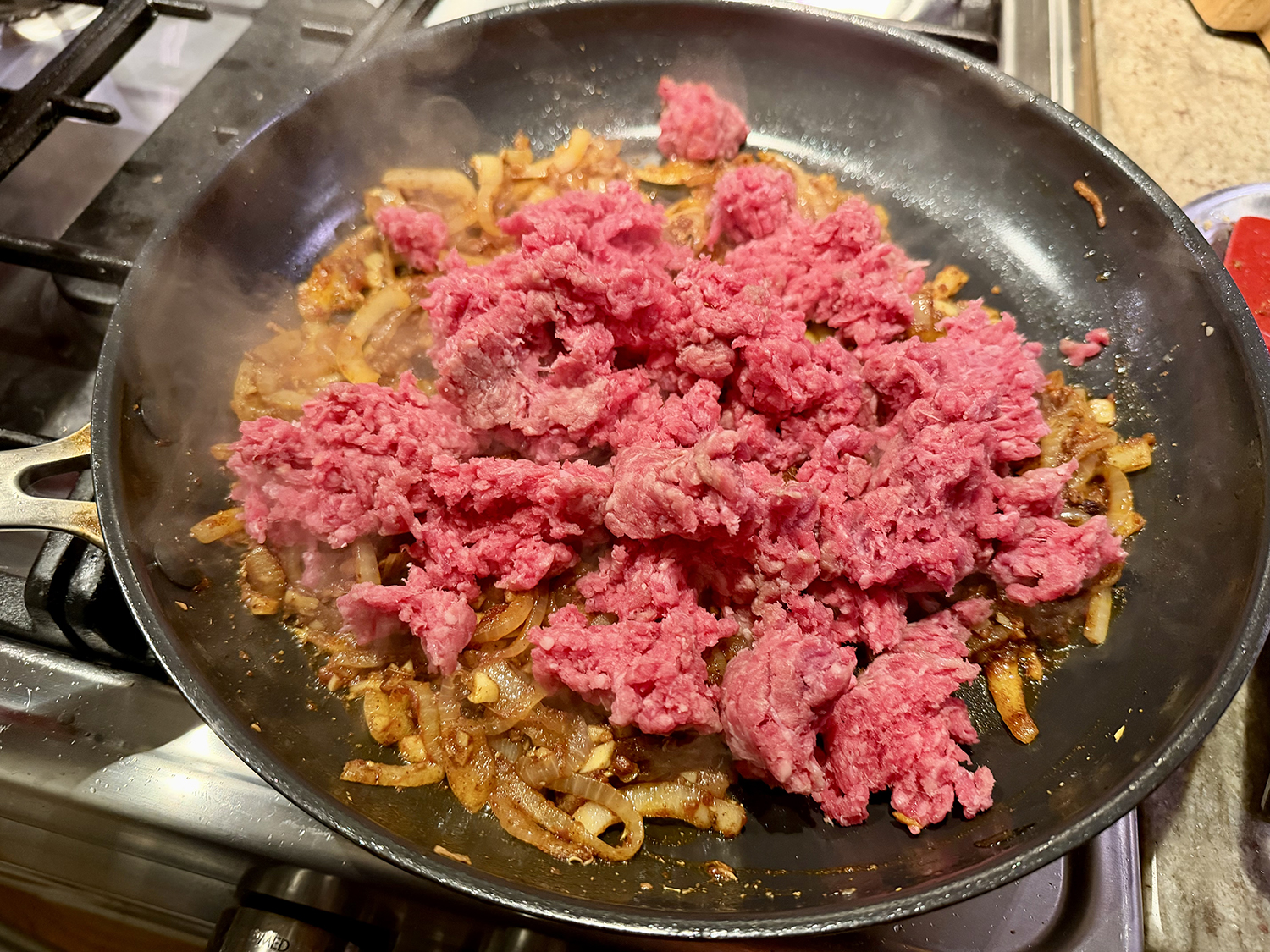
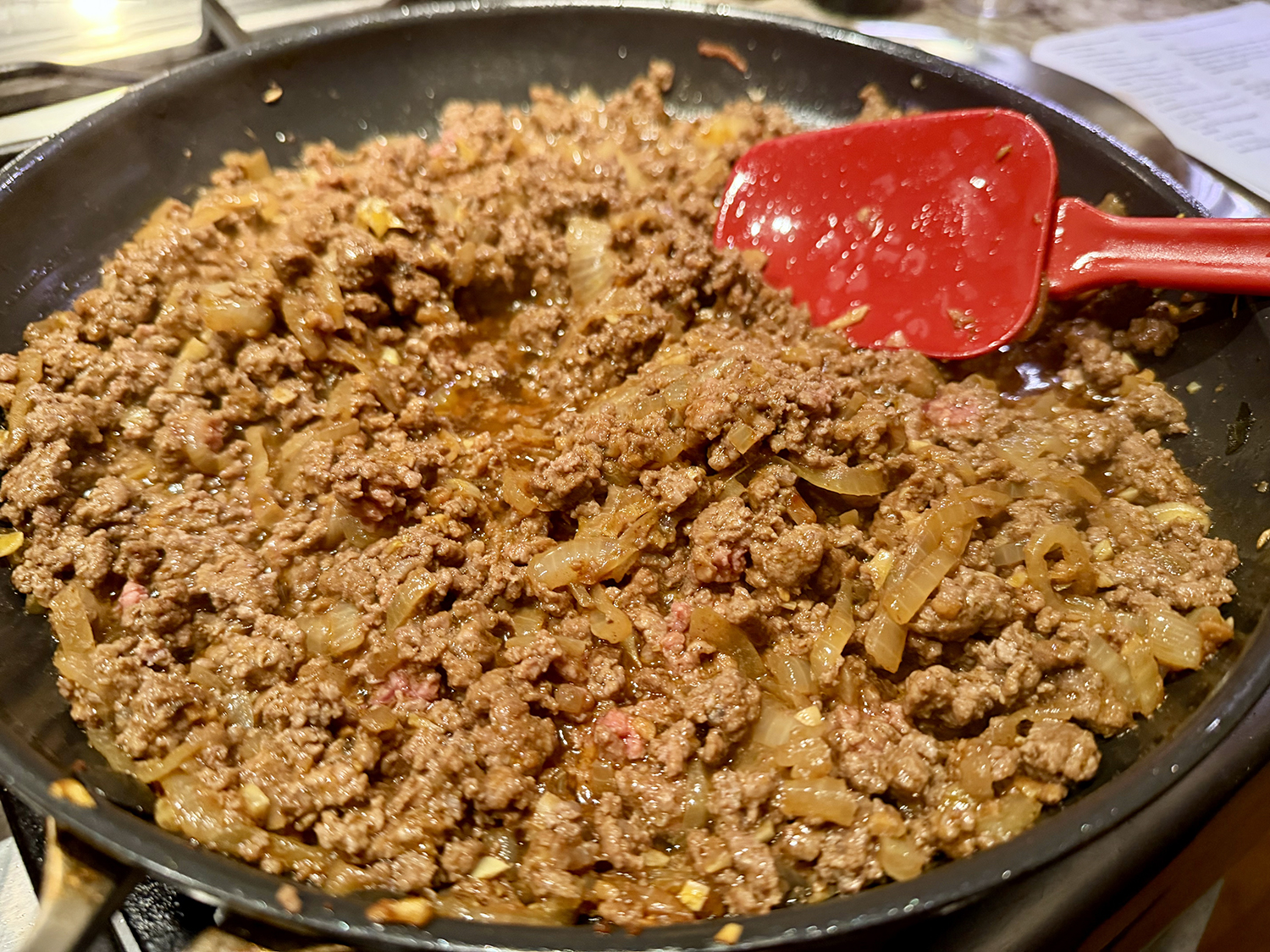
Mix the spices into the onion mixture until well combined, then add beef and season with salt and pepper. Cook, stirring and breaking up the meat into small pieces, until no longer pink, about 3 minutes (it will finish cooking with the rice). Turn off heat and stir in ¼ cup of the yogurt until well incorporated.
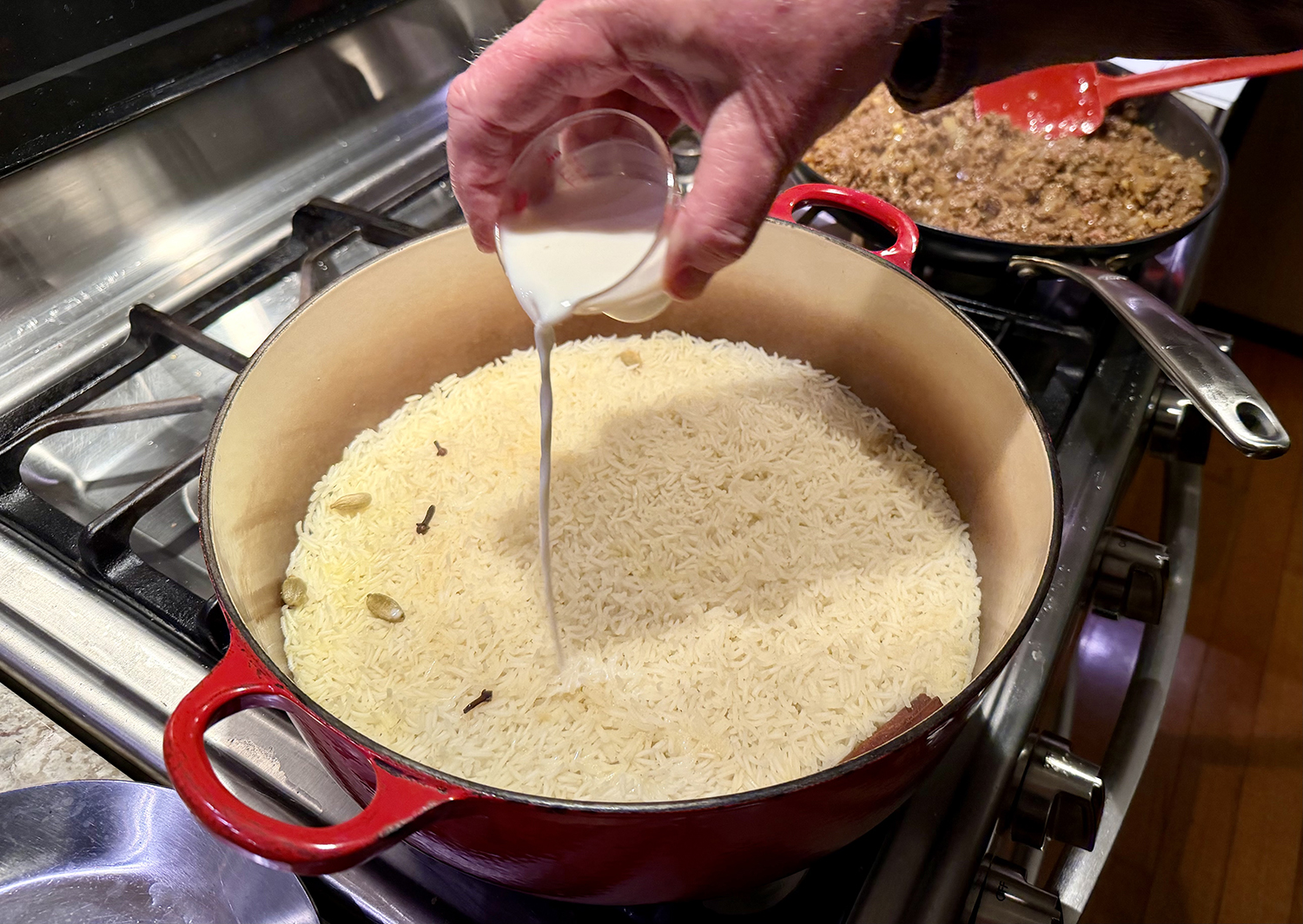
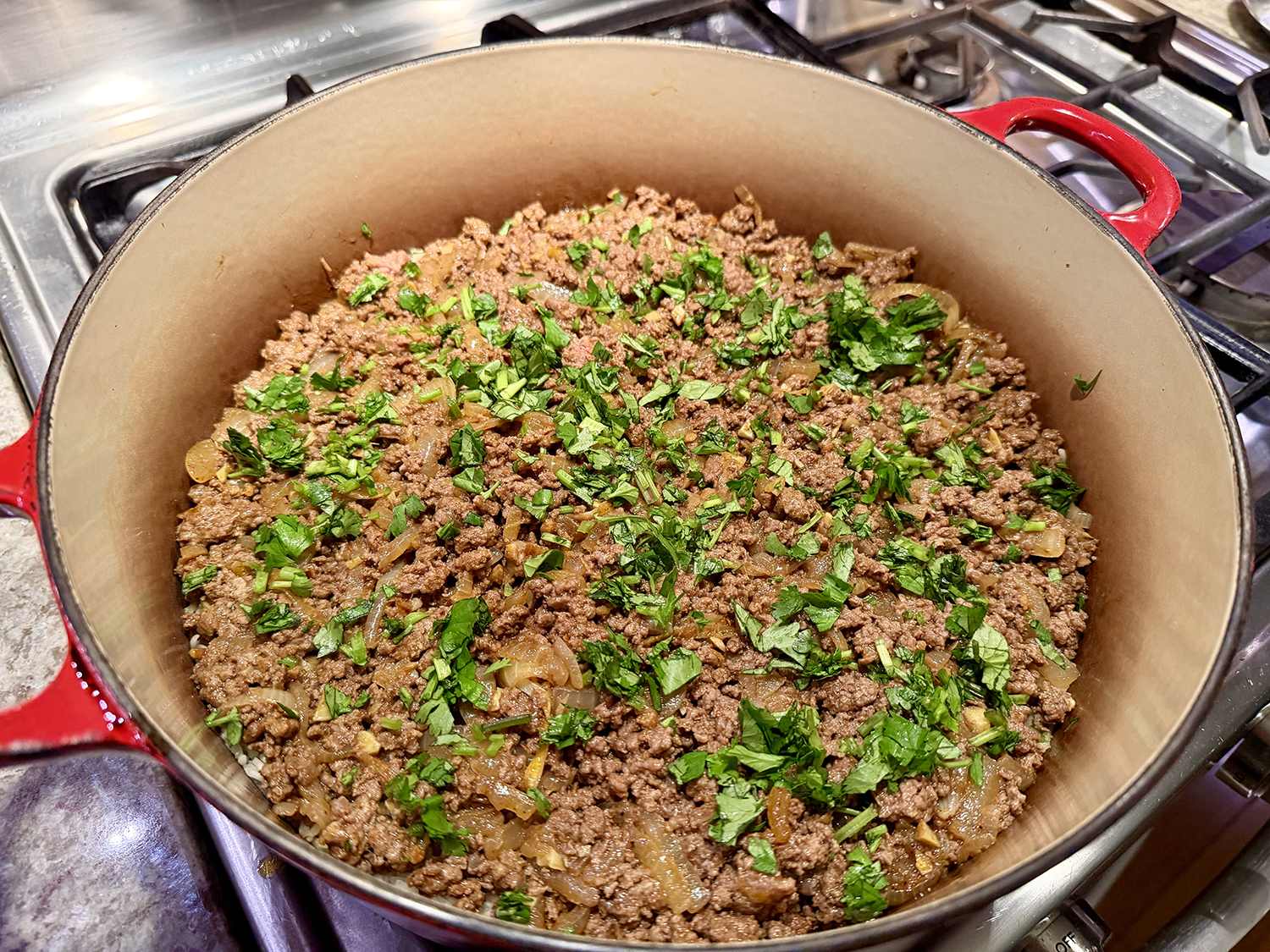
Drizzle milk evenly over the rice, then add the beef mixture on top in an even layer. Scatter over half of the cilantro, cover and cook until the beef is tender and rice is cooked through, 8 minutes longer.
Meanwhile in a small bowl, combine the remaining ½ cup yogurt, ¼ teaspoon cumin and 2 tablespoons of water and season with salt and pepper. Mix well.
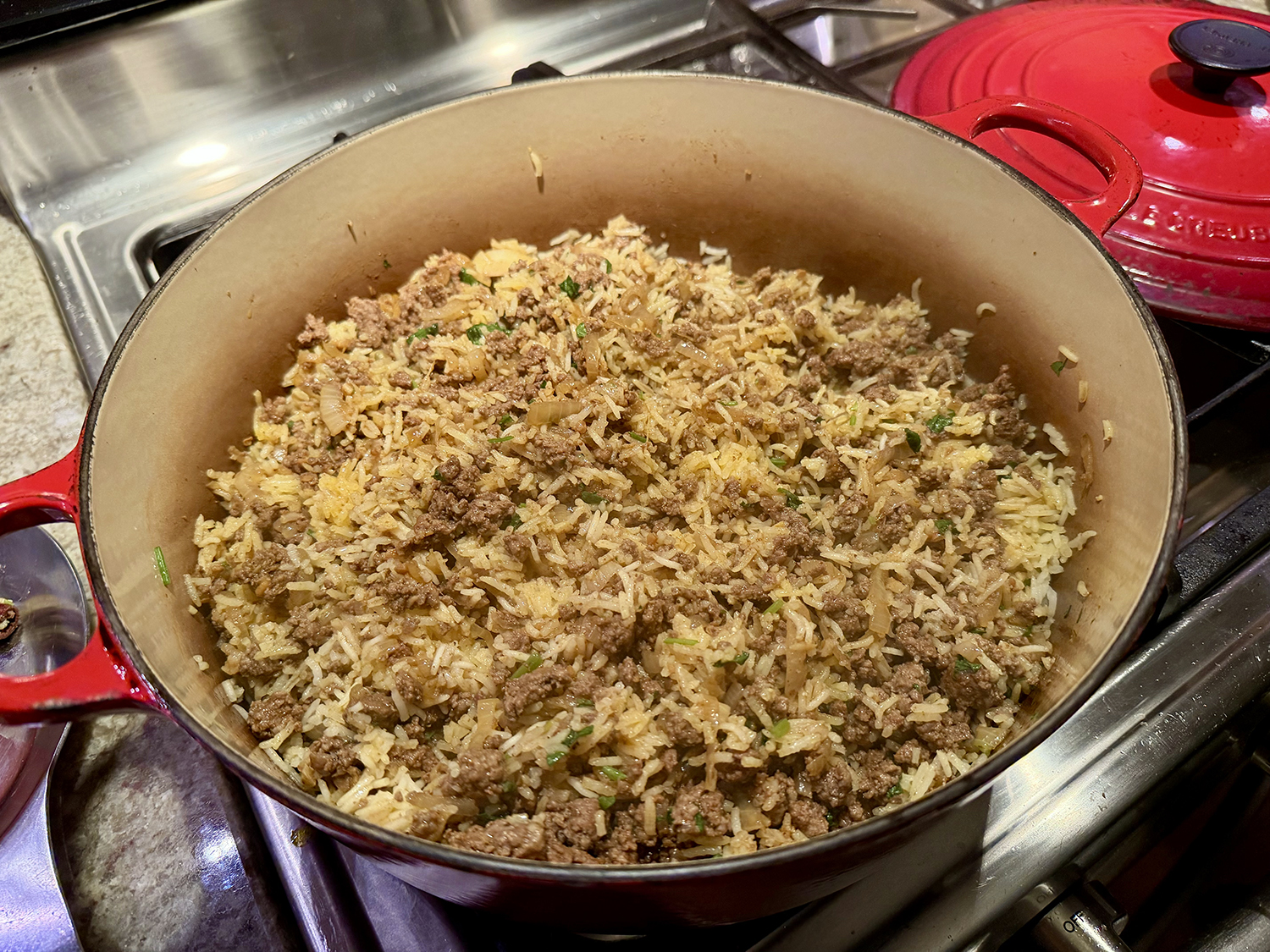
Gently fluff the rice with a fork and discard star anise and any other visible whole spices. Divide biryani among 4 bowls and garnish with the remaining cilantro. Serve warm, with the cumin raita on the side.
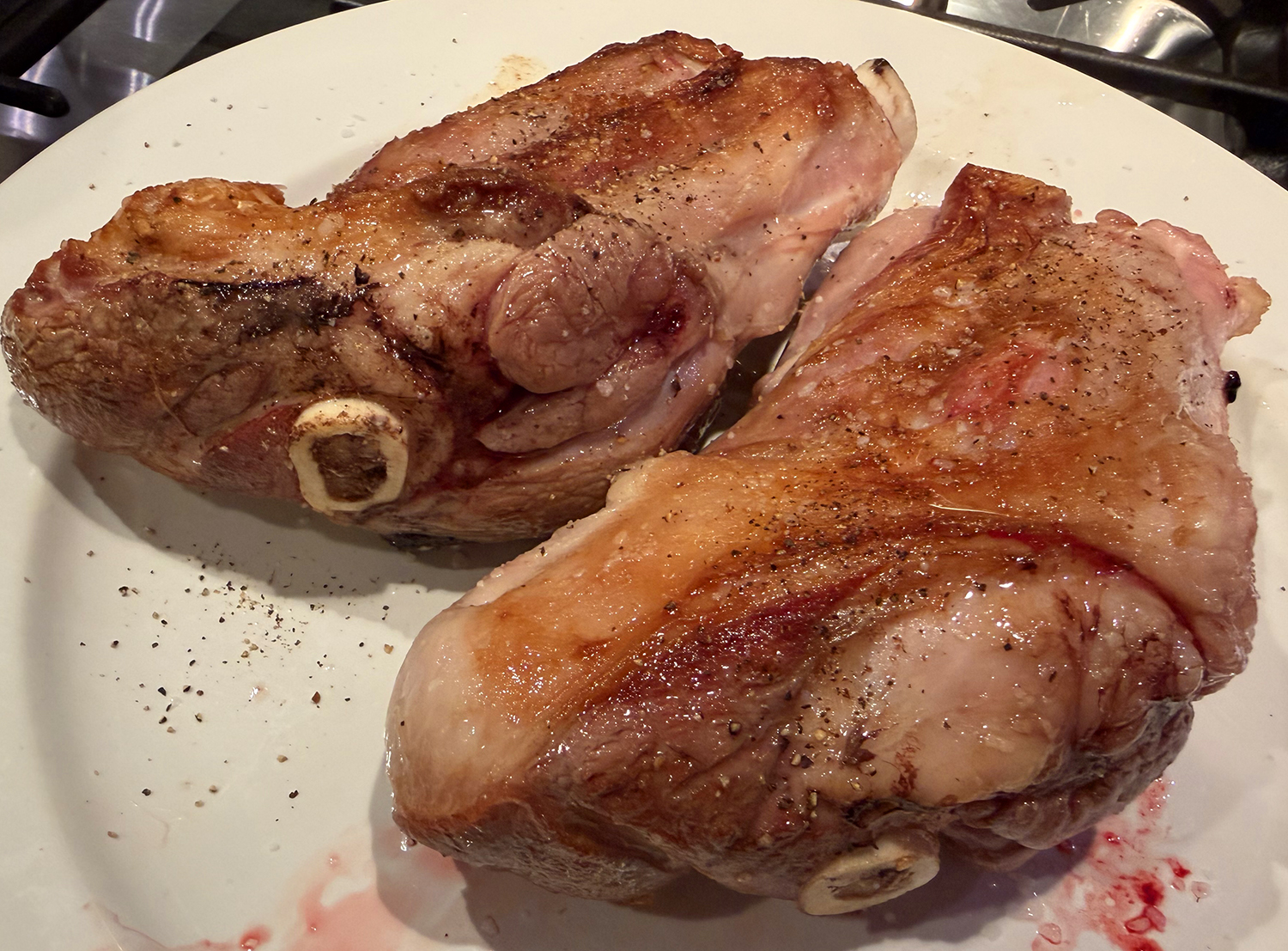
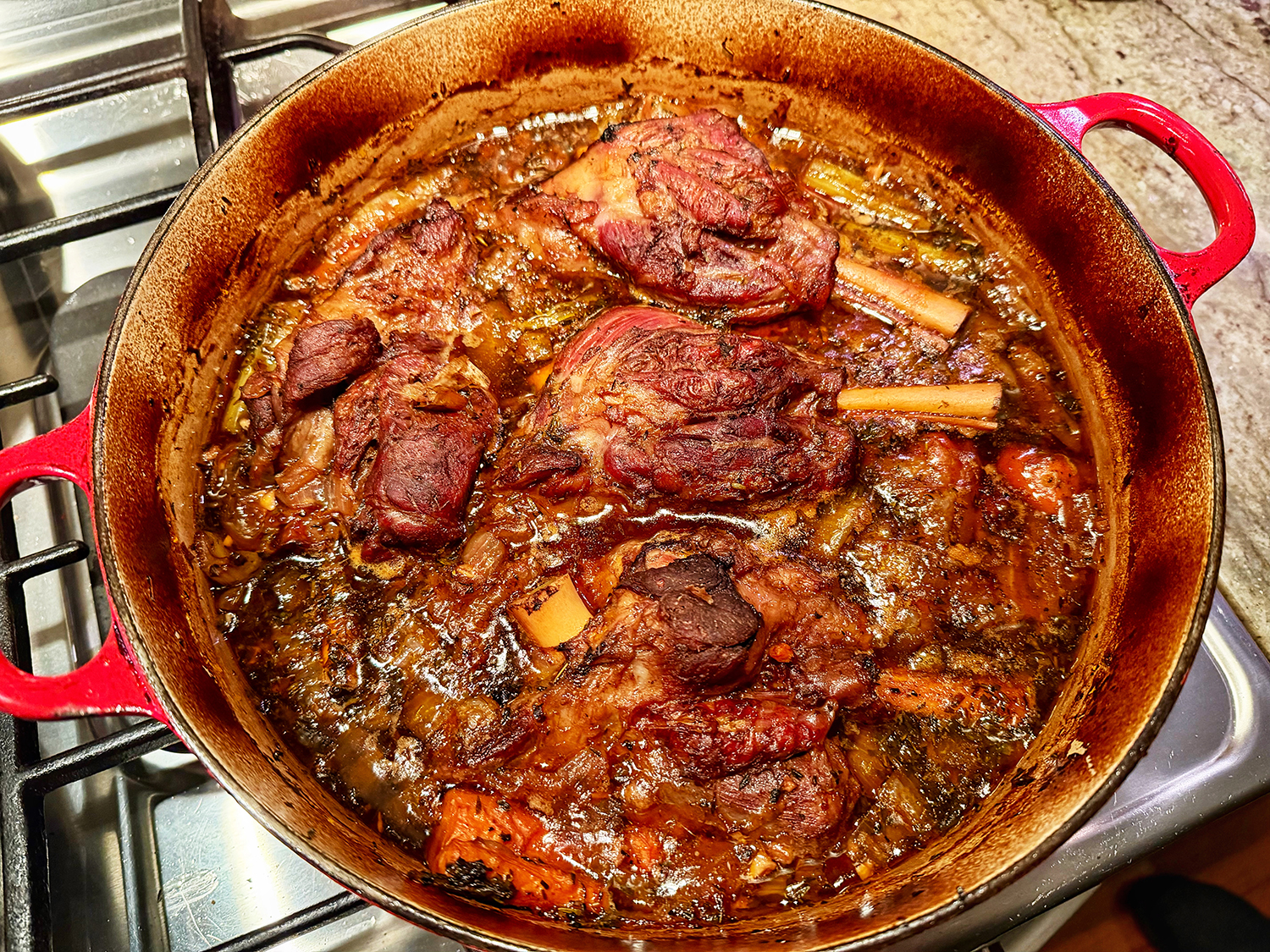
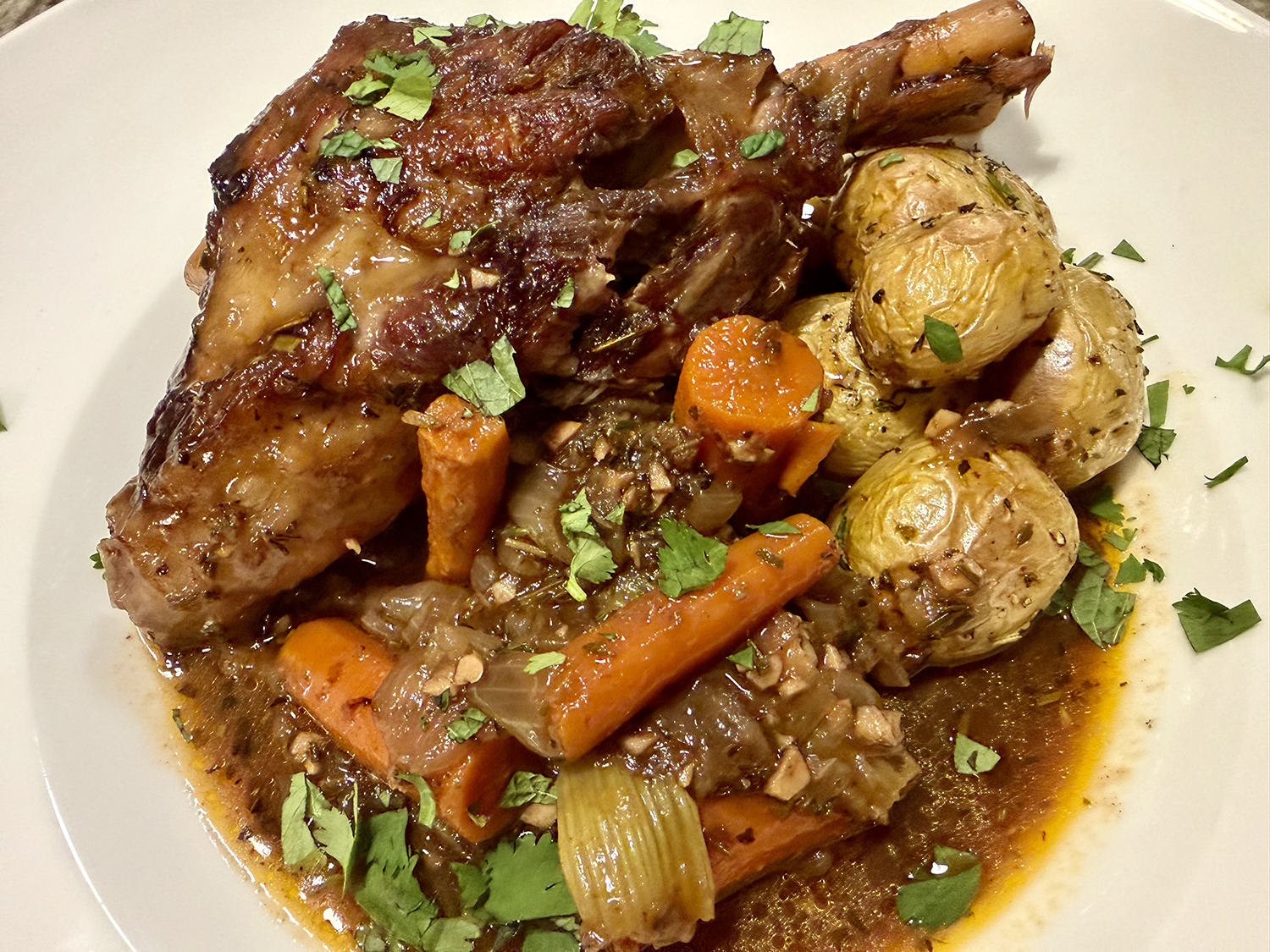
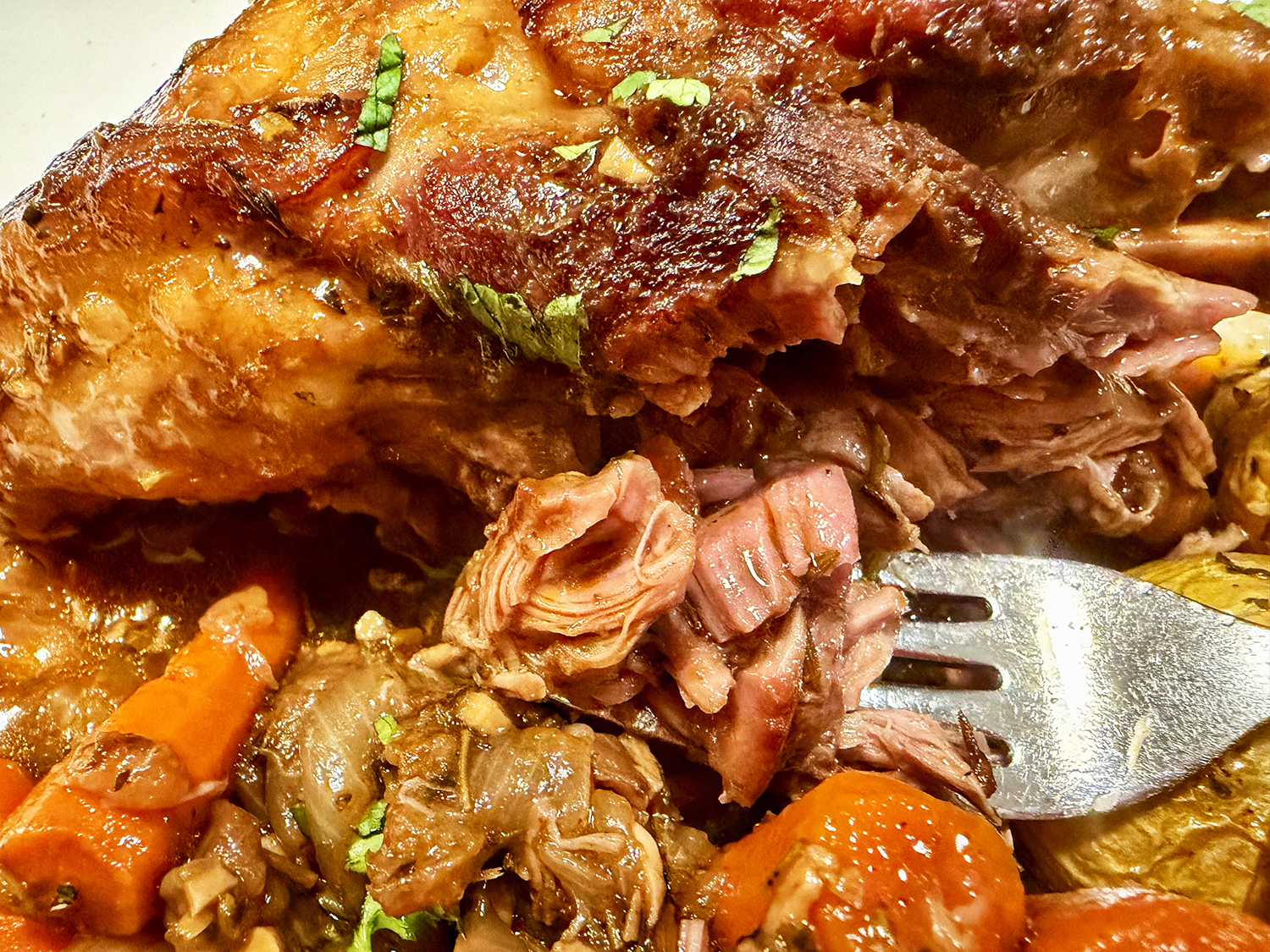
This uncomplicated America’s Test Kitchen recipe is truly a company-worthy, memorable main dish. Braising lamb shanks turns a richly flavored but tough cut of meat meltingly tender. However, the high fat content of lamb can all too often lead to a greasy sauce—not a pleasant memory.
To avoid this pitfall, trim the shanks well and then brown them before adding liquid to get a head start on rendering their fat. Also, defat the braising liquid after the shanks have cooked. There is more liquid than is called for in many braises to guarantee that plenty remains in the pot despite about an hour of uncovered cooking.
For starters, we only purchased 4 lamb shanks since it was going to be just the two of us, keeping the quantity of most everything at the same amount — except the carrots, which doubled. And we roasted some baby potatoes seasoned with herbes de Provence separately. We were thrilled to get another meal out of the braise because it was beyond delicious!
NOTES: Côtes du Rhône works particularly well here. If you can’t locate herbes de Provence, substitute a mixture of one teaspoon each of dried thyme, rosemary, and marjoram. If you’re using smaller shanks than the ones called for in this recipe, reduce the braising time.
Lamb Shanks Braised in Red Wine with Herbes de Provence
3 carrots, peeled and cut crosswise into 2-inch pieces
2 onions, sliced thick
2 celery ribs, cut into 2-inch pieces
2 Tbsp. tomato paste
4 garlic cloves, minced
2 Tbsp. herbes de Provence
2 cups dry red wine
3 cups chicken broth
Ground black pepper
Directions
Adjust oven rack to middle position and heat oven to 350 degrees. Pat lamb shanks dry with paper towels and sprinkle with 1 teaspoon salt. Heat 1 tablespoon oil in Dutch oven over medium- high heat until just smoking. Brown 3 shanks on all sides, 7 to 10 minutes. Transfer shanks to large plate and repeat with remaining 1 tablespoon oil and remaining 3 shanks.
Pour off all but 2 tablespoons fat from pot. Add carrots, onions, celery, tomato paste, garlic, herbes de Provence, and remaining pinch salt and cook until vegetables just begin to soften, 3 to 4 minutes. Stir in wine, then broth, scraping up any browned bits; bring to simmer. Nestle shanks, along with any accumulated juices, into pot.
Return to simmer and cover; transfer pot to oven. Cook for 1½ hours. Uncover and continue to cook until tops of shanks are browned, about 30 minutes. Flip shanks and continue to cook until remaining sides are browned and fork slips easily in and out of shanks, 15 to 30 minutes longer.
Remove pot from oven and let rest for 15 minutes. Using tongs, transfer shanks and vegetables to large plate and tent with aluminum foil. Skim fat from braising liquid and season liquid with salt and pepper to taste. Return shanks to braising liquid to warm through before serving.
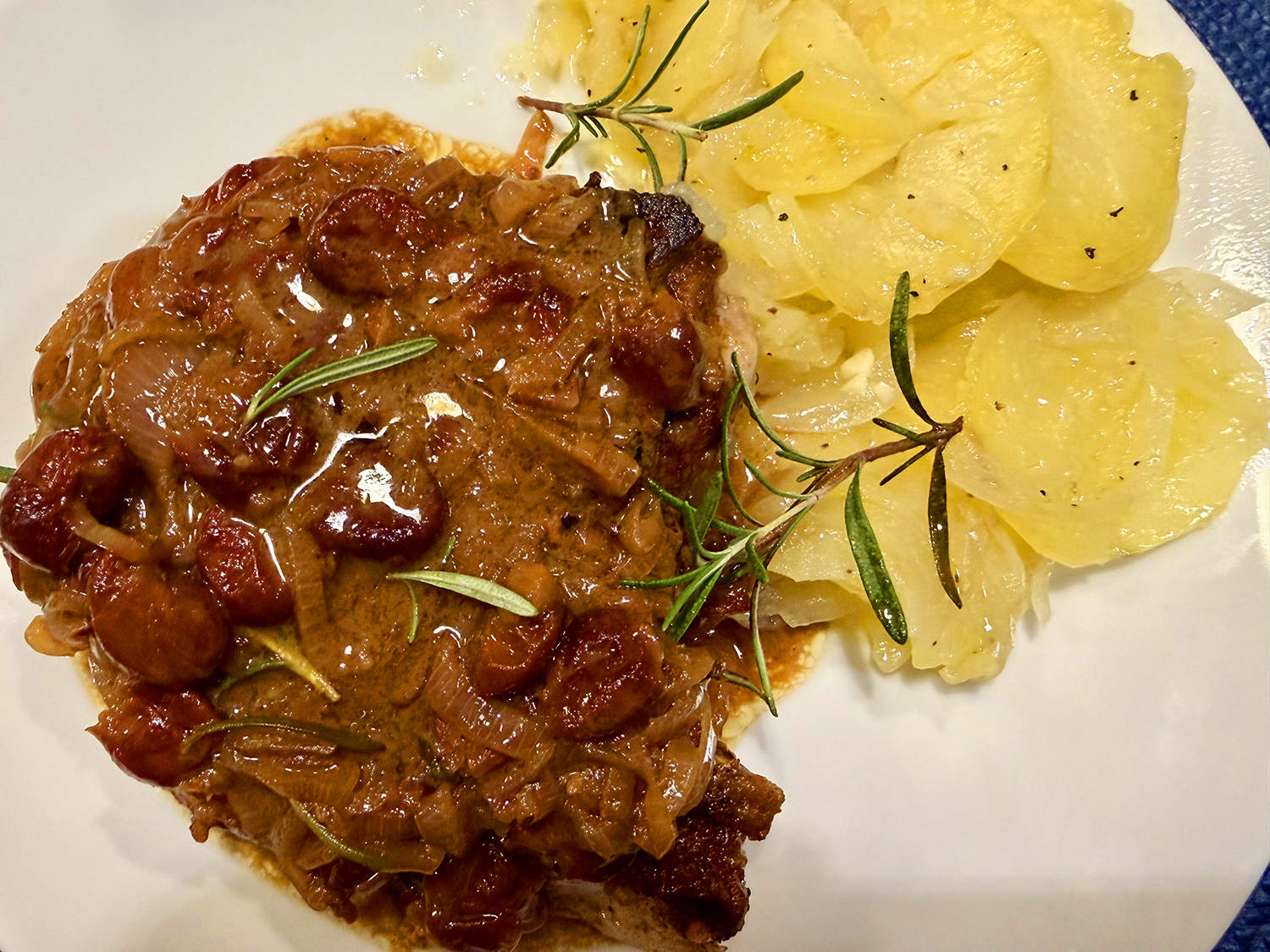
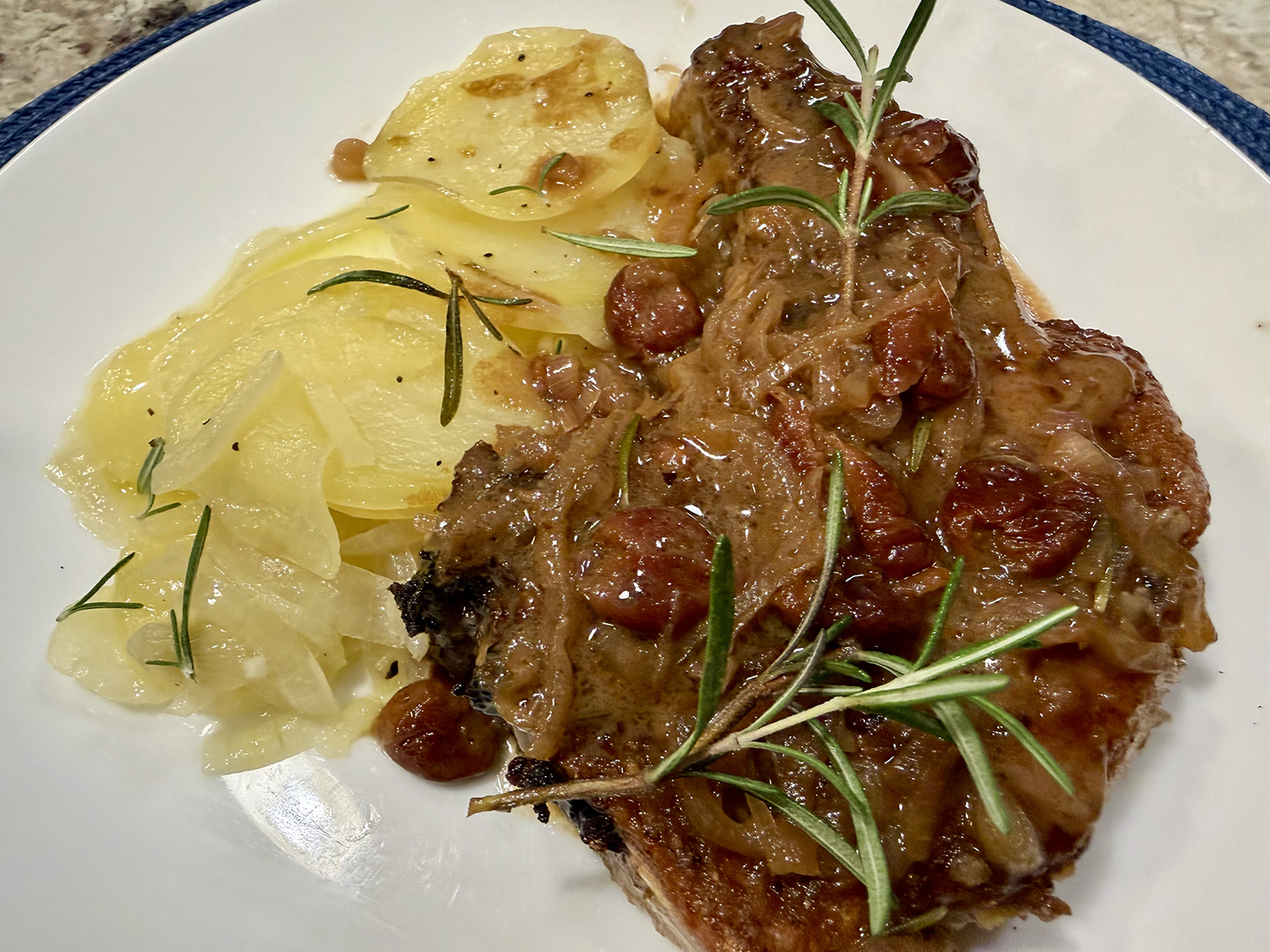
How about a to-die-for date night dinner for two? Pork and fruit are a classic partnership, and in this recipe from Bon Appétit, the marriage has lasting potential! It was a memorable dinner date for us… no future divorce attorneys on speed dial…
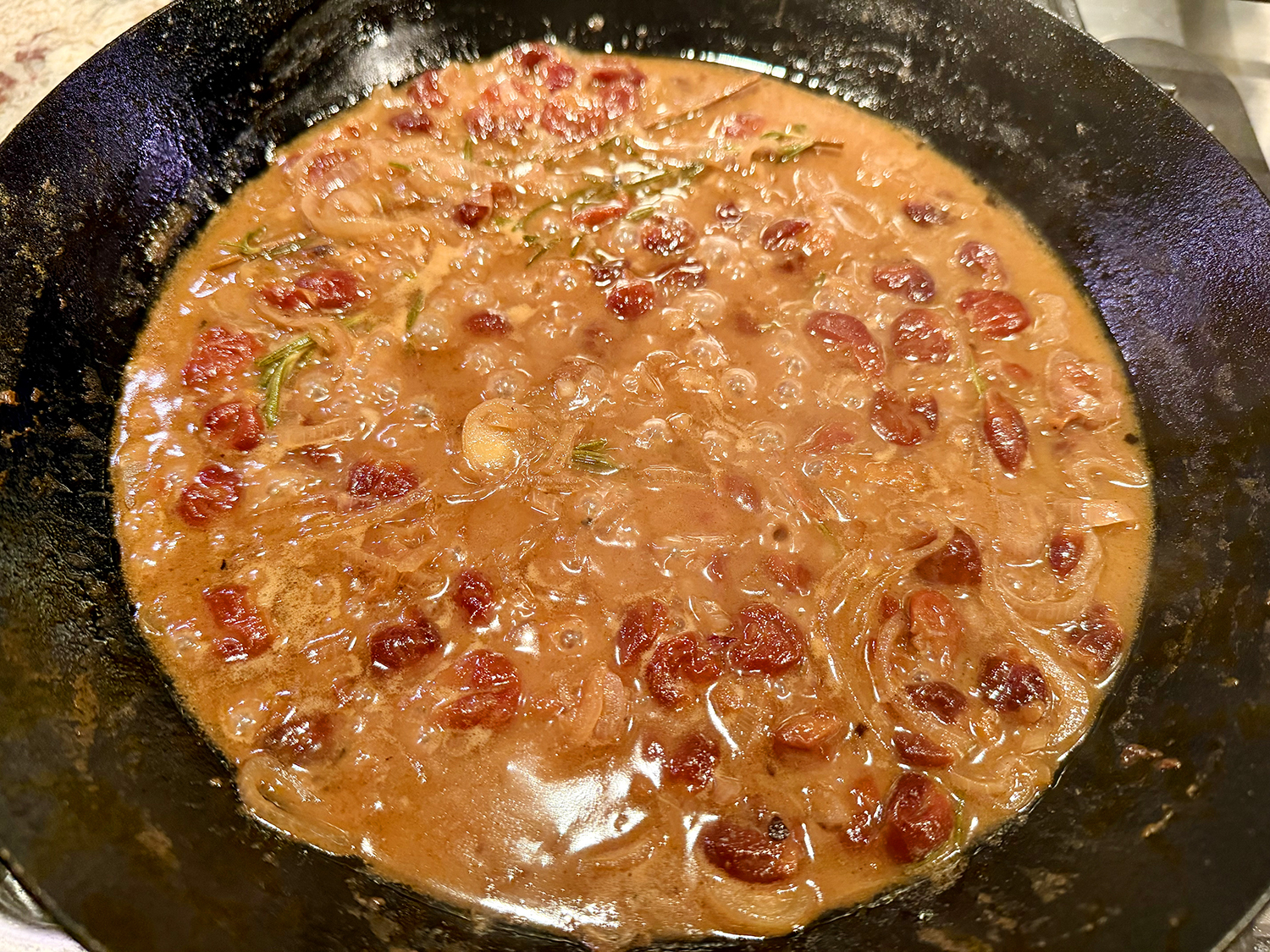
Rehydrating dried cherries in hot water turns them plump and juicy—exactly what you want scattered throughout a rosemary-scented pan sauce for thick-cut pork chops. Don’t be tempted to go for boneless chops; a dish this simple and flavorful calls for a heavy-hitting bone-in situation.
Our sides consisted of Patatas Panaderas and a side salad. Dinner Done!
2 1″–1¼”-thick bone-in pork chops (10–12 oz. each)
Kosher salt, freshly ground pepper
3 Tbsp. all-purpose flour
2 Tbsp. extra-virgin olive oil
1 large shallot, thinly sliced
4 Tbsp. unsalted butter, divided
2 cups low-sodium chicken broth
2 Tbsp. Dijon mustard
1 Tbsp. balsamic vinegar
2 sprigs rosemary
Directions
Combine ⅓ cup dried tart cherries and ½ cup hot water in a small bowl. Let sit to rehydrate while you cook the pork.
Pat two 1”–1¼”-thick bone-in pork chops (10–12 oz. each) dry with paper towels. Season generously on both sides with kosher salt and freshly ground pepper. Sprinkle 3 tablespoon all-purpose flour evenly over both sides of each chop; press in gently to coat lightly.
Heat 2 tablespoon extra-virgin olive oil in a large cast-iron skillet over medium-high. Shake off any excess flour and cook pork chops until deep golden brown underneath, about 5 minutes. Turn and cook until deep golden brown on other side and an instant-read thermometer inserted into the thickest part registers 135°, about 2 minutes, depending on thickness of chops. Transfer to a plate. Let pan cool slightly.
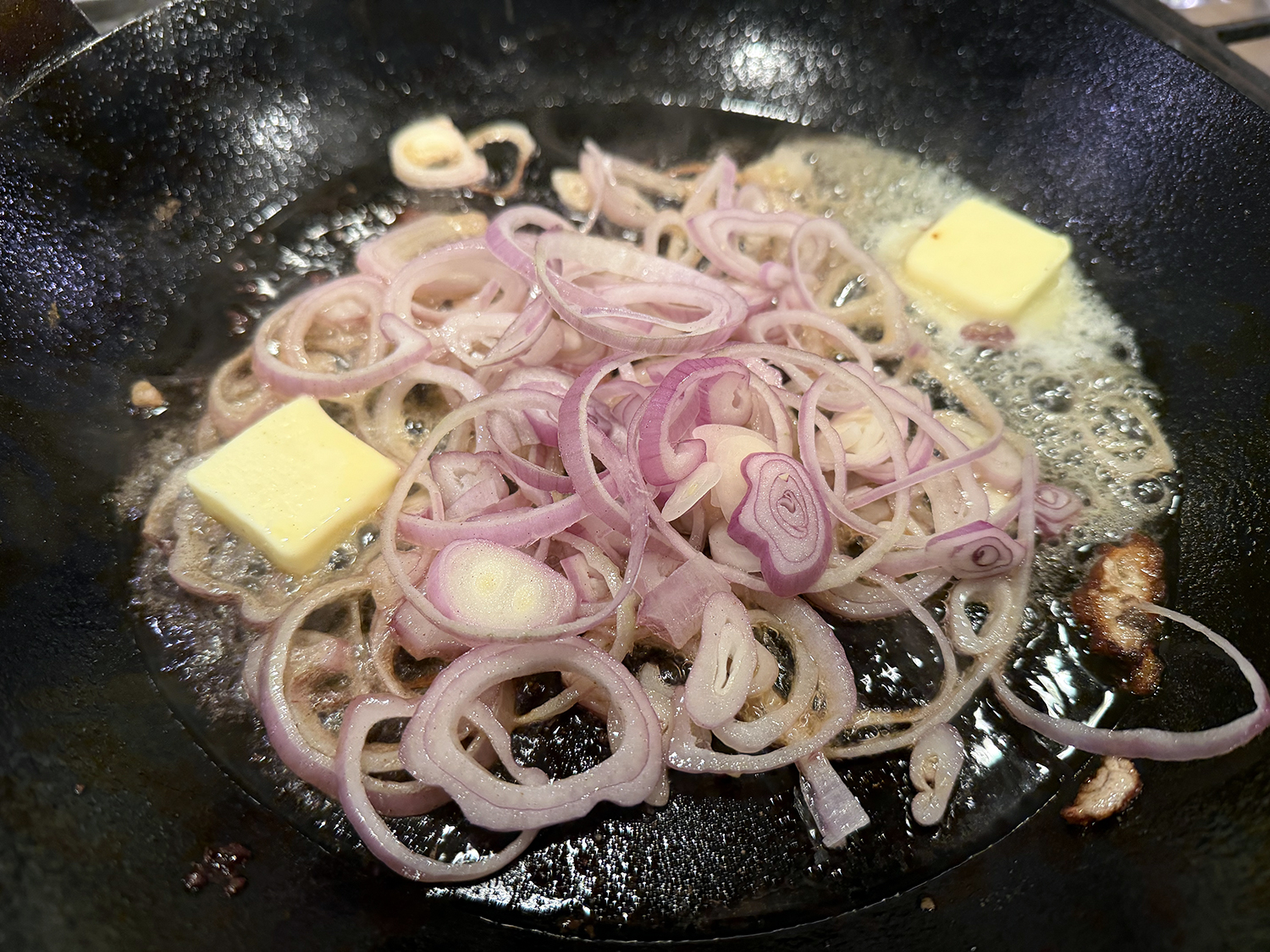
Combine 1 large shallot, thinly sliced, and 2 tablespoon unsalted butter in same pan and cook over medium heat, stirring often, until shallot is softened, about 2 minutes. Add 2 cups low-sodium chicken broth, 2 tablespoon Dijon mustard, 1 tablespoon balsamic vinegar, and reserved cherries with their liquid. Cook, stirring constantly, until slightly reduced, about 5 minutes.
Add 2 sprigs rosemary (OK maybe a bit more) and cook, stirring often, until sauce thickens further and is homogeneous, about 5 minutes. Remove from heat, add remaining 2 tablespoon unsalted butter, and vigorously stir to combine. Taste sauce and season with salt and pepper.
To serve, nestle pork chops back into sauce in pan and spoon some sauce over.
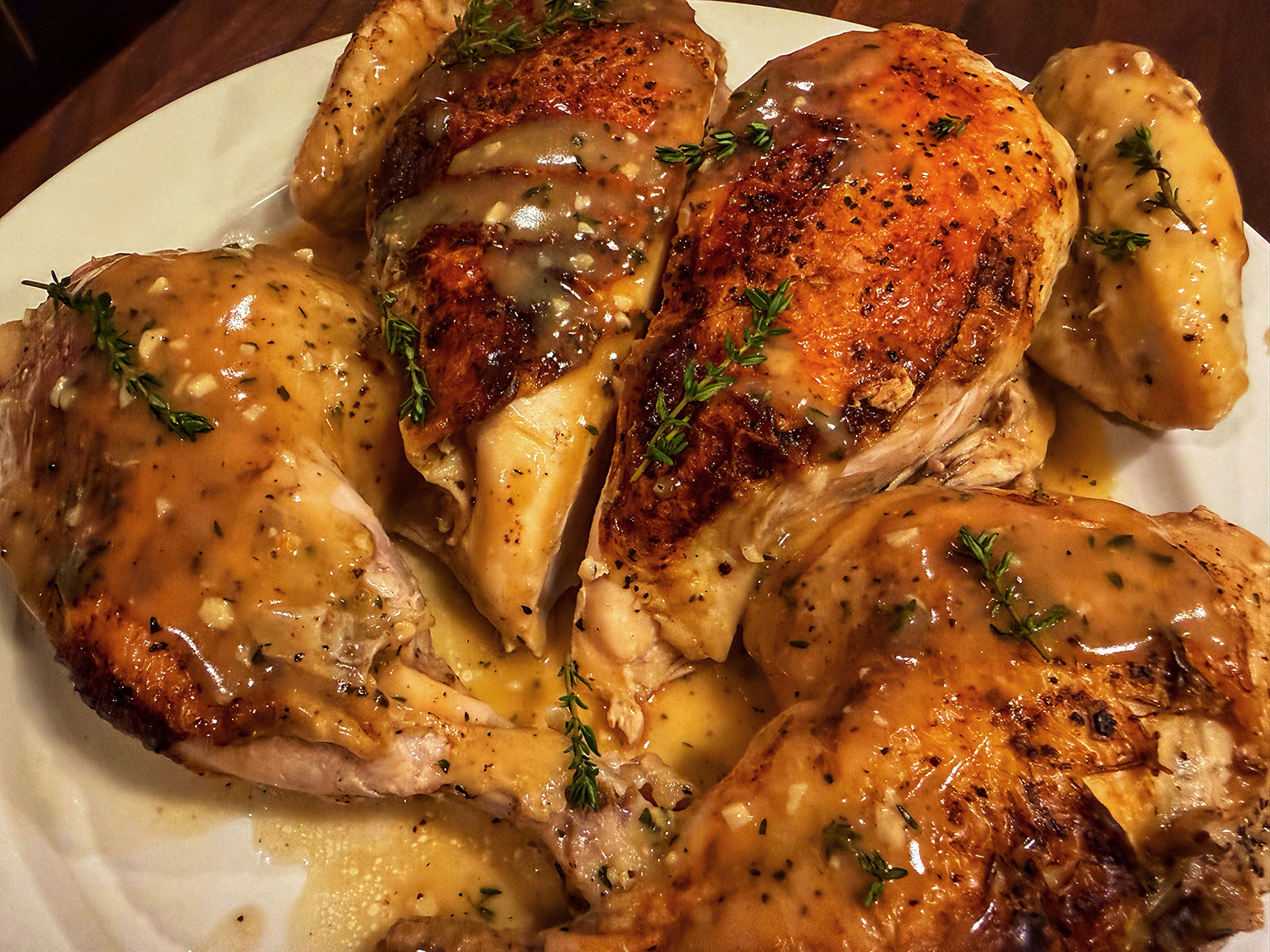
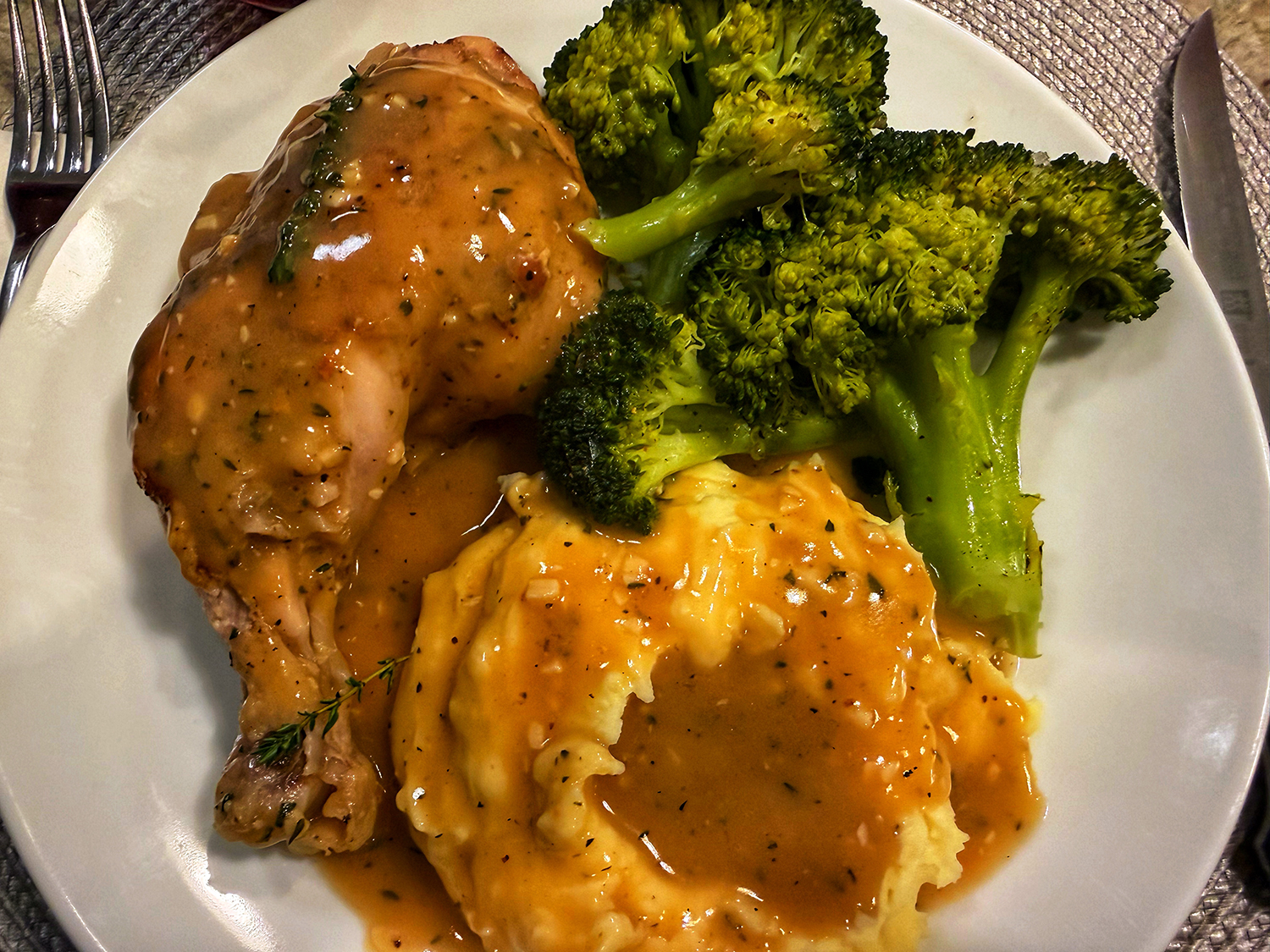
A whole roasted chicken with mashed potatoes and homemade gravy will always fall into the “comfort food” category for me. This recipe is adapted from Craig Claiborne, a child of Mississippi who started as food editor of The NY Times in 1957, and believed a cast-iron skillet to be essential for the authentic preparation of this dish. All of it is done on the stovetop, no need to heat up the oven.
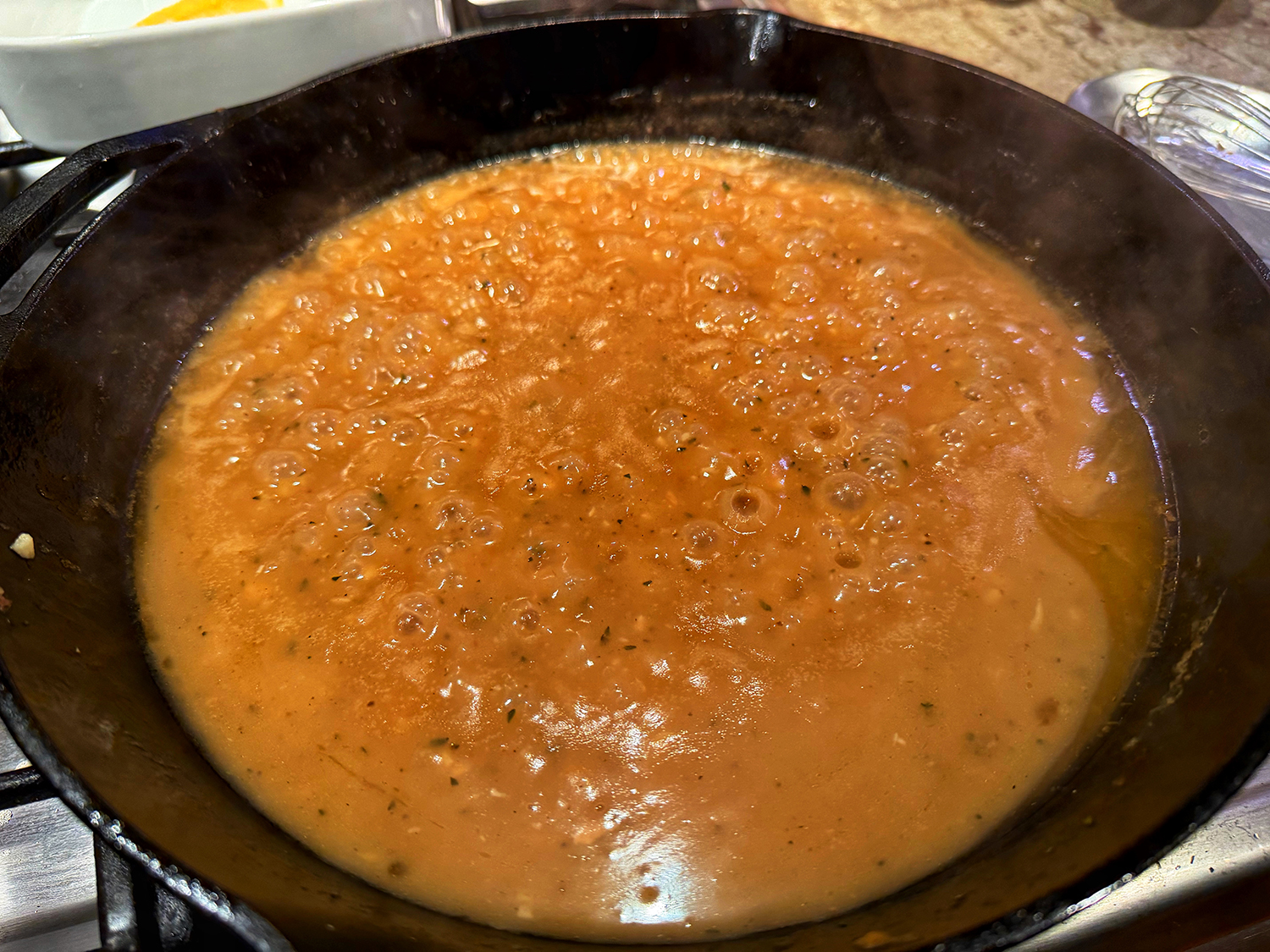
We took the liberty of enhancing the recipe with a few more aromatics including garlic and fresh thyme (noted below). Our variation when making the gravy, was to add 3 cloves of minced garlic along with the butter into the fat in the pan, cooking until fragrant.
Some vermouth was also included along with homemade chicken stock. Our bird weighed in at more than 4 pounds, so we adjusted the liquid to produce a bit more gravy—which we wanted to drench the creamy mashed potatoes.
Now you can substitute bone-in, skin-on thighs for the whole chicken, but we love the leftover parts for making our homemade stock. And if you have both white meat and dark meat lovers at the table, an entire bird makes sense. The white meat is super moist when cooked in this fashion.
Our choice sides included steamed broccoli and garlicky mashed potatoes.
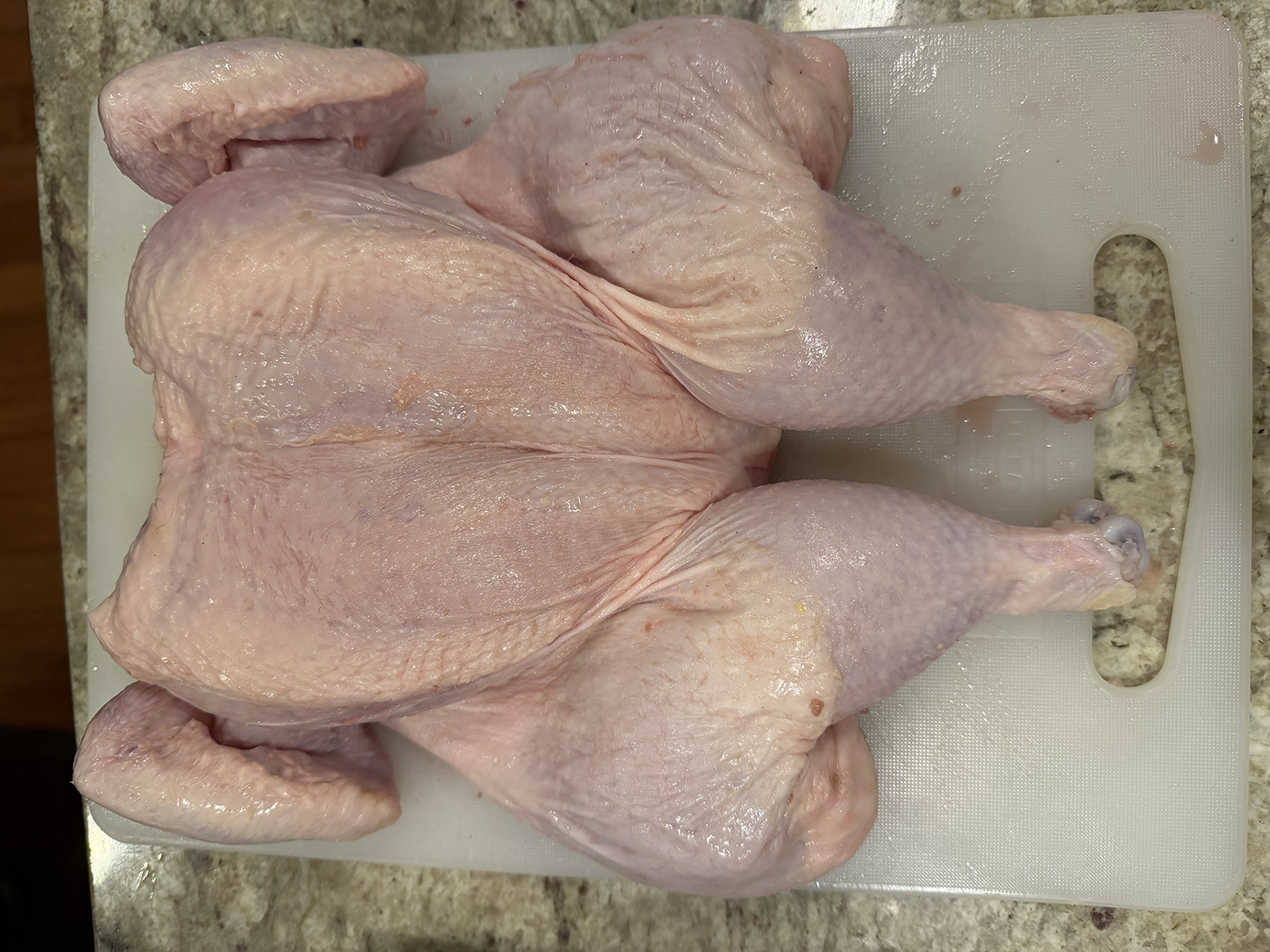
1 chicken, about 3½ to 4 lbs., spatchcocked (split down the backbone, breast left intact and unsplit)
Kosher salt, to taste
Freshly ground pepper, to taste
2 Tbsp. unsalted butter
2 Tbsp. all-purpose flour
1 Tbsp., fresh thyme leaves, chopped
3 large garlic cloves, minced
1½ cups chicken broth, ideally homemade
1/4 cup dry vermouth
Directions
Sprinkle the chicken on both sides with salt and pepper. Select a skillet large enough to hold the chicken comfortably when it is opened up, as for broiling. Fold wings under to secure them.
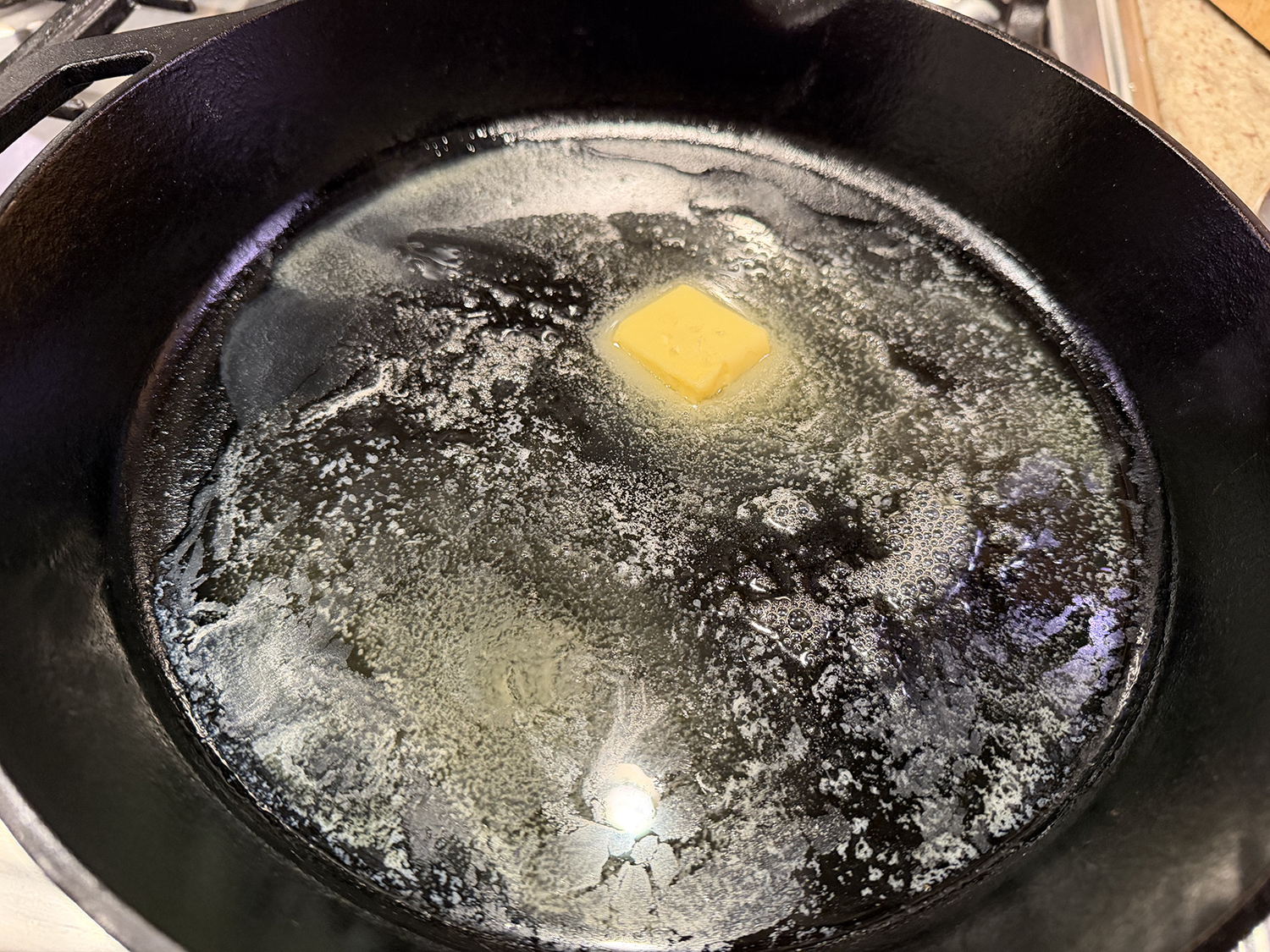
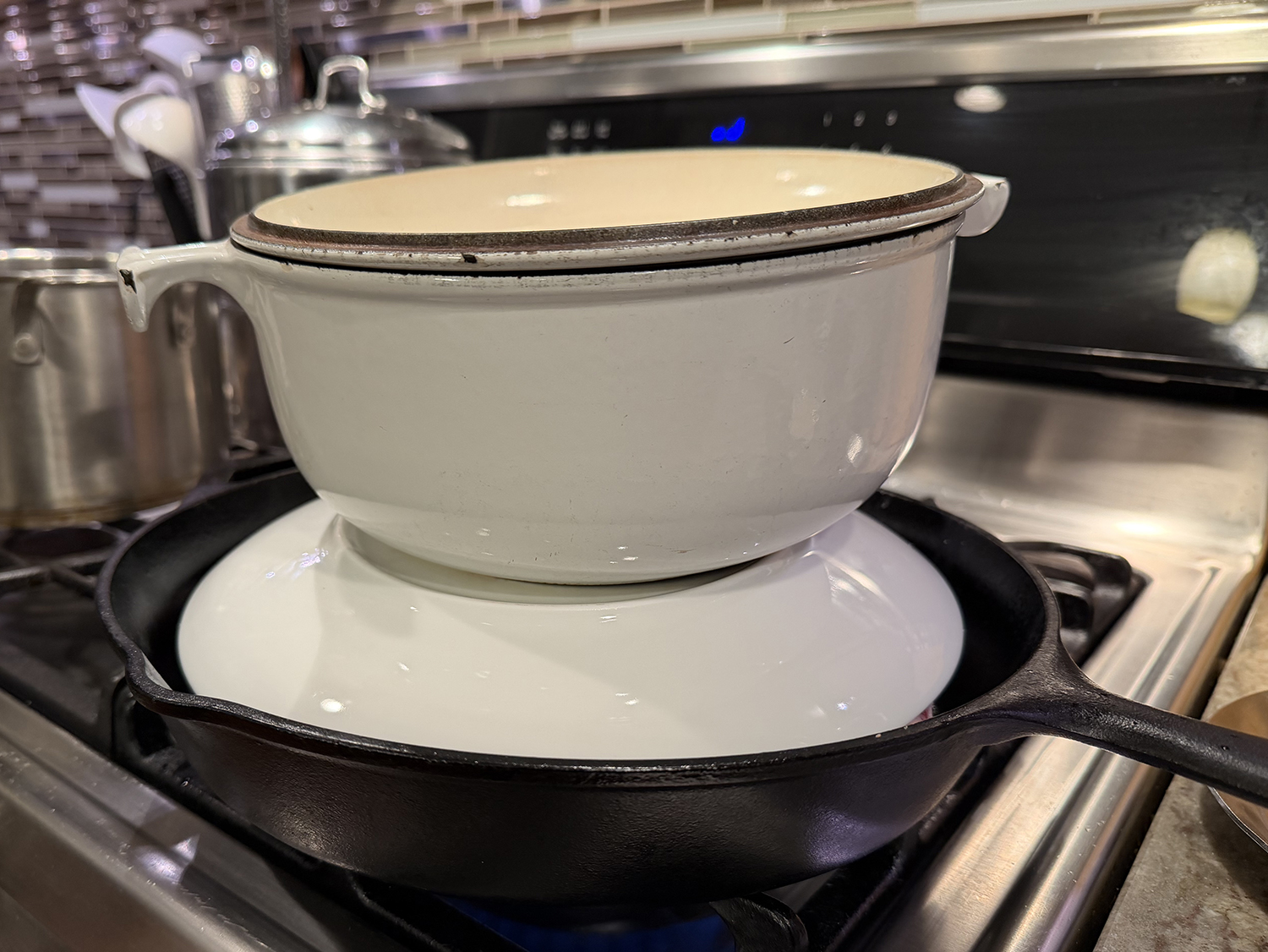
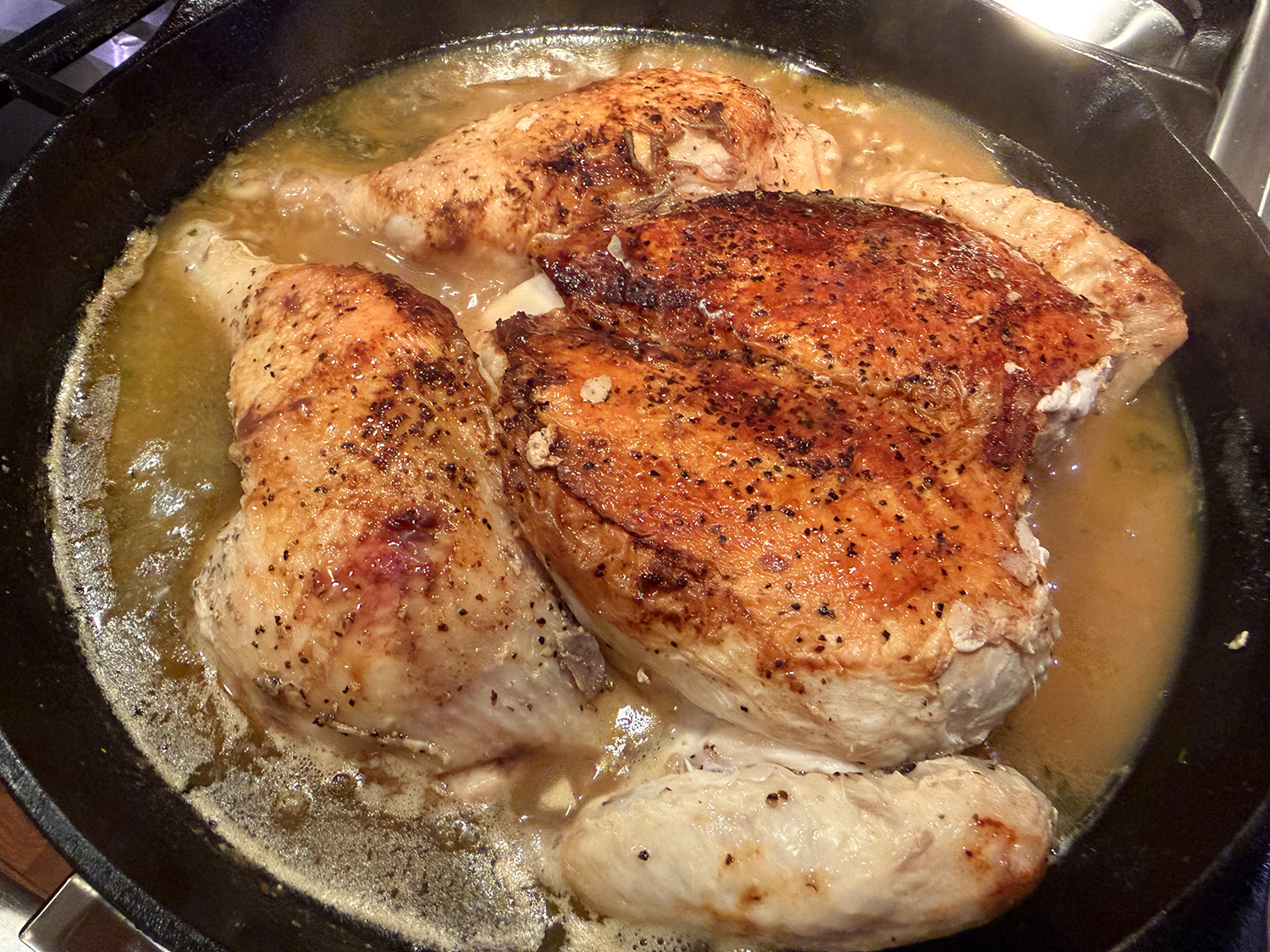
Melt the butter in the pan and add the chicken, skin side down. Cover chicken with a plate that will fit comfortably inside the skillet. Place a heavy pot, stone or brick on top of the plate to weigh it down. Cook over low heat, checking the chicken skin, until it is nicely browned, about 25 minutes.
Remove weight and plate. Turn chicken so skin side is up. Replace plate and weight and continue cooking for about 15 minutes more.
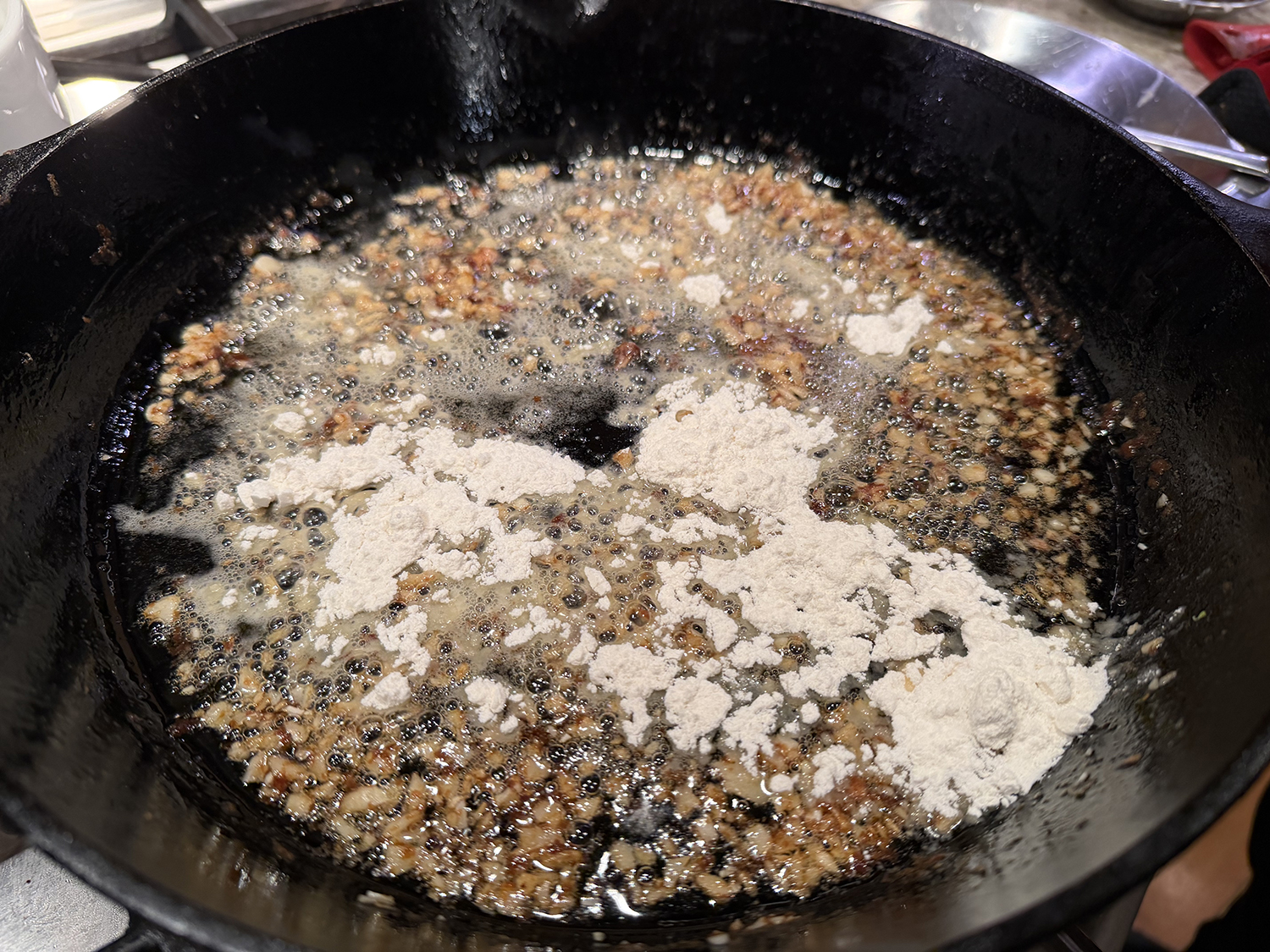
Remove chicken and pour off fat from the skillet, leaving about 2 tablespoons in the pan. Add the minced garlic and flour to the fat, stirring with a wire whisk over medium heat. Gradually add the chicken broth and dry vermouth and, when thickened, return chicken to the skillet, skin side up. Add salt and pepper to taste. Cover with the plate and weight and continue cooking over low heat about 20 to 30 minutes longer or until the meat is exceptionally tender.
Cut chicken into serving pieces, and spoon the sauce over it. Serve with the extra sauce and fluffy rice or mashed potatoes on the side.
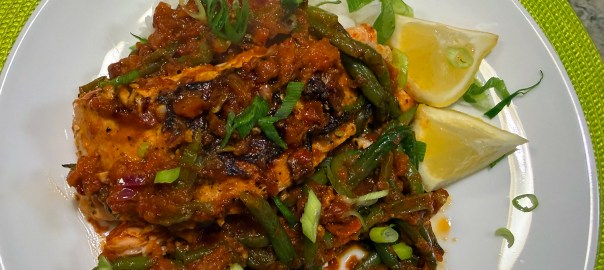
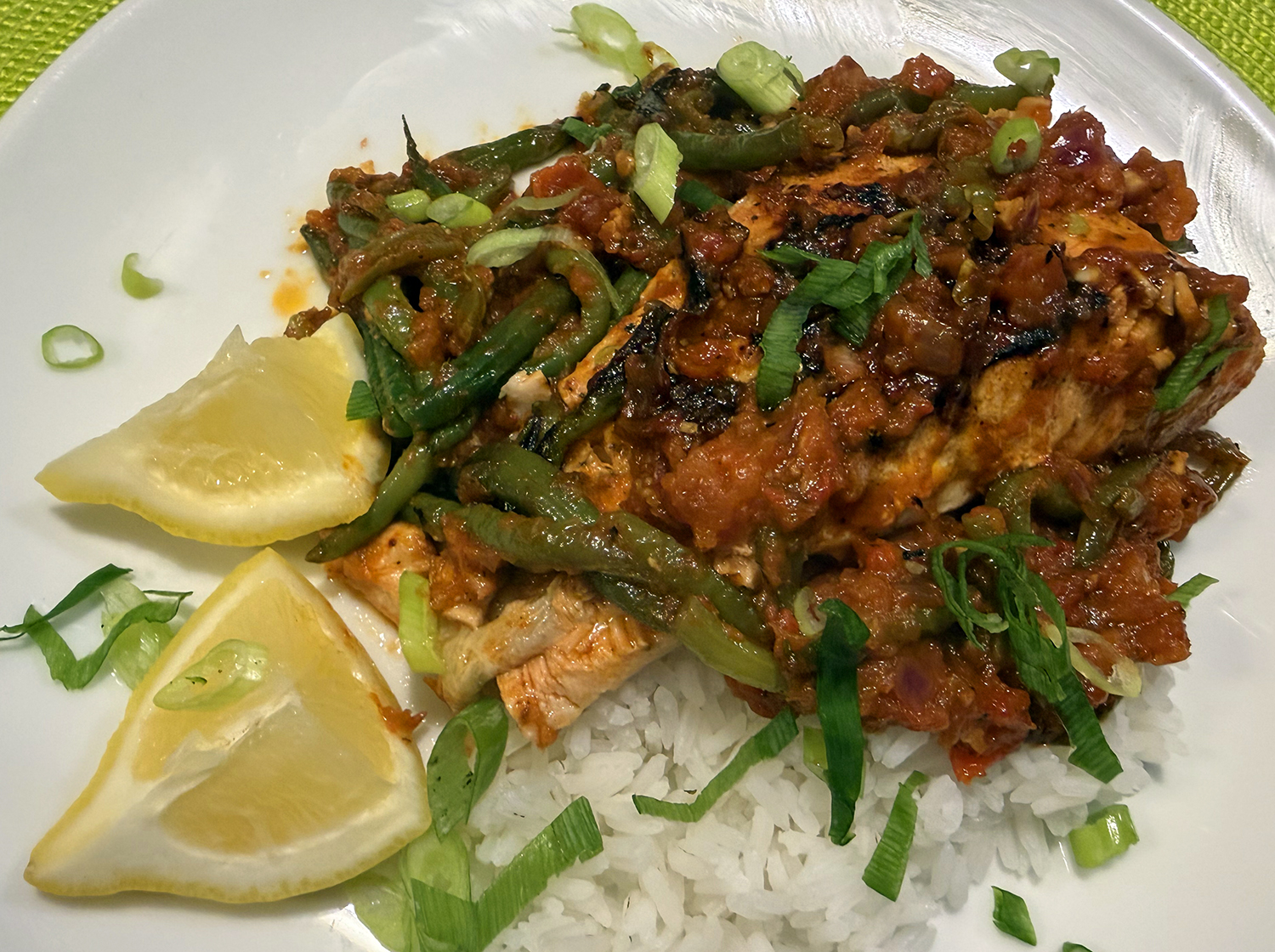
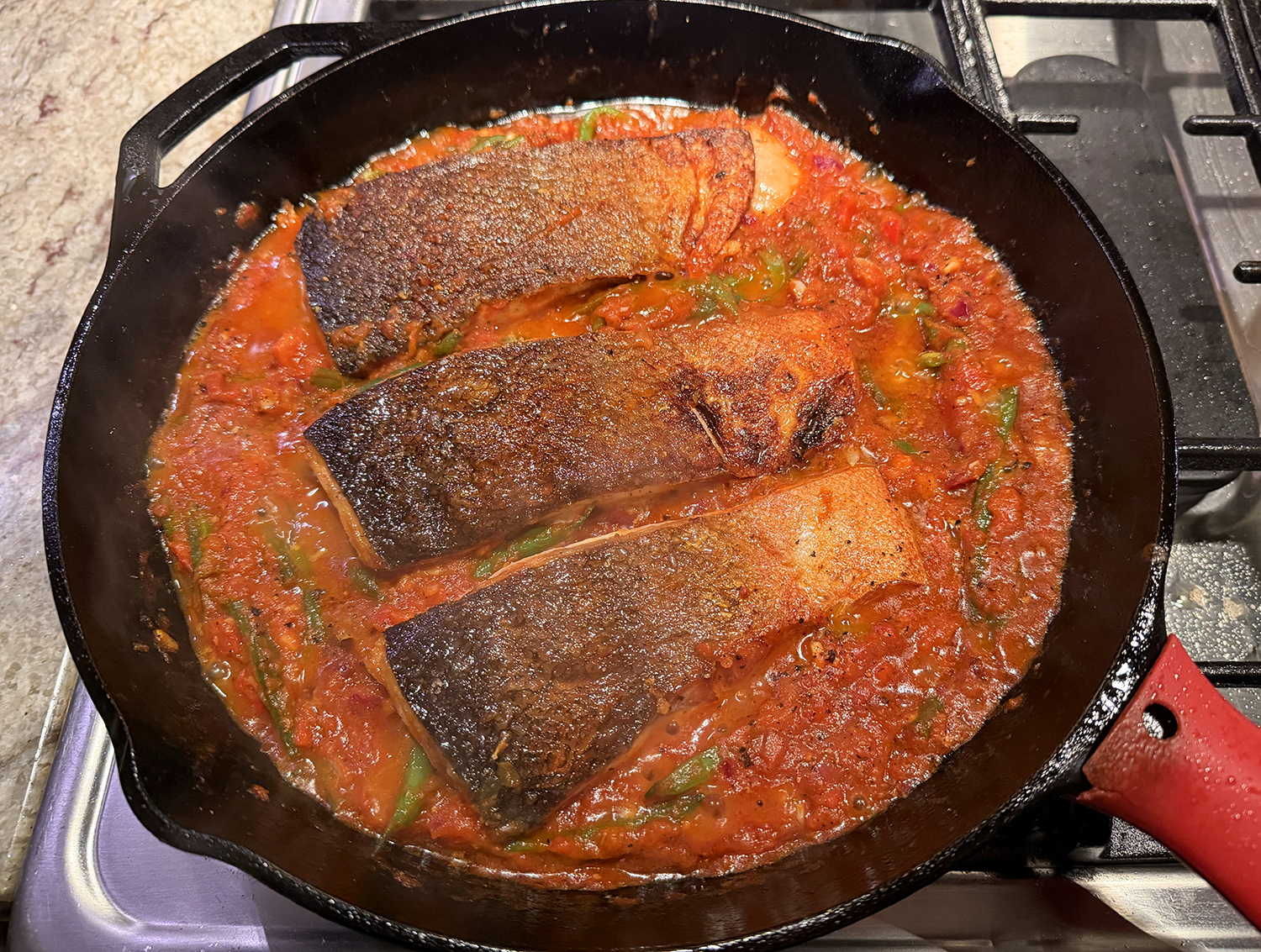
Crisp-skinned salmon is the star protein here and simmers alongside green beans in the sauce, which is balanced, rich and tasty with anchovies and miso. According to NY Times Cooking, a sauce this good works with any protein that benefits from a gentle simmer. It was spot-on with the salmon!
Resist the notion that fish should be paired with vegetables that keep their crunch in the cooking process. Rather, here these green beans—which hold their shape while they gently and endearingly collapse—contribute a generous texture to a roasted red pepper sauce.
We are quite fond of salmon and enjoy the fish often, both at home and while dining out. The Hubs adores anchovies (in any form), yet I tend to be a bit more timid about them. In this dish, they literally dissolve into the sauce. If there is an anti-anchovy militant in your household, don’t even mention they are part of the recipe.
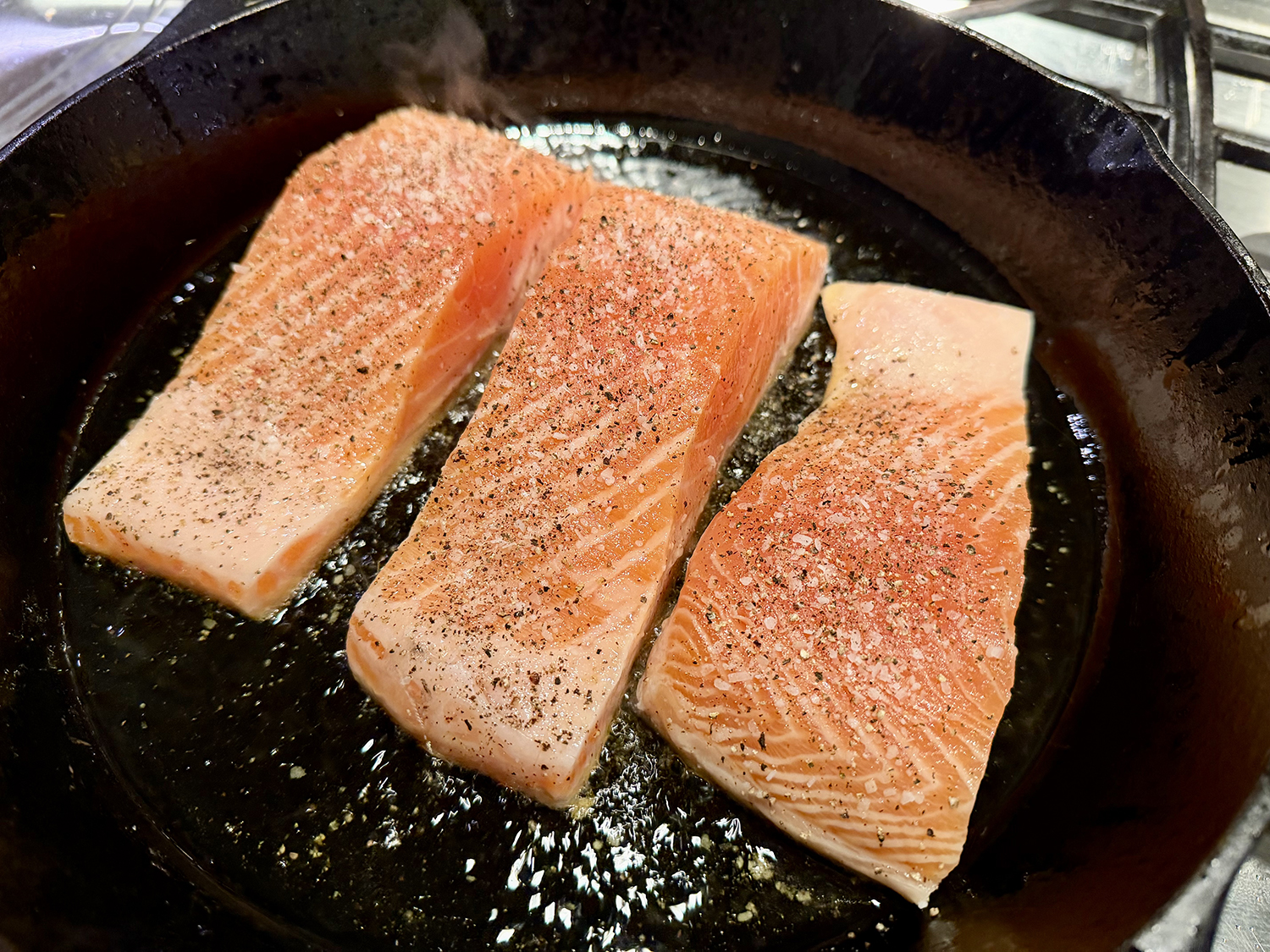
Our changes included slicing a 24-ounce slab of salmon into three 8-ounce portions. We also increased the amount of green beans from 8 ounces to 12 ounces (but then forgot to slice them into 2-inch pieces 😏).
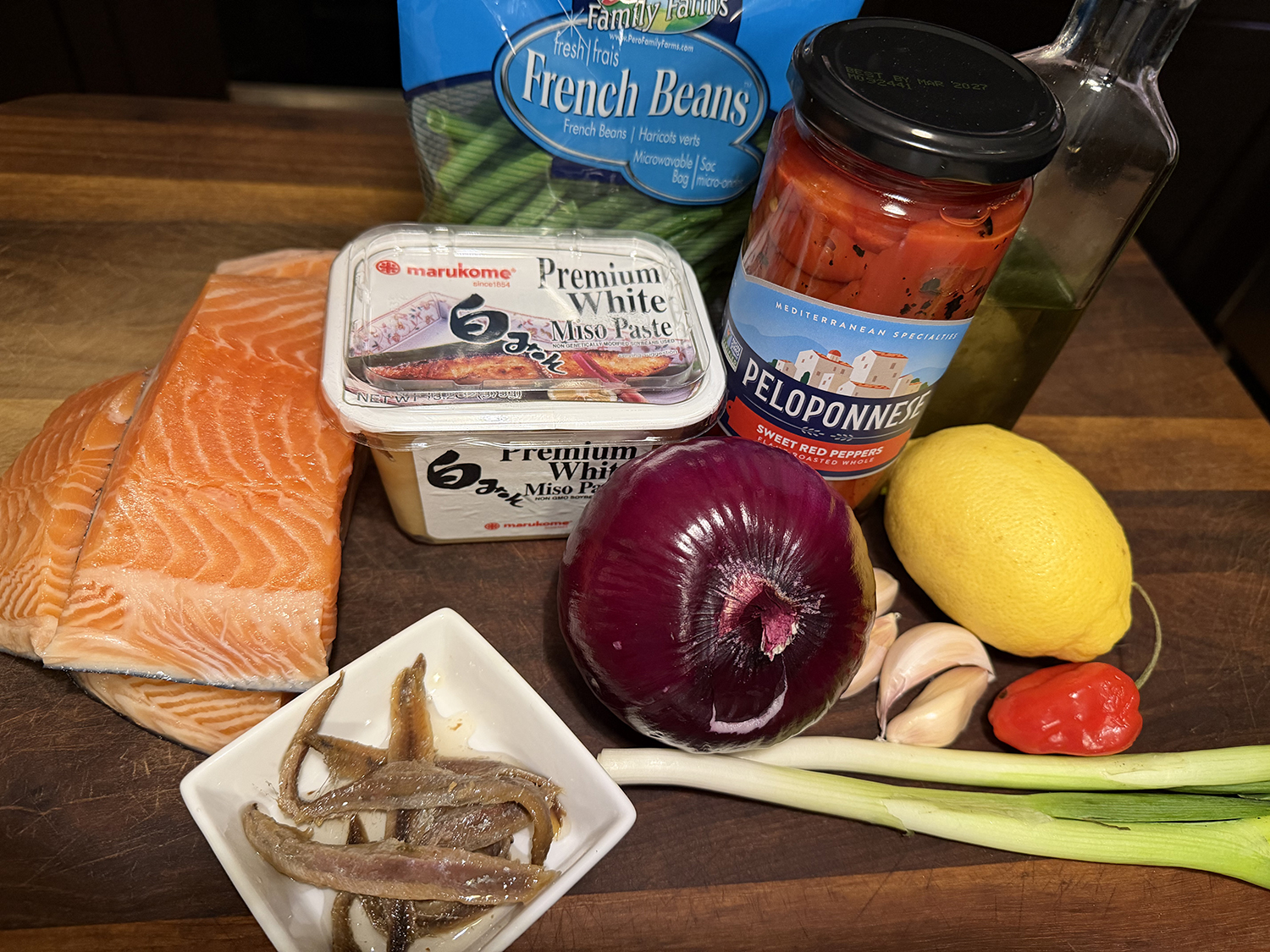
1 small red onion, peeled and chopped (about 1 cup)
1 (16-oz.) jar roasted red bell peppers, drained and chopped (about 1 ½ cups)
1 Scotch bonnet or habanero chile, seeds in or out
4 garlic cloves, peeled
5 Tbsp. olive oil, divided
4 salmon fillets (about 6 oz. each), skin on or off
Salt and black pepper
8 oz. green beans, trimmed and cut into 2-inch pieces (about 2 cups)
6 to 8 oil-packed anchovies
1 Tbsp. white or red miso
½ cup thinly sliced fresh scallions
Rice, for serving
1 lemon, cut in wedges
Directions
Prepare the red pepper sauce: Using a food processor or blender, coarsely chop the onion, roasted red peppers, Scotch bonnet and garlic by pulsing them together.
Heat a large (10-inch) cast iron or nonstick skillet over high and add 2 tablespoons oil.
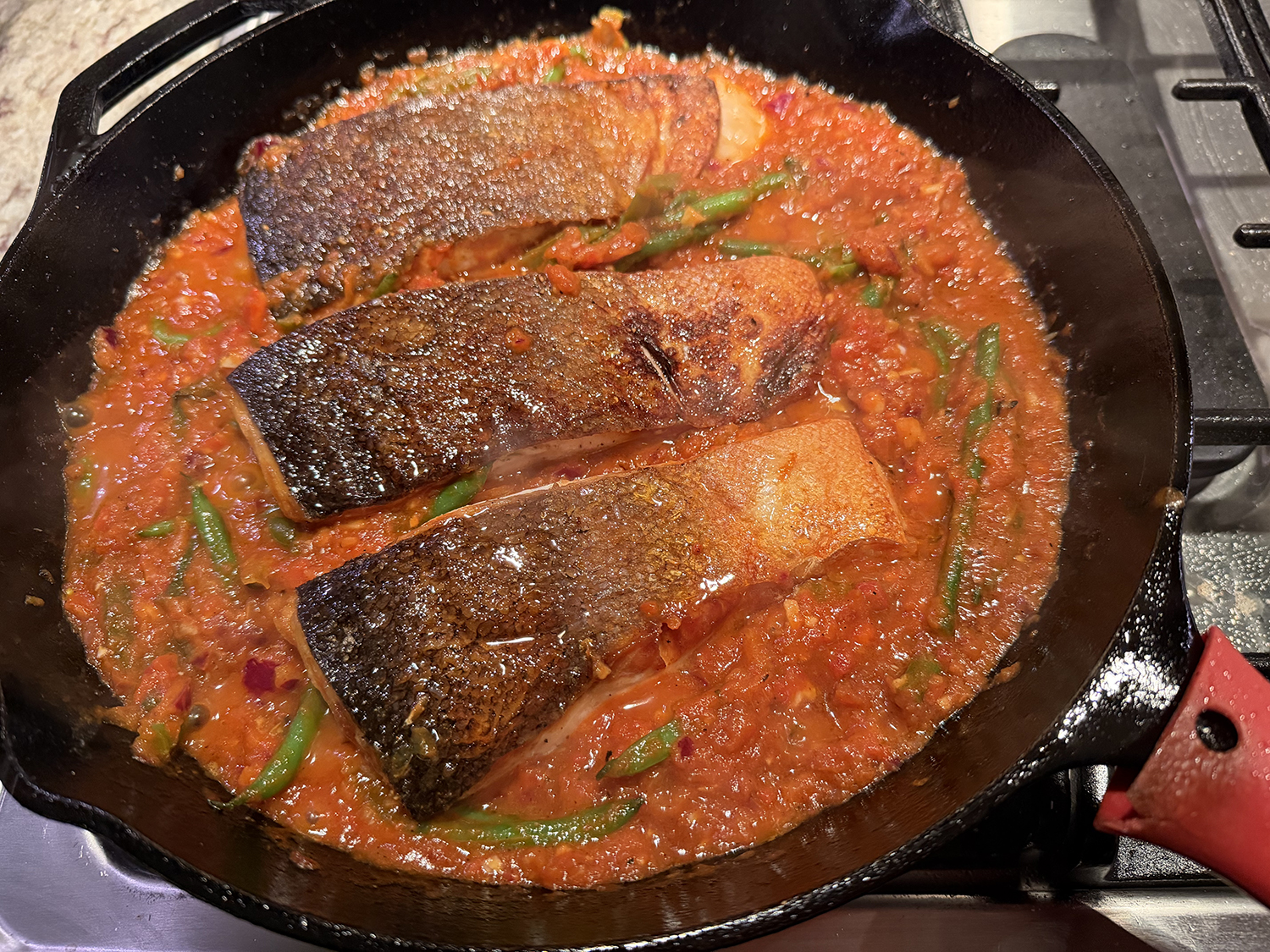
Place the salmon fillets in the hot oil, skin side down, season lightly with salt and pepper and cook without moving until the contact side is gently browned, about 5 minutes. Move the salmon to a plate, setting it skin side up, and set aside.
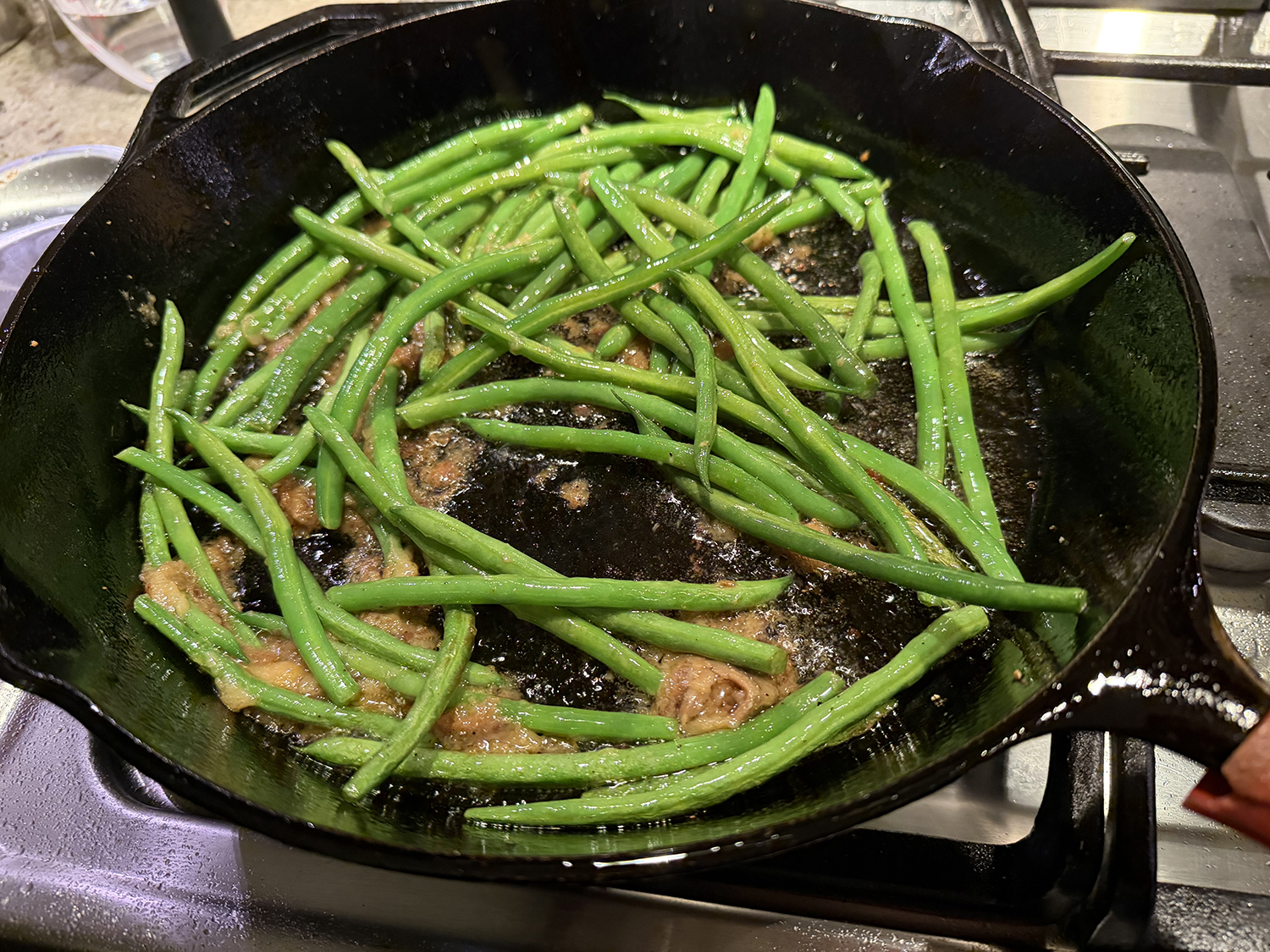
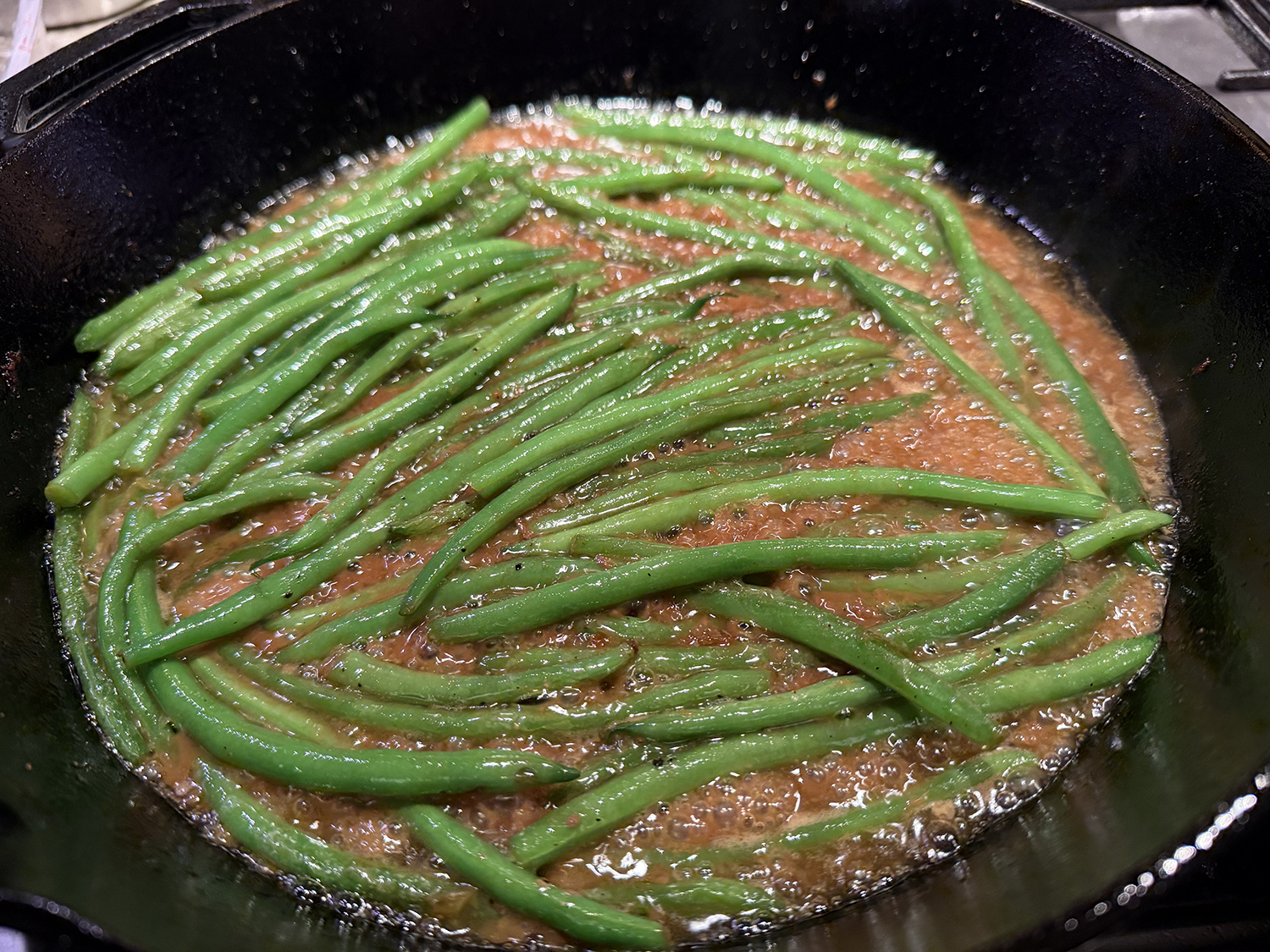
Turn the heat down to medium-high, add 1 tablespoon oil to the skillet, the green beans, anchovies and miso. Cook, stirring frequently, mashing the anchovies with the spatula until miso is broken up and anchovies are dissolved. Add ½ cup water to the skillet and bring to a simmer. Cook until green beans are just wrinkly, 4 to 6 minutes.
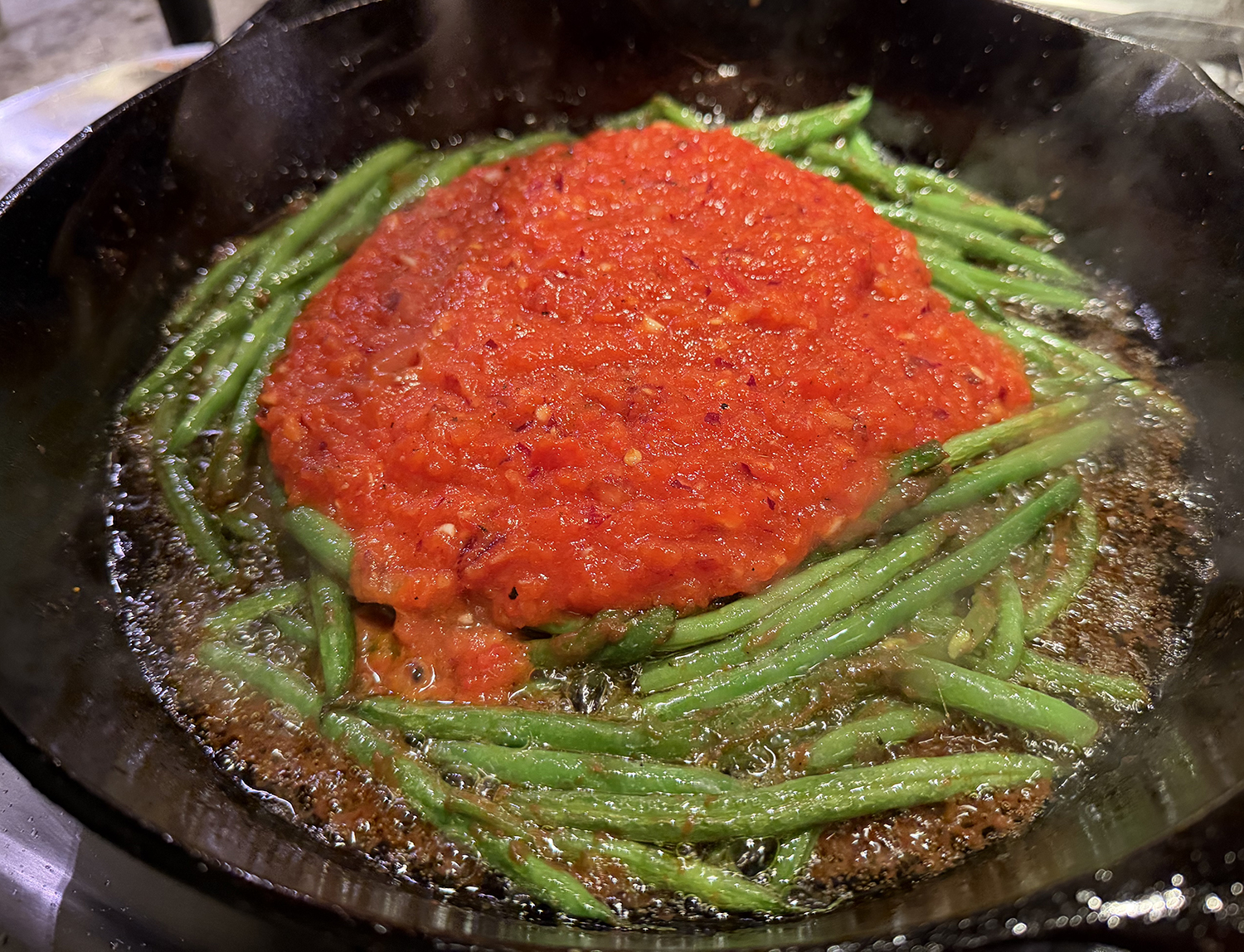
Reduce heat to medium, pour the red pepper sauce into the skillet. Stir in ½ cup water and the remaining 2 tablespoons oil. Simmer the sauce, stirring frequently until slightly reduced and the liquid and oil collect toward the center of the skillet, 5 to 6 minutes. Taste for seasoning and adjust with additional salt and pepper if necessary.
Using a wooden spoon, create divots in the sauce and green beans. Nestle the fillets in the divots, skin side up. Cook until the fish is fork-tender, the sauce reduced and the green beans are softened, 6 to 8 minutes.
Garnish with scallions and serve fish, green beans and sauce immediately over rice, with lemon wedges for squeezing.
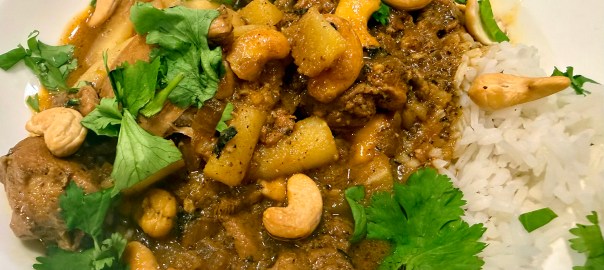
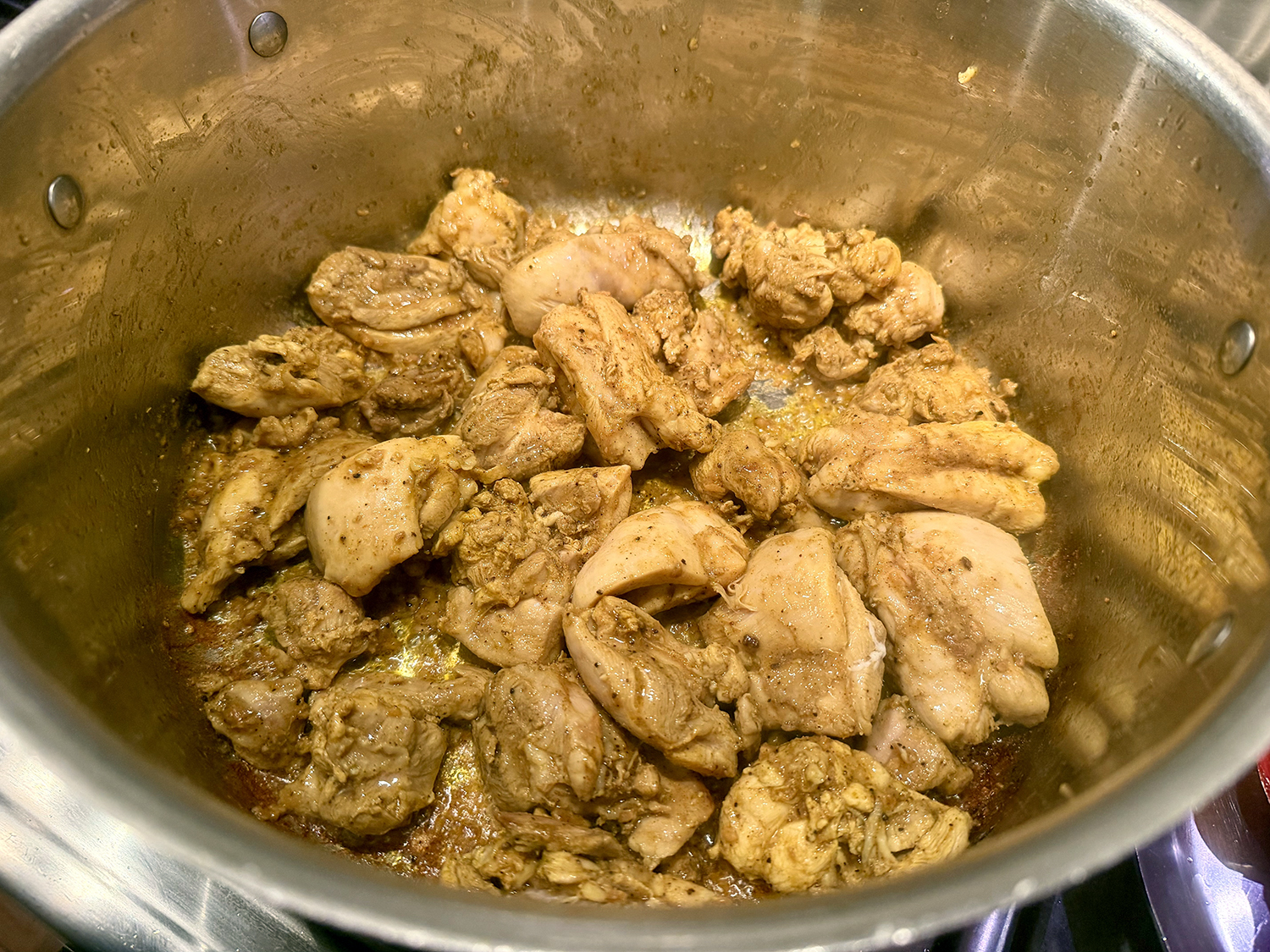
This Sri Lankan curry goes together fairly quickly despite the long list of ingredients. It’s best to use skinless, boneless thigh meat because it always stays moist and can absorb a lot of flavor from a short marinade in ginger, garlic, and spices.
To intensify the taste, the cashews and coconut are incorporated. First, half a cup of cashews is ground to a powder and added to the sauce. Then, after simmering for 30 minutes or so, the curry is finished with a generous cup of thick coconut milk and garnished with the remaining cashews.
In an unusual twist—a totally nontropical vegetable—parsnips are added, because of how they harmonize with the rest of the dish. However, we suggest changing up how they are cooked, indicated in the directions below. Instead of boiling them, sauté until lightly browned, then add back to the pot in the last 10 to 15 minutes.
Because we are not fond of coconut meat (but like coconut milk), we omitted the flakes. And as far as the cashews, why bother buying raw and then toast them, when you can purchase roasted cashews to begin with?
2 lbs. skinless boneless chicken thighs, cut in 3-inch chunks
Salt and pepper
1 Tbsp. grated ginger
2 tsp. grated garlic
¼ tsp. whole cloves
¼ tsp. fennel seeds
¼ tsp. cardamom seeds
¼ tsp. allspice berries
¼ tsp. cumin seeds
¼ tsp. coriander seeds
¼ tsp. turmeric
¼ tsp. cayenne, or more to taste
3 Tbsp. lemon juice
1 cup roasted, salted cashews
1 lb. small parsnips, peeled and cut in 2-inch batons, woody cores removed if necessary
2 Tbsp. ghee, coconut oil or vegetable oil
1½ cups finely diced onion
1 Tbsp. tomato paste
12-inch piece cinnamon stick
3 cups chicken broth or water
1 cup thick coconut milk
Steamed rice
A few sprigs of mint and cilantro for garnish, optional
Directions
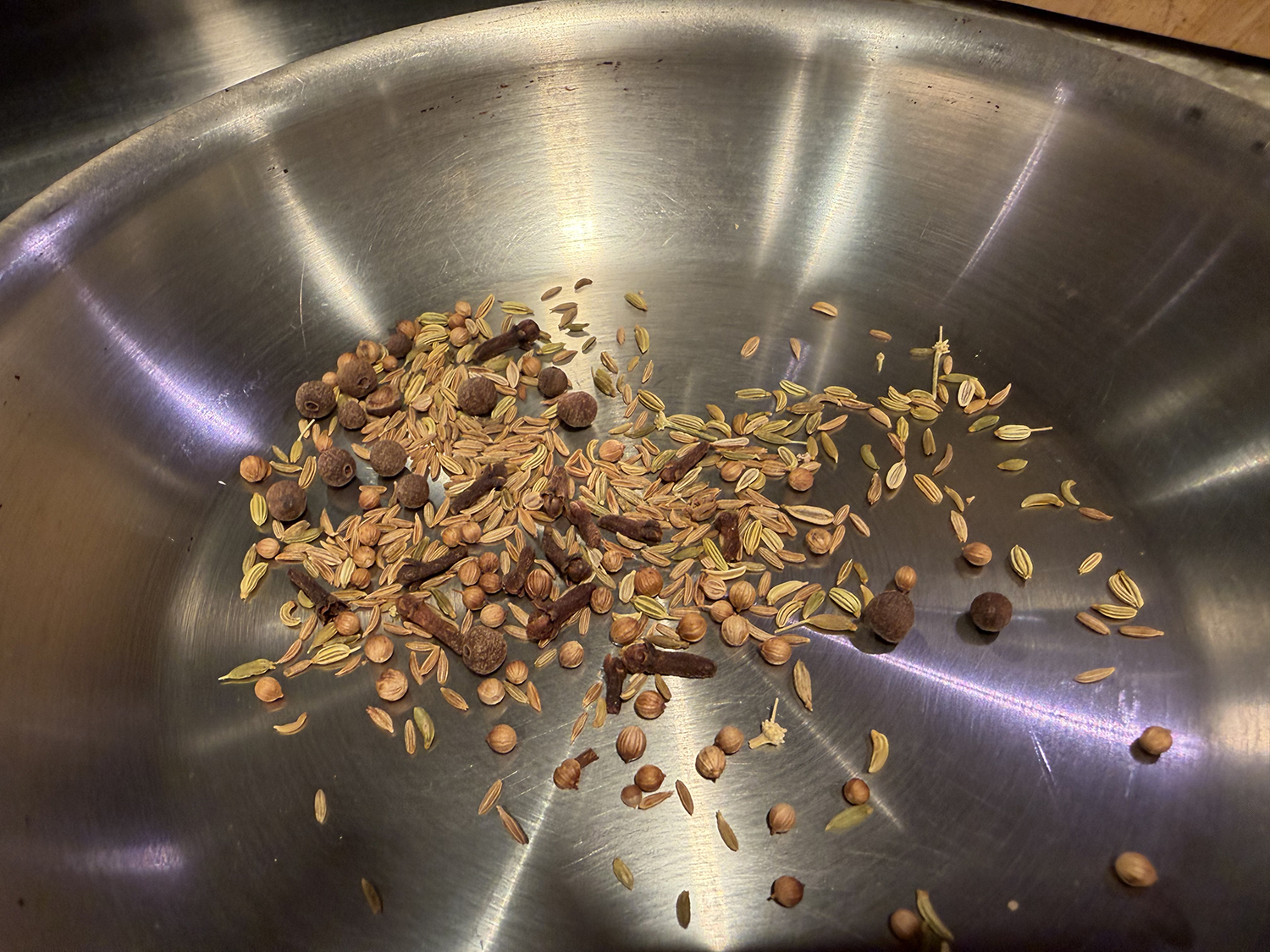
Season chicken generously with salt and pepper and put it in a mixing bowl. Add ginger and garlic and massage into meat. In a dry skillet over medium heat, toast cloves, fennel, cardamom, allspice, cumin and coriander until fragrant, about 2 minutes. Grind the toasted spices to a fine powder in an electric spice mill and add to chicken. Add turmeric, cayenne and lemon juice and mix well. Let marinate at room temperature for at least 15 minutes, or refrigerate up to 1 hour.
Grind the ½ cup cashews in a spice mill or small food processor to make a rough powder. Reserve ½ cup cashews for garnish.
In a wide heavy-bottomed pot, heat ghee over medium-high heat. Add parsnips and sauté until lightly browned. Remove and reserve. Add chicken pieces to the pot, stirring occasionally until lightly browned, about 5 minutes, then remove and set aside.
Add onions and cook until softened, about 5 minutes more. Add tomato paste and let it sizzle with onions for a minute or two. Add broth and bring to a brisk simmer, stirring with a wooden spoon and scraping up any caramelized bits from the pot. Add cinnamon stick, chicken, and the ground cashews. Adjust the heat to a gentle simmer, cover, and cook for 15 minutes. Add parsnips, cover the pot again, and simmer until the chicken and parsnips are tender, about 10-15 minutes longer. Taste the sauce and adjust the seasoning, if necessary.
To finish the dish, stir in coconut milk. Cook for 3 to 4 minutes until heated through and the sauce has thickened slightly. Transfer to a serving bowl over steaming rice and sprinkle with reserved cashews. Garnish with mint and cilantro sprigs, if using.
For a quick, creamy pasta dish that delivers the same comfort and satisfaction as risotto, start by toasting orzo in butter with shallots and garlic and then douse the lot with wine, which is quickly absorbed by the pasta, infusing it with flavor.
To make the dish pescatarian, we swapped out a combination of shellfish stock and vegetable broth for the chicken stock. We also included lemon zest into the orzo for a brighter note.
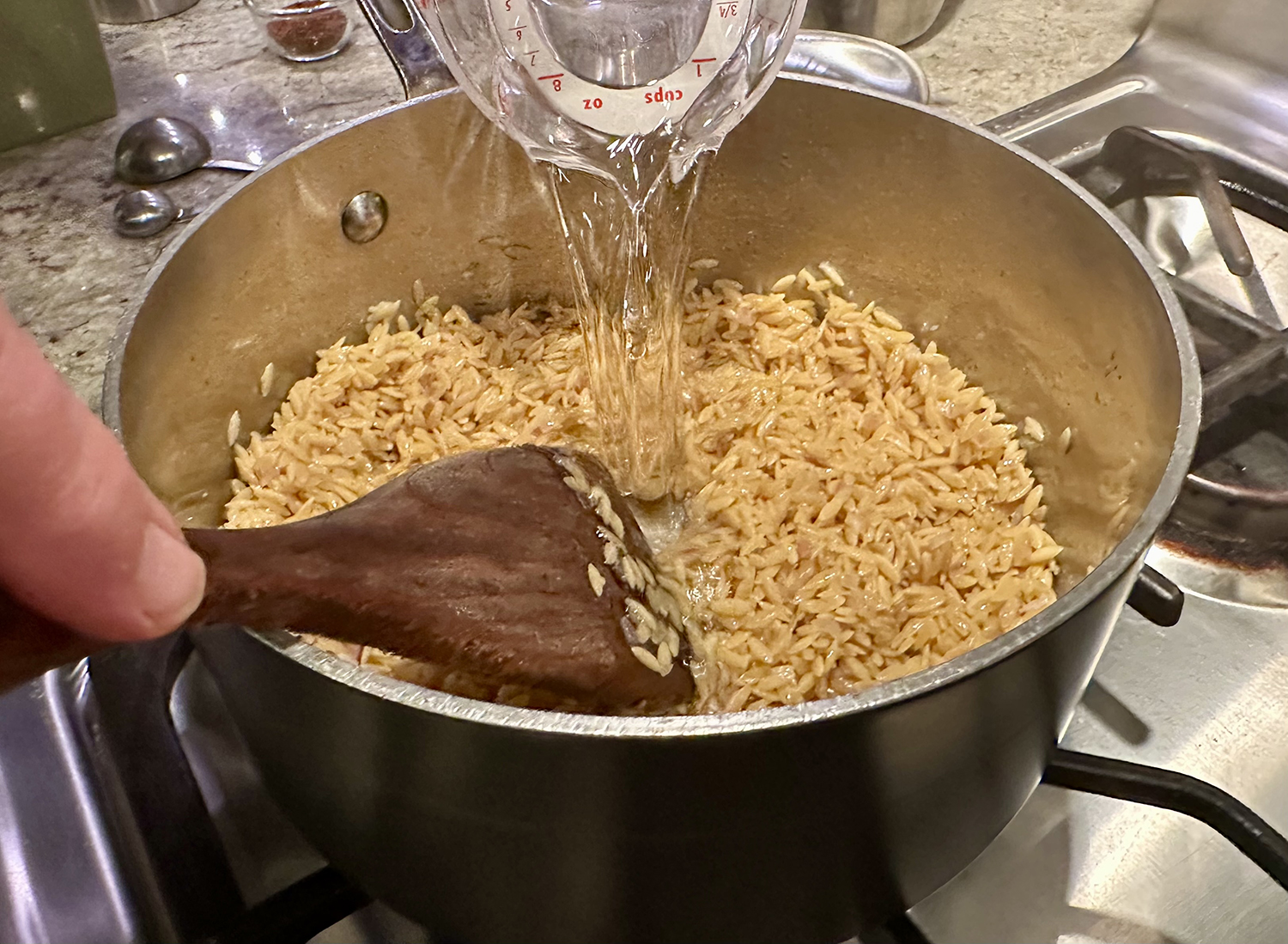
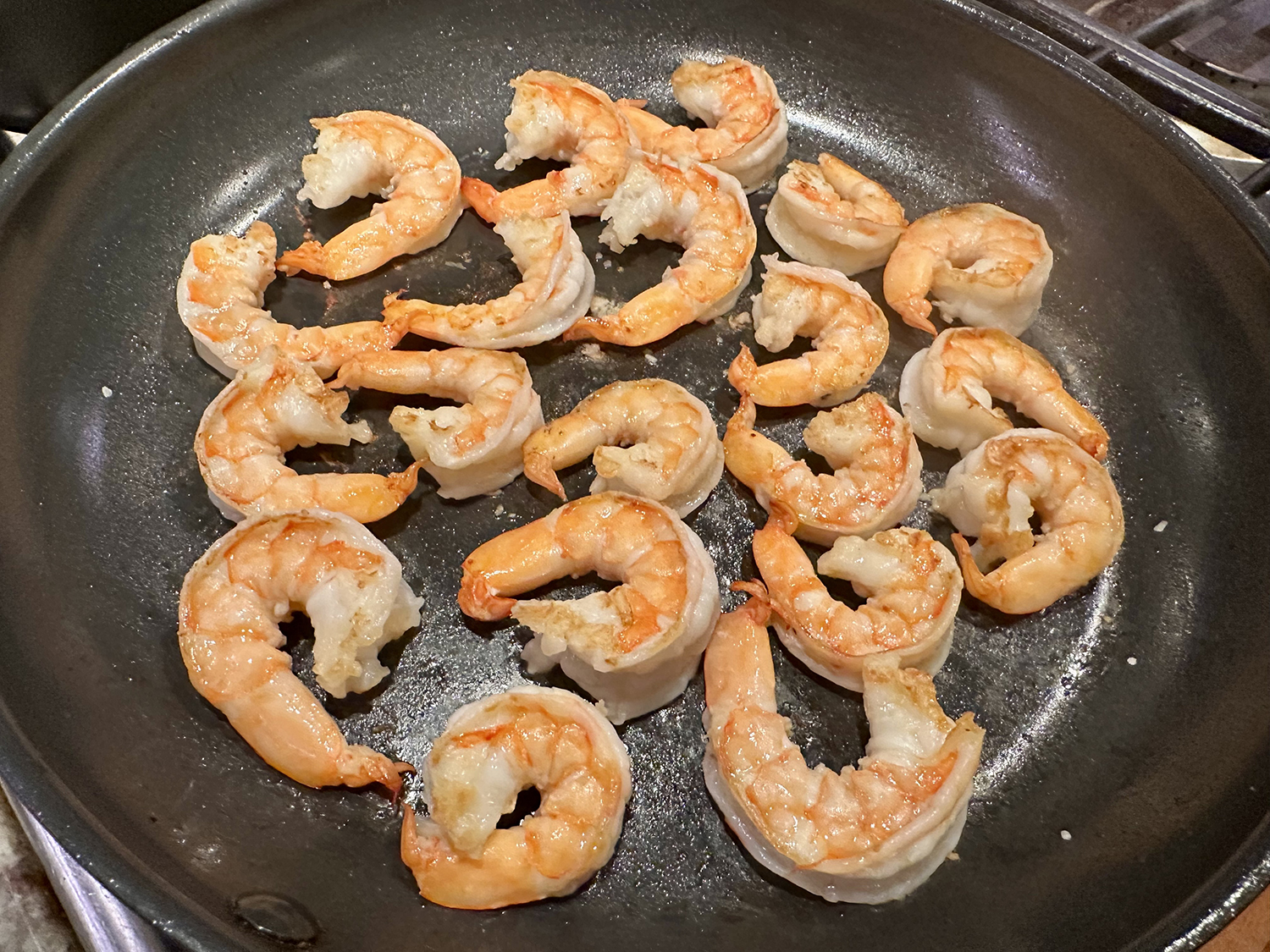
Vigorously simmering the orzo in diluted broth hydrates it while adding subtle depth. Stirring the pasta occasionally releases its starches, creating a velvety texture. The process is so hands-off, you are able to simultaneously prepare a quick topping. The shrimp is quickly seared and then tossed with a potent garlic-butter scented with a slightly spicy red pepper.
A small amount of tomato paste adds savory notes and helps the sauce coat the shrimp. A shower of chopped mint provides a fresh finish.
NOTE: If pul biber and Aleppo pepper are unavailable, substitute 2 teaspoons paprika and ⅛ teaspoon cayenne pepper.
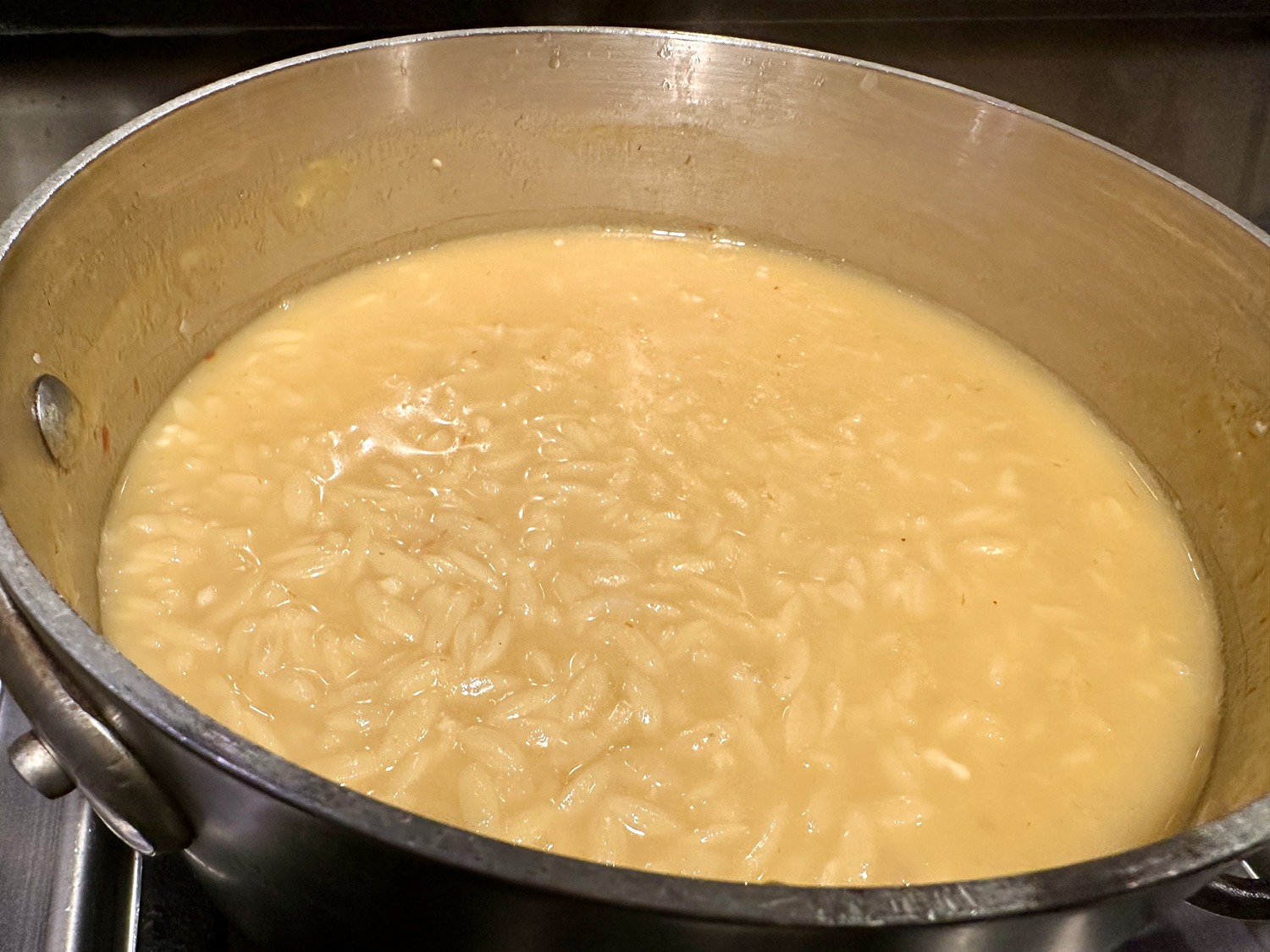
*Many recipe reviewers, including ourselves, found the finished orzo to be too soupy. Instead of starting with 3 cups of water as noted in the list of ingredients, use 1 or 1 1⁄2 cups at first, adding more as need to get the al dente consistency. When plating, we used a slotted spoon to separate the the orzo from some of the liquid.
FYI: If you’re reluctant to uncork a bottle of white wine only to use a small amount for any recipe, dry vermouth is a convenient, inexpensive alternative. It’s fortified with high-proof alcohol that inhibits the growth of vinegar-producing microbes that can spoil wine, so an open bottle will last for a few months in the refrigerator.
Creamy Saffron Orzo with Spiced Garlic-Butter Shrimp
2 cups chicken broth, or shellfish stock, preferably homemade
1 Tbsp. pul biber or ground dried Aleppo pepper
1 Tbsp. tomato paste
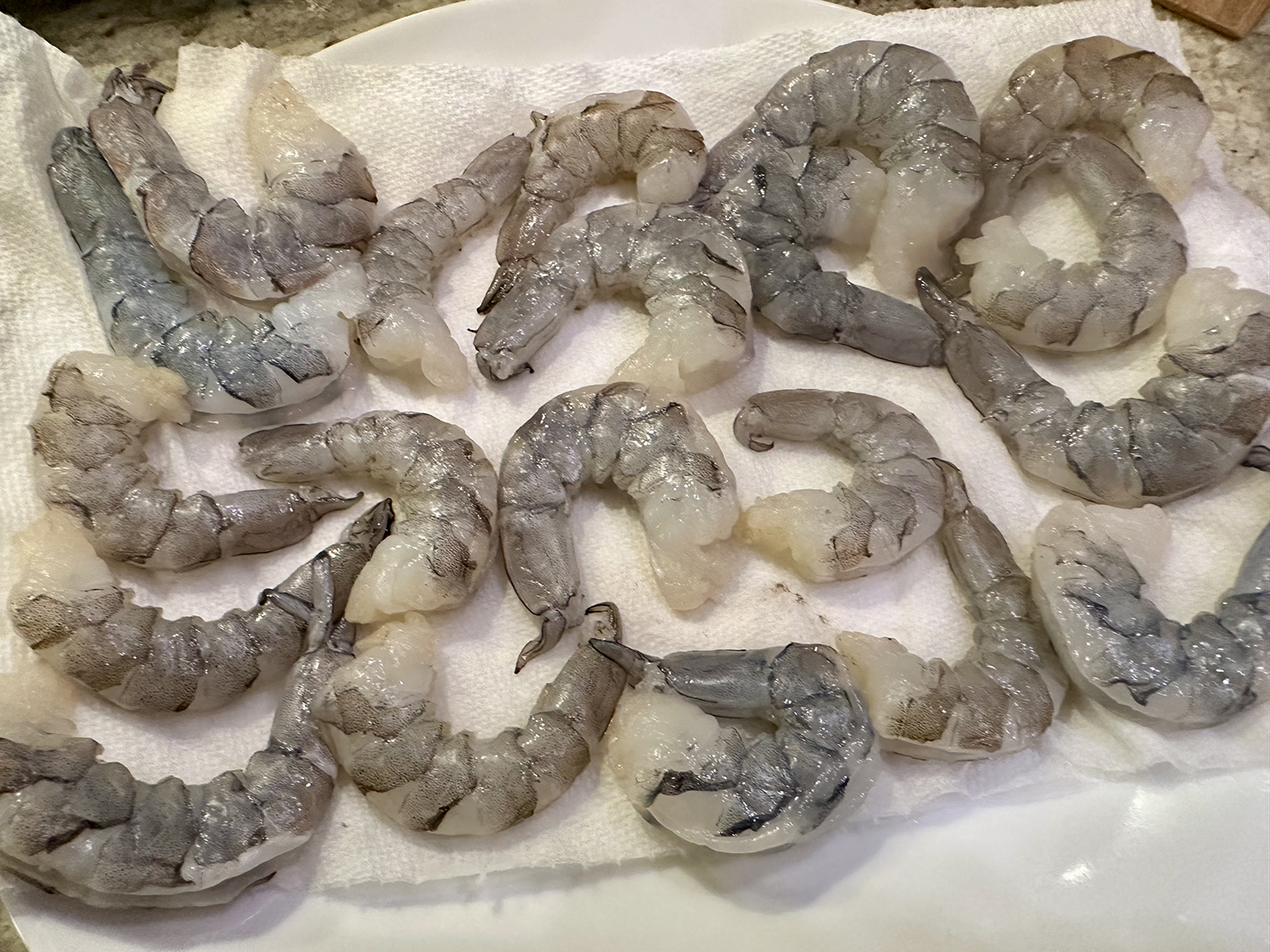
1 lb. large shrimp (26 to 30 per lb.), peeled, deveined, and tails removed
1 tsp. vegetable oil
3 Tbsp. chopped fresh mint
Lemon wedges
Zest of half a lemon
Directions
Melt 2 tablespoons unsalted butter in medium saucepan over medium heat. Add 1 minced large shallot and 1¼ teaspoons table salt; cook, stirring frequently, until shallot is softened but not browned, 3 to 5 minutes.
Add 1 teaspoon minced garlic and ¼ teaspoon saffron threads, crumbled, and cook until fragrant, about 30 seconds. Add 1½ cups orzo and stir until evenly coated. Add ½ cup white wine and cook, stirring constantly, until fully absorbed, about 30 seconds.
Stir in water (see head note) and 2 cups chicken broth. Increase heat and bring to boil; reduce heat to maintain vigorous simmer and cook, stirring occasionally, until liquid is reduced and thickened, and orzo is al dente, about 15 minutes (if orzo starts to stick toward end of cooking time, reduce heat and stir more frequently). Stir in lemon zest. Season with salt to taste.
Meanwhile, melt remaining 4 tablespoons butter in 12-inch nonstick skillet over medium-low heat. Add 1 tablespoon pul biber and remaining 1 tablespoon minced garlic and cook, stirring constantly, until fragrant, about 30 seconds. Stir in 1 tablespoon tomato paste until fully combined. Transfer to small bowl and set aside. Wipe out skillet with paper towel.
Pat 1 pound shrimp, peeled, deveined, and tails removed, dry with paper towels. Combine shrimp, 1 teaspoon vegetable oil, and remaining ¼ teaspoon salt in now-empy skillet and toss to coat. Spread into even layer. Cook over high heat until edges turn pink, 3 to 4 minutes. Remove skillet from heat. Working quickly, use tongs to flip each shrimp. Let stand until second side is opaque, about 2 minutes. Add butter mixture to skillet and stir until shrimp is coated.
Transfer orzo to wide serving bowl. Top with shrimp; sprinkle with 3 tablespoons chopped mint; and serve, passing lemon wedges separately.
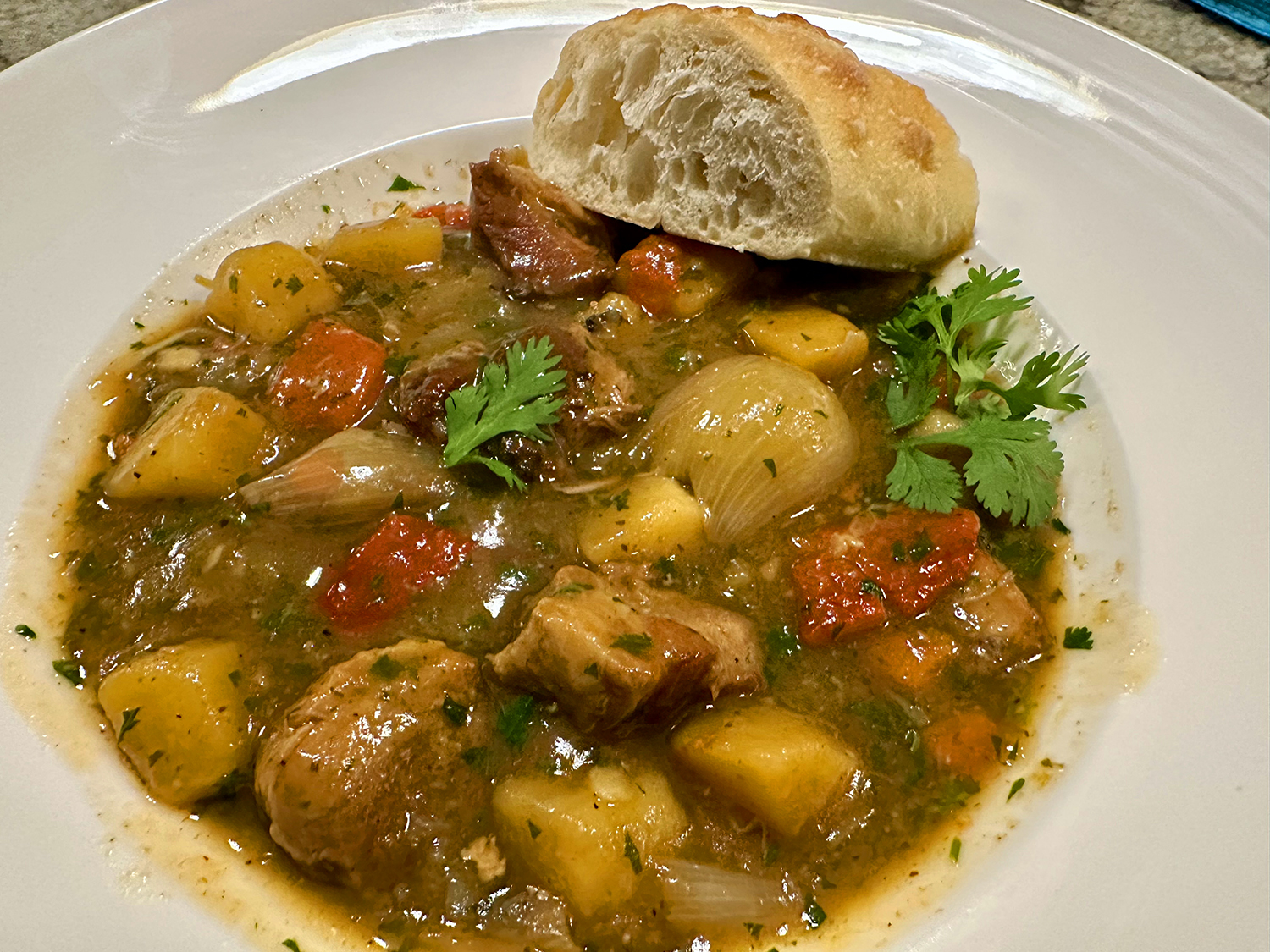
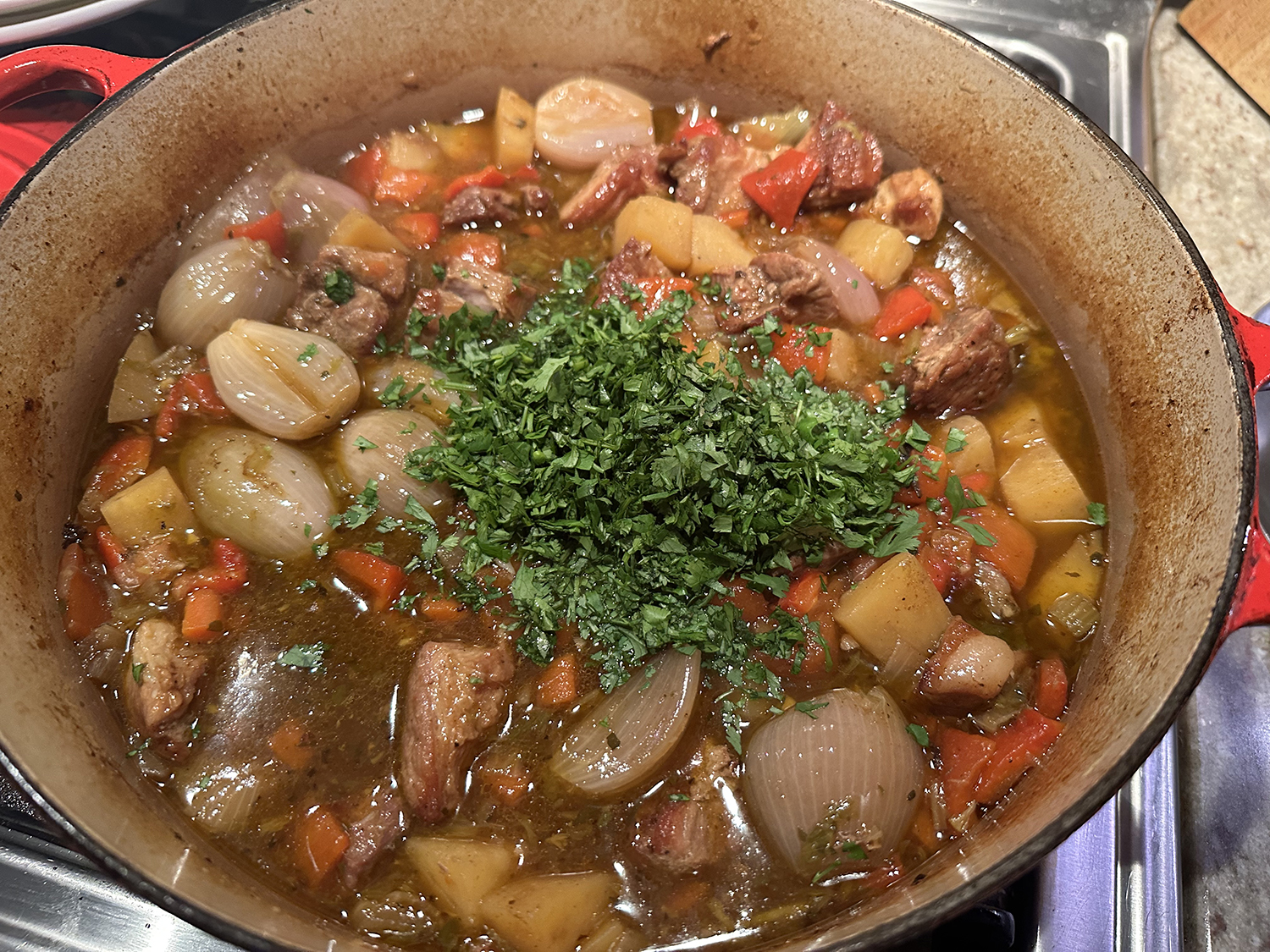
If you have a long, lazy afternoon ahead of you in the coming days, consider making this hearty stew by one of our favorite chef/authors, Molly Stevens. The inclusion of chipotles and roasted sweet peppers give this zesty pork stew a Southwestern flavor.
The original recipe produces a thin, watery liquid as the base while we prefer a thicker sauce. To accomplish this, you can either dredge the meat chunks in seasoned flour before browning them, and/or add a cornstarch slurry at the end, after degreasing (if necessary), but before adding cilantro.
The stew can be made up to 2 days ahead: Skip the degreasing step, cool to room temperature, cover, and refrigerate. Once the stew is chilled, lift the solidified fat off the top with a slotted spoon. Reheat the stew over medium-low heat to serve.
3 lbs. boneless pork shoulder, trimmed of excess fat and cut into 1-1/2- to 2-inch pieces
3 Tbsp. grapeseed oil or vegetable oil, more as needed
Kosher salt and freshly ground pepper
1 medium yellow onion, coarsely chopped (about 1 cup)
2 medium celery stalks, coarsely chopped (about 1/2 cup)
1 medium carrot, coarsely chopped (about 1/3 cup)
2 cloves garlic, minced
1 Tbsp. chipotles in adobo, minced
1 tsp. cumin
1/2 tsp. dried oregano
1 cup beer (any kind)
2 1/2 cups homemade or lower-salt store-bought chicken broth
2 cups peeled diced white potatoes (1-inch dice)
2 cups halved or quartered shallots (leave whole if small)
2 cups chopped roasted, peeled red peppers (1-inch pieces)
1/4 cup chopped fresh cilantro
Directions
Position a rack in the bottom third of the oven and heat the oven to 325°F.
Spread the pork on paper towels to dry for 10 to 20 minutes before browning. (You can use this time to chop the onion, celery, and carrot). If the meat is very wet, pat it dry.
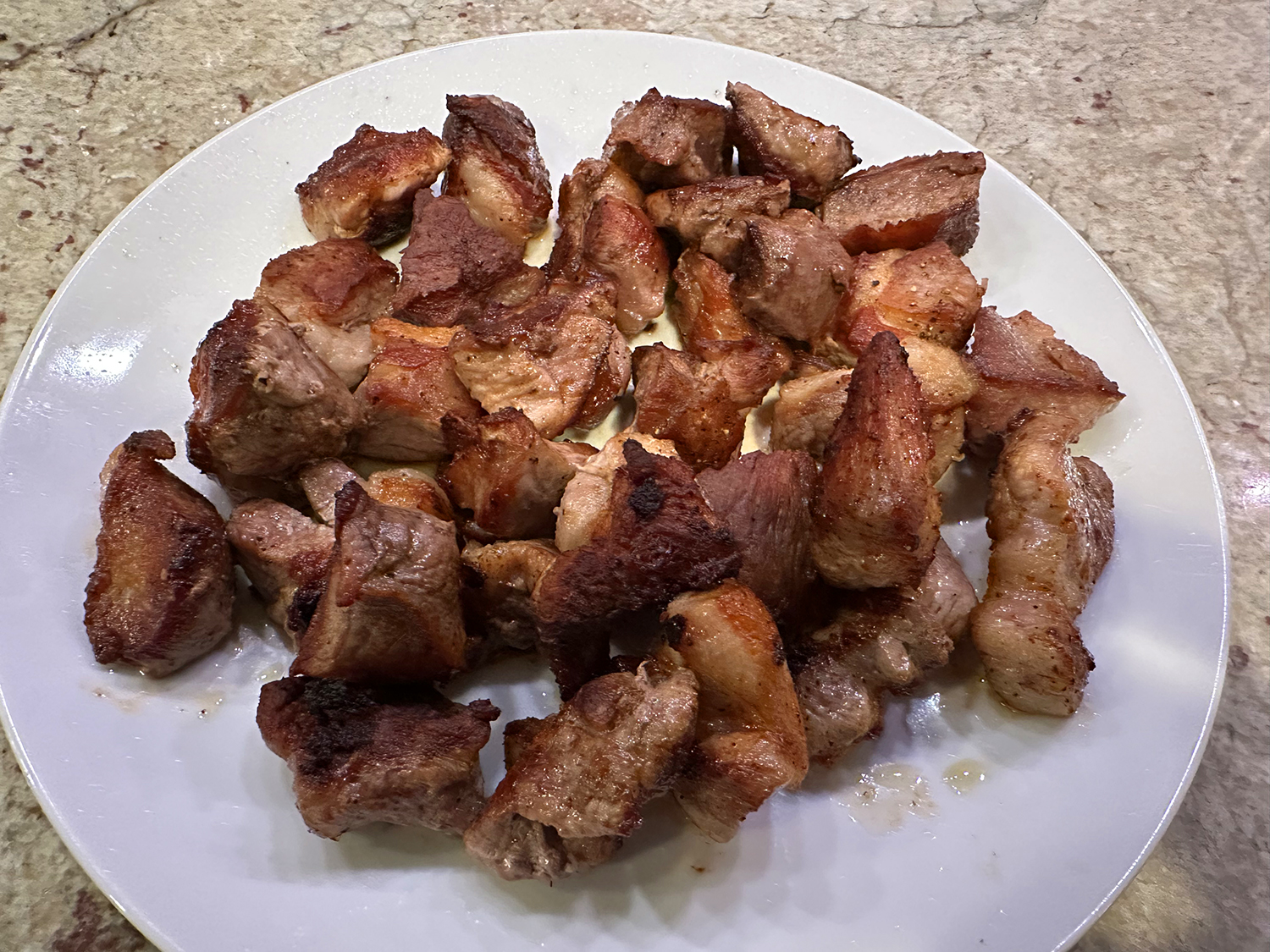
In a 6-quart Dutch oven or other heavy-duty pot, heat the oil over medium to medium-high heat until shimmering hot. Season about one-third of pork with salt and pepper and arrange it in a single layer in the pot (there should be at least 1/2 inch of space between the pieces). Brown well on at least 4 sides, adjusting the heat as necessary; each batch should take about 10 minutes to brown. Transfer the pork to a large bowl or rimmed baking sheet as it browns and repeat with the rest of the pork, seasoning with salt and pepper before browning. Once all of the pork is browned, remove the pot from the heat to let it cool for a few minutes.
Pour all but 2 tablespoons of the fat from the pot. (If there is not enough, add oil to equal 2 tablespoons) Return the pot to medium heat, then add the onion, celery, and carrot. Season with a pinch of salt and pepper, and cook, stirring often and scraping the bottom of the pot with a wooden spatula, until the vegetables begin to soften, 5 to 6 minutes. Stir in the garlic, chipotles, cumin, and oregano and cook, stirring occasionally, until fragrant, 1 to 2 minutes.
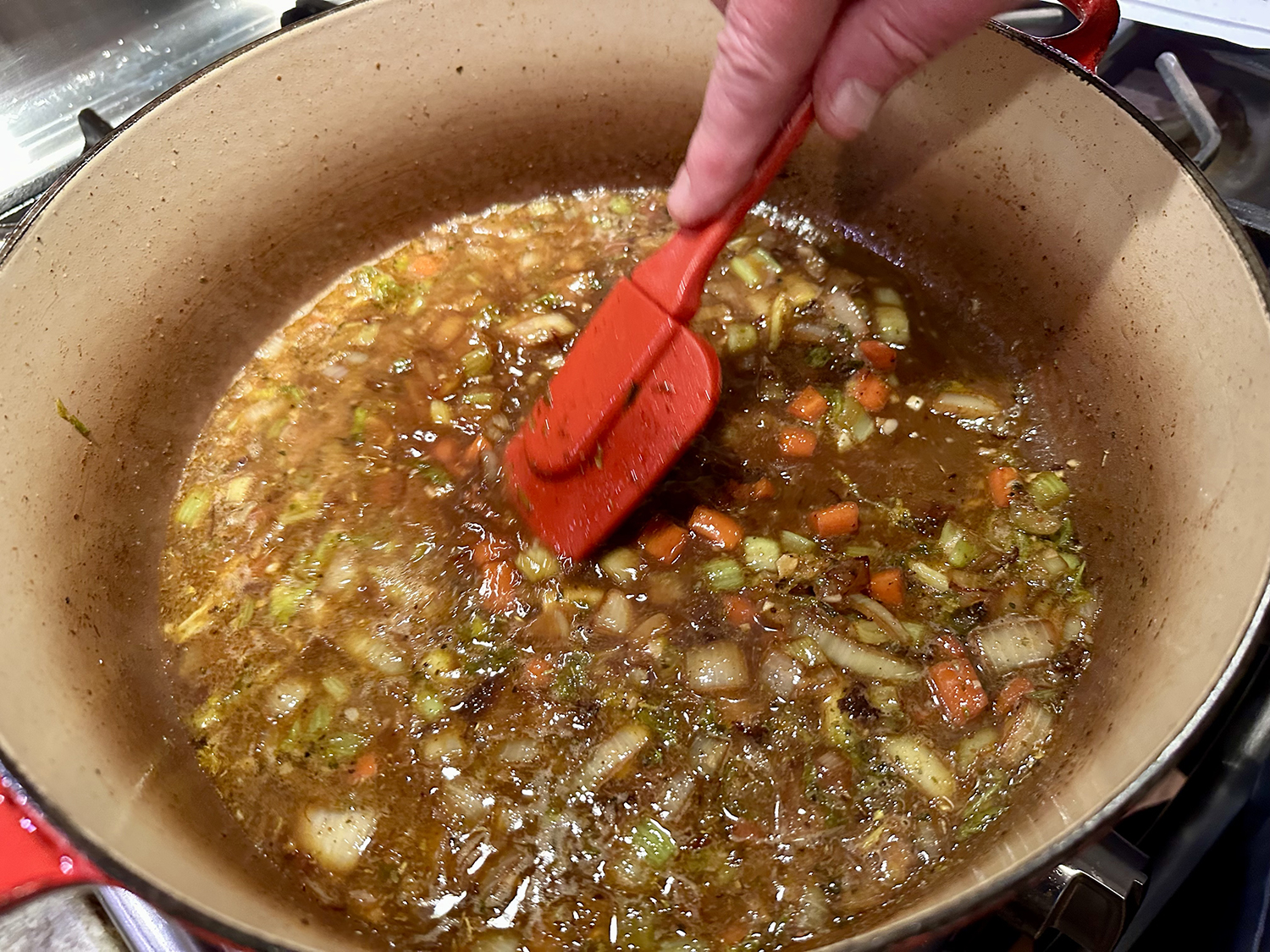
Add the beer, stirring with the wooden spatula to dissolve any browned bits on the bottom of the pot. Raise the heat to medium high and boil to reduce by about half, 5 to 8 minutes. Add the chicken broth and 1-1/2 cups water. Bring to a boil.
Return the pork to the pot along with any accumulated juice. Lower the heat to maintain a simmer.
Crumple a 12×16-inch piece of parchment, then flatten it out. (Crumpling makes for easy handling.) Place the parchment directly on the surface of the stew, allowing the ends to come up the sides of the pot. Cover and put in the oven.
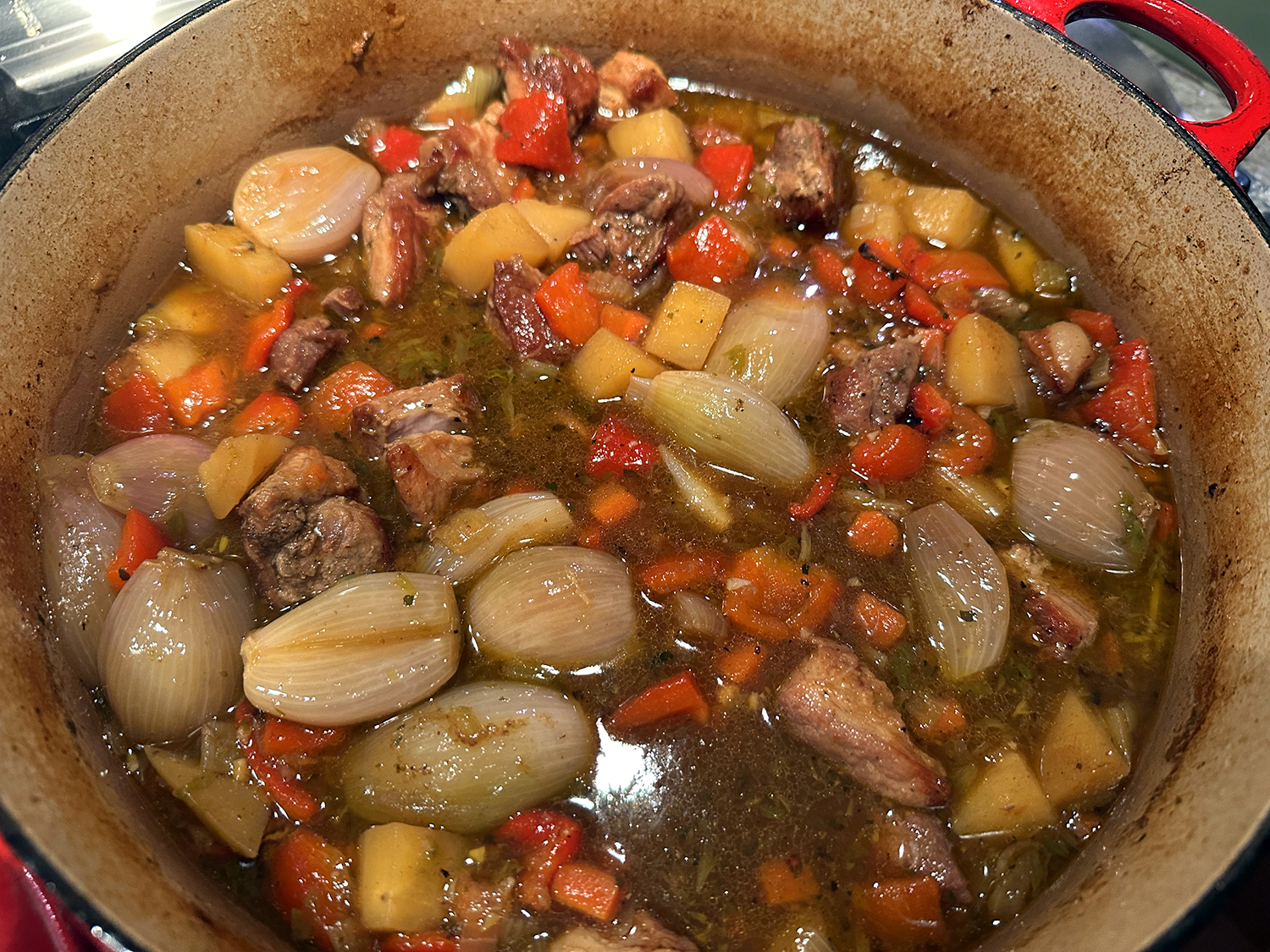
After 30 minutes of stewing, add the potatoes and shallots to the pot. Cover with the parchment and lid, return to the oven. After another 30 minutes, add the peppers. Cover with the parchment and lid, return the pot to the oven, and cook until the pork is fork-tender, 1/2 to 1 hour more.
Degrease the stew by laying a clean paper towel over the surface of the stew and gently pushing it into all the bumps and dips, then quickly peeling it off. Repeat as necessary with more paper towels.
Thicken with a cornstarch slurry if desired. Stir in the cilantro. Season to taste with salt and pepper and serve.
This super-easy reverse-seared steak recipe is just the thing for a flavor-packed tasty dinner. The list of ingredients is manageable, but one in particular, shio koji, may be unfamiliar to you.
To educate, Shio Koji is a fermented seasoning made from rice koji, salt, and water. The fermentation process of these three ingredients creates a creamy, paste-like condiment with a salty and sweet, umami-rich flavor. It contains enzymes like amylase and protease, which break down starches and proteins, making it a popular marinade and meat tenderizer.
Shio koji, which can be made at home or purchased, is often used as a marinade because it is rich in protease enzymes (which break down proteins), so it can create an array of new flavors in protein-rich foods.
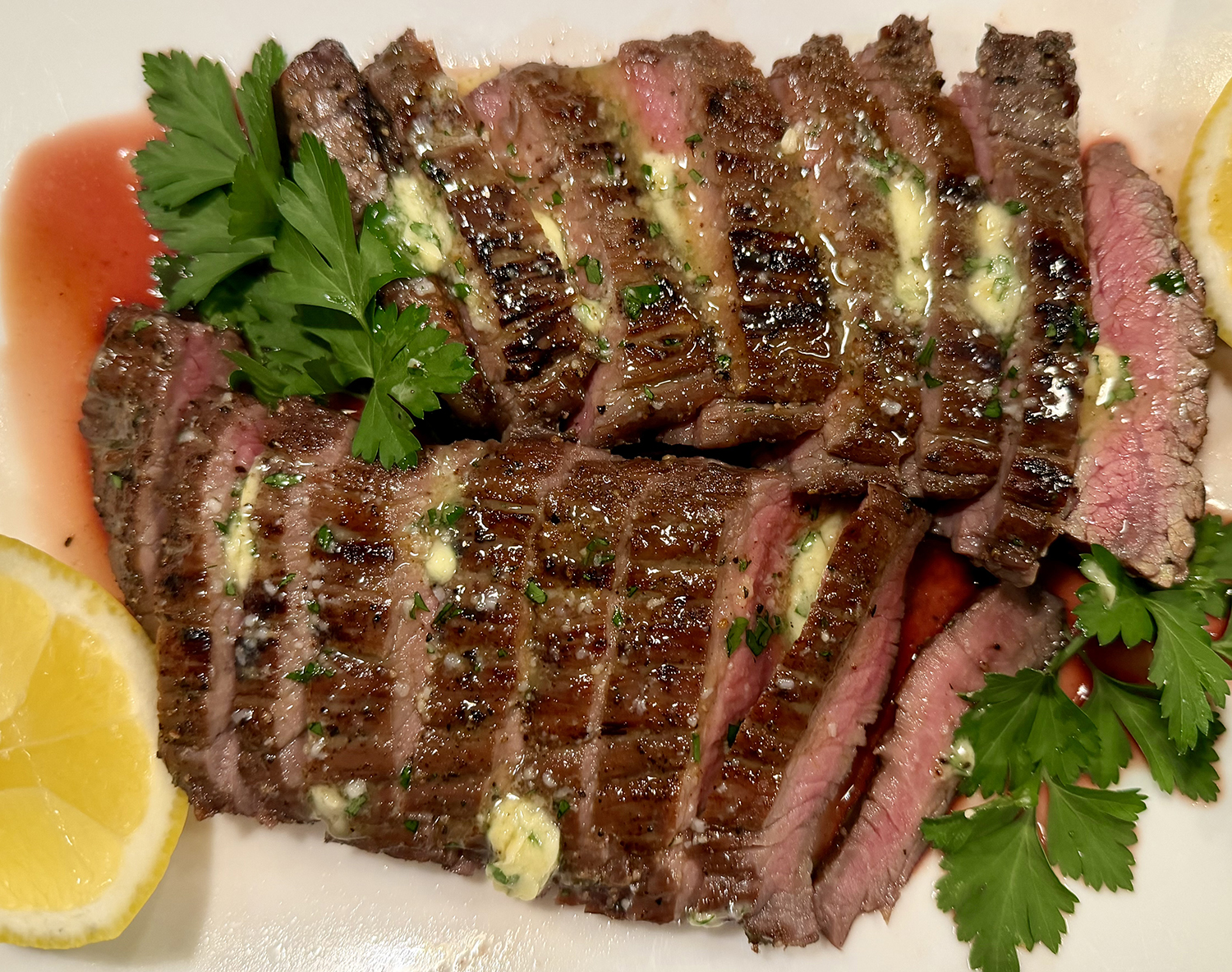
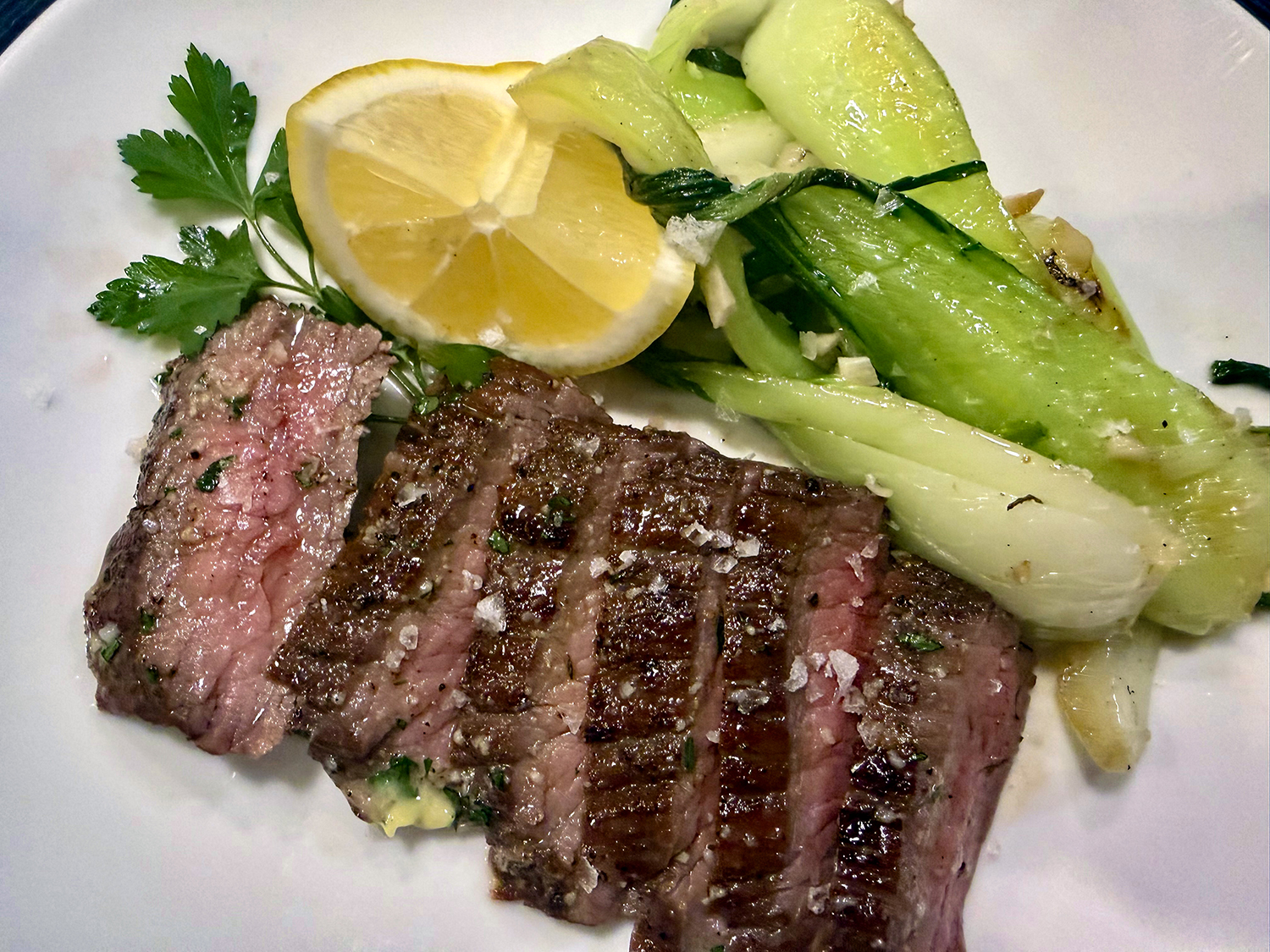
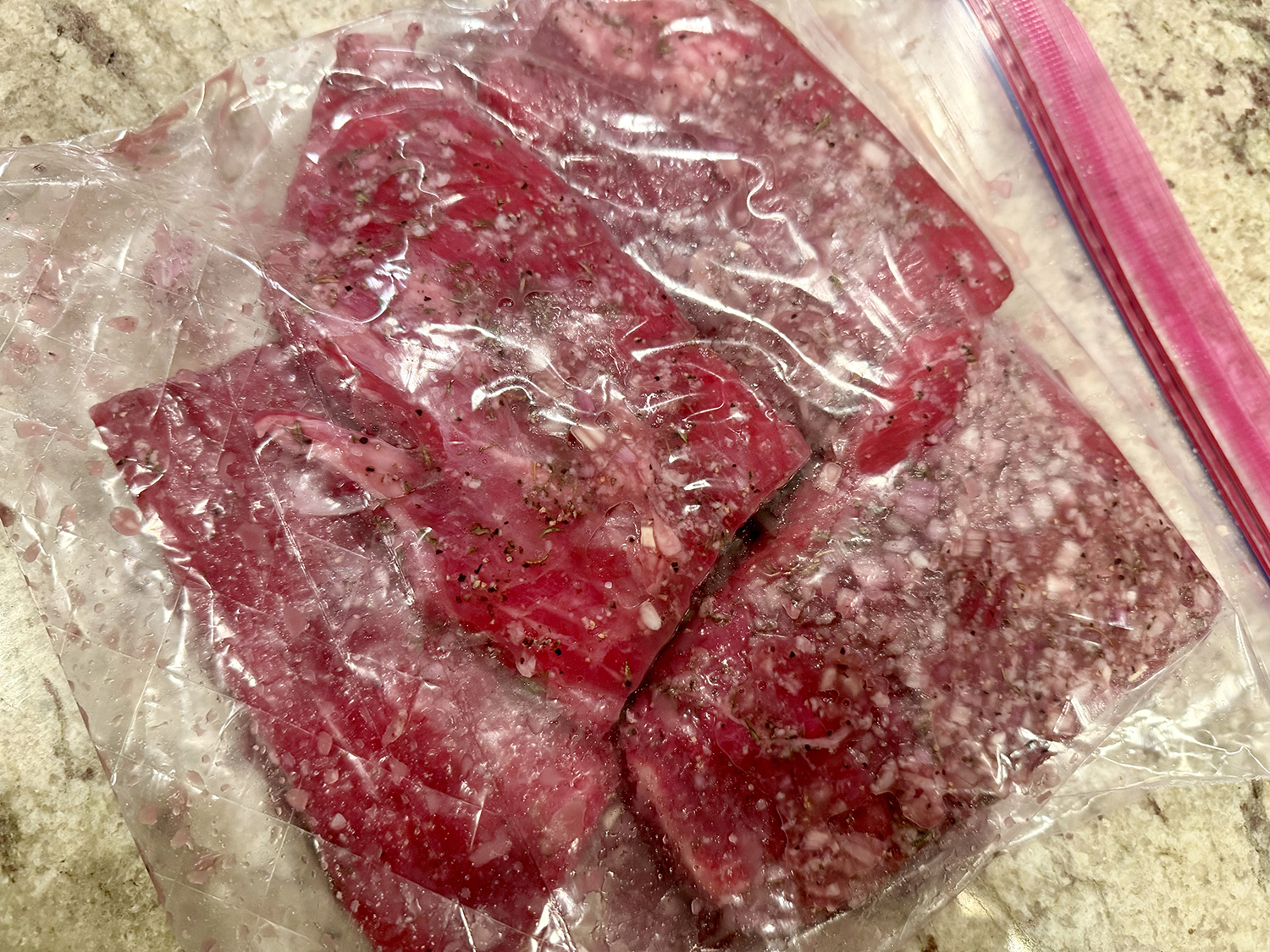
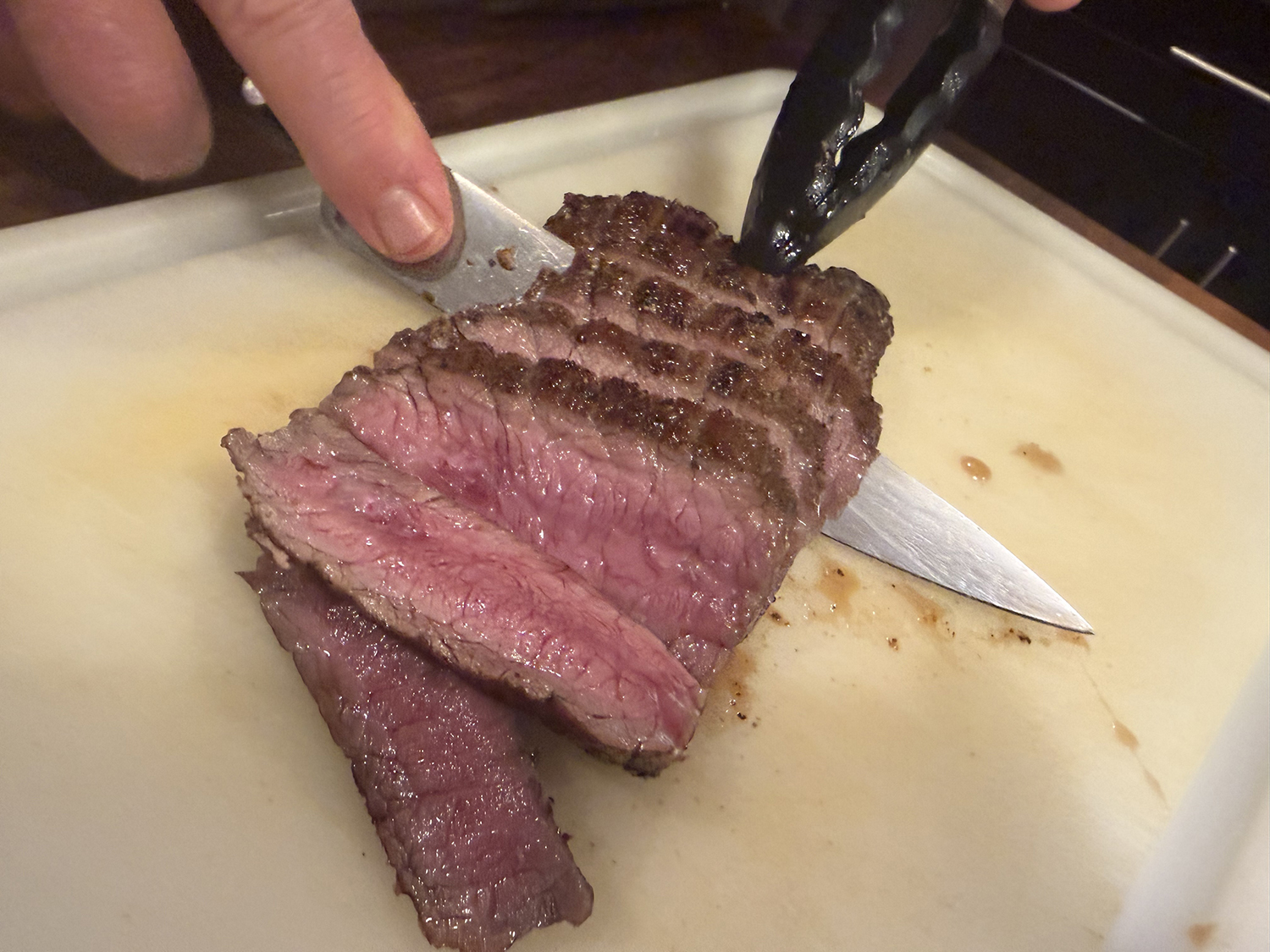
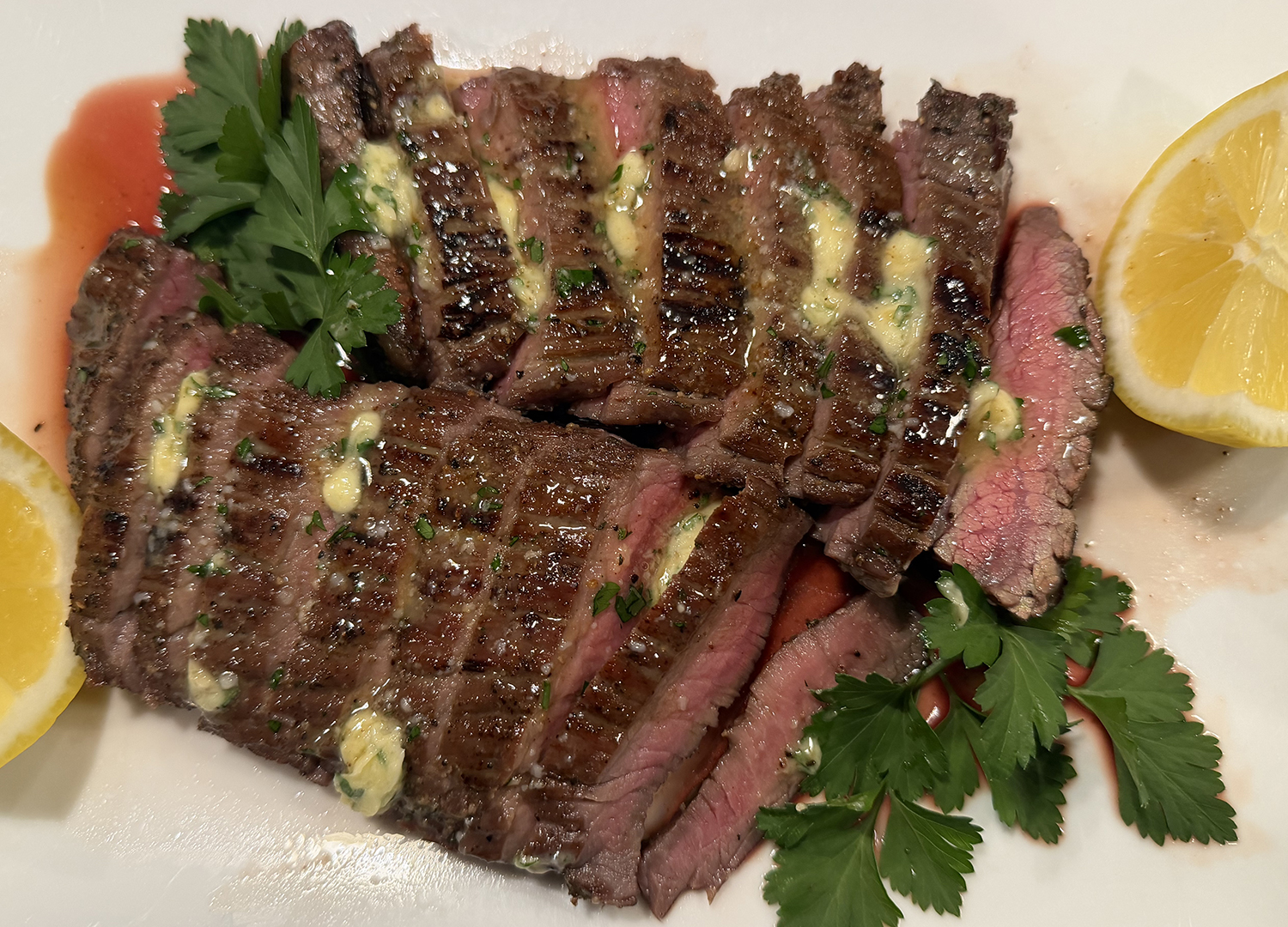
Here, shio koji gives marinated flank steaks the nutty, savory, blue-cheese-y flavors typically found in expensive dry-aged steaks. After wiping the marinade from the steaks, cook them in the oven with a gentle heat to keep their interiors juicy and rosy pink. Finally, quickly sear them on the stovetop to create a slightly charred crust.
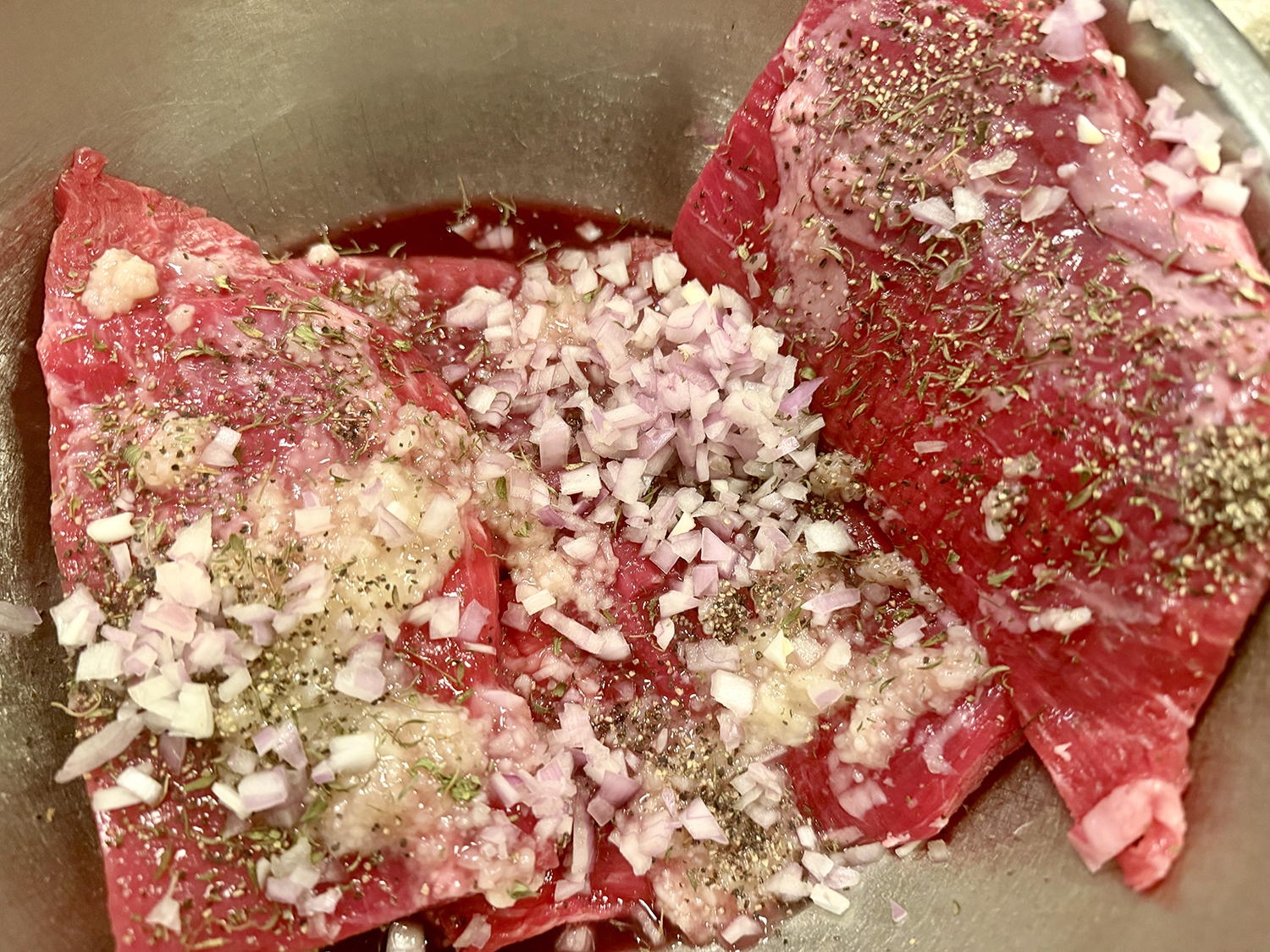
This recipe contains three marinating options (see below), of which we chose the Red-Wine Shallot variation.
1 tsp. minced fresh parsley (or other herb of your choice)
1⁄8 tsp. kosher salt
Directions
For the Steak
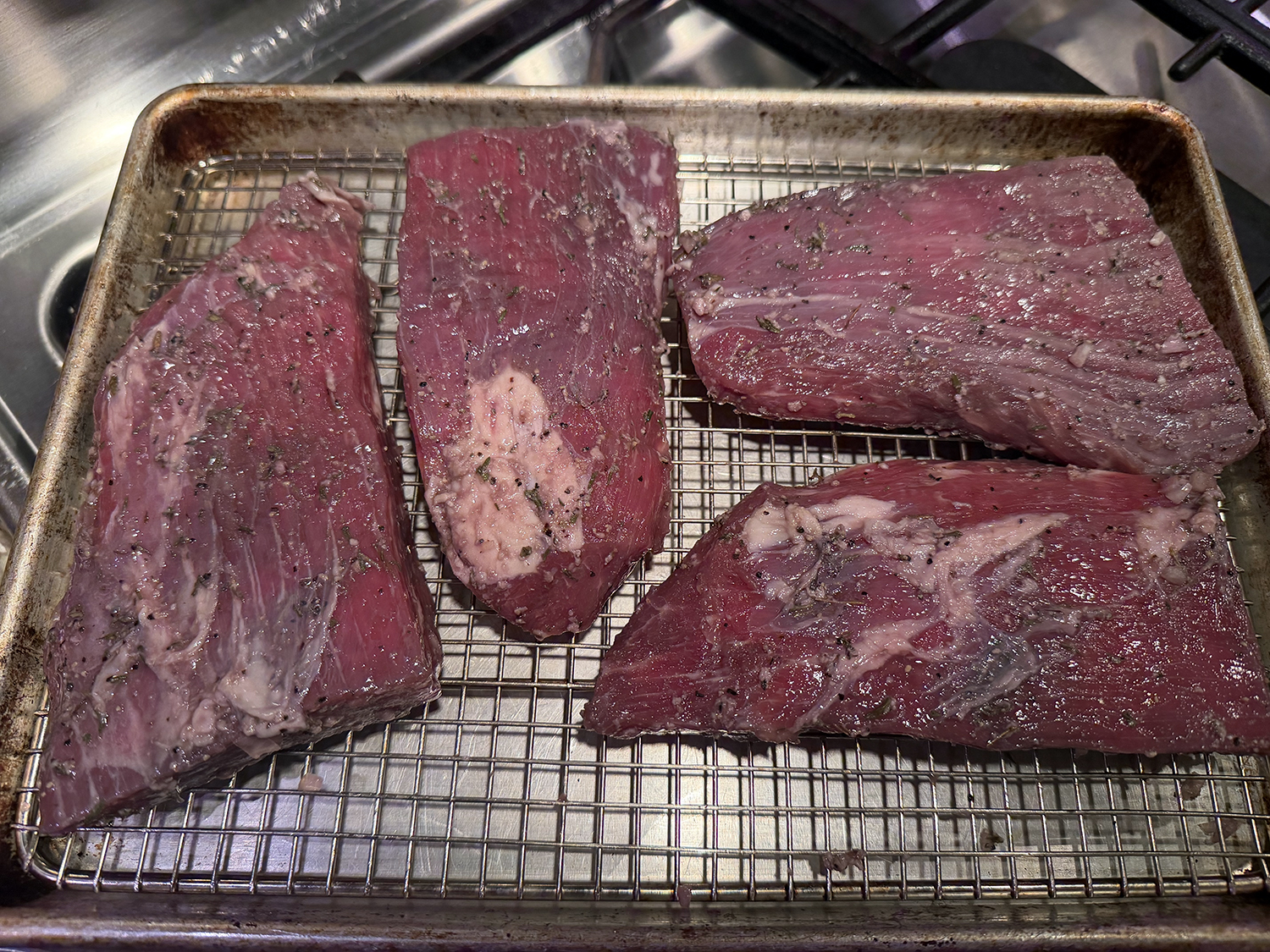
Adjust oven rack to middle position and heat oven to 275 degrees. While oven heats, set wire rack in rimmed baking sheet.
With damp towel, wipe koji from steaks (it’s OK if a few grains remain on steak). Sprinkle with ½ teaspoon pepper. Set steaks on prepared rack and transfer to oven. Cook until thickest part of largest steak registers 125 degrees, 25 to 30 minutes.
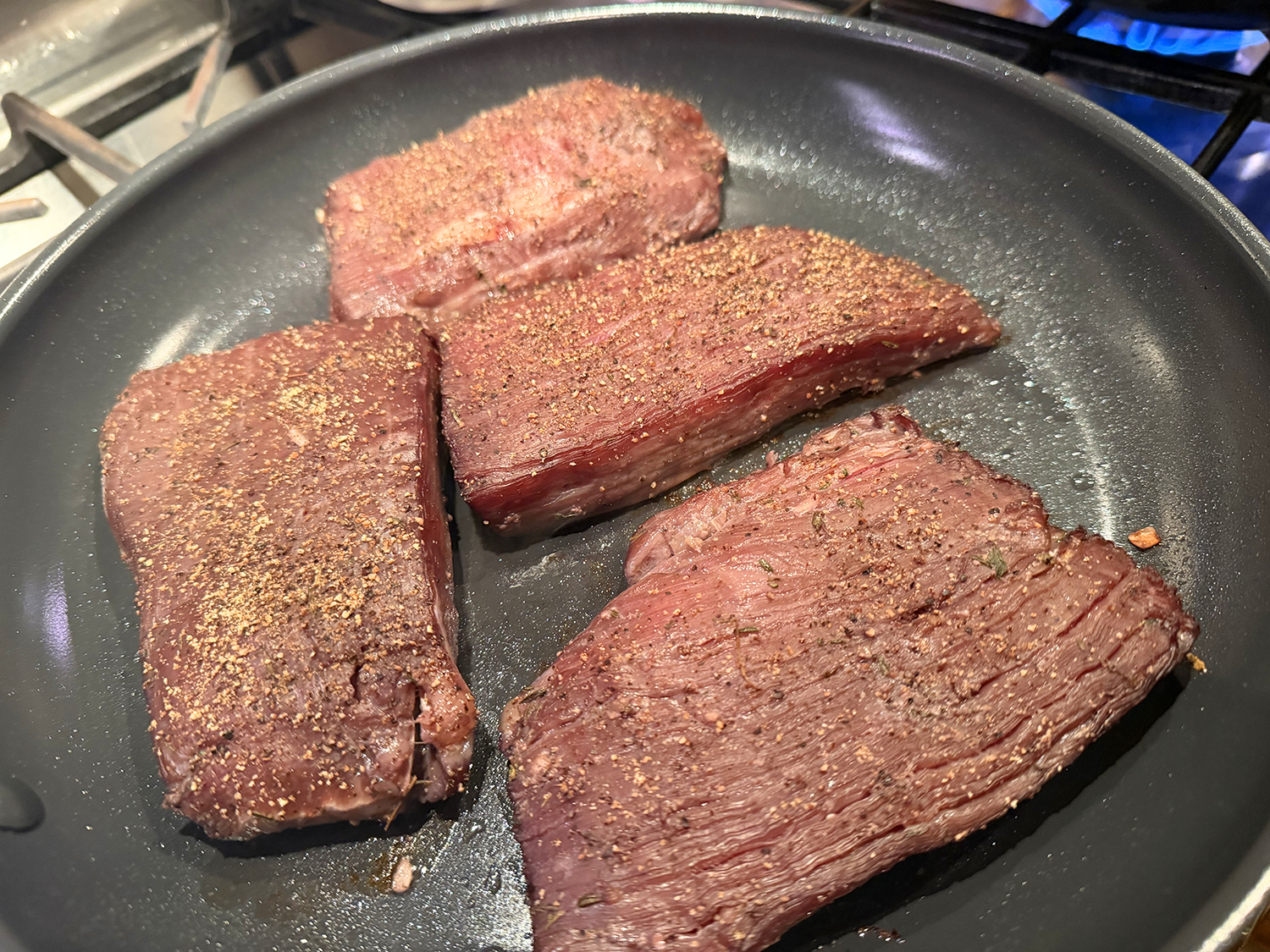
Heat 1 teaspoon vegetable oil in 12-inch nonstick skillet over medium-high heat until shimmering. Add steaks and cook, pressing steaks gently into pan until browned and slightly charred in spots on both sides, 1 to 2 minutes per side. Cut steaks on bias against grain into ½-inch-thick slices. Serve, passing flake sea salt and lemon wedges, if using, separately.
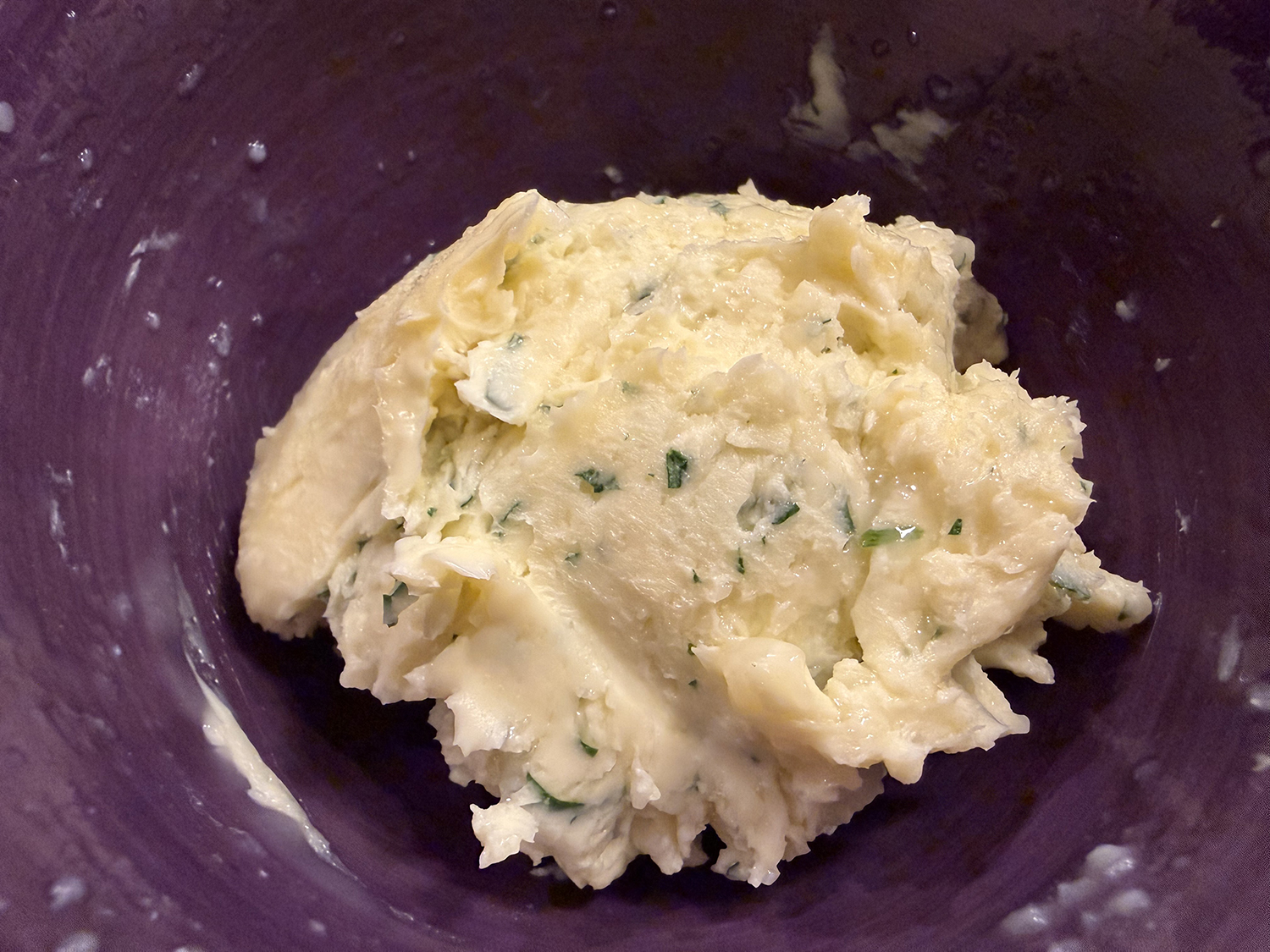
For the Butter
Combine all ingredients in a bowl. The butter mixture can be refrigerated for up to one week.
Shio koji creates plenty of complexity on its own, but it also enhances the flavors of additional seasonings. Try the following combinations, stirring the ingredients into 3 tablespoons of shio koji before applying the marinade to the steak.
WORCESTERSHIRE-GARLIC
3 Tbsp. Worcestershire sauce
2 tsp. minced garlic
½ tsp. pepper
BOURBON-SOY
3 Tbsp. bourbon
2 Tbsp. soy sauce
¾ tsp. ground allspice
RED WINE–SHALLOT
3 Tbsp. red wine
2 Tbsp. minced shallot
1 tsp. dried thyme
½ tsp. pepper
Shio Koji Steak Primer
Shio koji works differently than other marinades. Here’s how to make the most of its special properties.
Shio-Koji-to-steak ratio: 1 tablespoon to 8 ounces
One tablespoon of shio koji per ½ pound of steak is enough to produce a broad range of flavors (and since commercially produced shio koji contains only 8 to 14 percent salt, that amount won’t make the meat overly salty.) Shio koji pairs beautifully with other seasonings too (see “Simple Ways to Vary the Marinade”).
Marinating time: 2 to 24 hours
The longer the steak marinates, the more intense its flavor will become. Four hours is a good place to start if it’s your first time using shio koji so that you can get to know how it changes the flavor of the meat.
Best cooking method: reverse searing
Both the simple sugars contained in shio koji and the amino acids that are liberated as the steak marinates facilitate browning, but the sugars are also prone to scorching. The most failproof cooking method, then, is reverse searing: gently bringing the steak to serving temperature in the oven and then quickly searing it in a skillet to develop a well-browned crust with a hint of char.























































 Accounting for Taste