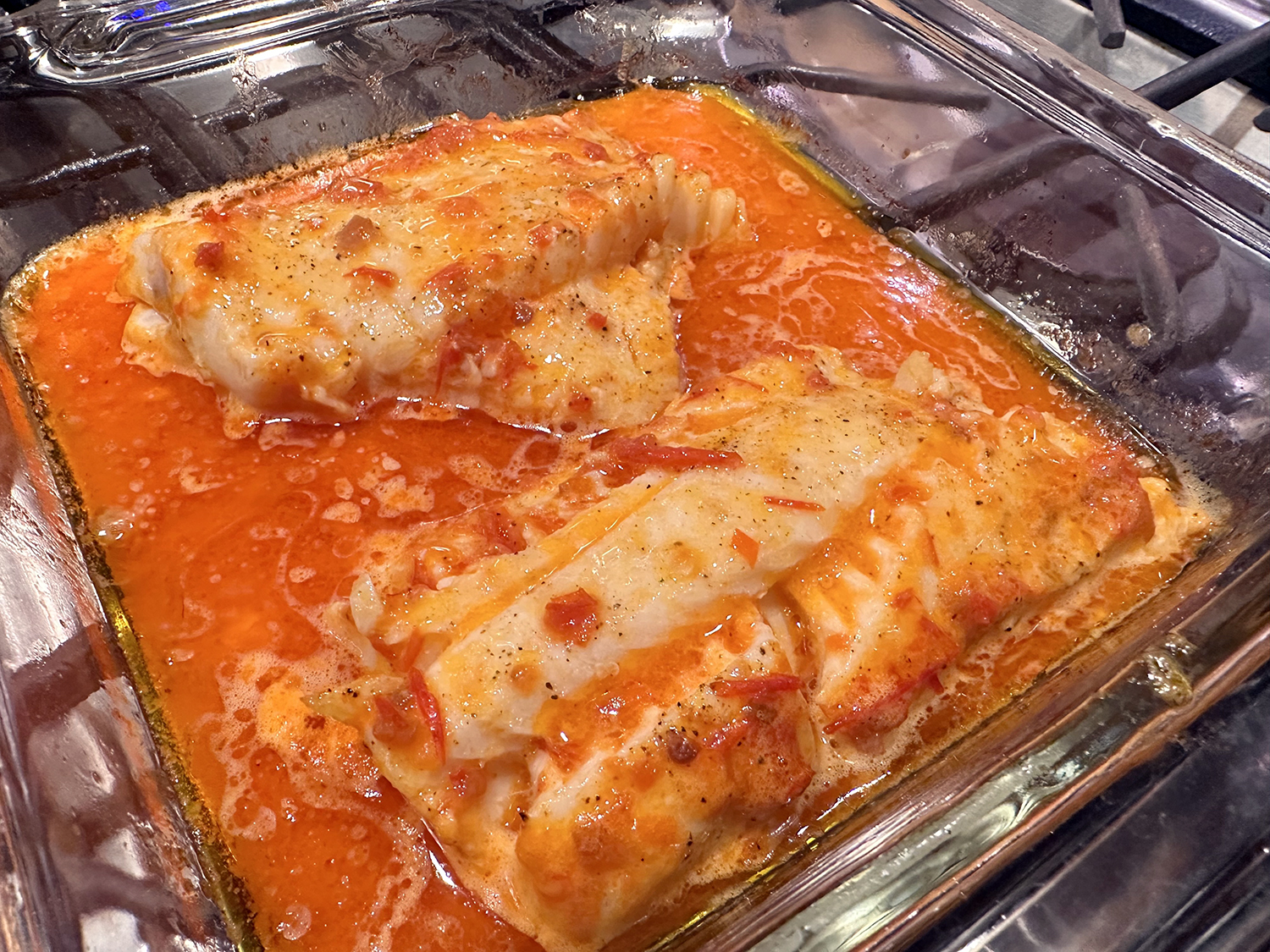
Tag Archives: pescatarian

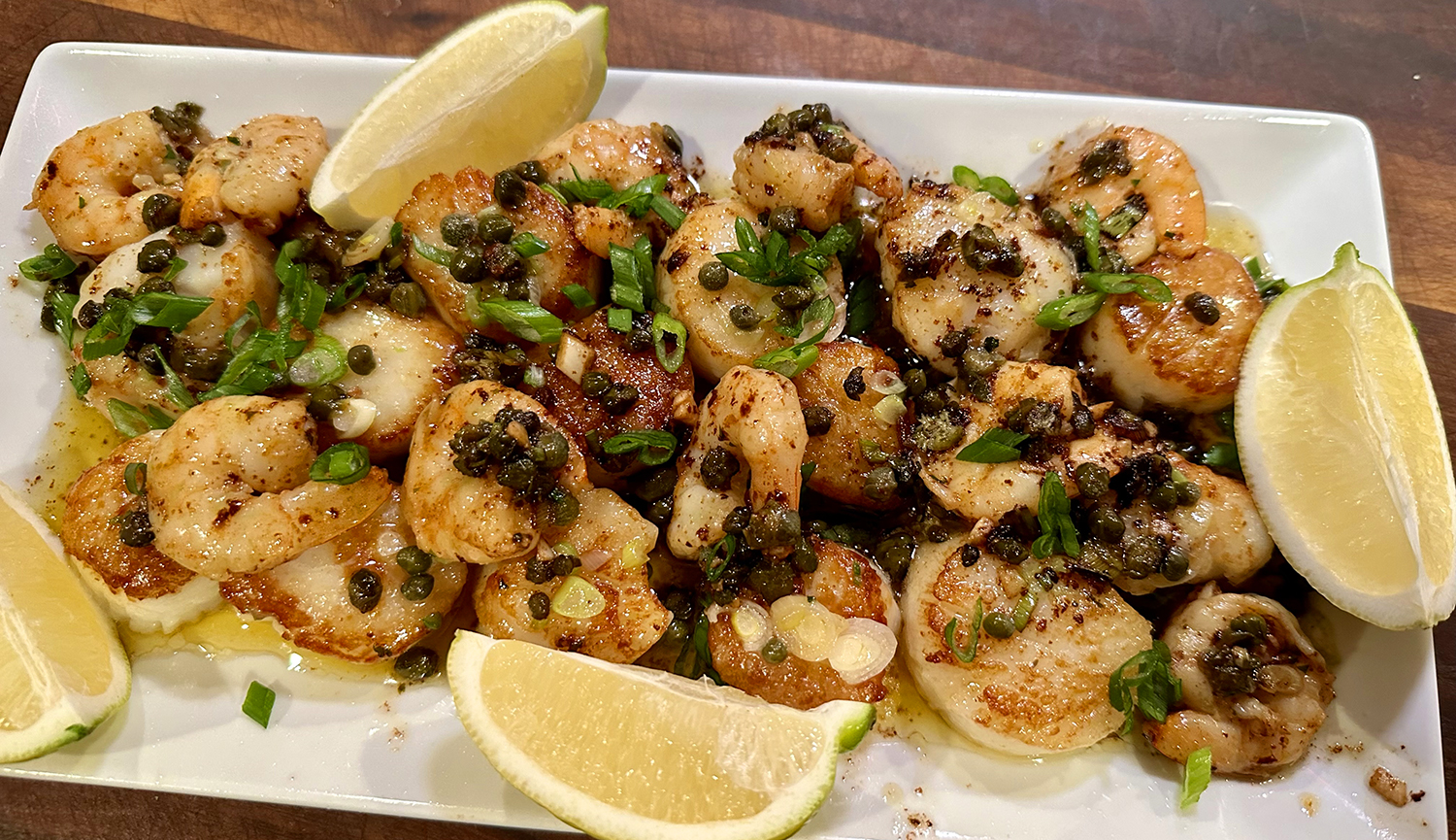
Sea Scallops with Browned Butter, Capers and Lemon

Sea scallops are a rare delicacy due to the high price at restaurants and at the fish market. So in the event of a stay-at-home New Year’s Eve celebration for the two of us, the occasion was the perfect opportunity to “treat” ourselves. Couple that with a few lump meat crab cakes, and our year-end meal was one to remember.

In this recipe, sea scallops get the piccata treatment, and who can resist that? Their sweet, briny flavor is perfectly matched by nutty browned butter, salty capers and puckery lemon. And while not part of the original recipe, we added in 8 pre-cooked shrimp (leftover from another appetizer), reheating them at the end of step four with the addition of the lemon juice.

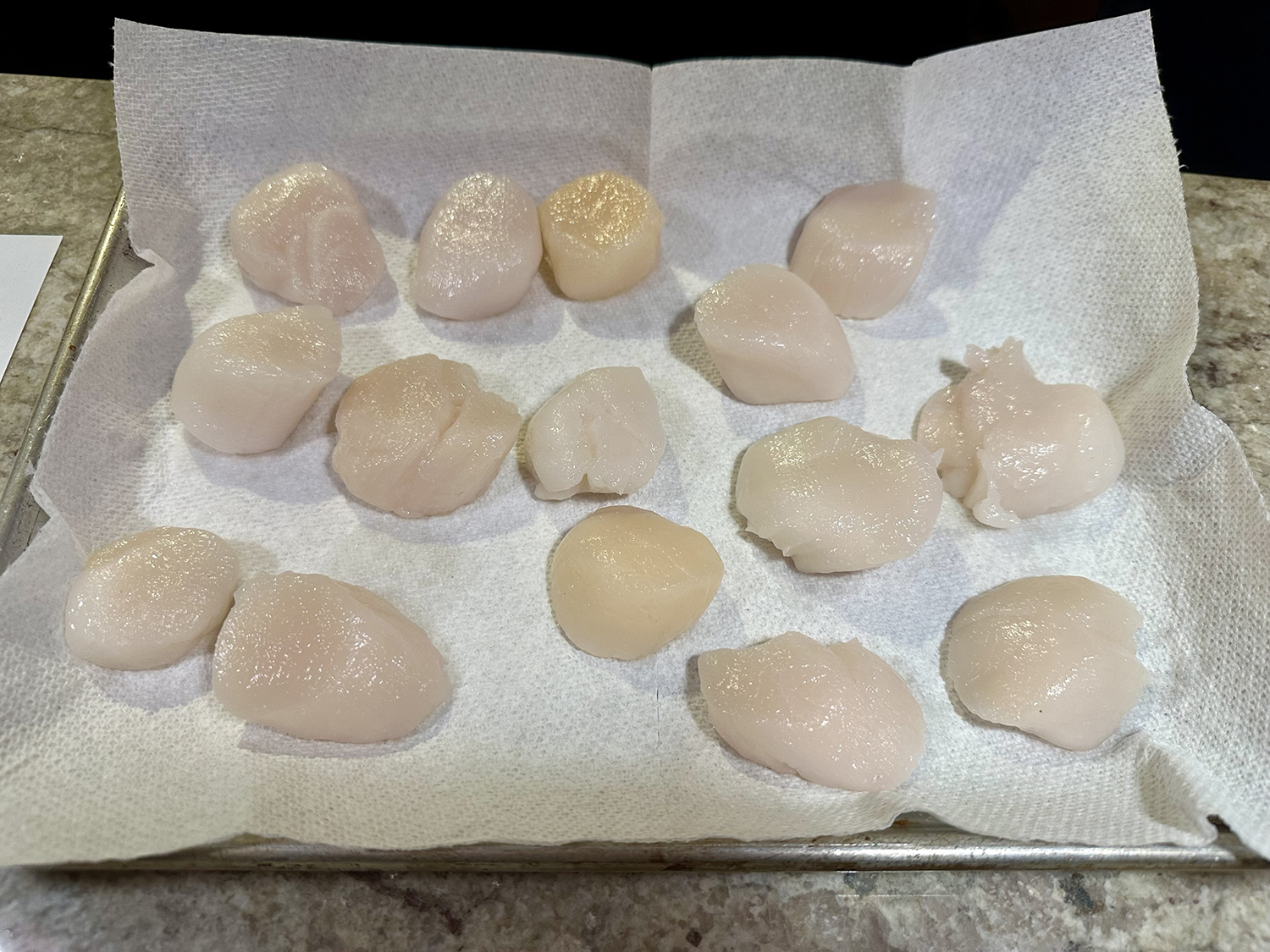
When shopping, look for dry sea scallops—“Dry” indicates that the shellfish has not been treated with sodium tripolyphosphate (STPP), a preservative that forces water retention and that has a bleaching effect. In fact, bright white color is a tell-tale sign of the presence of STPP, as untreated scallops have a pale coral or ivory hue. And at the seafood counter, dry scallops should not be sitting in a pool of milky liquid.

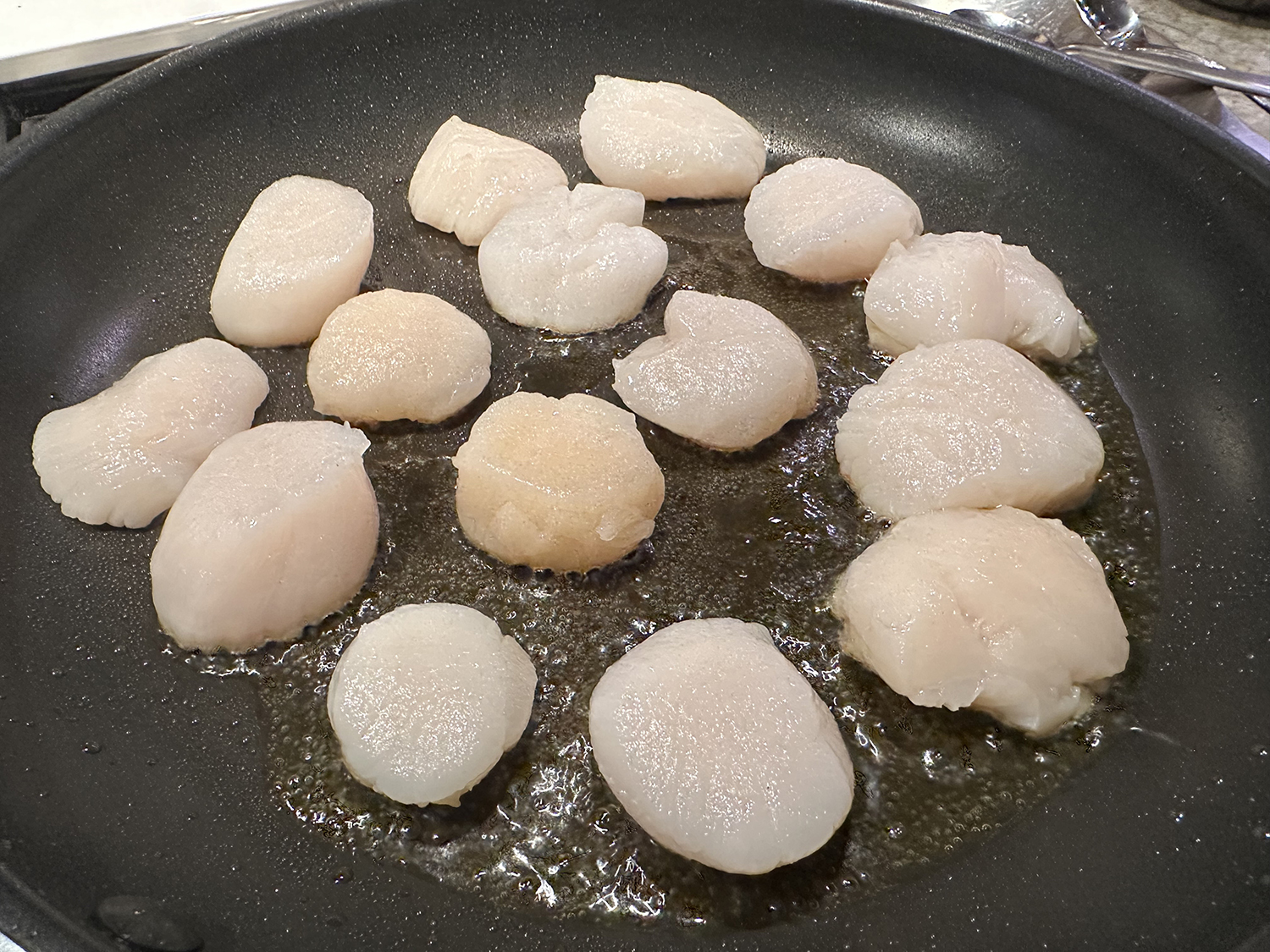
Don’t attempt to move the scallops immediately after placing them in the skillet. They may stick at first but will release after they’ve formed a nicely browned bottom crust. Serve with crusty bread and a leafy salad dressed with a bright vinaigrette.

With a minimum of ingredients and a short cooking time, you can have an elegant meal on the table in under a half hour!

Sea Scallops with Browned Butter, Capers and Lemon

  • Servings: 2-4
  • Difficulty: easy
  • Print

Ingredients

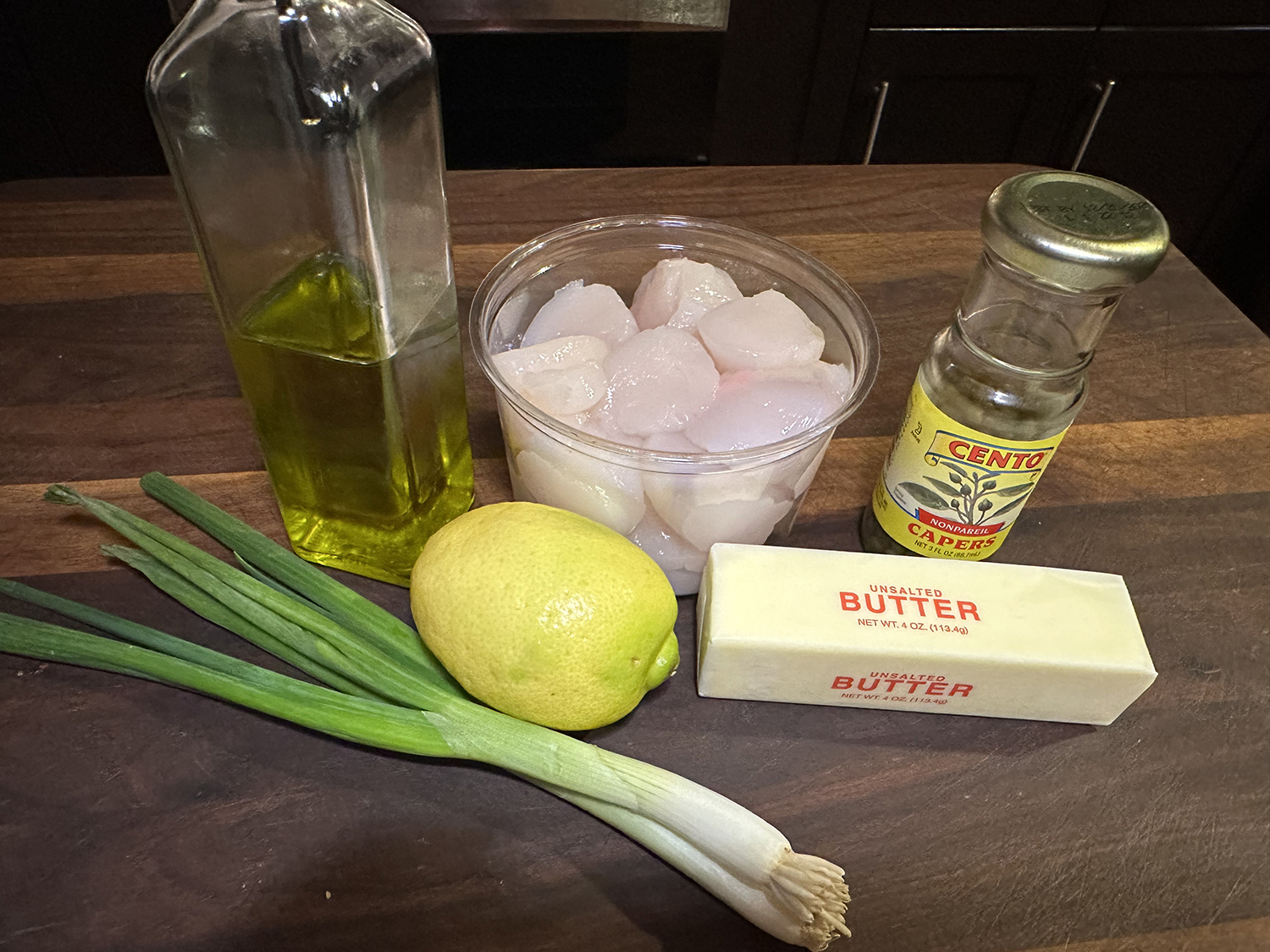
  • 1 1/4 lbs. dry sea scallops, side tendons removed and discarded, patted dry
  • Kosher salt and ground black pepper
  • 2 Tbsp. extra-virgin olive oil
  • 4 Tbsp. salted butter, cut into 4 pieces
  • 1/4 cup drained capers
  • 2 scallions, thinly sliced on the diagonal, whites and greens reserved separately
  • 1 tsp. grated lemon zest
  • 1 Tbsp. lemon juice
  • Lemon wedges to serve

Directions

  1. Place the scallops on a paper towel–lined plate. Season lightly on all sides with salt; set aside. In a 12-inch nonstick skillet over medium-high, heat the oil until barely smoking. Quickly pat the scallops dry once again and place in the pan, a flat side down, spacing them evenly apart. Cook without disturbing until golden brown on the bottoms and they release easily from the pan, 2 to 4 minutes.
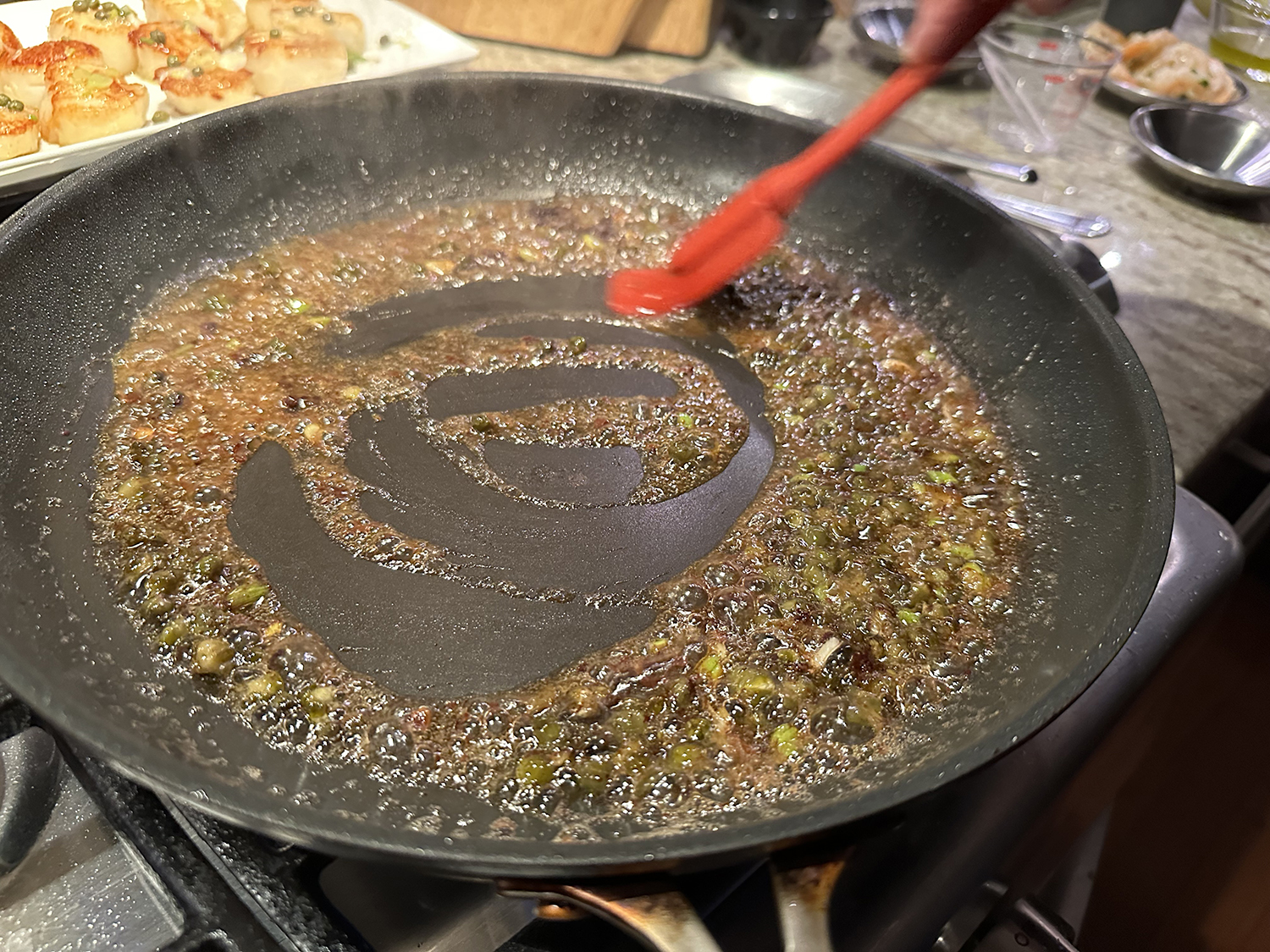
  2. Flip each scallop, then add the butter, capers and scallion whites, swirling the pan to incorporate.
  3. Cook, spooning some of the hot butter over the scallops, until the butter smells nutty and the scallops are opaque throughout, 2 to 3 minutes.
  4. Remove the pan from the heat and, using tongs, transfer the scallops to a serving plate. To the skillet, add the lemon zest and juice; stir to combine.
  5. Taste and season with salt and pepper, then pour the sauce over the scallops. Sprinkle with the scallion greens.

http://www.lynnandruss.com

Recipe from Milk Street

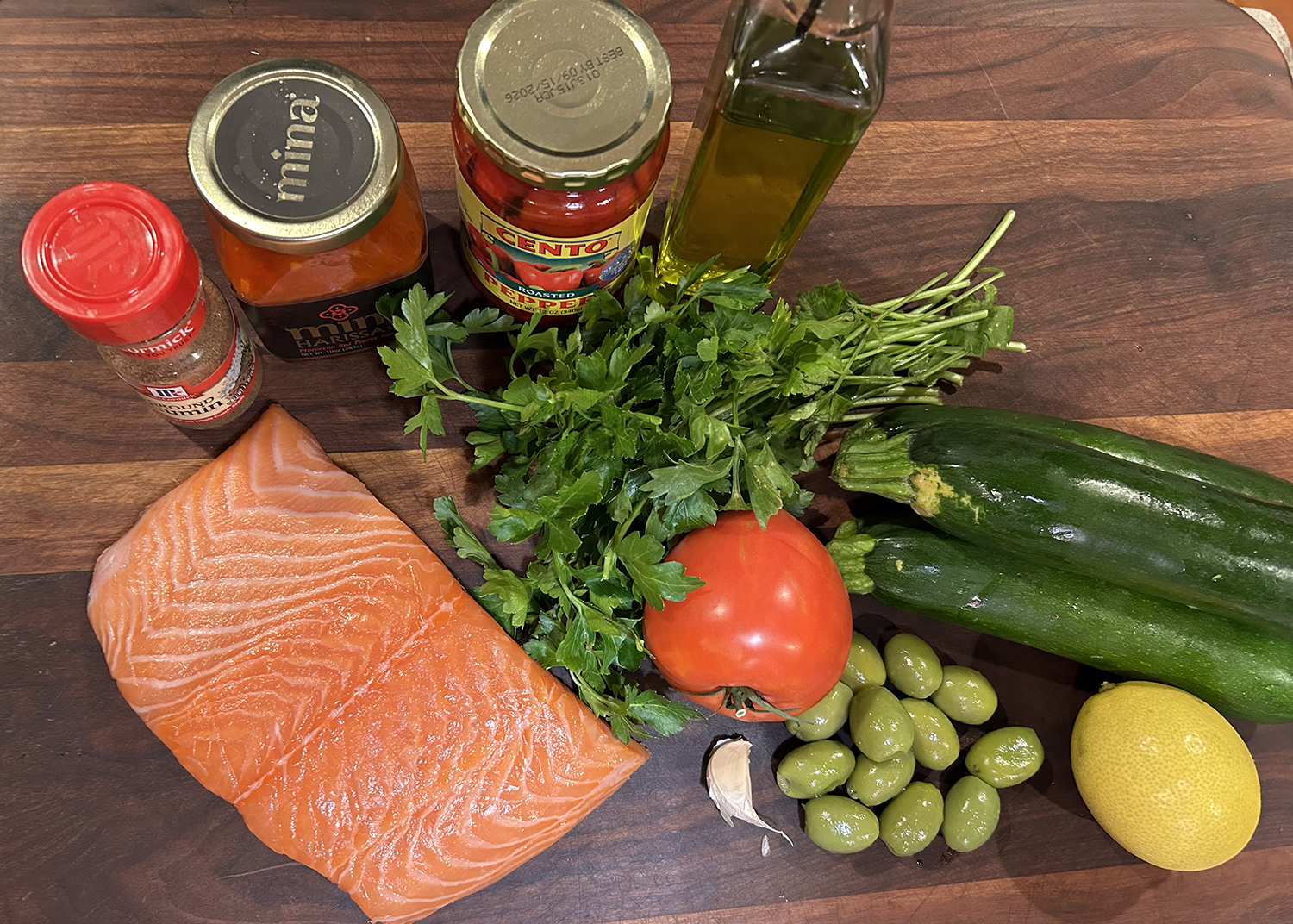
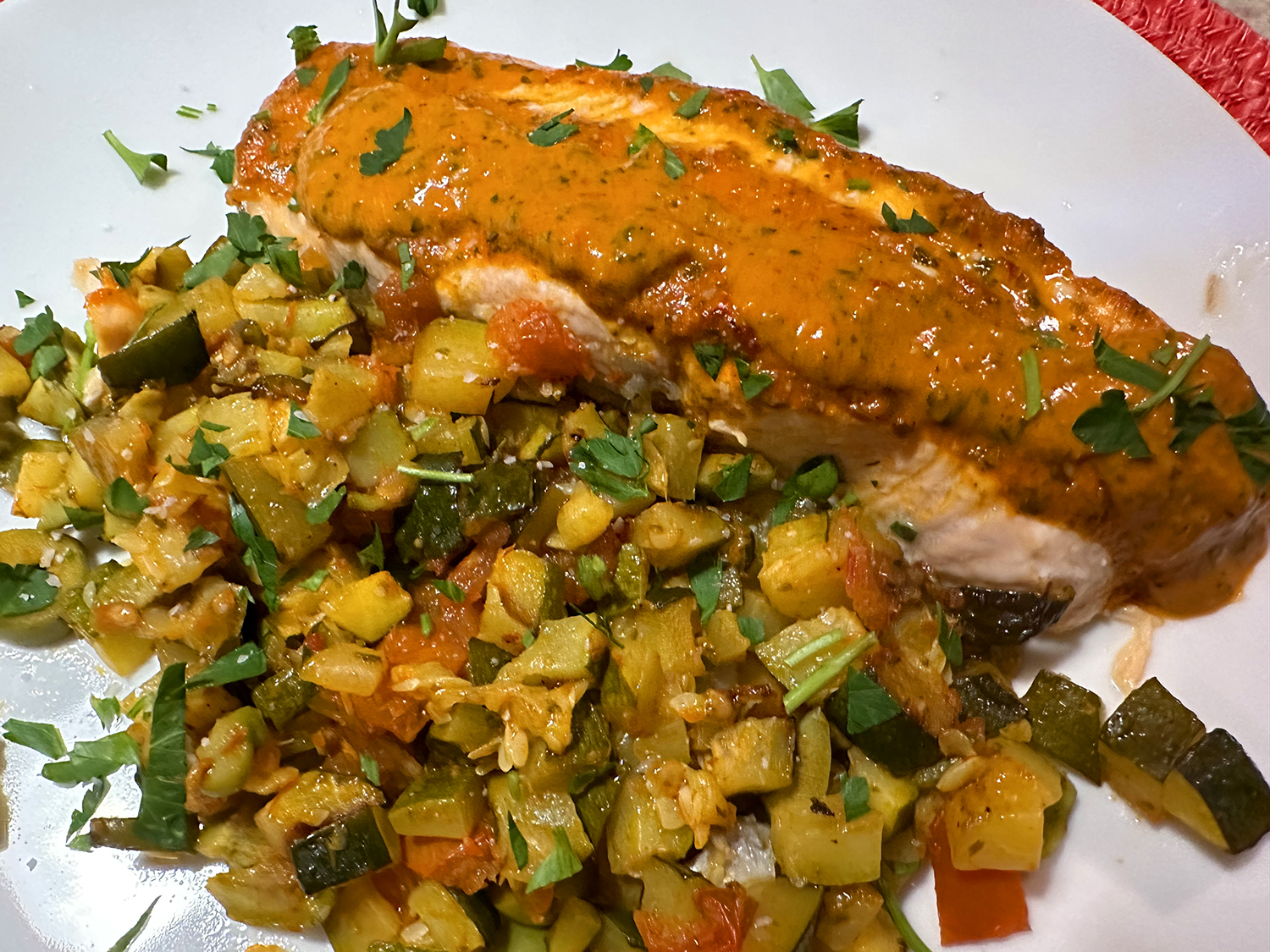
Salmon Traybake with Harissa-Roasted Pepper Sauce

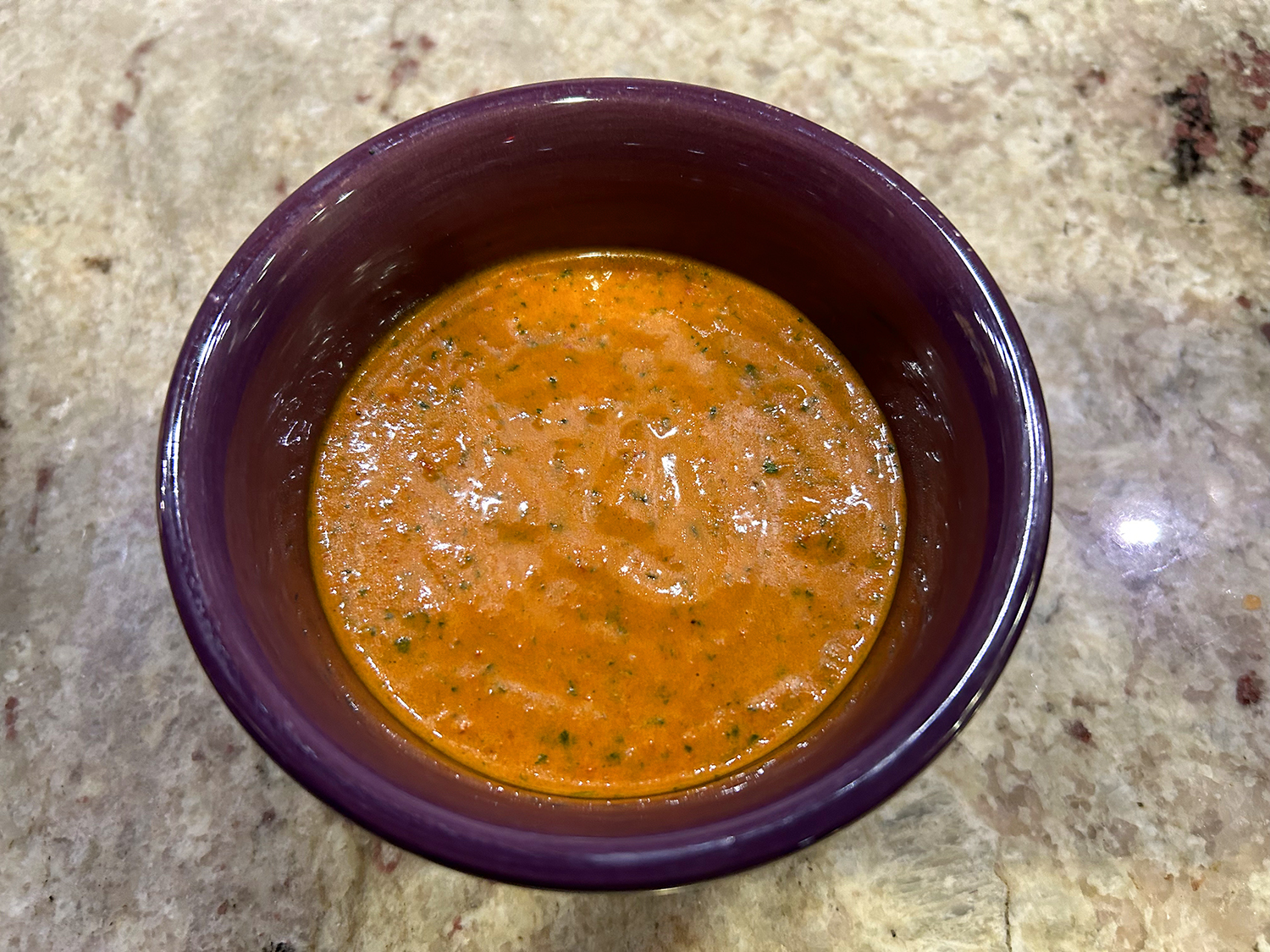
The inspiration for this colorful traybake is Moroccan-style red chermoula: a bold, warmly spiced sauce, often served with fish. This weeknight-friendly version from Milk Street calls on smoky harissa, a North African chili and spice paste, plus sweet roasted peppers, earthy cumin, bright lemon juice and fresh garlic and parsley, all whirred together in the blender.

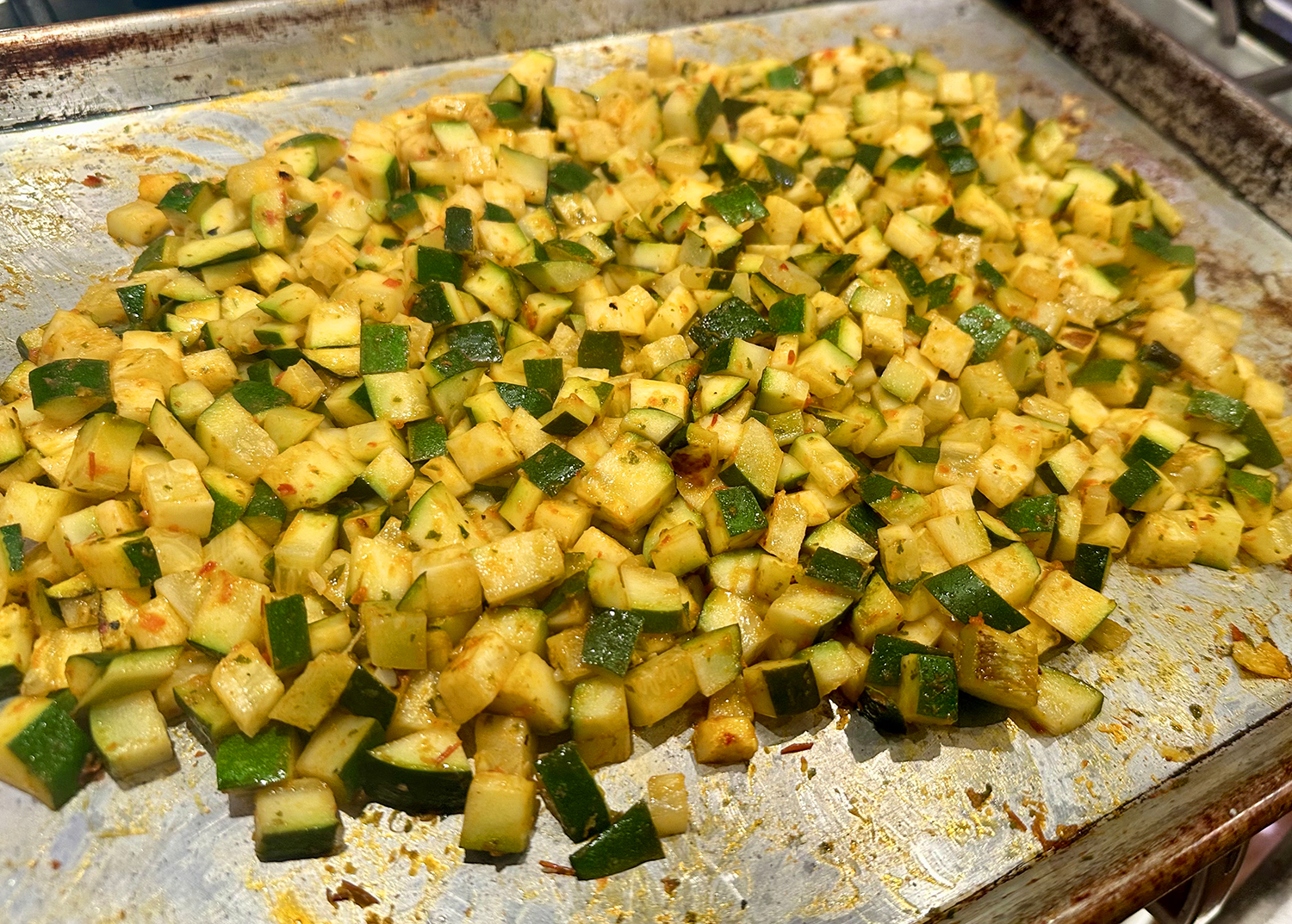
Harissa spiciness varies by brand, so a range is suggested. To make the most of the mixture, use it three ways: as a salmon marinade, a seasoning for roasted zucchini and as a sauce for the finished dish. Serve with couscous, rice or warmed flatbreads.

The original recipe called for 1 1/2 pounds of salmon, but we purchased a one-pound piece and cut it in half allowing for 2 servings. If using 1 1/2 pounds, cut the filet into 3 or 4 pieces, or buy them already cut down to 6 ounce servings.

Don’t use large zucchini for this. They tend to contain many seeds and will turn soft and mushy with cooking. Instead, look for medium to small zucchini.

Salmon Traybake with Harissa-Roasted Pepper Sauce

  • Servings: 3-4
  • Difficulty: easy
  • Print

Ingredients

  • 1/2 cup drained roasted red peppers, chopped
  • 1/2 cup lightly packed fresh flat-leaf parsley, plus chopped parsley to serve
  • 1/4 cup extra-virgin olive oil
  • 2 Tbsp. lemon juice, plus lemon wedges to serve
  • 1-2 Tbsp. harissa paste
  • 1 medium garlic clove, smashed and peeled
  • 1/2 tsp. ground cumin
  • Kosher salt
  • 4 6-oz. center-cut salmon fillets, patted dry
  • 3 medium zucchini (about 1½ lbs. total), cut into ¼-inch cubes
  • 1 ripe medium tomato, cored, seeded and chopped
  • 1/2 cup pitted green olives, chopped

Directions

  1. Heat the oven to 425°F with a rack in the middle position. In a blender, combine the roasted peppers, parsley, oil, lemon juice, harissa, garlic, cumin and ½ teaspoon salt. Puree until smooth, about 30 seconds. Measure out 2 tablespoons, then spread it onto the flesh side of the salmon fillets.
  2. On a rimmed baking sheet, toss the zucchini with ¼ cup of the remaining puree; transfer the rest of the puree to a small bowl for serving. Roast until the zucchini is tender, 20 to 25 minutes, stirring halfway through. Remove the baking sheet from the oven and sprinkle the tomato and olives over the zucchini. Scrape up and stir the zucchini and push it to the edges.
  3. Place the salmon, skin side down, in the center of the baking sheet. Roast until the flesh flakes easily and the zucchini is lightly charred, and registers 135°F, about 10 to 14 minutes. Transfer to a platter and sprinkle with additional parsley. Serve with lemon wedges and the remaining sauce on the side.

http://www.lynnandruss.com

Recipe by Rose Hattabaugh for Milk Street

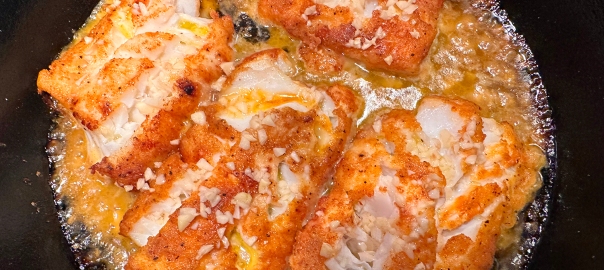
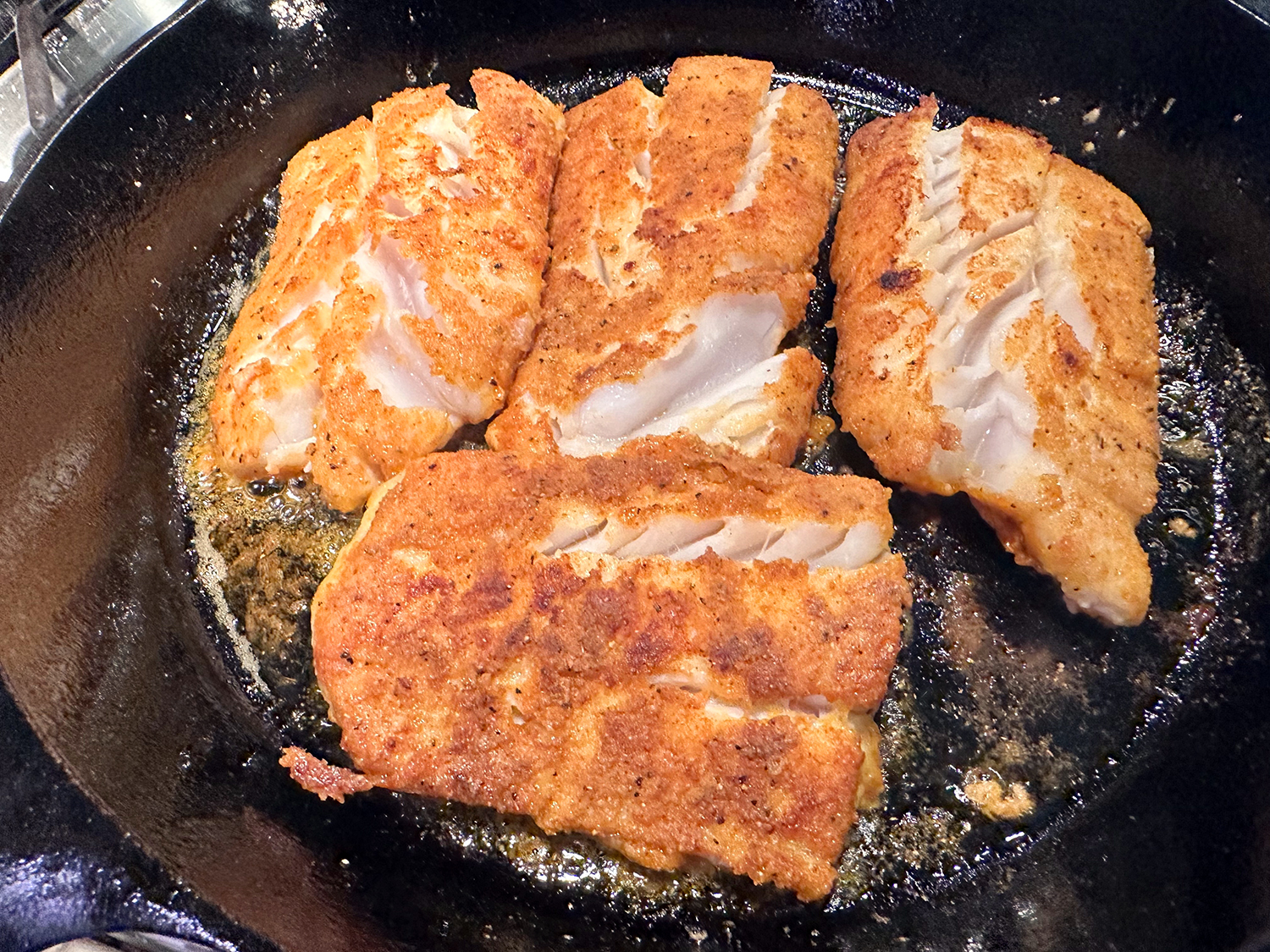
Baked Cod with Lemon and Garlic

Not only is this one of the best fish recipes, you can make it in no time. Prepared Mediterranean-style with a few spices and a mixture of lemon juice, olive oil and lots of garlic, it bakes in only 15 minutes!

We paired our cod with another dish from Suzy Karadsheh, Mediterranean Chickpea Salad, a union made in heaven. You bet we’ll be making both of these real soon….

Baked Cod with Lemon and Garlic

  • Servings: 4
  • Difficulty: easy
  • Print

Ingredients
  • 1 1/2 lbs. cod fillet, cut into 4 pieces
  • 1/4 cup chopped fresh parsley leaves

Lemon Sauce:

  • 5 Tbsp. fresh lemon juice
  • 5 Tbsp. extra virgin olive oil
  • 2 Tbsp. melted butter
  • 5 cloves garlic, minced

For Coating:

  • 1/3 cup all-purpose flour
  • 1 tsp. ground coriander
  • 3/4 tsp. sweet Spanish smoked paprika
  • 3/4 tsp. ground cumin
  • 3/4 tsp. salt
  • 1/2 tsp. black pepper
Instructions
  1. Preheat oven to 400 degrees F.
  2. Mix together the lemon juice, olive oil, and melted butter in a shallow bowl (do not add the garlic yet). Set aside.
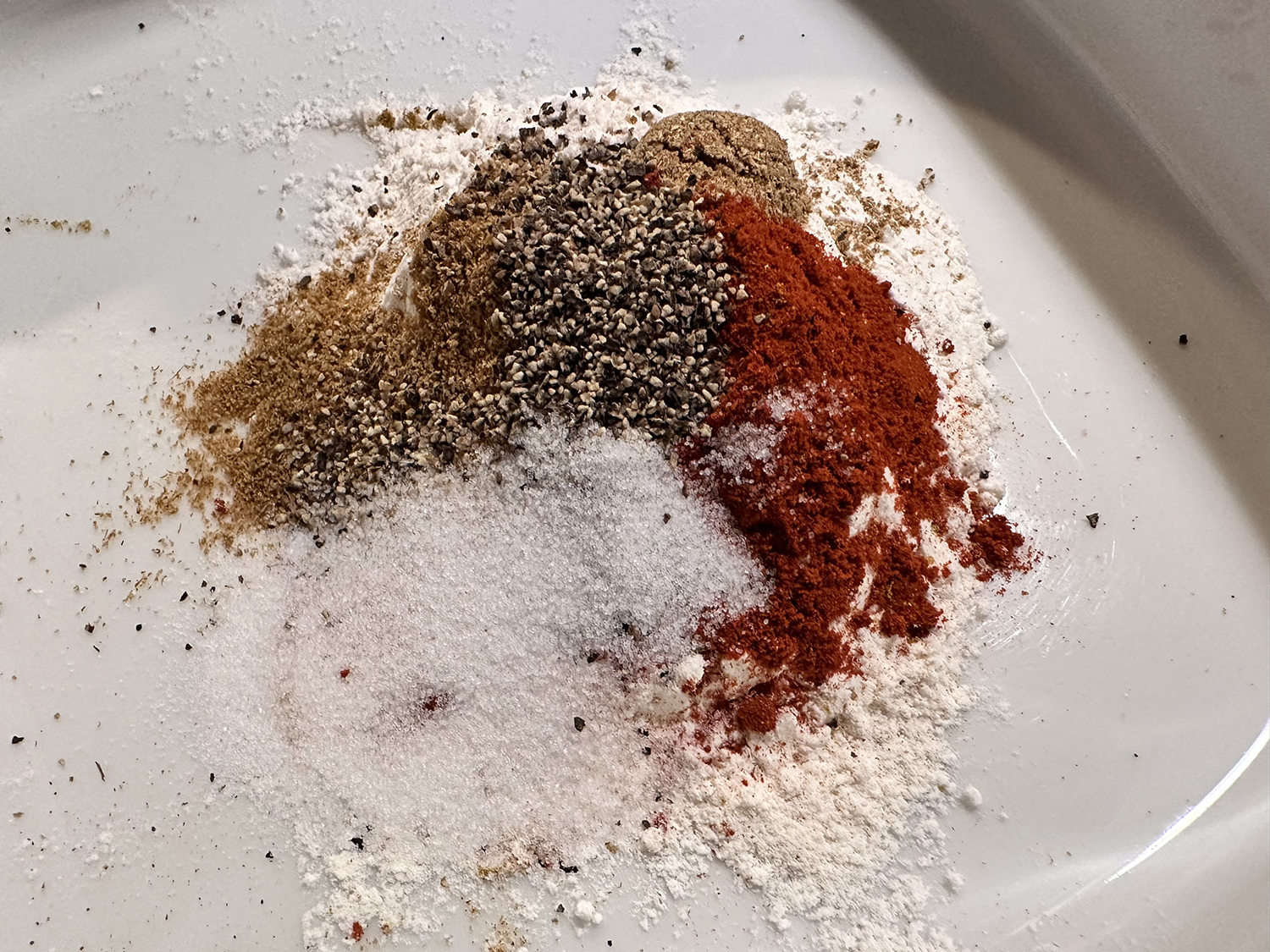
  3. In another shallow bowl, mix the all-purpose flour, spices, salt and pepper. Set next to the lemon sauce.
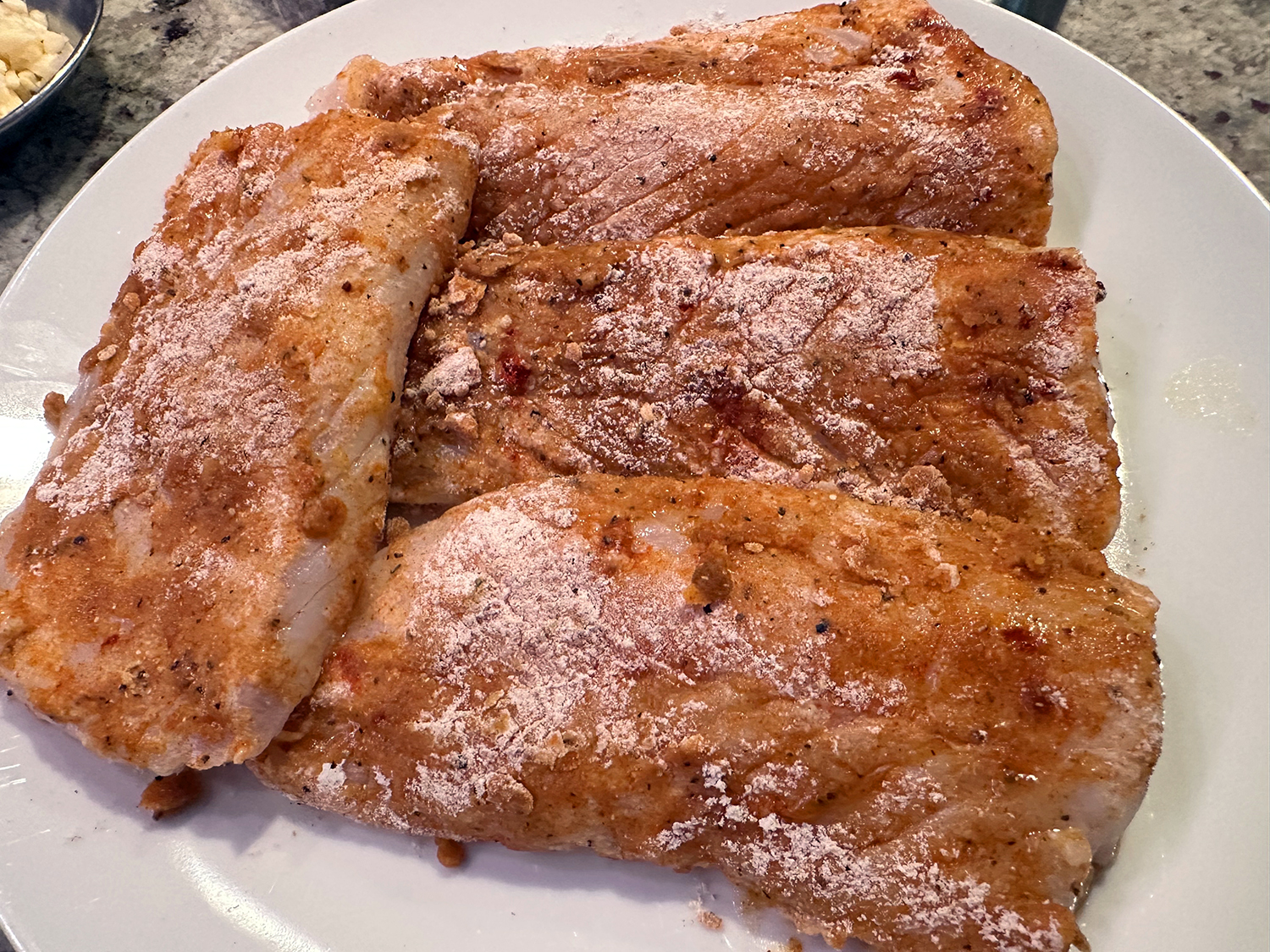
  4. Pat the fish dry. Dip the fish in the lemon sauce then dip it in the flour mixture. Shake off excess flour. Reserve the lemon sauce for later.
  5. Heat 2 tablespoon olive oil in a cast iron skillet (or an oven-safe pan) over medium-high heat (watch the oil to be sure it is shimmering but not smoking). Add the fish and sear on each side to give it some color, but do not fully cook (about 2 minutes on each side). Remove the skillet from heat.
  6. To the remaining lemon sauce, add the minced garlic and mix. Drizzle all over the fish fillets.
  7. Bake in the heated oven until the fish flakes easily with a fork (10 minutes should do it, but begin checking earlier). Remove from the heat and sprinkle chopped parsley. Serve immediately.

http://www.lynnandruss.com

Recipe by Suzy Karadsheh

Salmon with Avocado Sauce and Tomato-Cilantro Salsa

Milk Street borrows from Colombia’s take on guacamole—spiked with both lime juice and vinegar as well as fresh chilies—to create an easy, no-cook sauce for salmon fillets. A fresh tomato-cilantro salsa finishes the dish, adding a bright, acidic note to balance the rich, savory fish.

Don’t shy away from using the habañero chili. Its fruity flavor pairs perfectly with the avocado. It does give bold spiciness to the sauce, but the richness of the salmon keeps the heat in check. The recipe makes enough avocado salsa, so you could easily by 2-pounds* of salmon or more to feed more dinner guests.

For just the two of us, we purchased a one-pound piece of organic salmon and split it into two filets. Fresh corn on the cob and a hefty side salad rounded out the healthy, flavorful meal.

Seared Salmon with Avocado Sauce and Tomato-Cilantro Salsa

  • Servings: 4
  • Difficulty: easy
  • Print

Ingredients

  • 1 1/2 cups cherry or grape tomatoes, roughly chopped
  • 5 Tbsp. lime juice, divided, plus lime wedges, to serve
  • Kosher salt
  • 2 scallions, cut into 1-inch lengths
  • 1 Anaheim chili, stemmed, seeded, cut into rough 1-inch pieces
  • 1 habañero chili, stemmed and seeded
  • 2 Tbsp. white vinegar
  • 1 1/2 cups fresh cilantro leaves and tender stems, divided
  • 1 ripe avocado, halved, pitted, peeled and chopped
  • 4 6-oz. center-cut salmon fillets (each 1 to 1¼ inches thick), patted dry
  • 1 Tbsp. grapeseed or other neutral oil
  • 2 Tbsp. salted butter

Directions

  1. In a medium bowl, toss the tomatoes with 1 tablespoon of the lime juice and a pinch of salt. Set aside.
  2. In a blender, combine the scallions, both chilies, vinegar, 2 tablespoons of the remaining lime juice and ½ teaspoon salt. Blend until smooth, about 30 seconds. Add ¾ cup of the cilantro and the peeled avocado.
  3. With the blender running, stream in 3 tablespoons water and blend until smooth and creamy, about 1 minute, scraping the blender jar as needed; if needed, add up to 1 tablespoon more water to achieve the correct consistency. Set aside.
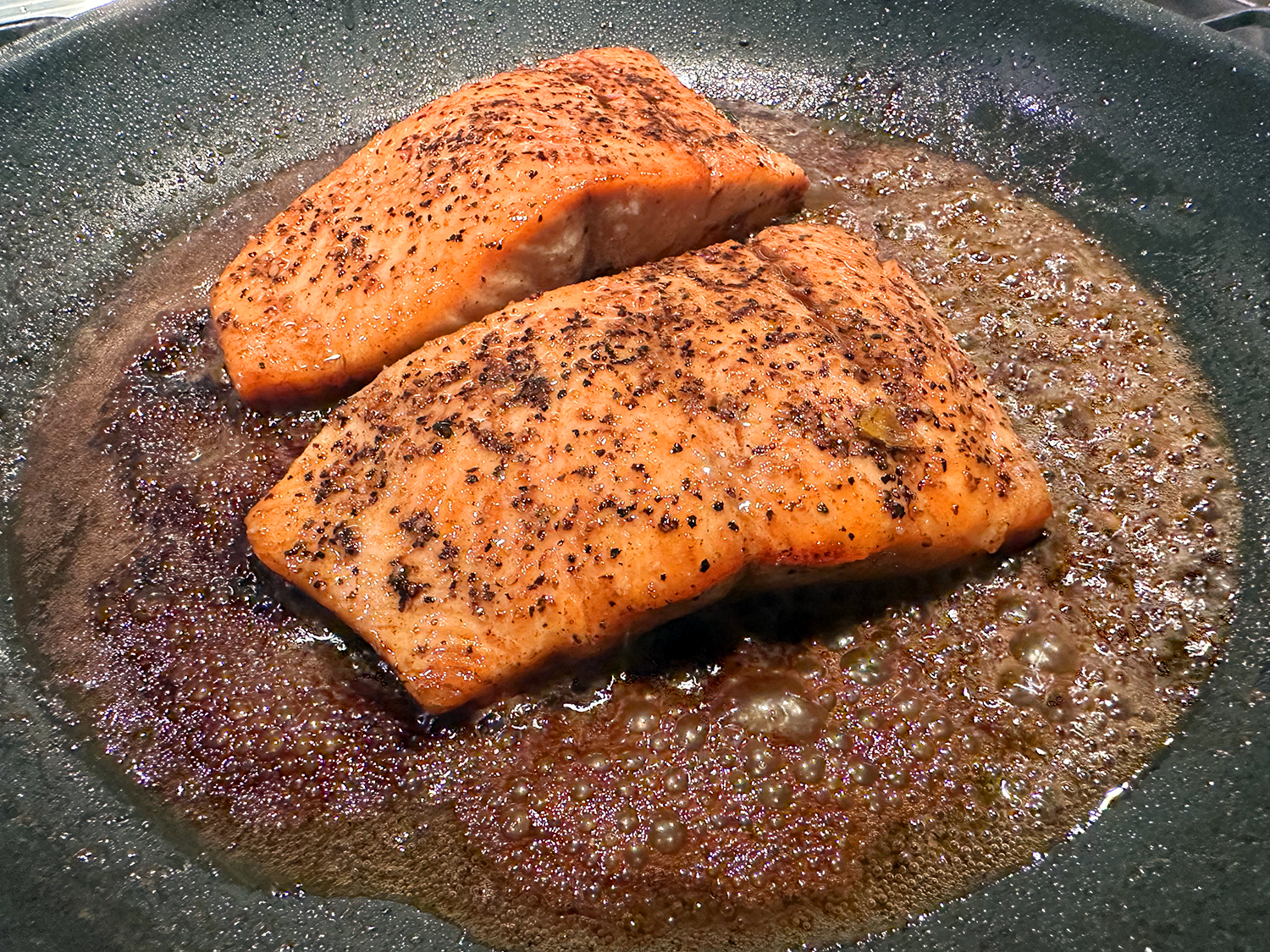
  4. Season the salmon on both sides with salt. In a 12-inch nonstick skillet over medium-high, heat the oil until shimmering. Add the fillets flesh side down, reduce to medium and cook until golden, about 4 minutes.
  5. Using a wide metal spatula, flip the fillets, add the butter and increase to medium-high. Once the butter stops foaming, spoon it over the fillets, adjusting the heat to prevent the butter from burning.
  6. Cook and baste the fish until the thickest parts reach 115°F to 120°F, or are nearly opaque when cut into, 2 to 3 minutes. Pour the remaining 2 tablespoons lime juice into the pan and baste the fillets once or twice more.
  7. With a wide metal spatula, transfer the fillets to individual plates. Spoon about 2 tablespoons avocado sauce over each fillet.
  8. Add the remaining ¾ cup cilantro to the tomatoes and toss, then spoon over the salmon. Serve the remaining avocado sauce on the side, along with lime wedges.

http://www.lynnandruss.com

Recipe from Milk Street

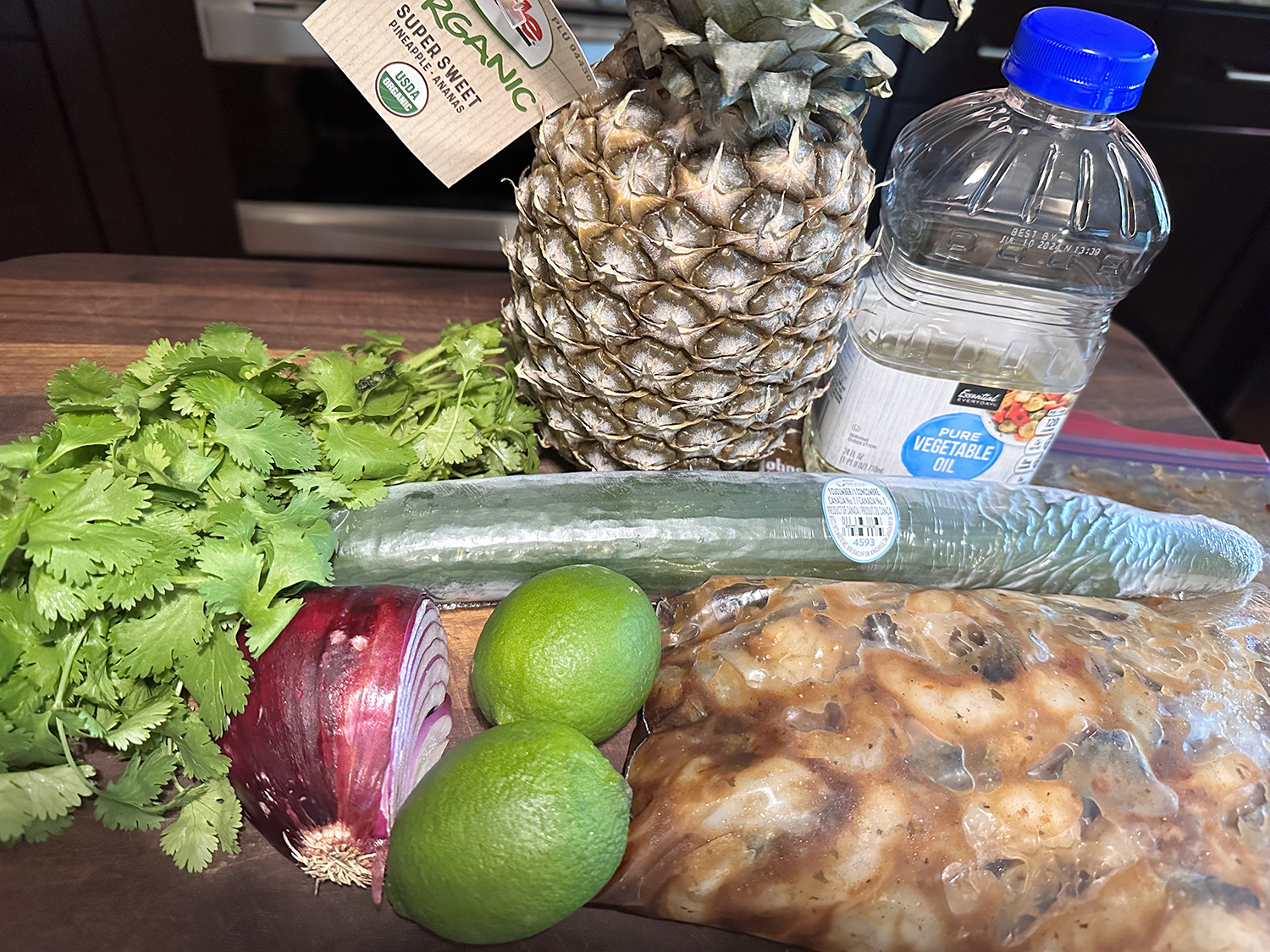
Jerk Shrimp with Pineapple Salad

If you have ever been to the Caribbean islands, then you must have had an encounter with jerk seasoning. Commonly recognized as a hallmark of Caribbean cuisine, jerk shrimp stands alongside jerk chicken as one of Jamaica’s signature dishes.

According to the Bon Appétit article, many recipes for this bright, summery grilled shrimp dinner start with a homemade jerk seasoning marinade (a mixture of puréed Scotch bonnet peppers, allspice, ginger, and a host of other aromatics that might include bell peppers, habaneros, soy sauce, jalapeños, brown sugar, fresh thyme, and more).

Others may rely on a premade spice blend with an equally long list, including cayenne pepper, garlic powder, and paprika. This Jamaican jerk shrimp recipe, however, comes together quickly thanks to a scoop of store-bought jerk seasoning paste, which acts as an instant flavor enhancer for the seafood. Not able to source the paste easily, we bought a liquid jerk marinade, and reduced it down to a thicker consistency.

You can use fresh (highly recommended) or frozen shrimp for this dish; if buying fresh, look for large or jumbo deveined shrimp, and if using frozen, thaw the shrimp in the refrigerator overnight. Marinate the raw shrimp for at least 30 minutes (and up to 8 hours; any longer and the shrimp will start to get mushy).

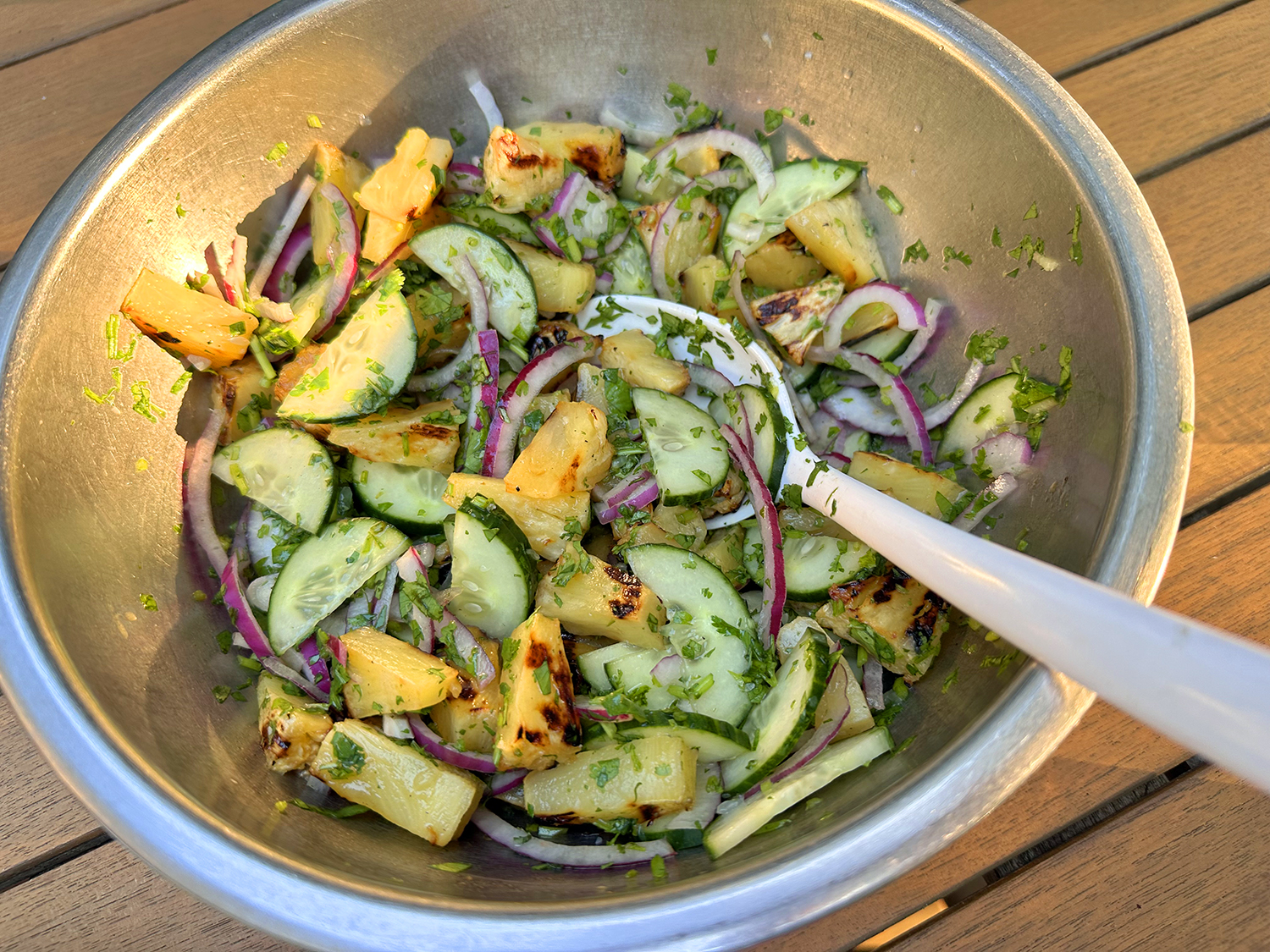
To balance the heat, pair the jerk shrimp with a citrusy, herbaceous pineapple salad. No fresh pineapples to be found? Opt for a mango salsa. Serve as is, or tuck everything into tortillas for shrimp tacos, or pile onto a plate with grilled vegetables. Add a colorful salad to round out the meal, and you have one fancy, flavorful, nutritious healthy dinner!

OK, let’s talk about the elephant in the room. That would be cilantro in this case, and the recipe calls for a full cup. According to recent statistics, a whopping 10% of the population can’t stand and/or tolerate cilantro. So the obvious switch out is fresh basil.

And while it is visually more attractive to leave the shrimp tails on, they are a bit of mess to remove once they are grilled and on your plate. So we say, just get rid of them before you throw the shrimp in with the jerk seasoning.

Jerk Shrimp with Pineapple Salad

  • Servings: 4
  • Difficulty: easy
  • Print

Ingredients

  • ¼ cup mild jerk seasoning paste
  • 1 Tbsp. vegetable oil, plus more for grill
  • 2 lb. large shrimp, peeled, deveined
  • 1 tsp. Diamond Crystal or ½ tsp. Morton kosher salt, plus more
  • Freshly ground pepper
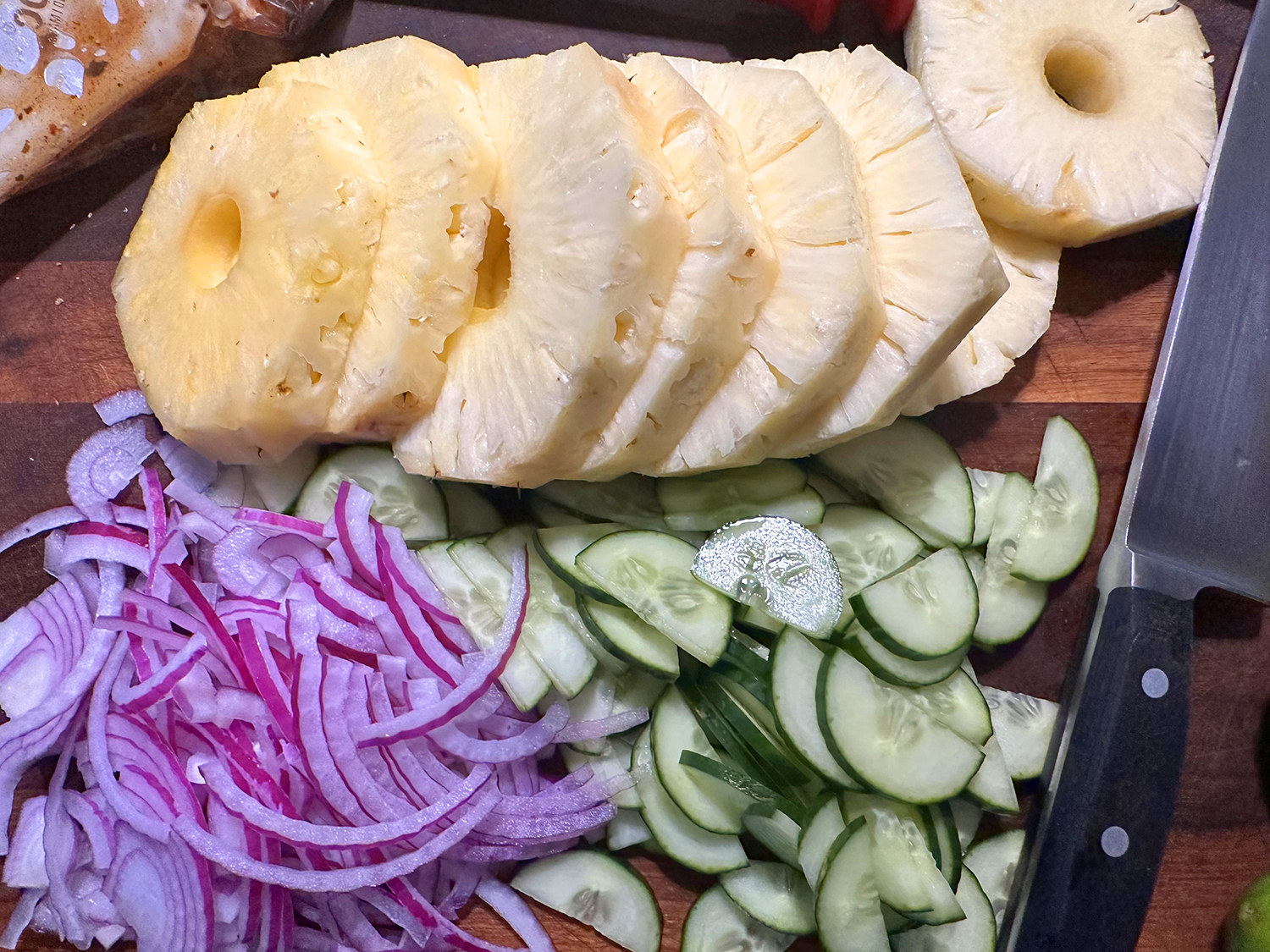
  • 1 medium pineapple, peeled, cored, sliced into ½”-thick rounds
  • ½ medium red onion, thinly sliced
  • 1 Persian cucumber, halved, thinly sliced
  • 1 cup finely chopped cilantro; or fresh basil
  • ⅓ cup fresh lime juice, about 3 limes

Directions

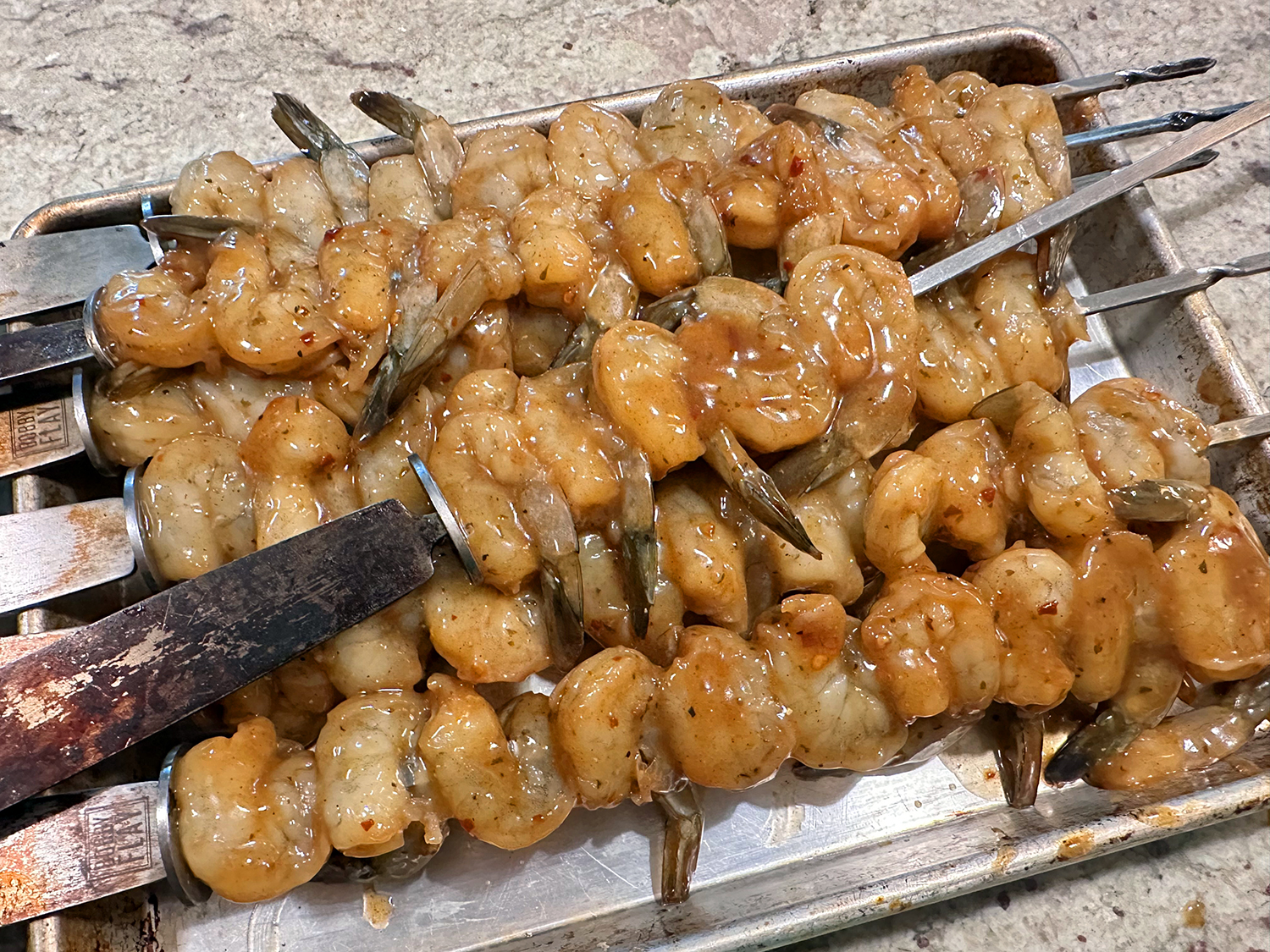
  1. Whisk ¼ cup mild jerk seasoning paste and 1 Tbsp. vegetable oil in a medium bowl. Add 2 lb. large shrimp, peeled, deveined, and lightly season with kosher salt and freshly ground pepper; toss to coat. Cover and chill at least 30 minutes and up to 8 hours.
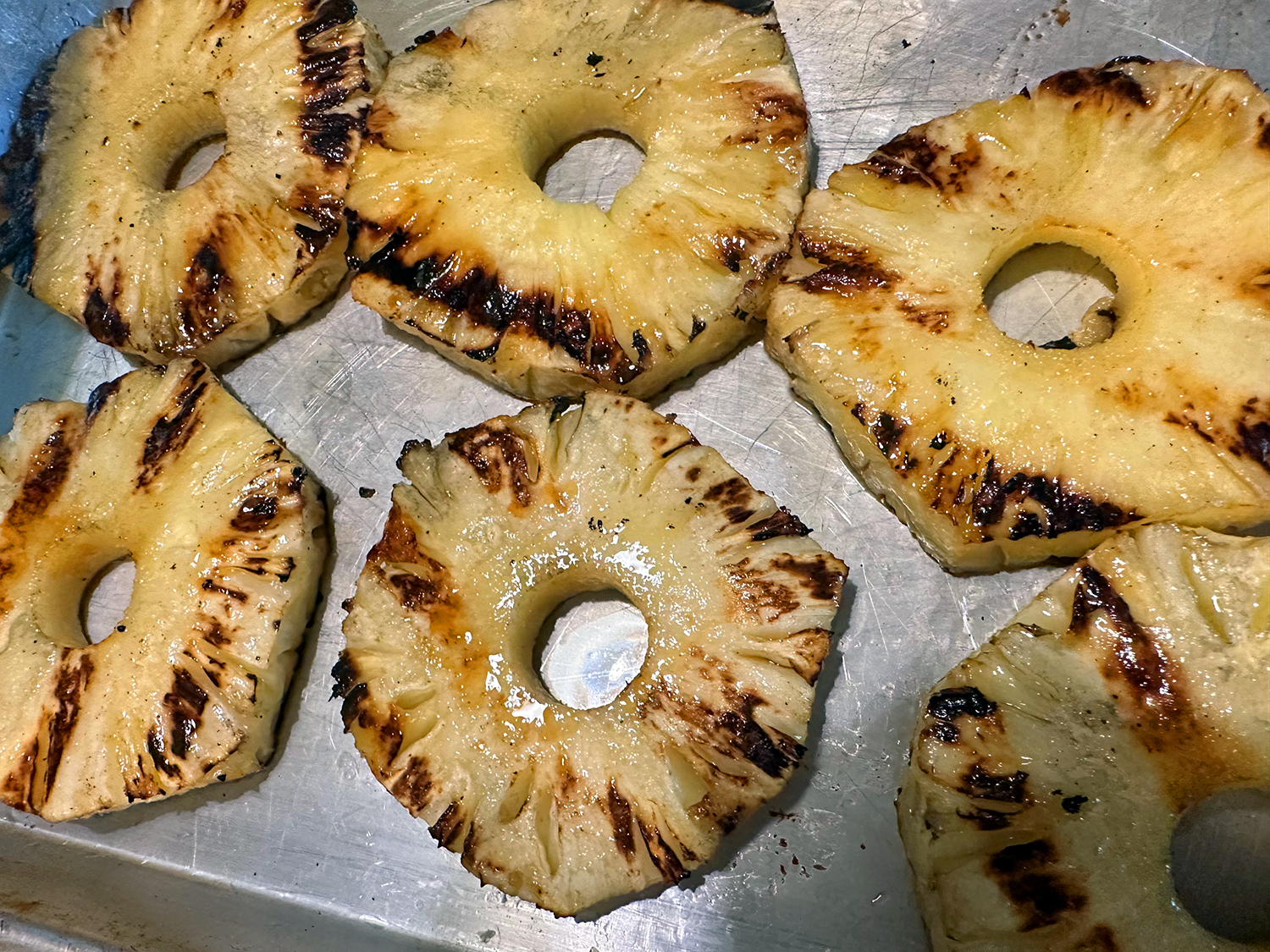
  2. Meanwhile, prepare a grill for medium heat; oil grate. Grill 1 medium pineapple, peeled, cored, sliced into ½”-thick rounds, turning halfway through, until tender and there are deep brown marks on both sides, about 4 minutes. Transfer to a cutting board and let cool slightly.
  3. Cut pineapple into ¼” pieces; place in a large bowl. Add ½ medium red onion, thinly sliced, 1 Persian cucumber, halved, thinly sliced, 1 cup finely chopped cilantro, ⅓ cup fresh lime juice, and 1 tsp. Diamond Crystal or ½ tsp. Morton kosher salt; toss well.
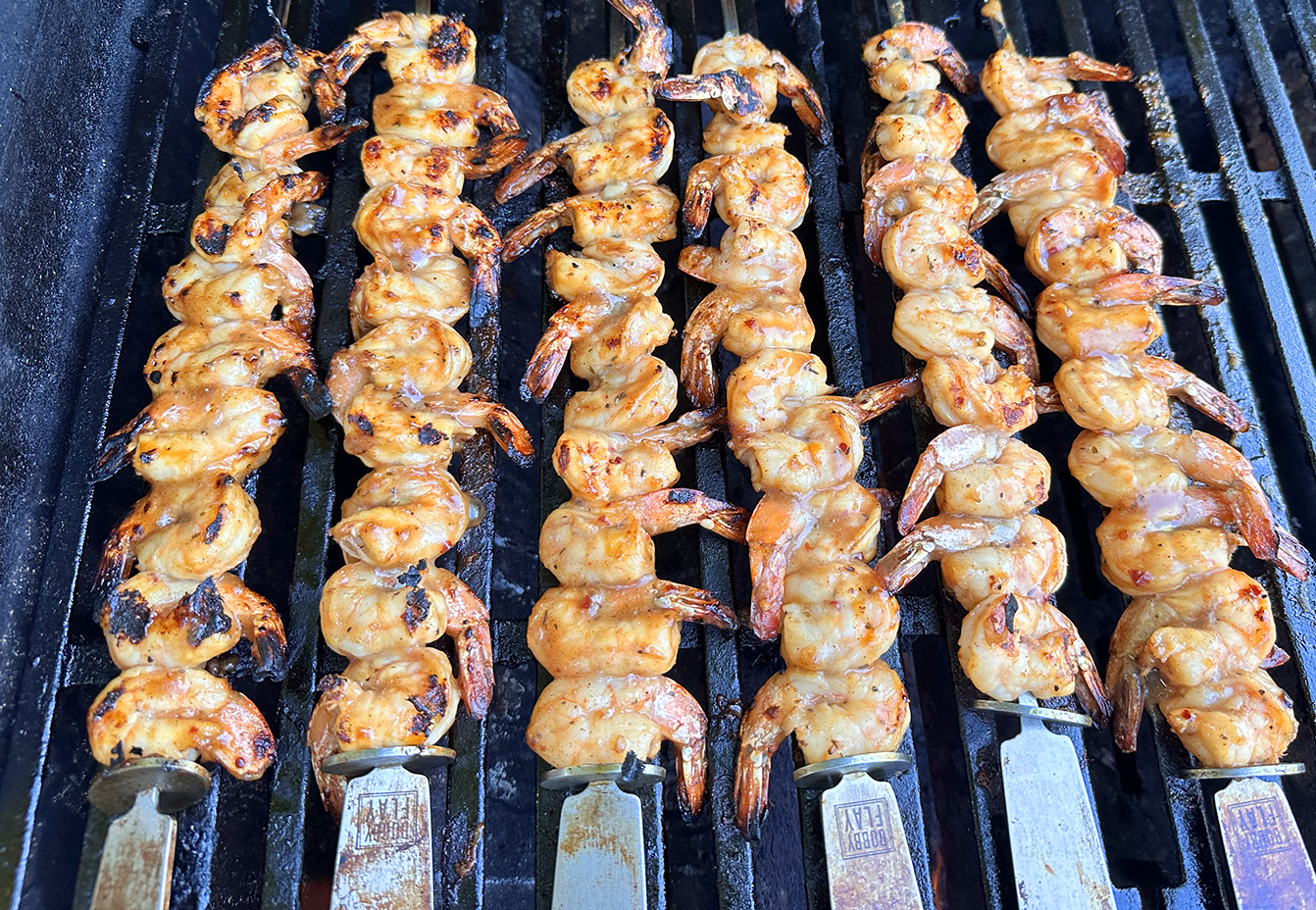
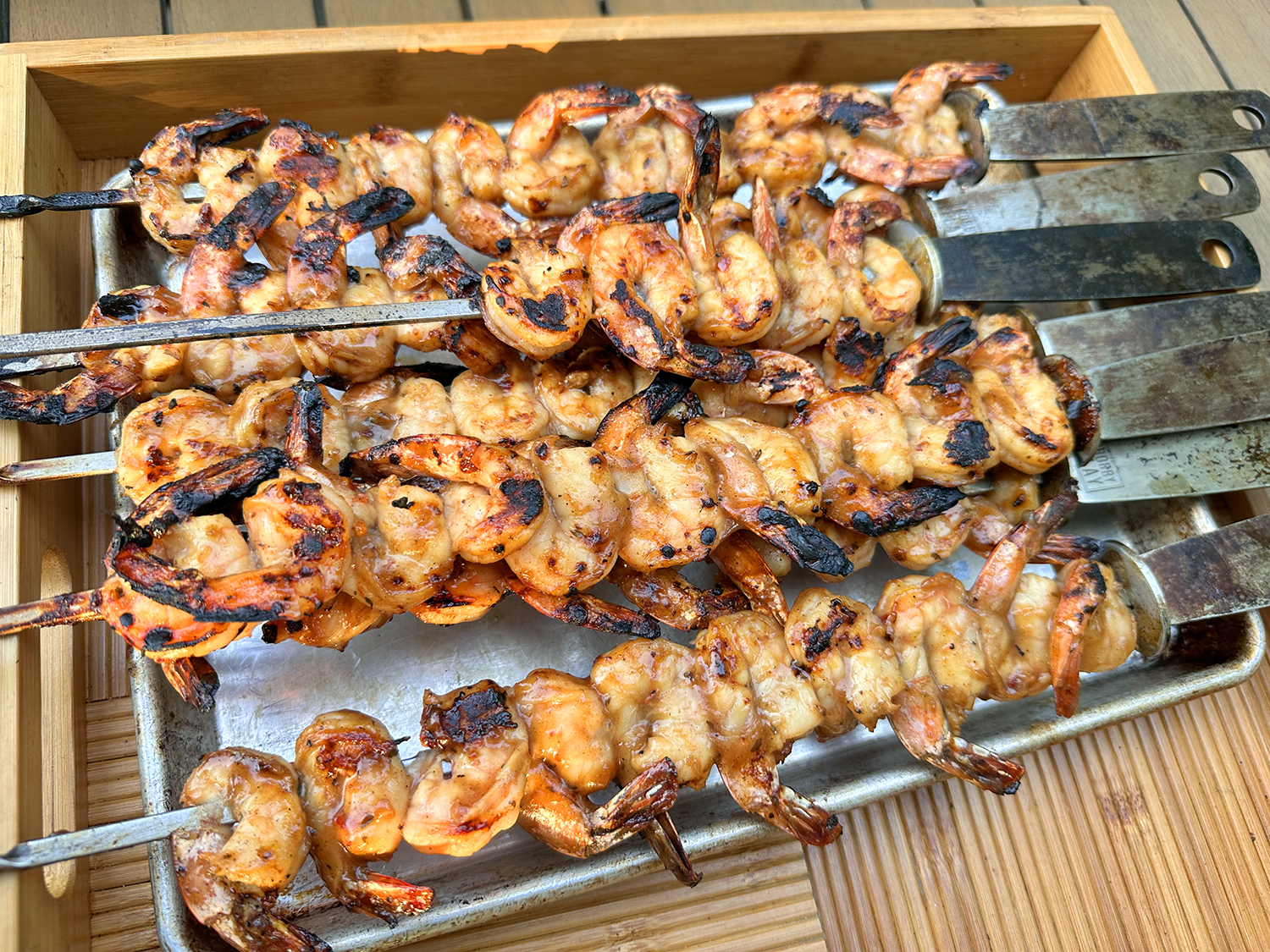
  4. Thread shrimp onto skewers. Cook shrimp on grill until opaque and lightly charred, 3–4 minutes per side.
  5. Spoon pineapple salad onto plates with a slotted spoon, then top with shrimp. Spoon any juices left in bowl over shrimp.

To make without a grill: Heat broiler. Spread marinated shrimp out on one side of a rimmed baking sheet (do not skewer); arrange pineapple on other side. Broil, turning halfway through, until shrimp are opaque and pineapple is blistered in spots, about 5 minutes.

http://www.lynnandruss.com

Recipe by Inés Anguiano for Bon Appétit

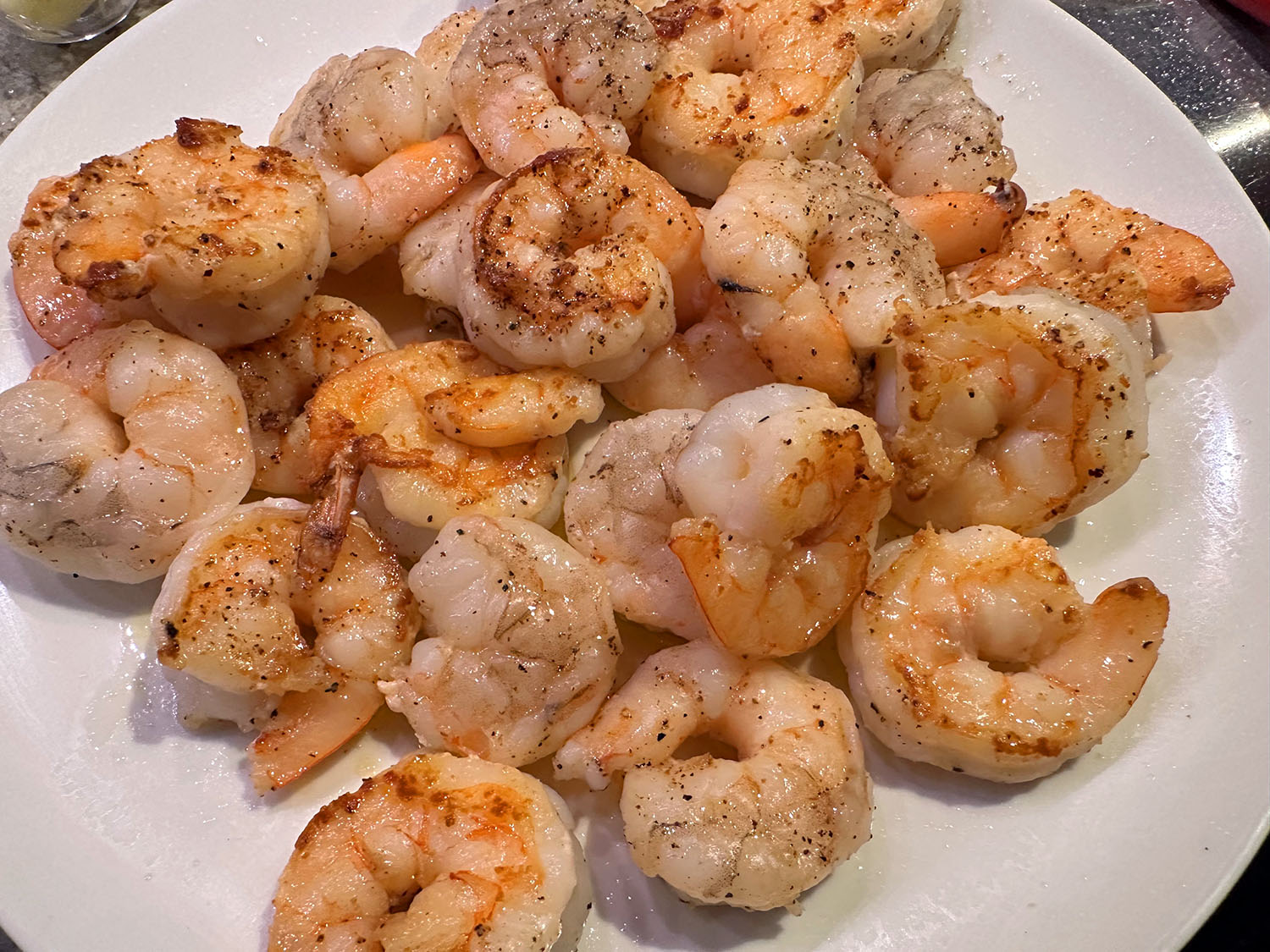
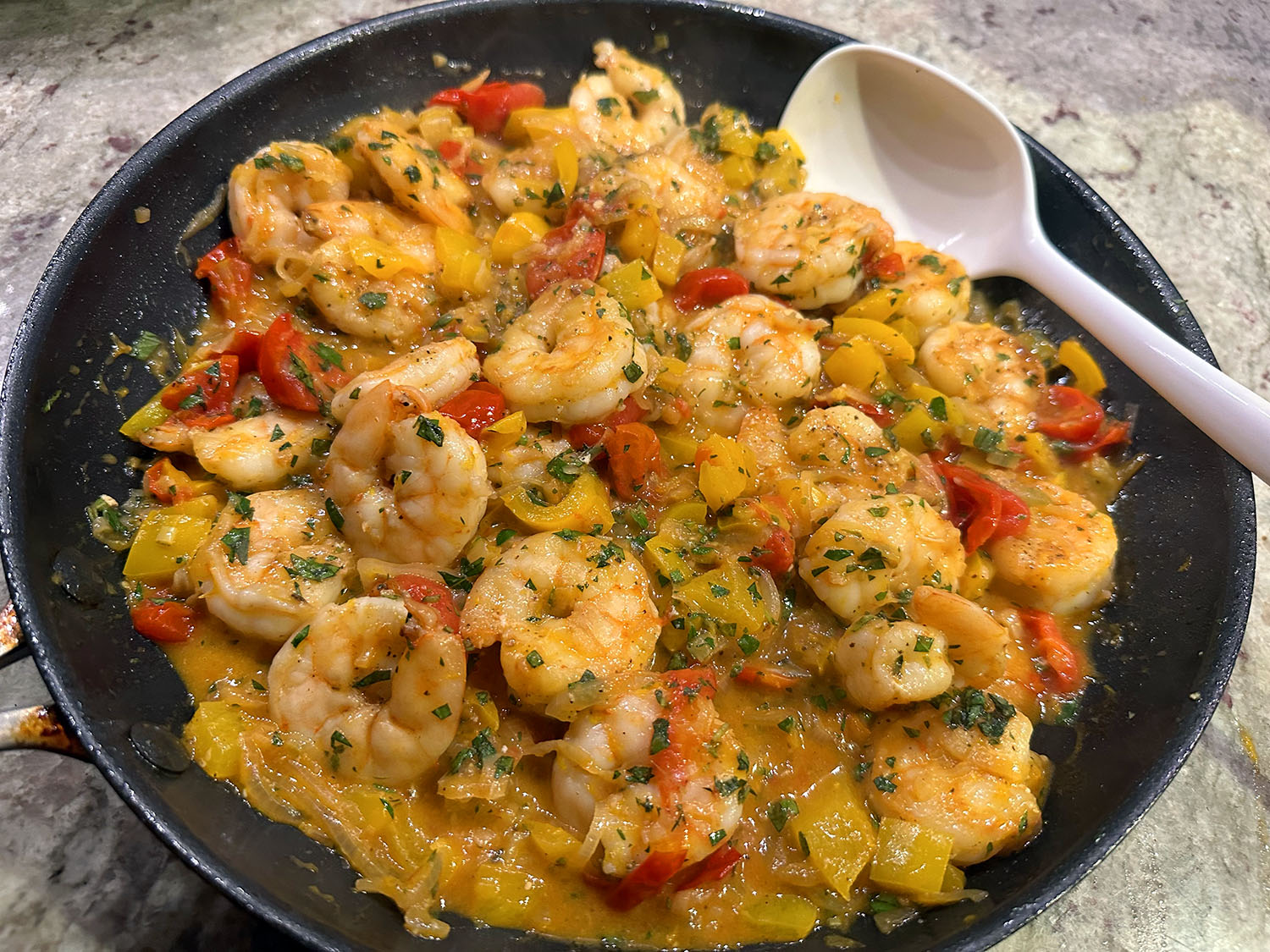
Shrimp with Ouzo, Orange and Oregano Over Orzo

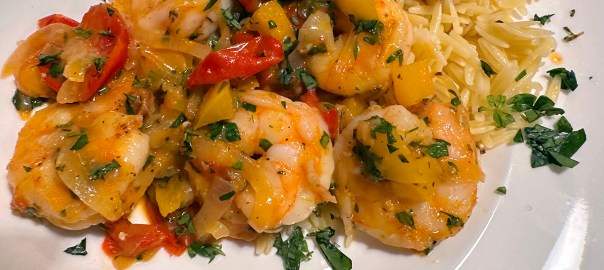
Here’s a lovely, bright, citrusy shrimp dinner that can be on your weeknight table in under an hour. This recipe borrows an ouzo-orange combination to make a delicious sauce for plump, briny-sweet shrimp, and finishes the dish with a little butter to round out the flavors.

If you don’t have ouzo, substitute ½ teaspoon aniseed, lightly crushed, stirred into ⅓ cup vodka. Serve the shrimp with orzo.

Warning: Don’t add the ouzo while the skillet is on the burner (if cooking with gas), as the alcohol may ignite. Either turn off the burner or slide the pan off the stovetop before pouring in the ouzo.

Shrimp with Ouzo, Orange and Oregano Over Orzo

  • Servings: 4
  • Difficulty: easy
  • Print

Ingredients

  • 1½ lbs. extra-large (21/25 per pound) shrimp, peeled (tails removed), deveined and patted dry
  • Kosher salt and ground black pepper
  • 5 Tbsp. extra-virgin olive oil, divided
  • 2 medium shallots, halved and thinly sliced
  • 1 pint grape tomatoes, halved
  • ½ yellow, orange or red bell pepper, stemmed, seeded and chopped
  • ⅓ cup ouzo
  • 1 tsp. grated orange zest, plus ⅔ cup orange juice
  • 2 Tbsp. salted butter, cut into 2 pieces
  • 3 Tbsp. fresh oregano, chopped

Directions

  1. Season the shrimp with salt and pepper. In a 12-inch skillet over medium-high, heat 2 tablespoons of oil until shimmering. Add half the shrimp in an even layer and cook until well browned on the bottoms, about 3 minutes, then transfer to a large plate. Repeat, using 2 tablespoons of the remaining oil and the remaining shrimp.
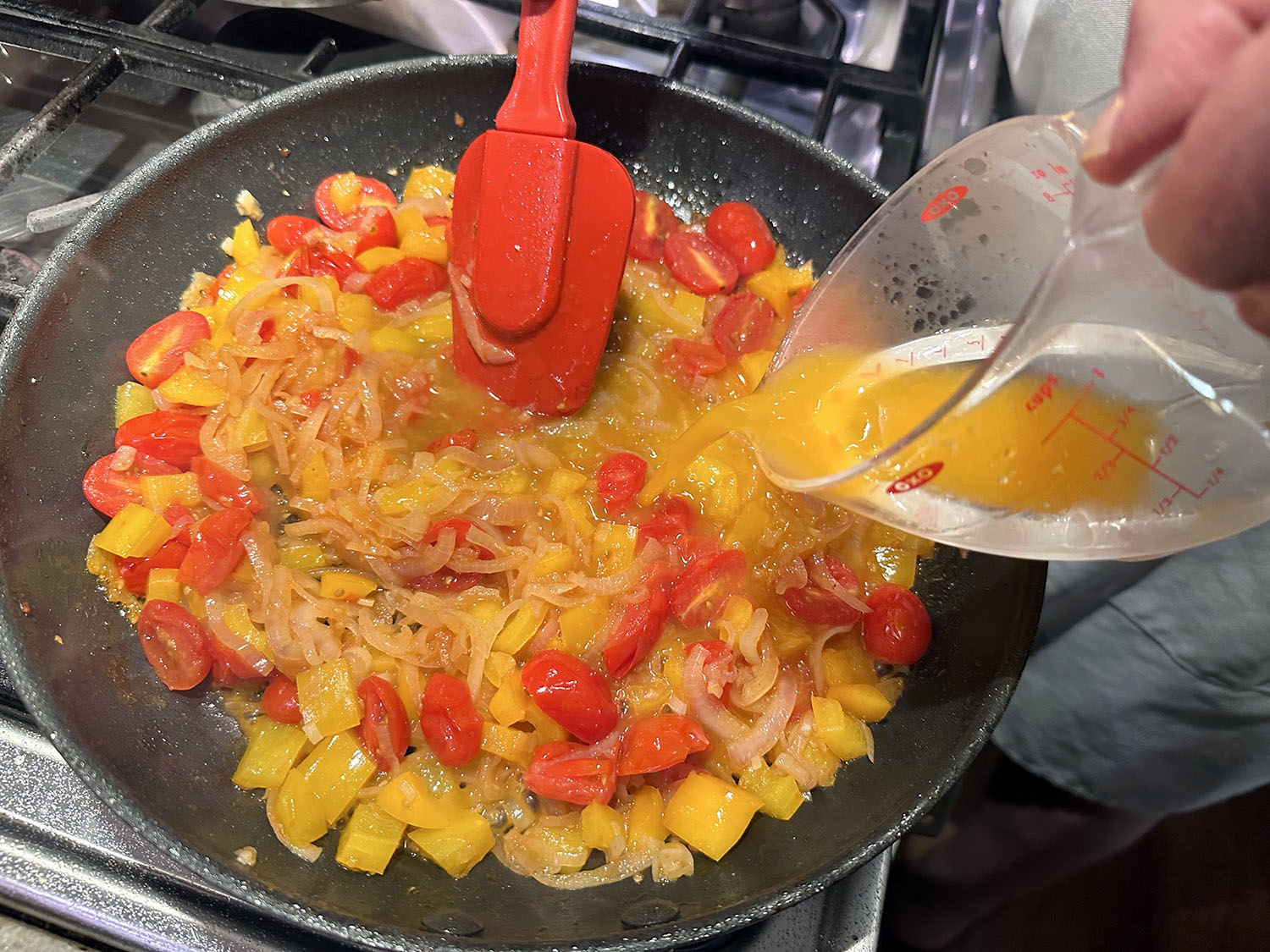
  2. In the same skillet over medium-high, heat the remaining 1 tablespoon oil until shimmering. Add the shallots, tomatoes and bell pepper, then cook, stirring occasionally, until the shallots and tomatoes soften, 4 to 5 minutes.
  3. Remove the pan from the heat and add the ouzo. Return to medium-high and cook, scraping up any browned bits, until the liquid is reduced and syrupy, 1 to 2 minutes.
  4. Add the orange juice, bring to a simmer and cook, stirring, until once again reduced and syrupy, 4 to 5 minutes.
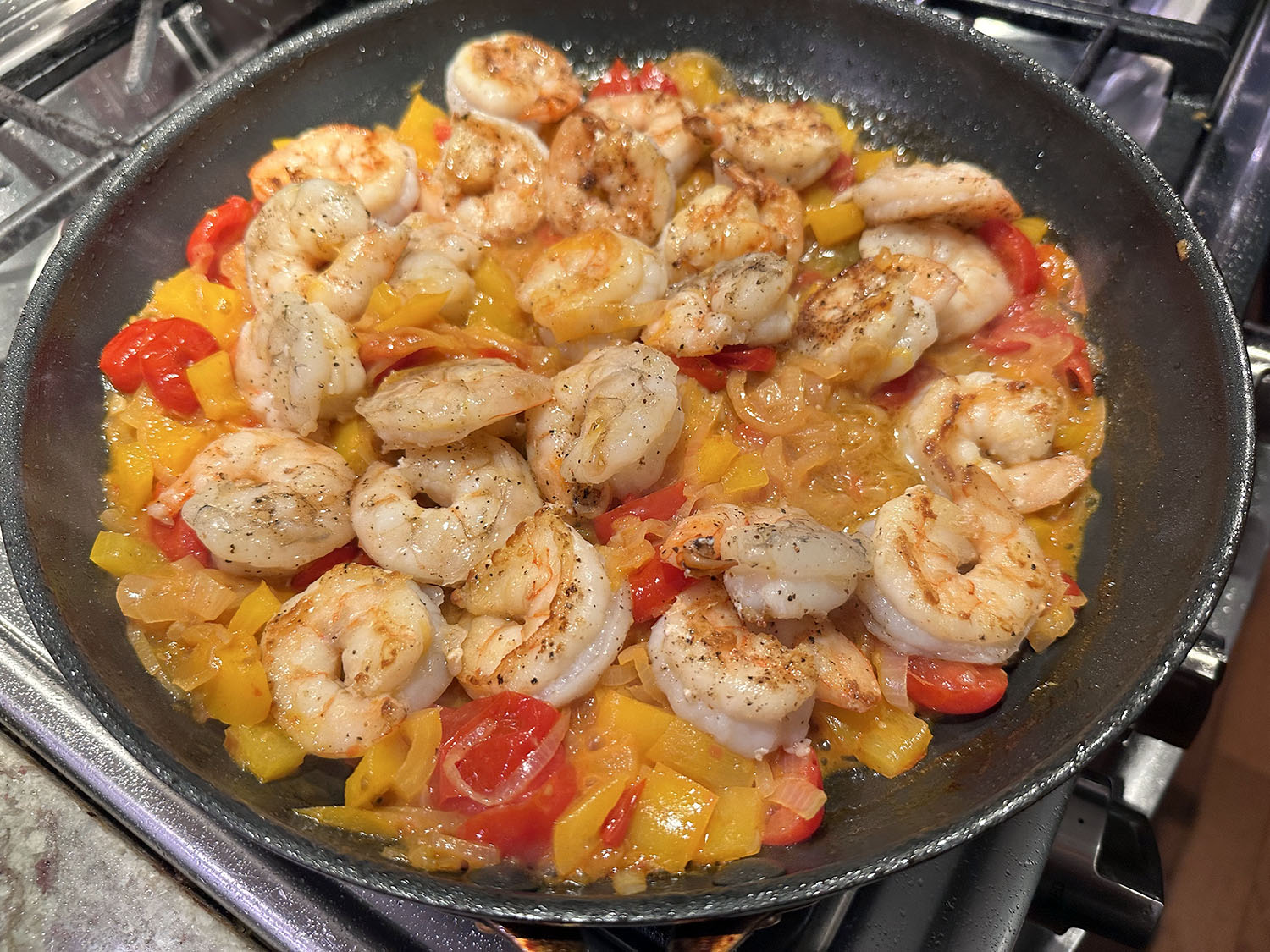
  5. Reduce to medium-low and return the shrimp with any accumulated juices to the pan. Cover and cook until the shrimp are opaque throughout, 3 to 4 minutes.
  6. Off heat, add the butter and stir until melted, then stir in the orange zest and oregano. Taste and season with salt and pepper, then transfer to a serving dish.

http://www.lynnandruss.com

Recipe taken from Milk Street’s Tuesday Night Mediterranean cookbook

Salmon with Miso, Mirin and Sake

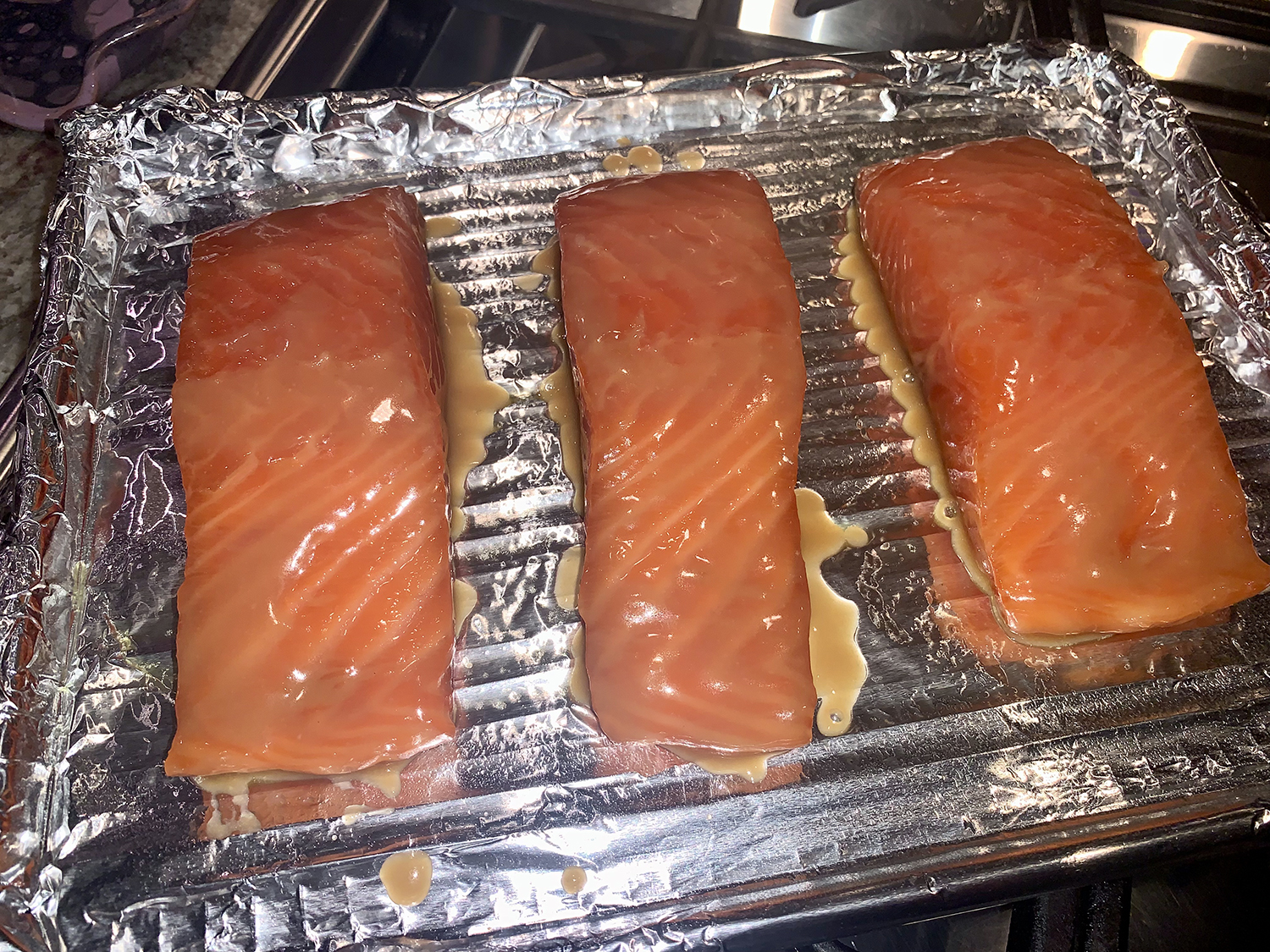
Here’s a quick, healthy weeknight meal bursting with flavor. You just have to be mindful of marinating the salmon the night before, or the morning of.

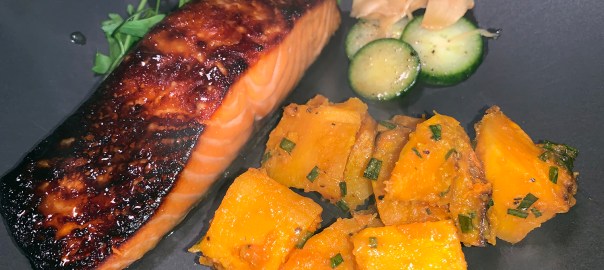
Instead of buying 4, 6-ounce fish filets, we bought one large piece and cut it down into 3 filets measuring 8 ounces each. We paired ours with a side salad and Roasted Butternut Squash with Hoisin and Chives, which also had an Asian profile.

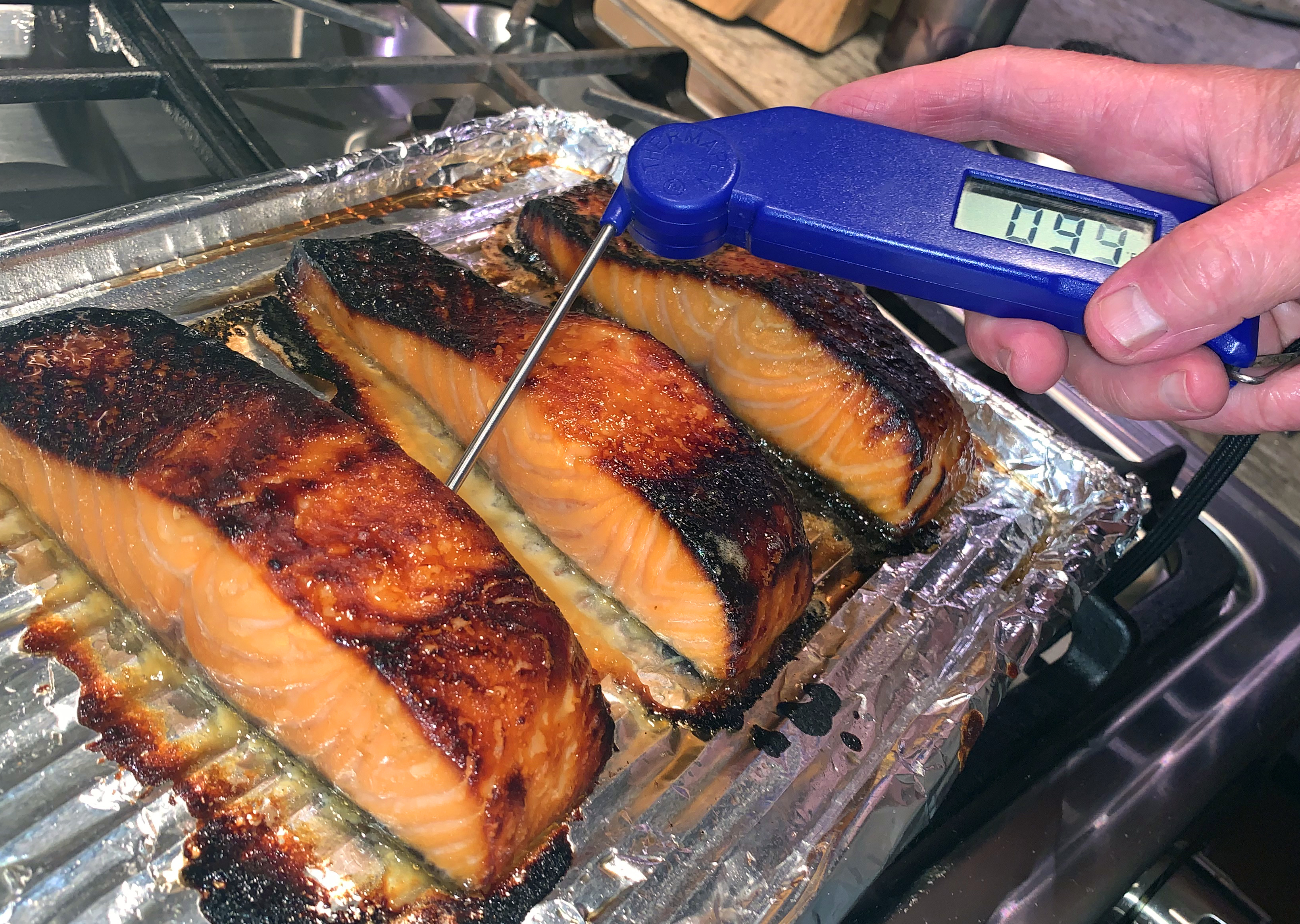
During the broiling process, the internal temperature was too low while the outsides were getting scorched. To continue cooking the fish, drape a piece of aluminum foil over the fish, and cook for a few minutes more.

What is the difference between white and red miso? White miso, also known as “sweet” or “mellow” miso, is fermented for a shorter time and lower in salt than darker varieties. It has a milder, more delicate flavor. A longer-fermented miso that encompasses any darker red and brown varieties, red miso is generally saltier than light yellow and white miso and has a more assertive, pungent flavor.

FYI: Miso paste should be stored in a tightly sealed container in the refrigerator. Lighter varieties will keep for about 9 months and darker ones up to a year.

Salmon with Miso, Mirin and Sake

  • Servings: 3-4
  • Difficulty: easy
  • Print

Ingredients

  • 1⁄2 cup white (or red) miso
  • 1⁄3 cup granulated white sugar
  • 3 Tbsp. mirin
  • 2 Tbsp. sake
  • 1 1⁄2 Tbsp. soy sauce
  • 1 Tbsp. toasted sesame oil
  • 1 1⁄2 lbs. skin-on salmon fillet, cut into 3 or 4 filets
  • Pickled ginger

Directions

  1. Whisk together miso, sugar, mirin, sake, soy sauce, and sesame oil in medium bowl. Pat salmon dry with paper towels and place in 1-gallon zipper-lock bag. Pour miso mixture over fish. Press out air, seal bag, and turn to coat fish in marinade. Refrigerate for at least 8 hours or up to 24 hours, turning occasionally.
  2. Adjust oven rack 8 inches from broiler and heat broiler. Set wire rack in rimmed baking sheet and cover with aluminum foil. Lightly grease foil with nonstick cooking spray. Wipe excess marinade from salmon with fingers, leaving thin layer on fish, and transfer to prepared pan, skin side down.
  3. Broil until salmon is deeply browned and registers 125 degrees, 10 to 14 minutes, rotating sheet halfway through cooking and shielding filets with foil if they begin to get too dark. Serve with slices of pickled ginger.

http://www.lynnandruss.com

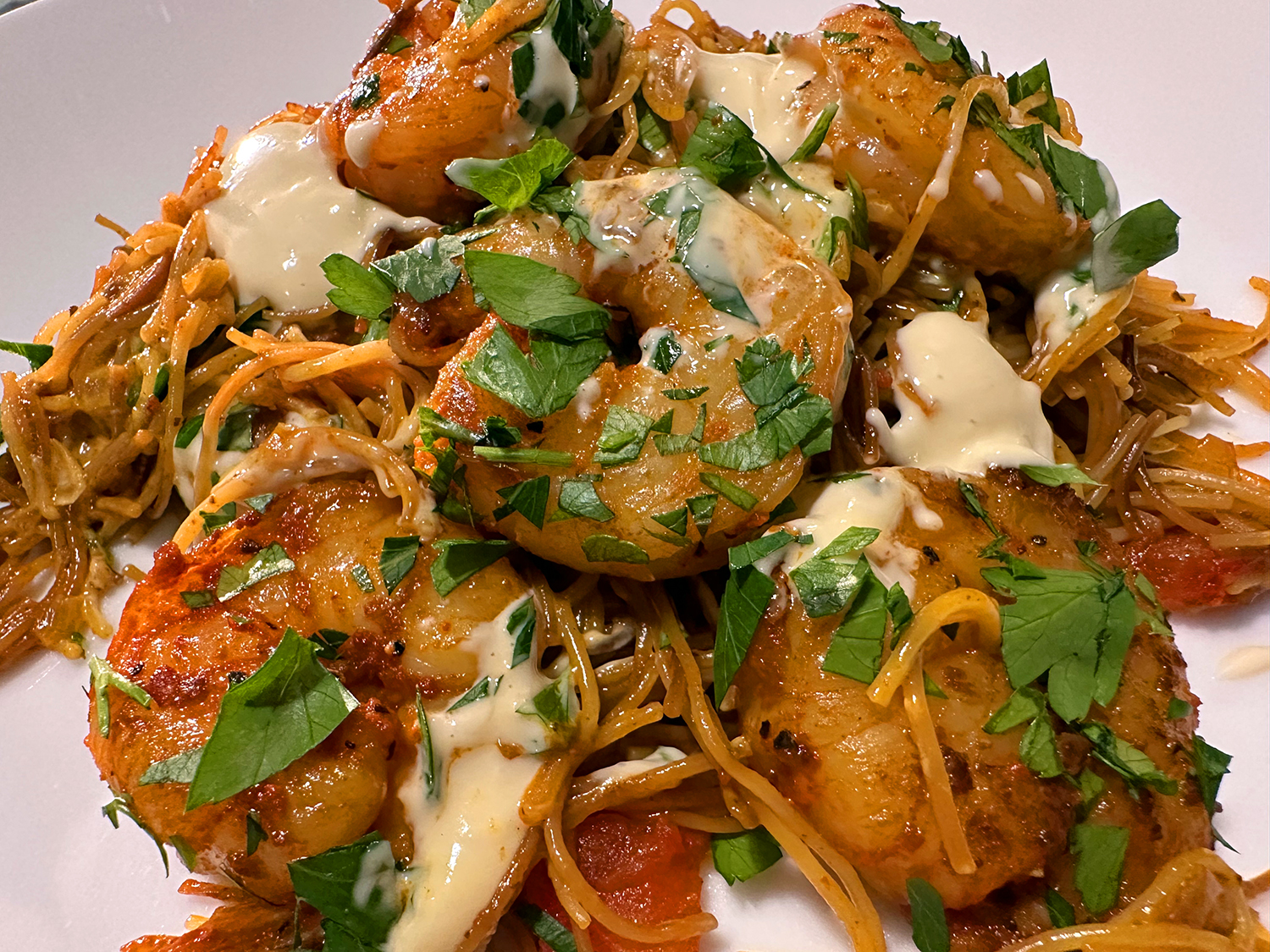
Toasted Noodles with Shrimp

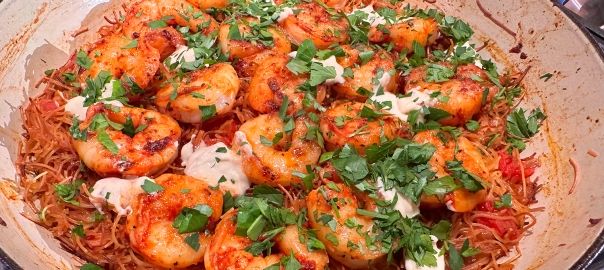
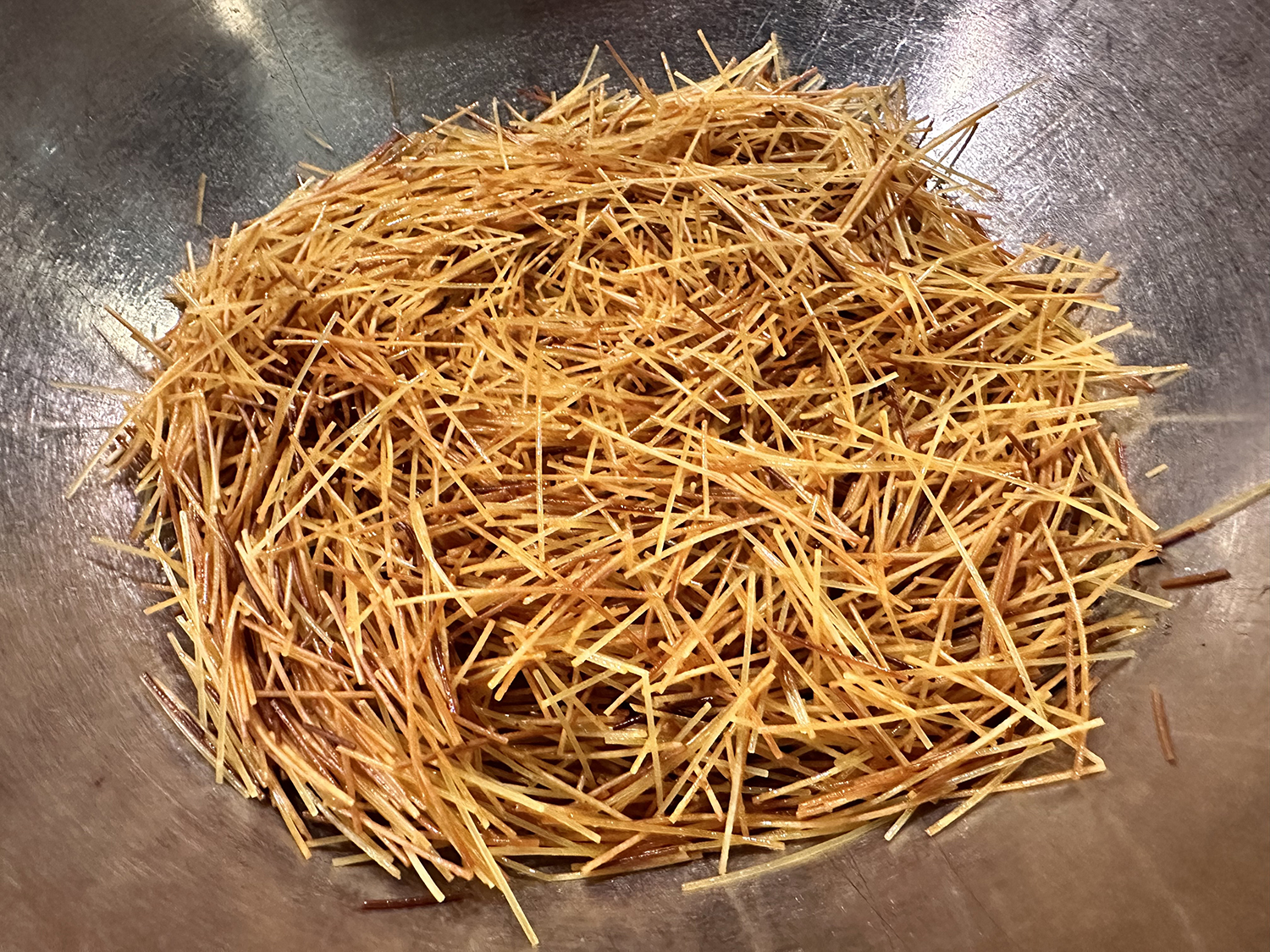
Also known as Rossejat de Fideus, this Toasted Noodles with Shrimp dish is similar to paella, but instead of rice, uses slender noodles that have been toasted until richly browned. Here capellini pasta (aka angel hair) is used. Break it by hand into rough 1-inch pieces (do this over a bowl to keep the pieces contained).

Toasting brings out the nutty-wheaty notes of the pasta, which then is simmered in broth instead of water. You will need a broiler-safe 12-inch skillet for this recipe, as the noodles are first cooked on the stovetop, then browned under the broiler. This dish is traditionally served with aioli, a garlicky mayonnaise. The recipe below makes a quick, extra-lemony version using store-bought mayonnaise. We decided to use up an open jar of Stonewall brand garlic aioli.

Don’t use regular paprika. Smoked paprika gives this dish a very Spanish flavor profile. Before broiling the noodles, make sure most of the liquid has been absorbed; too much moisture in the pan will prevent the surface from crisping and browning. Don’t forget that the skillet handle will be hot after broiling; use a potholder or oven mitt.

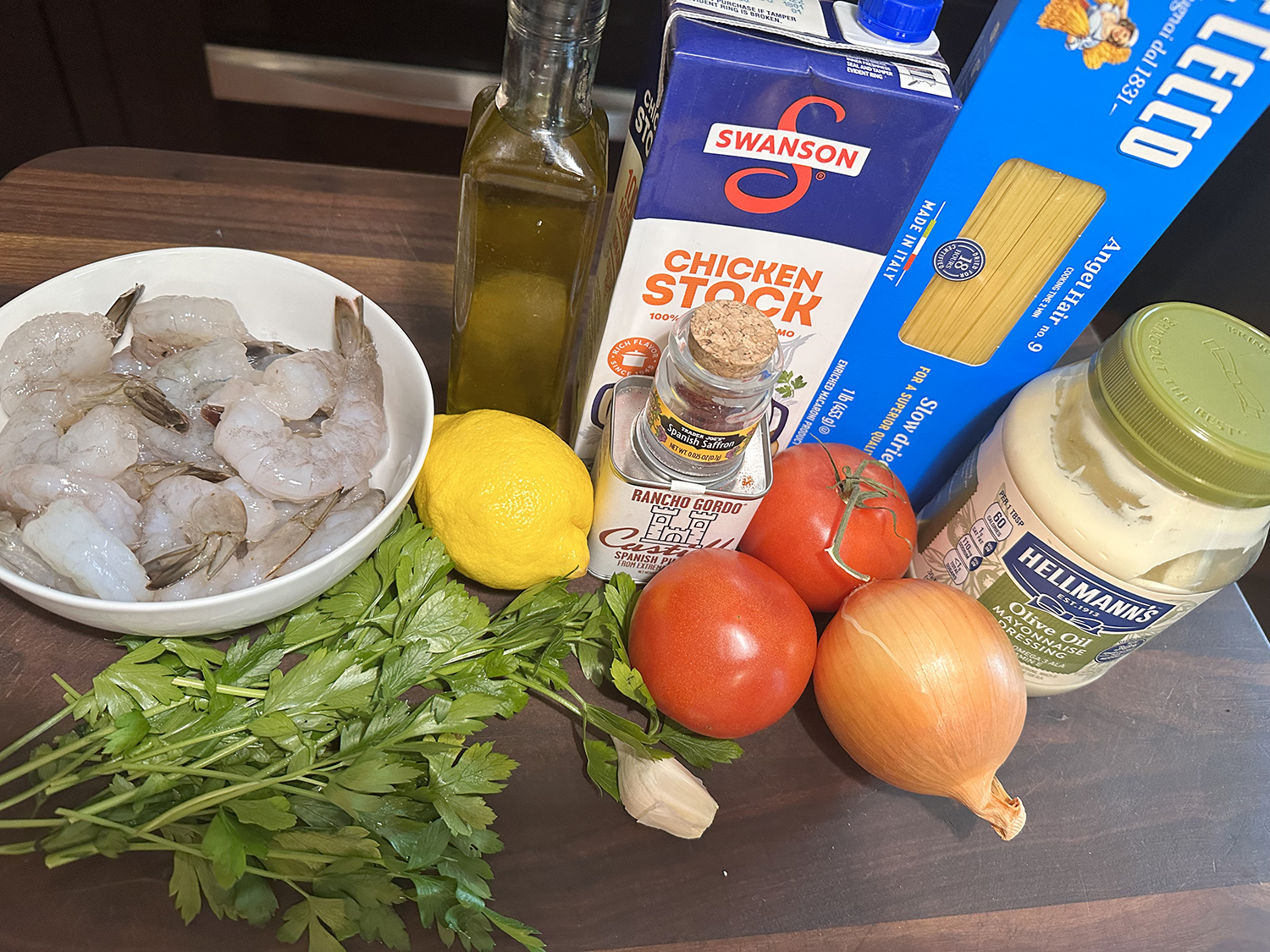
Typically, we would incorporate our homemade chicken stock, but we were completely out, so we used a boxed brand. Then it hit us halfway through making the dish, we should have used our homemade seafood stock!!

Toasted Noodles with Shrimp

  • Servings: 4
  • Difficulty: easy
  • Print

Ingredients

  • ½ cup mayonnaise
  • 1 tsp. grated lemon zest, plus 2 tablespoons lemon juice
  • 3 garlic cloves, 1 finely grated, plus 2 thinly sliced
  • 1 lb. extra-large (21/25 per lb.) shrimp, peeled and deveined
  • 2 tsp. smoked sweet paprika, divided
  • Kosher salt and ground black pepper
  • 3 Tbsp. extra-virgin olive oil, divided
  • 6 oz. capellini pasta, broken into rough 1-inch pieces (see note)
  • 1 small yellow onion, finely chopped
  • 1 plum tomato, cored and chopped
  • 2 cups chicken broth or seafood stock, preferably homemade
  • 1 pinch saffron threads
  • ¼ cup lightly packed fresh flat-leaf parsley, chopped

Directions

  1. In a small bowl, stir together the mayonnaise, lemon zest and juice and the grated garlic. Cover and refrigerate until ready to use. (Or use a store-bought brand.)
  2. Heat the broiler with a rack about 6 inches from the heat. In a medium bowl, toss the shrimp with 1 teaspoon paprika, ¾ teaspoon salt and ¼ teaspoon pepper; set aside.
  3. In a broiler-safe 12-inch skillet over medium, heat 1 tablespoon of oil until shimmering. Add the pasta and cook, stirring frequently, until deep golden brown, about 5 minutes. Transfer to a medium bowl and set aside; wipe out the skillet with paper towels.
  4. Return the skillet to medium-high, heat 1 tablespoon of the remaining oil until barely smoking. Add the shrimp in a single layer and cook without stirring until deep golden brown, 1 to 2 minutes. Flip the shrimp and continue to cook until opaque, another 20 to 30 seconds. Transfer to a plate, tent with foil and set aside.
  5. In the same skillet over medium, combine the remaining 1 tablespoon oil, the onion, the remaining 1 teaspoon paprika and ½ teaspoon salt. Cook, stirring occasionally, until softened, about 5 minutes. Add the tomato and the sliced garlic and cook, stirring, until fragrant, about 30 seconds.
  6. Stir in the toasted pasta, the broth and the saffron. Bring to a boil over medium-high, then reduce to medium and cook, uncovered, stirring occasionally, until almost all of the liquid has been absorbed, 3 to 5 minutes.
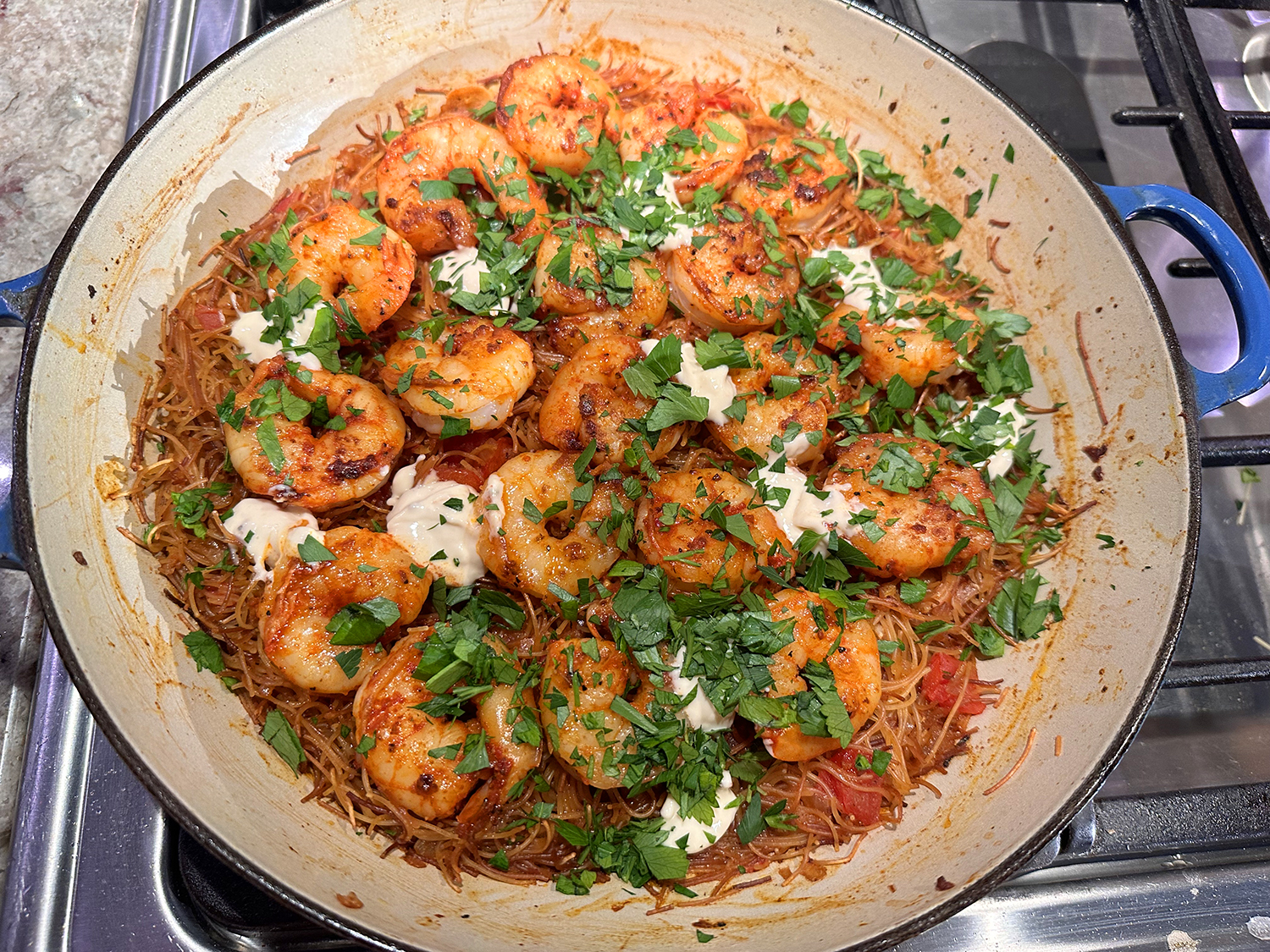
  7. Place the skillet under the broiler and cook until the surface is crisp and the tips of the noodles begin to brown, 3 to 5 minutes.
  8. Remove from the broiler, then top with the shrimp and drizzle with the accumulated juices. Spoon on some of the mayonnaise and sprinkle with the parsley; serve the remaining mayonnaise mixture on the side.

http://www.lynnandruss.com

Adapted from a recipe for Milk Street

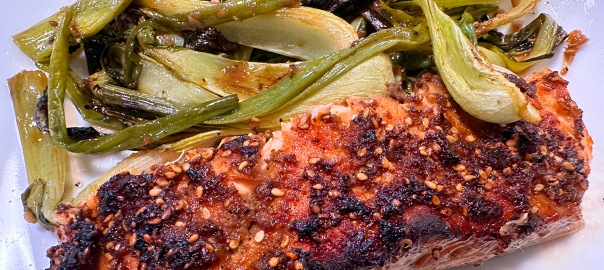
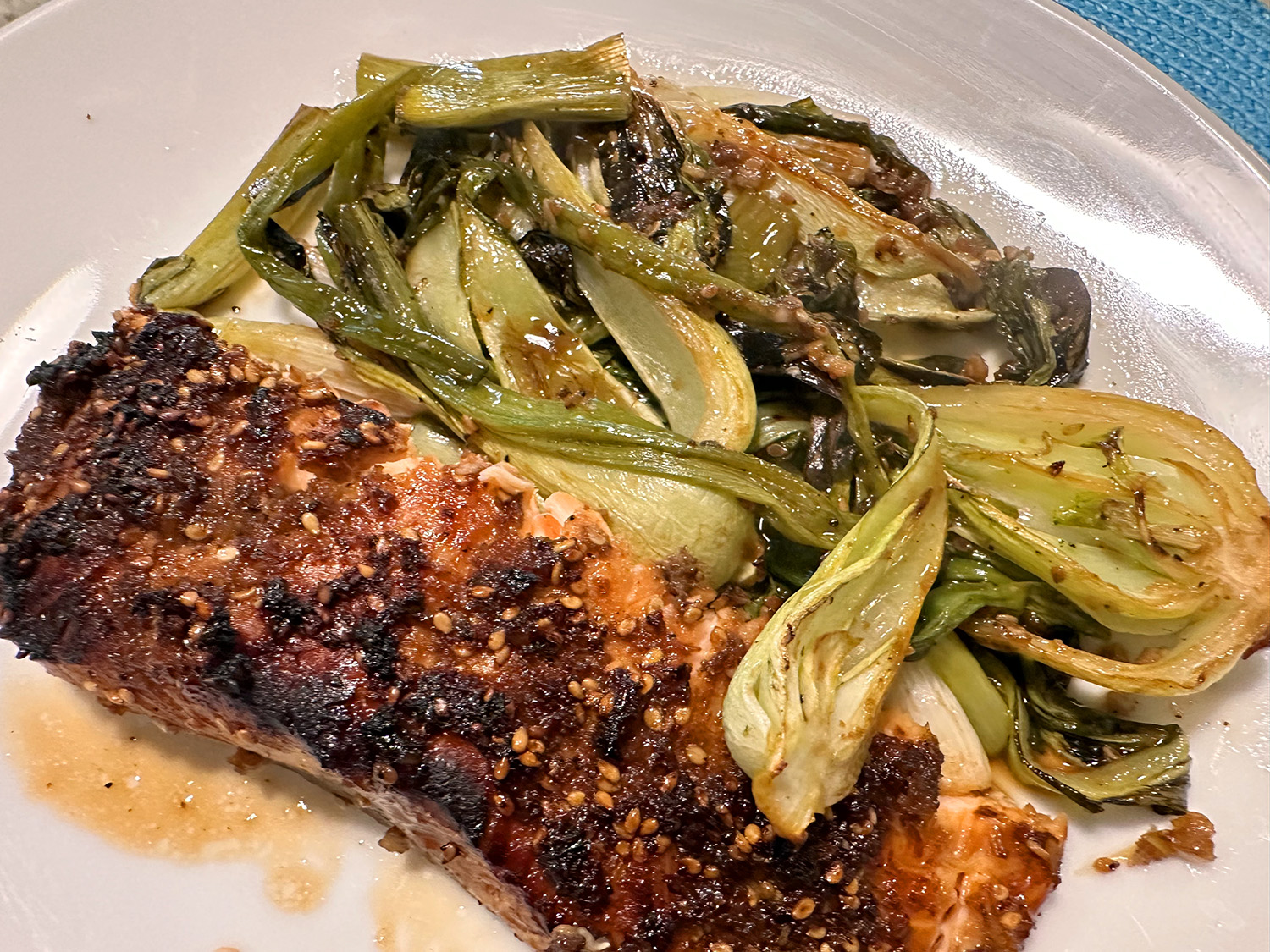
Glazed Black Cod with Baby Bok Choy and Scallions

A flavor-packed marinade of salty soy sauce and sweet honey coats black cod for a quick but flavorful dinner. Black cod is a species of cod fish found in the North Pacific Ocean; also known as sablefish, butterfish, and blue cod, it is a rich white-flesh fish with a moist, succulent texture. It is not a true cod.

When it comes to home cooking, Alaskan black cod is an exceptional choice. Black cod has a meaty and flaky texture, making it incredibly versatile and pretty forgiving in the oven. In fact, it’s rather difficult to overcook this fish, making it a popular option for home chefs of all backgrounds.

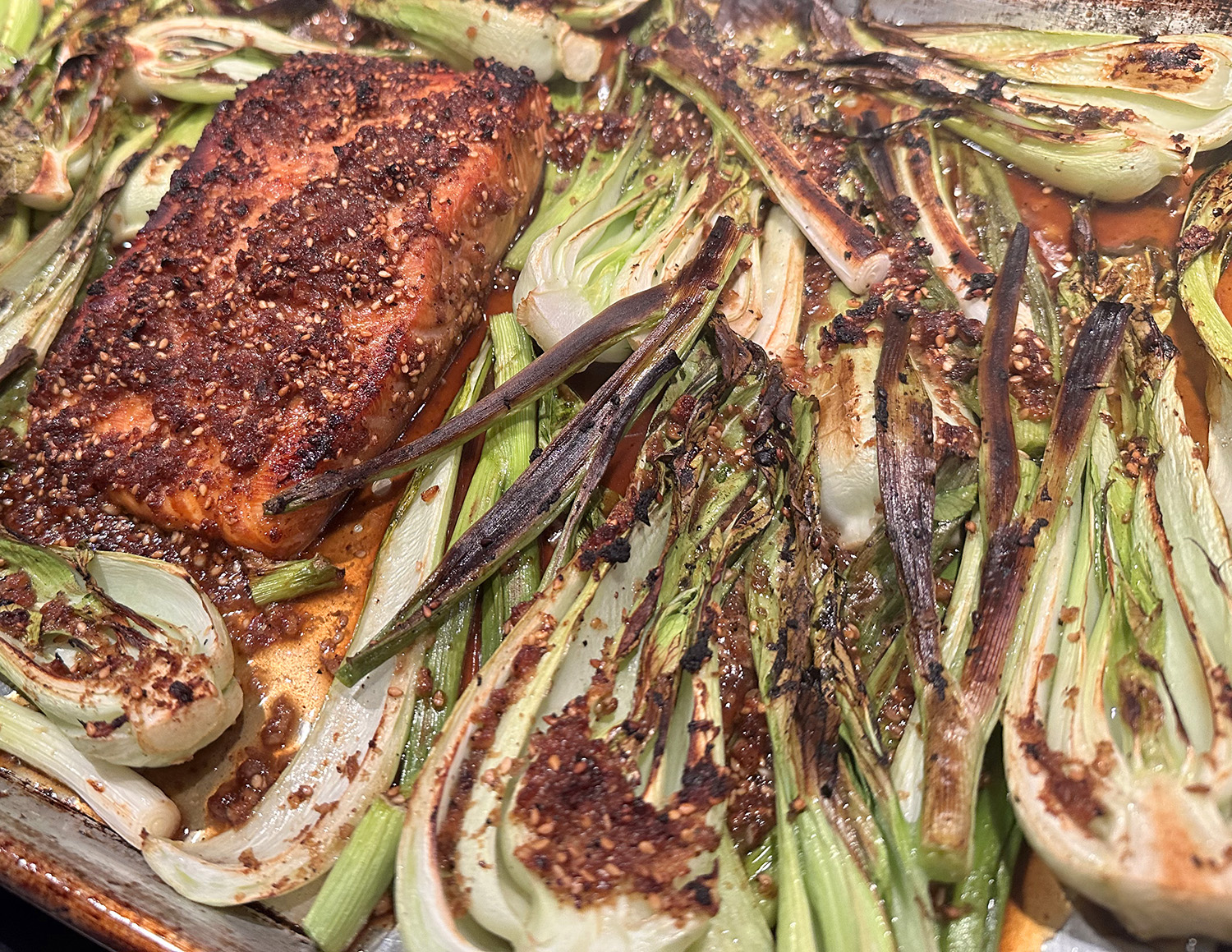
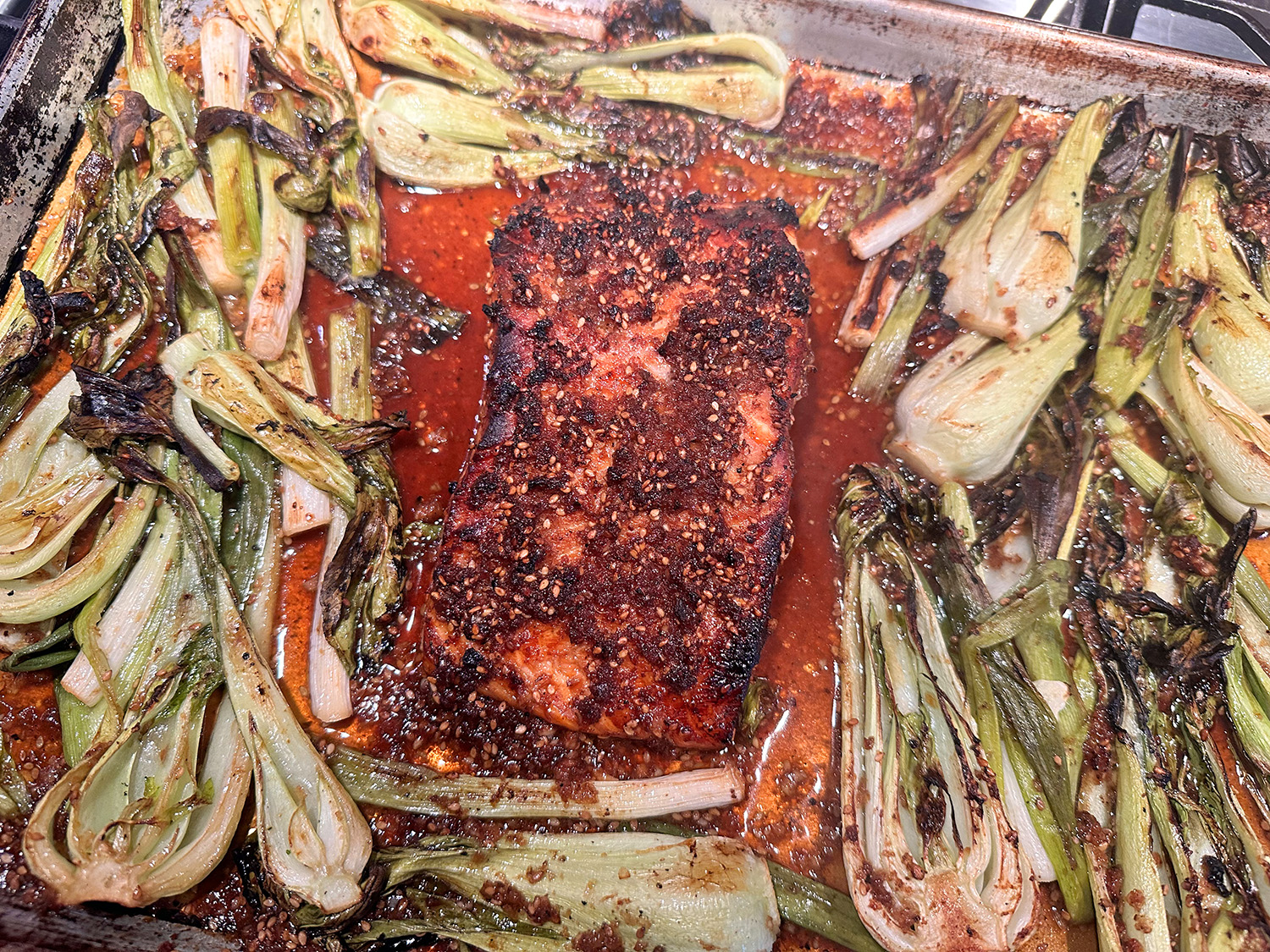
The backbone of this simple, flavor-packed marinade is the salty soy sauce and sweet honey that permeate the fish, bok choy, and scallions while they cook together under the broiler—and all on the same baking sheet. Everything is ready in less than 15 minutes and the result is lightly charred vegetables and perfectly cooked fish that flakes easily with a fork.

The secret yet simple flavor-enhancing trick of this dish is the Sichuan peppercorns that are lightly toasted beforehand, and add tingling heat to the dish, making this meal even more of a stand-out.

Unable to source black cod at the time, salmon was noted as an acceptable substitution. And just for the 2 of us, we cooked a one-pound piece; but kept the amounts of marinating ingredients the same. To make the meal more vegetable-centric, we nearly doubled the baby bok choy.

Glazed Black Cod with Baby Bok Choy and Scallions

  • Servings: 4
  • Difficulty: easy
  • Print

Ingredients

  • 1 1/2 tsp. Szechuan peppercorns
  • 6 Tbsp. lower-sodium soy sauce
  • 1/4 cup honey
  • 6 garlic cloves, minced (about 2 Tbsp.)
  • 2 pieces fresh ginger, peeled and finely chopped (about 2 Tbsp.)
  • 2 Tbsp. rice wine vinegar
  • 1 1/2 Tbsp. toasted sesame seeds
  • 1 Tbsp. hot chile oil
  • 2 (1-lb.) skinless wild Alaskan black cod fillets (about 1 inch thick), pin bones removed
  • 6 heads baby bok choy, halved lengthwise or quartered if large (about 1 1/4 lbs.)
  • 12 medium scallions, halved crosswise
  • 2 Tbsp.s canola oil

Directions

  1. Toast peppercorns in a small skillet over medium, shaking pan often, until fragrant, 2 to 4 minutes. Transfer to a mortar, and let cool slightly, about 1 minute. Crush with pestle into a coarse powder; set aside.
  2. Stir together soy sauce, honey, garlic, ginger, rice vinegar, sesame seeds, chile oil, and crushed peppercorns in a medium bowl. Transfer to a large ziplock plastic bag. Add cod fillets, and seal bag, pressing out as much air as possible. Refrigerate 4 to 8 hours.
  3. Preheat broiler with oven rack 6 to 8 inches from heat. Toss together bok choy, scallions, and oil on a large rimmed baking sheet; spread in an even layer. Remove fish from marinade, reserving marinade. Place fish in center of baking sheet. Pour reserved marinade over fish, bok choy, and scallions, coating well.
  4. Broil in preheated oven until vegetables and fish are nicely charred and fish is just cooked through and flakes easily with a fork, 10 to 12 minutes, rotating baking sheet halfway through broiling time. Serve immediately.

http://www.lynnandruss.com

Adapted from a recipe by Justin Chappel for Food & Wine

Saumon Aux Lentilles (Pan-Seared Salmon with Braised Lentilles Du Puy)

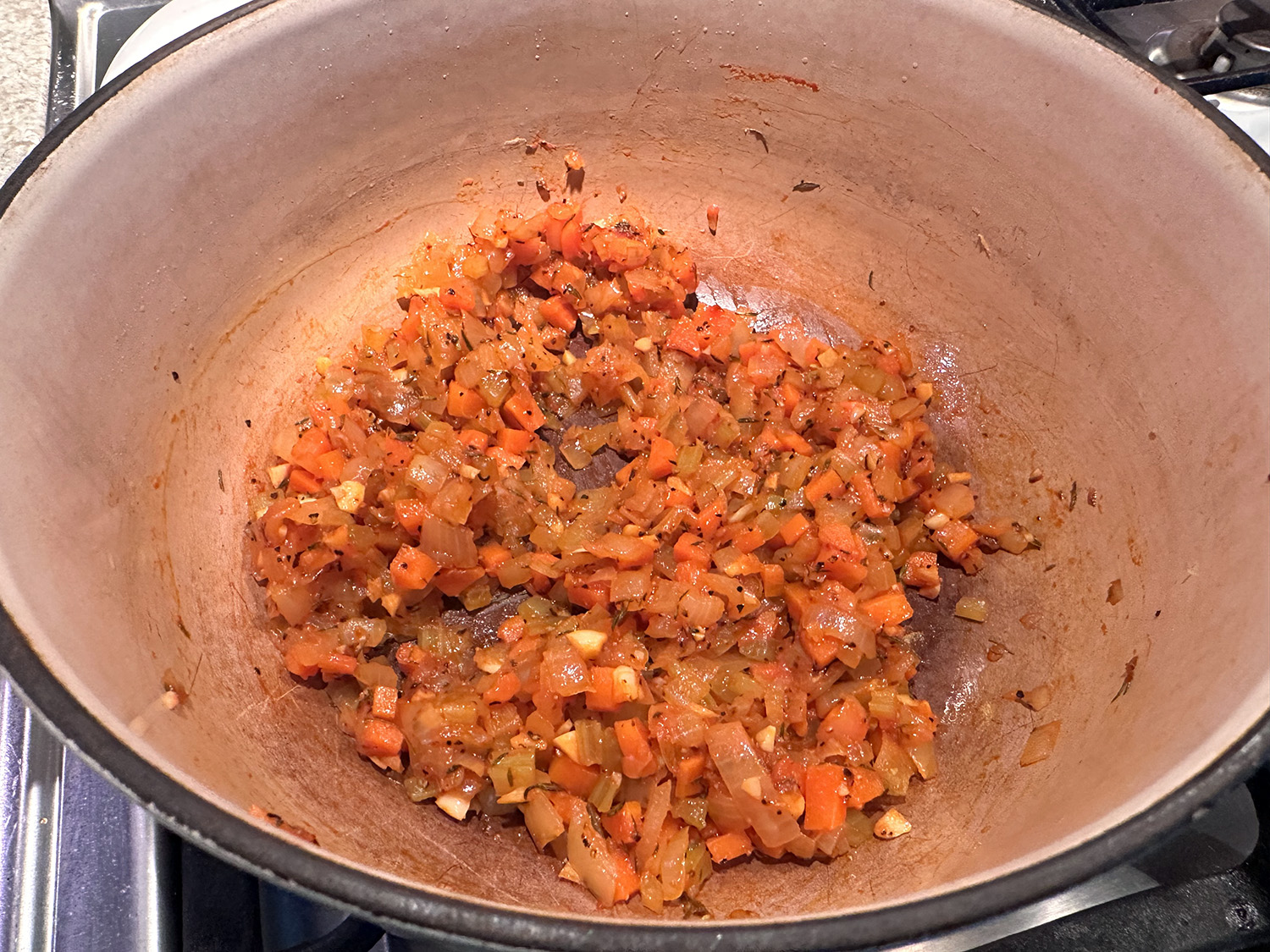
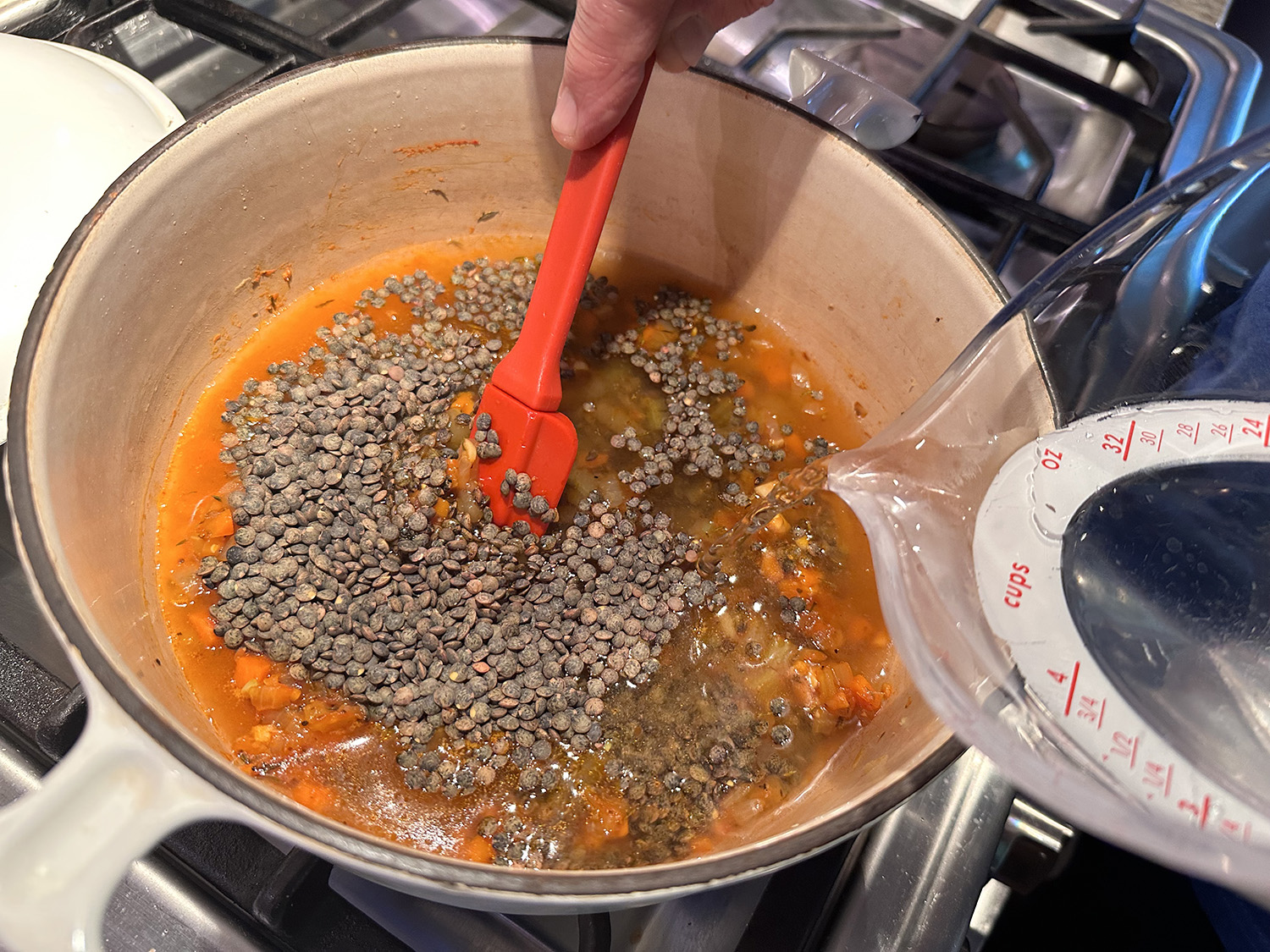
For this version of a classic French pairing, you start by building a flavorful base for the lentils, by gently cooking onion, carrots, and celery in olive oil until soft. Fruity tomato paste and plenty of garlic add even more depth before the lentils and water go in.

When the lentils are fully softened and most of the moisture in the pot has either evaporated or been absorbed, set them aside to focus on the salmon, which is briefly brined in a saltwater solution to season the fish and to ensure that it retained plenty of moisture as it cooked.

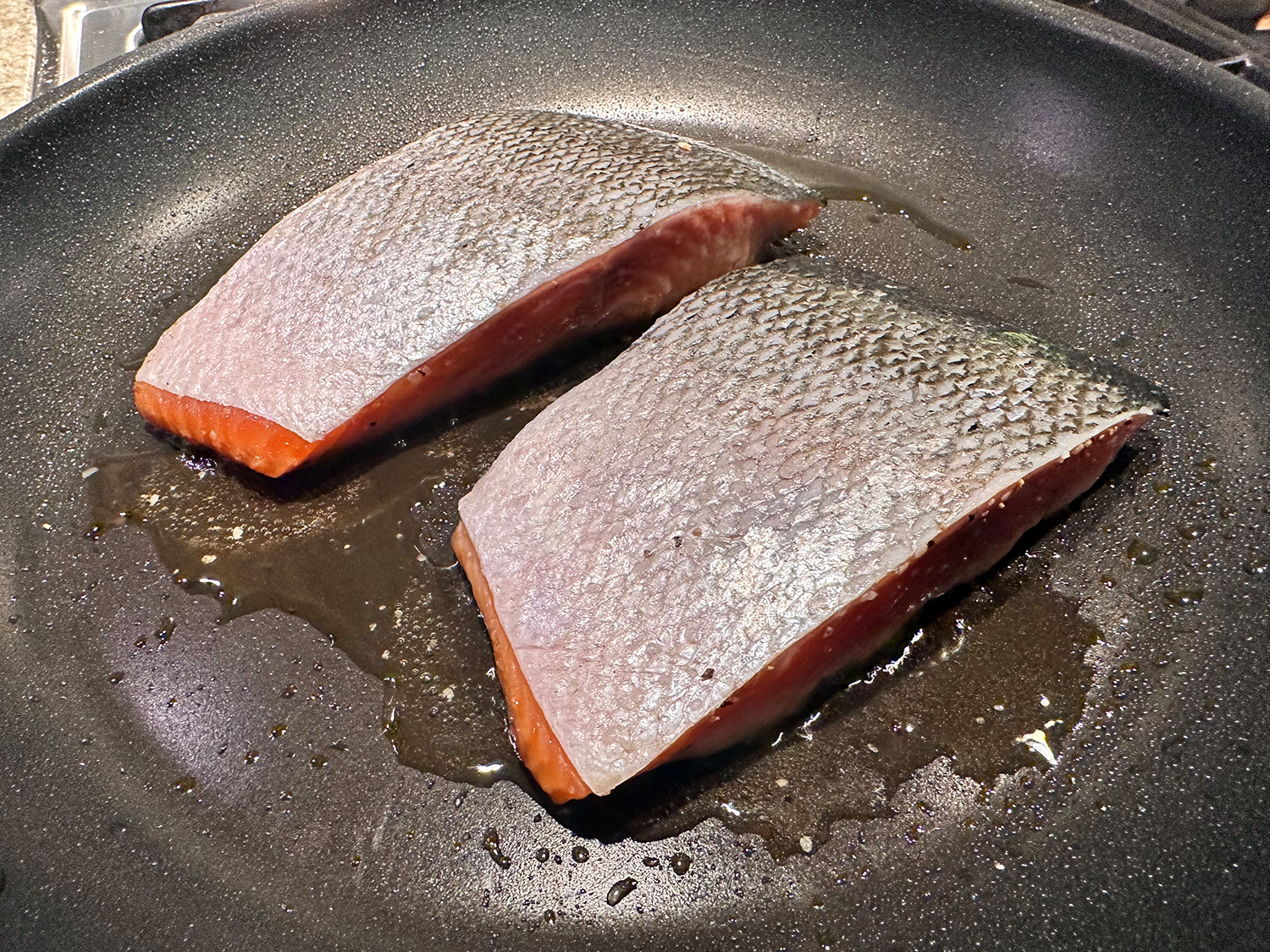
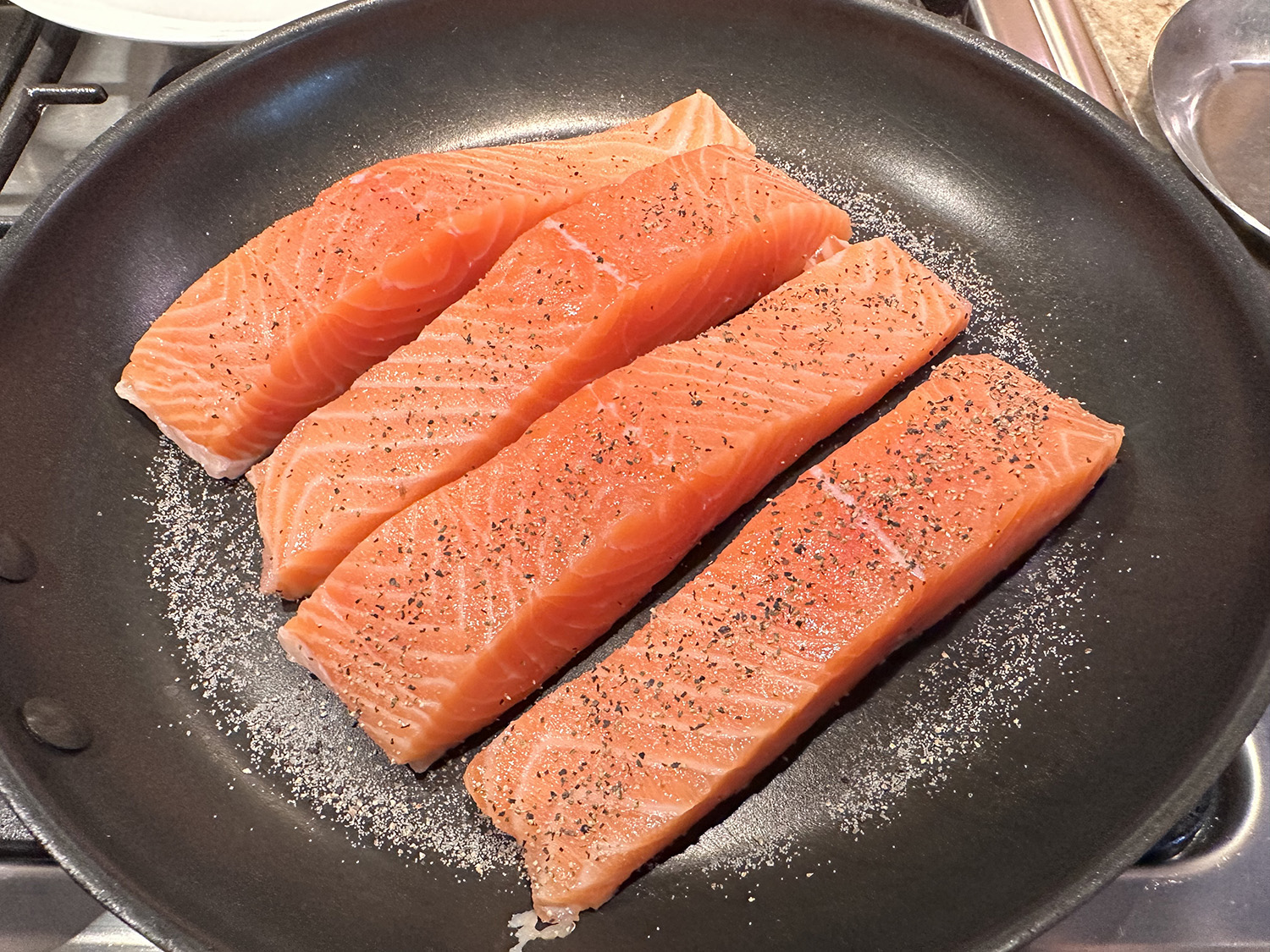
Unconventionally, the salmon skin is placed side down in a cold nonstick skillet that had been strewn with salt and pepper. As the pan heated up, the salmon began to release some of the fat that lies just beneath the skin, crisping it, and enabling us to cook the fish without any additional fat.

A bit of mustard and sherry vinegar stirred into the lentils brightens their flavor, making them an ideal pairing for the rich fish, and a final addition of extra-virgin olive oil adds grassy top notes.

NOTES: To ensure uniform cooking, buy a 1½-pound center-cut salmon fillet and cut it into four pieces. Using skin-on salmon is important here, as we rely on the fat underneath the skin as the cooking medium. If using wild salmon, check for doneness earlier and cook it until it registers 120 degrees. Small, olive-green lentilles du Puy are worth seeking out for their meaty texture, but if you can’t find them, substitute another small green lentil. Do not use red or brown lentils.

Saumon Aux Lentilles (Pan-Seared Salmon with Braised Lentilles Du Puy)

  • Servings: 4
  • Difficulty: easy
  • Print

Ingredients

Lentils

  • 2 Tbsp. extra-virgin olive oil, divided
  • 1 large onion, chopped fine
  • 1 celery rib, chopped fine
  • 1 carrot, peeled and chopped fine
  • ¾ tsp. table salt
  • 1 Tbsp. minced garlic
  • 1 Tbsp. tomato paste
  • ½ tsp. dried thyme
  • ½ tsp. pepper
  • 2½ cups water
  • 1 cup dried lentilles du Puy (French green lentils), picked over and rinsed
  • 1 Tbsp. sherry vinegar
  • 2 tsp. Dijon mustard

Salmon

  • ¾ tsp. table salt, divided,
  • plus ¼ cup for brining fish
  • ¾ tsp. pepper, divided4 (6-oz.) skin-on salmon fillets

Directions

  1. FOR THE LENTILS: Heat 1 tablespoon oil in medium saucepan over medium heat until shimmering. Add onion, celery, carrot, and salt and stir to coat vegetables. Cover and cook, stirring occasionally, until vegetables are softened but not browned, 8 to 10 minutes.
  2. Add garlic, tomato paste, thyme, and pepper and cook, stirring constantly, until fragrant, about 2 minutes. Stir in water and lentils. Increase heat and bring to boil. Adjust heat to simmer. Cover and cook, stirring occasionally, until lentils are tender but not mushy and have consistency of thick risotto, 40 to 50 minutes. Remove from heat and keep covered.
  3. FOR THE SALMON: While lentils are cooking, dissolve ¼ cup salt in 1 quart water in narrow container. Submerge salmon in brine and let stand for 15 minutes. Remove salmon from brine and pat dry with paper towels. Allow to stand while lentils finish cooking.
  4. Sprinkle bottom of 12-inch nonstick skillet evenly with ½ teaspoon salt and ½ teaspoon pepper. Place fillets, skin side down, in skillet and sprinkle tops of fillets with remaining ¼ teaspoon salt and remaining ¼ teaspoon pepper. Heat skillet over medium-high heat and cook fillets, without moving them, until fat begins to render, skin begins to brown, and bottom ¼ inch of fillets turns opaque, 6 to 8 minutes.
  5. Using tongs and thin spatula, flip fillets and continue to cook without moving them until centers are still translucent when checked with tip of paring knife and register 125 degrees (for medium-rare), 5 to 8 minutes longer. Transfer fillets, skin side up, to clean plate.
  6. Warm lentils briefly if necessary. Stir in vinegar, mustard, and remaining 1 tablespoon oil. Season with salt, pepper, and vinegar to taste. Divide lentils among wide, shallow serving bowls. Arrange salmon skin side up on lentils and serve.

http://www.lynnandruss.com

Recipe by Andrea Geary for Cook’s Illustrated

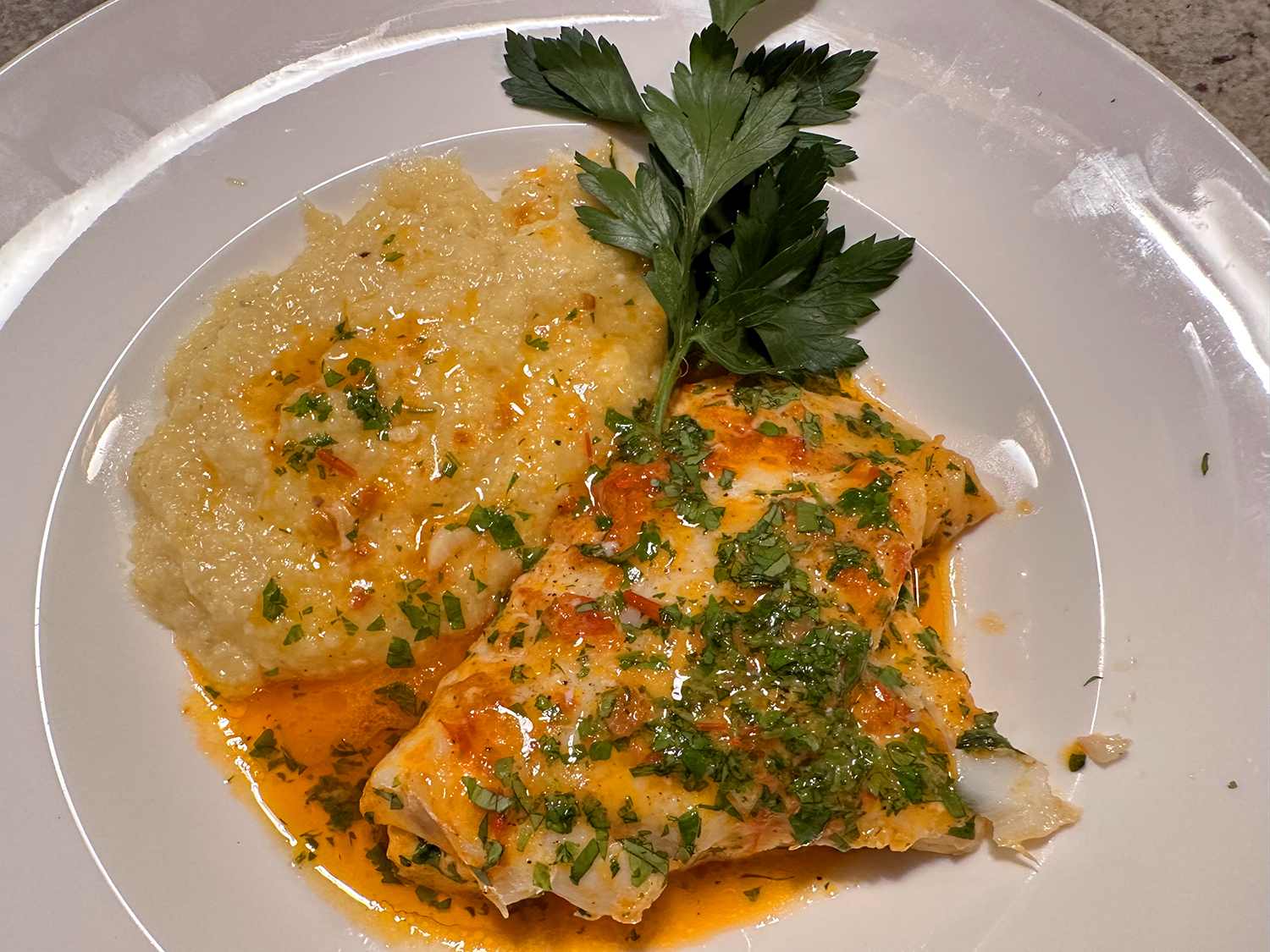
Butter-Basted Spiced Cod with Polenta

Our Monday dinner menu often includes a fish dish or something vegetarian. So Fine Cooking’s “Make It Tonight” Series came through again with this Butter-Basted Spiced Cod with Polenta by Ronne Day. Yes, we’ve made it before, but that was years ago and we were ready for a rehash.

As mentioned in an earlier post, baking cod in melted butter adds a richness to the fish that nicely balances the heat from the harissa, a yummy North African paste made of ground dried chile peppers, garlic, olive oil, and spices. Harissa comes in mild or spicy. Other uses for the condiment include stirring into couscous, stews, soups and pastas. You’ll find it packaged in cans, tubes and jars at well-stocked grocery stores and specialty markets.

We cut back on the amount of cod to one pound, enough for two 6-ounce fillets; although we used the full amounts of the remaining ingredients. A refreshing orange, fennel and red pepper salad with mint and lemon completed our meal.

Butter-Basted Spiced Cod with Polenta

  • Servings: 4
  • Difficulty: easy
  • Print

Ingredients

  • 1-1/2 tsp. crushed whole coriander seeds or ground coriander
  • 2 medium lemons, 1 finely grated to yield 1/2 tsp. zest and squeezed for 2 Tbsp. juice, the other cut into wedges
  • Kosher salt
  • 1 cup cornmeal
  • 3 oz. (6 Tbs.) unsalted butter
  • 4 6-oz. pieces cod loin
  • Freshly ground black pepper
  • 2 Tbsp. harissa paste
  • 2 tsp. coarsely chopped cilantro or parsley

Directions

  1. Position a rack in the center of the oven and heat the oven to 400°F.
  2. Heat a 3-quart saucepan over medium heat. Add the coriander and stir until fragrant, about 30 seconds.
  3. Add 3 cups of water, the lemon zest, and 1 tsp. salt; turn the heat up to medium high.
  4. Whisk in the cornmeal and cook, stirring often, until thick and creamy, about 20 minutes. (If the polenta gets too thick, loosen with a little hot water.)
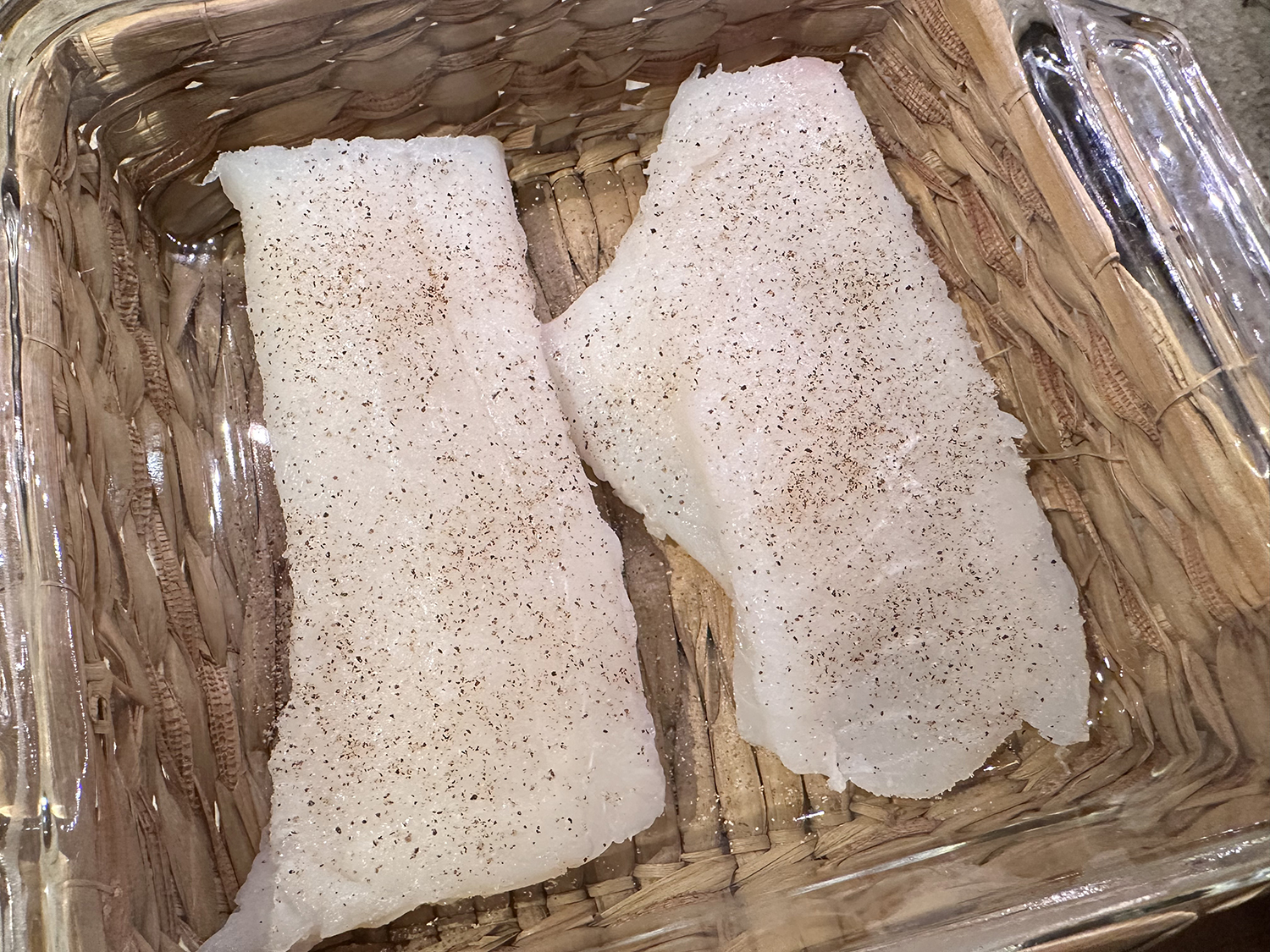
  5. Meanwhile, melt the butter in a small saucepan. Season the fish lightly with salt and pepper and arrange in a 9×13 baking dish with space between each piece.
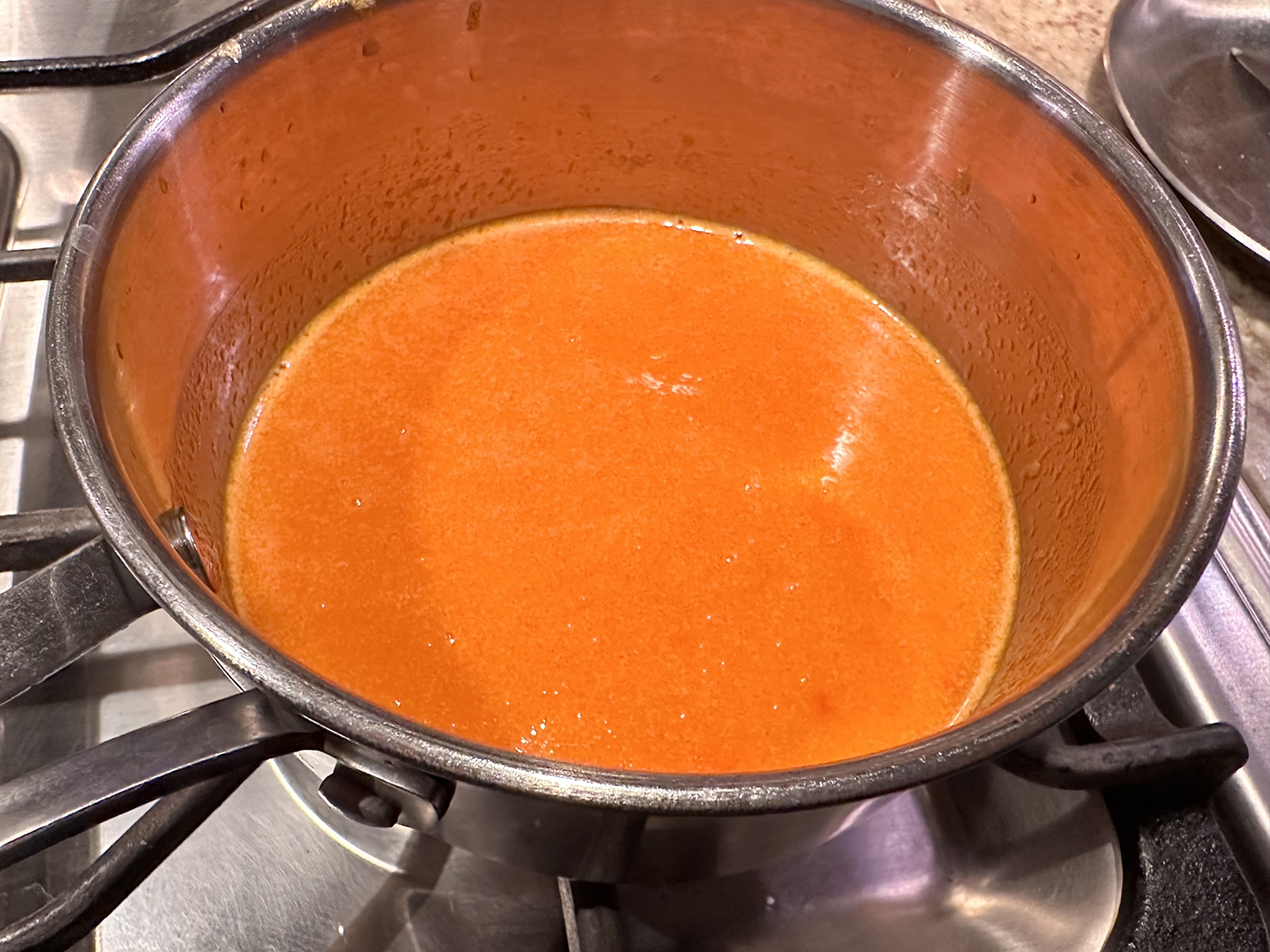
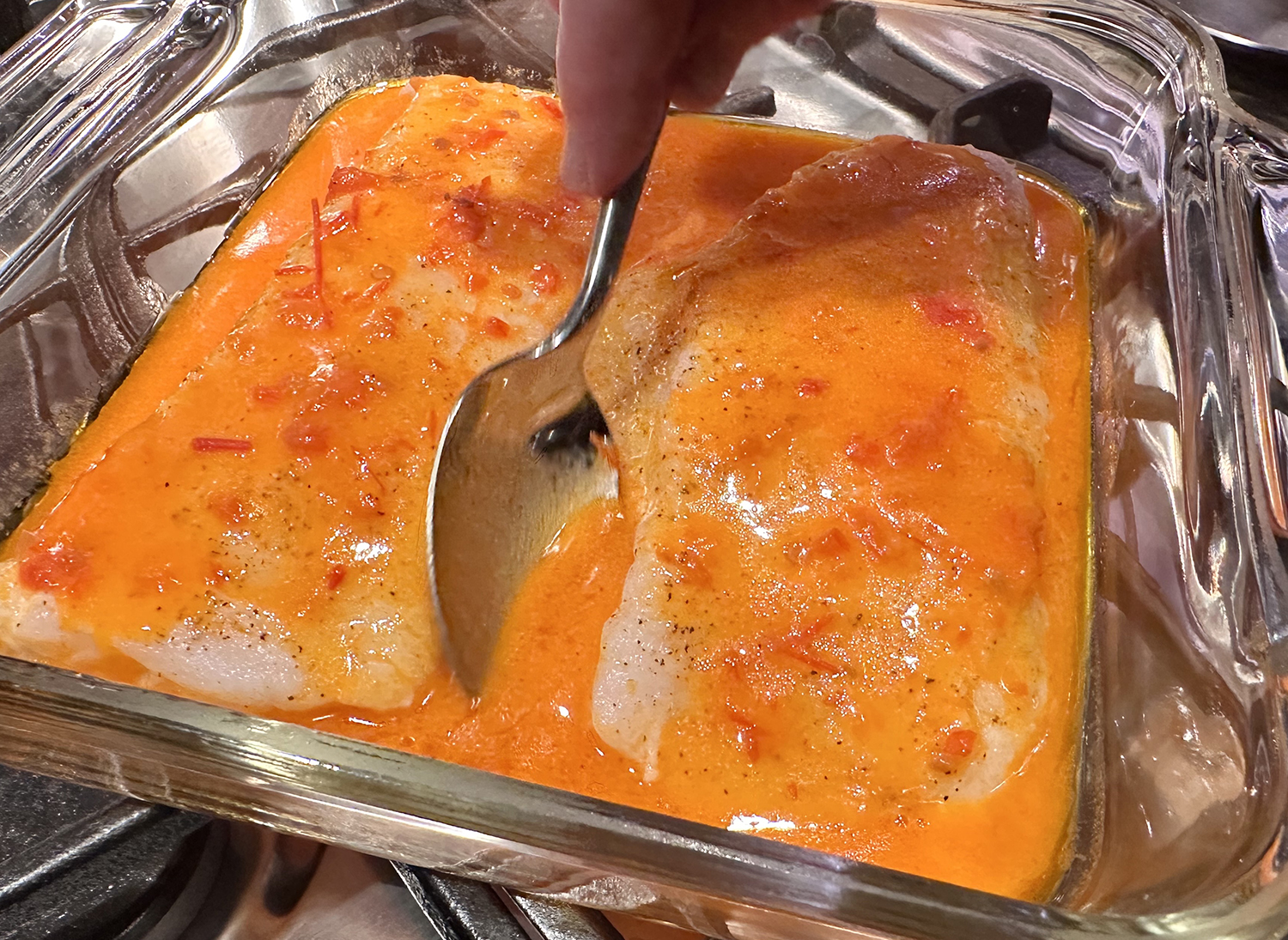
  6. Remove the butter from the heat, stir in the harissa and lemon juice, and pour it over the fish.
  7. Bake, basting every 5 minutes or so, until cooked through (the fish will flake easily), about 15 minutes. If necessary, cover with foil to keep warm.
  8. Divide the polenta among 4 shallow bowls or plates. Top with the fish and spoon the butter over the fish.
  9. Top with the cilantro or parsley and serve with the lemon wedges.

http://www.lynnandruss.com

Original recipe from Fine Cooking

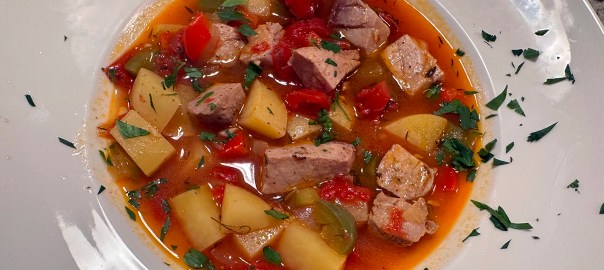
Marmitako—Basque Tuna Stew

There is nothing better than a warm and comforting stew on a cold day, it takes all the chills out of your body and fills you with nothing but comfort. However, this tuna stew is equally welcome on a bright Spring Day. And since The Hubs loves all-things Spanish, making the dish was a no-brainer.

Marmitako is really quite simple to make and you don’t need any special equipment, just a standard stock/braising pot, and most importantly, fresh ingredients. With a recipe this simple, it is always important to use the freshest and highest of quality ingredients, it truly does make a difference in the overall flavor.

We made numerous changes to the original recipe, which included doubling most of the vegetable ingredients. Some of the timing was altered also to cook the potatoes 5 minutes longer, and the tuna cubes 5 minutes less. All of the changes are noted below.

Marmitako - Basque Tuna Stew

  • Servings: 4
  • Difficulty: easy
  • Print

Ingredients

  • 2 fillets fresh tuna
  • 1/4 cup extra virgin Spanish olive oil
  • 4 cloves of garlic
  • 1 onion
  • 1 red bell pepper
  • 1 green bell pepper
  • 2 medium Yukon gold potatoes
  • 1 can fire-roasted diced tomatoes
  • 1/2 tsp. dried thyme
  • 1/2 tsp. smoked paprika
  • 1/2 cup white wine
  • 2 1/2 cups fish broth, preferably homemade
  • Sea salt
  • Freshly cracked black pepper
  • Fresh parsley

Directions

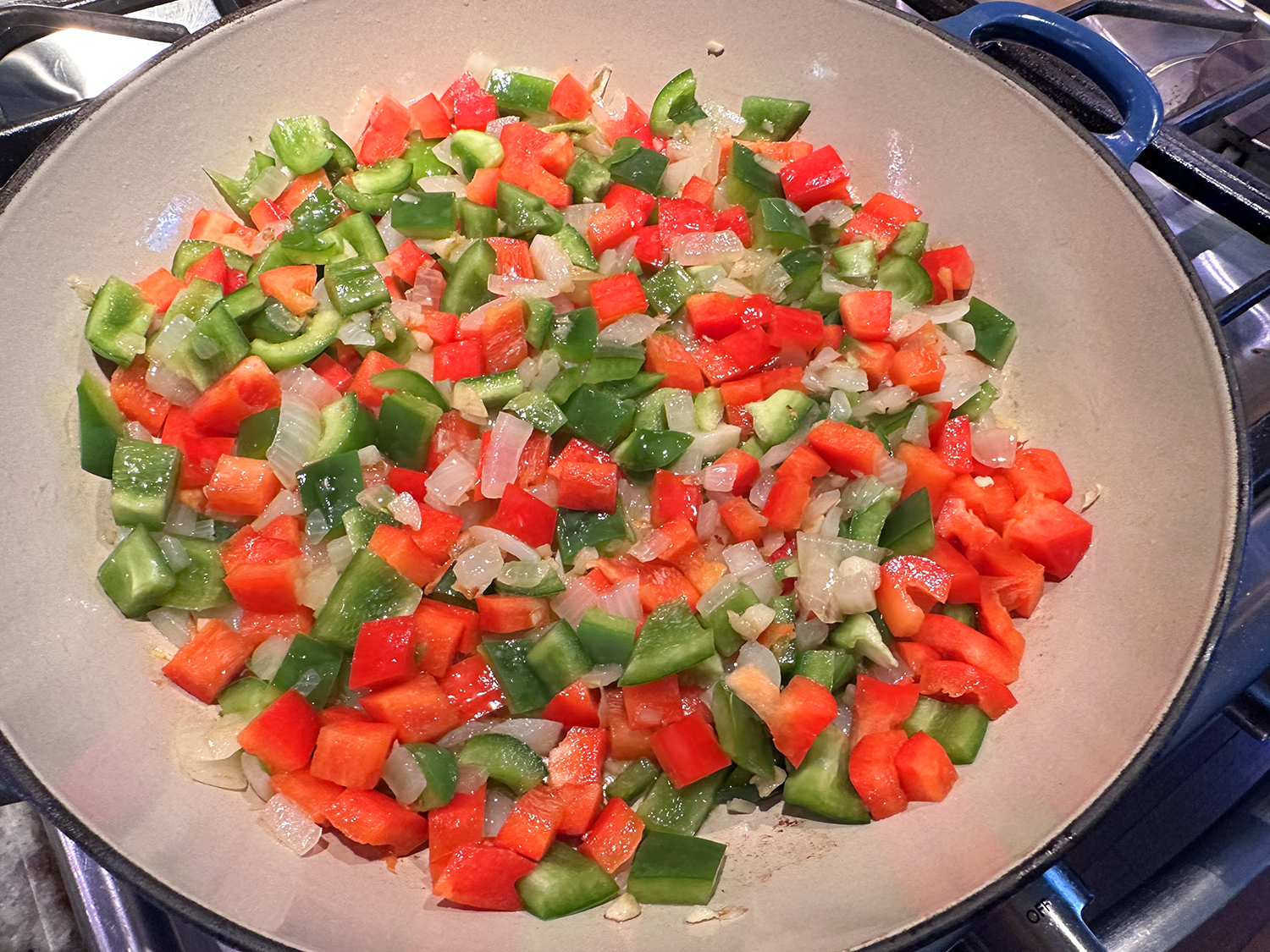
  1. Begin by cutting all the vegetables first, 4 minced cloves of garlic, diced onion, diced red bell pepper, dice green bell pepper and cut 2 medium Yukon gold potato into 1/2-inch cubes.
  2. Heat a large stock pot with a medium heat and add a 1/4 cup of extra virgin Spanish olive oil, once the oil gets hot add the diced onions and minced garlic, mix with the oil and cook for about 4 minutes, then add the diced bell peppers, mix and cook for another 5 minutes, then add the cubed potatoes, mix and cook for another 2 minutes, then add 1 cup of diced tomatoes, season everything with a generous pinch of sea salt, freshly cracked black pepper, 1/2 teaspoon of dried thyme and 1/2 teaspoon of smoked paprika, mix everything together and cook for 2 minutes.
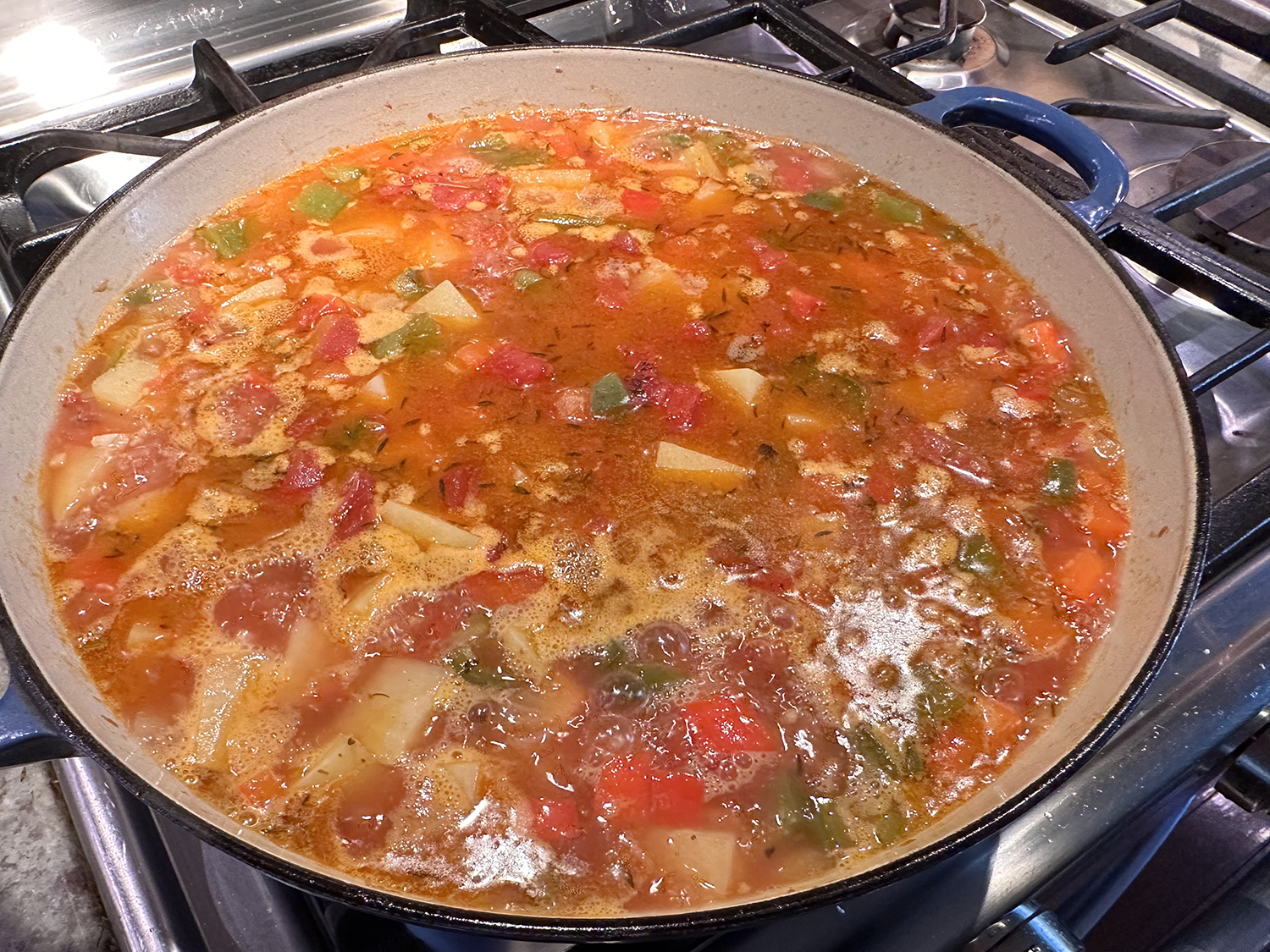
  3. Turn the fire up to a HIGH heat and add 1/2 cup of white wine, about 4 minutes after adding the white wine add 2 1/2 cups of fish broth, once it comes to a boil, place a lid on top and lower the fire to a LOW heat.
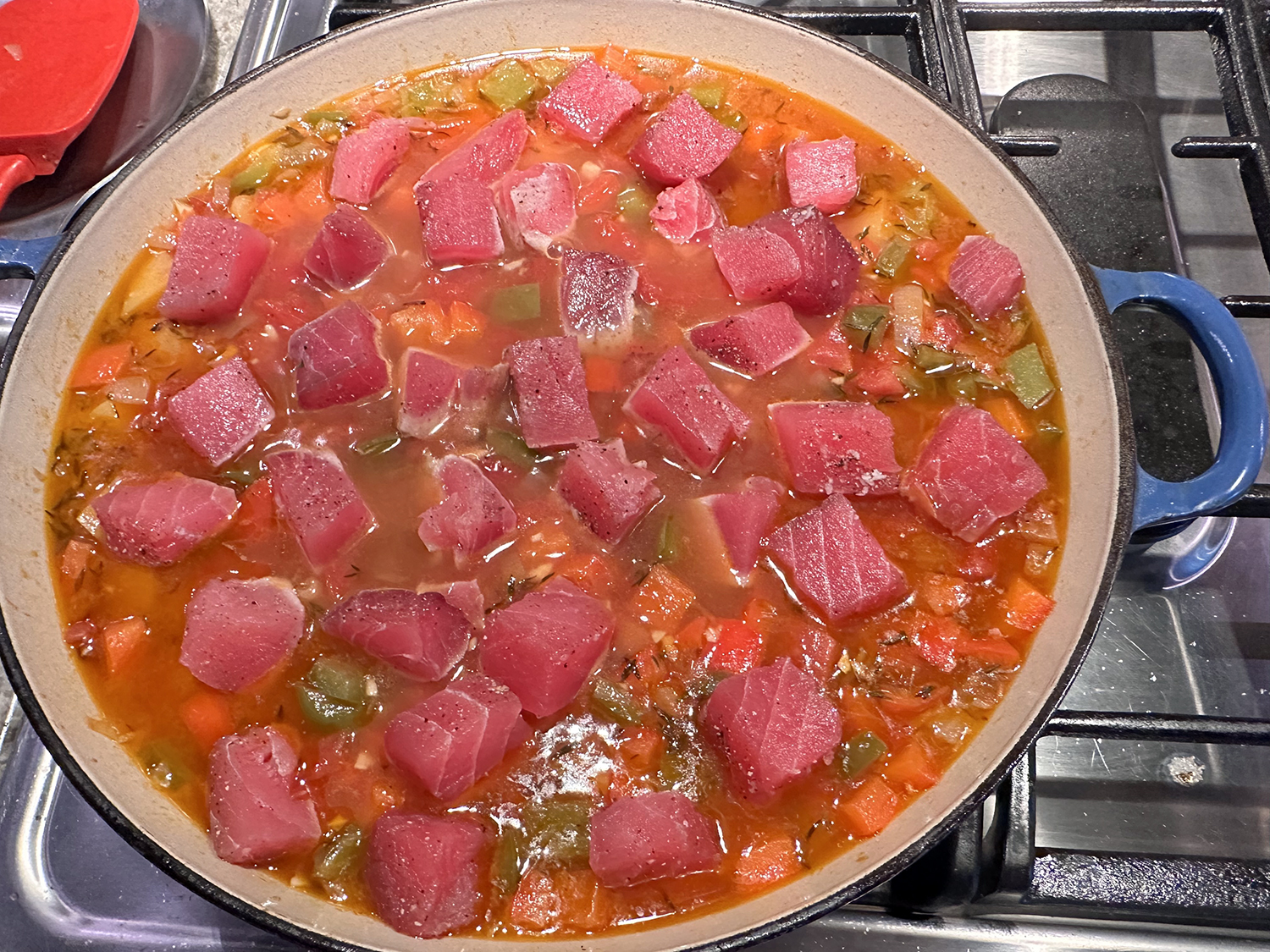
  4. While the stew is simmering, season 2 fresh tuna fillets with sea salt and freshly cracked black pepper on both sides, then cut each one into 1/2 inch cubes.
  5. After leaving the stew to simmer for 25 minutes, add the cubed tuna to the stock pot, mix it with the rest of the ingredients, place the lid back on top and cook for another 5 minutes.
  6. Transfer the tuna stew into shallow bowls and garnish each one with fresh parsley

http://www.lynnandruss.com

Adapted from a recipe from Spain on a Fork

Sichuan Braised Cod

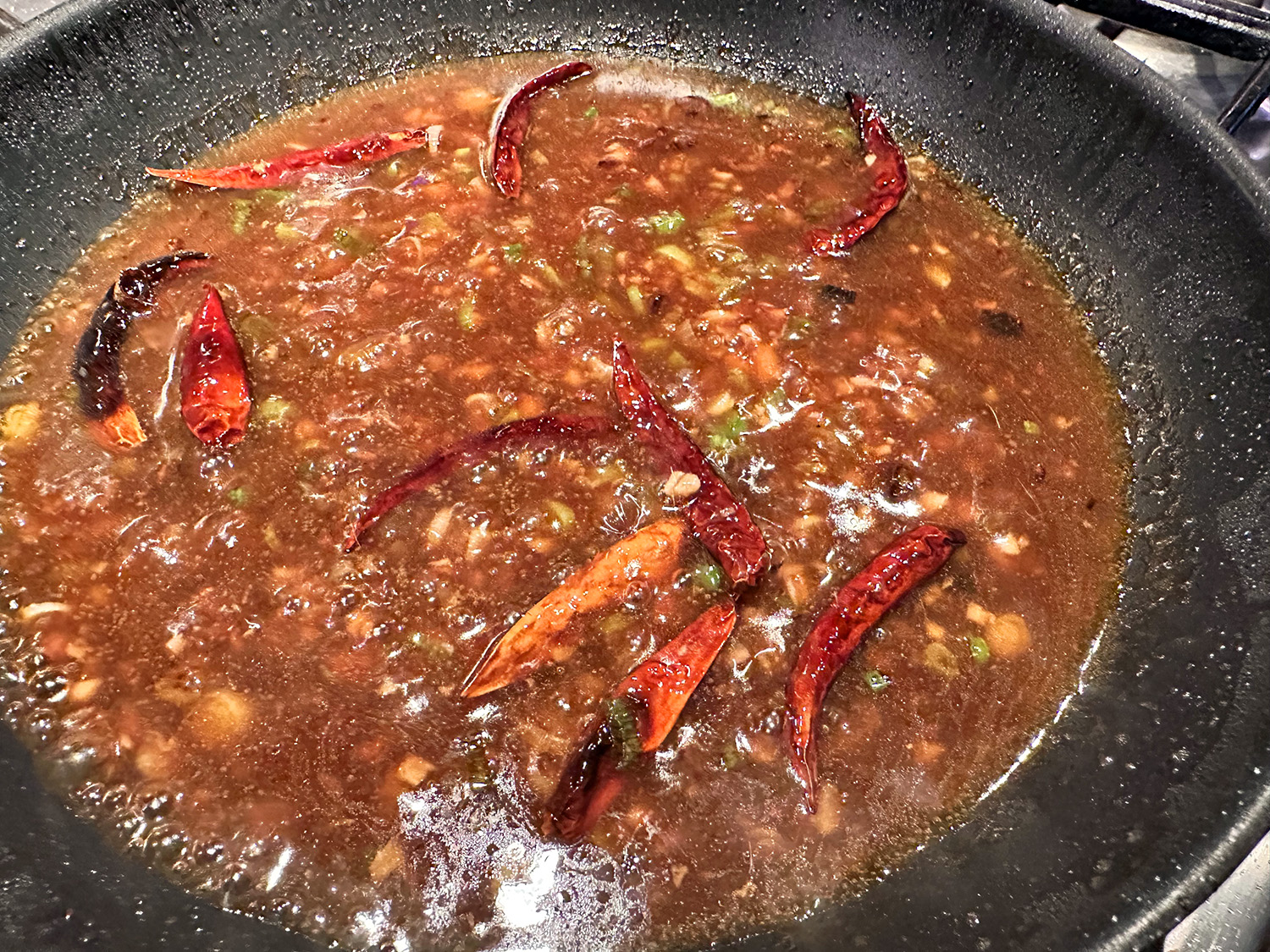
I declared this my favorite cod recipe to date. The flavor profile was spot on for me, although it may be a bit too spicy for some. In that case, cut back on the number of dried chiles.

The Sichuan Braised Cod recipe from Fine Cooking makes a for quick and healthy supper, especially when served with a side salad. Only the two of us were sharing the meal so we bought a smaller piece of fish—just over a pound—and cut it into 3 equal sections.

The original recipe instructs you to flip the cooked cod in the sauce a couple of times. Fearing the fish would fall apart as it was flipped, we spooned the sauce over each fillet instead. To keep it pescatarian, we swapped out the chicken broth for homemade shrimp stock. Serve with steamed rice.

Sichuan Braised Cod

  • Servings: 4
  • Difficulty: easy
  • Print

Ingredients

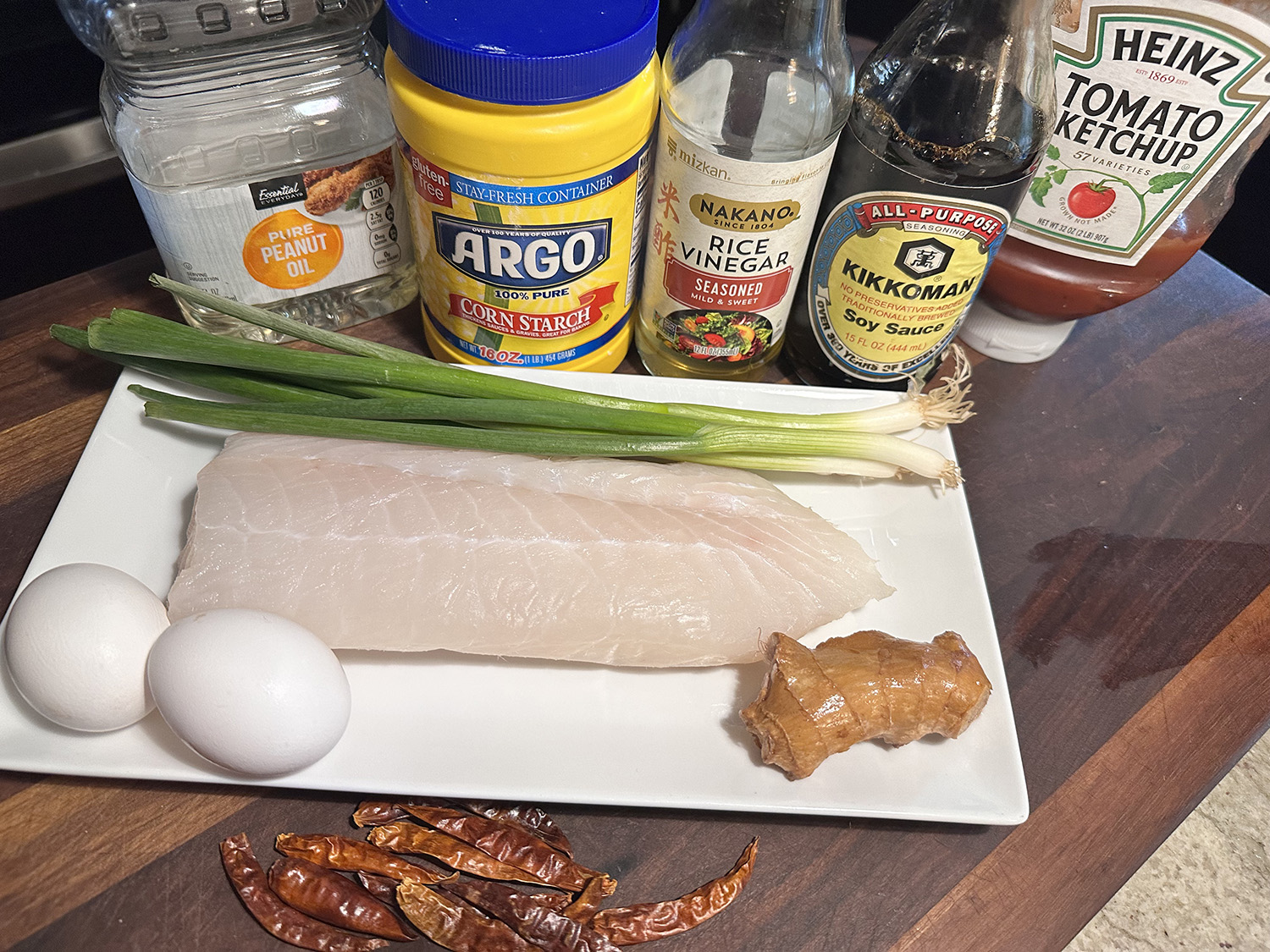
  • 1⁄2 cup, plus 2 tsp. cornstarch
  • 2 Tbsp. rice vinegar, more to taste
  • 3/4 Shrimp broth
  • 1 1⁄2 Tbsp. soy sauce
  • 1 Tbsp. ketchup
  • 1 1⁄2 lbs. cod fillets, cut into 4 uniform pieces
  • Kosher salt and frhly ground black pepper
  • 2 eggs, beaten
  • 3 Tvbsp. canola oil
  • 10 dried Thai chiles or other small whole chiles
  • 4 scallions, thinly sliced, white and green parts separated
  • 1 1⁄2 Tbsp. minced ginger

Directions

  1. in a small bowl, mix the 2 teaspoons cornstarch with 2 tablespoons vinegar. Add the broth, soy sauce and ketchup.
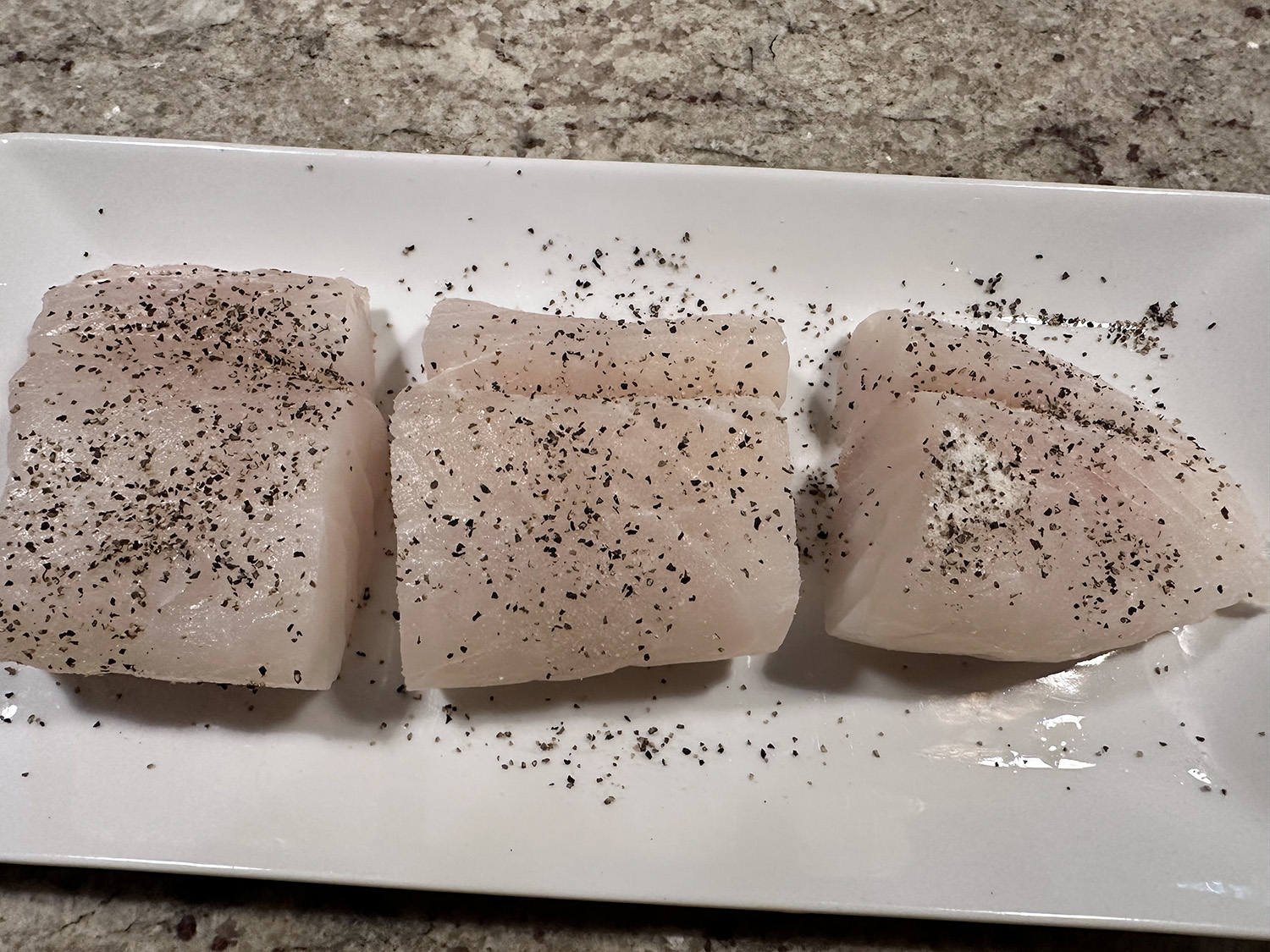
  2. Season the fish with 1/2 teaspoon salt and 1/2 teaspoon pepper.
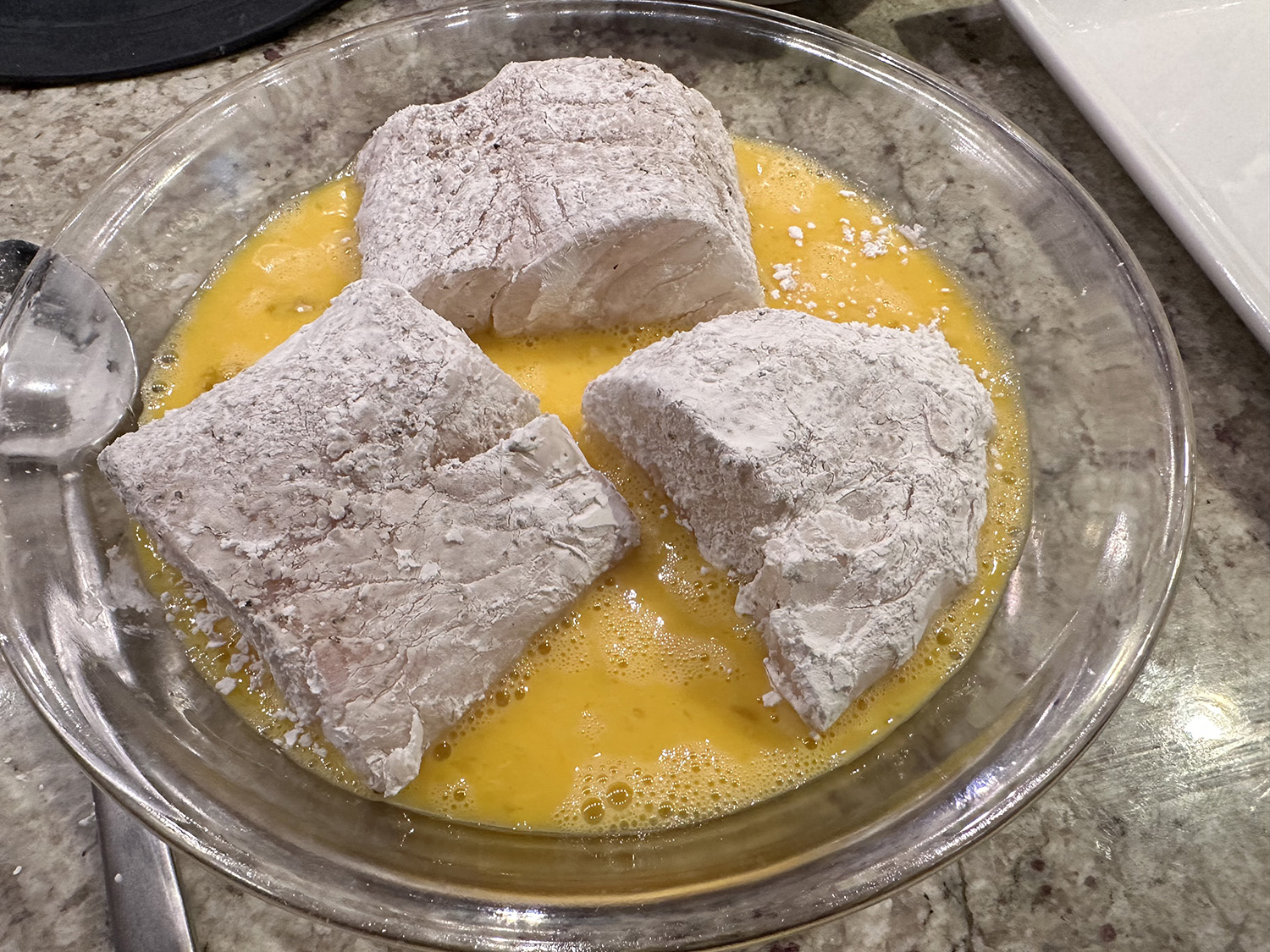
  3. Spread the remaining 1/2 cup cornstarch on a plate, and put the eggs in a wide bowl. Dredge the fish in the cornstarch.
  4. Heat 2 tablespoons oil in a 12-inch non-stick pan over medium-high heat until shimmering hot. Soak the fish in the egg for a couple of seconds, then add to the pan.
  5. Cook, flipping every three minutes, until the cod is browned and a little firm to the touch, about 5 minutes total (it should not be cooked all the way through). Transfer the fish to a large plate.
  6. Add the remaining 1 tablespoon oil to the pan, then add the chiles, white parts of the scallions, and ginger. Cook, stirring until the scallions become translucent and browned in a few places, about 2 minutes.
  7. Give the cornstarch mixture a quick stir and then pour it into the pan. It should come to a boil and thicken quickly. Reduce the heat to medium-low, return the fish to the pan, and spoon the sauce over the fillets a couple of times to coat them in the sauce.
  8. Cover the pan, leaving the lid slightly ajar, and cook until the fish is just cooked through and starting to flake, 3 to 5 minutes.
  9. Taste the sauce for salt and vinegar, adding more to taste if needed. Serve immediately with the sauce spooned over the cod and sprinkled with scallion greens.

http://www.lynnandruss.com

Adapted from a recipe from Fine Cooking

Spicy Korean-Style Shrimp with Zucchini and Scallions

For an adaptation of the Korean stir-fry of squid with a garlicky, umami-loaded, savory-sweet, gochujang-based sauce, the squid here is replaced with plump, briny shrimp. This version includes carrots, scallions and zucchini (or yellow summer squash) for layers of texture and color, as well as to round out the meal.

Look for gochujang, the vivid-red fermented chili paste and workhorse in the Korean kitchen, in the international aisle of the supermarket or in Asian grocery stores. Before cooking, marinate the shrimp for about 10 minutes in a mixture of gochujang, sugar, sesame oil and soy. To be efficient, prep the other ingredients for the stir-fry while the shrimp marinate. Serve with steamed short-grain rice.

NOTE: The seedy section at the core turns soft and slightly squishy when cooked, so remove the seeds in the zucchini or summer squash. To do so, cut the zucchini in half lengthwise, then use a spoon to scrape out the core.

Buying “easy-peel” shrimp is a great option because they are already deveined, all you have to do is easily peel away the shells. Since we make our own shellfish stock, we appreciate having the shells which we then freeze until it’s time to make another batch of stock.

Spicy Korean-Style Shrimp with Zucchini and Scallions

  • Servings: 4
  • Difficulty: easy
  • Print

Ingredients

  • 2-3 Tbsp. gochujang
  • 2 Tbsp. white sugar
  • 2 Tbsp. toasted sesame oil
  • 1 Tbsp. soy sauce
  • Kosher salt and ground black pepper
  • 1 1/2 lbs. extra-large shrimp, peeled (tails removed), deveined and patted dry
  • 2 Tbsp. grapeseed or other neutral oil
  • 1 large carrot, peeled and cut into matchsticks
  • 6 medium garlic cloves, minced
  • 4 scallions, cut into 1-inch lengths
  • 1 medium zucchini or yellow summer squash (about 8 oz.), halved lengthwise, seeded and thinly sliced on the diagonal
  • 2 tsp. sesame seeds, toasted

Directions

  1. In a medium bowl, stir together the gochujang, sugar, sesame oil, soy sauce, ½ teaspoon salt and ¼ teaspoon pepper. Add the shrimp and toss to coat; let stand at room temperature for about 10 minutes.
  2. In a 12-inch skillet over medium-high, heat the neutral oil until shimmering. Add the carrot and cook, stirring often, until wilted, 3 to 4 minutes. Add the garlic and cook, stirring constantly, until lightly browned, about 1 minute. Push the mixture to one side of the skillet and add the shrimp with its marinade, distributing it in an even layer. Cook without stirring until the shrimp are pink on the bottom, about 2 minutes.
  3. Add the scallions and zucchini, then stir to combine with the shrimp and carrot. Cook, stirring often, until the shrimp are opaque throughout and the scallions and zucchini have softened, about 3 minutes. Off heat, taste and season with salt and pepper. Serve sprinkled with the sesame seeds.

http://www.lynnandruss.com

Recipe by Courtney Hill for Milk Street

Mediterranean Shrimp with Bell Peppers

Are you a shrimp fan? Then you’ll love this quick and easy shrimp recipe, prepared Mediterranean-style—so it is also healthy. Garlic shrimp cooked in a light white wine and olive oil sauce with red onion, bell peppers, tomatoes, and some tasty spices. What’s not to like?

The original recipe used only a half each of the red onion and yellow and green bell peppers, plus only a cup of the canned diced tomato. We used the full amount of each one which enlarged the serving size and pumped up the healthy nutrients. All changes are noted in the ingredients list below.

Another change we made was using our homemade shellfish stock in place of the chicken broth. Again, more flavor, plus it keeps the dish meatless. Serve over rice as we did, or select a pasta or another favorite favorite grain.

Mediterranean Shrimp with Bell Peppers

  • Servings: 4
  • Difficulty: easy
  • Print

Ingredients

  • 1 ¼ lb. large shrimp or prawns, peeled and deveined
  • 1 Tbsp. all-purpose flour
  • 1 to 2 tsp. smoked Spanish paprika
  • ½ tsp. each salt and pepper
  • ½ tsp. ground coriander
  • ¼ tsp. cayenne
  • ¼ tsp. sugar
  • 1 Tbsp. butter (ghee clarified butter is preferable)
  • 3 Tbsp. Extra virgin olive oil
  • 1 red onion, thinly sliced
  • 4 garlic cloves, chopped
  • 1 green bell pepper and 1 yellow bell pepper, cored and sliced
  • 1 14.5 oz. can diced tomato
  • ⅓ cup shrimp or vegetable broth
  • 2 Tbsp. dry white wine
  • 2 Tbsp. fresh lemon juice
  • ⅓ cup chopped parsley leaves

Directions

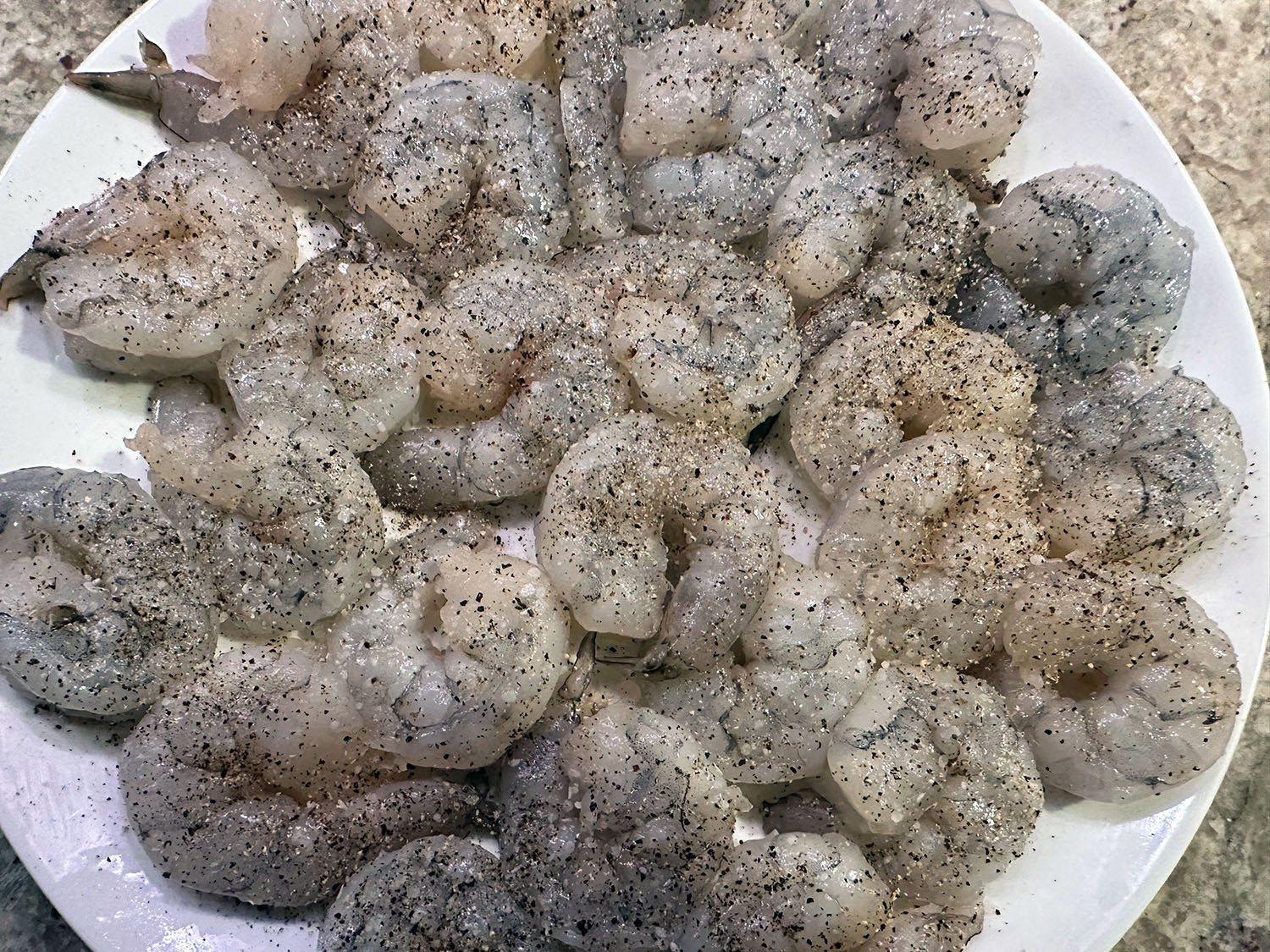
  1. Pat the shrimp dry and place it in a large bowl. Add the flour, smoked paprika, salt and pepper,  coriander, cayenne, and sugar. Toss until the shrimp is well-coated.
  2. In a large cast iron skillet, melt the butter with the olive oil over medium heat. Add the red onion and garlic. Cook for 2-3 minutes, stirring regularly, until fragrant (be sure not to burn the garlic.)
  3. Add the bell peppers and cook another 4 minutes or so, tossing occasionally.
  4. Now add the shrimp. Cook for 1 to 2 minutes, then add the diced tomatoes, broth, white wine and lemon juice. Cook for a couple more minutes or until the shrimp turns bright orange. 
  5. Finally, stir in the chopped fresh parsley and serve.

http://www.lynnandruss.com

Adapted from a recipe by Suzy Karadsheh