Tag Archives: Italian

Spaghetti with Fresh Soppressata

One look at the long list of ingredients and you may well just thumb past this recipe. But we’ll tell you it was well worth the effort and time.

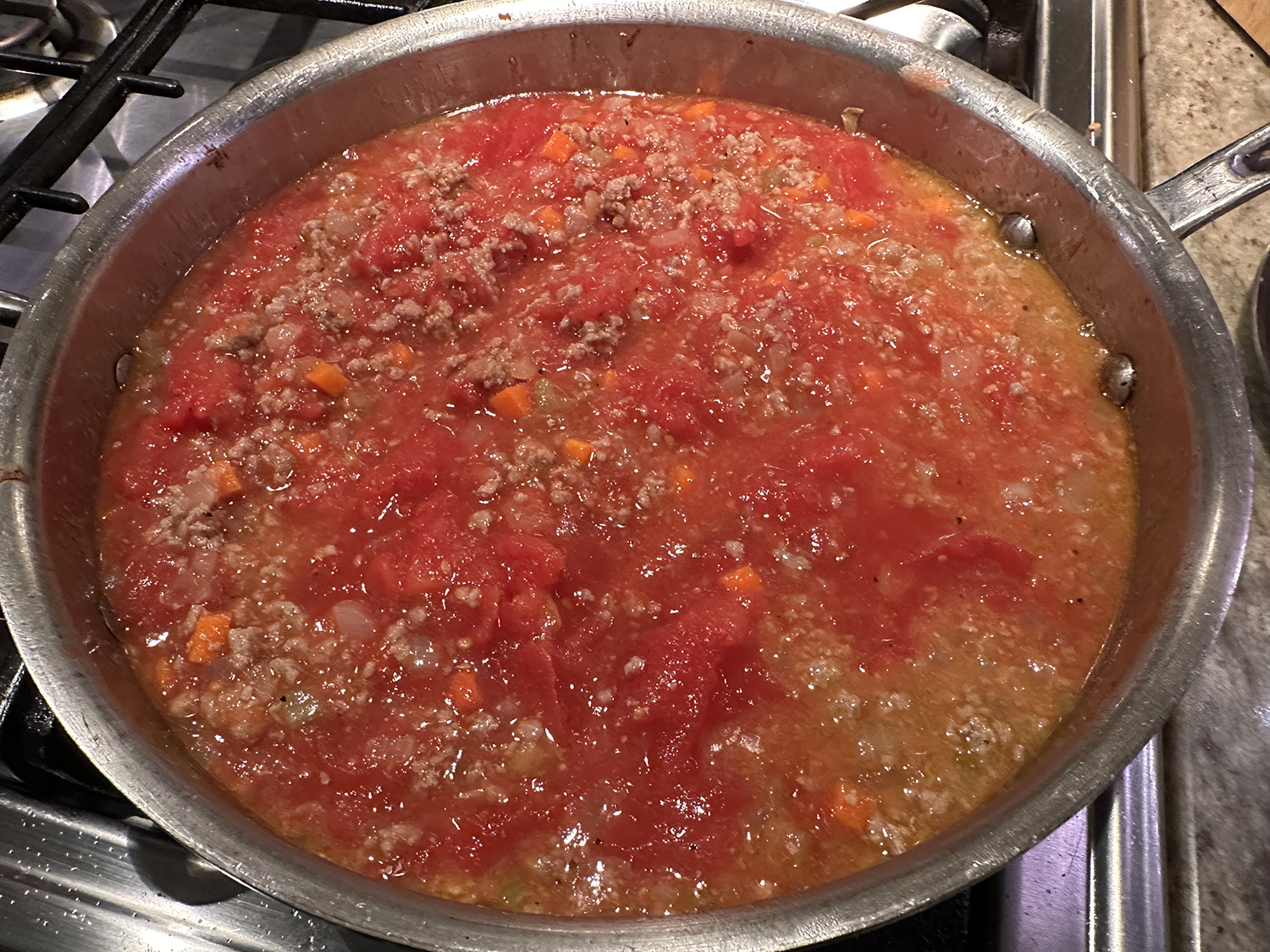
Store-bought Italian sausage gets a wine and fennel infusion to make fresh soppressata, which is the base for this pasta’s fresh and flavorful tomato sauce. The sauce is robust with a savory, fresh acidity, and the meat is tender and juicy.

You might associate soppressata with a charcuterie board (that was my initial reaction) but this comforting pasta is inspired by a family tradition of fresh sausage-making. In this recipe, store-bought Italian sausages are marinated in white wine to make fresh soppressata, which is the base for this pasta’s fresh and flavorful tomato sauce. A heap of spaghetti clings to the garlicky, sausage-laden sauce in an easy and impressive meal made to serve a small crowd. 

Most soppressata you’ll encounter is a dry, cured pork-based salami from southern Italy that is often — but not always — a little spicy. In this recipe, fresh soppressata is made by marinating uncooked sweet Italian sausage in white wine and adding spices like fennel, black pepper, and crushed red pepper.

We allowed 6 hours for the meat mixture to marinade, ensuring those flavors would have enough chance to meld.

Spaghetti with Fresh Soppressata

  • Servings: 6
  • Difficulty: easy
  • Print

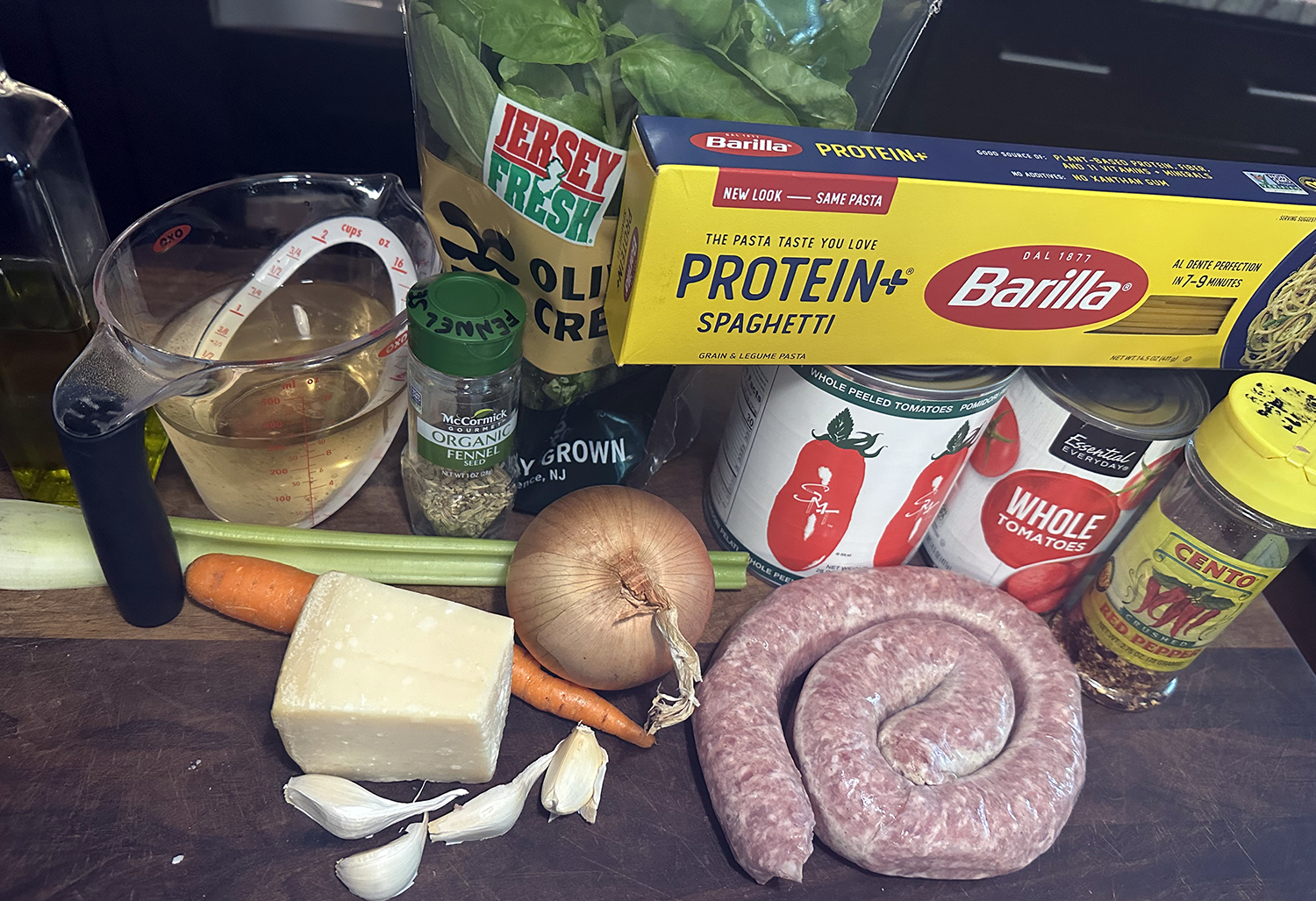
Ingredients

  • 4 garlic cloves, grated (about 1 Tbsp.)
  • 1 1/3 cups dry white wine, divided
  • 1 lb. sweet Italian sausage, casings removed
  • 1 tsp. ground fennel
  • 1/2 tsp. black pepper
  • 1/2 tsp. crushed red pepper
  • 1/4 cup extra-virgin olive oil
  • 1 small yellow onion, finely chopped
  • 1 small carrot, finely chopped
  • 1 celery stalk, finely chopped
  • 1 28-oz. can whole peeled tomatoes, undrained and crushed
  • 1 14.5-oz. can whole peeled tomatoes, undrained and crushed
  • 1/8 tsp. kosher salt
  • 1 lb. uncooked spaghetti
  • 2 oz. Parmigiano-Reggiano cheese, grated
  • 1/4 cup chopped fresh basil, plus small leaves for garnish
  • 1 cup chopped fresh flat-leaf parsley, plus more for garnish

Directions

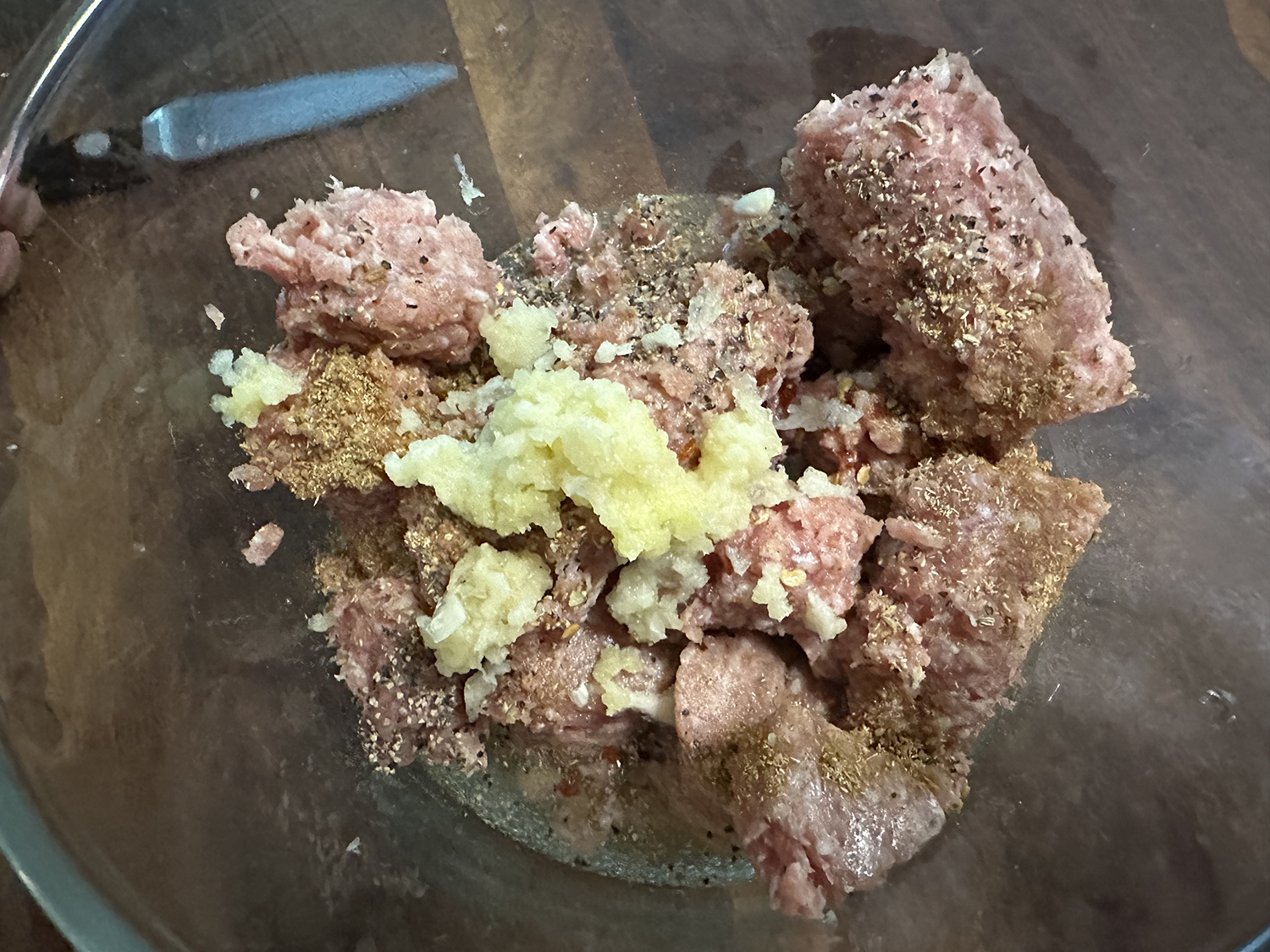
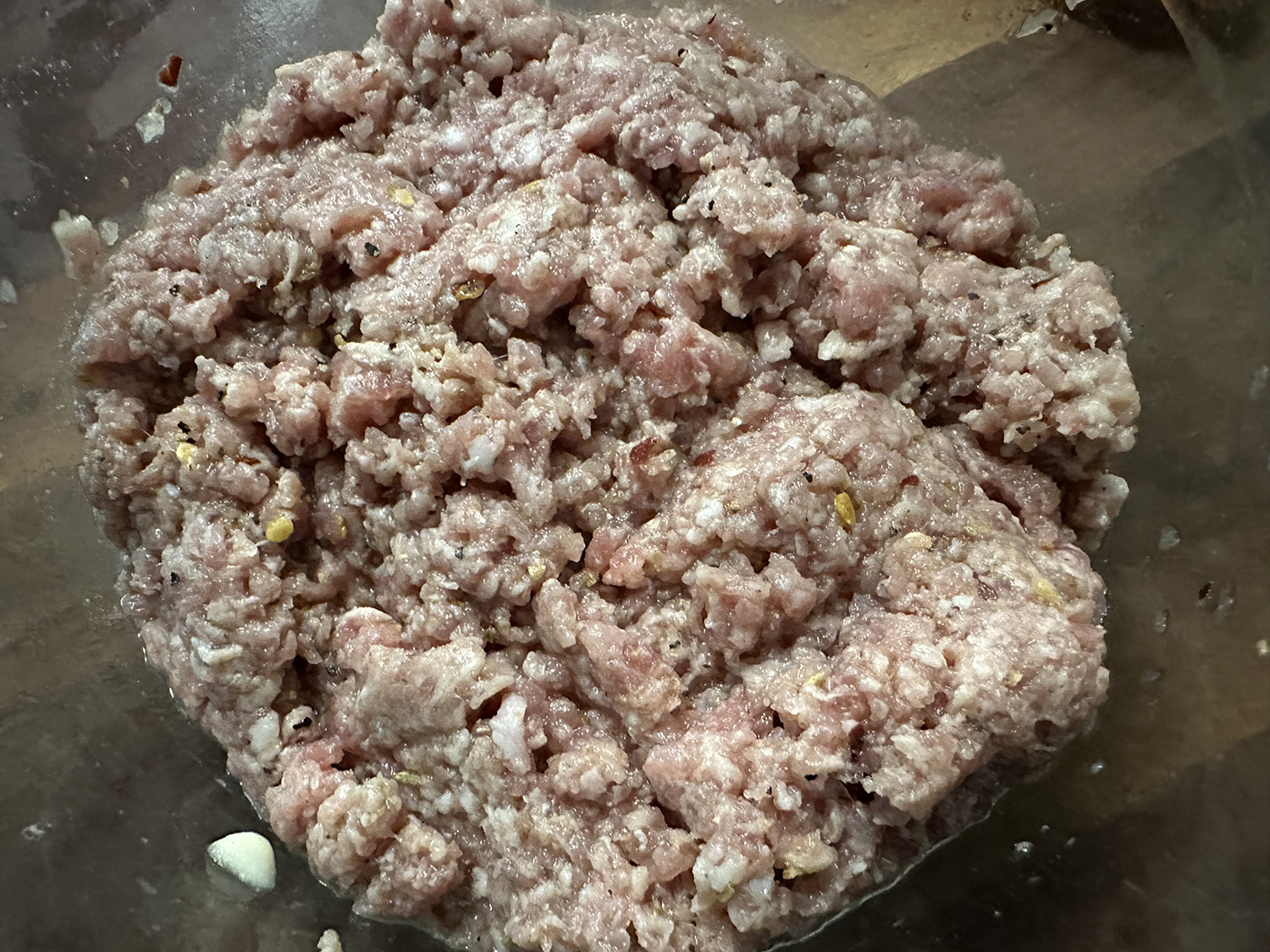
  1. Stir together garlic and 1/3 cup wine in a large bowl. Add sausage, fennel, black pepper, and crushed red pepper; stir well to combine. Cover and refrigerate for at least 1 hour or up to 12 hours.
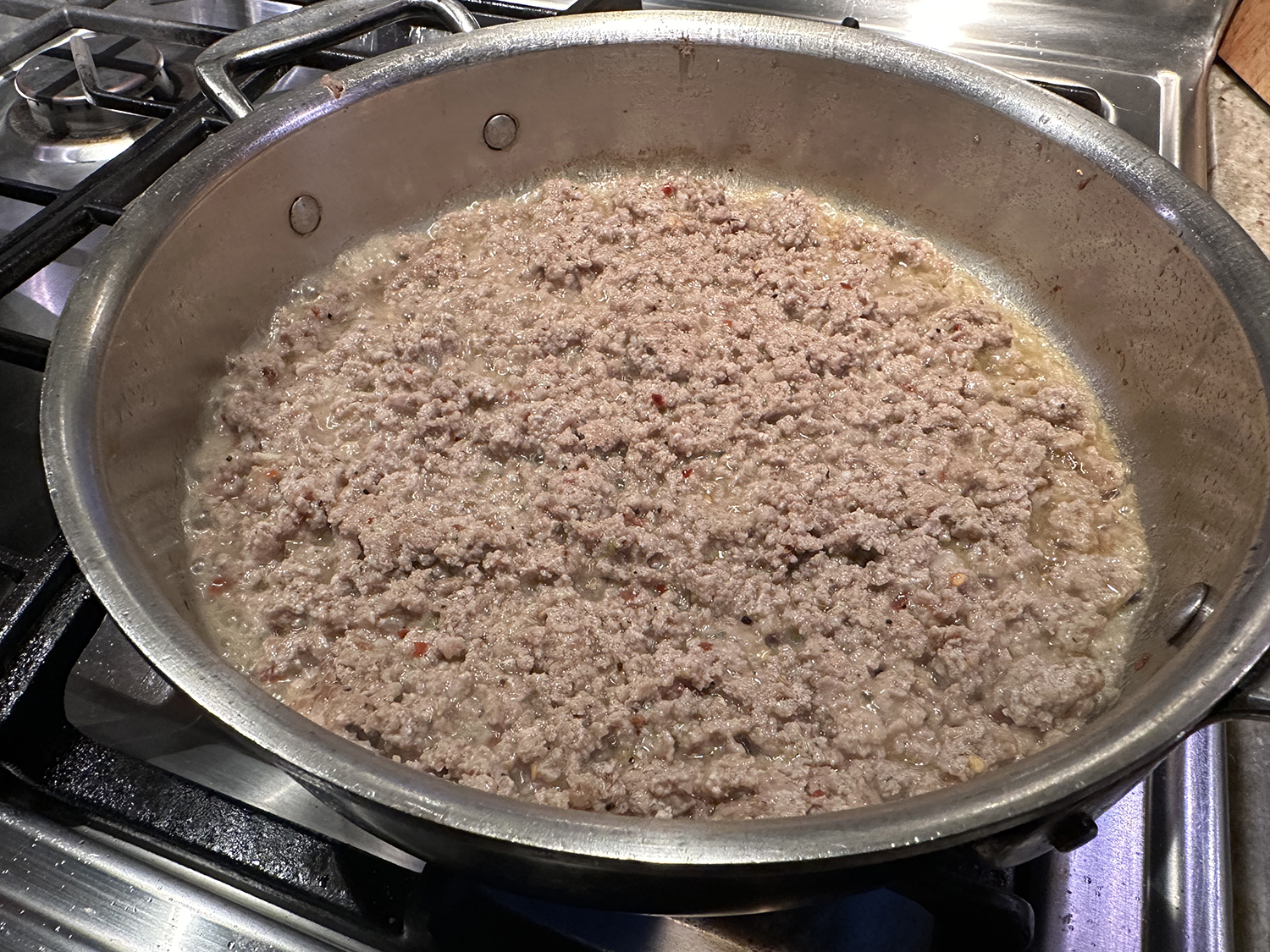
  2. Heat oil in a large, deep, 12″ or larger skillet over medium until shimmering. Increase heat to high, and add sausage mixture; cook, stirring occasionally to break up clumps, until lightly browned, 6 to 7 minutes.
  3. Stir in onion, carrot, and celery; cook, stirring often, until softened, about 4 minutes. Add remaining 1 cup wine; cook, scraping up any browned bits on bottom of the skillet, until wine is nearly evaporated, 5 to 6 minutes.
  4. Stir in crushed tomatoes with juices and salt. Bring mixture to a simmer over high; reduce heat to medium-low, and simmer, stirring occasionally, until thickened and reduced by about half, 30 to 35 minutes.
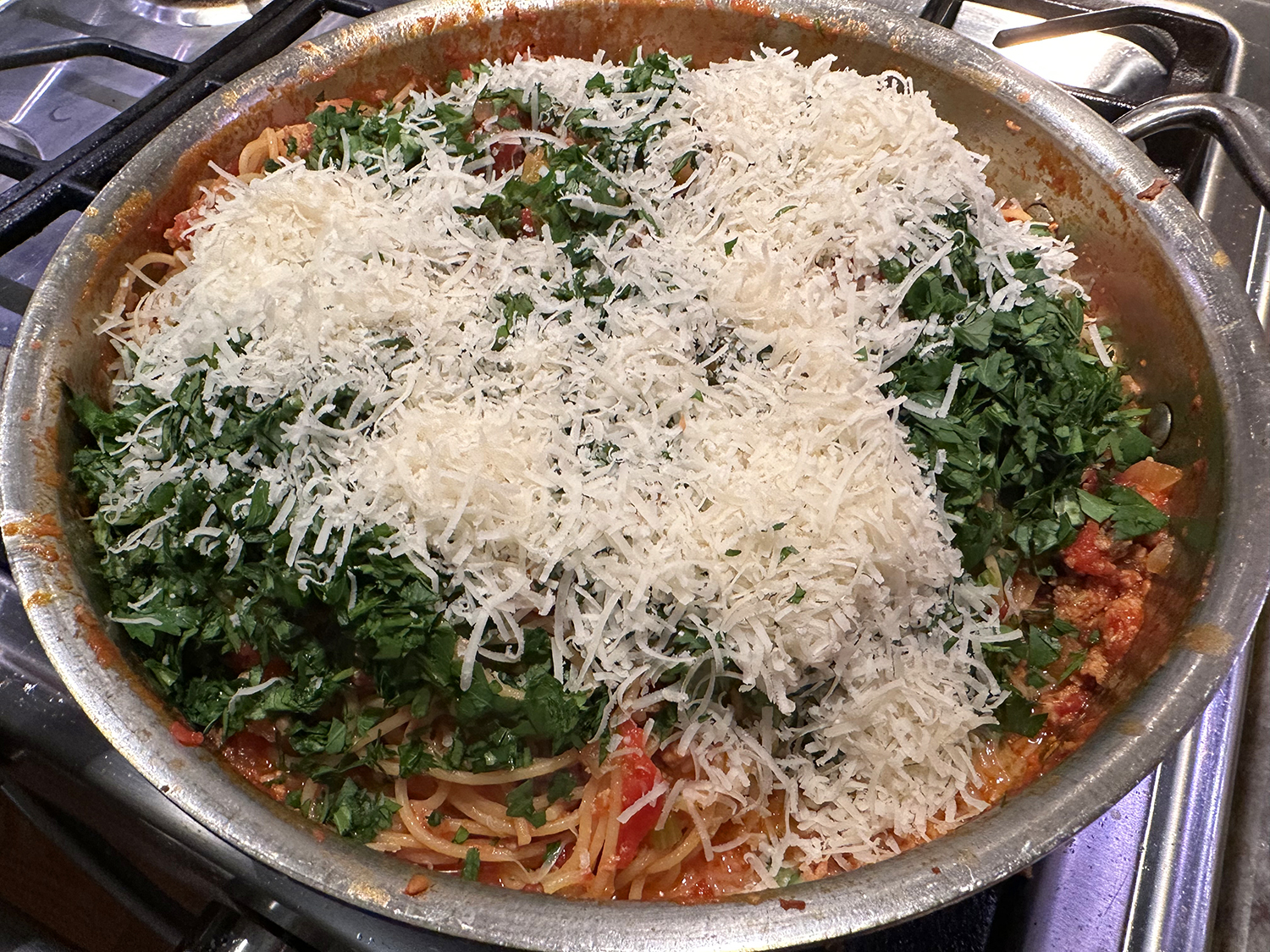
  5. Bring a large pot of salted water to a boil over high. Add spaghetti; cook according to package directions for al dente, about 8 minutes. Drain pasta, reserving 1/2 cup cooking liquid. Stir spaghetti into sauce in skillet; stir in cheese, basil, and parsley.
  6. Add reserved cooking liquid, 1/4 cup at a time, if needed to thin sauce to desired consistency. Increase heat to medium-high; cook, stirring often, until sauce clings to pasta, about 2 minutes. Garnish with additional basil and parsley. Serve hot.

http://www.lynnandruss.com

Recipe by Andrew Carmellini for Food & Wine

Baked Mushroom Crostini

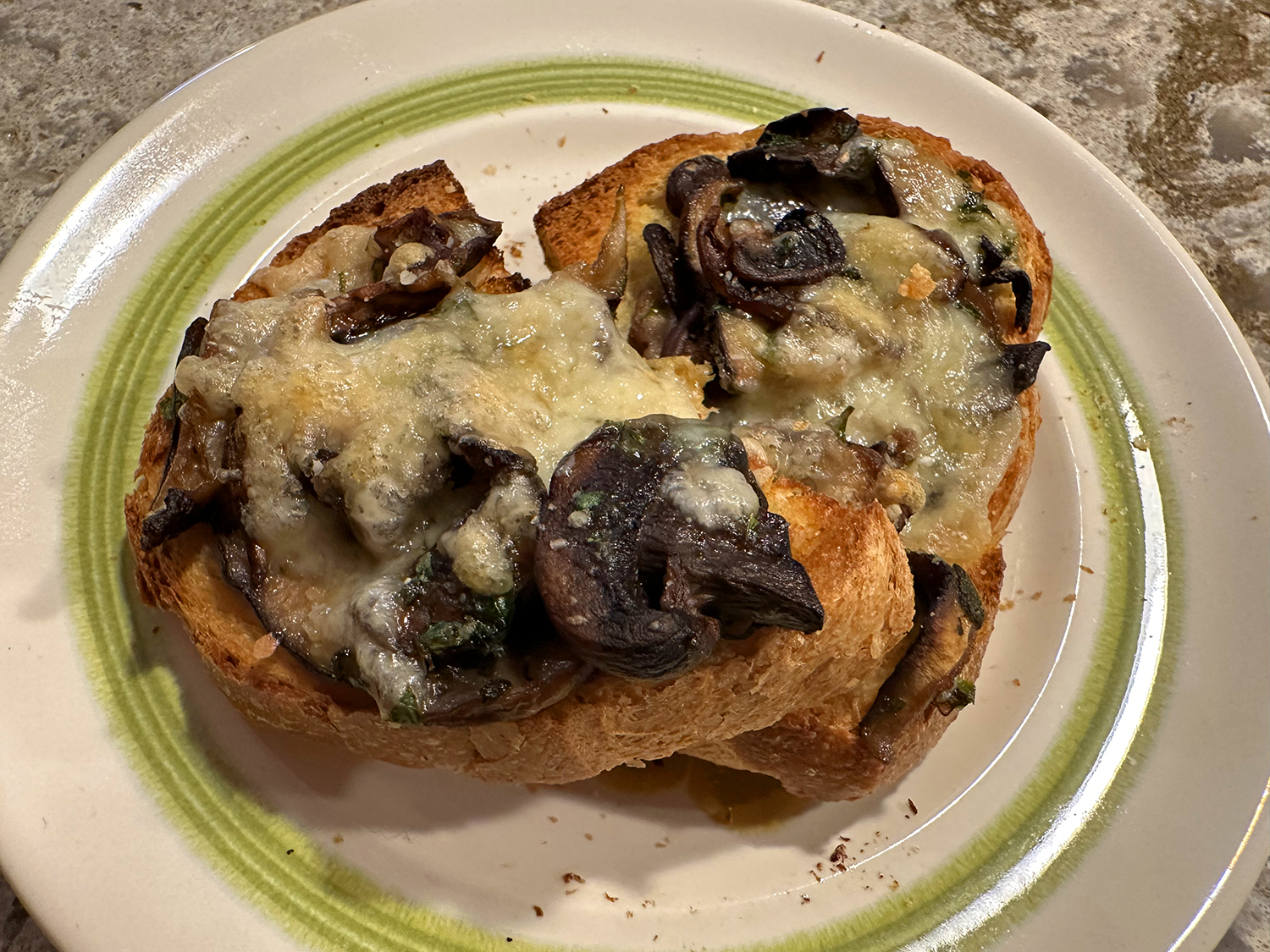
In Italian, this appetizer is known as Crostini di Funghi al Forno. Our first time making this lovely dish was for a small dinner party. Everyone loved it, so a few days later when attending another dinner party, we were tasked with bringing an appetizer and made the same thing. No disappointments.

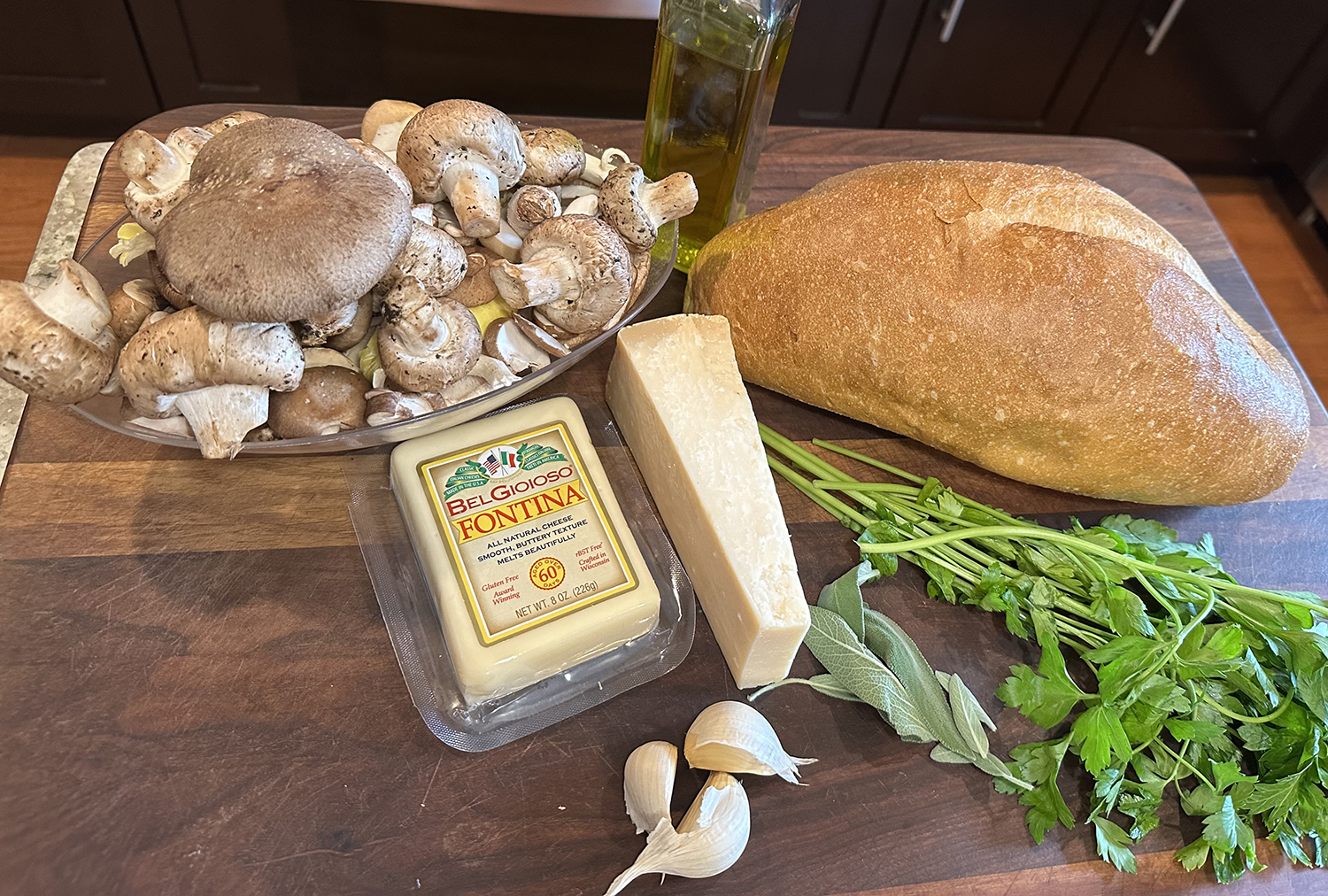
One of my favorite melting cheeses is fontina. Incredibly rich and creamy, the flavors of this cheese are sweet and pungent, unveiling tones of butter and roasted nuts as it lingers on your palate. Traditionally made from unpasteurized milk, the texture is semi-hard, smooth and adorned with small holes in the body.

Fontina is not just limited to Italy, there are versions of Danish and Swedish characterized by their waxed rinds and sweet savory flavor. A suitable substitute is Gruyère which produces a rich and creamy sauce similar to that of Fontina.

Baked Mushroom Crostini

  • Servings: 4
  • Difficulty: easy
  • Print

Ingredients

  • ¼ cup extra-virgin olive oil
  • 3 garlic cloves, crushed and peeled
  • 1 lb. mixed fresh mushrooms, sliced (cremini, button, shiitake, oyster, chanterelle)
  • 4 fresh sage leaves, chopped
  • ½ tsp. kosher salt
  • 2 Tbsp. chopped fresh Italian parsley
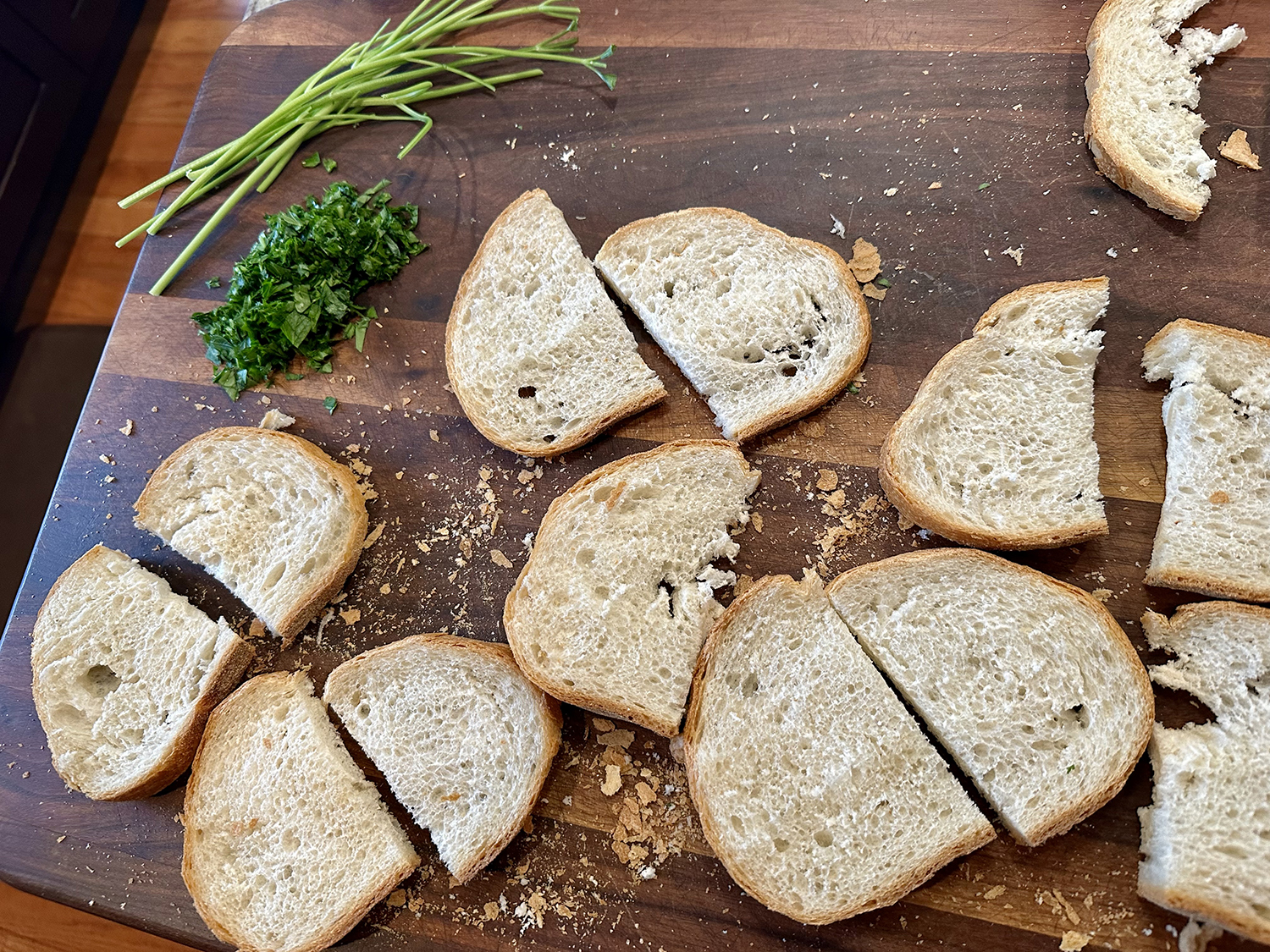
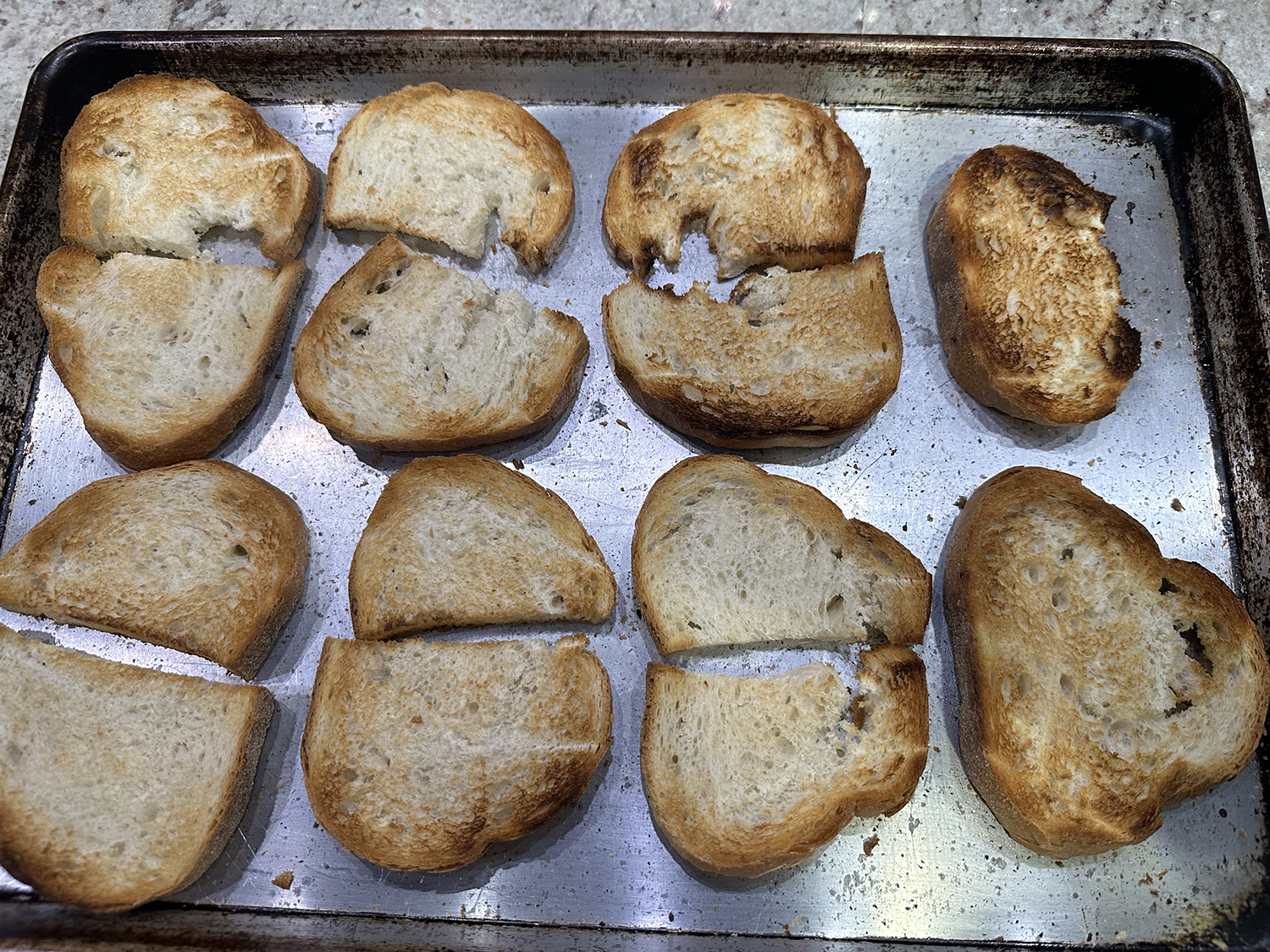
  • 8 slices country bread, very lightly toasted
  • 1 cup grated Italian fontina
  • ½ cup freshly grated Grana Padano

Direction

  1. Preheat the oven to 400 degrees.
  2. To a large skillet over medium-high heat, add 2 tablespoons of the olive oil. When the oil is hot, add the garlic cloves. Once the garlic is sizzling, add the mushrooms and sage, and cook, without stirring, until browned on one side, about 2 to 3 minutes. Stir, and brown the other side. Season with the salt, cover, and cook until tender, about 5 minutes. Uncover, remove the garlic, stir in the parsley, and set aside.
  3. On a baking sheet, brush the lightly toasted bread on both sides with the remaining 2 tablespoons olive oil. In a medium bowl, toss together the grated cheeses. Stir half of the cheese mixture into the mushrooms.
  4. Spread the mushroom mixture on the toasts, and sprinkle with the remaining grated-cheese mixture. Bake until the tops are browned and the cheese is bubbly, about 10 to 12 minutes. Serve hot.

http://www.lynnandruss.com

Recipe from Lidia Bastianich

Sea Scallops with Browned Butter, Capers and Lemon

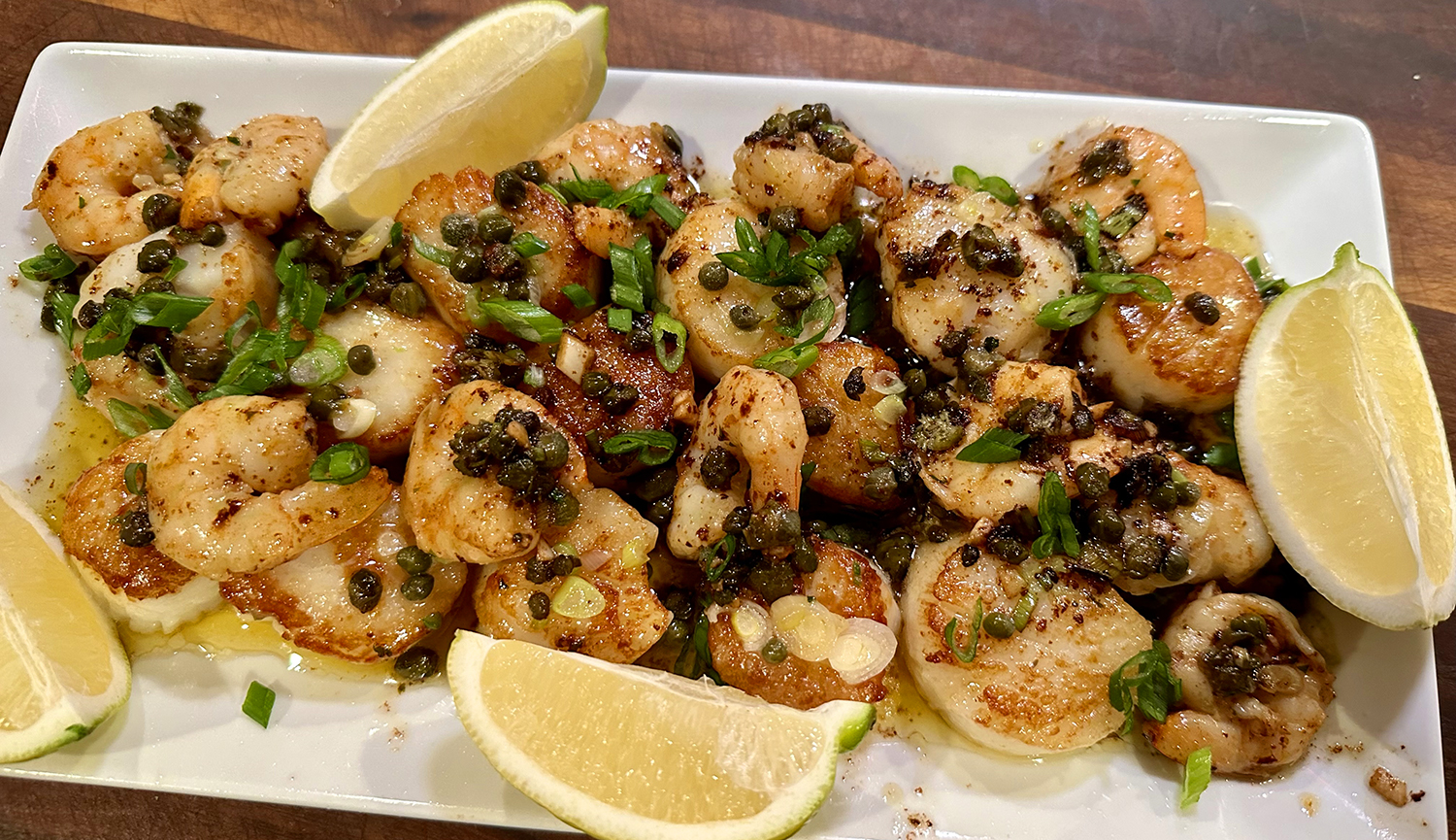
Sea scallops are a rare delicacy due to the high price at restaurants and at the fish market. So in the event of a stay-at-home New Year’s Eve celebration for the two of us, the occasion was the perfect opportunity to “treat” ourselves. Couple that with a few lump meat crab cakes, and our year-end meal was one to remember.

In this recipe, sea scallops get the piccata treatment, and who can resist that? Their sweet, briny flavor is perfectly matched by nutty browned butter, salty capers and puckery lemon. And while not part of the original recipe, we added in 8 pre-cooked shrimp (leftover from another appetizer), reheating them at the end of step four with the addition of the lemon juice.

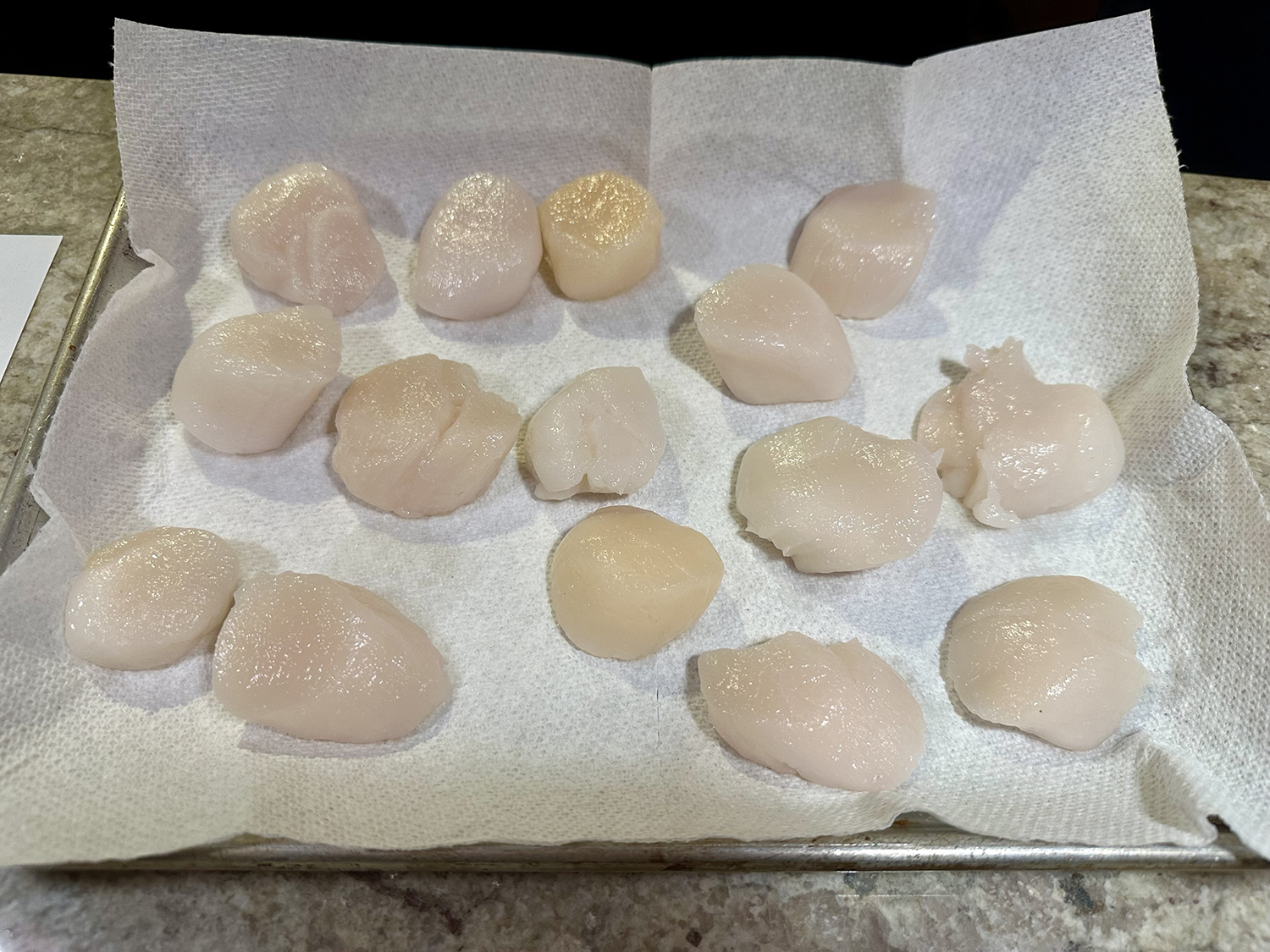
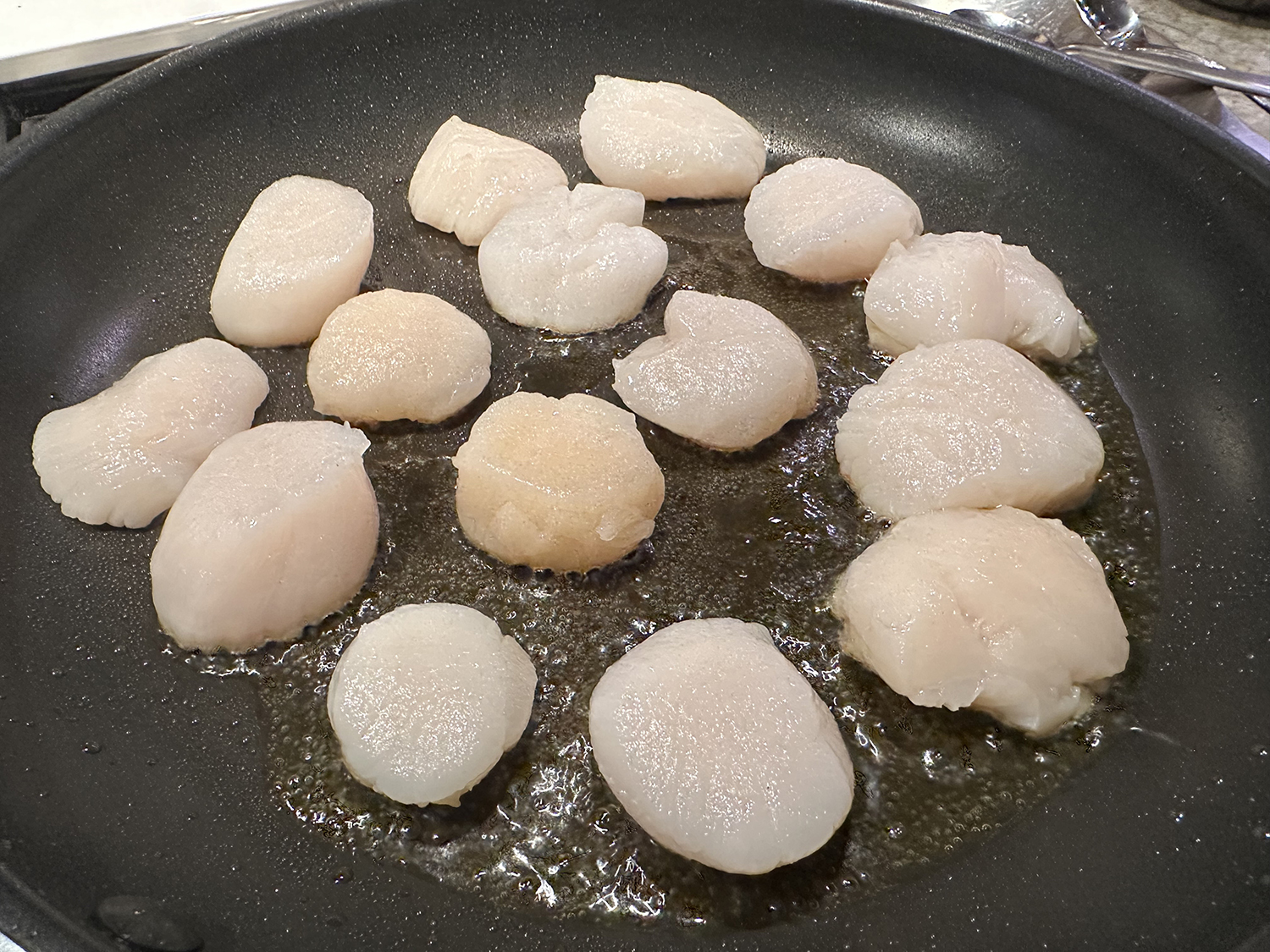
When shopping, look for dry sea scallops—“Dry” indicates that the shellfish has not been treated with sodium tripolyphosphate (STPP), a preservative that forces water retention and that has a bleaching effect. In fact, bright white color is a tell-tale sign of the presence of STPP, as untreated scallops have a pale coral or ivory hue. And at the seafood counter, dry scallops should not be sitting in a pool of milky liquid.

Don’t attempt to move the scallops immediately after placing them in the skillet. They may stick at first but will release after they’ve formed a nicely browned bottom crust. Serve with crusty bread and a leafy salad dressed with a bright vinaigrette.

With a minimum of ingredients and a short cooking time, you can have an elegant meal on the table in under a half hour!

Sea Scallops with Browned Butter, Capers and Lemon

  • Servings: 2-4
  • Difficulty: easy
  • Print

Ingredients

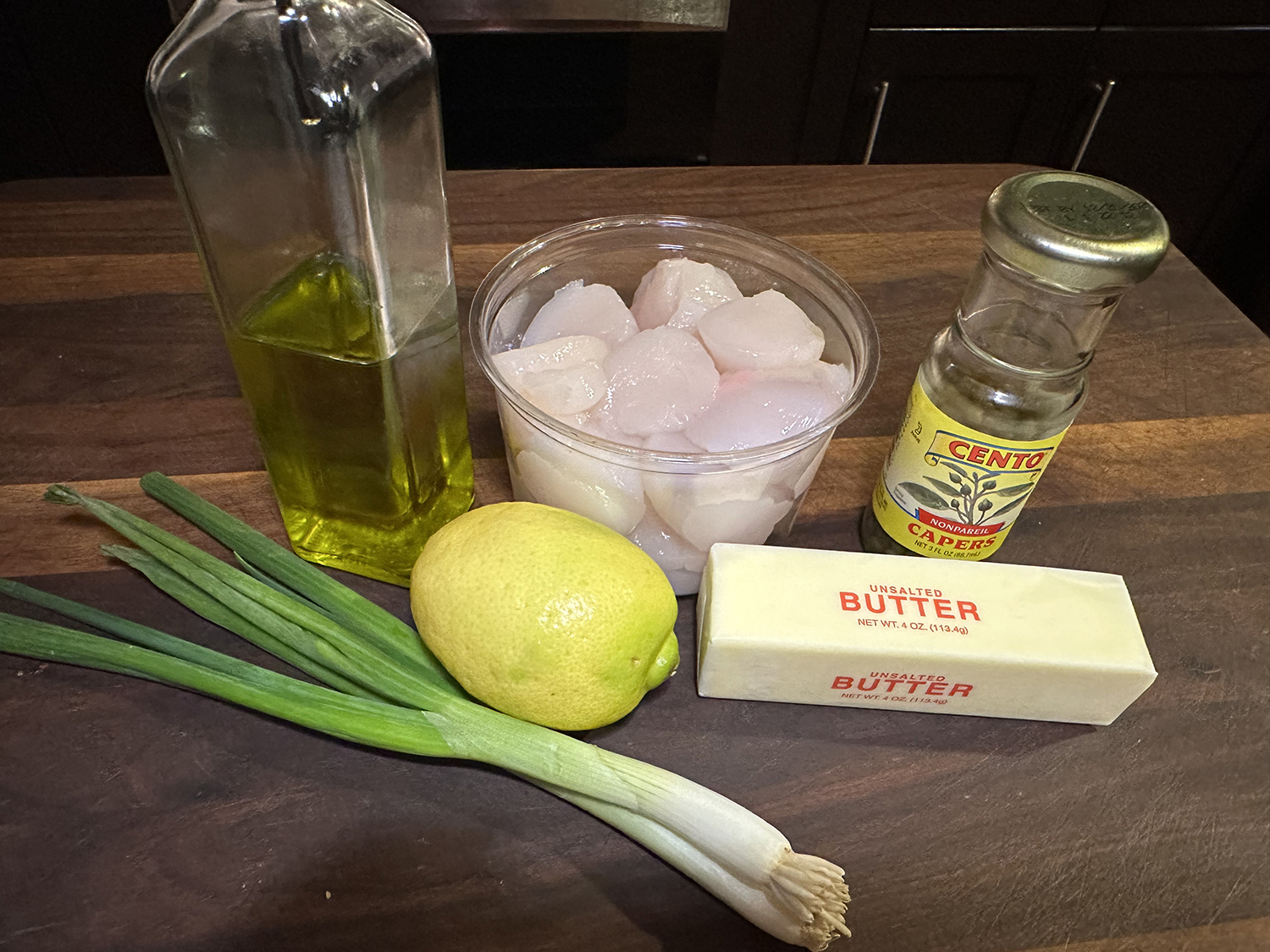
  • 1 1/4 lbs. dry sea scallops, side tendons removed and discarded, patted dry
  • Kosher salt and ground black pepper
  • 2 Tbsp. extra-virgin olive oil
  • 4 Tbsp. salted butter, cut into 4 pieces
  • 1/4 cup drained capers
  • 2 scallions, thinly sliced on the diagonal, whites and greens reserved separately
  • 1 tsp. grated lemon zest
  • 1 Tbsp. lemon juice
  • Lemon wedges to serve

Directions

  1. Place the scallops on a paper towel–lined plate. Season lightly on all sides with salt; set aside. In a 12-inch nonstick skillet over medium-high, heat the oil until barely smoking. Quickly pat the scallops dry once again and place in the pan, a flat side down, spacing them evenly apart. Cook without disturbing until golden brown on the bottoms and they release easily from the pan, 2 to 4 minutes.
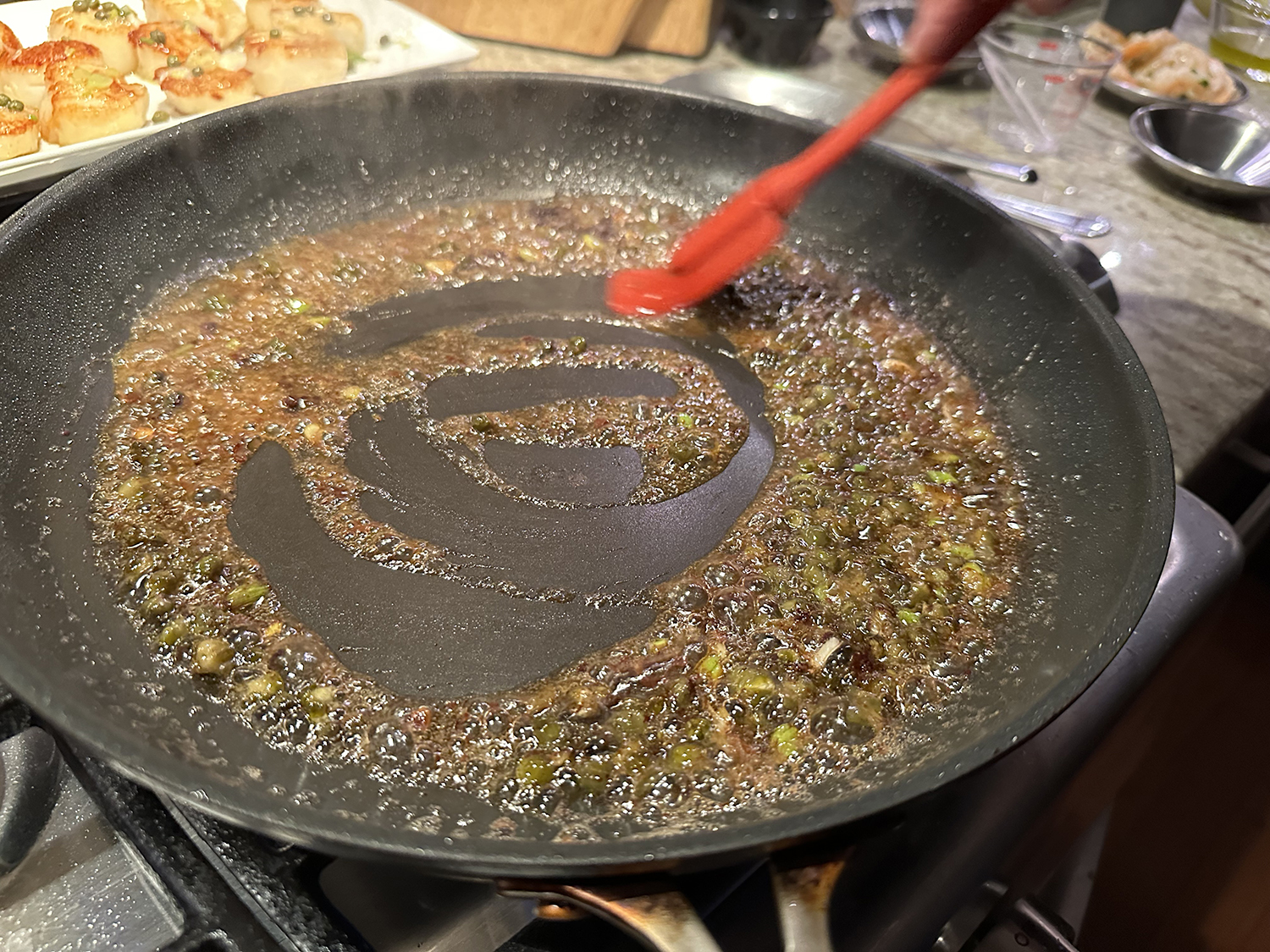
  2. Flip each scallop, then add the butter, capers and scallion whites, swirling the pan to incorporate.
  3. Cook, spooning some of the hot butter over the scallops, until the butter smells nutty and the scallops are opaque throughout, 2 to 3 minutes.
  4. Remove the pan from the heat and, using tongs, transfer the scallops to a serving plate. To the skillet, add the lemon zest and juice; stir to combine.
  5. Taste and season with salt and pepper, then pour the sauce over the scallops. Sprinkle with the scallion greens.

http://www.lynnandruss.com

Recipe from Milk Street

Tuscan-Style Roast Pork with Garlic and Rosemary (Arista)

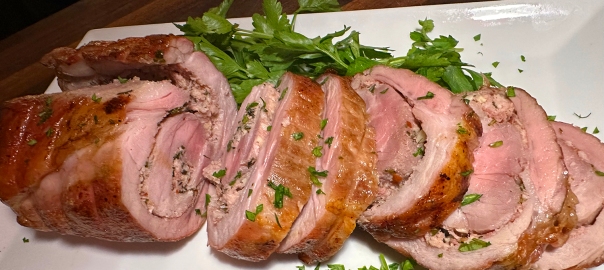
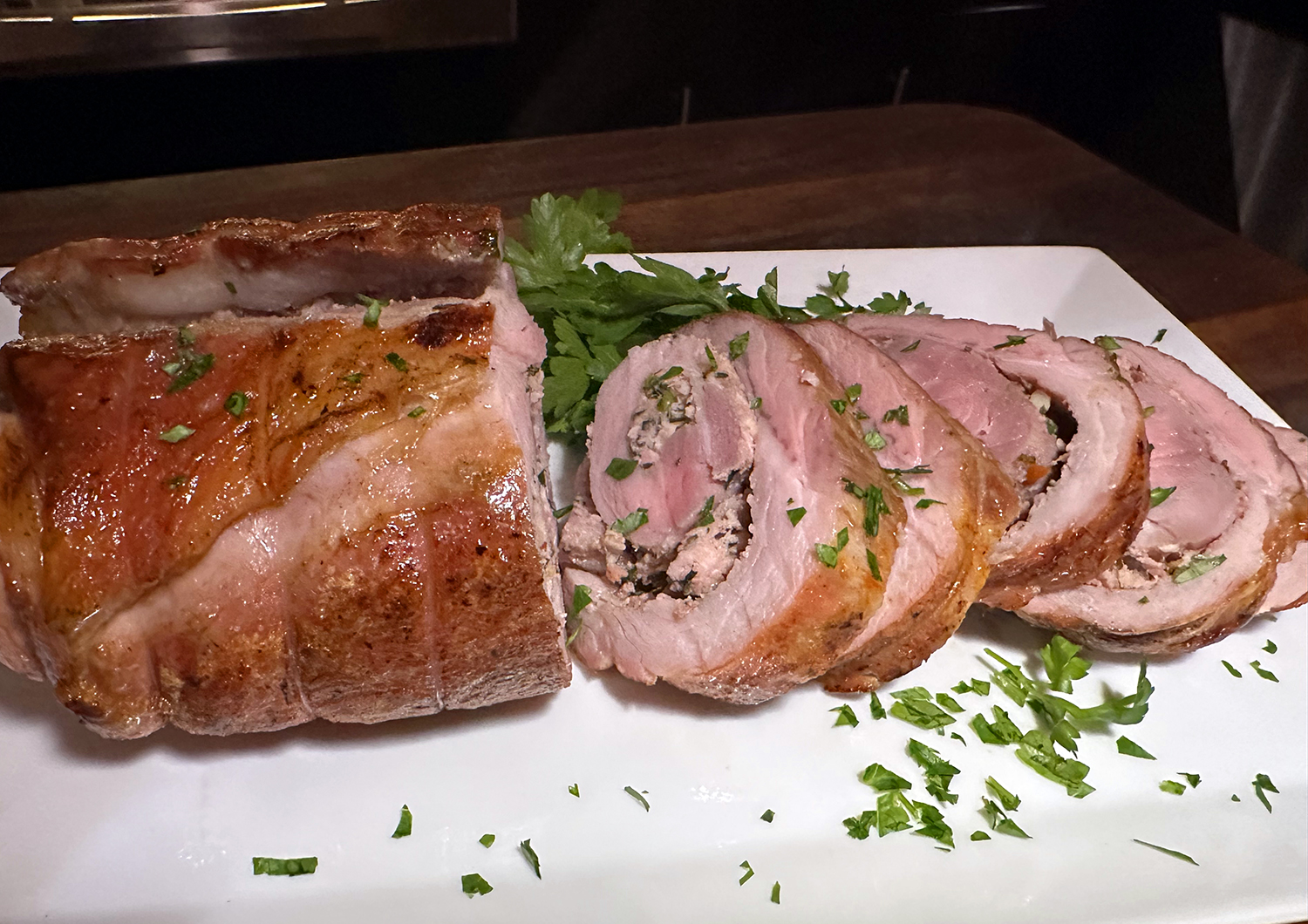
Arista means “the best.” This dish promises a superlative pork loin flavored with garlic, rosemary, and deep browning. Too bad few versions live up to their name. Preparing it this way, the pork is very juicy and full of flavor; plus it makes a nice presentation on a platter. And it is a very economical piece of meat to feed a small dinner party without feeling you need to break the bank to impress.

Note that we doubled the amount of pancetta paste after other reviewers suggested it. Another change: just before adding the cooked lemon to the sauce at the end to make the vinaigrette, The Hubs added the oils first to the pan to lift the fond left after searing the roast, then strained this and added the strained cooked lemon.

Tuscan-Style Roast Pork with Garlic and Rosemary

  • Servings: 4-6
  • Difficulty: moderate
  • Print

ingredients

  • 1 lemon
  • ⅓ cup extra-virgin olive oil
  • 8 garlic cloves, minced
  • ¼ teaspoon red pepper flakes
  • 1 tablespoon chopped fresh rosemary
  • 4 oz. pancetta, diced
  • 1 (2 1/2-lb.) boneless center-cut pork loin roast, trimmed
  • Kosher salt

Directions

  1. Finely grate 1 teaspoon zest from lemon. Cut lemon in half and reserve. Combine lemon zest, oil, garlic, and pepper flakes in 10-inch nonstick skillet. Cook over medium-low heat, stirring frequently, until garlic is sizzling, about 3 minutes. Add rosemary and cook, 30 seconds. Strain mixture through fine-mesh strainer set over bowl, pushing on garlic-rosemary mixture to extract oil. Set oil aside and let garlic-rosemary mixture cool. Using paper towels, wipe out skillet.
  2. Process pancetta in food processor until smooth paste forms, 20 to 30 seconds, scraping down sides of bowl as needed. Add garlic-rosemary mixture and continue to process until mixture is homogeneous, 20 to 30 seconds longer, scraping down sides of bowl as needed.
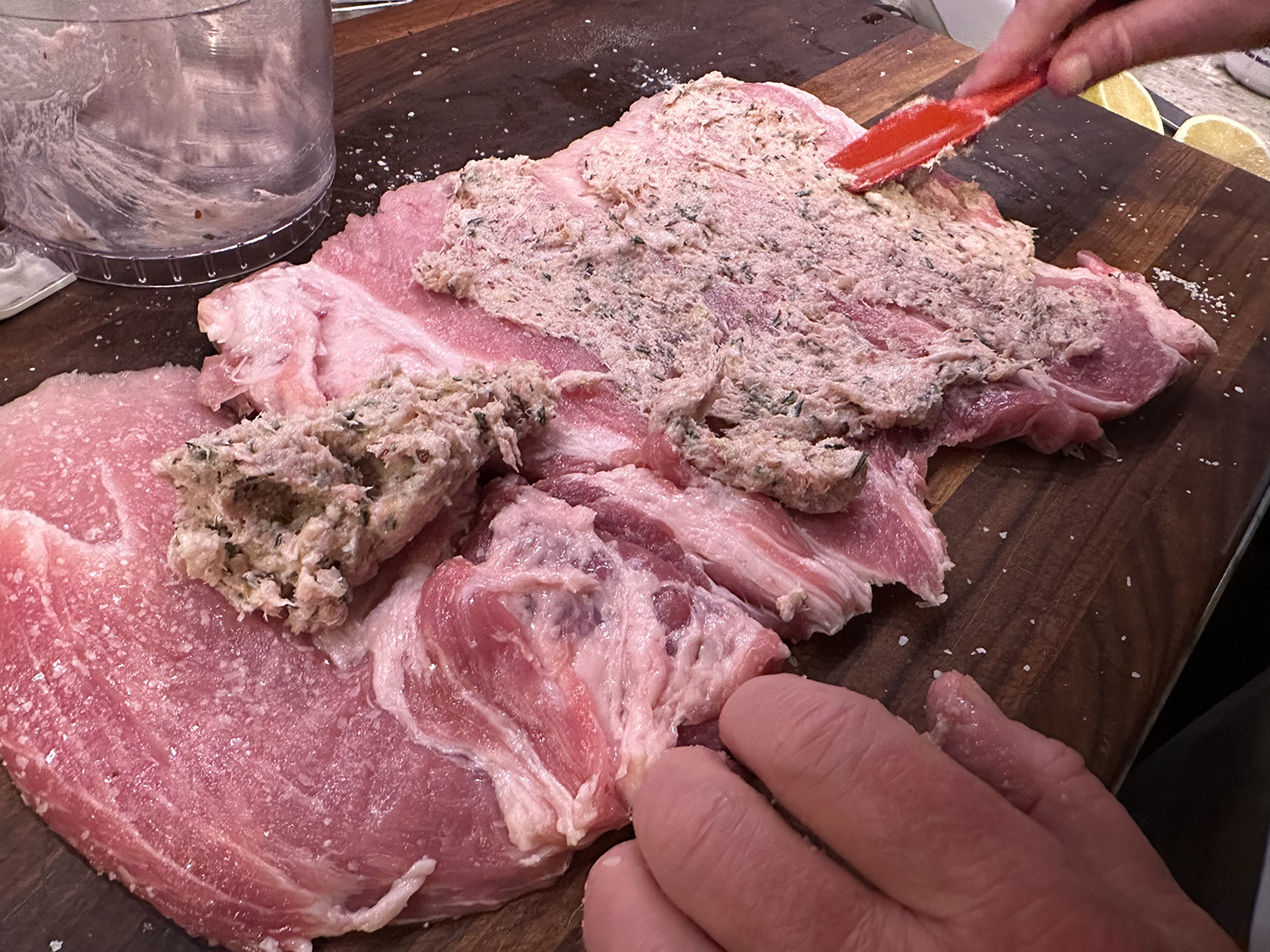
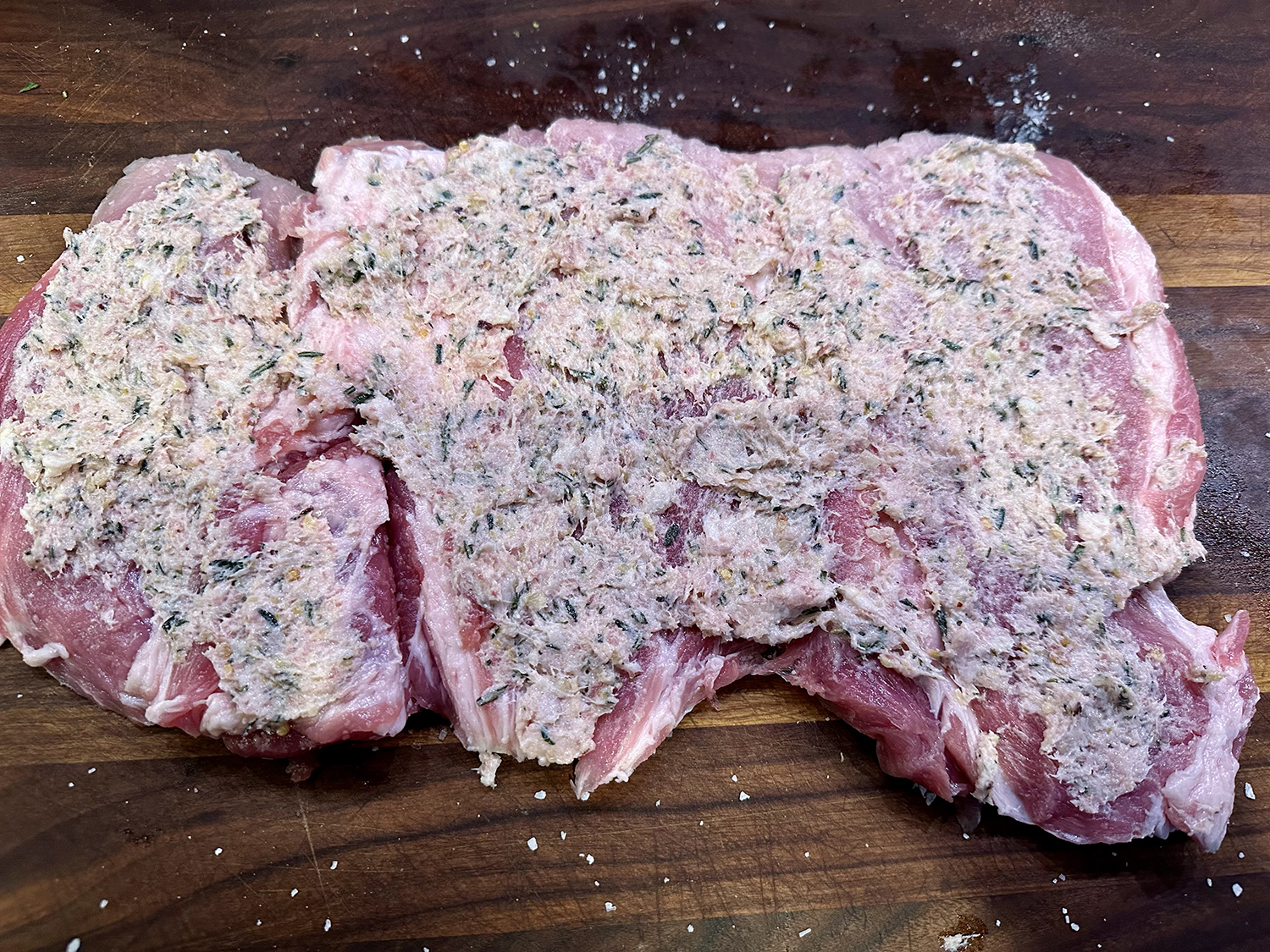
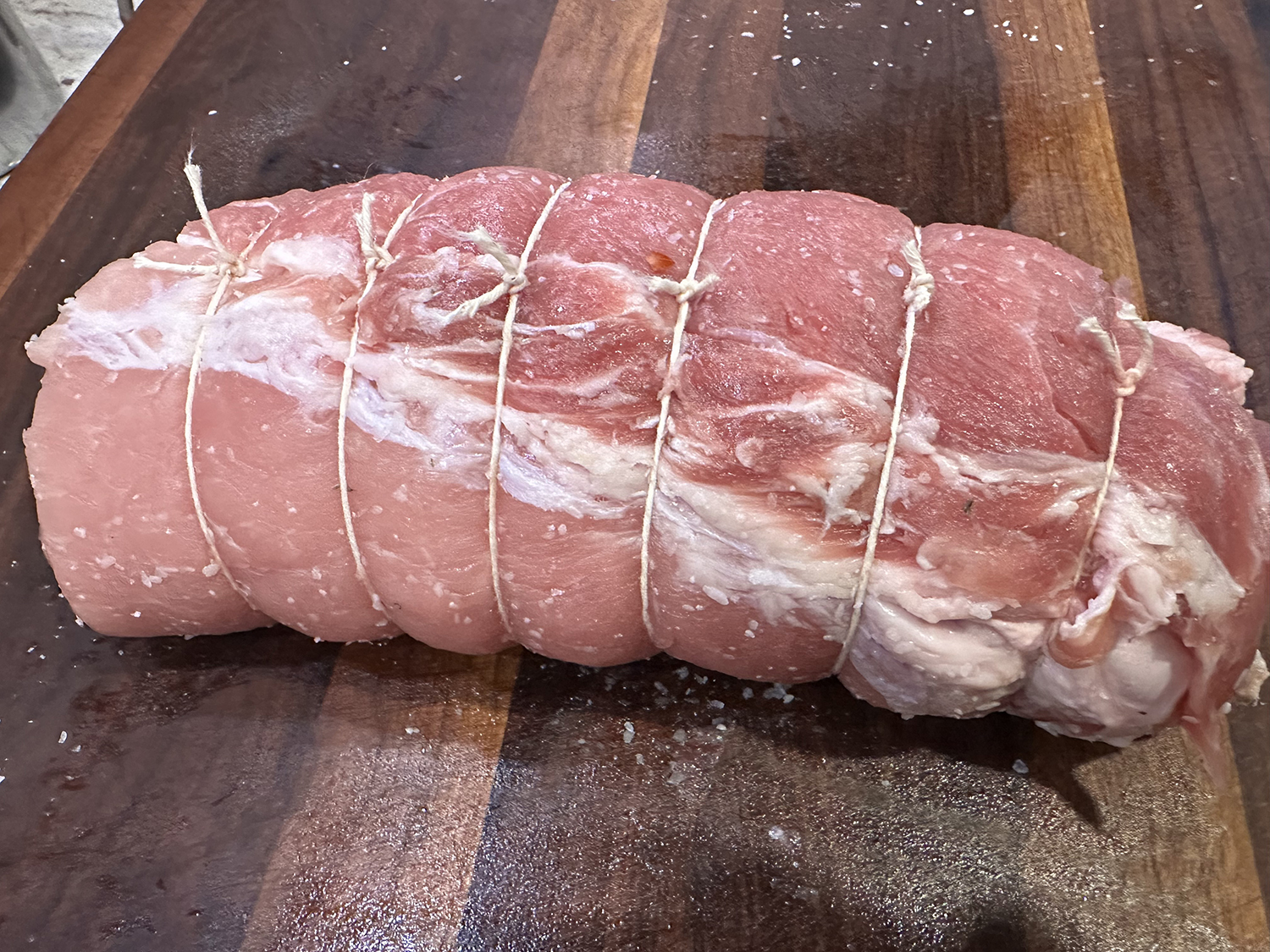
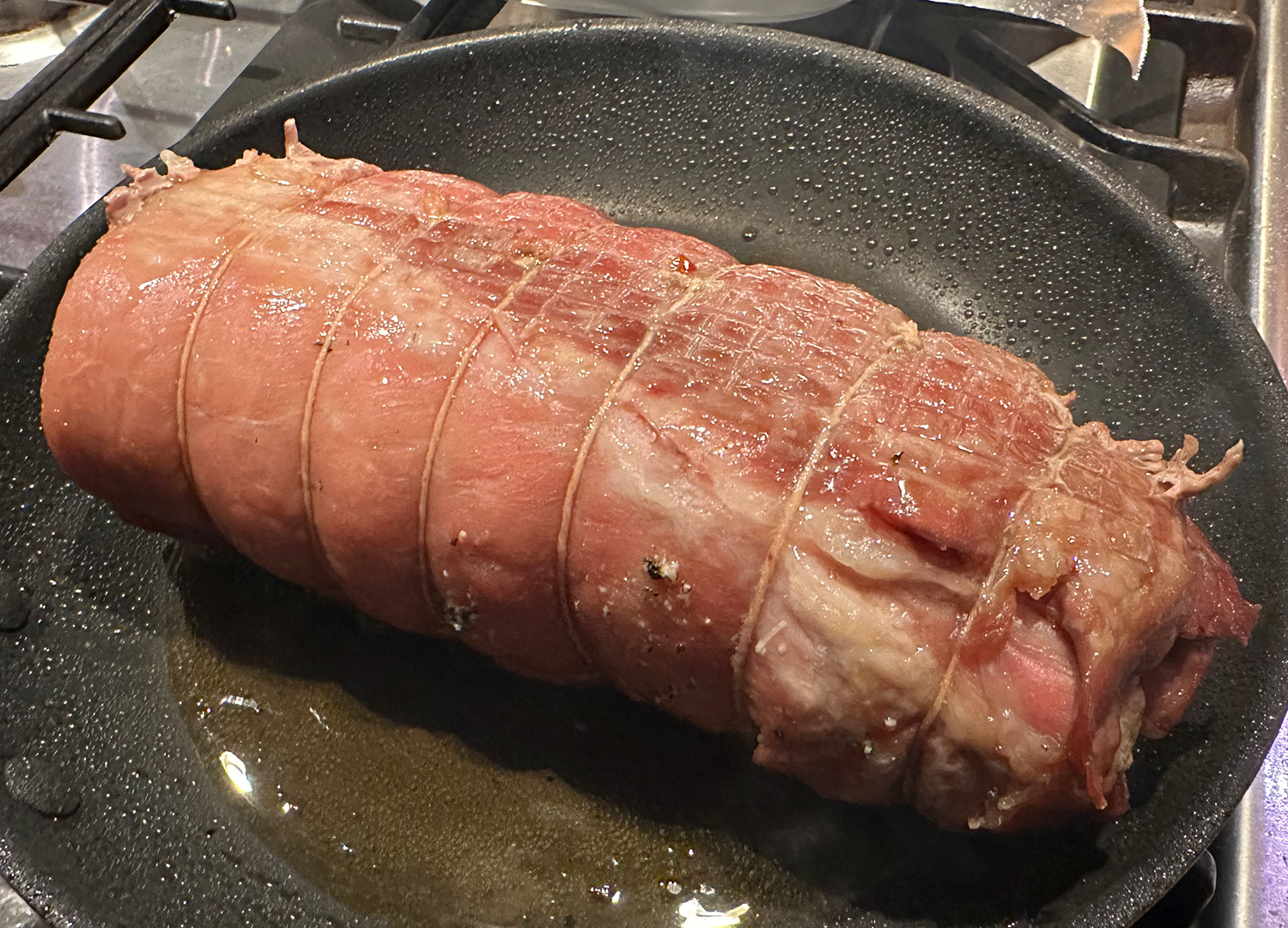
  3. Position roast fat side up. Insert knife one-third of way up from bottom of roast along 1 long side and cut horizontally, stopping 1/2 inch before edge. Open up flap. Keeping knife parallel to cutting board, cut through thicker portion of roast about 1/2 inch from bottom of roast, keeping knife level with first cut and stopping about 1/2 inch before edge. Open up this flap. If uneven, cover with plastic wrap and use meat pounder to even out. Sprinkle 1 tablespoon kosher salt over both sides of roast (1/2 tablespoon per side) and rub into meat to adhere. Spread inside of roast evenly with pancetta-garlic paste, leaving about 1/4-inch border on all sides. Starting from short side, roll roast (keeping fat on outside) and tie with twine at 1-inch intervals. Set wire rack in rimmed baking sheet and spray with vegetable oil spray. Set roast fat side up on prepared rack and refrigerate for 1 hour.
  4. Adjust oven rack to middle position and heat oven to 275 degrees. Transfer roast to oven and cook until meat registers 135 degrees, 1 1/2 to 2 hours. Remove roast from oven, tent with aluminum foil, and let rest for 20 minutes.
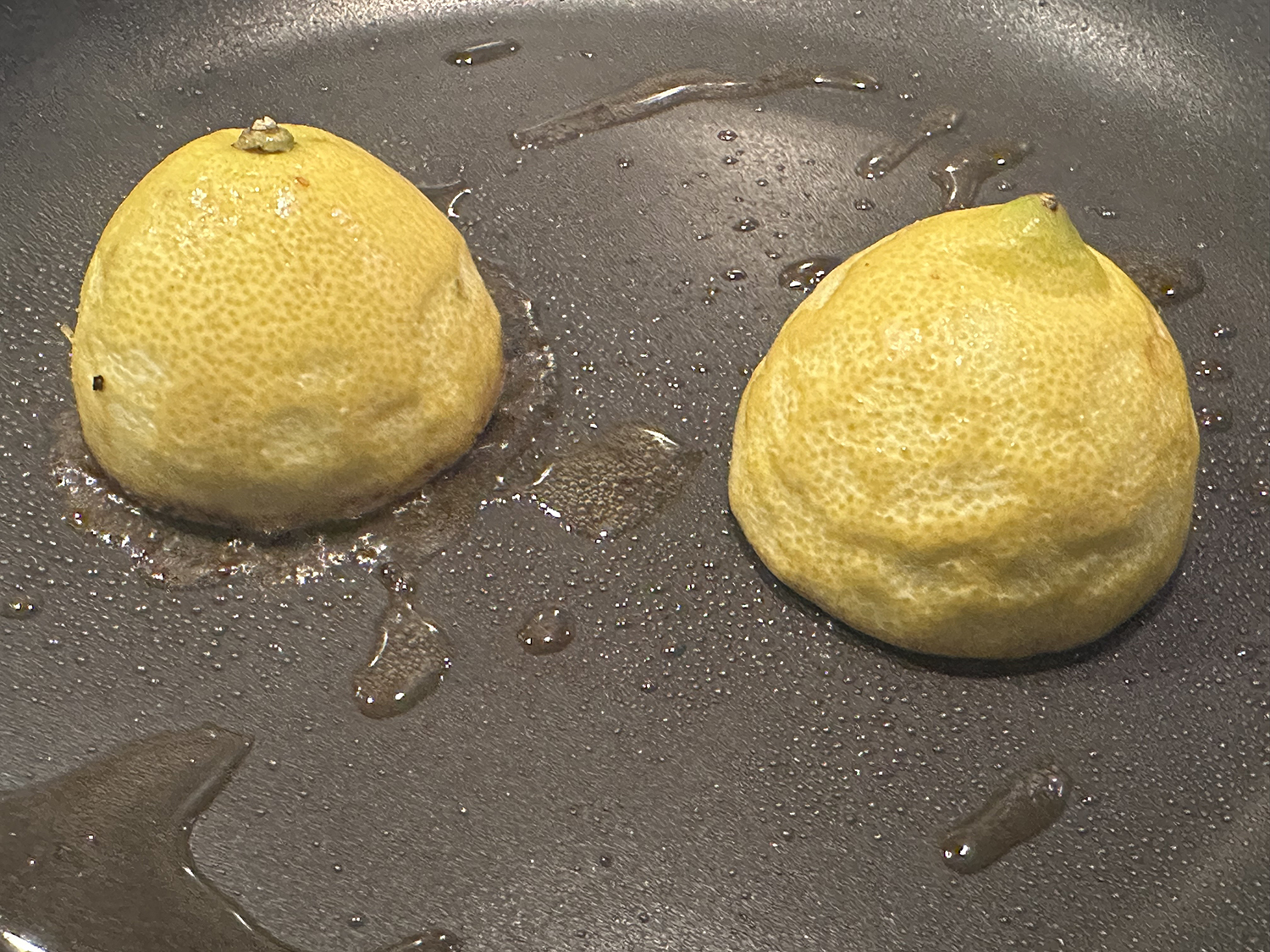
  5. Heat 1 teaspoon reserved oil in now-empty skillet over high heat until just smoking. Add reserved lemon halves, cut side down, and cook until softened and cut surfaces are browned, 3 to 4 minutes. Transfer lemon halves to small plate.
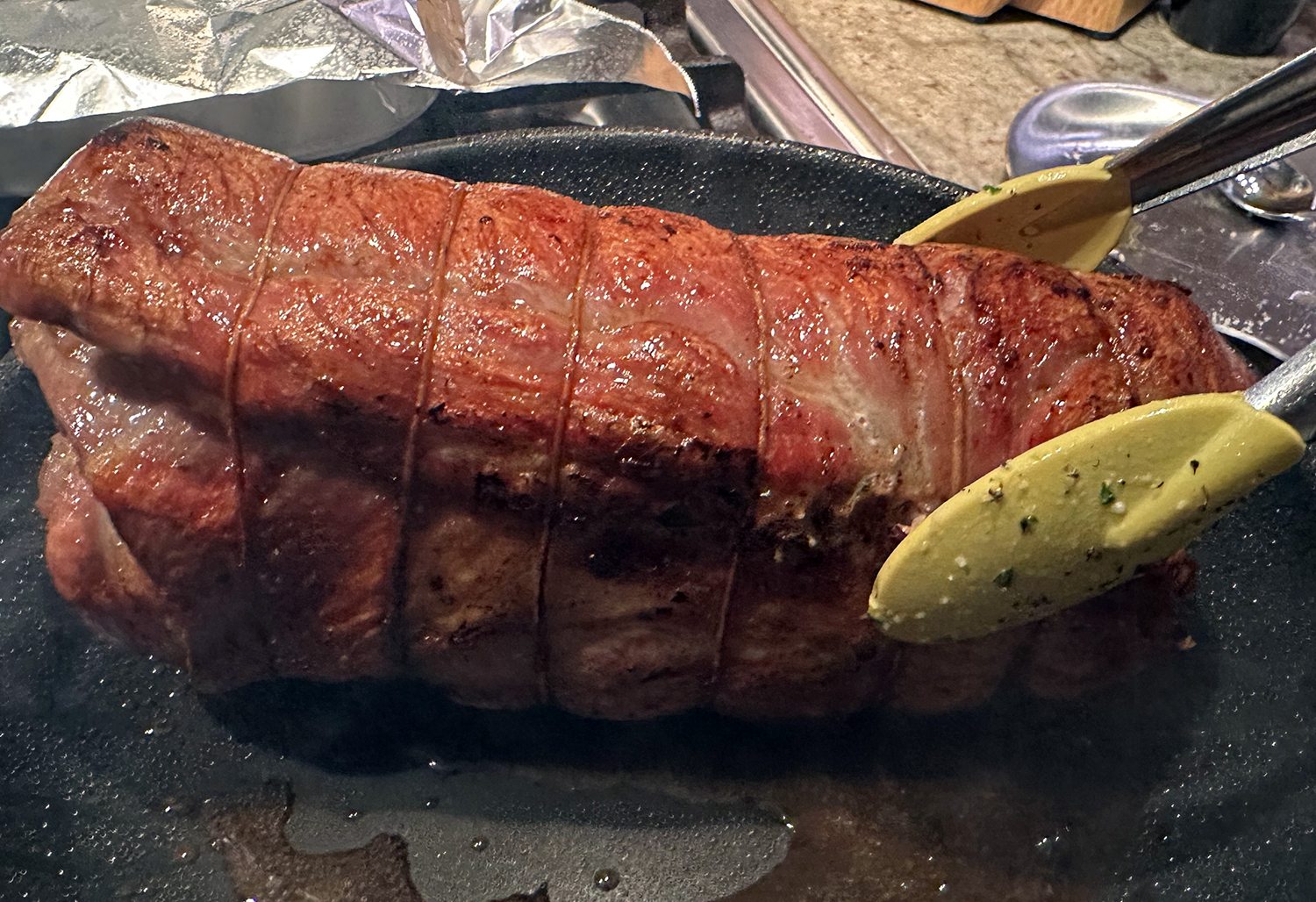
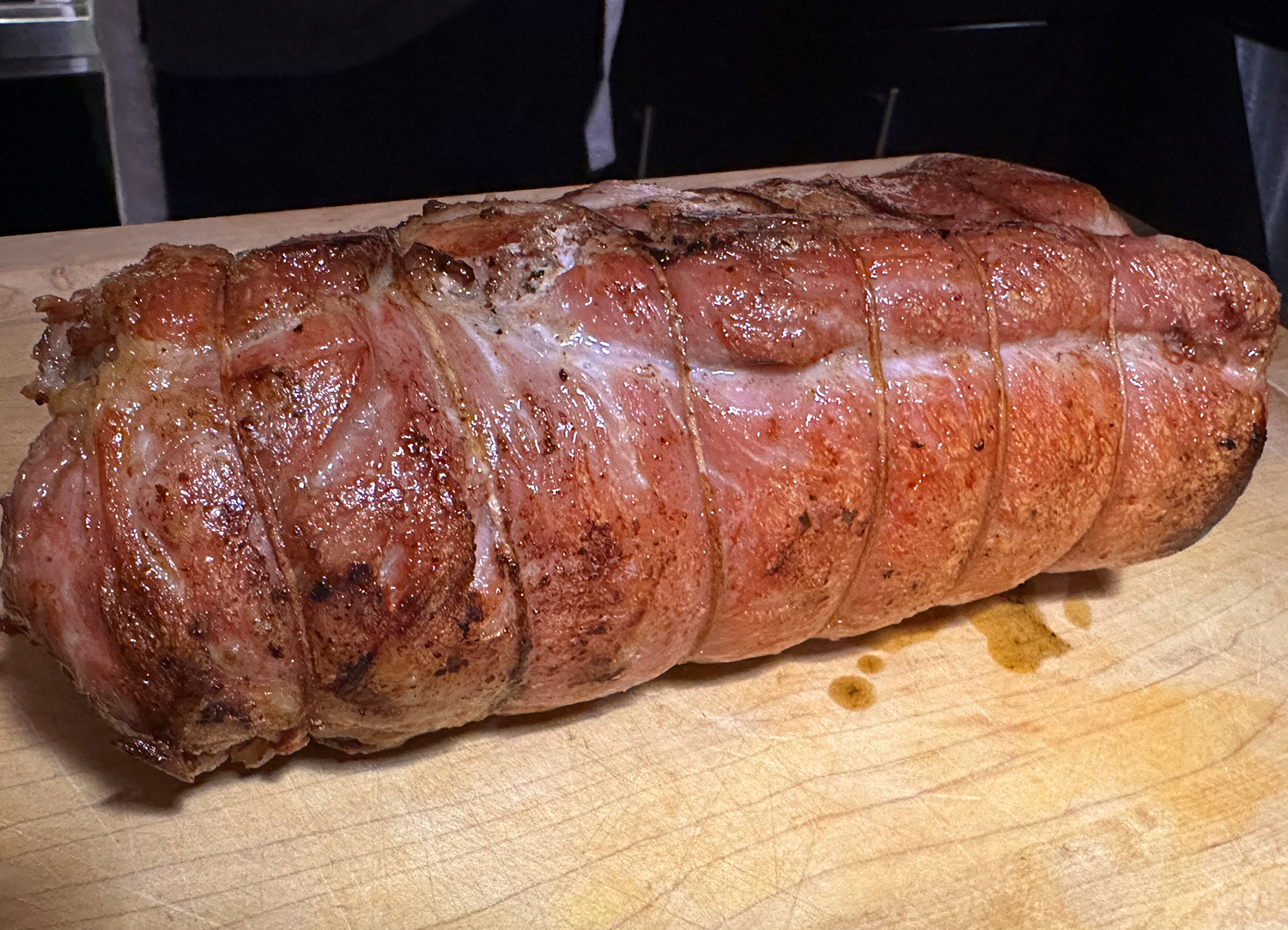
  6. Pat roast dry with paper towels. Heat 2 tablespoons reserved oil in now-empty skillet over high heat until just smoking. Brown roast on fat side and sides (do not brown bottom of roast), 4 to 6 minutes. Transfer roast to carving board and remove twine.
  7. Once lemon halves are cool enough to handle, squeeze into fine-mesh strainer set over bowl. Press on solids to extract all pulp; discard solids. Whisk 2 tablespoons strained lemon juice into bowl with remaining reserved oil. Slice roast into 1/4-inch-thick slices and serve, passing vinaigrette separately.

http://www.lynnandruss.com

Adapted recipe from America’s Test Kitchen

Pasta e Fagioli

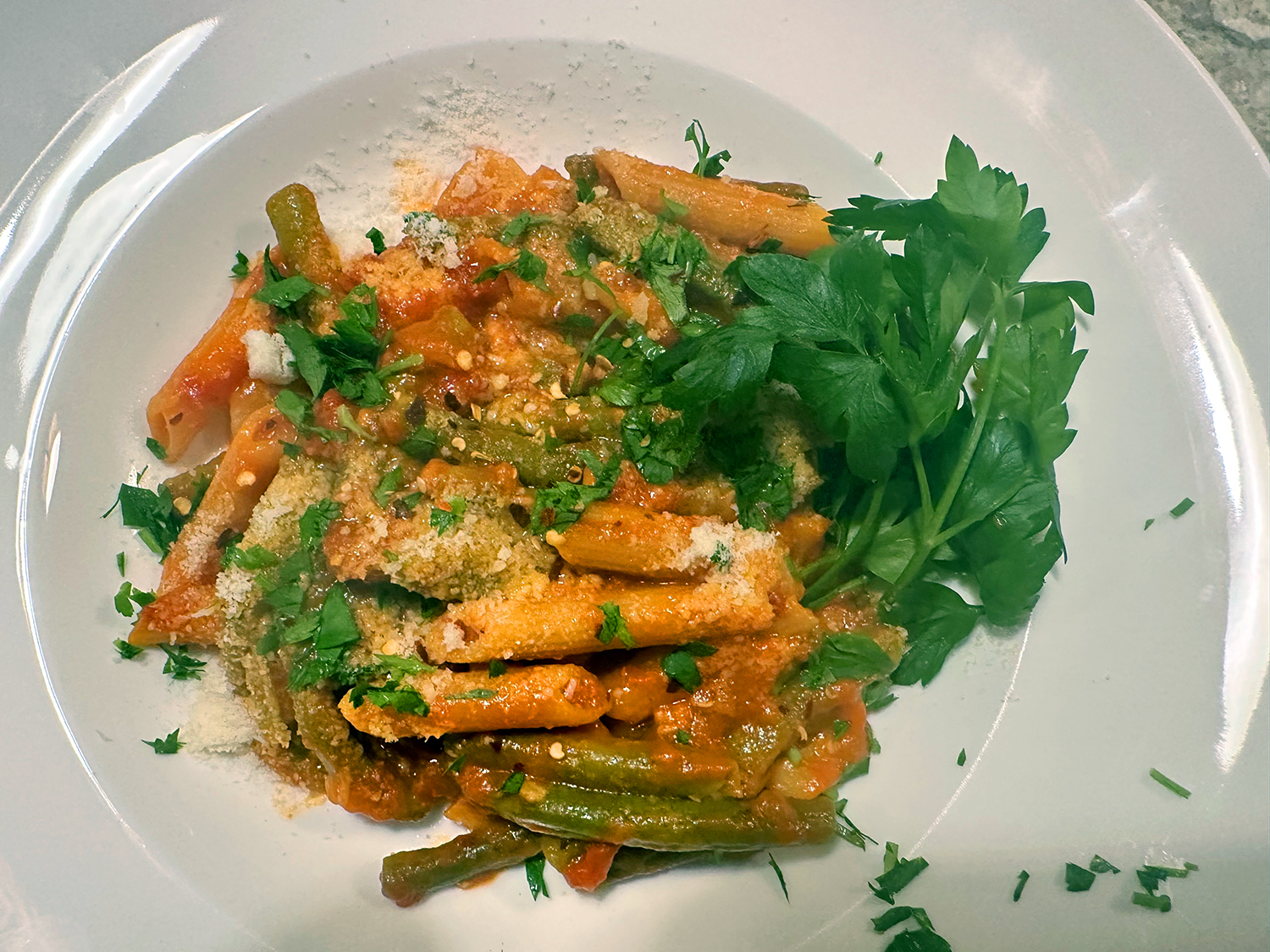
A wonderful, full-flavored pasta dish for vegetarians that even meat lovers will appreciate.

“A summer green bean is undoubtedly a thing of beauty, but it’s also short-lived. For those late-season or out-of-season green beans, forget blanching and slow-cook them into oblivion instead. Admittedly, the drab olive exterior is unfortunate, but don’t let looks fool you: The end result is disproportionately good—a silky bean with concentrated sweetness, no matter how tough or stringy it started out.” ~ Bon Appétit

The acidic tomatoes help the green beans retain their structure through the long cook, and a modest amount of lemon and cheese sharpen everything at the end. Think of this Italian classic as the summer counterpart to pasta e fagioli, the hearty soup featuring pasta and beans (often cannellini). It’s a hearty, vegetarian-friendly dish that’s easy on your wallet thanks to its reliance on a mix of seasonal produce and pantry staples. And if rent is due and the paycheck hasn’t cleared, make it with frozen green beans for an even more economical version.

Pasta e Fagioli

  • Servings: 4
  • Difficulty: easy
  • Print

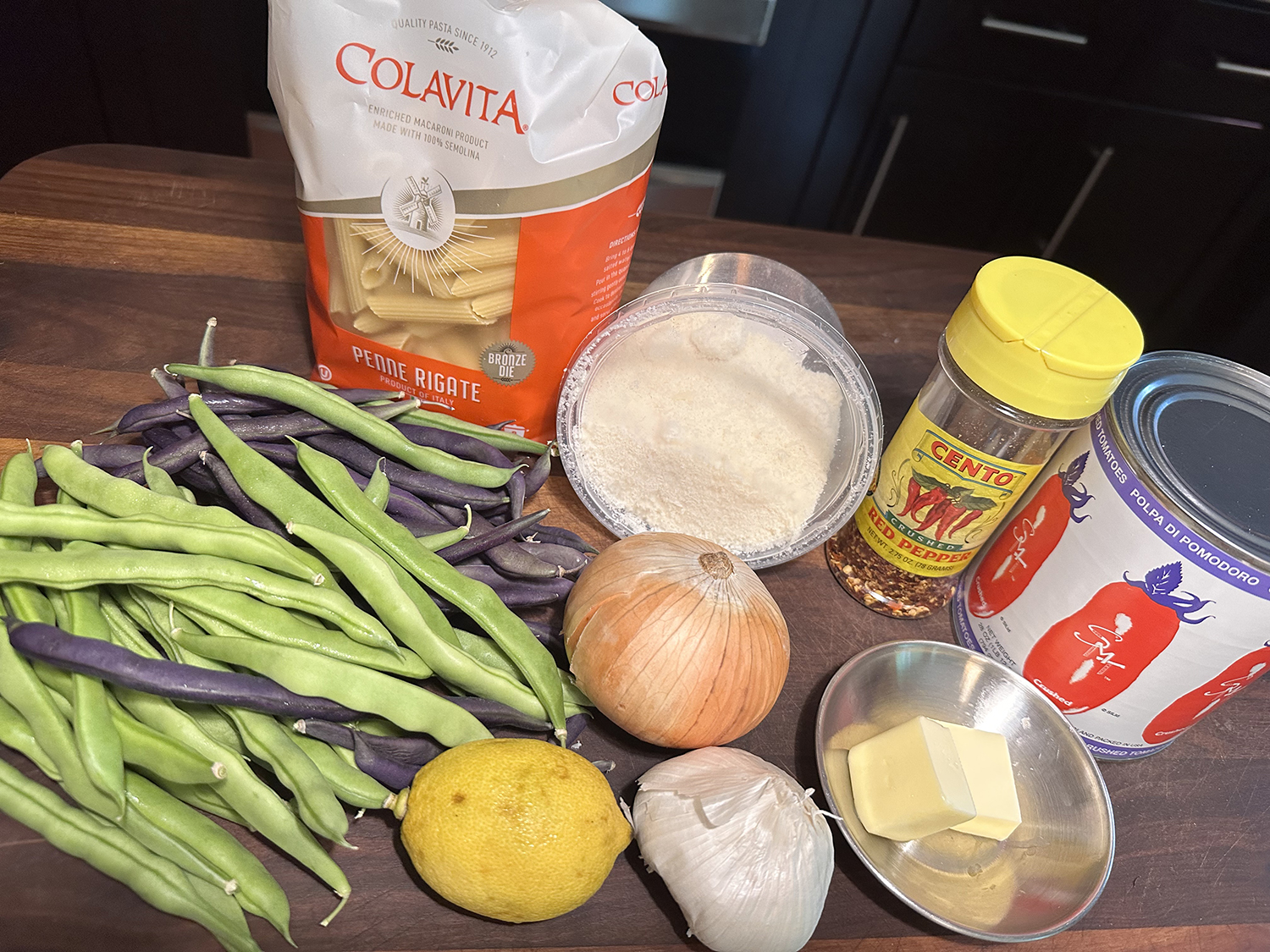
Ingredients

  • 1 medium white or yellow onion, thinly sliced
  • 1 head garlic, cloves separated, coarsely chopped
  • 1/4 cup extra-virgin olive oil, plus more for drizzling
  • 1 3/4 tsp. Morton kosher salt, plus more
  • 1 lb. green beans, trimmed, cut into 2″ pieces
  • 28 oz. canned crushed tomatoes
  • 2 Tbsp. unsalted butter, divided
  • 1 tsp. crushed red pepper flakes
  • 12 oz. medium tube-shaped pasta, such as rigatoni, ziti, or penne
  • 1 large lemon, zested, plus 1 tablespoon of juice
  • 2 oz. Parmesan, finely grated (about 1 cup), plus more for serving
  • Coarsely chopped mint and/or parsley and lemon wedges, for serving

Directions

  1. Cook 1 medium white or yellow onion, thinly sliced, 1 head of garlic, cloves separated, coarsely chopped, ¼ cup extra-virgin olive oil, and 1 Tbsp. Diamond Crystal or 1¾ tsp. Morton kosher salt in a large Dutch oven or other heavy pot over medium, stirring occasionally, until onion is translucent, 5–8 minutes.
  2. Add 1 lb. green beans, trimmed, cut into 2″ pieces, one 28-oz. can crushed tomatoes, 1 Tbsp. unsalted butter, and 1 tsp. crushed red pepper flakes. Cover and cook, stirring occasionally, until beans are tender enough to cut with a spoon and beads of oil appear on surface of sauce, 25–35 minutes.
  3. Meanwhile, cook 12 oz. medium tube-shaped pasta (such as rigatoni or penne) in a large pot of boiling salted water, stirring occasionally, until very al dente, about 2 minutes less than package directions (pasta will finish cooking in sauce). Drain, reserving about 1 cup pasta cooking liquid.
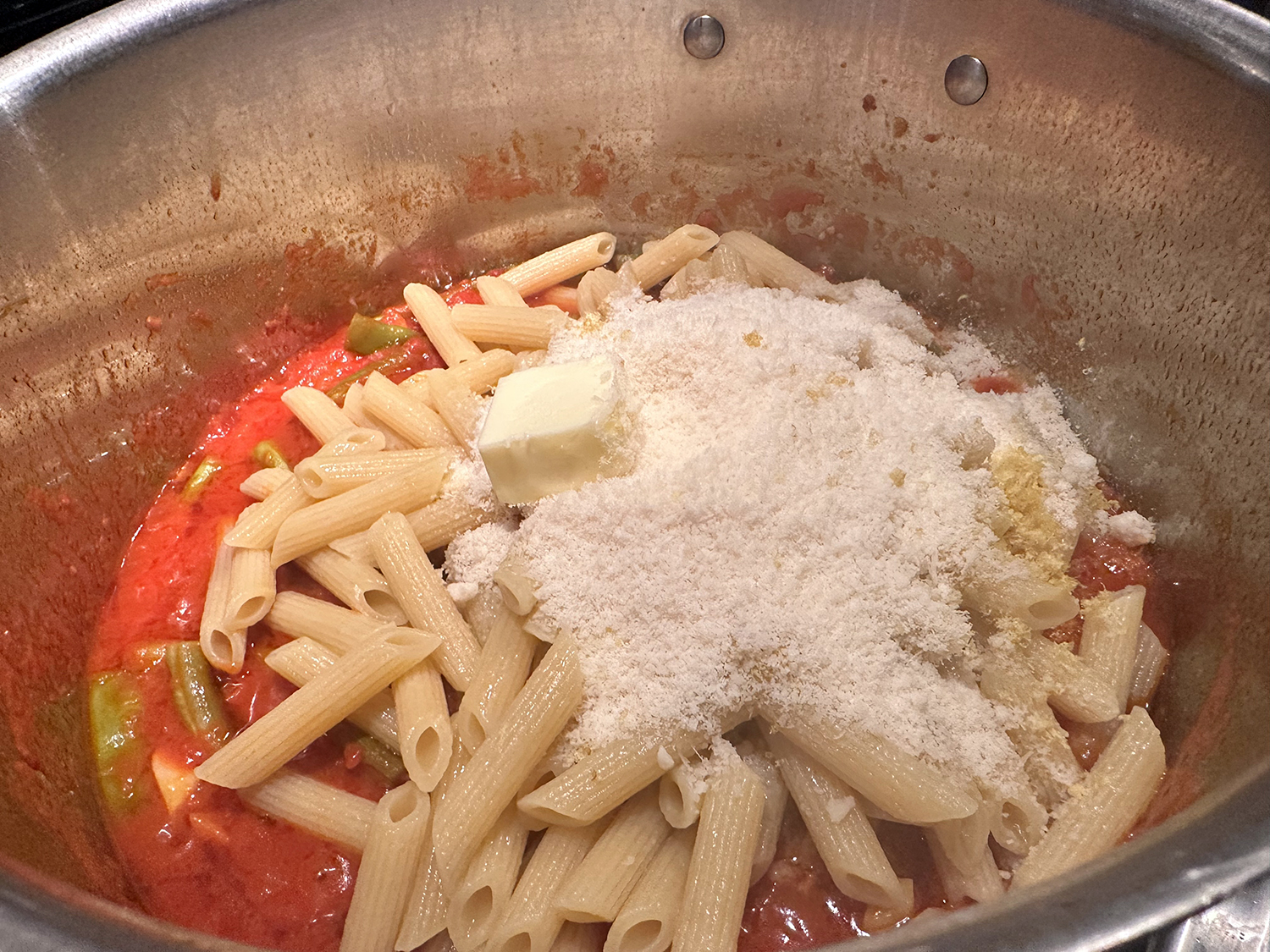
  4. Add pasta to sauce along with zest of 1 large lemon, 2 oz. Parmesan, finely grated (about 1 cup), and remaining 1 Tbsp. unsalted butter. Increase heat to medium-high and cook, stirring vigorously and adding up to ½ cup reserved pasta cooking liquid as needed, until sauce is silky and pasta is coated and al dente, about 4 minutes. Remove from heat and stir in 1 Tbsp. fresh lemon juice. Taste and season with more salt if needed.
  5. Transfer pasta to large bowl or platter and drizzle generously with oil. Top with coarsely chopped mint and/or parsley and more Parmesan. Serve with lemon wedges for squeezing over.

http://www.lynnandruss.com

Recipe by Shilpa Uskokovic

Beef and White Bean Stew With Cumin

A perfect cool weather dish, this stellar, hearty meal is great for double-date night, Sunday supper, Shabbat and Rosh Hashanah, just to name a few options. It could even work for a weeknight if made ahead of time, and then reheated for dinner.

A homey one-pot stew, it’s a mix of tender beef and white beans swimming in a velvety sauce, and is much brighter than its short ingredient list might indicate. That’s all thanks to the technique of slowly building layered flavor with beef fond, aromatics, spices, and acidic tomatoes. 

Make sure to brown the beef in at least two batches, the pieces need room around them in order to brown properly, not steam. In the final hour after the beans go in, remove the lid entirely for the last 30 minutes, to thicken the stew nicely.

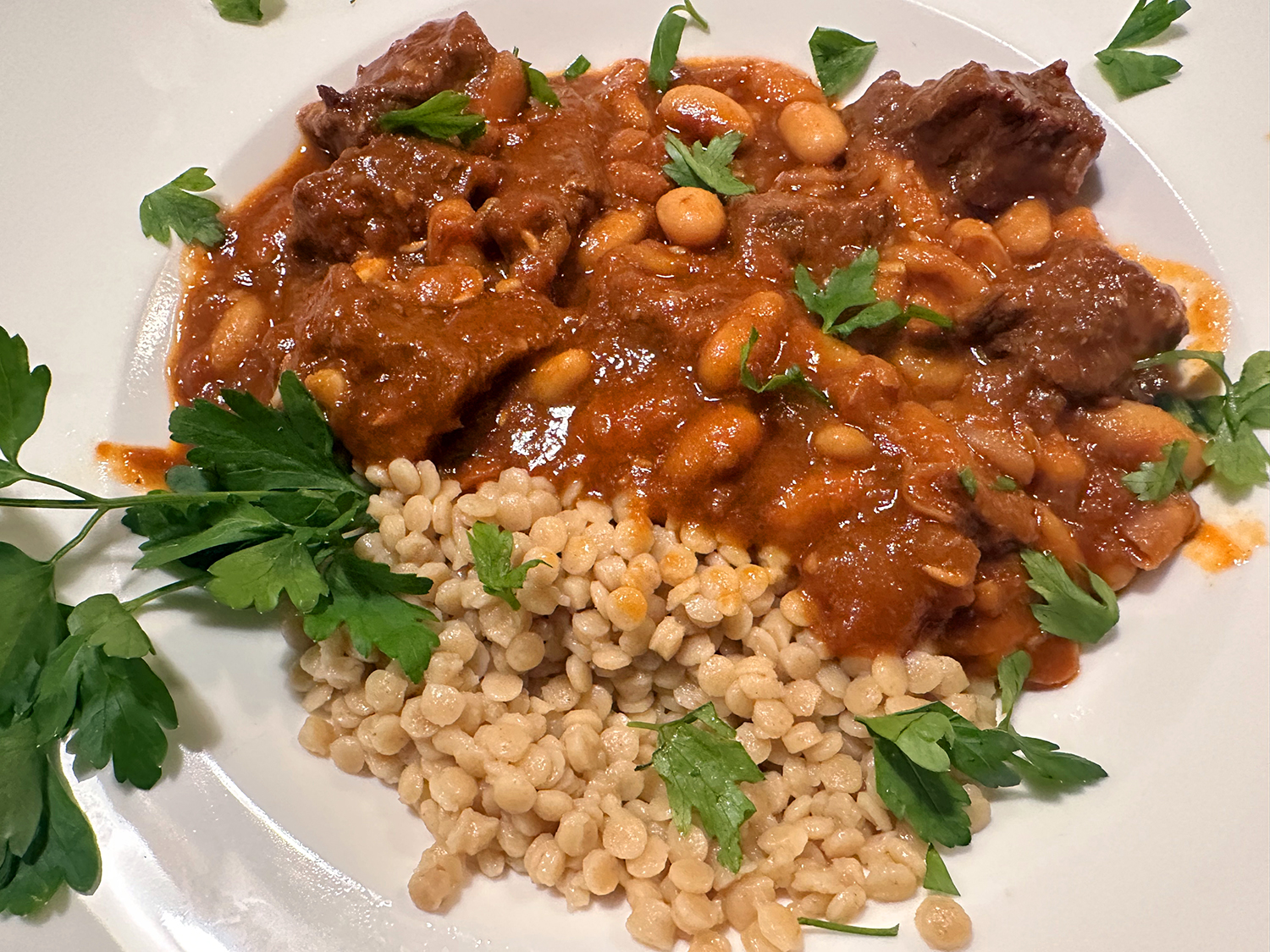
There are several serving suggestions, such as, couscous (we used whole wheat pearl), a loaf of crusty bread, sautéed greens, or a crisp side salad (our side dish), all of which work well to offset the stew’s richness. As far as garnishes go, try harissa or sambol oelek—although we didn’t feel any was necessary.

Beef and White Bean Stew with Cumin

  • Servings: 4-6
  • Difficulty: easy
  • Print

Ingredients

  • 3 lb. boneless beef chuck roast, excess fat trimmed, cut into 2″ pieces
  • 1½ tsp. Diamond Crystal or 1 tsp. Morton kosher salt, plus more
  • 2 Tbsp. (or more) extra-virgin olive oil
  • 1 large onion, finely chopped
  • 5 garlic cloves, finely chopped
  • 1 Tbsp. plus 1½ tsp. Hungarian hot paprika or ½ tsp. crushed red pepper flakes
  • 2 tsp. ground cumin
  • Freshly ground pepper
  • 3 Tbsp. double-concentrated tomato paste
  • 2 15-oz. cans cannellini (white kidney) beans, rinsed
  • 1 cup tomato purée
  • Steamed couscous and finely chopped parsley (for serving)

Directions

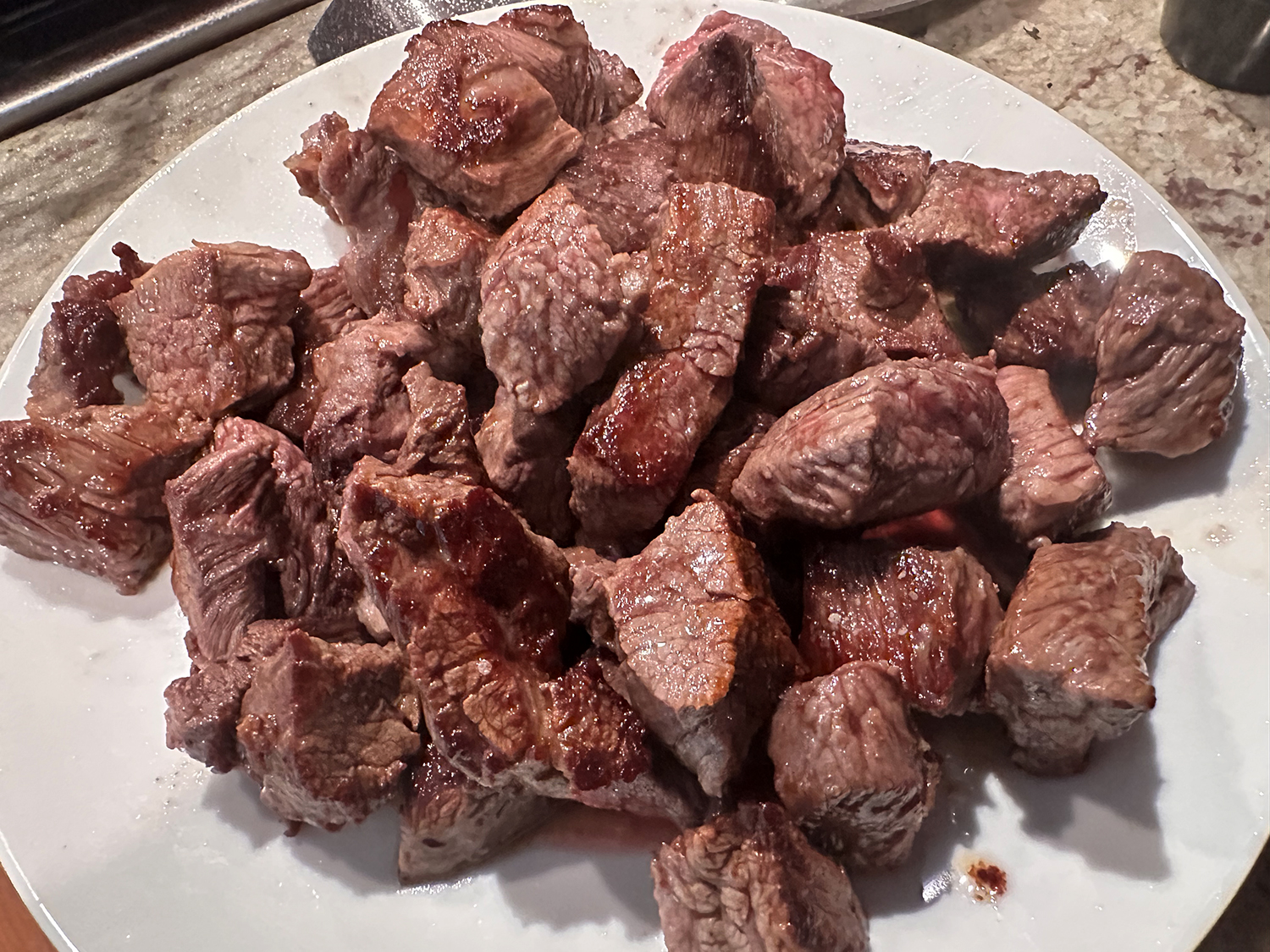
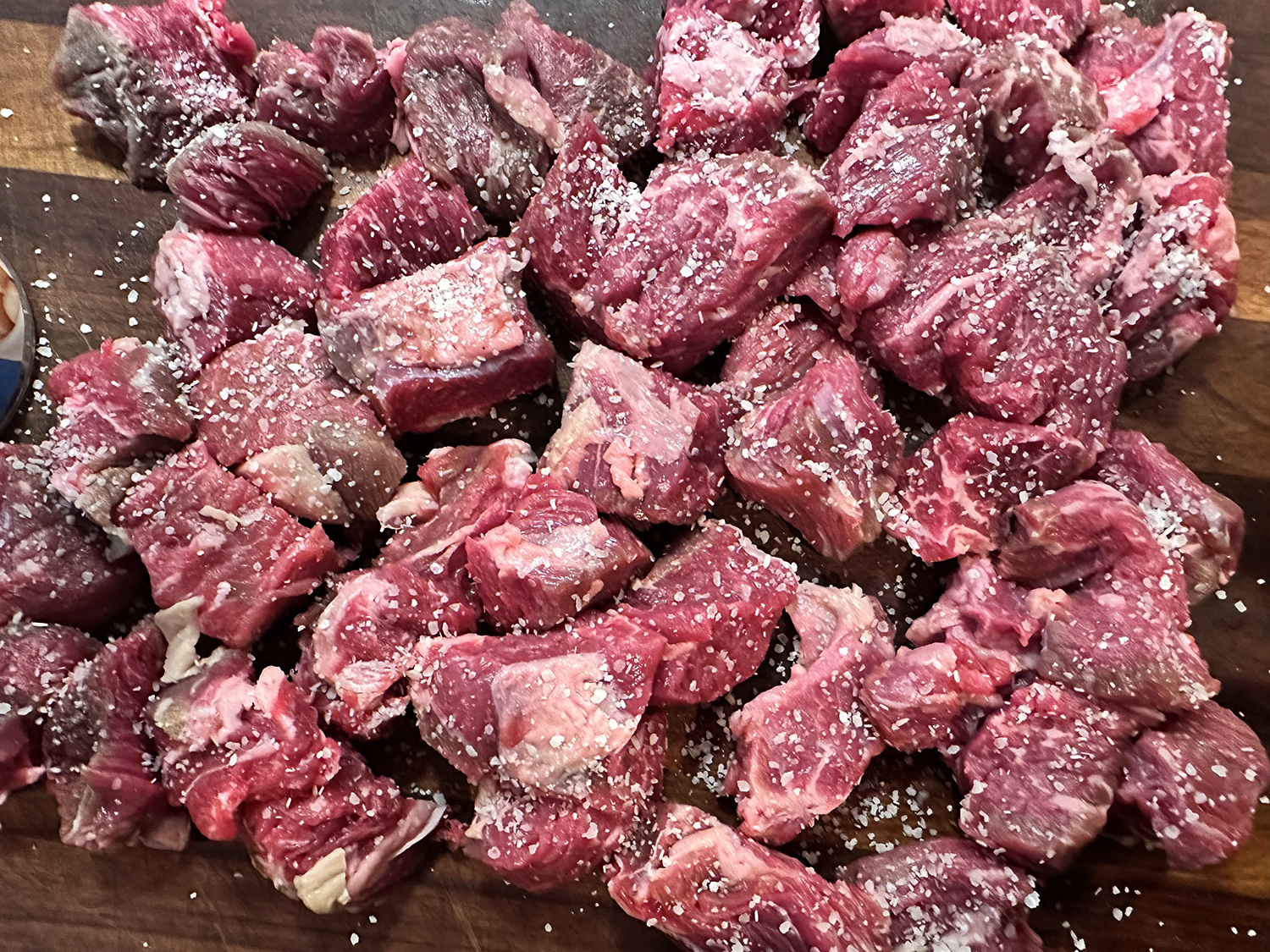
  1. Pat 3 pounds of boneless beef chuck roast dry with paper towels, excess fat trimmed, cut into 2″ pieces, and season generously with kosher salt. Heat 2 tablespoons extra-virgin olive oil in a large Dutch oven or other heavy pot over medium-high. Working in batches and adding more oil between batches if pot looks dry, cook beef, turning occasionally, until golden brown, about 5 minutes. Transfer to a plate.
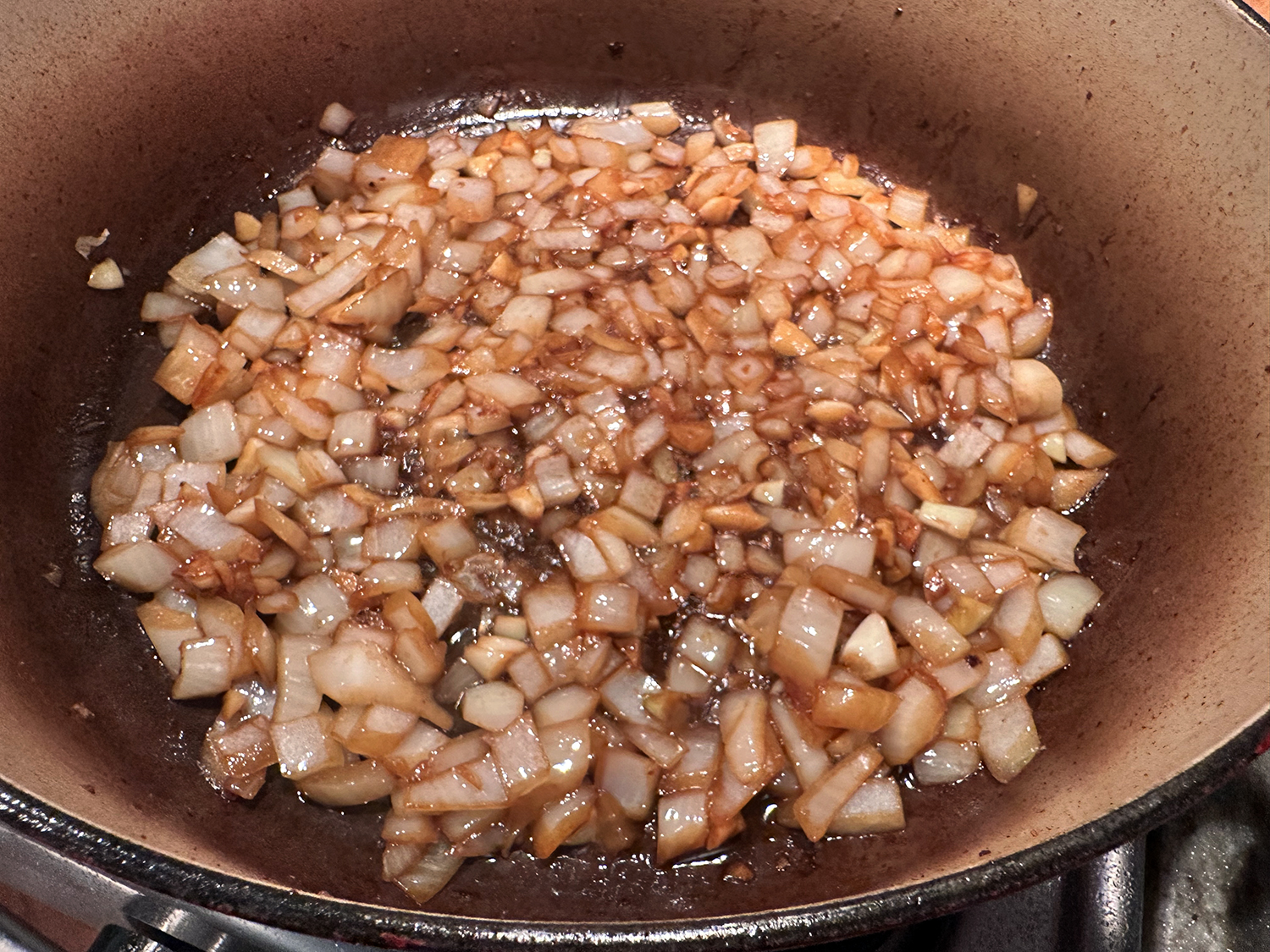
  2. Reduce heat to medium and add 1 large onion, finely chopped, and 5 garlic cloves, finely chopped, to pot. Cook, stirring often, until onion is softened and golden, 6–8 minutes. Add 1 tablespoon plus 1½ teaspoon Hungarian hot paprika or ½ teaspoon crushed red pepper flakes, 2 teaspoon ground cumin, and 1½ teaspoon Diamond Crystal or 1 teaspoon Morton kosher salt; season generously with freshly ground black pepper. Cook, stirring often, until spices are fragrant, about 1 minute. Stir in 3 tablespoons double-concentrated tomato paste.
  3. Return beef along with any accumulated juices to pot. Pour in 4 cups water and bring to a boil. Immediately reduce heat to low, partially cover pot, and cook, stirring occasionally and adjusting heat as needed to maintain a simmer, until beef is tender and liquid is slightly thickened, about 2 hours.
  4. Uncover pot and stir in two 15-ounce cans cannellini (white kidney) beans, rinsed, and 1 cup tomato purée. Bring stew back to a simmer. Reduce heat to low, partially cover, and cook, stirring occasionally and adjusting heat as needed to maintain a simmer, until beef is very tender and stew is thick, 60 minutes. Remove the lid entirely for the final 30 minutes to thicken the stew. Taste and season with more salt and black pepper if needed.
  5. Divide steamed couscous among shallow bowls and ladle stew over. Top with finely chopped parsley.

Do ahead: Stew can be made 3 days ahead. Let cool; cover and chill.

http://www.lynnandruss.com

Recipe by Leah Koenig for Bon Appétit

Fennel-Crusted Pork Tenderloins with Orange and Arugula Salad

With this recipe, Milk Street’s intention was to evoke the flavor and aroma of Italian porchetta. Porchetta is a wonderfully fatty and delicious boneless pork roast hailing from Italy. Traditionally, porchetta is made with a whole, deboned suckling pig. But now it’s generally made with only the best part of the pig—rind on pork belly.

But here we use pork tenderloin which is remarkably lean and mild. To compensate for the lack of fat (and therefore flavor), complexity is introduced with a bright, citrusy sauce and salad to perfectly complement the fennel seed and black pepper spice mix that seasons the meat.

The two tenderloins are quickly seared on the stovetop and finished in the oven before they’re sliced and served atop the salad, so you will need an oven-safe 12-inch skillet, (a large cast iron one works well) for this recipe.

The weight of our single tenderloin was 1.5 lbs for just the two of us. All of the other ingredient amounts were kept the same, except the baby arugula, which we used about 3 ounces of the 5-ounce package. A truly delicious meal!

Fennel-Crusted Pork Tenderloins with Orange and Arugula Salad

  • Servings: 6
  • Difficulty: easy
  • Print

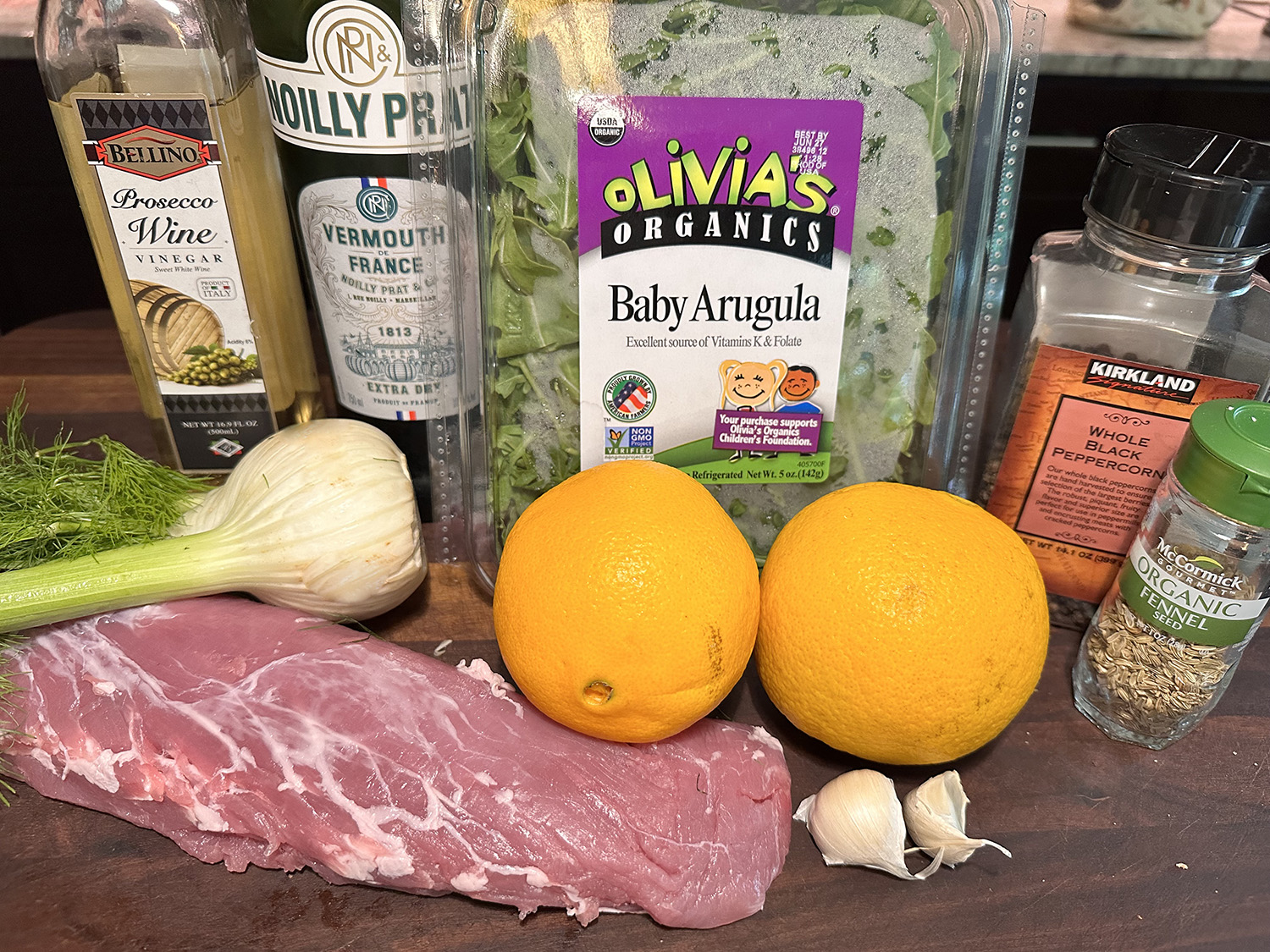
Ingredients

  • 1 Tbsp. fennel seeds
  • 2 tsp. black peppercorns
  • Kosher salt and ground black pepper
  • 2 1 1/4 lb. pork tenderloins, silver skin removed, patted dry
  • 2 oranges
  • 5 Tbsp. extra-virgin olive oil, divided
  • 1 Tbsp. white wine vinegar
  • 2 medium garlic cloves, thinly sliced
  • 1/4 cup dry vermouth
  • 1 container baby arugula, (5 oz.)
  • 1 small fennel bulb, trimmed, halved, cored and thinly sliced

Directions

  1. Heat the oven to 450°F with a rack in the middle position. In a spice grinder, pulse the fennel seeds and peppercorns until coarsely ground, 8 to 10 pulses. Transfer to a small bowl and stir in 1 teaspoon salt. Measure ½ teaspoon of the spice mix into a small bowl, then sprinkle the remainder all over the pork, rubbing it into the meat; set both the reserved spice mix and pork aside.
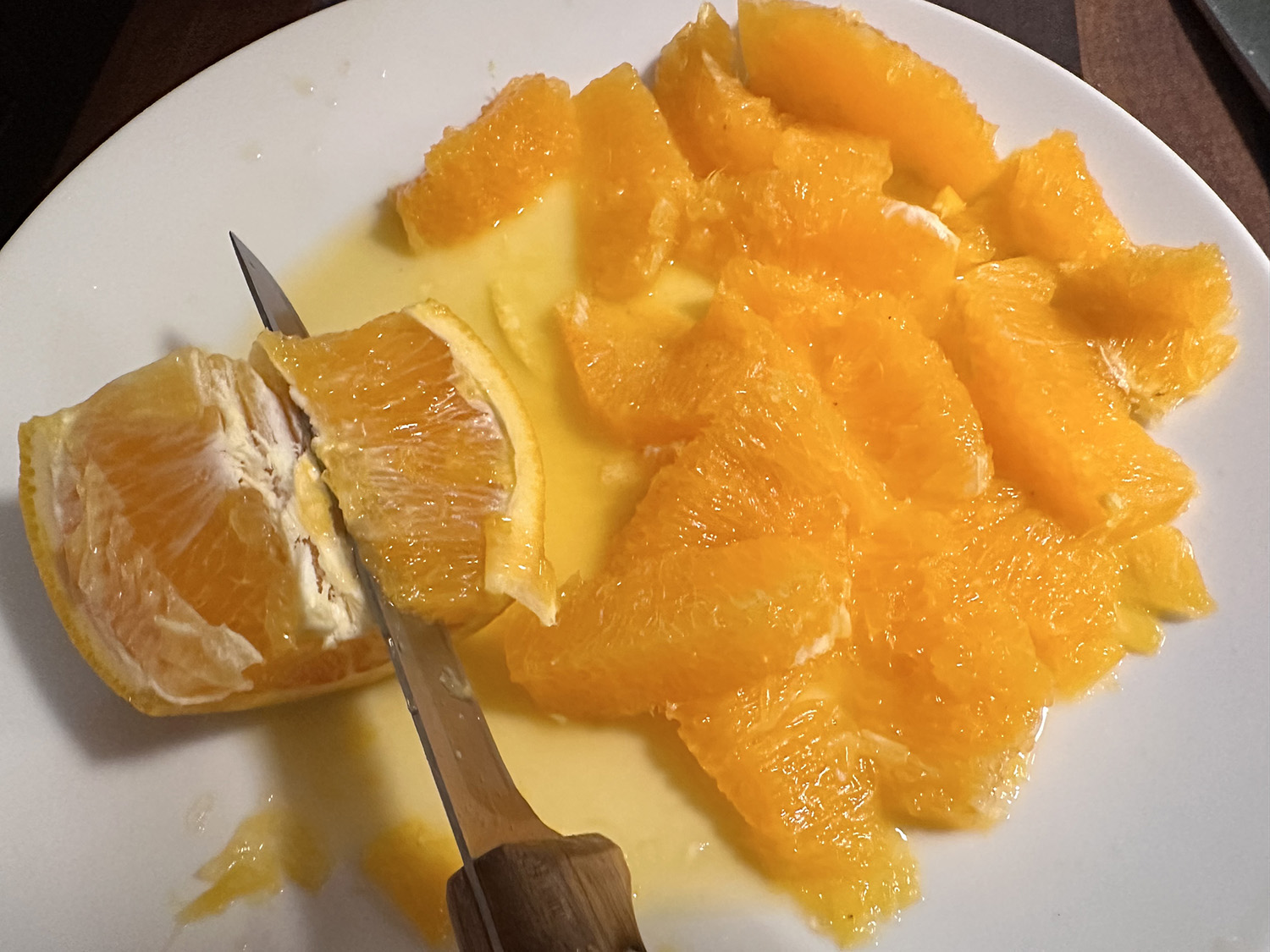
  2. Grate 1 teaspoon zest from 1 orange and add to a medium bowl. Using a sharp knife, slice off the top and bottom ½ inch from each orange. One at a time, stand the oranges on a cut end and cut from top to bottom following the contours of the fruit to remove the peel and white pith. Hold each orange over the bowl containing the zest and cut between the membranes to release the segments, allowing the juices to fall into the bowl; set the segments aside in a large bowl.
  3. Once all of the segments have been cut free, squeeze the membranes to collect their juice, then discard the membranes; you should have about 2 tablespoons juice. Into the zest-juice mixture, whisk 3 tablespoons oil, the vinegar and ¼ teaspoon each salt and pepper; set aside.
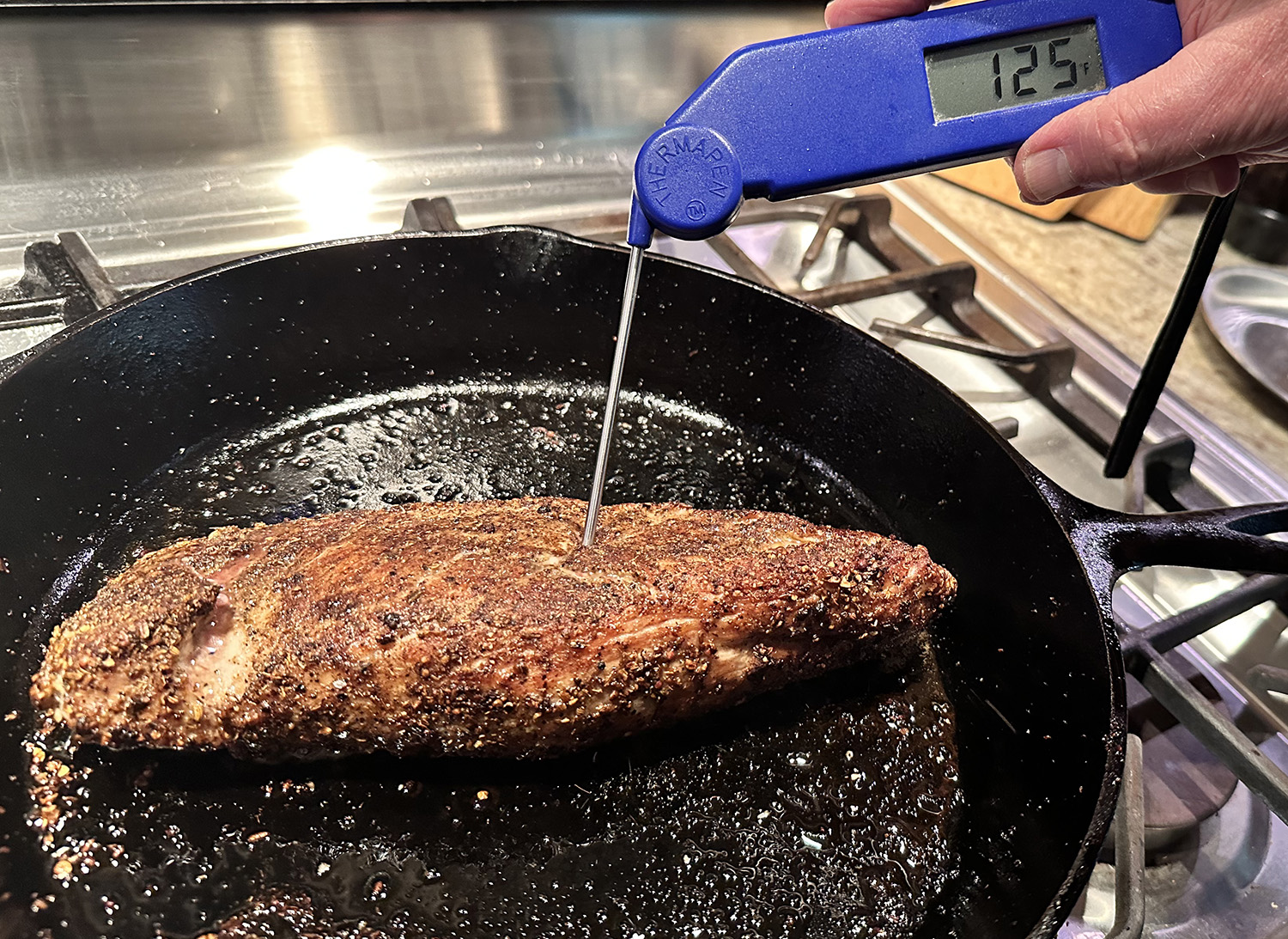
  4. In a 12-inch oven-safe skillet over medium-high, heat the remaining 2 tablespoons oil until barely smoking. Add the pork and cook, turning occasionally, until lightly browned on all sides, about 4 minutes. Transfer the skillet to the oven and roast until the center of the thickest piece reaches 135°F or is just slightly pink when cut into, 9 to 12 minutes. Remove from the oven (the handle will be hot) and transfer the pork to a cutting board; let rest while you make the sauce and salad.
  5. Set the skillet over medium, add the garlic and cook, stirring, until fragrant, about 30 seconds. Add the vermouth, bring to a simmer and cook, scraping up the browned bits, until reduced to about 3 tablespoons, 2 to 3 minutes. Stir in the orange juice mixture, then remove from the heat. To the bowl containing the orange segments, add the arugula, sliced fennel and 3 tablespoons of the sauce; toss to combine. Taste and season with salt and pepper.
  6. Arrange the salad in a bed on a serving platter. Thinly slice the pork, arrange on the salad and drizzle with a little of the remaining sauce, then sprinkle with the reserved spice mix. Serve the remaining sauce on the side.

http://www.lynnandruss.com

Adapted from a recipe from Milk Street

Parmesan Meatloaf

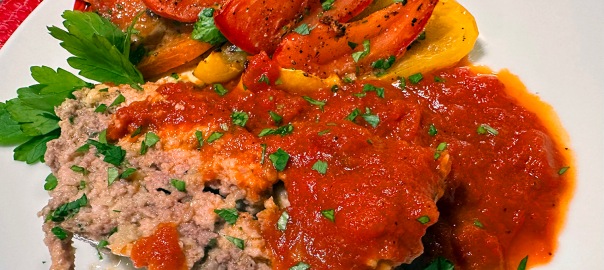
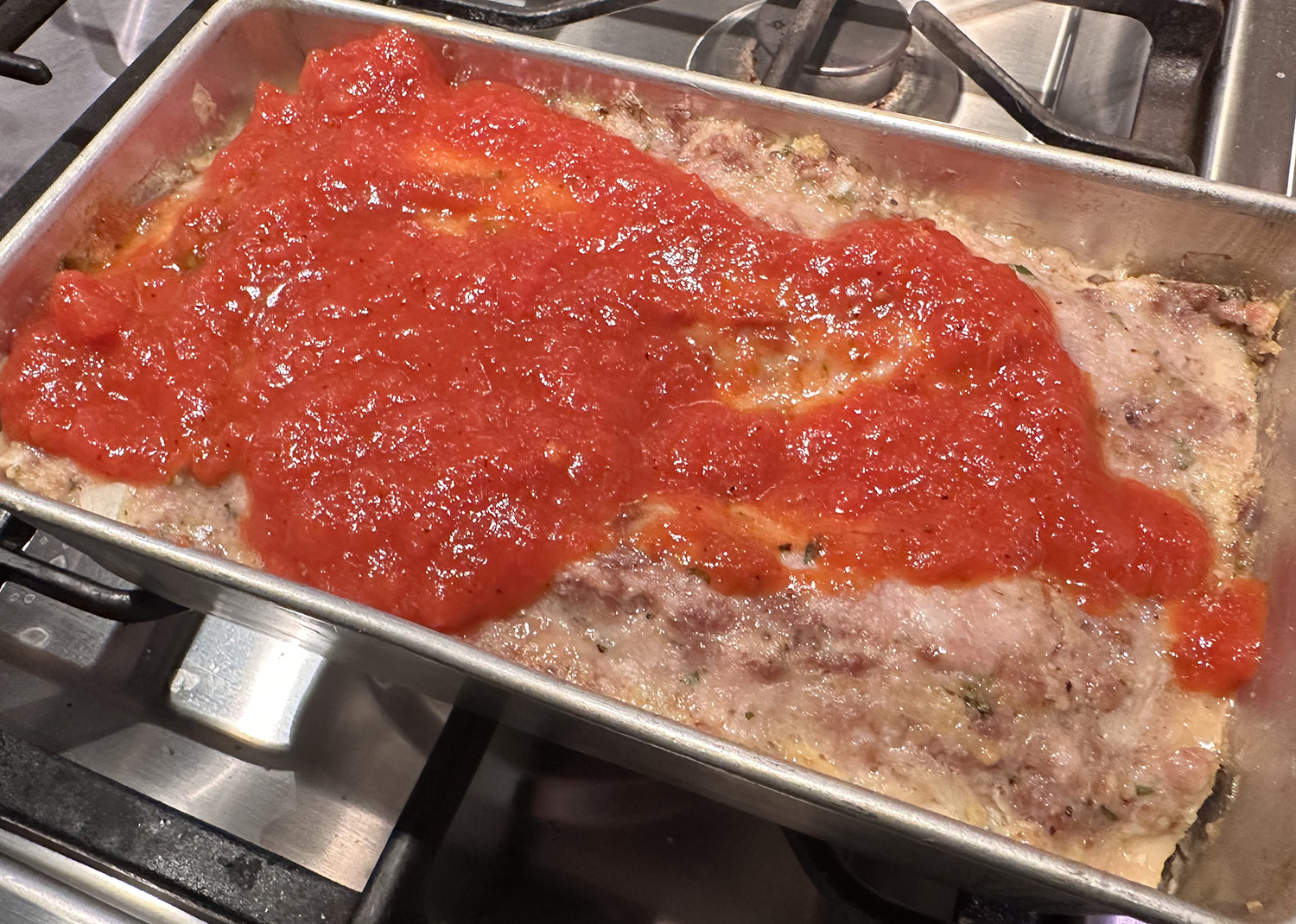
Scrolling through Facebook, I saw this “simple” meatloaf recipe, and thought why not? Just as there are loads of meatball recipes, so goes it with meatloaves. And yes, it really was quite simple. If you make up the mix in the morning, you can then just pop it into a preheated oven for one hour before dinner; just make sure to let it rest for 10 minutes afterward.

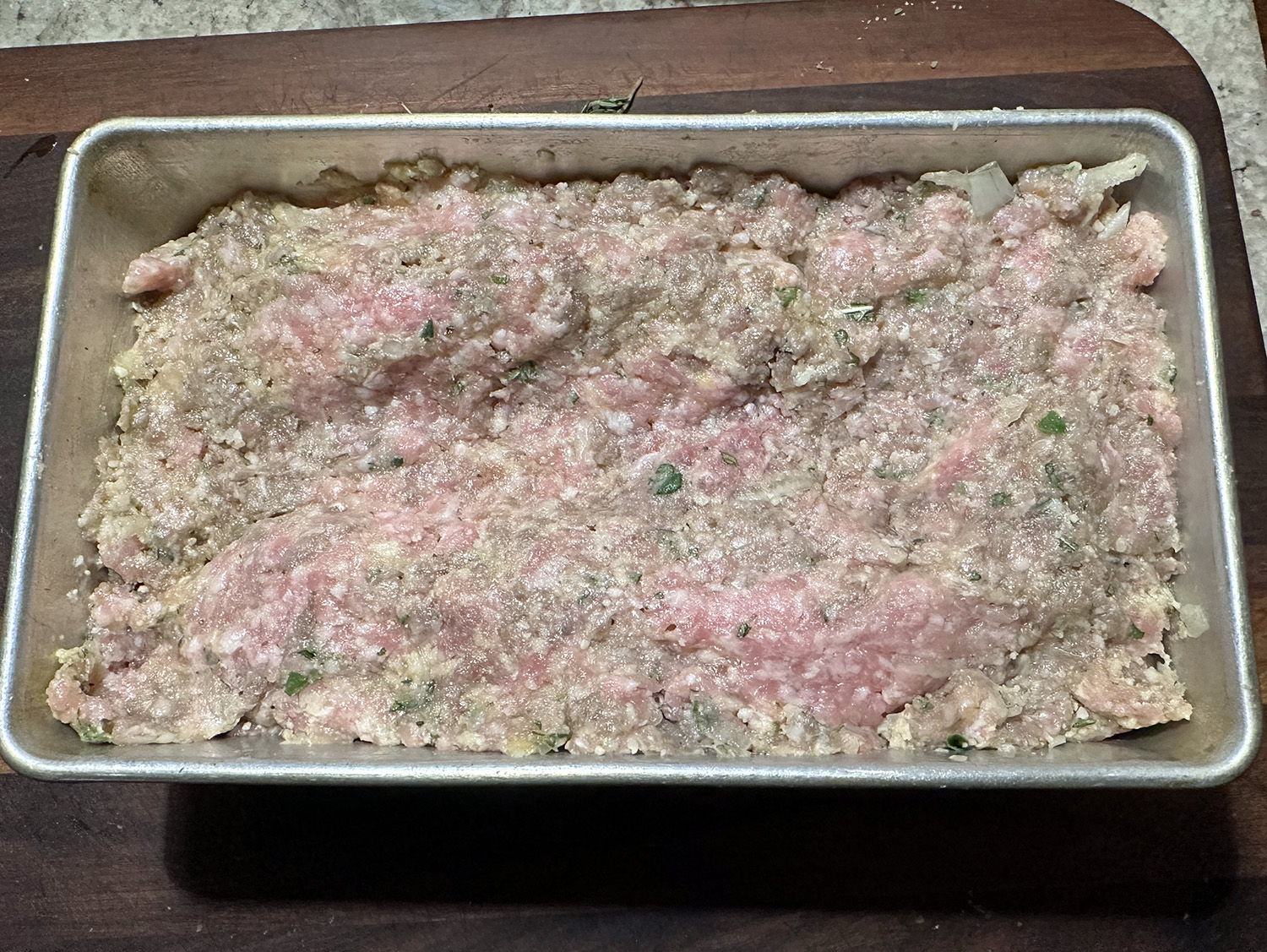
*A trick I learned ages ago to eliminate some of the fat, is halfway through the cooking time, fold up a few paper towels and pat up the grease that has risen to the top. At this point I add a few ladles of the pasta sauce on top and return it to the oven. Once you cut out the first slice, you can then use a baster to suck up the remaining liquid/fat. Another approach is to form the loaf free-style and place it on a foil-lined rimmed baking sheet.

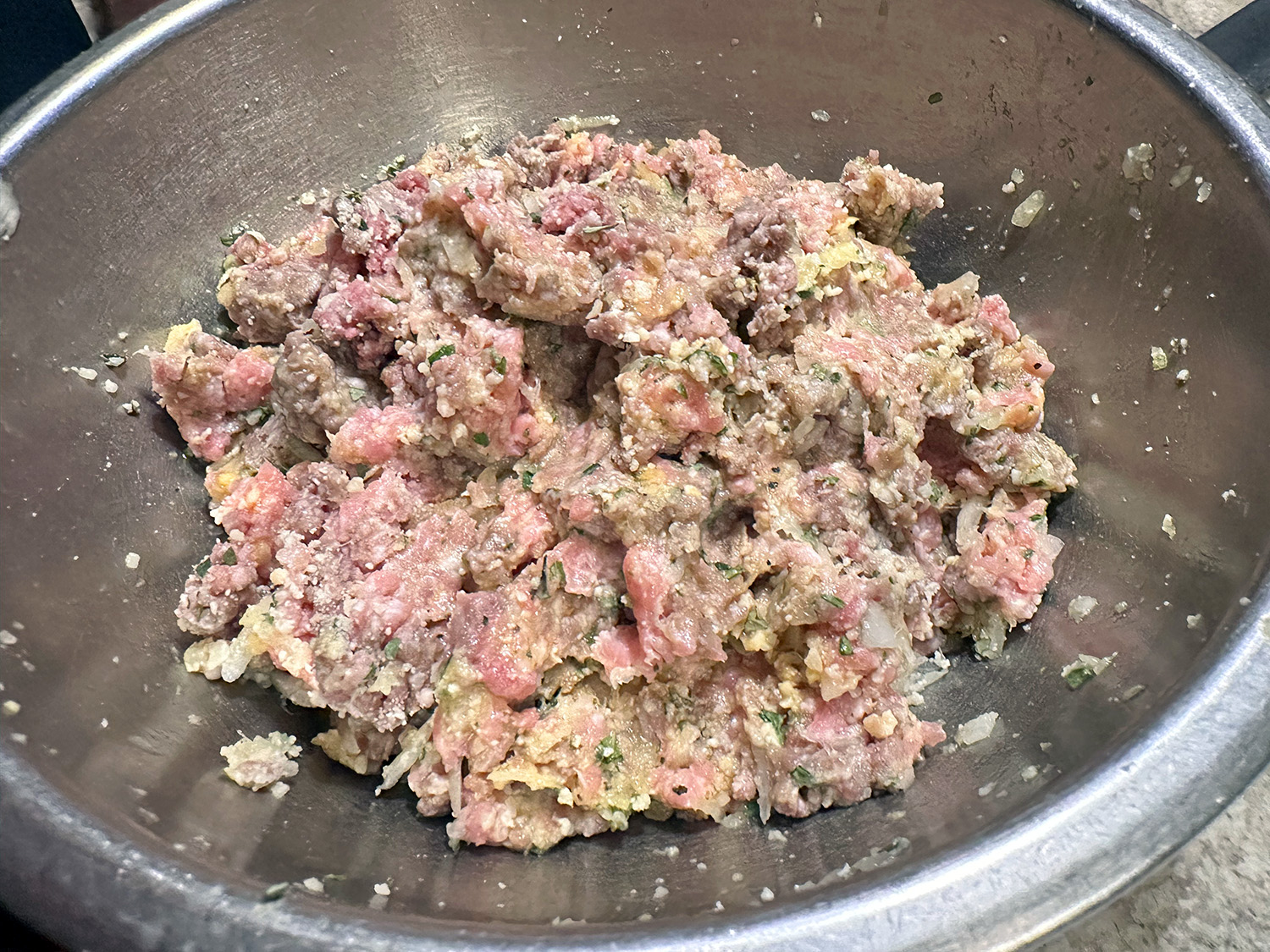
Whichever method you prefer, do not overwork the meat mixture when combining all of the ingredients, otherwise it will be dense and tough. The key is to keep it loose, soft and airy.

We paired ours with a Roasted Bell Pepper and Tomato side dish which cooked at the same temperature as the meatloaf. With some of the leftovers we combined it with cooked pasta and more of the sauce used for the meatloaf topping.

Parmesan Meatloaf

  • Servings: 1 loaf
  • Difficulty: easy
  • Print

Ingredients

  • 1 lb. ground pork
  • 1 lb. ground beef
  • 2 large eggs
  • 1/4 cup breadcrumbs
  • 1/2 tsp. dried basil
  • 1/2 tsp. dried thyme
  • 1/2 tsp. dried oregano
  • 1 to 2 garlic cloves, finely minced
  • 1 small yellow onion (grated)
  • 1/2 tsp. salt
  • 1/4 tsp. ground black pepper
  • 1/2 cup grated Parmesan cheese
  • 1/2 cup of your favorite pasta sauce (marinara sauce, homemade, meatless)

Directions

  1. Preheat oven to 350 degrees. Lightly grease a loaf pan with cooking spray, set aside.
  2. In a large bowl, combine the ground pork and beef, eggs, breadcrumbs, thyme, oregano, basil, garlic, onion, salt, pepper and Parmesan cheese. Try not over handle the mixture, otherwise it will get tough.
  3. Place the mixture in the greased loaf pan, and form into a loaf. Top the meatloaf with pasta sauce. (*Or follow the approach mentioned above.)
  4. Place filled loaf pan on a baking sheet, and bake for 1 hour.
  5. Remove the meatloaf from the oven and drain any grease from the meats at this time.
  6. Sprinkle the top with the remaining shredded cheese.
  7. Place the meatloaf back in the oven, and bake until the cheese is melted.
  8. Remove the meatloaf from the oven, and let sit for 5-10 minutes before slicing.

http://www.lynnandruss.com

Recipe from Grandma’s Old Recipes

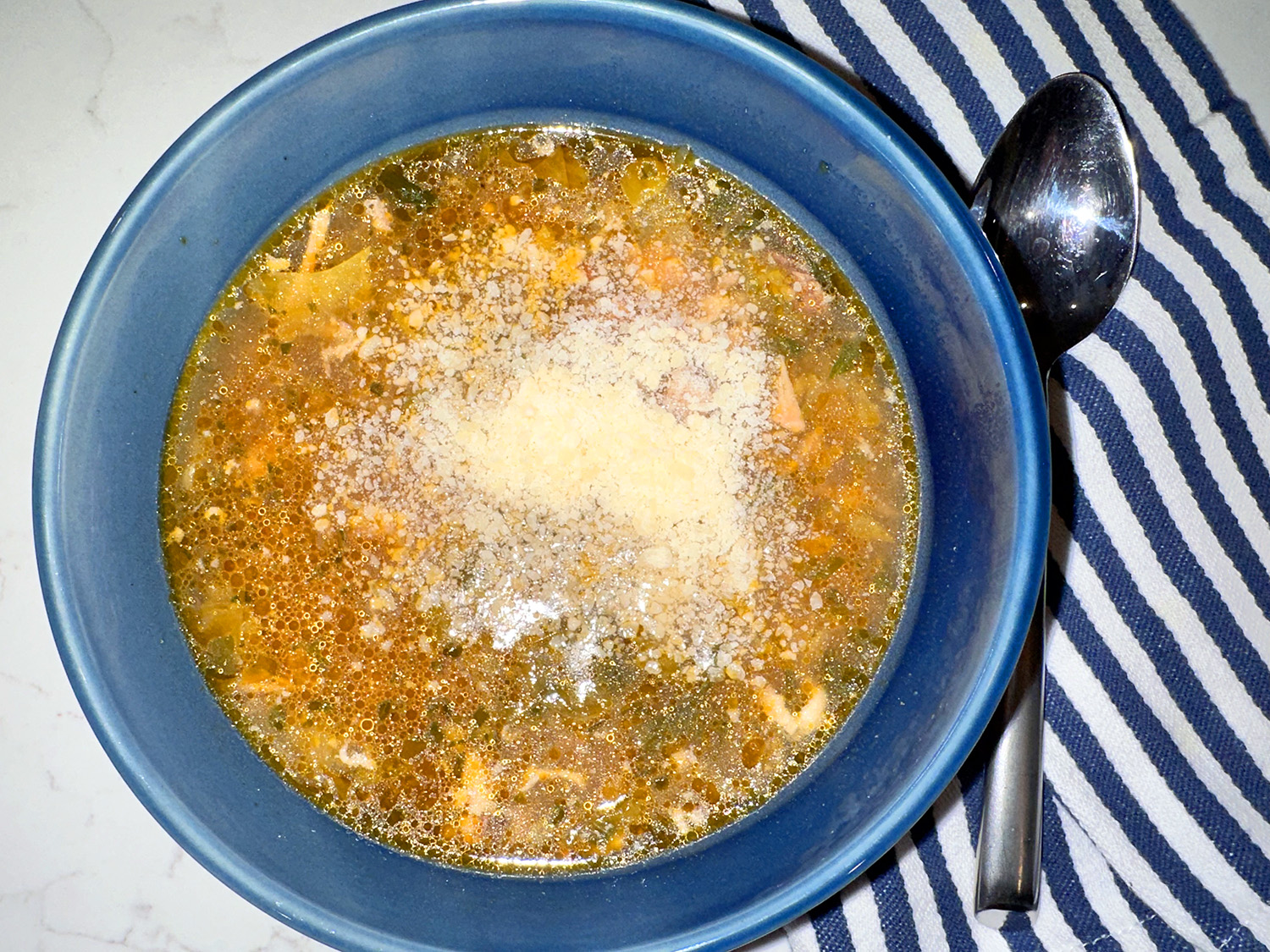
Minestra Maritata

Not the Italian wedding soup of meatballs, greens and pasta that’s popular in the U.S., the name of the dish on which this recipe is based is Minestra Maritata, which translates from the Italian as “married soup.” Although the two do share similarities.

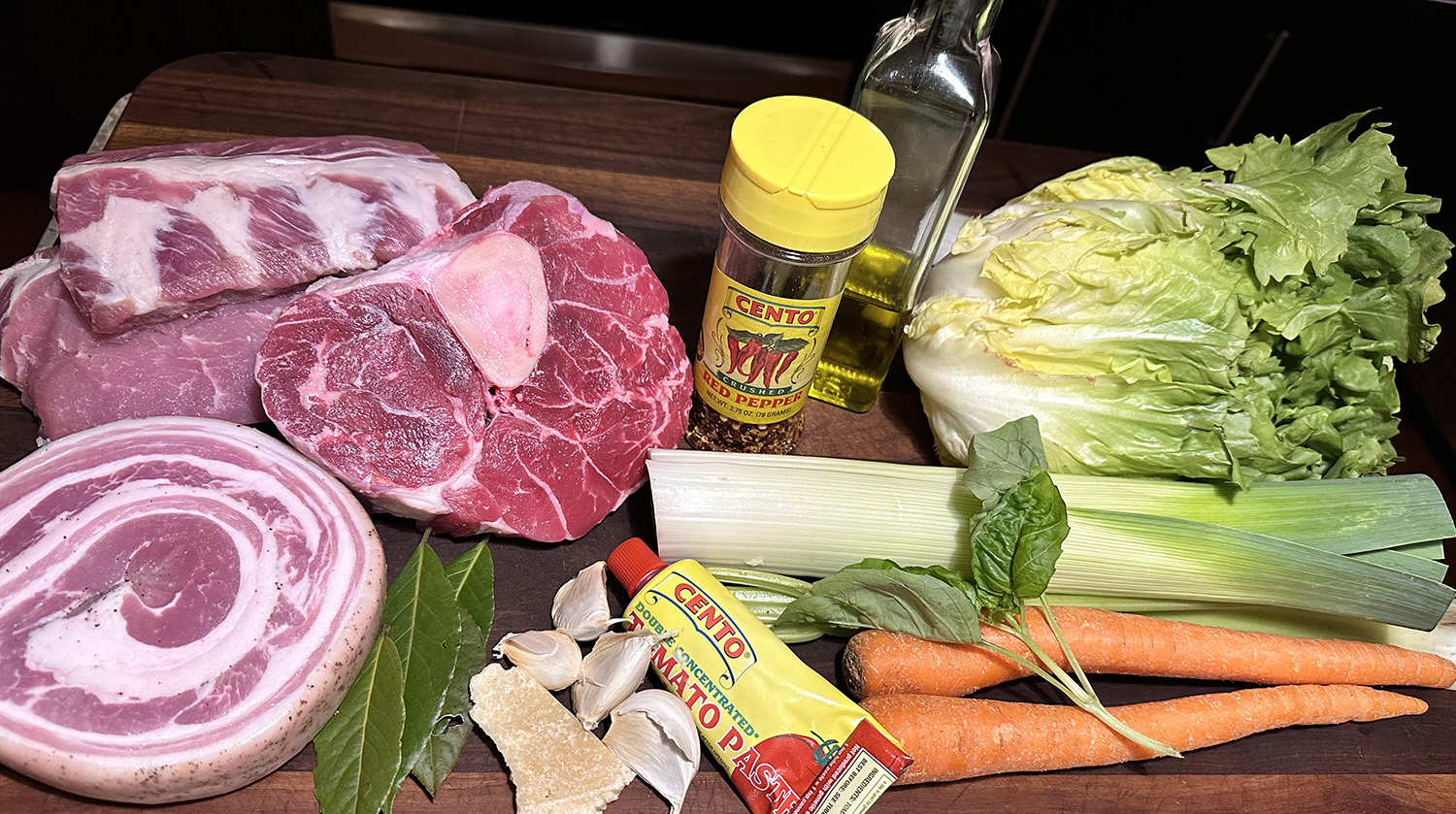
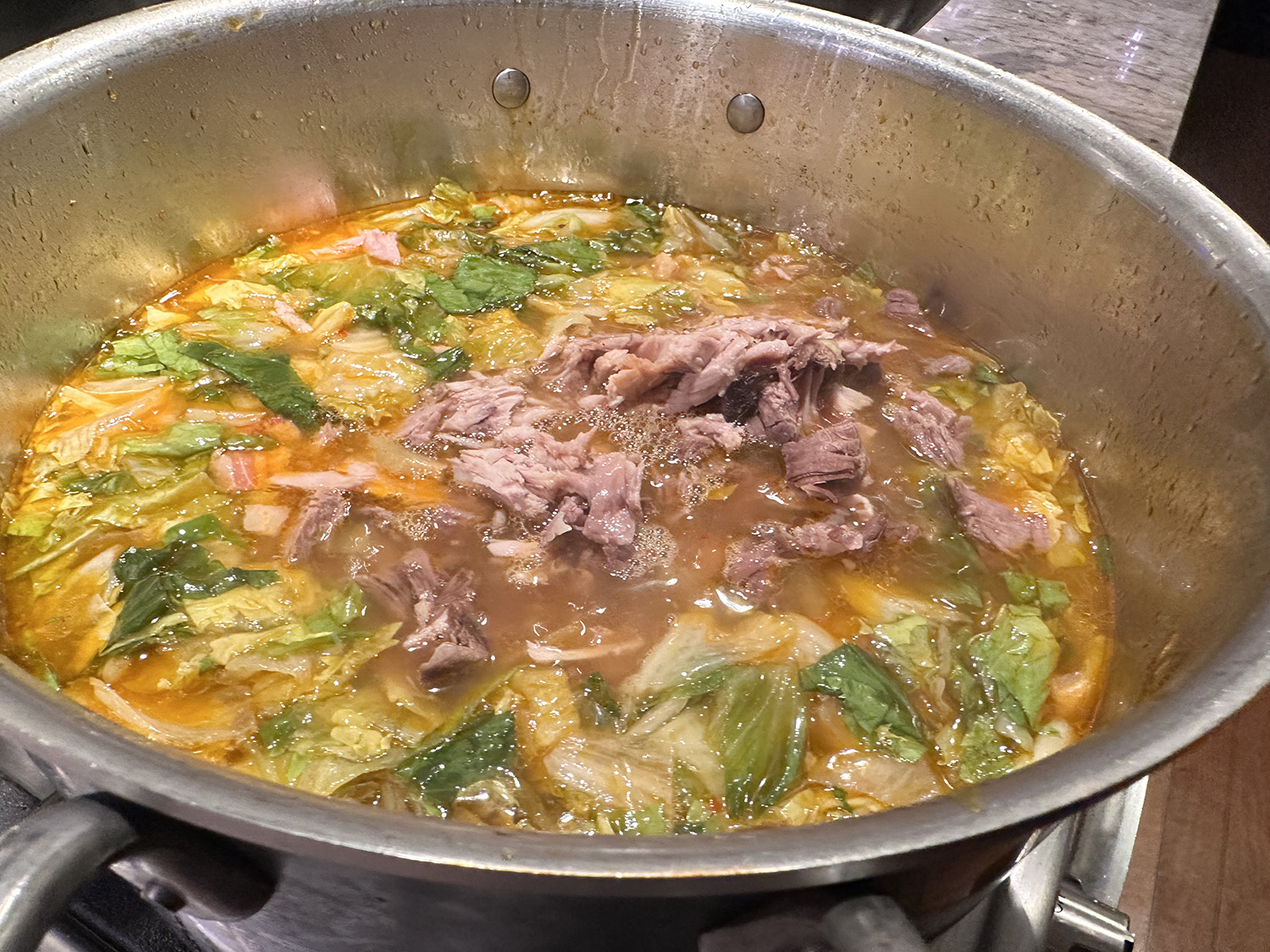
As in Naples, the meats in this recipe are bone-in cuts of beef and pork that give the broth richness and body. But for easier eating, after cooking shred the meat and discard the bones. Pancetta also simmers in the mix along with a piece of Parmesan rind, each lending even more savoriness to the broth. Although at the end, we did NOT discard the pieces of pancetta–what a waste!

The “marriage” of cooked greens and broth is what gives the dish its name. The vegetables are directly simmered in the broth. Rabe offers an assertive bitterness that nicely balances the richness of the soup; escarole (our choice) is milder and cooks down to a silky, supple texture. Warm, crusty toasted garlic bread is the perfect accompaniment.

Don’t bother with precision when prepping the onion, carrots and celery. The aromatics are simmered in the broth for flavor, but later are scooped out and discarded. If using escarole, be sure to wash it thoroughly as the frilly leaves tend to trap a good amount of grit.

Minestra Maritata

  • Servings: 6
  • Difficulty: easy
  • Print

Ingredients

  • 8 oz. pancetta, chopped
  • 2 Tbsp. extra-virgin olive oil
  • 1 large yellow onion, roughly chopped
  • 2 medium carrots, peeled and roughly chopped
  • 1 medium celery stalk, roughly chopped
  • 4 medium garlic cloves, smashed and peeled
  • 3 Tbsp. tomato paste
  • ½-¾ tsp. red pepper flakes
  •   Kosher salt and ground black pepper
  • 4 bay leaves
  •   2½-1b. rack pork baby back ribs, cut into 3 sections between the ribs
  •   1-lb. bone-in beef shank (1 to 1½ inches thick)
  • 1 2-inch piece Parmesan cheese rind, plus finely grated Parmesan, to serve
  • 1 bunch broccoli rabe, trimmed and roughly chopped, or 1 large head escarole, chopped, or a combination
  • ½ cup lightly packed fresh basil, chopped

Directions

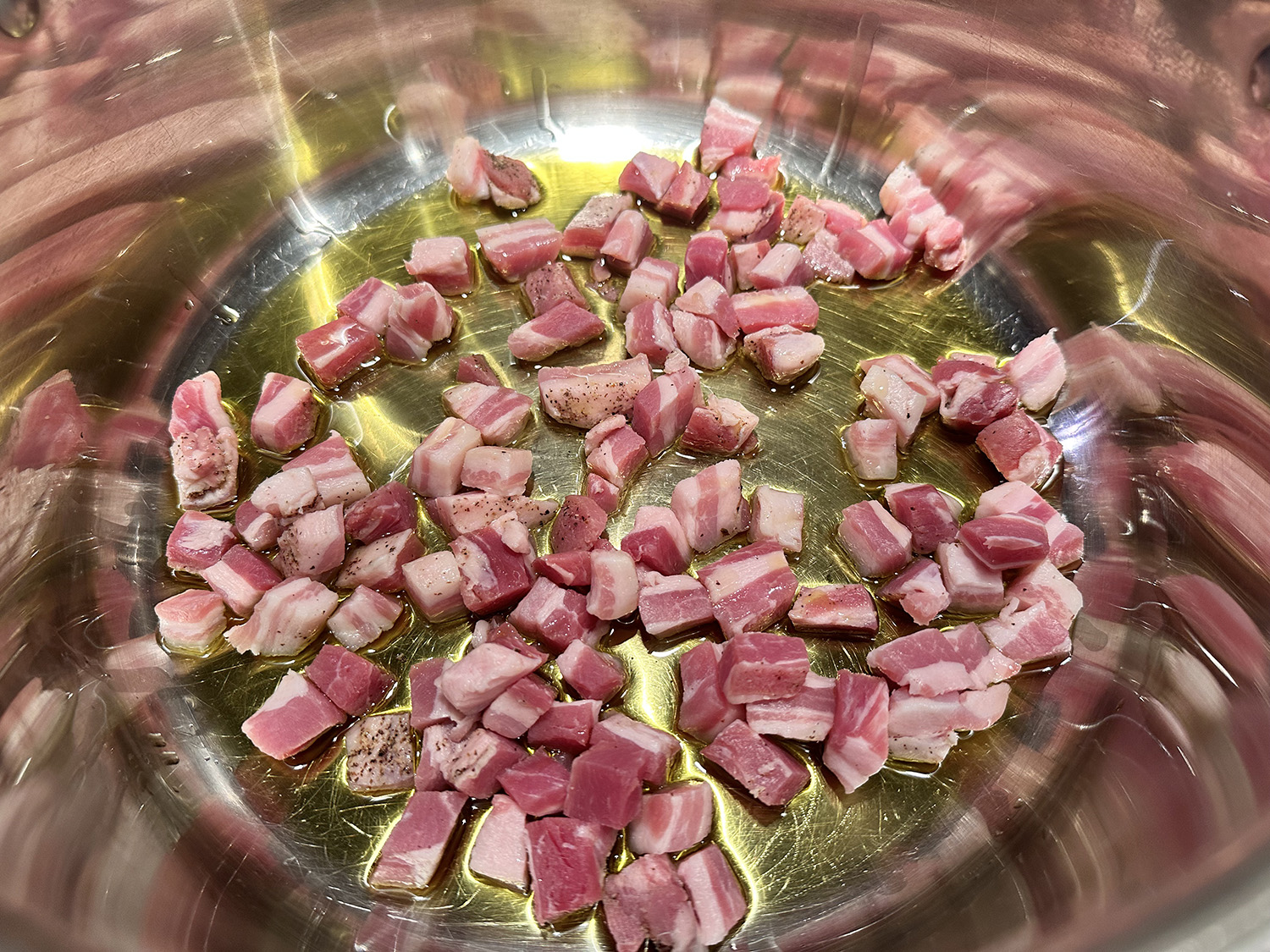
  1. In a large Dutch oven, combine the pancetta and oil. Cook over medium-low, stirring occasionally, until the pancetta begins to brown, about 10 minutes. Increase to medium, stir in the onion, carrots and celery, then cook, stirring occasionally, until the vegetables begin to soften, about 10 minutes.
  2. Add the garlic, tomato paste, pepper flakes and 1 teaspoon salt; cook, stirring, until the tomato paste begins to stick to the pot and brown, 1 to 2 minutes. Add 10 cups water (or a mixture of broth and water) and the bay, then bring to a boil over medium-high, scraping up any browned bits.
  3. Add the ribs, beef shank and Parmesan rind. Return to a simmer, then cover, reduce to medium-­low and cook, stirring occasionally, until a skewer inserted between the pork ribs and into the meat on the shank meets no resistance, about 2 hours. Remove from the heat.
  4. Using tongs, transfer the ribs and shank to a large bowl; set aside to cool. Meanwhile, using a slotted spoon, remove and discard the solids from the broth (keeping the larger chunks of pancetta, if desired). Tilt the pan to pool the liquid to one side, then use a wide spoon to remove and discard as much fat as possible from the surface of the liquid.
  5. When the meats are cool enough to handle, shred the beef into bite-size pieces, discarding the fat, bone and gristle. Using a paring knife, cut the pork ribs between the bones to separate into individual ribs. Remove the meat from the bones and shred into bite-size pieces; discard the fat, bones and gristle. Set both meats aside.
  6. Bring the broth to a simmer over medium-high. Add the rabe (or escarole) to the pot and cook, stirring often, until tender, 5 to 7 minutes. Stir in the shredded meats and cook, stirring, until heated through, about 2 minutes.
  7. Off heat, stir in the basil, then taste and season with salt and black pepper. Serve with grated Parmesan on the side.

http://www.lynnandruss.com

Original recipe by Diane Unger for Milk Street

Bolognese-Style Pork Cutlets

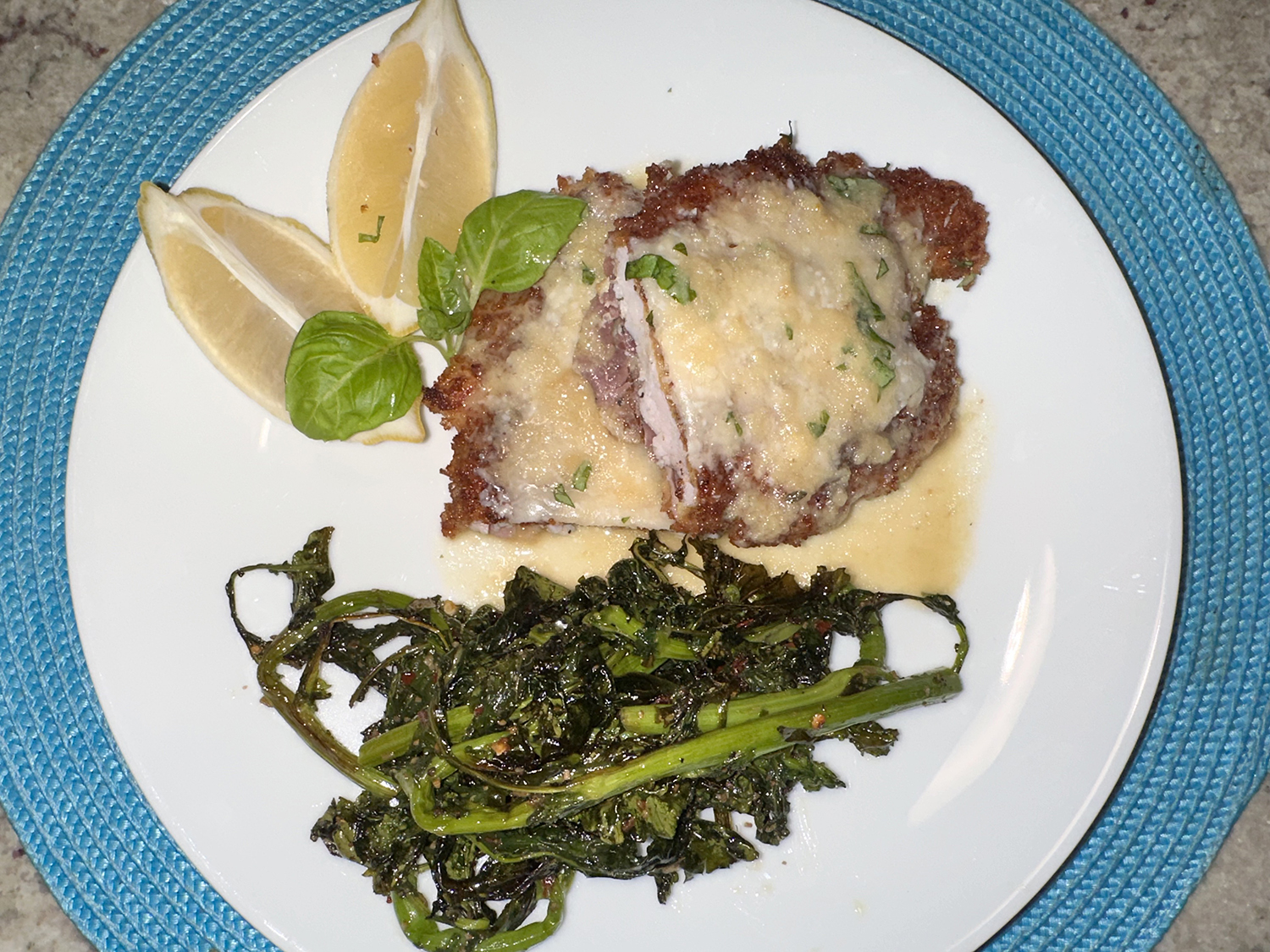
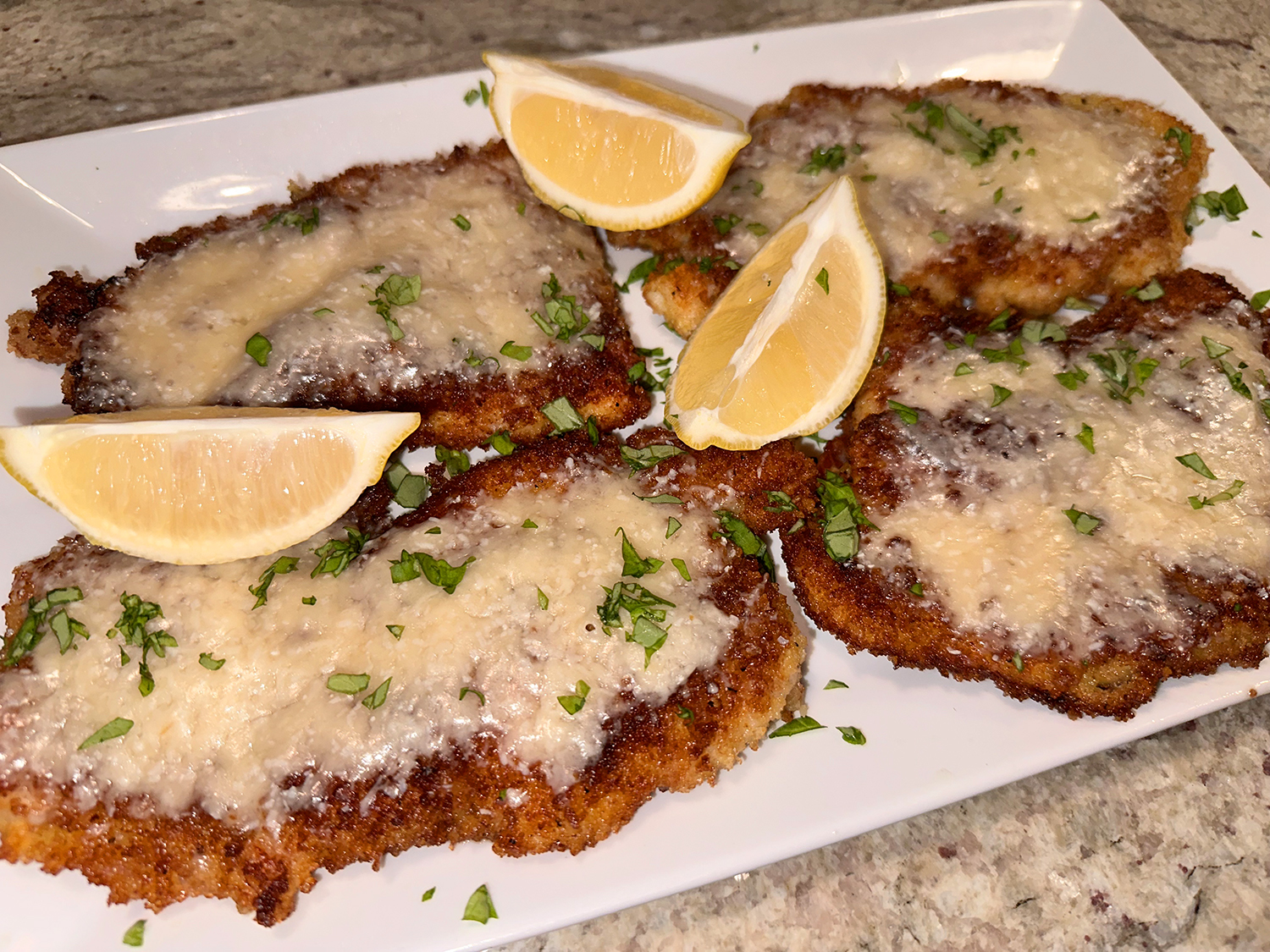
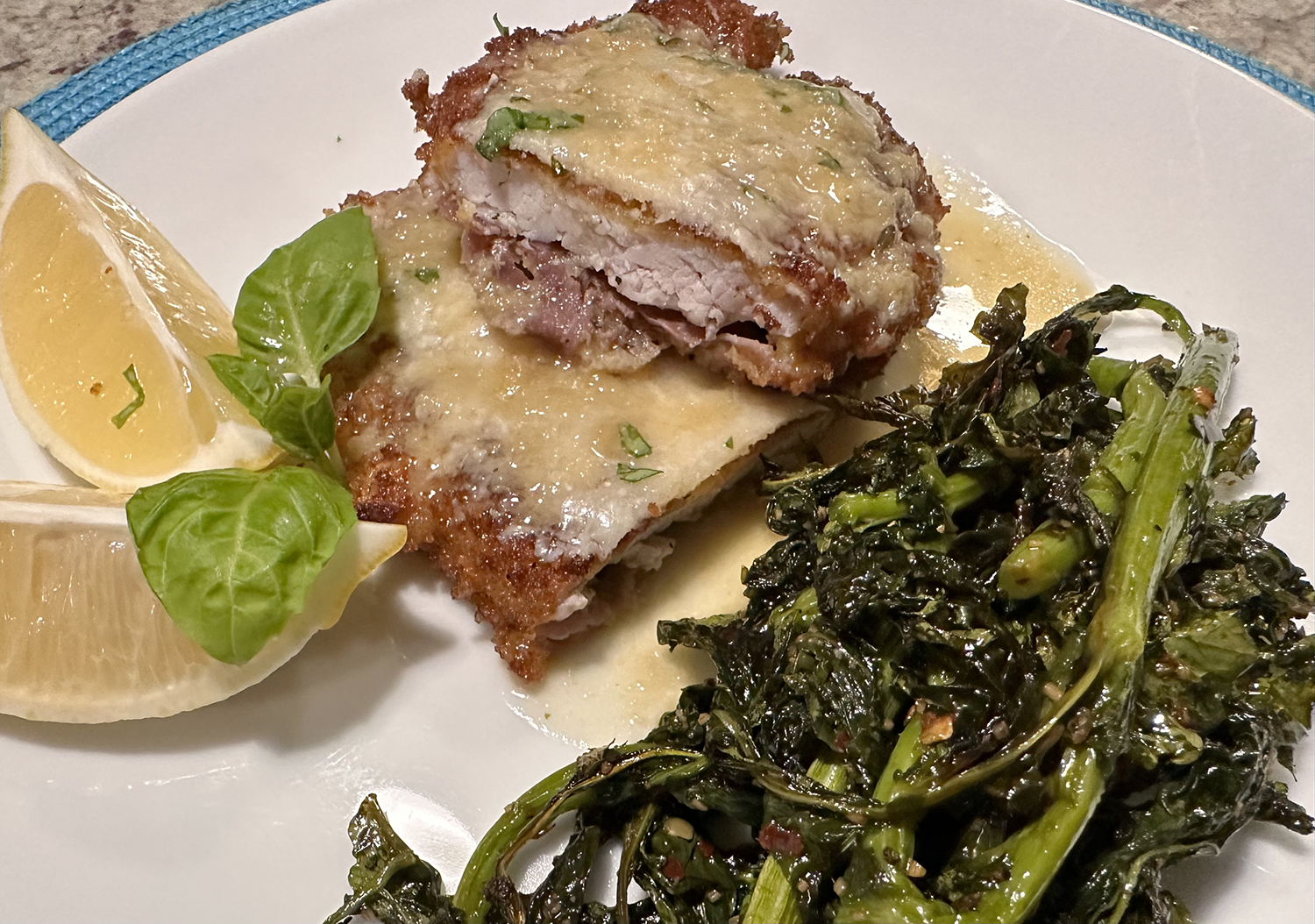
WOW, just WOW! This meal was soooo delicious, we didn’t expect to like it as much as we did. Now it won’t make your dieting list or make the top 10 of your super-healthy menus, but for a special treat it can’t be beat! We paired ours with a healthy side salad and some roasted broccoli rabe therefore eliminating some of the guilt 😉 .

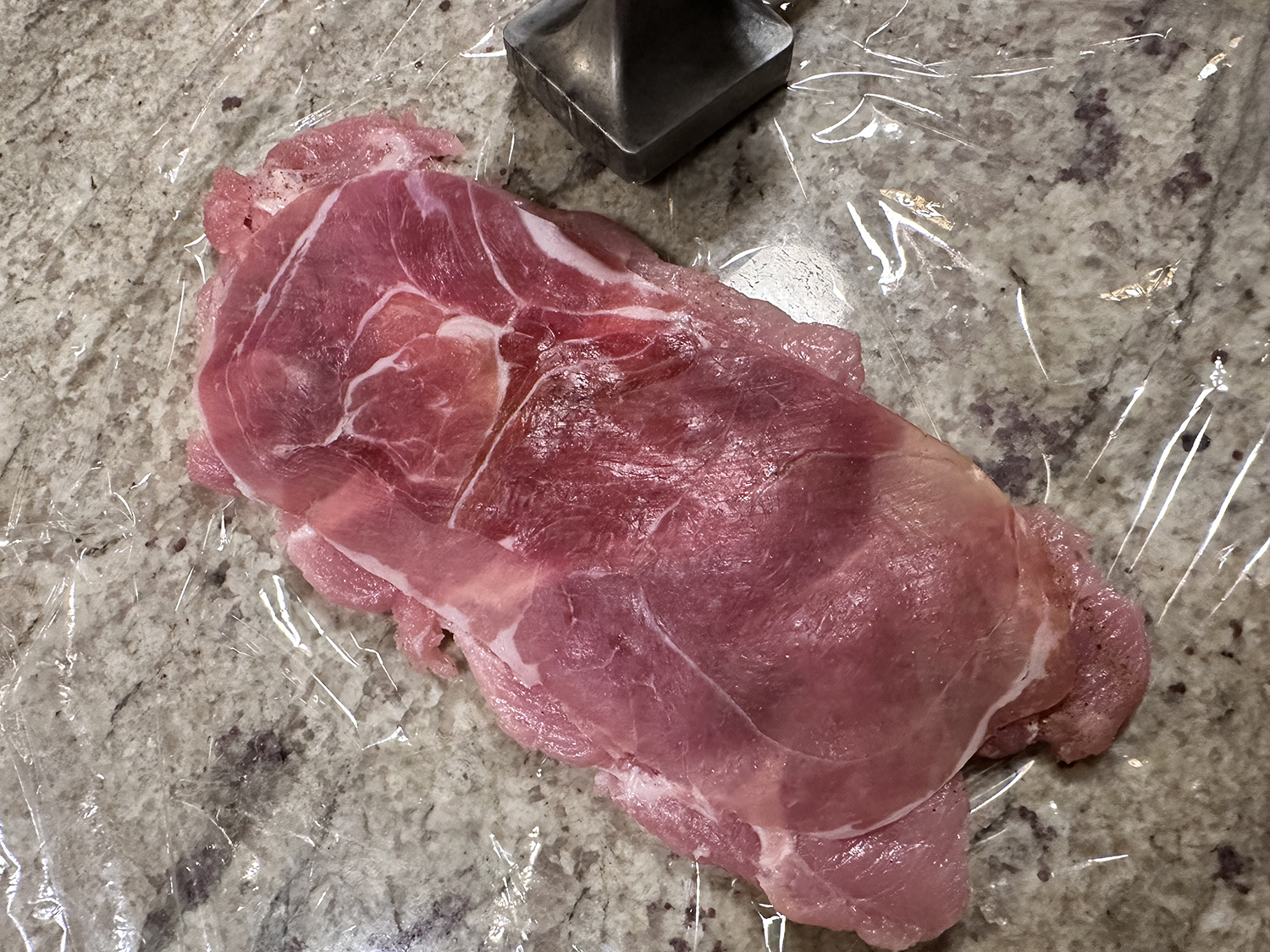
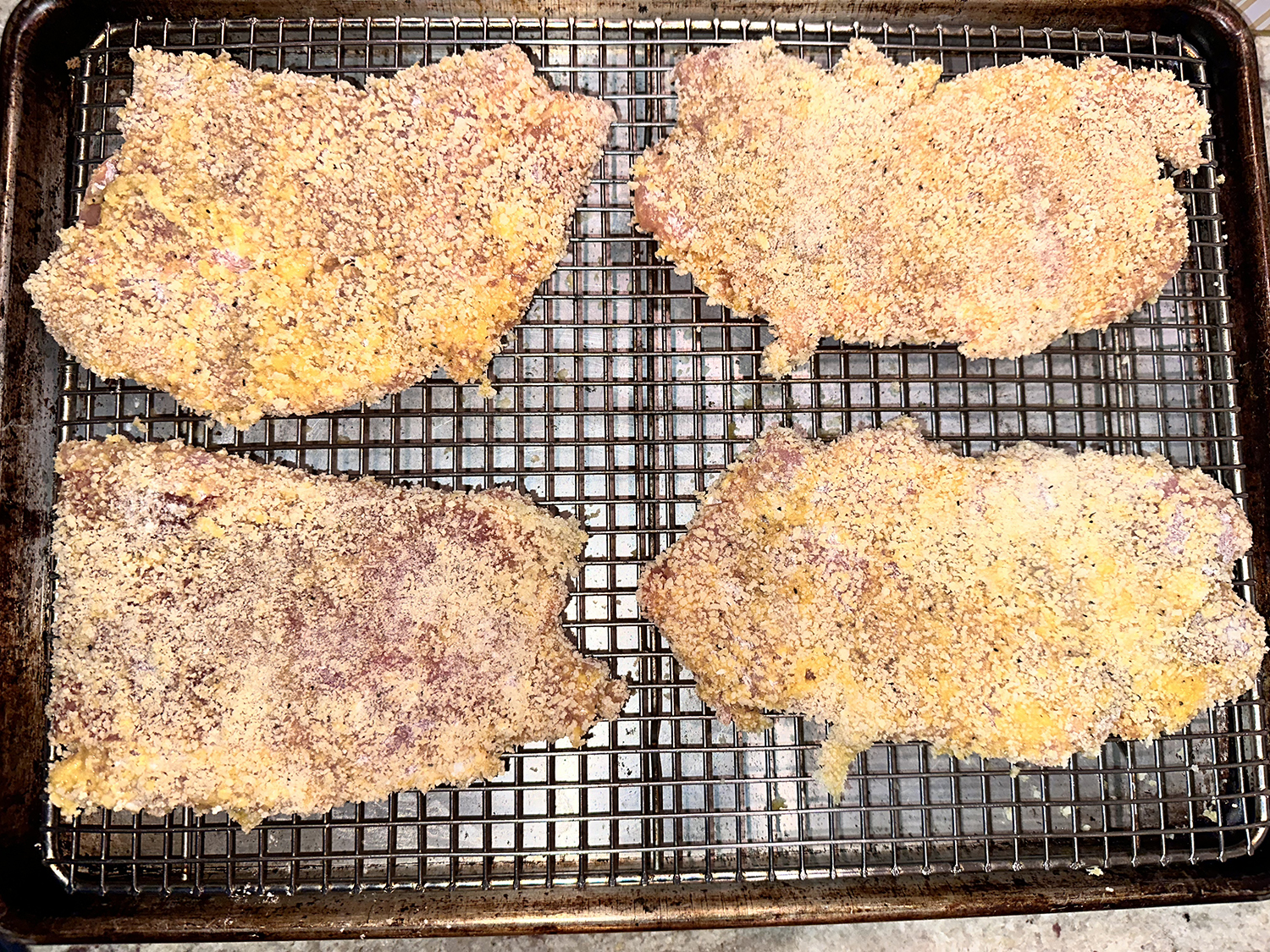
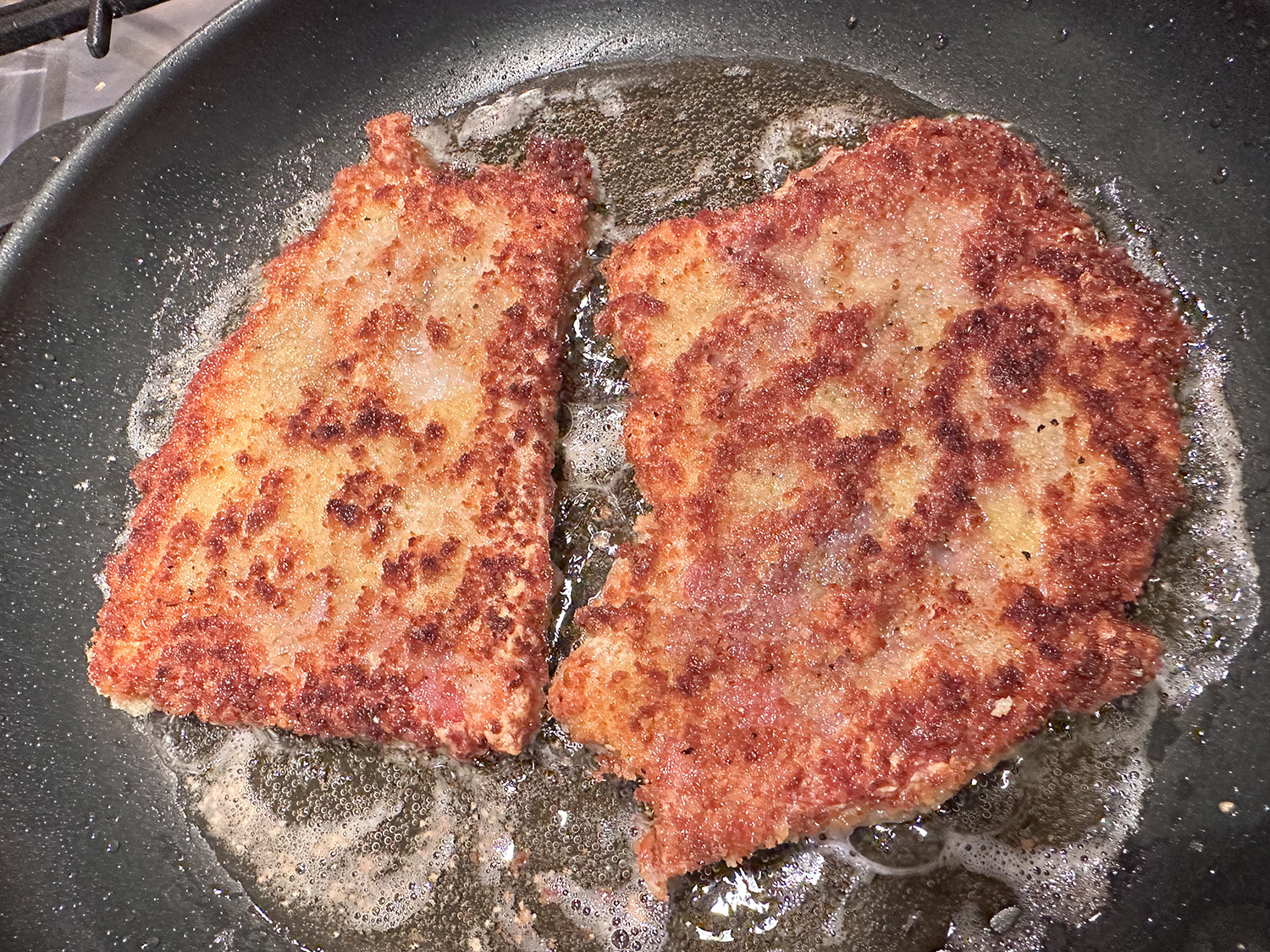
Pork tenderloin is similarly mild in flavor to veal, so it works in this riff on classic cotoletta alla bolognese. The pan-fried breaded cutlets are topped with salty, savory prosciutto and Parmigiano-Reggiano cheese. The pork tenderloin is pounded thin, and layered with the prosciutto slices onto the cutlets, under the breading, to better integrate them into the dish.

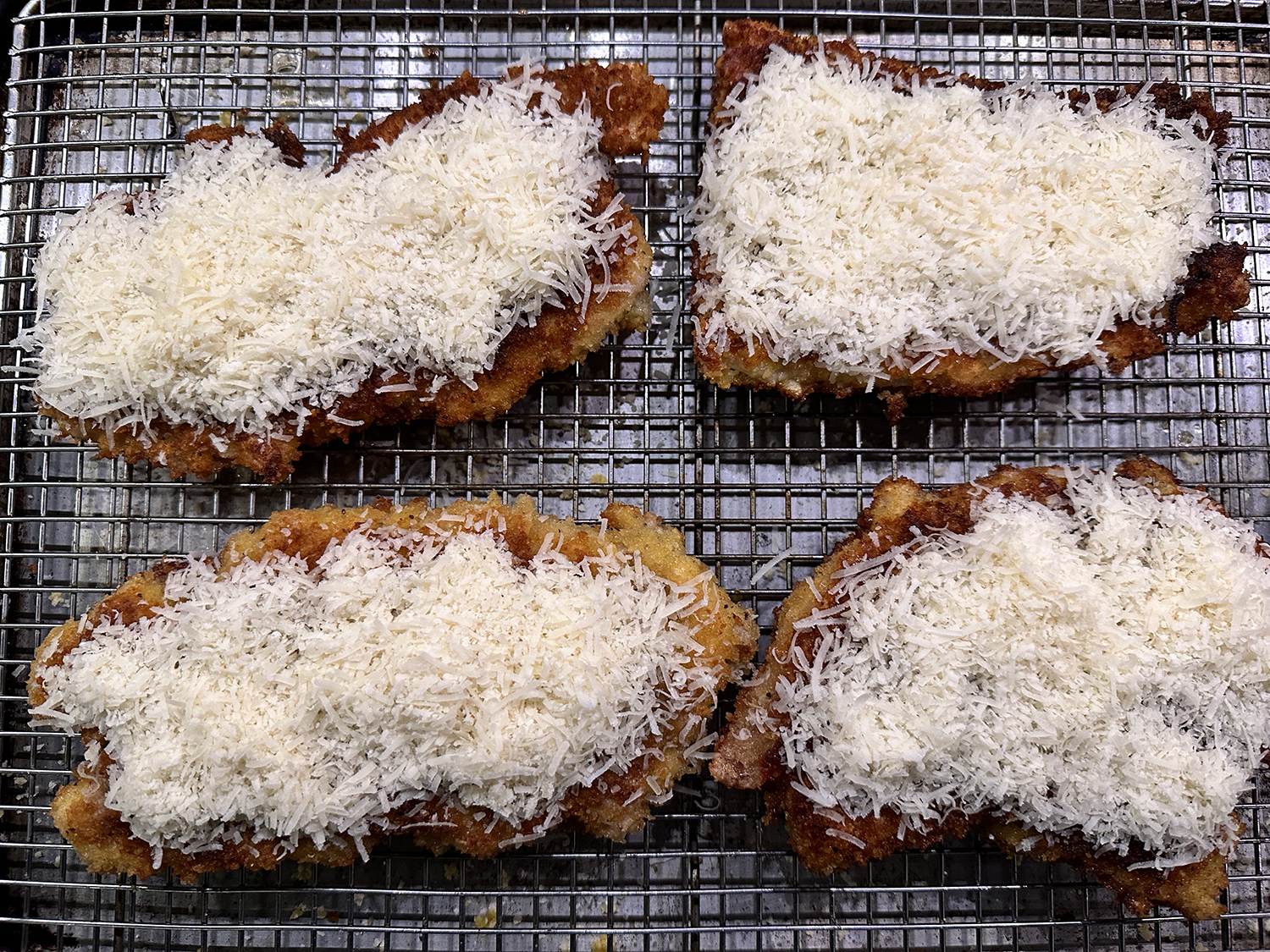
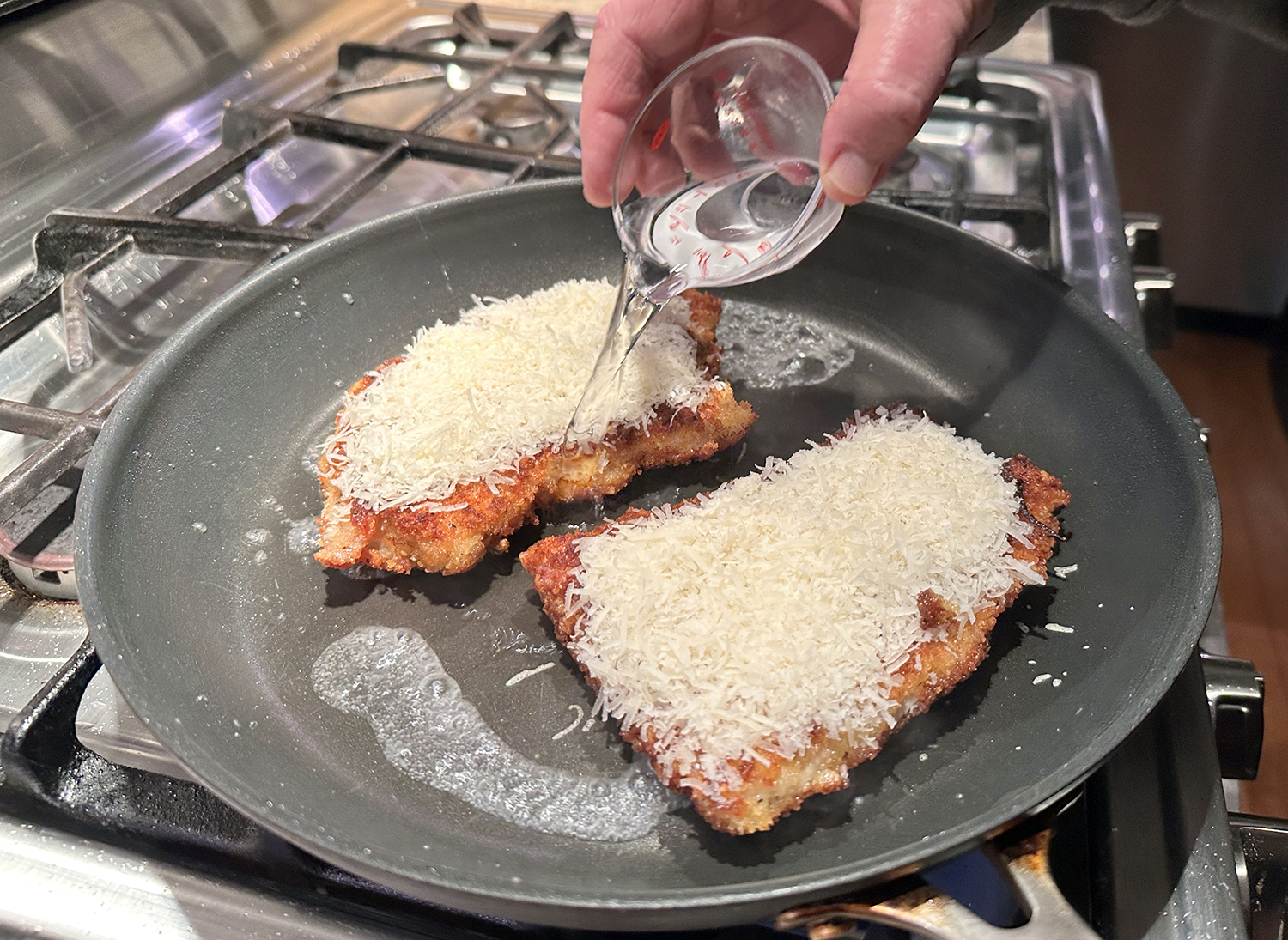
After frying, the crisp cutlets are placed in a pan with a bit of water and cooked just long enough to melt the cheese. For an extra-crisp crust, use Japanese-style, lightly-crushed panko breadcrumb. This method for melting the cheese keeps the bottoms of the cutlets crisp, and the lemon-spiked sauce, served on the side, brightens up all the rich, salty flavors.

The pieces end up being quite large, so in effect, you could possibly get two servings out of each cutlet. I for one, could not finish mine.

Make ahead: If you’d like it to be a less hectic process at dinner time, you can prepare the cutlets up to Step 3, and leave them in the refrigerator for several hours before moving on to Step 4. Also ahead of time, shred the Parmesan cheese, and make the sauce, which can be reheated as your are melting the cheese on the cutlets.

TIP: Don’t pound the pork without using plastic wrap. The plastic wrap prevents the meat pounder from sticking to the meat, thereby helping to avoid tears. This is especially important when the meat is pounded very thin, as it is here. After pounding the cutlets, season them only with pepper, not with salt, as the prosciutto and Parmesan provide lots of salinity. Finally, when adding the water to the pan of fried cutlets, make sure to pour it around them, not on them.

Bolognese-Style Pork Cutlets

  • Servings: 4
  • Difficulty: easy
  • Print

Ingredients

  • 2½ cups panko breadcrumbs
  • Ground black pepper
  • 1 cup all-purpose flour
  • 2 large eggs
  • 1¼ lb. pork tenderloin, trimmed of silver skin and patted dry
  • 4 slices prosciutto (about 2 oz. total)
  • 12 Tbsp. neutral oil, divided
  • 4 oz. Parmesan cheese (without rind), shredded on the small holes of a box grater (2 cups)
  • 4 Tbsp. (½ stick) salted butter, cut into 4 pieces
  • 3 medium garlic cloves, finely grated
  • ¾ cup chicken broth
  • 2 Tbsp. lemon juice, plus lemon wedges to serve

Directions

  1. Place the panko in a large a zip-close bag and seal. Run a rolling pin over the panko until finely crushed. Empty into a pie plate or wide shallow bowl, then stir in ½ teaspoon pepper. In a second similar dish, stir the flour and 1 teaspoon pepper. In a third dish, beat the eggs with a fork.
  2. Cut the pork tenderloin in half crosswise, making the tail-end slightly larger, then cut each piece in half lengthwise. Place 2 pieces between 2 large sheets of plastic wrap. Using a meat pounder, gently pound each piece to an even ⅛-inch thickness. Repeat with the remaining pieces. Season both sides of each cutlet with pepper, then lay a prosciutto slice on each cutlet. Re-cover with plastic wrap and gently pound so the prosciutto adheres.
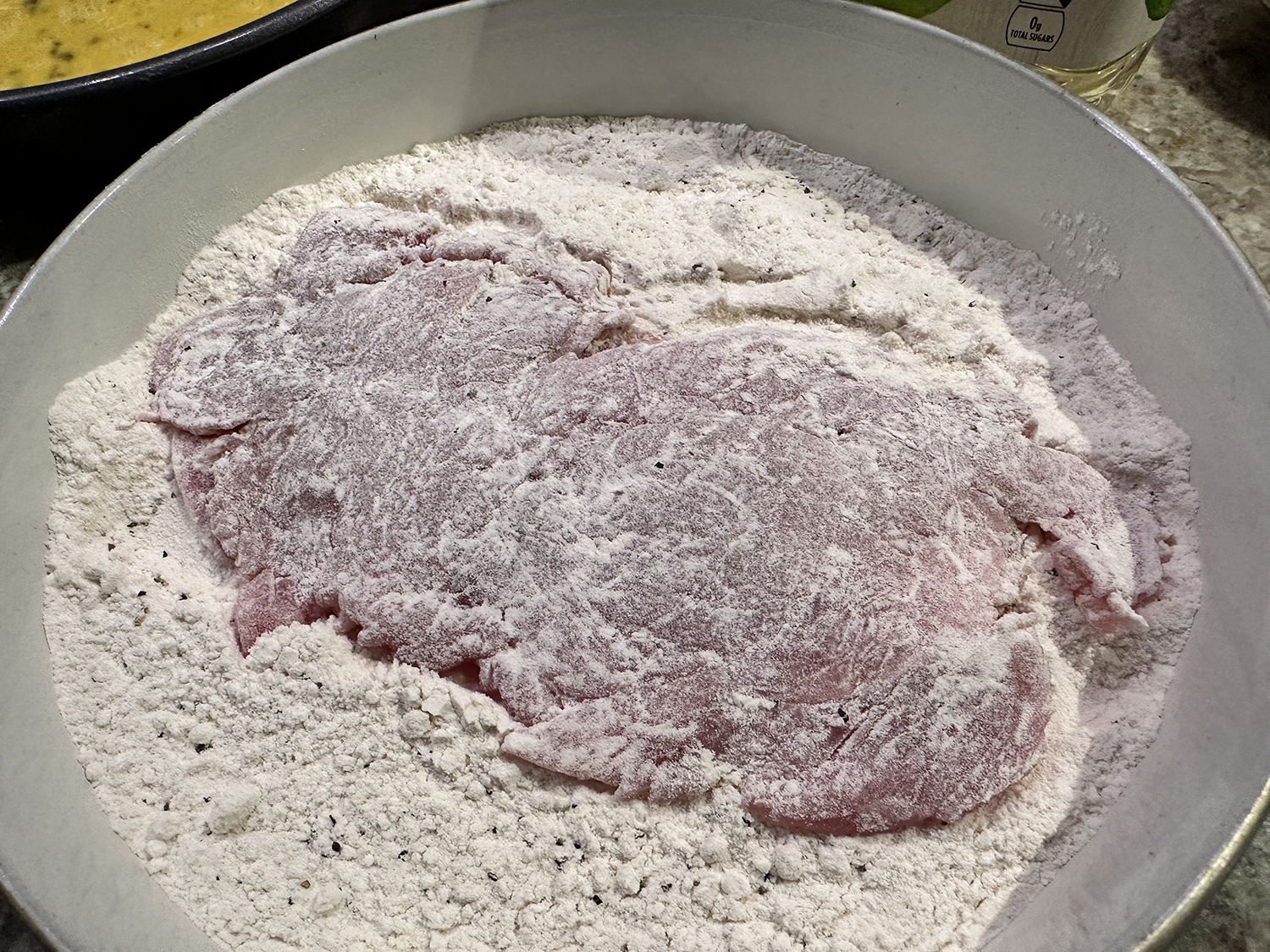
  3. One at a time, dredge the cutlets in the flour, turning to coat and shaking off any excess, then dip in the egg and, finally, coat with the panko, pressing so it adheres. Set the cutlets on a large plate. Refrigerate uncovered for 15 minutes. Set a wire rack in a rimmed baking sheet and place near the stovetop.
  4. In a 12-inch nonstick skillet over medium-high, heat 6 tablespoons of oil until barely smoking. Add 2 cutlets and cook until golden, 1 to 2 minutes. Using tongs, flip and cook until the second sides are golden, about 1 minute. Transfer to the prepared rack. Repeat with the remaining 6 tablespoons oil and remaining cutlets. Wipe out the skillet and set aside.
  5. Evenly sprinkle the cutlets with the Parmesan. Place 2 cutlets, cheese side up, in the same skillet, then set the pan over medium-high. Pour ¼ cup water around the cutlets, immediately cover and cook until the cheese has melted, the water has evaporated and the cutlets begin to sizzle, 1 to 2 minutes. Using a large spatula, return the cutlets to the rack and repeat with the remaining cutlets; tent with foil. Using paper towels, wipe out the skillet.
  6. In the same skillet over medium, melt the butter. Add the garlic and cook, stirring, until fragrant, about 30 seconds. Add the broth, then cook over medium-high, stirring occasionally, until reduced to about ⅓ cup, about 3 minutes. Off heat, stir in the lemon juice, then taste and season with pepper. Pour into a serving bowl. Transfer the cutlets to a platter and serve with the sauce and lemon wedges on the side.

http://www.lynnandruss.com

Original recipe by Diane Unger for Milk Street

Toasted Orzo with Parmesan and Sun-dried Tomato

Prepared Mediterranean-style, this nutty Toasted Orzo Pasta Recipe with Garlic, Parmesan and Sun-dried Tomatoes will steal the show next to your favorite protein. You can even serve it as a quick and easy vegetarian meal on its own; it will feed 4 people as a vegetarian main and about 6 or so as a side dish. 

It was a superb complement to our top sirloin and veggie kebabs. In fact, this orzo recipe jumped to the top of the list and one we’ll make time and again!

Leftovers? Lucky you. It will keep in the fridge for up to 4 days in a tightly closed container. Warm over medium heat.

Toasted Orzo with Parmesan and Sun-dried Tomato

  • Servings: 4-6
  • Difficulty: easy
  • Print

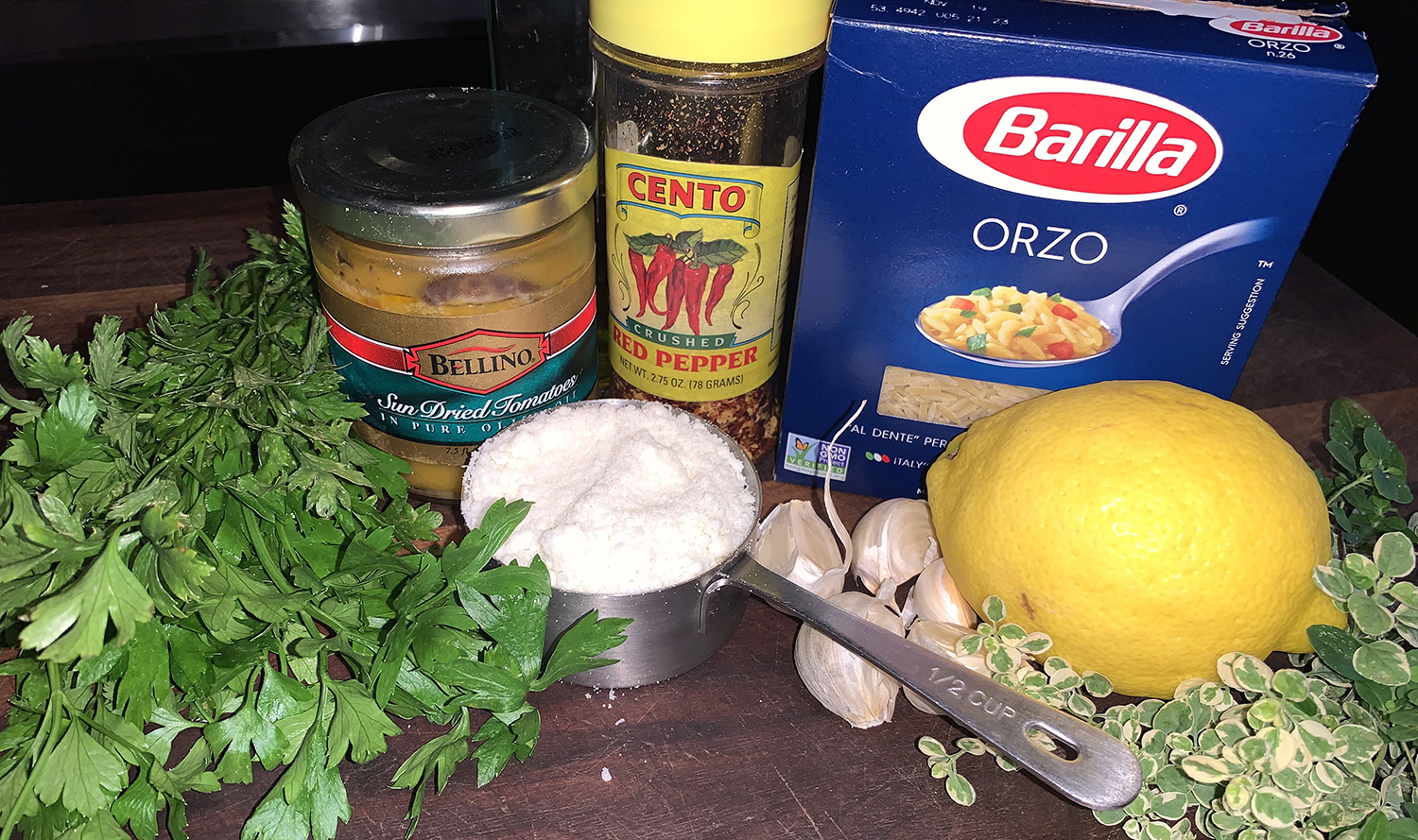
Ingredients

  • Extra virgin olive oil
  • 1 1/2 cups orzo pasta
  • Kosher salt
  • 5 cloves garlic, minced
  • 1 pinch red pepper flakes, or more to taste
  • 1/2 lemon, juiced
  • 1 cup parsley, chopped
  • 1/2 cup oregano, chopped
  • 1/3 cup sun-dried tomatoes in olive oil, chopped
  • black pepper
  • 1/2 cup grated parmesan, or more to your liking

Directions

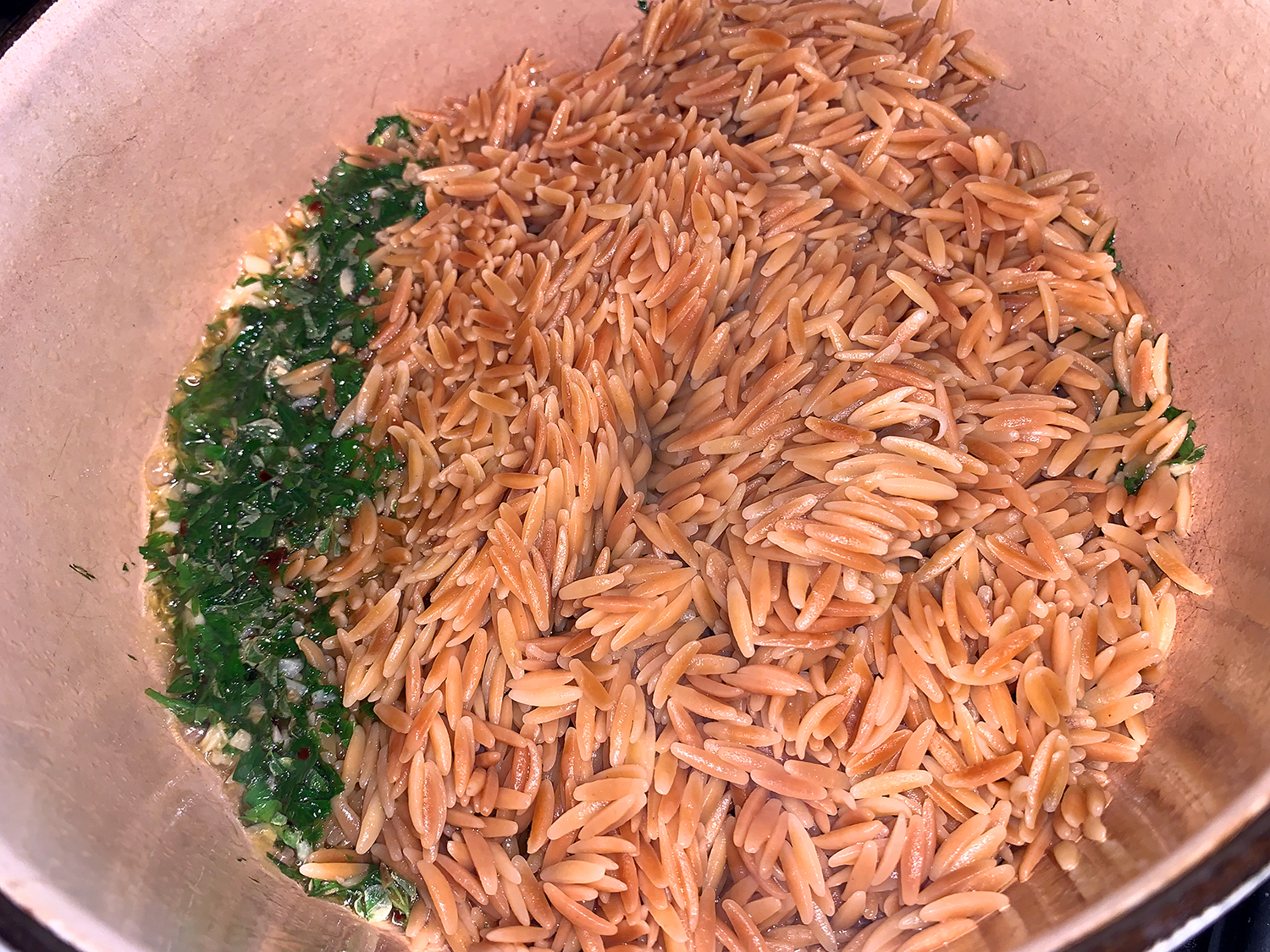
  1. In a large saucepan, heat 2 tablespoons extra virgin olive oil over medium-high. Add the orzo and cook, tossing around, until toasted to a beautiful golden brown.
  2. Add at least 7 cups of boiling water to the saucepan and season well with 1 tablespoon of kosher salt. Cook the pasta in boiling water to al dente according to the package instructions (about 7 to 8 minutes).
  3. Just before the pasta is fully cooked (after about 5 minutes), remove 1 cup of the starchy pasta water and set it aside.
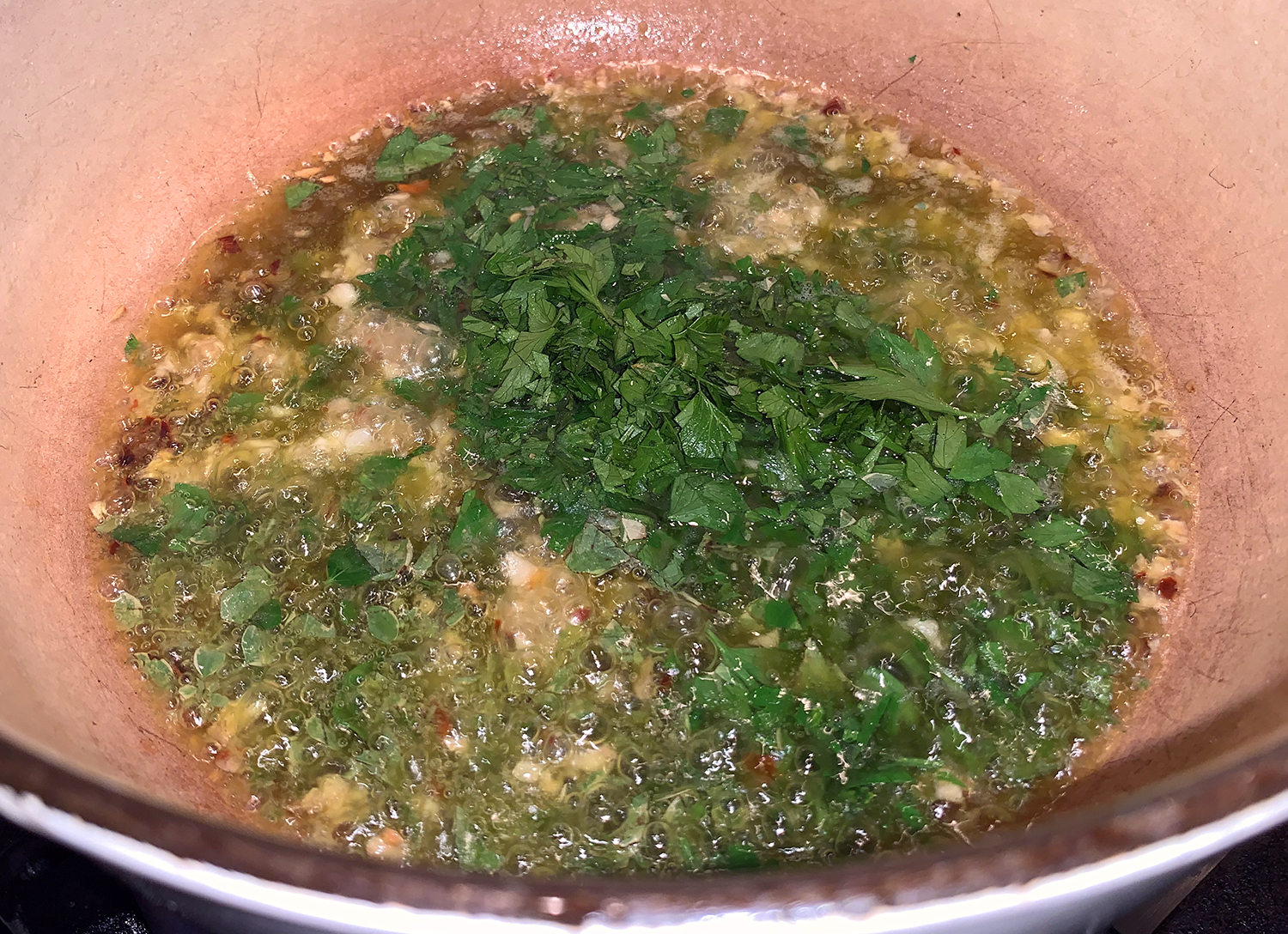
  4. In a large pan, warm 1/2 cup extra virgin olive oil over medium heat. Add the garlic and season with a pinch of kosher salt and red pepper flakes, if using. Cook, tossing regularly, until just fragrant. Add the lemon juice and 1/2 cup of the pasta cooking water. Raise the heat if needed to bring to a boil. Add the parsley and oregano.
  5. When the pasta is ready, drain and add it to the pan and toss to combine. Season with kosher salt and black pepper. Add the sun-dried tomatoes and a 1/4 cup of the grated parmesan. Toss to combine. If needed, add a little more of the pasta cooking water.
  6. Finish with more Parmesan and red pepper flakes, if you like.

http://www.lynnandruss.com

Adapted from a recipe for MediterraneanDish.com

Beef and Lamb Bolognese

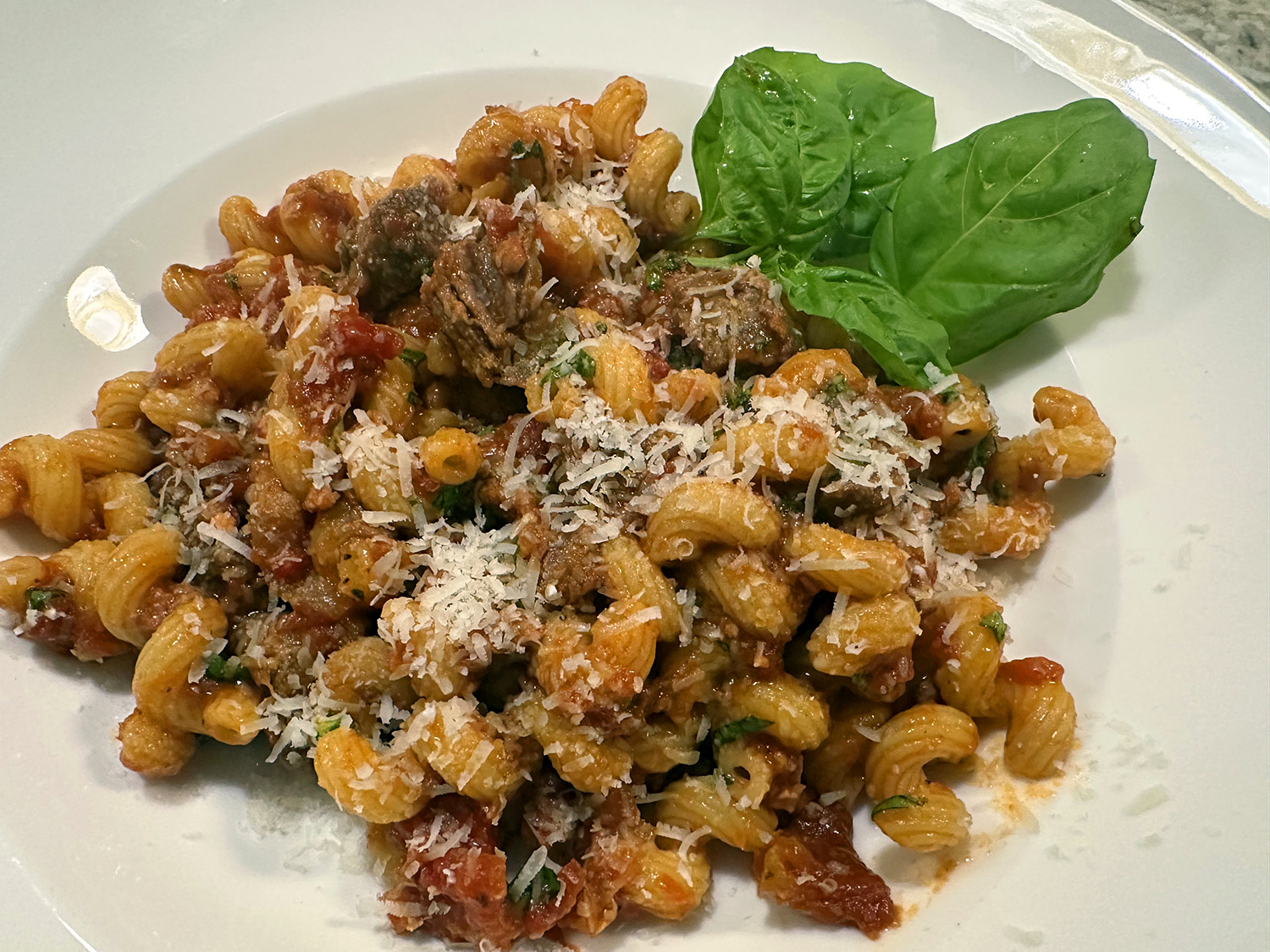
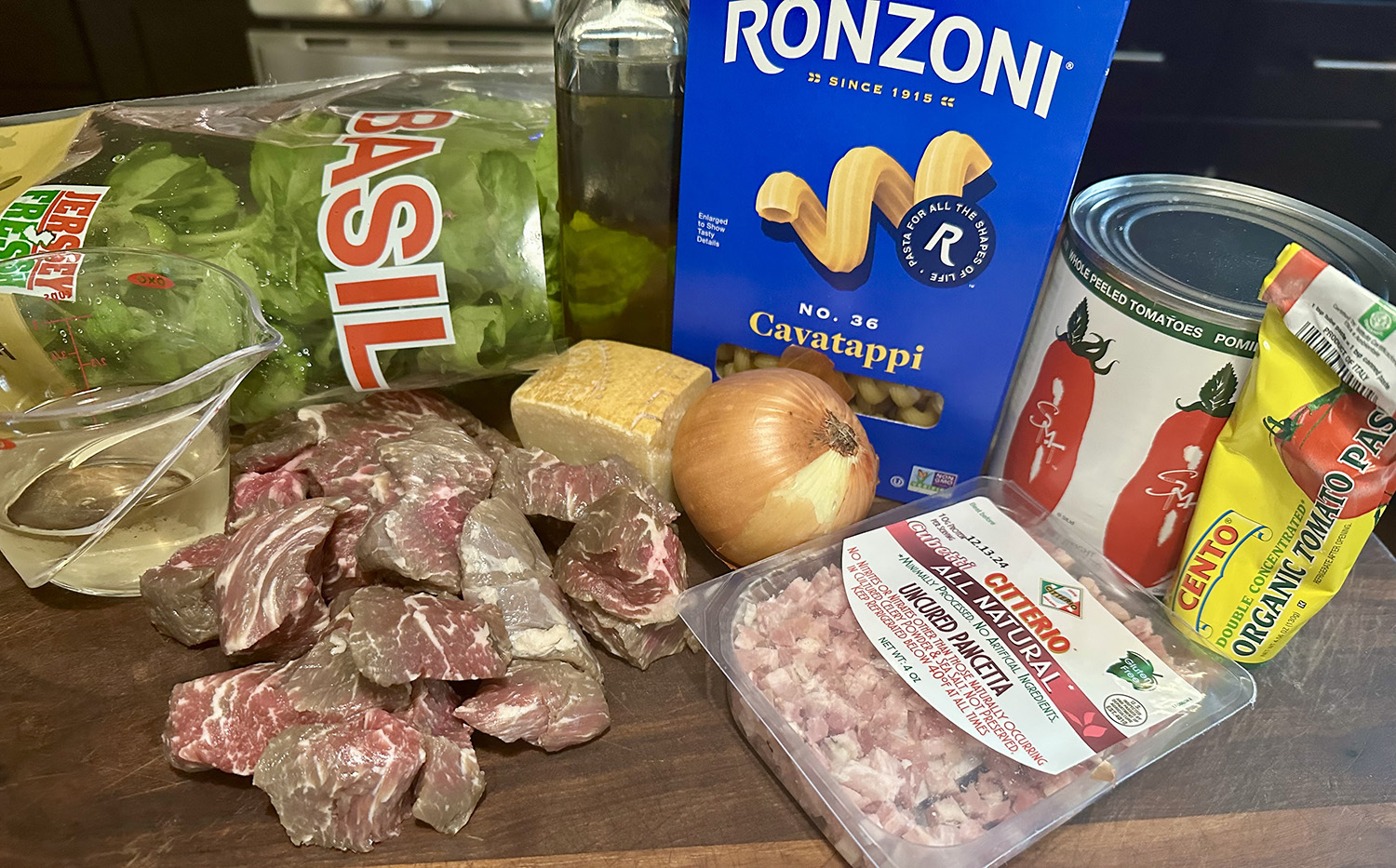
This version of bolognese is half lamb and half ground beef, a mixture you’ll see a lot in northern Italy, and because the lamb is lean, this is a somewhat lighter sauce than all-beef or pork-based ragu.

The sauce needs a good long simmer, but it makes enough that you’ll likely get two meals. Giada claims the pasta shouldn’t be swimming in sauce; you only want it to stain the pasta, but we are “saucy” people and like to pile on a fair amount.

One of the ingredients is Calabrian chili paste, but a good substitute is Sriracha, and that’s what we used.

Beef and Lamb Bolognese

  • Servings: 4-6
  • Difficulty: easy
  • Print

Ingredients

  • 2 Tbsp. butter
  • 1/4 cup olive oil, divided
  • 1 onion, finely chopped
  • 1 carrot, peeled and finely chopped
  • 1 celery, finely chopped
  • 1 tsp. kosher salt divided
  • 3/4 lb. ground lamb
  • 3/4 lb. ground beef chuck
  • 1 clove garlic chopped
  • 1 tsp. Calabrian chili paste; or Sriracha
  • 1/2 tsp. red pepper flakes
  • 1/4 cup tomato paste
  • 1/2 cup whole milk
  • 1 cup dry red wine such as chianti
  • 1 can whole San Marzano tomatoes, (28 ounce) crushed by hand
  • 1 bay leaf
  • 1 piece parmesan rind, (3 inch)
  • 1 cup freshly grated parmesan cheese
  • 1 lb. fusilli, cooked to package instructions; or polenta

Directions

  1. Heat a medium dutch oven over medium heat. Add the butter and 2 tablespoons olive oil and warm until the butter is melted.
  2. Add the onions, carrots, celery and a 1/2 teaspoon salt. Cook stirring often for 6 minutes or until the vegetable are soft but have no color.
  3. Add the lamb and beef and cook breaking apart the meat with a wooden spoon for 5 minutes or until the meat is cooked through and no longer pink.
  4. Stir the garlic, chili paste, red pepper flakes, and tomato paste into the meat mixture. Cook the tomato paste stirring often for 2 minutes.
  5. Add the milk. Bring to a simmer and cook for 20 minutes, stirring occasionally until the milk is almost entirely evaporated.
  6. Add the wine, tomatoes, bay leaf, parmesan rind and remaining salt. Bring to a simmer and reduce the heat to low to just maintain a gentle simmer. Simmer the sauce for 1 ½ to 2 hours, stirring occasionally to prevent sticking. Use several folded paper towels to skim some of the oil from the surface.
  7. Discard the bay leaf and parm rind.
  8. Spoon the bolognese over fusilli or creamy polenta reserving any extra to serve on the side. Serve with additional parmesan and a drizzle of olive oil, if desired.

http://www.lynnandruss.com

Adapted from a recipe by Giada De Laurentiis

Umbrian-Style Chicken alla Cacciatora Revisited

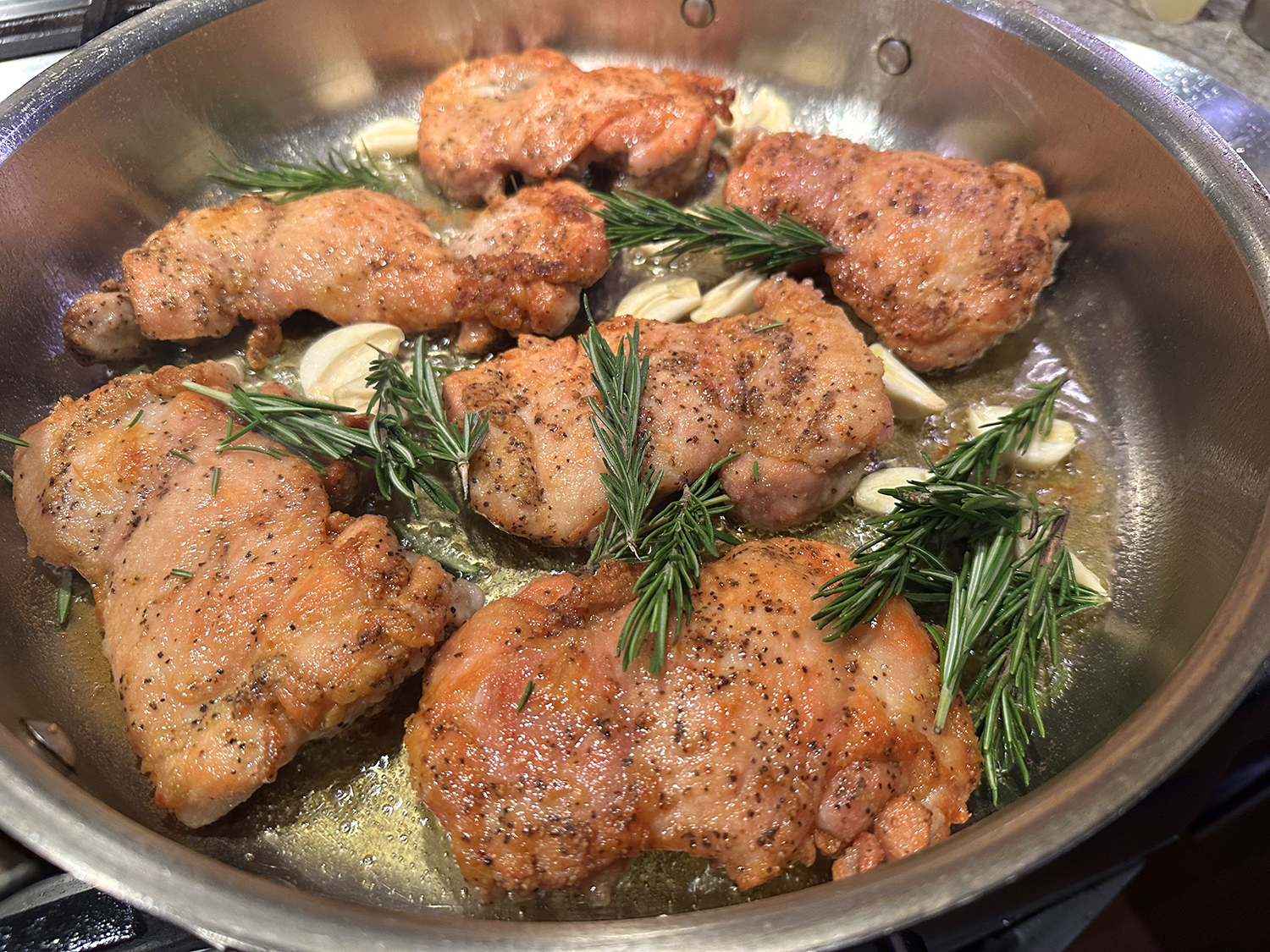
Did you know that Umbria, in central Italy, is home to a tomato-free version of Chicken alla Cacciatora? Rather, the rustic braise gets it character from lemon, olives, garlic and herbs. Capers also are customary, but this version uses pancetta instead to build rich, savory depth. Finally, alternatively to cutting up a whole chicken, which is what we usually do, here we substitute bone-in, skin-on thighs.

Strips of lemon zest are simmered into the sauce to infuse the dish with subtle citrusy notes. For easiest results, use a sharp vegetable peeler to plane off wide strips of zest from the fruit; each piece should be roughly 2 to 3 inches long. You will need a 12-inch oven-safe skillet for this recipe, our 3-quart Le Creuset “Baby Blue” enameled cast-iron pot was perfect.

Fantastic! The combination of flavors had so much depth, we wanted to lick our plates clean. I know we loved the previous version using an entire chicken and capers, but this riff may have raised the bar to another level…

Umbrian-Style Chicken alla Cacciatora

  • Servings: 4
  • Difficulty: easy
  • Print

Ingredients

  • 3 lbs. bone-in, skin-on chicken thighs, trimmed and patted dry
  • Kosher salt and ground black pepper
  • 1 Tbsp. extra-virgin olive oil
  • 4 oz. pancetta, finely chopped
  • 1 large yellow onion, halved and thinly sliced
  • 1 cup dry white wine
  • 4 cloves garlic, thinly sliced
  • 2 sprigs fresh rosemary
  • 1 cup pitted green or black olives or a combination, drained and halved
  • 4 strips lemon zest, plus 1 Tbsp. lemon juice
  • 2 Tbsp. white balsamic vinegar

Directions

  1. Heat the oven to 450°F with a rack in the middle position. Season the chicken on both sides with salt and pepper.
  2. In an oven-safe 12-inch skillet over medium-high, heat the oil until shimmering. Add the chicken skin down and cook without disturbing until golden brown on the bottom, 5 to 8 minutes. Using tongs, transfer the chicken skin up to a large plate.
  3. Pour off and discard all but 1 tablespoon fat from the skillet and set the pan over medium. Add the pancetta and onion, then cook, stirring occasionally, until the onion begins to brown, about 5 minutes.
  4. Add the wine, bring to a simmer over medium-high and cook, scraping up any browned bits, until most of the liquid has evaporated, 2 to 3 minutes.
  5. Stir in the garlic, rosemary, olives and lemon zest. Return the chicken skin up to the skillet and pour in the accumulated juices. Transfer to the oven and cook until the thickest part of the thigh reaches 175°F, 15 to 20 minutes.
  6. Remove the skillet from the oven; the handle will be hot. Using tongs, transfer the chicken skin up to a serving platter, then remove and discard the rosemary and lemon zest. Bring the liquid in the pan to a simmer over medium-high and cook, stirring occasionally, until slightly thickened and reduced, 2 to 3 minutes.
  7. Stir in the lemon juice and vinegar, then taste and season with salt and pepper. Spoon the sauce around the chicken.

http://www.lynnandruss.com

Adapted from a recipe from Milk Street

Garlic Mushroom Pasta

According to chef/author Suzy Karadheh, this is hands-down the BEST mushroom pasta recipe without cream. Rich and velvety with loads of mushrooms, garlic, shallots, a little parmesan, and a lighter silky-smooth sauce.

An easy recipe, it has two main components: the pasta and the mushroom sauce. Once you cook the pasta and sauté the mushrooms, everything will come together with a light sauce in one pan.

A typical pasta with mushrooms usually involves a heavy cream-based sauce that you would likely cook separately and then spoon over the pasta. Making a hearty garlic mushroom pasta without cream or too much butter is fairly simple. The science behind this is using a little of the starchy pasta water.

Walnuts were in the original list of ingredients, but you know how The Hubs detests those little nuggets, claiming they taste like soap. I personally love them, but to keep the peace they went by the wayside. And the dish didn’t seem to suffer without them!

Garlic Mushroom Pasta

  • Servings: 4
  • Difficulty: easy
  • Print

Ingredients

  • 8 oz. dry pasta, such as orecchiette, campanelle or farfalle
  • Kosher salt
  • ⅓ cup extra virgin olive
  • 1 Tbsp. butter
  • 2 shallots, minced
  • 5 garlic cloves, minced
  • 8 oz. cremini mushrooms, sliced
  • 8 oz. white mushrooms, sliced
  • 8 oz. portabella mushrooms, roughly chopped
  • Black pepper
  • 1 tsp. rosemary
  • 3 Tbsp. of tomato paste
  • ¼ cup dry red wine
  • ½ cup of grated Parmigiano-Reggiano
  • ½ cup packed parsley, chopped
  • Red pepper flakes to taste, optional

Directions

  1. Cook the pasta to al dente in boiling salted water according to box instructions. Keep 1 cup of the pasta cooking water then drain the pasta.
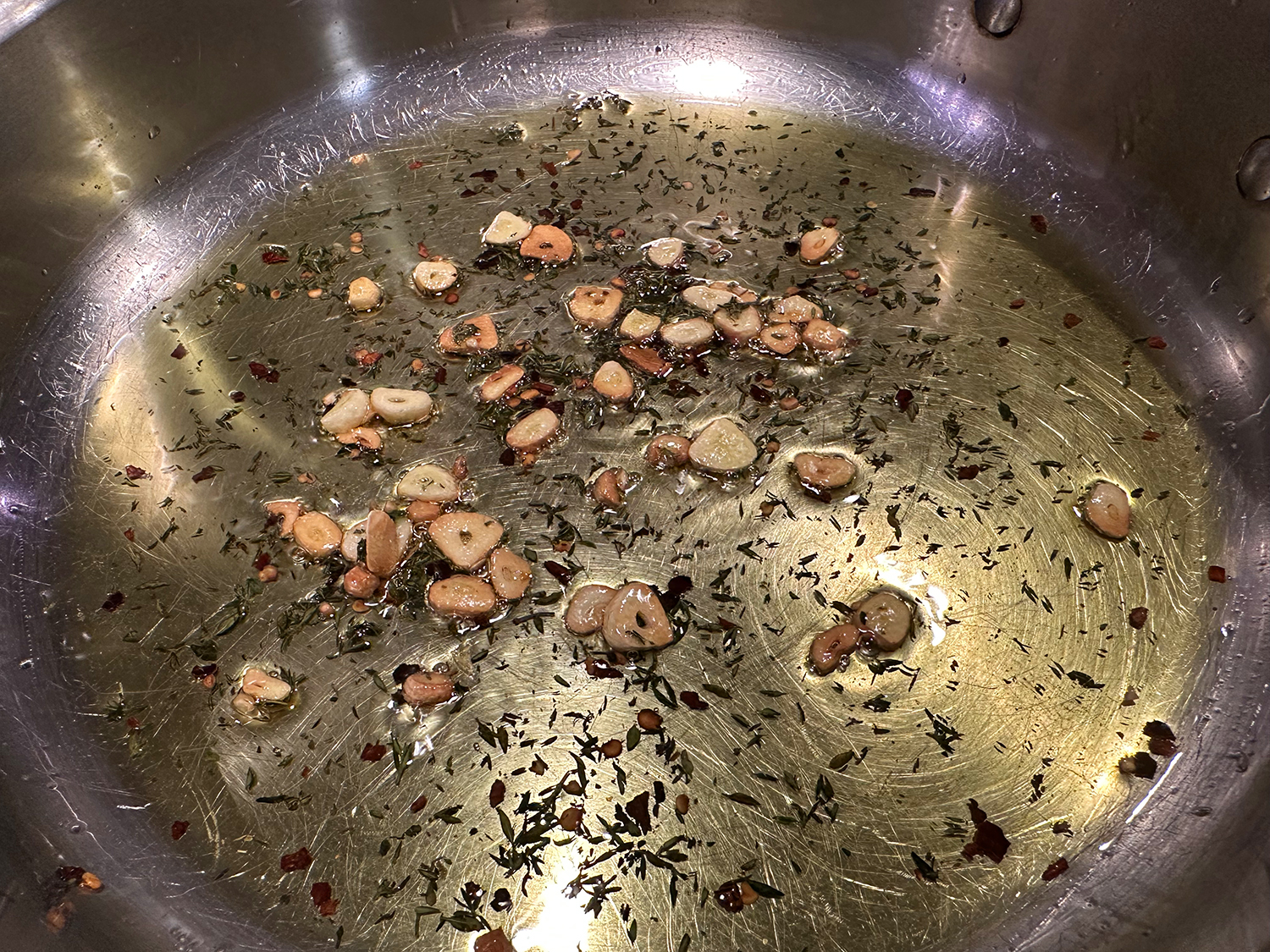
  2. In a large skillet, heat the olive and butter over medium-high heat, add the shallots and garlic and cook, tossing regularly for 2 to 3 minutes (manage the heat so that the garlic does not burn).
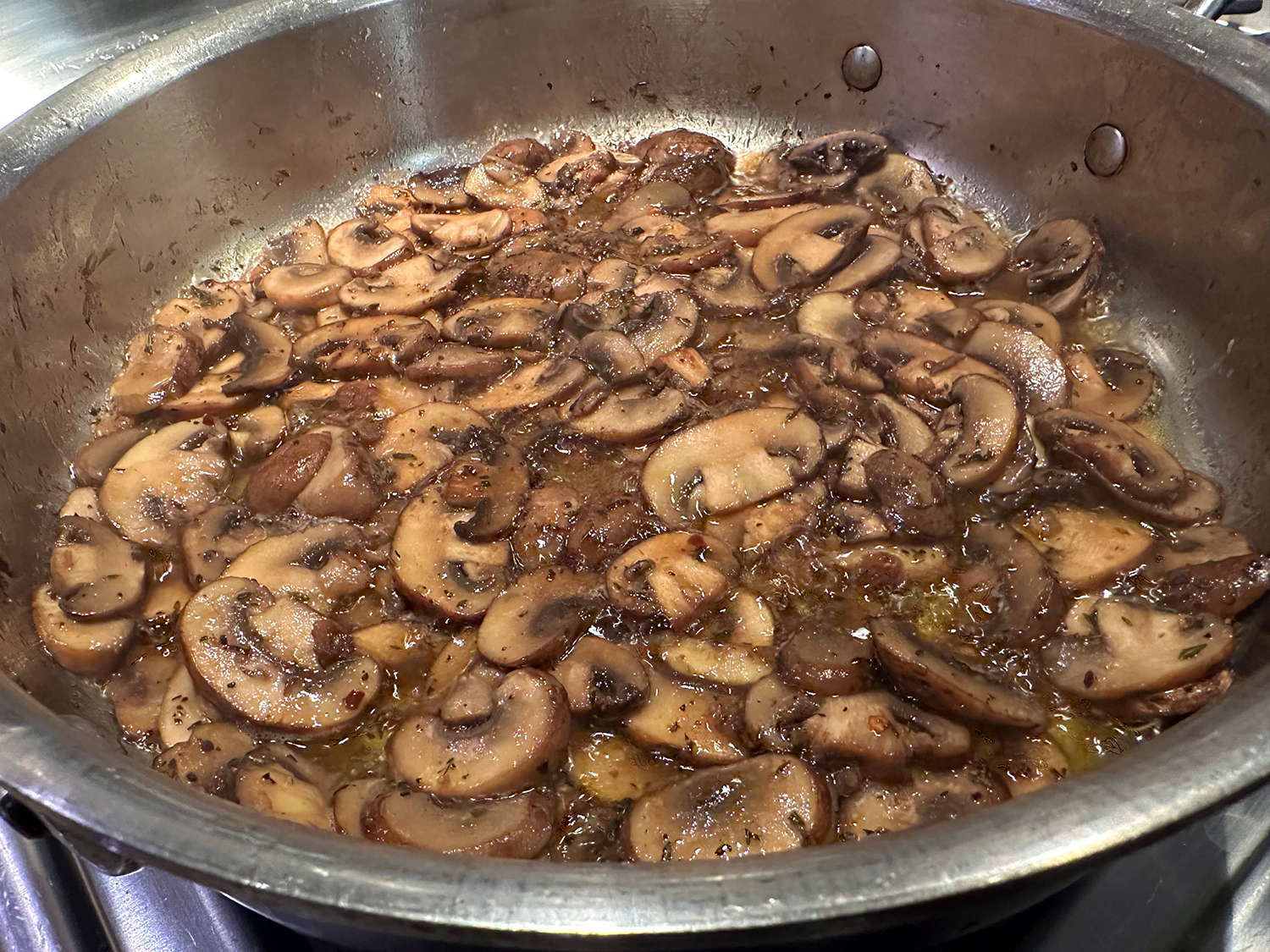
  3. Add all the mushrooms and toss them around in the pan for a couple of minutes, adding another drizzle of extra virgin olive oil. Season with a good pinch of kosher salt, black pepper and the rosemary. Cook the mushrooms for about 7 to 10 minutes, tossing occasionally, until they turn color and release their juices.
  4. Add the tomato paste, wine and about ½ to ¾ cup of the pasta cooking water. Cook over medium heat for about 4 to 5 minutes (this becomes your mushroom pasta sauce).
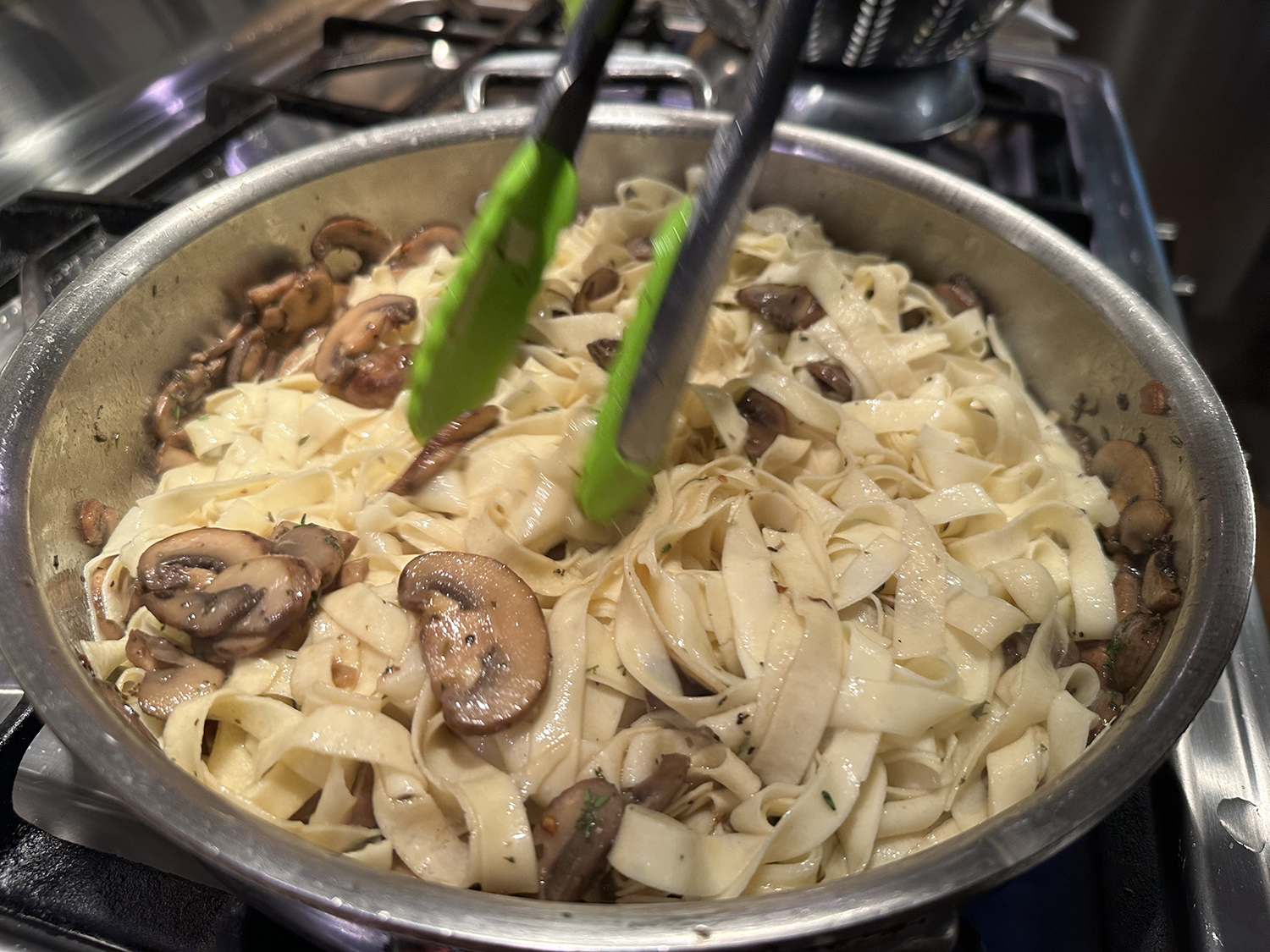
  5. Add the cooked pasta to the mushroom sauce. Toss to combine. If needed add a little bit more of the pasta cooking water.
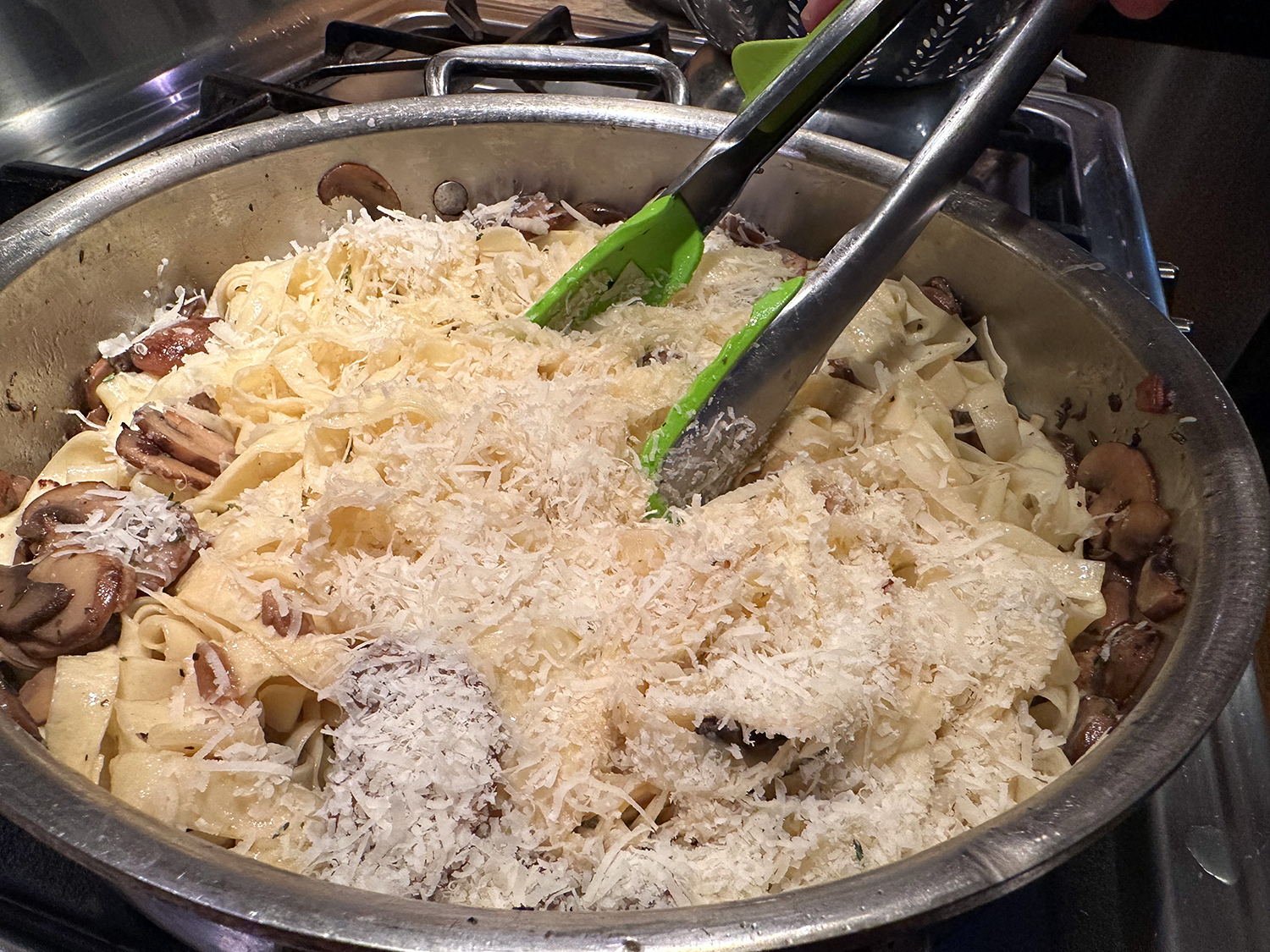
  6. Stir in Parmesan cheese and finish with a sprinkle of parsley and red pepper flakes. Serve immediately.

http://www.lynnandruss.com

Adapted from a recipe by Suzy Karadheh

Shoulder Lamb Chops with Fennel and Capers

The flavors were amazing in this dish from Mastering the Art of Italian Cooking by Lidia Bastianich, one of our favorite Italian chef/authors. With rosemary, fennel, capers, onion and homemade stock, you can’t help but start salivating from the heady aromas while you’re cooking.

Shoulder lamb chops are usually not as costly as other cuts, but you do have to deal with a little more fat and bone. With only three chops, we still needed to brown them in two batches, which the original instructions didn’t indicate. Too closely together in the skillet, and the meat will steam instead of brown.

One major difference we will do next time is reduce the amount of stock from 2 cups down to 1 cup (this is noted in the list of ingredients below). After the chops were removed from the skillet, we tented them with foil, and reduced down the liquid in the pan (which still included the other ingredients).

And what is with throwing out the garlic?? That’s like tossing the baby out with the bath water, a sacrilege in our opinion! Otherwise, it was a fabulous recipe.

Shoulder Lamb Chops with Fennel and Capers

  • Servings: 4
  • Difficulty: easy
  • Print

Ingredient

  • 4 1⁄2-inch thick bone-in shoulder lamb chops
  • 2 tsp. kosher salt
  • All-purpose flour, dredging
  • Vegetable Oil for frying
  • 3 Tbsp. extra-virgin olive oil
  • 6 garlic cloves, crushed and peeled
  • 4 sprigs fresh rosemary
  • 2 large fennel bulbs, trimmed, cored, and cut into 1-inch chunks
  • 2 medium onions, sliced
  • 1⁄4 tsp. crushed red pepper flakes
  • 1⁄4 cup red wine vinegar
  • 1 cup chicken stock, preferably homemade
  • 1⁄4 cup drained tiny capers in brine

Directions

  1. Season lamb chops with 1 teaspoon of the salt. Spread some flour on a plate and dredge the chops in the flour, tapping off the excess.
  2. Heat a large skillet over medium-high heat, and add 1⁄4 inch of vegetable oil. Cook the chops until they are crisp and browned on both sides, about 3 minutes per side. Remove them to a plate. (It’s likely you will need to do this in 2 batches.)
  3. Pour out the oil and wipe the skillet clean. Set skillet over medium heat, and add olive oil. When the oil is hot, add the garlic and rosemary. Once the garlic and rosemary are sizzling, add the fennel and onions, and season with the remaining salt and the red pepper flakes. Cook, stirring to make sure the vegetables don’t burn, until they are wilted and golden, about 10 minutes.
  4. Add the vinegar and bring it to a boil. Add the stock. Reduce the heat so the sauce is simmering, and add the chops and capers.
  5. Simmer, covered, until the chops are tender, about 35 to 40 minutes. Remove the rosemary stems and garlic (no way!), and serve.

http://www.lynnandruss.com

Original recipe from Lidia Bastianich