Tag Archives: dinner

A Pasta Salad for Tuna Lovers

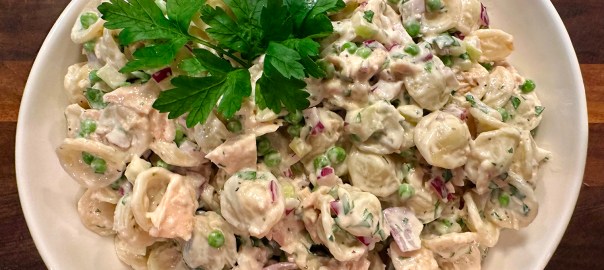
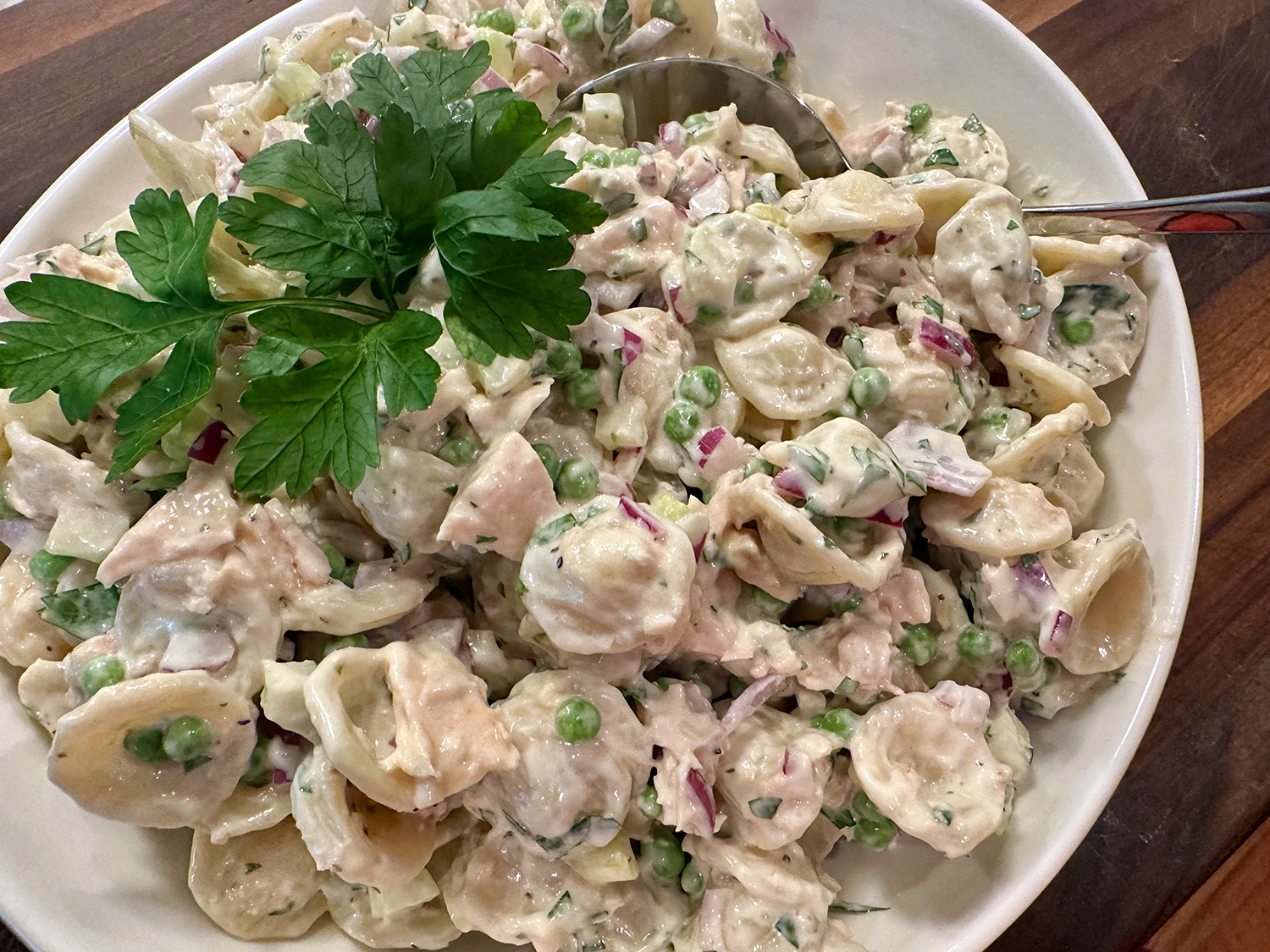
A pasta for tuna salad lovers, this recipe combines elements of a classic deli-style tuna salad with pasta, peas and fresh green herbs. Besides dinner, it makes for a hearty picnic side dish or lunch, and keeps well in the refrigerator for several days, making it ideal for start-of-the-week meal prep.

The tangy Greek yogurt dressing, flavored with lemon juice, mustard and garlic, comes together right in the serving bowl with the chopped celery and red onion that add crunch and color. Any small pasta shape works well here; just be sure to run the cooked pasta under cold water to cool it down before tossing with the dressing.

A few changes we made included reducing the amount of pasta from one pound down to 12 ounces; and increasing the quantity of tuna up to three 5-ounce jars. As a main you’ll get get 4 to 6 servings. As a side dish, at least double that.

The Hubs Hack: Shred a peeled carrot and add some diced radish for more color and nutrition. He even thinks mashing in an anchovy would provide some nice umami flavor. (I’m fine w/o the anchovy.)

A Pasta Salad for Tuna Lovers

  • Servings: 4-6
  • Difficulty: easy
  • Print

Ingredients

  • Kosher salt (such as Diamond Crystal) and black pepper
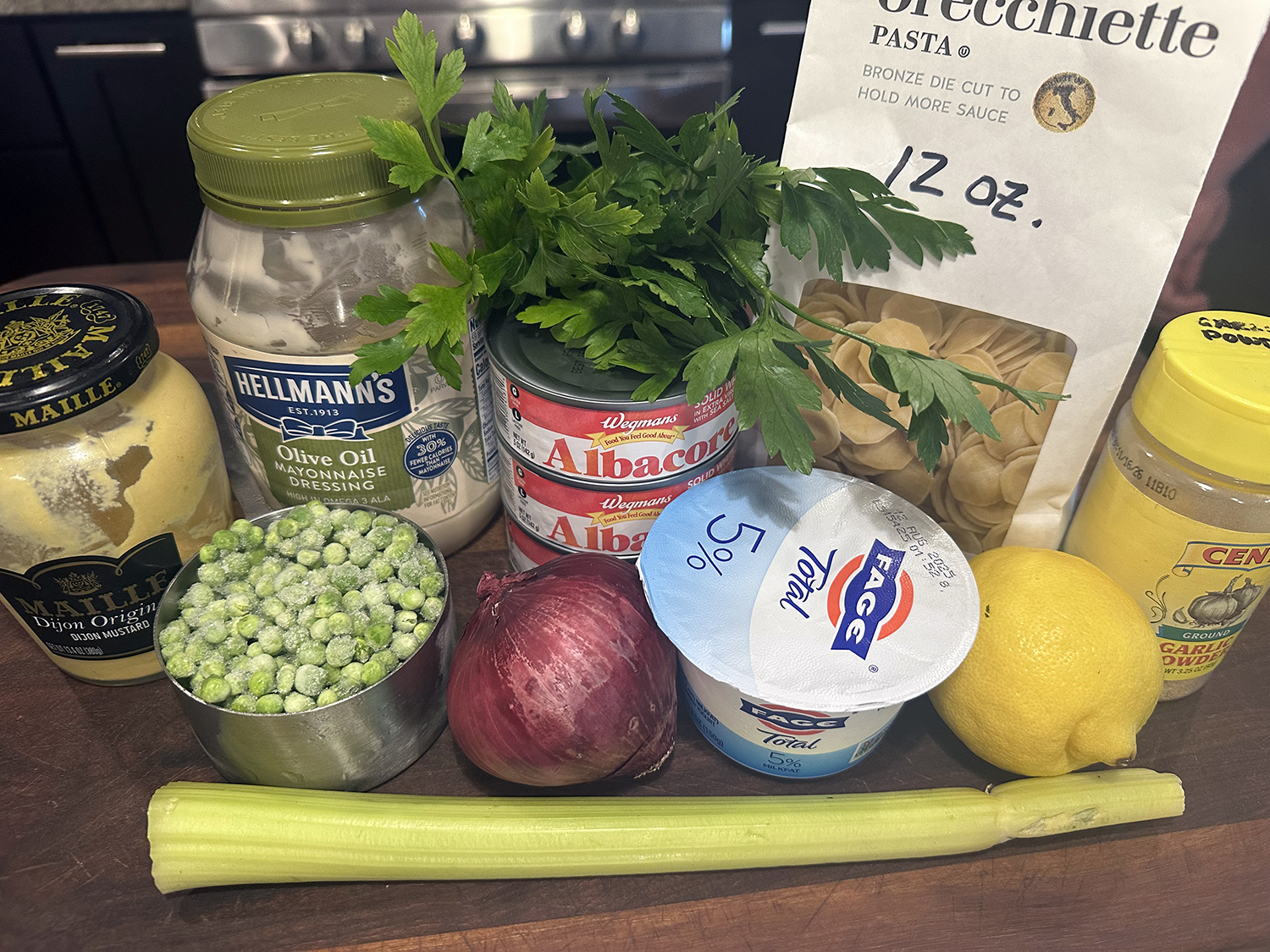
  • 12 oz. short pasta, such as small shells, orecchiette or elbow macaroni 
  • ½ cup mayonnaise
  • ½ cup plain Greek yogurt (at least 2 percent fat)
  • 2 Tbsp. freshly squeezed lemon juice
  • 1 tsp. Dijon mustard 
  • ½ tsp. garlic powder
  • 3 (5-oz.) cans or jarred tuna, drained
  • 1 cup frozen peas, thawed
  • 1 cup small-diced celery (1 to 2 celery ribs)
  • ½ cup chopped red onion
  • ¼ cup finely chopped fresh dill or parsley, plus more for serving

Directions

  1. Bring a large pot of salted water to a boil. Add the pasta and cook according to the directions on the package, then drain and rinse under cold running water. Drain well.
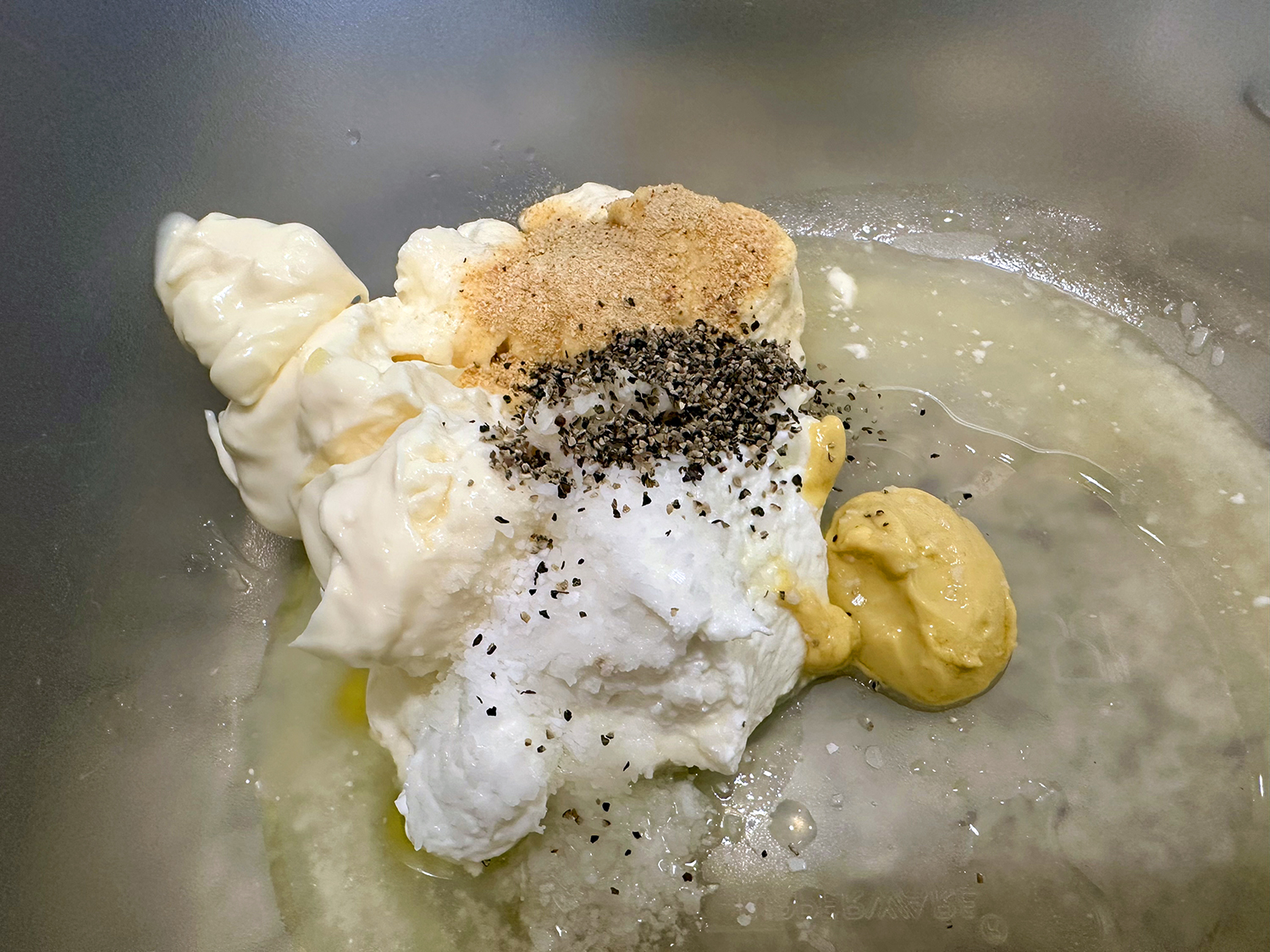
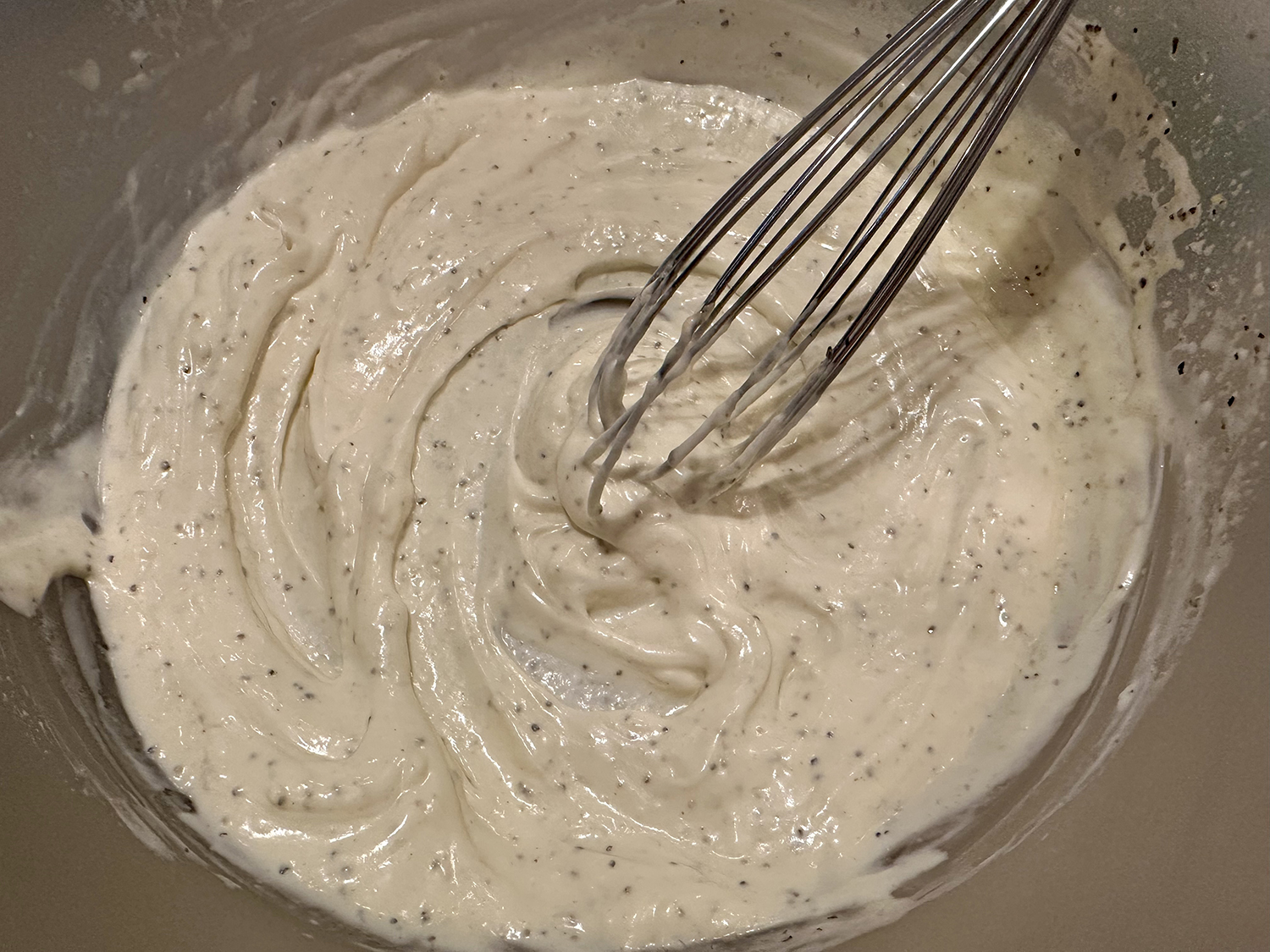
  2. Meanwhile, in a large bowl, whisk together the mayonnaise, yogurt, lemon juice, mustard, garlic powder, 1 teaspoon salt and ½ teaspoon pepper. Add the cooled, drained pasta and toss well.
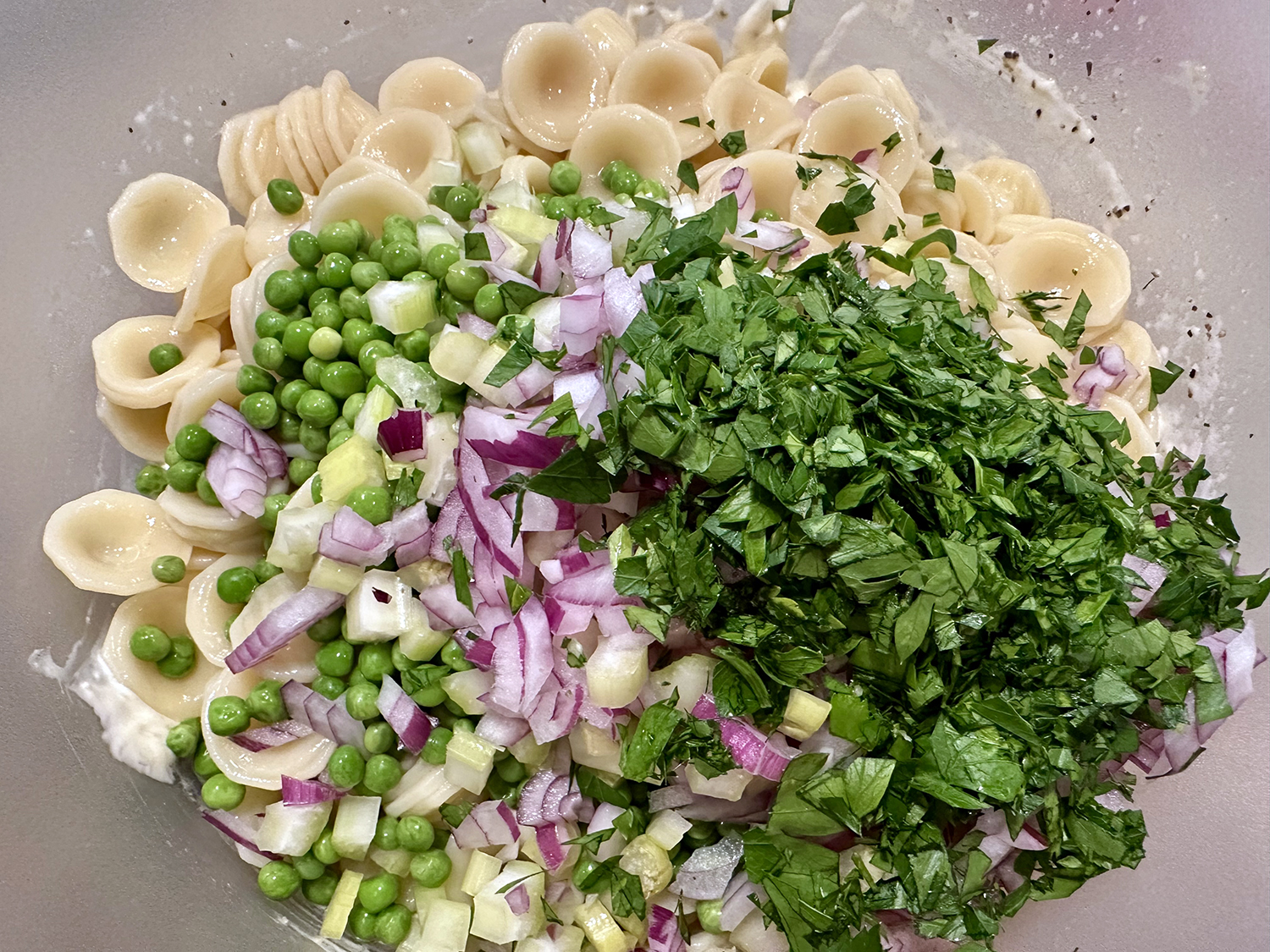
  3. Add the tuna, peas, celery, red onion and dill and toss again.
  4. Add more salt and pepper to taste, garnish with additional fresh dill and serve. Tuna pasta salad will keep for up to 3 days, covered and refrigerated.

http://www.lynnandruss.com

Adapted from a recipe by Lidey Heuck for NYTimes Cooking

Coq Au Vin Meatballs

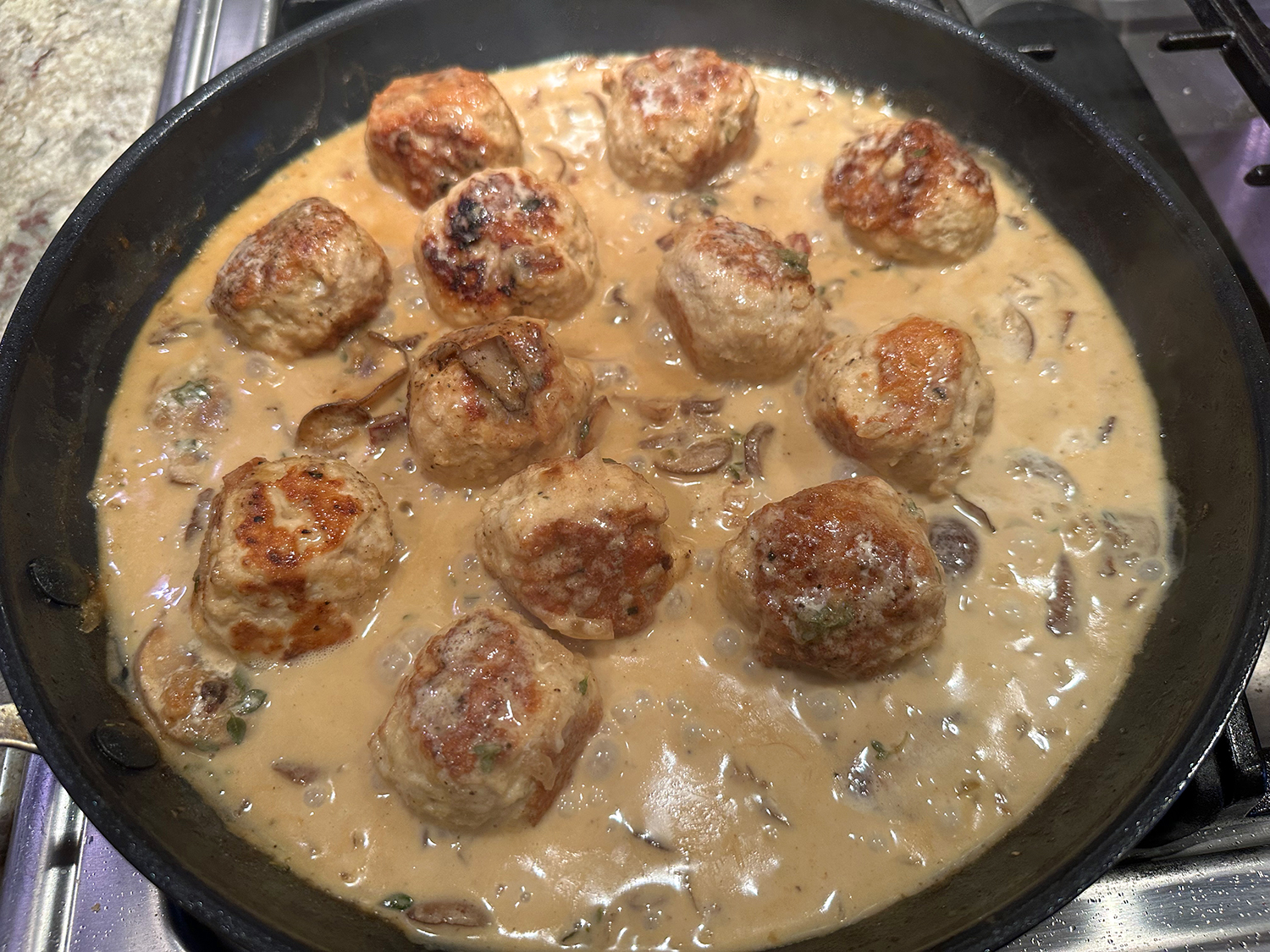
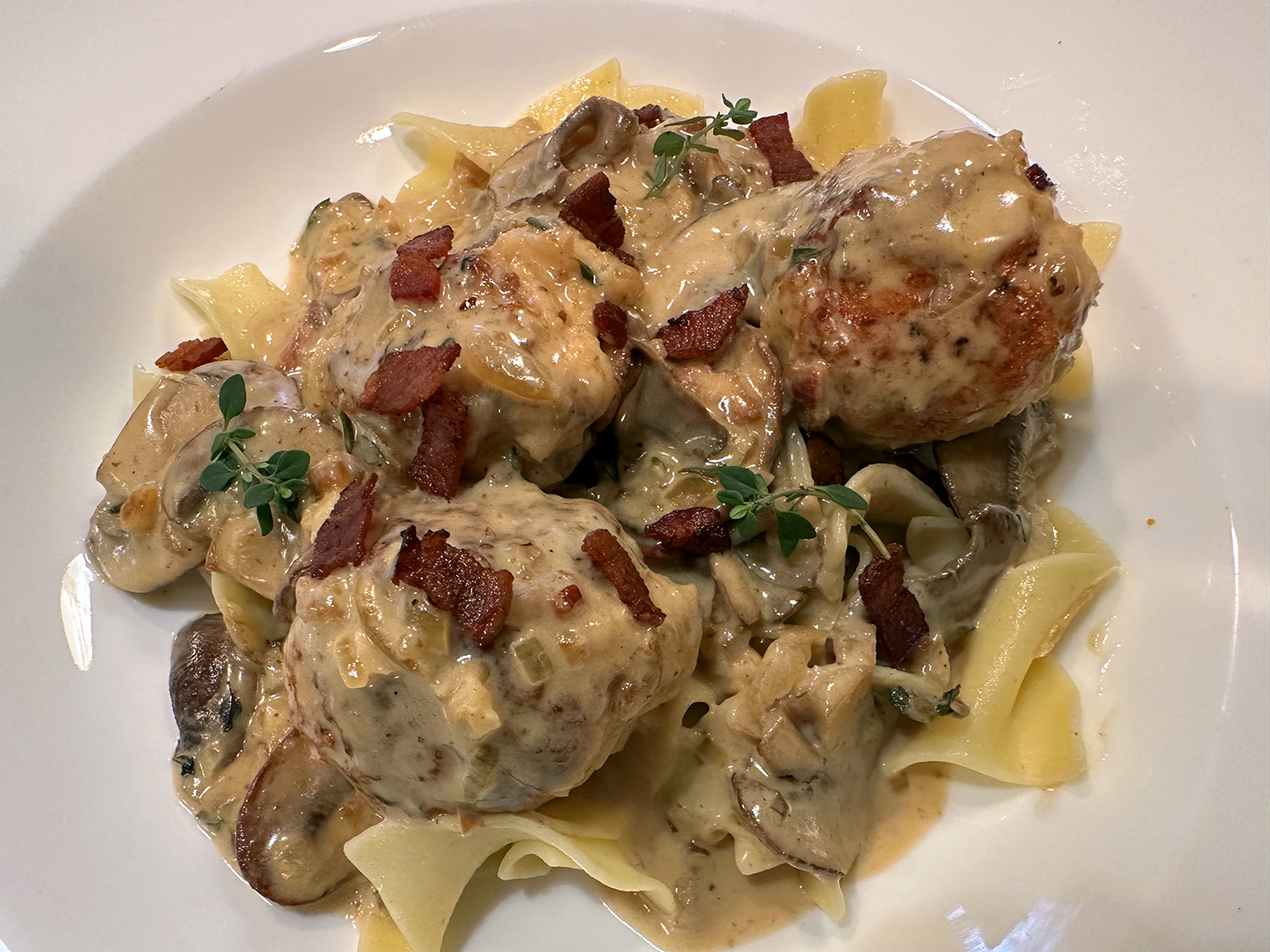
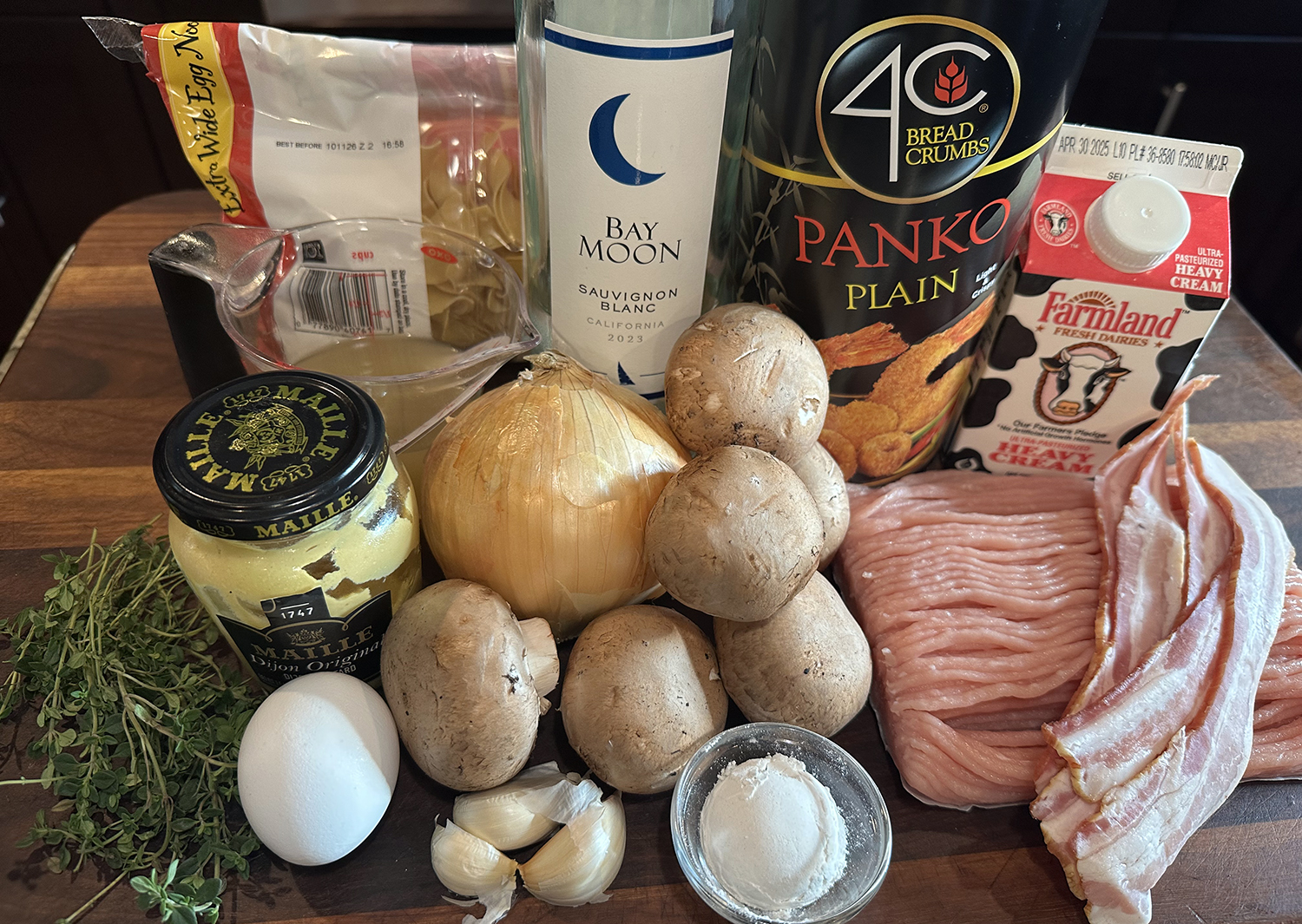
From Food & Wine, this riff on Coq au Vin, a classic French dish of chicken braised in a red wine stew, swaps out the chicken for ground turkey, leans on white wine, and transforms the dish into a semi-quick weeknight dinner. Tender turkey meatballs are browned and then finished in a simple and lightly acidic pan sauce speckled with earthy mushrooms and smoky bacon.

When making these meatballs, you can substitute ground chicken for ground turkey. Be sure to source ground chicken that is a mix of white and dark meat, not just ground chicken breast, which is very lean and will result in dry meatballs. Keep the meatballs chilled until you are ready to cook to help them hold their shape.

*Our meatballs ended up being quite dense, probably because they were too lean at 99%. So, just as you should not purchase all white chicken meat, buy ground turkey that’s no more than 93% lean, and try not to overwork them when creating the balls. We also suggest that after you place the meatballs back into the skillet with the sauce that you partially cover the pan. This should ensure the sauce won’t reduce too much and the meatballs will get to temperature quicker and stay more moist.

The original recipe indicates it feeds four, three 1 1/2-inch meatballs per guest. We had our doubts, thinking so few meatballs per person would be a bit on the shy side. However, served over noodles or pasta, it was quite filling (we also paired with a side salad). Meatballs can be prepared through Step 1 up to one day in advance. Proceed with the recipe as directed when ready to cook.

Coq Au Vin Meatballs

  • Servings: 4
  • Difficulty: easy
  • Print

Ingredients

  • 1 lb. lean ground turkey (see above*)
  • 1 large egg, beaten
  • 1/3 cup panko
  • 1 tsp. kosher salt, plus more to taste
  • 1 Tbsp. minced garlic, divided
  • 1/2 tsp. black pepper, divided
  • 4 thick-cut bacon slices, chopped
  • 8 oz. cremini mushrooms, sliced
  • 1 small yellow onion, finely chopped
  • 1/2 cup plus 2 Tbsp.  chicken broth, divided
  • 1 Tbsp.  all-purpose flour
  • 1 cup (8 oz.) dry white wine
  • 2 Tbsp.  Dijon mustard
  • 1 Tbsp.  fresh thyme leaves, plus more for garnish
  • 1/2 cup heavy cream

Directions

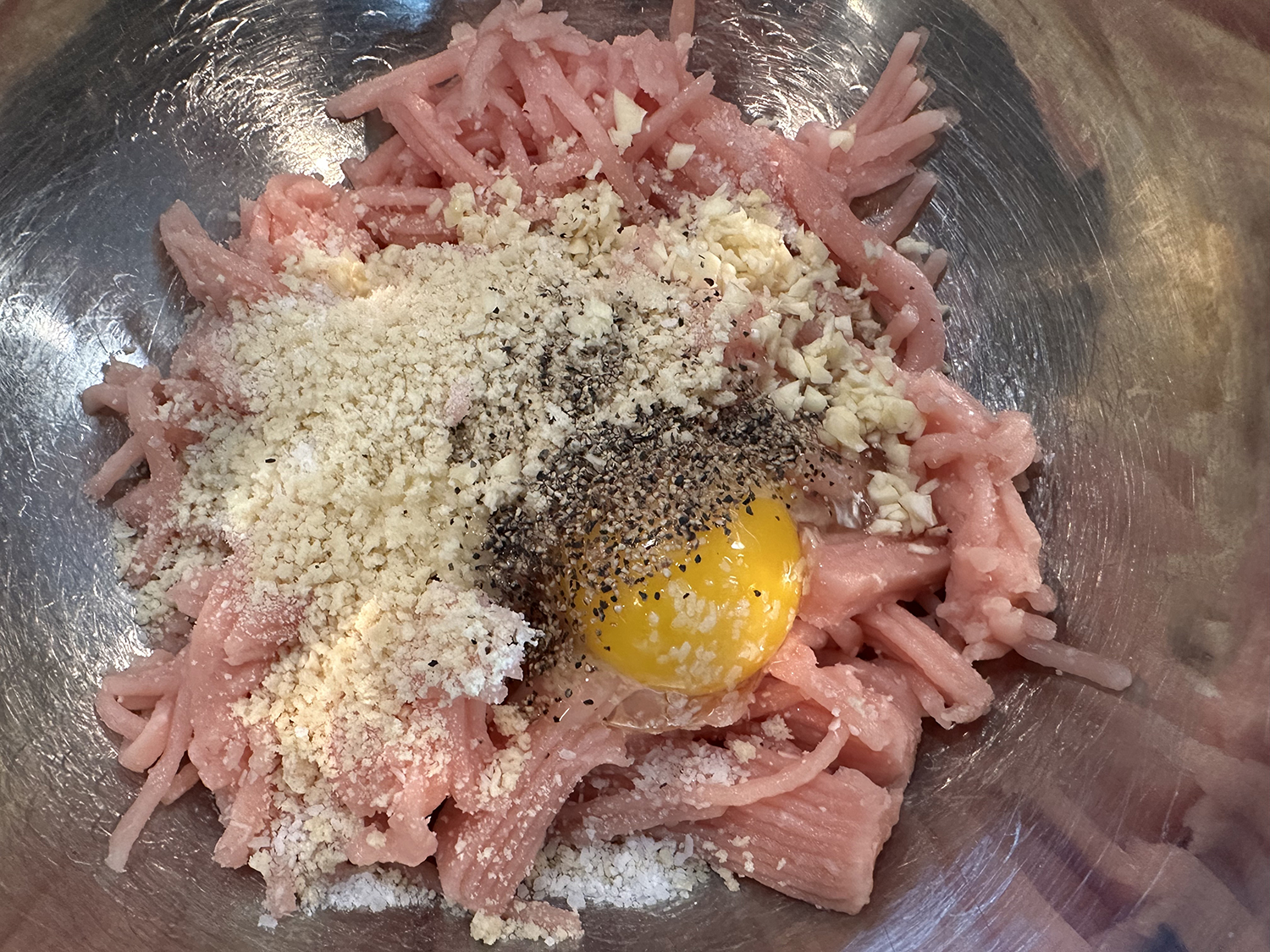
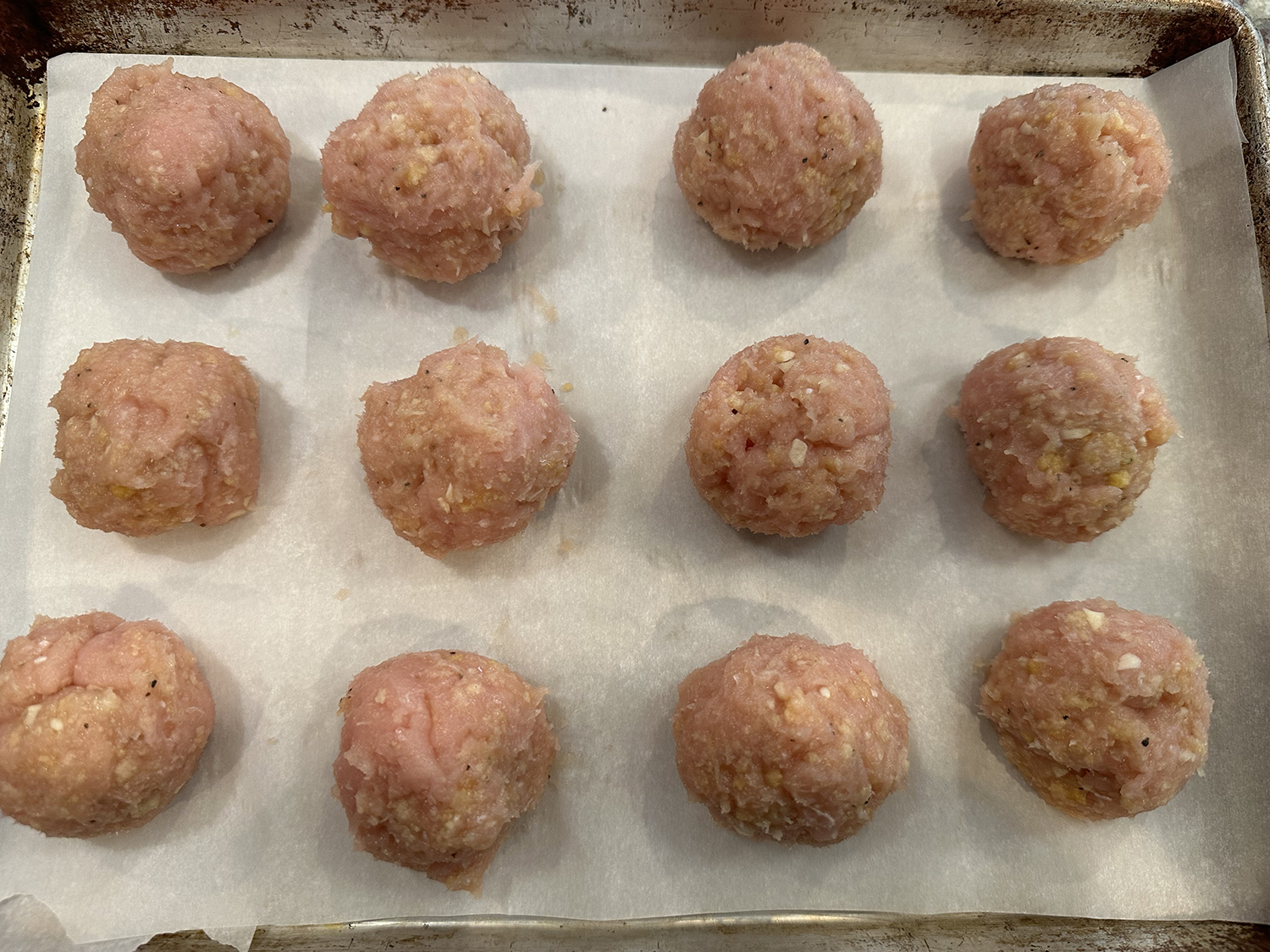
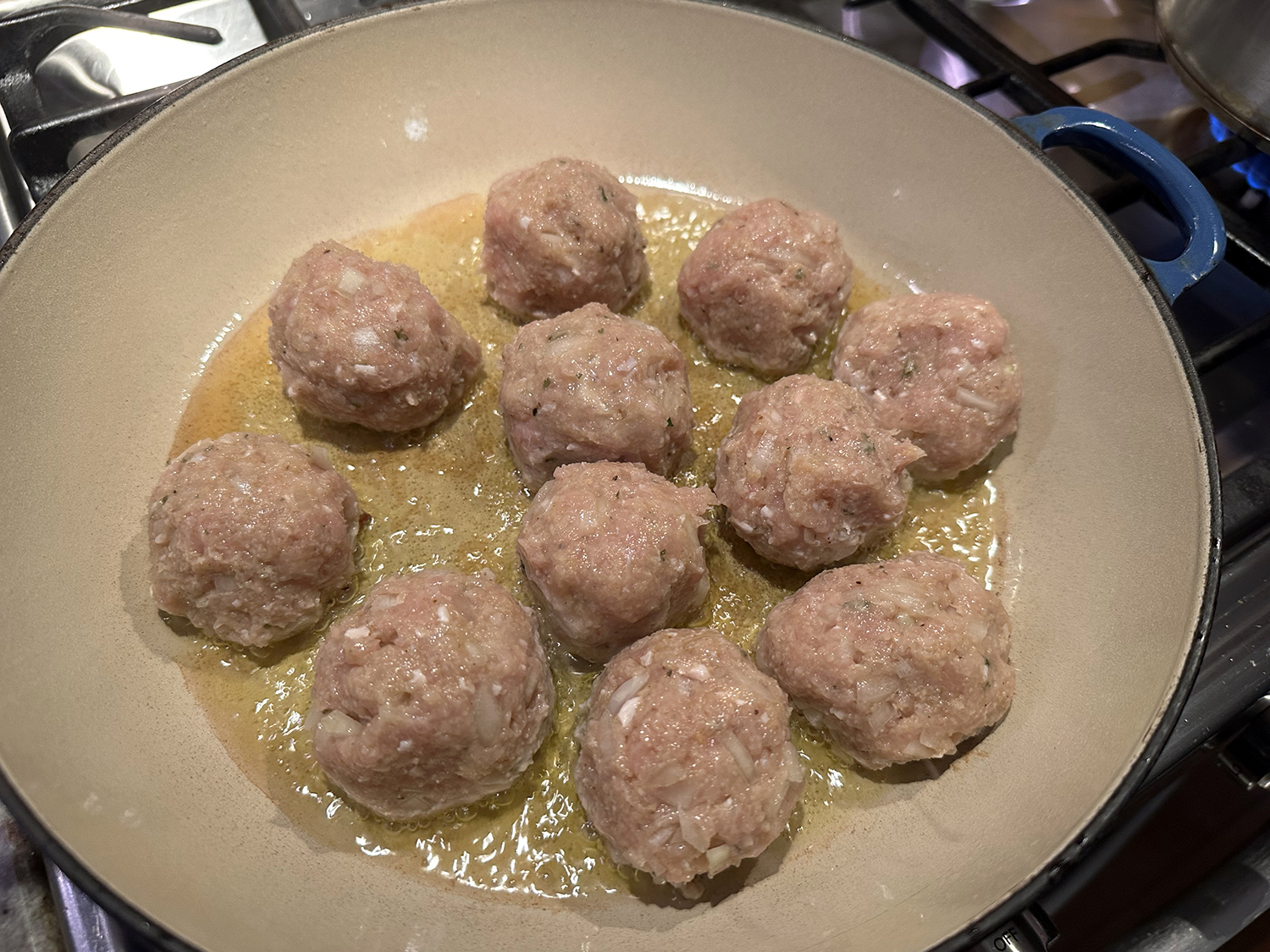
  1. Stir together ground turkey, egg, panko, salt, 1 teaspoon garlic, and 1/4 teaspoon pepper in a medium bowl until evenly combined. Shape mixture into 12 (about 1 1/2-inch) meatballs; transfer to a parchment paper–lined baking sheet. Cover and refrigerate until ready to cook.
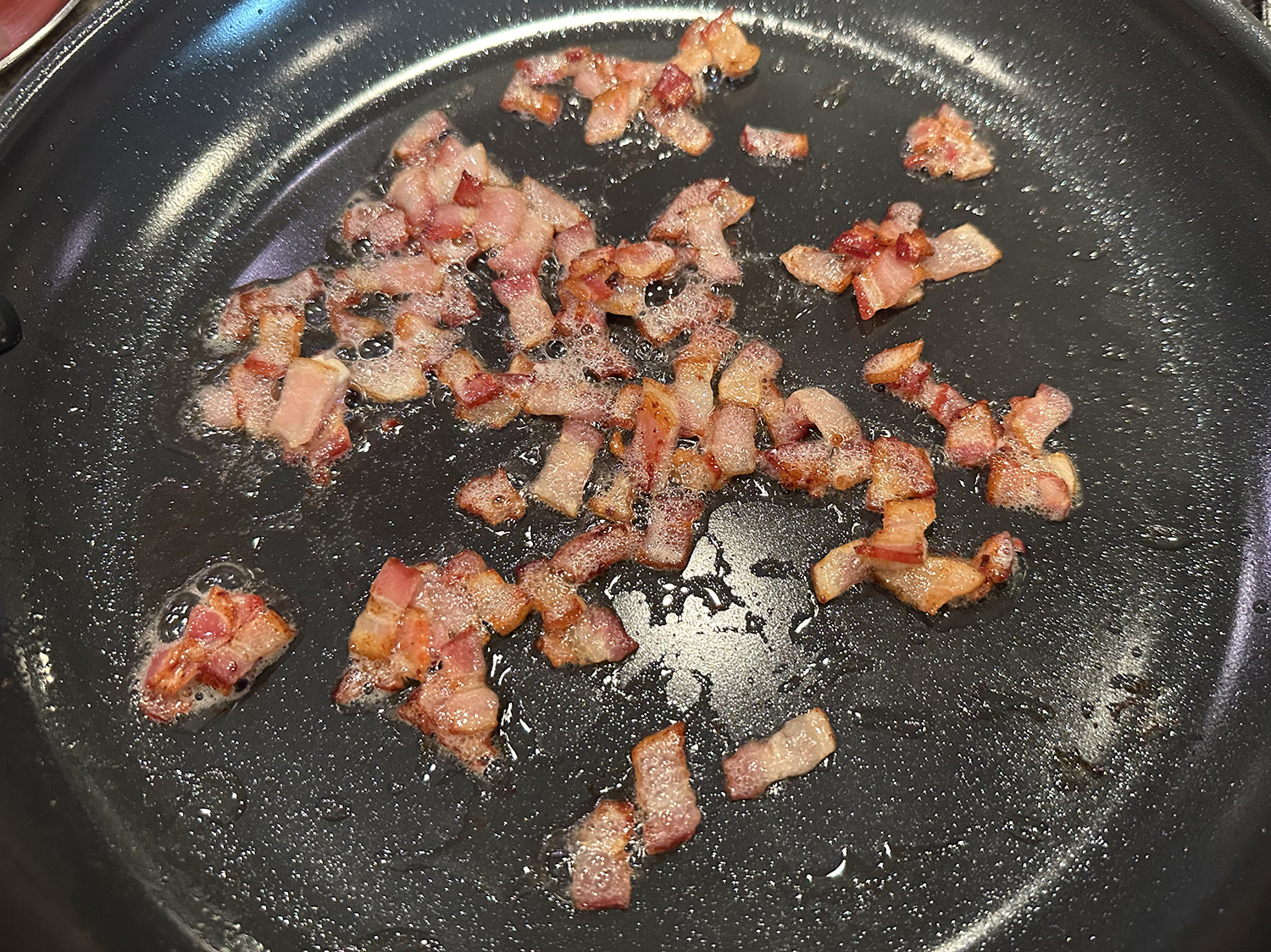
  2. Cook bacon in a large skillet over medium-high, stirring often, until crisp and rendered, about 8 minutes. Transfer bacon to a paper towel–lined plate using a slotted spoon. Reserve 1/4 cup drippings in skillet; discard remaining drippings, or reserve for another use.
  3. Return skillet with drippings to medium-high. Cook meatballs, turning occasionally, until browned on all sides, about 6 minutes. Transfer meatballs to a plate, and set aside.
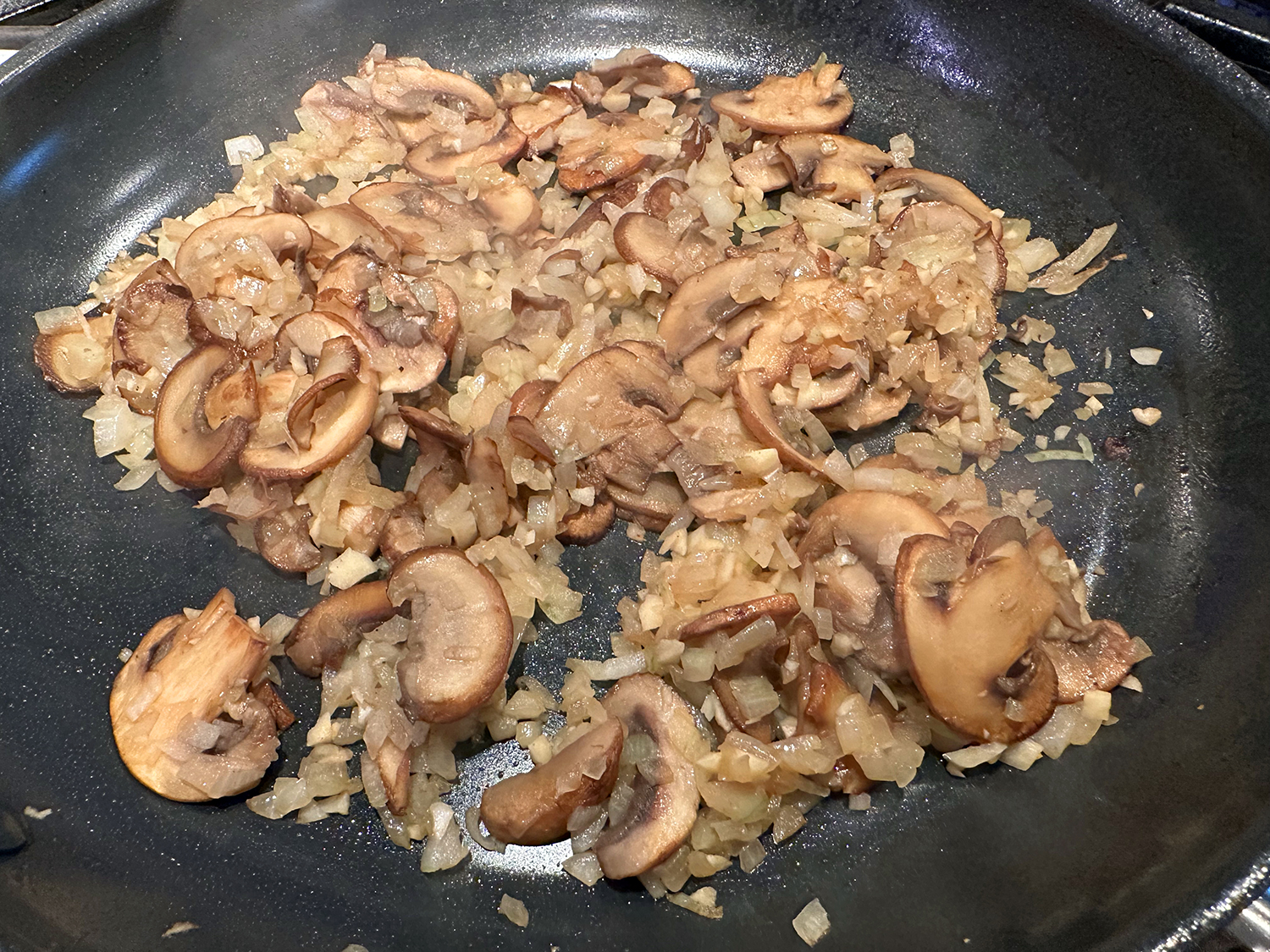
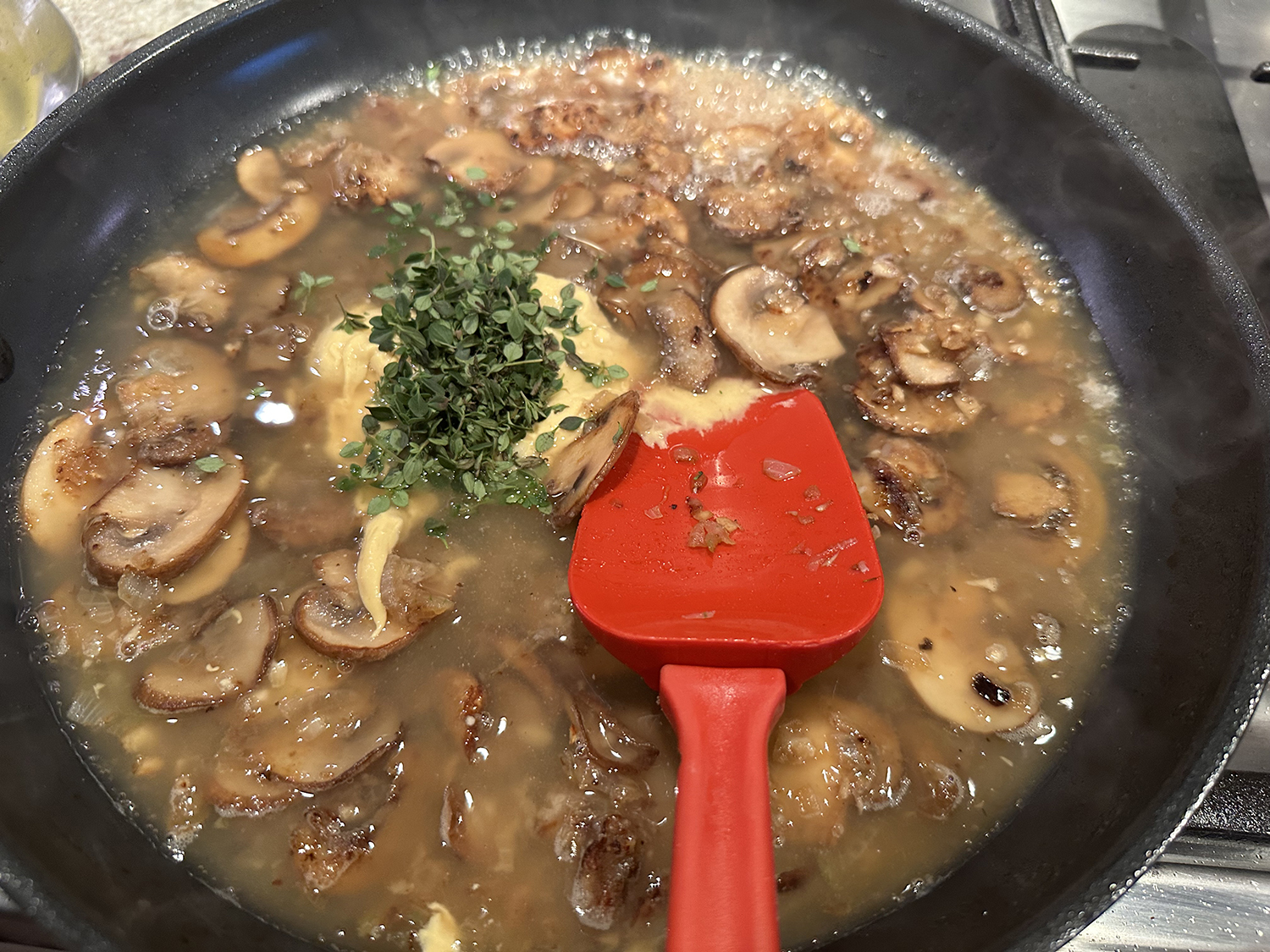
  4. Add mushrooms to skillet with drippings, and cook over medium-high, undisturbed, until browned on 1 side, about 3 minutes; stir and cook 2 more minutes. Add onion, 2 tablespoons broth, and remaining 2 teaspoons garlic. Cook, scraping up browned bits from the bottom of the skillet, until onion is just tender, about 3 minutes. Add flour; cook, stirring constantly, for 1 minute. Add wine, mustard, thyme, and remaining 1/2 cup broth; bring to a boil over medium-high.
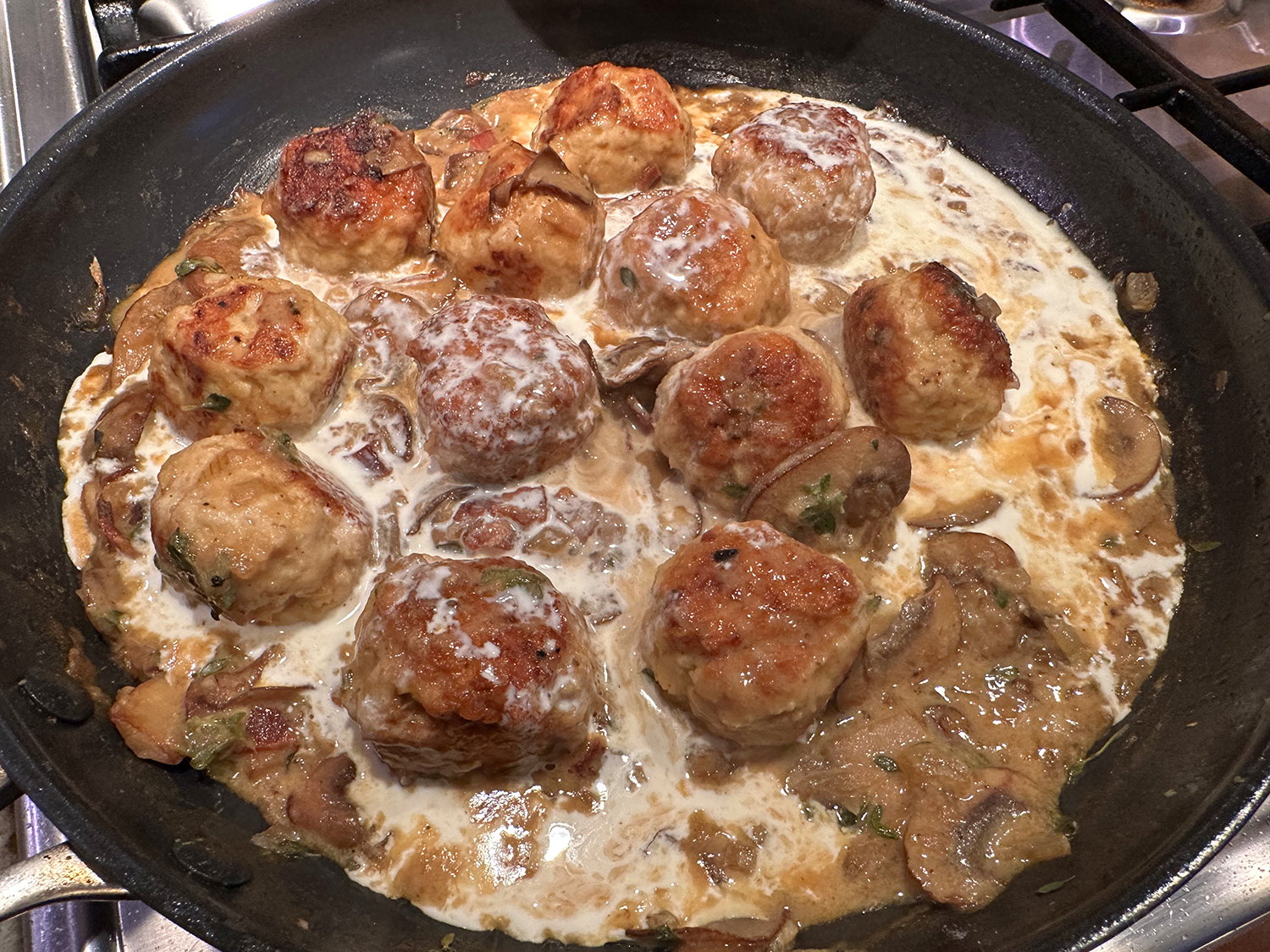
  5. Add meatballs and half of reserved bacon to skillet; simmer over medium-low, partially cover and turn meatballs occasionally, until a thermometer inserted into meatballs registers 165°F and sauce is thickened, 8 to 10 minutes. Stir in cream and remaining 1/4 teaspoon pepper. Season to taste with salt. Sprinkle with remaining bacon, and garnish with additional thyme leaves.

http://www.lynnandruss.com

Original recipe from Anna Theoktisto for Food & Wine

Cod with Chorizo, Greens and Chickpeas

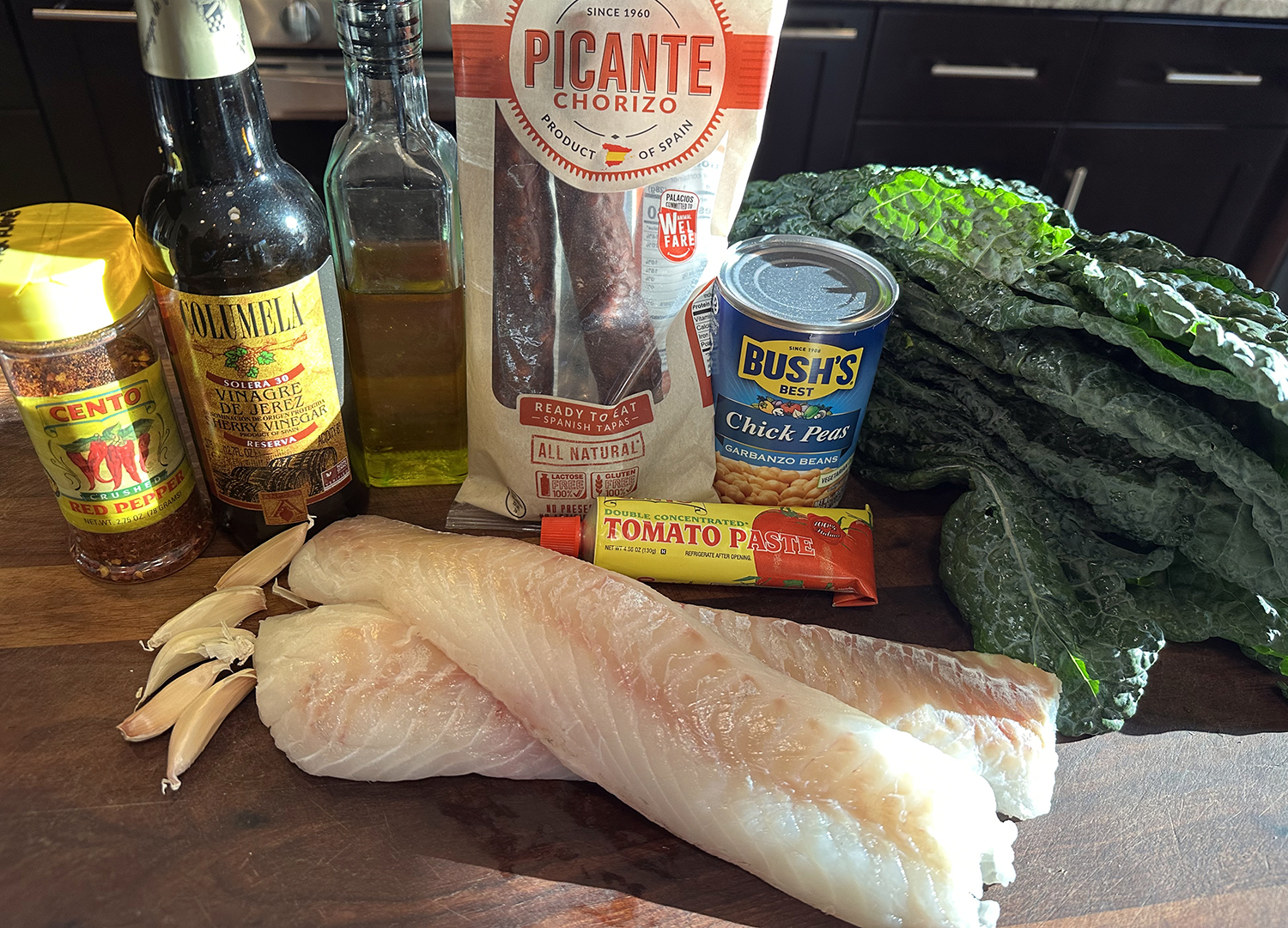
In this one-pan dinner from Bon Appétit, cod and Spanish chorizo—the dry, cured kind, often sold in a link like salami—showcase why the ingredients make such a great pair.

Chorizo is a highly seasoned chopped or ground pork sausage used in Spanish and Mexican cuisine. Mexican chorizo is made with fresh (raw, uncooked) pork; while the Spanish version, which is used here, is made with garlic and pimentón (Spanish smoked paprika, either sweet or hot), which gives it its deep brick-red color and smoky flavor.

Using rendered chorizo to cook down garlic, tomato paste, and sherry vinegar creates a red-tinged mixture at the bottom of the pan; with water, it becomes a flavorful braising liquid for sturdy greens, then warming canned chickpeas, and finishing your previously seared fish.

Finishing the lean, flaky fish in liquid ensures gentle cooking so you don’t end up with rubbery overdone fish. Crispy chickpeas, made first, in the same pan, add a textural garnish. Add a piece of crusty bread for sopping up all the extra sauce and you have a dish that’s fast enough for a weeknight but elevated enough for company.

For an extra fiery version of this dish, swap in a tablespoon of Calabrian chile paste for one of the two tablespoons of tomato paste (you’ll want to still use a bit of tomato paste to ensure the sauce gets some color).

We made numerous changes including increasing the olive oil, using a larger can of chickpeas, decreasing the amount of flour, and starting with a larger skillet. All of our changes are noted in the recipe below.

Cod with Chorizo, Greens and Chickpeas

  • Servings: 4-6
  • Difficulty: easy
  • Print

Ingredients

  • 2 Tbsp. all-purpose flour, for dusting one side of the fish
  • 1–1½ lb. skinless cod fillet, cut into 2–4 pieces, patted dry
  • Kosher salt, freshly ground pepper
  • 4 Tbsp. extra-virgin olive oil
  • 1 19 oz. can chickpeas, rinsed, divided
  • 4 oz. smoked Spanish chorizo, casing removed if needed, cut into very small pieces
  • 5 garlic cloves, thinly sliced
  • 2 Tbsp. sherry vinegar or red wine vinegar
  • 2 Tbsp. tomato paste
  • ¼ tsp. crushed red pepper flakes
  • 1 bunch kale, ribs and stems removed, leaves torn into large pieces (about 6 cups)
  • 2 Tbsp. unsalted butter

Directions

  1. Place ⅓ cup all-purpose flour in a shallow bowl. Season 1–1½ pounds skinless cod fillet, cut into 2–4 pieces, patted dry, on both sides with kosher salt and freshly ground black pepper, then press one side into flour to coat and tap off excess.
  2. Heat 2 tablespoons extra-virgin olive oil in a large high-sided skillet over medium-high. Cook ½ cup chickpeas, rinsed, tossing often, until crisp, about 3 minutes. Using a slotted spoon, transfer to a small bowl; season with salt.
  3. Reduce heat to medium. Cook cod, flour side down, in oil left in pan until light golden underneath, about 3 minutes. Transfer to a plate and arrange browned side up.
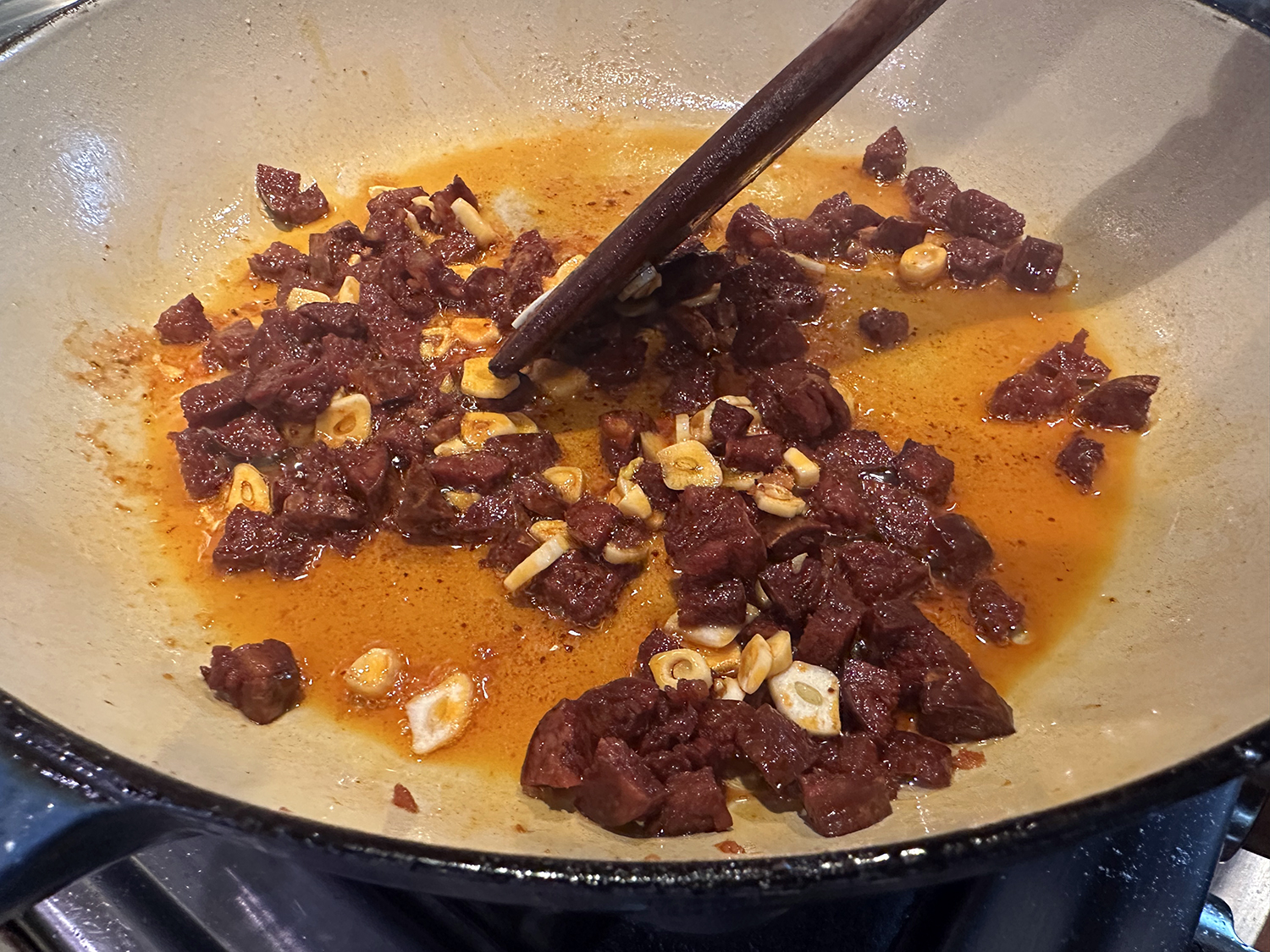
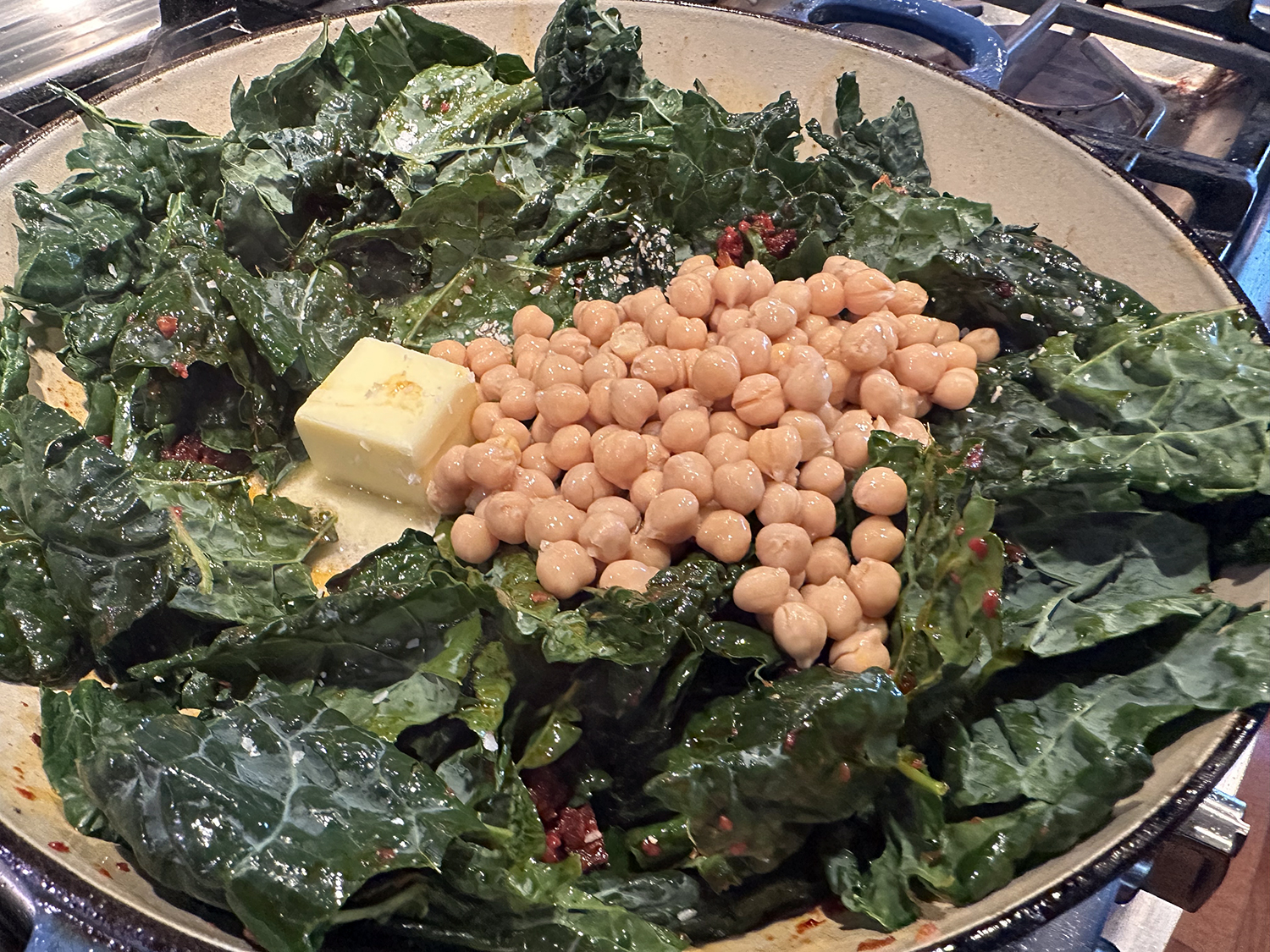
  4. Cook 4 ounces smoked Spanish chorizo, casing removed if needed, cut into very small pieces, in same pan, stirring often, until oil is red and chorizo is starting to crisp, about 1 minute. Add 5 garlic cloves, thinly sliced, and cook, stirring often, until fragrant, about 1 minute. Add 2 tablespoons sherry vinegar, 2 tablespoons tomato paste, and ¼ teaspoon crushed red pepper flakes and cook, stirring often, until combined about 1 minute. Add 1 medium bunch kale, ribs and stems removed, leaves torn into large pieces (about 4 cups), and stir to coat, then add 2 tablespoons unsalted butter, remaining chickpeas, a pinch of salt, and 1 cup water. Cook, tossing often, until kale is wilted, about 3 minutes.
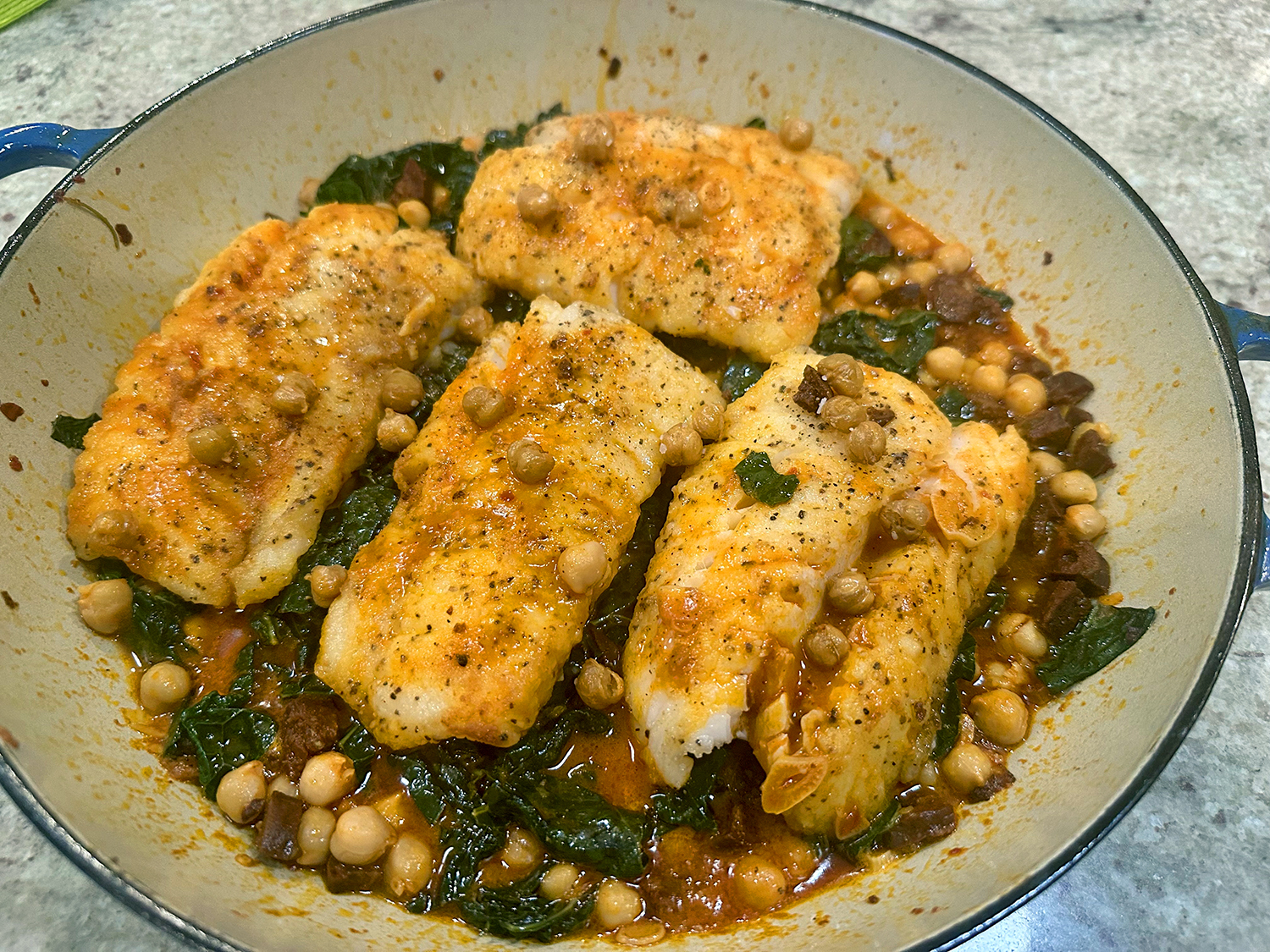
  5. Arrange cod, browned side up, in pan; simmer, spooning sauce over, until cooked through, about 3 minutes. Top with crisped chickpeas and season with black pepper.

http://www.lynnandruss.com

Adapted from a recipe by Kendra Vaculin for Bon Appétit
Jamaican-Style Chili-Lime Fish Stew

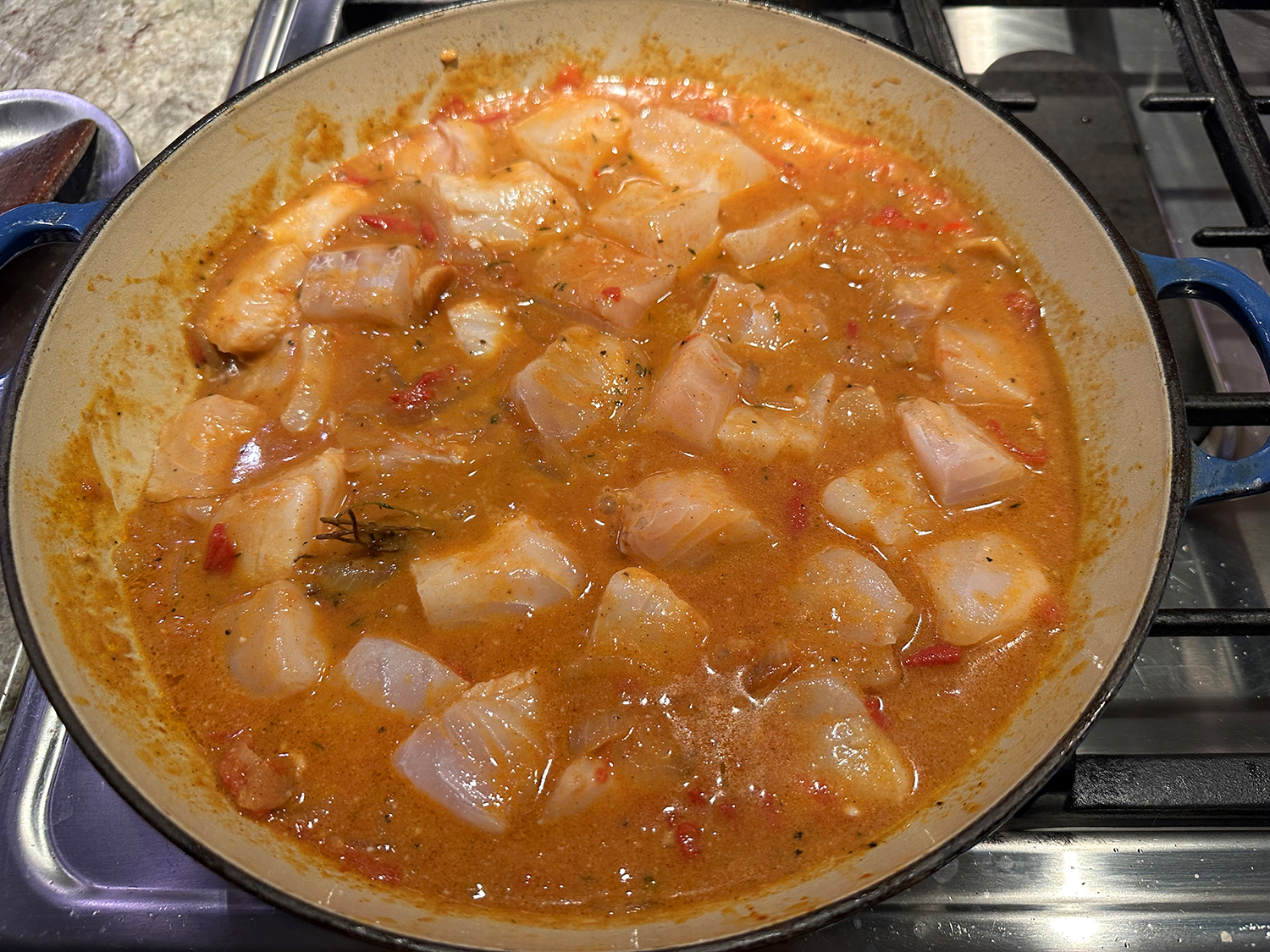
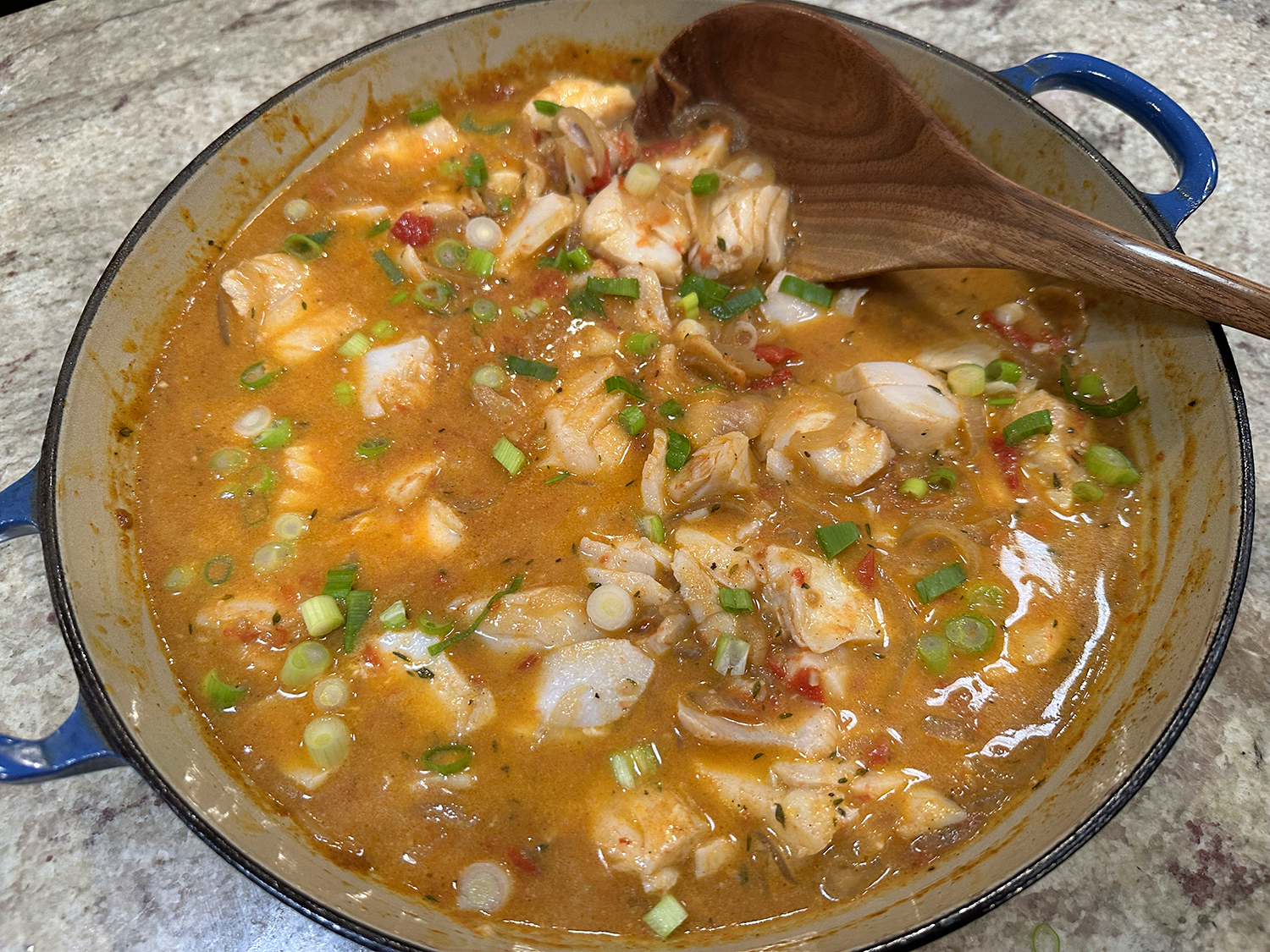
This dish truly showcases the wonderful fruitiness of habanero and the heat* is a lovely combination with the rest of the ingredients. This simple skillet stew is rich with Caribbean flavors. It’s inspired by a dish called Jamaican run-down, which simmers mackerel in coconut milk, along with tomatoes, thyme and aromatics.

The cooking liquid reduces to a luxurious sauce with spiciness and fruity notes from the habanero chili, tropical flavor from the coconut and brightness from the lime juice. Instead of mackerel, which can be difficult to source and also has an assertiveness that’s polarizing, (and we just flat out don’t like it) mild, firm sea bass or cod fillets are used. Serve with steamed jasmine rice, fried plantains or rice and beans.

TIP: Don’t touch your face if you’ve handled the habanero with bare hands, as there will be residual capsaicin on your fingers. If you have food-safe gloves, consider slipping them on before prepping the chili. And don’t use light coconut milk, as its flavor and consistency are too lean and watery.

*Word to the wise: Do not substitute a Carolina Reaper chili for the Habanero (a Serrano would be an OK choice). The supermarket didn’t have habaneros at the time so we just grabbed a reaper chili and didn’t bother looking at how they compared with the habanero heat-wise on the Scoville Heat Unit Scale. As we ate dinner, while The Hubs was sweating, had teary eyes and a flushed face, I quickly Googled only to find out while habaneros rate between 100,000 and 350,000, the Carolina Reaper clocks in at 2.5 million!! (Luckily when I was prepping the ingredients, I wore food-safe rubber gloves.)

A few changes that we made included adding a 1 1/2-inch piece of ginger cut into fine slices, increasing the coconut milk to one cup and reduced the water to a 1/2 cup.

Jamaican-Style Chili-Lime Fish Stew

  • Servings: 4
  • Difficulty: easy
  • Print

Ingredients

  • 2 Tbsp. grapeseed or other neutral oil
  • 1 medium yellow onion, halved and thinly sliced
  • 1 1/2 inch piece of fresh ginger sliced into thin circles
  • 2 medium garlic cloves, minced
  • 1 habanero chili, stemmed and sliced into thin rings
  • 1/4 tsp. ground allspice
  • 12 oz. ripe tomatoes, cored and chopped
  • 3/4 cup coconut milk
  • 2 large thyme sprigs
  • Kosher salt and ground black pepper
  • 1 1/2 lbs. skinless sea bass or snapper fillets, about 1 inch thick, cut into 1½-inch chunks (we used cod, much more economical)
  • 2 Tbsp. lime juice, plus lime wedges to serve
  • 3 scallions, thinly sliced

Directions

  1. In a 12-inch skillet over medium-high, heat the oil until shimmering. Add the onion and ginger slices and cook, stirring occasionally, until softened and beginning to brown, 4 to 5 minutes. Add the garlic, habanero and allspice; cook, stirring, until fragrant, 30 to 60 seconds. Stir in the tomatoes and cook, stirring occasionally, until they begin to break down and release their liquid, 3 to 4 minutes.
  2. Add the coconut milk and 1⁄2 cup water; scrape up any browned bits. Add the thyme, ½ teaspoon salt and ¼ teaspoon pepper, then bring to a simmer. Cover and simmer, stirring occasionally, until the tomatoes have fully broken down and the sauce is slightly thickened, about 10 minutes.
  3. Nestle the fish into the sauce. Bring to a gentle simmer and cook, stirring gently and occasionally, until the fish is opaque throughout, 4 to 5 minutes. Off heat, remove and discard the thyme, then stir in the lime juice. Taste and season with salt and pepper. Serve with lime wedges.

http://www.lynnandruss.com

Recipe by Calvin Cox for Milk Street

Marsala Chicken Meatballs

If you are fond of Chicken Marsala, then this dish may be one for you. It keeps the same flavor profile, but presents it in a different fashion. And it tends toward more of a slight sweet than savory finish.

Chicken Marsala is an Italian American classic consisting of seared pounded chicken that’s smothered in a sweet-savory Marsala wine mushroom sauce. For more spoon-ability, this crowd-pleasing dinner replaces the thin cutlets with tender chicken meatballs, simmered in a similarly indulgent Marsala sauce.

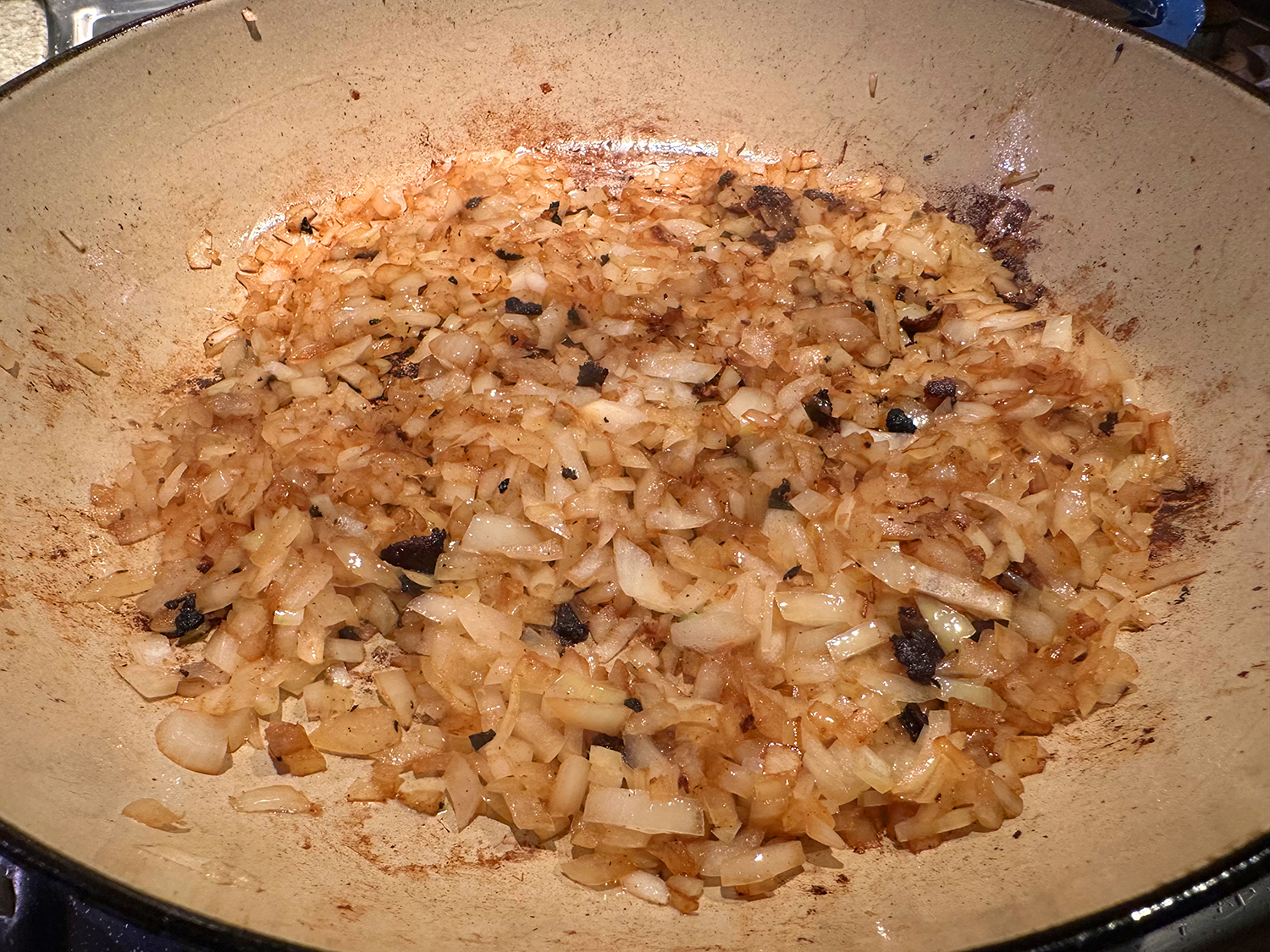
Ground chicken is very lean, so to ensure a perfectly moist bite, Marsala-soaked bread crumbs and extra-virgin olive oil are added to the meatball mixture. For a flavor-packed fond, take the time to brown the onions and mushrooms; the time spent will pay off.

This recipe is dairy-free as written, but if you’d like to finish the dish with a few pads of butter or a splash of heavy cream, the sauce will certainly accommodate the additional richness. Serve plain as is, or over a bed of mashed potatoes, polenta, orzo, or other pasta of choice.

*NOTE: Chop onions for the meatballs finely in a food processor and squeeze out most of the water using a kitchen towel before adding to chicken.

Marsala Chicken Meatballs

  • Servings: 4
  • Difficulty: easy
  • Print

Ingredients

  • 2 large yellow onions (about 10 oz. each), finely chopped
  • ⅓ cup bread crumbs
  • 1¼ cups dry Marsala wine
  • 1¾ cups of chicken stock
  • 5 Tbsp. extra-virgin olive oil
  • Salt and pepper
  • 1 lb. ground chicken
  • 1 lb. sliced button or cremini mushrooms
  • 2 Tbsp. all-purpose flour
  • 1 tsp. dried Italian herb seasoning
  • 3 Tbsp. butter
  • Chopped flat-leaf parsley, for serving

Directions

  1. To a medium bowl, add 1 cup of chopped onion, plus the bread crumbs, ¼ cup wine, 2 tablespoons olive oil, a hefty pinch of salt and a few grinds of pepper; mix until combined. Add the chicken and mix until combined. Form the meat mixture into 14 balls (about 3 tablespoons each), setting them on a sheet pan or plate.
  2. Heat a large (12-inch) heavy skillet or braiser over medium-high, and add the remaining 3 tablespoons of olive oil.
  3. Sear the meatballs for 2 to 3 minutes, until a dark brown crust forms on the bottoms, then flip, and continue searing for 2 minutes on the other sides. Return the meatballs to the sheet pan or plate.
  4. Adjust heat to high. Add the remaining onions to the skillet and cook, stirring every 2 minutes, until golden, translucent and slightly darker on the edges, about 6 minutes, turning the heat down as necessary.
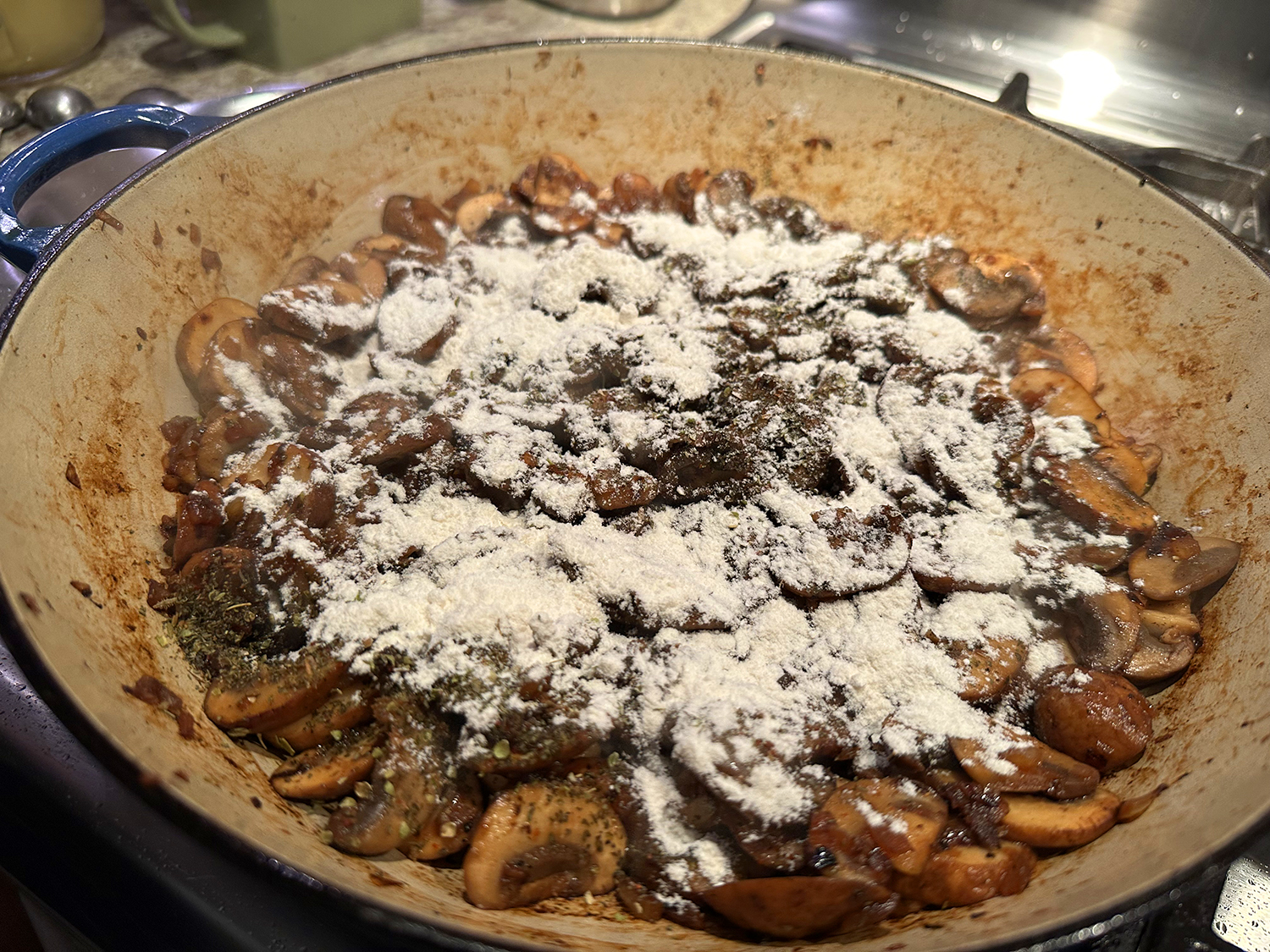
  5. Add the mushrooms and cook for 6 minutes, stirring occasionally, until reduced in volume and slightly darker in color. Sprinkle the flour on top, mix to coat the mushrooms and onion and continue cooking for 1 minute, lowering the heat as needed.
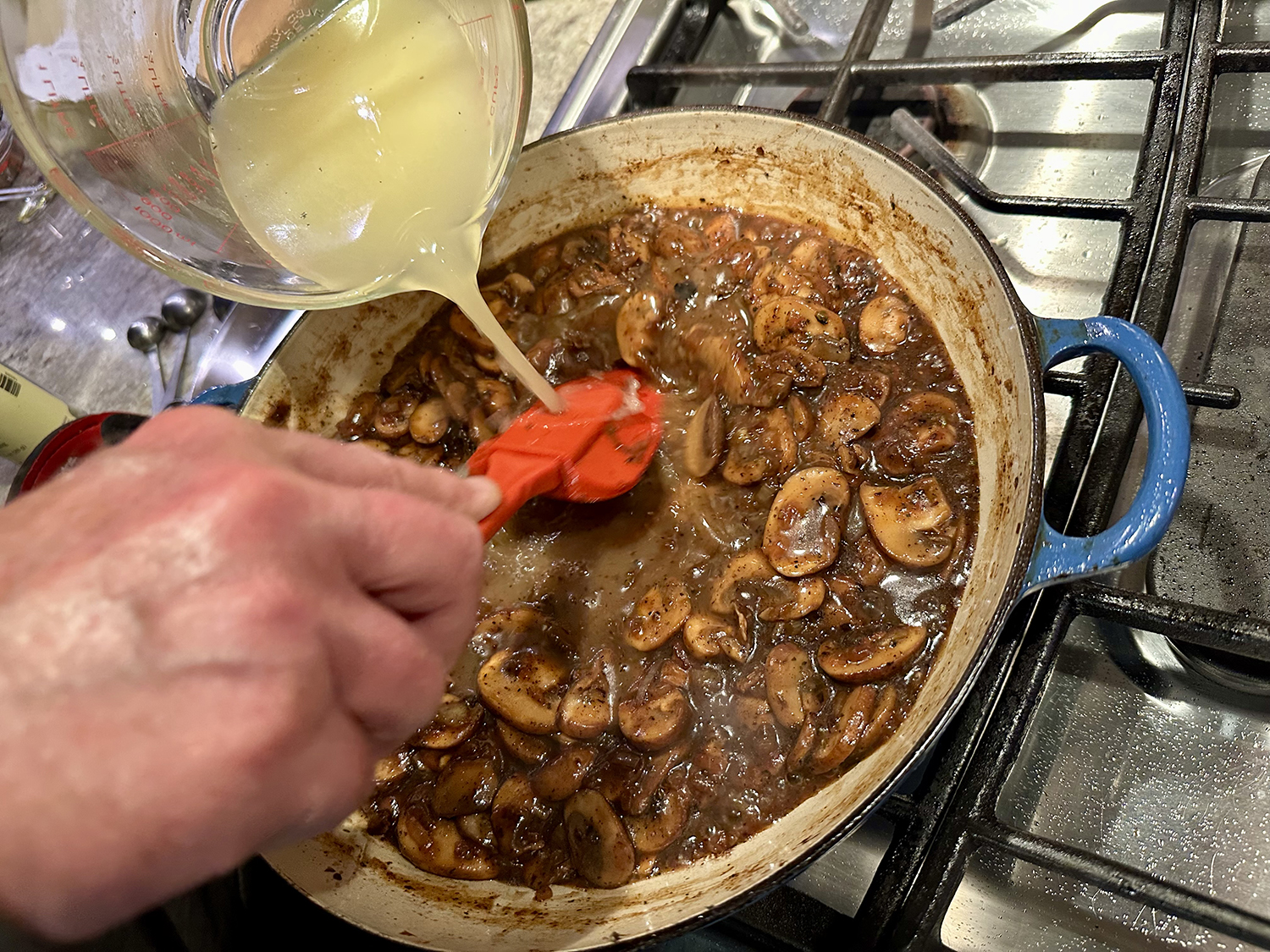
  6. Carefully pour the remaining 1 cup of wine into the skillet while constantly stirring. Using a wooden spoon, scrape the caramelized bits off the bottom of the pan and cook for 2 minutes, until the wine reaches a thicker, honey-like consistency. Add 1¾ cups of chicken stock and bring to a vigorous simmer. Season with a hefty pinch of salt.
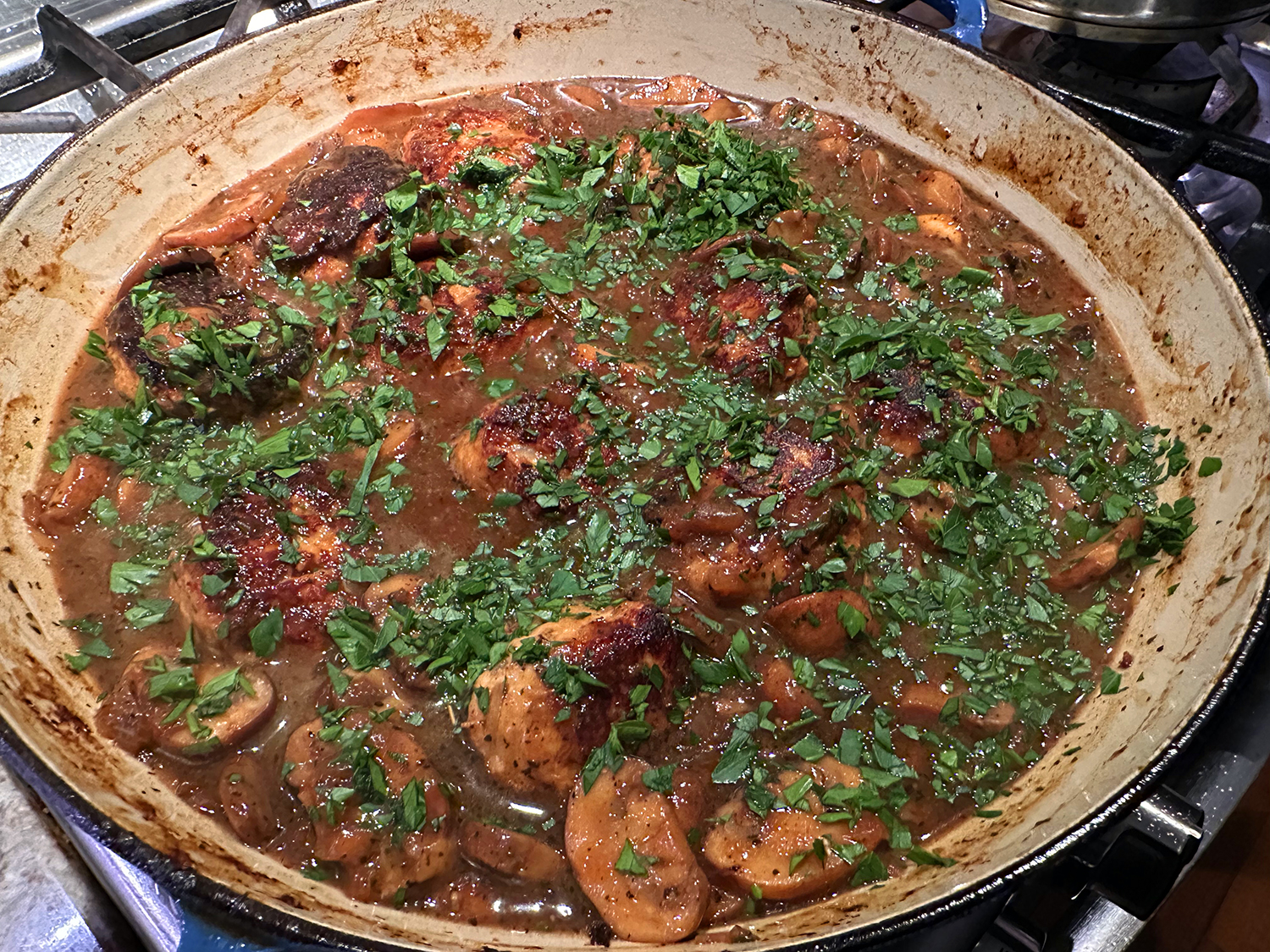
  7. Return the meatballs to the skillet. Adjust heat to medium, partially cover and simmer for 12 minutes, until the sauce has thickened slightly and the meatballs are cooked through.
  8. Add the butter, stirring in until all melted. Taste and season with salt. Sprinkle parsley on top and serve.

http://www.lynnandruss.com

Adapted from a recipe by Carolina Gelen for NYTimes Cooking

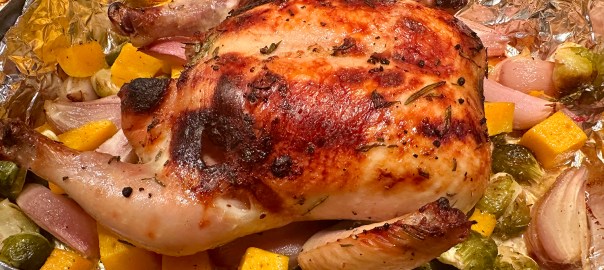
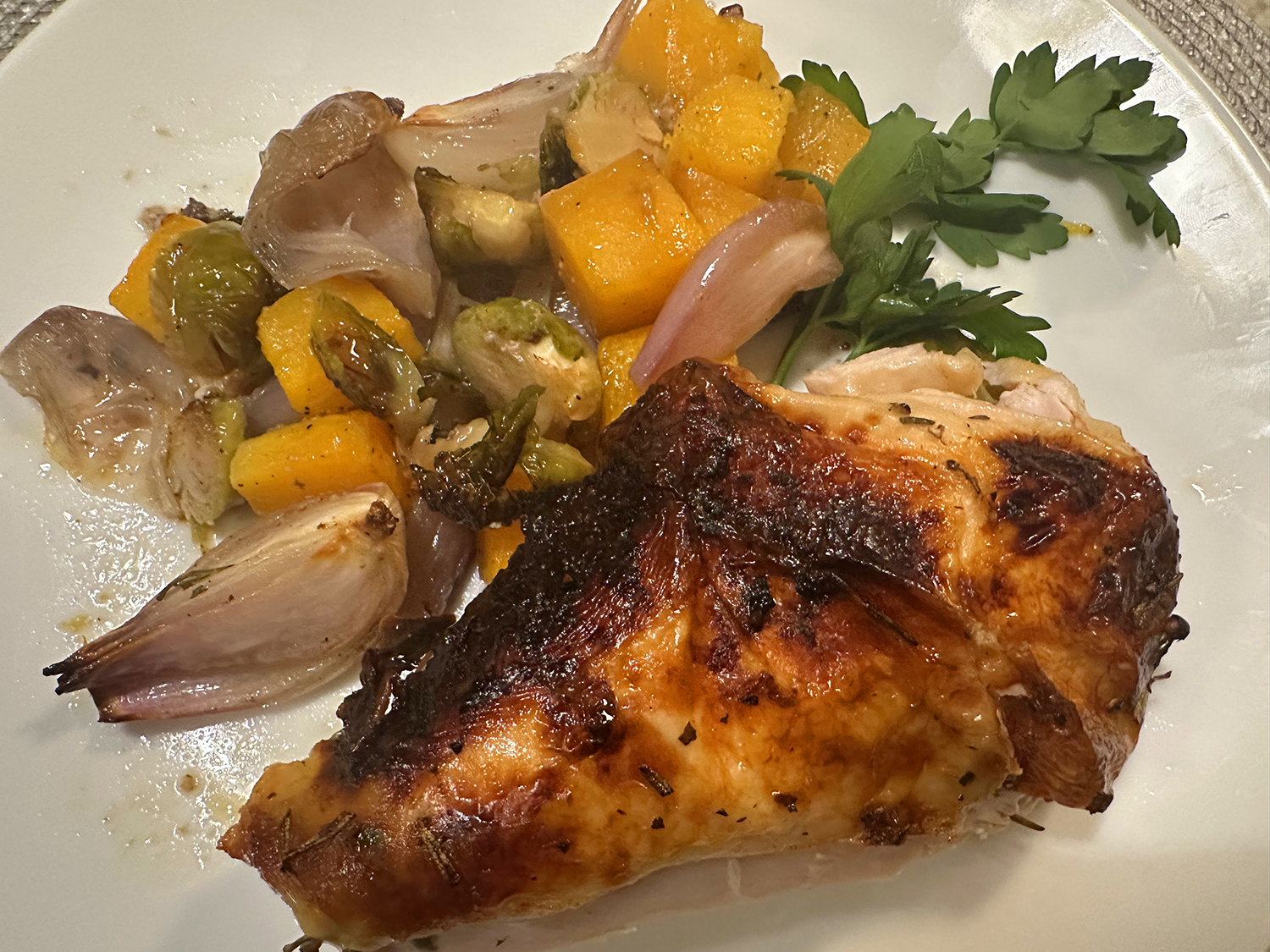
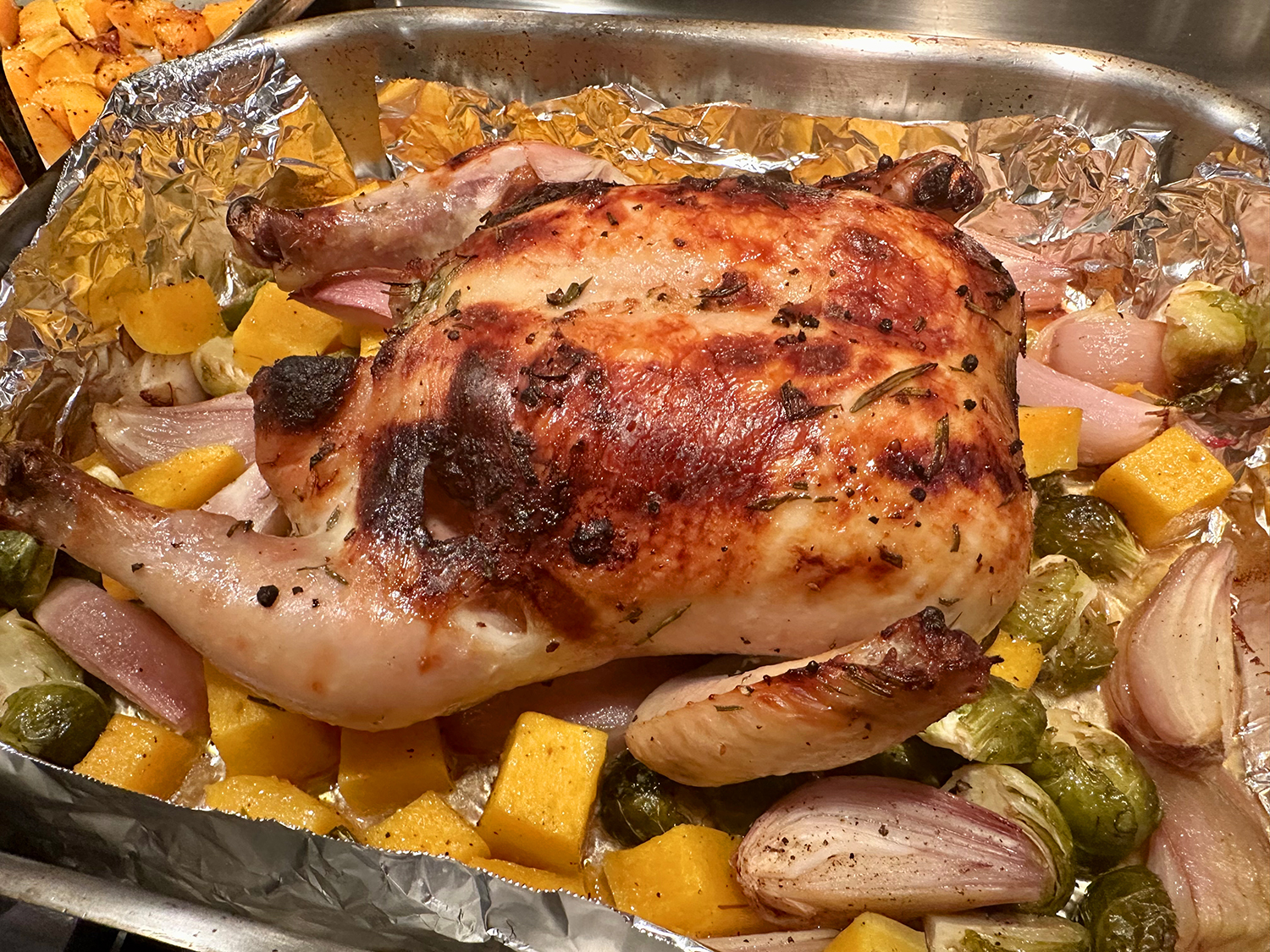
Buttermilk Roasted Chicken and Veggies

A Sunday roast chicken dinner, for me, is synonymous with the advent of Fall and through the winter months. Roast a chicken and you know you have a comfortable meal. Alter that a little by butterflying the chicken, a surprisingly simple task that can be carried out with a pair of kitchen scissors, and you have a quick dinner that satisfies the soul as well as your taste buds.

Here, buttermilk, which is usually associated with fried chicken, helps to tenderize the chicken and conveys the aromatics: you really get the full value of the rosemary, pepper and garlic. If you want to substitute maple syrup for the honey, you can. Best of all, you can leave the marinating bird in the fridge for up to two days; thus, it gets more tender and you know you have a dinner that needs no more than to be popped into the oven. Now that’s a win in my book!

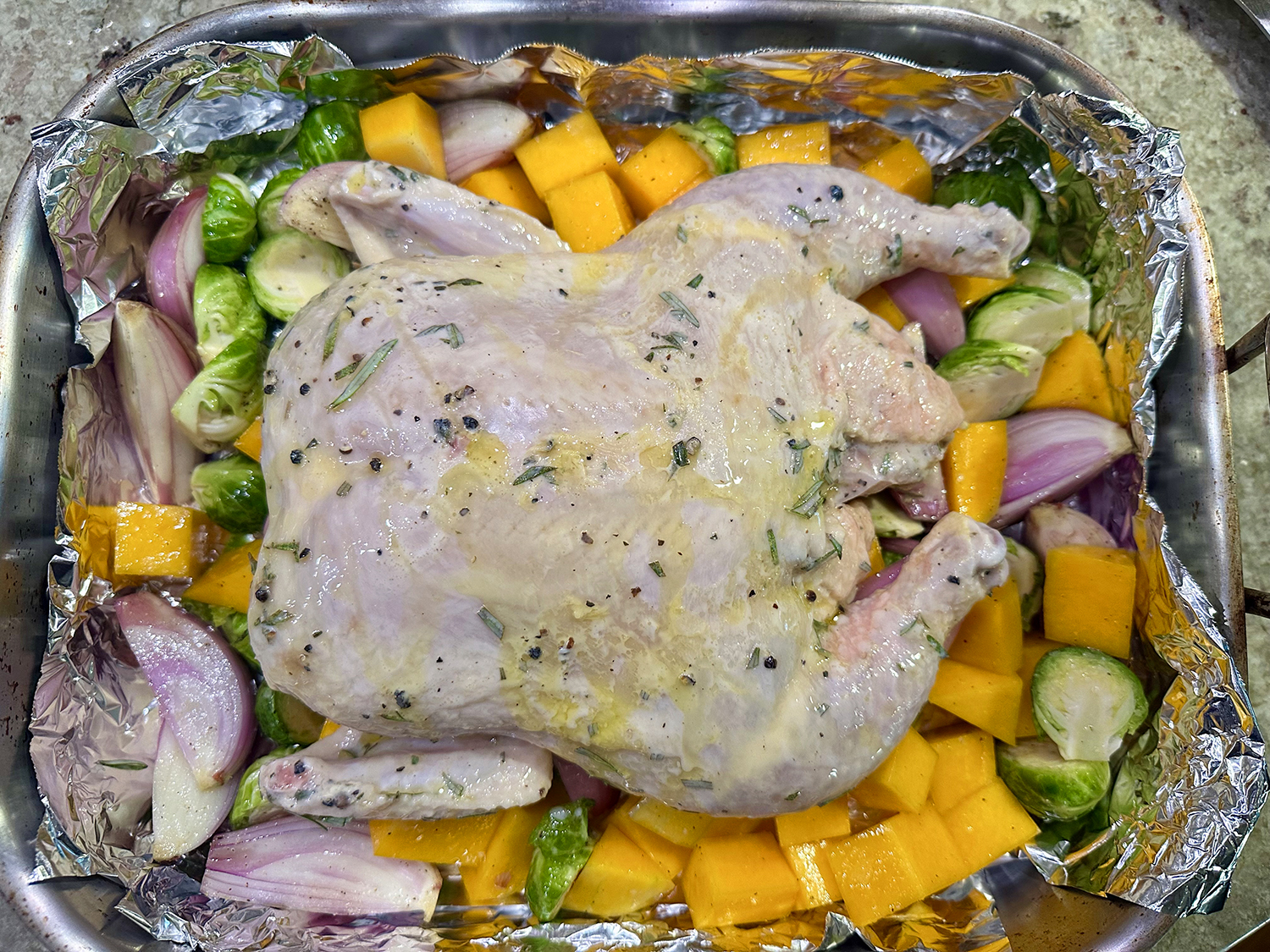
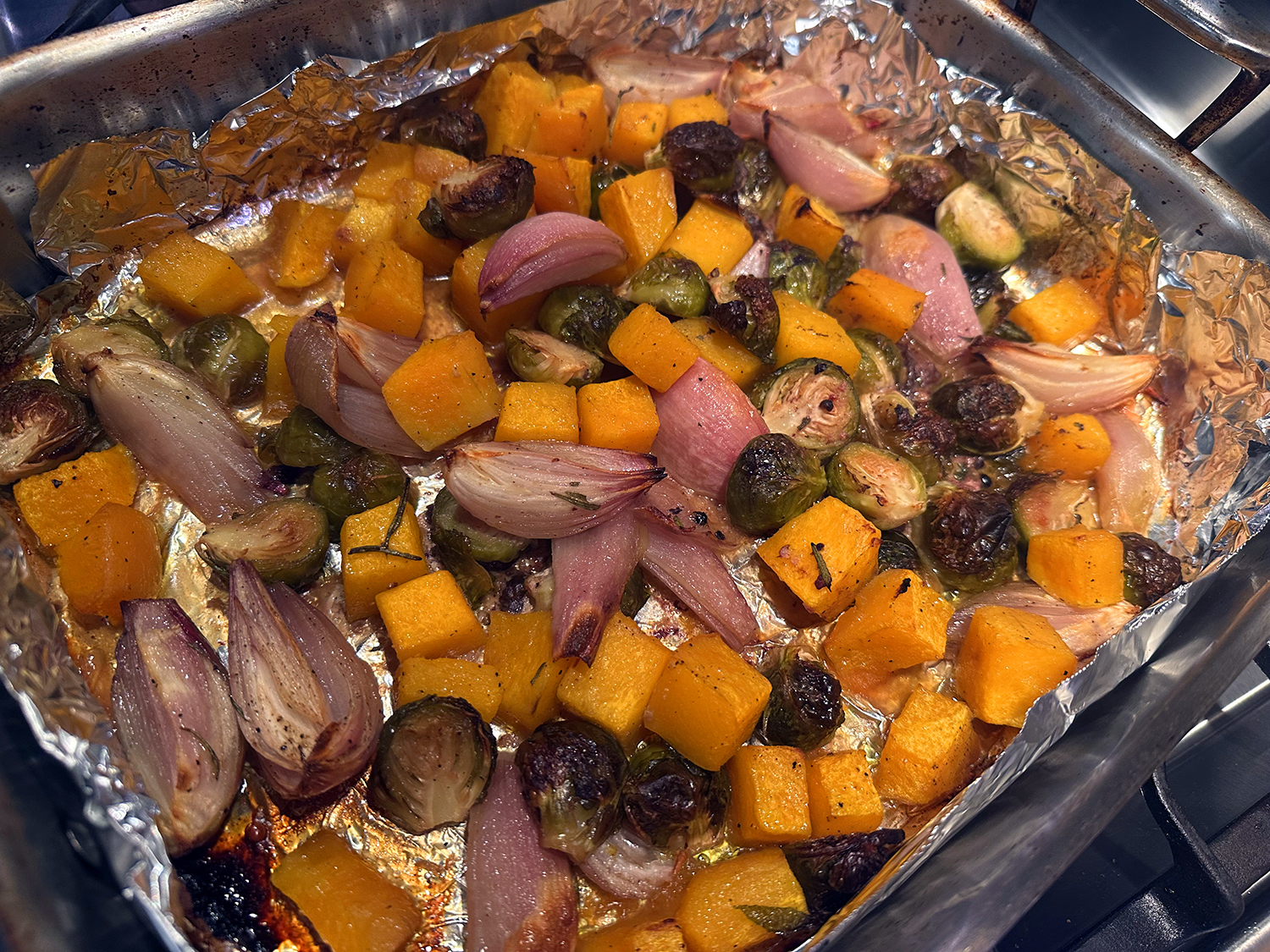
In the original recipe, it directs you to line a roasting pan with tinfoil. Next time we plan to eliminate the tinfoil lining and use a rimmed sheet pan. We believe we would get better caramelization on both the bird and the vegetables.

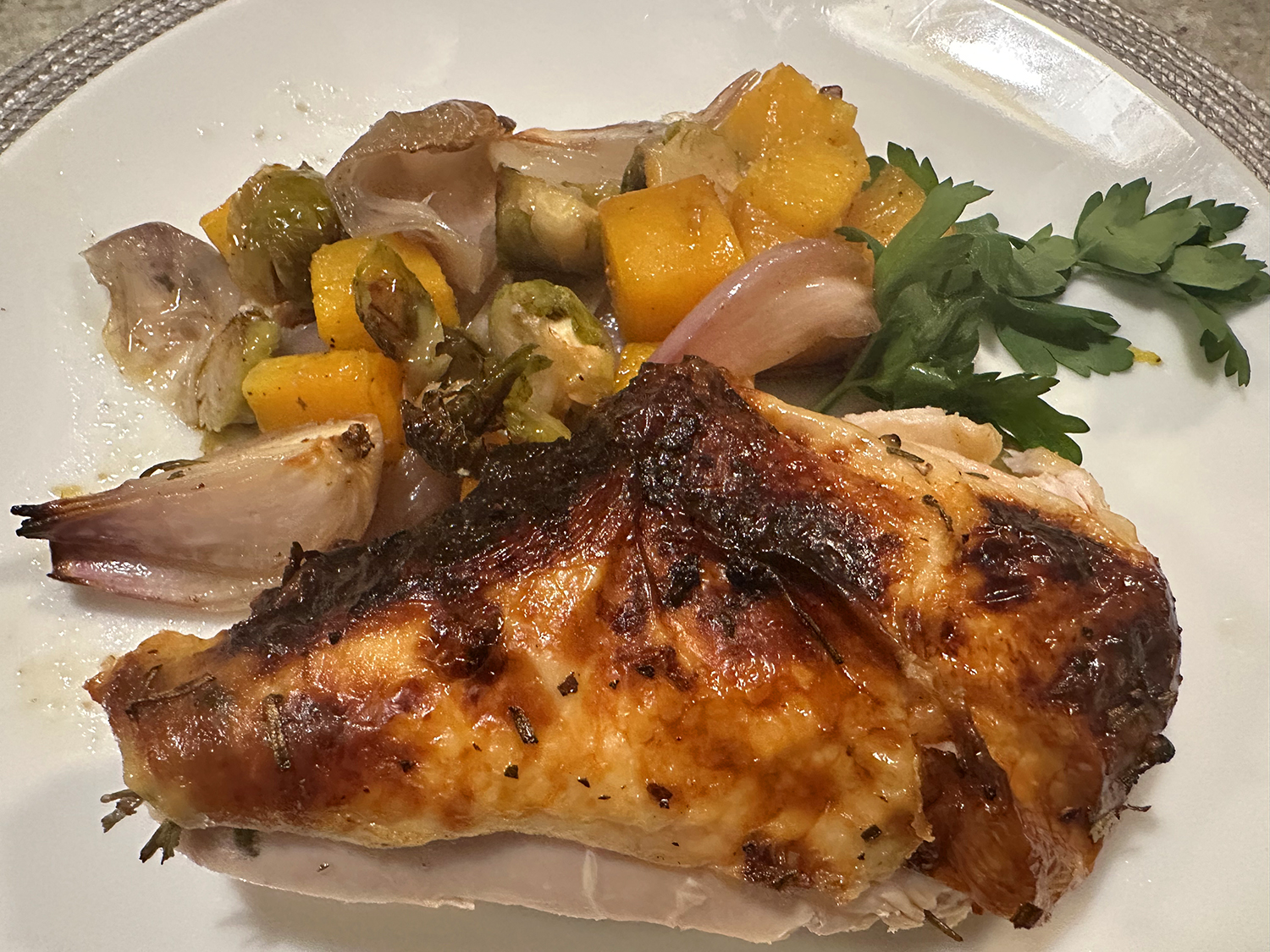
If you are not thrilled with the vegetable choices, swap any of them out for sweet potatoes, white potatoes, carrots, onions, or parsnips. Just make sure that they will fit in one layer in the sheet pan.

Buttermilk Roasted Chicken and Veggies

  • Servings: 4
  • Difficulty: easy
  • Print

Ingredients

For the Chicken

  • 1 4-lb. chicken
  • 2 cups buttermilk
  • ¼ cup plus 2 Tbsp. vegetable oil
  • 2 cloves garlic, lightly crushed
  • 1 Tbsp. crushed black peppercorns
  • 2 Tbsp. Maldon or other sea salt
  • 2 Tbsp. fresh rosemary leaves, roughly chopped
  • 1 Tbsp. honey

For the Vegetables

  • 1 lb. Brussels sprouts, trimmed and halved
  • 4-5 large shallots, peeled, quartered through the root end
  • 1 1/2 lbs. butternut squash, cut into 1 1/4-inch cubes (we only used half of our large butternut squash)
  • 2 Tbsp. olive oil
  • Salt

Directions

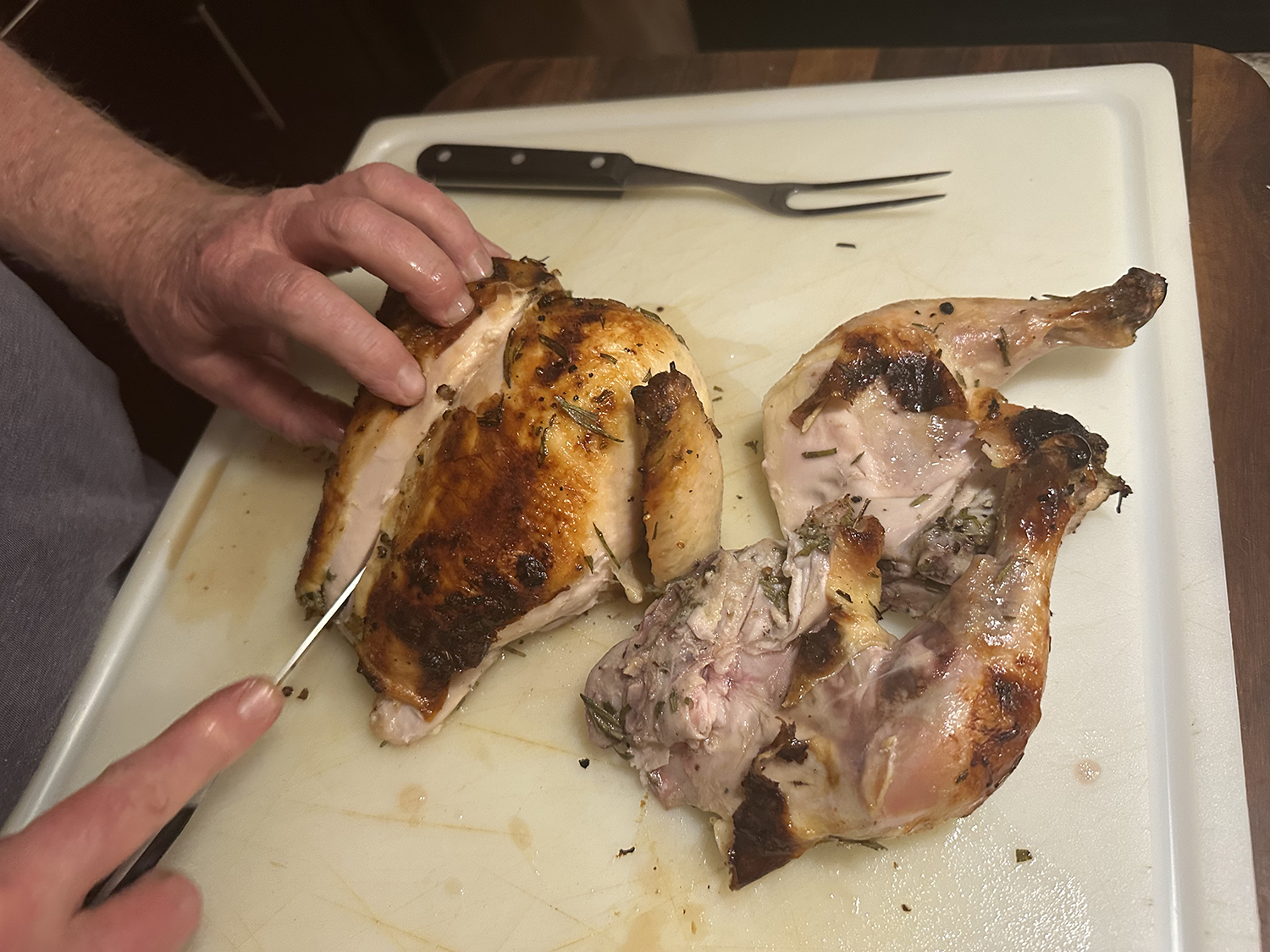
  1. Butterfly chicken by placing breast side down and using heavy-duty kitchen shears to cut along both sides of backbone. Discard backbone, turn chicken over and open it like a book. Press gently to flatten it.
  2. Place chicken in a large freezer bag. Add buttermilk, ¼ cup oil, garlic, peppercorns, salt, rosemary and honey. Seal bag securely and refrigerate overnight or up to two days.
  3. When ready to start prepping the veggies, heat oven to 400 degrees.
  4. Remove chicken from marinade and place on a rack so excess can drip off. Place the cut vegetables onto the roasting or sheet pan, drizzle with 2 tablespoons oil and 1 teaspoon salt, toss with your hands to coat evenly.
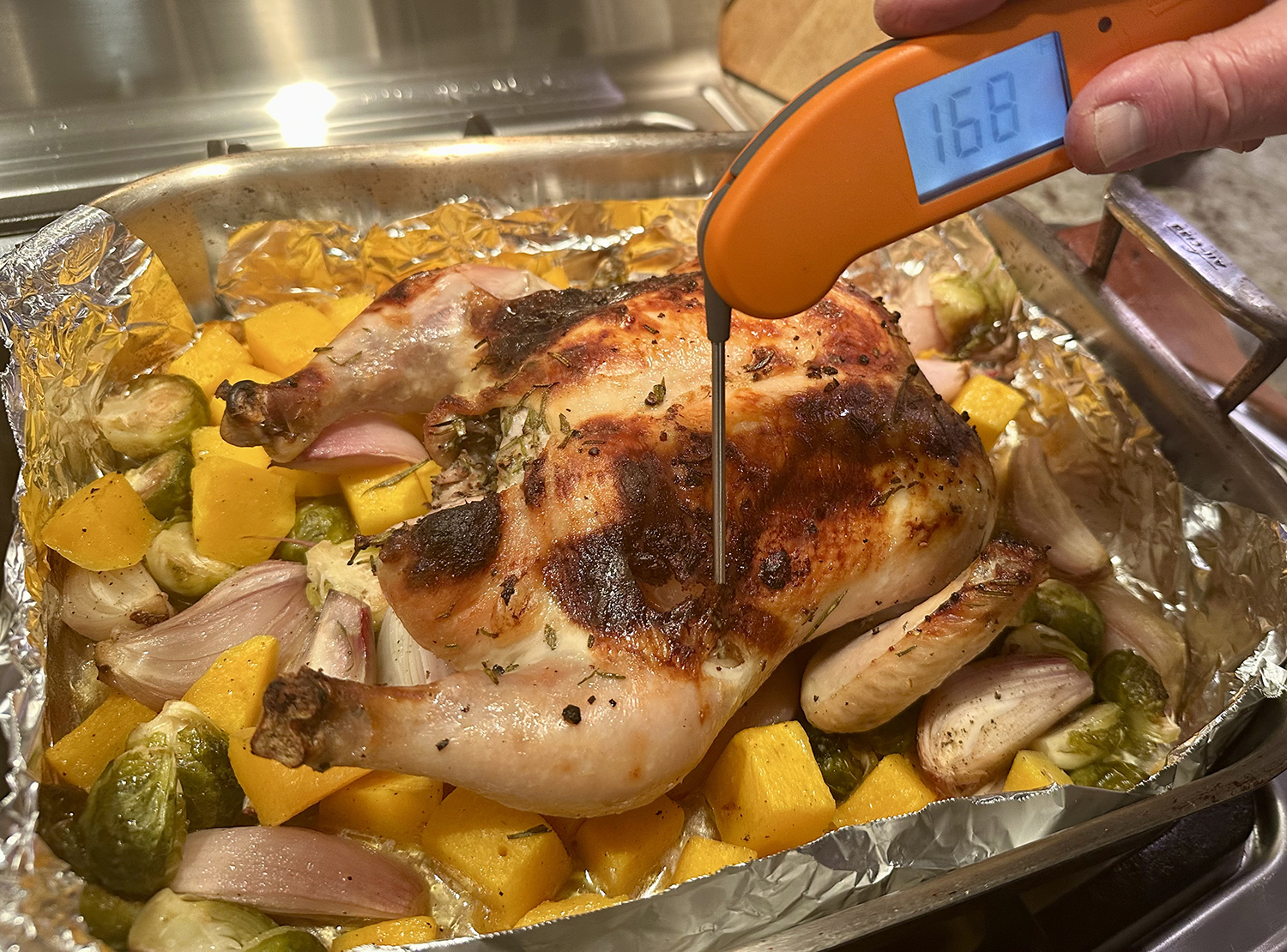
  5. Place the chicken, breast side up, on top of the vegetables. Drizzle the bird with remaining 2 tablespoons oil. After roasting for 45 minutes, stir the vegetables around the edges of the pan a bit, turn sheet pan halfway, continue roasting until well browned and until juices run clear when chicken is pierced where leg joins thigh, about another 20 minutes.
  6. Place chicken on a carving board and allow to rest for 10 minutes. While the chicken rests, stir the vegetables in the pan and place them back into the oven.
  7. After the ten minute rest, cut the chicken into pieces and place a portion on each of four plates, along with some of the roasted vegetables, and drizzle each serving with pan juices.

http://www.lynnandruss.com

Loosely adapted from a recipe by Nigella Lawson

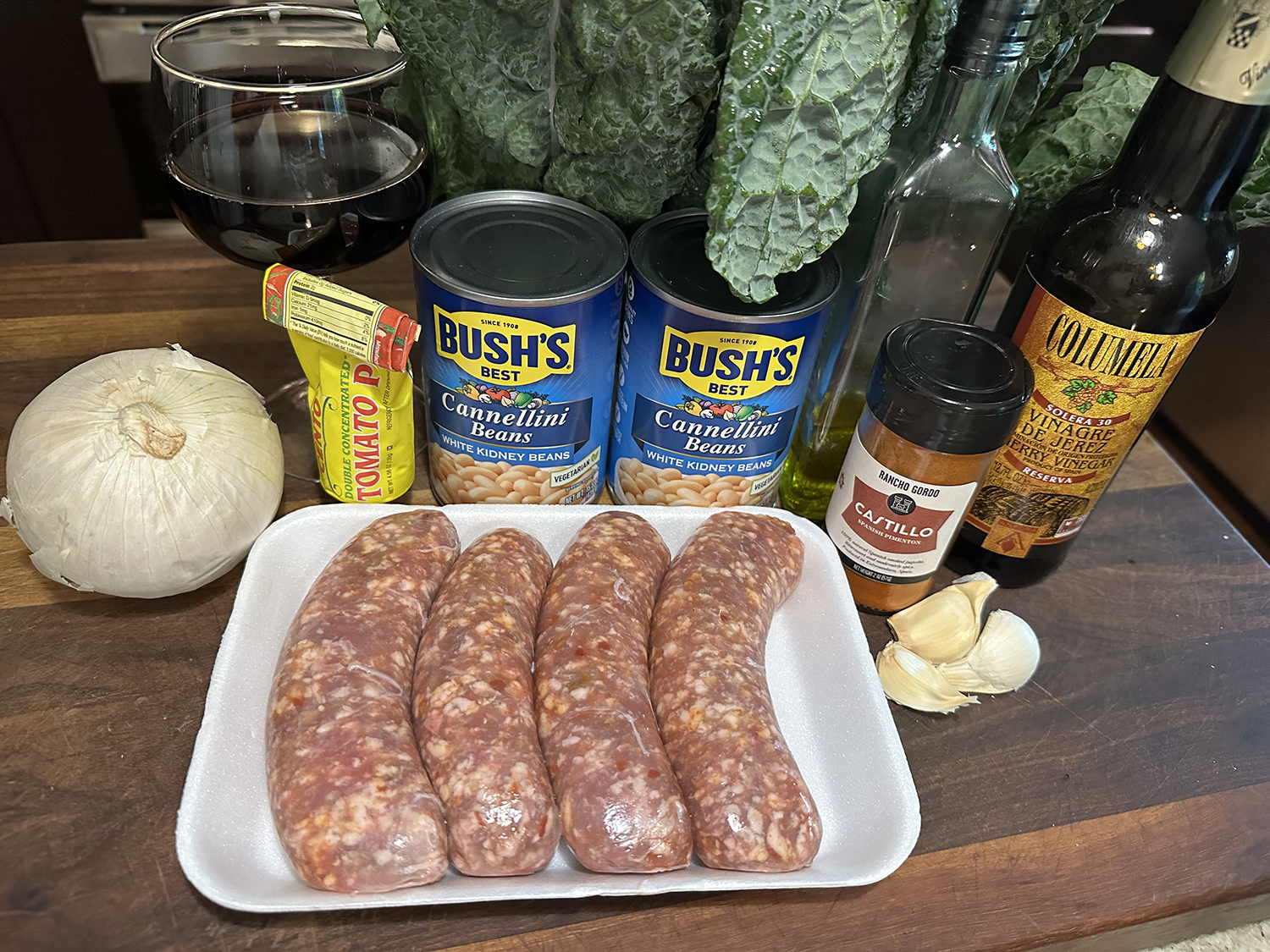
Skillet-Braised Spicy Sausage with Cannellini Beans and Kale

A Spanish-Italian mash-up of sorts, this tasty meal can be adaptable to your specific tastes. We thought it was bit shy on the meat, and therefore if you want a more meat-centric meal, you could probably double, or at least increase by half, the amount of sausage*. We also sliced the sausage into more manageable bites.

To make it a bit more Spanish, use chorizo and spicy pimenton (smoked Spanish paprika). The beans and kale provide plenty of healthy fiber.

**Additional option: drain 1 14-ounce can of diced tomatoes, reserving the liquid. Add tomatoes when adding red wine and seasonings to onions. Use reserved juices as part of the 1 1/2 cups water to kale mixture.

Skillet-Braised Spicy Sausage with Cannellini Beans and Kale

  • Servings: 4
  • Difficulty: easy
  • Print
(Cook’s Country, ATK)

Ingredients

  • 1 lb. hot Italian sausage*
  • 1 3/4 cups water, divide**
  • 1 onion, halved and sliced thin
  • 2-4 garlic cloves, sliced thin
  • 2/3 cup red wine
  • 2 Tbsp. tomato paste
  • 1 1/2 tsp. smoked paprika
  • 3/4 tsp. table salt
  • 1 lb. lacinato kale, stemmed and torn into 2-inch pieces
  • 2 15-oz. cans cannellini beans, undrained
  • 1/4 cup extra-virgin olive oil
  • 2 tsp. sherry vineager

Directions

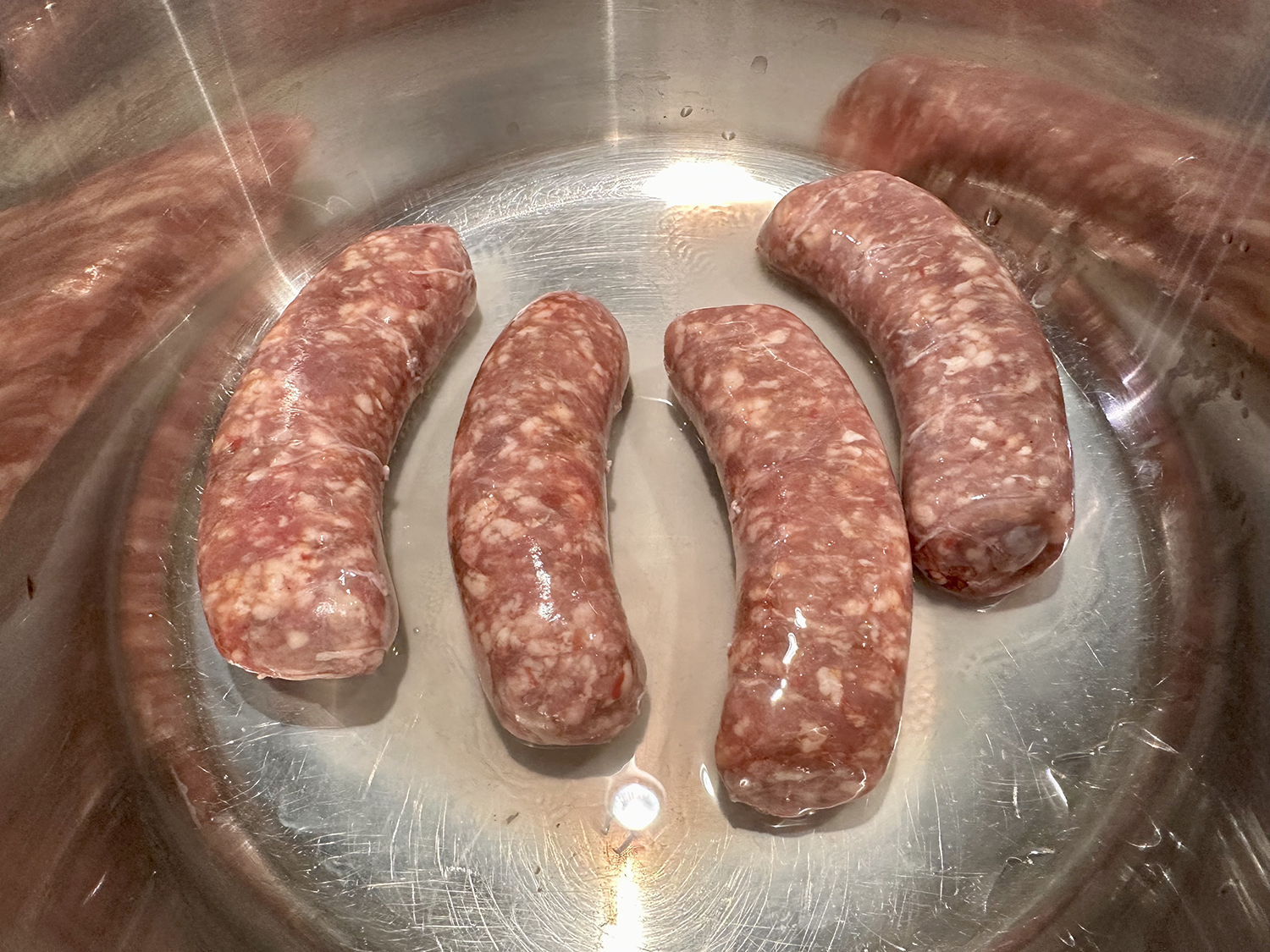
  1. Bring sausage links and 1/4 cup water to simmer in Dutch oven over medium heat. Cover and cook until sausages register at least 135°F, 8 to 10 minutes. (If pot contents begin to sizzle, add 1/4 cup water.)
  2. Uncover, and using pairing knife, pierce each link in 8 to 10 spots to release fat and juices. Continue to cook, uncovered, moving sausages as necessary until dark fond forms on bottom of pot, 2 to 4 minutes. Transfer sausages to cutting board.
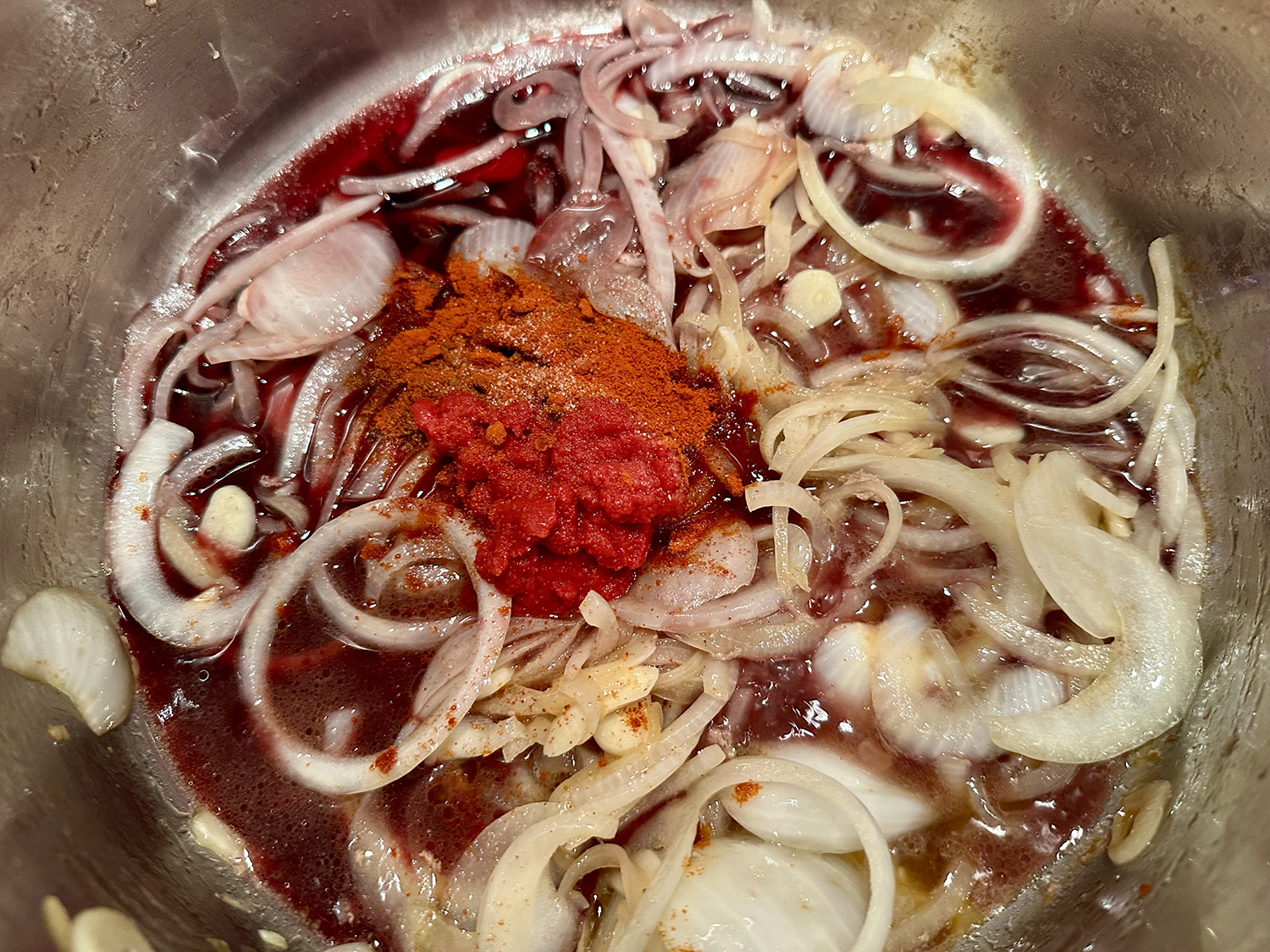
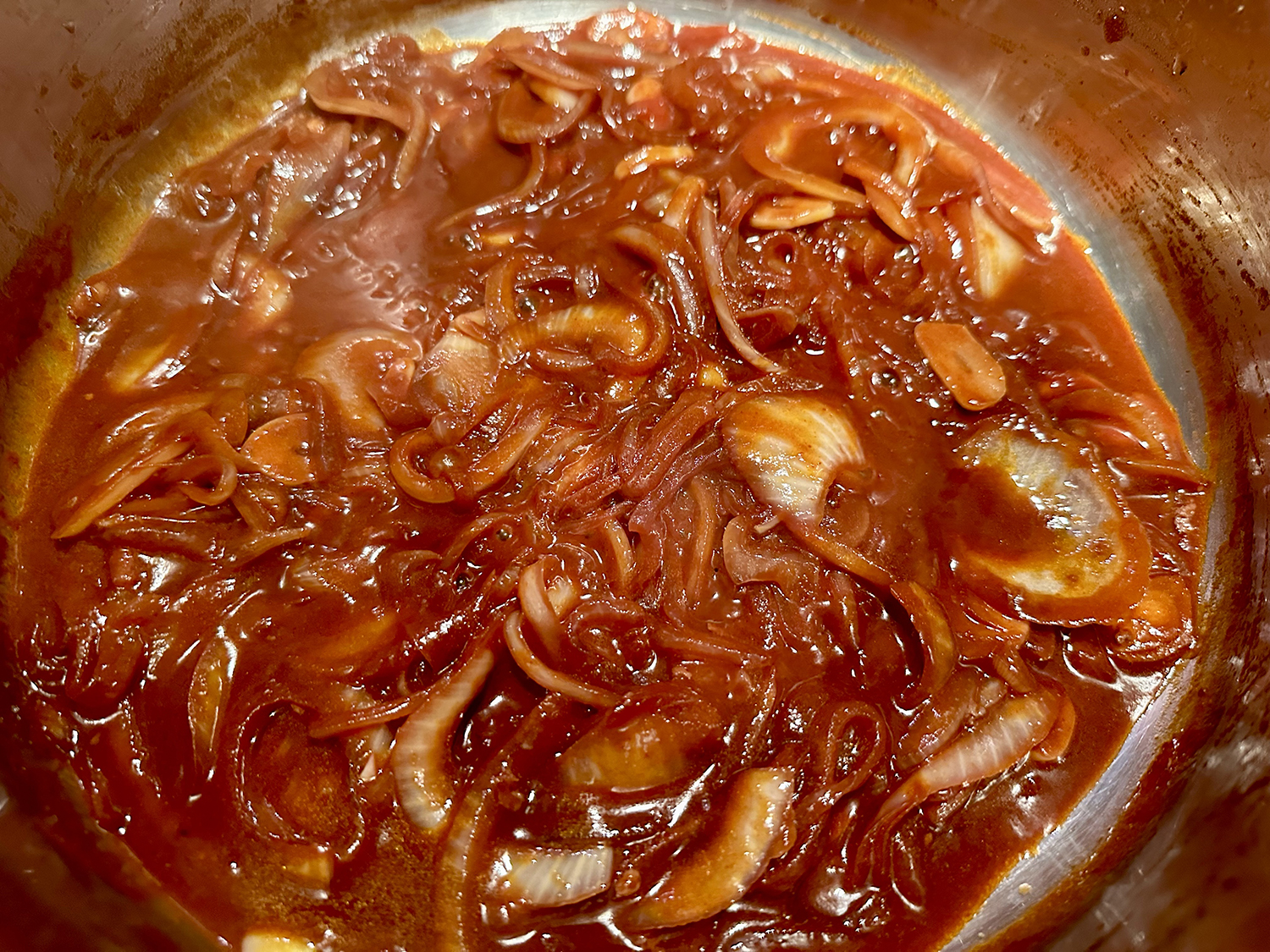
  3. Add onion and garlic slices to now-empty pot, stirring constantly for 1 minute. Stir in wine scraping up any browned bits. Stir in tomato paste, paprika and salt. Simmer, stirring occasionally, until wine is reduced to thick , syrupy glaze, 4 to 5 minutes.
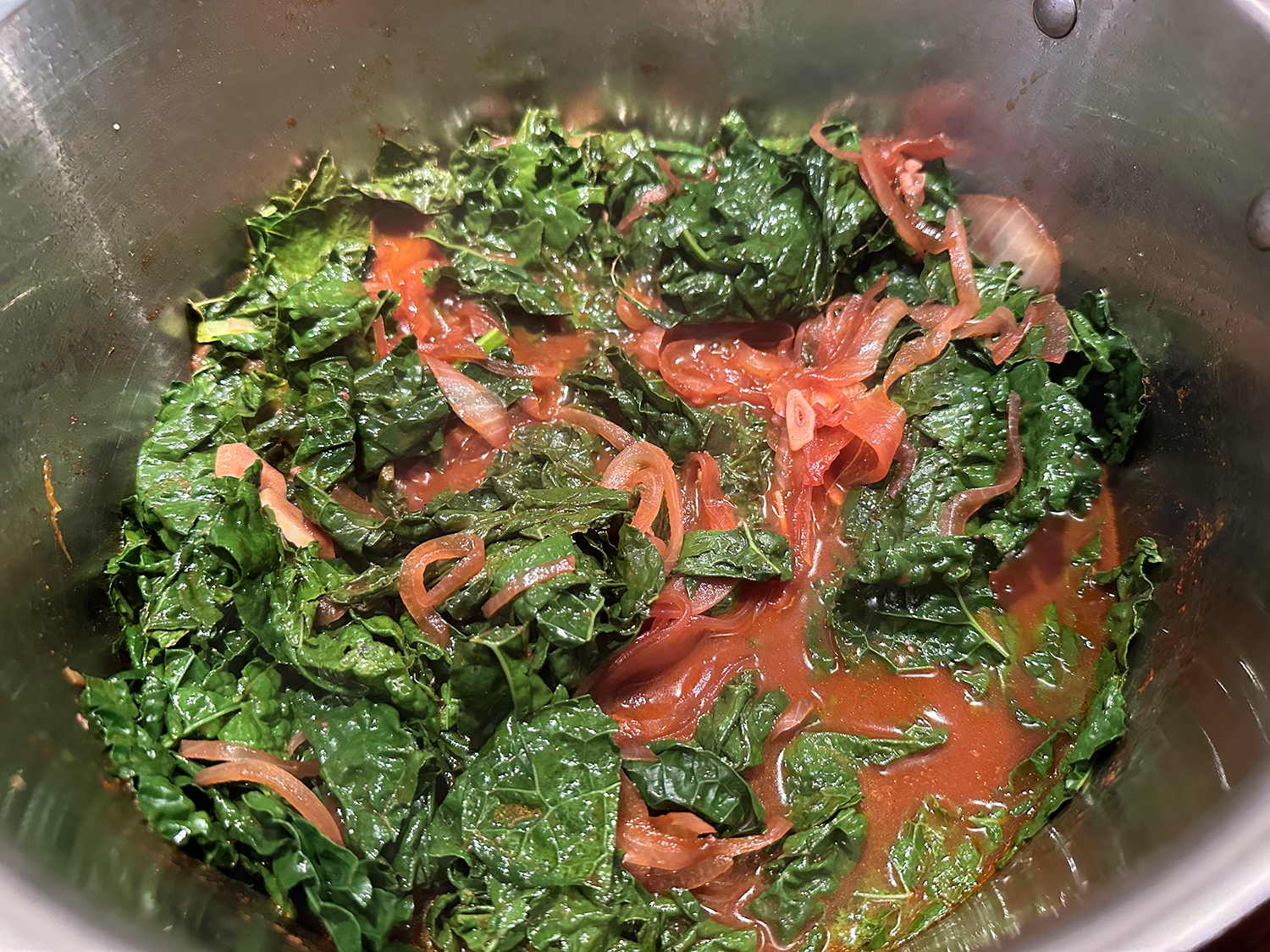
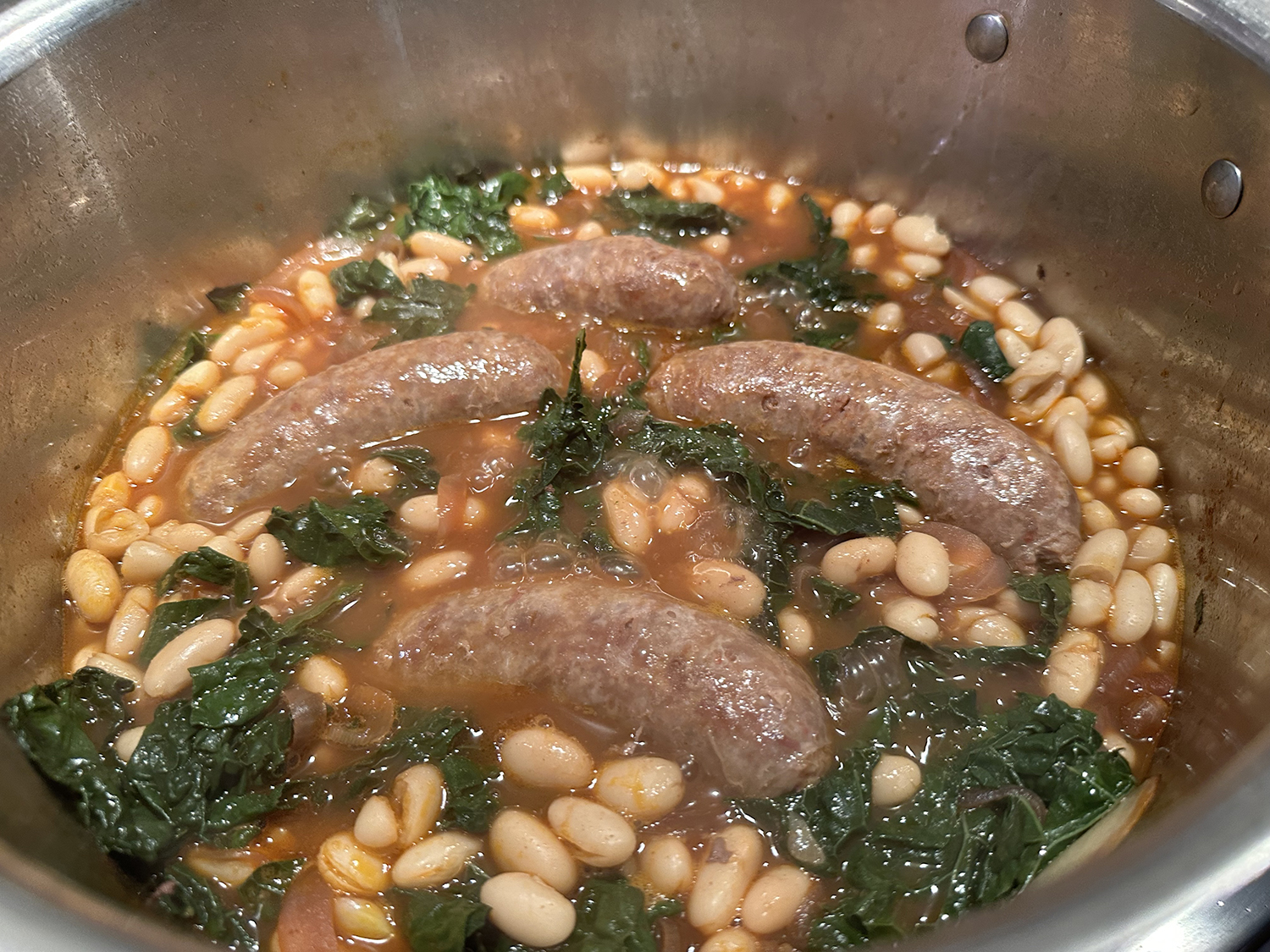
  4. Stir in kale and remaining 1 1/2 cups water, cover and cook until kale is wilted, about 5 minutes. Stir in beans and their liquid, cover and cook for 5 minutes longer. Return sausages to pot nestling links into kale and beans.
  5. Cover and continue to cook until sausages register 160°F, 8 to 10 minutes, flipping sausages ad tiring halfway through cooking. Transfer sausages to cutting board and cut each link into about 1/2-inch slices on a diagonal.
  6. Off heat, stir in oil and vinegar into kale mixture and season to taste with salt. Divide kale, beans and sauce into shallow bowls. Top with sausage and serve.

http://www.lynnandruss.com

Adapted from a recipe for Cook’s Country

Spaghetti with Fresh Soppressata

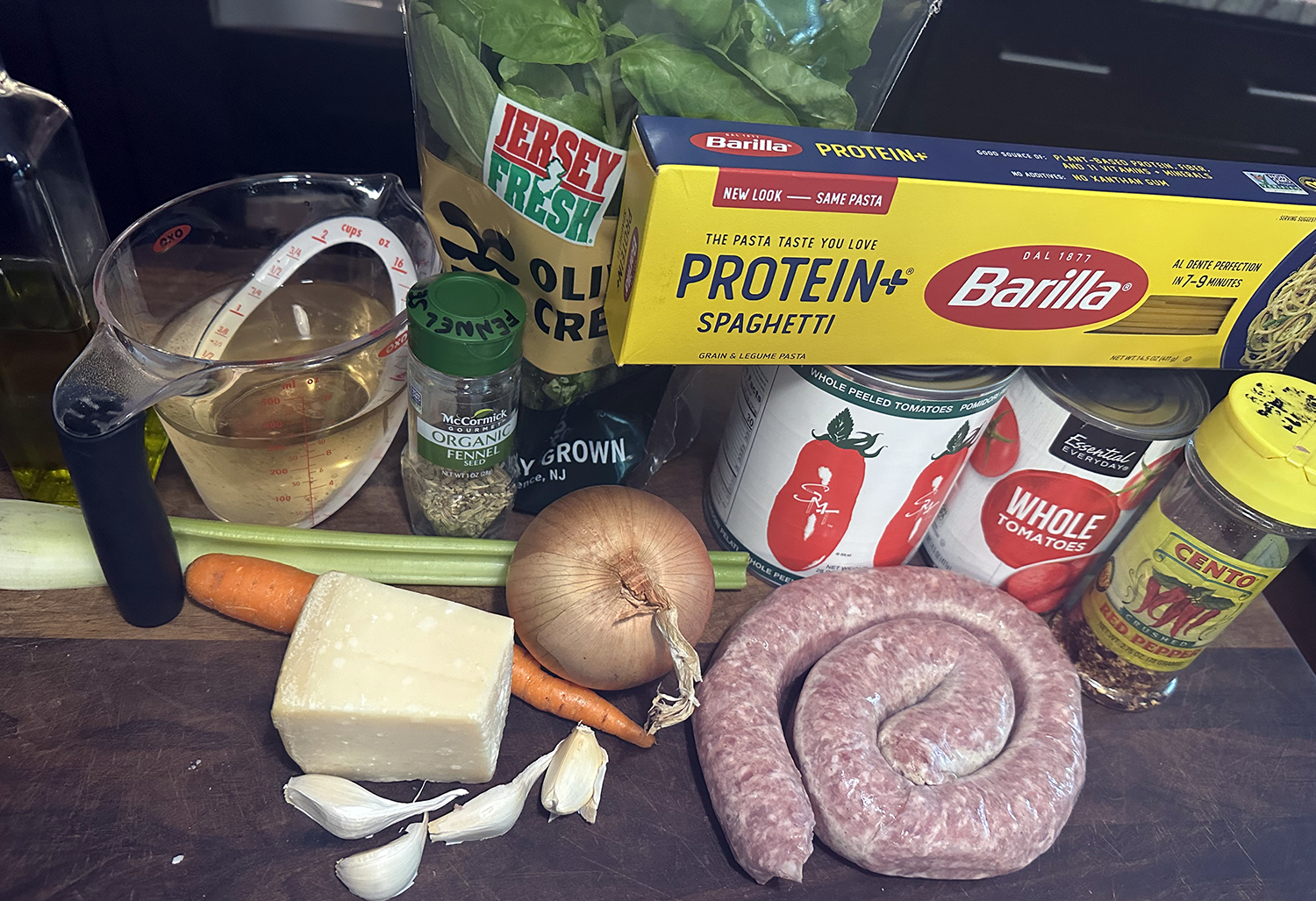
One look at the long list of ingredients and you may well just thumb past this recipe. But we’ll tell you it was well worth the effort and time.

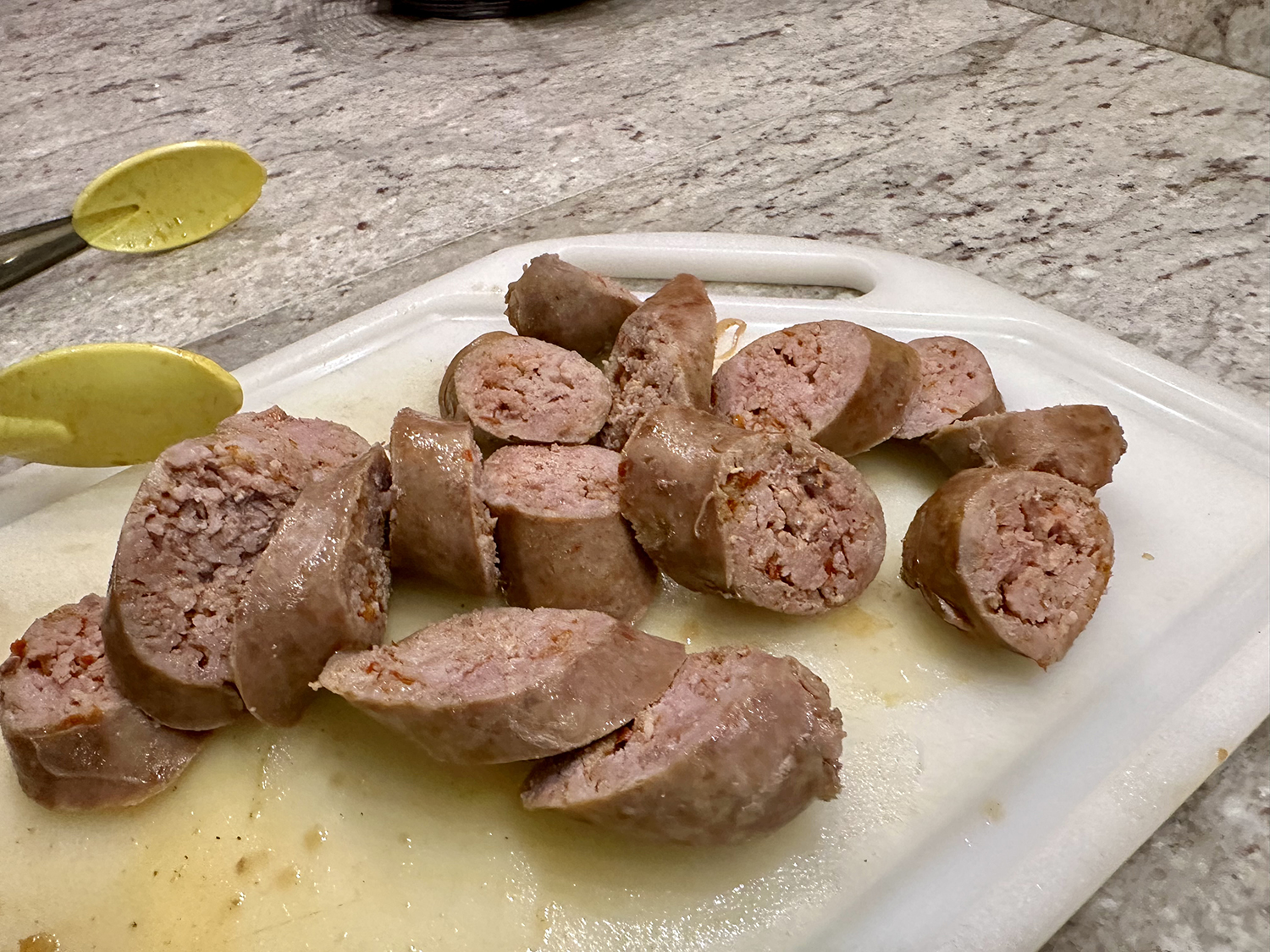
Store-bought Italian sausage gets a wine and fennel infusion to make fresh soppressata, which is the base for this pasta’s fresh and flavorful tomato sauce. The sauce is robust with a savory, fresh acidity, and the meat is tender and juicy.

You might associate soppressata with a charcuterie board (that was my initial reaction) but this comforting pasta is inspired by a family tradition of fresh sausage-making. In this recipe, store-bought Italian sausages are marinated in white wine to make fresh soppressata, which is the base for this pasta’s fresh and flavorful tomato sauce. A heap of spaghetti clings to the garlicky, sausage-laden sauce in an easy and impressive meal made to serve a small crowd. 

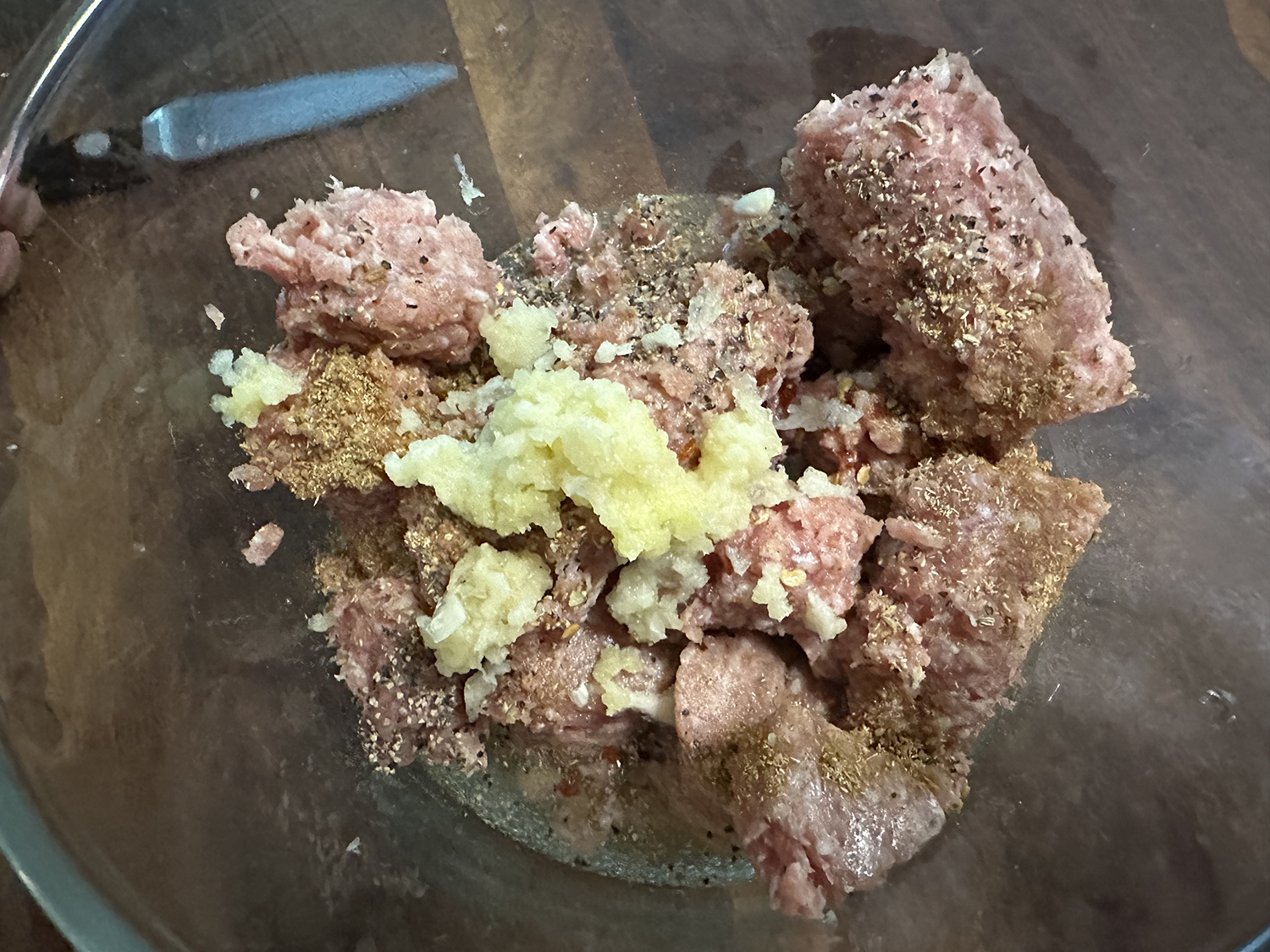
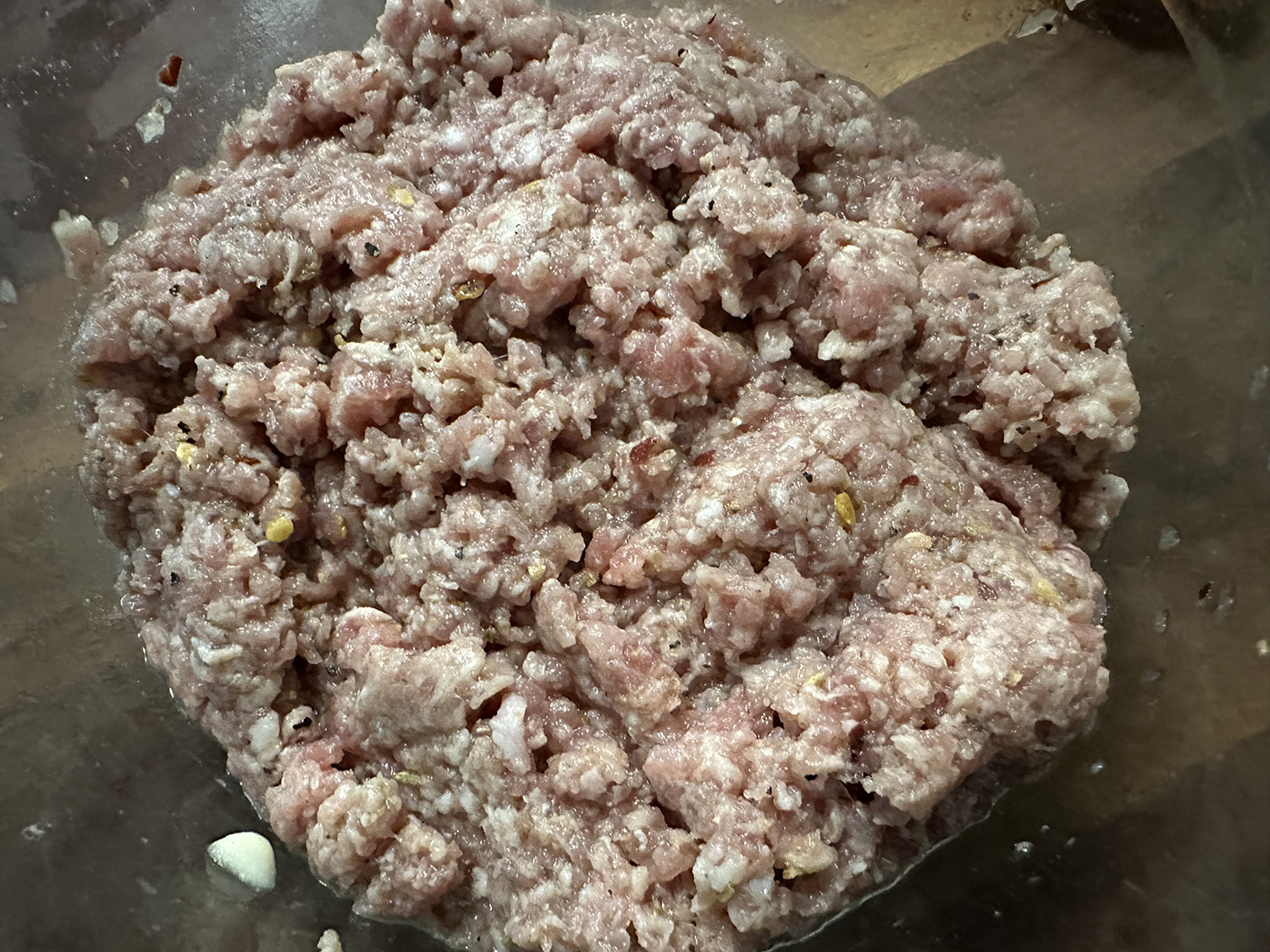
Most soppressata you’ll encounter is a dry, cured pork-based salami from southern Italy that is often — but not always — a little spicy. In this recipe, fresh soppressata is made by marinating uncooked sweet Italian sausage in white wine and adding spices like fennel, black pepper, and crushed red pepper.

We allowed 6 hours for the meat mixture to marinade, ensuring those flavors would have enough chance to meld.

Spaghetti with Fresh Soppressata

  • Servings: 6
  • Difficulty: easy
  • Print

Ingredients

  • 4 garlic cloves, grated (about 1 Tbsp.)
  • 1 1/3 cups dry white wine, divided
  • 1 lb. sweet Italian sausage, casings removed
  • 1 tsp. ground fennel
  • 1/2 tsp. black pepper
  • 1/2 tsp. crushed red pepper
  • 1/4 cup extra-virgin olive oil
  • 1 small yellow onion, finely chopped
  • 1 small carrot, finely chopped
  • 1 celery stalk, finely chopped
  • 1 28-oz. can whole peeled tomatoes, undrained and crushed
  • 1 14.5-oz. can whole peeled tomatoes, undrained and crushed
  • 1/8 tsp. kosher salt
  • 1 lb. uncooked spaghetti
  • 2 oz. Parmigiano-Reggiano cheese, grated
  • 1/4 cup chopped fresh basil, plus small leaves for garnish
  • 1 cup chopped fresh flat-leaf parsley, plus more for garnish

Directions

  1. Stir together garlic and 1/3 cup wine in a large bowl. Add sausage, fennel, black pepper, and crushed red pepper; stir well to combine. Cover and refrigerate for at least 1 hour or up to 12 hours.
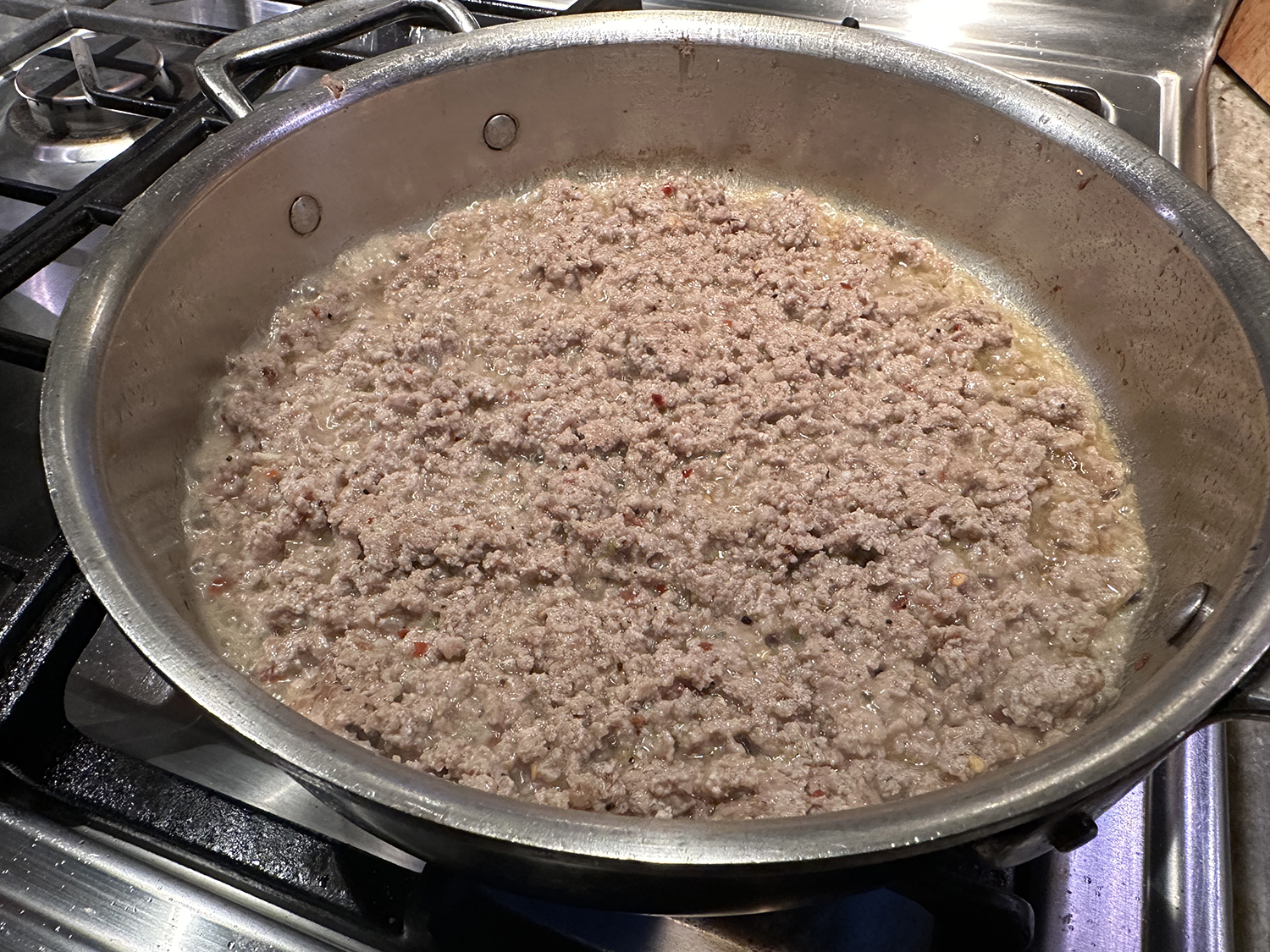
  2. Heat oil in a large, deep, 12″ or larger skillet over medium until shimmering. Increase heat to high, and add sausage mixture; cook, stirring occasionally to break up clumps, until lightly browned, 6 to 7 minutes.
  3. Stir in onion, carrot, and celery; cook, stirring often, until softened, about 4 minutes. Add remaining 1 cup wine; cook, scraping up any browned bits on bottom of the skillet, until wine is nearly evaporated, 5 to 6 minutes.
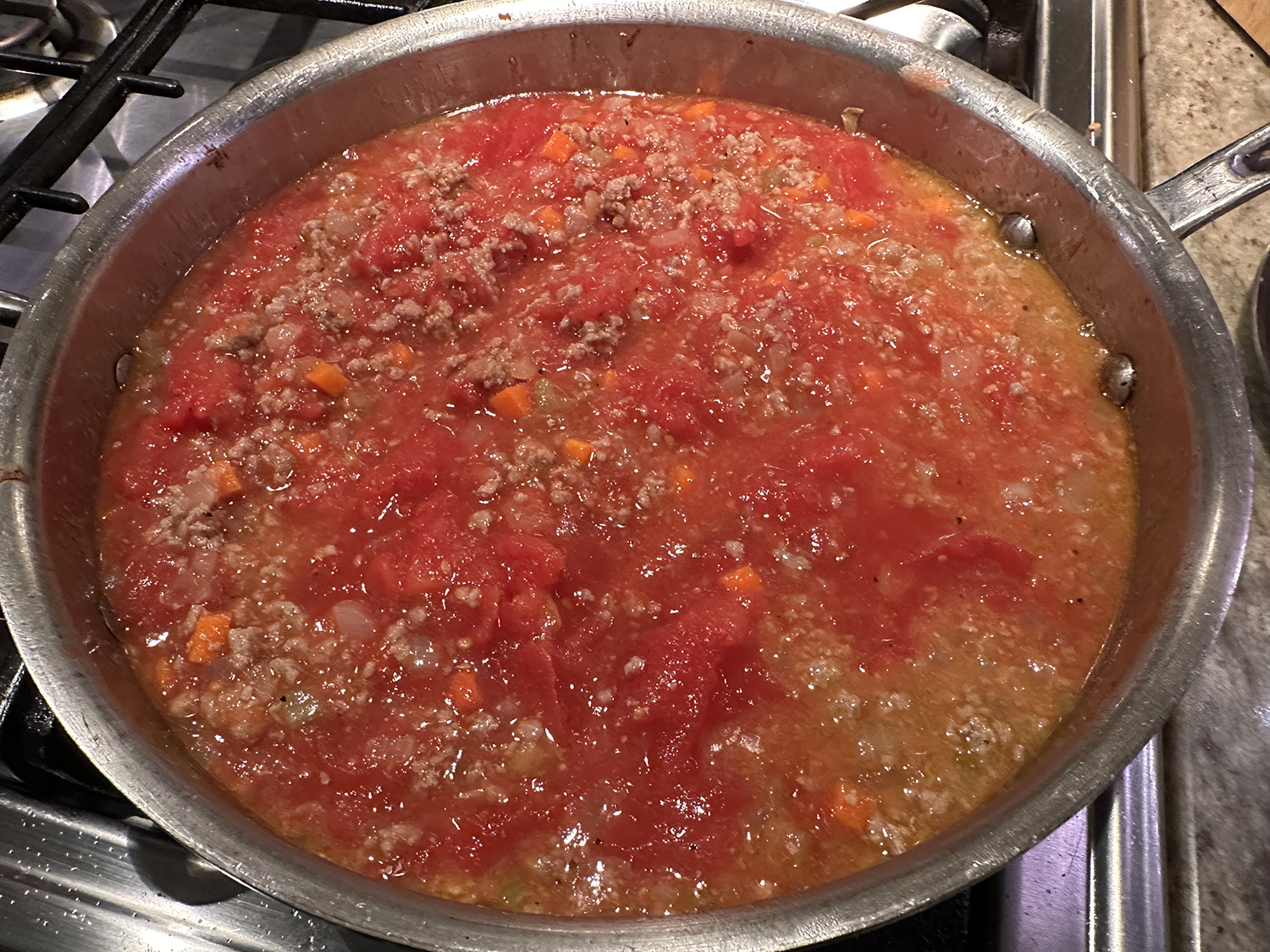
  4. Stir in crushed tomatoes with juices and salt. Bring mixture to a simmer over high; reduce heat to medium-low, and simmer, stirring occasionally, until thickened and reduced by about half, 30 to 35 minutes.
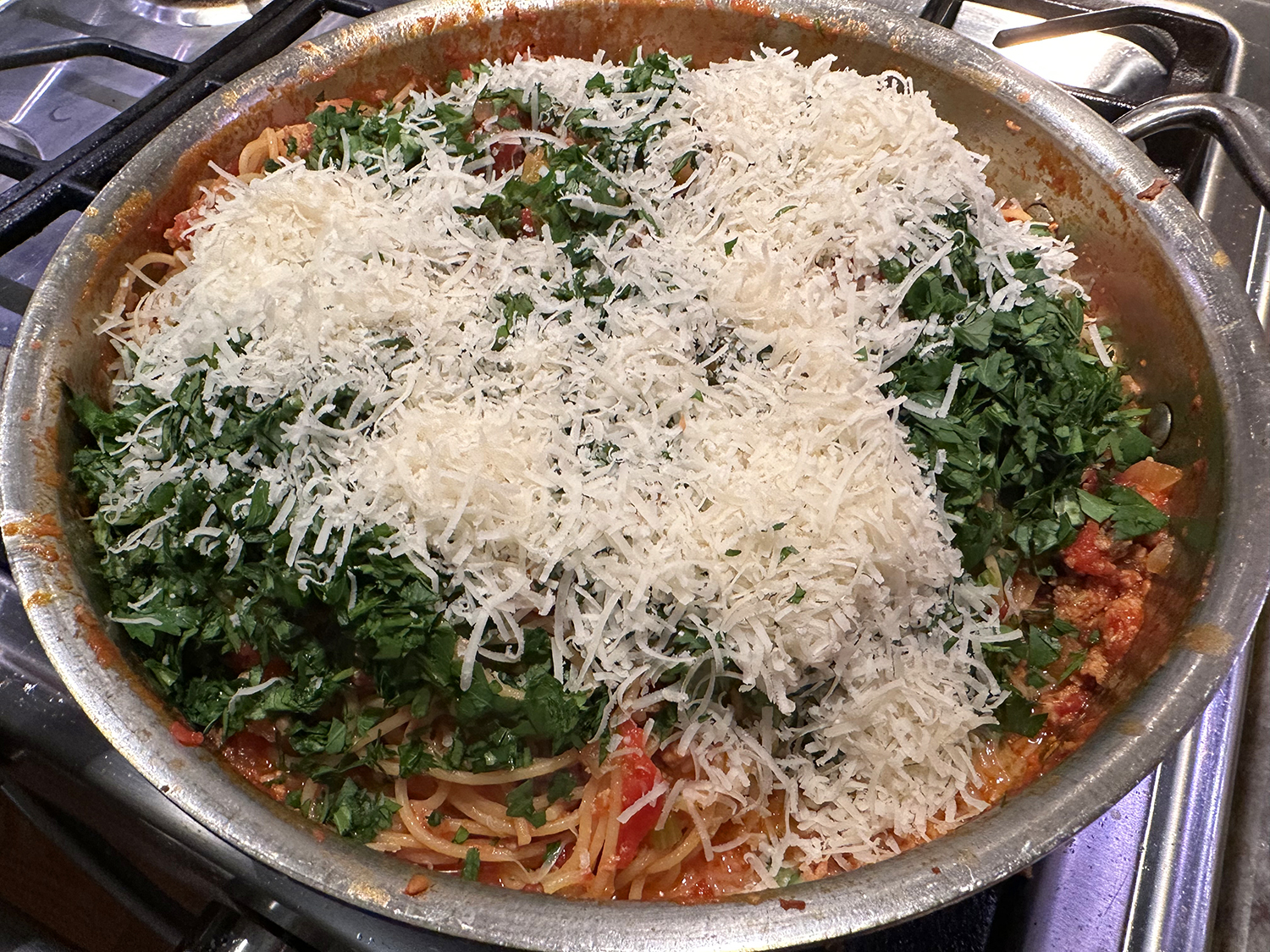
  5. Bring a large pot of salted water to a boil over high. Add spaghetti; cook according to package directions for al dente, about 8 minutes. Drain pasta, reserving 1/2 cup cooking liquid. Stir spaghetti into sauce in skillet; stir in cheese, basil, and parsley.
  6. Add reserved cooking liquid, 1/4 cup at a time, if needed to thin sauce to desired consistency. Increase heat to medium-high; cook, stirring often, until sauce clings to pasta, about 2 minutes. Garnish with additional basil and parsley. Serve hot.

http://www.lynnandruss.com

Recipe by Andrew Carmellini for Food & Wine

Authentic Hunan Beef

Yes, there are a lot of ingredients. Yes, there are a lot of steps. Yes, there is a lot of prep. Yes, the process goes quickly (so make sure you have ALL of the prep work done beforehand). And YES, it is probably the best Hunan Beef we’ve ever had!

Bill from Woks of Life says “Our Hunan Beef recipe is an authentic Chinese version of the dish, not the Americanized version. Try it to taste what Hunan Beef should really be like!”

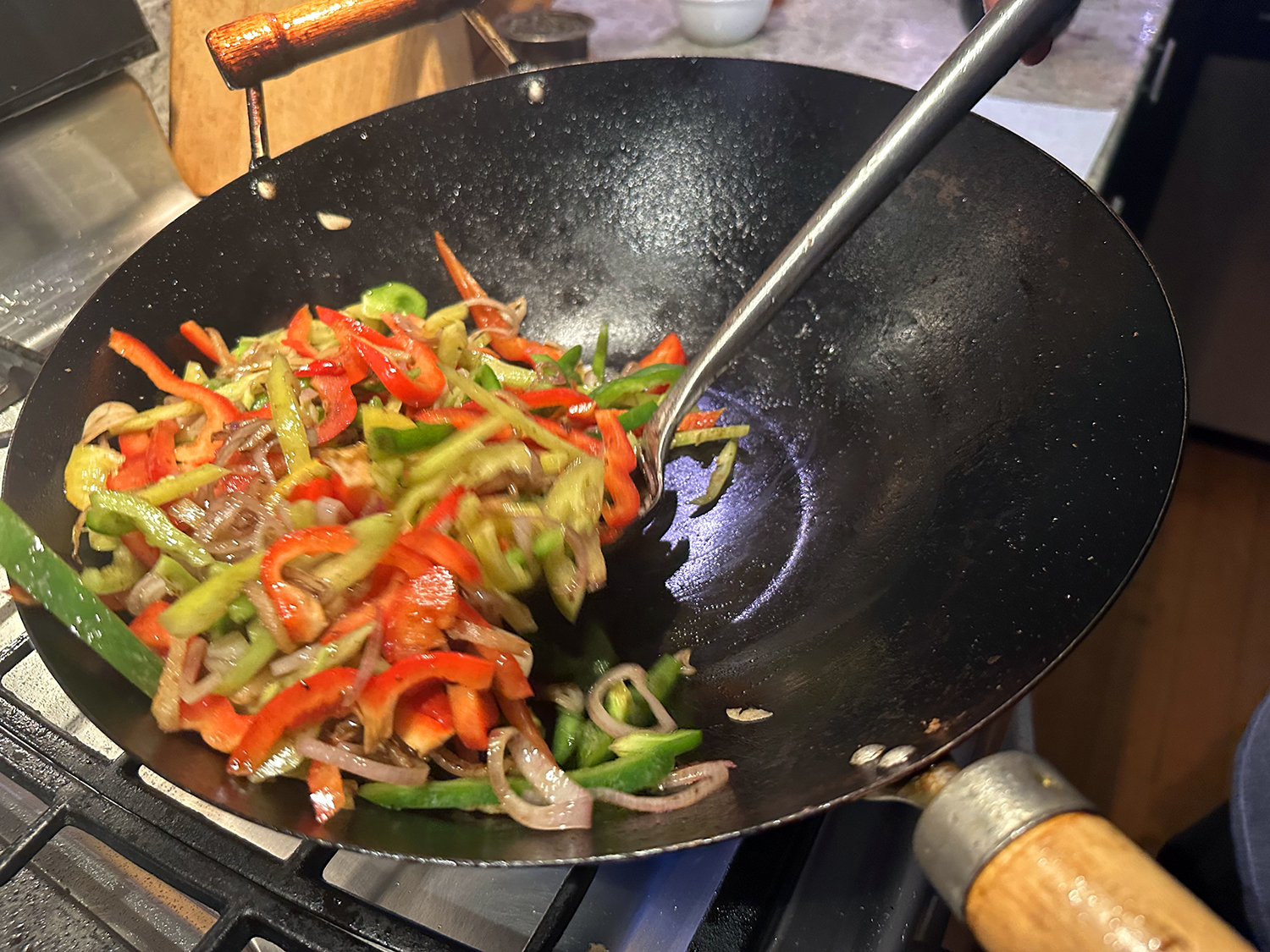
Peppers are vital to Hunan Beef, but the peppers you use are a matter of personal preference. We like to use a variety—both spicy and sweet. Poblano and Holland peppers are mild, but if you want more spice, you can add Fresnos or jalapeños to the mix.

Remember that the addition of the dried chili peppers can add a lot of spice (also depending on whether you chop them to release the seeds inside or leave them whole), so you’ll want to consider those factors as well. Slice all the fresh peppers crosswise into thin slices on the diagonal. Set aside the dried red peppers. Do not break them open or chop unless you want a very spicy Hunan Beef!

In the meantime, don’t forget to make your rice…

Authentic Hunan Beef

  • Servings: 4
  • Difficulty: easy
  • Print

Ingredients

For the beef:

  • 1 lb. flank steak, sliced 1/4-inch thick
  • 1/4 tsp. baking soda
  • 2 Tbsp. water
  • 1 tsp. oyster sauce
  • 1/3 cup cornstarch

For the Rest of the Dish:

  • 1 red Holland pepper, deseeded; can substitute red Fresno peppers
  • 1 small green bell pepper or poblano pepper, deseeded
  • 1 small red bell pepper, deseeded
  • 2 banana peppers, deseeded
  • 8 whole dried chili peppers
  • 1/2 tsp. granulated sugar
  • 2 Tbsp. hot water
  • 1/2 teaspoon Chinese black vinegar
  • 2 1/2 Tbsp. soy sauce
  • 1/4 teaspoon white pepper
  • 1/3 cup vegetable or canola oil for frying
  • 1 Tbsp. fresh ginger, sliced
  • 1/2 cup shallots, thinly sliced
  • 2 Tbsp. Shaoxing wine
  • 5 cloves garlic, sliced
  • 2 Tbsp. fermented black beans
  • 2 scallions cut at an angle into 2-inch lengths

Directions

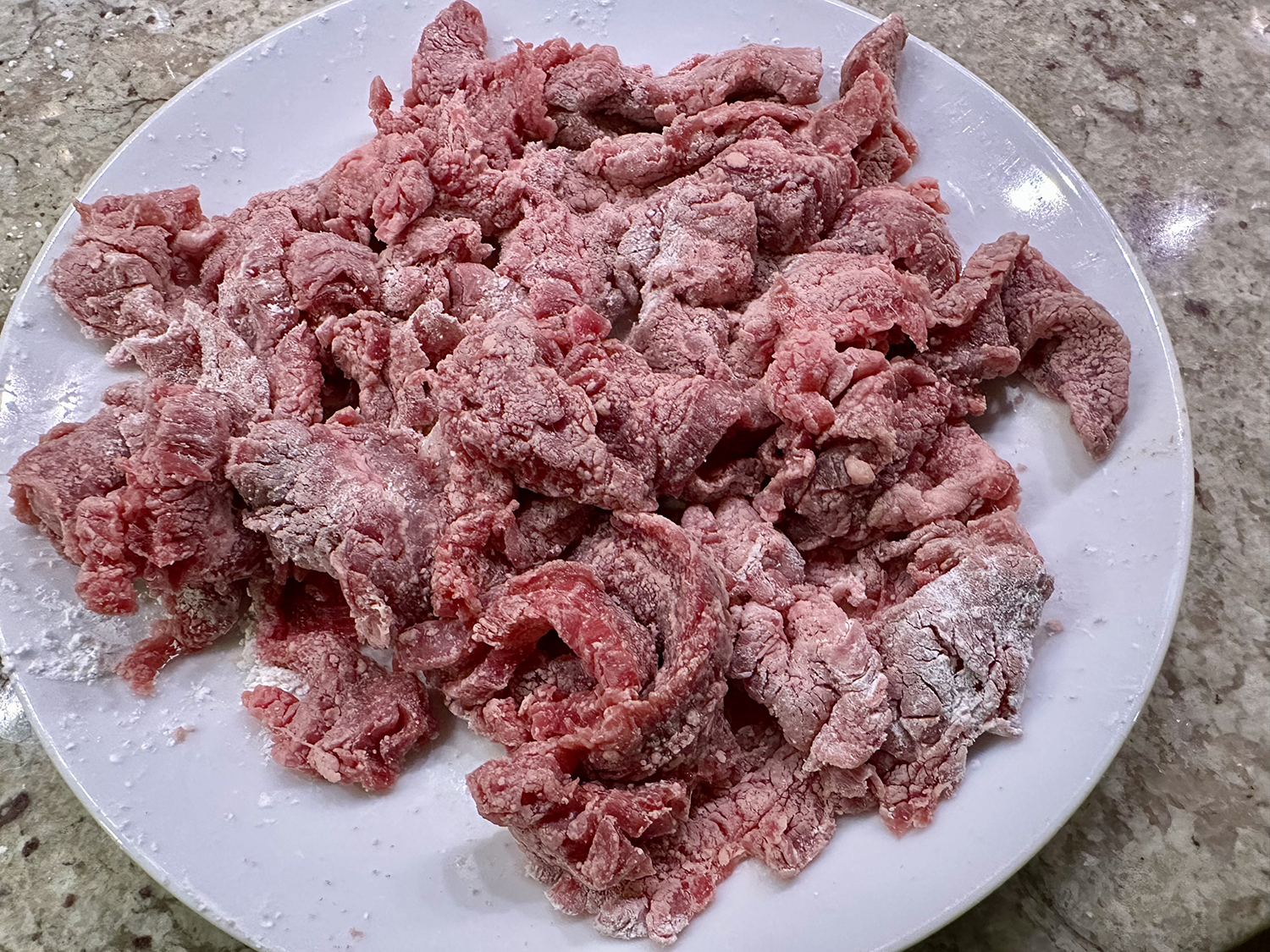
  1. In a medium bowl, combine the sliced flank steak with the baking soda, water and oyster sauce. Massage these ingredients into the beef until any liquid has been absorbed by the meat. Marinate for 30 minutes.
  2. Lightly dredge all of the beef slices in cornstarch. Set aside until ready to fry.
  3. Slice all the fresh peppers crosswise into thin slices on the diagonal. Set aside the dried red peppers. Do not break them open or chop unless you want a very spicy Hunan Beef!
  4. Stir the sugar into 2 tablespoons of hot water until dissolved. Add the Chinese black vinegar, soy sauce, and ground white pepper. Mix until well combined and set aside.
  5. Heat your wok over high heat until smoking. Spread ⅓ cup oil around the wok, and sear the beef in three batches on both sides until browned and slightly crispy on the outside. Be sure the wok and oil are hot each time you add a batch of beef.
  6. Between each batch, drain the crispy beef by moving it up to the side of the wok. The oil will drain to the bottom and you can then transfer the beef to a sheet pan or plate.   
  7. After frying the beef, leave about 2 tablespoons of the oil in the wok, and remove any excess. If your wok got burned in the frying process, this is a good time to wash it. While you want the beef flavor from frying, you definitely don’t want burned bits in the stir-fry if you got carried away with the heat during frying.
  8. Set the wok over medium heat. Add the sliced ginger and fry until caramelized, about 30 seconds.
  9. Next, add the shallots. Continue to fry for another 30 seconds, and add the fresh peppers (except for the red holland or fresno peppers). Turn the heat up to high and stir-fry for 1 minute to get a nice sear on the peppers.
  10. Clear a section on the bottom of the wok, and add the dried chili peppers. Let them toast in the oil for 20 seconds. (If you want your dish spicier, add the dried chili peppers earlier, along with the shallots.)
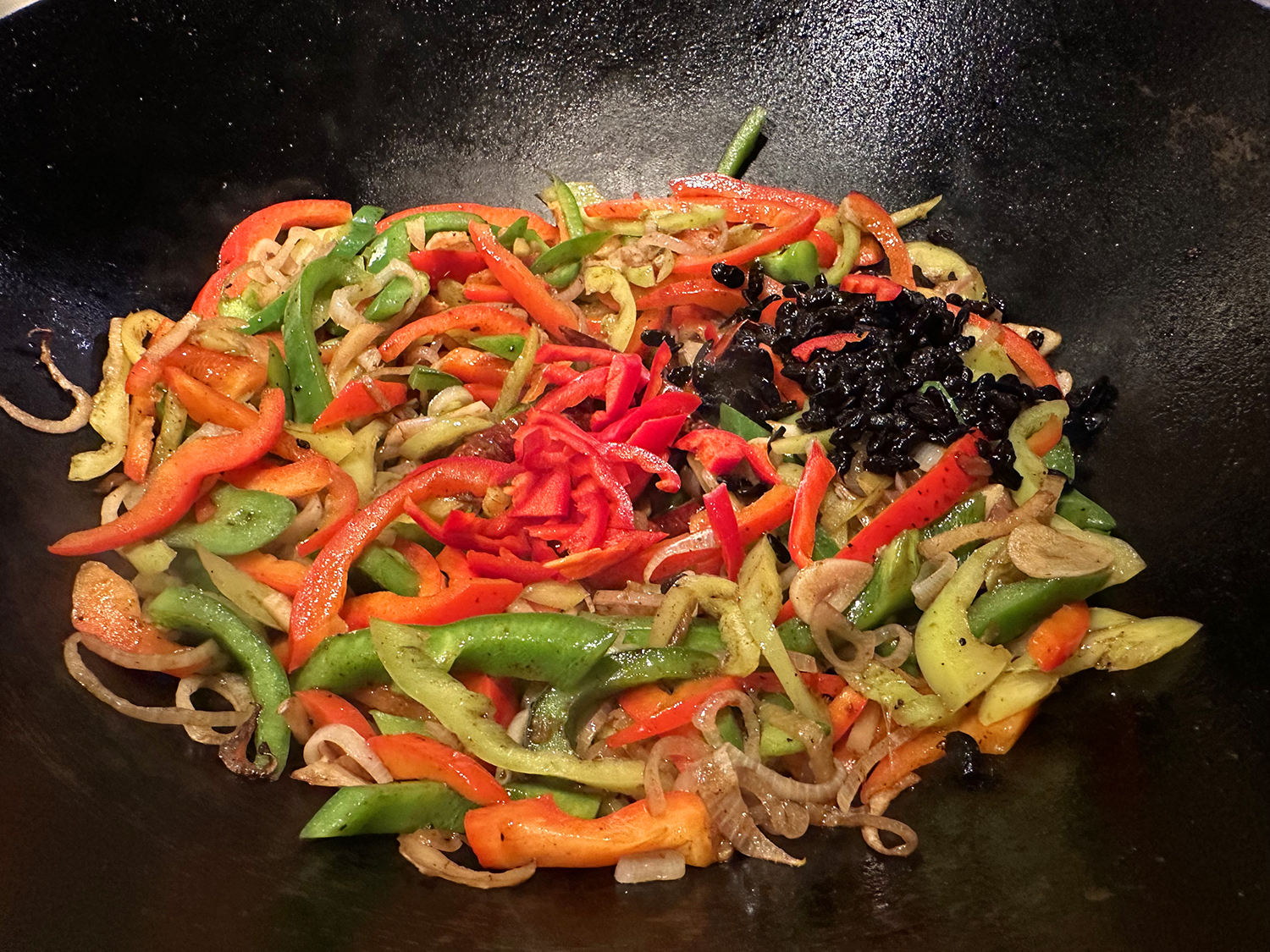
  11. Next, pour the Shaoxing wine around the perimeter of the wok. Add the sliced garlic, fermented black beans, and the red Holland or Fresno peppers. Stir-fry for another 30 to 60 seconds on high heat.
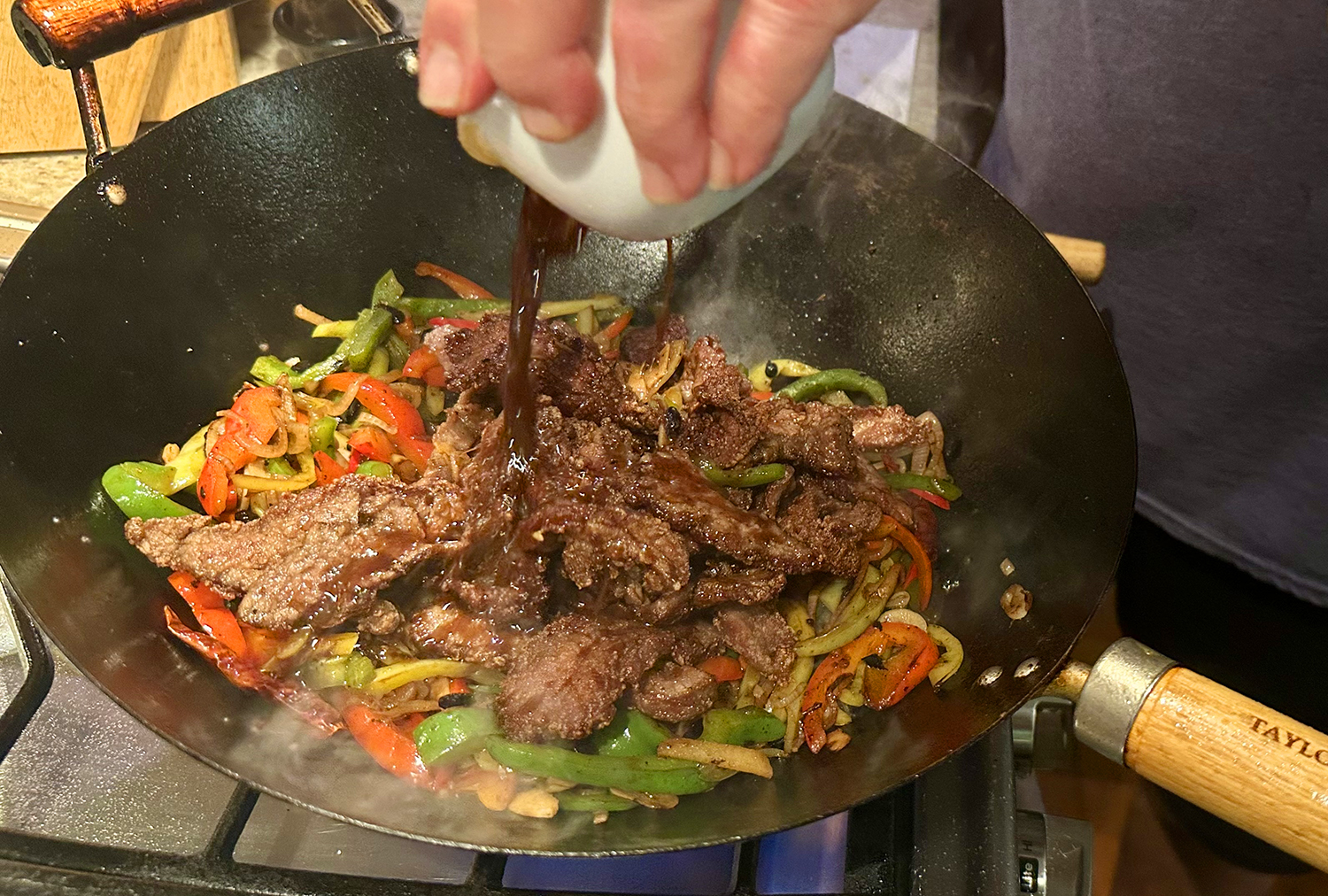
  12. Next, add the fried beef and pour over the pre-prepared sauce. Maintain the highest heat possible and stir-fry everything together for 20 seconds. Add the scallions. Continue to stir fry until most––if not all––of the sauce has evaporated.
  13. Serve over steamed rice.

http://www.lynnandruss.com

Adapted recipe from Bill for Woks of Life

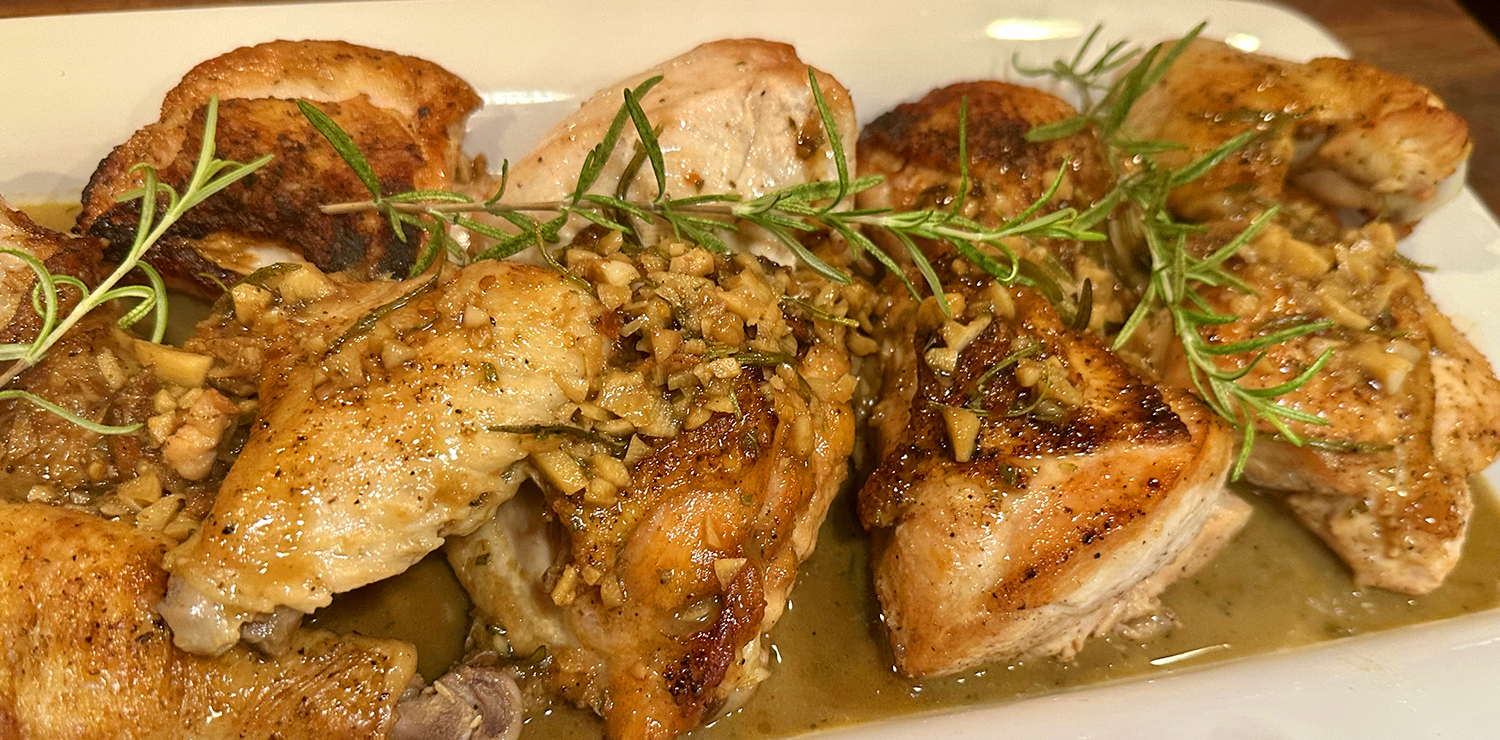
Roman-Style Chicken Cacciatore

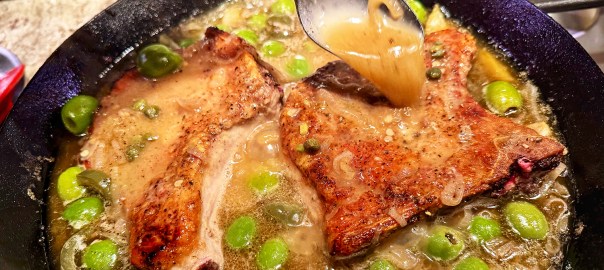
Cacciatore without tomatoes? As it turns out, it is not always a chunky, tomato-heavy braise. At Piatto Romano in Rome, Milk Street learned how to make the Roman version—an elegant, minimalist dish bright with the acidity of white wine and vinegar and heady with rosemary, garlic and anchovies, not a tomato in sight. (And you would never know there were anchovies in it.)

With so few ingredients, deeply searing the bone-in, skin-on pieces is necessary for developing rich flavor. A quick sauté of aromatics followed by a deglazing with a full bottle of a light, dry white wine forms the cooking liquid that becomes the fabulous sauce.

To preserve the chicken’s browning during braising, the pieces are only partially submerged in liquid and cooked, uncovered, to completion in a 450°F oven; the dry heat keeps the skin crisp and caramelized even as the liquid simmers in the bottom of the pan. (You will need an oven-safe 12-inch skillet for this recipe.)

A good measure of white wine vinegar and minced rosemary finishes the dish, adding a surge of tartness and herbal notes to keep the flavors vibrant. This cacciatore is best with a starchy side, such as crusty bread, polenta or mashed potatoes. We served ours with garlic and rosemary-infused mashed potatoes, and a side of roasted carrots and Brussels sprouts.

What a tremendous weeknight meal that can just as well be the feature of an intimate dinner party. Adding the final zip of vinegar is just the right balance of acid.

Don’t forget to lower the heat before adding the wine. This helps prevent fiery flare-ups if the wine splashes out of the skillet.

Instead of chicken pieces, we used a whole chicken, cut it up and saved the remaining body parts (neck, back, heart, etc.) to add to our “body bag” of frozen chicken parts for future homemade stock.

Roman-Style Chicken Cacciatore

  • Servings: 4-6
  • Difficulty: easy
  • Print

Ingredients

  • 3-4 lb. bone-in, skin-on chicken thighs or breasts, trimmed and patted dry
  • Kosher salt and ground black pepper
  • 2 Tbsp. extra-virgin olive oil
  • 6 – 8 oil-packed anchovy fillets, patted dry
  • 6 medium garlic cloves, minced
  • 3 5-inch rosemary sprigs, plus 1 tsp. minced fresh rosemary, reserved separately
  • 1/4 tsp. red pepper flakes
  • 750 mL bottle dry white wine, such as pinot grigio or frascati
  • 1/4 cup white wine vinegar

Directions

  1. Heat the oven to 450°F with a rack in the middle position. If the chicken breasts are larger than about 12 ounces each, cut them in half crosswise. Season the chicken all over with salt and pepper.
  2. In a 12-inch oven-safe skillet over medium-high, heat the oil until shimmering. Add the chicken skin-side down and cook until golden brown on both sides, 8 to 10 minutes, flipping the pieces halfway through. Transfer to a large plate; set aside.
  3. To the skillet over medium, add the anchovies, garlic, rosemary sprigs and pepper flakes. Cook, stirring, until the anchovies have broken down and the mixture is fragrant, about 1 minute. Reduce to low, then slowly add the wine. Bring to a simmer over medium-high and cook, scraping up the browned bits, until the wine has reduced by about half, 8 to 10 minutes.
  4. Return the chicken skin-side up to the pan and add the accumulated juices. Transfer to the oven and cook until a skewer inserted into the thickest part of the chicken meets no resistance, 12 to 15 minutes.
  5. Remove the skillet from the oven (the handle will be hot) and set it on the stovetop. Transfer the chicken, skin side up, to a deep platter. Remove and discard the rosemary sprigs from the skillet. Add the minced rosemary and vinegar to the liquid in the skillet; bring to a simmer over medium-high. Cook, stirring, until reduced by about half, about 5 minutes. Remove from the heat, then taste and season with salt and black pepper. Spoon the sauce over and around the chicken.

http://www.lynnandruss.com

Adapted from a recipe from Courtney Hill for Milk Street

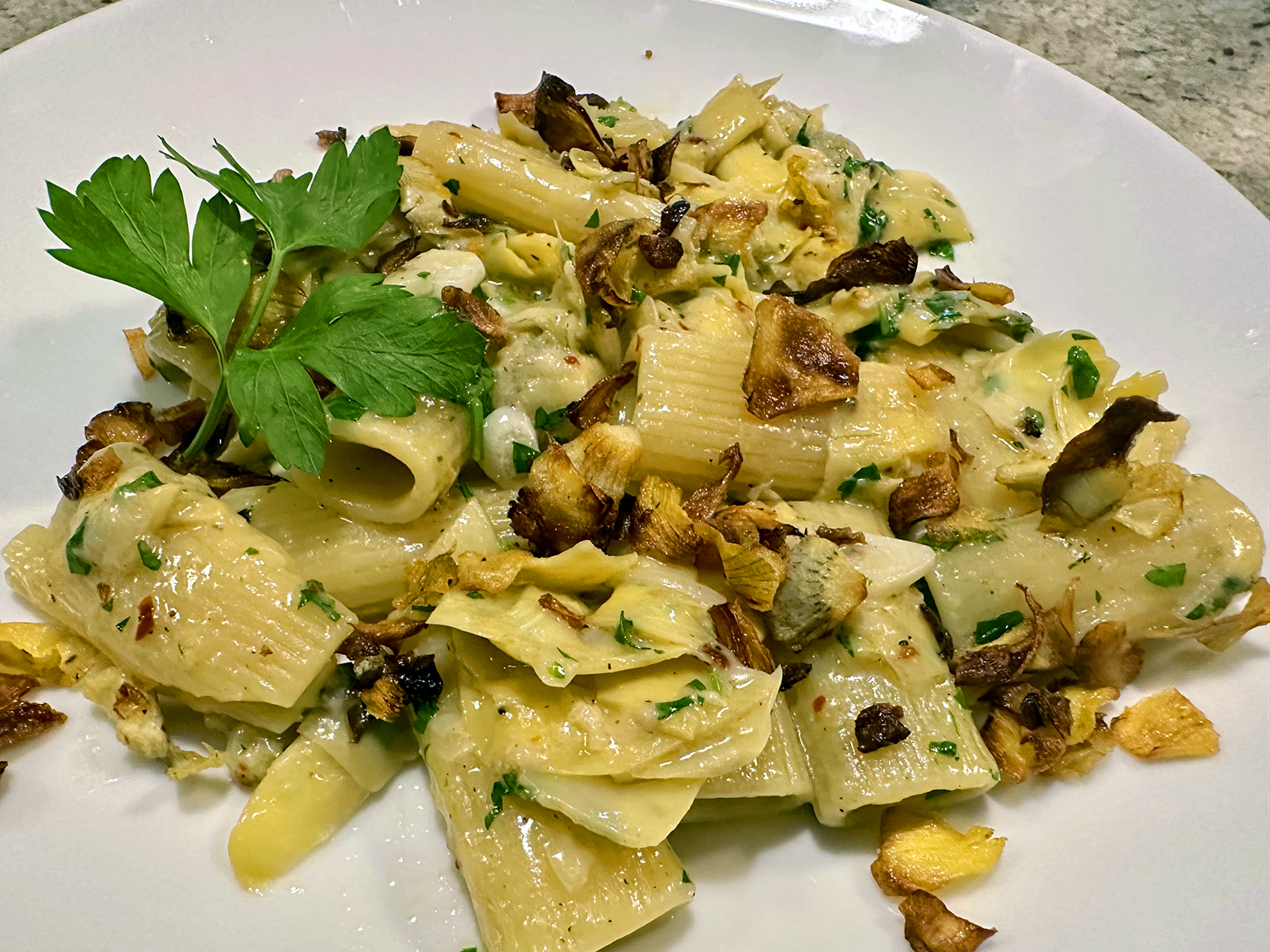
Crispy Artichoke Pasta

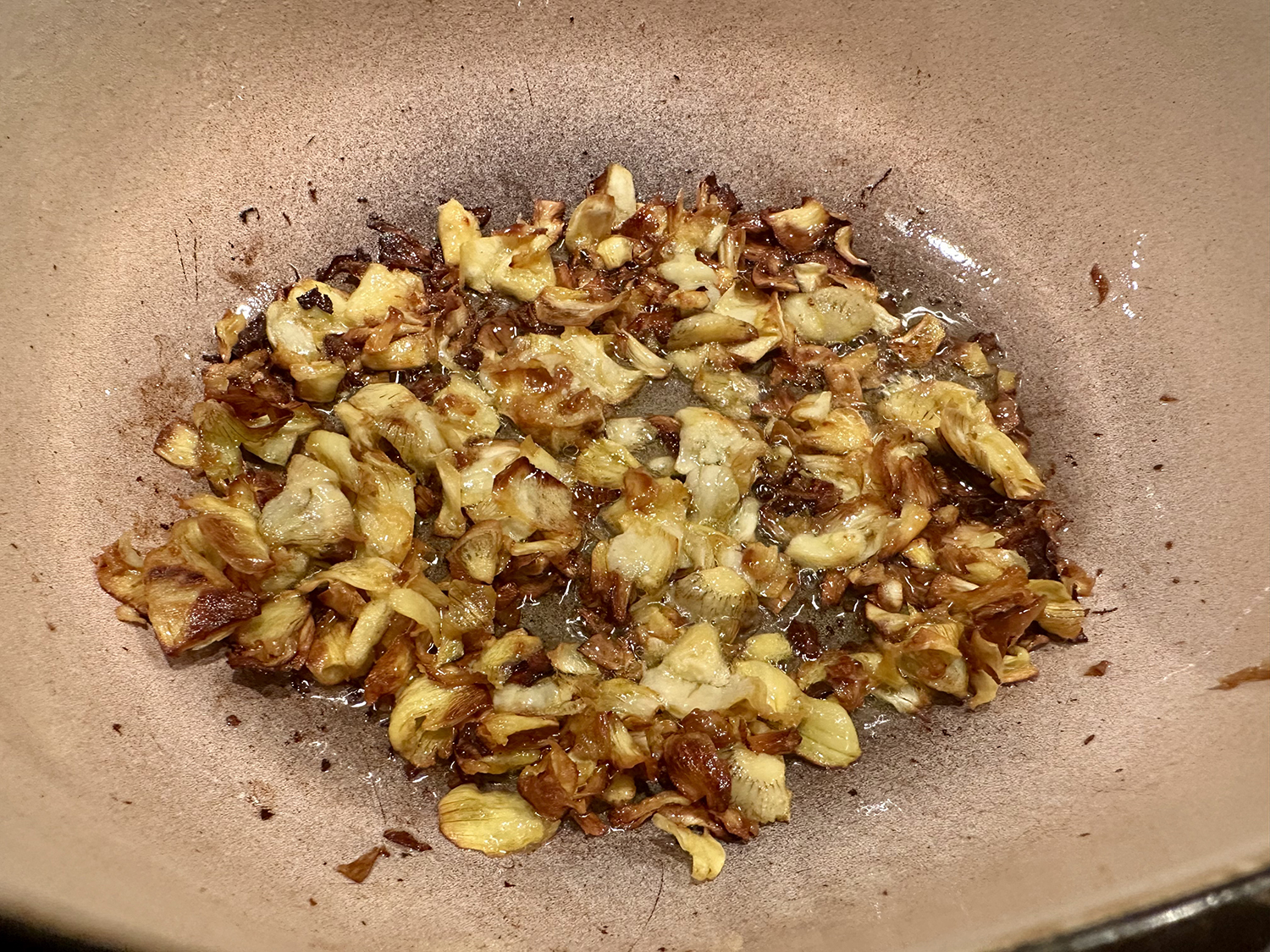
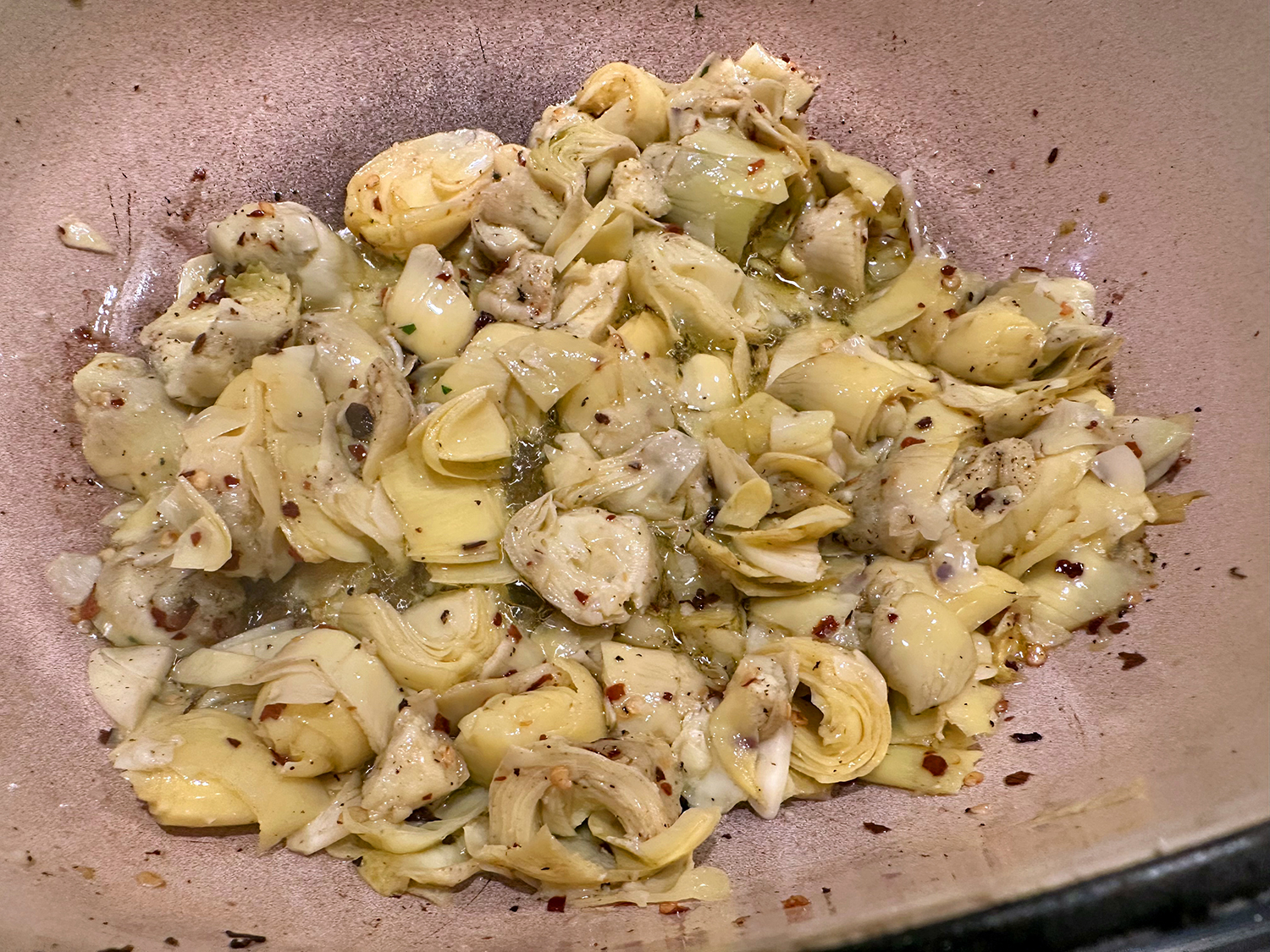
Quick, easy, tasty and filling—what’s not to like about that? Fast enough for a weeknight mad dash to dinner, this pantry pasta tastes more like a restaurant dish with its silky, flavorful sauce. The recipe uses canned artichokes which are brought to the peak of their crispy potential. The key is to remove as much water from the artichokes as possible by pressing them gently with paper towels (as you would tofu).

Some of the artichokes are fried in olive oil until shatteringly crisp, then the rest cook gently in more oil, along with garlic and chile flakes, to soften. They’re all mixed with pasta and Parmesan into a stunning weeknight meal. 

While the original recipe calls for one pound* of dried pasta, we cut that in half to 8 ounces, but kept the other ingredients as they were. However, using less rigatoni facilitated an adjustment for the amount of water. Save at least a cup of the pasta water before draining and introduce it bit-by-bit to the entire mixture until you get a silky consistency.

If you want to amp up the dish, you could add in some decent jarred tuna, crispy pancetta, bacon or prosciutto.

Crispy Artichoke Pasta

  • Servings: 4
  • Difficulty: easy
  • Print

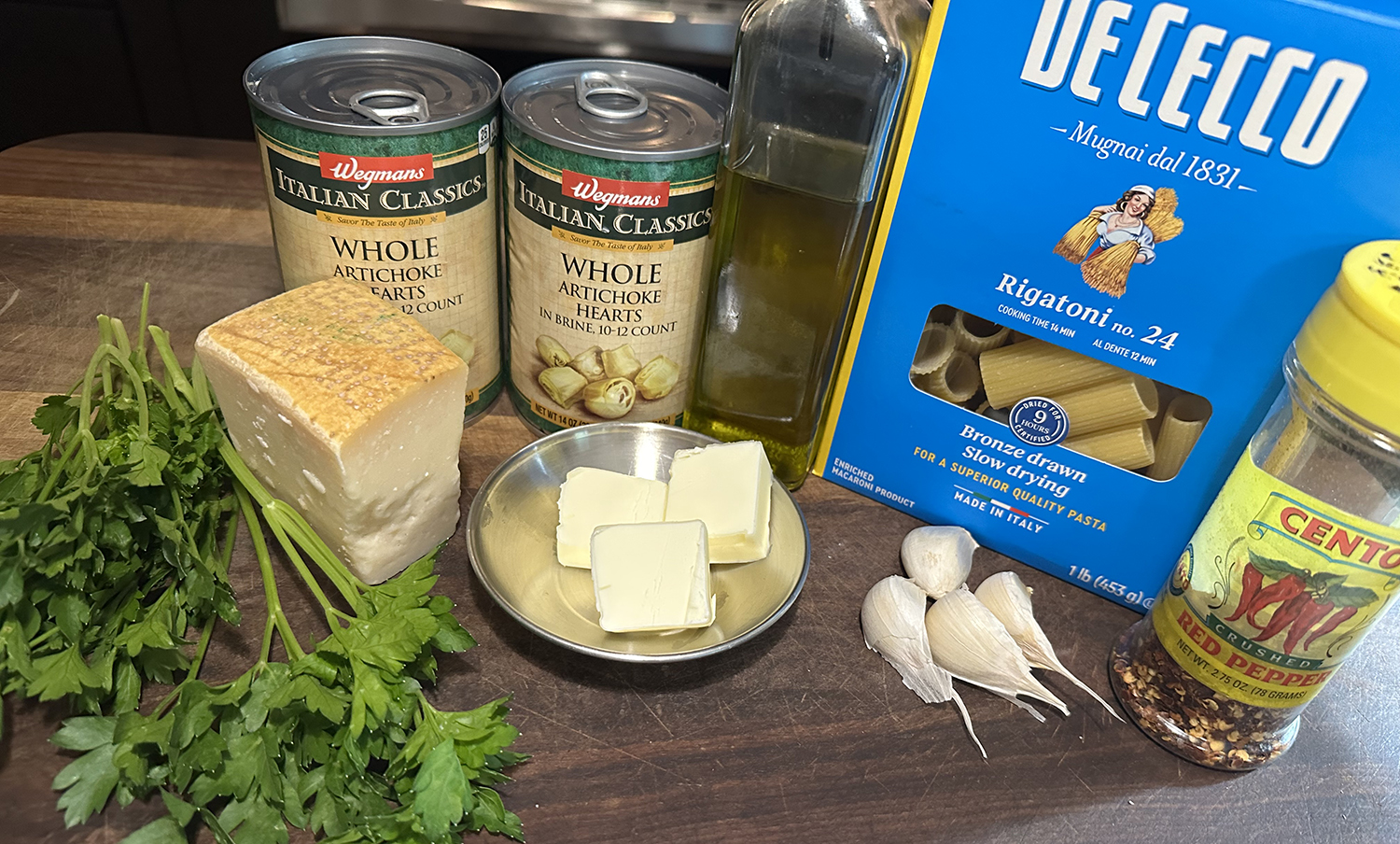
Ingredients

  • Salt and black pepper
  • 1 lb. short cut pasta*, such as rigatoni or gemelli
  • 2 14-oz. cans whole or quartered artichoke hearts
  • ½ cup extra-virgin olive oil
  • 4 garlic cloves, thinly sliced
  • 1 tsp. crushed red pepper flakes
  • 3 Tbsp. unsalted butter, cut into small pieces
  • ½ cup finely grated Parmesan, plus more for serving
  • ⅓ cup finely chopped parsley

Directions

  1. Bring a large pot of water to a boil, then season generously with salt. Cook the pasta until a bit firmer than al dente, about 2 fewer minutes than listed on the package. (It’ll finish cooking in the sauce.) Reserve 2 cups of pasta water, then drain.
  2. While the water comes to a boil, drain the artichokes and place on a clean kitchen towel (or paper towels). Cover with another kitchen towel (or paper towels), and gently press down to remove the excess water. Give the artichokes a rough chop.
  3. Line a plate with paper towels. Set another large pot over medium-high heat, and pour in ¼ cup oil. When the oil is hot, after 1 to 2 minutes, add one-third of the artichokes and cook, stirring occasionally, until deeply brown and crisp in most spots, 3 to 5 minutes. Using a slotted spoon, scoop out the artichokes, transfer to the lined plate and season with salt.
  4. Adjust heat to medium, add the remaining ¼ cup oil and the remaining artichokes to the pot, along with the garlic and red pepper. Season with salt and pepper and cook, stirring occasionally, until the garlic begins to soften and everything smells very good, 2 to 3 minutes.
  5. Add the drained pasta and 1½ cups of the pasta water and bring to a simmer, still over medium heat. (This may seem like a lot of liquid, but it will thicken when the remaining ingredients are added.) Add the butter and sprinkle in the Parmesan and continue to cook, tossing vigorously, until the cheese is melted and the sauce is creamy and clings to the pasta, 2 to 3 minutes. If the sauce looks too thick, add more pasta water, 1 to 2 tablespoons at a time. Turn off the heat and stir in the parsley. Season to taste with salt and pepper.
  6. Divide among bowls or plates. Sprinkle the reserved crispy artichokes and more Parmesan on top before serving.

http://www.lynnandruss.com

Adapted from a recipe by Andy Baraghani for NYTimes Cooking

Pork and Porcini Meatballs

When the cooler weather starts hanging around for good, we gravitate away from al fresco dining and grilled fare to comfort food meals such as braises, casseroles, and roasted meats with sides of mashed potatoes and gravy.

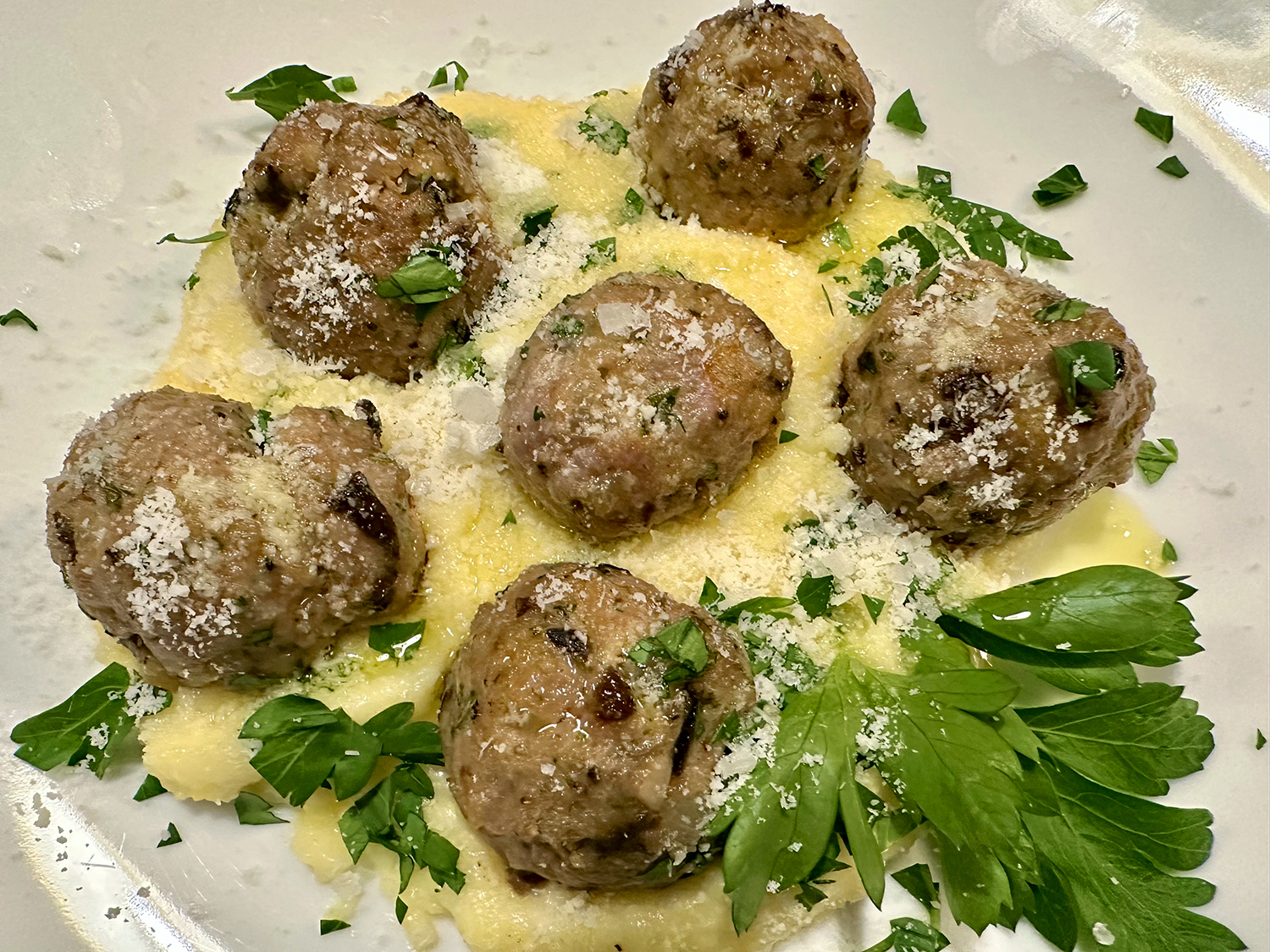
Then there are meatballs. Those round succulent tasty balls of ground meat packed with a variety of herbs and spices. This Pork and Porcini Meatballs recipe was by Nancy Oakes for a recent Food & Wine magazine.

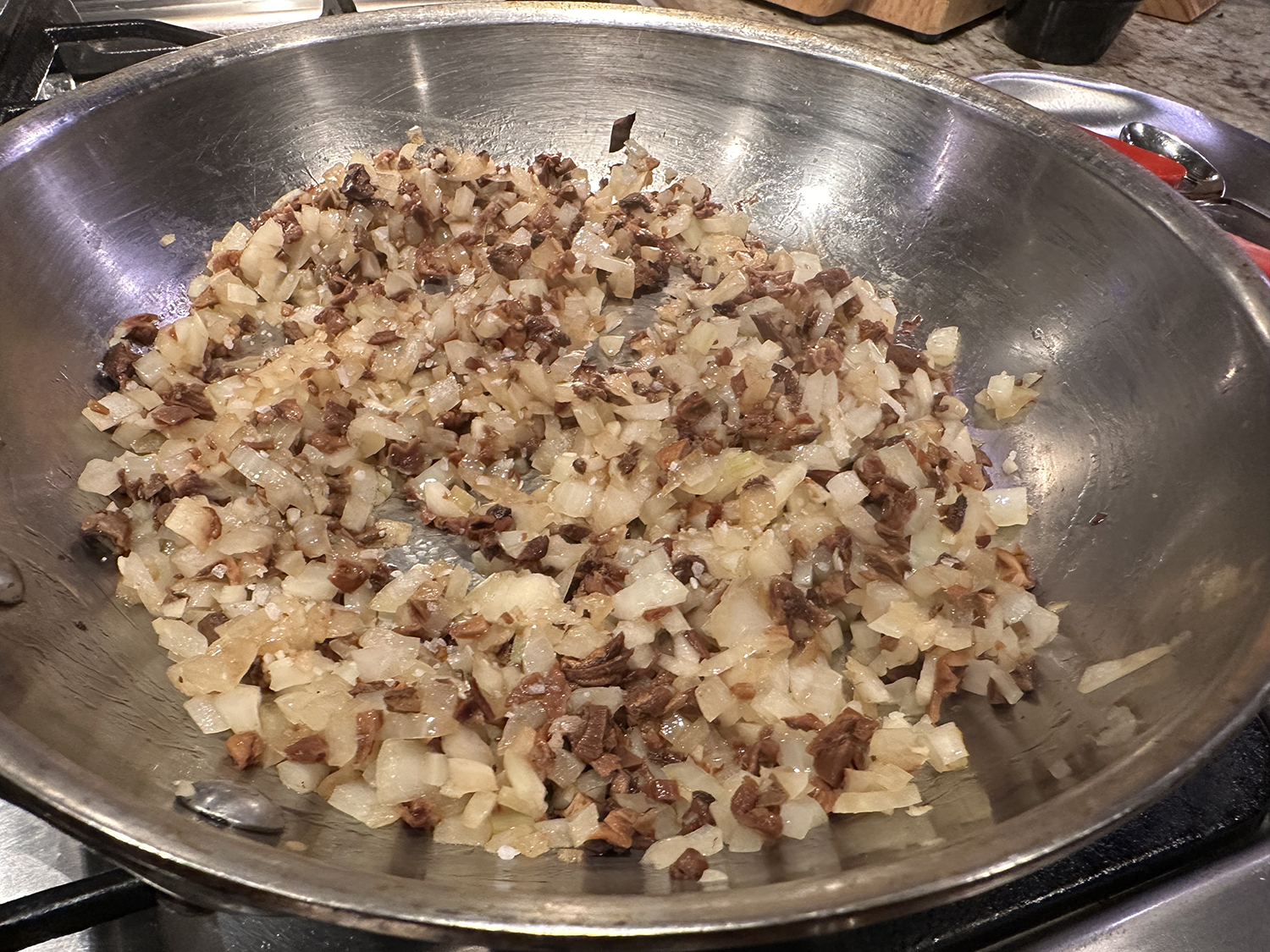
Her original recipe called for fresh or frozen porcini mushrooms, neither of which we have ever seen in our plethora of local supermarkets. Therefore, we went with dried porcinis that had to be reconstituted. That liquid was then used in place of the 1/4 cup of water*. You can buy a half (.5) ounce clamshell package of the funghi which is the perfect amount. Porcini mushrooms are a type of seasonal mushroom known for their meatier texture and rich, nutty flavor. They pop up from late summer into late autumn, peaking between September and October.

Also, the meatballs are supposed to be covered and refrigerated for 1, or up to 24 hours. We didn’t have that time, so we placed the rimmed baking sheet in the **freezer for 12-15 minutes. Then popped them directly into the heated oven.

The Hubs said that he liked the meatballs so much that they will now be our default meatballs, and are very versatile as to what you can do with them.

One recipe reviewer commented “These meatballs have a lingering savoriness, a heady aroma, and a juicy center. The porcini mushrooms add in a nuanced savoriness, and the cheeses add to that. The meat is so tender.”

Pork and Porcini Meatballs

  • Servings: 28 meatballs
  • Difficulty: easy
  • Print

Ingredients

  • 1 Tbsp. plus 2 tsp. olive oil, divided, plus more for serving
  • 1 small yellow onion, finely chopped (about 1 cup)
  • 1/4 cup chopped fresh or frozen porcini mushrooms
  • 1 garlic clove, finely chopped
  • 3/4 cup panko
  • 2 oz. Parmesan cheese, grated (about 1/2 cup), plus more for serving 
  • 2 oz. Pecorino Romano cheese, grated (about 1/2 cup)
  • 2 Tbsp. chopped fresh flat-leaf parsley, plus more for garnish
  • 2 tsp. chopped fresh rosemary
  • 1 tsp. chopped fresh mint
  • 1 tsp. kosher salt
  • 1 tsp. black pepper
  • 1 lb. ground pork
  • 1 large egg, beaten
  • 1/4 cup water* or use some of the liquid from the reconstituted porcinis
  • Cooked polenta or orzo, for serving

Directions

  1. Preheat oven to 400°F. Heat 1 tablespoon oil in a medium skillet over medium-low. Add onion, mushrooms, and garlic; cook, stirring often, until onion is softened, 5 to 6 minutes. Remove from heat; let cool 5 minutes.
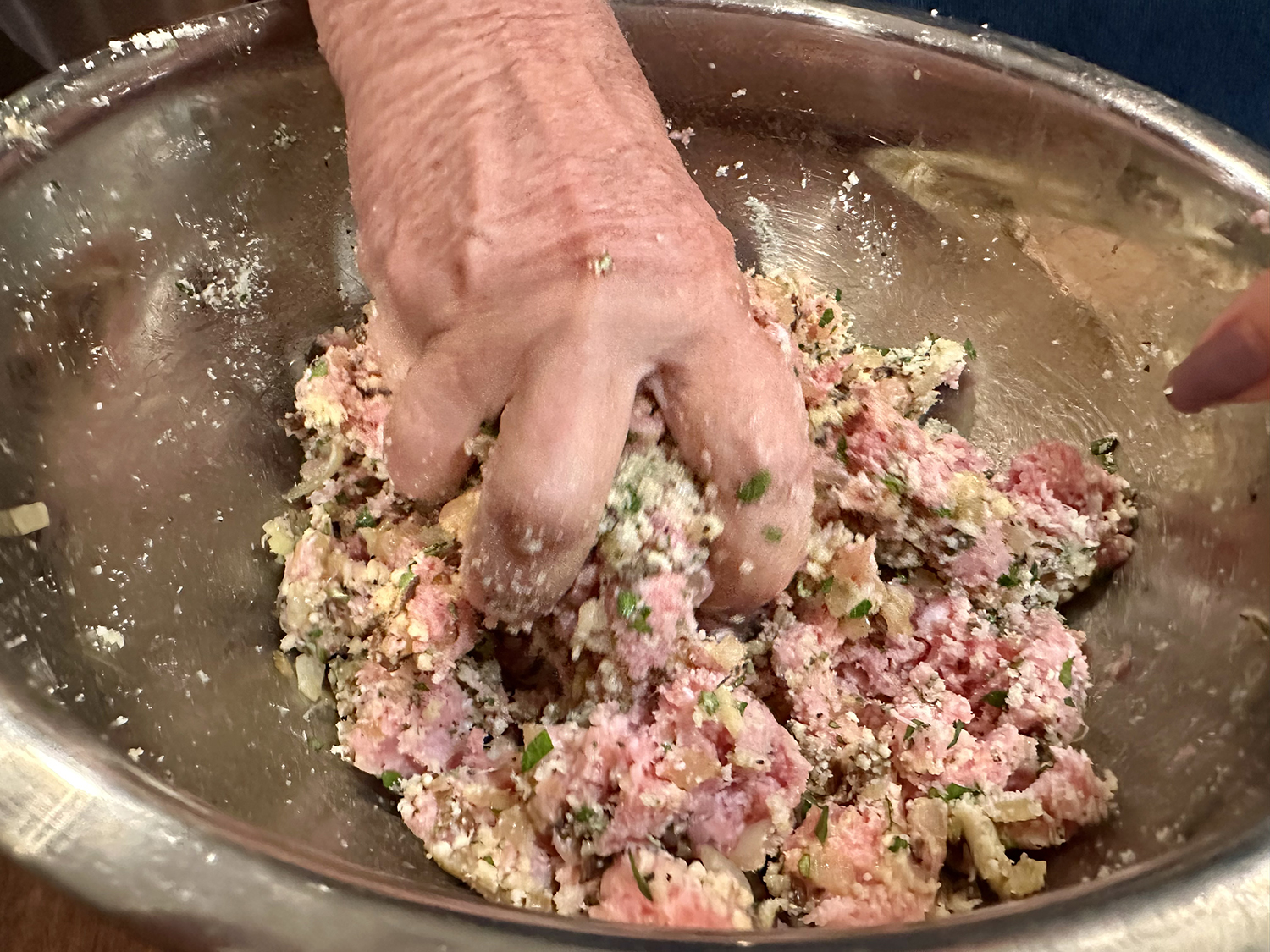
  2. Stir together panko, Parmesan, Pecorino Romano, parsley, rosemary, mint, salt, and pepper in a large bowl until combined. Stir in pork, egg, and cooled onion mixture until thoroughly combined. Slowly add 1/4 cup water, stirring until incorporated. Cover mixture, and refrigerate at least 1 hour or up to 24 hours. **We didn’t have the time, so we put the sheet pan of meatballs in the freezer for about 12 minutes.
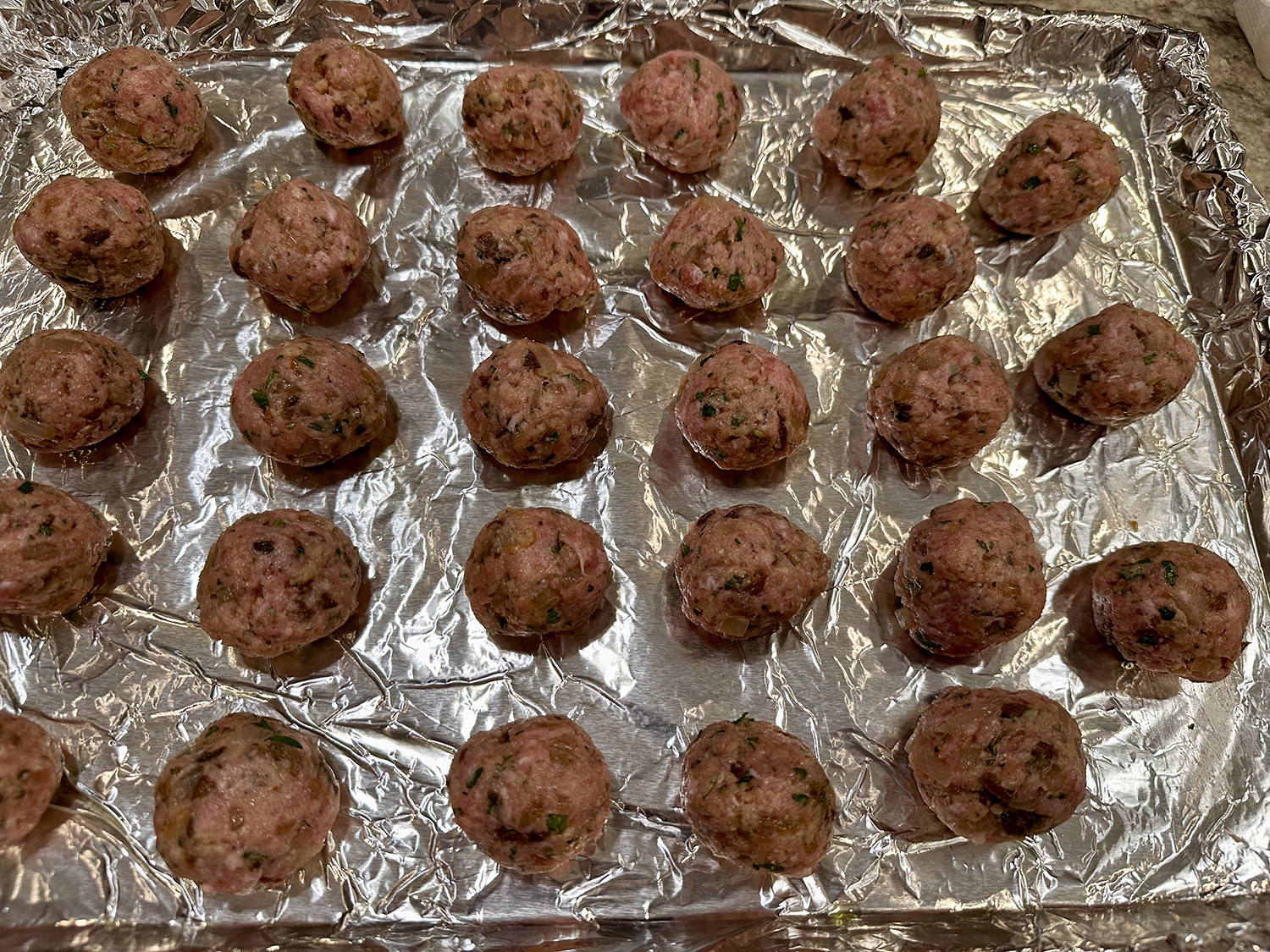
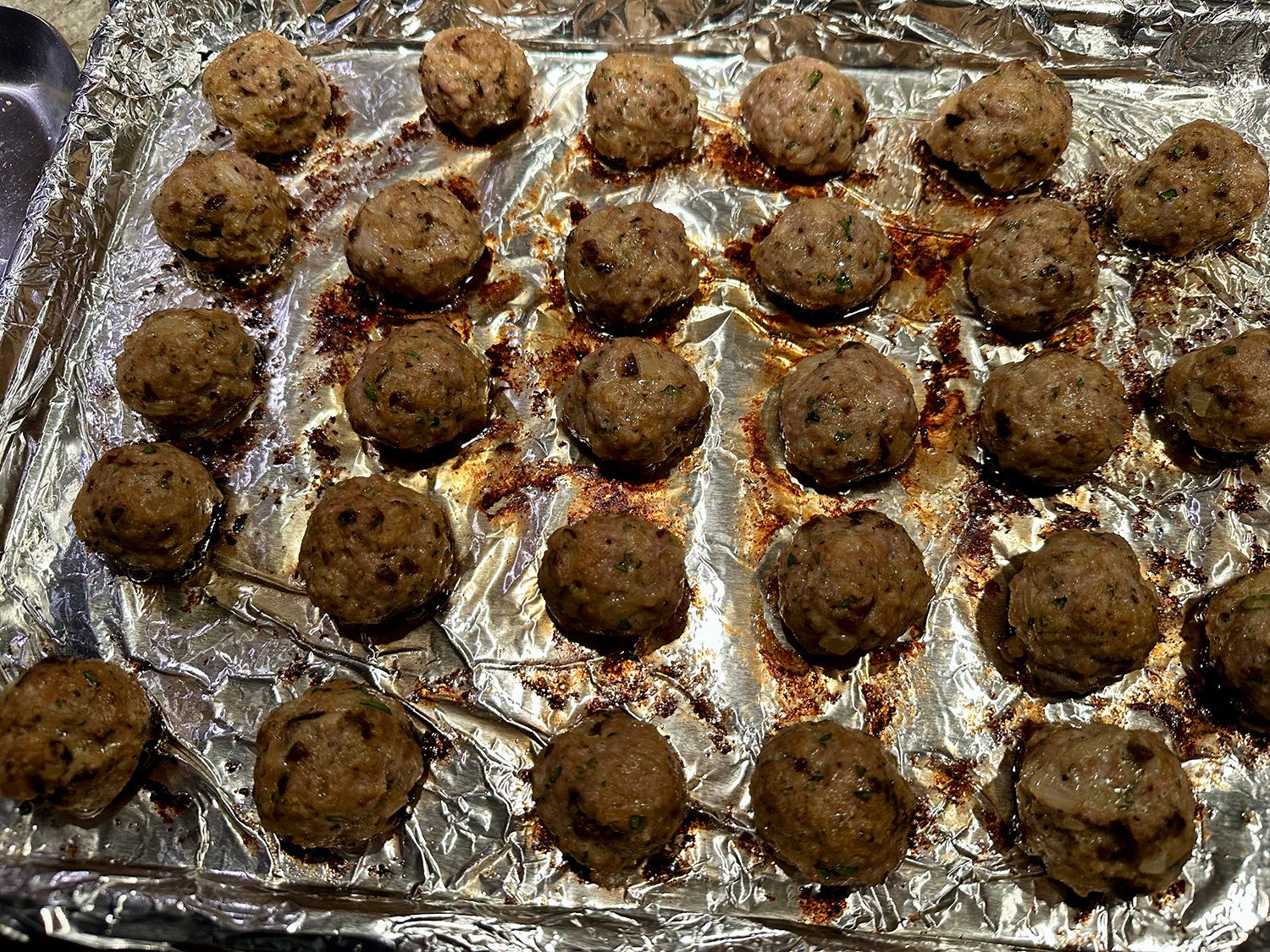
  3. Line a large rimmed baking sheet with aluminum foil; coat with remaining 2 teaspoons oil. Shape pork mixture into 28 (1-ounce) meatballs; transfer to baking sheet. Bake in preheated oven until an instant-read thermometer inserted in center of meatball registers 160°F, 15 to 17 minutes.
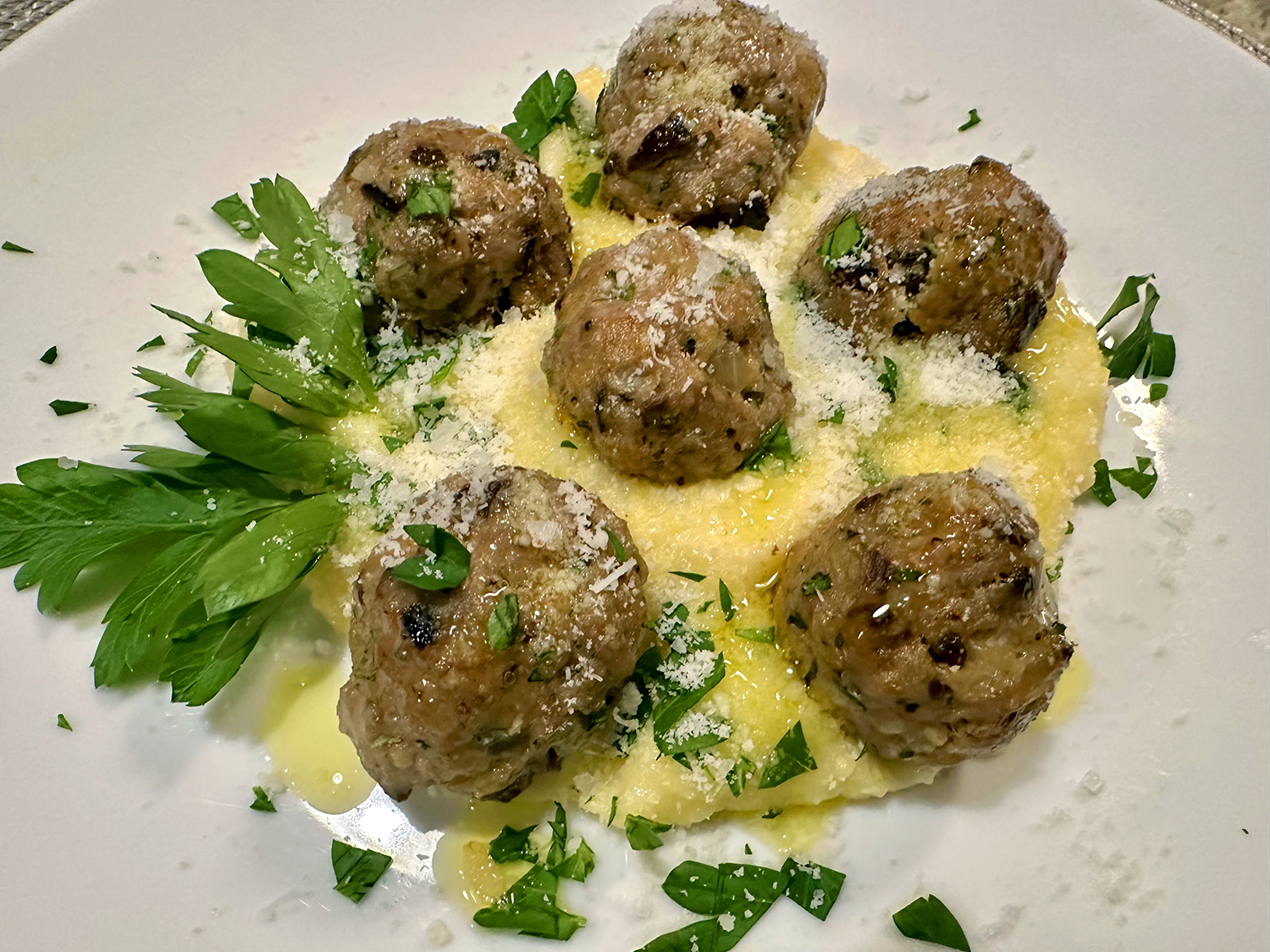
  4. Serve meatballs over polenta; drizzle with additional olive oil. Sprinkle with Parmesan and parsley; serve hot.

http://www.lynnandruss.com

Adapted from a recipe by Nancy Oakes for Food & Wine Magazine

Hungarian-Style Cabbage and Bean Soup

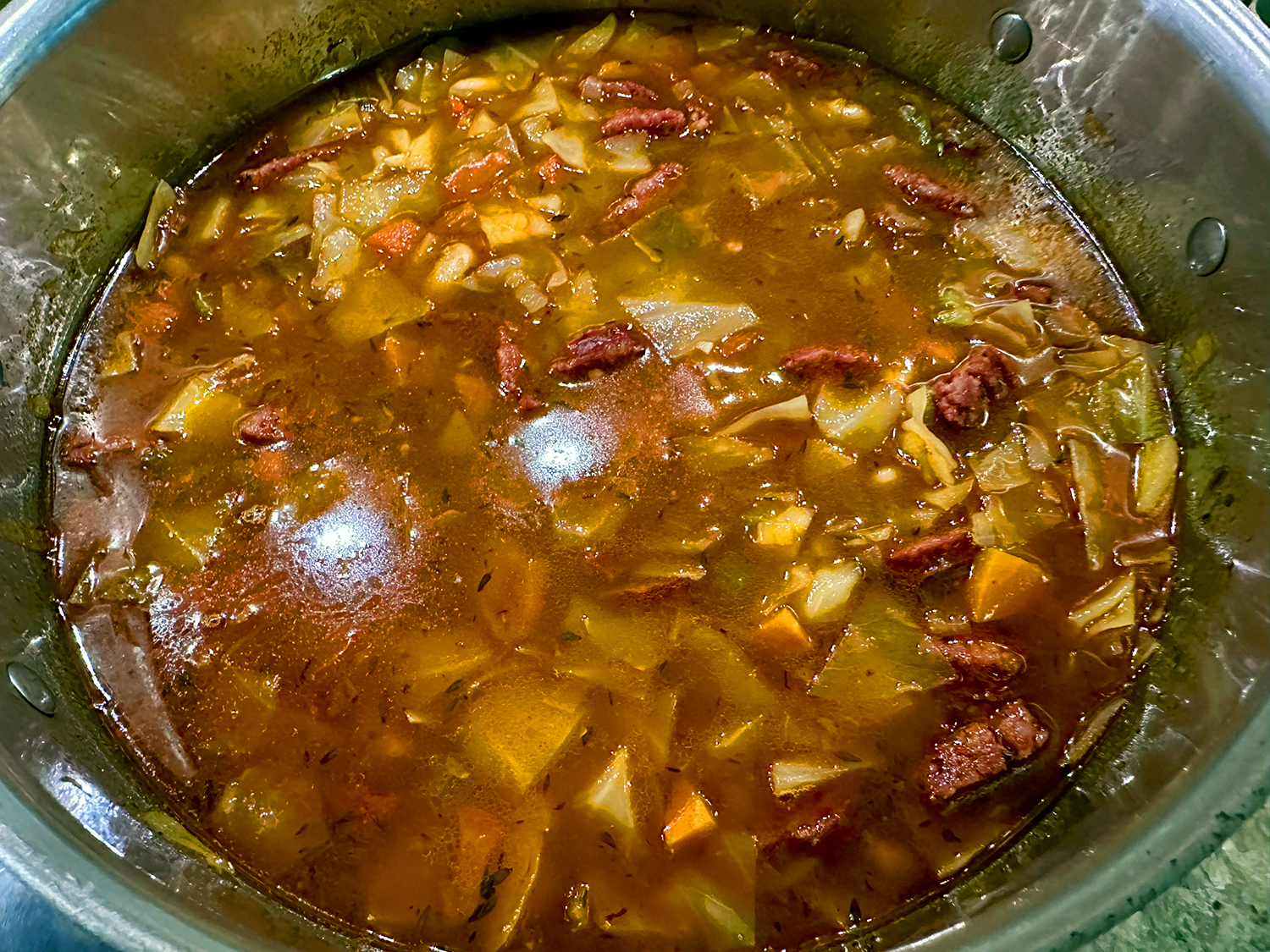
When the weather cools, we start craving dense homemade soups. This one is a concoction that The Hubs whipped up as he went along. It is every bit as satisfying as a full-course meal, and has lots of veggies and fiber.

Using homemade stock always ratchets up the flavor component. Here we used a homemade ham stock, but chicken stock would work just fine. Also, our kielbasa was homemade coming from a local butchered pig, of which we bought a 1/4 share. If you prefer another type of sausage, go ahead.

There’s a lot of chopping so put on some good background music and perhaps sip a glass of wine while you get down with this hearty soup!

Hungarian-Style Cabbage and Bean Soup

  • Servings: 8
  • Difficulty: easy
  • Print

Ingredients

  • 4 Tbsp. olive oil, divided
  • 1/2 head of a large green cabbage, chopped
  • 2 large carrots, peeled and chopped
  • 2 celery stalks, peeled and chopped
  • 6 garlic cloves, peeled and minced
  • 1 red bell pepper, cored, seeded and chopped
  • 4 cups ham (or chicken stock)
  • 4 cups water
  • 1 tsp. smoked paprika
  • 4 tsp. sweet paprika
  • 2 tsp. salt
  • 1 tsp. black pepper
  • 3 bay leaves
  • 1 Tbsp. fresh thyme, stripped off stem or tied in a bundle
  • 1 1/2 lbs. kielbasa*, sliced lengthwise and cut into 1/4″ half moons
  • 2 cans cannellini beans, drained
  • 2 tsp. apple cider vinegar
  • 1/4 cup parsley, chopped

Directions

  1. Heat 3 tablespoons of olive oil in a large heavy soup pot until hot. Add celery, carrot, red pepper, and onion, sauté until softened, about 7 minutes. Add garlic, sauté for 1 more minute.
  2. Stir in both paprikas, salt, pepper, bay leaves and thyme
  3. Add cabbage, broth and 4 cups water. Bring to a boil, reduce to simmer and cover until the cabbage is tender, about 20 minutes.
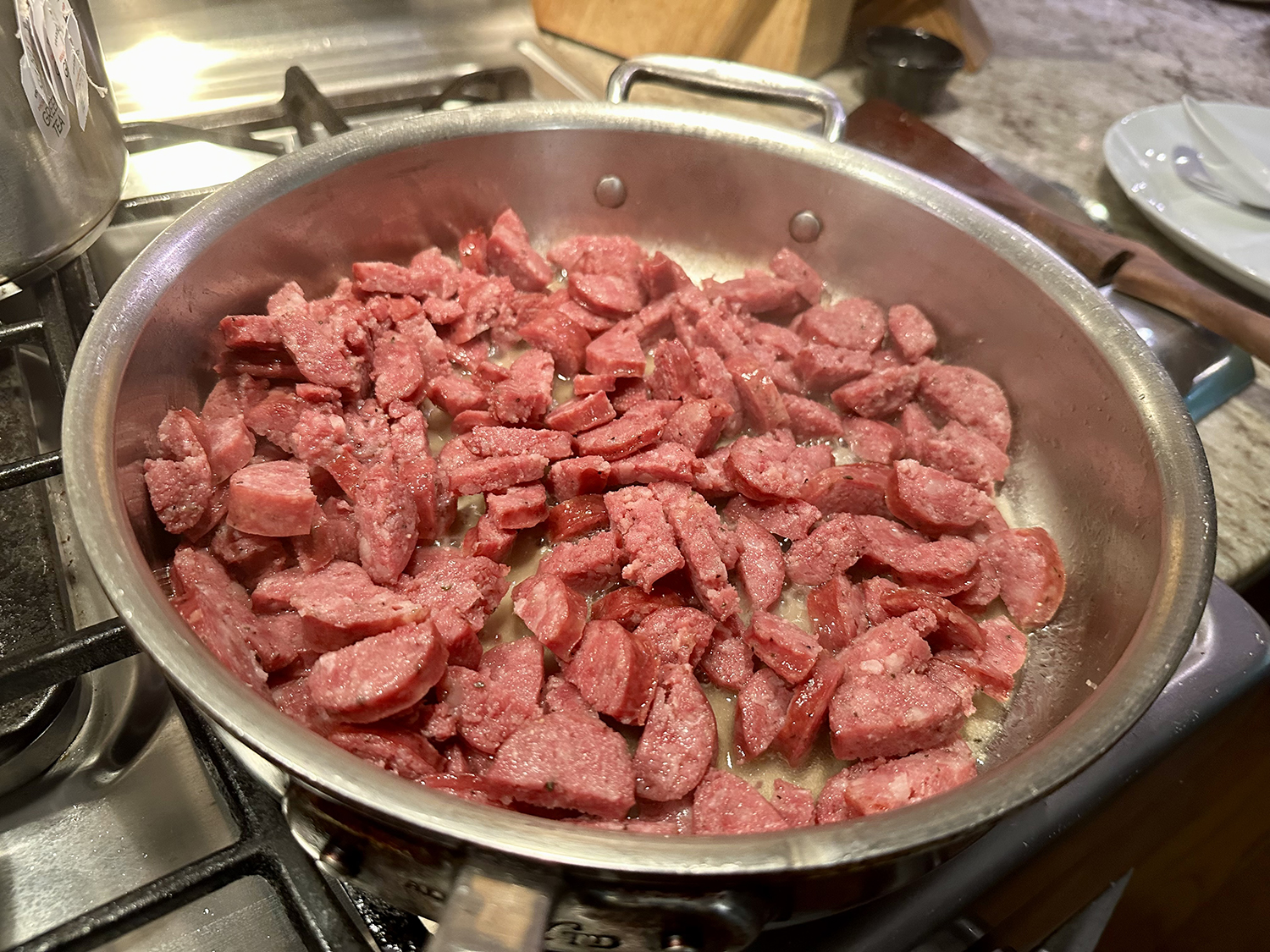
  4. In the meantime, heat a large pan with 1 tablespoon olive oil, add the sausage slices, and sauté for about 5 minutes stirring occasionally; remove to plate. (*This step is not necessary unless you would prefer it, OR, your sausage is not precooked.)
  5. Add beans and sausage to pot, simmer for 10 minutes. Remove from heat, taste for salt and pepper, and stir in parsley and vinegar.
  6. Serve hot, or cool down before refrigeration.

http://www.lynnandruss.com

Balsamic Mushroom and Sausage Pasta

Dark and moody in color but surprisingly bright and light to eat, this quick dish comes together in just 30 minutes. Most of the ingredients are likely to be in your pantry, or at the least, easy to source.

Hot Italian sausage sings backup in this dish to a pound of mushrooms and a heap of caramelized red onion. A glug of balsamic vinegar, used to scrape up any browned bits that build up on the bottom of the pot, adds complexity, acidity, and a little sweetness in one fell swoop. Use a mid-length tube-shaped pasta so all the mushroom and sausage bits have a place to snuggle.

We had fresh basil on hand, so some coarsely chopped basil was both mixed into the pan at the end of cooking, and also used as a garnish. Serve with a side salad and voila, dinner done. Of course if you want to amp up the meal a bit, some tasty, toasty garlic bread is always a welcome companion. We served ours with a side of roasted broccoli rabe.

Balsamic Mushroom and Sausage Pasta

  • Servings: 4
  • Difficulty: easy
  • Print

Ingredients

  • 12 oz. medium tube pasta (such as mezzi rigatoni or pipe rigate)
  • 1½ tsp. Diamond Crystal or ¾ tsp. Morton kosher salt, divided, plus more
  • 4 Tbsp. extra-virgin olive oil, divided
  • 4 Tbsp. unsalted butter, divided
  • 1 lb. crimini or button mushrooms, cut into ¼” pieces
  • 8 oz. hot Italian sausage
  • 1 large red onion, finely chopped
  • 4 garlic cloves, coarsely chopped
  • 2 Tbsp. tomato paste
  • ¼ tsp. crushed red pepper flakes
  • Freshly ground pepper
  • ⅓ cup balsamic vinegar
  • 1/2 cup fresh basil, roughly chopped, loosely packed (optional)
  • Finely grated Parmesan (for serving)

Directions

  1. Cook 12 ounces medium tube pasta in a large pot of boiling salted water, stirring occasionally, until al dente. Drain, reserving 1 cup pasta cooking liquid.
  2. Meanwhile, heat 2 tablespoons extra-virgin olive oil and 2 tablespoons unsalted butter in a large Dutch oven or other heavy pot or skillet over medium-high until butter is melted. Add 1 pound crimini or button mushrooms, cut into ¼” pieces, and cook, stirring occasionally, until slightly softened, about 2 minutes. Add 1 teaspoon Diamond Crystal or ½ teaspoon Morton kosher salt; cook, stirring occasionally, until liquid is evaporated and mushrooms are browned, 5–7 minutes. Transfer to a small bowl.
  3. Heat remaining 2 tablespoons extra-virgin oil in same pot over medium-high. Add 8 ounces hot Italian sausage and ½ teaspoon Diamond Crystal or ¼ teaspoon Morton kosher salt. Cook, breaking meat into smaller pieces with a wooden spoon or heatproof rubber spatula, until cooked through, about 2 minutes.
  4. Add 1 large red onion, finely chopped, and cook, stirring occasionally, until lightly browned, about 5 minutes. Add 4 garlic cloves, coarsely chopped, and cook, stirring often, until combined and fragrant, about 2 minutes. Return mushrooms to pot and add 2 Tbsp. tomato paste and ¼ teaspoon crushed red pepper flakes; season with freshly ground black pepper. Cook, stirring often, until paste is darkened in color, about 2 minutes. Pour in ⅓ cup balsamic vinegar and cook, scraping up any browned bits stuck to bottom of pot, 30 seconds.
  5. Reduce heat to medium. Add pasta, ½ cup reserved pasta cooking liquid, and remaining 2 tablespoons unsalted butter. Cook, stirring often and adding more pasta cooking liquid a little at a time if needed, until pasta is coated and sauce is glossy, about 30 seconds. Stir in chopped basil if using.
  6. Transfer pasta to a platter; top with finely grated Parmesan and more basil, if using.

http://www.lynnandruss.com

Recipe by Kendra Vaculin for Bon Appétit
Iraqi-Spice Crusted Chicken

This just sounded delicious from the moment we started reading the recipe. To shorten the very long list of spices that typically make up the aromatic rub for traditional Iraqi grilled chicken, Milk Street reached for both curry powder and garam masala. These two Indian seasoning blends add up to about a dozen different spices at play in this recipe.

Ground sumac in the rub lends the chicken earthy, citrusy notes and, along with the paprika, a deep, brick-red hue. Spatchcocked and grilled, the bird cooks in under an hour and is rich and complexly flavored, with smokiness from the grill.

Well, ours started on the hot grill but within 15 minutes of placing the bird on the grates, Mother Nature came roaring in with a wicked storm. Plan B, of roasting the chicken in a 450° oven was the second method of choice. It still ended up super juicy and bursting with flavor. To complete the meal we served fresh corn on the cob and a tomato salad.

Many supermarkets now carry ready-to-cook spatchcocked chickens. So if you are a little hesitant to do it yourself, save yourself a bit of aggravation and buy one. We like to get the whole bird for the extra body parts (neck, back, hearts, etc.) to make homemade chicken stock.

One step not in the original recipe, but ensures juicy white meat, is brining the chicken in a mixture of water, salt and sugar in a ziploc bag for 2, or up to 4 hours. See instructions below.

BTW, don’t forget to open the grill vents, both on the bottom of the grill and on the lid, if you’re using charcoal. This is will allow airflow so the fire does not extinguish during the covered cooking time.

Iraqi-Spice Crusted Chicken

  • Servings: 4
  • Difficulty: easy
  • Print

Ingredients

  • 2½ Tbsp. extra-virgin olive oil, divided
  • 3 medium garlic cloves, grated
  • 1 Tbsp. ground sumac
  • 2 tsp. ground coriander
  • 2 tsp. curry powder
  • 1 tsp. garam masala
  • 1 tsp. sweet or hot paprika
  • ¾ tsp. ground cumin
  • ½ tsp. ground cardamom
  • Kosher salt and ground black pepper
  • 1 whole chicken, about 4 lbs.
  • Lemon wedges, to serve

For Brine

  • 1 qt. cold water
  • 6 Tbsp. table salt
  • 6 Tbsp. white sugar

Directions

  1. In a small skillet over low, combine 1½ tablespoons of oil and the garlic. Cook, stirring frequently, until fragrant and sizzling, but not browned, about 2 minutes. Transfer to a small bowl and set aside. In another small bowl, stir together the sumac, coriander, curry powder, garam masala, paprika, cumin, cardamom, 1 tablespoon salt and 1 teaspoon pepper. Add 2 tablespoons of the spice mixture to the garlic oil and stir to form a paste.
  2. To Spatchcock: Place the chicken breast down on a cutting board. Using sturdy kitchen shears, cut along both sides of the backbone, from top to bottom; remove and discard the backbone (or save to make broth).
  3. To Brine: Stir sugar and salt into water until dissolved. Brine spatchcocked chicken in mixture for 2-4 hours. Drain, rinse, and dry chicken with paper towels before cooking.
  4. Open up the chicken, then turn it skin up. Use the heel of your hands to press down firmly on the thickest part of the breast until the wishbone snaps. Loosen the skin over the chicken’s breasts and thighs by gently working your fingers between the skin and the flesh. Using your fingers, evenly distribute the garlic-spice paste under the skin and rub it into the flesh. Sprinkle the remaining spice mixture evenly on both sides of the chicken, patting gently to help it adhere. Let stand uncovered at room temperature for about 45 minutes.
  5. Prepare a grill for indirect, high-heat cooking. For a charcoal grill, spread a large chimney of hot coals evenly over one side of the grill bed; open the bottom grill vents and the lid vent. For a gas grill, turn all burners to high. Heat the grill, covered, for 5 to 10 minutes, then clean and oil the cooking grate.
  6. Insert an 8-inch metal or wooden skewer laterally through one of the chicken’s drumsticks and into the other to hold the legs in place. Tuck the wing tips to the back. If using a gas grill, leave the primary burner on high and turn off the other burners. Set the chicken skin up on the cooler side of the grill, legs facing the heat. Cover and cook for 25 minutes.
  7. Using tongs, rotate the chicken to bring the breast side closest to the heat. Cover and cook until the thickest part of the breast reaches 160°F and the thighs reach 175°F, another 25 to 35 minutes.

http://www.lynnandruss.com

Recipe by Milk Street