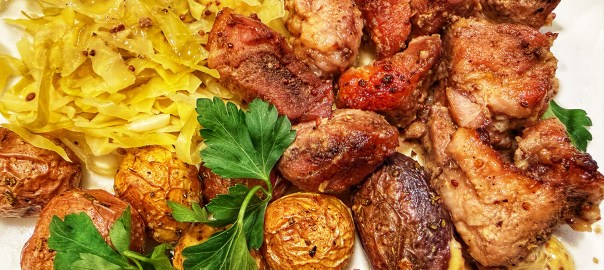
Tag Archives: braise

Spicy Korean Braised Chicken and Vegetables

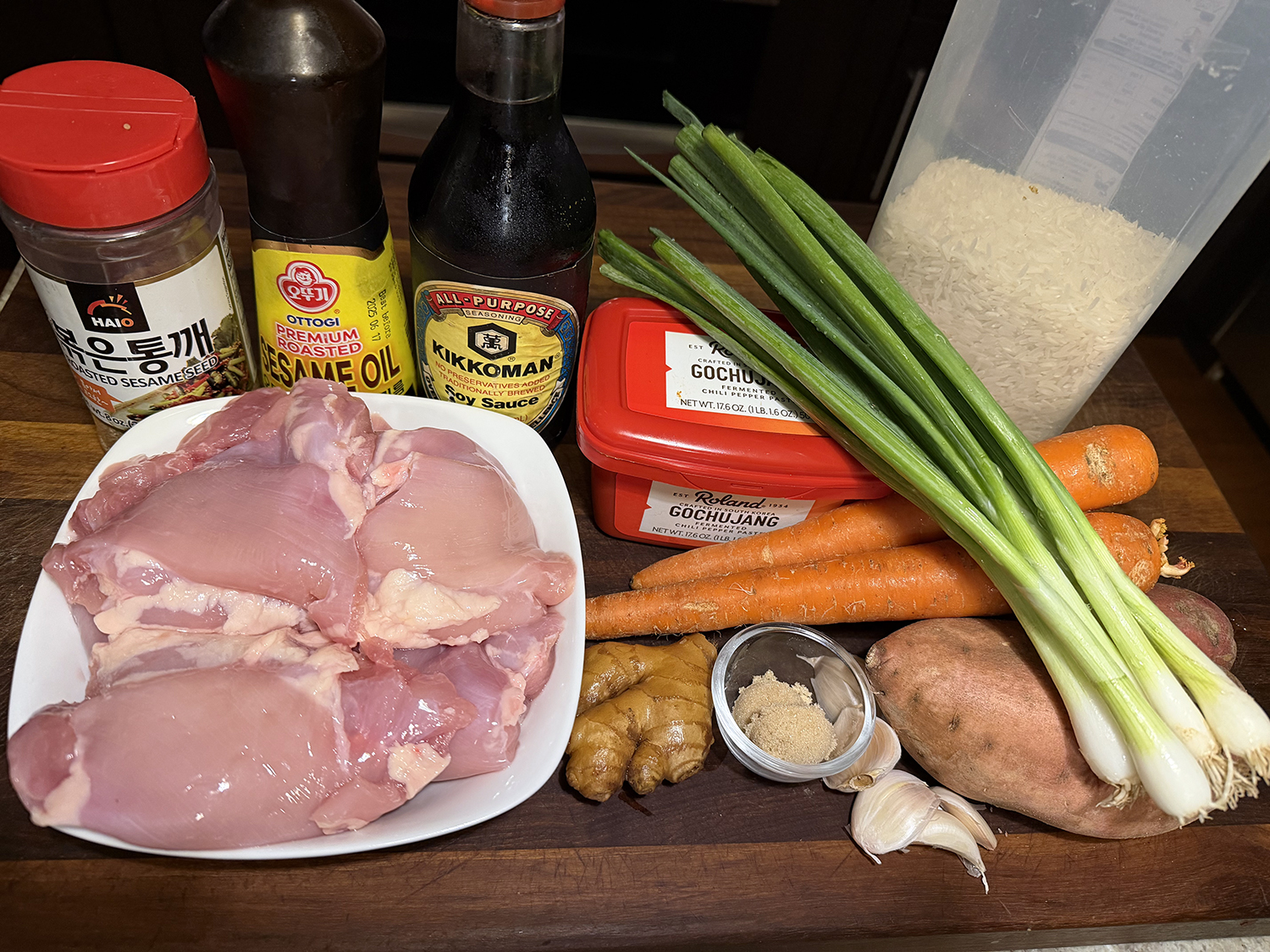
This flavor-packed stew from Milk Street, called dakbokkeumtang, counts gochujang—or Korean fermented chili paste—as one of its primary seasonings. The thick, bright-red paste usually is sold in plastic tubs or bottles in Asian markets or in the international aisle of regular supermarkets. It’s pretty much a staple in our house.

On the other hand, soy sauce and a dose of brown sugar add salty-sweet flavor to balance to the dish, while sesame oil and seeds add nutty notes. The potatoes and carrots absorb the seasonings so the pieces are flavored throughout. Therefore make sure to cut the vegetables into pieces about 1 inch in size, not smaller, so they don’t wind up overdone. Serve the stew with steamed rice.

NOTE: Don’t use chicken breasts instead of thighs. Sturdy dark meat does well when braised, but more delicate white meat dries out and turns tough. Dark meat also lends the finished dish a richer, meatier flavor.

There is a conflict in the quantity of potatoes to use. In the Milk Street Magazine Sept./Oct. issue, it notes 12 ounces (as listed below), while online, their recipe indicates the amount as 10 ounces. We decided on an even greater amount and switched out the Yukons for sweet potatoes. Because of this flip, we used a third less brown sugar. And the amount of ginger was increased because that’s how we roll!

After only 8 minutes in the pressure cooker (and 10 minutes more for pressure reduction), we had a scrumptiously incredible flavorful dinner! Every morsel was fork-tender, no knife needed.

Spicy Korean Braised Chicken and Vegetables

  • Servings: 4
  • Difficulty: easy
  • Print

Ingredients

  • 3 Tbsp. gochujang
  • 2 Tbsp. unseasoned rice vinegar
  • 2 Tbsp. soy sauce
  • 1 Tbsp. packed brown sugar
  • 1 Tbsp. toasted sesame oil, plus more to serve
  • 2 inch piece fresh ginger (about 1½ oz.), peeled, cut into 3 pieces and smashed
  • 5 medium garlic cloves, finely chopped
  • 1 bunch scallions, whites chopped, greens cut into 1-inch lengths, reserved separately
  • 2 lbs. boneless, skinless chicken thighs, trimmed and halved
  • 12 oz. Yukon Gold potatoes, peeled and cut into 1-inch chunks
  • 2 medium carrots, peeled and cut into 1-inch pieces
  • Sesame seeds, toasted, to serve

Directions

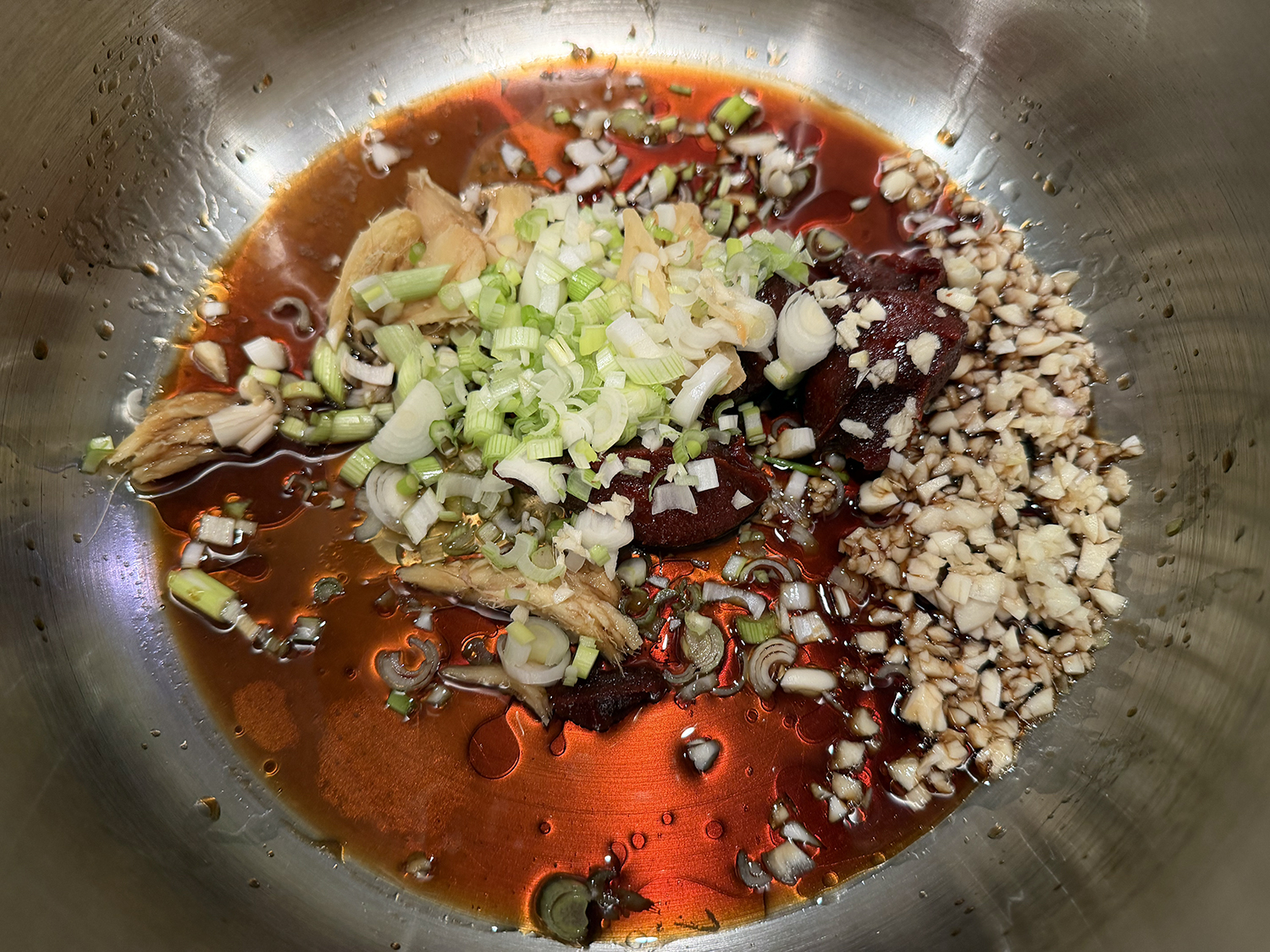
  1. In a 6-quart Instant Pot (or pressure cooker), whisk together the gochujang, vinegar, soy sauce, sugar, sesame oil, ginger, garlic and scallion whites. Add the chicken and toss to coat. Let stand for 15 minutes. Stir in the potatoes, carrots and ½ cup water, then distribute in an even layer.
  2. Add the chicken and toss to coat. Let stand for 15 minutes. Stir in the potatoes, carrots and ½ cup water, then distribute in an even layer.
  3. Lock the lid in place and move the pressure valve to Sealing. Select Pressure Cook or Manual; make sure the pressure level is set to High. Set the cooking time for 8 minutes. When pressure cooking is complete, let the pressure reduce naturally for 10 minutes, then quick-release the remaining steam by moving the pressure valve to Venting. Press Cancel, then carefully open the pot.
  4. Remove and discard the ginger (this may be a bit impossible), then stir in the scallion greens. Transfer to a serving bowl, drizzle with additional sesame oil and sprinkle with sesame seeds.

http://www.lynnandruss.com

Adapted from a recipe by Courtney Hill for Milk Street

Catalan Braised Pork Shoulder with Dried Fruit

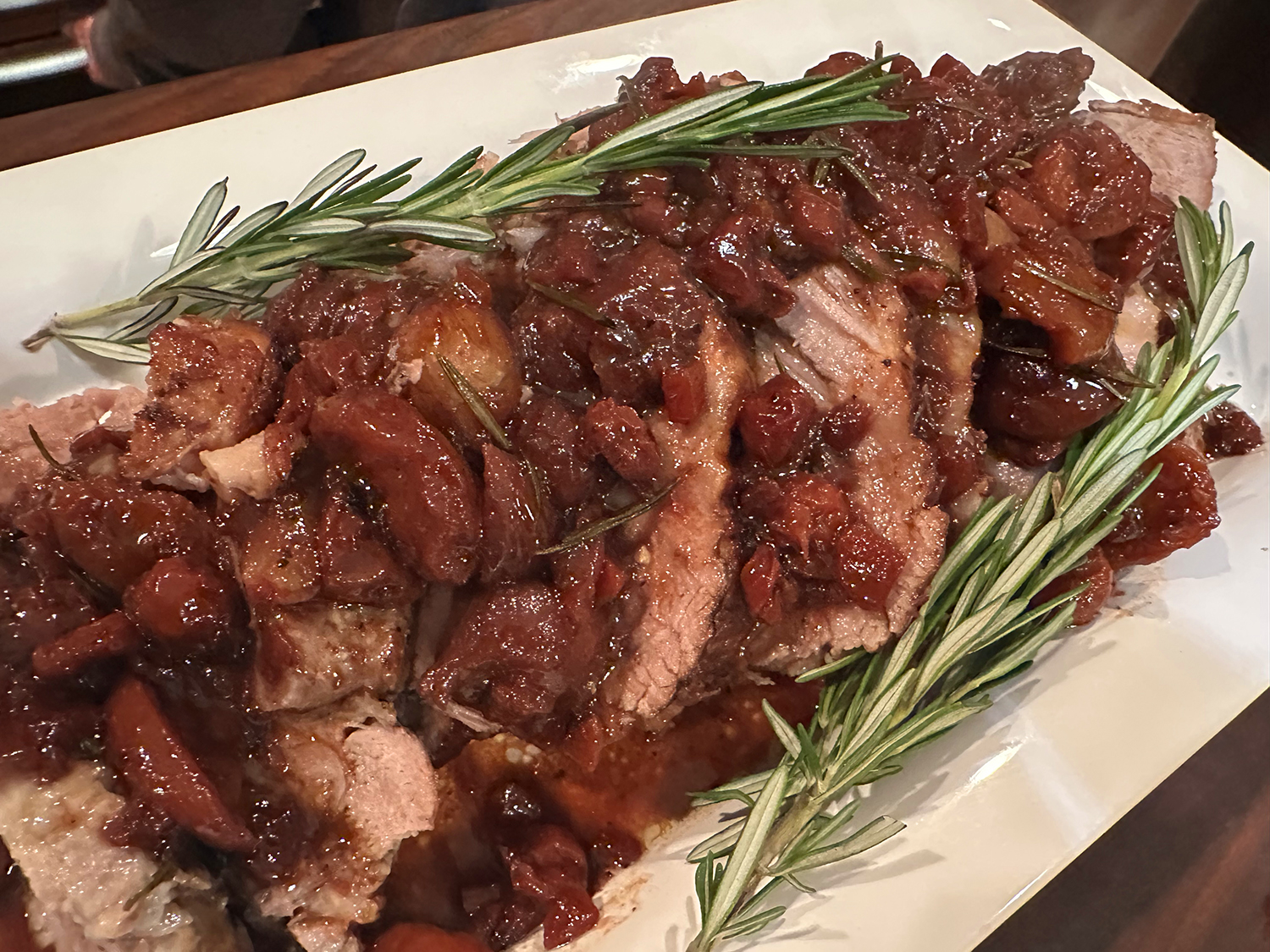
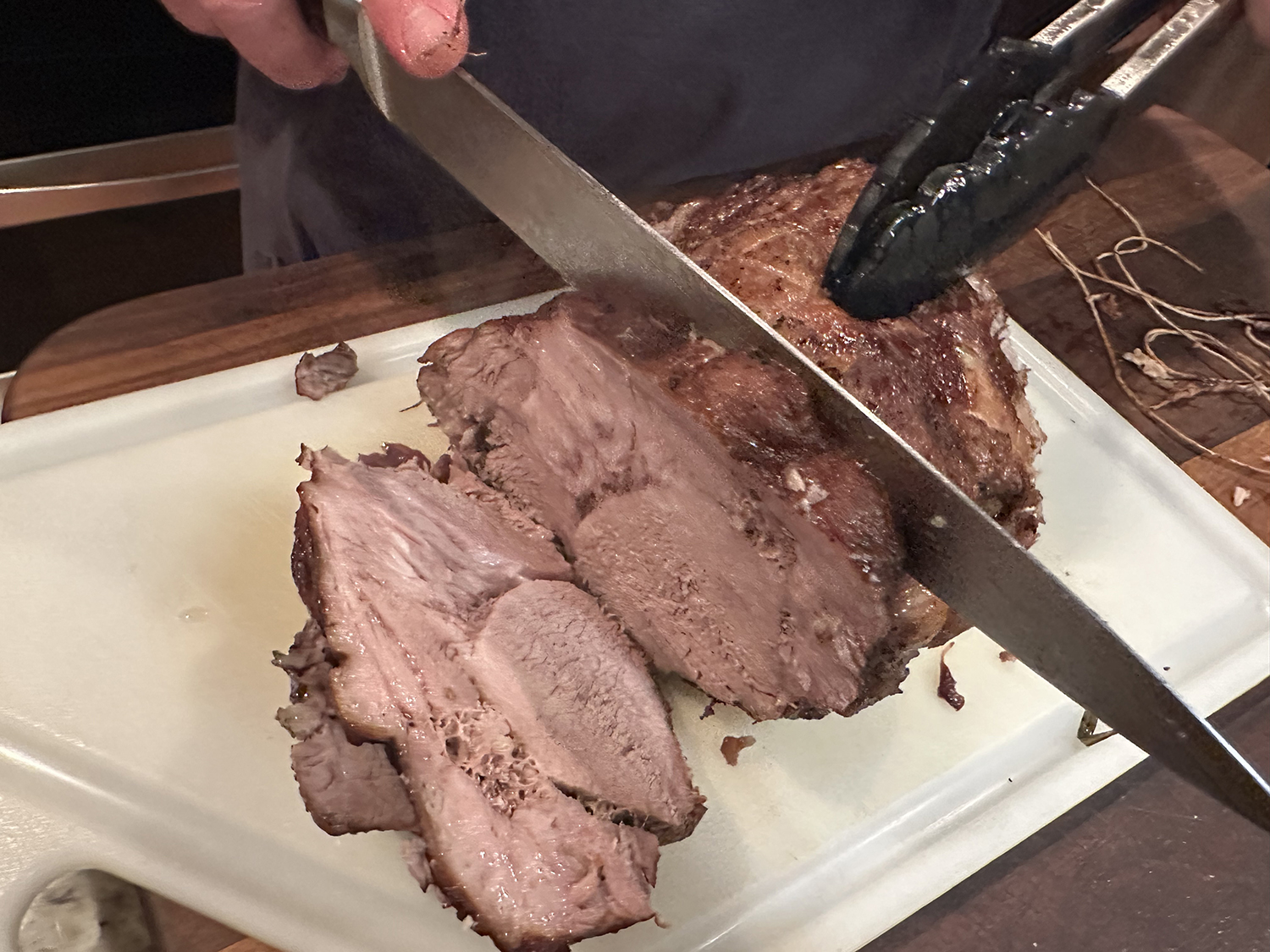
A long braise on a cool Sunday afternoon is not uncommon in our household. And we just happened to have a 4-pound pork shoulder in the freezer waiting for a chance to show off. It was over nine years ago since we made this luscious Catalan pork dish, so I located the post in our blog and resurrected the recipe, with several changes this time.

For a little background, I am repeating “Spain is a nation of pork eaters. Their penchant for pork has economic underpinnings because the matanza—the fall slaughter of the family hog—was central to rural life. A country within a country, with its own language, complex history, and a wealth of artistic traditions, Catalunya (to natives) has more in common with neighboring France, than macho Castile—but all share a love of pork. Catalan food blends Roman, Arabic and even Italian influences into one of Europe’s most distinct and emphatic cuisines.”

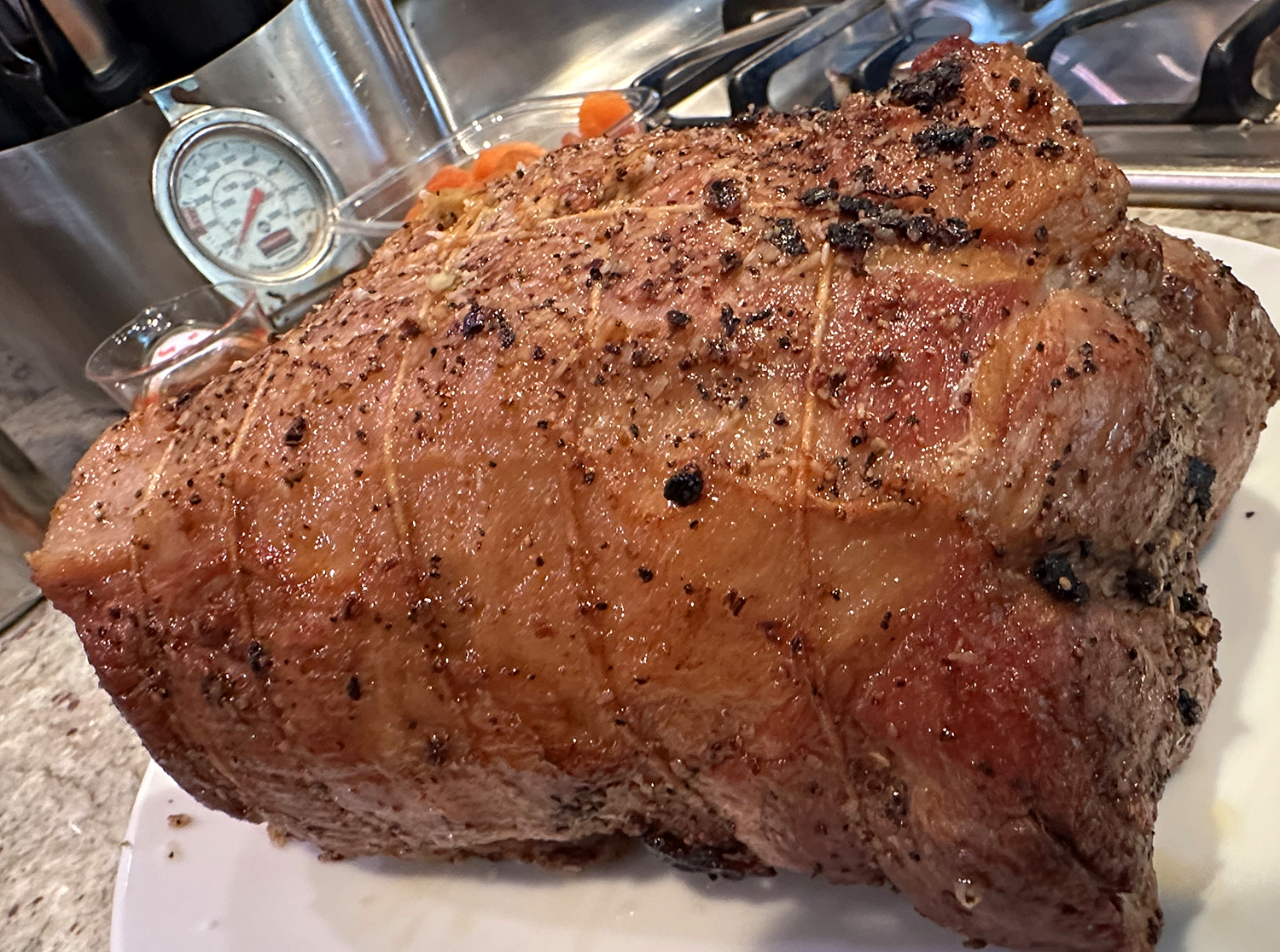
About those changes. One major alteration involves the cooking time. The original recipe said to cook the roast for 1 1/2 hours until it reaches an internal temperature of 165°. According to all of our other sources, a 4-pound pork shoulder roast needs to be cooked at least 2 hours with an internal temp of 180-185°F. This ensures tender slices.

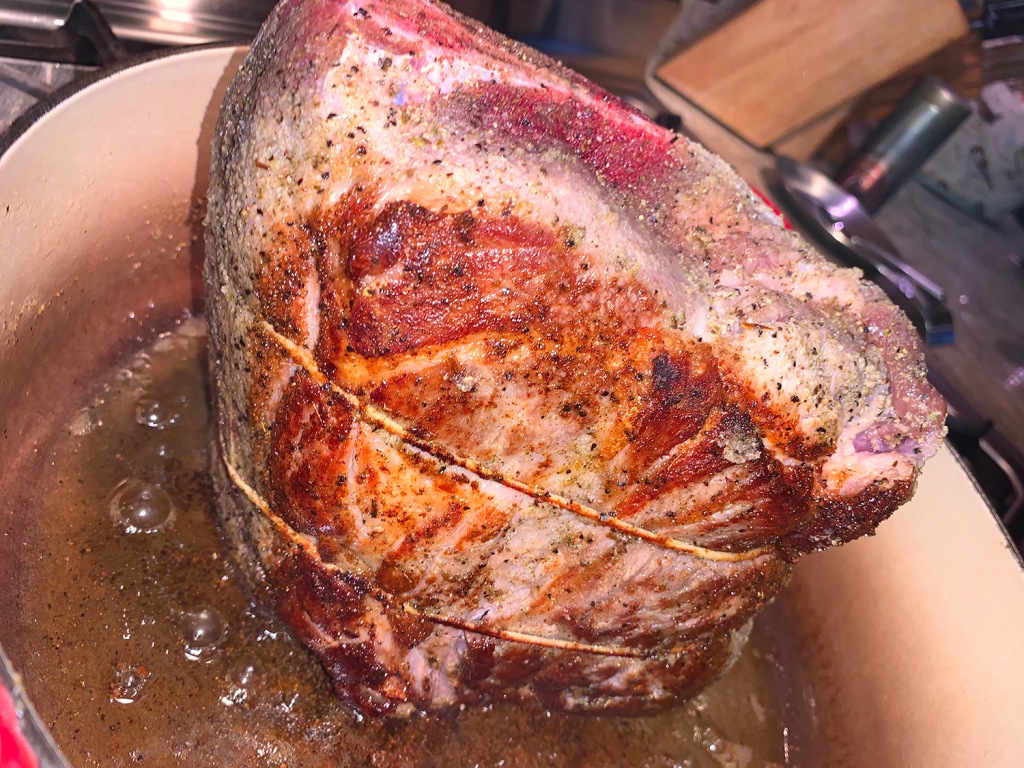
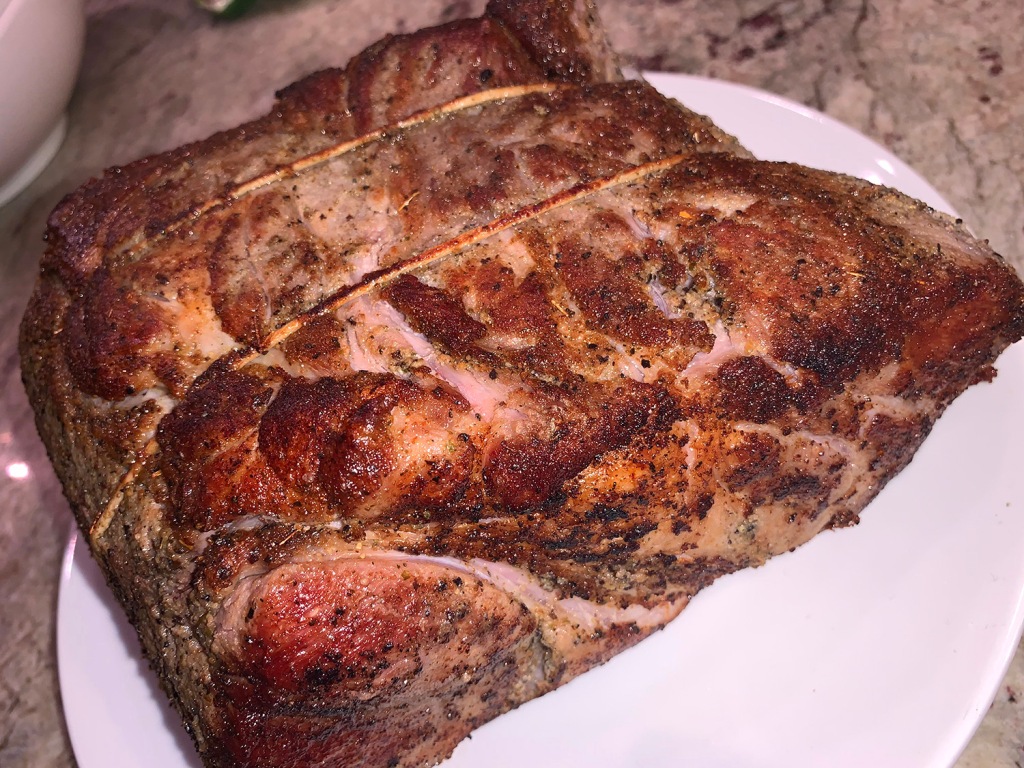
After searing the roast on all sides, including the end caps, The Hubs removed the meat to a platter and poured the contents of the pot through a strainer into a cup. This way it is easy to eliminate the burnt garlic, return the oil to the Dutch oven and continue the cooking process. And though we didn’t cut down the apricots this time or last, we suggest you give them a rough chop so that the pieces are easier to consume.

BTW, kirsch can be substituted for the brandy. We had never cooked with it before and thought you might be interested in the flavor profile, which sounds like a great match for this dish:

kirsch, dry, colourless brandy distilled from the fermented juice of the black morello cherry. Kirsch is made in the Black Forest of Germany, across the Rhine River in Alsace (France), and in the German-speaking cantons of Switzerland. Its production methods remain traditional. The fully ripened cherries are mashed in a large wooden tub or vat and allowed to ferment freely. Upon completion of this process, the entire mass—liquid, pulp, and cherry stones—is distilled in a pot still. During the mashing some of the cherry stones, or pits, are crushed, releasing some of their oils and acids. These include small amounts of hydrocyanic acid, which impart a distinctive bitter almond undertone to the beverage. Kirsch is not aged. It is marketed at 90 to 100 proof, in the clear white (colorless) state it comes off the still. It is a fruit brandy with a clean cherry fragrance and bitter almond taste. Kirsch is consumed neat, as brandy, and in cocktails and is also used in cooking as a flavoring.

So if pork is in your wheelhouse, you may want to get this on your shortlist.

Catalan Braised Pork Shoulder with Dried Fruit

  • Servings: 6-8
  • Difficulty: easy
  • Print

Ingredients

  • 1 boneless pork shoulder, such as Boston Butt (about 4 lbs., trimmed of excess fat)
  • Salt and freshly ground black pepper (kosher or sea)
  • 2 medium garlic cloves, crushed
  • 3 Tbsp. light olive oil
  • 1 medium onion, chopped
  • 1 carrot, diced
  • 8 oz. frozen white pearl onions
  • 1⁄4 cup brandy
  • 2 cups full-bodied dry red wine
  • 1 cup stock (beef or chicken)
  • 3⁄4 cup pitted dried sour cherries
  • 1⁄2 cup dried apricots (or dried figs), roughly chopped
  • 1 large bay leaf
  • 1 small piece cinnamon stick
  • 2 fresh rosemary sprigs

Directions

  1. Preheat oven to 325º.
  2. Using kitchen string, tie the pork shoulder crosswise, spacing the ties 1 inch apart. Rub the pork generously with salt and pepper and the garlic.
  3. Heat 2 tablespoons of the olive oil in a 5 to 6 quart flameproof casserole or Dutch oven over high heat until almost smoking. Add the pork and cook until richly browned on all sides, about 8 minutes total. Add the remaining oil while the pork browns, if the casserole looks too dry. Transfer the pork to a platter. Drain oil and drippings over a strainer on a cup to remove burnt garlic, and return strained oil to the Dutch oven.
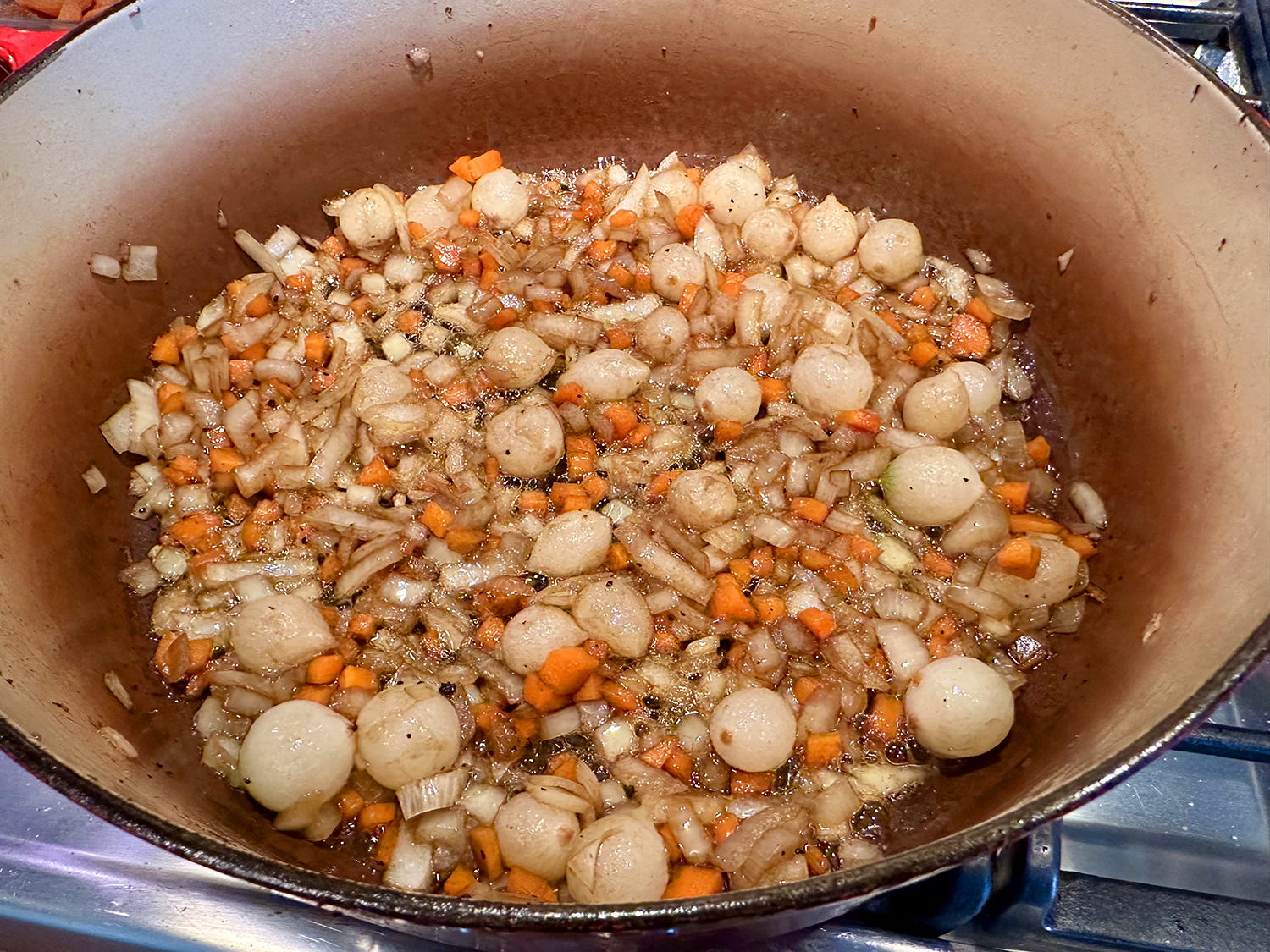
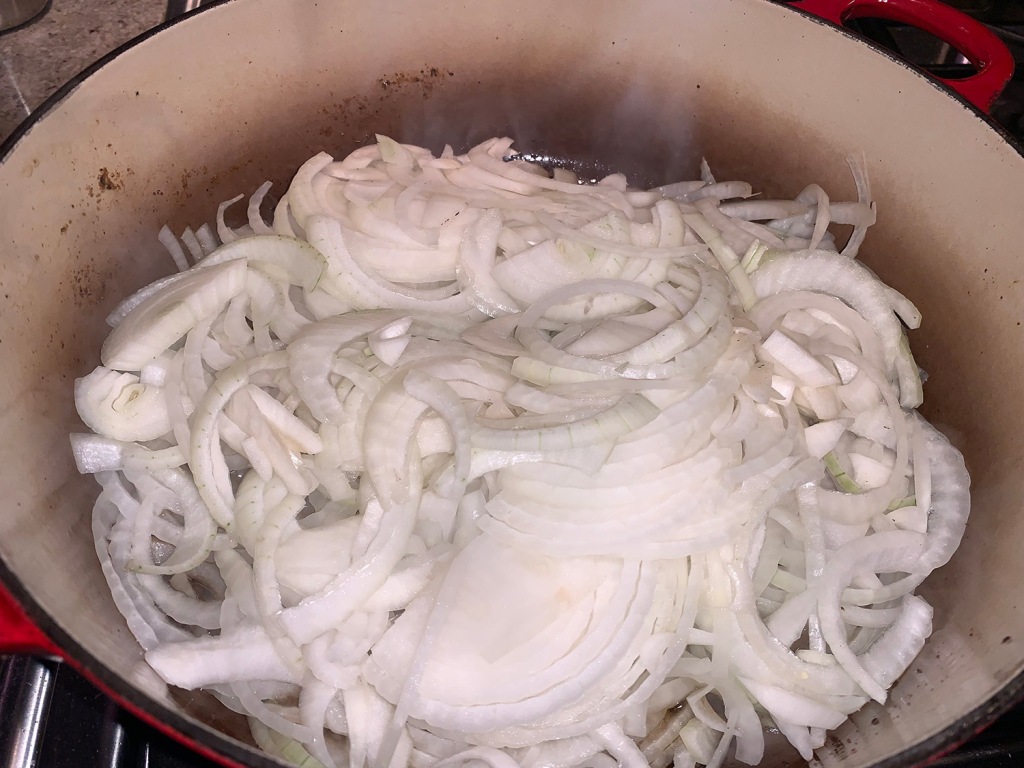
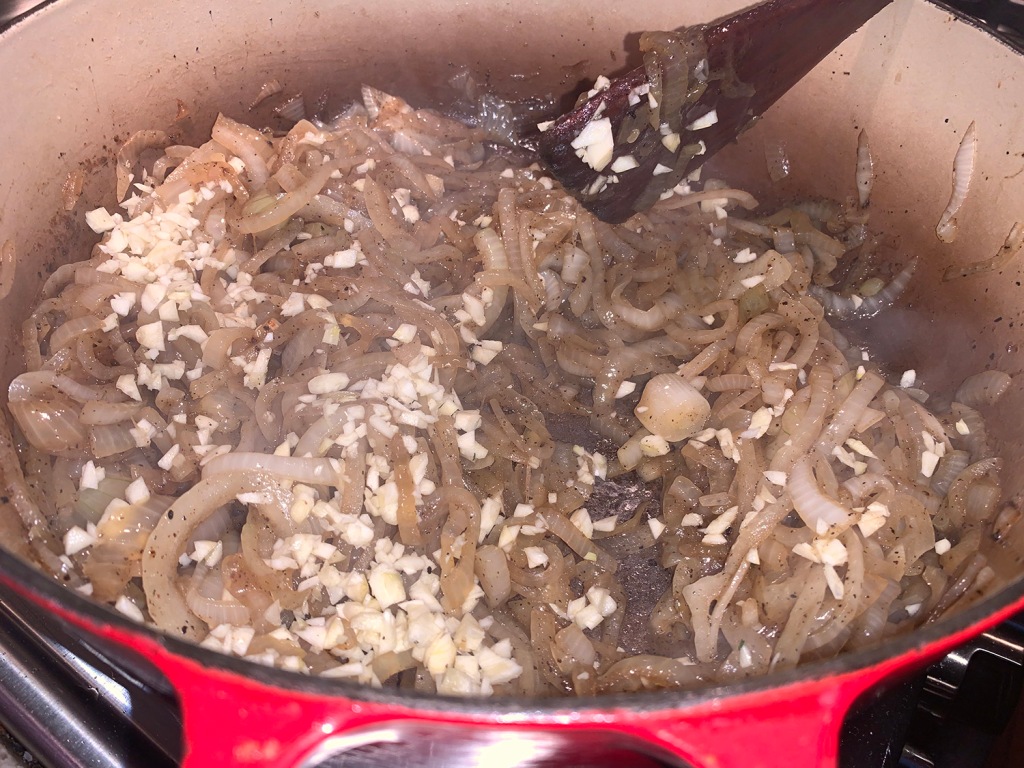
  4. Add the chopped onion, carrot, and pearl onions to the casserole and brown well, 6 to 7 minutes. Add the brandy and cook over high heat until it is reduced to about 1 tablespoon, about 1 minute.
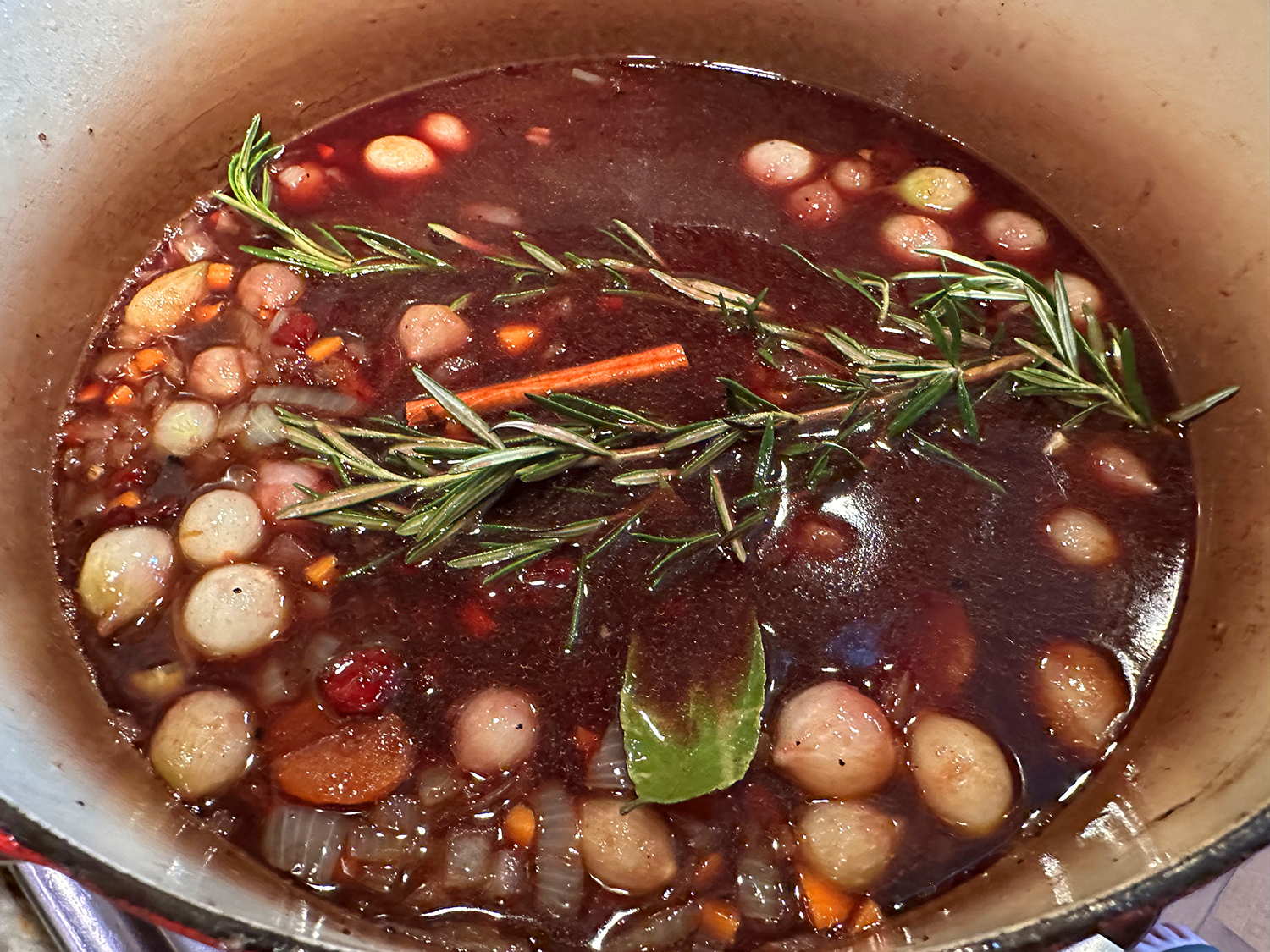
  5. Add the wine, beef stock, cherries, apricots, bay leaf, cinnamon stick, and rosemary sprigs and bring to a boil, scraping the bottom of the casserole to dislodge the brown bits. Season the sauce with salt to taste.
  6. Return the pork to the casserole. Place a large piece of parchment that over hangs the pot, then cover tightly and transfer it to the oven. Bake the pork, turning it once or twice, until it is very tender and an instant-read thermometer registers 180-185°, about 2 hours and 15 minutes. Start checking at 2 hours.
  7. Transfer the pork to a plate and cover it tightly with foil to keep warm. Remove and discard the bay leaf, cinnamon stick, and rosemary sprigs.
  8. Transfer the casserole to the stove top and cook the sauce over high heat until it is slightly syrupy, about 5 minutes.
  9. Remove the string from the pork and discard it. Cut the pork into slices and arrange on a serving platter. Pour the sauce over the pork and serve.

http://www.lynnandruss.com

Adapted from a recipe in Anya Von Bremzen’s cookbook “The New Spanish Table”

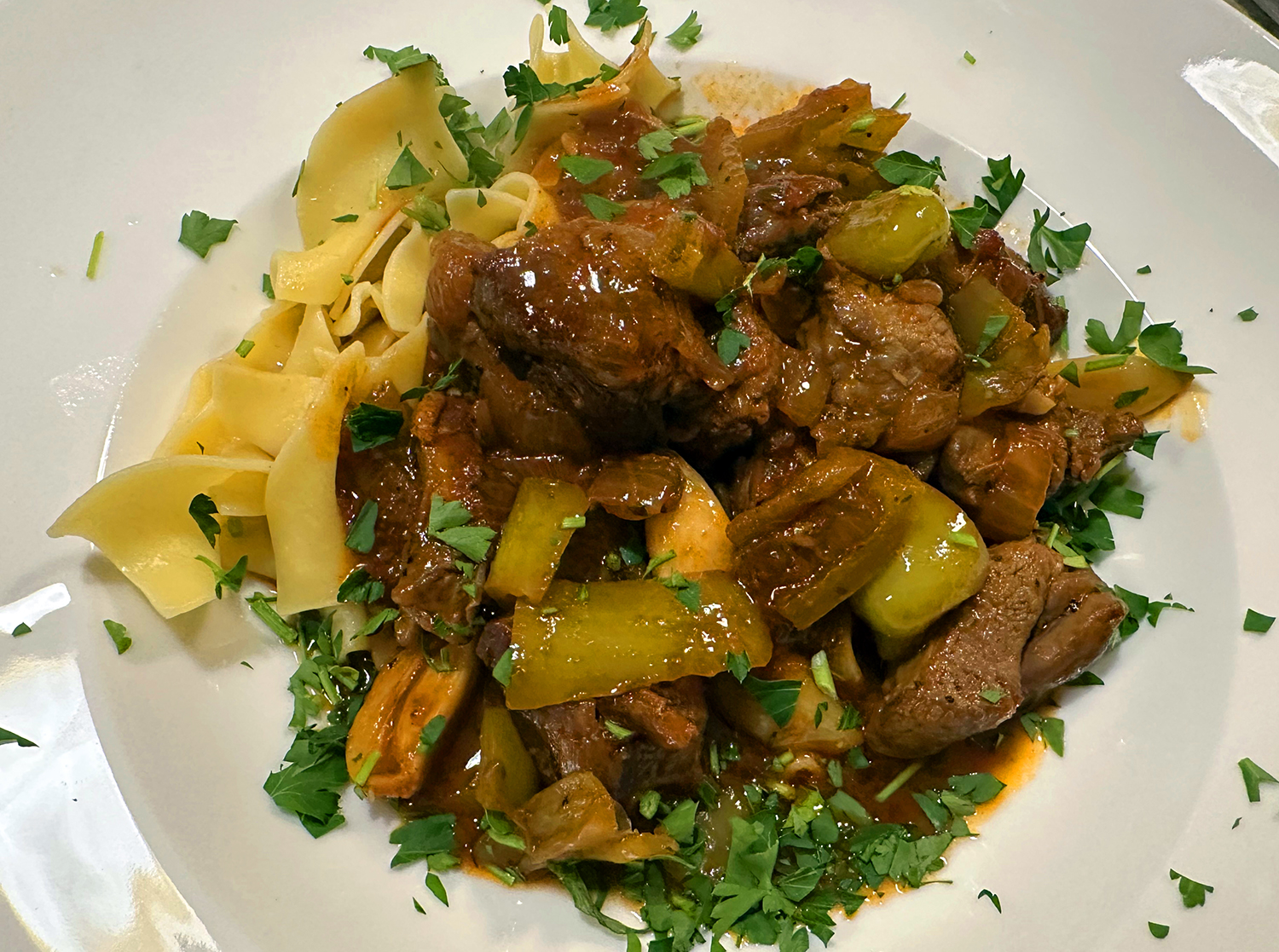
Frite de Cordero (Lamb Stew)

Like all traditional recipes that pre-date cookbooks, it’s difficult to trace this recipe’s origins, but like many of its kind, it has a legend that goes with it. In this case, the legend says that King Alfonso XIII first tasted it in a hunting lodge in Extremadura and liked it so much that he sent his chef there to learn how to make it so he could prepare it at the palace. Lends a little intrigue to the recipe, right?

Another typical aspect of such traditional recipes is that each family prepares them with whatever variations they like. In this case, the different schools appear to be “tomato and peppers, yes or no”, whole cloves of garlic versus mashed with or without almonds, or with or without the lamb liver depending on which household you consult (not in my house).

The only non-negotiable thing is having a good quality loaf of crusty bread to avoid leaving a drop of the delicious sauce, although one can add some “snapped” potatoes to the pot about 25 minutes before the stew is ready. Or, alternatively, serve it over noodles or mashed potatoes.

As with most stews and braises, it tastes even better the second time around.

Frite de Cordero (Lamb Stew)

  • Servings: 6
  • Difficulty: easy
  • Print

Ingredients

  • 2 1/2 lbs. boneless lamb leg or shoulder, cut into 1 1/2 to 2-inch pieces
  • 1 lamb liver, (optional)
  • 1 head garlic, all cloves peeled and left whole
  • 2 Spanish onions, peeled and chopped
  • 3 Italian-style green peppers, seeded and roughly chopped
  • 3/4 cup canned crushed tomatoes, or passata
  • 1 bay leaf
  • 1 1/2 heaping tsp. smoked paprika, sweet, hot, or a mix
  • 1 tsp. dried oregano, or 1 tablespoon fresh oregano leaves, finely chopped
  • 1 tsp. dried thyme, or 1 tablespoon fresh thyme leaves
  • 3 Tbsp. olive oil
  • Kosher salt, to taste
  • 1 cup dry white wine
  • 1 cup beef, veal, or lamb broth
  • Finely chopped fresh parsley, for garnish (optional)

Directions

  1. Heat the olive oil in a Dutch oven over medium heat.
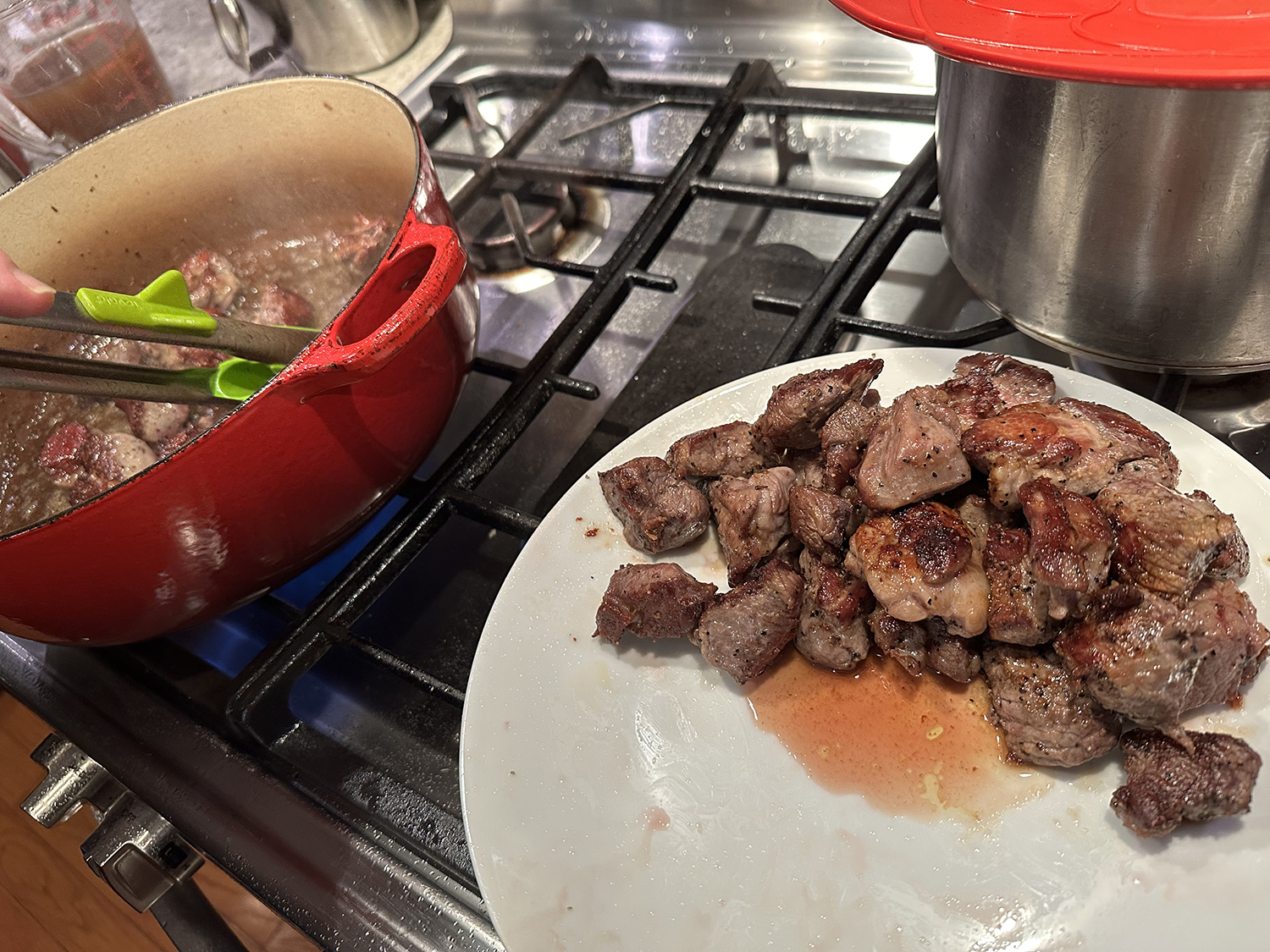
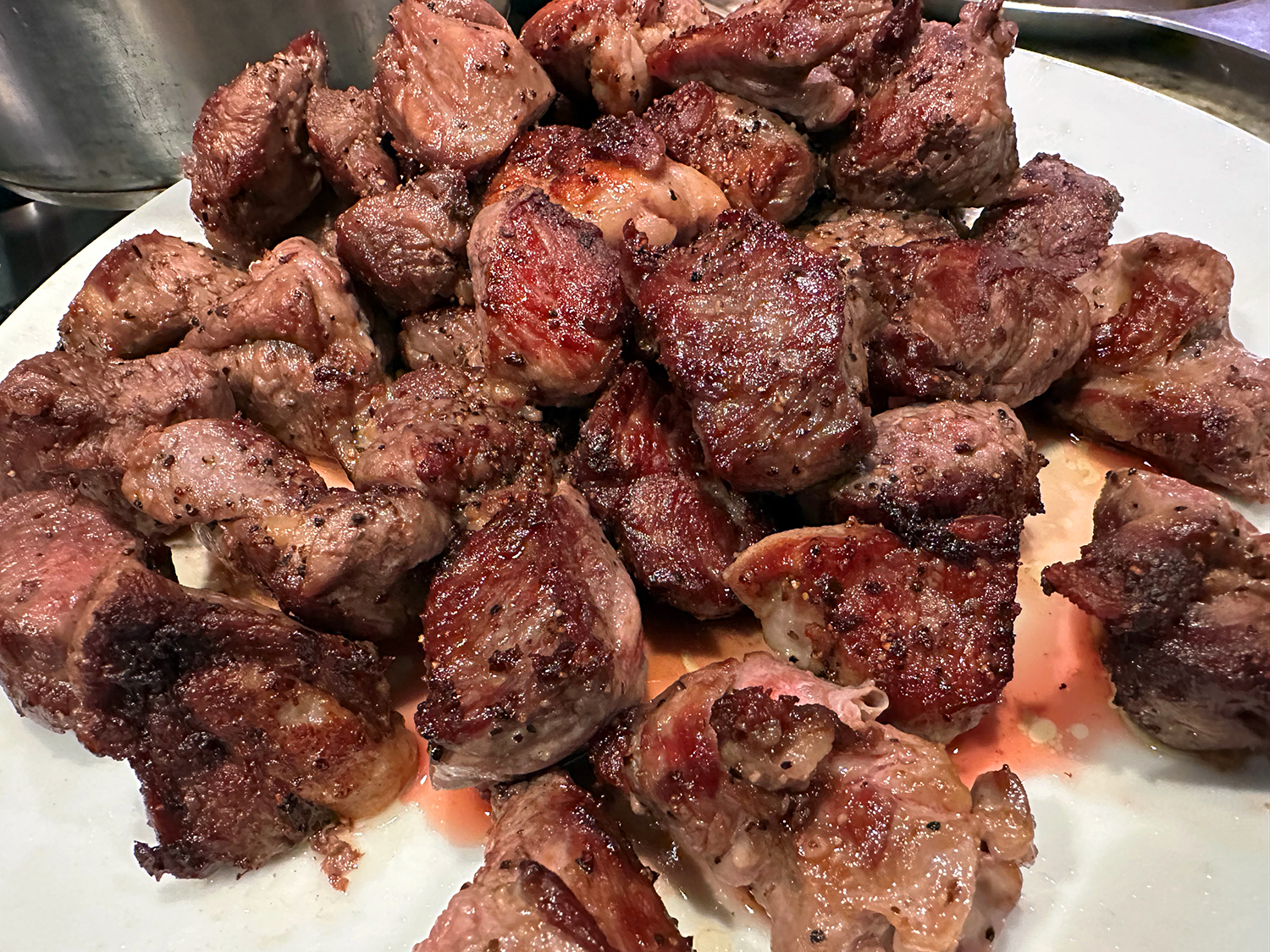
  2. Pat the lamb pieces and liver (if using) dry with paper towels, then salt and pepper generously. Brown them well on all sides, then remove them from the pot and set aside.
  3. Add more oil to the pot if necessary, then add the onion and saute until it becomes transparent about 7 minutes. Add the peeled garlic cloves, the green pepper, and a bit of salt, and saute the mixture a few minutes more until the peppers are tender. (If using the lamb liver, remove 4 of the whole cloves of garlic from the pot and mash them along with the liver in a mortar or grind them in a blender or food processor until smooth. Set aside.)
  4. Add the crushed tomatoes or passata to the pot and cook for about 10 minutes, stirring from time to time. Remove the pot from the heat, add the smoked paprika, oregano, thyme, and bay leaf, and mix well. Return the pot to the stove over medium heat. Return the lamb pieces and any juices to the pot. Add the wine and broth and bring the mixture to a boil, then reduce the heat to low and cover.
  5. Cook the stew until the lamb is tender, about 1 1/2 hours. After 45 minutes of cooking, check the pot from time to time. If the mixture is becoming dry, add more broth or water. If the stew is too watery, remove the lid and allow the stew to continue cooking uncovered until the mixture thickens to your liking.
  6. When the stew is about 10 minutes from being ready, add the mixture of garlic and liver and stir well.
  7. Serve the stew hot, garnished with the chopped parsley.

http://www.lynnandruss.com

Recipe by Mónica Escudero of El País, 17 Nov 2024

Skillet-Braised Chicken With Greens and Olives

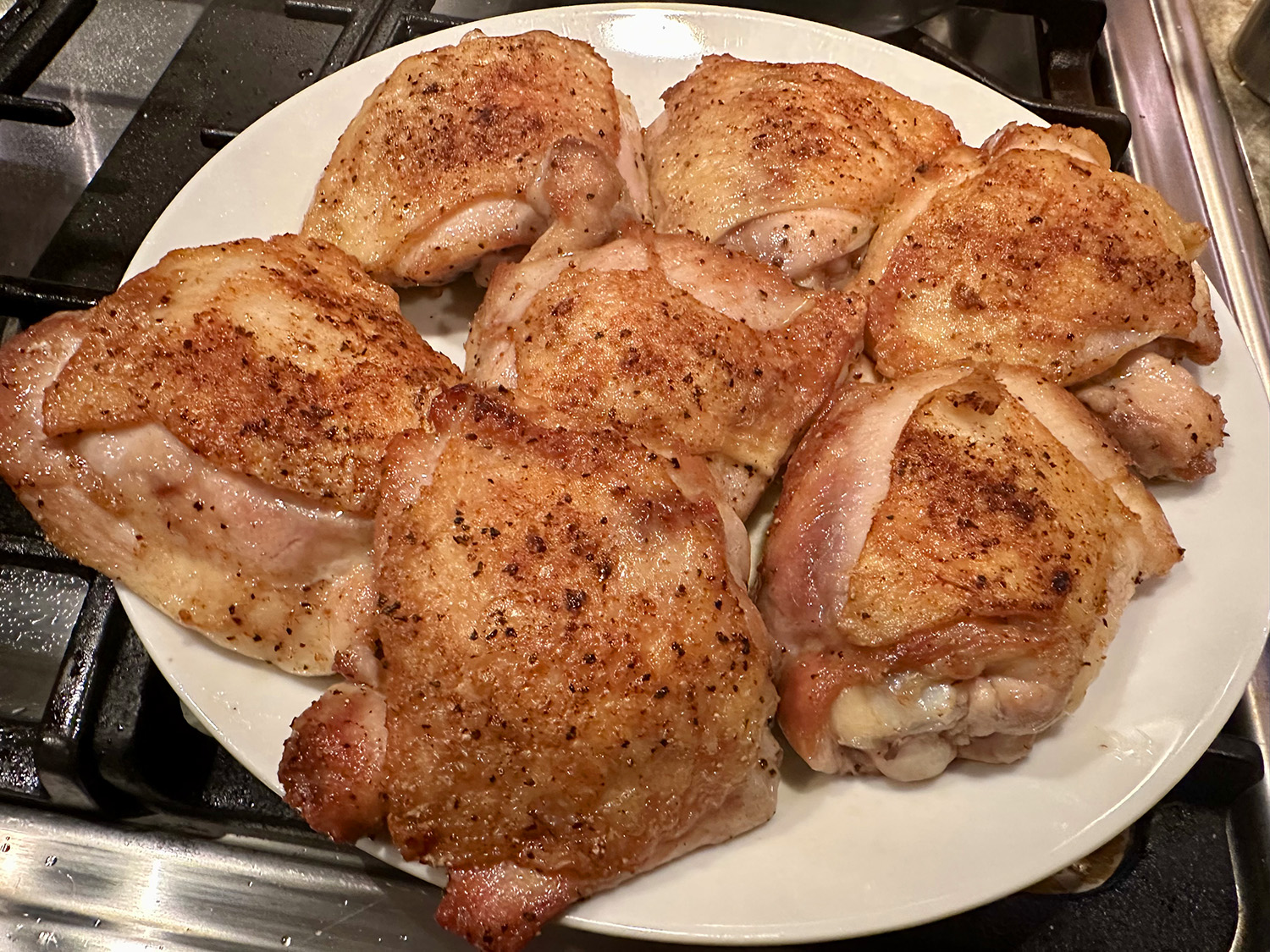
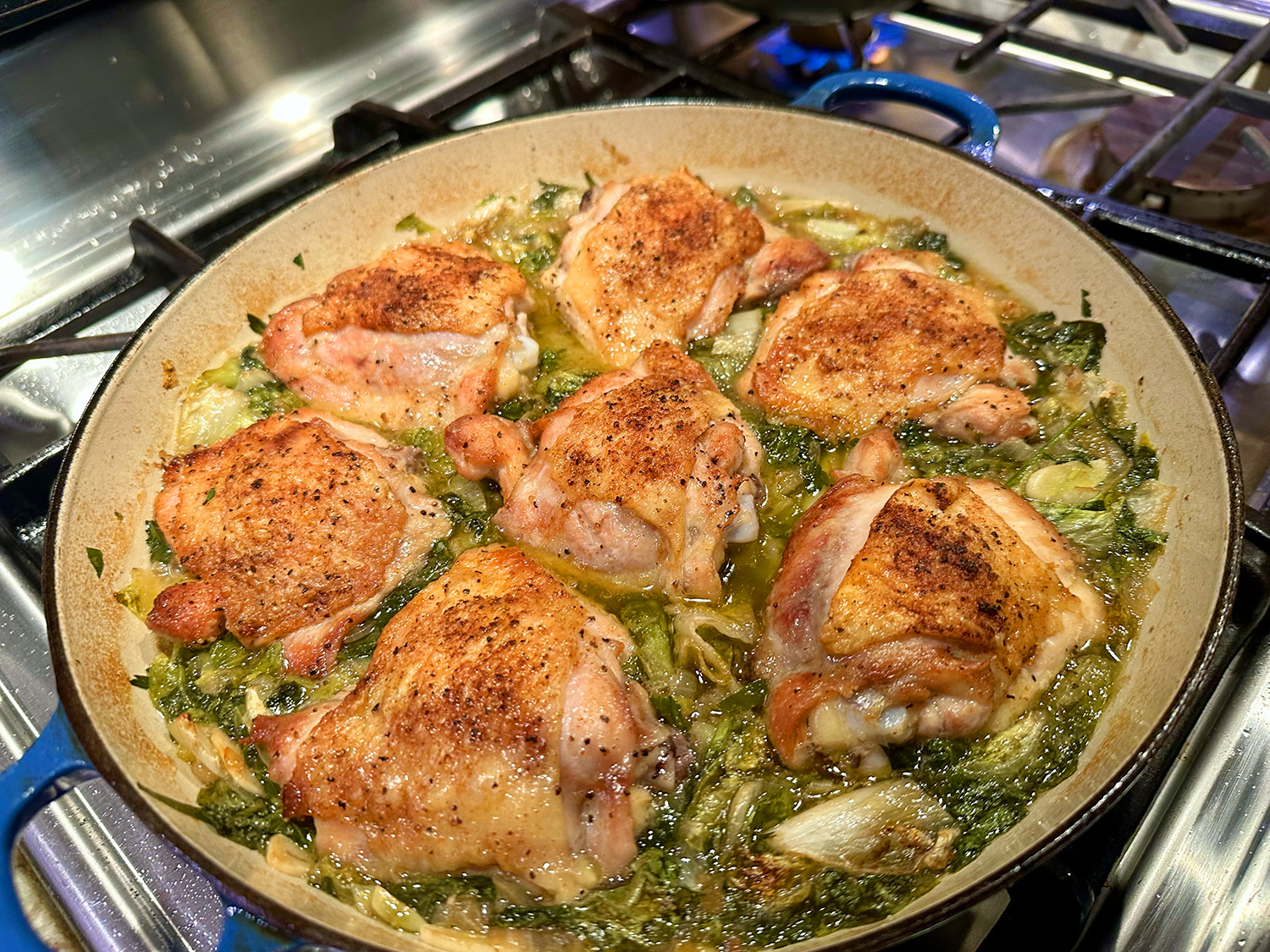
Braising chicken and greens together in a skillet does wonderful things to both bird and vegetables. As the chicken cooks, the skin browns, crisps, and renders savory fat, which suffuses the greens with flavor. The greens, in turn, make a soft, moist bed on which to cook the chicken, keeping the meat supremely tender.

In the end, the silky greens make a rich, mineral contrast to the juicy meat, while lemon juice and olives add brightness and acidity to the mix, giving it a pleasant jolt. Serve this with crusty bread, mashed potatoes, or a bed of couscous to catch all the juices.

Using homemade chicken stock will add oodles of flavor, plus some preserved lemon (about 1 1/2 tablespoons of chopped rind) adds an additional depth of flavor.

Skillet-Braised Chicken With Greens and Olives

  • Servings: 4
  • Difficulty: easy
  • Print

Ingredients

  • 2 ¼ to 2½ lbs. bone-in chicken thighs and drumsticks
  • Fine sea salt or table salt and freshly ground black pepper
  • 1/4 tsp. hot smoked paprika, plus more for serving (or use red-pepper flakes)
  • 3 Tbsp. extra-virgin olive oil, more for serving
  • 1 cup sliced shallots, about 2 to 3 (or use red onion)
  • 3 garlic cloves, thinly sliced
  • 1 pound sturdy greens, such as escarole, Swiss chard or kale, coarsely chopped
  • 1 cup coarsely chopped cilantro or parsley
  • 1¼ cups chicken stock, preferably homemade, plus more as needed
  • ½ cup pitted coarsely chopped Castelvetrano olives
  • 1 lemon, halved
  • Flaky salt, for serving (optional)

Directions

  1. In a small bowl, blend 1 teaspoon of salt, 1/2 teaspoon of black pepper, and the paprika. Pat the chicken pieces dry with paper towels and then sprinkle all over with the seasoning mix.
  2. Preheat oven to 400F (375F convection).
  3. In a large (12-inch), heavy-bottomed skillet heat the oil over medium-high. Add chicken to the skillet and let sear until it browns lightly on both sides, removing it to a plate when finished browning.
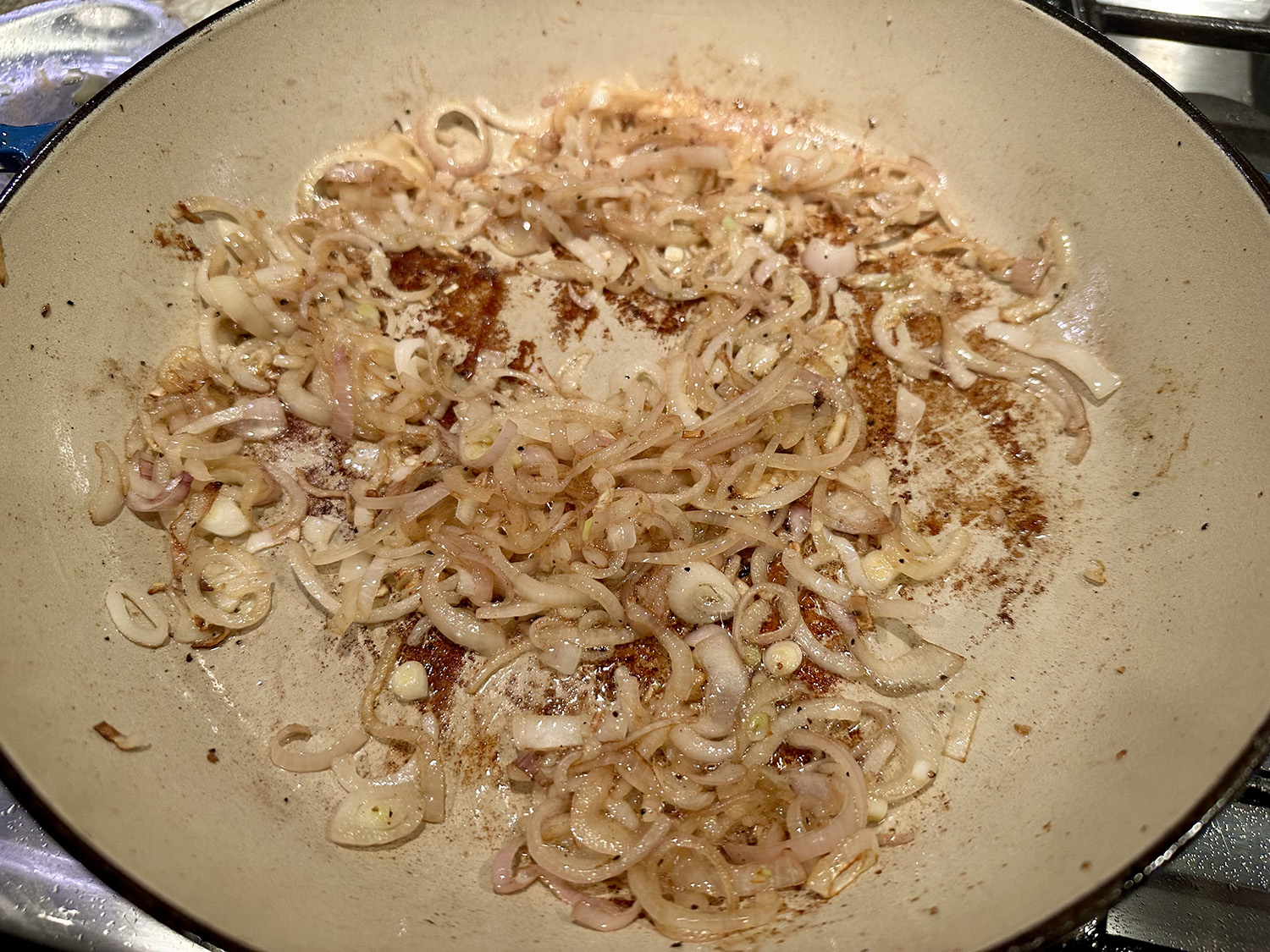
  4. Add shallots and a pinch of salt, and cook until pale golden brown all over, 5 to 7 minutes.
  5. Add garlic to the pan and cook until fragrant, 1 minute more. Add chopped greens, cilantro, and another ¼ teaspoon salt to the pan, and stir, tossing to coat in the residual chicken fat. It may seem like a lot of greens, but they will cook down. Cook until they have just started to wilt, about 2 minutes.
  6. Add the chicken and any juices on the plate to the skillet with the greens. Pour in enough of the chicken stock to come halfway up the chicken. Bring liquid to a gentle simmer. Place the skillet in the oven and bake until the internal temperature of the chicken reaches 165 degrees, about 25 to 35 minutes. Add more stock as needed to keep the greens tender and moist.
  7. Remove the skillet from the oven. Stir in olives and cook uncovered over medium heat until they are warmed through, about 1 minute more. Squeeze one lemon half over everything, then taste greens, and add more salt or lemon juice if needed. Serve topped with flaky salt, a drizzle of extra-virgin olive oil, and more smoked paprika.

http://www.lynnandruss.com

Adapted from a recipe by Melissa Clark for NYTimes Cooking
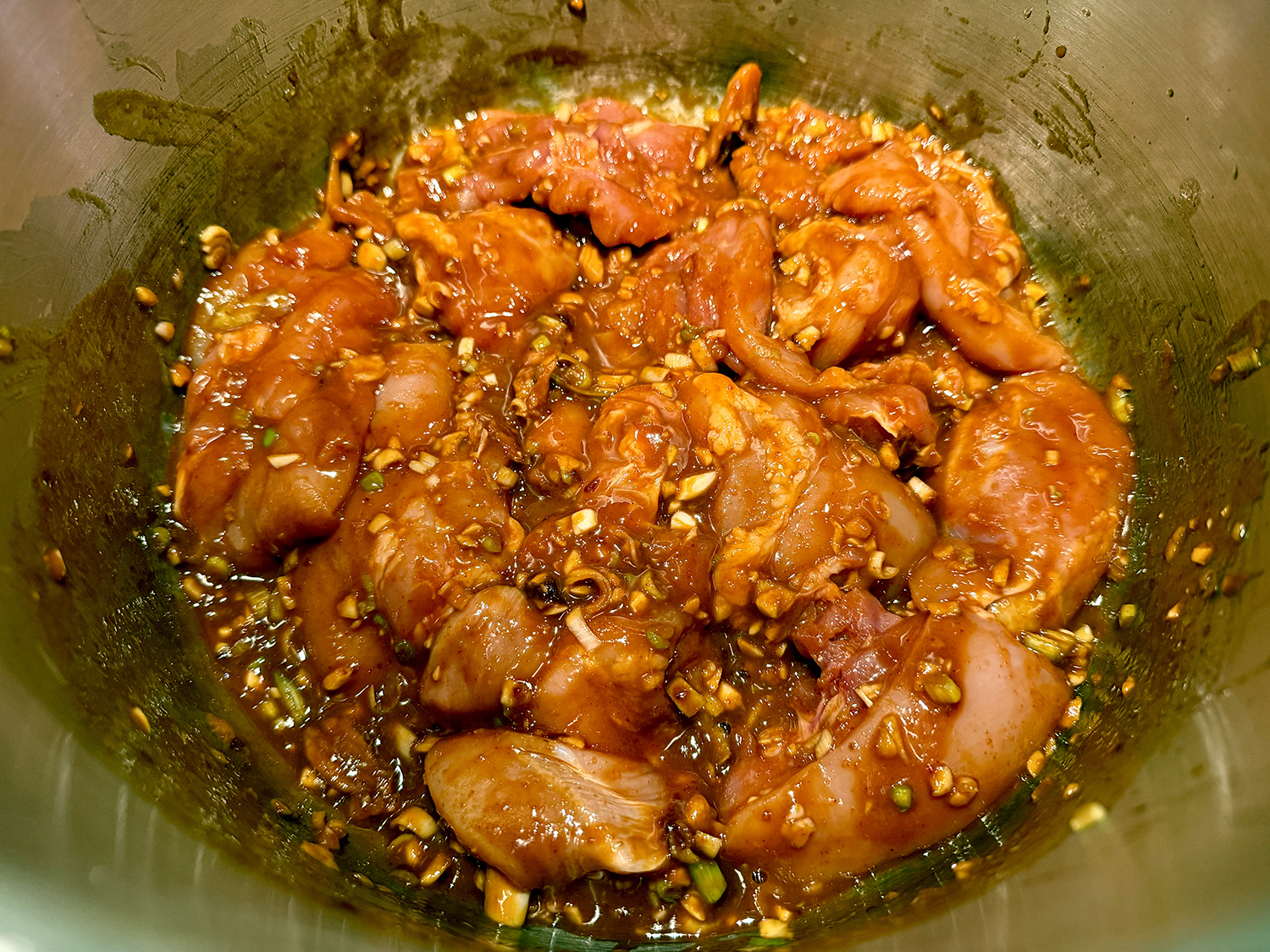
Braised Potatoes with Garlic and Bay Leaves

As Chef/author Molly Stevens states “Sharing a meal from one pot, as you often do with a braise, creates a feeling of communality that leads to sharing a congenial meal.”

Molly’s side dish is quite simple, and uses only a handful of ingredients. Place the potatoes to fit snuggly in a single layer in your saucepan. Add enough water or stock to come halfway up the potatoes and add a generous drizzle of olive oil, a few whole cloves of garlic, bay leaves, salt and pepper.

The potatoes are covered and braised gently until tender, then the lid is removed. The heat is cranked up to evaporate the liquid. Then shake the pan back and forth so the spuds roll around and get coated in the garlicky-olive oil glaze that’s forming. And voila! a simple yet tasty side dish. These are a keeper for sure.

Feel free to vary the ingredients by changing the herbs (such as rosemary instead of bay leaves), substitute dry white wine for the water or chicken stock, or butter in place of olive oil.

Braised Potatoes with Garlic and Bay Leaves

  • Servings: 4-6
  • Difficulty: easy
  • Print

Ingredients

  • 1 ½ lbs. small red or white potatoes, scrubbed
  • 3 Tbsp. Extra Virgin Olive Oil (or Garlic Olive Oil)
  • 1 cup water or chicken stock
  • 2 bay leaves, fresh if possible
  • 2 to 3 garlic cloves, peeled and bruised
  • Coarse salt and freshly ground pepper

Directions

  1. Evaluate the potatoes: If the potatoes are larger than a golf ball, cut them in half. If you are leaving them whole, check to see if they have thick skins by scraping your thumb nail across the skin. If the skin doesn’t tear, remove a strip of skin around the circumference of each potato with a vegetable peeler – this will allow the flavors of the braising liquid to penetrate the potato better. If the skins are relatively thin, leave them intact.
  2. The braise: Place the potatoes in a saucepan large enough to hold them in a snug single layer without crowding Add the olive oil and pour in enough water or stock to come halfway up the sides of the potatoes. Tear the bay leaves in half and add them along with the garlic. Season with salt and pepper. Cover and bring to a simmer over medium heat. When the water is simmering, lower the heat to medium-low so the liquid simmers gently. Braise, lifting the lid and turning the potatoes with a spoon once halfway through, until the potatoes are just tender when pierced with a thin skewer, about 20 minutes.
  3. The finish: Remove the lid, increase the heat to high, and boil, gently shaking the pan back and forth, until the water evaporates and you can hear the oil sizzle, about 5 minutes. The braised garlic cloves will break down and coat the potatoes as you shake them in the pan. Serve hot.

http://www.lynnandruss.com

Recipe by Molly Stevens

Orange-Scented Mediterranean Shrimp Braise

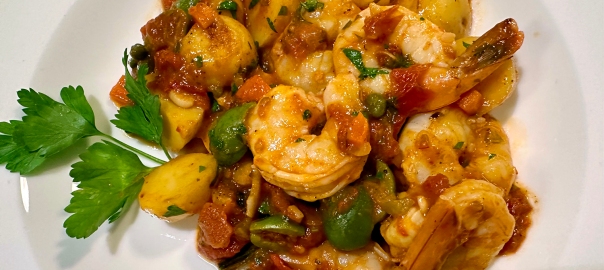
It’s been over 6 years since we made this lovely braise, and thought it high time to create it again. It’s from Molly Steven’s “All About Braising” cookbook, and we adjusted the recipe slightly.

“The shrimp get tossed in just a few minutes before serving, making the finished dish a real cornucopia of seafood and vegetables.”

Molly Stevens

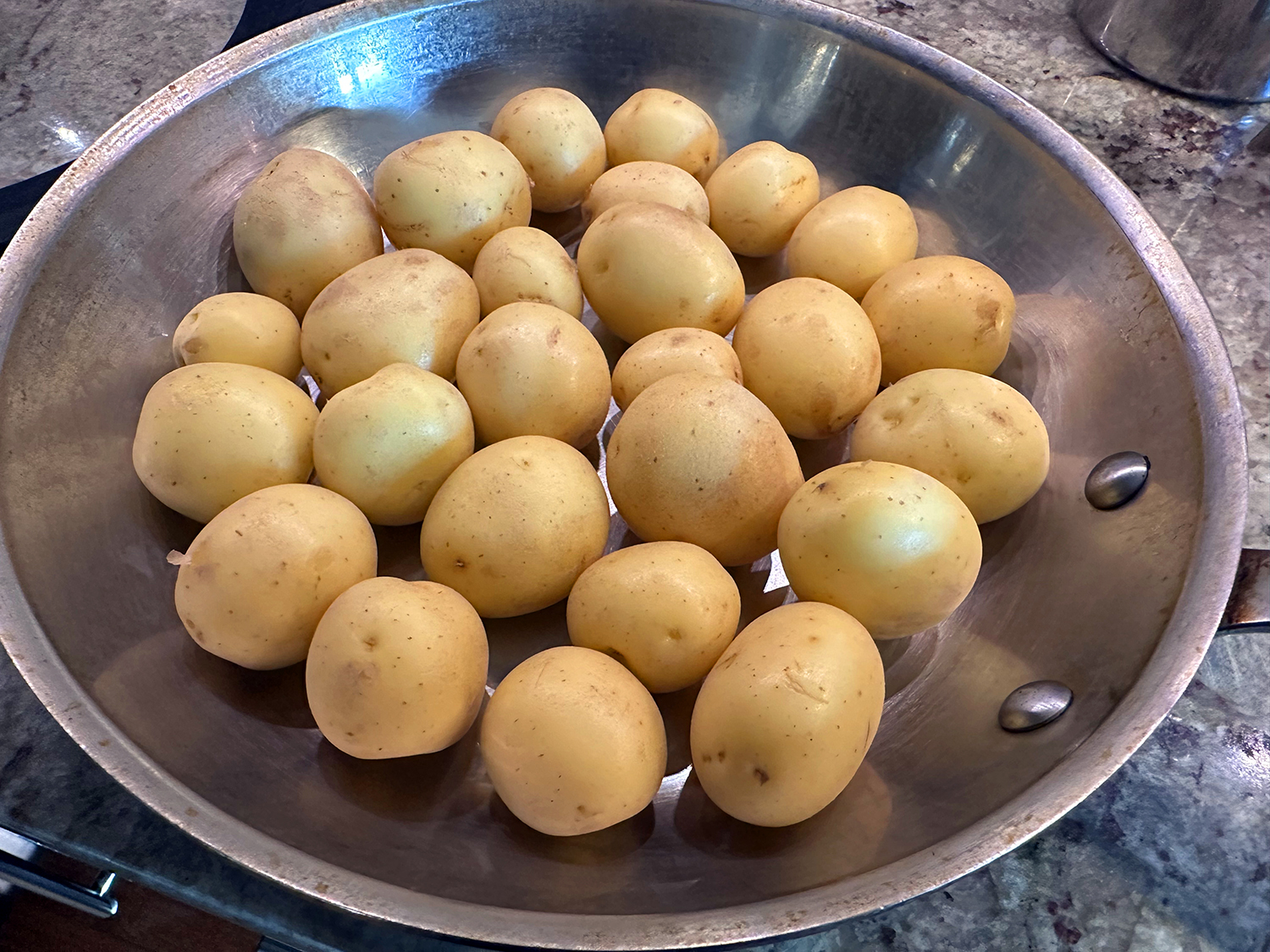
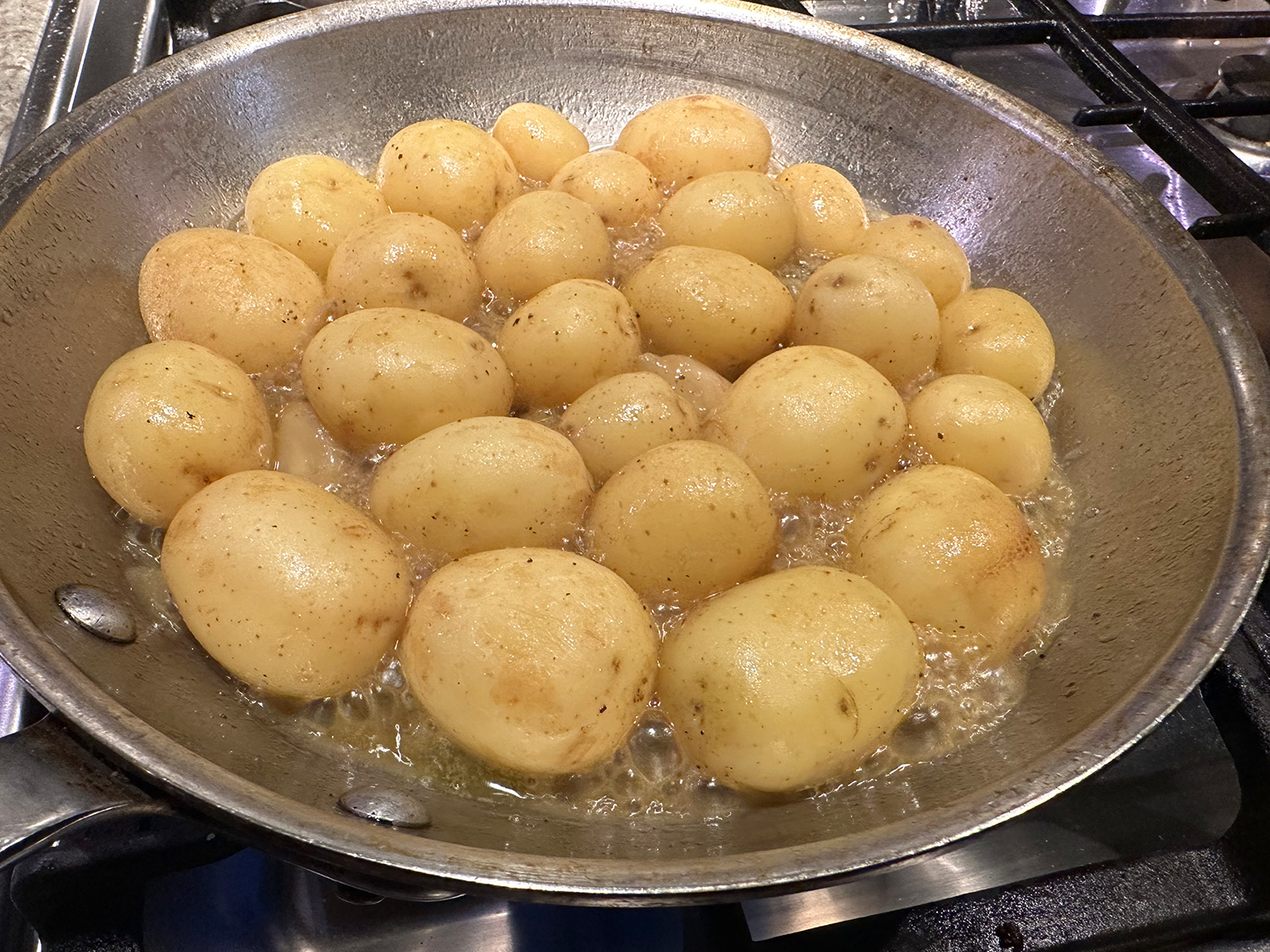
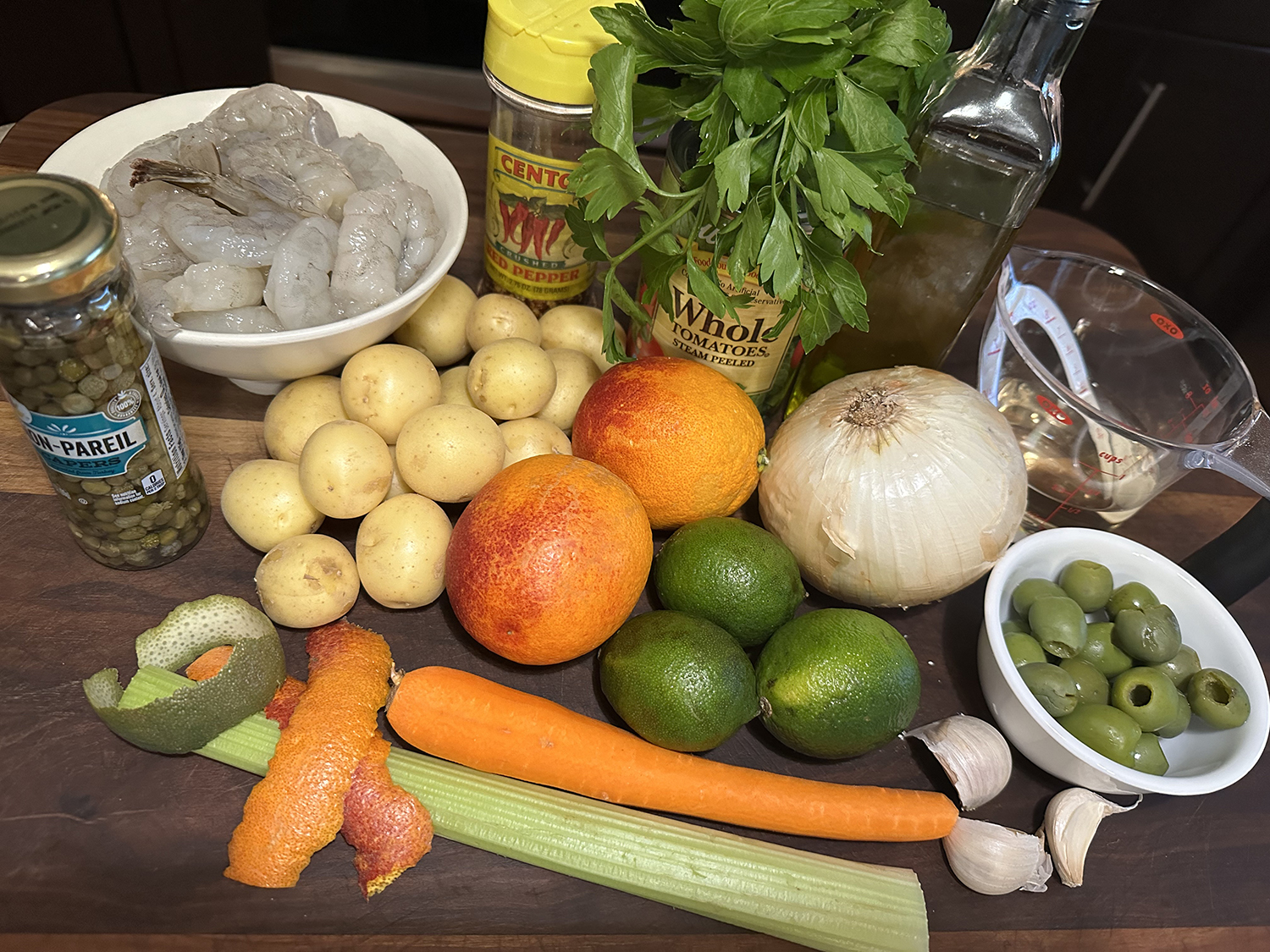
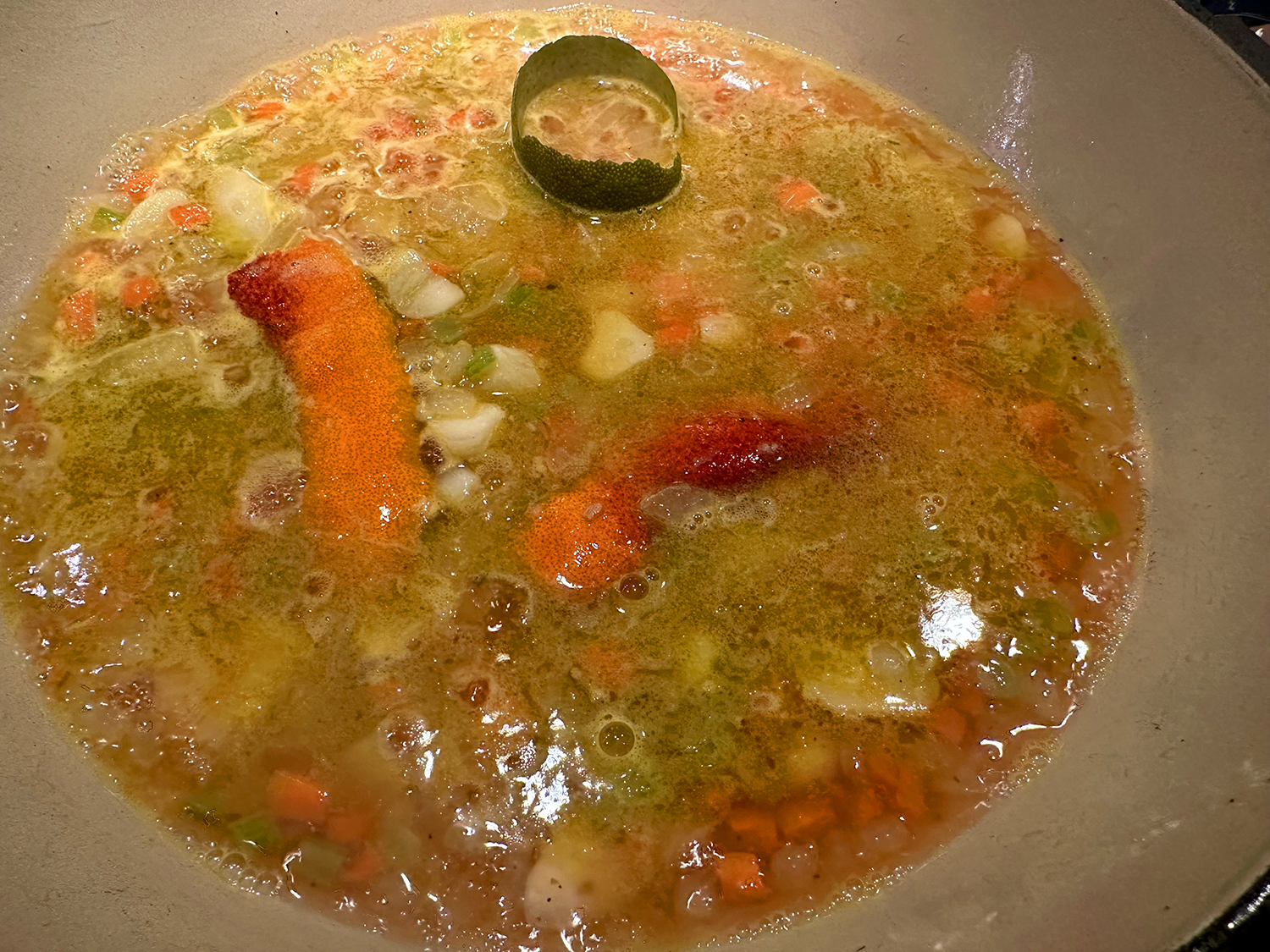
The braising liquid for this dish consists of a colorful mix of tomatoes, garlic, onion, carrots, and celery that is brightened with the zests and juice of orange and lime. Also included are small potatoes turning it into a satisfying one-dish meal. 

*However, even though I halved or quartered the baby potatoes, they still were on the hard side after 45 minutes! We suggest either microwave, or steam the potatoes before adding them to the pan, or omit them altogether and serve over a bed of orzo. Both times we made this dish, we used a 28-ounce can of whole tomatoes instead of the smaller 14.5-ounce size; and that is reflected in the list of ingredients below.

Then there’s the age old controversy about leaving the olives pitted, which can be annoying when trying to eat civilly in the presence of company. But when you cook olives whole, it’s almost like an anchovy. The salt comes out of the olives, and the olive becomes more like a vegetable, and the salt from the olive flavors the dish really wonderfully. Pits, or no pits, we’ll leave that dilemma up to you…

Orange-Scented Mediterranean Shrimp Braise

  • Servings: 4
  • Difficulty: easy
  • Print

Ingredients

  • 3 Tbsp. extra-virgin olive oil
  • 3 to 4 garlic cloves, thinly sliced
  • ½ cup finely chopped yellow onion (about ½ small onion)
  • 1 small carrot, finely chopped
  • 1 stalk celery, finely chopped
  • Coarse salt and freshly ground black pepper
  • ½ cup dry white wine or dry white vermouth
  • 2 strips orange zest, removed with a vegetable peeler (each about 3 inches by ¾ inch)
  • 1 strip lime zest, removed with a vegetable peeler (about 2 inches by ½ inch)
  • ¼ cup freshly squeezed orange juice
  • ¼ cup freshly squeezed lime juice
  • One 28-oz. can whole peeled tomatoes, drained and chopped
  • Pinch of crushed red pepper flakes
  • ¼ cup chopped flat-leaf parsley
  • ¾ lb. small potatoes*, preferably fingerlings or white creamers (omit altogether and serve over orzo)
  • ¼ cup small green olives, such as Picholine, (pitted or not, that’s up to you)
  • 2 Tbsp. capers, rinsed and drained
  • ¾ lb. large shrimp (30 to 35 count per pound), peeled and deveined
  • 1 Tbsp. unsalted butter, cut into 4 pieces (optional)

Directions

  1. The aromatics and braising liquid: Heat the oil in a large deep lidded skillet (13-inch works well) over medium-high heat until shimmering. Add the onion, carrot, and celery. Season with salt and pepper, stir, and sauté until just beginning to soften, about 5 minutes. Add the garlic, sauté another minute more. Add the white wine, orange and lime zests, and orange and lime juices, and let the liquid simmer vigorously until reduced by half, 5 to 8 minutes. Stir in the tomatoes, crushed red pepper, and 2 tablespoons of the parsley. Return to a simmer.
  2. The braise: Turn the heat to very low, cover, and simmer gently for 5 minutes. Then add the potatoes, olives, and capers. Stir so the potatoes are evenly distributed, replace the cover, and continue to simmer until the potatoes are easily pierced with the tip of a knife, another 30 to 40 minutes.
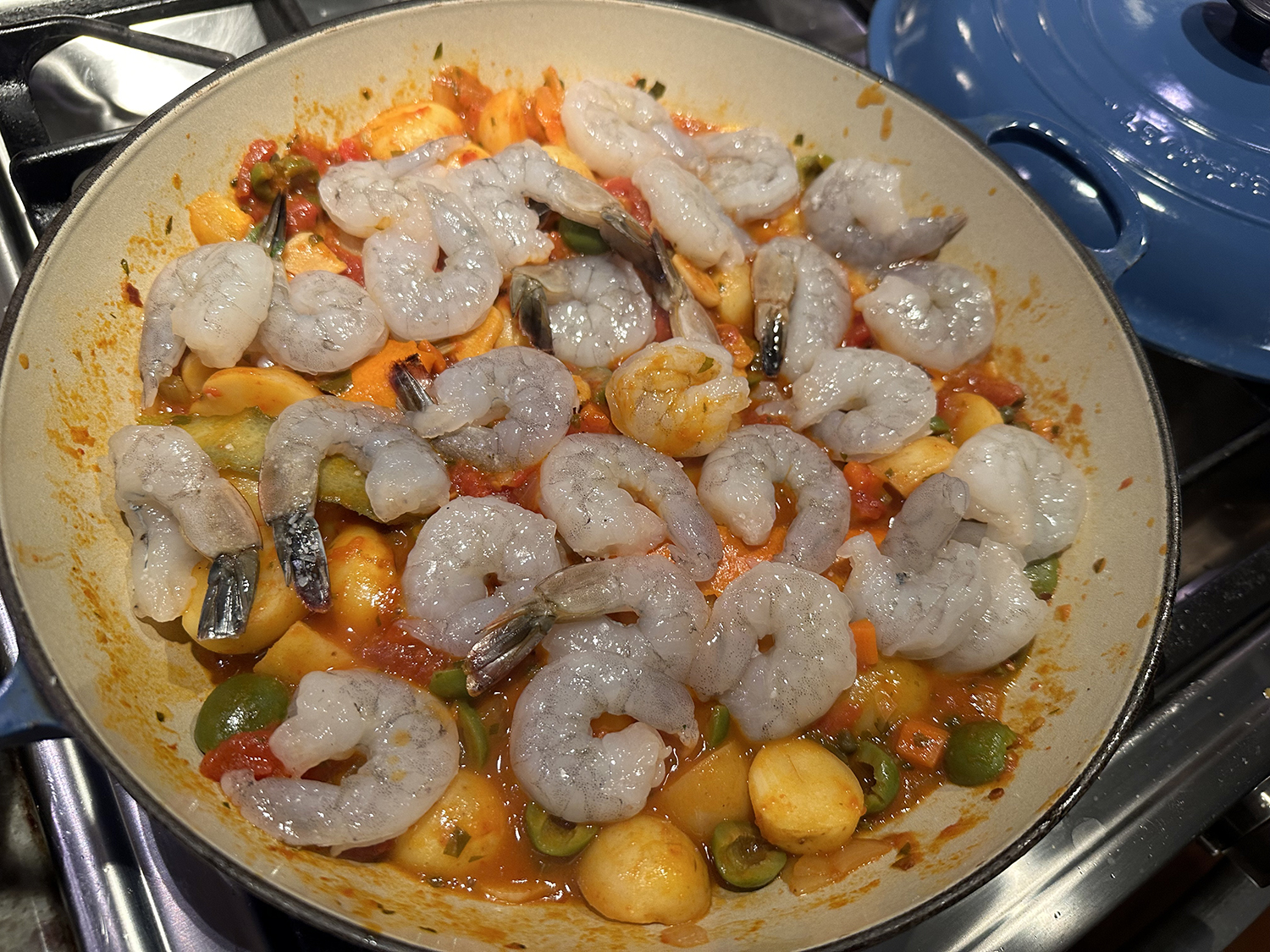
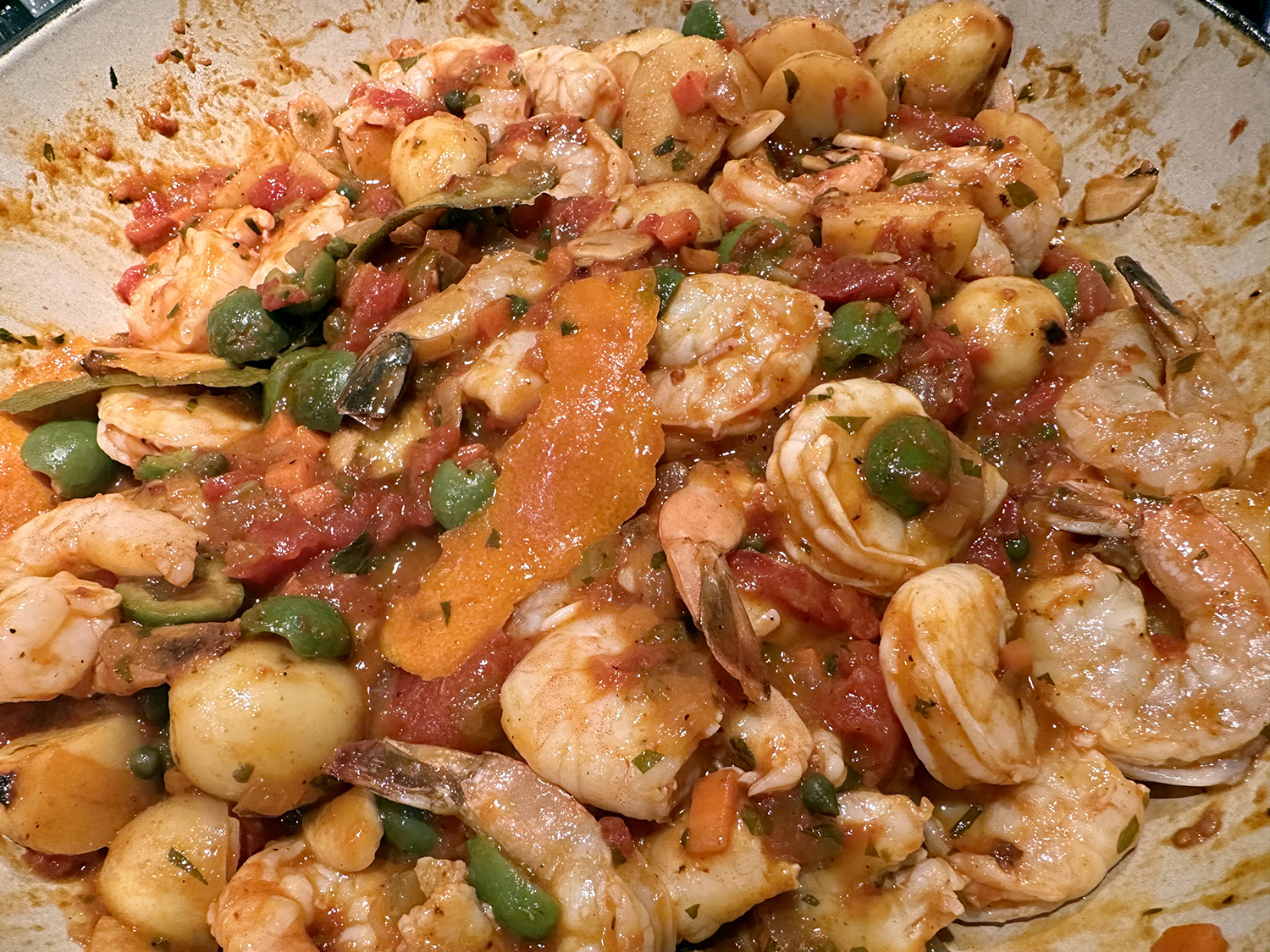
  3. The finish: Add the shrimp, leave the pan uncovered, and adjust the heat so the liquid simmers gently. Simmer just until the shrimp are cooked through, 4 to 5 minutes. Stir in the remaining 2 tablespoons parsley, and taste. If the sauce tastes too acidic or too sharp, stir in the butter. The small bit of butter will soften the acidity nicely. Taste again for salt and pepper. Remove the zests if you like, and serve in shallow bowls.

http://www.lynnandruss.com

Recipe adapted from Molly Stevens “All About Braising”

Coriander Braised Pork with Oregano and Feta

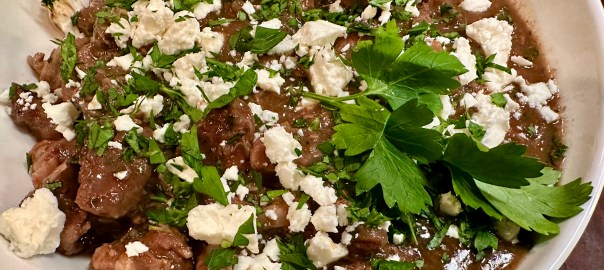
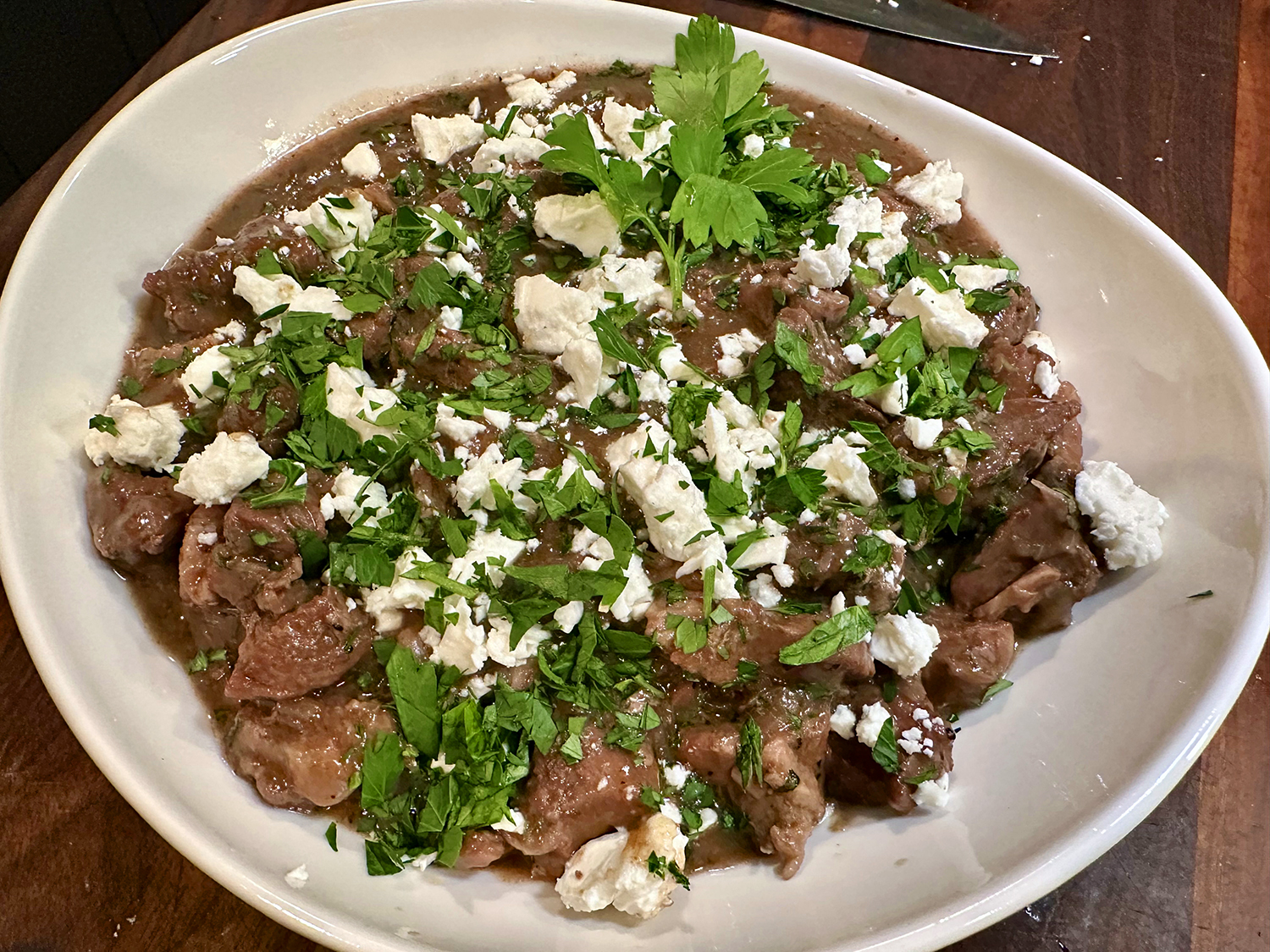
Utterly delicious; wonderfully tender and rich, and easy to make as well. This simple, rustic braise is based on the pork stew called afelia from the Mediterranean island-country of Cyprus. The red wine, reduced to concentrate its flavor, lends depth, but the citrusy notes of ground coriander and a spoonful of lemon juice added at the end, balance the richness of the pork.

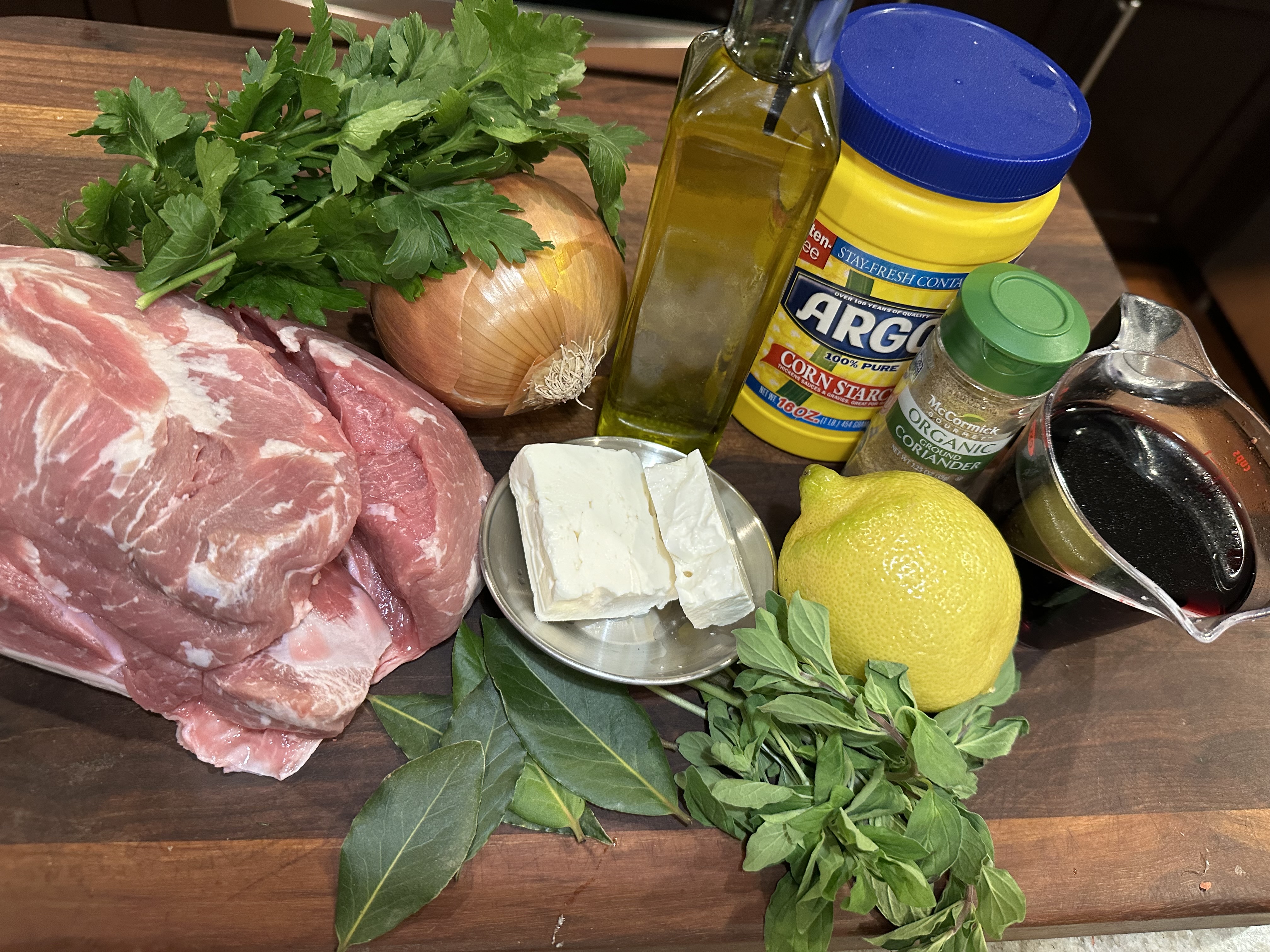
The oregano and parsley aren’t needed until it’s time to finish the sauce, so you can prep the herbs while the pork cooks. Serve the stew with crusty bread, simply prepared potatoes or a hearty grain such as bulgur, steamed rice or egg noodles would work nicely as well.

Don’t use coriander that has gone stale. This dish relies on the spice for its unique flavor, so it’s important to use coriander that is fresh and fragrant.

Coriander Braised Pork with Oregano and Feta

  • Servings: 6
  • Difficulty: easy
  • Print

Ingredients

  • 3 Tbsp. extra-virgin olive oil, plus more to serve
  • 1 medium yellow onion, halved and thinly sliced
  • 3 Tbsp. ground coriander
  • 1 cup dry red wine
  • 3 lbs. boneless pork shoulder, trimmed and cut into 1-inch chunks
  • Kosher salt and ground black pepper
  • 6 bay leaves
  • 1 Tbsp. cornstarch
  • 3 Tbsp. minced fresh oregano
  • 1 Tbsp. lemon juice
  • 2 oz. feta cheese, crumbled (½ cup)
  • ¼ cup finely chopped fresh flat-leaf parsley

Directions

  1. On a 6-quart Instant Pot, select More/High Sauté. Add the oil and heat until shimmering. Add the onion and cook, stirring occasionally, until beginning to brown, about 7 minutes. Add the coriander and cook, stirring, until fragrant, about 1 minute.
  2. Add the wine and cook, stirring occasionally, until most of the moisture has evaporated, 2 to 3 minutes. Add the pork, 1 teaspoon salt, ½ teaspoon pepper and the bay; stir, then distribute in an even layer.
  3. Press Cancel, lock the lid in place and move the pressure valve to Sealing. Select Pressure Cook or Manual; make sure the pressure level is set to High. Set the cooking time for 25 minutes. When pressure cooking is complete, allow the pressure to reduce naturally for 15 minutes, then release the remaining steam by moving the pressure valve to Venting. Press Cancel, then carefully open the pot.
  4. Using a slotted spoon, transfer the pork to a medium bowl. Using a large spoon, skim off and discard the fat from the surface of the cooking liquid. Remove and discard the bay leaves. Select More/High Sauté and bring to a boil. Cook, stirring occasionally, until the liquid is reduced to about 1 cup, about 10 minutes.
  5. In a small bowl, stir together the cornstarch and 2 tablespoons water, then stir into the pot. Cook, stirring constantly, until thickened, about 1 minute. Press Cancel to turn off the pot. Stir in the pork, oregano and lemon juice. Taste and season with salt and pepper. Transfer to a serving dish, sprinkle with feta and parsley, then drizzle with additional oil.

http://www.lynnandruss.com

Recipe from Milk Street’s cookbook “Fast and Slow”

Braised Shallot Confit

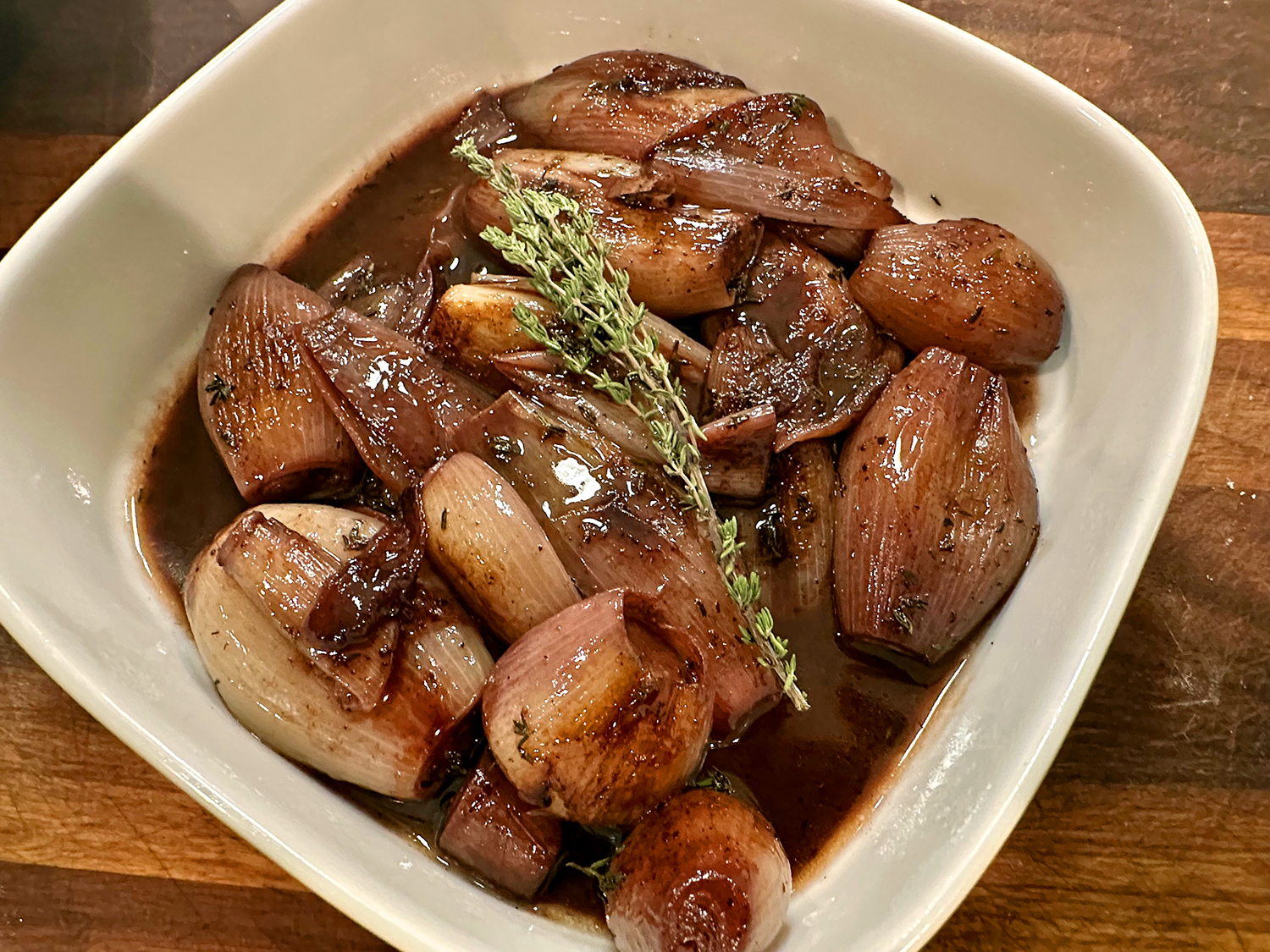
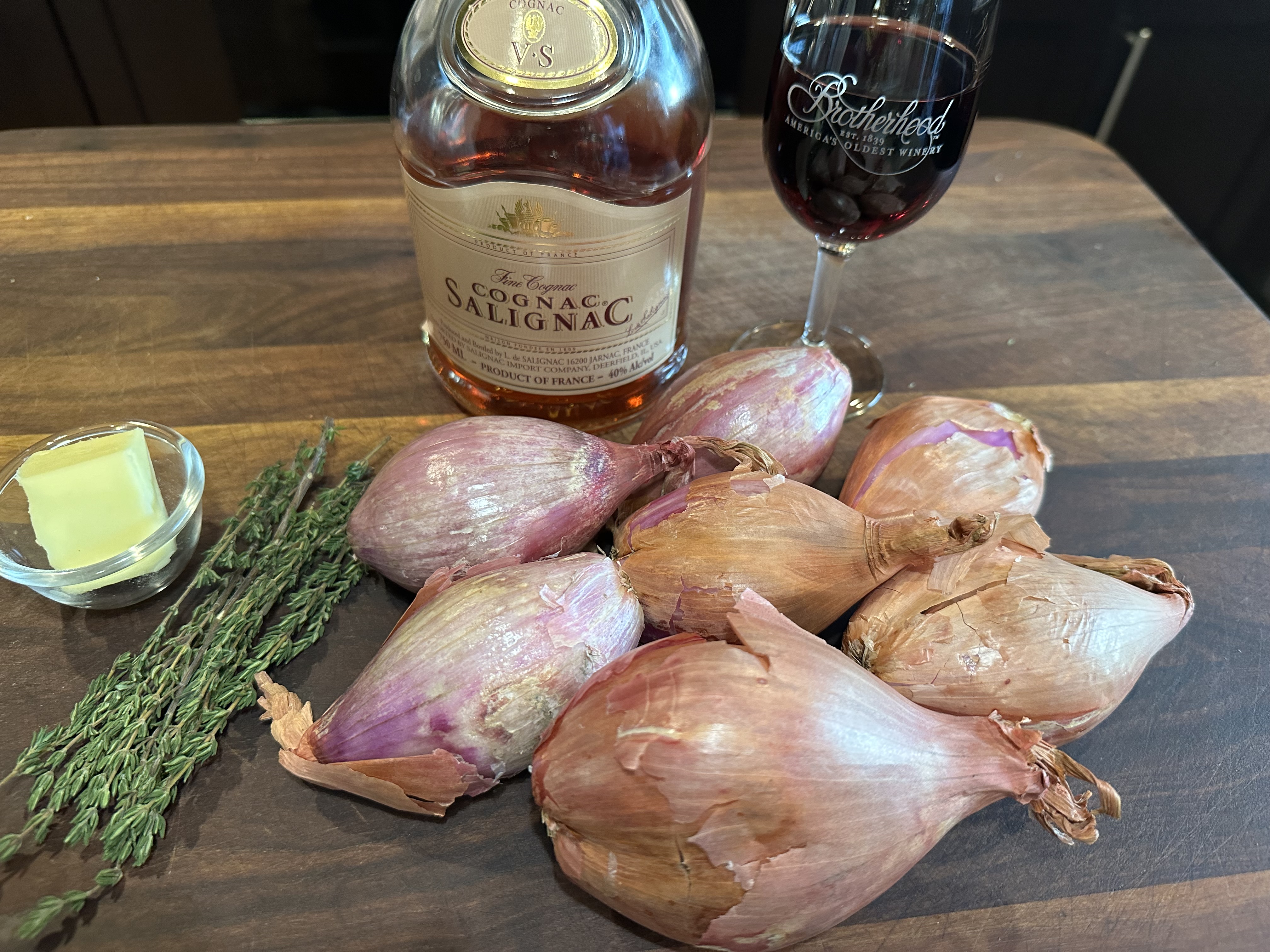
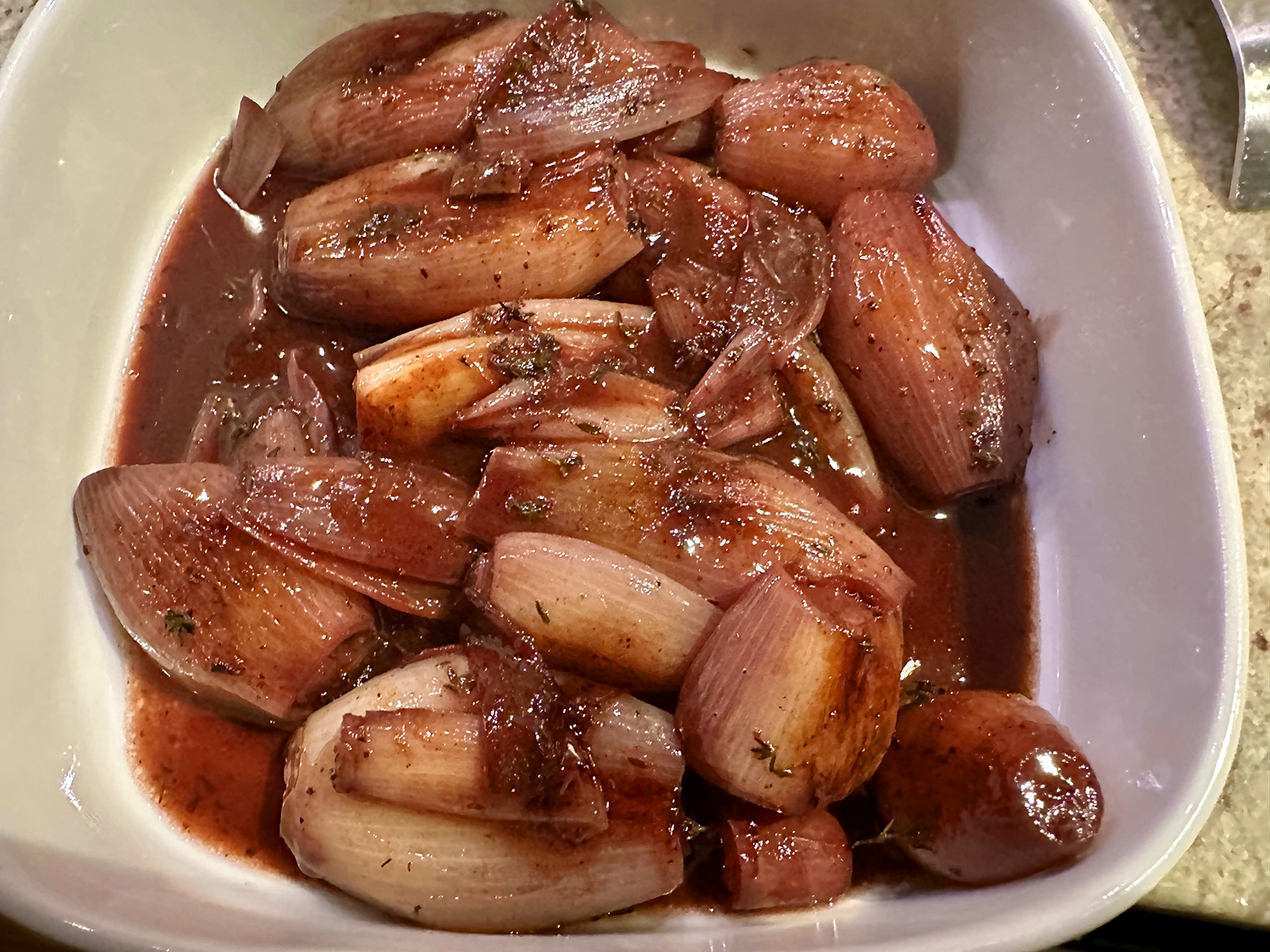
Braised shallots are one of those things that every resourceful cook should know about. When braised in a bit of red wine, Cognac and fresh thyme, shallots turn unbelievably sweet and jammy—wonderful served alongside roast chicken or a juicy grilled steak.

We loved, loved, loved this dish! In fact, you may want to make extra to spread onto bruschetta and top with a little goat cheese. Or try them tucked into a sliced turkey sandwich on chewy country bread.

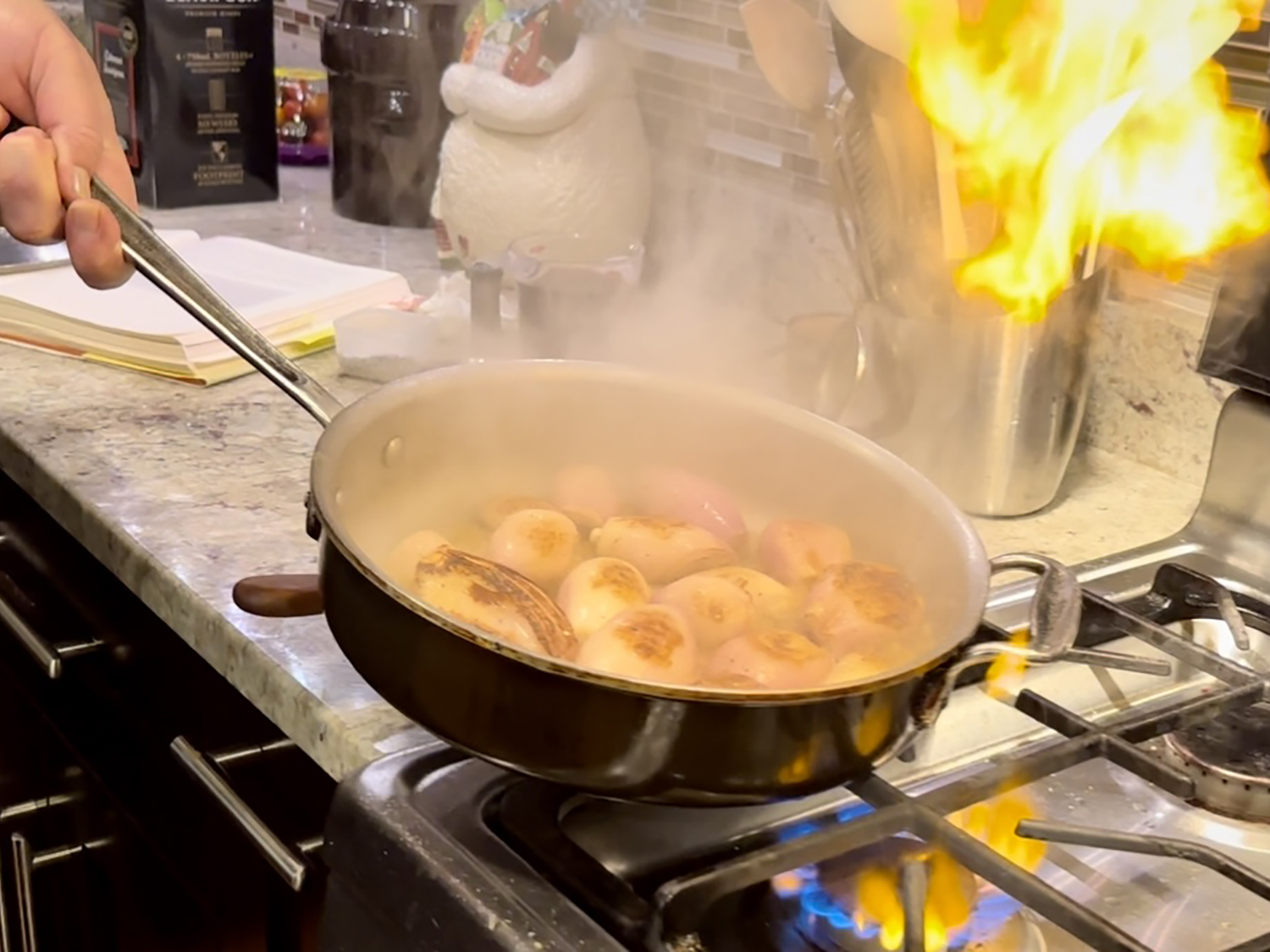
Look for shallots that are all about the same size—preferably medium sized 1 to 1 1/2 inch across—so they will braise evenly. One word of caution, when adding the cognac, be prepared for a flare up…

Screenshot

The shallots can be made ahead and kept, covered, at room temperature for several hours, or refrigerated for a few days.

Braised Shallot Confit

  • Servings: 4
  • Difficulty: easy
  • Print

Ingredients

  • 3/4 lb. shallots
  • 1 1/2 Tbsp. unsalted butter
  • Coarse salt and freshly ground pepper
  • 2 Tbsp. Cognac, or other brandy.
  • 1/2 cup dry red wine
  • 1 1/2 tsp. chopped fresh thyme.

Directions

  1. Trimming the shallots: Peel the shallots and trim off any bits of the root end that remain. Divide and large shallots in two—the halves should fall apart naturally, but you may need to peel off the first layer of shallot to serparate them.
  2. Browning and flaming the shallots. Melt the butter in a medium skillet over medium-high heat. Add the shallots, season with salt and pepper, and toss to coat. Sauté, tossing frequently, until the shallots are brown in spotsand you can smell the aromaof cooking onions, about 5 minutes.
  3. Add the Cognac: If you are cooking over a gas stove, carefully tilt the pan and let the flame ignite the Cognac. On electric, hold a match to the pan to light the cognac. Stand backas the flame flares up, then swirl the panaround and let the flameburn down. Simmeruntil there is onlya glaze lefton the bottom of the oan.
  4. The braise. Add the wine and one teaspoon of thymeand bring to a simmer, then reduce heat to medium-low and cover the pan. Simmer until the shallots are completely soft and falling apart, about 40 to 45 minutes.After the first 15 minutes, check to make sure that the pan is not dry, ad a few tablespoons of water if necessary.Check again 2 or 3 times as the shalloys braise.
  5. The Finish: When the shallots are done, remove the lid and, over medium heat, boil down any liquid, shaking and stirring a few times, until a glaze forms on the shallots. Add the remaining 1/2 teaspoon thyme, gently stir (expect some of the shallots to fall apart a bit). Taste for salt and pepper; serve warm or a room temperature

http://www.lynnandruss.com

Recipe by Molly Stevens in “All About Braising”

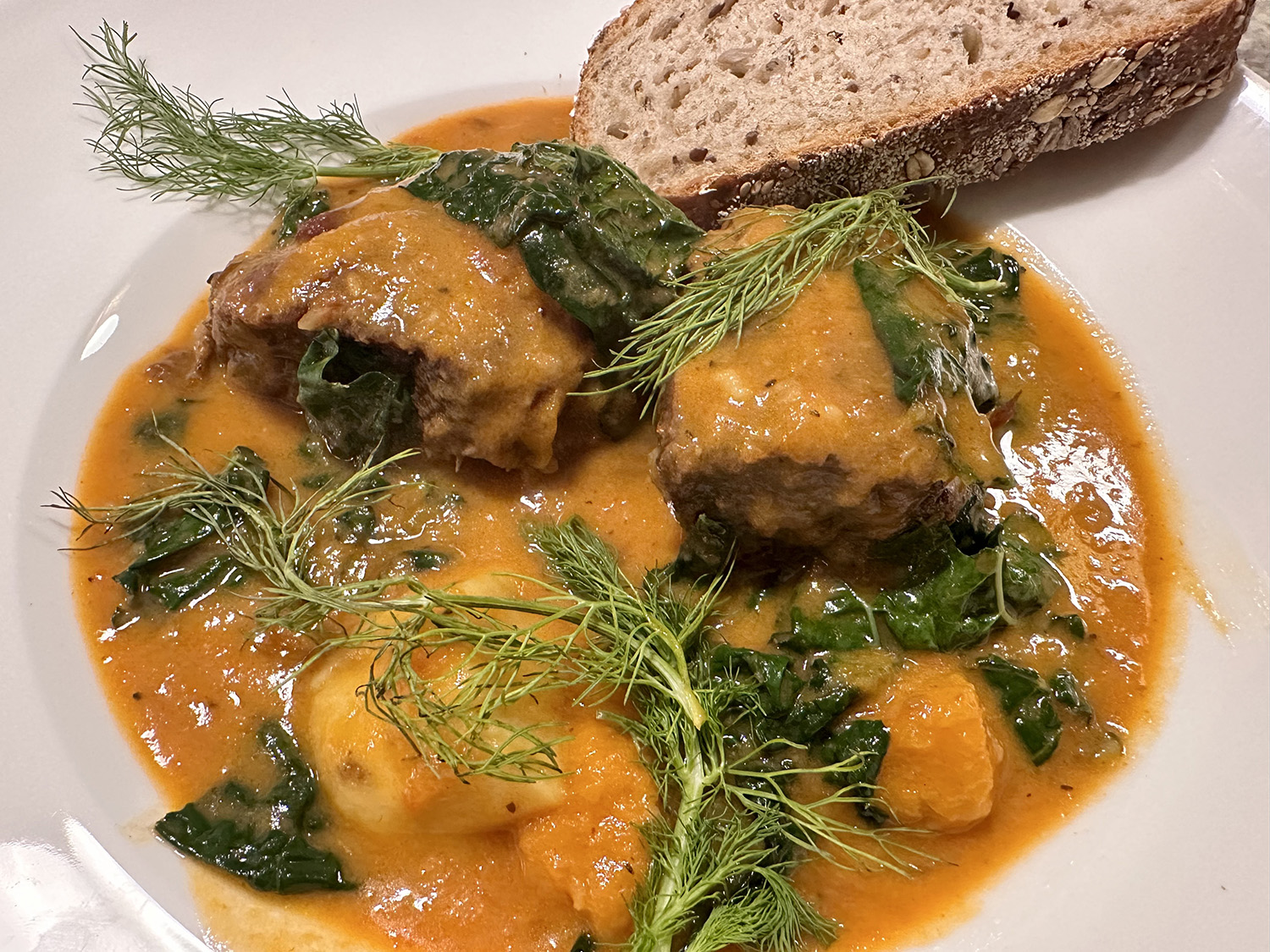
Eintopf: Braised Short Ribs with Fennel, Squash and Sweet Potato

It’s a German thing. Although, after reading the ingredients, it seems to be a mash-up of Italian, Asian and German. Typically this traditional German stew includes bratwurst and sauerkraut, but most notably is how it’s cooked. Eintopf translates to “one pot”—a magic word to most home chefs.

This particular recipe, made with bone-in short ribs, is braised until the meat melts off the bone. Fennel — fresh bulb and dried seeds — stars in the braise, while the fronds are sliced for garnishing. Every bite of this stew bursts with flavor, and, as is the case with so many one-pot meals, this dish will only improve with time as all the ingredients sit and mingle.

Using Japanese white sweet potatoes was a new one on us, and we were surprised to see them at our local supermarket. However, they were on the small side so we bought, and used, two.

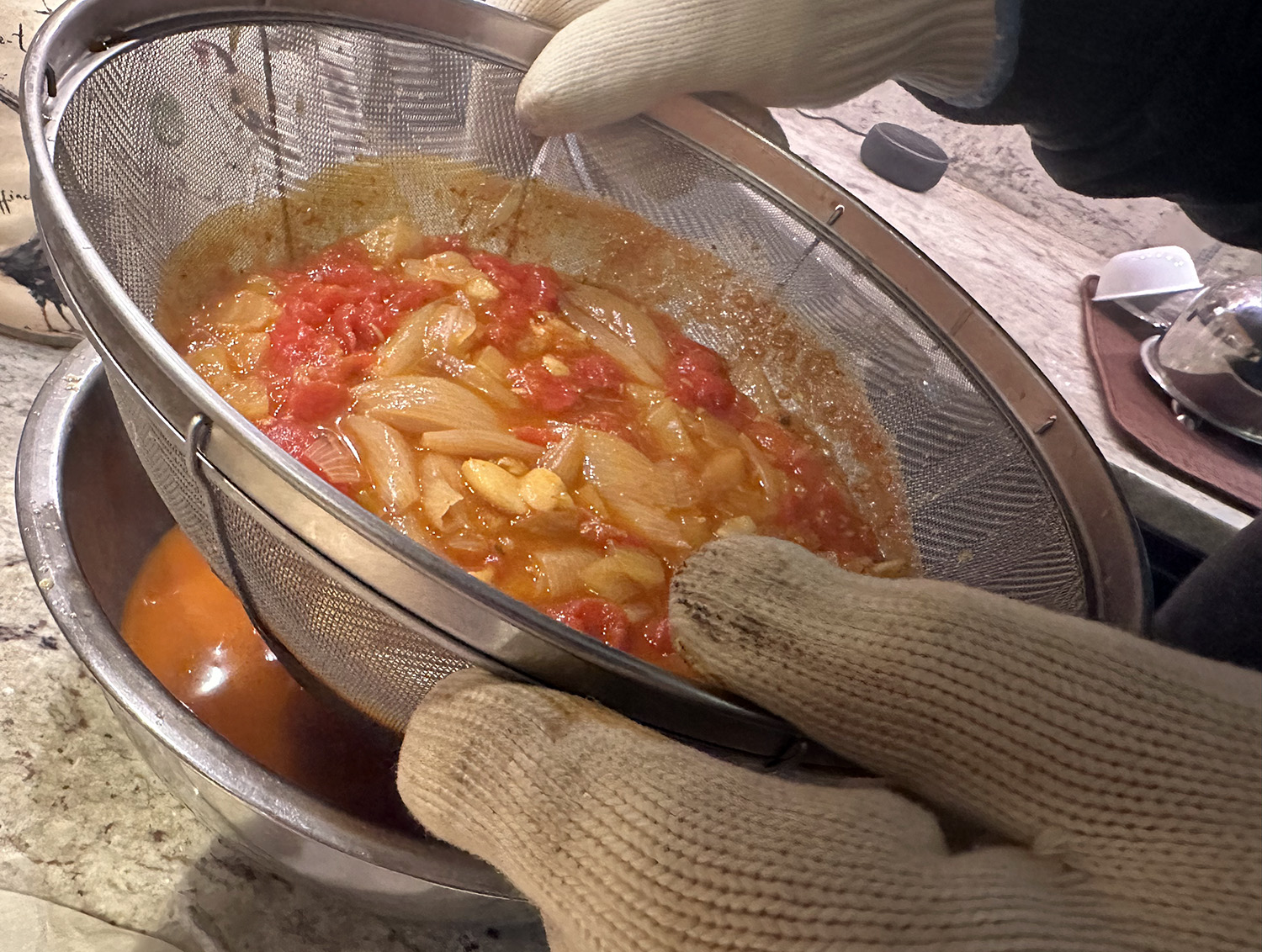
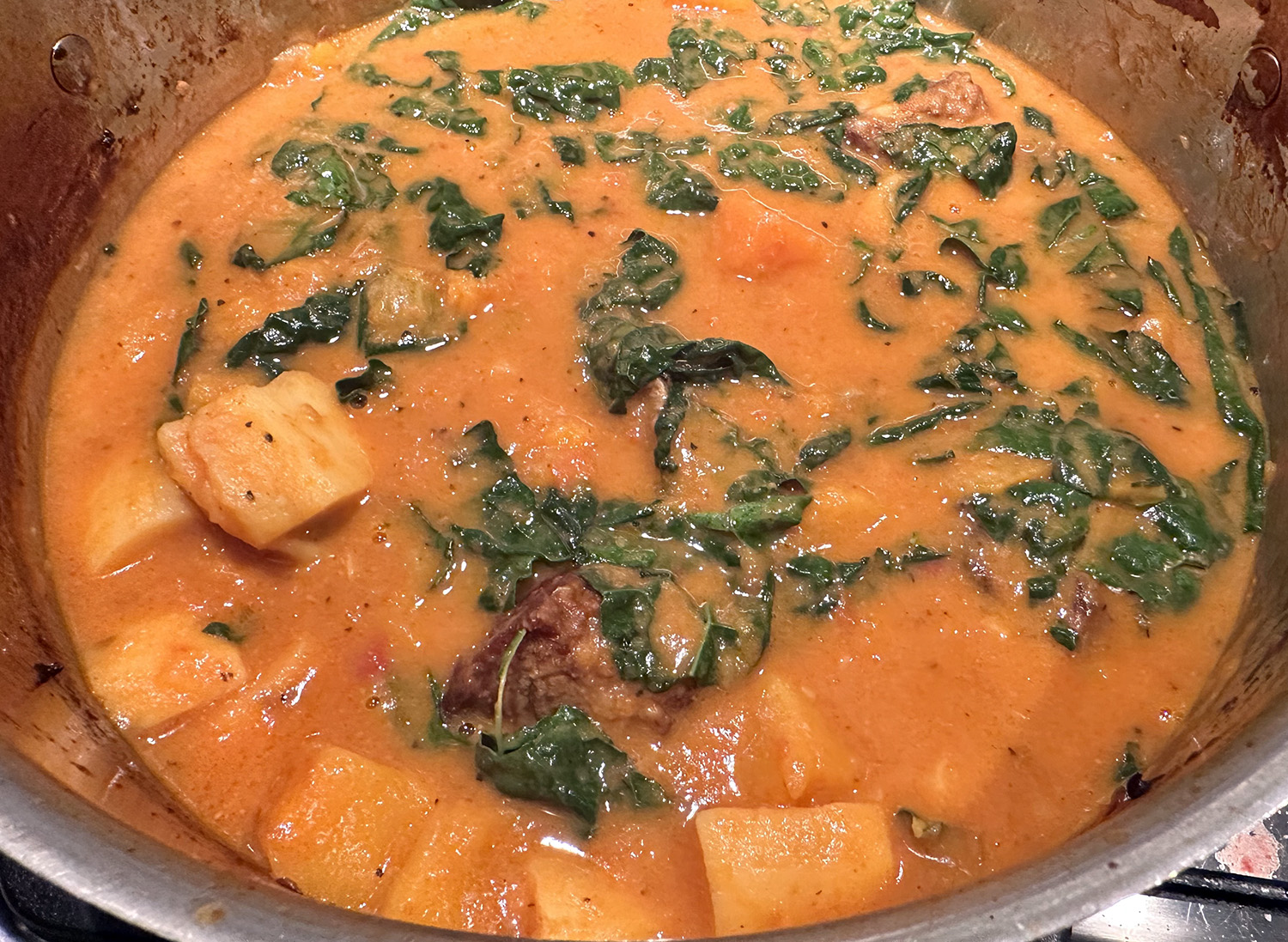
Now, we made one major alteration. And that is after you drain out the vegetable solids from the pot DO NOT discard the flavorful veggies, blasphemy! Use an immersion blender on the solids and add them to the liquid broth after you discard the surface oil. This not only enhances the flavor profile, but also gives the stew some heft instead of a brothy base.

And you just might about faint when you go to buy the short ribs, the cost had us shell-shocked, and may be prohibitive for some. So go ahead and use chuck roast in its place if necessary.

Eintopf: Braised Short Ribs with Fennel, Squash and Sweet Potato

  • Servings: 4-6
  • Difficulty: easy
  • Print

Ingredients

  • 4 lbs. meaty, bone-in short ribs, cut into single-bone portions
  • Salt
  • 1 Tbsp. neutral oil, such as grapeseed, canola or vegetable oil
  • 1 small fennel bulb, trimmed and chopped (about 2¼ cups), top with fronds separated from bulb and thinly sliced
  • 6 shallots, peeled and halved lengthwise
  • 6 garlic cloves, smashed and peeled
  • 1 tsp. fennel seeds, crushed
  • ½ tsp. ground turmeric
  • 1 (28-oz.) can whole peeled tomatoes
  • 4 cups chicken stock
  • 1 white sweet potato, such as Japanese sweet potatoes, peeled and cut into 2-inch pieces, or use an orange sweet potato (2 loose cups)
  • ½ small butternut squash (about 1 lb. 3 oz.), seeds removed, peeled and cut into 2-inch pieces
  • 1 14½-oz. can full-fat coconut milk
  • 1 tsp. freshly ground black pepper
  • 1 1-inch piece fresh ginger, scrubbed and grated
  • 4 cups torn or cut fresh greens, such as kale, mature spinach, mustard greens or dandelion greens
  • Warm crusty bread, for serving

Directions

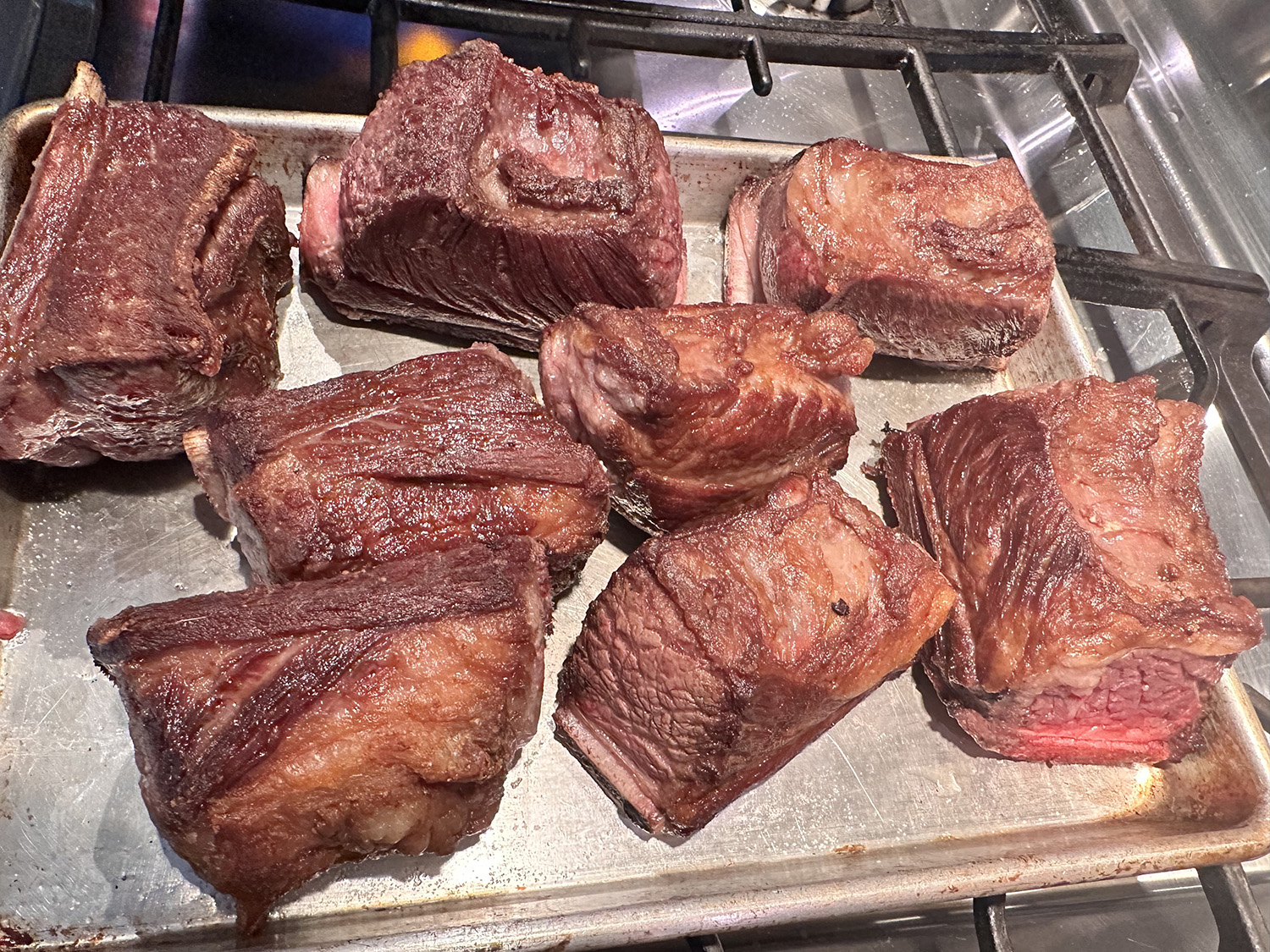
  1. Season the short ribs with a sprinkle of salt on all sides. Heat the oil in a large Dutch oven set over medium-high. Working in batches if necessary, brown the tops and sides of short ribs, about 3 minutes per side. Transfer to a large plate and repeat the browning process with the remaining ribs.
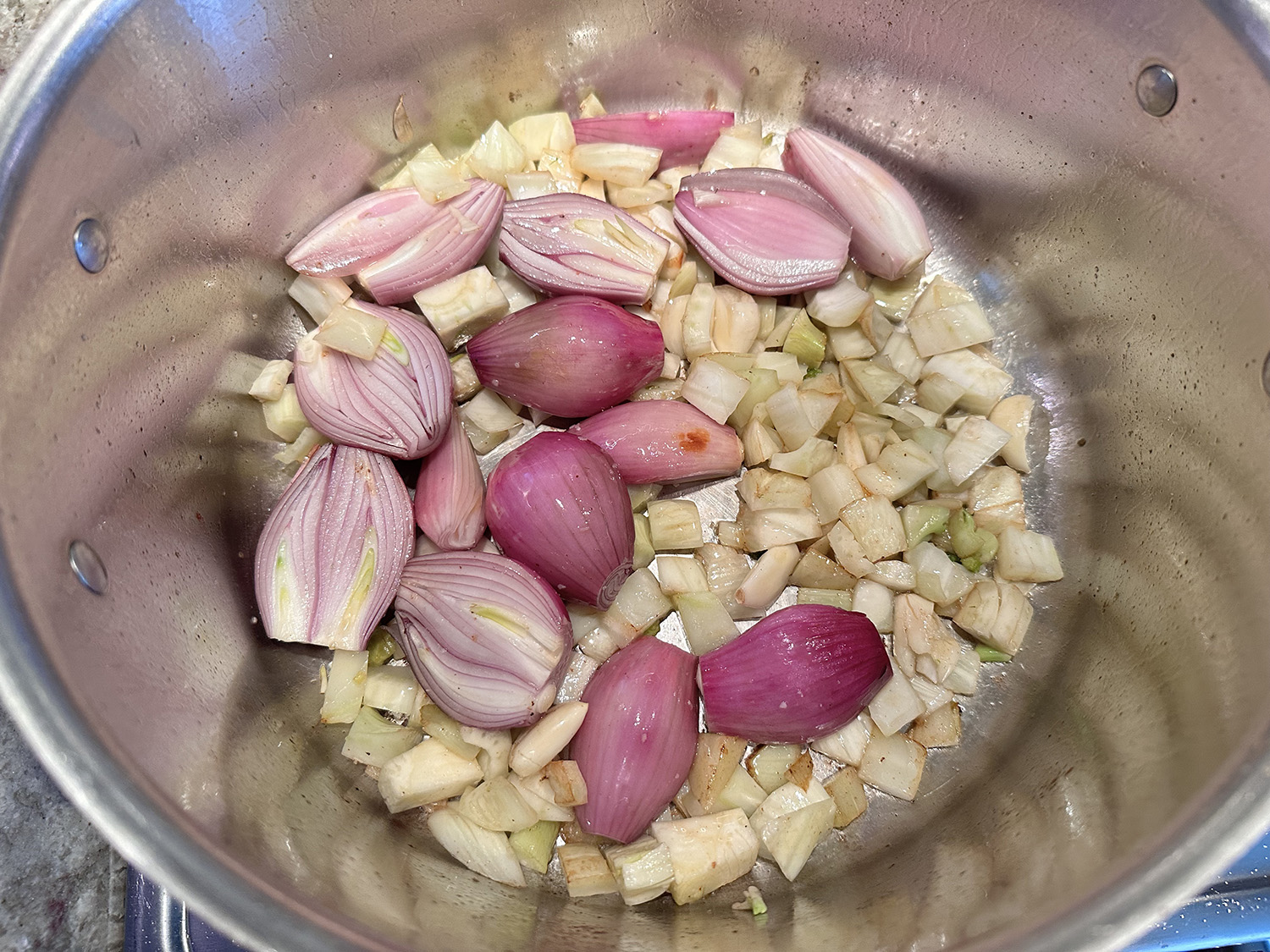
  2. Heat the oven to 350 degrees. Pour off all but 2 tablespoons of fat from the pot. Add the chopped fennel bulb, (reserve the top and fronds for garnish), shallots and garlic to the pot, season with salt, and toss to coat in the pan drippings. Sauté over medium-high heat, stirring frequently until softened, 3 minutes.
  3. Add the fennel seeds and turmeric, and cook until fragrant, 1 minute. Add the tomatoes and break apart the whole pieces with a wooden spoon or other cooking utensil. Cook until the tomato juices are thickened, about 6 minutes.
  4. Return the browned short ribs, bone side up, to the pot along with any drippings from the plate. Pour in the chicken stock and bring up to a simmer. Cover and transfer pot to the oven. Braise until the meat is tender, but not falling off the bone, about 2 to 2½ hours.
  5. Increase the oven temperature to 375 degrees. Transfer the cooked short ribs to a plate. Using a colander or sieve set over a bowl, drain out the vegetable solids from the pot and discard (or not, see note above about using an immersion blender), reserving the liquid broth. Skim off and discard as much oil as you can from the surface of the liquid using a spoon or a ladle. (You should have about 3 to 4 cups of broth.)
  6. Return the broth to the pot, add the potato and squash, and pour in the coconut milk. Season to taste with salt and the 1 teaspoon black pepper. Add the ginger and return the short ribs to the pot, nestling the pieces between the vegetables so that the meat is mostly submerged in the liquid. Return the pot to the oven and braise uncovered until the potato and squash are tender, the meat is falling off the bone, and the liquid is slightly reduced, 50 minutes to 1 hour.
  7. On the stovetop but off heat, stir in the greens: The heat from the stew should gently wilt the leaves. Top with the thinly sliced fennel top and fronds. Serve hot in bowls with warm crusty bread for dipping.

http://www.lynnandruss.com

Recipe by Yewande Komolafe for NYTimes Cooking

Thai-Style Braised Duck with Green Beans

If you are a duck fan, then you must put this fabulous recipe on your shortlist. Never tried duck? Then this recipe is a great jumping off point. Keep in mind, the duck anatomy has quite a different bone structure than that of chicken or turkey. If you are unsure how to break one down, watch on a video, ask the butcher, or simply buy 4 duck legs.

On another note, all of the meat on a duck is dark meat, even the breast. But with this method all of the meat comes out juicy and tender—not greasy at all! Duck and goose are poultry and considered “white” meat. Because they are birds of flight, however, the breast meat is darker than chicken and turkey breast.

On the plus side, duck meat’s rich flavor and color provides a red meat eating experience with the health benefits of poultry. Duck meat is rich in iron and protein like beef but is leaner and has fewer calories like its poultry counterparts. Plus, duck fat is healthier with less saturated fat and more omega-3 fat than beef.

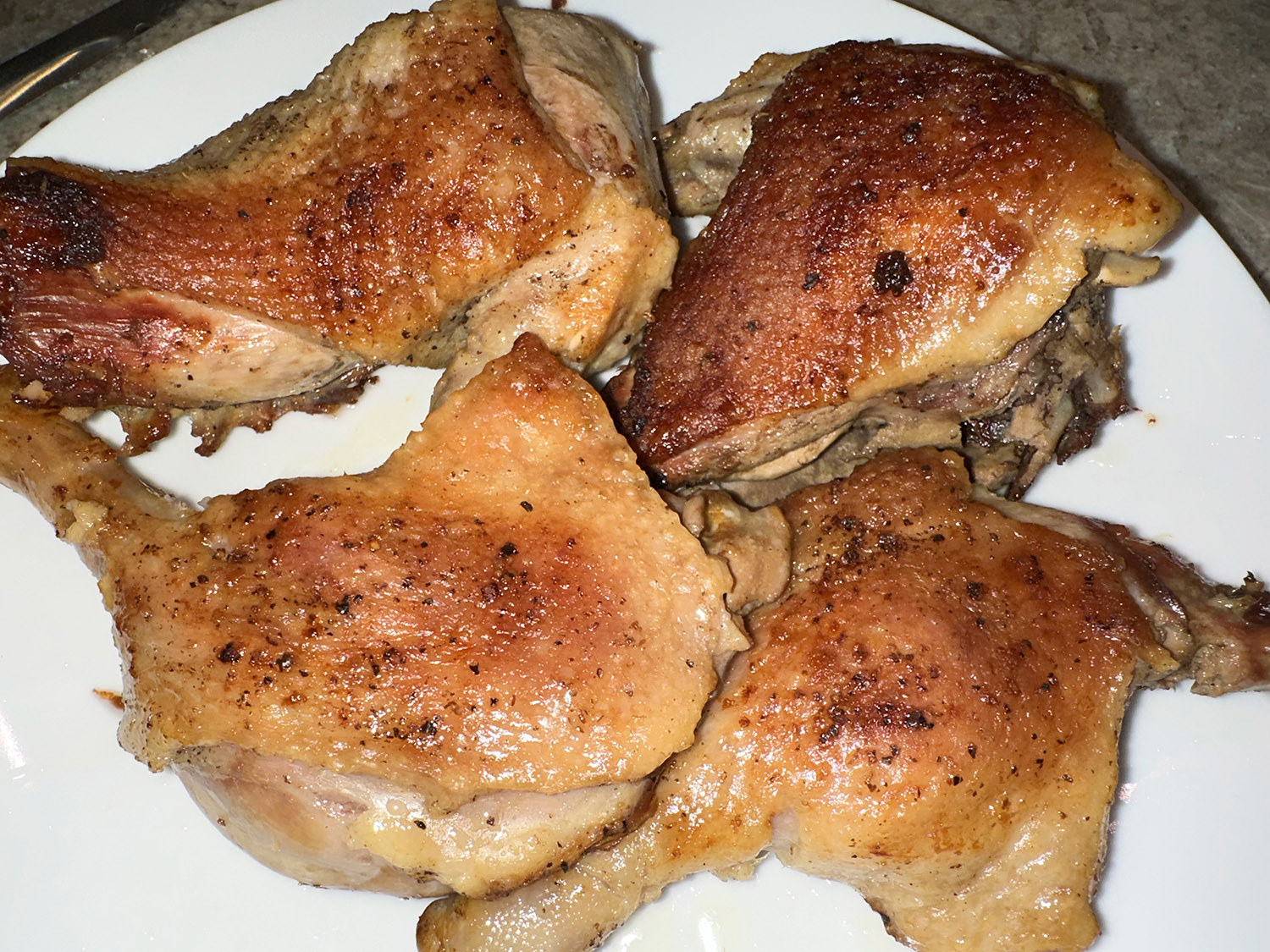
Speaking of the fat on a duck, you want to make sure it gets rendered down. The Hubs decided to render the extra pieces of fat and skin in another skillet, and when crisp he removed them from the hot oil on a paper towel-lined plate, sprinkled with salt and ate as a snack once cooled. With the remaining leftover oil (we had 3 cups!), he will freeze the fat and save it to make duck confit sometime in the future.

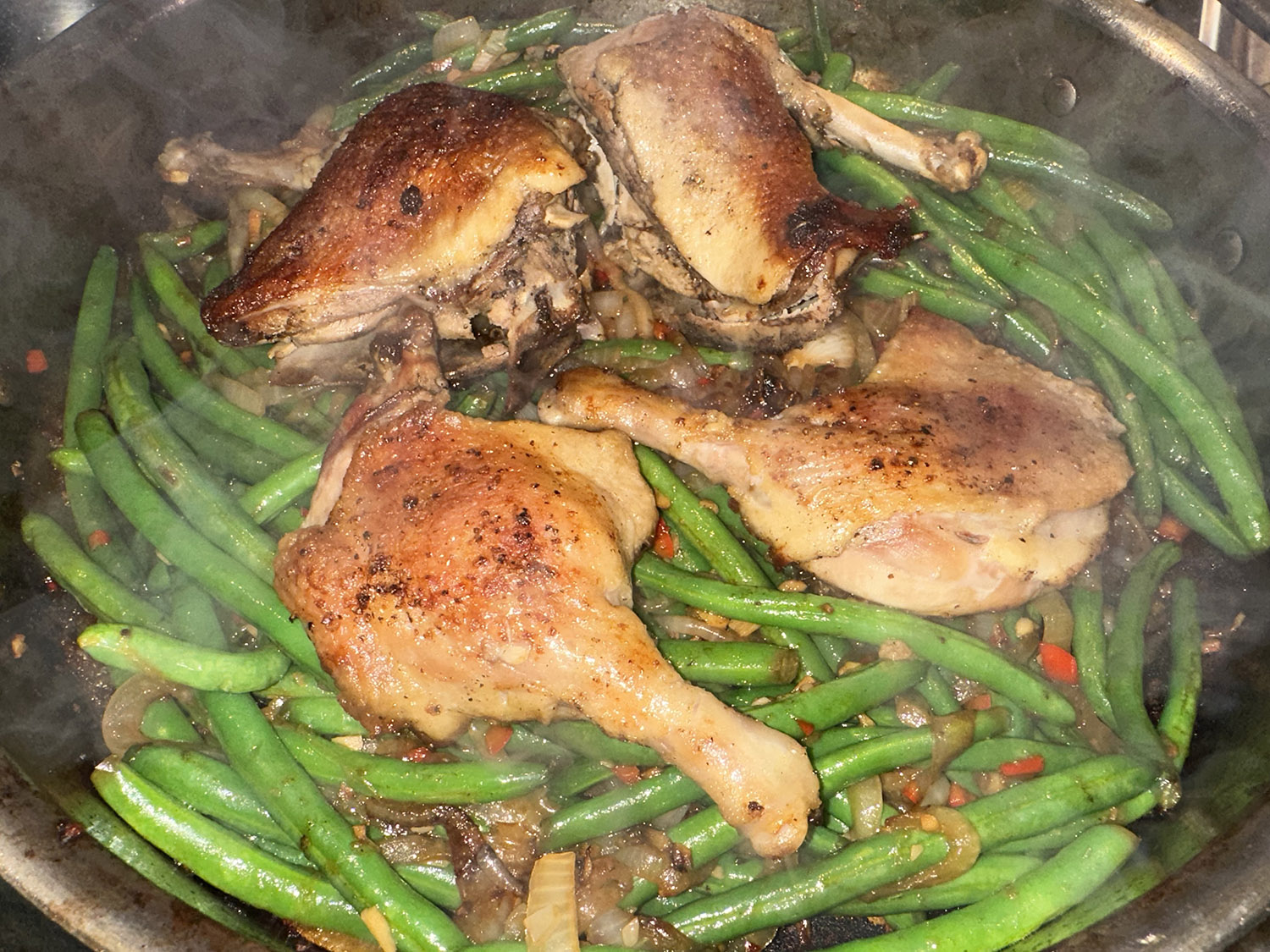
Once bottom browns, turn the pieces. Eventually liquid will evaporate and duck will cook in its fat only. At this point lower heat and continue to cook duck, turning occasionally, until it becomes tender, about 1 hour. While the skin does look nice and brown, it will not be crispy once it steams with the beans in a covered dish.

Rice would make a fine accompaniment, but we paired ours this time with Roasted Parmesan Potatoes, which were wonderfully crispy on the outside, meltingly tender on the inside. Stock will be made from the unused pieces of the duck, such as the back and wings.

Thai-Style Braised Duck with Green Beans

  • Servings: 4
  • Difficulty: moderate
  • Print

Ingredients

  • 1 duck, quartered, or 4 legs
  • Salt and pepper
  • 1 large onion, sliced
  • 1 Tbsp. ginger, minced
  • 1 Tbsp. garlic, minced
  • 2 small chiles, seeded and minced
  • 1 1/2 lbs. green beans, trimmed
  • 1 Tbsp. sugar
  • 2 Tbsp. nam pla (fish sauce) or soy sauce
  • 2 Tbsp. lime juice
  • Cilantro for garnish, coarsely chopped

Directions

  1. Remove excess fat from duck. Season with salt and pepper and put in a skillet or saute pan that will fit it comfortably. Turn heat to medium and cover. Check once you hear sizzling; duck should be simmering in its own fat and exuding liquid. Adjust heat to create a steady simmer.
  2. Once bottom browns, turn. Eventually liquid will evaporate and duck will cook in its fat only. At this point lower heat and continue to cook duck, turning occasionally, until it becomes tender, about 1 hour.
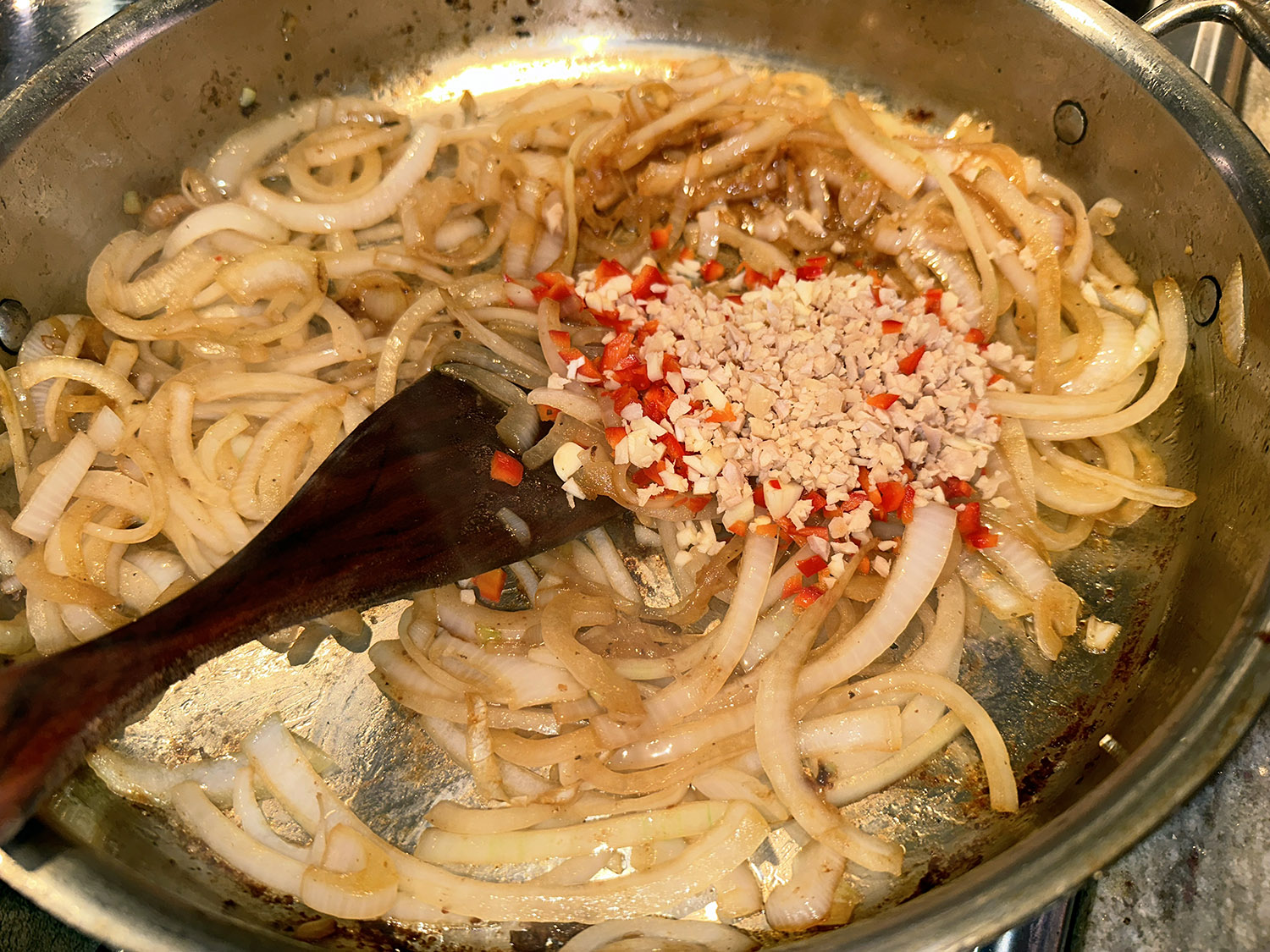
  3. Transfer duck when tender to a plate. Pour off all but 2 tablespoons of fat. Turn heat to medium and add onion; cook until it softens, about 5 minutes. Add ginger, garlic and chilies and cook, stirring, for 30 seconds. Add beans and sugar and turn heat to high; cook, stirring occasionally, until beans begin to brown, about 5 minutes.
  4. Add 2 tablespoons water and nam pla (fish sauce) or soy sauce. Put duck on top of bean mixture and bring to a simmer, Cover and cook until both beans and duck are very tender, 15 to 30 more minutes, adding a little more water if necessary to keep mixture moist. Uncover and stir in lime juice; taste and adjust seasoning, then sprinkle with cilantro and serve.

http://www.lynnandruss.com

Recipe by Mark Bittman for NYTimes Cooking

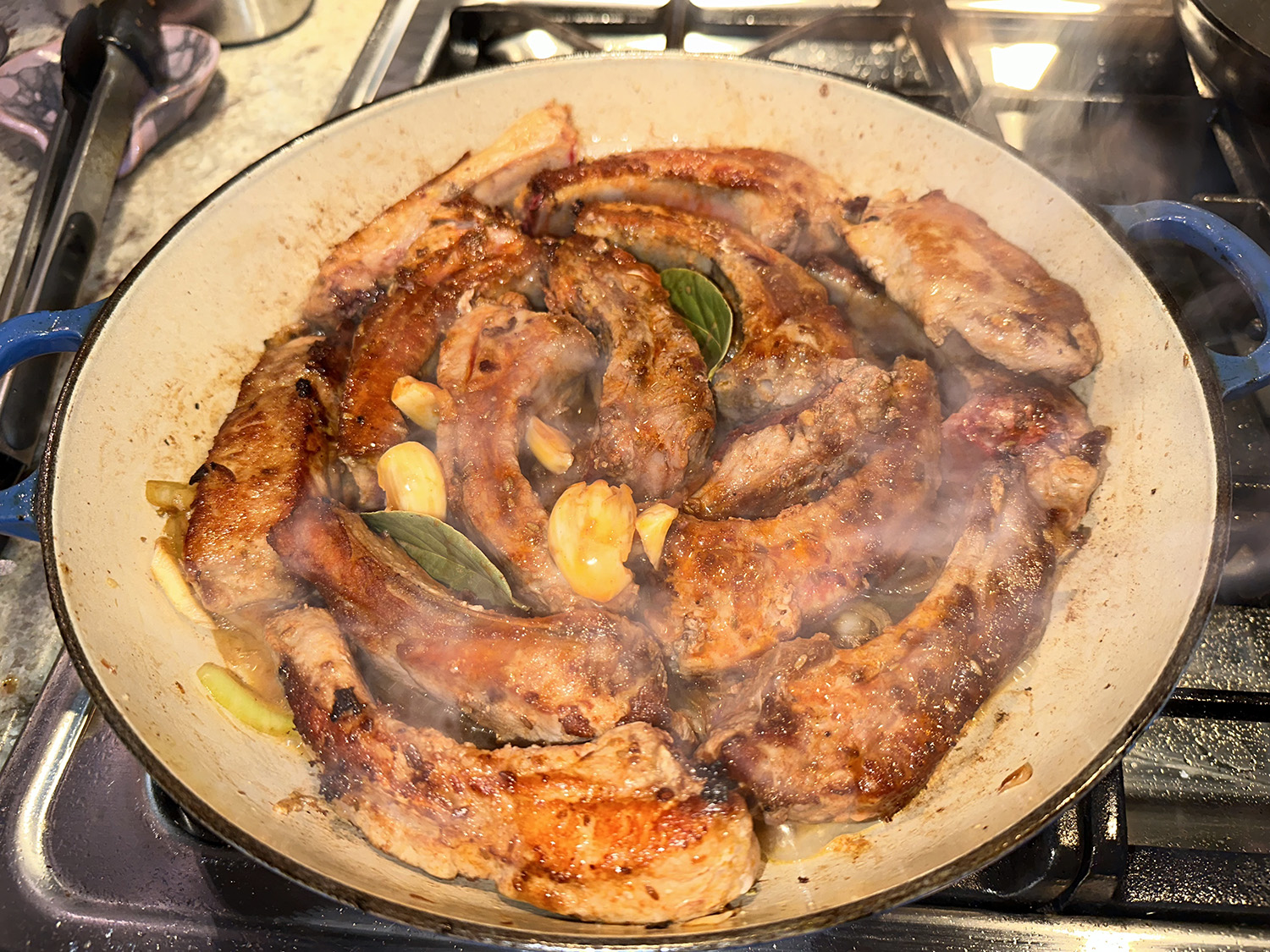
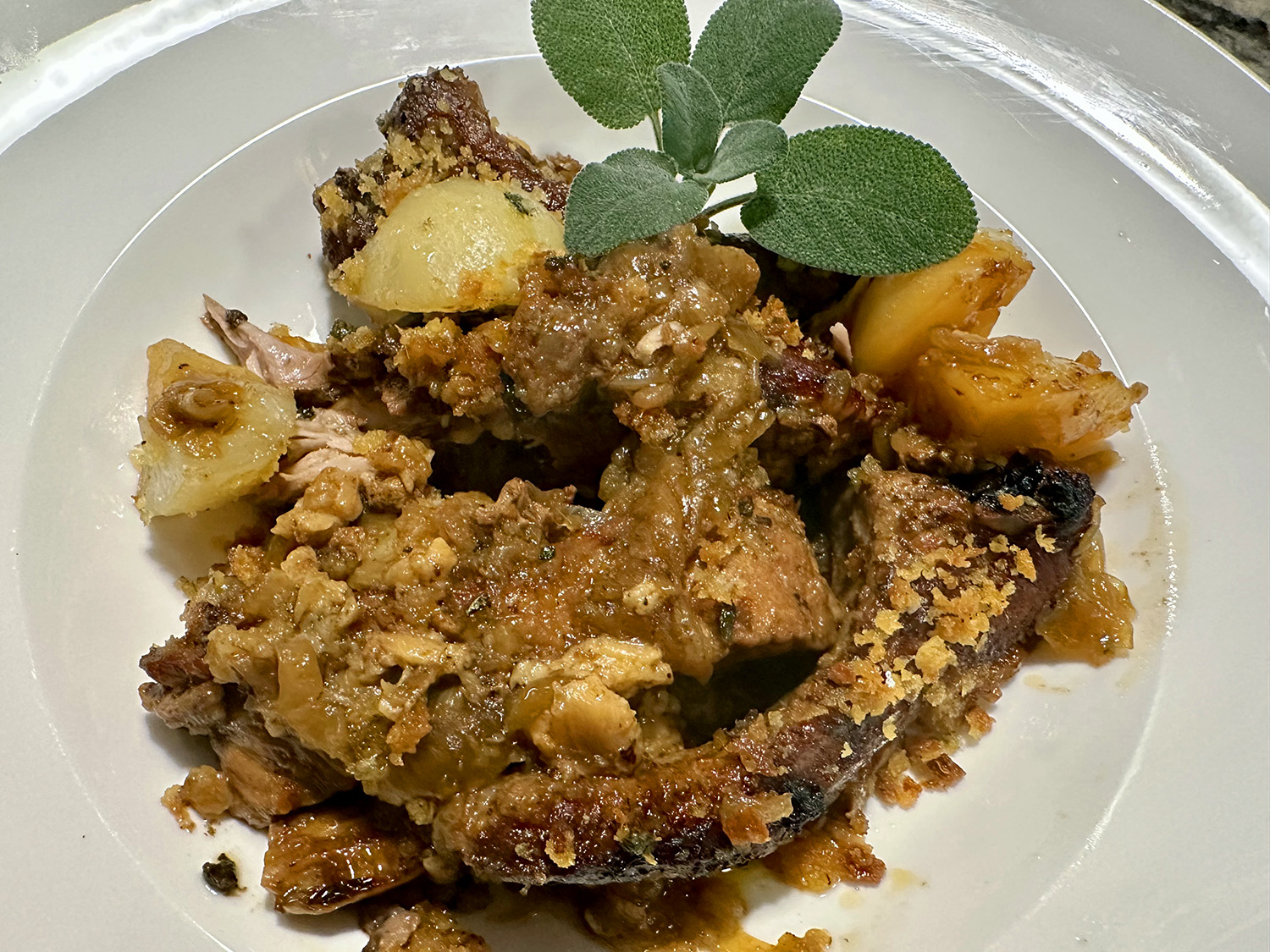
Braised Pork Ribs and Potatoes with Fried Herb Crumbs

Here’s a lovely long braised dish perfect for a cool weather weekend afternoon into evening. Baby back ribs are braised till they fall off the bone, then garnished with an herby crumb topping. Plus a bonus recipe for Braised Leeks with Bacon and Cream.

Admittedly, we always think of baby back ribs as an outdoor barbecue kind of dinner. It has never dawned on us to showcase the ribs as a cool weather meal. Now that we have enjoyed the fruits of our labor, these ribs are sure to make a showing again in the near future.

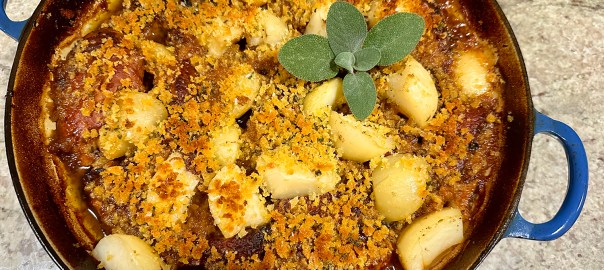
The bread crumb topping is optional, but adds a tremendous depth of flavor and a nice crunch factor. Cracking the new potatoes in half with the tip of a knife helps them to release their starch and therefore thicken the sauce a bit.

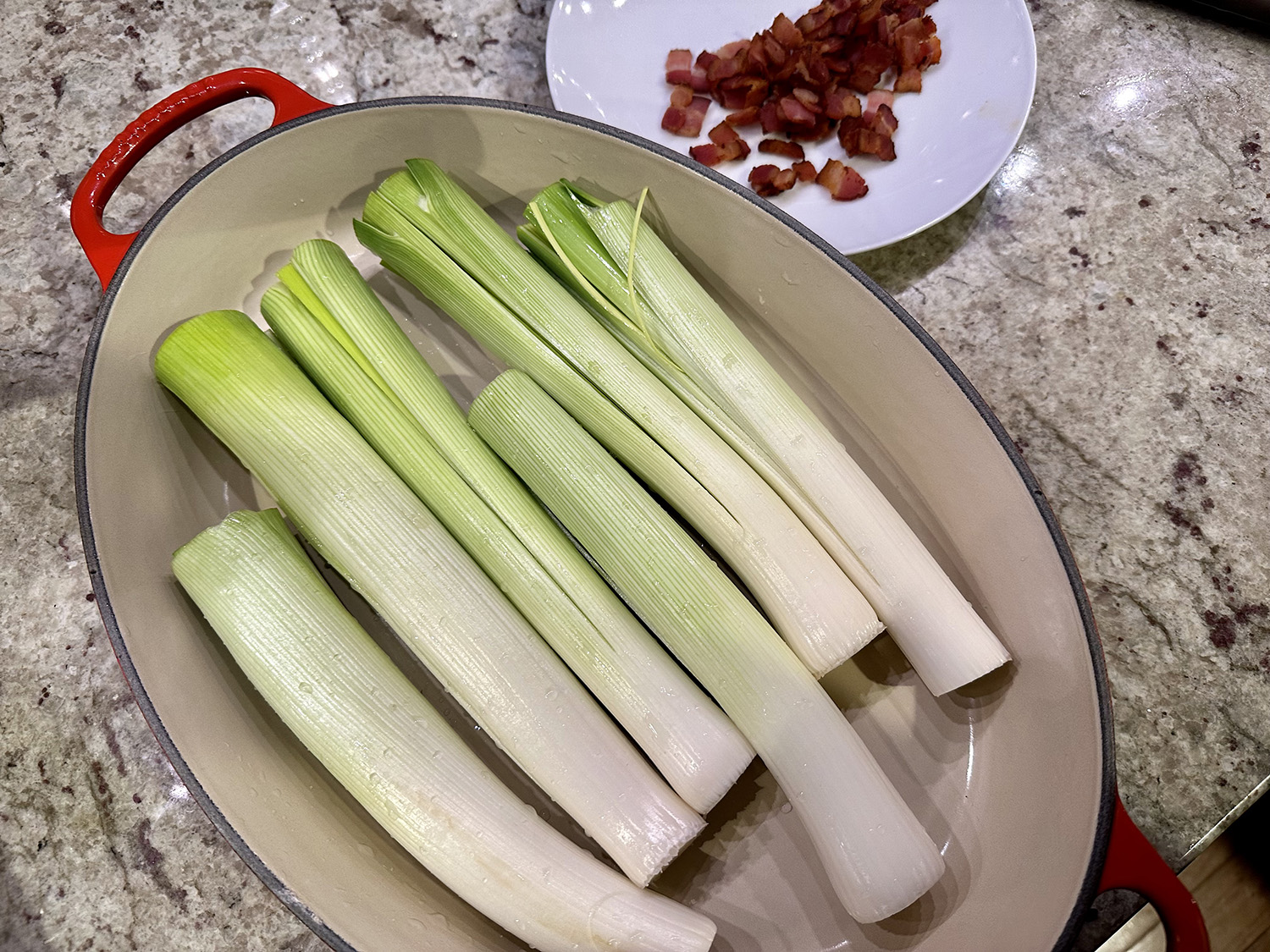
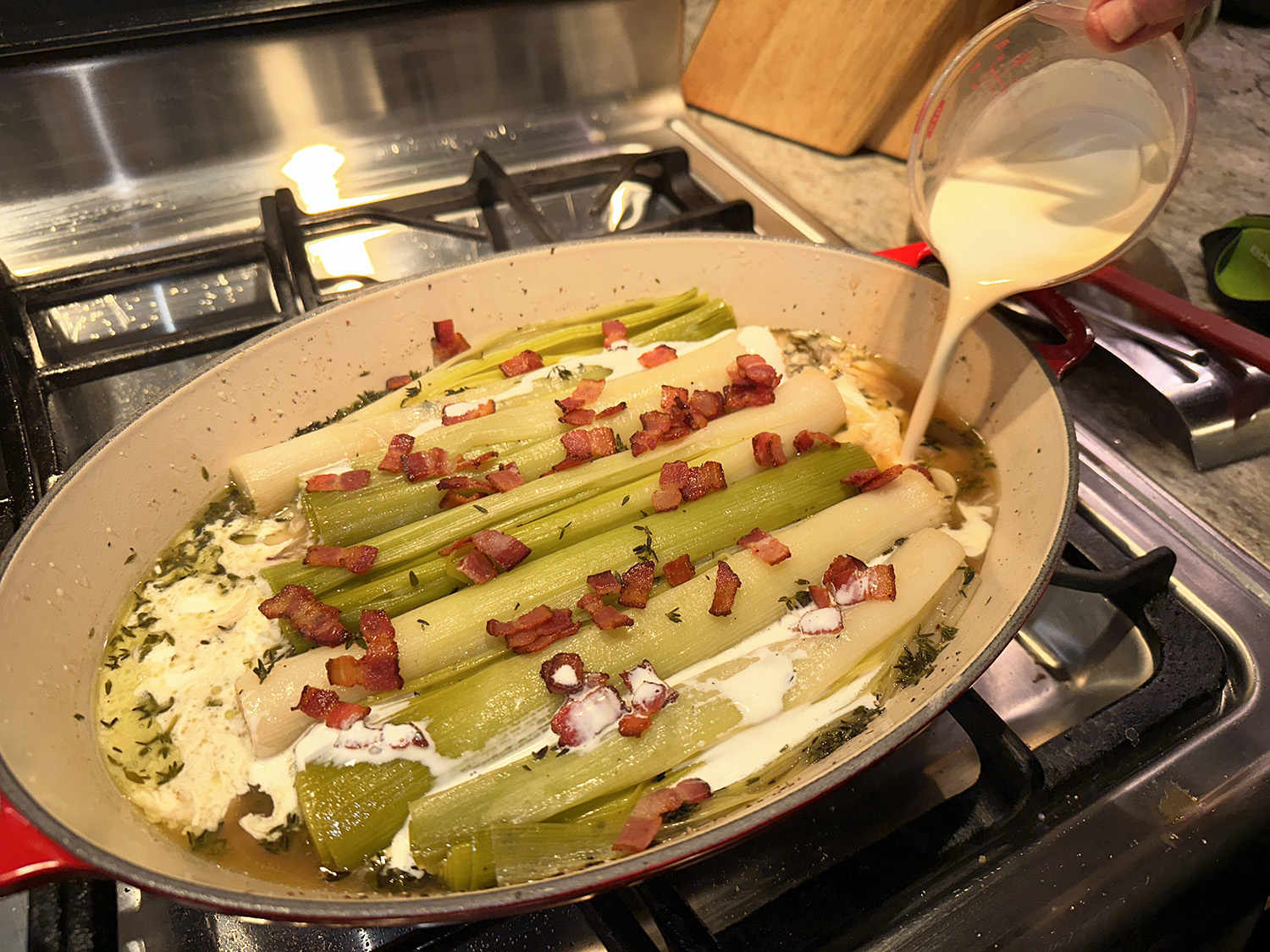
As an accompaniment, we prepared a side of Braised Leeks with Bacon and Cream (shown below), originally from Molly Stevens “All About Braising” cookbook. A while back, we enjoyed the same recipe using thyme, but minus the cream. Either option braises the leeks slowly in chicken broth until they collapse into blessed tenderness.

On our initial trip to the grocery store, there were only a few lousy looking leeks with hardly any white parts, so we rethought our scouting expedition and went to a local Asian Mart known to carry great produce. Their leeks were phenomenal, the best we’ve ever seen.

Try to coordinate the cooking times of both the ribs and the leeks so that they are done braising at about the same time.

Braised Pork Ribs and Potatoes with Fried Herb Crumbs

  • Servings: 4
  • Difficulty: easy
  • Print

Ingredients

  • 3-4 lbs. baby back ribs
  • 1 tsp. pimentón de la Vera
  • 4 garlic cloves, bashed and peeled
  • 4 Tbsp. olive oil
  • 1½ tsp. cumin seeds, lightly crushed
  • 5 oz. white wine
  • 1 large. onion, peeled and finely sliced
  • 2 bay leaves
  • 2 cups chicken stock, homemade, ideally
  • 3/4 lbs. new potatoes

For the Crumbs

  • 4 Tbsp. olive oil
  • 1 garlic clove, peeled and finely grated
  • 3 oz. fresh white breadcrumbs
  • Finely grated zest of 1 lemon
  • 6 sage leaves, shredded

Directions

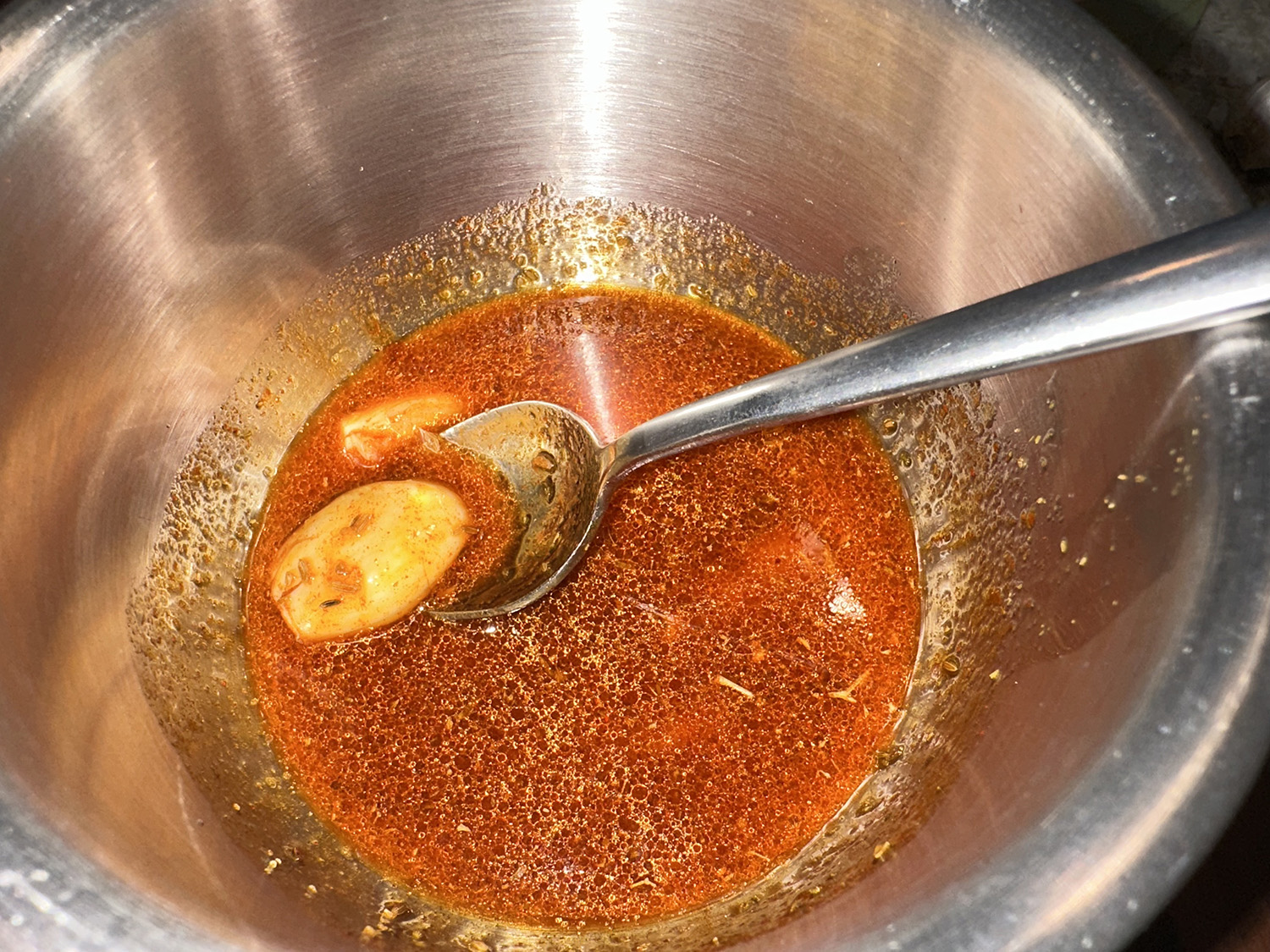
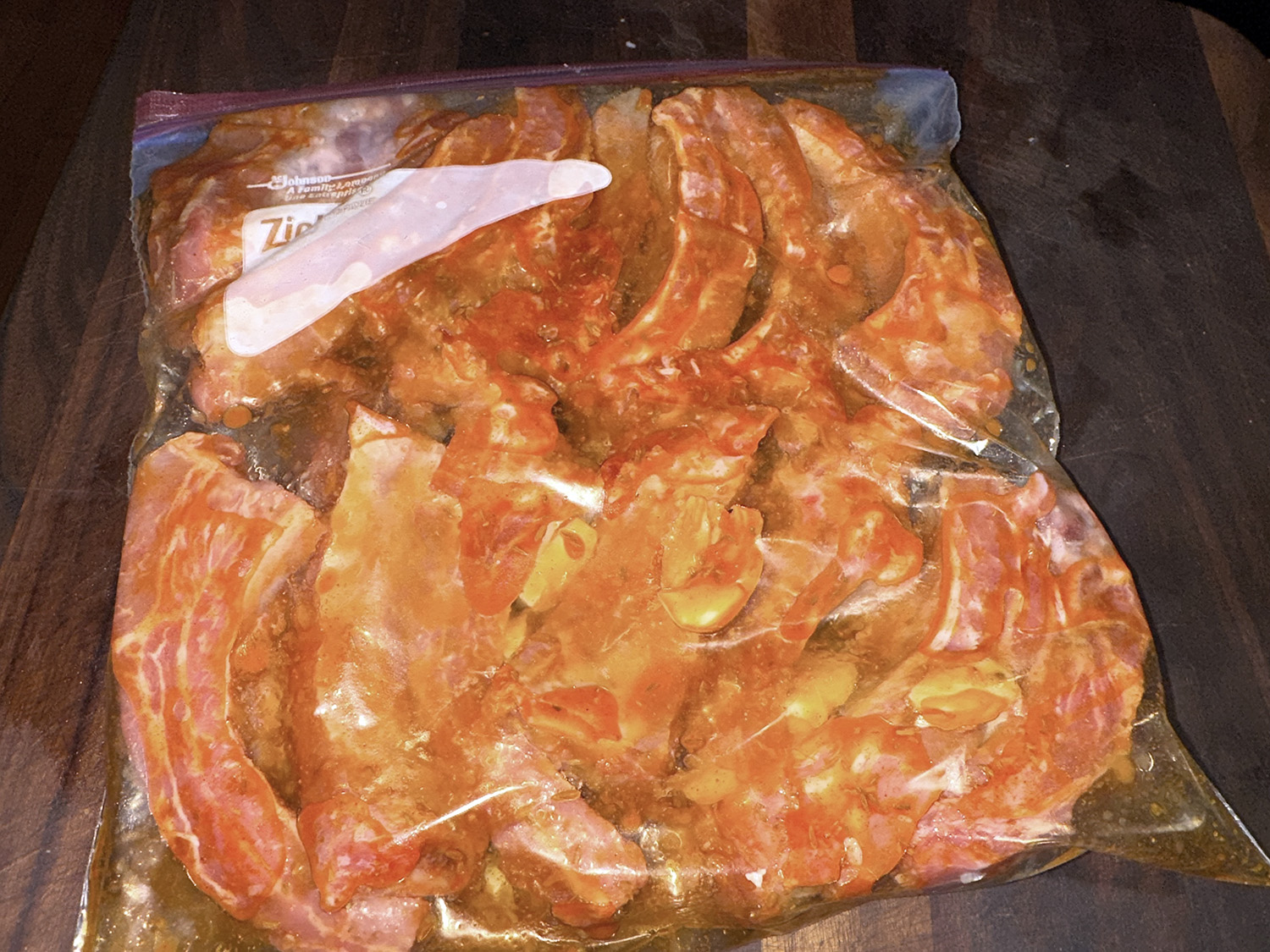
  1. Arrange the ribs in a large dish, add the pimentón, two of the bashed garlic cloves, two tablespoons of the olive oil, a teaspoon of the crushed cumin seeds and 2 ounces of the white wine. Toss to coat the ribs, then cover and leave to marinate for at least three hours (or put in the fridge overnight).
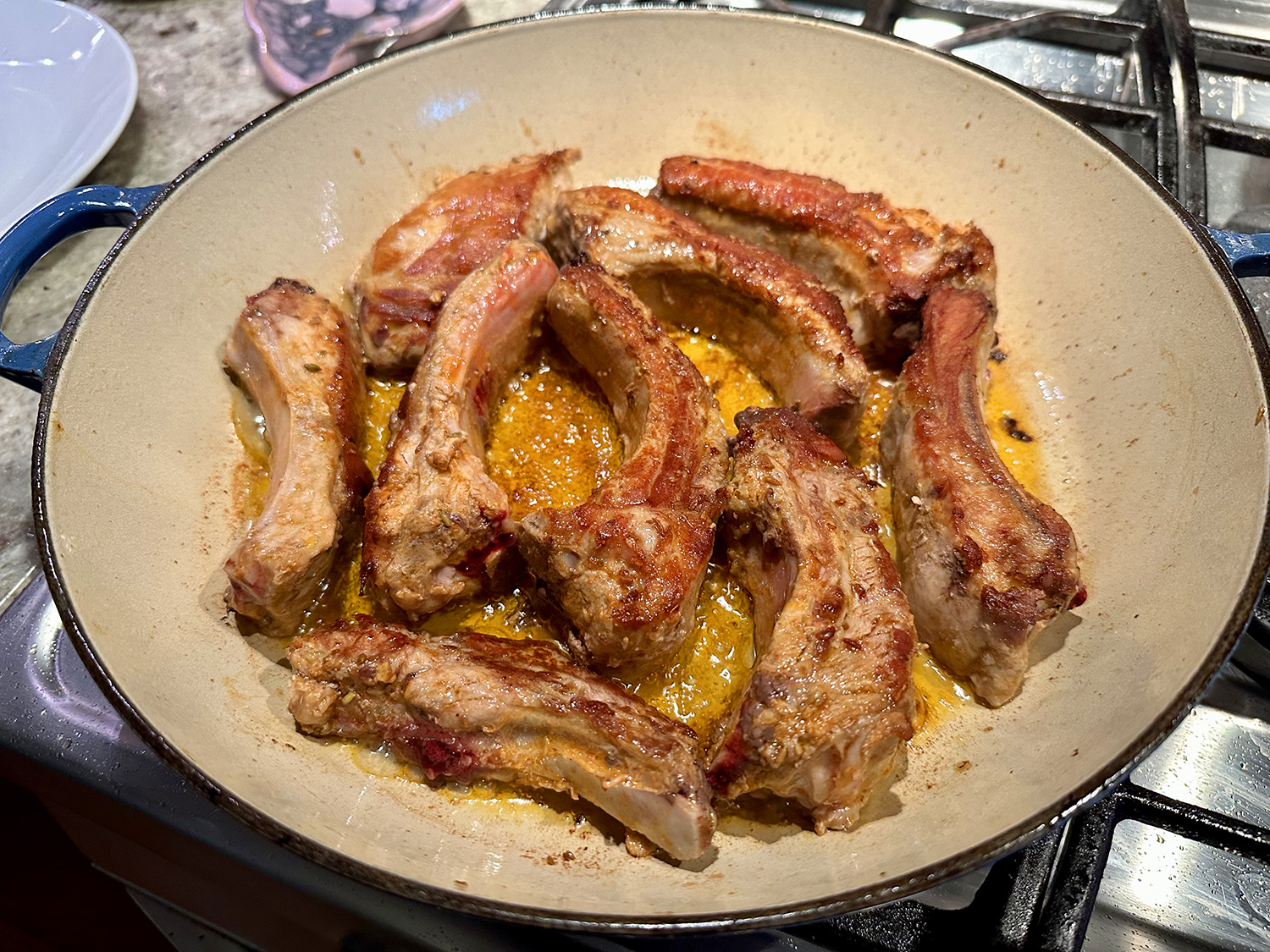
  2. Heat the oven to 340F. Heat the remaining two tablespoons of olive oil in a deep casserole dish on a medium-high heat. Take the ribs out of their marinade (keep the marinade for later), and sear for four to five minutes on each side, until browned all over.
  3. Transfer the ribs to a plate, add the onion to the pan and sauté, stirring, for 10 minutes, until brown. Add the remaining garlic and cumin seeds, stir to combine, then return the ribs to the pan.
  4. Pour in the remaining 3 ounces of white wine, leave to bubble for a minute, then add the bay leaves, stock and reserved marinade. Season well and bring to a boil, then cover and transfer to the oven to cook for an hour to an hour and a half, until the meat is tender and beginning to pull away from the bones.
  5. Crack the new potatoes in half with the tip of a knife (this helps them to release their starch), then add to the casserole dish and cook for 30-40 minutes, until the potatoes are cooked through and starting to break apart a bit and thicken the sauce.
  6. Meanwhile, make the herby crumbs. Put the oil in a frying pan on a medium-high heat, fry the garlic for 10 seconds, then add the breadcrumbs, lemon zest and sage.
  7. Remove the lid from the casserole, sprinkle the crumb mix all over the top, then bake uncovered for a further 20 minutes.
  8. Then put under a broiler for a couple of minutes to crisp the top. Serve in shallow bowls with lots of the lovely sauce.

http://www.lynnandruss.com

Recipe from José Pizzaro

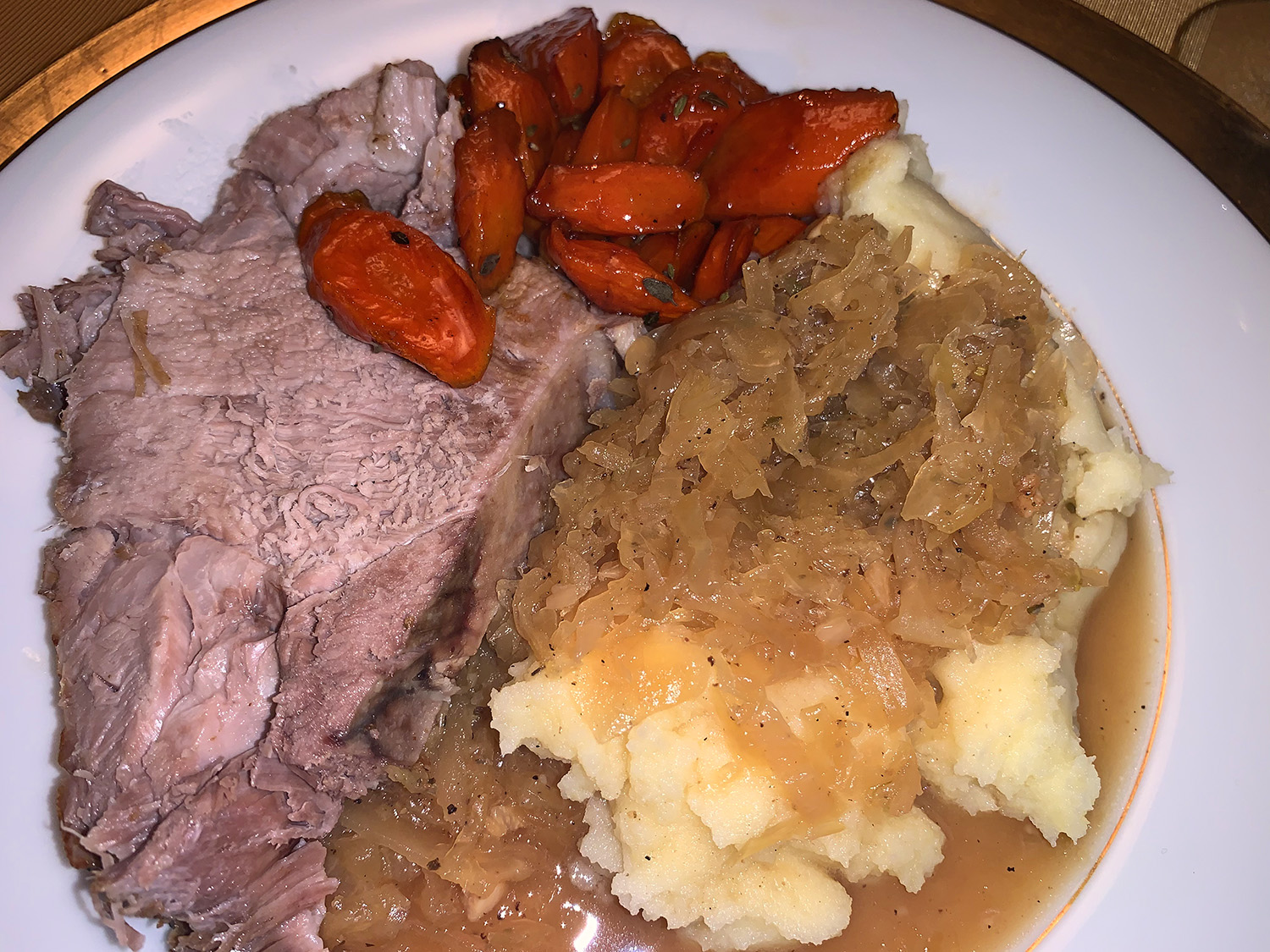
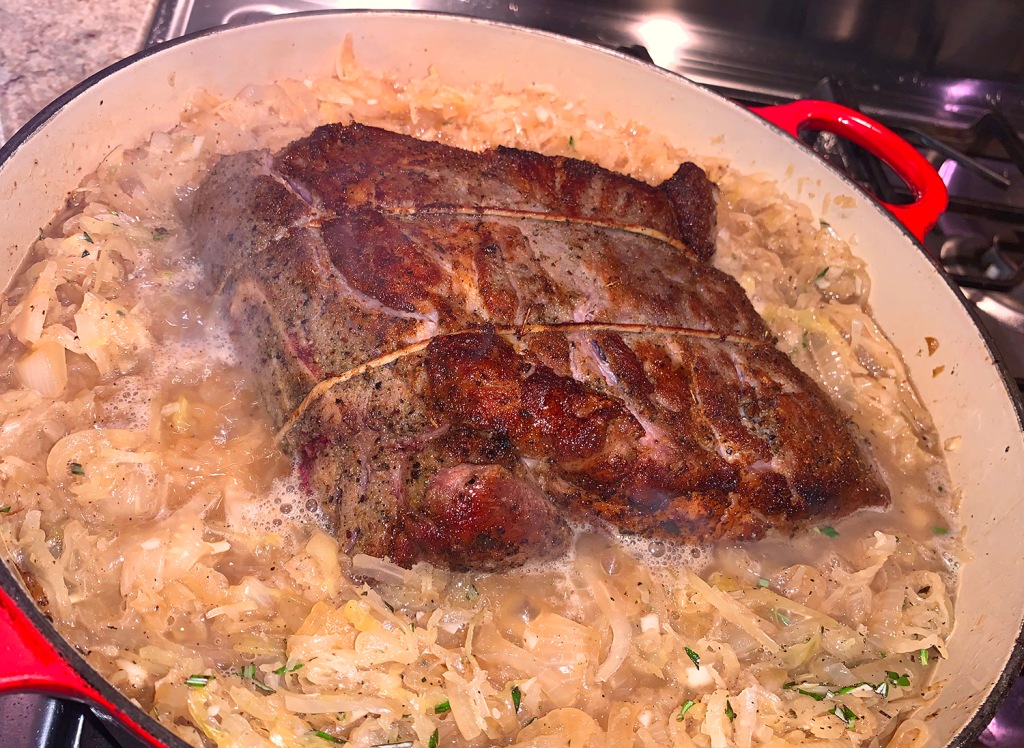
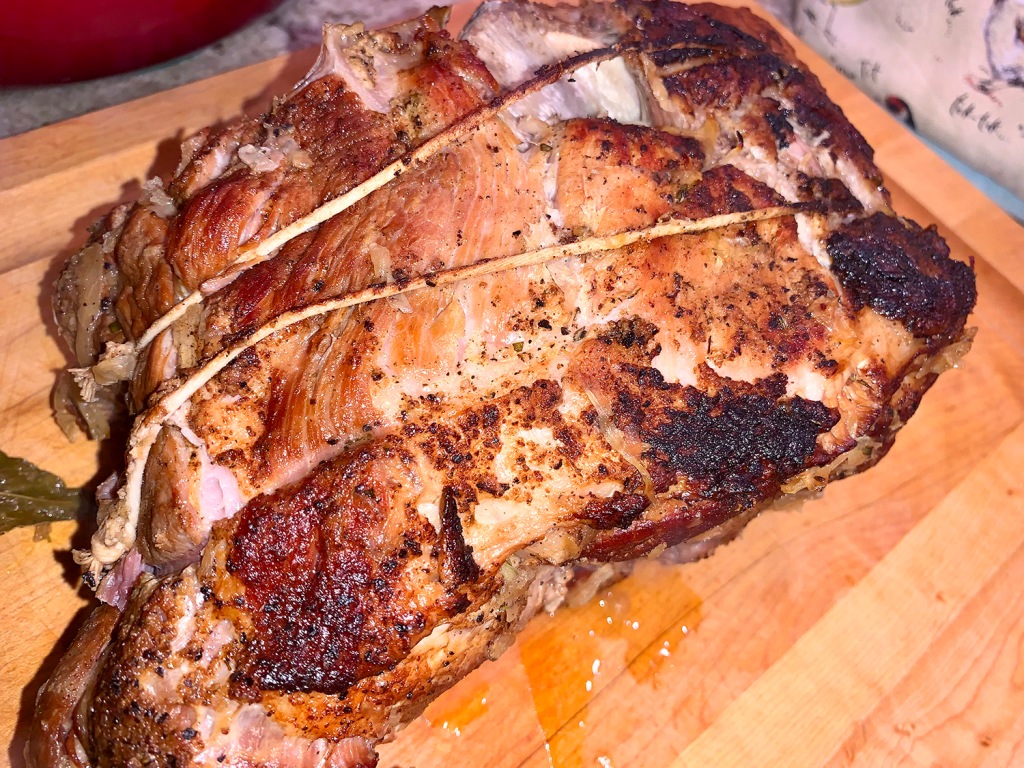
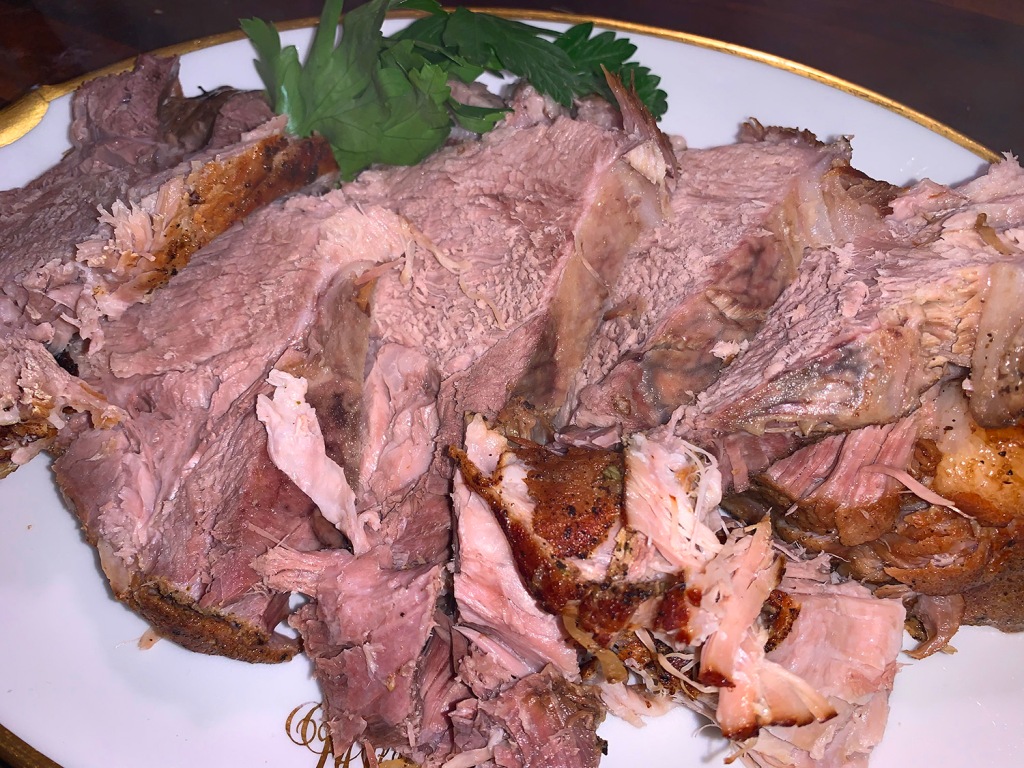
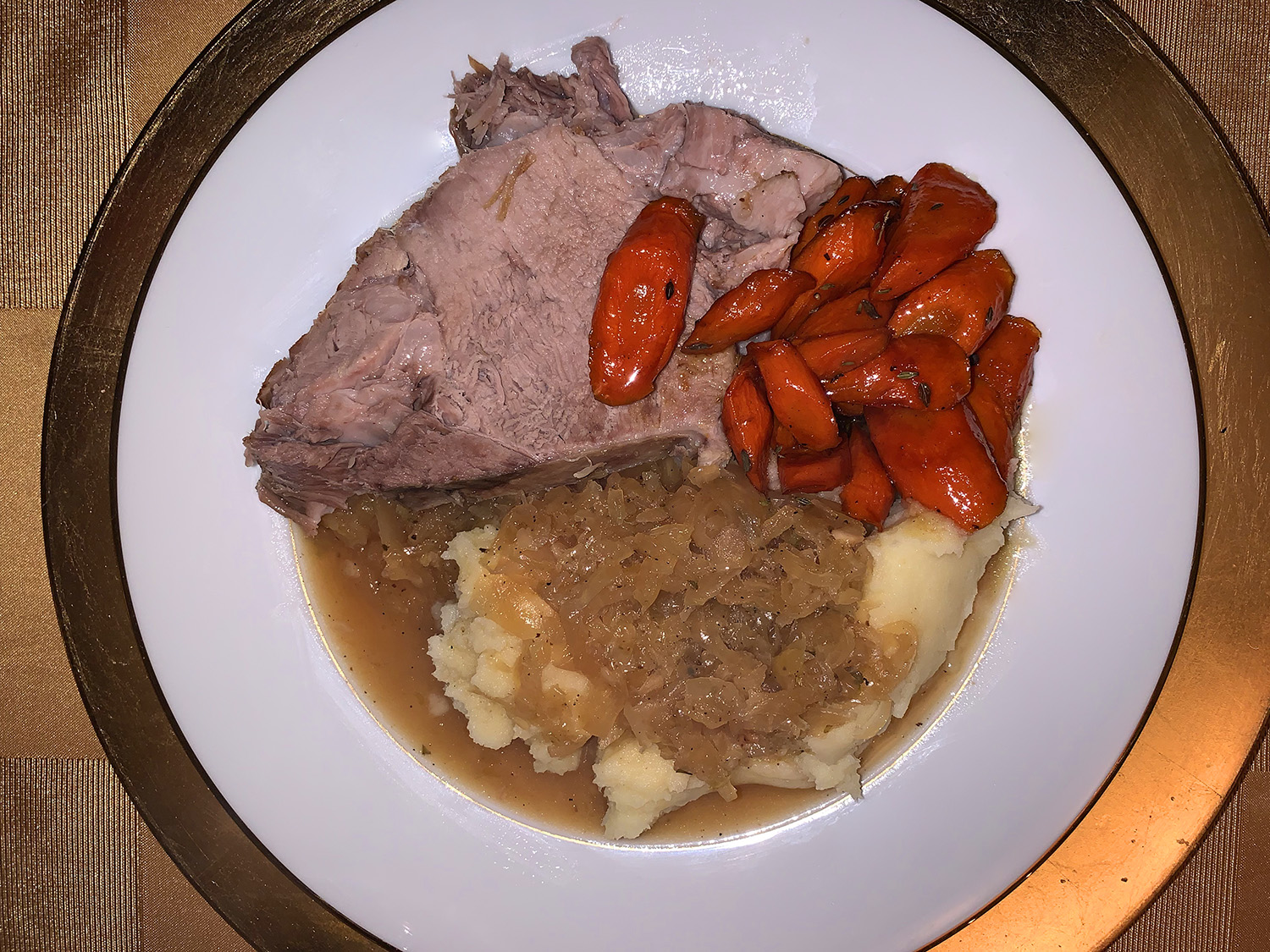
Russ’s Braised Pork and Sauerkraut

COVID-19 and its variants are following us into 2022, so invite good luck into your new year. For the Pennsylvania Dutch, that means pork and sauerkraut, which is good luck because pigs root around with their snouts in a forward motion. (You always want to move forward, not backward in life, of course.) Sauerkraut is made with cabbage, which is considered lucky because it’s green just like money.

It is also a household tradition on my husband’s German side of the family to serve pork and sauerkraut on New Year’s Day. A tradition I couldn’t quite get jiggy with when we first started dating twenty-plus years ago; however, I am now a huge convert. If you can’t beat ’em, join ’em, right?

This year the plan was to host a small NYD dinner party, thus the large piece of meat. Unfortunately, all of those folks came down with COVID a few days prior and were under quarantine, so it was just the two of us… I guess we didn’t start the good luck process early enough?

One minor switcharoo we made this time was using some hard cider brewed by son Daniel instead of the beer, lending a slight apple taste to the dish. Along with garlicky mashed potatoes, our other side was Whiskey-Glazed Carrots.

The Hubs made sure the COVID crew got part of the good luck meal too. He drove over all of the leftovers the following day. Paying it forward. See, their good luck has already started…

Russ's Braised Pork and Sauerkraut

  • Servings: 8
  • Difficulty: easy
  • Print

Ingredients

  • 1 Tbsp. salt
  • 1 1/2 tsp. onion powder
  • 1 1/2 tsp. garlic powder
  • 1 1/2 tsp. ground black pepper
  • 1/2 tsp. dried oregano, ground finely
  • 1 bone-in or boneless pork shoulder, 5-6 lbs.
  • 3 large onions, peeled and sliced
  • 8 cloves garlic, peeled and chopped
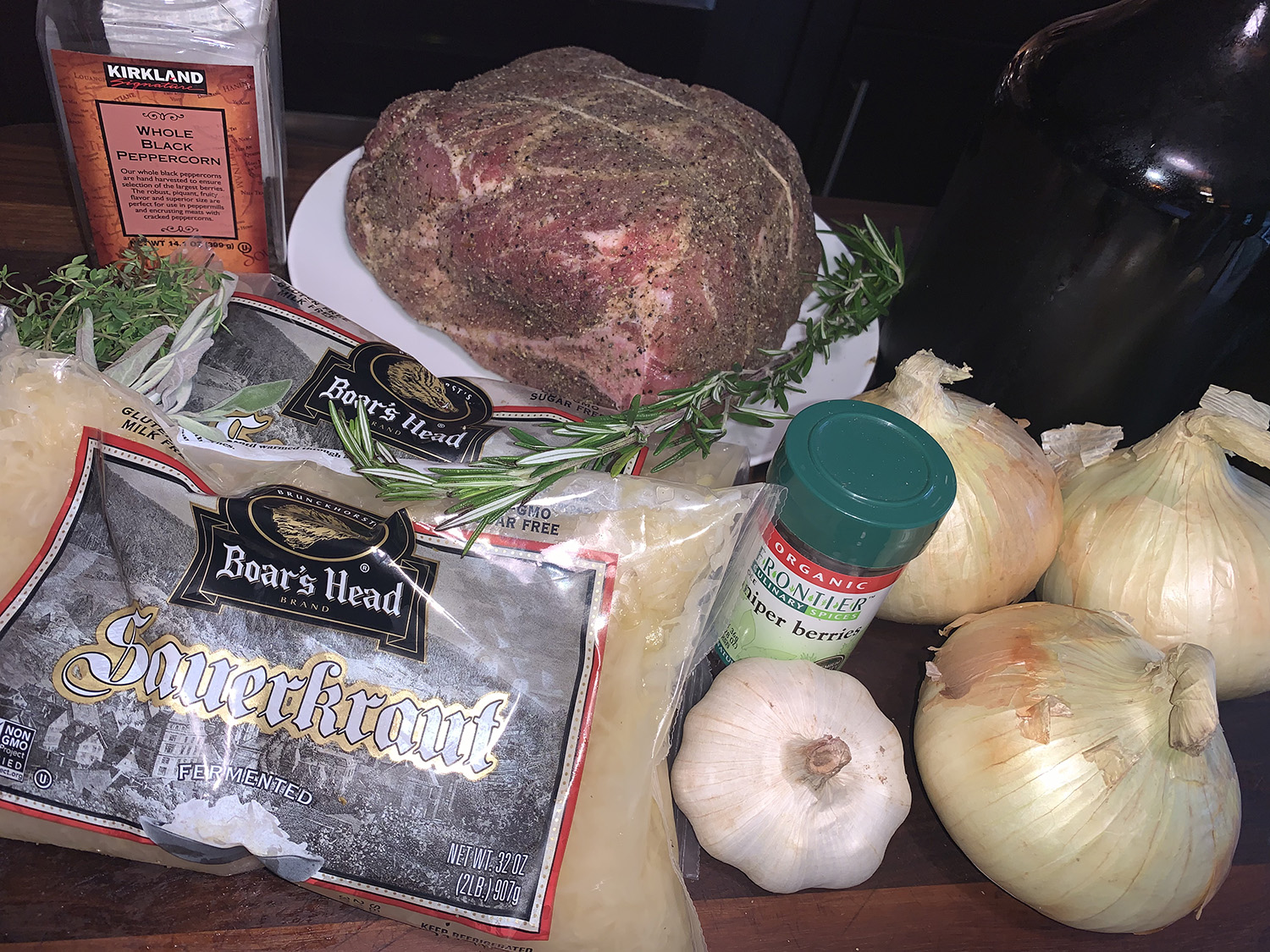
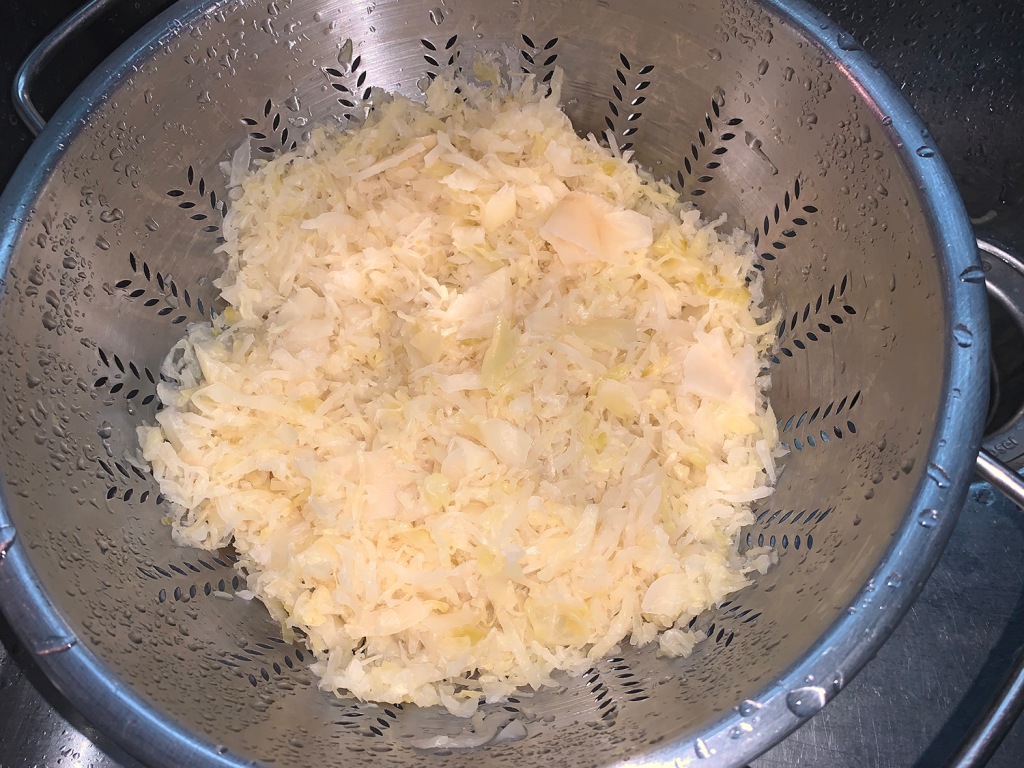
  • 4 lbs. sauerkraut, drained
  • 2 bottles amber beer
  • 2 bay leaves
  • 1 stalk rosemary
  • 6 stems thyme, tied in a bunch
  • 1 Tbsp. black peppercorns
  • 6 juniper berries (optional), lightly crushed
  • Olive oil

Directions

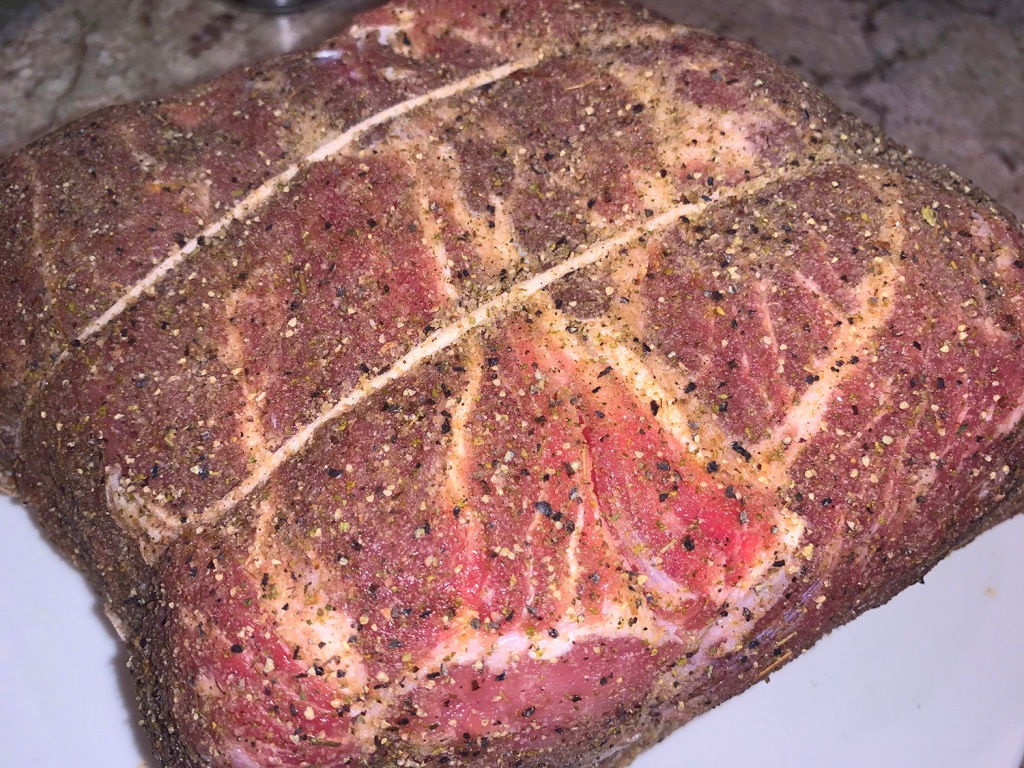
  1. At least 8, or preferably 24 hours before cooking the pork, combine the first five ingredients and rub all of over the pork. Wrap the meat tightly in plastic wrap, place on a plate and refrigerate. Remove meat from refrigerator and allow to warm at room temperature about an hour before you plan to cook it.
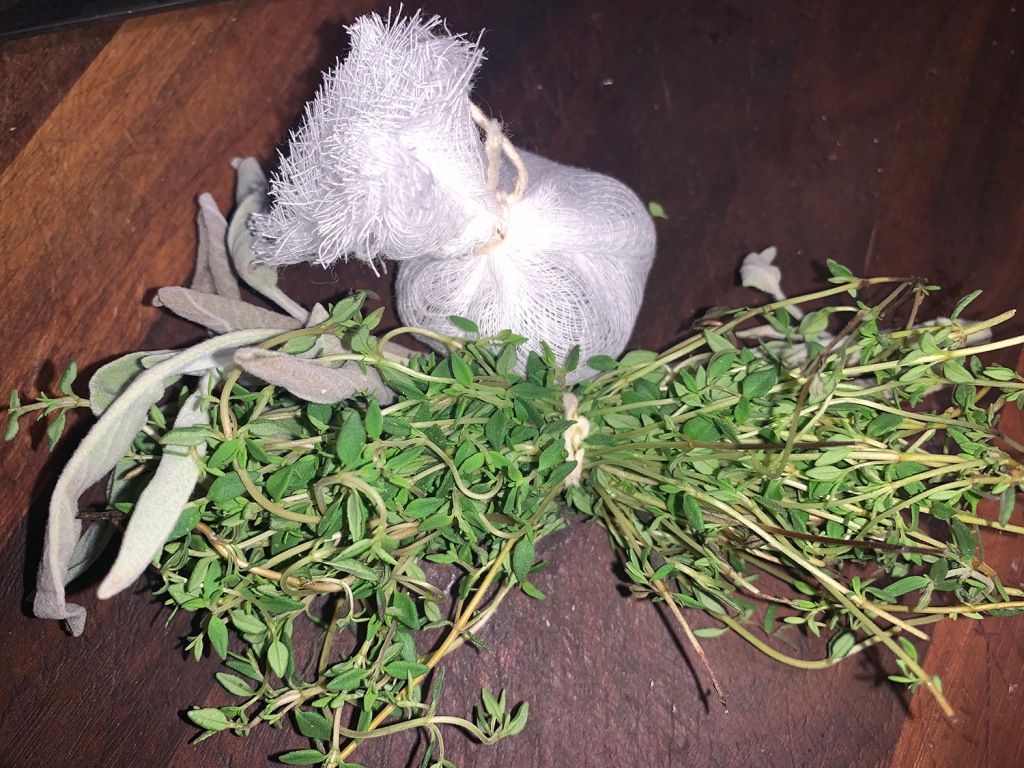
  2. Make a bouquet garni with the peppercorns and the juniper berries (if using them) and set aside. Be sure to double or triple the cheesecloth.
  3. Preheat the oven to 300 degrees F. In a large Dutch oven with a tight fitting lid, heat 3 tablespoons of olive oil over a medium high flame until shimmering. Unwrap the pork shoulder and brown on all sides, about 15-20 minutes. Remove meat from pot and set on plate while you complete the next steps.
  4. Add the sliced onions to the pot and sauté until they be come translucent. Add the chopped garlic and sauté for about one minute. Add the drained sauerkraut, then the 2 bottles of beer. Mix everything together well, making sure to deglaze the bottom of the pan. Add the bay leaves, thyme, sprig of rosemary and the bouquet garni. Mix well again with the sauerkraut and onions.
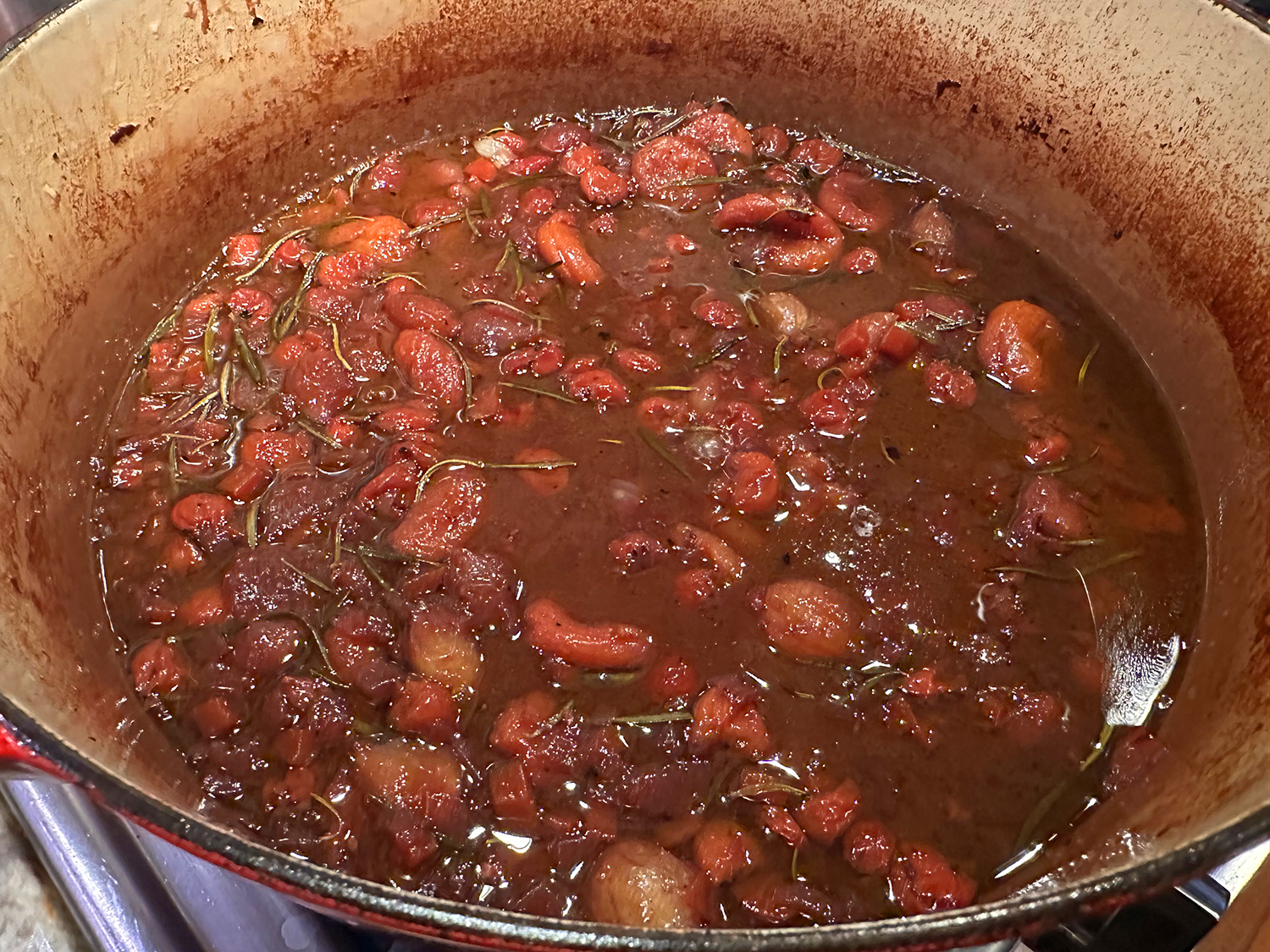
  5. Return the pork shoulder to the pot, nestling it into the sauerkraut. Place a sheet or parchment or aluminum foil over the pot, then put on the lid, ensuring that it fits tightly. Place the pot in the preheated oven and cook for 2 hours. Turn the roast, then return it to the oven for another 1 1/2 to 2 hours or until the meat is very tender and falls apart easily.
  6. To serve, remove the pork shoulder from the pot to a platter to carve. Remove the bay leaves, rosemary sprig, thyme and bouquet garni and discard. Give the sauerkraut mixture a good stir and serve with the pork.

http://www.lynnandruss.com