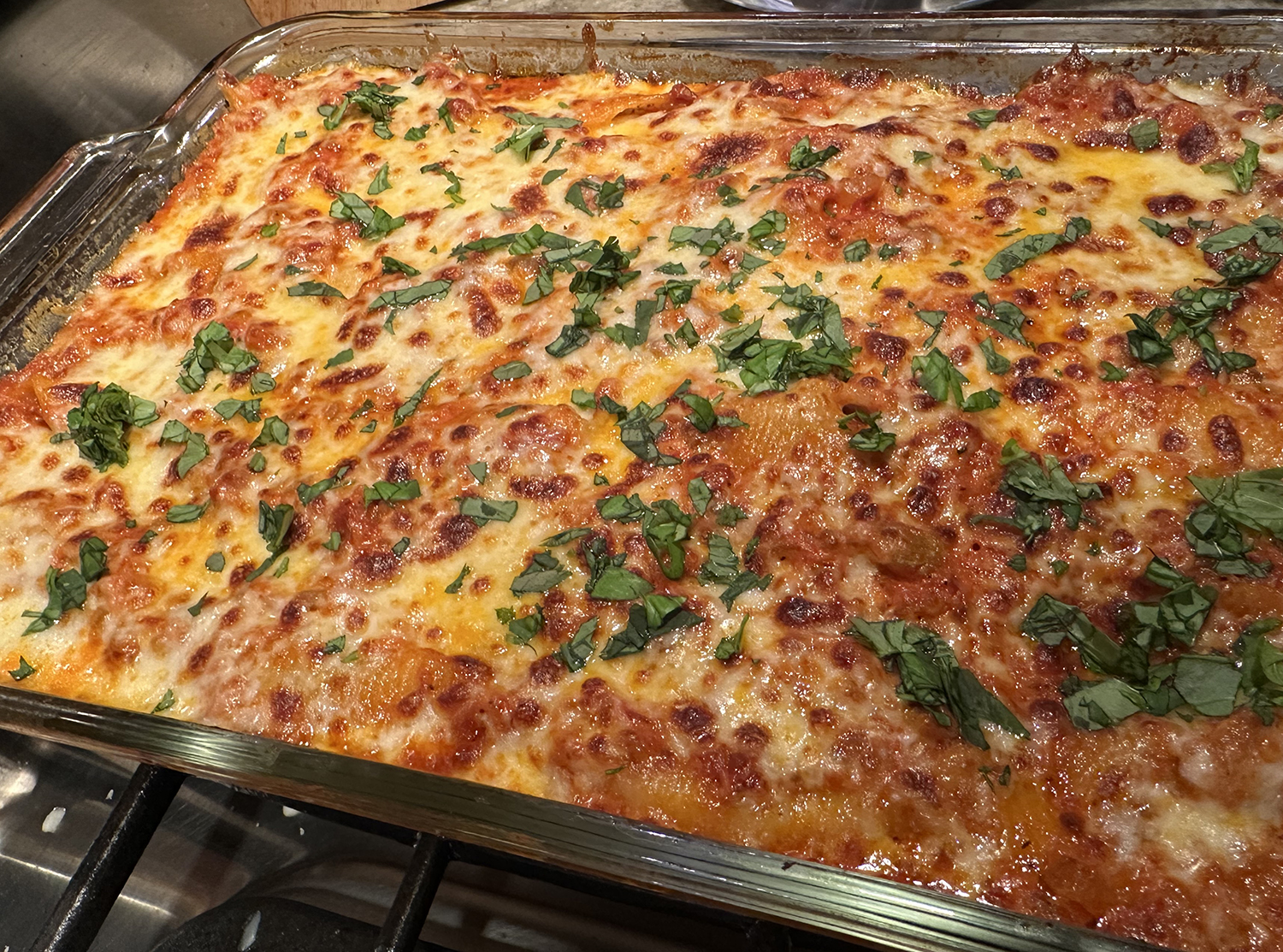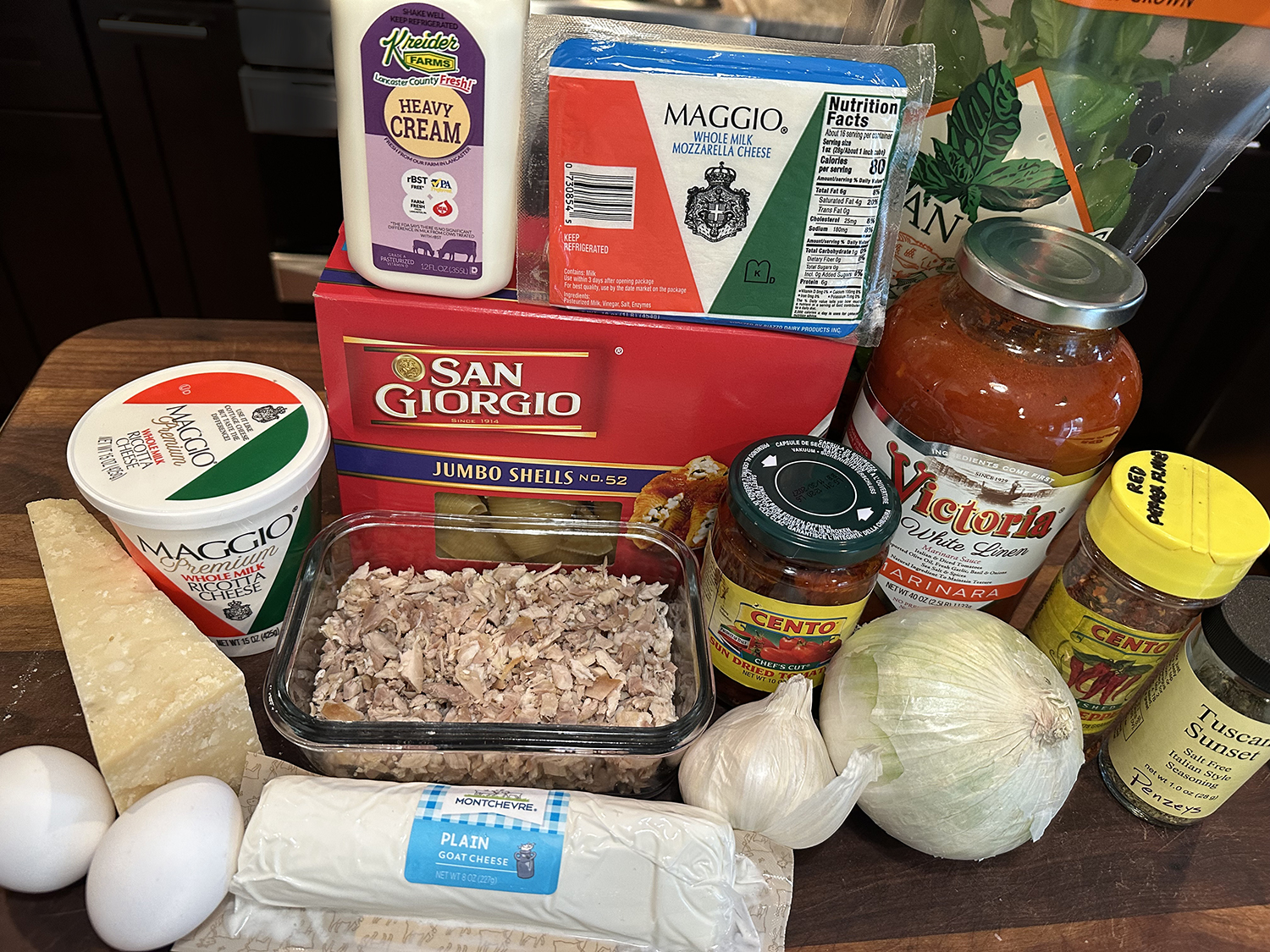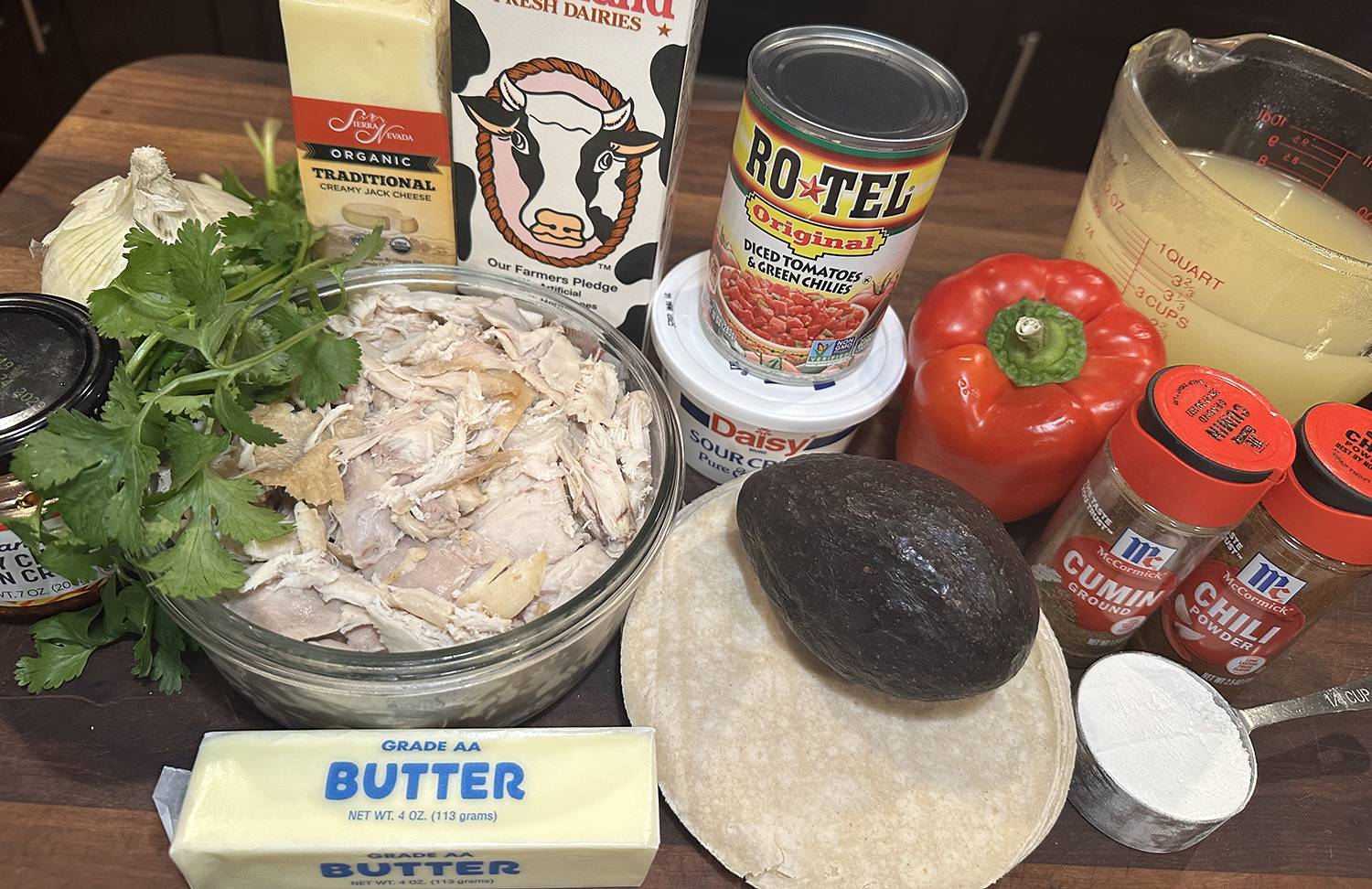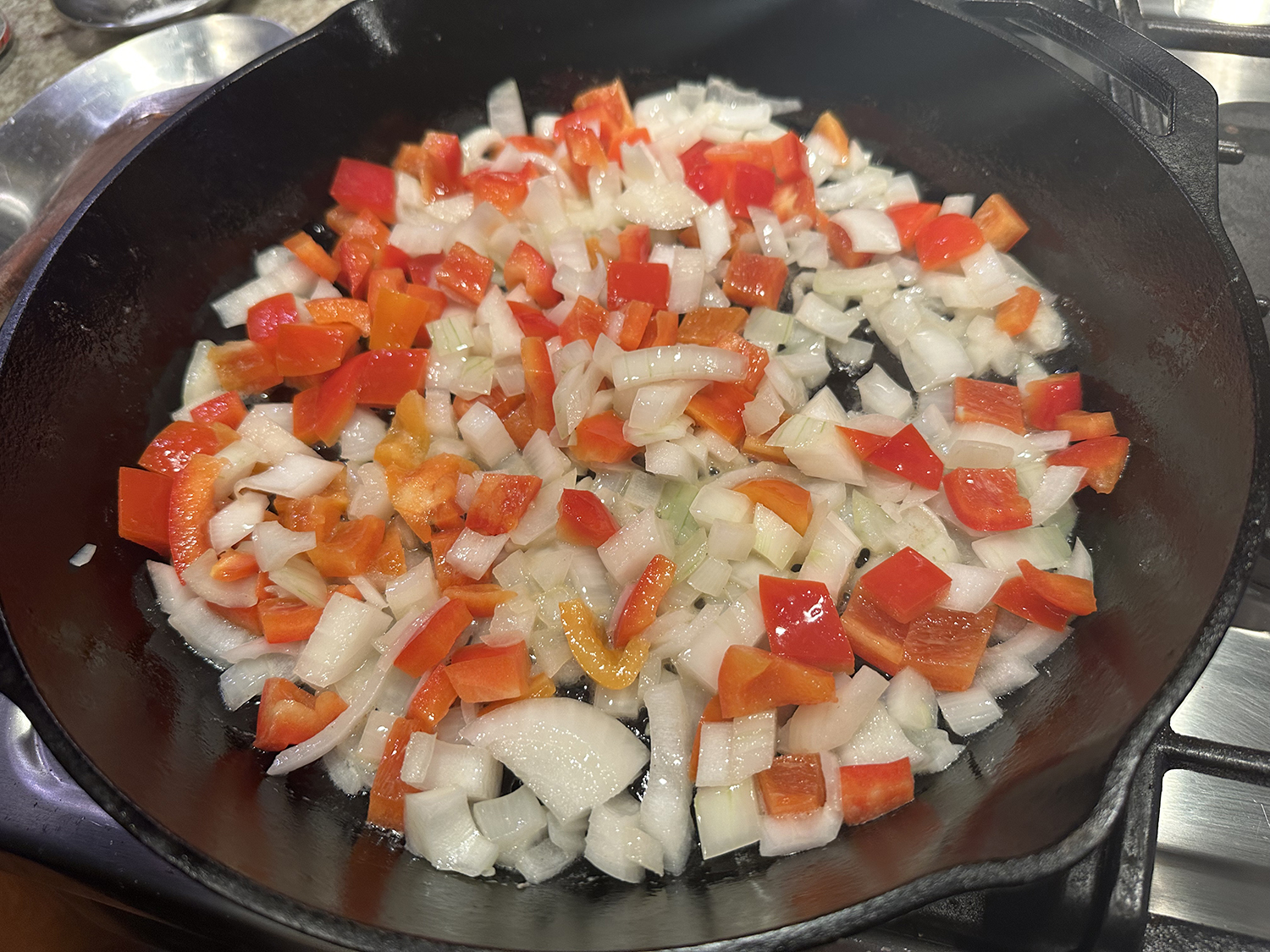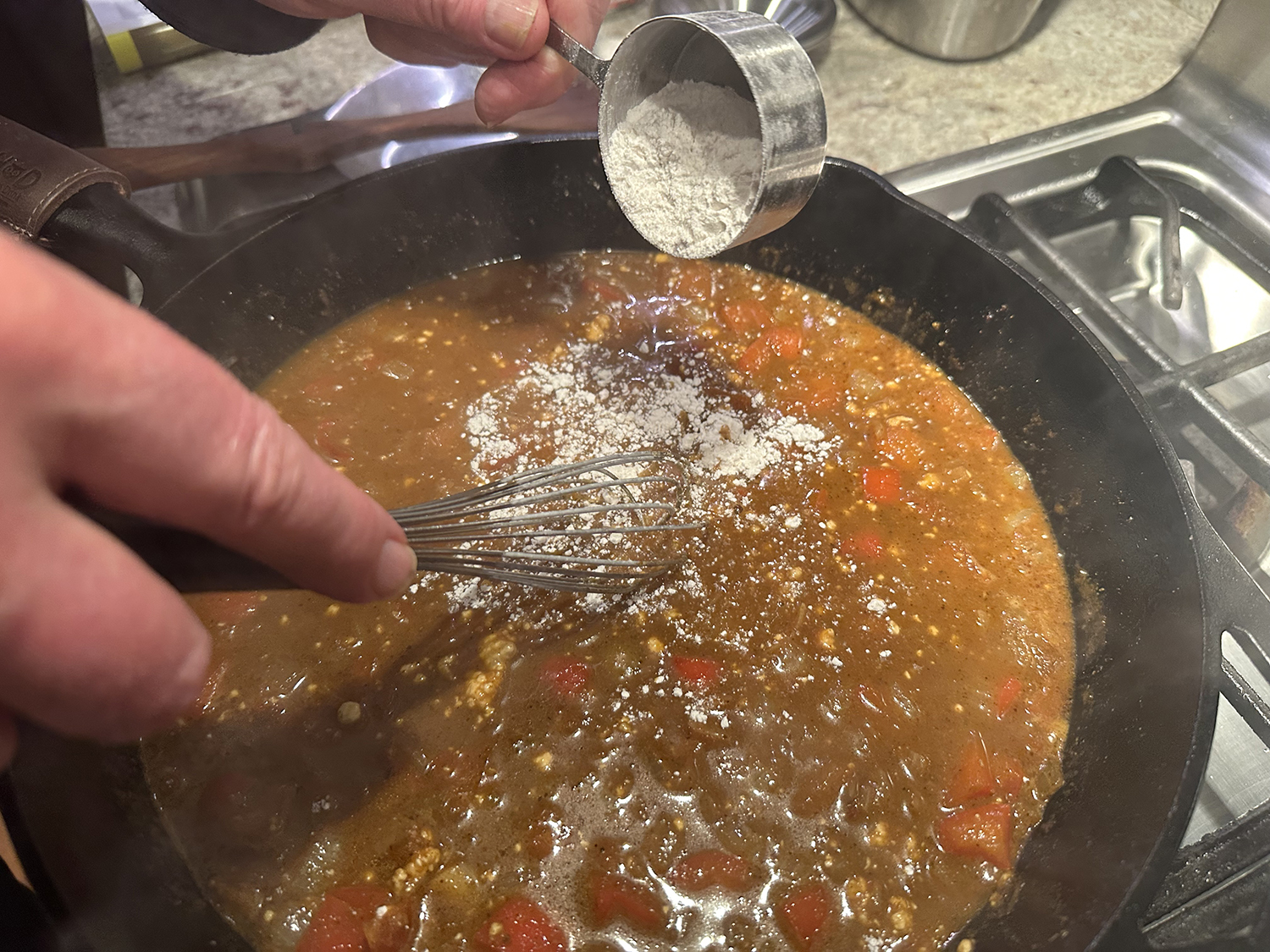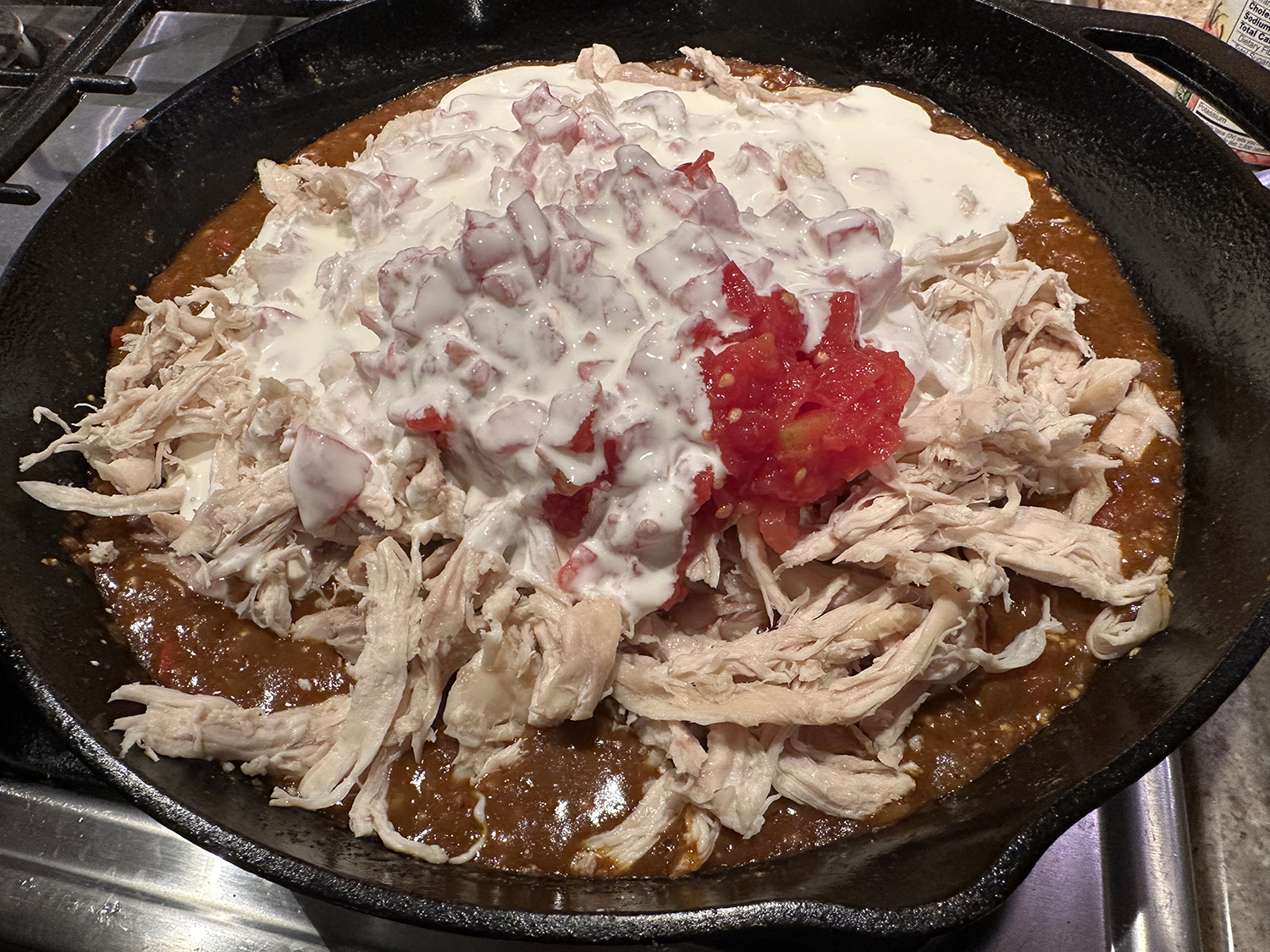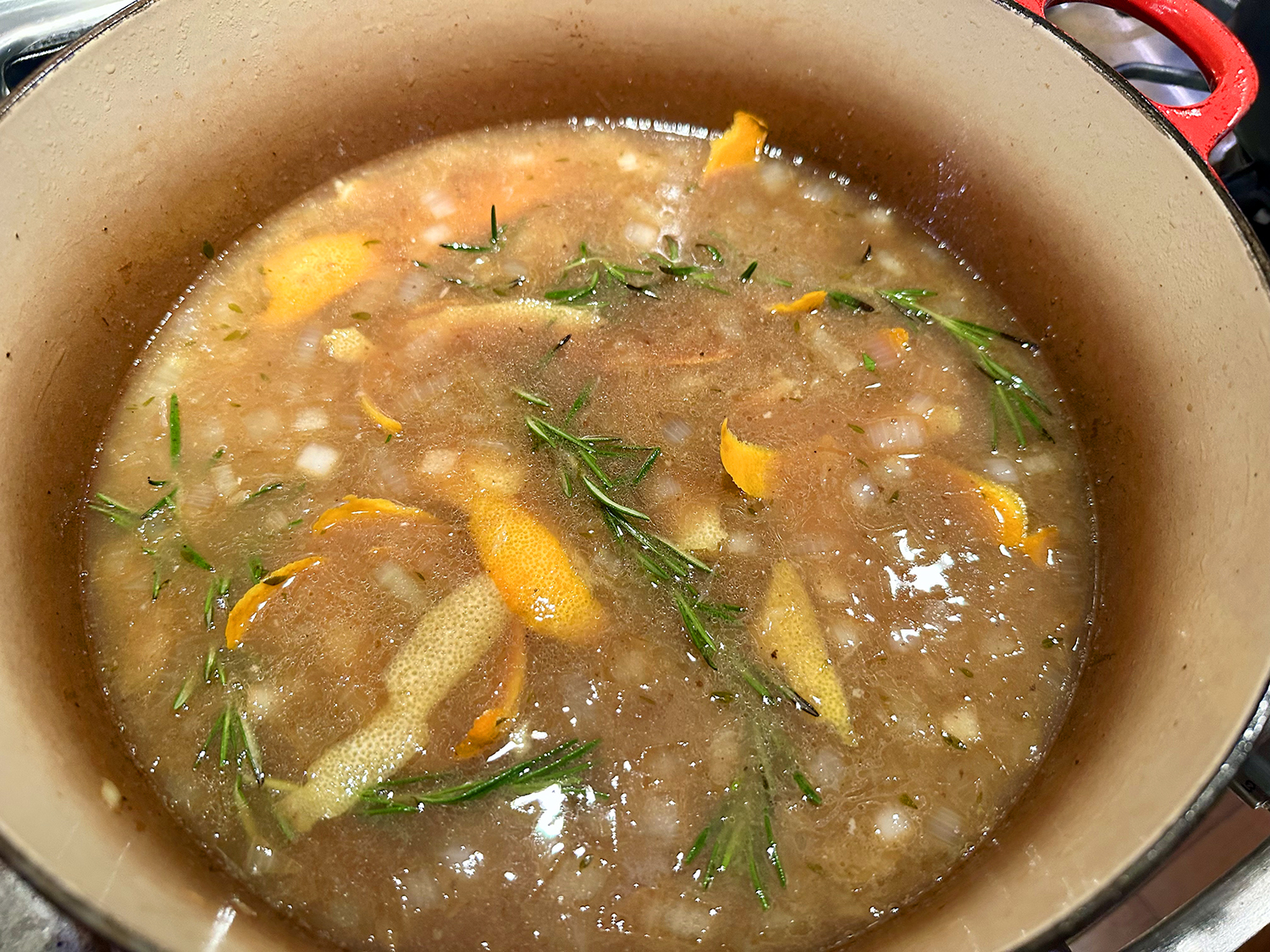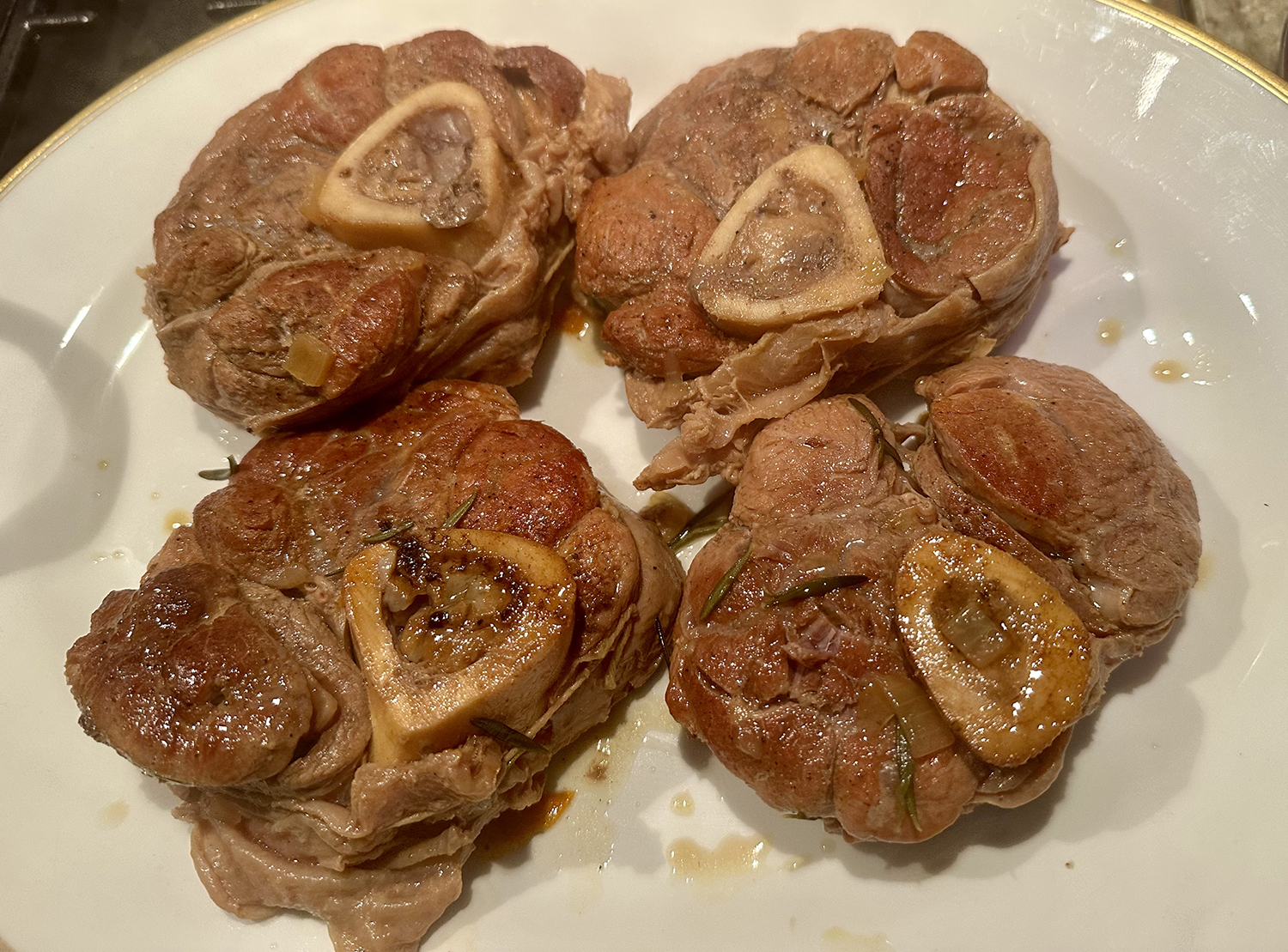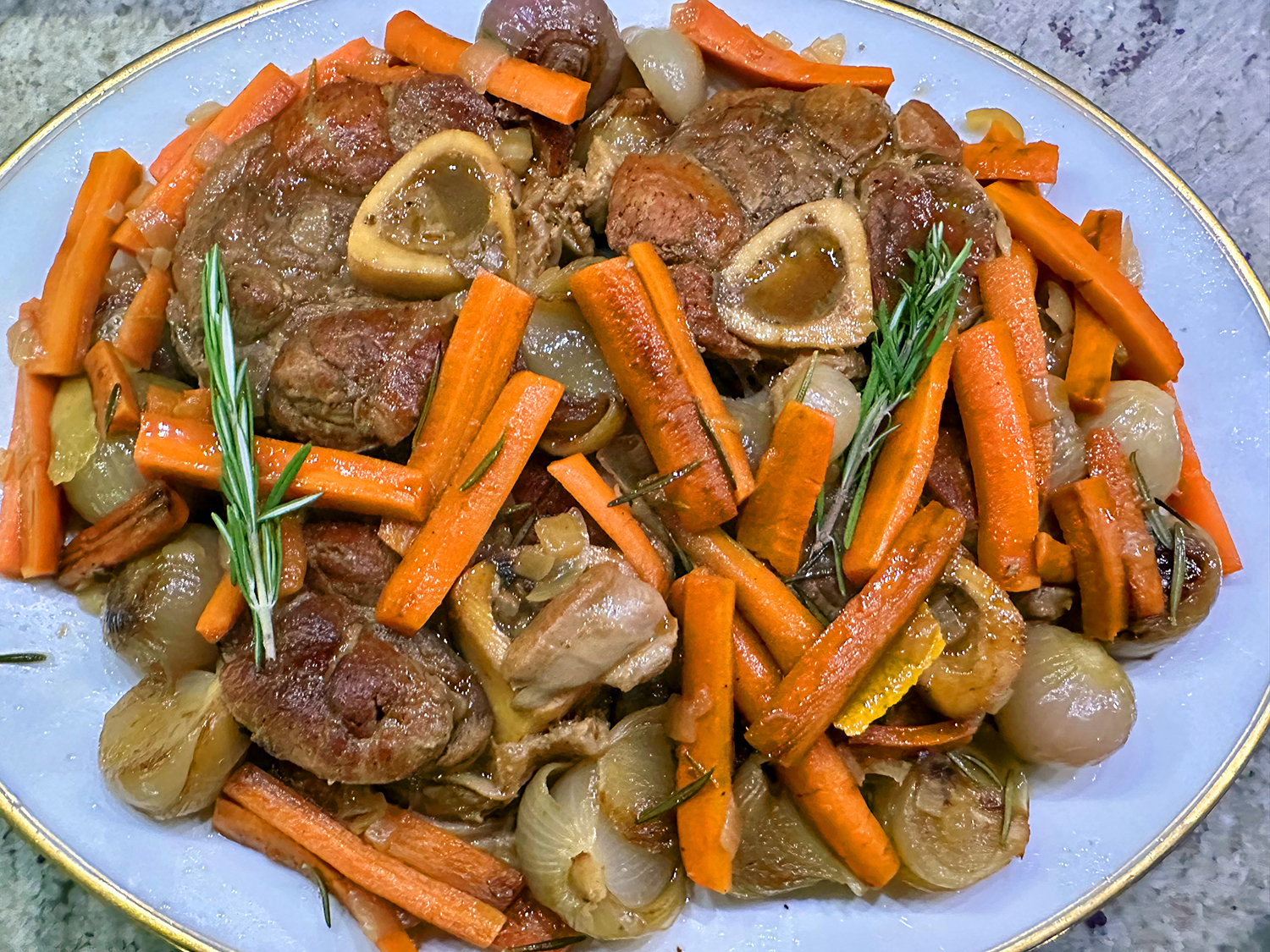
Lamb Shanks en Papillote with Leeks, Carrots, Rosemary and Orange

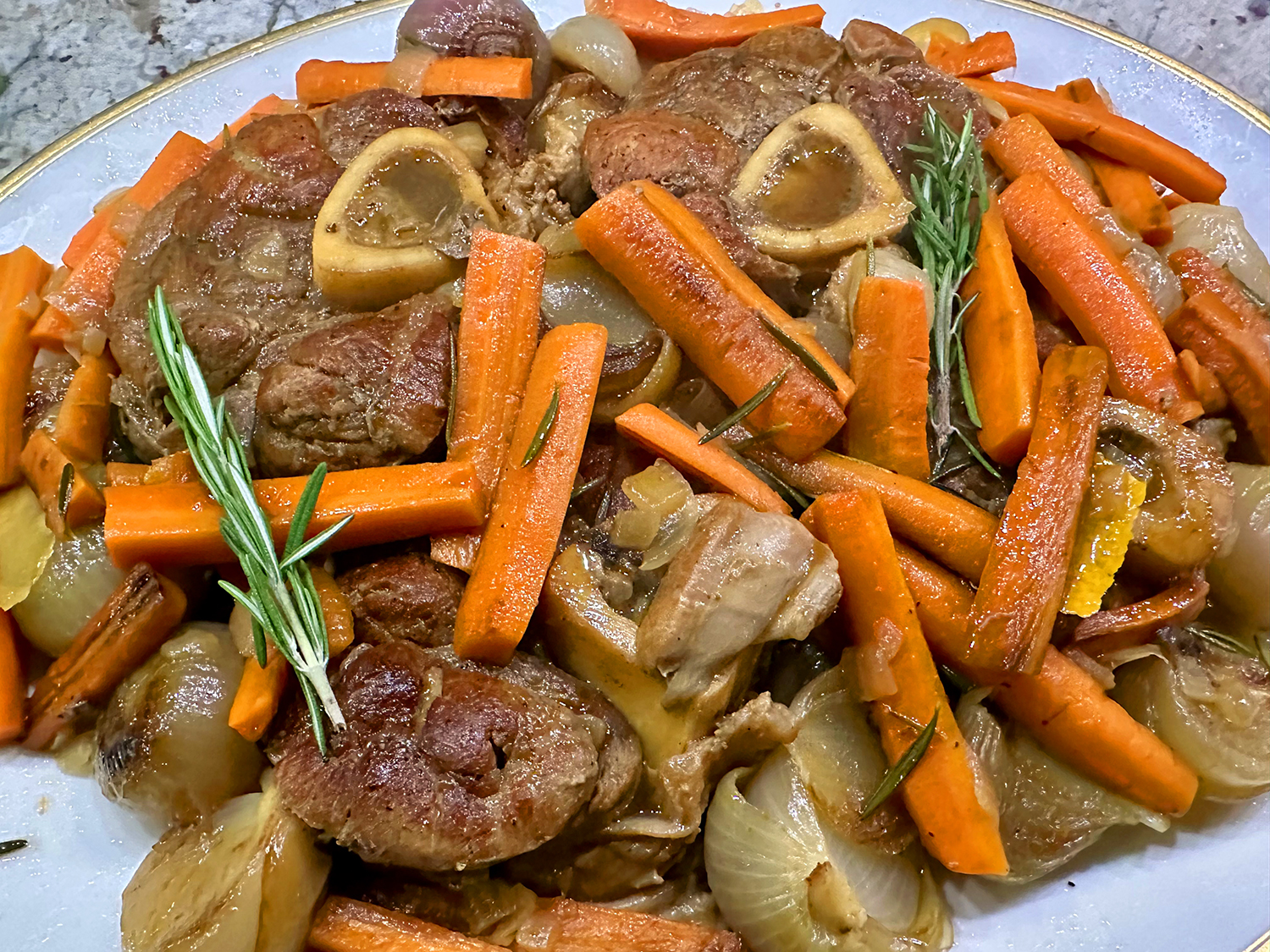
If only I could add to this post, the aroma that wafted through the house as this dish was cooking — pure nirvana! And in the end, the shanks were “fall off the bone” tender. Certainly company-worthy!

Here, lamb shanks are wrapped in individual foil packets with vegetables, herbs, vermouth, and a sliver of butter and then roasted until luscious and fork-tender. Serve them as is—the vegetables cooked with the meat give you a built-in side dish—or pile them atop creamy polenta, mashed potatoes or roasted fingerlings*.

Be sure to pour every last flavor-packed drop of cooking liquid onto the meat before serving. Do not omit the orange rind. Even a small piece will make a difference and it is subtle. If using large shanks (about 2 pounds each), increase cooking time by 20-30 minutes. And ours were close to 2 pounds each so we added 20 minutes.

Side dish option: *Baby fingerling potatoes sliced in half, tossed in a mixture of olive oil, fresh parsley and oregano, sea salt and pepper, and a dash of pimenton. Next, arrange them on a baking sheet lined with foil and cook at 375 degrees until fork tender, about 20-25 minutes, turning over once to brown both sides.

NOTE: Divide carrots and leeks between the four foil packets, and 1/4 cup vermouth per shank

Lamb Shanks en Papillote with Leeks, Carrots, Rosemary and Orange

  • Servings: 4
  • Difficulty: easy
  • Print

Ingredients

  • 6 medium leeks (white and light-green parts only), halved lengthwise, washed, and cut into 1-1/2-inch lengths
  • 6 medium carrots, halved lengthwise and cut into 1-1/2-inch lengths
  • 4 (2-1/2-inch) sprigs fresh rosemary
  • 4 (2-1/2- to 3-inch) strips orange zest (use a vegetable peeler)
  • Crushed red pepper flakes
  • Kosher salt and freshly ground black pepper
  • 4 lamb shanks (about 1 lb. each), trimmed
  • 1 Tbsp. extra-virgin olive oil
  • 1/2 cup dry vermouth or dry white wine
  • 1-1/2 Tbs. unsalted butter, cut into 4 slices

Directions

  1. Position an oven rack in the lower third of the oven and heat the oven to 300°F.
  2. Arrange four 16×16-inch squares of heavy-duty aluminum foil on a work surface. Put one-quarter of the leeks, one-quarter of the carrots, 1 rosemary sprig, and 1 strip of orange zest on each square. Season each with a pinch of crushed red pepper flakes, salt, and pepper. Set aside.
  3. Pat the lamb shanks dry and season generously with salt and pepper. Heat the oil in a large skillet over medium heat until shimmering hot. Working in batches if necessary to avoid crowding, brown the shanks on all sides, about 10 minutes total per batch. Transfer 1 shank to each foil square, arranging it on top of the vegetables. Draw up the edges of the foil to capture any juice, but don’t seal the packets yet.
  4. Return the skillet to medium heat, add the vermouth, and bring to a simmer, scraping the skillet with a wooden spoon. Remove from the heat. Portion the vermouth evenly among the 4 packets, pouring it over the lamb. Dot each shank with a slice of the butter.
  5. Fold the foil to form rectangular packets, sealing the seams tightly. Arrange the packets on a baking sheet; it’s fine if they touch but they shouldn’t overlap. Bake for 2-1/2 hours; then check for doneness by carefully opening one of the packets (watch out for the steam) and testing the meat with a fork—it should be tender and pulling away from the bone. If necessary, continue to bake for another 10 minutes and check again.
  6. Transfer the contents of the packets to large plates or pasta bowls, surrounding the shanks with the vegetables and juice. Remove the rosemary and orange zest before serving, if you like.

http://www.lynnandruss.com

Recipe by Molly Stevens

Chicken Gratin

This decadent, company-worthy casserole, features tender chicken thighs and melted turnips and leeks bathed in a creamy gratin sauce reminiscent of fondue and topped with garlicky breadcrumbs. Sherry and Cognac join forces to cut through the richness of the gratin while adding a touch of nuttiness.

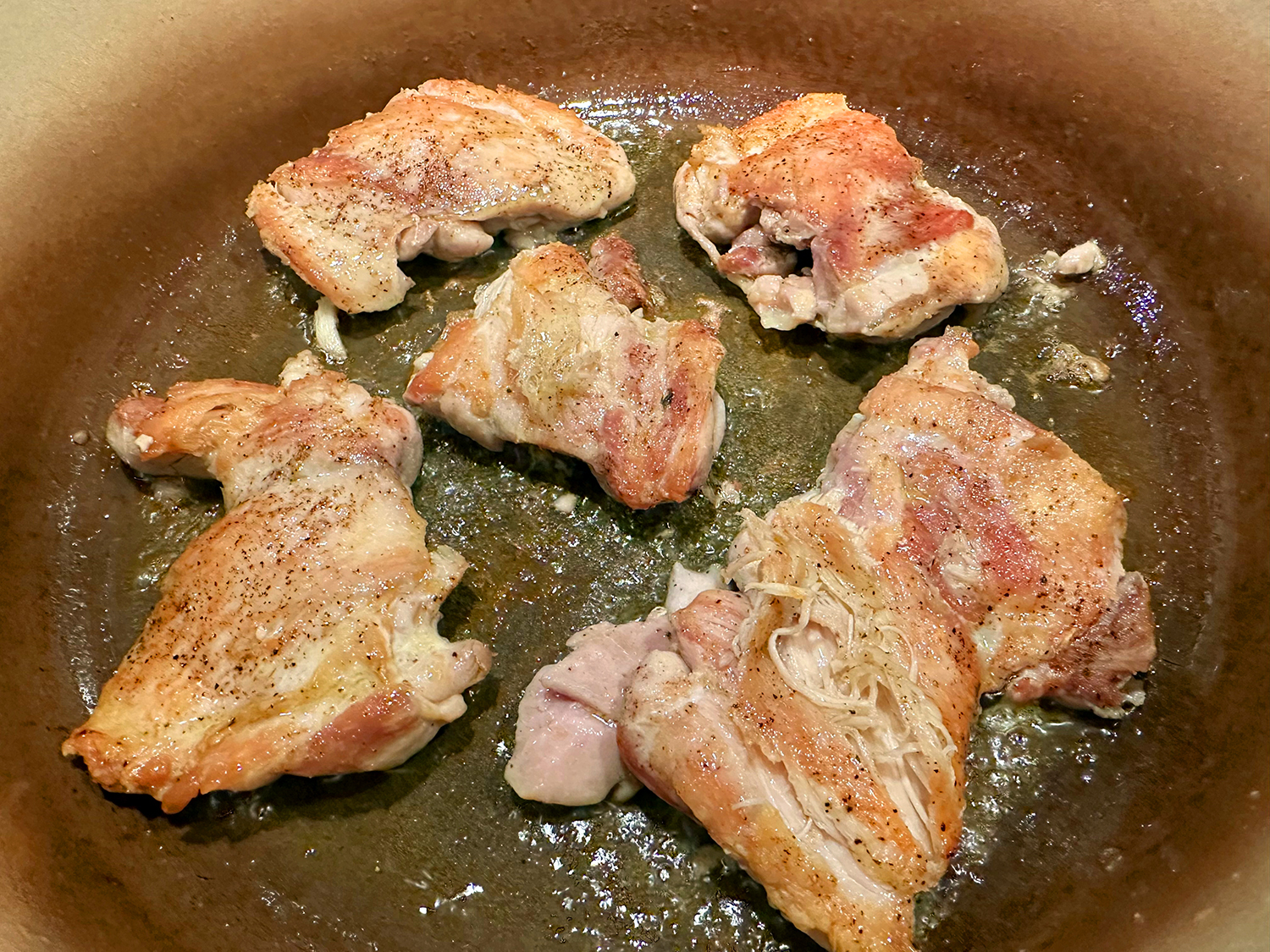
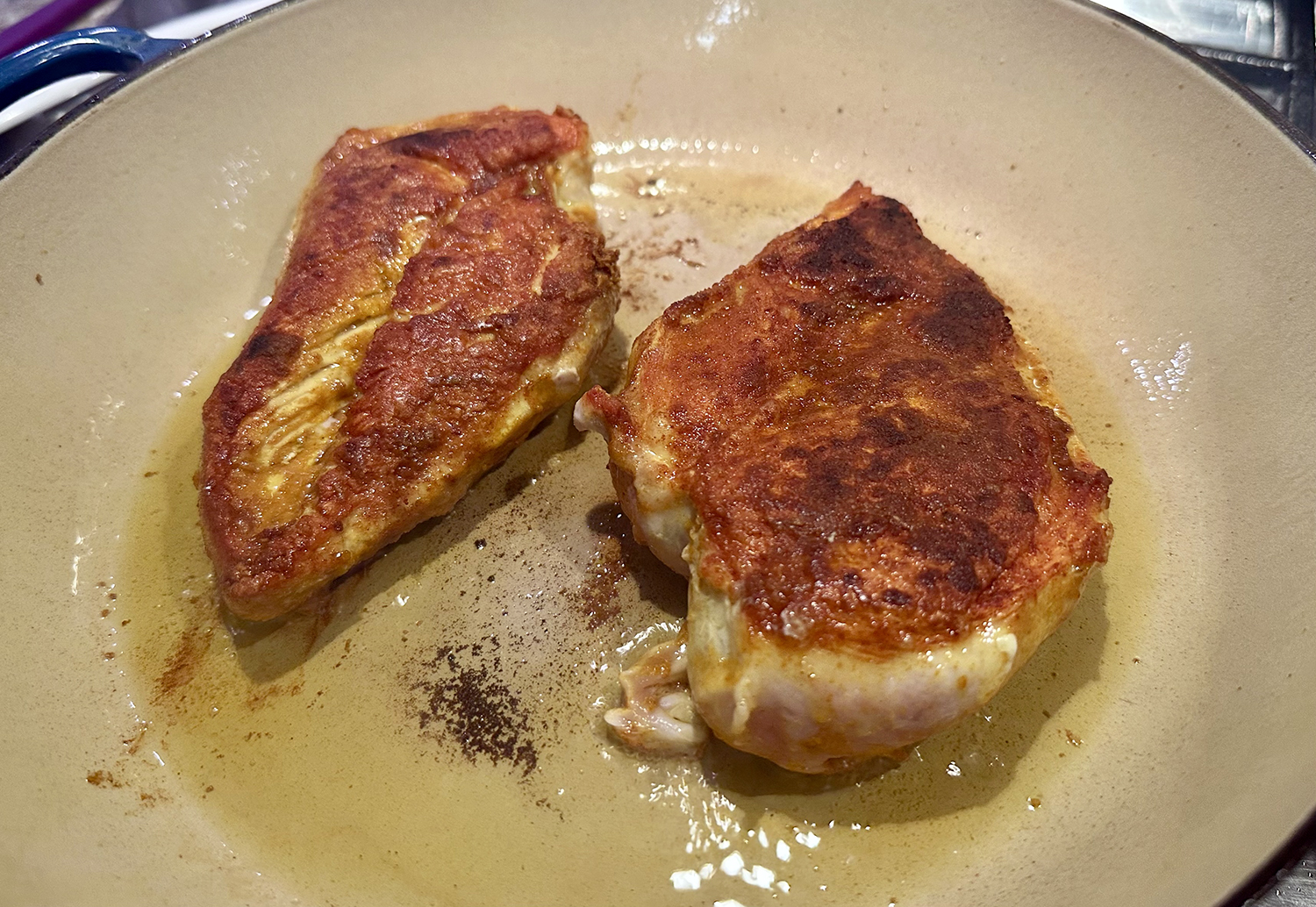
Allow the flavorful browned bits to build in the skillet as the chicken sears — these golden nuggets are key to building the foundation of the cheese-laden sauce. (If necessary, brown the chicken pieces in two batches so that they brown instead of steam.)

For a more funky and pungent flavor, try Gruyère cheese. For a more mild, buttery, and nutty flavor, opt for aged Gouda. The topping of breadcrumbs helps to provide a pleasantly crunchy contrast to the soft, creamy chicken gratin. Tossing the breadcrumbs with olive oil, garlic, salt, and pepper before baking infuses them with extra flavor.

A few things we did differently was incorporate 3 leeks instead of two, use a bit more cheese, and mixed in the cheese with the breadcrumb mixture (that was actually a mistake, but we liked the result!).

We served ours with a Herbed Barley Pilaf. But upon consideration, it was a rather heavy side dish for the gratin, so a green vegetable or side salad might be a better match.

Chicken Gratin

  • Servings: 6
  • Difficulty: moderately easy
  • Print

Ingredients

  • 8 small boneless, skinless chicken thighs (about 2 1/4 lbs.)
  • 1 3/4 tsp. kosher salt, plus more to taste
  • 1 1/4 tsp. black pepper, divided
  • 5 Tbsp. unsalted butter, divided
  • 2 medium (about 12-oz.) leeks, thoroughly washed, light green and white parts of leeks cut in half lengthwise, and sliced diagonally into 1 1/2-inch pieces
  • 5 garlic cloves, 4 finely chopped and 1 grated
  • 1 1/4 pounds turnips (about 3 medium turnips), peeled and cut into 1/2-inch pieces
  • 2 Tbsp. all-purpose flour
  • 1 cup chicken stock 
  • 3 Tbsp. (1 1/2 oz.) Cognac
  • 2 Tbsp. (1 oz.) dry sherry
  • 3/4 cup heavy cream
  • 1 Tbsp. Dijon mustard
  • 1 1/2 tsp. finely chopped fresh thyme, plus thyme sprigs for garnish
  • 1/2 tsp. ground nutmeg
  • 5 oz. Gruyère or aged Gouda cheese, grated (about 1 1/4 cups)
  • 3 Tbsp. olive oil
  • 1 1/2 cups fresh breadcrumbs (from 1 small French bread loaf)

Directions

  1. Pat chicken dry with paper towels. Sprinkle evenly with 1 teaspoon salt and 1/2 teaspoon pepper. Heat 3 tablespoons butter in a large skillet over medium until foamy. Working in batches, if needed, cook chicken, undisturbed, until well browned, about 10 minutes, adjusting heat as needed to prevent browned bits in skillet from burning. Flip chicken; cook until no longer pink on the outside, about 1 minute. (You may to do this in two batches.) Transfer chicken to a plate, and set aside. Remove skillet from heat; do not wipe clean. Preheat oven to 375°F.
  2. Increase heat to medium-high under skillet. Add turnips, and sprinkle with 1/4 teaspoon salt and 1/4 teaspoon pepper. Cook, stirring occasionally, until turnip edges are browned, 4 to 5 minutes. Transfer turnips to a large (2 1/2- to 3-quart) baking dish; set aside. Reduce heat to medium.
  3. Add leeks to the skillet and sprinkle with 1/4 teaspoon salt and 1/4 teaspoon pepper. Cook over medium, stirring often, until softened, about 3 minutes. Transfer the leeks to the baking dish with turnips. Do not wipe the skillet clean.
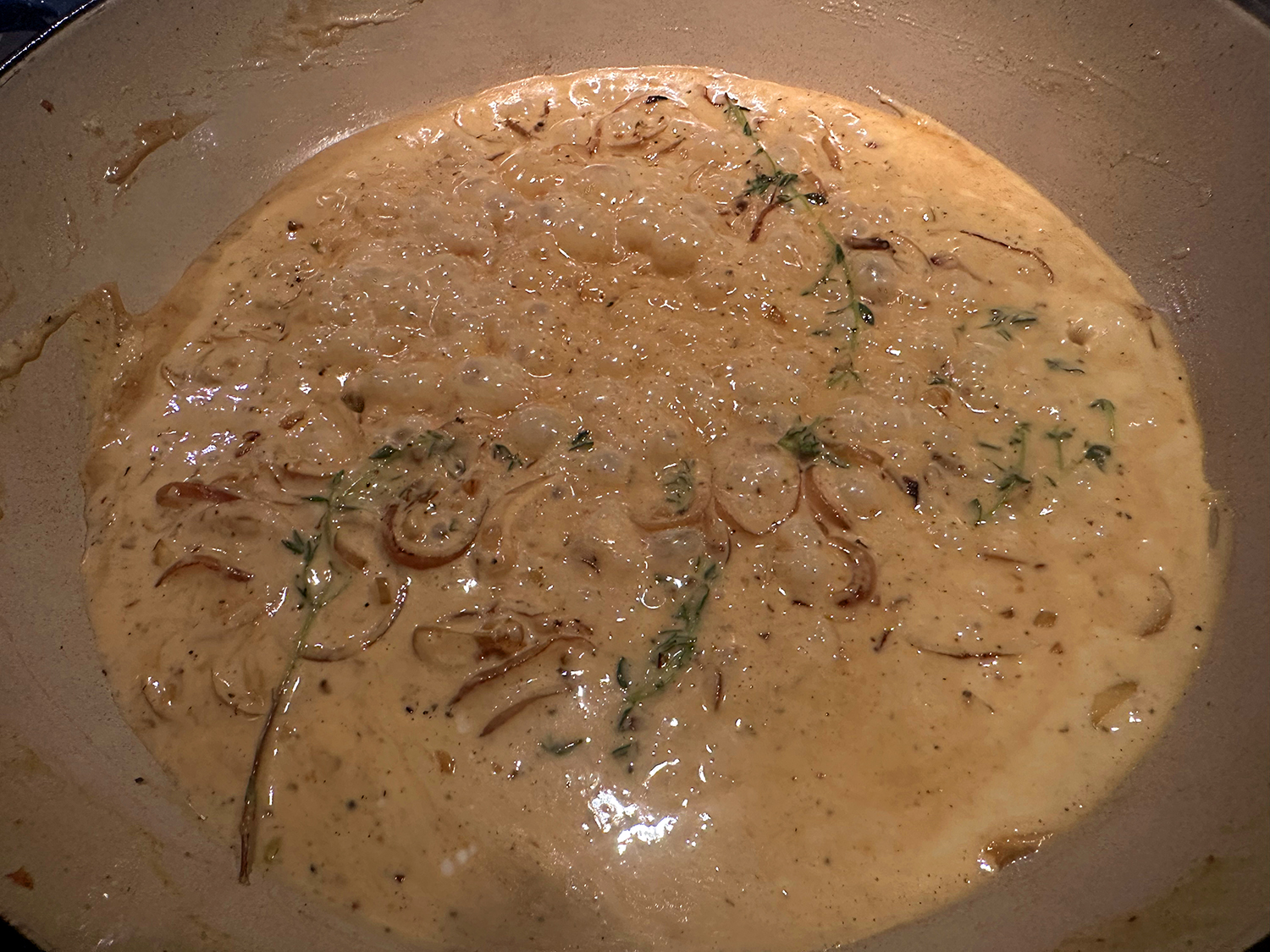
  4. Add remaining 2 tablespoons butter to skillet and melt over medium. Add finely chopped garlic; cook, stirring constantly, until fragrant, about 30 seconds. Add flour; cook, stirring constantly, 1 minute. Stir in chicken stock, Cognac, and sherry. Bring to a simmer over medium, and stir using a wooden spoon to scrape up browned bits from the bottom of the skillet. Stir in cream, mustard, chopped thyme, and nutmeg; simmer over medium, stirring occasionally, until sauce is slightly thickened, 2 to 3 minutes. Remove from heat. Season with additional salt to taste.
  5. Arrange chicken thighs over turnip-and-leek mixture in the baking dish. Pour sauce evenly over the mixture; sprinkle with cheese.
  6. Place the grated garlic clove in a medium bowl. Stir in oil. Add breadcrumbs, remaining 1/4 teaspoon salt, and remaining 1/4 teaspoon pepper; toss to combine. Sprinkle evenly over chicken mixture.
  7. Bake in preheated oven, uncovered, until breadcrumbs turn dark amber brown, sauce bubbles in the center, and a thermometer inserted in the thickest portion of chicken registers at least 165°F, 30 to 40 minutes. Remove from oven, and let cool 5 minutes. Garnish with thyme sprigs, and serve.

http://www.lynnandruss.com

Adapted from a recipe by Amy Thielen for Food & Wine

Scalloped Potatoes with Horseradish and Gruyere

Scalloped potatoes are a tried-and-true side dish. There’s no reason to reinvent a classic, but adding a kick, a rather strong kick, can be a fun twist. The piquant horseradish in this recipe does exactly that. It cuts through the double richness of the cream and cheese and makes you crave another serving.

Swapping a single variety of potato for three — purple, sweet and russet — adds more texture and flavor. Purple potatoes (see Tip) pop on the plate and offer that earthy flavor but with a less starchy texture, and the sweet potatoes are meltingly tender. Give this festive, upgraded version of scalloped potatoes a try at your next gathering.

Intended for just the two of us, we cut the recipe me half. It was still enough for six decent-sized portions.

TIP: Go with whatever variety and size of purple potatoes are available. If using ones with thin skins, you can go ahead and skip peeling.

Scalloped Potatoes with Horseradish and Gruyere

  • Servings: 8-10
  • Difficulty: easy
  • Print

Ingredients

  • 1 lb. russet potatoes (about 2 medium)
  • 1 lb. purple potatoes (see Tip)
  • 1 lb. sweet potatoes (about 2 medium)
  • 3 Tbsp. unsalted butter
  • 5 medium garlic cloves, finely grated
  • 3 Tbsp. all-purpose flour
  • 3 cups half-and-half
  • ½ cup prepared horseradish
  • Kosher salt (such as Diamond Crystal)
  • 2 cups shredded Cheddar or Gruyère

Directions

  1. Arrange a rack in the top third of the oven and heat to 400 degrees. Peel all the potatoes (see Tip) and cut into ⅛-inch-thick slices with a sharp knife or mandoline.
  2. In a medium saucepan, melt the butter over medium heat. Add the garlic and cook until just golden, about 1 minute. Sprinkle in the flour and whisk until a paste forms, then continue stirring to cook the flour until bubbling, 30 seconds to 1 minute more. Slowly pour in 1½ cups of the half-the-half and whisk until combined. Whisk in remaining half-and-half, the horseradish and 2 teaspoons salt. Bring to a simmer while whisking constantly, then turn off heat and let steep for about 5 minutes.
  3. Ladle 1 cup of the horseradish cream sauce into a 9-by-13-inch baking dish, spreading to fully coat the bottom of the dish. Add half the sliced potatoes in an even layer; have fun mixing the colors. Sprinkle half the cheese on top and pour over another cup of the sauce, making sure the sauce is fully covering the cheese and potatoes. Add the remaining sliced potatoes, and top with remaining sauce and cheese.
  4. Cover with aluminum foil and bake until potatoes are almost fully tender and sauce is bubbling, about 45 minutes. Remove the foil and continue to bake until the edges are slightly crisp and the cheese is golden brown in spots, about 10 minutes more. Let sit at room temperature for 15 minutes before serving.

http://www.lynnandruss.com

Recipe by Vivian Chan-Tam for NYTimes Cooking

Ragù Cilentano: Slow-Cooked Short Ribs with Pasta

Ragù cilentano is a unique dish not well known outside of Italy’s Campania region. The tomato-centric sauce gets its intense flavor and thick, lush consistency from multi-hour cooking with various types of meat—traditionally only small amounts of scraps that melt into and merge with the tomatoes as the ingredients slowly concentrate.

Here, the meats are limited to two: pancetta for its salty, porky flavor and short ribs that lend deep, beefy richness. Tomatoes are also used in two forms: sweet-tart canned whole tomatoes and tomato paste for depth and umami. For convenience as well as steady, even cooking, the sauce is simmered in the oven so no careful monitoring is needed.

The ragù pairs especially well with sturdy, thick, chewy pasta shapes such as cavatelli or orecchiette (we used cavatappi). The finished sauce can be cooled and stored in an airtight container in the refrigerator for up to five days; rewarm it in a covered saucepan over medium before tossing it with just-cooked pasta.

The store was not carrying boneless short ribs on the day we went, so we chose chuck steak (stew meat) and it worked perfectly fine—and we saved a boat load of money with the cheaper cut!

Don’t add more salt and pepper at the start of cooking than the recipe calls for. As the ingredients reduce, the flavors become concentrated. It’s best to adjust seasoning at the very end, after the ragù has been tossed with the pasta. When the sauce is done, don’t skim off all of the fat that rises to the surface; a little fat delivers flavor and pasta-coating silkiness.

Ragù Cilentano: Slow-Cooked Short Ribs with Pasta

  • Servings: 6
  • Difficulty: moderate
  • Print

Ingredients

  • 1 Tbsp. extra-virgin olive oil
  • 4 oz. pancetta, chopped
  • 1 medium yellow onion, chopped
  • 3 Tbsp. tomato paste
  • 1/2 cup dry white wine
  • 1 lb. boneless beef short ribs, cut into 1-inch chunks
  • 1 28-oz. can whole peeled tomatoes, crushed by hand
  • Kosher salt and ground black pepper
  • 1 lb. cavatelli, cavatappi or orecchiette pasta
  • 1 oz. Parmesan cheese, finely grated (½ cup), plus more to serve
  • 1/2 cup chopped fresh basil

Directions

  1. Heat the oven to 350°F with a rack in the lower-middle position. In a Dutch oven over medium, combine the oil, pancetta and onion. Cook over medium, stirring occasionally, until the onion is lightly browned, 4 to 5 minutes. Add the tomato paste and cook, stirring, until it starts to darken and stick to the bottom of the pot, 1 to 2 minutes. Add the wine and cook, scraping up any browned bits, until reduced by half, about 1 minute. Stir in the beef, tomatoes with juices, ½ cup water, ½ teaspoon each salt and pepper. Bring to a simmer over medium-high, cover, transfer to the oven and cook for 2 hours.
  2. Remove the pot from the oven, uncover and stir, scraping the sides of the pot. Return to the oven uncovered and cook until a skewer inserted into a piece of beef meets no resistance, about 30 minutes. Remove from the oven. If desired, skim off and discard some of the fat from the surface, but leave some for flavor. Cover to keep warm while you cook the pasta.
  3. In a large pot, bring 4 quarts water to boil. Add the pasta and 1 tablespoon salt; cook, stirring occasionally, until al dente. Reserve ½ cup of the cooking water, then drain the pasta.
  4. Add the pasta to the ragù and cook over medium, stirring, until the pasta is well coated in sauce and everything is heated through; if it looks dry, stir in reserved cooking water as needed. Off heat, stir in the basil and cheese, then taste and season with salt and pepper. Serve with additional cheese.

http://www.lynnandruss.com

Adapted from a recipe by Rose Hattabaugh for Milk Street

Peanut Butter Chocolate Swirl Brownies

Delight your taste buds with these heavenly Peanut Butter Chocolate Swirl Brownies, a perfect fusion of rich, fudgy chocolate and creamy peanut butter. These mouthwatering brownies are sure to satisfy cravings for both chocolate and peanut butter lovers alike. Featuring a luscious peanut butter batter swirled into a delectable dark chocolate brownie base, every bite promises an irresistible burst of flavor. Ideal for dessert, gatherings, or a little personal indulgence, these Peanut Butter Swirl Brownies are a treat you won’t want to miss.

Please note that I made a double batch and therefore the ingredients photo has more of everything in the picture. When adding the peanut butter mixture to the pan, make them in tablespoon dollops, not as large as shown in the photos. And swirl the batters together well so that there are no large areas of peanut butter (which does not contain flour or egg).

The end result is a very rich, chewy brownie, that practically no one can resist.

Peanut Butter Chocolate Swirl Brownies

  • Servings: 12-16 brownies
  • Difficulty: easy
  • Print

Ingredients

Peanut Butter Batter

  • 3 Tbsp. Butter (melted)
  • ¾ cup Creamy Peanut Butter
  • ⅓ cup Granulated Sugar

Brownie Batter

  • 4 oz. 72% Dark Chocolate Bar (roughly chopped)
  • ½ cup Butter
  • 1 cup Granulated Sugar
  • 2 Tbsp. Granulated Sugar
  • 2 Large Eggs (room temperature)
  • 1 tsp. Bourbon Vanilla Extract
  • ⅔ cup All-Purpose Flour
  • ¼ tsp. Salt (omit if using salted butter)
  • 2 oz. 72% Dark Chocolate Bar (chopped)
  • About a 1/4 cup of Reeses peanut butter and/or dark chocolate chip morsels (optional)

Directions

Preparation

  1. Preheat the oven to 350°F and grease an 8” or 9” square pan on all sides and bottom, then line with parchment paper, leaving an overhang on the sides to lift out the finished brownies (makes cutting easier!). Grease the top side of the parchment paper that is inside the pan. Set aside.

Peanut Butter Batter

  1. In a medium bowl, stir all ingredients together until smooth.

Brownie Batter

  1. In a microwave-safe bowl, combine butter and chopped 4 oz. 72% Dark Chocolate Bar. Melt in 30 second increments, whisking after each, until completely smooth.
  2. Whisk in the granulated sugar until completely combined, then whisk in the eggs and 1 tsp. Bourbon Vanilla Extract.
  3. Add flour and fold together with a rubber spatula or wooden spoon until almost combined.
  4. Add chopped 2 oz. 72% Dark Chocolate Bar, and finish mixing just until no more flour streaks remain.
  5. To assemble brownies, spread a thin layer of brownie batter in bottom of prepared baking pan. Dollop peanut butter batter all over in big spoonfuls, leaving gaps between spoonfuls.
  6. Drop remaining brownie batter in pan between the peanut butter batter. Use a butter knife to swirl the batters together in loose figure-8s. Sprinkle peanut butter and dark chocolate chip morsels (if using) on top.
  7. Bake for 35-40 minutes. To test if brownies are done, insert toothpick into the center of the pan, avoiding the peanut butter batter and chocolate chunks as much as possible. When the toothpick comes out with moist crumbs, the brownies are done. If batter is wet, continue to check every two minutes.
  8. Remove from the oven and place on a wire rack to cool completely before cutting into squares.

http://www.lynnandruss.com

Adapted from a recipe from World Wide Chocolate

Double Mushroom and Sherry Meatloaf

Way back in the Winter of 2011, Fine Cooking Magazine ran an article on their favorite meatloaf recipes. I made a copy of the 6-page story and it came in handy when we recently had a hankering for a different flavor profile meatloaf.

The beauty of the composed piece was that it not only gave you 8 different meatloaf recipes, but also how and what to throw together if you wanted to make your own combination. We chose the Double Mushroom and Sherry Meatloaf option this time, and pretty much followed it to a tee.

The end result was so moist and loose, not tight and densely packed. While it did take a good 15 minutes longer to come to temperature in the oven, it was well worth the wait. If you’d prefer the topping a little less sweet, switch out the ketchup for tomato sauce.

Double Mushroom and Sherry Meatloaf

  • Servings: 6-8
  • Difficulty: easy
  • Print

Ingredients

  • 2 Tbsp. olive oil
  • 1 medium onion, chopped
  • 2 large garlic cloves, finely chopped
  • 1 cup fresh cremini mushrooms, chopped
  • 1/4 cup dried porcini mushrooms, rehydrated and chopped
  • 3/4 cup dry sherry
  • 4 oz. sliced white bread
  • 1 cup whole milk
  • 1 lb. ground veal
  • 1 lb. ground pork
  • 2 large eggs, slightly beaten
  • 1 Tbsp. Worcestershire sauce
  • 2 1/2 tsp. salt
  • 1/2 tsp.pepper
  • 1 Tbsp. mix of chopped thyme and sage
  • 3 Tbsp. ketchup

Directions

  1. Position a rack in the center of the oven and preheat to 375°F.
  2. Heat oil in a 12″ skillet over medium-low heat.Cook the aromatics (onion, garlic, mushrooms), stirring frequently until softened and just beginning too brown, 6 to 8 minutes.
  3. Add the sherry and simmer briskly until almost dry, 4 to 5 minutes. Transfer to a large bowl and let cool until warm.
  4. In a shallow dish that holds it in a single layer, soak the bread in the milk, flipping once, until soggy but not falling apart, 5 to 10 minutes. Lightly squeeze a handful of bread a a time to remove some of the milk. Finely chop and add to the bowl with the cooked aromatics.
  5. Add the ground meats, 2 beaten eggs, chopped fresh herbs, 1 tablespoon of Worcestershire, 2 1/2 teaspoons salt and 1/2 teaspoon ground pepper. Use your hands to gently combine the meat mixture without overworking it.
  6. Line the bottom of a 9 x 13-inch loaf pan with parchment. Transfer the meatloaf mixture to the pan and level out the meat to fill the rectangular block. Top with the ketchup.
  7. Bake until an instant-read thermometer in the middle of the loaf registers 160°F, 45 to 60 minutes.
  8. When done, pull from oven and let rest for 10 minutes. With a large spatula, transfer to a cutting board or serving platter and cut into 3/4- to 1-inch slices. Serve with more ketchup on the side, if desired.

http://www.lynnandruss.com

Cheese Enchiladas

According to the NYTimes Cooking article where we found this recipe, enchiladas are an essential component of Houston’s ebullient, dynamic foodways. Mexican in origin, while distinctly Tex-Mex at the same time, the dish adapts to its surroundings. Each enchilada recipe is deeply local: The style ubiquitous in Monterrey, Mexico, will be different from those found in San Antonio or El Paso or Mexico City.

But from enchilada to enchilada, the common denominator is deliciousness. In “The Enchilada Queen Cookbook,” Sylvia Casares notes, “for Tex-Mex-style cheese enchiladas, yellow cheese, such as Cheddar, is the traditional choice” yielding “the quintessential Tex-Mex enchilada.” 

Options: Buy a rotisserie chicken, shred it and add a quarter cup meat to each tortilla along with the cheese. To make it vegetarian, swap out the beef broth for vegetable broth, Better Than Bullion is a good brand. As an extra topping, add pickled jalapeños.

Puritans implore you NOT to use flour tortillas. Well, that was our only option at the supermarket (surprisingly), so instead of the listed corn tortillas, we went with the flour ones. They don’t crack like the corn versions, and turned out fine. Just saying, use what you feel comfortable doing. Ours was only a package of 8 instead of 10, but they fit the casserole dish just fine, and we had extra cheese to top them with.

NOTE: You want ground dried chiles, not chili powder, which includes other spices and salt. The choice of mild, medium or hot chile powder is up to you, but avoid using chipotle chile powder, which can end up bitter.

Cheese Enchiladas

  • Servings: 4-5
  • Difficulty: easy
  • Print

Ingredients

  • 3 Tbsp. neutral oil, such as canola, plus more for greasing
  • 3 Tbsp. all-purpose flour
  • 4 garlic cloves, minced
  • 2 Tbsp. ground red chile powder (see Tip)
  • 2 tsp. ground cumin
  • 1 tsp. dried oregano
  • ½ tsp. ground black pepper, plus more for sprinkling
  • 2 cups beef broth
  • Salt
  • 10 corn tortillas
  • 1 lb. shredded cheddar (5 cups)
  • ½ cup finely diced white onion
  • Fresh parsley or cilantro, for garnish (optional)

Directions

  1.  Heat oven to 350 degrees. Lightly grease a 9-by-13-inch shallow baking dish or pan or a very large cast-iron skillet.
  2. Add the oil and flour to a medium skillet. Set over medium-low heat and cook, whisking constantly, until the mixture (known as roux) turns a golden color, smells nutty and thickens, 5 to 7 minutes.
  3. Add garlic, chile powder, cumin, oregano and black pepper to the roux. Whisk until smooth (some clumping from the garlic is fine), being careful to not let the spices burn, about 30 seconds.
  4. While whisking constantly, add beef broth ¼ cup at a time, whisking after each addition, until smooth. Reduce heat to low and simmer gently, whisking occasionally, for 10 minutes. Then remove from heat, and allow the gravy to rest for another 10 minutes. Taste the gravy and season with salt as needed for a savory sauce.
  5. Meanwhile, in another pan, lightly heat a tortilla over medium just until softened, about 30 seconds per side. Transfer to a clean kitchen towel or sheet of foil and wrap. Repeat with the remaining tortillas, stacking them in the towel or foil. Be careful of overcooking: You’re softening each tortilla to prevent them from cracking as they’re filled and folded.
  6. Fill a softened tortilla with about ⅓ cup of cheese. Roll shut and, with the seam side facing downward, place in the greased baking dish or skillet. Repeat until you’ve filled all of the tortillas, setting the rolls next to each other.
  7. Slowly pour the gravy over all of the tortillas to coat. Afterward, sprinkle the dish with the rest of the cheese and the diced onion.
  8. Bake until the gravy is bubbling and the cheese melted, 20 to 25 minutes.
  9. Garnish with parsley, if desired, alongside a sprinkle of salt and black pepper. Serve immediately.

http://www.lynnandruss.com

Recipe from Bryan Washington for NYTimes Cooking

Thai-Style Tan Tan Mian

Love at first bite, or actually, at first glance of the recipe in our Milk Street Magazine. At Bā Hào, a bar in Bangkok’s Chinatown, Milk Street was smitten with the tan tan mian, a soup that featured chewy wheat noodles in a rich, spicy-sweet peanutty broth, finished with bits of ground pork, shiitake mushrooms and sesame seeds. Sichuan pepper add tongue-tingling flavor, while bok choy supplies color and crispness. It’s a muddle of a dish—a Thai riff on a Japanese dish that actually originated in China—but who cares, it was delicious!!

We like the nubbiness of chunky peanut butter in the broth, but smooth is fine, too, if that’s what’s in the pantry. And any type of peanut butter—regular (such as Skippy or Jif) or natural (no added sweeteners or oil)—will work. For convenience, the soup can be made ahead and refrigerated in an airtight container for a few days. When ready to serve, reheat the soup while you cook the bok choy and noodles, portion and serve.

TIP: Don’t trim off too much from the base from each head of baby bok choy. Cut away just enough to remove the dry ends, but not so much that the leaves separate. This way, the layers will hold together when the bok choy is quartered lengthwise.

*NOTE: We doubled the amount of baby bok choy, while the original recipe only calls for 8 ounces, we added one pound of baby bok choy (3 heads), and next time we are going to double that to 2 pounds!

Thai-Style Tan Tan Mian

  • Servings: 4
  • Difficulty: moderately easy
  • Print

Ingredients

  • 1 oz. dried shiitake mushrooms (about 10 medium)
  • 1 ½ cups boiling water, to soak the mushrooms
  • 1 Tbsp. Sichuan peppercorns
  • 2 Tbsp. sesame seeds
  • 2/3 cup chunky peanut butter
  • 1/4 cup soy sauce, plus more if needed
  • 1/4 cup packed brown sugar
  • Kosher salt and ground black pepper
  • 2 Tbsp. grapeseed or other neutral oil
  • 1 lb. ground pork
  • 6 medium garlic cloves, minced
  • ½ – ¾ tsp. red pepper flakes
  • 6 cups low-sodium chicken broth
  • 2 – 3 heads (about 8 oz.) baby bok choy*, trimmed with bases intact, quartered lengthwise
  • 10 oz. dried udon or lo mein noodles
  • Chili oil or chili crisp, to serve

Directions

  1. In a medium bowl, combine the shiitake mushrooms and enough boiling water to cover. Place a plate on top to submerge the mushrooms; let soak until softened, 20 to 30 minutes. Meanwhile, in a 4-quart or larger saucepan over medium, toast the Sichuan peppercorns, stirring, until fragrant, about 3 minutes. Transfer to a small bowl to cool. In the same pan over medium, toast the sesame seeds until lightly browned and fragrant, 2 to 3 minutes; transfer to another small bowl and set aside. Reserve the saucepan. Using a spice grinder or mortar with a pestle, finely grind the Sichuan peppercorns; set aside.
  2. Lift the softened mushrooms from the soaking water. Pour the soaking water through a fine-mesh strainer set over a 2-cup liquid measuring cup or small bowl. Rinse the bowl used to soak the mushrooms, then in it, whisk together the peanut butter, soy sauce, sugar, ½ teaspoon black pepper and 1 cup strained mushroom liquid. Trim off and discard the stems from the mushrooms, then cut the caps into ¼- to ½-inch cubes; set aside.
  3. In the reserved saucepan over medium-high, heat the oil until barely smoking. Add the pork and ¼ teaspoon each salt and black pepper; cook, stirring and breaking the pork into small bits, until either the meat is browned and crisped or browned bits have formed on the pan, about 9 minutes.
  4. Add the garlic, pepper flakes and 1 to 1½ teaspoons ground Sichuan pepper; cook, stirring, until fragrant, about 1 minute. Stir in the broth, peanut butter mixture, mushrooms, ½ teaspoon salt and ¼ teaspoon black pepper. Bring to a boil, scraping up any browned bits, then reduce to medium-low and simmer, uncovered and stirring, until slightly thickened, about 20 minutes.
  5. Meanwhile, bring a large pot of water to a boil. Add the bok choy and cook until bright green and tender-crisp, 1 to 2 minutes. Using tongs, transfer to a plate, allowing excess water to drain back into the pot. To the boiling water, add the noodles and cook, stirring occasionally, until tender. Drain in a colander, shaking to remove as much water as possible. Divide the noodles among 4 serving bowls.

http://www.lynnandruss.com

Recipe adapted by Courtney Hill for Milk Street Magazine

Cantonese Sweet-and-Sour Pork

Hands down. THE. BEST. Sweet-and-Sour Pork ever! As The Hubs said “Finally a grown-up version that’s not all gloppy sweet.” In Hong Kong, a true Cantonese sweet-and-sour pork was the predecessor of the overly sweet versions served today in many Chinese-American restaurants (I’m sure you’ve had one or two?). Milk Street created this recipe by combining the attributes of the best ones.

Though the pork typically is deep-fried, it is kept lighter by pan-frying it in just ¼ cup of oil to crisp a thin cornstarch coating. Traditional versions are flavored with hawthorn berries, a crabapple-like fruit. To approximate the flavor of hawthorn berries, use apple jelly—it provides fruitiness, sweetness and a little body to the glaze-like sauce.

Finally, a little MSG amplifies the savoriness, but it’s optional. A 12- to 14-inch wok is the best pan to use, but a 12-inch skillet works, too. If using a skillet, cook the pork in a single batch instead of two.

Don’t use canned pineapple. Milk Street tasted versions in Hong Kong made with canned fruit and they claim the flavor and texture fell flat. Also, be sure the sauce is adequately reduced and thickened before returning the pork to the pan. If it is too thin, its flavor will be diluted and it won’t cling properly to the pork and vegetables.

We were definitely a little skeptical of the level of sweetness with ketchup, sugar and pineapple, but while there was a hint of sweetness, it was by no means cloying. A few changes that we made? Instead of a small red onion, we used a large one; and the amount of fresh pineapple chunks* was more like 3 cups worth.

We both love stir-fries because they are usually quick and contain a lot of vegetables. This recipe has now earned a well-deserved spot in the top ten best of all stir-fries!

Cantonese Sweet-and-Sour Pork

  • Servings: 4
  • Difficulty: easy
  • Print

Ingredients

  • 1 – 1¼ lbs. boneless country-style pork spareribs, cut into ¾- to 1-inch pieces
  • 4 Tbsp. white sugar, divided
  • 3 Tbsp. soy sauce, divided
  • 3/4 tsp. MSG, divided (optional)
  • Kosher salt and ground black pepper
  • 1/2 cup unseasoned rice vinegar
  • 1/4 cup apple jelly
  • 2 Tbsp. ketchup
  • 1/4 cup cornstarch
  • 1/4 cup grapeseed or other neutral oil
  • 1½ cups fresh pineapple chunks* (¾- to 1-inch pieces)
  • 1 small red onion, cut into 1-inch pieces
  • 1 medium red, orange, yellow or green bell pepper, stemmed, seeded and cut into 1-inch pieces

Directions

  1. In a medium bowl, combine the pork, 1 tablespoon of the sugar, 1 tablespoon of the soy sauce, ½ teaspoon of the MSG (if using), ¼ teaspoon salt and ¾ teaspoon pepper. Mix until the pork is thoroughly coated; set aside at room temperature for 30 minutes (for longer storage, cover and refrigerate for up to 2 hours).
  2. Meanwhile, in a small bowl, whisk together the remaining 3 tablespoons sugar, remaining 2 tablespoons soy sauce, remaining ¼ teaspoon MSG (if using), vinegar, apple jelly, ketchup, ¼ teaspoon salt and ½ teaspoon pepper; set aside until ready to use.
  3. When you are ready to cook, sprinkle the cornstarch over the pork and mix until evenly coated. In a 12- to 14-inch wok over high, heat the oil until barely smoking. Add half of the pork, separating the pieces and distributing them in an even layer. Cook, undisturbed, for 1 minute. Stir, then cook, stirring occasionally, until crisp and deeply browned on all sides, 5 to 7 minutes. Using a slotted spoon, transfer to a large plate and set aside. Using the oil remaining in the wok, cook the remaining pork in the same way and transfer to the plate. Pour off and discard all but 1 tablespoon of the oil.
  4. Return the wok to high and heat the oil until barely smoking. Add the pineapple, onion and bell pepper; cook, stirring once or twice, until spottily charred but still crisp, about 2 minutes. Transfer to another plate and set aside.
  5. Pour the sauce mixture into the wok and bring to a boil over medium-high. Cook, whisking to combine and to scrape up any browned bits, until the sauce is thick and syrupy and forms large bubbles across the entire surface, 5 to 7 minutes.
  6. Return the pork to the pan and cook, stirring and tossing, until well glazed, 2 to 3 minutes. Return the vegetable mixture and cook, tossing, until well coated, 1 to 2 minutes. Off heat, taste and season with salt and pepper.

http://www.lynnandruss.com

Recipe adapted by Courtney Hill for Milk Street

Haitian Chicken in Sauce (Poul Nan Sos)

For this ultra-flavorful dish, the chicken is marinated overnight with onions, garlic, thyme, chiles, and citrus before it’s stewed with loads of bell peppers. The meltingly tender puddle of bell peppers collapses into a nest of lusciousness as they simmer under the chicken pieces.

According to Chef/Author Gregory Gourdet “The meat is marinated overnight with onions, garlic, thyme, and chiles along with citrus, which is rubbed forcefully onto the chicken to access the fragrant oils. After the meat takes on all that flavor, it’s stewed with the marinade and loads of bell peppers for a satisfying, thrilling stew.”

About the hot pepper choice: The heat level of any given pepper can vary widely, but Scotch bonnet and habanero peppers both generally register between 100,000 and 350,000 Scoville units. Scotch bonnets, which tend to be sweeter and have distinct citrus notes, are the traditional choice for Haitian chicken stew, but the closely related habanero makes a fine substitution. In the end, there was barely any heat from these peppers, but they added a nice subtle nuance of flavor.

While this dish isn’t particularly difficult or time-consuming to prepare, the chicken does require a long marination, so you’ll need to plan ahead. Allow anywhere from 12 to 48 hours for the chicken to absorb all those flavors in the fridge. When it comes time to cook the meat, be sure to reserve both the marinade’s liquid and solids, which will be incorporated back in later.

You definitely need a bed of rice or something to help soak up all of the liquid (we served with a side of rice and beans). In fact, it may be wise to reduce the amount of chicken broth from 2 cups down to 1 cup, which is indicated below*. After all, more liquid comes from the marinade, and moisture that comes from the peppers and chicken.

So unbelievably good!!

Haitian Chicken in Sauce (Poul Nan Sos)

  • Servings: 4-6
  • Difficulty: easy
  • Print

Ingredients

Marinade

  • 3 lbs. bone-in chicken thighs (drumsticks optional), patted dry (we used all thighs)
  • 3 Tbsp. kosher salt
  • 1 juicy orange, halved
  • 1 juicy lime, halved
  • 1 juicy lemon, halved
  • 2 medium yellow onions, halved and thinly sliced
  • 8 garlic cloves, sliced
  • 2 Scotch bonnet or habanero chiles, cut in half and sliced thin
  • 1/4 cup fresh thyme leaves

Stew

  • 1/3 cup extra-virgin olive oil
  • 1/2 cup tomato paste
  • 1 Tbsp kosher salt
  • 2 red bell peppers, seeded and deveined, cut into long, thin slices
  • 2 yellow bell peppers, seeded and deveined, cut into long, thin slices
  • 1 cup chicken stock*, salted homemade or store-bought
  • Small handful roughly chopped parsley sprigs, for serving

Directions

  1. Put the chicken pieces in a large bowl and season with the salt. Squeeze the citrus halves over the chicken, then spend a minute or so rubbing the cut sides of the citrus against the chicken. Add the onions, garlic, chile, and thyme and toss well, rubbing the chicken as you do. Cover and marinate in the fridge for at least 12 hours or up to 48 hours. (We marinated 27 hours.)
  2. Preheat the oven to 375°F. Remove the chicken from the marinade, guiding any stuck-on aromatics back into the bowl. Set a strainer over a small mixing bowl. Pour the marinade through the strainer, reserving the solids and liquid. Pat the chicken very dry with paper towels.
  3. Heat the oil in a wide, heavy ovenproof pot (such as a 3 1/2-quart braiser) over medium-high heat just until shimmery. Cook the chicken, skin-side down, occasionally turning the drumsticks but not the thighs, until the skin is deep brown, about 8 minutes. (It may take two batches so that the chicken browns instead of steams.) Transfer the chicken pieces to a plate.
  4. Reduce the heat to medium-low, add the tomato paste and salt, and cook, stirring often, until it turns several shades darker, about 3 minutes. Add the bell peppers and the reserved solids from the marinade; cook, stirring occasionally, until the peppers soften slightly and take on a little color, about 8 to 10 minutes.
  5. Return the chicken to the pan, skin side up and in a single layer nestled into the peppers, arranging the pile of peppers, onions, and other aromatics around the chicken. Then evenly pour in the reserved liquid from the marinade along with the stock. Cook in the oven, basting every 15 minutes to coat the chicken with the peppers and sauce, until the sauce has thickened slightly and the meat pulls off the bone with a gentle tug from a fork, about 1 hour. Garnish with the parsley and serve over rice and beans.

http://www.lynnandruss.com

Adapted fro a recipe by Gregory Gourdet for Food & Wine

Tuscan White Bean Soup

Here’s a lovely, healthy soup from The Barefoot Contessa with lots of fiber and subtle flavors. This recipe originally calls for soaking dried beans overnight, but gives you an option to use canned beans.

We included a can of diced tomatoes for an additional pop of color and extra nutrition.

If you prefer to use canned beans: First, use 2 (14-ounce) cans of white cannellini beans.  Drain the beans, reserving the liquid.  Place 1 cup of the beans and ½ cup of the liquid into the bowl of a food processor fitted with the steel blade and puree.  When ready to add the beans in the recipe, stir in the puree and add the remaining drained beans (discard the remaining liquid). Second, use only 6 cups of chicken stock. Third, simmer the soup for 45 minutes, rather than 1 hour and 30 minutes.

Tuscan White Bean Soup

  • Servings: 3 qts
  • Difficulty: easy
  • Print

Ingredients

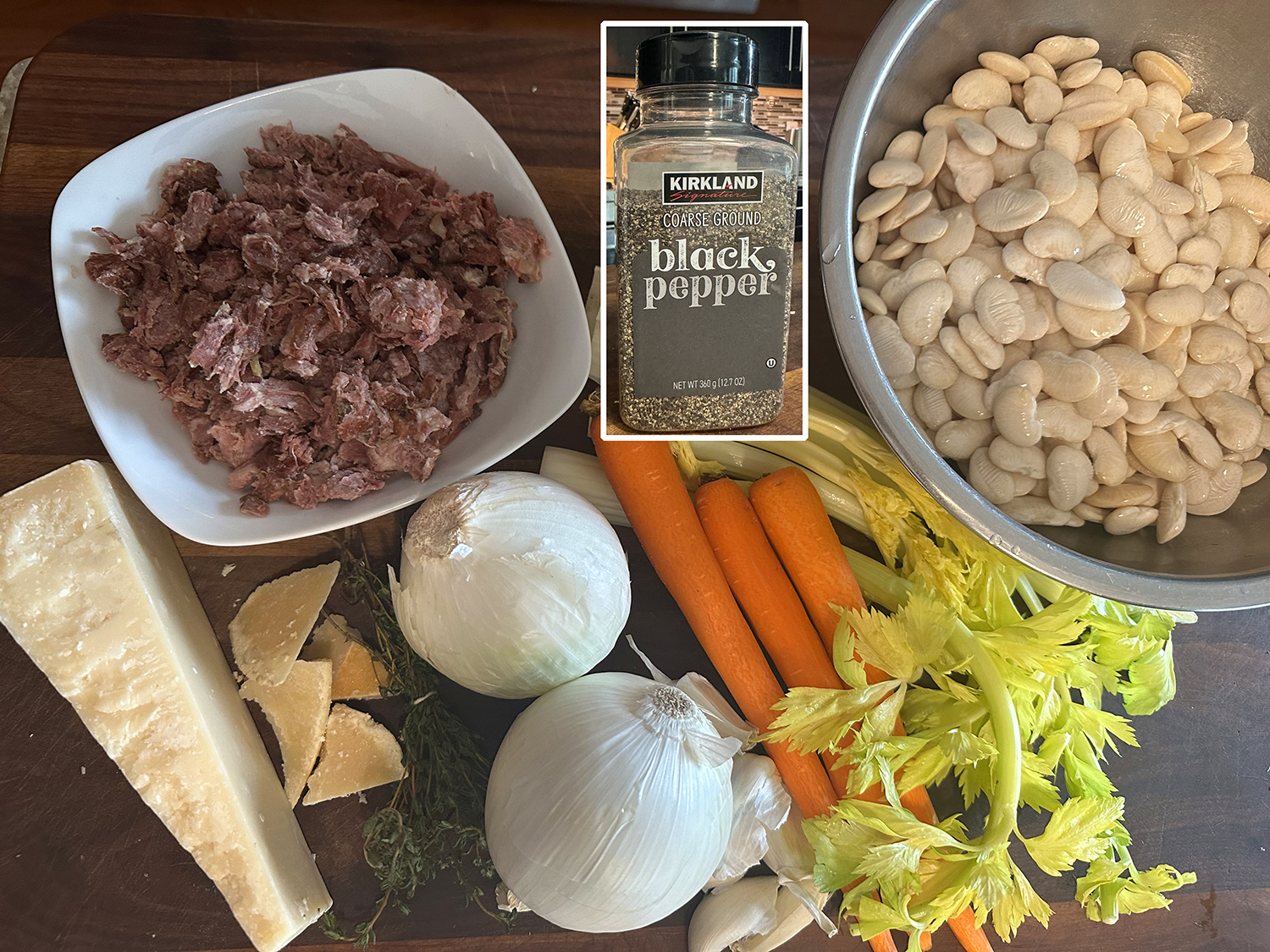
  • 1 lb. dried white cannellini beans (for canned beans, see note)
  • Good olive oil
  • 4 oz. pancetta, ¼-inch diced
  • 2 cups chopped leeks, white and light green parts (2 leeks)
  • 2 cups chopped yellow onion (2 onions)
  • 2 cups (½-inch) diced carrots, scrubbed (5 carrots)
  • 2 cups (½-inch) diced celery (4 ribs)
  • 2 Tbsp. minced garlic (6 cloves)
  • 2 tsp. minced fresh rosemary
  • 8 to 10 cups chicken stock, preferably homemade
  • 1 14.5 oz. can of diced tomatoes
  • 2 bay leaves
  • Kosher salt and freshly ground black pepper
  • Freshly grated Parmesan cheese

Directions

  1. At least 8 hours or the night before you make the soup, place the beans in a large bowl and add enough cold water to cover the beans by 2 inches.  Refrigerate for at least 8 hours or overnight.  Drain the beans, rinse under cold running water, and drain again.  Set aside.
  2. In a large (10-inch) pot or Dutch oven such as Le Creuset, heat ¼ cup of olive oil over medium heat, add the pancetta, and sauté for 4 to 5 minutes, until browned. 
  3. Add the leeks, onions, carrots, celery, garlic, and rosemary and cook over medium-low for 10 minutes, stirring occasionally, until the vegetables are tender. 
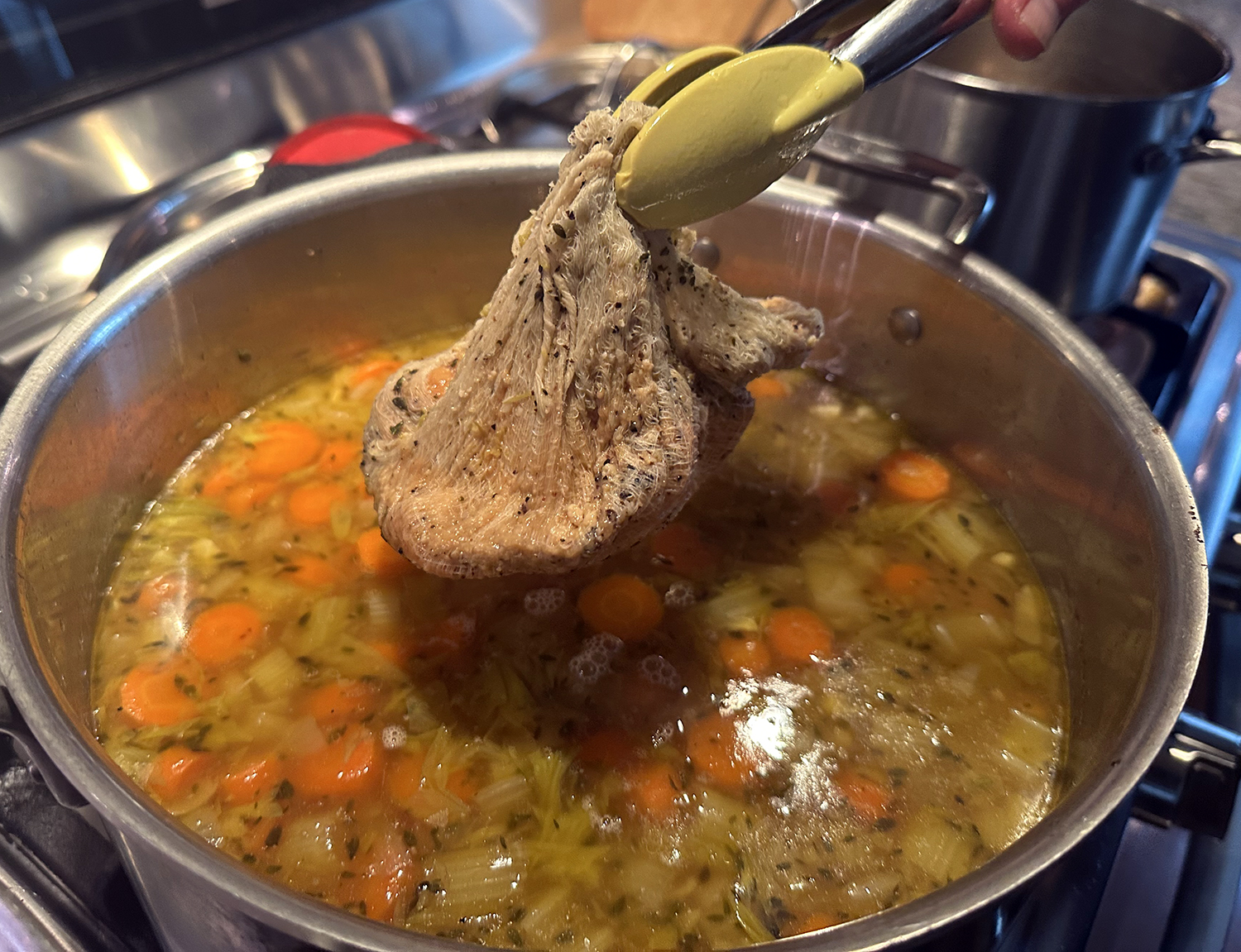
  4. Add the beans, 8 cups of the chicken stock, bay leaves, 1 tablespoon salt, and 1 teaspoon pepper and bring to a boil. Lower the heat and simmer, partially covered, for 1 hour and 30 minutes, until the beans are tender.  Stir occasionally, scraping the bottom of the pot.  Discard the bay leaves, cover the pot, and allow the soup to sit off the heat for 15 minutes.  Add in the diced tomatoes. Add up to 2 more cups of chicken stock if the soup is too thick.
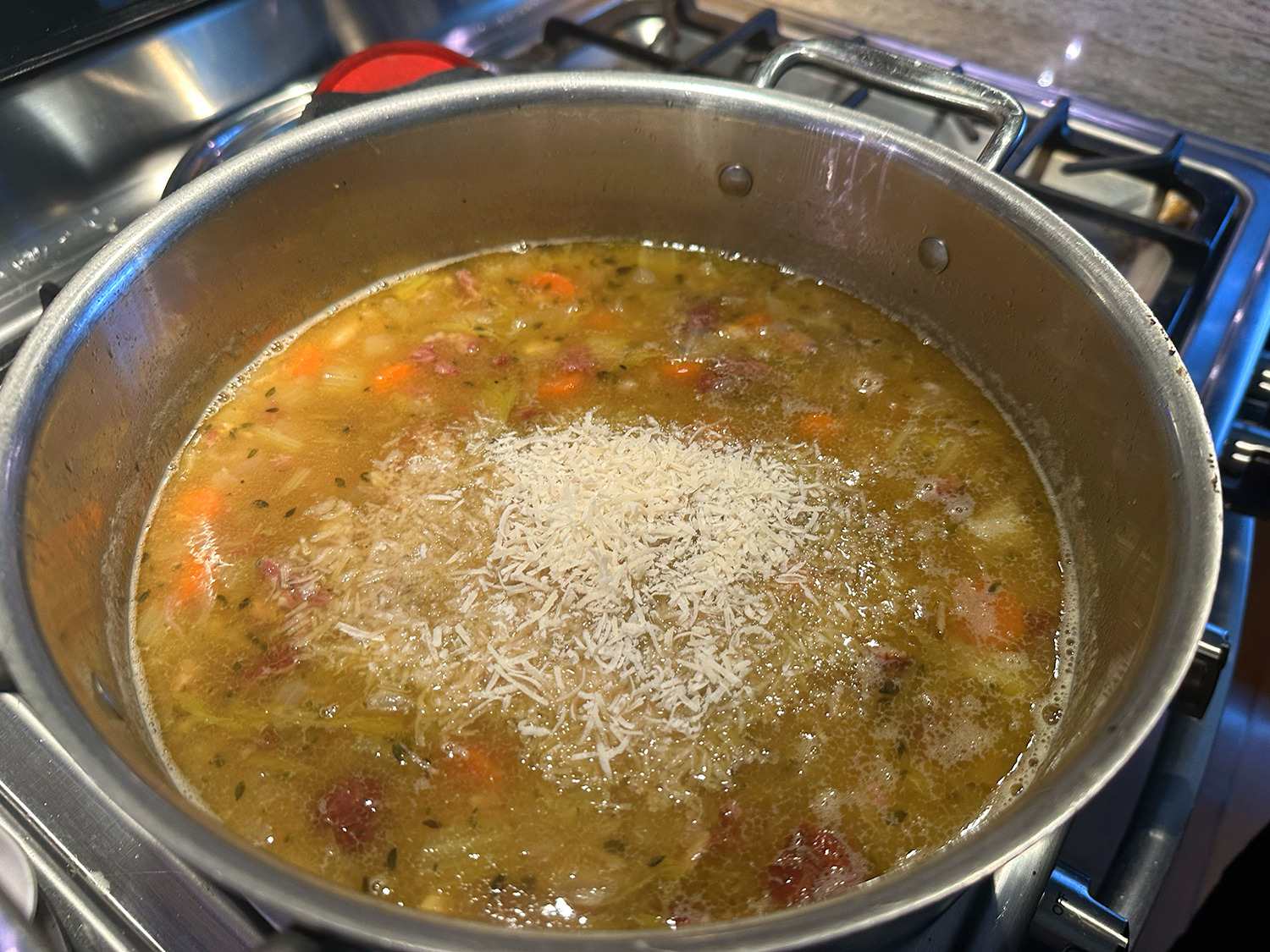
  5. Reheat slowly, ladle into large shallow soup bowls, sprinkle with Parmesan cheese, drizzle with olive oil, and serve hot.

http://www.lynnandruss.com

Adapted from a recipe by Ina Garten

Savory Mashed Sweet Potatoes

How about turning the page on that gloppy, cloyingly-sweet Thanksgiving side dish, the sweet potato casserole full of sugar?

These incredible mashed sweet potatoes are mixed with herbs, butter and sour cream. The problem with most mashed sweet potatoes is that they’re made even sweeter with brown sugar and marshmallows, and are not a welcome player on my dinner able. Sweet potatoes are already plenty sweet on their own.

So savory ingredients are added to these mashed sweet potatoes to balance out that inherent sweetness. Finely chopped fresh parsley and green onion combined with some sour cream and butter are all you need for incredible savory mashed sweet potatoes.

They were a mighty fine accompaniment to our Double-Mushroom and Sherry Meatloaf and side of Roasted Brussels Sprouts with Garlic.

Savory Mashed Sweet Potatoes

  • Servings: 6
  • Difficulty: easy
  • Print

Ingredients

  • 4 pounds sweet potatoes (about 7 small-to-medium), peeled and cut into 1″ cubes
  • 2 teaspoons salt, divided
  • ⅓ cup finely sliced green onion, mostly green parts (from 1 bunch)
  • ⅓ cup finely chopped fresh flat-leaf parsley
  • 1 small-to-medium garlic clove, pressed or minced
  • ¼ cup sour cream*
  • 3 tablespoons butter, cubed
  • Freshly ground black pepper
  • 1 teaspoon extra-virgin olive oil

Directions

  1. Place the cubed sweet potatoes in a large saucepan or Dutch oven and add enough water to cover by about 1″. Add 1 teaspoon of the salt and bring the mixture to a simmer over medium-high heat. Reduce the heat and simmer, uncovered, until the potatoes are tender (in other words, it’s easy to slide a fork in and out), about 9 to 12 minutes.
  2. Drain well, then return the potatoes to the pot. Mash the sweet potatoes to your desired consistency.
  3. Promptly add almost all of the green onion and parsley, reserving a small amount of each for garnish. Add the garlic, and stir to combine. Then stir in most of the sour cream (reserve roughly 1 tablespoon for garnish), all of the butter, and the remaining 1 teaspoon salt. Season to taste with additional salt (I usually add another ¼ to ½ teaspoon) and freshly ground black pepper.
  4. Transfer the mashed potatoes to a serving bowl and swirl the reserved sour cream onto the top with a spoon. Sprinkle with the reserved green onion and parsley, drizzle the top lightly with olive oil, and finish with a sprinkle of pepper.
  5. Serve promptly. Leftovers will keep well, covered and refrigerated, for 3 to 4 days.

http://www.lynnandruss.com

Adapted from a recipe by Cookie and Kate

Beef Tagine with Green Beans and Olives

Even though it is labeled a tagine, it’s not cooked in one. This hearty tagine is a staple family meal in many Moroccan homes, cooked in the traditional m’qualli style with garlic, ground ginger and ground turmeric. The comforting, earthy flavors of the meat, spices and green beans create a satisfying dinner perfect for sharing or meal prepping.

The cozy, fragrant stew is packed with pops of flavor from tangy preserved lemon and briny olives. The green beans are added towards the end when the meat is almost cooked. For a variation, consider substituting or adding peas and/or chopped carrots (see Tip). We added both peas and carrots.

This dish is supposed to take 2 1/4 hours from start to finish. *We decided to use our pressure cooker and therefore cut the total time down to one hour. What we neglected to do was reduce the amount of liquid, because when you use a pressure cooker, none of the moisture evaporates. Next time we will add less liquid to start with, then remove the ingredients with a slotted spoon to another bowl. Add a cornstarch slurry to thicken the sauce and pour it over the meat and vegetables in the bowl.

In addition, we would brown the seasoned (salt and pepper) meat chunks on all sides in shimmering oil in the Dutch oven first; in batches so as not to steam the beef. Remove the beef to a side plate, turn the heat to medium-low and add the onions, garlic and seasoning…

TIP: If making a variation on this recipe using peas and carrots, add the carrots about the same time as the green beans, and add the peas when the other vegetables are tender, cooking them for a few minutes.

To enhance the Moroccan profile, serve over couscous, We decided on garlicky mashed potatoes, because we needed to use up our spud supply. All of our changes are noted in the recipe below.

Beef Tagine with Green Beans and Olives

  • Servings: 6-8
  • Difficulty: easy
  • Print

Ingredients

  • 3 Tbsp. olive oil
  • 2 medium onions, diced (about 3 cups)
  • 3 garlic cloves, minced or pressed
  • 1 tsp. ground turmeric
  • 1 tsp. ground ginger
  • 1 small pinch saffron (optional)
  • Fine sea salt and black pepper
  • 2½ lbs. boneless beef chuck or other stewing beef, trimmed of excess fat and cut into 2-inch pieces
  • ¾ cup vegetable or beef stock, or water, plus more if needed
  • 1 cup cilantro leaves and tender stems, finely chopped, plus more for serving
  • 1½ lbs. green beans, trimmed
  • 2 carrots peeled and cut into 1/2-inch rounds
  • 2 to 3 Tbsp. seeded and finely chopped preserved lemon (about ½ lemon), plus more to taste
  • ½ cup pitted Castelvetrano or Kalamata olives, and peas (if using)
  • Bread, for serving

Directions

  1. Heat oil in a large Dutch oven over medium. Add the beef, cook, stirring occasionally, until the meat is lightly browned on all sides, about 7-8 minutes. Remove to a plate.
  2. Add onions, garlic, turmeric, ginger, saffron (if using), ¾ teaspoon salt and ¼ teaspoon pepper. Cook, stirring frequently, until the onions begin to soften, 5 to 7 minutes.
  3. Return meat to pot, add stock (or water) and cilantro, and bring to a boil over high heat.
  4. Cover the pot, adjust heat to low and simmer for about 1½ hours, until the beef has partially softened (when pressed with a fork it should feel soft but not fall apart).
  5. Stir in the green beans, carrots and preserved lemon, adjust heat to high and bring to a boil. The green beans should be partially submerged in the liquid; add stock or water as needed. Turn down to low, cover and simmer until the green beans and carrots are tender, 15 to 20 minutes. Stir occasionally to make sure the beans cook evenly.
  6. Taste and add more preserved lemon or salt as necessary. Garnish with olives and more cilantro, and serve with bread.

http://www.lynnandruss.com

Recipe by Nargisse Benkabbou for NYTimes Cooking

Classic Beef Chili

There are endless variations of chili, and here’s one of the classics. It uses lean ground chuck, but you can always substitute ground turkey if you stay away from red meat. Fresh poblanos, toasty ancho chile powder, oregano and beer are just some of the ingredients that come together to make a flavorful bowl of chili for any occasion.

When it comes to making chili, it’s important to build flavor even before you add spicy heat. Toasting the ground cumin and ancho chile powder in oil as they cook with the beef brings out their earthy flavors, adding savory undertones to the mix when combined with the fresh poblano, thyme, and oregano. Using canned beans makes this recipe especially convenient; be sure to rinse and drain the beans before adding them to the pot.

Serving to a crowd? Go ahead and set up a buffet of toppings. Serve alongside tortilla chips, cornbread, and bowls of toppings like shredded cheddar, slices of fresh jalapeño and radishes, chopped scallions, and sour cream. This way, each person can pick and choose their garnishes and personalize their perfect bowl of beef chili.

And as is the case with many soups, stews and chilis, they provide a more pronounced marriage of flavors when reheated the second time around.

The original recipe indicated it took 55 minutes total from prep through eating. With two of us prepping, it took nearly 40 minutes, so you may want to rethink the total time…

Classic Beef Chili

  • Servings: 8
  • Difficulty: easy
  • Print

Ingredients

  • 2 Tbsp. olive oil
  • 2 cups chopped yellow onion (from 1 large onion)
  • 1 cup chopped poblano chile (from 1 chile). We used 3 poblanos.
  • 8 garlic cloves, minced
  • 3 lbs. 90/10 lean ground chuck
  • 1 6-oz. can tomato paste
  • 1/3 cup ancho chile powder
  • 2 Tbsp. ground cumin
  • 1 Tbsp. kosher salt
  • 1 tsp. black pepper
  • 1 tsp. fresh thyme leaves
  • 1 tsp. chopped fresh oregano
  • 2 15-oz. cans dark red kidney beans, drained and rinsed
  • 1 15-oz. can black beans, drained and rinsed
  • 1 28-oz. can crushed tomatoes
  • 2 cups lower-sodium chicken broth
  • 1 12-oz. bottle of beer
  • Shredded cheddar cheese, for serving
  • Sliced or pickled  jalapeños, for serving

Directions

  1. Gather the ingredients.
  2. Heat oil in a large Dutch oven over medium-high. Add onion, poblano, and garlic and cook, stirring often, until tender, about 5 minutes.
  3. Add ground chuck and cook, stirring occasionally, until beef crumbles and is no longer pink, 8 to 10 minutes.
  4. Drain beef mixture well and return to Dutch oven over medium-high.
  5. Add tomato paste, ancho chile powder, cumin, salt, pepper, thyme, and oregano, and cook, stirring often, 2 minutes.
  6. Increase heat to high. Stir in beans, tomatoes, chicken broth, and beer, and bring to a boil. Reduce heat to medium-low and simmer, stirring occasionally, until heated through, at least 30 minutes. It can simmer for 60-90 minutes.
  7. Serve chili with desired toppings.

http://www.lynnandruss.com

Adapted from a recipe by Robby Melvin for Food & Wine

Marsala Chicken Meatballs

If you are fond of Chicken Marsala, then this dish may be one for you. It keeps the same flavor profile, but presents it in a different fashion. And it tends toward more of a slight sweet than savory finish.

Chicken Marsala is an Italian American classic consisting of seared pounded chicken that’s smothered in a sweet-savory Marsala wine mushroom sauce. For more spoon-ability, this crowd-pleasing dinner replaces the thin cutlets with tender chicken meatballs, simmered in a similarly indulgent Marsala sauce.

Ground chicken is very lean, so to ensure a perfectly moist bite, Marsala-soaked bread crumbs and extra-virgin olive oil are added to the meatball mixture. For a flavor-packed fond, take the time to brown the onions and mushrooms; the time spent will pay off.

This recipe is dairy-free as written, but if you’d like to finish the dish with a few pads of butter or a splash of heavy cream, the sauce will certainly accommodate the additional richness. Serve plain as is, or over a bed of mashed potatoes, polenta, orzo, or other pasta of choice.

*NOTE: Chop onions for the meatballs finely in a food processor and squeeze out most of the water using a kitchen towel before adding to chicken.

Marsala Chicken Meatballs

  • Servings: 4
  • Difficulty: easy
  • Print

Ingredients

  • 2 large yellow onions (about 10 oz. each), finely chopped
  • ⅓ cup bread crumbs
  • 1¼ cups dry Marsala wine
  • 1¾ cups of chicken stock
  • 5 Tbsp. extra-virgin olive oil
  • Salt and pepper
  • 1 lb. ground chicken
  • 1 lb. sliced button or cremini mushrooms
  • 2 Tbsp. all-purpose flour
  • 1 tsp. dried Italian herb seasoning
  • 3 Tbsp. butter
  • Chopped flat-leaf parsley, for serving

Directions

  1. To a medium bowl, add 1 cup of chopped onion, plus the bread crumbs, ¼ cup wine, 2 tablespoons olive oil, a hefty pinch of salt and a few grinds of pepper; mix until combined. Add the chicken and mix until combined. Form the meat mixture into 14 balls (about 3 tablespoons each), setting them on a sheet pan or plate.
  2. Heat a large (12-inch) heavy skillet or braiser over medium-high, and add the remaining 3 tablespoons of olive oil.
  3. Sear the meatballs for 2 to 3 minutes, until a dark brown crust forms on the bottoms, then flip, and continue searing for 2 minutes on the other sides. Return the meatballs to the sheet pan or plate.
  4. Adjust heat to high. Add the remaining onions to the skillet and cook, stirring every 2 minutes, until golden, translucent and slightly darker on the edges, about 6 minutes, turning the heat down as necessary.
  5. Add the mushrooms and cook for 6 minutes, stirring occasionally, until reduced in volume and slightly darker in color. Sprinkle the flour on top, mix to coat the mushrooms and onion and continue cooking for 1 minute, lowering the heat as needed.
  6. Carefully pour the remaining 1 cup of wine into the skillet while constantly stirring. Using a wooden spoon, scrape the caramelized bits off the bottom of the pan and cook for 2 minutes, until the wine reaches a thicker, honey-like consistency. Add 1¾ cups of chicken stock and bring to a vigorous simmer. Season with a hefty pinch of salt.
  7. Return the meatballs to the skillet. Adjust heat to medium, partially cover and simmer for 12 minutes, until the sauce has thickened slightly and the meatballs are cooked through.
  8. Add the butter, stirring in until all melted. Taste and season with salt. Sprinkle parsley on top and serve.

http://www.lynnandruss.com

Adapted from a recipe by Carolina Gelen for NYTimes Cooking