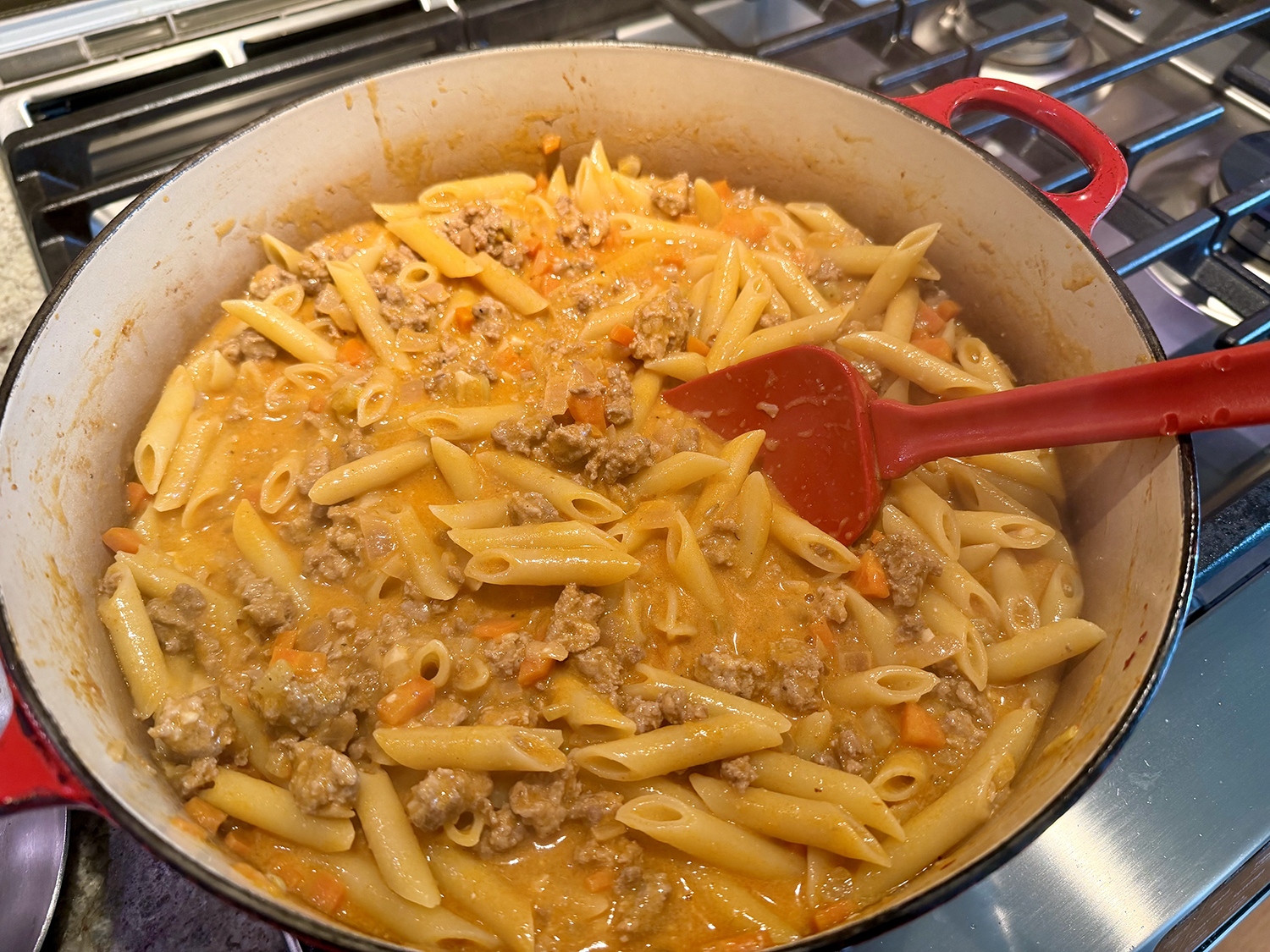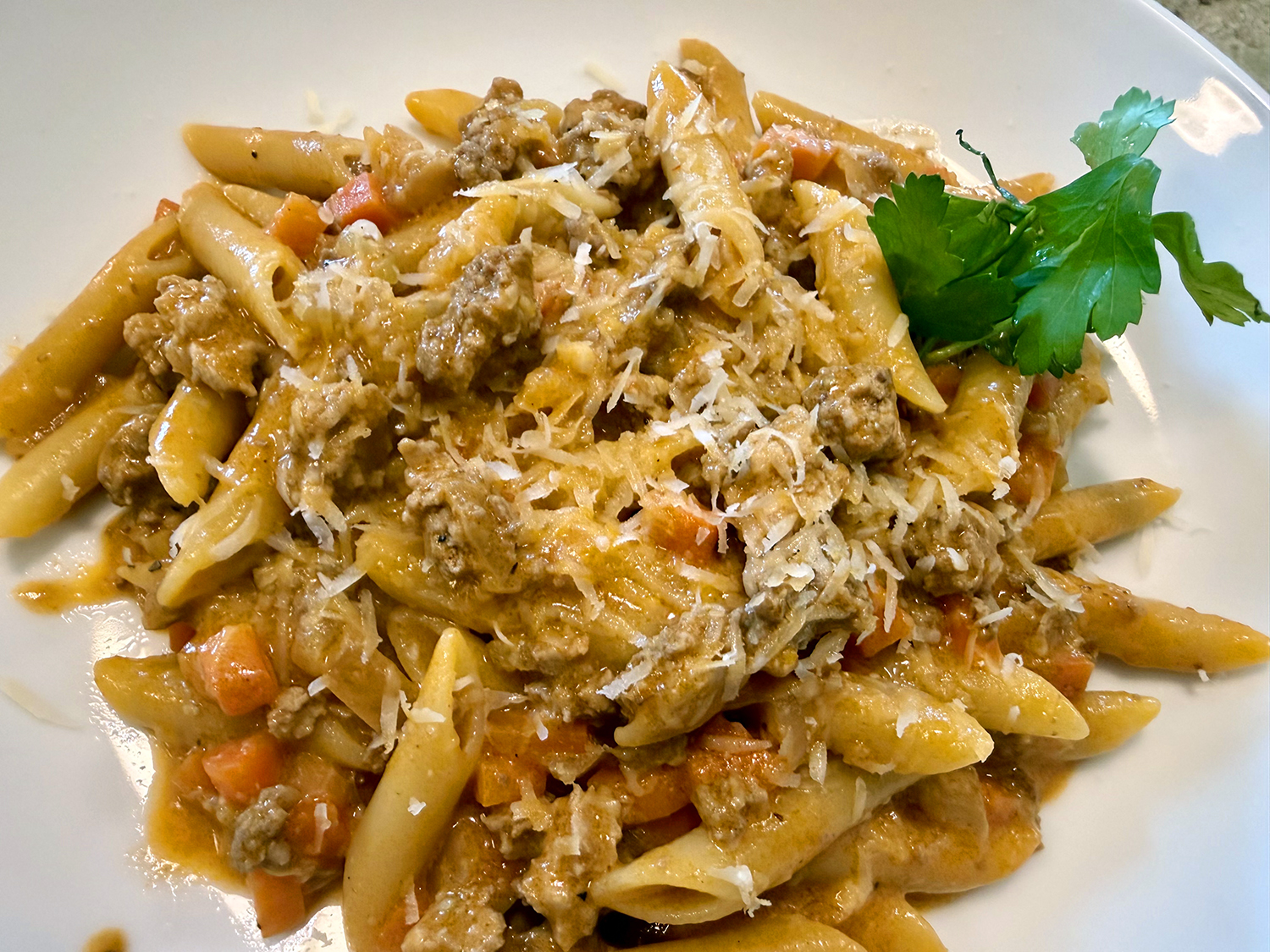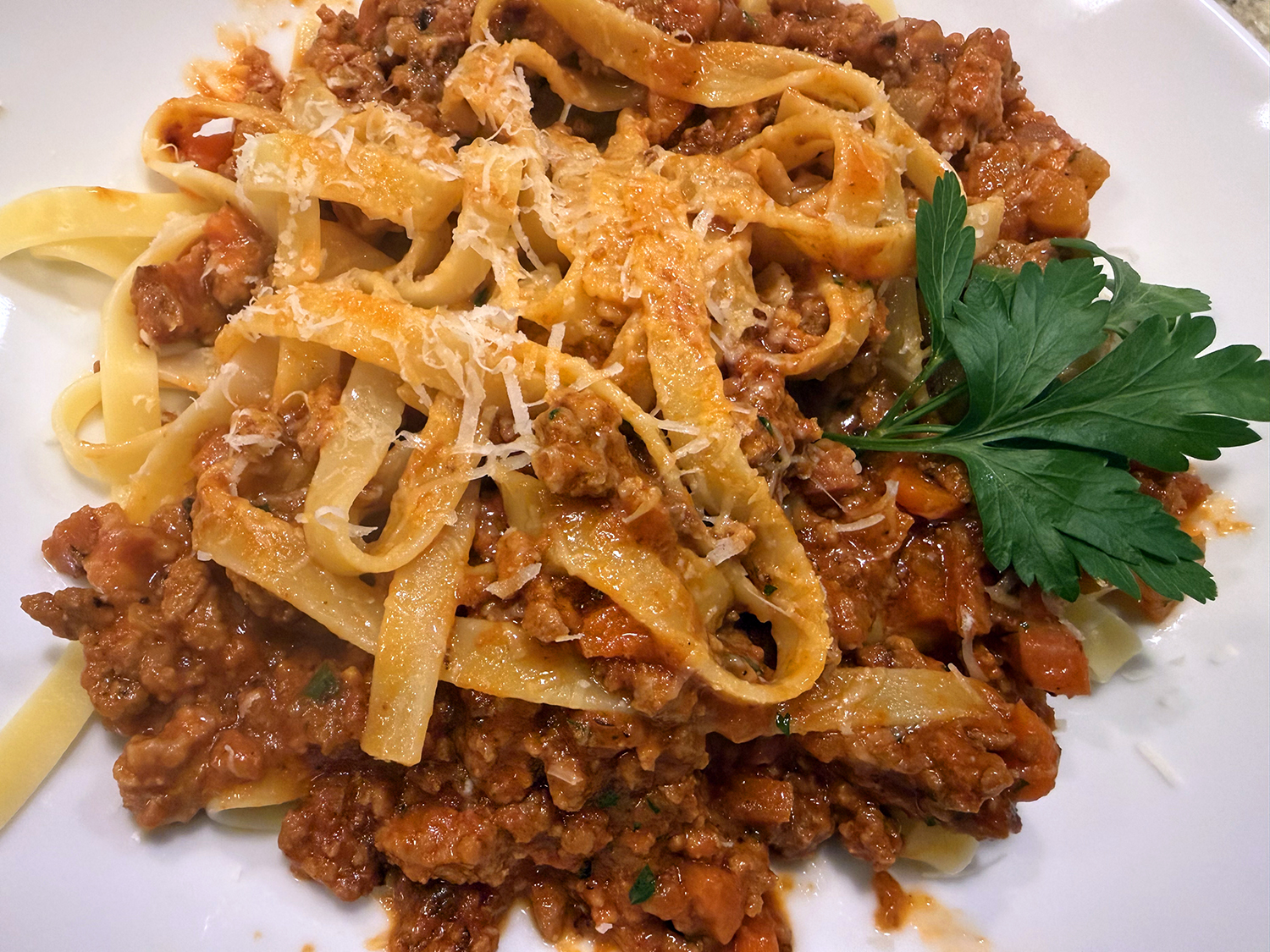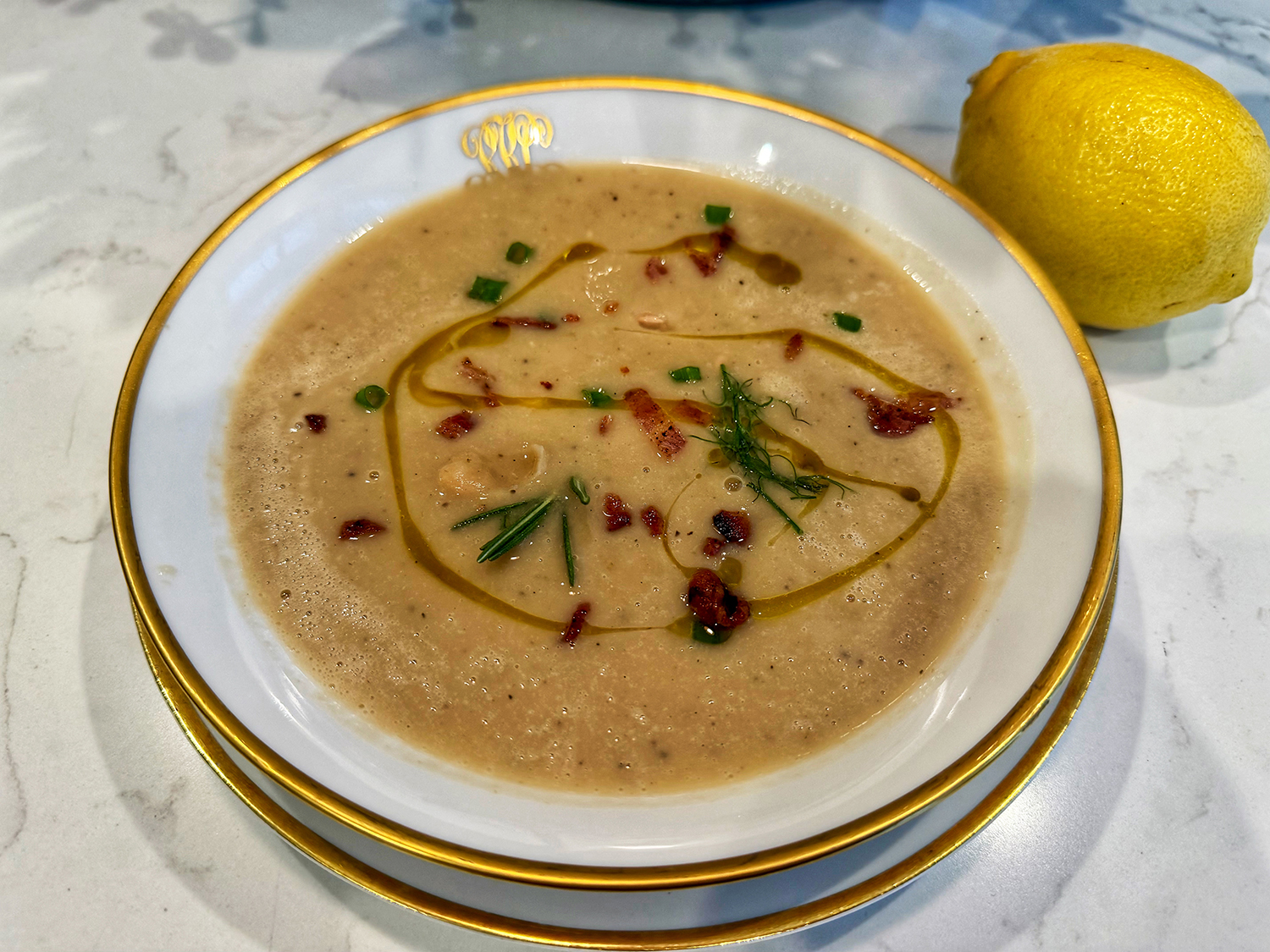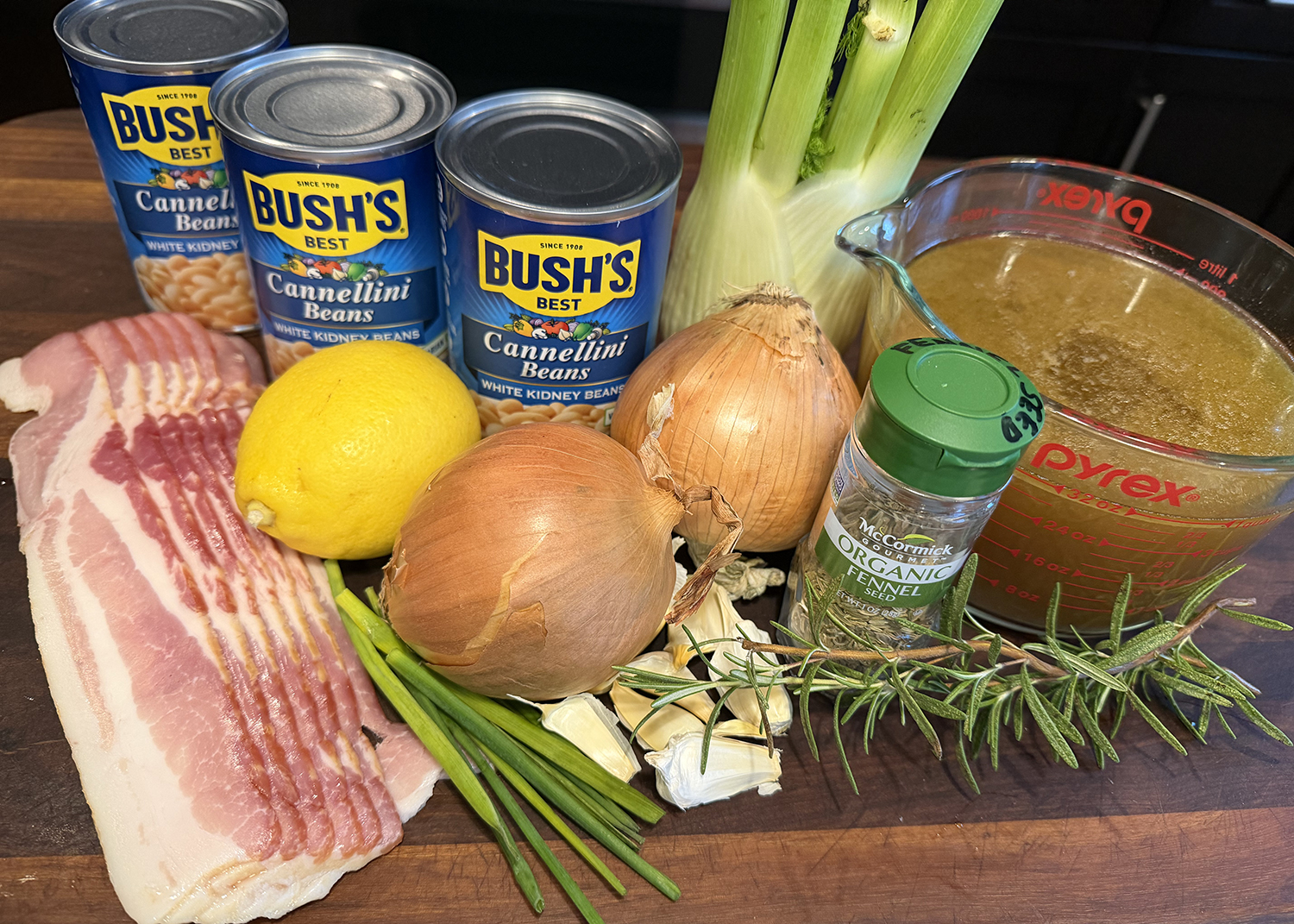
Category Archives: Uncategorized

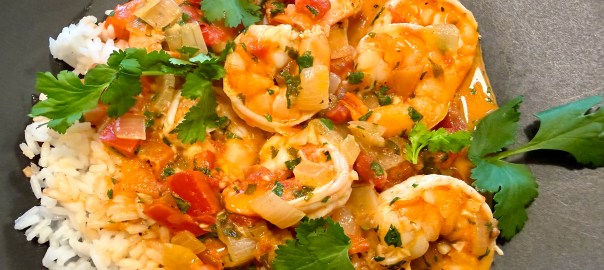
Seafood and Chorizo Stew

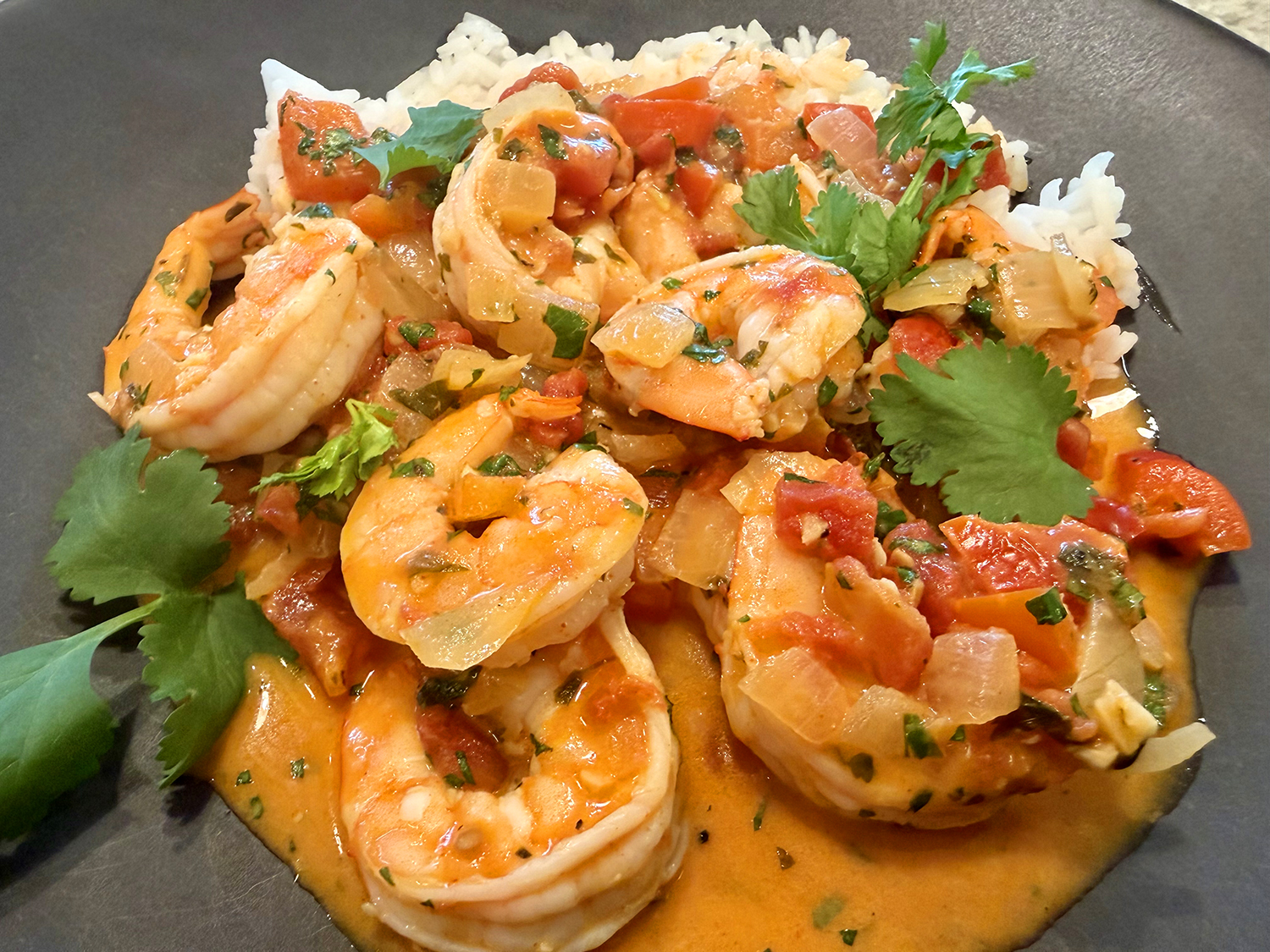
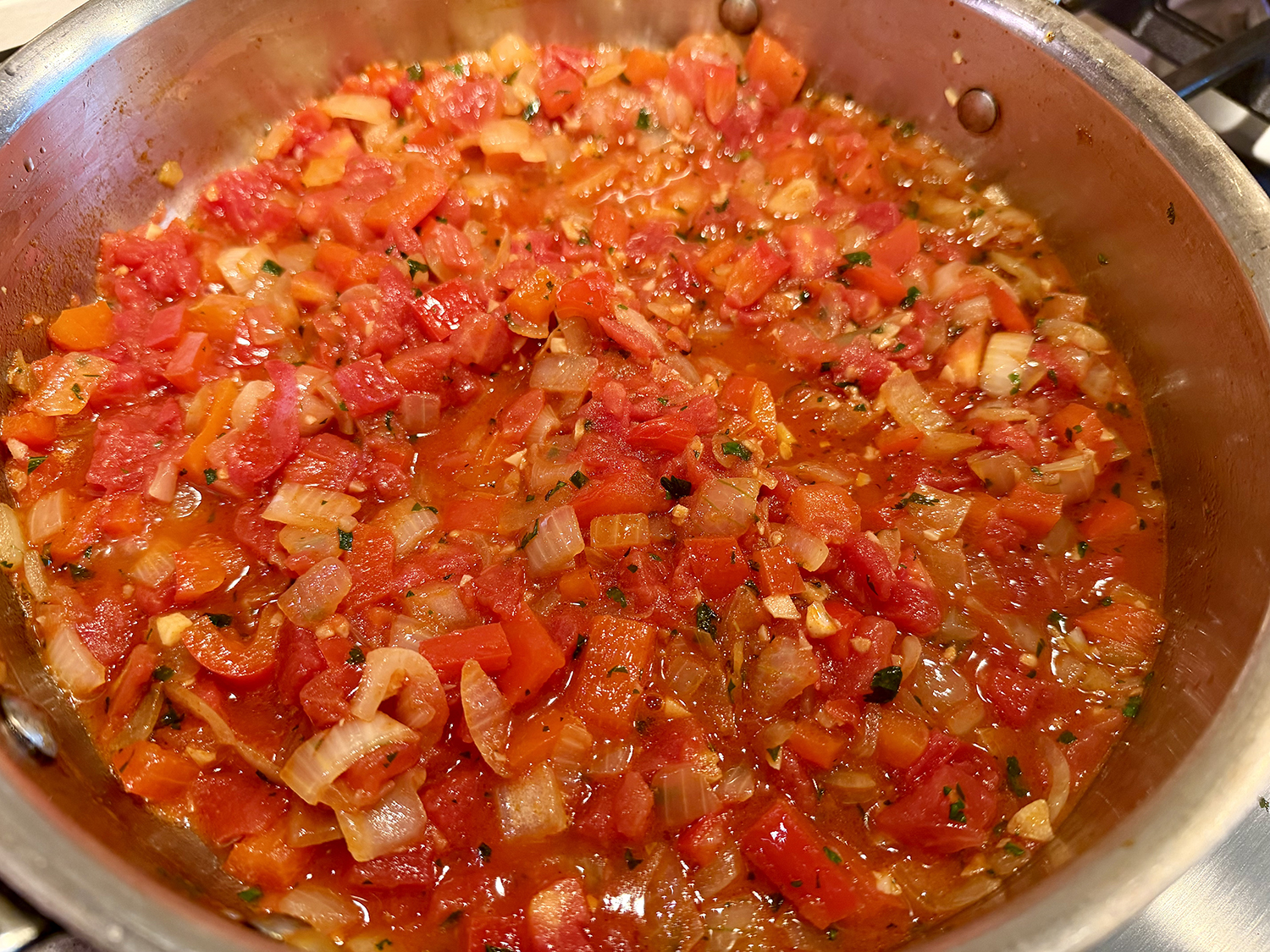
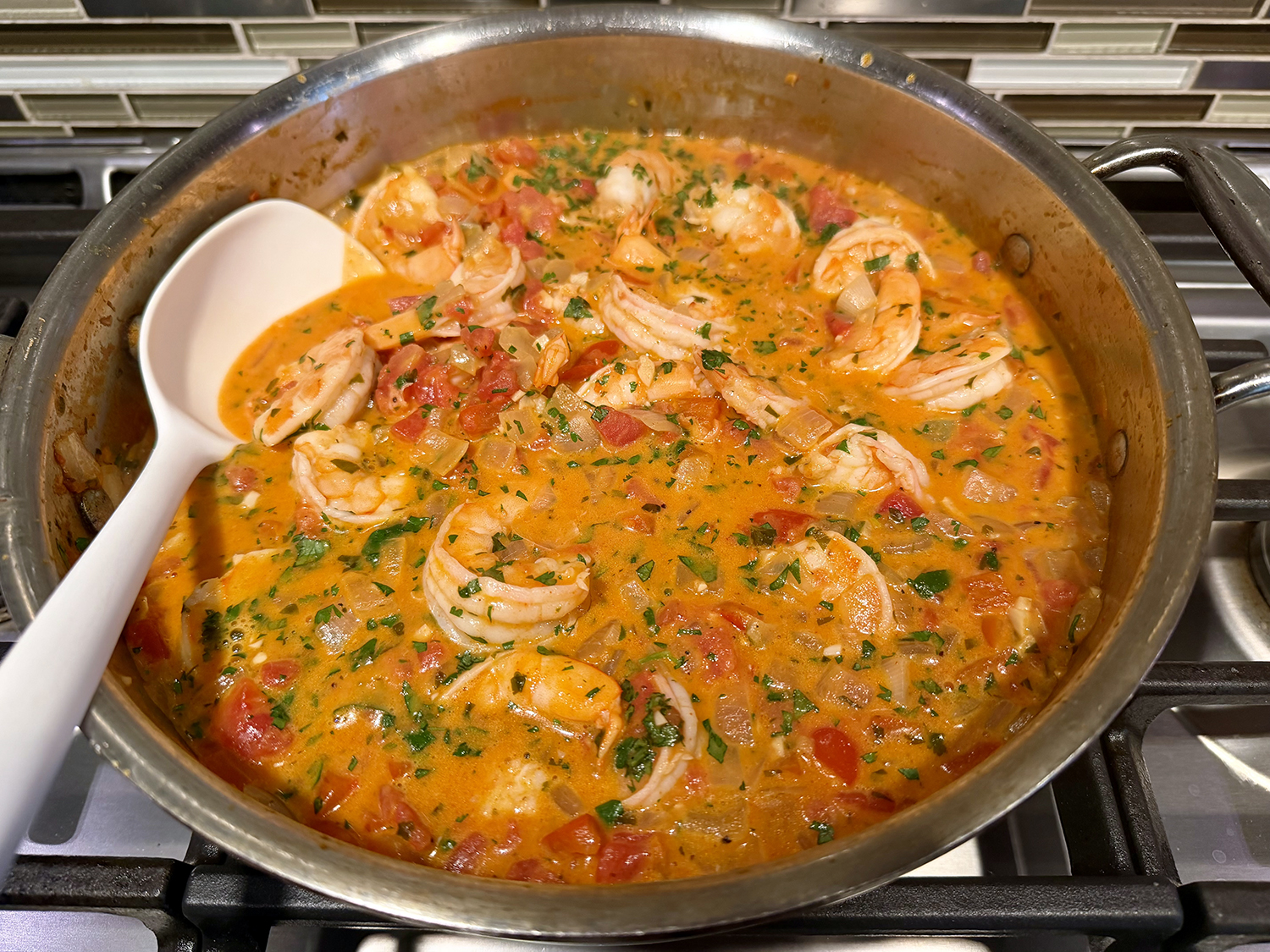
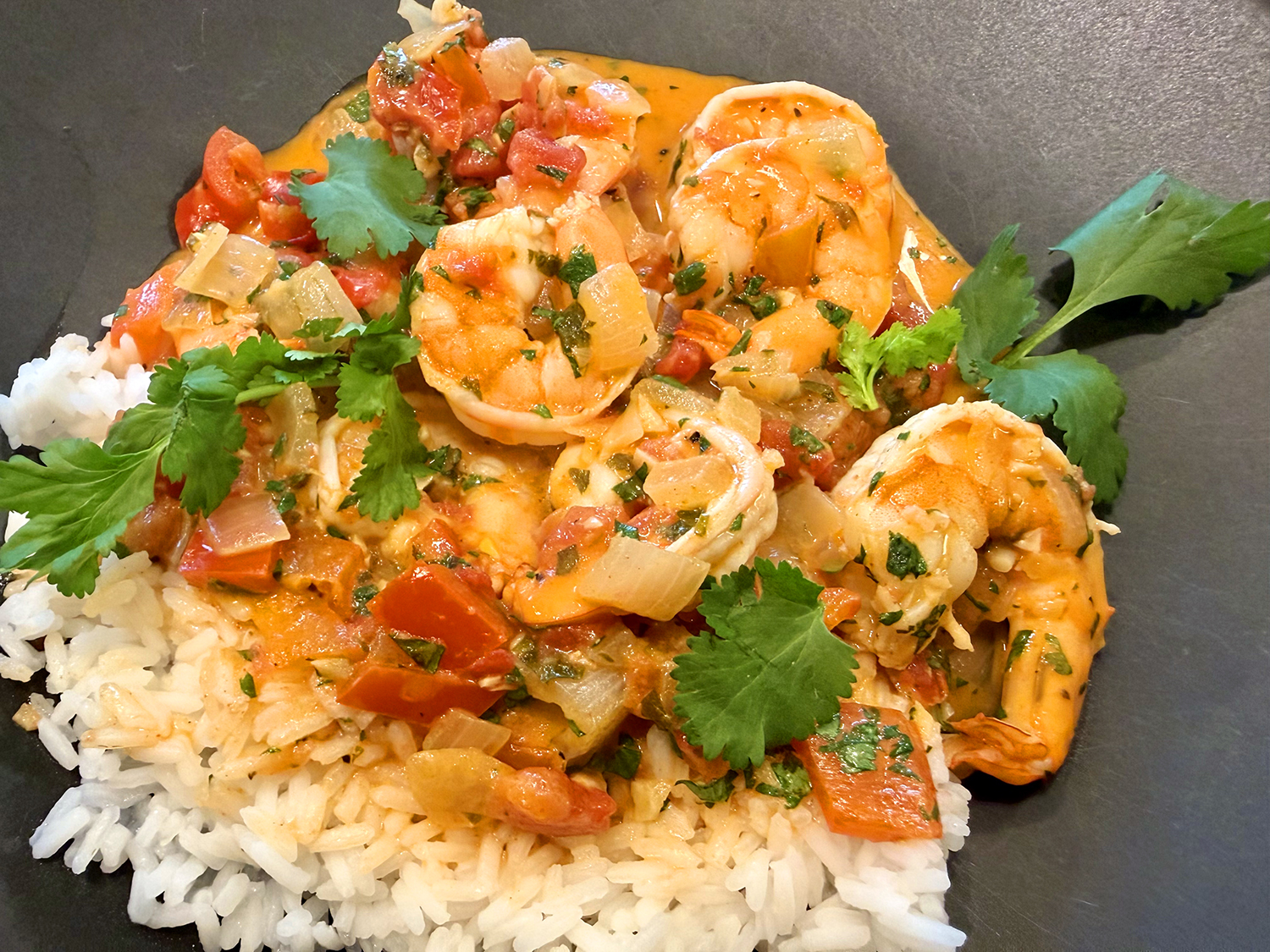
This stew is started by cooking Spanish-style chorizo and onion together to infuse a bold flavor combination into its base. A mix of shrimp and cod are added at the end of the process to ensure that they are not overcooked.

The Hubs had made homemade seafood stock earlier in the day, so in place of the bottle of clam juice, we incorporated the stock—which adds tons of flavor. Another flavor-amping choice was using fire-roasted diced tomatoes.

Unlike Mexican chorizo, which is fresh and uncured, Spanish chorizo is fermented, smoked, and aged for weeks, resulting in a deep, complex flavor and firm texture. Spanish chorizo has been part of Iberian cuisine for centuries. Its origins trace back to the Roman Empire, but it wasn’t until the arrival of pimentón from the New World that chorizo took on its signature red hue and smoky depth.

Seafood and Chorizo Stew

  • Servings: 4
  • Difficulty: easy
  • Print

Ingredients

  • 1 Tbsp. extra-virgin olive oil, plus extra for drizzling
  • 6 oz. Spanish chorizo sausage, skins removed, quartered lengthwise and sliced ½ inch thick
  • 1 onion, chopped fine
  • 4 garlic cloves, minced
  • 1 Tbsp. chopped fresh oregano
  • 2 (14.5-oz.) cans diced tomatoes
  • 1 cup homemade seafood stock, OR 1 (8-oz.) bottle clam juice
  • 1 lb. extra-large shrimp (21 to 25 per lb.), peeled, deveined, and tails removed
  • 12 oz. skinless cod fillet, 1 to 1 ½ inches thick, cut into 1-inch chunks
  • Salt and pepper

Directions

  1. Heat oil in large saucepan over medium-high heat until shimmering. Add chorizo and onion and cook until both are lightly browned, 7 to 9 minutes.
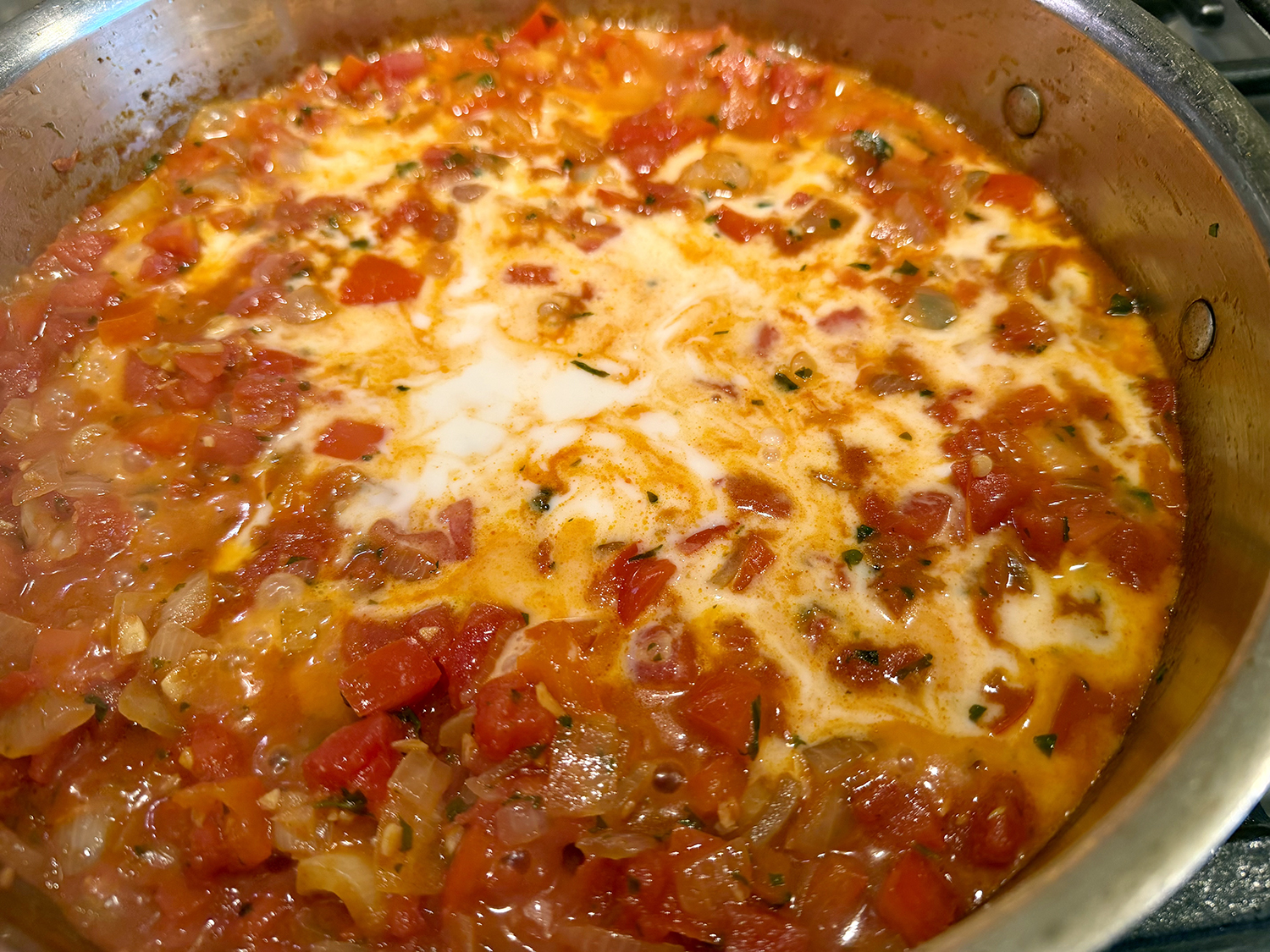
  2. Stir in garlic and 1 teaspoon oregano and cook until fragrant, about 30 seconds. Add tomatoes and their juice and clam juice, scraping up any browned bits, and bring to simmer. Cook until slightly thickened, about 10 minutes.
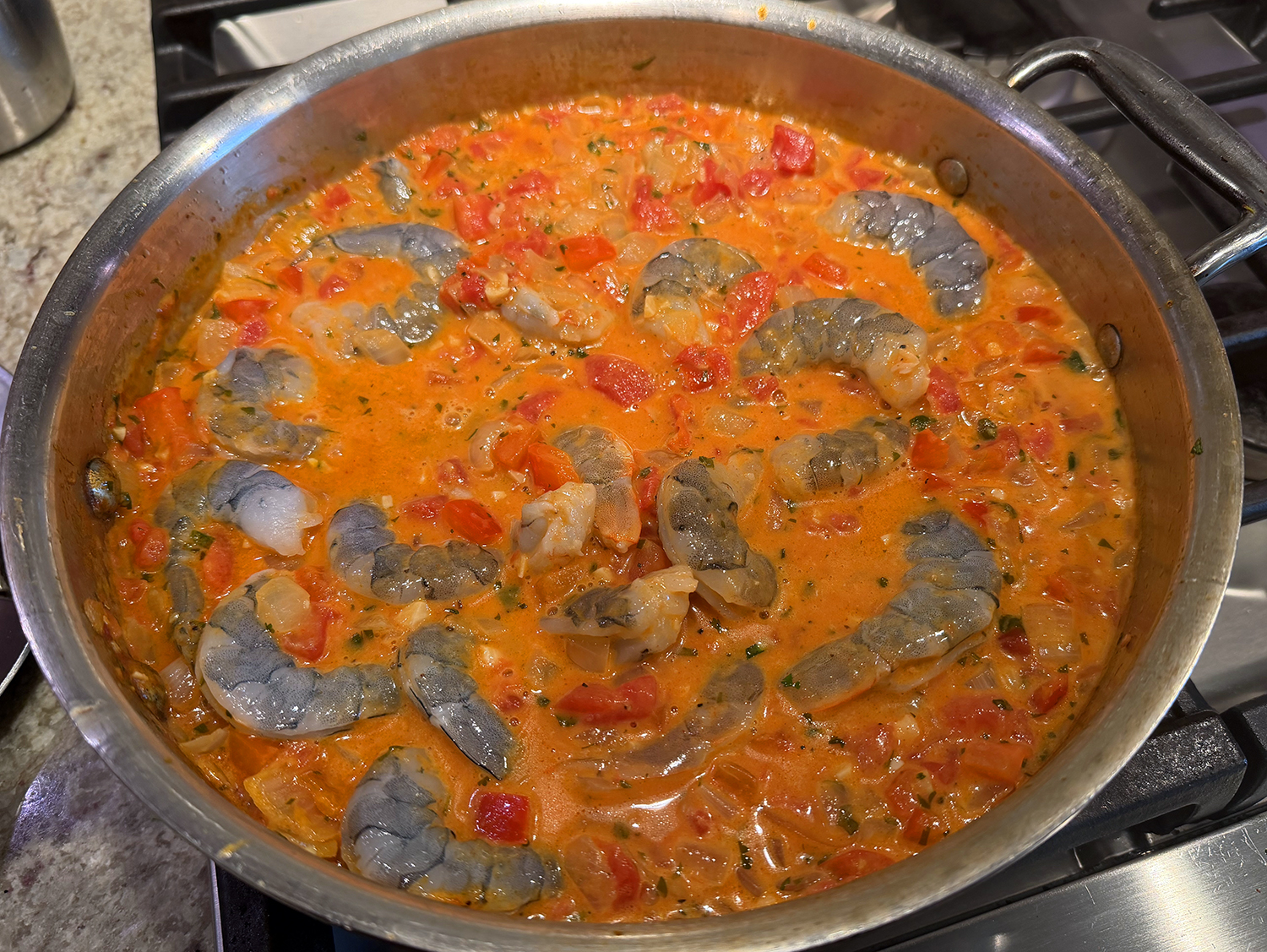
  3. Pat shrimp and cod dry with paper towels and season with salt and pepper. Gently stir seafood into stew and cook until opaque and cooked through, about 5 minutes.
  4. Stir in remaining 2 teaspoons oregano and season with salt and pepper to taste. Portion stew into individual bowls and drizzle with extra oil. Serve.

http://www.lynnandruss.com

Adapted from a recipe by America’s Test Kitchen

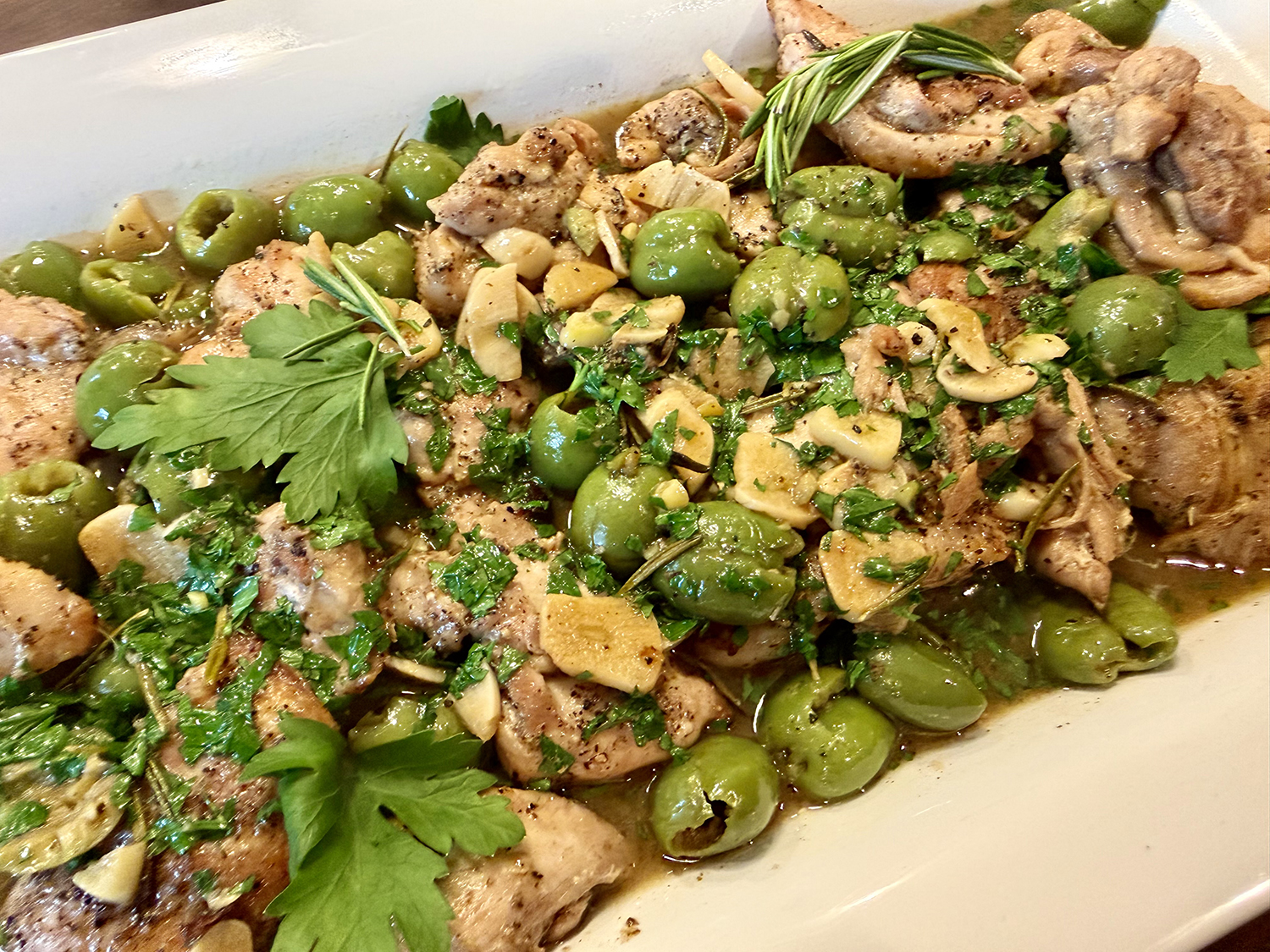
Braised Chicken Thighs with Fennel, Orange and Cracked Olives

Awesome sauce—literally!! Of course using your own homemade chicken stock amps up the depth of flavor tremendously, and The Hubs had recently made a double batch. This stove-to-oven method produces well-rendered skin, meltingly-tender meat, and a savory ready-made sauce.

The braise is started by searing bone-in, skin-on thighs to crisp the skin. The thighs are then transferred to the oven where they simmer, skin side up, in a flavorful mix of chicken broth, orange juice, fennel, and Pernod until they reached 195 degrees and turned tender and juicy.

To finish that incredible sauce, the braising liquid is reduced to concentrate its flavors before whisking in a cornstarch slurry to thicken it to a luxurious, velvety consistency. Last-minute additions of olives, orange zest, and minced fennel fronds make for a deliciously fragrant finish.

French Pernod is made with star anise, fennel, and other herbs and botanicals. The anise or black licorice flavor is strong, though not quite as potent as liqueurs like absinthe and pastis. Not having any Pernod on hand, we substituted Greek Ouzo, a dry anise-flavored aperitif.

NOTES: Other brine-cured green olives such as Cerignola or Picholine can be used for the Castelvetrano. Sambuca or Ouzo can be substituted for the Pernod. Serve with your favorite potatoes, rice, or buttered noodles and a vegetable side dish.

Braised Chicken Thighs with Fennel, Orange and Cracked Olives

  • Servings: 4-6
  • Difficulty: easy
  • Print

Ingredients

  • 2 1⁄2 lbs. bone-in chicken thighs, trimmed
  • 1¼ tsp. table salt
  • ½ tsp. pepper
  • 1 Tbsp. vegetable oil
  • 1 small fennel bulb, 2 tsp. fronds minced, stalks discarded, bulb halved, cored, and chopped fine
  • ¼ tsp. red pepper flakes
  • 1 cup chicken broth, preferably homemade
  • ½ teaspoon grated orange zest plus 1 cup juice (2 oranges)
  • 2 Tbsp. Pernod, OR Sambuca, OR Ouzo
  • 2 Tbsp. lemon juice
  • 2 tsp. water
  • 1½ tsp. cornstarch
  • 20 pitted Castelvetrano olives, cracked

Directions

  1. Adjust oven rack to lower-middle position and heat oven to 325 degrees. Pat chicken dry with paper towels and sprinkle both sides with salt and pepper. Heat oil in 12-inch ovensafe skillet over medium heat until shimmering. Add chicken, skin side down, and cook, without moving it, until well browned, about 8 minutes. Using tongs, flip chicken and brown on second side, about 3 minutes. Transfer chicken to large plate.
  2. Pour off all but 2 tablespoons fat from skillet. Add chopped fennel and red pepper flakes and cook, stirring frequently, until fennel is lightly browned, 4 to 5 minutes. Add broth, orange juice, and Pernod; bring to simmer, scraping up any browned bits. Return chicken to skillet, skin side up (skin will be above surface of liquid). Transfer skillet to oven and bake, uncovered, until chicken registers 195 degrees, 35 to 40 minutes. Whisk water and cornstarch together in small bowl; set aside.
  3. Using tongs, transfer chicken to serving platter and tent with aluminum foil. Place skillet over high heat. Cook, occasionally scraping side of skillet to incorporate fond, until sauce is thickened and reduced to 1½ cups, 8 to 10 minutes. Adjust heat to medium-low. Whisk cornstarch mixture to recombine and then whisk into sauce and simmer until thickened, about 1 minute. Off heat, whisk in lemon juice, olives, and orange zest, and season with salt and pepper to taste. Pour sauce around chicken, top with fennel fronds, and serve.

http://www.lynnandruss.com

Adapted from a recipe by Steve Dunn for Cook’s Illustrated

Mashed Potatoes with Roasted-Garlic Mascarpone

These silky spuds are so rich, you can even skip the gravy! A mixture of brown butter, roasted garlic, and rich mascarpone levels up an iconic, otherwise-basic mashed potato recipe. Fold the rich garlic mixture into cooked potatoes before mashing (and then add add some more roasted cloves to the topping!). Any downside? There probably won’t be any leftovers.

Even though the fried sage leaves are optional, they add not only visual impact, but a nice herby texture. Additionally, we used roasted garlic paste in the potato mixture, and topped them with roasted garlic cloves along with the crisped sage leaves and cracked black pepper. A perfect accompaniment to our Reverse-Sear Prime Rib.

Mashed Potatoes with Roasted-Garlic Mascarpone

  • Servings: 8-10
  • Difficulty: easy
  • Print

Ingredients

  • 1 medium garlic bulb
  • 3 lb. Yukon gold or red potatoes, peeled, if desired, and cut into 2-inch pieces
  • 1/4 cup butter
  • 1/2 cup mascarpone cheese
  • 1/4 to 1/2 cup milk, heavy cream, or half-and-half
  • Melted butter or olive oil and cracked black pepper (optional)
  • Frizzled Sage (optional)

Directions

  1. Preheat oven to 425°F. Cut 1/2 inch off top of garlic bulb to expose ends of cloves. Leaving bulb whole, remove any loose, papery outer layers. Place bulb, cut side up, in a small ramekin or custard cup. Lightly drizzle with olive oil and sprinkle with salt. Cover ramekin with foil. Roast 25 to 35 minutes. Once cool enough to handle, squeeze bottom of roasted bulb to release garlic cloves onto a cutting board; lightly sprinkle with additional salt. Use the side of a chef’s knife to mash the garlic into a paste. (Garlic paste can be made ahead and chilled up to 3 days.)
  2. Meanwhile, in a 4- to 6-qt. pot cook potatoes, covered, in enough lightly salted boiling water to cover until tender, 20 to 25 minutes; drain. Return hot potatoes to hot pot.
  3. In a small saucepan heat butter over medium until it starts to brown, 7 minutes. Remove from heat. Stir in mascarpone cheese and garlic paste until cheese is melted. Add mascarpone mixture to potatoes in pot. Let stand, uncovered, 2 minutes. In another small saucepan, heat milk over low until very warm.
  4. Mash potatoes with a potato masher or beat with a mixer on low just until light and fluffy. Stir in 1/4 cup of the warm milk, 1 tsp. salt, and 1/2 tsp. ground black pepper. Gradually stir in additional warm milk if needed to make potatoes desired creaminess. If you like, serve topped with melted butter, cracked black pepper, and Frizzled Sage.

How to Make Frizzled Sage

Pour enough vegetable oil into a small saucepan to cover bottom of the pan; heat over medium. Add fresh dry sage leaves, a few at a time. Cook until lightly browned and starting to crisp, 2 minutes. Remove to side dish until ready to adorn the potatoes.

http://www.lynnandruss.com

Recipe By Sarah Martens and Carrie Boyd for Better Homes and Gardens

Celery Root Soup with Lemony Crab

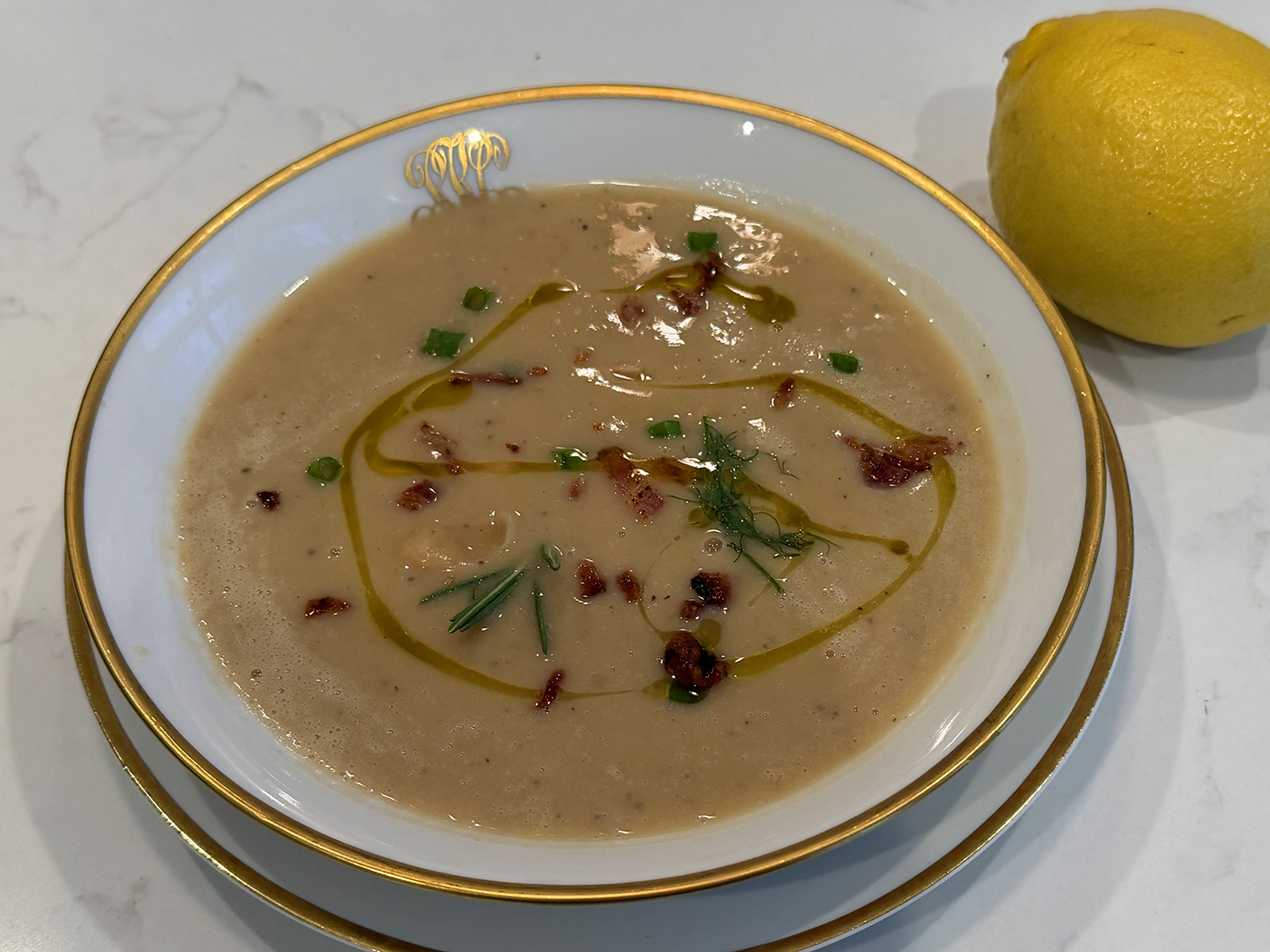
This velvety soup, made with roasted celery root and apple, is finished with a mound of bright and briny crab salad. It’s versatility allows you to serve it as an appetizer, a side for a festive dinner, or simply as a light meal with slice of crusty bread.

Celery root is an unsung hero in the root vegetable world, but we love it. The gnarly-looking root vegetable has a slightly sweet and nutty flavor with a taste that’s sometimes compared to a combination of celery, parsley, and parsnip. To bring out the natural sweetness of celery root and concentrate its flavors, Food & Wine recipe developer Nicole Hopper roasts the celery root along with shallots, apple, and garlic, then purées them into a silky-smooth soup.

Now that’s a combination that worked for us—and our dinner guests!

Celery Root Soup with Lemony Crab

  • Servings: 4-6
  • Difficulty: easy
  • Print

Ingredients

  • 8 oz. fresh jumbo lump crabmeat, drained and picked
  • 1 large celery root, trimmed, peeled, and chopped into 3/4-inch pieces (about 3 3/4 cups)
  • 2 large shallots, peeled and quartered
  • 1 1/2 tsp. chopped fresh thyme leaves
  • 3 Tbsp. finely chopped mixed tender fresh herbs (such as chives and parsley)
  • 1 apple (such as Honeycrisp), peeled, cored, and chopped into 3/4-inch pieces
  • 1 tsp. grated lemon zest plus 1 Tbsp. fresh lemon juice
  • 6 Tbsp.crème fraîche, divided
  • 4 cups chicken stock or vegetable broth, warmed
  • 3 Tbsp. extra-virgin olive oil, plus more for drizzling
  • 3 garlic cloves, unpeeled
  • 1 1/2 tsp. kosher salt, divided
  • 3/4 tsp. black pepper, divided, plus more for garnish

Directions

  1. Preheat oven to 400°F. Toss together celery root, apple, shallot, garlic, oil, thyme, 1 1/4 teaspoons salt, and 1/2 teaspoon pepper on a large rimmed baking sheet. Roast until tender, 35 to 40 minutes, stirring once after 20 minutes.
  2. Meanwhile, stir together crabmeat, tender herbs, lemon zest and juice, 2 tablespoons crème fraîche, remaining 1/4 teaspoon salt, and remaining 1/4 teaspoon pepper in a medium bowl until evenly combined. Cover and refrigerate until ready to serve.
  3. Squeeze roasted garlic cloves into a blender; discard peels. Transfer celery root mixture to blender, and add stock. Secure lid on blender, and remove center piece to allow steam to escape. Place a clean towel over opening; process until smooth, about 2 minutes. Add remaining 1/4 cup crème fraîche, and process until just combined, about 10 seconds.
  4. Divide crab mixture among soup bowls. Pour soup evenly around crab mixture. Drizzle with additional olive oil, and garnish with black pepper. Serve hot.

http://www.lynnandruss.com

Recipe developed by Nicole Hopper for Food & Wine

Brussels Sprout Pasta

This weeknight Brussels sprout pasta dish is bursting with autumnal flavors. Leaving some of the outer Brussels sprouts leaves whole before roughly chopping the centers ensures you get different shapes and textures in every bite; hot Italian sausage adds heft and spice (add more red pepper flakes if you like—which of course we did!); pecans toasted in nutty brown butter are rich, cozy, and crunchy; and using Pecorino gives the dish a salty, sharp punch.

Now here is where we part from the original recipe. The amount of butter and oil to sauté the pecans seemed like overkill. We believe you could cut the amounts of butter and oil in half, although the original amounts are listed below.

Any type of medium pasta will work with this dish, such as mezze rigatoni, short tubes that will trap small bits of sausage and pecan for full-flavored bites. But you could consider orecchiette, conchiglie, or regular old penne. To get a luxurious, glossy sauce, cook your pasta until just shy of al dente (2 minutes less than package directions) so you can finish it in the sauce, with starchy water and butter helping bring everything together.

TIP: Get your pasta water on to boil first. As it warms up, use the prep time to assemble the rest of your ingredients.

In the end, it was quite luxurious and we were both surprised how much we liked it better than we thought we would. Instead of 1 pound of pasta, we used 12 ounces and felt it was a better balance with the other ingredients.

Brussels Sprout Pasta

  • Servings: 4-6
  • Difficulty: easy
  • Print

Ingredients

  • 1 lb. Brussels sprouts
  • 1 lb. mezze rigatoni or other medium pasta
  • Kosher salt
  • 6 Tbsp. unsalted butter, divided
  • 4 Tbsp. extra-virgin olive oil, divided
  • 1 cup coarsely chopped raw pecans
  • ¼ tsp. crushed red pepper flakes
  • 1 lb. hot Italian sausage, casings removed if needed
  • 3 garlic cloves, thinly sliced
  • 1 oz. Pecorino, finely grated (about ½ cup), plus more for serving
  • Freshly ground pepper
  • 2 Tbsp. red wine vinegar

Directions

  1. Trim root ends from 1 lb. Brussels sprouts, letting any larger outer leaves fall off. Place leaves in a medium bowl. Coarsely chop remaining sprouts and transfer to same bowl as leaves; set aside.
  2. Cook 1 lb. mezze rigatoni or other medium pasta in a large pot of boiling salted water, stirring occasionally, until very al dente, about 2 minutes less than package directions. Drain, reserving 2 cups pasta cooking liquid.
  3. Heat 4 Tbsp. unsalted butter and 2 Tbsp. extra-virgin olive oil in a medium Dutch oven or other heavy pot over medium-high until butter is melted. Add 1 cup coarsely chopped raw pecans and cook, stirring constantly, until nuts are darkened in color and fragrant and butter mixture browns (it will be slightly darker than plain brown butter because of the pecans), about 2 minutes. Transfer to a medium bowl, stir in ¼ tsp. crushed red pepper flakes, and season with salt. Wipe out pot.
  4. Heat remaining 2 Tbsp. extra-virgin olive oil in same pot over medium-high. Cook 1 lb. hot Italian sausage, casings removed if needed, breaking up with a wooden spoon, until browned and cooked through, about 5 minutes. Add 3 garlic cloves, thinly sliced, and reserved Brussels sprouts; season with salt. Cook, stirring occasionally, until Brussels sprouts are slightly wilted, 2–3 minutes.
  5. Add pasta, 1 cup reserved pasta cooking liquid, 1 oz. Pecorino, finely grated (about ½ cup), and remaining 2 Tbsp. unsalted butter; season generously with freshly ground black pepper. Cook, stirring constantly and adding more pasta cooking liquid as needed, until pasta is coated and sauce is glossy, 2–3 minutes. Remove pasta from heat and stir in 2 Tbsp. red wine vinegar. Taste and season with more salt if needed.
  6. Divide pasta among shallow bowls and top with buttery pecans, dividing evenly, and more Pecorino.

http://www.lynnandruss.com

Adapted by a recipe from Kendra Vaculan for Bon Appétit

Roasted Orange Chicken

Over the course of 12 years of writing this food blog, every time I post one on roasted chicken with citrus, it brings back fond memories of Sunday Supper as a child. I was a pretty fussy eater back then, but I did love mom’s Orange Juice Chicken with mashed potatoes and gravy. The following recipe has a more intense and complex flavor profile, and it is delicious!

Whole tangerines, peel and all, roast alongside chicken in a sweetened soy sauce that thickens into a glaze and lacquers the bird. The fruit wedges soften in the syrupy sauce while infusing it with their floral bittersweetness. Reminiscent of savory Cantonese soy sauce chicken and tangy American Chinese orange chicken, this dish also combines the warmth of ginger with the bit of heat from ground hot chiles. You can eat the tangerine wedges along with the chicken, which is delicious with its sauce over steamed rice or boiled noodles.

Excerpt from chef/author Genevieve Ko: “Peeling an orange releases a spritz of natural oils that coats fingers with a citrus perfume, teasing at the fruit inside. The floral zest and juicy segments are easy to love, but the pith in between, not so much… Whole tangerines, which season every element of the dish and have thin skins that lose their bitterness more quickly than oranges. After some fruit is juiced for the gingery soy glaze, their spent peels are stuffed into the chicken. More tangerine wedges cook alongside the bird in the same pan, their piths softening in the sauce that lacquers the bird.”
How can you not want to make this dish after reading that?!

TIP: If the breast starts getting much darker than the rest of the bird early on, place a piece of foil over the top to keep it from burning and to allow the skin of the rest of the chicken to continue to glaze.
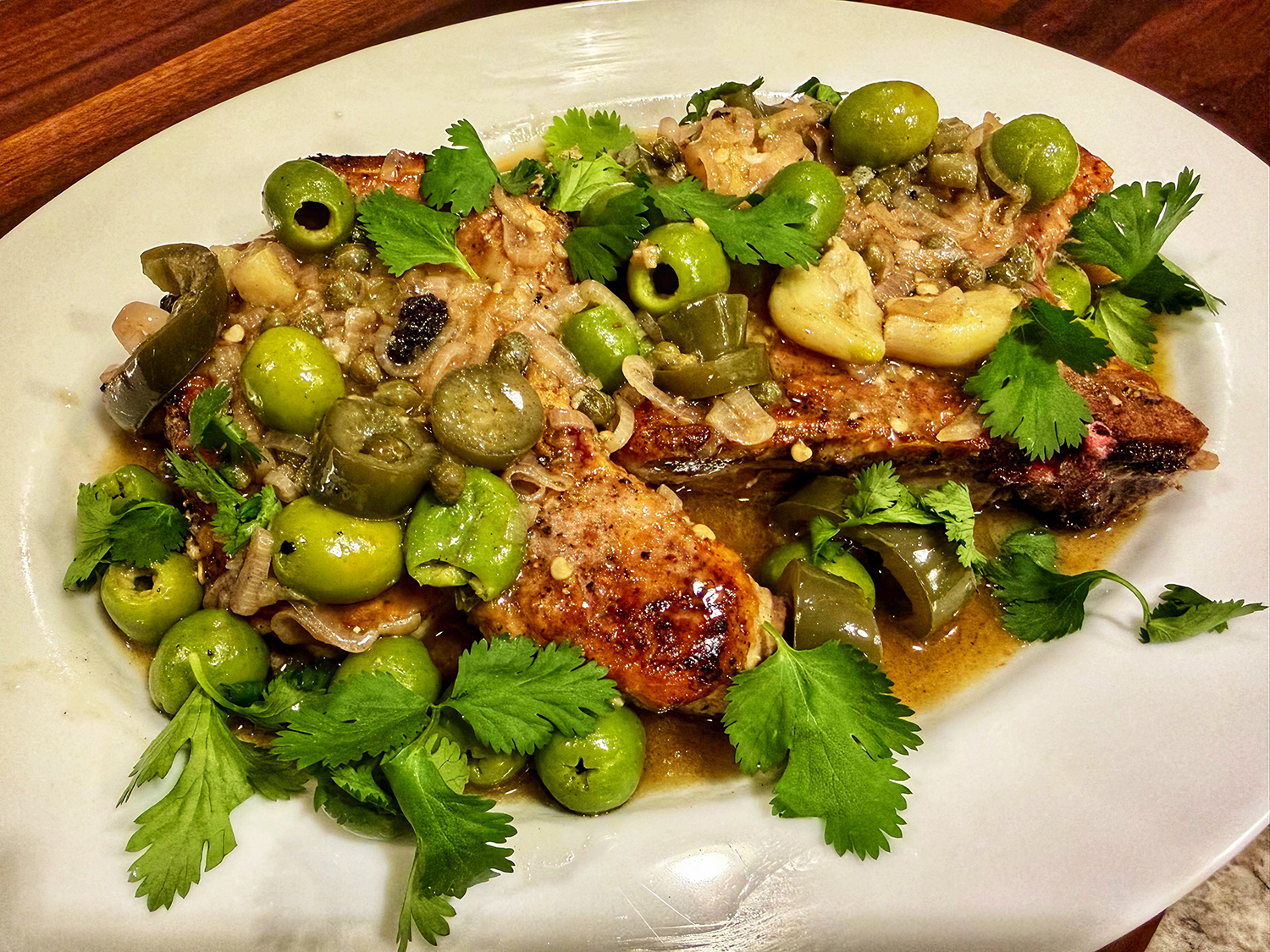
After reading numerous reviewer’s comments, we doubled the sauce, but only increased the sugar at maybe a third. This gave us a good amount of sauce to cover the meat and the rice accompaniment. And, at our discretion, we included 6 large shallots which became all nice and jammy mixed in with the tangerine wedges. Finally, we did not feel a need to peel the ginger slices since they were going to be discarded anyway.
Roasted Orange Chicken

  • Servings: 4-6
  • Difficulty: easy
  • Print

Ingredients

  • 5 small tangerines or clementines
  • ½ packed cup dark brown sugar
  • ¼ cup soy sauce
  • 1½ tsp. rice vinegar or distilled white vinegar
  • 1 tsp. ground cayenne or other hot red ground chile
  • 1 (4-lb.) whole chicken
  • Salt and black pepper
  • 8 slices peeled fresh ginger
  • 5-6 large shallots, peeled and halved

Directions

  1. Heat the oven to 400 degrees.
  2. Squeeze ¼ cup juice from 2 to 3 tangerines into a small bowl; reserve the spent peels. Cut the remaining tangerines into wedges with their peels intact, and set aside. Add the brown sugar, soy sauce, vinegar and cayenne to the tangerine juice and whisk until the sugar dissolves.
  3. Generously season the chicken inside and out with salt and pepper. Tuck the wingtips behind the body. Stuff the tangerine peels and 6 ginger slices into the cavity, then tie the legs together using kitchen twine. Place in a large ovenproof skillet, and scatter the tangerine wedges, shallot wedges and remaining 2 slices ginger around the chicken.
  4. Slowly pour the juice mixture all over the chicken, then slide the skillet into the oven. Roast for 30 minutes.
  5. Using a large spoon or baster, quickly and carefully coat the chicken with the pan sauce. Continue roasting, basting every 10 minutes, until the chicken is browned and cooked through, 20 to 30 minutes longer. An instant-read thermometer inserted in the thickest part of the breast should register 155 degrees and, in the leg, 170 degrees. The chicken will continue to cook while it rests.
  6. Transfer the chicken to a cutting board and let rest for about 5 minutes. With a slotted spoon, remove the tangerines and shallots to a serving platter, and cover while the bird rests and is carved.
  7. If the pan sauce isn’t already syrupy, (ours was not), bring it to a boil over medium-high heat on the stovetop. Be sure to wear oven mitts or use a kitchen towel to hold the skillet (the handle is hot). Cook, stirring occasionally, until the bubbles grow larger and paler brown, and the sauce is the consistency of syrup, about 5 minutes. Discard the ginger.
  8. Place the the chicken pieces on the platter with the tangerines and shallots. Pour the glaze all over the meat and fruit. You can eat them, if you’d like—we did.

http://www.lynnandruss.com

Adapted from a recipe by Genevieve Ko for NYTimes Cooking

Savory Holiday Nut Mix

Some times you feel like a nut, and some times more… A collection of nuts, spices, sage and orange zest, this easy dish can serve as a holiday appetizer or gift alike. Fennel, cumin and black pepper add complexity when crushed.

Use whatever collection of nuts and seeds you like; the idea is to have balanced and contrasting textures. Our choice of nuts included 1 cup each of four different ones: raw cashews, pecans, pistachios and pepitas, but of course there are endless possibilities.

In the end, we decided on using the zest of only two oranges instead of three because our fruits were quite large.

TIP: First whisking the egg whites helps prevent the cream of tartar from clumping and sticking to the bowl.

With a portion of the mixed nuts, I added a small handful in cupcake holders placed in muffin pans. Then I melted down some chocolate bars and poured it over the nuts, whacking the pan on the countertop a few times to make sure the melted chocolate seeped downward. Once completely cooled, they can be removed from the cupcake holders and eaten or stored for a few days. Use mini cupcake foils for smaller bites.

Dirty Martini Shrimp Cocktail

  • Servings: 4 cups
  • Difficulty: easy
  • Print

Ingredients

  • 2-3 oranges, zest only
  • 2 egg whites, beaten
  • ¼ tsp. cream of tartar 
  • 1 tsp. fennel seeds
  • 1 tsp. cumin seeds 
  • 1 tsp. black peppercorns 
  • ½ tsp. fine sea salt, plus more to taste
  • 1 Tbsp. fresh sage leaves, cut in half lengthwise and finely chopped
  • 4 cups raw, unsalted whole nuts or seeds (any combination walnuts, almonds, pecans, pepitas, cashews, sesame seeds or flaxseeds)

Directions

  1. Zest the orange skins, avoiding the bitter white pith as possible. Set aside. (Save peeled oranges for another use.)
  2. Line a baking sheet with a silicone mat or parchment. Heat oven to 300 degrees. In a large mixing bowl with a large whisk or handheld mixer or in the bowl of a stand mixer fitted with a whisk attachment, combine the egg whites and cream of tartar until the egg whites form stiff peaks, about 10 minutes (see Tip).
  3. In a mortar and pestle or a spice grinder, crush the fennel, cumin, black pepper and salt, about 2 minutes. The spices should be broken and fragrant with whole pieces still visible. Add in the citrus zest and sage, and stir to combine, about 1 minute.
  4. Add the nuts to the egg whites and gently stir until coated and combined. Add the spice mix. The egg whites will slightly deflate, but this will not affect the outcome.
  5. Transfer the nut mixture to the prepared baking sheet and spread in an even layer.
  6. Cook, rotating the sheet and stirring halfway through, about 11 minutes. The nuts should be very fragrant and dry to the touch. Taste and adjust with additional salt if necessary so it feels balanced. Spread again in an even layer and continue to roast for another 13 minutes. Remove and cool, 20 minutes.
  7. Once cool enough to handle, break up any clusters. The nut mix can be stored once cool in an airtight container for up to 7 days.

http://www.lynnandruss.com

Adapted from a recipe By Yewande Komolafe for NYTimes Cooking

Dirty Martini Shrimp Cocktail

Here’s a fun party appetizer with a kick. While the original recipe calls for 1 pound of extra-large shrimp, we included 1 1⁄2 pounds (noted below), in order to serve 6 guests (while maintaining the amounts of the other ingredients). And we assembled it all in one party dip bowl as opposed to individual martini glasses.

The gorgeous plump shrimp get a double dose of flavor with a quick poach in a lemon and shrimp shell-infused broth, followed by a brine in olive juice. Jarred cocktail sauce is infused with gin and vermouth to serve as a “dirty” dip for the flavorful shrimp. Serve it with more olives on the side (we skewered ours) for a celebratory appetizer.

It was a great hit, everyone went back for seconds until there were none left. And for a variation, use vodka instead of gin for a vodka dirty martini.

Dirty Martini Shrimp Cocktail

  • Servings: 6
  • Difficulty: easy
  • Print

Ingredients

  • 1 1⁄2 lb. extra-large unpeeled raw shrimp
  • 4 cups water
  • 3 garlic cloves, smashed
  • 1 Tbsp. black peppercorns
  • 1 lemon, zested
  • 1/4 cup manzanilla olives plus 1 1/2 cups brine from jar, divided (from 2 [10-ounce] jars)
  • 1 (8.75-oz.) jar cocktail sauce
  • 2 Tbsp. dry gin
  • 2 tsp. dry vermouth
  • Chopped fresh flat leaf parsley, optional

Directions

  1. Peel and devein shrimp, leaving tails intact. Place shells in a large saucepan; set shrimp aside.
  2. Add water, garlic, and peppercorns to the large saucepan with the shells. Zest lemon and set the zest aside. Halve lemon and squeeze juice into the water mixture, then add the lemon halves to the saucepan. Bring to just a boil over high, then reduce the heat to maintain a simmer. Cook, uncovered and undisturbed, to infuse liquid, about 10 minutes. Remove and discard only the shells.
  3. Prepare an ice bath and place it next to the stove. Add shrimp to the simmering water and poach on low heat, stirring often, until shrimp are bright pink and just turn opaque, 5 to 6 minutes. Using a slotted spoon, transfer shrimp from poaching liquid using a slotted spoon; immediately place in a large bowl of ice water to stop the cooking process.
  4. Stir together shrimp and olive brine in a medium bowl. Cover and chill for 20 minutes.
  5. Meanwhile, stir together cocktail sauce, gin, and vermouth in a small bowl. Arrange 3 olives on a cocktail skewer. Divide cocktail sauce into 4 martini glasses, hang 3 to 4 shrimp around the edge of a martini glass. (Or, as shown above, assemble all in one container.)
  6. Sprinkle with lemon zest and, if desired, chopped parsley. Serve immediately.

http://www.lynnandruss.com

Adapted from a recipe by Breana Lai Killeen for Food & Wine

Stuffed Shells with Peas, Spinach and Fennel

“Sauced with a bright-tasting marinara (the key is cutting the canned tomatoes with passata, Italy’s raw, strained tomato purée) and topped with grated Parmesan and more Taleggio, these stuffed shells deliver all the satisfying coziness of the original—but tastes like a welcome refresh.”

While it is a rather labor-intense undertaking, and uses lots of kitchen pots and appliances, it is a very satisfying, and less heavy vegetarian pasta option. Before even starting, make sure you have a broiler-proof casserole dish such as enameled cast iron, or your vessel could crack under the intense heat of the broiler.

The humble green pea is the star here, thanks to their abundance of water and soluble fiber, which renders them wonderfully smooth when puréed. In addition, a full pound of frozen chopped spinach is added for more green color and freshness. (Freezing breaks open the leaves’ cells, softening them.)

Sautéed fennel, shallot and garlic bring gentle sweetness, and plenty of basil and lemon zest round things out. Taleggio cheese is the binder to give the filling cohesion as well as some richness and adds robust flavor to complement the stuffing. Fontina cheese would make a fine replacement for Taleggio (perhaps even more of it?)

While the recipe calls for a rectangular 9″ x 13″ broiler-proof casserole dish, ours was oval in shape, but still fit exactly 25 jumbo stuffed shells. The unused shells were stored in a seal proof container with a bit of sauce to prevent sticking together, and saved for another use.

TIP: To make the slippery shells easier to fill, hold each lengthwise in your palm and gently squeeze the ends; the center will pop right open!

*BTW, a whole bottle (24 oz.) of passata was inadvertently included in our sauce. But in the end it was a happy mistake, because we liked the additional sauce. We used more in the casserole, and leftovers for passing purposes.

Stuffed Shells with Peas, Spinach and Fennel

  • Servings: 6-8
  • Difficulty: easy
  • Print

Ingredients

Sauce

  • 1⁄4 cup extra-virgin olive oil
  • 2 garlic cloves minced
  • 1 28-oz. can crushed tomatoes
  • 1 cup passata (or more, see above*)
  • 1⁄2 tsp. red pepper flakes
  • 3 Tbsp. chopped fresh basil
  • 3⁄4 tsp. table salt
  • 1⁄4 tsp. sugar

Filling

  • 1 Tbsp. extra-virgin olive oil
  • 1 large fennel bulb, stalks discaded, bulb halved, cored, and chopped fine
  • 1 lage shallot, peeled, halved and sliced thin
  • 2 garlic cloves, minced
  • 2 1⁄4 tsp. table salt, divided
  • 1 lb. frozen peas, thawed
  • 8 oz. Taleggio cheese, rind removed, divided
  • 2 tsp. grated lemon zest
  • 1⁄4 tsp. pepper
  • 1 lb. frozen chopped spinch, thawed and squeezed dry
  • 3 Tbsp. chopped fresh basil

Shells

  • 12 oz. jumbo pasta shells
  • Table salt for cooking pasta
  • 1⁄4 cup grated Parmesan cheese

Directions

  1. For the Sauce: Heat oil and garlic in medium sauce pan, over medium heat, stirring frequently, until garlic is fragrant but not browned, about 2 minutes. Stir in tomatoes, passata and pepper flakes and simmer until slightly thickened, about 10 minutes. Stir in basil, salt and sugar. Cover and set aside.
  2. For the Filling: Heat oil in 12-inch skillet over medium heat until shimmering. Add fennel, shallot, garlic and 1/4 teaspoon salt and cook, stirring frequently, until fennel is translucent and shallot is beginning to brown, about 6 to 8 minutes. Add 1/2 cup of water, cover and cook for 5 minutes. Uncover and continue to cook, stirring frequently, until liquid has evaporated and fennel is crisp-tender and light golden brown, about 5 more minutes.
    Process peas in food processor for 15 seconds. Scrape down sides of bowl. Add half of Taleggio, lemon zest, pepper, and remaining 2 teaspoons salt and continue to process until cheese is incorporated and mixture is smooth, 20-30 seconds, scraping down bowl as needed. Add spinach and pulse to incorporate, 5 to 6 pulses. Transfer pea mixture to bowl with fennel, add basil, stir and set aside.
  3. For the Shells: Bring 4 quarts water to boil in large pot. Add pasta and 1 tablespoon salt and cook, stirring occasionally, until al dente, about 9 minutes.Drain pasta and rinse under cold water until cool to touch. Reserve 25 unbroken shells, save the others for another purpose.
    Adjust oven rack to middle position and heat oven to 350°F. Spread 2 cups sauce over bottom of 13-by-9 broiler-safe baking dish. Using spoon, fill each shell with about 2 tablespoons of filling. Arrange shells open side up in rows of 5 shells over sauce in dish. Pour remaining sauce evenly (will probably not cover shells completely). Sprinkle with Parmesan cheese. Break remaining Taleggio into small pieces and dot evenly over top.
  4. To Finish: Cover dish slightly with aluminum foil and bake for 35 to 40 minutes until heated through. Remove foil and return dish to oven. Turn on broiler. Broil until sauce is bubbling and cheese is lightly browned, about 5 minutes. Transfer dish to wire rackand let cool for 10 minutes. Serve.
    NOTE: Fully assembled shells can be refrigerated for up to 24 hours; increase baking time by 10 minutes.

http://www.lynnandruss.com

Recipe by Steve Dunn for Cook’s Illustrated

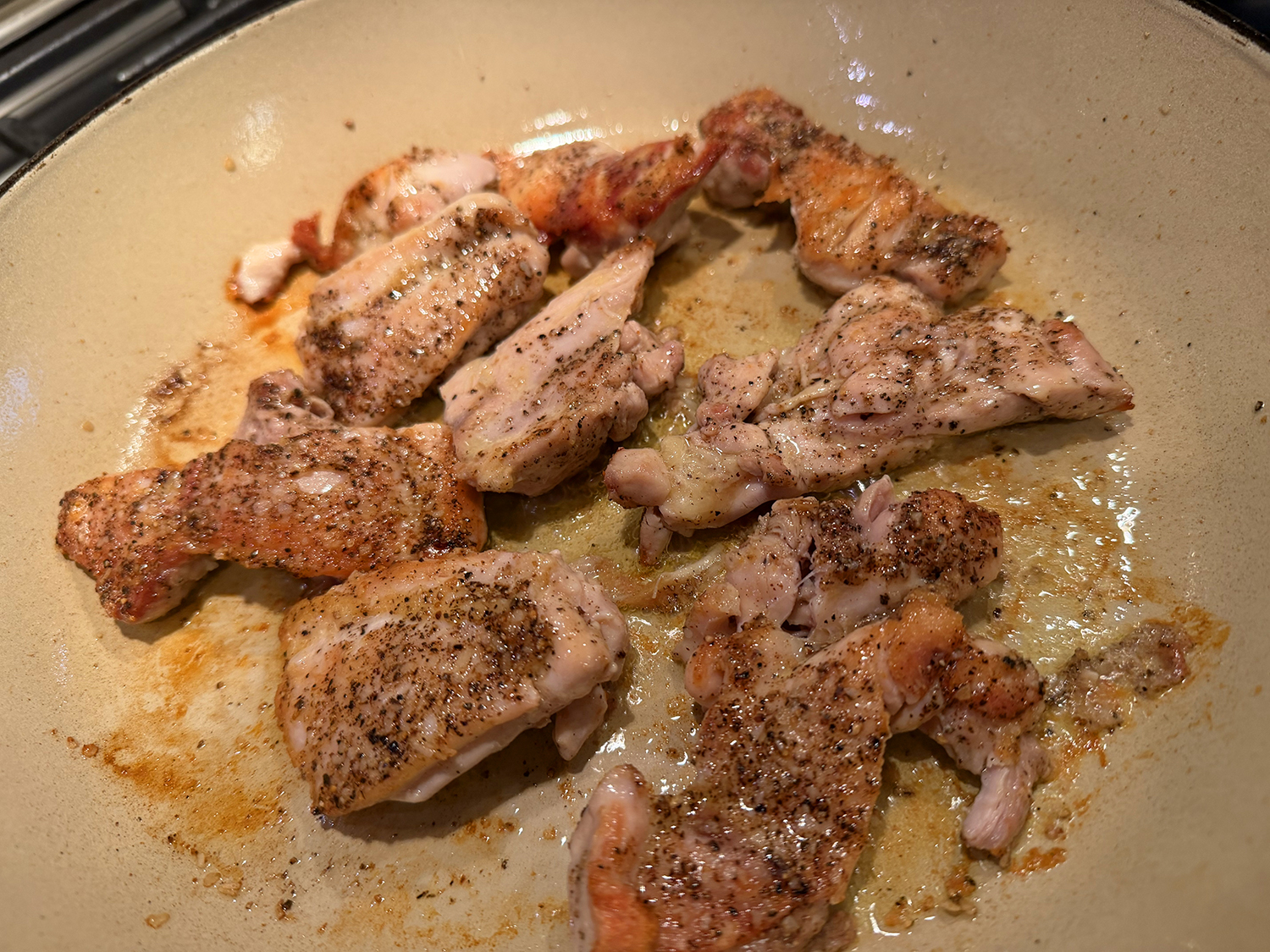
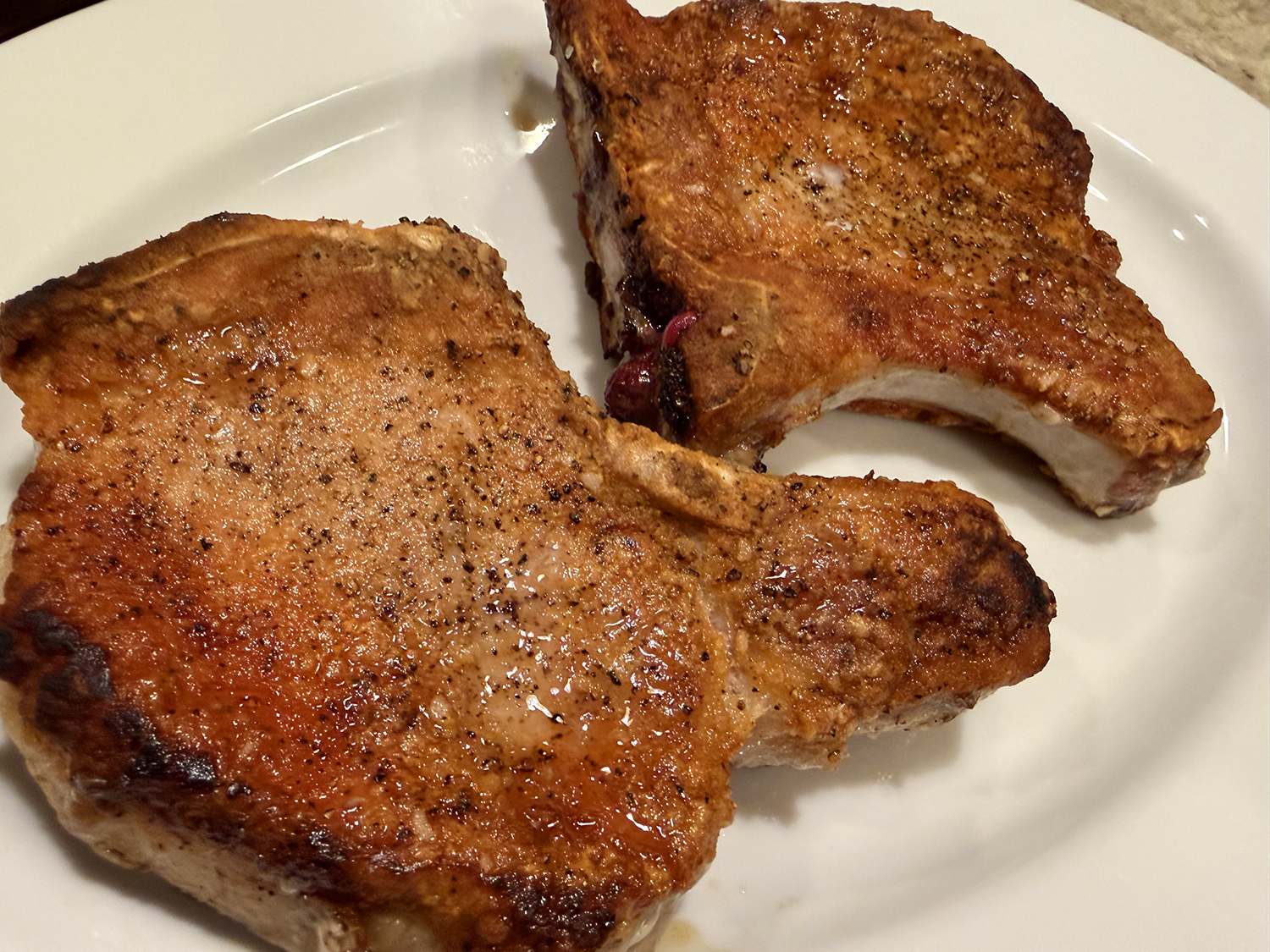
Dirty Martini Chicken Thighs

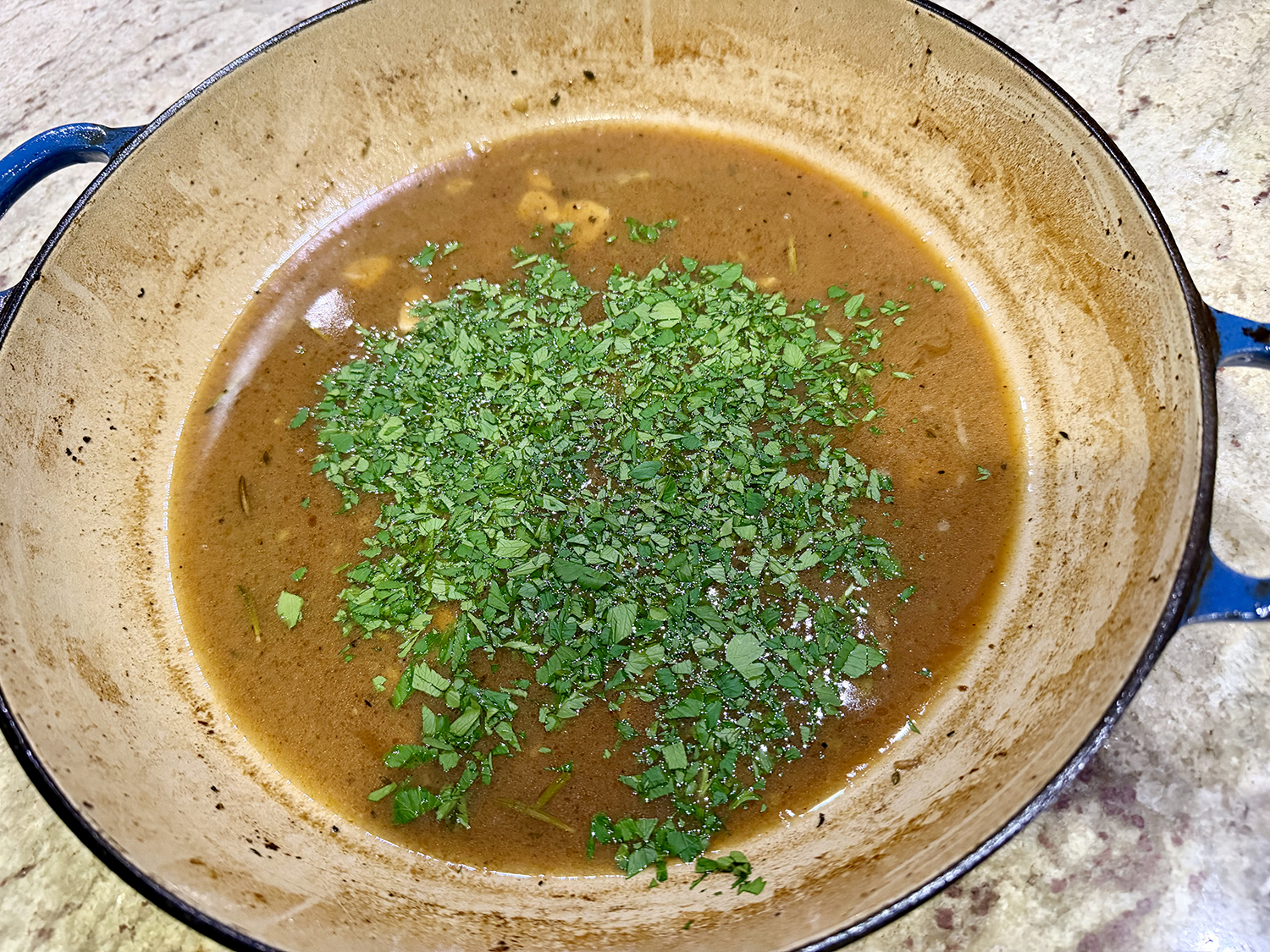
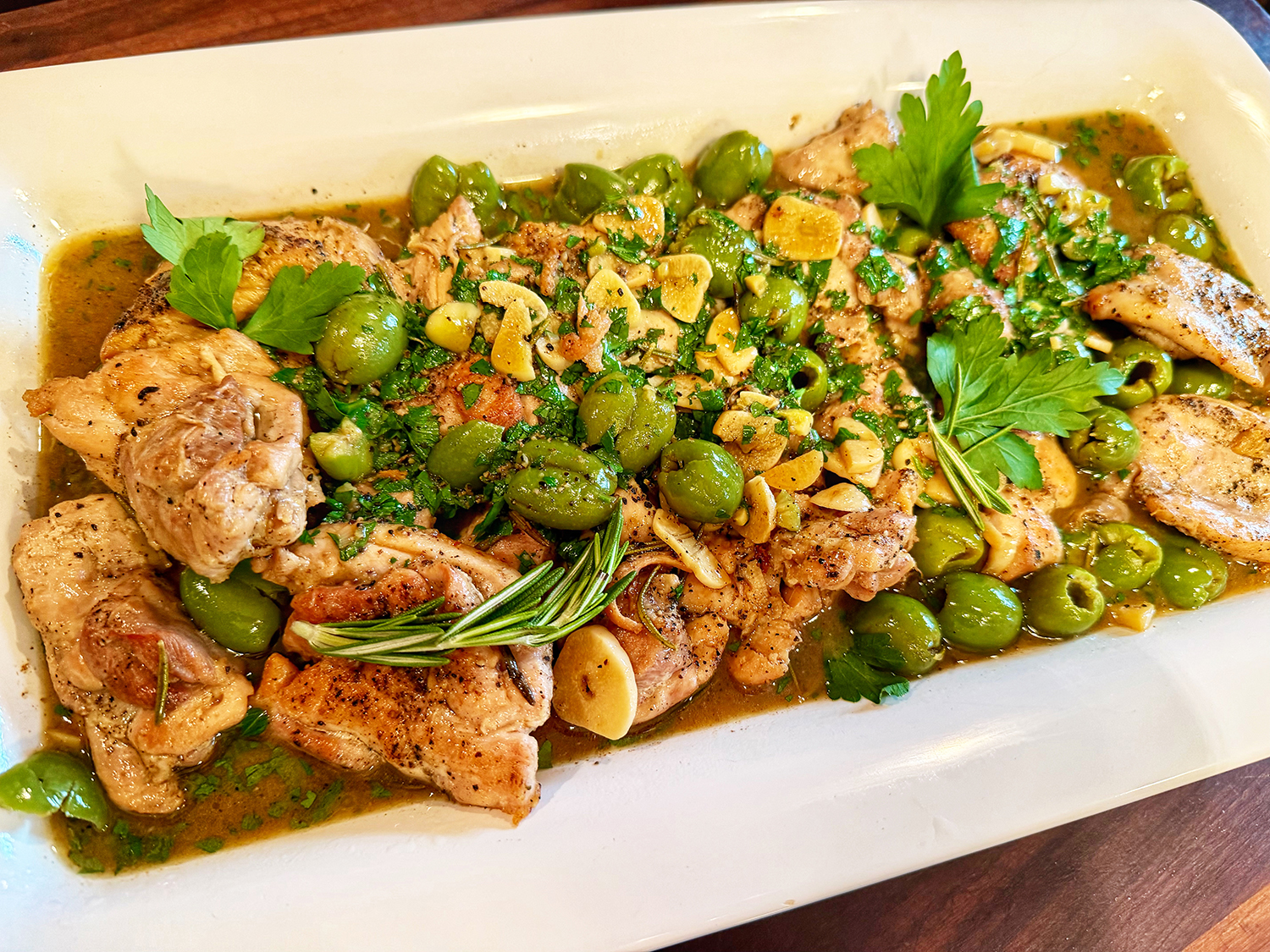
“You only live twice, so live and let die.” Channeling 007! OK, the recipe name alone got our attention! As Bon Appétit puts it “This cheeky chicken dish takes its cues from the king of cocktails: the dirty martini. A healthy pour of vodka stands in for the more typical beer or wine in this braise, lending its distinct piercing brightness and a touch of boozy heat.”

The idea of adding the same notes of the briny beverage to food might sound off-putting at first but don’t knock it until you’ve tried it. Giving your meals a dirty martini twist can actually add so much savoriness to each bite, and if you love the taste of the classic drink, why wouldn’t you want to include the unique umami flavor in your meals, too?

The spirit’s sharp top notes cut through the heaviness of the ultra-savory pan sauce, much like vinegar or lemon juice but with a bit more bite. As is the case in a classic vodka sauce for pasta, the alcohol helps the dish straddle the line between rich and vibrant. As it all simmers, why not mix up a drink for dinner too—just sayin’ you’ve got all the ingredients at the ready!

For the best flavor, Castelvetrano olives are the perfect choice here. Their firm, meaty texture means they hold up well during cooking, and their mild, buttery flavor isn’t as salty as other types. Because you are using both the olives and the brine they are packed in, it’s a small luxury worth investing in. Find them already pitted—jarred, canned, or at an olive bar—our favorite— if your grocery store has one. Unfortunately, the olive bar uses slitted spoons so we couldn’t gather the brine; and the jarred Castelvetrano olives weren’t pitted. The brand we selected worked fine.

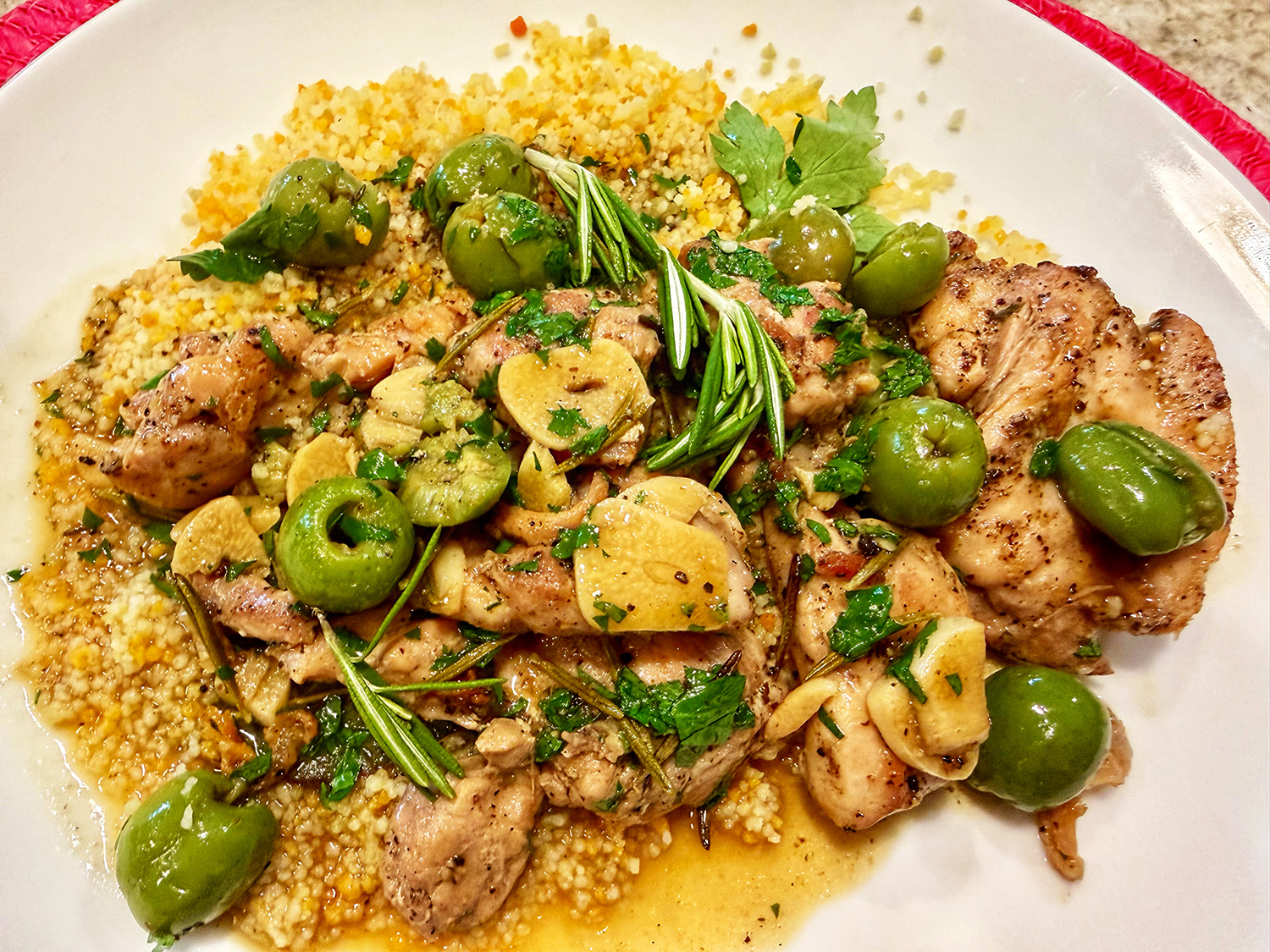
A little labor intensive but so worth the time and effort! Now, this took MUCH longer than the stated 45 minutes (and many other reviewers agreed). From start to finish, it took us more than 1 hour and 45 minutes! Reduction of the sauce needs a lot more that 9 to 12 minutes. What to serve it with? How about steamed rice, velvety mashed potatoes, or as we did, wide egg noodles.

OK, now let’s get real. The amount of chicken is considered measly in our minds. Two pounds of bone-in chicken thighs is just not enough to feed 4 adults. Plan on 6 to 8 decent-sized thighs, no matter what the weight ends up being. Regarding the olives, our jar was 6.25 ounces*, and gave us exactly 2/3 brine.

“You only live twice, so live and let die.”

Dirty Martini Chicken Thighs

  • Servings: 3-4
  • Difficulty: easy
  • Print

Ingredients

  • Skin-on, bone-in chicken thighs (6-8), about 3 lbs.
  • 1 tsp. freshly ground pepper
  • 2 tsp. Diamond Crystal or 1¼ tsp. Morton kosher salt, plus more
  • 3 Tbsp. extra-virgin olive oil
  • 3 medium shallots, thinly sliced
  • 12 garlic cloves, thinly sliced
  • 1 Tbsp. all-purpose flour
  • 1¼ cups dry vermouth
  • 1 cup low-sodium chicken broth
  • 1 5.5-oz. jar* pitted Castelvetrano or other green olives, rinsed (about 1 cup), brine reserved (about ⅔ cup)
  • ⅔ cup vodka, divided
  • 1 tsp. finely grated lemon zest
  • Parsley leaves with tender stems and lemon wedges (optional; for serving)

Directions

  1. Place a rack in middle of oven; preheat to 350°. Pat 2 lb. skin-on, bone-in chicken thighs (4–6) dry with paper towels and sprinkle all over with 1 tsp. freshly ground pepper and 2 tsp. Diamond Crystal or 1¼ tsp. Morton kosher salt.
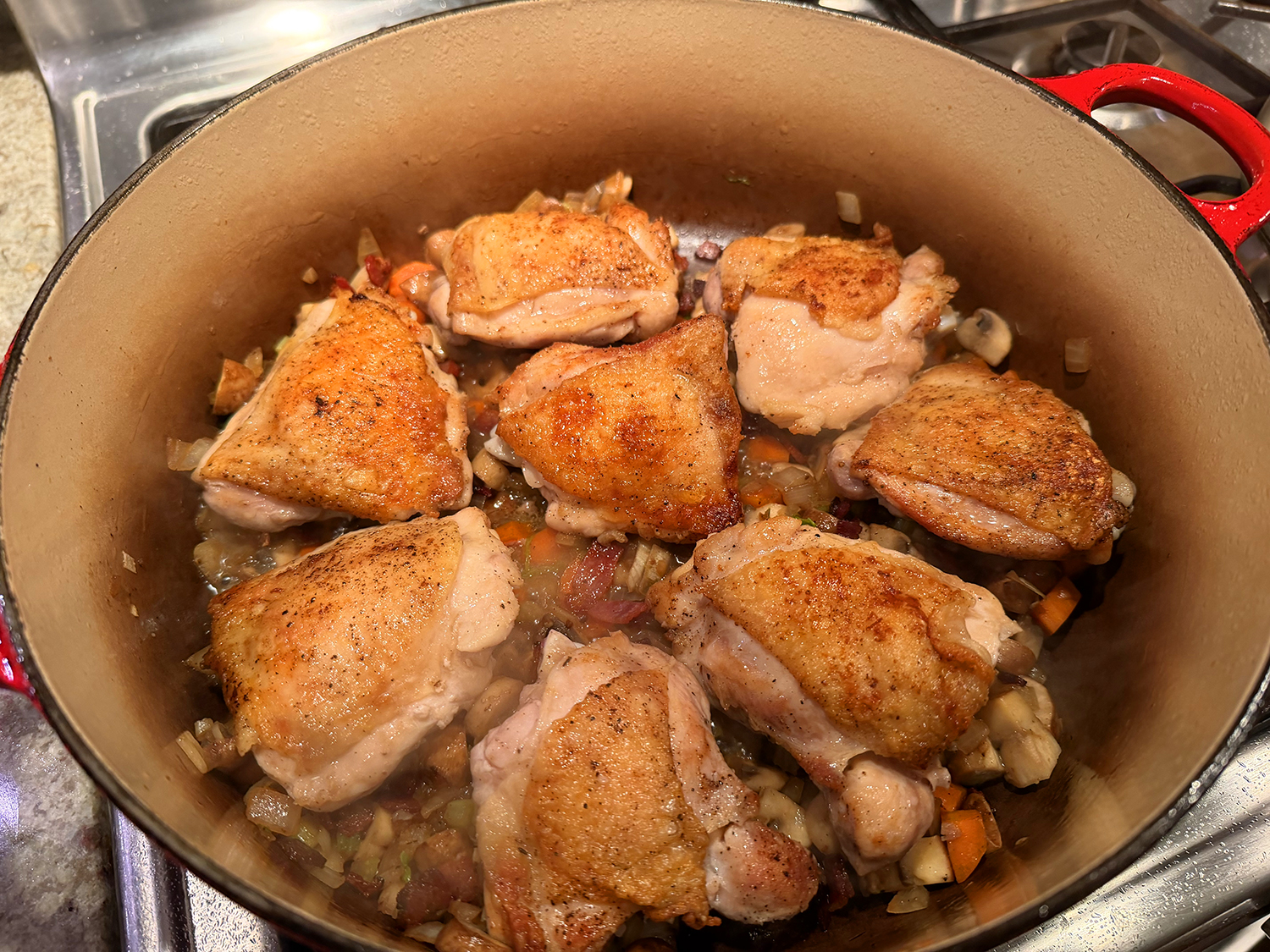
  2. Pour 3 Tbsp. extra-virgin olive oil into a cold very large high-sided ovenproof skillet or short-sided pot over medium (you want the vessel to be at least 3½-qt. capacity; if you don’t have any of the preferred options, a large Dutch oven will work). Arrange chicken thighs, skin side down, in pan and set over medium heat. Cook, undisturbed, rotating pan around on burner for even browning, until chicken is deep golden brown and releases easily from pan, 14–17 minutes. Transfer chicken thighs to a plate, arranging skin side up.
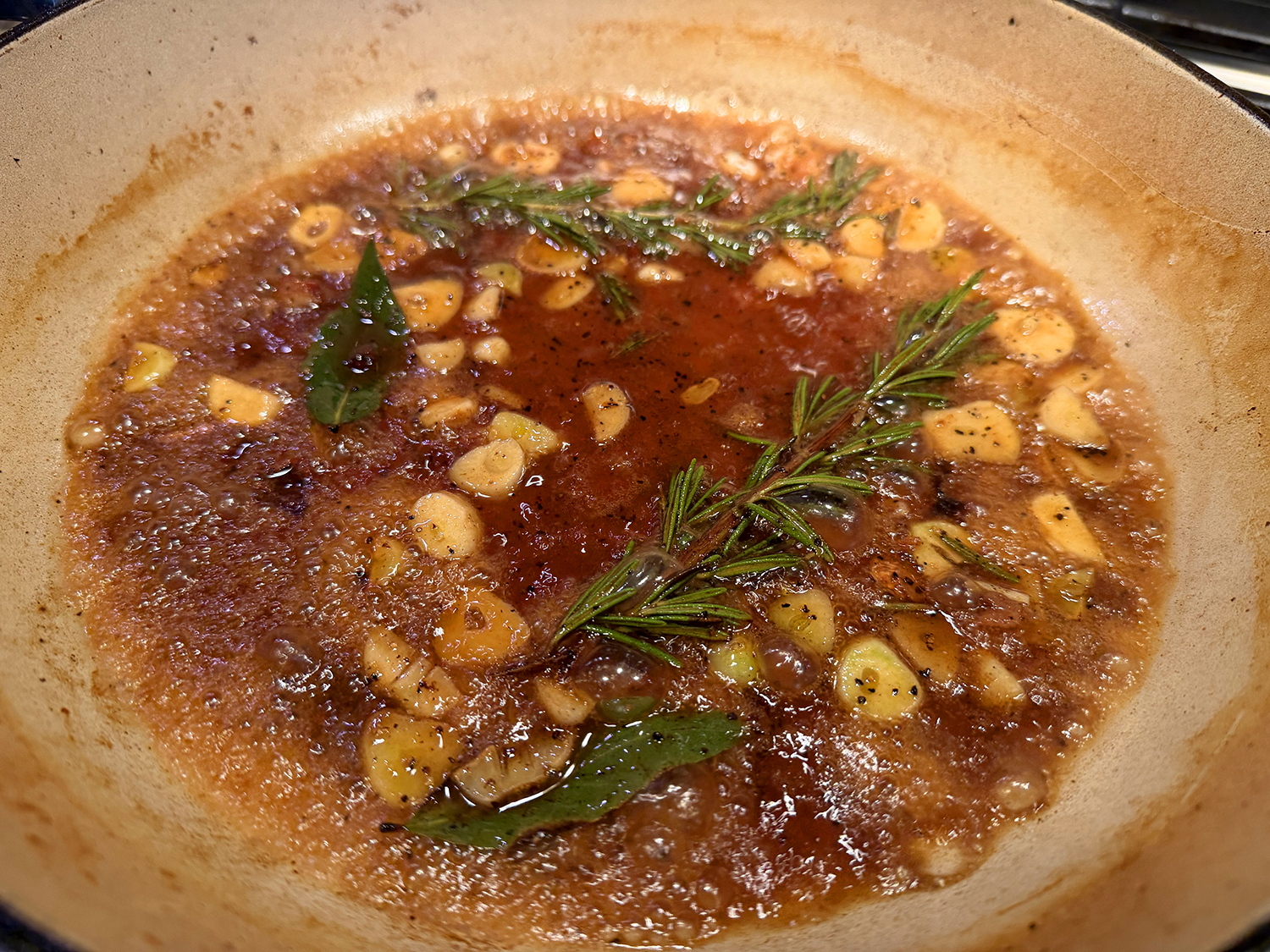
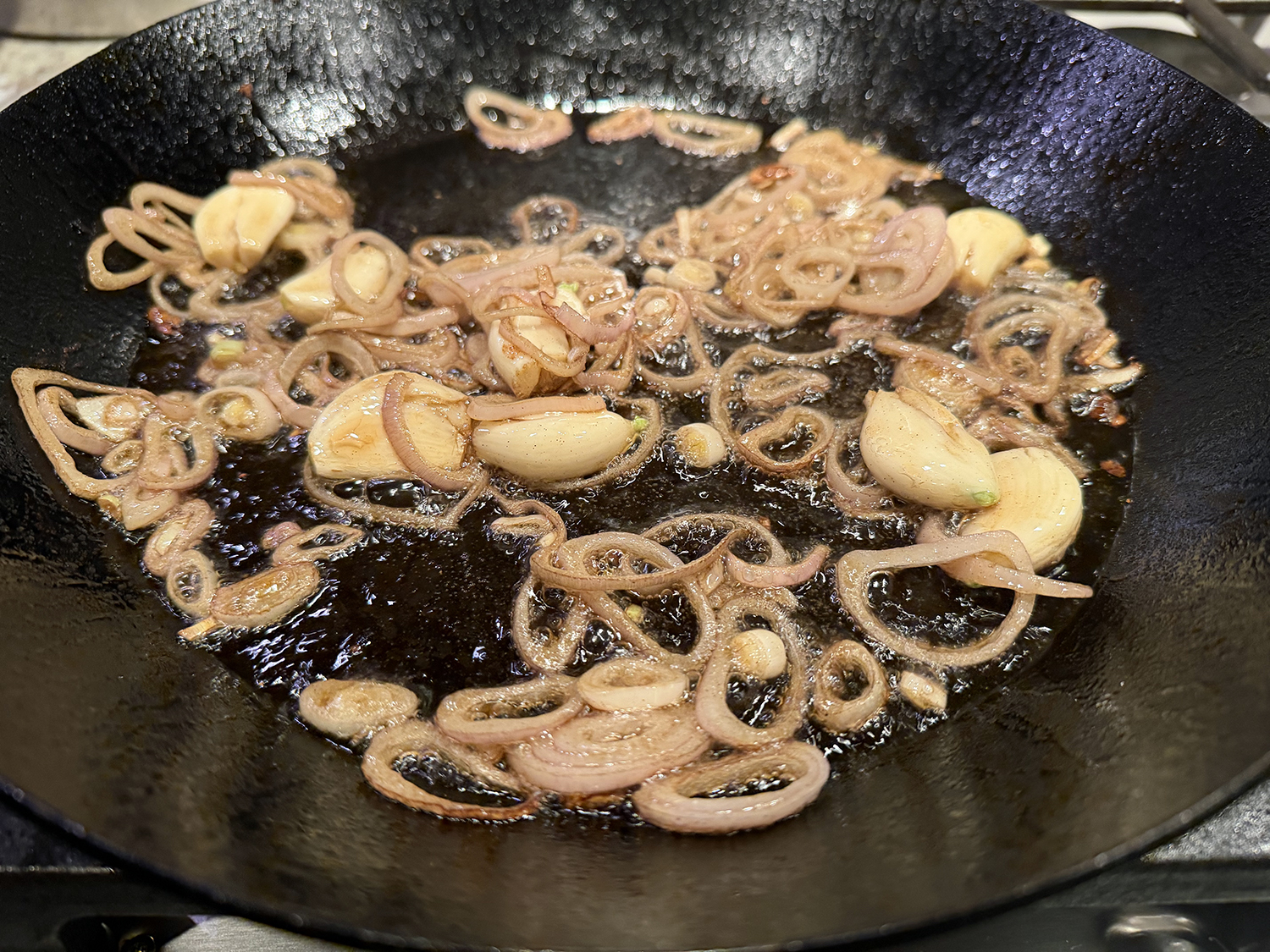
  3. Pour off all but 4 tsp. oil from pan; discard. Return pan to medium heat and cook 3 medium shallots, thinly sliced, stirring often, until just tender, about 4 minutes. Add 12 garlic cloves, thinly sliced, and cook, stirring often, until fragrant, about 3 minutes. Sprinkle in 1 Tbsp. all-purpose flour and stir to coat, then remove from heat (make sure pan is far away from the burner).
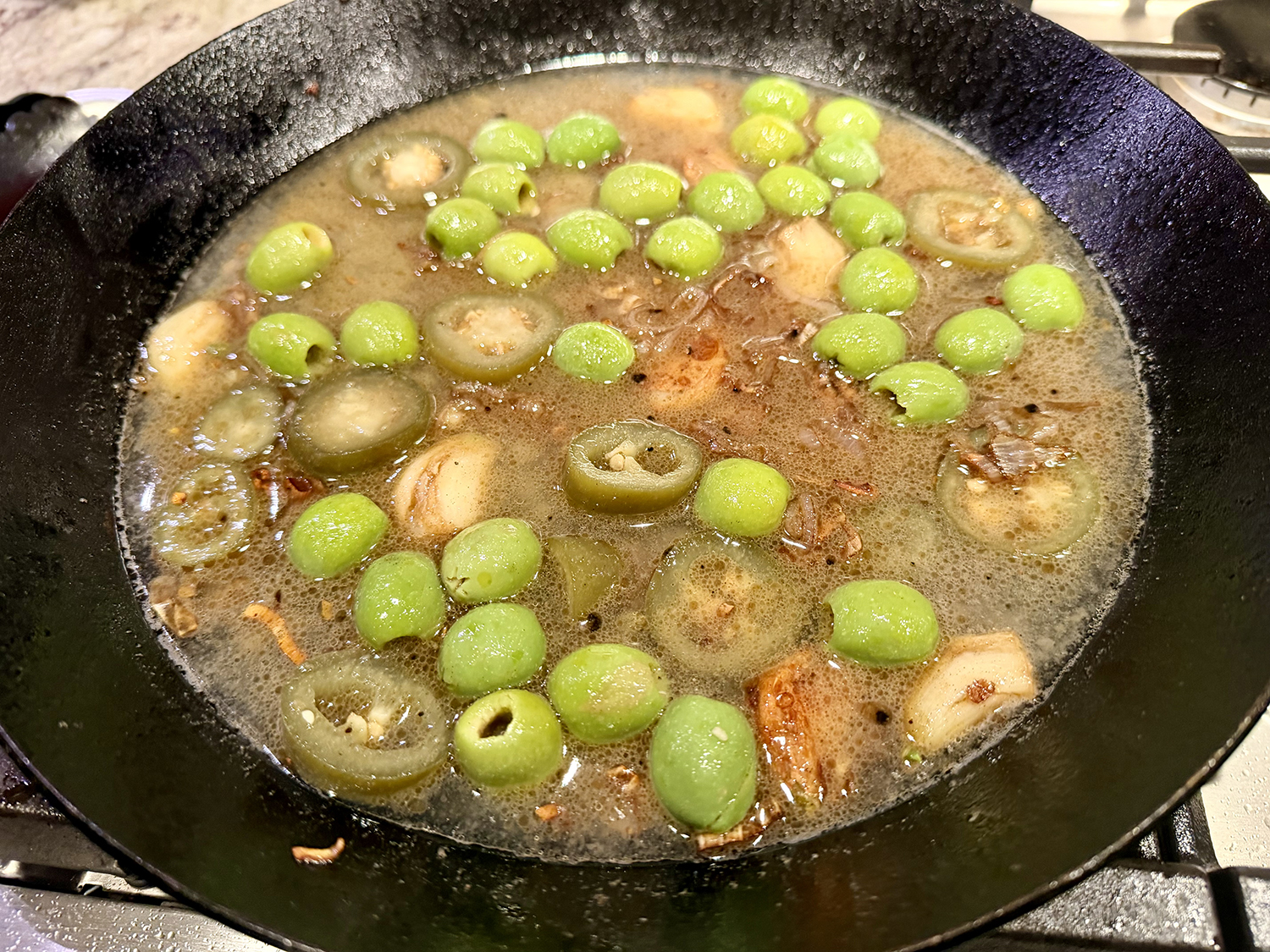
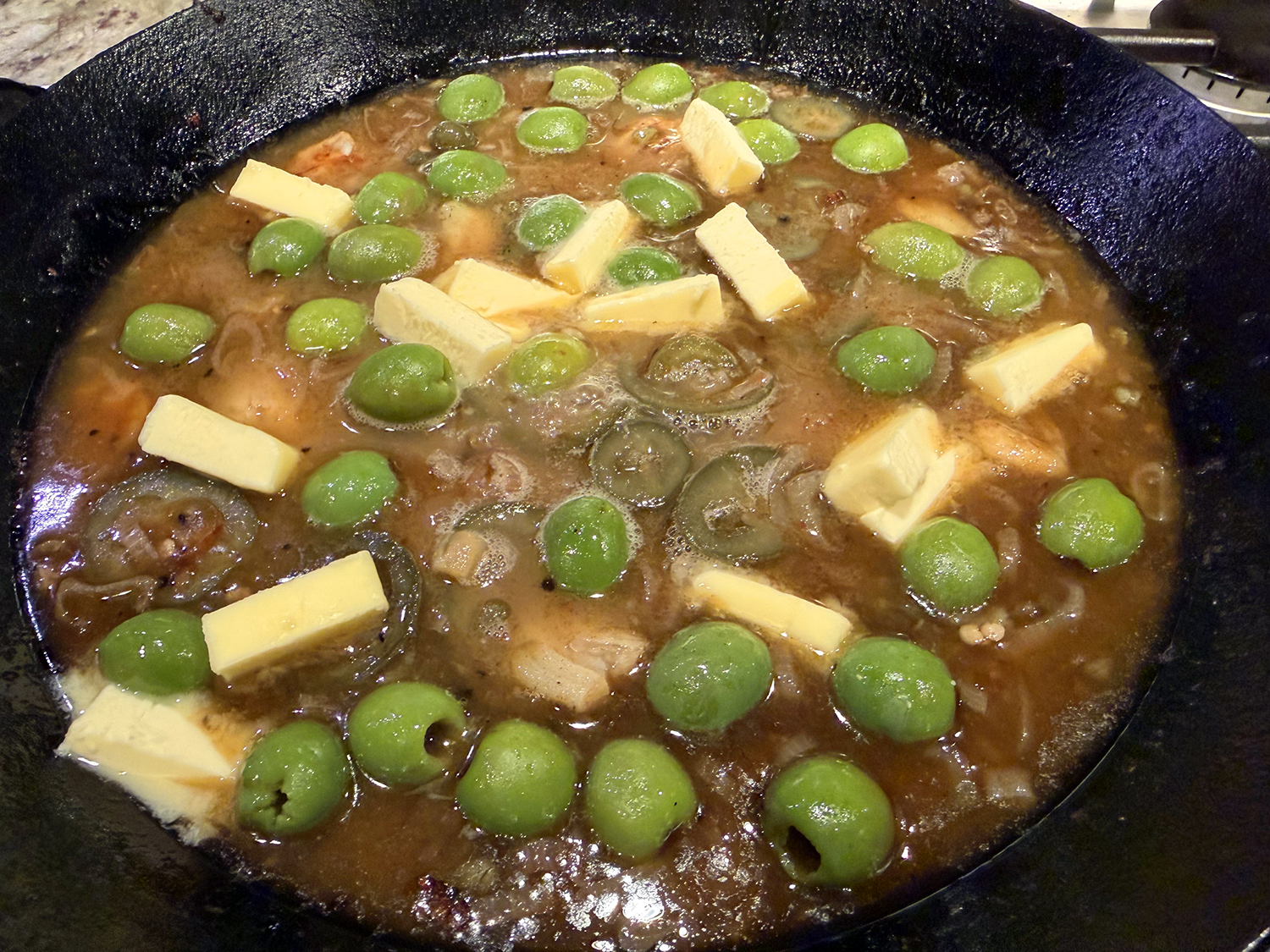
  4. Carefully pour in 1¼ cups dry vermouth, 1 cup low-sodium chicken broth, ⅔ cup olive brine, and ⅓ cup vodka. Place pan over medium-high heat and bring liquid to a simmer. Cook, stirring occasionally, until sauce is reduced by two thirds, 9–12 minutes. (It took us nearly 25 minutes to reduce it down to 2/3 the original amount.) Remove from heat; stir in remaining ⅓ cup vodka. Taste sauce and season with more salt if needed.
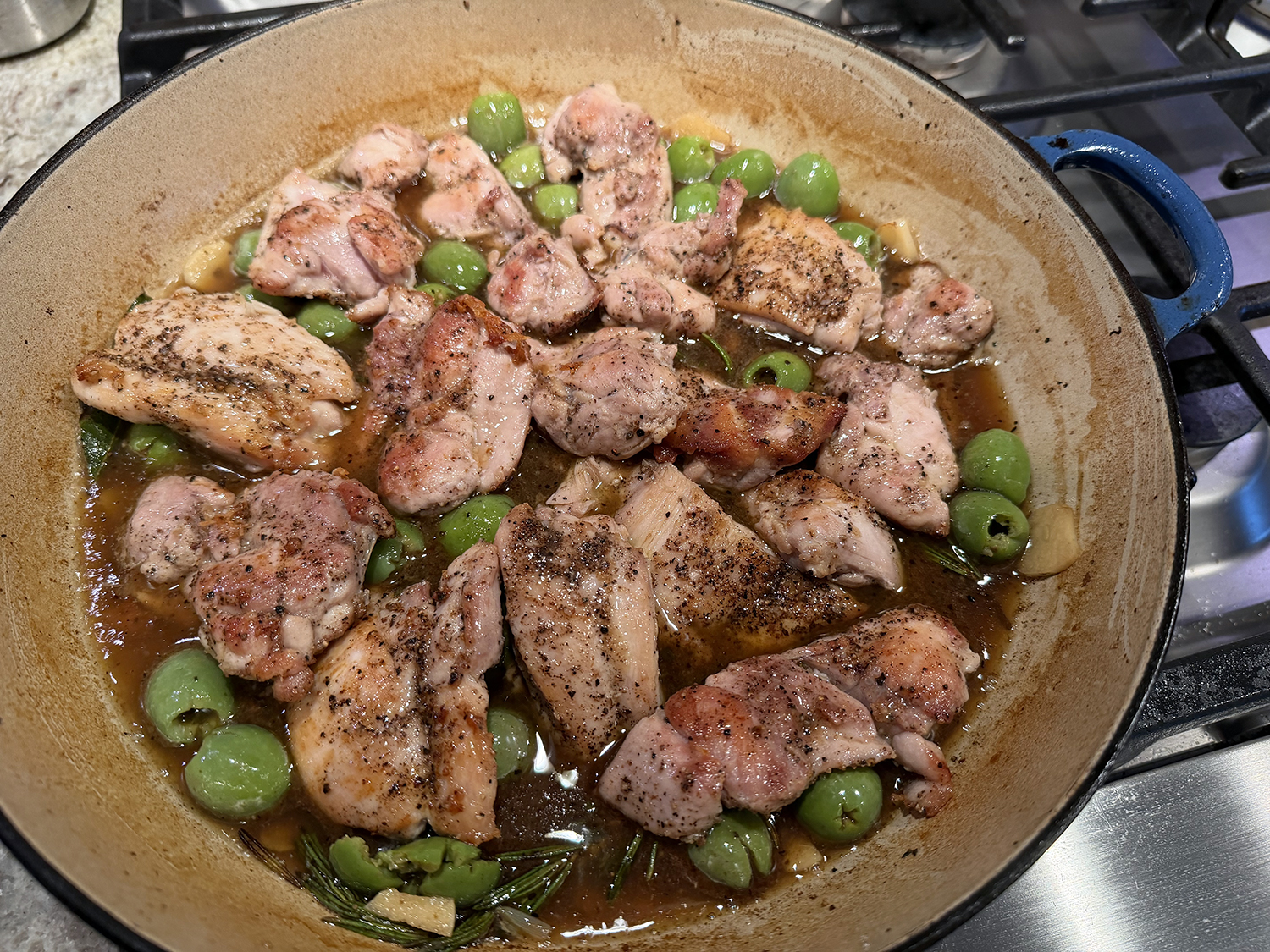
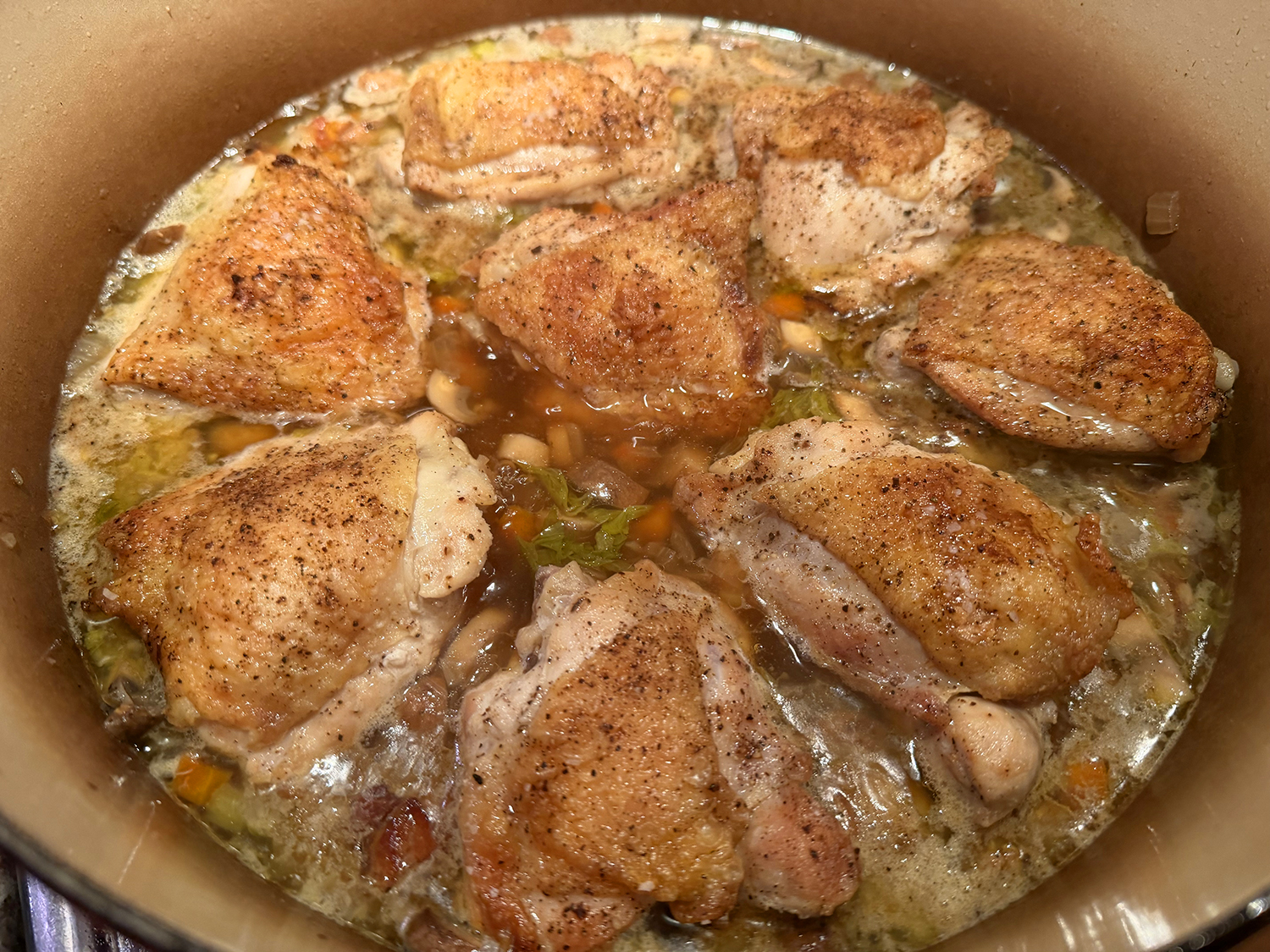
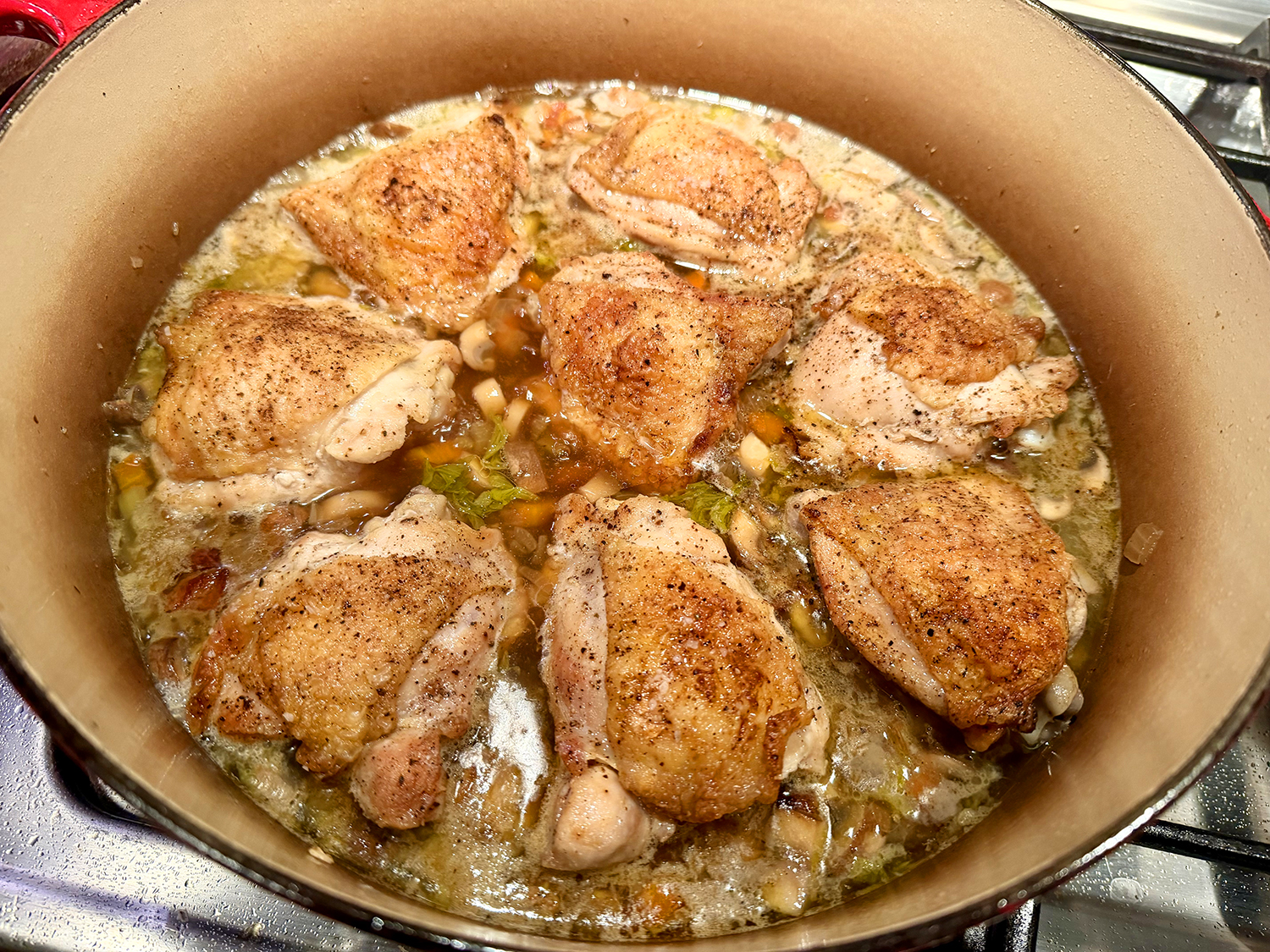
  5. Nestle chicken thighs, skin side up, into sauce. Scatter one 5.5-oz. jar pitted Castelvetrano or other green olives, rinsed (about 1 cup), over, allowing most of them to fall into the sauce. Bake, uncovered, until chicken is cooked through and an instant-read thermometer inserted into the thickest part of a thigh registers 165°, 25–35 minutes.
  6. Remove pan from heat, stir in 1 tsp. finely grated lemon zest and and scatter parsley leaves with tender stems over chicken and sauce. Serve with lemon wedges for squeezing over if desired.

http://www.lynnandruss.com

Adapted from a recipe by Jesse Szewczyk for Bon Appétit

Farro with Mushrooms and Peas

We were pleasantly surprised how much we loved this easy farro recipe with mushrooms and peas. The side dish is creamy and packed with the flavors of fresh thyme, garlic, and a little Parmesan cheese. Think of this as a farro risotto type dish, but with far less TLC than your typical risotto requires! 

It is perfect as a vegetarian main next to some fresh salad, or serve it as a side next to your favorite protein, such as we did with loin lamb chops. You can also prepare it in advance and use as lunch for several days.

Unfamiliar with farro? It is a nutty-flavored Mediterranean grain that has been in use since the time of ancient Egypt. And not only is it chockful of good-for-you nutrition — fiber, protein, vitamins, minerals and antioxidants — it is also hearty, deeply satisfying, and quite versatile.

NOTES: As a vegetarian entree or main course, this recipe will serve 4. If served as a side next to your favorite protein such as salmon, chicken, pork or lamb, it can serve 5 to 6 people.

This farro recipe will keep well for 3 to 4 days, if refrigerated properly in airtight containers. When you need to warm it up, just use a skillet over medium-low heat. It helps to add a little bit of water and stir regularly till warmed through.

Farro with Mushrooms and Peas

  • Servings: 4
  • Difficulty: easy
  • Print

Ingredients

  • Extra virgin olive oil
  • 3 green onions, chopped
  • 8 oz. baby bella mushrooms cleaned, trimmed and sliced
  • 1 cup frozen peas
  • 1 tsp. chopped garlic
  • 1 cup pearled farro
  • 1 tsp. sweet paprika
  • 2 springs fresh thyme, leaves only
  • Salt and pepper
  • 2 1/4 cups vegetable broth or chicken broth
  • 1/2 cup grated Parmesan cheese
  • 1/4 cup fresh mint leaves, chopped

Directions

  1. In a deep skillet with a lid, heat 2 tablespoons of olive oil over medium-high heat. Add green onions, mushrooms, and peas; sauté for 3-4 minutes. Add fresh garlic and stir briefly until fragrant. Now add farro, sweet paprika, thyme, and a little salt and pepper. Cook for 4-5 minutes, stirring regularly.
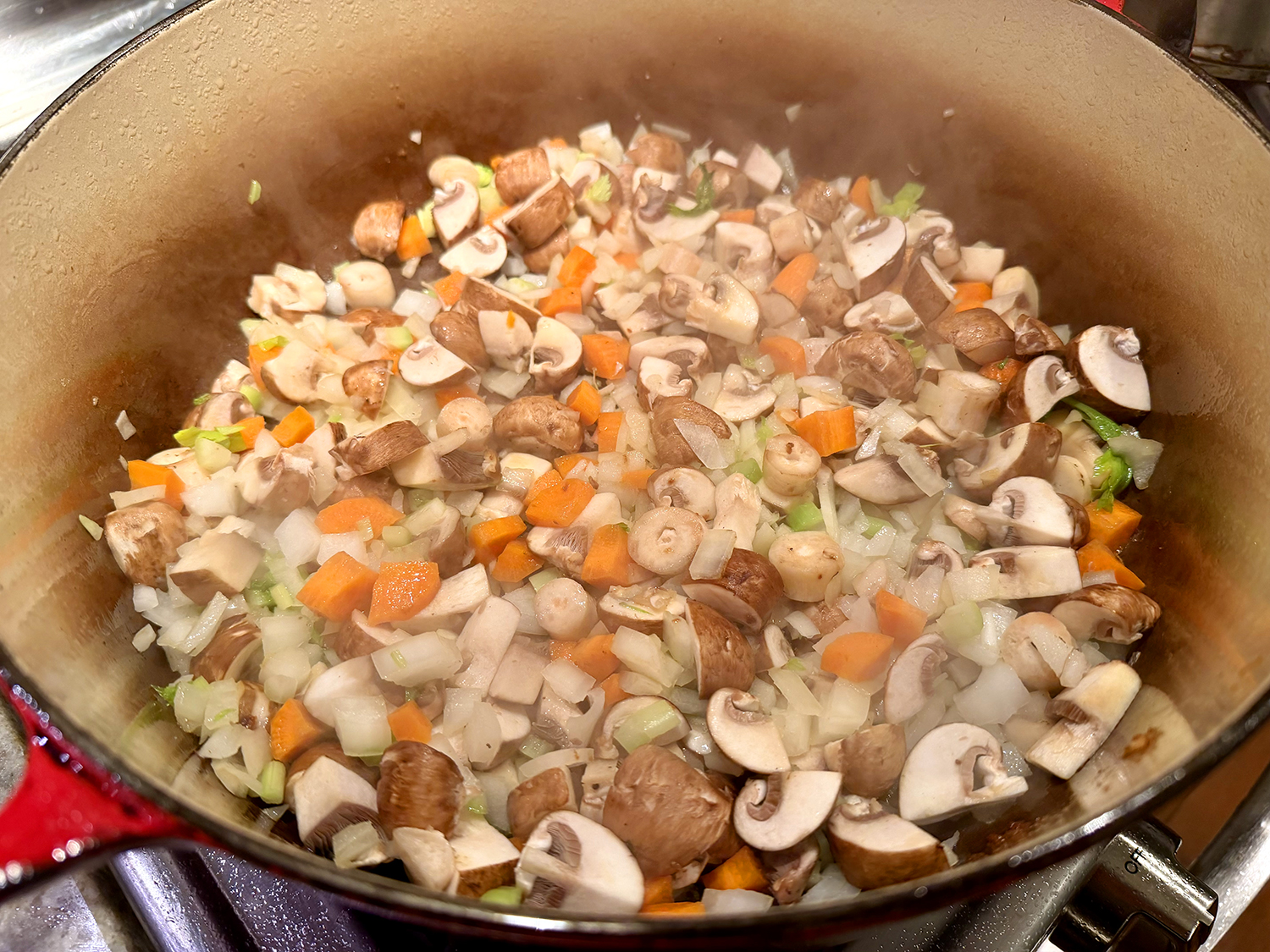
  2. Meanwhile, in a separate pot over medium-high heat, bring the broth to a boil. Add the boiling broth to the farro mixture. Bring everything to a boil, then lower the heat to medium-low. Cover and cook for 20 minutes (or according to package directions, ours took 30 minutes) until the liquid is absorbed.
  3. Remove from heat and add grated Parmesan and fresh mint leaves. Serve warm.

http://www.lynnandruss.com

Recipe by Suzy Karadsheh

Skillet-Roasted Chicken Breasts with Rustic Orange-Thyme Sauce

This low-fuss method for skillet-roasted chicken breasts produces perfectly tender, juicy white meat and flavorful pan juices that are easily transformed into a bright, buttery sauce. Bone-in, skin-on chicken breasts are used—the skin and bones make the breasts less prone to overcooking.

Salting under the skin seasons the meat directly, while piercing the skin helps it render efficiently. Spraying the chicken—not the pan—with cooking spray minimizes the fat in the skillet and, thus, grease splatters, and starting in a cold pan gives the skin time to render and brown before the meat overcooks.

Finishing the chicken in the oven brings it up to temperature gently, so the thinner portions don’t dry out. It is fast and easy to reduce the juices left in the pan, creating a rich fond for the sauce that doesn’t require boxed broth.

To cut back on knife-work, leave the garlic, zest, and herbs in large pieces and simply add more of them. Melting a generous amount of butter all at once is much faster and easier than emulsifying it piece by piece and results in a rustically elegant sauce. The meat is sliced and served it in the skillet, which keeps the chicken and sauce warm.

For the best results, buy chicken breasts of similar size. Use kitchen shears to snip off the ribs and trim the excess fatty skin from the thick ends of the breasts. (See illustration box below.)

Illustration above from Cook’s Illustrated No. 198, January, February 2026

Skillet-Roasted Chicken Breasts with Rustic Orange-Thyme Sauce

  • Servings: 4-6
  • Difficulty: moderate
  • Print

Ingredients

  • 4 (10- to 12-oz.) bone-in* split chicken breasts, ribs removed, trimmed
  • 1½ tsp. kosher salt, divided
  • Vegetable oil spray
  • 4 Tbsp. unsalted butter
  • 4 garlic cloves, smashed and peeled
  • 4 (3-inch) strips orange zest, divided, plus ¼ cup orange juice
  • 10 sprigs fresh thyme, divided
  • 1½ Tbsp. whole-grain mustard

Directions

  1. Adjust oven rack to upper-middle position and heat oven to 325 degrees. Use your fingers to carefully separate skin from 4 trimmed chicken breasts, ribs removed. Peel back skin, leaving skin attached at top and bottom of breast. 
  2. Sprinkle 1½ teaspoons kosher salt evenly over chicken (⅜ teaspoon per breast). Lay skin back in place. Using metal skewer or tip of paring knife, poke 6 to 8 holes in fat deposits in skin of each breast. Spray skin with vegetable oil spray.
  3. Place chicken skin side down in 12-inch skillet and set over medium-high heat. Cook until skin is well browned, 7 to 9 minutes. Carefully flip chicken, transfer skillet to oven, and roast until chicken registers 160 degrees, about 30 minutes. 
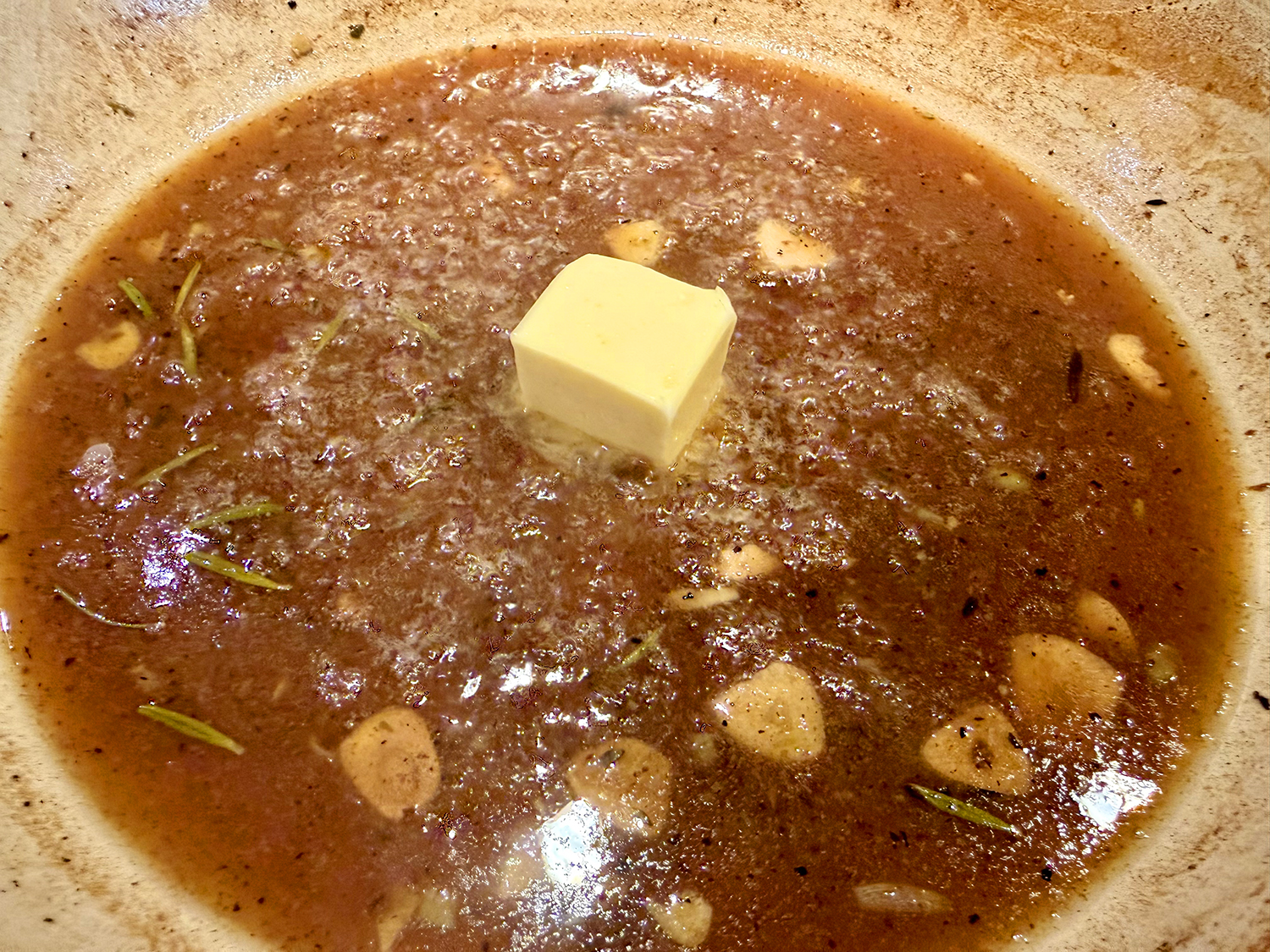
  4. Transfer chicken to plate skin side up. Place skillet over medium heat and cook, stirring occasionally, until juices in skillet form dark fond, about 1 minute. Add 4 tablespoons unsalted butter and 4 smashed and peeled garlic cloves and cook, stirring constantly, until butter is fully melted, about 1 minute. Add 2 (3-inch) strips orange zest and 5 sprigs thyme and cook, stirring constantly until fragrant, about 20 seconds. 
  5. Stir in ¼ cup orange juice and 1½ tablespoons whole-grain mustard. Off heat, add remaining 2 (3-inch) strips orange zest and 5 sprigs thyme. Season with salt and pepper to taste.
  6. Carve meat from bones and slice breasts on bias against grain into ¾-inch-thick slices. Return slices to skillet along with any accumulated juices and serve.

http://www.lynnandruss.com

Recipe by Lan Lam for Cook’s Illustrated

Italian Sausage with Lentils and Kale

Here’s a one-skillet weeknight main dish that’s versatile, uncomplicated and sure to satisfy. Cooking sausages on top of the lentil mixture infuses this meal with rich, meaty flavor.

In lieu of Italian sausage, we used what we had on hand, one pound of homemade Garlic-Wine-Romano sausage from a local meat market. While the meat was 50% shy of the total amount in the original recipe, it suited the two of us just fine. All-in-all, an easy, quick weeknight recipe with a lot of flexibility.

The bonus here is, other than a skillet and a chef’s knife, there’s not a lot of clean up!

Italian Sausage with Lentils and Kale

  • Servings: 4
  • Difficulty: easy
  • Print

Ingredients

  • 2 tsp. extra-virgin olive oil
  • 1 ½ lbs. sweet Italian sausage
  • 2 shallots, peeled, halved, and sliced thin
  • 3 garlic cloves, minced
  • 10 oz. kale, stemmed and chopped
  • ¾ cup chicken broth
  • Salt and pepper
  • 1 (15-oz.) can lentils, rinsed
  • 3 Tbsp. plain yogurt
  • 2 Tbsp. whole-grain mustard
  • 1 Tbsp. water

Directions

  1. Adjust oven rack to middle position and heat oven to 375 degrees. Heat oil in 12-inch skillet over medium-high heat until just smoking. Add sausage and cook until browned all over, about 5 minutes; transfer to plate.
  2. Reduce heat to medium, add shallots and garlic to now-empty skillet, and cook until vegetables start to brown, about 3 minutes. Add kale, broth, 1/4 teaspoon salt, and 1/4 teaspoon pepper; cover and cook until wilted, about 5 minutes.
  3. Stir in lentils. Arrange browned sausage on top of lentil mixture and transfer skillet to oven. Cook, uncovered, until sausage registers 160 degrees, about 12 minutes. Whisk yogurt, mustard, and water together in bowl; drizzle over top. Serve.

http://www.lynnandruss.com

Recipe from America’s Test Kitchen

“Cheater” Beef Biryani With Cumin Raita

Not familiar with biryani? It is a world-renowned Indian dish that takes time and practice to make but is worth every bit of the effort. It consists of long-grained rice (like basmati) flavored with fragrant spices such as saffron and layered with lamb, chicken, fish, or vegetables and a thick gravy. The dish is then covered, its lid secured, and then the biryani is cooked over a low flame. This is definitely a special occasion dish.

However, this “cheater” version of biryani allows you to enjoy the wonderfully fragrant and complex dish on a busy weeknight. The shortcut method here gives the rice a head start in a Dutch oven, while a ground beef mixture comes together quickly in a skillet.

Don’t be deterred by the long ingredient list, as most of the ingredients are dried spices that don’t require any prep work. Aromatic garlic, ginger and spices are bloomed in ghee to extract as much flavor as possible, and there’s a slight hit of heat from the chile powder (more to taste). A tangy cumin raita is a lovely finishing drizzle that brightens the meal.

NOTES: Our alterations included using the entire onion, and increasing the ground beef to 1 1/2 pounds. With these additional amounts, you could get up to six servings. And next time we’ll increase the Kashmiri chile powder or cayenne because we could barely detect it. The original recipe indicates it is a total time of 30 minutes, but it took us at least 45 minutes to prep and cook.

Cheater Beef Biryani With Cumin Raita

  • Servings: 4
  • Difficulty: easy
  • Print

Ingredients

  • 1½ cups basmati rice, rinsed
  • 5 cardamom pods
  • 1 (3-inch) cinnamon stick
  • 2 whole cloves
  • 2 cups low-sodium chicken broth
  • ½ tsp. Kosher salt and pepper
  • 3 Tbsp. ghee
  • 1 large white onion, thinly sliced
  • 1 Tbsp. tomato paste 
  • 3 garlic cloves, minced
  • 1 Tbsp. minced fresh ginger
  • 2 tsp. garam masala
  • ½ tsp. ground Kashmiri chile powder or ¼ teaspoon cayenne (more to taste)
  • ¼ tsp. ground fennel
  • ¼ tsp. ground turmeric
  • 1 star anise
  • ½ tsp. cumin seeds, divided
  • 1½ lbs. ground beef (preferably 20 percent fat)
  • ¾ cup Greek-style plain yogurt, divided
  • ¼ cup whole milk
  • ½ cup coarsely chopped cilantro leaves and tender stems, divided

Directions

  1. In a large Dutch oven, combine rice, cardamom, cinnamon, cloves, broth and ½ teaspoon of salt over medium-high heat; cover and bring to a boil. Once it boils, reduce heat to low and cook for 10 minutes.
  2. Meanwhile, heat 2 tablespoons of the ghee in a 12-inch nonstick skillet over medium. Add onion, season with salt and pepper and cook, stirring occasionally, until softened, 2 minutes. Add tomato paste and cook, stirring, until fragrant and well blended, 2 minutes.
  3. Push onion mixture to one side of the skillet and melt the remaining 1 tablespoon ghee in the empty side. To the melted ghee, add garlic, ginger, garam masala, chile powder, fennel, turmeric, star anise and ¼ teaspoon of the cumin; stir until well blended, 30 seconds.
  4. Mix the spices into the onion mixture until well combined, then add beef and season with salt and pepper. Cook, stirring and breaking up the meat into small pieces, until no longer pink, about 3 minutes (it will finish cooking with the rice). Turn off heat and stir in ¼ cup of the yogurt until well incorporated.
  5. Drizzle milk evenly over the rice, then add the beef mixture on top in an even layer. Scatter over half of the cilantro, cover and cook until the beef is tender and rice is cooked through, 8 minutes longer.
  6. Meanwhile in a small bowl, combine the remaining ½ cup yogurt, ¼ teaspoon cumin and 2 tablespoons of water and season with salt and pepper. Mix well.
  7. Gently fluff the rice with a fork and discard star anise and any other visible whole spices. Divide biryani among 4 bowls and garnish with the remaining cilantro. Serve warm, with the cumin raita on the side.

http://www.lynnandruss.com

Adapted from a recipe by Kay Chun for NYTimes Cooking

Lamb Shanks Braised in Red Wine with Herbes de Provence

This uncomplicated America’s Test Kitchen recipe is truly a company-worthy, memorable main dish. Braising lamb shanks turns a richly flavored but tough cut of meat meltingly tender. However, the high fat content of lamb can all too often lead to a greasy sauce—not a pleasant memory.

To avoid this pitfall, trim the shanks well and then brown them before adding liquid to get a head start on rendering their fat. Also, defat the braising liquid after the shanks have cooked. There is more liquid than is called for in many braises to guarantee that plenty remains in the pot despite about an hour of uncovered cooking.

For starters, we only purchased 4 lamb shanks since it was going to be just the two of us, keeping the quantity of most everything at the same amount — except the carrots, which doubled. And we roasted some baby potatoes seasoned with herbes de Provence separately. We were thrilled to get another meal out of the braise because it was beyond delicious!

NOTES: Côtes du Rhône works particularly well here. If you can’t locate herbes de Provence, substitute a mixture of one teaspoon each of dried thyme, rosemary, and marjoram. If you’re using smaller shanks than the ones called for in this recipe, reduce the braising time.

Lamb Shanks Braised in Red Wine with Herbes de Provence

  • Servings: 6
  • Difficulty: easy
  • Print

Ingredients

  • 6 (12- to 16-oz.) lamb shanks, trimmed
  • 1 tsp. plus a pinch table salt
  • 2 Tbsp. vegetable oil, divided
  • 3 carrots, peeled and cut crosswise into 2-inch pieces
  • 2 onions, sliced thick
  • 2 celery ribs, cut into 2-inch pieces
  • 2 Tbsp. tomato paste
  • 4 garlic cloves, minced
  • 2 Tbsp. herbes de Provence
  • 2 cups dry red wine
  • 3 cups chicken broth
  • Ground black pepper

Directions

  1. Adjust oven rack to middle position and heat oven to 350 degrees. Pat lamb shanks dry with paper towels and sprinkle with 1 teaspoon salt. Heat 1 tablespoon oil in Dutch oven over medium- high heat until just smoking. Brown 3 shanks on all sides, 7 to 10 minutes. Transfer shanks to large plate and repeat with remaining 1 tablespoon oil and remaining 3 shanks.
  2. Pour off all but 2 tablespoons fat from pot. Add carrots, onions, celery, tomato paste, garlic, herbes de Provence, and remaining pinch salt and cook until vegetables just begin to soften, 3 to 4 minutes. Stir in wine, then broth, scraping up any browned bits; bring to simmer. Nestle shanks, along with any accumulated juices, into pot.
  3. Return to simmer and cover; transfer pot to oven. Cook for 1½ hours. Uncover and continue to cook until tops of shanks are browned, about 30 minutes. Flip shanks and continue to cook until remaining sides are browned and fork slips easily in and out of shanks, 15 to 30 minutes longer.
  4. Remove pot from oven and let rest for 15 minutes. Using tongs, transfer shanks and vegetables to large plate and tent with aluminum foil. Skim fat from braising liquid and season liquid with salt and pepper to taste. Return shanks to braising liquid to warm through before serving.

http://www.lynnandruss.com

Recipe from America’s Test Kitchen