All posts by LynnHoll

Unknown's avatar

About LynnHoll

I have been an artist and designer all my life incorporating graphic design for websites, gardens, publications, fabrics, interior design and cooking. I am now retired from my professional job, but still create artistic visions in all forms on a daily basis.

Sautéed Celery and Leeks with Mushrooms

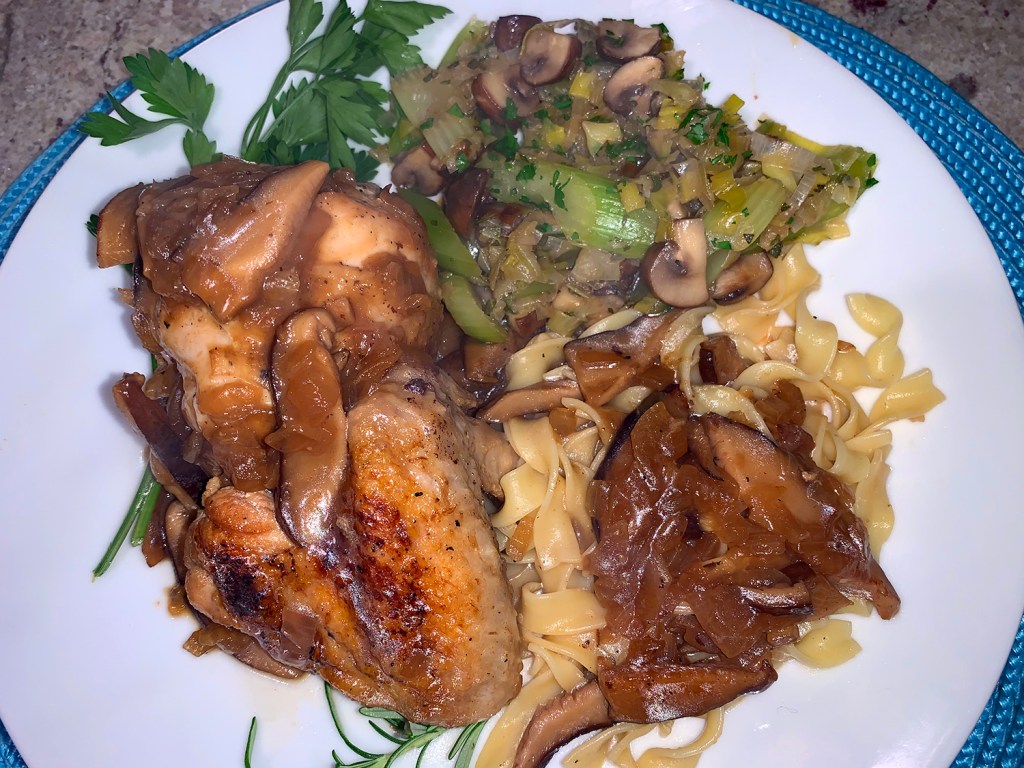
This savory herb-flecked sauté tastes just like stuffing, but without the bread—goodbye carbs! It embraces celery’s crisp texture and distinctive flavor. Found in a decade-old issue of Fine Cooking Magazine, it intrigued us enough to include as a side dish for our Smothered Chicken with Bourbon and Miso.

One rarely thinks of cooked celery as the star of a side dish. It typically takes a back burner as a mix-in to salads, additive to soups, or an accompaniment to hot wings. But here it shines and surprises. We have now added the recipe to our favorites and plan to serve to guests, especially those who are vegetarian.
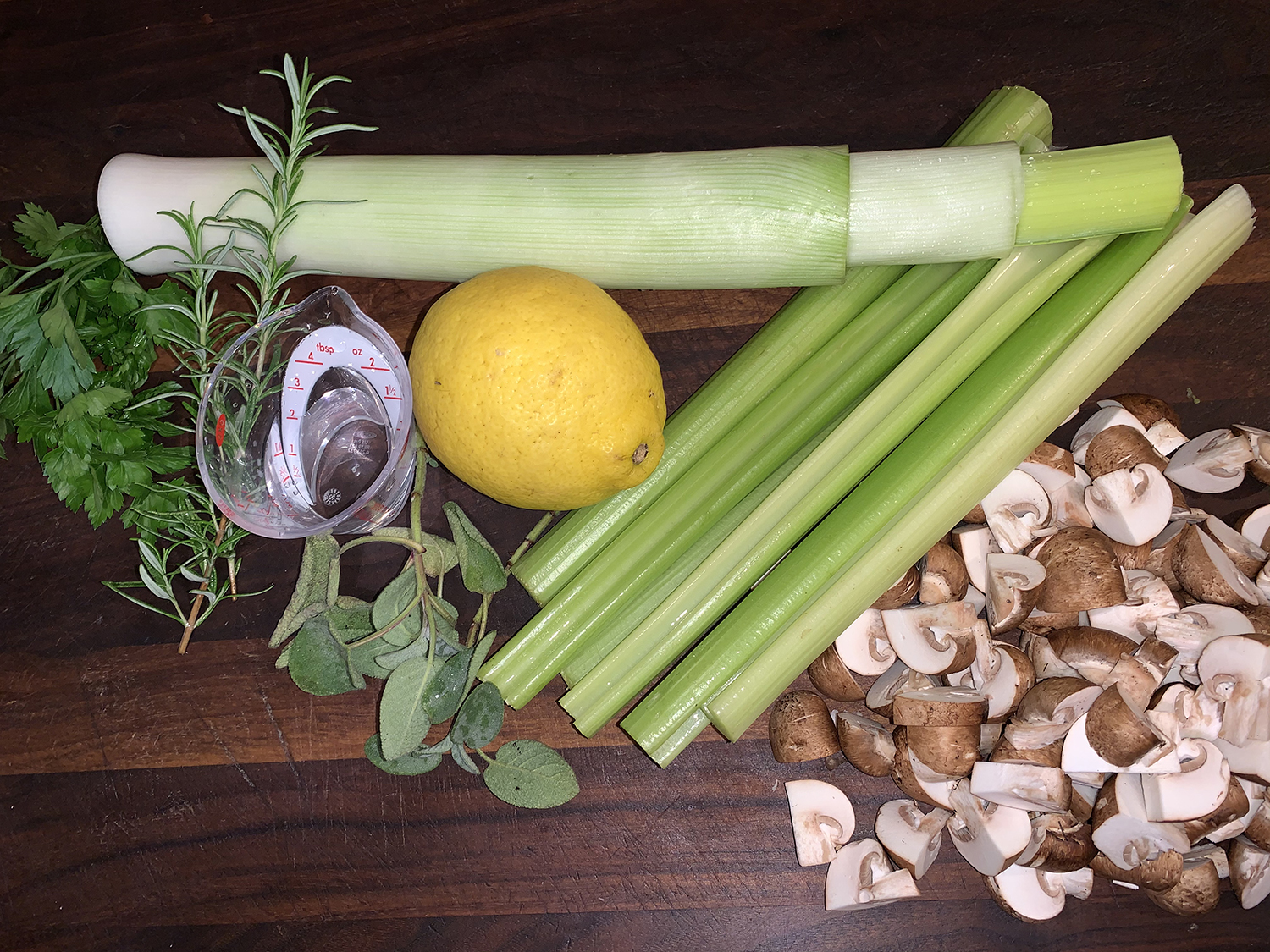
Sautéed Celery and Leeks with Mushrooms

  • Servings: 3-4
  • Difficulty: easy
  • Print

Ingredients

  • 2 Tbsp. extra-virgin olive oil
  • 1 medium leek, rinsed, halved lengthwise and thinly sliced crosswise (white and light green parts only)
  • 6 stalks celery, cut in a diagonal in 1/2″ slices
  • Kosher salt
  • 8 oz. cremini mushrooms, quartered
  • 1 Tbsp. fresh lemon juice
  • 1 1/2 tsp. finely chopped fresh rosemary
  • 1 tsp. chopped fresh sage
  • 2 Tbsp. chopped fresh flat-leaf parsley
  • Freshly ground black pepper
  • 2 Tbsp. chicken broth or water

Directions

  1. Heat a 12-inch skillet over medium heat. Add the oil, leek, and a pinch of salt; cook stirring often, until just tender, 3 to 4 minutes.
  2. Add the mushrooms and another pinch of salt and cook until the mushrooms are lightly browned and tender, 4 to 5 minutes.
  3. Add the celery and a pinch of salt and cook until crisp-tender, 5 to 8 minutes.
  4. With a wooden spoon, stir in the lemon juice and scrape up any browned bits from the bottom of the pan.
  5. Stir in the rosemary and sage and cook until fragrant, about 1 minute.
  6. Stir in the parsley and season to taste with salt and pepper. Transfer the mixture to a bowl.
  7. Return the pan to medium heat, add the chicken broth or water, and scrape up any remaining bits. Let this liquid reduce by half and then pour over the celery.
  8. Serve immediately.

http://www.lynnandruss.com

Compliments of Melissa Pellegrino

Miso Loved this Savory Dish!

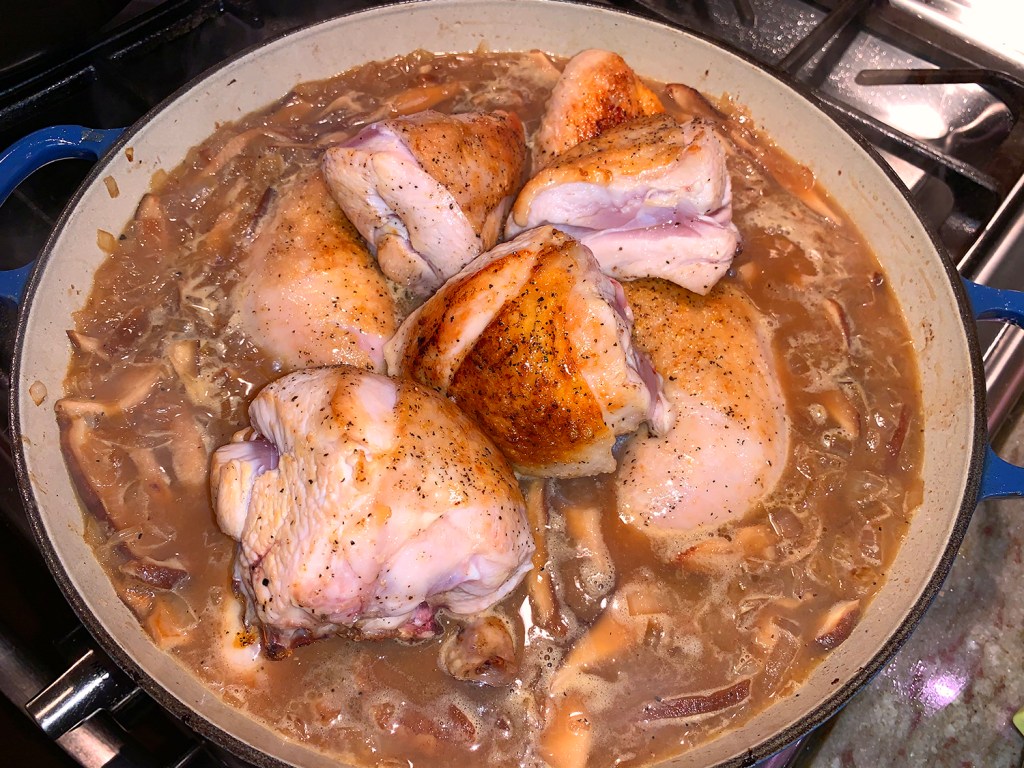
We saw this Smothered Chicken with Bourbon and Miso recipe in our latest Milk Street magazine and knew it had to get on our short list. It is their adaptation of a recipe from the cookbook “Smoke and Pickles” by Edward Lee.

As described by Milk Street, “It’s a fantastic Asian-inflected spin on an all-American favorite: smothered pork chops. A combination of umami-rich ingredients, woodsy bourbon and sweet-tangy orange juice produces a silky, deeply flavored mushroom sauce for smothering tender bone-in chicken legs.”

And since I am not a fan of chicken legs, we decided to buy a whole 3 1/2-pound chicken. This option gives us the extra “body parts” for making homemade stock later on. Plus, I get my preferred white meat.

Don’t worry if you have the wrong variety of miso. Dark miso, such as red (aka) or barley (mugi) miso is preferred, but white (shiro) miso is easier to find and more versatile. The sauce will be a little sweeter and milder, but still delicious.

Smothering typically refers to braising meats in gravy, a process that produces tender meat and a rich sauce to ladle over it—but it is time-intensive. Here, corners are cut to streamline the technique but keep the savory flavor. Chief among them are the bourbon whisky, dark soy sauce and shiitake mushrooms.

Bourbon is a wonderful ingredient to add when you want a smoky, aged sweetness with a bit of leathery caramel flavor.

Edward Lee

The result? A rich, velvety umami-packed chicken that offers the savory flavors of a long braise in a fraction of the time. Works for us!

If you are interested in the unusual but fantastic side dish, check out this recipe for Sautéed Celery with Leeks and Mushrooms.

Smothered Chicken with Bourbon and Miso

  • Servings: 4
  • Difficulty: easy
  • Print

Ingredients

  • 2 Tbsp. soy sauce
  • 1 Tbsp. dark miso, such as red or barley miso (see note)
  • ½ cup orange juice
  • 4 bone-in, skin-on chicken leg quarters (about 3 pounds total), patted dry
  • Kosher salt and ground black pepper
  • 2 Tbsp. grapeseed or other neutral oil
  • 2 medium yellow onions, chopped
  • 12 oz. shiitake mushrooms, stemmed and thinly sliced
  • 4 large garlic cloves, smashed and peeled
  • ⅓ cup bourbon

Directions

  1. In a small bowl, whisk together the soy sauce and miso until smooth. Whisk in the orange juice and set aside.
  2. Season the chicken on both sides with salt and pepper. In a large Dutch oven over medium-high, heat the oil until shimmering. Add the chicken skin down and cook undisturbed until well browned, about 5 minutes. (You may have to do this in two batches.)
  3. Flip and cook until the second sides are well browned, another 5 minutes. Transfer to a large plate, then pour off and discard all but 2 tablespoons fat from the pot.
  4. Return the pot to medium-high. Add the onions, mushrooms and garlic, then cook, stirring occasionally, until the vegetables are softened and beginning to brown, about 5 minutes.
  5. Add the bourbon and cook, scraping up the browned bits, until most of the liquid has evaporated, about 30 seconds.
  6. Pour in the miso mixture and 2 cups water, then bring to a simmer. Return the chicken skin up to the pot and pour in the accumulated juices.
  7. Cover, reduce to medium-low and cook, adjusting the heat as needed to maintain a gentle simmer, until the thickest parts of the legs reach 175°F, 20 to 25 minutes.
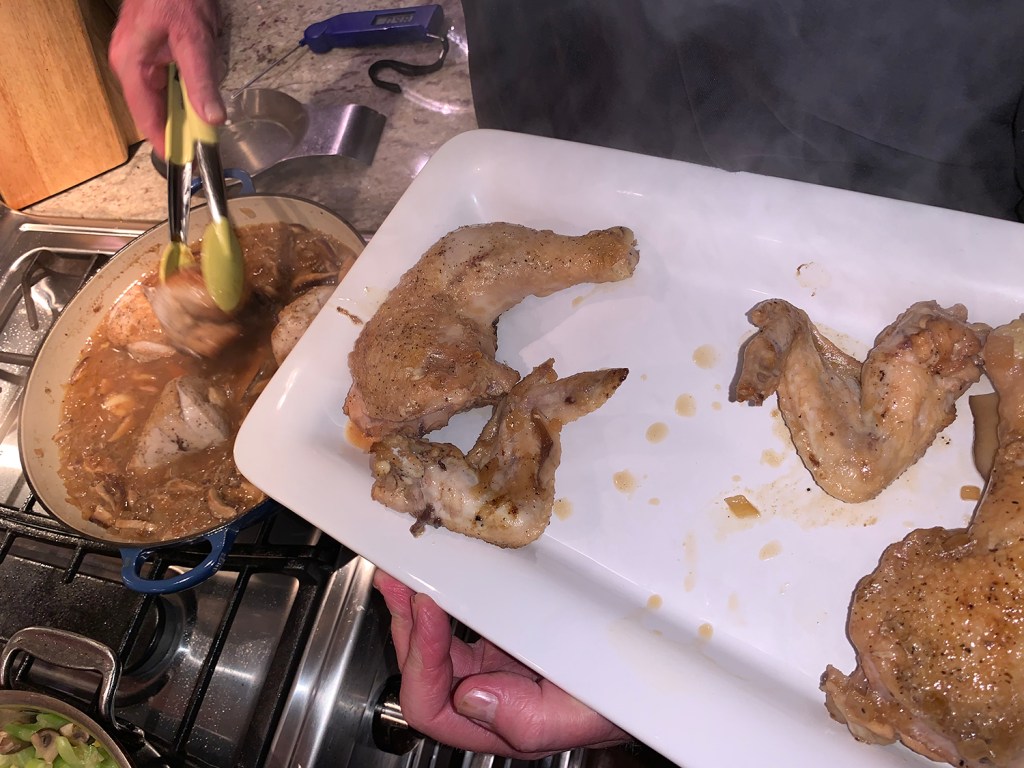
  8. Using tongs, transfer the chicken to a serving dish. Bring the sauce to a boil over high and cook, uncovered and stirring occasionally, until the sauce has thickened to a gravy consistency, 7 to 9 minutes.
  9. Taste and season with salt and pepper, then spoon over the chicken.

http://www.lynnandruss.com

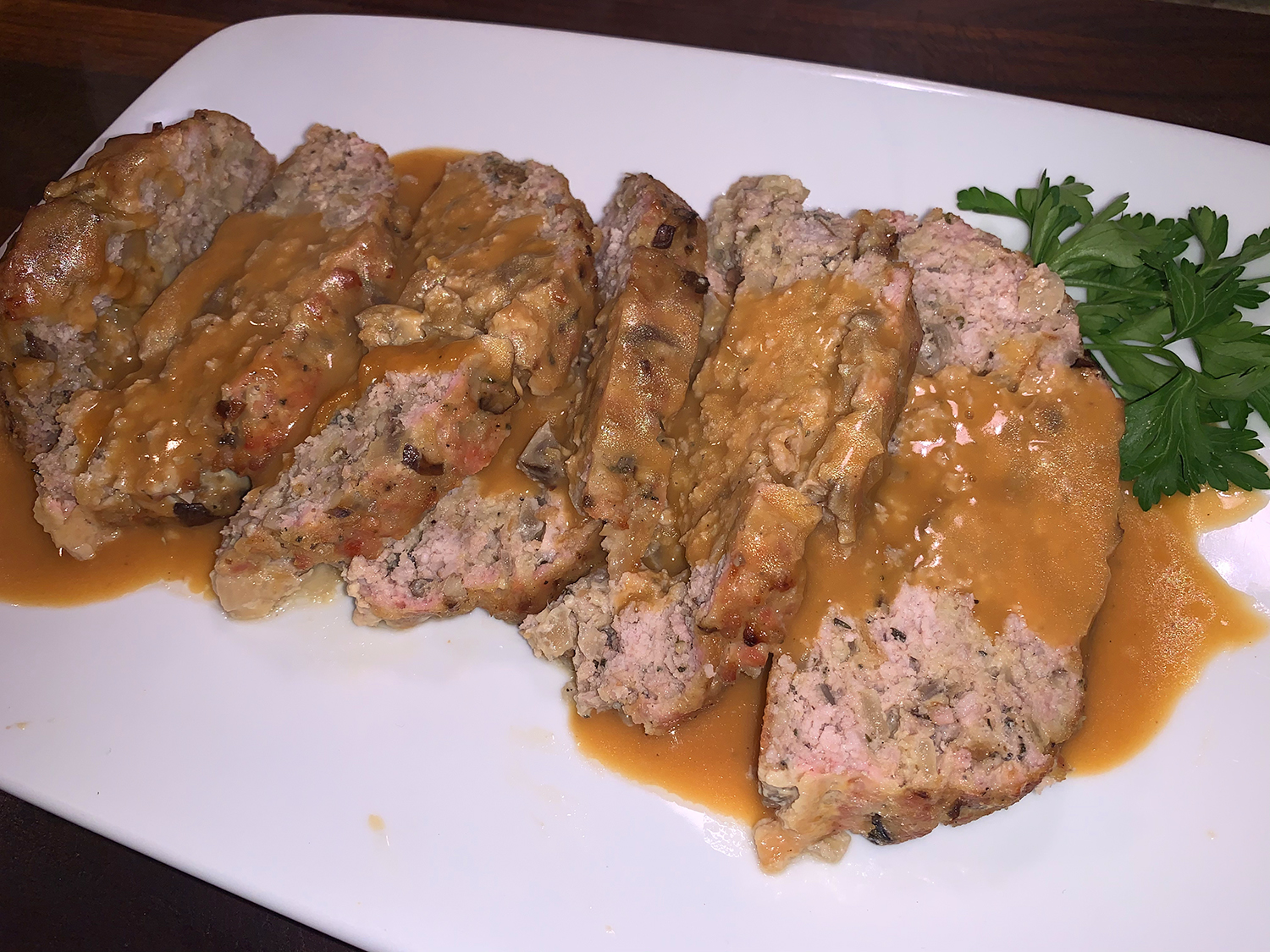
Double Mushroom and Sherry Meatloaf with a Companion Gravy

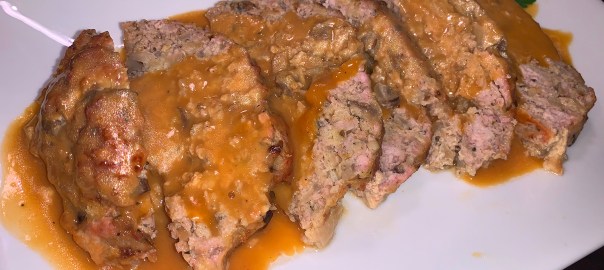
The beauty of this meatloaf and gravy is that they share several essential ingredients: mushrooms, dry sherry and garlic. While this recipe uses just ground pork and veal, if all you can get your hands on is the meatloaf mix combo, go ahead, the flavor profile won’t be too heavily altered.

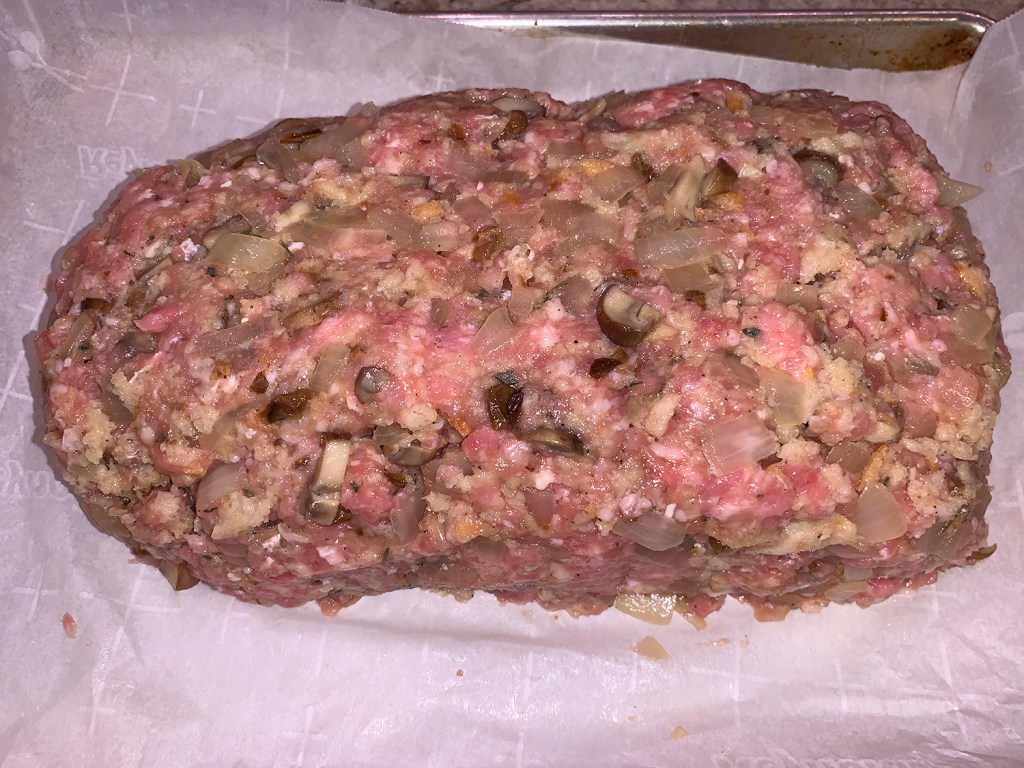
Soaking the bread in the milk gives the meatloaf its tender texture. The bread should be wet but not drenched, so squeeze it gently to remove excess liquid. Then chop it all up into very small pieces. You don’t want big hunks of bread marring the perfect loaf.

A bed of garlicky mashed potatoes and steamed broccolini rounded out our meal.

Double Mushroom and Sherry Meatloaf

  • Servings: 6-8
  • Difficulty: easy
  • Print

Ingredients

  • 1 lb. ground veal
  • 1 lb. ground pork
  • 2 large eggs, lightly beaten
  • 1 Tbsp. Worcestershire sauce
  • 2 1/2 tsp. kosher salt
  • 1/2 tsp. freshly ground black pepper
  • 1/4 cup dried porcini mushrooms, rehydrated and chopped (save the hydration water for the gravy, if making)
  • 4 oz. sliced medium-coarse white bread such as Italian, French or sourdough
  • 1 cup whole milk
  • 2 Tbsp. canola or olive oil
  • 1 medium yellow onion, chopped
  • 2 large garlic cloves, finely chopped
  • 1 cup fresh cremini mushrooms, coarsely chopped
  • 3/4 cup dry sherry (do not use cooking sherry)
  • 2 Tbsp. fresh sage, finely chopped
  • 2 Tbsp. fresh thyme, finely chopped

Directions

  1. Preheat oven to 375°F. Line the bottom of a 9″ x 13″ rimmed baking sheet with parchment.
  2. In a shallow dish that holds it in a single layer, soak the bread in the milk, flipping once, until soggy but not drenched, 5 to 10 minutes depending on your bread type.
  3. Heat oil in a 12″ skillet over medium-low heat. Cook the onion, garlic and fresh mushrooms, stirring frequently, until softened and just beginning to brown, about 4-5 minutes.
  4. Add the sherry and simmer briskly until almost dry, 4 to 5 minutes. Transfer to a large bowl and let cool until warm.
  5. Lightly squeeze a handful of bread at a time to remove some of the milk. Finely chop and add to the bowl of cooked aromatics.
  6. Add the ground pork and veal, eggs, Worcestershire sauce, salt and pepper to the bowl. Use you hands to gently combine the meat mixture without overworking it.
  7. Transfer the meatloaf mixture to the prepared baking sheet and form into a 10″ x 4″ rectangle.
  8. Bake until an instant read thermometer registers 160°, 55 to 60 minutes. Let rest for 10 minutes. Cover with foil if the meatloaf won’t be sliced until the gravy is ready.
  9. Slice into 3/4″ to 1″ slabs.

http://www.lynnandruss.com

Mushroom Gravy with Sherry and Thyme

This ridiculously flavorful vegetarian gravy will satisfy even the heartiest meat-eaters. Along with sherry and tomato paste, dried porcini mushrooms (available in the produce sections of large supermarkets) replicate the savory flavor of drippings. It has to be up there as one of the best gravies we’ve ever had!

Mushroom Gravy with Sherry and Thyme

  • Servings: Yields 3 cups
  • Difficulty: easy
  • Print

Ingredients

  • 8 Tbsp. butter, divided
  • 1 medium onion, chopped
  • 3 cloves garlic, finely chopped
  • 1 Tbsp. tomato paste
  • ⅔ cup dry sherry (do not use cooking sherry)
  • 3 cups vegetable or mushroom broth
  • ½ oz. dried porcini mushrooms, see below*
  • *1 cup porcini soaking liquid from rehydrating above mushrooms
  • 3 large thyme sprigs
  • 6 Tbsp. all-purpose flour
  • Freshly ground black pepper

Directions

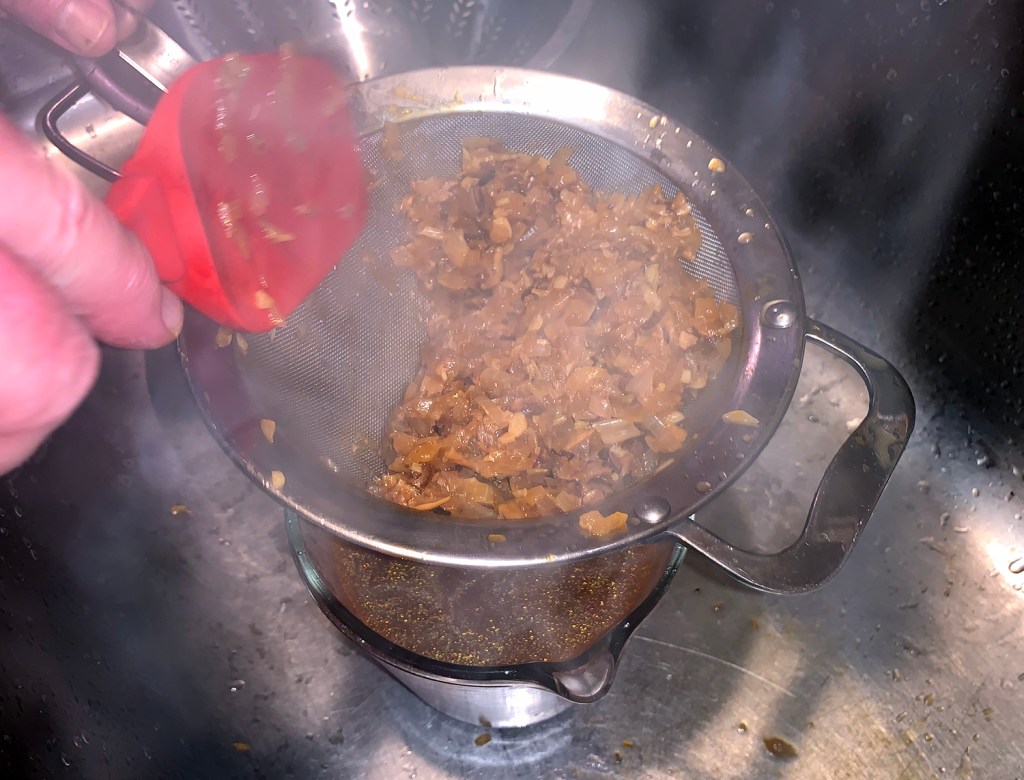
  1. Rehydrate porcini mushrooms by pouring 1 cup of boiling water over them in a heat-proof bowl. Let soak 15 minutes. Drain liquid into 1 cup measure, squeezing porcinis over container to remove all liquid. Strain through a very fine sieve to remove any grit from liquid, and set aside. (Add more water if necessary to equal 1 full cup.)
  2. In a medium saucepan, melt 2 tablespoons of the butter over medium heat.
  3. Add onion; cook, stirring occasionally, until softened but not browned, about 5 minutes.
  4. Add garlic; cook 1 minute more.
  5. Add tomato paste; cook, stirring until color deepens, about 2 minutes.
  6. Add sherry; bring to a boil. Reduce heat and simmer until reduced slightly, about 3 minutes.
  7. Add broth, strained mushroom liquid, rehydrated mushrooms and thyme sprigs; bring to a boil. Simmer 15 minutes.
  8. Strain again through a fine-mesh sieve into a bowl, pressing on solids (discard solids). Do not wash pan.
  9. Melt remaining 6 tablespoons butter in the same saucepan over medium heat. Add flour; cook, whisking, 1 to 2 minutes (don’t let flour brown).
  10. Add about 1/2 cup of the hot broth, whisking to blend. Add remaining broth a bit at a time, whisking until mixture is smooth. Season with pepper.

http://www.lynnandruss.com

Gravy source: MidwestLiving.com

Premium Pumpkin Bread

On a recent super-rainy, windy fall afternoon I made the comment that it would be a good day to bake bread. Russ immediately ran with that thought and mentioned he had just seen a pumpkin bread recipe from The New York Times.

“Yeah, but we don’t have any canned pumpkin,” was my reply. (When I was actually thinking more along the lines of a crusty whole grain loaf.) “I am capable of driving to the grocery store you know,” he bantered—and so he did just that.

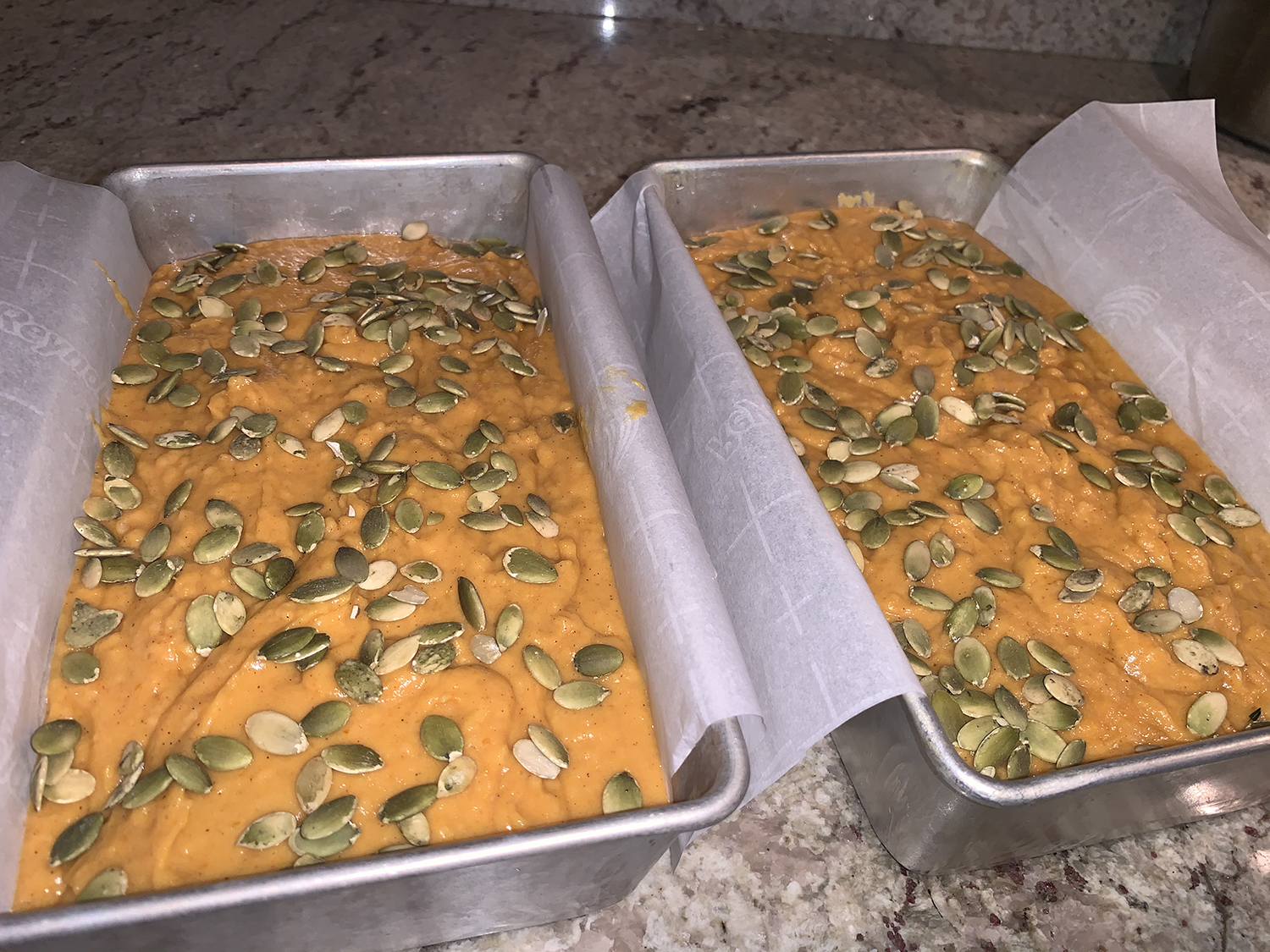
But the only pumpkin purée The Hubs could find at the grocery store was a 29-ounce can which is almost double the amount required. We considered freezing the remainder, but then thought better of it and decided to make two loaves, and either freeze the second loaf or gift it.

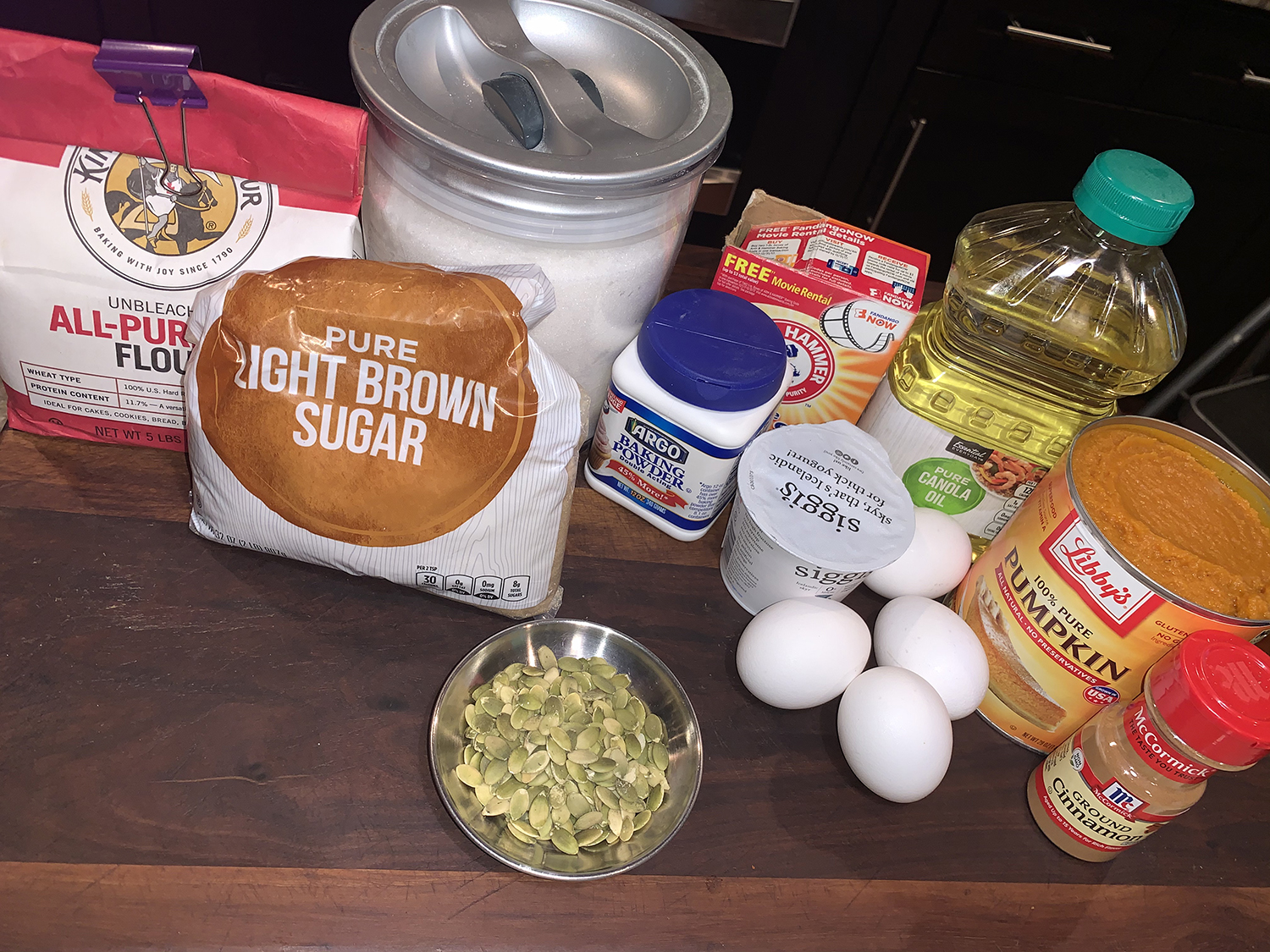
We are both fans of pumpkin seeds and happened to have a bag of sprouted seeds on hand which I used as a topping. It is totally optional, but adds a nice little crunch to the velvety soft bread—the BEST pumpkin bread we’ve ever had, BTW.

Premium Pumpkin Bread

  • Servings: 1 loaf
  • Difficulty: easy
  • Print

Ingredients

  • ½ cup vegetable oil, plus more for greasing the pan
  • 2 ¼ cups all-purpose flour
  • 1 tsp. baking powder
  • 1 tsp. ground cinnamon
  • ¾ tsp. kosher salt
  • ½ tsp. baking soda
  • About 2 cups pumpkin purée or 1 (15-ounce) can
  • 1 cup granulated sugar
  • ¾ cup packed light or dark brown sugar
  • 2 large eggs
  • ¼ cup full-fat sour cream or plain yogurt
  • 1 ½ tsp. pure vanilla extract
  • Sprouted pumpkin seeds for topping (optional)

Directions

  1. Heat the oven to 350 degrees. Oil an 8 ½- or 9-inch loaf pan; line with parchment, leaving a 2-inch overhang on two sides.
  2. In a medium bowl, whisk together the flour, baking powder, cinnamon, salt and baking soda.
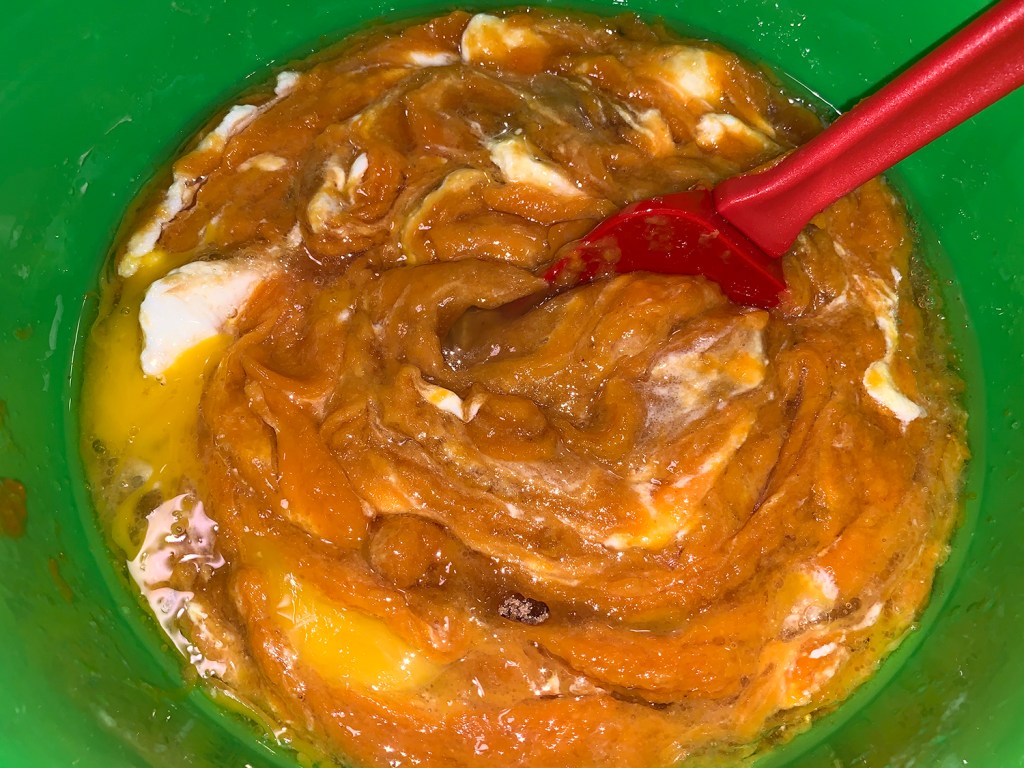
  3. In a large bowl, whisk together the vegetable oil, pumpkin purée, granulated sugar, brown sugar, eggs, sour cream and vanilla.
  4. Fold the dry ingredients into the wet ingredients until fully combined. Transfer the batter to the prepared pan and smooth into an even layer.
  5. Bake until the loaf is puffed and set, and a skewer inserted into the center comes out with moist crumbs attached, 60 to 75 minutes. (Ours took the full 75 min.)
  6. Transfer the bread, in the pan, to a rack to cool for 20 minutes.
  7. Use a paring knife to cut the two exposed sides of bread away from the pan, then use the parchment to transfer the cake to the rack. Let cool completely.

http://www.lynnandruss.com

Cast Iron Skillet Chicken

Let’s be honest, 2020 has been the most trying year overall—on so many levels. So when it comes to food, it makes sense to throw in a couple of comfort meals to soothe the soul and bring back memories of simpler times. One of my favorite comfort-inducing dinners is crispy-skinned roast chicken with homemade gravy, creamy mashed potatoes and a side veg.

And simple in the fact that you use just one pan, a large cast-iron skillet. The poultry, the vegetables and the gravy all do their magic in the same pan. Of course if you add some garlicky, creamy mashed potatoes, you’re on your own there. We had leftovers from another meal and just reheated them, making a perfect vehicle in which to ladle the gravy.

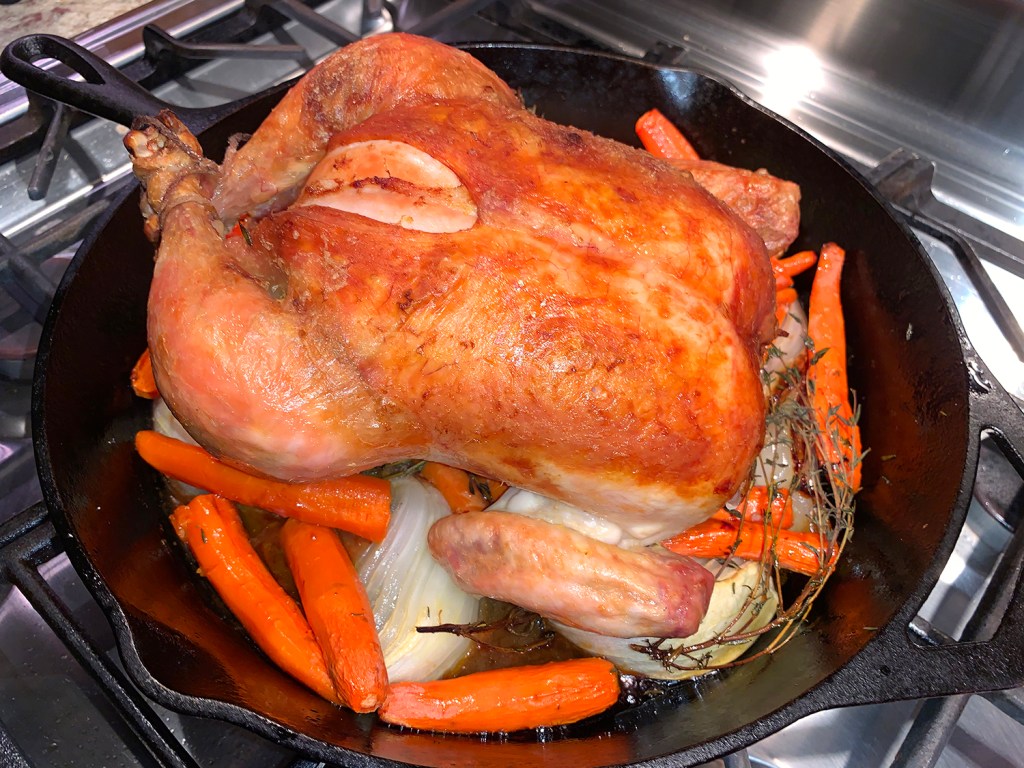
Not able to purchase a 5-pound chicken we went with the biggest we could get our hands on weighing in at just over 4 pounds. We thought the smaller size might mean less cooking time, but in the end, it took just as long as the recipe indicates for a 5-pounder: 1 hour, 25 minutes.

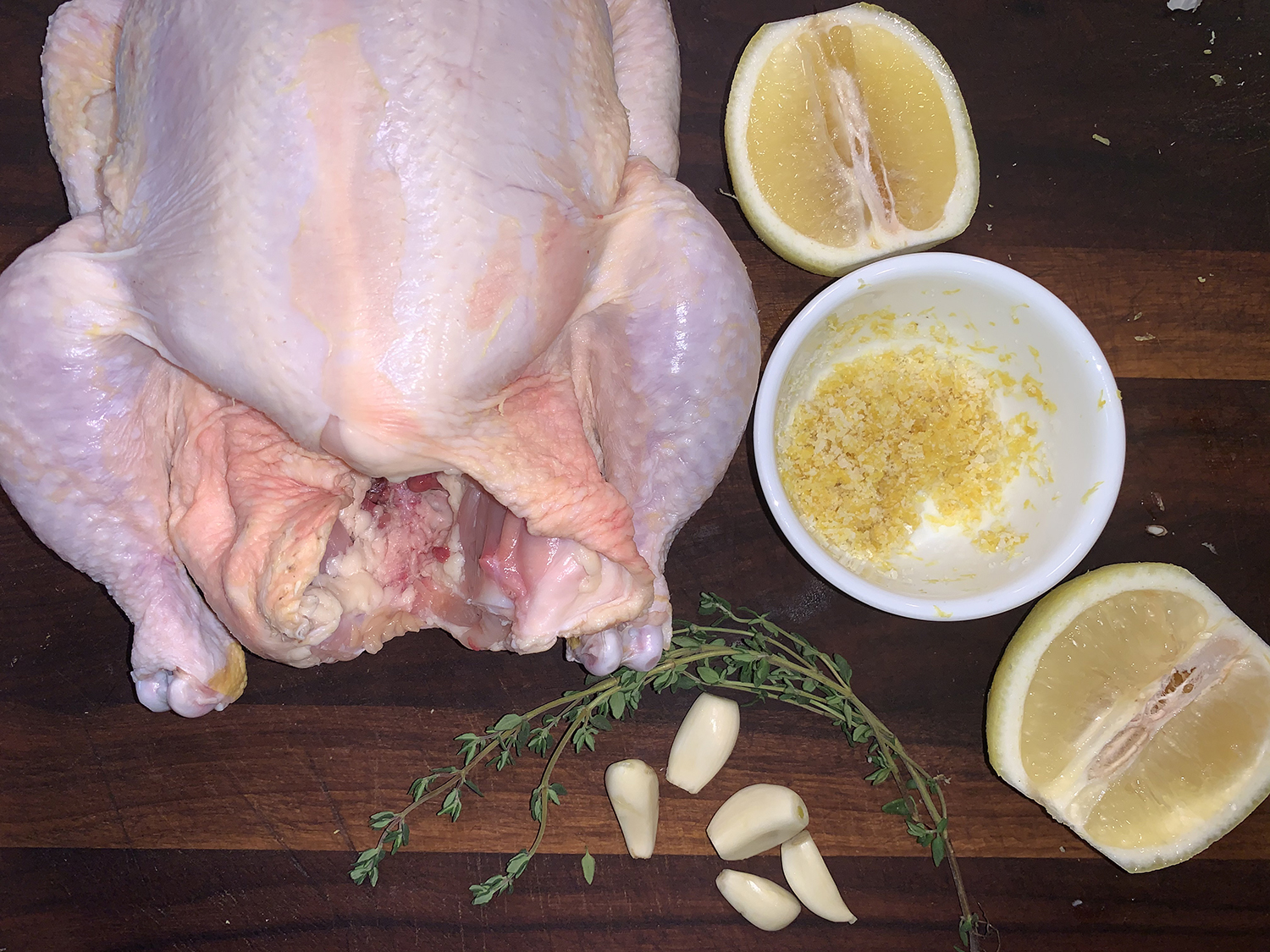
Don’t be afraid to season the chicken generously. Salt and pepper not only makes the chicken taste good; they help render the fat, yielding a crispy, crackly crust—and who doesn’t love that? Sprinkle salt and pepper inside and outside the chicken for the best flavor. And for even more flavor, stuff the chicken with aromatics such as citrus, garlic, and/or herbs.

Check the chicken temperature about one hour in, the bird probably won’t be done yet, but you can turn the onions and carrots so that they get moisture all over and won’t dry out.

The Hubs realized the proportion to make the roux was incorrect so we changed the amount of flour from one tablespoon to two. His formula for every one cup of liquid, you need one tablespoon of fat and one tablespoon of flour. Therefore with two cups of chicken broth, we needed two tablespoons each of fat and flour.

Oh and don’t toss the luscious onions and garlic. Simply serve the onions mixed with the carrots; then squeeze some of those roasted garlic cloves right into the gravy which will also help thicken the sauce and add a touch of comfort-food goodness. We even went so far as to squeeze some onto our plates and mash it around to drag the chicken through.

Next time we make this, I’m going to switch out the citrus and herbs for orange and rosemary.

Cast-Iron Skillet Chicken

  • Servings: 4
  • Difficulty: easy
  • Print

Ingredients

  • 1 Tbsp. lemon zest
  • Zested lemon cut in quarters for cavity
  • 3 tsp. kosher salt, divided
  • 1 (5-lb.) whole chicken, giblets removed
  • 1 (16-oz.) package carrots, peeled and cut into 5-inch pieces
  • 1 large sweet onion, root-end intact, cut into wedges
  • 1 head garlic, tips cut off, plus more cloves for cavity
  • 4 sprigs fresh thyme, plus more for cavity
  • 2 Tbsp. olive oil
  • 2 Tbsp. all-purpose flour
  • 2 cups chicken broth, preferably homemade
  • ½ tsp. ground black pepper
  • Garnish: fresh thyme sprigs

Directions

  1. In a small bowl, combine zest and 2 teaspoons salt. Pat chicken dry with paper towels. Gently loosen skin from chicken, keeping skin intact. Rub salt mixture under skin and all over chicken. Place lemon halves, thyme and a few extra garlic cloves inside chicken cavity. Tie legs with kitchen twine. Refrigerate overnight.
  2. Preheat oven to 425°. Let chicken stand at room temperature for 30 minutes.
  3. Place carrots, onion wedges, garlic head, and thyme in a 12-inch cast-iron skillet. Place chicken on top of vegetables. Rub chicken with oil, and sprinkle with remaining 1 teaspoon salt.
  4. Bake until a meat thermometer inserted in thickest portion registers 165°, about 1 hour and 25 minutes, covering with foil to prevent excess browning, if necessary. Let stand for 10 minutes.
  5. Remove chicken, carrots, onions and garlic from skillet; whisk in flour. Pour in broth, and cook over medium heat, whisking constantly, until thickened. Stir in pepper. Serve gravy with chicken. Garnish with thyme, if desired.

http://www.lynnandruss.com

Adapted from a recipe found on southerncastiron.com

Spicy Pork With Leeks And Roasted Red Peppers (Tigania)

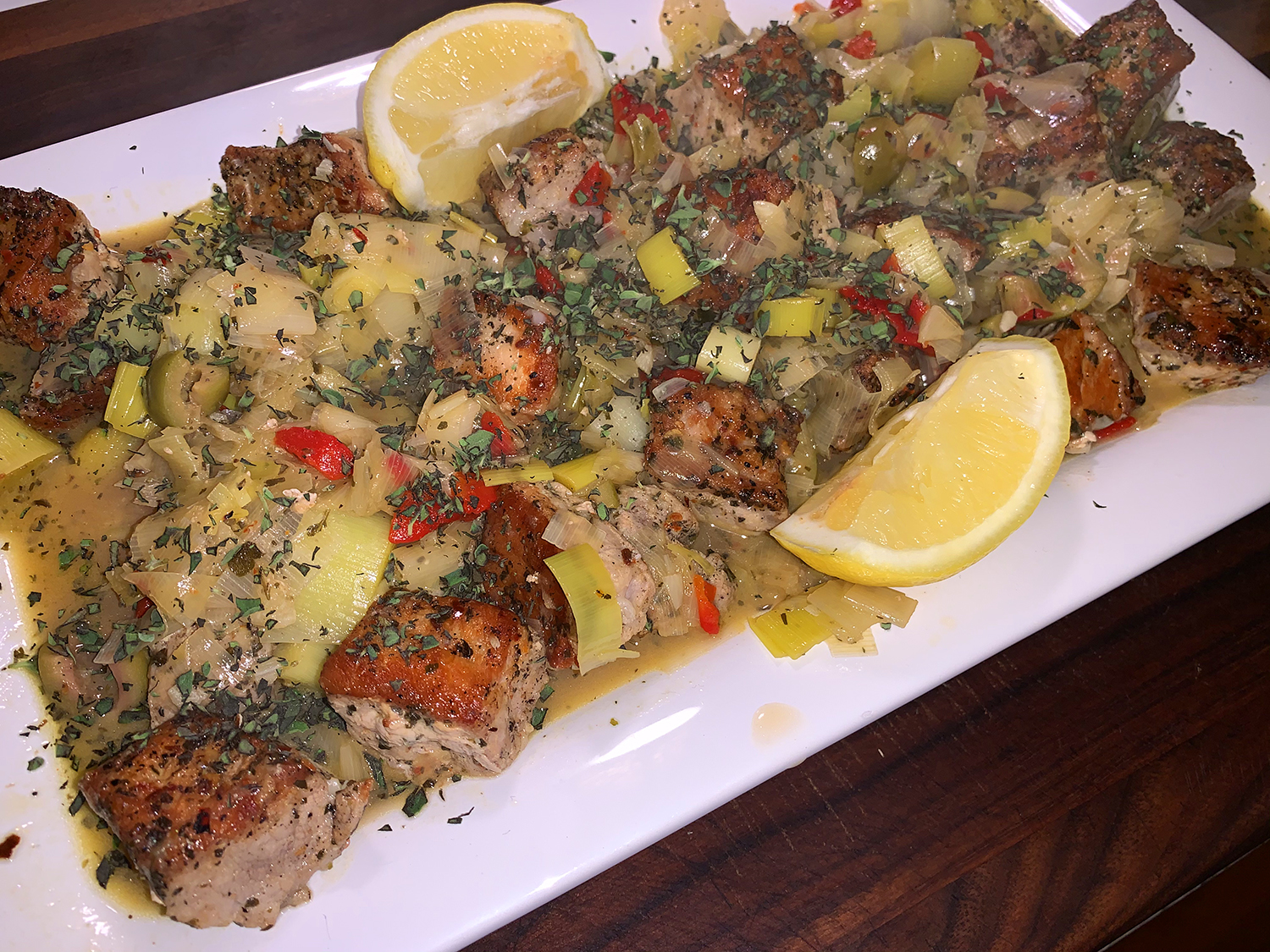
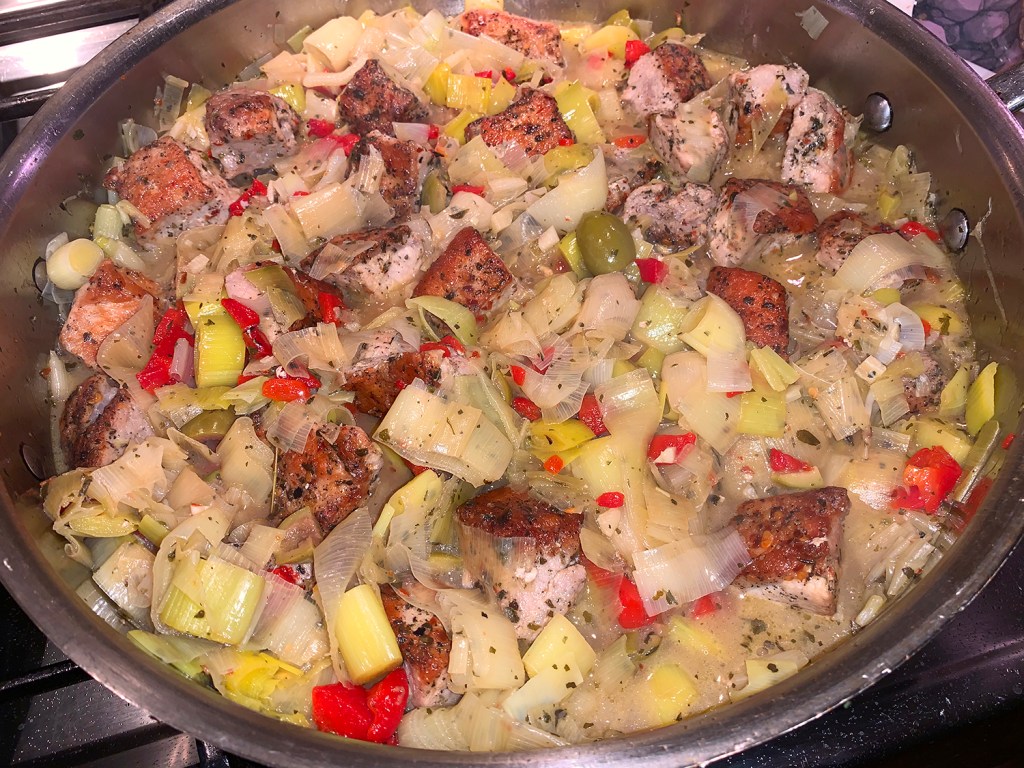
Boneless country-style pork spareribs are a rich, flavorful cut that stands up nicely to the bold Mediterranean ingredients in this recipe for tigania, a Greek vegetable and meat dish similar to a stir-fry. There are copious amounts of leeks, which turn soft and savory, practically melting in your mouth by the time the dish is ready.

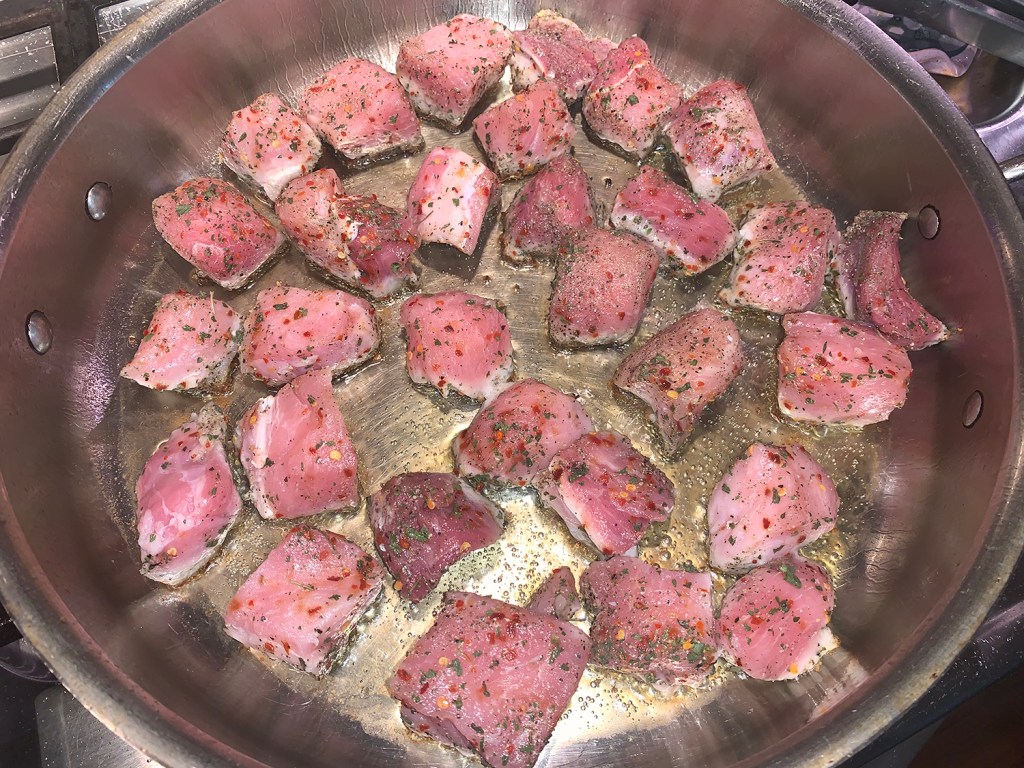
Don’t forget to wash and dry the leeks after slicing them. Leeks’ many layers trap sand and grit. After adding the pork to the skillet, don’t stir the pieces until they’ve formed a nice brown crust on the bottom.

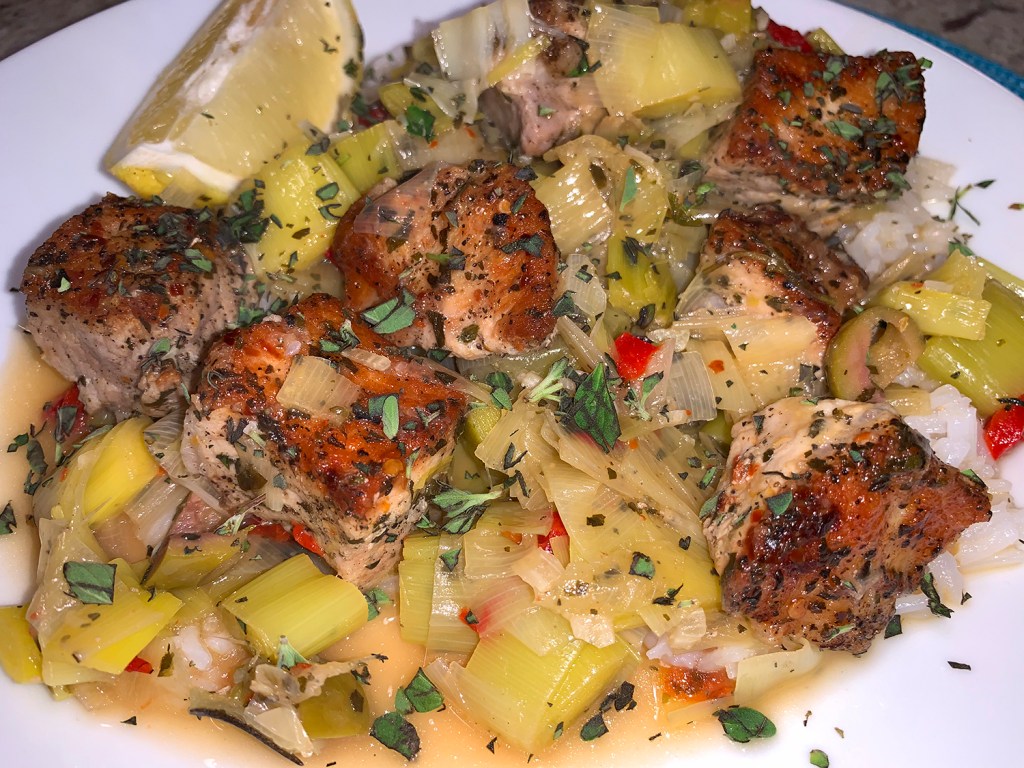
You can serve it over a bed of steamed rice like us, or perhaps simple boiled potatoes is more your style. And if you’re cruising down that low-carb highway, simply eat it as is.

Make sure to plate it on a deep platter to capture all of the luscious juices.

Spicy Pork with Leeks and Roasted Red Peppers (Tigania)

  • Servings: 4
  • Difficulty: easy
  • Print

Ingredients

  • ¾ tsp. red pepper flakes
  • Kosher salt and ground black pepper
  • 2¾ tsp. dried oregano, divided
  • 2 lbs. boneless country-style pork spareribs, trimmed and cut into 1½-inch chunks
  • 1 Tbsp. grapeseed or other neutral oil
  • 2 Tbsp. extra-virgin olive oil
  • 6 large leeks, white and light green parts sliced ½-inch thick, rinsed and dried
  • 4 large garlic cloves, coarsely chopped
  • 1 cup dry white wine
  • 1 7-oz. jar roasted red peppers, drained and diced (about 1 cup)
  • ½ cup pitted green olives, chopped
  • 2 Tbsp. fresh oregano, minced
  • Lemon wedges, to serve

Directions

  1. In a large bowl, stir together the pepper flakes, 1 teaspoon each salt and pepper, and ¾ teaspoon of the dried oregano. Add the pork and toss.
  2. In a 12-inch skillet over medium-high, heat the grapeseed oil until smoking. Add the pork in a single layer and cook without disturbing until dark golden brown on the bottom, about 5 minutes. Stir and cook until no longer pink, about another 2 minutes. Using a slotted spoon, transfer to a large plate.
  3. Pour off and discard the fat from the pan, then return to medium-high. Add the olive oil, leeks, garlic, the remaining 2 teaspoons dried oregano and ½ teaspoon salt. Cook, stirring and scraping up any browned bits, until the leeks begin to soften, 3 to 4 minutes. Stir in the pork, then the wine. Bring to a simmer and cover, then reduce to low and cook until the pork is tender, about 30 minutes.
  4. Stir in the roasted red peppers and olives. Taste and season with salt and pepper. Transfer to a serving plate and sprinkle with fresh oregano. Serve with lemon wedges.

http://www.lynnandruss.com

Recipe from Jeanne Maguire for Milk Street

Roasted Rosemary Butternut Squash and Shallots

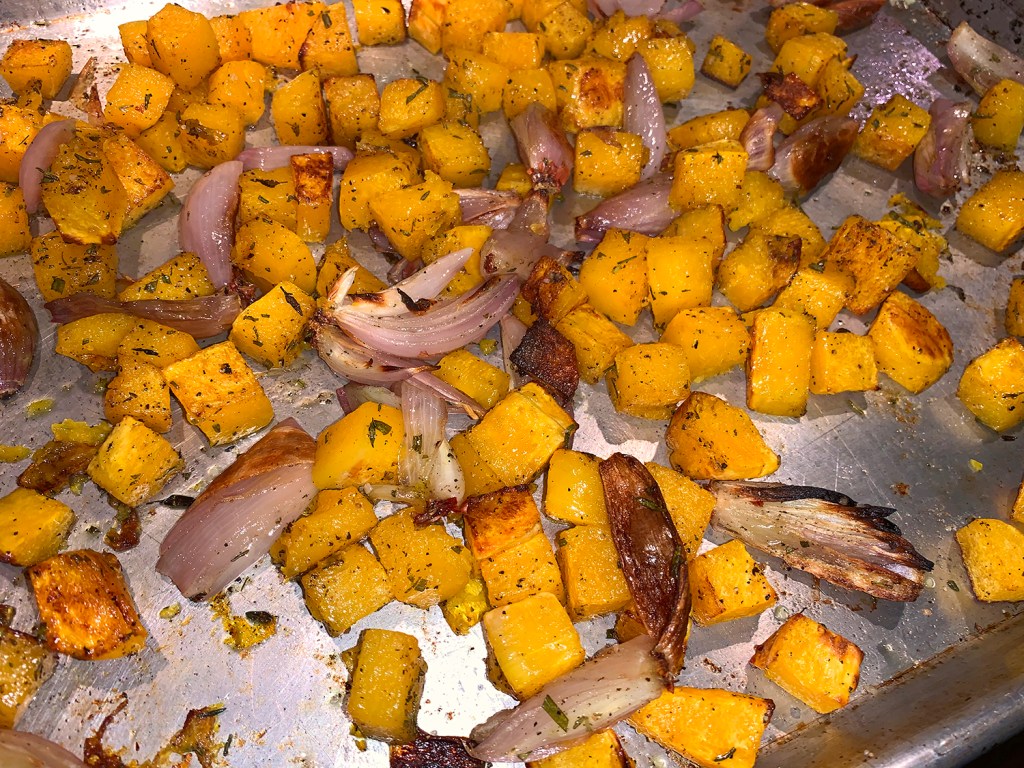
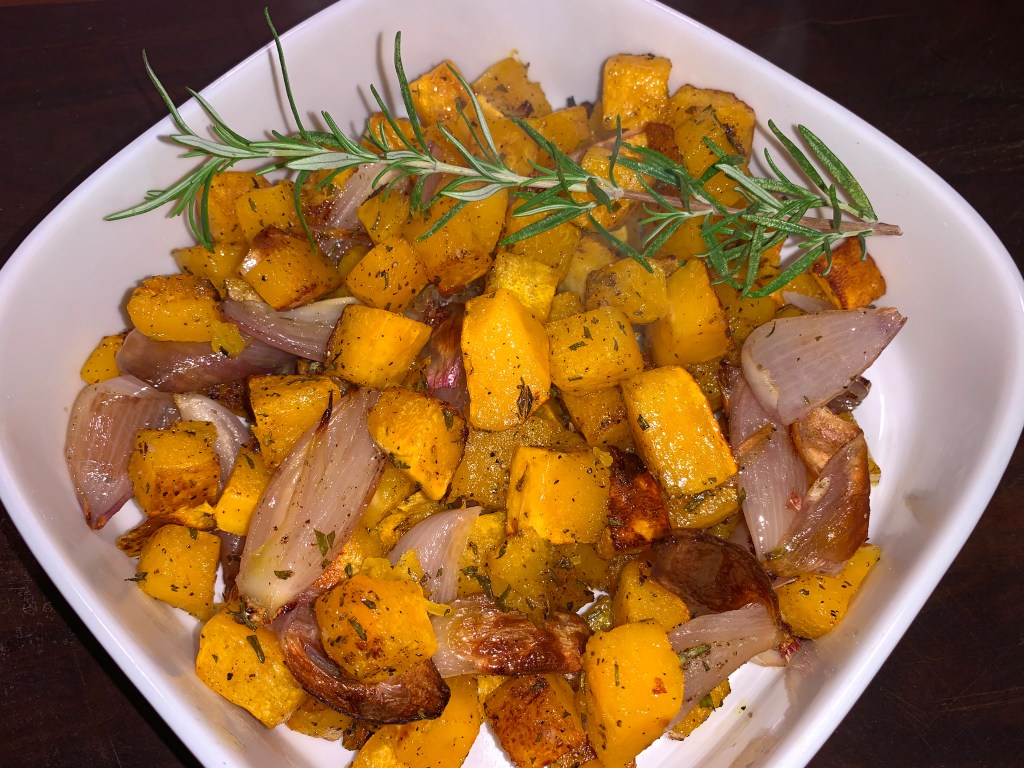
Butternut squash is a fall heavyweight in my opinion. It pairs well with a variety of flavors and can reinvent itself either sweet or spicy. In this case, we are talking naturally sweet which really develops as it roasts. And you all know that butternut squash is very nutritious with the flesh full of vitamins A and C.

It was a gift from our compost. I noticed squash vines starting to grow in our herb bed backed by a trellised fence. We hadn’t planted any squash so I knew it came from when we composted the garden earlier in the season. Plus the rosemary was freshly picked from our herb garden. Thank you Mother Nature!

Oops, I completely forgot to add the 1/2 teaspoon of granulated sugar. It really wasn’t needed taste-wise because our squash was naturally sweet, but the sugar was more a conductor for caramelization. Although our cubes were lightly browned without it.

This recipe calls for a specific amount of squash, so you may have some leftover. Ours weighed in at 3.3 pounds—a good bit larger than the recipe called for. After peeling and seeding, your squash will lose 2-3 ounces of weight. For example, a 3-pound squash will yield about 2 pounds 13 ounces of flesh. This recipe calls for 2 pounds of diced squash, you’ll want to look for a squash that is around 2 pounds, 3 ounces in weight.

If you have leftovers like us, you may want to sauté the extra cubes and use them in a future frittata, salad or side dish. The toughest part of this recipe is peeling the squash, so it is permissible to buy already cubed, just make sure they are cut to 3/4″ cubes and uniformly sized.

Roasted Rosemary Butternut Squash and Shallots

  • Servings: 4
  • Difficulty: easy
  • Print

Ingredients

  • 3 cups 3/4-inch-diced, peeled butternut squash (from about a 2-pound squash)
  • 4 medium shallots, peeled, root end left intact, quartered
  • 2 Tbsp. extra-virgin oil
  • 1 tsp. chopped fresh rosemary
  • 1 tsp. kosher salt
  • 1/2 tsp. granulated sugar
  • 1/2 tsp. freshly ground black pepper

Directions

  1. Preheat oven to 450°F.
  2. Put the squash cubes on a heavy-duty rimmed baking sheet. Add the shallot quarters to the squash.
  3. Drizzle the olive oil over the vegetables; toss to coat. Sprinkle the rosemary, salt, sugar and pepper over the veggies. Toss to coat again and distribute evenly over the baking sheet.
  4. Roast for 20 minutes. Stir, then continue rosting until the veggies are tender and lightly browned, 10-15 minutes more.
  5. Before serving, taste and season with more salt if desired.

http://www.lynnandruss.com

Adapted from a recipe found on finecooking.com

Salmon Chraimeh

A fish dish that sneaks up on you like a thief. An unlikely menu description, but its a good translation of both the name and flavor of chraimeh, a Sephardic recipe in which fish is braised in oil, garlic and a spicy tomato sauce… so explains Jenn Ladd of Milk Street. That spicy sauce has a way of tricking you.

“The origin of the word chraimeh is the thief, or like a bastard. The spice comes at the end. It kind of surprises you.”

—Einat Admony, Tel Aviv native and New York City restaurateur

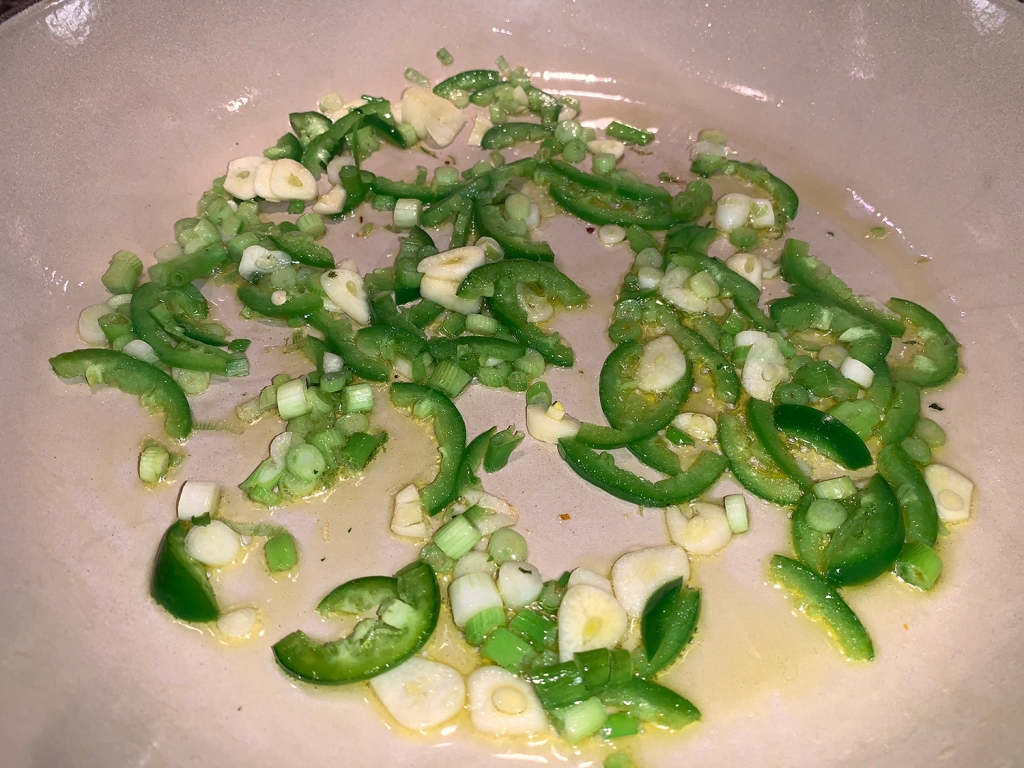
Start with easily accessible, affordable salmon fillets. Sliced jalapeño and scallions round out the aromatics, which are lightly browned in hot oil. For more distinct flavor, bloom whole cumin and coriander seeds, with ¾ teaspoon smoked paprika. Add to the mix diced tomatoes and their liquid, then nestle salmon fillets into the piquant sauce.

This weeknight easy dinner tops center-cut salmon fillets with chraimeh (pronounced KHRY-may), a simple and mildly spicy tomato sauce. The salmon cooks between 115°F and 120°F, which leaves the thickest part with some translucency. We like it a bit more well done at 125°F, so after simmering we removed the skillet from the heat and left the fillets in the covered pan until cooked to desired doneness, another 5 minutes or so.

Keep in mind, you don’t want to use fillets of widely varying thicknesses; they will require different cooking times. If unavoidable, begin checking the thinner fillets ahead of the thicker ones. Fresh mint and cilantro, as well as lemon and reserved scallion greens, finish the chraimeh. A drizzle of olive oil also gives it a final hit of richness.

The chraimeh would be equally as wonderful on halibut, bronzino, red snapper or even chicken or pork.

Salmon Chraimeh

  • Servings: 4
  • Difficulty: easy
  • Print

Ingredients

  • 4 6-oz. center-cut salmon fillets
  • Kosher salt and ground black pepper
  • 1 Tbsp. extra-virgin olive oil, plus more to serve
  • 4 scallions, thinly sliced, white and light green parts separated from dark green tops
  • 3 medium garlic cloves, thinly sliced
  • 1 jalapeño chili, stemmed, seeded and sliced into thin half-rings
  • 1 tsp. coriander seeds
  • 1 tsp. cumin seeds
  • ¾ tsp. smoked paprika
  • 1 14½-ounce can diced tomatoes
  • 2 Tbsp. finely chopped fresh mint
  • ¼ cup fresh cilantro leaves, lightly packed
  • Lemon wedges, to serve

Directions

  1. Season the salmon fillets on both sides with salt and pepper. In a 12-inch skillet over medium-high, heat the oil until shimmering. Add the white and light green parts of the scallions, the garlic and jalapeño. Cook, stirring occasionally, until lightly browned, about 2 minutes.
  2. Stir in the coriander, cumin and paprika, then cook until fragrant, about 30 seconds.
  3. Stir in the tomatoes, ½ teaspoon salt and ¼ teaspoon pepper. Bring to a simmer, then nestle the fillets, skin side up, in the sauce. Reduce to medium, cover and simmer for 6 to 8 minutes, or until the thickest parts reach 115°F to 120°F.
  4. Using tongs, carefully peel off and discard the skin from each fillet, then use a spatula to transfer to serving plates.
  5. If the sauce is watery, continue to simmer over medium-high until slightly thickened, 1 to 2 minutes.
  6. Off heat, stir in the mint and cilantro. Taste and season with salt and pepper. Spoon the sauce over the salmon, sprinkle with the remaining scallion greens, then drizzle with olive oil. Serve with lemon wedges.

http://www.lynnandruss.com

Recipe from Sandra Rose Gluck for Milk Street

Tuscany’s Fagioli All’uccelletto

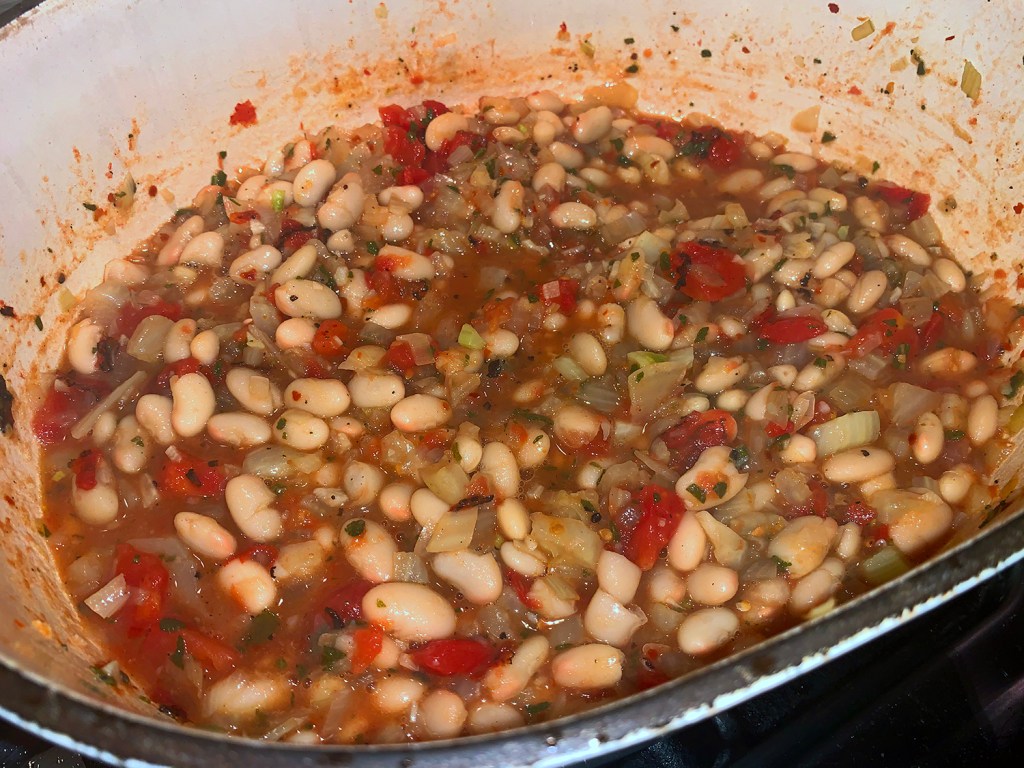
Otherwise known in English as White Beans with Sage, Garlic and Fennel. Super-fab! This one-pot vegetarian meal is so satisfying and tasty, that if you are a meat-eater—and we are—you won’t miss the meat. The simple combination of white beans, sage and garlic exemplifies the clarity of flavor the Tuscany region’s cooks can pull from just a few ingredients.

It is advised not to use cannellini beans, but rather Navy or Great Northern. We used the latter which are smaller than cannellini beans but larger than navy beans. Known for their delicate, nutty flavor, they’re usually added to casseroles and soups, such as this recipe. In summary, white beans provide a good source of protein, an excellent source of fiber, and several essential nutrients.

This recipe gave us a perfect opportunity to harvest the remainder of our fresh sage from the garden before the cold weather set in. Used in two ways—finely chopped and fried whole—this herb has a pronounced herbal flavor that is earthy, has a slightly peppery taste, and emits hints of mint, eucalyptus, and lemon. What’s more, sage is faintly piney, though not like juniper. It’s much softer and mixed with subtle citrus notes; perhaps a little on the bitter side, though not harshly so.

We loved it topped with an ample garnish of grated parmesan, but if omitted, it could work for the vegans in the family.

Don’t drain both cans of beans. The liquid from one of the cans creates a sauce-like consistency that keeps the beans succulent.

Tuscany's Fagioli All'uccelletto

  • Servings: 4
  • Difficulty: easy
  • Print

Ingredients

  • 6 Tbsp. extra-virgin olive oil, divided
  • 1 large fennel bulb, trimmed and finely chopped
  • 1 medium yellow onion, finely chopped
  • 4 large garlic cloves, finely chopped
  • 3 Tbsp. finely chopped fresh sage, plus 20 whole leaves
  • ¼ tsp. red pepper flakes
  • Kosher salt and ground black pepper
  • 1 14½-oz. can diced tomatoes
  • 2 15½-oz. cans white beans, 1 can rinsed and drained
  • Shaved or grated parmesan cheese, to serve

Directions

  1. In a large Dutch oven over medium, heat 3 tablespoons of the oil until shimmering. Add the fennel, onion, garlic, chopped sage, red pepper flakes and 1 teaspoon salt. Cover and cook, stirring occasionally, until the vegetables have softened, about 15 minutes.
  2. Stir in the tomatoes and the beans. Cook, uncovered, stirring occasionally and adjusting the heat as needed to maintain a gentle simmer, for 10 minutes. Taste and season with salt and pepper.
  3. Meanwhile, line a plate with paper towels. In a 12-inch skillet over medium-high, heat the remaining 3 tablespoons oil until shimmering. Add the sage leaves and cook, flipping the leaves once, until the edges begin to curl, about 1 minute. Transfer to the prepared plate; reserve the oil.
  4. Transfer the beans to a serving bowl, then drizzle with the sage oil. Coarsely crumble the sage leaves over the beans. Top with Parmesan.

http://www.lynnandruss.com

Recipe from Catherine Smart for Milk Street

Kung Pao Chicken

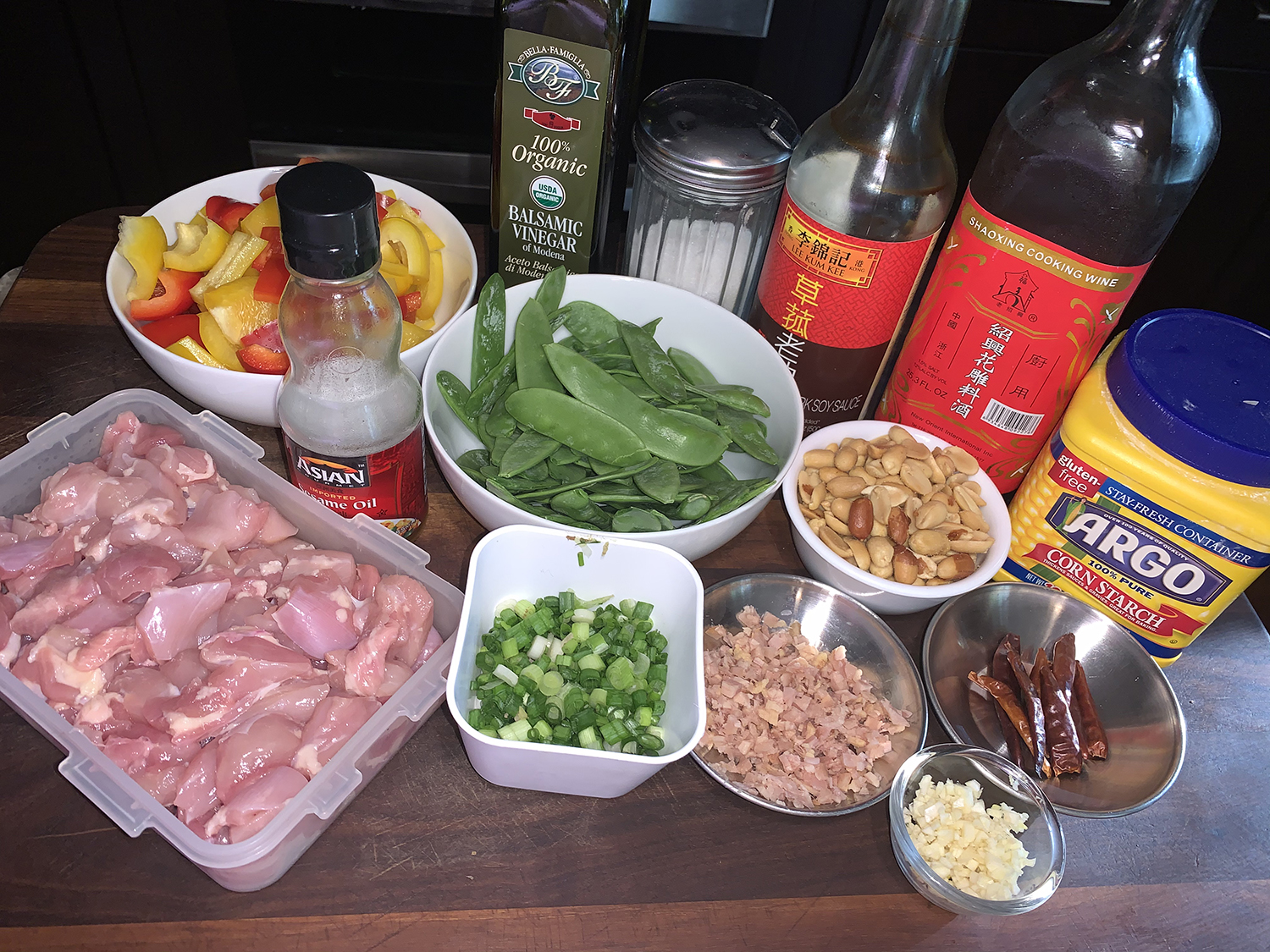
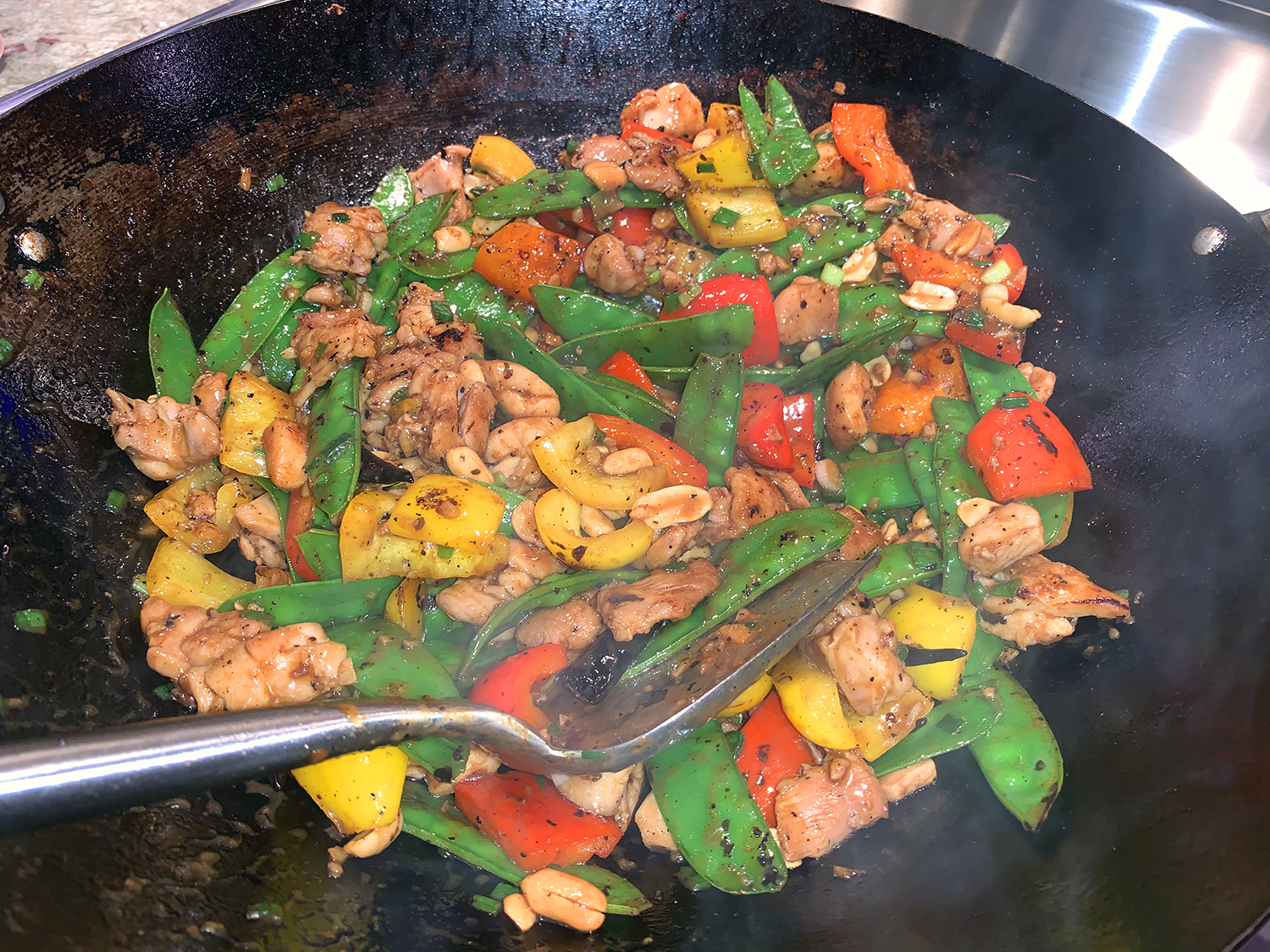
In this Kung Pao Chicken recipe, the dark, rich sauce clings to the chicken and veggies, with just an undertone of heat and aromatic flavor from the chiles and Sichuan peppercorns. I’m typically a white meat fan, but here we used boneless, skinless dark thigh meat which imparts more flavor. Use whatever suits your preference.

Have you been confused before on the difference between Kung Pao and General Tso’s chicken recipes? The main difference between the two is how the meat is cooked. General Tso is fried in a crispy coating, however Kung Pao Chicken is seared in the wok. Both are coated in a similar sauce, but Kung Pao typically always has veggies and peanuts mixed in.

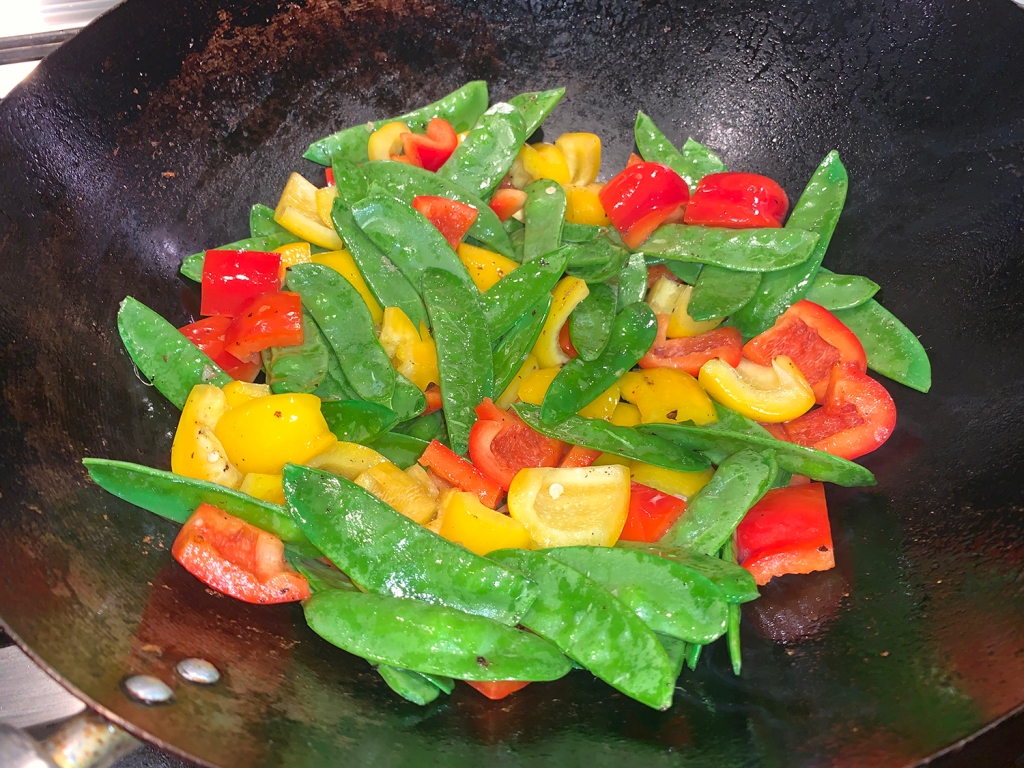
Plus, Kung Pao Chicken is a healthy choice for most people, containing a range of vitamins and minerals, as well as complete protein. It is also low in saturated fat and calories. To up the ante in nutrition, fiber and color, I added a yellow bell pepper and some snow peas.

Because of these extra ingredients, I altered the directions to accommodate them. Instead of adding the veggies with the chicken still in the wok, we moved the poultry to a bowl while we stir-fried the peppers and snow peas, then added the chicken back to the wok before stirring in the broth mixture.

As with most stir-fries, this process goes very quickly so make sure to prep everything BEFORE you start cooking. Keep in mind, rice typically takes about 20 minutes total, so it’s best you start that process first. And don’t omit those roasted and ground Sichuan peppercorns. A half teaspoon may seem like a minor nuisance, but they add a necessary flavor component. Serve with steamed rice, preferably cooked in homemade chicken stock.

Kung Pao Chicken

  • Servings: 3
  • Difficulty: easy
  • Print

Ingredients

  • 1 lb. boneless, skinless chicken thigh or breast, cut into 3/4-inch cubes
  • 2 Tbsp. minced ginger
  • 1 Tbsp. minced garlic
  • 2-1/2 tsp. cornstarch
  • 1 tsp. soy sauce
  • 1 tsp. plus 1 Tbsp. Shao Hsing rice wine or dry sherry
  • 2 tsp. sugar
  • 3/4 tsp. salt
  • 2 Tbsp. chicken broth
  • 1 Tbsp. Chinkiang or balsamic vinegar
  • 1 tsp. dark soy sauce
  • 1 tsp. sesame oil
  • 2 Tbsp. peanut oil or vegetable oil
  • 4 to 8 dried red chili peppers, snipped on one end
  • 1/2 tsp. roasted and ground Sichuan peppercorns
  • 1 large red bell pepper, cut into 1-inch squares
  • 1 large yellow bell pepper, cut into 1-inch squares
  • 6 0z. snow peas, strings removed, cut in half on a diagonal if large
  • 3/4 cup unsalted roasted peanuts
  • 1/2 cup minced scallions
  • Steamed white or brown rice for serving
Add the peanuts and scallions.

Directions

  1. Before you begin prepping the stir-fry ingredients, start the rice according to package directions, preferably using homemade chicken stock as the liquid.
  2. In a medium bowl combine the chicken, ginger, garlic, cornstarch, soy sauce, 1 teaspoon of the rice wine, 1 teaspoon of the sugar, 1/2 teaspoon of the salt, and 1 teaspoon cold water. Stir to combine. In a small bowl combine the broth, vinegar, dark soy sauce, sesame oil, and the remaining 1 tablespoon rice wine.
  3. Heat a 14-inch flat-bottomed wok or 12-inch skillet over high heat until a bead of water vaporizes within 1 to 2 seconds of contact. Swirl in 1 tablespoon of the peanut oil, add the chillies and ground Sichuan peppercorns, then, using a metal spatula, stir-fry 15 seconds or until the chillies just begin to smoke.
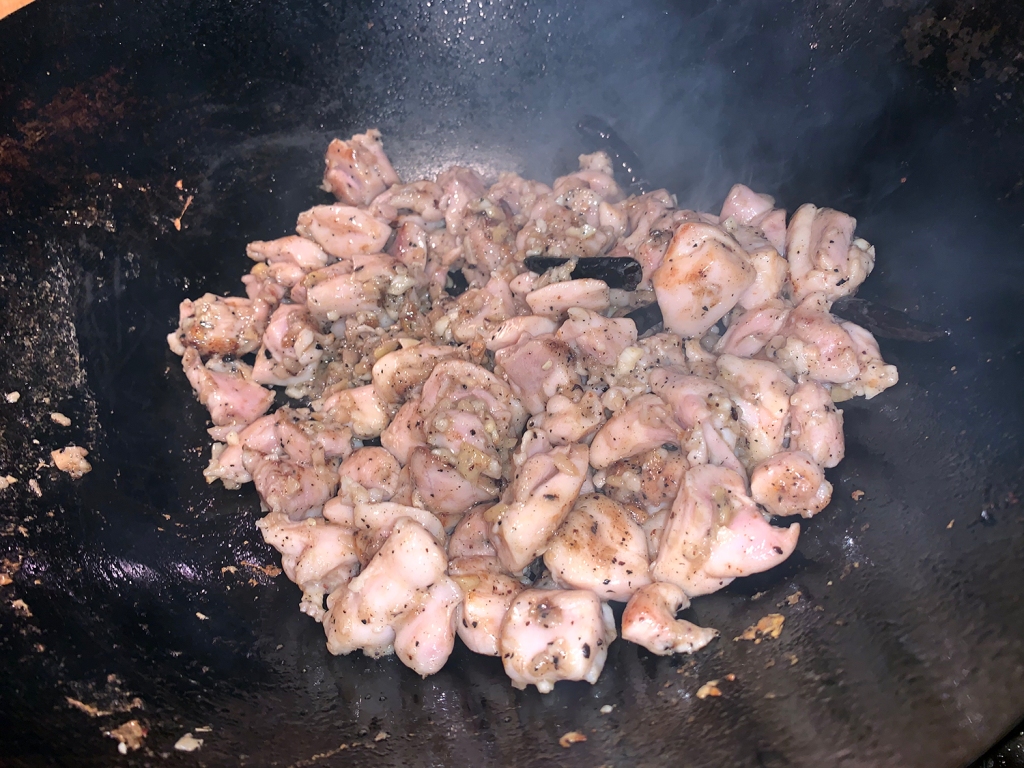
  4. Push the chili mixture to the sides of the wok, carefully add the chicken, and spread it evenly in one layer in the wok. Cook undisturbed 1 minute, letting the chicken begin to sear. Then stir-fry 1 minute or until the chicken is lightly browned but not cooked through. Move to a bowl.
  5. Swirl the remaining 1 tablespoon peanut oil into the wok. Add the bell peppers and snow peas then stir-fry 1-2 minutes or until the peppers begin to soften. Add the chicken back to the wok. Swirl the broth mixture into the wok and stir-fry 1 minute or until the chicken is just cooked through.
  6. Add the peanuts and scallions, sprinkle on the remaining 1 teaspoon sugar and 1/4 teaspoon salt, and stir-fry 30 seconds or until the scallions are bright green.
  7. Serve over white or brown steamed rice.

http://www.lynnandruss.com

Roasted Glazed Parsnips and Carrots with Orange and Thyme

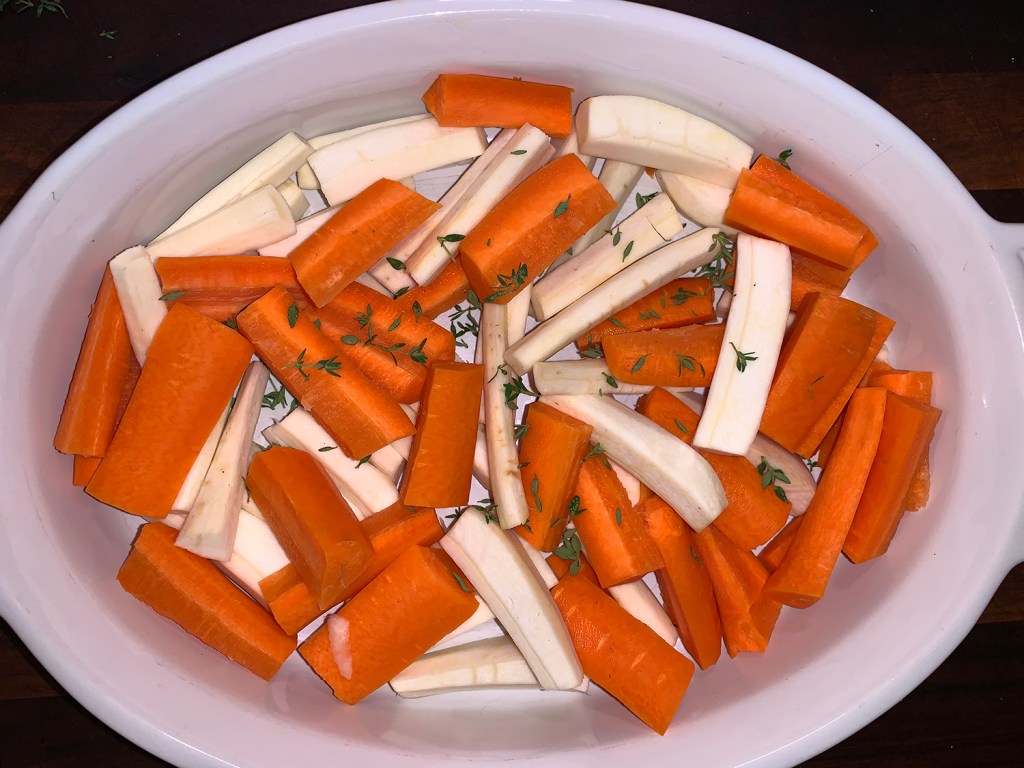
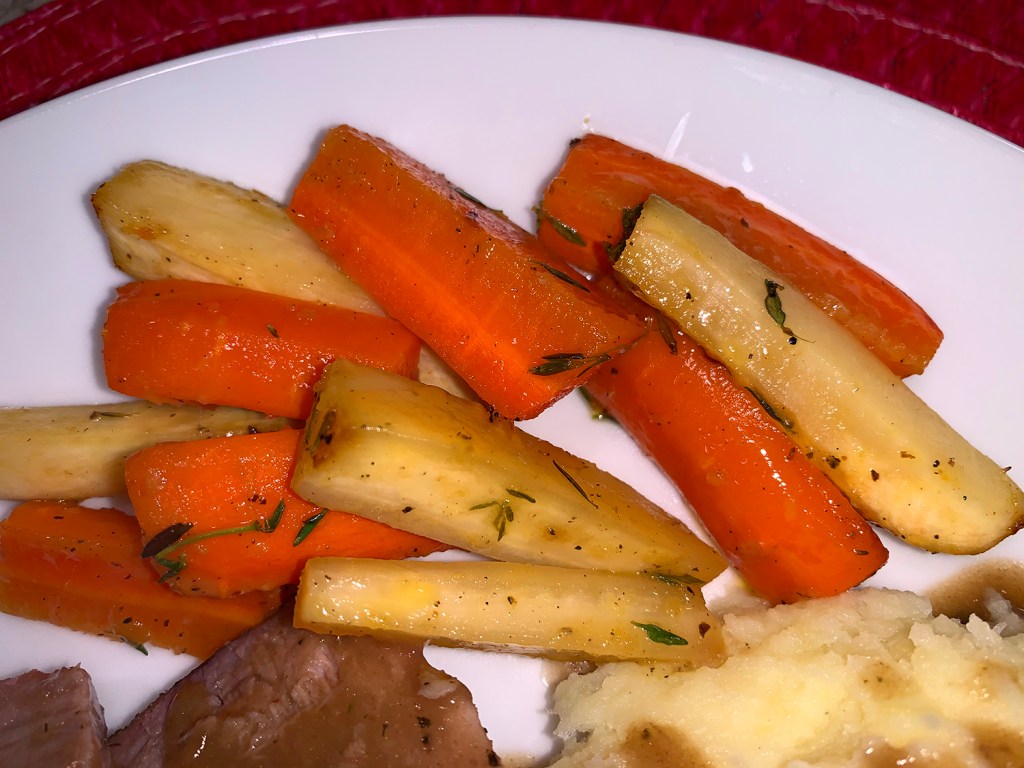
Root vegetables often get a bad rap, so says Cook’s Country. I agree, they can be hard and fibrous and have often been prepared and presented in unappealing ways. But with a creative glaze and tempered cooking, this Roasted Glazed Parsnips and Carrots with Orange and Thyme recipe breaks out of its place as a humble side dish and gets ready to shine.

Cooking root vegetables in liquid transforms their fibrous textures into silky, tender morsels. Root vegetables do an amazing job of absorbing the flavor of the liquid they are cooked in. Chicken stock and water mixed with ingredients like onions, herbs and vinegar creates just the right addition. Sweeteners such as jellies, jams and syrups help bring out the natural sweetness of the vegetables and help tame any bitter flavors.

Our mistake was cutting the entire recipe in half. For only two of us, two pounds of veggies seemed like a lot, so we made it with a half-pound each of carrots and parsnips. What we shouldn’t have done was decrease all of the other ingredients too because ours ended up being a little too dry, not the silky, tender morsels described.

One other note, in Step 3, we would lengthen the time covered in foil to 25-30 minutes to allow the vegetables to steam in the liquid, then remove the foil and continue roasting for another 20 minutes or so. Anyway, we do plan to make again—but with all of the initial ingredients.

Artist Unknown

Roasted Glazed Parsnips and Carrots with Orange and Thyme

  • Servings: 4
  • Difficulty: easy
  • Print

Ingredients

  • 1 lb. carrots, peeled and cut into 2 by 1/2-inch sticks
  • 1 lb. parsnips, peeled and cut into 2 by 1/2-inch sticks
  • 2 tsp. minced fresh thyme leaves
  • 1 Tbsp. cider vinegar
  • 3 Tbsp. orange marmalade
  • 1 tsp. grated fresh ginger
  • Salt and pepper
  • 3 Tbsp. unsalted butter (1 Tbsp. melted and 2 Tbsp. cubed)
  • ½ cup water

Directions

  1. Adjust oven rack to middle position and heat oven to 450 degrees.
  2. Toss carrots, parsnips, 1 teaspoon thyme, vinegar, marmalade, ginger, 1/2 teaspoon salt, 1/8 teaspoon pepper, and melted butter in 13 by 9-inch Pyrex baking dish.
  3. Pour water over vegetables, cover with foil, and roast until vegetables just begin to soften, about 20 minutes.
  4. Remove foil and continue to roast, tossing occasionally, until vegetables are tender and browned and liquid is reduced to thick glaze, 20 to 25 minutes.
  5. Add remaining teaspoon thyme and cubed butter and toss. Adjust seasonings and serve.

http://www.lynnandruss.com

Recipe from Cook’s Country

Pork Roast with Mushroom Gravy

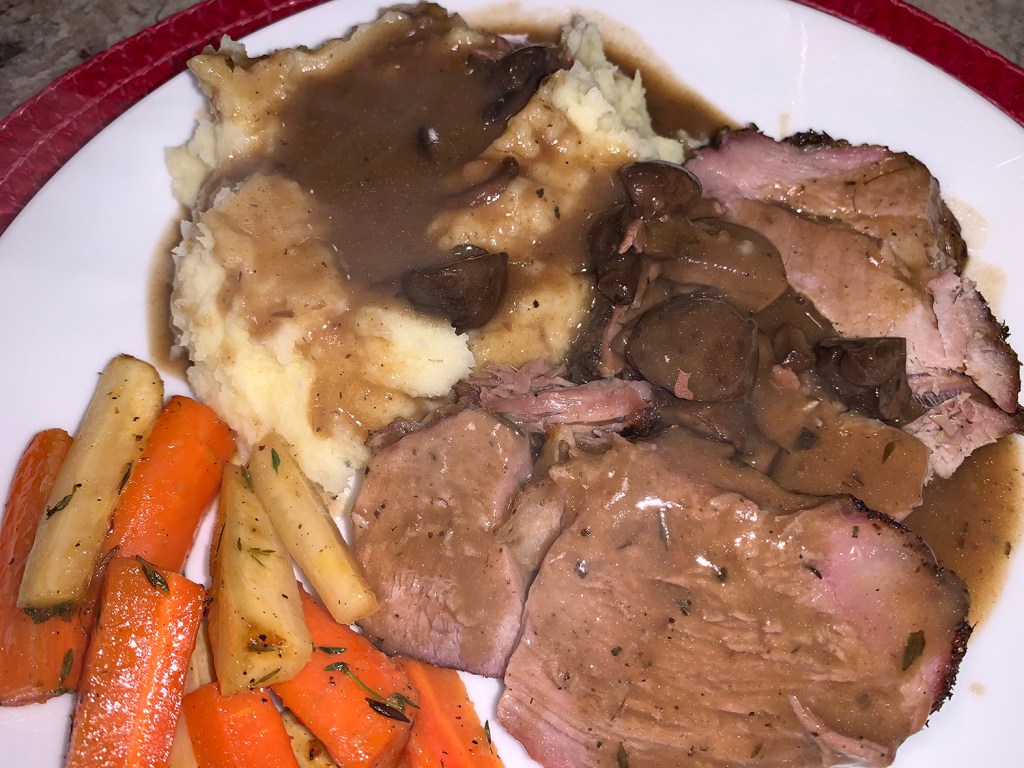
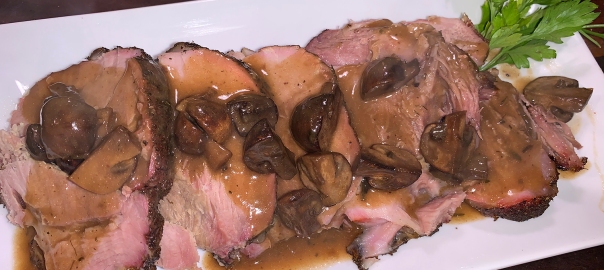
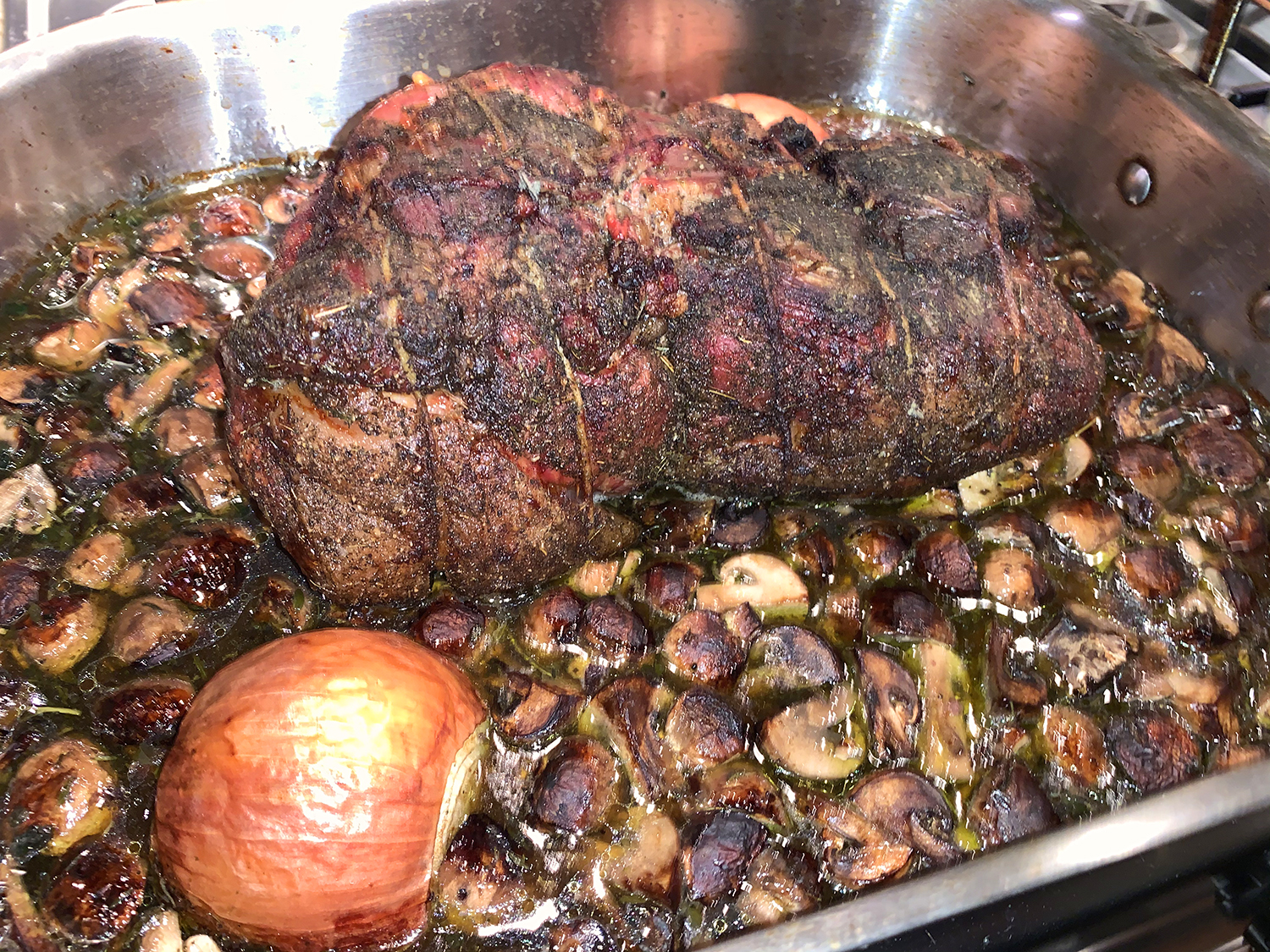
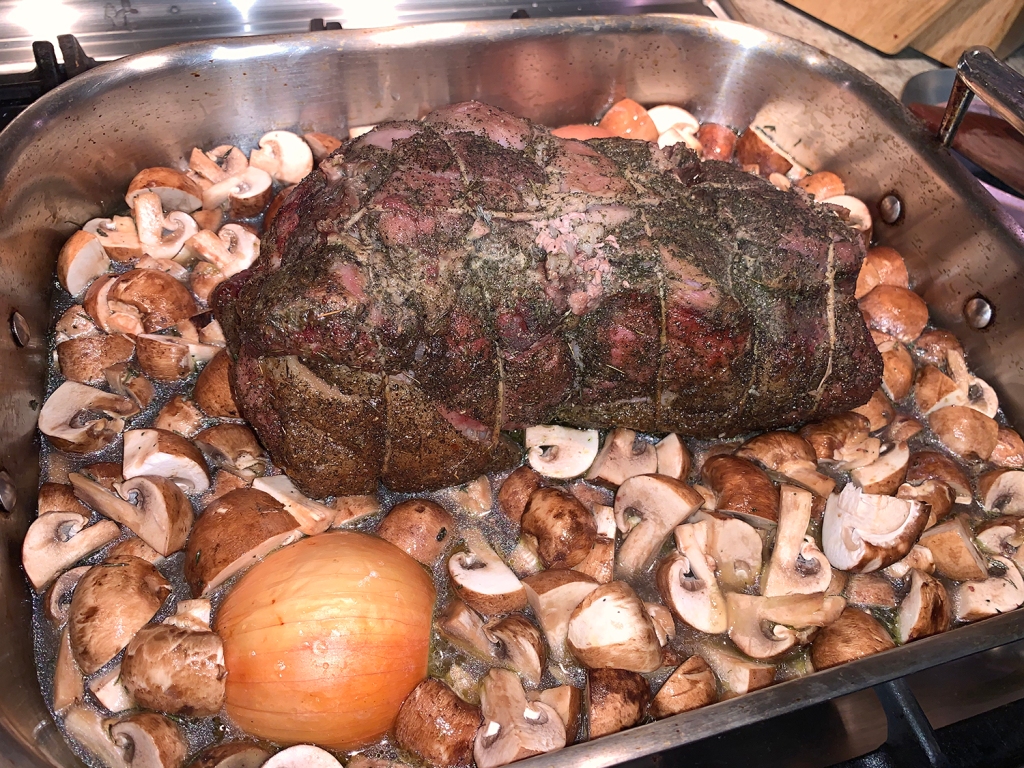
Seven hours may seem like a long time to make dinner, but much of it is hands off, and it is soooo worth it! Pork Roast with Mushroom Gravy might possibly be “the meal” that I would choose if it was going to be my last. Keep in mind, it needs to cook slowly so that the fat melts and the tough connective tissue softens. The original recipe came from Cook’s Country and it was a great starting point for this long, lazy Sunday afternoon braise.

After 6 hours in the oven, the pork has a nice crust and the mushrooms turn a rich brown.

To build a hearty gravy, start with chicken broth and add water. To maximize the mushroom flavor, toss the mushrooms directly into the roasting pan. This not only imbues the broth with deep, woodsy flavor but also allows the mushrooms to soften and caramelize. We even upped the quantity of the funghi by 20% to a full pound-and-a-half (noted in the list of ingredients).

Sometimes not even grocery stores label pork roasts properly. Were you ever confused between a pork shoulder and pork butt? These two cuts of pork are often mixed up. Both come from the shoulder of the pig, but pork butt is higher on the foreleg, while pork shoulder is farther down—confusing to start with, I know. As relatively tough and fatty cuts, both benefit from long, slow cooking methods such as roasting, stewing, and braising.

To begin with, we doubled the seasonings for the rub, wrapped the pork in plastic wrap, and let it get happy in the fridge overnight. Since we love a good gravy, we also increased by 50%, the amount of liquid (broth and water) that went into the roasting pan. Finally, because we did increase the liquid, we needed to balance the amount of flour to make a roux for the gravy. All of our changes are noted below.

To complete the meal, we made garlicky mashed potatoes—a great vehicle for that mushroom gravy—and a side of Roasted Glazed Parsnips and Carrots with Orange and Thyme, recipe also compliments of Cook’s Country.

Pork Roast with Mushroom Gravy

  • Servings: 6-8
  • Difficulty: easy
  • Print

Ingredients

  • 1 (4- to 5-pound) boneless pork shoulder roast, fat trimmed to 1/8 inch thick
  • 1 Tbsp. dried thyme
  • 1 Tbsp. dried sage
  • 1 Tbsp.. salt
  • 2 tsp. pepper
  • 1 onion, peeled and halved
  • 24 oz. cremini or white mushrooms, quartered
  • 1 1/2 cups chicken broth, preferably homemade
  • 1 1/2 cup  water
  • 1 bay leaf
  • 4 Tbsp. all-purpose flour

Directions

  1. PREP PORK Adjust oven rack to lower-middle position and heat oven to 300 degrees. Pat pork dry with paper towels and rub all over with 2 teaspoon thyme, 2 teaspoon sage, salt, and pepper. Tie roast at 1-inch intervals with kitchen twine. The roast can be seasoned and refrigerated overnight until ready to cook.
  2. ROAST PORK Arrange roast, fat side up, in roasting pan and cook until beginning to brown, about 3 hours. Add onion, mushrooms, broth, 1 cup water, bay leaf, remaining thyme, and remaining sage to pan and continue to roast until meat is well browned and skewer inserted in center meets no resistance, about 3 hours. Transfer roast to cutting board, tent with foil, and let rest 30 minutes.
  3. STRAIN JUICES Discard onion and bay leaf. Strain contents of roasting pan through fine-mesh strainer into fat separator; reserve mushrooms. Let liquid settle, then pour defatted pan juices (you should have about 2 cups) into measuring cup and add another 1/2 cup water to yield 2½ cups.
  4. MAKE GRAVY Transfer 4 tablespoons of fat from separator (we did not have enough fat so we added butter too) to large saucepan and heat over medium-high heat until shimmering. Stir in flour and cook until golden, stirring constantly, 1 to 2 minutes. Slowly whisk in pan juices and bring to boil. Add reserved mushrooms and simmer over medium-low heat until gravy is slightly thickened, about 5 minutes. Remove twine from pork. Cut pork into 1-inch slices. Serve with gravy.

http://www.lynnandruss.com

Adapted from a recipe by Cook’s Country

Traditional Japanese Dinner Chez Tae

Thanks to my brother Bill’s girlfriend Tae (pronounced “tie”), we were recently treated to a traditional multi-course Japanese dinner at her place in Bryn Mawr, PA. Russ was really looking forward to it because he embraces all Japanese cuisine including sashimi, which is raw fish. That is where I typically start to get a bit apprehensive.

We had barely arrived when we were shown to our seats at the dining room table and out came the first course. According to Tae who gave me the menu descriptions, she called the white component Shiraae: consisting of tofu, snow peas, dried shiitake mushroom, fried tofu, corn, konnyaku (konnyaku yum jelo) in white miso sauce.

On the rest of that first plate was Kinpira gobo: brown shreds of gobo, a root vegetable, and carrot with chili pepper and sesame oil. Finally completing plate one was Hijiki: the black hijiki seaweed and carrot, konnyaku, fried tofu, edamame in sakke, dashi, and soy sauce. And that was all just the first course!

Now I have to admit, I cannot use chop sticks. Over the years I tried and failed on umpteen occasions, only to end in frustration, so I just gave up. Therefore, I had to ask Tae for a fork. (She also noted later that I was also struggling without a knife and one quickly found its way to my seating.) We all had a chuckle when Tae indicated that brother Bill, an avowed meat eater, quickly learned the art of manipulating chop sticks and that it actually slows him down—he’s a rather fast consumer of food, to put it politely.

With each course, Tae also served a small portion of an alcoholic beverage such as champagne, sake and white wine.

No sooner had Tae whisked away our plates when she supplied course number two, Mackerel Ceviche in rice vinegar, soy sauce, sugar and konbu dashi with shiso leaves and myoga (Japanese ginger flower). This is where I thought I’d have to forego the offering, although after one taste, I realized it was really good (but I drew the line at consuming the skin).

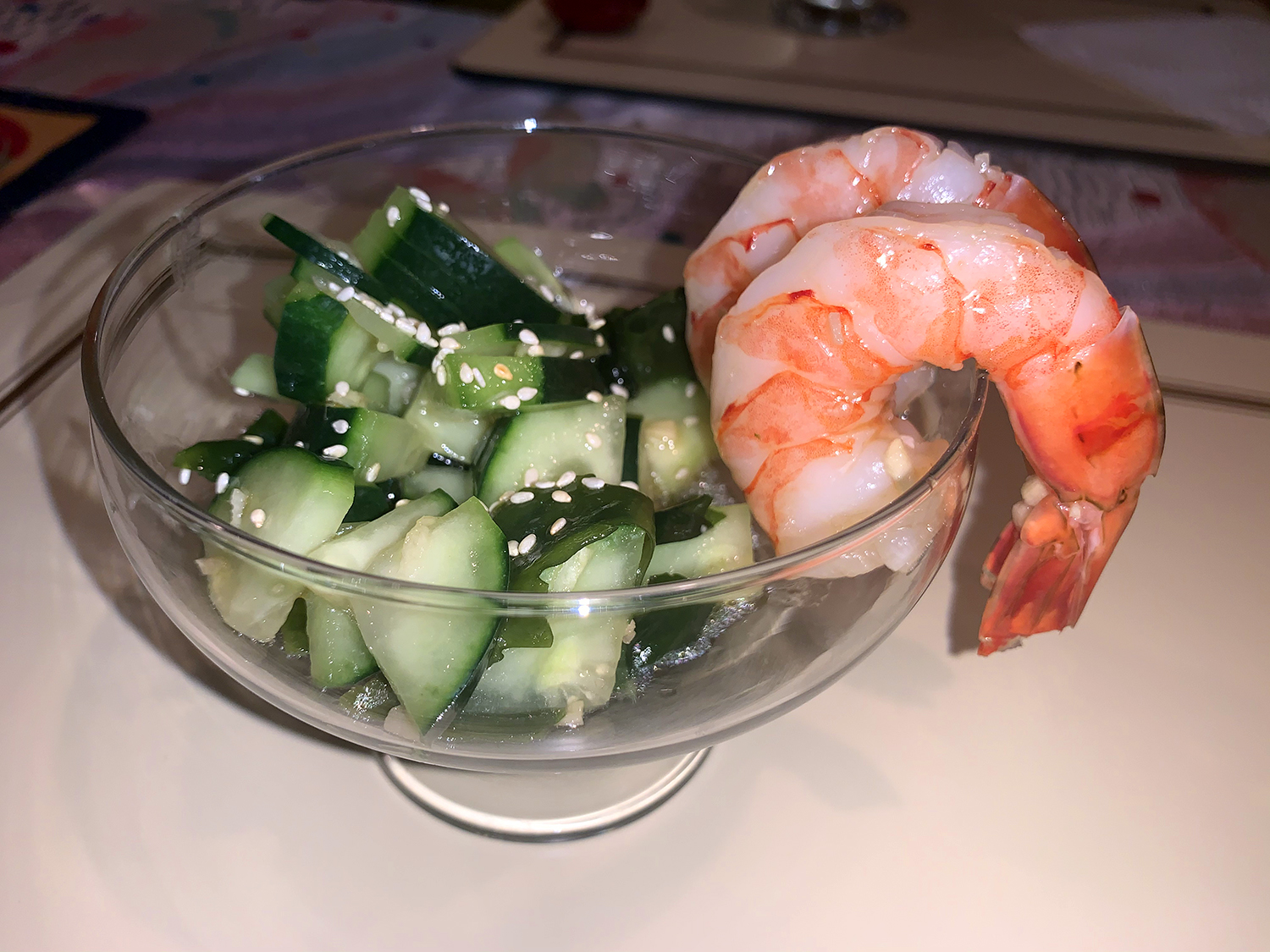
What came next was a cleverly plated Cucumber and Wakame (seaweed) Salad with shredded ginger, a couple of plump shrimp and sprinkled with sesame seeds. Delish!

Round number three was Boiled Daikon Radish in konbu and rice with ginko nuts, a white miso sauce and topped with salmon eggs. Very different than anything I’ve ever had before, but very good!

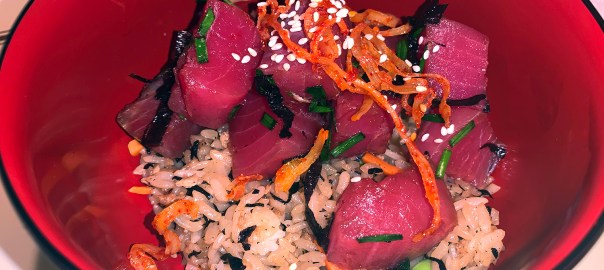
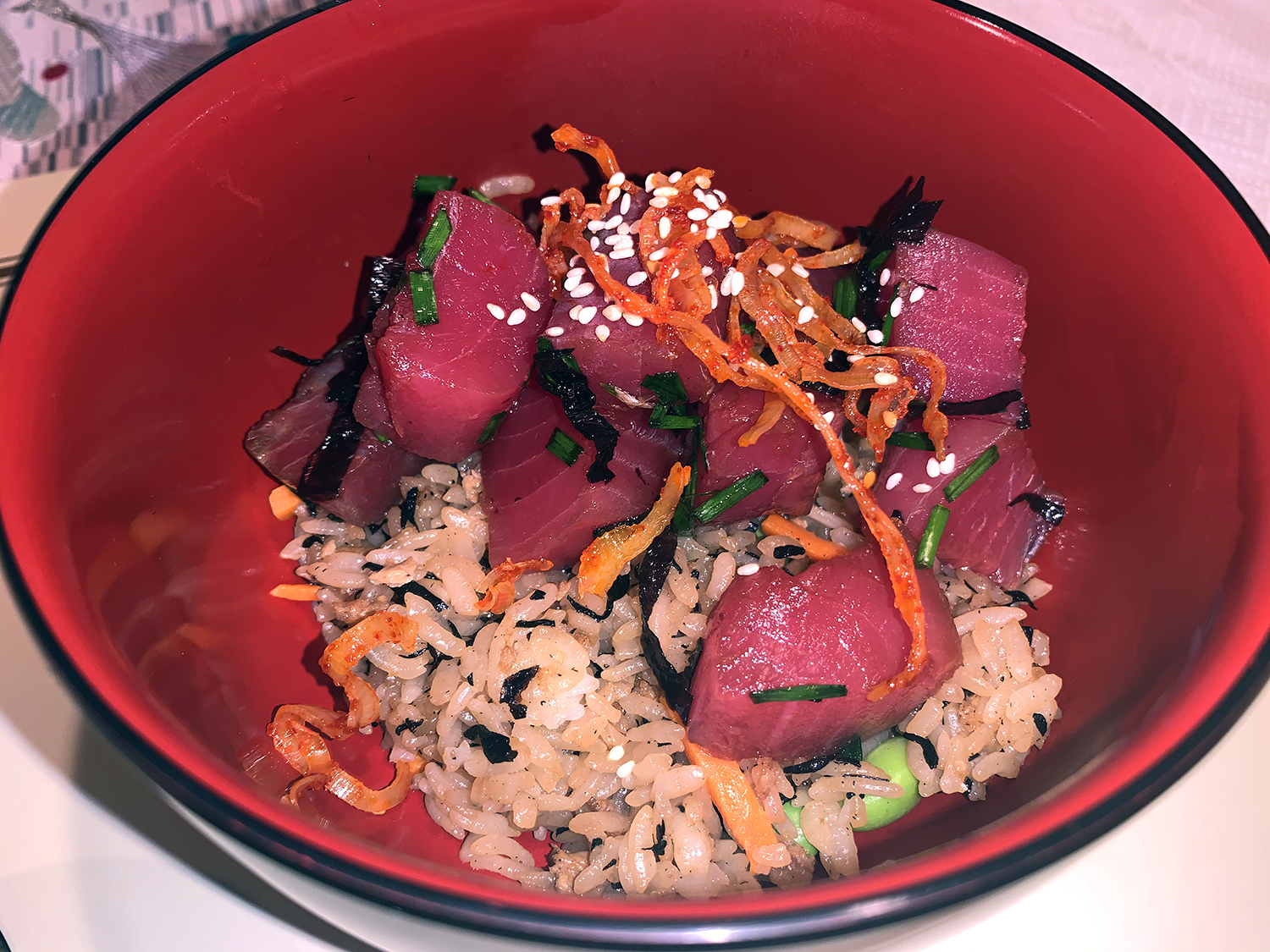
By now I am noticing Tae often retreated from the tiny kitchen to a bedroom (she calls her craft room) retrieving various dishware. I had to marvel at all of the intricate plates and bowls, especially for the next course Ahi Poke. It was ahi tuna marinated with nori and chives on mixed rice topped with dried squid and Takuan, pickled daikon, probably my favorite course of the night, and arguably the most beautiful.

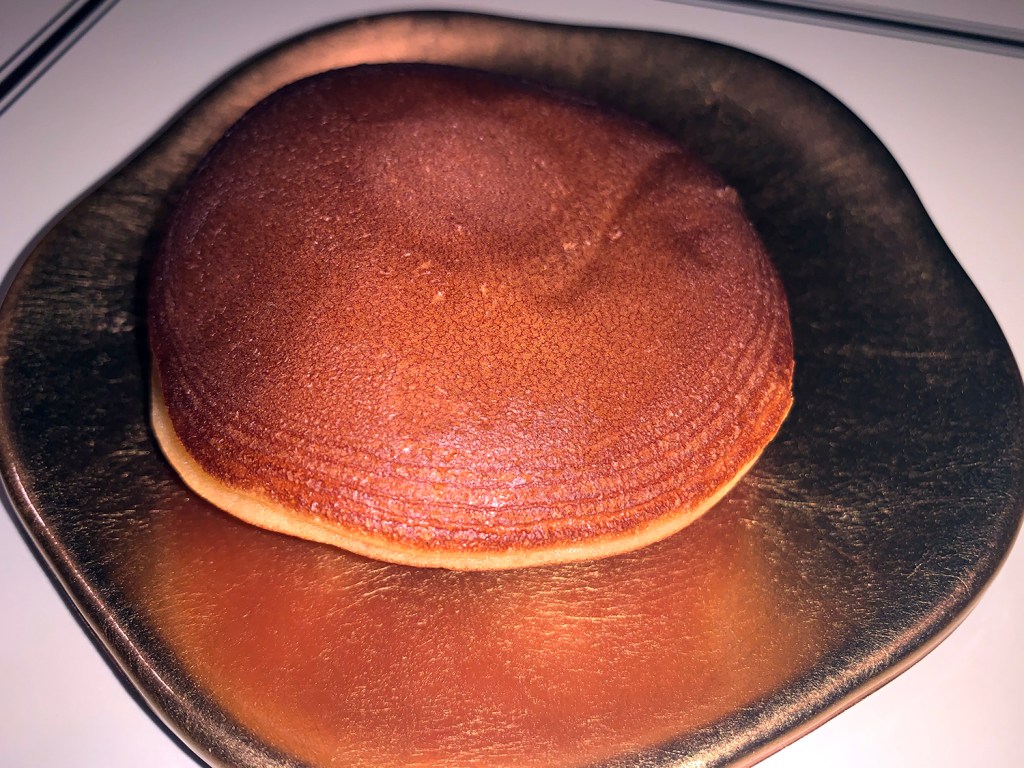
By this time, I couldn’t eat another bite, in fact, I asked for a doggie bag for the remainder of my ahi poke. But there was still one last course to be had. Along with the Red Bean Sweet (although Russ claimed it wasn’t sweet at all) on a gold side dish, we were treated to Macha green tea, which I truly enjoyed.

After a few hours of chit chat it was time to bid Sayōnara. But before we left, Tae gifted Russ a set of chop sticks as a parting souvenir. How sweet.

さようなら

Braised Lamb Shanks Provençal

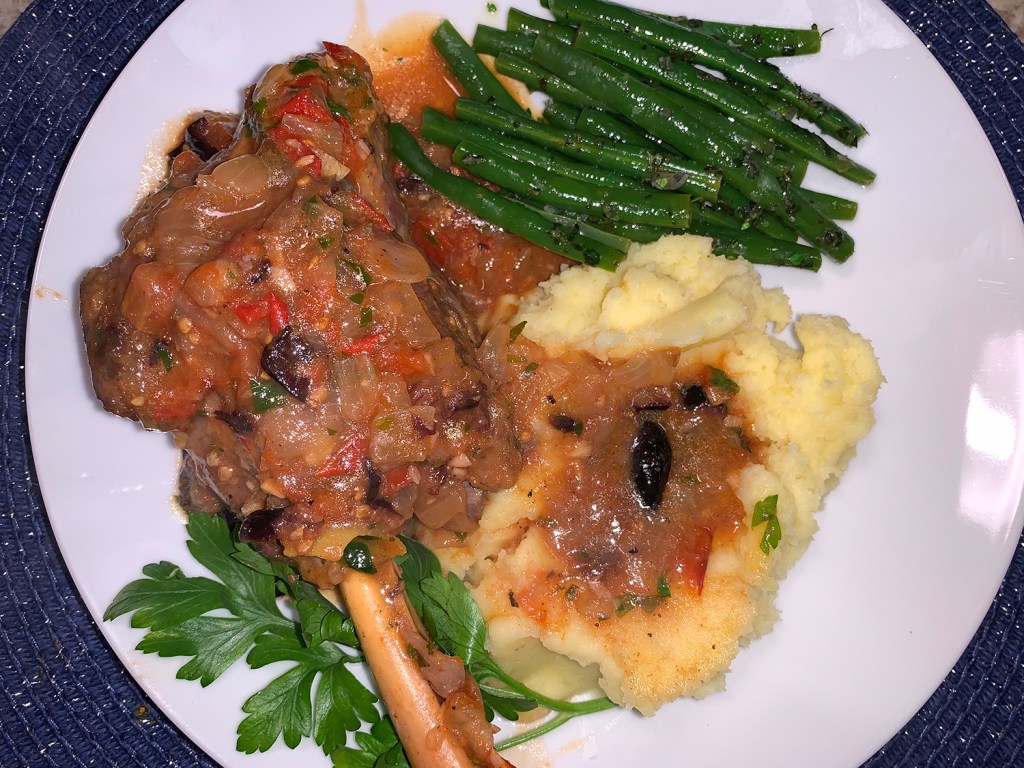
In Autumn, the first nips of cold air waken our desire for braised dishes which take hours in the oven permeating the house with wonderful appetite-inducing aromas. One of our favorite go-to chef/authors for slow-cooking recipes is—as I’ve mentioned many times—Molly Stevens. This Braised Lamb Shanks Provençal hails from her All About Braising, a treasury of one-pot meals.

While it is not a complicated dish, you do have to carve out a good chunk of time from start to finish. We happened to have four lamb shanks in the freezer, and while the recipe calls for six, it was only The Hubs and me for dinner, which would also give us scrumptious leftovers for another weeknight.

Make sure to take the time to remove the bit of papery white covering called “fell”, and any large fatty deposits, from the shanks. This will lessen any gamey flavor as the meat is cooked. Best to use a small, sharp knife to loosen the silverskin, but don’t fuss with trying to peel off any of the thin membrane—this holds the shank together and will melt down during braising. (Oops, I may have gotten a little carried away and removed some of the silver skin too, mea culpa.)

If you’ve never removed “fell” before, you can check out this short YouTube video for a quick tutorial. https://www.youtube.com/watch?v=6Qvf98zVzCk

A cherished side dish as an accompaniment for braised dishes is garlicky mashed potatoes—sigh. And this lamb dish provides plenty of luscious sauce for topping those spuds. Steamed green beans with a lemony vinaigrette completed the meal.

Braised Lamb Shanks Provençal

  • Servings: 6
  • Difficulty: moderate
  • Print

Ingredients

  • 6 lamb shanks (about 1 pound each)
  • All-purpose flour for dredging (about 1 cup)
  • 1 Tbsp. plus ½ teaspoon sweet Hungarian paprika
  • Coarse salt and freshly ground black pepper
  • 1 Tbsp. extra-virgin olive oil
  • 2 large yellow onions (about 1 pound total), chopped into ½-inch pieces
  • 1 lb. plum tomatoes, coarsely chopped (or one 14½-ounce can whole peeled tomatoes, coarsely chopped, juice reserved)
  • 4 garlic cloves, finely minced
  • 1 cup dry white wine or dry white vermouth
  • 1 cup chicken stock, homemade or store-bought
  • 2 lemons
  • 3 small or 2 large bay leaves
  • ½ cup pitted and coarsely chopped oil-cured black olives, such as Nyons or Moroccan
  • ¼ cup coarsely chopped flat-leaf parsley

Directions

  1. Heat the oven to 325°F.
  2. Trim the lamb shanks: If the shanks are covered in a tough parchment-like outer layer (called the fell), trim this away by inserting a thin knife under it to loosen and peeling back this layer. Remove any excess fat as well, but don’t fuss with trying to peel off any of the thin membrane—this holds the shank together and will melt down during braising.
  3. Dredge the lamb shanks: Pour the flour into a shallow dish and stir in 1 tablespoon of the paprika. Season the shanks all over with salt and pepper. Roll half the shanks in the flour, lifting them out one by one and patting to remove any excess, and set them on a large plate or tray, without touching.
  4. Brown the lamb shanks: Heat the oil in a large heavy-based braising pot (6- to 7- quart) over medium heat until it shimmers. Add the 3 flour-dredged shanks (you’re searing in two batches so as not to crowd the pot). Cook, turning the shanks with tongs, until they are gently browned on all sides, about 10 minutes total. Transfer the shanks to a plate or tray, without stacking or crowding. Dredge the remaining shanks in flour, patting to remove any excess, and brown them. Set beside the already browned shanks, and discard the remaining flour.
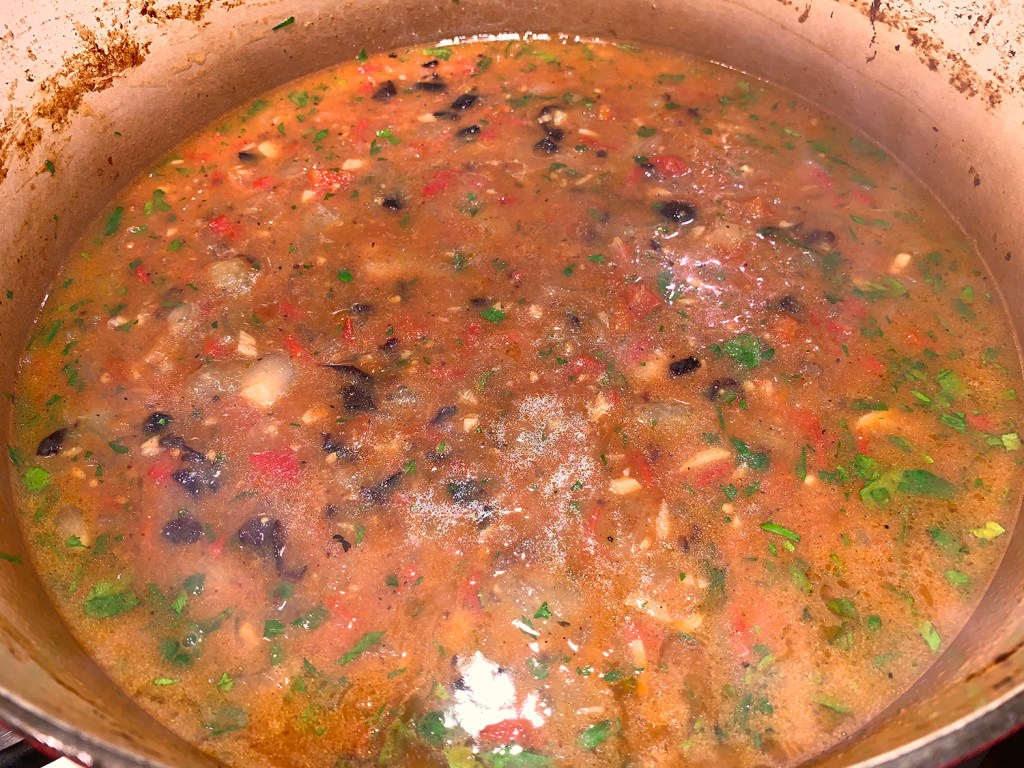
  5. Make the aromatics and braising liquid: Pour off all but 1 tablespoon of fat from the pot and return the pot to the heat. If the bottom of the pot is at all blackened, wipe it out with a damp paper towel, being careful to leave behind any tasty caramelized drippings. Add the onions, tomatoes with their juice, and the garlic and season with the remaining ½ teaspoon paprika and salt and pepper to taste. Sauté over medium heat, stirring occasionally, for 8 to 10 minutes, or until the onions are mostly tender. Pour in the wine and stir and scrape with a wooden spoon to dislodge any browned bits on the bottom of the pot that will contribute flavor to the liquid. Simmer for 3 minutes. Pour in the stock, stir and scrape the bottom again, and simmer for another 3 minutes.
  6. Meanwhile, zest the lemon: Using a vegetable peeler, remove the zest from half of 1 lemon, being careful to remove only the outermost yellow zest, not the bitter-tasting white pith; reserve the lemon. Add the zest to the pot, along with the bay leaves.
  7. Make the braise: Arrange the lamb shanks on top of the vegetables. The shanks should fit fairly snugly in the pot, but you may need to arrange them “head-to-toe” so they fit more evenly. Don’t worry if they are stacked in two layers. Cover the pot with parchment paper, pressing down so that it nearly touches the lamb and the edges of the paper extend about an inch over the side of the pot. Set the lid in place, slide the pot into the lower part of the oven, and braise for about 2½ hours. Check the shanks every 35 to 45 minutes, turning them with tongs and moving those on top to the bottom and vice versa, and making sure that there is still plenty of braising liquid. If the liquid seems to be simmering too aggressively at any point, lower the oven heat by 10 to 15 degrees. If the liquid threatens to dry out, add ⅓ cup water. The shanks are done when the meat is entirely tender and they slide off a meat fork when you try to spear them.
  8. Segment the lemon: While the shanks braise, use a thin-bladed knife (a boning knife works well) to carve the entire peel from the 2 lemons. The easiest way to do this is to first cut off the stem and blossom end of each one so the lemon is flat on the top and bottom. Then stand the lemon up and carve off the peel and white pith beneath it with arcing slices to expose the fruit. Trim away any bits of pith or membrane that you’ve left behind, until you have a whole naked lemon. Now, working over a small bowl to collect the juices, hold a lemon in one hand and cut out the individual segments, leaving as much of the membrane behind as you can. Drop the segments into the bowl, and pick out the seeds as you go. When you finish, you should be holding a random star-shaped membrane with very little fruit pulp attached. Give this a squeeze into the bowl and discard. Repeat with the second lemon.
  9. The Finish: Transfer the shanks to a tray to catch any juices, and cover with foil to keep warm. Using a wide spoon, skim as much surface fat from the cooking liquid as possible. Lamb shanks tend to throw off quite a bit of fat: continue skimming (tilting the pot to gather all the liquid in one corner makes it easier) until you are satisfied. (We barely had any fat.) Set the pot over medium heat and bring to a simmer. Stir in the lemon segments, olives, and parsley. Taste for salt and pepper. Return the shanks to the braising liquid to reheat for a minute or two. Serve with plenty of sauce.

http://www.lynnandruss.com

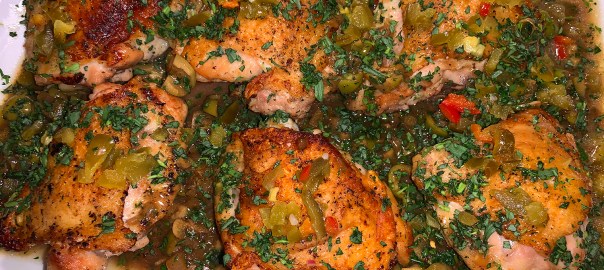
White Balsamic Chicken with Tarragon

Sweet-tart white balsamic vinegar and tangy Peppadew peppers bring flavor and color to this weeknight chicken dish found on Milk Street. White balsamic, which is not cooked and aged as long as regular balsamic vinegar, has a mellow acidity that complements the peppadews, a variety of small, sweet peppers from South Africa.

Peppadews add slight heat and additional sweetness, as well as a vivid splash of red. Find them (or not) jarred at most grocery stores, and sometimes loose at the olive bar. Unable to locate peppadews, we substituted cherry peppers. And for some odd reason, there were no plain pitted green olives (no open olive bar during COVID) and all the jarred versions were pimento stuffed. Frustrating yes, but in the end… FRIGGIIN’ delicious!!

Packed with Flavor

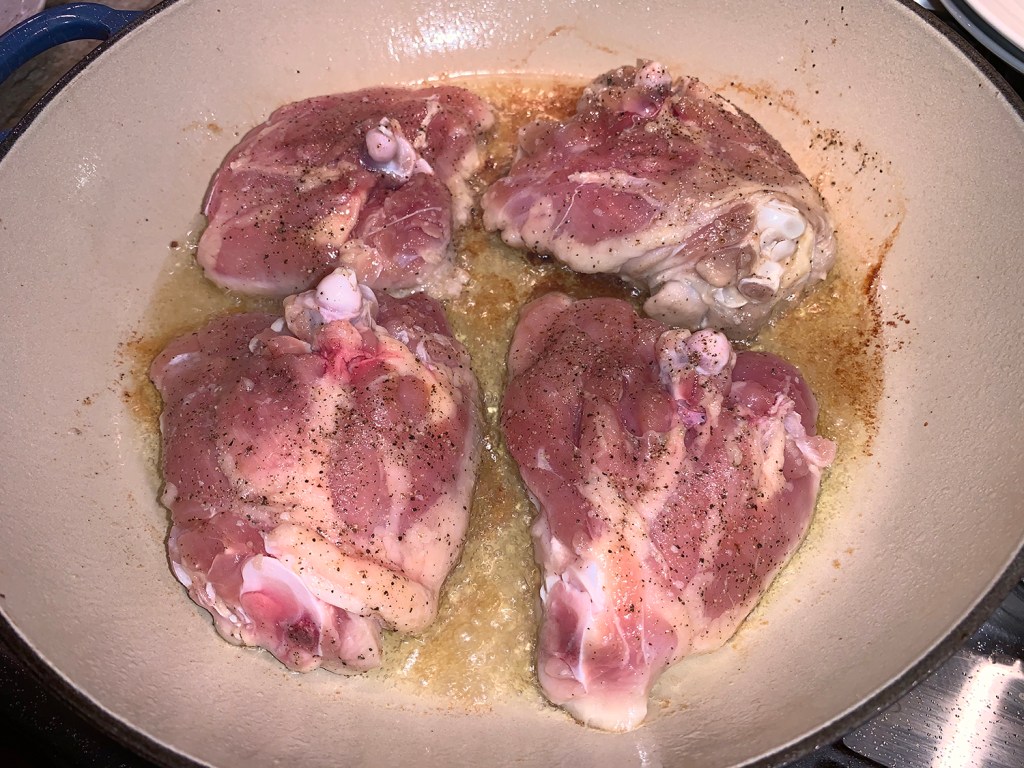
Don’t rush rendering the fat from the skin on the chicken thighs. The skin should be golden brown and feel crisp. When reducing the sauce before serving, add water if the liquid is less than 1 cup. It took us extra time to get the sauce reduced to one cup, more like 6 minutes,

The sauce was just bursting with flavor and the chicken retained crispy exteriors and juicy interiors. Some serving suggestions are with roasted sweet potatoes—our choice—boiled baby red potatoes or spinach pasta tossed with butter and poppy seeds.

White Balsamic Chicken with Tarragon

  • Servings: 4
  • Difficulty: easy
  • Print

Ingredients

  • 3 lbs. bone-in, skin-on chicken thighs, trimmed and patted dry
  • Kosher salt and ground black pepper
  • 1 Tbsp. grapeseed or other neutral oil
  • 3 garlic cloves, thinly sliced
  • 1 medium shallot, minced (about ⅓ cup)
  • ¾ cup white balsamic vinegar
  • ¾ cup low-sodium chicken broth
  • ⅓ cup pitted green olives, chopped
  • 4 Tbsp. finely chopped fresh tarragon, divided
  • ⅓ drained peppadew peppers, chopped

Directions

  1. Heat the oven to 450°F with a rack in the middle position. Season the chicken on all sides with salt and pepper.
  2. In a 12-inch oven-safe skillet over medium-high, heat the oil until smoking. Add the chicken, skin down, and cook until fat is rendered and the skin is golden brown, about 5 minutes. (You will probably have to do this in two stages as you don’t want to crowd the pan and steam instead of crisp the skin.)
  3. Transfer the chicken skin up to a plate. Pour off all but 1 tablespoon of fat from the skillet. Stir in the garlic and shallot and cook over medium, stirring occasionally, until light golden brown, about 1 minute.
  4. Add the vinegar and broth and bring to a simmer, scraping up any browned bits. Return the chicken to the skillet, skin up. Transfer to the oven and bake until the chicken reaches 175°F at the thickest part, or a skewer inserted into the thickest part meets no resistance, 12 to 15 minutes.
  5. Transfer the chicken, skin up, to a deep platter and return the skillet to the stovetop (handle will be hot) over medium-high. Bring the sauce to a boil and cook until reduced to about 1 cup, 2 to 3 minutes (or longer if necessary).
  6. Stir in the olives, then taste and season with salt and pepper. Off heat, stir in half the tarragon, then spoon the sauce around the chicken.
  7. Top with Peppadews and the remaining tarragon.

http://www.lynnandruss.com

Adapted from a recipe by Courtney Hill of Milk Street