Monthly Archives: June 2025

Pan-Seared Zucchini with Spicy Honey and Scallions

Come summertime, zucchini is everywhere—if not in your own garden, then an abundance can be found at local farm markets, neighbor’s backyards and the nearby grocery store. But let’s forget dull and watery. “If you treat summer’s most ubiquitous squash with intention, it can sear like a steak and turn downright lush”—so claims Cook’s illustrated (CI). So we had to see for ourselves. OMG, the most luscious zucchini dish we’ve ever experienced!
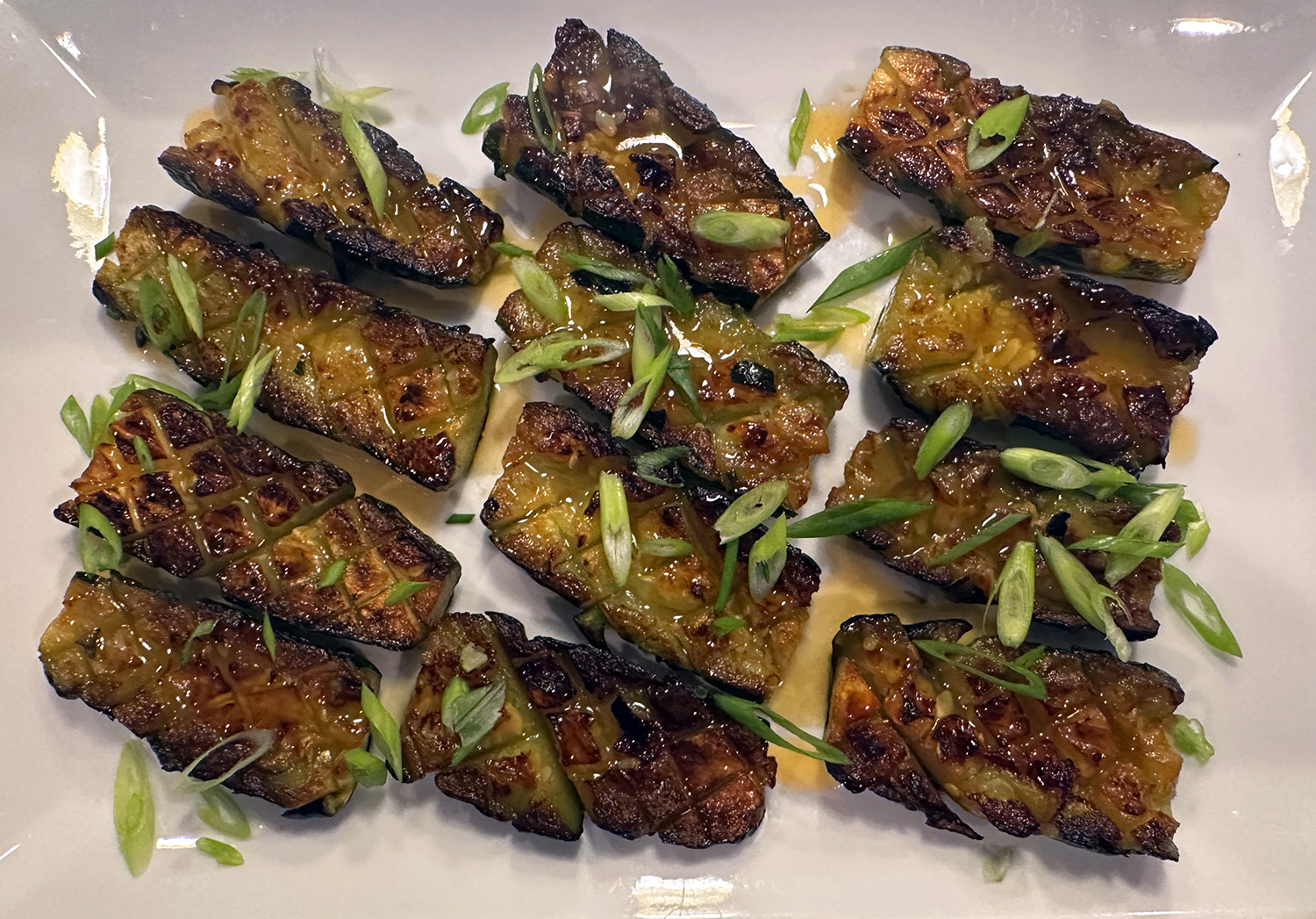
For dense, meltingly soft, and dramatically browned zucchini, CI says to start by halving and scoring the cut surfaces of the squashes, rubbing them with salt, and briefly microwaving them. The salt and heat draws moisture from the flesh, and the slits provided escape routes for the water so that the surfaces are primed for browning.

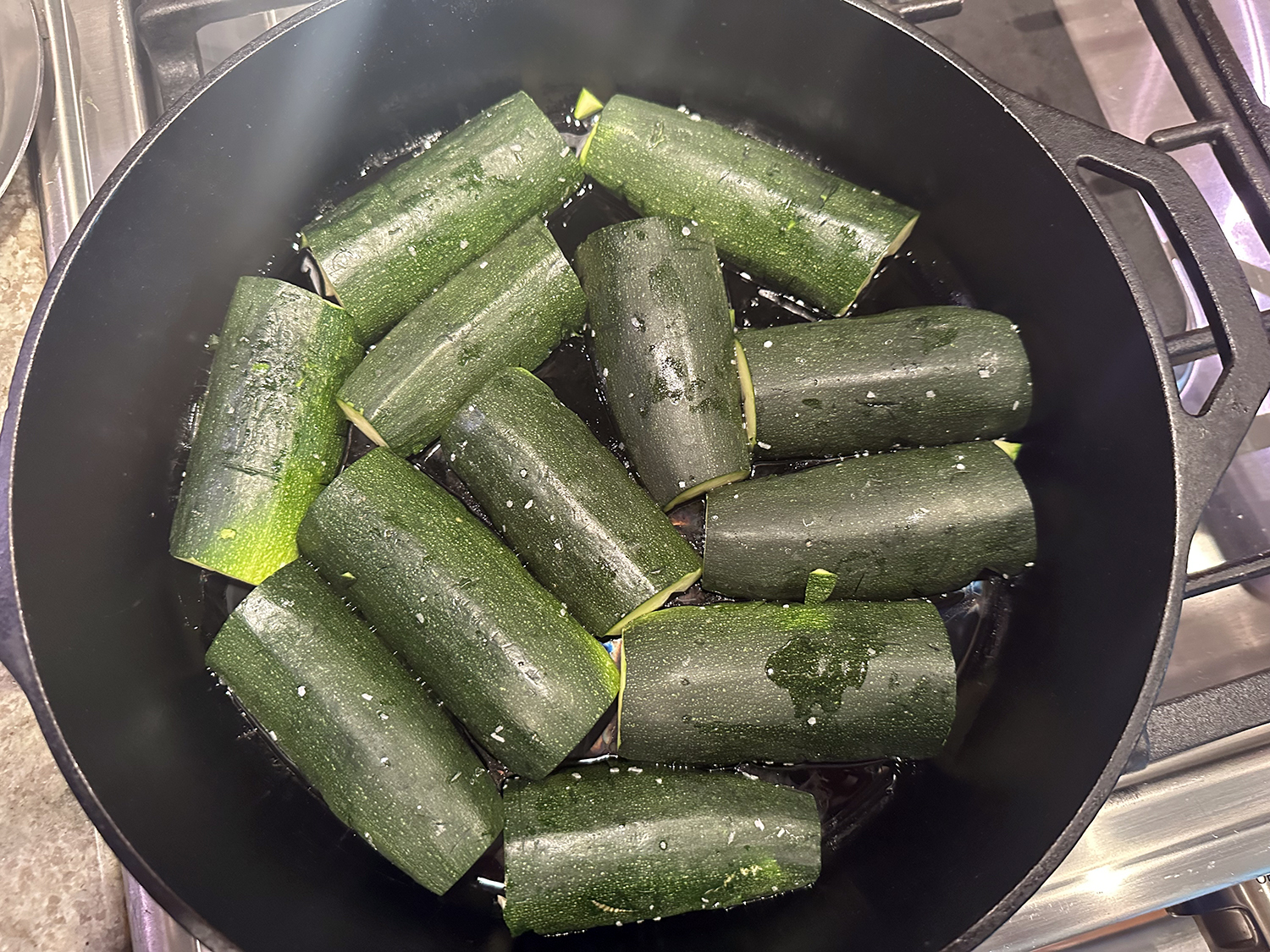
Cooking in a well-oiled cast-iron skillet encourages rich browning; the metal holds the heat really well, and the fat facilitates heat transfer between the pan and the food. Covering the skillet for most of the cooking time traps moist heat that forces air out of the flesh and also dissolves its pectin, rendering the flesh fork-tender.

A mixture of honey and hot sauce, microwaved (or heated in a sauce pan) to a glaze consistency, adds sweetness with a bit of heat; while sliced scallions bring fresh crunch and color. If you taste the sauce by itself, it may seem too spicy. However, once it is spread on the cooked zucchini, it mellows into the perfect blend of sweet and spicy.

Instead of microwave: Reduce the honey mixture in a saucepan on the stovetop. Leave the salted zucchini cut side down on the paper towels for 30 minutes to drain and add a couple of minutes to the cooking time.

*NOTE: After reading other recipe reviewers comments that after you remove the lid from the pan and flip the zucchini, the pieces on the outer edge were not fully browned. This happened to us also. So if needed, rearrange zucchini from middle to outer edges, and cook the scored surfaces another 3 minutes without covering to char all pieces evenly.
Then flip, and cook another 3 minutes uncovered.

Pan-Seared Zucchini with Spicy Honey and Scallions

  • Servings: 4
  • Difficulty: easy
  • Print

Ingredients

  • 2 Tbsp. honey
  • 1 Tbsp. hot sauce
  • 3 zucchini (8 oz. each), halved lengthwise
  • 2 tsp. kosher salt
  • 3 Tbsp. vegetable oil
  • 1 scallion, sliced thin on bias

Directions

  1. Whisk honey and hot sauce together in 1-cup liquid measuring cup. Microwave until mixture comes to boil, 30 to 45 seconds. Continue to microwave, stirring every 30 seconds, until sauce is slightly thickened, about 1 minute (sauce will continue to thicken as it cools).
  2. Using sharp paring knife, score cut sides of zucchini diagonally, about ¼ inch deep, at ½-inch intervals. Turn zucchini 90 degrees and score again in opposite direction. Place scored zucchini halves close to each other, cut side up, on cutting board. Sprinkle salt evenly over halves. Rub salt into cut sides until mostly dissolved.
  3. Line large plate with double layer of paper towels. Place zucchini cut side down on paper towels and press gently. Microwave until zucchini has exuded water and is hot to touch, about 3 minutes. Cut each piece in half crosswise.
  4. Spread oil over surface of cold 12-inch cast-iron skillet. Arrange zucchini cut side down in skillet and press to ensure that cut sides are flush with skillet surface (reserve paper towel–lined plate). Cover skillet. Cook over medium-high heat, rotating skillet one-quarter turn every 2 minutes for even cooking, until cut sides are deeply browned, 8 to 10 minutes.
  5. Slide skillet off heat. Uncover and turn zucchini cut side up. (*See above note regarding evenly browned surfaces.) Return to medium-high heat and continue to cook, uncovered, until paring knife meets little to no resistance when slipped into center of squash, 2 to 3 minutes longer. Transfer zucchini cut side up to reserved paper towel–lined plate to drain for 5 minutes.
  6. Transfer zucchini cut side up to platter. Drizzle with honey mixture, sprinkle with scallion, and serve.

http://www.lynnandruss.com

Adapted from a recipe by Andrea Geary for Cook’s Illustrated

Campanelle Salad with Shrimp, Cabbage an Scallion-Ginger Dressing

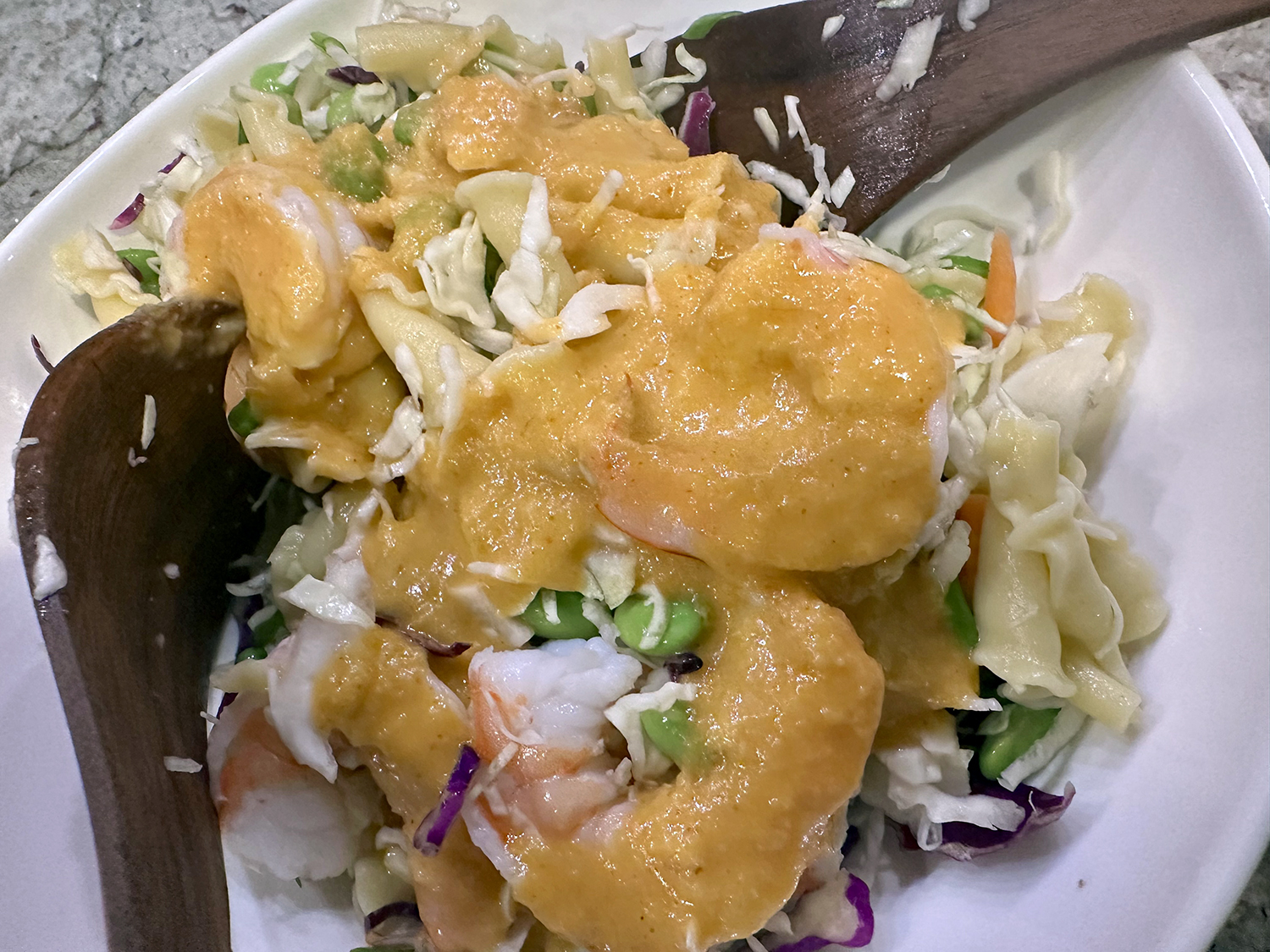
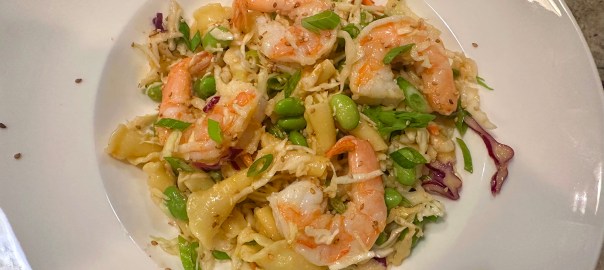
When it’s too hot to cook, a cool salad with little prep is a go-to in our household. So this campanelle salad from Cook’s Illustrated chock-full of crunchy vegetables and succulent shrimp fits the bill.

The pasta is intentionally overcooked here. When cooked pasta is refrigerated, it goes through a process called retrogradation in which the water in the noodles becomes bound up in starch crystals, making the pasta firm and dry. But if you’re making a cold pasta salad, you can make retrogradation work to your advantage by boiling the pasta 2 or 3 minutes beyond al dente. This way the pasta’s starch absorbs more water and becomes extra-soft so that when it firms up with cooling, the final texture is just right.

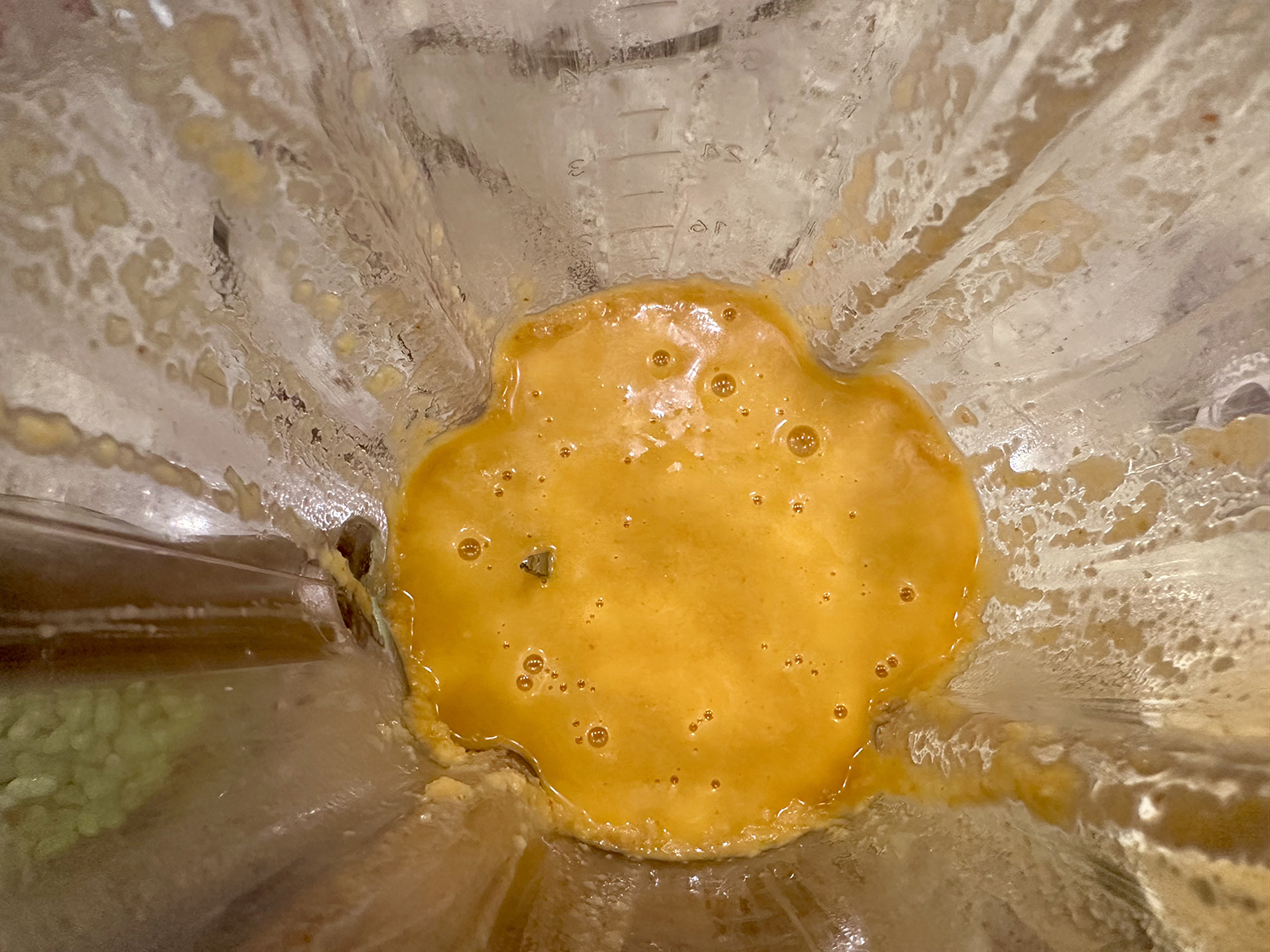
While numerous reviewers were somewhat disappointed in the dressing—it was too gingery, too vinegary, etc.—we found it to be almost perfect! (The amount of sriracha we used was reduced slightly.) Another change included cooking the edamame with the pasta 1 minute longer.

NOTES: If campanelle is unavailable, substitute penne. There’s no need to peel the ginger; just give it a thorough wash. Use the full amount of sriracha if you’re a fan of spice. We intentionally overcook the pasta in this recipe so that it remains tender, even when served cold. If making this salad ahead, dress the salad and then garnish it with the scallion greens and sesame seeds right before serving. A mix of white and black sesame seeds is desired, but it’s fine to use 2 teaspoons of either.

If feeding only two or three, place the desired amount of salad mix in a large bowl then stir in dressing and plate. Reserve any leftover salad and dressing in separate sealed containers for the next day.

Campanelle Salad with Shrimp, Cabbage an Scallion-Ginger Dressing

  • Servings: 4-6
  • Difficulty: easy
  • Print

Ingredients

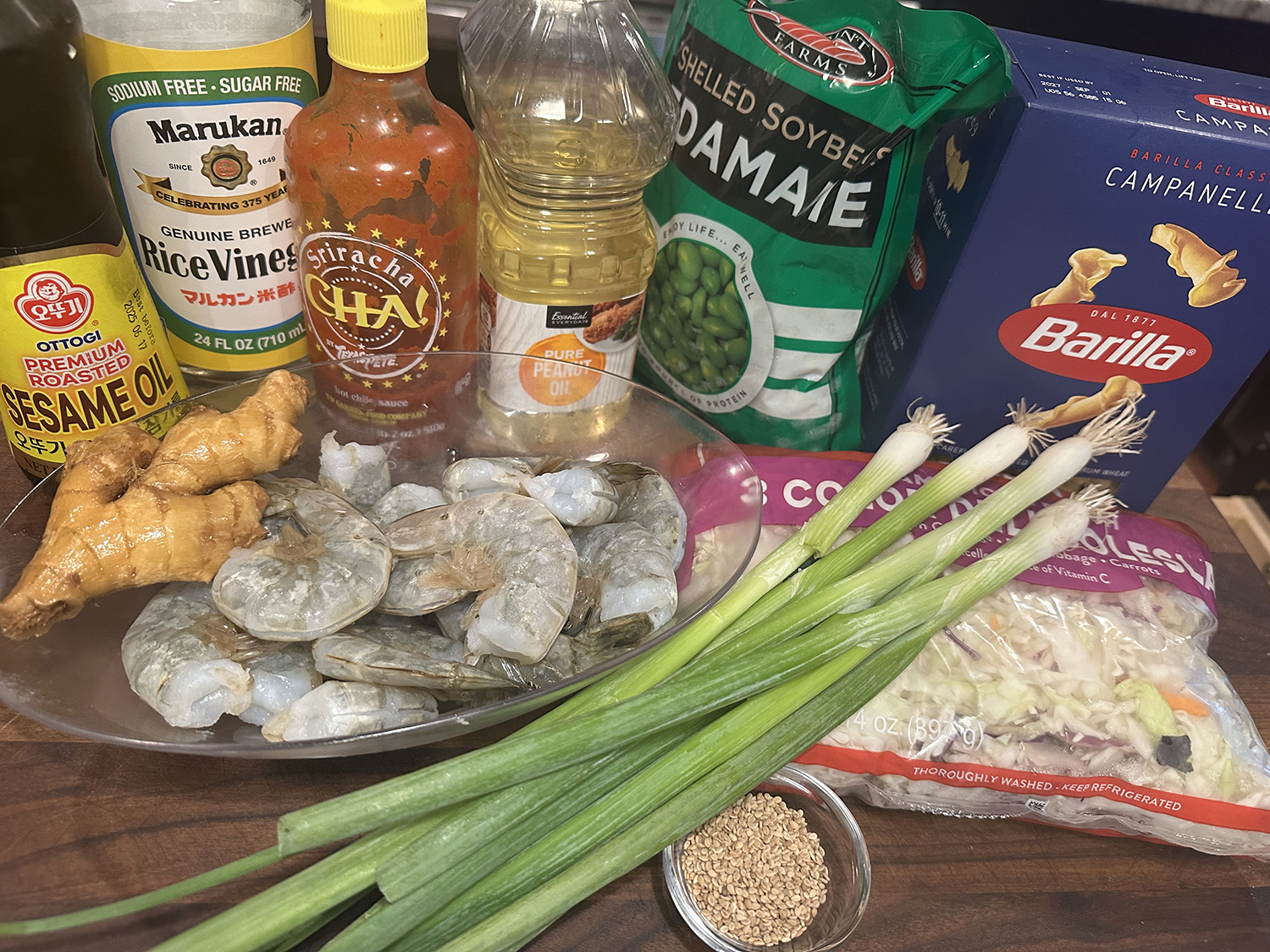
  • 1 lb. large shrimp (26 to 30 per lb.), peeled, deveined, and tails removed
  • 1¼ tsp. table salt, plus salt for cooking pasta and shrimp
  • 8 oz. (2½ cups) campanelle
  • 8 oz. frozen shelled edamame
  • 4 cups (11 oz.) shredded green coleslaw mix
  • 4 scallions, white parts chopped, green parts sliced thin on bias, divided
  • ⅓ cup chopped fresh ginger
  • ⅓ cup unseasoned rice vinegar
  • 1½ Tbsp. sriracha
  • 2 tsp. toasted sesame oil
  • ½ cup vegetable oil
  • 1 tsp. black sesame seeds, toasted
  • 1 tsp. white sesame seeds, toasted

Directions

  1. Bring 3 cups water to boil in large saucepan over high heat. Stir in shrimp and 1 tablespoon salt. Cover and let stand off heat until shrimp are opaque, about 5 minutes, shaking saucepan halfway through. Using spider skimmer or slotted spoon, transfer shrimp to colander; rinse with cold water until cool. Drain well and transfer to large bowl. Add 1 quart water to water in saucepan and return to boil.
  2. Add pasta and 1½ teaspoons salt to boiling water and cook until pasta is al dente. Add edamame to saucepan with pasta and cook 2 minutes more. Drain and rinse with cold water. Drain well and add to shrimp along with coleslaw mix and two-thirds of scallion greens.
  3. Process scallion whites, ginger, vinegar, sriracha, sesame oil, and salt in blender until coarse paste forms, about 30 seconds. With blender running, slowly drizzle in vegetable oil until dressing is emulsified and smooth, about 1 minute.
  4. Pour dressing over salad and toss to combine. Transfer to serving bowl. Sprinkle with remaining scallion greens and sesame seeds and serve.

http://www.lynnandruss.com

Adapted from a recipe by Andrea Geary for Cook’s Illustrated
Panang Curry

Rich with coconut milk and crushed peanuts, panang curry, also known as phanaeng or panaeng curry, is subtly spiced with coriander and cumin. This version is made with chicken, but you’ll often find it made with beef and sometimes prawns.

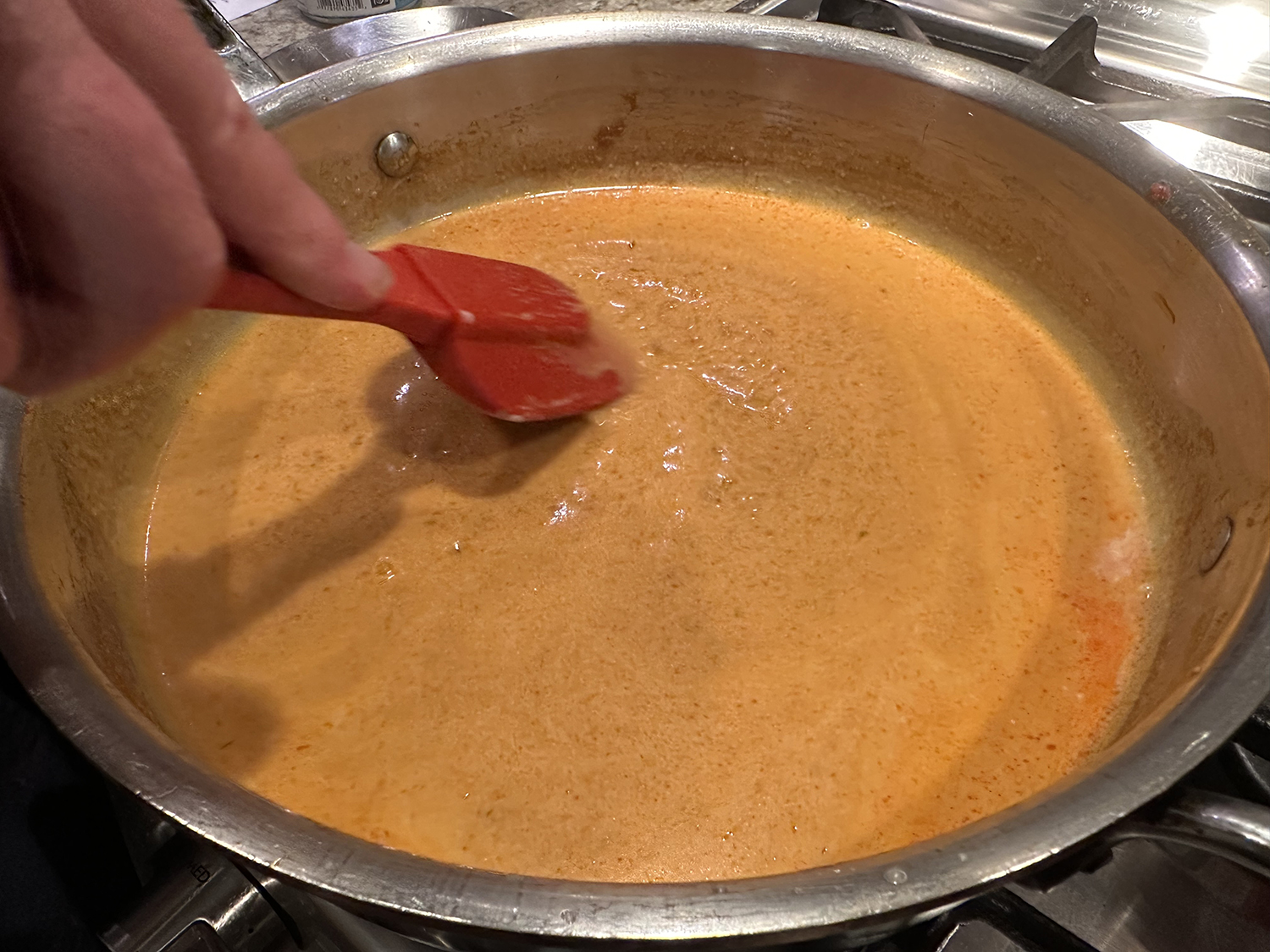
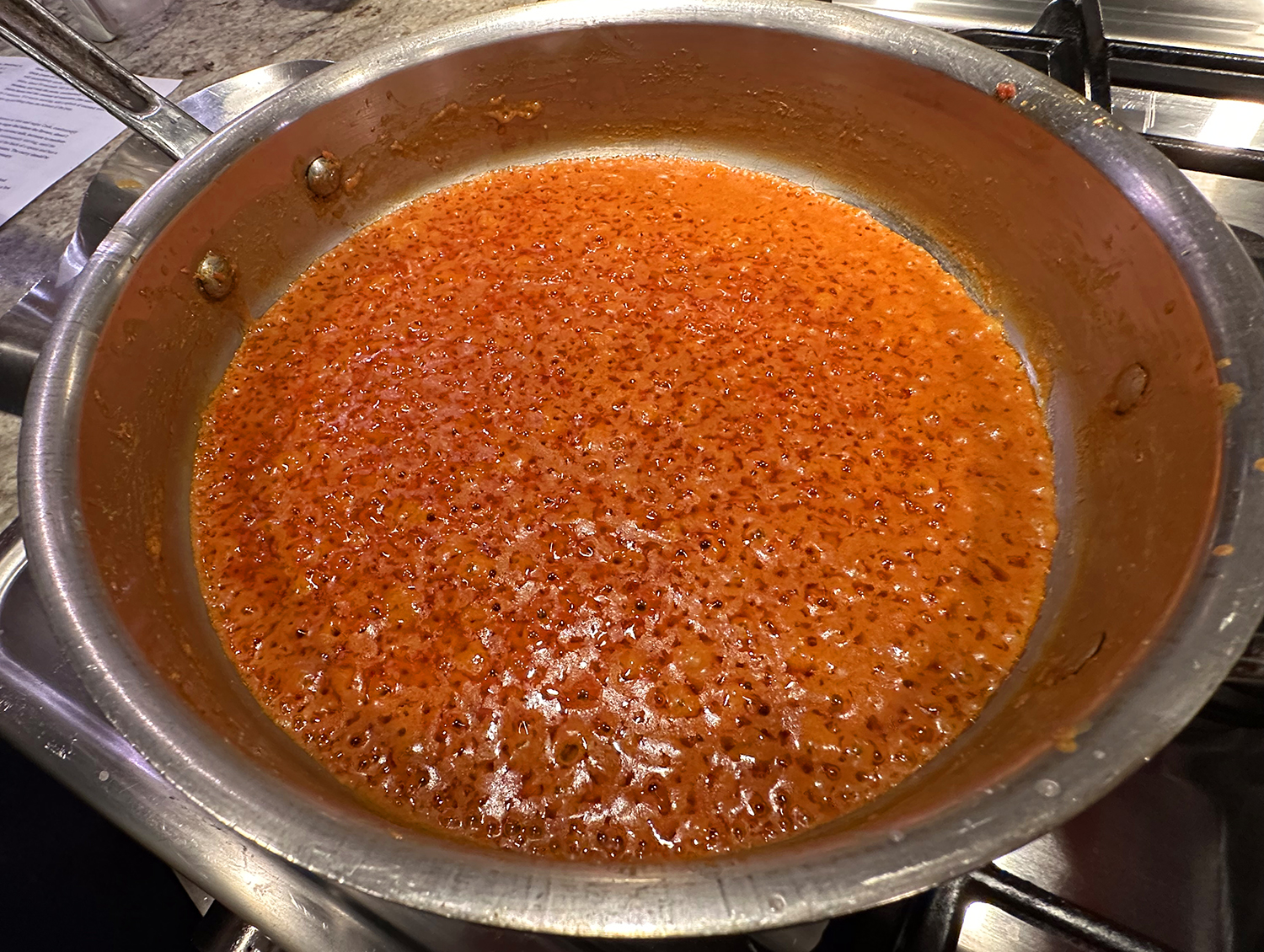
Panang curry is sometimes mistakenly linked to Penang, a Malaysian island, but it actually originated in Thailand. It’s important to use thick coconut milk for the creamiest results, and be sure to break the sauce by simmering until a layer of bright red oil shimmers on top. Purchase panang curry paste online or at an Asian market and add crushed peanuts to it if it doesn’t include them (not all of them do), or prepare your own paste, as is done here.

Since there are really no veggies other than the Fresno chili, serve with a vegetable side and/or salad. The original recipe indicates it will create 4 servings with rice. We beg to differ. You could maybe squeeze out 3 servings, but realistically plan on 2. (See above photo showing one of our serving portions.)

TIPS: Different brands of curry paste vary in spice levels. Taste a little first and determine how much to use. Maesri brand curry paste is highly recommended.
Coconut milk varies widely in its make up. Some cheap brands have as little as 25% coconut. Look at the ingredients, you should not accept less than 60%, some brands go up to 85% plus… Not all coconut milks are the same, it will makes a huge difference to the taste.

Panang Curry

  • Servings: 2-3
  • Difficulty: easy
  • Print

Ingredients

For the Panang Curry Paste

  • ½ tsp. coriander seeds
  • ½ tsp. cumin seeds
  • ¼ cup/1 ounce dry-roasted, unsalted peanuts
  • 2 to 4 Tbsp. red curry paste, to taste (see Tip)

For the Curry

  • 1 lb. boneless, skinless chicken breasts or thighs
  • 2 tsp. fish sauce, plus more as needed
  • 1 (13.5-oz) can full-fat coconut milk (do not shake)
  • 8 makrut lime leaves, deveined, 6 torn and 2 thinly sliced, OR 1 teaspoon grated lime zest, for serving
  • 1½ tsp. palm, granulated or brown sugar, plus more as needed
  • 1 small, mild, thin-skinned pepper, such as a Fresno, Anaheim or banana pepper, or ½ small red bell pepper, thinly sliced
  • Thai basil, thinly sliced, for serving (optional, if makrut lime leaves are not used)
  • Rice, for serving

Directions

  1. Prepare the curry paste: Heat a medium sauté pan over medium. Add the coriander and cumin. Swirl the pan around, or toss the seeds with a wooden spoon, and gently toast until fragrant, about 1 minute, taking care not to burn the spices. Transfer to a small plate and cool, then place in a spice grinder or mortar and pestle, and grind to a fine powder.
  2. Add the peanuts and finely grind until smooth. Transfer the mixture to a small bowl, add the red curry paste and stir until mixed.
  3. Thinly slice the chicken into 1½-inch-long pieces. Place in a medium bowl, drizzle with the fish sauce and mix until coated.
  4. Heat the same pan over medium-high. Scoop 4 tablespoons of the thick cream off the top of the coconut milk and add it to the pan; it will immediately sizzle. Stir until thickened and bubbling on the sides, about 30 seconds. Stir in the curry paste, to taste. Reduce to medium, and cook the paste, continuously stirring, until a thick paste forms and the coconut oil separates (the sauce “breaks”), 2 to 3 minutes. If it starts sticking, add a splash of coconut milk and scrape up anything from the bottom of the pan.
  5. Add the torn lime leaves or zest and sugar. Cook, continuously stirring, to dissolve the sugar and infuse the flavors, about 2 minutes. Add the remaining coconut milk, increase to medium-high, bring to a boil and cook, continuously stirring, until the curry has thickened enough to coat the back of a spoon and has a layer of bright red oil on top, 4 to 8 minutes. The curry should be at a lively simmer; adjust the heat as necessary.
  6. Add the chicken and cook, stirring frequently, until cooked through, 3 to 4 minutes. If using, stir in the peppers, saving a few for serving, and cook until just incorporated, about 1 minute. Taste and add more fish sauce and sugar, if needed. (Be mindful, this is not a sweet curry; the sweetness should hit a back note, not lead with it.)
  7. Garnish with the sliced lime leaves or Thai basil and reserved peppers. Serve alongside rice.

http://www.lynnandruss.com

Recipe by Naz Deravian for NYTimes Cooking

Leek, Fennel, and Squash Soup with Sausage

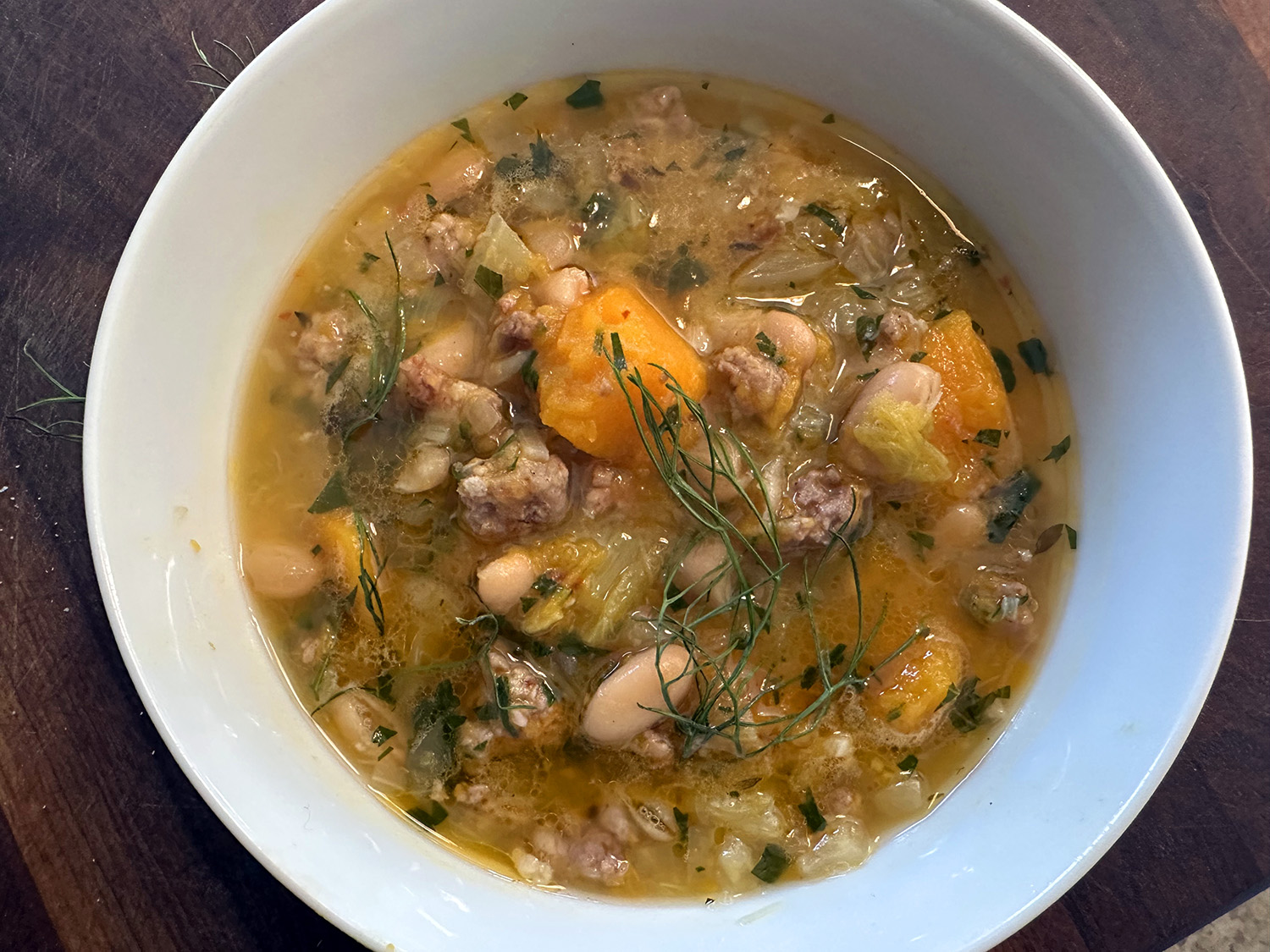
This recipe is based on the traditional Basque soup called porrusalda, which translates to leek broth. It is usually made with lots of leeks, garlic, and winter squash (sometimes even carrot). This warms the soul during the cold months, but can be just as satisfying in warmer temperatures.

Typically, it is mostly made without any meat, but to enrich it a bit more, many cooks add a couple of pieces of pork rib bones or even chorizo. Here in America’s Test Kitchen version, hot Italian sausage is included to boost the flavor and spiciness and make it a one-pot meal that is hearty and satisfying.

NOTE: Kabocha squash is worth seeking out in this soup, but if you can’t find it red kuri or butternut squash will also work.

Leek, Fennel, and Squash Soup with Sausage

  • Servings: 4-6
  • Difficulty: easy
  • Print

Leek, Fennel, and Squash Soup with Sausage

  • Servings: 4
  • Difficulty: easy
  • Print

Ingredients

  • 1 lb. hot Italian sausage, casing removed
  • 1½ lbs. leeks, white and light green parts only, halved lengthwise, cut into ½-inch pieces, and washed thoroughly
  • 1 fennel bulb, halved, cored, and cut into ¼-inch pieces
  • 4 garlic cloves, peeled and sliced thin
  • 1 Tbsp. extra-virgin olive oil
  • ¼ tsp. table salt
  • 1 bay leaf
  • 4 sprigs fresh thyme
  • 1½ lbs. kabocha, red kuri, or butternut squash, peeled, seeded, and cut into 1-inch pieces
  • 6 cups chicken broth
  • 1 15-oz. can cannellini beans, rinsed
  • ½ cup finely chopped fresh parsley

Directions

  1. Trim root end of 1½ pounds leeks and remove tough dark-green ends. Halve lengthwise and cut into ½-inch pieces. Wash and drain thoroughly. Transfer to bowl and set aside.
  2. Remove stalks and fronds from 1 fennel bulb. Halve bulb, remove core, and cut into ¼-inch pieces. Add to bowl with leeks.
  3. Halve 1½ pounds kabocha squash. Scrape out seeds, then peel and cut squash into 1-inch pieces. Set aside.
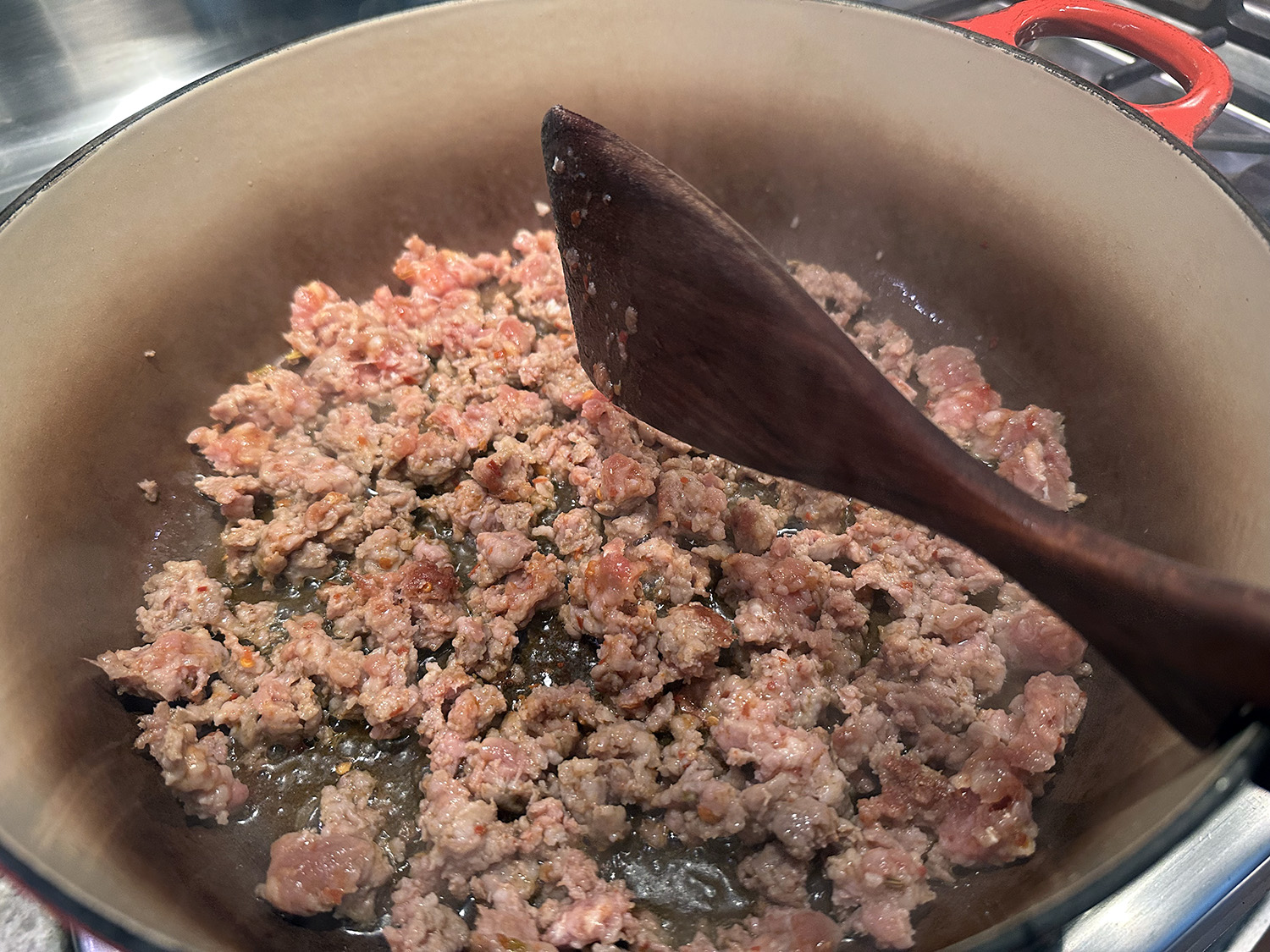
  4. Cook 1 pound hot Italian sausage in Dutch oven over medium-high heat until browned, 5 to 7 minutes, breaking up meat with wooden spoon.
  5. Use slotted spoon to transfer sausage to plate, leaving fat behind in pot; set sausage aside.
  6. Add leeks, fennel, 4 thinly sliced garlic cloves, 1 tablespoon extra-virgin olive oil, ¼ teaspoon table salt, 1 bay leaf, and 4 thyme sprigs to pot. Reduce heat to medium and cook, stirring occasionally, until vegetables are tender and just beginning to brown, about 7 minutes.
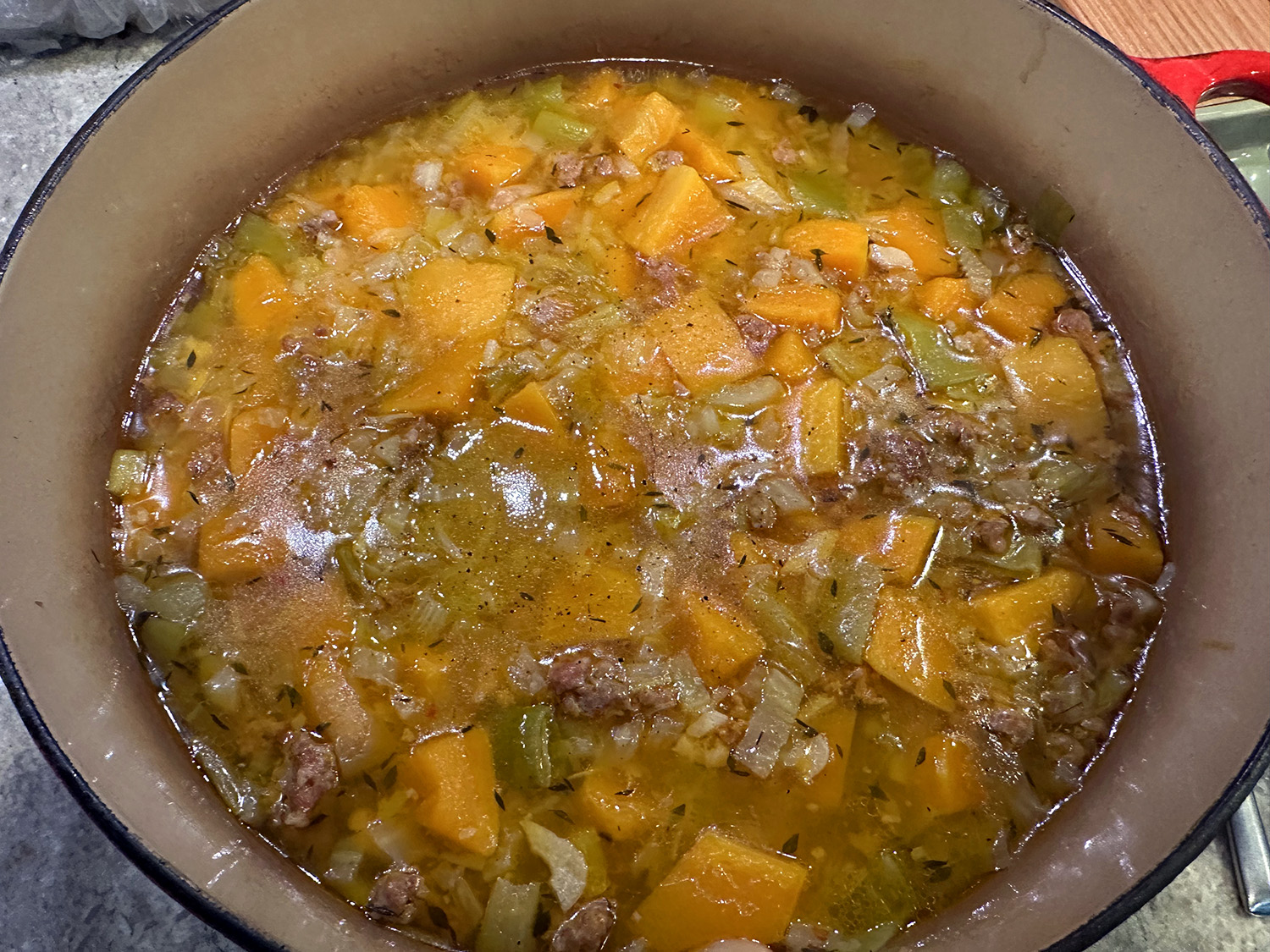
  7. Stir in squash; 6 cups chicken broth; 1 (15-ounce) can cannellini beans, rinsed; and sausage, scraping up any browned bits. Cover pot, increase heat to high, and bring soup to vigorous simmer.
  8. Reduce heat to medium and simmer vigorously until squash is tender, 20 to 25 minutes, adjusting heat as needed.e.

http://www.lynnandruss.com

Recipe by Aran Goyoaga for America’s Test Kitchen

Go-To Grilled Chicken Kebabs

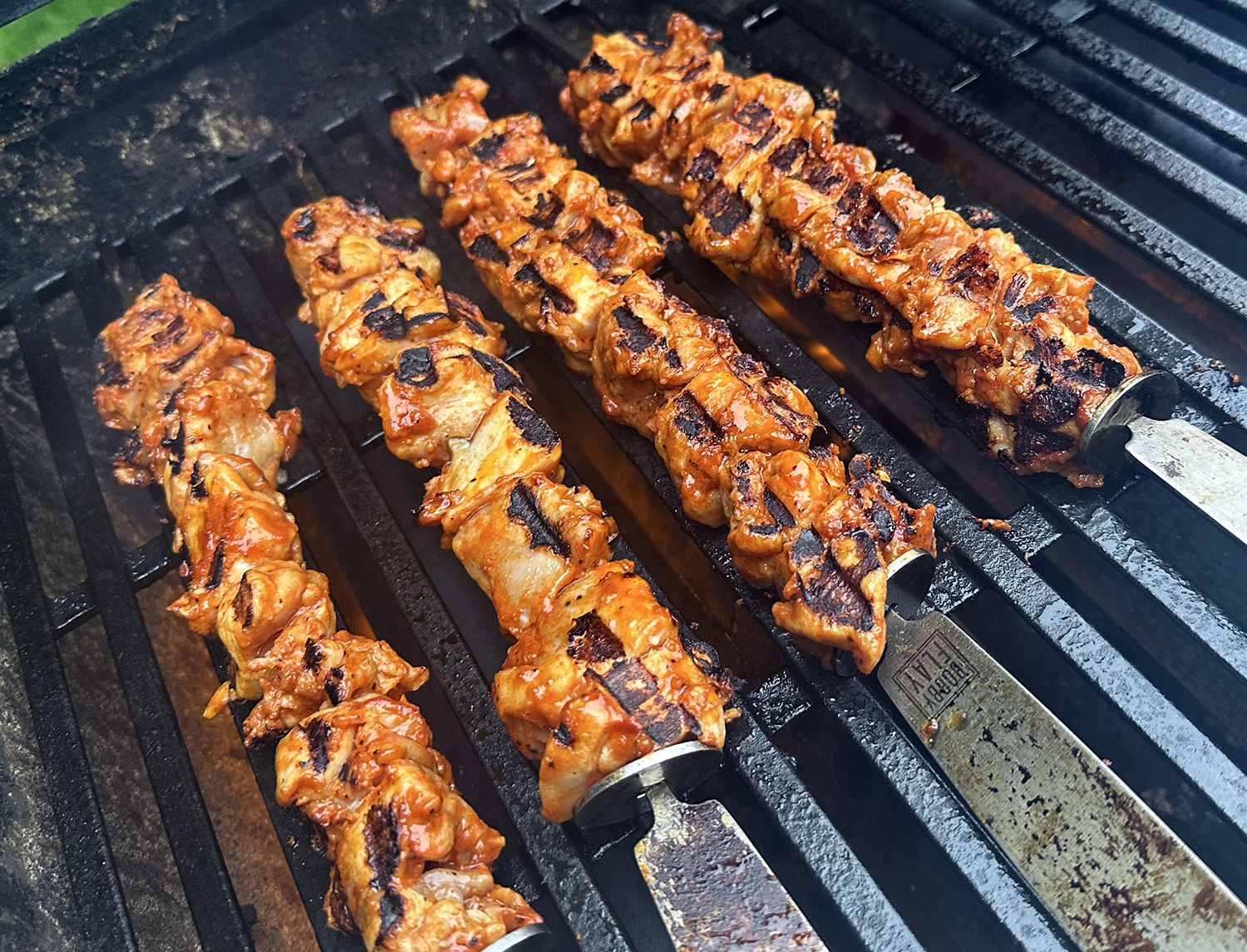
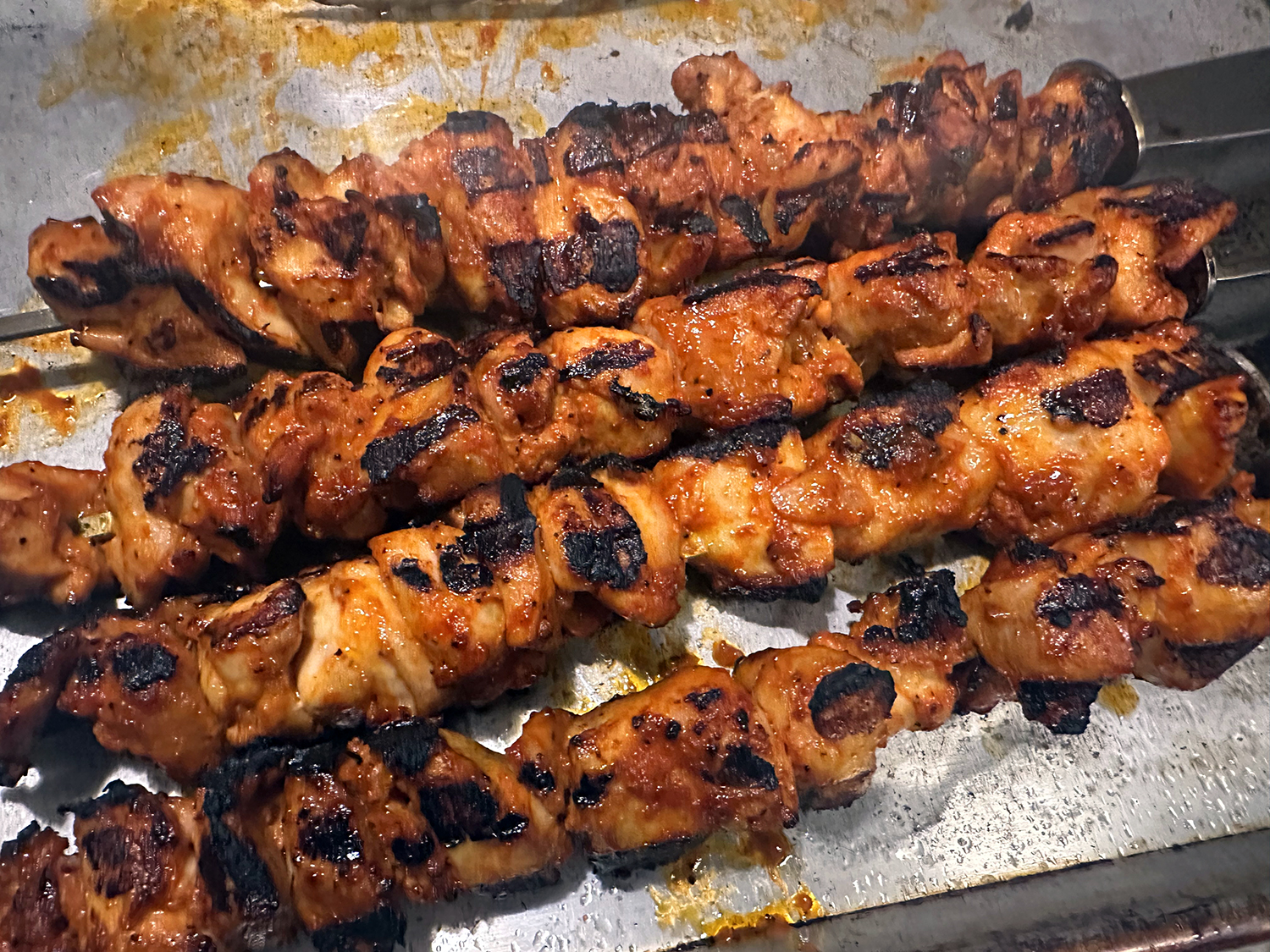
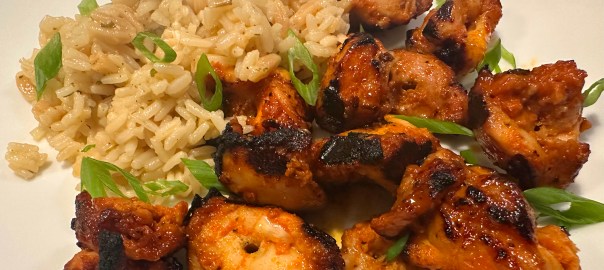
Grilled kebabs that are juicy and savory with deep browning and charring are pretty much everyone’s desired result. So to start, use boneless, skinless chicken thighs, which have a rich flavor and collagen that can break down to keep the meat juicy.

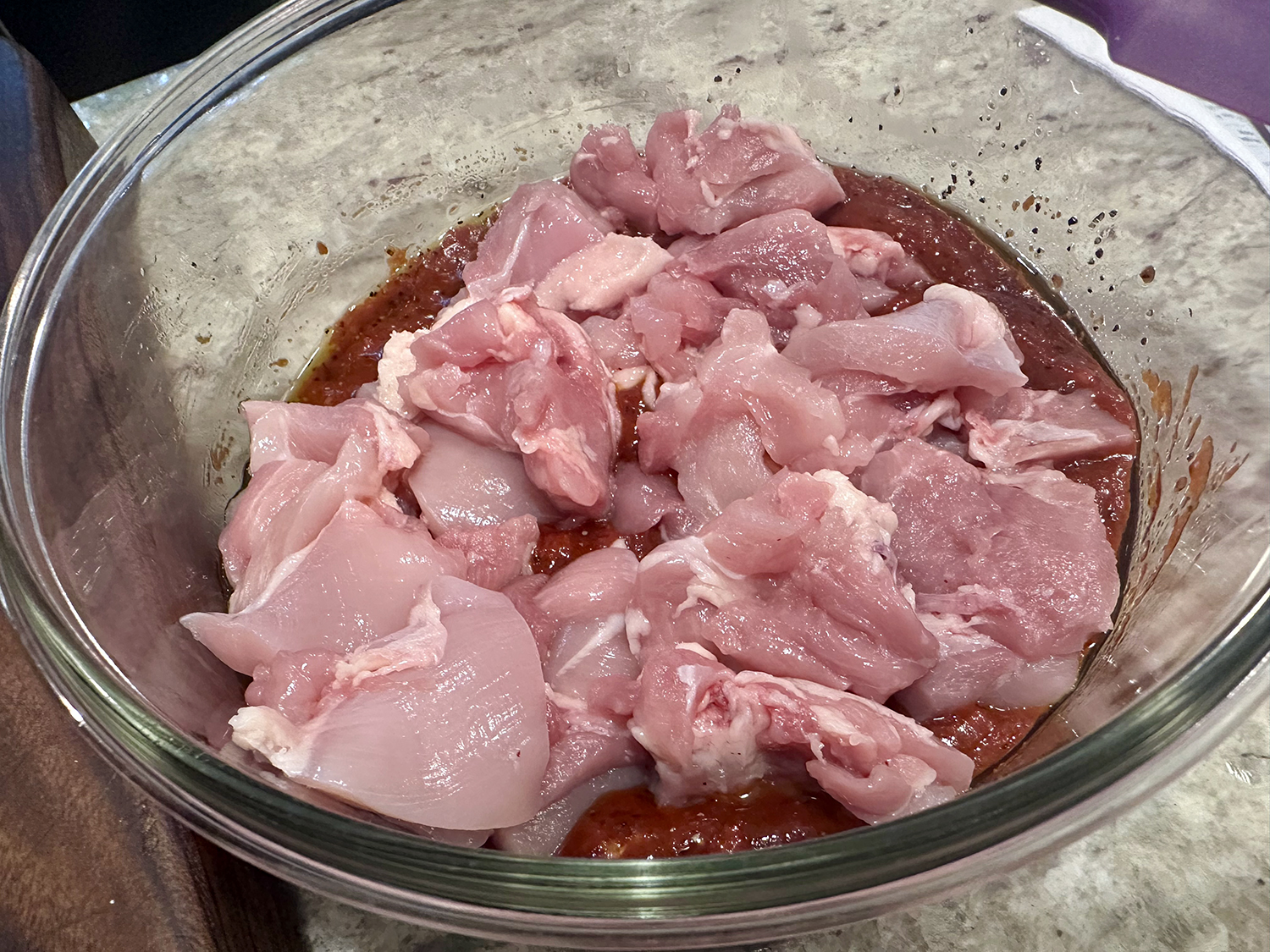
It may not please you, but leave the fat on the chicken to encourage small flare-ups, which contribute to creating char and grill flavor. Cut the chicken into 1-inch pieces and toss them in a thick, flavorful mixture of tomato paste*, salt, sugar, fish sauce, garlic, and oil.

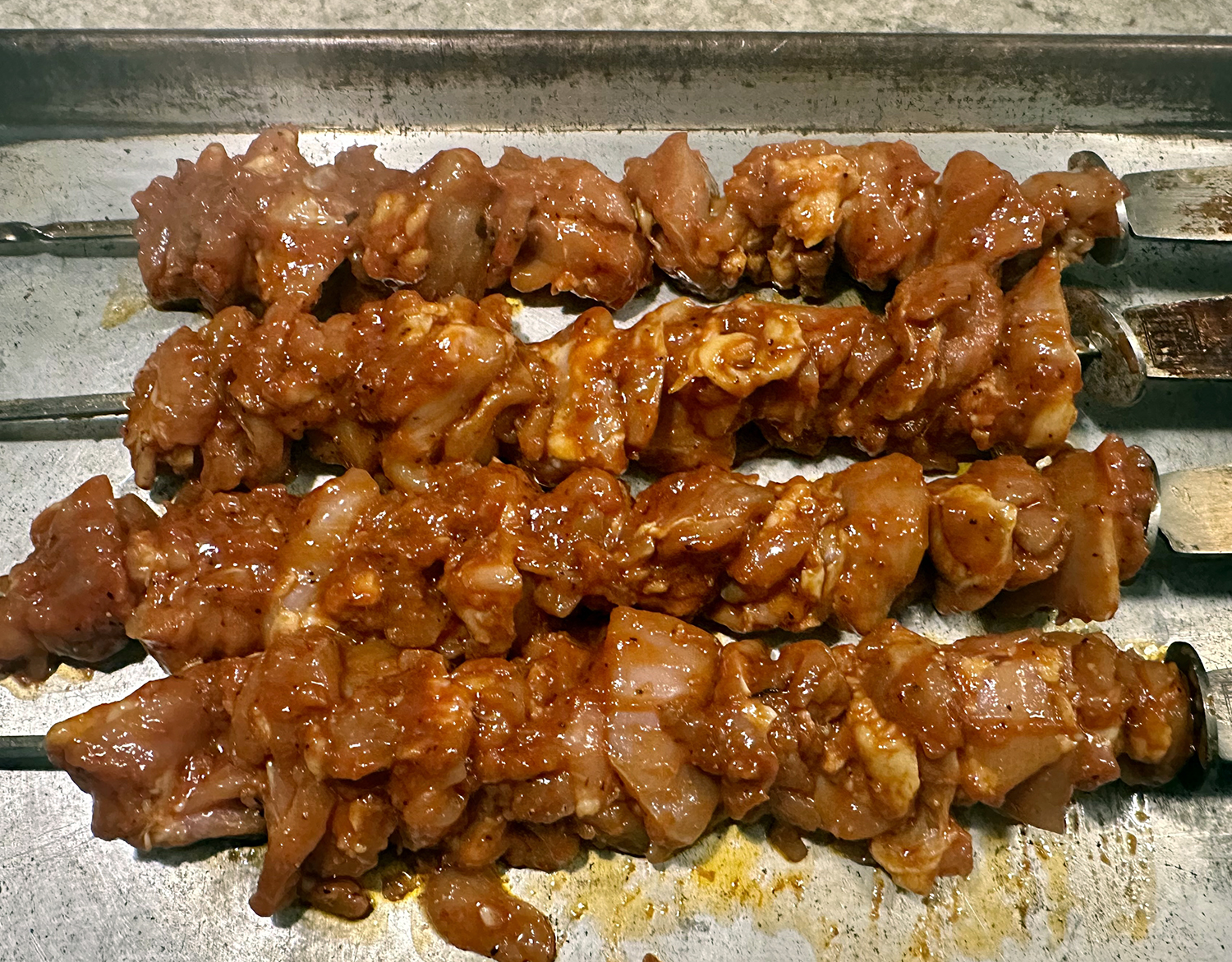
After letting the chicken marinate for at least an hour (up to 12 hours), thread onto skewers and cook over a moderately hot grill. The fat on the chicken encourages small flare-ups that create lots of char and grill flavor. Rotate the skewers a quarter-turn every couple of minutes to ensure even cooking and browning.

These bite-size morsels are tailor-made for sliding off the skewer onto warm flatbread or scooping up with rice and vegetables. We paired ours with a rice pilaf dish and a side salad.

*For a little kick, the tomato paste was cut in half and and two tablespoons of gochujang was added. Our chicken chunks marinated for 6 1/2 hours before threading them onto metal skewers.

TIP: Chose boneless, skinless thighs for the kebabs. They are more flavorful and fattier than breasts and, more important, can be cooked to a higher temperature, which allows them to thoroughly brown without drying out. That’s because thighs contain collagen, which, when heated, breaks down and becomes able to hold water and thus keeps the meat juicier.

Go-To Grilled Chicken Kebabs

  • Servings: 4
  • Difficulty: easy
  • Print

Ingredients

  • ¼ cup tomato paste, OR 2 Tbsp. each of tomato paste and gochujang for a little kick
  • 3 Tbsp. vegetable oil
  • 2 Tbsp. fish sauce
  • 3 garlic cloves, minced to paste
  • 1½ tsp. sugar
  • 1¼ tsp. kosher salt
  • ½ tsp. pepper
  • 2 lbs. boneless, skinless chicken thighs, untrimmed, cut into 1-inch pieces
  • 4 (12-inch) metal skewers

Directions

  1. Whisk tomato paste, oil, fish sauce, garlic, sugar, salt, and pepper in medium bowl until smooth. Add chicken and, using your hands or silicone spatula, mix until chicken is evenly coated. Cover and refrigerate for at least 1 hour or up to 12 hours.
  2. FOR A CHARCOAL GRILL: Open bottom vent completely. Light large chimney starter three-quarters filled with charcoal briquettes (4½ quarts). When top coals are partially covered with ash, pour evenly over half of grill. Set cooking grate in place, cover, and open lid vent completely. Heat grill until hot, about 5 minutes.
  3. FOR A GAS GRILL: Turn all burners to high; cover; and heat grill until hot, about 15 minutes. Leave primary burner on high and turn off other burner(s).
  4. While grill heats, thread chicken onto skewers, rolling or folding pieces as necessary to form 1-inch pieces and alternating leaner pieces with fattier pieces (fold any excess fat onto skewers as needed to keep it from hanging loose).
  5. Clean and oil cooking grate. Place kebabs directly over coals (over primary burner if using gas) and cook (covered if using gas) until grilled side is well browned and slightly charred, 2 to 2½ minutes. Turn one-quarter turn. Continue to cook and turn until all sides are browned and charred and meat registers 175 degrees, about 12 minutes in total, rearranging skewers halfway through cooking so those farthest from heat source are now closer and vice versa. (If large flare-ups occur, slide kebabs to cool side of grill until fire dies down.) Remove kebabs from grill and let rest for 5 minutes. Serve.

Two Other Options

FOR HARISSA, ALEPPO PEPPER, AND MINT MARINADE: Reduce tomato paste to 2 tablespoons. Add 2 tablespoons harissa, 2 teaspoons ground dried Aleppo pepper, and 2 teaspoons dried mint to marinade in step 1.

FOR RED CURRY PASTE AND LIME MARINADE: Reduce tomato paste to 2 tablespoons. Add 2 tablespoons Thai red curry paste and 2 teaspoons grated lime zest to marinade in step 1. Serve kebabs with lime wedges.

http://www.lynnandruss.com

Adapted from a recipe by Annie Petito for Cook’s Illustrated

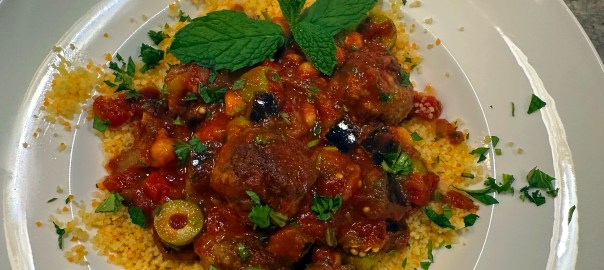
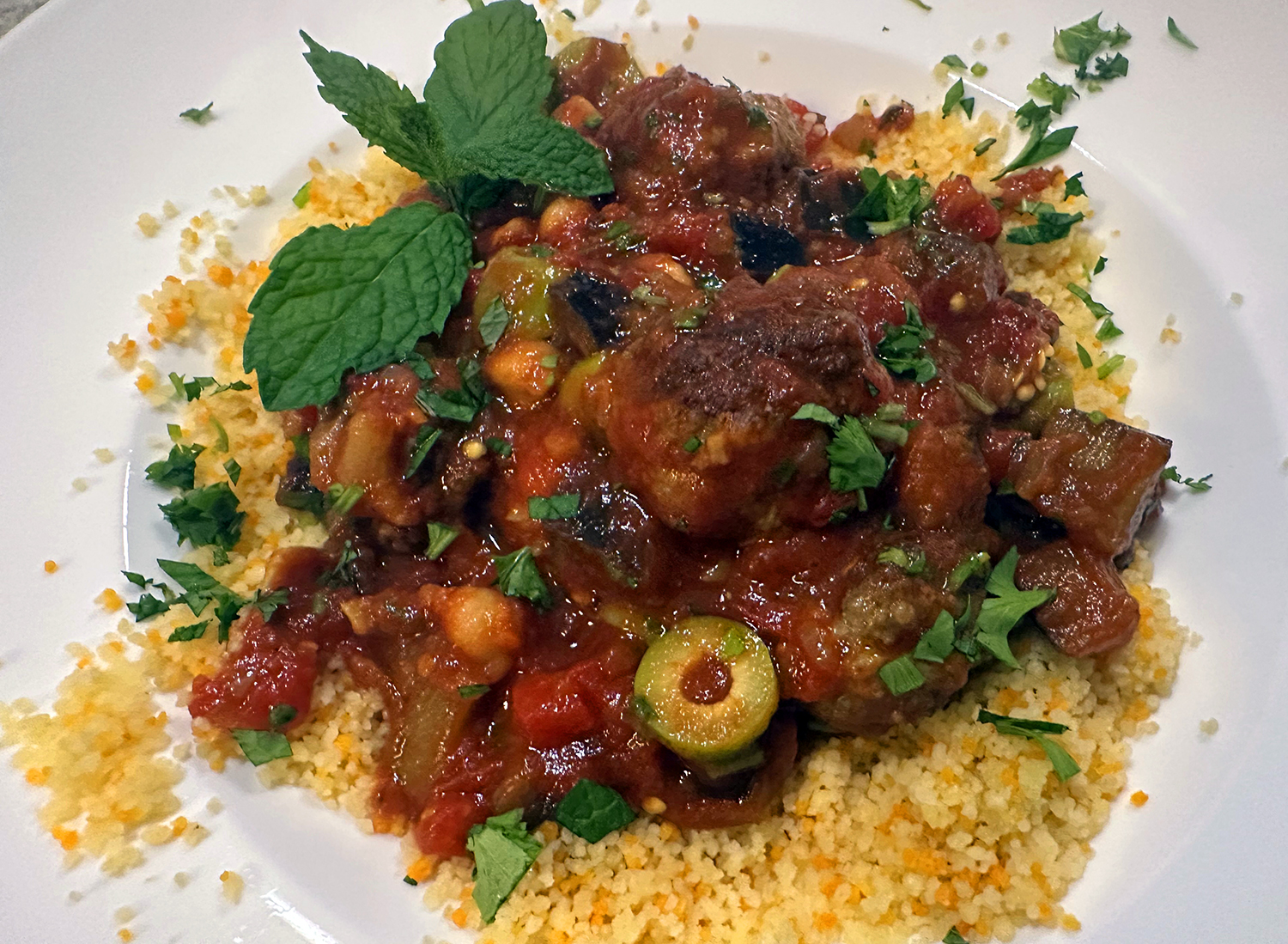
One-Pot Lamb Meatballs with Eggplant and Chickpeas

The inspiration for the flavors in this one-pot dish are those commonly used in Moroccan tagines, stewed dishes cooked in earthenware pots of the same name. Here, the dish is cooked in a Dutch oven instead of a tagine, and features lemony lamb meatballs in a tomato-based sauce spiced with harissa and studded with eggplant and chickpeas for more heft and substance.

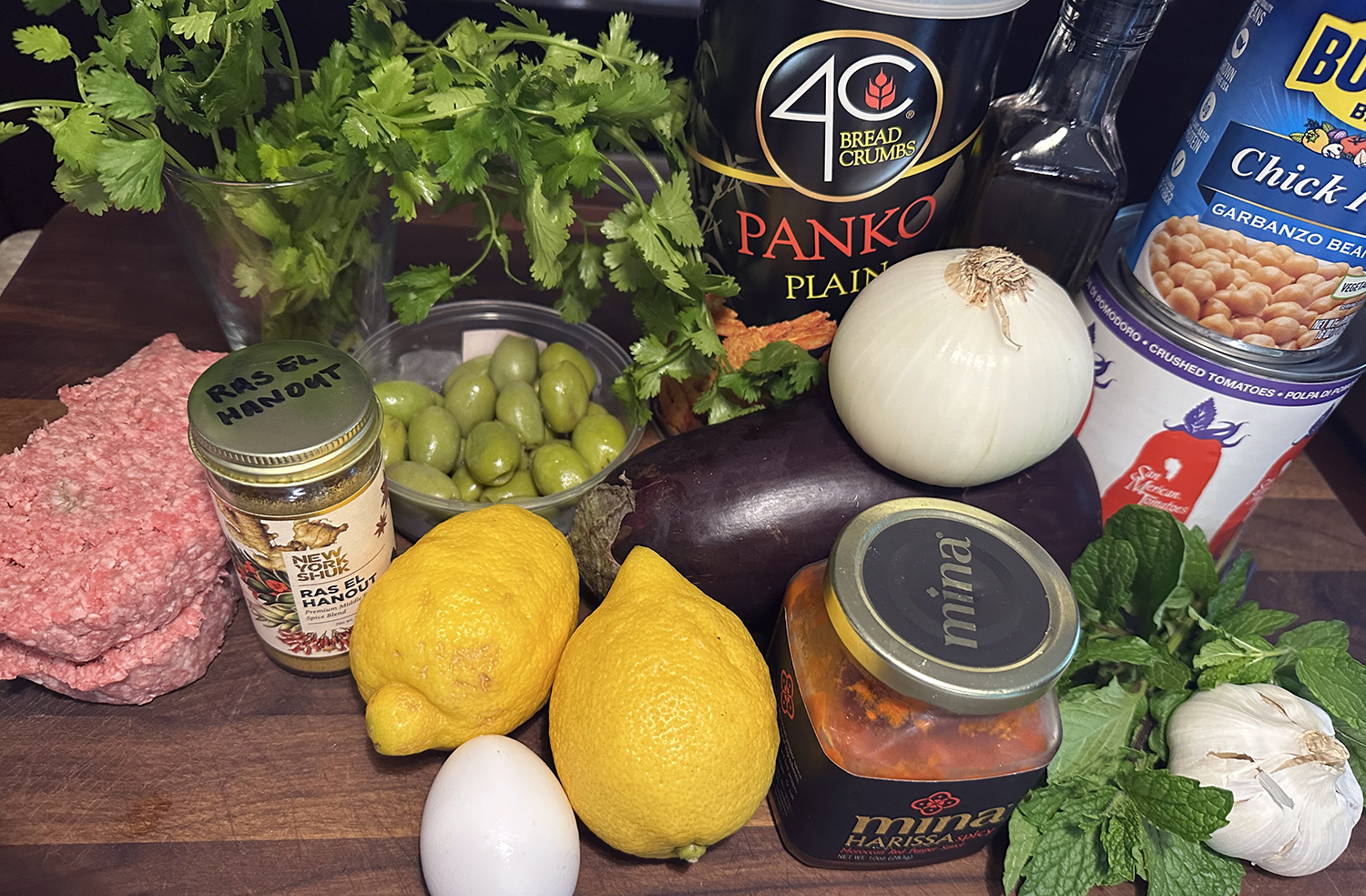
Bold ras el hanout linked the meatballs and the sauce while golden raisins (which we omitted) and pitted green olives brought sweetness and brininess, respectively. Fresh chopped herbs at the end add visual pop and bright flavor. Even though we used a spicy variety of harissa, we didn’t consider the dish very spicy at all, but then we can tolerate more potency.

NOTES: Harissa is available in spicy and mild varieties; we prefer spicy, but you can use the mild kind here or less of the spicy variety if you’re spice averse. You can substitute ground beef for the lamb, if desired. Couscous makes a nice side dish.

Keep in mind, the overall prep and cooking time took longer than the 1 hour noted in America’s Test Kitchen recipe, therefore I adjusted that notation in the recipe below.

One-Pot Lamb Meatballs with Eggplant and Chickpeas

  • Servings: 4-6
  • Difficulty: easy
  • Print

Ingredients

Meatballs

  • 1 lb. ground lamb
  • ½ cup panko bread crumbs
  • 1 large egg, lightly beaten
  • 1 Tbsp. ras el hanout
  • 2 tsp. grated lemon zest
  • 2 garlic cloves, minced
  • 1 tsp. table salt
  • 2 Tbsp. extra-virgin olive oil

Eggplant and Sauce

  • 1 lb. eggplant, cut into ½-inch pieces
  • 1 onion, chopped fine
  • 4 garlic cloves, minced
  • 1 Tbsp. ras el hanout
  • 1 tsp. table salt
  • 1 28-oz. can crushed tomatoes
  • 1 15-oz. can chickpeas, rinsed
  • ¾ cup golden raisins (optional)
  • ½ cup water
  • ½ cup pitted green olives, halved
  • ¼ cup harissa
  • 2 tsp. grated lemon zest
  • ½ cup coarsely chopped fresh cilantro, divided
  • ½ cup coarsely chopped fresh mint, divided

Directions

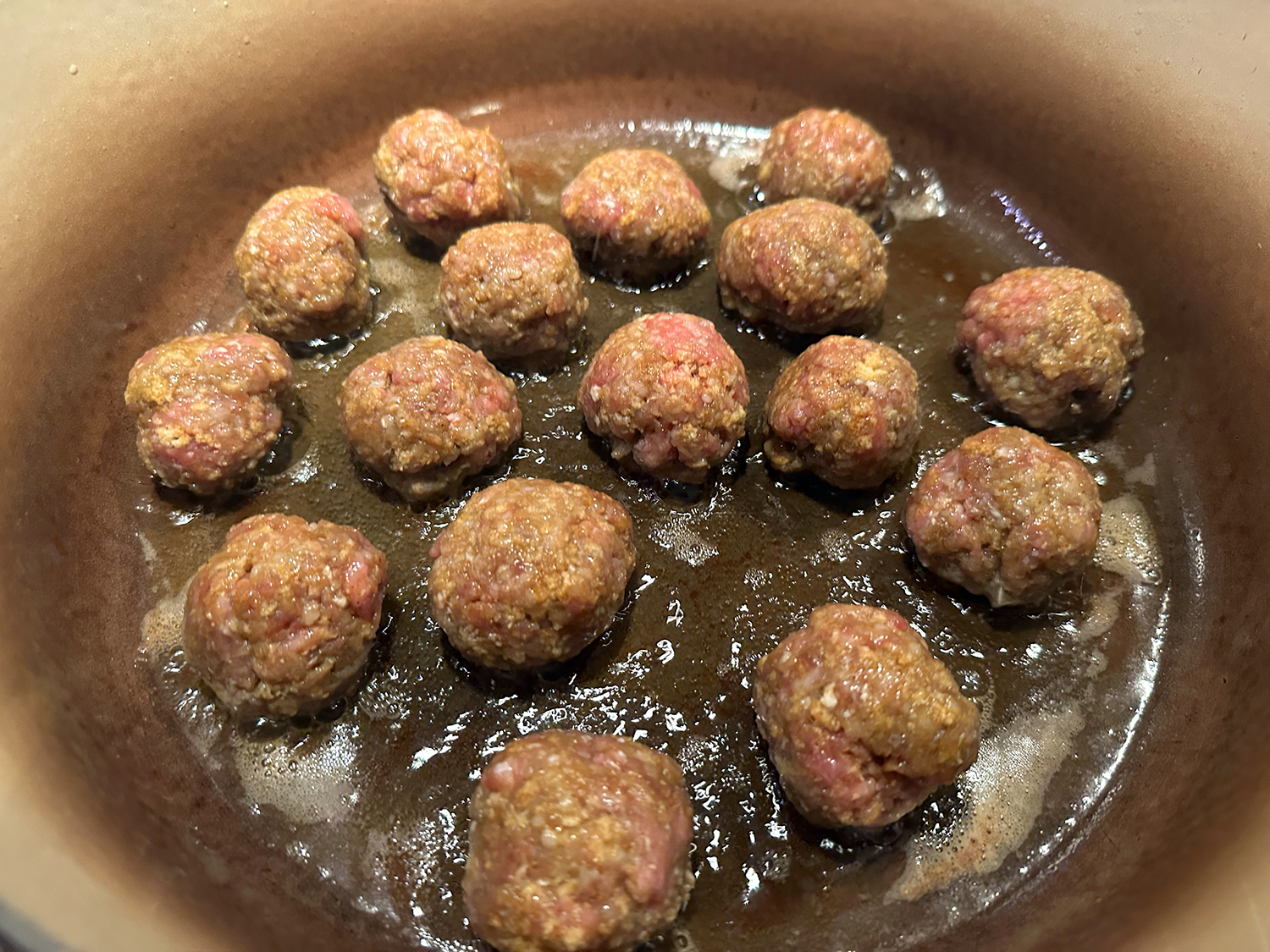
  1. FOR THE MEATBALLS: Combine lamb, panko, egg, ras el hanout, lemon zest, garlic, and salt in large bowl and mix with your hands until thoroughly combined. Divide into 16 even portions, about 1¼ ounces each. Using your hands, roll each portion into ball.
  2. Heat oil in Dutch oven over medium-high heat until just smoking. Add meatballs and cook until well browned all over, about 5 minutes. Transfer meatballs to large plate, leaving fat in pot.
  3. FOR THE EGGPLANT AND SAUCE: Heat fat left in pot over medium-high heat until just smoking. Add eggplant, onion, garlic, ras el hanout, and salt and cook until vegetables are beginning to soften, 8 to 10 minutes, stirring frequently.
  4. Stir in tomatoes, chickpeas, raisins, water, olives, harissa, and lemon zest. Nestle meatballs into sauce. Reduce heat to medium-low; cover; and cook until eggplant is very tender and meatballs register 160 degrees, about 10 minutes.
  5. Off heat, stir in ¼ cup cilantro and ¼ cup mint. Sprinkle remaining ¼ cup cilantro and remaining ¼ cup mint over top and serve.

http://www.lynnandruss.com

Adapted from a recipe by Mark Huxsoll for America’s Test Kitchen

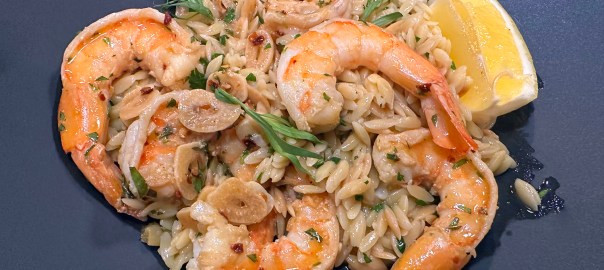
Lemon-Tarragon Shrimp Scampi with Orzo

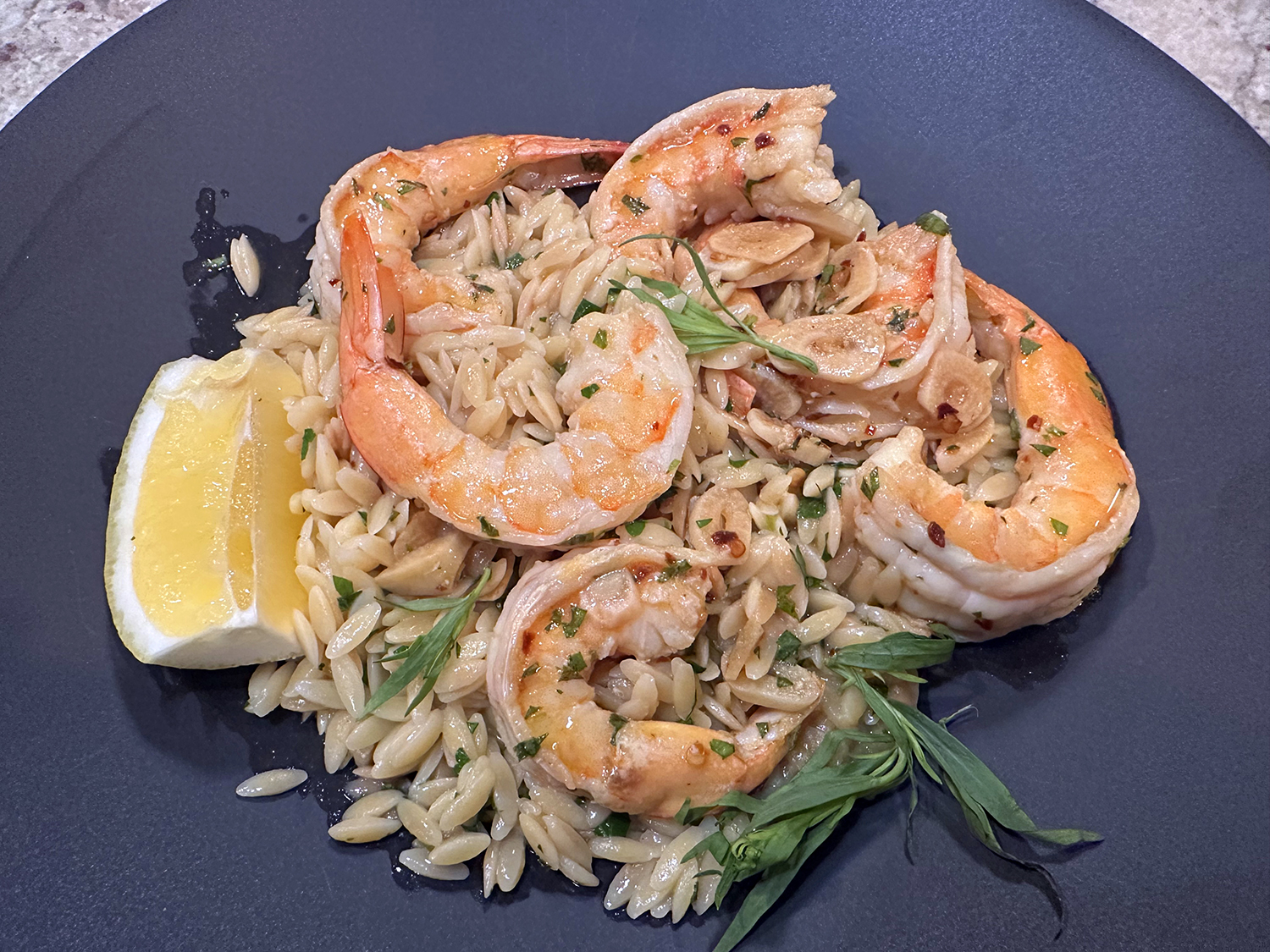
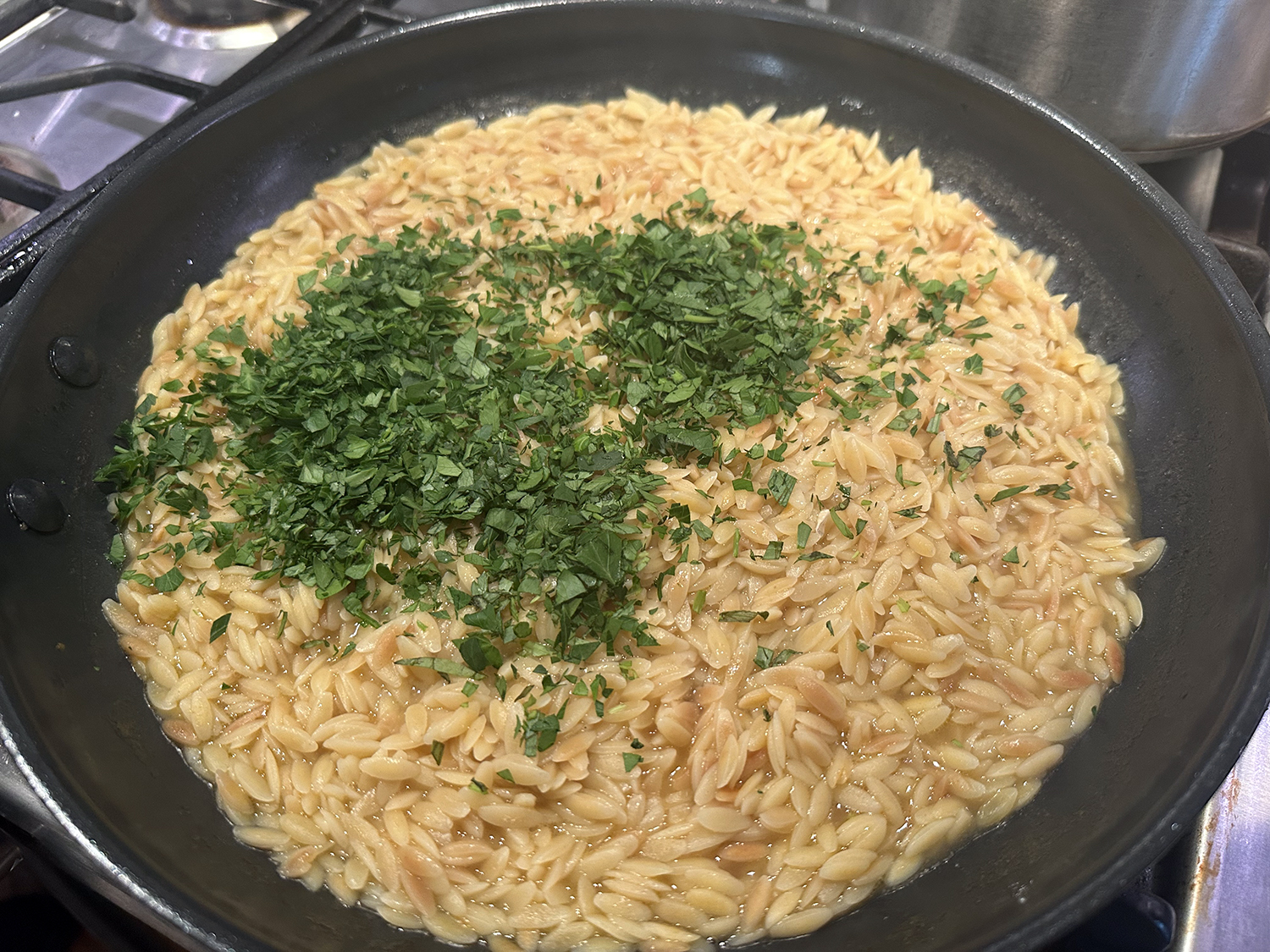
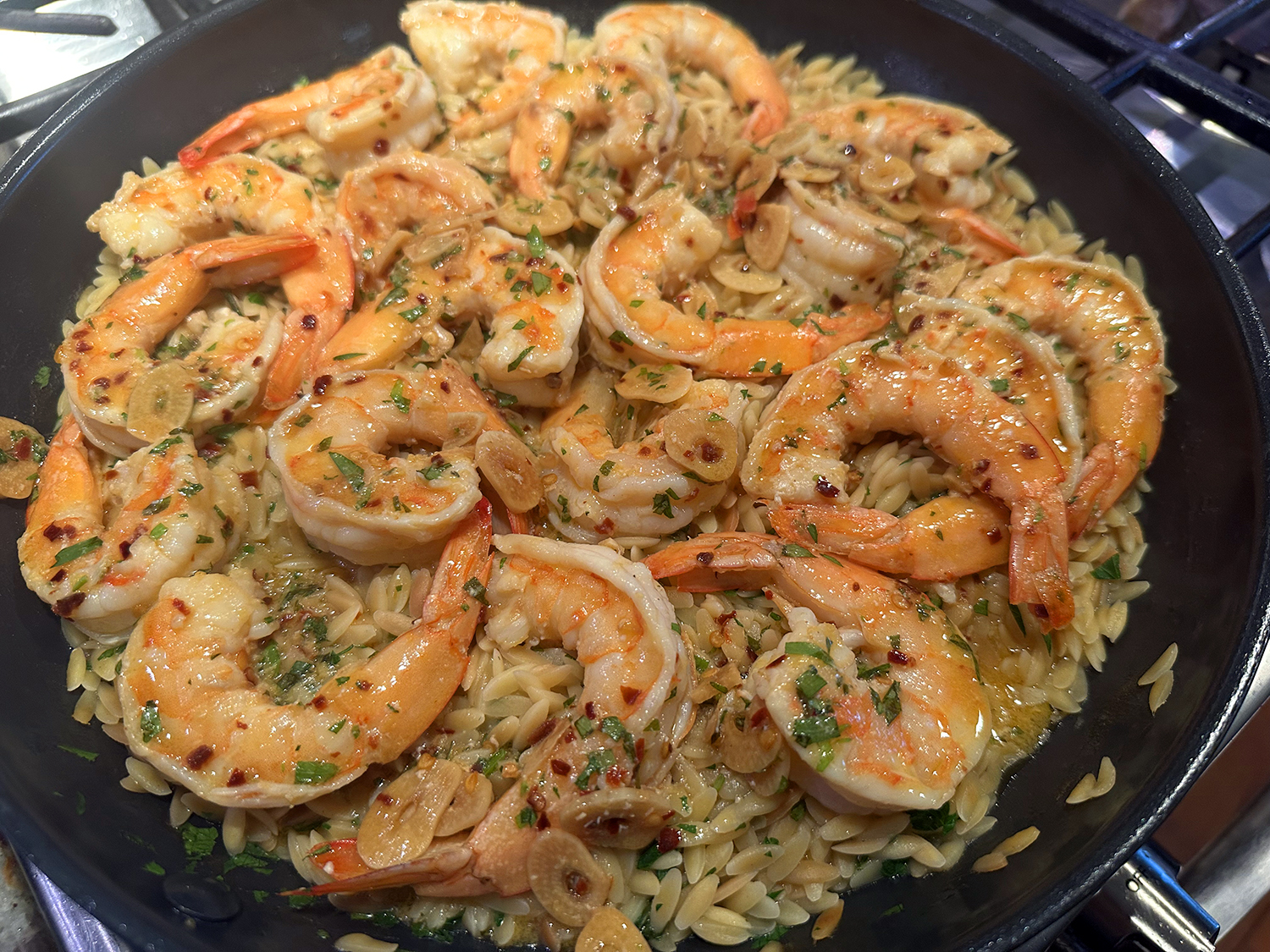
For a delicious and simple one-dish dinner, this lemony shrimp scampi is served over a bed of tarragon-and-parsley-flecked orzo. Lightly toast the orzo before simmering to impart a faint nutty flavor and toasty aroma.
The orzo will continue to absorb some liquid after you add the shrimp and re-cover, so don’t worry if it still looks a little soupy when you take it off the heat — you don’t want the skillet to be completely dry.

Fresh tarragon brings an anise-like pop of flavor to the classic garlicky white wine sauce in this version of shrimp scampi. Serve the shrimp over creamy, herb-flecked orzo, or crusty bread if you are short on time. The Hubs suggested if you dislike tarragon, use cilantro instead and swap out the lemon juice and zest with lime for a Mexican riff.

F&W suggests you might pair this one-skillet dish with with a fresh, crunchy side, such as Celery and Apple Salad or Wedge Salad with Candied Bacon.

*Since we had homemade shellfish stock on hand, we used it instead of chicken stock. This makes the dish pescatarian.

Lemon-Tarragon Shrimp Scampi with Orzo

  • Servings: 4
  • Difficulty: easy
  • Print

Ingredients

  • 1/4 cup unsalted butter
  • 2 Tbsp. extra-virgin olive oil, divided
  • 4 garlic cloves, thinly sliced
  • 1/2 tsp. crushed red pepper
  • 1/2 cup (4 oz.) dry white wine  
  • 1 tsp. kosher salt
  • 1 tsp. grated lemon zest plus 1/4 cup fresh lemon juice (about 2 medium lemons),
  • divided
  • 1 lb. jumbo (16/20) peeled and deveined raw shrimp, tail-on
  • 8 oz. orzo (about 1 1/3 cups)
  • 2 cups chicken stock*
  • 1 cup water
  • 1/4 cup finely chopped fresh parsley
  • 1 Tbsp. chopped fresh tarragon, divided, plus more for garnish

Directions

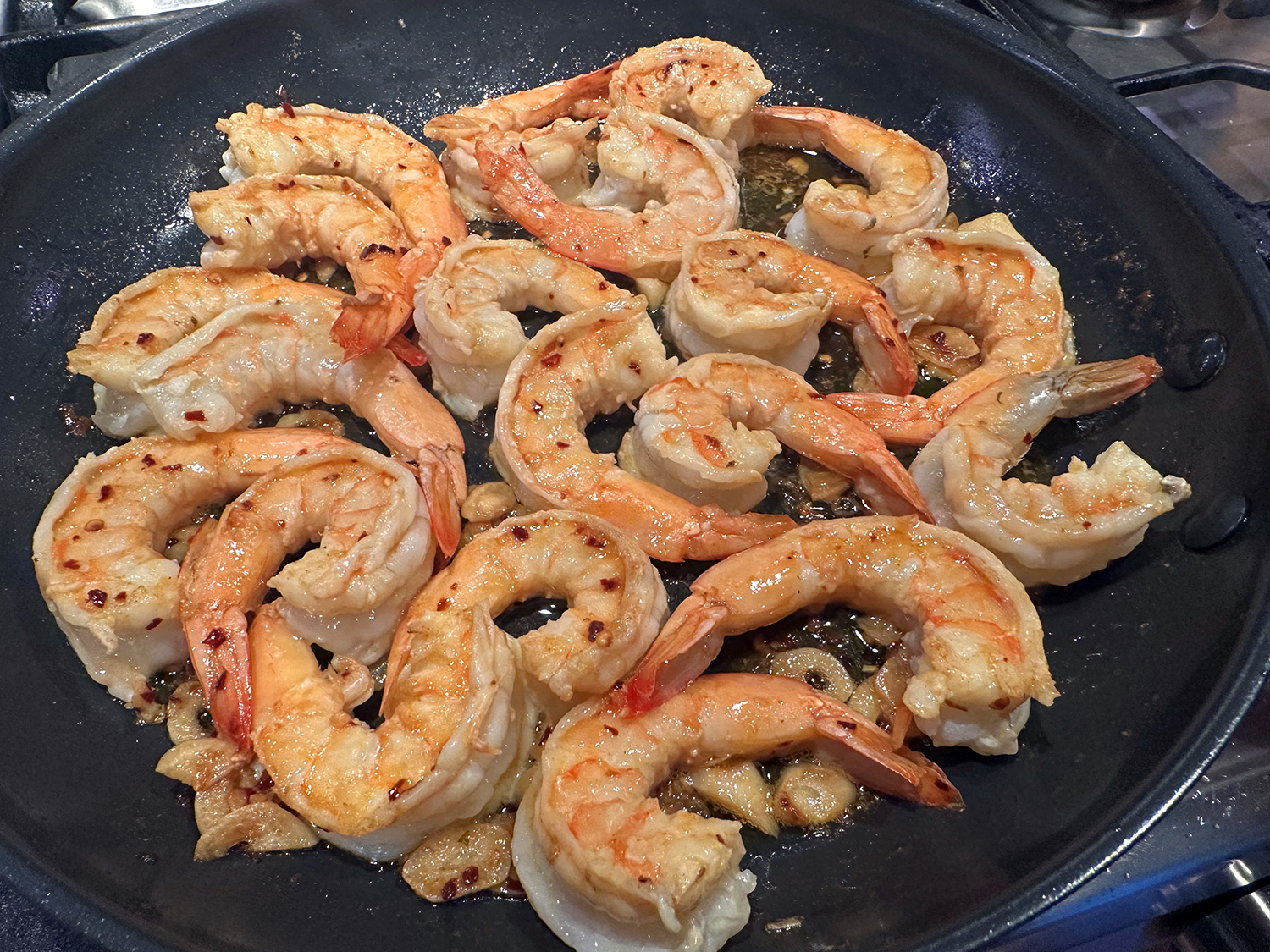
  1. Heat butter and 1 tablespoon oil in a large skillet over medium-high. Add garlic and crushed red pepper; cook, stirring constantly, until fragrant, about 1 minute. Stir in wine, salt, and lemon zest; cook, stirring occasionally, until wine is slightly reduced, about 3 minutes.
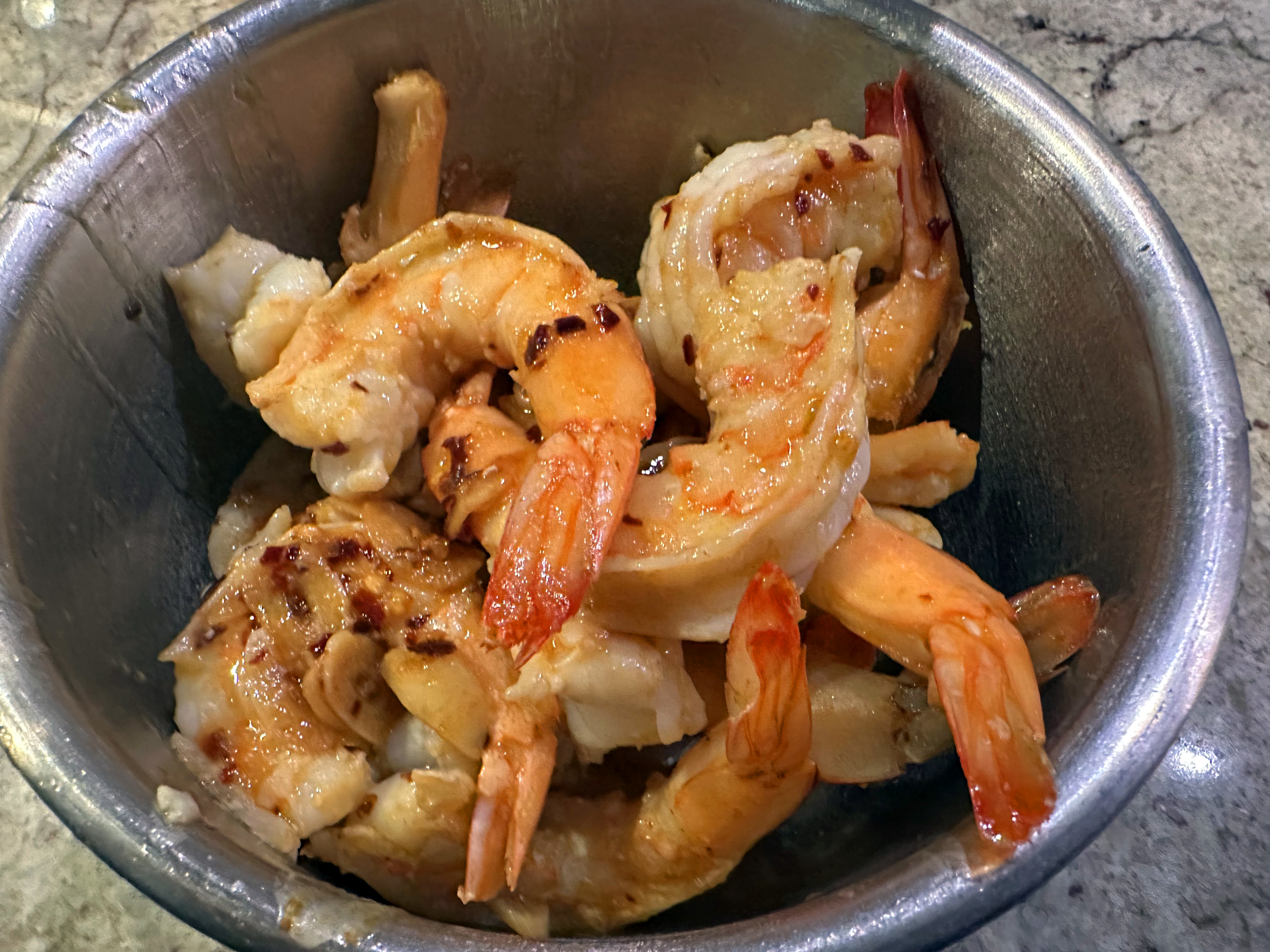
  2. Add shrimp in a single layer to sauce in skillet; cook until shrimp are opaque and just cooked through, 1 to 2 minutes, flipping once halfway through cook time. Transfer shrimp mixture to a medium bowl, and tent with aluminum foil to keep warm; set aside. Wipe skillet clean.
  3. Heat remaining 1 tablespoon oil in skillet over medium. Add orzo, and cook, stirring constantly, until lightly toasted, about 1 minute. Add chicken stock and 1 cup water; bring to a simmer over high. Reduce heat to medium-low; simmer, uncovered and undisturbed, until orzo is al dente and liquid is mostly absorbed, about 12 minutes. Remove from heat, and add parsley, 2 tablespoons lemon juice, and 1 teaspoon tarragon. Stir orzo mixture using a fork until evenly combined.
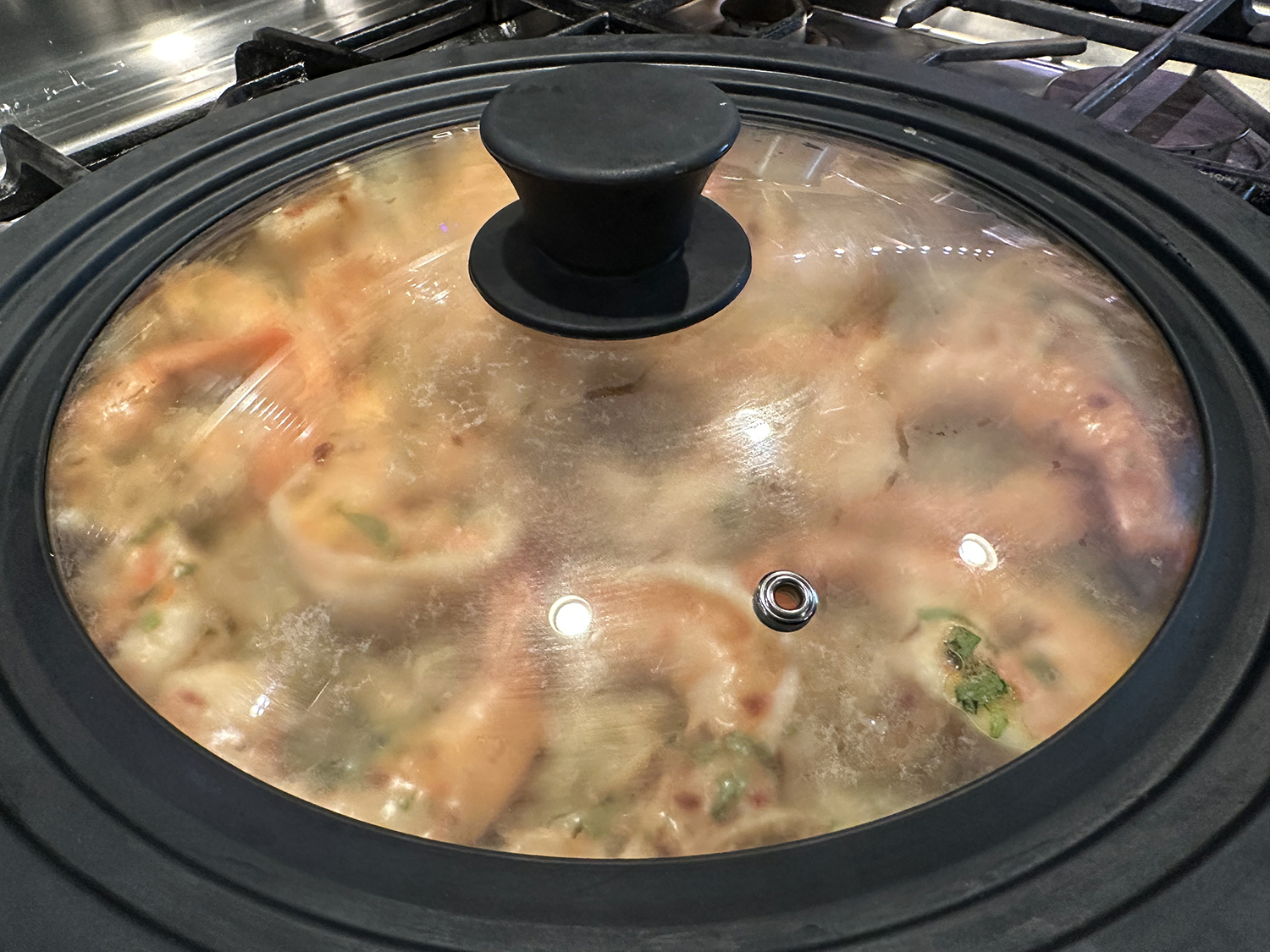
  4. Stir remaining 2 tablespoons lemon juice and remaining 2 teaspoons tarragon into reserved shrimp mixture. Spoon shrimp mixture over orzo; cover and let stand, allowing residual heat from the orzo to warm the shrimp through, 4 to 5 minutes. Uncover and garnish with additional chopped tarragon; serve immediately.

http://www.lynnandruss.com

Recipe by Paige Grandjean for Food & Wine