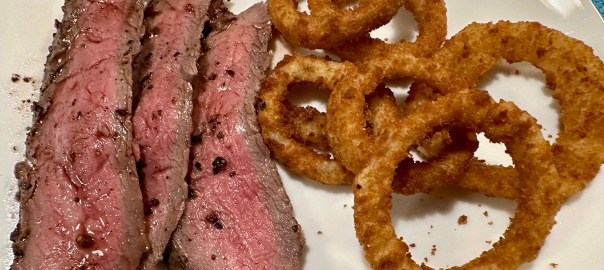
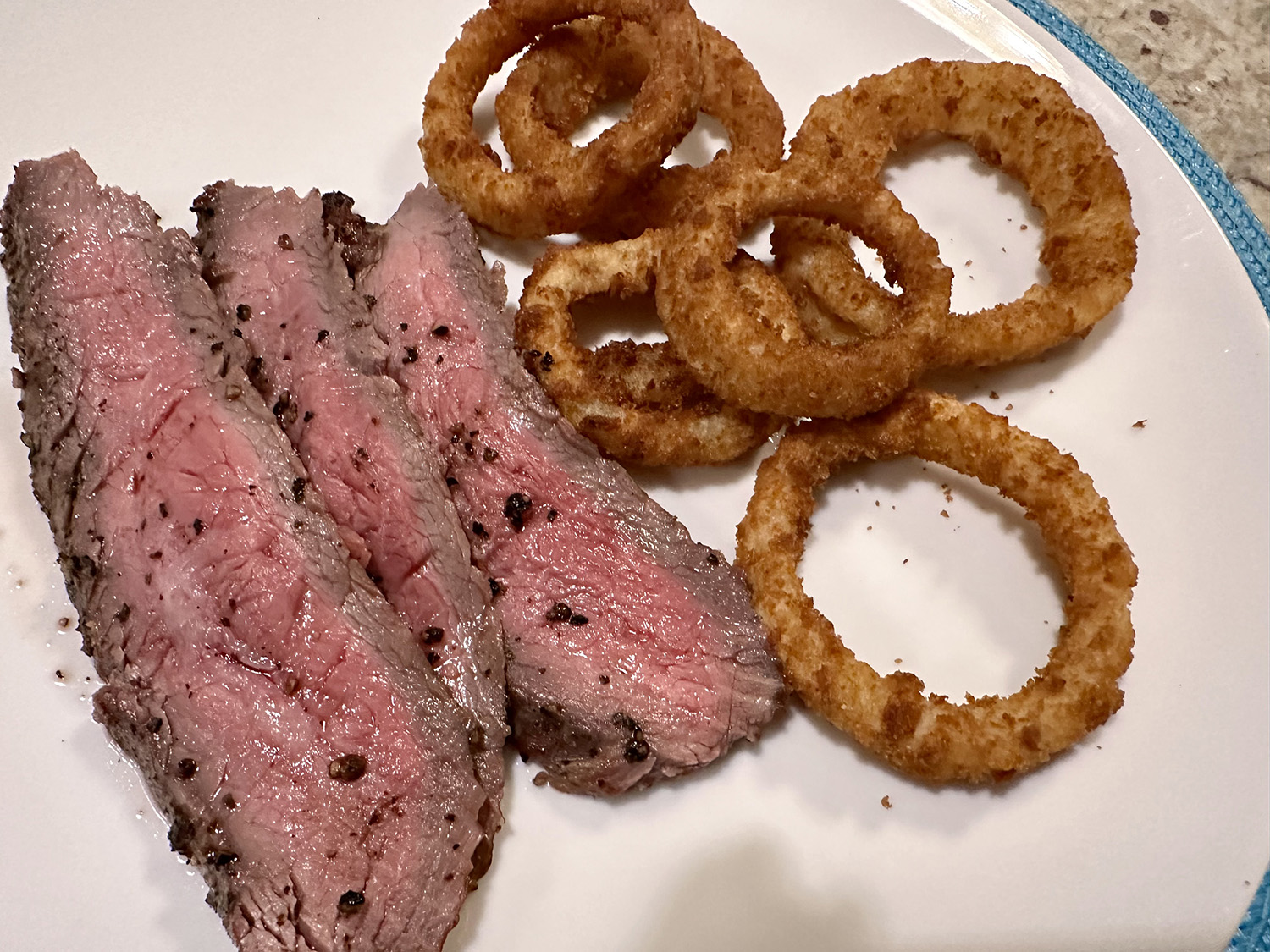
Easy beyond belief. Only 3 ingredients for the main course? Count me in! One ingredient, coarse black pepper, coats the flank steak for a zesty bust of flavor, complementing the rare grilled meat. It’s best to crush your own, in a mortar and pestle or a spice mill. The entrée can be served warm or at room temperature.
Many reviewers commented that it was too salty, we didn’t think so. But because it’s very hard to find a 2-pound flank steak, ours was just over 1 1/2 pounds, and therefore we used less salt to begin with.
Ours sides were baked onion rings and a side salad. Dinner done.
3 Tbsp. coarse crushed black peppercorns (do not use regular table pepper)
Directions
Pat steak dry. Sprinkle 1 tablespoon salt on each side.
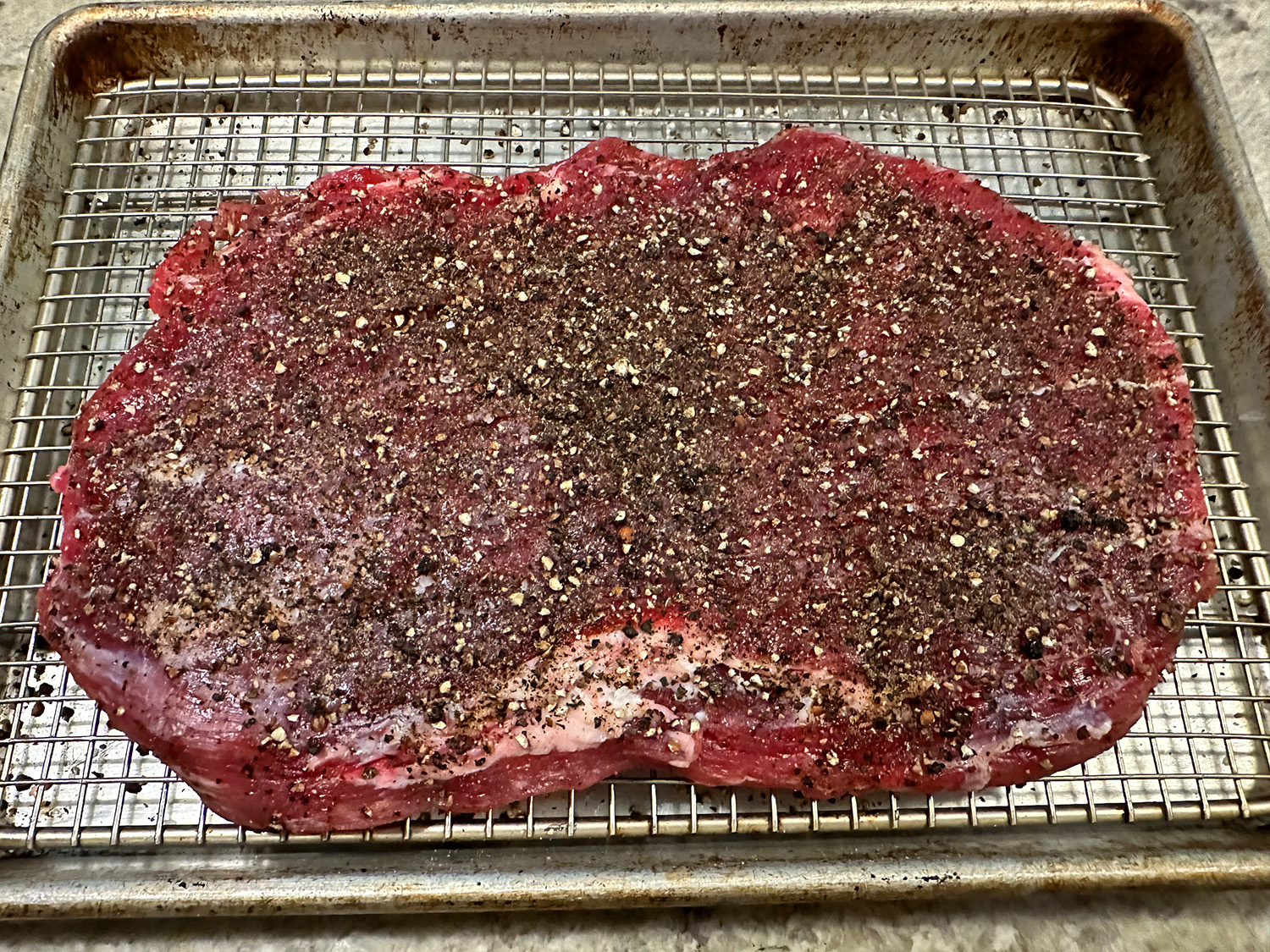
Coat both sides of the steak with the crushed pepper, pressing down to coat evenly. Allow to rest and absorb seasoning for at least 1 hour. Or place on a rack over a rimmed baking sheet and put in the refrigerator, uncovered, overnight or up to 24 hours.
Bring steak to room temperature. Grill over medium-hot coals or a covered gas grill at 450 degrees, about 4 to 5 minutes per side, until juices appear on the surface of the steak. Check with a meat thermometer; 125 degrees for rare, 130 for medium-rare. (Alternatively, cook in a cast-iron pan over medium-high heat or broil.) Let rest at least 10 minutes before slicing.
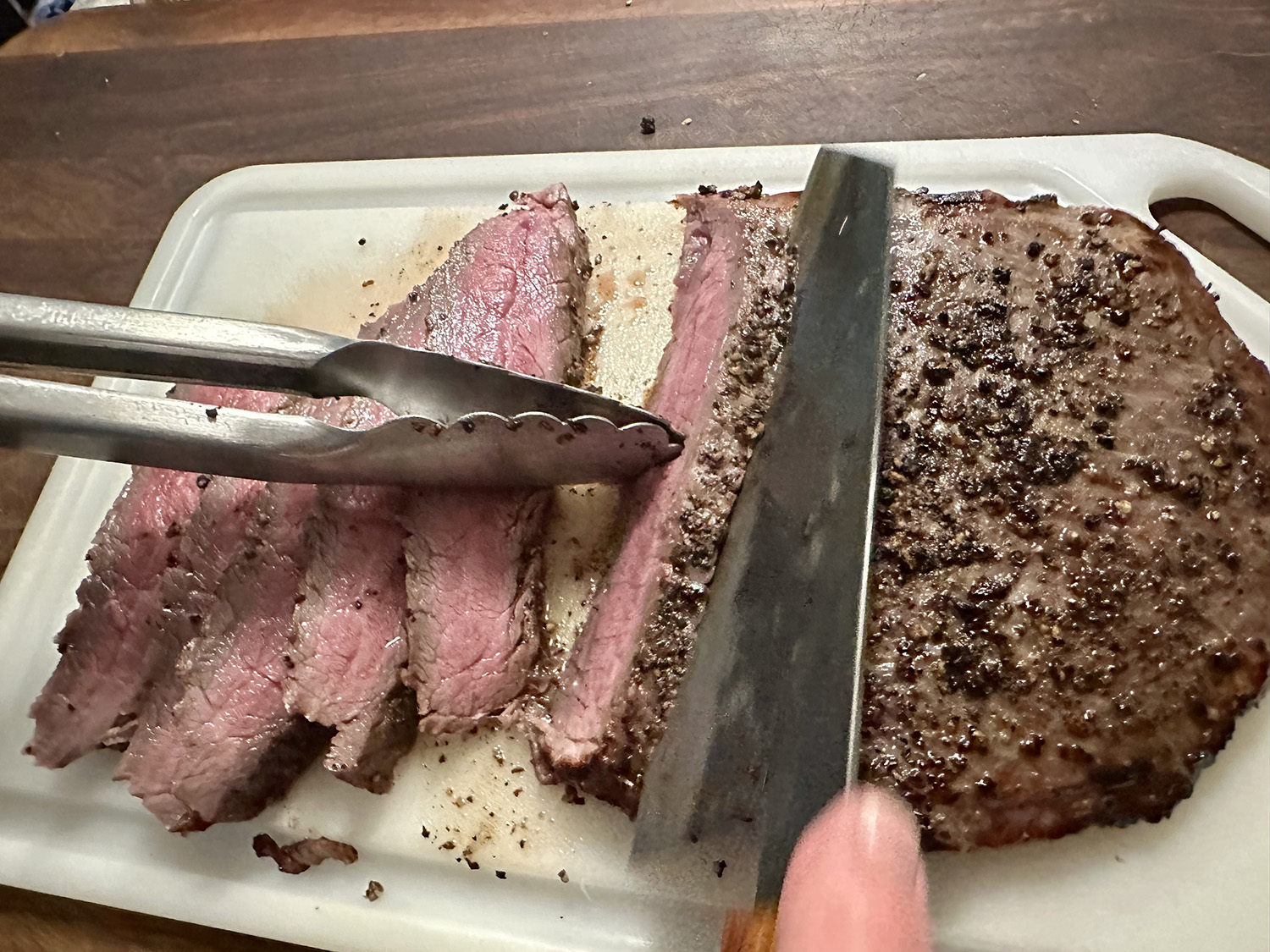
With a sharp knife, slice on a slight bias against the grain, about ⅛-inch thick. Arrange on a serving platter. Serve warm or at room temperature.
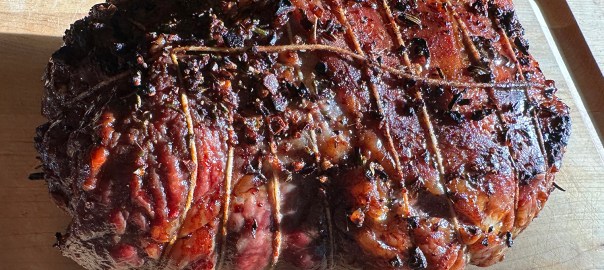
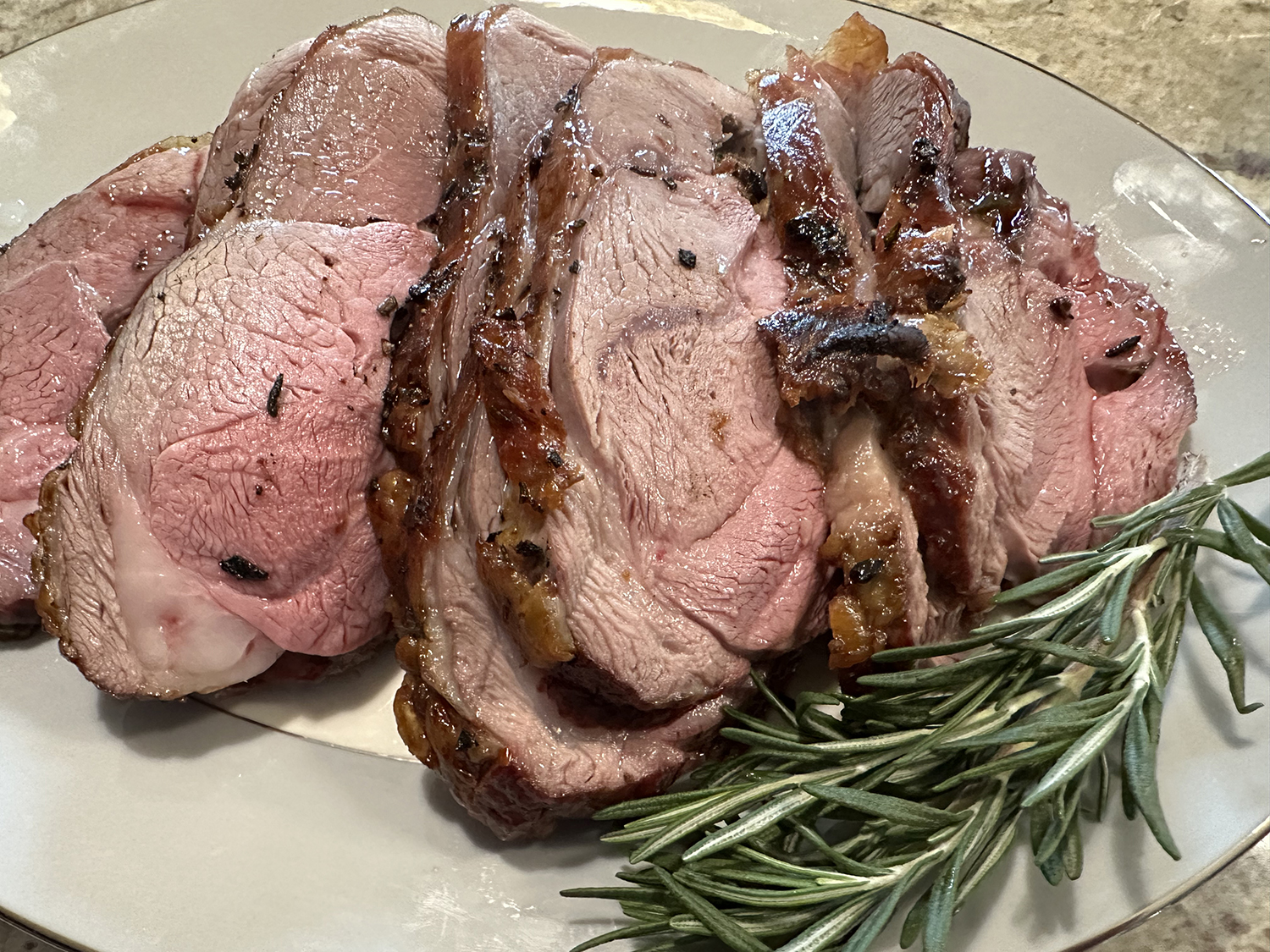
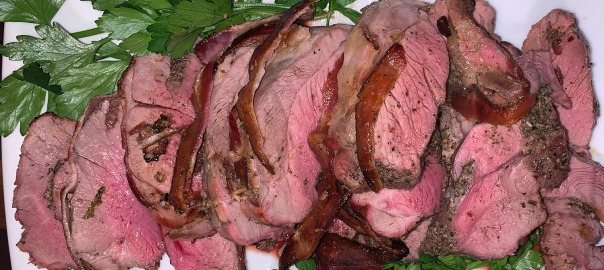
For you seasoned lamb lovers and recent converts, this slow-roasted method delivers mild, flavorful meat with a tender texture and a perfectly rosy medium-rare hue all the way from edge to center, surrounded in a crisp layer of browned, crackly fat. Got your attention now?
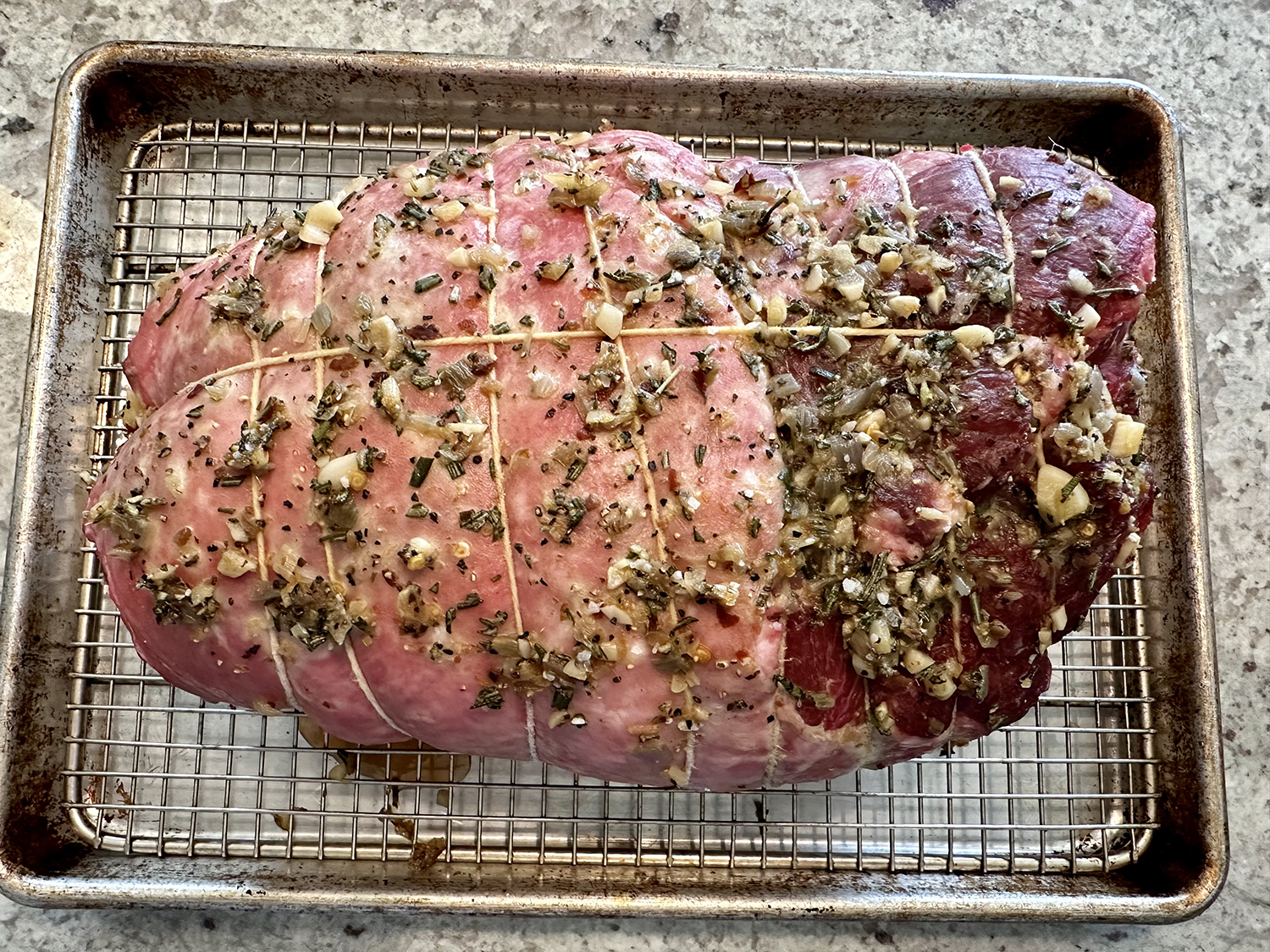
Here, we are going with the classic combination of garlic, rosemary, lemon zest, and some shallots, which bring their milder allium sweetness to the mix. These aromatics are cooked down in olive oil, with a pinch of red pepper flakes for heat, and a few minced anchovy fillets (another classic lamb pairing). And don’t worry, those fillets won’t taste fishy in the final roast.
When applying a rub to the meat, it’s important to really work the salt deep into as many cracks and crevices as possible. Ideally, you want to let the mixture sit on the lamb for at least a day.
There’s a difference between edible and fantastic. That difference usually comes down to how crisp the fat is. After the lamb has rested for half an hour or so (which gives ample time for temperature differentials inside to even out), pop it back into a 500°F oven for about 15 minutes to fully crisp. The lamb fat crackles and those bits of garlic and shallot brown, lending a rich sweetness to the salty crust.
Your meat should be gloriously juicy, crispy on the outside, and because of its low, slow cooking, perfectly evenly cooked and extra-tender. Mmmm good!
2 Tbsp. Diamond Crystal kosher salt; for table salt, use half as much by volume or the same weight
Freshly ground black pepper
One 6- to 8-lbs. boneless leg of lamb, butterflied to even 1-inch thickness and trimmed of excess fat
Directions
Adjust oven rack to lower-third position and preheat oven to 275°F. In a small saucepan set over medium heat, heat olive oil until shimmering, about 3 minutes. Add garlic, shallot, anchovies, rosemary, lemon zest, and red pepper flakes. Cook, stirring occasionally, until shallots and garlic are softened, 3 to 5 minutes. Transfer to a small heatproof bowl. Stir in salt and pepper.
Rub half of the mixture inside butterflied lamb leg. Roll leg and, using butcher’s twine, tie securely at 1-inch intervals. Rub remaining mixture over exterior of lamb. Cook immediately or let rest uncovered in the refrigerator for up to 12 hours for best flavor and texture.
When ready to cook, place lamb, fat side up, on a wire rack set in a foil-lined rimmed baking sheet. Transfer to oven and roast until an instant-read thermometer inserted into thickest section of lamb registers 125°F to 130°F for medium-rare, or 130°F to 135°F for medium, 2 1/2 to 3 hours. Remove from oven and let rest, uncovered, for 40 minutes.
While lamb is resting, increase oven temperature to 500°F. Return lamb to oven and roast until exterior is deep brown and crisp, about 15 minutes. Remove from oven and let rest 5 minutes. Remove twine with kitchen shears, transfer lamb to cutting board, slice into 1/4 inch slices, and serve.
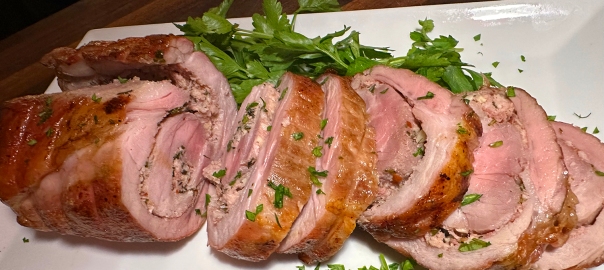
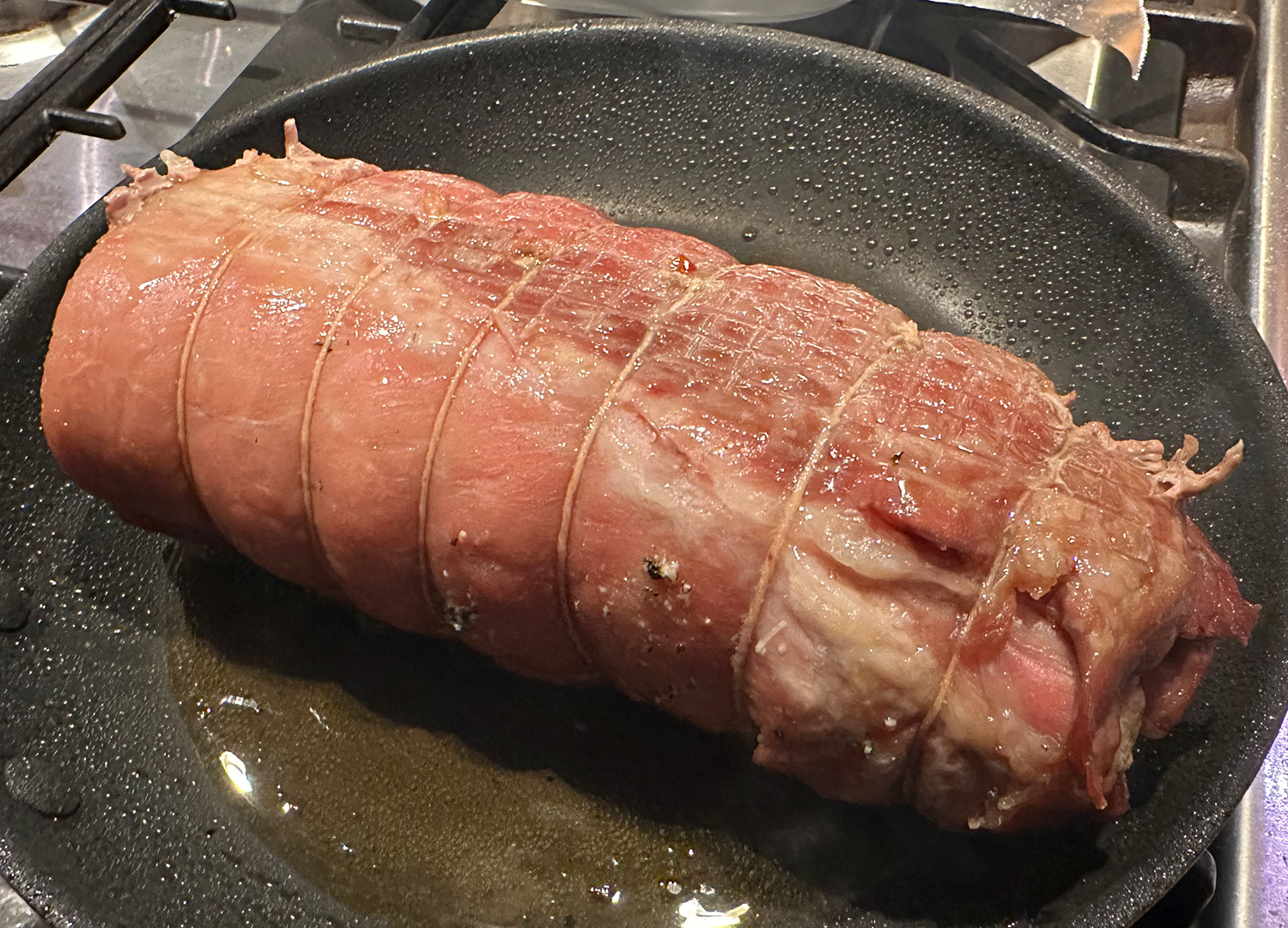
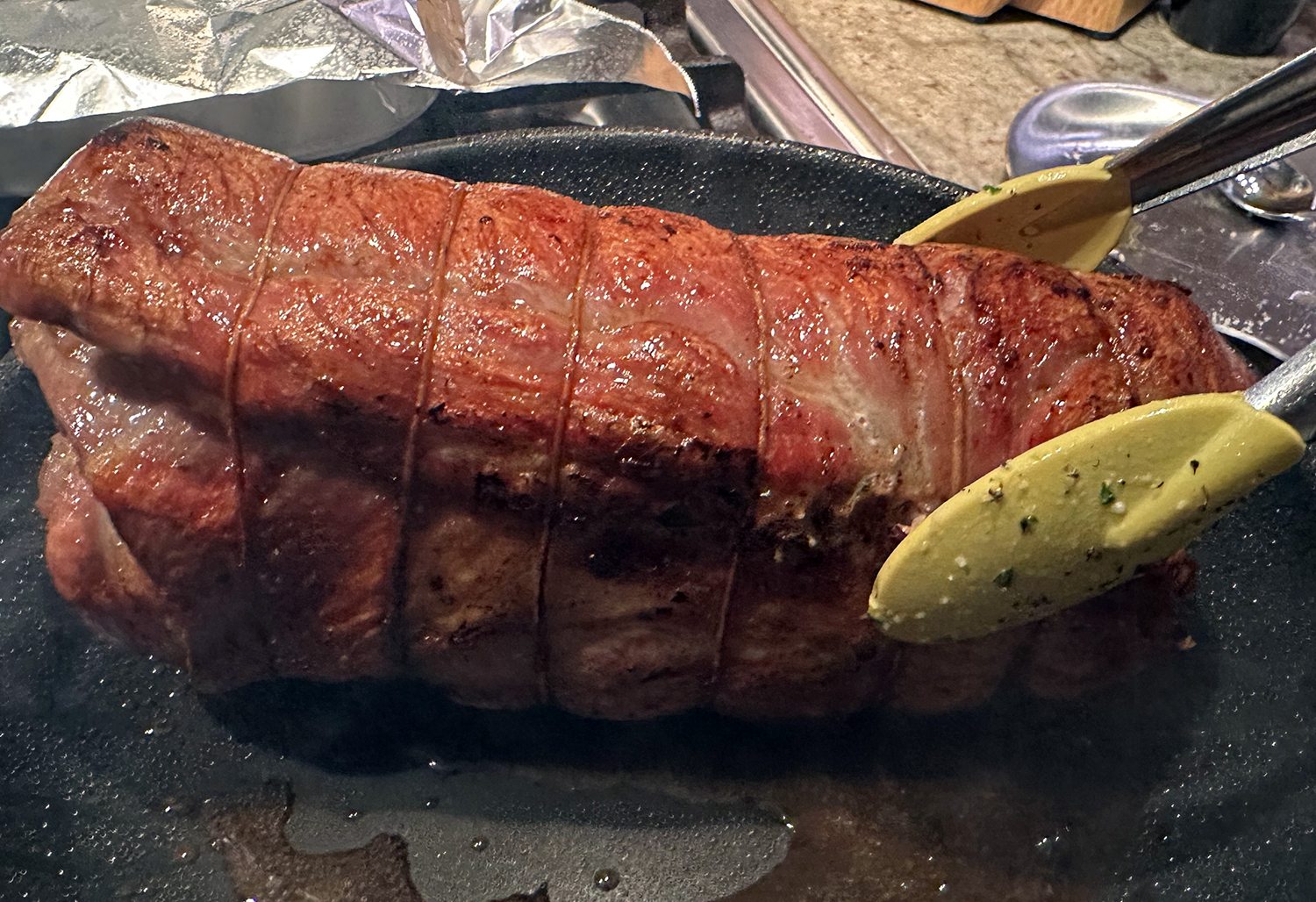
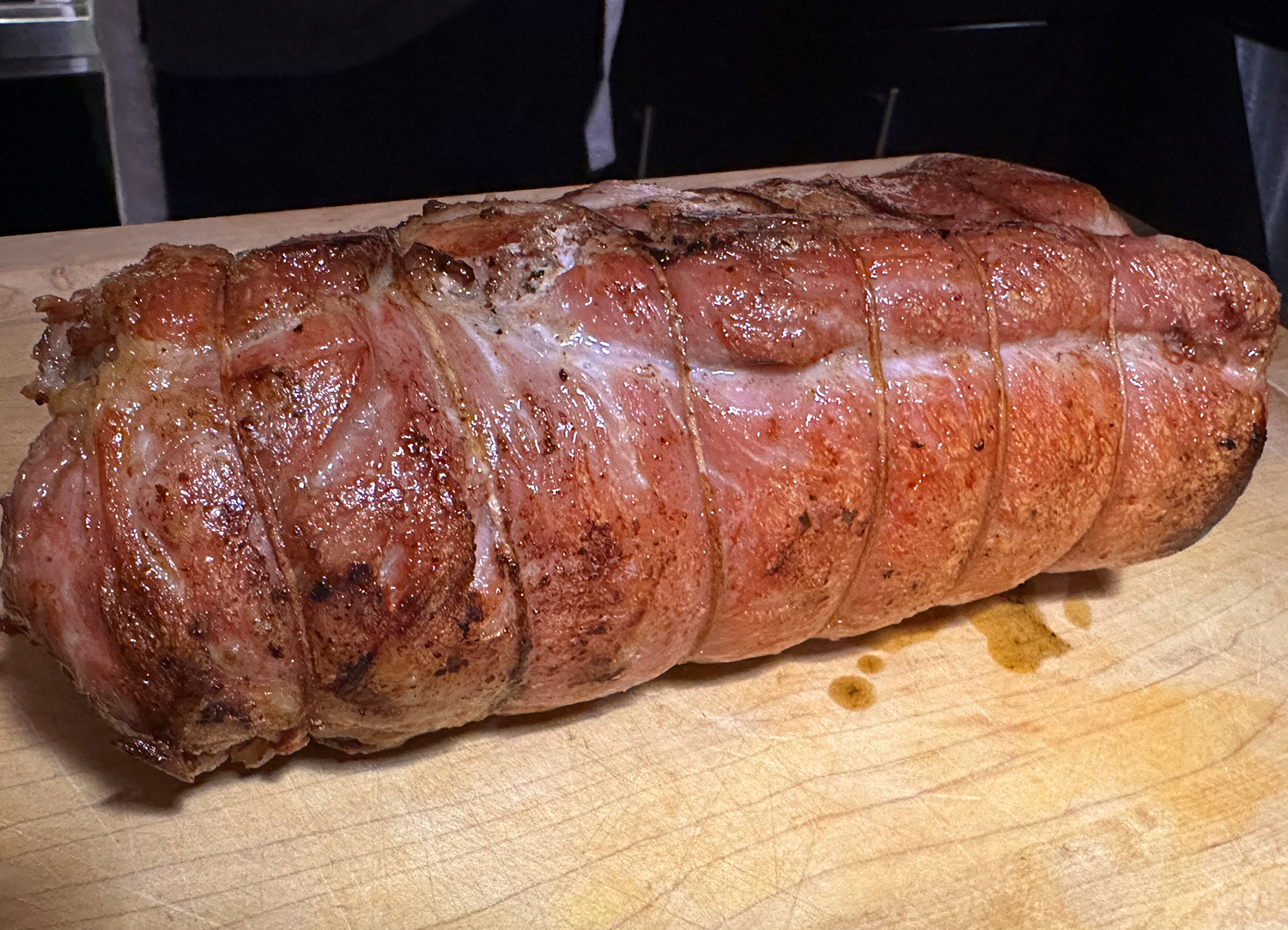
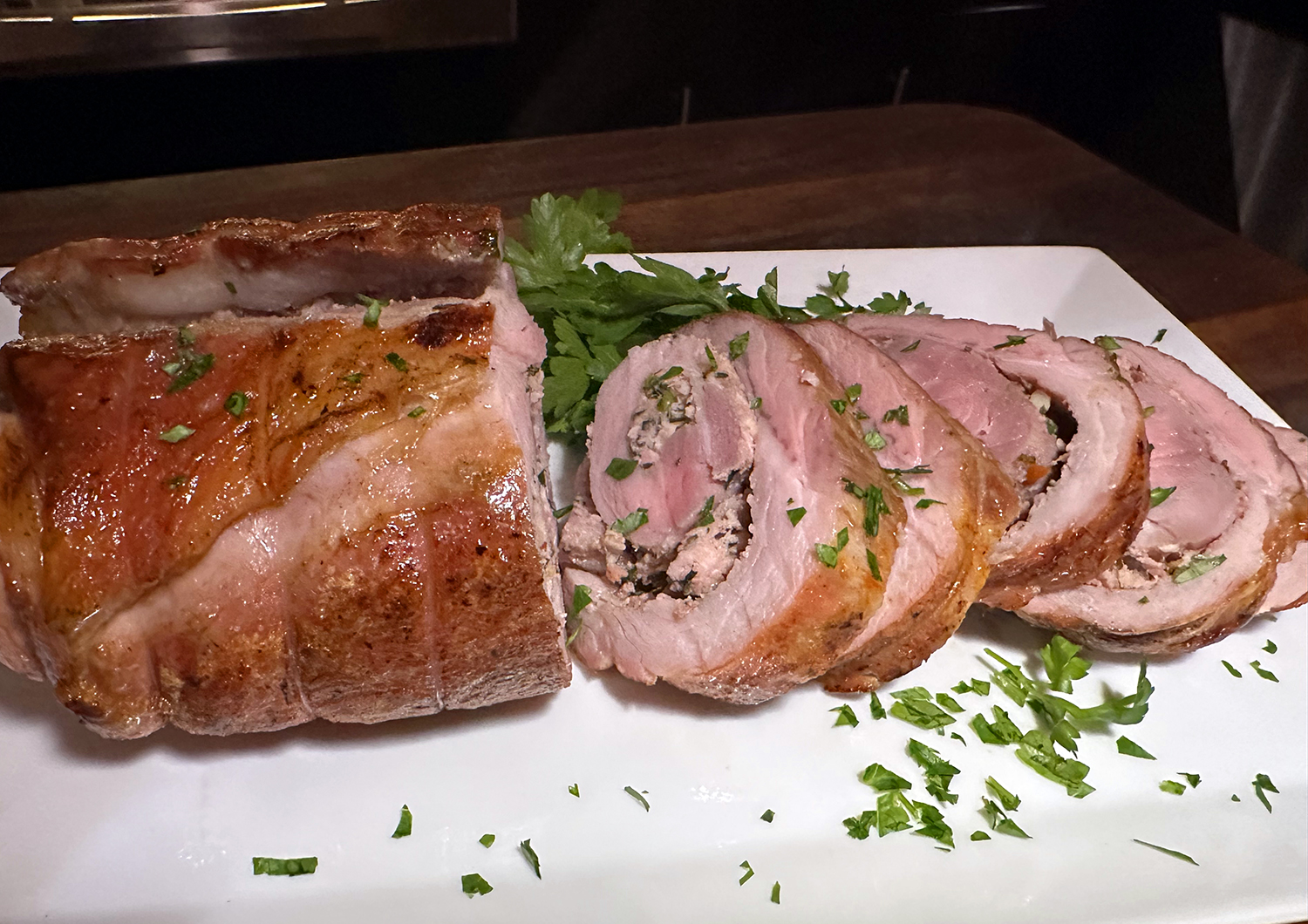
Arista means “the best.” This dish promises a superlative pork loin flavored with garlic, rosemary, and deep browning. Too bad few versions live up to their name. Preparing it this way, the pork is very juicy and full of flavor; plus it makes a nice presentation on a platter. And it is a very economical piece of meat to feed a small dinner party without feeling you need to break the bank to impress.
Note that we doubled the amount of pancetta paste after other reviewers suggested it. Another change: just before adding the cooked lemon to the sauce at the end to make the vinaigrette, The Hubs added the oils first to the pan to lift the fond left after searing the roast, then strained this and added the strained cooked lemon.
Finely grate 1 teaspoon zest from lemon. Cut lemon in half and reserve. Combine lemon zest, oil, garlic, and pepper flakes in 10-inch nonstick skillet. Cook over medium-low heat, stirring frequently, until garlic is sizzling, about 3 minutes. Add rosemary and cook, 30 seconds. Strain mixture through fine-mesh strainer set over bowl, pushing on garlic-rosemary mixture to extract oil. Set oil aside and let garlic-rosemary mixture cool. Using paper towels, wipe out skillet.
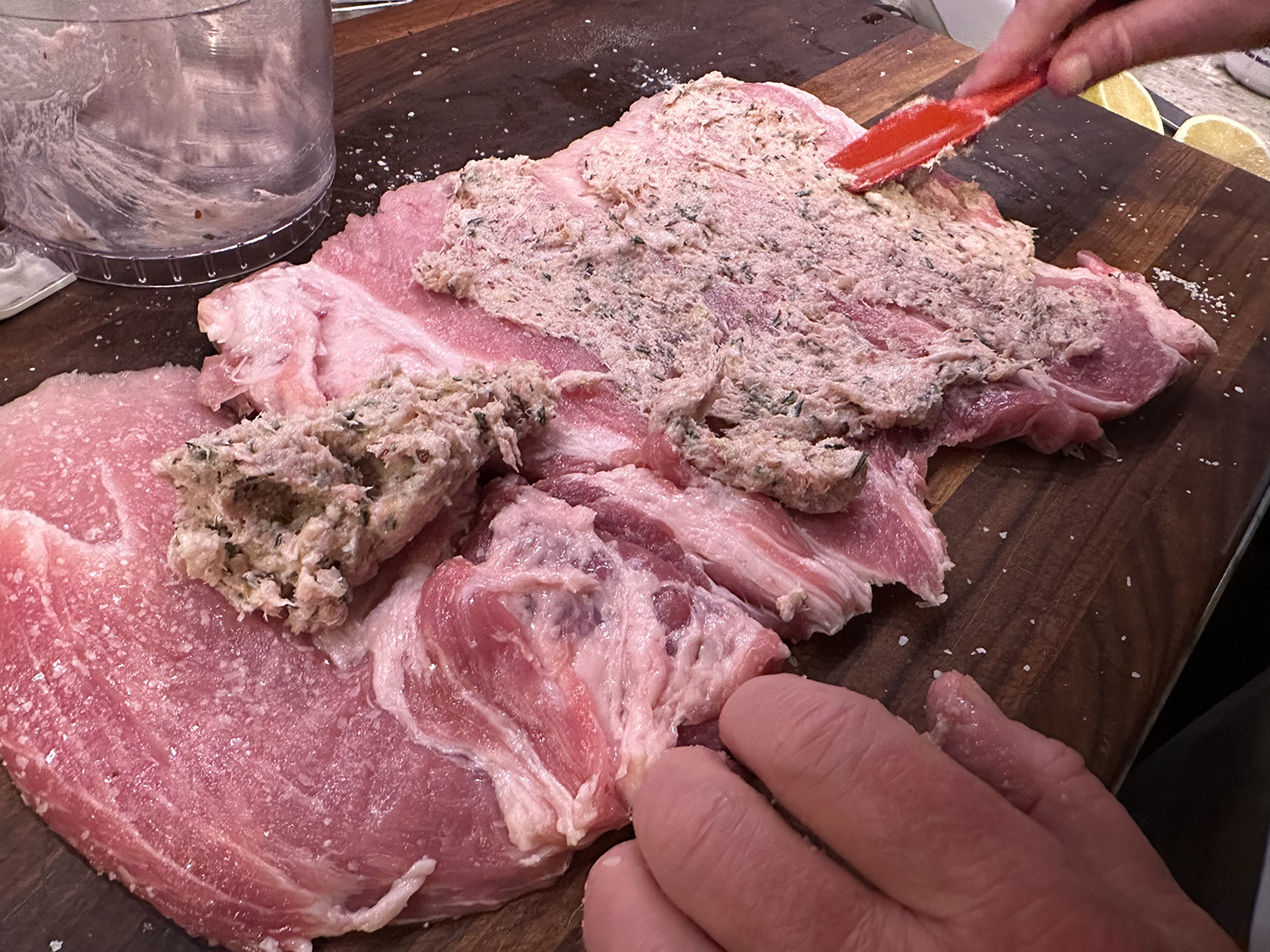
Process pancetta in food processor until smooth paste forms, 20 to 30 seconds, scraping down sides of bowl as needed. Add garlic-rosemary mixture and continue to process until mixture is homogeneous, 20 to 30 seconds longer, scraping down sides of bowl as needed.
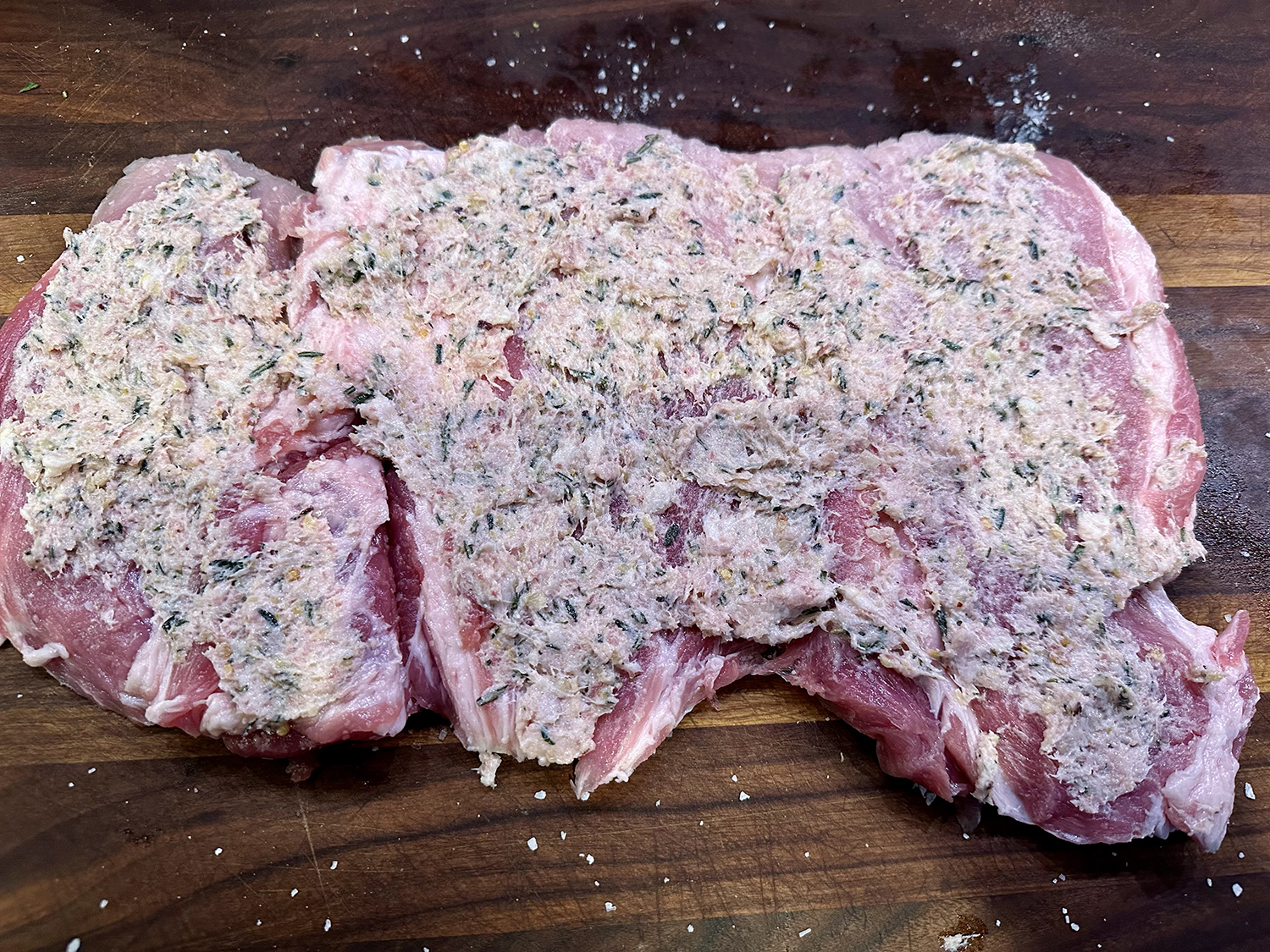
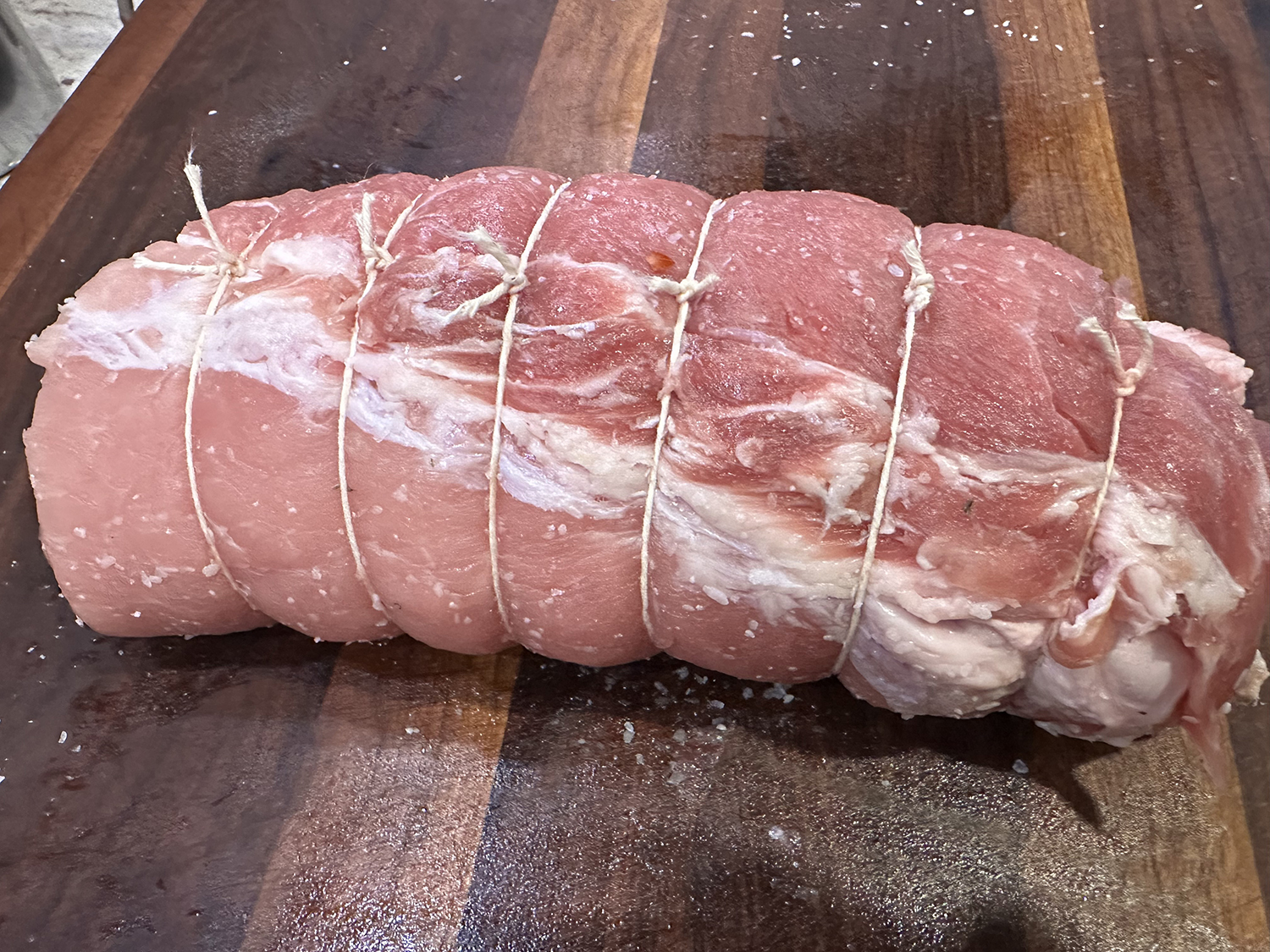
Position roast fat side up. Insert knife one-third of way up from bottom of roast along 1 long side and cut horizontally, stopping 1/2 inch before edge. Open up flap. Keeping knife parallel to cutting board, cut through thicker portion of roast about 1/2 inch from bottom of roast, keeping knife level with first cut and stopping about 1/2 inch before edge. Open up this flap. If uneven, cover with plastic wrap and use meat pounder to even out. Sprinkle 1 tablespoon kosher salt over both sides of roast (1/2 tablespoon per side) and rub into meat to adhere. Spread inside of roast evenly with pancetta-garlic paste, leaving about 1/4-inch border on all sides. Starting from short side, roll roast (keeping fat on outside) and tie with twine at 1-inch intervals. Set wire rack in rimmed baking sheet and spray with vegetable oil spray. Set roast fat side up on prepared rack and refrigerate for 1 hour.
Adjust oven rack to middle position and heat oven to 275 degrees. Transfer roast to oven and cook until meat registers 135 degrees, 1 1/2 to 2 hours. Remove roast from oven, tent with aluminum foil, and let rest for 20 minutes.
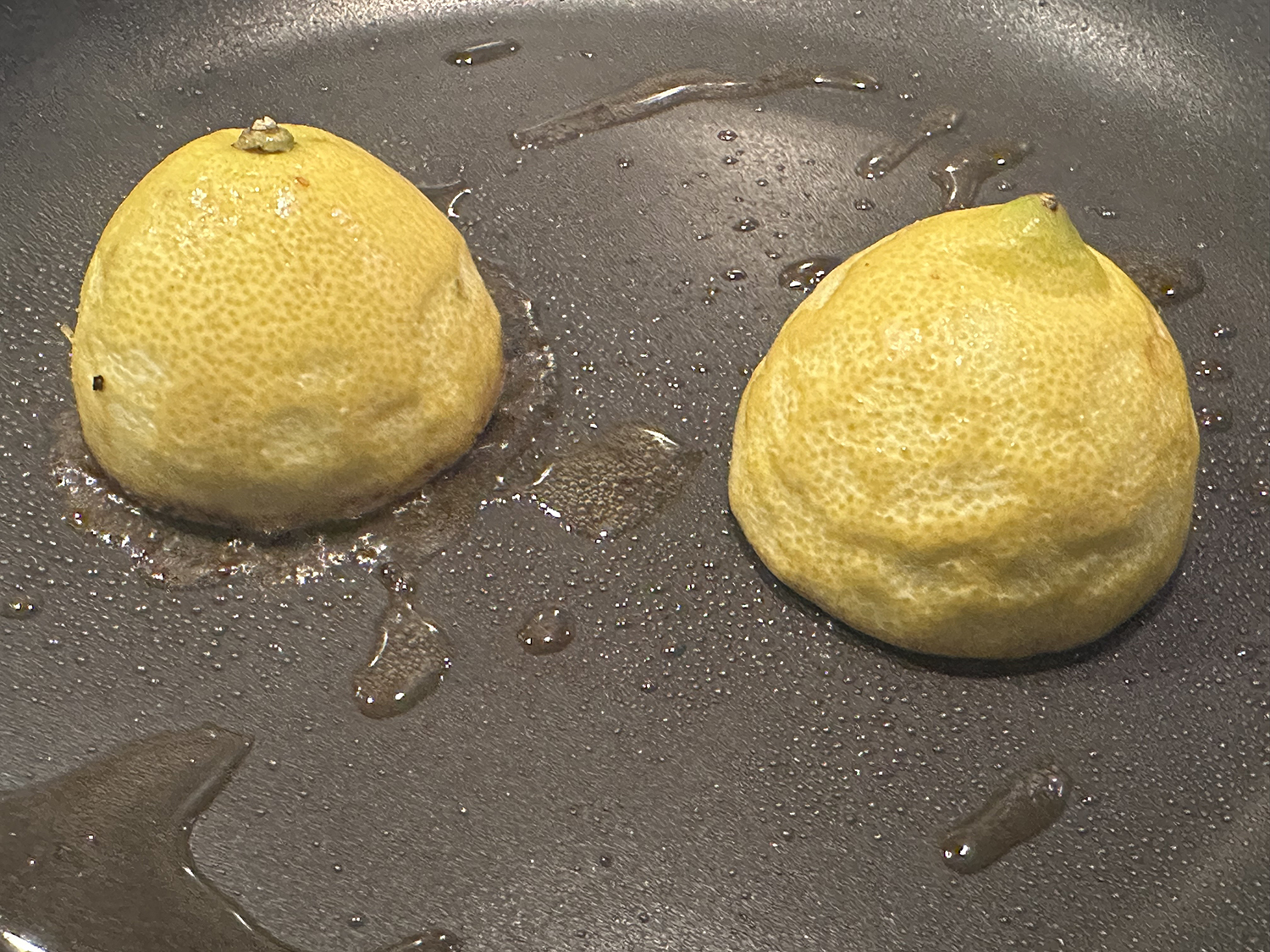
Heat 1 teaspoon reserved oil in now-empty skillet over high heat until just smoking. Add reserved lemon halves, cut side down, and cook until softened and cut surfaces are browned, 3 to 4 minutes. Transfer lemon halves to small plate.
Pat roast dry with paper towels. Heat 2 tablespoons reserved oil in now-empty skillet over high heat until just smoking. Brown roast on fat side and sides (do not brown bottom of roast), 4 to 6 minutes. Transfer roast to carving board and remove twine.
Once lemon halves are cool enough to handle, squeeze into fine-mesh strainer set over bowl. Press on solids to extract all pulp; discard solids. Whisk 2 tablespoons strained lemon juice into bowl with remaining reserved oil. Slice roast into 1/4-inch-thick slices and serve, passing vinaigrette separately.
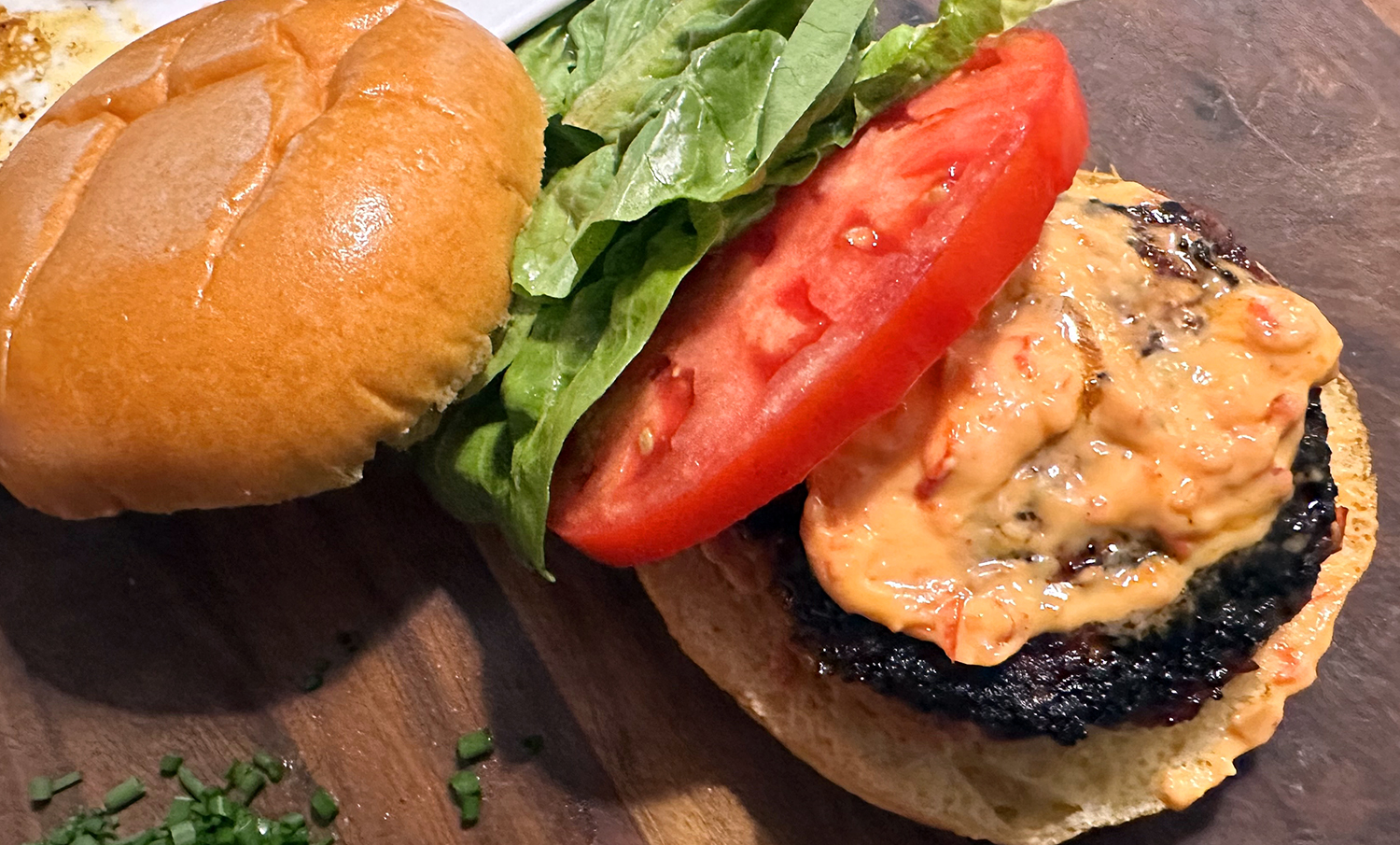
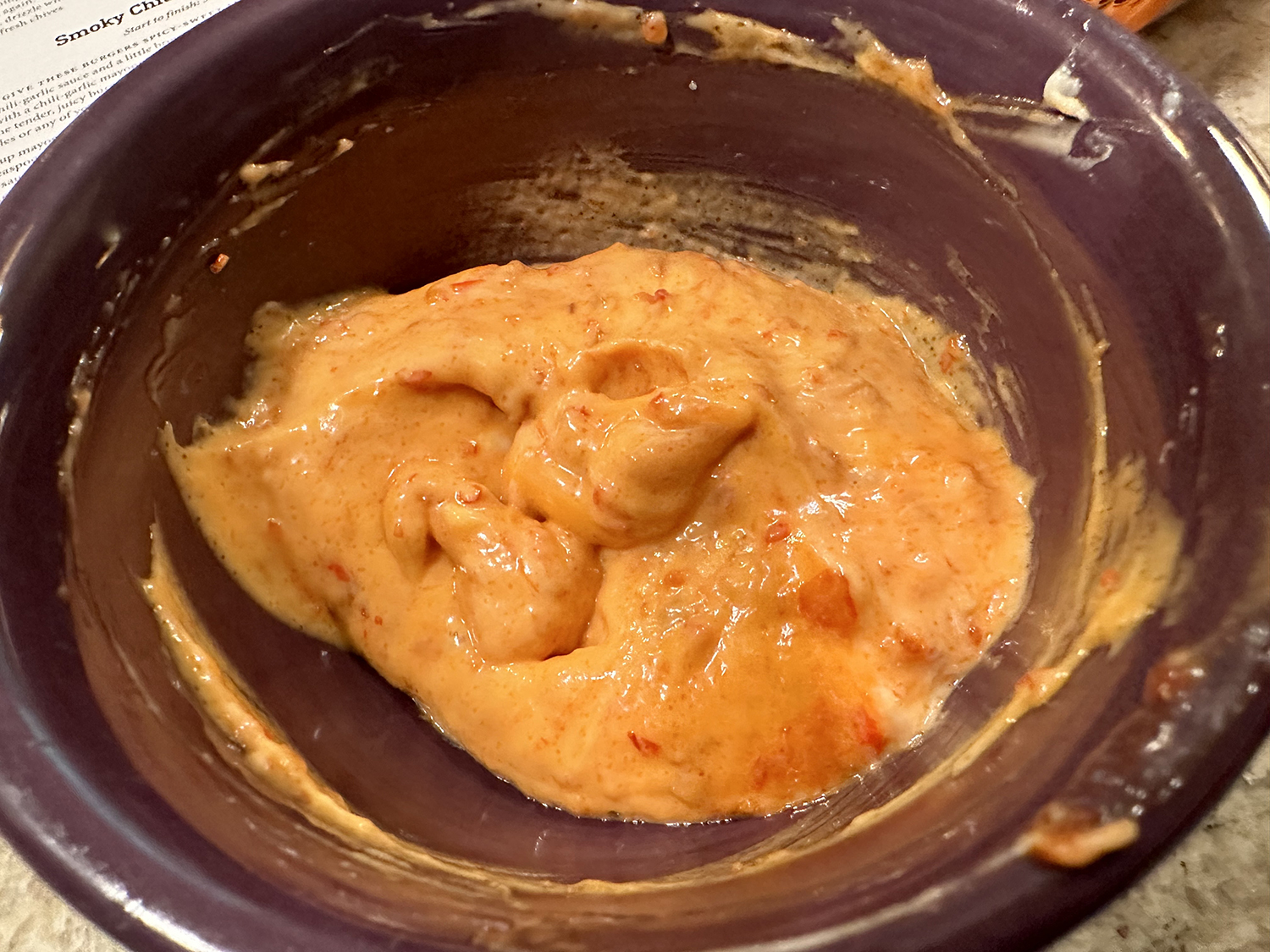
Here’s taking that ordinary burger and kickin’ it up a notch or ten. These burgers exude a spicy-sweet flavor and mild garlickiness, by mixing Asian chili-garlic sauce and a little brown sugar into the ground pork; and then add a smear on the buns with a chili-garlic mayonnaise. Woweee!!
Pillow-soft, subtly sweet buns are a particularly good match for the tender, juicy burgers—potato buns or rolls are the perfect match. Serve with lettuce, sliced tomato, pickles or any of your favorite burger toppings. They are so good, you don’t even mind the absence of cheese.
Mix the mayonnaise, 5 teaspoons chili-garlic sauce and 1 teaspoon sugar.
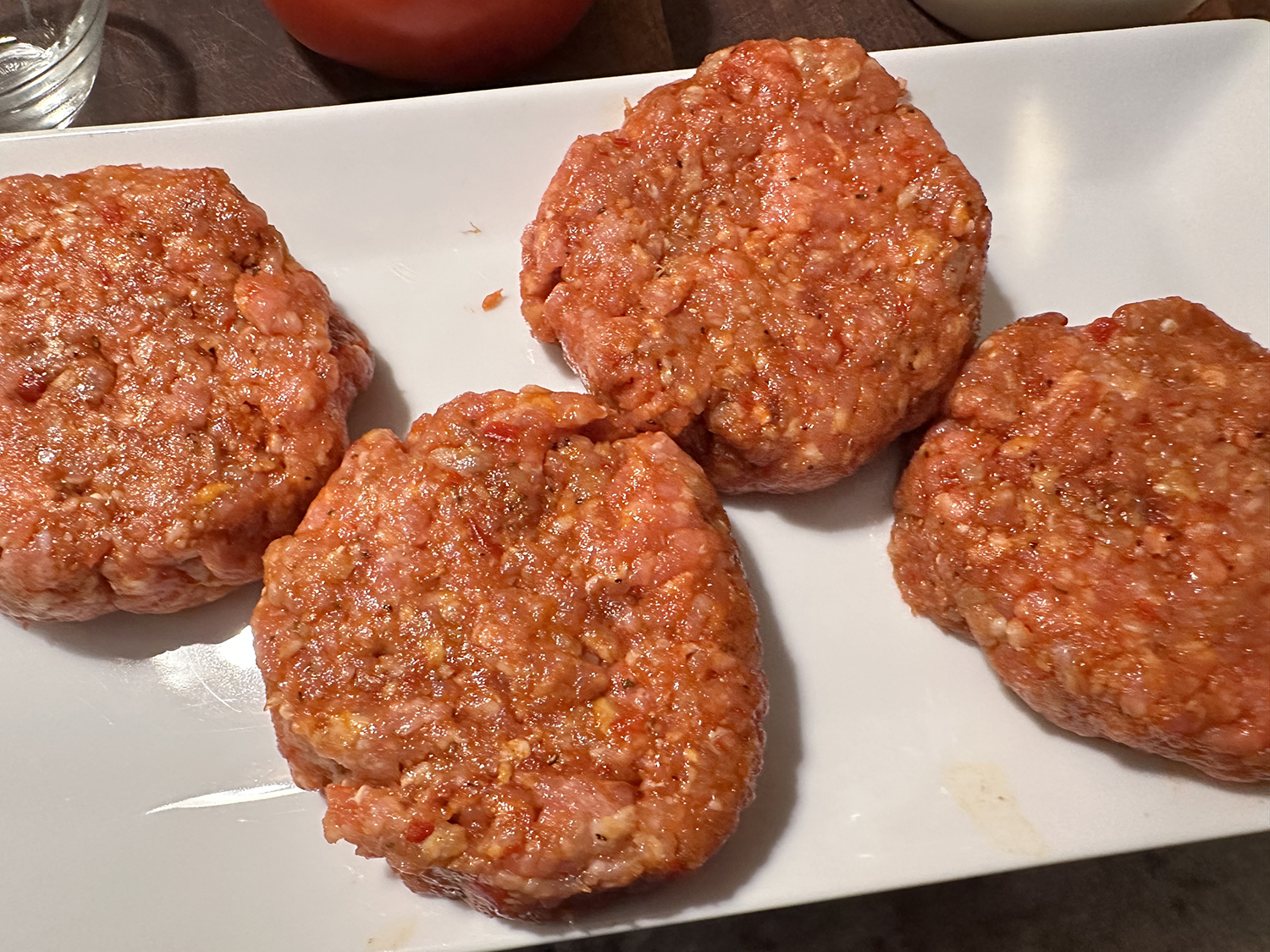
In a medium bowl, mix the pork, paprika, the remaining 2 tablespoons chili-garlic sauce, the remaining 2 teaspoons sugar, 1 teaspoon salt and ½ teaspoon pepper.
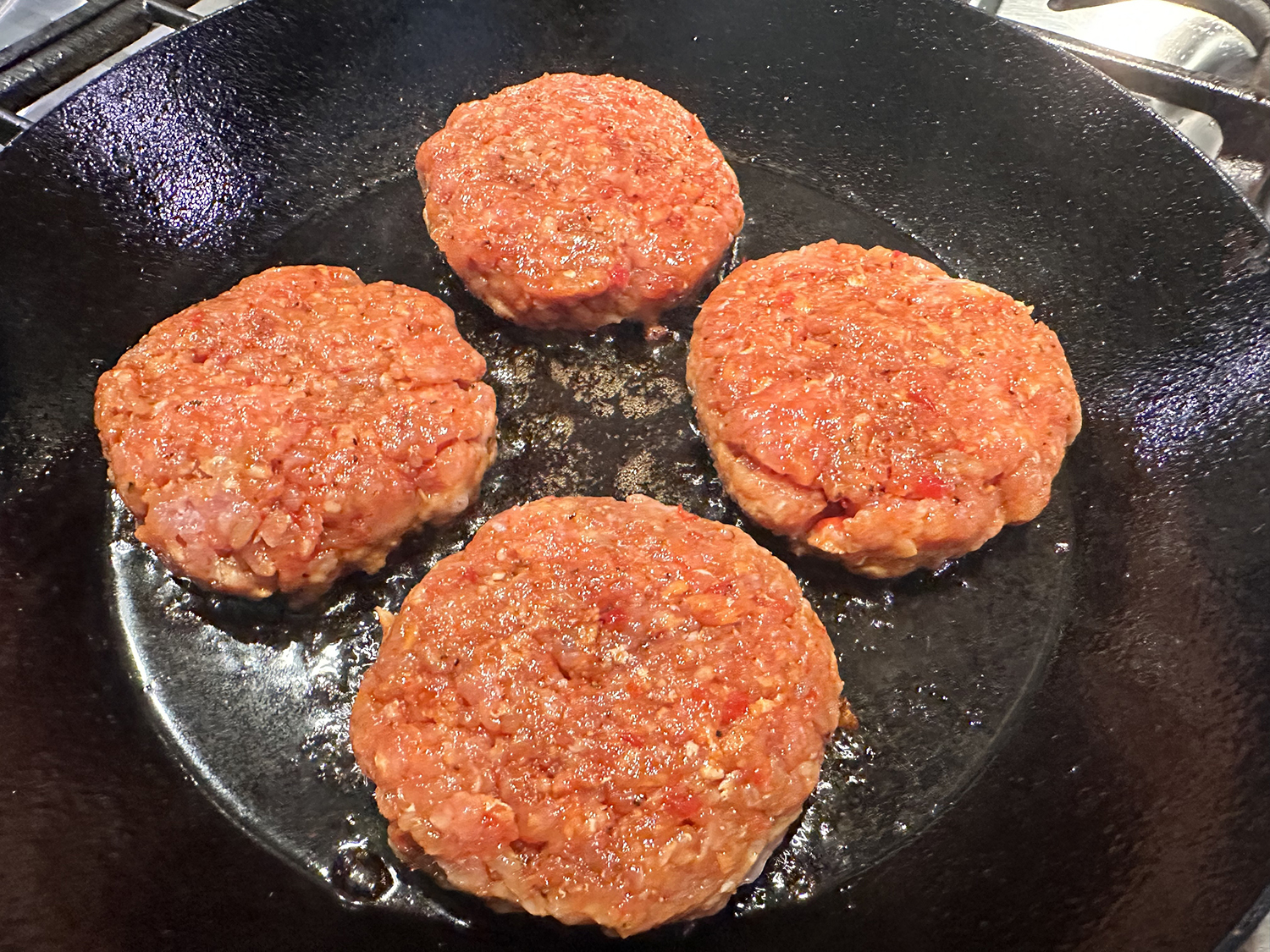
Form into 4 patties. In a 12-inch nonstick skillet, heat the oil until shimmering. Add the patties and cook, flipping once, until well browned on both sides and the centers reach 160°F, 8 to 10 minutes total.
Craving a quick red meat meal? Rib-eye steaks are front and center here, while pimento-stuffed green olives and white wine provide a salty, briny component. With just the two of us for dinner, only one steak was necessary, but it was big and thick—we even had some leftovers. We did not cut back on the other ingredients, and intentionally used more than a half cup of the olives.
Oh, an addition to the recipe was dry-aging our steak. Dry-aging, improves flavor and texture while making cuts easier to cook simply and beautifully. Tenderization occurs when enzymes naturally present in the meat act to break down some of the tougher muscle fibers and connective tissues. A well-aged steak should be noticeably more tender than a fresh steak.
As you are well aware, dry-aged meat at a restaurant or grocery store can cost twice as much as its younger counterparts, but you can do it at home, better—and for free. Exposing meat to cold, circulating air for an extended period of time gently dehydrates it, concentrating flavor and increasing the ratio of fat to muscle. It’s best to dry-age a steak on a rack, uncovered, overnight and up to several days.
Don’t slice the steaks until they have rested for 10 minutes. Resting not only permits the meat to finish cooking with residual heat, it gives the muscle fibers a chance to relax, thereby allowing the juices forced to the surface during cooking to redistribute throughout meat. This results in less moisture loss during slicing.
A little history behind this recipe: This is a riff on a dish from the new edition of “Spain: The Cookbook” written by Simone Ortega and first published in Spain in 1972. The 1,080-recipe tome has since become a bible of Spanish home cooking. We use pimento-stuffed green olives to add pops of bright color and flavor to the white wine pan sauce. Serve with warm, crusty bread to soak up any sauce left on the plate.
2 1-lb. boneless ribeye steaks, each about 1 inch thick, trimmed and patted dry
Kosher salt and ground black pepper
1 Tbsp. grapeseed or other neutral oil
3 Tbsp. salted butter, cut into 1-Tbsp. pieces, divided
1 medium garlic clove, smashed and peeled
½ cup pimento-stuffed green olives, finely chopped, plus 1 Tbsp. olive brine
½ cup dry white wine
1 Tbsp. sherry vinegar
Directions
Season the steaks on both sides with salt and pepper. If possible, dry age the steak on a rack, uncovered, overnight and up to several days.
In a 12-inch skillet over medium-high, heat the oil until barely smoking.Add the steaks, reduce to medium and cook until well browned on the bottoms, 5 to 7 minutes.
Flip and cook for 3 minutes, then add 1 tablespoon of butter and the garlic. Swirl the pan to distribute the butter and continue to cook until the second sides of the steaks are well browned, another 3 to 4 minutes. Transfer to a serving platter, tent with foil and let rest for 10 minutes.
While the steaks rest, remove and discard the garlic, then set the pan over medium-high. Add the olives and cook, stirring, until fragrant, 30 to 60 seconds. Add the wine, bring to a simmer and cook, scraping up any browned bits, until the liquid has almost evaporated, about 3 minutes.
Remove from the heat, stir in the olive brine, vinegar and remaining 2 tablespoons butter, then stir until melted. Remove from the heat, then taste and season with salt and pepper. Cover and set aside.
After the steaks have rested, cut them on the diagonal into ¼- to ½-inch-thick slices. Transfer to a platter, pour over any accumulated juices and spoon on the sauce.
The flavor, a bold blend of sweet and savory, with herbs and onions most obvious, but sugar and brine almost as pronounced. The thick pork chops are drenchingly moist and wildly flavorful. Each bite has briny and spicy and rich and savory.
This recipe is an attempt to recreate a Bogotá asado mix. Instead of a mix of meats, this option is for easy-to-cook, richly flavorful bone-in pork chops. Typically it includes achiote, a seed that adds vivid red-orange color and mild, earthy notes. Easier-to-source sweet paprika is substituted here, and cider vinegar is a stand-in for apple wine (a beverage similar to dry hard cider) to bring tart, fruity notes that balance the spices and herbs.
A blender makes quick work of the seasoning paste, half of which coats the chops for marinating; the rest is brushed onto the pork midway through cooking. If desired, serve with roasted potatoes and/or fried plantains, as asado is served in Bogotá. We paired ours with grilled broccoli and pickled shallots.
Don’t scrape the seasoning paste off the chops before grilling. The paste aids with browning and develops a rich, heady aroma along with depth of flavor on the grill.
4 10- to 12-oz. bone-in pork loin chops (each ¾ to 1 inch thick), patted dry
Lime wedges, to serve (optional)
Directions
In a blender, combine the paprika, scallions, bay, cumin, thyme, allspice, garlic, vinegar, sugar, oil, ¼ cup plus 2 tablespoons water, 2 teaspoons salt and 1 teaspoon pepper. Blend, scraping the jar as needed, until smooth, about 30 seconds. Measure ⅓ cup of the paste into a small bowl, then stir in 2 tablespoons water; cover and set aside or cover and refrigerate if you will be marinating the chops for more than 2 hours. It is preferable to marinate a full 24 hours if possible.
Coat the chops on all sides with the remaining seasoning paste, rubbing it into the meat. Set on a large plate or baking dish, cover and refrigerate for at least 1 hour or up to 24 hours.
When you are ready to cook the chops, remove from the refrigerator (along with the reserved seasoning paste, if refrigerated) and let stand at room temperature while you prepare a charcoal or gas grill.
For a charcoal grill, ignite a large chimney of coals, let burn until lightly ashed over, then distribute evenly over one side of the grill bed; open the bottom grill vents. For a gas grill, turn all burners to high. Heat the grill, covered, for 5 to 10 minutes, then clean and oil the grate.
Without scraping off the seasoning paste, place the chops on the grill (on the hot side, if using charcoal). Cook, uncovered, until nicely charred on the bottoms, 5 to 7 minutes.
Brush the chops with about half of the reserved seasoning paste, then flip the chops and brush with the remaining reserved seasoning paste. Cook, uncovered, until the second sides are well charred and the centers near the bone reach 135°F or are just barely pink when cut into, another 5 to 7 minutes.
Flip the chops once again and cook for about 1 minute to heat the newly applied seasoning paste. Transfer to a platter and tent with foil; let rest for 10 minutes. Serve with lime wedges (if using).
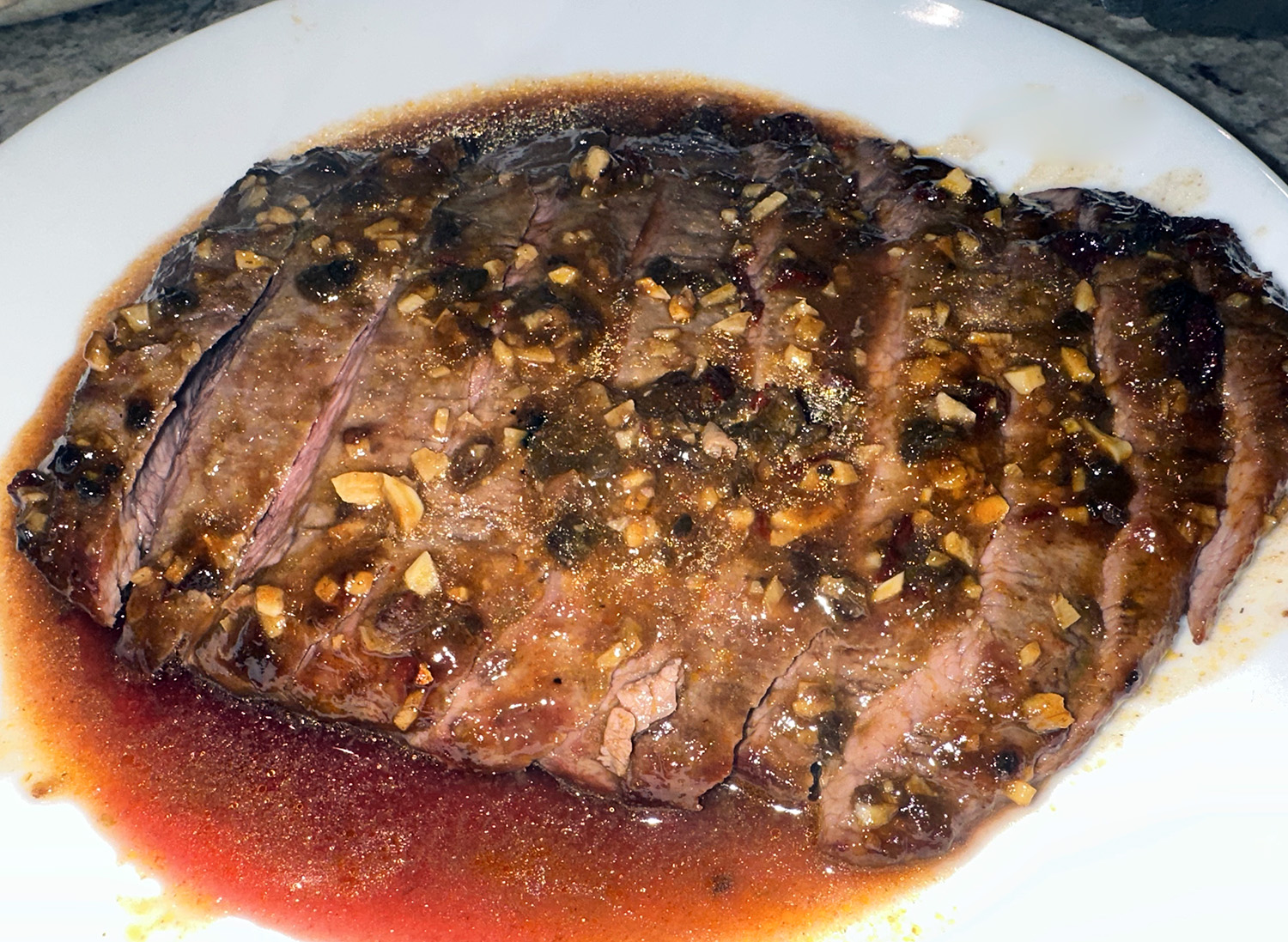
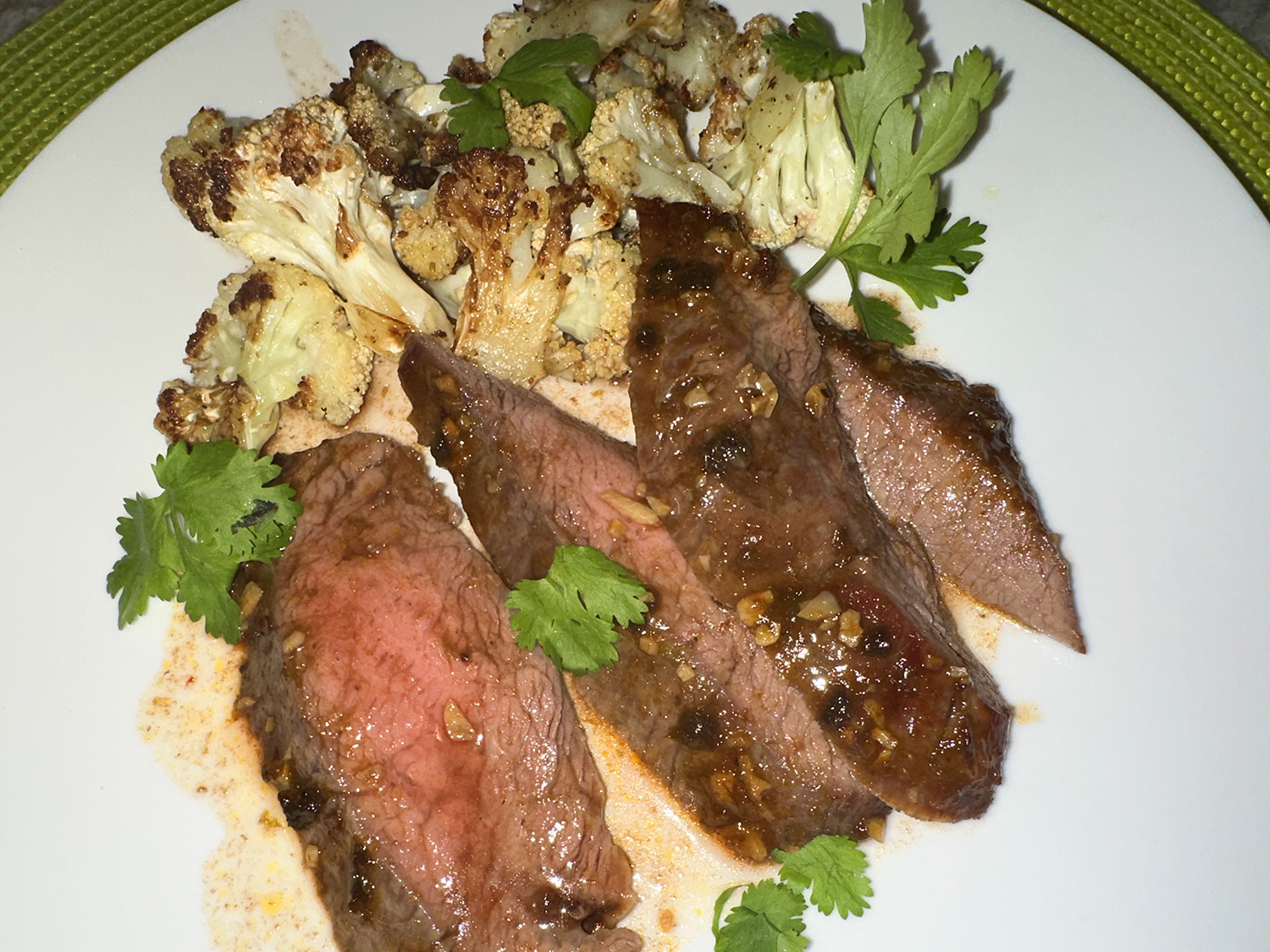
Flank steak, with its deep beefy flavor and standout striations that soak up rubs and marinades, it should be on everybody’s list of favorite grilling cuts. So when you’re craving a little barbecue flavor anytime of year, this recipe does the trick. The beauty of flank steak is that it absorbs the flavors of any rub or marinade easily.
One of the tastiest, and potentially toughest cuts of meat you’ll ever eat, there are two opposite cooking choices with flank. You either cook it hot and fast, or long and slow by braising. The purpose is to break down the connective tissues by cutting thin slices or by heat and moisture. Clearly we are doing the fast method here.
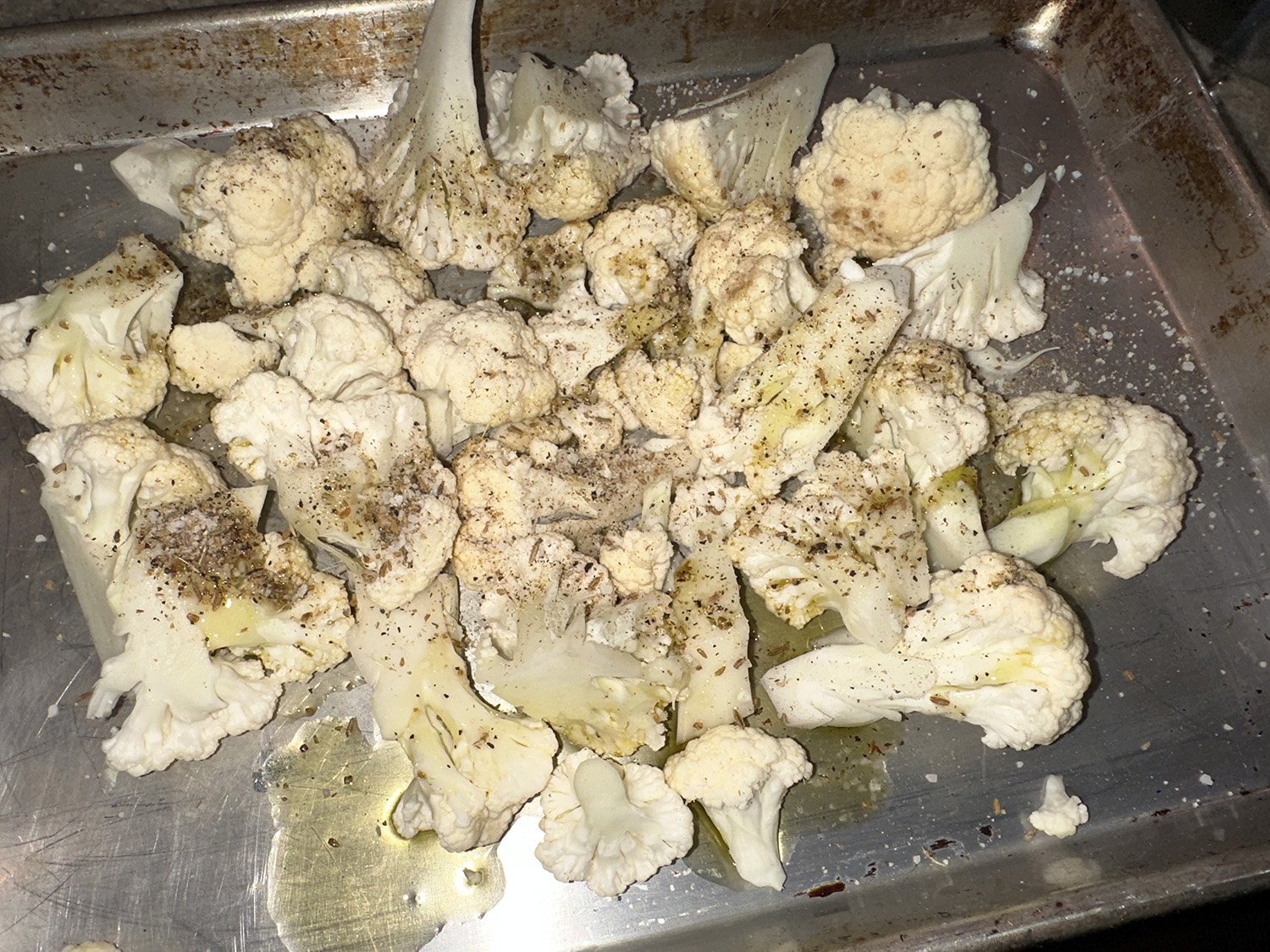
Using cumin as the common seasoning on both the meat and the cauliflower make them pair together well.
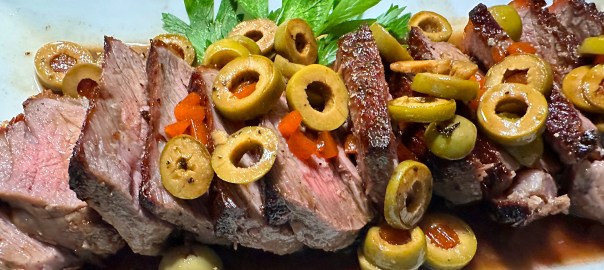
Honey-Chipotle Glazed Flank Steak and Cumin Cauliflower
Position an oven rack 6 inches below the broiler and heat the broiler on high. Line a large-rimmed baking sheet with foil.
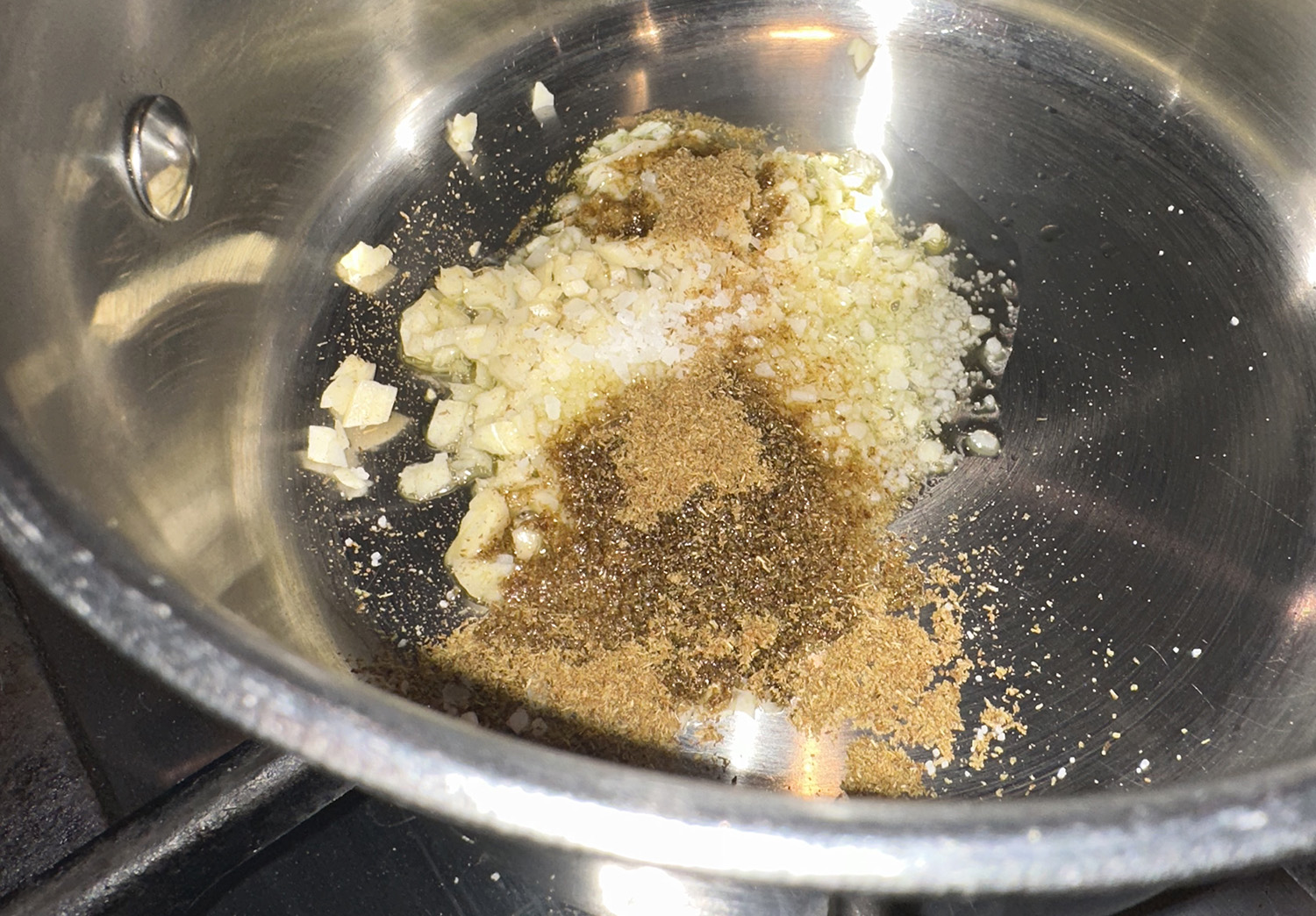
Combine 1 tsp. of the oil, garlic, cumin, and 1/2 tsp. salt in a 1-quart saucepan over medium-low heat; cook, stirring occasionally, until the garlic is golden, about 2 minutes. Add the chipotle and honey and stir until heated through about 1 minute. Remove from the heat and stir in the lime juice and zest.
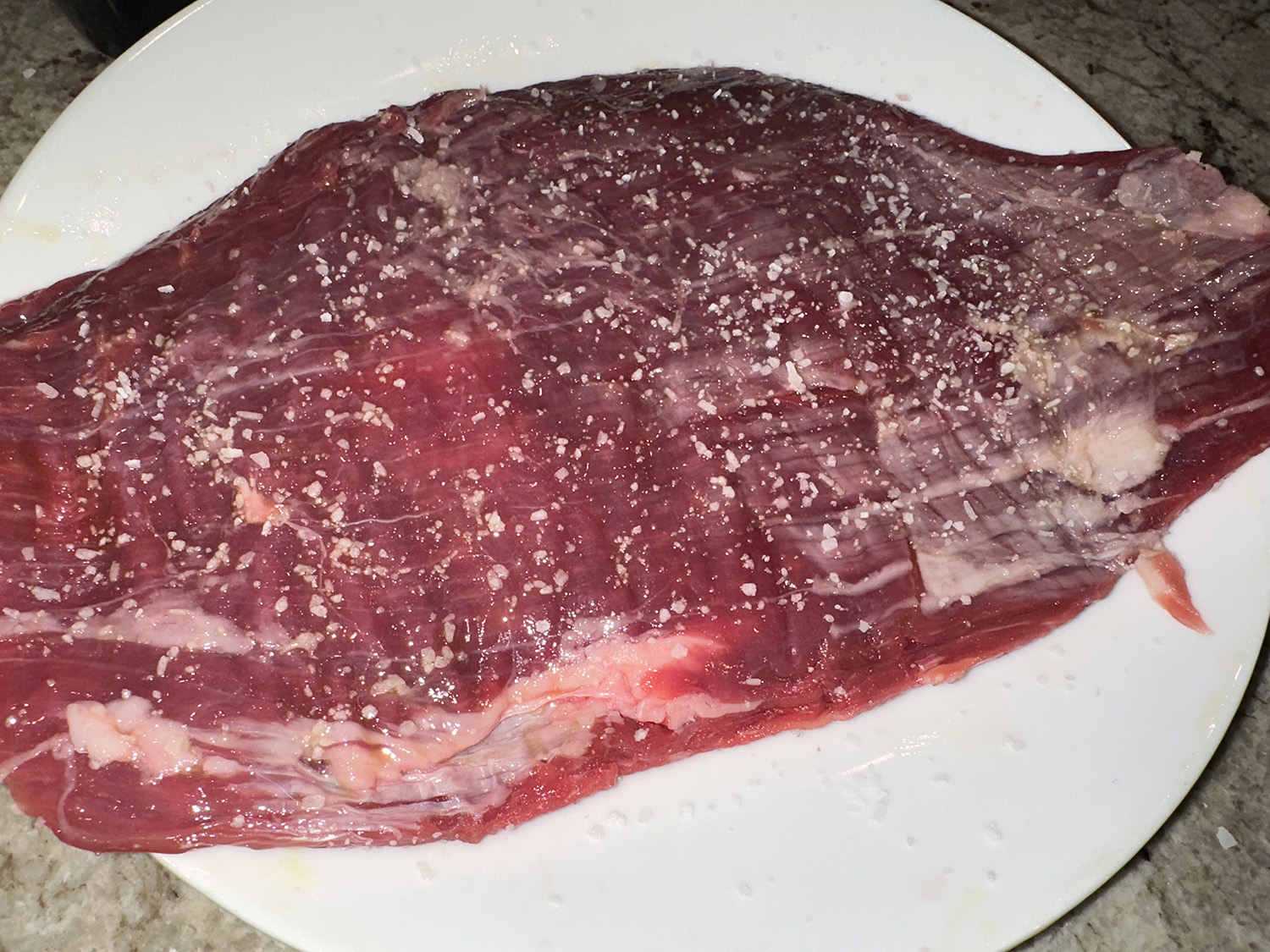
Rub the flank steak with the remaining 1 tsp. oil and season generously with salt. Transfer to the prepared baking sheet and broil, turning once, until slightly browned and cooked to your liking, about 3 minutes per side for an internal temperature of 140°F.
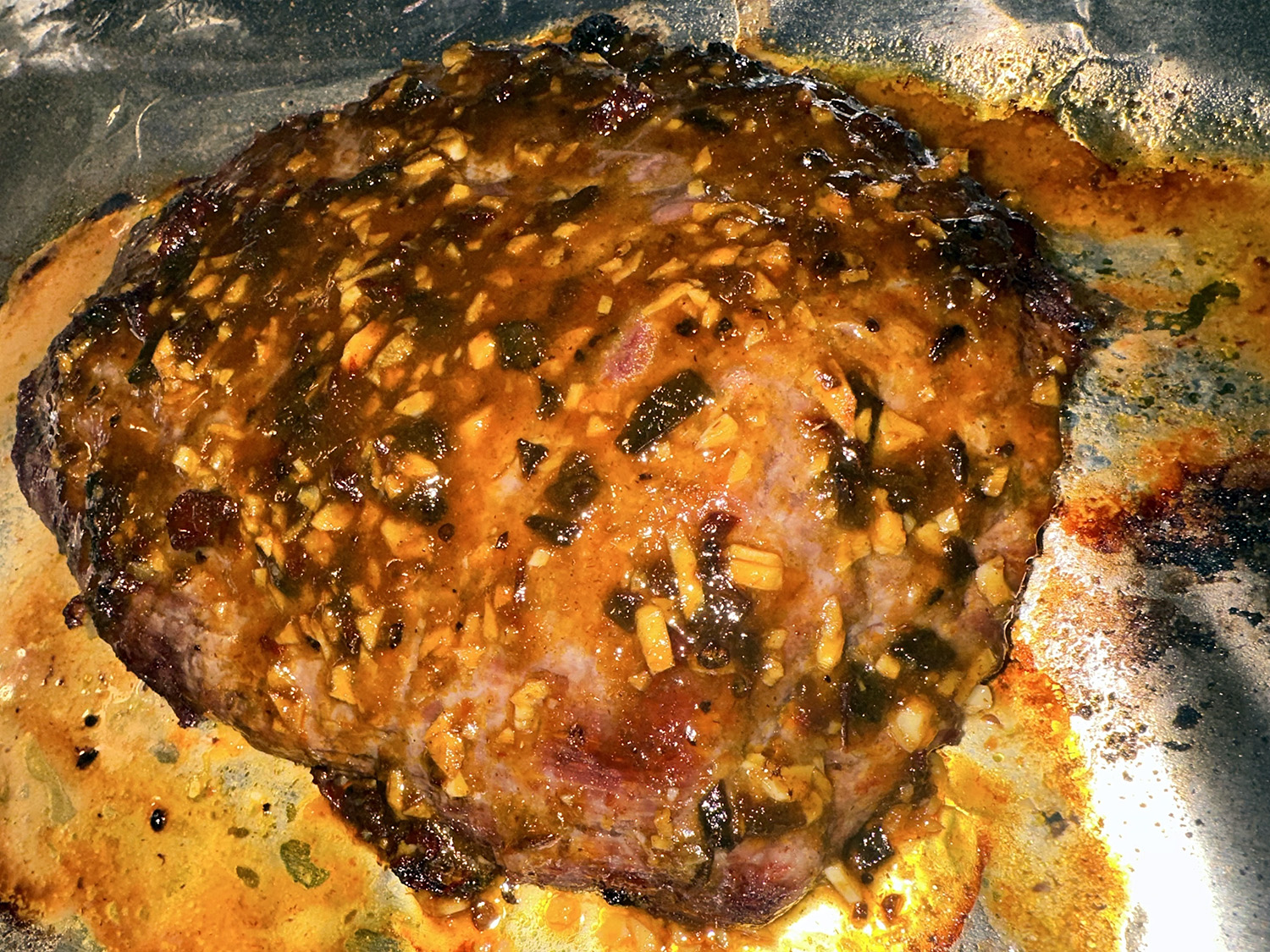
Spread the glaze over the top of the steak and broil until it begins to bubble and darken in places, 1 to 2 minutes. Transfer to a cutting board and let rest for 5 minutes. Slice against the grain and serve.
Cumin Roasted Cauliflower
Ingredients
1 medium cauliflower, broken down into florets
1 tsp. cumin seeds, lightly crushed
2 Tbsp. extra virgin olive oil
Kosher salt and ground black pepper, to taste
Directions
Preheat oven to 450 degrees.
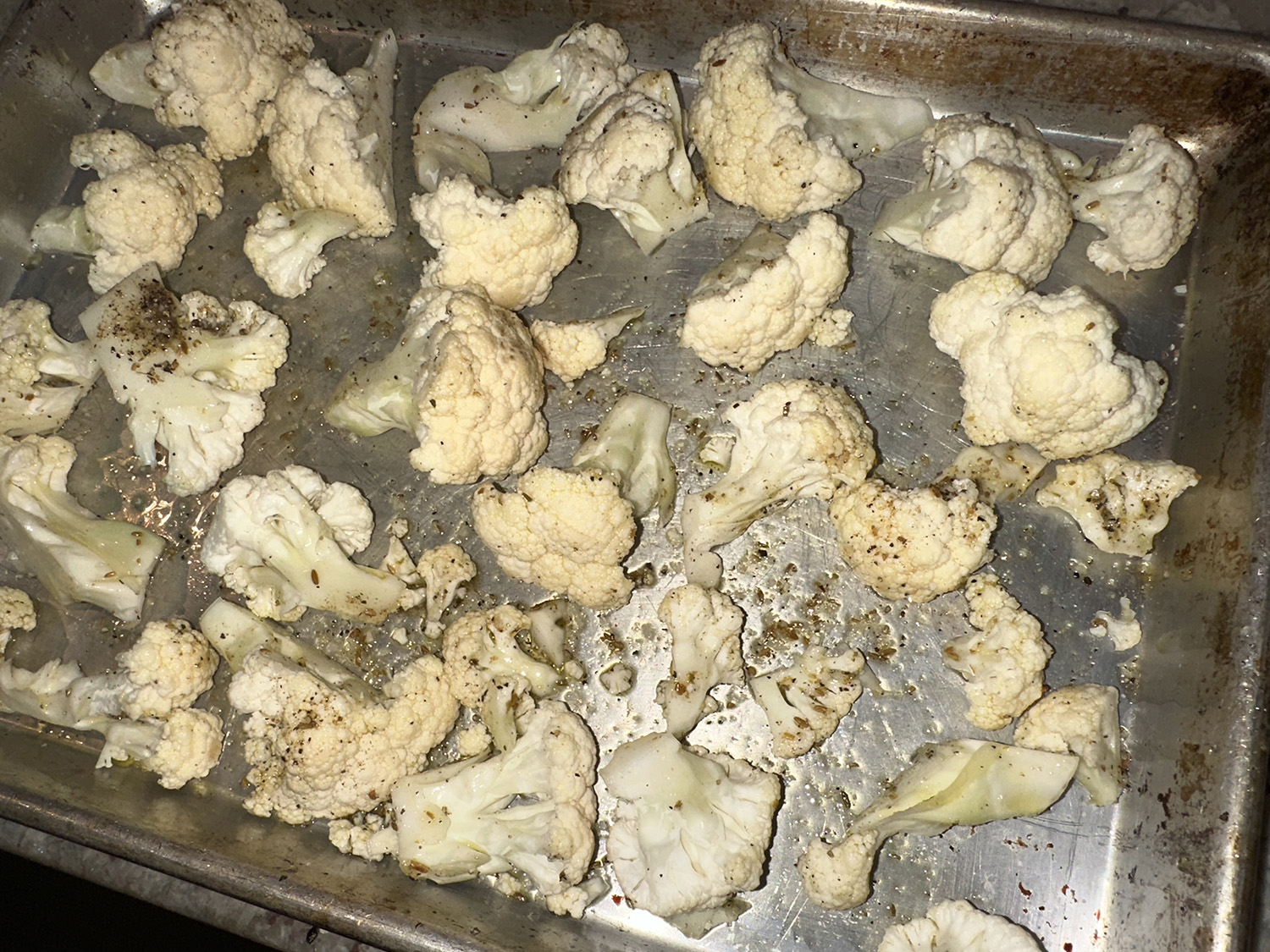
Toss the cauliflower with olive oil, cumin seeds, and salt and pepper in a large bowl.
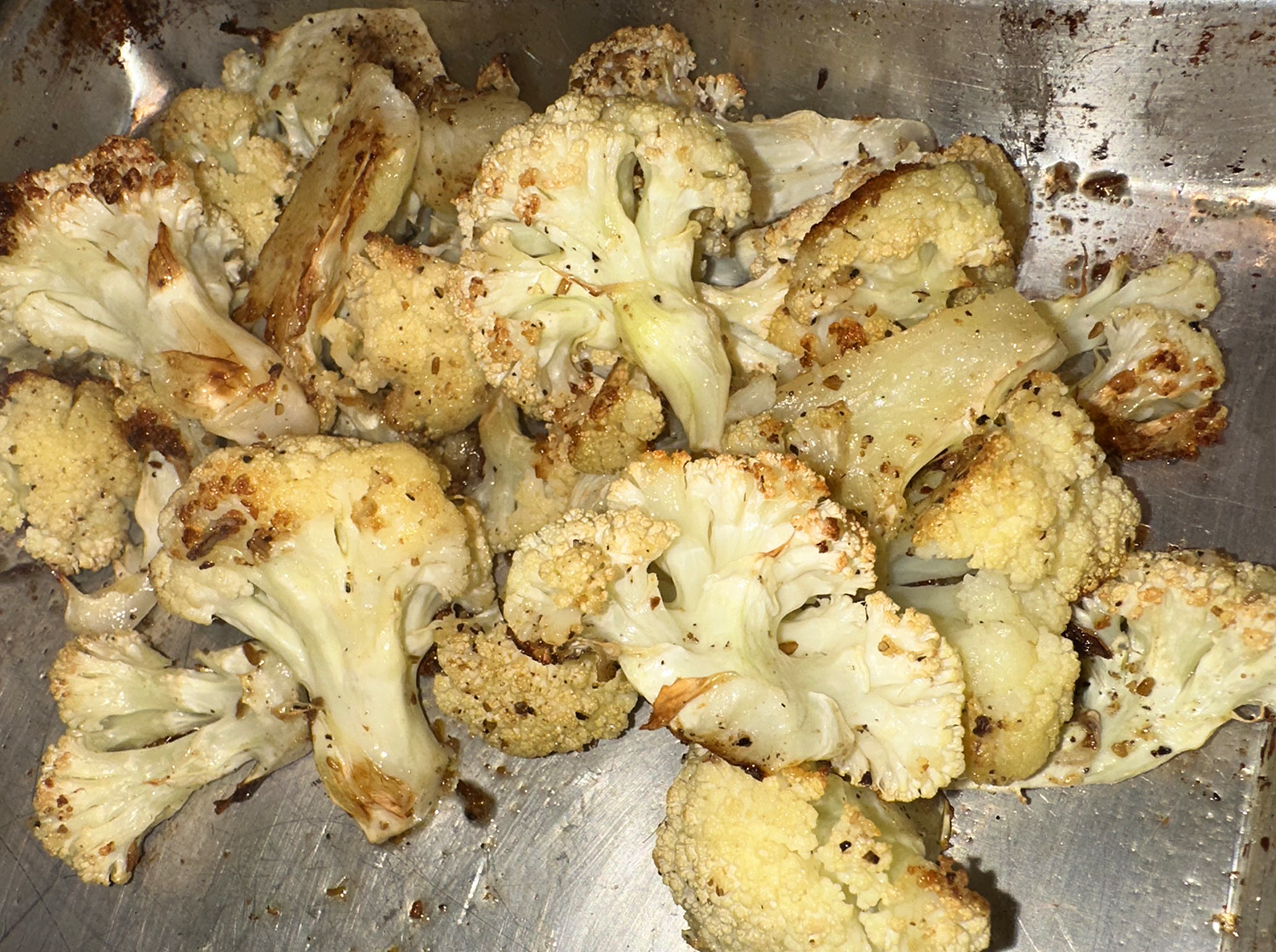
Spread the cauliflower on a large sheet pan and roast in the preheated oven for 15-20 minutes turning halfway through cooking (cauliflower should be browned in spots and tender).
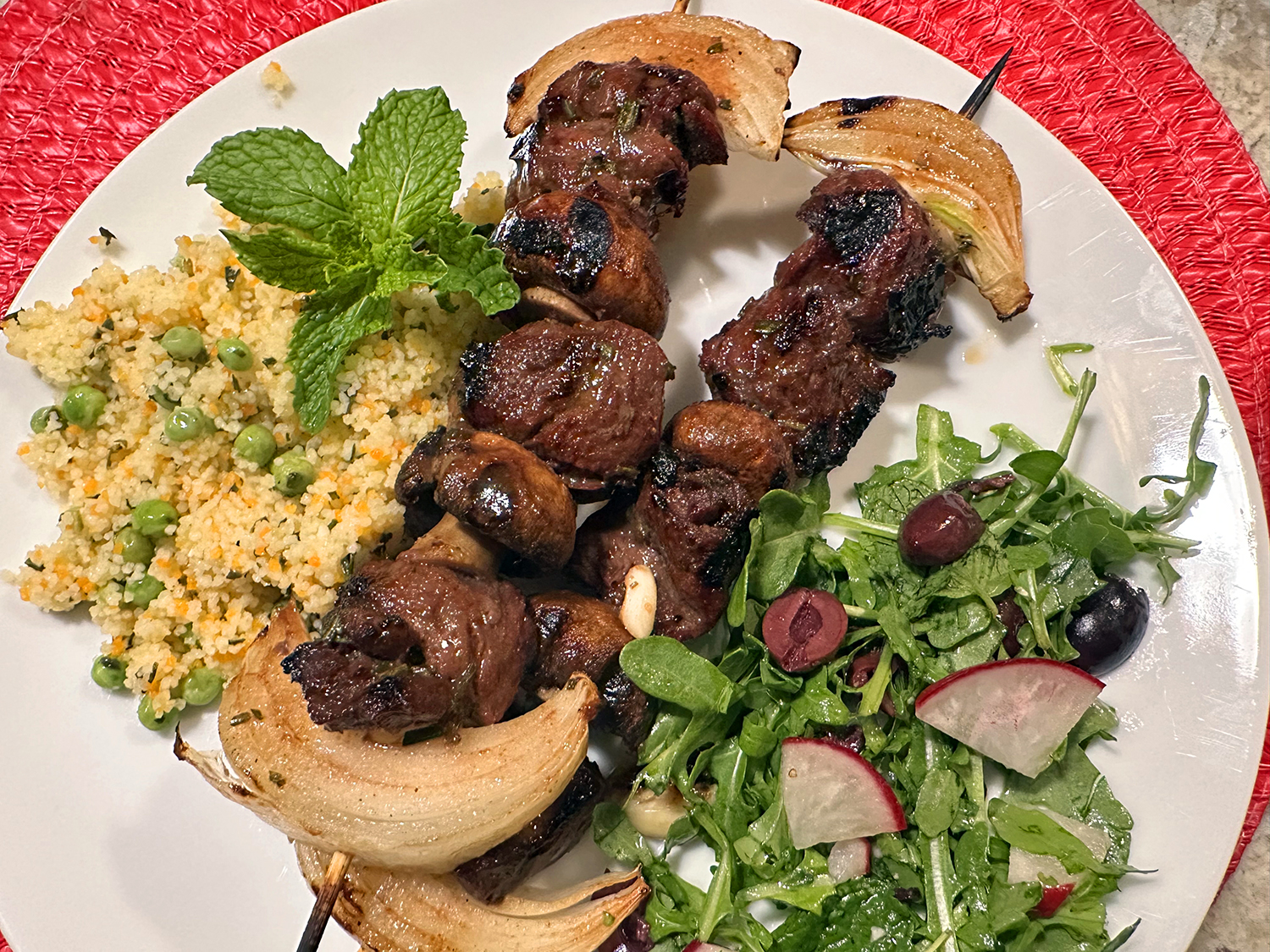
As you are aware, Shish kebab is a dish of skewered and grilled cubes of meat that is popular all over the Middle East, and made of lamb, beef or chicken, they also are commonly found in the United States. When selecting the type of beef to make your kebabs, you have unlimited choices but ultimately you want your beef on the skewer to be tasty, tender and not break your budget.
If cost is not a hindrance, the best cut of beef for kebabs is definitely filet mignon. Other excellent beef options include Porterhouse, and if it looks good at the butcher or in the meat counter, also try a rib-eye. They all grill nicely and don’t require a marinade to make them tender. But while those cuts meet the criteria of best tasty beef, they’re pricey and will take a chunk out of your wallet.
For those looking for great flavor on a budget, sirloin tips work well if they are marinated ahead to make them more flavorful. Our choice, flap meat. Historically, flap meat was one of the cuts of beef that butchers kept out of the meat case for a reason: they were saving it for themselves. Much like skirt steak and hanger steak, it’s becoming more widely known and popular, and therefore easier to find in markets everywhere. (Costco carries flap meat.)
With its great beefy flavor, flap steak has a similar texture and grain to flank, hanger and skirt steaks. It tends to come to the market at 3 to 4 pounds, whereas skirt and flank steaks average around 2 pounds or less. Price-wise, flank and flap steaks are about the same.
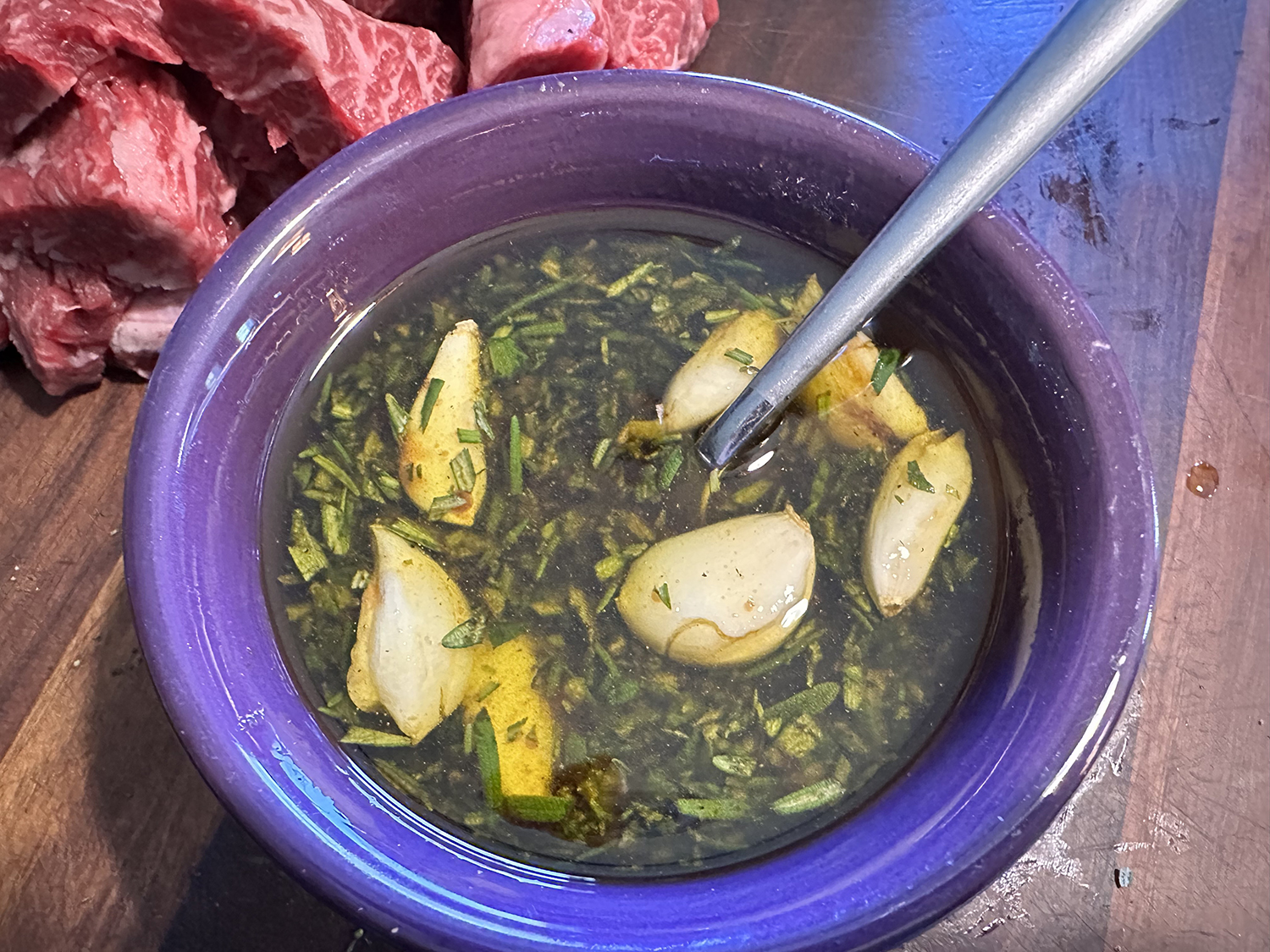
We had 2 pounds of flap meat instead of the 18 ounces originally called for, so we also increased the mushrooms from 8 to 12 ounces. Another alteration to the recipe was adding 6 whole smashed garlic cloves to the marinade. Our kebabs were served with a minted couscous (recipe below), and a baby arugula side salad that also contained mint.
12 oz. baby bella (cremini) mushrooms, trimmed of stem
1 large Vidalia onion, sliced into 12 wedges
Directions
Whisk oil, vinegar, mustard, garlic cloves and rosemary into a large bowl. Season with salt and pepper. Add steak to a bowl, and mix to coat. Cover with plastic wrap (or place in a ziploc bag) and transfer to the refrigerator to marinate for a minimum of 1 hour (longer is better).
While beef is marinating, soak 12 bamboo skewers in water.
To assemble skewers: Add 1 piece of steak, 1 mushroom and onion wedge. Continue by adding the same. Continue until all 12 skewers are complete.
Preheat the grill on high for 15 minutes. Reduce heat to medium-high and clean and then oil grates. Add skewers Cook for approximately 2-3 minutes and then flip skewers. Continue cooking for additional 2 minutes.
Transfer to serving plate. Garnish with fresh rosemary if desired.
In a small bowl combine the lemon juice, olive oil and garlic.
While the kebabs are grilling, bring 1 cup water and 3⁄4 teaspoon salt to a boil in a small saucepan over medium-high heat.
Stir in the couscous, peas, and lemon juice mixture. Cover, remove from heat and let stand at least until the peas are tender and the couscous has absorbed all of the liquid, at least 10 minutes.
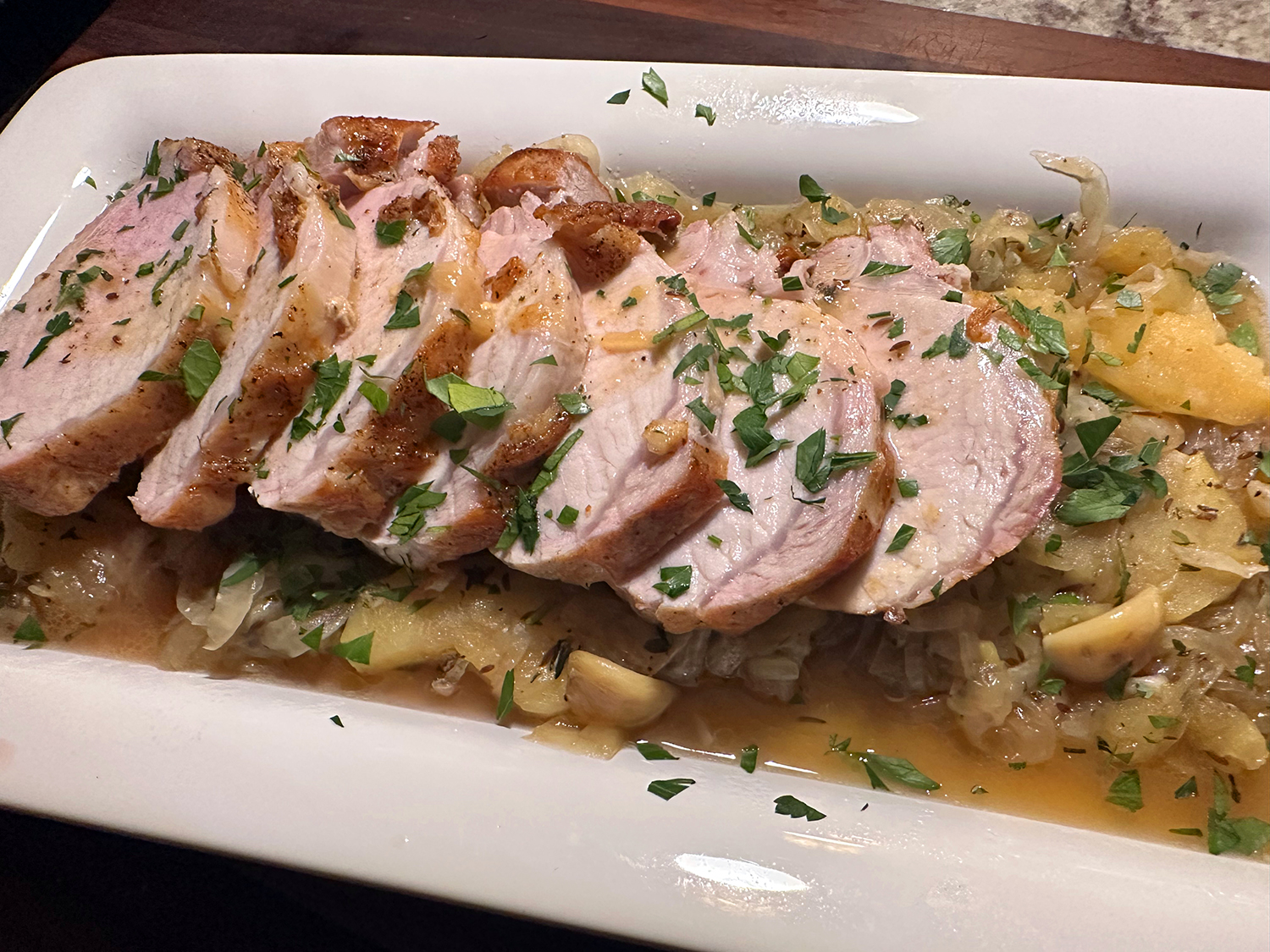
For quite a fancy spread, this elegant dinner comes together in not much more than an hour. The sweet Vidalia onions break down into luxurious softness, while the apple slices (we used Ruby Frost) and garlic render down and provide additional layers of flavor to the onion mixture.
Served with garlicky mashed potatoes and steamed broccoli, it was a complete and satisfying meal. We had plenty leftover so we plan to get two additional meals from it. One, a pork fried rice dish, and the other we’ll just simply reheat the leftovers as they are, and enjoy the meal all over again!
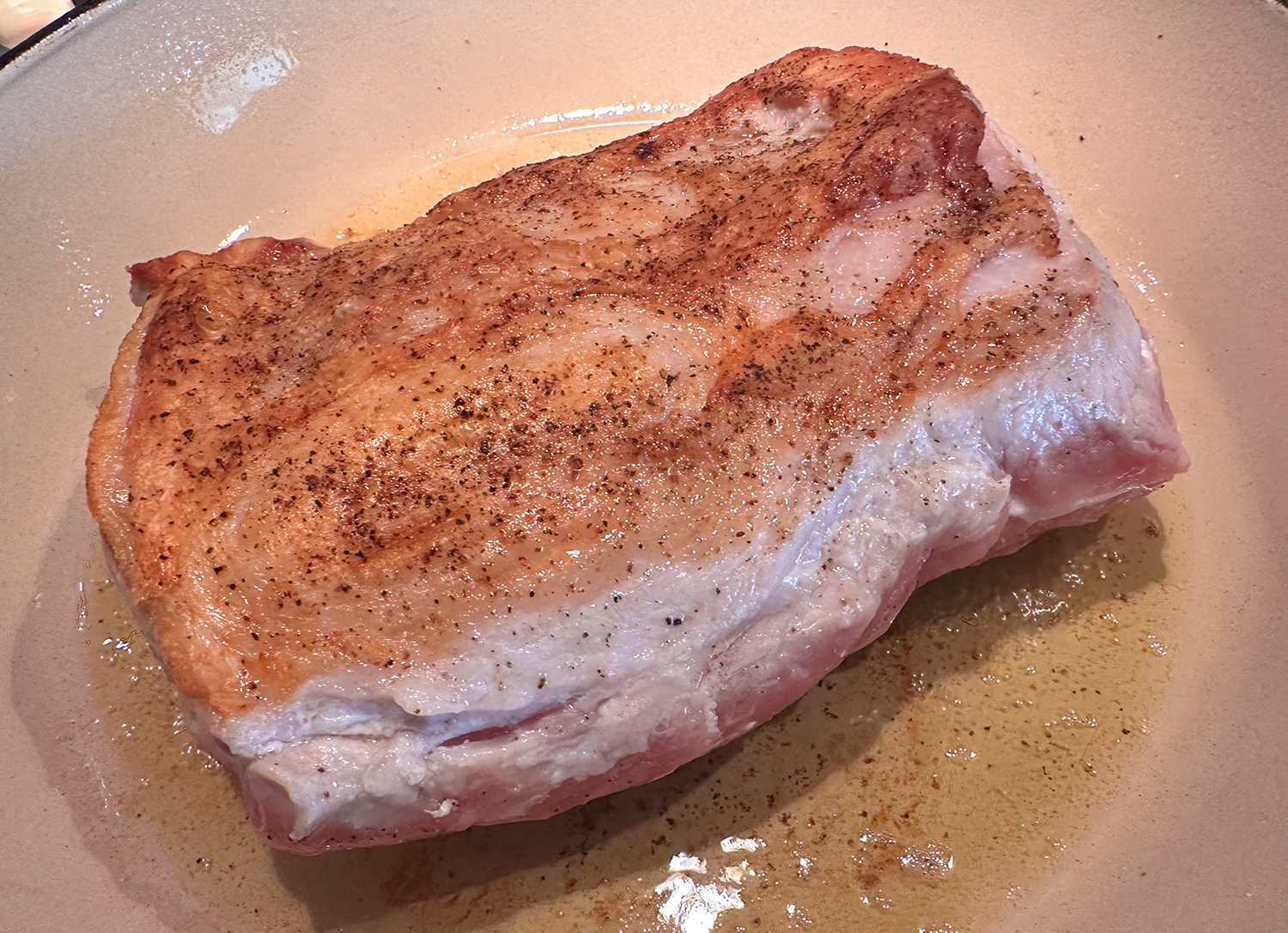
Generously sprinkle all sides of the pork loin with salt and pepper. Place a braiser or shallow Dutch oven over medium-high heat. Add 2 tablespoons of the oil and heat until shimmering. Carefully put the pork in the pan. Sear until deeply golden on all sides, 1 to 2 minutes per side. Remove from the pan.
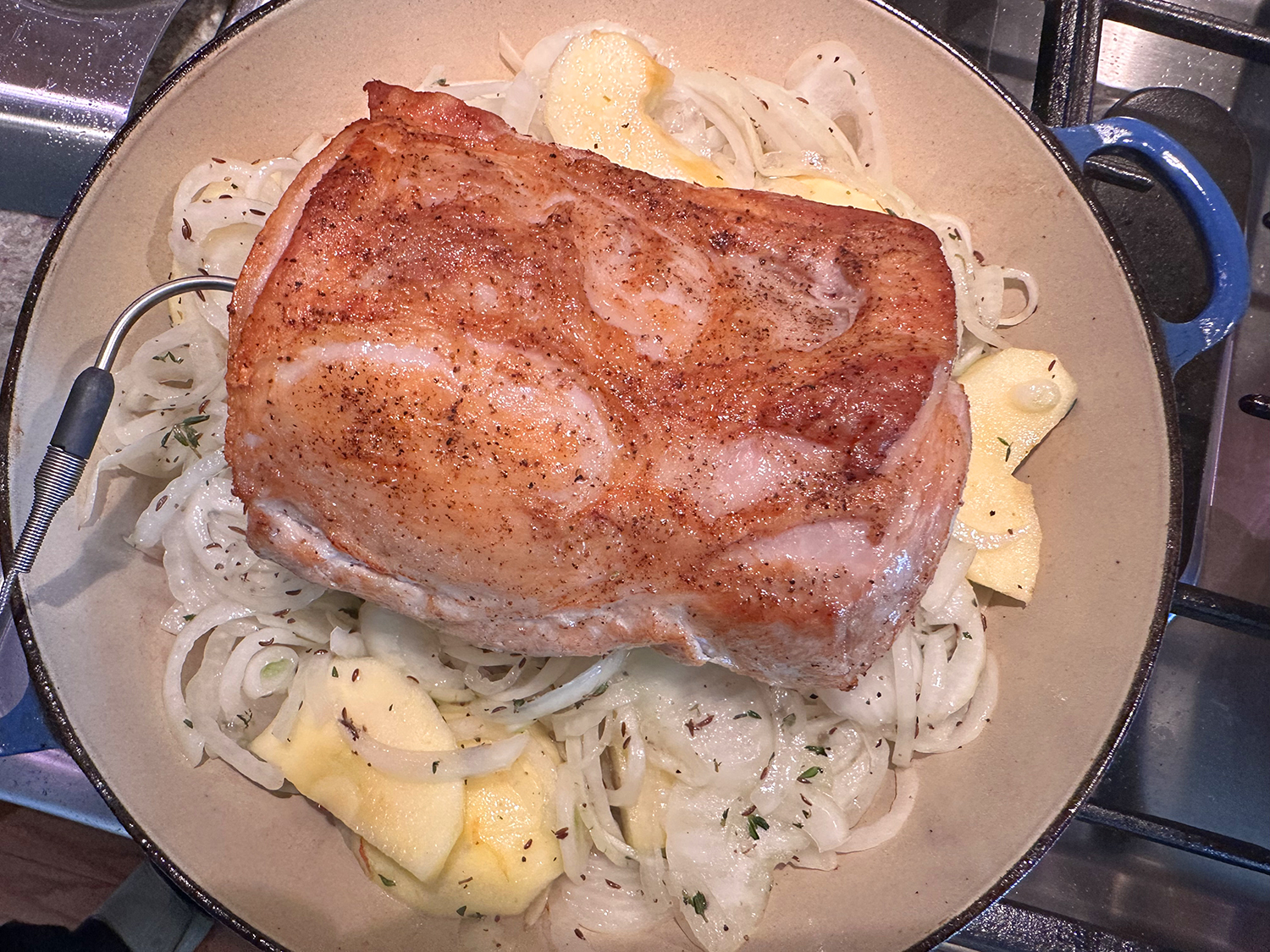
Put the onions and apple in a large mixing bowl. Add the caraway seeds, dried thyme, remaining 1 tablespoon oil, 1 teaspoon salt and 1/2 teaspoon pepper and toss to coat. Transfer the mixture to the bottom of the braiser and nestle in the garlic cloves. Pour in 1/4 cup of the chicken stock and place the pork back on top. Put in the oven.
About 20 minutes into the roasting time, turn the apple and onion mixture, leaving the pork loin alone. Continuing cooking the roast until the pork reaches an internal temperature of 145 degrees F, about 30 minutes. (Ours took 40 minutes to come to temperature.)
Transfer the pork to a cutting board to rest while you make a pan sauce. Remove the apple and onion mixture to a platter
Return the braiser to the stove over medium-high heat. Pour in the hard cider and remaining 1/2 cup chicken stock. Cook, scraping with a spatula to remove any brown bits from the bottom of the pan. Whisk in the mustard. Allow the sauce to simmer until reduced slightly, a couple of minutes. Add the butter, whisking until melted. Cook just until the sauce is shiny and slightly thickened, about 5 minutes. Taste and season with more salt and pepper if needed.
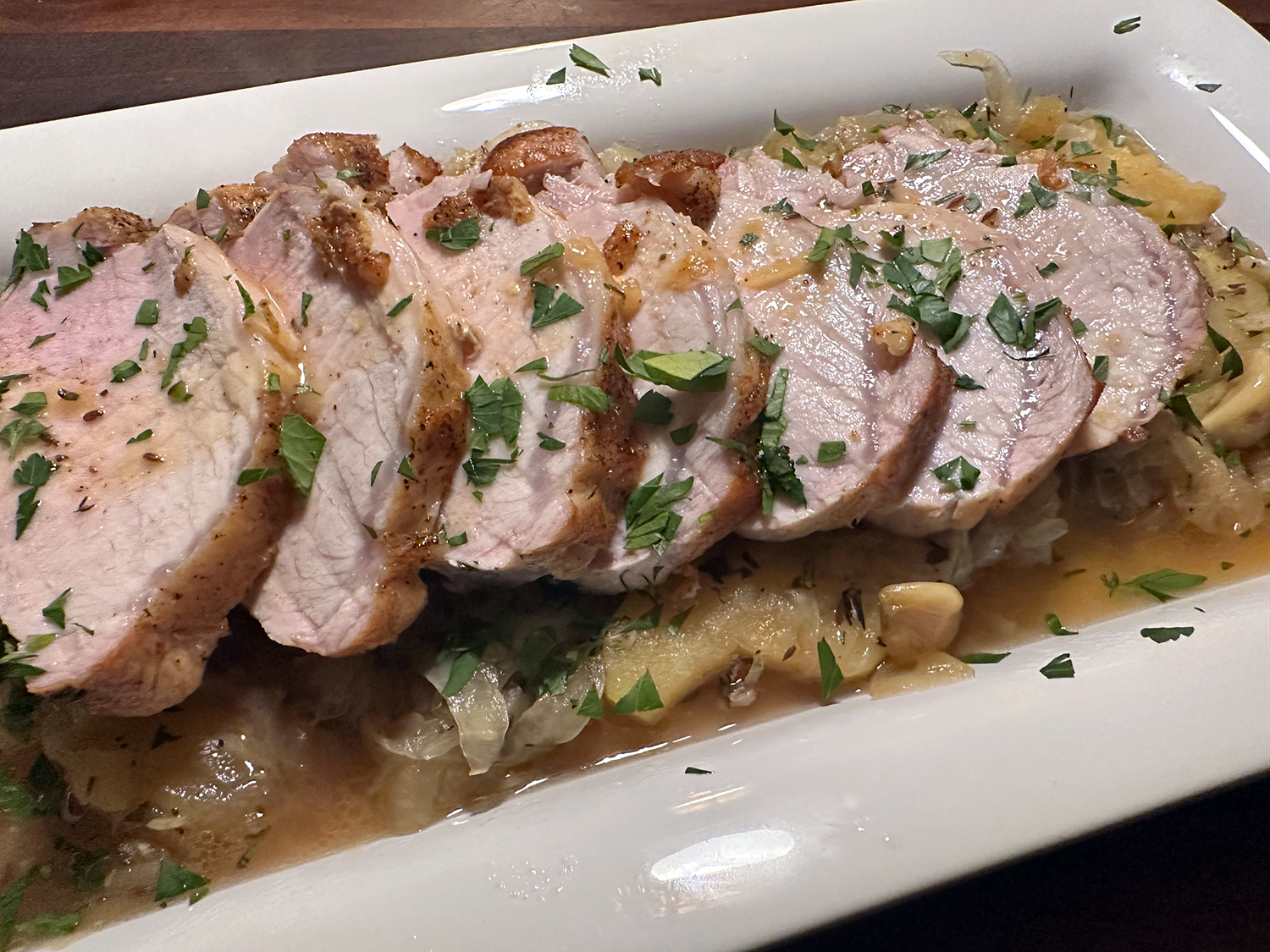
Slice the pork and arrange the slices over the onion and apple mixture. Top with sauce and chopped parsley.
Beef Stroganoff preparation varies significantly not only based on geography, but based on other factors as well, such as the cut of meat and seasonings selected. When looking for a “quick” version of Beef Stroganoff, we ended up creating a mash-up of several different ones put together.
Originally a Russian dish, it is made up of sautéed pieces of beef served in a sauce of mustard and sour cream. From its origins in mid-19th-century Russia, it has become popular around the world, with considerable variation from the original recipe. Mushrooms are common in most variants.
Although are several starches you could serve with it, we opted for old fashioned wide egg noodles. Try to time it so that the noodles are done just as the meat and sauce are finishing.
TIP: If you substitute yogurt for the sour cream, use full fat yogurt, and make sure to take the pan off the heat before stirring it in or it may curdle.
1 1/2 lb. top sirloin or tenderloin, cut thinly into 1-inch wide by 2 1/2-inch strips long
1/3 cup chopped shallots or onions
2 cloves garlic, minced
1 tsp. Worcestershire sauce
8 oz. cremini mushrooms, sliced
1/8 tsp. nutmeg
1/4 cup white wine
1/2 cup beef broth
1/2 tsp. dry tarragon or 2 tsp. chopped fresh tarragon
1 cup sour cream (full fat), at room temperature
8 oz. large wide egg noodles, cooked according to package directions
Directions
Melt 3 tablespoons of butter in a large skillet on medium heat. Increase the heat to high/med-high. Working in 2 or 3 batches, add the strips of beef in a single layer with space between the strips. You want to cook the beef quickly, browning on each side, so the temp needs to be high enough to brown the beef, but not so high as to burn the butter. While cooking the beef, sprinkle generously with salt and pepper. When both sides are browned, remove the beef to a dish and set it aside. Repeat with remaining beef slices.
In the same pan, reduce the heat to medium and add the shallots. Cook the shallots for a minute or two, allowing them to soak up any meat drippings.
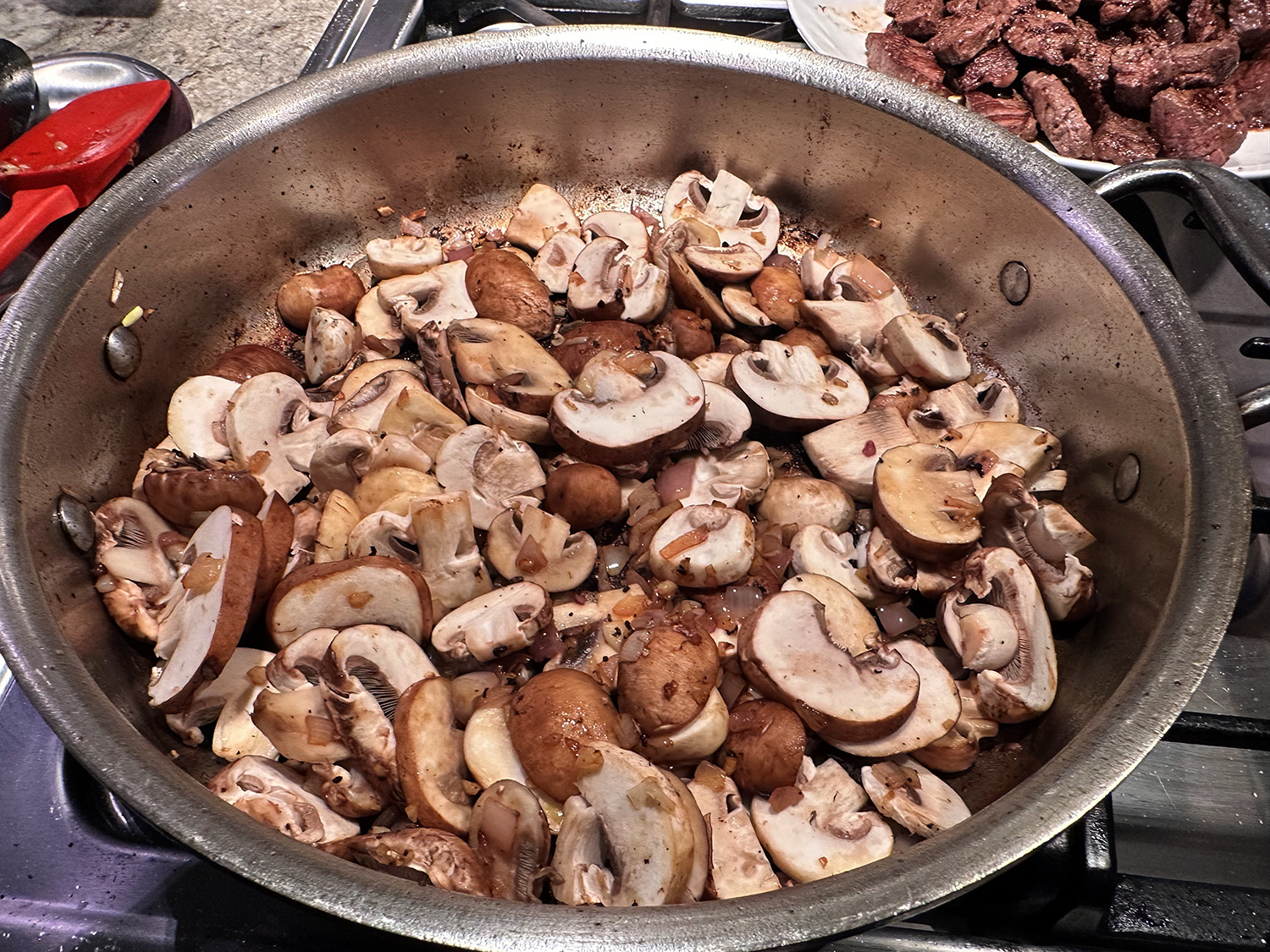
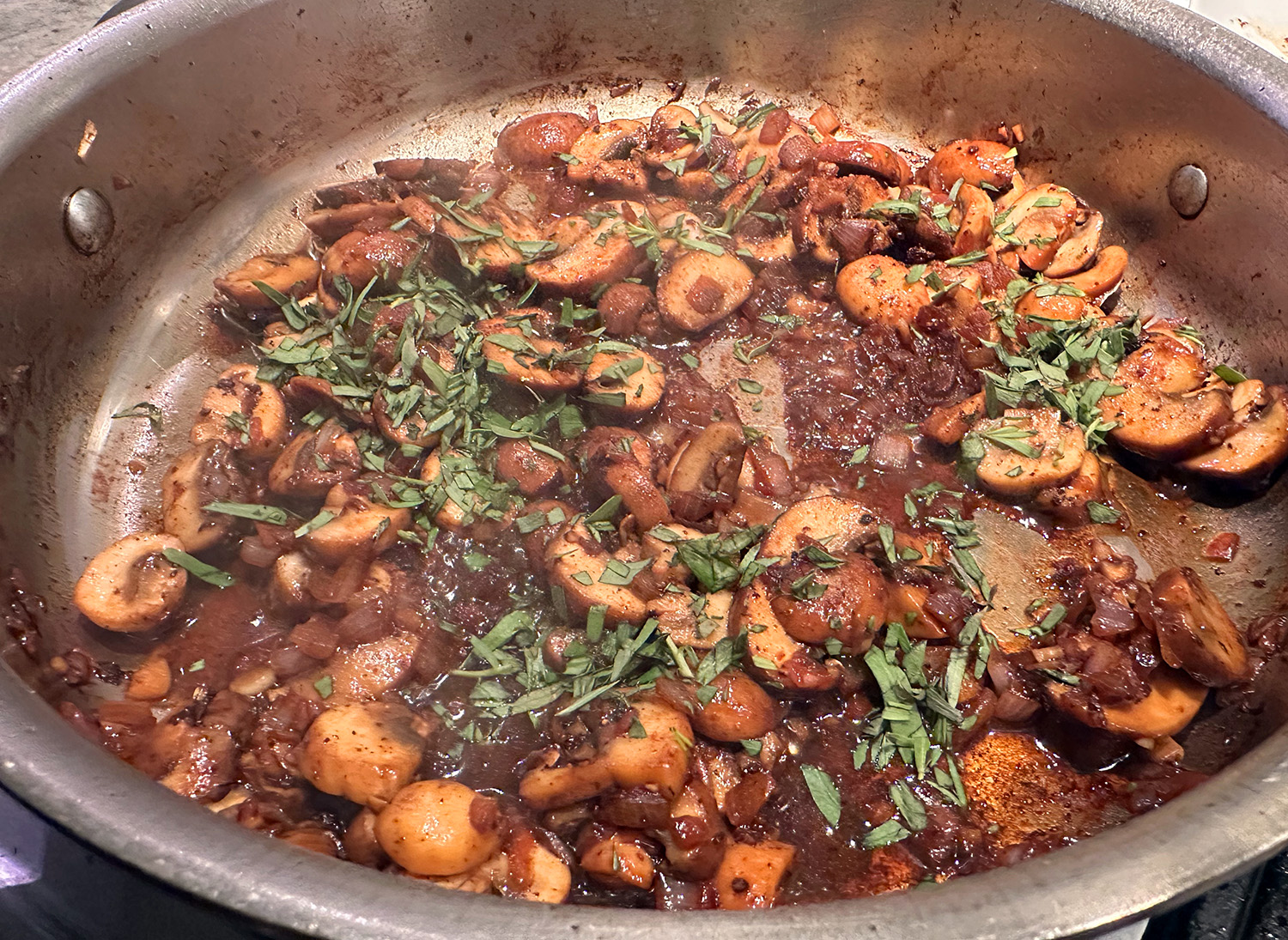
In the same pan with the shallots, melt the remaining 2 tablespoons of butter. Increase heat to medium-high and add the mushrooms. Cook, stirring occasionally for about 4 minutes. While cooking, sprinkle the nutmeg and the tarragon on the mushrooms.
Add 1/4 cup wine to deglaze the pan and loosen brown bits. Add 1/2 beef broth.
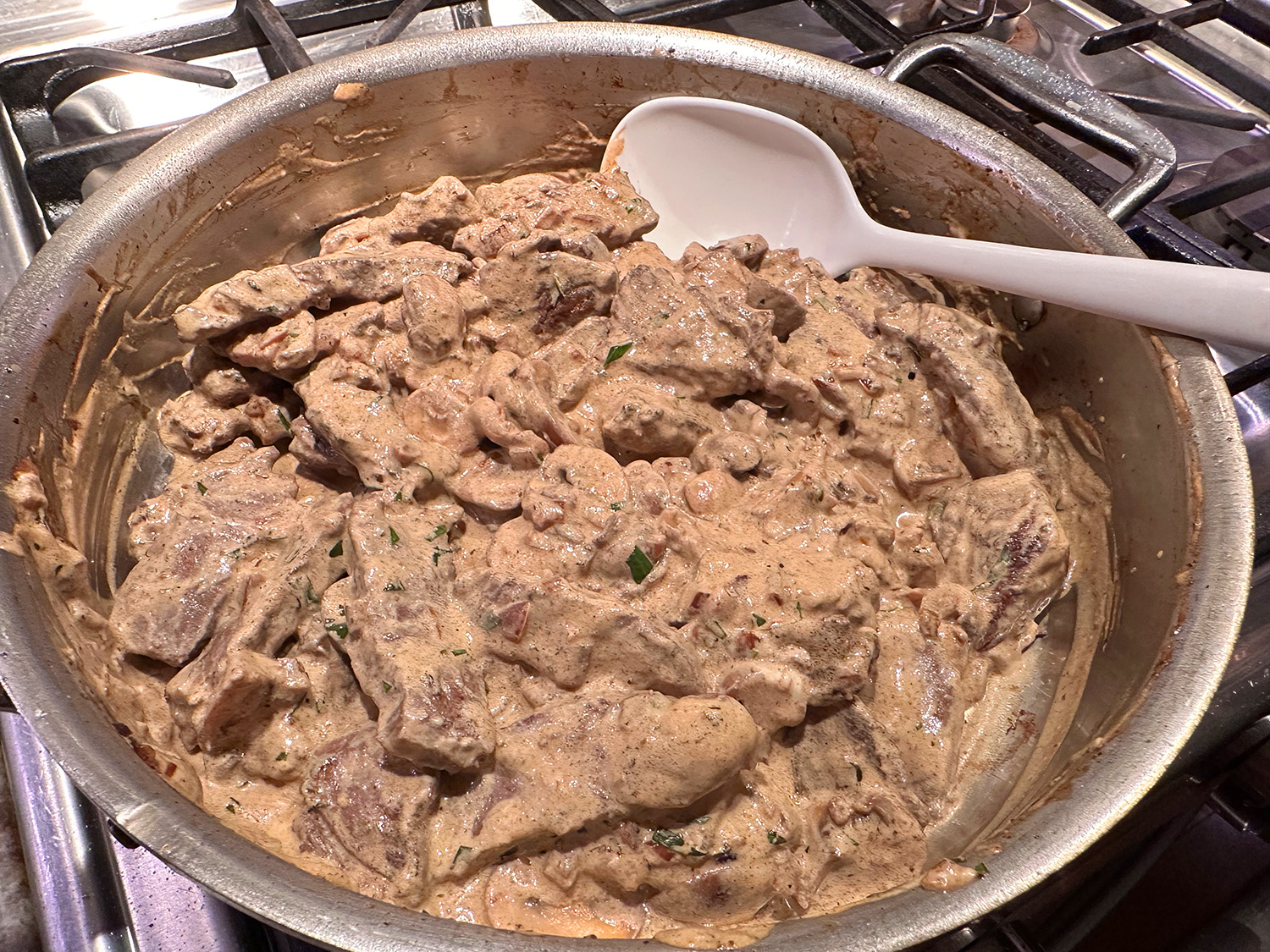
Reduce the heat to low and add the sour cream to the mushrooms. Mix in the sour cream thoroughly. Do not let it come to a simmer or boil or the sour cream may curdle. Stir in the beef.
Add salt and pepper to taste. Note that you will likely need more salt than you expect. Taste, and if it needs salt, add 1/2 teaspoon or more. Serve immediately over cooked egg noodles.
With the end of summer holiday on the horizon, a grilled steak is always a fan favorite. While there are some steaks that need nothing more than a little salt and pepper to bring out their beefy goodness, flank steak is not one of them.
This bold marinade is just the sort of seasoning the brawny cut begs for: lime juice and zest add brightness, brown sugar sweetness, and jalapeño and sriracha a complex heat. Just whiz it all together in a food processor and slather it on the meat.
Marinate overnight preferably, or a minimum of 2 hours, before tossing it on the grill. Lastly, always make more flank steak that you think you want. Leftovers are the best part—we used ours as part of a steak salad. For an extra boost of flavor, try adding 1/4 cup of bourbon and a little Worcestershire.
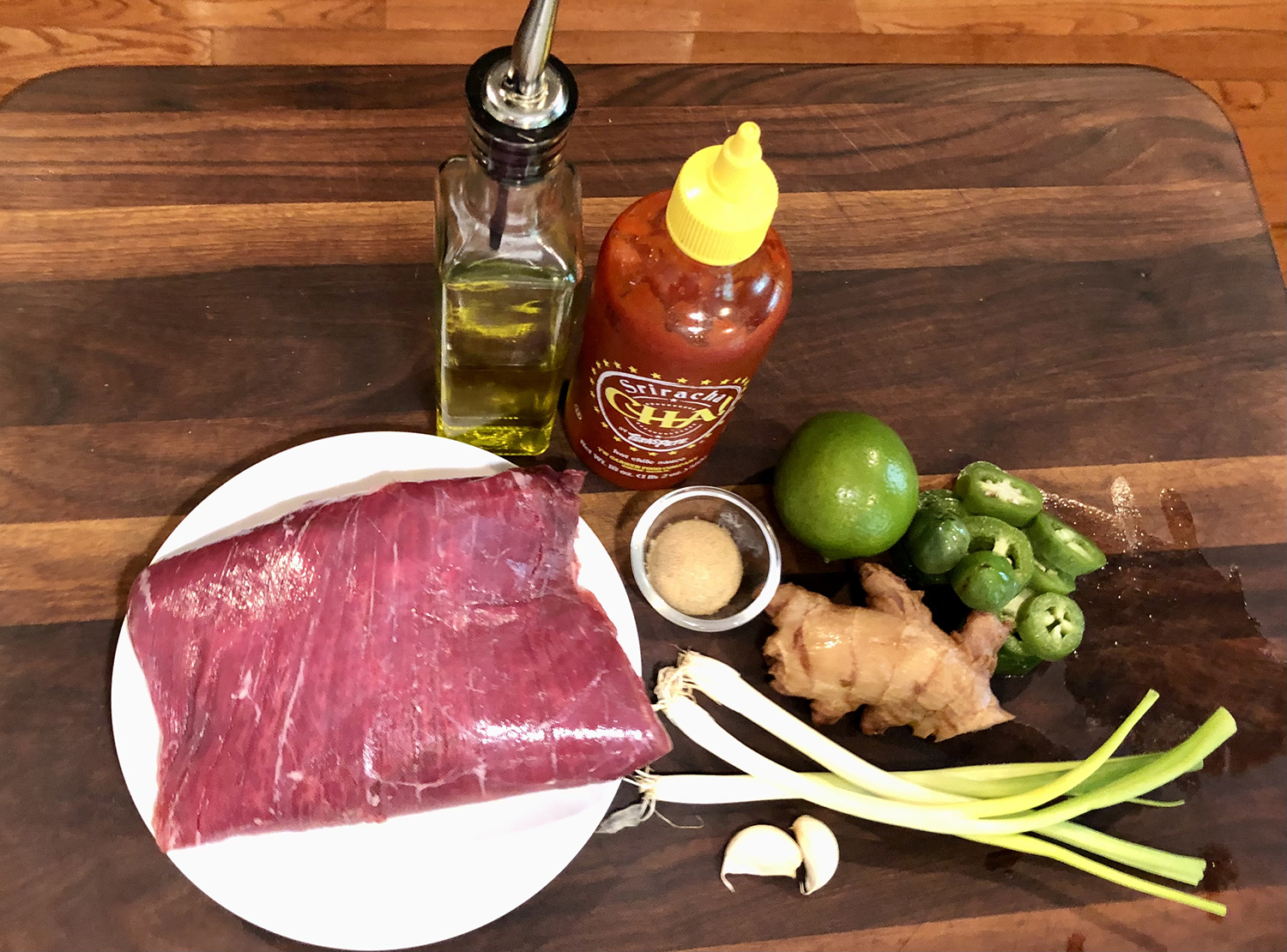
In a food processor, pulse together scallions, ginger, jalapeno, garlic, sugar, lime zest and juice, and sriracha. With the motor running, pour in oil until smooth
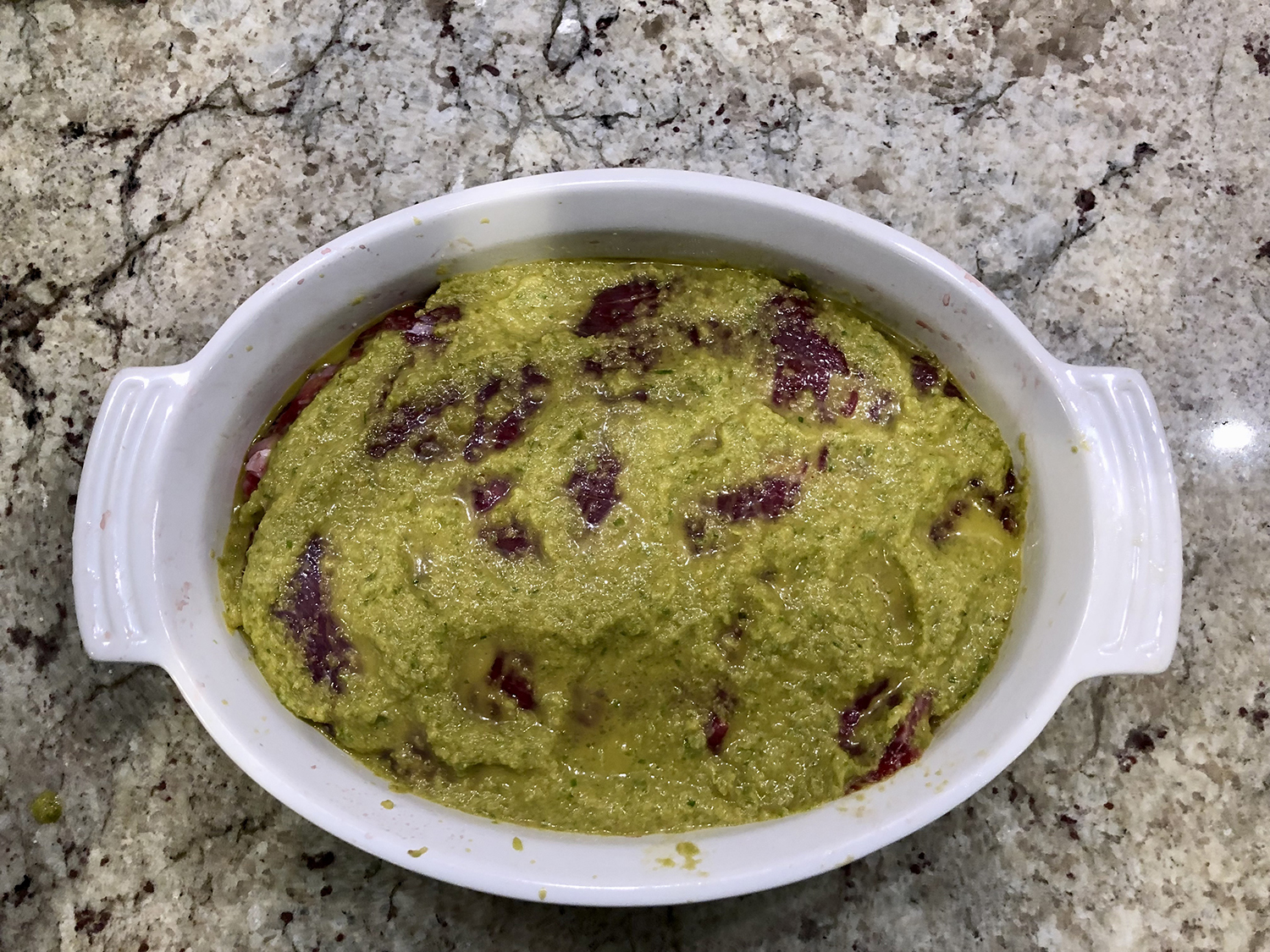
Season steak with salt. Place in a large bowl and pour marinade over meat. Turn to coat well with the mixture. Cover tightly and refrigerate for at least 2 hours or overnight.
When ready to cook the steak, heat the grill to medium-high heat. Transfer the meat to the grill and cook, covered, until it reaches the desired doneness (about 5 minutes per side for medium-rare). Let rest on a cutting board for 5 minutes, then slice thinly.
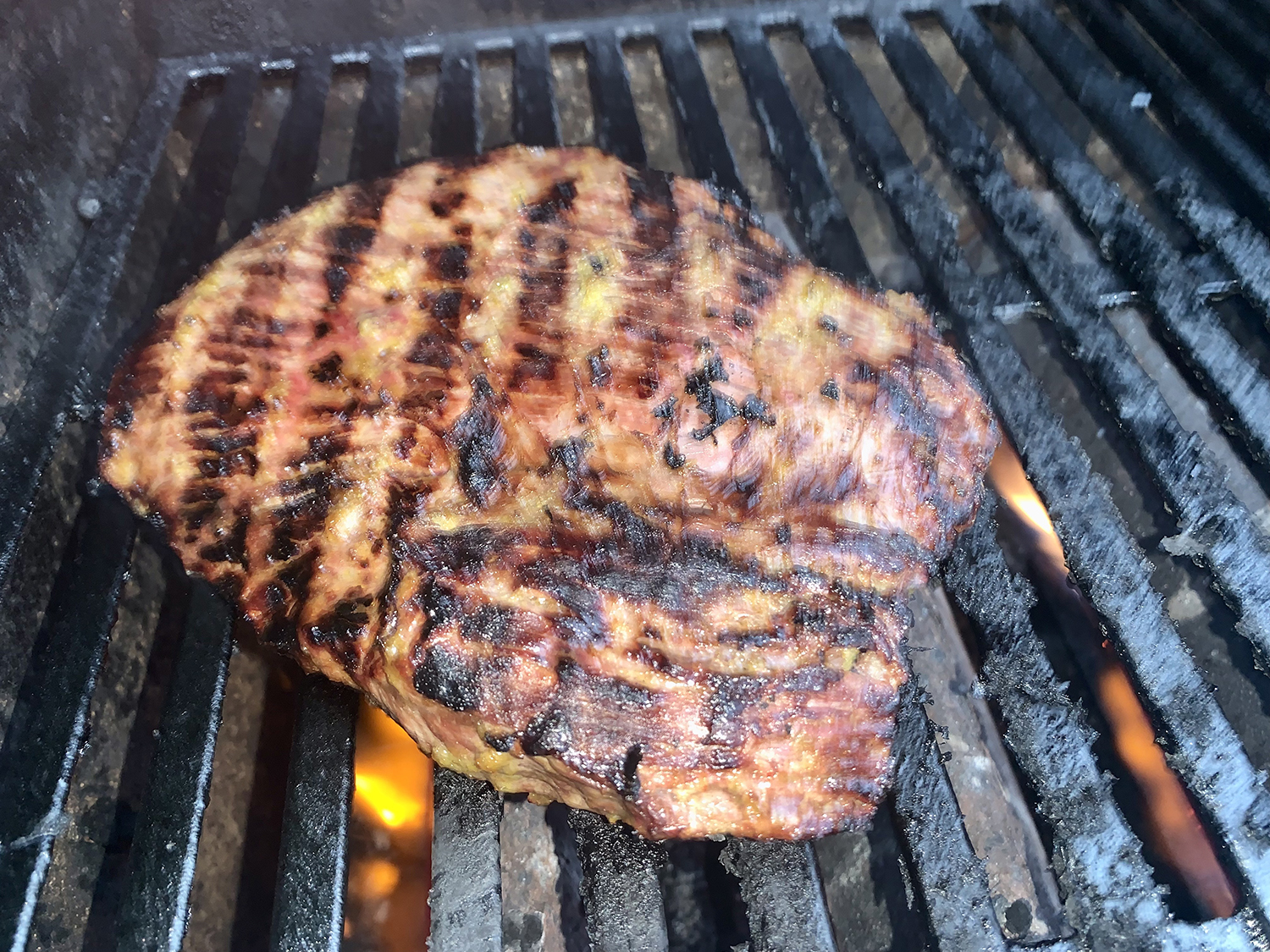
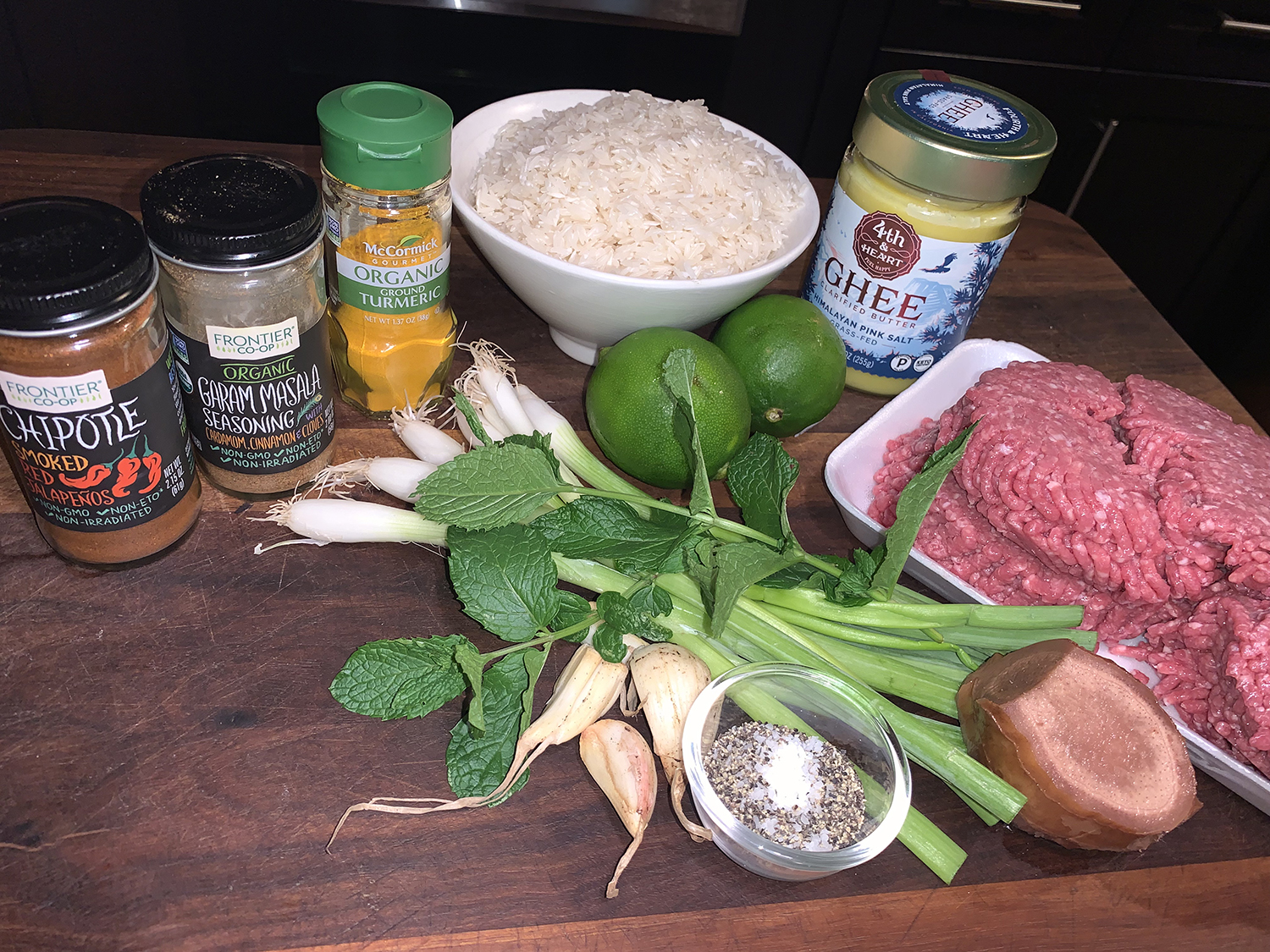
The aroma of fresh mint and spices permeates this bright, turmeric-painted pulao made with basmati rice and ground lamb. This recipe, which has origins in the ground meat pulaos of India, is quite flexible and open to additions: a handful of fresh dill, a generous sprinkling of fried peanuts or other nuts, or crispy, fried onions tossed in just before serving.
It also works well if you substitute beef for the lamb, and really needs no sides, except maybe some raita, creamy plain yogurt or a salad. And we did just that, a simple side salad completed our meal.
We had plenty leftover with only the two of us for dinner. The extras were refrigerated and a day later reheated and enjoyed for lunch.
1 tsp. ghee, unsalted butter or extra-virgin olive oil
4 garlic cloves, peeled and grated
2 Tbsp. grated fresh ginger
1 ½ tsp. garam masala
½ tsp. red chile powder
½ tsp. black pepper
2 tsp. kosher salt
3 Tbsp. lime juice
½ tsp. ground turmeric
1 bunch scallions (about 6), trimmed and thinly sliced
¼ cup loosely packed fresh mint leaves
Check the rice and discard any debris. Place the rice in a fine-mesh sieve and rinse under running water until the water runs clear. Place the rice in a bowl, cover with water by 1 inch, and soak for 30 minutes.
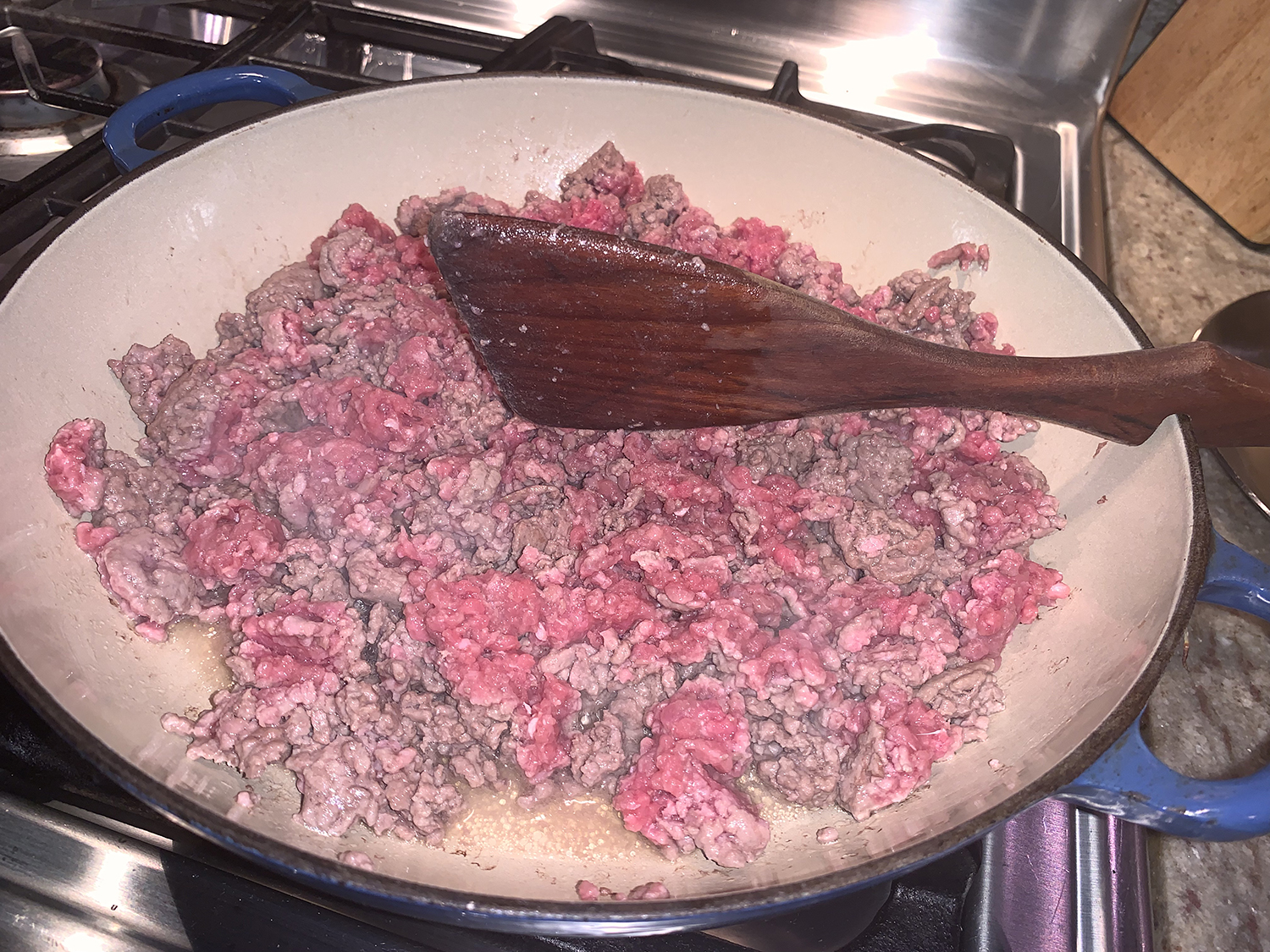
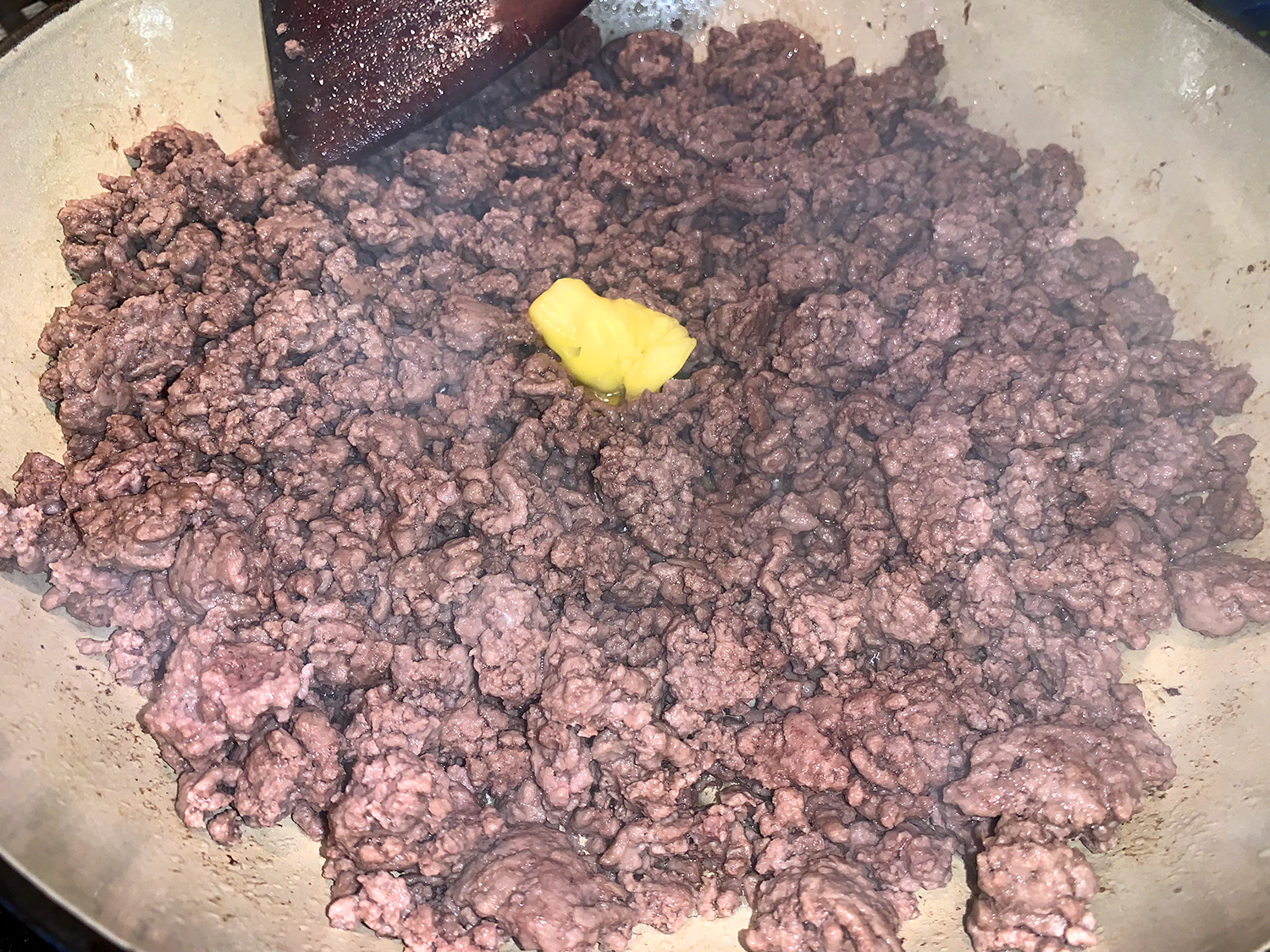
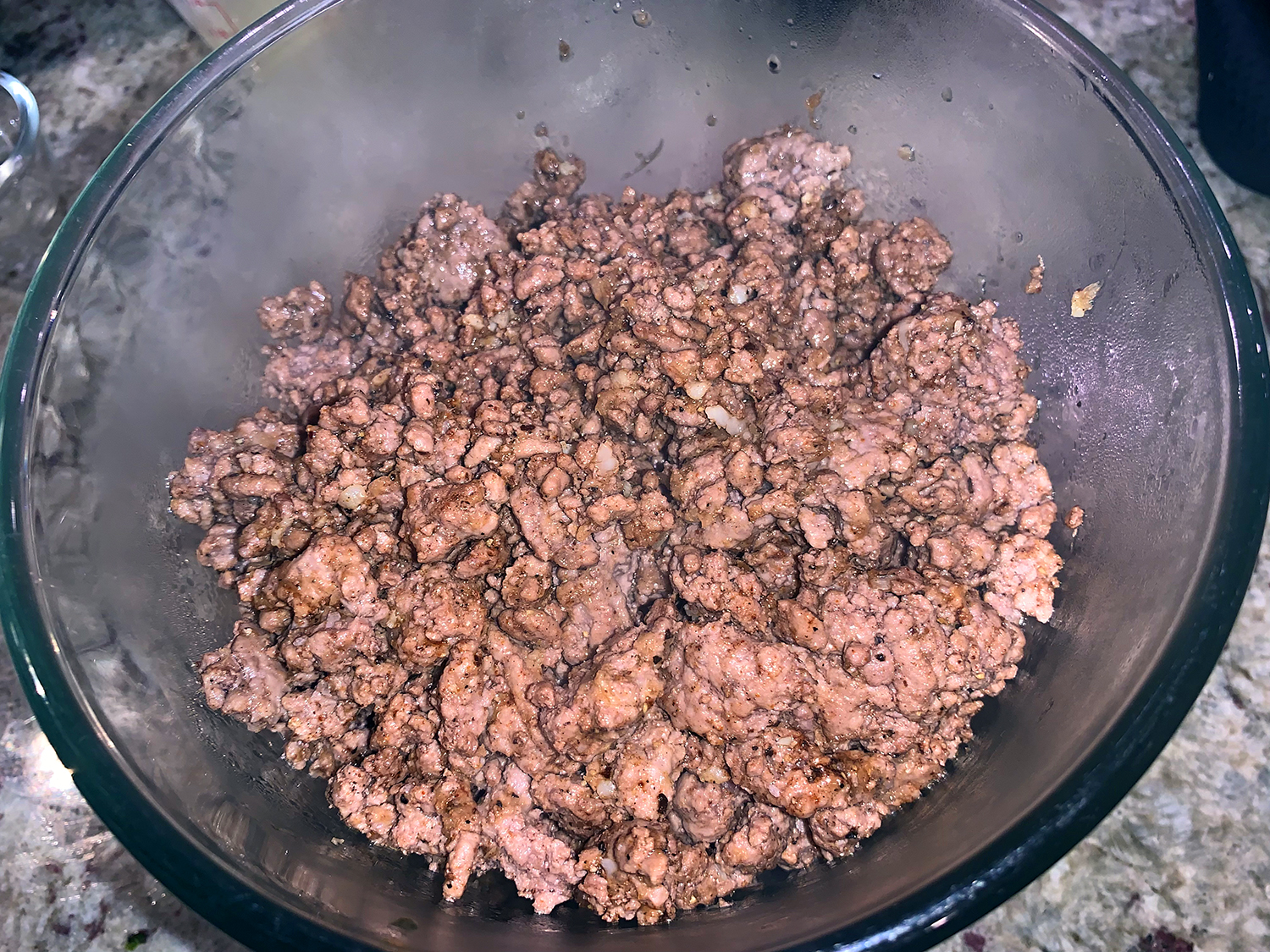
As the rice soaks, cook the lamb: Place a medium saucepan with a heavy lid or a Dutch oven over medium heat. When the saucepan is hot, break the lamb into chunks, and cook until the fat renders, about 2 minutes. Drain most of the fat, leaving behind 1 to 2 tablespoons, and continue to cook the lamb until it browns, another 2 minutes.
Add the ghee and heat over medium until it melts, 30 to 45 seconds. Add the garlic and ginger and sauté for 1 minute.
Add the garam masala, chile powder, black pepper and 1 teaspoon salt and sauté until the spices are fragrant, 1 minute. Add 1 tablespoon lime juice and stir until the flavors come together, about 1 minute.
Transfer the lamb mixture to a large bowl and keep warm. (To do so, you could transfer it to a 250-degree oven.) Clean the saucepan and wipe dry.
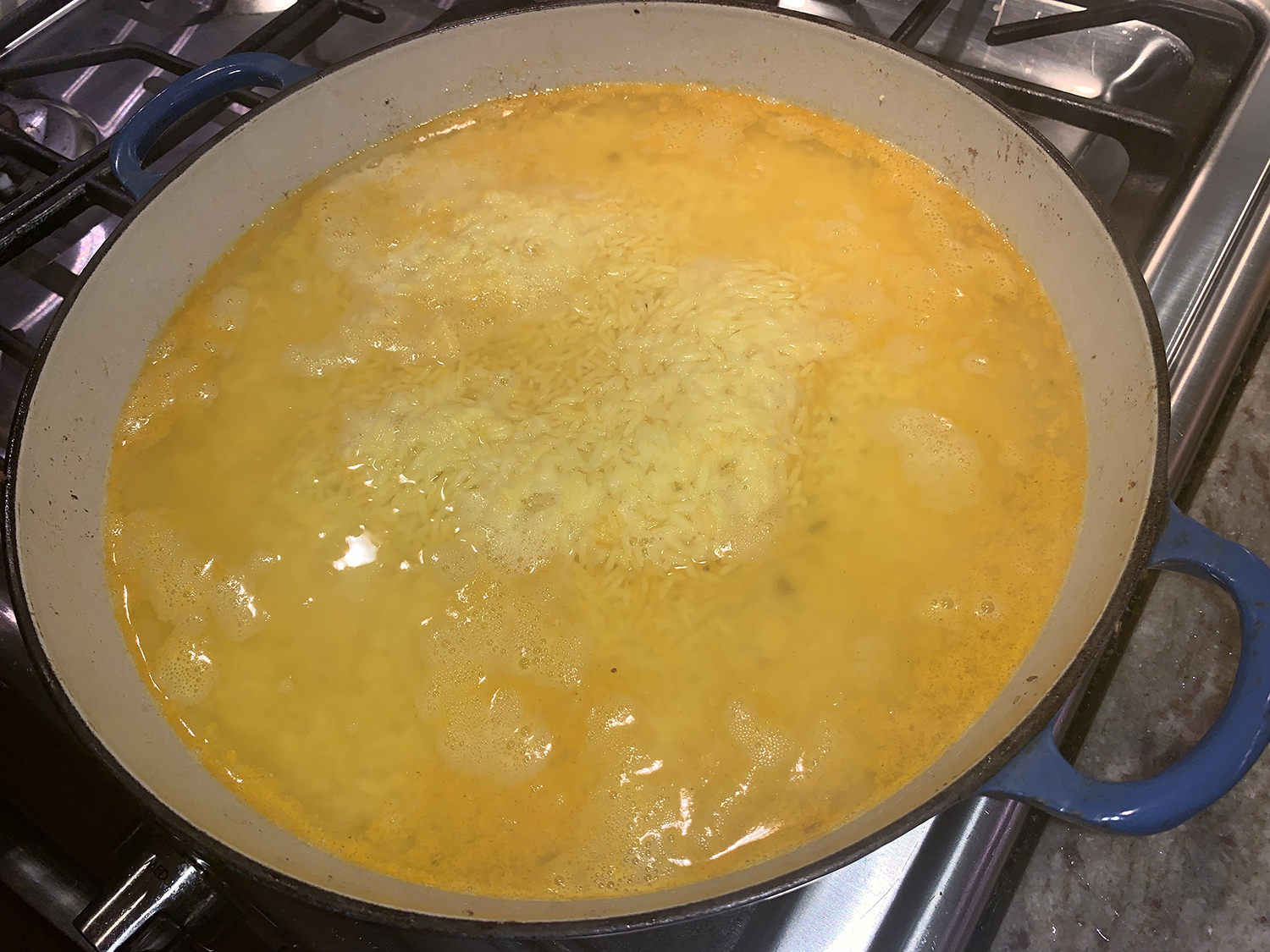
Drain the soaked rice. Add to the same saucepan and cover with water by 1 inch. Stir in 1 tablespoon lime juice, the turmeric and the remaining 1 teaspoon salt. Bring to a boil over medium heat, then cover, and reduce heat to simmer until the rice absorbs all the water, about 10 minutes. (Do not stir the rice as it cooks, or the grains might break.) Remove the saucepan from heat, and let sit, uncovered, for 5 minutes.
Stir the rice into the cooked lamb mixture, then drizzle with the remaining 1 tablespoon lime juice. Fold the scallions and mint into the rice, and serve immediately.
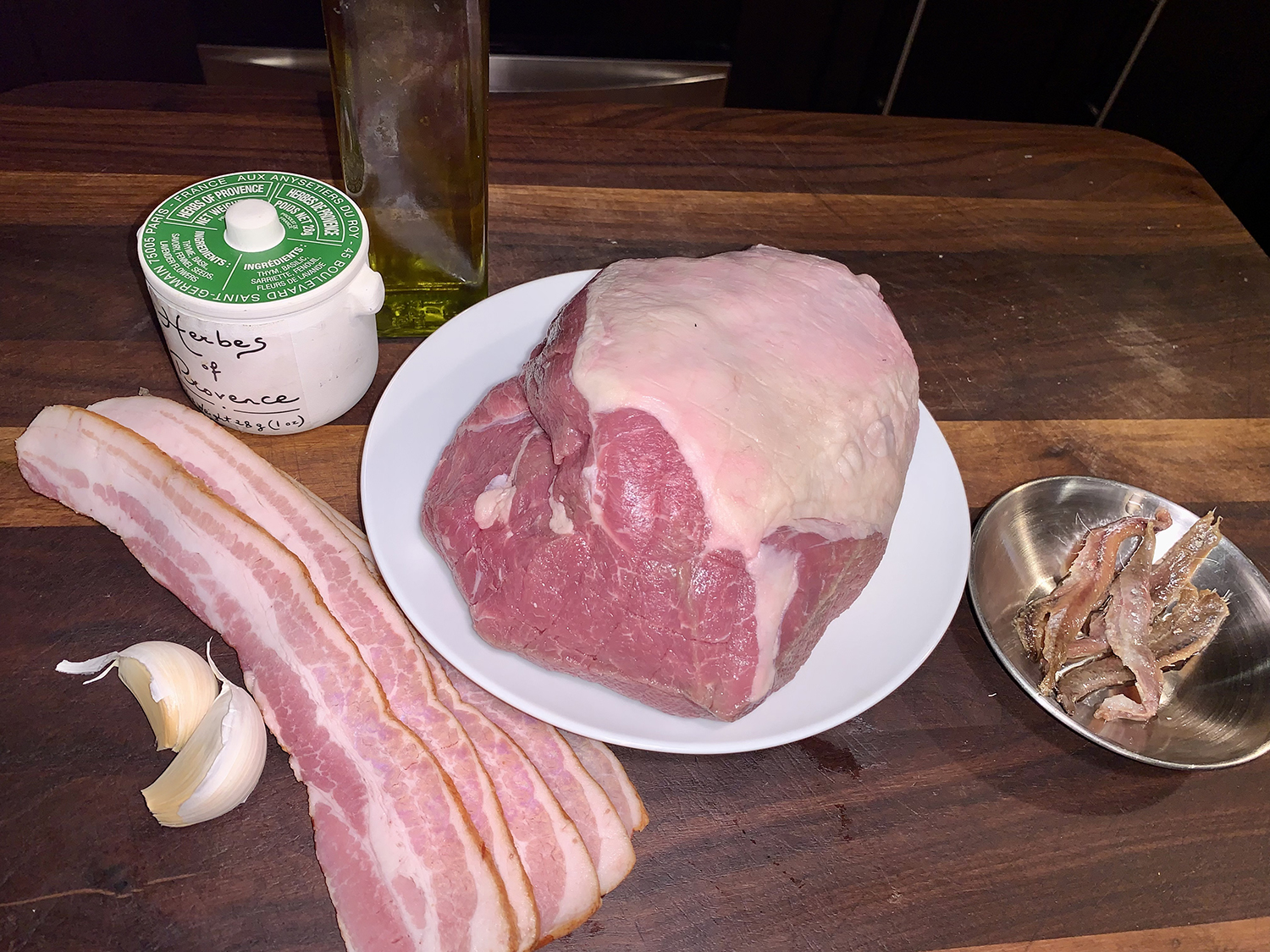
So elegant, yet so simple, this roasted leg of lamb is truly company-worthy. It originally calls for a 4-pound roast, but we had a 2 1⁄2 pounder on hand, so we used that—though we did not cut back on the anchovy-garlic-herbs mixture which lends it so much umami goodness. Even if you are not an anchovy fan, you’d never know they were in the dish because their flavor just melds so perfectly with the other ingredients. DON’T leave them out.
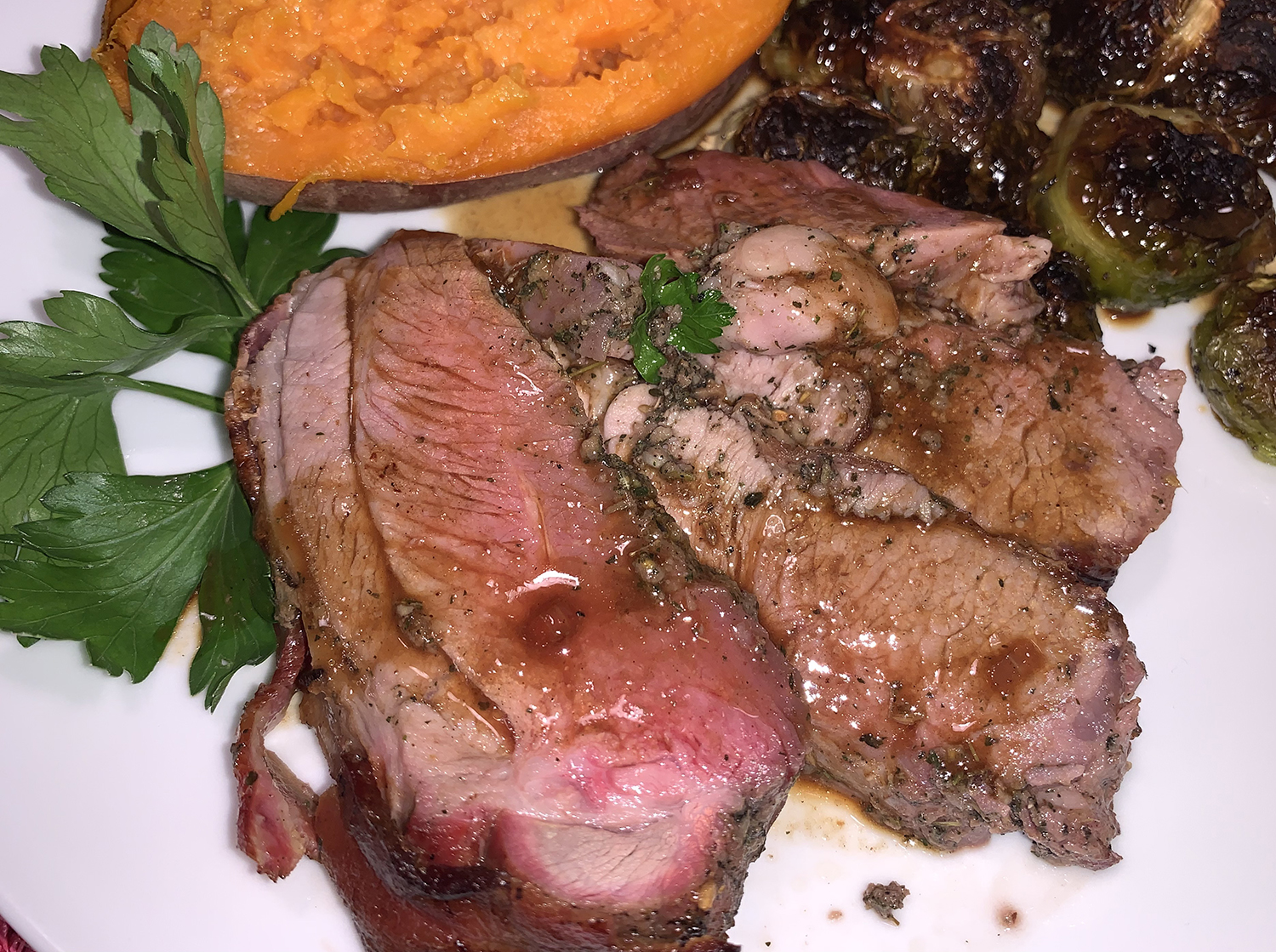
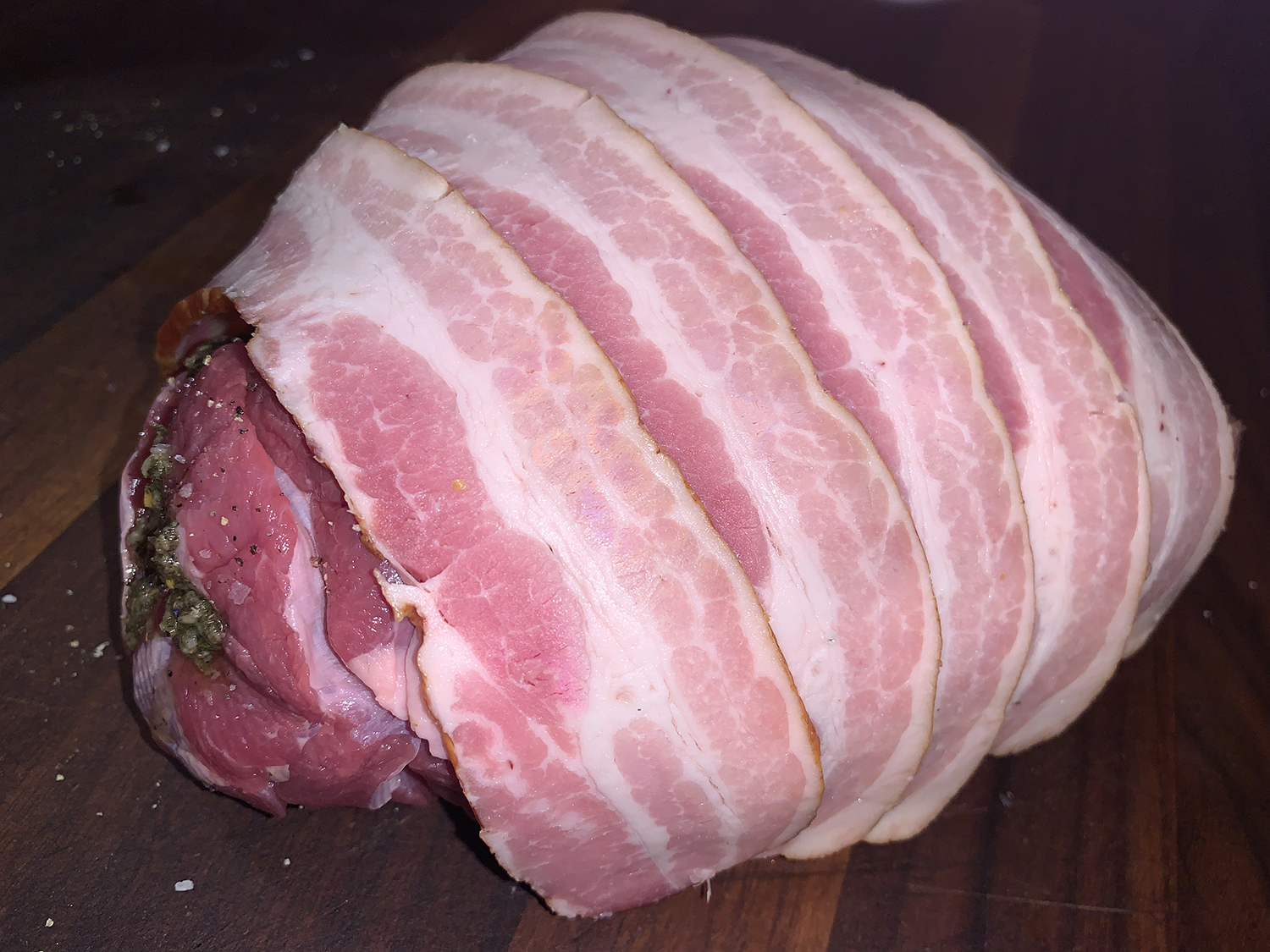
And the icing on the cake so to speak? The bacon slices overlap each other across the top of the roast which create a beautiful crusty and golden exterior. And because our lamb was smaller in size, it took less strips of bacon to cover it.
Paired with baked sweet potatoes and roasted Brussels sprouts, all of which cook at the same 425°F temperature as the lamb—just different lengths of time—everything can be done in just one oven at the same time. Dinner done!
Heat oven to 425 degrees. Place anchovy fillets, garlic and herbs in food processor, and process until finely chopped. With machine running, add olive oil in a thin stream, and process until mixture forms an oily paste. Transfer paste to a small bowl and set aside.
Dry the lamb well with paper towels and open flat on work surface. Sprinkle inside of lamb with salt and pepper and spread paste evenly over it. Roll lamb up tightly. Arrange bacon in overlapping slices on top of lamb, and tie roast as snugly as possible with butcher’s twine.
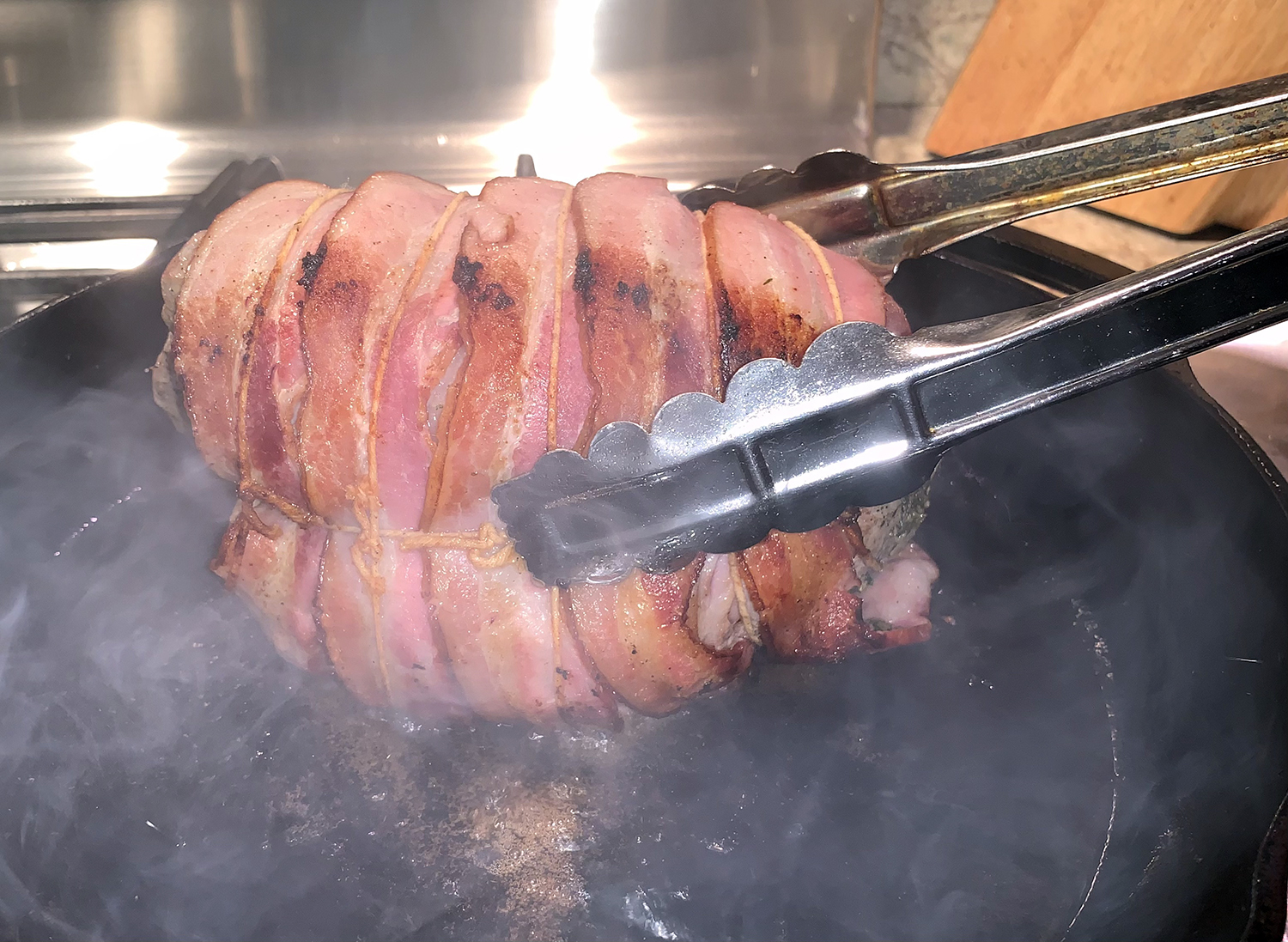
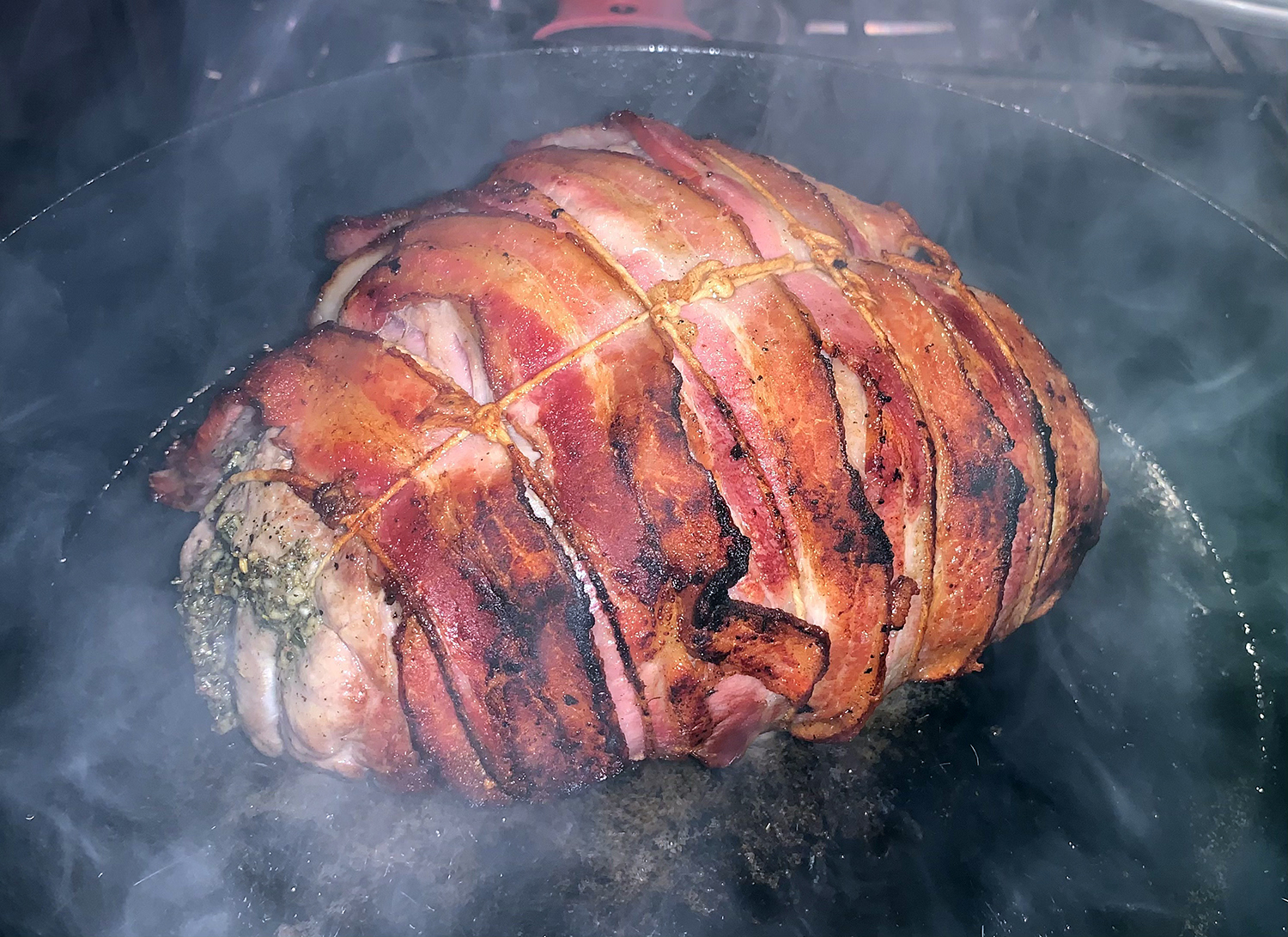
Heat an oven-proof, 10-12 inch wide skillet over high heat 5 minutes. Sear lamb, bacon side down, until brown, about 4 minutes. Turn lamb with tongs and continue searing until all sides are browned, about 12 minutes total.
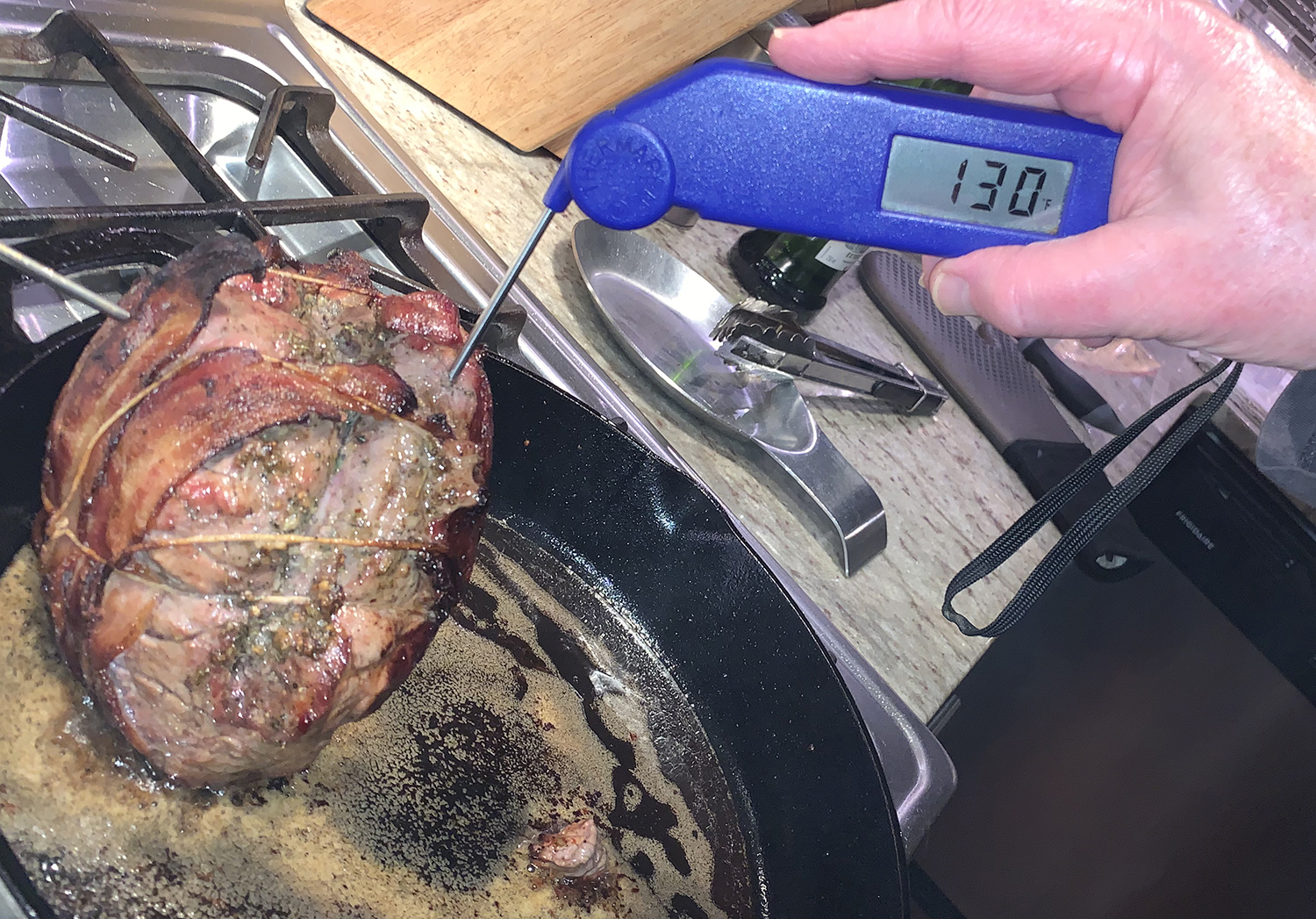
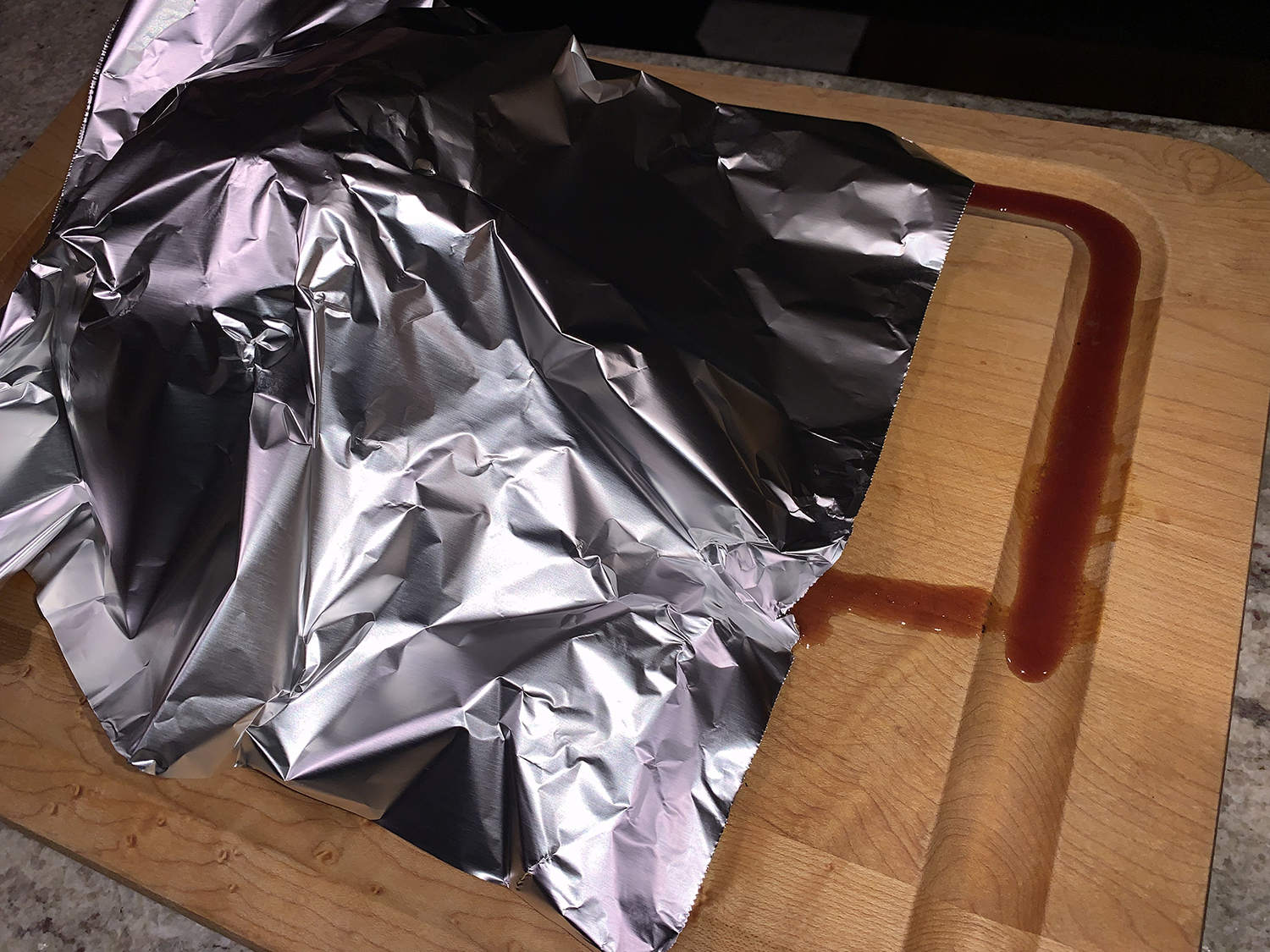
Transfer skillet to oven and roast until lamb registers 130 degrees on instant-read meat thermometer, about 40 to 45 minutes. Remove lamb from oven and let rest, covered loosely with foil, at least 10 minutes before slicing.
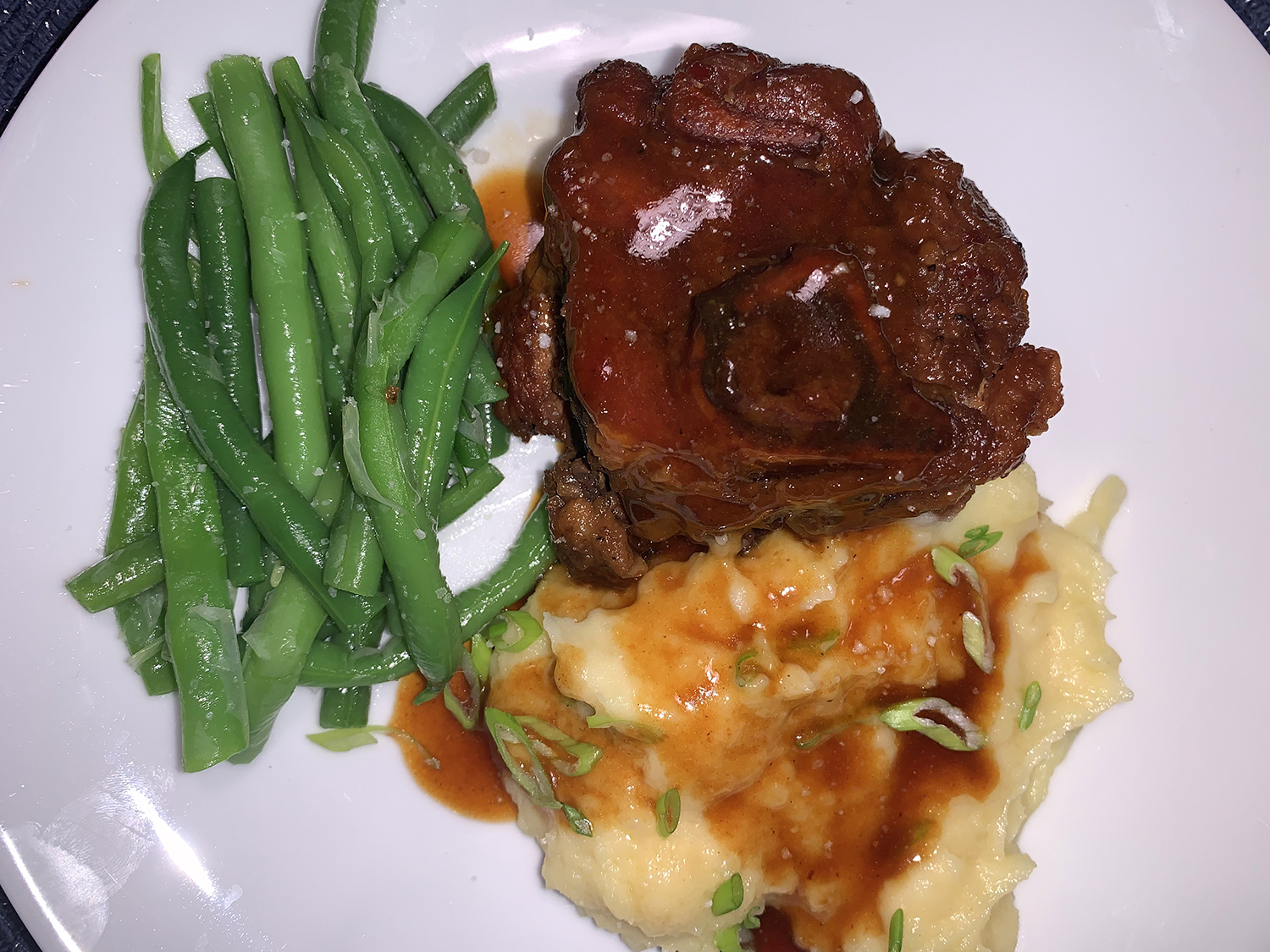
These braised pork shanks could become an ultimate comfort food for us, with the hybridizing of favorite Asian flavors and techniques. It was hard to fathom how they could have gotten any better than when served, but after a rest overnight in the fridge, just WOW!
Paired with fresh green beans from our garden (that were flash frozen until ready to use), and the decadent Garlic-Miso Butter Mashed Potatoes, we were on Cloud Nine! It is a LOT of ingredients, and will take a large chunk of time, so a slow Sunday afternoon during the chilly months is ideal.
While I tended to spud duty, The Hubs started working his magic on the meat. But first, as he analyzed the recipe, he realized there was WAY too much liquid (mirin, soy, sake, vegetable oil, and chicken stock) and brown sugar for the amount of meat, so all got cut in half. When everything was said and done, we still had a cup of reduced sauce leftover, which we decided would be great for a future stir-fry.
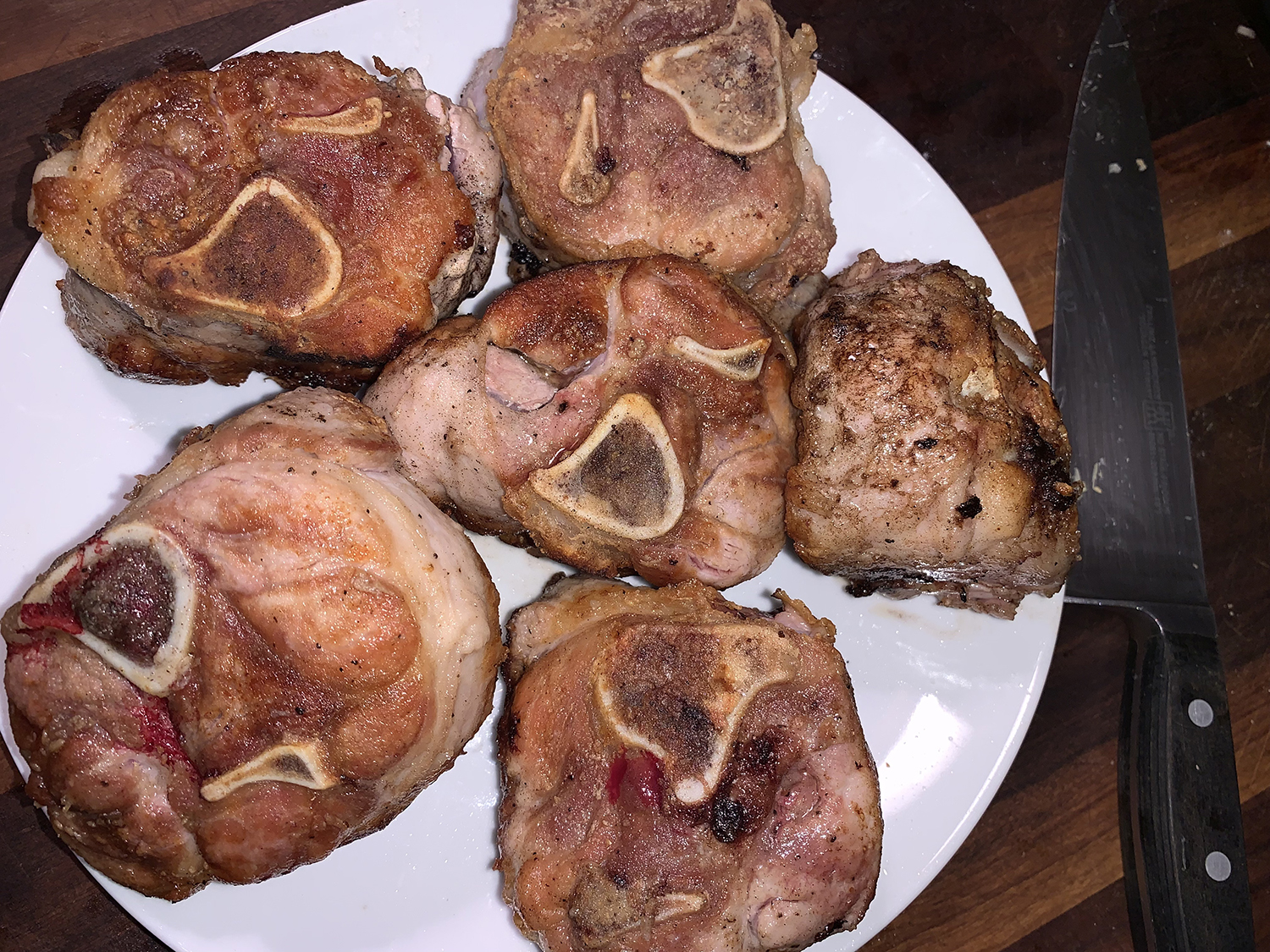
Dredge shanks in flour seasoned with salt and pepper. Heat oil in large Dutch oven and sear pork shanks on all sides, working in batches if necessary.
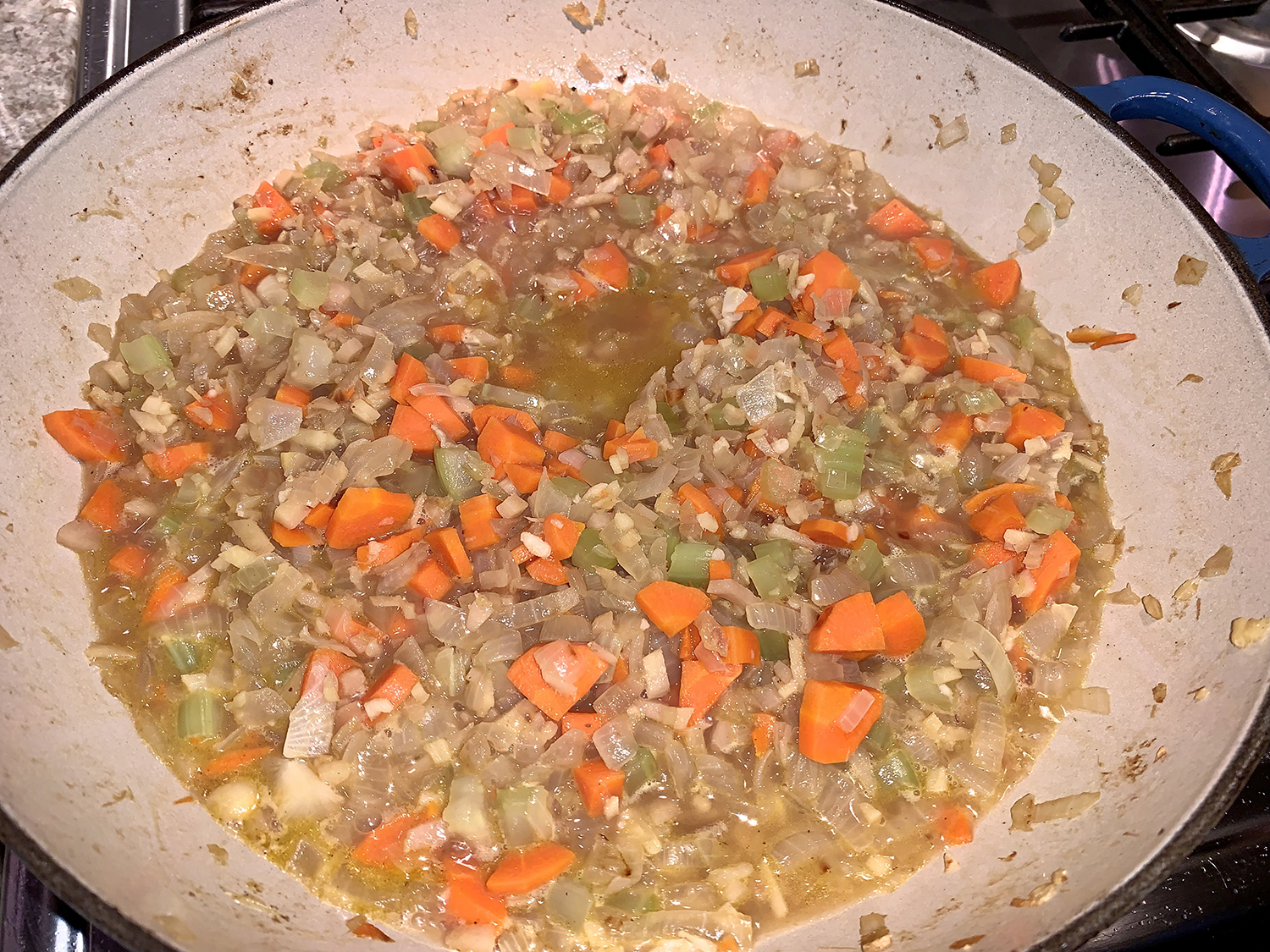
Discard oil from pan and add onion, celery, carrots and ginger. Caramelize on medium high heat, stirring frequently, for about 8 minutes. Add garlic and sauté briefly, about 2 minutes.
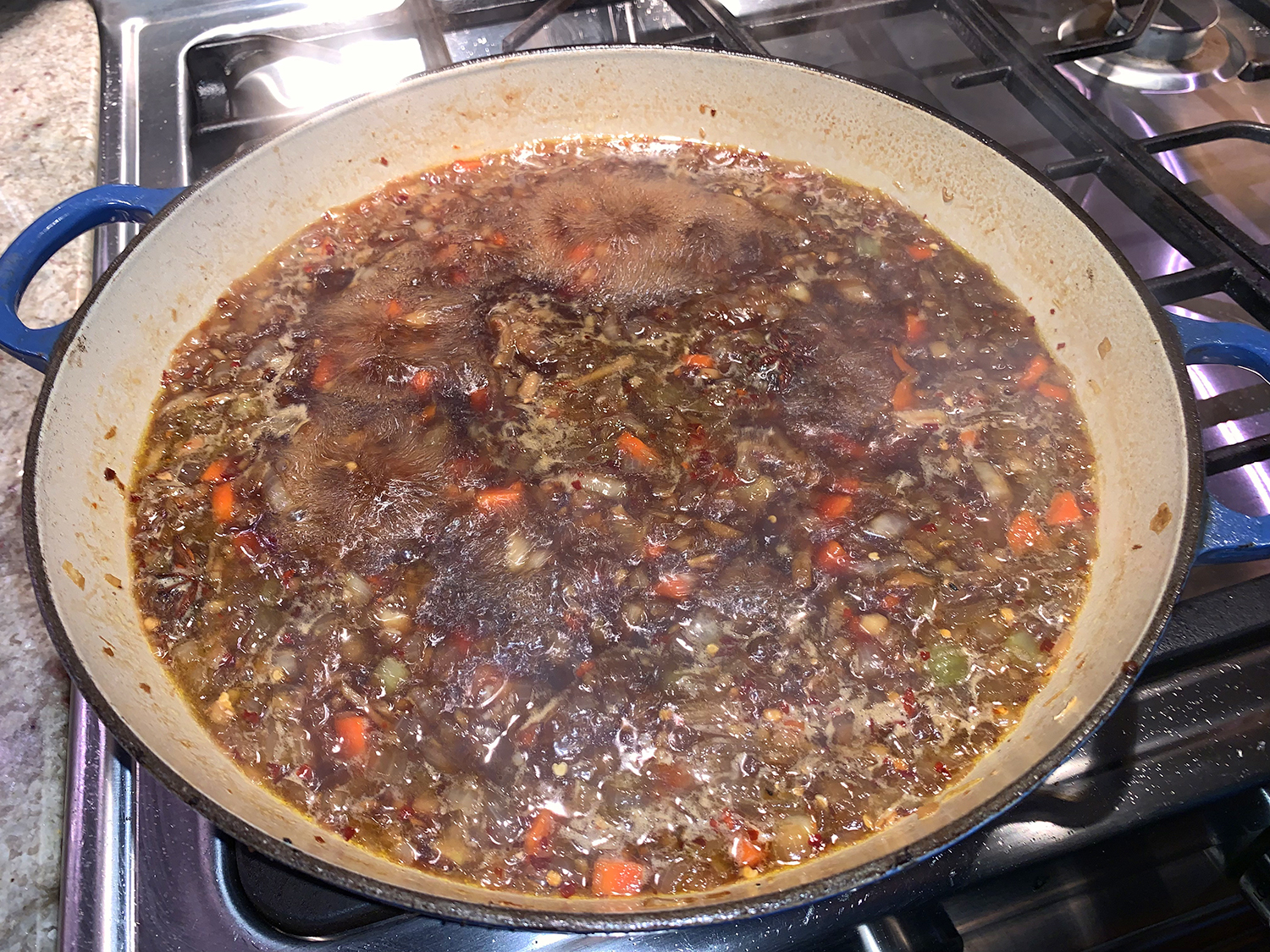
Deglaze pan with sake, then add soy sauce and mirin. Bring to a simmer, then stir in brown sugar. Add red pepper flakes, star anise and chicken stock. Let simmer for 5 minutes.
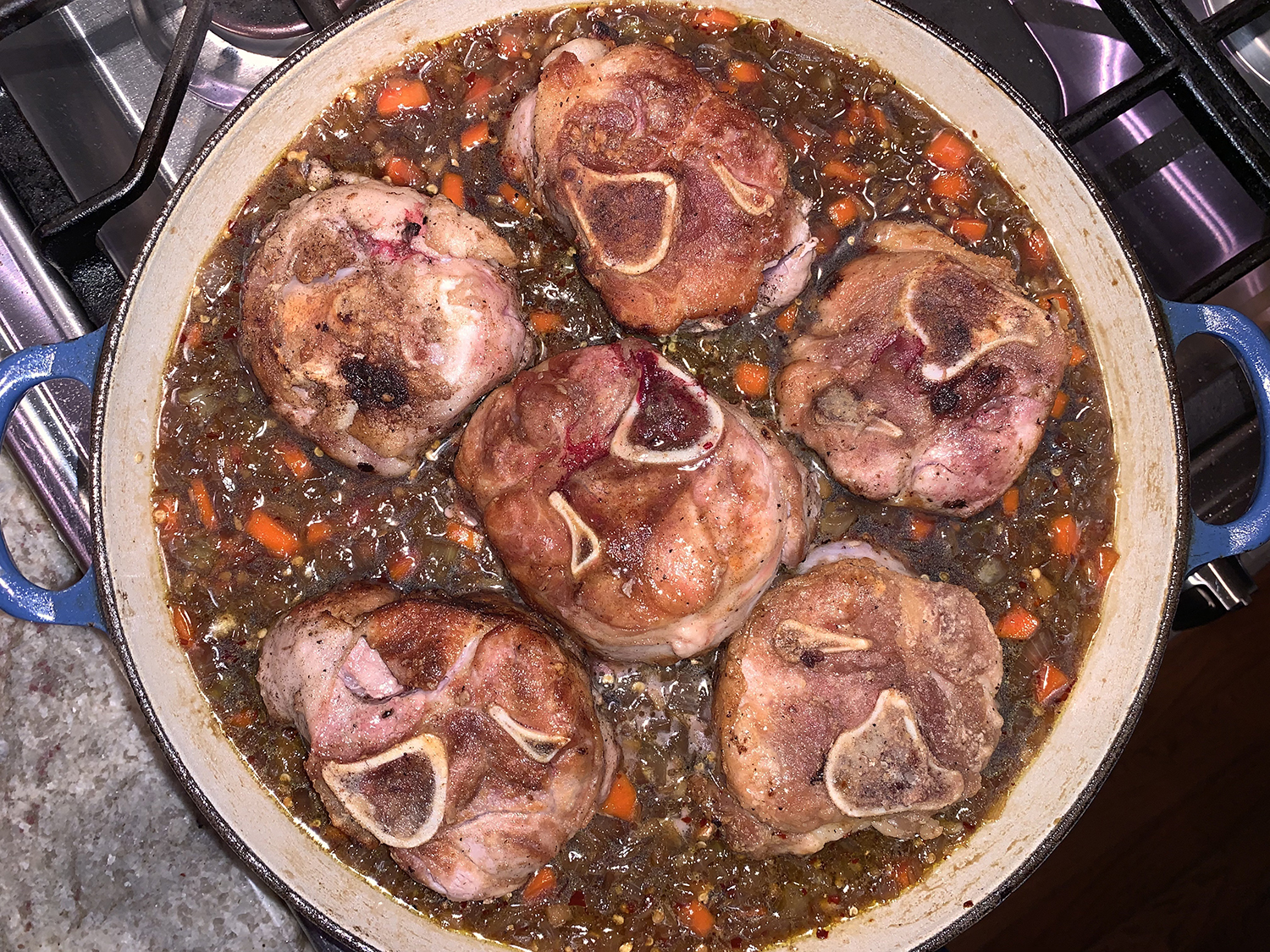
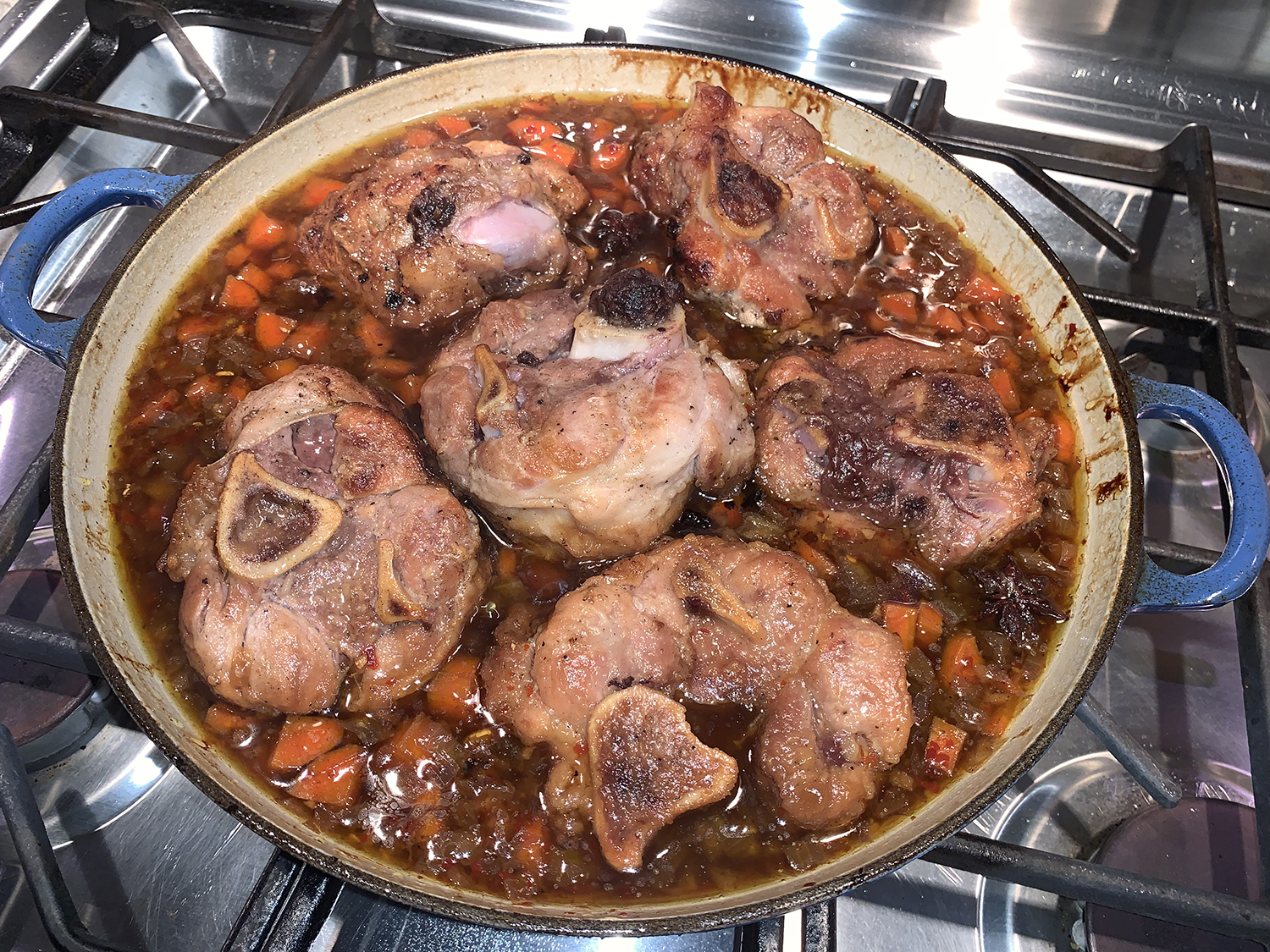
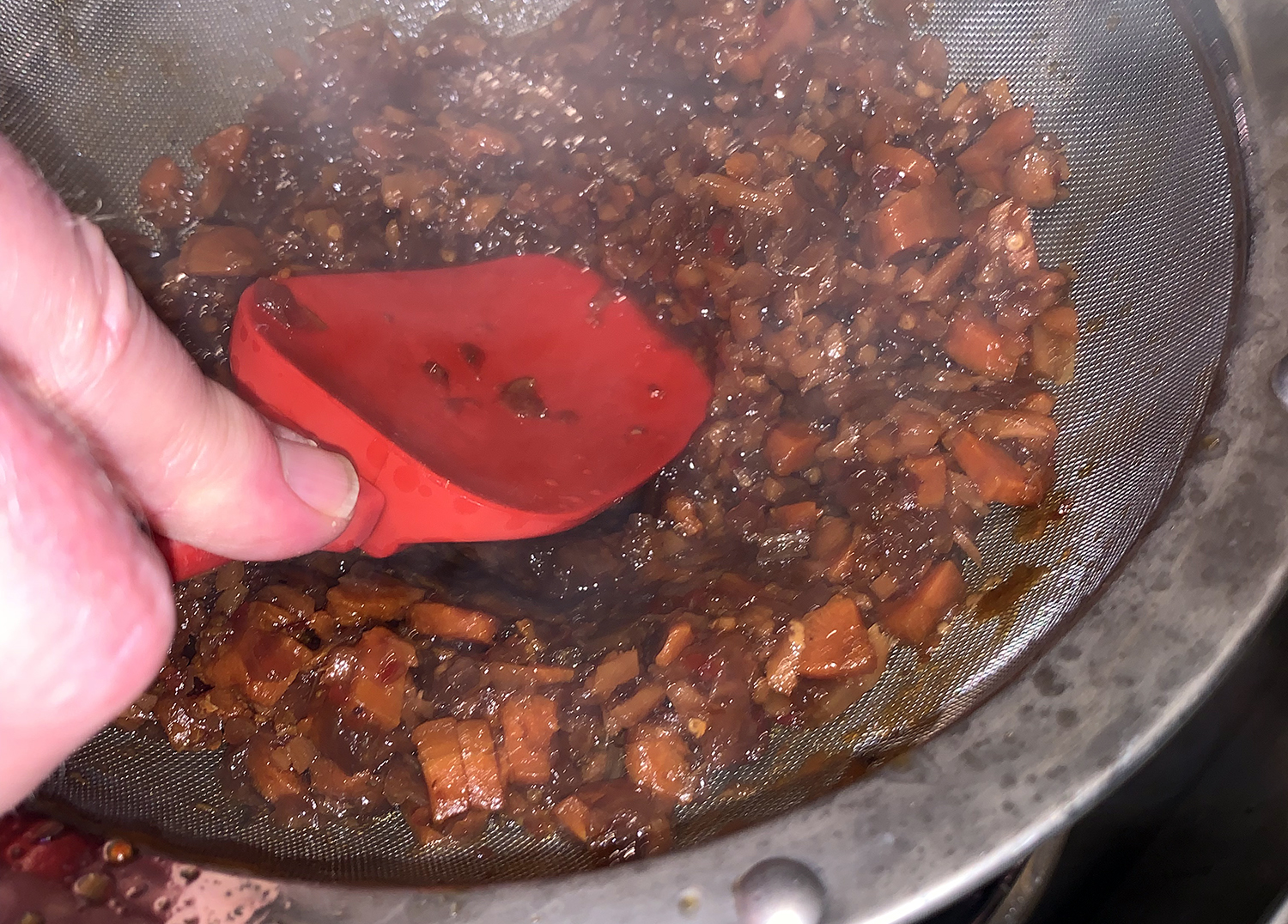
Return shanks to the pot. Cover and cook in a 300 degree oven for 2 1/2 to 3 hours, turning once halfway through cooking. When shanks are completely tender, remove to platter and tent with foil. Strain liquid into a saucepan pressing on solids to get all of the juices; discard the solids. Return pot to a burner and bring to a boil.
Lower heat to a simmer and reduce until desired thickness. Can thicken broth with a cornstarch slurry if desired. Serve shanks and pass sauce separately.
Spicy Grilled Pork with Fennel, Cumin and Red Onion, just the name gets my juices flowing. Imbued with spices that char at high heat, this aromatic pork recipe is a snap to throw together — exactly what you want for a night of summer grilling.
If using wooden skewers, don’t forget to soak them in water for an hour before grilling, so they don’t flare up. And, NYTimes where we got the recipe, suggested if you’re broiling and you don’t want to bother with skewers at all, just spread the pork cubes out on a rimmed sheet pan, turning them halfway through cooking with tongs or a spatula. Always good to have a Plan B for inclement weather.
With just the two of us, we halved the recipe so there wouldn’t be much leftover—and there wasn’t because it was sooo good!
Our side dish of Smashed Cucumber Salad with Peanuts, Scallions and Cilantro was just the ticket to compliment the pork and make for a low-carb dinner. The lime and heat in both recipes ensured a unity of tastes. I see making this by itself as a lunch, and would be great to bring to a picnic, potluck or dinner invitation.
While I basically stuck to the pork kebab recipe, I made a few changes in how I handled the cuke salad from Milk Street. Besides cutting the recipe in half, I left the salted cucumber slices in the colander for an hour as opposed to 15 minutes to make sure most of the moisture would be removed. And instead of several cans on the inside plate while draining the slices, I added weight by filling a smaller heavy bowl with water.
A meat mallet came in handy for both smashing the cucumbers and the roasted peanuts, but you may have another preference.
Spicy Grilled Pork with Fennel, Cumin and Red Onion
¼ cup cilantro or basil, leaves and tender stems, plus more for serving
2 Tbsp. fish sauce
2 garlic cloves, smashed and peeled
1 jalapeño or other green chile, seeded if desired
1 tsp. honey
1 ½ tablespoons fennel seeds
1 Tbsp cumin seeds
1 Tbsp coriander seeds
1 small red onion, sliced, for serving
Directions
Season pork lightly with kosher salt and put it in a bowl or resealable bag.
Juice the lime into a blender or food processor and add cilantro, fish sauce, garlic, jalapeño and honey. Blend until the jalapeño and garlic are puréed, then add fennel, cumin, coriander seeds and pulse four or five times to bruise the spices and mix them in.
Pour mixture over the pork, tossing to coat the pieces. Refrigerate for at least 30 minutes while you heat the grill, or up to 24 hours. (We marinated for 24 hours to make sure all of that great flavor permeated the pork.)
When ready to cook, heat the grill or broiler with a rack positioned 4 inches from the heat source.
Thread the pork onto skewers, leaving a little space between cubes. Grill over the highest heat possible, or broil on high, for 2 to 5 minutes, then flip the skewers and continue cooking until the meat is browned all over and charred in spots. It should be just cooked through: A little pink is OK, but there shouldn’t be any red spots.
Serve the pork with cilantro sprigs and onion slices on top, and lime wedges on the side for squeezing.
Don’t use regular cucumbers; they contain a large amount of seeds that will quickly water down the salad, even if first salted to remove excess moisture. And don’t forget to peel the cucumbers. The skins will block the salt from drawing out the maximum amount liquid of from the watery flesh.
Ingredients
2 Medium garlic cloves, finely grated
2 tsp. finely grated fresh ginger
4 Tbsp. lime juice
1½ tsp. sriracha
½ tsp. white sugar
Kosher salt and ground black pepper
3 English cucumbers, trimmed and peeled
½ Cup roasted unsalted peanuts, finely chopped
4 Scallions, thinly sliced
1 Serrano chili, stemmed, halved, seeded and thinly sliced
½ Cup lightly packed fresh cilantro, finely chopped
Instead of cans to add weight, I filled a small heavy bowl with water.
Directions
In a small bowl, stir together the garlic, ginger, lime juice, Sriracha, sugar and ½ teaspoon salt. Set aside. Place the cucumbers on a cutting board. With the flat side of a chef’s knife or a rolling pin, hit the cucumbers until they split and crack. I used a meat mallet which worked great!
Slice the cucumbers ½-inch thick on the diagonal and transfer to a large colander set over a large bowl. Add 2 teaspoons salt and toss. Top with a plate smaller than the diameter of the colander; weigh down the plate with 2 or 3 cans. Let stand until liquid has pooled in the bowl, about 15 minutes. Discard the liquid, then rinse and dry the bowl.
In the same large bowl, combine the cucumbers, peanuts, scallions, chili and cilantro. Add the dressing and toss to coat. Taste and season with salt and pepper.















































 Accounting for Taste